The Hanover Park Water Reclamation Plant

I come across a fair number of things in my work, or even just gadding around the Internet, and not long ago I found out that last week was Infrastructure Week

“Infrastructure Week is a 501c4 non-profit working to educate America’s public about the importance of infrastructure to the nation’s economy, workers, and communities. Since 2013, Infrastructure Week has been led by its Steering Committee – a bipartisan coalition that includes leading business groups, labor unions, and think tanks working to improve America’s infrastructure,” says the organization’s web site.

I sense lobbyists in the background of that statement, the sort who lobby for more spending on infrastructure. There are worse things to lobby for.

The site also told me that there are events associated with Infrastructure Week. Many of them are panel discussions and the like, with little interest except to industry professionals and maybe infrastructure nerds (there have to be some). Then I saw that the Metropolitan Water Reclamation District of Greater Chicago, which has seven water reclamation facilities — treating about 450 billion gallons of wastewater each year — was having an open house. Just show up on Saturday morning at one of the facilities and you can look around.

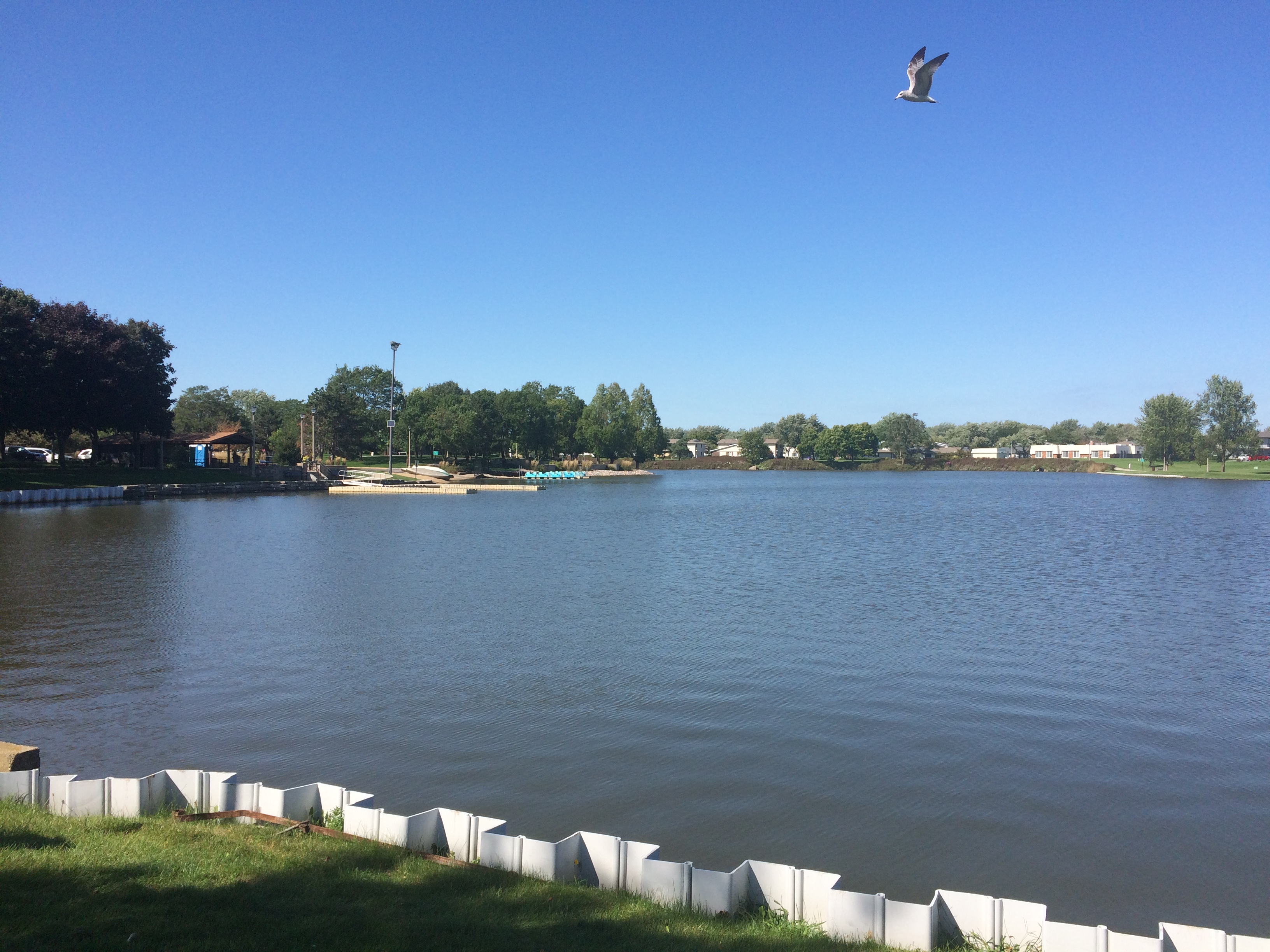
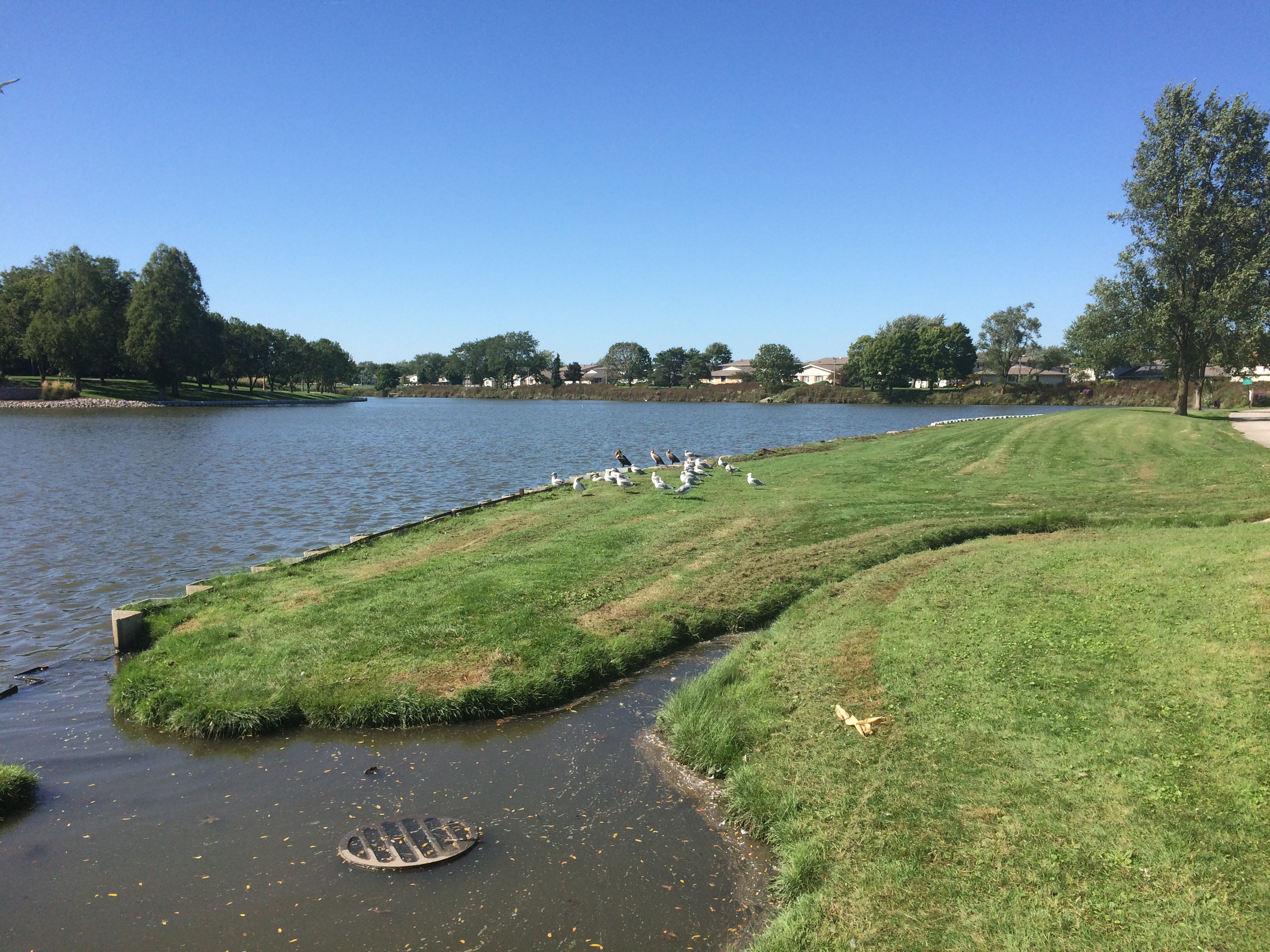
The closest to where we live is the Hanover Park Water Reclamation Plant. The plant is on a large piece of land, 289 acres, and has 12 buildings, plus wells and large storm retention reservoirs, yet is remarkably inconspicuous even in the thick of the northwestern suburbs, set back from major roads and completely enclosed by tall fencing.

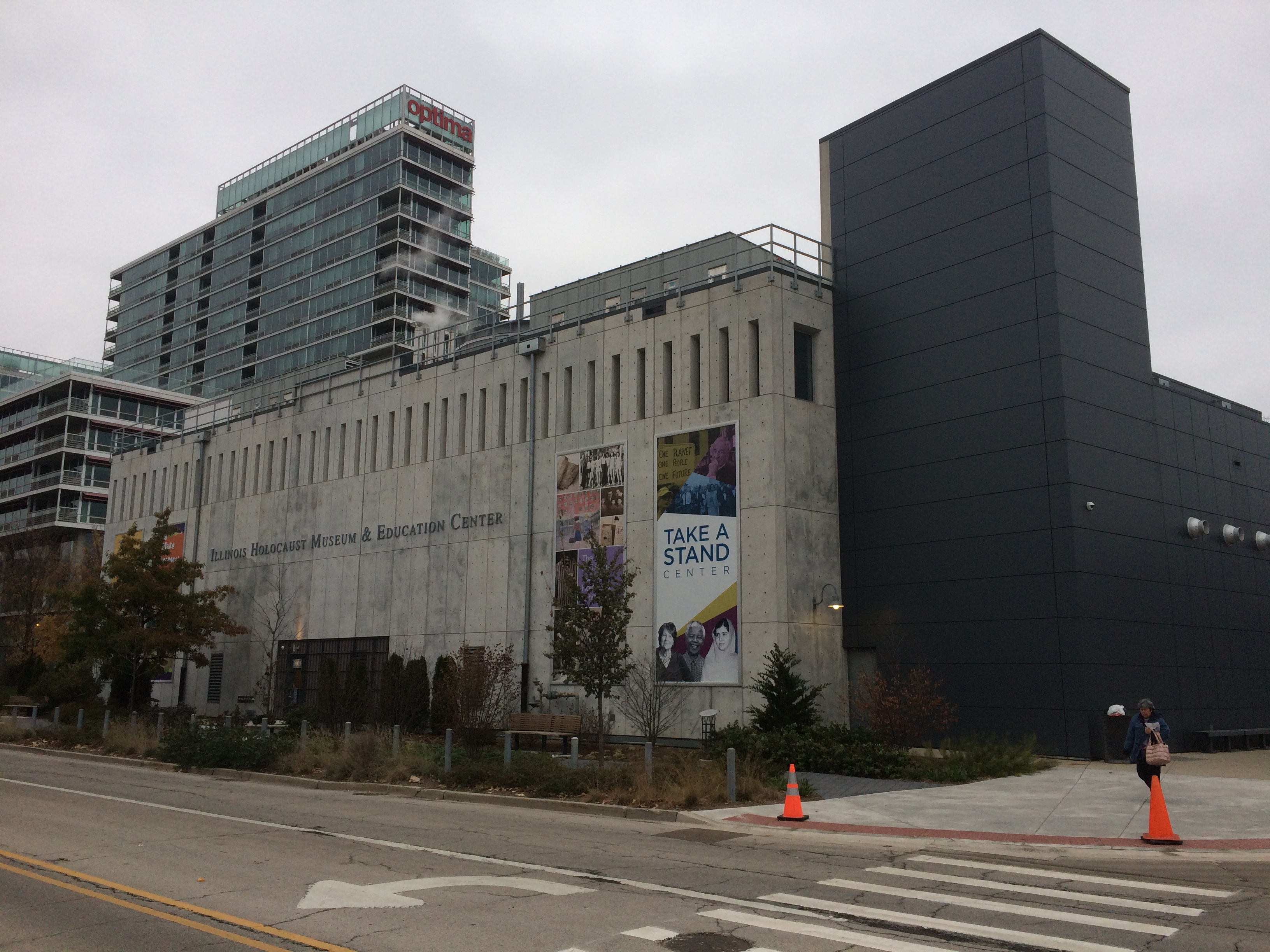
Yuriko and I went at 10 on Saturday; our daughters were still asleep, and didn’t want to be wakened for mere infrastructure. The facility’s usual closed gates were open when we got there. The main building looks exactly like what it is, part of an industrial complex developed in the early 1960s, just when the suburbs were coming out this way.
At some point, I suspect, “Sewage Treatment Works” was deemed unseemly, so it became a Water Reclamation Plant, but the old name remained carved over the door.

First we watched a short video about the plant and its various operations, including efforts in sustainability, and then one of the staff showed us around. There were eight visitors all together when we were there, including us, so overcrowding wasn’t an issue. Infrastructure doesn’t pack ’em in.

The sewage is pumped from the sewer up to a series of treatment pools that cascade downward, letting gravity take the water through the successive steps. Large objects and then smaller particles are removed in various ways, and microorganisms that eat the waste are introduced.

In this way, the plant treats an average of 12 million gallons a day, with a maximum capacity of 22 million gallons. During periods of heavy rain, it comes close to that, and occasionally the facility can’t keep up. The guide said that during the heavy rains of September 2008, sand bags had to be used to protect the plant buildings from flooding.

The water reclamation district says: “Water entering Hanover Park WRP passes through coarse screens to filter out large debris, followed by pumping and primary settling, which includes further screening, grit removal and separation of solids from the water in which aerated grit tanks and settling tanks remove fats and oils.”

The primary settling tanks were the only ones that smelled bad. A slight whiff of human fecal odor hung in the air, just enough to notice. Elsewhere, there was little smell, except chlorine near where that is introduced to the water (before the water is released, the chlorine is neutralized).

“In secondary treatment, microorganisms remove organic material from the water as oxygen is pumped into aeration tanks,” the district continues: “Solids then settle at the bottom and clean water flows out the top of additional settling tanks.

“After passing through primary and secondary treatment, the treated water at Hanover Park passes through sand filters and is then disinfected using chlorination and de-chlorination. Clean water that has passed through the Hanover Park WRP treatment processes is released from the Hanover Park WRP into the DuPage River. It only takes 12 hours for wastewater to be converted from raw sewage to clean water.”
The sand filters are in a large, long shed of a building. According to the guide, the filters were the first of their kind to go into service, ca. 1971, and it was considered so important that President Nixon came to the dedication. Might have been during the run up to the passage of the Clean Water Act.

As far as I could tell from the description, a sand filter is exactly what it sounds like. Water leeching through sand to remove even more particles. It might have been state-of-art 45 years ago, but the sand filters are going to be phased out soon for newer tech, the name of which I forget.

At the end of the visit, we picked up some water reclamation souvenirs that the district was giving away. Including postcards!

Also, 40-lb. bags of compost that the plant makes. Remarkably, most of the plant’s solid wastes (sludge) eventually goes to fertilize a farm — which is on site.

“In 1969, the MWRD purchased the Fischer farm (200 acres adjacent to the Hanover Park WRP) and built the Upper DuPage reservoir, which holds about 75 million gallons of stormwater overflow. The farmland also includes 100 acres for growing corn and soybeans… The harvested corn and soybeans are used for feedstock, ethanol and biodiesel.”

Glad to see this bit of infrastructure. I’m all for visiting more conventional sites, which should be obvious. Infrastructure’s worth seeing, too, if only to remind me occasionally of the massive machines and systems in motion out there, all essential to our health and comfort but unnoticed unless something goes badly wrong, and all put together by us clever apes.

New Library in the Neighborhood

A Little Free Library has appeared on my block. I’m pretty sure it wasn’t there a few days ago, the last time I walked by. Dog walking usually takes me by that front yard.

Today I took a moment to look into the new Little Free Library. Looks like the family that put it up stocked it, for now, with children’s books that their daughters no longer want. I know them slightly: husband, wife, two daughters younger than mine, but not little kids any more. And a dog smaller than mine. Sometimes they sniff each other through the back yard fence.

I’ll have to contribute a volume or two, to be neighborly. Right now, though, I’m looking for my copy of The Right Stuff. Wonderful book. I read it again last year, after first reading it ca. 1991. Now I want to re-read a favorite part, about the trials of Enos the space chimp.

Recent Sounds

I take my digital audio recorder some places that I go — I’m resisting the temptation to call it a “tape recorder” — and sometimes to step outside the door and record the ambient sounds.

Such as outside my mother’s house in San Antonio last month. The birds were a lot livelier than in the cold Illinois I’d left, and the selection of birdsong somewhat different, though I can’t pinpoint the exact differences.

In Marathon, Texas, late last month the wind blew much of the night and into the morning one day. I captured 20 seconds of it, but it went on without much pause for hours.

The spring rainstorms in northern Illinois have been numerous and loud recently. This is what I heard from my front porch about 24 hours ago.

The rain had stopped by the morning and the sun dried up a lot of the puddles today. But not everywhere. The back yard is still marshy.

Sure Signs of Spring

Not long ago, a colorful lawn care truck showed up on my street.

The driver had work to do that didn’t involve my lawn, which in this image is my own modest field of cloth of gold. Imagine if no one poisoned their dandelions: the suburban lawns would burst out glorious gold and then white for a couple of weeks in the spring.

Also in our front yard, perched atop a nest built on one of our exterior lights: a robin.
These cool days lately she’s been sitting on her eggs constantly. I assume there are eggs there. I won’t disturb the nest to find out.

The duck that nested two years ago in the back yard never has returned. The robin nesting on the basketball hoop that year might be the same one in a new location, though who’s to know? I’m glad to see the robin this year anyway.

Folderol for March 1

In the wee first hours of March this year, I woke up to light rain. After I went back to sleep, weird and unsettling dreams came. I don’t know if that was connected with the rain, but I was surprised in the morning to see that a lot of rain fell as I slept, more than I would have thought. Rain that forms large puddles near the back fence.

In Andersonville last weekend, we saw a shop called Cowboys & Astronauts, just off Clark St. I liked the sign advertising the place.
Its web site says: “Cowboys and Astronauts, Chicago’s newest men’s lifestyle and supplies destination, is proud to announce that we have opened our storefront in the heart of Andersonville. We hope that you will swing by and check out our curated blend of apparel, accessories, grooming, travel supplies, home goods, and gifts.”

Curated men’s lifestyle and supplies, eh? I’m resisting the urge to mock that idea. We didn’t go in, so I can’t comment on the goods. But we could see that the store did have a faux space suit on display. I’ll give them that.

Next: eggs. Occasionally, I write on my eggs. Just for grins.

How often do you see a truckload of portable toilets? Of the plastic-molded outdoor cubicle type, loaded and ready go wherever they need to go?

Not often. I think the truck was delivering a few to the park behind the house. Maybe that’s an early sign of spring.

Dog in Snow

Sure enough, a lot of snow fell Thursday night into Friday morning. Maybe a foot. But it was no blizzard, and no big deal. Even the side street on which I live was cleared by Friday afternoon. A little more of the same fell Saturday morning and then much more on Sunday morning. More shoveling and that was cleared too.

For the dog, this much snow means romping around in the back yard.

Every time it snows this much, a truck comes to clear the blacktop next to the school behind the house. Why this was necessary Friday, when school was cancelled, I don’t know, but anyway the dog rushes to the back fence to bark at it. And then along the fence as it drives nearby.

From the point of view of the dog, this must be effective. The truck goes away before long.

February 1st Miscellanea

February, bah. A really cold week lies ahead, with some snow. The only good thing is that January is over.

We got a call one recent day at 7:41 a.m., not the best time, but I guess it couldn’t wait. Our machine recorded it, so I can transcribe it here, with a few details changed.

“Please stand by for an informational message from your community. There may be a short delay before the message begins.

(pause)

“This is an important message from the Schleswig-Holstein Police Department. Please be on the lookout for a missing juvenile named W—-. Male, white, five feet tall, approximately 90 pounds, brown hair, brown eyes. Last seen wearing a purple Washington Huskies sweatshirt, gray sweatpants, and black, white and red Nike Air Jordan sneakers. Please call the Schleswig-Holstein Police Department or 911 if you have any information. Thank you.”

At 8:44 a.m., there was another call.

“Please stand by for an informational message from your community. There may be a short delay before the message begins.

(pause)

“This is an important message from the Schleswig-Holstein Police Department. The missing juvenile referenced in the previous message has been located safely. Thank you for your assistance.”

That was a first. Maybe W—- wandered off without telling anyone. It was a relatively warm morning.

Something I happened across in my online wanderings, an incident in New Jersey: “A 16-year-old from Willingboro was arrested by West Windsor Police on Dec. 4 after attempting to steal a car. The theft was thwarted because the car had a stick shift, and the would-be thief only knew how to drive cars with an automatic transmission.”

You’d think the JD — there’s a term to bring back — would have backed away when he saw that the car had a stick, and before police got involved. Then again, JDs aren’t known for their brains.

This falls under the My, How Things Have Change File: Recently I got an email from a grocery store that has my address. The subject line said: ORDER YOUR SUPER BOWL SUSHI PLATTER FOR $29.99.

I’m not holding a Super Bowl party, or going to one, or watching the damn thing at all, but somehow I don’t associate it with sushi. Just me being old. I vaguely remember, about 30 years ago, Mike Royko (maybe) mocking in print the fact that sushi was being sold at some baseball game, probably in California. That seemed strange, I suppose.

Since then, though still associated with Japan, sushi has been fully assimilated into American eating habits. Probably not too many people younger than me would give sushi at a Super Bowl party a second thought.

This Has Never Happened in January

According to Accuweather at least, the highs in my part of the suburbs on January 26 and 27, 2018, were 51 F and 50 F respectively. Maybe so, but on Saturday the 27th from about 11 am to 2 pm, the air felt warmer. On my deck it felt warmer, maybe because of its southern exposure.

It felt so warm I decided to cook some sausages on the grill, which usually spends its winters standing idly in the back yard. That’s probably not good for the long-term condition of the grill, but it’s a nuisance to find a spot for it into the garage. Anyway, just after noon on Saturday the grill was smokin’.

It only looks like a dry grass hazard. Because of recent snow meltage — earlier in the week — the ground was damp, even soggy in spots.

Even better, we sat on the deck and ate the sausages for lunch. An al fresco lunch in northern Illinois in January. I don’t even need one hand to count the number of times I’ve done that. I’m not sure I even need more than one finger.

Of course it didn’t last. By Sunday temps were back below freezing, with a dusting of snow. But brevity made the warmth all the more pleasant.

Twelve Pictures ’17

Back to posting on January 2, 2018, or so. Like last year, I’m going to wind up the year with a leftover picture from each month. This time, for no special reason, no people, just places and things.

Champaign, Ill., January 2017Charlotte, NC, February 2017

Kankakee, Ill., March 2017

Rockford, Ill., April 2017

Muskogee, Okla., May 2017

Naperville, Ill., June 2017

Barrington Hills, Ill., July 2017

Vincennes, Ind., August 2017

Denver, September 2017Evanston, Ill., October 2017Chicago, November 2017

Birmingham, Ala., December 2017

Merry Christmas and Happy New Year to all.

A Christmas Carol, Suburban Chicago Version

Metropolis Performing Arts Centre is an excellent mid-sized theater that would fit in anywhere in the city, but it happens to be in suburban Arlington Heights. We went to see a production of A Christmas Carol there on Saturday.

Another nice detail: they produce paper tickets. This was Ann’s.
The soulless ticket cartel might be eager to get rid of paper tickets, but venues ought to be eager to keep them. People keep them, especially if they show was good. They’re cheap long-term bits of marketing.

Ann had never seen A Christmas Carol on stage, and neither had Yuriko. The last time I saw it was also at the Metropolis — almost exactly 10 years ago, when I took Lilly.

This production had everything it needed to have, particularly an actor (Jerry M. Miller) who could handle Scrooge’s dour initial disposition that slowly melts to his inevitable conversion to altruism. A Christmas Carol without that is a limp rag indeed.

Since it’s based on a novella, and not a source play, stage versions are going to differ, as the movies do. There was more singing and dancing in this version than others I’ve seen. Each of the Christmas spirits got a song-and-dance by a troupe, for instance, which was pleasant enough. This version also featured Bob Cratchit as the story’s narrator, which was a little odd.

A couple of important lines were omitted. Lines I think are important, that is. Old Fezziwig, who seemed reasonably prosperous — he had apprentices, after all — but who also knew that life was about more than making money, got none of his lines. He was mentioned in passing by Scrooge, and he got to dance, but that was about it.

“Yo ho, my boys!” said Fezziwig. “No more work to-night. Christmas Eve, Dick. Christmas, Ebenezer. Let’s have the shutters up,” cried old Fezziwig, with a sharp clap of his hands, “before a man can say Jack Robinson.”

When faced with the Spirit of Christmas Yet to Come, Scrooge didn’t ask it a most important question.

“Before I draw nearer to that stone to which you point,” said Scrooge, “answer me one question. Are these the shadows of the things that Will be, or are they shadows of things that May be, only?”

Just quibbles. Now I’ve done my bit to introduce my children to the Dickensian part of Christmas. If you’re going to celebrate the holiday in this post-Victorian world, you should know it.