Johnson’s Door County Fish

This quote came to my attention recently: “Chicago is the city of the steak house, of deep-dish pizza, the Italian beef sandwich that requires three hands to manipulate and eleven small paper napkins to mop yourself up with afterwards.” – Joseph Epstein, Literary Education and Other Essays.

Yep. Been there, eaten all those things. But they weren’t on offer recently at Johnson’s Door County Fish in west suburban Lombard, Ill. In fact, a hand-written sign at the counter at Johnson’s told us the sad fact that the restaurant had no Lake Superior whitefish for sale that day. Sad news, since whitefish is a wonderful gift from the 2,800 cubic miles of Gitche Gumee to us omnivorous land-dwellers.

I’d been to Johnson’s once before. I’d seen it written up in the Tribune, and soon after needed to be in the vicinity, which isn’t very often, so I decided to give it a go (here’s a more recent mention in the paper, about its fish sandwiches). As unpretentious fish joints go, it’s first rate. Not the best lake fish I’d ever had – Bayfield, Wis., had that, but pretty good. That was seven or eight years ago, maybe. I remember taking Ann with me, and she was still a toddler.

The place looks about the same. Brown woods, a lot of windows, worn booths, and some fish ornamentation, such as a scene of fanciful schools of purple fish painted on the wall in 20th-century restaurant vernacular style. Also, a there’s navigation map of northern Lake Michigan posted on the wall, along with blown-up b&w images of Great Lakes fishermen and their equipment.

I had the walleye plate and Yuriko had the cod plate. The presentation isn’t anything special. In fact, it looks like the fried fish you might get at one of the lower-rung fast-food places. But the fish is tasty, much better than it looks.

Another hand-lettered sign explained that the restaurant is for sale. Apparently the owners are in their 80s, and want to sell. I’m not in the market for a fish restaurant, but I hope someone takes it over and maintains it as an independent, low-cost fish joint here in the Midwest.

Dear Golf Road Tailgater From This Morning:

Plenty of people tailgate, or at least drive uncomfortably close to the car ahead of them. It’s an intelligence deficit, a failure to grasp the most basic physics that not only risks the offender’s health and property, but someone else’s.

You, however, are a special class of butthole. I could see you well in my rear-view mirror because you were ever so close. I could practically see the steam coming out of your ears, and that scowl on your ugly face.

The tooting of your horn was a nice touch, which you probably believed would inspire me to greater speed. Funny thing about human psychology, though – which you probably grasp as well as basic physics – the noise inspired me only to maintain my speed. I was tempted to slow down.

Speaking of speed, the car next to me and I were both traveling about the speed limit. A little more sometimes, a little less sometimes, but about right for that road. Meaning that you wanted to supplement your recklessness by adding excessive speed to the mix.

Our encounter lasted all of about 30 seconds, since I did eventually move over. You had nothing to do with it. I just wanted to turn left, and needed to stop in the turning lane to yield the right-of-way. Sure enough, you sped off, in a rush to get to the next red light.

But I wish you well, butthole, or at least that you never plow into anyone else. If you must have an accident, make it a solo date with a telephone pole somewhere.

A Post-Winter, Pre-Spring Stroll

No early greening this year, that’s for sure, though very small buds can be seen if you look closely. Still, Saturday was a fine day for a walk at Meacham Grove Forest Preserve.

April5.14 008It’s been a while since we were there. Despite the warmish temps, not many people were around. That could be because the only entrance to the preserve’s parking lot is off a side street that’s some distance from Lake St., the nearest large road. The forest is highly visible from another large road – Bloomingdale Rd. – but it’s just another roadside feature most of the time. It takes a little effort to figure out where to put your car so that you can walk. An oddly North American situation.

St. John UCC Cemetery, Palatine

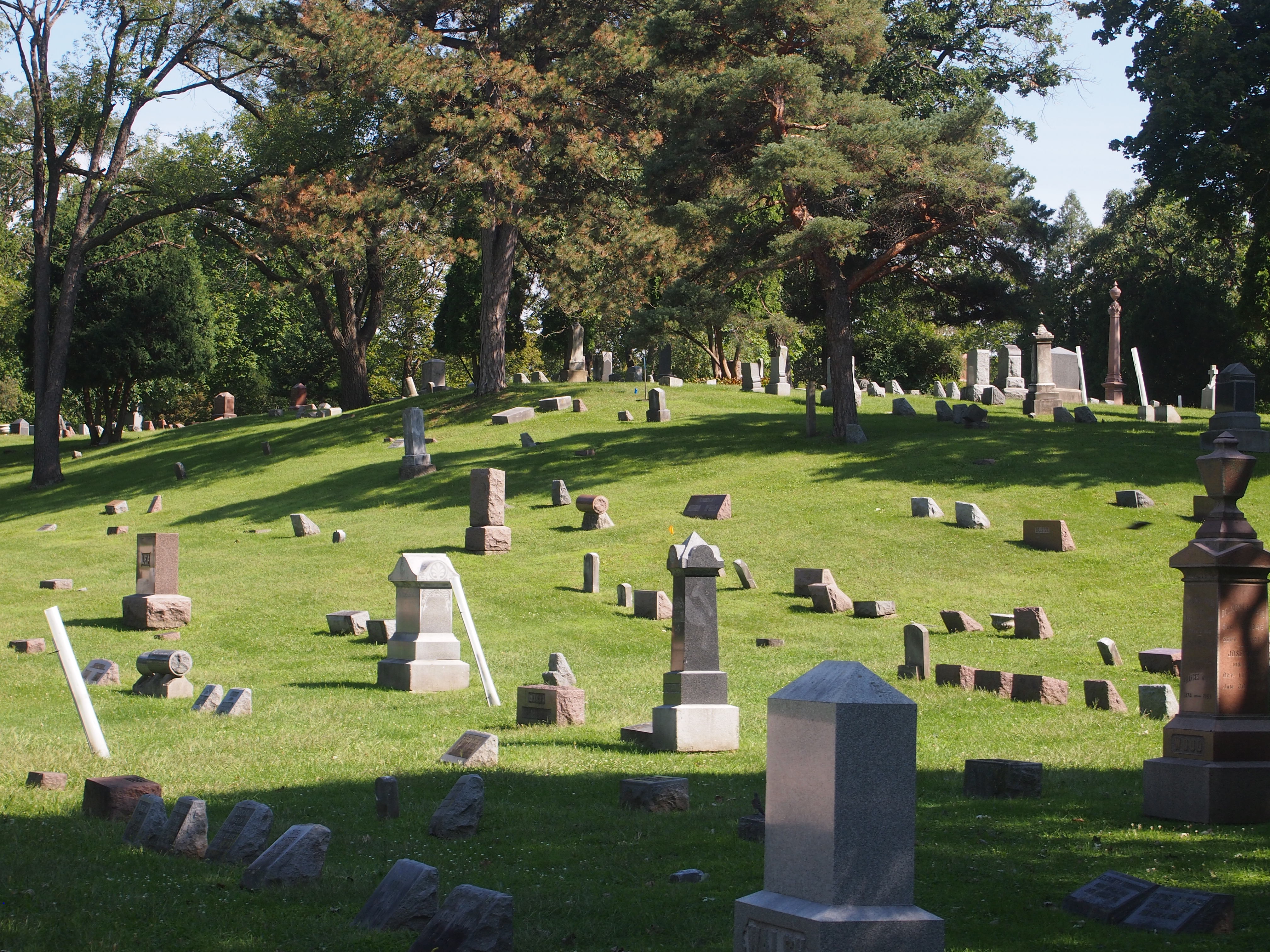
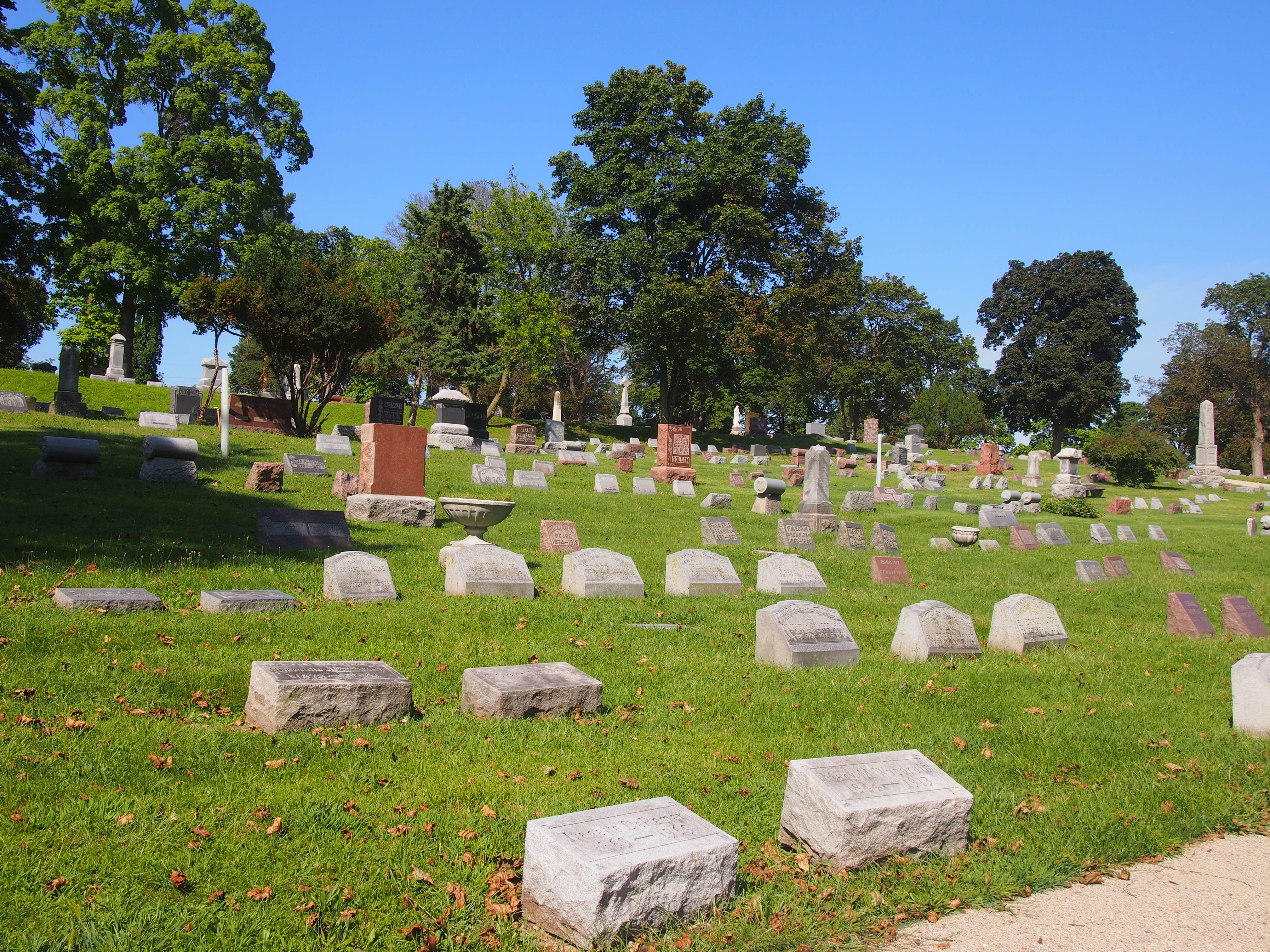
The snow was still pretty deep this weekend — but starting to melt — at St. John United Church of Christ in Palatine, Ill., when I dropped by for a look at the churchyard cemetery. So I didn’t do a lot of wandering around or taking notes about individual stones. Still, it’s a pretty little graveyard, winter or summer.

St John UCC March 14March10.14 223I’d been there before, but not for the better part of a decade, despite how often I pass nearby. Some of the older stones are in German. Fittingly, since much of this part of Cook County was originally settled by German famers.

The church is the third building on the site, dating from 1885.

March10.14 230According the church web site: “August 21 [1885] the church was destroyed by fire after the steeple was struck by lightning. September 14, the cornerstone for the new church identical to the old was laid. The bell in today’s belfry holds the original bell cast in 1885… The new church was built by [contractor] Christian Brinkman for $2,700.

“The pipe organ was built by Emil Witzmann around 1885. It has a balanced mechanical stop-action and is registered in the Organ Historical Society Registry. The center aisle lights were originally candle lights. The fourth Sunday in Advent of the same year, a new church (our present building) was dedicated.”

March10.14 232There are other little suburban cemeteries and churches I need to make a point of visiting this year, ones that aren’t that far away. Since they’re so close, I get lackadaisical about making the time to drop by.

Blizzard of the Past

We haven’t had a genuine blizzard this year, just layer after layer after layer of snow accumulation so that the end result, as of today, which was sunny and cold, looks a little post-blizzard. But not quite. The snow’s spread too evenly, unlike the weird drifts you see after strong winds.

In early 2011, we had a real blizzard, which of course I mentioned in passing. But I took more pictures than I posted three years ago. The miniature Matterhorn pile in front of our back door, nearly as tall as I am, was especially annoying. On the other hand, I liked the curls of snow on the roof.

Blizzard11.3The ornamental wooden bridge near the deck became completely impassable. As it is now. Contrast with this. Not that anyone except the dog ever crosses over it.

Blizzard11.2Deep snow can be fun, if you don’t have to shovel it. Three years ago, Lilly didn’t help me dig out. This year, she has been, especially if she wants to borrow the car.

Blizzard11.1Hard to believe it all melted in about a month. Hard to believe the snow we have now will likewise go away. At this point, you forget there’s a ground under there.

Aurora Across the Millennia

Behind the former Leland Hotel in Aurora is a spot called Millennium Plaza, dedicated on January 1, 2000. It has a nice view of the Fox River, but otherwise isn’t a very inspiring public space. There’s a large bell.

I looked around, but there’s no clue about the bell’s history or what it’s doing there. No doubt it has a history, and maybe an interesting one tied to Aurora’s story. Maybe the municipal committee responsible for creating the plaza ran out of money when it came time to commission a plaque or even a small sign for it.

A tower rises over the plaza.

Not a color or shape I would have chosen. But there it is. Apparently, if you stand at a certain spot not far away on a clear night, the tower will guide your eye to Polaris. The committee found money to add a plaque that explains that. Even though the plaque has been scratched up by bush-league vandals, I’m able to quote it at length.

Millennium Tower stands as Aurora’s Salute to the third millennium. It has brought the business and private sectors of the community together to leave a lasting gift to future generations of Aurora citizens.

Millennium Tower is constructed in a triangular form, with each side having its own plaza representing the past, present and future of Aurora. We enter the tower at Present Plaza, moving to the south and down, we stand on Past Plaza, and to the north and up, we stand on Future Plaza.

I have to say at this point that just wandering around the site as a casual visitor, there’s no sense that it’s divided into three parts, much less ones that sound so temporally disorienting. And not to pick nits — actually, I like picking this kind of nit — what’s the difference between the business and private sectors?

The tower’s orientation is true north. The upper angle of the tower is at 42.5 degrees. Standing on the granite stone at the entrance to the tower, one can sight at the peak of the tower to the North Star.

As the North Star has lead mankind into the future, so today we, the citizens of Aurora, dedicate Millennium Tower to the future generations of Aurorans to guide you into the future millenniums.

Wait, what? It’s interesting that the tower points to Polaris, I guess, though it’s one of easiest stars to find in the sky — the easiest — if you happen to be in the Northern Hemisphere. But what’s this about the North Star leading mankind into the future? As important as Polaris might be to navigation, and even considering that it shows up occasionally as a symbol of constancy in literature, what’s that supposed to mean?

Also, and here’s another nit, I suspect the planners of the tower had never heard of the precession of the equinoxes. That’s something that moves along at a millennial pace. We won’t live to see it, of course, but poor old Polaris won’t be the pole star forever — not even by the beginning of the fifth millennium.

Aurora itself might not last so long, but you never know. Whatever its current troubles, Damascus (for example) has been around a really long time, and probably has thousands of years to go. Aurora might even be a major city someday — where was it that became the capital of a large new empire in the fourth millennium in A Canticle for Leibowitz? Texarkana.

The Leland & The Aurora

This fine building stands at 7 S. Stolp Ave. on Stolp Island in Aurora. The 1920s was clearly an age of  fine buildings, and we’re fortunate to still have so many in Chicago and environs.

Built as the Leland Hotel in 1928, it’s now Fox Island Place Apartments. A helpful plaque on the exterior wall told me that the structure is on the National Register of Historic Places. “Designed by Anker Sveere Graven and Arthur Guy Mayger… it was the tallest building in Illinois outside of Chicago.”

That seems like reaching to find a distinction, but never mind. “In addition to being a first-class hotel, it became an important entertainment center,” the plaque continued. “In the 1930s it was the recording studio for some of the most influential blues musicians of the golden age of blues recording. This plaque honors this historic building, and these artists.”

And it lists some of them. I will too, just as the plaque does. With some links. As the plaque cannot. Not yet, anyway.

John Lee “Sonny Boy” Williamson – Harmonica Legend

Big Bill Broonzy – Guitar/Singer

Hudson “Tampa Red” Whittaker – The Guitar Wizard

Yank Rachell – Mandolin

“Robert Night Hawk” Robert Lee McCoy – Guitar

Bill “Jazz” Gillam – Harmonica

Big Joe Williams – Guitar

Washboard Sam – Washboard

Lester Melrose – Producer

Across the street from the former Leland is the former Aurora Hotel, now the North Island Apartments. It dates from 1917 and is also a nice bit of work.

Not, as far as I can tell, where bluesmen hung out. A simpler plaque on the building says that one H. Ziegler Dietz was the original architect; hope his commissions didn’t dry up because of the war. The redevelopment architect in 1998 was Carl R. Klimek & Associates.

On Stolp Island

I took pictures at the western end of the New York Street Memorial Bridge in Aurora, but naturally I had to walk across it too. Or at least across the western section of the bridge to Stolp Island, because I didn’t realize at that moment that the eastern section of the bridge counted as part of the same bridge.

HistoricBridges.org explains: “The New York Street Memorial Bridge is technically a single bridge spanning the entire river. However, in the 1960s, fill was brought in to expand the island northward, and the center of the bridge was buried in the fill. Today, a parking garage is located south of the former center of the bridge and a casino is located north of the former center of the bridge.”

I made it as far that former center of the bridge, where I saw a plaque dedicated to Gen. Pershing.

It looks like it was tacked on to the parking garage, but the plaque came first, put there in 1960 for Pershing’s centennial (about 12 years after he died). Not far away was a bas-relief, flanked by eagles. I didn’t see a sign describing the work, but it’s safe to say it honors the ordinary soldiers of the Great War.

Across the street, in front of the casino, is the statue “Victory.”

“The Chicago Architectural Bronze Company manufactured the bronze tablets and light fixtures. Roman Bronze Works of New York City cast the bridge’s crowning central figure of Victory,” according to HistoricBridges.org.

Does anyone entering the casino mistake her for Lady Luck? Of course, Lady Luck doesn’t spend much time in a casino, however much gamblers want her to. Or maybe she does, but hews more closely to Fortuna, who inspired both good and bad luck. I think Dame Probability runs the joint – and she’s always on the side of the house.

The New York Street Memorial Bridge

On Saturday afternoon, I got a good look at the New York Street Memorial Bridge in Aurora, Illinois, which spans the Fox River.

My vantage for this image was from the Fox River Trail, next to the river. The bridge connects the west bank of the river to a large island — large enough, in fact, that a good bit of downtown Aurora is built on it — and then another section of the bridge (not pictured) connects the island with the east bank of the river. The building in the background is the Hollywood Aurora Casino, which is located on the northern tip of the island — Stolp Island, to use its euphonious name.

HistoricBridges.org tells me that “the New York Street Memorial Bridge was designed as a memorial to World War I veterans. The bridge is far more than a typical memorial bridge where a simple memorial plaque is placed on the bridge. Instead, the bridge displays a truly beautiful design where the bridge itself is the memorial. At each end of the bridge, a concrete statue titled ‘Memory’ rises up above the railings at the westernmost and easternmost pier points.”

This is one of the “Memory” statues. At the base of this statue — and I suppose the other three, though I didn’t check — is a plaque. Oddly, its language doesn’t explicitly memorialize those who fought in WWI, but considering the date on the plaque, those who built the bridge probably assumed that everyone would know who it was for. The plaque says:

MEMORIAL BRIDGE

Aurora – Illinois

1930-1931

Be this memorial forever dedicated to the defenders of American ideals; as a reverent memory to the departed; as a vivid tribute to the living; and as a patriotic challenge to posterity, that these ideals shall not perish. Anon.”

More from HistoricBridges.org: “The bridge was originally proposed and designed by Aurora City Engineer Walter E. Deuchler, but citizens then requested the bridge be a memorial bridge and so Emory Seidel and Karl Miller of Seidel Studios of Chicago… were hired to redesign the proposed bridge as the memorial bridge seen today.”

More about the bridge is at the site, including information from the National Register Historic District nomination form.

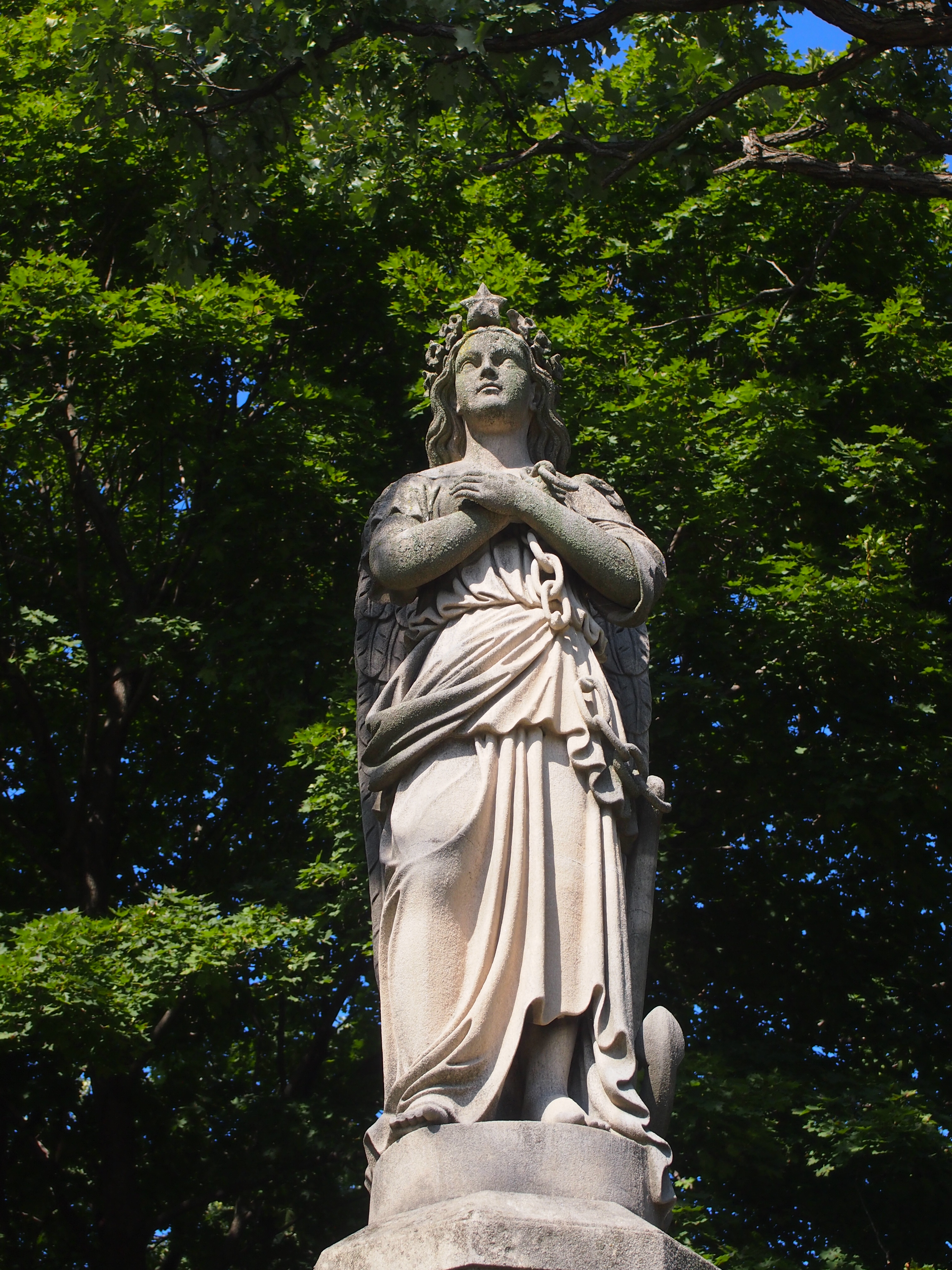
A closer look at “Memory.”

Posterity drives and walks by her every day. Who sees her as anything more than a bridge ornament? A few, perhaps. Could be that “Memory” has mostly been forgotten.

Dog v. Skunk

We usually let the dog out in the back yard one more time before we go to bed, and usually she isn’t very noisy. There isn’t much to stimulate her barking – nobody walking their dogs in the park behind our fence, no active squirrels or birds, no kids playing. But one recent night she cut loose and made a lot of noise.

Barking isn’t something that should come from your yard at 11 p.m. or midnight, so I went to bring her in. She was focused on the edge of the deck, snout down, pawing the ground. Something was under the deck. At first I thought the raccoon – a raccoon – had returned, since one seemed to live there for a little while a few years ago. Then I smelled skunk.

I really wanted to get her in. It wasn’t easy, but I did it. By then the reek of skunk was pretty strong. It turned out the dog hadn’t been sprayed directly, or at least the understructure of the deck caught most of it. Good thing, since the dog smells like dog and needs to smell no worse. Soon the stink wafted faintly into the house. It was gone by morning, except for the deck, which still smells of skunk, though not that much (the rest of family feels that it’s more powerful that I do, though).

About 20 minutes later, as I was in bed reading, I heard barking from elsewhere. As I’ve said, that’s fairly rare, but I think it was the dogs a couple of houses down from us, having their own encounter with the skunk.