February Presidents

Almost forgot about “Presidents Day,” as AP recommends it be styled (no apostrophe). It’s fairly forgettable, especially when it’s an ordinary work day. As I’ve mentioned before, there isn’t any agreement among the several states about exactly what’s being celebrated, or what it should be called, though federal law specifies Washington’s Birthday.

Not such a bad thing, I believe. It’s Washington we’re honoring, not Kim Il-sung. Lockstep not required.

Those U.S. presidents born in February include not only Washington (22nd, N.S., 11th, O.S.) and Lincoln (12th) but also Ronald Reagan (6th) and famed short-timer William Henry Harrison (9th).

Of course, Washington and Lincoln get most of the attention. Often in the same image. This series dates from 1865. For obvious reasons.

Not an array that you see much any more in popular images of these presidents. The Victorians had different sensibilities, after all. The second one at least is an albumen print after a painting by Stephen James Ferris (1835-1915), a Philadelphia engraver, etcher, illustrator and portraitist.

Charlotte 2017

Has it been five years since I visited Charleston? It has. Seems like an age ago, but so does everything before about two years ago. Still, it was a good trip, and it reminds me that I ought visit that part of the country again.

To facilitate my visit to Charleston, I flew in and out of Charlotte, driving from there. That was another place I’d never been but, interestingly, had been writing about as a real estate market for a few years at that point (I don’t any more).

I was able to spend a few hours looking around downtown Charlotte, which is actually known as Uptown Charlotte. It was a hopping real estate market at the time, with a lot of construction.Charlotte 2017
Charlotte 2017

Along with fairly recent developments, such as this apartment tower (VUE, completed in 2010).Charlotte 2017

I also spotted some Uptown Charlotte artwork, such as “Grande Disco” (1974) by Arnaldo Pomodoro, a Milanese sculptor who’s still alive, at last report, at 95.Charlotte 2017

It’s in a plaza near the intersection of Tryon and Trade streets. At the four street corners of that intersection are four sculptures — allegories representing Commerce, Industry, Transportation, and The Future, by Raymond Kaskey.

I only have presentable pictures of two of them. Apparently this is Commerce, which was kicked off in the area in the 1830s when gold was discovered.
Charlotte 2017

For Industry, a woman wearing textiles. Because that was an early industry in the region. More about the sculptures is at an article published by WCNC the same year I visited.Charlotte 2017

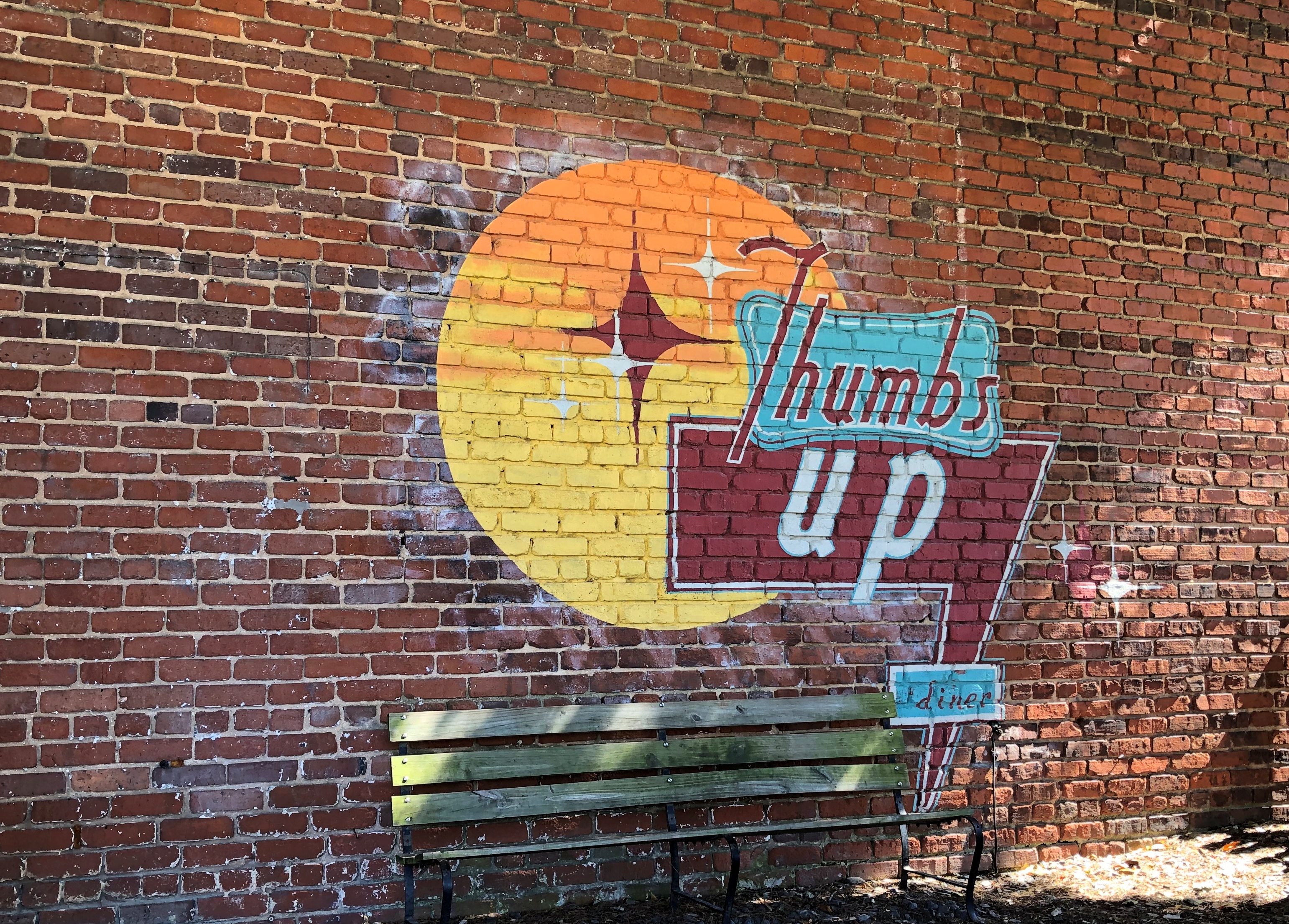
I can’t track down this memorable image, and I didn’t take notes, but it was on a brick wall not too far from Tryon St. Maybe it’s gone now.Charlotte 2017

Something that’s definitely not on Tryon St. any more, but it was when I wandered by in 2017: a memorial to Judah Benjamin.Charlotte 2017

“Though Benjamin had no connection to Charlotte — his only tie was a week he spent hiding there after the end of the Civil War — the United Daughters of the Confederacy presented the granite monument to the city [in 1948], choosing the spot of his supposed few days in hiding,” Smithsonian magazine says.

It was a dowdy thing, and I feel certain that the memorial was ignored by almost everyone until the summer of 2020. Then it got some attention.

“Steps away from the monument, a new Black Lives Matter street mural, commissioned by the city, burst into colorful view this summer [2020],” Smithsonian continues. “Around the same time, city workers finally extracted the Benjamin stone after a protestor spray-painted it with ‘BLM’ and took a sharp implement to it, though a spokesman says the city is ‘evaluating how best to preserve’ it.”

Lawless Roads, A Greene Enthusiast & The Pecan-Shellers Strike

Really nice sunset today, red-grays among the lingering clouds that had dropped snow earlier in the day. Too good, I decided, to capture in digital image form. Besides, it’s cold out there.

I picked up Lawless Roads again last night. It was the book I took with me to New York last month, reading about half. Very near the end of my outbound flight, a youngish fellow in the middle seat next to me spied the cover and told me he’d never heard of the book, even though he thought he’d read all of Graham Greene.

I told him it was one of his handful of travel books. He said he would find it and read it. We had to get off the plane pretty soon after that, so I didn’t discuss Greene any further with him. That may be just as well, since I’ve only read a few of his titles, such as The Quiet American, Journey Without Maps, The Third Man, and Travels With My Aunt. I liked all of them, but don’t count myself as an enthusiast.
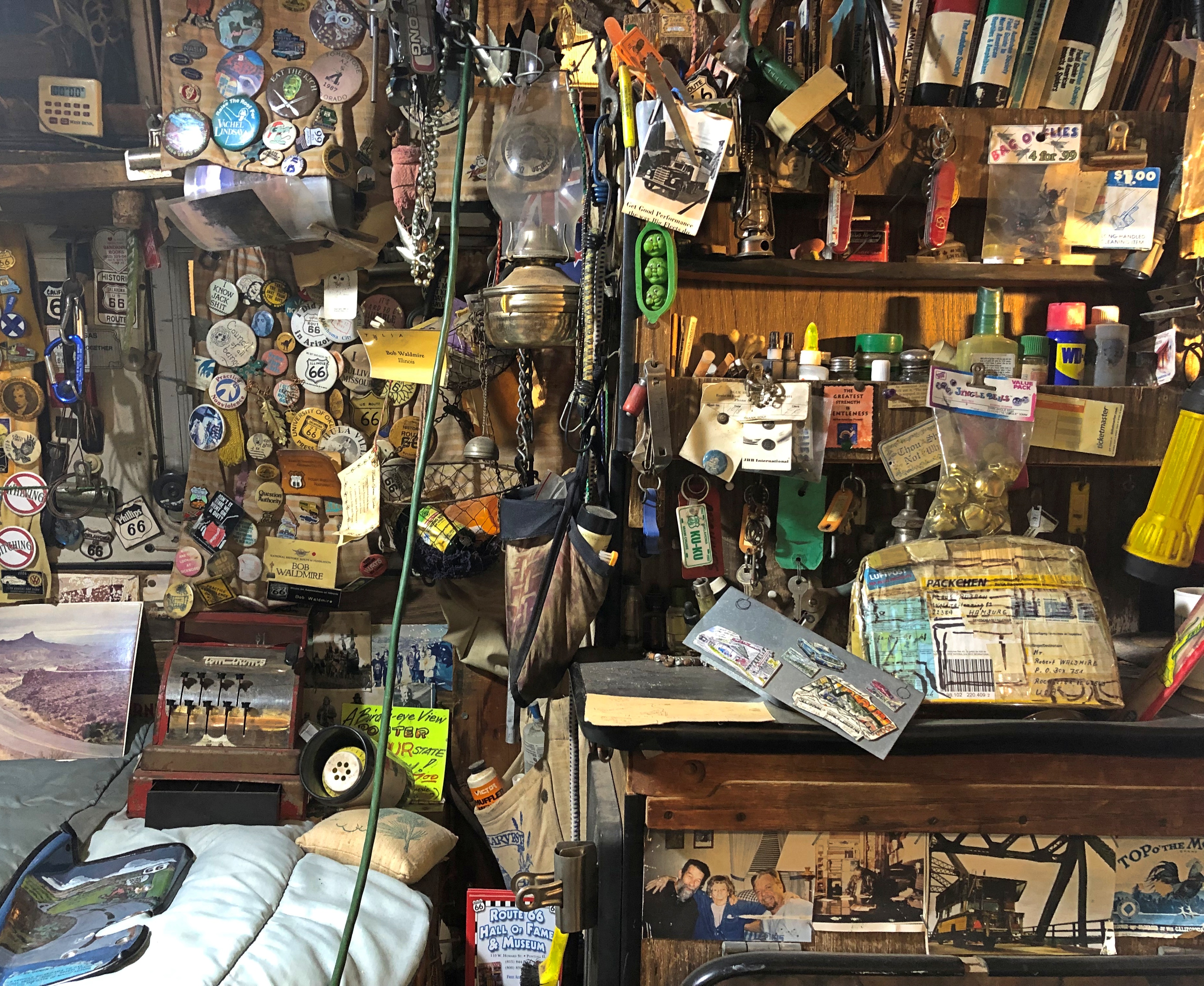
Early in the book, Greene visits San Antonio, and mentions in passing the city’s pecan shelling industry, whose poorly paid and ill-treated workers were on strike at the time (early 1938).

One thing that struck me was the size of the industry: “Forty-seven pecan shelleries lying discreetly out of sight in San Antonio and they shell in a good year, twenty-one million pounds of nuts,” according to Greene.

“In the 1930s Texas pecans accounted for approximately 50 percent of the nation’s production,” the Handbook of Texas says, revealing an even larger industry than Greene thought. “San Antonio was the Texas shelling center because half the commercial Texas pecans grew within a 250-mile radius of the city.

“The pecan-shelling industry was one of the lowest-paid industries in the United States, with a typical wage ranging between two and three dollars a week. In the nearly 400 shelling factories in San Antonio the contracting system was prevalent; the large firms controlled the supply of nuts as well as the prices for shelling.

“Working conditions were abysmal — illumination was poor, inside toilets and washbowls were nonexistent, and ventilation was inadequate.”

It was a brief flowering for the labor movement in San Antonio, with mixed results, and in a few years the point was moot, with hand shellers generally replaced by machines. By the time I came along, all traces of the industry had vanished, at least as far as I knew. Its memory had vanished as well, again at least as far as I knew.
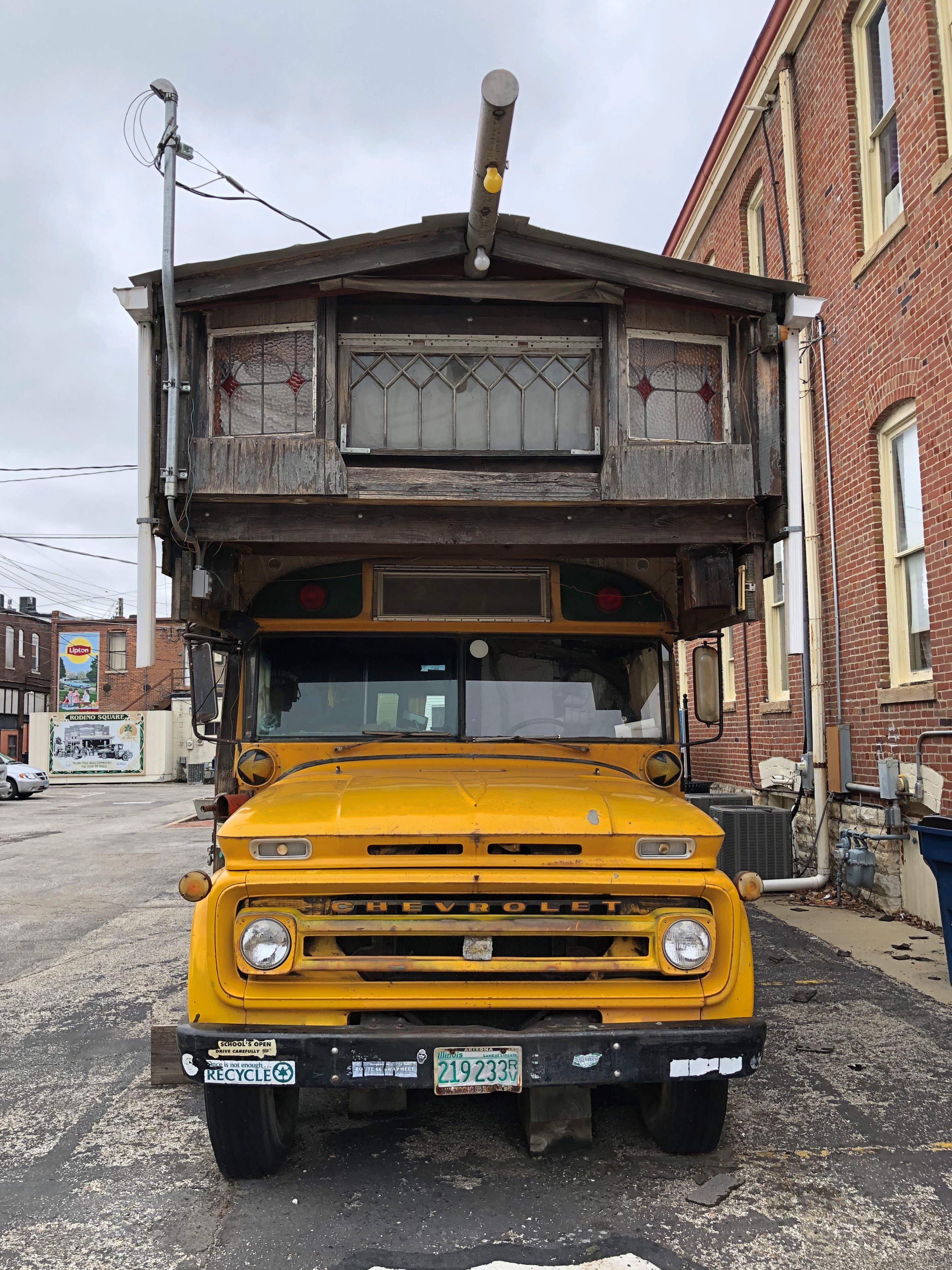
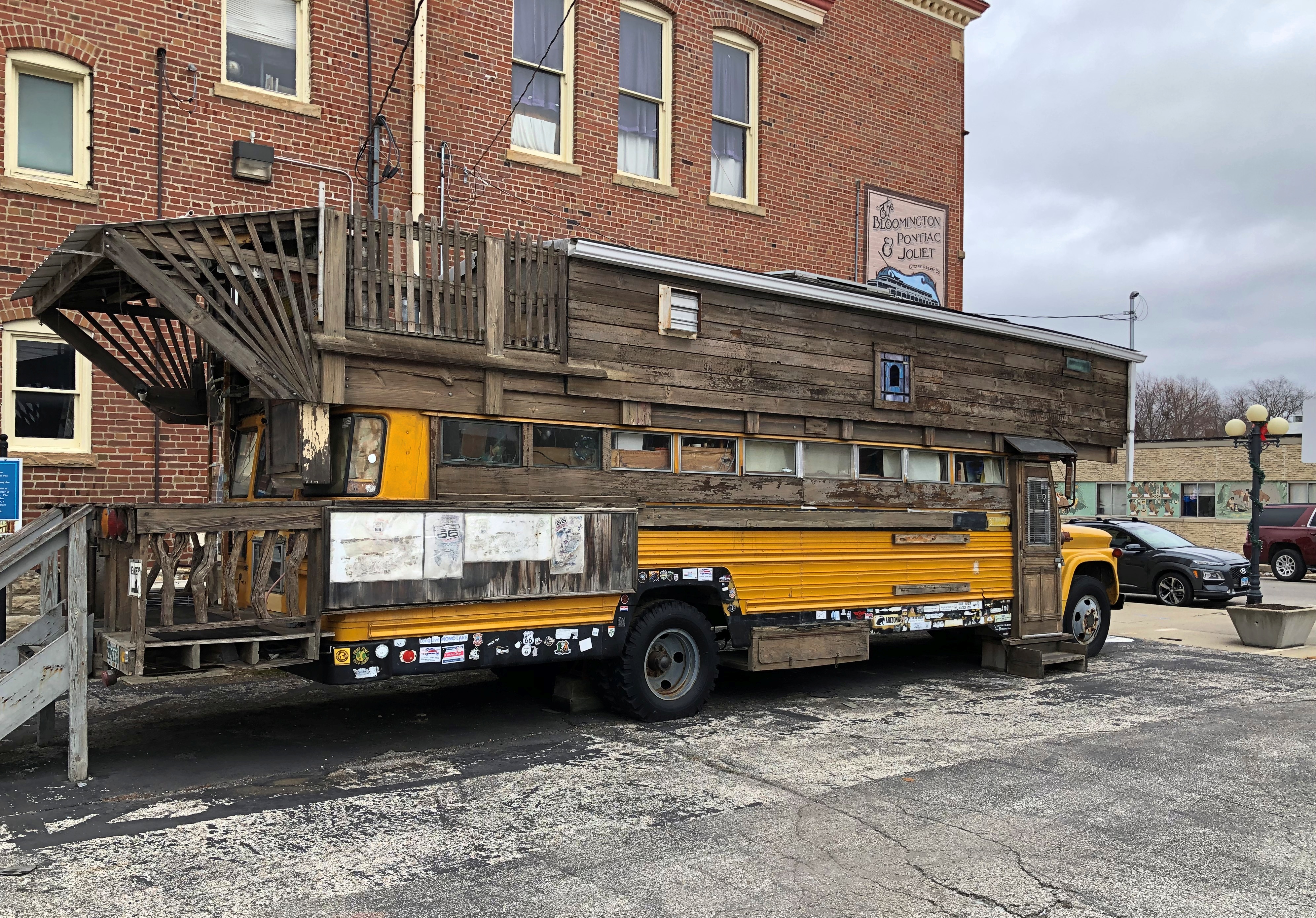
As labor actions go in San Antonio, that was one of the more memorable ones, yet somehow by the 1970s not even my former Wobbly high school U.S. history teacher, the spirited Mrs. Collins, mentioned it in class. She was from upstate New York, so perhaps had little knowledge of it herself. I had to hear about it from my Government teacher at UT Austin in the summer of ’81, who said he was an adherent of anarchism, but that’s a story for another time.

Main Street, Bloomington

Seems like the pit of winter has arrived. That’s not necessarily a time of blizzards or ice storms, though it can be. Mainly the pit is unrelenting cold, and some years the pit is deeper than others — more unrelenting, that is.

So far this year, winter has been bleak-midwinter-ish enough, but not viciously so in my neck of North America. There’s still time enough for northern Illinois winter to turn more vicious, of course.

Ann returned to ISU on Sunday, facilitated by me driving her there. It’s a task I don’t mind at all. We had a good conversation en route and listened to music we both like. I won’t go into the details of that right now, but there is a Venn diagram that includes some intersection. Larger than one might think.

Just before I returned her to her dorm and drove home, we visited part of Main Street in Bloomington. It’s an impressive block. Bloomington should be glad it has survived down to the present.Main Street, Bloomington Ill Main Street, Bloomington Ill Main Street, Bloomington Ill

Not only survived, but the buildings are home to one kind of shop or another, mostly nonchain specialty retailers. In fact, all nonchain as far as I could see.Main Street, Bloomington Ill Main Street, Bloomington Ill Main Street, Bloomington Ill

The 400 block of Main between Market and Monroe Sts. has the strongest concentration of late 19th-century commercial structures, with facades looking well-maintained in our time.Main Street, Bloomington Ill Main Street, Bloomington Ill

Featuring artwork from our time as well.Main Street, Bloomington Ill Main Street, Bloomington Ill Main Street, Bloomington Ill

Not a lot of plaques that I saw, but I did spot one.
Main Street, Bloomington Ill

An organization that’s still very much around, but these days, the Harber Building is home to Illinois Tattoo. Ralph Smedley lived quite a long time (1878-1965), mostly in California, where the organization really took off.

Over a storefront occupied by Ayurveda for Healing, which promises a “holistic path for wellness and optimal health,” there’s a remarkable set of metal figures.Main Street, Bloomington Ill

Detail.Main Street, Bloomington Ill

Ayurveda for Healing, which I assume takes its inspiration from South Asian practices, has three locations, including this one in Bloomington, along with Chicago and Kalamazoo, Michigan.

Just a block over, the 500 block of Main isn’t what it used to be. This is what it used to be, in an image borrowed from the McLean County Museum of History.Bloomington IL Main Street ca 1930

This is what I saw, let’s say roughly 90-odd years later.Main Street, Bloomington Ill Main Street, Bloomington Ill

To take that image of the mural, I was standing in a parking lot where a Montgomery Ward store used to be. Too bad for what has been lost, but fragments are mostly what we have of the past anyway, and it’s good to spot them.

First Thursday of the Year Musings

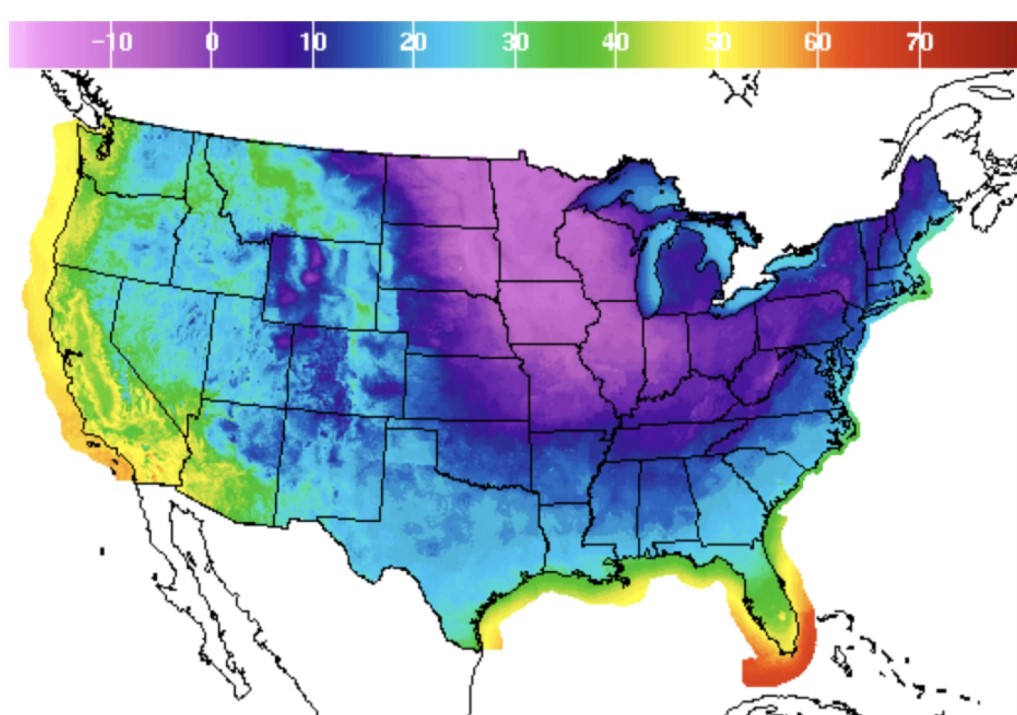
Little wind today, which made the outdoors marginally better to experience. But not much. Tonight will be really cold, an illustration of the superiority of the Fahrenheit scale for everyday use, with 0 degrees being really cold and 100 degrees really hot.

I can’t remember exactly when I read it, but years ago there was an item in Mad magazine lampooning the midcentury notion — the quaint notion, as it turned out — that Americans were going to have a surfeit of leisure time in the future, including a vast expansion of the number of holidays. Millard Fillmore’s birthday was a suggested holiday.

Well, that’s tomorrow, and I have to work. That idea about leisure time didn’t pan out anyway. But I will acknowledge the 13th president’s birthday, because why not. Besides, I paid my respects to President Fillmore in person recently.

Today’s also a good day to acknowledge the expansion, ever so slow, of the public domain, eking out growth despite the rapacious efforts of certain media oligopolists whose mascot is a rodent. Works published in 1926 are now in the public domain.

I’m happy to report that The Sun Also Rises is one of those works, to cite one of the better-known novels of 1926. I could have quoted it previously, and in fact I have, relying on notions of fair use. Now all the words are freely available, no questions asked.

“Here’s a taxidermist’s,” Bill said. “Want to buy anything? Nice stuffed dog?”

“Come on,” I said. “You’re pie-eyed.”

“Pretty nice stuffed dogs,” Bill said. “Certainly brighten up your flat.”

“Come on.”

“Just one stuffed dog. I can take ’em or leave ’em alone. But listen, Jake. Just one stuffed dog.”

“Come on.”

“Mean everything in the world to you after you bought it. Simple exchange of values. You give them money. They give you a stuffed dog.”

“We’ll get one on the way back.”

“All right. Have it your own way. Road to hell paved with unbought stuffed dogs. Not my fault.”

Speaking of life between the wars…

If that song doesn’t make you smile, what will?

Wall Street

Not too many streets get to be metonyms, but Wall Street does, which is a little remarkable for such a short street, only eight blocks from the East River to Broadway, or vice versa. During my walk along the street just before sunset, I wanted to take a closer look at the physical street, not its high finance subtext, which I hear about enough as it is.

I started at the East River Waterfront Esplanade, near where Wall Street meets South Street, which is partly under FDR Drive. You can catch a fine view of Brooklyn from the esplanade.East River, Dec 2021

That’s as close as I got to Brooklyn this time around, as opposed to some other trips.

An enlargement of the sidewalk on the easternmost block of Wall Street forms Mannahatta Park, a pleasant place with bushes and trees and benches. Rose bushes bloomed there this December.Wall Street 2021

More than two centuries ago, the site was New York’s slave market, and surely not a pleasant place. The city erected a sign only in 2015 to mark the doleful history of the site.

At the corner of Water and Wall is 88 Wall Street, these days the Wall Street Hotel, very much an upmarket property (and not where I stayed) that opened only this year in a former office building.Wall Street 2021

The hotel’s web site has an unusually long and detailed history of the site, which is only fitting, considering the richly layered history of the street. One of the more remarkable snippets of 88 Wall Street history is the fact that a series of two buildings on the site from 1791 to 1870 were owned by a tontine, and known as the Tontine Coffee House and then the Tontine Building. Out of the 203 investors who had funded the coffee house, seven survived to be beneficiaries of the tontine.

The current building, a Beaux-Arts structure designed by Clinton Holton & Russell in 1901, was for a time home to an import company that was, among many other things, the world’s largest dealer in mother-of-pearl. When plastic buttons bottomed out the market for that material, the company went into cultured pearls.

By the time you pass 88 Wall Street, the thoroughfare takes on its famed canyon-like aspect.Wall Street 2021

Next to 88 is 74 Wall Street. Its entrance caught my attention.Wall Street 2021

The ever-useful New York Songlines says: “This round-arched building was put up in 1926 as the Seamen’s Bank for Savings Headquarters (hence the seahorses, mermaids and other nautical motifs); the architect was Benjamin Wistar Morris.”

Nautical motifs, all right, though Seaman’s Bank is long gone.Wall Street 2021

Almost as remarkable, the building seems to be vacant. Then again, maybe not so remarkable. Despite the persistence of Wall Street as an metonym, and the presence of the New York Stock Exchange, the street hasn’t been the hub of U.S. finance in many years; that moved on to Midtown.

Though not on Wall Street, 1 Wall Street Court — the Beaver Building, 1904 — is visible from there.
1 Wall Street Court

67 Wall Street, now a residential co-op.Wall Street 2021 Wall Street 2021

Songlines again: “This 25-story triangular building, originally known as the Munson Building, was designed in 1906 by Kenneth M. Murchison for the Munson Steamship [Line]. From 1931 until 1972 it was the New York Cocoa Exchange.”

63 Wall Street.Wall Street 2021

60 Wall Street, a 1988 building designed by Kevin Roche John Dinkeloo.Wall Street 2021

Originally Morgan Bank’s HQ, these days Deutsche Bank occupies it. I found the lobby impressive.Wall Street 2021

Soon after this point, it’s pedestrians only. Trinity Church isn’t far away.Wall Street 2021

40 Wall Street.Wall Street 2021

Lots of history here. A picture of the upper section.

Songlines: “Formerly the Manhattan Bank Building, this was designed to be the tallest building in the world, but was beaten out by the Chrysler Building’s surprise spire…

“The Bank of the Manhattan Company, which eventually became Chase Manhattan, opened its first office here in September 1799. It was founded by Aaron Burr against the opposition of Alexander Hamilton. The New York Stock & Exchange Board, as the NYSE was then called, had its first permanent office here in 1817.

“Donald Trump calls this the Trump Building; please don’t encourage him.”

37 Wall Street.Wall Street 2021

A familiar name, but Tiffany’s is a fairly recent occupant. Designed by Francis H. Kimball, a very busy New York architect, the building originally housed the Trust Company of America in 1907, and then a series of other banks. The upper floors are now residential.
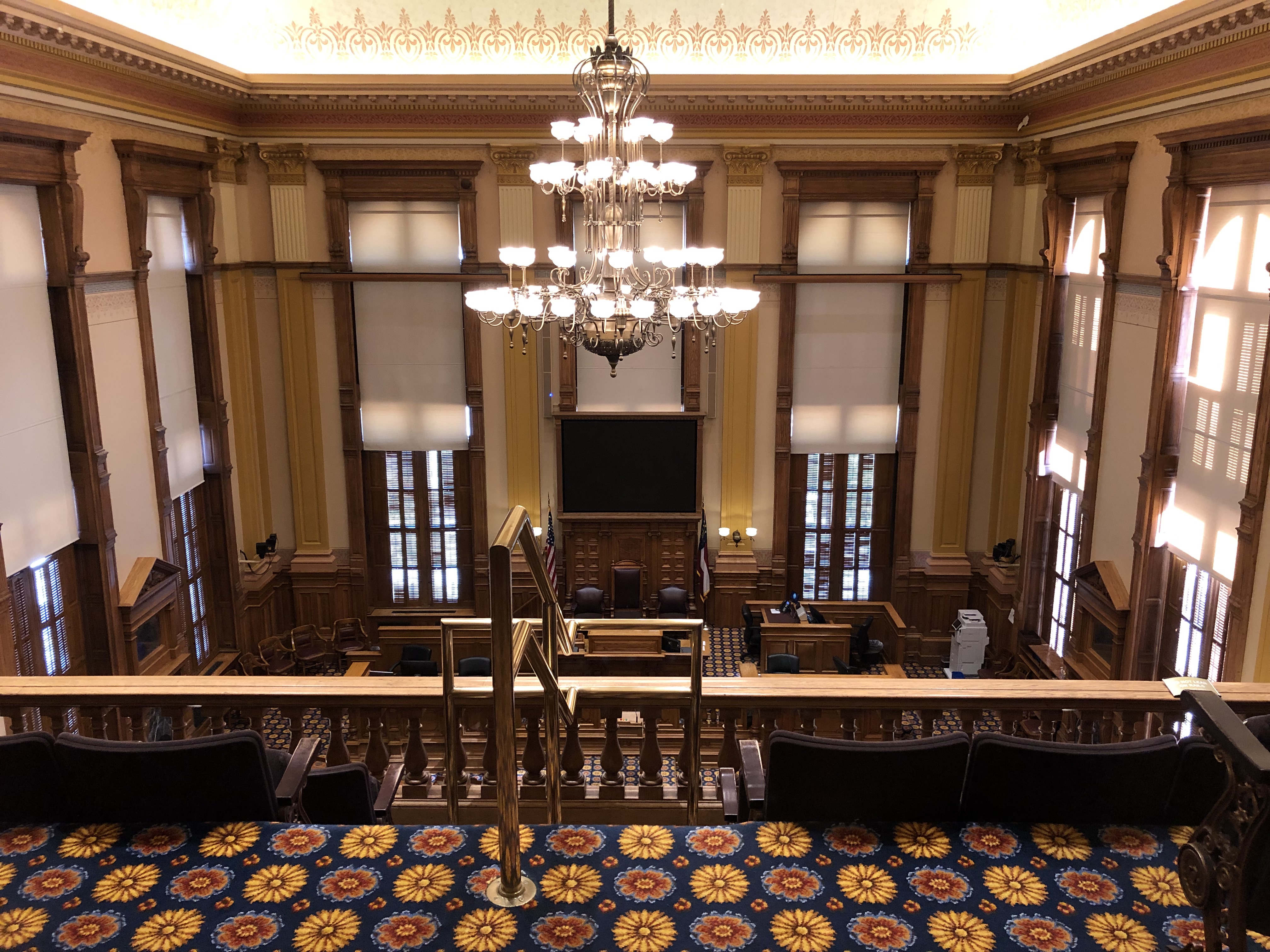
Before long, one comes to Federal Hall National Memorial, which is behind some scaffolding now.Wall Street 2021

George looks a bit cut off up there. Looking down pensively, perhaps, on the nation he created.Wall Street 2021

There’s plenty else on Wall Street that’s perhaps a little less permanent. For instance, sources of affordable food to price-oppressed New Yorkers.Wall Street 2021
Wall Street 2021

I bought a falafel at that first one, delicious and large enough to make part of dinner two nights in a row.

Also, men working.Wall Street 2021

Finally, I couldn’t very well come to Wall Street without a look at the NYSE (11 Wall Street), whose after-hours trading floor I got to visit in 2002.Wall Street 2021

“It’s a primary rain forest of electronic equipment — the guts of the capitalist beast — no, the sinews of the Invisible Hand,” I wrote at the time. Looking at the allegory-stuffed pediment, I’d also say Temple of Commerce.

Despotism In Jest & In Earnest

Back around December 19. Got things to do and, maybe, a few things to see.

Today’s amusement: I happened across this photo.

I’ve seen a lot of pictures of President Roosevelt, but never this one, which I downloaded from the National Archives. The occasion was a Roman-themed birthday party for the president, January 30, 1934.
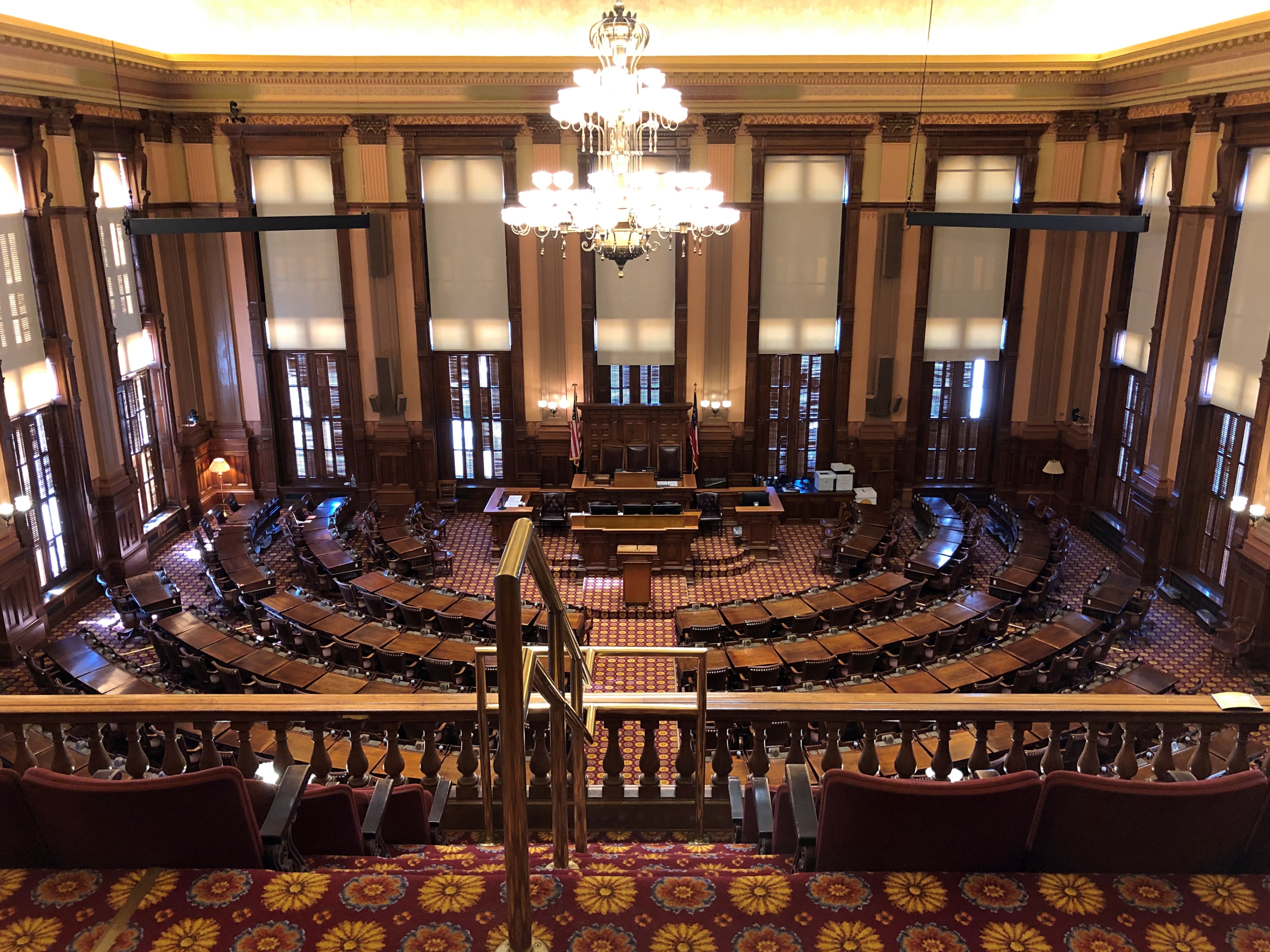
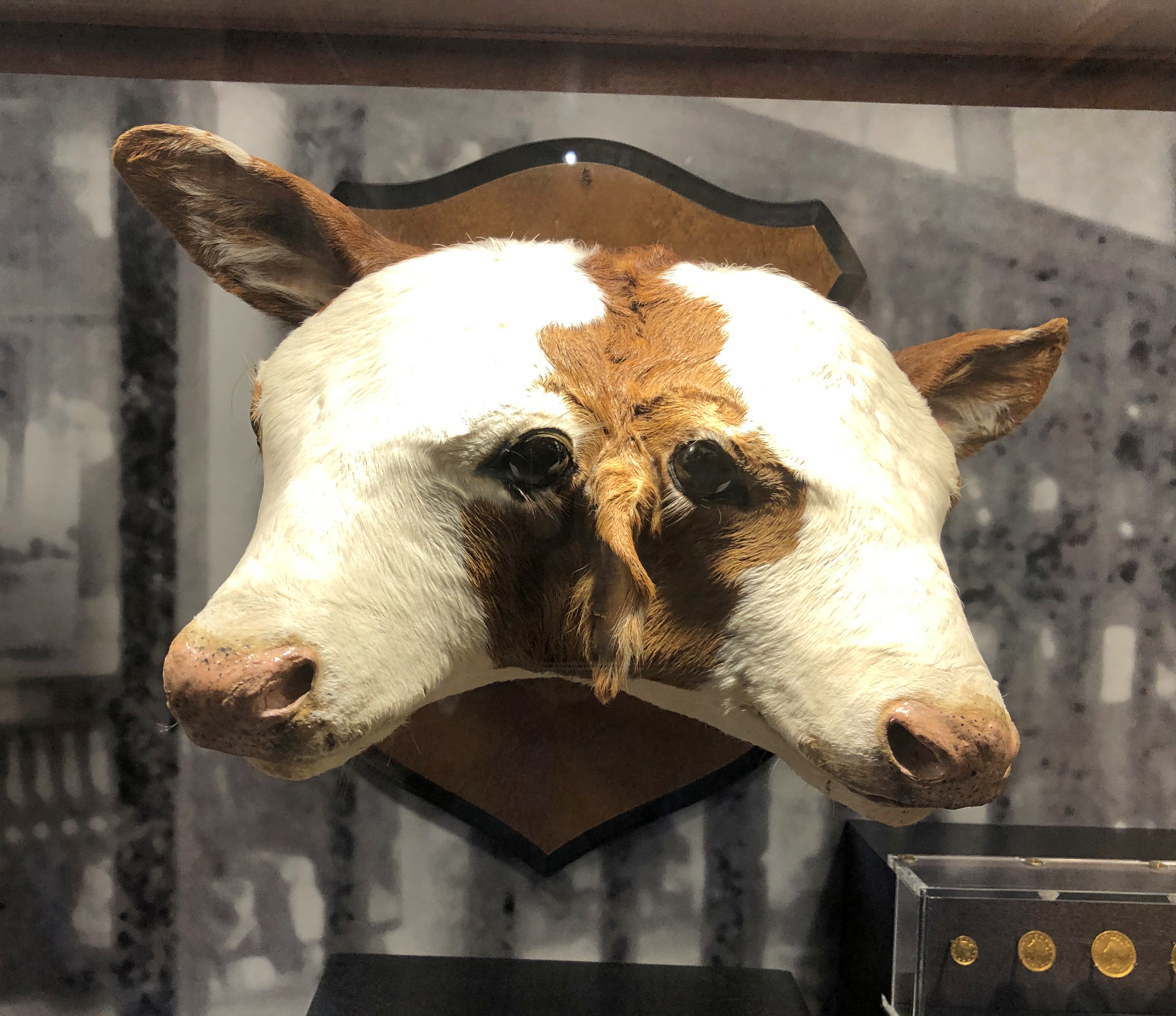
Among other things, FDR’s enemies accused him of despotic tendencies, and it looks like he decided to make fun of the notion as Emperor Roosevelt.

Speaking of despotism, somehow our gnome ended up on the Christmas tree.
Stalin in the Tree

Dreaming of a red Christmas, no doubt. Except that reds don’t celebrate Christmas. Of course, Stalin could have, if he’d wanted to. He was Stalin.

I’d better keep an eye out, or some of the other ornaments might be sent off to parts remote, including the great beyond, as Christmas tree wreckers.

Wright in Dwight, But Also Odd Fellows, Cobb, and a Relic of Quackery

Ambler’s Texaco Gas Station is on the edge of Dwight, Illinois, not far from the Interstate, and after our short visit on Sunday, Ann and I went further into town, seeking a late lunch. We found it at El Cancun, a Mexican restaurant in the former (current?) Independent Order of Odd Fellows building, dating from 1916. Looks like the orange of the restaurant has been pasted on the less-colorful IOOF structure.IOOF Dwight Illinois

I didn’t notice IOOF on the building until after lunch, so I didn’t think to ask the waiter about the building, though I did notice that the restaurant space, whose walls were large and colorfully painted, had a gray ceiling that evoked the late 19th/early 20th century. Maybe once upon a time it was a meeting room or bar for the Odd Fellows of greater Dwight.

Even if I’d asked the waiter, I’m not sure he would have known. Got the impression he didn’t grow up in these parts. He was eager to upsell me a margarita, however. I declined. Had the enchiladas verdes, which were quite good, and a classic teetotaler beverage, water.

The IOOF building is across the street from the back of Dwight’s historic railroad station, now a museum. This is the front.Historic Depot Dwight IL
Historic Depot Dwight IL

About the depot, more info is easily available. “As with other neighboring central Illinois towns, Dwight began as a locomotive watering stopover,” explains The Great American Stations (now that’s an interesting web site).

“The Chicago and Mississippi Railroad sent surveyors in the early 1850s to this prairie location, and while the stop was just two small buildings and a water tank, James Spencer, Richard Price Morgan, John Lathrop and the brothers Jesse and Kersey Fell of Bloomington participated in laying out a town that they would name for Henry Dwight, who had funded most of the building of this section of the railroad.

“Dwight began growing rapidly in the 1870s, with significant railroad traffic through to Chicago from St. Louis, and the town hired Henry Ives Cobb to design their larger, grander railroad depot.”

Jesse Fell, by golly. Him again. He was definitely a big fish in the little pond of central Illinois.

As for Cobb, he designed the wonderful Newberry Library in Chicago and the phallic but interesting Yerkes Observatory in southern Wisconsin, among many other things.

But for big-name architecture, Cobb’s work isn’t Dwight’s star attraction. That would be the modest Frank Lloyd Wright bank building facing the front of the station. FLW was trying to smash that pre-FDIC paradigm of grand bank buildings, it seems.Frank L. Smith Bank

Known as the Frank L. Smith Bank when built in 1905, it’s now the Dwight Banking Center of Peoples National Bank of Kewanee. I like the old name better: Frank’s Bank. How many of us get to have our own banks?

Next to the bank is the Fox Development Center, a state-owned facility for treating people with various unfortunate conditions.Former Keeley Institute Building, Dwight, IL

Pretty spiffy for a government structure, eh? Originally it was one of the buildings owned by the Keeley Institute, built in 1891 and rebuilt after a fire in 1902 in its current brick-and-stone Greek revival style.

I wasn’t familiar with the Keeley Institute. Here’s the long and short of it: there was a patent medicine for everything in the late 19th century, and the product of one Leslie Keeley, a small town doc, promised to cure alcoholism with injections and liquids to drink. His cure containing a substance whose exact formula was a secret, though Keeley asserted it contained the element gold in one form or another.

Not too many people believed that, but a lot of people believed the Gold Cure might just work, enough to make Keeley a fortune and open up locations around the world that lasted well into the 20th century. The institute’s international HQ was in Dwight.

Curing alcoholism with injections might seem odd to us, but actual medicine was only just beginning to separate itself from patent medicine in those days.

“I will take any liquor habitue there, soddened and saturated by twenty years of alcoholic debauch, sober him in two hours, cut short his worst spree in four hours, take him from inebriety to perfect sobriety without nervous shock or distress, and leave him antipathetic to alcoholic stimulants of every sort and kind inside of three days,” Keeley said of his treatment. He also developed “cures” for opium addition and nervous exhaustion. Ah, if only it were that easy.

Note the slogan on this ad for the Gold Cure.Gold Cure

We Belt The World. Though it’s a little hard to see, that same slogan is still above the entrance of the Fox Development Center, wrapped around a globe in the pediment.Former Keeley Institute Building, Dwight, IL

More about Keeley and the Gold Cure is here. Fascinating the things you find on the road.

Ambler’s Texaco Gas Station

Dwight, IllinoisThe National Park Service takes more of an interest in the former U.S. 66 than I would have thought. On this page, the NPS lists dozens of historic sites associated with that road, including 12 in Illinois plus a listing on “Illinois Road Segments.”

One of the sites is Ambler’s Texaco Gas Station in Dwight, Illinois, which is about half way between the northwest suburbs and Bloomington-Normal. On the way back to take Ann to ISU on Sunday, we stopped there.Dwight, Illinois Dwight, Illinois

Though called Amber’s by the park service, the name on site is the Ambler/Becker Station, and the NPS does mention the facility’s other designations over the decades it was a gas station (1933 to 1999): Vernon’s Texaco Station and Becker’s Marathon Gas Station.Dwight, Illinois

After the place ended its existence as a car-care facility, it became a tourist attraction. Sure enough, we’d been attracted for a look, though it was closed on Sunday afternoon.

“With the help of a $10,400 matching grant from the National Park Service’s Route 66 Corridor Preservation Program, the Village of Dwight painstakingly restored the station to its former glory, taking the main office and canopy area back to the 1930s and the service bay area back to its 1940s appearance,” the NPS says. “Today, the station serves as a visitor’s center for the Village of Dwight.”

The Presidio

From Crissy Field on San Francisco Bay, a convenient walking path leads to one of the formal entrances of the Presidio, on Girard Road, and some nearby green space.The Presidio of San Francisco The Presidio of San Francisco

Actually Crissy Field is part of the 1,491-acre former fort, which is part of Golden Gate National Recreation Area and sprawls across the northwestern part of the San Francisco Peninsula. These days, the Presidio includes many former military structures, museums, restaurants, lodging, recreational spots, art installations, trails and lawns, but also residential and commercial properties, including Lucasfilms headquarters.

Too much to see, even in a series of days. Still, I saw a fine slice. I spent most of the afternoon of October 30 at the Presidio, taking a look at some of the large stock of former military properties.The Presidio of San Francisco The Presidio of San Francisco The Presidio of San Francisco

A former band barracks.
The Presidio of San Francisco

I didn’t know that band members ever had their own barracks, but apparently they did at the Presidio. The building could accommodate 37 musical soldiers.

“The Presidio of San Francisco represents one of the finest collections of military architecture in the country and reflects over 200 years of development under three different nations,” says the NPS.

“Today, the Presidio boasts more than 790 buildings, of which 473 are historic and contribute to the Presidio’s status as a National Historic Landmark District. The building types range from elegant officers’ quarters and barracks to large, industrial warehouses, administrative headquarters, air hangars, major medical facilities, and stables.”

Who says the military isn’t concerned with aesthetics in its buildings? Was concerned, anyway.

The Main Parade Ground.
The Presidio of San Francisco

Food was available.
The Presidio of San Francisco

I had some excellent Korean food from the Bobcha food truck. It seemed like a better bet than Viva Vegan, at least to my tastes. Had a nice view while eating, too. I was at the next table down.The Presidio of San Francisco

Not far from the parade ground is San Francisco National Cemetery.San Francisco National Cemetery San Francisco National Cemetery

A picturesque hillside cemetery with towering trees.San Francisco National Cemetery San Francisco National Cemetery San Francisco National Cemetery

At about 28 acres, there are more than 30,000 service members interred there. It was the first national cemetery on the West Coast.San Francisco National Cemetery San Francisco National Cemetery

A memorial to an incident that doesn’t have that many memorials: the Boxer Rebellion.
San Francisco National Cemetery

In this case, memorializing four marines from the USS Oregon who died on the Tartar Wall defending the Legations in the summer of 1900.

As I sometimes do, I picked out an ordinary soldier to look up later.
San Francisco National Cemetery

Motor Machinist Mate First Class (MOMMI) Clayton Lloyd Landon of St. Louis, a submariner who went down with the USS Tullibee in 1944. It seems that the vessel was a victim of one of its own torpedoes, as happened sometimes.

Gunner’s Mate C.W. Kuykendall, on watch up top at the time, was the only survivor of the Tullibee sinking, having been knocked into the water by the explosion and later picked up by a Japanese ship, to spend the rest of the war as a POW. Remarkably, he tells his story in a recent video.

“I just feel like I’m lucky.” Well put.