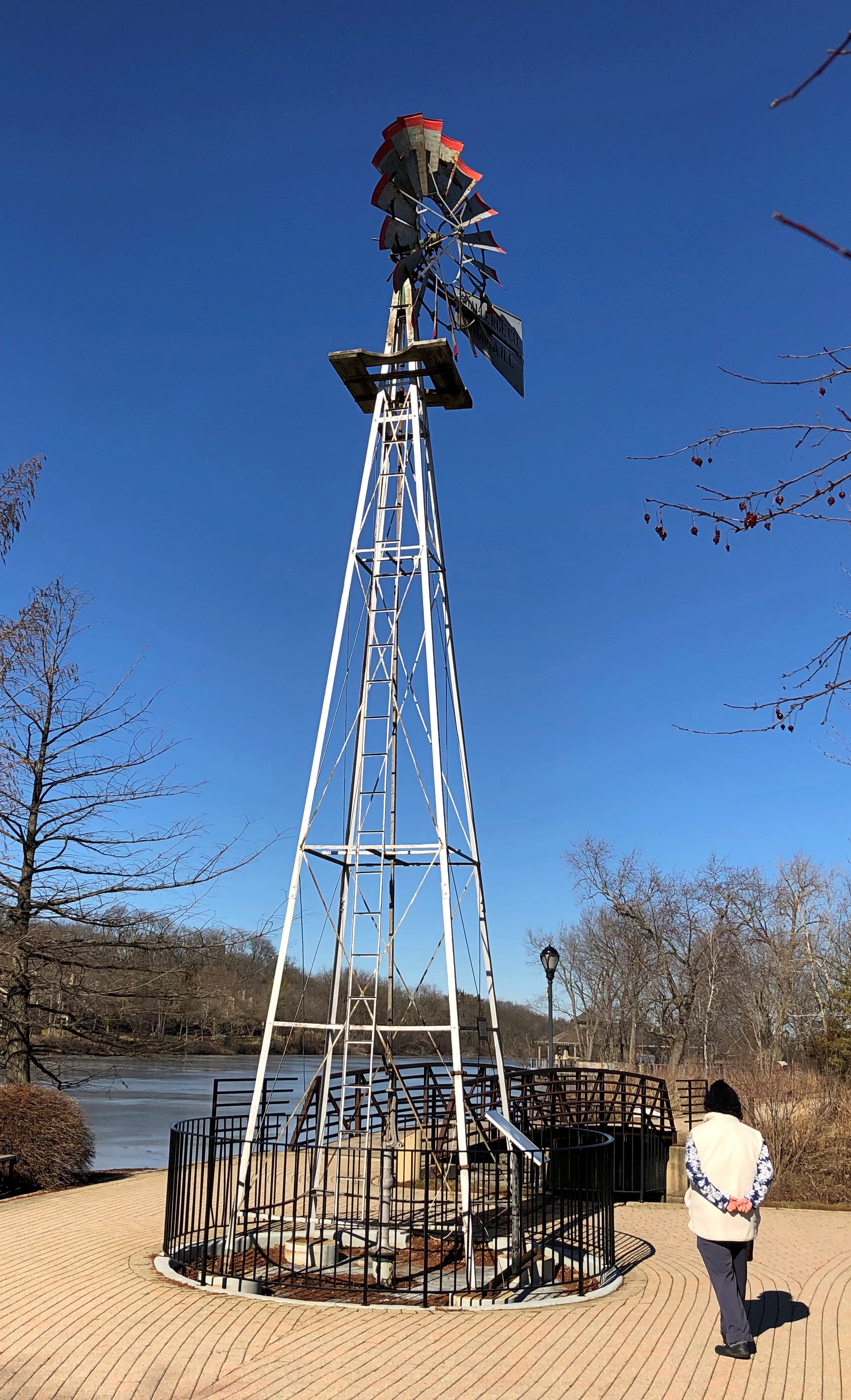
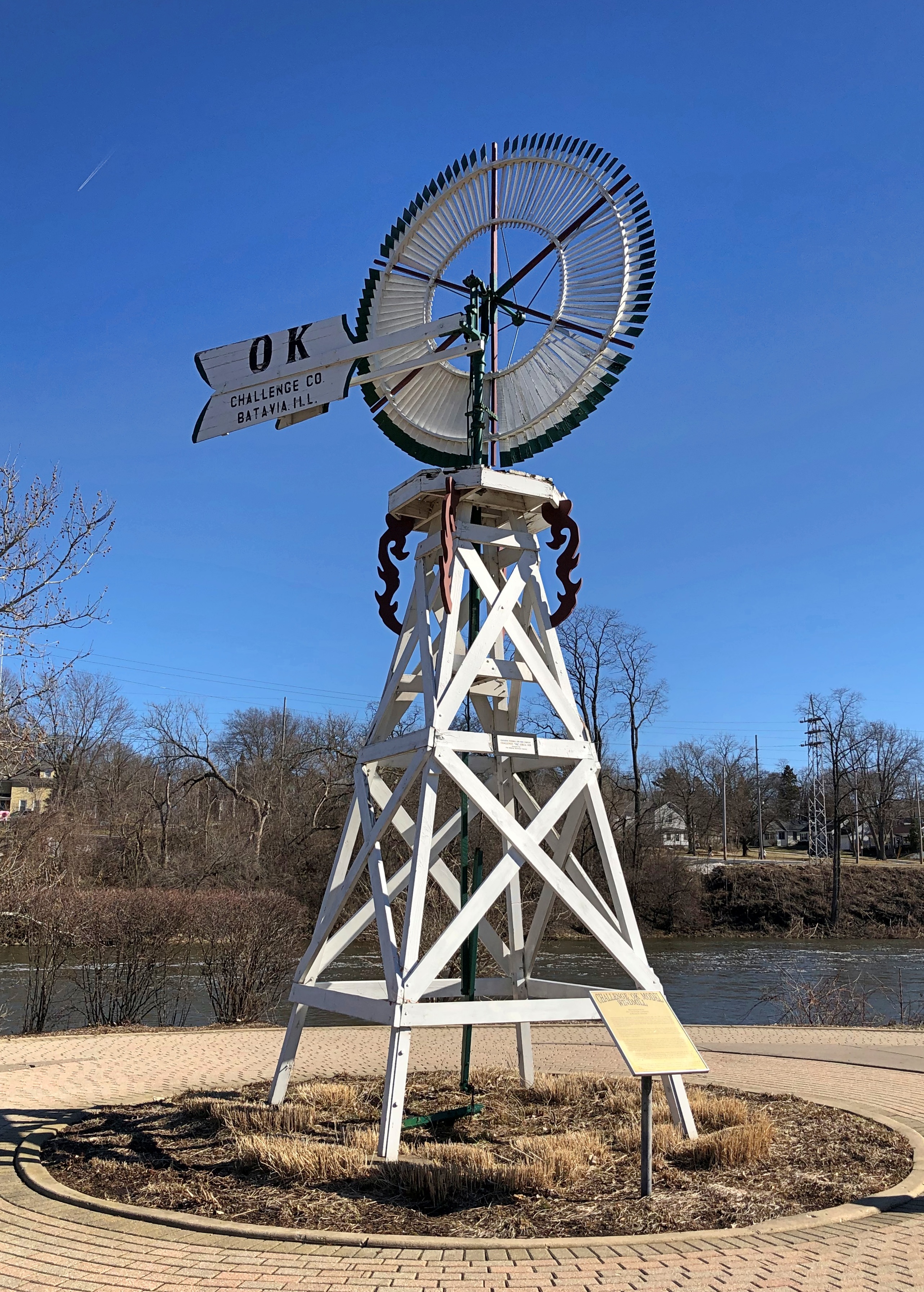
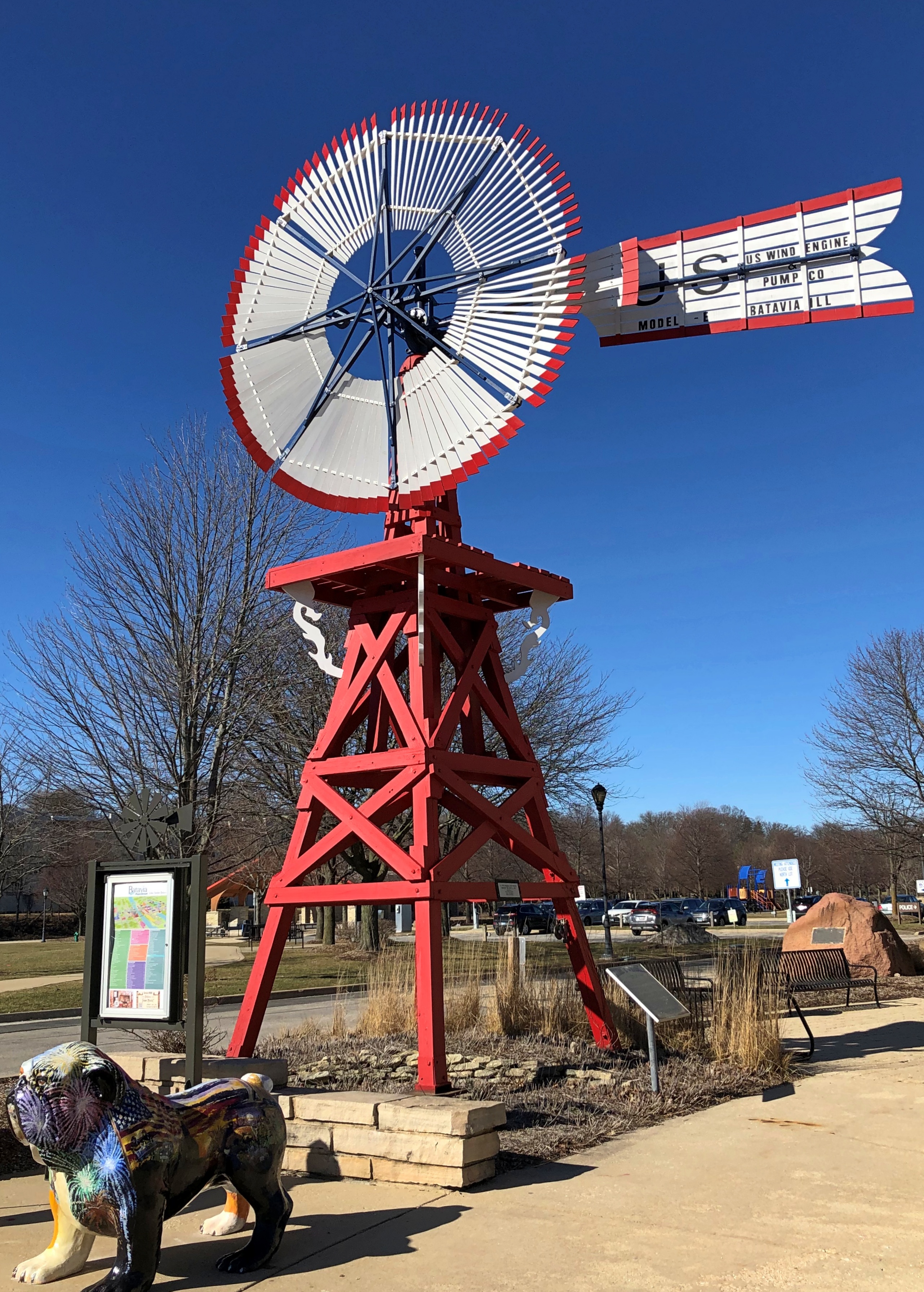
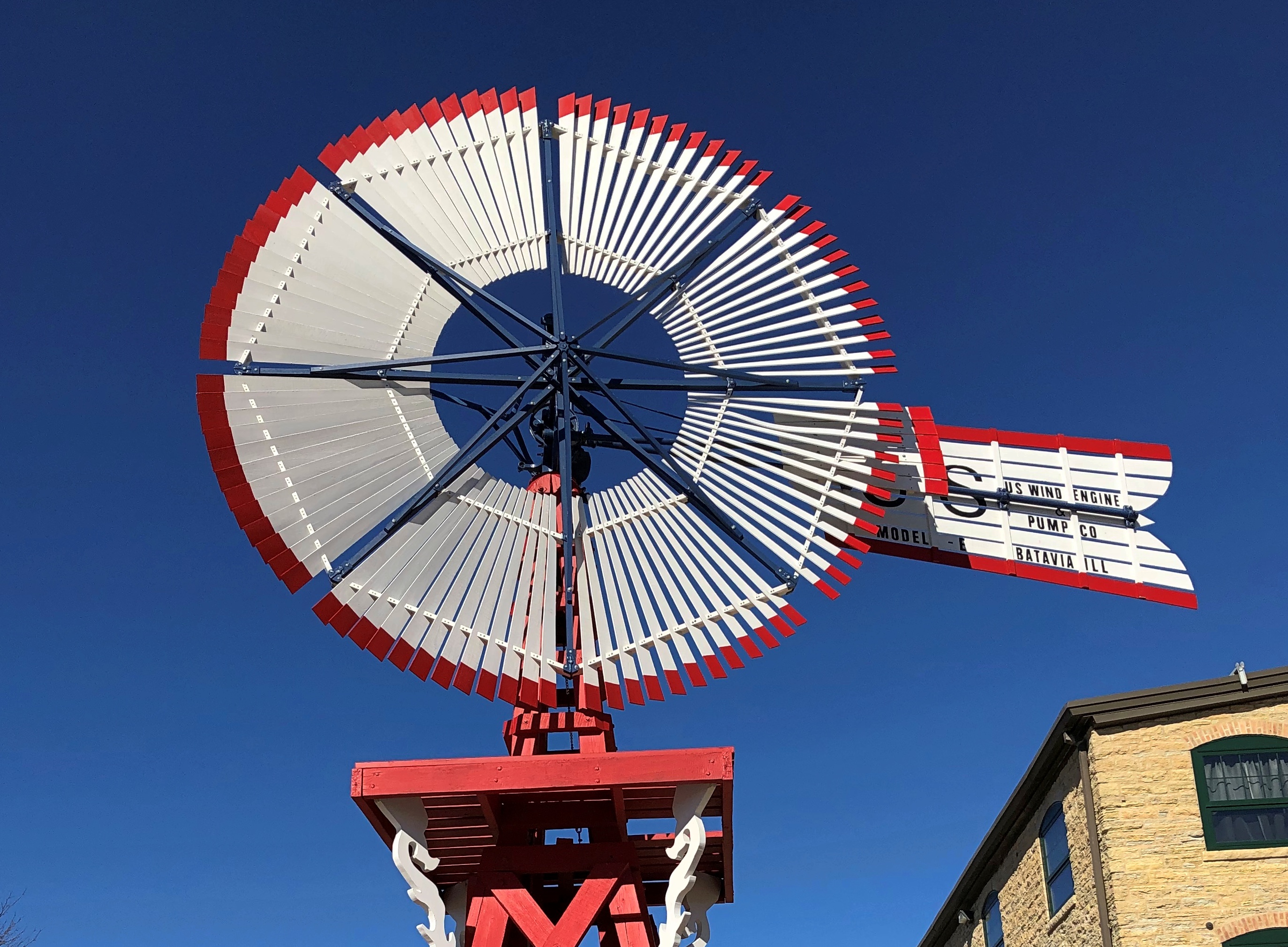
The Grundy County Historical Society & Museum

I did a quick look, and it seems that the Rockwell Inn, a restaurant in Morris, Illinois, closed for good sometime in 2013. I ate there in 1987, returning from Springfield from the first business trip I’d ever taken, and remember the dark interior, the very long and ornate wooden bar that had supposedly been at the 1893 world’s fair, and the fish — some kind of fish — cooked in a bag with almonds and spices, superbly done.
That was the only time I ever ate there. I gave it a moment’s thought after I’d visited the Grundy County Historical Society & Museum on Friday, which is in Morris.Grundy County Historical Society & Museum

If I’d thought of it while I was at the museum, I could have asked the woman at the desk, the only other person there, whether she remembered the restaurant. She might well have, or even pointed out a Rockwell artifact, though I’m pretty sure that the museum didn’t get the bar. I hope someone got it.

The museum has a lot of other things, though. That’s part of the charm of local, volunteer-run museums. Stuff. Such as items to remind us that Prince Albert is, or was, in a can.Grundy County Historical Society & Museum

Business machines of yore.Grundy County Historical Society & Museum Grundy County Historical Society & Museum

Clothes.Grundy County Historical Society & Museum Grundy County Historical Society & Museum

Things that used to be found in middle-class homes.Grundy County Historical Society & Museum Grundy County Historical Society & Museum

Farm equipment.Grundy County Historical Society & Museum

And some items specific to Grundy County industry. Coal has been mined there for a long time, leaving behind tools.
Grundy County Historical Society & Museum

Lots to look at on a rainy, cold spring day, when you have a museum all to yourself.

Thursday Grab Box

Lake Michigan was active but not stormy on Saturday. Views from Loyola.Lake Michigan 2022 Lake Michigan 2022

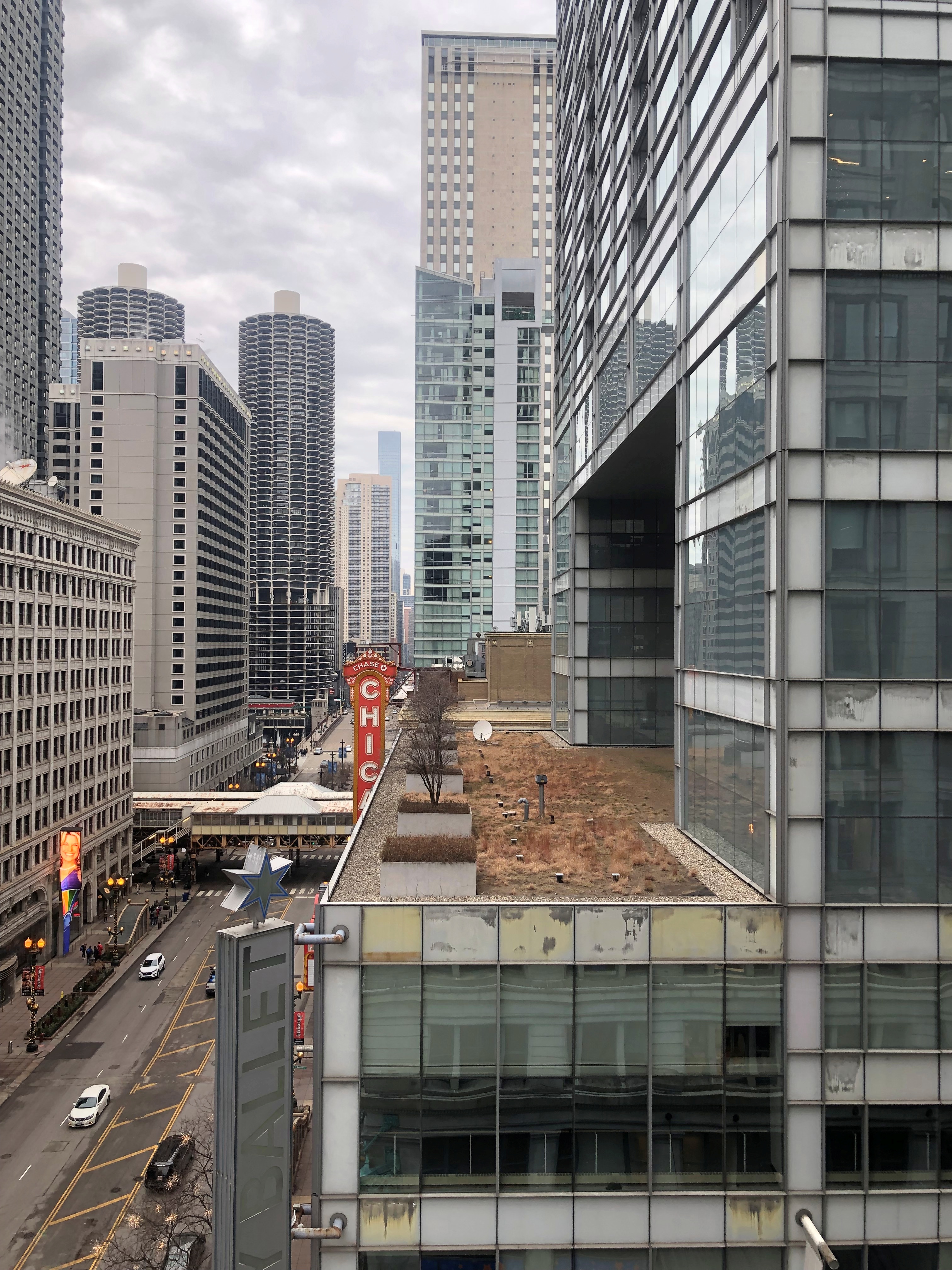
There’s a coffee-table book in this: chain-hung Chicago signs.
Devil Dawgs Chicago

High-res images, of course. Can go on the same coffee table with Austin neon.

Also Chicago. Specifically, on the street. Make that in the street: a Toynbee tile-like embedment doing its part to remind us of the beleaguered Ukrainians.

Recently I started reading Illegal Tender, subtitled “Gold, Greed and the Mystery if the Lost 1933 Double Eagle,” by David Tripp (2004). A remainder table find some years ago; nice hardback. As it says, the book tells the intriguing (to me) story of the 1933 Double Eagle, which tends to make lists of the world’s most valuable coins, along with the likes of the Brasher Doubloon, the 1804 Bust Dollar and the 1913 Liberty Nickel. Coins so special that their names are capitalized.

On that particular list, I hadn’t heard of the 723 Umayyad Caliphate Gold Dinar, but wow, what a name, with images of ancient treasure in distant lands woven right into the words. The 1913 Liberty Nickel was the MacGuffin in an episode of the original Hawaii 5-0. Namely, “The $100,000 Nickel,” which first aired on December 11, 1973.

“A rare 1913 Liberty Head nickel, one of only five ever made, is to be auctioned at a coin show held at the Ilikai Hotel,” says the imdb entry on the episode. “European master criminal Eric Damien gets con artist and sleight-of-hand expert Arnie Price freed from jail so that he can switch a cleverly-made fake with the original before the auction. But things do not go as planned, as Price, fearing capture, tries to dispose of the nickel in a news rack, and the chase is on to recover the nickel before anyone else finds it.”

Naturally, McGarrett and his men recover the nickel. I don’t remember that specifically, even though I saw that episode either that day or on repeat, but that’s a safe assumption for the denouement. I do remember that I’d heard of the nickel before, probably in a Coins or Coinage article.

I think the episode at least partly inspired one of the Super 8 movies I made with friends David and Steve in junior high, The $300,000 Dime, which I think involved Swiss operative Hans Lan foiling the theft of the titular dime. Sadly, this and the other Hans Lan story, The Assassin, plus the SF non-epic Teedees of Titan and a couple of others whose names I’ve forgotten, are lost as the Hanging Gardens of Babylon, except that no one cares.

South Bend City Cemetery

Oddly enough, our microtrip to South Bend last weekend wasn’t much of a trip to South Bend. Our motel was in the city, near the airport, and we drove through town a few times, but mostly we were in Norte Dame — which is a town besides being a university of that name — and Mishawaka.

Still, we had a few South Bend moments.South Bend for Pete mural

Also, on Sunday morning, I went by myself to the South Bend City Cemetery, because of course I did. On the way I took a short look at St. Paul’s Memorial Church (Episcopal), because of course I did.St Paul's Memorial Church, South Bend

With John 12:17 over one of the doors.St Paul's Memorial Church, South Bend

The cemetery is a few blocks away. Founded in 1832, with about 14,800 permanent residents, mostly from the 19th century, though I spotted a scattering of 20th-century burials.

An aside: I read this week that Kane Tanaka, regarded as the oldest living person, died at 119. Born in 1903. Though it’s clearly been true for a while, I just realized that means that no one who lived any time at all in the 19th century is still alive. No one whose age is verifiable, anyway.

Except in the sense that we still remember, personally, people who lived at least a little while in that century, such as my grandmother. Is someone not well and truly dead until everyone who remembers him or her is too?

South Bend City Cemetery, the entrance.St Paul's Memorial Church, South Bend

The cemetery office, I assume. Handsome little structure.South Bend City Cemetery 2022

Not too many large memorials or much funerary art, but well populated by a variety of weathered standing stones. As usual, I was the only living person around. Not even groundskeepers on Sunday.South Bend City Cemetery 2022 South Bend City Cemetery 2022 South Bend City Cemetery 2022

As I said, the cemetery’s pretty near St. Paul’s, which is in this image.South Bend City Cemetery 2022

A handful of mausoleums. No name on this one.South Bend City Cemetery 2022

A boarded-up mausoleum. Not something you see much. I like to believe that the cast-iron door that probably hung there went to a scrap drive and did its tiny part to defeat Hitler. But I also suspect that it might have been stolen one night instead.

Large to the small.
South Bend City Cemetery 2022

The worn, broken stone of Peter Roof, the first recorded burial. Roof, I understand, was a veteran of the Revolution.

There’s a poignancy in time eating away at memorials as surely as it did those memorialized. Worn lettering, old-time symbols, dark smudges of pollution and dirt.South Bend City Cemetery 2022

Rust, too. Such is the condition of the GAR stars I saw. This is the kind of cemetery that would have them. Rusty, but they endure as a faint echo of the camaraderie of men who fought and won the day for the Union.South Bend City Cemetery 2022 South Bend City Cemetery 2022

As you’d expect, at least one Studebaker has a sizable memorial. South Bend was their town.

The memorial has lasted much longer than the company of that name.South Bend City Cemetery 2022

I didn’t come looking for the car-making family. I had someone else in mind: Schuyler Colfax.South Bend City Cemetery - Vice President Schuyler Colfax grave

Good old Vice President Colfax of Grant’s first term, famed in — well, neither song nor story. Still, his contemporaries thought highly of him. They must have. Not only did he get the main stone, he got this.South Bend City Cemetery - Vice President Schuyler Colfax grave

And this — close to our time, in 1978.South Bend City Cemetery - Vice President Schuyler Colfax grave

Order of Rebekah? Now you know.

Leaving the cemetery, I was glad to see that it’s on Colfax Ave. It’s a more modest street than Colfax Ave. in Denver, but South Bend is a more modest town.

Notre Dame Stroll

Along with the rest of northern Indiana, the campus of the University of Notre Dame is just beginning to turn green, with grass fully that color, and bushes and trees budding. We began our walk on campus on Saturday afternoon as one does, at a large parking lot. But the lot had good placement, not far from St. Mary’s Lake.St Mary's Lake, Notre Dame St Mary's Lake, Notre Dame

A nearby lake is St. Joseph’s. You’d think there would be a Baby Jesus Pond somewhere, but I don’t see it on the map.

Next to the basilica is Norte Dame’s magnificent Main Building. Serving as the administrative center for the school, the structure dates from 1879, replacing a building that burned down early that same year, and was designed Willoughby Edbrooke. Its gold-leaf dome was added a few years later, complete with a massive gilded statue of Mary atop it.Notre Dame Main Building

The interior looks pretty spiffy. Unfortunately, it was closed for an event. So we headed south along the well-manicured lawns of Notre Dame, eventually reaching the Eck Visitor Center and the Hammes Bookstore, which would be more accurately called the Hammes ND-Themed Clothing Store.Notre Dame campus

Jesus faces the Main Building.Notre Dame campus

This isn’t the Touchdown Jesus Notre Dame is known for, however. That, alas, we didn’t see (or First Down Moses, either).

Further down the lawns is the founder and first president of Norte Dame in bronze, created by Italian sculptor Ernesto Biondi and unveiled in 1906.
Notre Dame campus

Namely, the Very Rev. Edward (Édouard) F. Sorin (1814-93), who also had time to found St. Edward’s University in Austin and have a mighty oak named for him. The plinth is inscribed with Latin, lauding Sorin.

South along the lawns is a raft of collegiate buildings with collegiate names: Sorin Hall, Lafortune Student Center, Hayes-Healy Hall, Walsh Hall and the Norte Dame law school. Formally, it’s the Eck Hall of Law. I was impressed by how new the building looked, despite its traditional stylings. It is fairly new: 2008, a design by Cardosi Kiper.
Notre Dame Campus

A lot of the buildings looked newish, which tells me that Notre Dame has the dosh in our time — or can source it from donors like Mr. Eck — for capital projects. As indeed it does: the university’s endowment is about $12.3 billion, putting it at number 8 on this U.S. News & World Report list.

That kind of money also buys some nice details, or at least it should.Notre Dame Campus

Further on, the “bookstore” didn’t let you forget where you were.Notre Dame campus

Finally, I don’t want to forget Chaplain William Corby, who rates a statue not far from the basilica and Main Building.Notre Dame campus

A plaque near the bronze says: The first bronze sculpture of Chaplain William Corby by Samuel Murray was dedicated on the Gettysburg battlefield by Civil War veterans of the five regiments of the Union Army’s Irish Brigade. His statue is on the same boulder of Cemetery Ridge where he stood to give the soldiers General Absolution on July 2, 1863, the second day of the three-day battle

Minutes later the Irish Brigade went into action at Little Round Top and the Wheatfield. The Brigade lost 27 killed, 109 wounded, and 62 missing. Gettysburg’s individual statues are of generals, except President Lincoln, Chaplain Corby, and a civilian.

This duplicate statue was dedicated here in 1911. Father Corby was president of Notre Dame twice: 1866-72, 1877-82. He planned the Grotto, finished in 1896, and died in 1897.

Crossing the Bar

Warmish day, though I didn’t have a lot of time to spend out in it, other than walking the dog just before sunset. Windy but not especially cold then, but even better was the mid-day, when the sun came out and temps nearly hit 70 degrees F.

An editorial cartoon that assumed many, or at least some of its readers would know some Tennyson. Probably a reasonable assumption in 1945.

That came over the transom today in wandering around the online labyrinth. It is April 12, after all.

Fort Pulaski National Monument

Today turned out to be an pleasant early spring day. There will be more winterish days to come, of course, and the nights are still chilly, but I’ll enjoy the warmth as much as I can. Had a very civilized lunch on the deck today, including casarecce and mussels, Greek olives and mineral water.

American schoolchildren learn, or at least used to learn, the story of the early 1862 battle between the Monitor and the Virginia (a.k.a., the Merrimack, which does have a euphonious ring when paired with the Monitor). That incident demonstrated the vulnerability of wooden hulls to armored ships, and the navies of the world took note. That was my takeaway about the Battle of Hampton Roads.

I don’t remember ever being taught about Fort Pulaski, which is on Cockspur Island in the Savannah River, and whose short siege, only about a month after Hampton Roads, revolutionized warfare in its own way. If I ever learned that before, I’d forgotten. So I relearned it by visiting Fort Pulaski National Monument outside Savannah on the morning of March 7.Fort Pulaski National Monument

“On April 10 [1862], after the Confederates refused [Union Capt. Quincy] Gillmore’s formal demand to surrender, the Federals opened fire,” the NPS Fort Pulaski leaflet says. “The Confederates were not particularly alarmed; the Union guns were a mile away, more than twice the effective range for heavy ordnance of that day.

“But what the fort’s garrison did not know was that the Federal armament included 10 new experimental rifled cannons, whose projectiles began to bore through Pulaski’s walls with shattering effect.”

Before long, within about a day, explosive shells were hitting near the fort’s main powder magazine, and the Confederate commander, Col. Charles Olmstead, surrendered. Though state-of-the-art when constructed in the 1830s and ’40s, the brick fort proved in 1862 to be as obsolete as wooden-hulled ships. Armies of the world took note.Cockspur Island

Whatever its role in the history of warfare, Fort Pulaski is a cool relic here in the 21st century. Built of an estimated 25 million bricks, the NPS says, and restored in the 20th century by none other than the energetic lads of the CCC. We arrived via the causeway that crosses to Cockspur Is. and soon approached the fort. Which has a moat.Fort Pulaski National Monument

And a drawbridge.Fort Pulaski National Monument

How often do you get to say you’ve crossed a moat on a drawbridge?

Though vulnerable to new cannon tech in the 1860s, the fort’s thick walls are impressive all the same.Fort Pulaski National Monument

On one of the ceilings, some Union garrison soldiers — who had little to do, since the Confederacy never tried to take the fort back — left some patriotic graffiti.Fort Pulaski National Monument

It’s a little hard to read, but includes a star and says THE UNION NOW AND FOREVER.

This is the entrance to the powder magazine that was in danger of blowing up real good during the bombardment.Fort Pulaski National Monument

The five walls enclose a sizable bit of ground.Fort Pulaski National Monument Fort Pulaski National Monument Fort Pulaski National Monument

Most of the monument’s exhibits are inside the walls, including ones about ordinary soldiers’ quarters, the commanding officer’s quarters (definitely better), the infirmary, the chapel, how the garrison entertained itself (considering that leave in Savannah was out of the question) and more.

A good many cannons still stand at the fort, ready to greet the tourists who show up.Fort Pulaski National Monument

A plate on the cannon below indicated that it was made by the Ames Manufacturing Co. of Chicopee, Mass., a major maker of side arms, swords, light artillery and heavy ordnance for the Union.Fort Pulaski National Monument

This cannon is perched atop the upper level of the walls (the terreplein), which surprised me by being accessible to tourists. There are no guardrails, so you take your chances.Fort Pulaski National Monument
Fort Pulaski National Monument

We enjoyed good views of the surrounding territory, Cockspur Island that is, from up there. That kind of view would seem to be an important feature in a fort. I expect most of the flora now seen wasn’t there when Pulaski was an active fort.Fort Pulaski National Monument

Near the entrance of the fort is a small cemetery.Fort Pulaski National Monument

It includes mostly unmarked individual graves, though there is a small stone honoring a man named Robert Rowan. It says:

In Memory of ROBT. ROWAN of No.
Carolina, Lieut in 1st Regimt of Artilrst &
Engirs of the U. States Troops who died
March 3d 1800, Aged 25 Years.

Obviously not involved in the Civil War, he was stationed at Ft. Pulaski’s predecessor, Ft. Greene. I’m a little amazed that the stone still stands, and even the location of Rowan’s resting place is known, considering that a hurricane destroyed that fort only four years after he died.

Also buried in the cemetery are 13 of the Immortal Six Hundred, Confederate POWs held at Ft. Pulaski in 1864 and ’65. A much newer stone at the end of a sidewalk — erected in 2012 by the George Division of the Sons of Confederate Veterans — honors these men.

A number of short walking paths lead away from the fort. We took a walk on one.

Skies were clear and temps warm, about 80 F. Luckily, it seemed to be a little too early in the spring for many bugs to be around. I expect bugs were a major nuisance (and danger, considering the likes of malaria) for the fort’s garrison in those pre-DEET days.Fort Pulaski National Monument

The path we walked eventually led, by way of the aforementioned John Wesley memorial, to the Savannah River, near where it empties into the Atlantic. Across the way is South Carolina.Fort Pulaski National Monument

Signs marked the beach closed, so we didn’t venture on to it. Still, frame it right, and it looks like you’re at a beach resort.Fort Pulaski National Monument

At least, that’s what Ann claimed as she sent pictures to her friends.

Two Savannah Cemeteries, One Featuring Button Gwinnett

Both of the Savannah cemeteries I visited last week were unusual in one way. Not that one was a burial ground dating back to colonial times and other was founded by Victorians who believed that cemeteries should be beautiful places of respite; I’ve encountered both in other cemeteries.

Not the weathered stones and crumbling bricks of the colonial cemetery, nor the enormous trees and bushes and flowers of the 19th-century cemetery, nor the interesting funerary art, nor even the fact that 21st-century burials continue in the latter cemetery. I’ve seen all that, in one way or another, at burial grounds in places as varied as Austin, Boston, Buffalo, Charleston, Chicago, Dayton, Fairbanks, Los Angeles, Milwaukee, New York, Richmond, San Antonio and more.

Rather, living people — besides me and the occasional jogger or groundsman — populated both Colonial Park Cemetery in downtown Savannah and Bonaventure Cemetery on the eastern edge of the city. With such notable exceptions as Arlington National Cemetery or Koyasan in Japan, which are destinations in their own right, cemeteries tend to be mostly devoid of living people.

As the name implies, Colonial Park functions as a downtown park, with people crossing it in some numbers, and a few looking around (though my pictures don’t really reflect that). As for Bonaventure, Midnight in the Garden of Good and Evil seems to have put it on the tourist map. When I was there, not only did I see people alone and in pairs wandering around, but also a few guided-tour groups (again, I didn’t take many pictures of them).

The six-acre Colonial Park has been a cemetery since 1750 and no one new has been buried there since 1853.Colonial Cemetery Park, Savannah Colonial Cemetery Park, Savannah Colonial Cemetery Park, Savannah

Plenty of weather-worn stones.Colonial Cemetery Park, Savannah Colonial Cemetery Park, Savannah

The cemetery also sports a number of brick tombs, the sort you sometimes see in 18th- and 19th-century grounds.Colonial Cemetery Park, Savannah Colonial Cemetery Park, Savannah Colonial Cemetery Park, Savannah

A number of stones were embedded in a brick wall marking one of the boundaries of the grounds, which you don’t see that often.Colonial Cemetery Park, Savannah Colonial Cemetery Park, Savannah

I went looking for only one specific memorial, and I found it by looking it up on Google Images and then wandering around, looking for it in person.
Colonial Cemetery Park, Savannah - Button Gwinnett memorial

Button Gwinnett. Button and I go back a ways. My 8th grade history teacher, the one-armed Mr. Robinson, tasked us to write a report on one of the signers of the Declaration of Independence — but not a famous one like John Hancock — and I picked Gwinnett, maybe for his curious name. Very little information on him was available in those pre-Internet days, but I made the best of it. I think.

The memorial’s plaque, put there in 1964, says that Gwinnett’s remains are “believed to lie entombed hereunder.” So his whereabouts aren’t quite known. Close enough, I figure.

More recently, Gwinnett had his 15 minutes of posthumous fame in the form of a late-night TV gag.

The man who shot Gwinnett to death in a 1777 duel, Lachlan McIntosh (d. 1806), is also buried at Colonial Park, but I didn’t look for him. McIntosh was, incidentally, acquitted of murdering Gwinnett. Tough luck, Button.

I arrived at Bonaventure about an hour before it closed for the day, so I saw it illuminated by the afternoon sun.Bonaventure Cemetery Bonaventure Cemetery Bonaventure Cemetery

I recognized the paths that cross the cemetery as former thoroughfares for horse-drawn carriages, either hearses or otherwise.Bonaventure Cemetery Bonaventure Cemetery

As the second image illustrates, azaleas were in full bloom across the grounds, which was also populated by Southern live oaks, palms and much other flora. In its lushness, and Spanish moss, the cemetery reminded me of Magnolia Cemetery in Charleston, but without the water features or alligators.

The 160-acre Bonaventure, formerly the site of a plantation of the same name, became a cemetery in 1868, with the city acquiring it in 1907. It’s still an active cemetery.

There aren’t many mausoleums, though there are some sizable memorials and a little funerary art.Bonaventure Cemetery Bonaventure Cemetery Bonaventure Cemetery Bonaventure Cemetery

I didn’t go looking for notable permanent residents. Who, after all, could compare with Button Gwinnett? But I did see some intriguing stones.Bonaventure Cemetery - William Boardman Estill

There’s a story in that stone, turns out. More than one. For his part, William Boardman Estill was a veteran of the Revolution, as noted on the back of his stone.

He was also the father and grandfather of some notables, who are listed on the stone, which looks like a fairly recent replacement (erected by the Sons of the American Revolution, would be my guess). William Estill was editor of the Charleston Daily Advertiser, while John Holbrook Estill was editor of the Savannah Morning News, besides being wounded at First Manassas.

Somehow William B. Estill got caught at sea in the great hurricane of 1804, a storm I’d never heard of till now. Bad luck for him, since “the hurricane of 1804 was the first since 1752 to strike Georgia with such strength. Damage to ships was considerable, especially offshore Georgia,” says Wiki, citing a book called Early American hurricanes, 1492–1870 (1963).

Damage to coastal Georgia and South Carolina was also considerable, including the destruction of Ft. Greene on Cockspur Island, later the site of Ft. Pulaski.

“Once the Revolutionary War ended, the new United States would build a fort on the site of Fort George in 1794-95,” the National Park Service says. “This new fort was constructed very much like Fort George (earth and log) and would be named for the Revolutionary War hero, General Nathaniel [sic] Greene. The life of Fort Greene would be short and tragic. In September 1804, a hurricane swept across the island, washing away all vestiges of the Fort.”

Small Slices of Historic Savannah

Nice day here in northern Illinois — mid-50s degrees F. by early afternoon, little wind and bright sun. I ate lunch on my deck today for the first time this year.

I haven’t read Midnight in the Garden of Good and Evil (1994), nor seen the movie based on the book (1997). Maybe I should, if for no other reason than we happened by the prime locus of the story during our visit to Savannah, as we passed through Monterey Square: the Mercer House, where one Jim Williams shot one Danny Hansford to death in 1981.Mercer House

Quite a story. After four trials, Williams was ultimately acquitted of murder, though he didn’t live much longer after the acquittal. The story lives on, however, at least as something that still seems to attract tourists to Savannah.

“According to records from Visit Savannah, about 5,010,000 people visited Savannah in 1993, spending $587 million; in 1994, visitors increased to 5,029,000, contributing $629 million to the local economy,” the Savannah Morning News reported in 2019. “The following year, in 1995, visitor numbers jumped to 5,348,000 and spending increased to $673.4 million.”

Could be a coincidence, though the News notes another bump up in visitors after the movie came out, without citing any numbers. Besides, it’s completely believable that people show up at a place in the wake of a bestselling book or popular movie featuring the place, and the more lurid the story, and exotic the setting, the better.

We wandered by plenty of other intriguing buildings in Savannah, some on our guided tour, others by happenstance. Our guide had a knack for telling stories about Savannah history, which has its fascinations. But he wasn’t so keen on the architecture of the city, which is visibly rich and varied.

Within sight of Johnson Square is Beaux-Arts Savannah City Hall, designed by local architect Hyman Witcover and completed in 1906. We didn’t get any closer, but it was still easy to see the detail that I liked: the gold leaf dome, reportedly Dahlonega-area gold.Savannah City Hall 2022

A building on Chippewa Square: the Philbrick-Eastman House, these days corporate headquarters for a chain of convenience stories.Philbrick-Eastman House

“Built on one of Savannah’s original trust lots by Irish-born architect Charles B. Cluskey, the house features Doric columns, 14-foot ceilings, elaborate crown moldings and the original oak floors,” the company web site notes.

Also on Chippewa Square, 15 W. Perry St., built in 1867. You might call it an example of the garden-variety historic structures that populates so much of the historic district. Doesn’t make the must-see lists, but its like are still essential to the historic fabric of the city.15 W. Perry St. Savannah

Just north of Forsyth Park on Bull St. is the Armstrong House, dating from 1919 and built for Savannah business mogul George Ferguson Armstrong. Or, as the current owner, hotelier Richard C. Kessler, is wont to call the place, the Armstrong Kessler Mansion.Armstrong House
Armstrong House

“Designed by world-renowned Beaux Arts architect Henrik Wallin, the original Armstrong Mansion is the only Italian Renaissance Revival home in Savannah listed in the authoritative A Field Guide to American Houses,” the mansion’s web site says. It was restored in the 1960s by Jim Williams, he of such protracted legal problems in the 1980s, and the 2010s restoration undertaken by Kessler left it looking spiffy indeed.

In the Armstrong yard sits a copy of “Il Porcellino,” the bronze wild boar of Florence.Armstrong House

A remarkable number of copies exist in places as diverse as Sydney Hospital in Australia, Butchart Gardens in British Columbia, Country Club Plaza in Kansas City and a lot of other places, according to Wiki. I won’t bother to try to confirm all of them. Curiously, the page doesn’t list the one in Savannah.

Besides the Methodist church we managed to enter — just as Sunday services ended — we passed by a number of religious sites that were closed. On Bull St. is the Independent Presbyterian Church. Independent Presbyterian Church Savannah
Independent Presbyterian Church Savannah

There’s a presidential connection. Maybe two. The original church on the site, according to the Georgia Historic Commission plaque on site, was dedicated in 1819 “with impressive services that were attended by President James Monroe.”

That church burned down late in the 19th century. The current church was completed in 1891, with the architect, William G. Preston, following “the general plan of the former structure,” the plaque notes, adding that “Ellen Louise Axson, who was born in the manse of the Independent Presbyterian Church in 1860, was married in 1885 to Woodrow Wilson… in a room in the manse.”

On Monterey Square is Congregation Mickve Israel, one of the oldest synagogues in the U.S.Congregation Mickve Israel Congregation Mickve Israel

The current Gothic Revival structure — unusual for a synagogue building — was designed by Henry G. Harrison and completed in 1878 (some interior shots are here).

The Jewish presence in Savannah, and indeed Georgia, started much earlier, when a group of mostly Sephardic Jews of Spanish and Portuguese extraction arrived in the brand-new colony in 1733. They had previously fled to London after finding the Iberian peninsula inhospitable (they did expect the Spanish Inquisition, it seems), and it was this group that organized the synagogue in 1735.

The first trustees of Georgia banned Jews (and Catholics) from the colony, but that had no more effect than banning rum, which they also tried to do. Gen. Oglethorpe apparently decided that he needed all the colonists he could get. The colonists apparently decided they needed all the rum they could get.

Another (tenuous) presidential connection is cited on the synagogue’s Georgia Historic Commission plaque:

“In 1789, the Congregation received a letter from President George Washington which stated in part: ‘May the same wonder-working Deity who long since delivering the Hebrews from their Egyptian oppressors, planted them in the promised land — whose providential agency has lately been conspicuous in establishing these United States as an independent nation — still continue to water them with the dews of Heaven and to make the inhabitants of every denomination participate in the temporal and spiritual blessings of that people whose God is Jehovah.’ ”

Man, presidents don’t write letters like that anymore.

We wandered by the Cathedral of St. John of Baptist twice, but found it closed each time. That’s too bad, since I understand the interior is striking, as depicted in this breathless description.St John the Baptist CathedralSt John the Baptist Cathedral

Religious émigrés founded this congregation as well, in this case those fleeing revolutions in France and Haiti in the late 18th and early 19th centuries.

The current building dates from the 1870s, when Ephraim Francis Baldwin designed the church in a High Victorian Gothic style. His was an interesting practice: he specialized in churches, but also railroad stations. There was growing demand for both back then, after all.

“The Church of St. John the Baptist became a cathedral in 1850 when the Diocese of Savannah was established with the Right Reverend Francis X. Gartland as its first bishop,” its Georgia Historic Commission plaque says. “The Cathedral was dedicated at this site on April 30, 1876. A fire in 1898 destroyed much of the structure. It was quickly rebuilt and opened again in 1900. Another major restoration took place in 2000.”

Savannah Walkabouts

Unusual, for a U.S. city anyway, the streets of the Savannah Historic District form a grid linking a series of large green squares, meaning that in our time you’ll encounter a pleasant city park every few blocks, once you’re in the city center. The modern streets and squares hew to a plan implemented by James Oglethorpe, founder of Georgia.

“Oglethorpe laid out the city around a series of squares and laid out the streets in a grid pattern,” the Georgia Historical Society says. “Each square had a small community of colonists living around it and had separate lots dedicated to community buildings.

“Noble Jones was the first surveyor in the new colony and helped Oglethorpe fulfill his dream of a planned city. Oglethorpe also worked with Colonel William Bull to lay out the new city. Bull came from South Carolina and served as the city’s first architect, overseeing the design and construction of the earliest buildings.”

We did two long walks through the historic city, one each last Sunday and Monday. The first walk was guided, following a straight course on Bull Street from Johnson Square through to Wright Square, Chippewa Square, Madison Square — crossing the remarkably picturesque Jones Street — and Monterey Square, ending at the rectangular Forsyth Park and its impressive fountain. We also crossed Oglethorpe Street; like in many cities, old pioneers later became streets.Johnson Square Savannah 2022

Our second walk was more meandering, starting near Colonial Park Cemetery and heading north toward the Savannah River, which we eventually reached, exploring the cobblestoned streets and alleys and brick buildings that used to be the heart of the waterfront cotton market. These days, the place attracts tourists en masse to its restaurants, bars and shops, and we joined the masse for a little while, taking in the view of the Savannah River and the Talmadge Memorial Bridge.Talmadge Memorial Bridge, Savannah

Savannah has one of the lusher downtowns I’ve ever seen, marked by a profusion of tall trees and bushes and ground cover. The squares were especially lush places. Savannah Historic District 2022
Savannah Historic District 2022

Flowers, too, though I think there will be more as spring matures into summer.Savannah Historic District 2022

Some of the streets were almost as lush. This is Jones Street, famed for its handsome houses, but also shady trees. You’re going to need shade most of the year in Savannah.Savannah Historic District 2022

Many of the squares feature memorials of one kind or another. In Johnson Square stands a memorial to Nathanael Greene, Quaker general of the Revolution who had a gift for inspiring pyrrhic victories among his British opponents. Not only is this a memorial to Greene, he’s buried under it.Greene Memorial, Savannah Historic District 2022 Greene Memorial, Savannah Historic District 2022

A design by William Strickland, the Philadelphian who moved to Nashville who did the Second Bank of the United States, Tennessee State Capitol and a lot else besides.

In Chippewa Square, Gen. Oglethorpe stands looking out toward the state he founded,  maybe enjoying the shade as well. Designed by Daniel Chester French, dedicated in 1910.Oglesthorpe Memorial, Savannah

Casimir Pulaski, swashbuckling Polish cavalryman who died during the Siege of Savannah, is honored in Monterey Square with a memorial by Robert Launitz. Pulaski memorial, Savannah
Pulaski memorial, Savannah

A number of other historic figures are honored in the squares, some of whose memorials we saw, such as that of William Jasper, a soldier who also died in the Siege of Savannah; John Wesley (as mentioned yesterday); and railroad exec William Washington Gordon, who was also a mayor of Savannah.

Gordon’s sizable late 19th-century memorial was built on top of the grave of Tomochichi, the Indian chief who allowed Oglethorpe to settle the site that would become Savannah. Tomochichi’s grave had previously been the site of a memorial to Native leader, but that had been lost to time before the Gordon memorial was erected. An interesting, if convoluted story, is told in academic detail here. Tomochichi has a separate memorial near the Gordon memorial.

A good many other memorials are scattered here and there in the squares and in between.Savannah Historic District Savannah Historic District

At the southern edge of the historic district is Forsyth Park, at 30 acres much larger than any of the city squares.
Forsythe Park, Savannah

The park’s centerpiece is a splendid fountain, installed in 1858 and a creation of the same Bronx foundry that did the U.S. Capitol dome and, later, railings for the Brooklyn Bridge, among many other projects.
Forsyth Park, Savannah Forsyth Park, Savannah

As charming a park as you’ll find anywhere. Sometimes life is a walk through the park, or better yet, through a lush historic district.

Savannah ’22

What to do during spring break on a three-night jaunt? Go somewhere that’s actually experiencing spring. A week ago Saturday, Ann and I flew to Savannah, Georgia, where the grass is green and the air warm, and the azaleas are in profuse bloom —Savannah, Georgia 2022

— and Spanish moss festoons tree after tree after tree, silver-gray and airy by day, slightly sinister by night, in the right light.Savannah, Georgia 2022

Besides pleasant flora, Savannah has much else to recommend it. I’ve known as much for years, but sometimes it takes years to get around to visiting even the most intriguing places.

We took long walks in the Savannah Historic District, which is enormous and very much lives up to its title, with street after street lined with the sort of aesthetic and storied buildings that speak of earlier times, both more genteel and more cruel. They also speak of restoration in the 20th and 21st centuries, and a new affluence for the city in our time.

We also spent time out from Savannah, as far afield as drives through the Savannah National Wildlife Refuge and through the beach town of Tybee Island, with a longer visit to Fort Pulaski National Monument.

Naturally, I had to visit Bonaventure Cemetery, famed in book and movie, and alive with other tourists and explosions of spring azaleas. And Spanish moss. Lots of Spanish moss on towering southern live oaks.

We ate well: plentiful seafood, kolaches as delightful as in Texas, hardy diner fare, innovative sliders and amazingly delicious fried chicken at a regional chain in suburban Savannah, our first meal after arrival and a tiresome experience in the long line to claim our rental car.

We slept well: I think I surprised Ann by booking a room at a one-of-a-kind inn a mile or so from the historic district, a sizable 1906 house renovated in the early 21st century for guests like us. Each room had its own theme, and the common areas were comfortable and ornate. Best of all, it really was an independent hotel, not a faux unique property of a high-priced boutique chain, and so I didn’t pay the moon.

We were also did a kind of Methodist pilgrimage, odd as that sounds. First, the only Savannah church we were able to enter during our visit was Wesley Monumental United Methodist Church, completed in 1890.Wesley Memorial UMC
Wesley Memorial UMC Wesley Memorial UMC

During our visit to Fort Pulaski NM the next day, we encountered the John Wesley Memorial.Wesley Memorial, Georgia
The memorial says (among other things): John Wesley landed in America on this island, February 6, 1736. He was still an Anglican priest at the time.

That evening at dusk, we strolled into Savannah’s Reynolds Square, and there he stood.Wesley Memorial, Georgia

The pilgrimage wasn’t planned. I don’t belong to that denomination, though of course I know that in earlier days, they ran with a pretty rough crowd.