The Misty Golden Gate & Crissy Field

After leaving the Palace of Fine Arts, I made my way to the shore of San Francisco Bay. It isn’t very far.San Francisco Bay 2021

It was a foggy moment, though most of it burned off as the afternoon progressed. In the foreground, the St. Francis Yacht Club. Off in the distance, Alcatraz.San Francisco Bay 2021

If I’d had another day, I might have taken a tour of Alcatraz, if tours are running again. We took a boat around the Bay in ’73, a splendid excursion I remember even now, which went past the island, and under both the Golden Gate and the San Francisco-Oakland Bay bridges. No tours went to Alcatraz at that time, in the aftermath of the AIM occupation, and I didn’t bother in 1990.

In the other direction, the Golden Gate itself, looking a mite foggy.San Francisco Bay 2021

I walked along the Crissy Field beaches and marsh.Crissy Field Crissy Field

It’s hard to imagine now, but Crissy Field is an important place in the history of aviation. There are a few visible reminders, such as this plaque.Lincoln Beachey plaque, San Francisco

Up closer.Lincoln Beachey plaque, San Francisco

I didn’t know about Lincoln Beachey, but I do now. A flying daredevil among daredevils. He had his moment of fame until he came crashing down, quite literally, during the Panama-Pacific International Exposition.

An oddity: the last lines of the plaque.

Dedicated on Lincoln Beachey Day 1998
March 16, CY 6003, by Yerba Buena No. 1
Ancient and Honorable Order of E Clampsus Vitus

That is a fraternal order I was unaware of. Travel is broadening, isn’t it? All kinds of useless information out there, just waiting for the taking.

The org claims — not too seriously, since its whole point seems to be not too serious — a founding year of 4005 BC, meaning 1998 would be 6,003 years since then. CY = Clampus Year?

Apparently Clampers are fond of installing plaques, something we can all get behind. If Wiki is to be believed, 1930s members of the order also were possibly — probably? — behind the forgery known as Drake’s Plate of Brass.  I think I read about the plate in one of those pre-Internet, true-life mystery-and-enigma books we had around the house when I was a lad, along with the likes of the Oak Island mystery, and hadn’t thought about it since.

The Palace of Fine Arts

Back in March 1990, I spent a few days in San Francisco before flying to Japan for the first time. On one of those days, which was warm and clear, I took a bus across the Golden Gate Bridge in the direction of Sausalito. I got off at some point and walked back across the bridge.

That’s a recipe for a peak experience, and sure enough, it was. A land-water view with few equals that I know. Then I pressed on, along the water’s edge, and walked back to Fisherman’s Wharf. For some distance, a narrow waterside trail was all that was open. Though the Presidio was on its way out as a military installation, at the time it was still under the jurisdiction of the Army and closed to casual walkers.

Eventually I passed through San Francisco’s Marina District. A lot of buildings were boarded up in that neighborhood, with visible damage from the earthquake the previous year.

Back to 2021. When I arrived at the Palace of Fine Arts in the Marina District on October 30, I asked myself: how did I miss spotting it on my walk all those years ago? The Palace isn’t that far from where I walked, but I’m sure I didn’t see it. I would have remembered. Maybe I was too occupied with looking out at the water.

Well, never mind. Under gray and drizzly skies, I saw it this time.The Palace of Fine Arts
The Palace of Fine Arts

Chicago had its World’s Columbian Exposition. Somewhat later (1915) San Francisco held the Panama-Pacific Exposition, and the Palace is (in effect) a surviving structure from that world’s fair, a design by California architect Bernand Maybeck.

“The vast fair, which covered over 600 acres and stretched along two and a half miles of water front property, highlighted San Francisco’s grandeur and celebrated a great American achievement: the successful completion of the Panama Canal,” notes the NPS.

“Between February and December 1915, over 18 million people visited the fair; strolling down wide boulevards, attending scientific and educational presentations, ‘travelling’ to international pavilions and enjoying thrilling displays of sports, racing, music and art.”The Palace of Fine Arts The Palace of Fine Arts The Palace of Fine Arts

It’s a survivor from the fair, but not exactly in its original form, which wasn’t built to last. Like the Parthenon in Nashville, also a relic from a fair, the Palace was completely rebuilt later (in the 1960s and ’70s), and a seismic retrofit was finished in 2009. Hope it stands a lot longer.

Sue and Ken, 1960

I was moving a random collection of maps — the only kind I have — from one place to another in my house the other day, and this photo dropped out of the folds of one of them.

An unretouched image of Aunt Sue and Uncle Ken, with their Mercedes-Benz 190D. According to the writing on the back, taken in South Dakota, where they lived at the time. The time being November 7, 1960, also written on the back.

I found the picture in San Antonio a few years ago, tucked among others my mother had, and decided to take it home for scanning. Then it vanished. I assumed I misplaced it at my mother’s house, but instead it hitched a ride among some maps I must have brought back.

The 190D was sold from 1958 to 1961. What they went through to bring one to South Dakota, I don’t know.

The date also fascinates. Exactly one day before the 1960 election. The next day Nixon carried South Dakota handily, 55.4% to 44.5%, but I have no doubt they voted for Kennedy, and we know how the larger election turned out. But all that was still in the future for them at the moment.

The Asian Art Museum, San Francisco

I saw Oakland City Hall during my recent Bay Area visit, so I thought it only reasonable that I see 1915-vintage San Francisco City Hall as well. I already knew it is doozy, designed by Arthur Brown Jr. to replace one damaged in 1906.
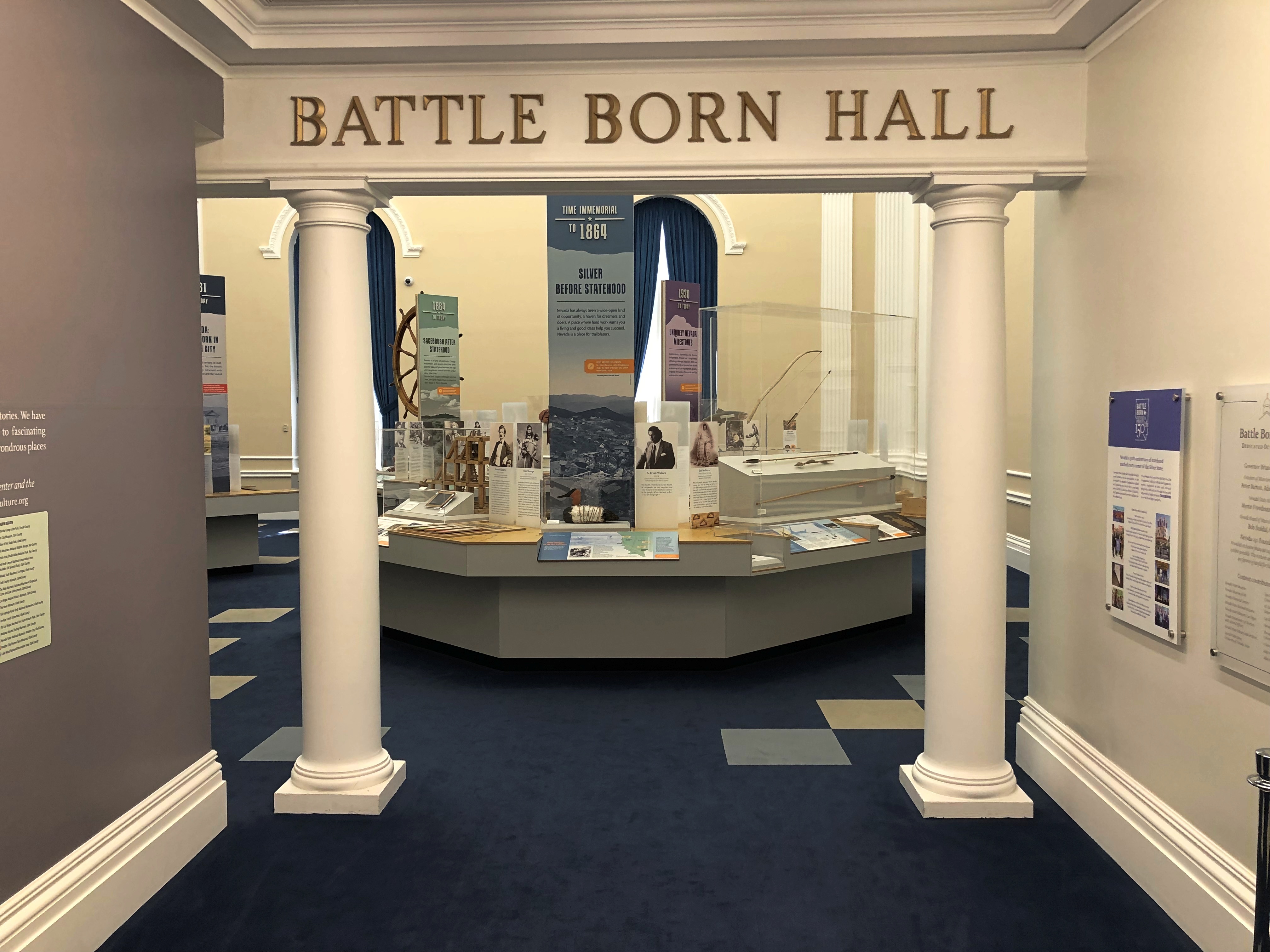
So on the morning of October 30, I made my way to the building, which looks as grand as any U.S. state capitol, and more than some. San Francisco City Hall

It even inspires selfies.San Francisco City Hall

Unfortunately, it was closed on a Saturday morning. San Francisco City Hall
San Francisco City Hall

Facing away from City Hall.Civic Center Plaza

According to an old and pitted plaque in the ground, this public space is officially the Joseph L. Alioto Performing Arts Piazza. Wonder if anyone actually calls it that. Google Maps calls it Civic Center Plaza.

Across Larkin St. from the plaza is a tent city, behind a fence on four sides. There is good aerial view of it at this New York Post article (why that paper cares, I couldn’t say). It’s a city-sponsored experiment in dealing with pandemic-era homelessness.

From the ground, only a small part is visible.
Civic Center Plaza tent city 2021

I hadn’t come this way just to see City Hall or the nearby tent city. Rather, I was killing time before the opening of the Asian Art Museum, which faces City Hall.
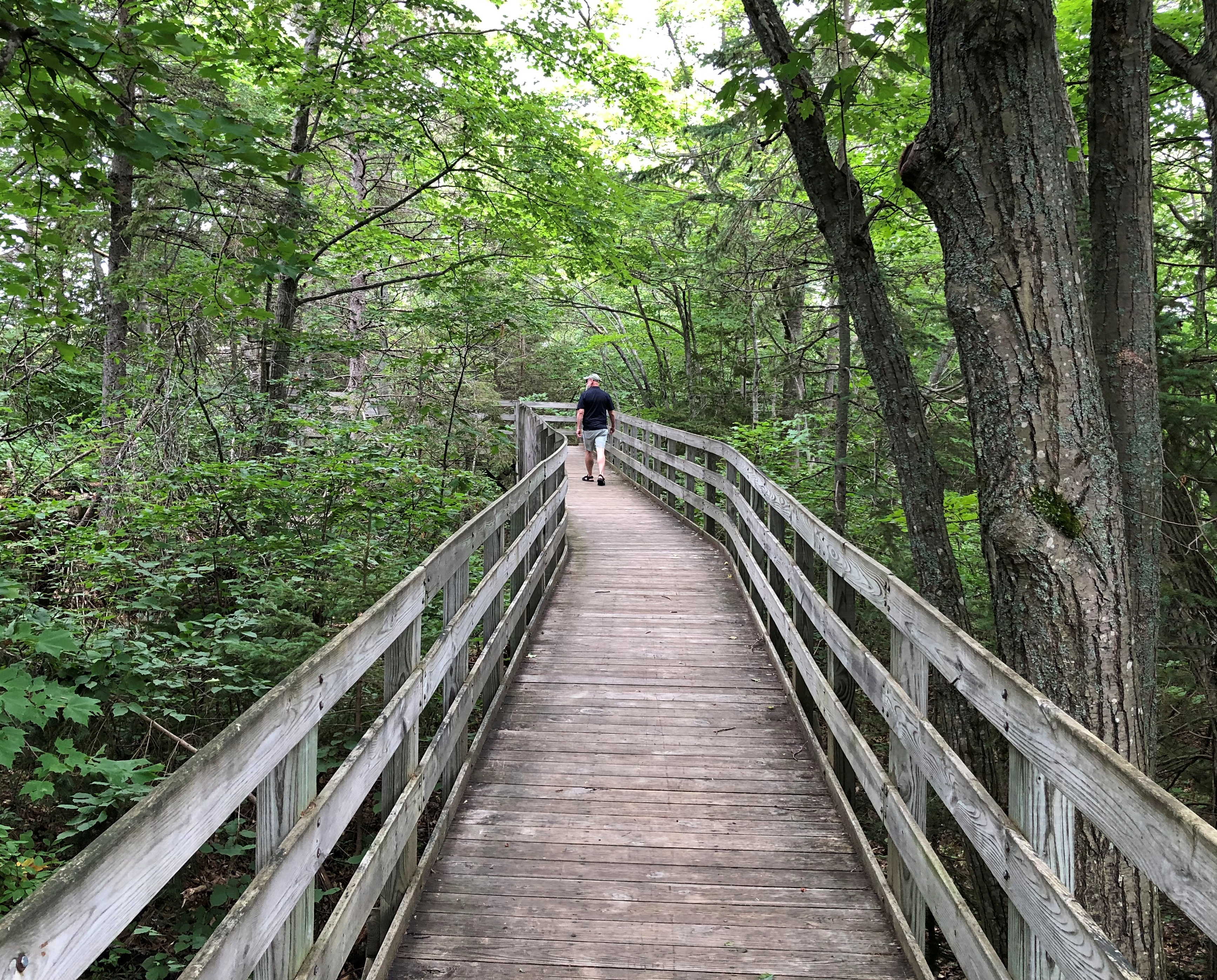
Asian Art Museum, San Francisco

The museum’s subhead — that’s what I’m going to call it — is the Chong-Moon Lee Center for Asian Art and Culture, reflecting the fact that the businessman of that name gave $15 million to museum to seed its relocation from space shared with the de Young Museum to its current location, in the former SF Main Library.
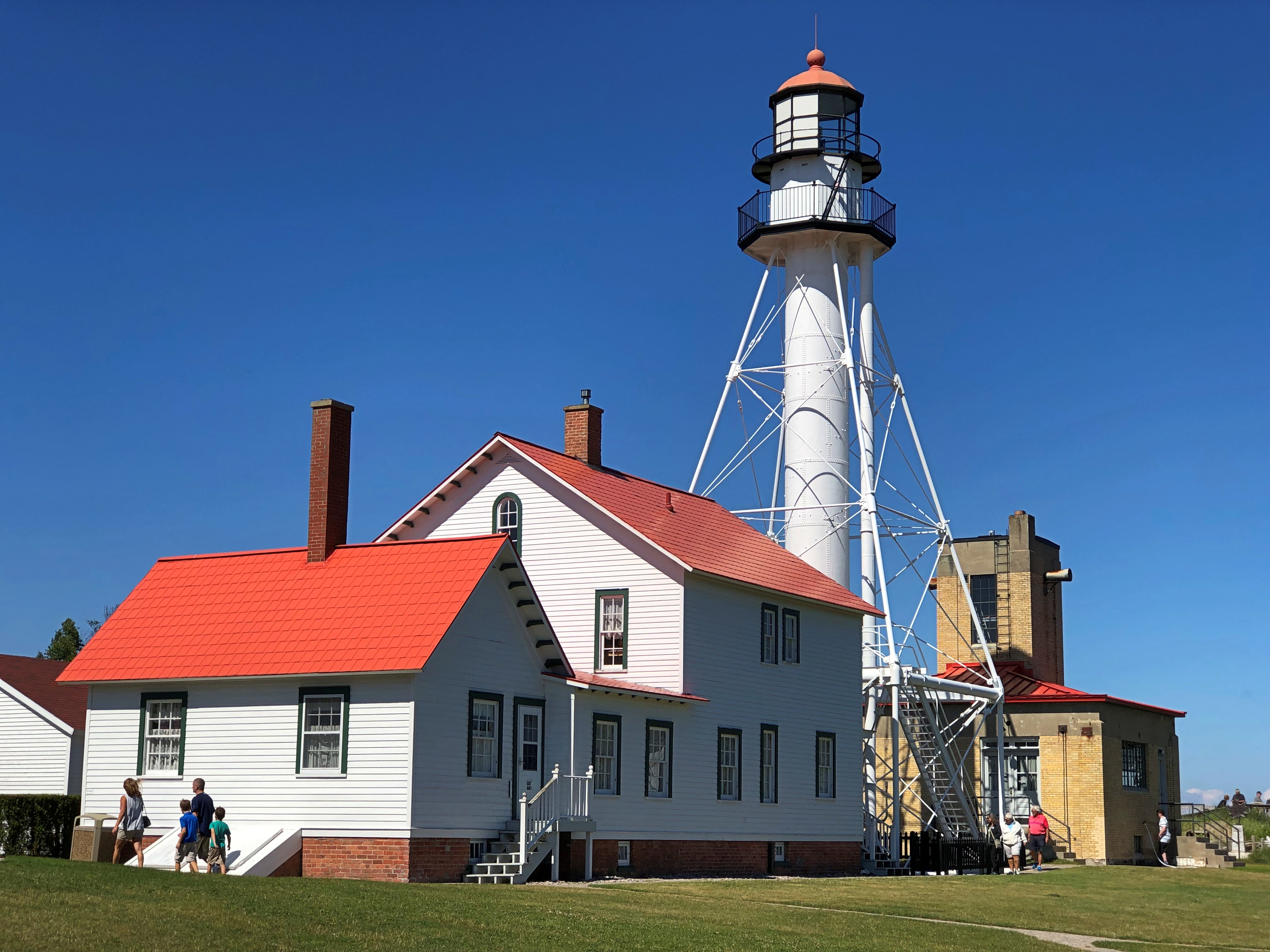
The building, designed by George W. Kelham, was completed in 1917 to replace one destroyed — you guessed it — by the 1906 earthquake. It in turn was damaged in 1989, and replaced by a new main library not far away. Seismic activity is just a fact of remaking the city, it seems.

These are slightly embarrassing times for the Asian Art Museum. Turns out the wealthy businessman whose collection was the basis for its splendid collection — Avery Brundage — reportedly had Nazi sympathies or at least anti-Semitic tendencies and (something much better documented) was on the wrong side of history in 1968 when, as IOC president, he had Tommie Smith and John Carlos kicked out the Olympics for their Black Power Salute. Oops.

For his retro-gressions, the museum removed a bust of Brundage from the foyer of the building last year. It has not, I noticed, removed the acknowledgements with each piece of art that came from the Brundage collection. Give it time.

What a collection it is. A small sample:

Greek-inspired art from the Indus River Valley, 2nd century CE. I’d heard of that, but don’t remember seeing any examples.Asian Art Museum

Thai, 11th century CE.
Asian Art Museum

A detail of those monkeys.
Asian Art Museum

Indian, 13th century CE.Asian Art Museum

Burmese, 15th century CE.
Asian Art Museum

Chinese, 18th century CE.Asian Art Museum

Korean, 18th century CE.
Asian Art Museum

Japanese, 21st century CE.
Asian Art Museum

All together, the museum has more than 18,000 works in its permanent collection, with more than 2,000 items on display at any given time, variously from South Asia, Iran and Central Asia, Southeast Asia, the Himalayas, China, Korea and Japan.

The galleries mostly obscure whatever remains of the original interior —
Asian Art Museum, San Francisco

— but I noticed an unlocked door that took me to this space, which is also used as a gallery, though not a readily visible one.Asian Art Museum, San Francisco Asian Art Museum, San Francisco

Wow. The museum shouldn’t hide this space away.

Across to San Francisco

On October 29, I slept late, and wanted a late breakfast when I finally got up. As luck would have it, there’s an excellent diner on Broadway in Oakland not far from Jack London Square. Buttercup, the place is called. I was headed that direction anyway, to catch a ferry to San Francisco, so I stopped in. Had some good pancakes there.

I traveled between Oakland and San Francisco more than once during my recent visit, each time but one taking a BART train, which is quite convenient. But on that Friday, I wanted to take the ferry to SF. The day was clear and warm, just right for a quick trip across the Bay.

Got a good view of downtown Oakland from the back of the ferry.Oakland 2021

Along with a look at the port of Oakland and its infrastructure.Port of Oakland 2021
Port of Oakland 2021

Interestingly, BART is above ground after it crosses over to western Oakland, so you can see the port — the same vast array of towers and containers — from the land as well.

Fairly close to the end of the run, the ferry passes under the San Francisco-Oakland Bay Bridge.Bay Bridge, 2021

In the tourist imagination, it’s the neglected cousin of the Golden Gate Bridge, dating from the 1930s as well. Tourist shops still sell postcards near Fisherman’s Wharf, and I had an opportunity to look at some of their racks. The Golden Gate Bridge is a common image, maybe the most common for cards of San Francisco. The Bay Bridge? Very few.

What the bridge needs is a little color. Painting the entire thing a new color would probably be cost prohibitive, but what about painting the central anchor between the two spans of the western section of the bridge (between Yerba Buena Is. and downtown San Francisco)? Or maybe hiring some big-deal artist to put a highly visible work on it. The anchor is pretty dowdy as it is.

Also, name the bridge after the Emperor Norton. After all, in a series of far-sighted decrees in the late 19th century, Norton I ordered that a bridge be built in that very spot.

The first such decree, in 1872:

Whereas, we observe that certain newspapers are agitating the project of bridging the Bay; and whereas, we are desirous of connecting the cities of San Francisco and Oakland by such means; now, therefore, we, Norton I, Dei gratia Emperor… order that the bridge be built from Oakland Point to Telegraph Hill, via Goat Island [Yerba Buena].

There were three such proclamations.

A naming hasn’t happened yet, but the good people of the Emperor Norton Trust are working on it.

The ferry takes you to the Ferry Building, fittingly enough, along the Embarcadero, with its handsome clocktower, a late 19th-century design (but after Norton’s time) by A. Page Brown. The clocktower is reportedly patterned after the 12th-century Giralda bell tower in Seville, Spain.Ferry Building, San Francisco Ferry Building, San Francisco

The Ferry Building interior is also handsome, sporting a large food hall, the creation of an early 21st-century restoration of the building. Unfortunately, my pancake brunch meant I had no appetite to try anything there.Ferry Building, San Francisco Ferry Building, San Francisco

“Opening in 1898, the Ferry Building became the transportation focal point for anyone arriving by train,” the building’s web site says.

“From the Gold Rush until the 1930s, arrival by ferryboat became the only way travelers and commuters – except those coming from the Peninsula – could reach the city. Passengers off the boats passed through an elegant two-story public area with repeating interior arches and overhead skylights. At its peak, as many as 50,000 people a day commuted by ferry.”

For years, the Embarcadero Freeway obscured the view of the building. No wonder I didn’t remember seeing it before. Why did anyone think building a freeway in front of this building and part of the Embarcadero was a good idea? Well, Nature took care of that bad idea in 1989.

The Good Reuben James

An anniversary worth noting, because it so seldom is: the sinking of the USS Reuben James, now 80 years past to the day.

Still famed in story and especially song, if you’re willing to listen. Illustrated in our time by an unusually thoughtful video. The Weavers did a good version of the song as well.

ISU Quad Walkabout

Heavy rain for a while today and cooler temps, but not till afternoon, so there was time for one more lunch on my deck.

Ann invited us to visit her over the weekend, which we did, heading down to Normal on Saturday morning and returning Sunday afternoon, spending the night in a motel near I-55. Daytime temps were nearly as warm as when I dropped her off at ISU in August.

Toward the end of the day on Saturday, it had cooled enough for a short walk — including the dog, whom we brought — around the prettier parts of campus. Mostly that meant the ISU Quad. What’s a university without a quad or two?

As mentioned yesterday, most of the foliage is still green. An eastern approach to the Quad.ISU Quad

ISU Quad

“The Hand of Friendship,” which honors Robert G. Bone.ISU Quad

Bone (1906-1991) was the ninth president of Illinois State Normal University, which was renamed Illinois State University during his tenure. Though only president for 11 years (1956-67), he oversaw a lot of construction, including the tower where Ann lives. Later, the school’s student center was named after him.

The Quad also counts as the heart of the arboretum that spans the campus — the Fell Arboretum, to cite its formal name, honoring one Jesse Fell.

Fell (1808-87) was the sort of businessman that America spawned in the 19th-century — lawyer, real estate speculator, newspaper publisher and sawmill owner. Specific to Illinois, he was a friend of Lincoln’s. He founded towns in central Illinois and helped organize counties there as well, and is considered a founder of ISU.

As for the arboretum, apparently Fell not only profited from cutting down trees, but was a fanatic when it come to planting them, so ISU named it in his honor.

Elsewhere, we saw a plaque on a rock honoring the horticulturist who designed the original landscape for the campus, William Saunders (1822-1900), who also happened to be a founder of the National Grange of the Order of Patrons of Husbandry, an organization I had only scant knowledge of before. That is to say, little that I remember, though I’m sure heard about the Granger movement in a U.S. history class. Always good to learn or re-learn something.

In the middle of the Quad is a lush garden.ISU Quad

ISU Quad

ISU Quad

The centerpiece is the Old Main Bell, dating from 1880.
ISU Quad Old Main Bell

Old Main was the campus’ first building, which stood from 1857 to 1958. A memorial honors the building not far from its bell. Unusually, it depicts all four elevations of the building.
ISU Quad Old Main
ISU Quad Old Main

We wandered on. This is Cook Hall.

“One of Illinois State’s most interesting buildings and the oldest one still standing on the Quad, Cook Hall was originally built to be a gymnasium,” ISU tells me. “It was completed in 1897 and was named after John Williston Cook, the University’s 4th President (1890-1899). He earned his diploma in 1865 from Illinois State Normal University and in 1876 he became a Professor of Mathematics.

“The building has also been known as the ‘Old Castle’ or ‘The Gymnasium.’ The governor at the time, John Altgeld, had a great liking for medieval castles and insisted all new state construction during his term in office resemble castles. You’ll find a Cook Hall look-alike at many other state schools; they are called ‘Altgeld’s Folly.’ ”

Really? I had to look into that more, and found this Wiki item about Altgeld Castles. It does indeed seem that a raft of crenellated, or quasi-crenellated buildings at Illinois state schools dates from the 1890s. I remember seeing Altgeld Hall at UIUC, but didn’t know it was part of a pattern. An eccentric pattern. That’s two things I learned (or relearned) today; makes for a good Monday.

Forest Home Cemetery & Arboretum, Milwaukee

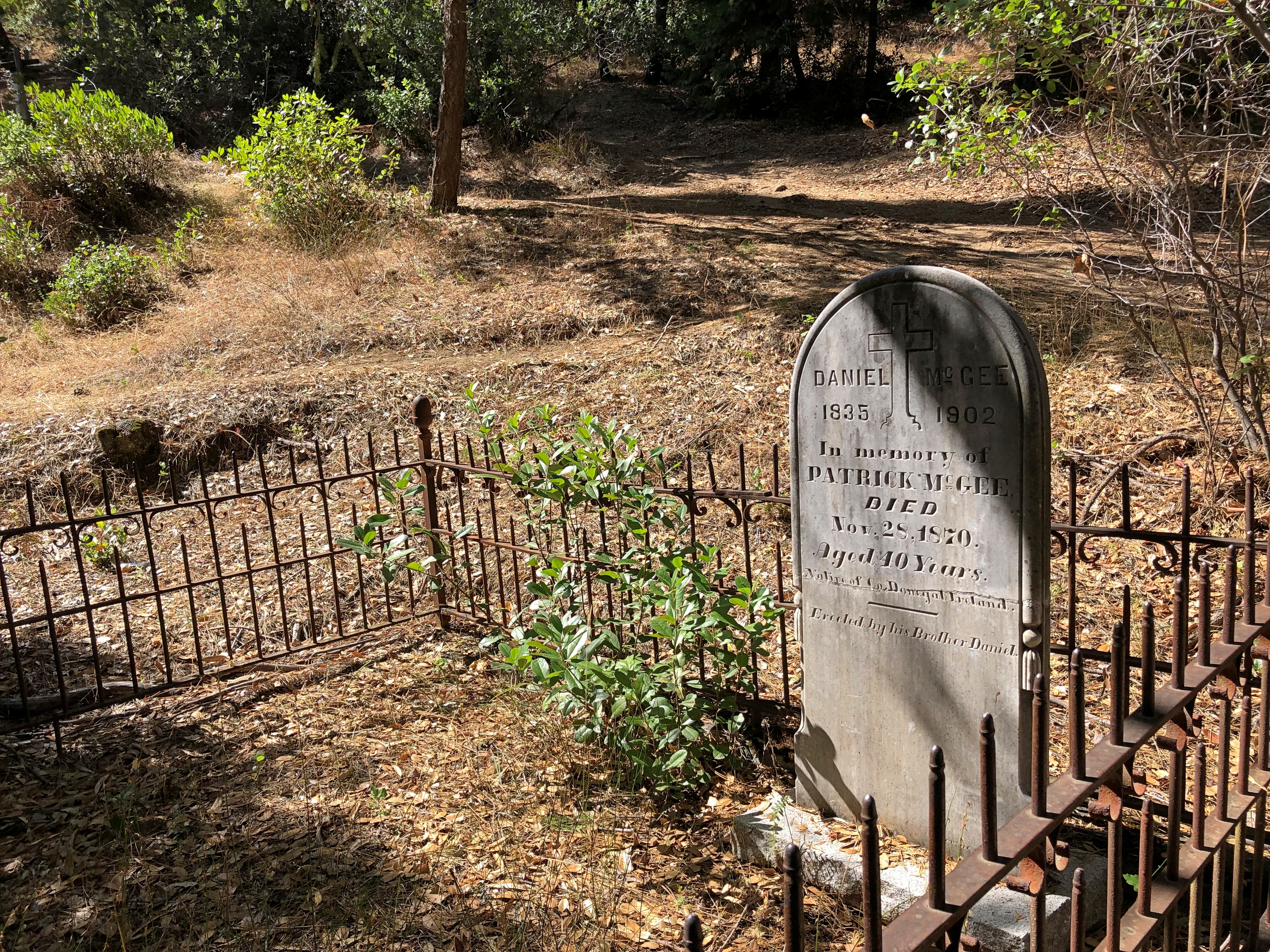
A touch of fall in southern Wisconsin.Forest Home Cemetery & Arboretum

A touch more every day, for sure, but this is how the foliage appeared on Saturday at Forest Home Cemetery & Arboretum, Milwaukee, which is mostly still green.

The cemetery’s chapel was part of Open Doors Milwaukee over the weekend. It is a handsome structure, completed in 1892.Forest Home Cemetery & Arboretum

“With an exterior of gracefully aged reddish-brown Lake Superior sandstone, the interior features stately buttresses, fine leaded-glass windows and spacious conservatories containing lush tropical foliage,” the cemetery web site notes, a little heavy on the adjectives. “Many of the tropical plants are decades-old and provide a comforting ambiance that truly sets the Chapel apart from others built before, or since.”Forest Home Cemetery & Arboretum

The conservatory elements are on either side of the main nave-like room. I put it that way because, according to a docent on site, no denomination has ever consecrated the space.Forest Home Cemetery & Arboretum

Forest Home Cemetery & Arboretum

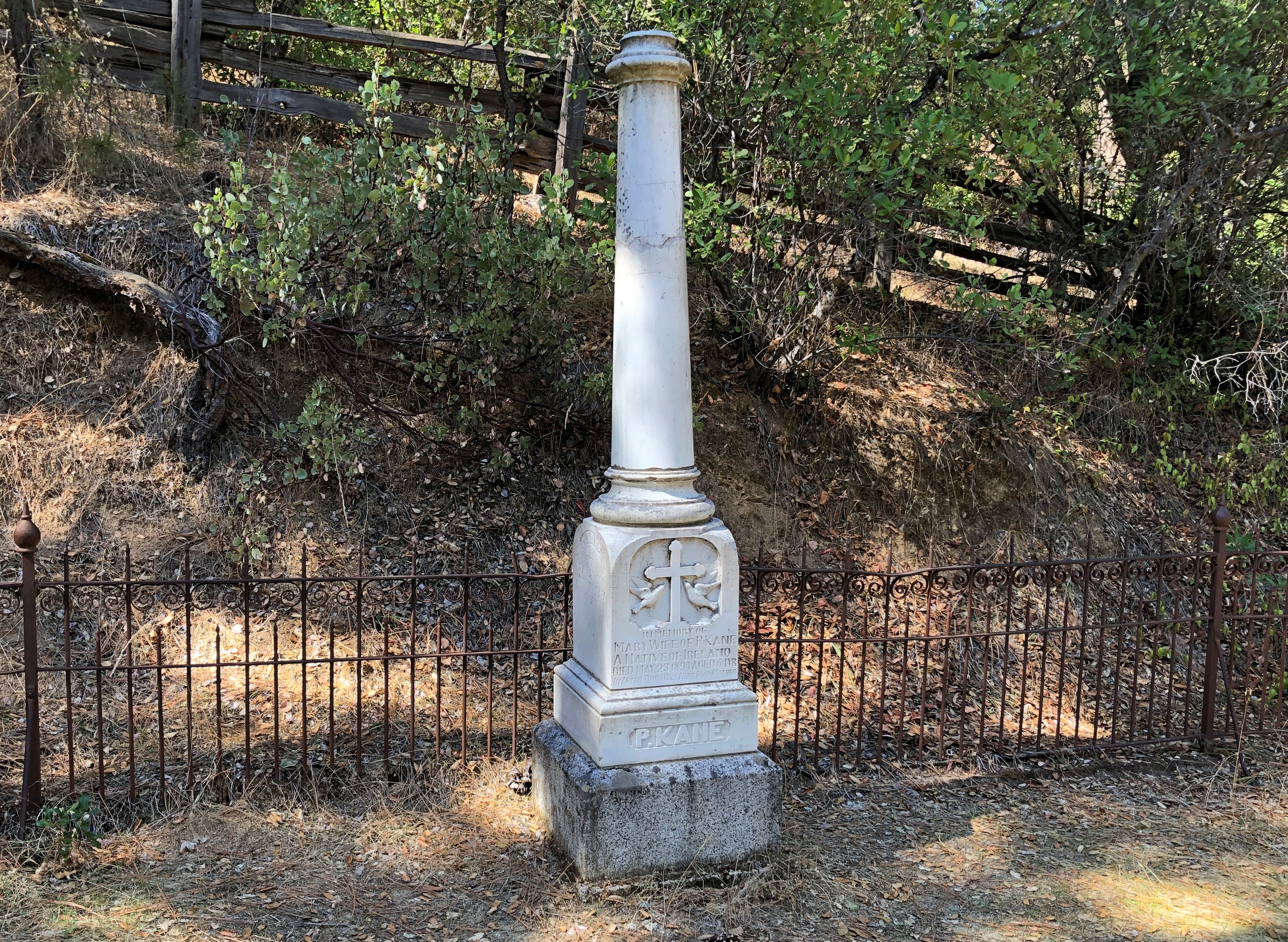
As for the cemetery proper, some 118,000 people reside there.Forest Home Cemetery & Arboretum, Milwaukee

Forest Home Cemetery & Arboretum, Milwaukee

The nonprofit that runs the cemetery publishes a wonderful, 20-page full-color guidebook and was giving them away for Open Doors Milwaukee. Maybe they’re always given away, but anyway I got one and used it liberally during my visit.

“Forest Home Cemetery was established in 1850 by St. Paul’s Episcopal Church as a cemetery for the city,” the guide says. “As Milwaukee expanded, the cemetery became the final resting place for 26 mayors, more than 1,000 Civil War veterans and countless prominent people who left their marks on Milwaukee’s history… the property was one of the first landscaped sites in Milwaukee offering a natural respite. Designed by Increase A. Lapham, known as Wisconsin’s first naturalist, it is considered one of the finest examples of a rural garden cemetery in the Upper Midwest.”

Increase Lapham. Makes me smile. Name your babies Increase, hipsters. You could do a lot worse, considering the distinction of this particular Increase.

“A self-educated engineer and naturalist, Increase Lapham [1811-1875] was Wisconsin’s first scientist and one of its foremost citizens,” the Wisconsin Historical Society notes. “He wrote the first book published in Wisconsin, made the first accurate maps of the state, investigated Wisconsin’s effigy mounds, native trees and grasses, climatic patterns and geology, and helped found many of the schools, colleges and other cultural institutions that still enrich the state today.”

More important than the text, the guidebook includes a detailed map and a color-coded key to the notable burials at Forest Home.

Yellow: Beer Barons; Pink: [Other] Industrialists & Business Magnates; Brown: Pioneers, Inventors & Publishers; Orange: Mayors & Founders; Aqua: Notable Women; Red: Black Leaders & Abolitionists; Purple: Entertainers, Artists & Art Collectors; Deep Blue: Military Heroes; Green: Tragic and Distinctive Burials, such as the memorial to the victims of the 1883 Newhall House Hotel Fire, which General and Mrs. Tom Thumb survived, the grave of John “Babbacombe” Lee, and five victims of the 1903 Iroquois Theatre Fire in Chicago.

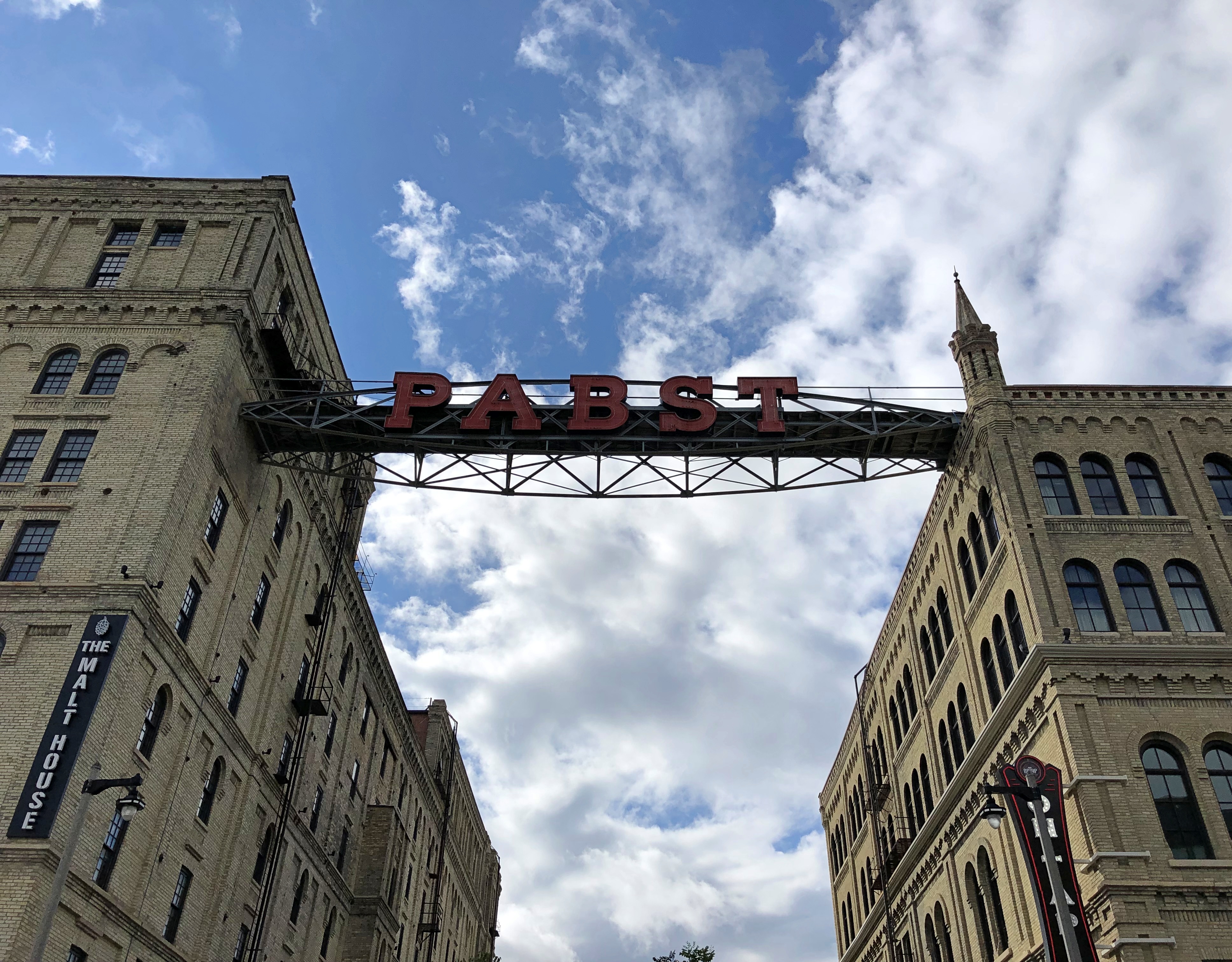
All together, the guide lists 65 notable burials. Far too many to see during our hour jaunt through the property, but I managed to find a few, which as always is enough. I was especially interested in finding beer barons. A whole category for beer barons; that’s Milwaukee for you.

Valentin Blatz (1826-94).Forest Home Cemetery & Arboretum, Milwaukee

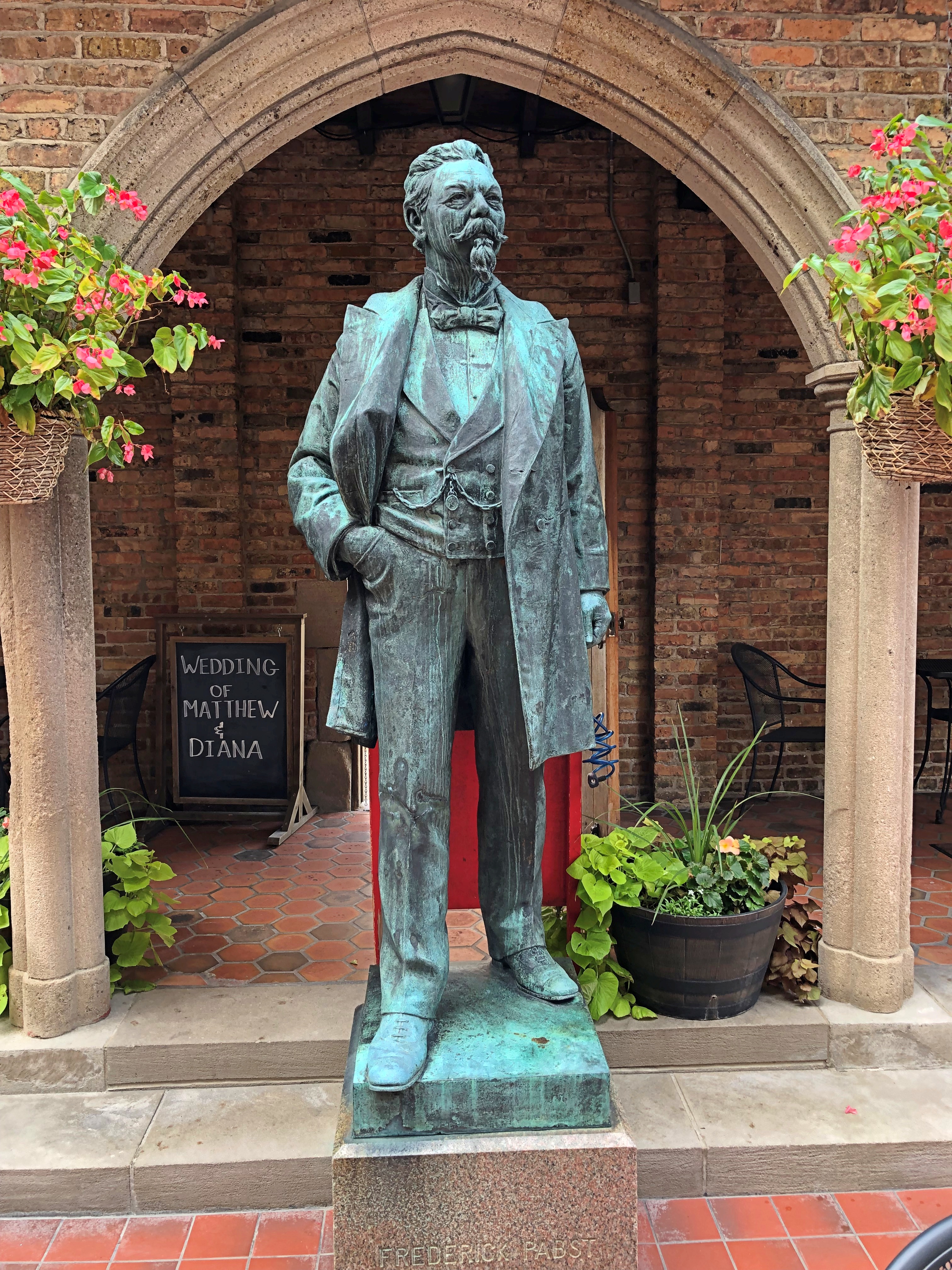
Frederick Pabst (1836-1901).Forest Home Cemetery & Arboretum, Milwaukee

The cenotaph of Joseph Schlitz (1831-75).
Forest Home Cemetery & Arboretum, Milwaukee

If I knew it, I’d forgotten that Schlitz died in the sinking of the SS Schiller off the Isles of Scilly on May 7, 1875. The ship is carved on the cenotaph.Forest Home Cemetery & Arboretum, Milwaukee

Those three were among the largest memorials in the cemetery, but hardly the only striking ones.Forest Home Cemetery & Arboretum, Milwaukee

Forest Home Cemetery & Arboretum, Milwaukee

I chanced across the stone memorializing company founder A.O. Smith.
Forest Home Cemetery & Arboretum, Milwaukee

As an industrial concern, A.O. Smith has experienced an interesting trajectory. Over the years, it has made bicycle parts, steel vehicle frames, bomb casings and other munitions for the World Wars, brewery tanks, water heaters, air conditioning components, boilers and more. It’s still headquartered in Milwaukee.

We noticed that the statue on top of the memorial of one Emil Schneider had toppled to the ground at some point recently.Forest Home Cemetery & Arboretum, Milwaukee

The head and hands are missing. Go figure.
Forest Home Cemetery & Arboretum, Milwaukee

Toward the end of our walk, we noticed George Marshall Clark (1837-61), whose spanking new stone was dedicated only a few weeks ago, on the 160th anniversary of his lynching.Forest Home Cemetery & Arboretum, Milwaukee

As I said, there was only time to see a small fraction of the notable burials. Among the others listed, I’d heard of a few that we didn’t see, such sausage king Fred Usinger, Gen. Billy Mitchell and insurance executive Edmund Fitzgerald, who lent his name to the ore carrier that famously sunk in Lake Superior in 1975.

Many more stones memorialize interesting people I’d never heard of, including Increase Lapham, see above. The world is full of such. That’s one reason to visit cemeteries, or at least those with useful guidebooks.

A selection, including slightly edited text provided by the guide:

Harrison C. Hobart (1815-1902). Union Gen. Hobart was captured at Chickamauga. Along with two other officers, he devised a plan to dig an escape tunnel, working in secret for months until 109 prisoners crawled to freedom.

Christopher L. Sholes (1819-90). Inventor of the QWERTY keyboard typewriter.

Georgia Green Stebbins (1846-1921). Stebbins was the keeper of the North Point Lighthouse for 33 years. Her father, Daniel Green, initially held the job, but was in ill health, so Stebbins unofficially performed his duties for seven years before being appointed to the position.

Xay Dang Xiong (1943-2018). Xiong was a Hmong veteran from Laos who risked his life in secrecy working with the CIA during the Vietnam War. He spent 16 years in the Royal Lao Army fighting in numerous battles while commanding 4,500 troops… Col. Xiong received a full military burial.

Carl Zeidler (1908-42). Elected mayor of Milwaukee in 1940, Zeidler requested a leave from his duties in 1942 to fight in WWII. He died six months later when his ship, the USS LaSalle, was torpedoed and everyone on board perished. Because his remains were never recovered, he was memorialized with a cenotaph. (His brother Frank Zeidler (1912-2006), three-term socialist mayor of the city, is also in the cemetery.)

An FLW Block, Though Built by Mr. Richards

Once upon a time, Frank Lloyd Wright took a stab at designing affordable housing. He didn’t get far for various reasons (including, maybe, his temperament), but relics of the effort occupy the north side of the 2700 block of W. Burnham St. in Milwaukee to this day. We arrived to take a look around noon on Saturday.

I bought some postcards from the nonprofit that now owns most of the block. One line on one of the cards says: “Burnham Block is the only location in the world where six Wright-designed homes sit side by side.”

I’d say that’s reaching for a distinction, but in any case the block was worth seeing. FLW is usually worth a look, even in the case of an obscure warehouse building in otherwise obscure Wisconsin town.

The houses on the block have that FLW look, all right.Burnham Block, Milwaukee

Burnham Block, Milwaukee

At one point the owner of the house on the left, which is in the middle of the block, had the temerity to put siding on the house, which horrifies the Wright purists, who have been acquiring the houses one by one in recent years, but haven’t gotten that one yet. When they finally do, it will be restored to its 1910s look, once funds are raised (always a consideration with FLW works).

The six are American System-Built Homes. To quote from the last time we saw one, which was in 2015: “Between 1915 and 1917, Wright designed a series of standardized ‘system-built’ homes, known today as the American System-Built Homes, an early example of prefabricated housing. The ‘system’ involved cutting the lumber and other materials in a mill or factory, and then brought to the site for assembly; thus saving material waste and a substantial fraction of the wages paid to skilled tradesmen.”

Arthur L. RichardsMuch more detail on the Burnham houses is at web site of the organization that owns most of them.

On Saturday, only one of the houses was open for a tour (the B-1 model, roughly 800 square feet), taking about a dozen people at a time, so we had to wait 20 minutes or so each to get in. While we waited, a docent talked about the houses, and FLW, and the houses’ developer, whom he quarreled with — Arthur Richards, pictured in an early 20th-century ad — the cost-savings measures, the history of the properties after Wright gave up on the American System but before the world acknowledged them as products of The Genius, which was decades later, and more.

This is the B-1, with people waiting on the porch to get in.
Burnham Block, Milwaukee

The inside is impressive in a number of ways, but mainly in its efficient use of the small space, and its inexpensive wood buffed up to look elegant. Two pictures in the slide show here that illustrate that. Nice place to visit, I thought, but not enough room for essential clutter.

Two Churches in Bay View, Milwaukee

Just at first glace on Saturday morning, the Bay View neighborhood in Milwaukee seemed alive with small businesses and pedestrians along S. Kinnickinnic Ave. (long ago, an Indian trace). I was glad to see it.

The place has a long history, founded separately from Milwaukee. “Captain Eber Brock Ward of Michigan opened his third rolling mill, the Milwaukee Iron Co., in Bay View in 1868,” the Bay View Historical Society says.

“Within a year the village of Bay View sprung up as a company town around the steel mill. Cottages erected for mill workers became the center of the village. Many of these cottages are still occupied today and are a part of the diverse architecture of the Bay View neighborhood.

“With village incorporation in 1879, its rapid growth and demands for city services were so great that a vote was taken and the village was annexed to the city of Milwaukee in 1887.”

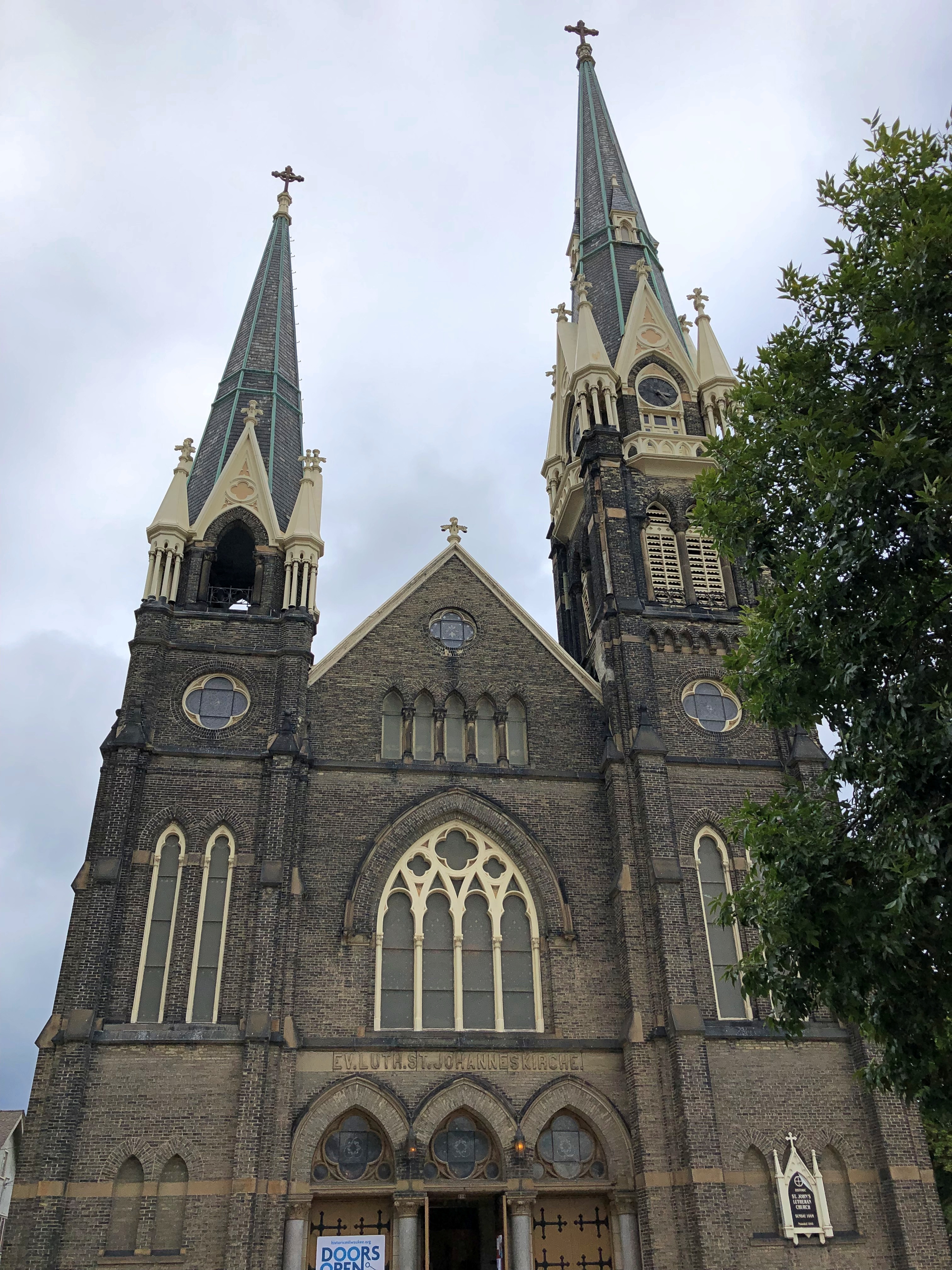
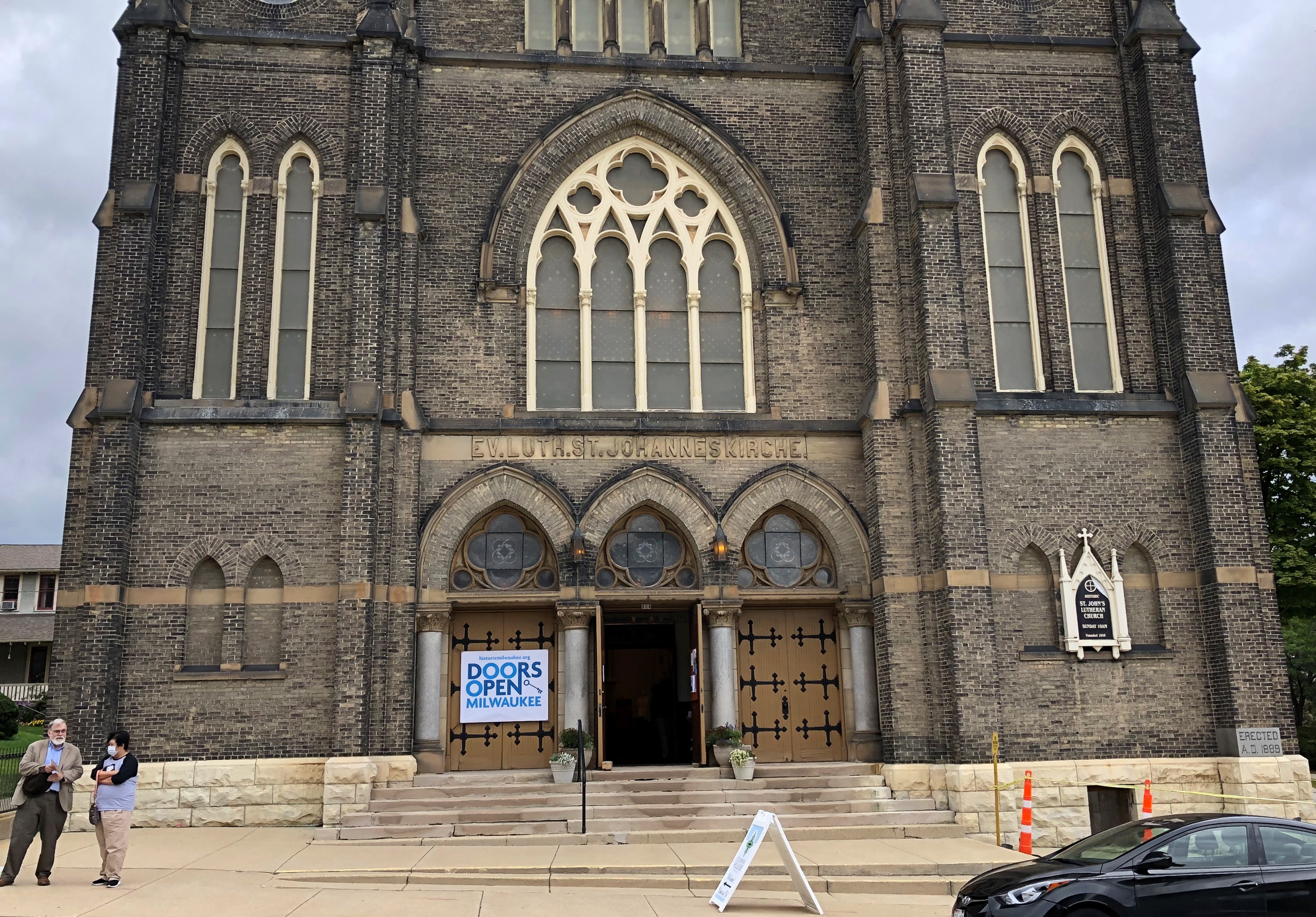
Rising at a bend on Kinnickinnic is St. Lucas Evangelical Lutheran Church.St. Lucas Evangelical Lutheran Church Milwaukee

Originally, Evangelische Lutherische St. Lucas Kirche zu Bay View, since it is yet another Midwestern church founded by German immigrants, with the building completed in 1888.

Built using good old Cream City brick, a local specialty.St. Lucas Evangelical Lutheran Church Milwaukee

“The church commissioned architect Herman P. Schnetzky (1849-1916) to design its new place of worship,” Architecture of Faith says. “Schnetzky was born in the town of Wriezen in the Kingdom of Prussia… He came to Milwaukee as a young man and worked in the office of H.C. Koch and Company from 1874 or a bit earlier, [establishing] his own office in 1887.

“Schnetzky’s design for St. Lucas Lutheran is quite similar to his design for St. Martini Lutheran, built just a year prior to St. Lucas on Cesar Chavez Drive and Orchard Street on the South Side. He went on to design at least five other churches in Milwaukee by 1896, under his own name and in partnership with Eugene Liebert.”St. Lucas Evangelical Lutheran Church Milwaukee

St. Lucas Evangelical Lutheran Church Milwaukee

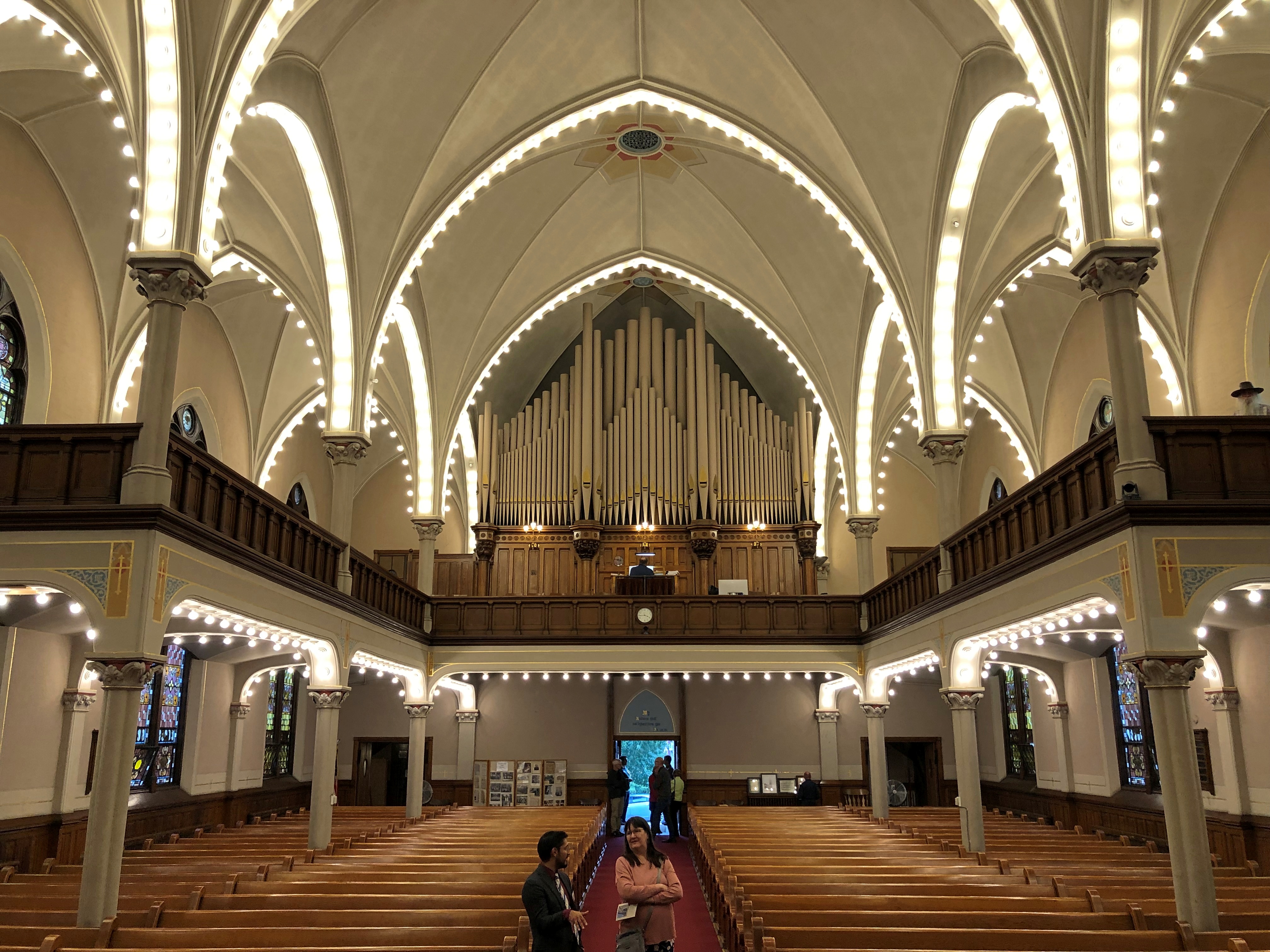
A few blocks northwest of St. Lucas is St. Augustine of Hippo Catholic Church, finished in 1908. More Cream City brick.St. Augustine of Hippo Catholic Church

St. Augustine of Hippo Catholic Church

It too was developed for a German-speaking congregation, with a design by Brust & Philipp, a very busy firm 100 years ago.St. Augustine of Hippo Catholic Church
St. Augustine of Hippo Catholic Church

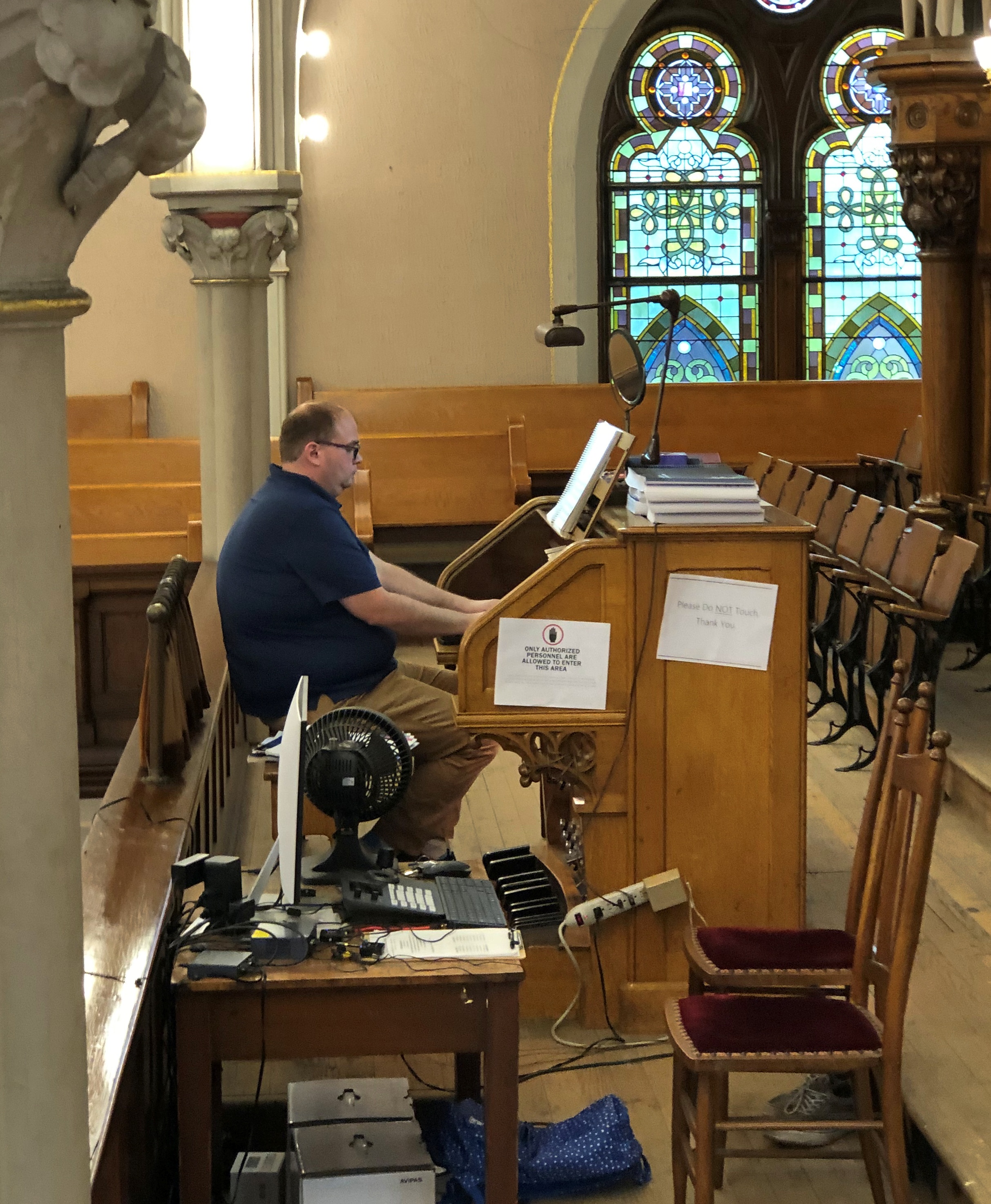
A volunteer told me that the platform extending out from the apse (a term he didn’t use) was added after the Catholic church “changed a bunch of things” in the 1960s (not using the term Vatican II). I guess he was used to talking to people who had no notion of that bit of ecclesiastical history. Anyway, the platform was thought better to facilitate priestly interaction with the congregation, now that they faced each other.

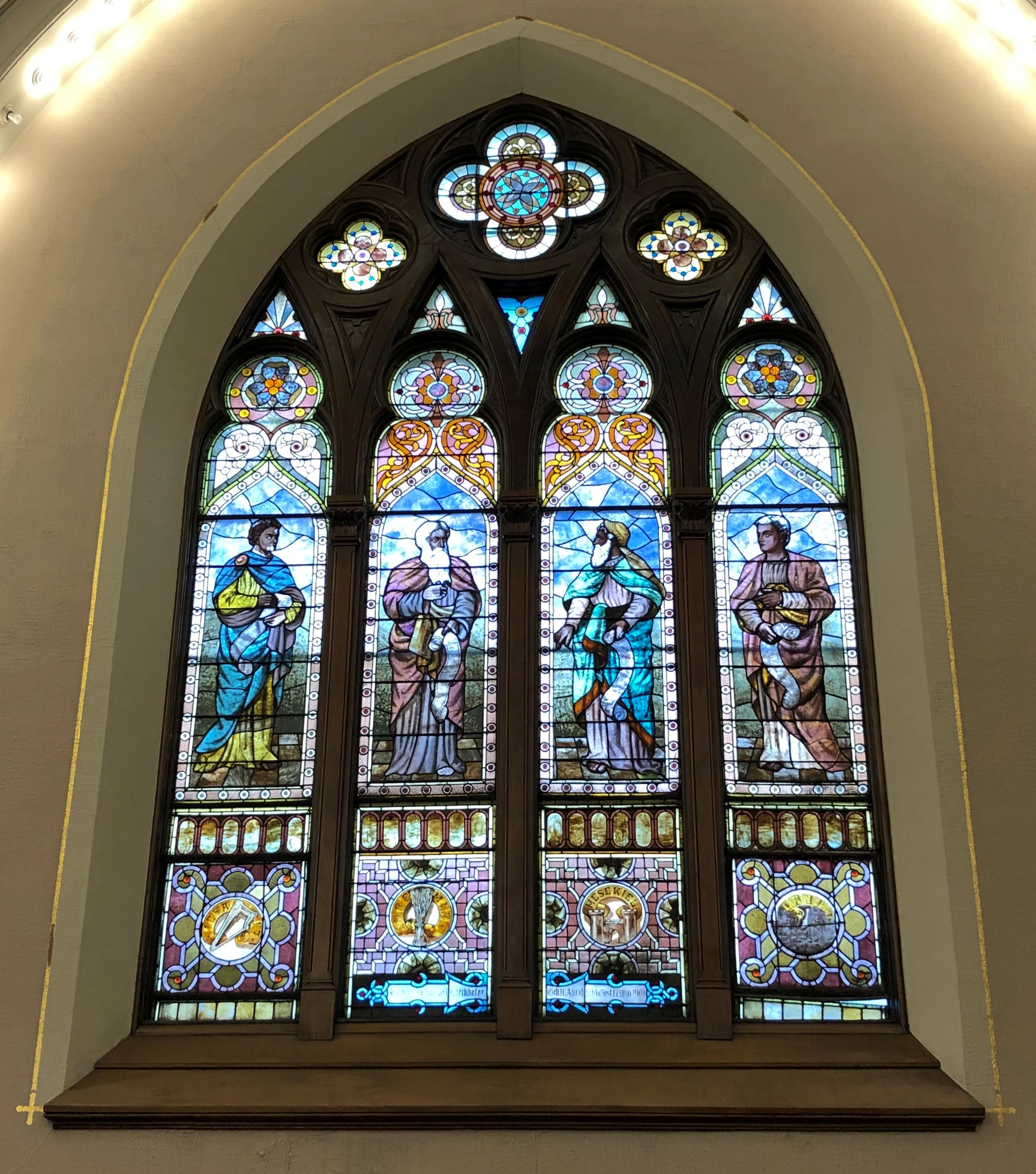
He didn’t know who had made the stained glass windows, except that they were original to the church and not added later. They’re wonderful.St. Augustine of Hippo Catholic Church

The Stations of the Cross on the wall, on the other hand, were salvaged from another Milwaukee church that closed some years ago, though they look like they belong in their current place.

Emerging from the church, I noticed a couple of men on a porch across the street from St. Augustine.

Just a couple of regular Milwaukee guys getting ready for their Saturday doings?