The Impermanence of the Wisconsin Buddha

The Wisconsin Buddha cracked apart sometime this winter. (How many times in the history of English has that exact sentence been written?) A little background is in order. Some years ago — when we lived in the western suburbs of Chicago in the early 2000s — we visited southern Wisconsin one weekend, and chanced across a yard sale, though I forget exactly where. We acquired the Wisconsin Buddha there for a modest sum.

It’s an inexpensive ceramic yard ornament, jade green with flecks of blue. It’s also an Indian-style seated Buddha, in as much as I understand Buddhist iconography. Could be a bodhisattva for all I know. Very likely the operators of the Chinese factory that churned out thousands of them cared little about their representational meaning, though at some point, someone had to design the thing, and perhaps they had something specific in mind. Maybe it’s patterned after a sculpture I don’t know.

That reminds me of the estimable Charles Hambrick, the professor who taught my Eastern Religion class. Professor emeritus these days, but last I heard still with us. The concept of the bodhisattva came up in his class. A friend of mine was sitting next to me, and he said, “That’s what the song is talking about!” Yes, indeed.

Since we acquired it, the Wisconsin Buddha’s been for us, fittingly, a yard ornament. Does that count as doing its dharma? But it’s inanimate so — I don’t know, and will leave it at that. First the statue was in our back yard in the western suburbs, but for the last 13 years or so, it’s been perched here in the northwestern suburbs under some bushes near a fence that divides the back yard from a small bit of land that connects to the front yard. If you didn’t know it was there, it would be hard to spot.

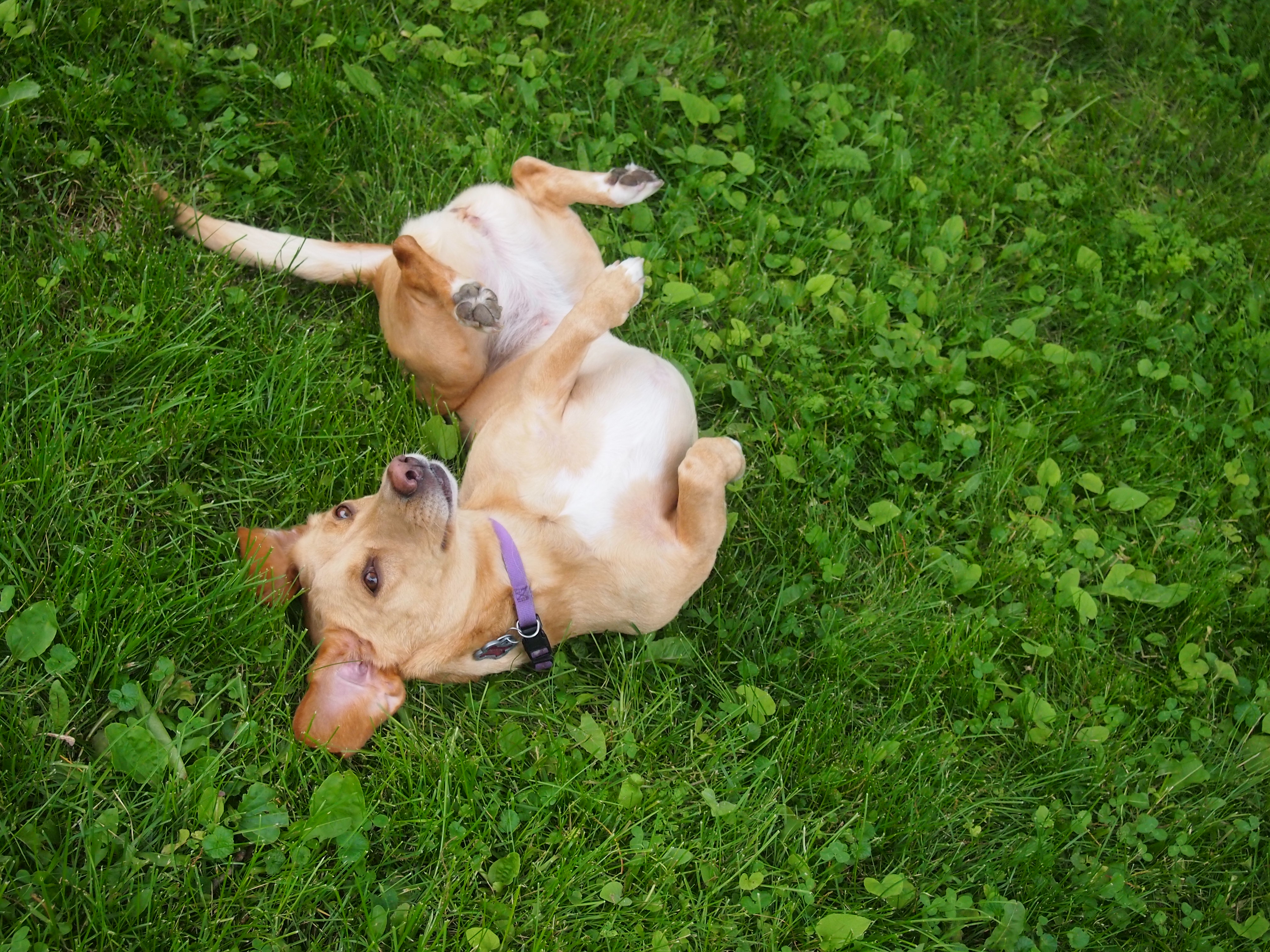
On Sunday I was cleaning debris off our deck and noticed that the figure was face down on the ground. Looking more closely, I saw that it had cracked all the way across horizontally, a few inches from its base, and the top part had fallen over. A cycle of freezing and thawing? Wind? The dog, who sometimes goes near that fence? Something else?

I put the pieces back together again, and I may or may not glue them together. I’ll take this as a lesson in impermanence.

The Rio Grande Rift

Our first trip after Y2K didn’t end civilization as we know it was to San Antonio and then Santa Fe, by way of some other places in New Mexico, in April 2000. Those other places included Albuquerque, Madrid, NM and Bandelier National Monument and Los Alamos.

Here’s a roadside view of the Rio Grande as it runs through New Mexico. It isn’t an international border at this point, but is an unusual land form nevertheless.

Rio Grande 2000I didn’t realize until much more recently that I was looking down at a rift. Or that, to quote the various scientists who put together this page about the rift, “most rifts are found along mid-ocean ridges. Only a few are located on land, such as the Rio Grande Rift, East African Rift (sometimes referred to as the Great Rift) and Lake Baikal, a lake-filled rift in Russia.”

I’m not exactly sure where the overlook was, but my guess would be along New Mexico 4 just outside of the national monument, and looking over the river into another section of the monument. Note the haze in the distance. That’s probably one of the controlled burns occurring when we visited. Soon, as in the very next month, a controlled burn became uncontrolled.

This is New Mexico 4, probably looking the other way from the outlook.

NM Highway 4This is Lilly. A lot of the pictures I took on that trip involved her. Call it the first-child photography syndrome, though she was two and a half by this time.

Lilly April 2000She’s at breakfast in the place we stayed in Santa Fe. The reason we documented that particular moment (I think) was that we weren’t entirely sure she’d behave during breakfast — that is, stay seated and eat her food without much fuss. But she did. I guess she was just then learning to appreciate the joys of breakfasts on the road.

The Old Hickory Switcheroo

See? Jack Lew was playing a deep game. Float the idea that Alexander Hamilton gets dropped from the $10 bill, only to pave the way for Andrew Jackson to be demoted to the back of the $20 bill. But I have to agree: better Jackson than Hamilton. Not sure that President Jackson would have been so keen to be on paper money anyway.

Time to change the designs, I figure. The last time any portrait changes happened was in my grandparents’ time, not counting the fairly recent enlargement of the portraits (except for the $1 and $2 bills). Between 1914 and 1928, four portrait changes occurred: $10 — Andrew Jackson to Alexander Hamilton; $20 — Grover Cleveland to Andrew Jackson; $500 — John Marshall to William McKinley; and $1000 — Alexander Hamilton to Grover Cleveland. Practically musical chairs, those changes, and the last two are moot in any case.

Less attention has been paid to the upcoming changes in the $5 and $10 bill, probably because Hamilton and Lincoln are keeping their observe status. In fact, the buildings on the back are going to be the same as well: the Treasury Department on the $10 and the Lincoln Memorial on the $5.

The main difference is that people are being added with the buildings: Lucretia Mott, Sojourner Truth, Susan B. Anthony, Elizabeth Cady Stanton, and Alice Paul on the back of the $10, and Martin Luther King Jr., Marian Anderson, and Eleanor Roosevelt on the back of the $5.

Reasonable choices, I suppose, yet clearly the work of committees. I have to wonder when Teddy Roosevelt’s going to get his due on some bit of currency, besides his presidential dollar, which no one sees. The 100th anniversary of his death’s coming up, after all. Truman as well, for that matter. A Truman nickel and a TR quarter? Just a thought.

One more thing, not related to money: something to watch this San Jacinto Day. Actually, two more: something to watch on the occasion of Queen Elizabeth’s 90th birthday.

The Ulysses S. Grant Memorial Highway & Lundy Lundgren

If you have time, US 20 is the best way between metro Chicago and Rockford. I-90 is faster but not as interesting, and a toll road besides. We went to Rockford on the Interstate for speed, but returned at our leisure on the US highway, which is sometimes four lanes, sometimes two, along that stretch.

US 20 is also known as the Ulysses S. Grant Memorial Highway in Illinois, honoring Gen. Grant, who spent some time in western Illinois. In fact, the highway runs by his house in Galena. (US 20 itself runs cross-country, from Boston to Newport, Ore., or vice versa.)

The honorary designation has been in place since 1955, but most of the original signs were lost or fell apart. In 2007, the Illinois DOT started replacing them with brown-lettered signs that include a portrait of Grant. The route passes very close to where I live in the northwest suburbs, and I remember starting to see the signs appear nearly 10 years ago. I thought the designation was new as well, but now I know better.

One of the places on US 20 between Rockford and the northwestern suburbs is Marengo, a burg of about 7,500 in McHenry County. Oddly, it seems to be named after the battle of that name, which did so much to solidify Napoleon’s top-dog status, at least until Waterloo. Maybe some of the town founders included Bonapartist sympathizers, but well after the fact, since it was established in the 1840s.

For years, I’ve been driving by a sign that points to a historical marker just off US 20 in Marengo. High time I took a look, I thought this time. The marker is a few blocks north of US 20 on N. East St. This is what I saw.

Lundy Lundgren, Marengo, ILCarl Leonard Lundgren (1880-1934) hailed from Marengo, and behind the sign is the very field where he perfected his pitching skills, at least according to the sign. As a young man, Lundy Lundgren pitched for the Cubs from 1902 to ’09, and in fact pitched for the team during its most recent appearances in the World Series — 1907 and ’08.

He’s buried in the Marengo City Cemetery across the street from the plaque.

Marengo City Cemetery April 2016I took a look at the place from the street, but didn’t venture in. Most of it’s modern-looking, or at least 20th century, but there’s a small section whose stones look very old, older even than Lundgren’s, wherever it is. That bears further investigation someday.

A Little More Rockford

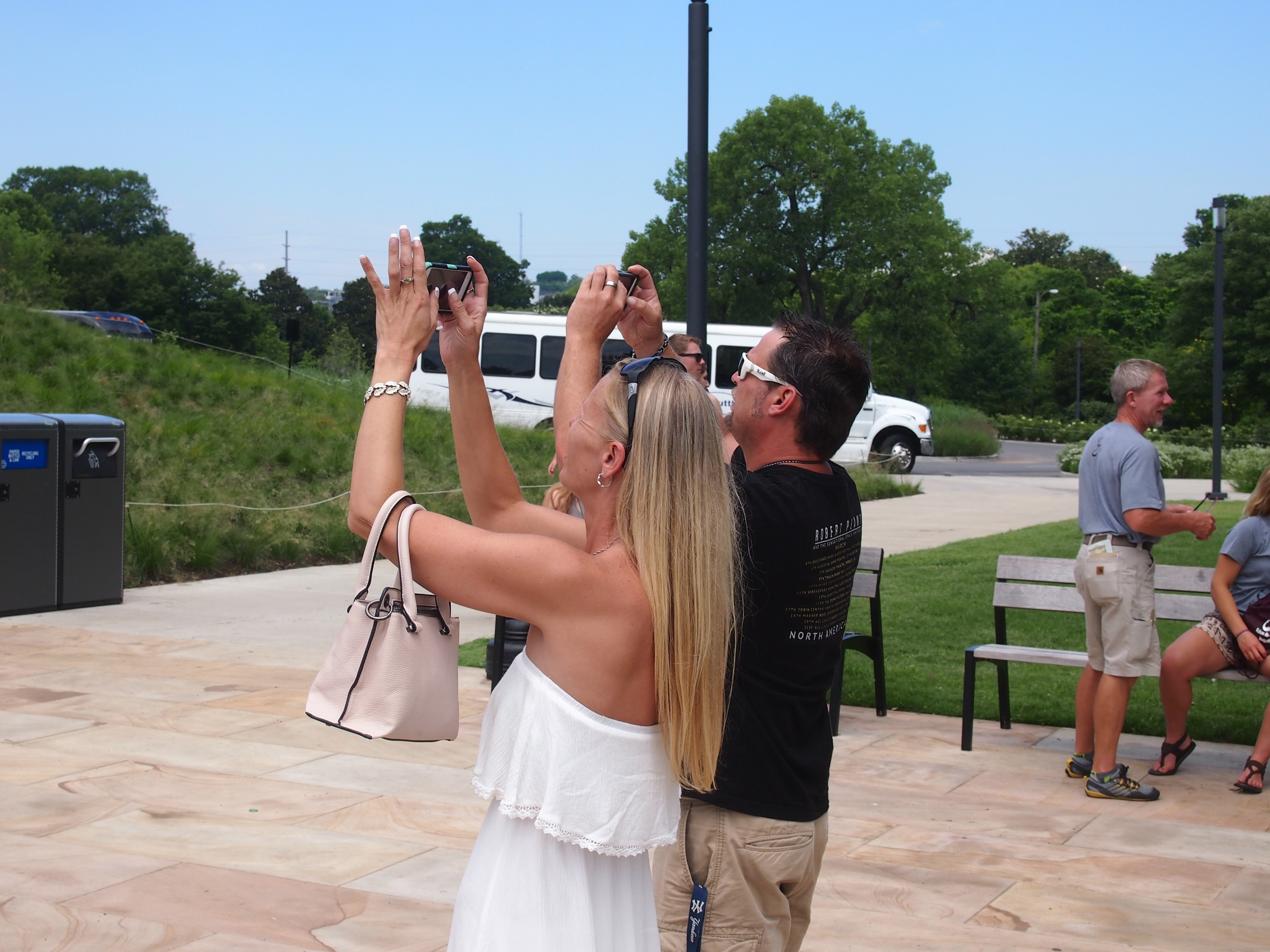
The gardens outside the Nicholas Conservatory in Rockford would be worth a trip back in a month or two, when they’re in full flower. On Saturday, the floral exuberance of spring was just beginning. Even so, there were a few other things to see, such as a statue of a man taking a picture."Sight Seeing"And, at that moment, an actual man taking pictures.

Nicholas Conservatory & GardenThe statue, by the way, is by Seward Johnson, whose work I’ve seen elsewhere. This one is called “Sight Seeing,” and dates from 1991. The camera depicted would have been old fashioned even then. I have an inkling that Johnson isn’t popular among art theory specialists, for being shockingly derivative, or not smashing any paradigms, or something.

After the conservatory, we repaired to the Stockholm Inn, an enormous restaurant in Rockford. Word is — relayed by the Internet — that it too is very popular, though its offering of superb yet standard Swedish food at reasonable prices might put off some foodies.
Stockholm Inn, RockfordAfter all, the place doesn’t offer farm-to-table fair-traded locally sourced artisanal Swede-tastic regional cuisine, guaranteed to be authentic, massaged and sublimated to gastro-perfection. Try the Nordic fusion gravlax tacos; they’re to die for.

No, the thing to order — the thing that I ordered — are the Swedish pancakes, a close cousin of the humble crêpe, infused with butter, vivified by syrup. Thin, smooth, sweet, wonderful. What they had for breakfast in the mead halls of yore, since one has to eat as well as drink.

Rockford Flora

Like any good conservatory, the Nicholas Conservatory near the banks of the Rock River in Rockford, Ill., is lush with greenery, and complete with winding paths and a water feature.

Nicholas Conservatory RockfordSome of the greenery vaults toward the glass ceiling.

Nicholas Conservatory RockfordThat tall specimen, incidentally, is a Carpoxylon Palm (Carpoxylon macrospermum), which is indigenous to the Vanuatu archipelago. I don’t know that I’ve ever seen anything native to Vanuatu before.

Other palms reach out in all directions with their enormous ears.

Nicholas Conservatory RockfordNaturally, there are also plenty of flowing plants.

Nicholas Conservatory RockfordNicholas Conservatory RockfordNicholas Conservatory RockfordThe conservatory featured a wall of orchids that was a particularly popular place to take people’s pictures.

Nicholas Conservatory RockfordI took a few myself.

Nicholas Conservatory Rockford

The Nicholas Conservatory & Gardens

As a destination from the northwestern suburbs of Chicago, Rockford has a number of advantages. For one thing, it isn’t that far. It’s easy to drive there, visit one place at least, maybe eat a meal, and then come home. But it’s far enough not to be in the northwestern suburbs. There are still wide-open farm fields between here and there, and some smaller towns. Someday metro Chicago and metro Rockford might well conurb, to make up a verb, but that hasn’t happened yet.
None of that would matter if there weren’t a few interesting places to see in Rockford, but there are. Such as the Klehm Arboretum, a fine warm-weather destination, or the Anderson Gardens. The Rock River is also worth a look, with its various pedestrian-oriented amenities.

I wrote in 2003 about our visit to the riverside, “We drove a short ways north of downtown, looking for a more expansive park at which to finish off the afternoon. We found it on the other (west) bank of the Rock River, at the Sinnissippi Gardens and Park, which had a greenhouse that was already closed…”

These days, the greenhouse is permanently closed. It was replaced by the Nicholas Conservatory, which opened in 2011. I’d read about its development and opening, but didn’t get around to taking a look at it until Saturday, when we drove to Rockford exactly for that reason. Saturday, April 16, 2016 here in northern Illinois was as warm and pleasant as a spring day can be, the complete opposite of only a week earlier, the miserable cold April 9. That was an impetus to go.

We weren’t disappointed by views of the Rock River (more lyrically, the Sinnissippi River) from near the new conservatory. Rock River in Rockford, April 16, 2016 People were out along the riverside trail, but not a throng of them.

Rock River in Rockford, April 16, 2016 Waterfowl were out too.
Rock River in Rockford, April 16, 2016A stone’s throw from the river — if you’re inclined toward that kind of mischief — is the conservatory.
Nicholas Conservatory, Rockford, Illinois 2016The facility’s web site is a little thin on facts, but it does say that it’s “the third largest conservatory in Illinois, offering an 11,000-square-foot plant exhibition area complete with water features, seating areas, and sculptures, all in a tropical plant setting.”

I’d guess that the Lincoln Park Conservatory and the Garfield Park Conservatory, both in Chicago, are both larger — I’m fairly certain of that — but whatever its relative size, the Nicholas Conservatory is an elegant construction, and LEED Gold besides. More about its creation here.

When It’s Springtime Around the 42th Parallel

So many signs of spring. So many, in fact, that they aren’t signs any more. They’re simply things that happen in early spring.

It’s warm enough to eat lunch on my deck, for instance. Which I did today for the first time since some day in the fall when I sat there and wondered when the next time would be — not till April, I probably thought. (Not counting a couple of al fresco meals in Austin last month.)
The birds are noisy and the robins in particular are doing their bob-bob-bobing, as famed in song. I spotted a large rabbit near the house this afternoon. Pregnant, probably; breeding like, well, a rabbit. The grass is green and post-crocus flowers are emerging, including dandelions. A few men on the block can’t wait to mow the still-short grass, and I’ve heard them mowing it. I can wait. Today kids were playing baseball in the park behind my house.
Then there’s the cherry-picker on my street.

Cherry picker, Schaumburg, IL April 2016A crew contracted by the village came by recently to trim the trees along the street. A new thing. Unless I’ve happened to miss them every spring for more than a decade, which is unlikely, considering my self-employment, which started 11 years ago today. Blimey.

No Hot-Rod Ford, But I Do Have a $2 Bill

Today’s the day to mention the $2 bill. Or more exactly, the $2 Federal Reserve Note, which began circulating again on April 13, 1976, or 40 years ago today, after being discontinued for about a decade. The date was chosen because today is also Thomas Jefferson’s birthday (273rd today, 233rd back in 1976).

My Series 1976 $2 note is one make for the Federal Reserve Bank of Minneapolis. As a collector’s item, I’m pretty sure it’s worth around $2. I keep it anyway, because I want to have at least one.

For the the resurrection of the denomination, someone produced paper envelopes with a canned history of the $2 bill printed on the front and back, and an oval hole on the front to display Jefferson. It’s an odd thing, but somehow I still have one.

observereverseUnfortunately, I don’t have any older notes. The ones to have would be the Series 1886 $2 Silver Certificate depicting Gen. Winfield Scott Hancock, or the Series 1891 $2 Silver Certificate, with a portrait of U.S. Treasury Secretary William Windom. Or even the 1896 “Educational Series” Silver Certificate, which features an allegorical figure of Science presenting steam and electricity to commerce and manufacturing on the observe, and Robert Fulton and Samuel F. B. Morse on the reverse. They sure don’t make ’em like that any more.

Anyway, when I take a check to the bank, I sometimes get $2 bills. They sometimes find their way into tips, though more often I get dollar coins for that purpose.

On the FAQ page at the Treasury Department web site, there’s the following question: “Why did the Treasury Department remove the $2 bill from circulation?”

The answer: “The $2 bill has not been removed from circulation and is still a circulating denomination of United States paper currency. The Federal Reserve System does not, however, request the printing of that denomination as often as the others. The Series 2003 $2 bill was the last printed and bears the names of former Secretary of the Treasury John W. Snow and Treasurer Rosario Marin. As of April 30, 2007 there were $1,549,052,714 worth of $2 bills in circulation worldwide. [You’d think Treasury could come up with newer numbers than that.]

“The key for successfully circulating the $2 bill is for retailers to use them just like any other denomination in their daily operations. In addition, most commercial banks will readily supply their retail customers with these bills if their customers request them in sufficient volume to justify stocking them in their vaults. However, neither the Department of the Treasury nor the Federal Reserve System can force the distribution or use of any denomination of currency on banks, businesses or individuals.”

The reserve of the post-1976 note features a reproduction of the painting “The Declaration of Independence” by John Trumbull. Not all of the original image could be squeezed onto the note, however, so some of the delegates depicted at either edge of painting were left off of the note. I remember that caused a minor flap at the time, with (I think) Congressmen of the states so slighted complaining about it. Forty years on, absolutely no one cares.

Trump’s Manhood for VP?

Almost warm enough to sit out on the deck and eat lunch, but not quite. Not even when the wind dies down. Weather prognostication tells me that it will in fact be springtime warm by the end of the week. All I can say is, it’s about time.

Every now and then I return to Paddypower to look at the election odds. U.S. elections aren’t the only ones the Irish bookies care about, of course. Irish and British politics are betworthy as well, such as the odds on the vote in the UK in June to leave the EU. It’s predicted to be close: 45% to 50% voting to leave, which isn’t enough, 9/4. 50% to 55% voting to leave, which is, 9/4.

As for the U.S. presidential elections, Hillary Clinton’s still the favorite at 2/5, a gain for her compared with January. Donald Trump, at 6/1, has seen a considerable slip. Ted Cruz and Bernie Sanders both are 11/1, a slip for Sanders and no change for Cruz.

Vice presidential nominees now have odds. On the Republican side, John Kasich is the favorite to be tapped for the job, at 11/4, with Chris Christie (4/1), Nikki Haley (5/1) and Marco Rubio (8/1) coming next. On the Democratic side, Julian Castro is the favorite at 5/2, with Tim Kaine (junior Senator from Virginia) at 5/1, Elizabeth Warren at 7/1 and Martin O’Malley at 9/1.

The real oddity is a bet called “Trump’s Manhood.” According to the bookies, that “applies to the size of Donald Trump’s manhood when ‘standing to attention.’ Bets will be void if it is not revealed by end of 2016. PP Decision Final.” They must have had fun thinking that up. I refuse to quote the odds.