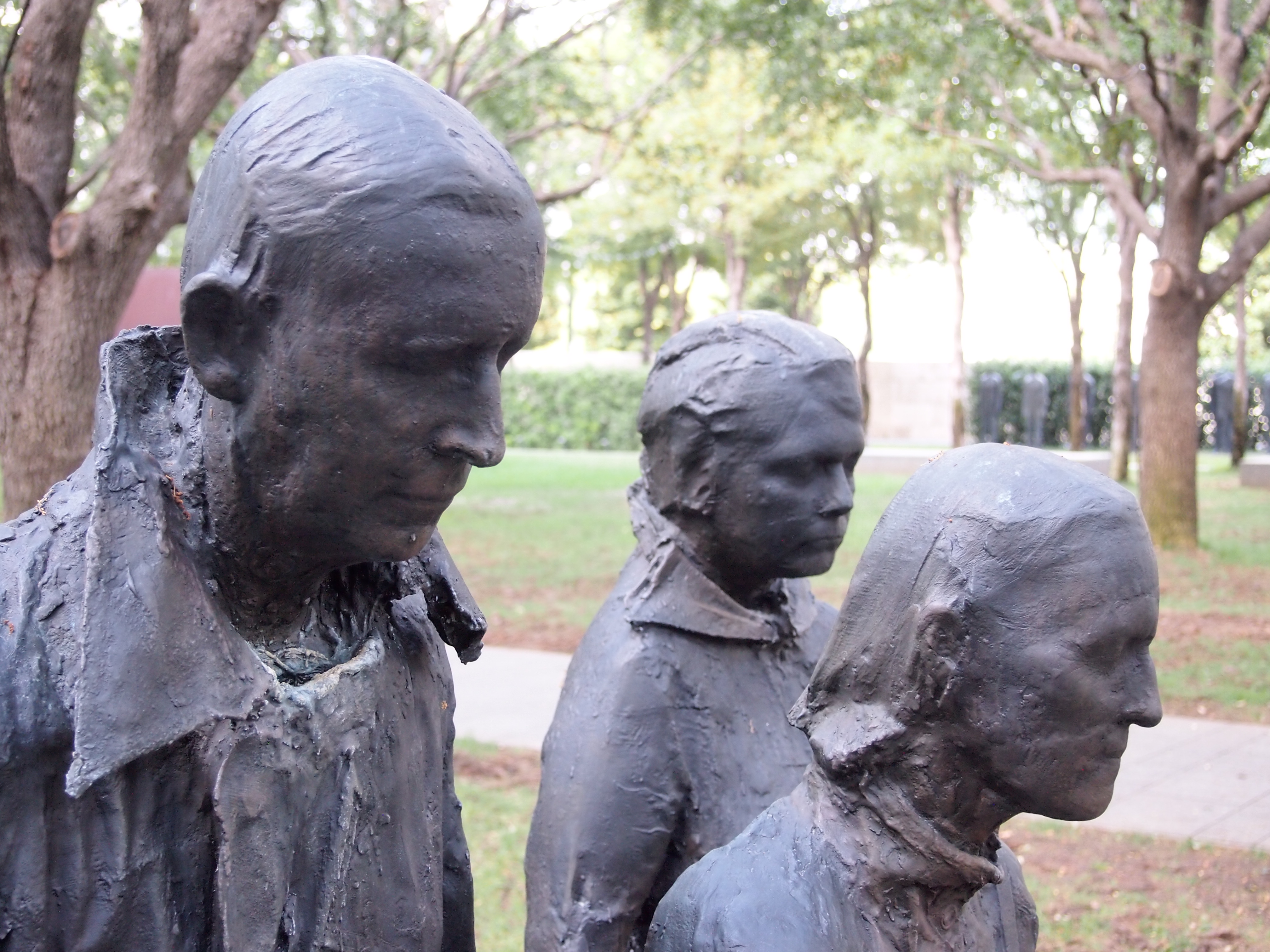
Giant Planter Heads on a Major Metro Thoroughfare

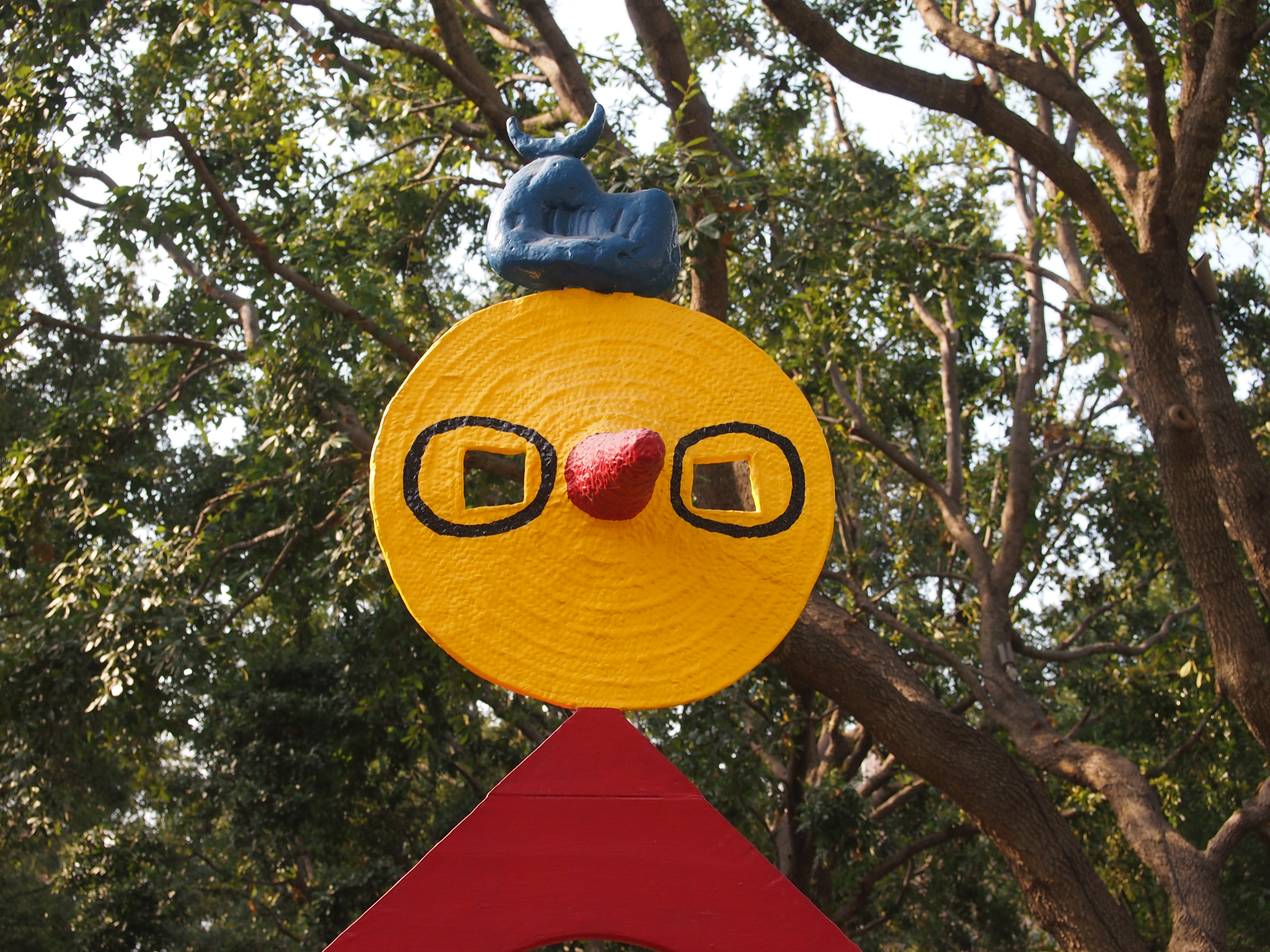
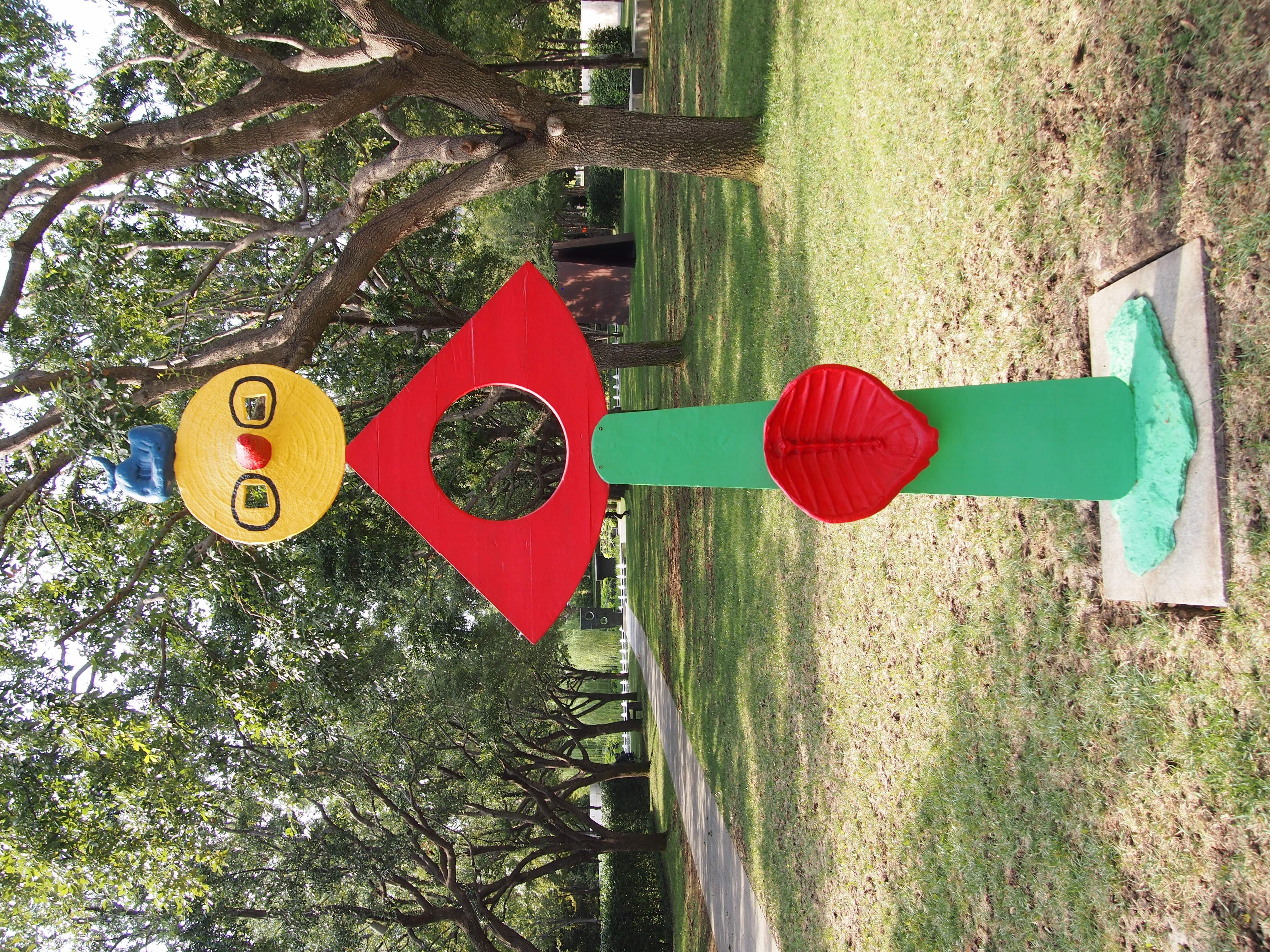
The July 2 edition of the Chicago Tribune had this to say about the giant planter heads on Michigan Ave.: “Fifteen giant heads, filled with various plants, have taken up residency on Michigan Avenue for the summer. The Plant Green Ideas sculptural heads are the brainchild of Plant Green Ideas RRR, a Chicago not-for-profit committed to sustainability and are in conjunction with the Chicago Cultural Mile.”

We saw a few of them on Saturday. This is one sponsored by Italian Village, a downtown restaurant.

Better pictures are, for now, at the Tribune photo essay.

Buckingham Fountain

I looked at Oddschecker.com this morning and, as reported elsewhere, “George” is the favorite for naming the newborn child of the Duke and Duchess of Cambridge. Followed by James, Alexander, Louis – Louis? after Louis Mountbatten, probably, but so many French kings used it – Arthur and Henry. Maybe he’ll get all of those. I doubt I’ll live to see which regnal name he picks, anyway.

The longest of the long shots, and I’m only counting names that more than one booking organization is taking bets on, are Wayne, Tyler, Winston and Terry. Reportedly, Ladbrokes is offering 5000-1 odds on the prince being named “North,” or “Psy,” and Power Paddy’s giving 500-1 on “Rumpelstiltskin,” but you have to wonder whether they’re just having a spot of fun with those. “Zog” doesn’t seem to be in the running at all.

The favorites are OK, I suppose, though there seem to have been enough Georges since the Stuarts got the bum’s rush. The Windsors ought to reach a little further back to such kingly names as Offa, Egbert, Ethelwulf, or Ethelbert. If those sound too peculiar to modern ears – and they do – Alfred is always available. He was great, after all. But maybe those names are all too English, and would help goad the Scots toward independence.

We made it as far east as Buckingham Fountain on Saturday. Here Ann (left) and her cousin Rosie take a look.

It’s been some years since I’ve seen the fountain up close, which in full is called the Clarence F. Buckingham Memorial Fountain, though I’ve never heard anyone call it that. It’s named for the brother of the philanthropist Kate Buckingham, who funded its construction and set up a trust for its maintenance back in the 1920s.

An interesting  blog called Connecting the Windy City has this to say about the heiress Kate Buckingham: “The Fulton elevator, the city’s first grain elevator, was built by her grandfather, Solomon Sturges. Her father, Ebenezer Buckingham, was also responsible for the construction of grain elevators and elevated railroads in the city.”

Ebenezer. Now that would be a catchy name for the royal child. And it would honor that great British inventor, Ebenezer Tweezer.

Back to the fountain. According to the Chicago Park District, “Edward H. Bennett designed the monument in collaboration with French sculptor Marcel Loyau and engineer Jacques H. Lambert. Inspired by the Latona Basin at Versailles, the structure is composed of four basins clad in elaborately carved granite and pink Georgia marble.

“The Buckingham Fountain, however, is twice the size and re-circulates approximately three times more water than its French counterpart. [Anything the French can do, we can do bigger.] Chicago’s fountain is also unique as it symbolizes Lake Michigan. Conveying the enormity of the lake, its major display… sprays water to a height of 150 feet from the ground. The massive lower basin features four sets of Art Deco-style sea horses representing the four states that border Lake Michigan.” Never heard that interpretation before, but why not?

“The Fountain’s water capacity is 1.5 million gallons. Depending on wind conditions, major displays use approximately 14,100 gallons of water per minute conveyed through 134 jets. Water is re-circulated from the base pool after the basins are filled and not drawn from the outside except to replace losses from wind and evaporation.”

Dwarfs on Parade

How is it that I didn’t know until yesterday that Belmopan is the capital of Belize, and has been since before that country’s independence? If you’d asked before yesterday, I would have said Belize City. But I was looking at a globe and chanced to see Belmopan starred as the capital. Has Belize moved its capital? I thought. (The globe was new.)

The answer is yes: in 1970. I’m shocked at my ignorance sometimes. A new capital was built in the late ’60s, as Brazil built a new capital for itself in the late ’50s. Apparently, Belmopan isn’t known as a hotbed of modernism like Brasilia, at least to judge by the kind of buildings featured in the Wiki article.

On Saturday Ann and I went to downtown Chicago. As we headed eastward on Jackson, we came across a sparsely attended parade along Dearborn. One of the cops on duty told us we could go ahead and cross the street – the next part of the parade was still off in the distance – and I asked her what kind of parade it was. The 10th Annual Disability Pride Parade, it turned out. (She just called it the “Disability Parade”; I had to look up the rest.)

I think we missed most of it. We did happen to see the marchers – or rather riders, since they all seemed to be in vehicles – for Little People of America, the nonprofit organization that provides support and information to people of short stature and their families,” to quote the little people themselves. I’m glad to know that they embrace the terms “dwarf” and “dwarfism,” a fine old word reaching back into the mists of Anglo-Saxon to maybe proto-Indo-European.

Other things I didn’t know: the organization was founded by actor Billy Barty, whom I’m certain I’ve seen on old TV or movies. Also, October is Dwarfism Awareness Month, at least in Arizona, California, Delaware, Illinois, Indiana, Kansas, Massachusetts, Mississippi, Missouri, New Mexico, New York, New Jersey, Oklahoma, and Puerto Rico. The org seems to be working on having the federal government so designate it.

And there’s this: the strange story of the Ovitzes and Josef Mengele. The things you find out if you’re paying attention never cease to amaze.

Rainbow Over Diamond Head

A headline that Google News pulled up for me this morning: “Comic-Con Fans Get World of Warcraft Teaser Trailer. You Don’t.” The implication is that that’s some kind of bad thing, but I don’t see it.

Heat much of last week, then rain in the form of more than one short nighttime thunderstorms rolling through to cool things off. By the next day, most everything had dried off. The pattern: rinse, dry, repeat.

This photo has been captioned many times, but one recent caption is, “Only one human being alive on July 21, 1969 is not in this picture.” Never thought of it that way. Makes me want to read Michael Collins’ memoir, Carrying the Fire.

I have to be content with taking earthbound photographs, and mostly I am. I’ve always liked this one, taken on Oahu in July 1979. The transition from photographic negative to slide to print to digital scan to web page doesn’t really do it justice, but the image retains a bit of the original flavor. I’ve got three boxes of slides made in Hawaii that year and two more made in East Asia in the early ’90s, which are a little hard to appreciate in that format. One of these days, I might convert them directly to digital, but buying the equipment and taking the time are a fairly low priority among all the other demands on my money and time.

For some reason, I didn’t visit Diamond Head State Monument and climb to the rim in 1979. I can’t remember what went into that decision. I hear the view is worth the climb.

Dog

When it doubt, take a picture of a dog. Especially a photogenic one. Ann went on a spree of dog photo-taking recently. Included were some profiles.

Some closeups.

Many shots of the napping dog.

Of course, the dog isn’t always so peaceful. Ann also manged to catch her warding off imaginary enemies.

And greeting someone on the other side of the fence.

Her basset hound heritage is evident in this shot. The others seem to illustrate her lab side.

Wisconsin Eats

On our second evening in Wisconsin, I went out to pick up our evening meal. Everyone else knew what they wanted, and so I went to those places, but I didn’t have anything in mind for myself. By chance I came across My Lee’s Egg Roll House at the corner of Franklin and Richmond in Appleton. I followed an impulse to go there, and bought a takeout meal of two large egg rolls with fried rice. I also picked up a roll – mini-loaf? piece? of “longcheng” bread with strawberry filling for snacking on the way back to the motel.

I was the only customer, so I asked the woman behind the counter if she were My Lee. She was, she said in a heavy accent, and hoped that I would enjoy my egg rolls. I learned from an article posted on the wall that she and her husband had opened up the store only last year in a former Batteries Plus location. They are Hmong, originally from Laos (I think). Whatever their back story, I’m happy to report that in Appleton, Wisconsin, in our time they make some fine egg rolls and filled bread.

Harmony Cafe is on College Blvd in Appleton’s business district, created from the joining of two narrow spaces in brick-facade buildings old enough to sport punched tin ceilings. Apparently it’s one of two locations, with the other in Green Bay. Goodwill Industries of North Central Wisconsin runs the place, and benefits from it. That by itself wouldn’t have persuaded me to visit, or even its composting of coffee and food waste or use of fair-trade coffee beans. But I happened to know from my visit last August that the joint has a tasty Cuban pork sandwich, one just about as good as the one I had in Tampa’s Ybor City. It’s still on the menu. Good eats.

On the way home, we stopped at Mars Cheese Castle on I-94 near Kenosha, purveyor of cheese, meat, baked goods, sweets and more. The place has been enlarged since I was last there, and actually looks like the kind of castle a kid would draw.

The place is a roadside institution. Sure enough, it’s in Roadside America, which says: “This mainstay of Cheesehead gastronomy has reopened in a new, more castle-like building only a few feet from its original location, which was bulldozed for an I-94 interchange (the classic sign was saved). Now with real battlements! A real drawbridge! The Castle still has its cocktail lounge, and still sells ‘cow pies’ and udder-shaped coffee mugs — and its iconic roof-mounted cheese-chomping overcaffinated-eyed giant mouse sculpture has been repainted and moved indoors so that people can now pose next to it.”

We got some cheese curds. Made in Wisconsin, of course.

Red Bird

And just who was Red Bird? An early 19th-century warrior of the Winnebago, or as they call themselves, the Ho-Chunk. To my ear at least, that double naming works out well, since Winnebago is a fine name for the major lake in Wisconsin, and Ho-Chunk is a fine name for the tribe’s 21st-century casinos, which are in Wisconsin Dells and other places (and which advertise a fair bit in the metro Chicago market).

There’s a large statue of Red Bird facing Lake Winnebago at High Cliff State Park.

Its plaque says the statue was “designed by Adolphe E. Seebach” and “executed by Sculpture House, New York.” Seebach was apparently a Wisconsin sculptor who died in 1969, but a cursory look for him doesn’t uncover much more.

The Banta Company Foundation paid for the work; information on Banta isn’t hard to find. It was a large printing company based in Menasha, one of the Fox Cities, in business for over a century until R.R. Donnelley swallowed it in 2006. Why the company foundation decided to sponsor a statue of Red Bird in 1961—the date on the plaque—I couldn’t say. But there he stands, supposedly depicted as he was in 1827.

The Wisconsin Historical Society says of Red Bird: “Wrongly informed that the U.S. had executed two of their warriors, and thinking other tribes would support them due to widespread white incursions on Indian land, a party of Ho-Chunk from LaCrosse [including Red Bird] attacked settlers near Prairie du Chien in the last week of June, 1827. They killed two men and assaulted a child before returning to their village. On June 30th, a keelboat passing that village was attacked because the Ho-Chunk believed it was the same one whose crew had recently abducted and raped several Indian women.

“In response, the U.S. Army moved troops up from St. Louis, local militia units were hastily formed, and a total of ca. 600 soldiers assembled at Prairie du Chien. Another 100 militia were gathered at Green Bay, where 125 Menominee, Oneida and Stockbridge warriors joined in support of them. In late August these two forces converged from different directions on the assembled Ho-Chunk near Portage. On Sept. 2, 1827, Ho-Chunk tribal leaders surrendered the warrior Red Bird and five others, and further bloodshed was avoided. Red Bird died in prison and the other warriors were tried, sentenced to death, but ultimately pardoned.”

Elsewhere I’ve read that Red Bird dressed in his best finery to surrender – which is how he’s depicted in the statue – and expected to be put to death immediately, as he might have been by another tribe. To his bewilderment, he was chucked in prison, the sort of place in which you might die of dysentery, rather than experience a warrior’s death.

High Cliff Graffiti

On the northeastern shore of Lake Winnebago–the largest inland lake in Wisconsin–is High Cliff State Park, whose name ought to be a clue that it offers vistas of the lake. But it’s more than any old cliff. The Wisconsin DNR says that “the park gets its name from the limestone cliff of the Niagara Escarpment, which parallels the eastern shore of Lake Winnebago.”

It wasn’t the first time on this trip we’d seen the escarpment. County Road B in up the Door Peninsula has views of cliffs. According to Door County Coastal Byway, “Door County’s Green Bay side has the true escarpment, with exposed dolomite rock 200-250 feet high. At the base of these rock faces are remnants of the chunks of stone that fall from the cliffs to form ‘talus.’ ”

I wouldn’t know talus if I stubbed my toe on it, but the cliffs were evident, especially at George K. Pinney County Park, just off County Road B. At High Cliff State Park, the vantage is from on top of the cliffs, though trees block the view in some places. Maybe that’s why a wooden observation tower rises above the trees.

A plaque on the tower says, “THIS TOWER is dedicated to WILLIAM M. WRIGHT, spirited leader and longtime friend of High Cliff State Park. Built in 1984 with private funds from Kimberly-Clark Foundation Inc. and High Cliff State Park Association Inc.”

The plaque doesn’t tell you how many steps it takes to get to the top. An unusually helpful graffito at the bottom tells you that it’s 64 all together.

And it is. Eight flights of eight steps each. As you ascend, the helpful graffiti continues all of the way up.

Until you reach the top. You’re rewarded for climbing 64 steps with a broad view of northern Lake Winnebago, which isn’t so large than you can’t see the opposite shore, where Appleton, Neenah, and the other Fox Cities are located.

On the Borders

In July 2006 we found ourselves – because of much sustained effort, mostly in the form of driving long distances – at a triple border. I can’t think of anywhere else I’ve been quite like it. The spot is at the meeting of British Columbia and Alberta; of Banff National Park and Kootenay National Park; and on the Continental Divide. On one side of the road are three flagpoles, with the Maple Leaf flying between the provincial flags of British Columbia and Alberta.

On the other side of the road is a large wooden sign offering some geographic information (it says 5,382 ft). I wore my Route of Seeing cap, and a shirt acquired on a previous visit to Canada, for a snap with the three-year-old Ann. (Be sure to read about Ed and Haleakala and that thing called Death.)

Not too far away, or at least northward on the British Columbia-Alberta border, is a triple continental divide, the Snow Dome of the Columbia Icefield. Our guide on the Icefield pointed it out to us, but that’s as close as we got. At that point water drains either to the Atlantic, Pacific or Arctic oceans.

The Gardens of the Fox Cities

The Gardens of the Fox Cities in Appleton, Wis., consists of a series of formal plantings, such as the rose garden, which also includes a statue called “Reflections of Love,” by a local sculptor named Dallas Anderson. In the full flush of early July, it’s a gorgeous, but hot, setting. We visited fairly early in the morning – early for us on non-work days, ca. 10 a.m. – but even so, the heat was on.

The gardens are either part of the large and mostly rec-oriented Appleton Memorial Park, or right next to that park, with no visible border. Turns out that the gardens also include wilder sections. Frame your shot just right and it’s a little hard to imagine that about 360,000 people live in the surrounding metro area.

Look carefully, though, and there’s a house and a telephone pole in the distance. The gardens’ water features, some of them, luxuriated in lily pads.

The gardens also included a plant I’d never heard of – though there are many of those – called Lamb’s Ear (Stachys byzantina), which is native to Turkey and Iran. It’s an incredibly smooth plant, much like felt.