GTT Fall 2013

Last Wednesday I spent the afternoon in downtown Dallas, walking around on a typically hot September day. I was visiting the second floor of a building – more about that later – when sirens blared in the street below. The windows sported heavy drapes, but it wasn’t hard to pull them back for a peek. On the street below was the aftermath of a traffic accident without apparent injuries, but also a little hard to understand.
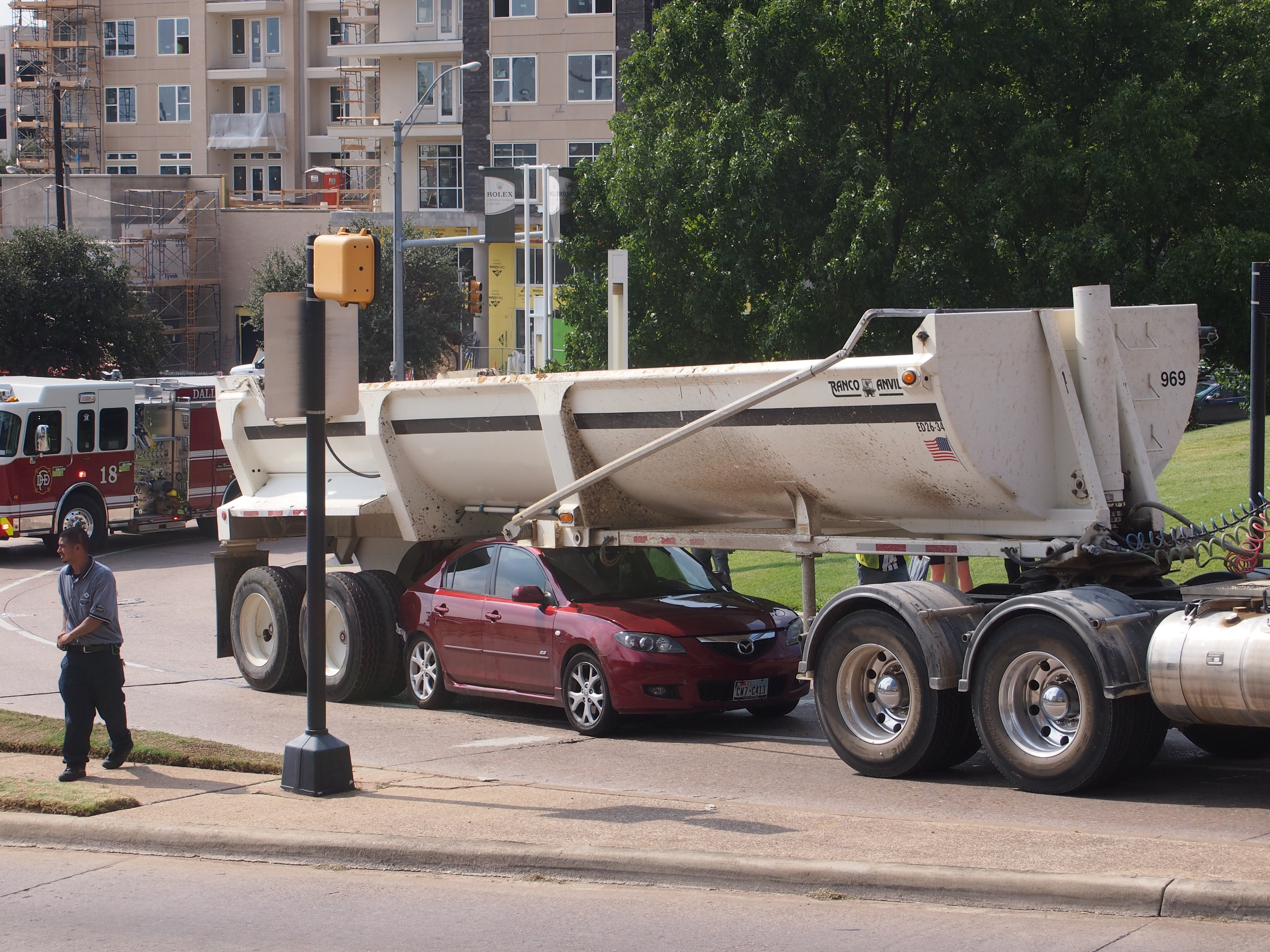
So how did that little car wedge itself under that large truck? Other witnesses marveled at it as well. It would be one thing if the car was at a diagonal to the truck, which would mean that it rammed itself underneath. But the car’s aligned so evenly with the truck. Did the truck somehow park itself on top of the car? How could that have happened?

Just another little mystery. I went to Texas on the 12th and came back on the 19th. It was a trip but not a vacation. I spent time with family and friends, but I also continued working – all I need for that is a laptop, phone, and Internet connection. I drove a fair amount, too, because I flew to Dallas, drove to San Antonio by way of Austin, and later returned to Dallas for the flight home.

For a few hours on a couple of days, I managed to see a few things. New things, in fact: a large, immaculate Austin cemetery that I’ve known about for years but never visited; a music venue I’d never heard of in a familiar part of San Antonio; some small to mid-sized museums in Dallas, a pleasant bar in the same city, and a large church there, too.
Maps, Maps, Maps

Back again around September 22 — about on the equinox. That’s just a coincidence, since it’s the next Sunday that I want to begin posting again. But those days must mean something. Years ago, I took a flight across the equator on the solstice, and I turned into a Druid for a few minutes.

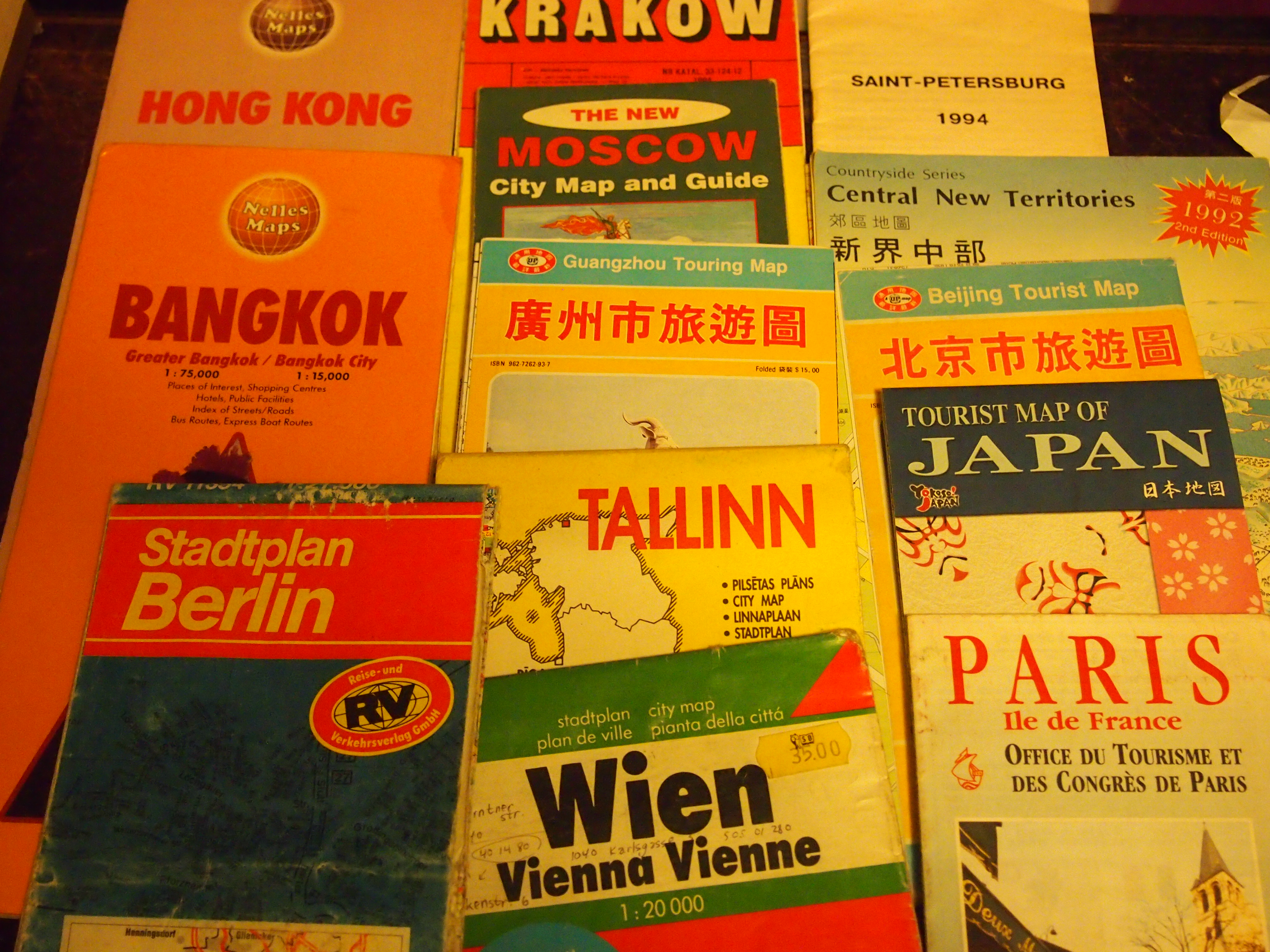
I have a collection of maps, many of which I’ve picked up as I visited places. Recently I moved them out of the lower level of the house, and as I was leafing through them, it occurred to me that my daughters — if they’re ever so peripatetic — will probably not end up with a clutch of paper maps. They’ll have some electronic box that offers directions wherever they are: New York, London, Paris, Munich.

Paper maps can be cumbersome. Of course I use Google Maps and its ilk sometimes. But my daughters and their cohort don’t know how much they’ll be missing without paper maps.

I’ve posted about that Stadtplan Berlin before, and one of my favorite maps ever (not pictured), Bensons MapGuide London Street Map.

And when am I going to give up my paper maps? When they pry them from my cold, dead fingers.

On ira pendre notre linge sur le ligne Siegfried

Another very warm, practically hot day. Sure, you can use the air conditioner in your car on days like today, but when I was driving along around 1 p.m., I kept the windows down and blasted myself with warm air. Pretty soon driving will be complicated by snow and ice, so I want to feel the warmth, even the sweaty heat, right now.

Ah, these warm days of September. Makes you think about the Sitzkrieg, doesn’t it? No? I might not have either, but not long ago I happened across the bilingual “On ira pendre notre linge sur le ligne Siegfried” (“I’m Going to Hang Out the Washing on the Siegfried Line”), a song I wasn’t familiar with. I like finding moment-specific songs — in this case, the Sitzkrieg — that have been lost to time. (Like this one and this one.)

This version was by French band leader Ray Ventura. Irish songwriter Jimmy Kennedy wrote it. His 1984 NYT obituary noted that “Mr. Kennedy’s songwriting career spanned 50 years. His familiar songs included ‘The Hokey-Cokey’ (which was popular as the Hokey-Pokey dance in the United States) ‘Teddy Bear’s Picnic’ and ‘I’m Going to Hang Out the Washing on the Siegfried Line.’ ”

Odd to think that someone actually wrote “The Hokey-Pokey” and “Teddy Bear’s Picnic,” (Bears’?) though of course someone did. Someone named Jimmy. Songs like that just seem to emerge from the woodwork.

Bombs Away, Mr. Nixon

Very warm today, a continuing summer that’s going to lead us to a sudden dropoff into cold. Maybe not literally, but it’s going to feel that way in hindsight. One day soon I’ll blink and the trees will be bare and the ground white. I’m wondering how the dog will react – up for romps in the snow, or whining at the prospect of going out in the cold? We’ll see.

Today, for obvious reasons, I was wondering about the quote: “The President of the United States can bomb anybody he likes.” Now where did that come from? One reason it’s so easy to get distracted on line is that you can ask Google such a question and see where it takes you. So I did.

One of the search results I got was this. I started reading it and it was a few seconds before I realized that I’d written it. The quote (though a little altered) is from the movie Nixon, said by Anthony Hopkins’ President Nixon. I don’t know if the president himself actually said such a thing, but I bet the scriptwriter thought it sounded like something he might have said, and it does.

Oh Yes! (Sweet Potato Creme-Filled Chocolate Cakes)

There’s a new H Mart not far from where we live – a smaller version of the Korean supermarket in Niles, Ill. It took over space formerly occupied by an independent Asian grocery store (whether that was Korean, I don’t know). I visited the new H Mart over the weekend, and for a discount got some Haitai brand Oh Yes! “Premium Chocolate Coated Sweet Potatoes Filling Cake.”

Oh Yes! A good name. Catchy. Wasn’t that something Molly Bloom said?

I wondered about that sweet potato filling. But for a couple of dollars for 12 cakes, I was willing to give it go. The ingredients are simple: cocoa powder, cocoa mass, white sugar, and sweet potato cream. You get about a third of your DV in saturated fat in each cake, with none of that trans fat. There’s also some carbohydrates in them, but very little else.

Haitai is a South Korean food company, lately owned by Crown Confectionery, another Korean entity. Naturally, I had to look up Haitai’s web site, and found some other product names that I like, all of which look like confections: Baked Potato Stick, Choco Homerun Ball, Bravo Cone, and Babamba.

About Oh Yes!, the web site says (all sic): “Oh Yes! (1984) is our one and only soft chocolate cream cake, which has been on demand for many years due to its soft and delicious taste that melts in your mouth. It is proudly making monthly sales of 4 billions won.”

I liked the Homerun Ball description, too: “The idea of our snack product, Homerun ball, was originated from the Korea Baseball Organization in 1981. It’s unique name was derived from its particular baseball shaped appearance. Homerun ball contains chocolate inside every round ball, and is a easy to-go snack that is great to take out to any event. The Homerun ball is successsfully reaching monthly sales of 4.2 billions won.”

So, a few more Homerun Balls than Oh Yes! cakes sold each month. Anyway, the sweet potato favor does take a little getting used to, if you’re used to regular cream fillings. But the cakes aren’t bad.

The Rookery

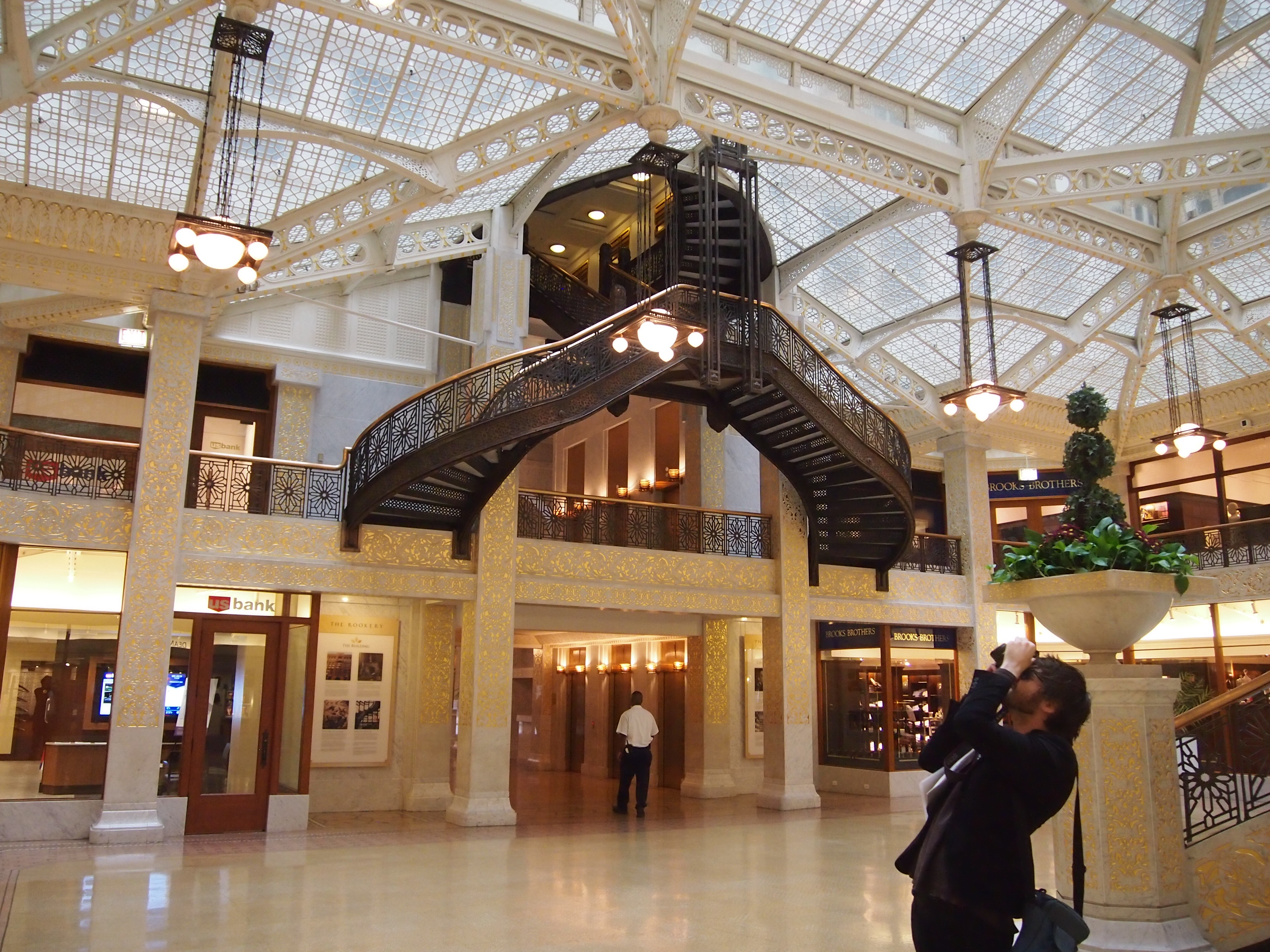
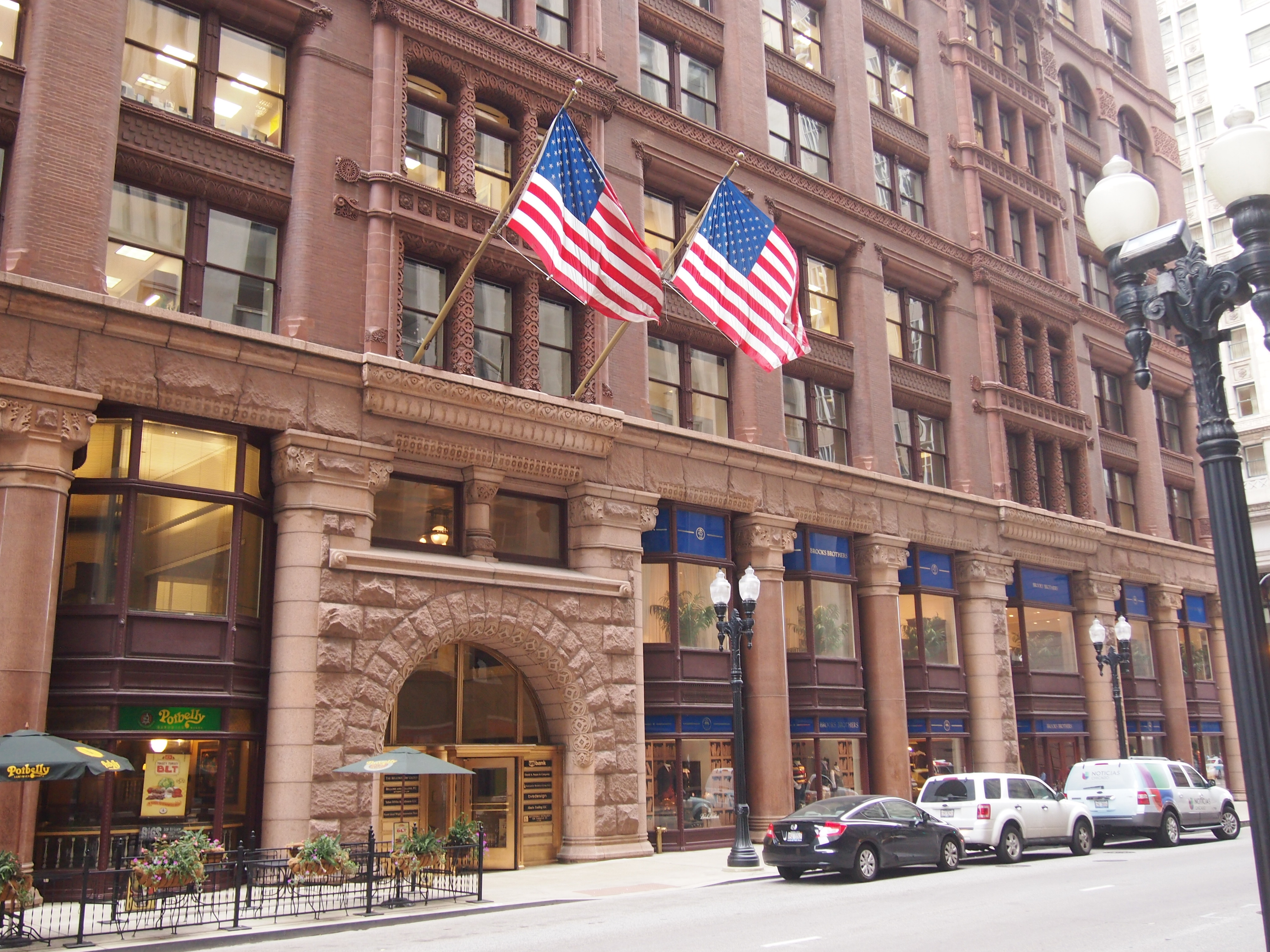
Also during my most recent visit downtown, I swung by the Rookery. Because it had been a long time since I’ve been in the Rookery. The last time might have been the Halloween parties that the concierge service down the hall at the Civic Opera building used to have, when I had an office at the Civic Opera building. The early ’00s, that is.

As always, the Rookery is cool on the outside.

And stunning on the inside.

As you can see, I wasn’t the only person paying photographic attention to the Burnham & Root creation, with its Frank Lloyd Wright filling.

Electric Jellyfish

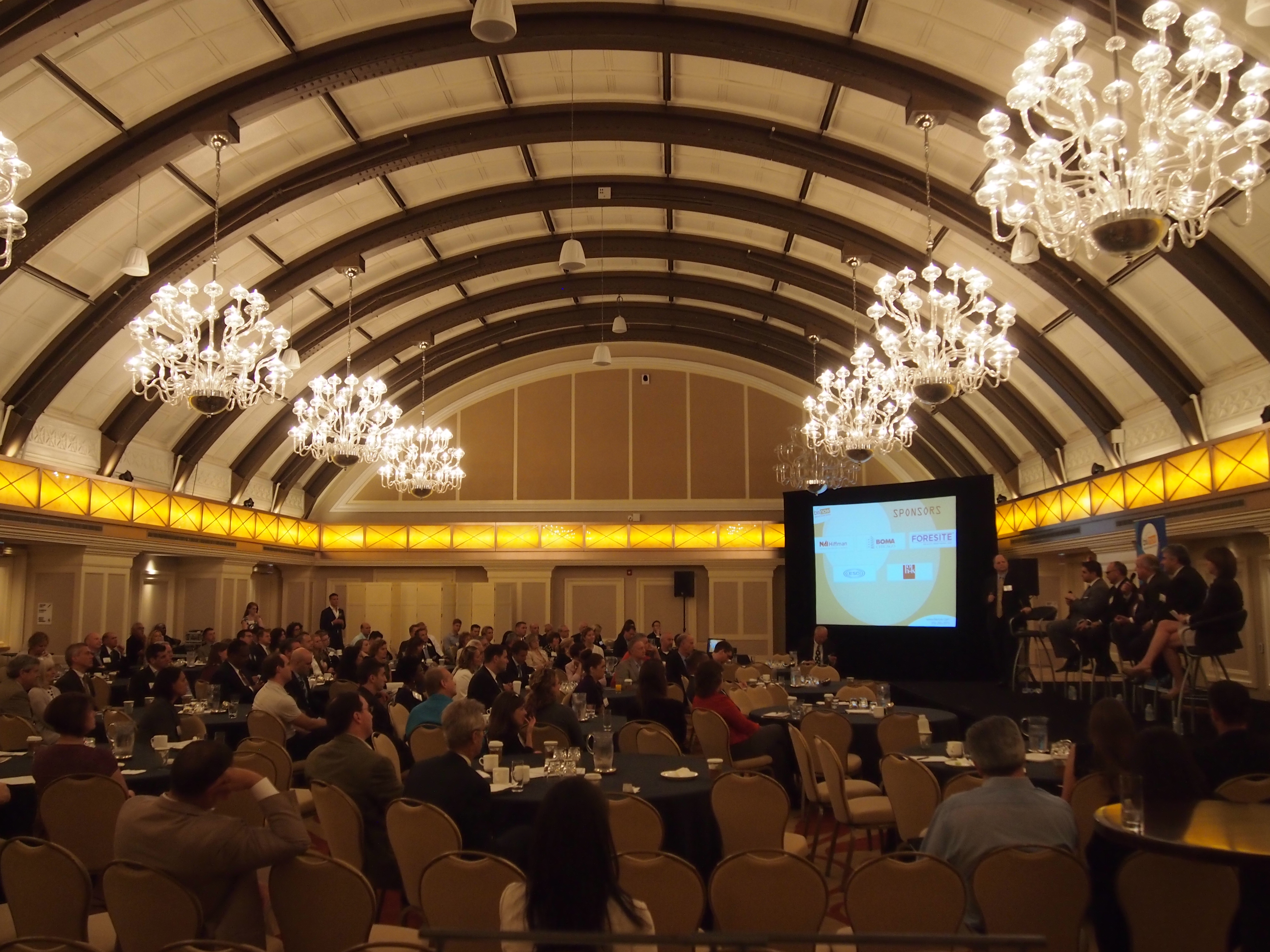
Not long ago I visited the J.W. Marriott hotel at 151 W. Adams. It hasn’t had that flag very long — only about three years — and the building itself is the former Continental & Commercial National Bank, designed by no other than Daniel Burnham in 1914. I read that to turn the structure into a 610-room hotel — an upmarket one, since J.W. Marriott is described as the “black label” of Marriotts — and restore the ornate lobby, the hotelier spent $396 milllion.

I didn’t have a lot of time in the lobby, but ornate is a good adjective for it. Mostly I was in one of the larger meeting rooms, which was more interesting than most hotel meeting rooms.

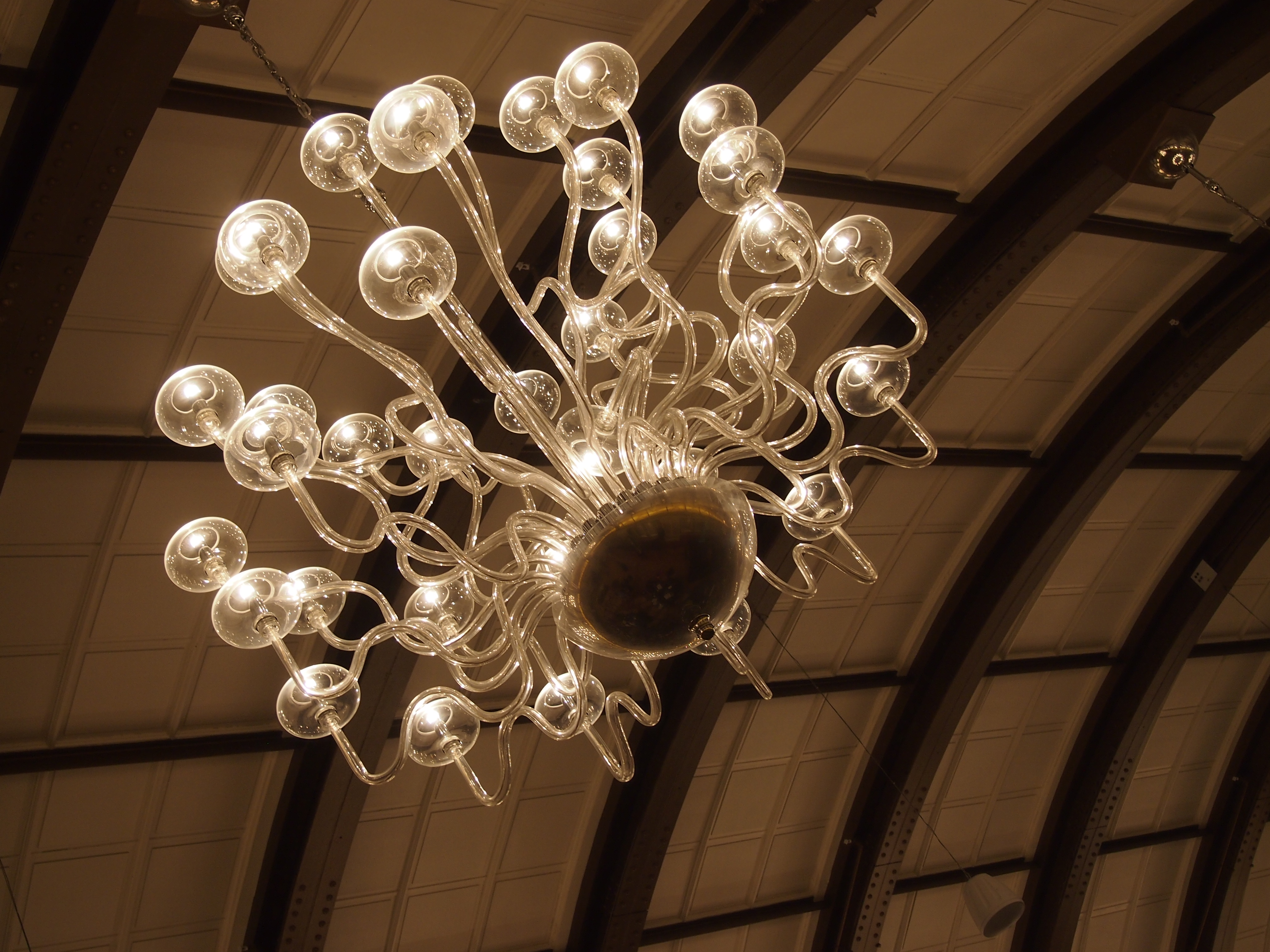
There must be a reason, maybe in the original design of the property, that the ceiling sports arched beams, but I’m not in a position to say why.

Nice lights, too. A bloom of electric jellyfish

What Kind of Passport Does Tinker Bell Carry?

Lilly took this picture on Sunday, September 1. “Dog on Deck,” or “My Nose in Your Business.” (To give it a dual title like Bullwinkle episodes.)

Lately we’ve been throwing away, or donating, a fair number of unwanted items.  It’s astonishing how many there are around the house. Things have been turning up that we’d forgotten we had — or at least I’d forgotten. Yesterday the flow of debris included a girl’s purse with a Disney label on it. We might have bought it for Lilly at Disneyland in ’01 or Disneyworld in ’05, but it’s always possible we picked it up elsewhere. More recently it’s been with Ann’s things.

Anyway, I noticed something odd about it. It’s a Tinker Bell purse, and it says Tink America. Tink is holding a small U.S. flag, her dress imitates the Stars and Stripes, and the background pixie dust is red, white and blue. “Isn’t that strange?” I asked Lilly, pretty much rhetorically. “I mean, Tinker Bell usually isn’t associated with America, right? I think she’s a citizen of Never Land.” Or, come to think of it, the realm of fairies, but not the United States.

Then again, what about Never Land? I told Lilly I didn’t think it was claimed by any nation, but considering that Capt. Hook, the Lost Boys, et al. seem to be British, maybe Britain did claim sovereignty at one point. Could be that it was even harder to claim than Pitcairn Is., what with Never Land not quite being in the material world all the time. Still, I bet Capt. Cook visited at least once; he went everywhere.

On the other hand, perhaps American whalers visited too, so lost in the annals of U.S. exploration and commerce is a claim to Never Land. Could be that it was the subject of negotiation in the same treaty that fixed the border between Canada and the United States, as part of one of the lesser-known codicils added later. By this time, Lilly had expressed her usual mild bewilderment at my oddball train of thought.

Protest at Adams & Clark

Back again on September 3 or so. Hard to believe the summer’s dwindling down, but at least it’s still as warm and dry as a real summer.

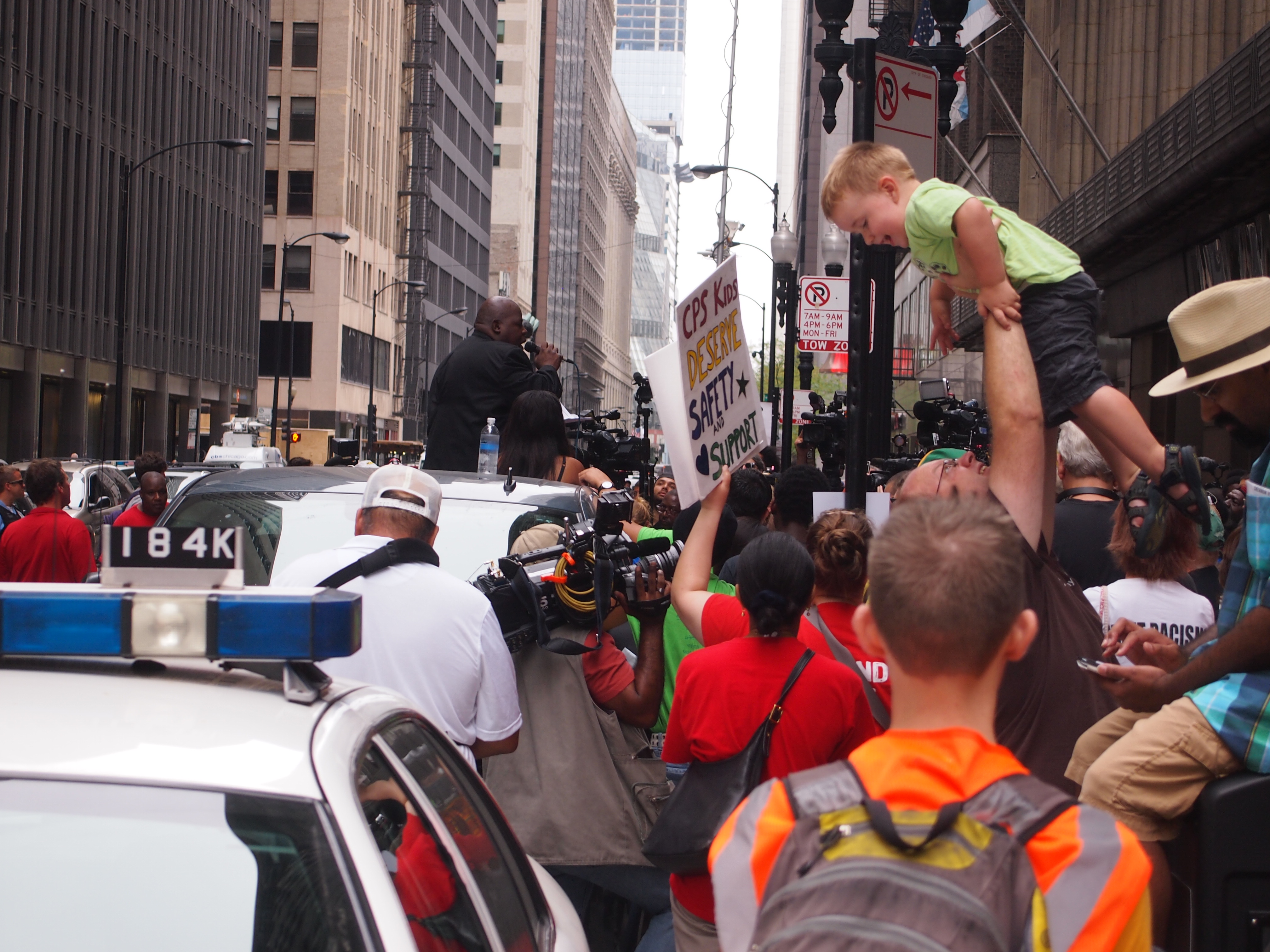
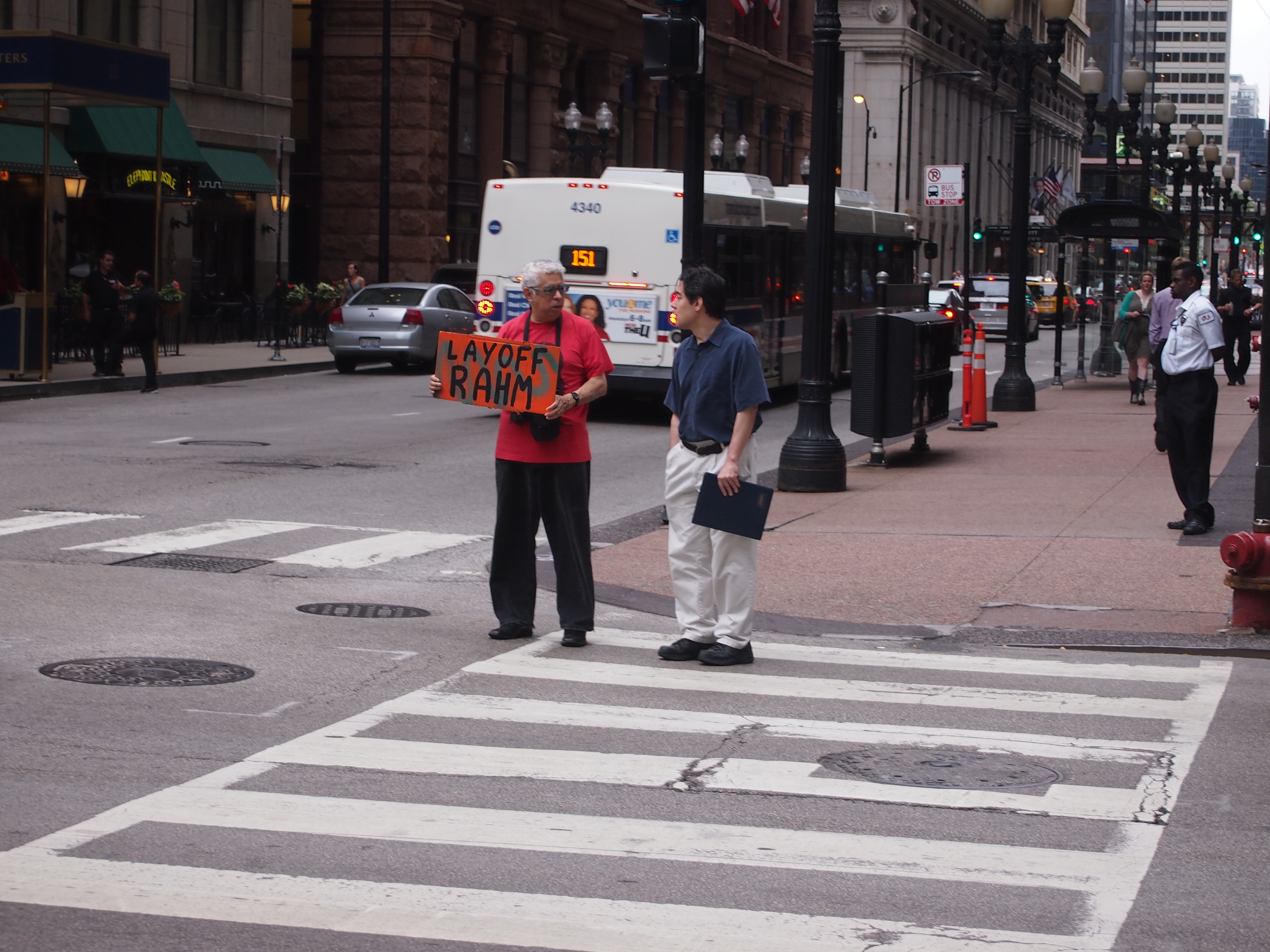
I was downtown late yesterday morning, and spotted a protest at the northeast corner of Adams and Clark. I heard it first, and then went closer to take a look. People filled the sidewalk in front of the building at that corner, and with them were a speaker on a small platform, some cameramen, and a few bored-looking cops, watching.

At first I thought it might be fast-food workers out on strike, but no. That was scheduled for today, and besides, no fast food is available at that corner. Instead, the building is home to the Chicago Board of Education, and it wasn’t long before I figured out that the protestors were being vocal about the recent closings of a large number of public schools in the city.

The speaker, despite his microphone, was a little hard to hear. Across the street, a fellow let us know his displeasure with Mayor Emanuel.

I haven’t followed the mayor’s time in office closely enough to form much of an opinion, but I know the protestor is hardly alone.

The Fern Room

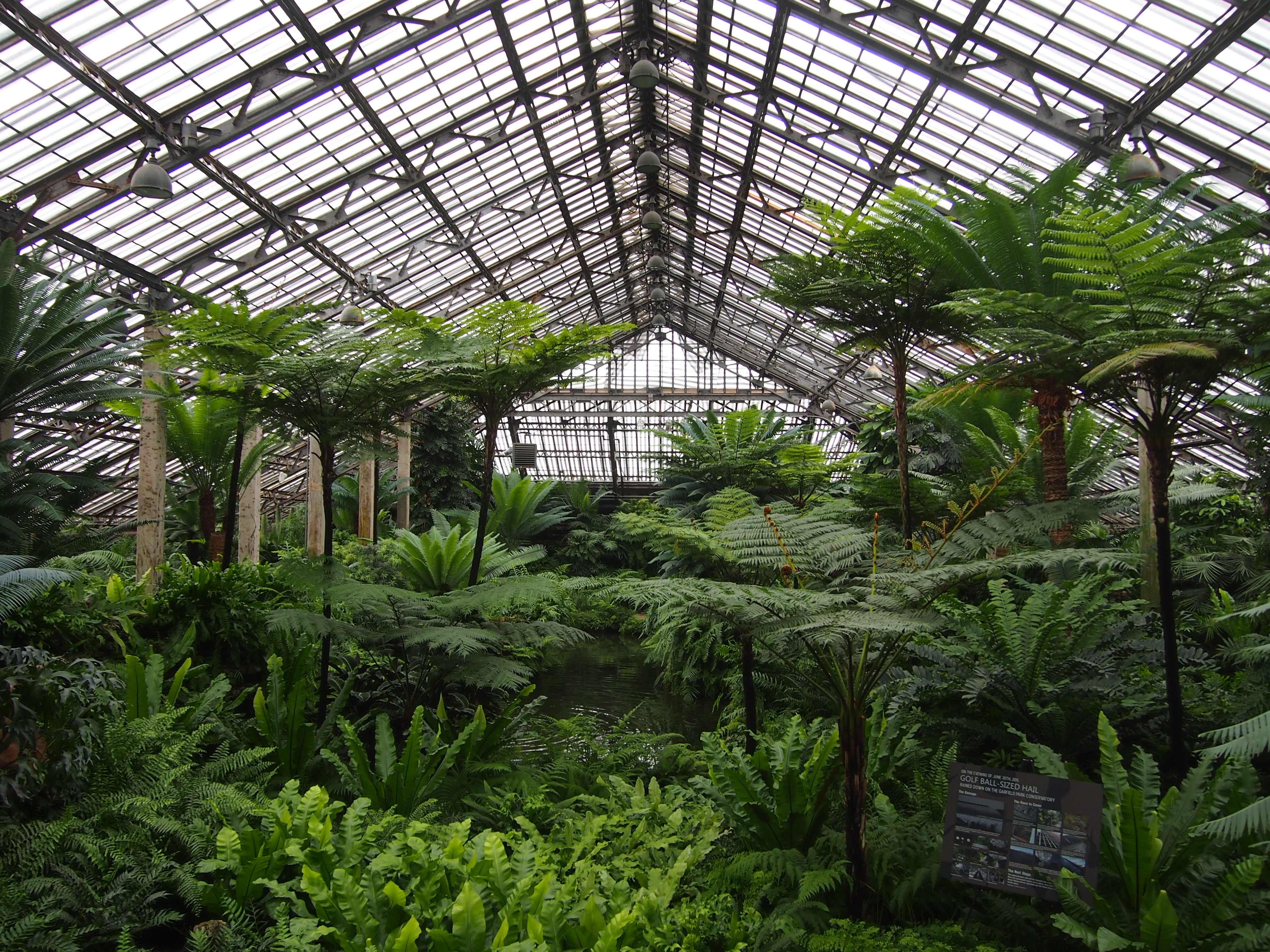
Another picture of the Garfield Park Conservatory: The Fern Room.

According to a sign at the entrance, the room was Jen Jensen’s “imaginative tribute to prehistoric Illinois. So natural looking was the result that when the Conservatory first opened, visitors thought it has been erected over an existing lagoon… Many of the plants in this room date to the time of the dinosaurs. They have changed little from their ancestors over the last 200 million years. Our plants, of course, are not that old. The oldest are about 300 years of age.”

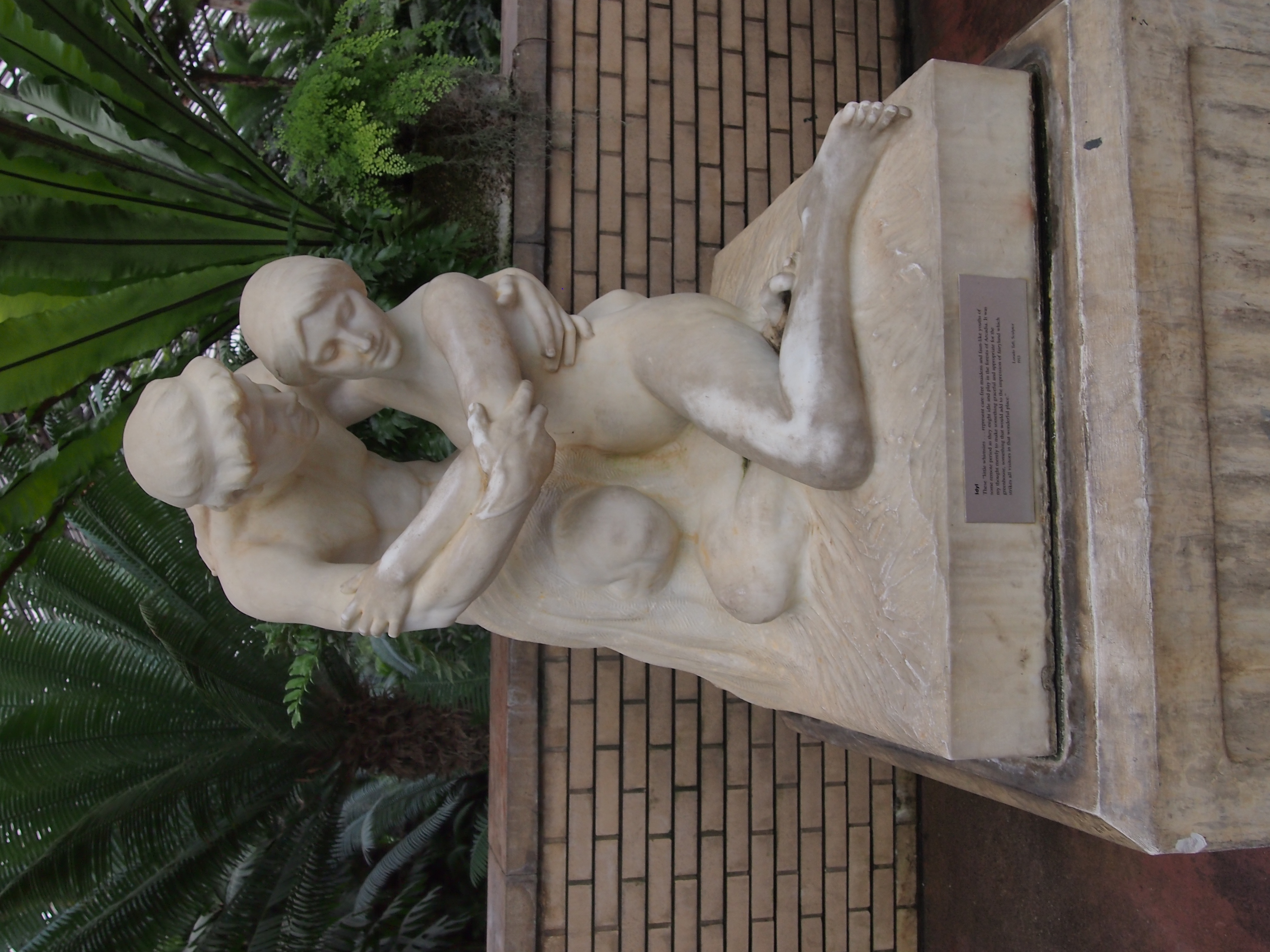
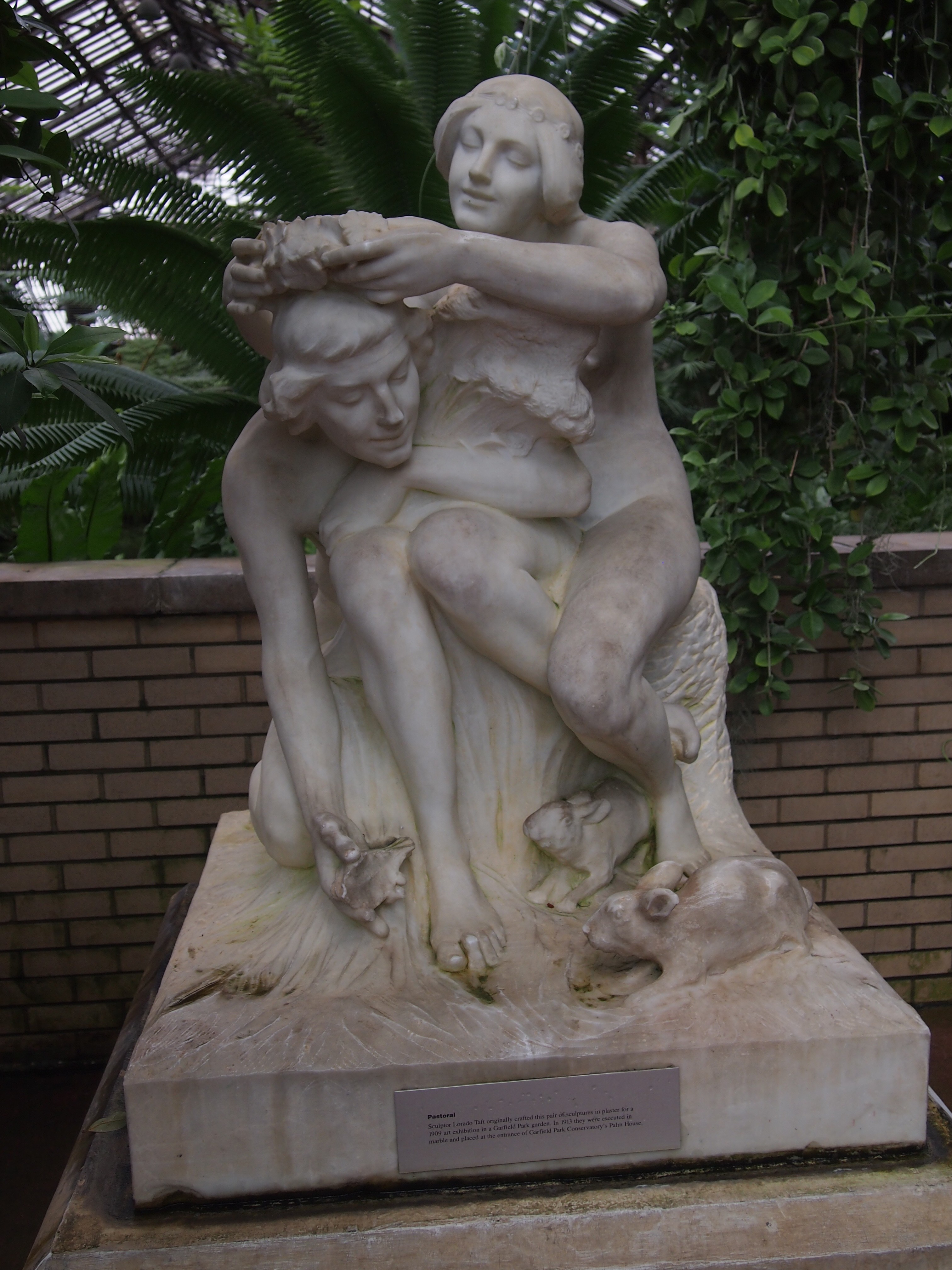
At the entrance to the Fern Room, another Chicago talent of yore left his mark: sculptor Lorado Taft. Seen a few of his things before.

He called this piece “Idyl,” and it dates from 1913.

This one is “Pastoral,” of the same vintage.