Five-State National Road Dash

Our first winterish weather blew through early this week, but we’re back to cool days. For now. Some leaves seem to be clinging a little longer than usual, but most are accumulating on the ground, as expected for November. A scattering of Christmas decorations are already up, and I don’t mean in stores, where they’ve been for weeks. Let November be November, I say.

Much of my return from the East Coast generally followed the westward course set by the National Road, though I didn’t use much of US 40, which has that nickname. If you want to make decent time, you take I-68 through Maryland and then I-70 across Ohio and into Indiana, which pretty much parallels the National Road.

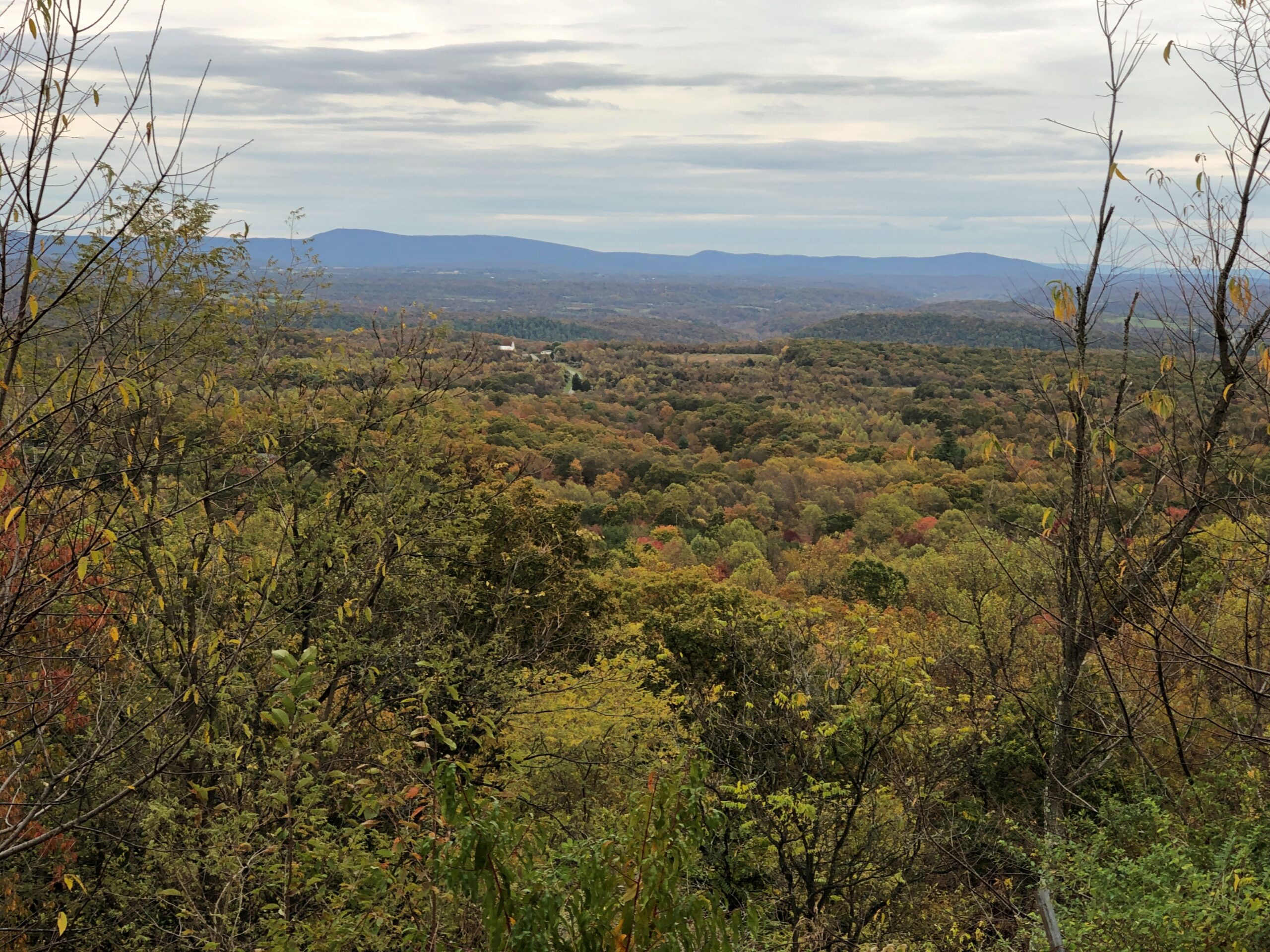
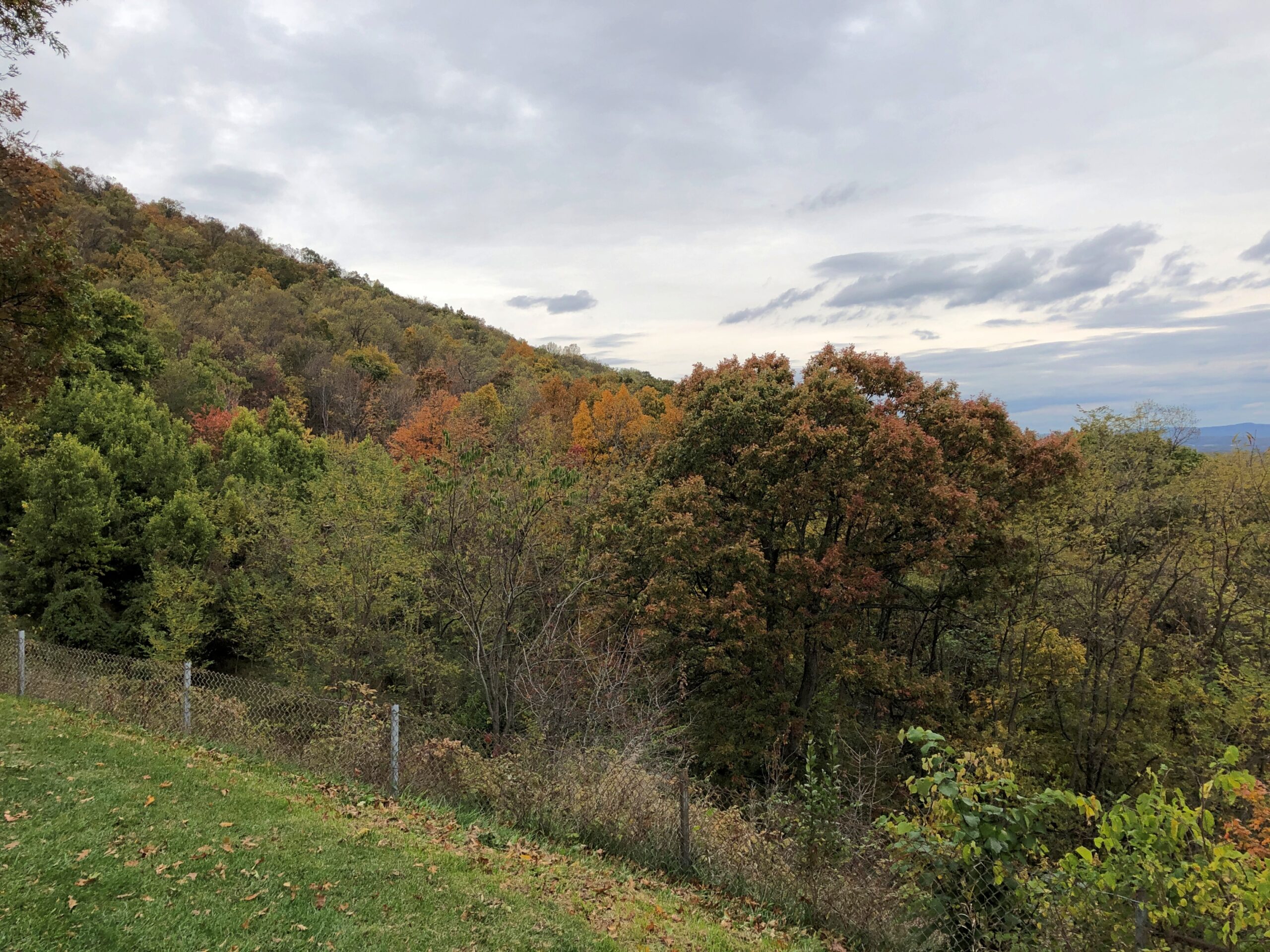
The Interstate is designed for just that kind of efficient travel. On the whole, it delivers. The four-lane highways also deliver boring drives, to hear some tell it. That’s an erroneous assumption, to hear me tell it. The Interstate has its fine stretches, such as I-68 in October, a gloriously colorful drive. Winding and hilly, too, through Maryland’s peculiar panhandle.

A rest stop near Hancock, Maryland, offers views to the north, so most of what you see is Pennsylvania.
Maryland I-68
Maryland I-68

The rest stop is at Sideling Hill, an enormous rise gouged by an enormous cut for I-68 to go through. An impressive feat of engineering, completed only in the 1980s. Then again, blowing up mountains is a thing that happens in this part of the country.

The narrowest part of the Maryland isn’t far away. At its narrowest, there is less than two miles are between the Potomac and the Mason-Dixon Line. So if you picked up Maryland by the panhandle, it would surely break at that narrowest point.

I filled my gas tank off the highway in the last town in Maryland, Friendsville (pop. 438), at a station whose enclosed retail space (between a few pumps) seemed little bigger than a walk-in closet, and yet there was a clerk manning the place on Saturday just before dark. Rotund and massively bearded, he was playing a video game when I opened the door to pre-pay. He might have been a little surprised to encounter a customer, at least one who didn’t pay at the pump.

From there, I continued into West Virginia, then took I-79 north into Pennsylvania, then headed west on I-70, which crosses West Virginia’s odd panhandle – more like a periscope – before reaching Ohio. After overnighting in Cambridge, Ohio, I bypassed Columbus but stopped in Springfield, near Dayton but with a distinct geographic identity. Alcor to Dayton’s Mizar, you might say.

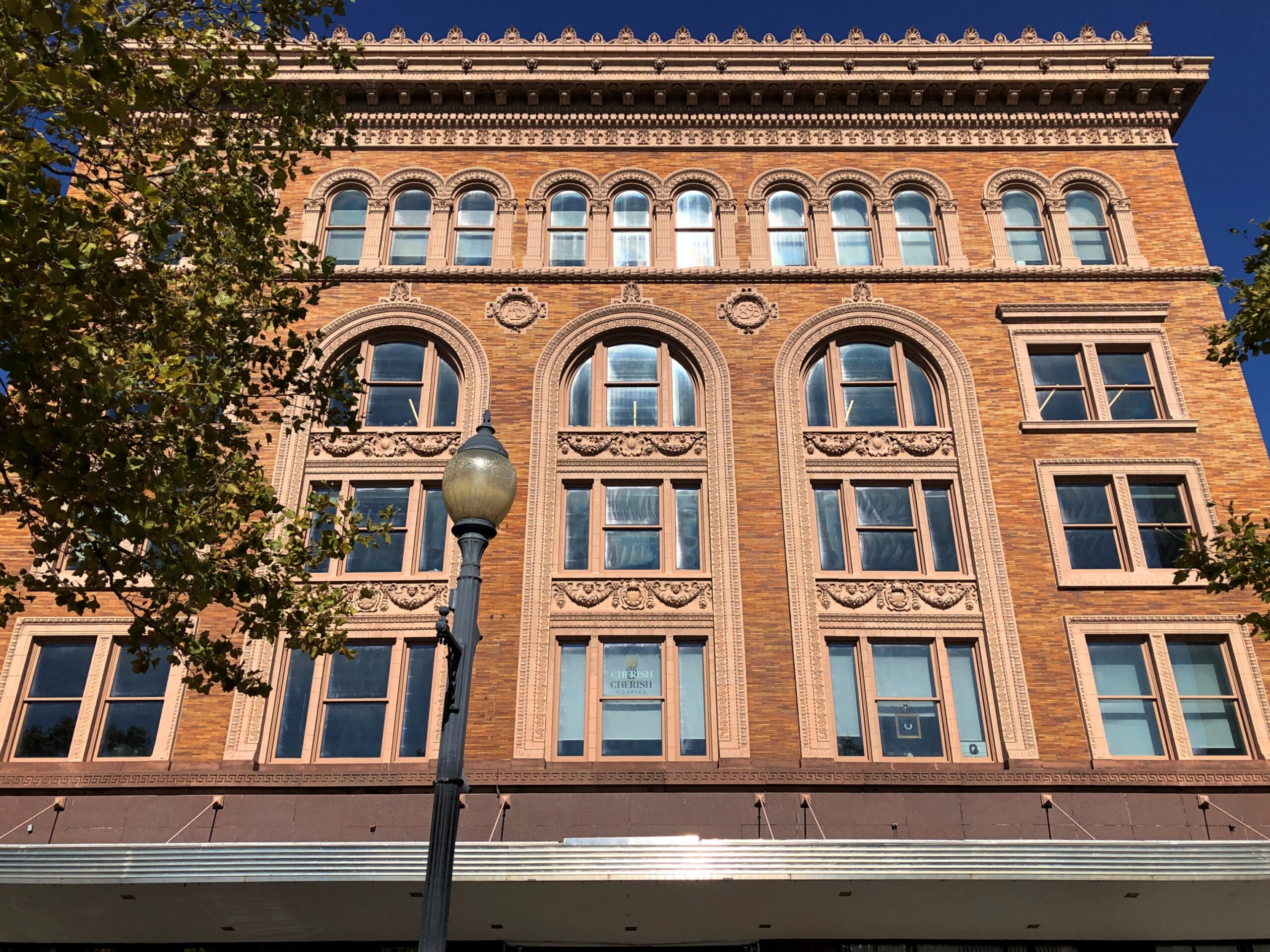
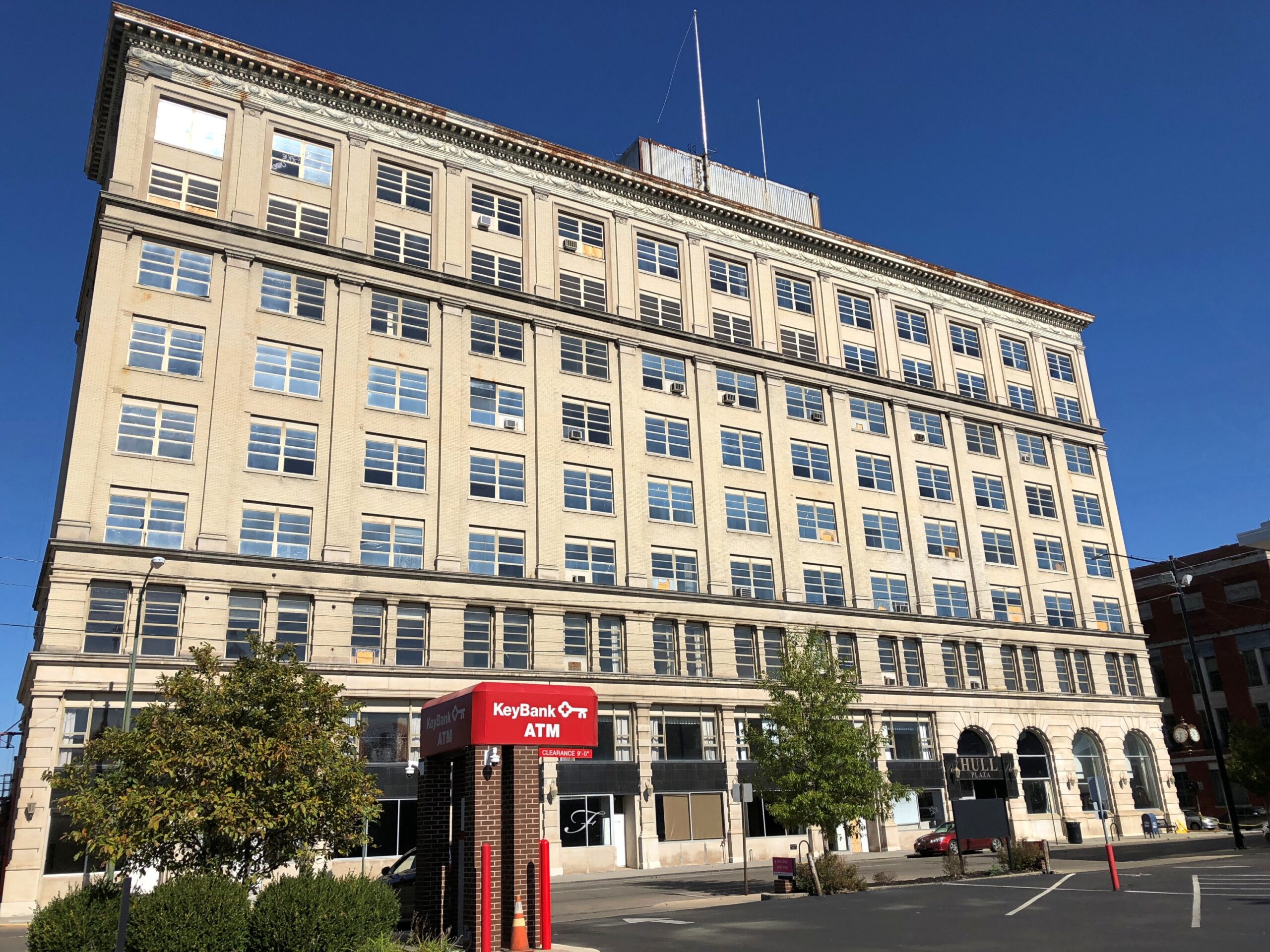
Downtown Springfield was practically devoid of pedestrians that Sunday, and not that many cars drove through either. A few buildings rise high enough to suggest a more prosperous past, but look too closely and some of them seem to be as empty as the streets, or at least underutilized.
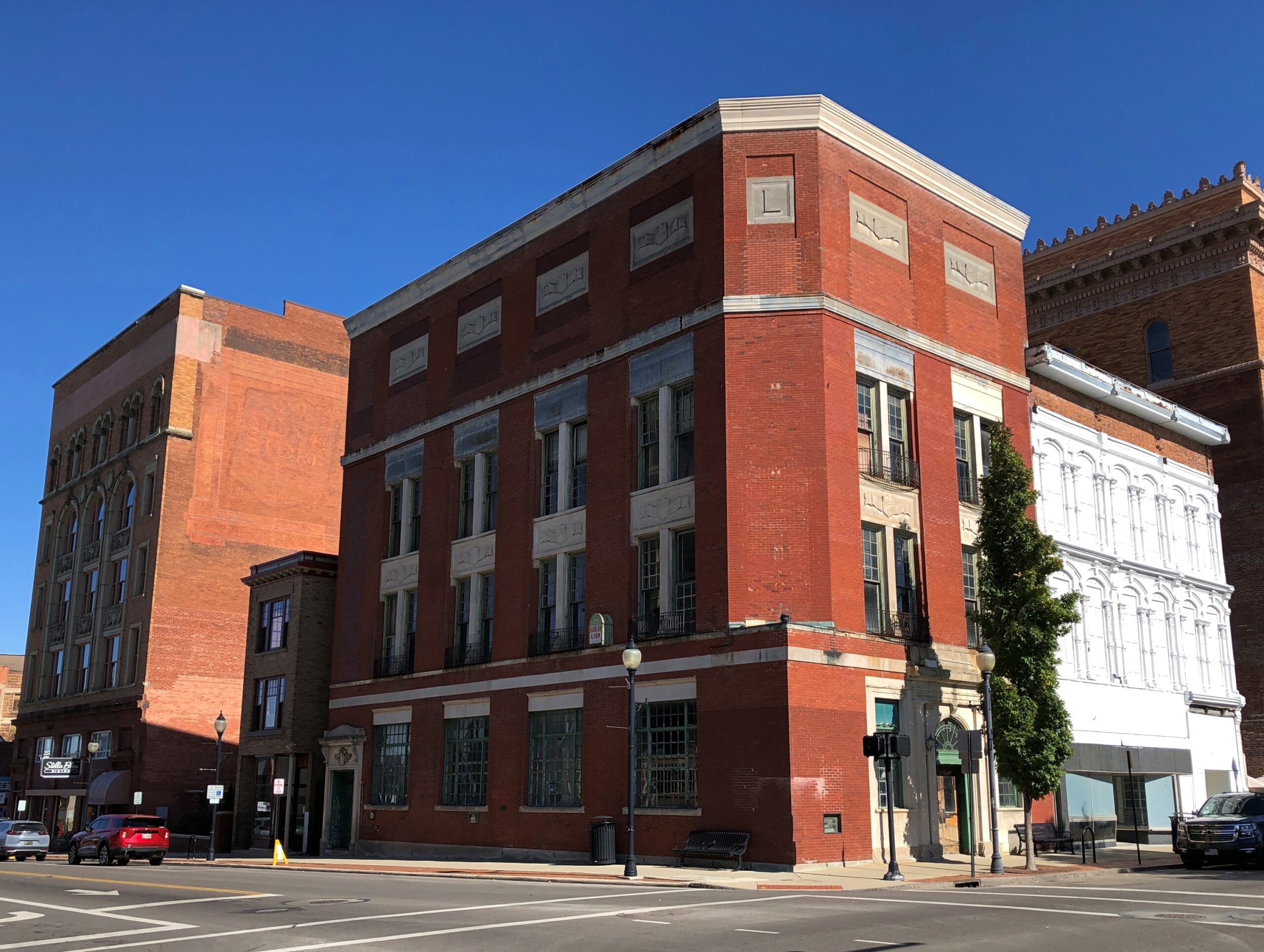
Springfield, Ohio
Springfield, Ohio
Springfield, Ohio

The National Road went, and still goes through Springfield, in the form of US 40. A milestone in Springfield marks the point at which the federal government quit paying for further westward expansion of the road. Anything else would be on the states, namely Ohio, Indiana and Illinois.
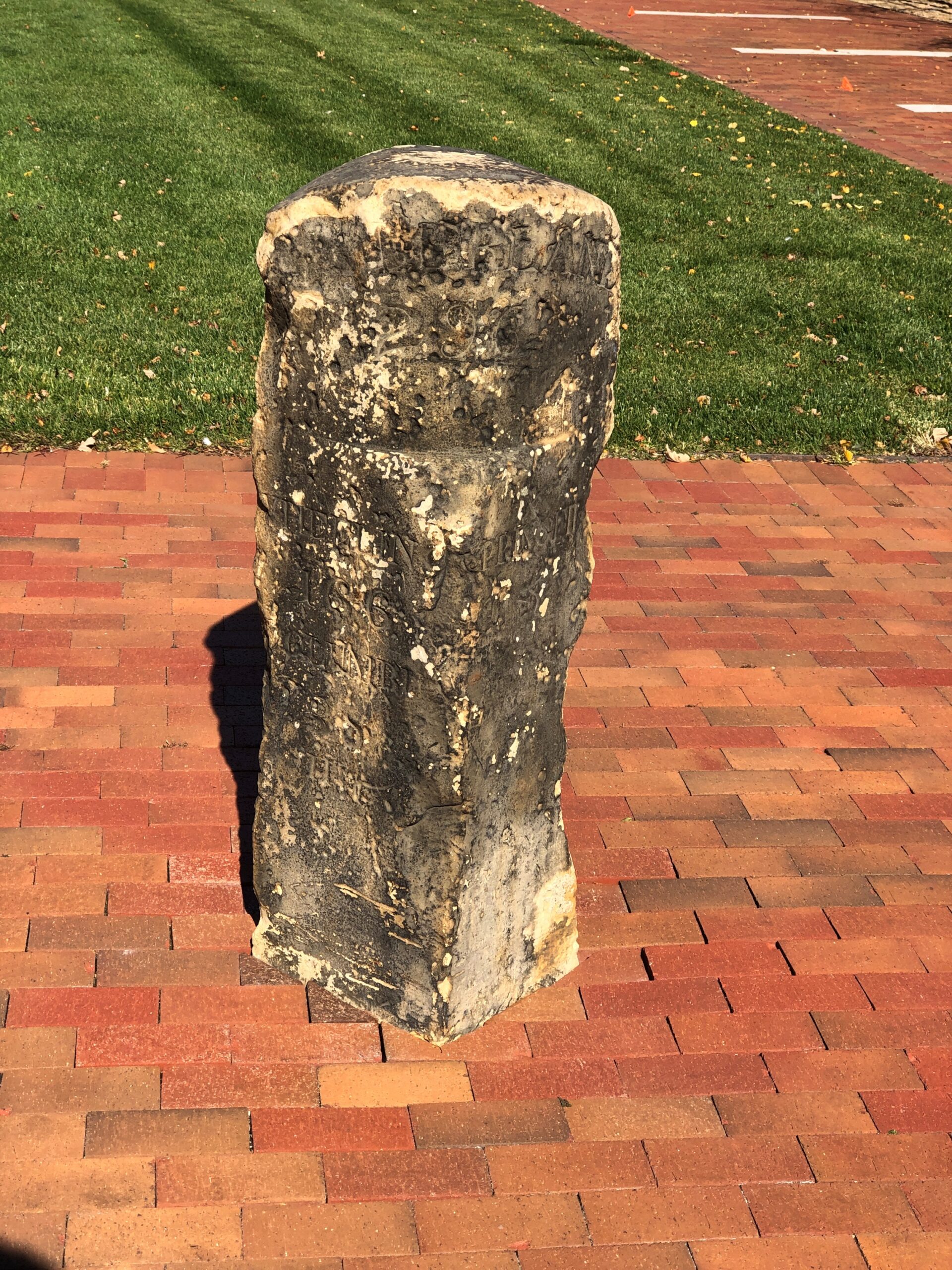
National Road Milestone, Springfield Ohio

Later, after the National Road had become History, the Daughters of the American Revolution erected a series of statues along the route, and others to the west: “Madonna of the Trail.”
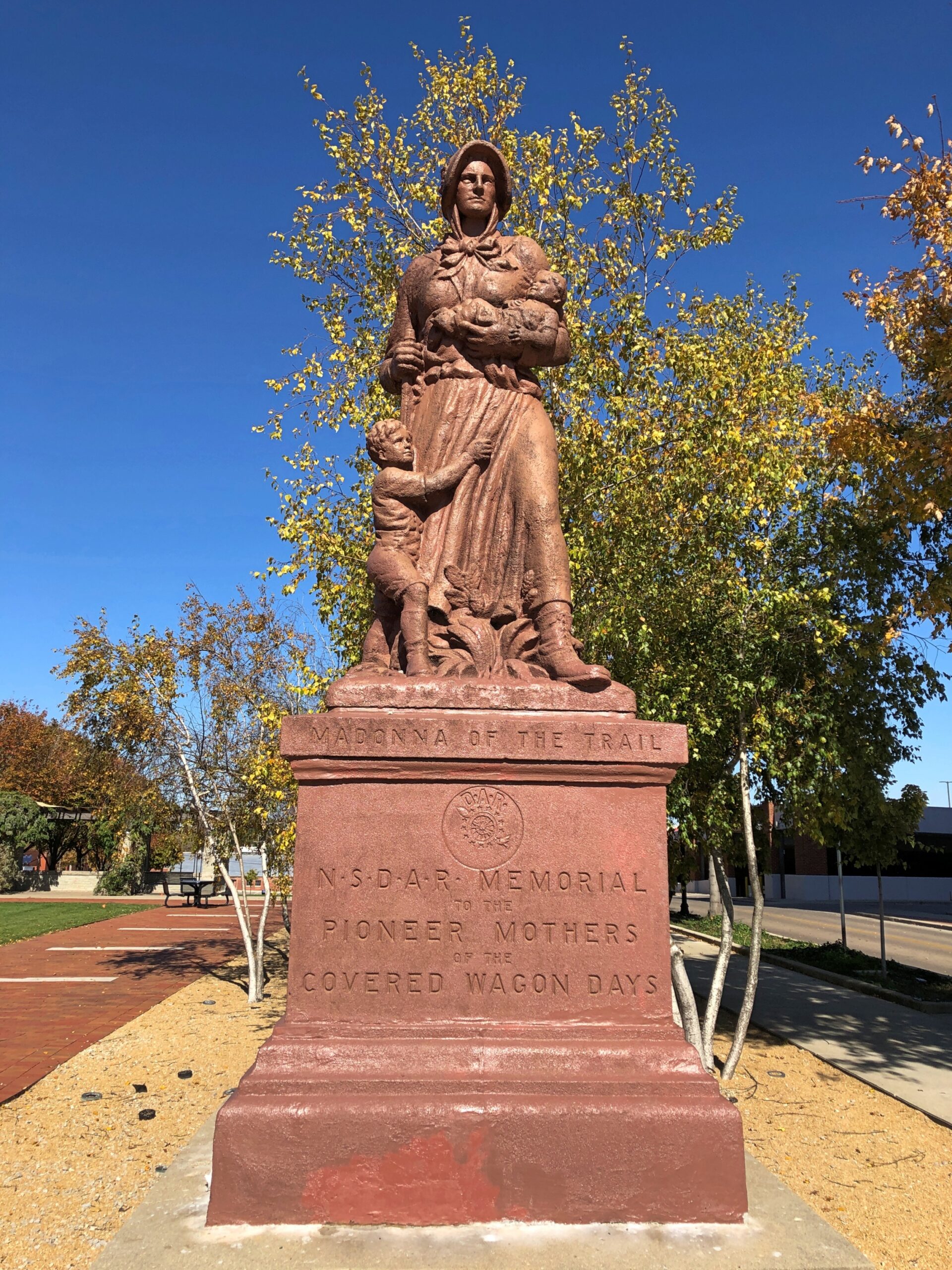
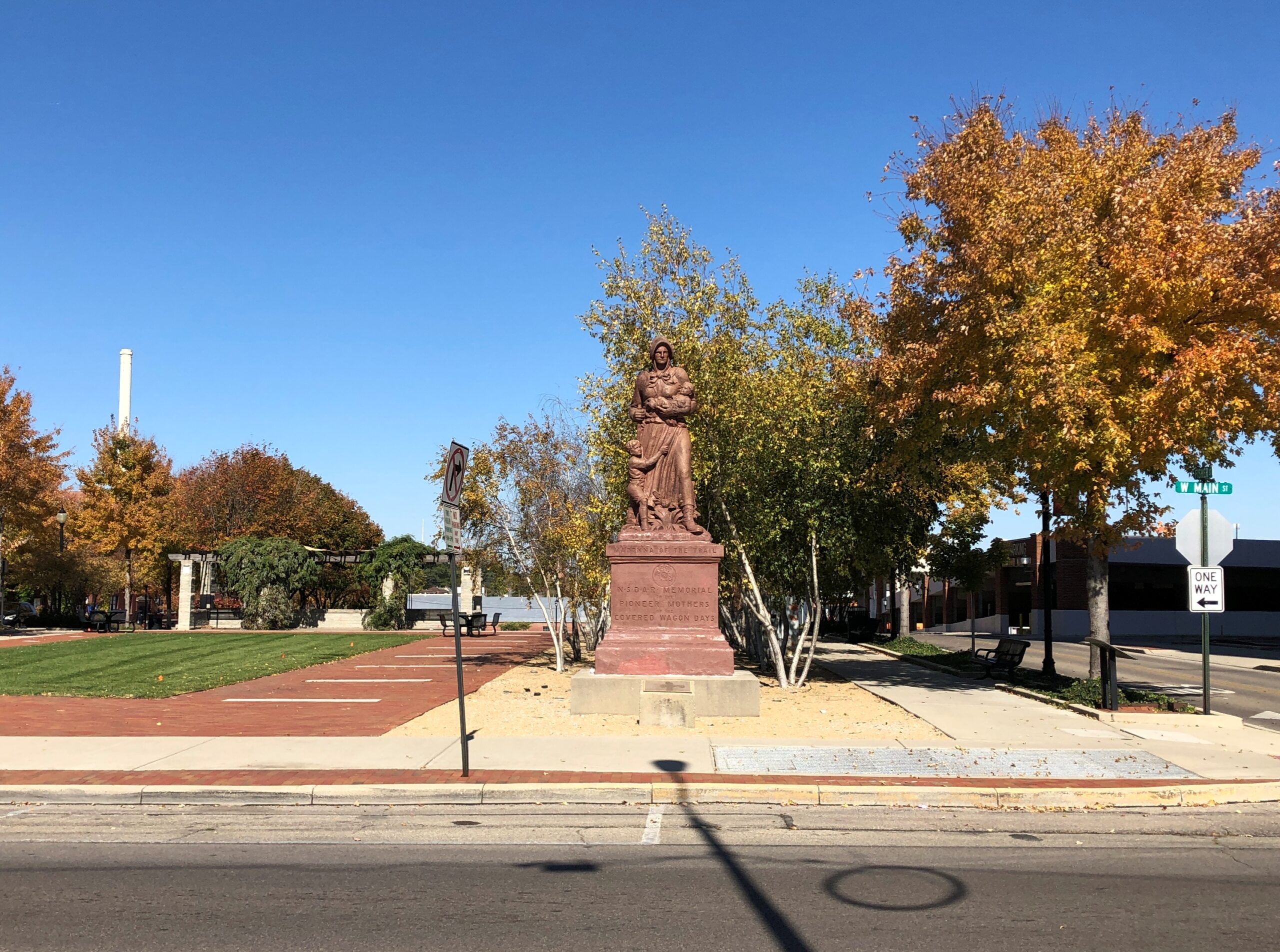
National Road Madonna of the Trail, Springfield Ohio

There are 12, with the easternmost of them along the National Road. Erected in the late 1920s, the Springfield one was renovated about 20 years ago.

Nearby, passersby are urged to Dream Big.
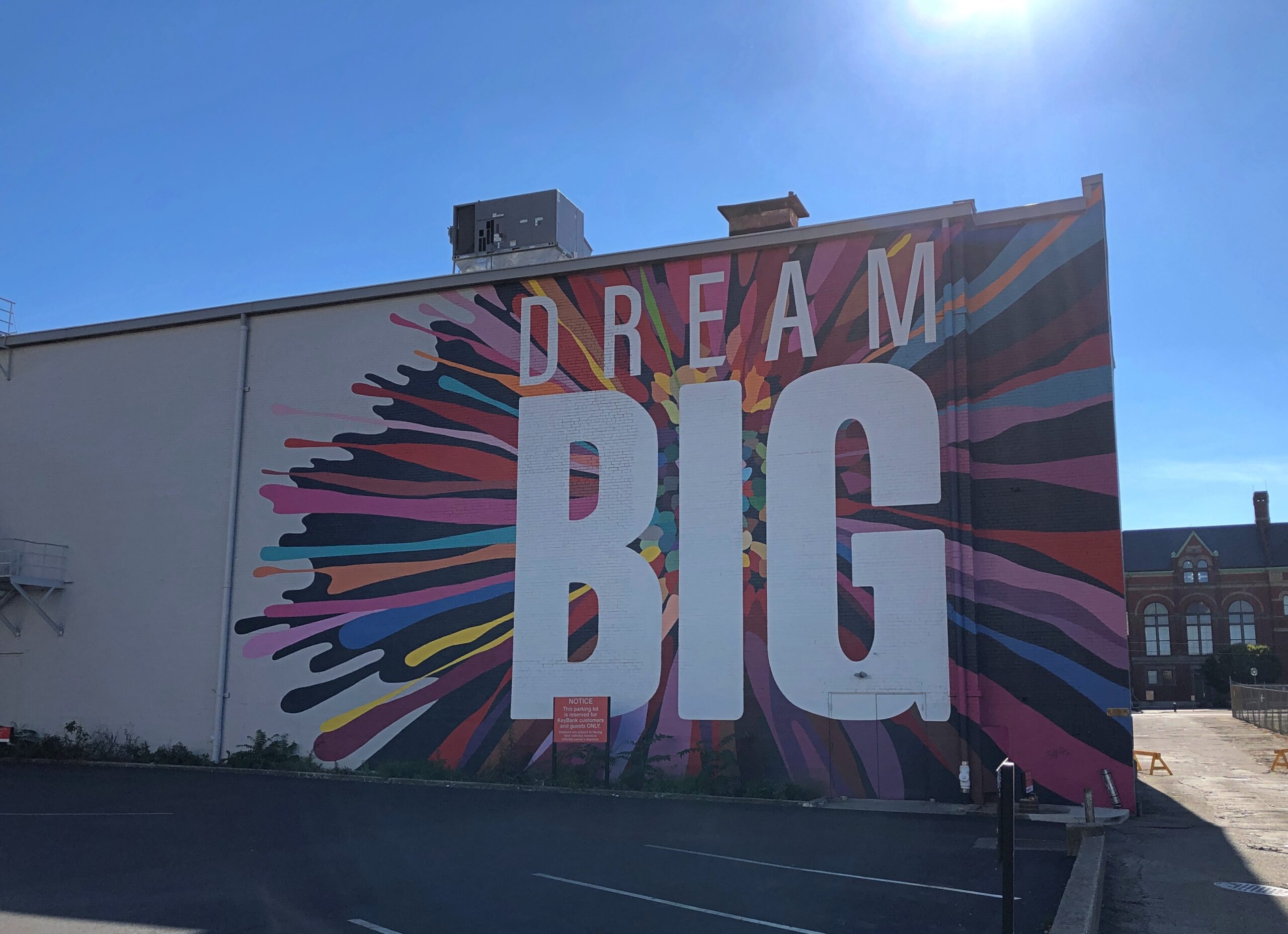
Springfield Ohio

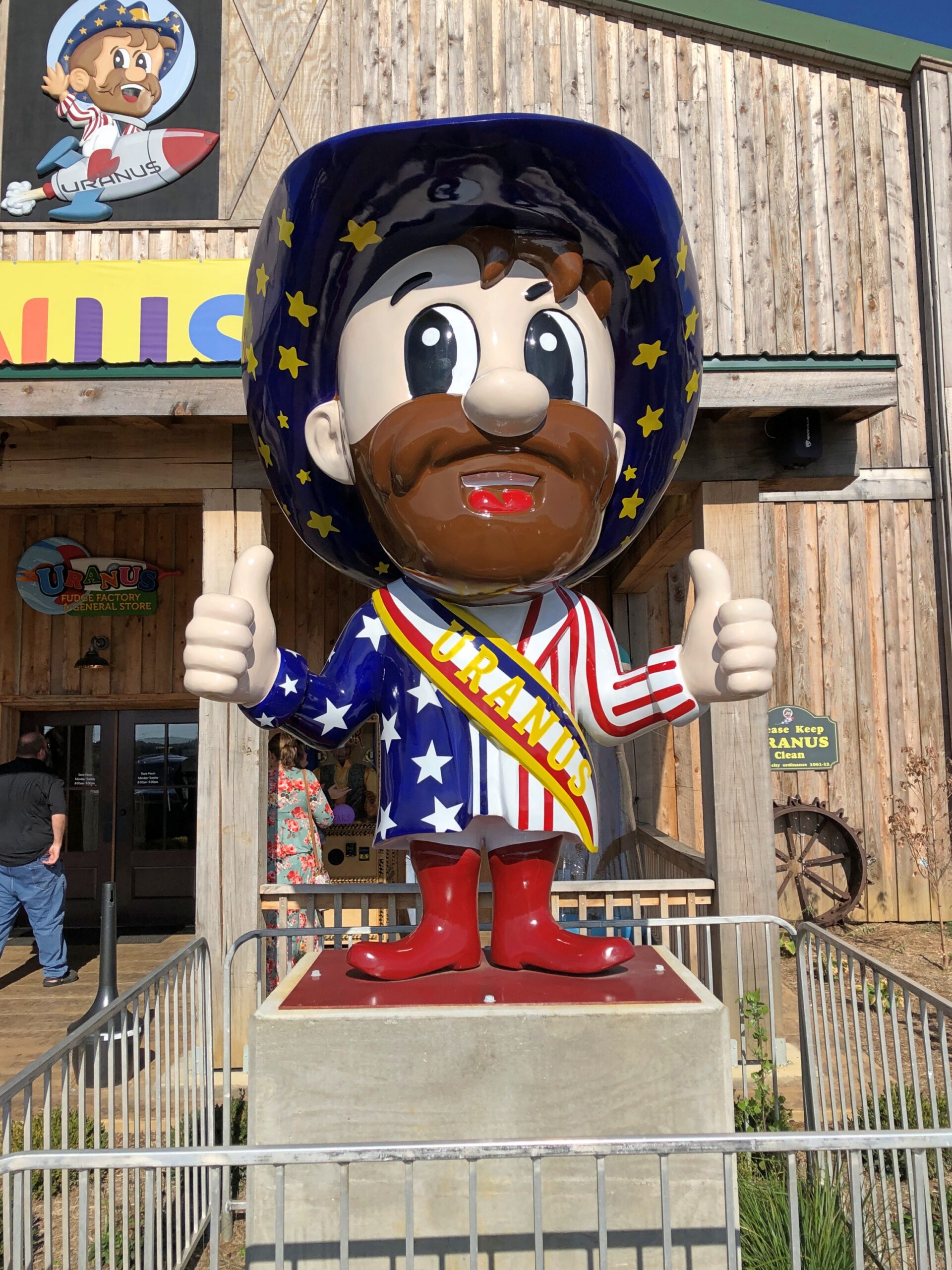
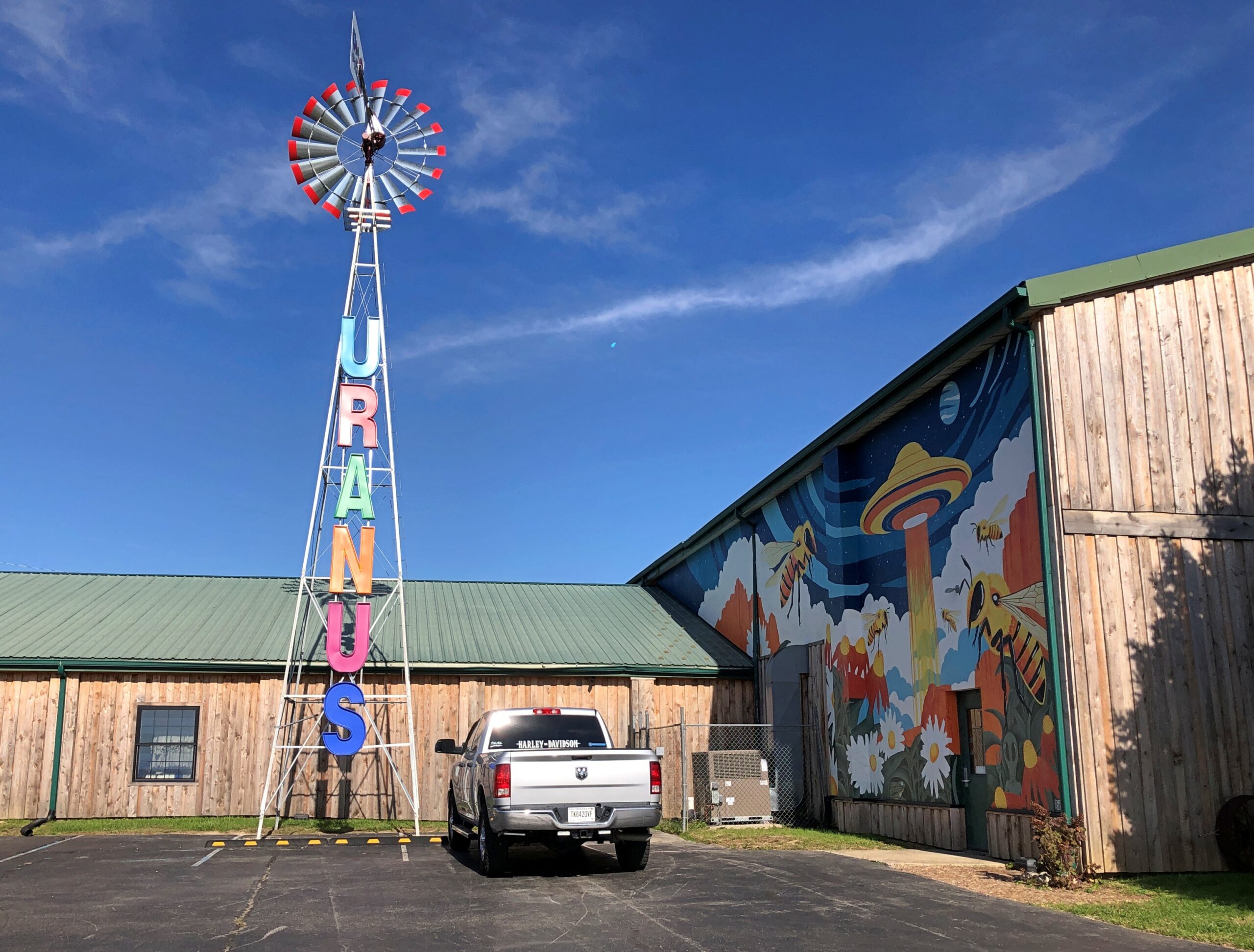
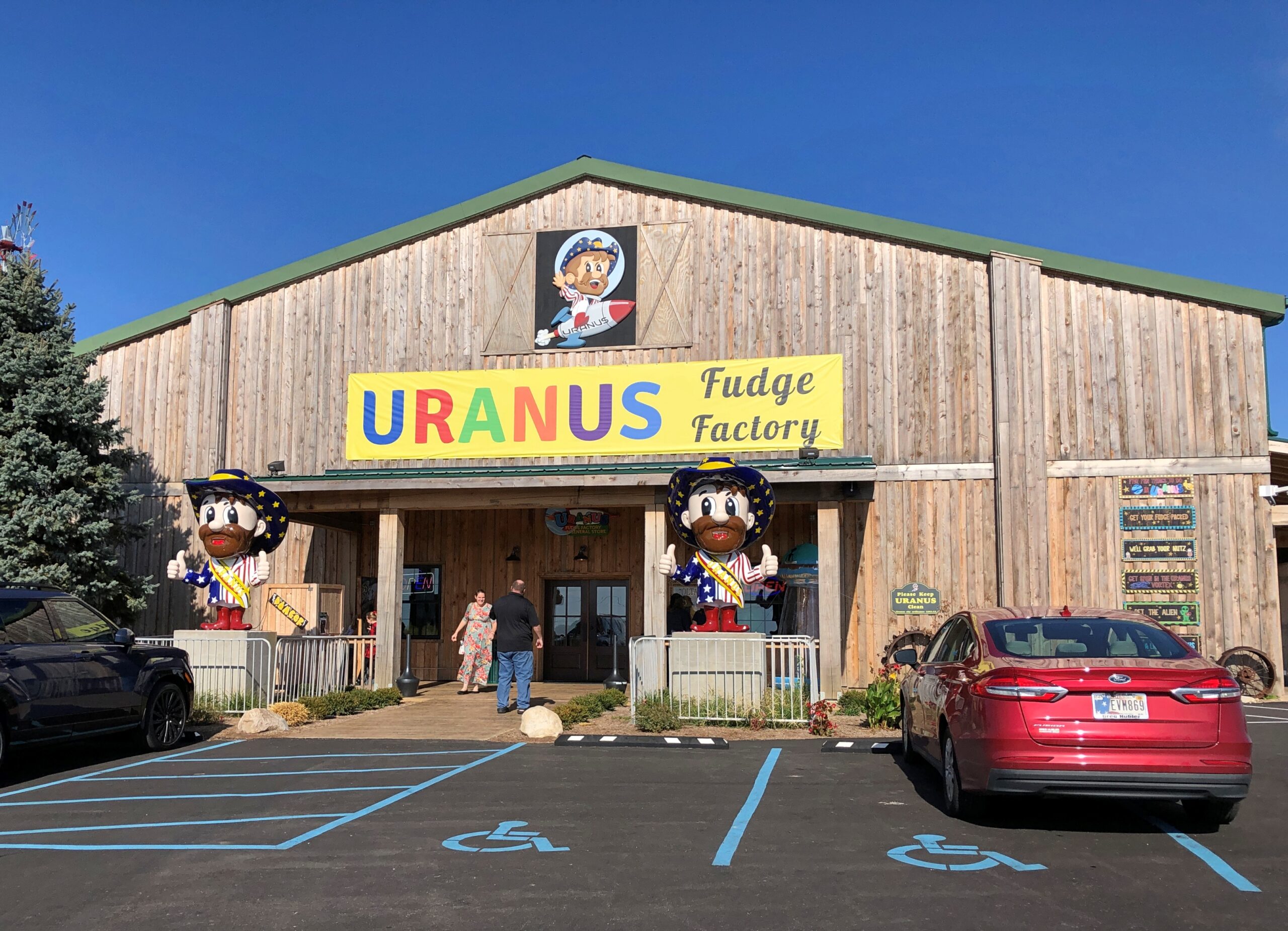
About an hour west of Springfield, at the border of Ohio and Indiana on I-70 – just barely inside Indiana – is the Uranus Fudge Factory. I had to stop for that.
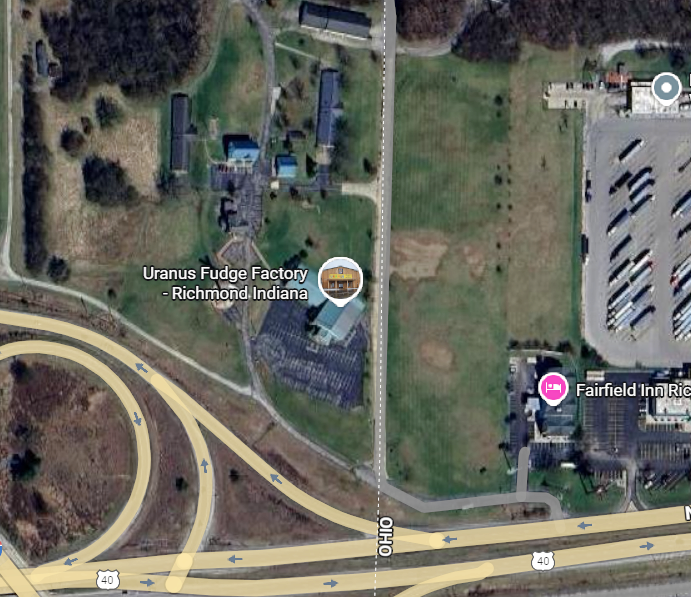
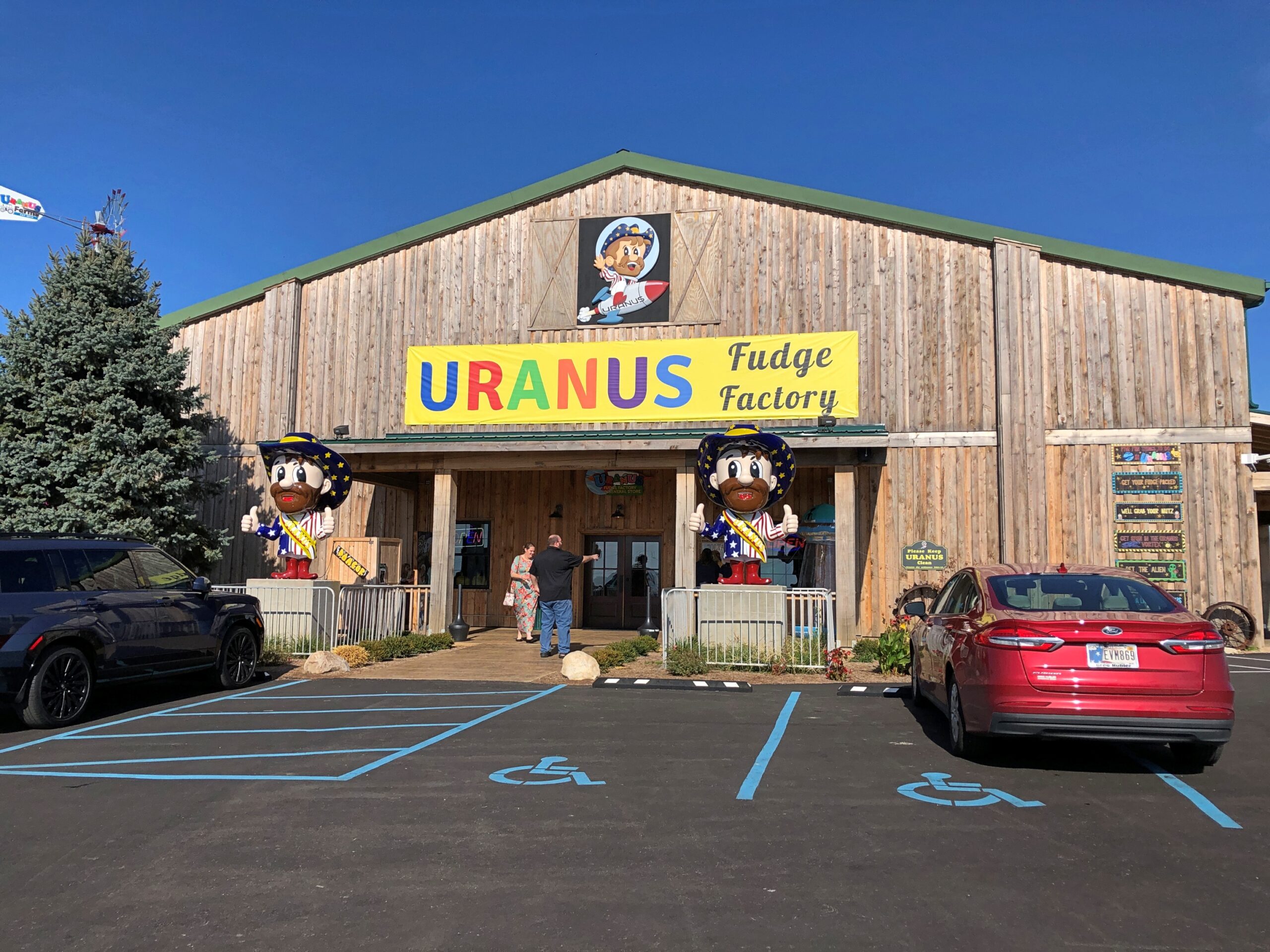
Uranus Fudge
Uranus Fudge
Uranus Fudge

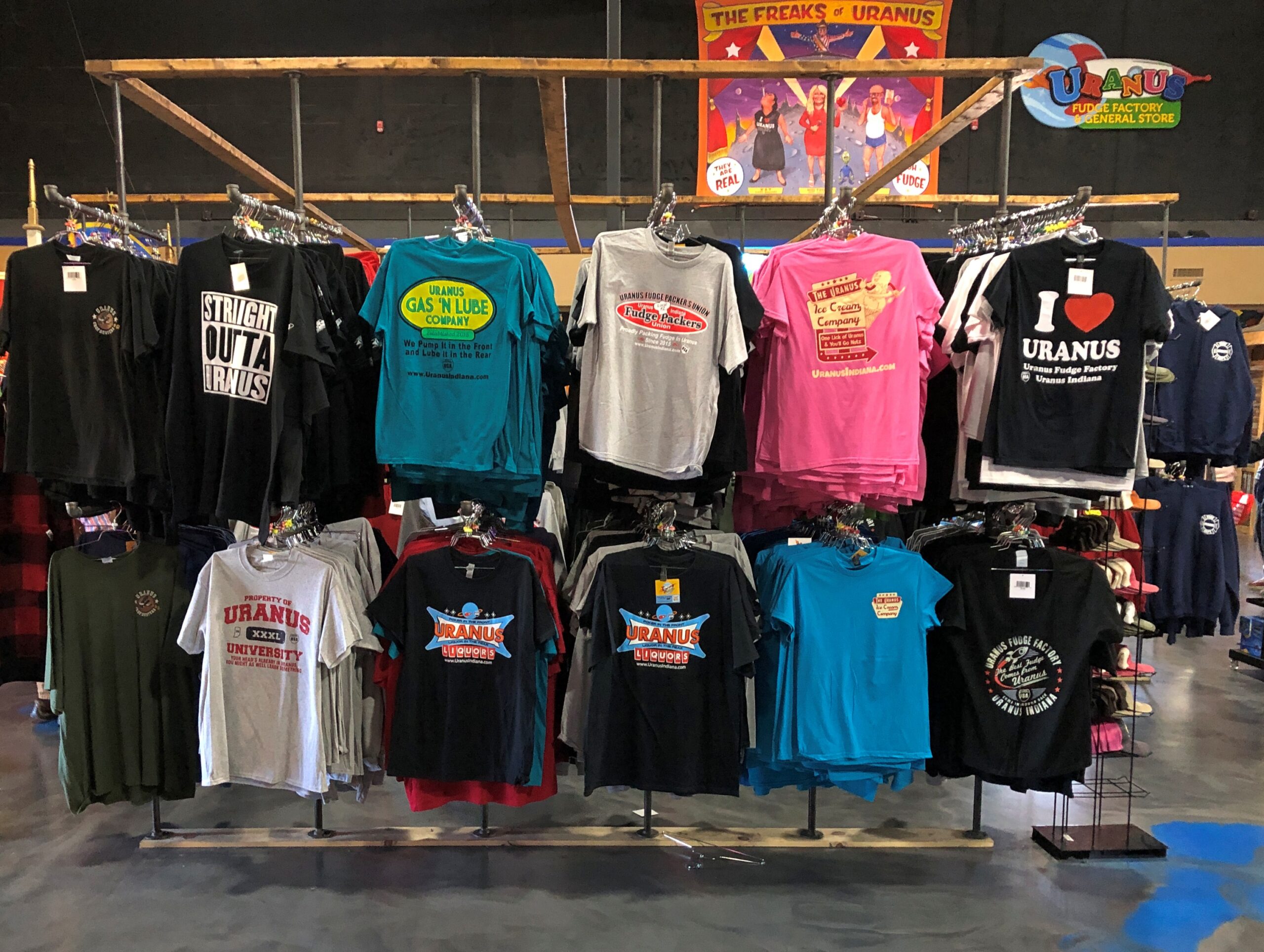
Sure, there’s fudge in there somewhere, but also a lot of gags involving the word Uranus (Your-anus). Examples can be found in the newspaper — an honest-to-God paper newspaper — that the store produces, The Uranus Examiner, and gives away. I have a copy. My kind of souvenir.

Sample front-page headlines from the Summer 2025 edition:

Breaking News: You Can Explore Uranus In Three Locations

Eating Their Way Through Uranus

Get A Lick Of Uranus

Sink Your Balls In Our Putt Holes

The second of those stories was about the 2nd Annual Eating Uranus Fudge Galactic Championship held at the Anderson, Indiana location in March. Apparently it was a Major League Eating-sanctioned event, and apparently MLE is a real thing. One Patrick Bertoletti won the 2nd championship at Uranus, putting away a bit more than nine pounds of fudge in about as many minutes.

Fudge is one thing, but mostly Uranus sells stuff. A lot of stuff.
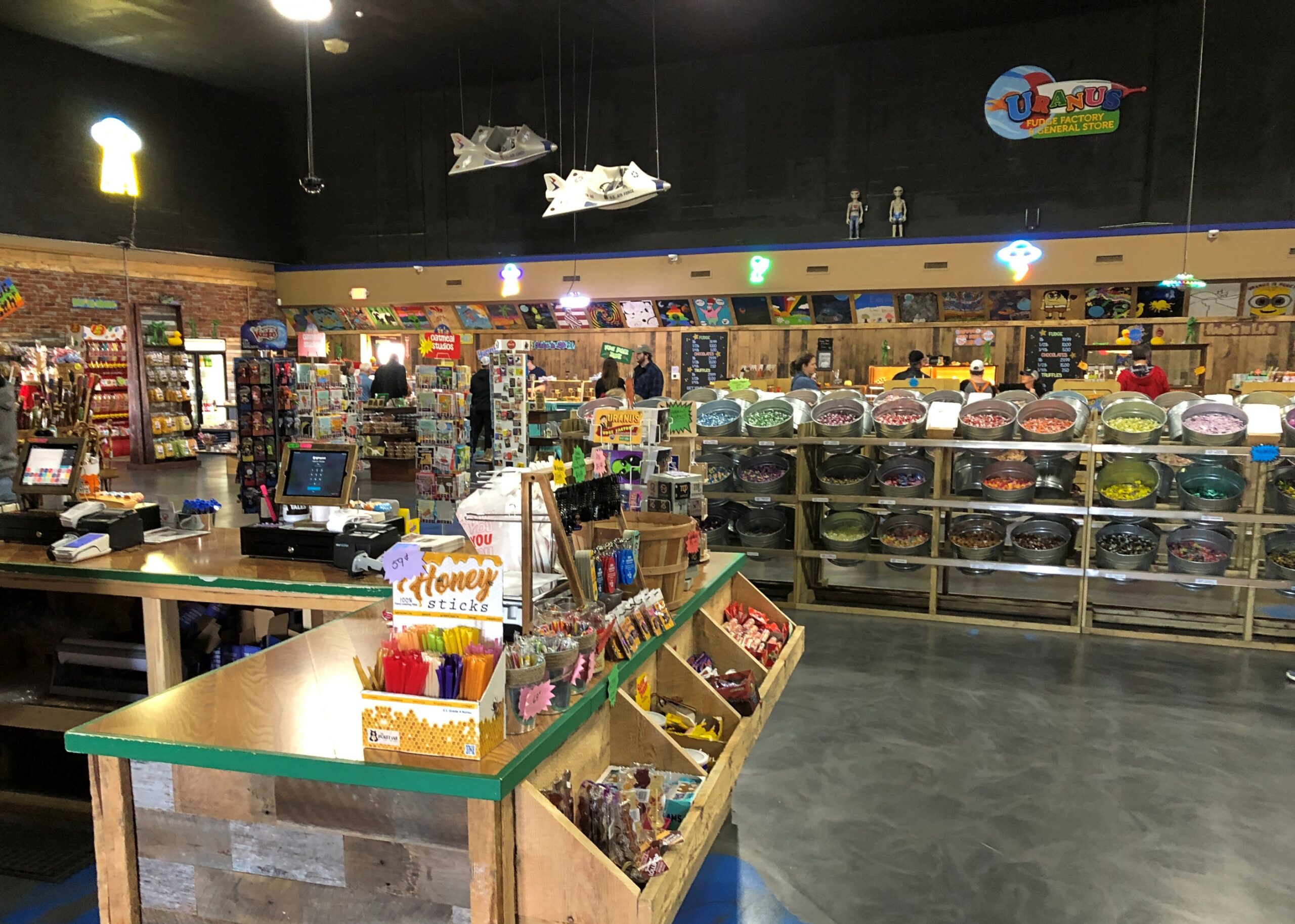
Uranus
Uranus Fudge

The Richmond, Indiana location is the third of three for Uranus, and I think the only one with dinosaurs —
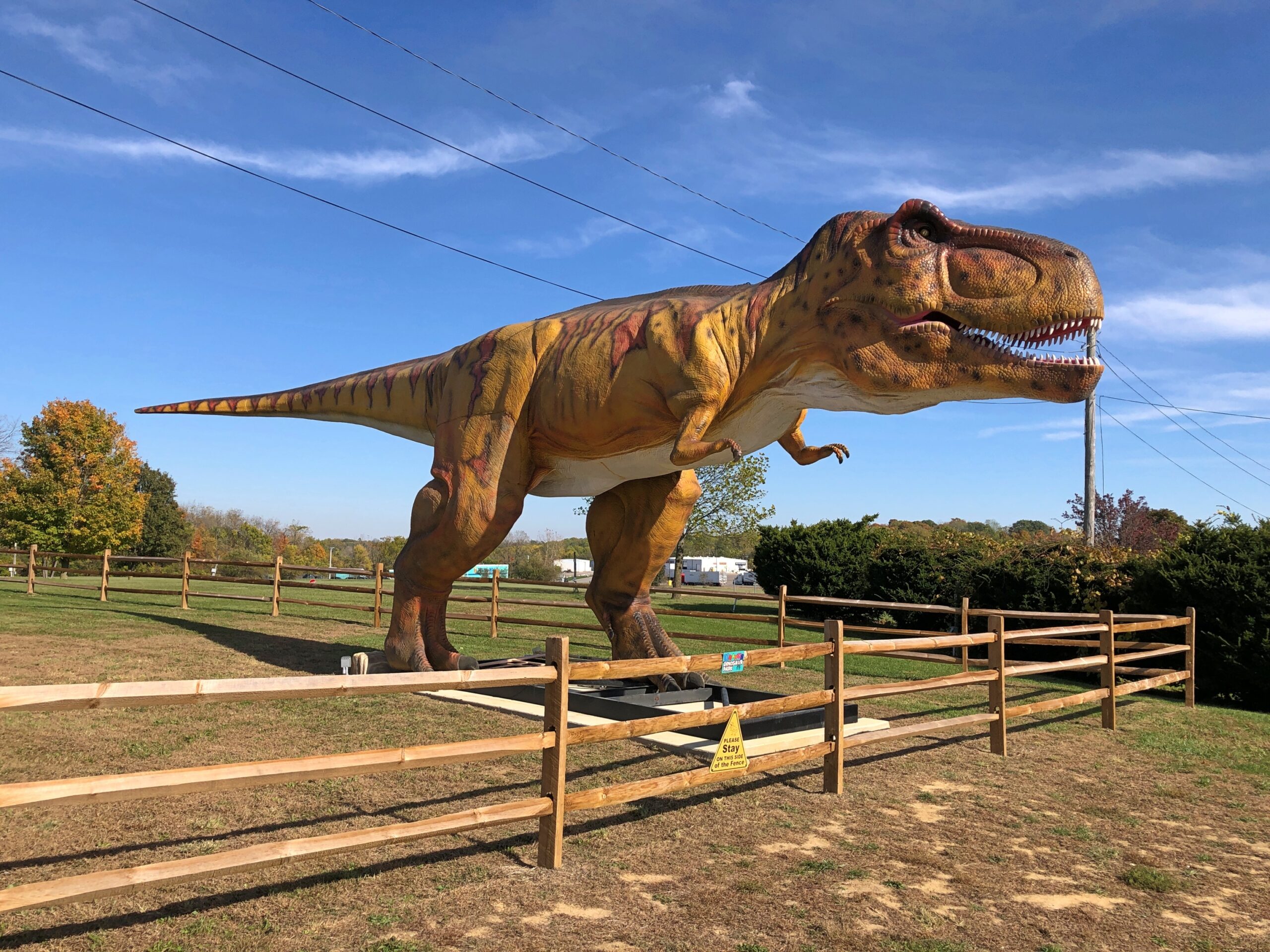
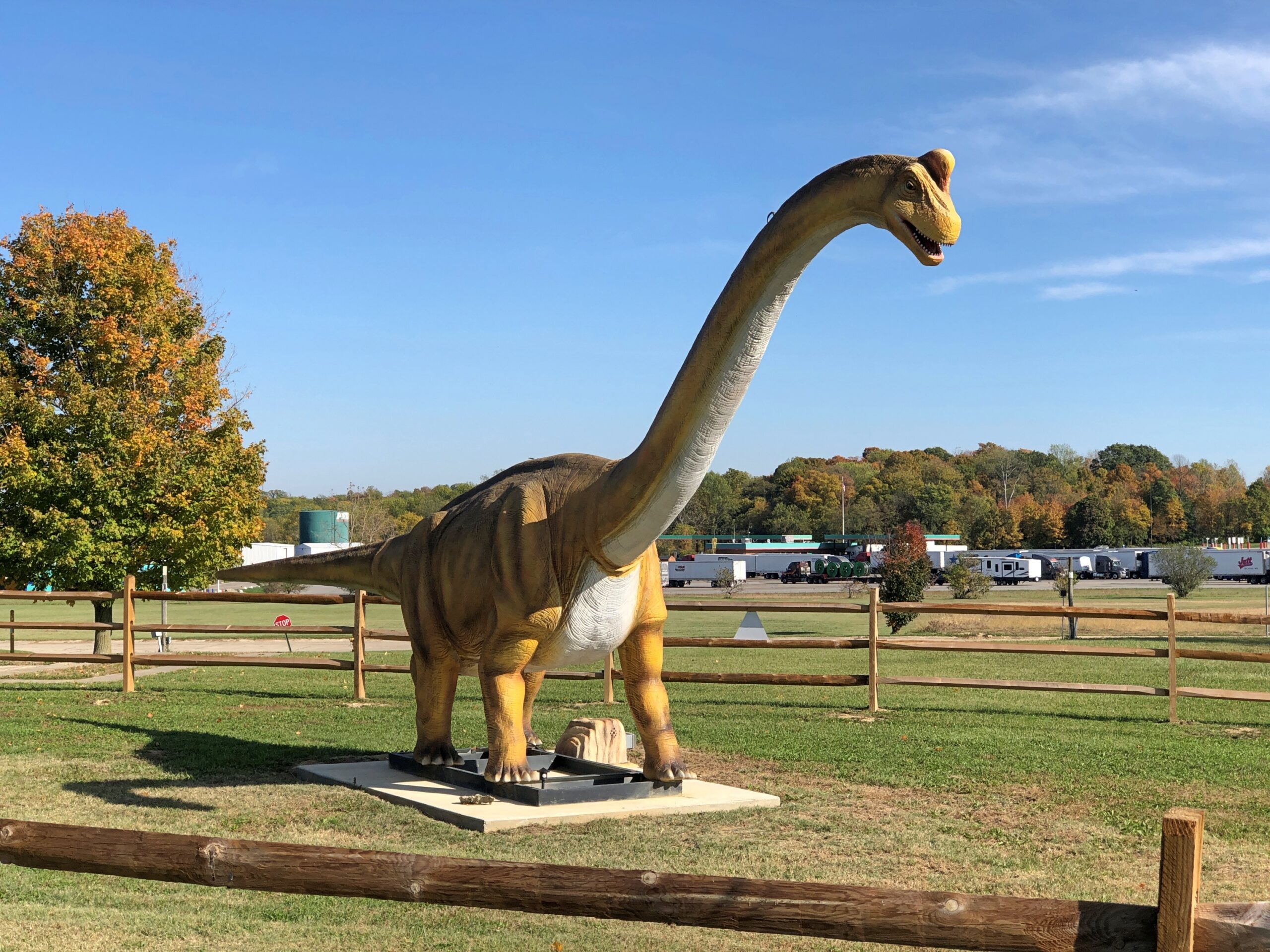
Uranus Fudge
Uranus Fudge

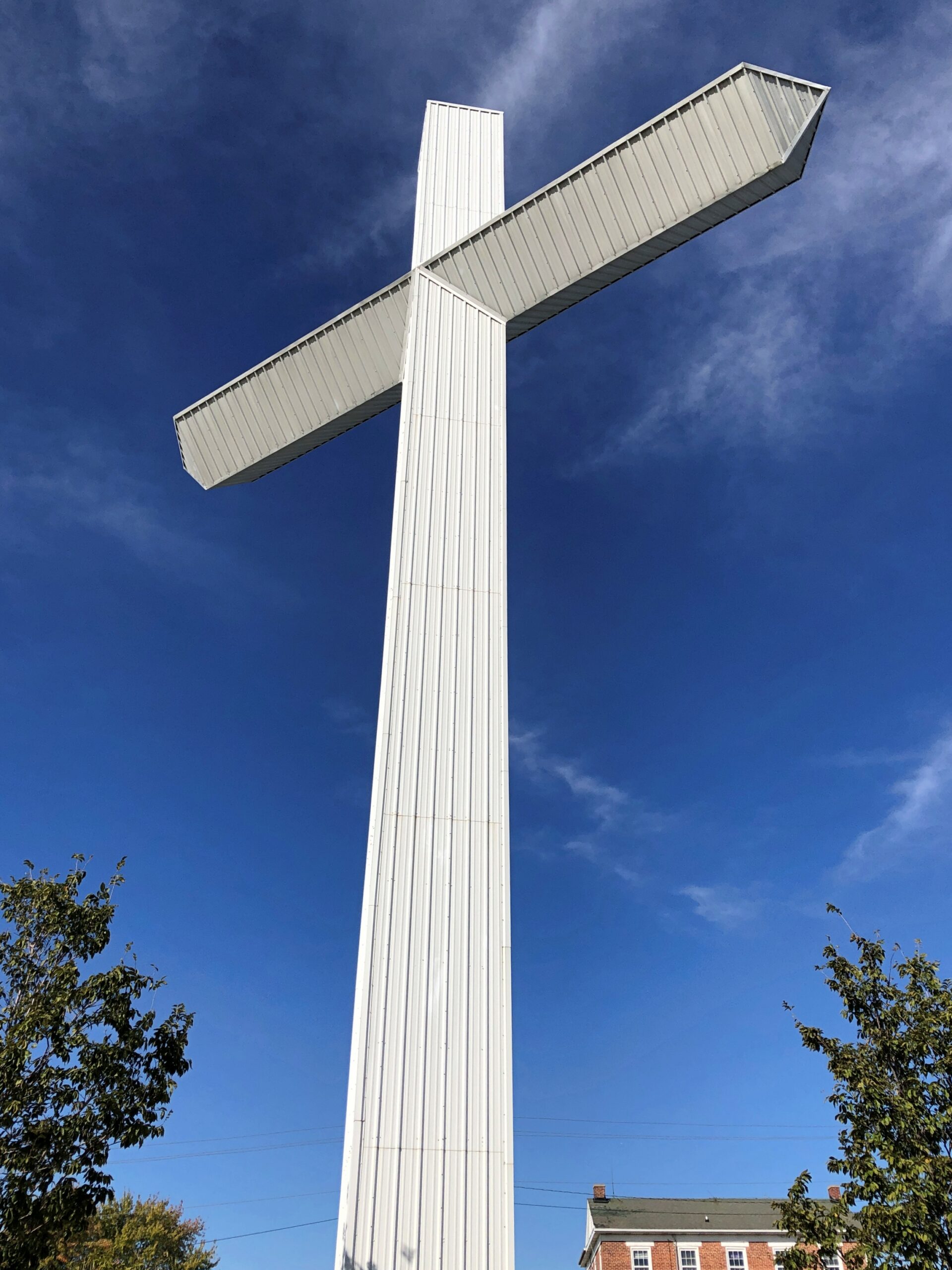
— and a 100-foot cross of corrugated steel over a metal frame.
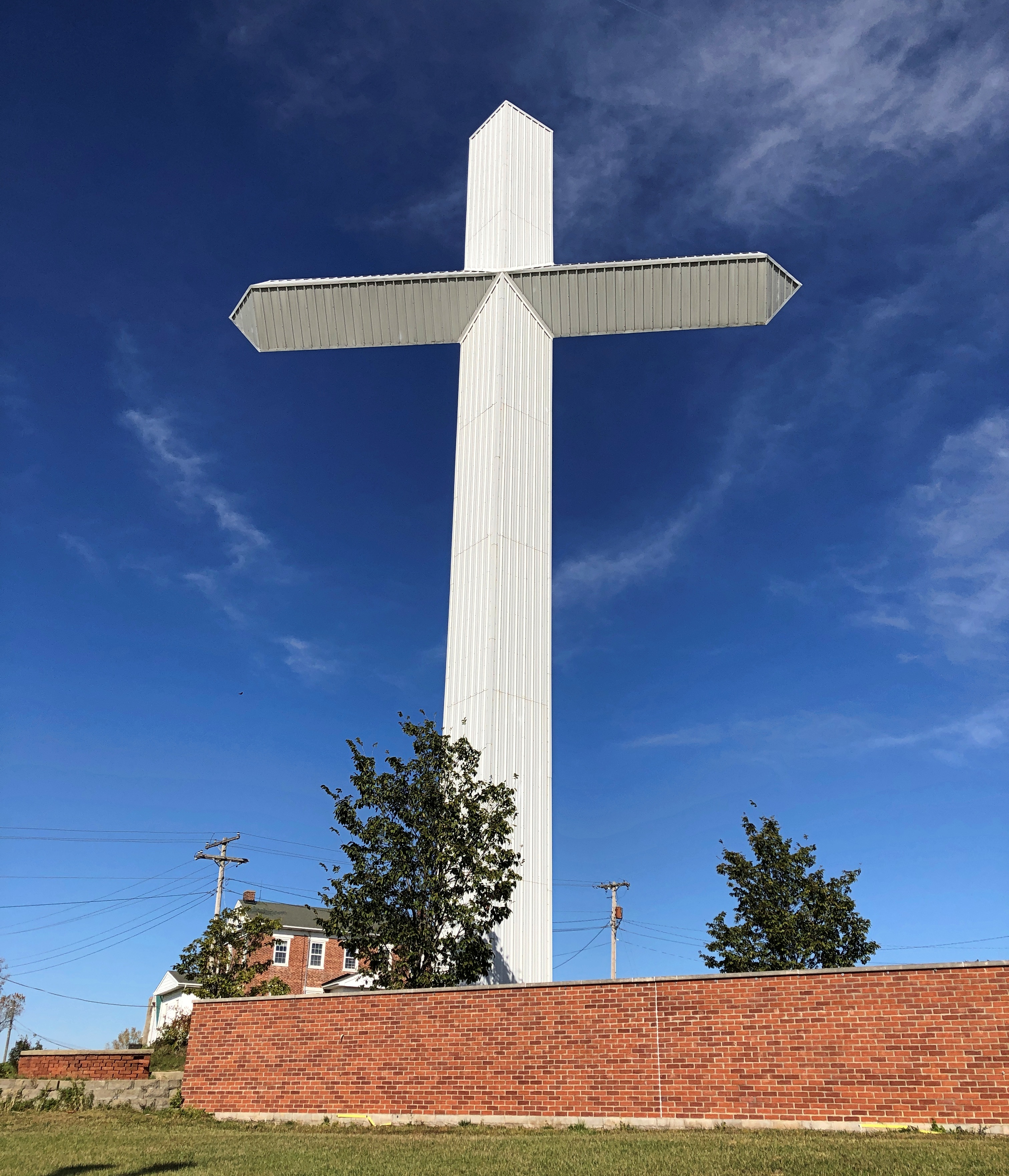
Uranus Fudge
Uranus Fudge

Until about 10 years ago, the property belonged to New Creations Chapel, which also included a church building, boarding school for troubled teens and a Bible college. The ministry, for reasons its web site explains in some detail, sold the property to Uranus, including the cross.

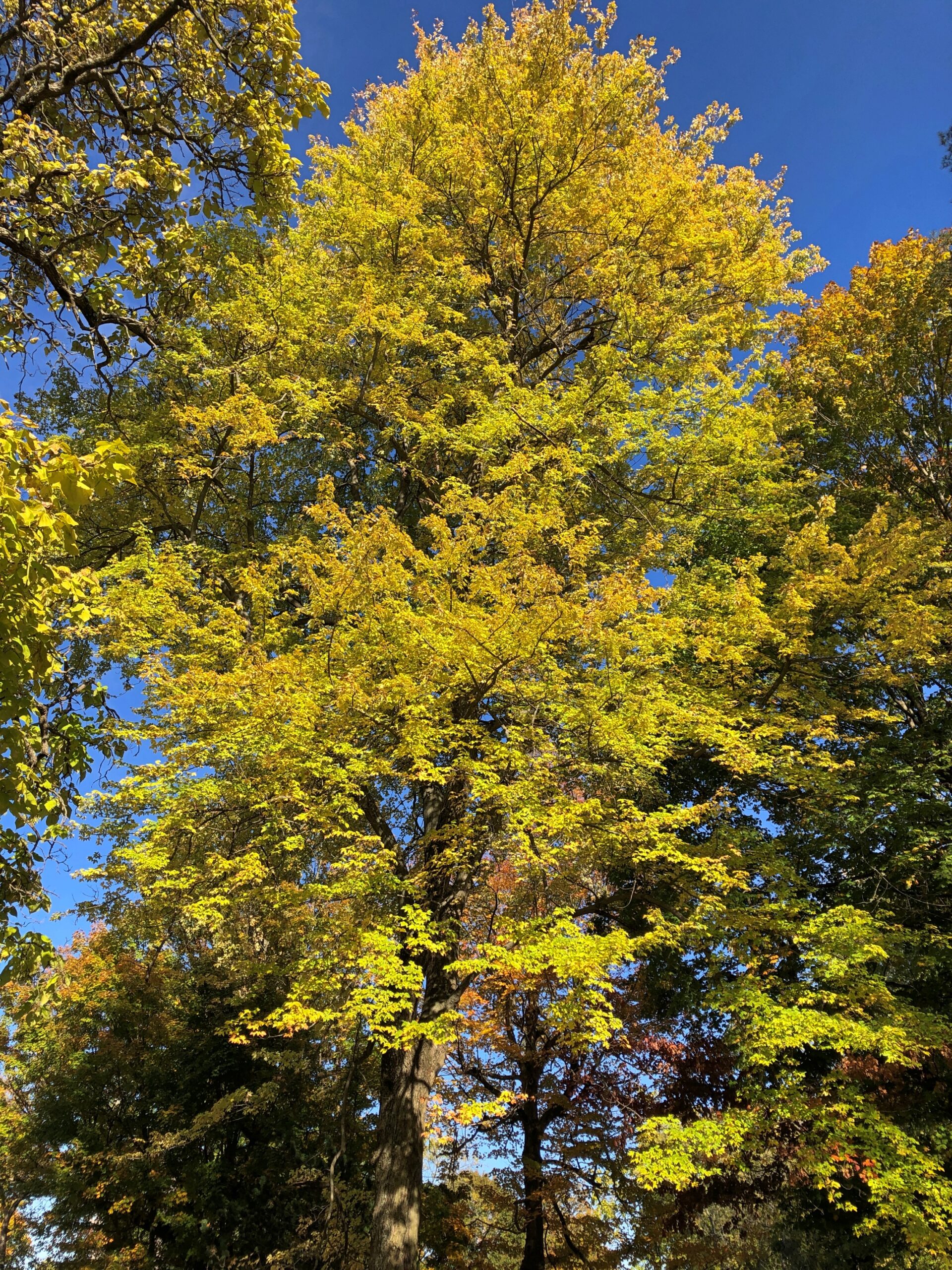
Heading through Richmond, Indiana, I stopped at an entrance to a large park to check my map. Glen Miller Park. A colorful spot in October.
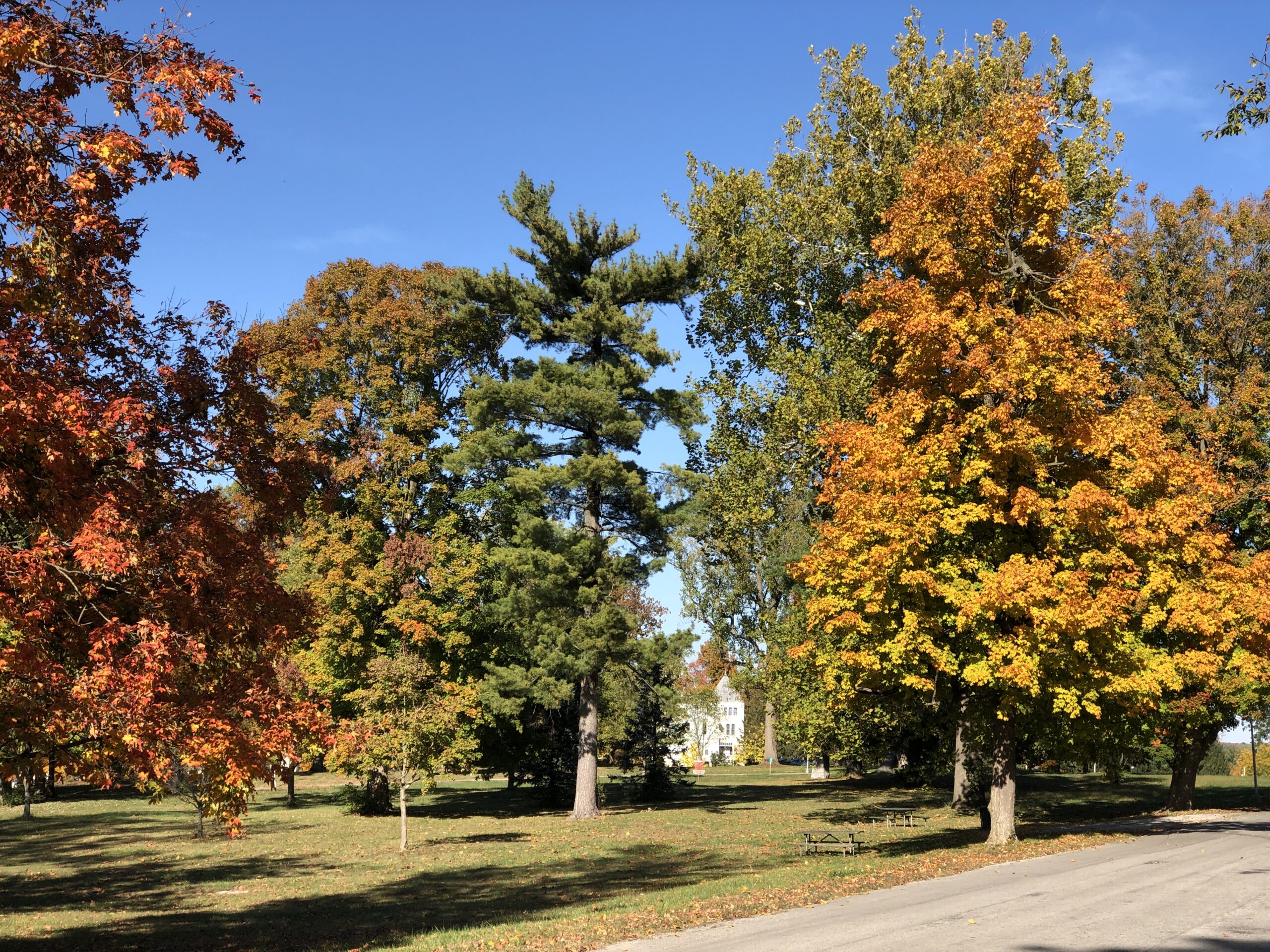
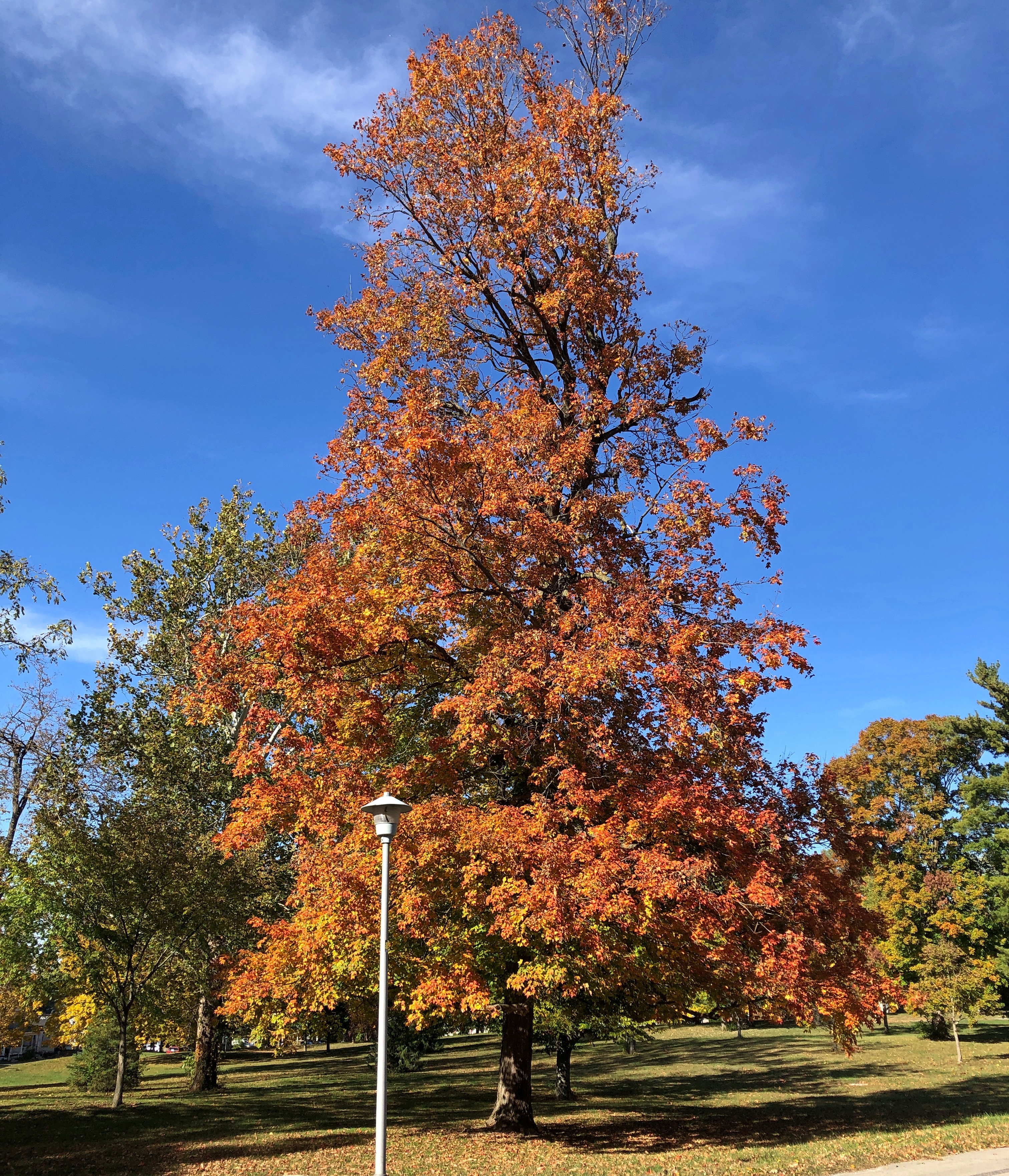
Glen Miller Park, Richmond, Indiana

Not named after the bandleader, which would be Glenn Miller Park. “Glen Miller Park was established in 1885 and was named for Colonel John Ford Miller, who was a railroad executive during the late 1860s,” the city of Richmond says. “Colonel Miller bought the land from Nathaniel Hawkins in 1880, with the intention of transforming the land into a park.”

So Glen Miller as in glen, a term that evokes pleasant Scottish valleys. I was just about to be on my way when I noticed a statue.
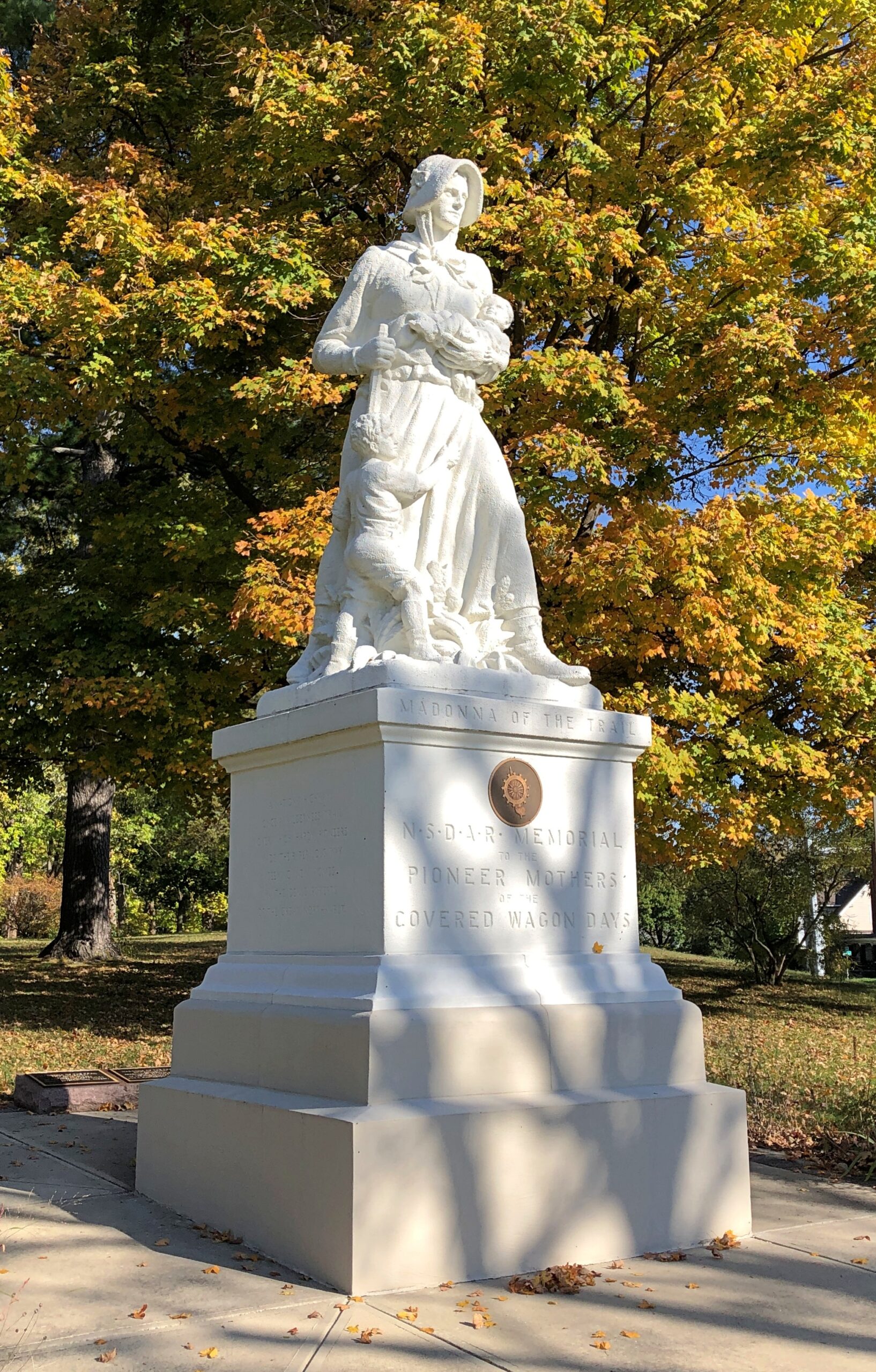
Glen Miller Park, Richmond, Indiana

It was another of the 12 Madonna of the Trail statues, located at the edge of the park, where it meets US 40. Unlike the earlier one in Springfield, I hadn’t sought it out. It was just there. One’s travels, like life, can be strange sometimes.
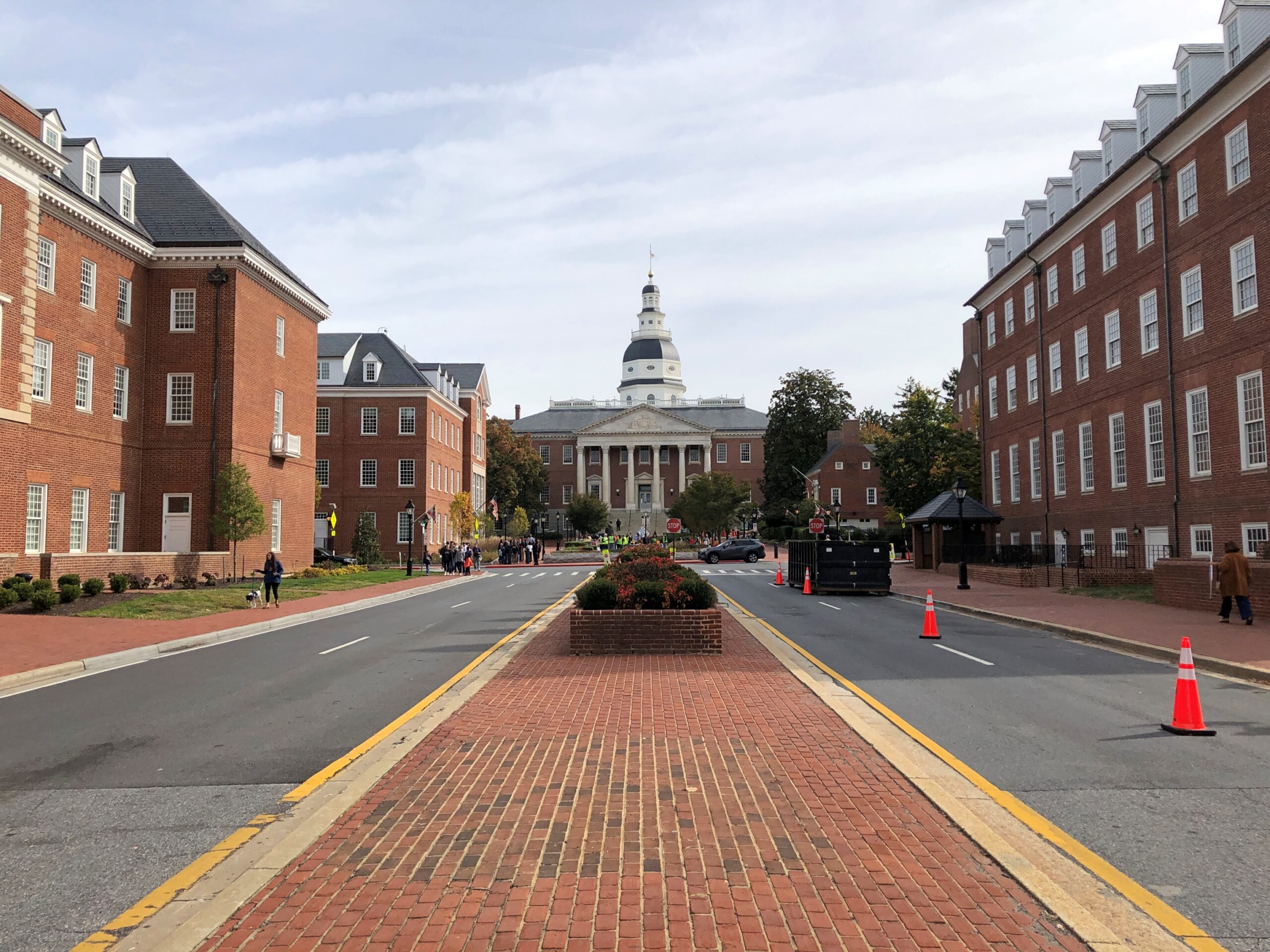
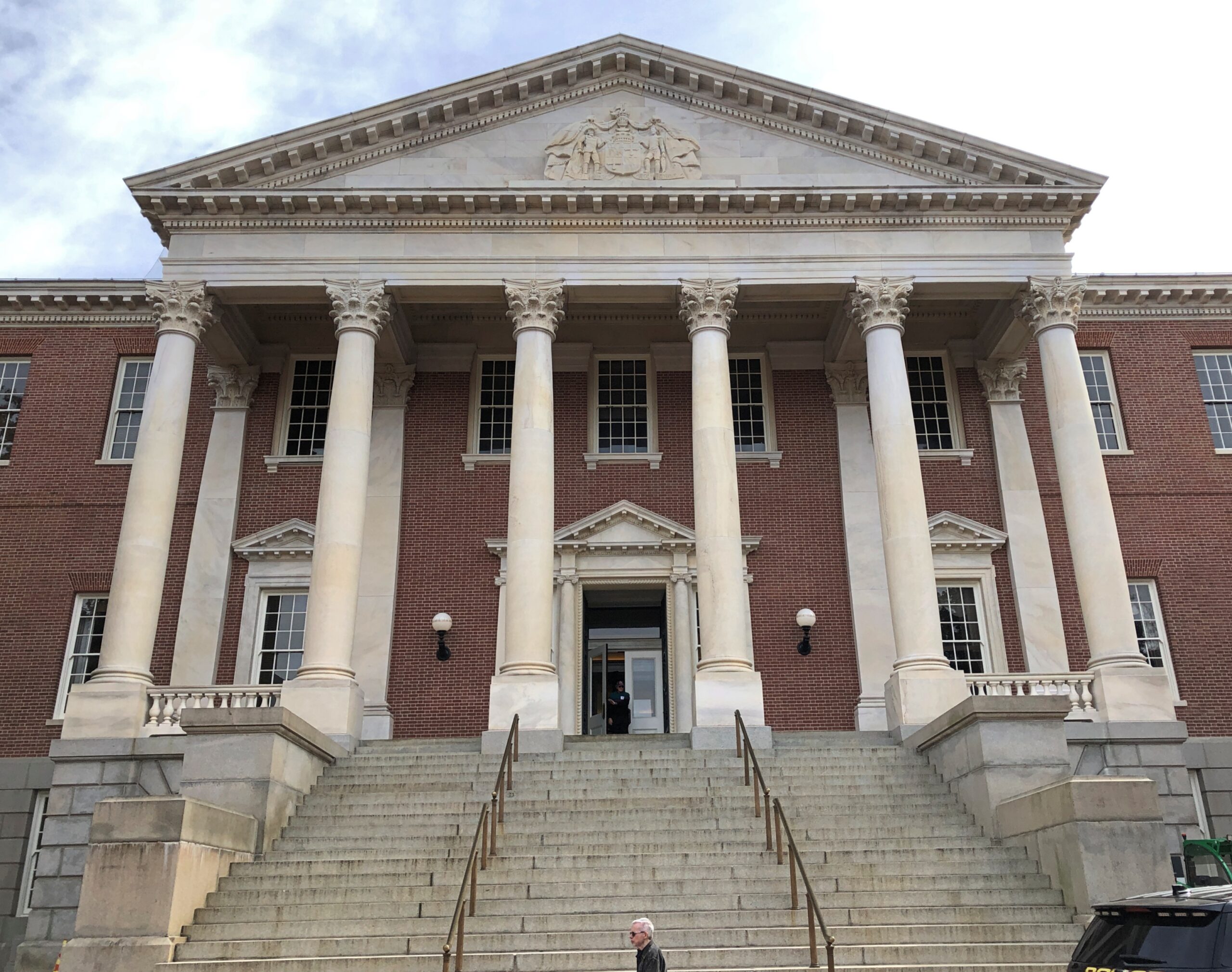
The Maryland State House

Yesterday I asked ChatGPT a question. I had my reasons.

Human (me)-generated question: How many U.S. state controllers or comptrollers have been honored with bronze statues?

Machine-generated answer (entirely sic): As of my knowledge cutoff in 2023, two U.S. state controllers or comptrollers have been honored with bronze statues:

William S. “Billy” McKeller (Tennessee) – McKeller was the Comptroller of the Treasury for Tennessee from 1923 to 1953. He was honored with a bronze statue that stands at the State Capitol in Nashville. The statue was unveiled in 1956, following his retirement.

Edward J. “Eddie” O’Neill (Massachusetts) – O’Neill was a longtime Comptroller for the Commonwealth of Massachusetts. He was known for his tenure and service, and a bronze statue of him was placed at the Massachusetts State House.

Both statues honor the legacy of these public servants for their dedication and leadership in state finance and governance.

However, it’s worth noting that statues of public officials in general tend to be more common for governors, senators, or prominent historical figures, so the specific recognition of state comptrollers or controllers through bronze statues is quite rare. There may have been updates or new statues since my last update, so I recommend checking local state records or news sources for the most current information.

Wow, that’s a solid example of an AI hallucination. There may have been human beings named William S. McKeller and Edward J. O’Neill living at some point in Tennessee and Massachusetts, respectively, but neither of them held that office. See the Tennessee Blue Book for a list comptrollers of the treasury in that state. As for Massachusetts, comptroller isn’t a constitutional office, so a list of them is a little elusive. (The commonwealth has an elected “treasurer and receiver-general.”)

Just as dispositive is a list produced by the commonwealth that lists the artwork at the Massachusetts State House. A bronze honoring Edward J. “Eddie” O’Neill isn’t one of them.

That said, the machine is probably correct that “specific recognition of state comptrollers or controllers through bronze statues is quite rare,” but, considering that the machine’s examples are bogus, that ranks as nothing but educated speculation that I didn’t need ChatGPT to create for me. I can guess that myself.

Just as damning, however, is that the machine missed a perfectly real example.

Annapolis

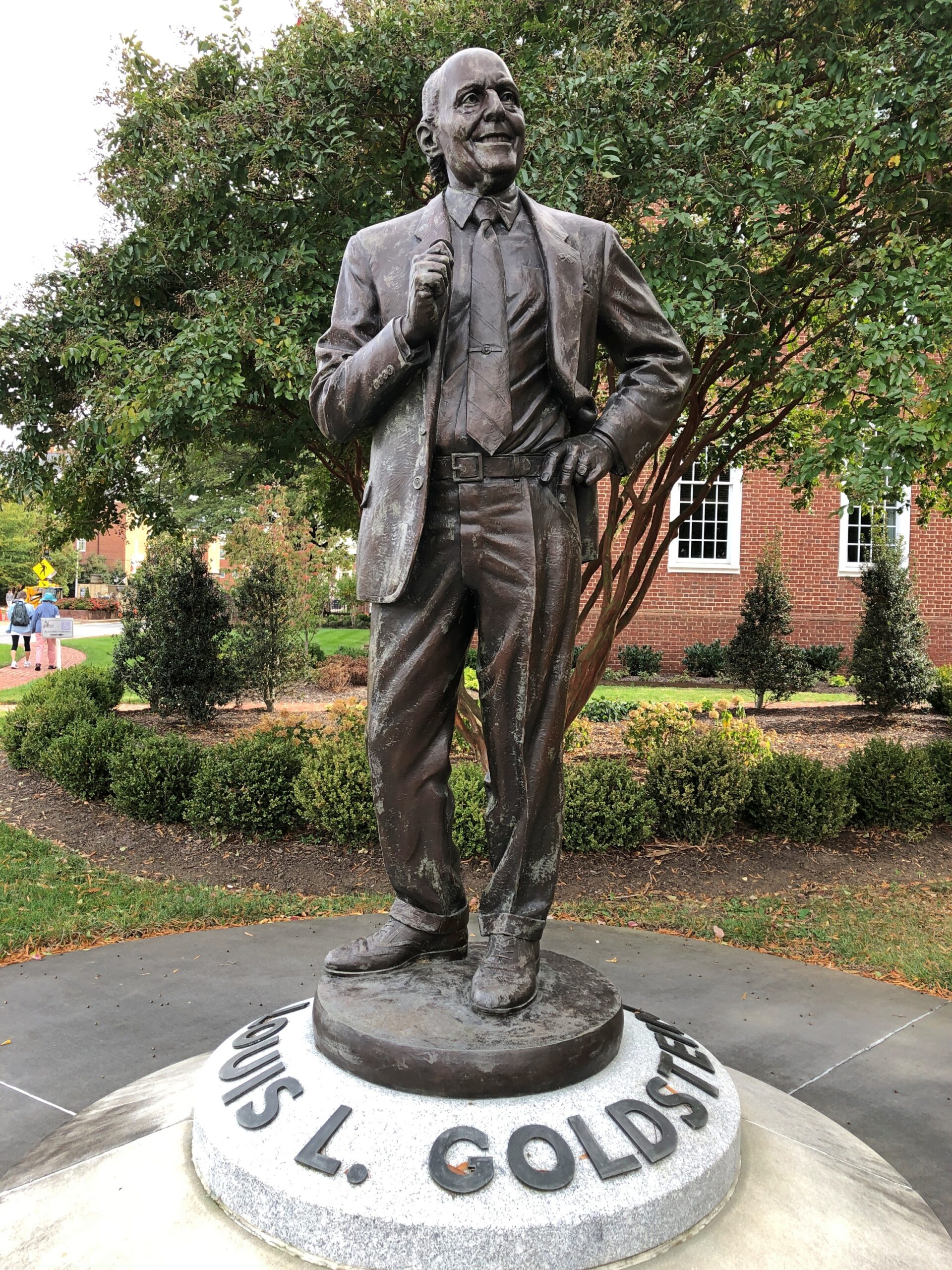
During my visit to Annapolis, Maryland in late October, I chanced to meet Louis L. Goldstein. His memorial, that is, a bronze at the corner of Bladen and Calvert streets, about a block from the Maryland State House.

Annapolis

The statue is in front of the office building occupied by the state comptroller. Goldstein was comptroller of Maryland from 1959 until his death in 1998 and, it seems, a character. A character who was also a successful politician, which is an increasingly rare combination, unless you count those pretending to be wingnuts.

“Many recognized Goldstein as the state’s white-haired, robustly outgoing goodwill ambassador, a handshaker’s handshaker, passing out fake coins as souvenirs and bestowing his trademark greeting, ‘God bless y’all, real good,’ “ the Washington Post reported at the time of his passing.

More politicos should pass out fake coins. I have fond memories of the aluminum Silber Dollar we had around after the 1970 election in South Texas. It’s probably still around.

Admittedly one ChatGPT answer is a small sample size, but still – how is it that three years have passed since I asked the machine to come up with examples of a certain kind of real estate deal in the past, and it spat out five completely make up ones? Shouldn’t this kind of thing be less likely by now? Apparently not.

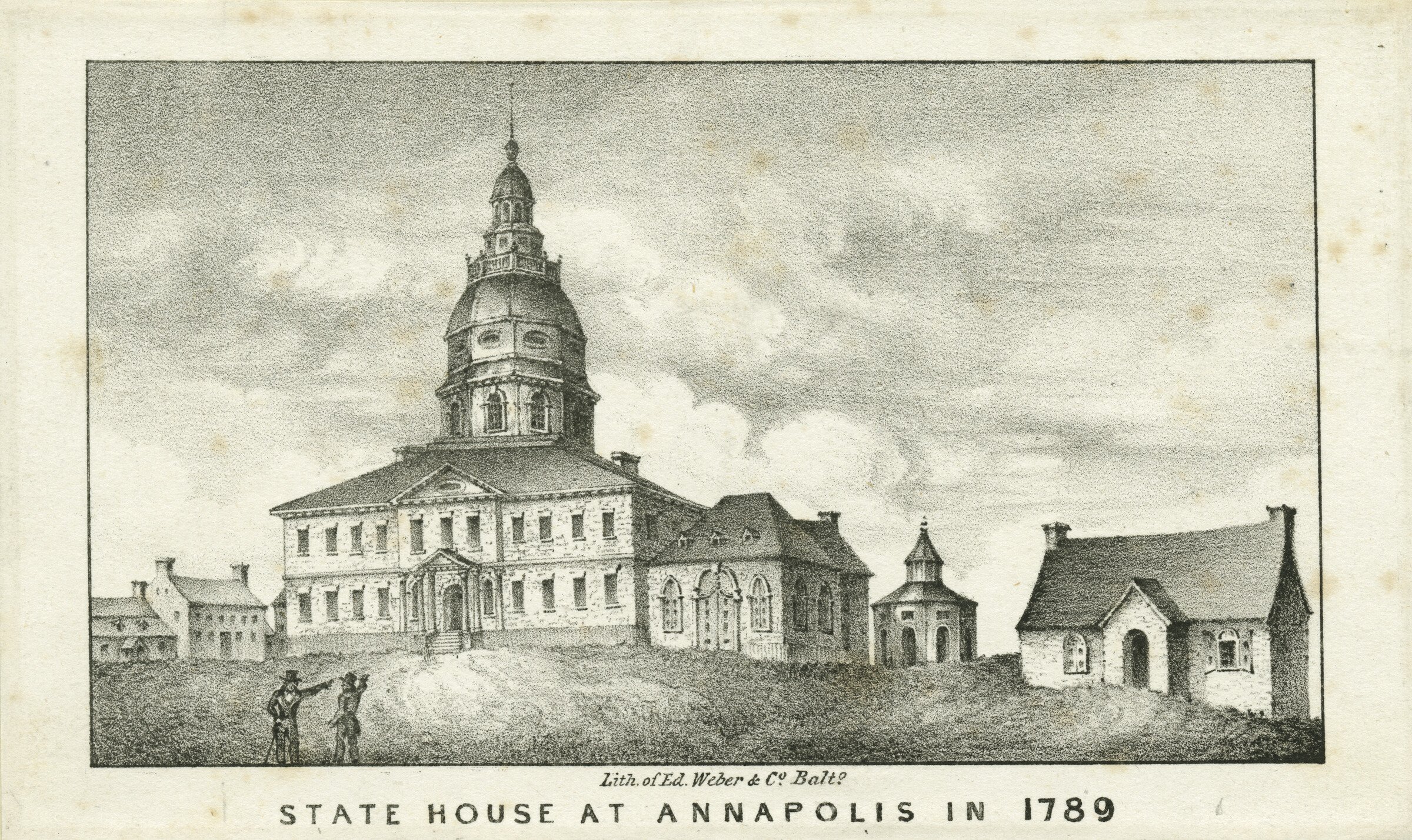
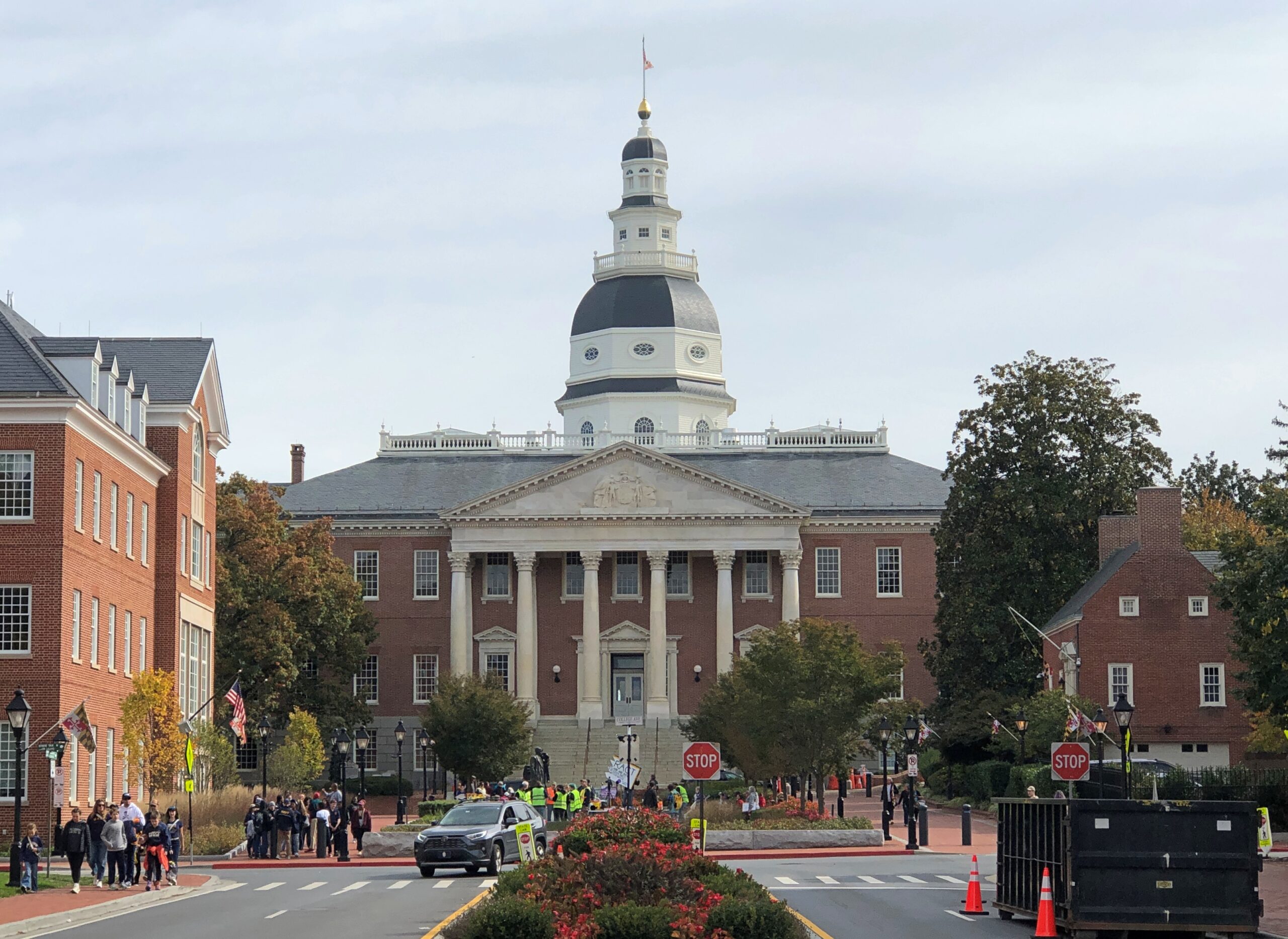
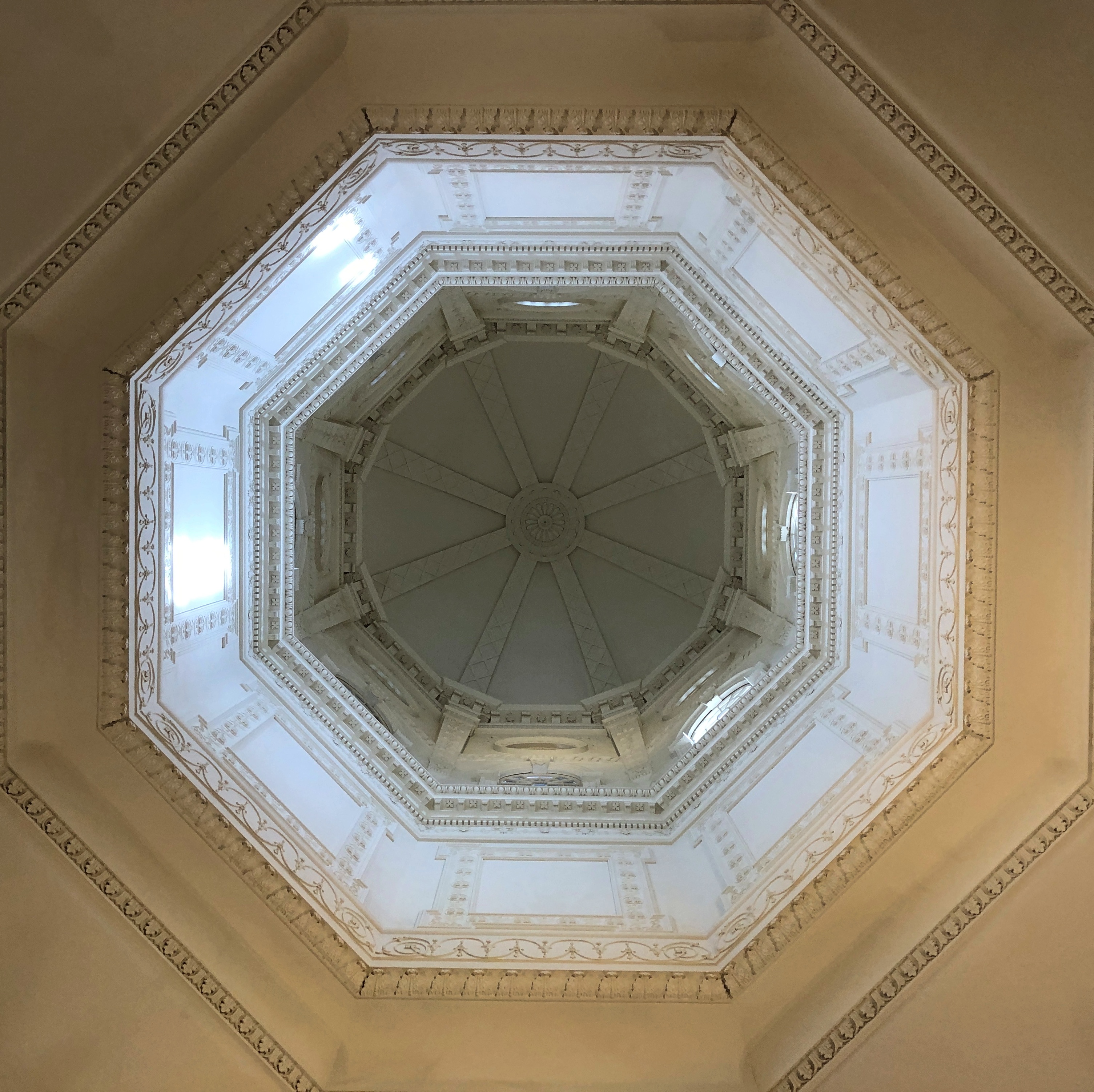
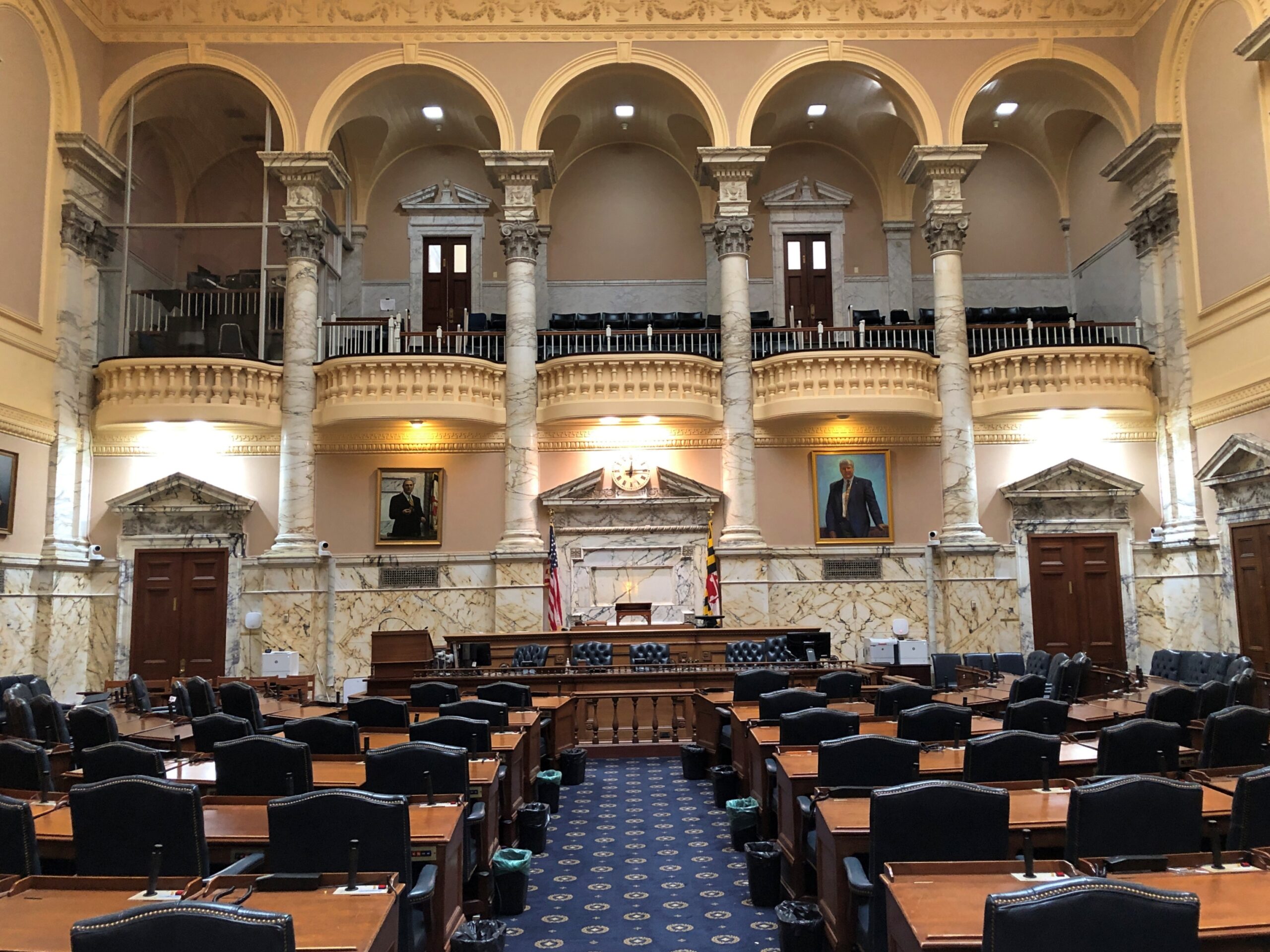
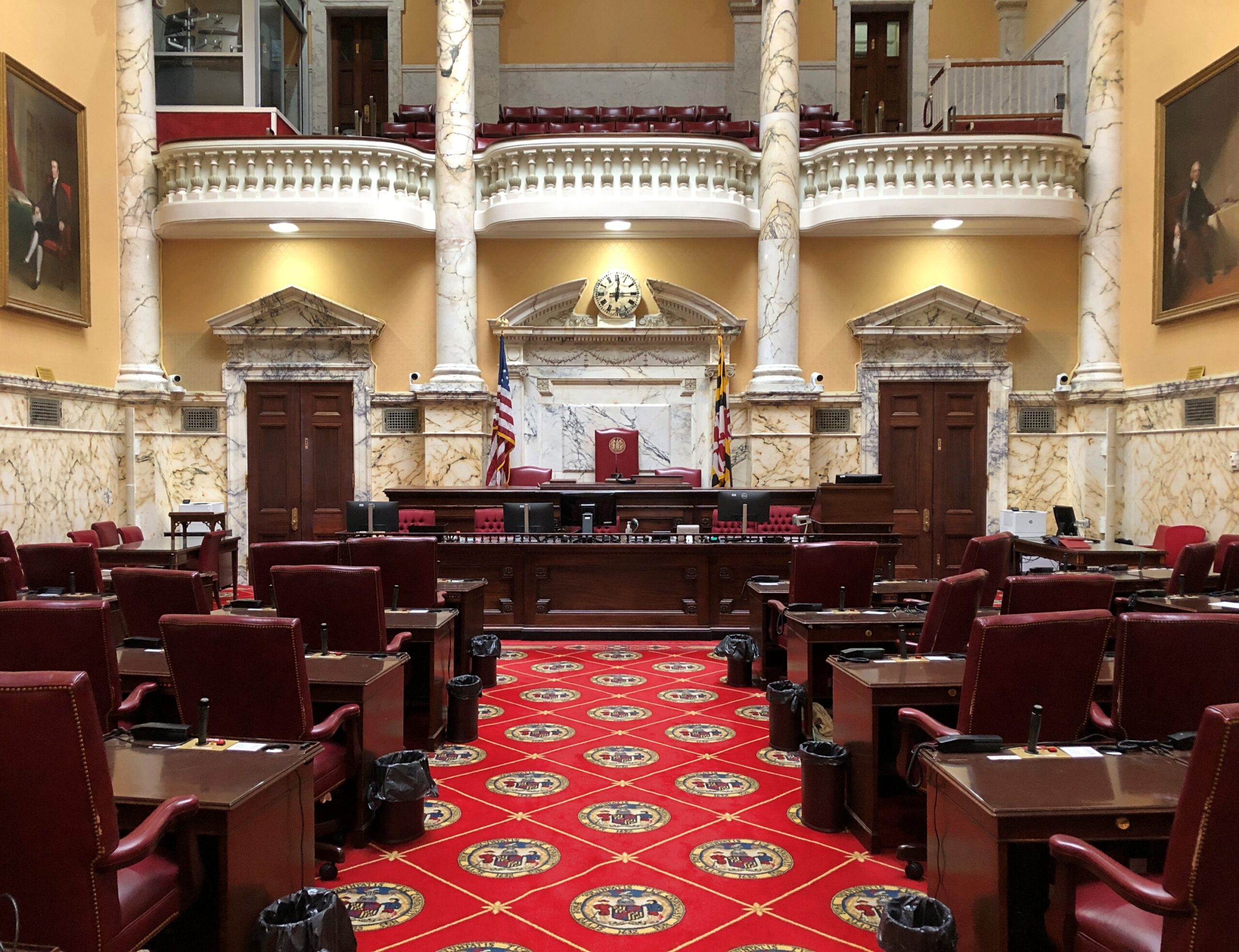
Never mind, Maryland has a handsome capitol, one built remarkably enough in the 1770s – beginning before the Revolution and completed in the throes of that war, in 1779.

Annapolis
Annapolis

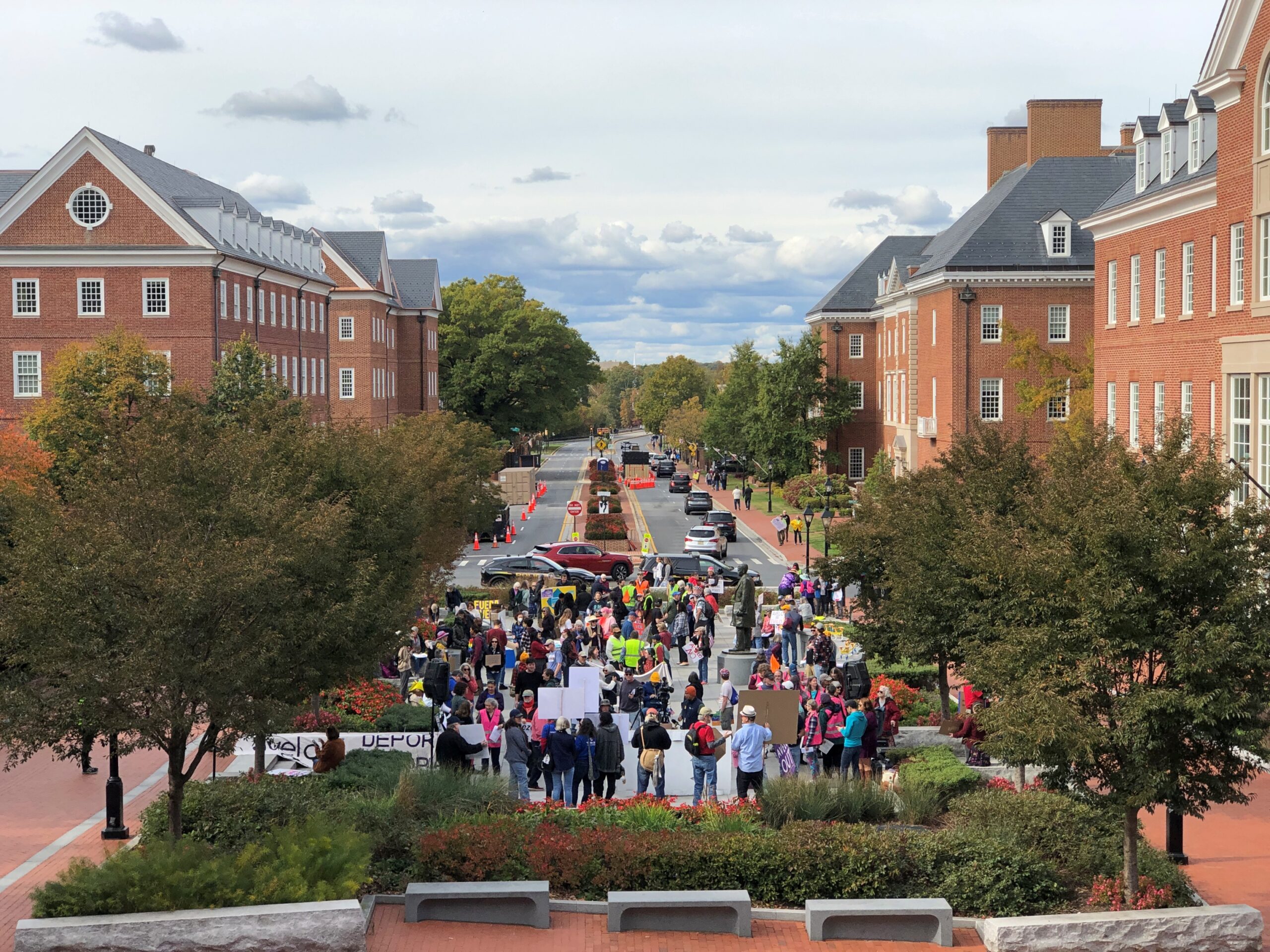
The view from the steps. The small rally below, at a place called Lawyers Mall, is demanding that Maryland Gov. Wes Moore to kick Avelo Airlines out of BWI airport, for its deportation flights for ICE.

Annapolis

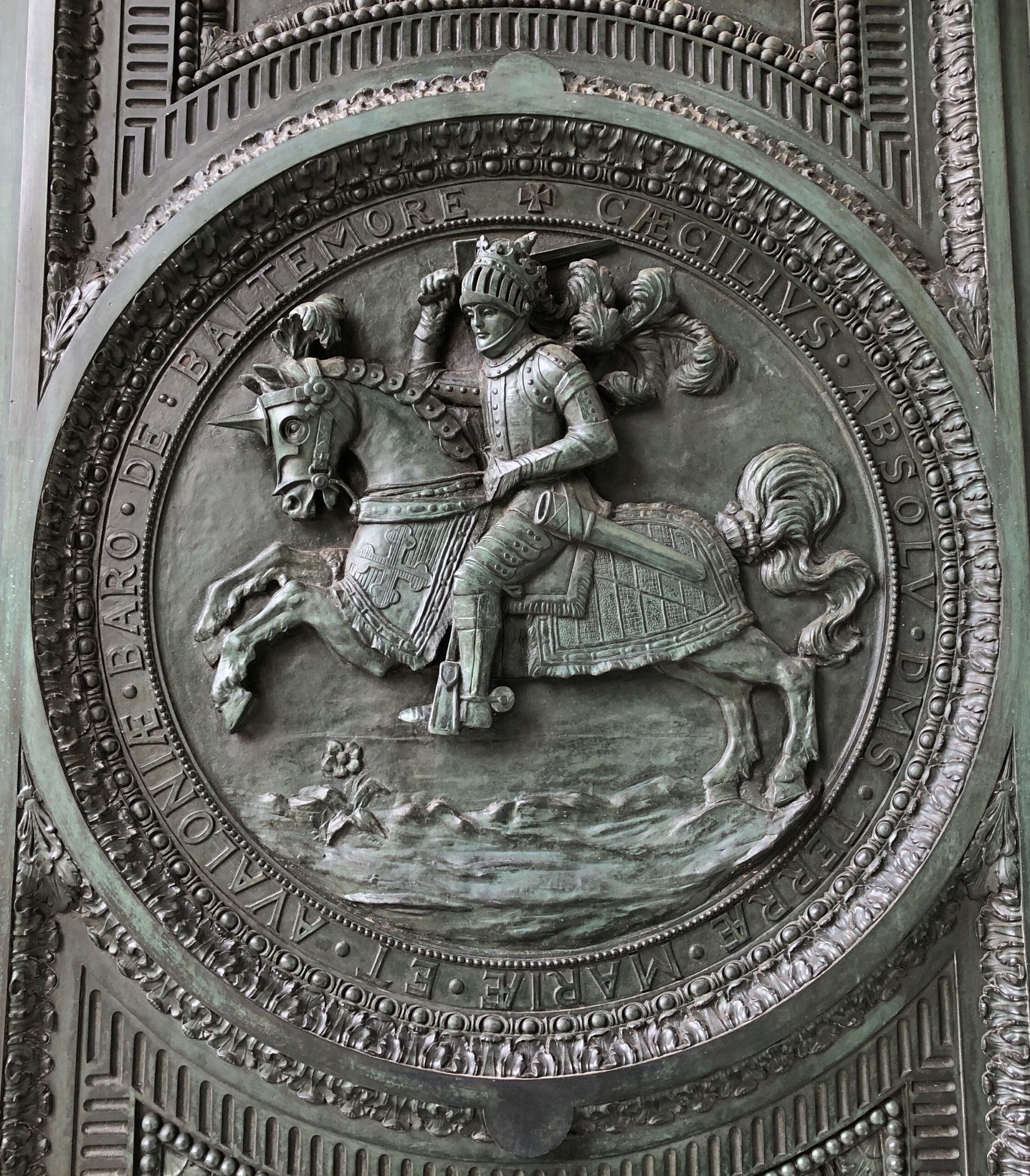
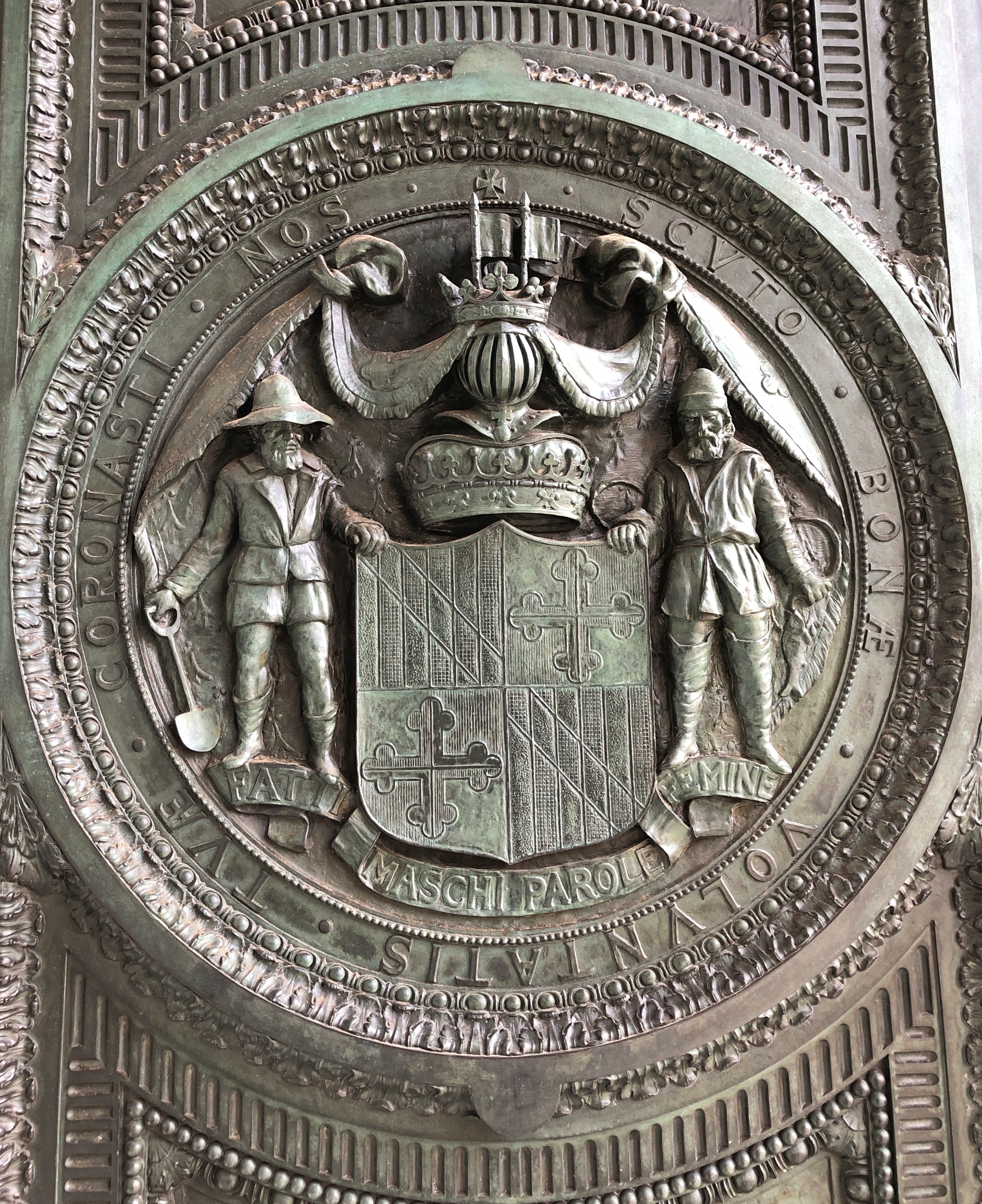
Detail on the exterior: the obverse and reverse of the Great Seal of Maryland.

Annapolis
Annapolis

A cool seal, if you asked me. Including an Italian motto used, for obscure reasons, by the Calvert family. Fatti maschii, parole femine has drawn criticism, enough that the state has an innocuous “official translation,” which is fine, if a little silly.

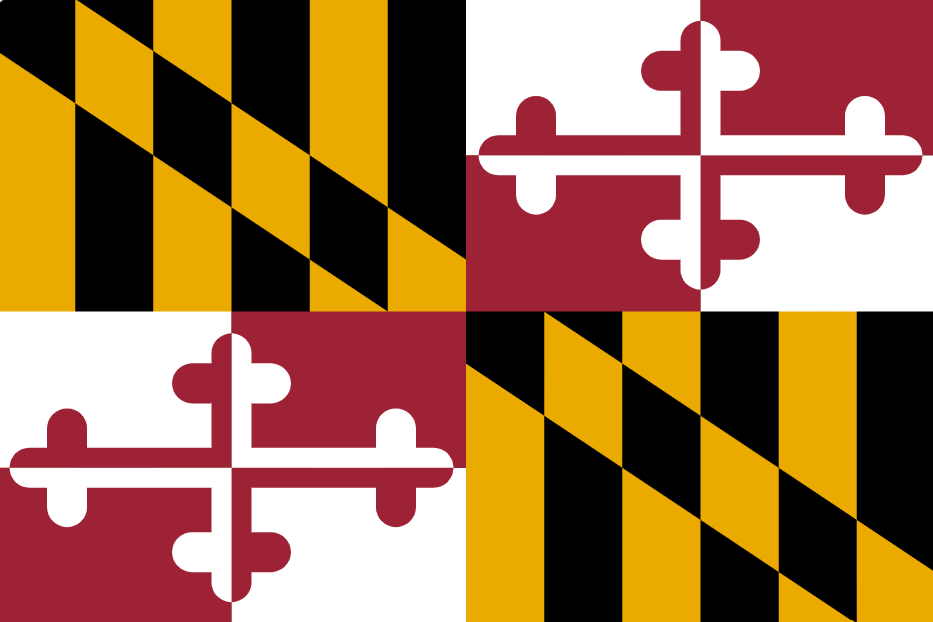
Of course, Maryland also has a cool flag, the heraldic banner of arms of Cecil, Second Baron Baltimore, acknowledging the state’s founding as a proprietary colony of the Calvert family. It’s also worth noting that the flag wasn’t official until 1904, by which time the family had become merely a colorful part of History. 

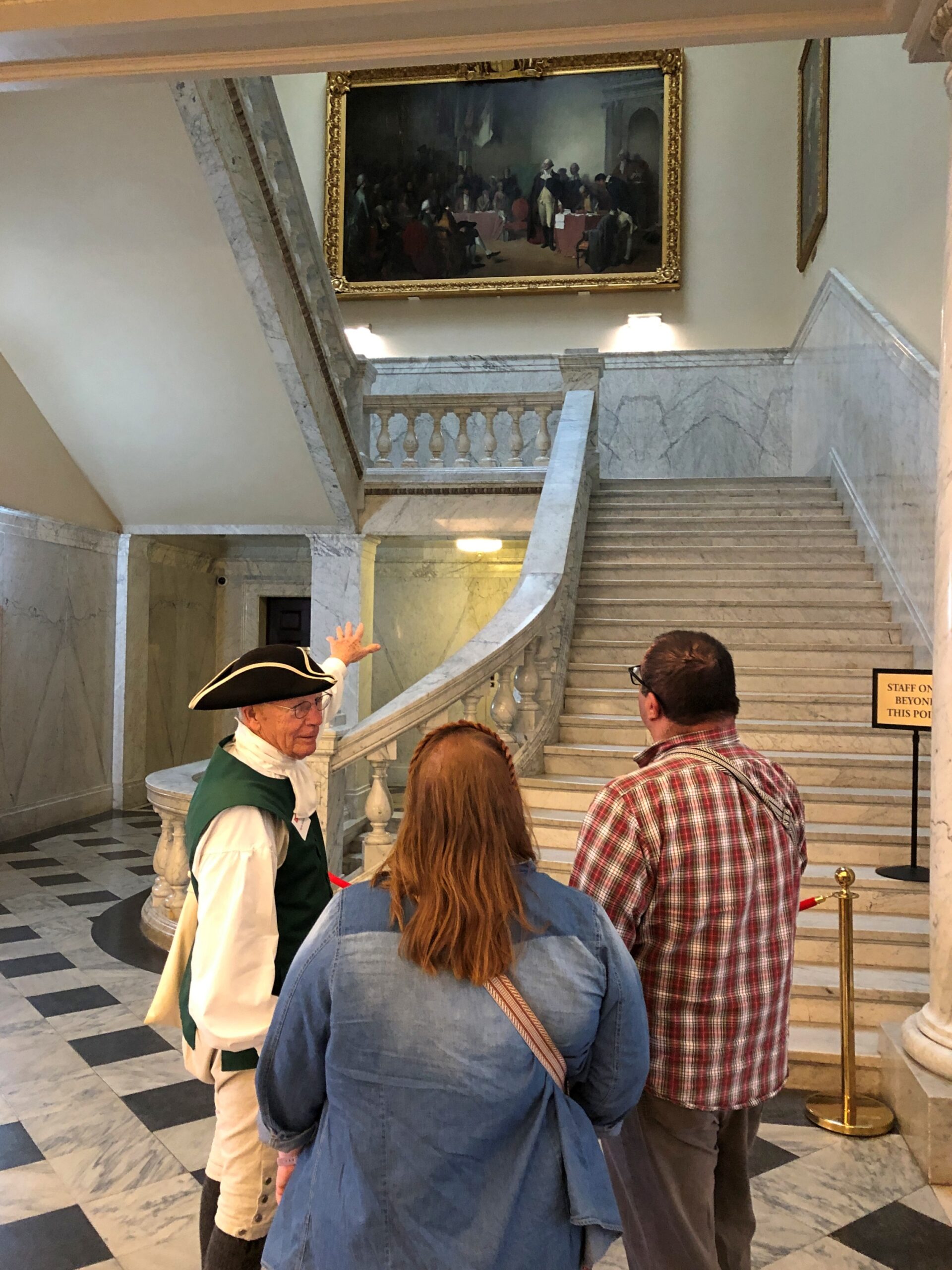
Unlike Delaware, Maryland’s capitol was open on a Saturday.

Maryland State House

With a few volunteers talking to visitors.

Maryland State House

The Maryland State House has the distinction of being the capital of the United States, from November 26, 1783 to August 13, 1784. Two important events happened in the building during that narrow window: George Washington came before the Confederation Congress to resign his commission as commander-in-chief of the Continental Army, and Congress ratified the Treaty of Paris, which acknowledged U.S. independence.

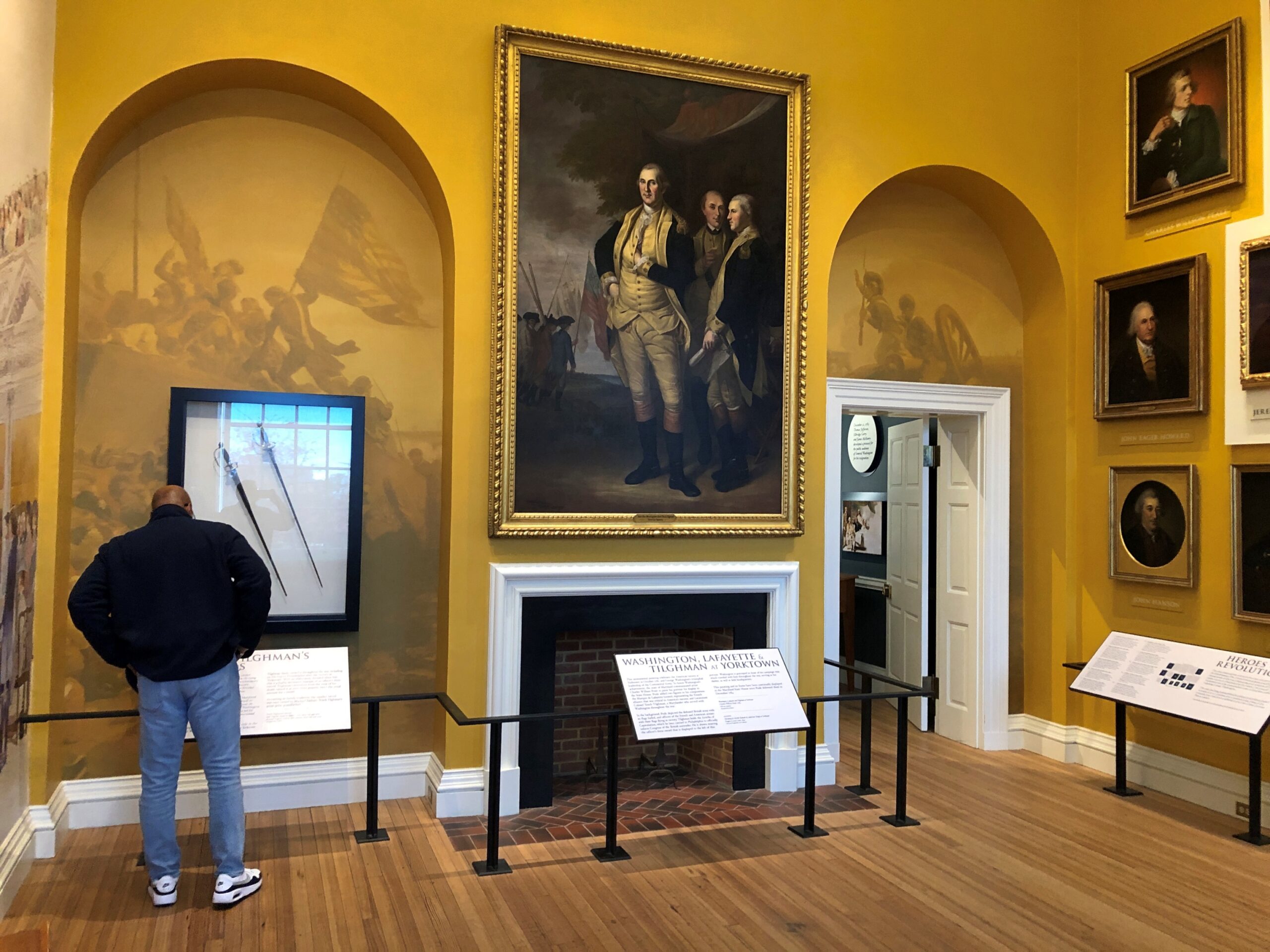
Maryland doesn’t want you to forget that Washington stepped down in the state house. On display are artifacts and artworks to illustrate the point.

Maryland State House

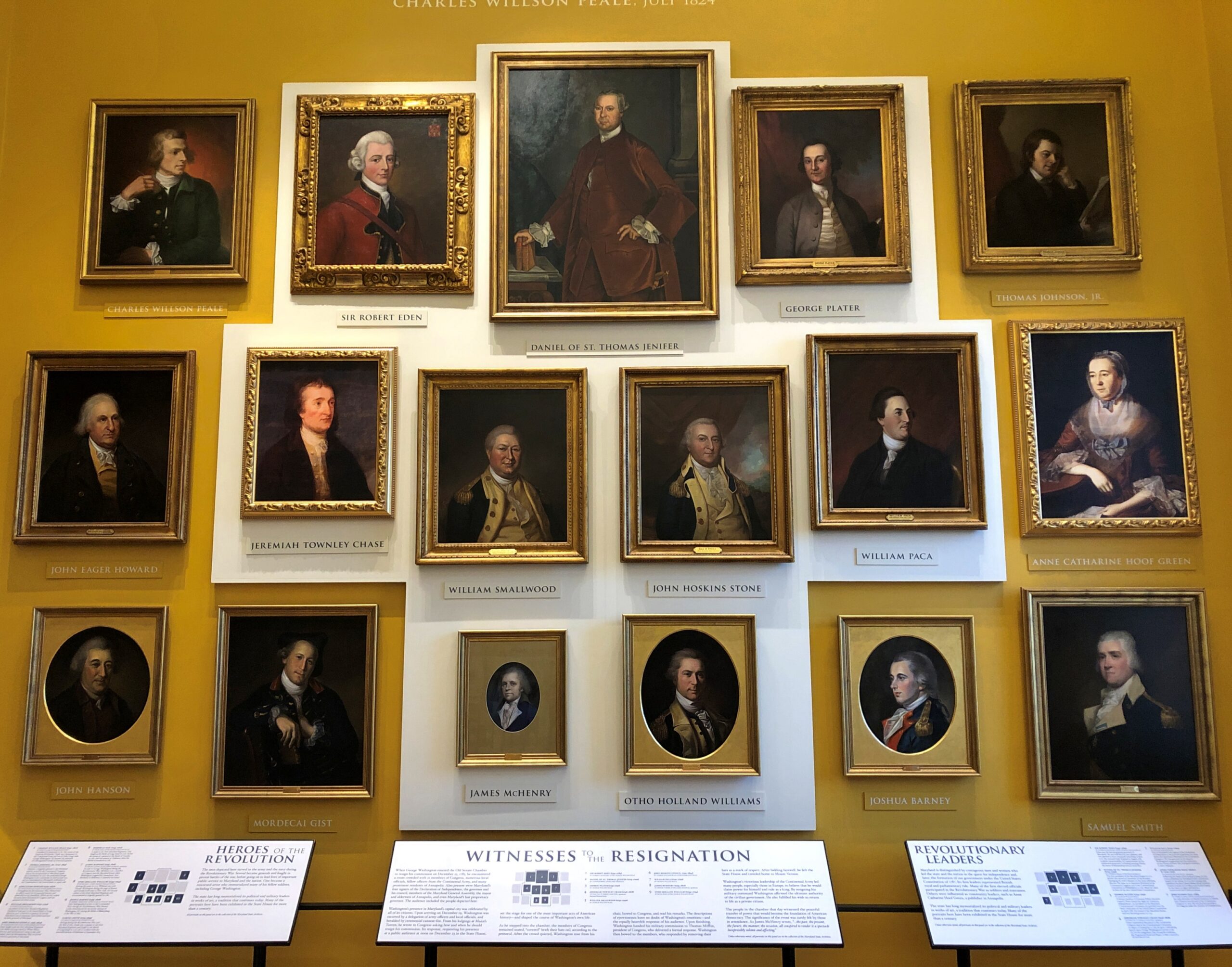
Including portraits of those who were there for the event. Some of those who were, I assume.

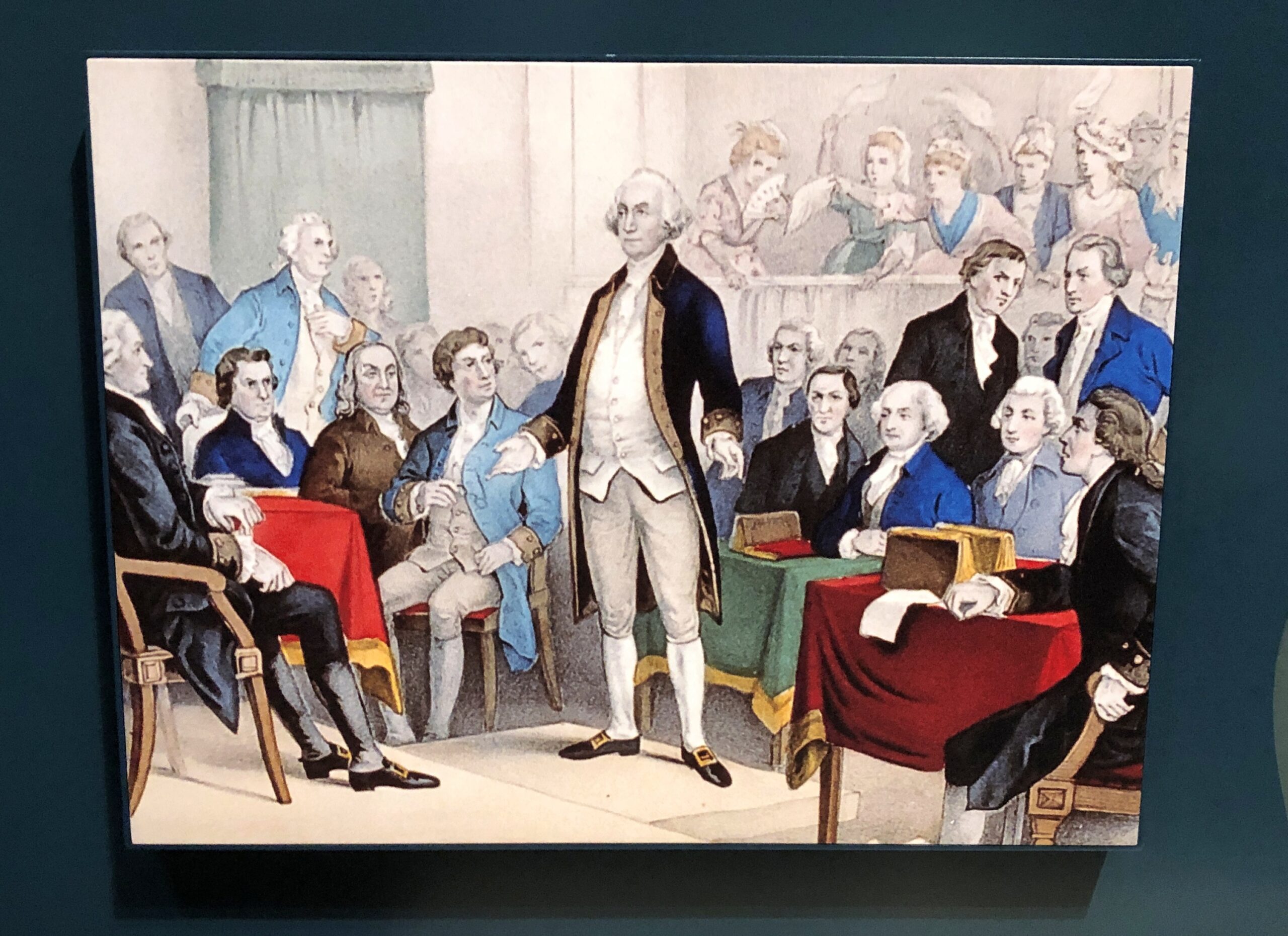
The scene itself, depicted later, and on display at the state house.

The speech. Washington had a gift for brevity. A more prolix (and vain) fellow might have gone on at length about the virtuousness of Cincinnatus — hint, hint, like a certain other man you might know — but I suspect he knew that his audience, and maybe posterity, would make the comparison without it being explicit.

Nor’East Drive ’25

I didn’t realize until last night that I’d driven through some geographic oddities over the last two weeks, on my way to the Northeast and back. Actually state border oddities, such as the Erie Triangle in Pennsylvania, the curious division of the Chesapeake Peninsula, and the panhandle of Maryland.

Except they aren’t really oddities. They just look that way when you’re a kid (or an adult) poring over U.S. maps or putting your state puzzle map together for the nth time. How is it that Pennsylvania has that small chimney? Why didn’t Delaware get more of the Chesapeake Peninsula? What’s the deal with the western extension of Maryland, which narrows to only a few miles at one point?

There are historic reasons for all the shapes, both rational and arbitrary, which are the subject of books and at least one TV show. Lands were granted and claimed, borders were surveyed and quarreled over, and deals and court cases and Congress eventually settled the shapes.

The border oddities may have local and legal significance, but they’re also there to enjoy. Regular borders aren’t nearly as much fun. Sure, it’s interesting that Colorado and Wyoming look about the same, but I always liked the fact that New Mexico has a stub and Idaho tapers to meet Canada, just to name two Western examples, because not all the fun shapes are in the East. Just most of them.

To reach these border areas, I drove 2,853 miles, starting October 14, from northern Illinois to the East Coast and back, through (in order) Indiana, Michigan, Ohio, Pennsylvania, New York state (and city), New Jersey, New York (city and state) again, Connecticut, Massachusetts, Rhode Island, Connecticut again, New York state (and city) again, New Jersey again, Delaware, Maryland, West Virginia, Pennsylvania again, West Virginia again, Ohio again and Indiana again, arriving home today. I got tired just typing all that out.

The original impetus for the trip was to visit New York City during its Open House event. Unlike a rational person, who would have flown there and back, I decided to drive, and let Yuriko fly there and back. NYC is achievable from metro Chicago in two driving days. I decided not to do that, either, and stretch things out to fill in some travel lacunae of mine.

For instance, I wanted to visit Eire, Pa., because I’ve always bypassed it, and many Americans can say the same. I wanted to look around Long Island, or at least part of it, for the same reason. I wanted to spend the night in both Rhode Island and Delaware: the last two states in which I’d never done so. I wanted to see the capitols of New Jersey, Delaware and Maryland, toying with the idea of Pennsylvania too, though I decided it was out of the way. I wanted to see historic sites associated with a number of presidents along the way, and maybe a battlefield or two.

I really wanted to visit a friend in New York, and my nephew Robert, and friends in the Boston area. I’m glad to report that I did so. This has been a year of visiting old friends and relations. I’d like every year to be that way.

I had a much longer list of places to visit, and added to it every time I looked at a map, paper or electronic, since I now use both, and when I was driving — so many possibilities. But there are only so many hours in the day and so much energy in my aging body. Still, I did much of what I set out to do, with one major exception due to forces beyond my control. National Park Service sites were off the table, for reasons all too obvious and not worth rehashing here. So the homes of FDR and TR, along with Antietam and Harper’s Ferry, went unvisited. Some other time, I hope.

No matter. I visited a good number of cities and towns, drove roads large and small, empty and insanely crowded, and enjoyed a few exceptional meals and many very good ones. I saw churches and cemeteries, some historic places not managed by the federal government, and encountered the largest of the many No Kings events. I read plaques. I chatted with strangers and clerks in stores. I took a swim in Massachusetts and long walks in New York. I hadn’t planned to walk across the Brooklyn Bridge again, but Yuriko had that idea, and across we went. I listened to a lot of terrestrial radio, good, bad and indifferent. I burned gas priced between about $2.70 and $3.30 a gallon. I paid entirely too many tolls, because the Northeast is lousy with toll roads and bridges — but driving across some of those bridges, especially the Bay Bridge in Maryland, was a grand experience, and surely worth the toll.

Something I didn’t anticipate, but which improved the trip immensely, was fall color. I should have anticipated it, but I suppose I had other things on my mind. When I got to New York state, driving west to east, it became clear that I’d accidentally designed myself a fall foliage excursion. The trees were gorgeous there, and in NYC (especially Prospect Park), Long Island, and parts of New England, and in Delaware and Maryland all the way across its panhandle. Even Ohio and Indiana had some nice color when I got there, and here at home too.

Prospect Park leaves

One more thing: unexpected oddities along the way. It’s important to watch out for those.

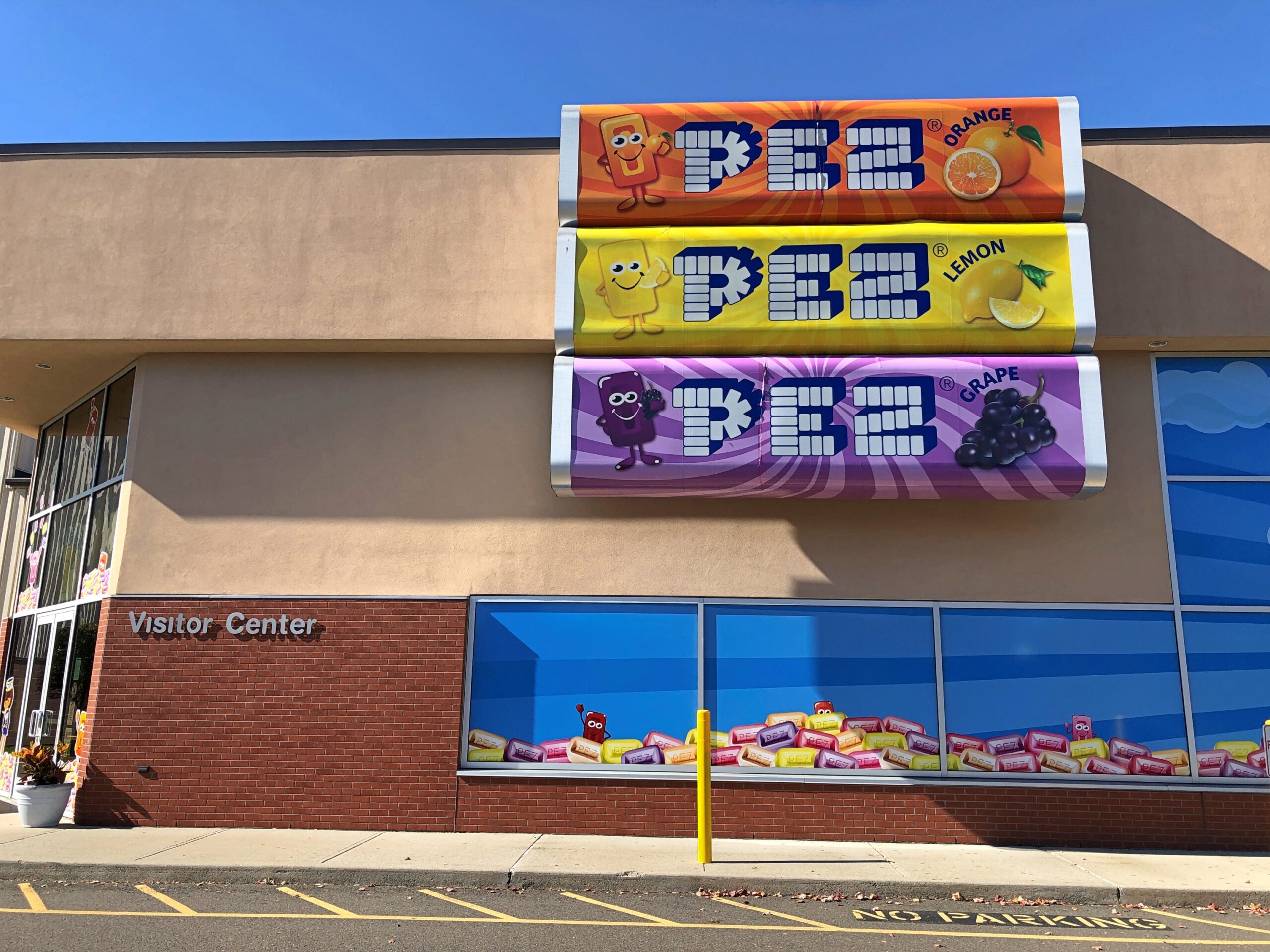
In Orange, Connecticut, I noticed a sign for the Pez Visitor Center. I had to see that.

Pez Visitors Center

Earlier today, at the border between Ohio and Indiana, I noticed Uranus. I had to stop.

Uranus

Turns out there’s more than one; I’d only ever seen the one in Missouri (the original) in passing, never stopping. But I did this time. Now I can say I’ve been to Uranus.

Ashes to Ashes, Paw Prints to Paw Prints

Maundy Thursday has come around again, which seems like a good time to knock off posting until Easter Monday, which also happens this year to be April Fools’, known for its pranks and hoaxes. But really, isn’t every day a day for hoaxes in our time?

Or at least absurd assertions. From Wired yesterday: “A non-exhaustive list of things that are getting blamed for the bridge collapse on Telegram and X include President Biden, Hamas, ISIS, P. Diddy, Nickelodeon, India, former president Barack Obama, Islam, aliens, Sri Lanka, the World Economic Forum, the United Nations, Wokeness, Ukraine, foreign aid, the CIA, Jewish people, Israel, Russia, China, Iran, Covid vaccines, DEI, immigrants, Black people, and lockdowns.”

A pleasant Easter to all. Easter is the last day of March this year. Twenty-seven years ago, it was March 30, which put Maundy Thursday on March 27, 1997, which is a date with some resonance for us: we found out we were going to be parents.

Both daughters were in town at the same time for a few days earlier this month. It was unfortunately the same week that Payton died, though the visits were scheduled well before that happened.

Still, we could all enjoy dinner together two evenings (at home, and out the next day at a familiar Korean barbecue joint) and share our recollections of the dog, among other things.

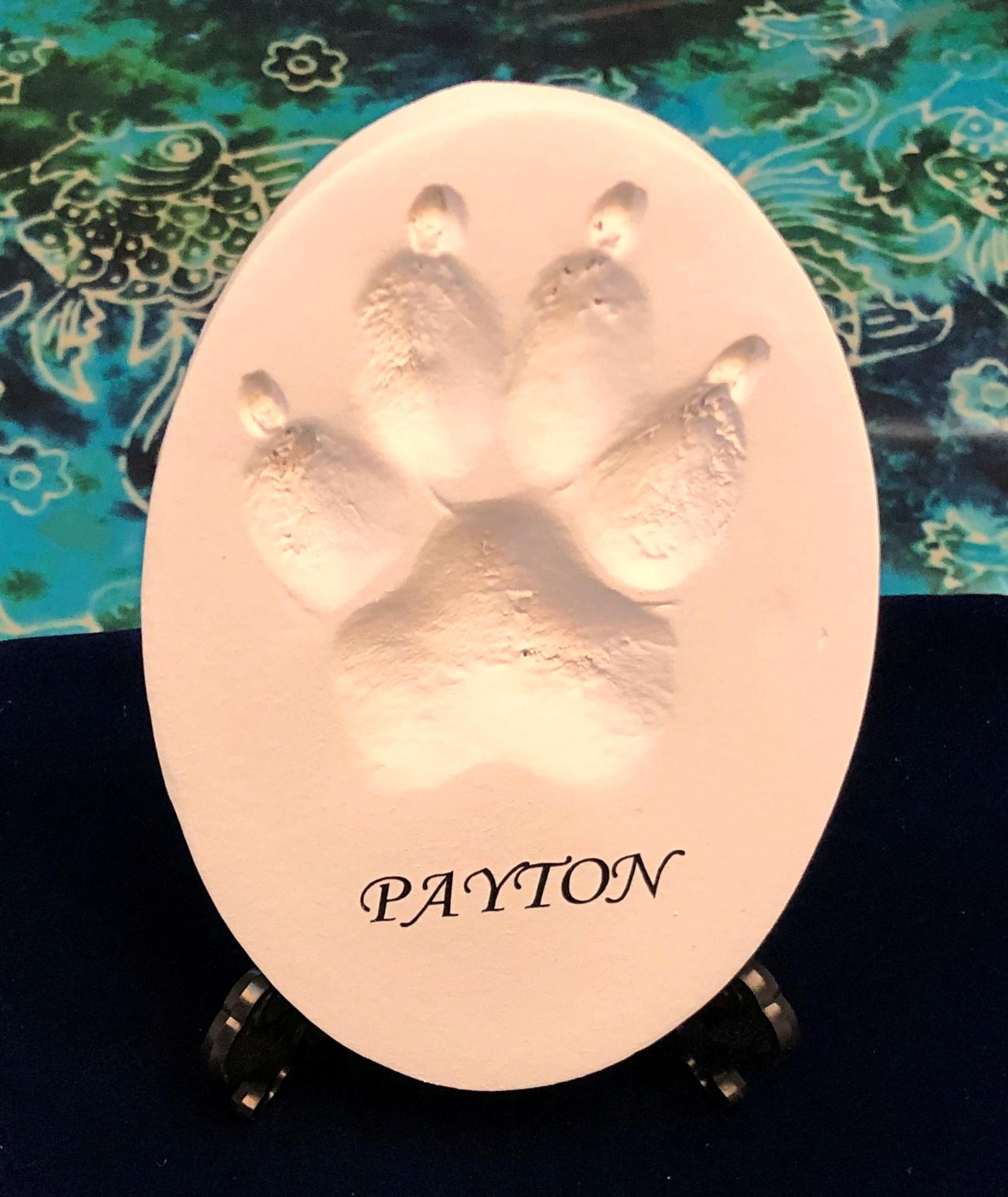
We received the dog’s ashes this week, along with a paw print. I didn’t know memorial paw prints were a thing, but it seems they are.

Truth was, she could be prickly. But once you knew that, you could have fun with it. One way to get a rise was to slowly approach her food. In this video, about a month before her death, I told her, “I’m coming for your food,” but naturally no language other than body language was necessary.

She was already having trouble walking then – the hind legs were the first to fail her – and spent much of her time in our living room, among towels to catch her pee when she couldn’t quite get up to go to the door, and didn’t bother to tell us that by yapping, in which case we could help her go outside. Often enough, of course, she’d miss the towels. We didn’t care much. It was still good to have her around at all.

Gilligan!

The video that captured the ramming and collapse of the Francis Scott Key Bridge has a morbid fascination, and you don’t even have to rubberneck to see it. I watched it a few times this morning, marveling at how what looked like a tap – but of course was tons of mass colliding with the structure – could bring the whole thing down so fast.

Then again, we’ve all had similar experiences on a (fortunately) smaller scale. One time I brushed ever so lightly against a stack of dishes drying in the rack, and much of the stack lost its cohesion in a moment, with the dishes suddenly rearranging themselves in a clatter, a handful tumbling to the sink and the floor, though I don’t remember that any broke.

I was also reminded of something I’ve written about before, some comedy about a previous (1989) shipwreck.

“About a week after the [Exxon Valdez] spill, I went to the Second City comedy revue… and they did a 15-second skit about it, a to-the-point gag.

“Silhouetted on the stage was a fellow standing behind a large ship’s wheel. From offstage, an announcer said something like, ‘And now, what really happened on the Exxon Valdez…’ Pause. Then the stage lights went up, reveling a familiar red shirt and white sailor’s cap on the fellow at the wheel, who was fumbling with it. At the same instant, a familiar voice boomed from offstage, startling the fellow: ‘GILLIGAN!’ the Skipper bellowed.”

If Second City had a mind to, they could do exactly the same sketch this weekend, only changing the line to “what really happened to the Key Bridge in Baltimore.” It would be in bad taste, since it looks like six men lost their lives in the collapse, but death doesn’t always nix comedy. In fact, often not. For example in ’86, NASA = Need Another Seven Astronauts.

Would many in their audience miss the Gilligan reference due to their relatively tender age? Maybe, but Gilligan is better remembered than a lot of ’60s TV characters. As an enduring stock character, the bumbling moron, he participates in something bigger than mere TV entertainment. Something that probably goes back a lot further even than Plautus, to the most rudimentary forms of pratfall entertainment among our remote ancestors.

More From the Commonwealth of Pennsylvania

Our most recent trip took us to fully 25% of the nation’s commonwealths, to celebrate a famed example of a distinction without a difference.

It wasn’t quite full spring in Pennsylvania last month, but warm enough most of time.

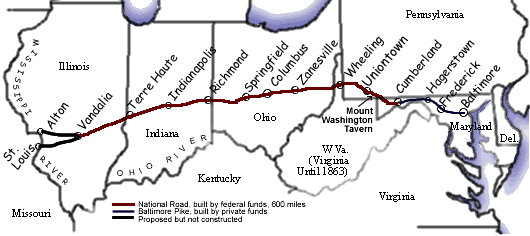
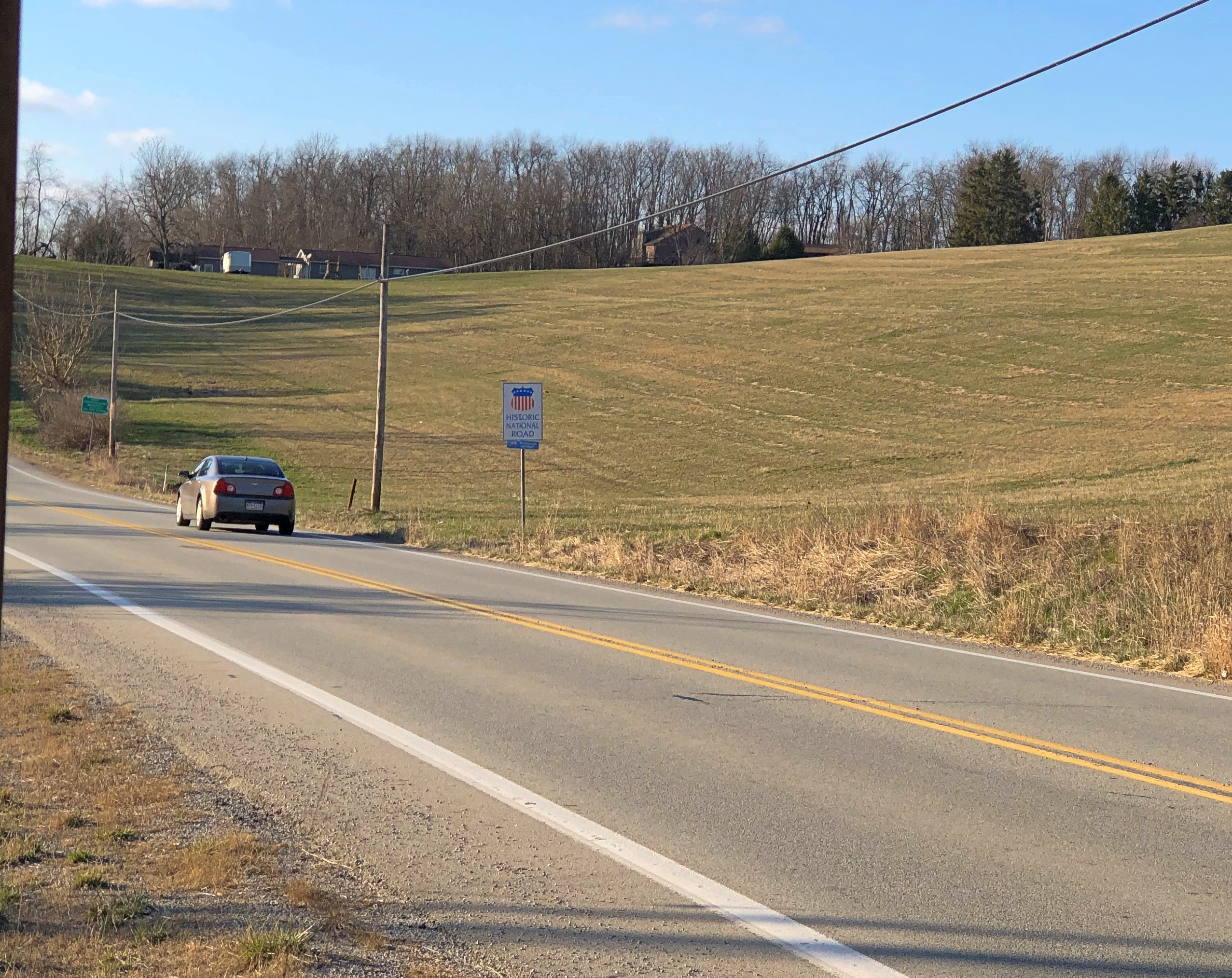
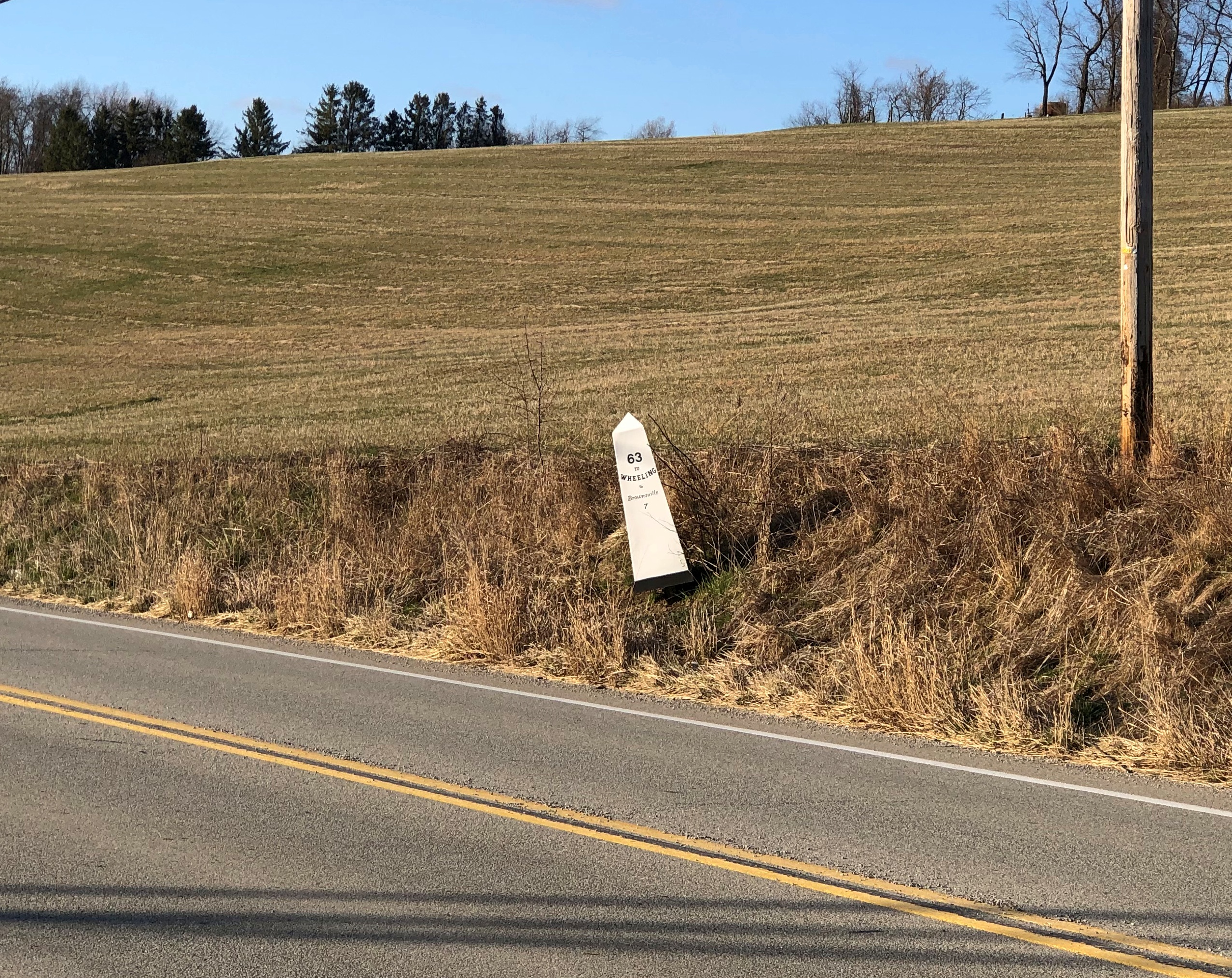
We drove the National Road (U.S. 40) in Pennsylvania, from where it crosses the border near Wheeling, through to Uniontown, and later drove the segment that goes into Maryland.

Didn’t quite make it to the eastern terminus, in Cumberland, Maryland. Once upon a time, maybe a small detour during a late ’90s return from Dallas, we saw the western terminus in Vandalia, Illinois.National Road National Road

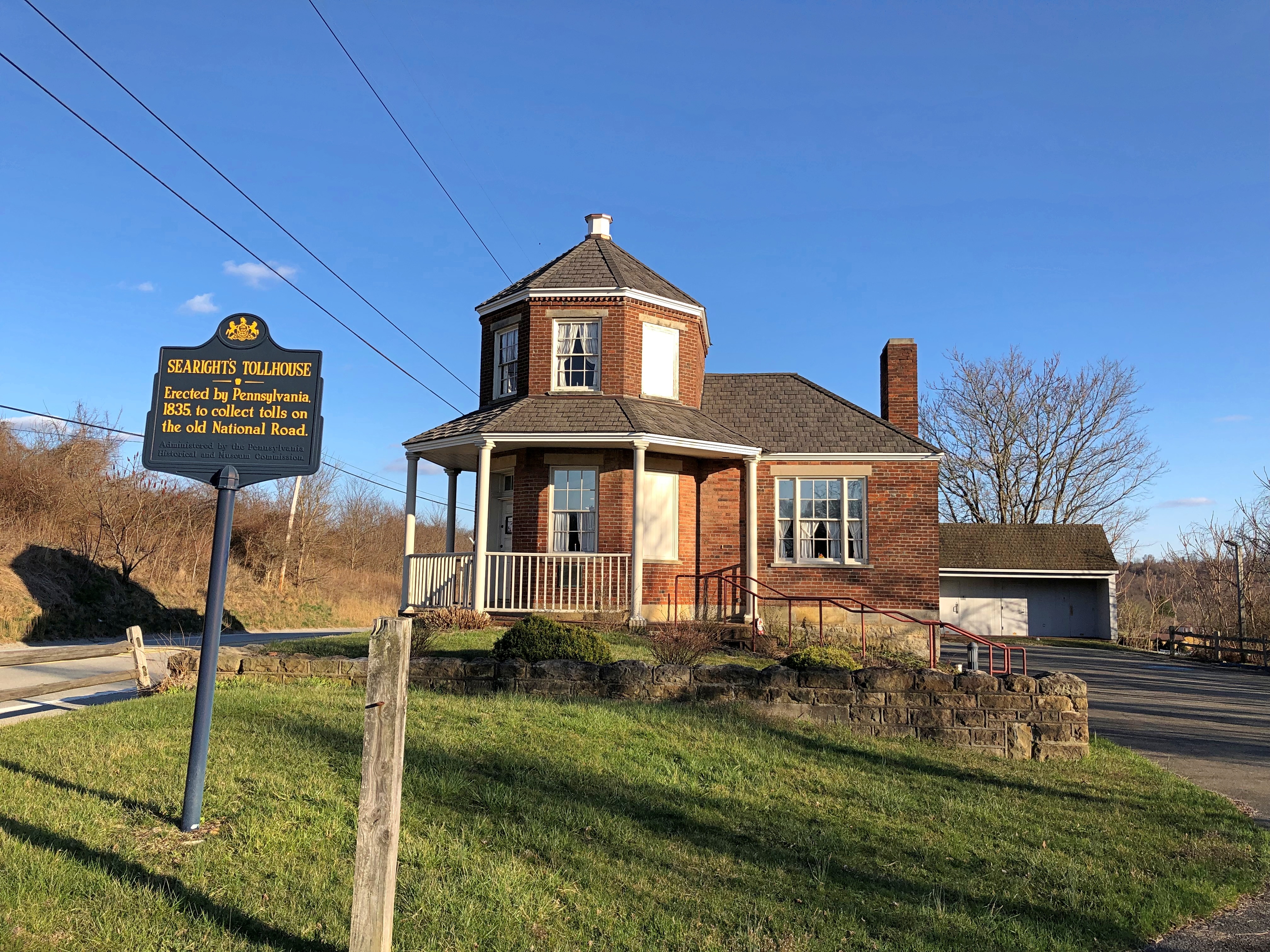
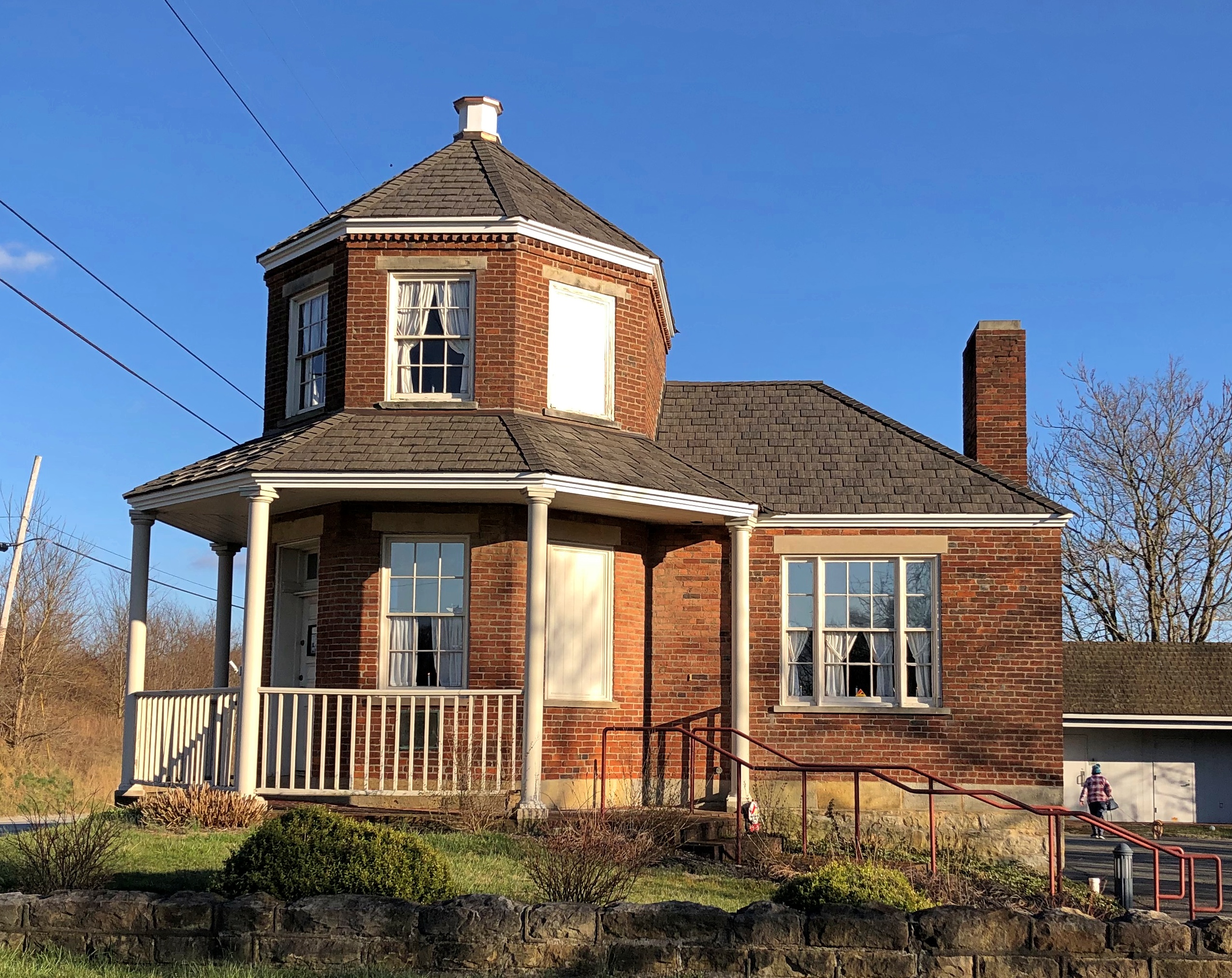
One minor landmark along the way.National Road National Road

Searight’s Tollhouse, built in 1835 by the commonwealth of Pennsylvania to collect tolls, since the federal government had turned the road over to its various states that year. The structure, near Uniontown, is one of two surviving tollhouses, out of the six built. No tolls have been collected there since the 1870s.

The structure was built near the tavern of William Searight, the state commissioner in charge of the roadway, per Wiki.

Barman and toll collector. There’s an idea for a Western revival limited series on streaming: Will Searight, Frontier Toll Collector. I’m thinking a comedy, in the same Shakespearean writing style as Deadwood, but no one gets killed.

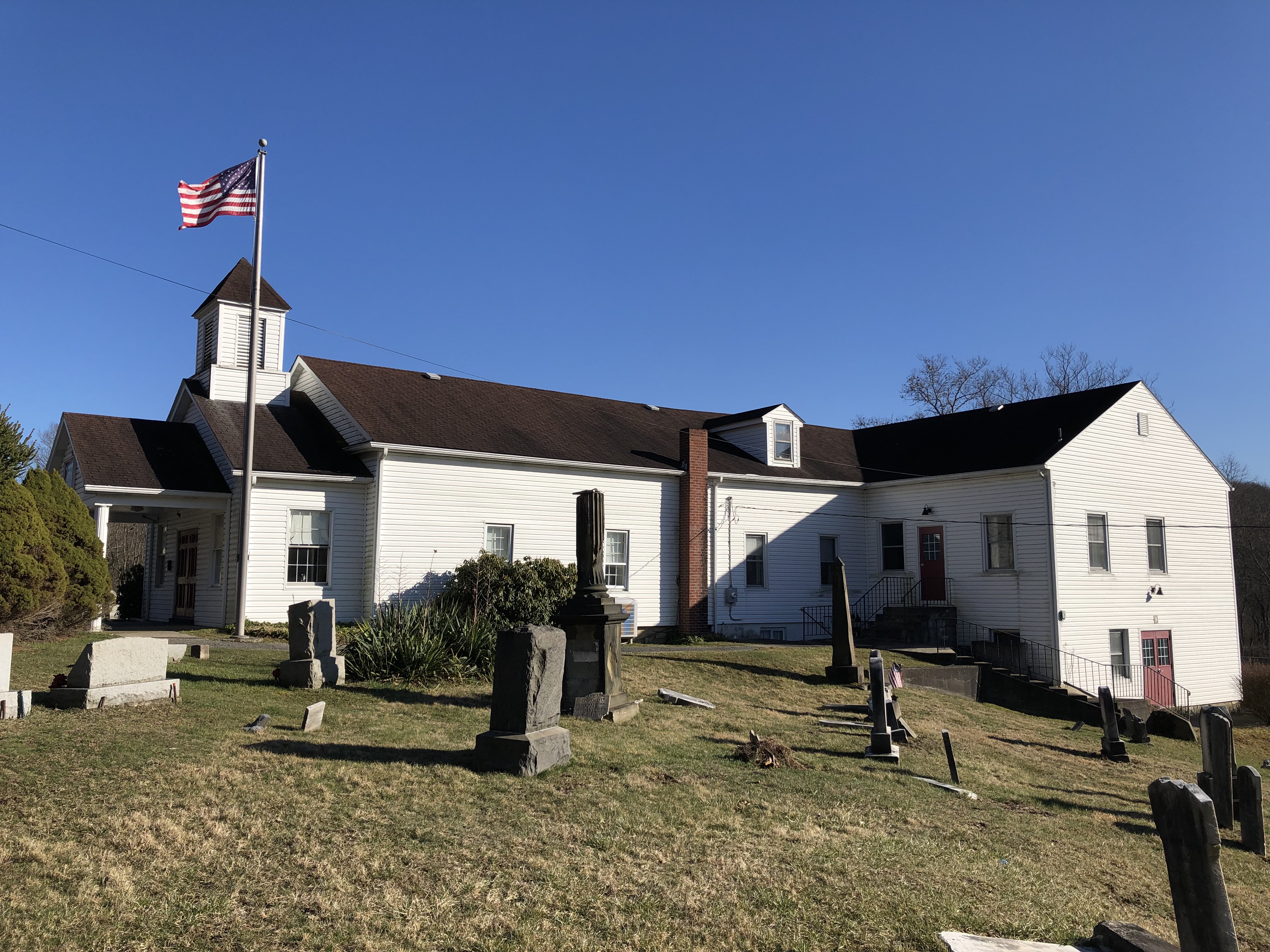
A church on the National Road, east of Uniontown: Mount Washington Presbyterian, founded in 1842.National Road

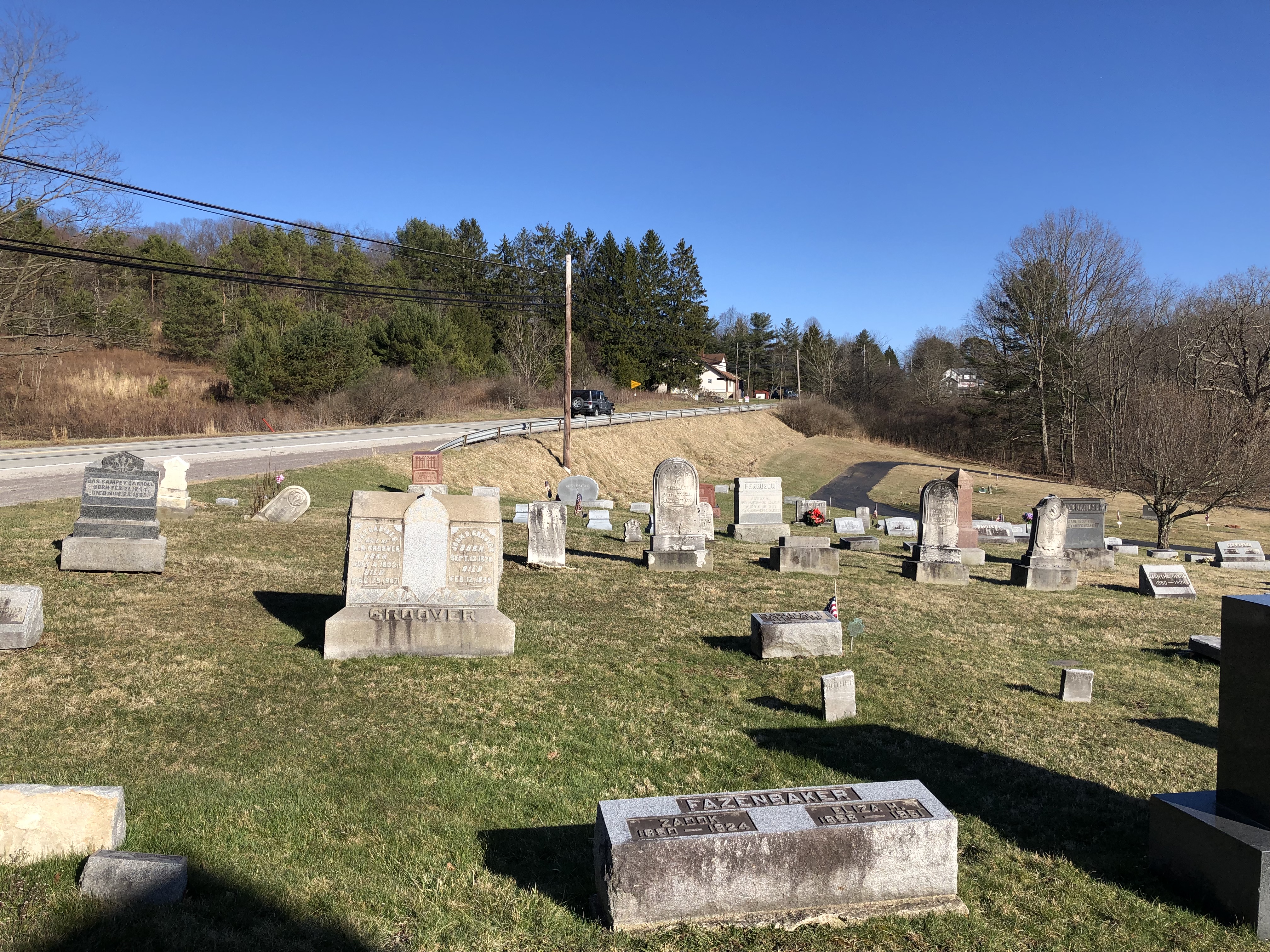
The church cemetery provides a view of the National Road.National Road

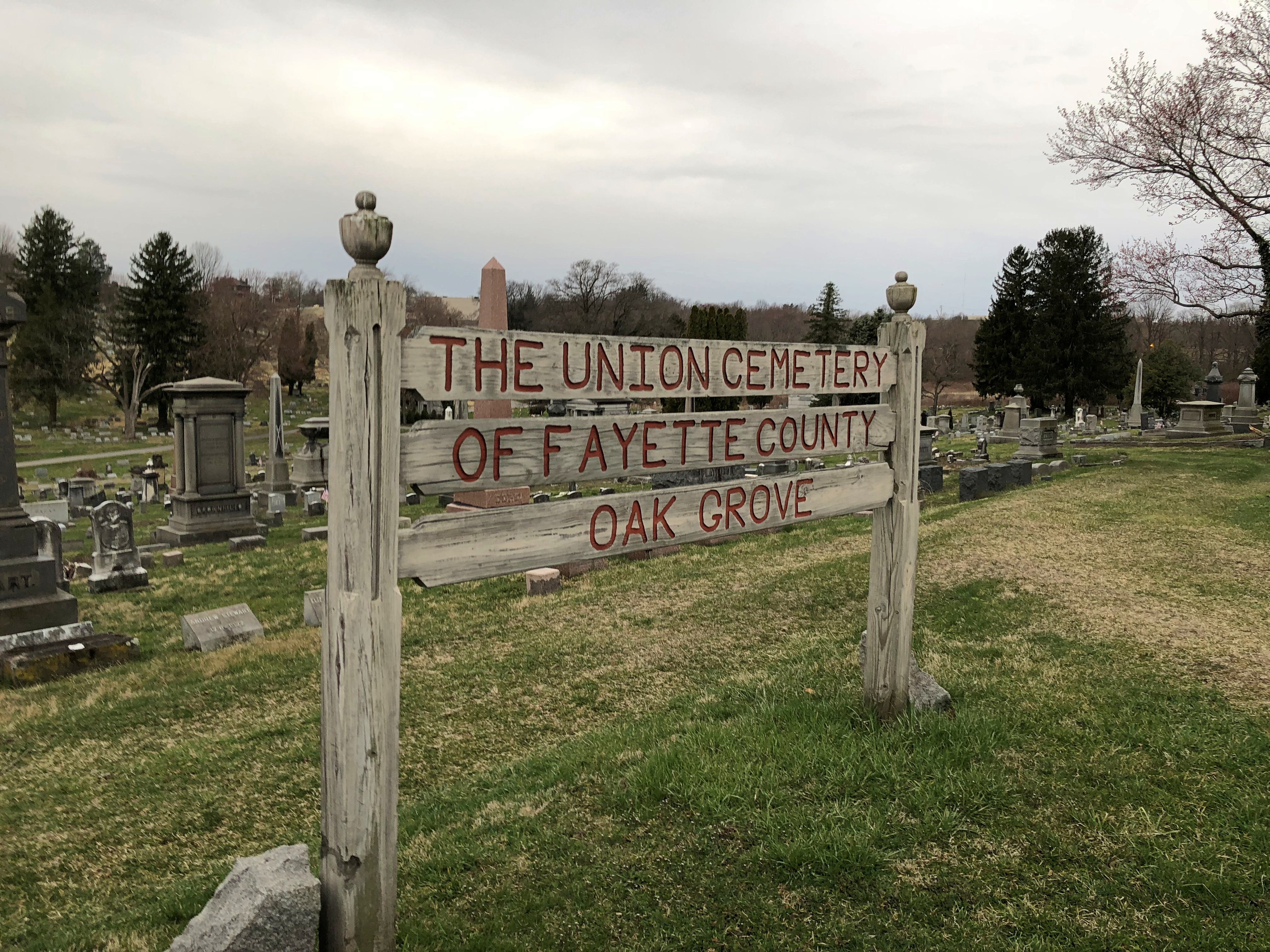
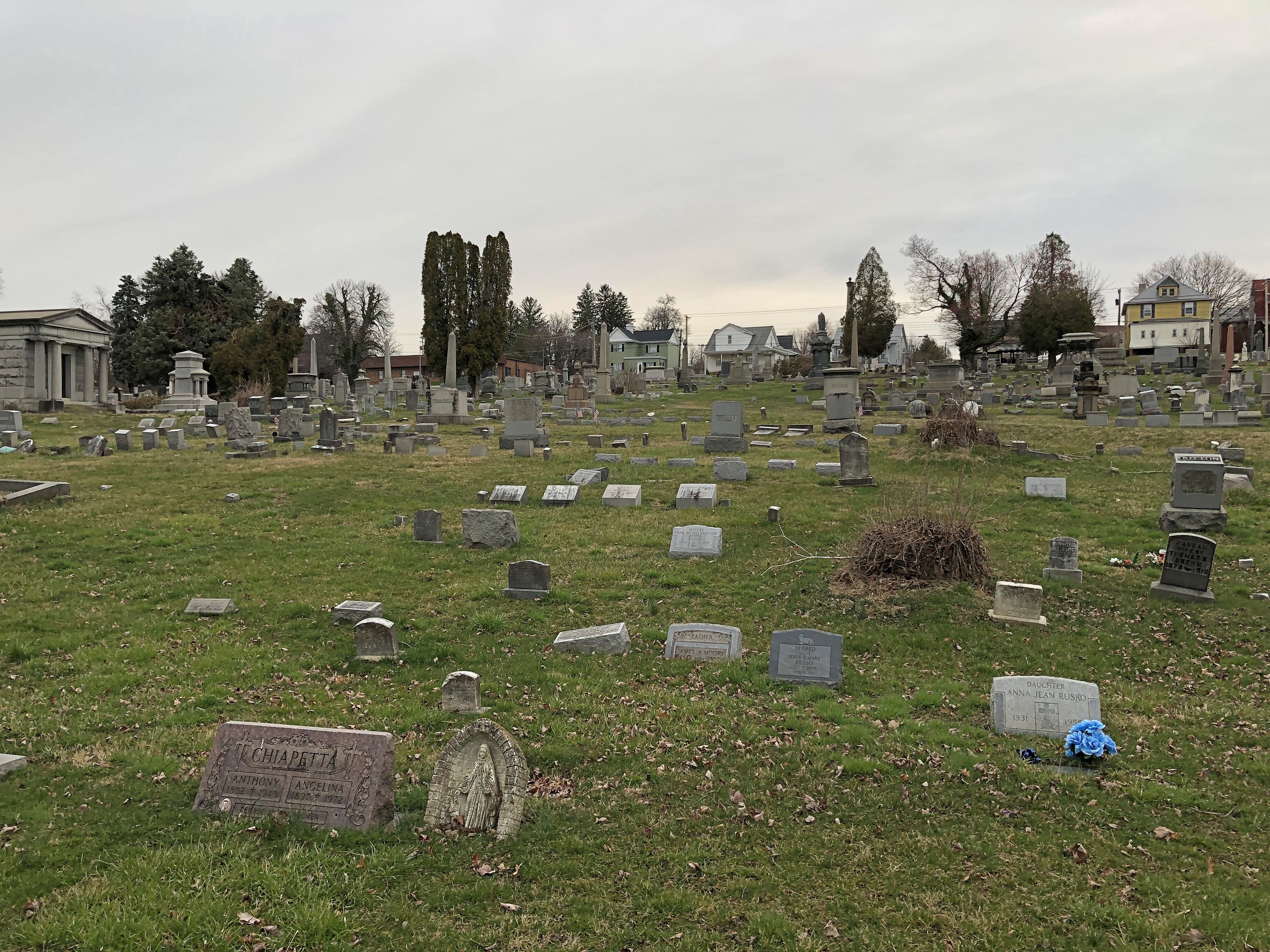
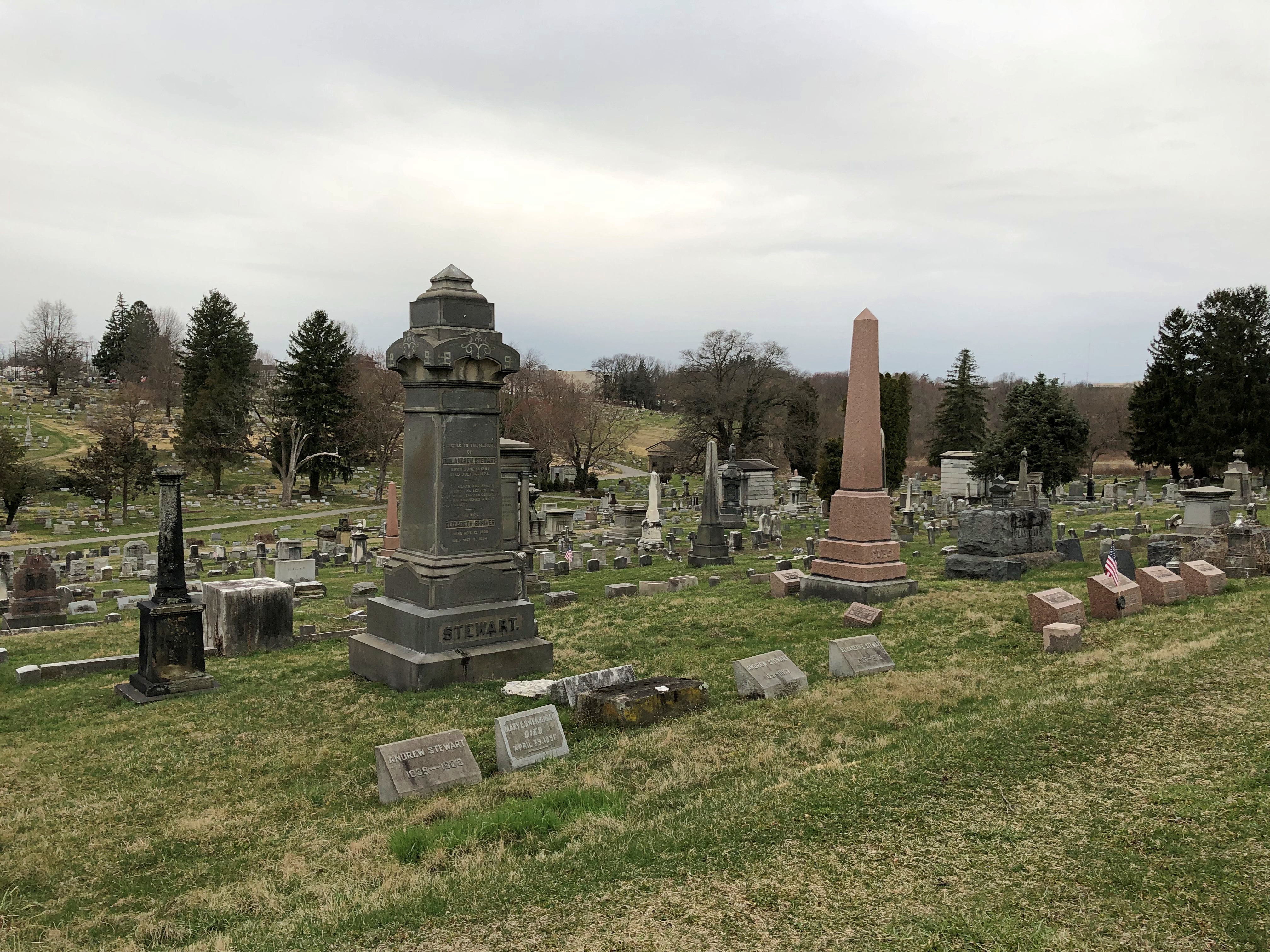
In Uniontown itself, I stopped by briefly at Oak Grove Cemetery, originally the Union Cemetery of Fayette County, which has been accepting permanent residents since 1867.Oak Grove, Uniontown
Oak Grove, Uniontown Oak Grove, Uniontown

Famed permanent residents? I checked with Find-A-Grave (just now), and the pickings are slim: mostly forgotten members of the U.S. Congress, though there is a Civil War officer, Silas Milton Bailey (d. 1900). I just made his acquaintance. Quite a story. Uniontown jeweler in civilian life; solider that didn’t let getting shot in the face keep him from action for long.

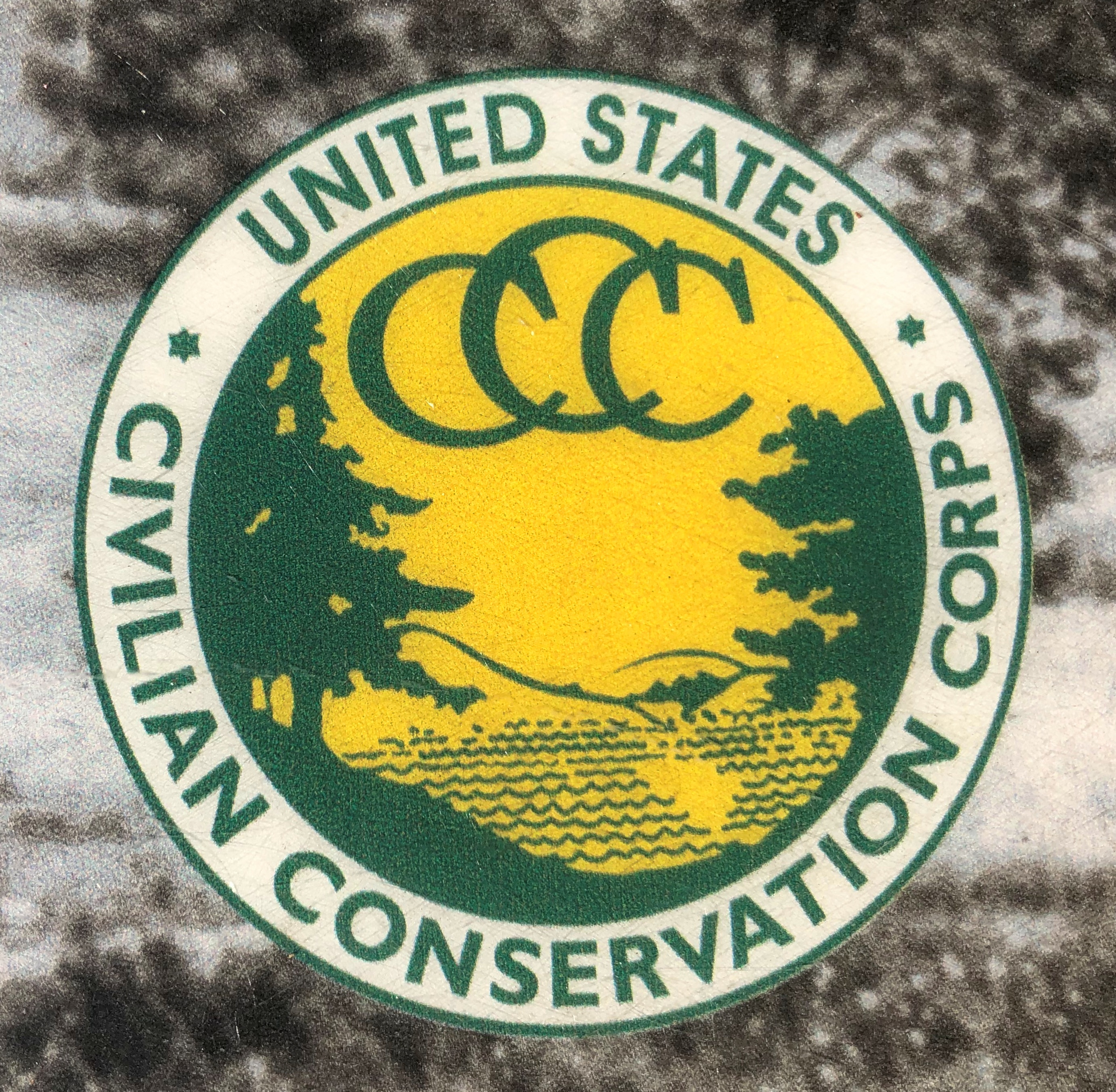
Fort Necessity is just off U.S. 40 and thus the National Road. Something I noticed there, featured on a park service educational sign. Of course. How could they not be involved?

The camp, Pennsylvania SP-12, existed from 1935 to ’37, with about 800 men, planting trees and laying out trails and roads. This is the first time I’ve seen the CCC seal depicted at any of its sites, though of course the men sometimes rate bronze recognition. There is evidence that the seal dates back to the active period of the corps.

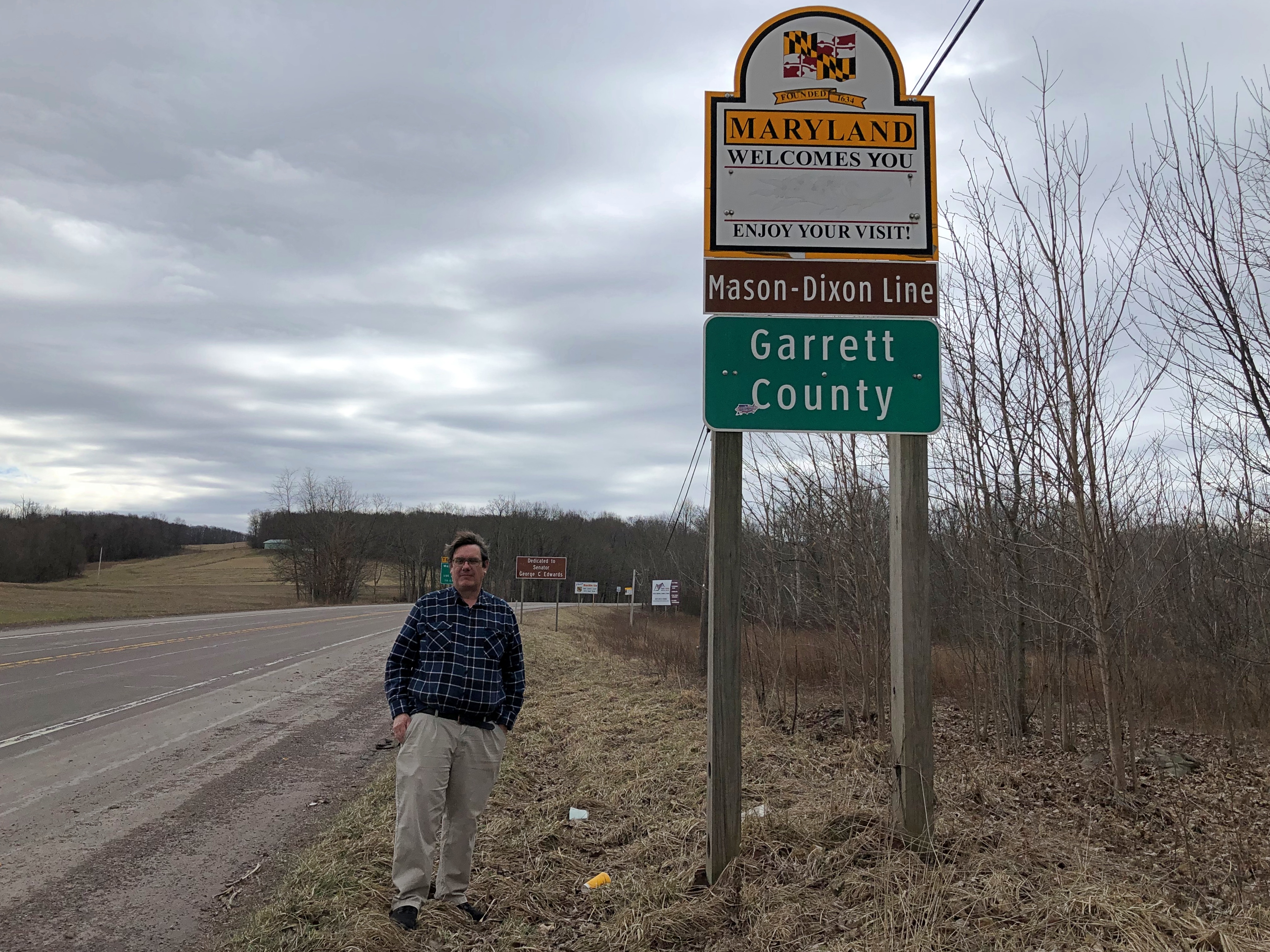
Just as we left Pennsylvania for the last time, I was able to stop at the border with Maryland on U.S. 219, just south of Salisbury, Pa. Not just any border, but the Mason-Dixon Line. It’s one thing to cross it, as I have who knows how often. It’s another thing, according to my eccentric lights, to stand on it.Mason-Dixon Line

Yuriko had never heard of it. I explained a little about its history and its wider but not quite literal meaning as a line between free and slave, North and South, but she didn’t find it all that impressive.

Here, Here, Some Beer

Friends were over on Saturday for meat, beer and conversation on the deck, despite rain that morning. By mid-afternoon, the deck was dry enough to sit around.

We had more meat and conversation than beer, though there were a few empty bottles left over afterward, as there have been before. And before that.

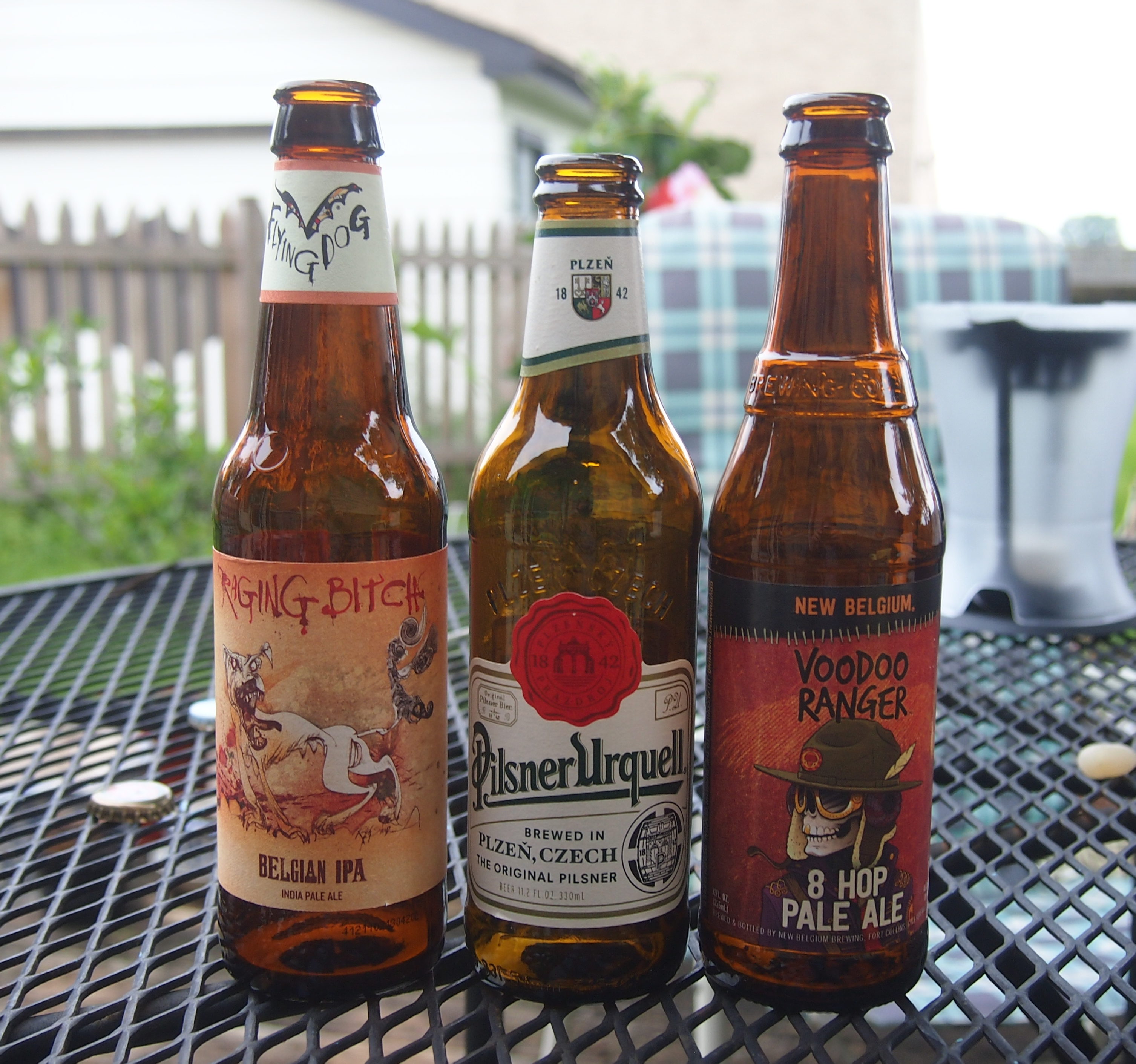
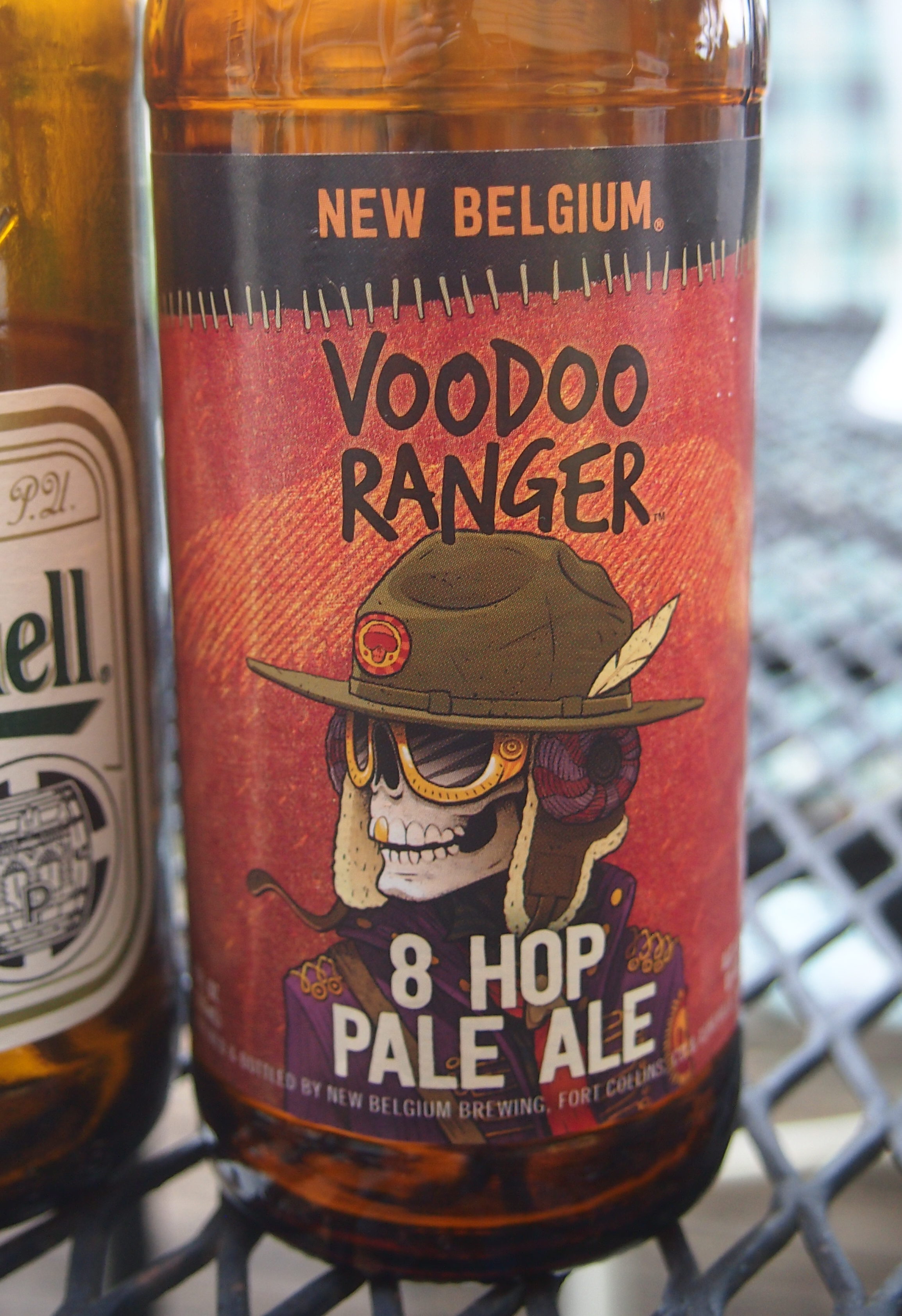
I acquired a “flight” of beers before the event at an area grocery store with a beer cave, and these are three of them. As usual, my beer-buying technique was to look for a variety of states and countries of origin, and interesting labels.

Raging Bitch was the hit among the beer names. Its acid-trip Ralph Steadman artwork was remarked upon as well.
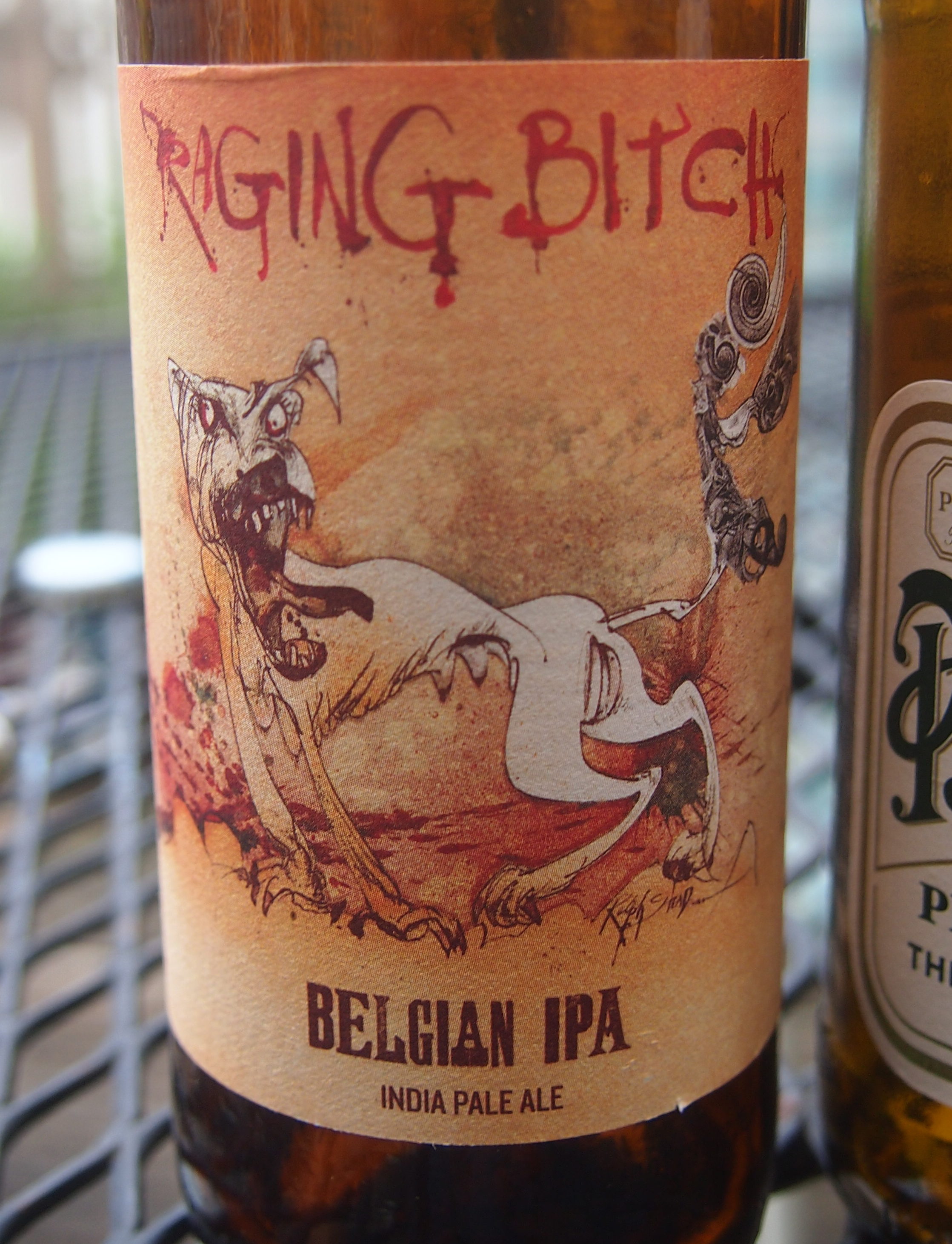
A product of the Flying Dog Brewery in Maryland. Later, I read the marketing blarney on the bottle, attributed to Steadman. It’s pretty good:

“Two inflammatory words, one wild drink. Nectar imprisoned in a bottle. Let it out. It is cruel to keep a wild animal locked up. Uncap it. Release it… stand back!! Wallow in its goldenn glow in a glass beneath a white foaming head. Remember, enjoying a RAGING BITCH, unleashed, untamed, unbridled and in heat is pure GONZO!!”

Gonzo, eh? Maybe if you added peyote, which we did not. Otherwise, it was reportedly  a pleasant brew.

Voodoo Ranger, by New Belgium Brewing of Colorado and North Carolina, had another amusing label.
It didn’t assert its gonzo-ness. The label did say, “Brilliantly balanced for easy drinking, this pale ale is packed with citrus and tropical fruit flavors from eight different hop varieties.”

The center beer, PilsnerUrquell from Plzeň (Pilsen), Czech Republic, had the most conventional label, appealing to a drinker’s sense of tradition. The label said:

“In 1842, the Citizen’s Brewery of Plzeň brewed the world’s first golden pilsner and never stopped. We make it in the same way in the same place, with 100% of our ingridients from the same farming regions in Czech, as always.”

Not pictured is the grapefruit shandy that I tried, which a guest brought. It went down well, but in combo with meat and another bottle of beer, I later had a rare but fortunately fleeting bout of indigestion. I’d say it was worth it, though.

Manhunt: The 12-Day Chase for Lincoln’s Killer

On Friday morning, I noticed that I could have watched the opening ceremony to the Winter Olympics via live streaming if I’d gotten up at 5 a.m. Ha, ha. I was busy about then enjoying a dream about something or other. Then I forgot to watch any of the replay on regular TV, maybe because NBC’s treatment is always tiresome.

Considering that today is Lincoln’s birthday, it’s fitting that I picked up a book about him — partly about him — on Saturday at a resale shop, and started reading it as soon as I got home. But I wasn’t thinking about that coincidence when I bought the book. It didn’t occur to me until this morning.

The book is Manhunt, subtitled “The 12-Day Chase for Lincoln’s Killer,” by James L. Swanson (2006). I liked it from the beginning, namely “A Note to the Reader,” on page viii.

“This story is true. All the characters are real and were alive during the great manhunt of April 1865. Their words are authentic. Indeed, all text appearing within quotation marks comes from original sources: letters, manuscripts, affidavits, trial transcripts, newspapers, government reports, pamphlets, books, memoirs, and other documents. What happened in Washington, DC, in the spring of 1865, and in the swamps and rivers, and the forests and fields, of Maryland and Virginia during the next twelve days, is far too incredible to have ever been made up.”

In a case like this, I’d guess a surfeit of information and sources would be the writer’s challenge, rather than missing puzzle pieces. Among 19th-century crimes, Lincoln’s murder might well be the best documented.
So far Swanson seems up to the challenge. Even though I know a fair amount of the story, and have read other books about the assassination (e.g., The Day Lincoln Was Shot by James Bishop), Manhunt is a page-turner. I spent a fair amount of Saturday night and Sunday morning turning those pages.

Though the book hews close to the facts, that doesn’t keep Swanson from occasional interesting counterfactual musings. Such as a paragraph about what might have happened had Booth’s shot missed — his derringer had only one shot, after all.

“Had Booth missed, Lincoln could have risen from his chair to confront the assassin. At that moment, the president, cornered, with not only his own life in danger but also Mary’s, would almost certainly have fought back. If he did, Booth would have found himself outmatched, facing not kindly Father Abraham, but the aroused fury of the Mississippi River flatboatman who fought off a gang of murderous river pirates in the dead of night, the champion wrestler who, years before, humbled the Clary’s Grove boys in New Salem in a still legendary match, or even the fifty-six-year-old president who could still pick up a long, splitting-axe by his fingertips, raise it, extend his arm out parallel with the ground, and suspend the axe in midair. Lincoln could have choked the life out of the five-foot-eight-inch, 150-pound thespian, or wrestled him over the side of the box, launching Booth on a crippling dive to the stage almost twelve feet below.”

Also intriguing are the walk-on characters. Walk-on from the point of view of the main story, since no one is a walk-on in his or her own life. Such as “John Peanut,” the man — or teen — who worked as a menial at Ford’s Theatre and who held John Wilkes Booth’s horse in the alley behind the theater while the actor went off to become an assassin. Booth had asked Ford’s Theatre carpenter Ned Spangler to do so, but he fobbed the job off on “John Peanut,” who might have been named John or Joseph Burroughs or Burrows.

A little more information about this person is here, for what it’s worth. A Lincoln assassination buff named Roger Norton says, “I believe the best Lincoln assassination researchers in the world tried to find out what became of him, but nobody could succeed. The trail ends with his appearance at the trial. Mike Kauffman has suggested that his name was actually Borrows (sp?). Nobody knows his exact age in 1865 as far as I know, but ‘teens’ is a logical assumption.”

So there’s plenty in Manhunt to keep me interested. It’s become an express train blowing by the other books I’m reading at the moment: Trotsky: Fate of a Revolutionary, The Crossing (Cormac McCarthy) and a collection of Orwell’s essays, which is a re-read after a few decades.