First State, Last State

The Avalon Project, run by Yale Law School, has a remarkable trove of “documents in law, history and diplomacy,” as the site says. If you’re looking for a translation of the Code of Hammurabi or the Athenian Constitution, there are links. You can also find the annotated text of Magna Carta, the Mayflower Compact, and the many founding documents of the United States, just to mention some of the more famous ones.

If you’re after something less well known, try The Combinations of the Inhabitants Upon the Piscataqua River for Government, October 22, 1641 or Money and Trade Considered With a Proposal for Supplying the Nation with Money by John Law 1705 or Agreement Concerning Trade-Marks Between Brazil and the United States (1878).

Also within the Avalon Project is the text of the Ratification of the U.S. Constitution by the State of Delaware, December 7, 1787. To wit:

We the Deputies of the People of the Delaware State, in Convention met, having taken into our serious consideration the Federal Constitution proposed and agreed upon by the Deputies of the United States in a General Convention held at the City of Philadelphia on the seventeenth day of September in the year of our Lord one thousand seven hundred and eighty seven, Have approved, assented to, ratified, and confirmed, and by these Presents, Do, in virtue of the Power and Authority to us given for that purpose, for and in behalf of ourselves and our Constituents, fully, freely, and entirely approve of, assent to, ratify, and confirm the said Constitution.

Delaware ratified before any other state, and so claims “First State” as its nickname. I have my own private nickname for Delaware. At least I do now, since waking up on the morning of October 25 in my rented room in Dover: “Last State.” As in, the 50th state I’ve spent the night in. That isn’t an achievement of any kind, just a reflection of the fact that I’ve been fortunate enough to have the time and resources necessary to go that many places. Also, that I’m eccentric enough to keep track.

After dallying in Concord on the 23rd, and spending some time in Attleboro, Massachusetts, I arrived in East Providence, Rhode Island for the night. The point of that stop was entirely to spend the night in Rhode Island, since I’d never done that either. So RI was number 49. My hotel was just barely in that state.
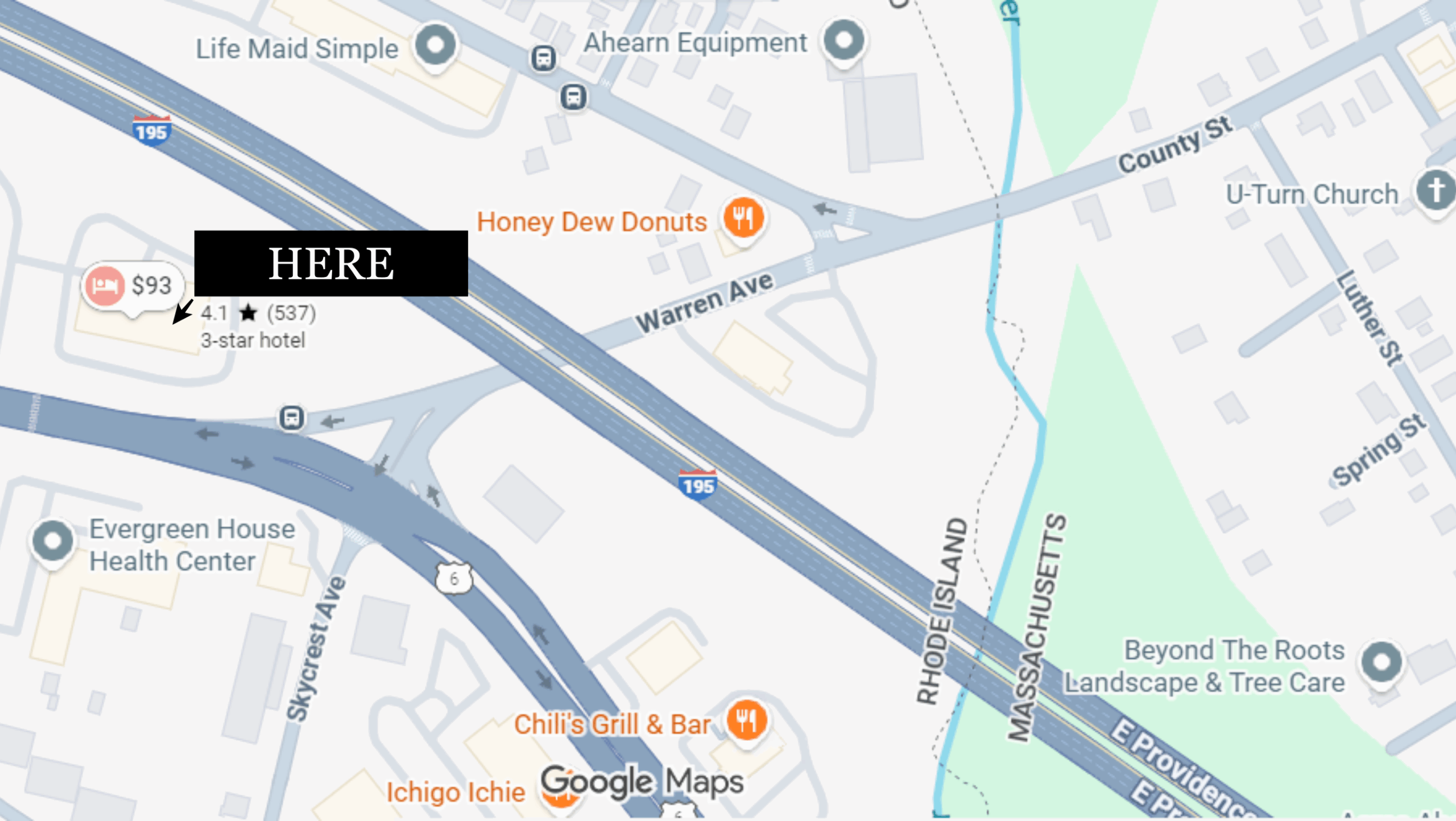
I noticed the Honey Dew Donuts even closer to the border. I’d seen other locations driving in. The breakfast at my “3-star” hotel was meager, so I went to Honey Dew for a second breakfast. I wish I could say I’d discovered a great regional doughnut shop along the lines of Tim Horton’s, but it was only OK. Maybe I’ll give the brand another chance sometime.

Since I’d wanted to go from eastern Massachusetts to central Delaware, I should have broken that day’s journey somewhere in New Jersey. But that wouldn’t have involved stopping for the night in Rhode Island, which had been a short stop back in the summer of ’91 – a few hours to look around Providence, and especially the capitol – and the destination of a day trip in ’95, to Newport.

As for Delaware, my entire previous experience with the state was the Wilmington interstate bus station, a break in a bus ride from Washington DC to Boston, which was a leg of the Great Bus Loop of 1982. I’m not even sure I got off the bus, though I usually did when it stopped for long enough.

Getting to Delaware last month involved an aggravating day’s drive, mostly on I-95, spending a lot of time in traffic jams. Counting the cars on the New Jersey Turnpike, bah: more than grains of sand on a beach or stars in the sky.

Even so, there were a few worthwhile moments. I finally got to see (from the turnpike) the enormous American Dream mall, adjacent to the Meadowlands Sports Complex. Reportedly now second largest in the nation, after only the Mall of America. I’d been reading about American Dream for years, since “chronic delays” always figured in real estate reporting on the project, but now it’s more or less complete. (If the developers had asked me, they’d have kept the much cooler earlier name: Meadowlands Xanadu.)

At the Vince Lombardi Service Area on the NJ Turnpike, I parked in the very large parking lot and headed for the very large building and its very large men’s room. As I walked along, a small group of Hasidim went around me, not running but at a brisk pace, headed the same direction. By the time I got to the bathroom, they were almost done with their business, and off they went. Nothing unusual about seeing Hasidim, certainly not in New Jersey, but I have to note that October 24 was a Friday, and it was mid-afternoon. So they were racing the clock. Or, more accurately, the sun.

A digression: service areas on the New Jersey Turnpike and the Garden State Parkway are named for famed New Jerseyans. A list is here. I suppose it’s fine that musicians such as Frank Sinatra, Whitney Houston, Jon Bon Jovi and Celia Cruz are honored, but where’s Bruce Springsteen? It isn’t a matter of posthumous naming, since Bon Jovi is still alive – as is Bruce Willis, who also gets an area, and Connie Chung, who does as well, though she isn’t actually from New Jersey. The ways of the NJ Turnpike Authority are mysterious.

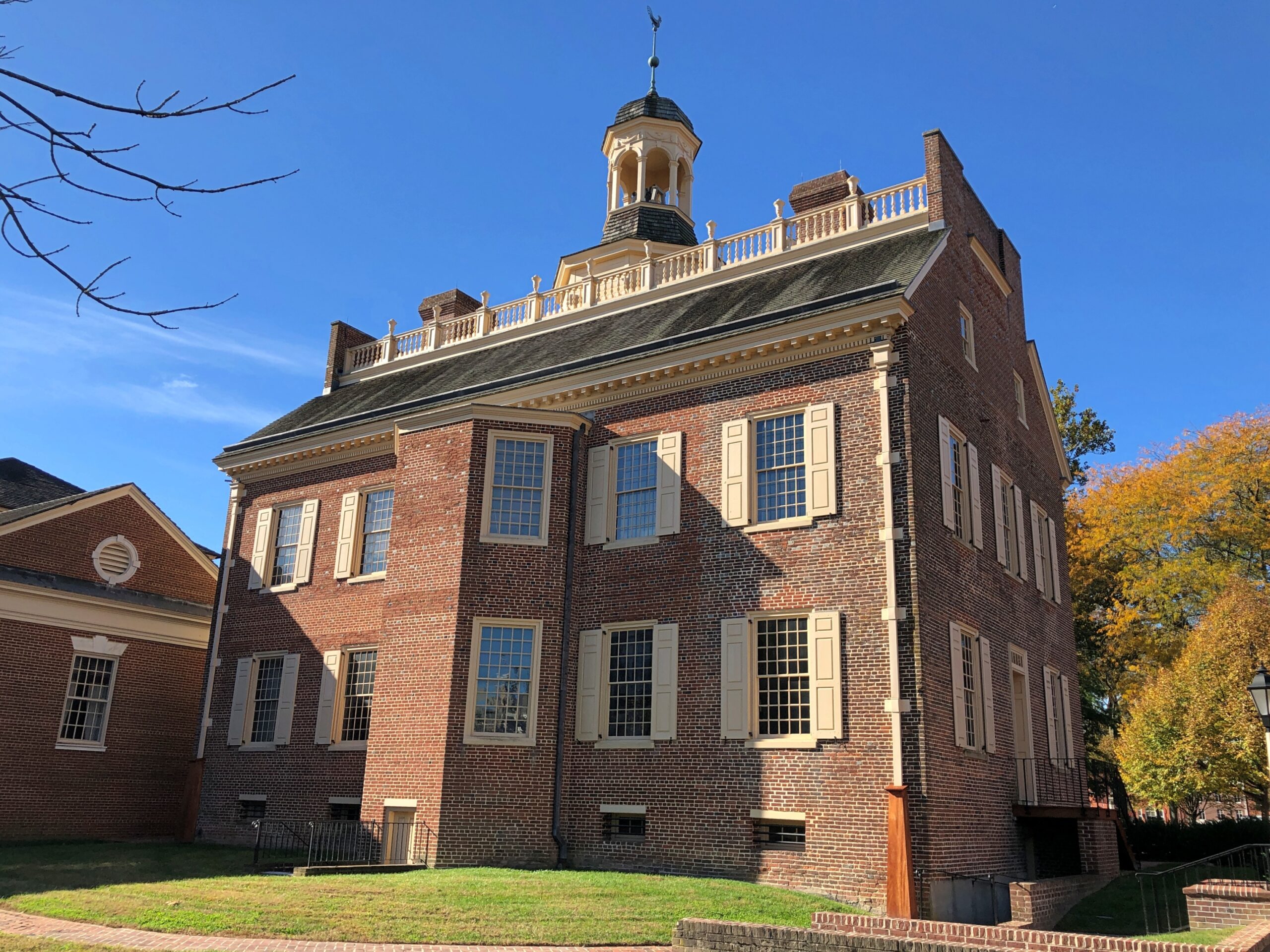
I arrived in Dover late on the October 24. The next morning, a Saturday, I left fairly early. First stop: the Delaware State House. It was closed for the weekend. My reaction: what kind of Mickey Mouse operation is this? I got a good look at the exterior, at least.
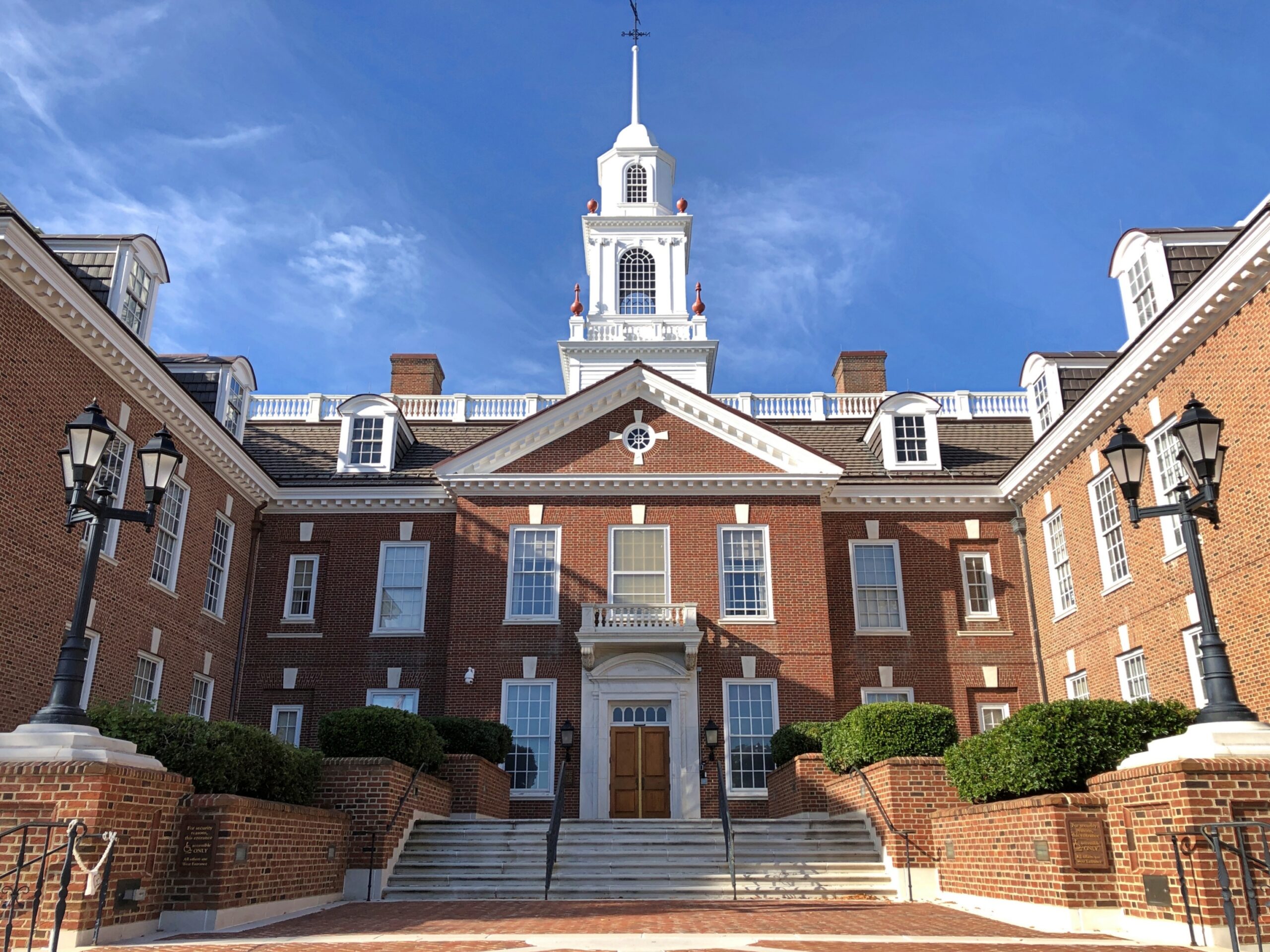
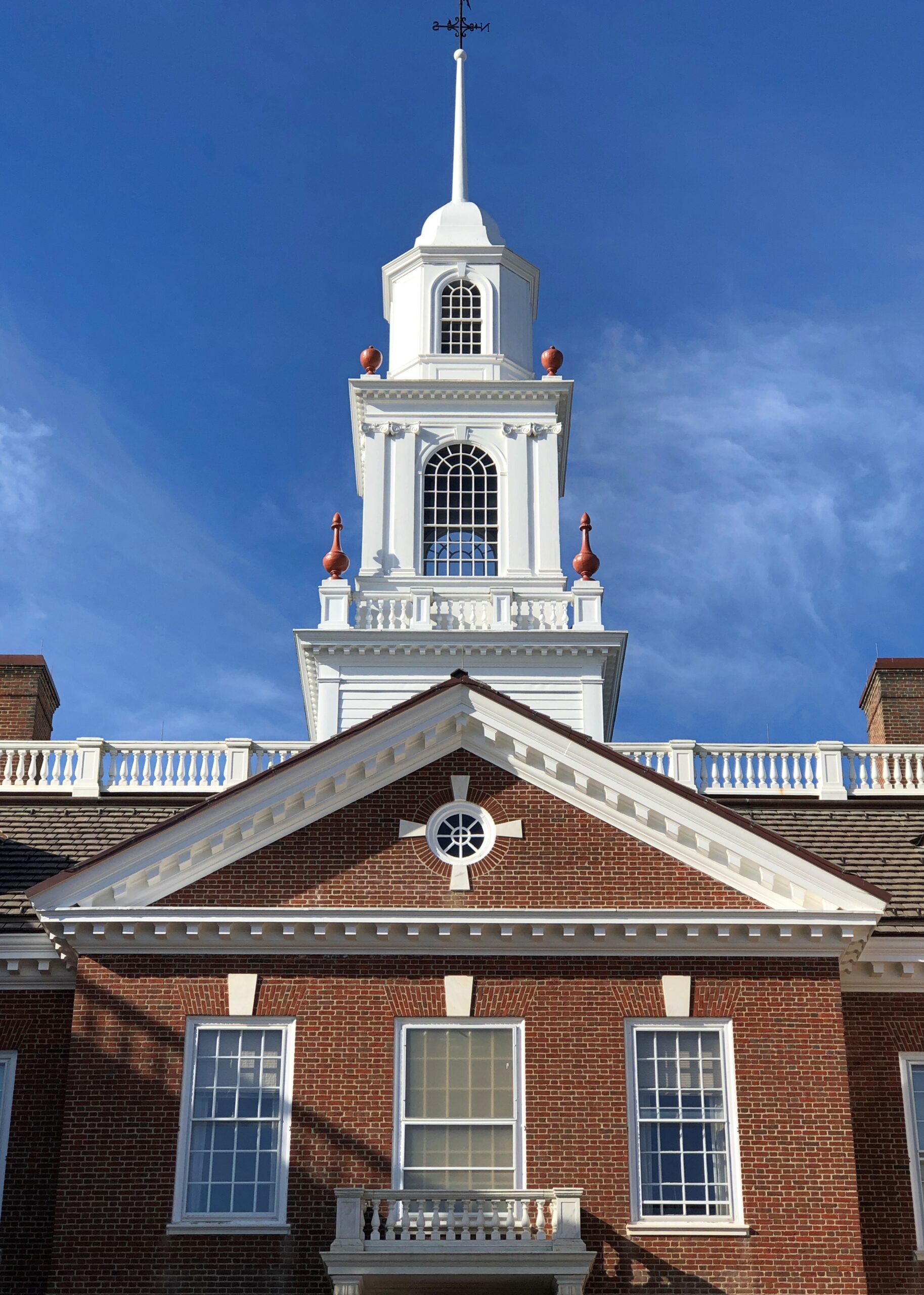
Delaware State House

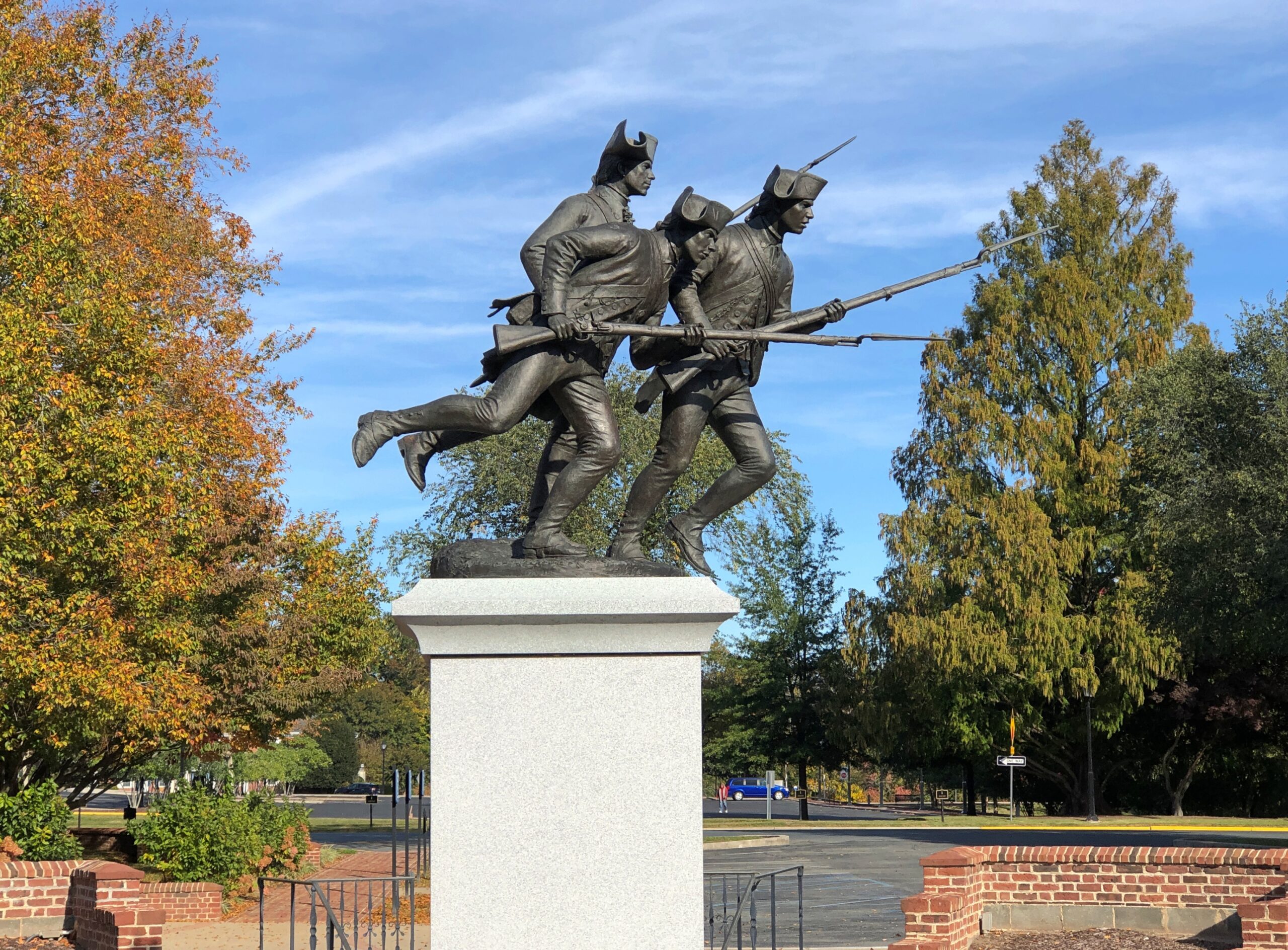
A fairly new sculpture, in front of the capitol: The Delaware Continentals.
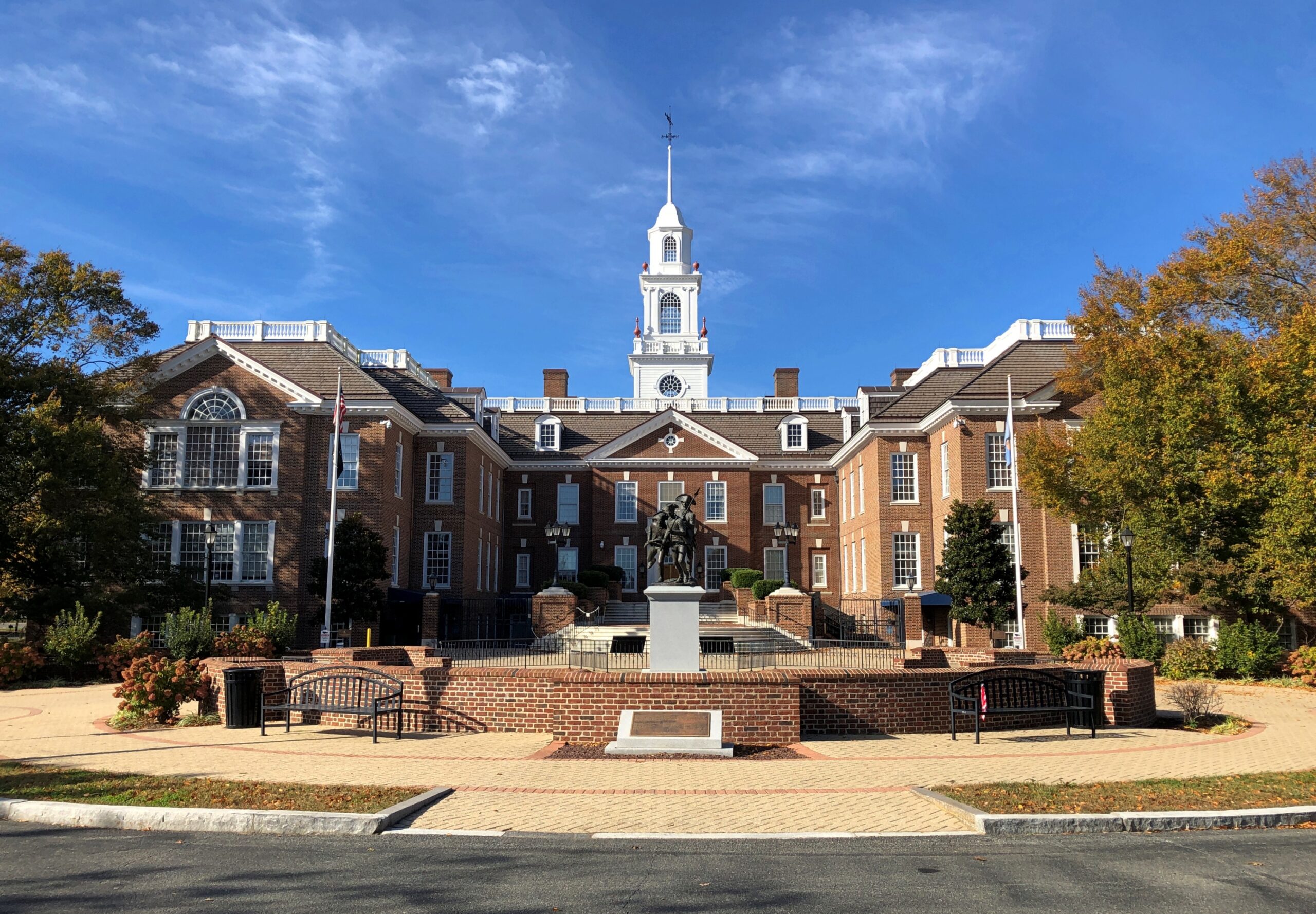
Delaware State House

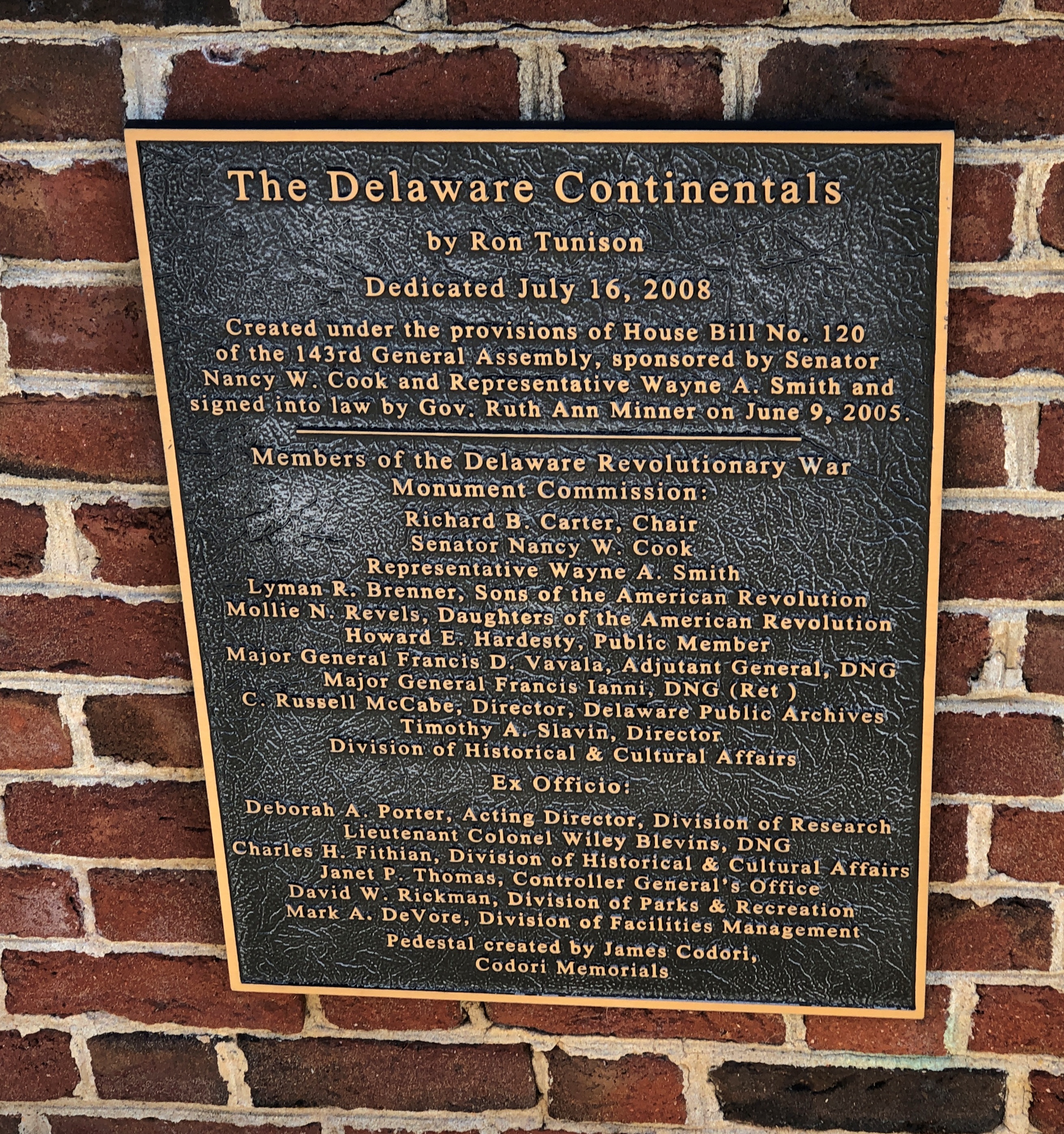
The plaque is long on functionaries’ names, short on information about the Delaware Continentals. An historic plaque up in Wilmington says of them:

Commanded by Colonel John Haslet, the Delaware Regiment consisted of more than 500 battle-ready troops when they marched northward to join the Continental Army in August 1776. After expiration of enlistments and Haslet’s death, the Regiment was reorganized in the winter of 1776-77 under the leadership of Colonel David Hall. Participants in many of the major battles of the Revolution, their conduct earned the praise of their superiors and the respect of their enemies. Forced to endure great hardship, the Regiment was widely acclaimed for its discipline and bravery. Greatly depleted in number, they returned to Delaware victorious in January 1783.

That was hardly the end for the regiment. The 198th Signal Battalion in the Delaware Army National Guard traces itself directly to the Delaware Regiment.

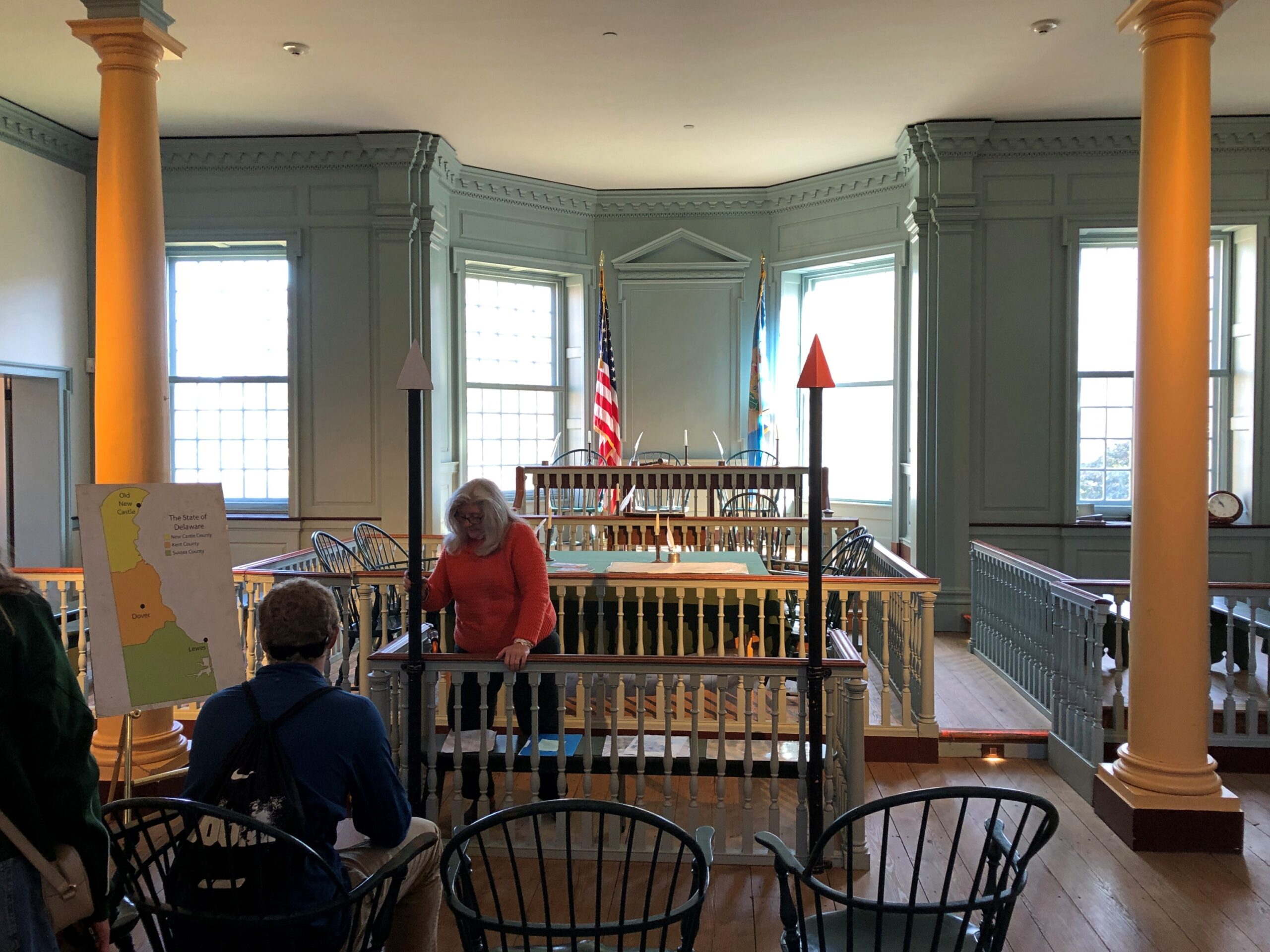
Not far from the current capitol is the former state house, now a museum. It was open.
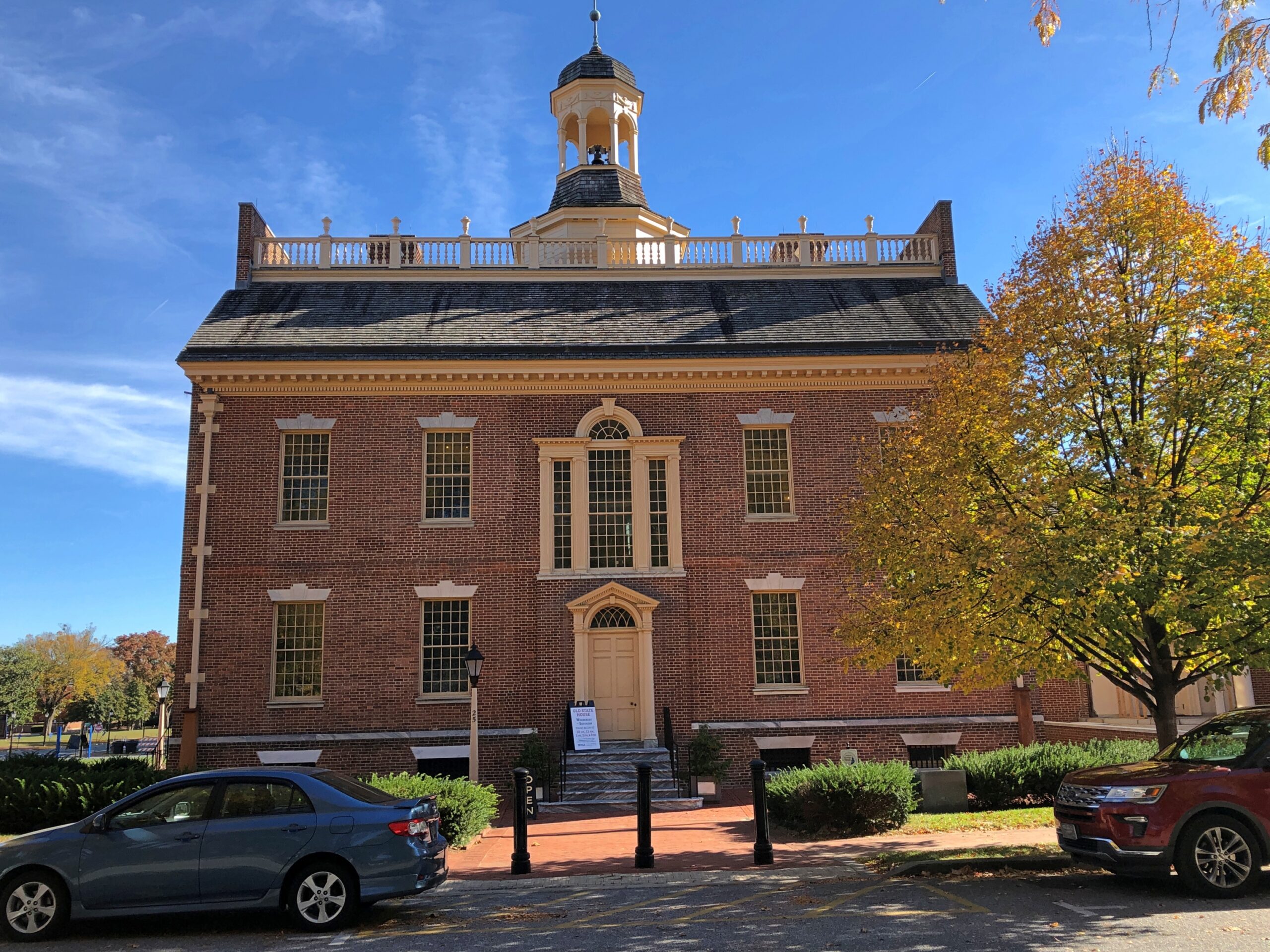
Old Delaware State House

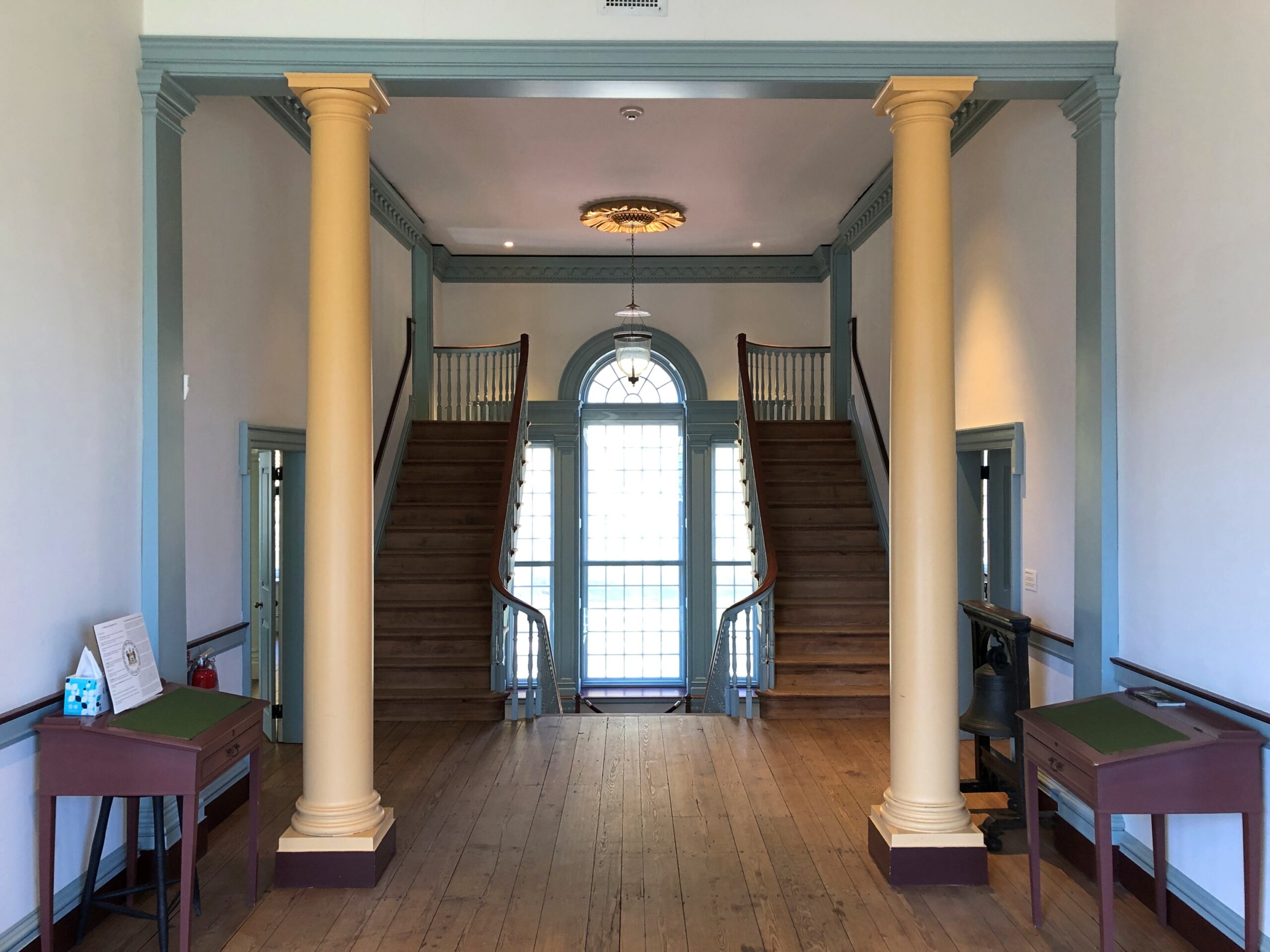
In fact, I got a tour.

Old Delaware State House

I was happy to learn that here, in this very room, the delegates to the Constitutional ratifying convention met, and made their quick and unanimous decision.
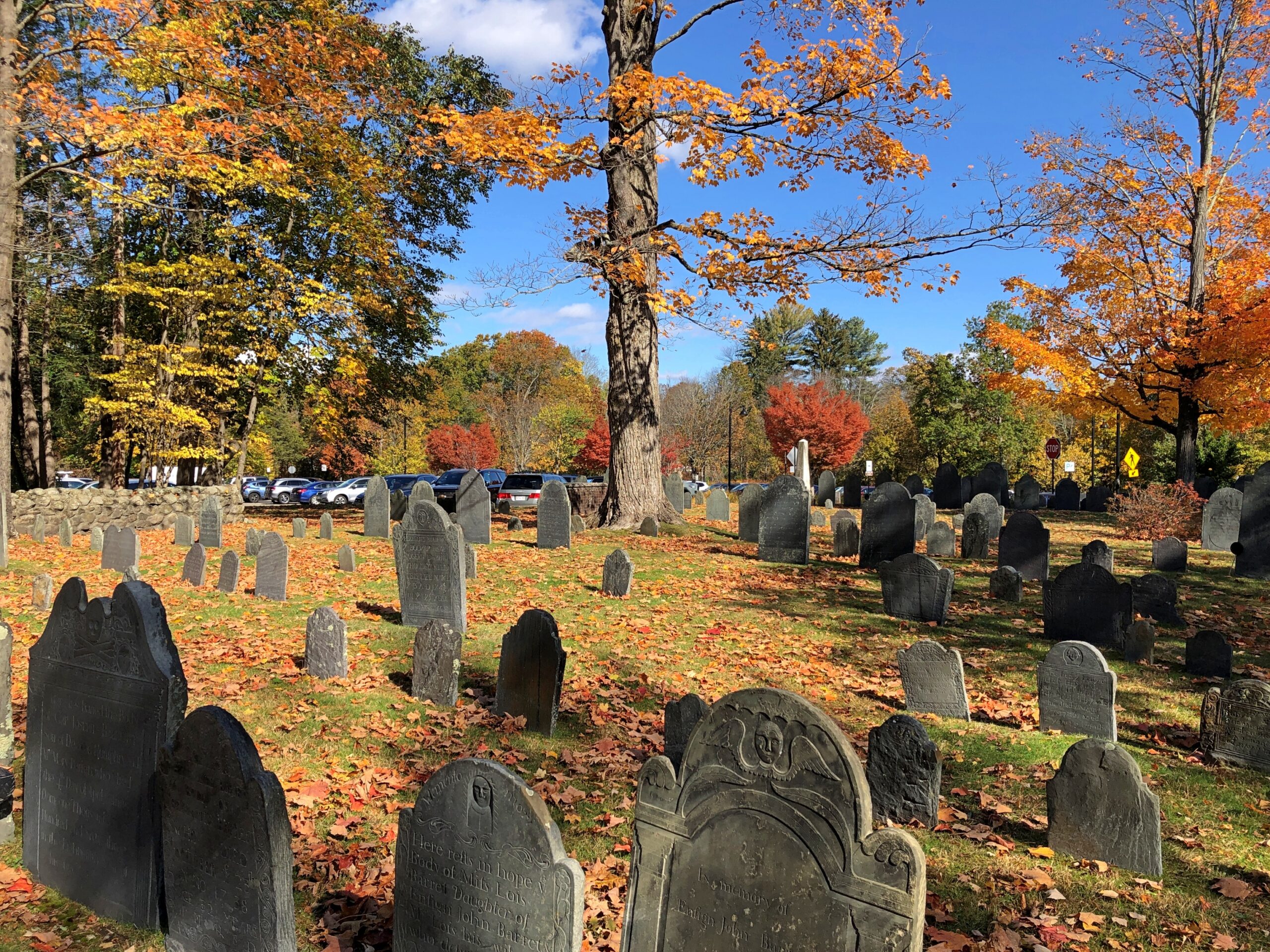
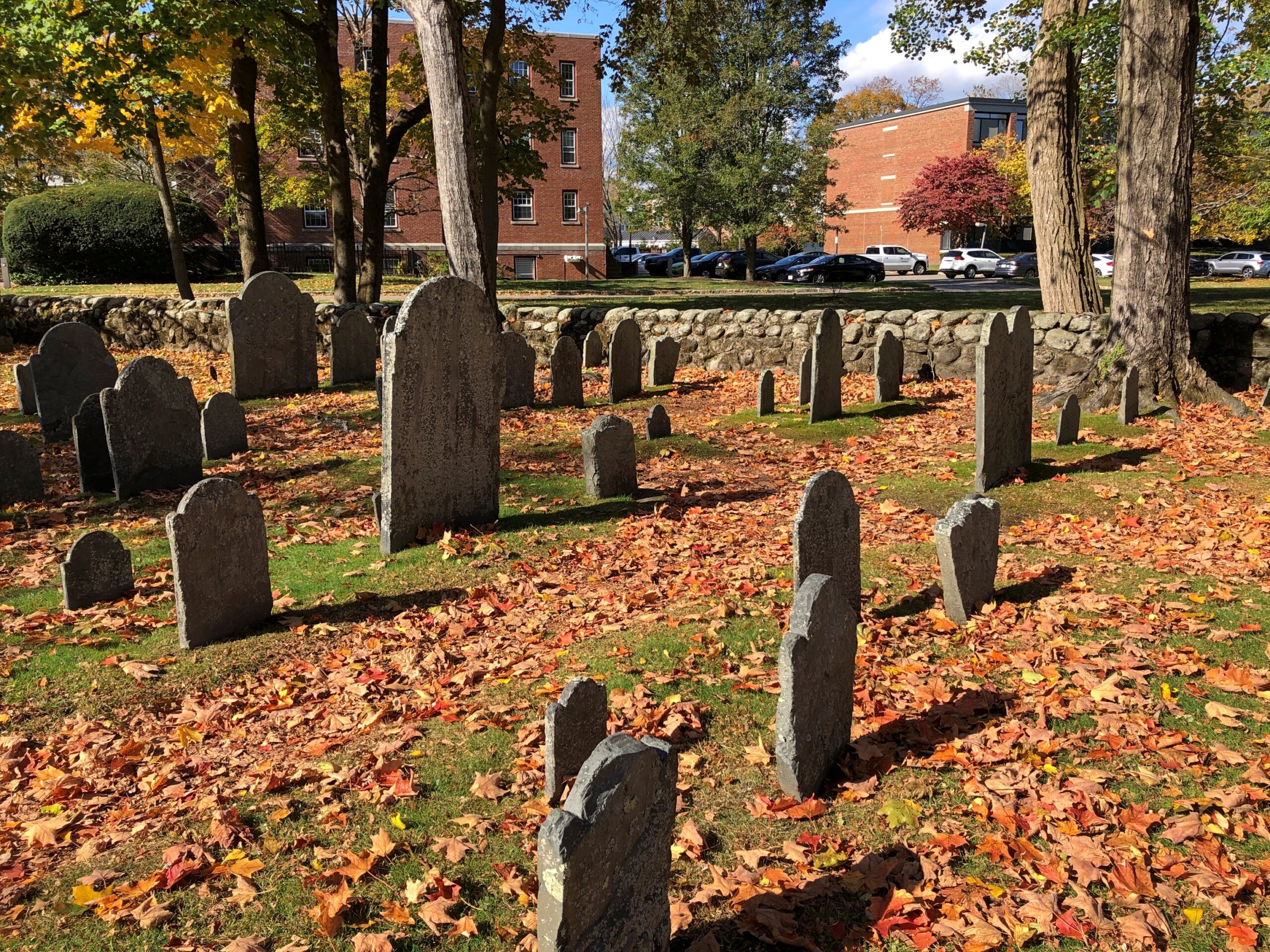
Sleepy Hollow Cemetery, Concord

Concord naturally follows Lexington. That’s just the way it is. I made the short hop between Lexington and Concord on the morning of October 23, ahead of the day’s ultimate destination in Rhode Island. The first thing I needed to know was the status of the men’s room at the Concord Visitor Center, there on Main Street. I’m glad to report I didn’t run into any “closed for the season” nonsense.

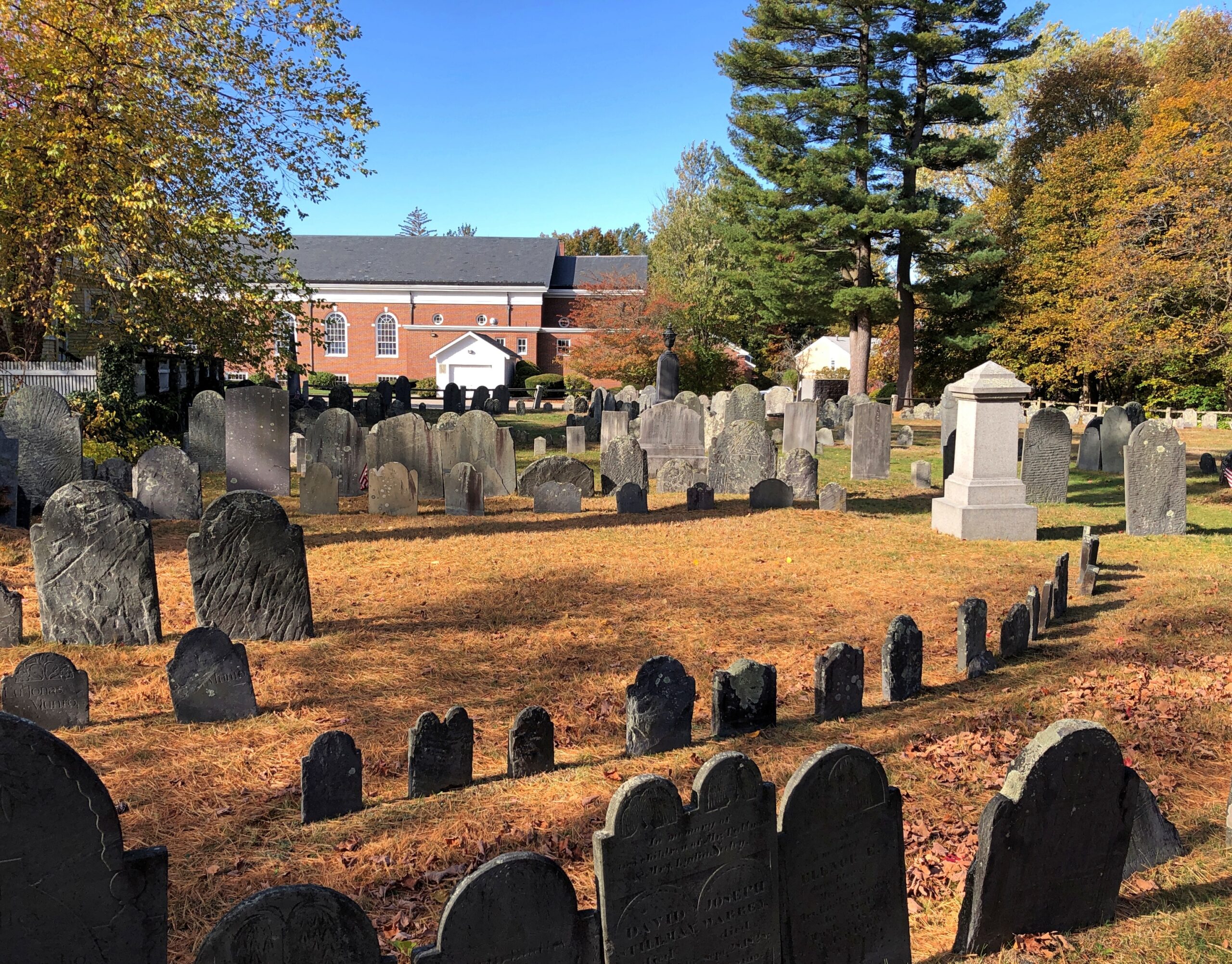
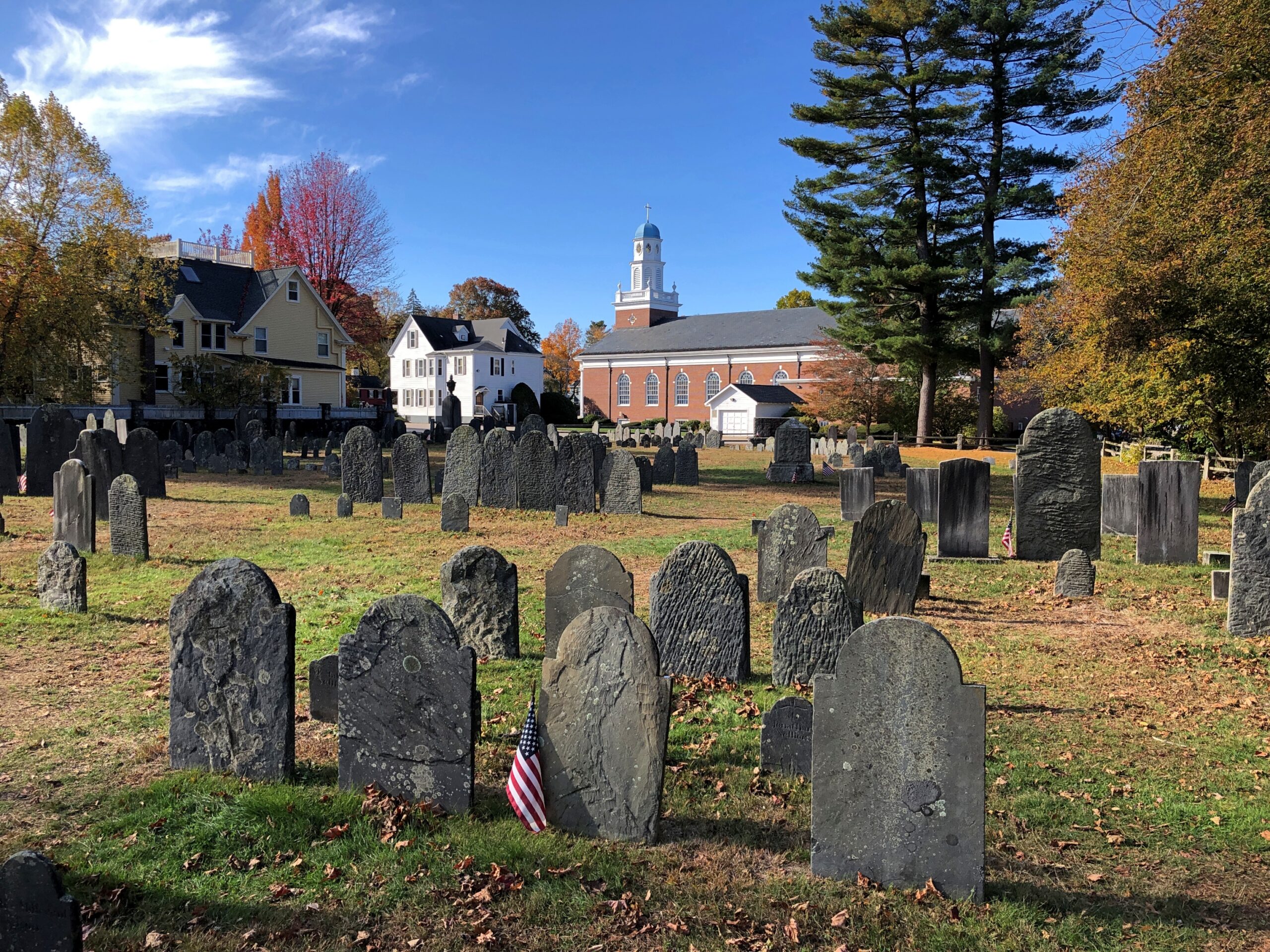
I can also report that the South Burying Place is half a block away, an irregular slice of land wedged between Main, a side street, and some basic apartments.

South Burying Place
South Burying Place

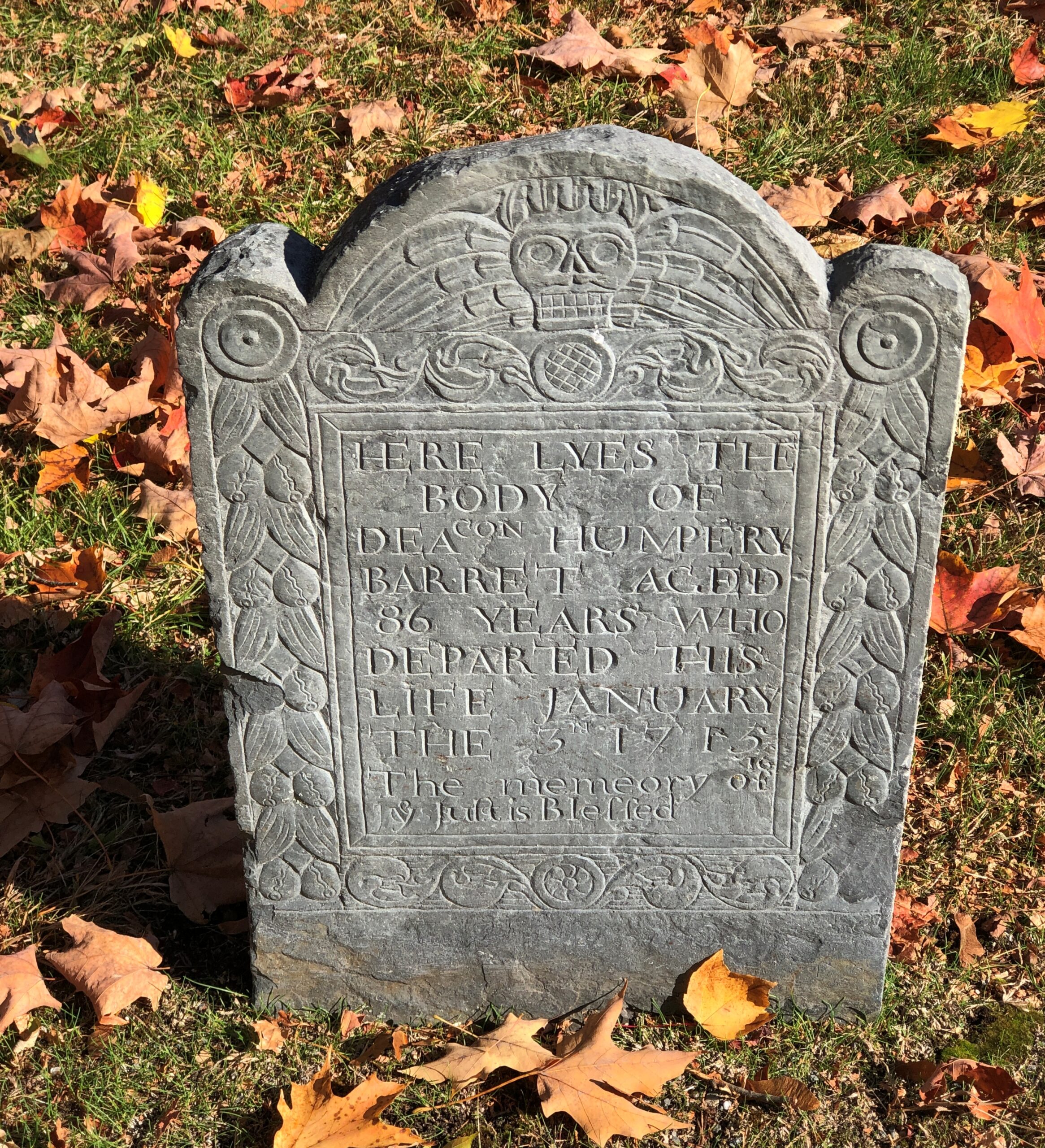
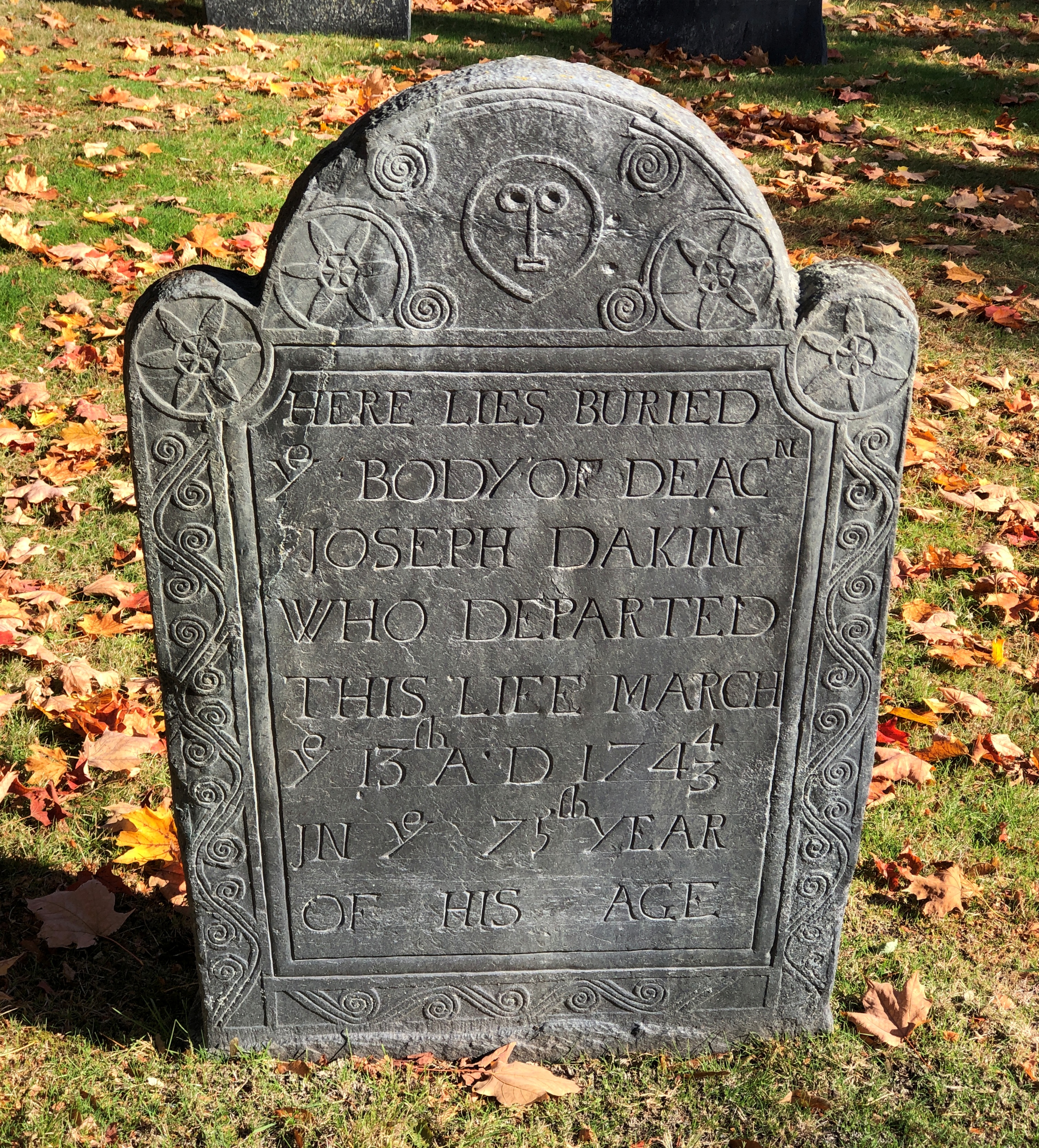
Notably similar in style to Lexington, and why would they be any different?

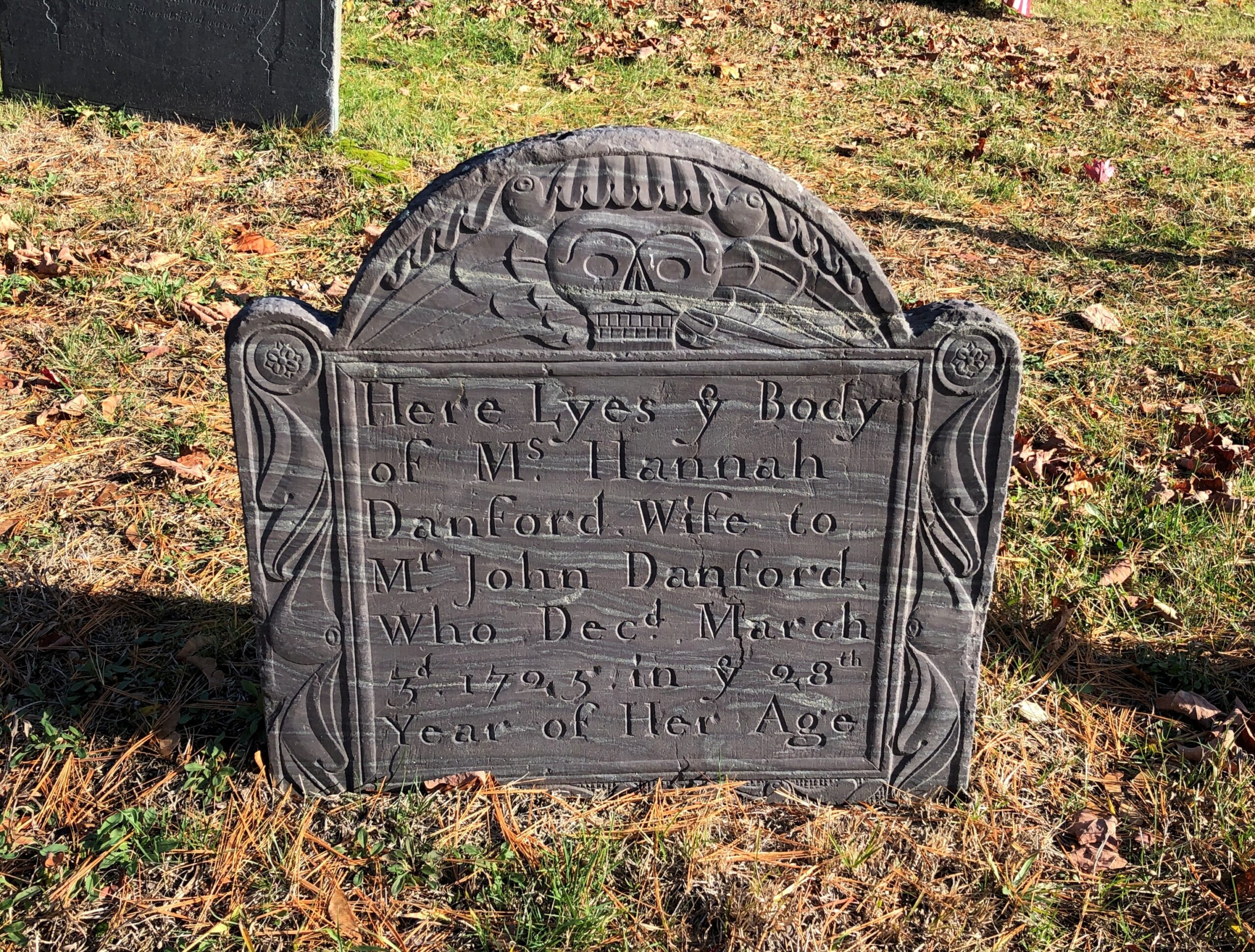
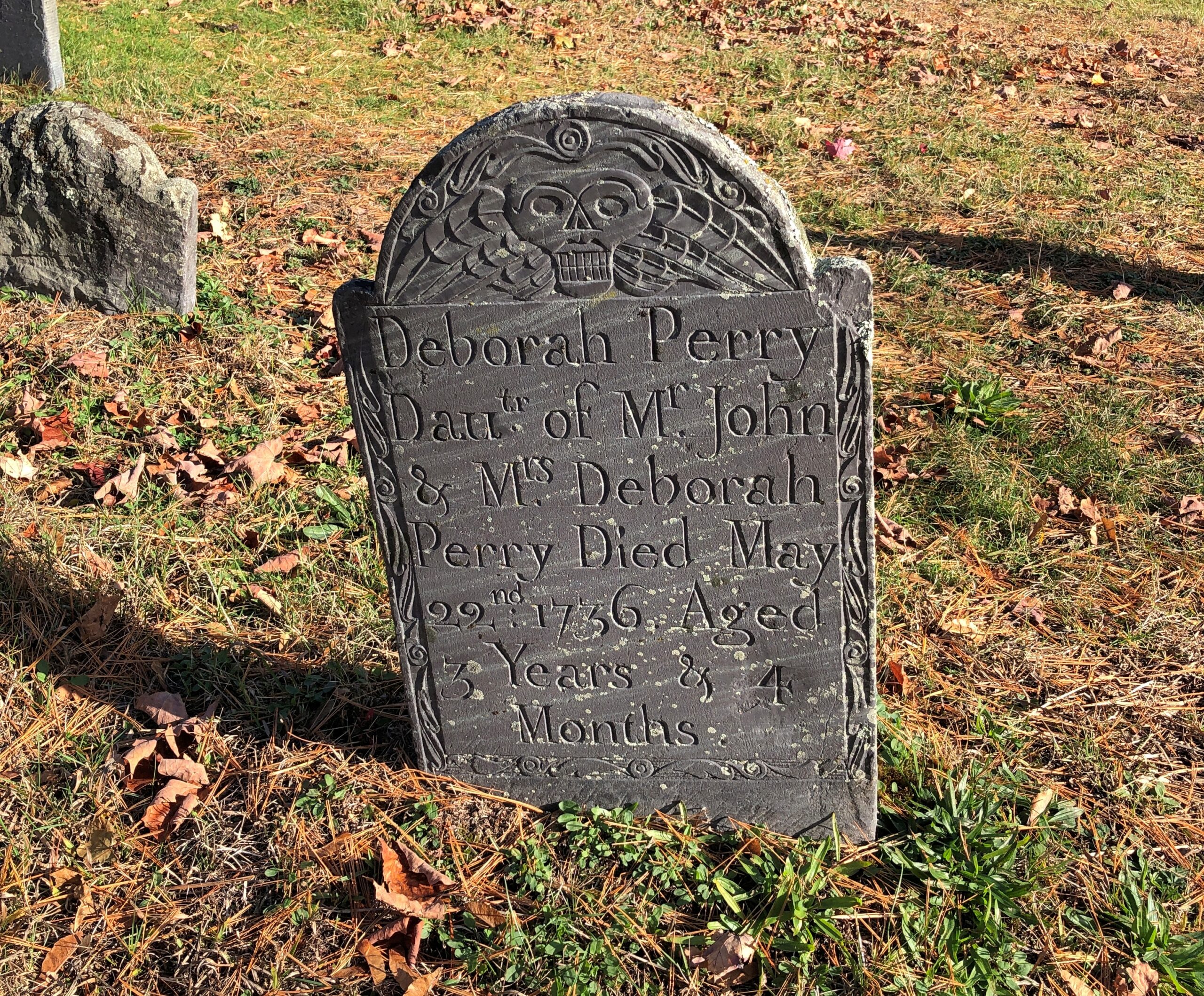
South Burying Place
South Burying Place

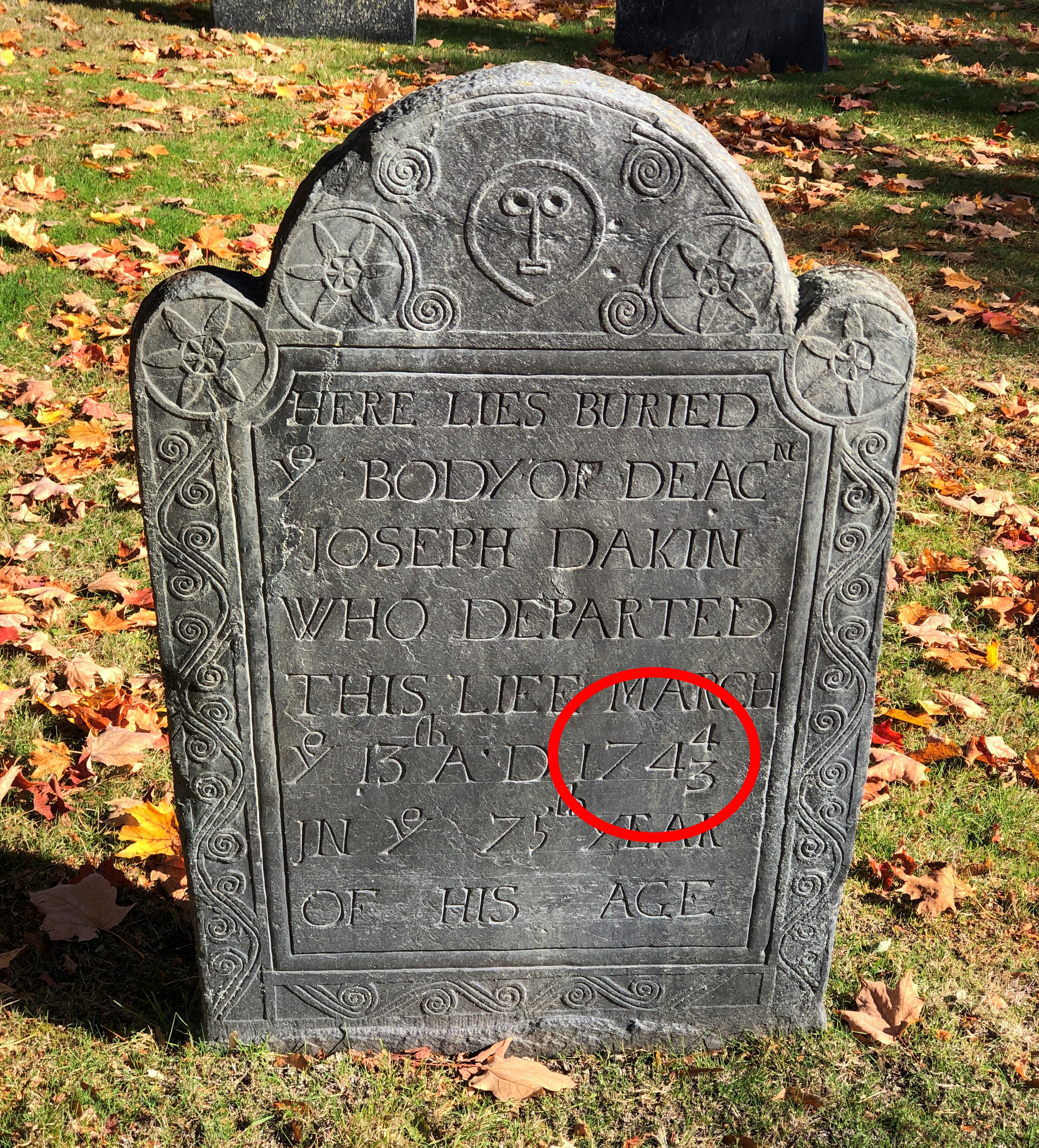
One detail on the latter stone caught my attention. It took me a few minutes to work it out.

South Burying Place

Deacon Joseph Dakin happened to depart this life on March 13, 1744/3. Ahead of the British switch to the Gregorian calendar in 1752, there were competing ideas of when New Year’s Day should be: January 1 or March 25. Most of the rest of Europe had gone to January by the 1740s, but England clung to its traditional date. He died March 13, 1743 by the the traditional reckoning; March 13, 1744 if January 1 is the first day of the year. Besides switching to Gregorian, the ’52 change fixed January 1 as New Year’s Day in the English-speaking world.

That’s the kind of detail that can make my day. A lagniappe of the visit. South Burying Place itself was a lagniappe to my travels that day. The cemetery I had in mind to see was Sleepy Hollow Cemetery, a short drive from Concord’s main retail street. Not to be confused with the one of the same name in New York state, though I have to say that one looks like it would be worth a visit.

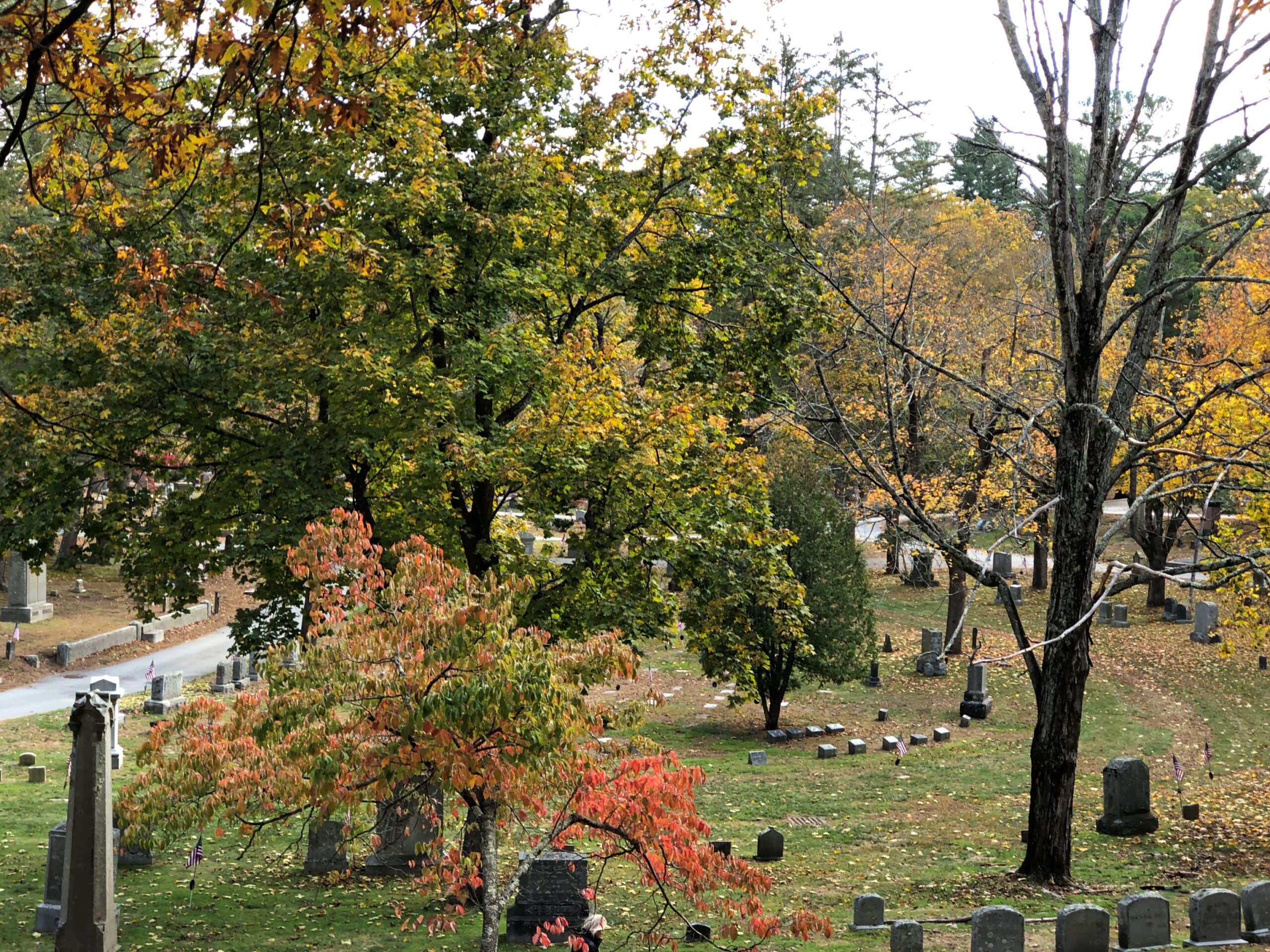
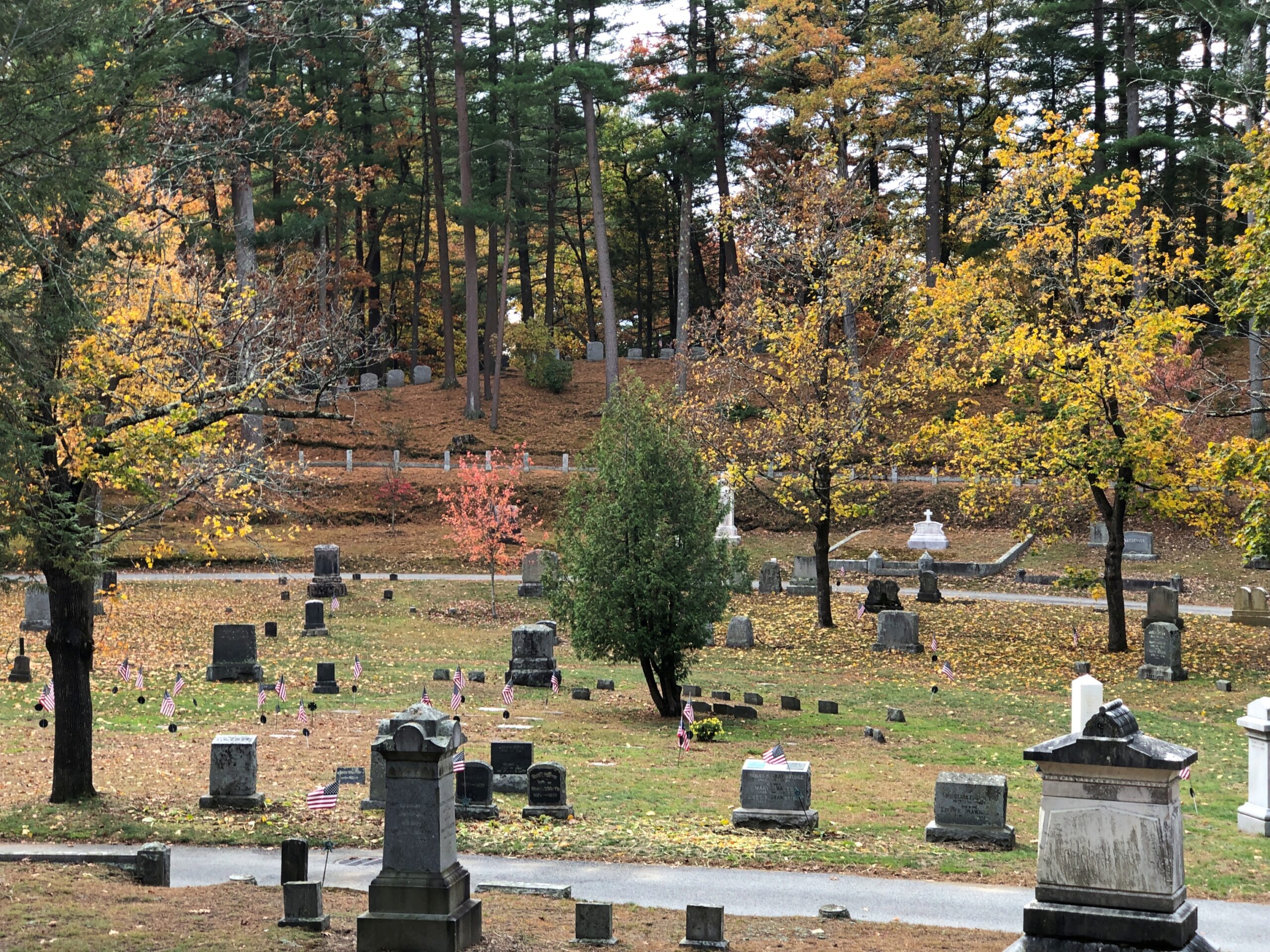
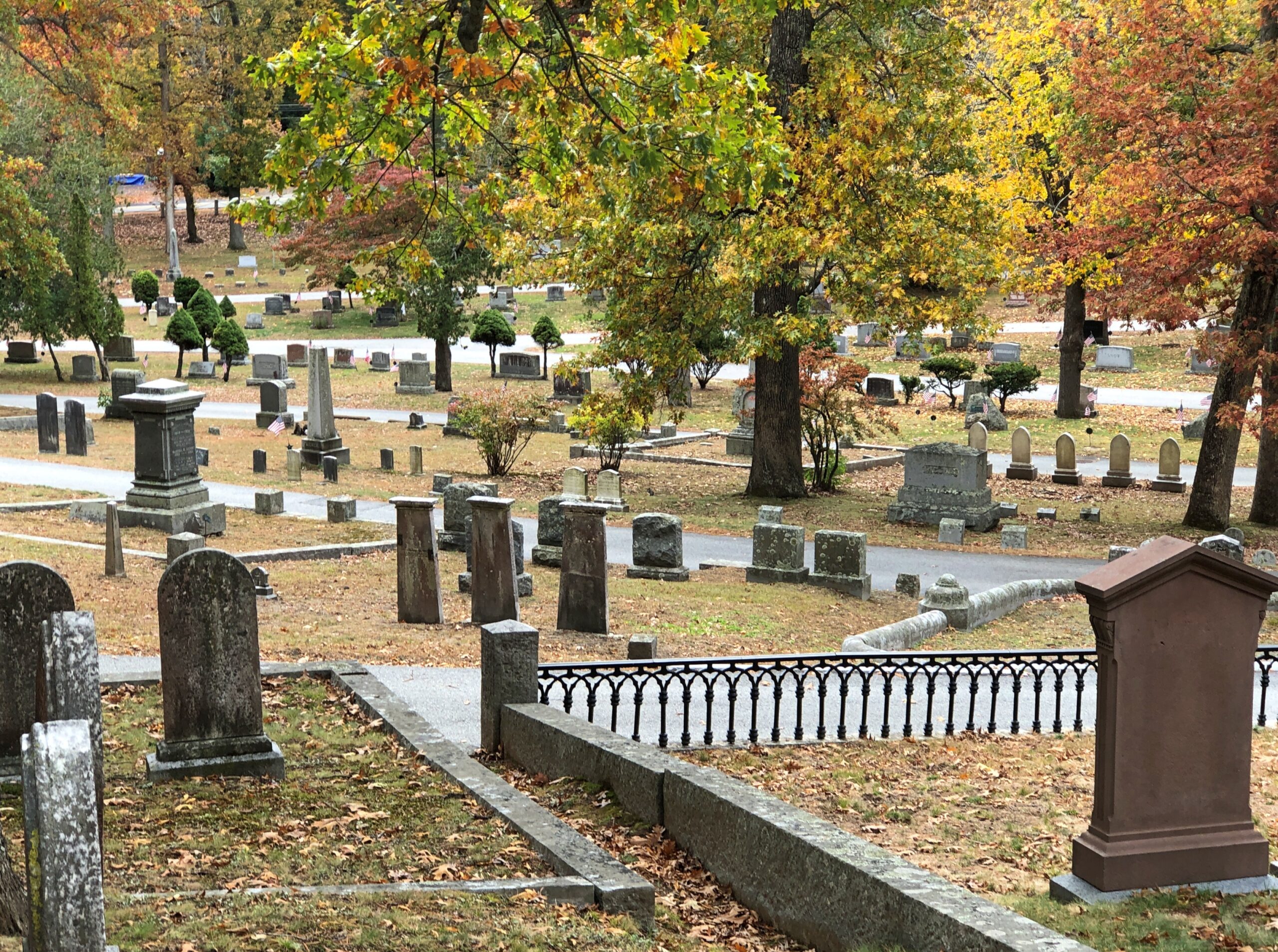
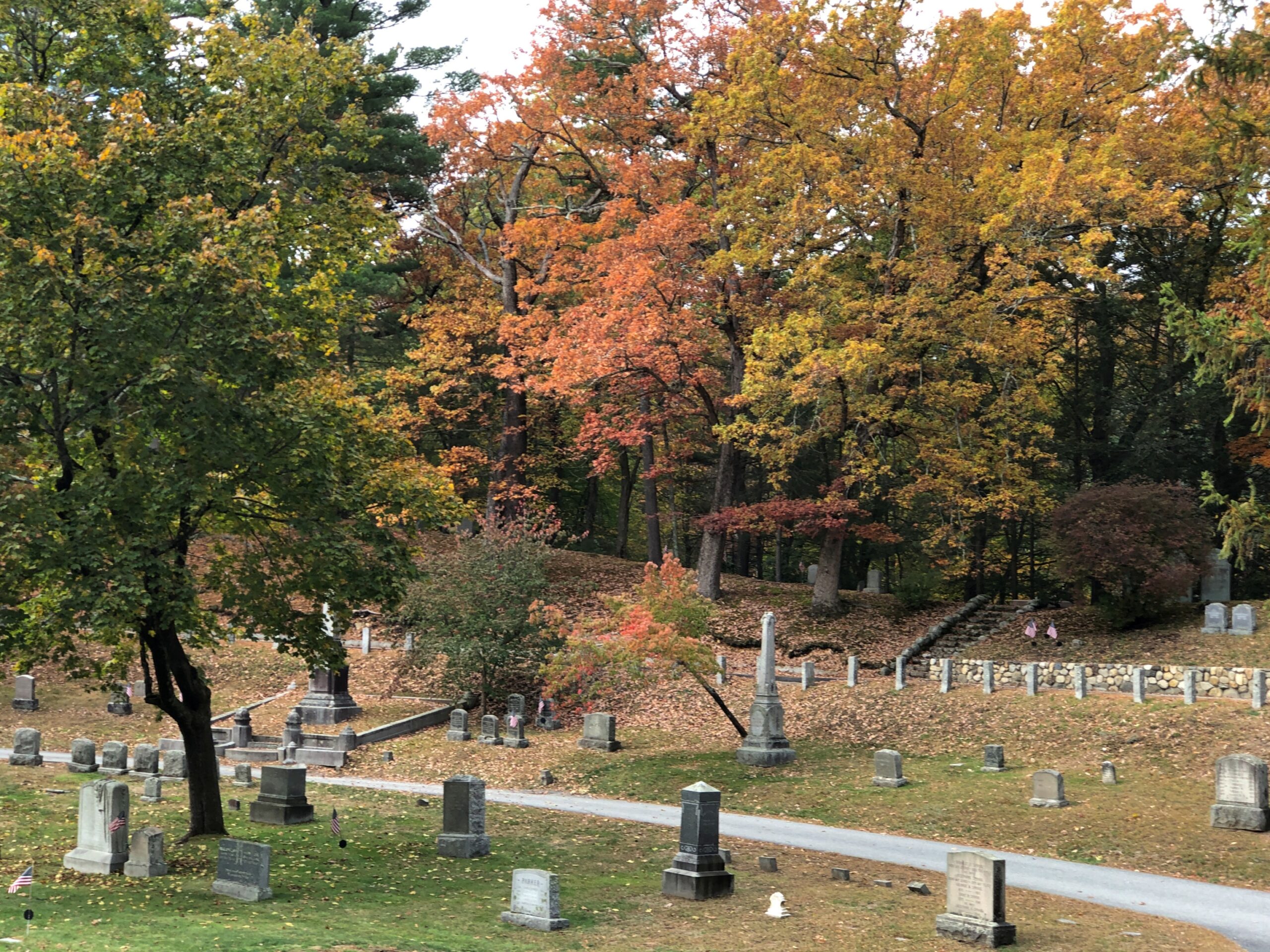
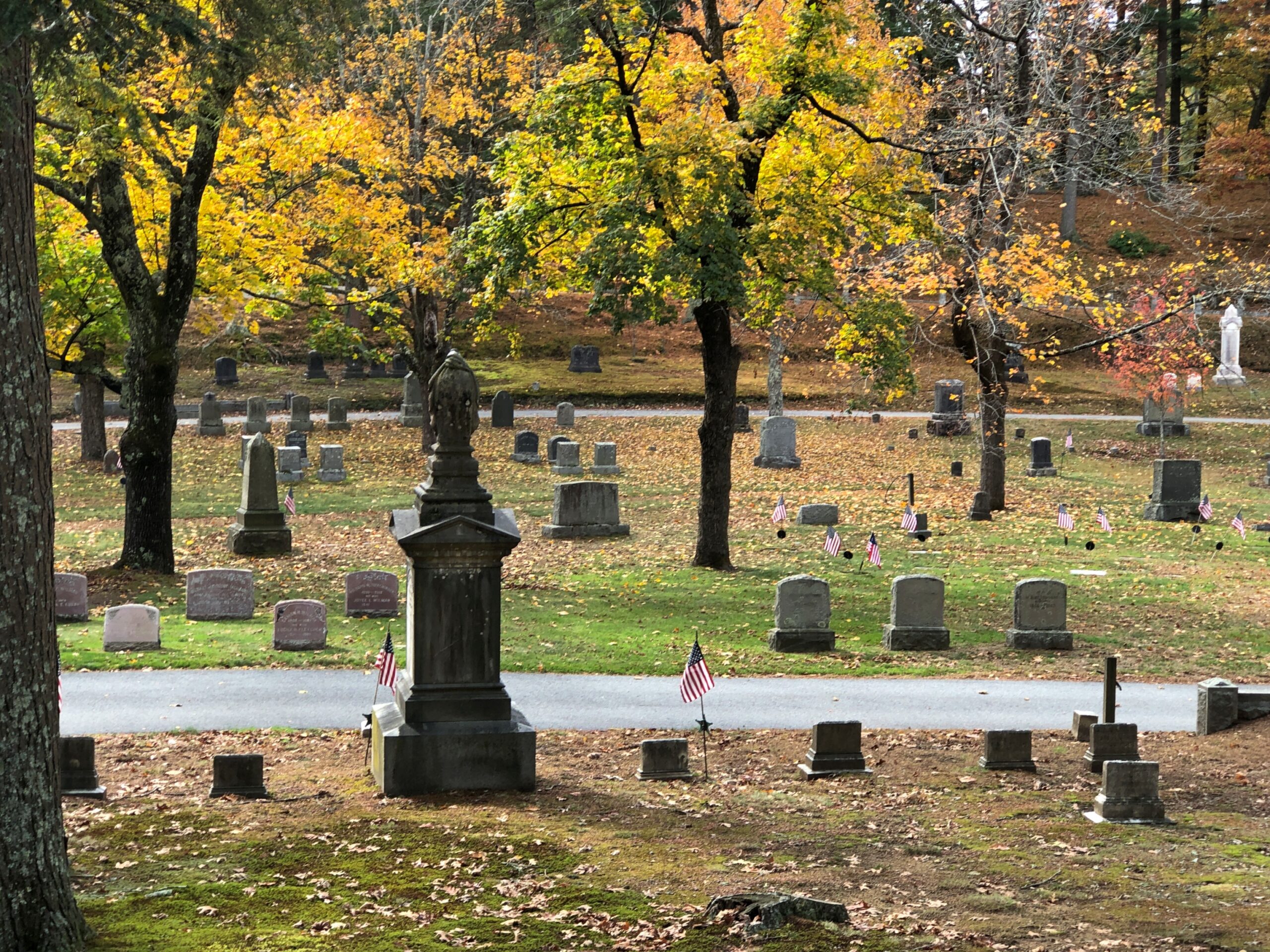
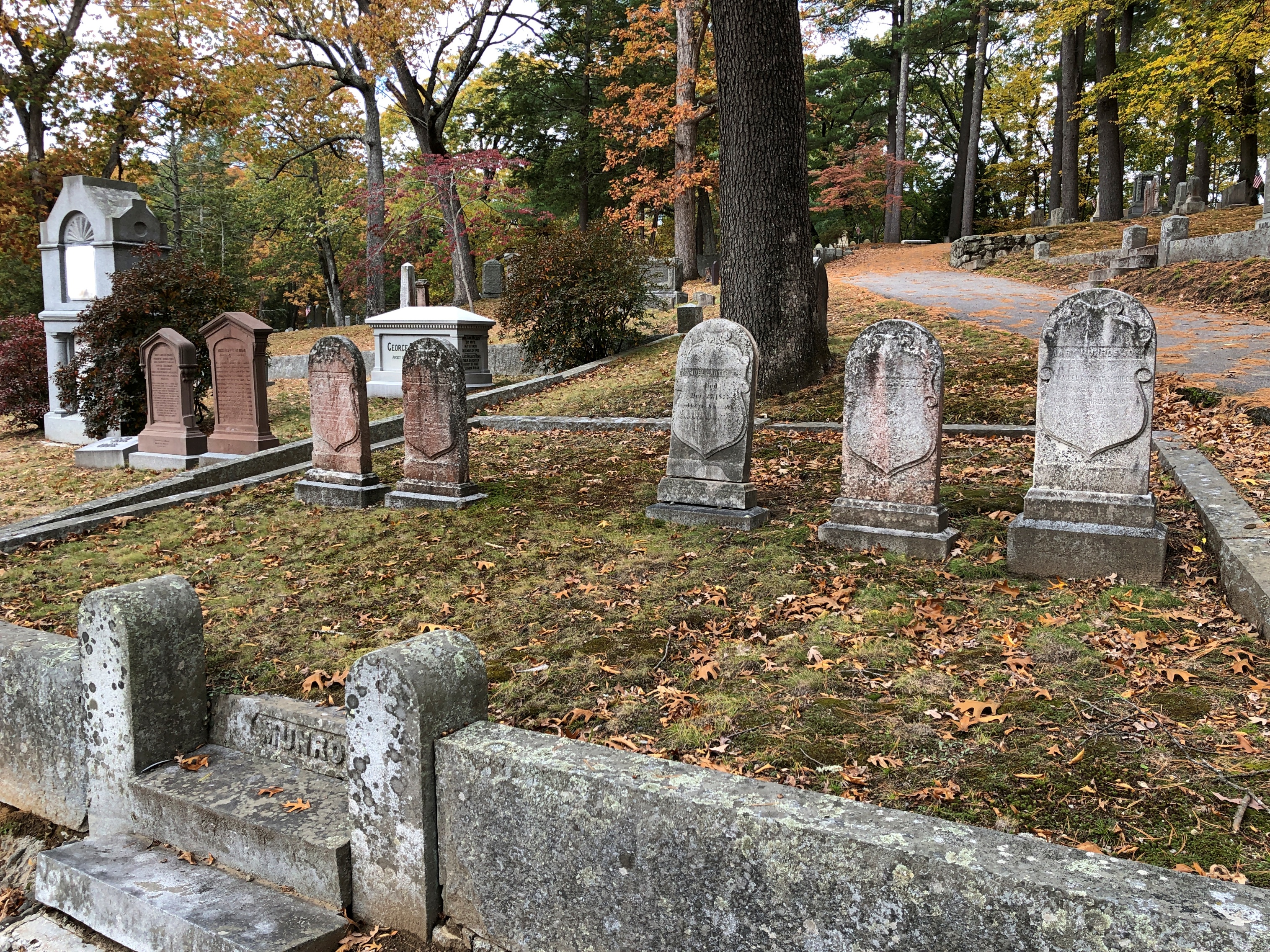
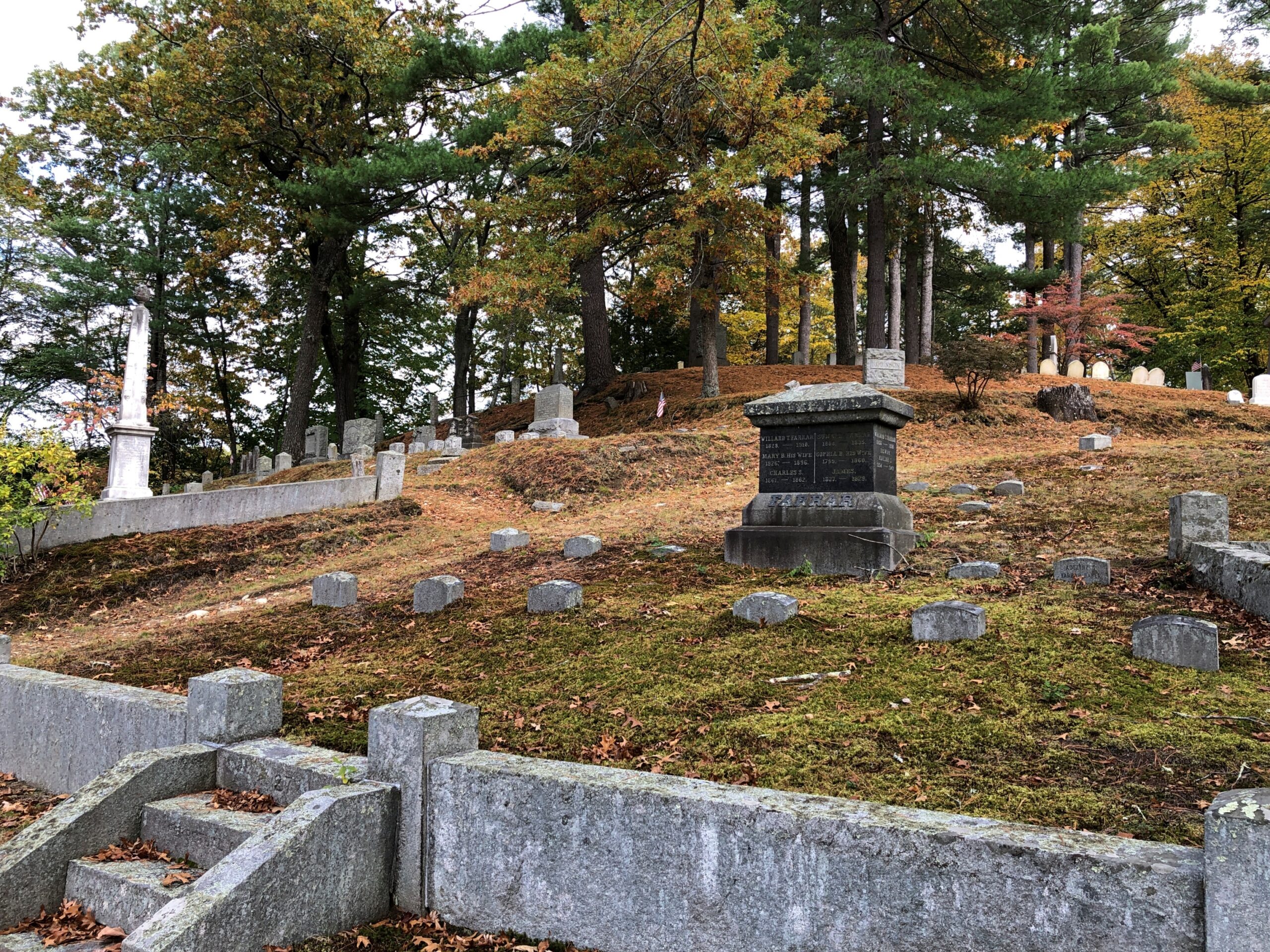
Sleepy Hollow in Massachusetts is in a wooded hollow.

Sleepy Hollow Cemetery

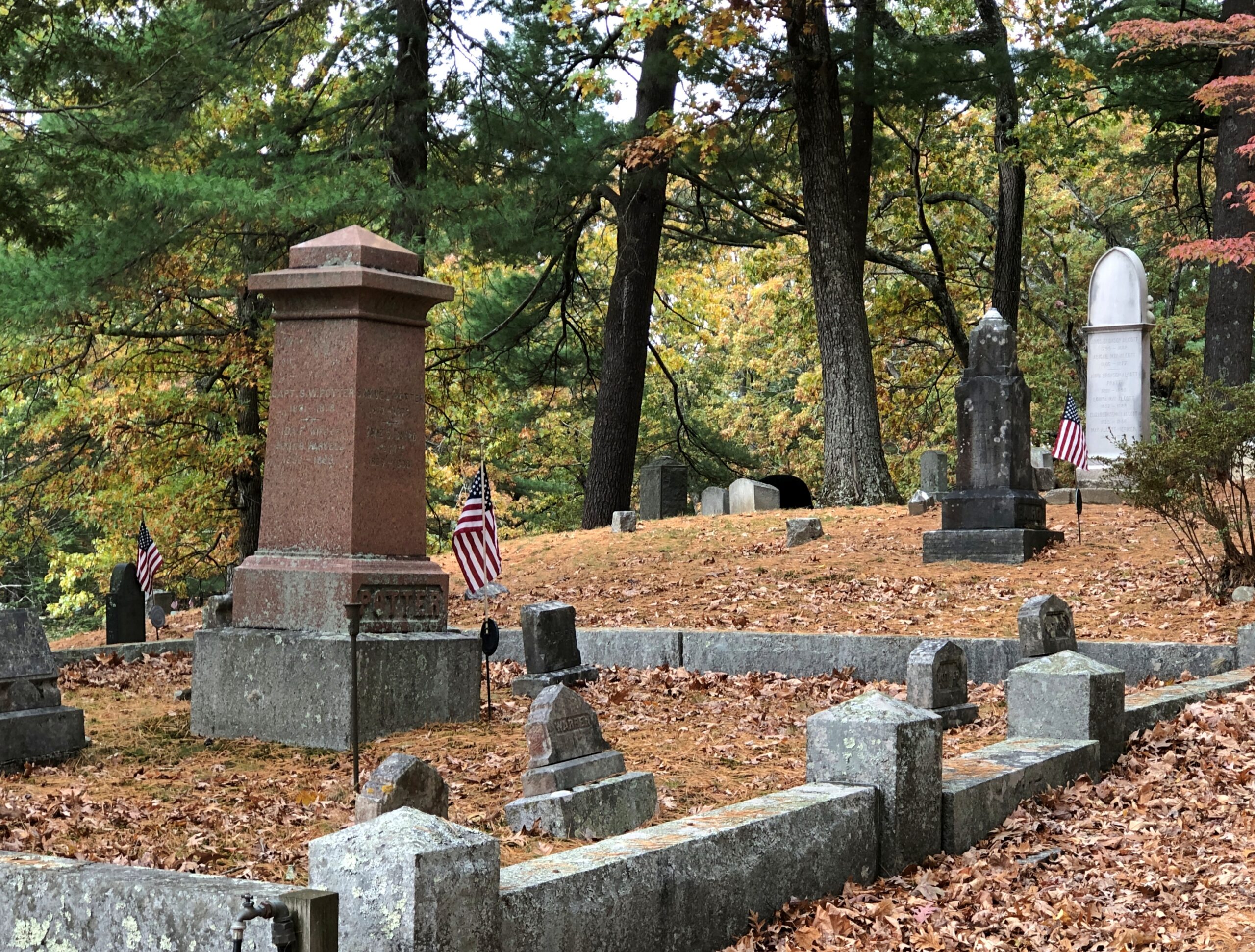
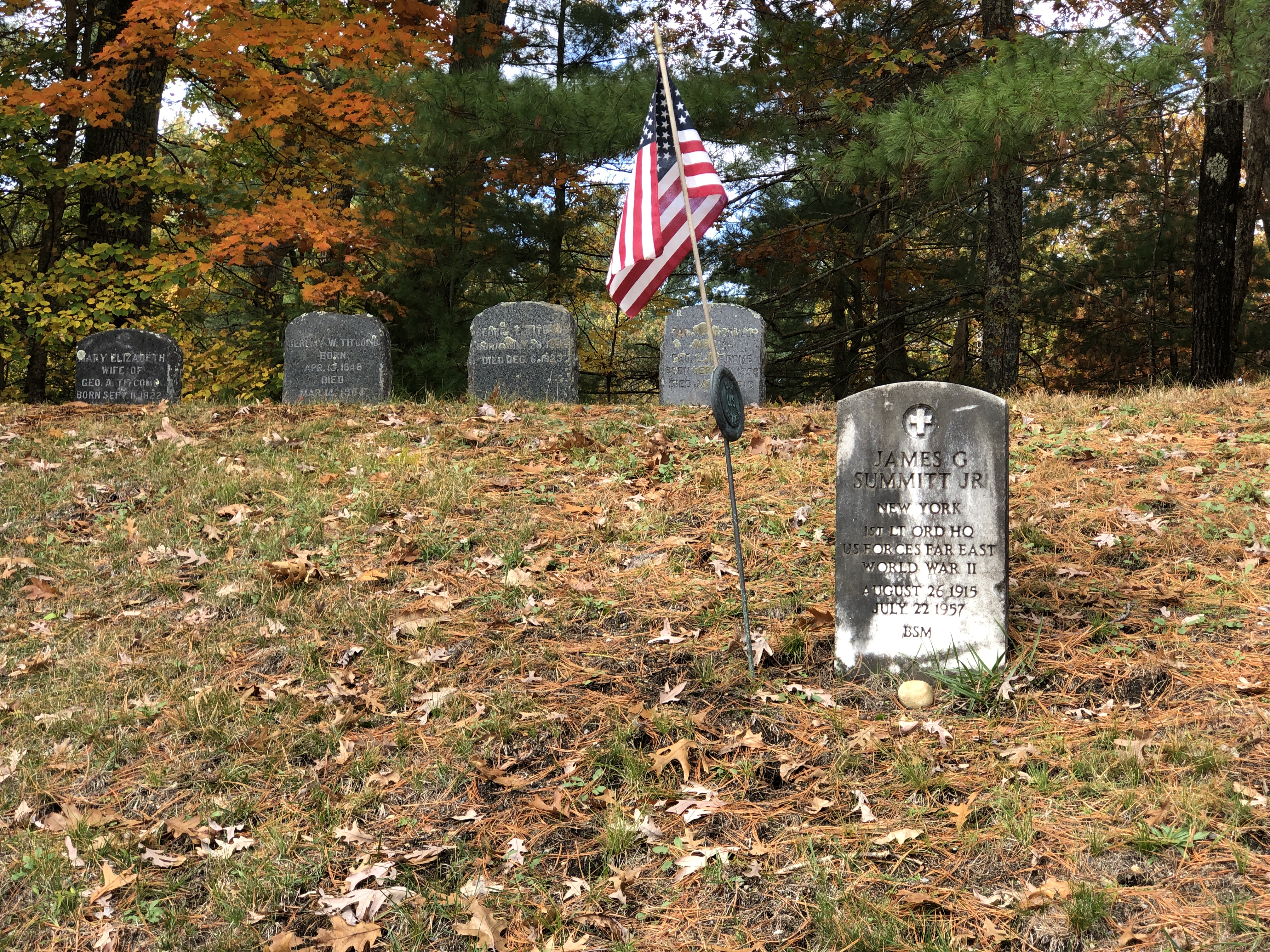
A wooded hollow. That’s a good place for a cemetery. Better yet, Sleepy Hollow is a cemetery of some age, by North American standards. Even better yet, autumn colors.

Sleepy Hollow Cemetery

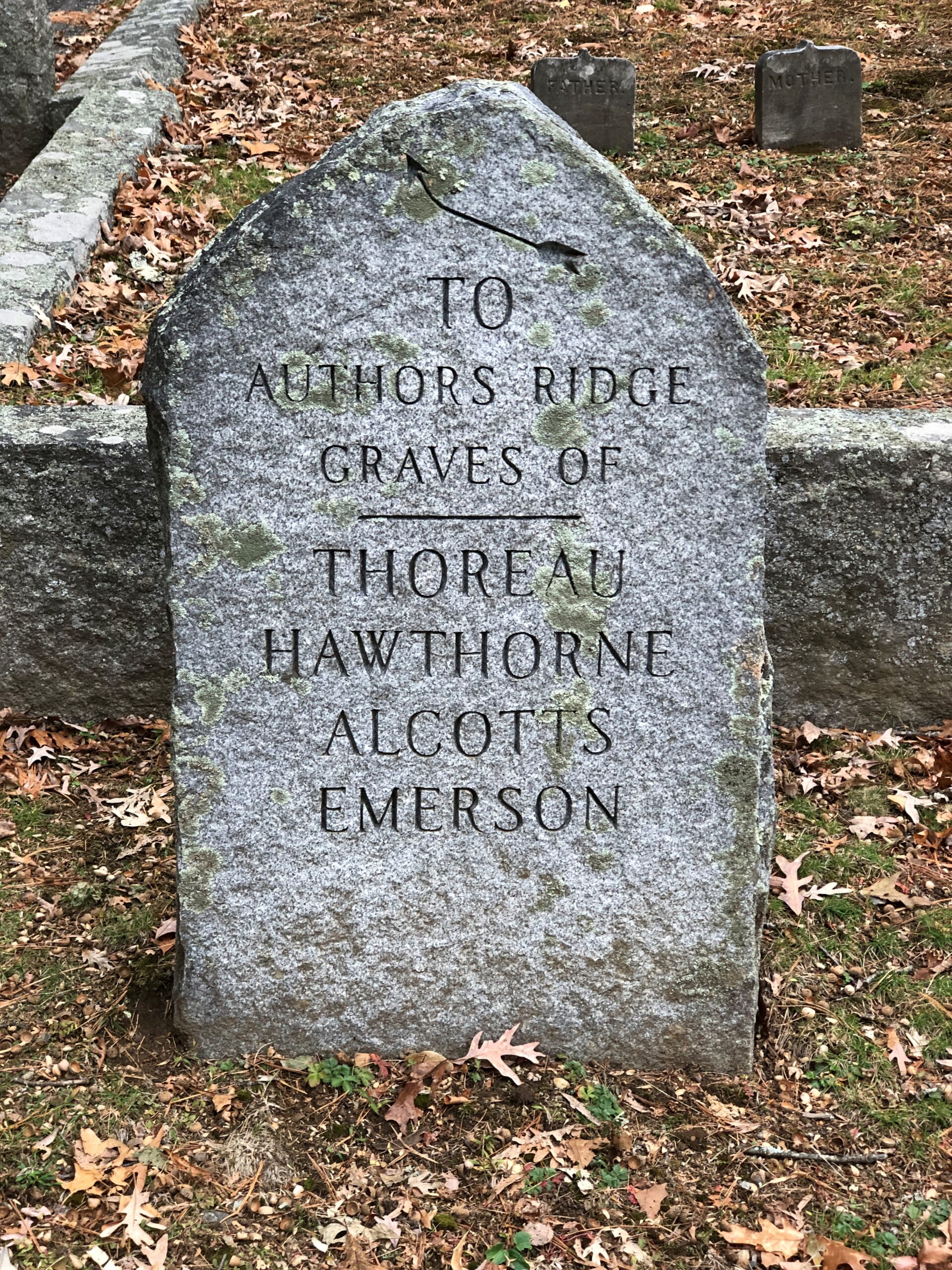
When I got there, I found I wasn’t alone among the living. A rare thing at a cemetery. A trickle of people came and went to pay their respects to a clutch of famed authors who are buried at Sleepy Hollow. They’re up on Authors Ridge. The cemetery thoughtfully built a small parking lot at the base of the ridge, to facilitate that trickle of literary pilgrims.

Sleepy Hollow Cemetery

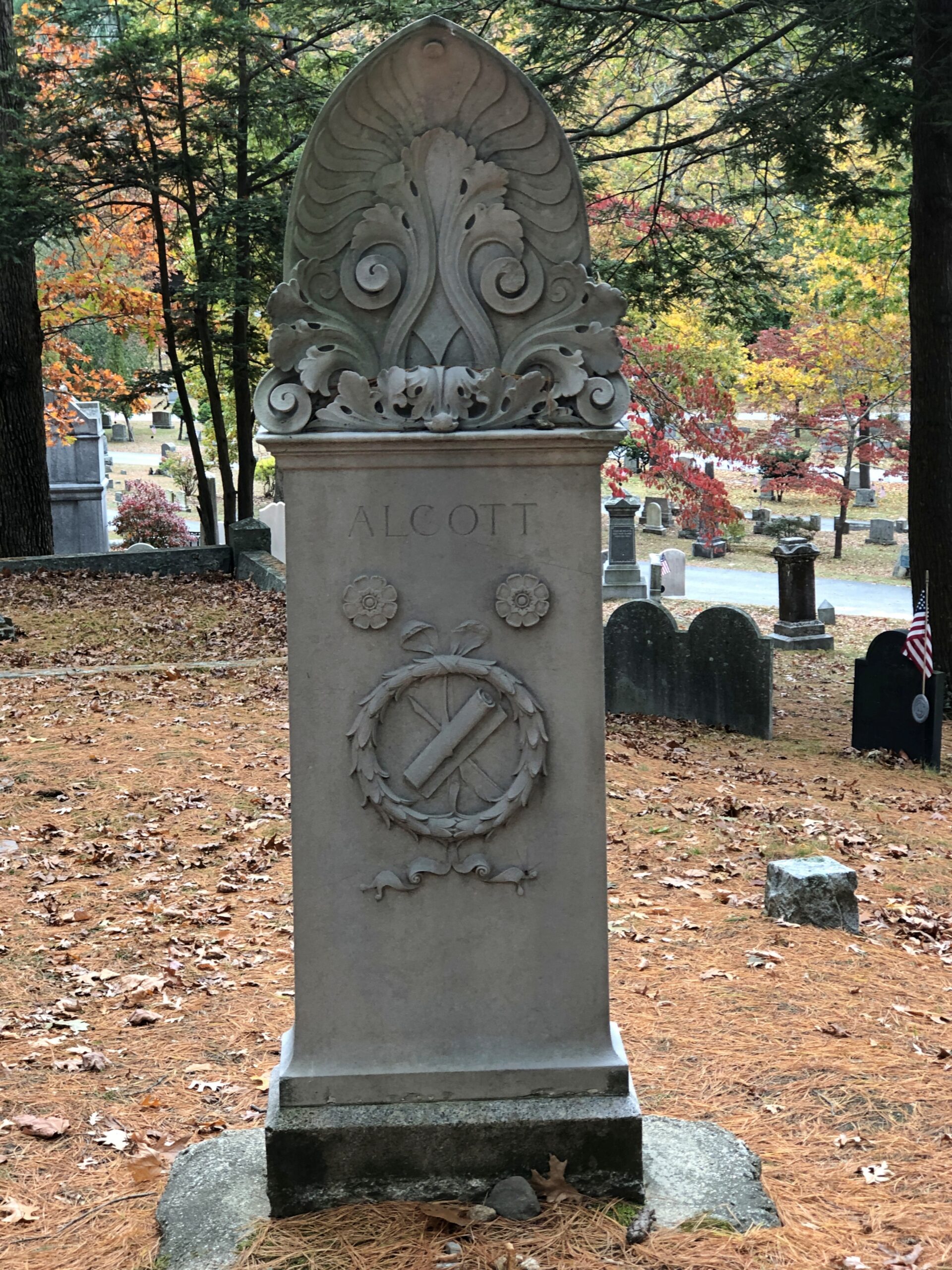
A path from the lot leads upward. At the crest of the ridge, the authors are found with other family members. In alphabetical order:

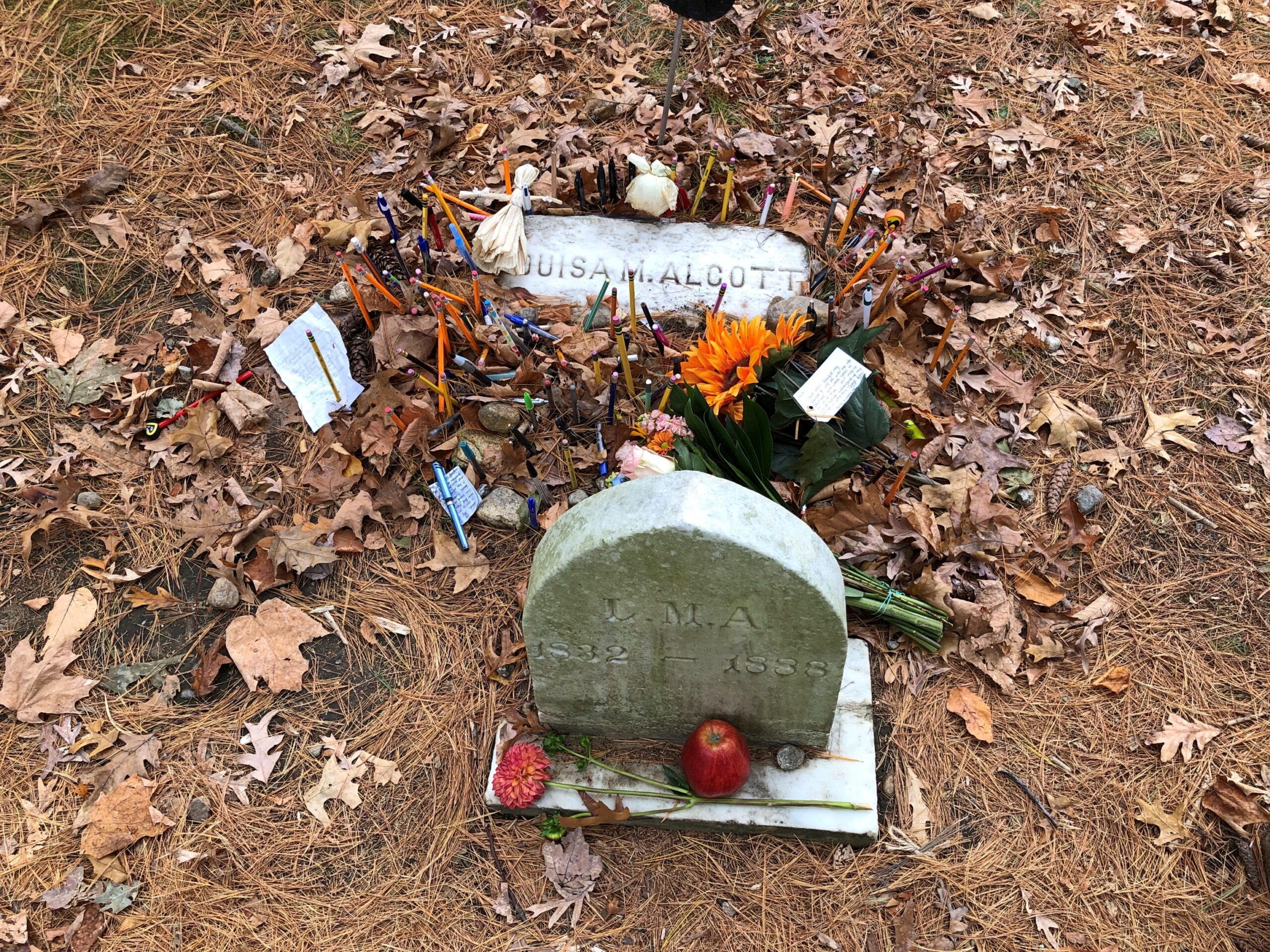
Louisa May Alcott.

Sleepy Hollow Cemetery

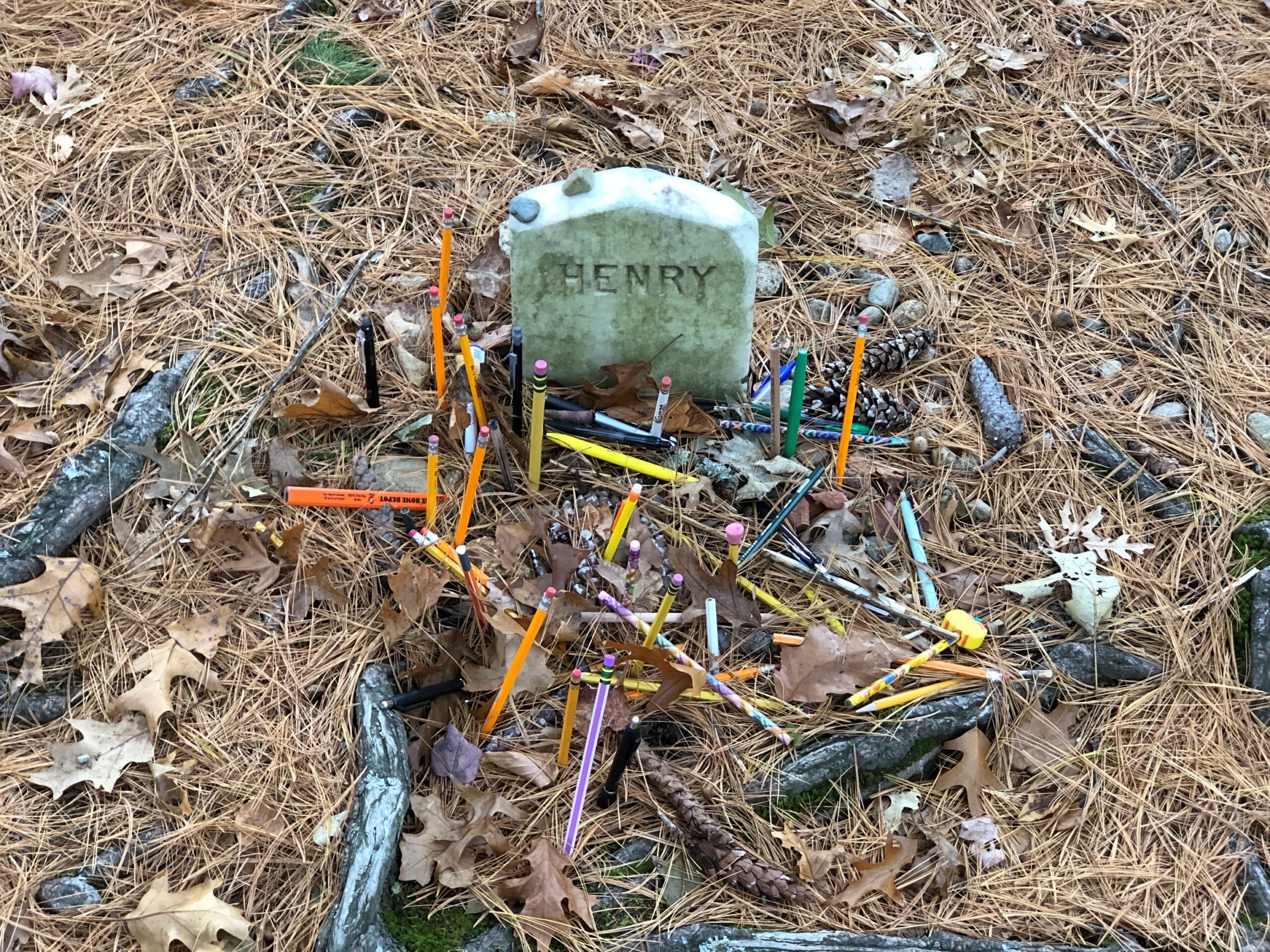
Here visitors don’t leave stones or small coins, but pencils, pens and paper. She wasn’t the only one to attract writing instruments.

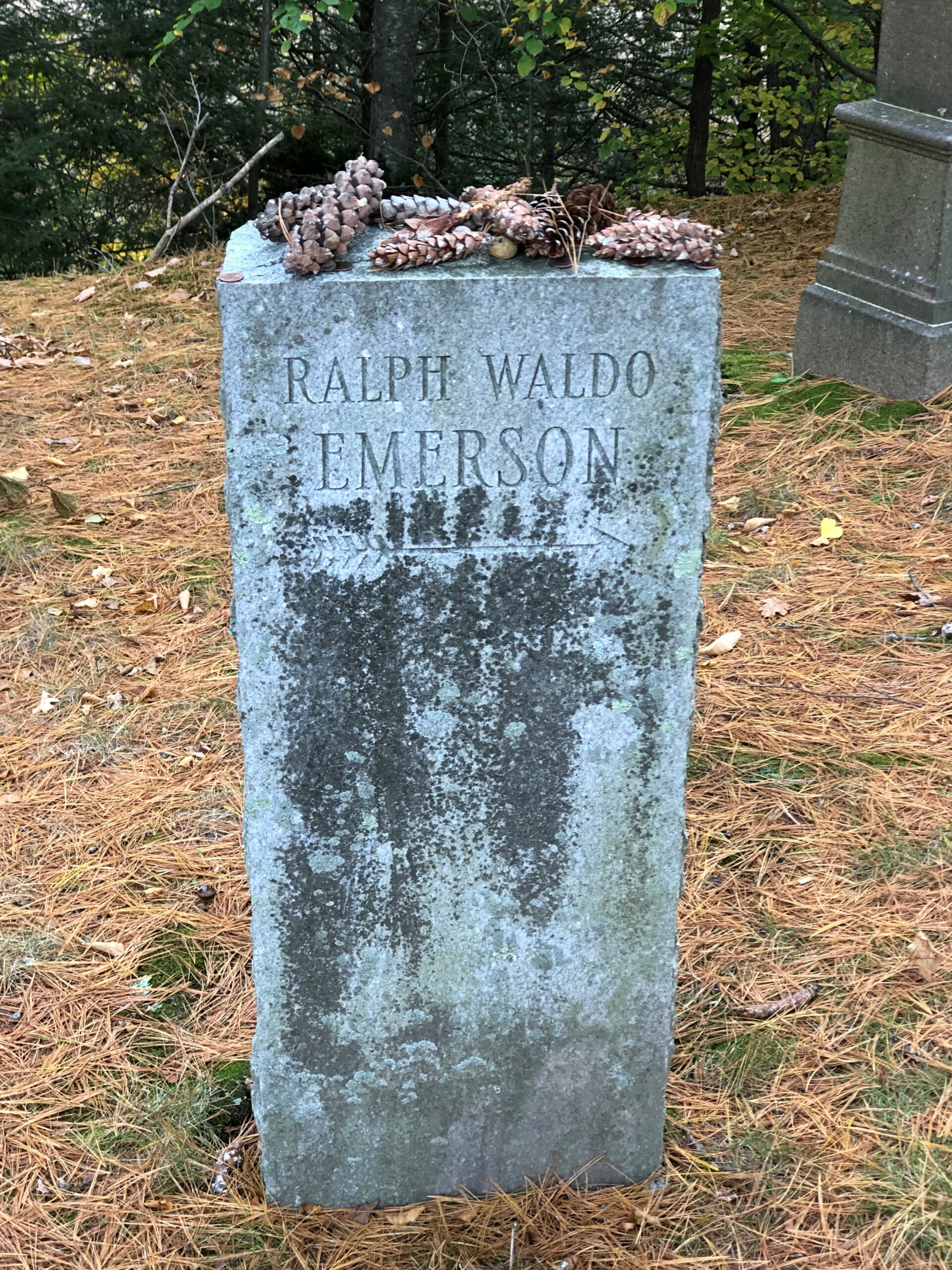
Ralph Waldo Emerson.

Sleepy Hollow Cemetery

Where’s Waldo? Right there. Interesting that his memory attracted pine cones.

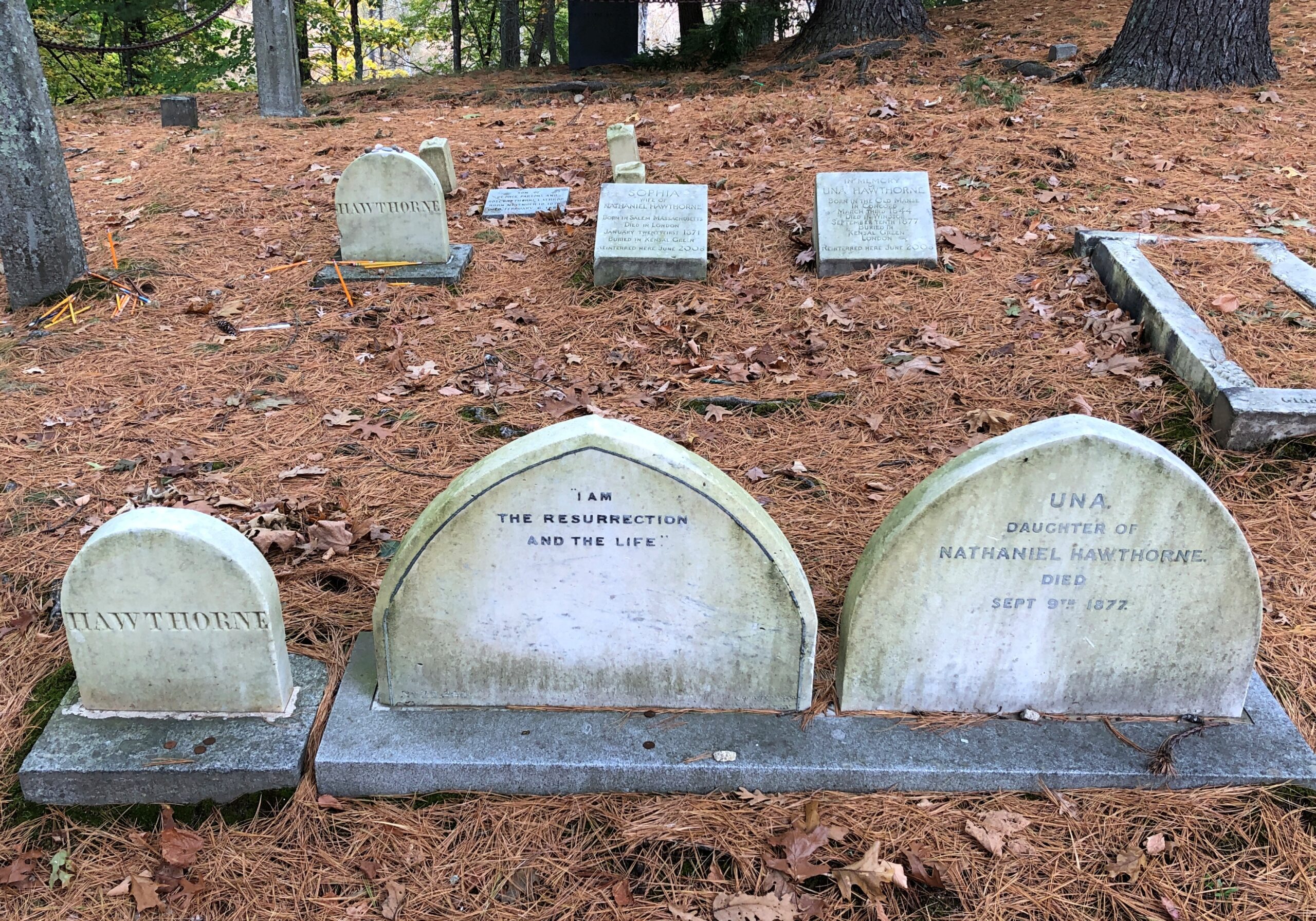
Nathaniel Hawthorne.

Sleepy Hollow Cemetery

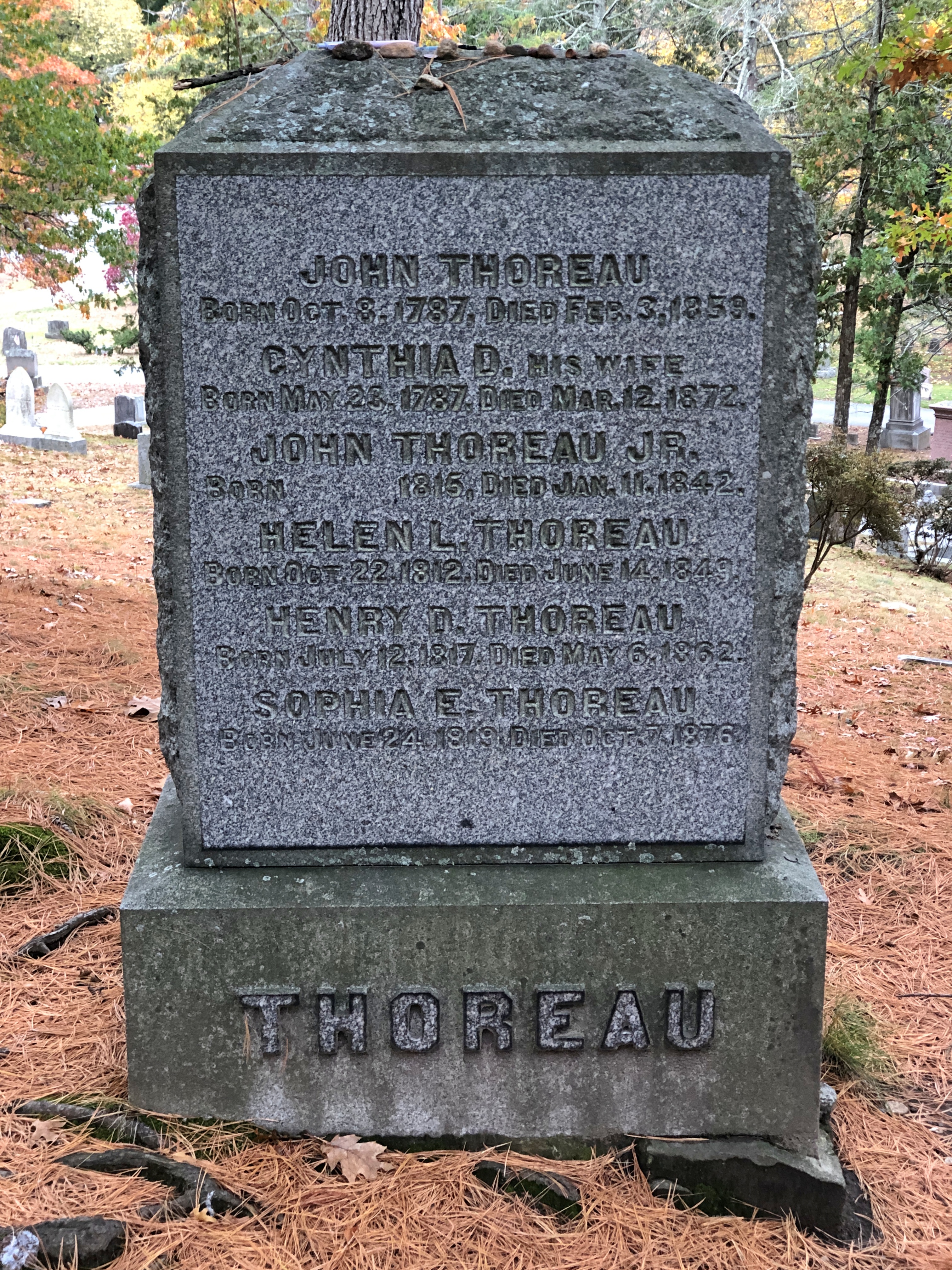
Henry David Thoreau.

Sleepy Hollow Cemetery

When I parked at the small lot, I noticed a group of four girls, college students would be my guess, heading up the path to Authors Ridge. I waited a few minutes in my car, since I didn’t want to interrupt their pilgrimage. Also, I wanted the ridge to myself, if possible. I guessed they wouldn’t be long, and soon they came down the path, got in their car and left.

About an hour later, when I had finished my own cemetery stroll, I was checking my maps in the car, when a middle-woman pulled up, parked, and headed up Authors Ridge, walking her small dog. The trickle was continuing.

I preferred a more leisurely inspection of the authors’ stones, and the rest of the cemetery, for that matter. Such excellent contour.

Sleepy Hollow Cemetery

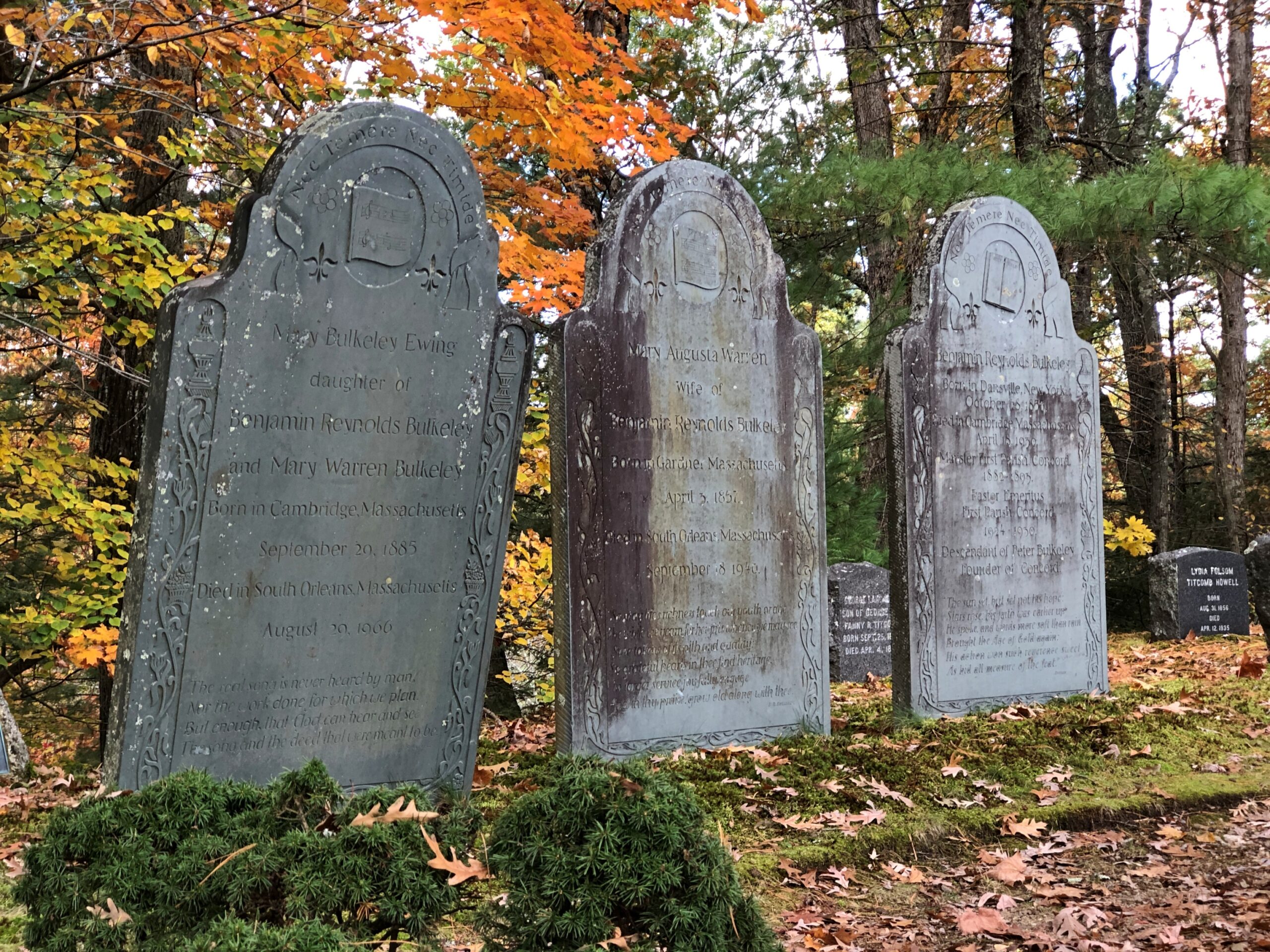
There’s also a large selection of stones for non-famous residents of this part of the world.

Sleepy Hollow Cemetery

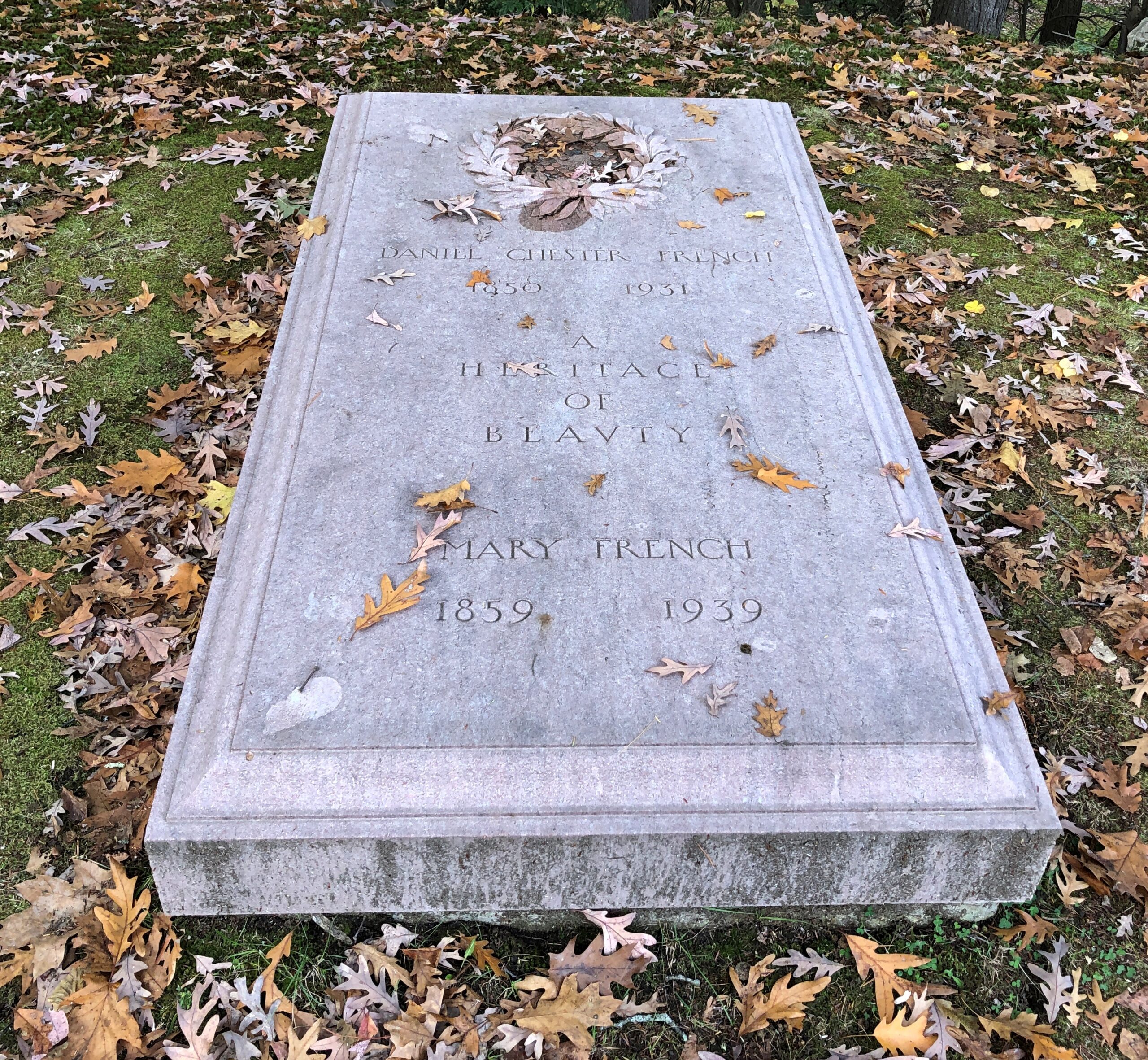
Besides, the authors aren’t the only notable burials. Here’s Daniel Chester French, sculptor of renown.

Sleepy Hollow Cemetery

If the seated Lincoln at the Lincoln Memorial was the only thing he ever did, he’d still be remembered. But of course he did a lot more. The smaller version of “The Republic,” bright gold in color and standing even now in Chicago, is one that comes to mind. So do the allegories at the Alexander Hamilton U.S. Customs House at the southern tip of Manhattan. And Gen. Oglethorpe in Savannah.

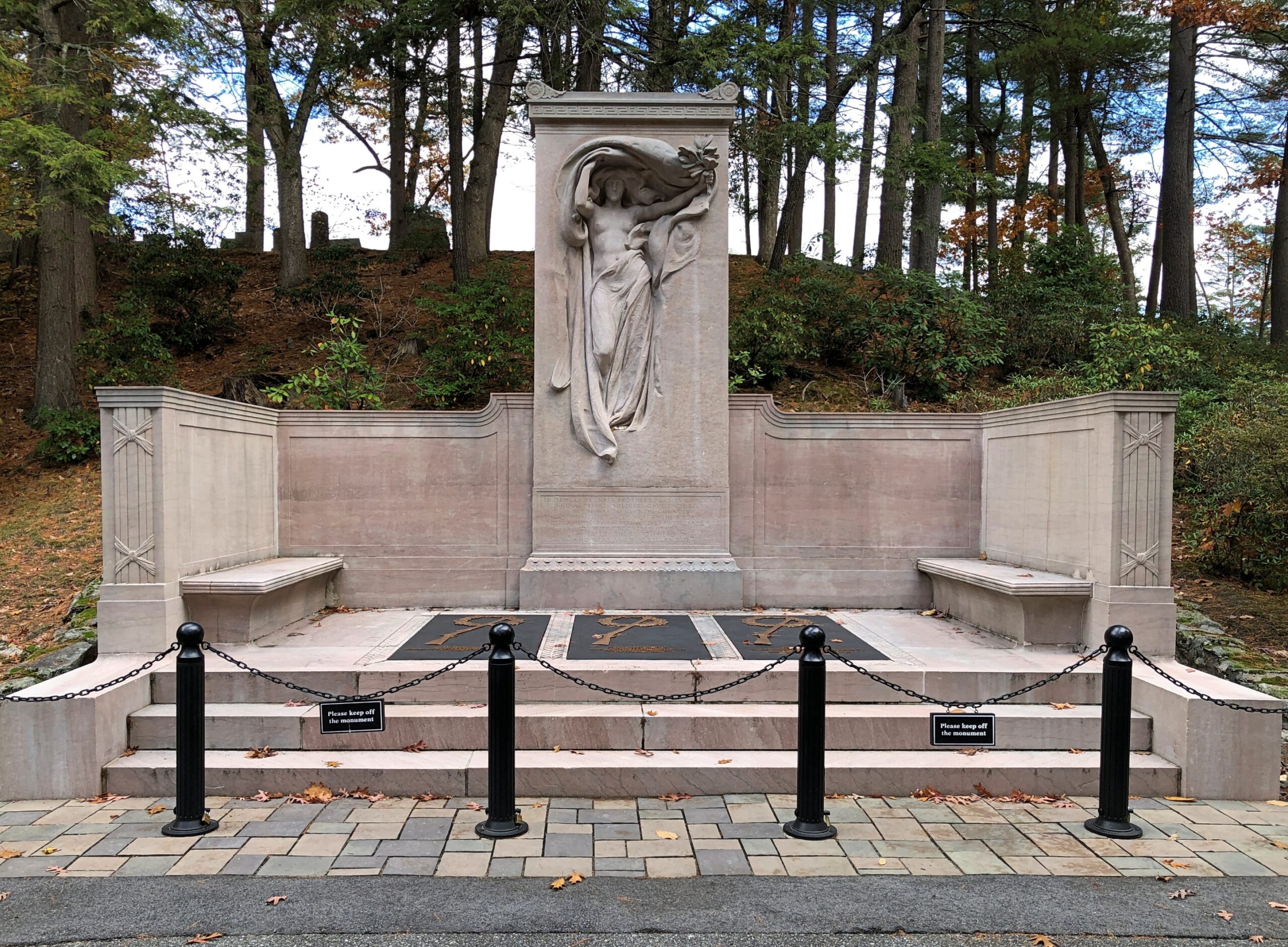
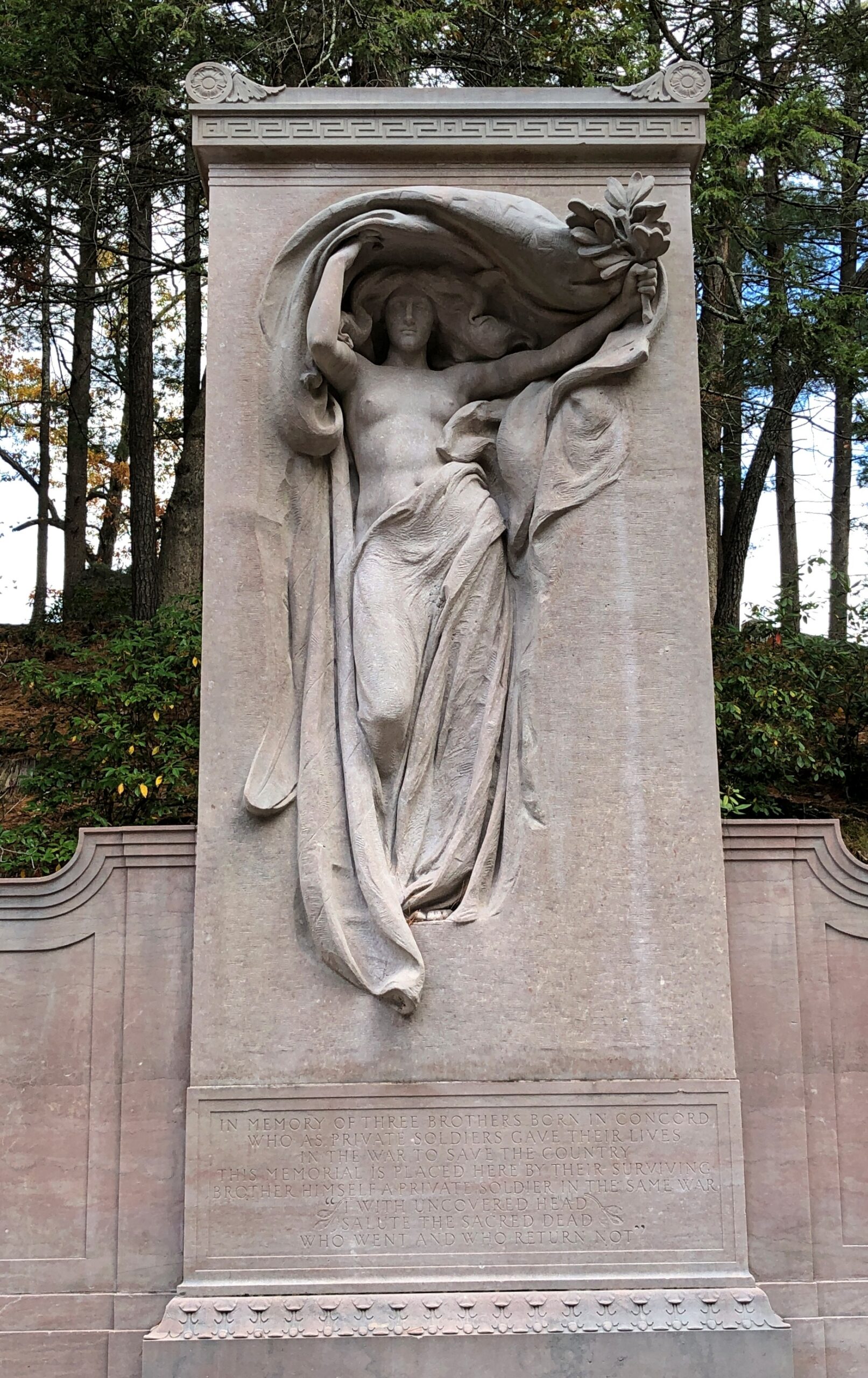
But you don’t have to go so far to find one of French’s works. Elsewhere in Sleepy Hollow is the Melvin Memorial, honoring three Concord brothers named Melvin (Asa, John and Samuel), who each gave their last full measure of devotion for the Union in ways that represent the spectrum of soldier death in that war: died in combat, of disease, and in a prison camp.

Melvin Memorial

The figure is known as Mourning Victory, a version of which is held by the Met.

Melvin Memorial

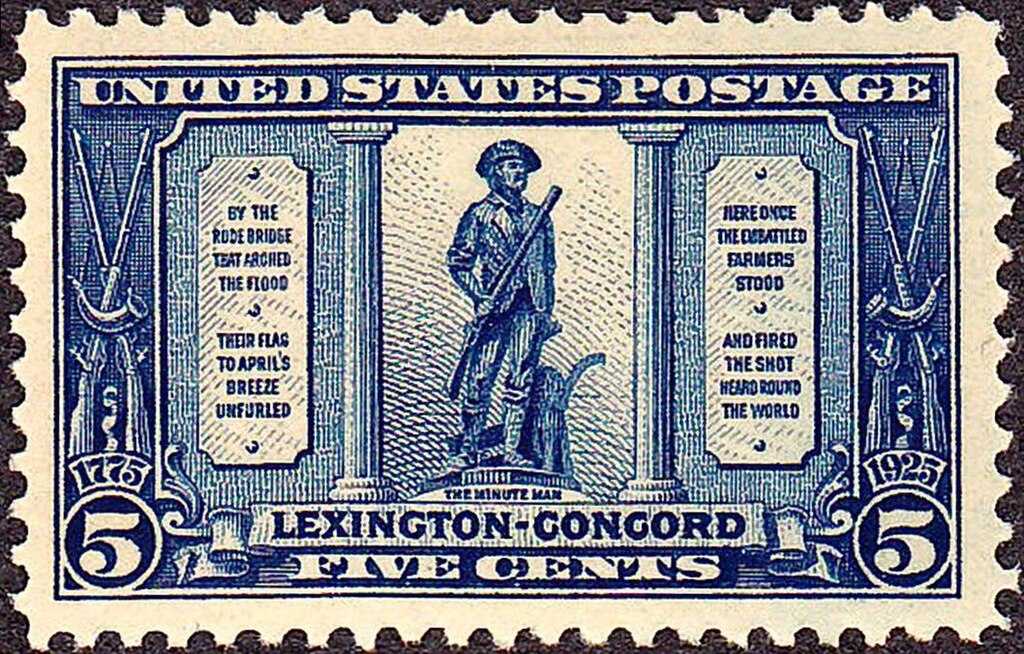
Another famed work of French’s is in Concord: namely, “The Minute Man” at Minute Man National Historical Park.

I didn’t bother with that historical park this time, since I knew it would be closed. But I did see it 30 years ago, and it’s stuck with me. Just example of French’s work standing the test — and literally standing the test — of time.

More Lexington

Cute, Lexington. Cute.

Lexington, Mass

I didn’t visit Massachusetts last month to do sightseeing, but rather to see old friends – Rich, Lisa and Steve. They are the latest in my visits to old friends in ’25, which took me to Texas, Tennessee, North Carolina, Georgia and New York before I arrived in Massachusetts, where I stayed with Rich and Lisa, whose home is in Lexington.

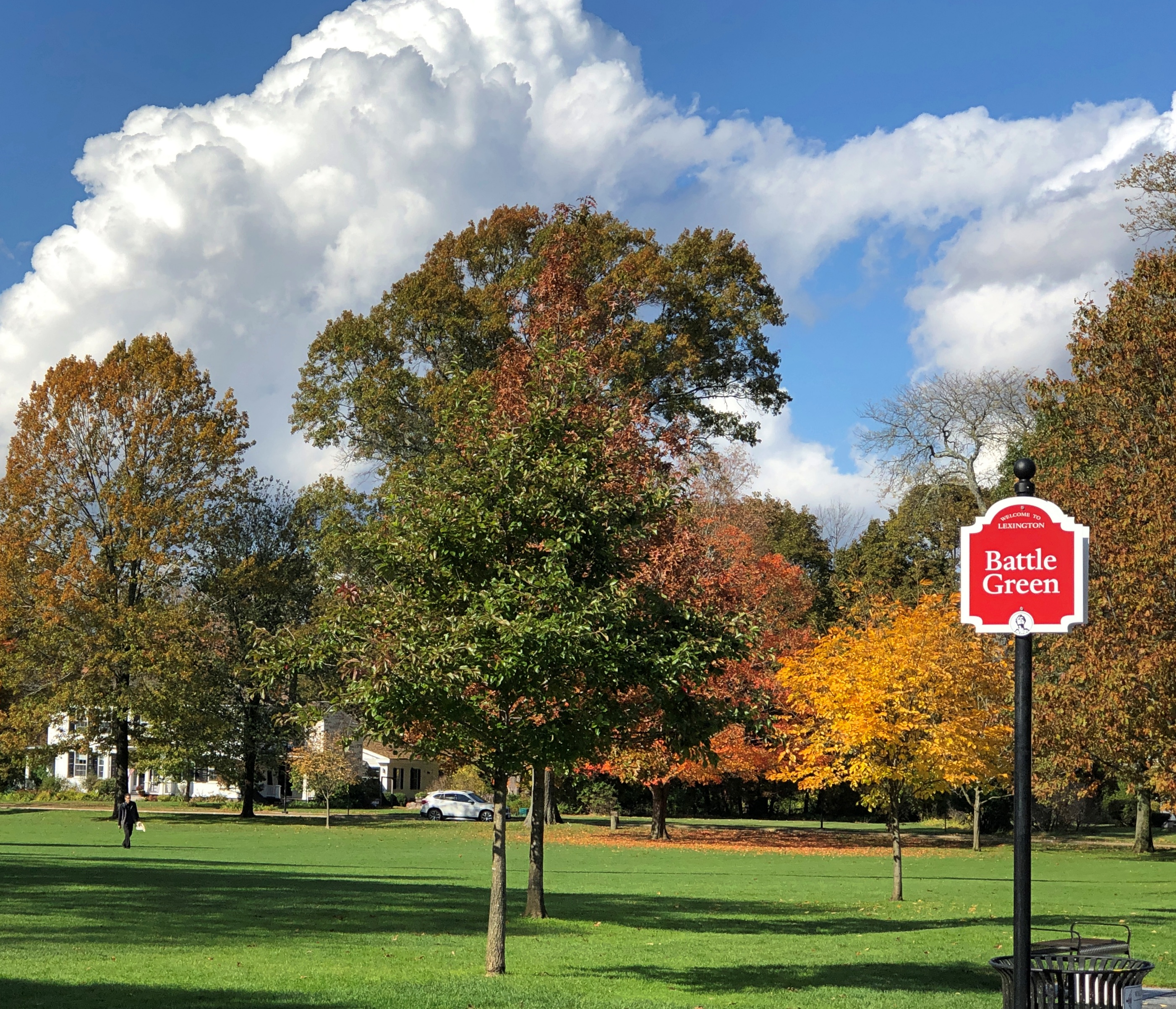
Being a mid-week visit, my Massachusetts friends had work to do during much of the day on October 22, which is how I ended up at Battle Green that morning. I wasn’t about to sit around at Rich and Lisa’s when I could go see nearby places. Even places I’d been before, such as Battle Green. But it had been about 30 years, so (as usual) it was like I’d never been there before.

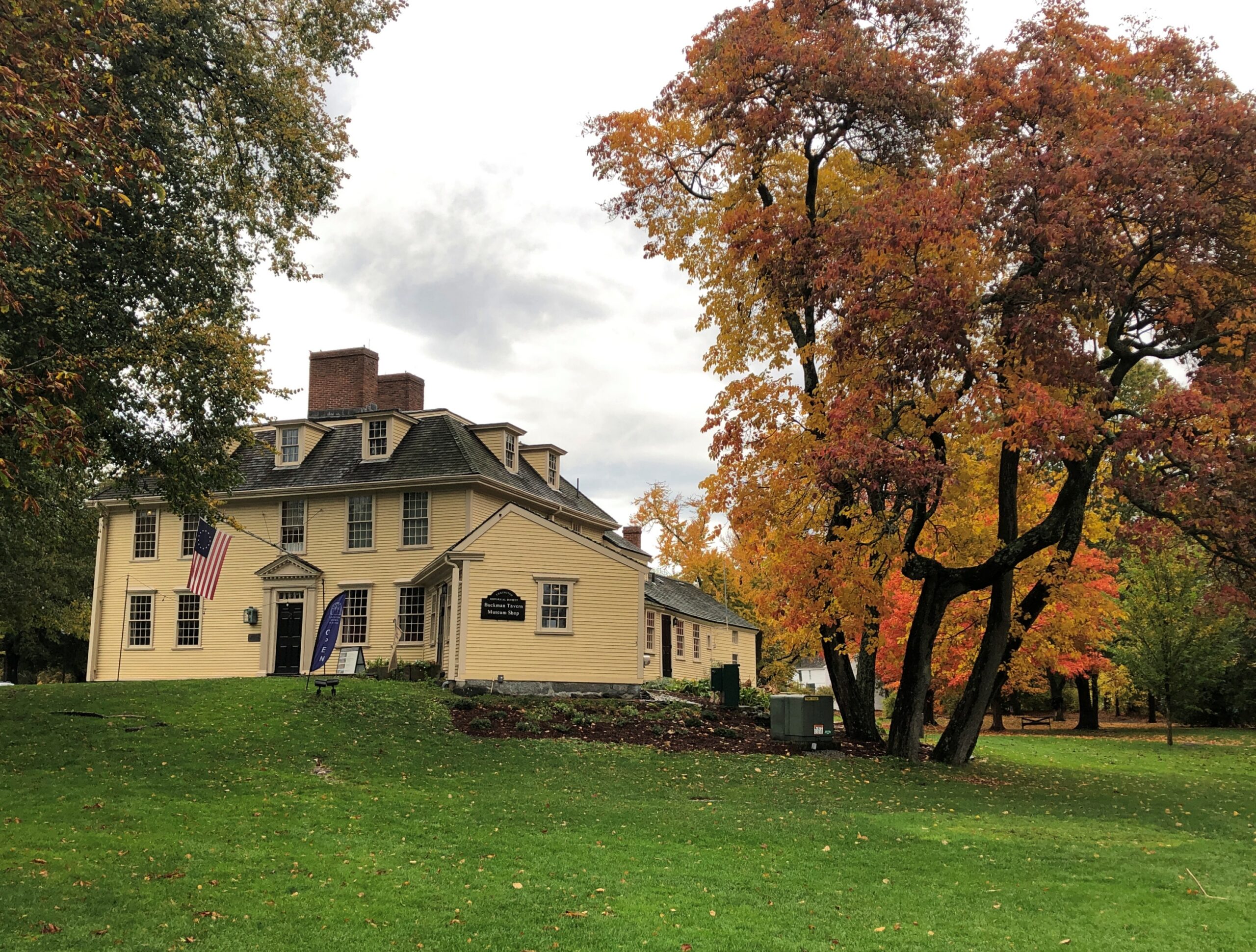
Near Battle Green is Buckman Tavern.

Lexington, Mass

I didn’t remember visiting before. It’s a small museum these days, dedicated to the part it played in the Battle of Lexington – militiamen gathered there ahead of the battle, not knowing what to expect – but also its existence as a tavern in colonial and early Republic days.

Wandering through, I couldn’t help being impressed by how much effort running a tavern must have involved in those days, which not only included work in the building itself, but also running a nearby farm, since 18th-century tavern keepers weren’t going to get their food and drink from wholesalers, shipped in by truck.

Lexington, Mass

Of course, just staying alive in the 18th century, or really most anytime before the 20th century, seems like it would have been a lot of grinding effort for most people a lot of the time. But they had their recreation, too (and of course drinking).

Lexington, Mass

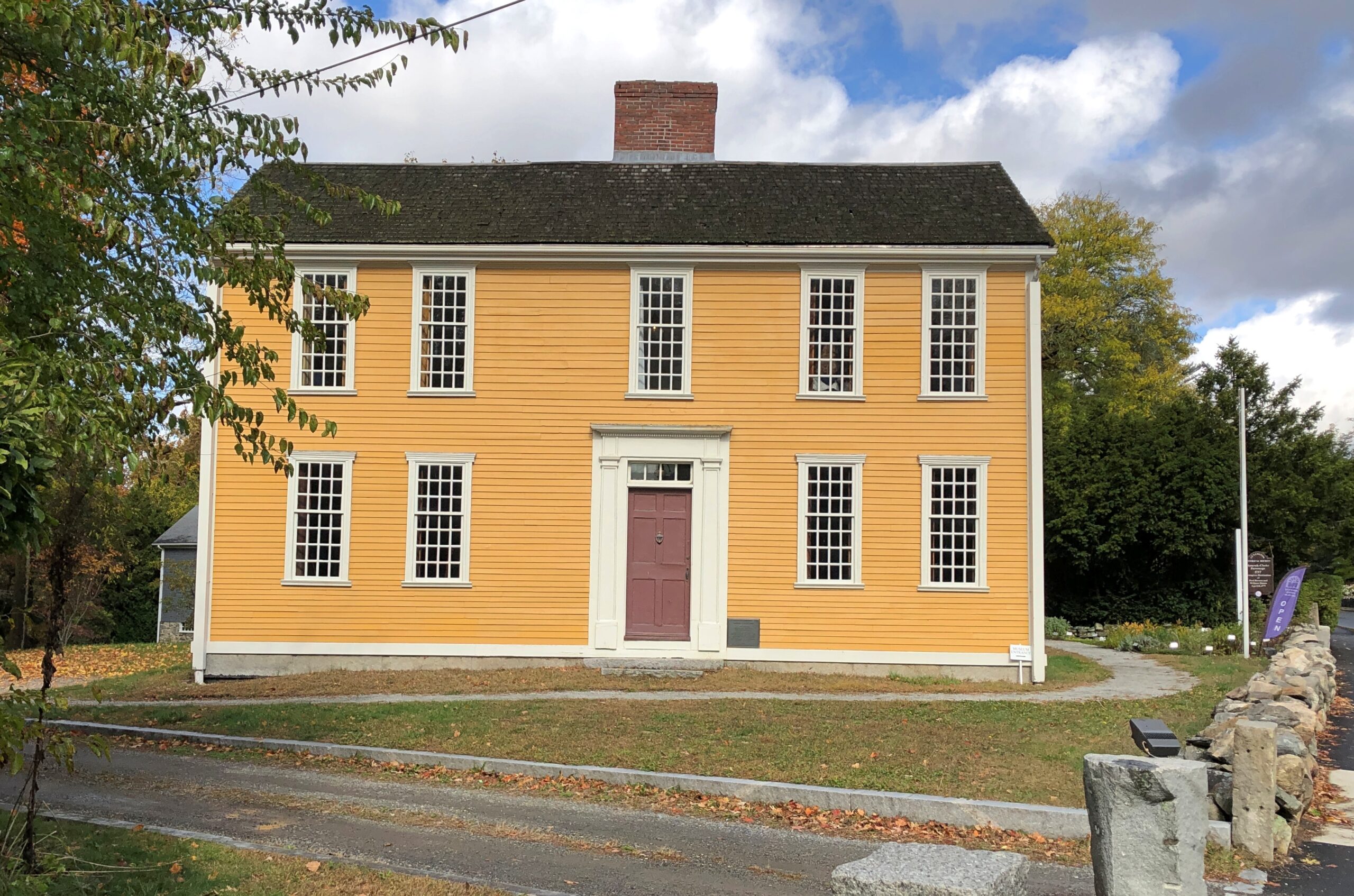
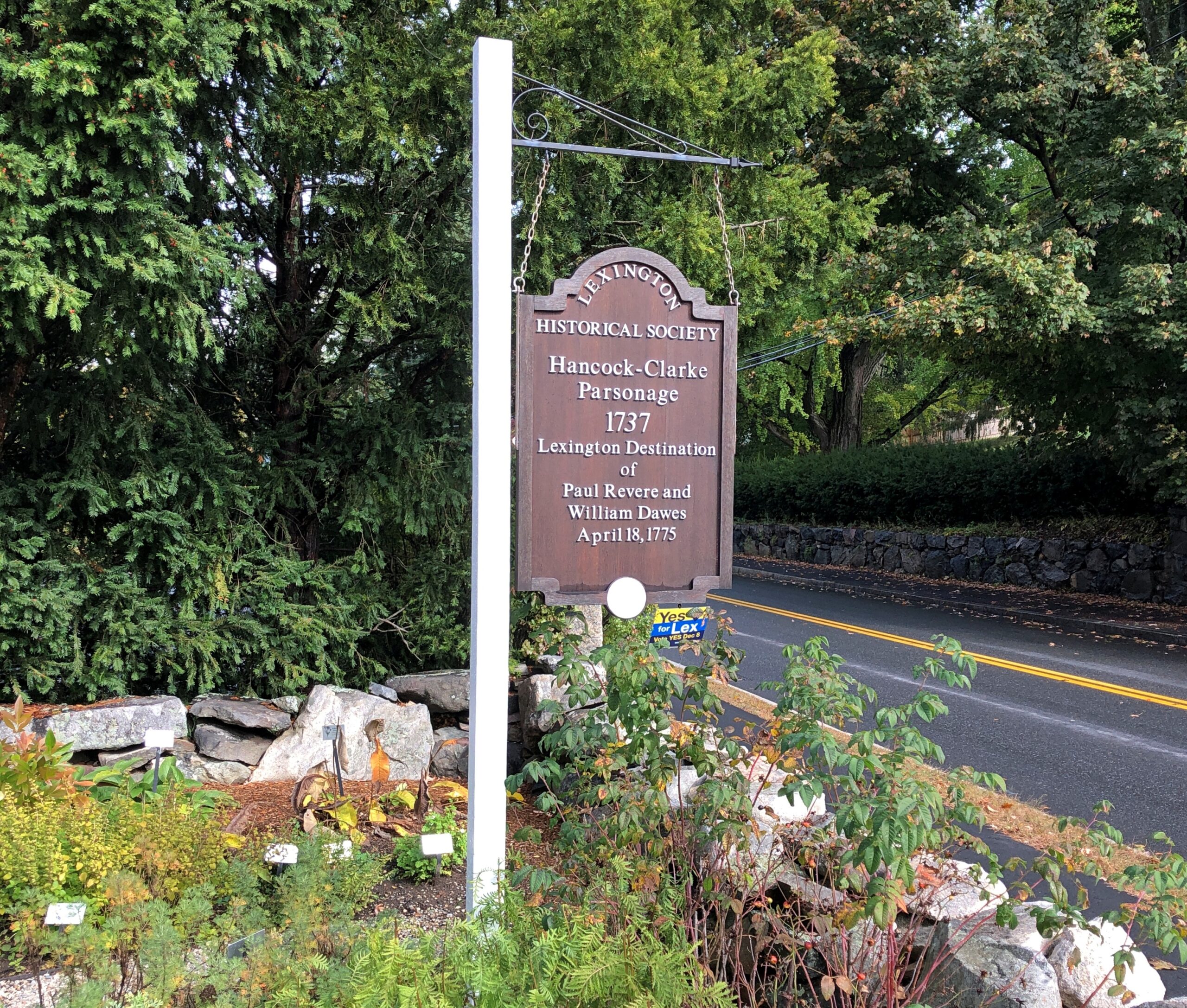
Not far from Battle Green, on the fittingly named Hancock Street, is Hancock-Clarke Parsonage, another Lexington museum these days, and one I didn’t recall visiting before. It was close enough to the green to walk there. I took the noon tour.

Lexington, Mass
Lexington, Mass

I’m glad William Dawes gets this due on the sign. As my one-armed 8th grade history teacher told us, Listen my children and you shall hear/ of the midnight ride of William Dawes just doesn’t work. (He wasn’t the first to notice.) I see that he has a memorial at King’s Chapel Burial Ground in downtown Boston. If I ever make it back there, to visit Hopestill Barns, and I should, I’ll look for Dawes.

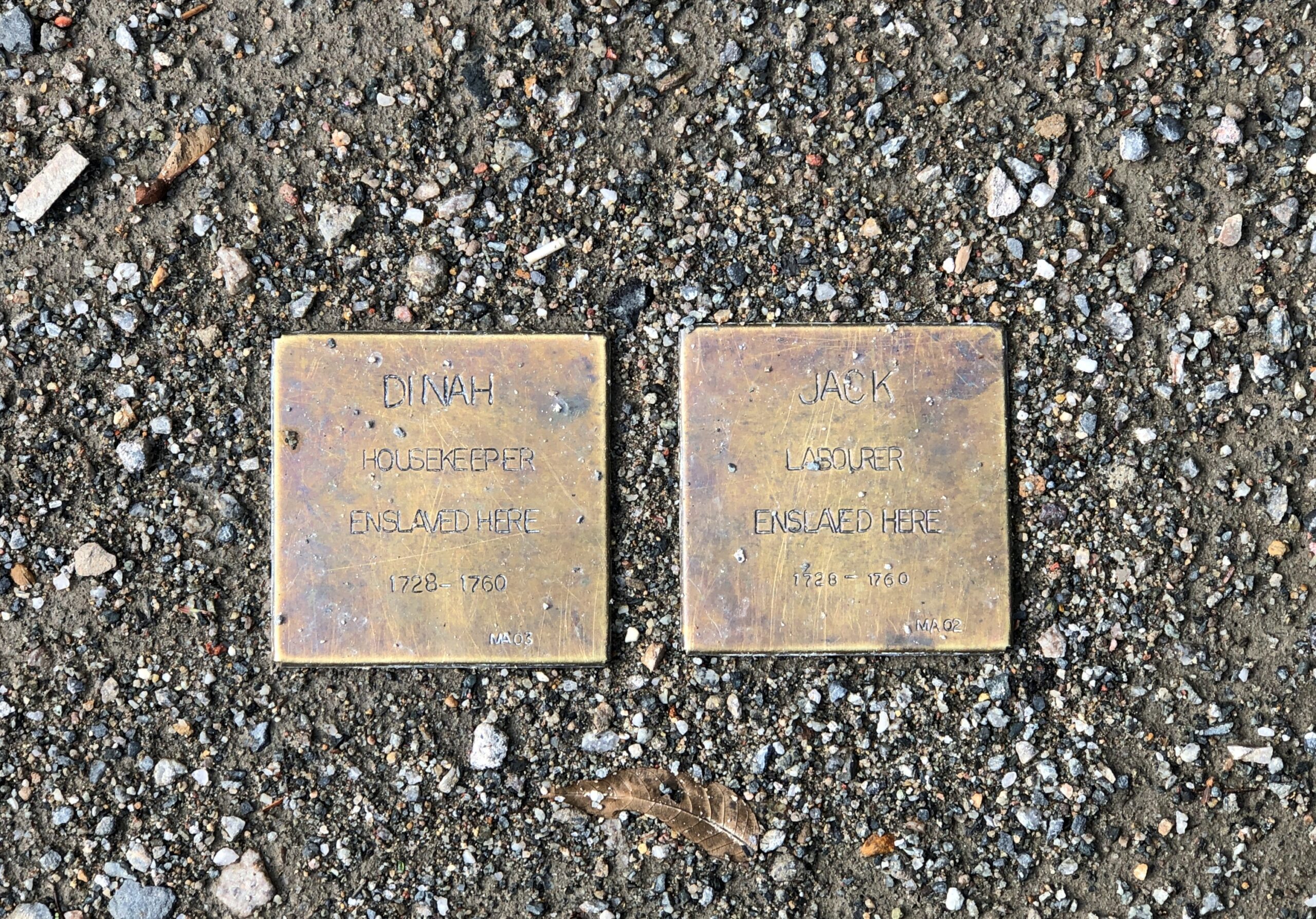
Also mentioned at Hancock-Clarke: the slaves that worked at the house during the pre-Revolutionary period, Jack and Dinah. Their names appear on small plaques near the museum entrance.

As the longstanding residence of Lexington’s minister, Hancock-Clarke has a rather different feeling than the tavern down the road. That is, austere yet well-furnished due to the wealth of the Hancock family. John Hancock’s grandfather, Rev. John Hancock (d. 1752), lived there, and afterwards Rev. Jonas Clarke (d. 1805) and his passel of children lived there during the Revolution. So it was entirely reasonable that John Hancock and Sam Adams were staying there on the night of April 18, 1775. As a visitor in modern times, you can see the very place where those two sat and drank (tea, the docent claimed) in front of one of the house’s large windows.

That evening, I had dinner with Rich and Lisa and Steve at Field & Vine in Somerville, which made for that most excellent combination: a good meal and convivial conversation. In 30 years since I spent any time in Somerville, the town has apparently become a foodie destination. Who knew?

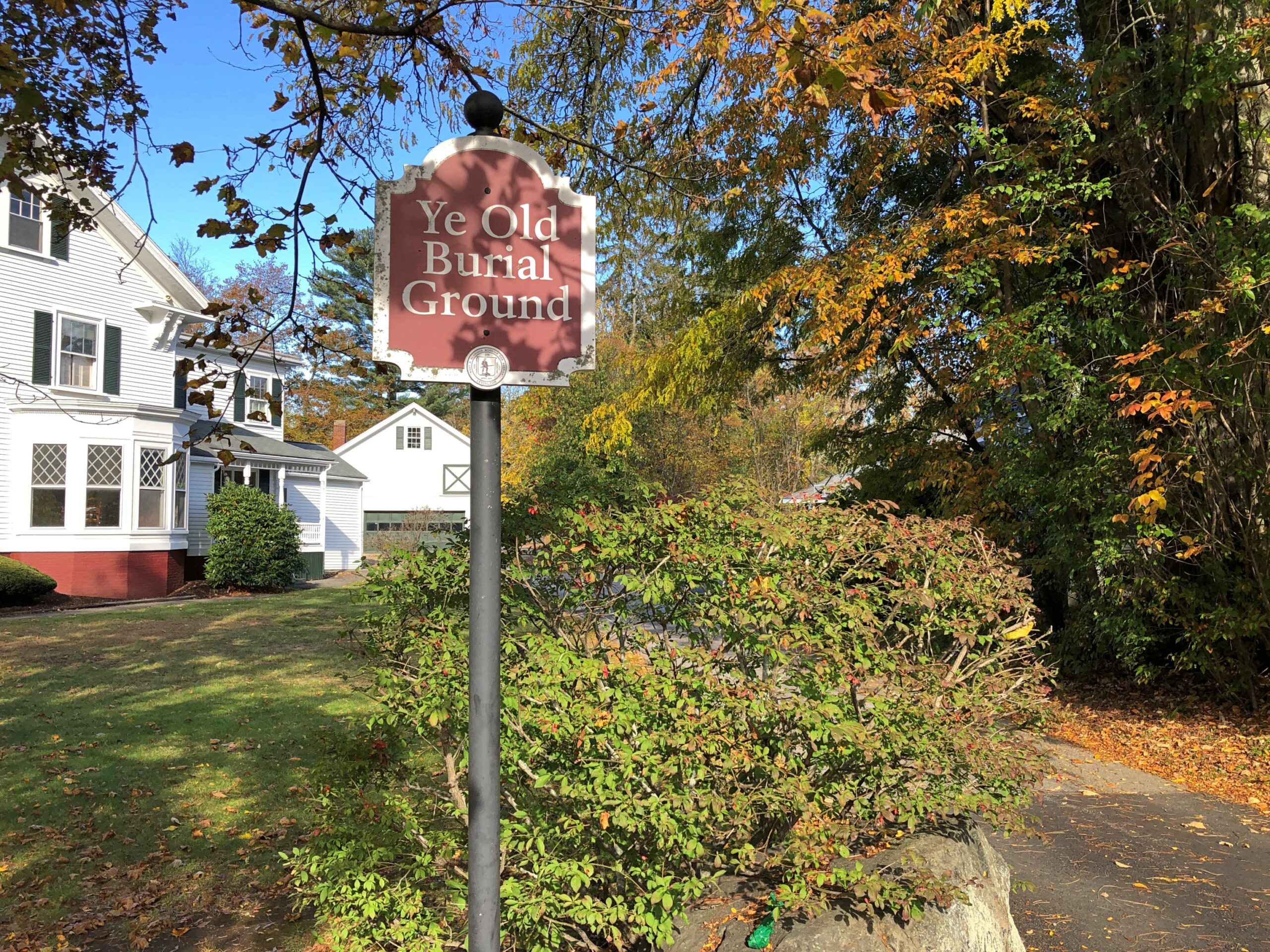
On the morning of 23rd, I left Massachusetts to begin my drive home. True to character, not a direct drive. But I didn’t want to leave Lexington without a visit to the Old Burial Ground, which I hadn’t had time for the day before. “Ye” Old Burial Ground, as the town puts it. At least there isn’t an “e” tacked onto “Old,” but I doubt that whoever did the sign was thinking, let’s use a thorn.

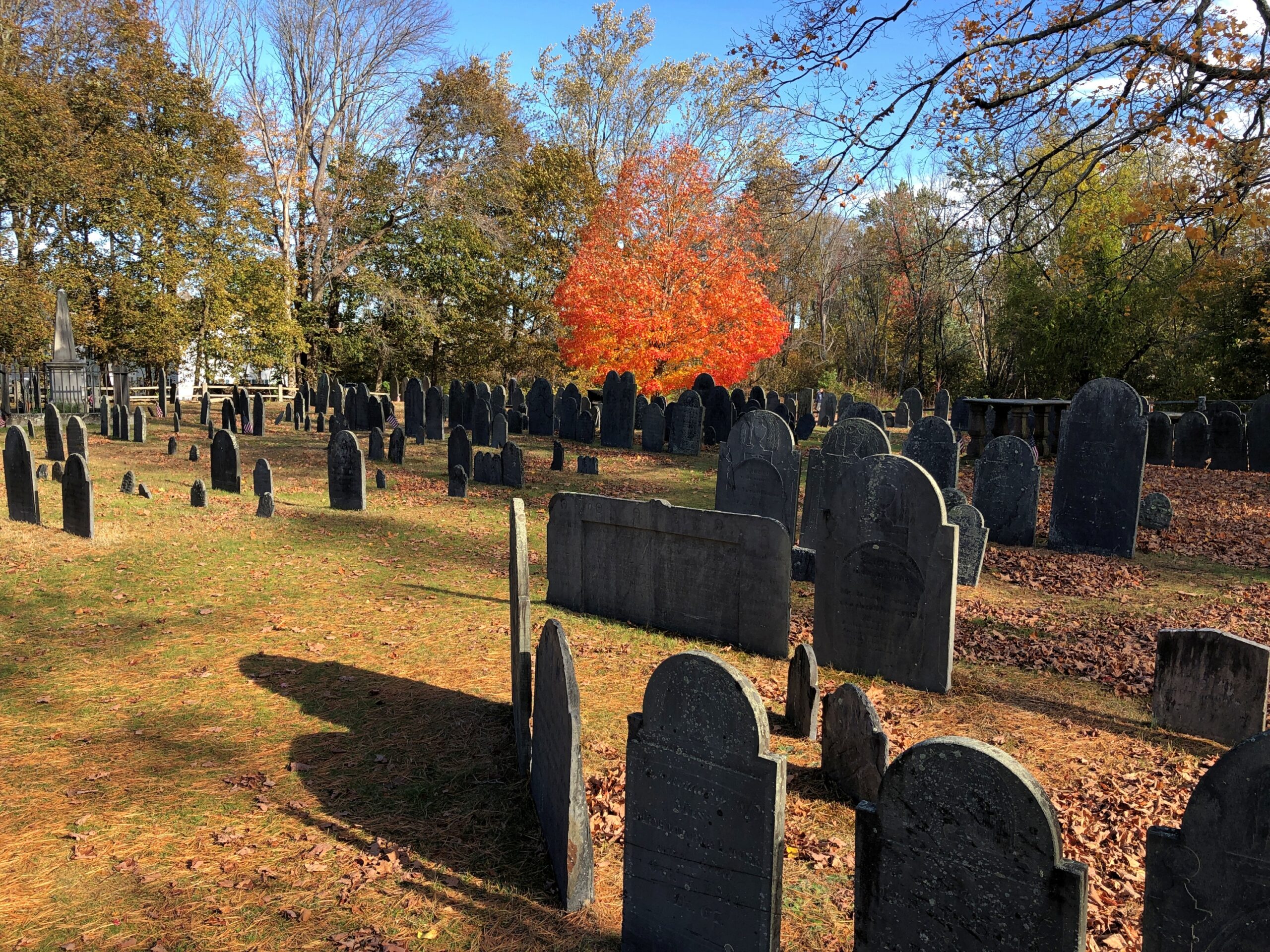
That aside, it’s a fine old cemetery.

Ye Old Burial Ground

The building in the background, incidentally, is the Church of St. Brigid. One wonders how most of the permanent residents of the Old Burial Ground would react to a Catholic church in the vicinity. Not too well, I suspect.

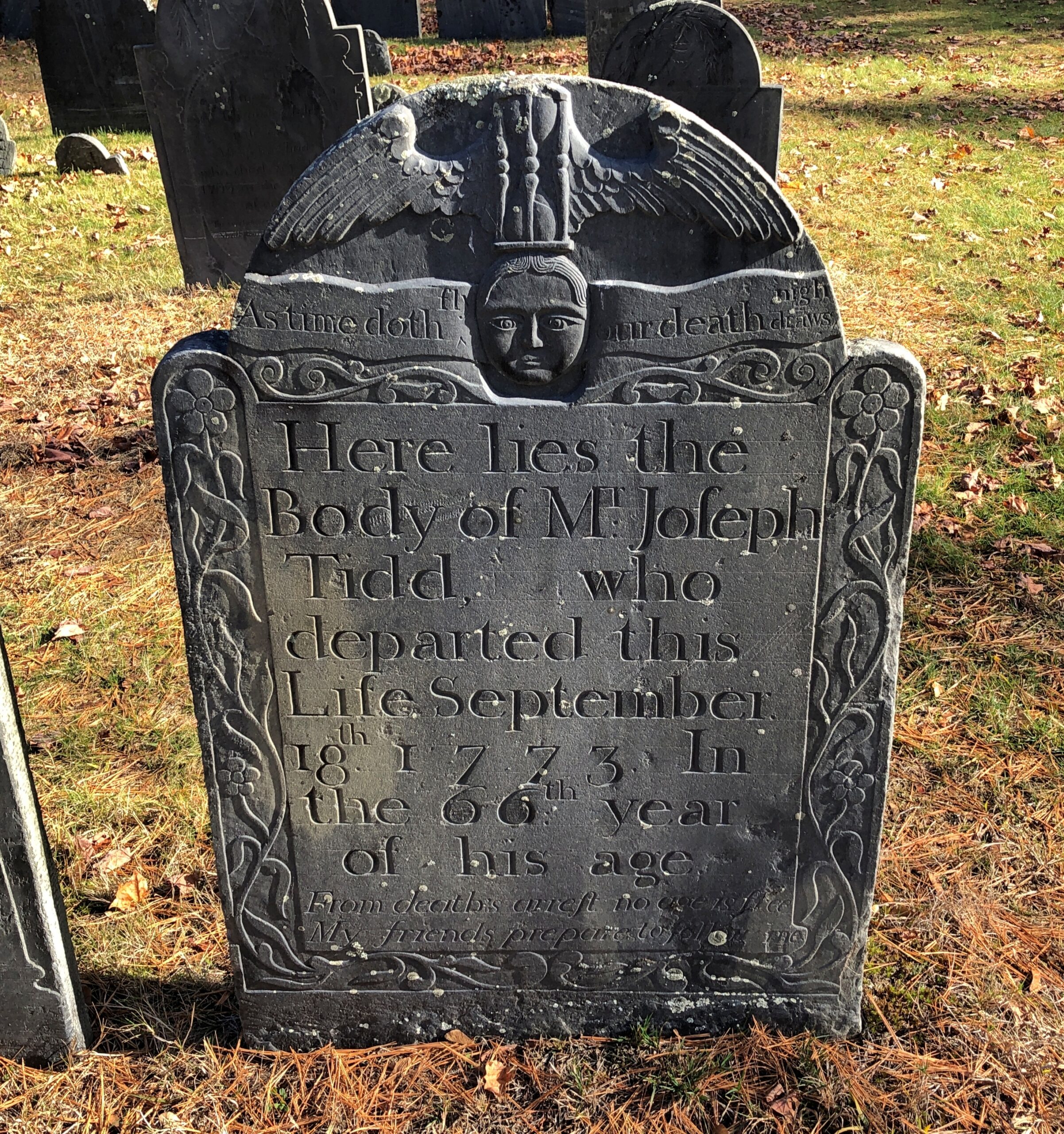
Memorials from a time before the Victorians came along and ennobled them a bit.

Ye Old Burial Ground

Or we moderns came along with our “celebration of life” euphemisms. It’s right there on the stone: As time doth fly, our death draws nigh.

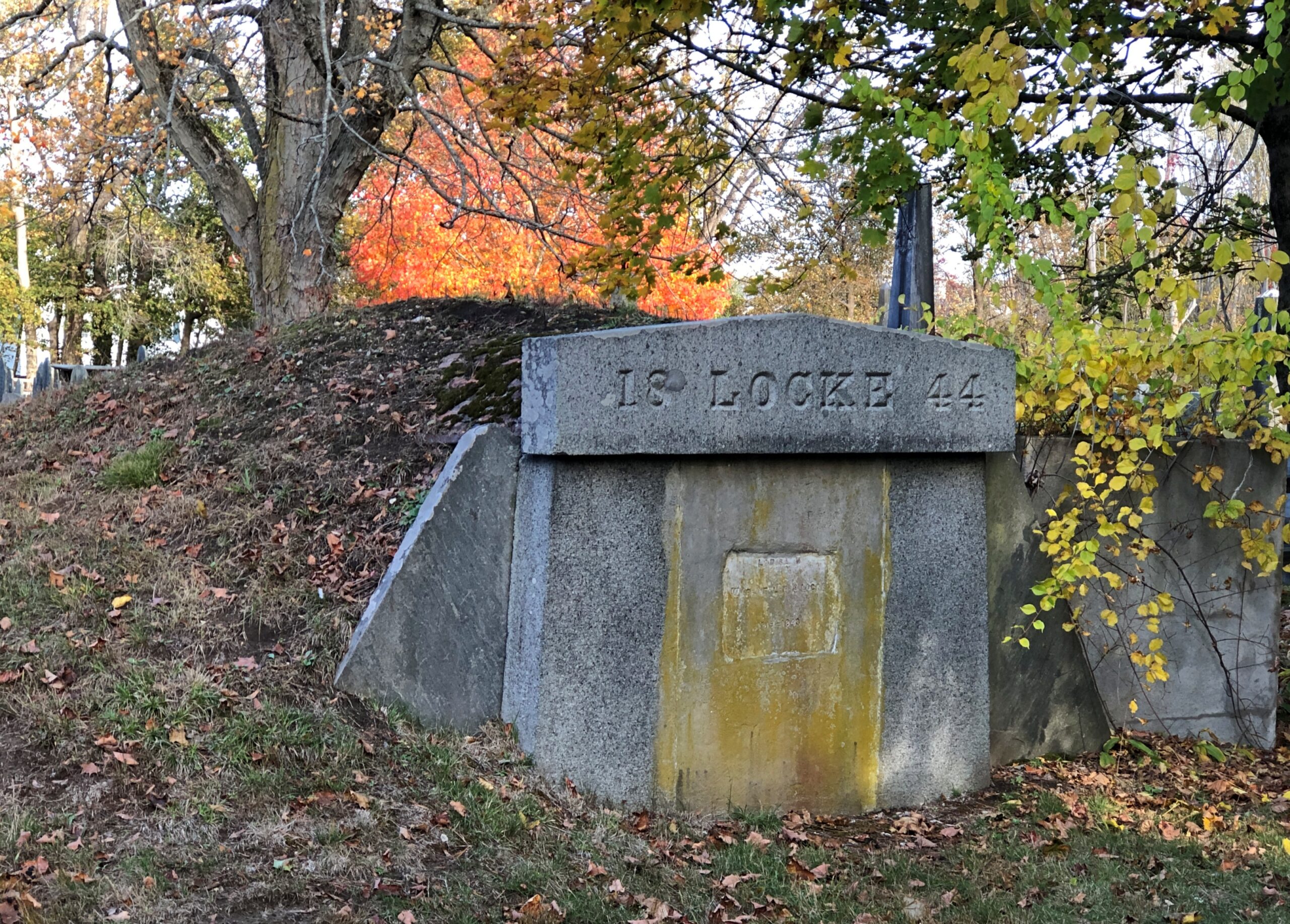
Not many tombs like this. Locke might have been the only one, come to think of it.

Ye Old Burial Ground

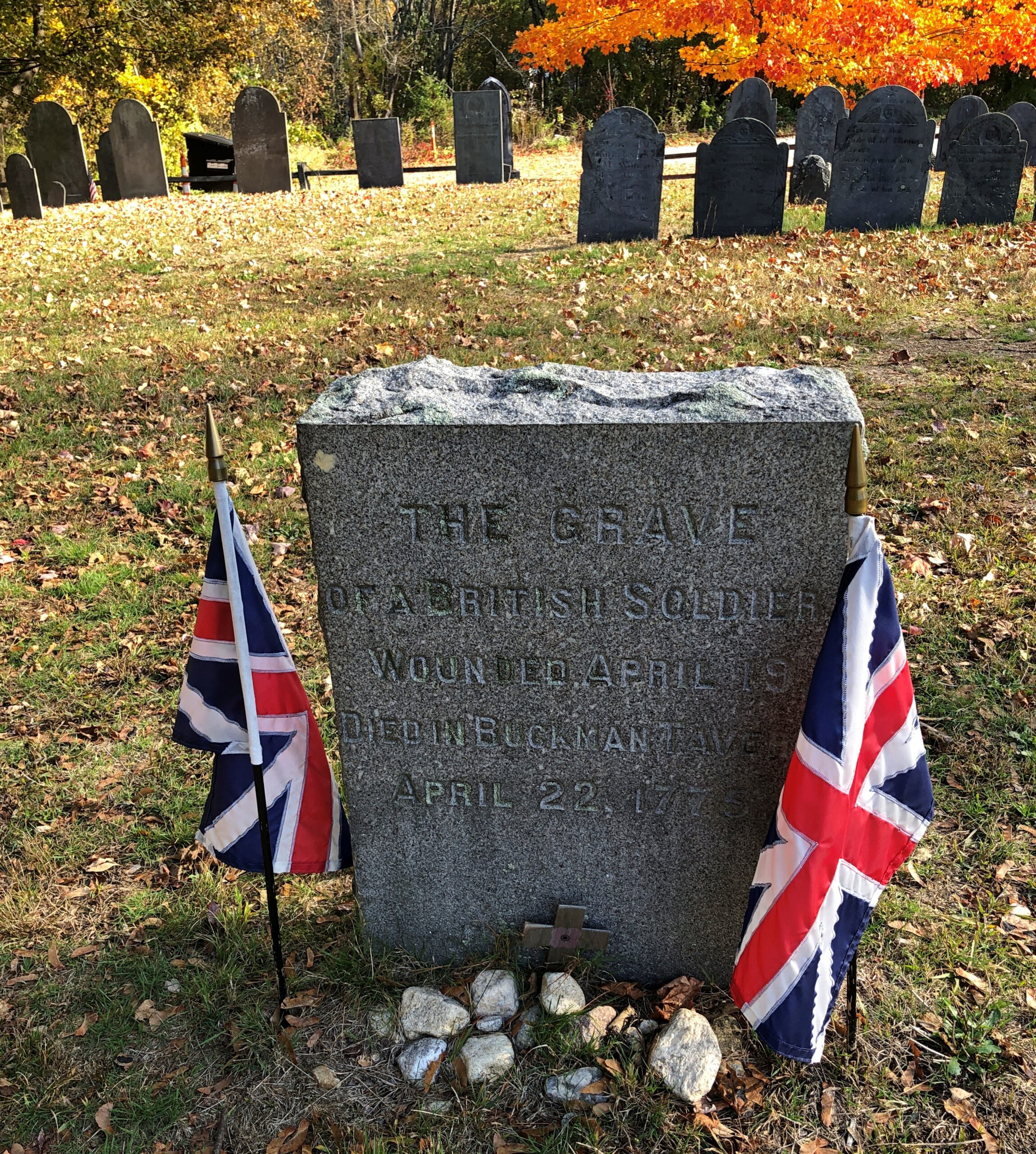
Something of a surprise.

Ye Old Burial Ground

Maybe not. However they felt about Regulars, the townspeople surely must have felt that a dead one deserved a Christian burial, and it wasn’t like they could ship him back home. The stone clearly came later, long after the passions of the war had cooled.

Indeed: Joseph Fiske, Lexington’s town doctor, recorded a bill for seven wounded soldiers he treated at Buckman Tavern the day after the battle [did he get paid?]. This soldier was likely one of them, but succumbed to his wounds in the following days. The simple granite slab was erected by the Lexington Historical Society in 1905.

The wonder is that anyone knew where the Regular was buried at all. Unless they were guessing in 1905. After all, militia commander John Parker – who died of TB only months after the Battle of Lexington – is known to be in the Old Burial Ground, but his exact location is unknown.

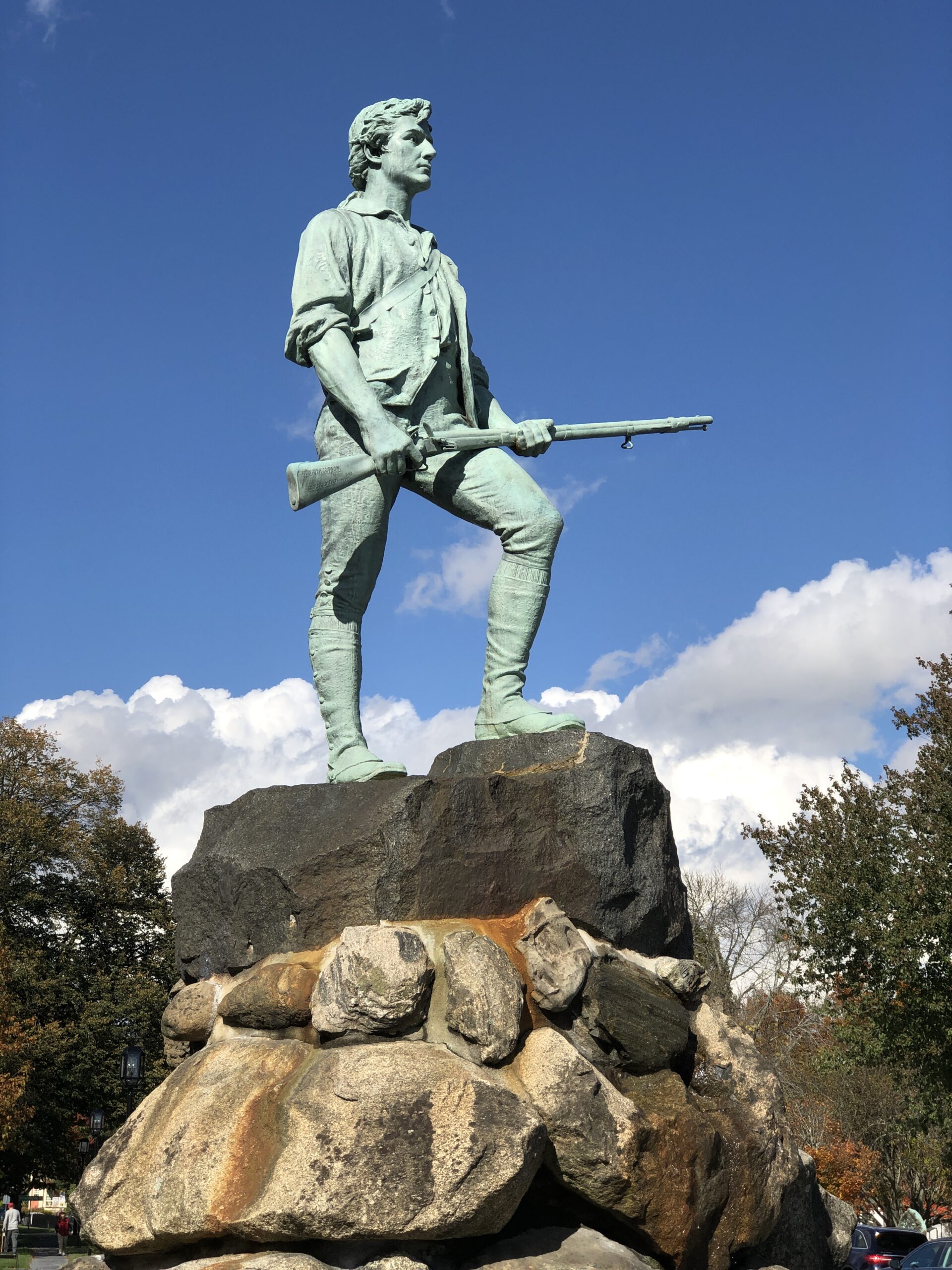
Battle Green, Lexington

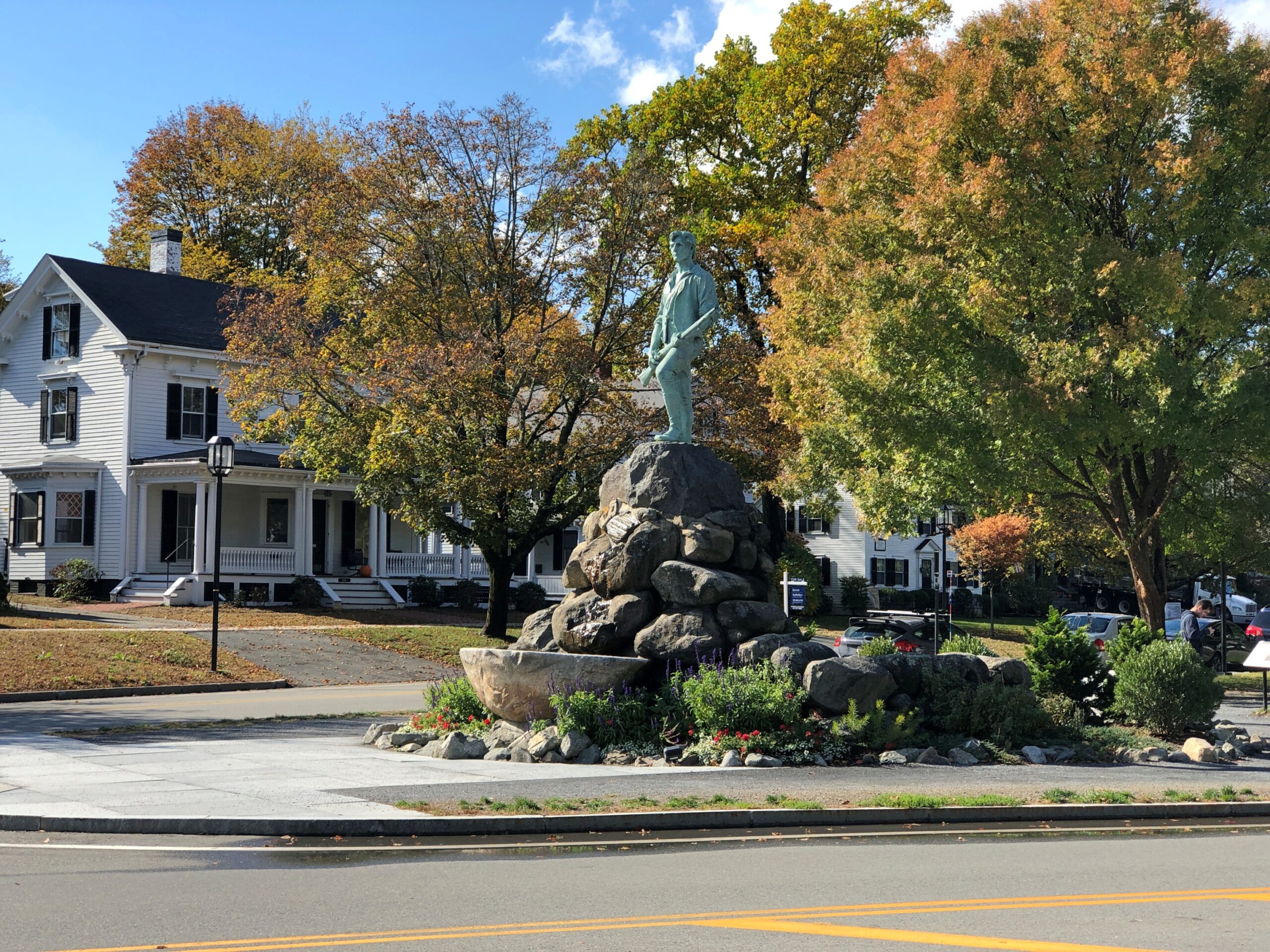
Too bad about iconic. If there ever were a time to use iconic to describe sometime distinctive and revered, John Parker in bronze would be it.

Lexington Battle Green

Icons are no accidents. The pose captures the Battle of Lexington as we, Americans, want to remember it: the resoluteness of an ordinary man in the face of the enemy. What the militiamen experienced that morning is partly enshrouded in mystery like a battlefield of the time might be with gun smoke. No one knows who fired the first shot, for instance, but that doesn’t keep the Shot Heard Around the World from having its own name during later generations — a remarkable thing for a simple firearm discharge to have.

Lore has encrusted the story. Even so, the Patriot soldiers in the Revolution, collectively, can’t be said to have lacked resoluteness over the long years of conflict.

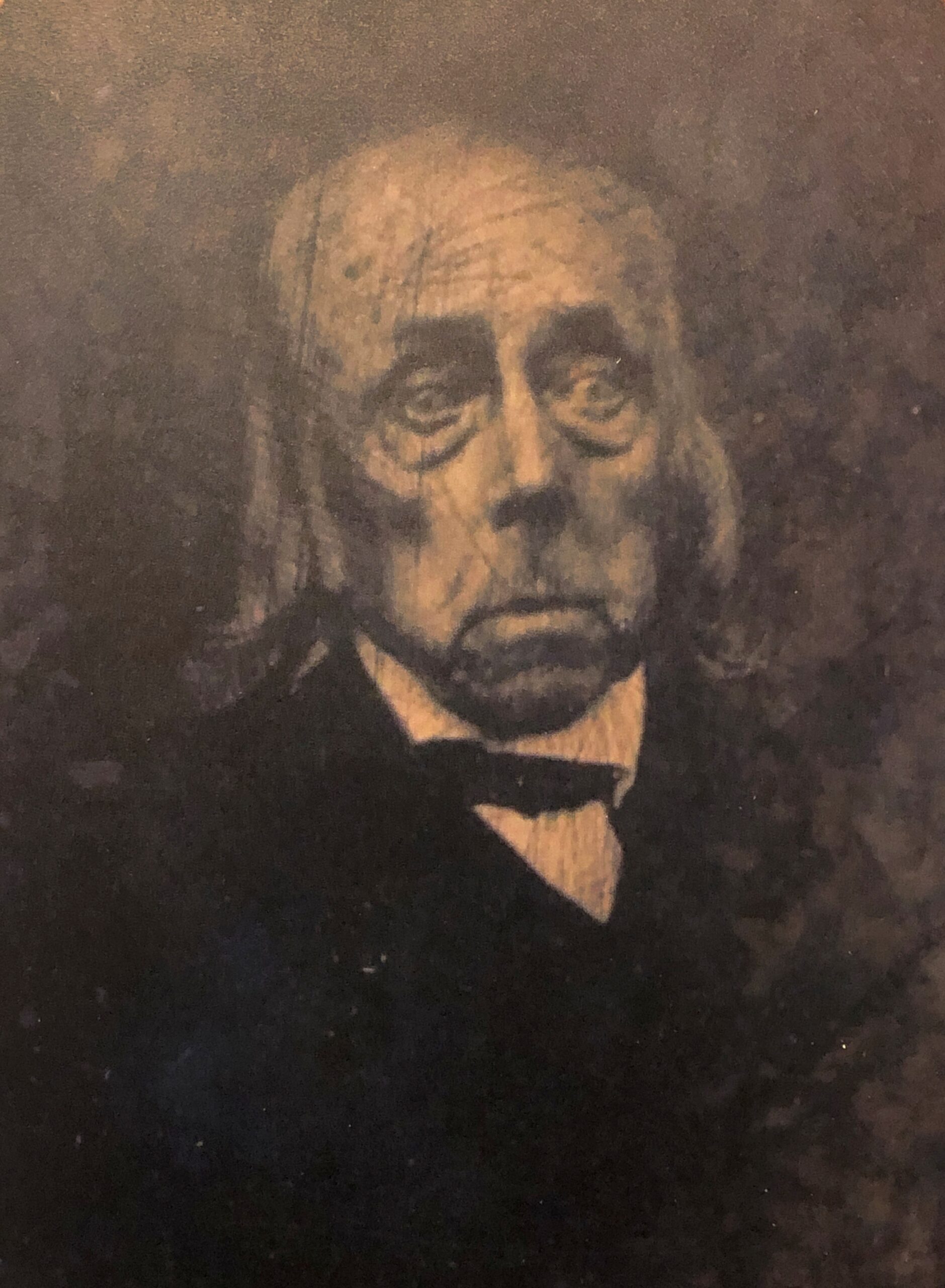
The Parker bronze stands on the edge of Battle Green in Lexington, Massachusetts, and across the street from Buckman Tavern, where the militiamen of the town waited the night before the battle. Among their number on April 19, 1775, was a young man named Jonathan Harrington, a fifer in the militia. About 75 years later, he’s thought to have posed for a photograph, now on display at Buckman Tavern.

Jonathan Harrington, Lexington

Said to be the last survivor of the battle, and the only one to be photographed. The American Battlefield Trust cites a Harrington family history: He said he was aroused early that morning by a cry from his mother, who said: ‘Jonathan, get up, the regulars are coming, and something must be done.’ Jonathan was a fifer. He arose, went to the place where the patriots were gathering, and was with the company on the approach of the British. 

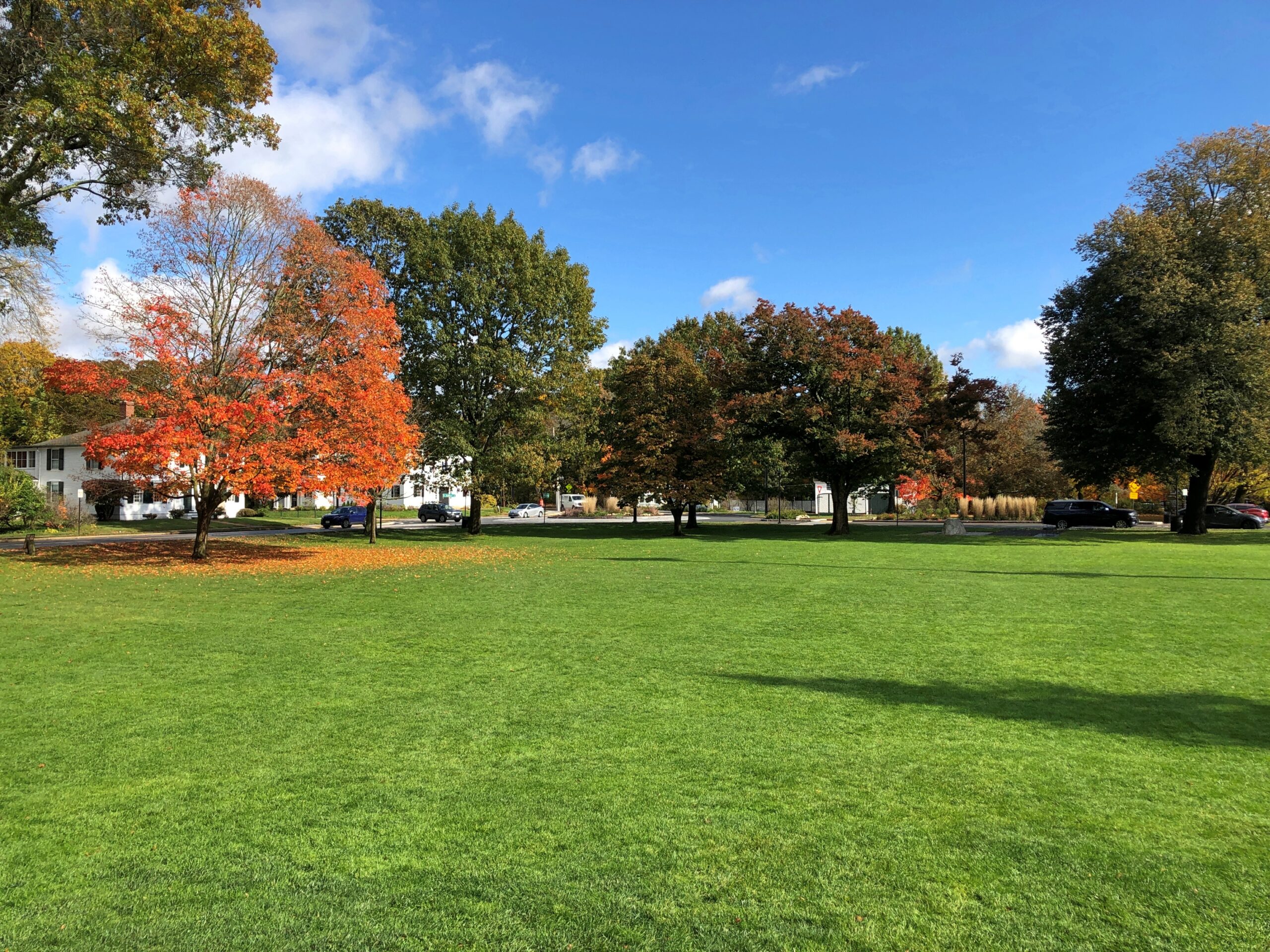
It had rained during the early hours of October 22, 2025 in Lexington, but by late morning the sun was out and only a scattering of puddles remained. Battle Green stretched out behind the bronze John Parker. For a time, I was the only person on the green, though a steady stream of car traffic was the be seen on the roads edging the grounds.

Battle Green,
Lexington
Battle Green, Lexington

John Parker, originally “Minuteman Statue” by the prolific sculptor and public monument specialist Henry Hudson Kitson, is a latecomer to the green, erected in 1900.

Battle Green, Lexington

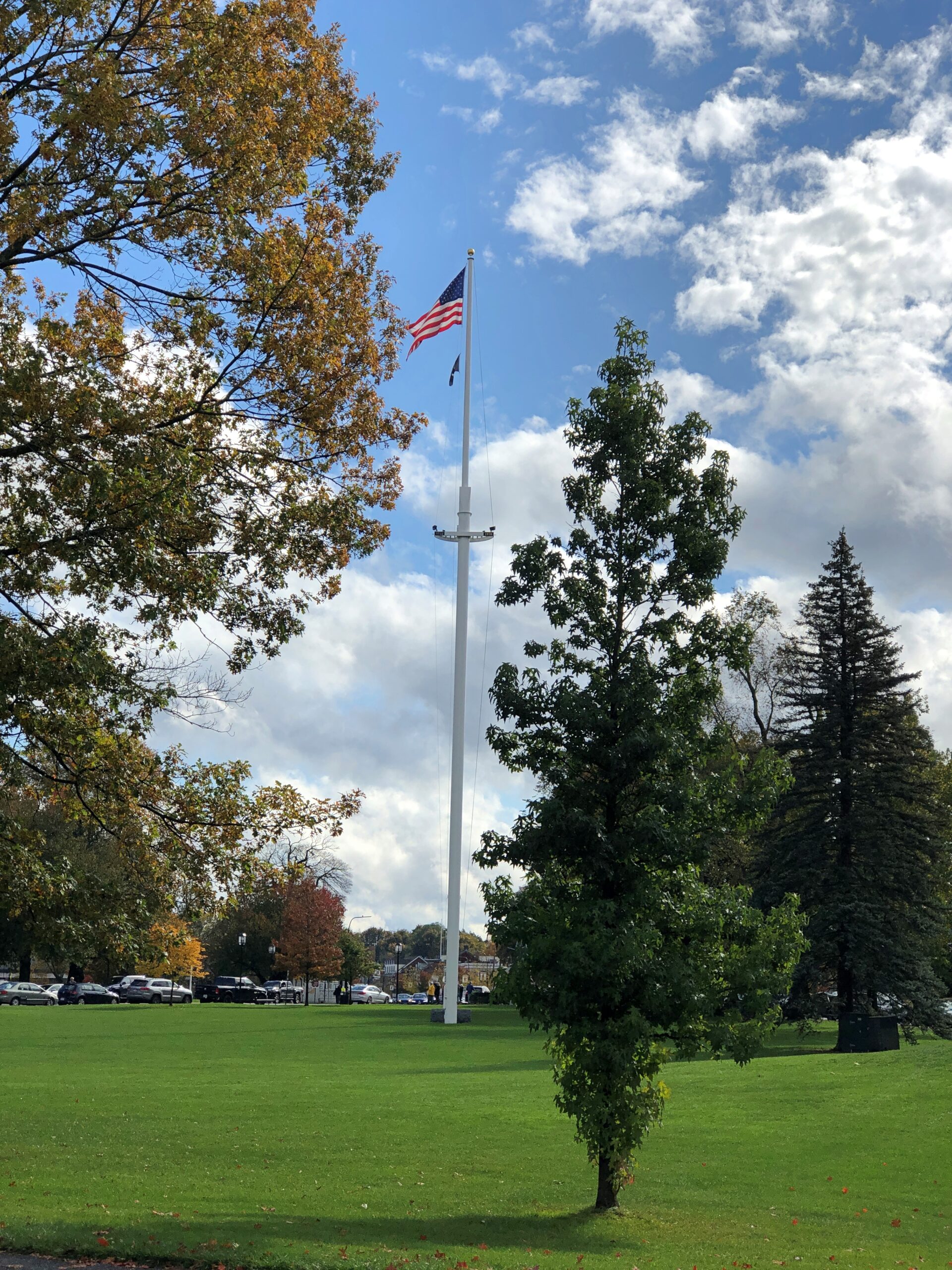
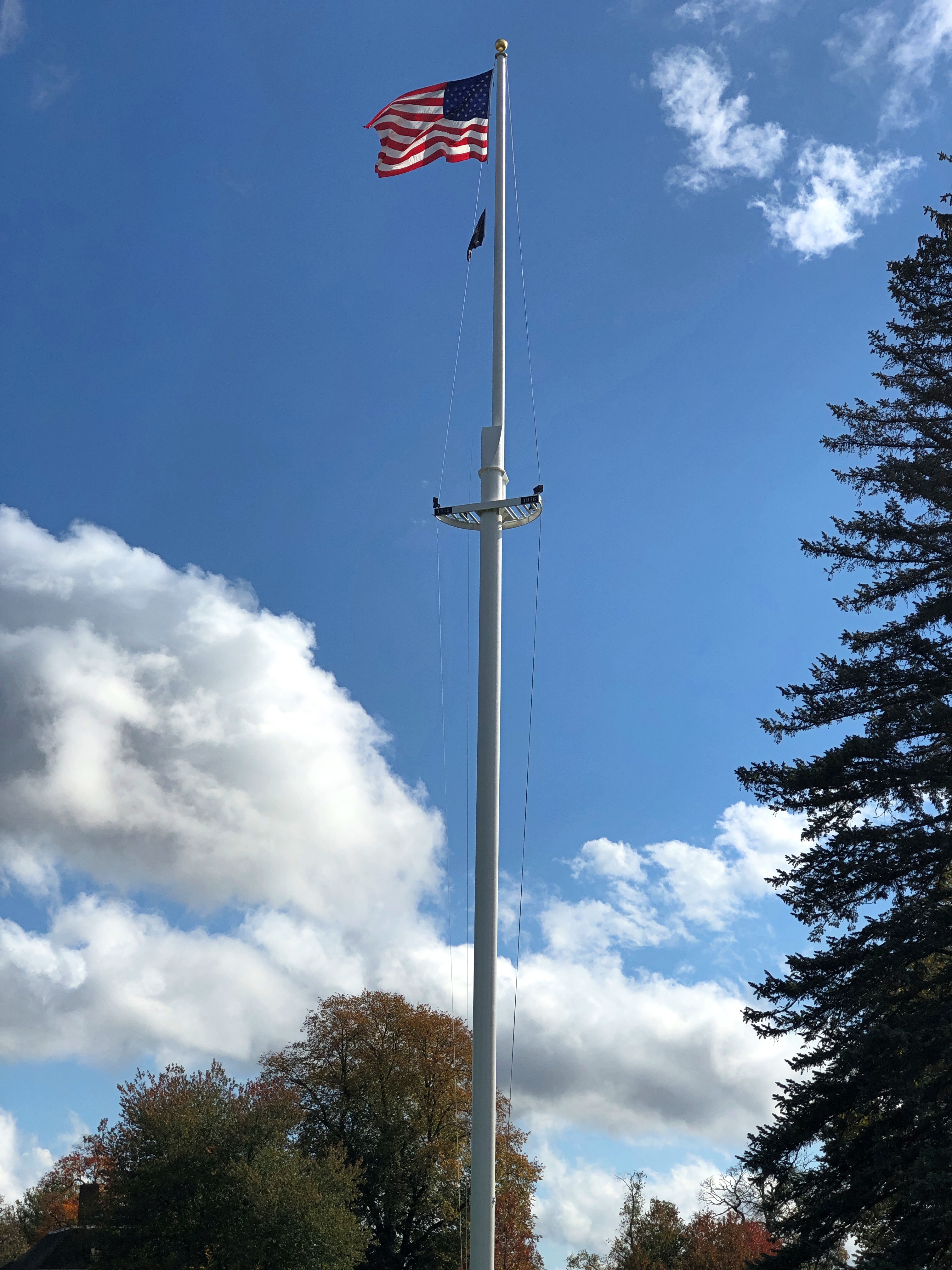
The Battle Green flagpole is newest of all, erected only in 1962. Even so, the pole is on the National Register of Historic Places, and an act of Congress specifies that a flag will always be flown there.

Battle Green, Lexington

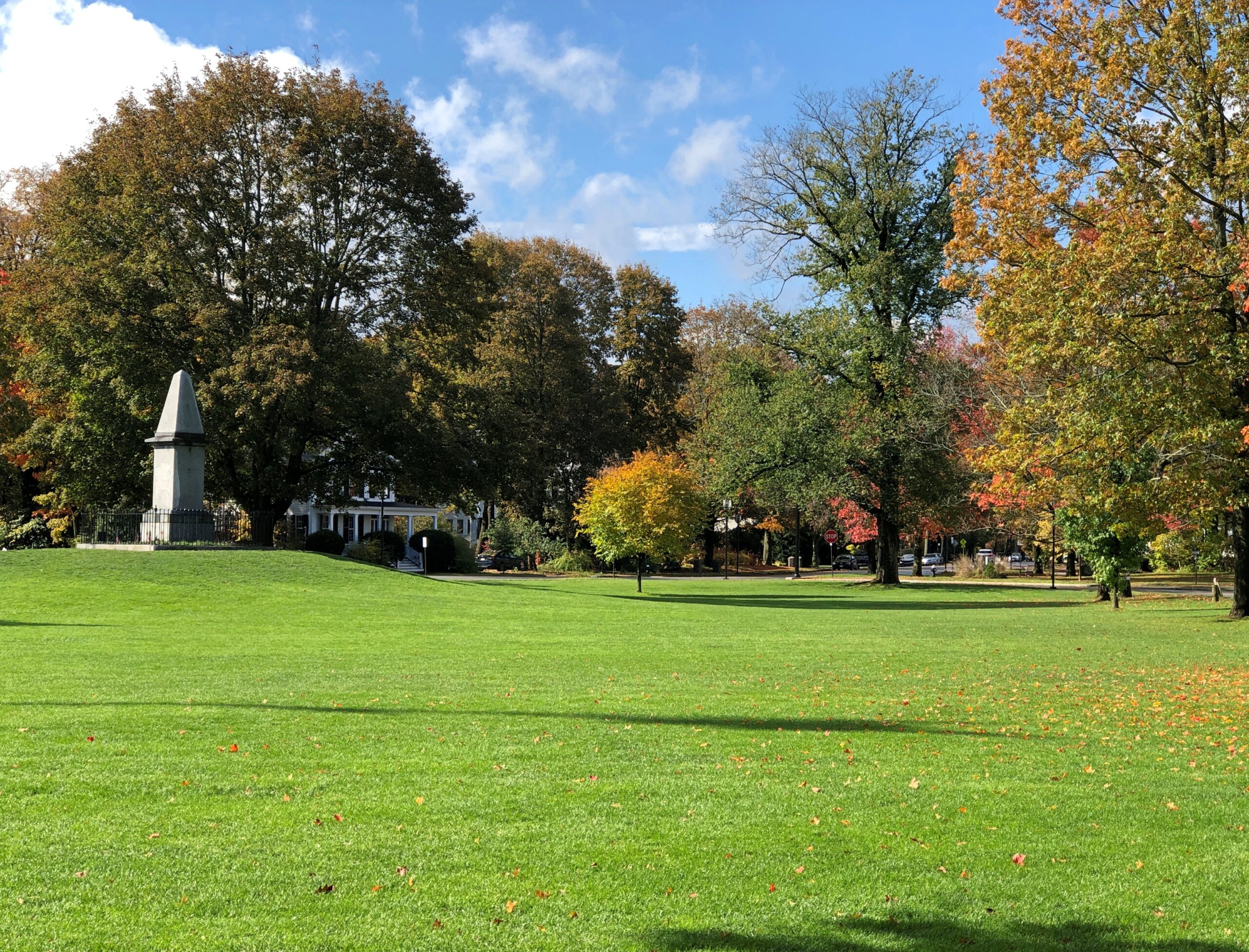
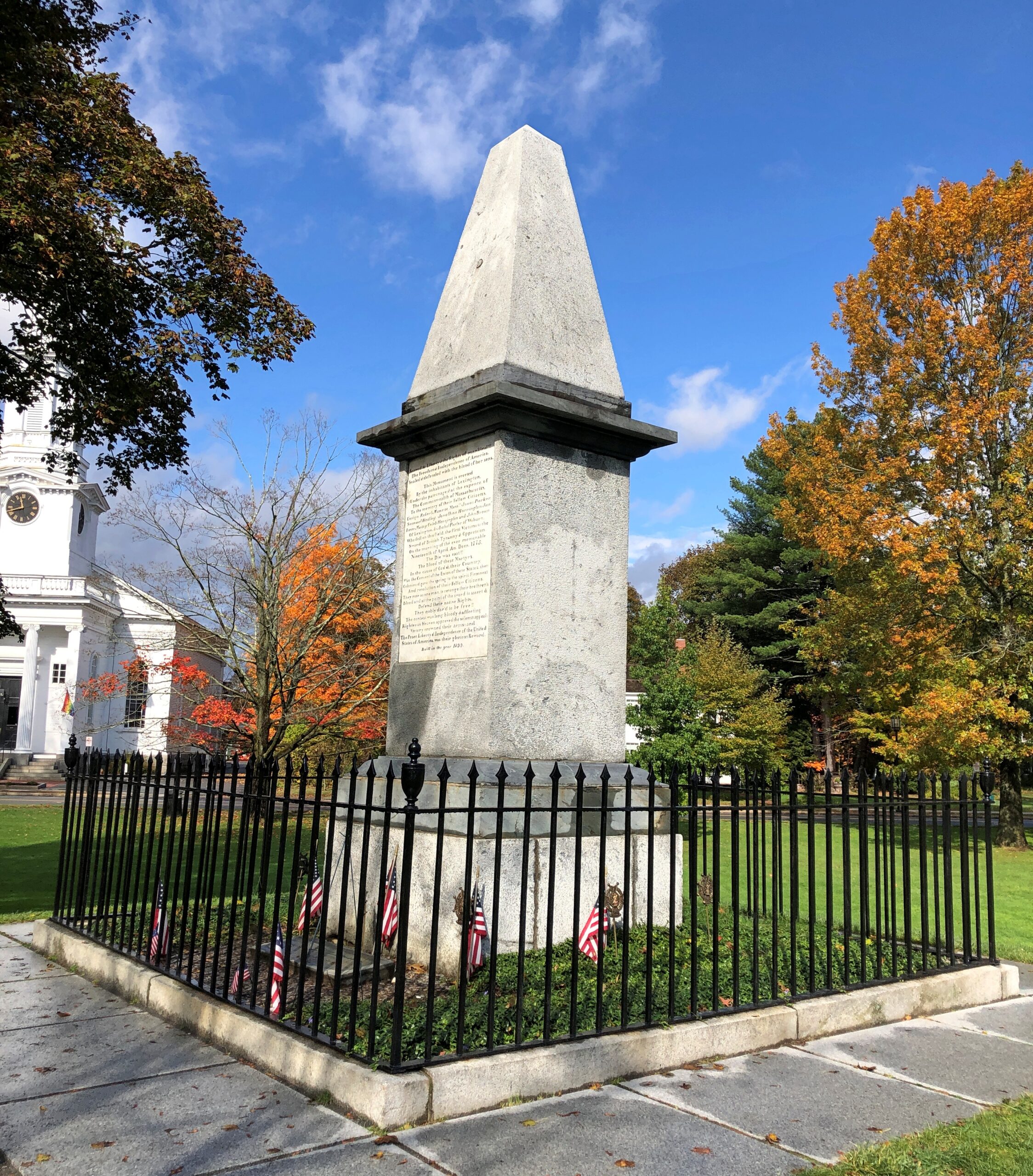
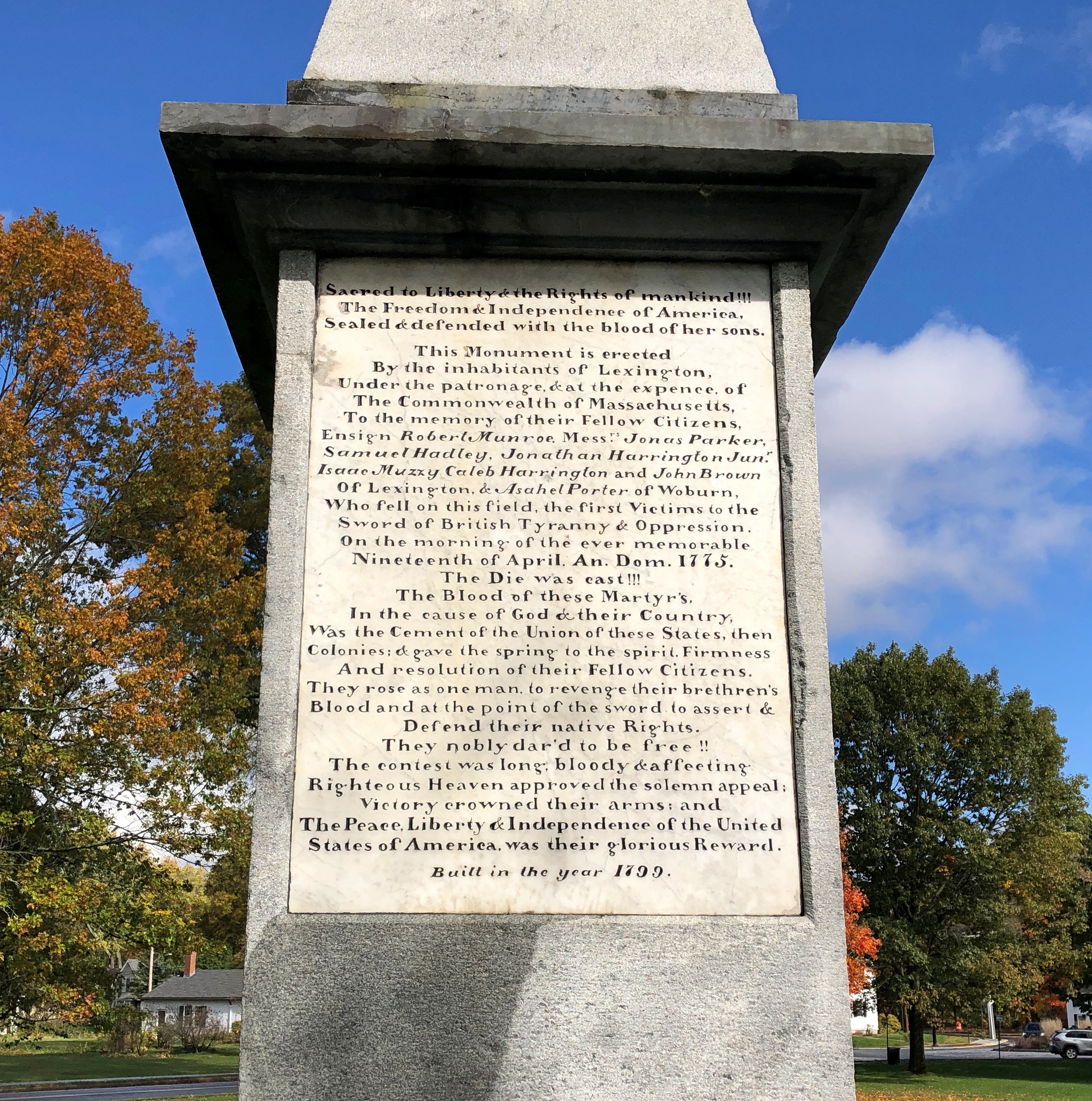
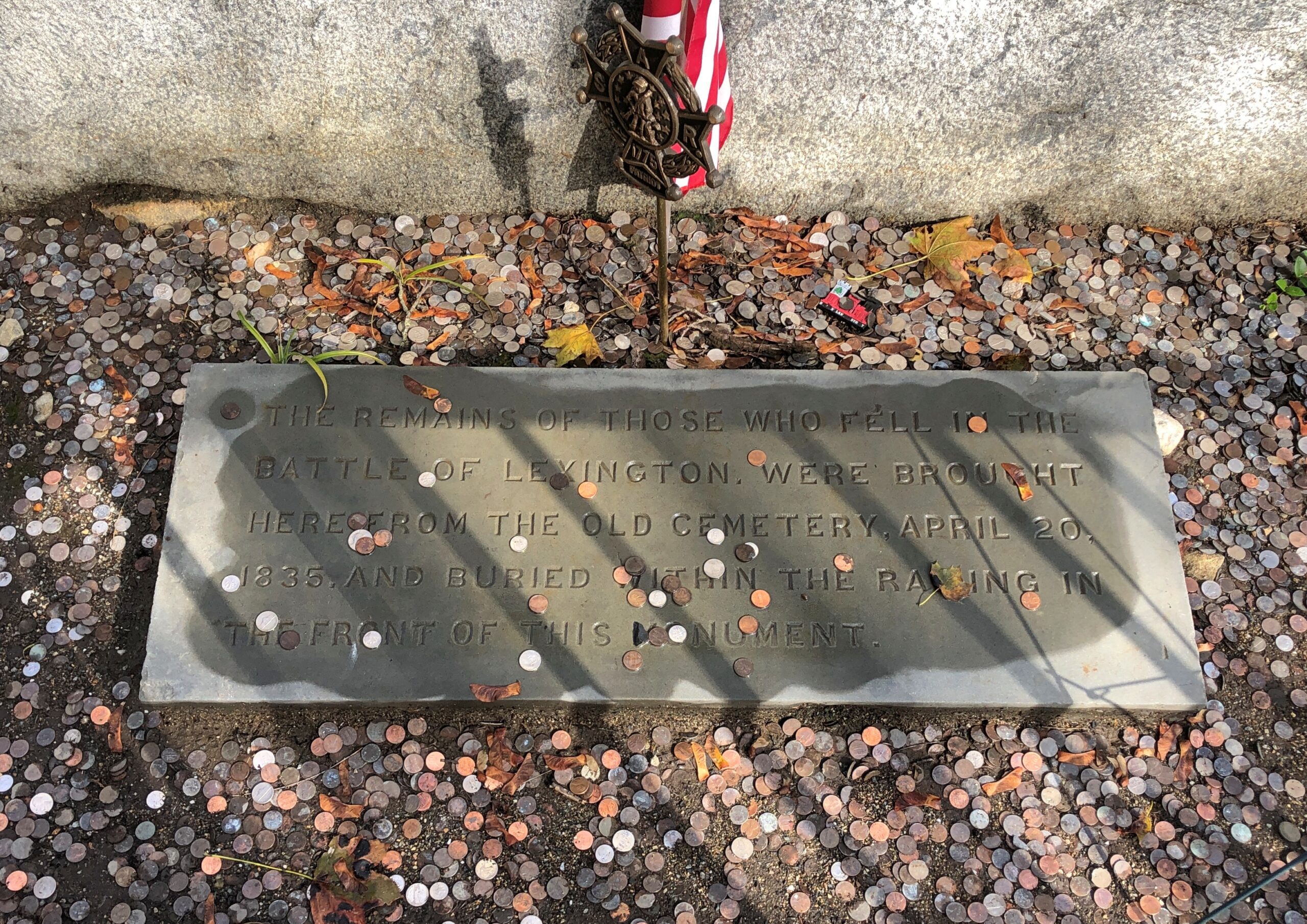
Well within living memory of the battle itself (1799), the town – fully aware of its role as spark of the Revolution – erected a memorial, and relocated the bones of the militiamen killed in the battle to a spot in front of it.

Battle Green, Lexington

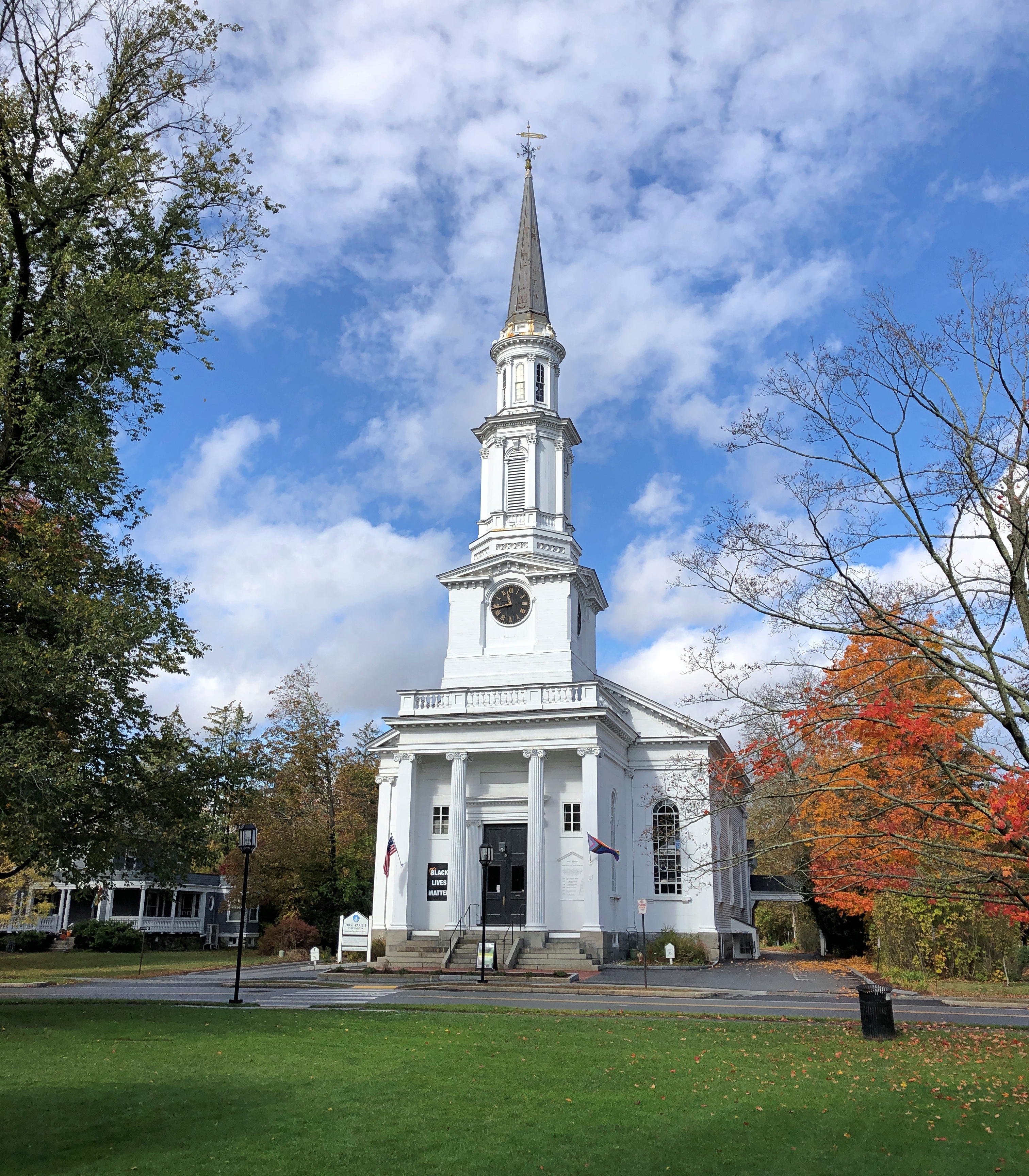
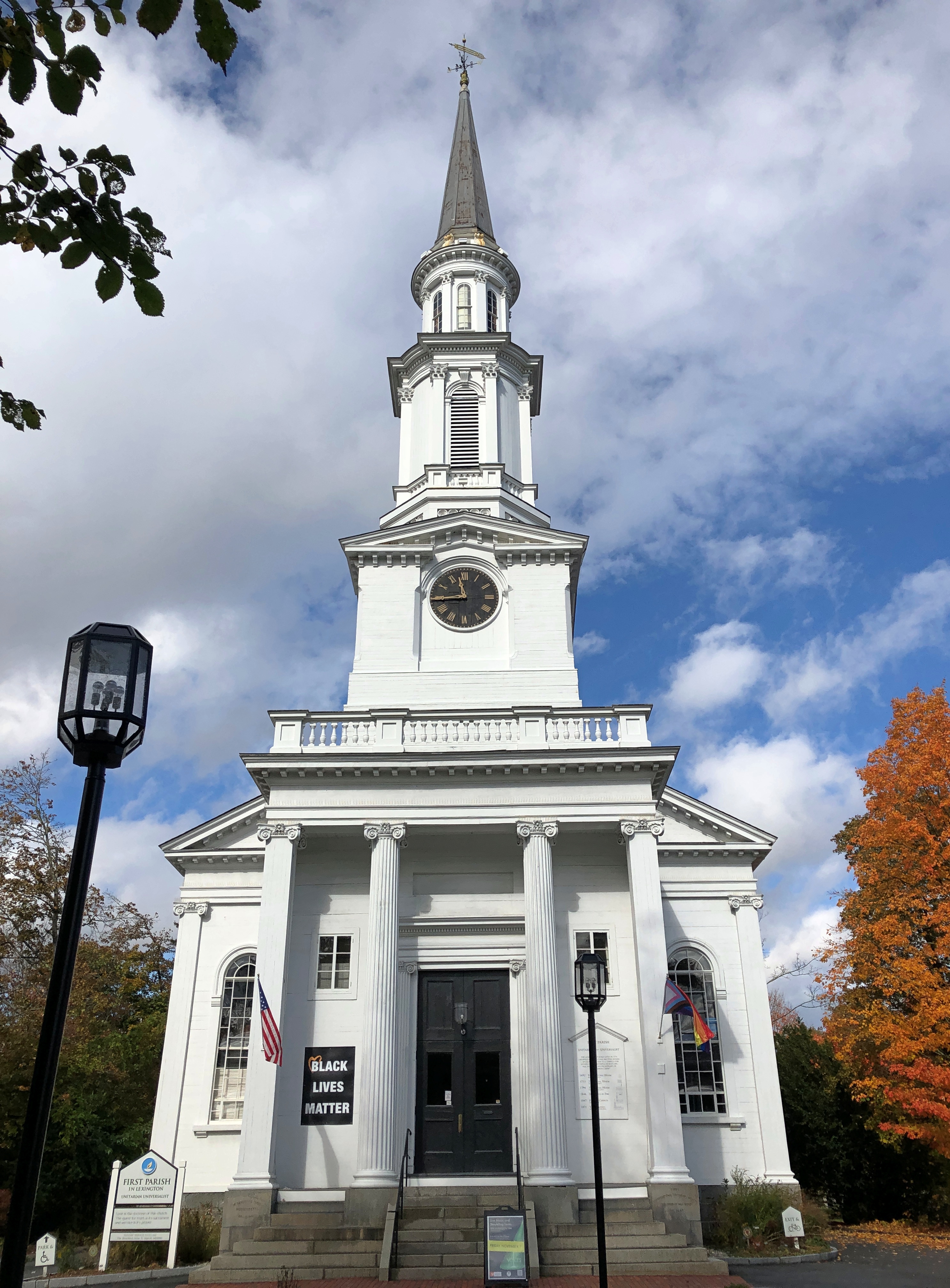
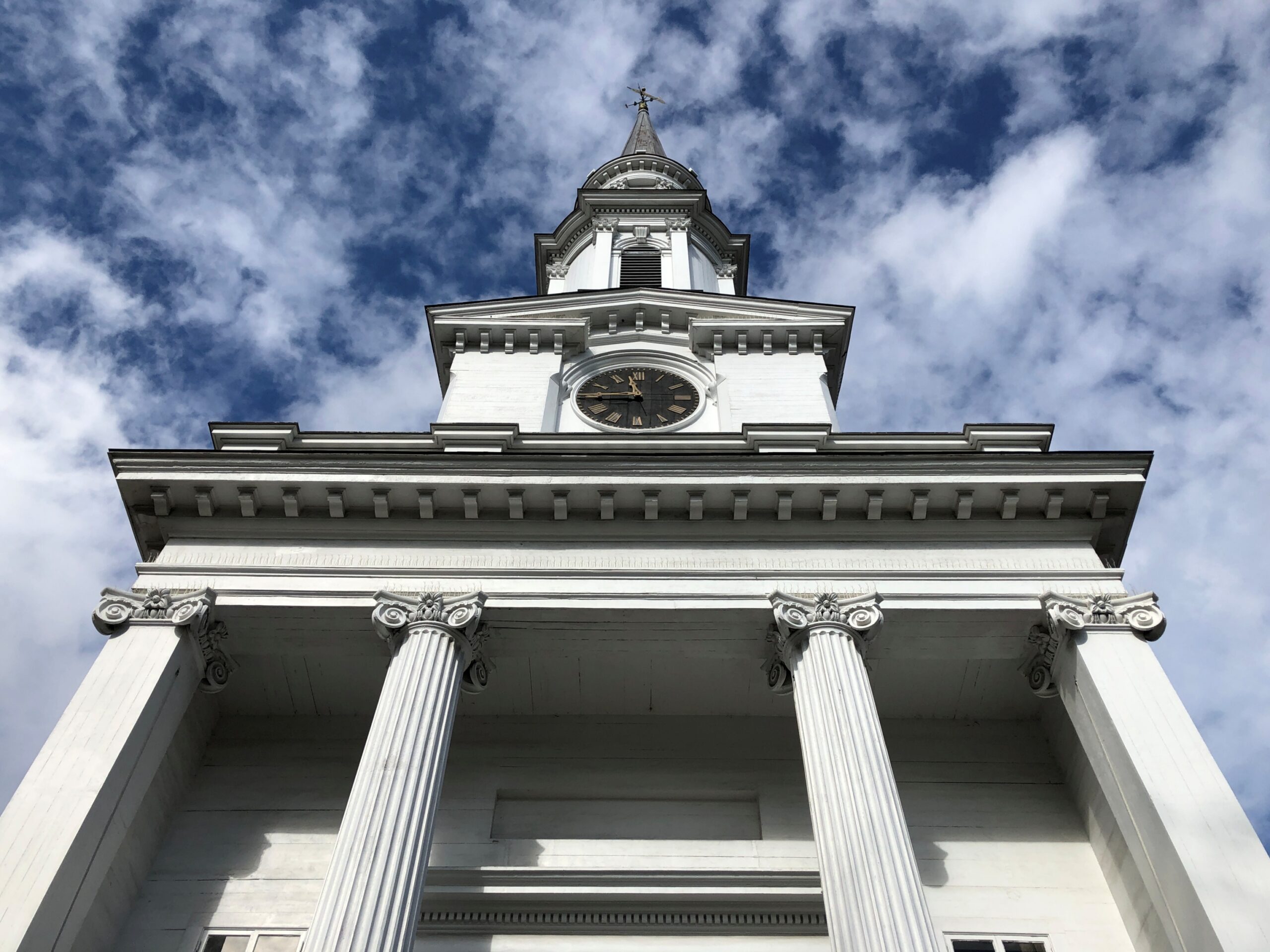
Though not formally part of the green, First Parish Unitarian-Universalist is distinctly part of the place, and looks about as New England as a church can.

Battle Green, Lexington

It might as well be part of the green, considering the history of the congregation. The present church is a 19th-century structure near the site of Lexington’s only church in 1775, which was a hotbed of Revolutionary sentiment at the time.

Nor’East Drive ’25

I didn’t realize until last night that I’d driven through some geographic oddities over the last two weeks, on my way to the Northeast and back. Actually state border oddities, such as the Erie Triangle in Pennsylvania, the curious division of the Chesapeake Peninsula, and the panhandle of Maryland.

Except they aren’t really oddities. They just look that way when you’re a kid (or an adult) poring over U.S. maps or putting your state puzzle map together for the nth time. How is it that Pennsylvania has that small chimney? Why didn’t Delaware get more of the Chesapeake Peninsula? What’s the deal with the western extension of Maryland, which narrows to only a few miles at one point?

There are historic reasons for all the shapes, both rational and arbitrary, which are the subject of books and at least one TV show. Lands were granted and claimed, borders were surveyed and quarreled over, and deals and court cases and Congress eventually settled the shapes.

The border oddities may have local and legal significance, but they’re also there to enjoy. Regular borders aren’t nearly as much fun. Sure, it’s interesting that Colorado and Wyoming look about the same, but I always liked the fact that New Mexico has a stub and Idaho tapers to meet Canada, just to name two Western examples, because not all the fun shapes are in the East. Just most of them.

To reach these border areas, I drove 2,853 miles, starting October 14, from northern Illinois to the East Coast and back, through (in order) Indiana, Michigan, Ohio, Pennsylvania, New York state (and city), New Jersey, New York (city and state) again, Connecticut, Massachusetts, Rhode Island, Connecticut again, New York state (and city) again, New Jersey again, Delaware, Maryland, West Virginia, Pennsylvania again, West Virginia again, Ohio again and Indiana again, arriving home today. I got tired just typing all that out.

The original impetus for the trip was to visit New York City during its Open House event. Unlike a rational person, who would have flown there and back, I decided to drive, and let Yuriko fly there and back. NYC is achievable from metro Chicago in two driving days. I decided not to do that, either, and stretch things out to fill in some travel lacunae of mine.

For instance, I wanted to visit Eire, Pa., because I’ve always bypassed it, and many Americans can say the same. I wanted to look around Long Island, or at least part of it, for the same reason. I wanted to spend the night in both Rhode Island and Delaware: the last two states in which I’d never done so. I wanted to see the capitols of New Jersey, Delaware and Maryland, toying with the idea of Pennsylvania too, though I decided it was out of the way. I wanted to see historic sites associated with a number of presidents along the way, and maybe a battlefield or two.

I really wanted to visit a friend in New York, and my nephew Robert, and friends in the Boston area. I’m glad to report that I did so. This has been a year of visiting old friends and relations. I’d like every year to be that way.

I had a much longer list of places to visit, and added to it every time I looked at a map, paper or electronic, since I now use both, and when I was driving — so many possibilities. But there are only so many hours in the day and so much energy in my aging body. Still, I did much of what I set out to do, with one major exception due to forces beyond my control. National Park Service sites were off the table, for reasons all too obvious and not worth rehashing here. So the homes of FDR and TR, along with Antietam and Harper’s Ferry, went unvisited. Some other time, I hope.

No matter. I visited a good number of cities and towns, drove roads large and small, empty and insanely crowded, and enjoyed a few exceptional meals and many very good ones. I saw churches and cemeteries, some historic places not managed by the federal government, and encountered the largest of the many No Kings events. I read plaques. I chatted with strangers and clerks in stores. I took a swim in Massachusetts and long walks in New York. I hadn’t planned to walk across the Brooklyn Bridge again, but Yuriko had that idea, and across we went. I listened to a lot of terrestrial radio, good, bad and indifferent. I burned gas priced between about $2.70 and $3.30 a gallon. I paid entirely too many tolls, because the Northeast is lousy with toll roads and bridges — but driving across some of those bridges, especially the Bay Bridge in Maryland, was a grand experience, and surely worth the toll.

Something I didn’t anticipate, but which improved the trip immensely, was fall color. I should have anticipated it, but I suppose I had other things on my mind. When I got to New York state, driving west to east, it became clear that I’d accidentally designed myself a fall foliage excursion. The trees were gorgeous there, and in NYC (especially Prospect Park), Long Island, and parts of New England, and in Delaware and Maryland all the way across its panhandle. Even Ohio and Indiana had some nice color when I got there, and here at home too.
Prospect Park leaves

One more thing: unexpected oddities along the way. It’s important to watch out for those.

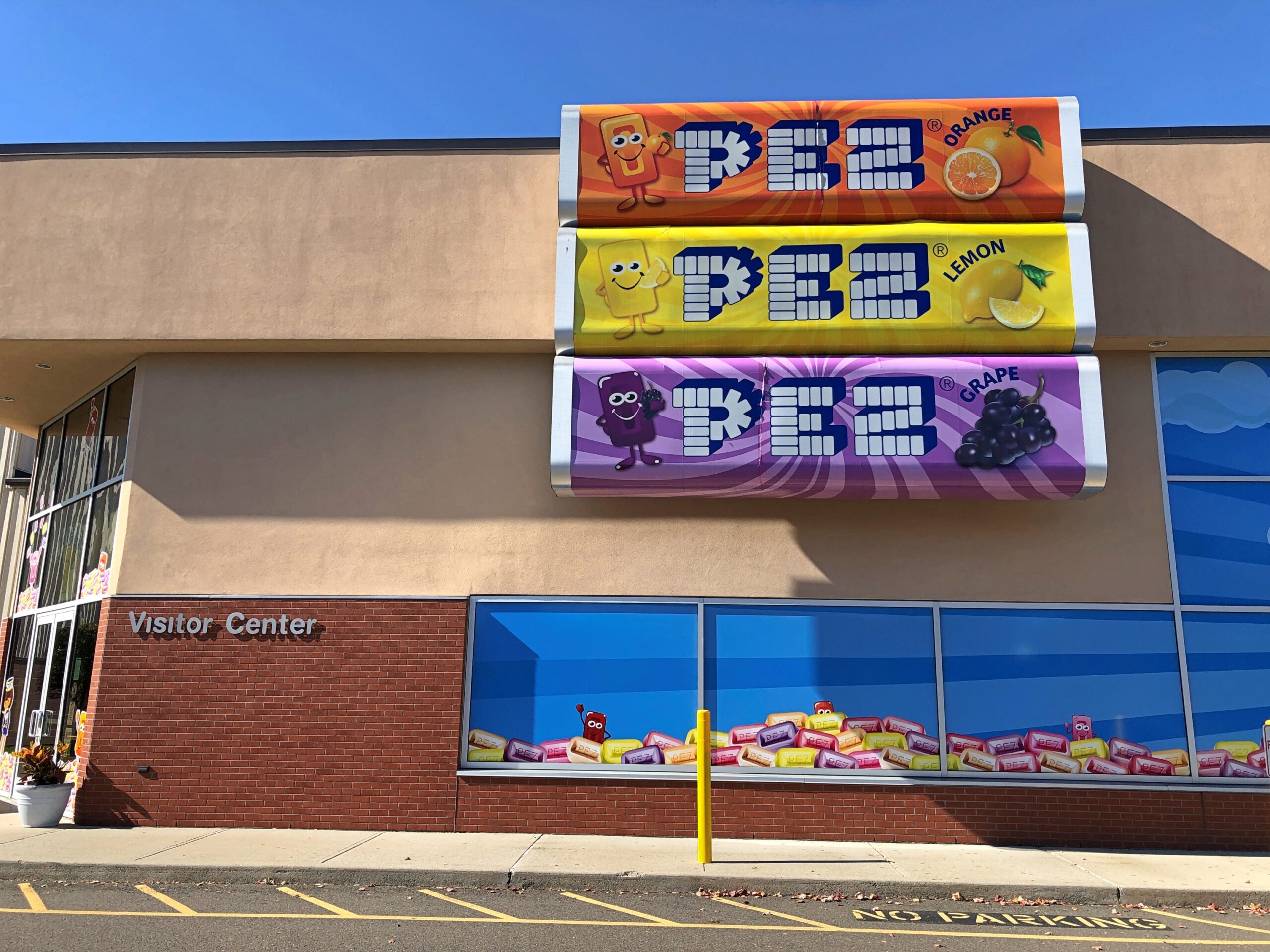
In Orange, Connecticut, I noticed a sign for the Pez Visitor Center. I had to see that.

Pez Visitors Center

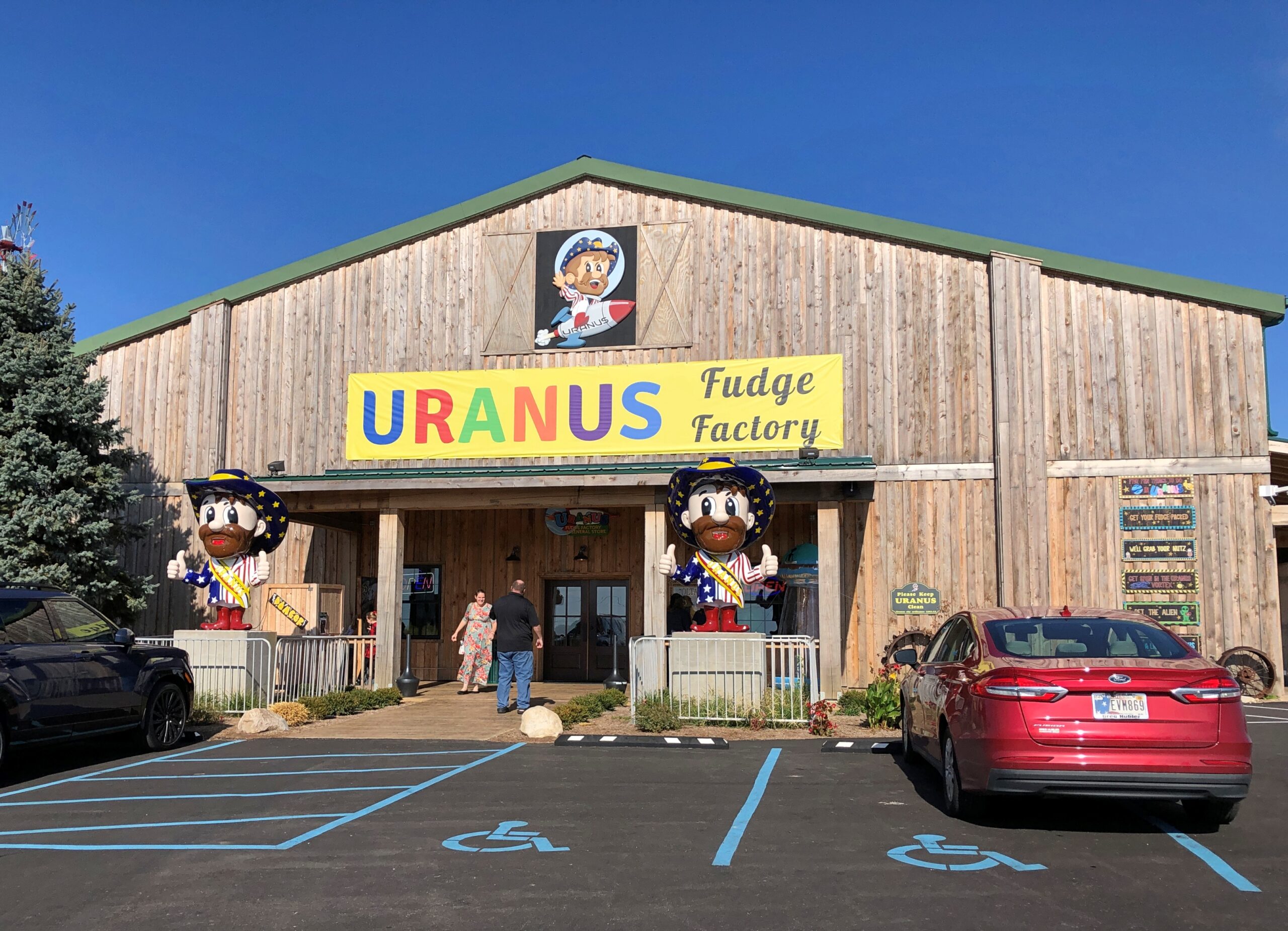
Earlier today, at the border between Ohio and Indiana, I noticed Uranus. I had to stop.

Uranus

Turns out there’s more than one; I’d only ever seen the one in Missouri (the original) in passing, never stopping. But I did this time. Now I can say I’ve been to Uranus.

He May Ride Forever ‘neath the Streets of Boston

Something I never thought of until today: you can buy booklets to hold fortune cookie fortunes. One at Amazon promises 10 pages that hold 40 fortunes, for $12.99. That came to mind, or rather set me looking, when I happened across another fortune I saved:

Magic time is creale when an unconventional person comes to stay.

I supposed “created” was meant, but in any case that sounds like the pitch for a sitcom episode.

I’m not buying a fortune holder. Those little slips will be tucked away with my business card accumulation: five holders so far, holding some hundred number of cards. Many are restaurant cards, some dating back to the ’80s. Others include a sampling of hotels, museums, shops, even a few churches.

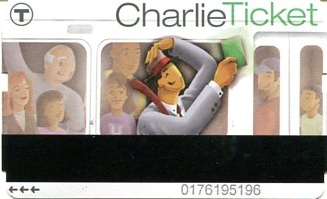
Also, transit cards. I got a kick out of this one.

I used it during my most recent visit to Boston in 2018. Previously the system used metal tokens, but of course those are gone. CharlieTickets and CharlieCards were introduced in 2006.

Charlie was the sad-sack (and poor) protagonist of the song “M.T.A.,” which I know well. That is, the Kingston Trio’s 1959 recording, but not so much about its background. So naturally I had to look into it.

“The text of the song was written in 1949 by Jacqueline Steiner and Bess Lomax Hawes,” writes Jonathan Reed, once a student at MIT. “It was one of seven songs written for [Walter] O’Brien’s campaign, each one emphasized a key point of his platform. [He was running for mayor of Boston that year.]

“One recording was made of each song, and they were broadcast from a sound truck that drove around the streets of Boston. This earned O’Brien a $10 fine for disturbing the peace.”
The Kingston Trio got ahold of it a decade later and it sounds like they had fun with it. Clearly the song endures locally, enough to receive a sort of official recognition by the modern MBTA.

Art Institute Spaces, Small and Large

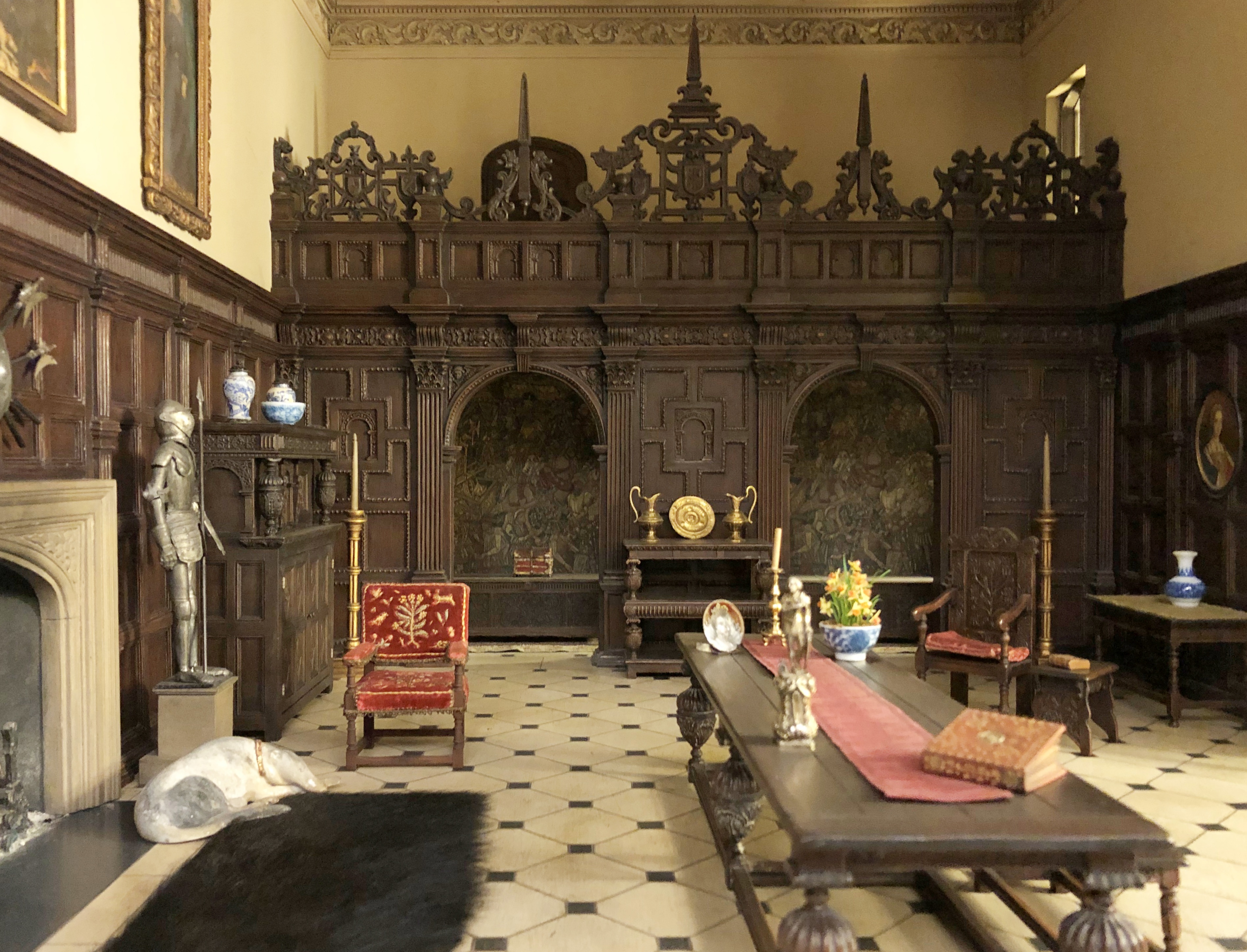
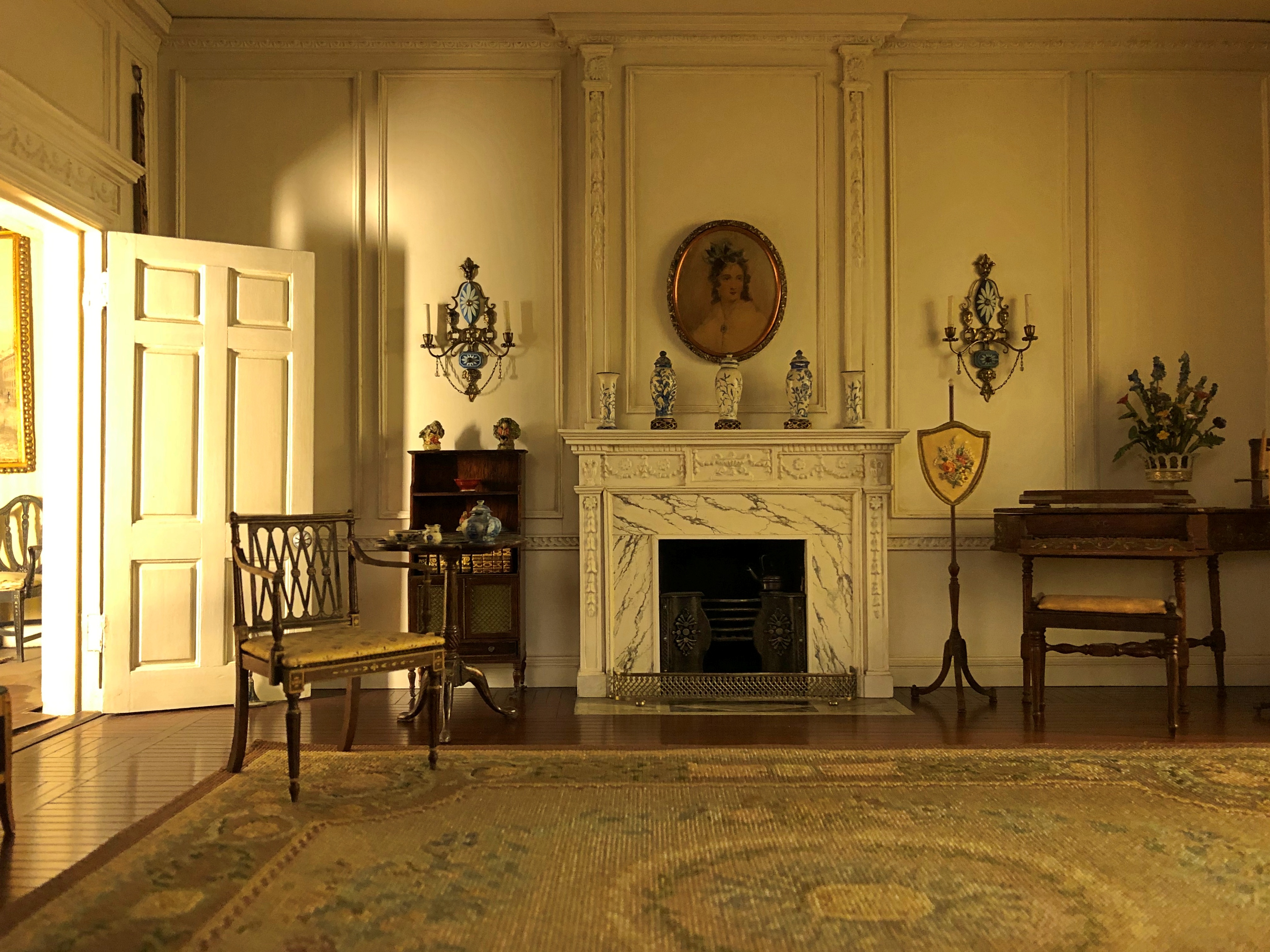
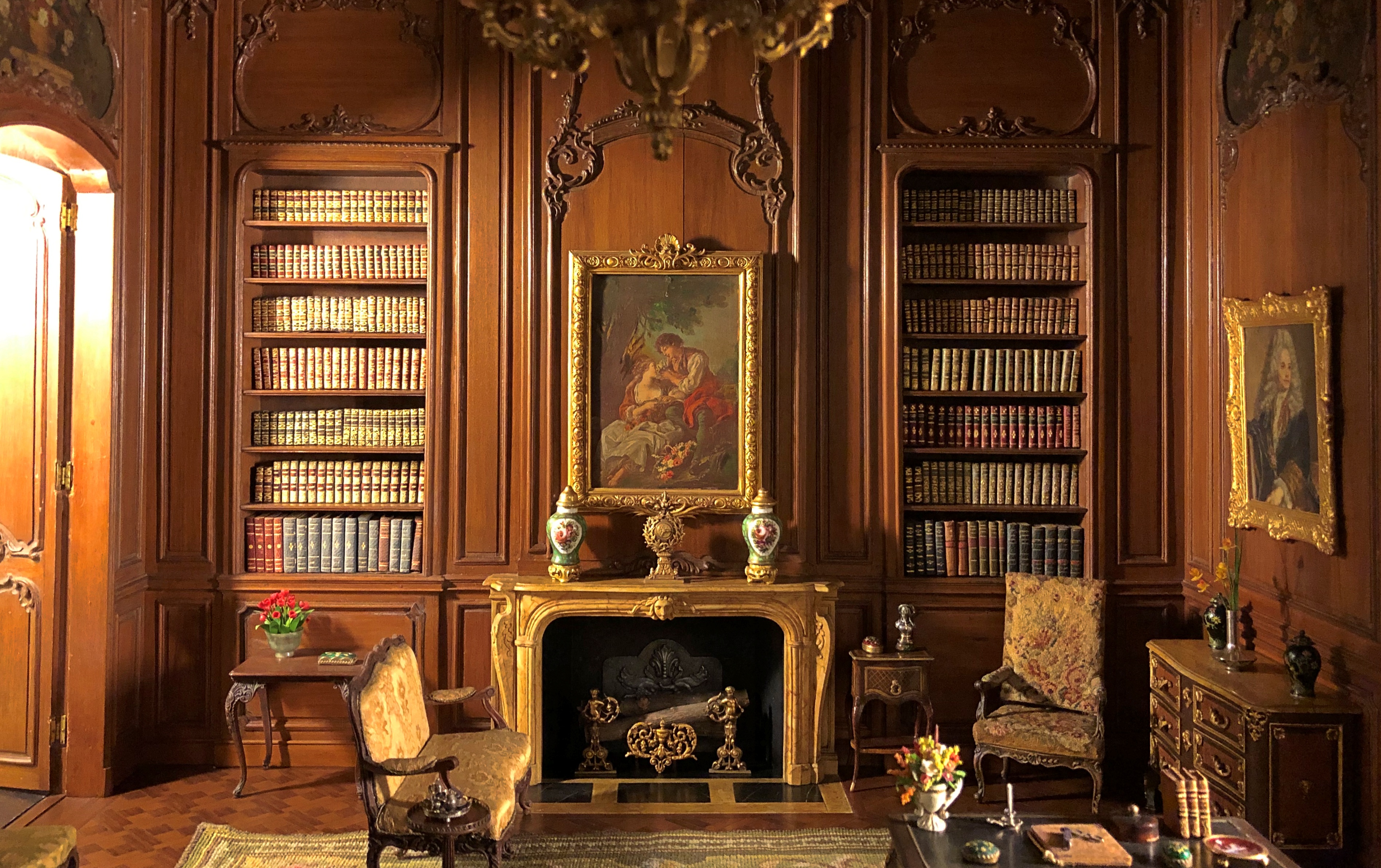
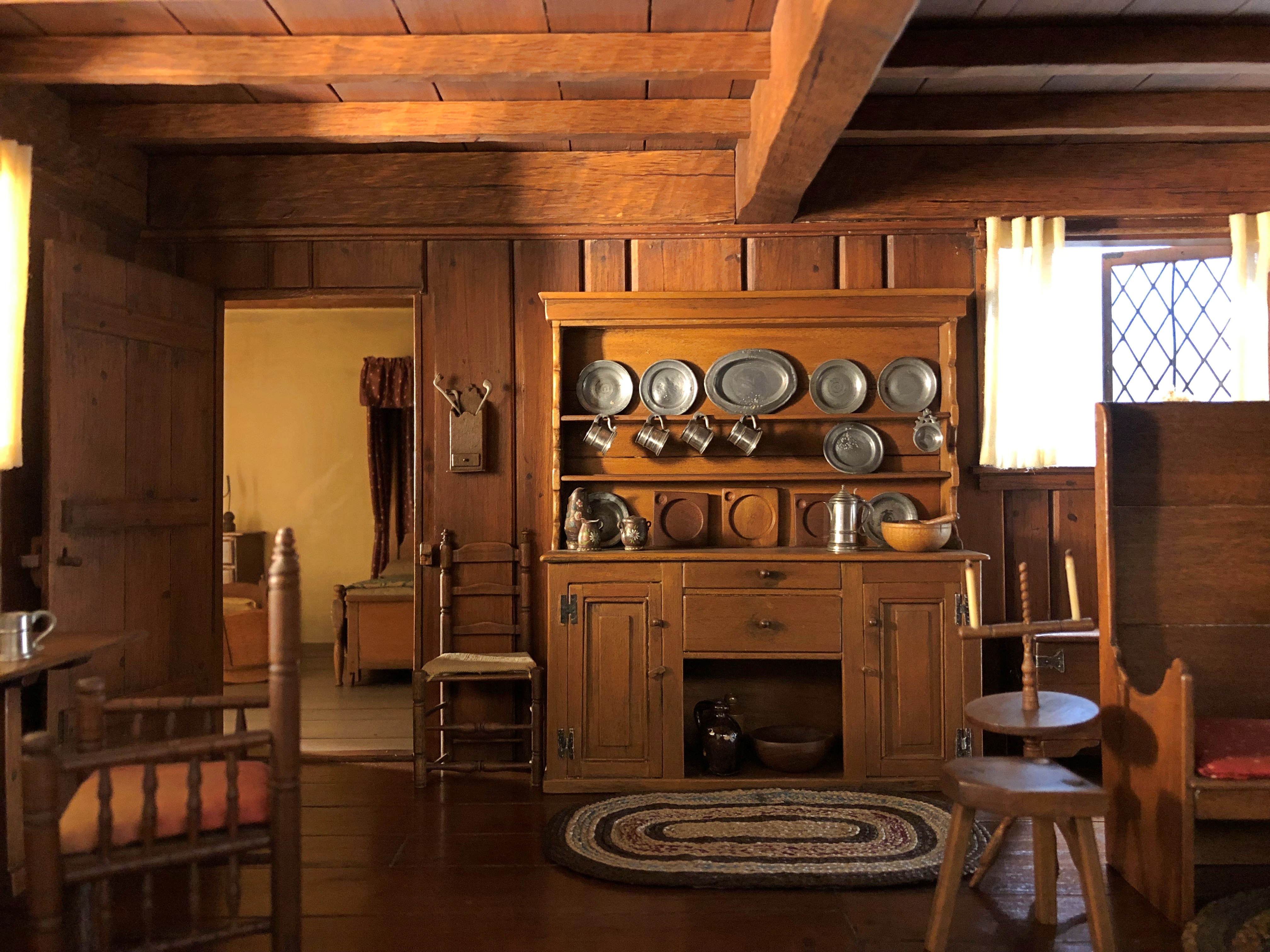
I’d like to say I visited this room recently — looks interesting, doesn’t it? — but I only looked into the room.Thorne Rooms

An English great room of the late Tudor period, 1550-1603, according to a nearby sign. I couldn’t get in because one inch within this room equals one foot in an actual room of that kind, so at best I could get a hand in.
The Art Institute doesn’t want anyone to do that, and for good reason, since random hands would completely wreck any of the Thorne Miniature Rooms. So they are behind glass in walled-in spaces, and not at eye level for someone as tall as I am.

Still, I leaned over to look in. The fascination is there. Not just for me, but for the many other people looking at the rooms on Saturday. Each room evokes a different place or time, heavily but not exclusively American or European settings.

English drawing room, ca. 1800.Thorne Rooms

French library, ca. 1720.Thorne Rooms

Across the Atlantic. Pennsylvania drawing room, 1830s.Thorne Rooms

Massachusetts living room, 1675-1700.Thorne Rooms

The fascination isn’t just with the astonishing intricacy of the work, which it certainly has, but also the artful lighting. Artful as the light-play on a Kubrick set. I know those are electric lights in the background, but it looks like the rooms are lighted the way they would have been during those periods. With sunlight, that is.

“Narcissa Niblack Thorne, the creator of the Thorne Rooms, herself had a vivid imagination,” says the Art Institute. “In the 1930s, she assembled a group of skilled artisans in Chicago to create a series of intricate rooms on the minute scale of 1:12.

“With these interiors, she wanted to present a visual history of interior design that was both accurate and inspiring. The result is two parts fantasy, one part history — each room a shoe box–sized stage set awaiting viewers’ characters and plots.” (More microwave oven–sized, I’d say.)

Thorne (d. 1966) had the wherewithal to hire artisans during the Depression by being married to James Ward Thorne, an heir to the Montgomery Ward department store fortune, back when department stores generated fortunes. Bet the artisans were glad to have the work.

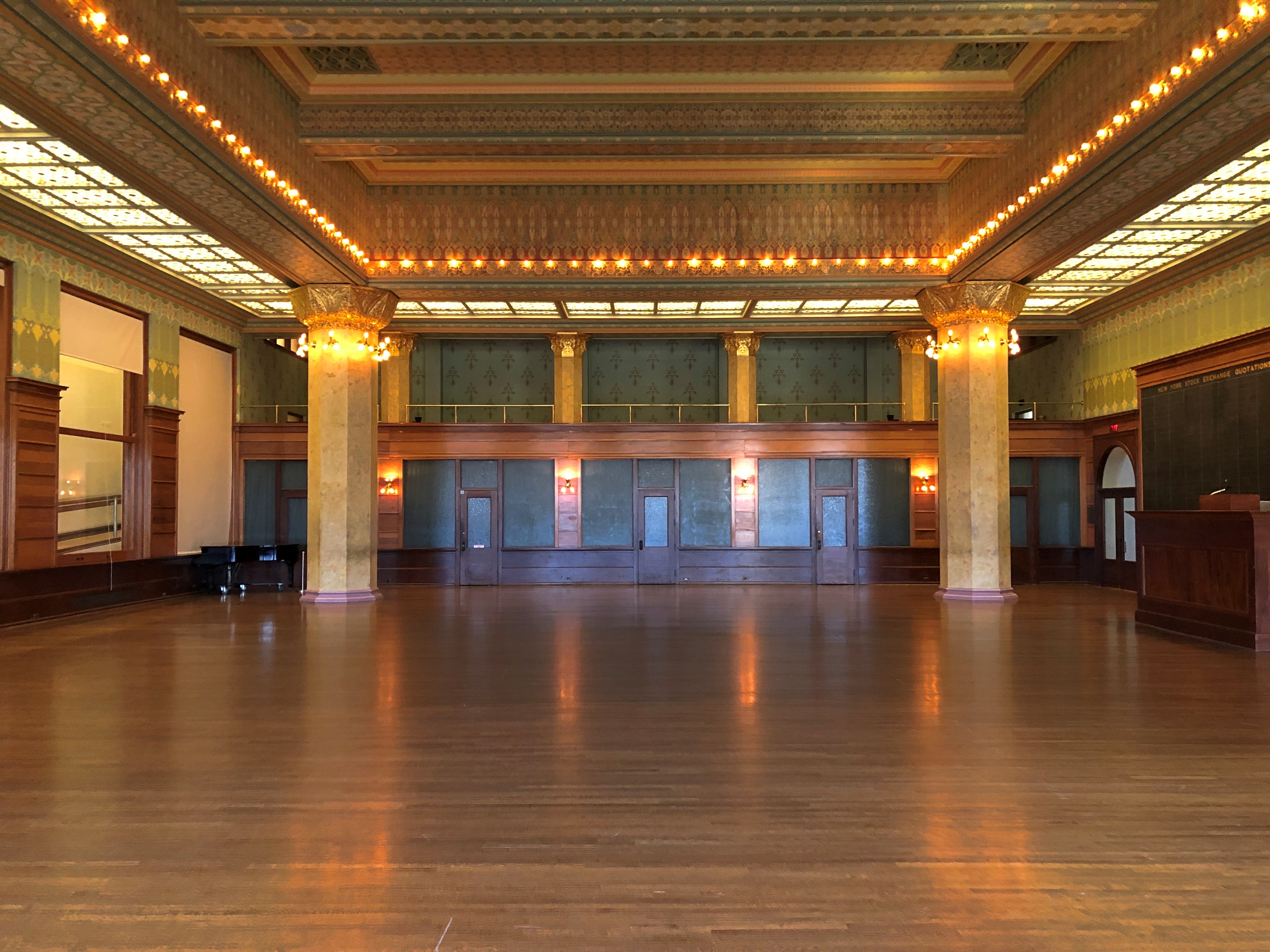
It wasn’t my first visit to the Thorne Rooms, but I believe I appreciate it a little more each time. I know I feel that way about the Chicago Stock Exchange Trading Room, which I also visited on Saturday.

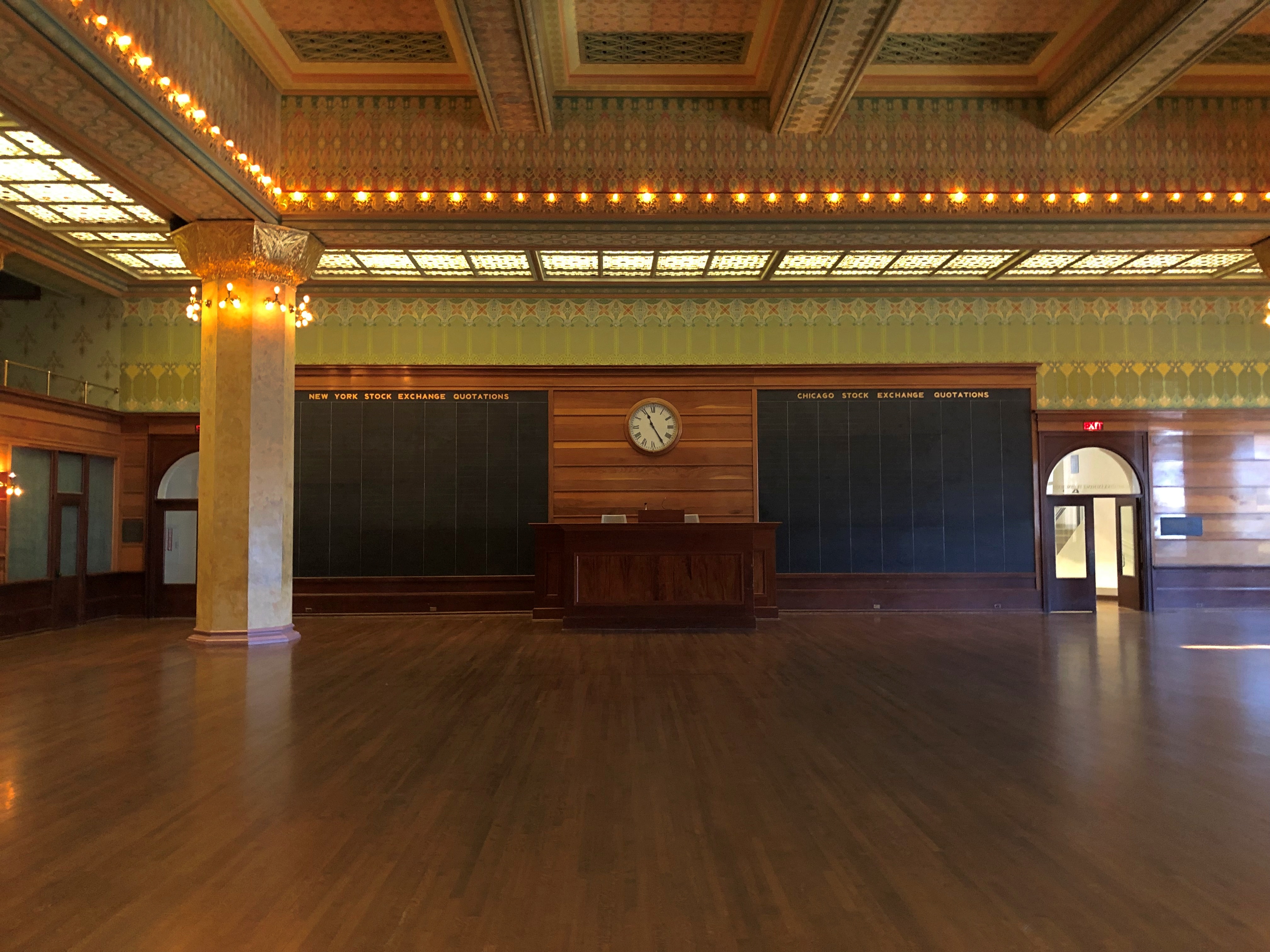
The Thorne Rooms are an exercise in constrained space. The Trading Room is one of expansive space. So much so that my basic lens really isn’t up to capturing the whole. Still, I try.Chicago Stock Exchange Trading Room, 2022 Chicago Stock Exchange Trading Room, 2022

No one else was in the room with me. It is a little out of the way, in museum wayfinding terms, and it is the artwork, rather than being mere protective walls and climate control, so maybe people pass it by.

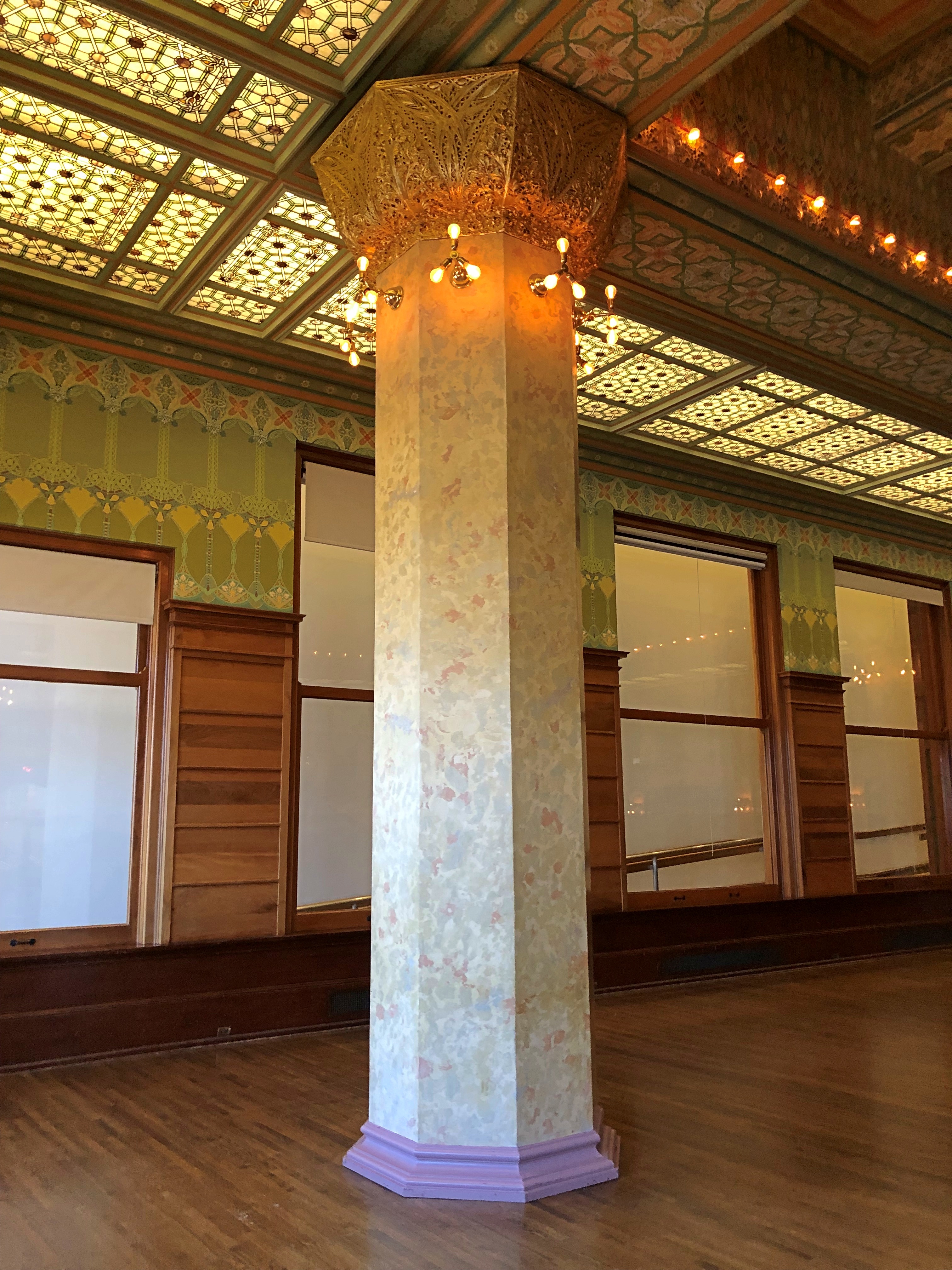
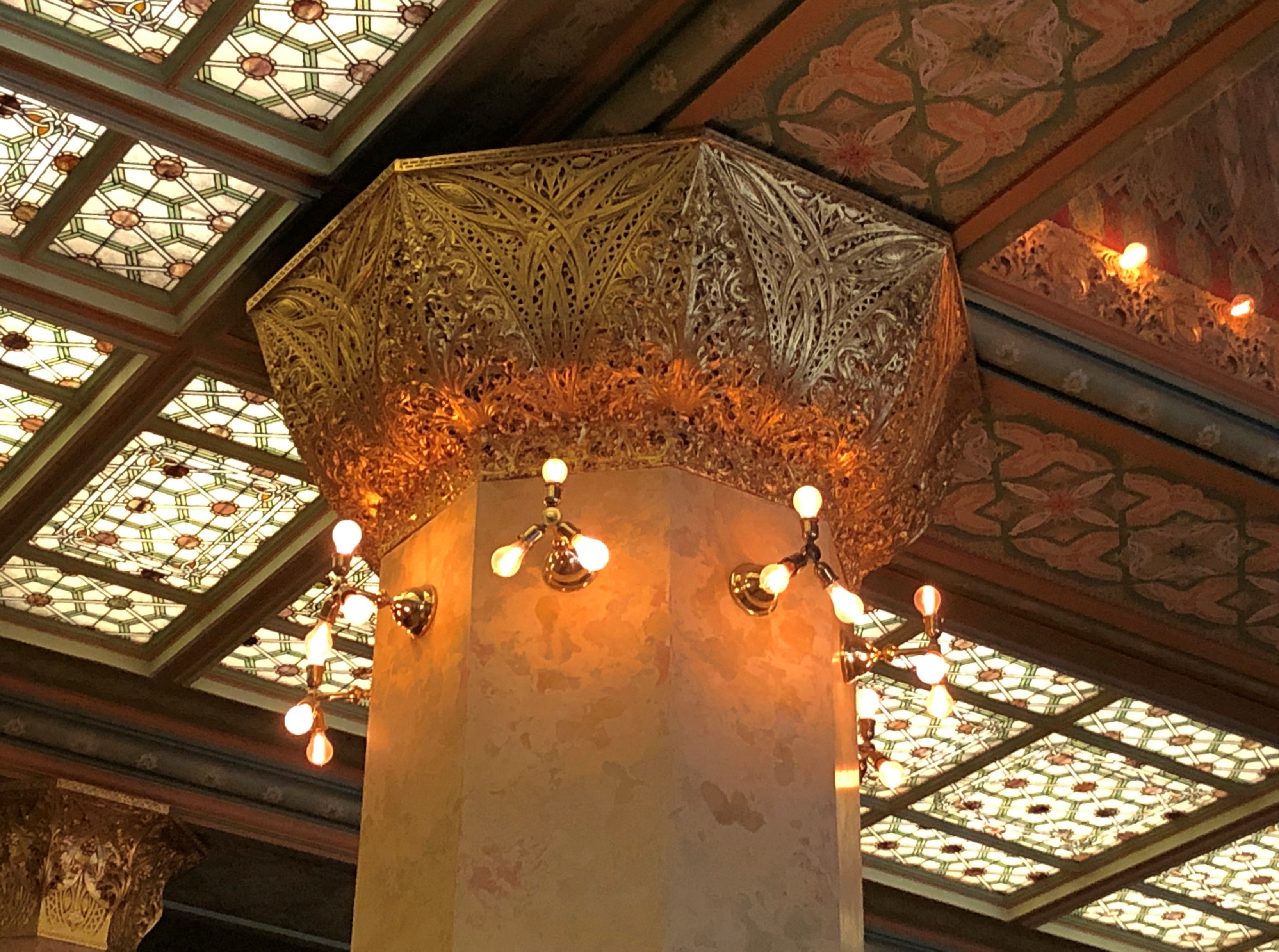
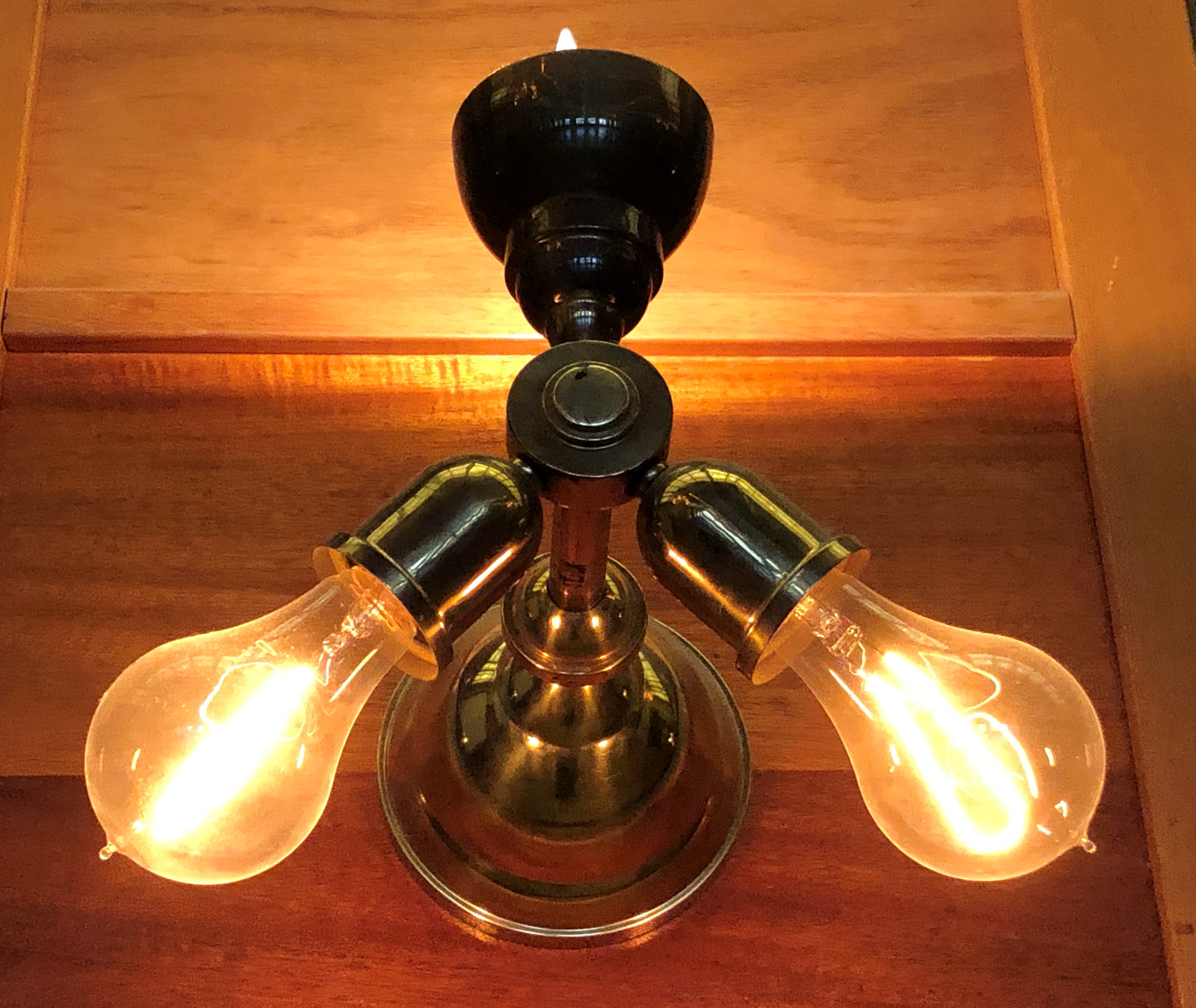
Not me. I spent a while looking at details.Chicago Stock Exchange Trading Room, 2022 Chicago Stock Exchange Trading Room, 2022 Chicago Stock Exchange Trading Room, 2022

Overhead.
Chicago Stock Exchange Trading Room, 2022

Such a grand room. Victorian ideas at work, striving to add uplift to a space devoted to grubby commerce. I’d say they succeeded.Chicago Stock Exchange Trading Room, 2022

“Designed by Chicago architects Louis Sullivan and his partner, Dankmar Adler, the original Chicago Stock Exchange was completed in 1894,” the museum notes on a page that also extols the room as a place where as many as 300 people can meet.

“When it was demolished in 1972, sections of the Trading Room, including Sullivan’s elaborate stenciled decorations, molded plaster capitals, and art glass, were preserved and used in the 1976–77 reconstruction of the room here at the Art Institute.”

I attended an event there myself for some forgotten reason about 20 years ago. Suits and ties (a while ago, as I said), dresses, and drinks in hand, the room hosted such a crowd with ease.  If I had 300 people to entertain, I’d certainly consider renting the place.

The Demise of Nabih Berri the Ficus

Below is the text of a paper letter I sent from Arlington, Massachusetts, in September 1995, to a friend in Texas. Most of the letters I sent that year are trapped on a disk readable by an ancient world processing machine that’s in our laundry room, but ones from September through November (for some reason) were written using another machine, copies of whose documents are more accessible.

The last time I fired up that ancient machine — some years ago — it worked, but retrieving the text would either mean printing every page, or taking pictures of the screen for every page. Either would be time-consuming, so it’s possible that that correspondence will be as lost as the Amber Room, except that no one cares.

Got your e-note this morning when I got in. We’ve got a correspondence going! Reason enough to like the new medium, no matter what the neo-Luddites think. But I won’t quit letter or postcards. As you can see.

Sorry to hear about your current difficulties. What happened to your car? Thought it was up & running. Maybe your can learn to live without a TV, though.

No need to replace Nabih Berri the Ficus. Sic transit gloria mundi. (Sic transit gloria fici?). Gone, but not forgotten. A plant among plants, it was.

My friends Matt and Jill from Australia have come and gone. Fine people, but exhausting. They’re out to see America between beers. Did get to try a pretty good Mexican restaurant near Harvard Square during their visit. The place has Lone Star Beer. Hm.

Want to get away, before it’s absolutely freezing, to Montreal. Don’t know when yet, but of course you will be informed by postcard. I’ve bought some maps and a guide to the city at my company’s expense, because we do genuinely need them for research, besides the fact that I might use them myself. We have an account at Globe Corner Bookstore on Boylston Street, and all I have to do is sign my name. Now that’s an expense account.

Cold (for September) (high 50s) and miserable outside. Gotta go home through it anyway. More anon.

I had just started using email that summer, as mentioned. I’m not sure anymore what his “current difficulties” were, but it sounds like car repairs and a burned out TV.

As for Nabih Berri the Ficus, that was a twisted ficus of mine that died that year. As for why I called it that, call it youthful whimsy. I think he was in the news when I originally got the plant. I was surprised to learn today that he original Nabih Berri is still alive.
As for Montreal, we didn’t make it that year. It had to wait till 2002.

Late Summer Thursday Stew

A package arrived in the mail for Lilly today from UIUC.

“Your high GPA has earned you the privilege of graduating Cum Laude…. This accomplishment, which is referred to as Latin Honors, is also recognized by a special bronze cord,” the enclosed letter said. “Because we were unable to have an on campus commencement ceremony in May, we will be mailing cords to the mailing address you have on file with campus.”

Sure enough, the package also included a bronze cord, looking something like a curtain accessory. Lilly’s already in the Pacific Northwest, so she’ll have to wait for one of us to deliver it in person, since I’m not planning on re-mailing it.

Never got a Latin Honor myself. Missed it by a whisker of GPA, I think. But I don’t really remember, and in nearly 40 years, that fact has never come up at any time for any reason.

I’m surprised some of these TV shows count as public domain. Then again, under the copyright rules before Disney put its imprint on the law, copyright holders had to renew after a certain number of years, and I expect many producers didn’t bother. The other day I watched the first episode of Car 54, Where Are You? It had its amusing moments.

Summer is ebbing away. I’m trying to spend as much time on my deck as possible. A refuge from work and word of the troubled world beyond my little spot.

A few days ago, after work but before dinner, I parked myself on the reclining deck chair on the deck and managed to take a nap. My family marveled at that, considering the heat and noise of the cicadas. But it wasn’t that hot that late in the day, and the sound of cicadas is something to drift off to sleep to, though not as soothing as cricketsong.

I’m about half way through The Unredeemed Captive by John Demos (1994), which Lilly and Ann gave to me last Christmas, on a tip (I believe) from one of Ann’s teachers.

“The setting for this haunting and encyclopedically researched work of history is colonial Massachusetts,” Penguin Random House says. “There, in February 1704, a French and Indian war party descended on the village of Deerfield, abducting a Puritan minister and his children. Although John Williams was eventually released, his daughter horrified the family by staying with her captors and marrying a Mohawk husband.”

It’s a good read about a time and place I’m not especially familiar with, early 18th-century New England. Interesting how in only 50 years or so, that place evolved into the more familiar (to me) mid-century and Revolutionary New England.

Wait, when did Random House and Penguin merge? In 2013, it turns out. I wasn’t paying attention because book publishing isn’t my sort of publishing. I’m used to thinking of Penguin as a solidly British operation, but these days it’s owned by shadowy German billionaires.

Now I Know Who Verne Troyer Is

Ah, Wikipedia. Your charms are endless. I really should give you that $3. Today I was looking at the entry on Seaport Boston Hotel & World Trade Center, a property in the Seaport District of Boston. Among other things, it lists “notable stays,” which looked like a list on a standardized test question — which of these is not like the others?

President Barack Obama
President Bill Clinton
Secretary of State Hillary Clinton
President George H. W. Bush
President George W. Bush
Vern Troyer

I didn’t know “Vern Troyer,” so naturally I looked him up. Must be this fellow, Verne Troyer. An actor of diminutive stature, he’s best known for playing Mini-Me in the Austin Powers movies, which I’ve managed to avoid since the very first one nearly 20 years ago. And yet I’ve heard of Mini-Me. Some things just burrow their way into the wider culture.