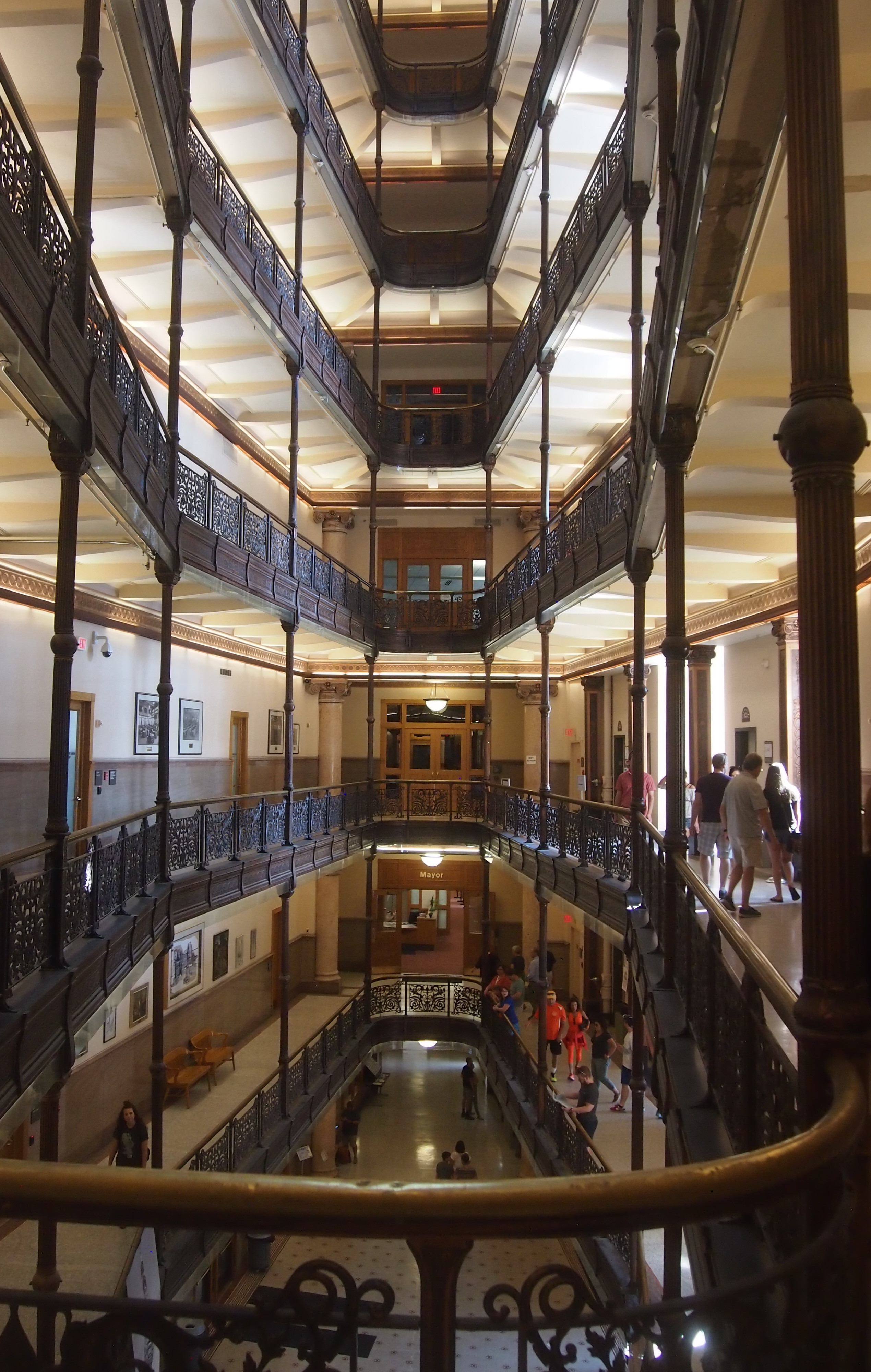
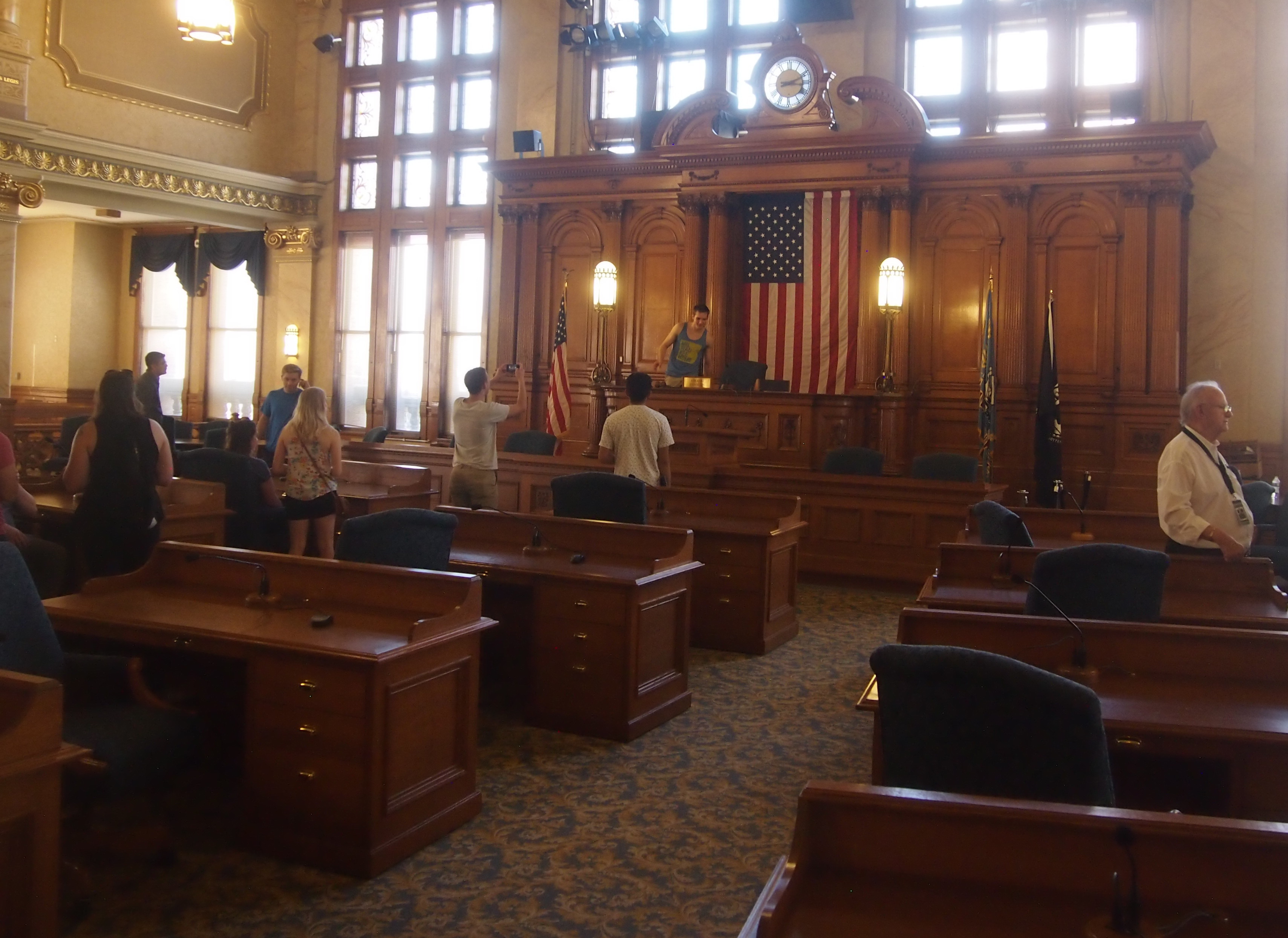
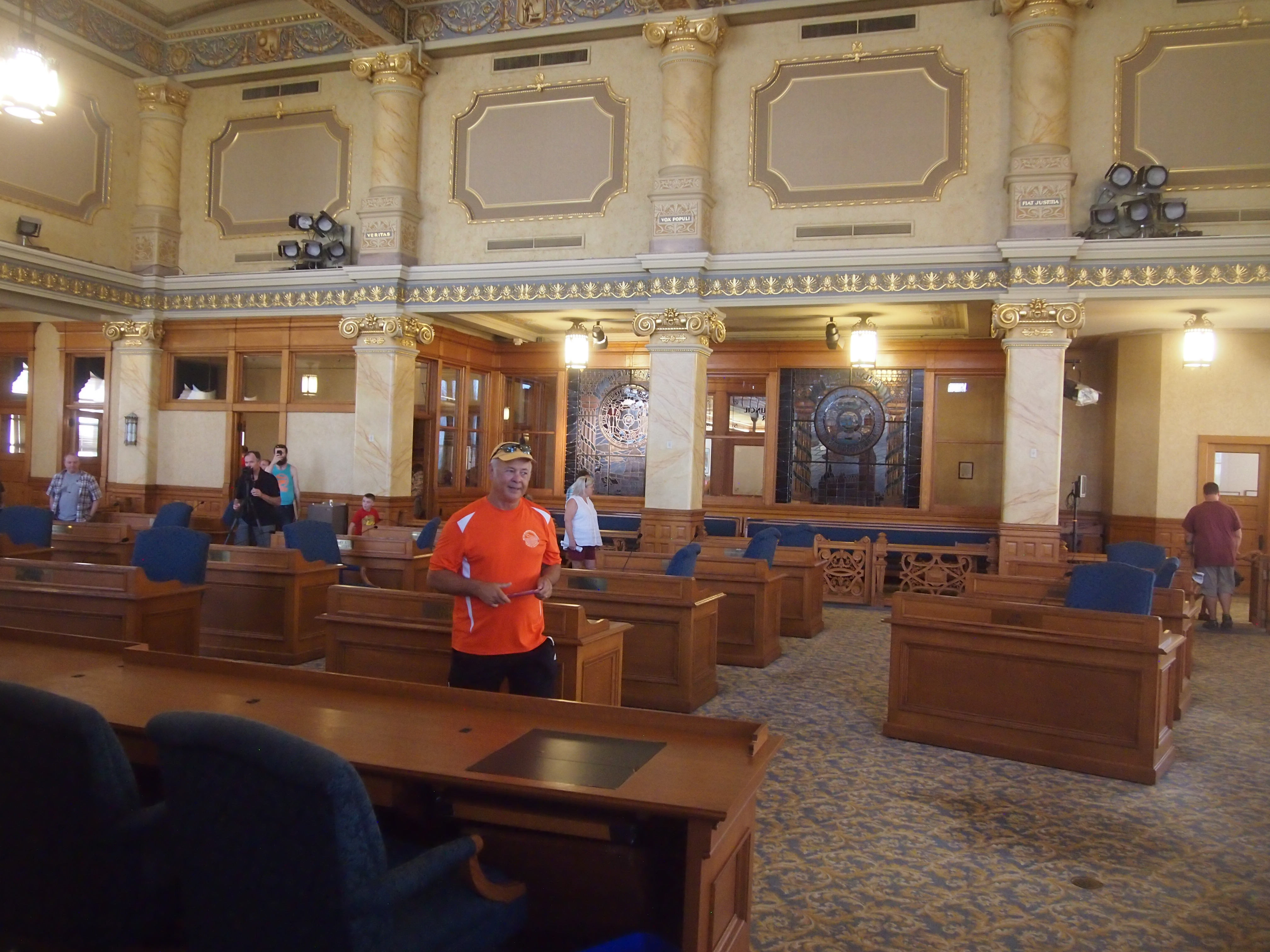
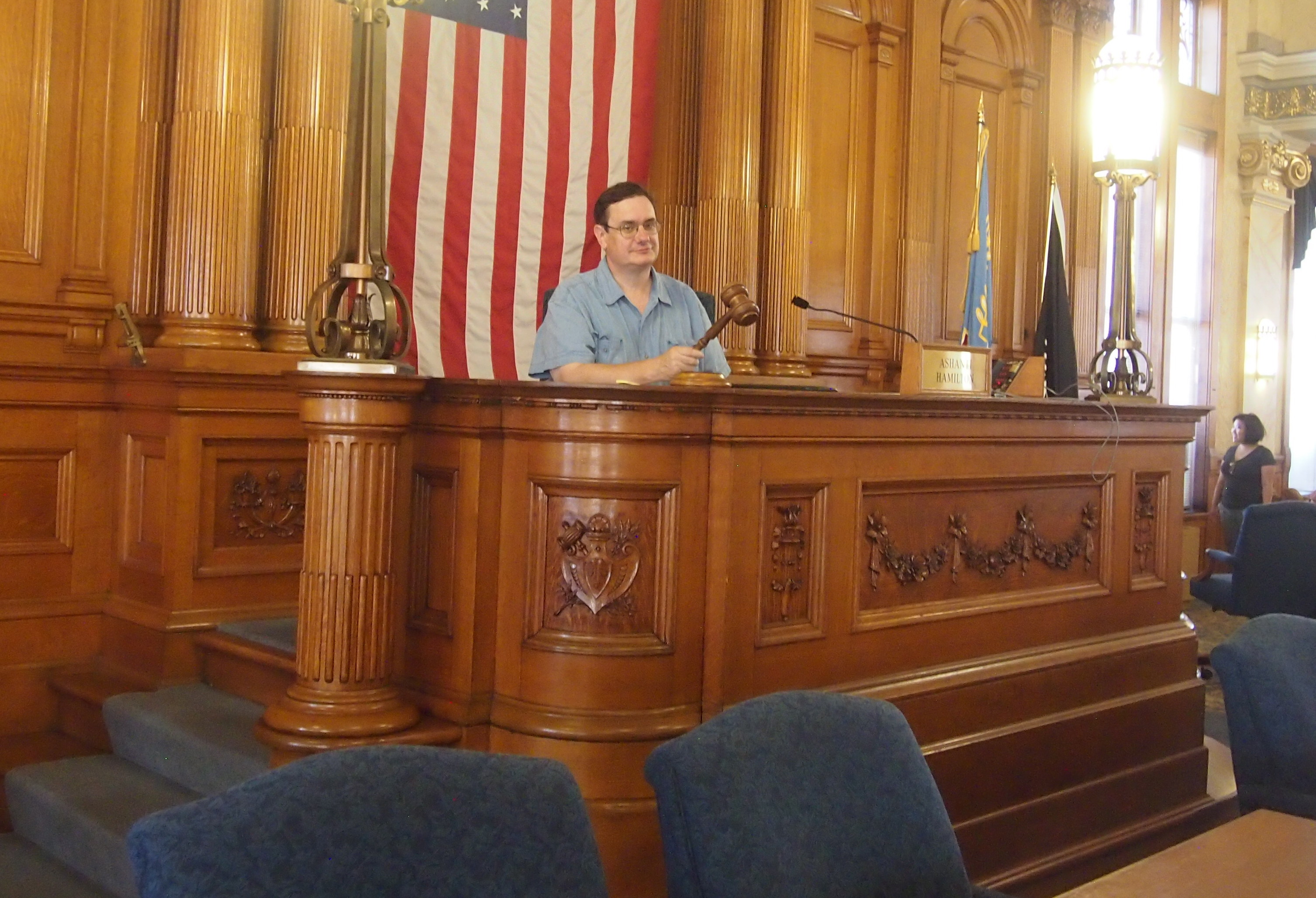
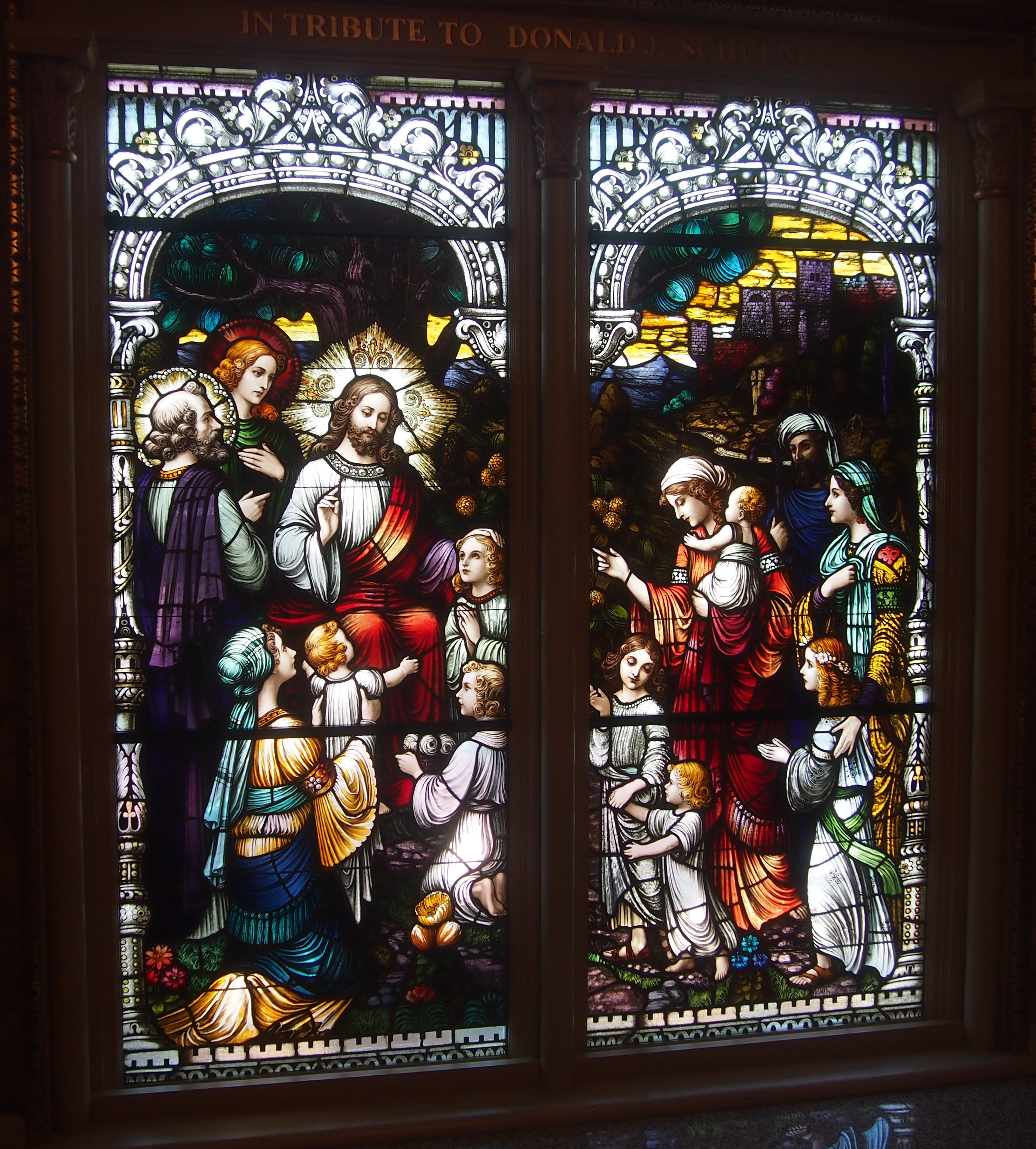
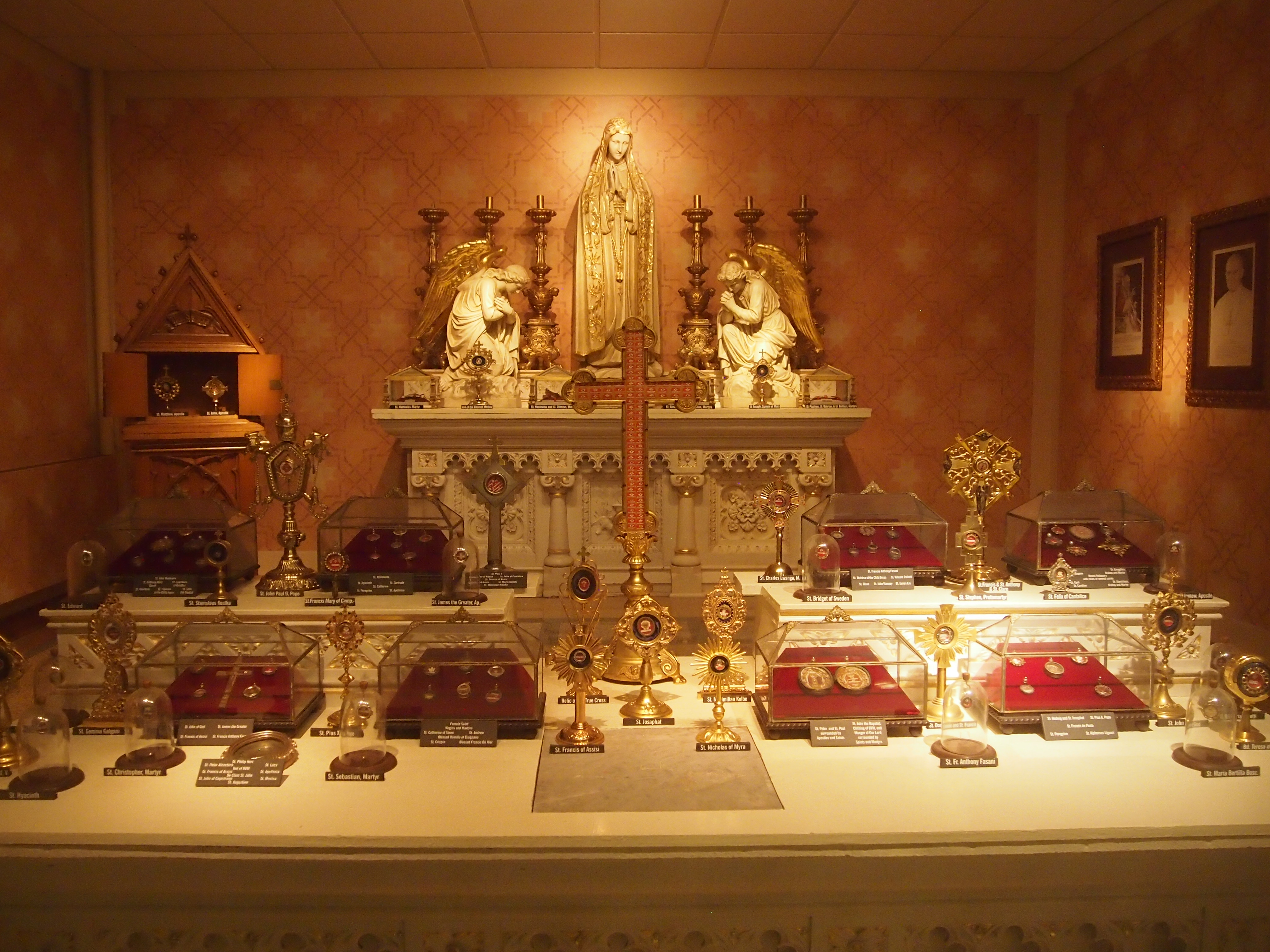
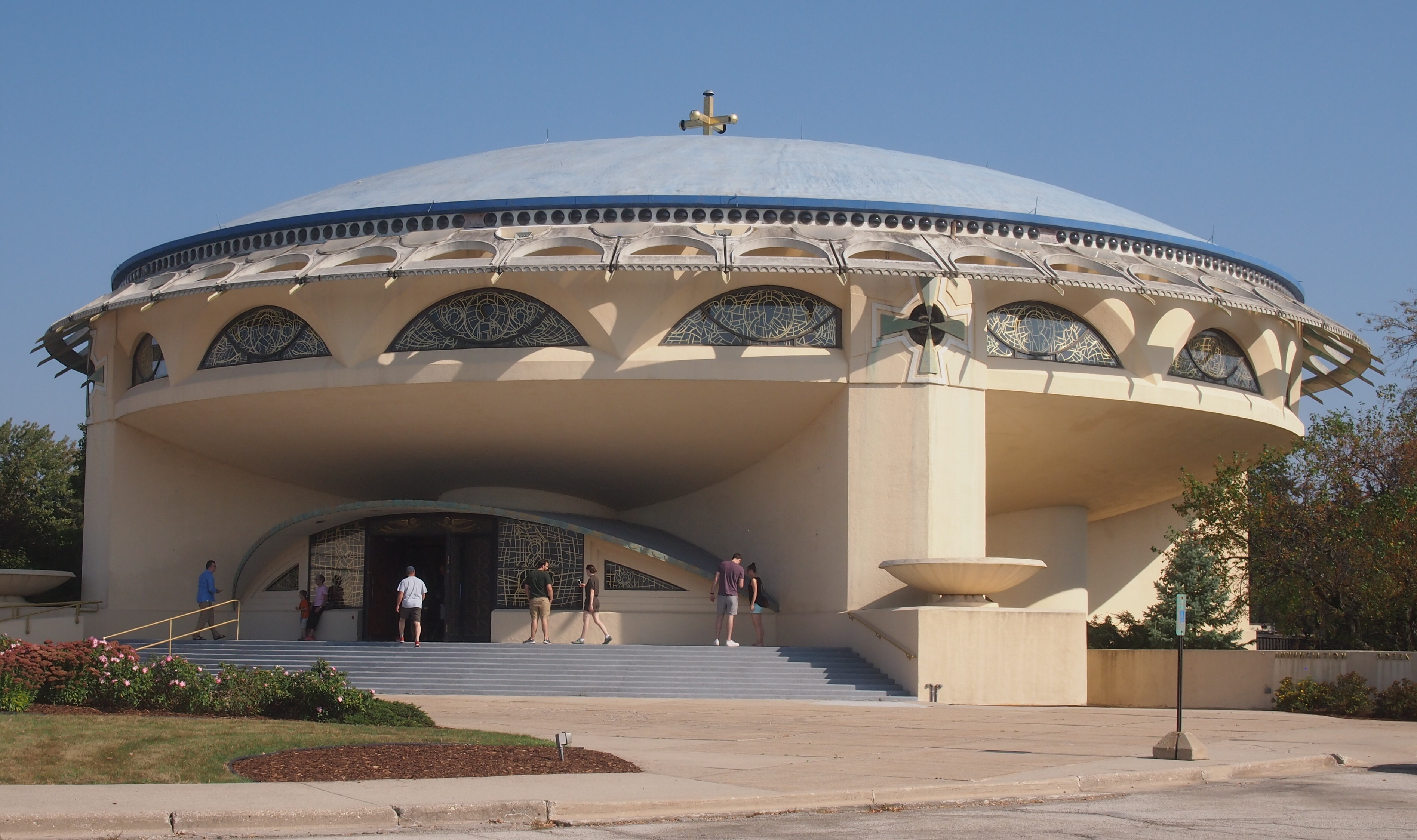
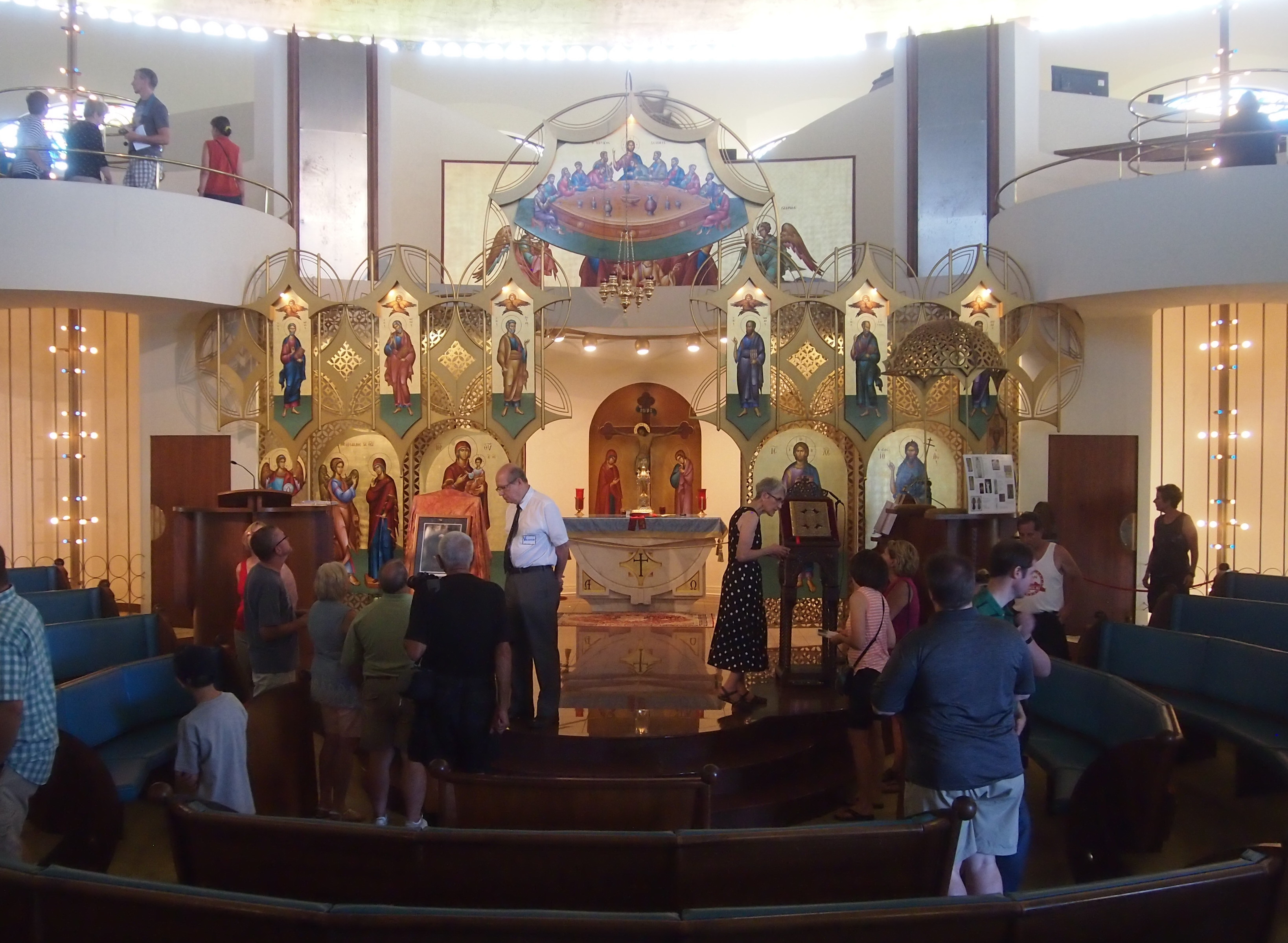
St. John Cantius, Chicago

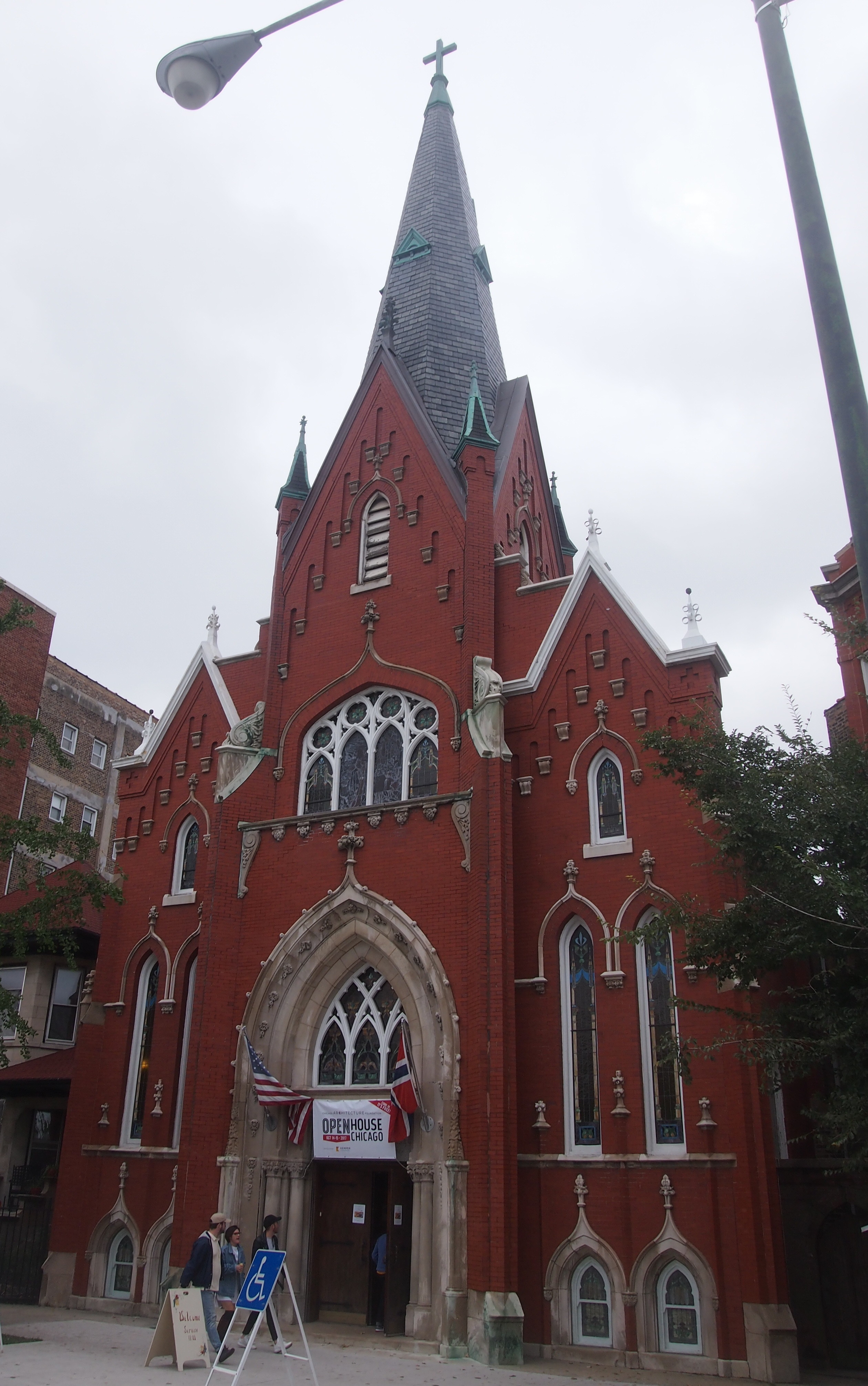
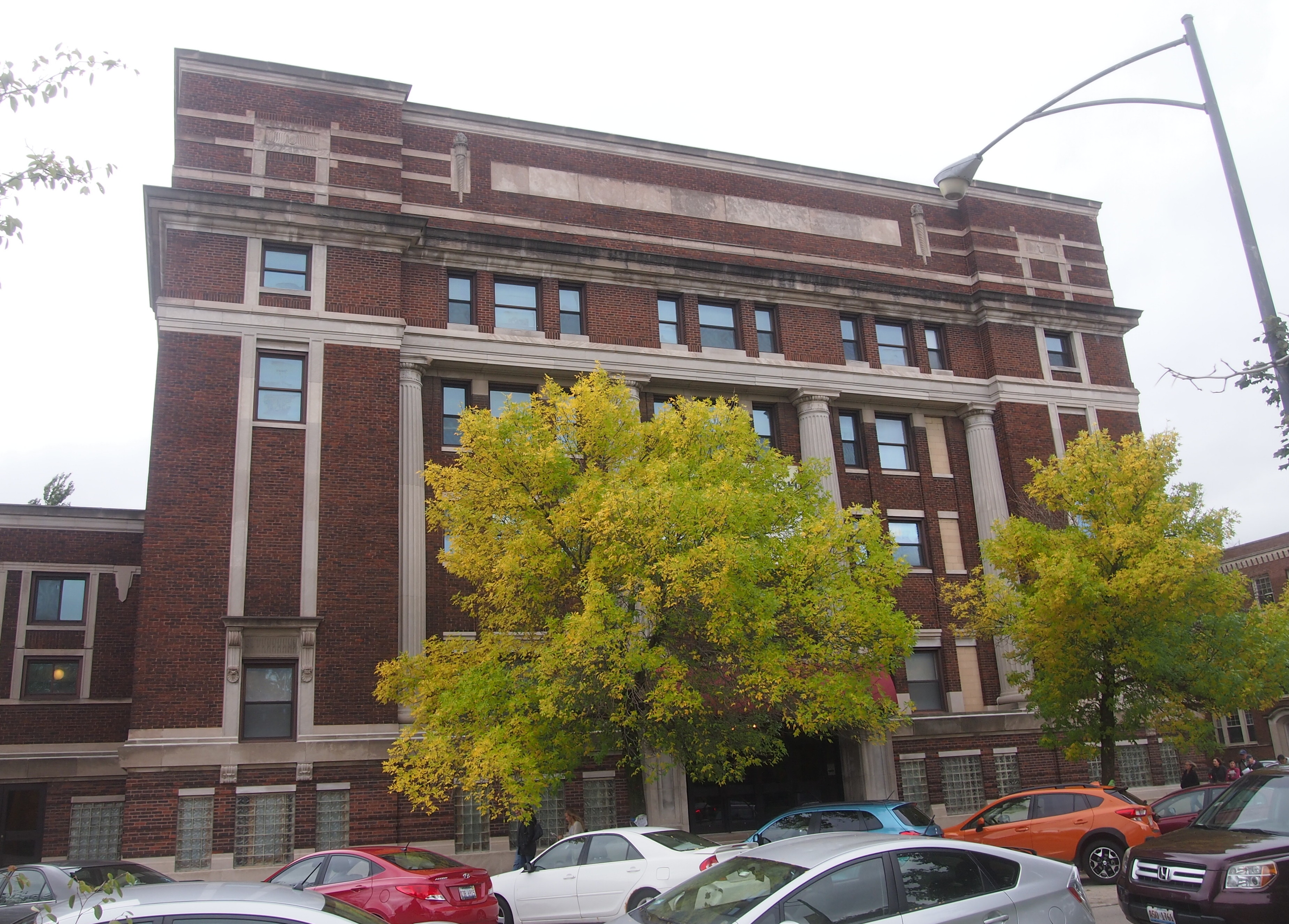
On Sunday I visited St. John Cantius, a Catholic parish church in what’s called the River West neighborhood, east of the Kennedy Expressway and west of the North Branch of the Chicago River. It’s easily accessible via the El, which is in fact a subway by the time you get near St. John Cantius.

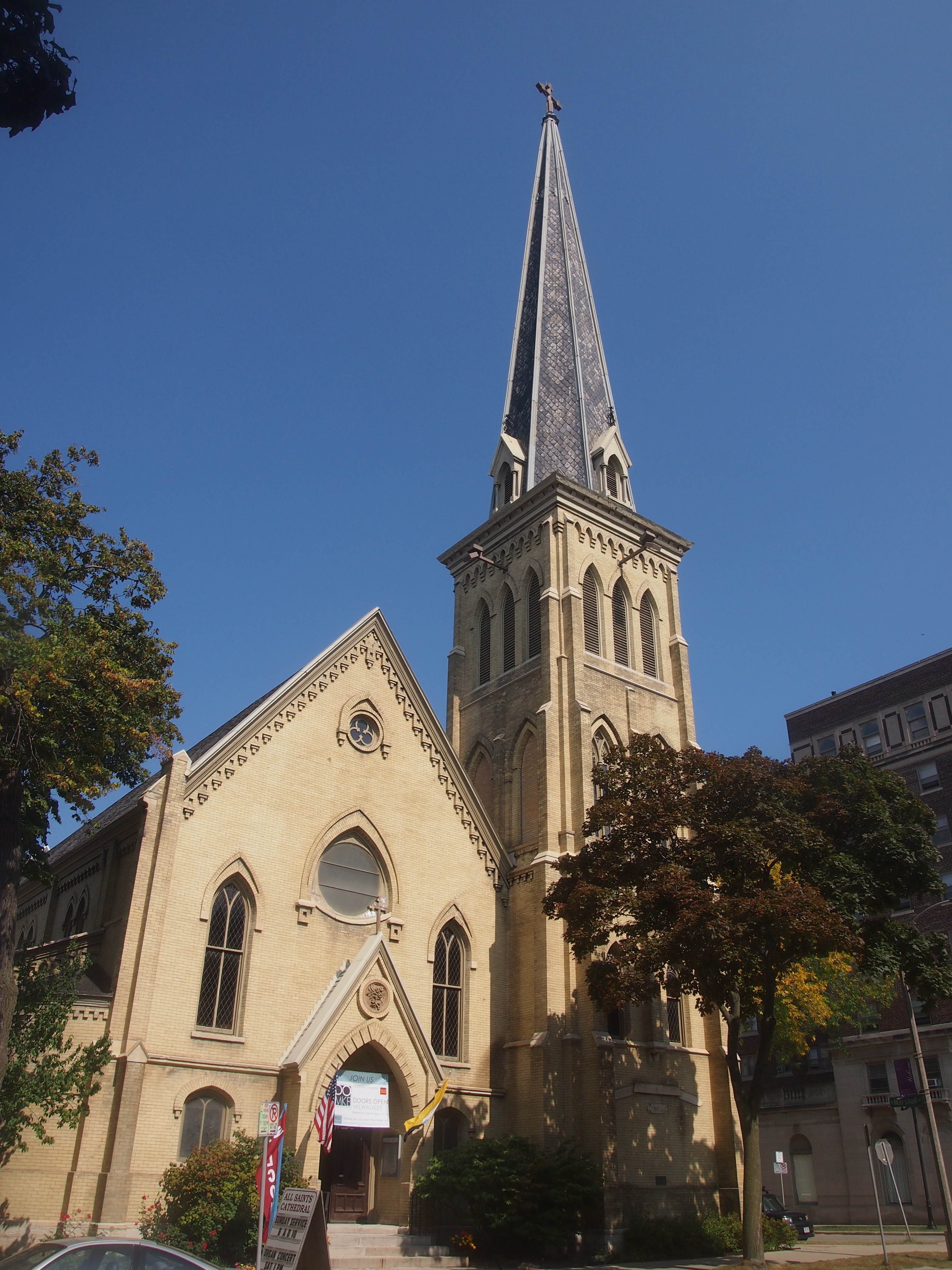
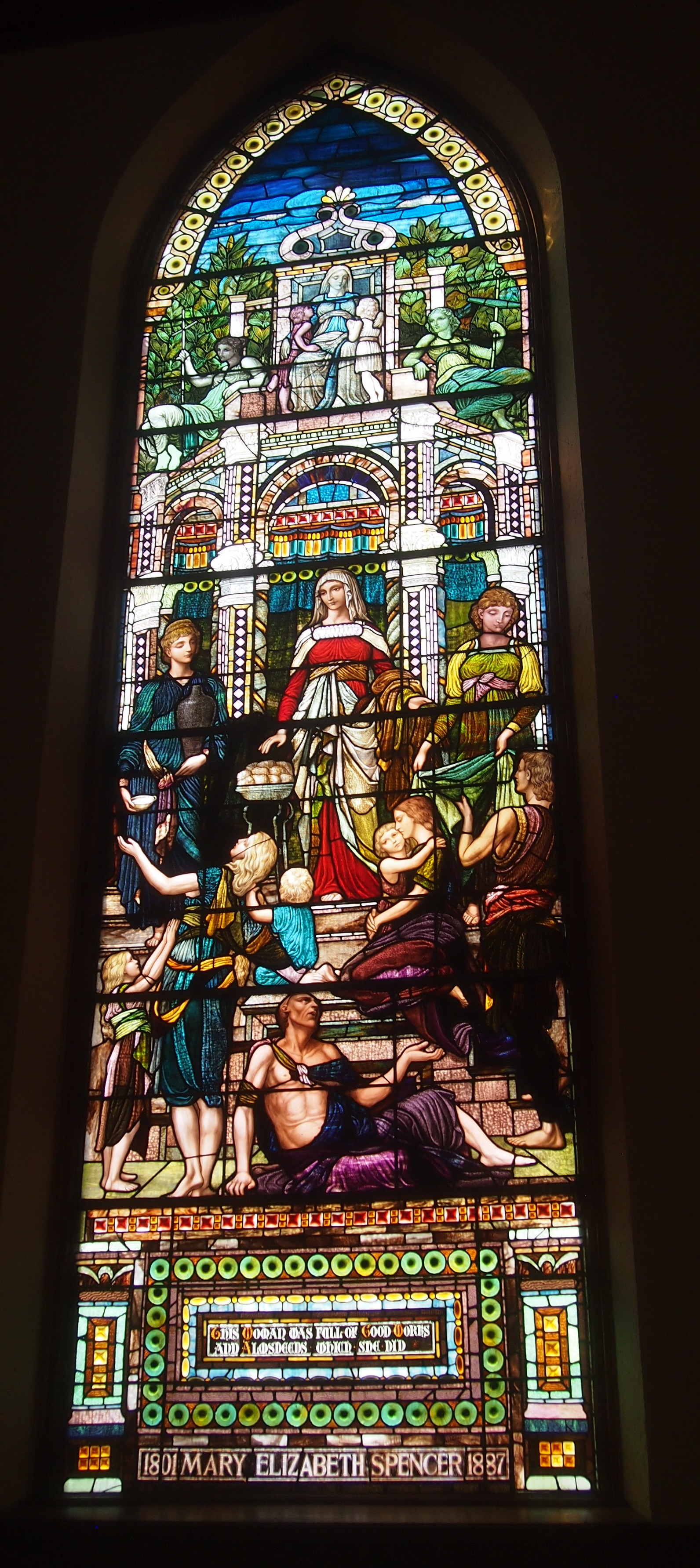
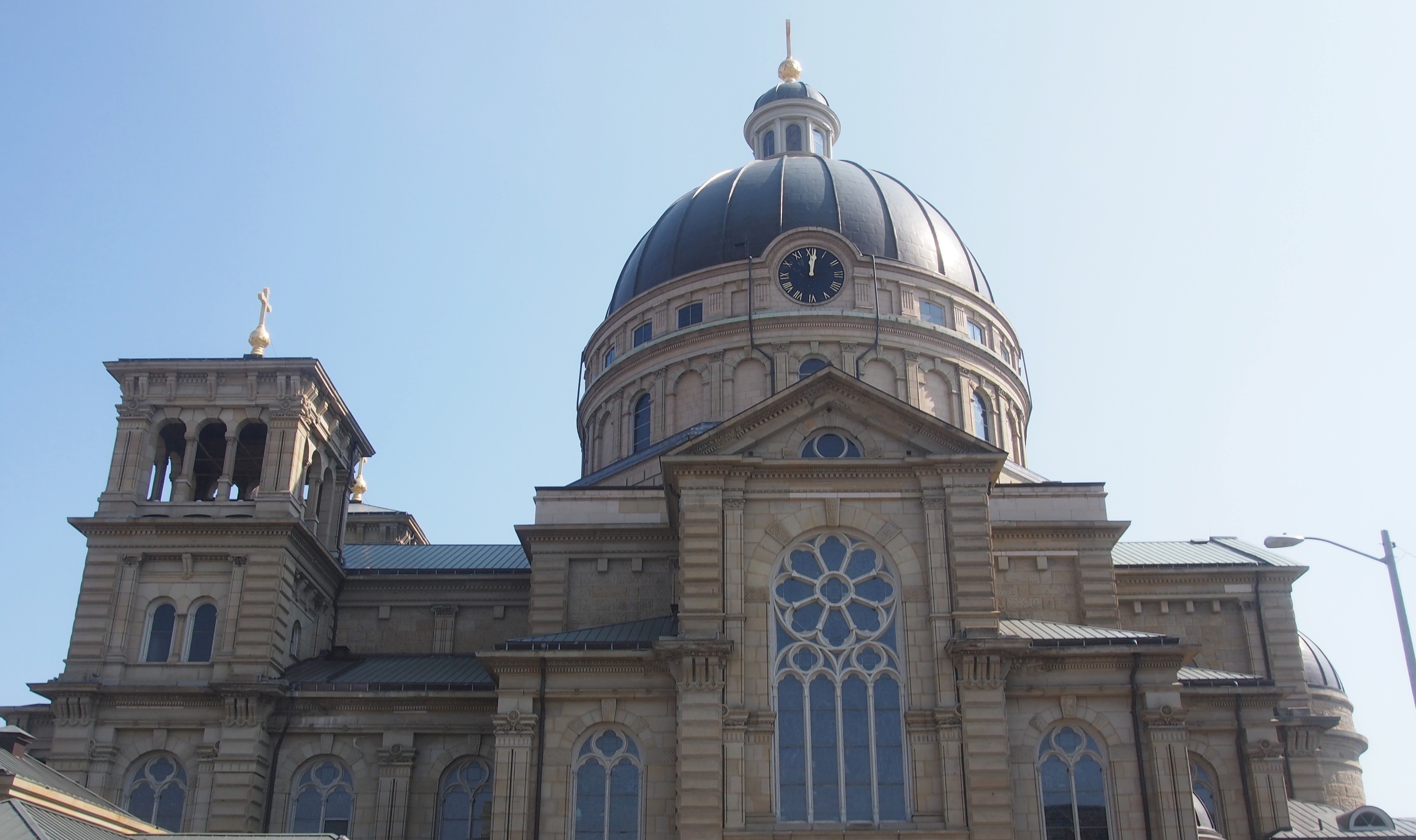
St. John Cantius, ChicagoThe church was part of a wave of Polish-style Catholic churches built in Chicago more than 100 years ago, as the local Polish population expanded mightily. I’d seen a few of these churches before — St. Adalbert and St. Stanislaus Kostka, for instance — but not this one.

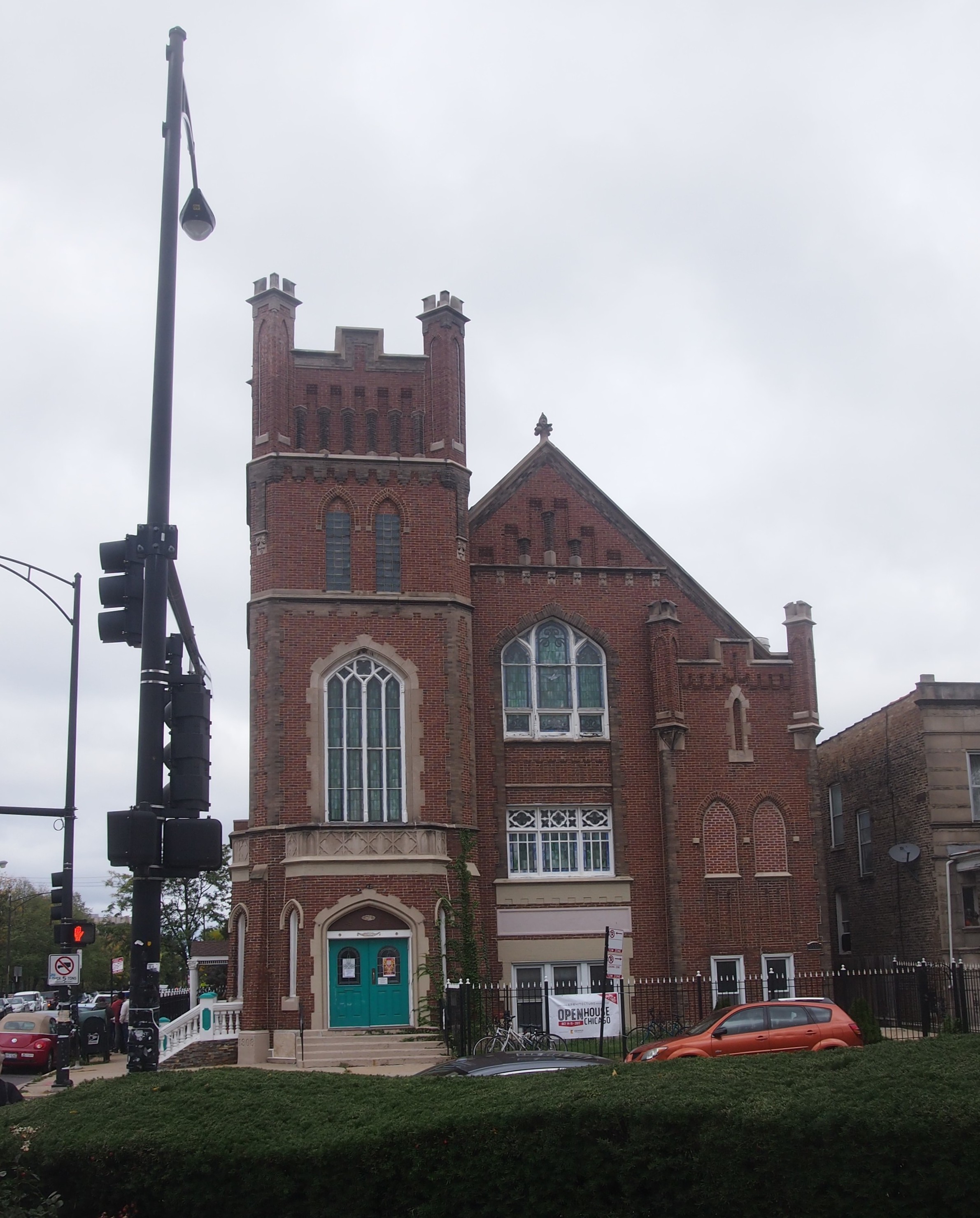
“Designed by Adolphus Druiding and completed in 1898, St. John Cantius Church took five years to build,” the church web site says. “The imposing 130 ft. tower is readily seen from the nearby Kennedy Expressway.”
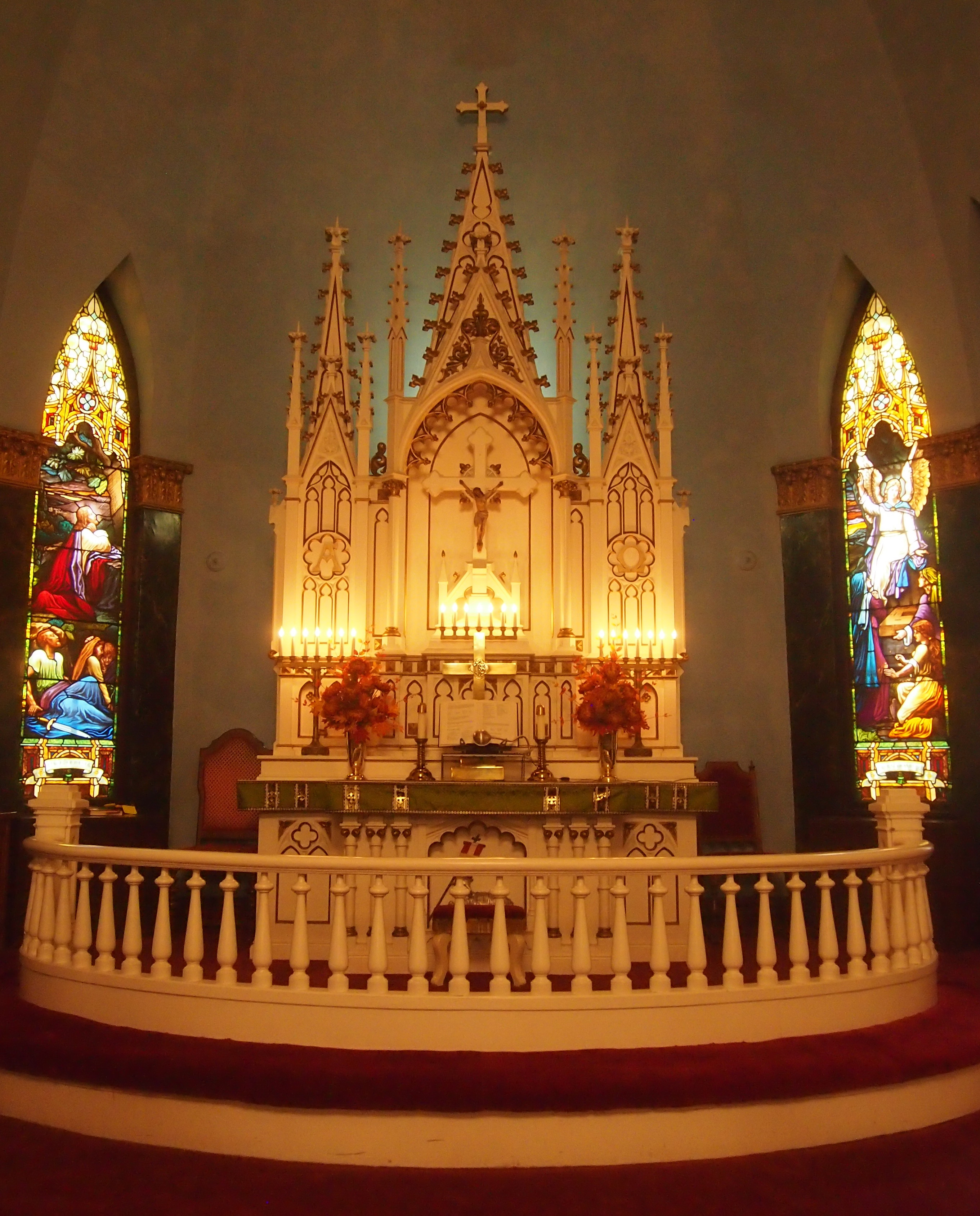
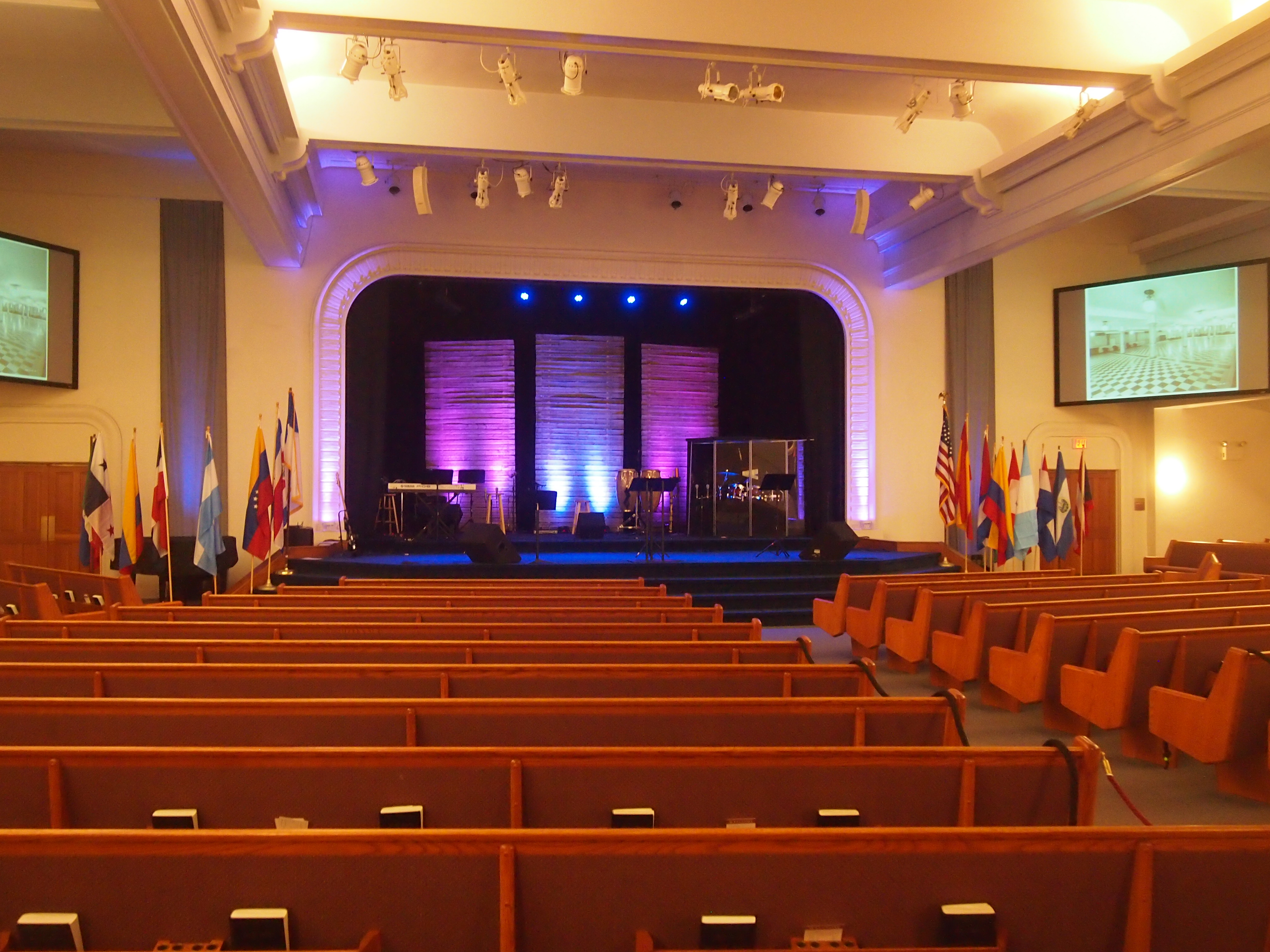
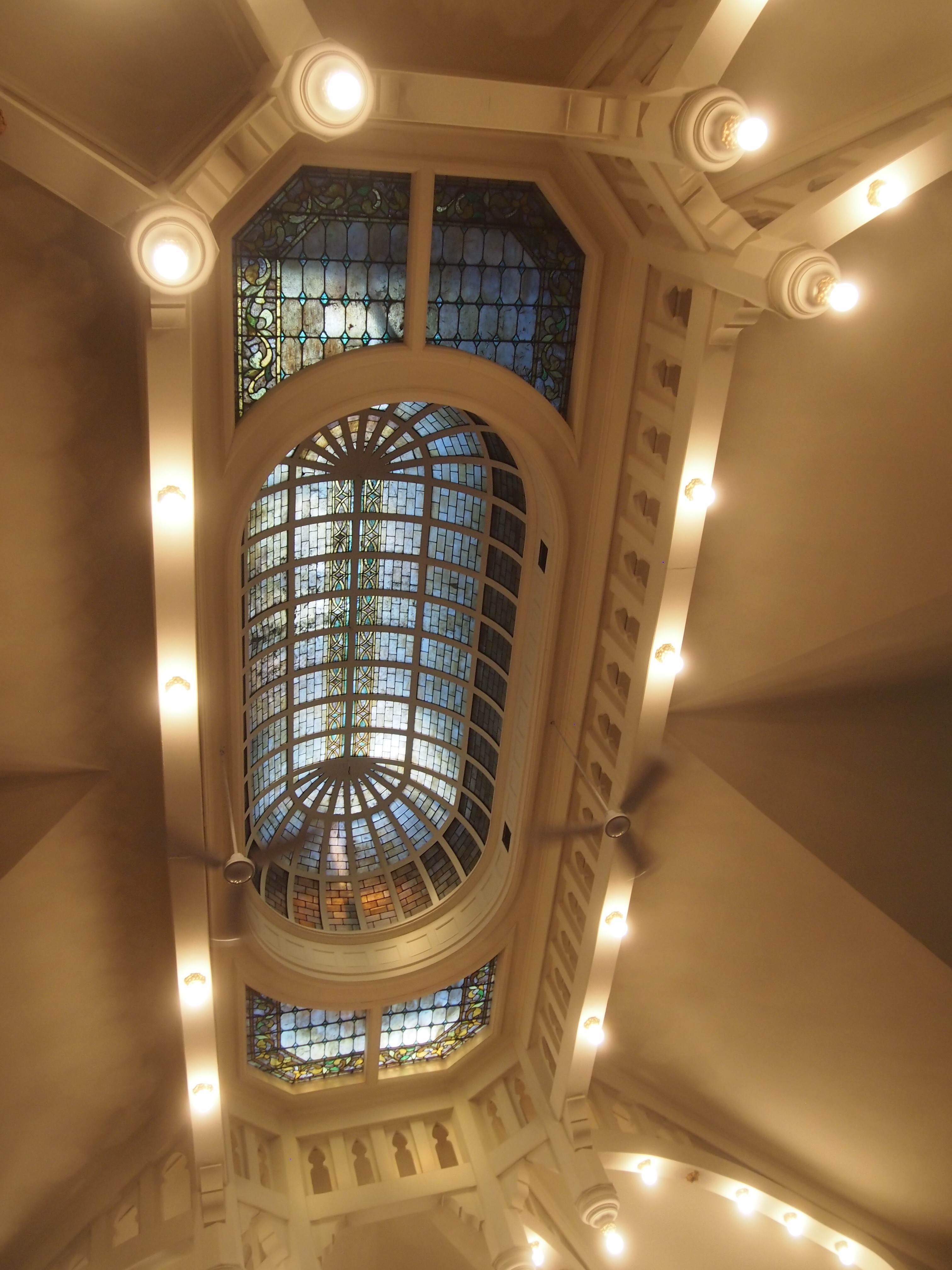
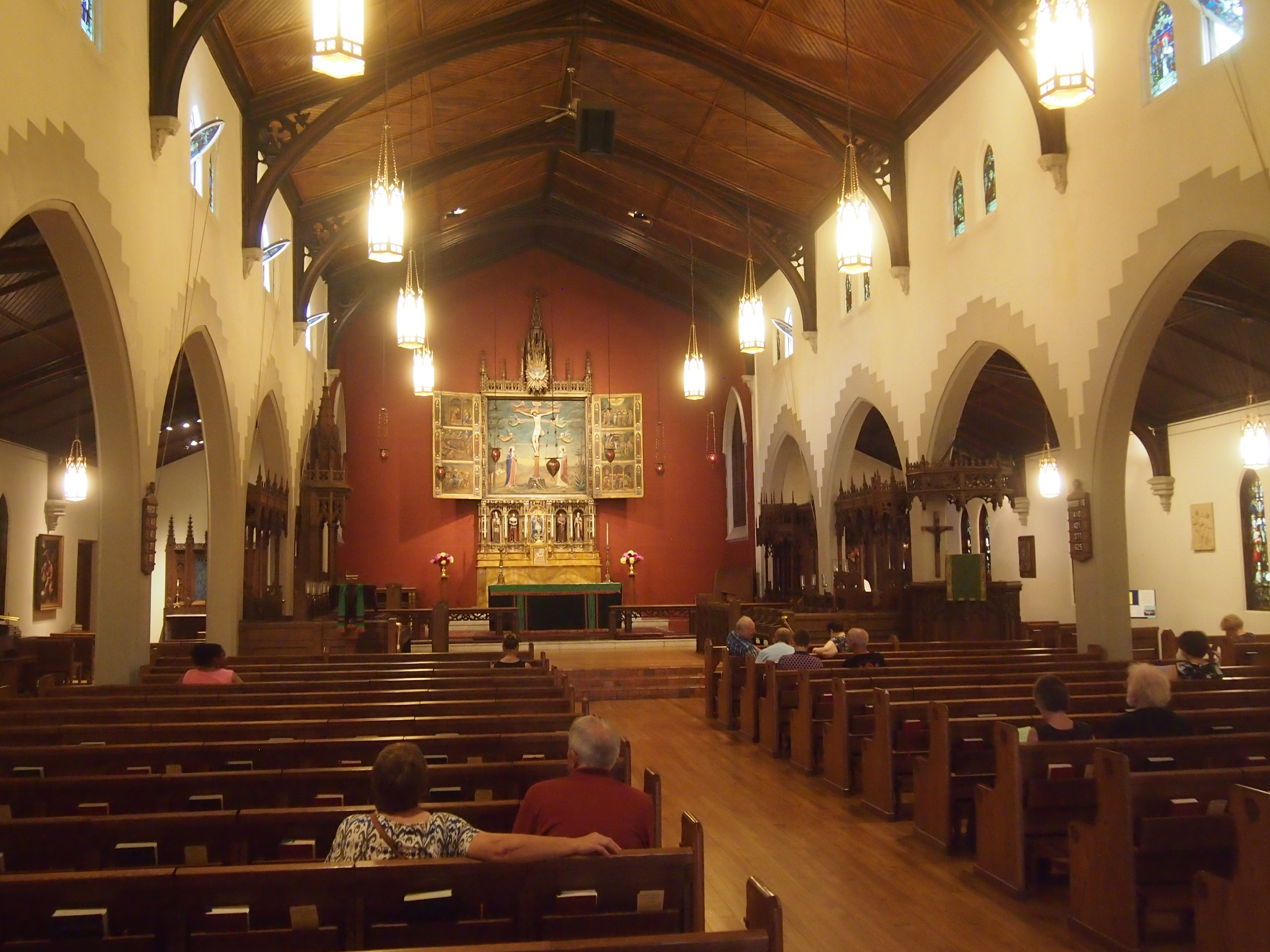
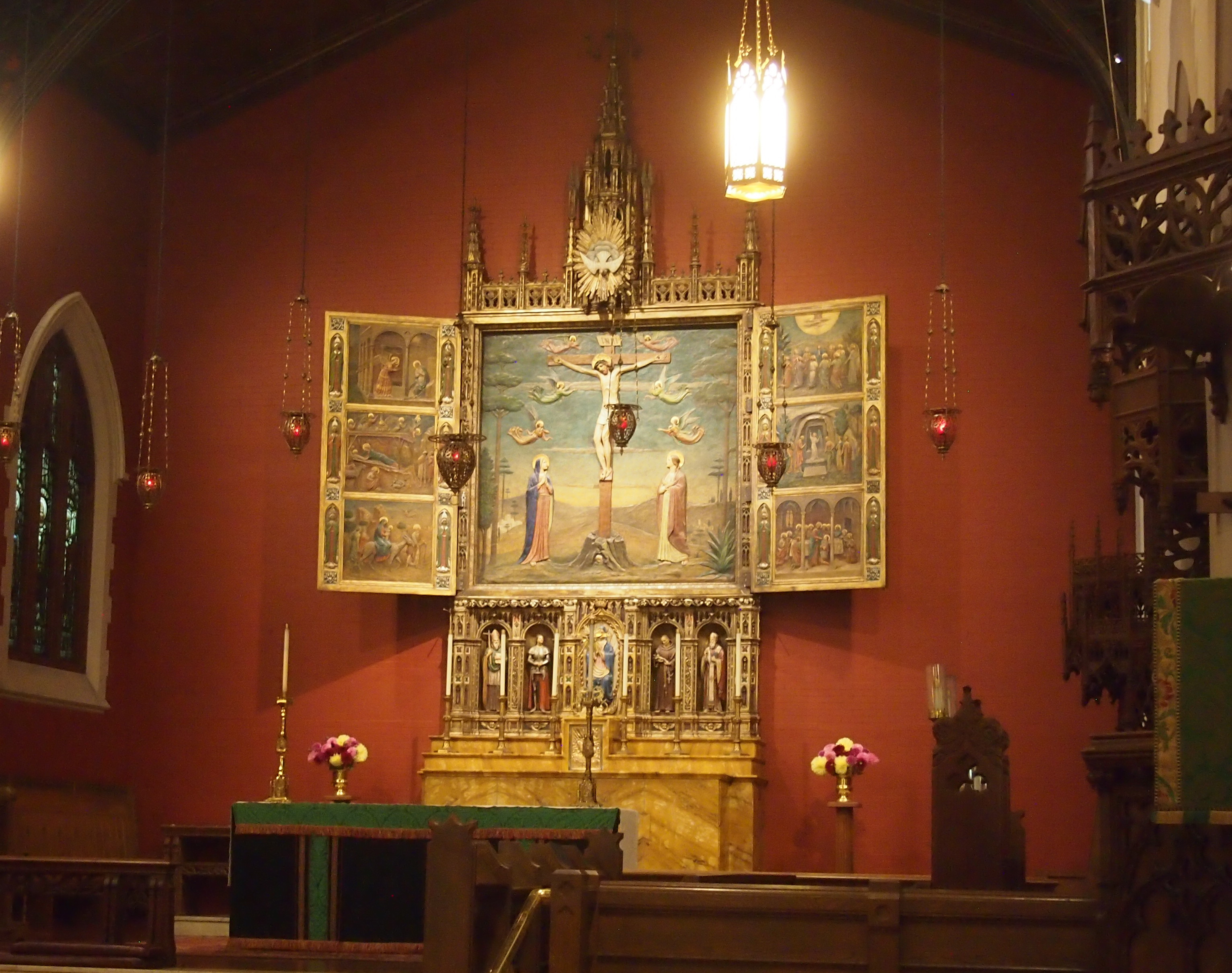
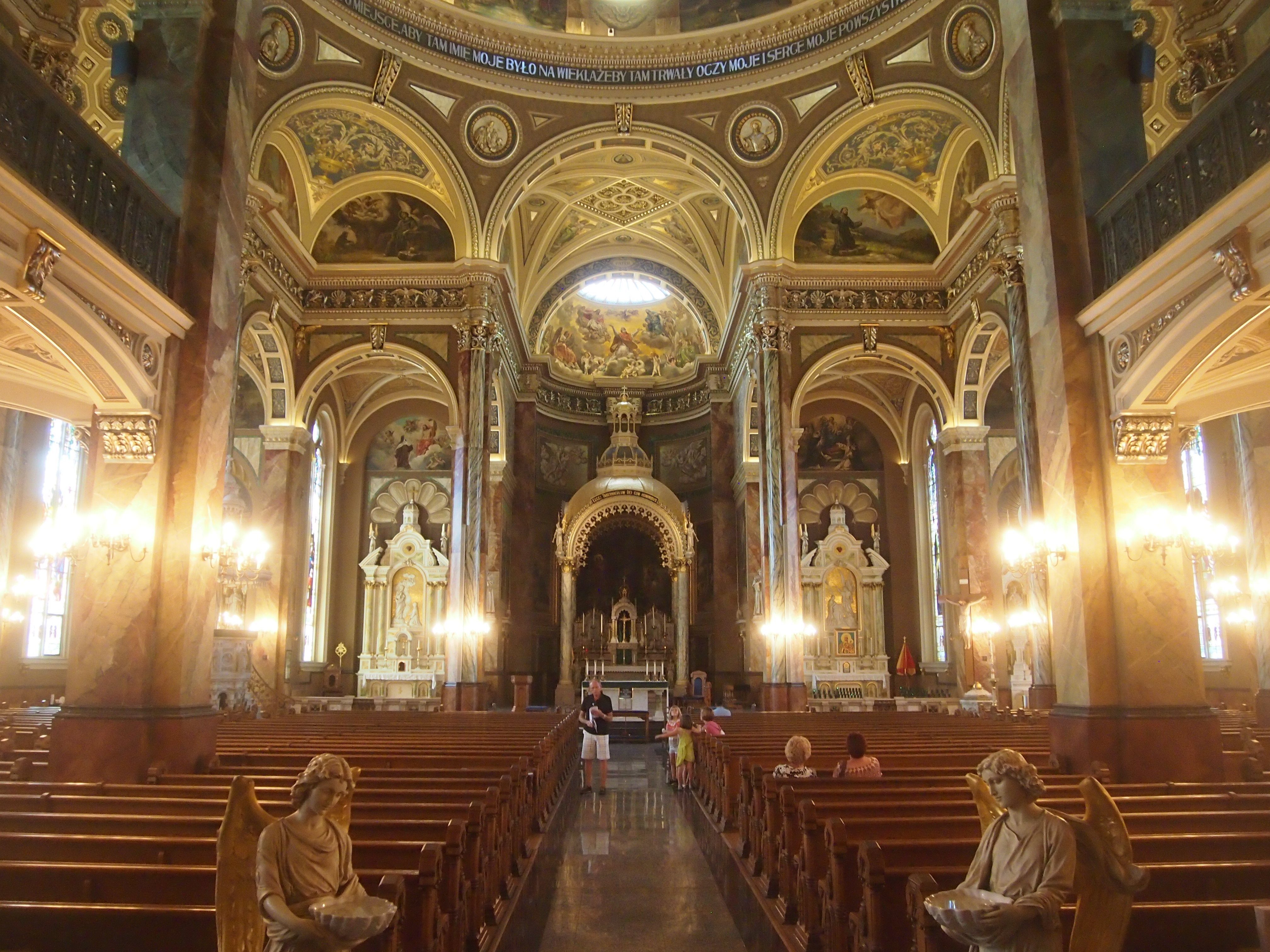
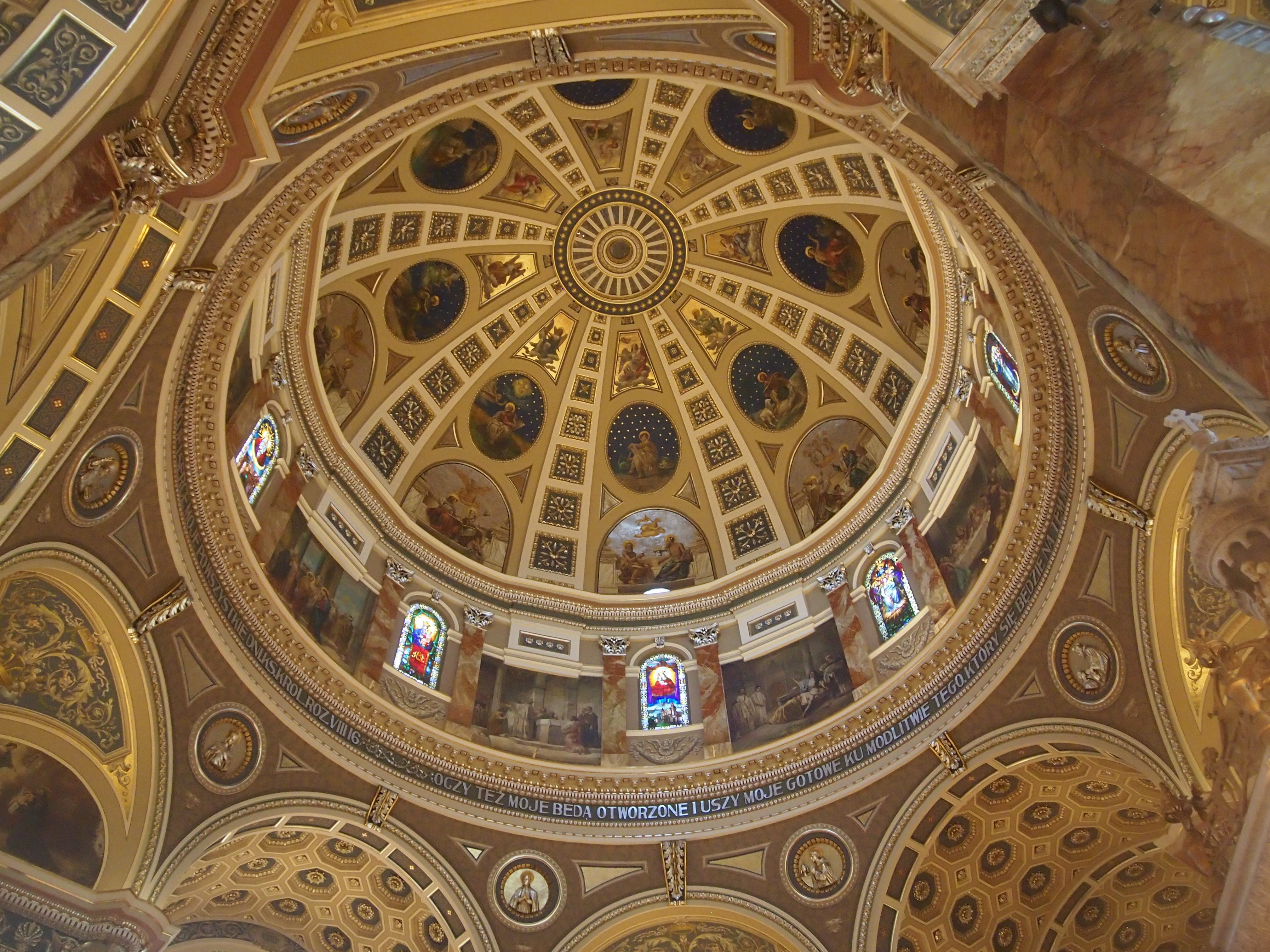
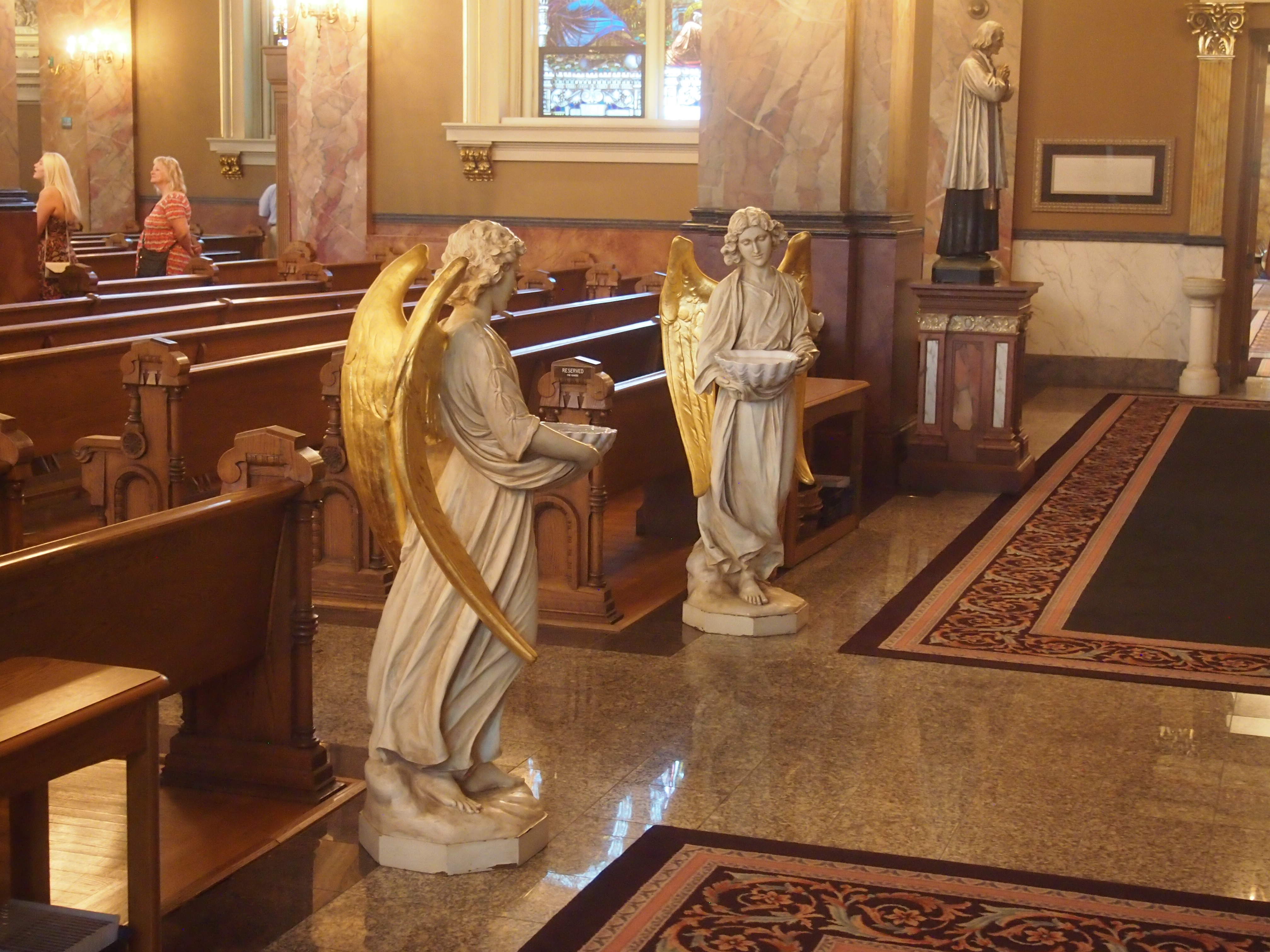
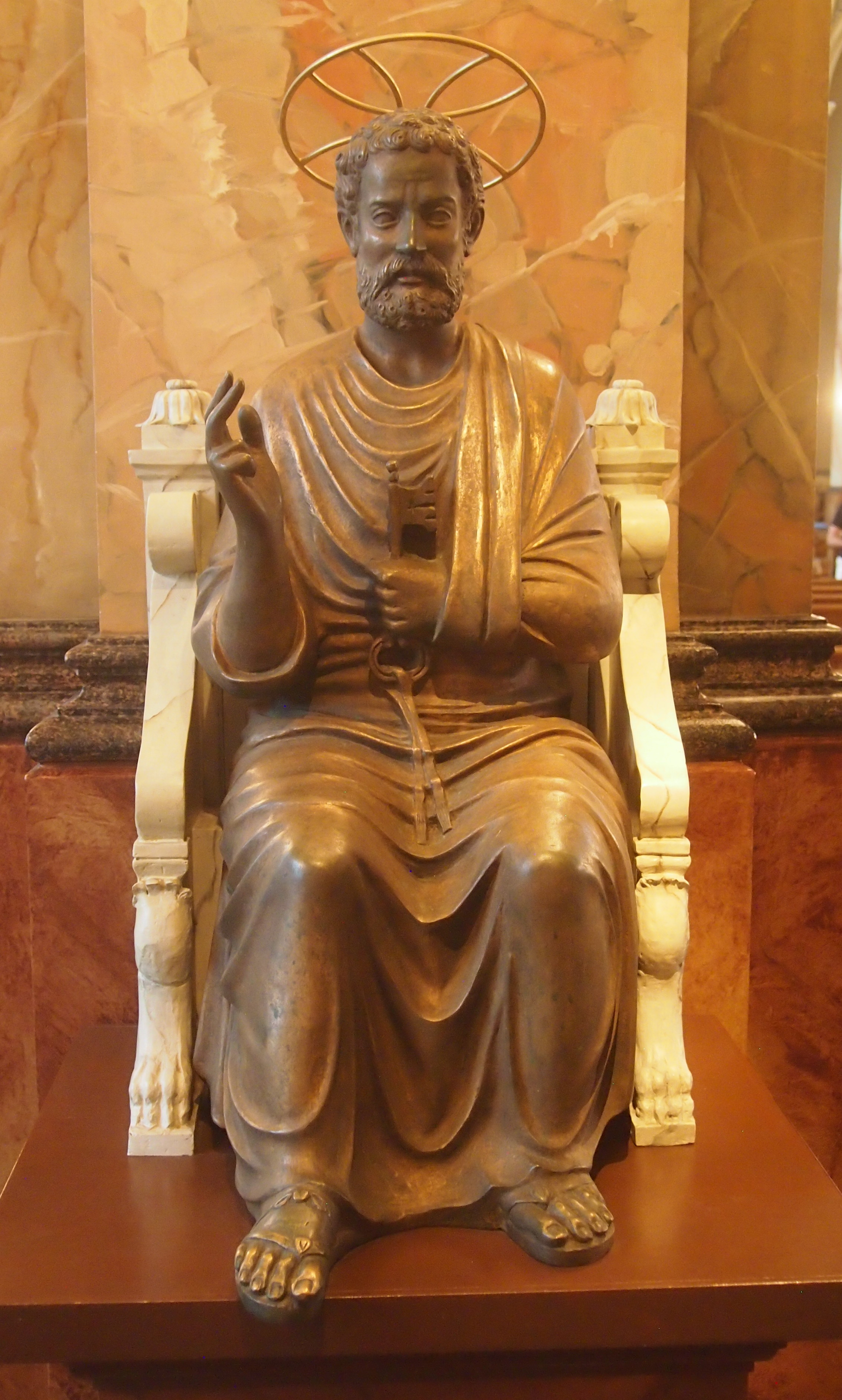
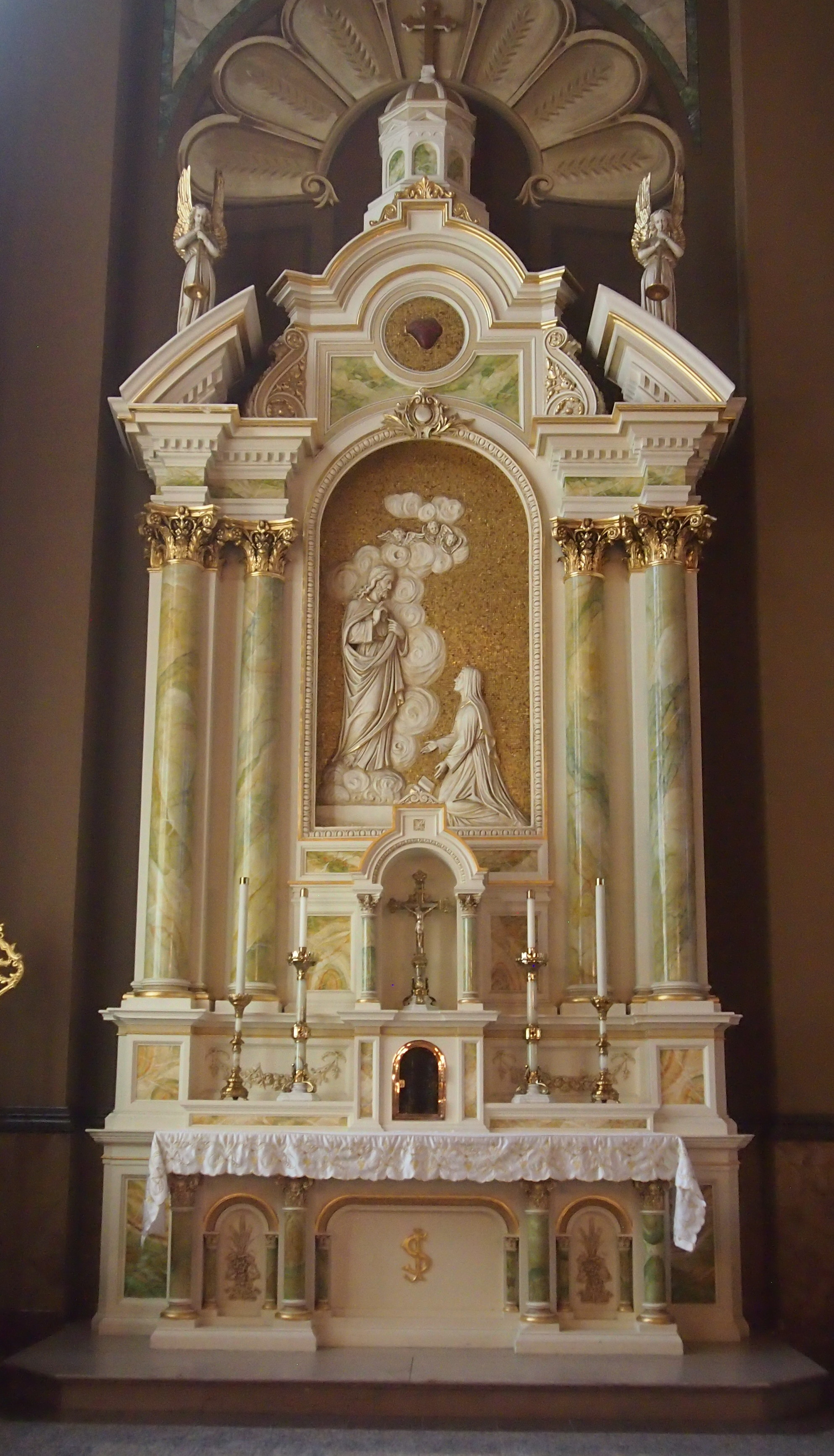
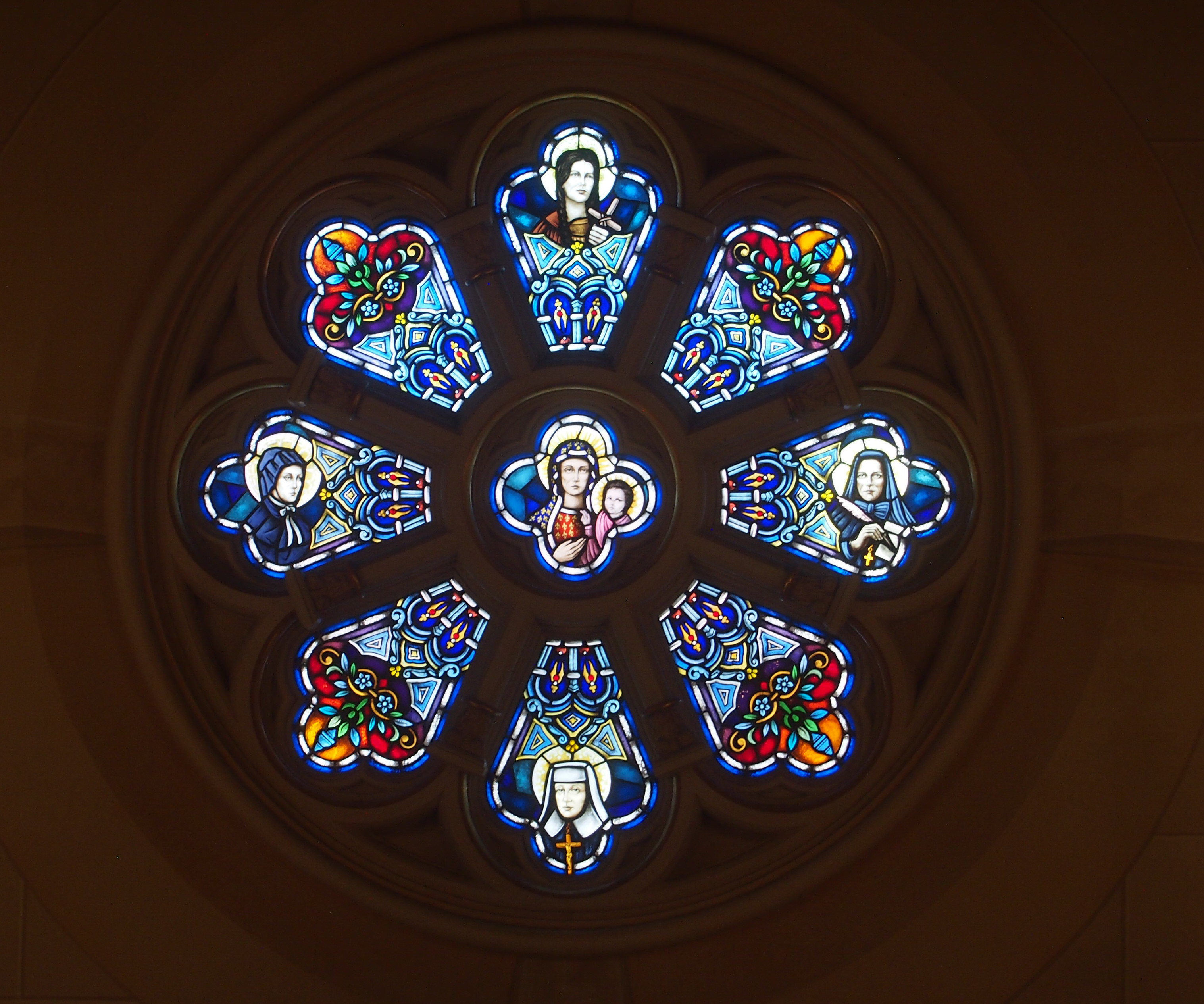
St. John Cantius“The unique baroque interior has remained intact for more than a century and is known for both its opulence and grand scale — reminiscent of the sumptuous art and architecture of 18th-century Krakow. In 2012, St. John’s completed an ambitious restoration, returning the lavish interior to its original splendor.”
St. John Cantius, ChicagoSt. John Cantius, ChicagoI also wanted to visit so I could hear a Latin mass, or part of one anyway. According to the church bulletin, I arrived in time for the Extraordinary Form of the Mass (Tridentine High Mass in Latin). Actually I was a little early, so I sat for a while in a back pew and admired the interior, as a pleasant wind blew in through the main doors and on my back, adding additional texture to the experience.

By the time the mass began, the sizable church was fairly full, though not packed, with a diversity of ages. I haven’t seen that many women cover their heads in quite a while, including some elaborate lace coverings.

Soon the church was filled with music. I was sitting in the back and couldn’t see the choir or the other musicians up in the balcony, but I surely did hear them. I’ve had only spotty exposure to sacred music, but that didn’t keeping me from understanding how astonishingly good it was.

Much more impressive, it turned out, than the priests and their Latin, mainly because I wasn’t within hearing range of much of it. Mostly I heard a hum of words, a few of which I could pick out. Not that I would have understood all of it anyway. Some other time at some other mass I’ll sit closer. My impression is that Latin is a pleasing language to hear.

Regarding St. John Cantius’ music, the church says: “Our Sunday Masses regularly feature Gregorian chant, chanted by our schola cantorum and by the congregation. The parishioners of St. John Cantius are intent on preserving the choral traditions of the Roman Rite which gives Gregorian chant ‘pride of place.’

“Additionally, the people of St. John Cantius work to preserve the patrimony of liturgical music that comes from the Renaissance period and from the Viennese choral tradition. But our choirs also sing modern choral works that are consonant with the Roman tradition of sacred music.” More about the church’s music is on this short video.

Wicker Park, The Neighborhood & Wicker Park, The Park

Juneteenth has come around again. We need more holidays in the summer, and that would be a good one, celebrating human freedom.

We went to the city on Sunday, giving me an opportunity to wander around Wicker Park on a warm but not too hot day. I visited both places of that name. Wicker Park’s both a fashionable area — which it was not 30 years ago, when I first lived in Chicago — and the name of a smallish triangular park within the neighborhood.

The intersection of North, Damen and Milwaukee is part of the neighborhood, but I didn’t hang around there much this time. Instead, I walked along some of the side streets. Much of the residential North Side of Chicago looks like this in June.
Wicker Park June 2017The handsome Wicker Park Lutheran Church is at 1502 N. Hoyne Ave.
Wicker Park Lutheran ChurchIt was already closed by the time I got there, but the interior looks like this.

The building dates from 1906, though the congregation goes back to 1879. “It boasts a basilica design, with double colonnades and an apse, a style used in ancient Rome for courts of law or places of public assembly,” notes the church web site. “The two towers are based on those of Abbey of Sainte-Trinité (the Holy Trinity), also known as Abbaye aux Dames, in Caen, France, which was built in the 11th century.”

A few blocks to the east is Wicker Park, the park. It isn’t one of Chicago’s great parks, but it is pleasant on a warm summer Sunday, well stocked with people and their dogs enjoying the warm summer Sunday. The park has some trees, a lush garden sporting flowers and bushes, a field house, a modest water fountain, and some open lawn.

There’s also a statue of Charles Gustavus Wicker (1820-1889), complete with stovepipe hat, heavy coat and broom. It’s been in the park since 2006.
Charles G. Wicker Statue, ChicagoCharles G. Wicker Statue, ChicagoThere’s a plaque at the feet of Wicker that asserts that he was an important figure in the development of this part of Chicago. In fact, it’s a lot like a press release in bronze, this plaque. A sample: “The broom symbolizes his initiative and readiness to take personal responsibility. He, and people like him, established Chicago, where all who truly do their best will continue to make this unique community a place of opportunity with justice, freedom, and equality for everyone.”

About Charles and his brother Joel Wicker, the Chicago Park District says: “In 1870, when businessmen and developers Charles G. and Joel H. Wicker began constructing drainage ditches and laying out streets in their subdivision, they donated a four-acre parcel of land to the city to be used as a public park.

“Fencing the triangular site to keep cows out, the city created an artificial lake in the center of the park, surrounding it with lawn and trees. As the Wickers had hoped, the area developed into a fashionable middle- and upper-class neighborhood.”

Further discussion of Wicker and his brother is at the Chicagoist. A few years ago, the statue fell down — was knocked down — tumbled down somehow, and there’s a story about that as well. The statue was restored, of course. Oddly enough, the sculptor who created the statue of Wicker, and pushed for it to be in the park, was a great-granddaughter of his, one Nancy Wicker, who died just last year at over 90.

In one corner of the park, a troupe called Theatre-Hikes was doing a low-budget version of A Midsummer Night’s Dream. No sets, just costumes. I sat down for a few minutes to watch. I’m no expert on the play — in fact, this is the only live performance I’ve seen of any of it — but I was able (later) to pin down that I’d arrived during Act 3, Scene 1.

Here’s Bottom.

Theatre-Hikes, Wicker Park

Titania and Bottom. Both actors were good, and able to ham it up when the play called for it, to the amusement of all.

Theatre-Hikes, Wicker Park 2017

Titania:
Be kind and courteous to this gentleman.
Hop in his walks and gambol in his eyes.
Feed him with apricoks and dewberries,
With purple grapes, green figs, and mulberries.
The honey bags steal from the humble-bees,
And for night tapers crop their waxen thighs
And light them at the fiery glowworms’ eyes
To have my love to bed and to arise.

Tempus Fugit, Raggedy Ann

Has it been 10 years since we visited Arcola and Arthur, Illinois, twin hubs of the state’s Amish community? More or less. I posted a lot about that short trip, including the nearby Lincoln family sites, on May 30 and 31 and June 1, 4, 5 and 7, 2007.

Got a surprising amount of comments on the postings — more than zero — offering corrections for mistakes I’d made. Guess people care deeply about the details of Arcola and Arthur.

I think no photography was allowed in the Raggedy Ann and Andy Museum in Arcola, since this is the only other picture I have of it, besides one posted in ’07.

Raggedy Ann and Andy Museum, Arcola, 2007

Or maybe I wasn’t quite out of the habit of taking only a few shots at a time, as I did when I used a film camera, even though I was using a digital camera by this time. Or the camera didn’t have a lot of memory. My current SD card has a vast expanse: 64 GB.

It didn’t take too much digging around to find out that about two years later, the museum closed. Of course the economy was awful in 2009, but I suspect the deeper problem was that Ann and Andy’s time had passed.

Everyone’s time always passes. Here’s another image from about 10 years ago.

DSCN0889_2

I had no interest in a birthday cake with personalized writing on it, so I just picked one from the shelf at Costco. It happened to have balloons. This year I had a chocolate cake like this one: the Union Pacific steam locomotive of cakes. We ate it the old-fashioned way, without making an image of it.

Bellefontaine Cemetery and Arboretum, St. Louis

You might call Bellefontaine Cemetery and Arboretum in St. Louis a Mount Auburn-class cemetery, since it dates from the 19th century as a solid example of the rural cemetery movement. Mount Auburn in Boston is the first of the class, dating from 1831. Others are Green-Wood in Brooklyn, Laurel Hill in Philadelphia and Woodland in Dayton, all of which are now surrounded by their respective cities, as Bellefontaine is.

It is a good class. More people ought to visit these places. But as usual, when we were at Bellefontaine on May 26, the only other living souls around were groundskeepers.

The good people of St. Louis got around to founding Bellefontaine in 1849, well outside the existing city, spurred in part by a severe cholera epidemic that year. The further away those bodies were, the better, since the dead helped create the miasma that vexed the living with the likes of cholera. Sure, that wasn’t true, but it must have made intuitive sense in the days before germ theory, and it gave us a roundly beautiful public space.

Bellefontaine Cemetery and Arboretum

Bellefontaine Cemetery and ArboretumBellefontaine Cemetery and ArboretumBellefontaine Cemetery and ArboretumBellefontaine’s web site has a well-written short history of the place, including its founding, the splashy dedication event in 1850, the work of long-time grounds superintendent Almerin Hotchkiss (1816-1903; he still resides at Bellefontaine), and a paragraph about post-Victorian cemetery aesthetics, something I didn’t realize.

“Nearly 50 years after its founding, Bellefontaine was inspired to modernize. Spring Grove Cemetery in Cincinnati and the burgeoning landscape-lawn cemetery design movement ushered in a new aesthetic that replaced ornate and elaborate Victorian fences and hedges with open, cross-lawn views.

“Bellefontaine followed suit by removing hedges, fences, elaborate plantings, and stone copings. Open, cross-lawn views became the more common aesthetic of the cemetery, bringing Bellefontaine in line with modern ideas about cemetery design. The changes also made Bellefontaine appear more open and park-like, creating a more integrated landscape composition than the earlier delineation of individual lots with distinctly defined spaces.”

The cemetery sports a fair amount of funerary art, such as the Hilts memorial, whose angel has spent many years out in the elements.
Bellefontaine Cemetery and ArboretumThis memorial says it remembers the “nobelest, dearest, gentlest and most unselfish of women, Ottilie Stephan, wife of Henry Hiemenz Jr.” (1858-1897). Well, let’s hope so.
Bellefontaine Cemetery and ArboretumBellefontaine is also known for its mausoleums. Such as one for Ellis Wainwright and family.
Bellefontaine Cemetery and Arboretum, Ellis Wainwright“In 1891, St. Louis millionaire and brewer Ellis Wainwright commissioned architect Louis Sullivan to design a tomb for his wife who had died suddenly of peritonitis,” the cemetery tells us. “Sullivan had recently completed the Wainwright Building in St. Louis, which is considered to be the beginning of modern skyscraper design. The mausoleum is a domed cube with simple carved decorations in Sullivan’s signature stylized plant patterns. The mausoleum’s double doors are bronze grills framed by delicate stone carvings. Sullivan’s draftsman for the project was Frank Lloyd Wright.”

The Tate mausoleum is a little different.
Bellefontaine Cemetery and Arboretum, Tate tomb“This Egyptian Revival mausoleum, designed by Eames and Young, was built in 1907 by Frank N. Tate, who at the time controlled most of the theater property in St. Louis. He also owned theaters in Chicago and Buffalo, New York…. The mausoleum has an entry flanked by columns with palm capitals. An Egyptian winged disc is flanked by serpents above the entry, and a pair of granite sphinxes guard the front.”

The Cathedral Basilica of St. Louis

The Old Cathedral of St. Louis, formally the Basilica of Saint Louis, King of France, is near the Gateway Arch. In February 1990, after visiting the Arch, I took a look at the Old Cathedral, which dates from the 1830s. It’s a fine old church (recently restored, so I suppose I should take another look someday).

A man I met there briefly told me, in so many words, that this one was nice, but you should see the “New” Cathedral of St. Louis, which is a few miles away in the city. He also told me how to get there. So I went, even though I was racing a winter storm to get back to Chicago. (The storm won, and I spent the night in a Normal, Ill., motel room.)

At least, that’s how I think it happened. I’m not completely sure. But I know I went that day. I entered the cathedral, shook off the cold, and let my eyes adjust to the relative dim. I was astonished by what I saw.

On May 26 this year, Lilly and I paid the place a visit en route home. I’ll never be as astonished — I had no idea what I was going to see beforehand — but I’ll always be impressed. Photography barely does the church justice, my photos even less so.

The Cathedral Basilica of St. LouisThe Cathedral Basilica of St. LouisThe Cathedral Basilica of St. LouisAfter seeing the cathedral for the first time, I wrote: “It isn’t necessary to cross oceans to savior the majesty of large-scale mosaic art, vaultingly expressed in a cathedral. You only need to visit the Cathedral of St. Louis, about 10 minutes west of that city’s well-known Arch. Composed of millions of tesserae — tiles of stone or glass — the mosaics of the cathedral dome and walls offer visitors a pageantry of Christian saints, symbols and stories rendered in hundreds of subtle hues. Its architecture is deeply reminiscent of the great Byzantine cathedrals of Italy and points East.”
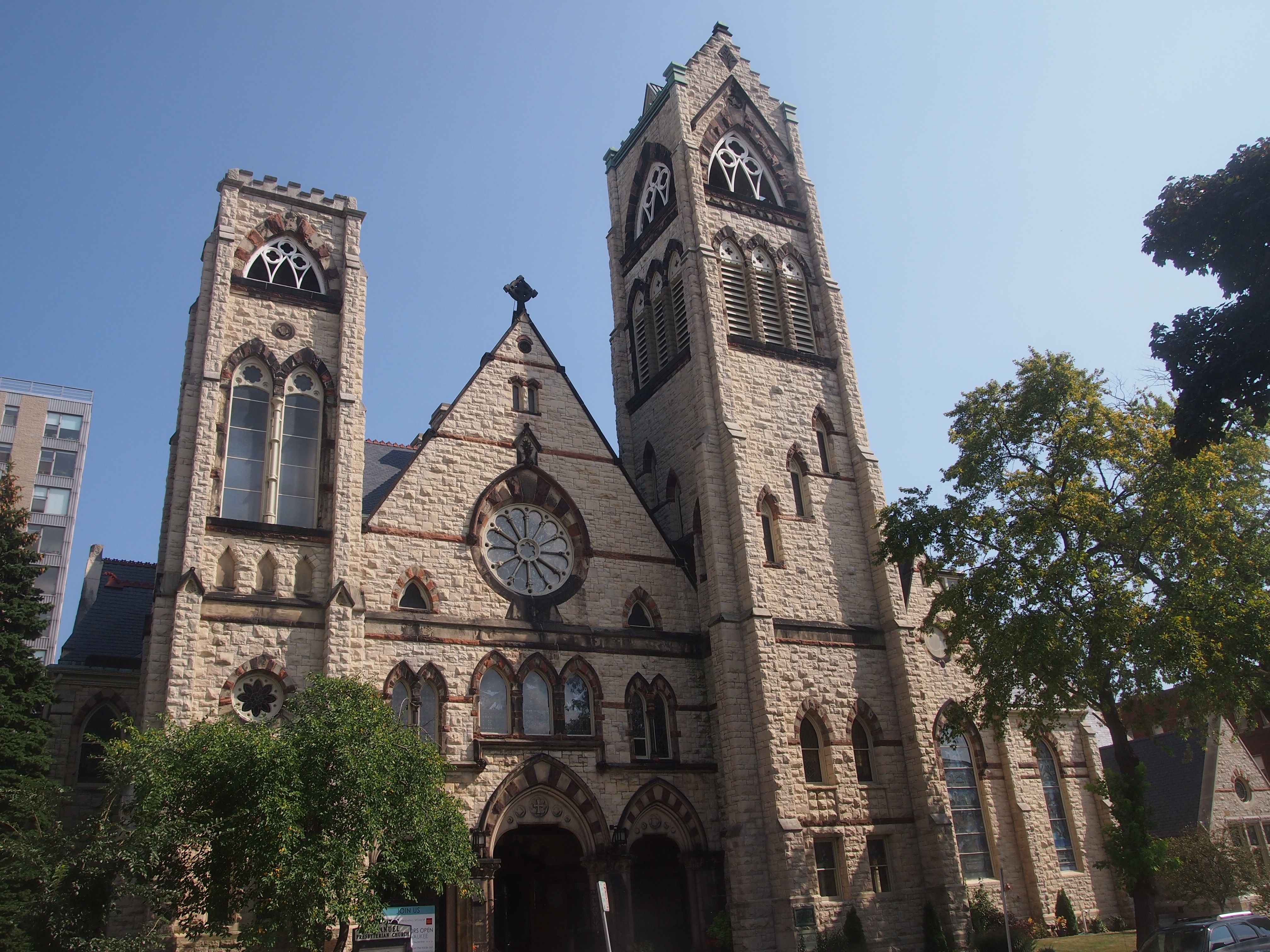
I based that on what I’d read about (and pictures seen of) places like Ravenna. I thoughtlessly did not go there when I was in Italy, even though I knew about it. Ah, well. The Cathedral Basilica of St. Louis will have to do for now.
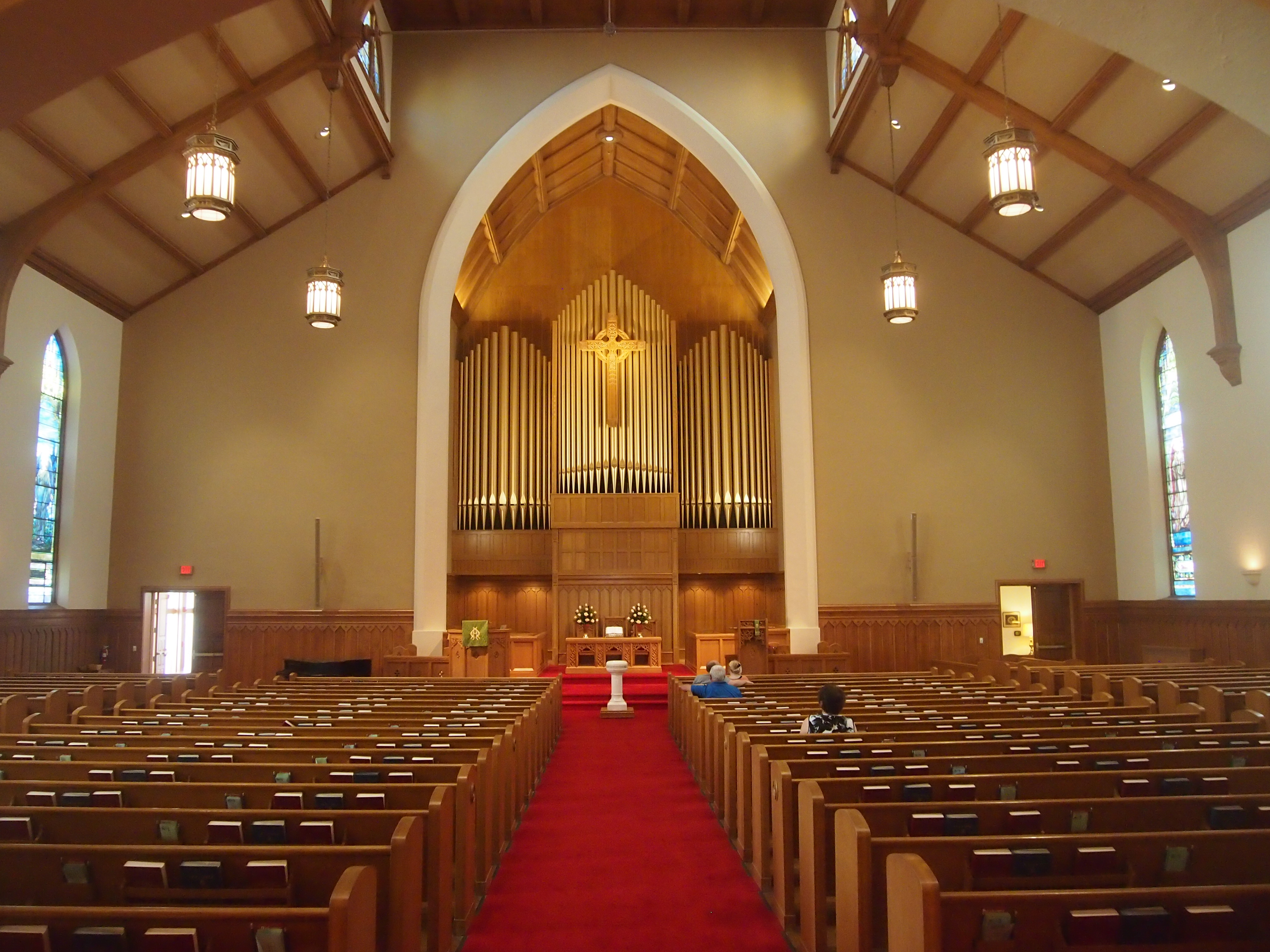
The mosaics are especially easy to see in detail just above the entrance.

Cathedral Basilica of St. LouisThe basilica’s web site says: “George D Barnett of Barnett, Haynes, and Barnett of Saint Louis designed the entire structure of the Cathedral, including a circular Sacristy on the north end which was not built when the main structure was completed in 1914. The semicircular Sacristy which was eventually built was designed by George John Magualo of Magualo and Quick.

“Barnett also designed the main Altar, the baldachino, and the Lower Sanctuary mosaics. The mosaics were installed by the Gorham Company of New York in 1916. Barnett also designed the Blessed Sacrament Chapel and its mosaics which were installed by Gorham in 1916 and 1917.”

As for the fact that it is now the Cathedral Basilica of St. Louis, which it was not in 1990, the web site notes: “On April 4, 1997, Pope John Paul II honored the Cathedral of Saint Louis by making it a Basilica, a place of worship of special distinction. As a Basilica, the Cathedral displays two special symbols — the tintinnabulum or bell and the ombrellino or umbrella.”

A warm spring day is a better time to take exterior shots. Also impressive.
Cathedral Basilica of St. LouisThe last time I saw the Cathedral Basilica of St. Louis was in 2005 (I think), when I took Ann — and she was small enough to pick up when she didn’t want to walk. I know I took Lilly at a similar age, and showed the place to Yuriko, when we visited St. Louis in 2000. In any case, those visits were too long ago. Good to make it back.

The Old Gasconade River Bridge

On I-44 in south central Missouri, there’s a point at which you cross the Gasconade River, which rises in the Ozarks and ultimately flows to the Missouri River. It hardly seems like a bridge, so effortless is the crossing.

Transportation disaster enthusiasts, or maybe just train wreck buffs, know the Gasconade River as the site of the Gasconade Bridge Train Disaster of 1855. A train from St. Louis bound for Jefferson City broke the railroad bridge it was traveling across, precipitating the engine and some of the cars into the river, killing 31 and seriously injuring many others at a time when the state of medical science meant that you were pretty much on your own when it came to recovery.

The accident was nowhere near where I-44 crosses the river, but rather near the town of Gasconade in Gasconade County, between St. Louis and Jeff City. Hope there’s some kind of memorial to the event around there, but I can’t find any evidence of one.

A few years ago, Ramona Lehman, co-owner of the Munger Moss Motel, told me about the old bridge across the Gasconade, just south of the modern I-44 bridge, which is only about 10 miles from the motel. She even sells postcards depicting the bridge at the motel front desk, proceeds of which go toward preserving the bridge. I’ve bought a few over the years.

The old bridge dates from the 1920s, and carried U.S. 66 traffic across the river for many years. After that highway became nostalgia fodder, the bridge continued to carry local traffic for many more years.

In late 2014, the Missouri Department of Transportation closed the old bridge as unsafe. What with the new bridge and all, the department had probably opted for deferred maintenance on the old one for a long time. Get off the Interstate west of the old bridge, and take the access road — Historic 66, that is — and pretty soon you’ll find yourself at the inaccessible bridge, as we did late on the morning of May 26.

The Gasconade River Bridge, Route 66The Gasconade River Bridge, Route 66Not especially impressive from that vantage. The best way to look at the old bridge was from underneath. A patch of land near the river and under the bridge was surprisingly accessible.

The Gasconade River Bridge, Route 66

The Gasconade River Bridge, Route 66I was motivated to see the structure as more than a passing blur out of the corner of my eye. The next time I come this way, it might be gone. The good people who live near it want the bridge preserved, but it isn’t clear that’s going to happen. As usual, it comes down to money.

MoDOT recently issued a press release that included the following: “The majority of public comments stemming from a Dec. 14, 2016, public meeting held in Lebanon supported constructing a new bridge near I-44 and leaving the current facility, located on historic Route 66, intact. However, MoDOT has indicated all along that liability issues and limited funds would require the department to remove the bridge unless an outside entity stepped forward to take ownership of and maintain the bridge.

“The current bridge will remain in place as the agency works through the requirements of Section 106 of the National Historic Preservation Act. The act requires federal agencies and the recipients of federal funds, such as MoDOT, to consider the effects of projects on properties eligible for listing on the National Register of Historic Places, such as the Gasconade River Bridge.”

Thus the fate of the bridge is uncertain. That meant seeing the bridge was a carpe diem situation, so I did.

The Dallas Arboretum and Botanical Garden

Geophysicist and petroleum geologist Everette Lee DeGolyer (1886–1956) put oil exploration on a more scientific footing in the early 20th century. I’ve read about him and his work, but do not understand the details. Maybe I could if I read more about it, but life is short.

“In May 1925 DeGolyer organized a subsidiary of Amerada, the Geophysical Research Corporation, which located a record eleven Gulf Coast salt domes in nine crew months and perfected a reflection seismograph that has become the principal tool for geophysical oil exploration worldwide,” says the Handbook of Texas Online. “This technology inaugurated the modern age of oil exploration with the 1930 discovery of the Edwards oilfield in Oklahoma by reflection survey.”

Enough to say here that DeGolyer was an oilman among oilmen, and later in life, he and his wife Nell DeGolyer (1886–1972) lived on an estate on White Rock Lake, as the city of Dallas grew around them.

The Handbook entry on Nell takes it from there: “Another abiding interest for her in Dallas was the family’s forty-four-acre estate known as Rancho Encinal, which she and her husband built and decorated. The thirteen-room Spanish Colonial Revival structure on White Rock Lake in East Dallas, completed in 1940, reflected the DeGolyers’ world travels, Everette’s outstanding book collection, and Nell’s expertise in gardening.

“Until her death Mrs. DeGolyer lived in this home; it was willed to Southern Methodist University after her death and several years later became the property of the city of Dallas. Into the 1990s the city used it, as the Dallas Arboretum and Botanical Society, to showcase the gardens planned and maintained by Nell DeGolyer.”

The DeGolyer estate, plus the adjoining Alex and Roberta Coke Camp estate, form the modern Dallas Arboretum and Botanical Garden, open since 1984. We spent a pleasant May afternoon there. It’s hard to go wrong at a place with lily pads and koi.

The Dallas Arboretum and Botanical GardenAnd babbling brooks. Or maybe they murmur, since babbling implies a negative incoherence.

Dallas Arboretum and Botanical GardenAnd other water features, some within view of White Rock Lake.

Dallas Arboretum and Botanical GardenA lot of flowers, in various arrays.

Dallas Arboretum and Botanical Garden

Dallas Arboretum and Botanical GardenDallas Arboretum and Botanical GardenPlenty of bushes and trees.
Dallas Arboretum and Botanical GardenOpen spaces for children to be children.

Dallas Arboretum and Botanical GardenSpaces for formal pictures. Could be a quinceañera participant.
Formal spaces.
Dallas Arboretum and Botanical GardenWiki nails it with this line: “A horticultural masterpiece in North Texas.”

Sparkman-Hillcrest Memorial Park Cemetery

Next to North Park Mall, a storied mid-century shopping center in Dallas — and one that’s still thriving — is the Sparkman-Hillcrest Memorial Park Cemetery. In its way, it too is still thriving.

“The cemetery was created with land donated by William Barr Caruth, an early Dallas settler whose family owned huge tracts of what is now North Dallas,” wrote Moira Muldoon in D magazine in 2010. “Sparkman Hillcrest is officially a Texas historic site now, with graves going back as far as the 1850s, and some of the wending roads through the 88 acres are lovely.”

I saw no graves as old as the 19th century at Sparkman-Hillcrest in late May, but then again I didn’t wander through every part of the cemetery. What I saw was a well-landscaped 20th-century cemetery, marked by upright stones and and a scattering of funerary art, along with many mature trees and bushes.

Sparkman-Hillcrest Memorial Park Cemetery, DallasSparkman-Hillcrest Memorial Park Cemetery, DallasSparkman-Hillcrest Memorial Park Cemetery, DallasThere’s at least one fountain.
Sparkman-Hillcrest Memorial Park Cemetery, DallasA few graves featured statues, such as these two.

Sparkman-Hillcrest Memorial Park Cemetery, Dallas

A few stones are unconventional. I didn’t take a picture of one that features a large cube balanced on one of its tips, but I did snap this one.
Sparkman-Hillcrest Memorial Park Cemetery, Dallas - King MemorialOne section used well-cropped bushes to mark off family plots. I’d never seen an arrangement quite like that.

Sparkman-Hillcrest Memorial Park Cemetery, DallasOr rounded stones quite like these either.
Sparkman-Hillcrest Memorial Park Cemetery, DallasI didn’t go looking for well-known permanent residents of Sparkman-Hillcrest, but I found a few. Ross Perot’s parents, and I assume a sibling who didn’t live long, had their own section featuring a statue of an angel. Someday, presumably, the Dallas billionaire and third-party candidate will repose there as well.

Sen. John Tower, along with one of his daughters, is at Sparkman-Hillcrest.
Sparkman-Hillcrest Memorial Park Cemetery, DallasHe earned his place in U.S. political history by being the first Republican Senator from Texas since Reconstruction, first elected to that body in 1961. A harbinger of the end of the old-time Solid South and its evolution into the new Solid South we know today. The elder George Bush wanted him to be his Secretary of Defense in 1989, but the very same U.S. Senate said no — also a remarkable event in Tower’s career. In 1991, he and his daughter Marian and 21 others died in the crash of Atlantic Southeast Airlines 2311 in Georgia.

Another resident of Sparkman-Hillcrest is long-time Cowboys head coach Tom Landry.
Sparkman-Hillcrest Memorial Park Cemetery, Dallas

Back in 2013, I saw Landry’s cenotaph at the Texas State Cemetery, along with the grave of that other famed Texas football coach, Darrell Royal. Landry’s buried in Dallas, and his ever-present fedora, done in bronze, helps mark his final resting place.

The USS Batfish

A park in Muskogee, Okla., might seem an odd place to find a submarine, but that’s where the USS Batfish makes its home as a museum ship.

USS Batfish

Note the walkway leading to the top of the vessel. That’s the access point for visitors, as Lilly and I were on the afternoon of May 13.
USS BatfishNote also the water around the hull of the Batfish. I suspect that was because of a rainy spring, not a permanent feature. Soon we stood on top of the Batfish. I’d never stood on a submarine before. The fencing was clearly added for the safety of tourists. I’ll bet that during active service, either you maintained your footing or you didn’t.
USS BatfishI walked onto the sub thinking that was it, a look at the outside. Then we noted that both hatches, one forward, the other aft, were open. You can go inside.

The interior is well maintained, well lighted, and pretty much like crawling around in a cave made of steel. On display were such features as glowing torpedo tubes.
USS Batfish - torpedo tubesTo make your way through the vessel, you pass through a series of hatches like this. I assume they’re watertight. Submarines clearly aren’t meant for fat men.
USS BatfishI didn’t feel claustrophobic, exactly, just boxed in. It’s difficult to imagine the fortitude necessary to spend months at a time in such a steel box, with sudden drowning all too real a possibility.

Plenty of narrow corridors.
USS BatfishAnd limited comforts.
USS BatfishUSS BatfishI understand that the food was generally better on subs than the ordinary run of ships, as one way to compensate for other discomforts. I hope that was true.

A forest of pipes.
USS BatfishAnd controls. Many, many controls and dials.
USS BatfishUSS BatfishUSS BatfishAs a warship, the Batfish had a good run, completing seven war patrols from late 1943 to the end of the war. She clearly took the cinematic Patton at his word, making some other poor dumb bastards die for their country. Most notably by sinking three Japanese subs in a 76-hour period in February 1945.

After the war, the vessel hung on until 1969, when it was struck from the Naval Vessel Registry. Apparently Oklahoma submarine vets, aided by state politicos, managed to obtain it for display from the Navy in the early ’70s, though the task of getting to its current site in Muskogee, near the Arkansas River, was a long and tedious process, as described here.

There’s also a small museum in a building near the submarine, and not far from the sub, a poignant display with plaques honoring each U.S. submarine, WWII and other eras, that didn’t return. On eternal patrol, as the submariners put it.

The Mizumoto Japanese Stroll Garden

There are a surprising number of Japanese gardens in the United States, as illustrated by this Wiki list of them, though it’s probably incomplete. It had never occurred to me that there might be one in Springfield, Mo., until I spied it on a map: the Mizumoto Japanese Stroll Garden.

The garden is part of the larger Springfield-Greene County Botanical Center, which also includes an azelea garden, dogwood garden, iris garden, butterfly garden, hosta garden, dwarf conifer garden, and more. All that sounds nice, but on the road sometimes you have to focus. The stroll garden it was.

It had everything you’d expect, trees and shrubs and flowers and lanterns and other structures along a winding path, along with water features.

Mizumoto Japanese Stroll GardenA zigzag bridge.

Mizumoto Japanese Stroll GardenAccording to one web site anyway, the notion such bridges were designed to prevent dimwitted evil spirits from being able to cross them is baloney.

THE MYTH: Some misguided Westerners claim that evil spirits can only travel in straight lines and that Japanese gardens have zig-zag bridges to prevent evil spirits from moving through them.

THE FACT: Japanese gardens do sometimes feature zig-zag bridges, but the evil spirit story is complete nonsense. Zig-zag bridges are featured in Japanese gardens partially because they are attractive and because they are interesting to walk over. There is also a charming story that links zig-zag bridges to Japanese literature and culture. [?] The zig-zag bridge motif is a natural fit for many of the Japanese arts including gardening.

A moon bridge.
Mizumoto Japanese Stroll GardenExpanses of lawn.
Mizumoto Japanese Stroll GardenNot all the foliage is green in the spring.
Mizumoto Japanese Stroll GardenA trellis.

Mizumoto Stroll Garden 2017A zen garden. But of course.
Mizumoto Stroll Garden 2017And some droopy pines, the likes of which I once saw in Rockford.
Mizumoto Stroll Garden 2017According to Japanesegardening.org, the 7.5-acre Stroll Garden is the oldest attraction at the Springfield-Greene County Botanical Center, now a little more than 30 years old. “The plan was inspired by a Fort Worth, Texas copy of the Garden of the Abbot’s Quarters in Kyoto,” it says. Probably that means Tofukuji Temple, which is indeed stunning.

“The garden was initiated by the superintendent of park operations, Bill Payne, in the early 1980s and supported with partnerships from the Springfield Sister Cities Association, The Southwest District of Federated Garden Clubs, The Botanical Society of Southwest Missouri and the Friends of the Garden.

“The garden was given the name Mizumoto in 2004, in honor of Yuriko Mizumoto Scott. She generously acts as a bridge between her native Japan and her home in the Ozarks. As the first Japanese War bride brought back to the United States, her insight has the breadth of a bi-cultural history.” First war bride brought to the Ozarks? Not to be pedantic, but I think they mean postwar bride. Or occupation bride.

“Mrs. Mizumoto Scott spent many years as a volunteer in garden maintenance and hosting tour groups. She has also conducted hundreds of tea ceremonies and explained the customs of Japan. The gardens are maintained by the Friends of the Garden Japanese Gardening Group and Park staff. Gardens are supported by the Springfield Sister Cities Association Isesaki Committee.”

Well worth the stop in Springfield, a town I’d only ever known before as the turn off to Branson.