The Gardens of the Fox Cities

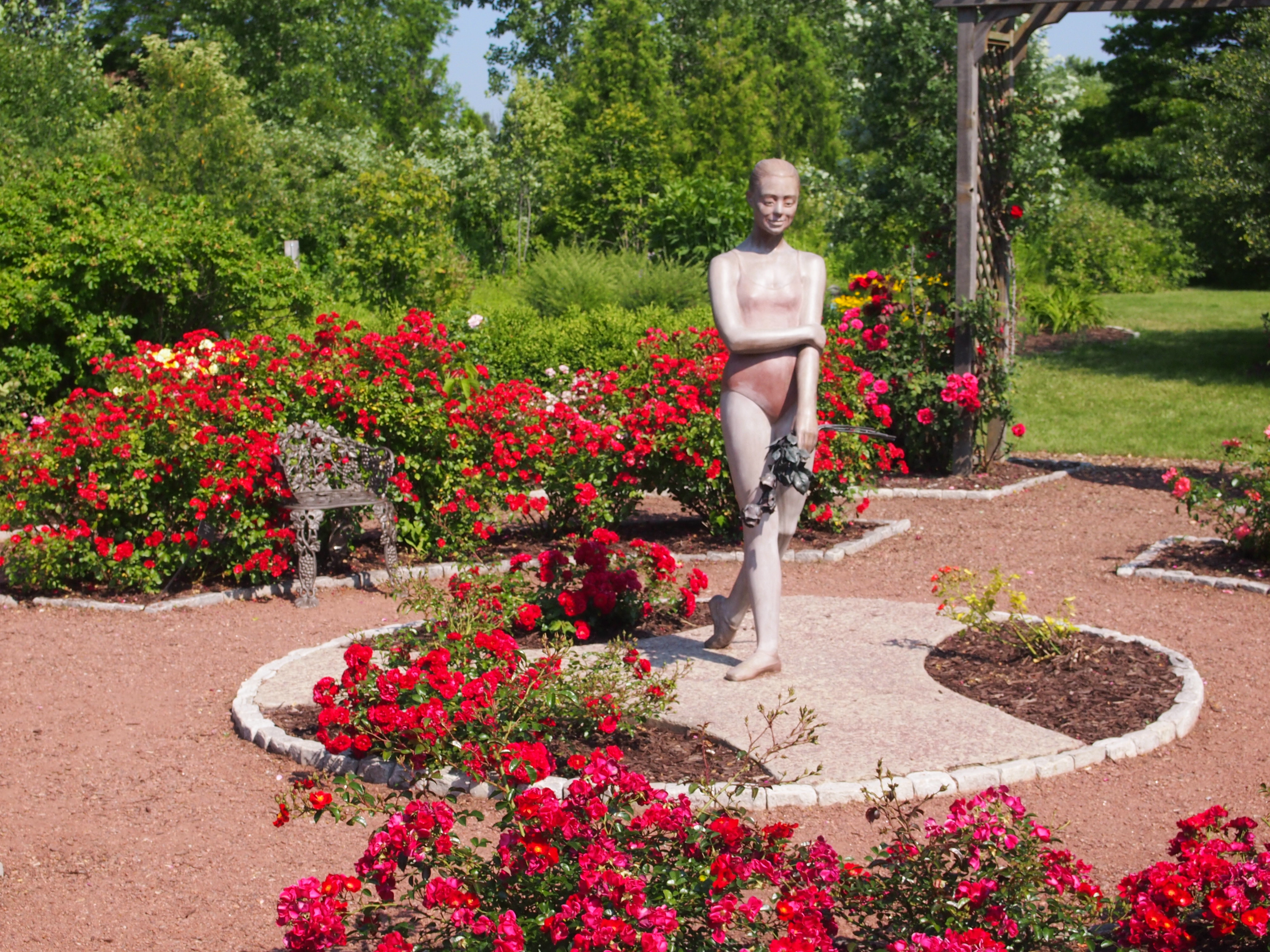
The Gardens of the Fox Cities in Appleton, Wis., consists of a series of formal plantings, such as the rose garden, which also includes a statue called “Reflections of Love,” by a local sculptor named Dallas Anderson. In the full flush of early July, it’s a gorgeous, but hot, setting. We visited fairly early in the morning – early for us on non-work days, ca. 10 a.m. – but even so, the heat was on.

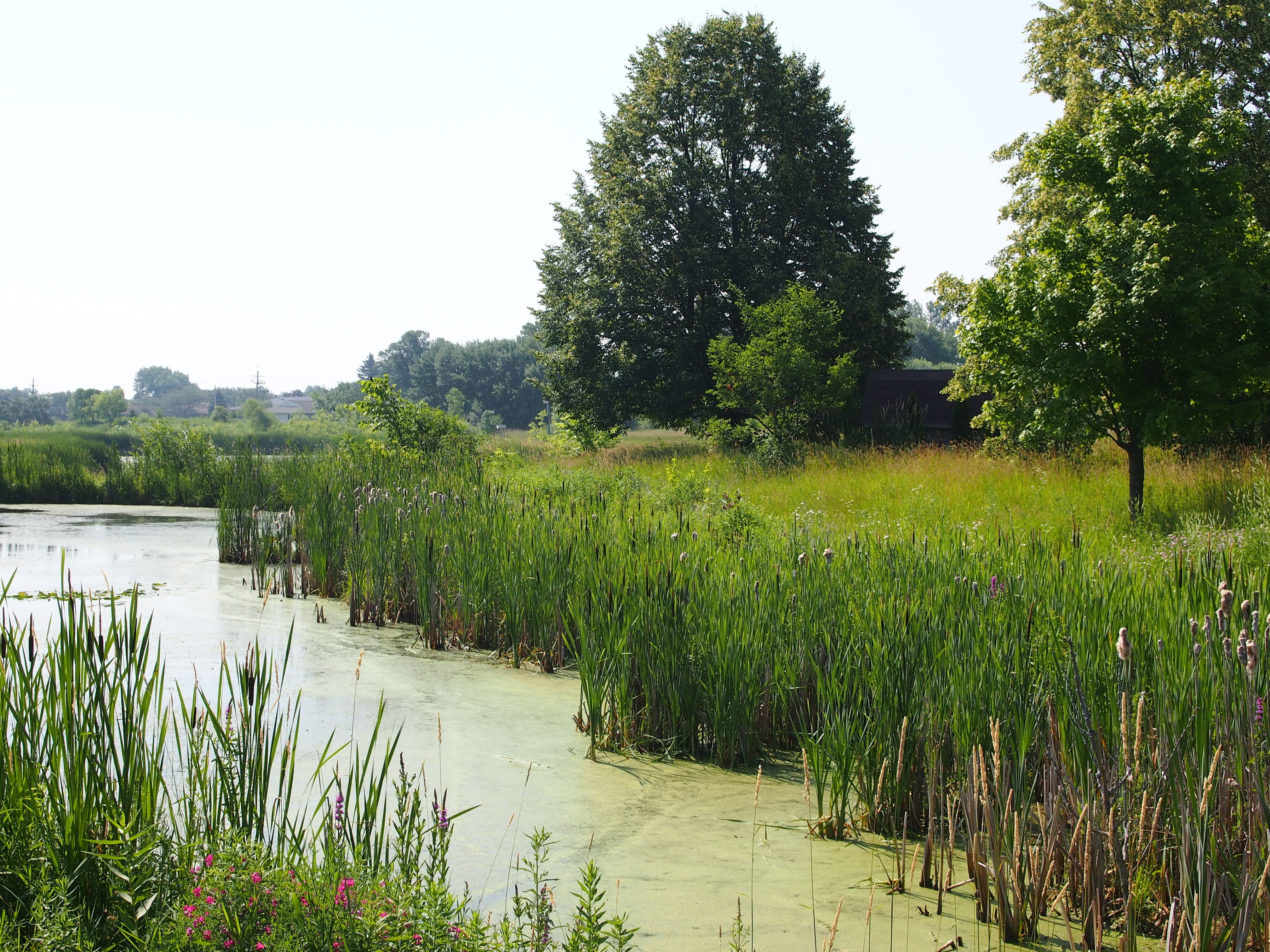
The gardens are either part of the large and mostly rec-oriented Appleton Memorial Park, or right next to that park, with no visible border. Turns out that the gardens also include wilder sections. Frame your shot just right and it’s a little hard to imagine that about 360,000 people live in the surrounding metro area.

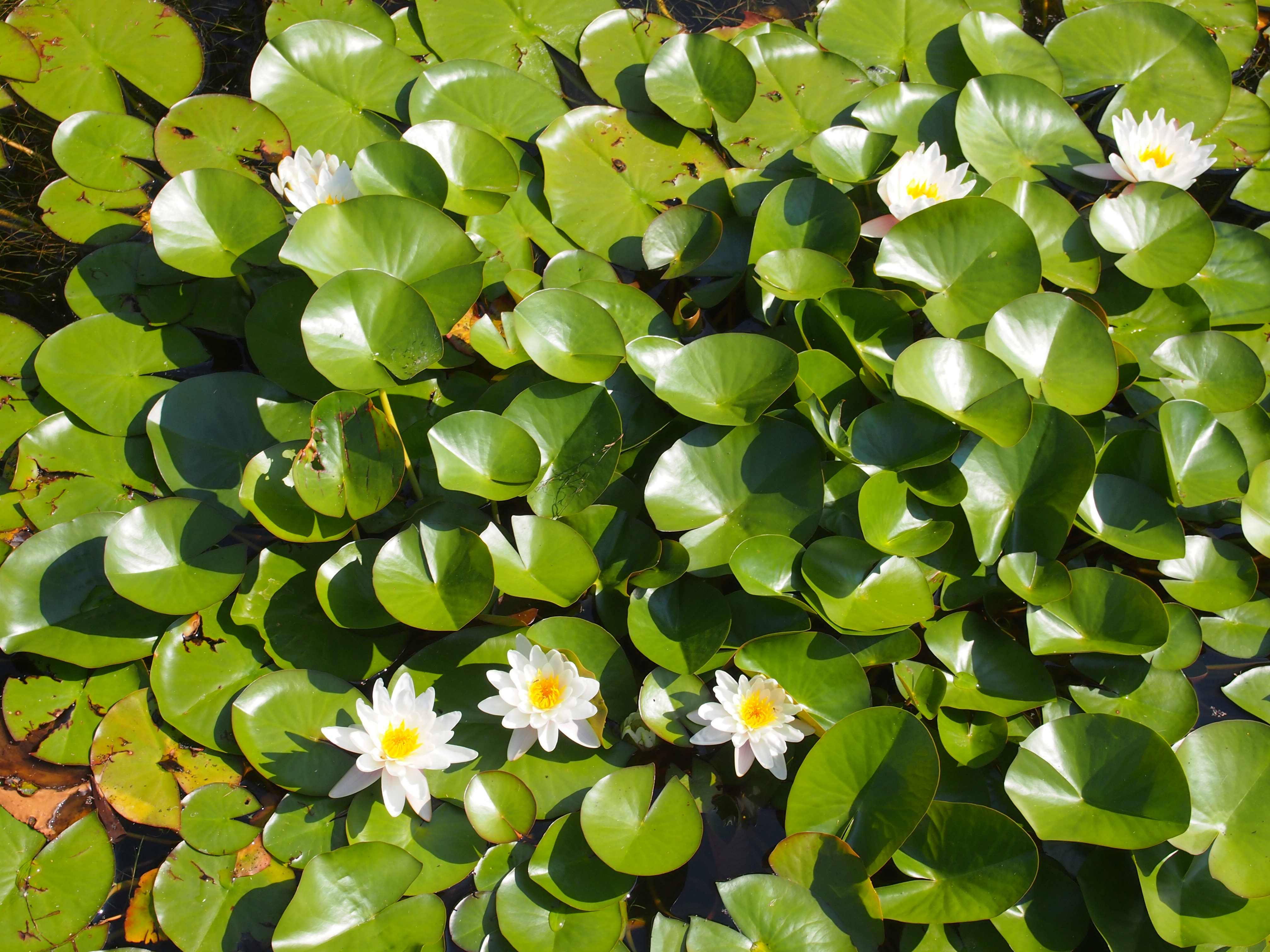
Look carefully, though, and there’s a house and a telephone pole in the distance. The gardens’ water features, some of them, luxuriated in lily pads.

The gardens also included a plant I’d never heard of – though there are many of those – called Lamb’s Ear (Stachys byzantina), which is native to Turkey and Iran. It’s an incredibly smooth plant, much like felt.

A Short Visit to Brussels

Southern Door County, the part below the Sturgeon Bay Ship Canal, isn’t the Door of tourist lore. But we discovered one of its charms all the same. Wisconsin 57 is the main road from the city of Green Bay to the town of Sturgeon Bay, and consulting the invaluable guidebook Moon Wisconsin, I noticed a town called Brussels just off the highway. “Brussels and surrounding towns… constitute the country’s largest Belgian-American settlement,” Moon asserts. “The architecture of the region is so well preserved that 100 buildings make up Wisconsin’s first rural National Historic Landmark.”

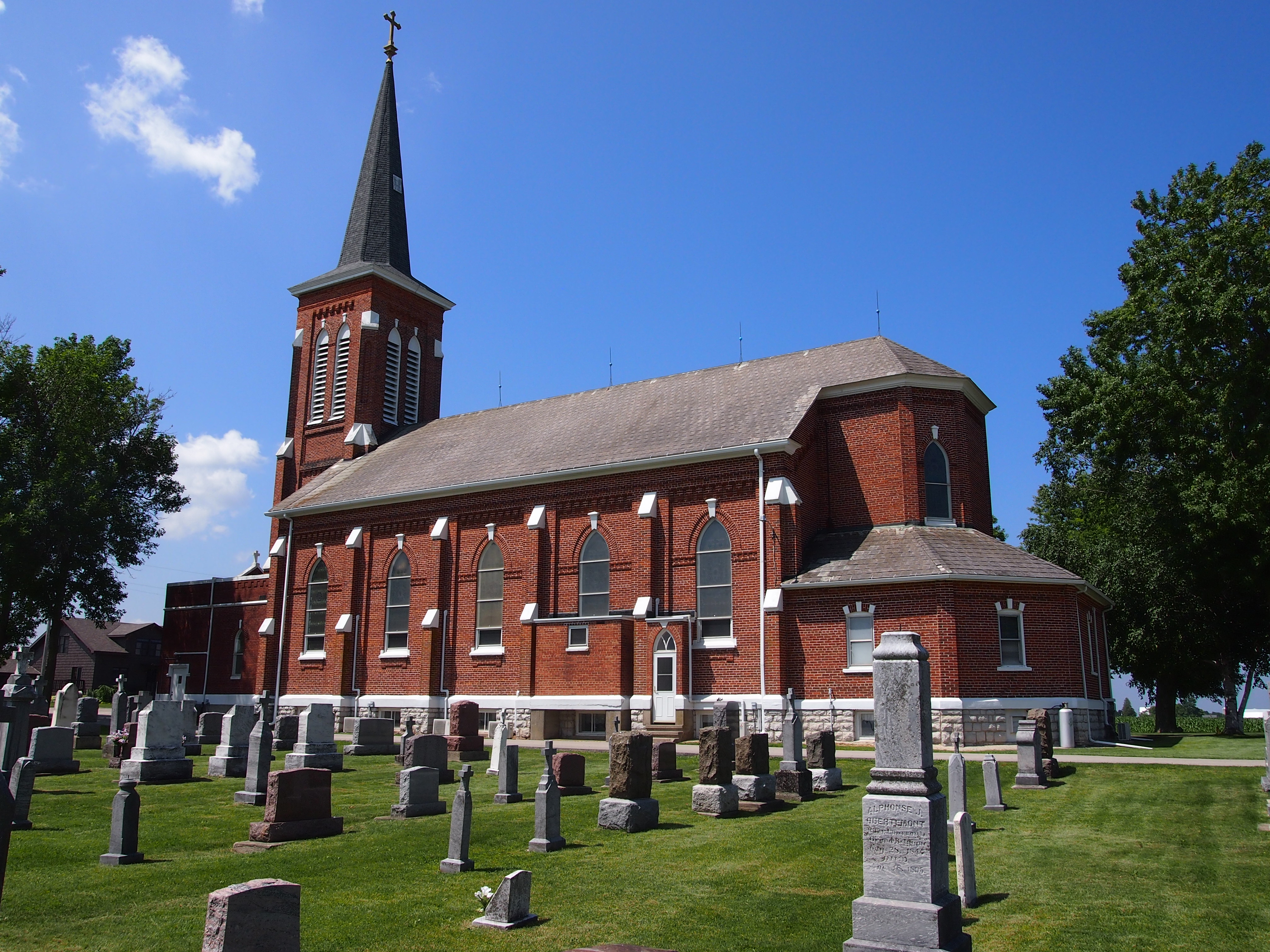
I had to take a look at that. We headed from 57 up County Highway C, and from that vantage, I have to say, it’s easy to miss most of those historic structures. Until you get to the junction of Highway C and Cemetery Road, that is, where you’ll find the St. Francis and St. Mary Parish Church. The setting is distinctly rural, complete with the odor of cow manure.

ST FRANCIS CHURCH is carved over the main entrance, but I understand that another congregation, St. Mary’s, joined St. Francis at one time. Not surprising, considering the way rural populations have dwindled in recent decades. My family thought I was stopping to see the adjacent cemetery, which looked interesting enough, but I really wanted to see whether the church was open. To my surprise, it was. I had to pry everyone else out of the car to come see the interior, which has some nice stained glass.

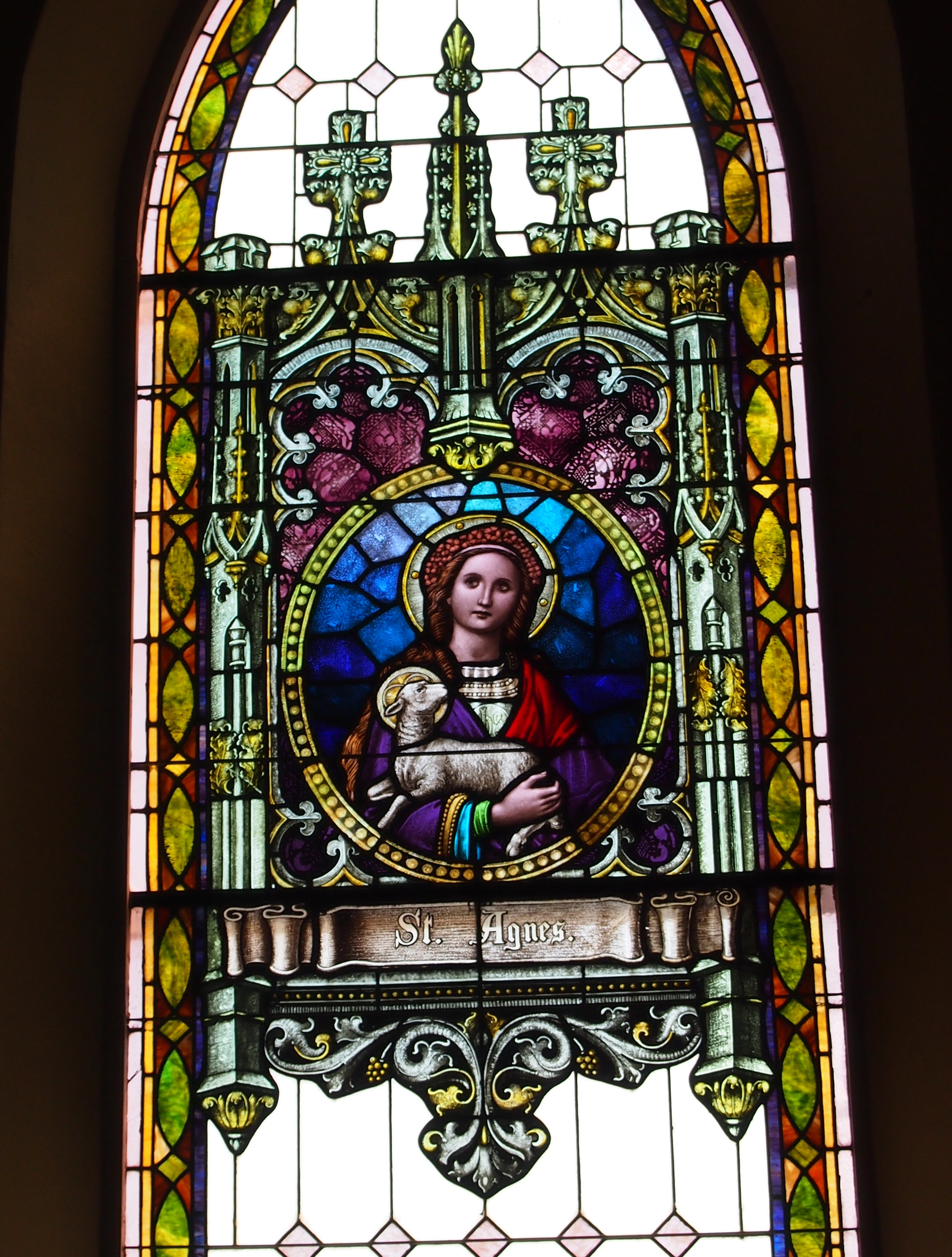
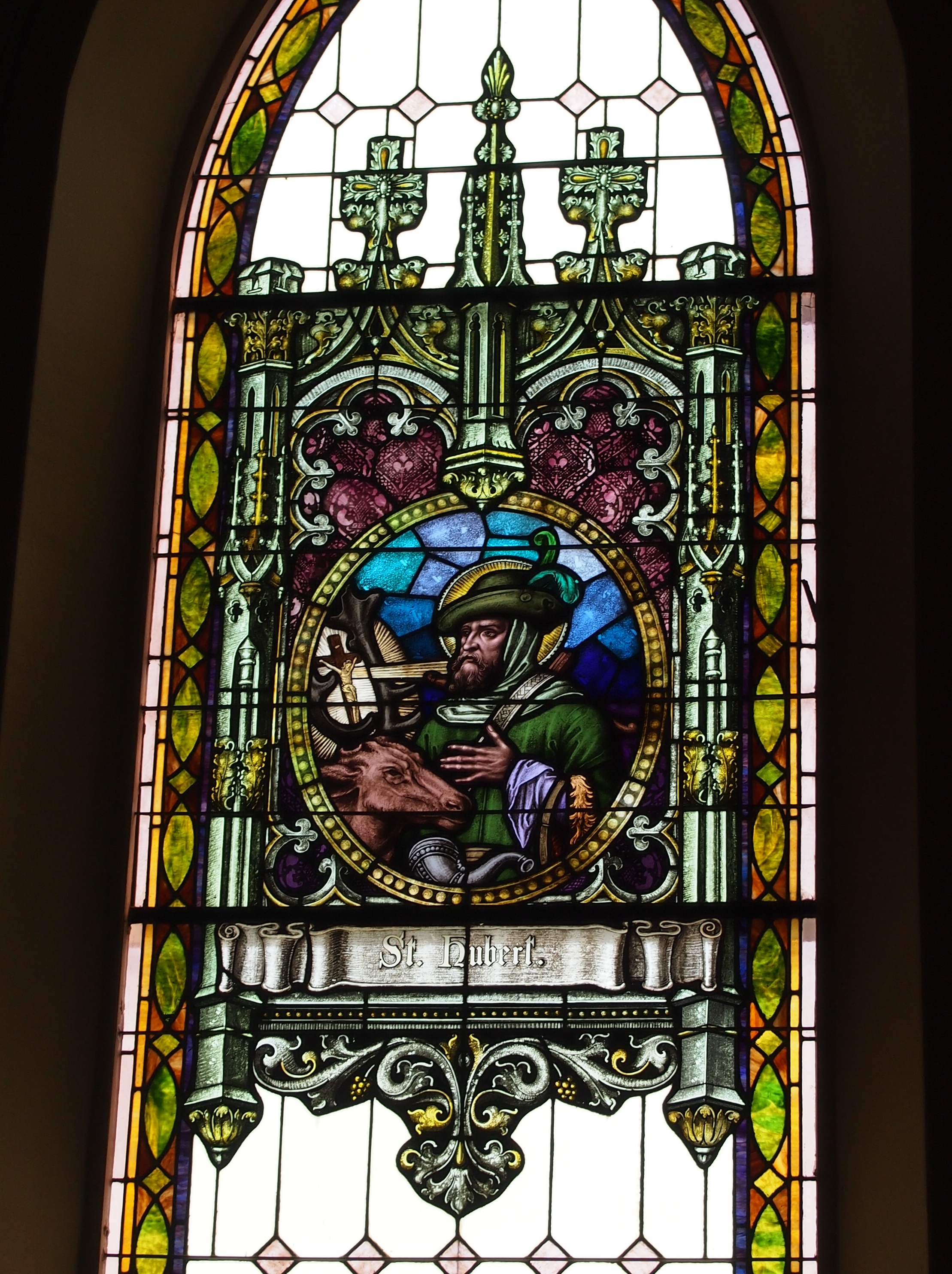
One side was well-lit by the sun, so I took some pics of saints. Because who doesn’t like stained-glass saints? Such as Agnes, patron of chastity, gardeners (?), girls, engaged couples, rape victims, and virgins.

Or Hubert, patron of hunters, mathematicians, opticians, and metalworkers.

I also discovered, on further inspection, that the Francis of the church name is Francis Xavier, missionary to Asia, though why the Belgians who built the church chose him, I couldn’t say.

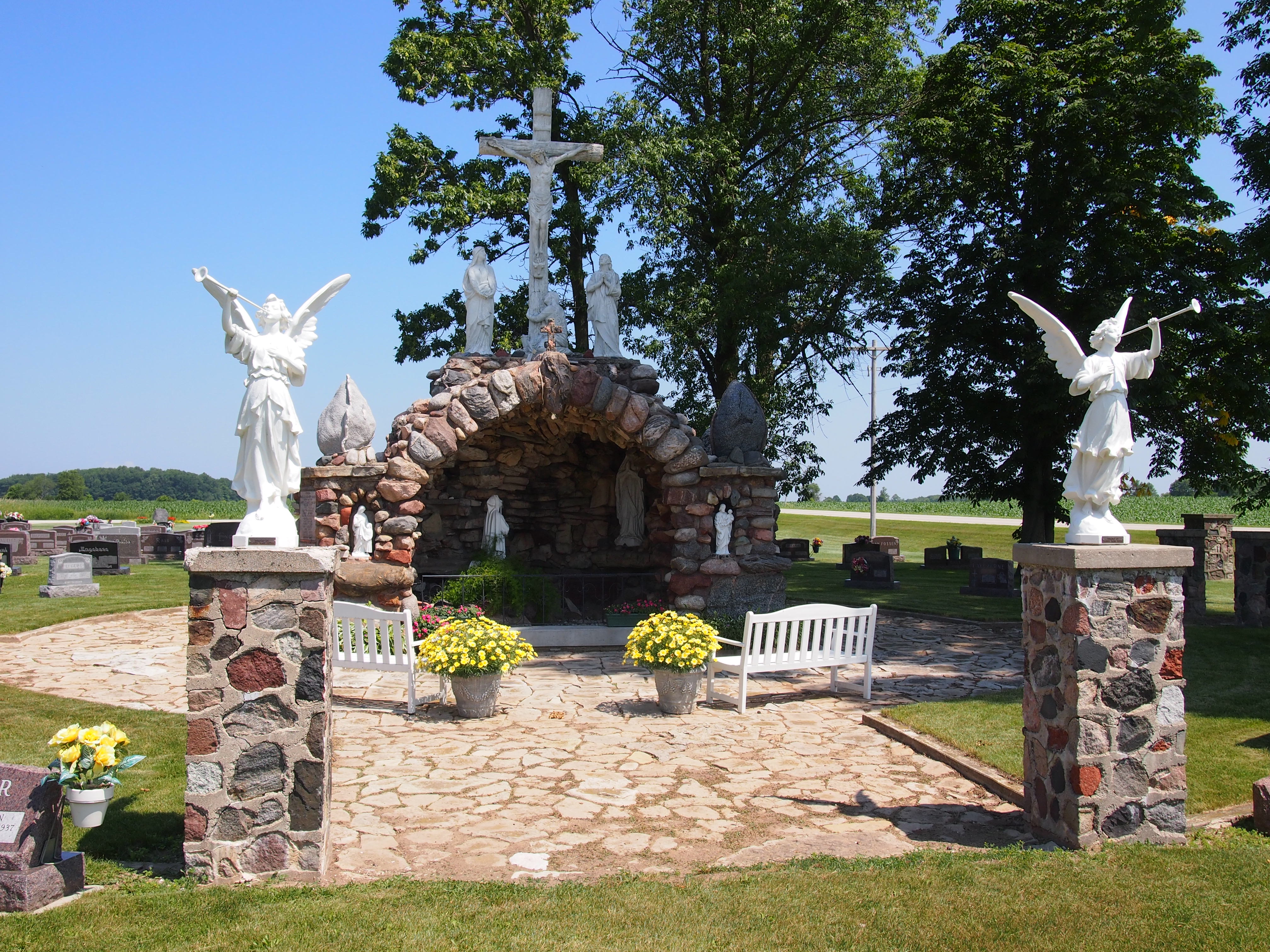
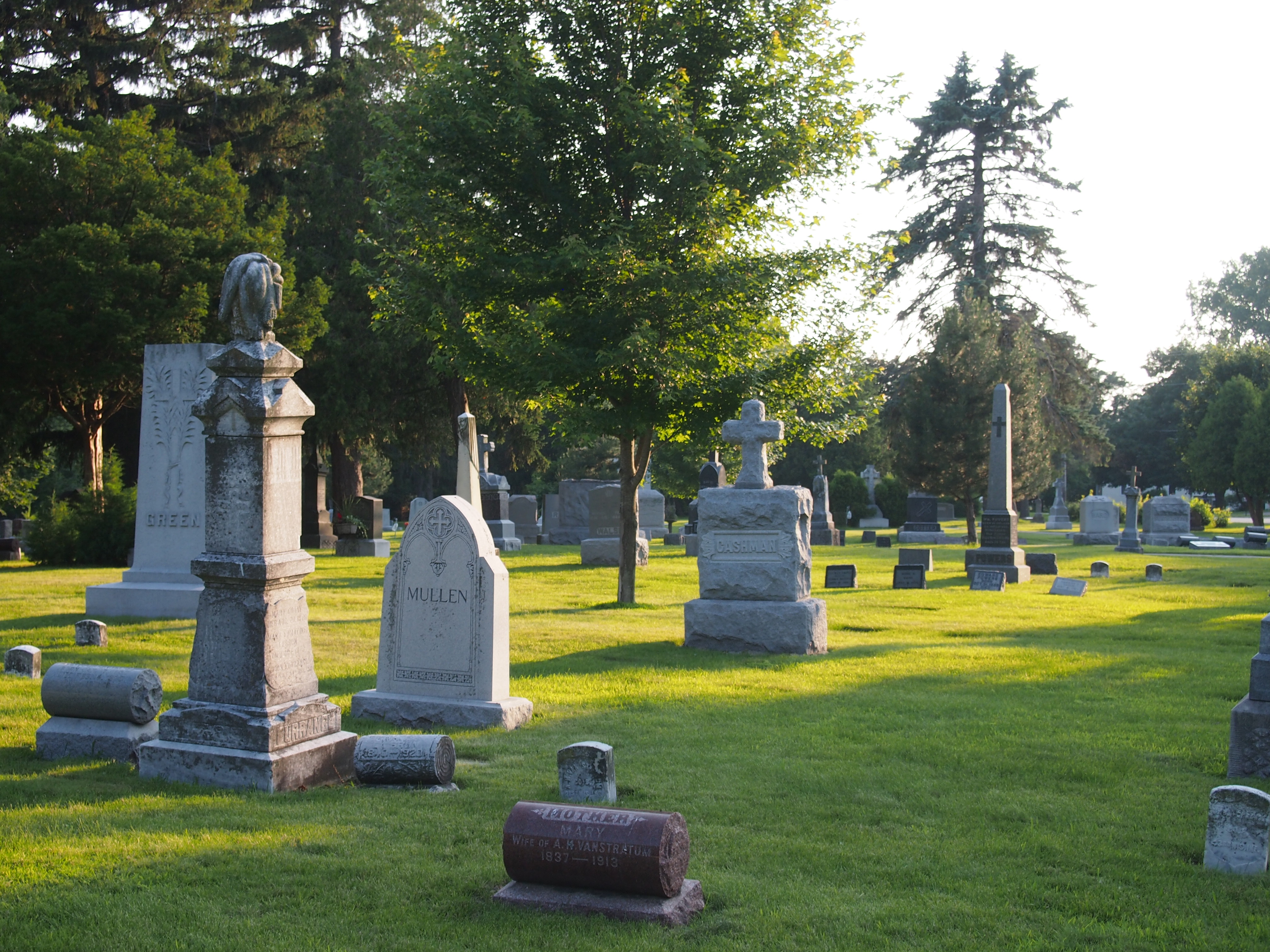
Everyone was waiting for me in the car as I looked around the cemetery, so I didn’t have long. Besides gravestones, it also featured a small grotto.

The light wasn’t quite right, but I say when you run across a grotto, take a picture if you can.

Return to Cana

Leaving Sturgeon Bay, we headed up the Green Bay side of the peninsula on County Highway B, which later merges into County G and takes you into Egg Harbor. It’s a pleasant, two-lane highway, with bayside property on one side, mostly waterfront houses, and less-developed land – sometimes rising bluffs – on the other. All of it was lush. It’s been a rainy year in Wisconsin, too. I was expecting more traffic, this being the high season in Door, but most of the time no one was visible ahead or behind.

Until we got to Egg Harbor, that is. It might be quaint not to have any streetlights in your town, but Egg Harbor needs one at the juncture of County G and Wisconsin 42, the main road through town. The town seemed to be even more touristed than Sturgeon Bay, but with less space to put people. I asked if anyone wanted to get out and look around, but no one did, citing the early-afternoon heat.

We pressed on across the peninsula, via County Highway E, which passes mostly through farmland. The road also comes within sight of Kangaroo Lake, the peninsula’s largest inland lake. Kangaroo? I wondered. That’s the kind of name that makes me wonder. Maybe one of the pioneers of Door County imported kangaroos to see if they could be raised for meat. That failed, but some escaped, and their descendents live around the lake. They’re wily and hard to spot, in case you were wondering.
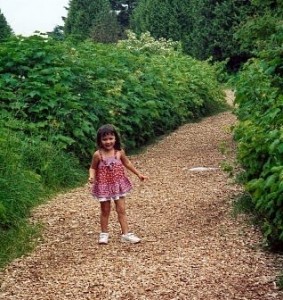
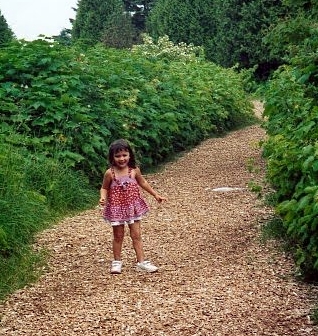
On the Lake Michigan side of the peninsula, we made a return visit to the Cana Island lighthouse. Most of us were back, anyway. Ann didn’t exist the last time we were there, almost exactly 12 years ago. Lilly of course didn’t remember being there, but in 2001, I took her picture wandering down the path to the lighthouse.
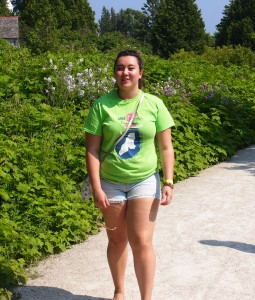
So I decided to do the same this time around, in roughly the same place along the path leading to the light. As I occasionally tell people I meet with small children, if you keep feeding them, they get bigger.

The grounds and the light are pretty much as I remember them. In his remarkable web site specializing on lighthouses of the western Great Lakes, Terry Pepper writes of the lighthouse: “Cana Island is somewhat a misnomer, since it is only an island when the lake levels are high. The majority of the time, there is an exposed rocky sinew of land which connects to the mainland.

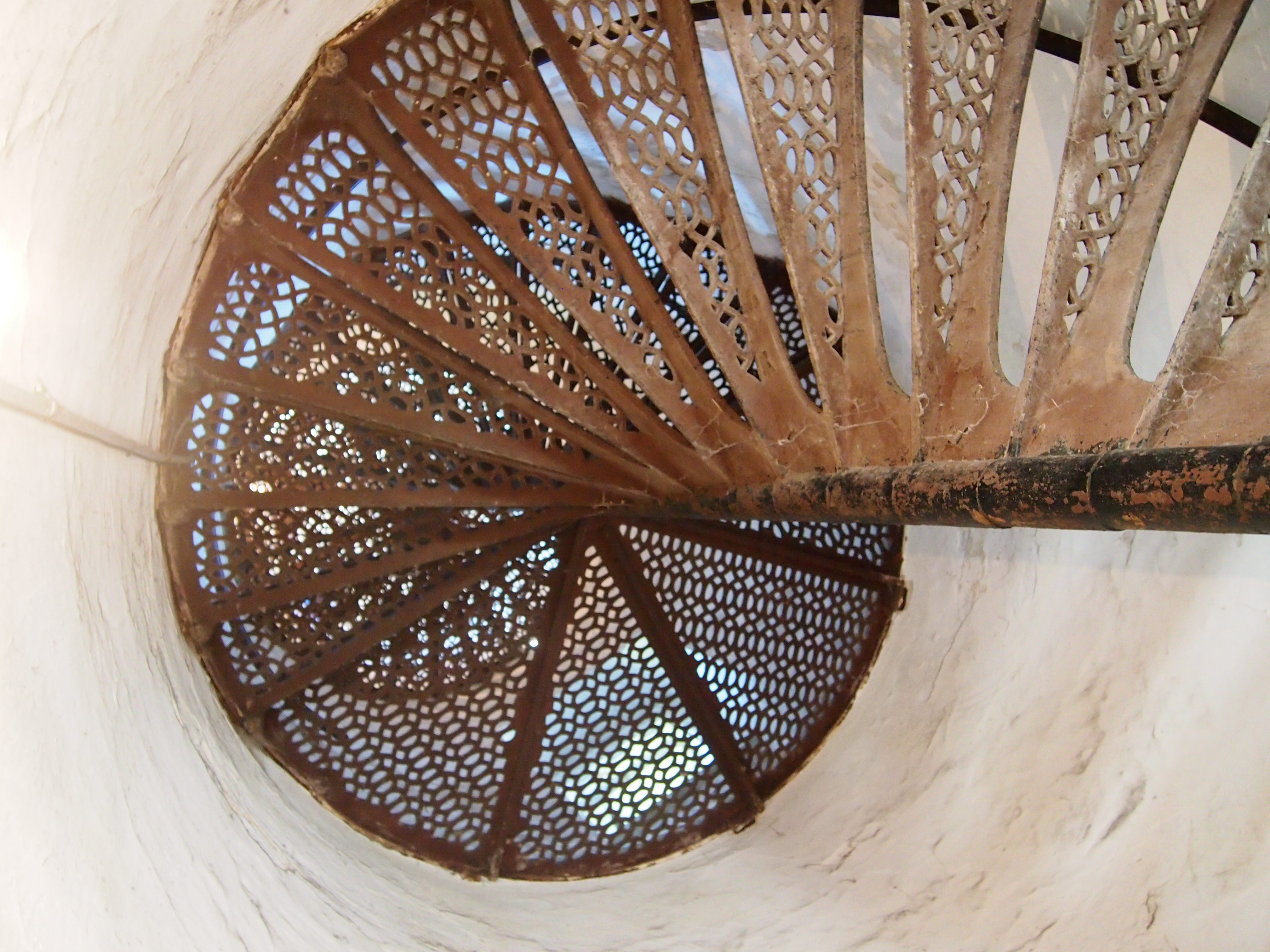
“Congress appropriated funds for construction the spring of 1869 and a crew immediately undertook the task of clearing a three-acre station site. Leveling a rock foundation, a buff-colored cream city brick tower began to take shape. Eighteen feet in diameter at the base, the tower rose 65 feet, gently tapering to a diameter of 16 feet at its uppermost… Spiraling within the tower is a gracefully spiraling set of cast iron stairs, with 102 stairs.

“The cast-iron lantern atop the tower was likely prefabricated at the Milwaukee Lighthouse Depot and transported to the site by Lighthouse tender. Equipped with a Third Order Fresnel lens with the focal center of the lens situated approximately 75 feet above the tower bottom, the lens boasted a focal plane of 82 feet above mean lake level.” (Visible for 16 miles, according to the docent, and lighting the waters near Door to this day.)

Ann wanted to climb to the top of the tower, which was open by extra admission. The top was accessible via the aforementioned 102 steps.
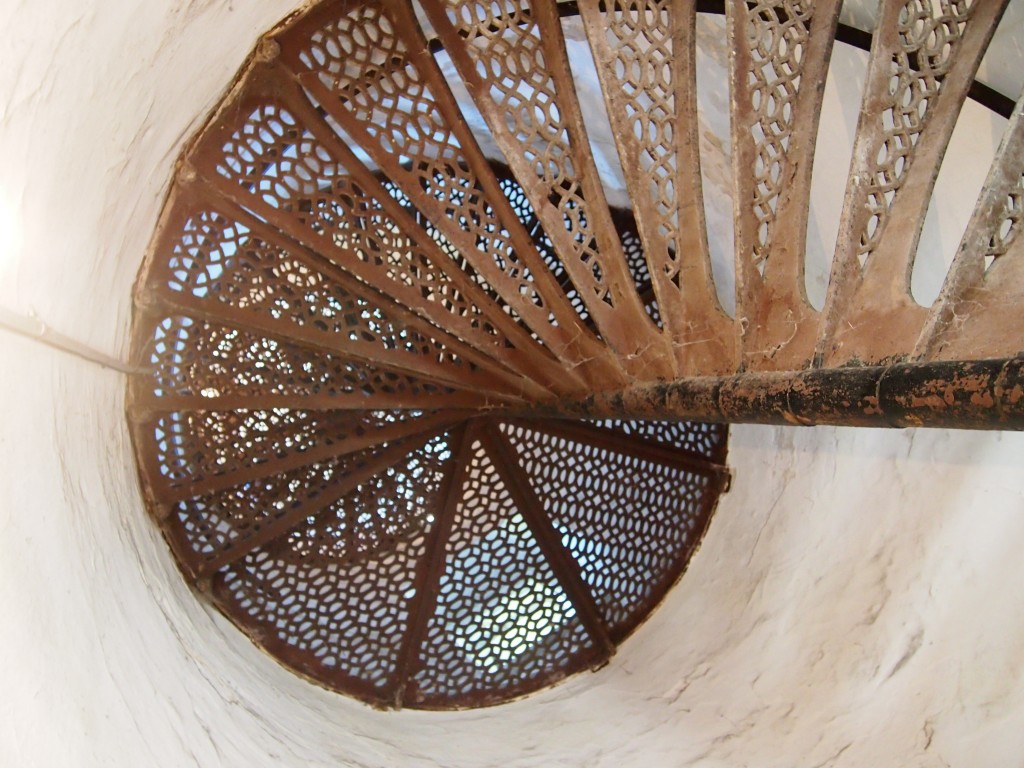
Her mother and sister didn’t want to go up, so I went with her. Before we went, and even after we’d climbed to the top, I was certain that we hadn’t gone up last time, probably because it was closed. But now I’m not so sure. You’d think I’d remember climbing a spiral of narrow cast-iron steps and taking in a sweeping view of the greens of the peninsula and the blues of Lake Michigan, with a constant wind blowing in my face, but maybe not. Memory’s a trickster.
Sturgeon Bay Sturgeons

First stop in Door County on July 5: the town of Sturgeon Bay, county seat and tourist magnet during the summer.  Wisconsin 57 connects the city of Green Bay with the town, which straddles the Sturgeon Bay Ship Canal.

The canal, which started as a bit of Victorian engineering – it was completed in 1881 – means that ships out of the city of Green Bay don’t have to go all the way around the Door Peninsula to get to Milwaukee or Chicago. It also cuts Door County in two, making part of it a large island, though no one seems to think of it that way.

Sturgeon Bay was a fairly busy place on the day after the Fourth of July, but not so crowded that we couldn’t find a convenient parking space and, at about noon, a place to eat without waiting for a table. At the corner of Third and Louisiana streets is the Inn at Cedar Crossing, which I thought was a fanciful name for the restaurant where we had lunch, but it turns out there’s a bed and breakfast upstairs, and Third used to be called Cedar. Whatever the story, the place serves a satisfying lunch.

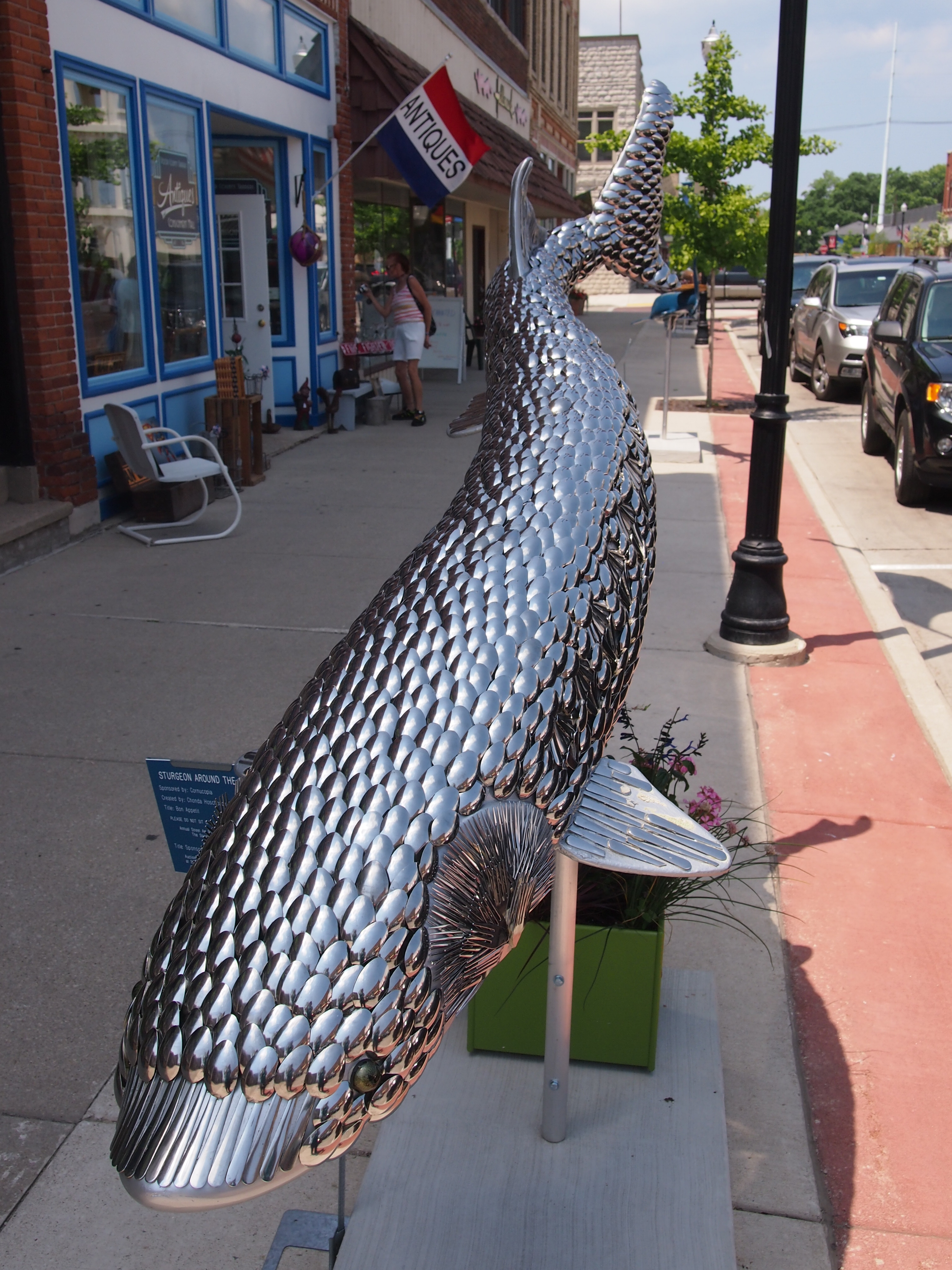
Third is one of the town’s main streets, featuring a mix of tourist businesses and everyday-need retailers. Also along the street are sturgeon statues. They’re part of “Sturgeon Around the Bay,” one of the many descendants of CowParade, which the city of Chicago helped popularize in 1999.

This particular one is called “Bon Appetit,” created by Chonda Hoschbach and Cori Rosen.  I looked at it for a minute before I realized it was made mostly of stainless-steel spoons, with some forks thrown in. According to the plaque that comes with the fish, the works will be auctioned on September 21, just as the tourist season is winding down. The beneficiary will be the Sturgeon Bay Visitor Center.

Looking for Tail-Gunner Joe

A funny thing happened to me yesterday, late in the afternoon, as I scoured through St. Mary’s Cemetery in Appleton, Wisconsin, looking for a particular tombstone. I wasn’t having any luck finding it. But I did enjoy the graveyard’s handsome grounds, which are near the Fox River.

On Independence Day, we’d set out for northeastern Wisconsin – to see Appleton and the other Fox River cities, plus take a jaunt up to Door County.  I enjoyed parts of Appleton last year without my family, and I thought they’d like some of the places I’d been. As for Door County, we paid a visit in 2001, but it was too short and we’d long wanted to go again. This visit was also too short – I figure we’d need a week to do Door right.

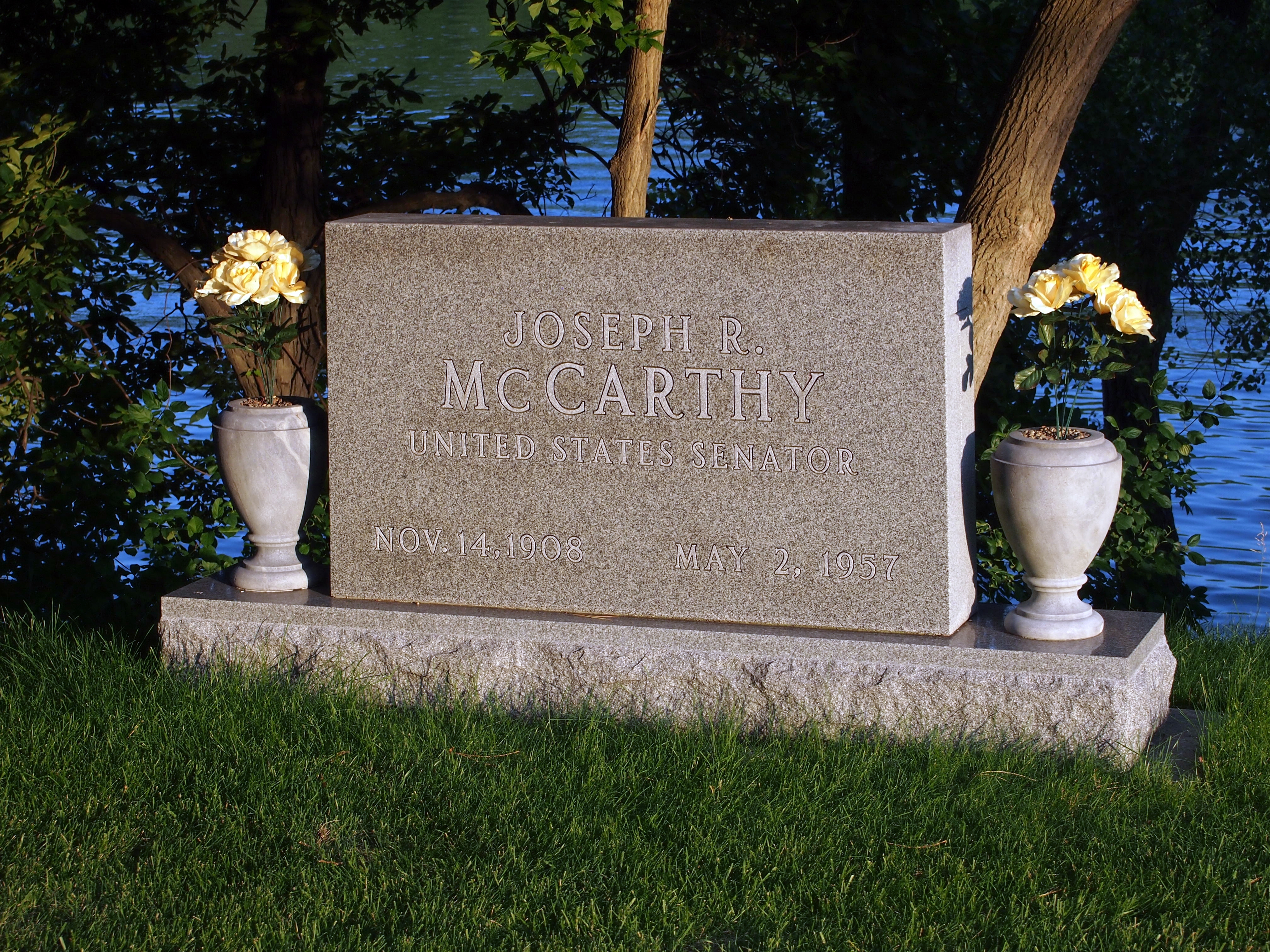
Yesterday was our last day, and I headed out for St. Mary’s Cemetery by myself, since no one else cares to visit cemeteries. Specifically, I wanted to see the place’s most famous – infamous – resident, Sen. Joseph McCarthy. I couldn’t find him for a while. Find-a-Grave wasn’t exact enough. There were other McCarthys – even other Joseph McCarthys, since the cemetery is well populated with Irish names – but the Senator was elusive.

Then I spotted a man and his small daughter riding through the cemetery on something like one of those drivable carts you see at grocery stores. Eventually, they came fairly close to me, and I had to ask, since we were the only (living) people in the cemetery, and no guide signs or other clues pointed the way.

“Excuse me, do you know where Joseph McCarthy is buried? You know, the Senator.” Even in Appleton – he was from nearby Grand Chute – I can’t assume anything.

The man, about 10 years younger than me and with close-cropped reddish hair, looked at me for a moment. “We’re not supposed to tell people that,” he said. “He was my great-uncle.”

“Oh.”

“But I will tell you he’s at one of the corners, near the river.” And then they started on their way again. I guess he decided I didn’t want to harm the memorial, which of course was true. I just wanted a picture. Soon I found the stone and took one.

What are the odds of running into a grand-nephew of Joe McCarthy? (Assuming he wasn’t kidding about that.) I checked, and McCarthy was from a family of seven children, so in Appleton, the odds wouldn’t be that bad.

Gettysburg

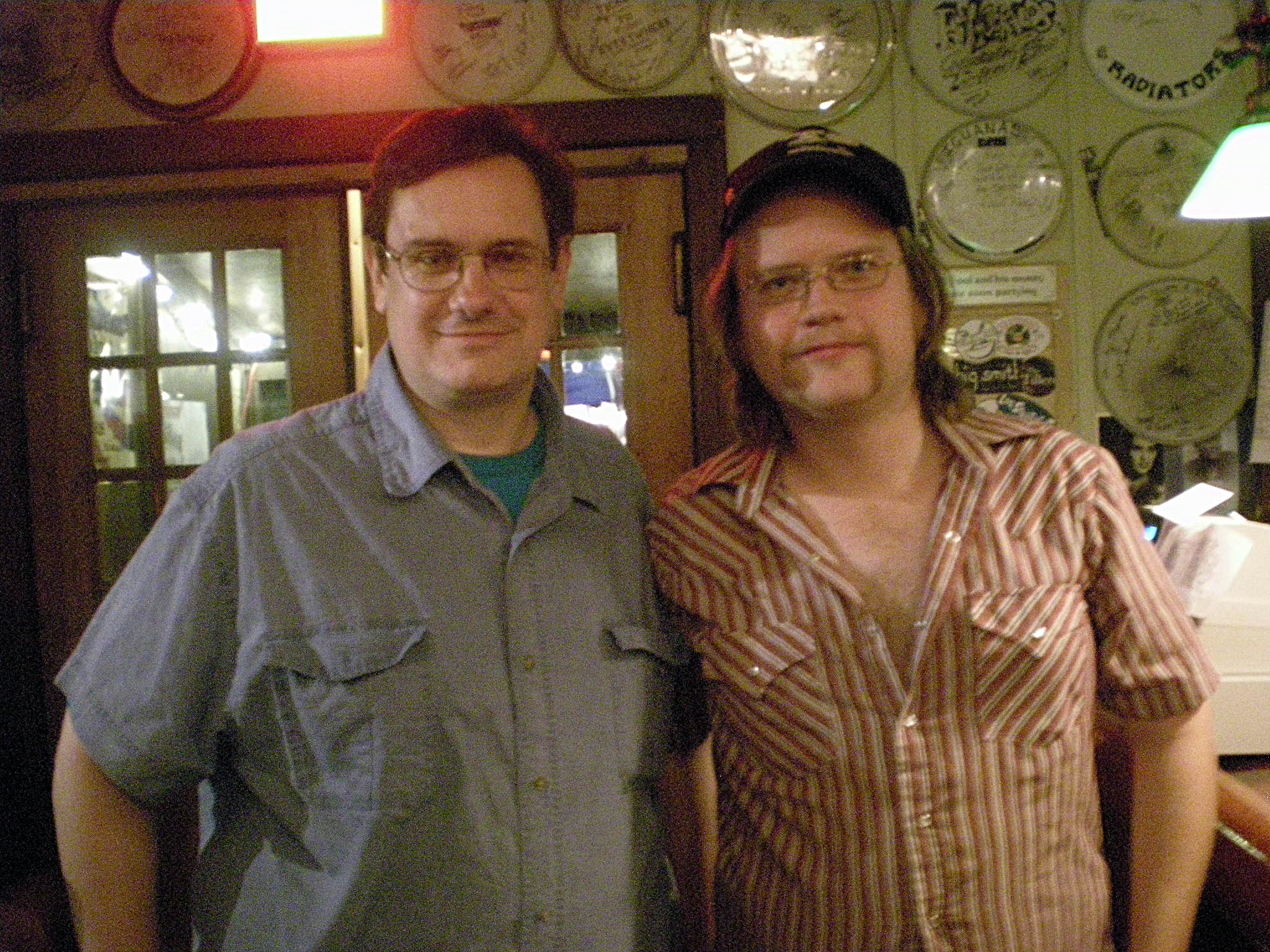
Got a postcard from my nephew Dees last week, the nephew who’s the drummer for Sons of Fathers. It describes the 12th Bonnaroo Music & Arts Festival earlier this month, in which the band participated. The photo on the right depicts the only known first-name Deeses of the world, together about this time last year, when Sons of Fathers played at FitzGerald’s in Berwyn, Ill., and I went out to see them. He’s the hale fellow with facial hair.

A little further in the past – 1991 – I found myself driving from Boston to Chicago during this time of year, and I stopped at Gettysburg National Military Park. I missed the 128th anniversary of the battle by a few days, and presumably whatever commemoration events they had. I thought of that when I was reminded by the newspaper today that the 150th anniversary of the battle is upon us, beginning tomorrow, of course.

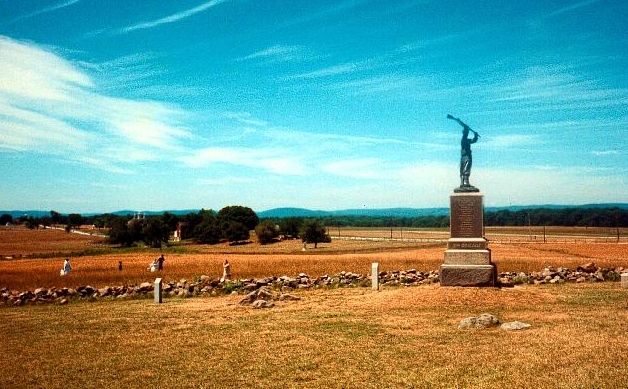
There were some other visitors when I was there, but not too many.  It was a hot day, fittingly, since it was a high-summer battle, which must have added to the misery. This image captures the summer conditions of the site pretty well, besides the 72nd Pennsylvania Infantry Monument, which has its own intricate history, and which was knocked over by high winds only last week.

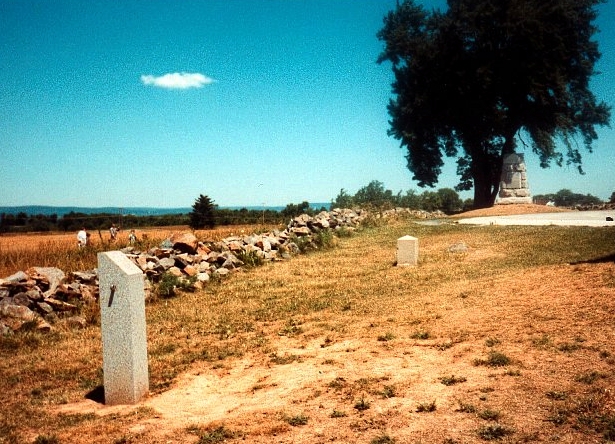
Here’s another view of the Angle – the stone wall that Pickett’s men managed to reach (Lewis Addison Armistead’s men, but let’s not be too pedantic).

I haven’t seen one of these quarters yet, though I’ve been noticing a number of national park quarters in change lately.

Funerary Art

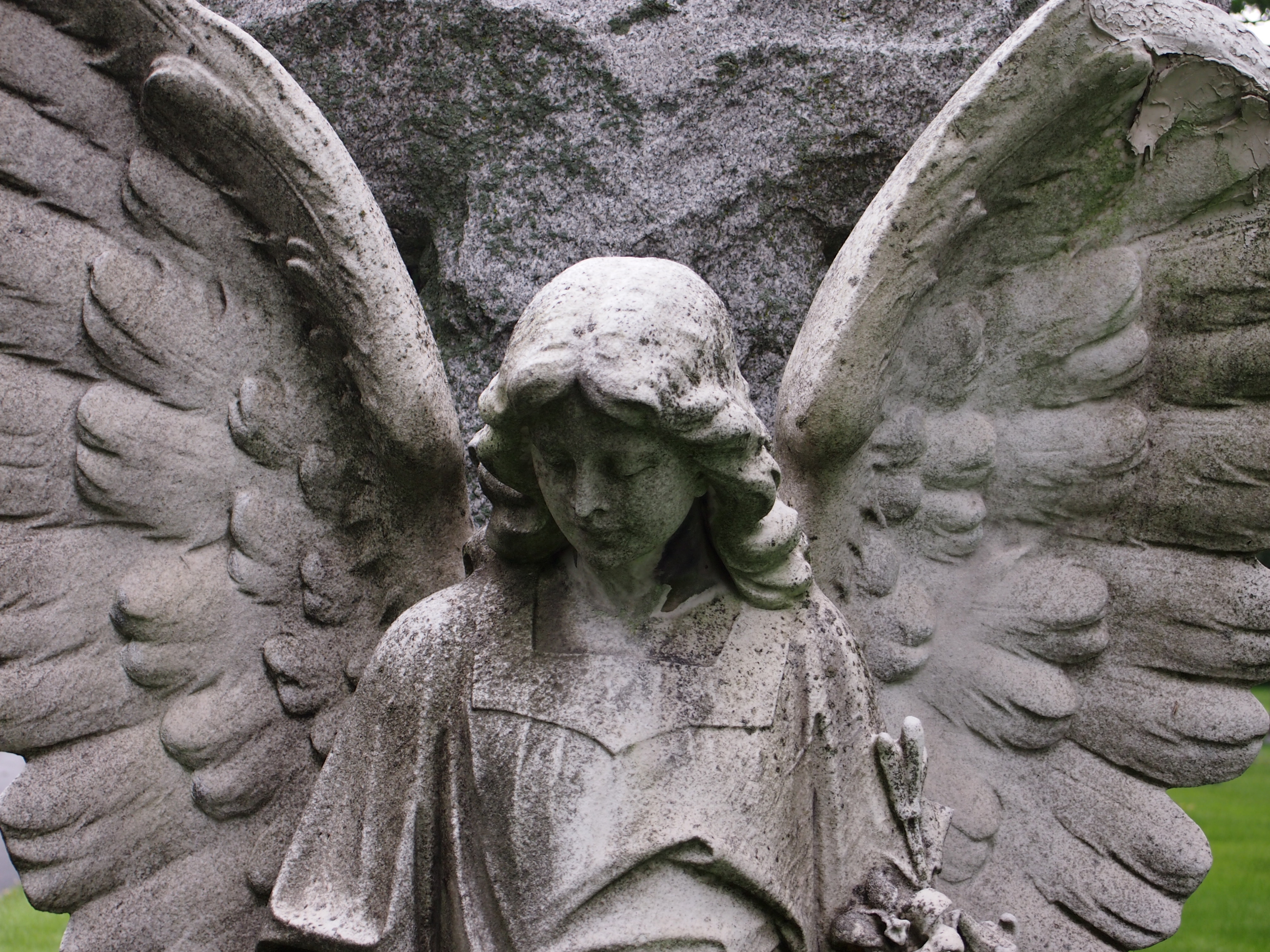
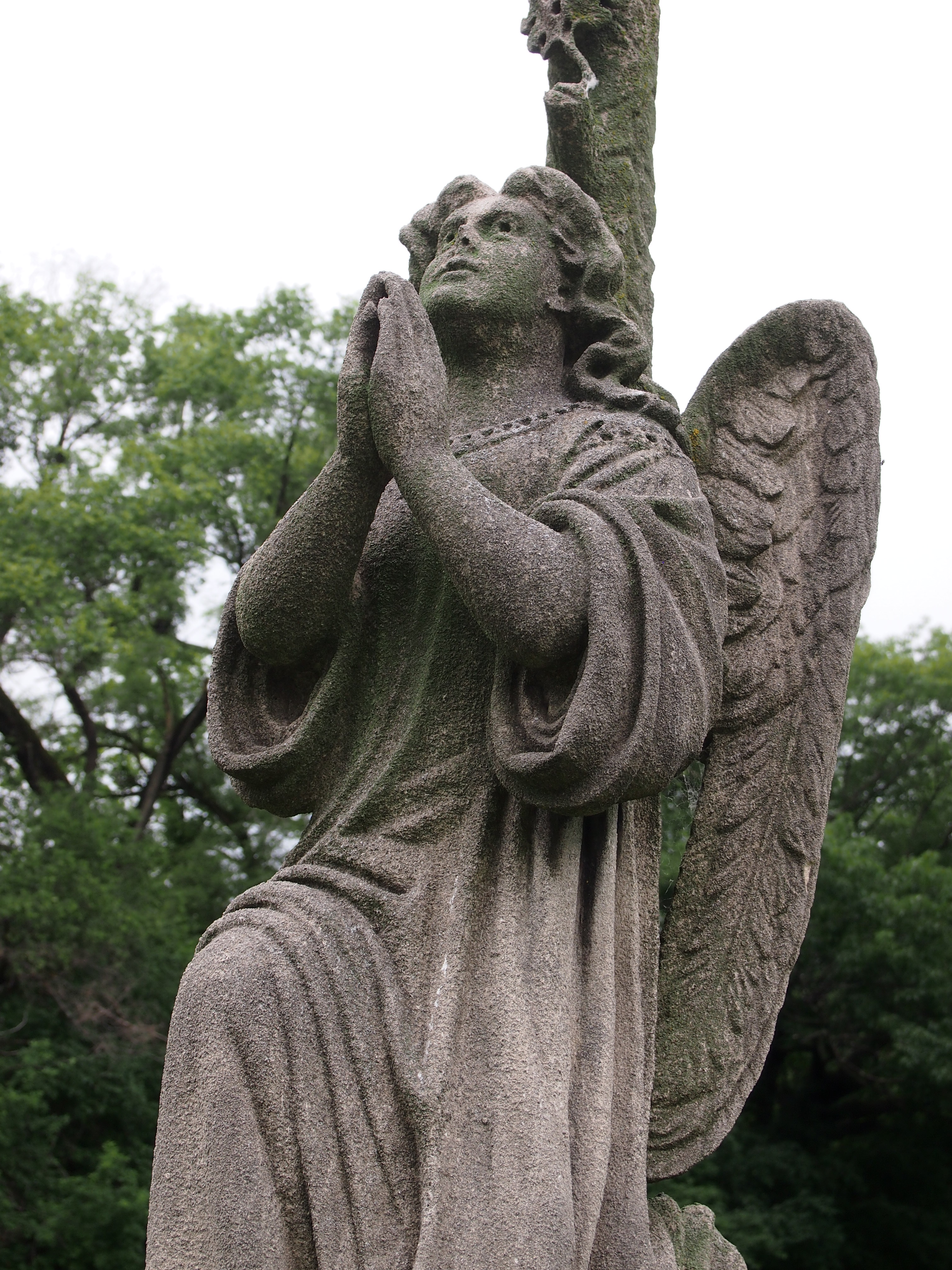
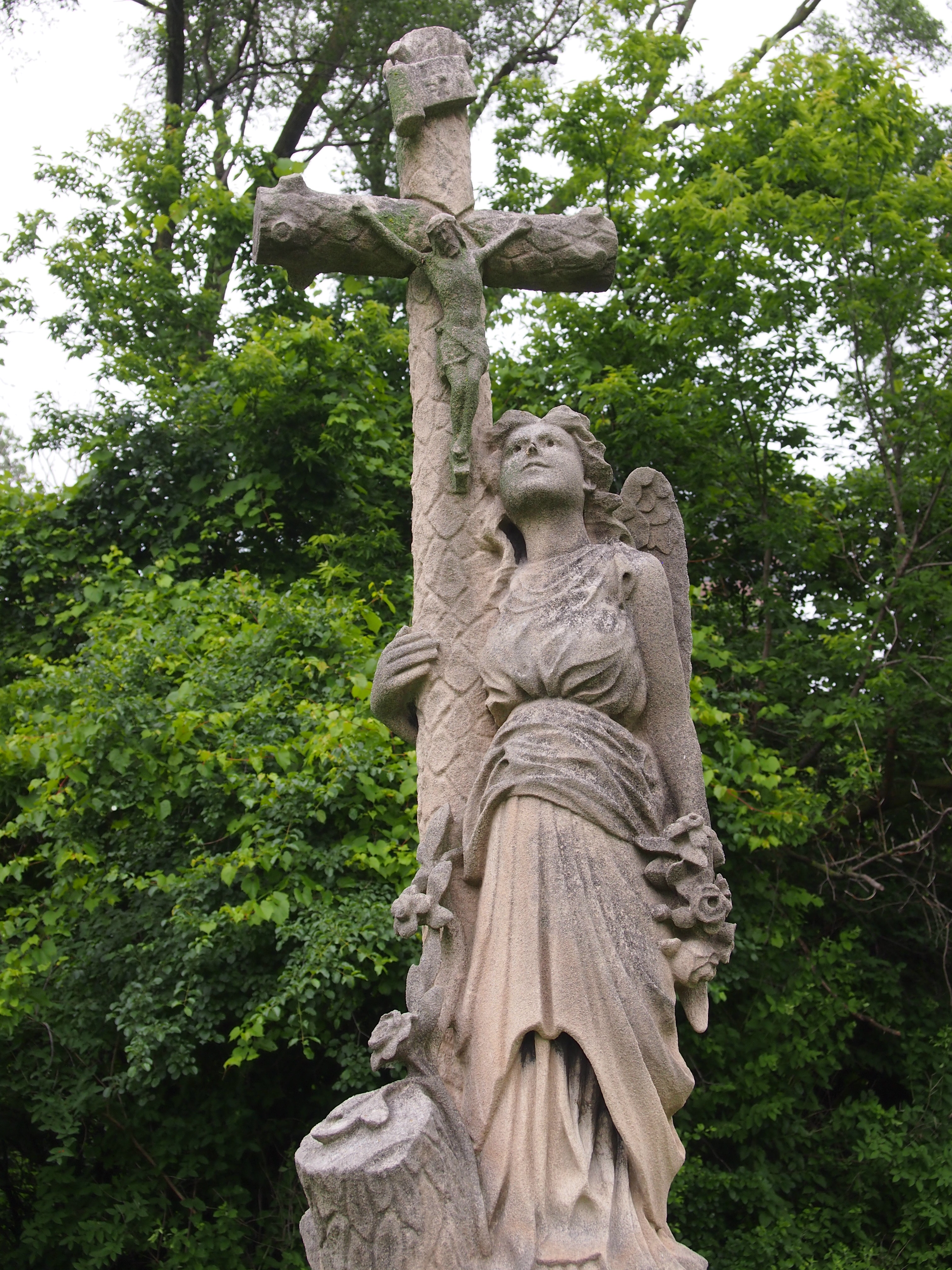
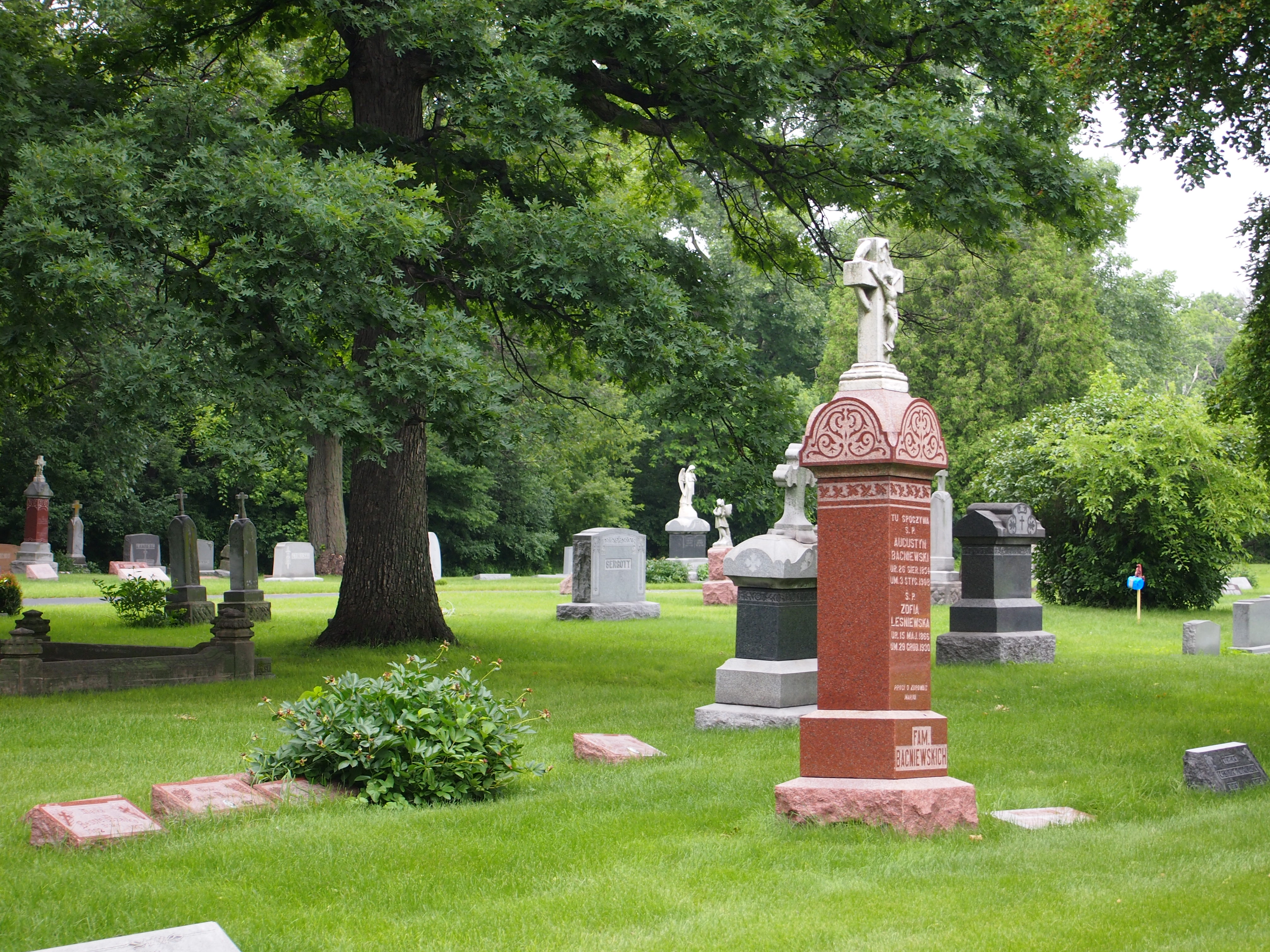
The All Saints Cathedral Polish National Catholic Church Cemetery near O’Hare doesn’t have the most elaborate examples of funerary art that I’ve ever seen, but there are some nice ones there.

Most a bit worn by the elements, and darkened by air pollution.

But they’re still standing in the places that family members, themselves probably long gone now, put them.

Most of the names on the stones are Polish, as you’d expect, but a sprinkling of non-Poles reside at the cemetery, too. Because it’s a cemetery, there are clearly sad stories beneath the stones. Such as that of Doris Jean Putynkowski, whose stone is simply marked 1925-1925. A family named Deal has a column indicating long lives for Robert (1920-2009) and Jean (1921-2008), but not so much for Jeffrey, whom I presume is their son: 1951-1999.

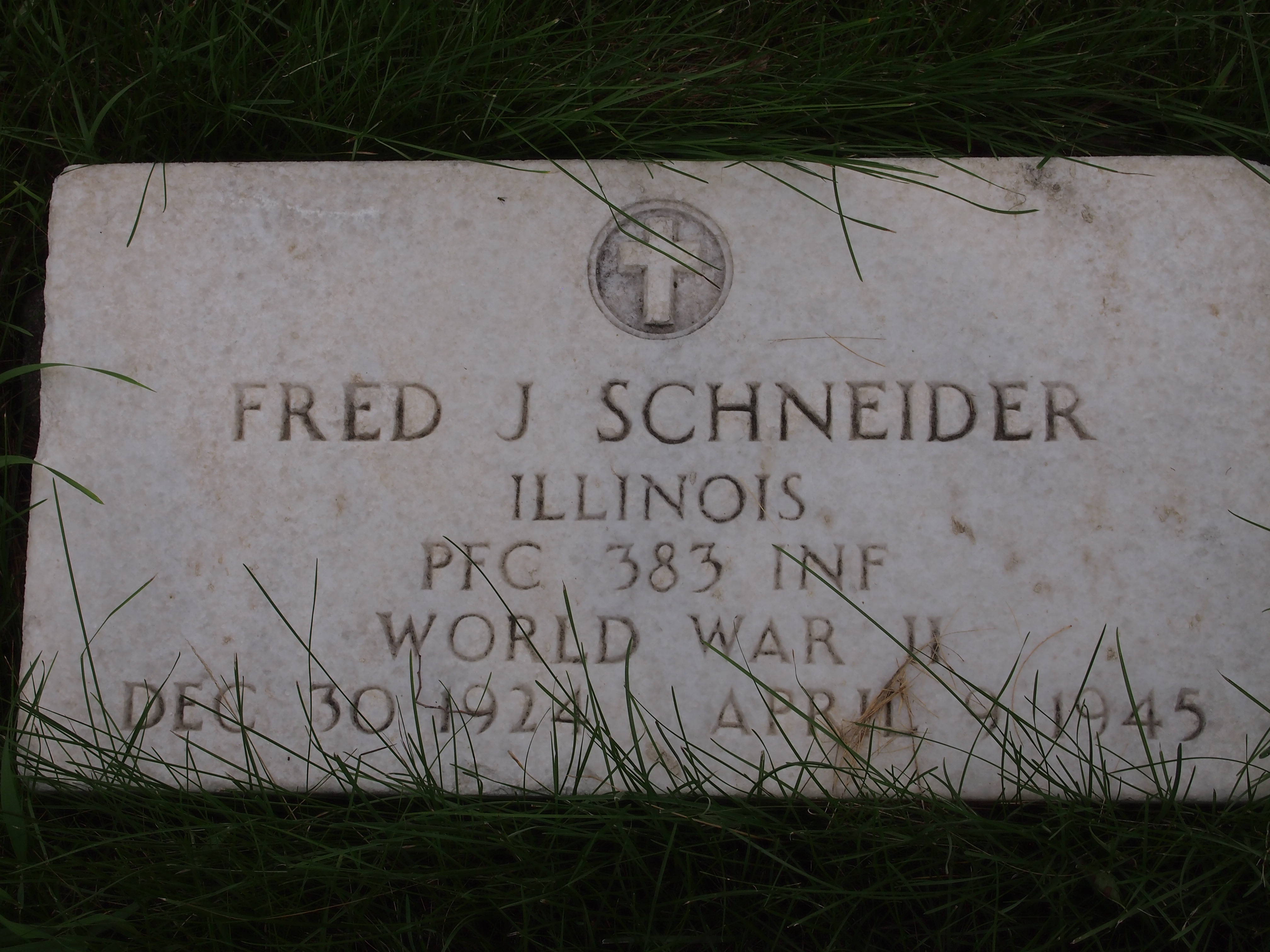
In contrast to the large funerary art, there were a handful of veterans’ stones, including this one.

It’s easy to look up in our time. The 383rd Infantry was part of the Okinawa campaign, so we can be sure that’s where PFC Schneider gave his last full measure of devotion.

All Saints Cathedral Polish National Catholic Church Cemetery

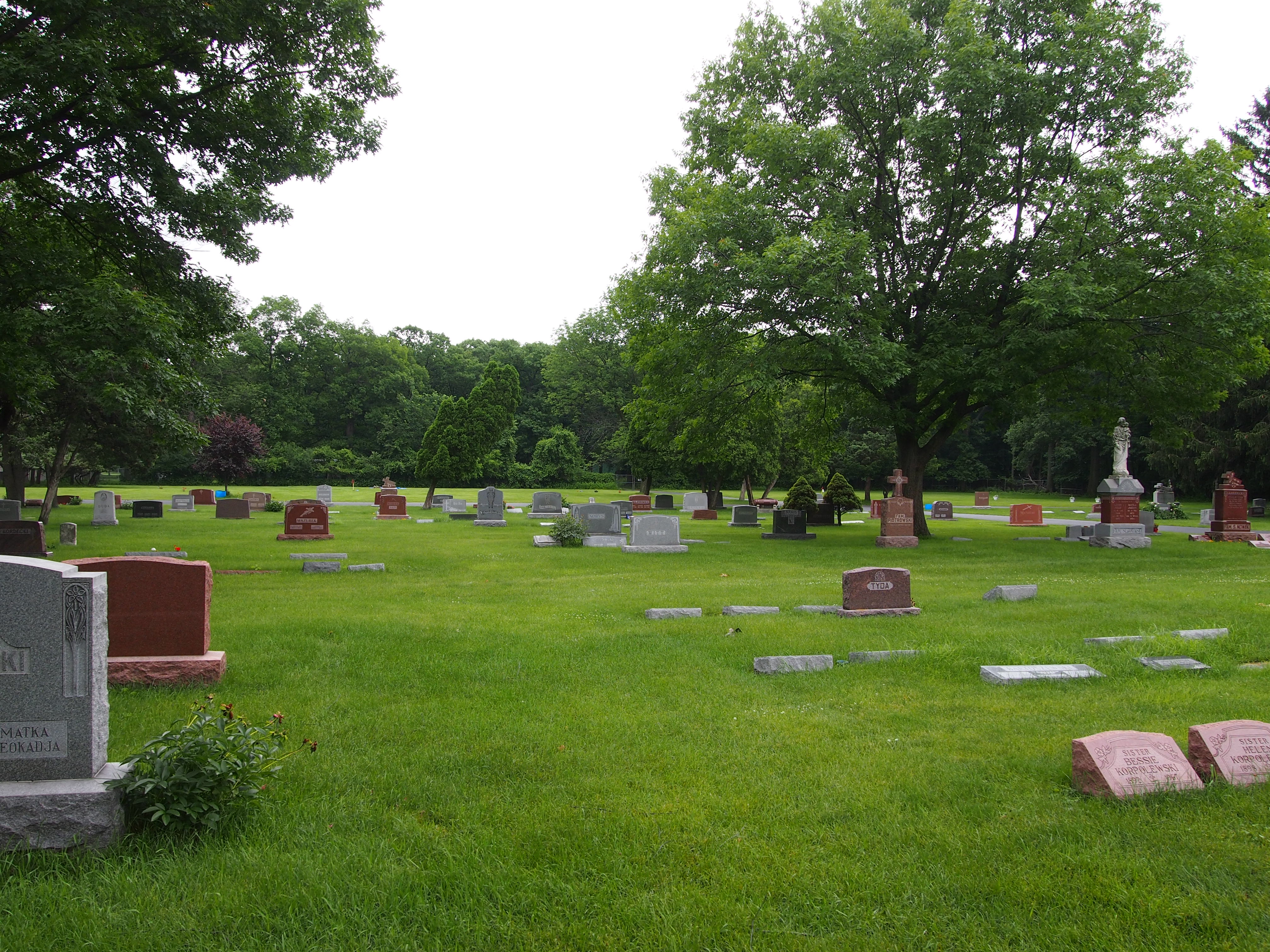
The Cathedral of All Saints of the Polish National Catholic Church happens to be on Higgins Road in extreme northwestern Chicago these days, though it was once deeper in the city. I happened to drive past the current site today, and decided to visit its cemetery, a patch of land behind the church, verdant and quiet in the late morning.

Or at least as quiet as a place can be tucked near the junction of the Tri-State Tollway (I-294) and I-90, and within two miles of the runways at O’Hare. In fact, activity is all around the area, at hotels, restaurants, bars, entertainment venues, a casino, a convention center, and more – the town of Rosemont, which is right next door, has all that.

The cemetery has trees and bushes and grass and flowers and stones. Except for a groundsman, I was the only living person there.


Goethe Institut, Lüneburg

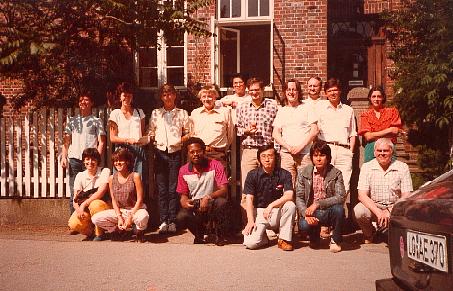
It’s the oddest thing: looking at this snapshot, taken 30 years ago this month, I can remember the name of only one person in the picture besides me, but I remember almost everyone’s nationality. Then again, the grundstufe 1 class at the Goethe Institut in Lüneburg, West Germany, in the summer of ’83 was a motley one, representing four continents and at least 10 countries. That must have made an impression on a lad traveling outside of his country for the first time.

I was traveling that summer with college friends Rich and Steve. It was their idea to study German in Germany, the better to read philosophy. My interest in 19th-century continental philosophers wasn’t as keen as theirs, but I thought spending five or so weeks in one place, taking classes in the morning and knocking around the rest of the time, would be a good idea. And so it was.

How they picked Lüneburg, I don’t remember, but it’s a fine Lower Saxony town near Hamburg. I ought to ask them sometime. They might not remember either. Rich and Steve knew some German already, so were in a higher class. I was in the beginner class, grundstufe 1. One day, the class went outside an lined up for a photo.

On the upper row, beginning on the left, are three Americans. The fellow on the farthest left was nicknamed Howdy Doody (by the other Americans) for his red hair, small stature, and childishness. Fourth on the left was Herr Witt, our teacher. A fitting name, since he was a lively, entertaining teacher. Next, and to the back, a Japanese fellow. Then me. Next to me, a Finn, who was something of a celebrity on Finnish children’s TV, if I remember right. I ought to remember his name, since he lived in the same building as I did, and we spoke fairly often, but I don’t. Behind him, a Frenchman, and then a South American whose nation I forgot. At the end is an Italian woman.

On the lower row, beginning on the left, two Italian girls; Howdy Doody in particular was fond of flirting with the girl second to left, and she was fond of brushing him off. The black fellow was from Canada. Next to him, another Japanese guy. I ran into him one day at the Lüneburg McDonald’s, and we had lunch together. Next to him, a Venezuelan, and finally a Hungarian, our only classmate from behind the Iron Curtain.

More About Lilacs Than You Need to Know

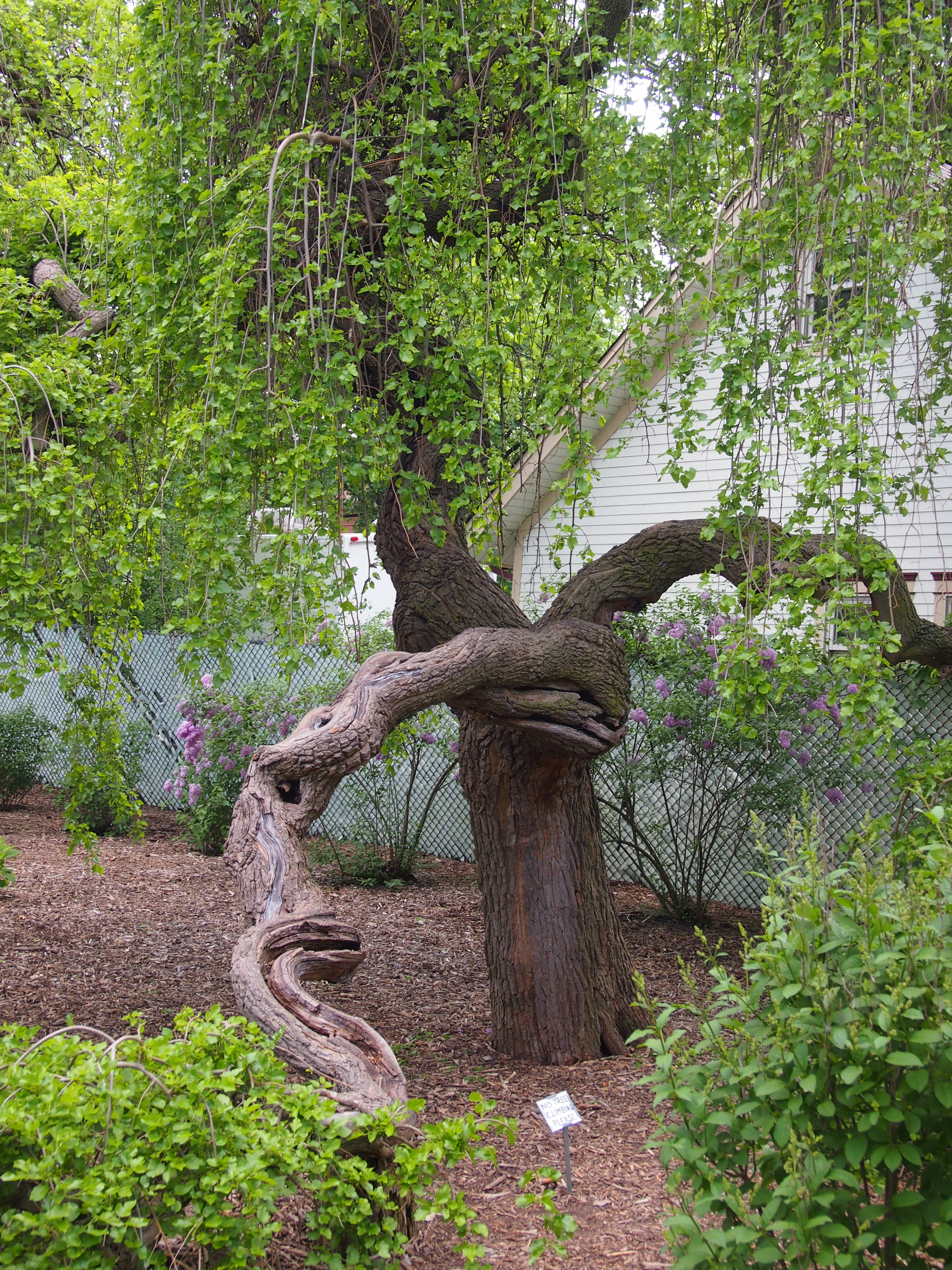
One more shot from Lilacia Park — a peculiar tree. Who doesn’t like tree trunks that splay out in different directions?

More on the story of this beflowered little park is told by Illinois Old Houses (1977) by John Drury, which this web site extracts and asserts the book is public domain. In any case, it says that “… this was the home of the late Colonel William R. Plum, pioneer resident of the village — soldier, lawyer, traveler, writer, horticulturist, and founder of Lilacia Park. Containing more than three hundred varieties of lilacs from all parts of the world, this park is regarded by botanists as the finest lilac garden in the Western Hemisphere.

” ‘In 1911, when we were on a tour of Europe,’ Colonel Plum once told a family friend, Mrs. Annabelle Seaton, ‘we stopped at Nancy, in France, and there visited the famous lilac gardens of Pierre Lemoine. That visit proved my downfall. My wife purchased two choice lilac specimens, a double white and a double purple, and we brought them back to Lombard. From that time on my enthusiasm for lilacs grew and I have never lost interest in them since.’

“When Colonel Plum made this statement, the results of his hobby could be seen all about the old Plum home. Here were all types of lilacs, including one of his favorites, a blue variety called the ‘President Lincoln.’ The shrubs were pleasingly arranged on the Plum estate of two and a half acres, which he called ‘Lilacia.’ Since expanded to ten acres, Lilacia — re-named Lilacia Park — now contains 1,500 lilac bushes as well as 87,000 tulip bulbs.”

The Abraham Lincoln variety, I noticed, is still growing on the grounds of Lilacia Park. So is one named after Gen. Pershing, but most varieties don’t involve famed Americans. As for Pierre Lemoine, he seems to be this fellow, Victor Lemoine (the Spanish version of the page gives his full name as Pierre Louis Victor Lemoine), “a celebrated and prolific French flower breeder who, among other accomplishments, created many of today’s lilac varieties.” Born 1823, died 1911, so I guess you could say he created lilacs for the Belle Époque.