Water-Colored Water & Pink Flamingos

Rain promised early in the day on Monday, but it didn’t come until late in the evening. So I had time to mow the lawn, a task that I’ve put off lately. I enjoyed cutting all the high dandelions and scattering their seeds to the winds.

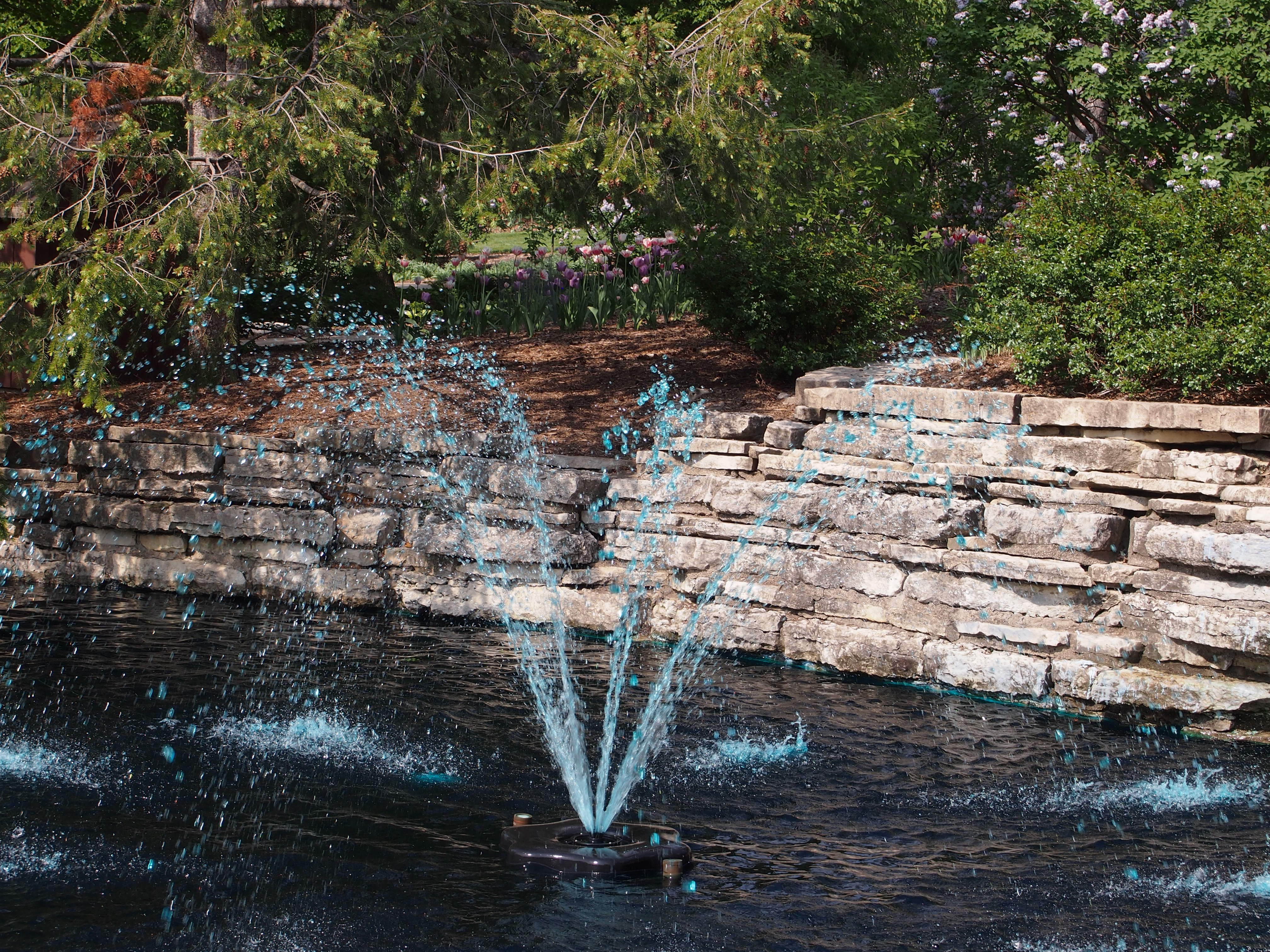
We saw an odd feature of Lilacia Park: a fountain spouting blue-colored water. I’m pretty sure that the last time I saw the fountain, non-tinted water was used.

It made me think of Mon Oncle, which I haven’t seen in many years. One of the features of the ultramodern house in that movie, if I remember right, was a fountain spouting blue-colored water. It was something seen in passing, not commented on, but I think it was supposed to be a visual comment on the vacuousness of the haute bourgeoisie, or burgeoning postwar consumerism, or something (I’m entirely too Anglo-Saxon to care much about the subtleties of Gallic social criticism).

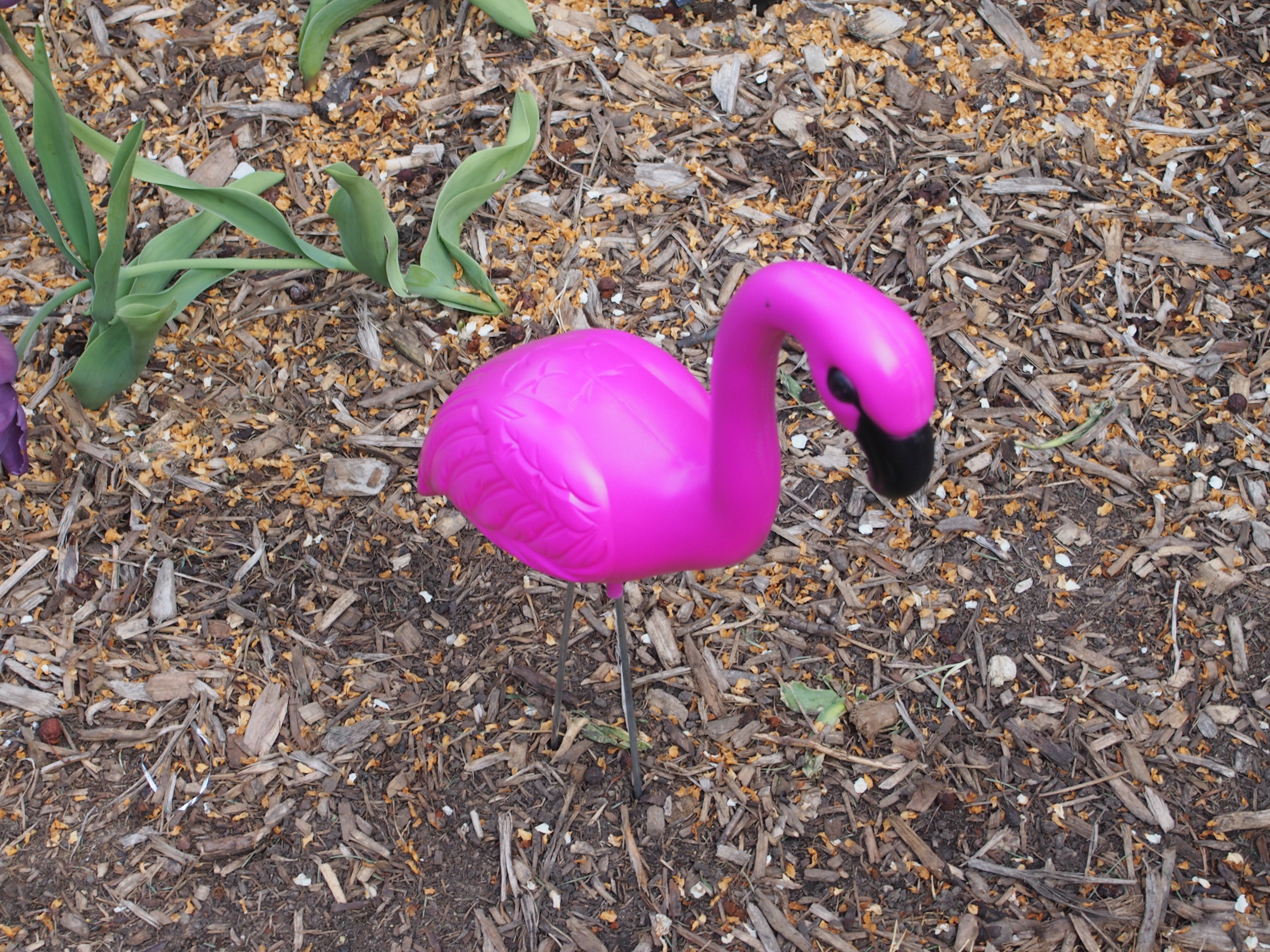
Also noted at the park: a couple of pink flamingos. There were exactly two that I could see, just idling next to one of the walkways. Say what you want about pink flamingos, I think there ought to be more of them in parks and gardens.

Lilacia Park ’13

It’s been a while since we visited Lilacia Park in Lombard, Ill., at the height of lilac blossoming. It’s been six years, in fact. I wouldn’t have guessed quite that long. On Saturday I thought it was time to visit again.

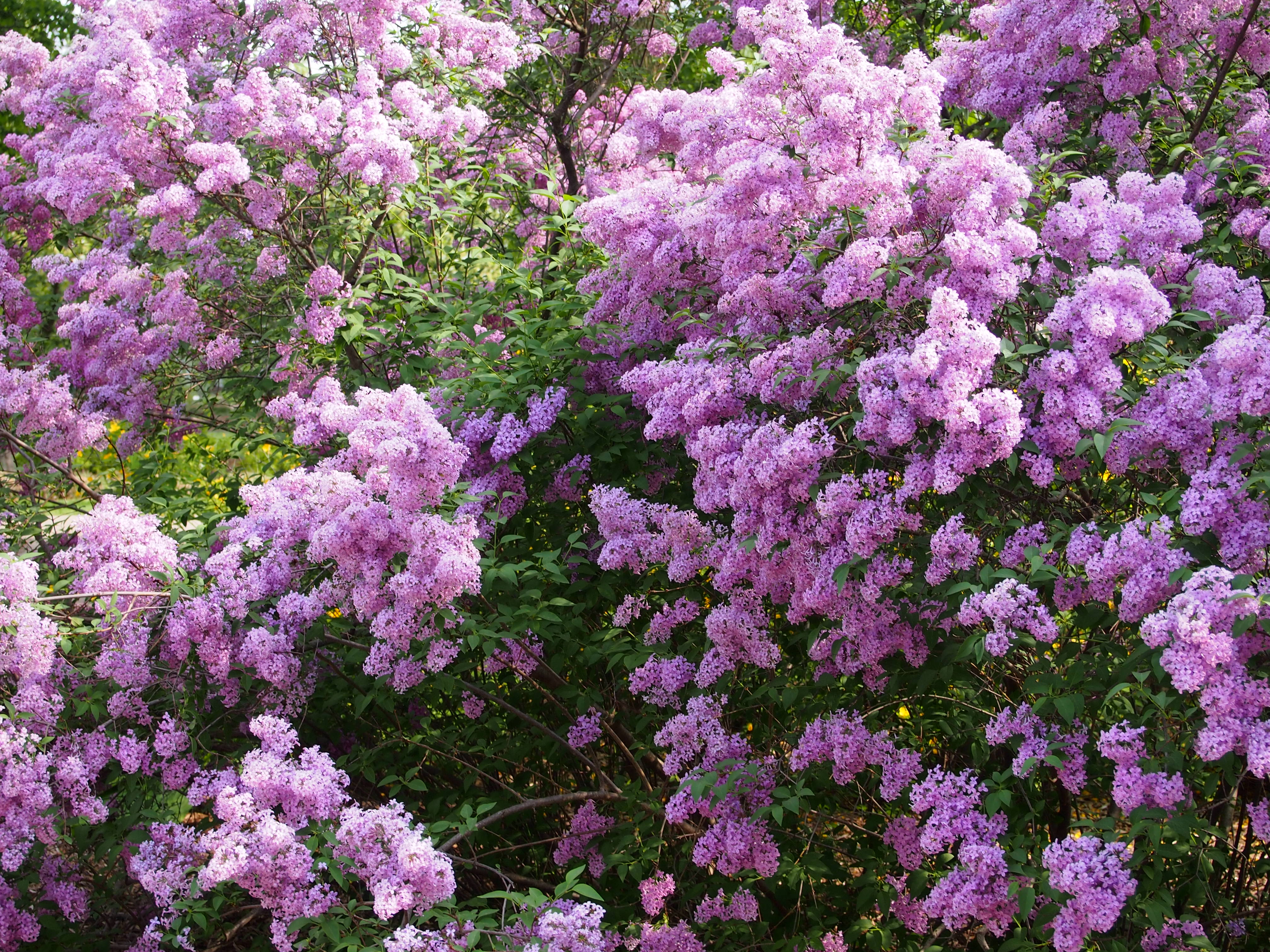
I’m glad we went. For the profusion of lilacs, if no other reason. Make that two reasons: their fine sweet smell, which the picture can’t convey.

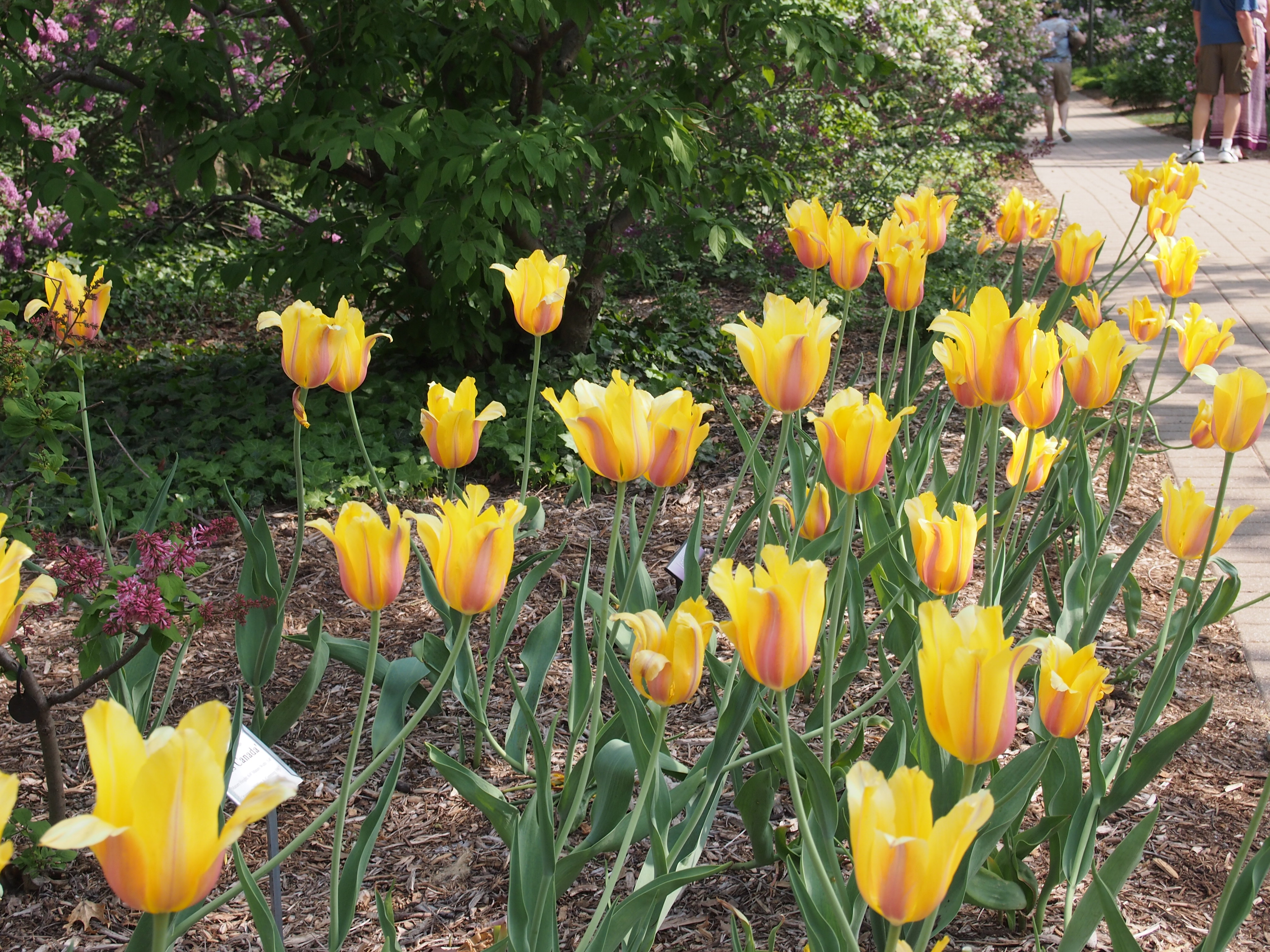
The tulips aren’t too shabby, either.

It was a flawless spring day, warm but not hot. Yet the park wasn’t jammed with flower seekers, though it was hardly empty. It’s a little-known jewel of the suburbs.

Biosphere, Montreal

May 28, 2002. In the morning, we went back to the quays adjoining Old Montreal, this time for a boat tour of the St. Lawrence. Some nice views, especially of the unexpectedly long Port of Montreal, but the heat wore us out early. So we rested until late afternoon, at which time we took the Metro to Île Sainte-Hélène, one of the islands built (or partly built) for Expo 67.

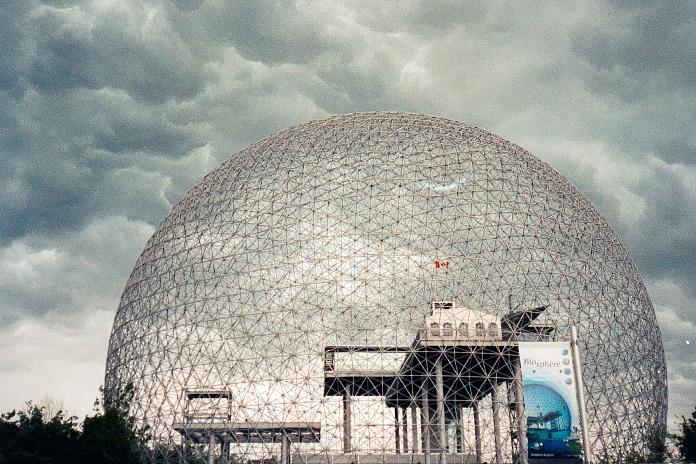
Besides walking paths and gardens, the main thing to catch the eye there is a large geodesic dome designed by a Buckminster Fuller, probably the best-known relic of that world’s fair. Once the U.S. Pavilion, now it’s called the Biosphere, and houses a museum “dedicated to water,” which was closed when we got there.

No matter. Yuriko wandered off to see the gardens, and I reveled in lying on the grass in the shadow of a five-story ball of triangles, cooled by the wind. Lilly indulged in what I believe was her favorite part of the trip: throwing rock after rock into the reflecting pond near the entrance of the Biosphere.

Launch

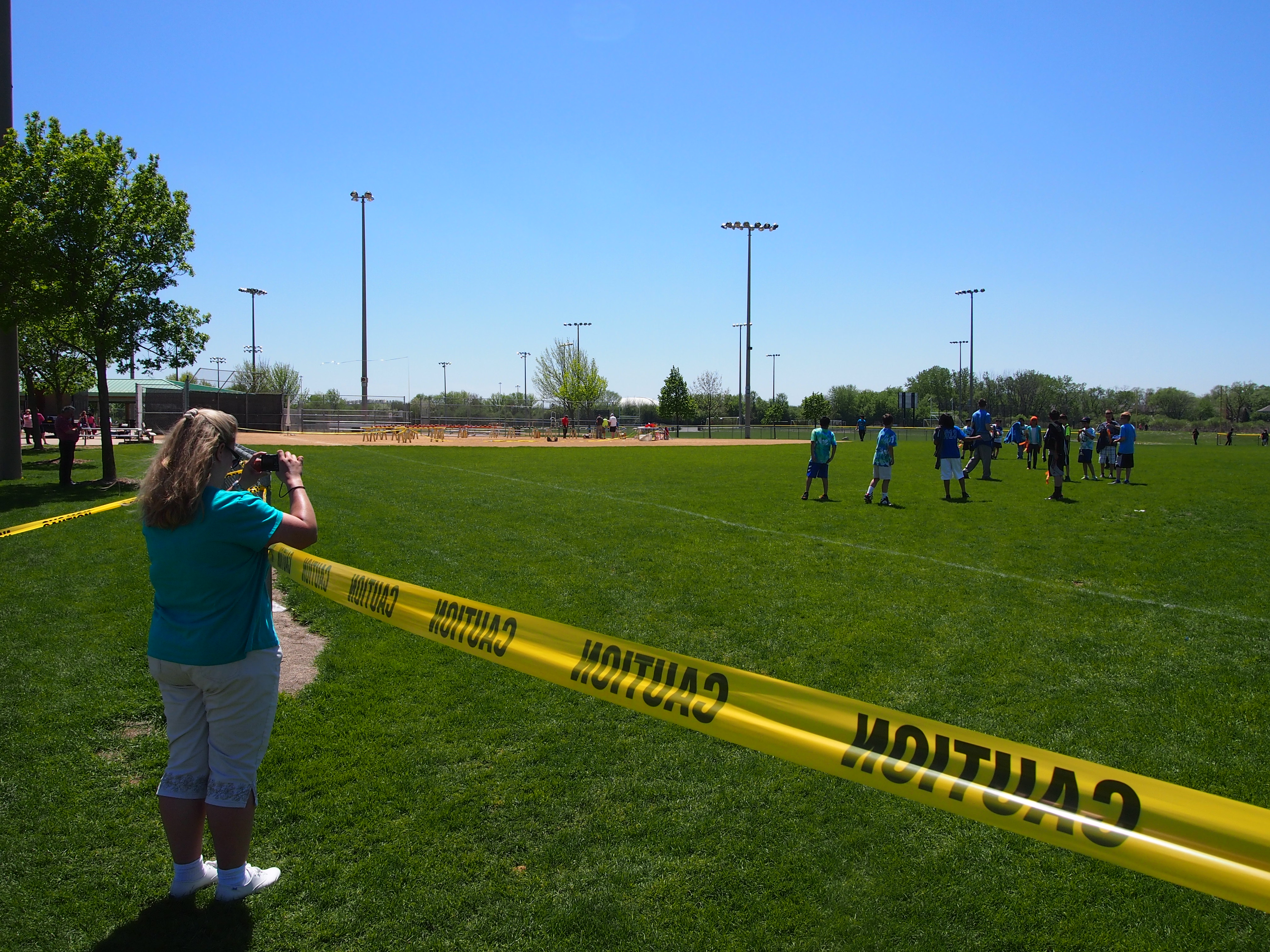
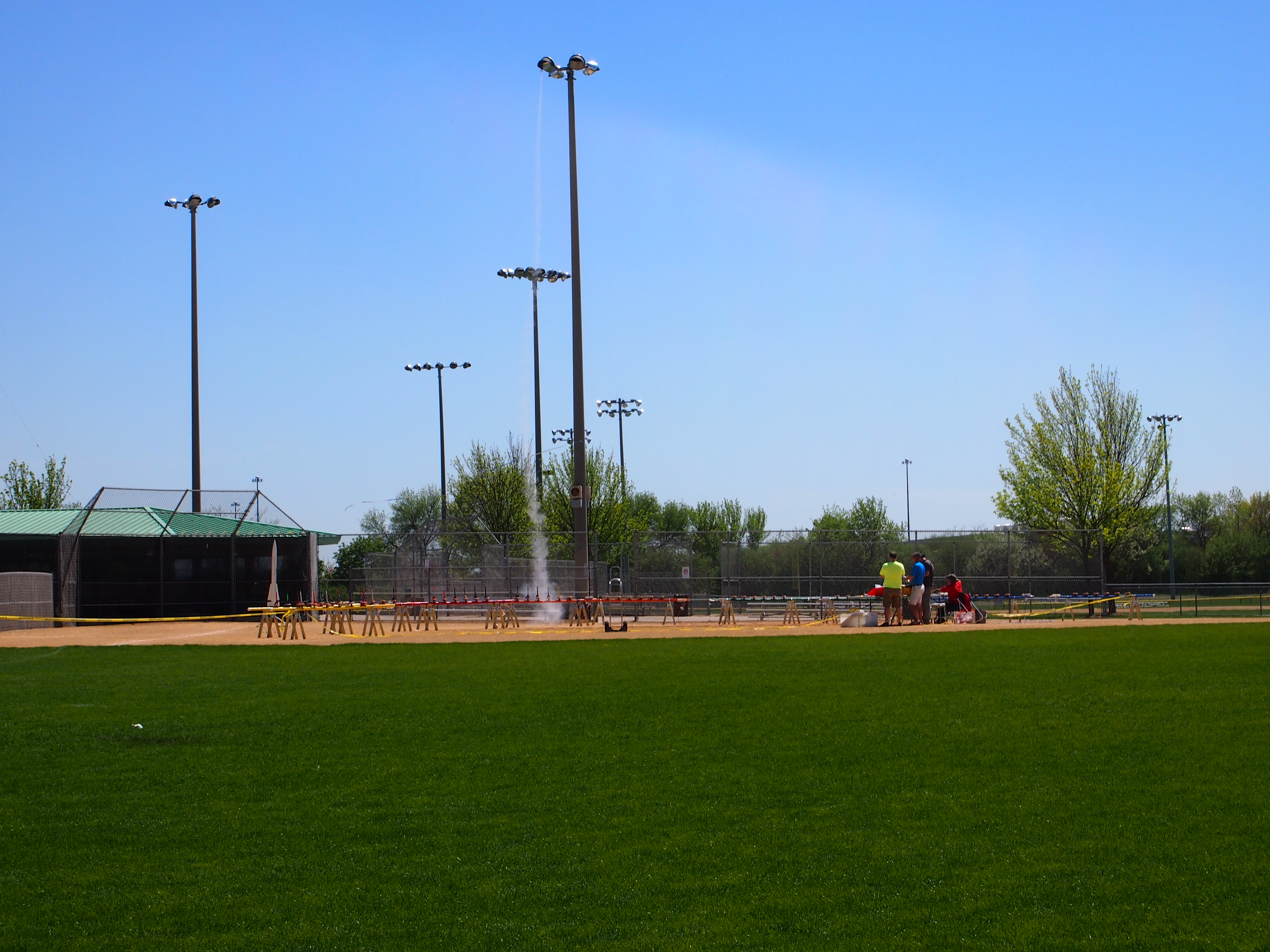
The launch zone yesterday for the flight of Payton, Ann’s rocket, and dozens of other student-built, one-foot rockets was a fenced off area in one of Schaumburg’s larger parks. The rocket launch pads were set in a long row of beams mounted on saw horses.

The students, as pictured above, stood somewhat closer to the launch site. Each rocket was announced by name and creator, and then pfssssst! they went skyward one at a time, most reaching a few hundred feet.

There goes Payton. Instead of parachutes, streamers emerged when the nosecone separated. That meant the rockets tended to come more-or-less straight down, rather than drifting off onto a nearby highway or forest preserve or the roof of a house.

During the launches that included Ann’s school, there was only one that didn’t go far. It hissed and wobbled and popped its streamer not long after launch. I felt a little sorry for that kid. He built the Charlie Brown rocket.

Grad

This year, I read, Vanderbilt held its commencement ceremony – “graduation” except in the official documents – on Alumni Lawn on the morning of May 9. A Friday in early May, in other words. “Chancellor Zeppos confers degrees and addresses the members of the graduating Class of 2013,” the VU web site says. I hope the undergrads had undergrad fun with that name.

Thirty years ago, Joe Billy Wyatt was VU chancellor, number six since the heady days of Landon Cabell Garland, the first chancellor, who received the Golden Oak Cluster from Cornelius Vanderbilt himself in a secret midnight ceremony. According to an unimpeachable source – Wiki, that is – Garland thought dormitories “injurious to both morals and manners,” which is amusing since Garland Hall, a dorm, is named after him.

Anyway, Wyatt had been in office for a year when he shook a lot of hands at the commencement ceremony of Friday, May 13, 1983. He’s pictured on that day in the image posted here, facing away from the camera.

The fellow facing the camera at that instant, one of the graduates, wasn’t feeling his best that morning, since he was still recovering from an earache that began a few days earlier after a short swim in the waters of Lewis Smith Lake, down in Alabama. As it turned out, graduation from VU marked the end of his formal education. At some point over the last 30 years he decided, “I’ve done been educated.”

Another Tree Down the Memory Hole

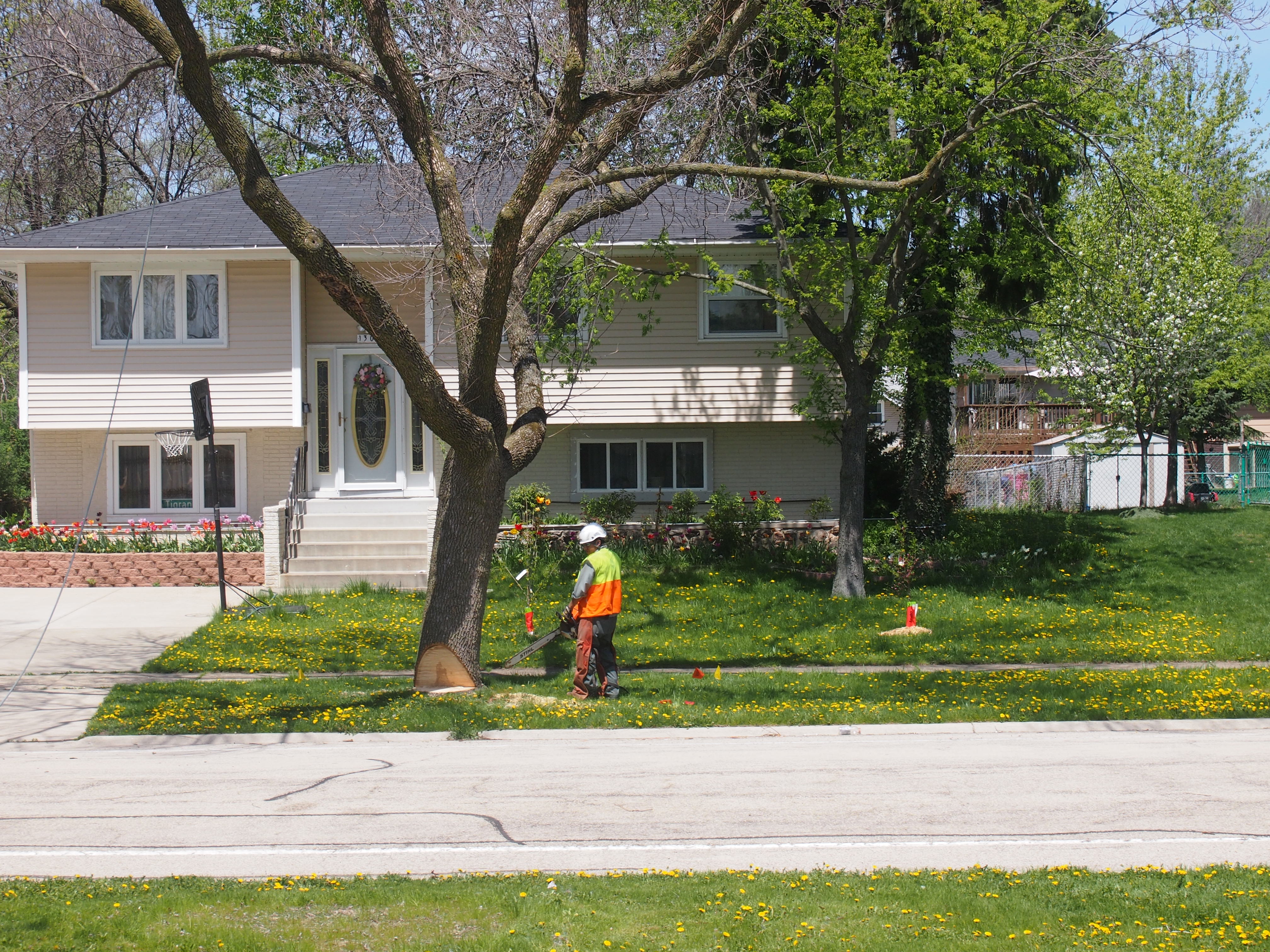
Around noon today, trucks showed up from the same tree removal service that cut down the ash near the street in front of my house last year. This time they were gunning for the ash across the street. It had been spared last year, maybe in hopes that it treatment for the emerald ash borer would work. But as spring progressed, it became clear that the thing was dead.

So another tree in my neighborhood came down.

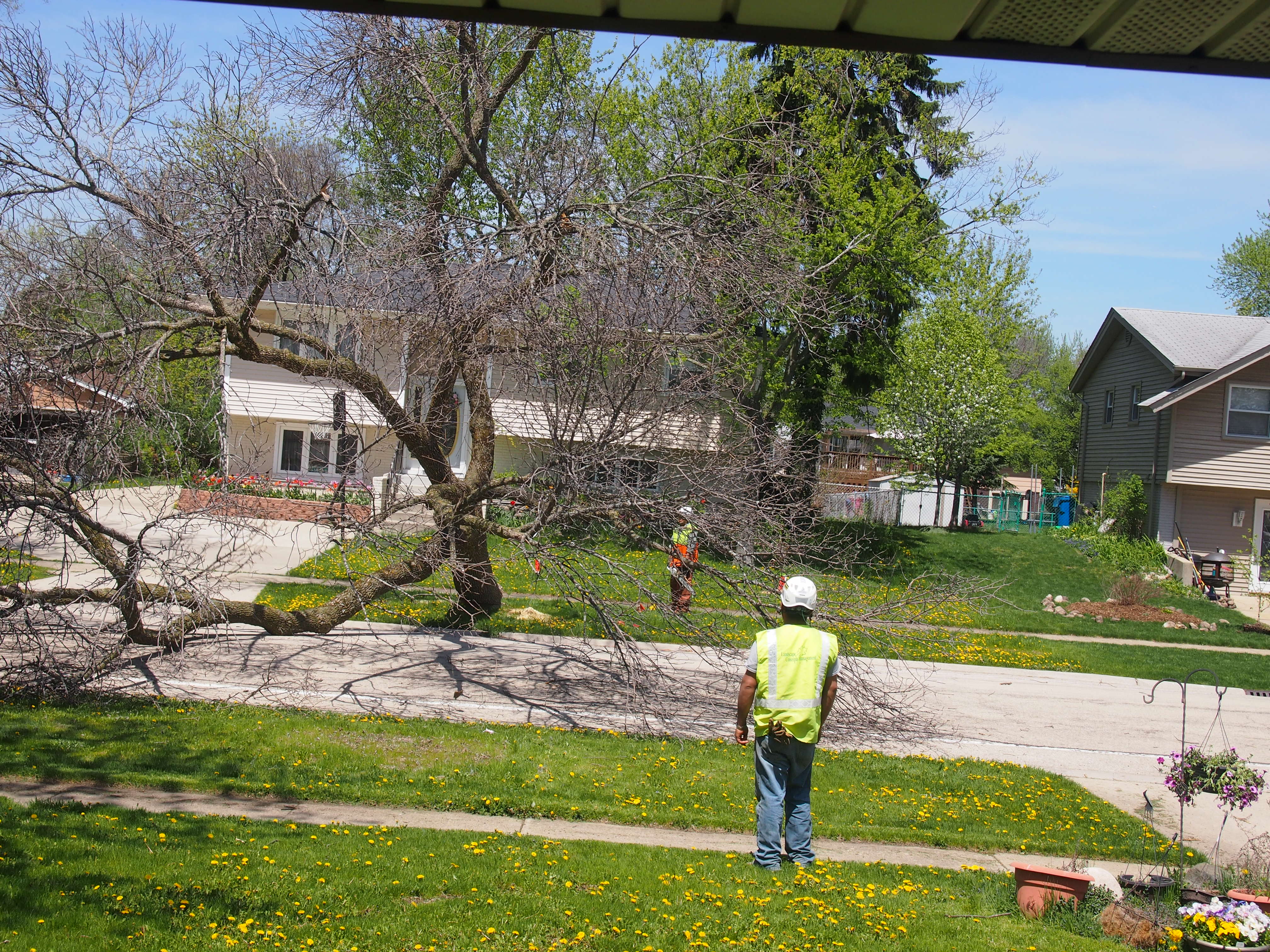
They were careful not to let it fall into the house across the street. Such an outcome would probably mean no end of paperwork for the crew.

And down it comesIt blocked the street for a few minutes, but the crew cut it up with great speed and removed or shredded the pieces. They even took out the stump this time. (Last year, another crew came by for that.) Within the hour, the only trace of the tree that had been there for decades was a patch of churned up earth.

Collegiate R&R

May 4, 1983

It’s a little hard to believe I ever spent an afternoon and evening like this. I made a record of it, and if I think hard enough, I can remember what it must have been like. It was during that rarefied period after exams were over, but before the VU graduation ceremony.

I’m also happy to remember that at no time did anyone I was hanging out with during this period say, “Let’s go rent a video.” It wasn’t an option. We watched a bit of television, and listened to some records, but that was the extent of our electronic entertainment. I’d say we’re better men for it.

Late in the afternoon, Dan made an outrageously good chili-bean-Frito concoction, after he’d spent a few hours lacing up the boat we’ll use later this week (I had a small part in that). We had a fine dinner ’round the table in the Vomitorium [that’s what we collegiate wits called our dining room]. We consumed the tasty concoction, plus bread and the bottle of Egri Bikavér that I provided. Steve made the damnedest ice cream, milk and Italian liqueur drink, whose name I forget, but an apocryphal story says it was invented by a widow.

We played poker after dinner, mostly for laughs. At one point, Rich asserted that the next draw was “going to reveal my soul.” He drew a deuce. Much laughter. “No, it’s this one.” He drew another deuce. Even more laughter. He actually won the hand with his pair of twos.

As I was dealing Mexican Sweat, Rich picked up his cards, which you aren’t supposed to do, so I dealt him a new hand. He started to pick that up, and my hand dashed down to the table to prevent that, knocking over Rich’s ice cream drink. It went everywhere. Everyone howled with laughter, and that was the end of the game.

It was still light enough outside to play frisbee in the street in front of the house. I took the corner of Poston & 31st; Dan was in front of our driveway; Rich was down Long Avenue, in front of the house next to ours; and Steve was on my side of 31st across the street from Rich. We tossed a good many minutes. I got off some fine skips across 31st, aiming down and – thwack! – hitting near the yellow line and back up to Dan. Once, I nearly threw the disk into a cop car. The cop eyed us ne’er-do-wells for a moment and must have decided we posed no threat to public order.

At dusk we quit and came indoors. Dan inspired us to play Risk & it took hours. Eventually Dan was poised to conquer all from Asia and northern North America. I was bottled up in Africa, Rich had South America and part of North America, and Steve had Europe. On the last turn, I threw Dan out of half of Asia, but we were too tired to go on.
Tuesday Orts

I hadn’t heard that Jonathan Winters had died until this evening. I hadn’t known he was still alive, but then again his most recent roles seemed to involve voicing Grandpa Smurf, something I would never have known without reading his obit. When I was young, though, he seemed to pop up on TV a lot without warning.

But that’s understandable. A gig is a gig. As funnymen of my parents’ generation go, he aged a lot better than most.

The MIT Center for Real Estate is a big deal in real estate education. It educates real estate pros and generates some interesting real estate data. Also, MIT is also not known to be short on its endowment. So how is it that the latest thing on center’s web site, under the “News and Events” section, is dated November 30, 2011? How it is that the newsletters produced by the center stop around the same time? Did the person who was maintaining it leave, and the organization couldn’t be bothered with it afterwards? I can see that for a small organization on a shoestring — in which case the site shouldn’t promise “news” — but MIT?

More than 30 years ago, I spent a few days camped out in a dorm room at MIT. I noticed a few things while there, such as that everyone on the hall went to the common room to watch an afternoon showing of Star Trek, and everyone knew the lines. (The original series; because this was 1982, the only series. Patrick Stewart was still just a Shakespearean actor who’d played Sejanus for the BBC.)

I discovered that there’s a major collection of samurai armor and art in Dallas, of all places. At the newly opened Ann & Gabriel Barbier-Mueller Museum: The Samurai Collection. I mentioned that to Ed, who’s familiar with the Barbier-Mueller Museum in Switzerland, and he said, ” If it came out of the Barbier, odds are, it’s better than anything you saw in Japan.”

Another thing to see. But at least it’s easier to go to Dallas than, say, Geneva.

Tiger Hill, Suzhou

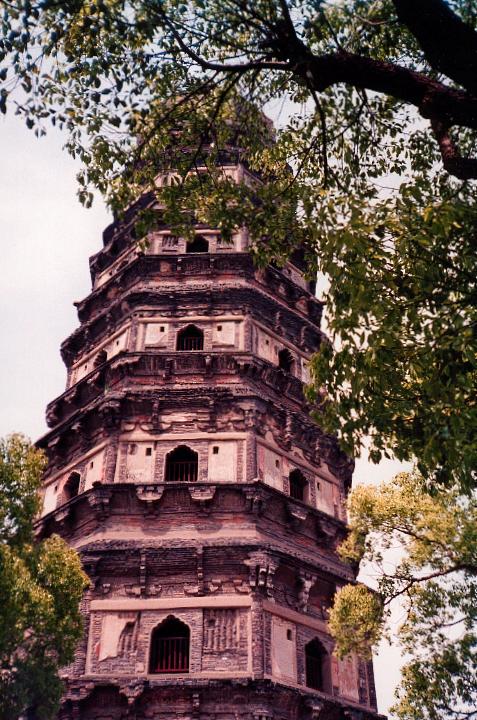
We visited Tiger Hill in Suzhou in April 1994. I took no notes about it, only a few pictures (to the right is the pagoda on the hill). But through the magic of the Internet — very low-grade magic, these days — I can pull up a description that’s a good stab at English by someone who’s first language is something else (some brand of Chinese, no doubt), but ultimately awkward.

The writer’s also probably fond enough of Tiger Hill to write about it in Wiki for the English-speaking world see read about it.

All text is sic: “According to the Historical Records, the Wu King Helu was buried on the hill, called then ‘the Hill Emerging from the Sea’. The legend goes that three days after his burial a white tiger appeared squatting on the hill. Hence the name. It has an elevation of over 30 m. and covers about 49.41ac. Tiger Hill boasts impressive rocks, deep dales, 3 matchless scenes, 9 suitable occasions for enjoyment, 18 scenic spots, and changing scenery at all times. No wonder it has been an awe-inspiring sight in the area south of the Lower Yangtze.

“The Yunyan Temple Pagoda and the Sword Pool are well-known features of the hill. With a history going back more than 1,000 years, the simple, archaic and imposing Yunyan Temple Pagoda, also known as the Second Leaning Tower on earth, stands aloft at the top of the hill, serving as a symbol of ancient Suzhou for years.

“The Tomb of the Wu King Helu under the Sword Pool has remained an unsolved mystery for two and a half millennia. The story goes that the great Jin master Wang Xizhi traded his calligraphy for lovable geese from the Taoist Abbot. And the windy vale and cloudy spring make the visitor reluctant to leave.”

SubTropolis

Early April 1999.

Just returned from Kansas City, which has its interests, but I was too occupied to see much of it, except for a “tour” given by an office developer. He knew the market well, and as you’d imagine, liked to talk.

We visited SubTropolis at one point, which is an underground warehouse and distribution complex, created from a former limestone mine, which was dug straight into the side of a KC hill. The former mine space now houses all kinds of goods, plus some thousands of people who work there. One of their big tenants is the post office, which stores millions of stamps there.

Postscript 2013: I toured a fair amount of commercial real estate in 1999, so this description sounds blase, but actually I was taken with SubTropolis, as I often am with places I’ve never seen before.

More recently, Steve Nadis wrote in The Atlantic: “With 5 million square feet of leased warehouse, light-industry, and office space, and a network of more than two miles of rail lines and six miles of roads, SubTropolis is the world’s largest underground business complex… [and not the only one in KC]. More than 10 percent of the industrial space in greater Kansas City is located ‘down under,’ covering about 25 million square feet—an area bigger than the downtown business district. Mining limestone for use in roadway construction and agriculture continues, with additional acreage carved out each year.”