Cave-in-Rock State Park

Snow this morning. It didn’t stick, but it did remind us all of the cold months to come.

At the beginning of 2020, works published in 1924 finally entered public domain in the U.S. The Center for the Study of the Public Domain noted some of the better known works now available to all.

“These works include George Gershwin’s ‘Rhapsody in Blue,’ silent films by Buster Keaton and Harold Lloyd, and books such as Thomas Mann’s The Magic Mountain, E. M. Forster’s A Passage to India, and A. A. Milne’s When We Were Very Young.”

Plenty of obscure works are now available as well. One I have in mind is The Outlaws of Cave-in-Rock by Otto A. Rothert, published in 1924. Rothert (1871-1954) was secretary of the Filson Historical Society in Louisville, and apparently took a strong interest in regional history

The Outlaws of Cave-in-Rock can now be found in Google Books. I haven’t read it all, but I have sampled some of it. Such as the first few paragraphs.

“This book is intended to give the authentic story of the famous Cave-in-Rock of the lower Ohio River… and to present verified accounts of the most notorious of those highwaymen and river pirates who in the early days of the middle West and South filled the Mississippi basin with alarm and terror of their crimes and exploits.

“All the criminals herein treated made their headquarters at one time or another in this famous cavern. It became a natural, safe hiding-place for the pirates who preyed on the flatboat traffic before the days of steamboats….

“A century ago and more, its rock-ribbed walls echoed the drunken hilarity of villains and witnessed the death struggles of many a vanished man. Today this former haunt of criminals is as quiet as a tomb. Nothing is left in the Cave to indicate the outrages that were committed there in the olden days.”

The book also tells the tale, in four chapters, of the exceptionally murderous Harpe brothers (or cousins), a bloody story deftly summarized by the late Jim Ridley in the Nashville Scene some years ago. Enough to note here that the Harpes and their women roamed western Tennessee and Kentucky around the beginning of 19th century, murdering and robbing as they went, but especially murdering.

They spent some time among the blackguards at Cave-in-Rock, but were forced to leave after they threw a man bound to a horse to his (and the horse’s) death off the cliff’s edge above the cave for fun. Even river pirates have their standards.

In our time, and in fact since 1929, the cave has been the central feature of Cave-in-Rock State Park. Not quiet as a tomb, quiet as a minor tourist attraction. It isn’t part of Shawnee National Forest, but some of the national forest lands are nearby. Note the sign isn’t a stickler for hyphens.Cave-in-Rock State Park

The park is near the small town of Cave-in-Rock, Illinois, which is walkable distance to the south from the park. We arrived at the park on the afternoon of October 11.

You park in a small lot and climb 50 or so steps uphill, to a crest overlooking the Ohio River, sporting picnic shelters and tall trees. Views from the crest, looking across to Kentucky.Cave-in-Rock State Park Cave-in-Rock State Park

From the crest, you go down more stairs most of the way to the river’s edge. The cave entrance is under a high cliff and a few feet higher than a small beach on the river.

Cave-in-Rock State ParkLooking back up at some trees lording over the edge of the cliff.

Cave-in-Rock State Park

A few more steps and you’re in front of Cave-in-Rock. It’s an apt name.

Cave-in-Rock State Park Cave-in-Rock State Park

Soon you’re inside, looking out.
Cave-in-Rock State Park

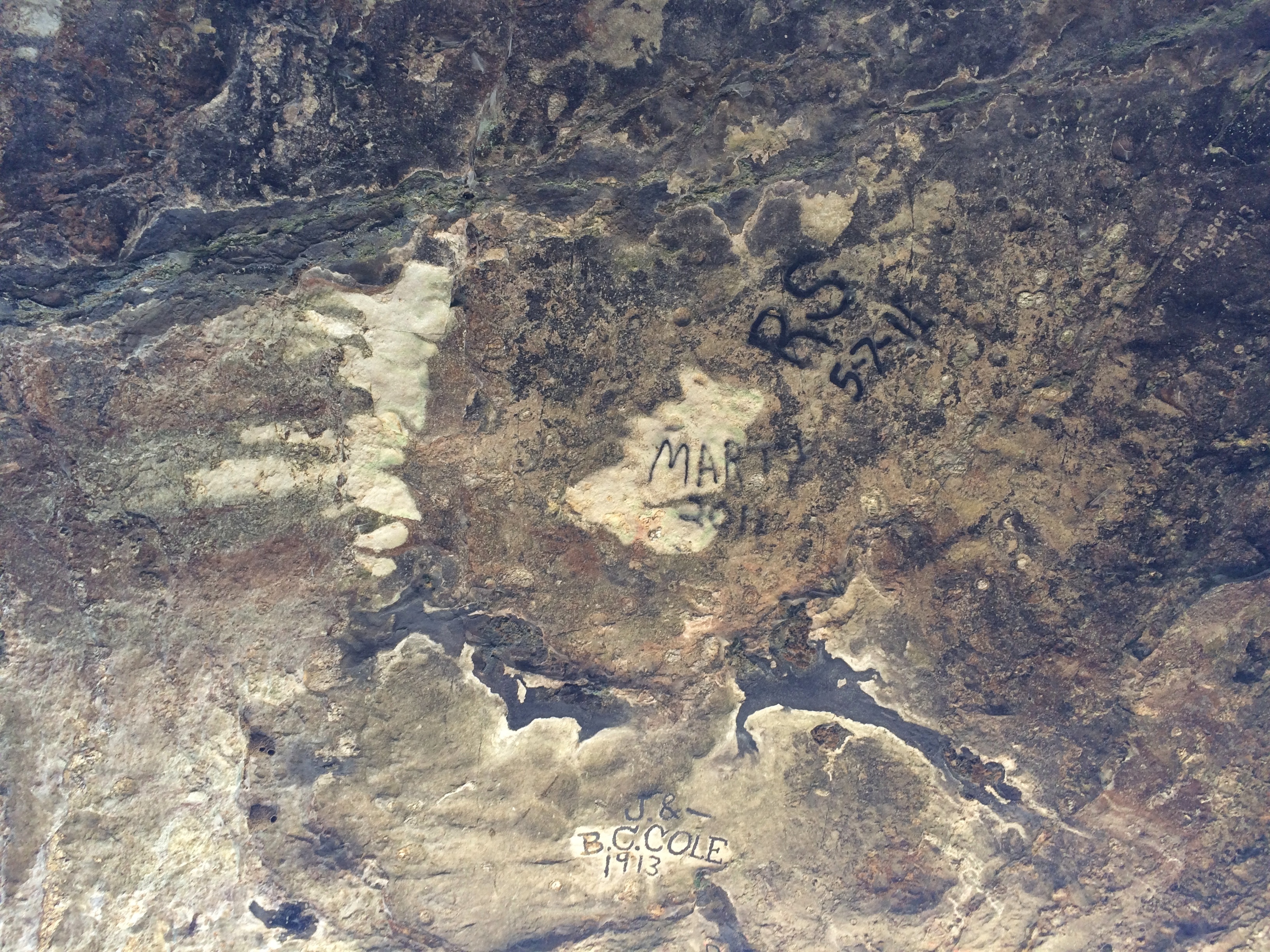
It doesn’t go too far back, at least not that I know of. Graffiti, mostly painted signatures, is prominent on the roof of the cave.
Cave-in-Rock State Park

J. & B.C. Cole were here in 1913, pre-park and probably dangling from a rope over the cliff edge. The more recent Marty and R.S. were here in 2011, and probably had rappelling gear.


Dolce Far Niente and All That

Here’s an interesting list of words, if accurate, or even if not, and I suspect that’s the case for some of them (but I can’t know). Dolce far niente is a worthwhile concept: pleasant idleness, or the joy of doing nothing.

Such lists now appear periodically on line, and I believe they hark back to a pre-Internet book called They Have a Word For It: A Lighthearted Lexicon of Untranslatable Words & Phrases by Howard Rheingold (1988).

I have a copy of it around somewhere, bought fairly new. I don’t remember any of the words in it, except the concept of a ponte day. “Bridge” day in Italian, meaning a day off between the weekend and a holiday, an especially useful concept in that country since Italy doesn’t have a version of the Uniform Monday Holiday Act, and holidays can fall mid-week.

I also remember the author appearing on the radio show Whad’ya Know? Maybe in 1989. I didn’t listen to it every week in those days, but fairly often. I understand that it ran as a radio show until 2016, and now exists as a podcast.

Just before Christmas 1989, I went to a broadcast of the show when it was in Chicago, at the Blackstone Theatre (these days, the Merle Reskin Theatre). Remarkably, I can listen to it again if I want. So far, I haven’t.

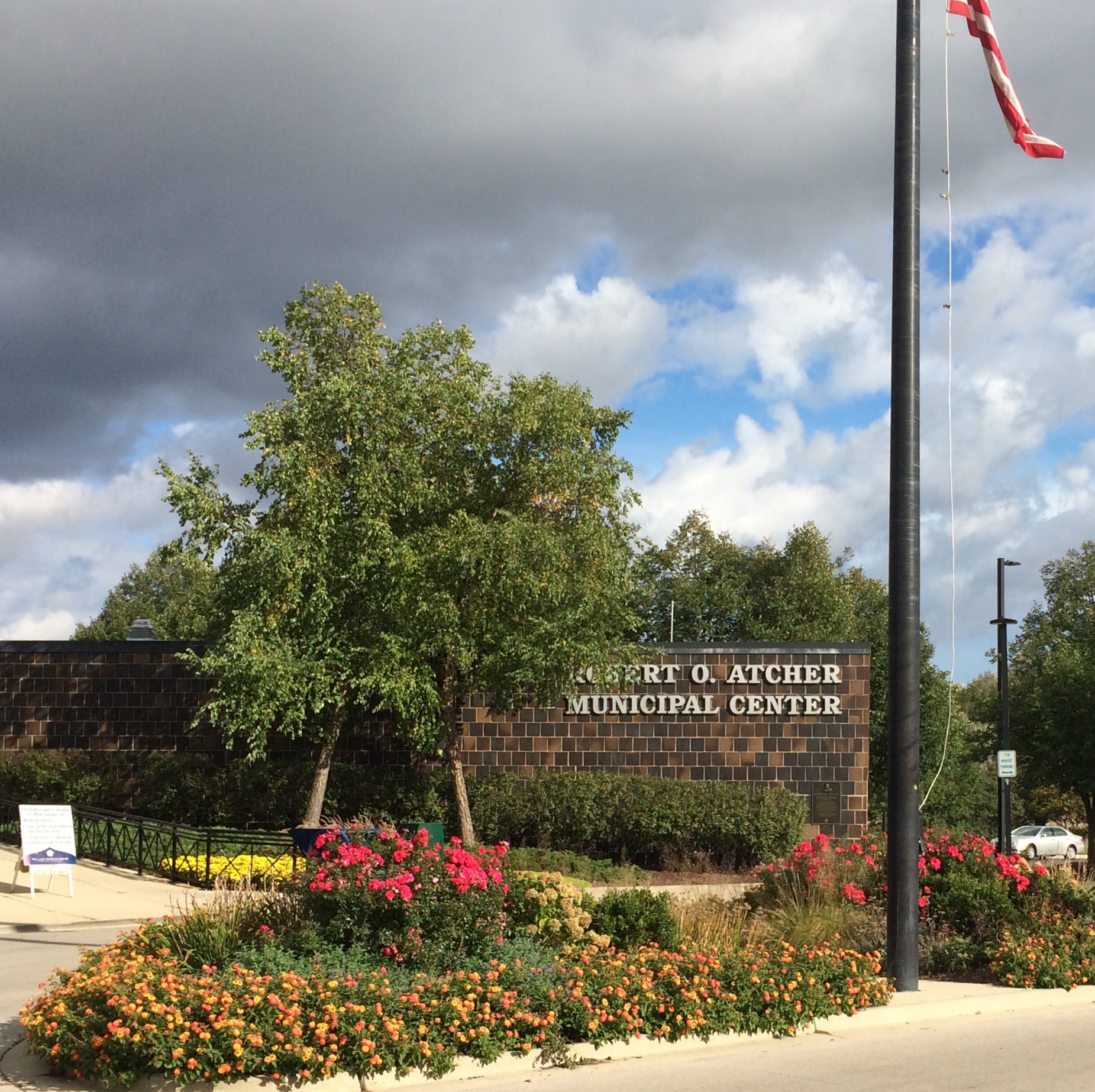
Today I was near the Robert O. Atcher Municipal Center, not far from where we were yesterday. Atcher, besides being mayor of Schaumburg from 1959 to 1975, was a successful country musician.

The trees are just beginning to turn.

Schaumburg in the fall

Schaumburg in the fallClose to the Atcher Center are flowers. We’re in the narrow window when the trees are coloring up, yet some flowers are still blooming.
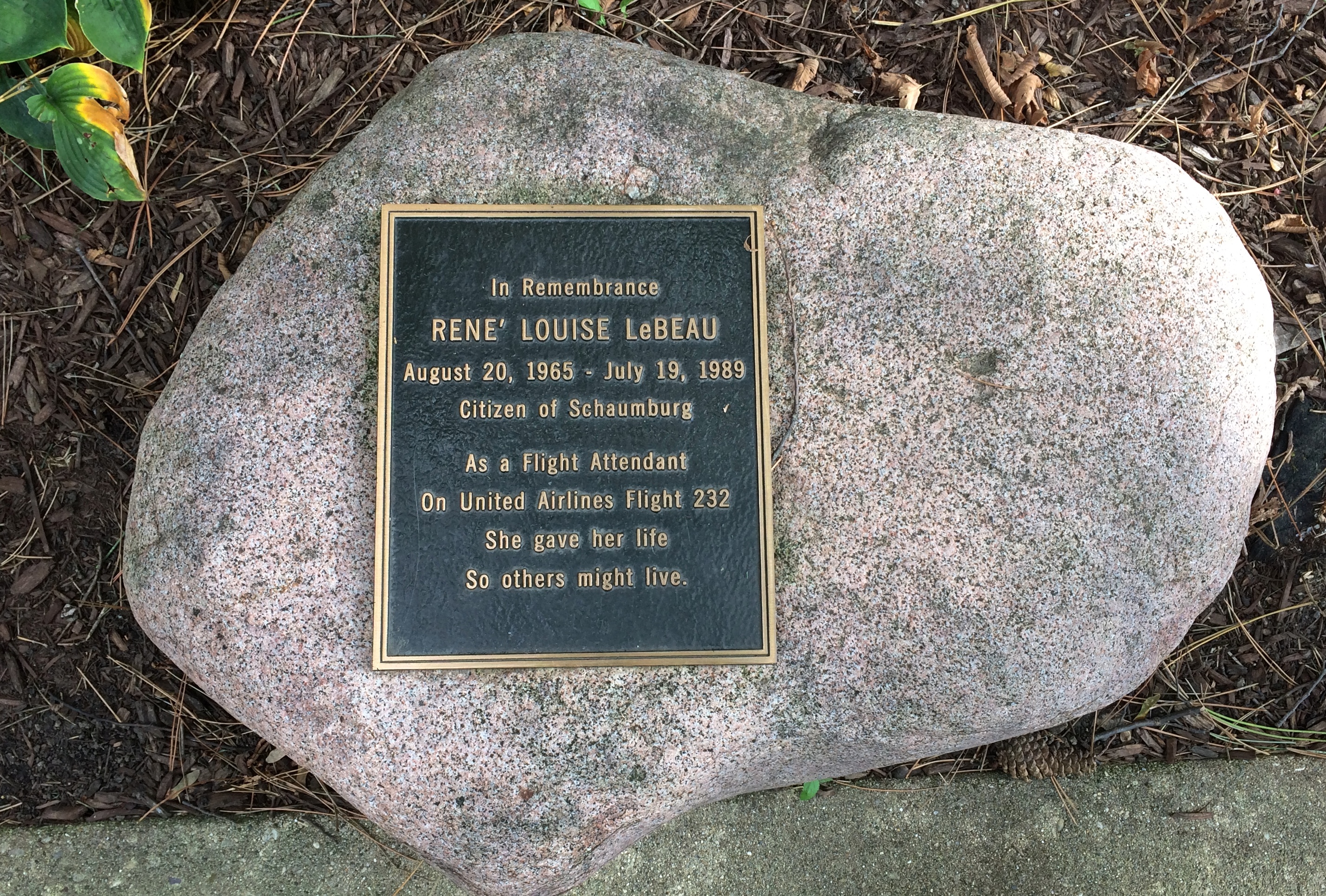
Schaumburg in the fall While on the grounds, I noticed a memorial I’d never noticed before. According to various news reports, it’s been there some years — how did I miss it? A plaque for a Schaumburg resident, René LeBeau, who died awfully young.
René LeBeau memorialI must have heard about the crash of United 232 when it happened, but I had to read about it to remember. Quite a harrowing story. It’s a wonder anyone survived.

Late Summer Thursday Stew

A package arrived in the mail for Lilly today from UIUC.

“Your high GPA has earned you the privilege of graduating Cum Laude…. This accomplishment, which is referred to as Latin Honors, is also recognized by a special bronze cord,” the enclosed letter said. “Because we were unable to have an on campus commencement ceremony in May, we will be mailing cords to the mailing address you have on file with campus.”

Sure enough, the package also included a bronze cord, looking something like a curtain accessory. Lilly’s already in the Pacific Northwest, so she’ll have to wait for one of us to deliver it in person, since I’m not planning on re-mailing it.

Never got a Latin Honor myself. Missed it by a whisker of GPA, I think. But I don’t really remember, and in nearly 40 years, that fact has never come up at any time for any reason.

I’m surprised some of these TV shows count as public domain. Then again, under the copyright rules before Disney put its imprint on the law, copyright holders had to renew after a certain number of years, and I expect many producers didn’t bother. The other day I watched the first episode of Car 54, Where Are You? It had its amusing moments.

Summer is ebbing away. I’m trying to spend as much time on my deck as possible. A refuge from work and word of the troubled world beyond my little spot.

A few days ago, after work but before dinner, I parked myself on the reclining deck chair on the deck and managed to take a nap. My family marveled at that, considering the heat and noise of the cicadas. But it wasn’t that hot that late in the day, and the sound of cicadas is something to drift off to sleep to, though not as soothing as cricketsong.

I’m about half way through The Unredeemed Captive by John Demos (1994), which Lilly and Ann gave to me last Christmas, on a tip (I believe) from one of Ann’s teachers.

“The setting for this haunting and encyclopedically researched work of history is colonial Massachusetts,” Penguin Random House says. “There, in February 1704, a French and Indian war party descended on the village of Deerfield, abducting a Puritan minister and his children. Although John Williams was eventually released, his daughter horrified the family by staying with her captors and marrying a Mohawk husband.”

It’s a good read about a time and place I’m not especially familiar with, early 18th-century New England. Interesting how in only 50 years or so, that place evolved into the more familiar (to me) mid-century and Revolutionary New England.

Wait, when did Random House and Penguin merge? In 2013, it turns out. I wasn’t paying attention because book publishing isn’t my sort of publishing. I’m used to thinking of Penguin as a solidly British operation, but these days it’s owned by shadowy German billionaires.

Thursday Jumble

Intermittent rain and thunder on Tuesday and Wednesday, and some vigorous warm winds. Enough to randomize the arrangement of our deck chairs but not, fortunately, to move the cast iron deck table. Mostly, though, recent days have been clear and agreeably summerlike.

They’ve aged remarkably well.

Last weekend, we made it back to Spring Valley to see the Peony Field, now in full bloom.


Also noticed a Little Lending Library at Spring Valley. I think that’s new. It encourages one and all to Be a Good Human Today.Spring Valley Little Lending LibraryNot as full as the one on my street, but it had a few items, including a stack of booklets whose subject is Baha’i prayers. I took one for a look-see. In each are prayers for various occasions and situations, such as Aid and Assistance, Children, The Departed, Healing, Morning, Parents, Tests and Difficulties, and so on.

Later in the week, we got takeout from an Indian restaurant we visited, and liked, a few years ago. Been buying takeout locally ever other week or so since sit-down restaurants closed.
New Delhi Restaurant Schaumburg
We feasted on sang paneer, malai kofta, paneer bhurji, lamb bhoona — that was mine — along with garlic naanm, roti and jeera rice. All good.

Thursday Slumgullion

A while ago, I sent a message in a professional capacity to one of Ikea’s subsidiaries. It bounced back, with this message as a reply.

Det gick inte att leverera till följande mottagare eller grupper:
centrespr@ingka.com

Det gick inte att hitta den angivna e-postadressen. Kontrollera mottagarens e-postadress och skicka sedan meddelandet igen. Kontakta e-postadministratören om problemet kvarstår.

Recent movies seen here at home, as if they would be anywhere else, include The Stranger, an Orson Welles noir that I’d never gotten around to seeing; I’ll go along with Variety’s contemporary assessment, quoted in Wiki — it’s a “socko melodrama” — and it made me sorry Welles didn’t get to make that many pictures. Chicago, which was better on the second viewing; the first was when it was fairly new. For a Few Dollars More, which was as good as I remembered it. The pointlessly rejiggered version of Star Wars, which Ann hadn’t seen any version of. The Hundred-Foot Journey, a fair-to-middling foodie movie.

Star Trek watching continues: “The Gamesters of Triskelion,” “The Naked Time,” “Space Seed,” and — because I thought Ann should see some of the lesser lights of the original series, “The Way to Eden,” which is the episode that features space hippies. She continues to get a kick out of the series, especially the costumes, and double especially the space-hippie garb. Made me smile, too.

“The Way to Eden” was bad enough, but not quite as bad as I remember. With a few tweaks, such as making the hippies at least slightly sympathetic, it could have been a much better episode.

Speaking of TV, I had an encounter with the spanking-new HBO Max today. As in, something I wanted to watch on a service I already pay for suddenly disappeared into this latest scheme to tunnel into my wallet. FO, HBO Max. There’s nothing on TV I can’t live without. Nothing.

Last Saturday, which was part sunny and later rainy, I did a lot. A lot of the kind of things you do to keep life running more-or-less on track. I record it here because, if in some future time when the memory of the day has faded, I want to marvel — assuming I survive middle age to marvel — at how productive I was that May day during the pandemic. The rest of the family was likewise busy that day, going all Marie Kondo on the upstairs bedrooms, from which much debris has been removed. Call it spring cleaning.

Besides taking my meals and watching an episode of the remarkably good (if basic) Greatest Events of WWII, I mowed part of our lawn, repaired a windchime, did some of the laundry, cleaned the inside of my car, went to the bank, post office, and drug store (all drive through), walked the dog, helped Ann remove a lot of items from a high shelf in her room, did a first run-through of my taxes, helped Lilly fill out her taxes, vacuumed the living room, swept two rooms, fixed a leaky pipe under the kitchen sink, and washed a lot of dishes. I ended the day reading a bit of Moby-Dick, which I’m slowly working my way through.

Off on a Musical Tangent

I go off on tangents fairly easily, but then again they’re about the only trips you can take these days. I had a good one yesterday evening, after work and after dinner and after our walk. A discussion some time ago about writing good headlines inspired me to think about a half-remembered list in The Book of Lists, which I pull off the shelf every few years. Specifically, Dr. Demento’s 10 Worst Song Titles of All Time.

I checked. It’s on p. 178. Back when I originally owned the book, in the late 1970s, you’d read such a list, be amused, and that was that. You might hear one of the songs on the list on Dr. Demento, if you listened to the show. I wasn’t a regular listener back then, though I did hear it sporadically — often enough to hear the likes of “Fish Heads,” but never anything on the list that I remember.

So I decided, true to form when on a tangent, to look more closely at some of those bad song titles, at least in Dr. Demento’s opinion (a list he created for The Book of Lists). I toyed with the idea of reposting all of the titles here, but most of the 10 titles are pretty long, and I didn’t feel like all that transcription, so I looked to see if they were posted elsewhere on line. As far as I can tell, there are other versions online, such as this one, that certainly features some bad song titles, but none of them are on ’70s list in The Book of Lists.

Or this list, which claims to be a ’90s version of the original, but has only one title in common with it: “How Could You Believe Me When I Said I Loved You When You Know I’ve Been A Liar All My Life.”

In our time, you can go to YouTube and see most if not all of the bad-title songs, such as “How Could You Believe Me…,” which I have to say hasn’t aged that well.

So I picked a few of the songs from the ’70s list and looked them up. Such as “Would You Rather Be a Colonel With An Eagle On Your Shoulder Or A Private With A Chicken On Your Knee?” That might count as a bad title, but it sure is amusing.

I was happy to find that it was a WWI song, recorded by Arthur Fields but also sung by Eddie Cantor. If I’m not mistaken, the “chicken” in the title had an innocent connotation in referring to flirtatious French girls, but also a less-innocent connotation for those in the know, referring to French prostitutes.

Next: “I’ve Got Those Wake Up 7:30, Wash Your Ears They’re Dirty, Eat Your Eggs and Oatmeal, Rush to School Blues,” a novelty song recorded by Jimmy Boyd in 1953.

Hm. Couldn’t place Boyd until I read he did the first recording of “I Saw Mommy Kissing Santa Claus” the year before. Ah, that singer. Popularized a song that will not die. Boyd had his heyday as a boy singer, but didn’t have much of a career later — or didn’t want one, hard to say. Anyway, here’s the song.

I decided to look up one more from the ’70s list, three out of 10 being enough for now: “A Woman is Only a Woman, But a Cigar is a Good Smoke.” That was a song title? In college (I think) I told someone that Freud had said that. Maybe I believed that myself. Thought it was a quip from Jokes and Their Relation to the Unconscious, though that’s a work I’ve never read nor even lightly grazed.

But no: it’s from Kipling. From a spot of late Victorian comic verse. In 1905, tunesmiths Harry Smith and Victor Herbert wrote a song called “A Good Cigar is a Smoke,” so perhaps Dr. Demento didn’t quite get the title right, though one of the lines in the song is, “For a woman is only a woman, my boy, but a good cigar is a smoke.”

You know, I ought to claim that Smith and Herbert actually just translated the song from German. Sigmund Freud wrote it and included it Jokes, which was published in 1905, same year as the English version of the song. Mere coincidence?

The tangent trip isn’t over yet. Just getting to the best part. After I listened to “A Good Cigar is a Smoke,” the YouTube algorithm suggested “Ashokan Farewell.” Pretty song. I hadn’t heard that in a good while, so I listened to it. Then the usually dense algorithm suggested this.

“Wayfaring Stranger” performed by Hayde Bluegrass Orchestra. A Norwegian band, of all things. Wow.

A Journey Around My House

Snow yesterday around sunset.

All of it melted today. Outbreak or not, it’s still mud season.

Last year I read A Journey Around My Room by Xavier de Maistre (Voyage autour de ma chambre, published in 1794, but of course I read a recent translation by Stephen Sartarelli). I found it at the township library completely by chance, and only a few months later now, I can’t remember why it caught my eye.

I’m glad it did. I won’t review it here, but I will say that it’s amusing, and now and then funny. De Maistres was under house arrest for dueling, an aristocratic punishment for an aristocratic offence. He wrote a short volume about some of the objects in his room, which of course involved various digressions and tangents.

“Towards the end of the 18th century, a young aristocrat, confined to his house in Turin for 42 days as a result of a duel (one presumes his antagonist came off worse), decided to both ease his boredom and make a joke of it all by writing a – well, there it is in the title,” writes Nicholas Lezard in The Guardian. “It was Blaise Pascal who said that all the troubles of humanity came about because of the difficulty men had in simply being happy to sit alone in their rooms; here is the result of such an enforced confinement. And it is wonderful.”

His book comes to mind now for obvious reasons. Time, then, to look around my house and find some objects to write about. I’ll never be as witty as De Maistres, but so what. When circumstances keep you at home, best to ruminate on the clutter around the house. Why else harbor that clutter if you don’t do that sometimes?

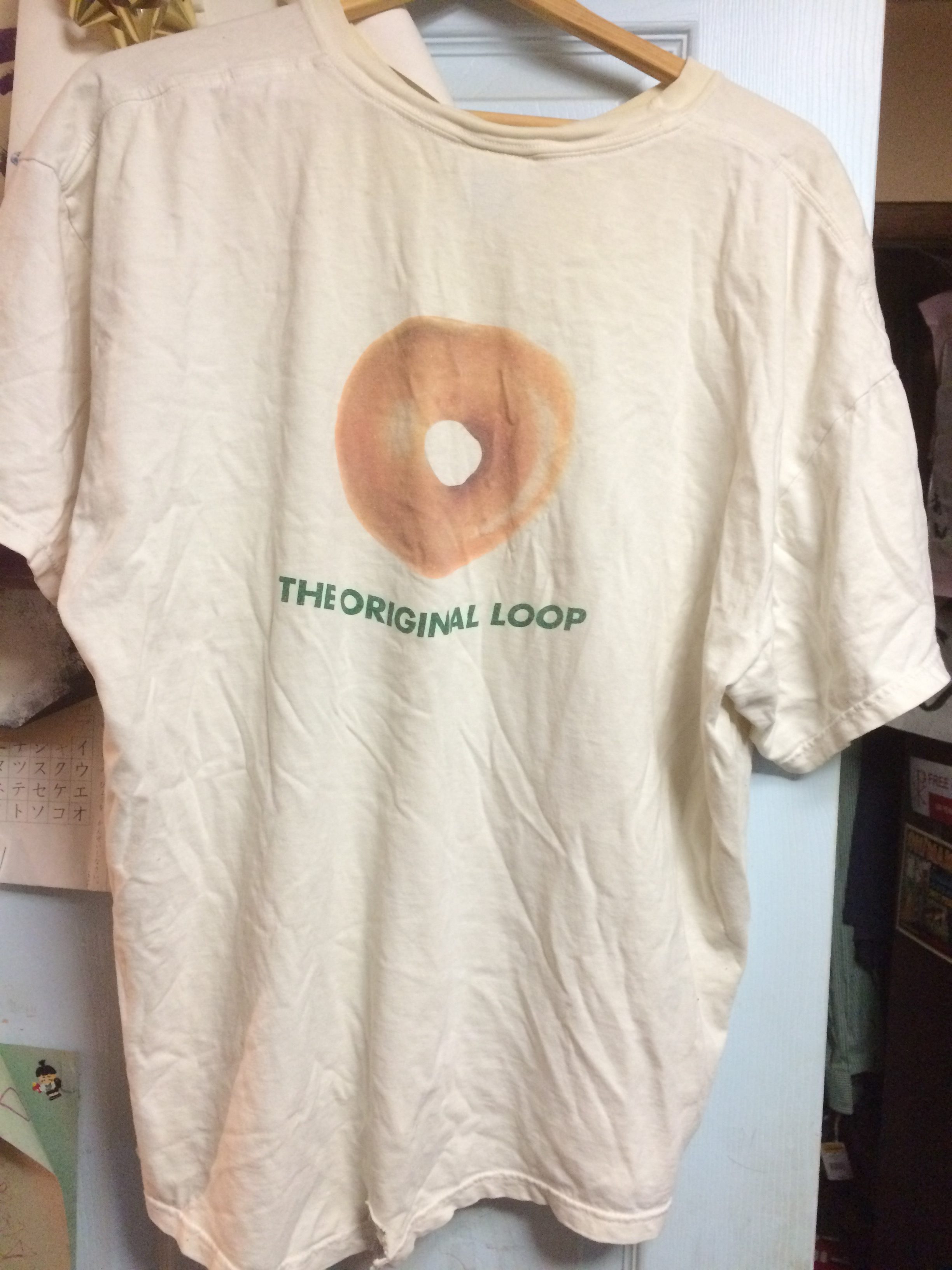
Such as one my worn t-shirts, the kind you don’t wear any more, but don’t discard. This is the back; the front is a corporate logo.

In 2002, when I worked downtown editing a magazine, Krispy Kreme opened a location not far from my office. The shop was giving away free doughnuts and t-shirts specially made to extol that particular store, hence the mention of the Loop. The doughnuts didn’t last long back at the office, naturally, but I wore the shirt now and then for a few years, one of the few advertising shirts I was willing to wear.

KK was on a growth bender at the time that didn’t end well, but didn’t put the company out of business, either. The brand contracted for a while, including the closure of the downtown store and one near my house in the suburbs. In the 2010s, the company seems to have grown at a more measured, and presumably more sustainable pace.

In fact, now you can buy KK doughnuts in a score of countries on every continent except Antarctica. But I remember when it was a Southern thing. So Southern, as in the Deep South, that I’d never heard of it growing up in Texas. I discovered it when I went to school in Tennessee, and what a discovery. Delicious hardly did them justice. Good eating by yourself and always welcome at gatherings.

(I realize looking at the 2009 posting that I haven’t mentioned Irwin Hepplewhite and the Terrifying Papoose Jockeys in a long time. Someone has to keep that name going, and that someone is me.)

What I wrote nearly 11 years ago about the KK location that closed is still true when it comes to the nearest open one to us, about 20 minutes away: ” I’m fond enough of their product… but the truth was, the only time we ever bought doughnuts at the Hanover Park location was when we got a hold of coupons offering two boxes for the price of one, since a dozen normally comes at a premium to more ordinary doughnuts.”

The Bears’ Cookbook

The pit of winter hasn’t been very deep this year, but on Wednesday night, snow fell and today temps have been sliding all day. As of this evening, it’s about 5 degrees F. above, with subzero expected by dawn tomorrow. That’s the classic harsh winter pattern we’ve mostly avoided so far this year, when temps have actually risen after snowfall, enough to melt most of it each time.

Then again, forecasts call for above-freezing air by Sunday. The pit still seems pretty shallow. Suits me.

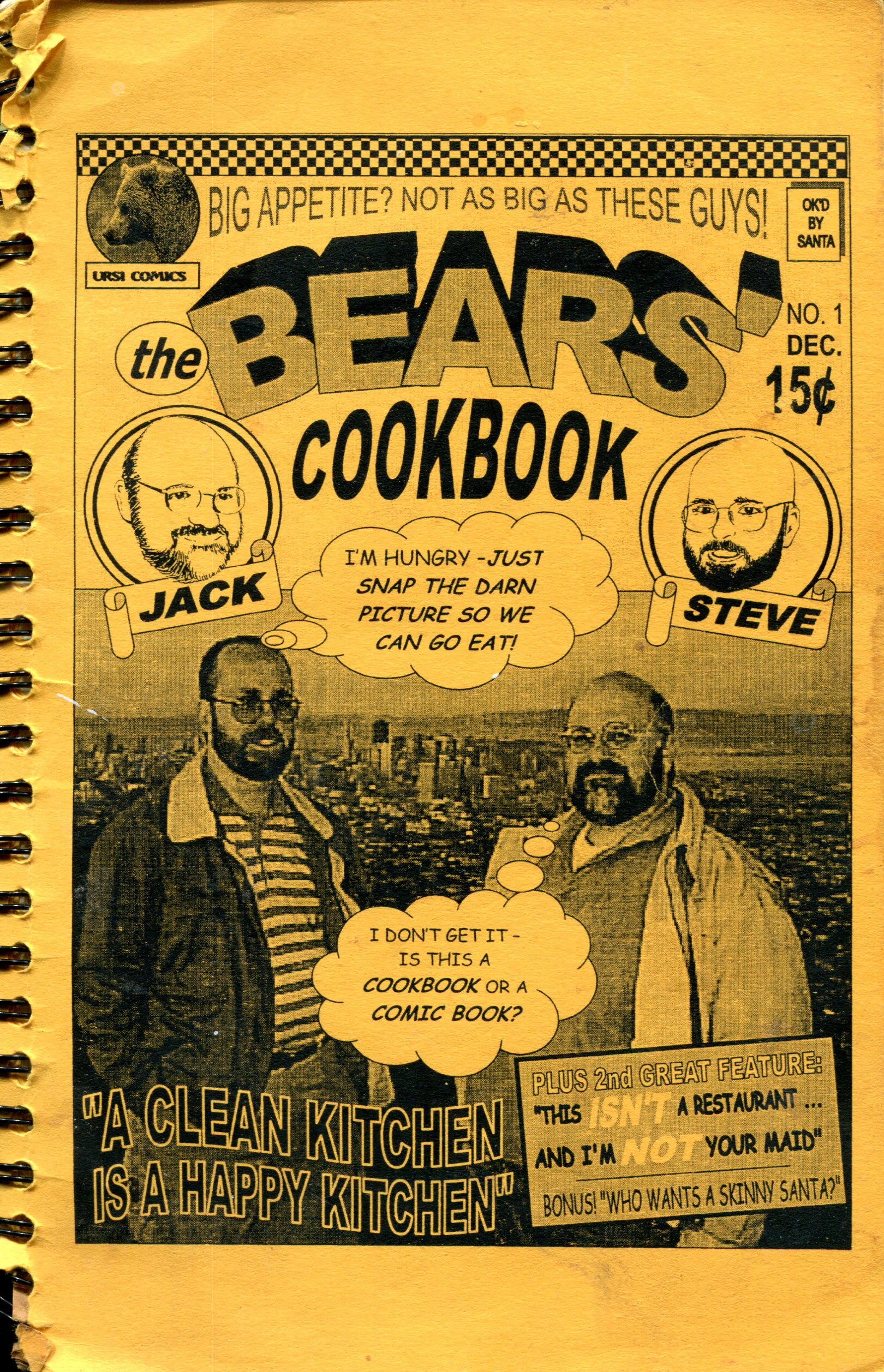
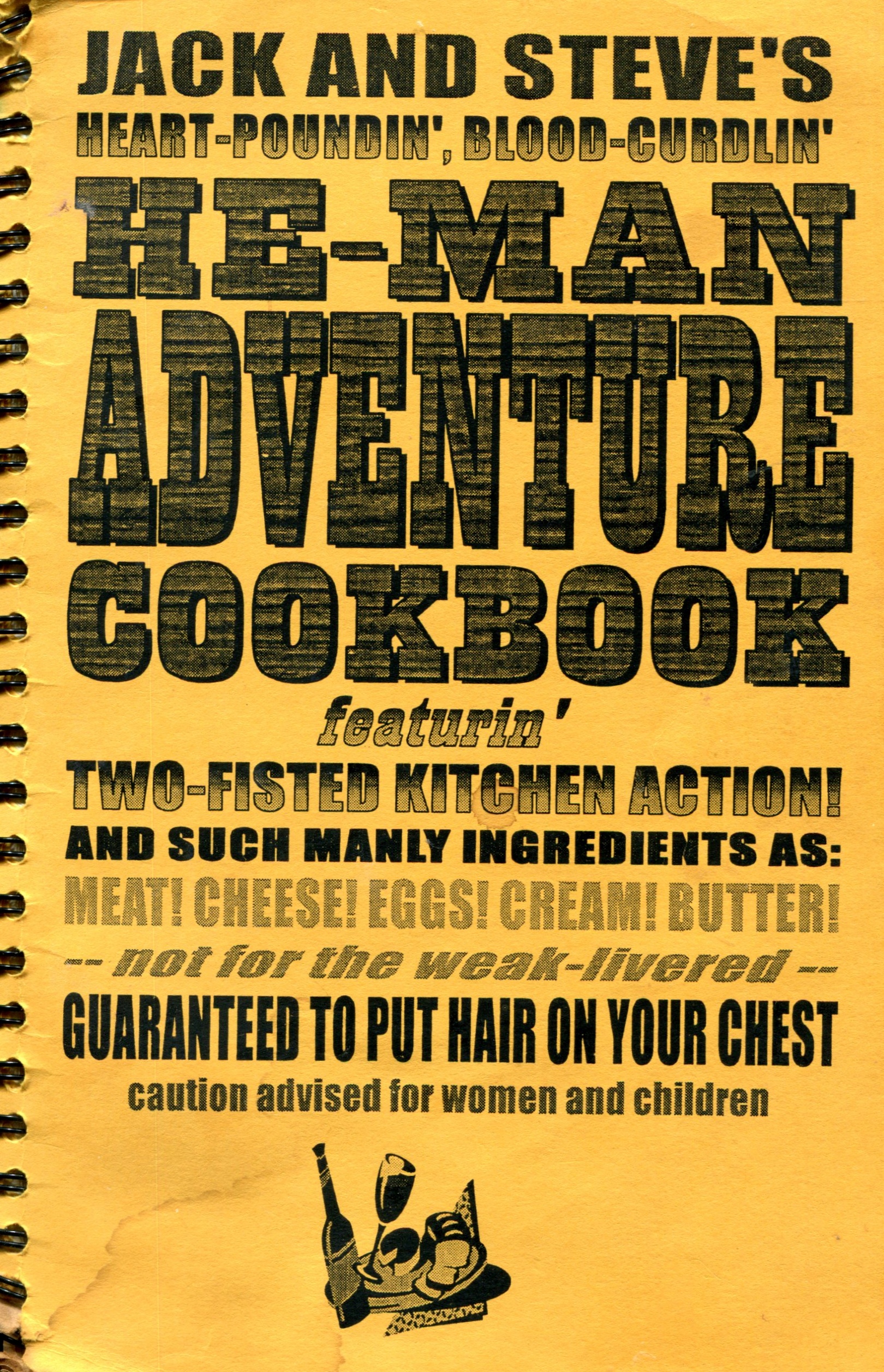
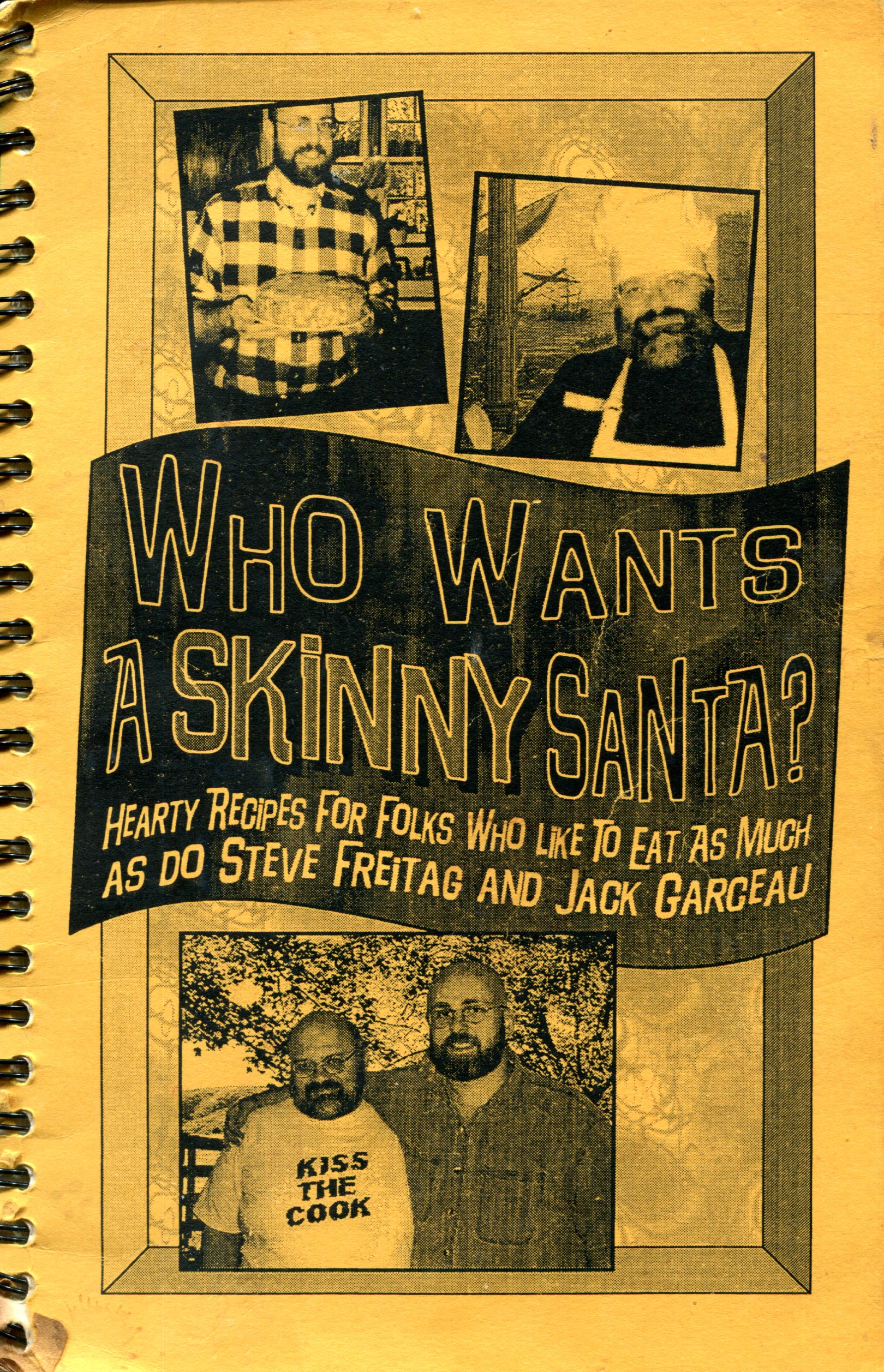
One more unusual book around the house: The Bears’ Cookbook. In this case, I didn’t nab it from my mother’s house. Rather the authors, Steve Freitag and Jack Garceau, gave it to Yuriko and me as a gift in 1998. I knew Steve back at VU; in fact, I was a senior staff member at Versus magazine when he was editor in ’82-’83.

The Bears’ Cookbook was a spiral-bound, privately published effort by Steve and Jack, who produced about 100 copies. As they explain in the book:
“What could be a better Christmas gift for our loved ones, our friends and family, than a cookbook of our favorite recipes? Welcome to our table. Sit, eat, enjoy.”

And so we have over the years. Yuriko and I have used the book, especially her, but so have Lilly and Ann, as soon as they’ve gotten old enough. Just a few weeks ago, Ann made chocolate chip cookies using the recipe on p. 97.

Besides cookies, subjects include breakfast, appetizers, soup, salads, breads, pasta, chicken, other meat, seafood, vegetables, condiments, and cakes and pies. Sources — one given for each recipe — are as diverse as “Ivan, a friend from New Brunswick who now lives in Vermont,” Alice’s Brady Bunch Cookbook, “Mayflower Restaurant in Albany, NY,” “Some men’s magazine Steve read long ago,” Julia Child, and “lost in the mists of time.”

The book actually has three covers. Flip over the first one, and you encounter this amusing, all-text cover.

A note inside the book explains: “We wound up with several covers, each with different titles, and we couldn’t decide which one to use. So we decided to use them all! Well, actually, just a few of them…

“Pick the cover you like best for a cookbook that may very well grace your coffee table, bookshelf or nightstand for years to come. Fold back the other covers (one of the few advantages if spiral binding), so that the excess covers become mere interior pages. Voila! The cover you prefer graces this lovely book.”

The third cover.

The inside cover of each of the covers includes biographical notes about Steve and Jack, such as under a cartoon of them:

Steve Freitag and Jack Garceau are not cartoon characters by a real flesh-and-blood couple who live high above San Francisco in an 18th-floor apartment they never call the ‘Treehouse of Justice.’ 

They’ve since moved to Palm Springs. Under a photo of them decked out in Western duds:

Steve Freitag and Jack Garceau — known far & wide as two of the orneriest, grizzliest old hashslingers in the West! — started out as mama’s-boy East Coast fops…

Under another cartoon of them with oversized heads:

Enormous heads like these require plenty of food! So it’s no surprise that Steve and Jack like to cook. Like to eat and like to read — and now, write — cookbooks.

I’m no judge of cookbooks, but I know this one is fun to use and fun to read.

A Cartoon History of United States Foreign Policy Since World War I

Not long ago I looked up the Foreign Policy Association. Turns out the organization has a mission statement.

“The mission of the Foreign Policy Association today, as it has been for over 100 years, is to serve as a catalyst for developing awareness, understanding, and informed opinion on U.S. foreign policy and global issues. Through its balanced, nonpartisan programs and publications, the FPA encourages citizens to participate in the foreign policy process.”

By gar, that’s positively Wilsonian in its optimism that citizens can influence foreign policy, and that in fact U.S. foreign policy can be a force for good in this wicked world. Maybe it can. It’s certainly pretty to think so.

Another of the books I liberated from my mother’s house in recent years is A Cartoon History of United States Foreign Policy Since World War I — by the Editors of the Foreign Policy Association, the cover says, published in 1967. In the book’s acknowledgement, one Norman Jacobs is given as the editor of the association, but he thanks half a dozen people who participated. A group effort book, then.

The book includes about 250 editorial cartoons in 19 chapters. Actually, two examples are comic strips that editorialize, but they are exceptions, with most of the content one-panel cartoons. (Remarkably, included is a B.C. strip: two ants are watching two larger animals fight, and one ant says, “If we had ‘the bomb,’ we could intervene.”)

The editors provide a few lines of context for most of the cartoons, usually going out of their way to be nonpartisan and mostly nonjudgmental, at least as far as U.S. policy was concerned. For instance, before the U.S. entry into WWII, there are cartoons for and against intervention in European affairs and then the war itself.

The chapters, and the cartoons, are more-or-less chronological, beginning with the argument about U.S. participation in the League of Nations, continuing through the prewar years and the rise of fascism and then the U.S. in WWII. After that, as you’d expect, comes the Cold War and all its complications and players, which was ongoing as the book was published.

Lots of famous things are touched on — Munich, isolationism, Pearl Harbor, the atomic bomb, the founding of NATO, the wars in Korea and Vietnam, sputnik, the Berlin blockade and wall, and the Cuban missile crisis. Other less-remembered events were the subject of cartoons as well: the Washington disarmament conference, the sinking of the Panay, riots in Poznan, Poland, American marines landing in Lebanon in 1958, and so on.

I probably first read the book in junior high. I learned a great deal from it — maybe as much as in some of my classes — about the history referenced, but also a notion of how things considered settled now were once contentious.

One good example is the Marshall Plan and the creation of NATO. Few would consider those mistakes now, or even 50 years ago, but in the late ’40s not everyone was on board, as illustrated by a cartoon that shows a man — labeled Our Global Meddlers — happily offering a diving board to a character called U.S. Senate. The board is labeled Atlantic Pact and it’s leading to shark-infested waters (labeled War Dangers).

I read through the book enough times over the years that many of the images are still familiar when I look them now. A Cartoon History of United States Foreign Policy Since World War I was also an introduction to some first-rate, or at least then-famous editorial cartoonists, and the art of such cartoons, which has been slipping away from us in recent decades.

The index is instructive. You can tell which cartoonists appeared the most in the book, such as John Fischetti (1916-80), Herblock (1909-2001), Bill Mauldin (1921-2003), Edmund Valtman (1914-2005) and Ralph Yardley (1878-1961). Other cartoonists rated a few examples, and many more only one. One editorial cartoonist not represented: Theodor Geisel, who had a lot to say.

Looking at it now, I’m interested to see the many ways the cartoonists used Uncle Sam. A quick glace has Uncle Sam as the bridegroom of Foreign Entanglements, surrounded by lions, one of the Wise Men, looking on as Europe burns, someone who’s tied cans to the tail of Hitler’s dog (it makes sense in context), as Gulliver tied down, a robbed man with empty pockets, a soldier in Korea, and many more.

Curiously enough, depictions of Uncle Sam seem to slack off in the late ’50s and early ’60s. More often presidents — Eisenhower, JFK and LBJ — stand in for their administrations in those years, though Wilson, FDR and Truman appeared often enough before then. Yet Uncle Sam isn’t completely gone, even in 1967: the second-to-last cartoon has Uncle Sam as a knight, riding (barely holding on to) a horse called U.S. Power. “Of course I’m in charge — I think,” he says (Bob Bastian, San Francisco Chronicle).

Plenty of non-American characters also appear, such as Hitler and Stalin, many times, but also Mussolini, Neville Chamberlain (but not, oddly, Churchill), Chiang Kai-Shek, Khrushchev (many times, but not Brezhnev — too new, I guess), Nasser, Mao, Charles de Gaulle and Fidel Castro, among others.

A few panels are outstanding examples of the editorial cartoon. One is “High Noon” by Bill Crawford (1913-82), which is exceptionally simple and effective. It depicts a top slice of a globe. Toward the bottom of the panel is an arrow on a rocket launcher, ready to fly; a world away, at the edge of the globe almost out of sight, is another arrow, the exact same one on an exact same launcher. The arrows are pointing at each other. This of course illustrates the height of the Cuban missile crisis.

One by C. D. Batchelor (1888-1977) from 1948 shows two figures heading up a luminous (golden) staircase, into heavenly clouds. They are holding hands. One figure is Czech Liberty. The other is Jan Masaryk.

An August 1945 cartoon by Daniel Fitzpatrick, “Journey’s End,” is also simple and effective. Small figures, looking much like the flagraisers on Iwo Jima, are on top of a globe raising a banner that says, VICTORY.

Finally, the two I consider the best in the book, and which were by the same cartoonist: Sir David Low (1891-1963), also known as the creator of Colonel Blimp. I believe both of the cartoons are also better known than the others in the book, and for good reason. Interestingly, neither are directly about U.S. foreign policy, just events that concerned the nation very much.

One is 1939’s “Rendezvous,” which has Hitler and Stalin politely bowing to each other over the body of Poland, whom they just murdered.

Hitler: “The scum of the Earth, I believe?”
Stalin: “The bloody assassin of the workers, I presume?”

The next year, after the fall of France, Low drew a tommy on a beach, invading airplanes overhead, waves crashing around. He holds a fist high. “Very well, alone” is the caption.

Both of these Low cartoons are here, along with a lot of other good ones he did.

Bennett Cerf’s Treasury of Atrocious Puns

Who knows Bennett Cerf any more? I’d guess that out a 100 randomly picked men and women on the street, the number who did would be a small scattering, if that. Even people my age wouldn’t really have much of a clue, despite United States v. One Book Called Ulysses, which ought to (does?) come up in school.

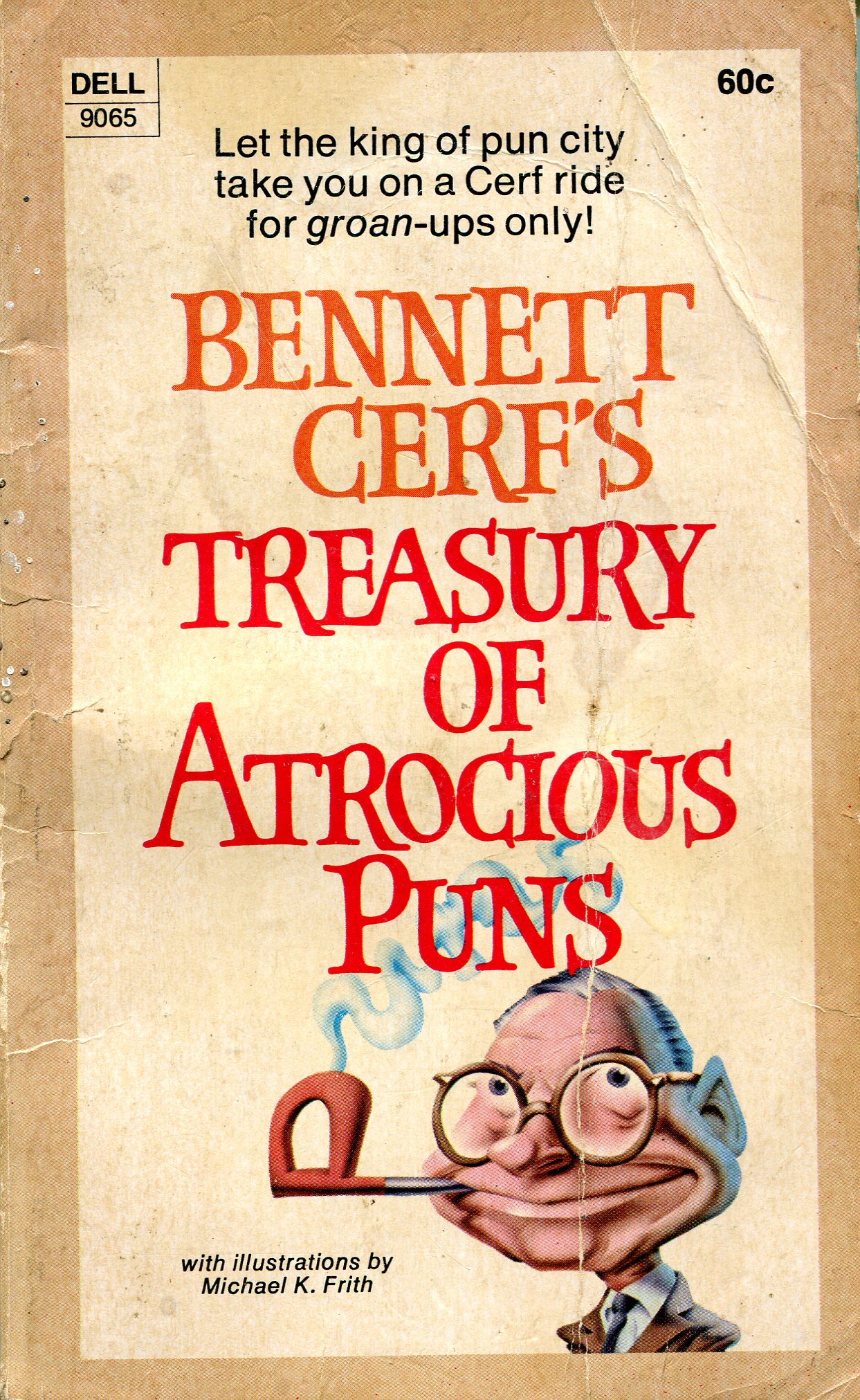
I might not know much about him myself except for a paperback we had around the house when I was growing up: Bennett Cerf’s Treasury of Atrocious Puns. It was published in 1968, toward the end of Cerf’s life, since he died in 1971 — another reason my cohort wouldn’t know him.

If he’d lived longer and appeared on game shows in the ’70s, maybe we would. He might have taken Wally Cox’s place on the Hollywood Squares when he died. Then again, Cerf was part of the New York literary milieu, and might not have been interested in a California game show.

I brought our copy home from San Antonio not long ago. It’s more amusing than the 1963 topical New Frontier Joke Book, though some of the puns are 1968 topical, too. Such as the captions for a drawing in the book that depicts someone being electrocuted by a wall outlet. Three other people are watching, and their speech balloons say: “A real life wire.” “One of the turned-on generation.” “Socket to me.”

Mostly, though, the punning reflects an earlier 20th-century vintage that isn’t necessarily moored to its time but does expect the audience to know certain things. Such as these lines from Cerf’s introduction: “In Rome, the great Caesar (the roamin’est noble of them all), when asked by his friend Brutus at the Forum one afternoon, ‘How many hamburgers did you consume at luncheon today, Julius?’ couldn’t resist answering, ‘Et two, Brute.’ ”

After the intro — in which Cerf assets that the pun isn’t the lowest form of wit — the book groups its puns into various chapters, including puns about animals, show business, education, sex, food and drink, commerce, health, the law, literature, music, sports and more. There are also puns on signs and punning definitions for words.

Many examples feature a few paragraphs or even half a page of build up before you get to the pun. Mostly more than I want to transcribe, so I’ll do only one — one of the more convoluted examples in the book, I think.

A resourceful Floridian not only harbored four playful porpoises in a pool beside his house, but discovered a way to keep them alive forever. All he had to do was feed them sea gulls.

So he ventured out in Biscayne Bay and trapped a quantity of gulls. When he tried to re-enter his house, however, he found his way blocked by a peace-loving, toothless old lion who had escaped from the zoo and was stretched clear across the doorway. As our intrepid hero jumped over the dormant beast, a posse of game wardens burst from the surrounding shrubbery and took him into custody.

The charge: Transporting gulls across a staid lion for immortal porpoises.

Which, in an aside, Cerf points out is a quintuple pun.

Other puns are shorter. Such as these “Daffynitions.” (By Webster? Noah! Noah!)

Bulldozing: Falling asleep during a political speech.
Disbar: As distinguished from some other bar.
Exchequer: A retired supermarket employee.
Gambit: Bitten in the leg.
Hangover: The wrath of grapes.
Hypotenuse: The washroom upstairs is occupied.
Incongruous: Where the laws are made.
Molasses: Additional girls.
Pasteurize: Something you see moving.
Polygon: A dead parrot.
Ramshackle: A chain used to tie up a he-goat.
Specimen: An Italian astronaut.

Supposed real people and the places they live:

Quoth D. Raven: Never, Mo.
I.M. Phelin: Slightly, Ill.
C.U. Sunday: Early, Mass.

A few of these made me laugh, but mostly — if you have any taste for puns — the book is good for smiles. Except for the puns about sex, which are very dated.