A Sunday Drive + Phishin’

The last day of August? Even this pandemic summer has sped by like an ordinary summer. I’ll post again on September 8.

We were out and about on Sunday, including a drive on I-90 between metro Chicago and Rockford. Here’s the highway as seen from the Belvidere Oasis, looking west.
tollway oasis BelvedereThat is, at a large rest stop on the toll road. They seem to be unique to Illinois.

On the whole, we did a classic Sunday drive — a trip just for the sake of driving, except that it was also driving practice for Ann, who has a learner’s permit these days, and not much experience on highways. We made it as far as Rock Cut State Park near Rockford, then headed back.

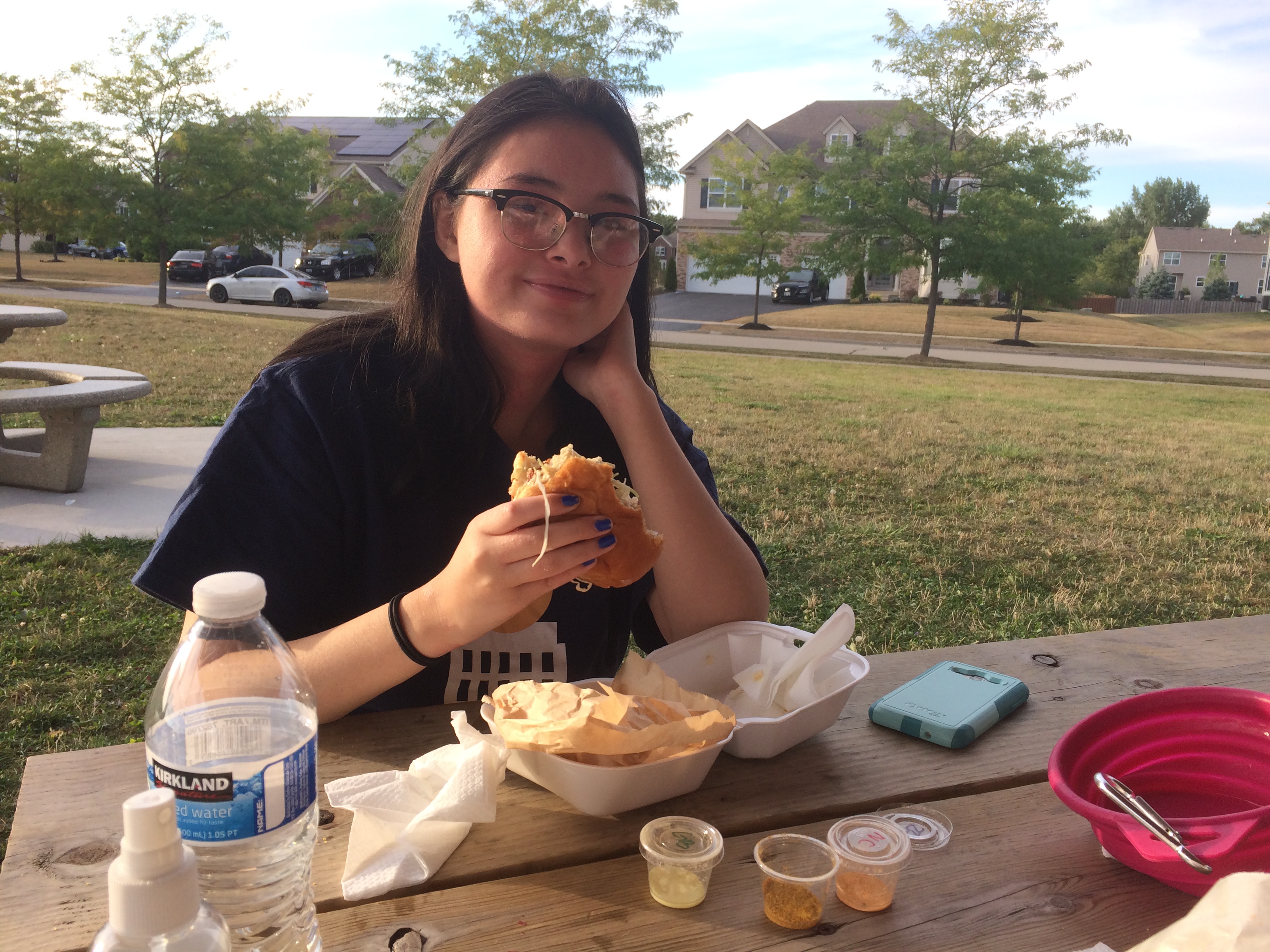
As part of our return, we stopped at Gabuttø Burger. Formerly located in Rolling Meadows, the Japanese-style hamburgerie is now in Elgin, near the Randall Road exit on I-90. Not very convenient for us most of the time, but we were in the area.

Eating in was an option, but instead we found a small nearby park with a picnic shelter. Good eating. We are fortunate indeed.

Gabutto BurgerFor some reason while we were out on Sunday, a number of phishers came calling. Our voice mail captured 13 messages. Actually all from the same source saying the same thing: Your X account has been breached…

How thoughtful of them. They provided a phone number to call, and I’m sure for a small fee — what’s that credit card number again? — they’ll be happy to fix a problem with something I don’t even use.

Also, an email (all sic) pretending to be from a major financial services company came on Sunday:

Your account security is our priority.
To validate your account, click here or the validation button below.
The link will expire in 24 hours, so be sure to use it right away.
failure to confirm your record will result in account disabled. Please confirm your records.

Such is life among the digital wonders of the 21st century.

The National Museum of Denmark

Another example of somewhere I visited but don’t really remember: The National Museum of Denmark (Nationalmuseet). You could say that’s because I was there 37 years ago this month, which is a long time ago, but at roughly the same time, I visited the Carlsburg Brewery and Tivoli — the same day in the case of Tivoli — and I remember those fairly well.

Memory’s a slippery character. Here’s what I wrote at the time.

June 18, 1983

Walked [after breakfast] to the National Museum and spent a lot of time in the early Danish collections, a fine assortment of artifacts from pre-farmers (4000 BC) to the Vikings. They had a lot — tools, weapons, pots, clothes, ornaments, more. I noticed that much of the collection — seemed like nearly all of it — survived because it was buried with people.

Then I spent a long time ogling the coin collection, mostly the Roman ones. The museum had at least one example of every emperor and plenty of usurpers and others. I didn’t take as much time in the rest of the museum, but walked through. It is vast. Rooms and rooms and rooms of exhibits.

I left to eat lunch at a Chinese place, spring rolls with sauce and a heap of rice. After lunch I bought chocolate: Toblerone and Ritter Sport.

Those sound like ordinary chocolate purchases, and maybe they are now, but in those days Toblerone wasn’t available in every shop from here to East Jesus and my traveling companions and I had never heard of Ritter Sport. It was an important discovery for us that summer, somewhere in Germany a few weeks earlier. If you’re walking around all day, chocolate’s a good thing to have. Even better, it’s good to snack on high-quality choco like Ritter Sport. Best of all, it’s chocolate that I’ve enjoyed ever since it became available in the U.S. sometime in the late ’80s.

Thursday Jumble

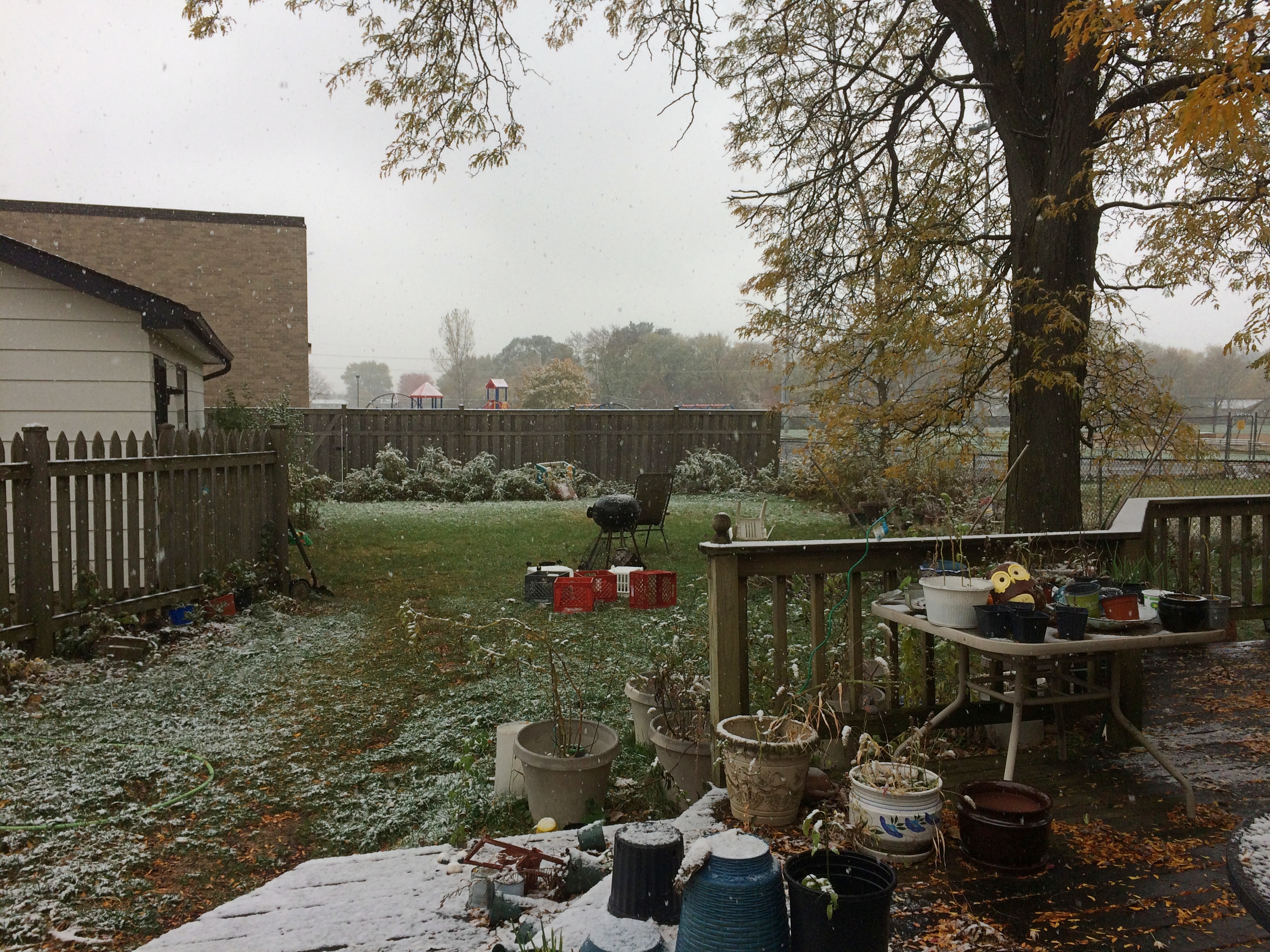
Intermittent rain and thunder on Tuesday and Wednesday, and some vigorous warm winds. Enough to randomize the arrangement of our deck chairs but not, fortunately, to move the cast iron deck table. Mostly, though, recent days have been clear and agreeably summerlike.

They’ve aged remarkably well.

Last weekend, we made it back to Spring Valley to see the Peony Field, now in full bloom.


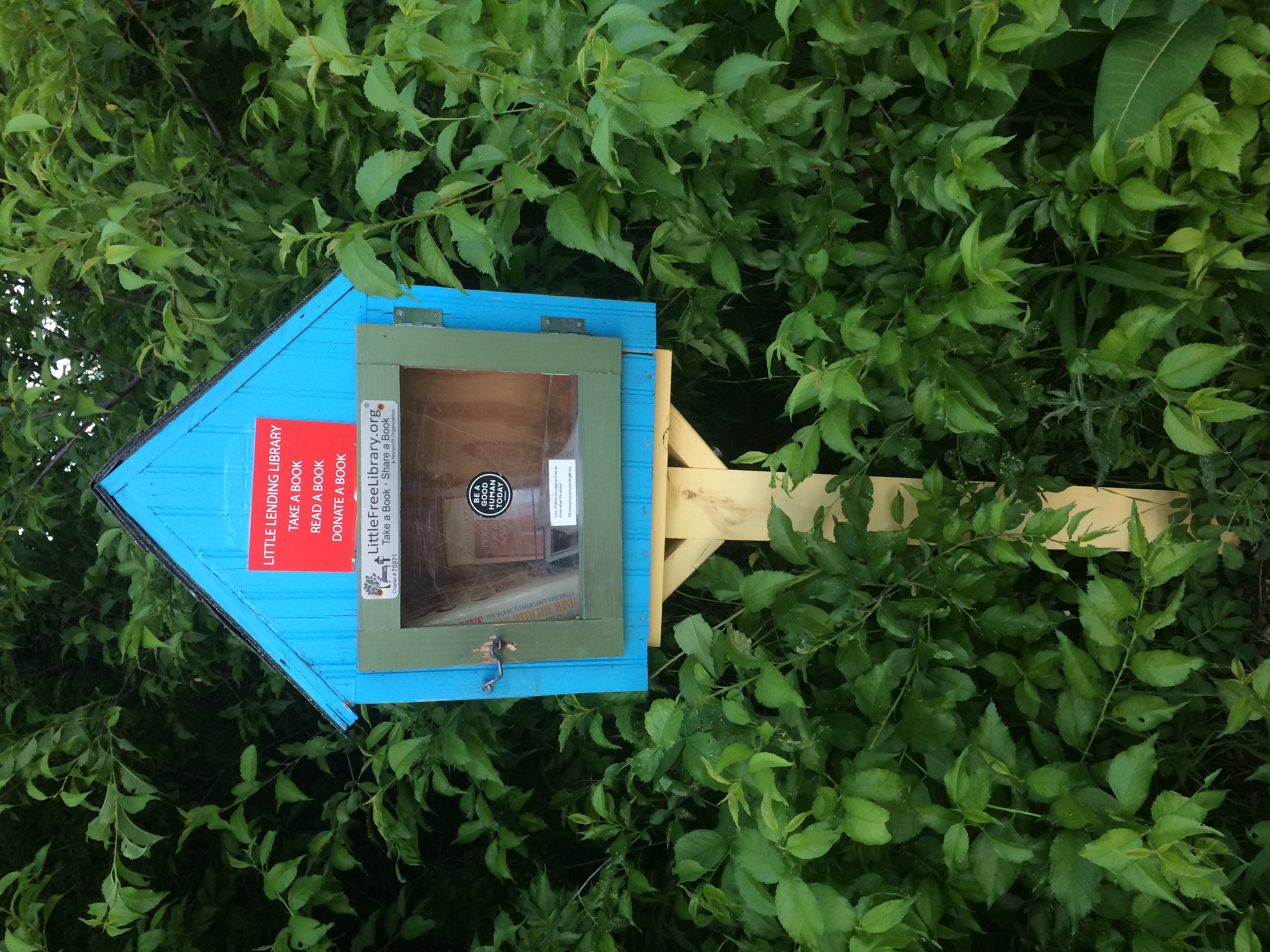
Also noticed a Little Lending Library at Spring Valley. I think that’s new. It encourages one and all to Be a Good Human Today.Spring Valley Little Lending LibraryNot as full as the one on my street, but it had a few items, including a stack of booklets whose subject is Baha’i prayers. I took one for a look-see. In each are prayers for various occasions and situations, such as Aid and Assistance, Children, The Departed, Healing, Morning, Parents, Tests and Difficulties, and so on.

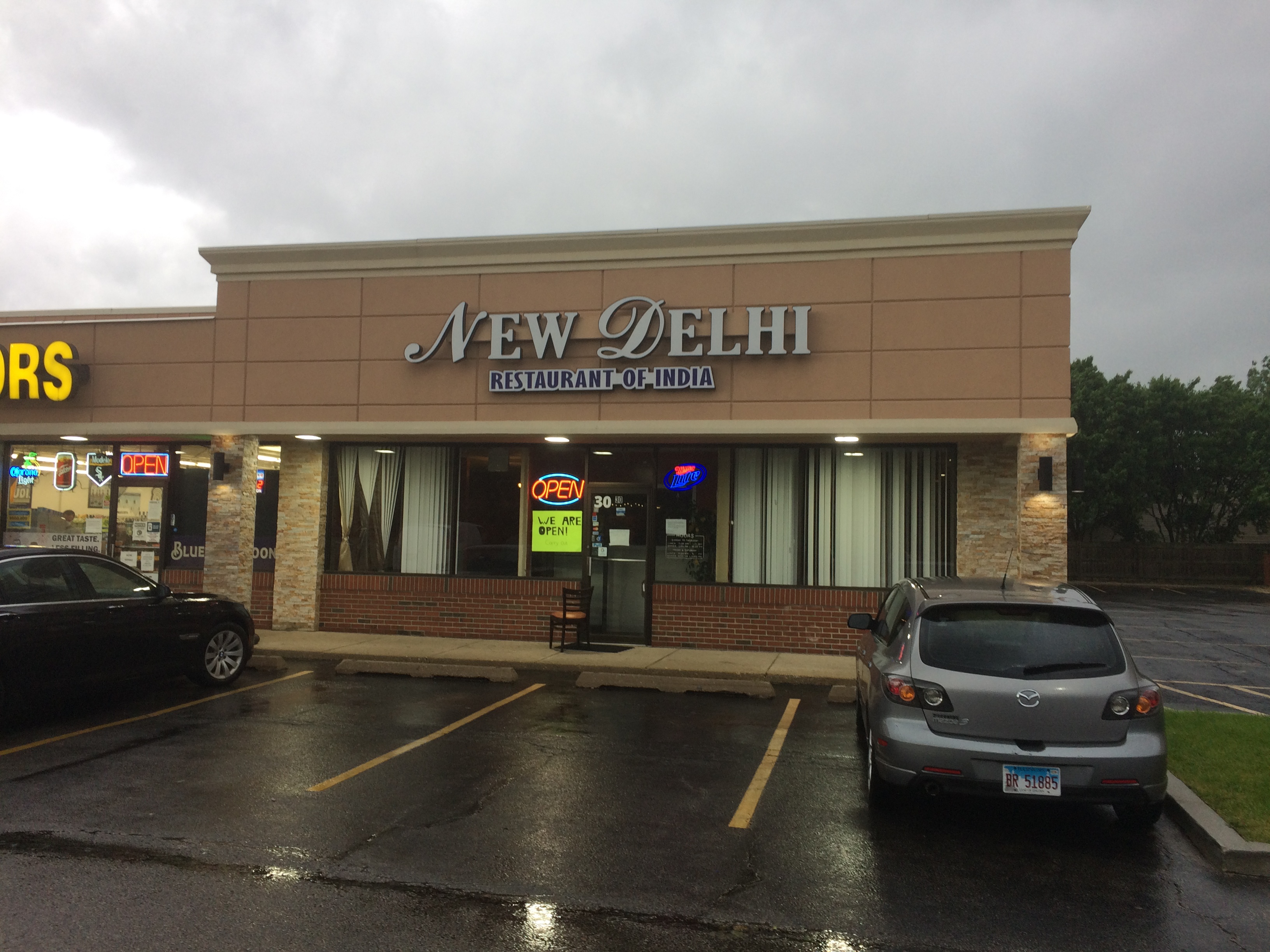
Later in the week, we got takeout from an Indian restaurant we visited, and liked, a few years ago. Been buying takeout locally ever other week or so since sit-down restaurants closed.
New Delhi Restaurant Schaumburg
We feasted on sang paneer, malai kofta, paneer bhurji, lamb bhoona — that was mine — along with garlic naanm, roti and jeera rice. All good.

RIP, Hecky Powell

I didn’t know Hecky Powell, who died recently at 71 of COVID-19. But I sure knew his ribs, and especially his rib tips. He owned Hecky’s Barbecue, a longstanding rib joint in Evanston, a small place shoehorned into a building at Green Bay Road and Emerson St.

“Explaining his rib methodology, he told the Sun-Times it went like this: Apply a dry rub — based on his mother’s secret recipe — and follow that with 24 to 48 hours of grilling in a smoker. Then, he’d heat the sauce and slather it on.”

Whatever he did, he produced wonderful ribs and rib tips. A former Northwestern student I knew in the late ’80s introduced me to the place. Since Evanston’s a slog of a drive from where we are now, we’ve visited Hecky’s — carryout only — only about once or twice a year in more recent decades.

Still, just by thinking about it, I can picture, and taste, the pound of rib tips we’d usually get. Marvelous. A marvel of the barbecue arts.

Thursday and Everything’s Tickety-Boo

Well, not really. We’re well enough here in our little spot, but the world’s never all tickety-boo. I only bring it up because I learned that word a few weeks ago. How did I get to be my advanced age without knowing it? Sure, I’m not British, but that’s never stopped me from learning some Briticisms.

Besides, it isn’t exactly new.

At least I know it now. Looking into the word, origin uncertain, and the song (by Johnny Mercer and Saul Chaplin), naturally led me to read a bit about Danny Kaye. Per Wiki: “Kaye was cremated and his ashes were interred in the foundation of a bench in Kensico Cemetery in Valhalla, New York. His grave is adorned with a bench that contains friezes of a baseball and bat, an aircraft, a piano, a flower pot, musical notes, and a chef’s toque.”

Those reflect his talents. A multi-talented fellow, he was. Wait, there’s a town called Valhalla in New York? Guess so. Hope there’s a really boss mead hall in town. These are a few other clips of the talented Mr. Kaye.

Tickety-boo or not, it’s Thursday, which has the advantage of having all of Friday and Saturday to look forward to. I wondered earlier today: how many songs have Thursday in the title? I couldn’t think of any, but that’s just me. There are some.

Interesting selection, including some bugs in bright — make that psychedelic — amber.

The list also includes songs by a band called Thursday. Didn’t know them. “A significant player in the early 21st century’s post-hardcore scene, Thursday formed in 1997 in New Brunswick, New Jersey,” Allmusic says. “Thursday’s frequent gigging and furious passion fueled a grassroots response, and by 2002 the band was on the main stage of the Warped Tour and enjoying MTV support for the single ‘Understanding in a Car Crash.’ ”

Good for them. One more thing for this spring Thursday during the pandemic. We ordered pizza for pickup today, supporting a local chain. Been a good while since we had any. The scene at pickup.

With any luck, scenes of this sort will be fixed in amber before too long.

Nori

Usually I do my own scanning, but in this case, I figured — what’s the point? A fellow named John Lodder posted this image on Flickr under a Creative Commons 2.0 license, meaning I need to give him credit and link to the original site — which I just did. It’s a close-up of nori.We always have nori around the house. It’s used for wrapping edibles, especially to make homemade sushi, which we do fairly often. Not as artful as prepared sushi, but a lot cheaper and just about as good. More finely shredded nori is a garnish.

Nori is seaweed pressed into sheets. That much I’ve long known. I decided to look into it a little further, and discovered something I never knew, which always makes my day: the story of the reinvention of nori and, indirectly, sushi.

Seaweed has been harvested and processed into nori in Japan for centuries, but right after WWII, the industry was in dire straits.

“Despite becoming a staple food of the Japanese, the basic biology of edible seaweed species remained almost completely unknown until [the late 1940s], when pioneering British scientist Kathleen Drew-Baker saved the country’s nori farming industry,” Gastropod says.

“In 1948, a series of typhoons combined with increased pollution in coastal waters had led to a complete collapse in Japanese nori production. And because almost nothing was known about its life cycle, no one could figure out how to grow new plants from scratch to repopulate the depleted seaweed beds. The country’s nori industry ground to a halt, and many farmers lost their livelihoods.

“Meanwhile, back in Manchester, Dr. Drew-Baker was studying laver, the Welsh equivalent to nori. In 1949, she published a paper in Nature outlining her discovery that a tiny algae known as Conchocelis was actually a baby nori or laver, rather than an entirely separate species, as had previously been thought.

“After reading her research, Japanese scientists quickly developed methods to artificially seed these tiny spores onto strings, and they rebuilt the entire nori industry along the lines under which it still operates today. Although she’s almost unknown in the UK, Dr. Drew-Baker is known as the ‘Mother of the Sea’ in Japan, and a special ‘Drew’ festival is still held in her honor in Osaka every April 14.”

I’m not so sure about that last line. I might have missed such a festival when I lived there — Osaka’s a large place — but other sources, such as a longer University of Manchester article about about Dr. Drew-Baker and nori, tell me the festival is in Uto, Kumamoto.

There’s a memorial to her in Uto, seemingly at a place called Konose Sumiyoshi shrine, which could be confused with Sumiyoshi Taisha (Grand Shrine) in Osaka — within walking distance of where I used to live.

One more thing about nori, at least around here. Our dog likes it. Loves it. One of her favorite things to eat. That has some practical uses, too: any pills the vet prescribes go down a lot easier when wrapped in wet nori.

Bonito Flakes

A staple of Japanese cooking, bonito flakes look a little like pencil shavings, but are more delicate. We always have them around the kitchen, in packages large and small. The empty package I scanned is Futaba brand bonito flakes.
“Bonito is a kind of tuna, and Katsuobushi is dried, smoked bonito,” Japanese Cooking 101 says. “Katsuobushi is often used as flakes shaved from a piece of dried fish…
“Katsuobushi has a smokey savory taste that is a great accent for many Japanese dishes. Because dried bonito is packed with lot of umami (savory taste), it is perfect for making dashi (fish broth) with which is a crucial component for Japanese cooking. Katsuobushi also can be used as is, sprinkling on simple vegetables to give a deeper flavor instantly.”

I knew it first from okonomiyaki, an Osaka and Hiroshima specialty sometimes called a Japanese pancake, a term that describes the shape of the food, but misleads about everything else important: taste and texture. Okonomiyaki includes flour, eggs, shredded cabbage, and a choice of protein, and topped with a variety of condiments — especially a brown sauce we call okonomi sauce, and bonito flakes.

Bonito is also good eating as a regular fish dish. Especially in Shikoku, and even more especially in Kochi prefecture in the southern reaches of the island. I encountered it at Cape Ashizuri in ’93.

“The minshuku [was] our accommodation for the night, and completely fogged in. The evening meal made up for it by being excellent, especially the bonito sashimi,” I wrote about the visit.

Kashiwa Mochi

We don’t always acknowledge Japanese holidays, but sometimes we do. This year for Children’s Day, formerly known as Boys’ Day, we ate kashiwa mochi, which is a thing to do on Children’s Day. The holiday is better known in this country for its carp streamers, but we don’t happen to have any of those. (Oddly enough, my mother had three that used to hang in the garage. I don’t know what became of them.)

Kashiwa mochi are rice cakes filled with red bean jam and wrapped in oak leaves. The ones we ate came in the package to the right. The small kanji characters say Sakuraya, the brand name, while the larger hiragana characters say kashiwa mochi.

You’d think it’s a product of Japan, but no. It’s domestic, possibly made by a bakery called Sakuraya in Gardena, Calif., and distributed by the Japanese Confection Inc. of College Point, NY. The package, and the Internet, isn’t clear on those points.

The red bean jam is mildly sweet, as red bean jam usually is, but the mochi rice cakes weren’t as sticky as I’m used to eating around the New Year.

Though not that sweet, curiously enough the first ingredient listed for the confection is sugar, followed by rice flour, red bean, sweet rice flour and potato starch.

As befitting its sugar content, it’s almost all carbohydrate, with no fat of any kind and only a touch of protein. No sodium, either.

Toward the end of ingredient list is “salted kashiwa leaf,” that is, the oak leaf. Not edible, but nice to look at. It also wraps the mochi, giving you something to hold it with.

Jidori Chicken

Jidori chicken apparently isn’t new, but I miss things. In 2004, the Wall Street Journal said: “Jidori is exactly the same thing as free-range chicken — but it sounds more impressive in Japanese. ‘Free range is a word that if you put on the menu, it’s out of style,’ Johan Svensson, chef of Riingo in New York.

Today I spotted “jidori” on a package that Yuriko acquired at the northwest suburbs’ main Japanese grocery store. Helpfully, it also said “free range,” as well as offering the kanji for the term: 地鶏. Literally, “ground or earth chicken.”

Nice to learn. Even better, the package contained chicken hearts. That conjured up an image of carefree, happy chicken hearts lolling around the lone prairie.

Been a long time since I’d had any chicken hearts. Usually, or at least in my limited experience, a few are packed along with gizzards, which we don’t eat all that often because they tend to be overly chewy. Hearts, on the other hand, are only a little chewy, and with a good sauce, good to eat.

Adios, Gabuttø Burger

Update: Gabuttø Burger is closed. At least the one in Rolling Meadows is, which used to be the only location. Maybe I should have mentioned that before, since we found that out one day in November (I think) when we dropped by for its fine sort-of-Japanese burgers and found it locked.

So the Yelpers are right. The place wasn’t a victim of the pandemic, though at times I wonder which of our favorite non-chain restaurants will not emerge from their current retail comas. On the other hand, a restaurant is always a high-wire act. No matter how good a joint is, it can still be the victim of regular retail churn.

Gone from Rolling Meadows, but Gabuttø Burger was planning to re-open in Elgin. Not as convenient for us, but we still would have gone occasionally. Unfortunately, word was it was supposed to open in March. I suspect that didn’t go too well.

I never did take a picture of one of its burgers. One time, however, I did take a picture at the Rolling Meadows Gabuttø Burger — of something arrayed like I’d never seen before.
More valuable than the restaurant or I realized at the time. I hope the proprietors remembered to take the supply of paper with them when they left.

Speaking of retail in peril, what about the fate of Buc-ee’s? If there ever was a place that encouraged the opposite of social distancing — that would be social cramming? — it would be Buc-ee’s, with its mass crowds in its massive stores.
Then again, such is the pull of Buc-ee’s that maybe it’s been deemed an essential operation in Texas.