Thunder Bay to Marathon, Ontario

On the first day of August, I made the acquaintance of Terry Fox. In bronze, anyway, and perhaps in spirit, since he’d been dead for over 42 years. Died very young; he’d be 65 now, had cancer not taken him away. A contemporary.

Apparently every Canadian knows who he was. Ignorant as I am, I didn’t, but I learned some remarkable things about him after seeing his memorial, which is just off the Trans-Canada Highway not far east of Thunder Bay.
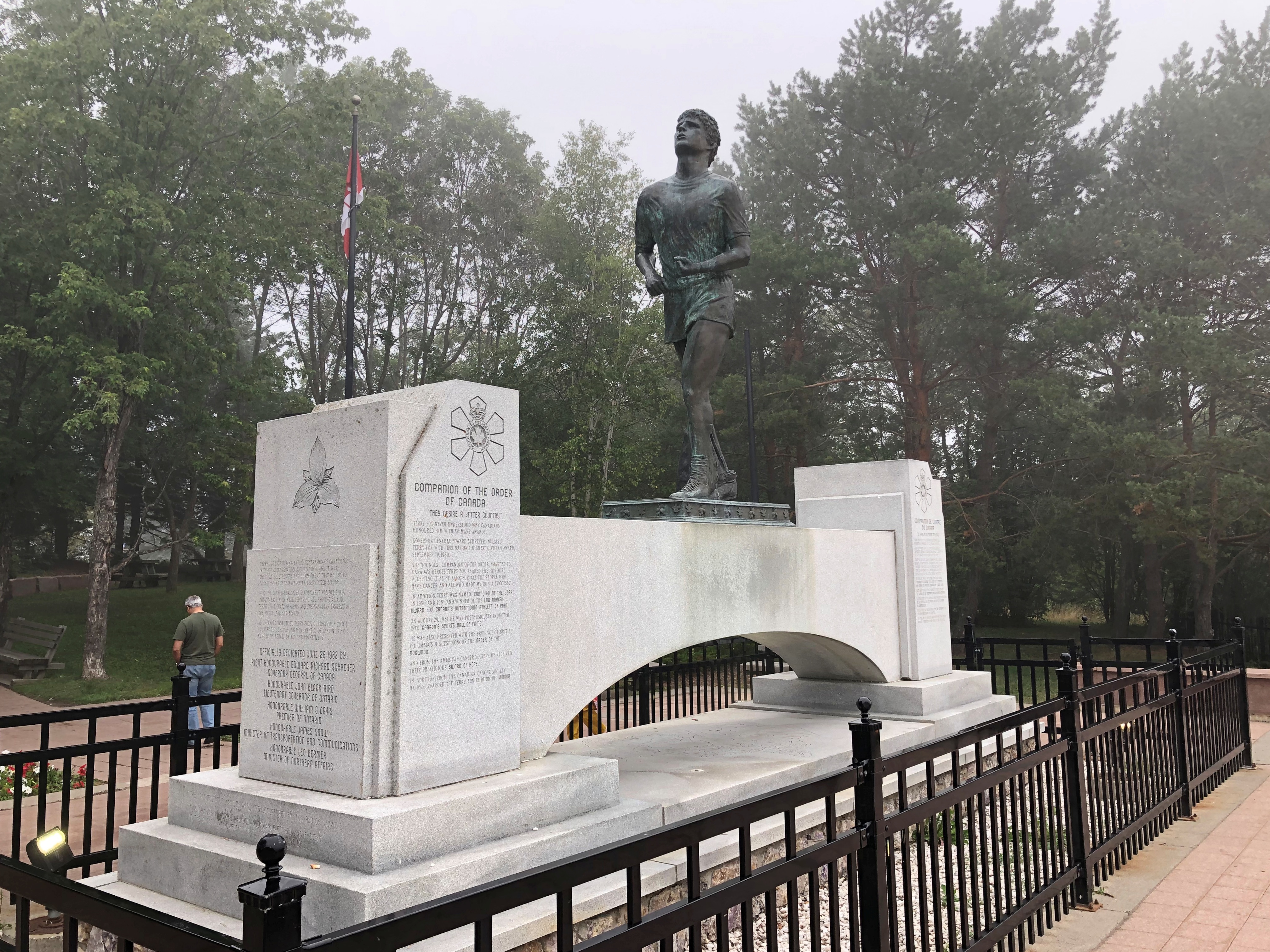
It was a foggy morning in northwest Ontario. The memorial features Fox as a runner, which he was. But not just any runner.
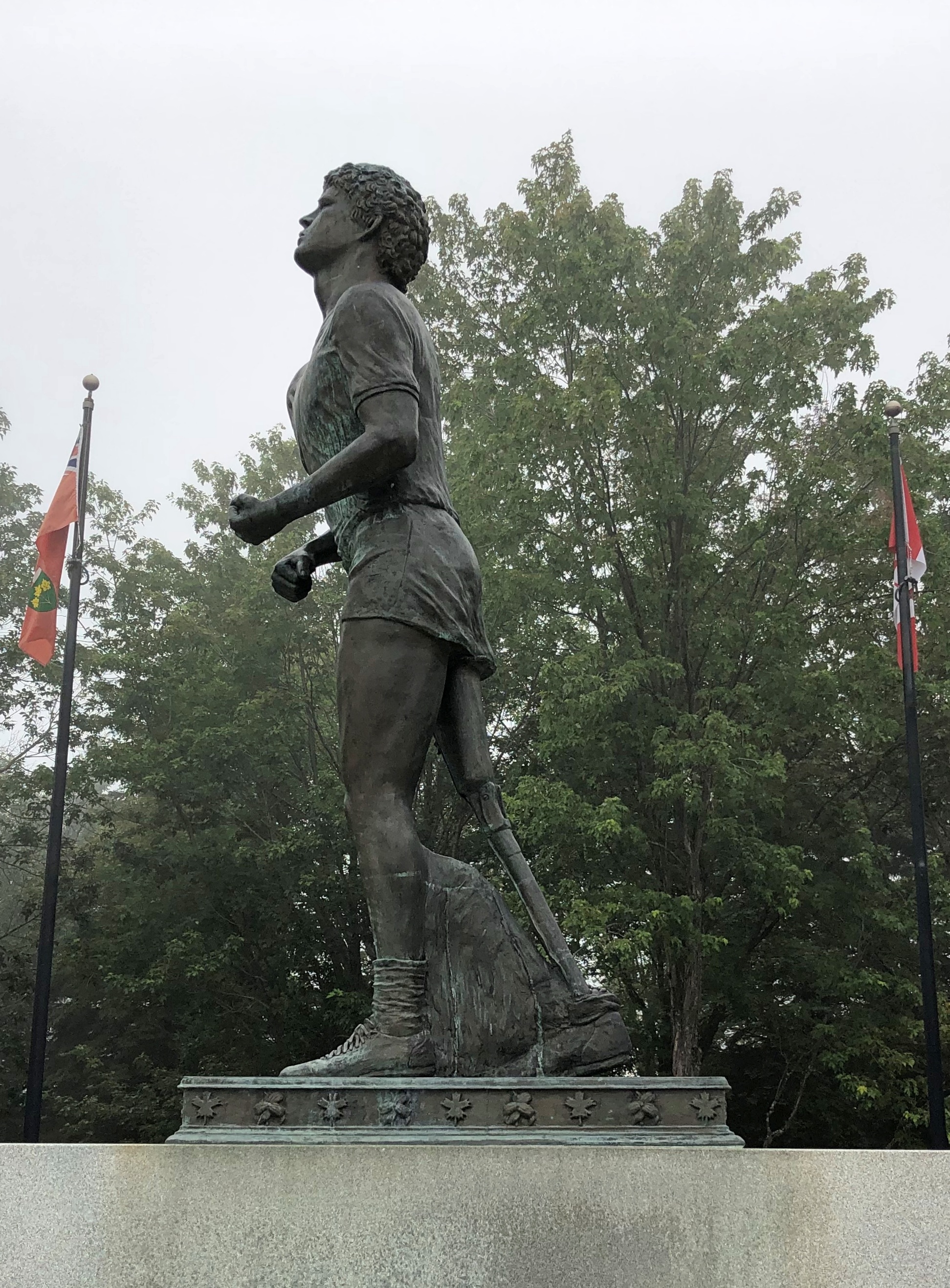
He had only one leg, the other amputated to prevent the spread of osteogenic sarcoma, bone cancer, from his knee.

“In the fall of 1979, 21-year-old Terry Fox began his quest to run across Canada,” the CBC says. “He had lost most of his right leg to cancer two years before.

“[He] hatched a plan to raise money for cancer research by running across Canada. His goal: $1 for every Canadian. Fox’s plan was to start in St. John’s, Newfoundland on April 12, 1980 and to finish on the west coast of Vancouver Island on September 10. With more than 3,000 miles (5,000 km) of running under his belt, he was ready.”

So he ran almost every day early that year, gathering attention as he went. By the time he got to Toronto, the nation was watching. But he didn’t make it all the way to the West Coast.

“As Fox headed towards Georgian Bay, his health changed. He would wake up tired, sometimes asking for time alone in the van just to cry… On August 31, before running into Thunder Bay, Fox said he felt as if he’d caught a cold. The next day, he started to cough more and felt pains in his chest and neck but he kept running because people were out cheering him on. Eighteen miles out of the city, he stopped. Fox went to a hospital, and after examination, doctors told him that the cancer had invaded his lungs… He had run 3,339 miles (5,376 km).

“Terry Fox died, with his family beside him, on June 28, 1981… Terry Fox Runs are held yearly in 60 countries now and more than $360 million have been raised for cancer research.”

My goal that day was much easier: drive to the town of Marathon, Ontario, from Thunder Bay, about 300 km as things are measured locally. I actually like having road distances measured in kilometers on lightly traveled Canadian roads, since they seem to go by quickly. For example, 50 km to go? Ah, that’s only 30 miles. The conversion is easy to do in your head – half + 10%.

Though I have to stress that kilometers should have no place in measuring U.S. roads. Miles to go before I sleep; You can hear the whistle blow 100 miles; I’d walk a mile for a Camel. There’s no poetry to the metric system.

(The conversion of U.S. to Canadian dollars is pretty easy these days too: 75%, or half + 25%. That way a $20 meal magically costs only $15.)

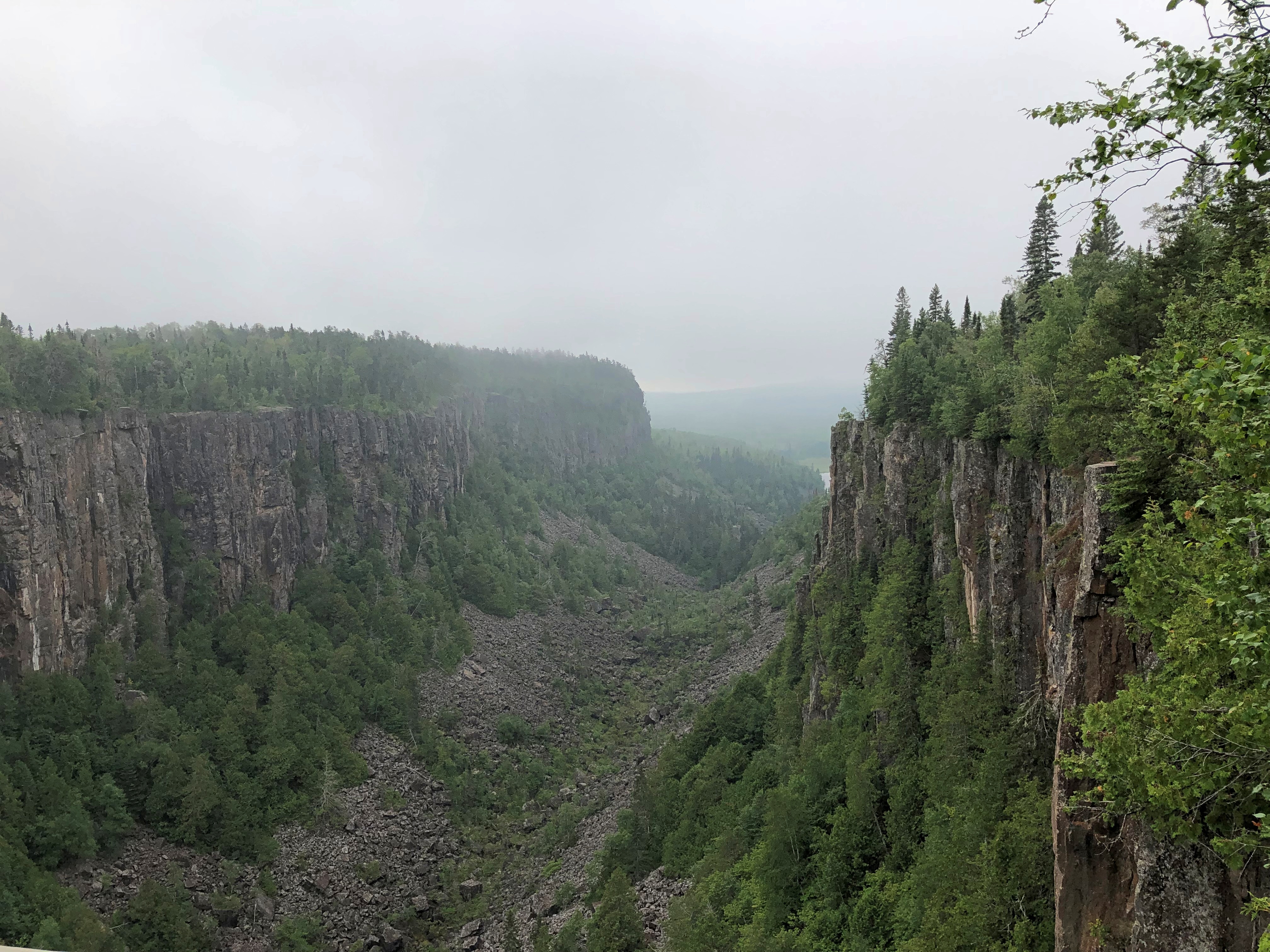
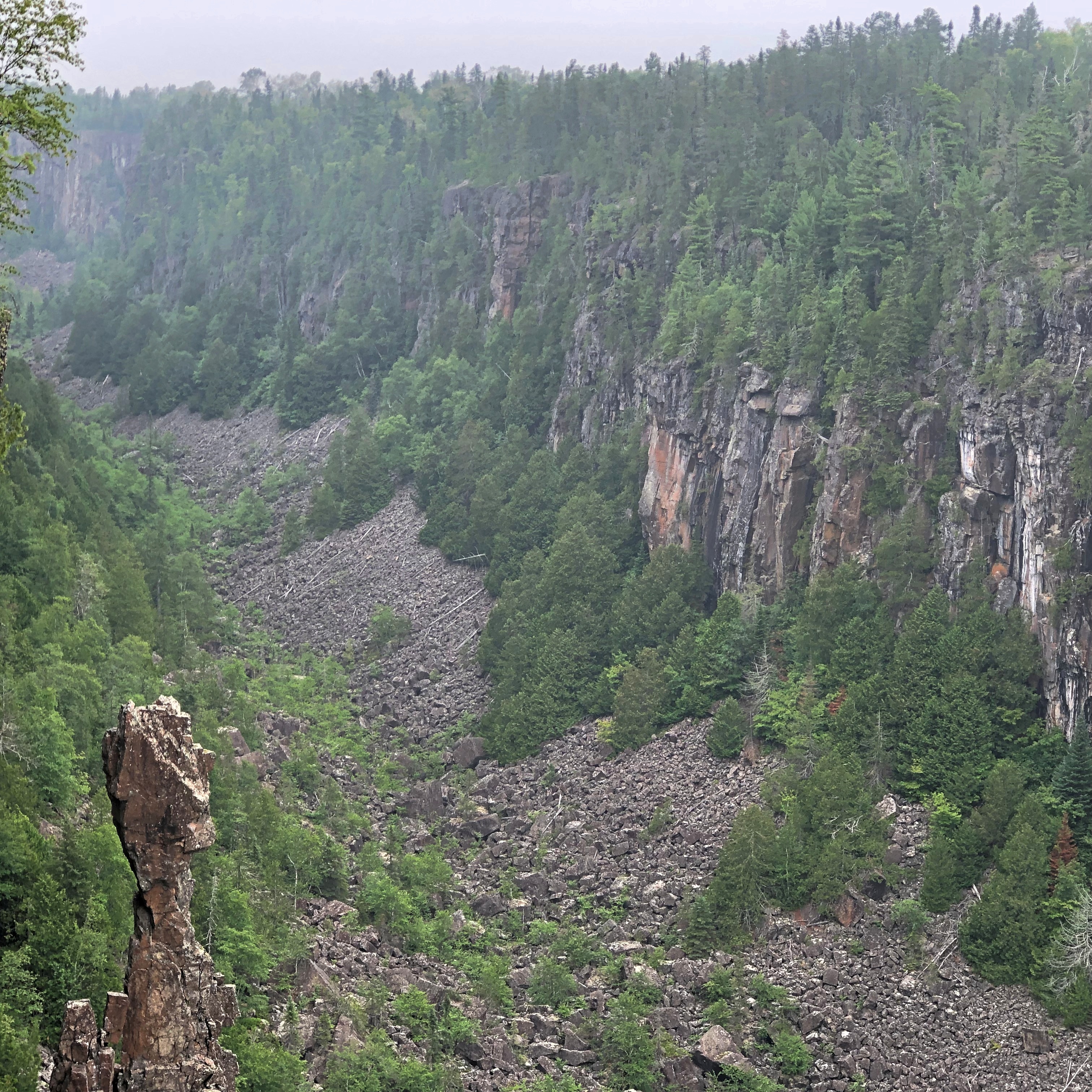
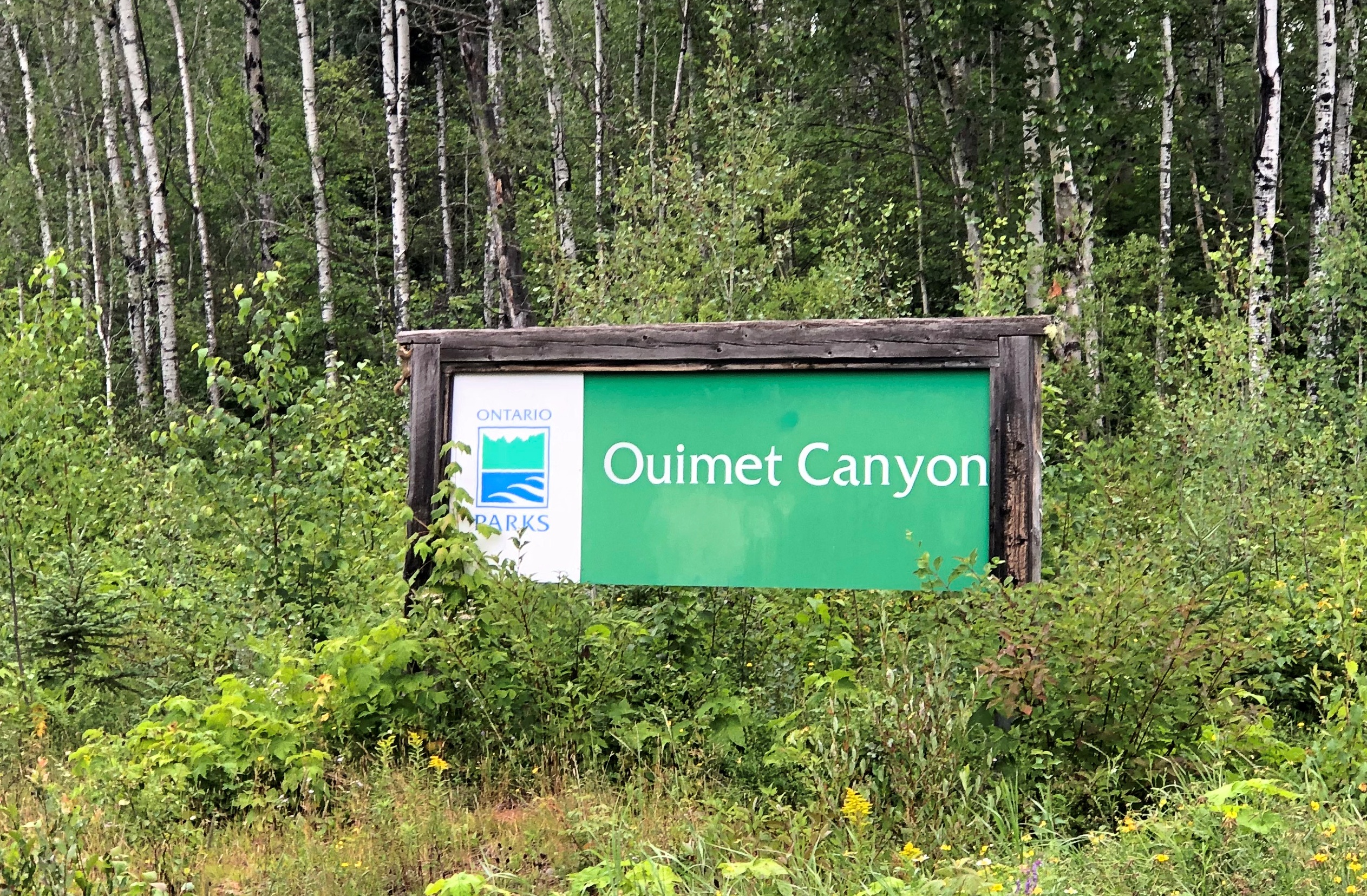
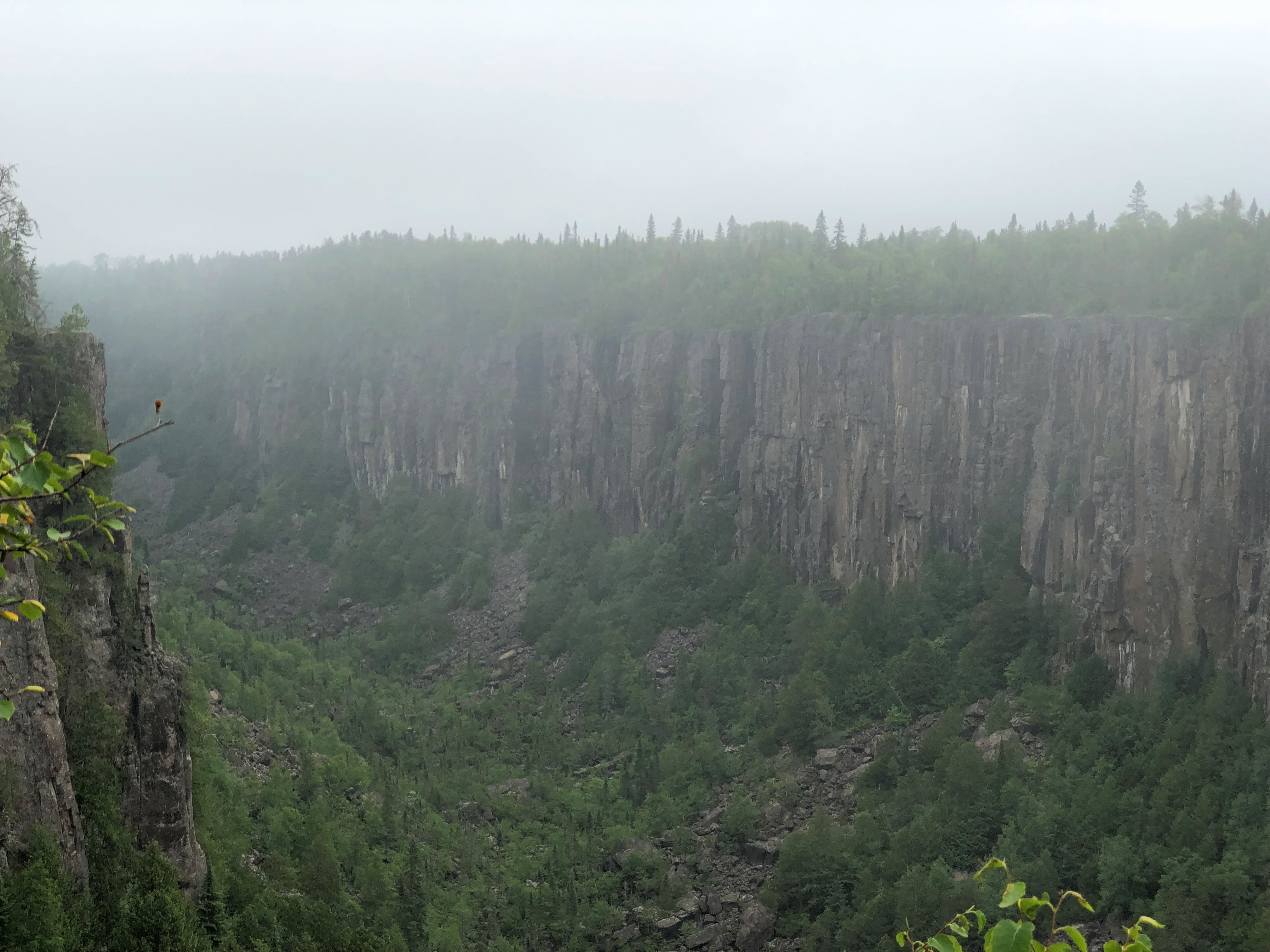
East from the Terry Fox memorial is Ouimet Canyon Provincial Park, which I visited as an alternative to Sleeping Giant Provincial Park, which is highly visible from Thunder Bay but which looks like an all-day sort of place. I preferred to spend the day on the road, stopping where the mood struck.Ouimet Canyon
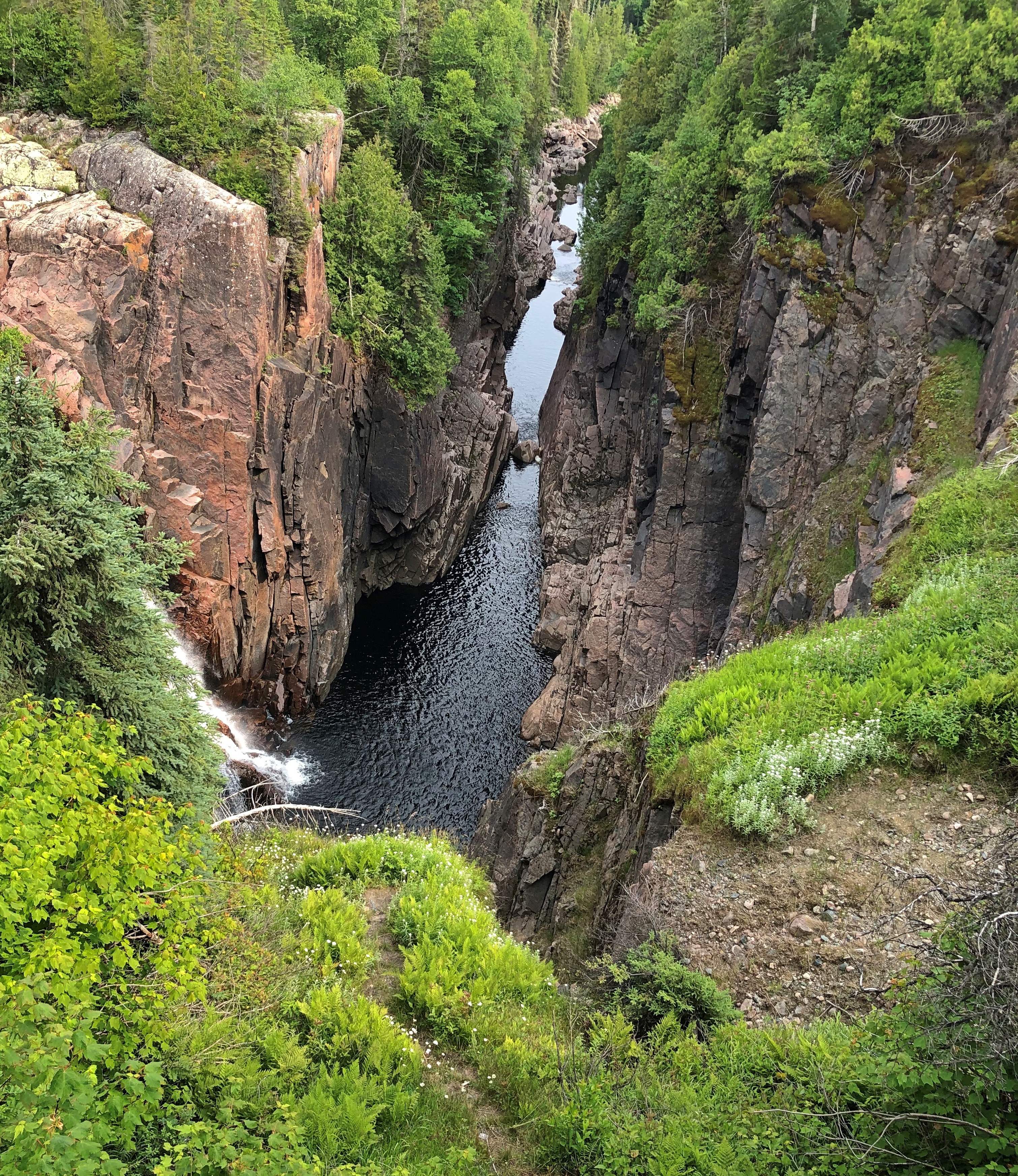
Ouimet Canyon is striking. A easy walk of 15 minutes or so takes you to the canyon’s edge. Foggy that morning but worth the stop.Ouimet Canyon Ouimet Canyon Ouimet Canyon
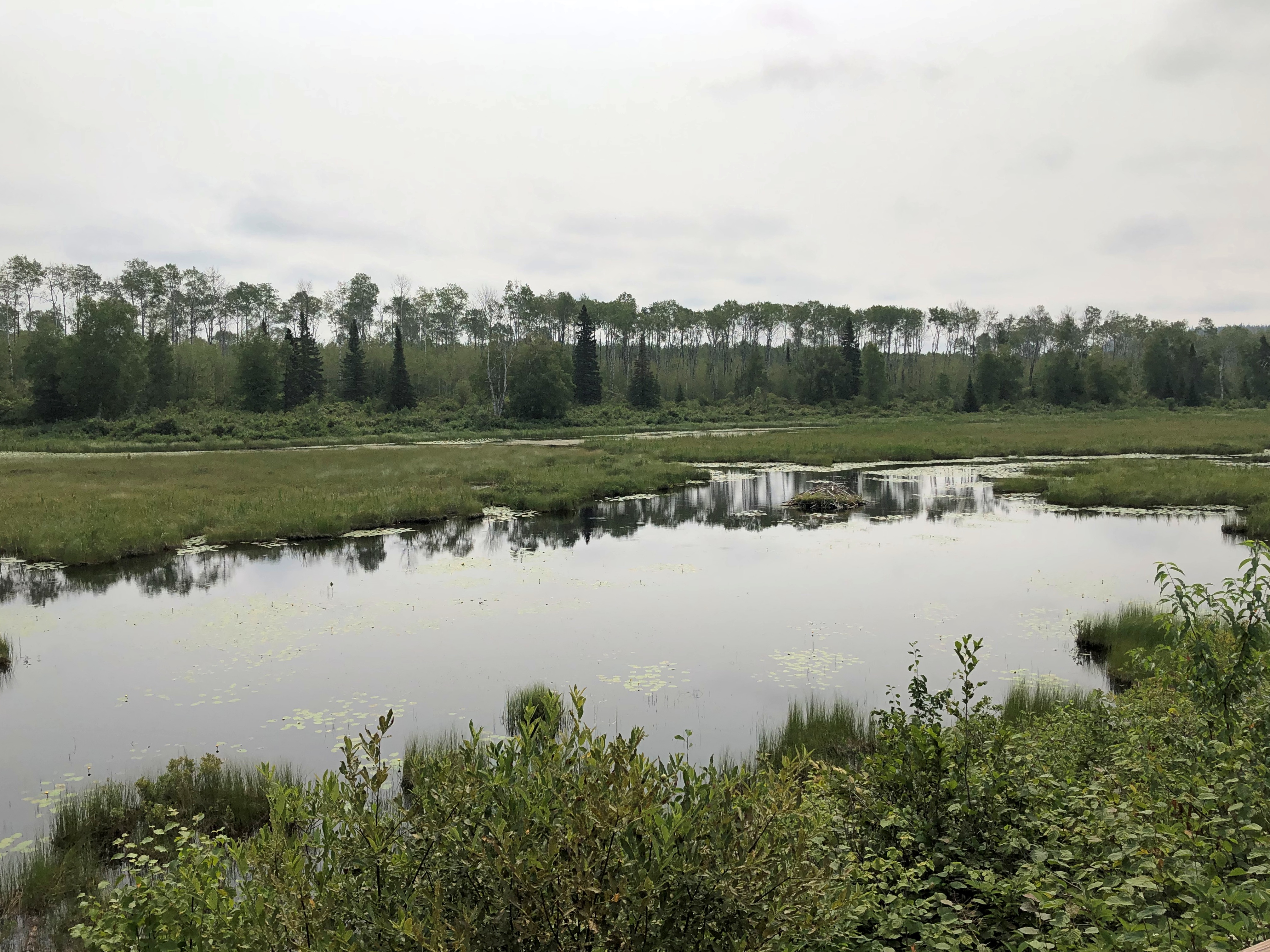
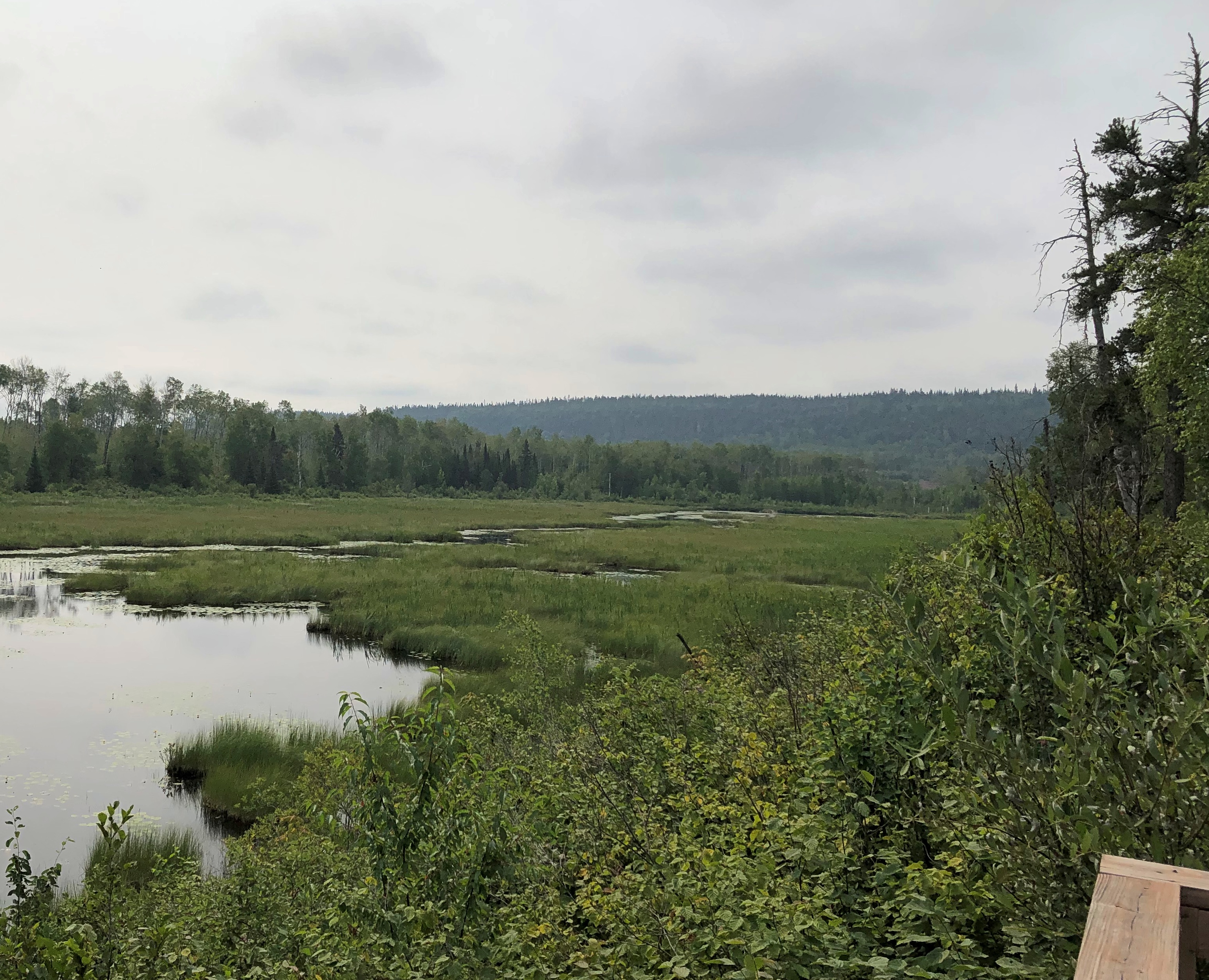
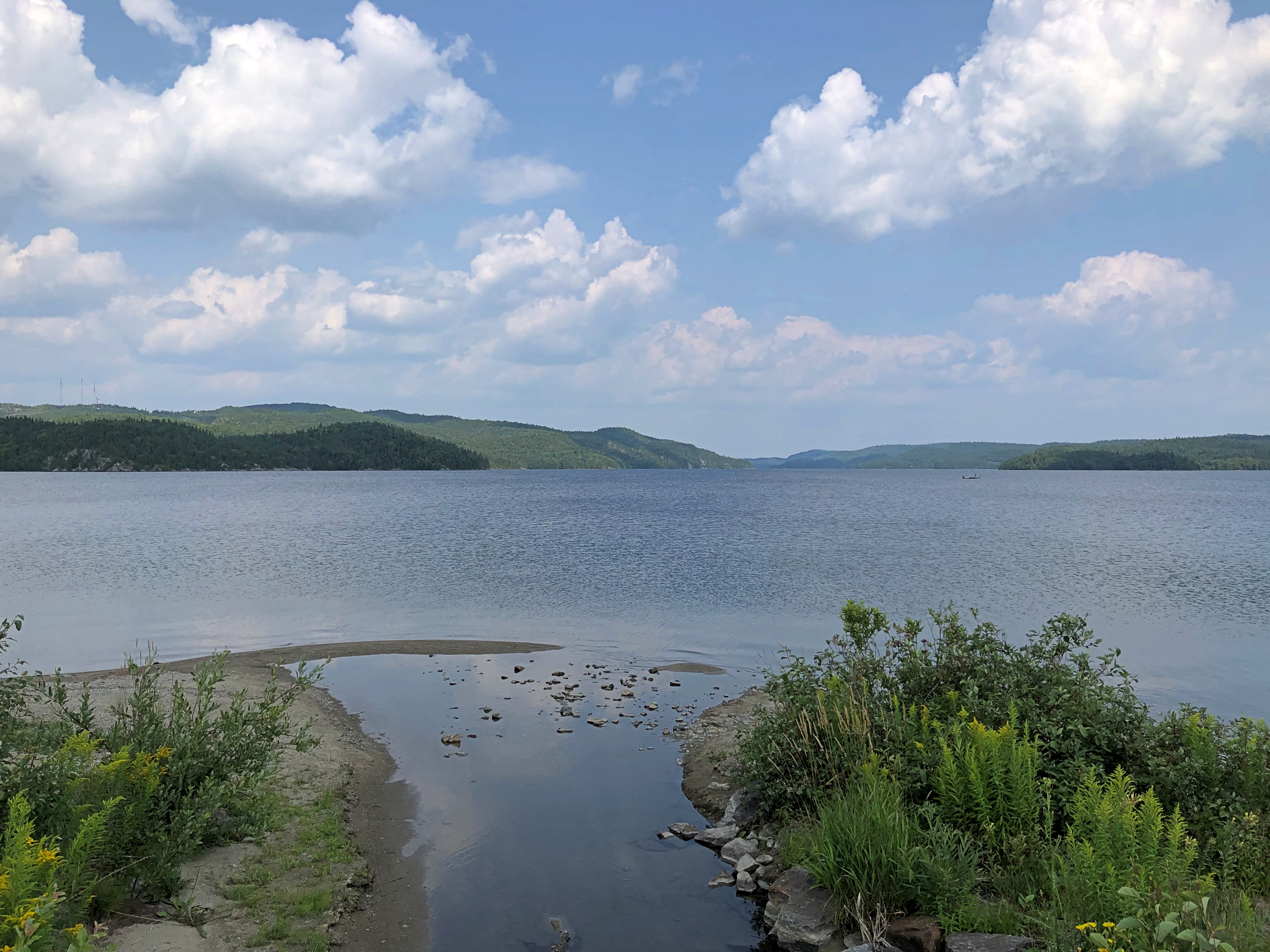
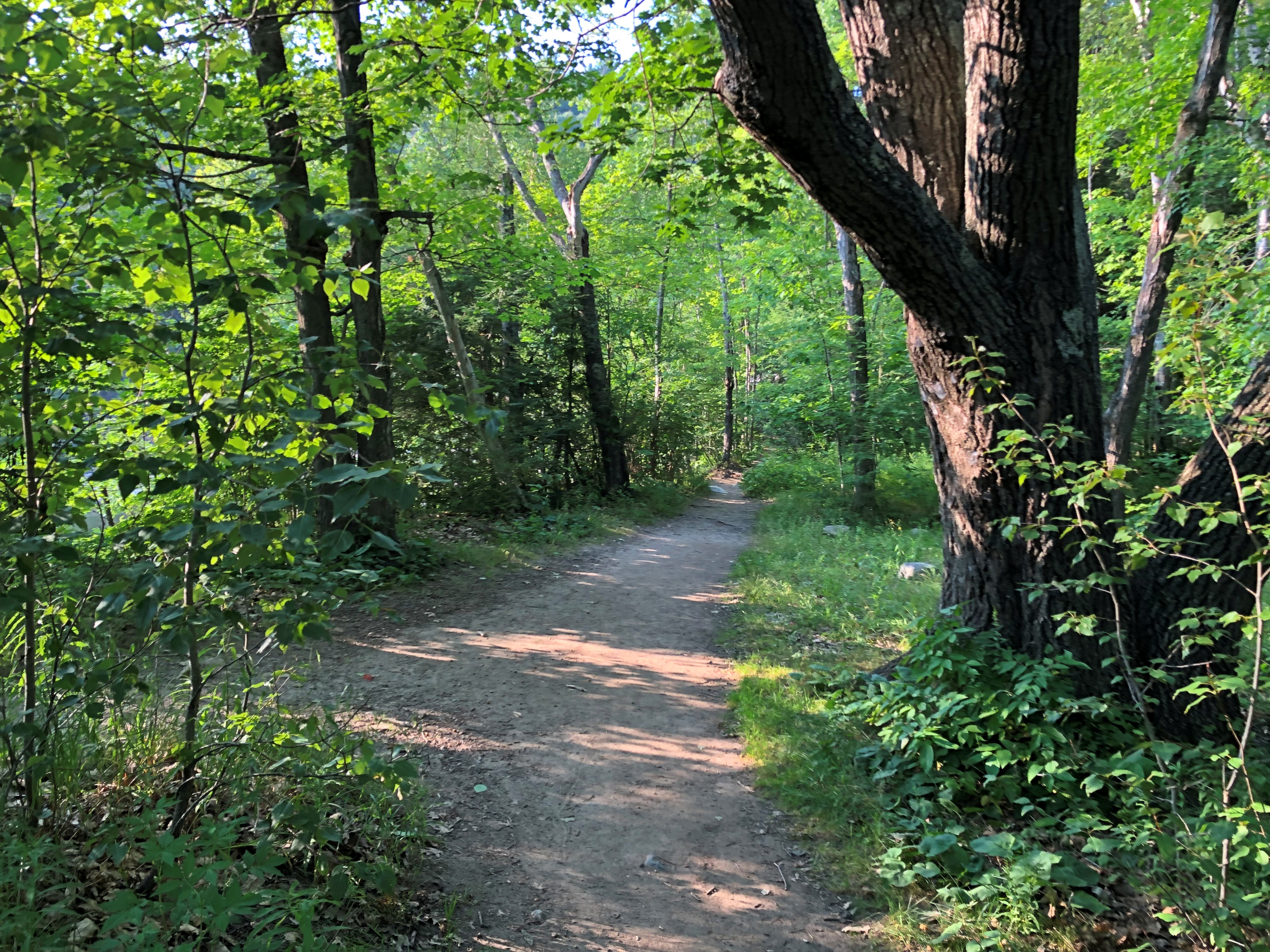
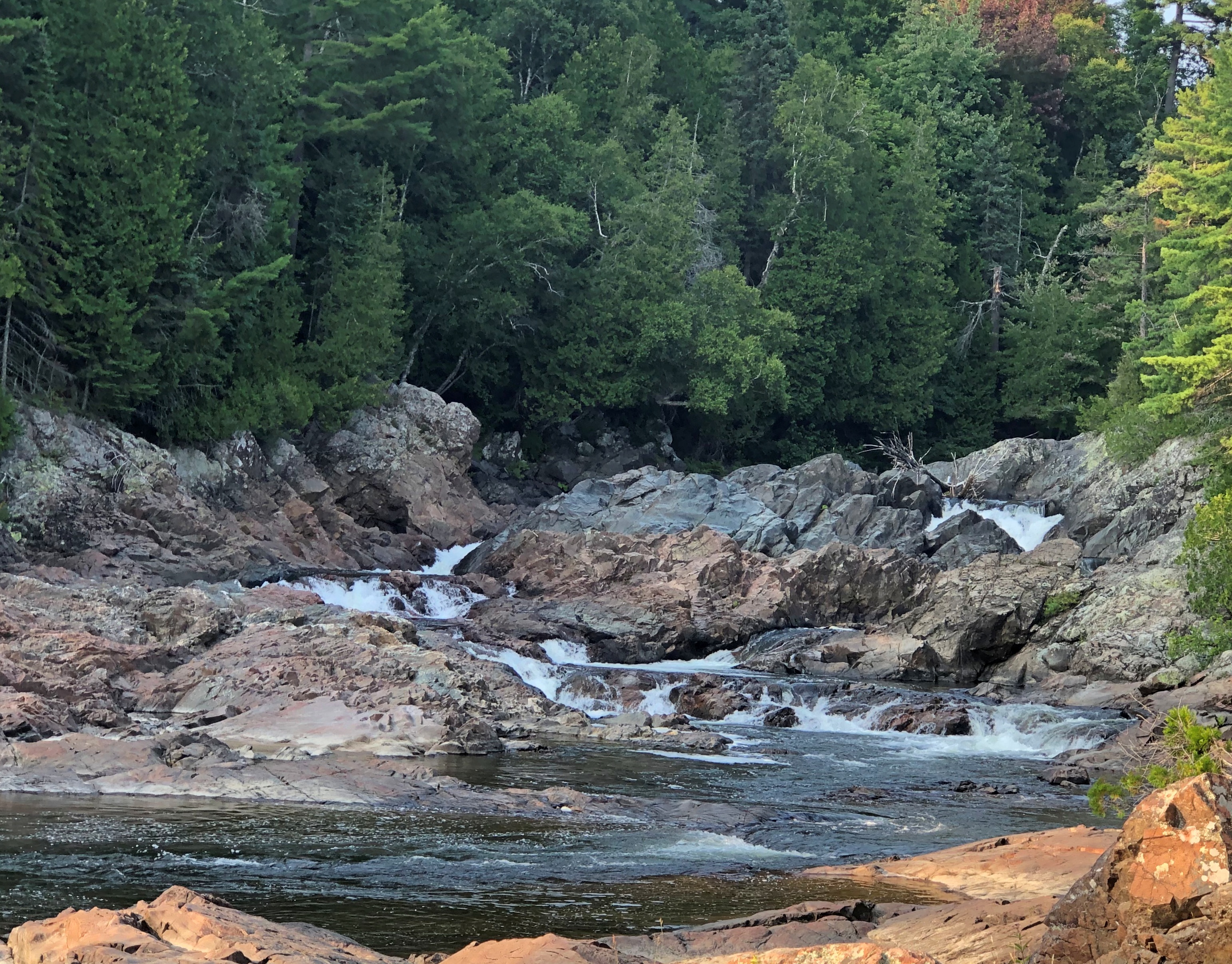
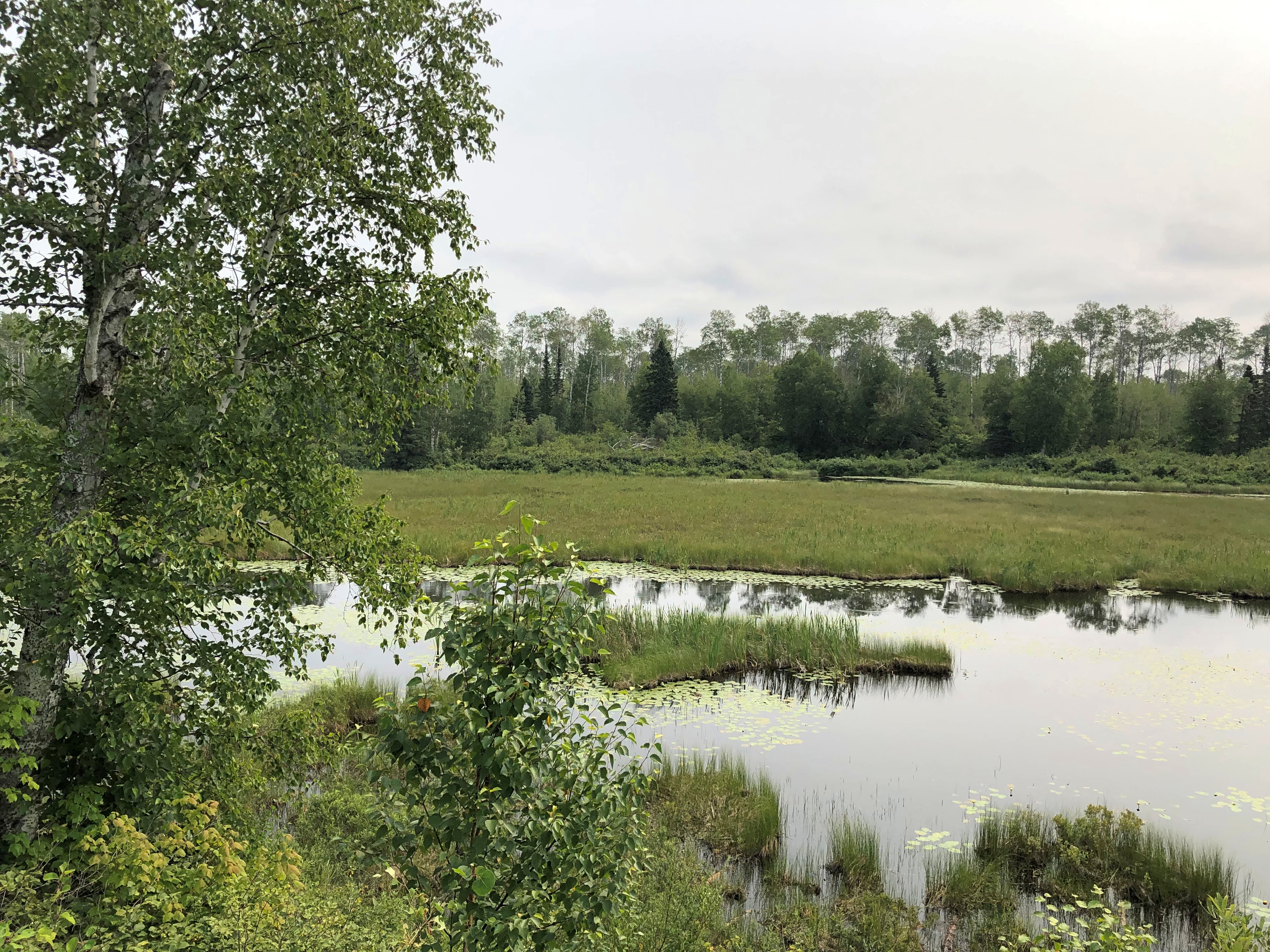
There was another place to stop in the park: a pleasant river view seen from a bench not far from the road, but tucked away behind some greenery, so that the road seemed far away. There was virtually no traffic anyway. I sat a while and watched the world go by not very fast. Or at all. I had to listen carefully to realize just how quiet the place is.

Also, the fog had started to burn off. Temps were very pleasant, whether Celsius or Fahrenheit.Ouimet Canyon Ouimet Canyon Ouimet Canyon
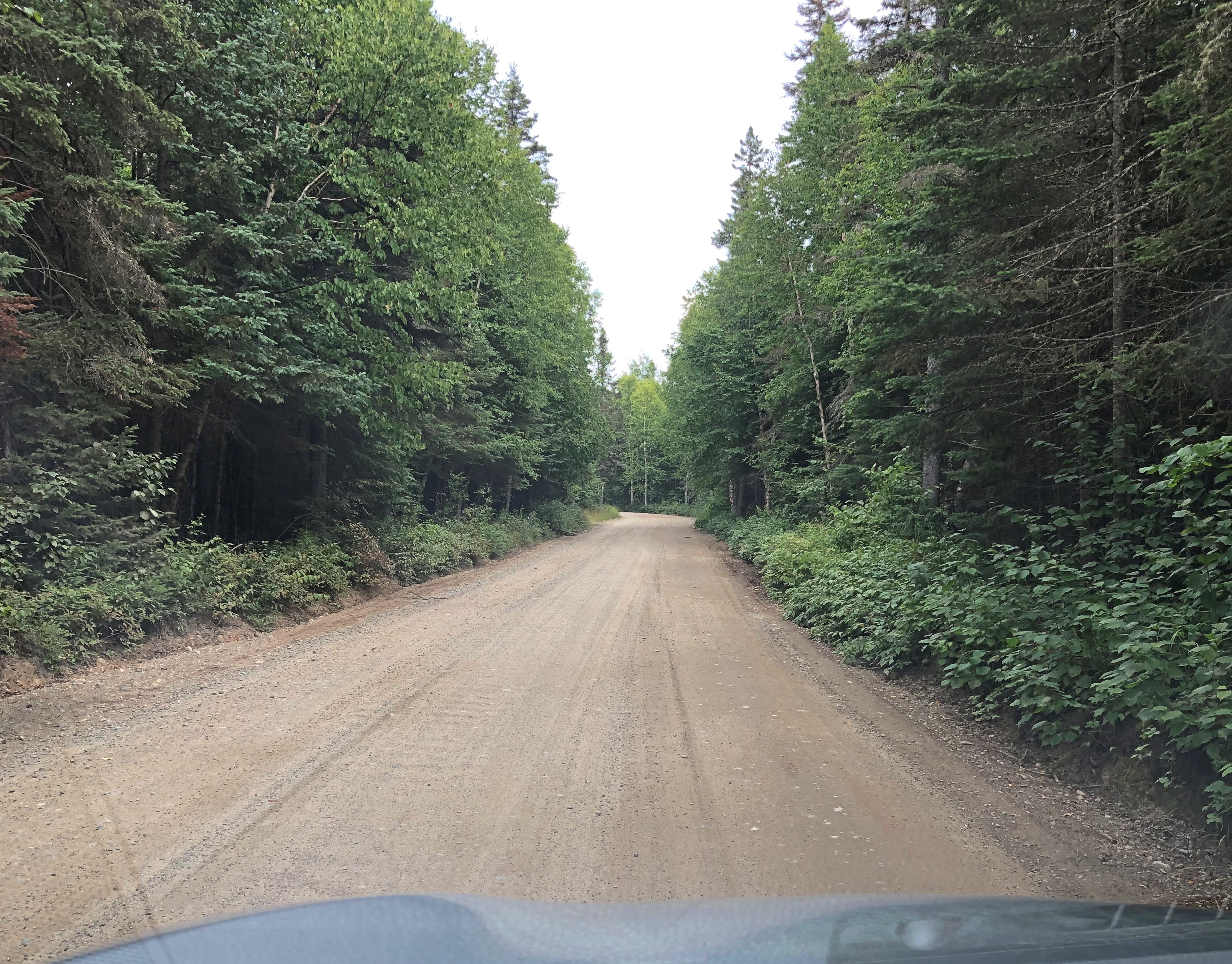
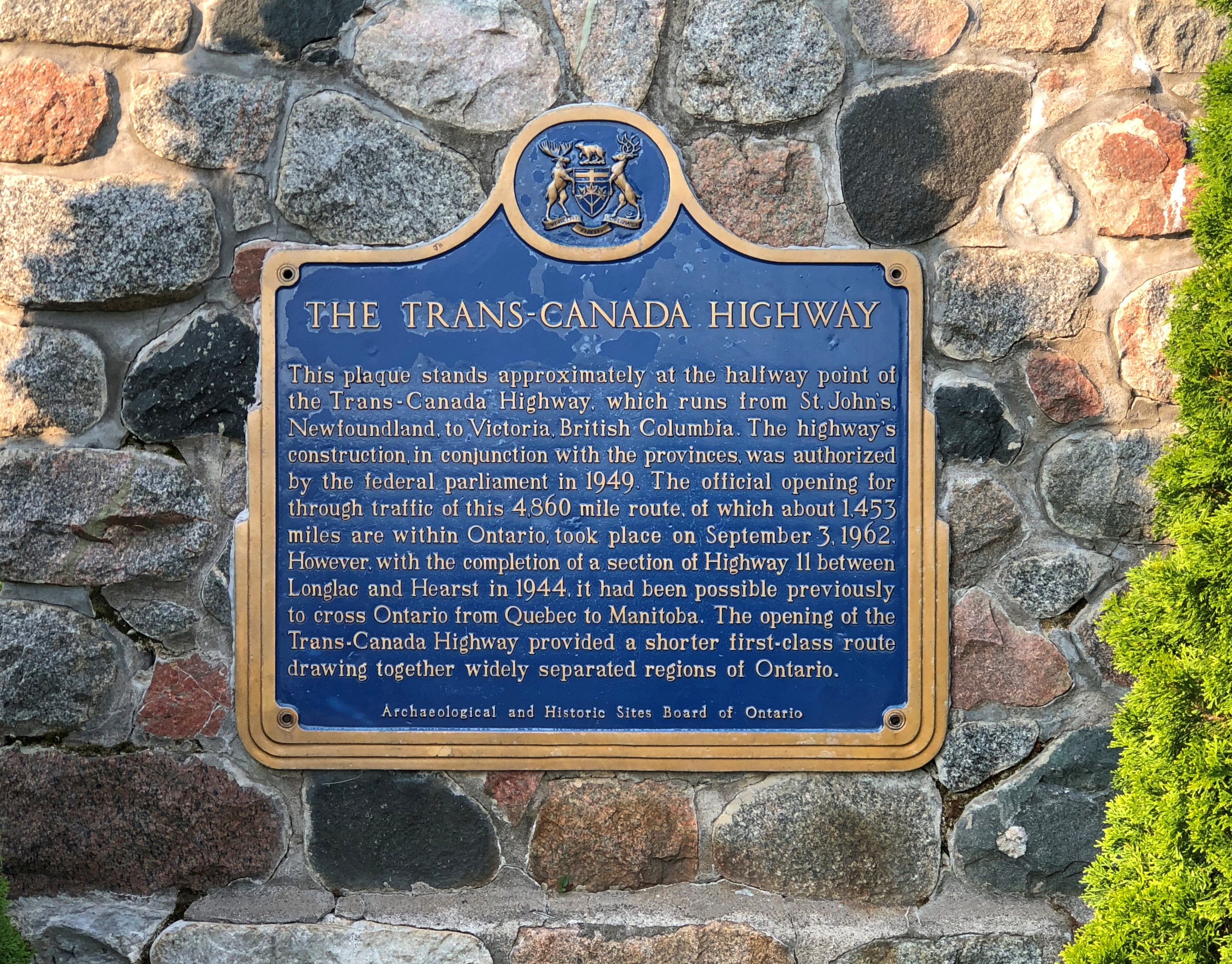
The Trans-Canada is King’s Highway 11 and 17 at this stretch. Highway 11 eventually splits off and goes way around to Toronto, including Yonge Street, while highway 17 hews closer to Lake Superior, and is the longest highway in the province. It is the one I eventually drove all the way to Sault Ste. Marie.

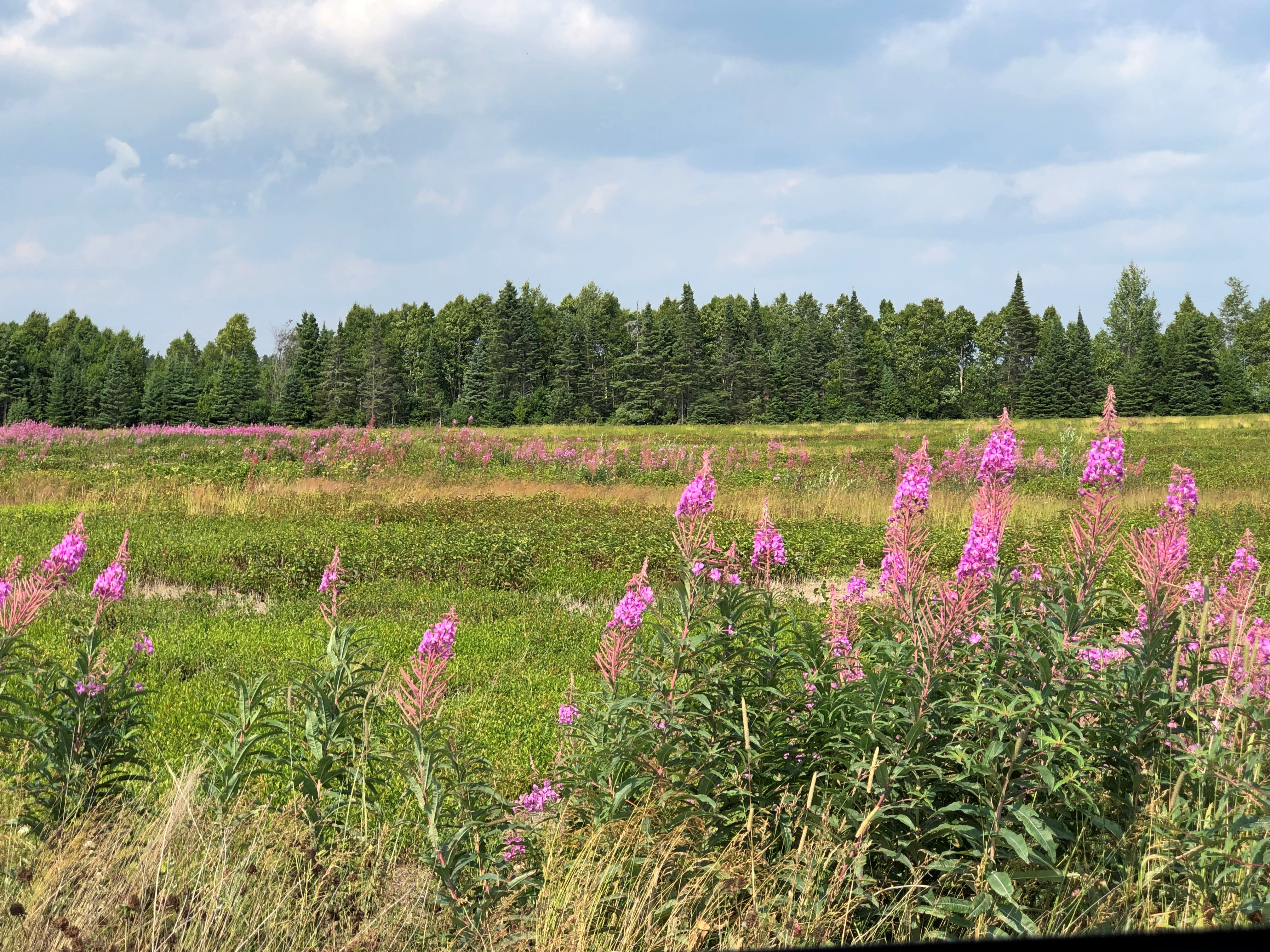
Much of the roadside is uncultivated flora. I took this to be fireweed, which meant I was far enough north to see it. I saw it in a lot of places in this part of Ontario.Highway 17 Ontario

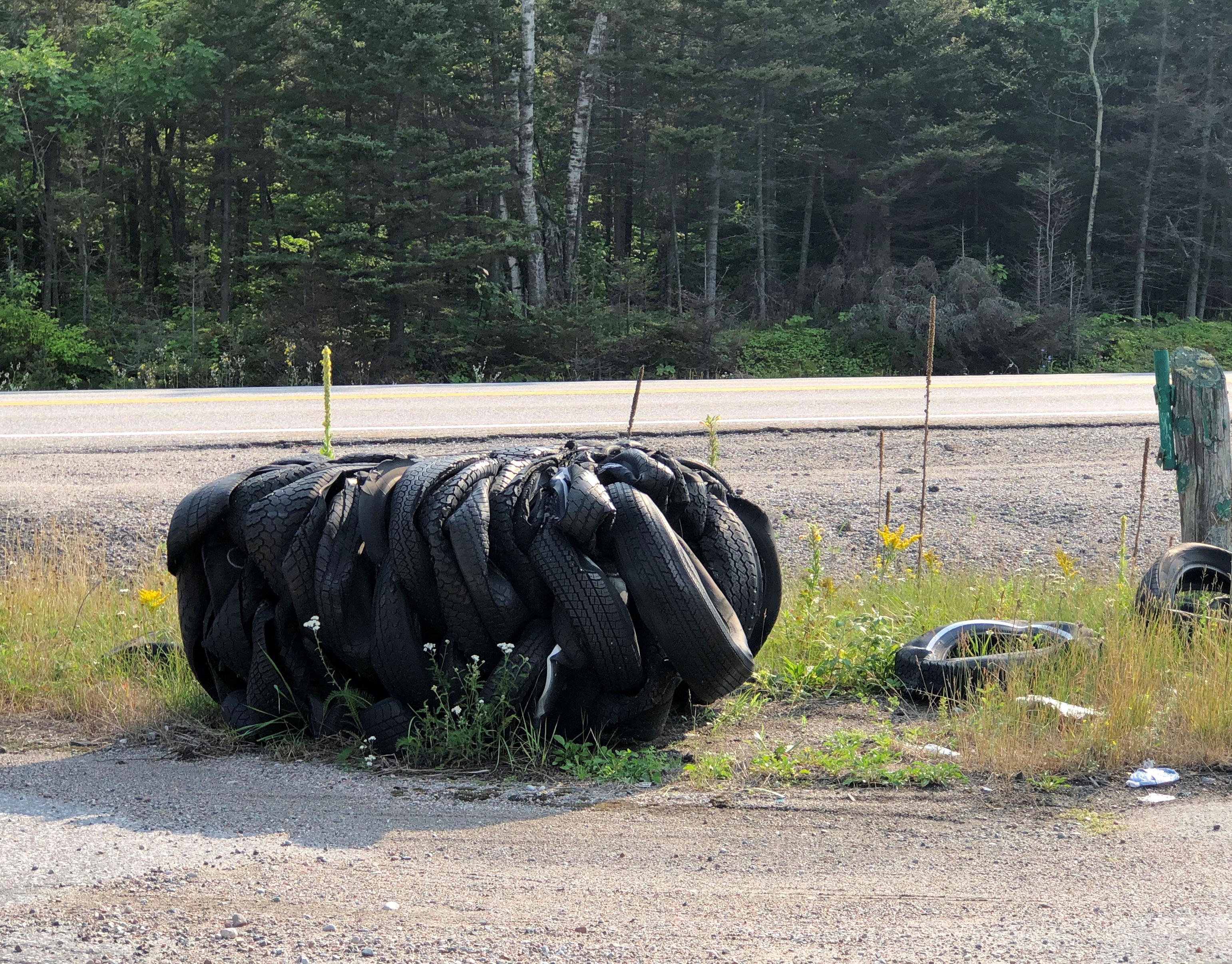
But sometimes fauna, of the non-wild sort.

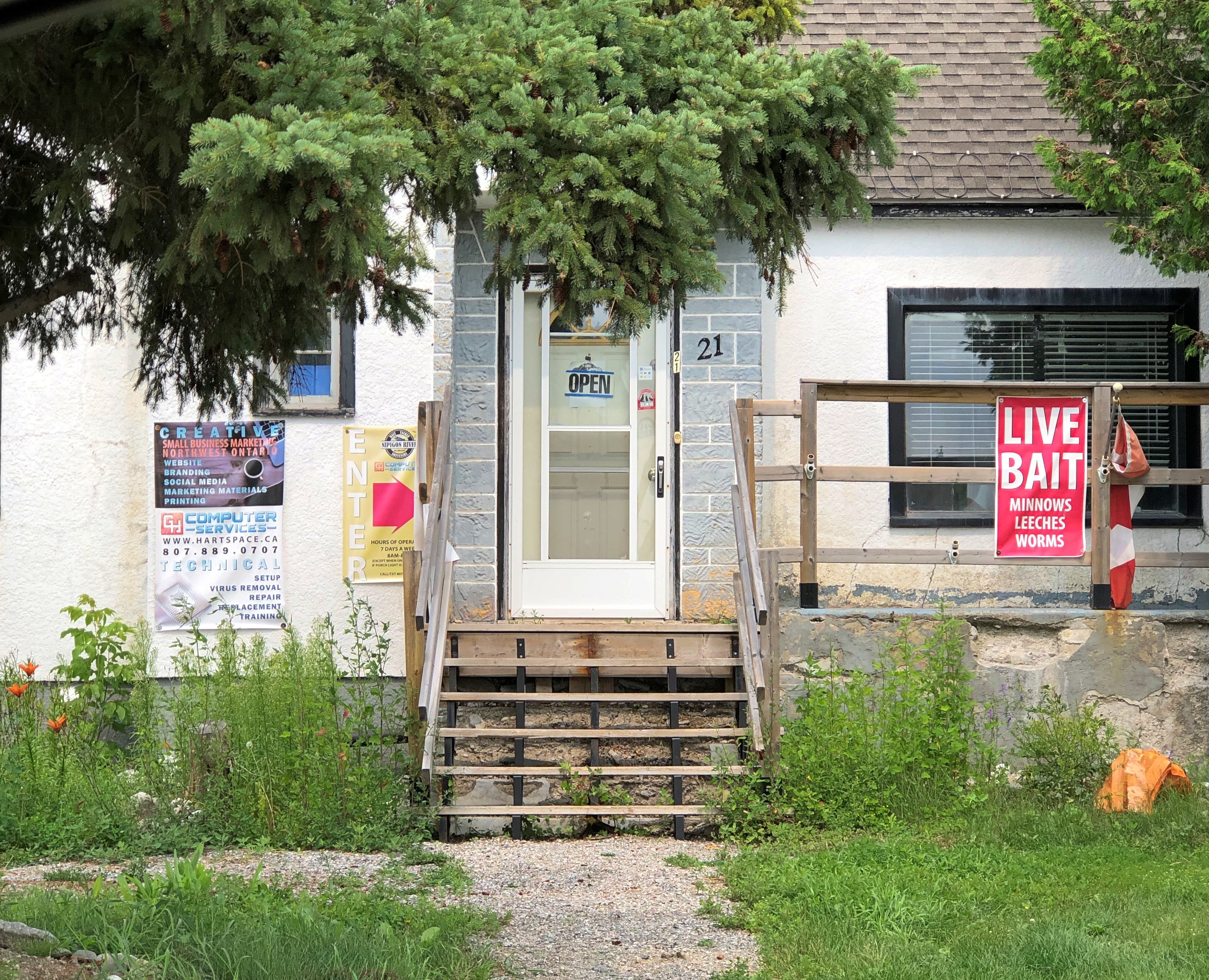
I found lunch in Nipigon, pop. less than 1,500. I could have had my laptop repaired, if it had needed work, or bought worms and leeches, if I were in the mood to go fishing. I never am.Nipigon, Ontario
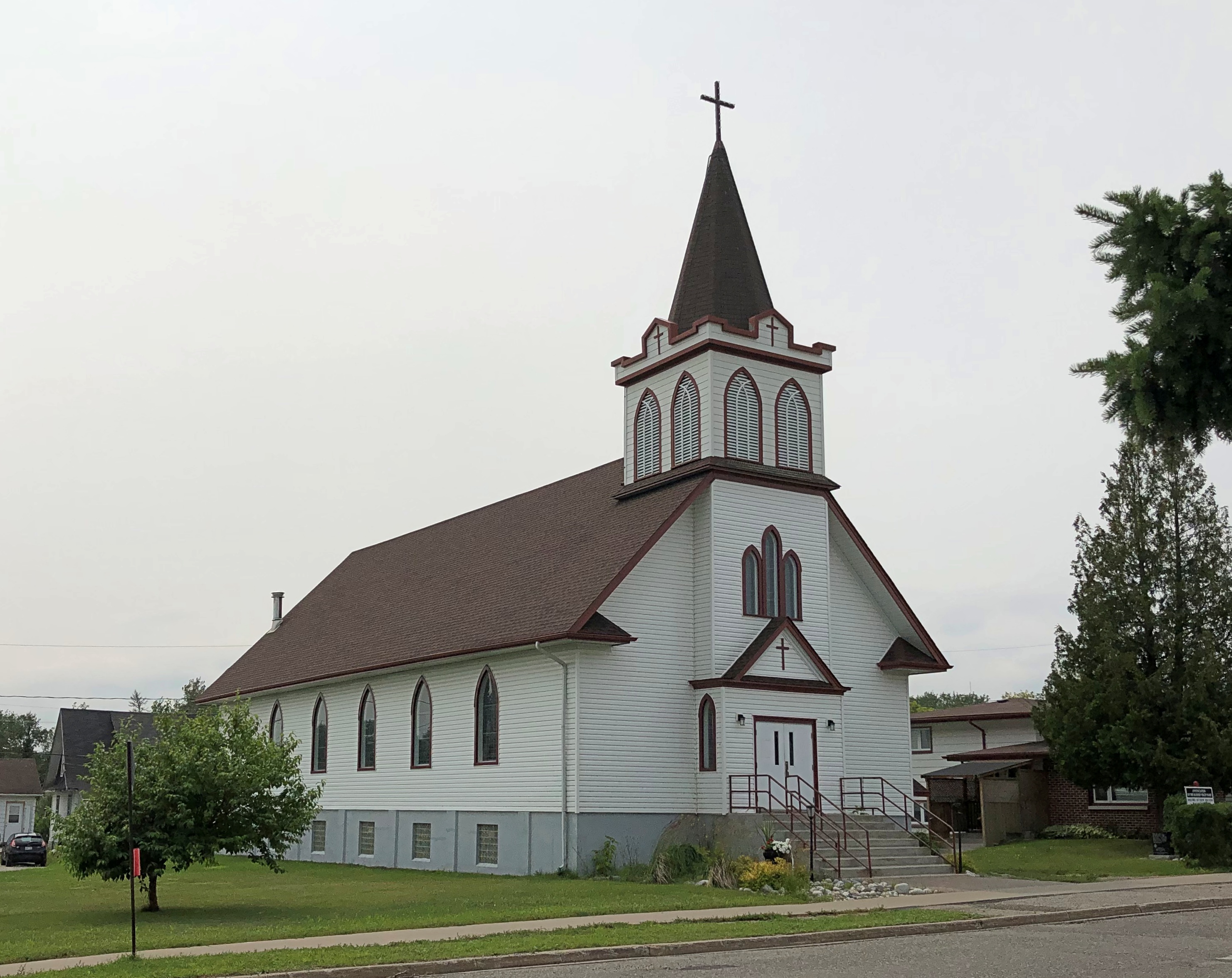
Nice church. The Annunciation of the Blessed Virgin Mary Roman Catholic Church. Closed, of course.Annunciation of the Blessed Virgin Mary,
Nipigon has an observation platform just off the highway, free and open to all, and completed only in 2018.Nipigon, Ontario
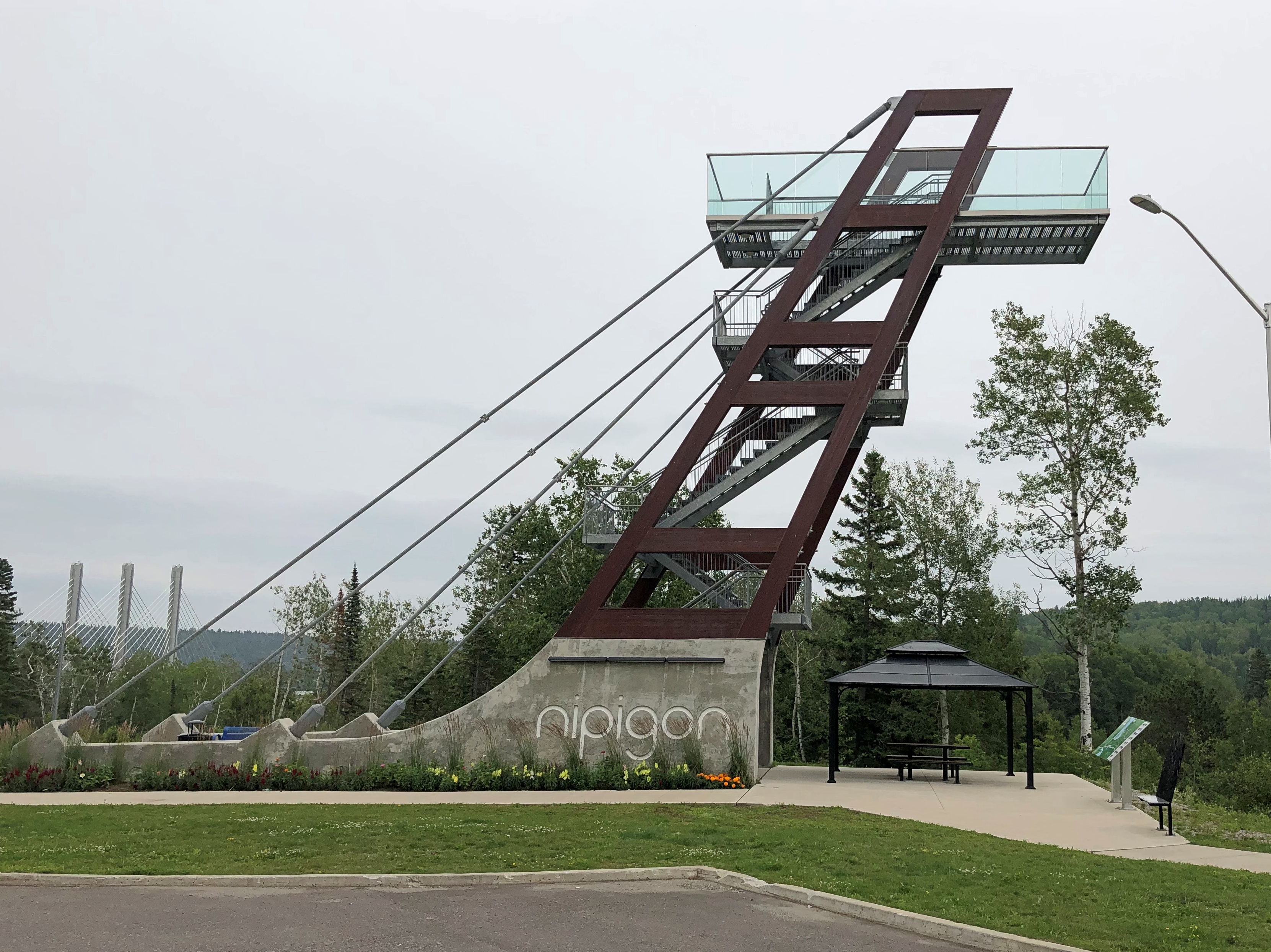
Naturally I climbed to the top for the vista. I need to do that kind of thing while I still can.Nipigon, Ontario
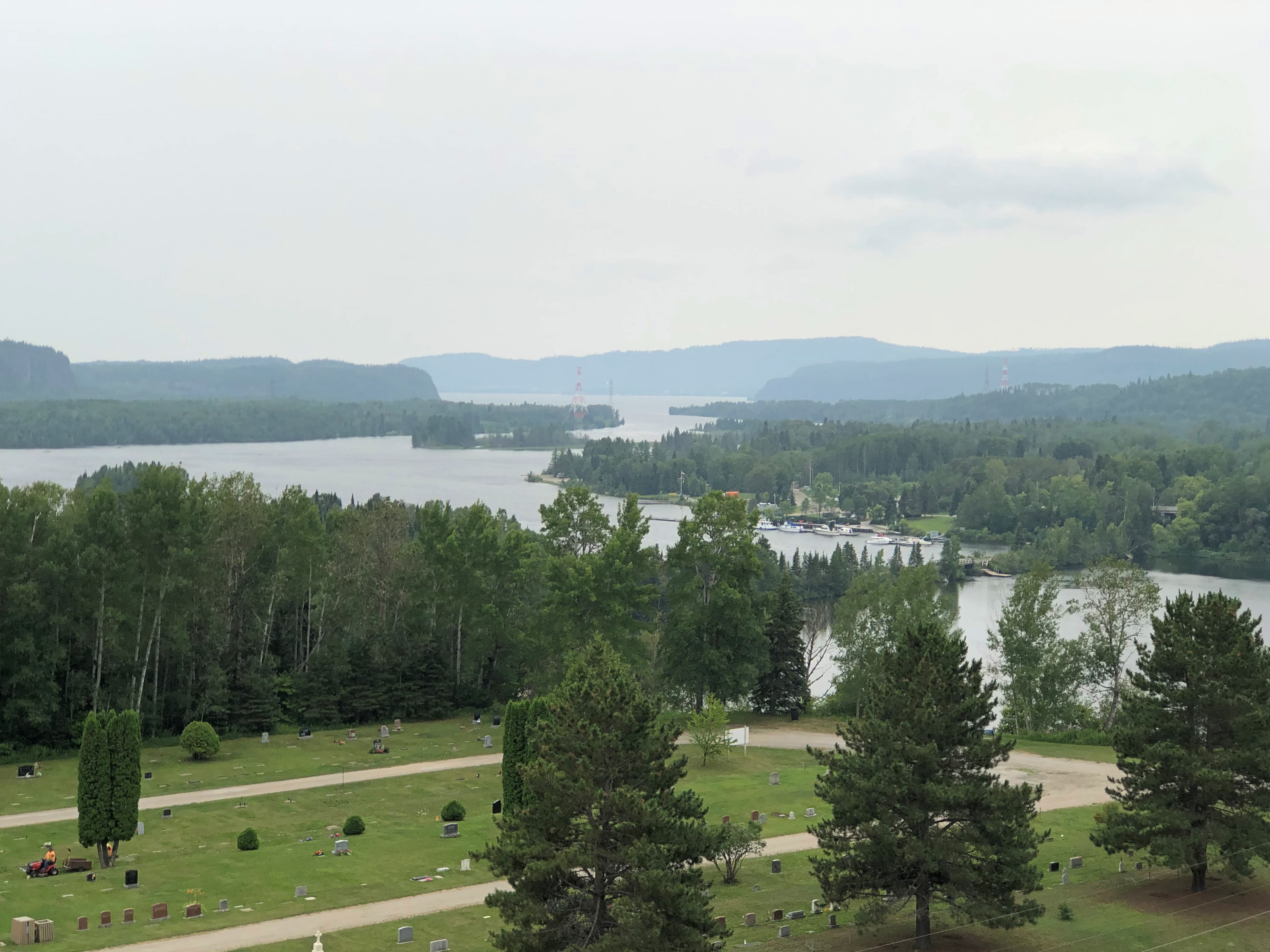
The Trans-Canada crossing the Nipigon River. Elegant, but with a troubled recent history.
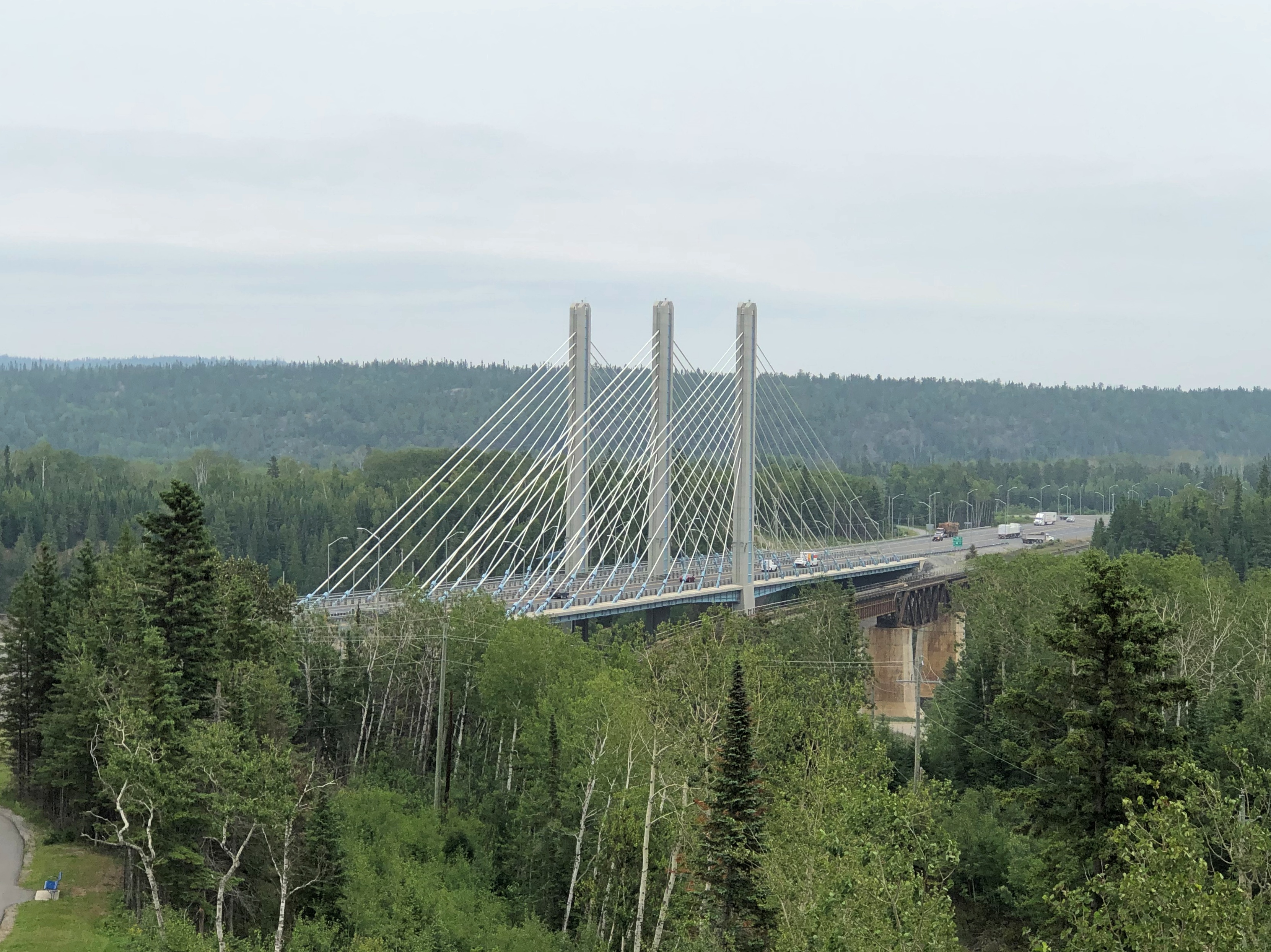
The bridge was also completed in 2018. Or rather, it was reopened that year.

“[The reopening] comes nearly three years after the bridge, described as the first cable-stayed bridge in Ontario, failed in January 2016, just weeks after it opened,” notes the CBC. Oops. Apparently no one died as a result, so there’s that.

“Engineering reports found that a combination of design and installation deficiencies caused the failure, which effectively severed the Trans-Canada Highway. Improperly tightened bolts on one part of the bridge snapped, causing the decking to lift about 60 centimetres.”

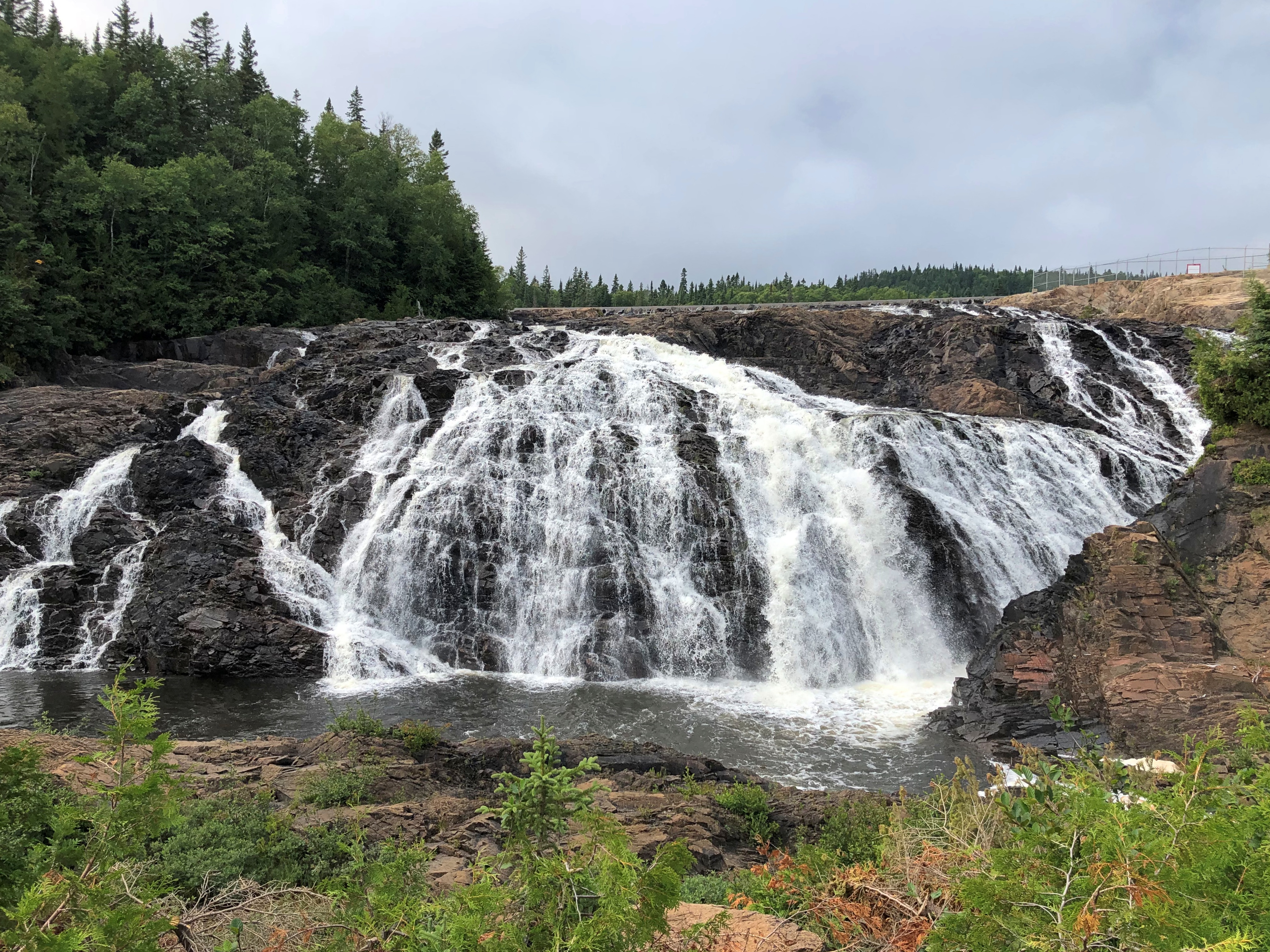
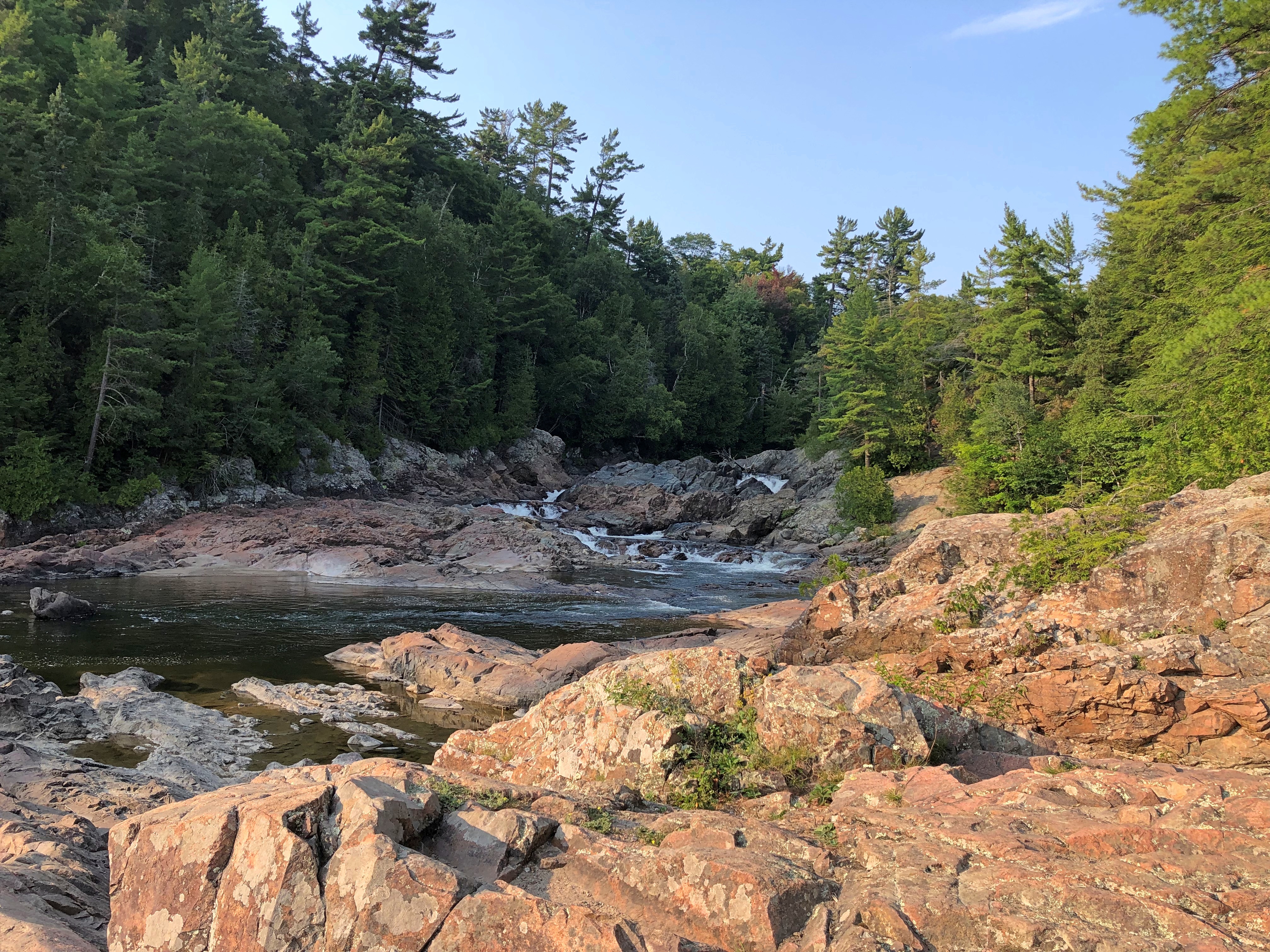
Further to the east: Rainbow Falls Provincial Park. Another short walk to a nice vista. Another thing to like about this part of Canada.Rainbow Falls, Ontario Rainbow Falls, Ontario

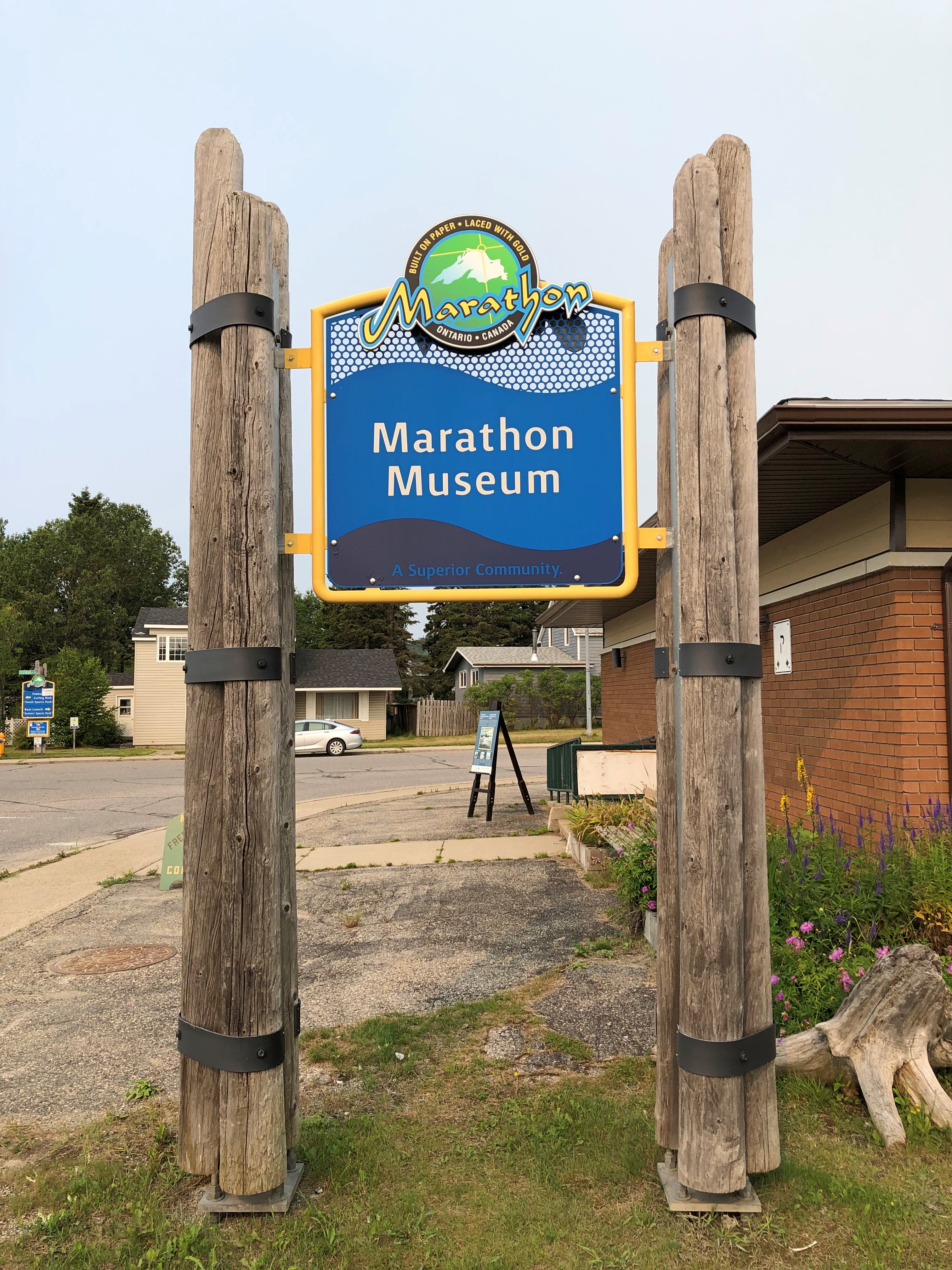
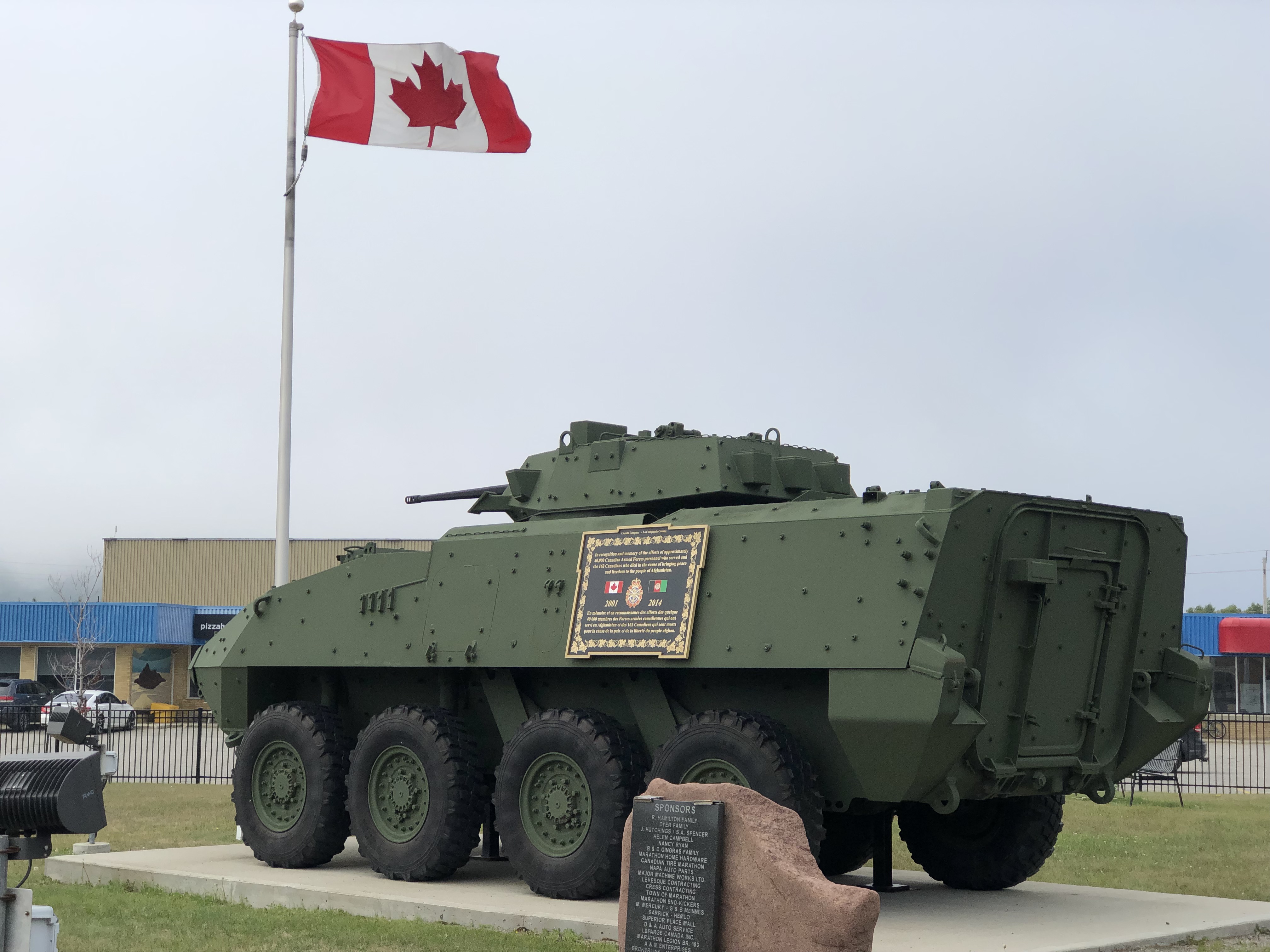
All together, it was a leisurely drive, but even so I arrived in Marathon, pop. 3,270 or so, before dark – long summer days are a boon up north – and took in a few local cultural sights.Marathon, Ontario
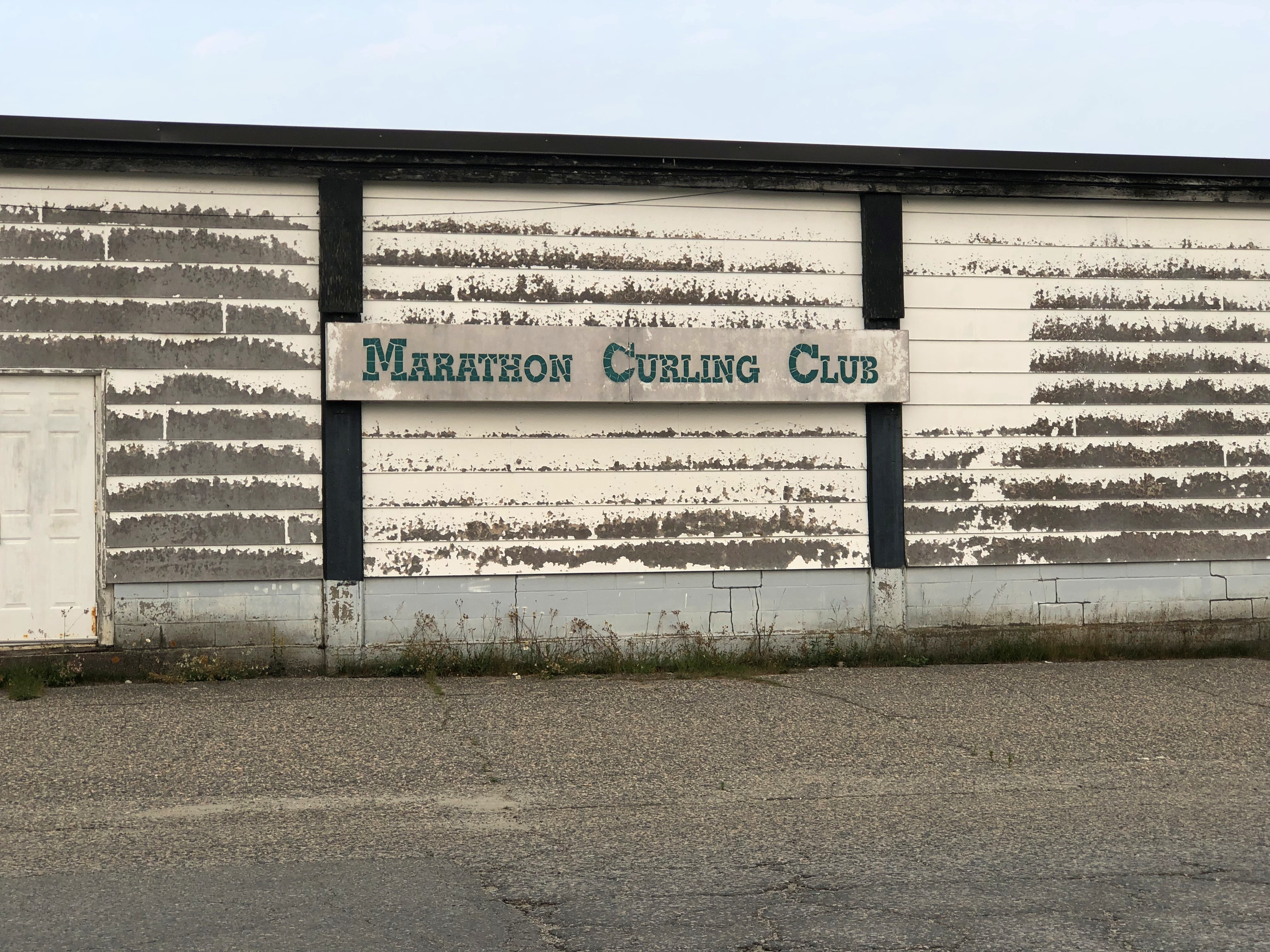
Marathon, Ontario

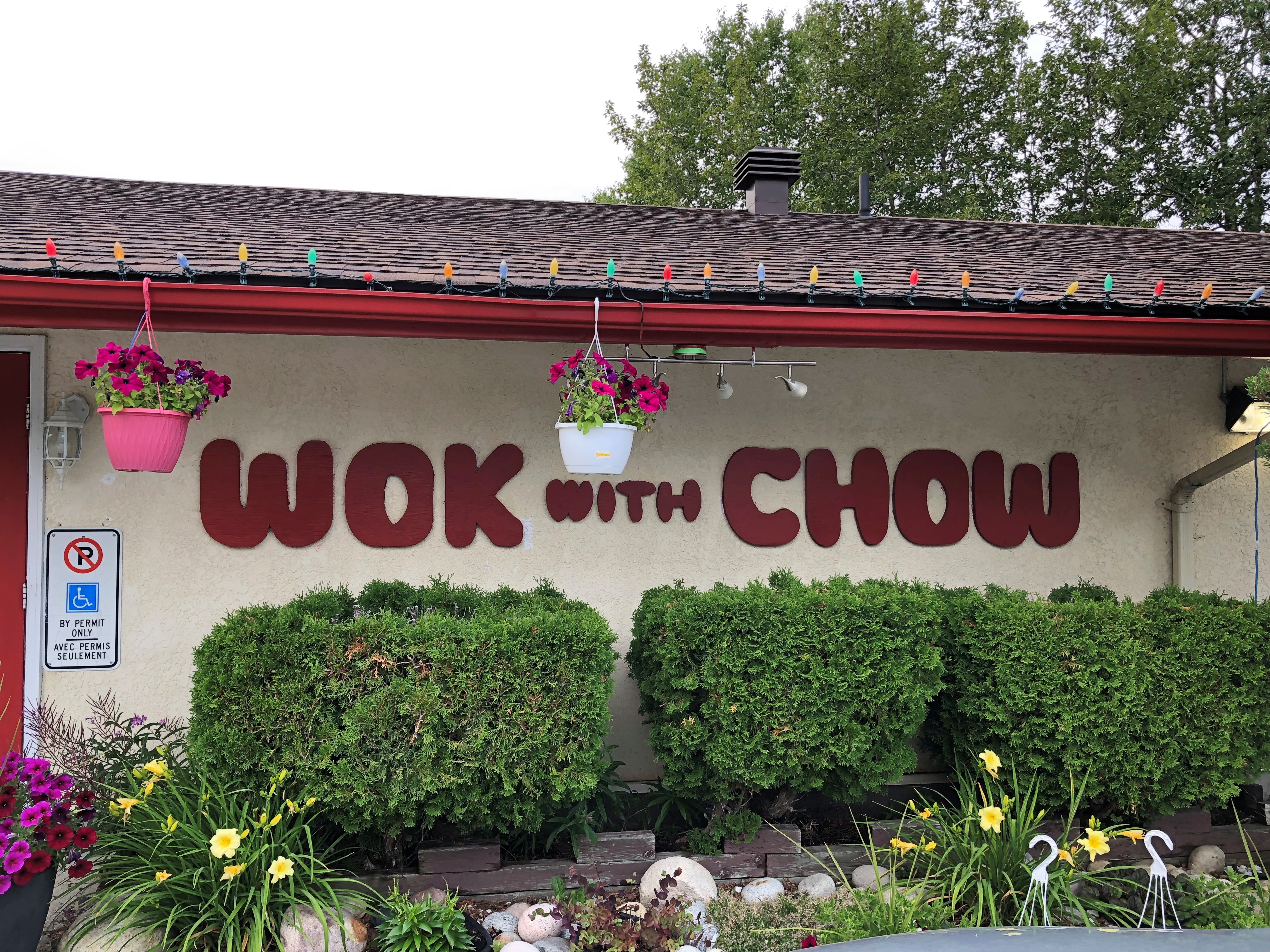
Just the exterior of the curling club. Wok With Chow, on the other hand, provided me dinner that evening, inside and at a table. Good enough chow, and demonstrating just how deeply ingrained Chinese food is in North America.
Barcelona Scraps

One of these days, we might have a string of holidays and quasi-holidays from Juneteenth to July 4, the warm equivalent of Christmas to New Year’s Day. Anyway, back on July 9 or so.

Not as much smoke today, though it is still an air pollution action day, according to the NWS. Curious term. You’d think it would be an inaction day, at least as far as outdoors activity is concerned.

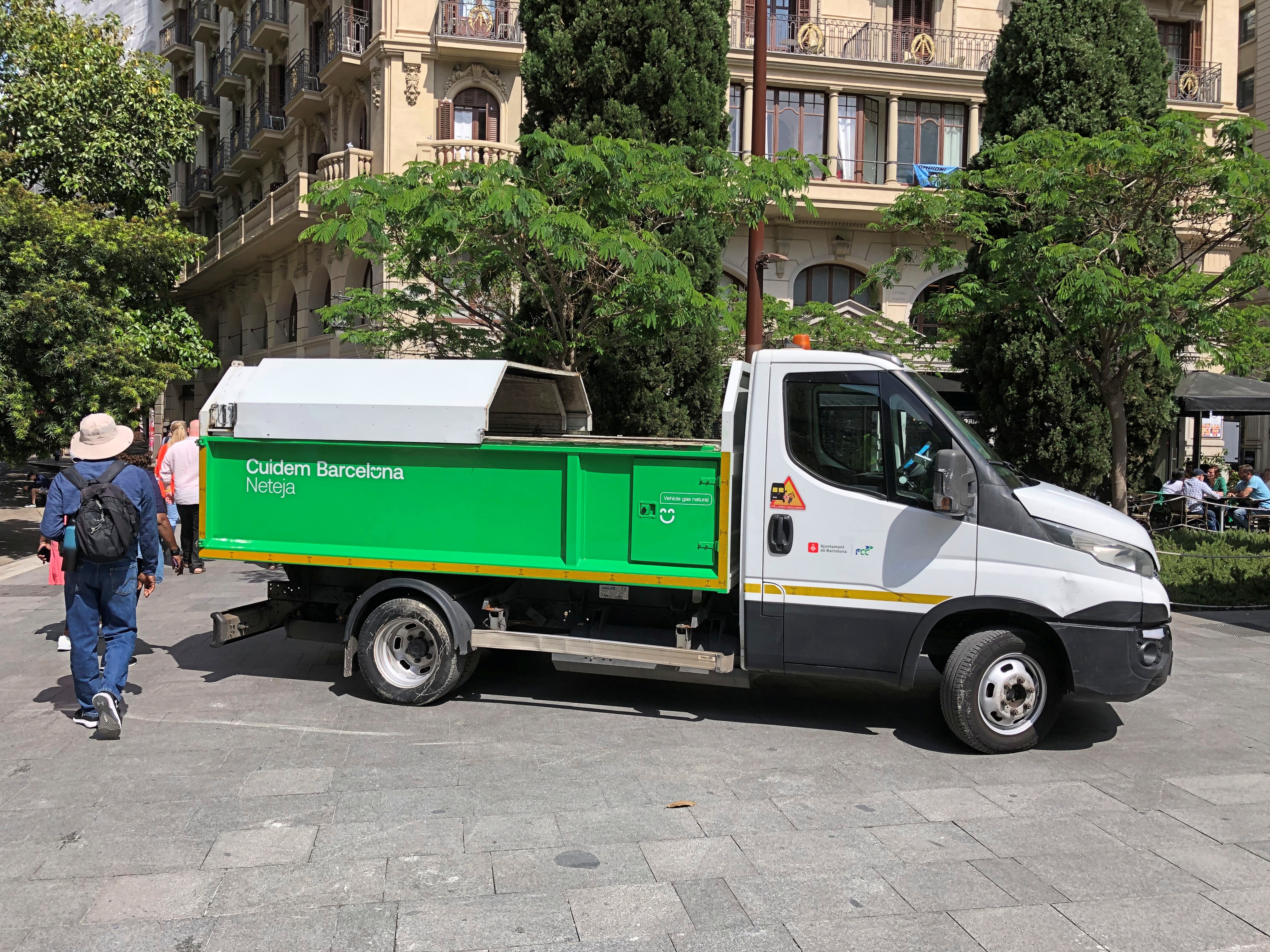
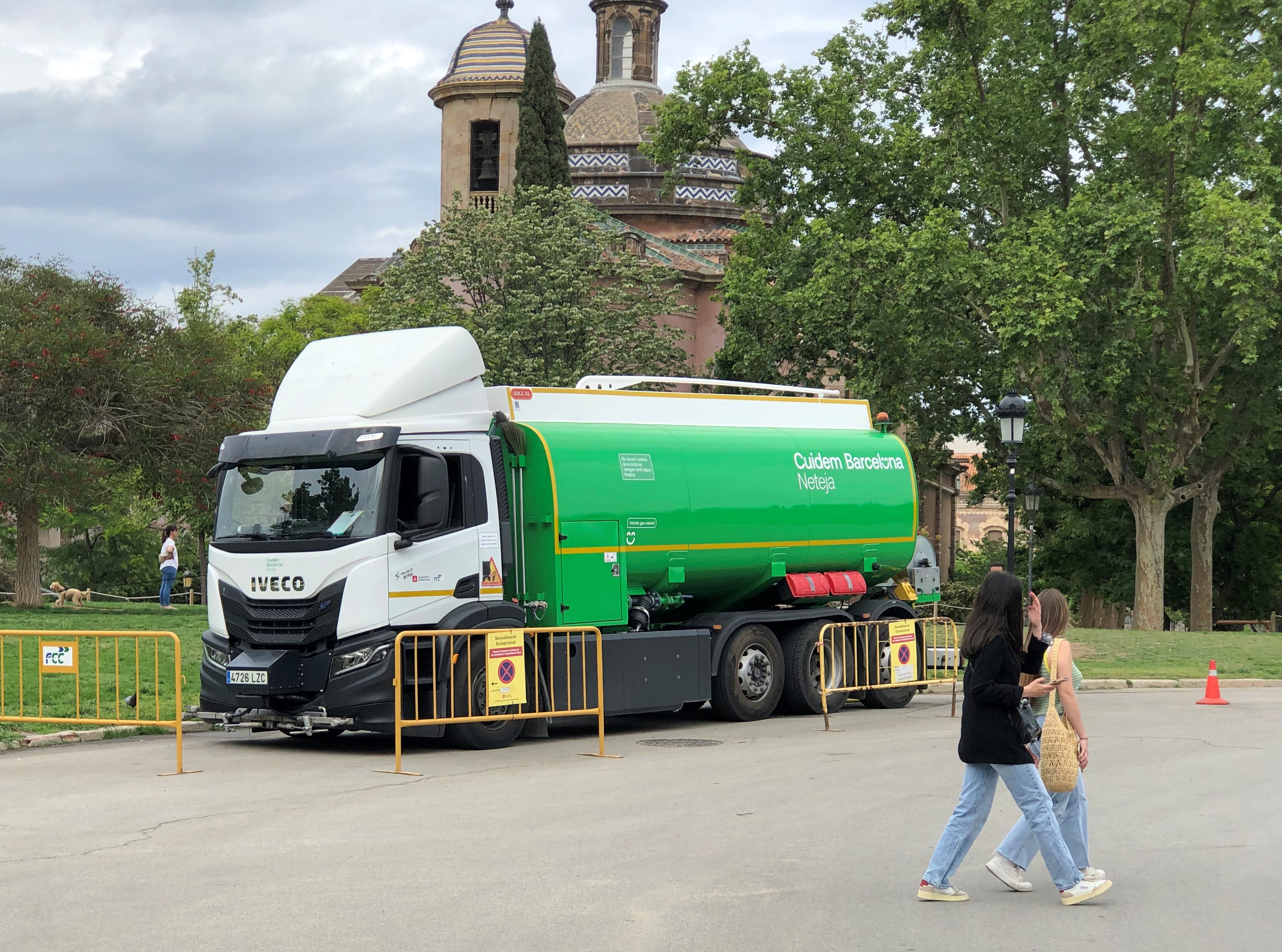
Barcelona city trucks. Specifically, neteja (cleaning).Barcelona cleaning truck Barcelona cleaning truck

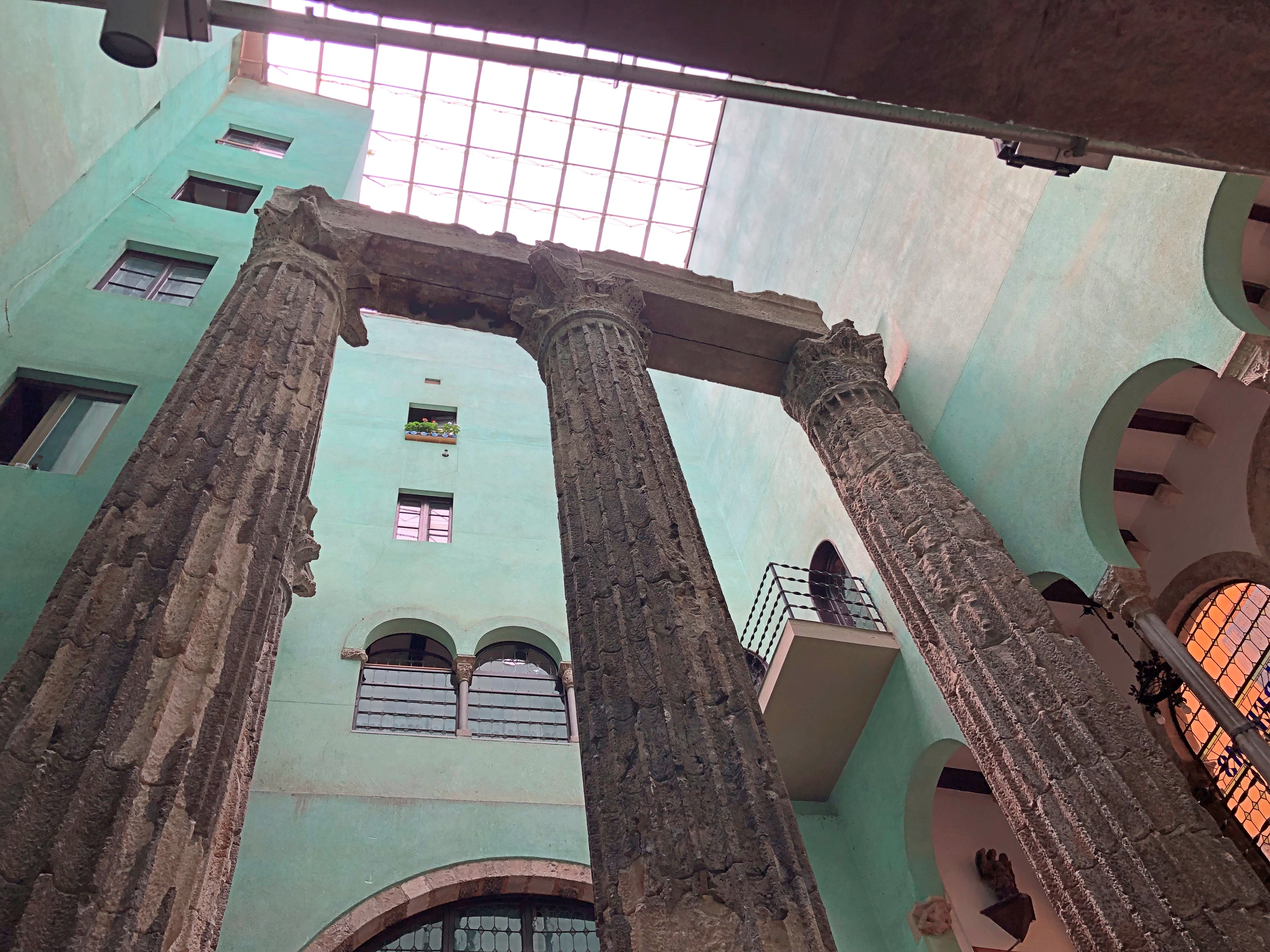
The Temple d’August, which is tucked away on a narrow street in the Gothic Quarter. Barcelona

The only Roman ruins we saw on the trip. Toyed with the idea of going to Tarragona to visit its extensive ruins, but that didn’t happen.

“The uniform columns of the Temple of Augustus inside are 9 metres tall and comprise an imposing relic of one of the temples from Barcelona’s Forum, which stood on a corner site at the rear,” Visit Barcelona says. “The temple was built in the 1st century BC and, as its name suggests, it was dedicated to the worship of Emperor Augustus…. The temple was reconstructed by the architect Puig i Cadafalch in the early 20th century.”

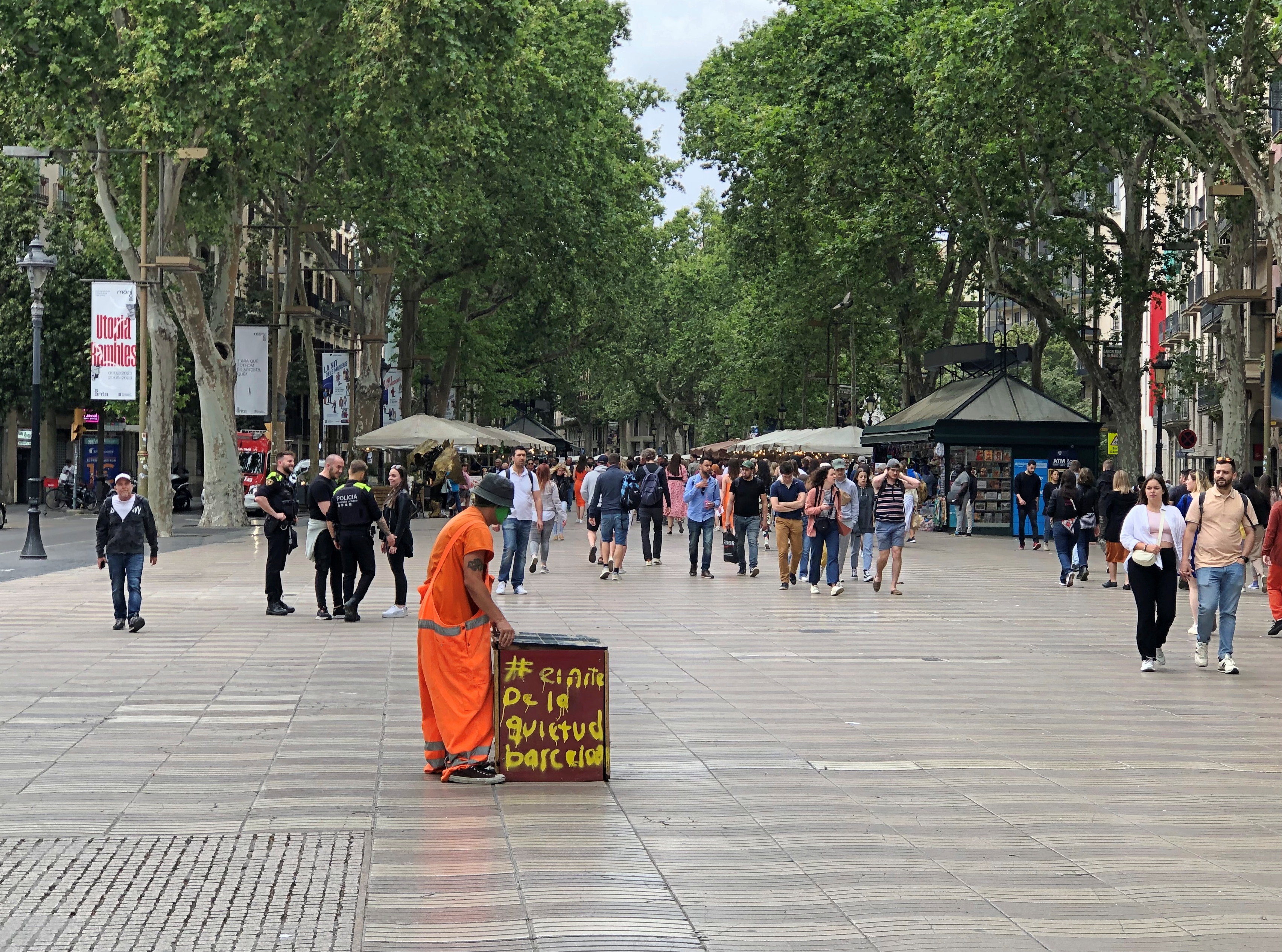
La Rambla, near one end. The end near the ocean.La Rambla

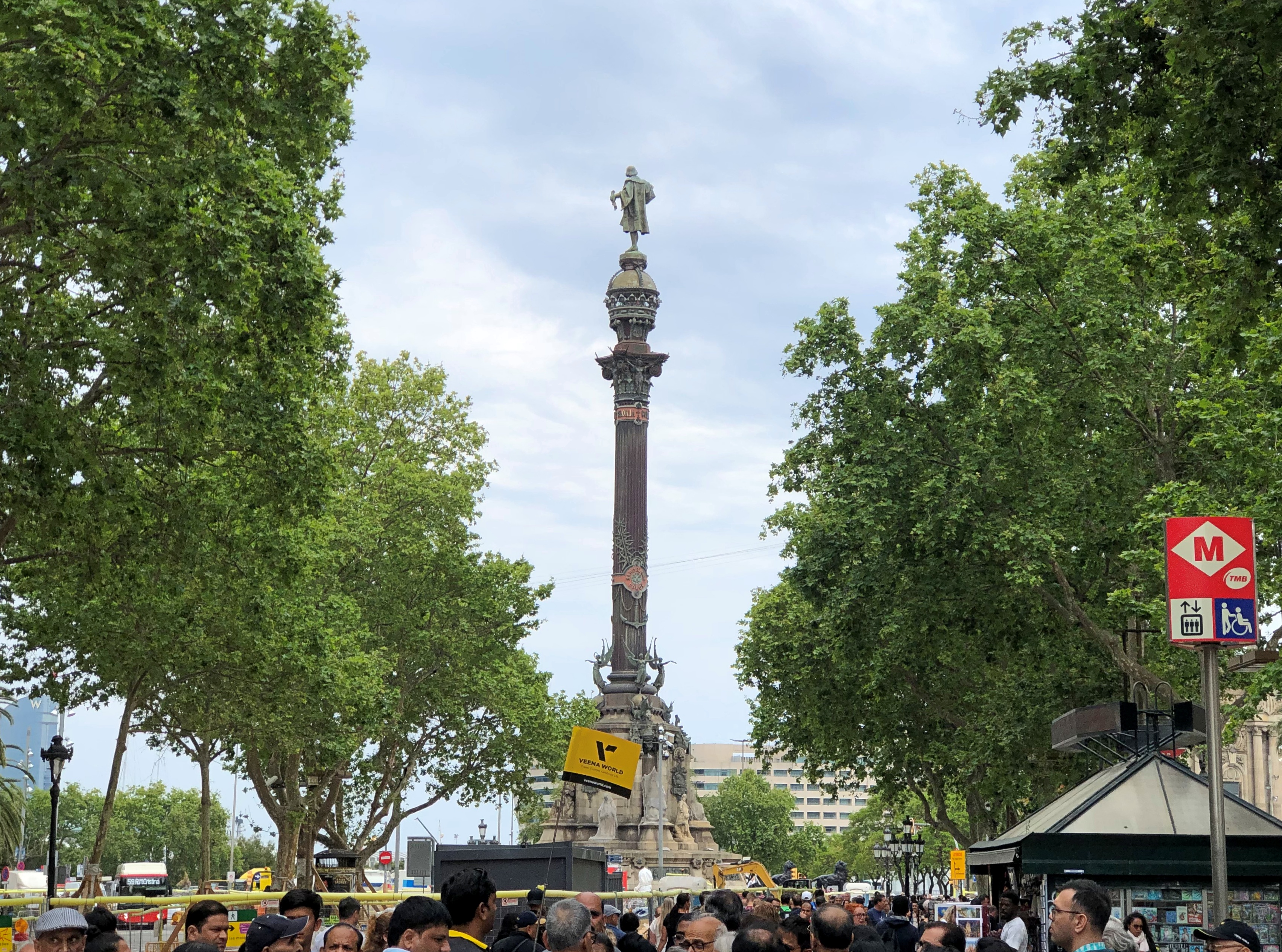
Columbus still looks out to sea at that point, as he has done since 1888. Monument a Colom, the maps call it, and efforts to take it down have been unsuccessful so far.La Rambla

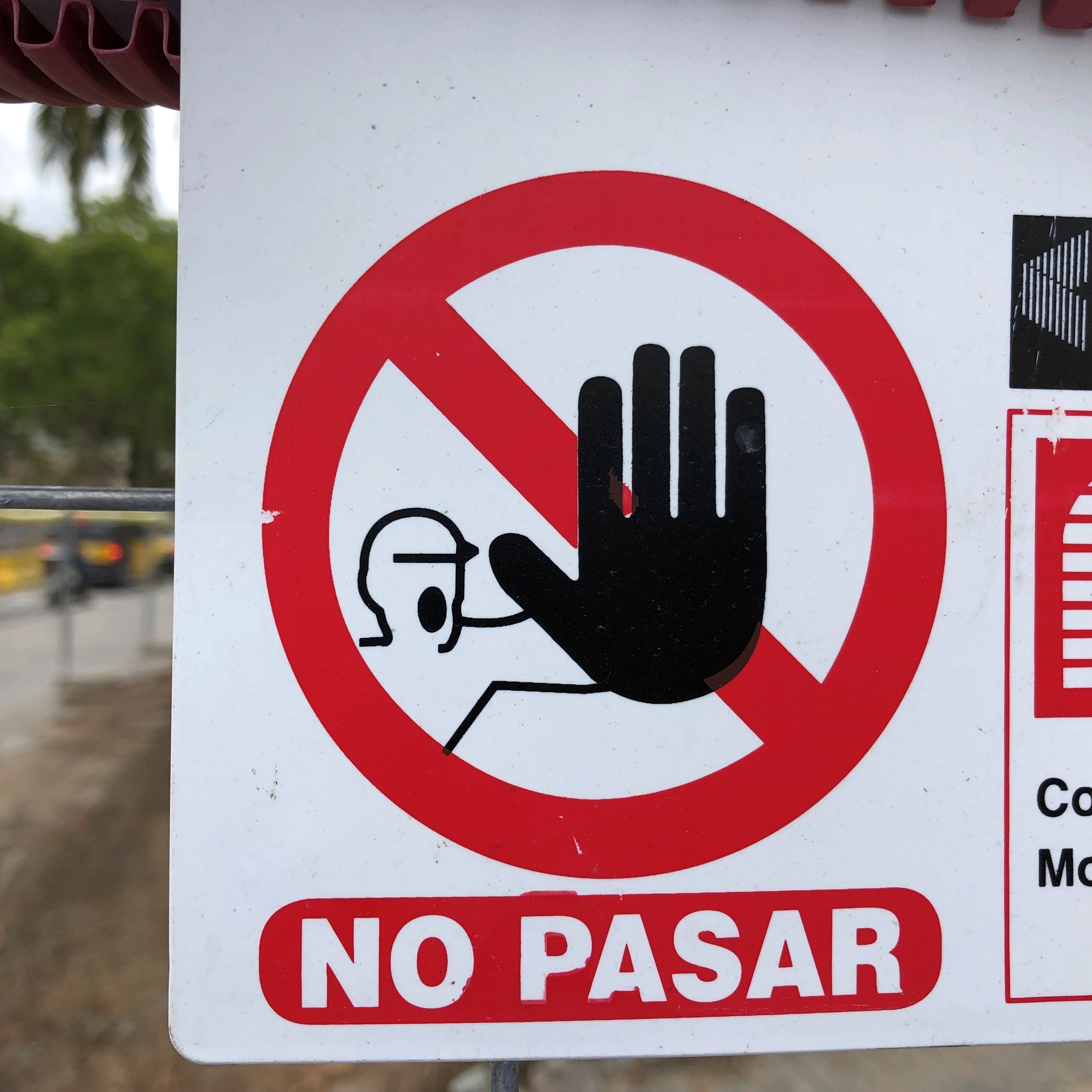
There was also a lot of construction in the area, with blocked off sections. I can’t see a sign like that in Spain and not be reminded of no pasarán!

The context is just a little different in this case, however. “Do not pass,” the dictionaries tell me, as opposed the more emphatic will not pass!

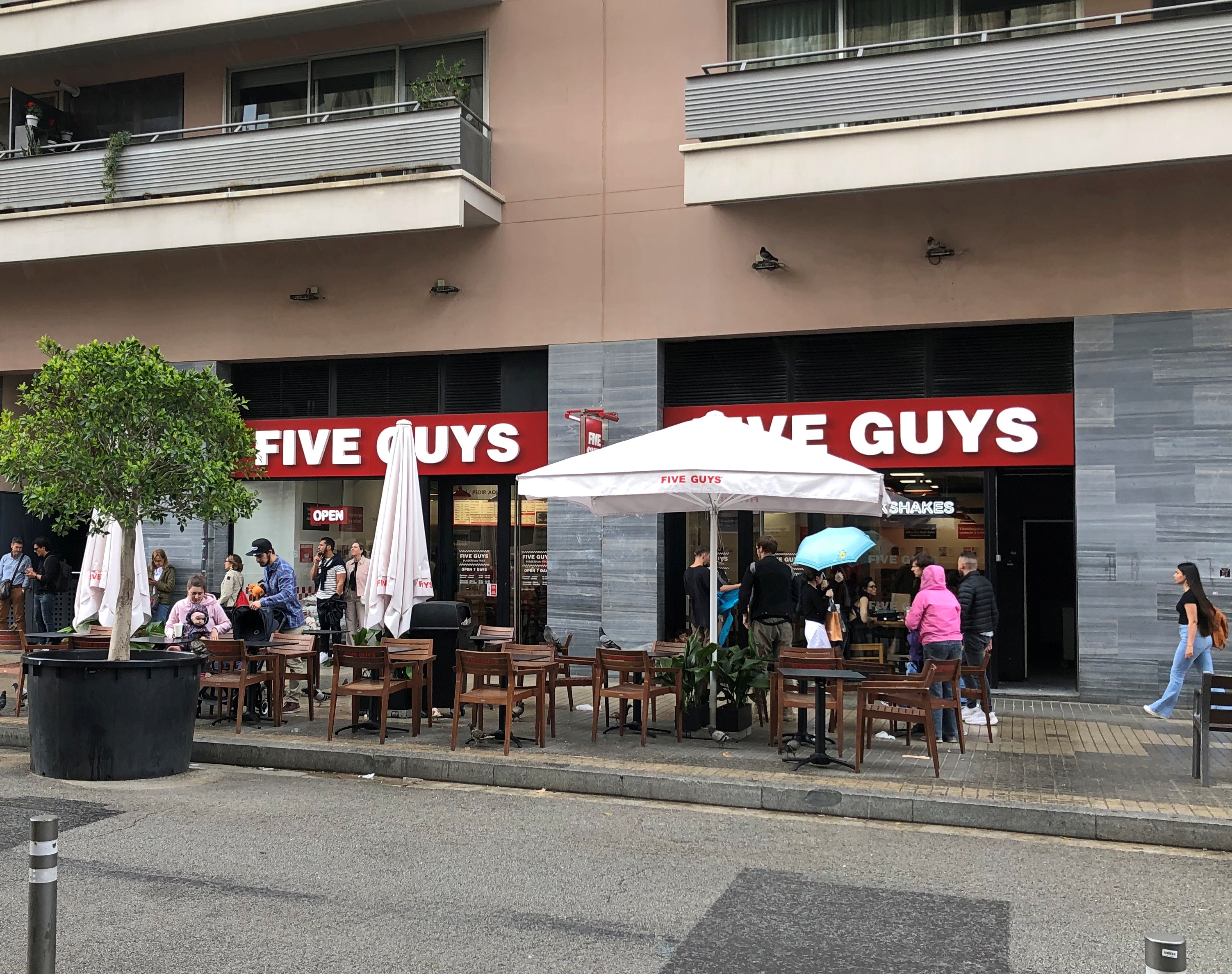
I expected to see fast food in Barcelona, but Five Guys was nevertheless a surprise, across the street from Sagrada Familia. Five Guys’ web site tells me that there are currently seven locations in the city, and 28 in Spain all together, with 13 of those in greater Madrid.Barcelona Five Guys
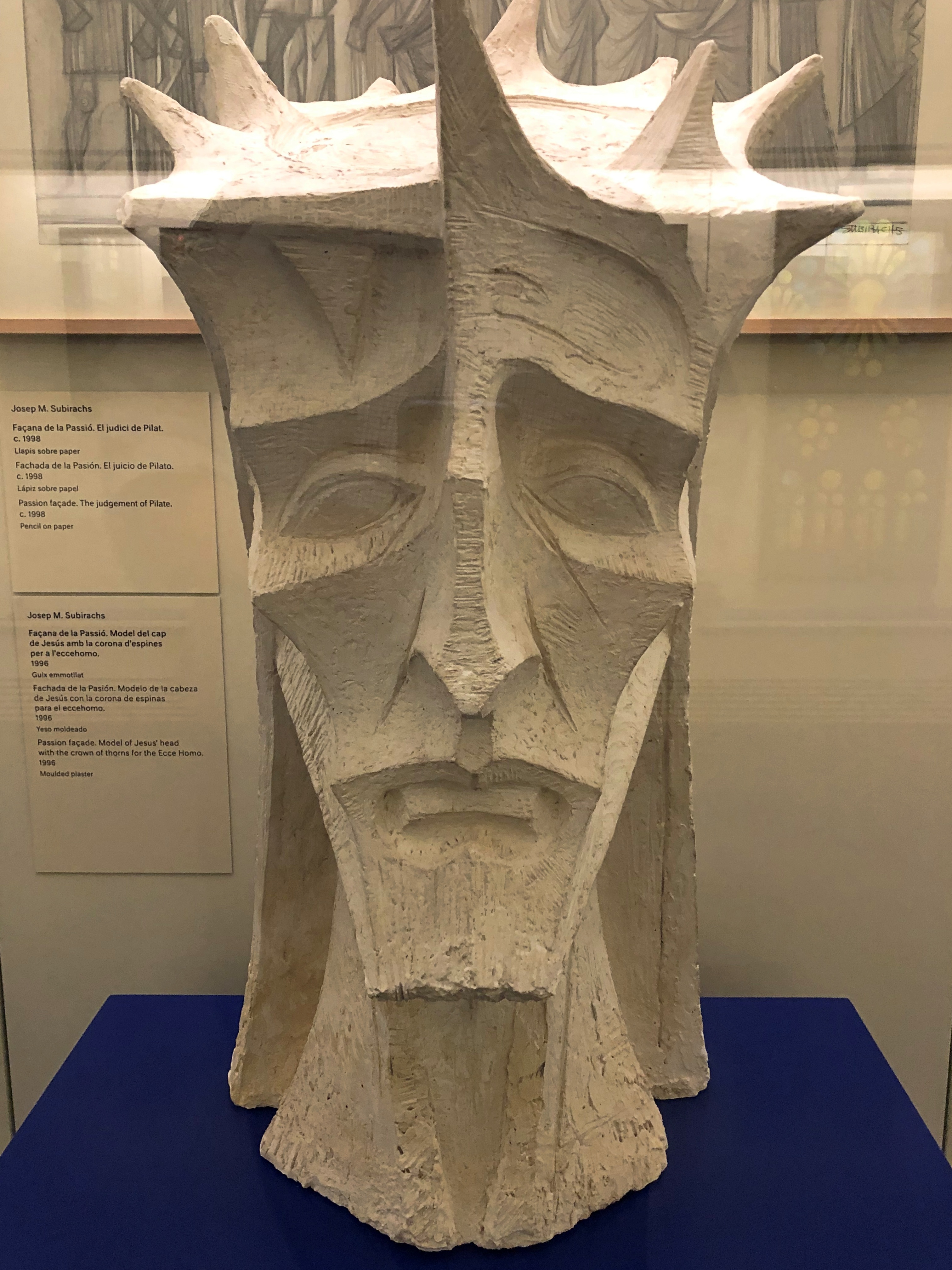
Model of Jesus’ head, on display in the small museum in the basement of Sagrada Família.Sagrada Familia

Cava sangria.
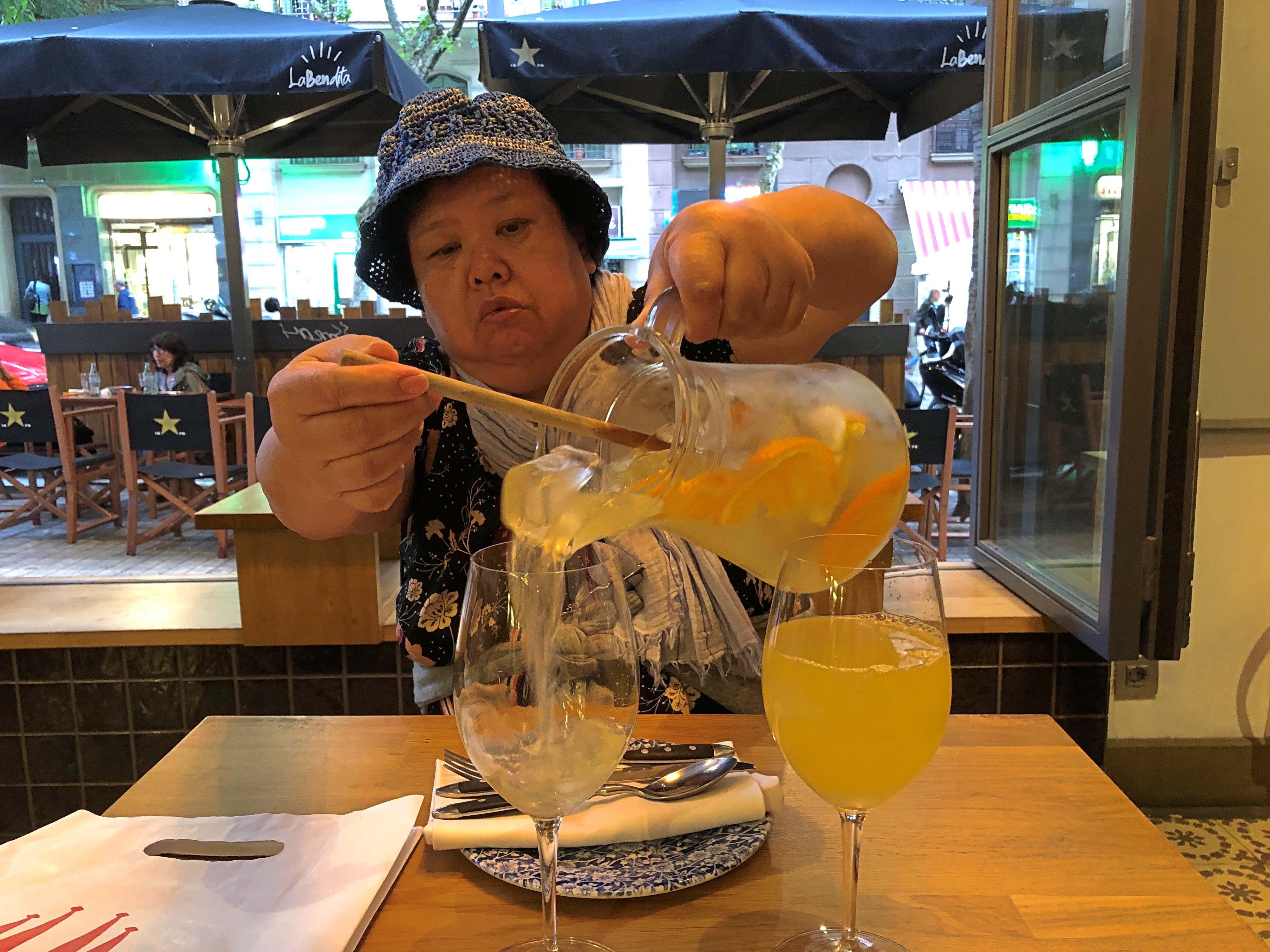
“This variation of sangria called Sangria de Cava in Spanish is made with the sparkling wine Cava, which can be white or rosé,” says Allrecipes. “The name Cava is a protected designation of origin in the European Union, which means that only sparkling wine produced in certain areas of Spain may be sold under that name. To make Cava Sangria, you can use another sparkling white wine instead. The rest of the ingredients is pretty similar to sangria. Cava Sangria often includes orange liqueur.”
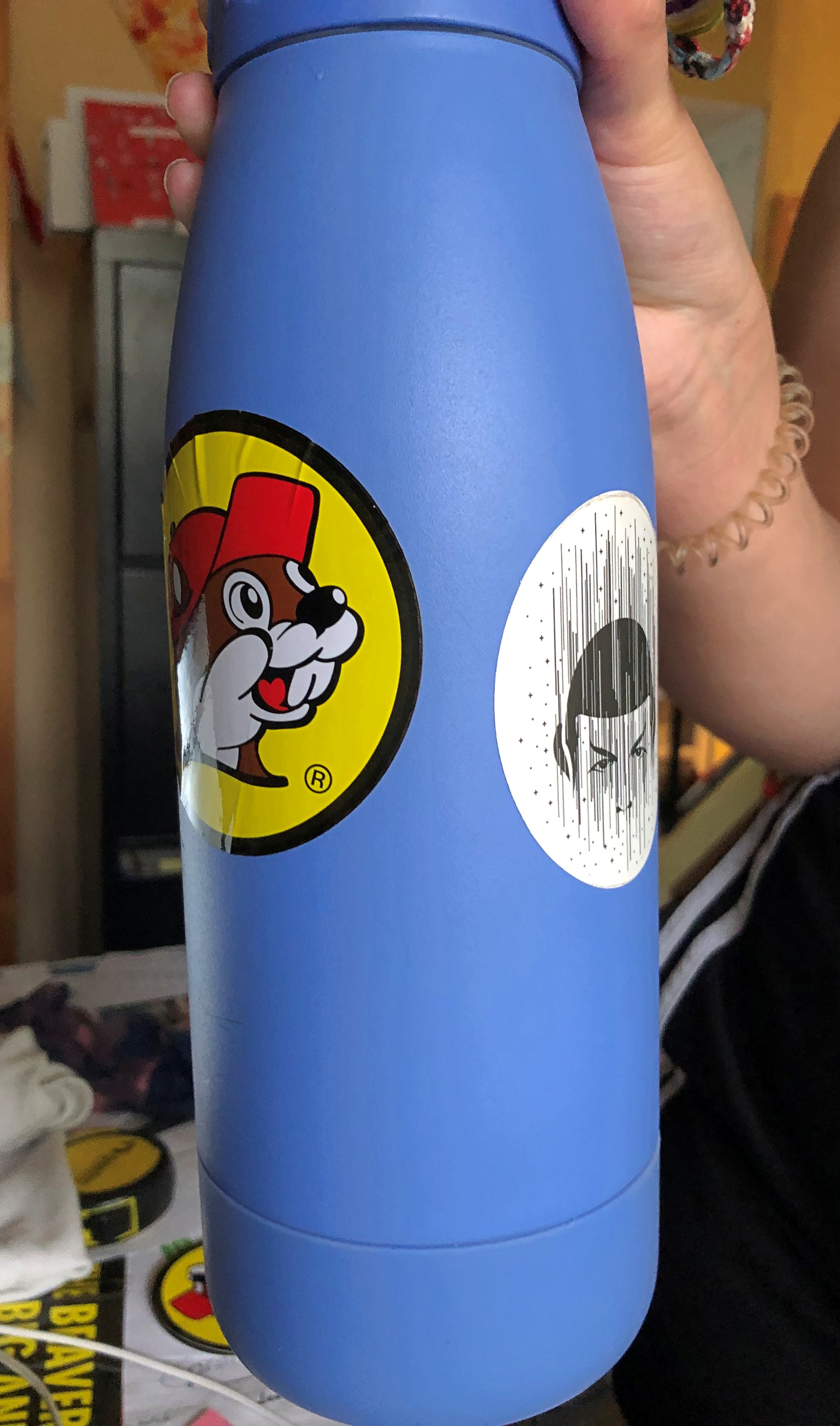
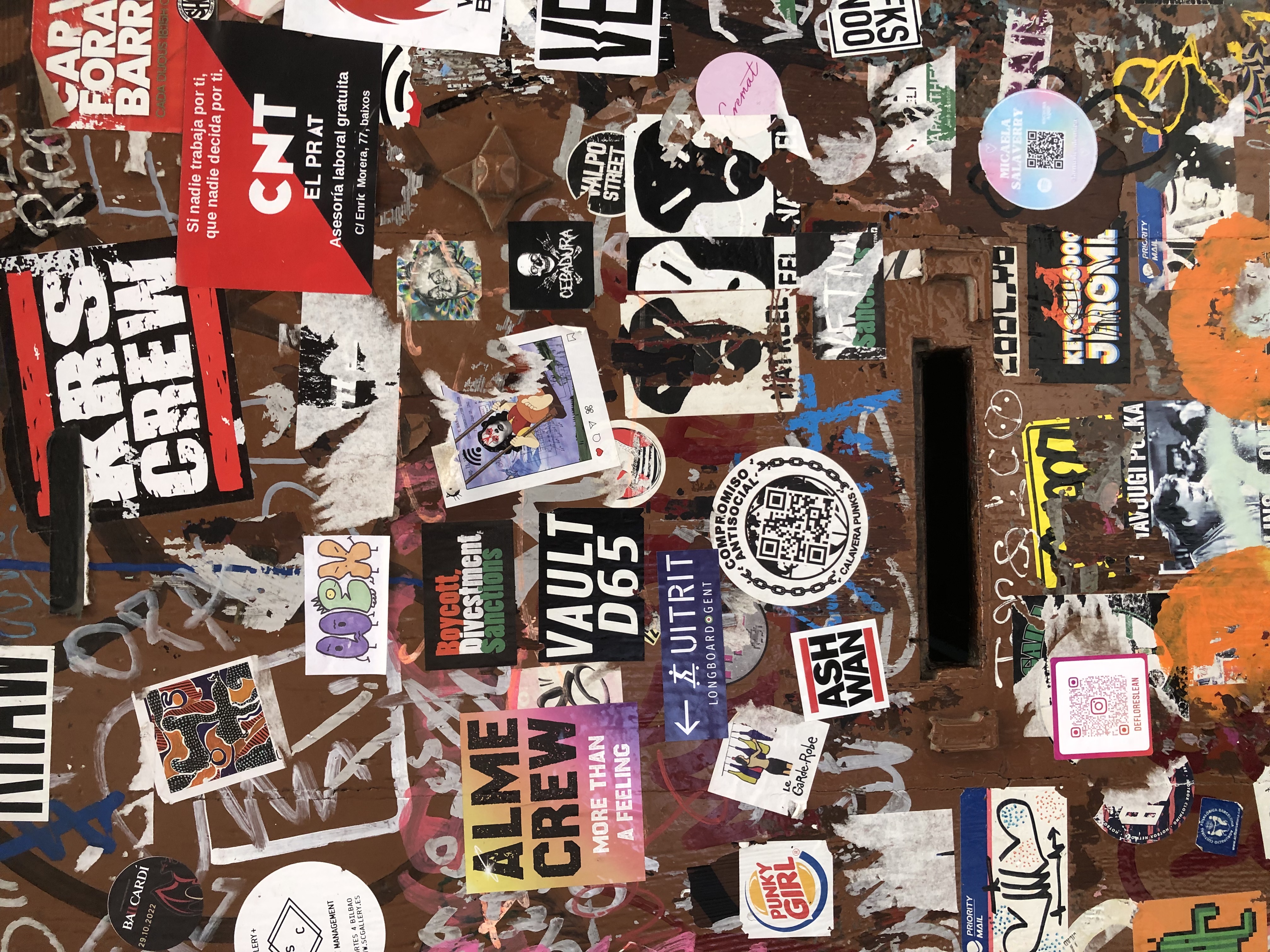
Stickers on a wall in Barcelona. A common thing to see. No Buc-ee’s sticker. Not yet.
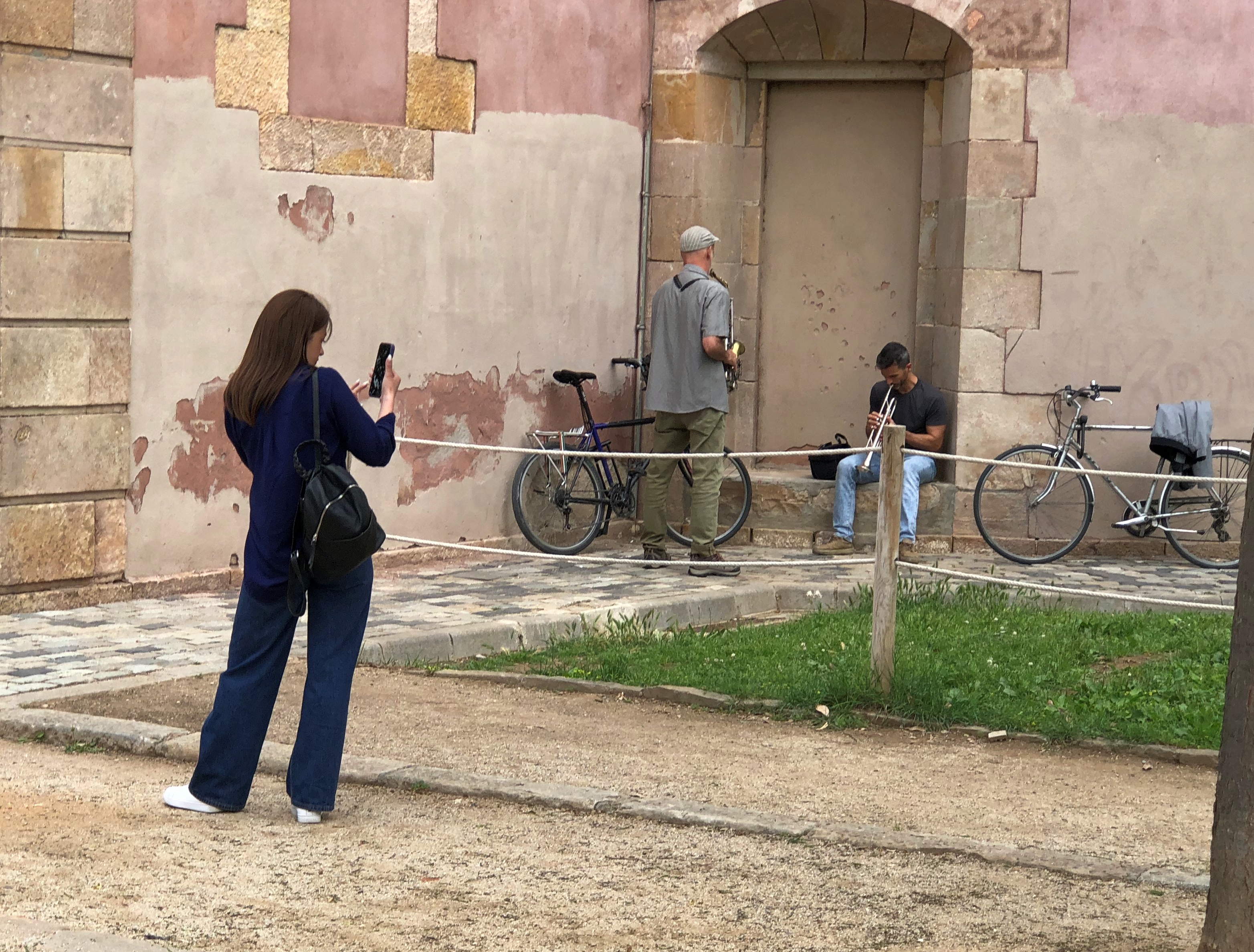
I took a picture of someone taking a picture of seemingly uninterested musicians, in Parc de la Ciutadella.Barcelona

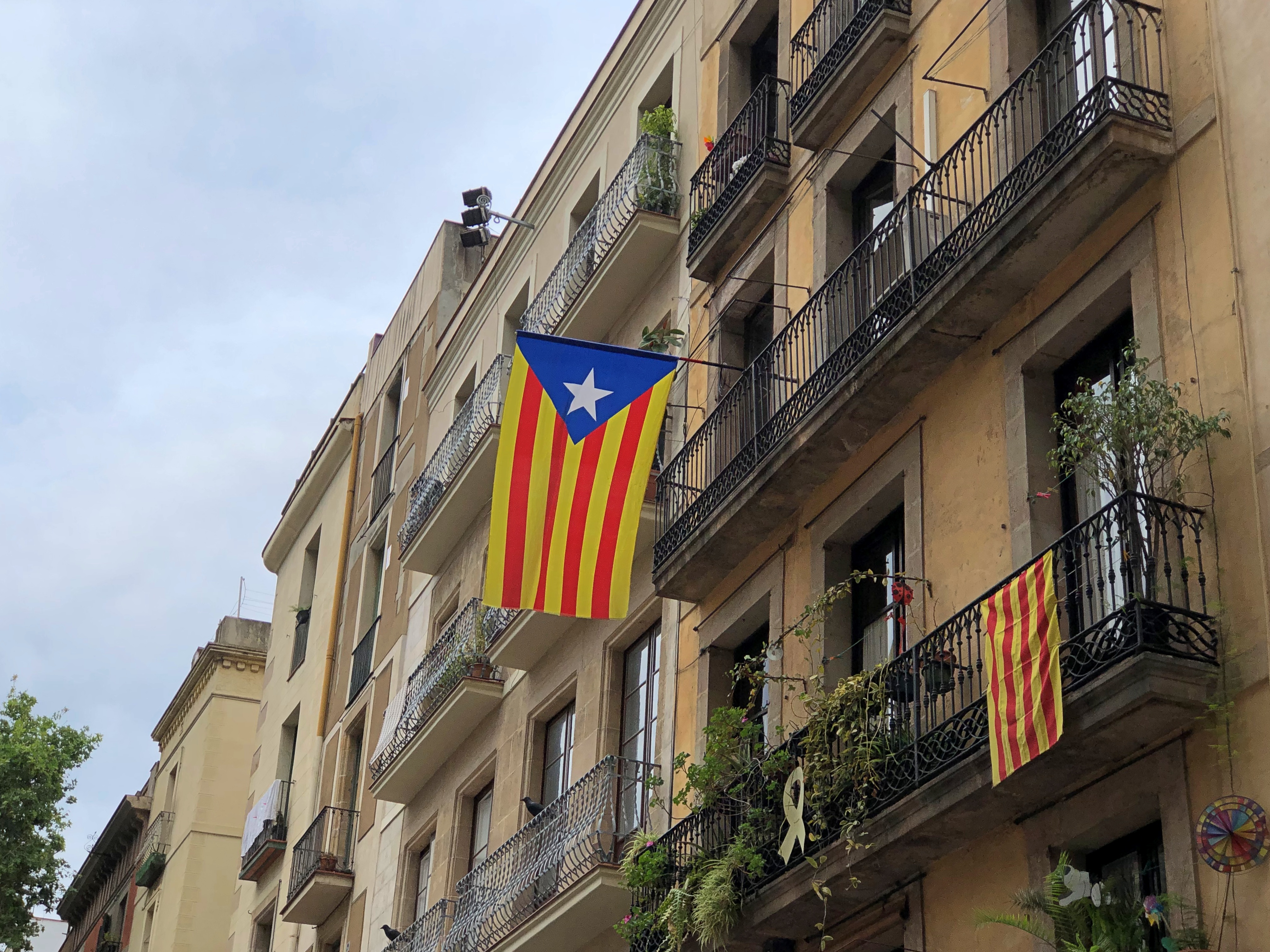
Sometimes you’d see the independence flag. Not that often, however. The latest effort at independence fizzled, after all.Catalonia flag

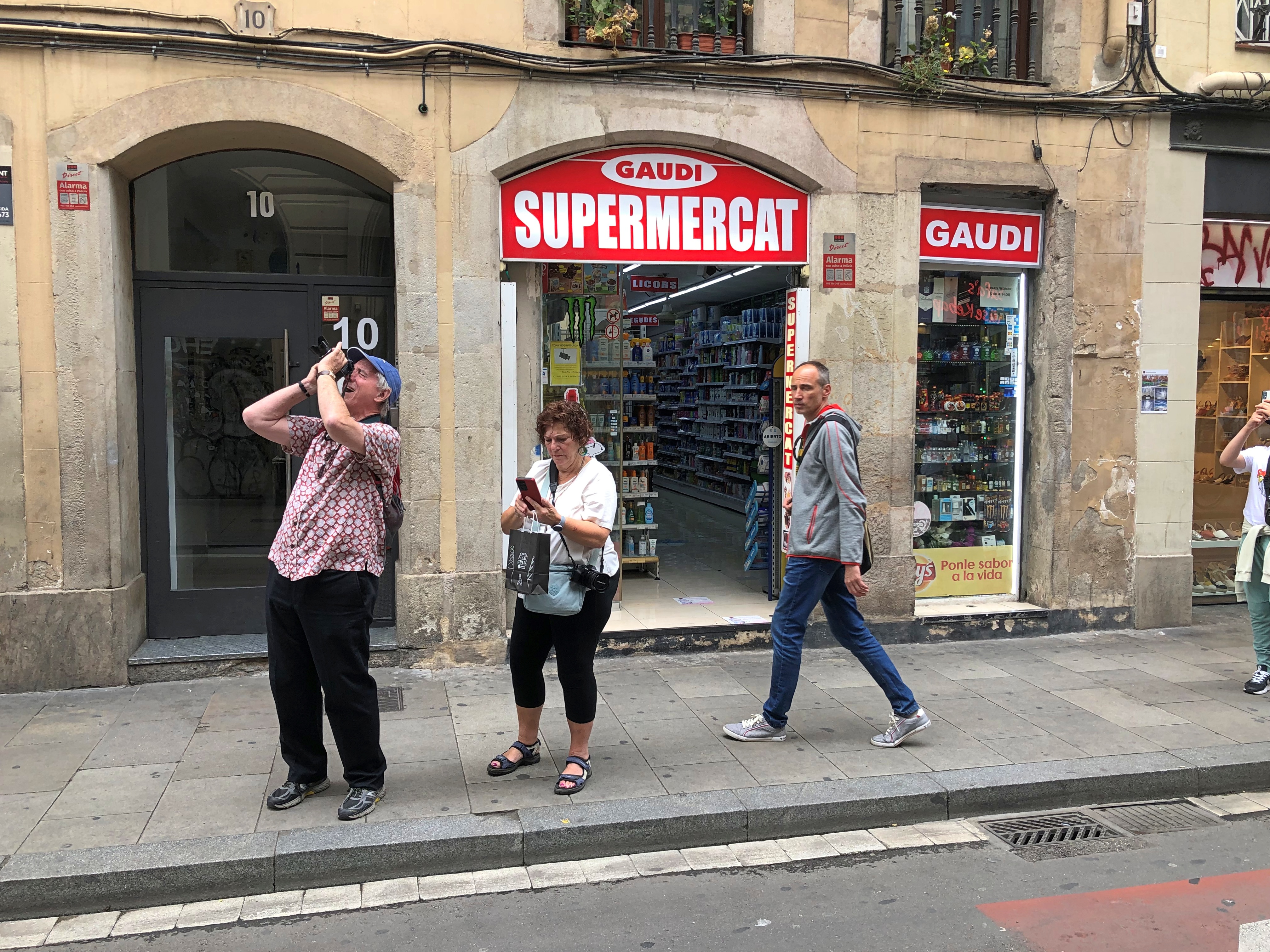
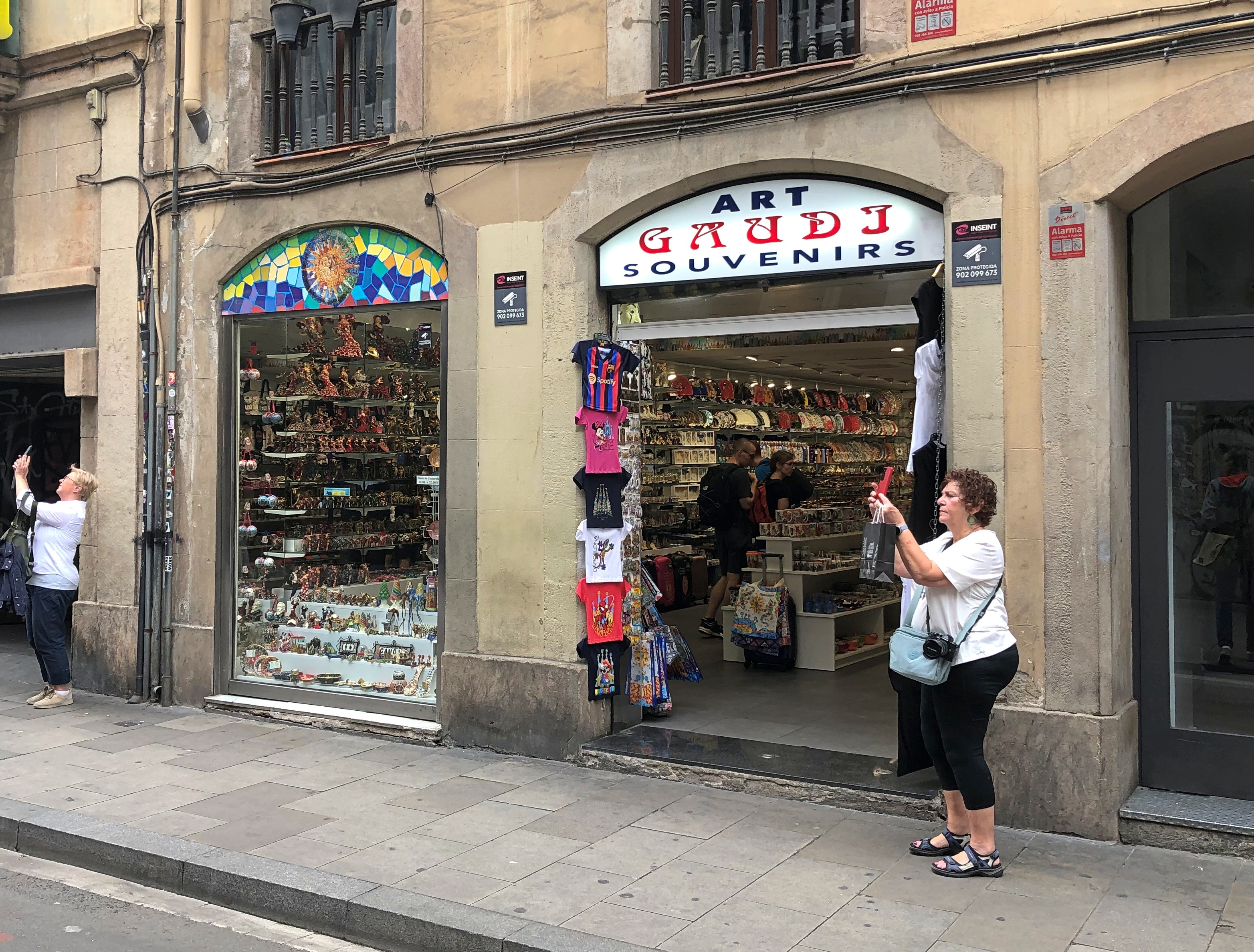
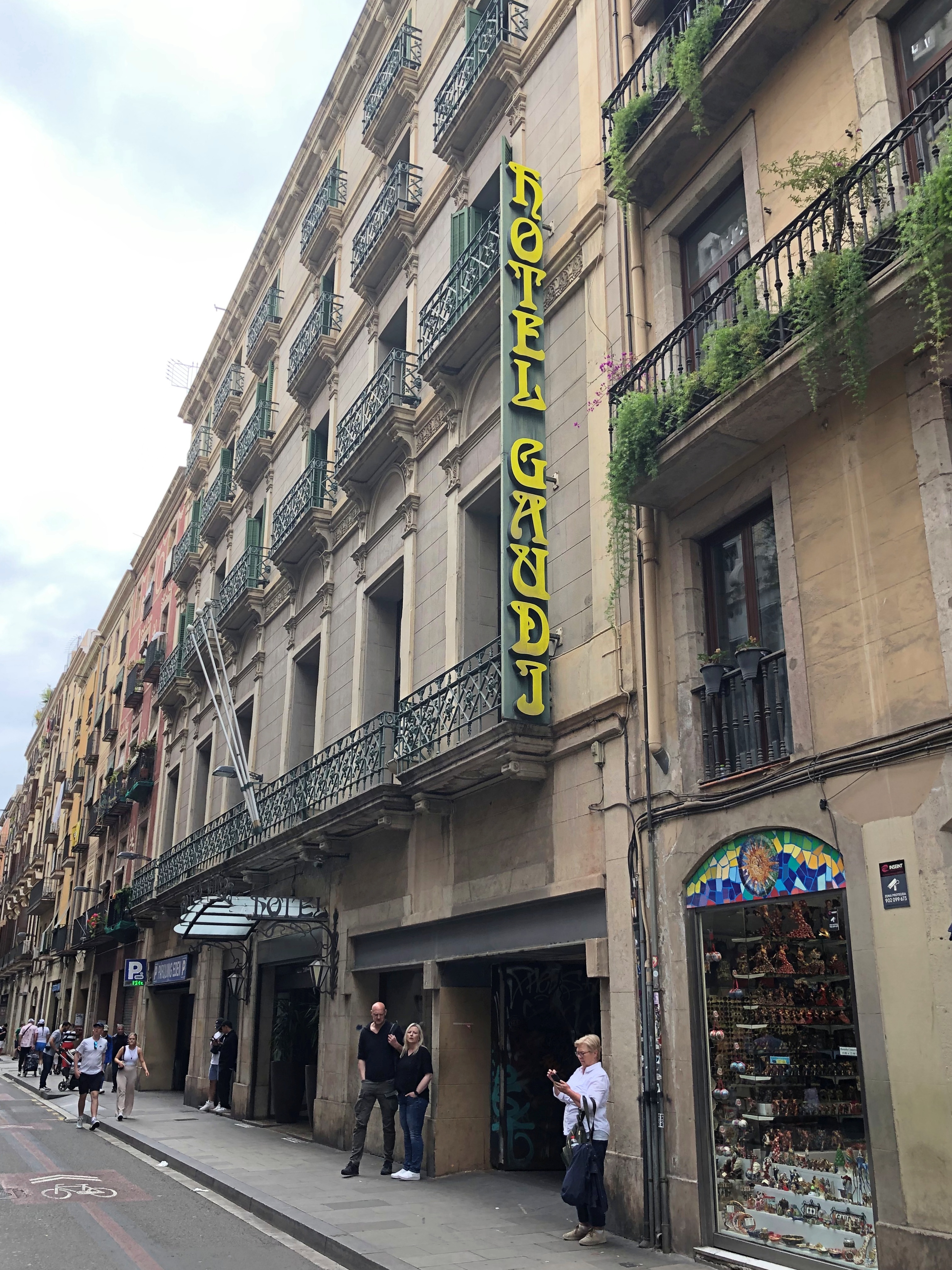
Near Palau Güell, you can find the Gaudi Supermercat, Art Gaudi Souvenirs, and the Hotel Gaudi.Barcelona Barcelona 2023 Barcelona 2023

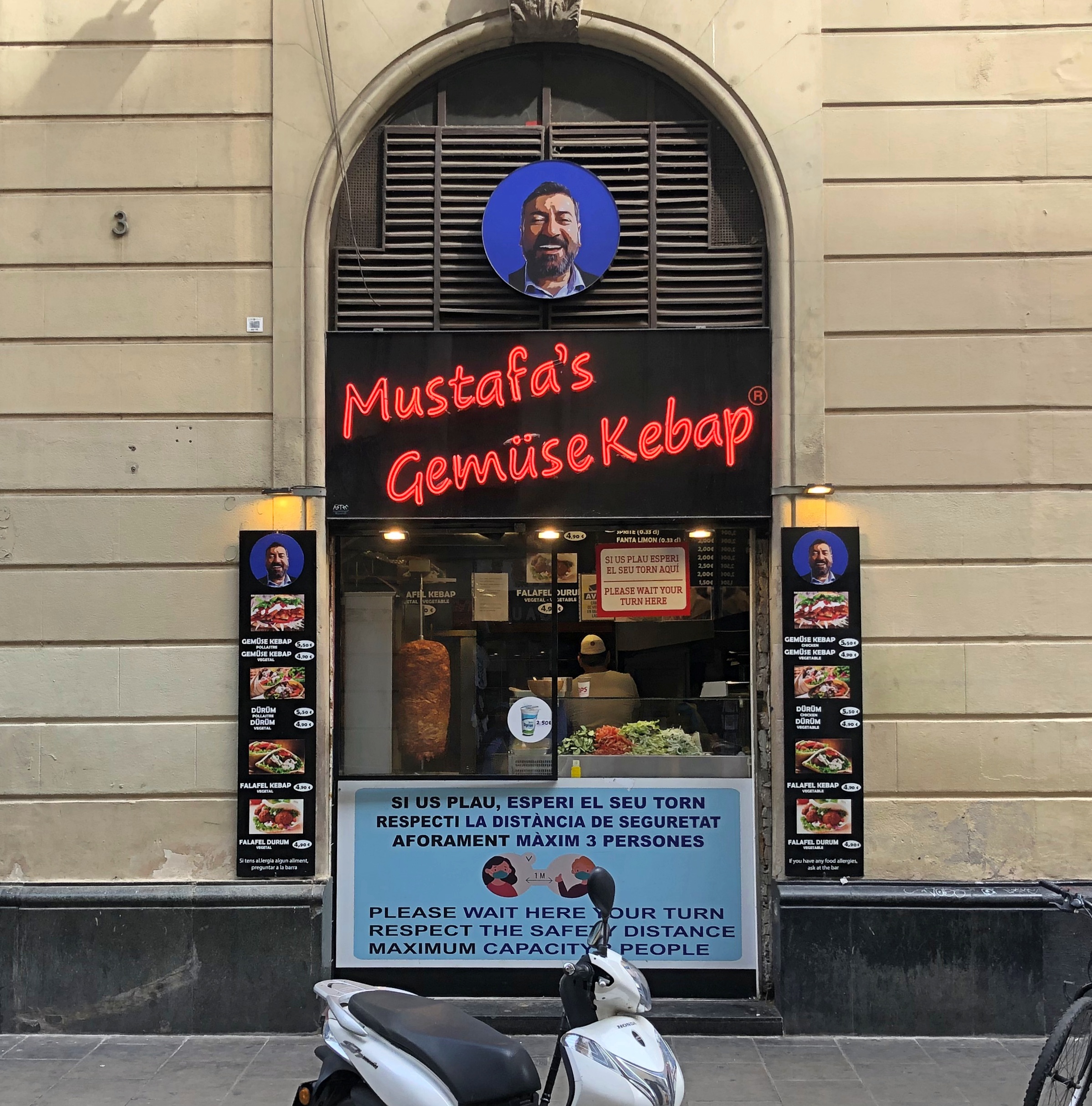
Not everything in the area had Gaudi’s name slapped on it. If we’d been hungry, we might have bought kebabs from this fellow.Barcelona 2023

Elsewhere, more Barcelona flowers.Barcelona 2023 Barcelona 2023

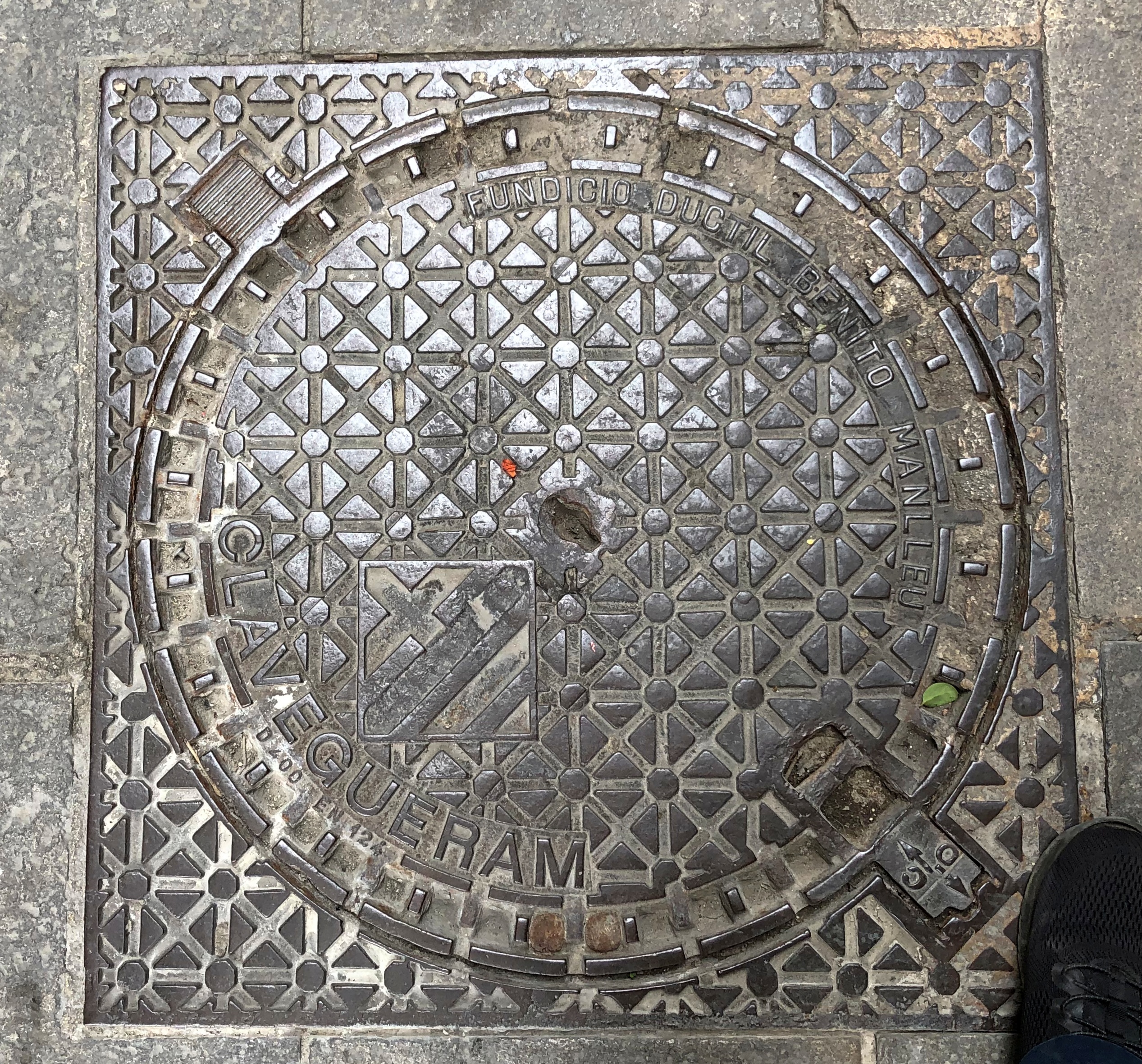
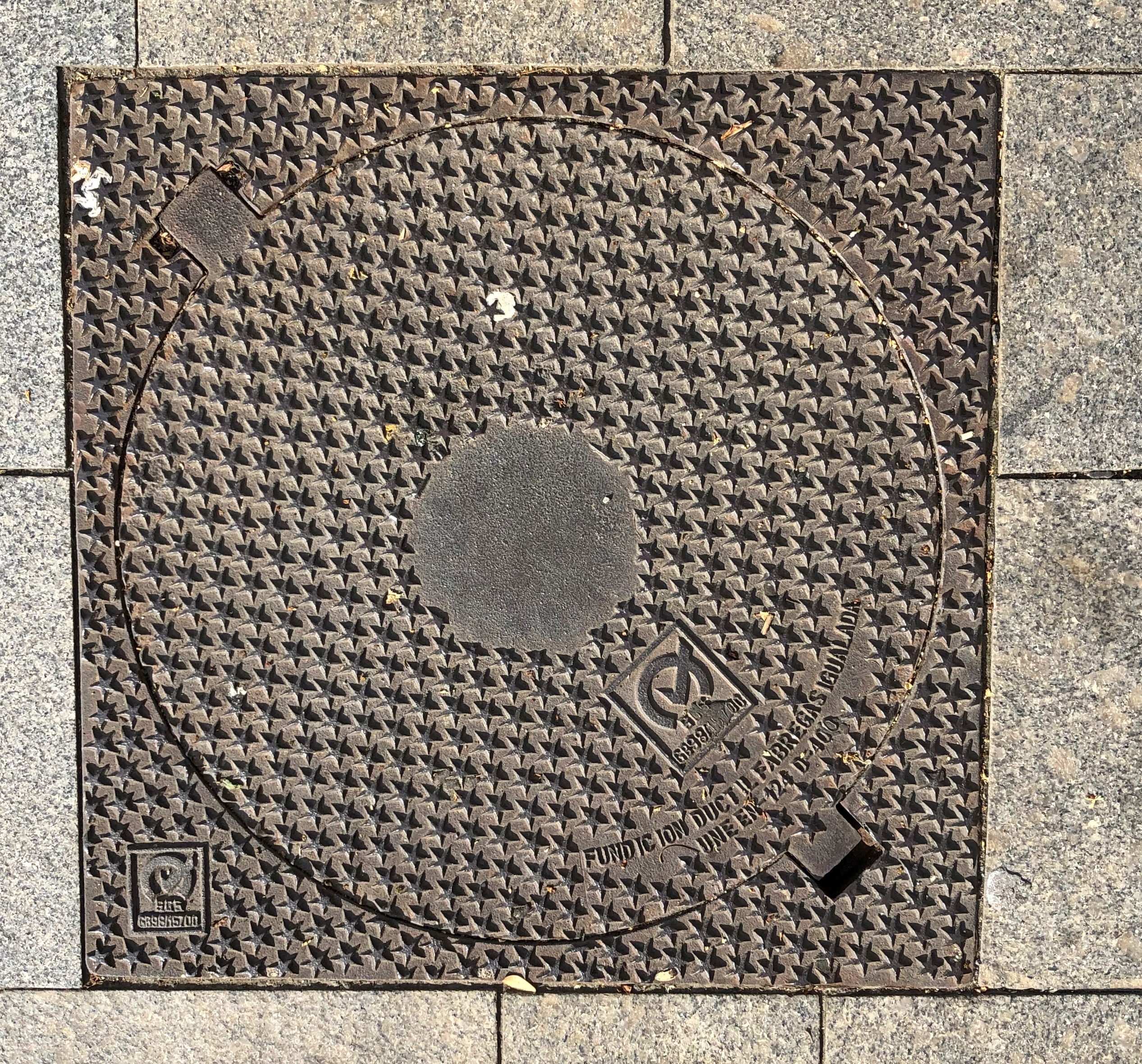
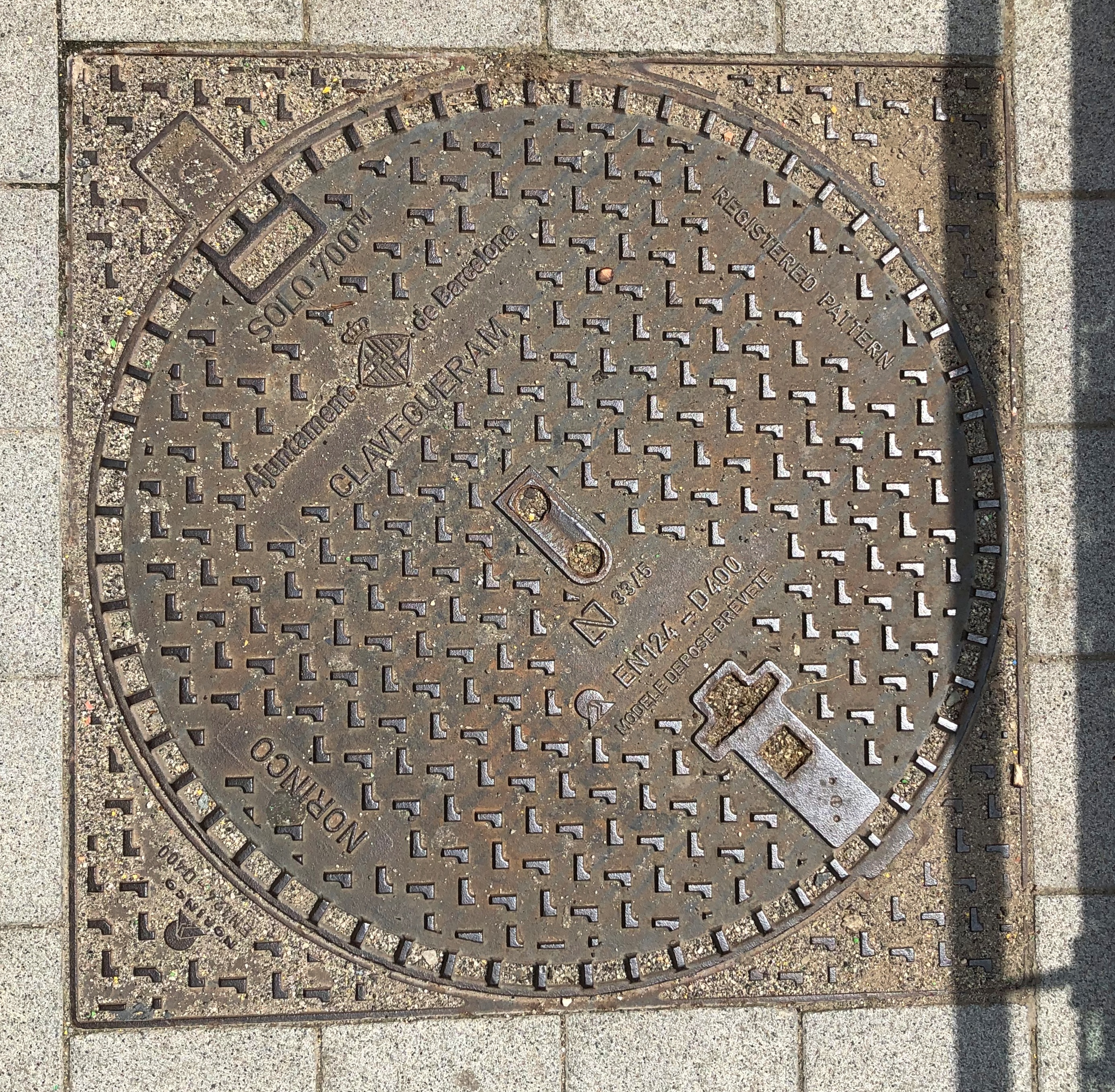
Finally, manhole covers. Like Dublin, Barcelona had some good manhole covers.Barcelona manhole cover 2023 Barcelona manhole cover 2023 Barcelona manhole cover 2023 Barcelona manhole cover 2023

Which is tapa de clavegueram in Catalan, at least according to automated online translation. Now you know.

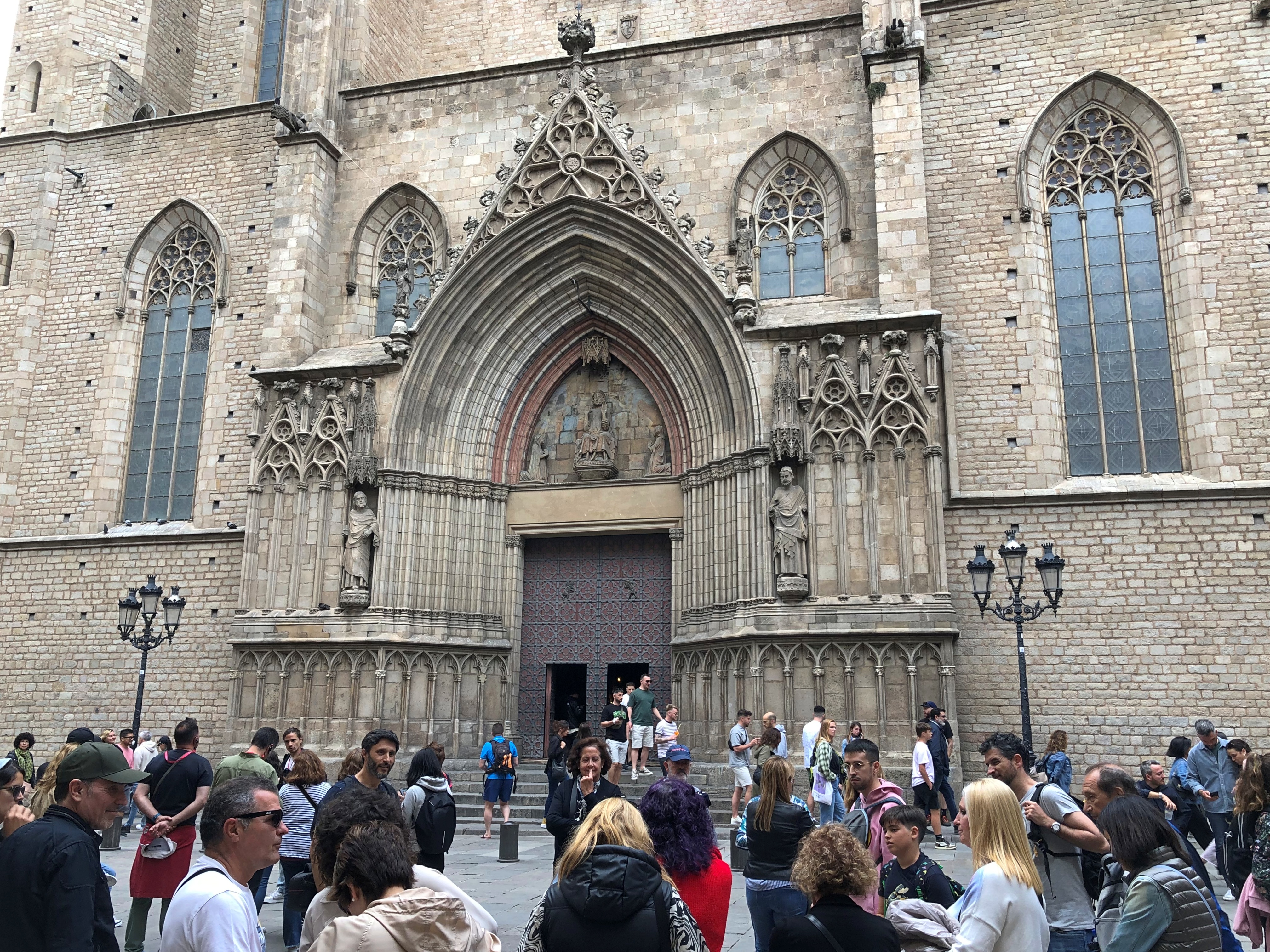
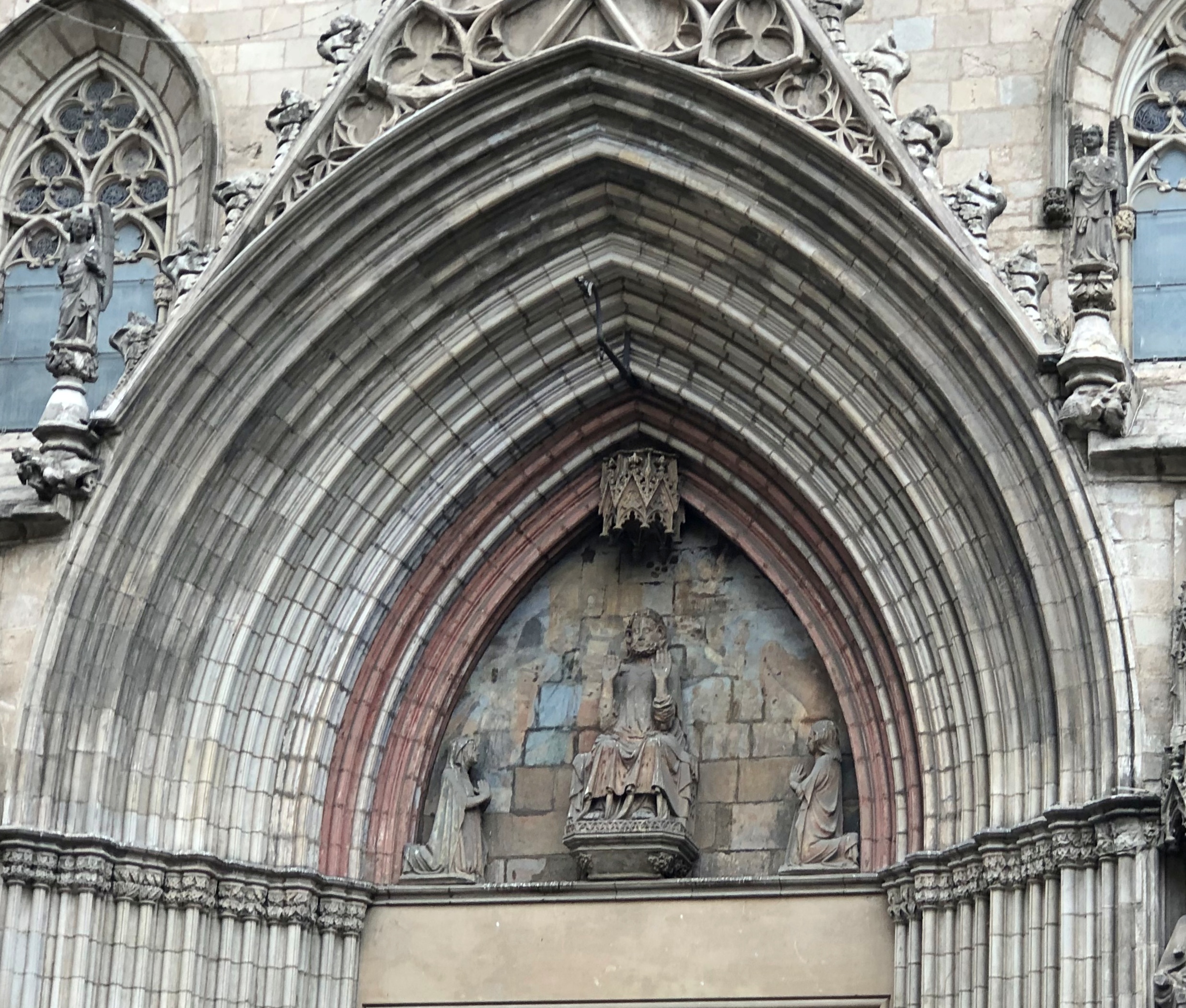
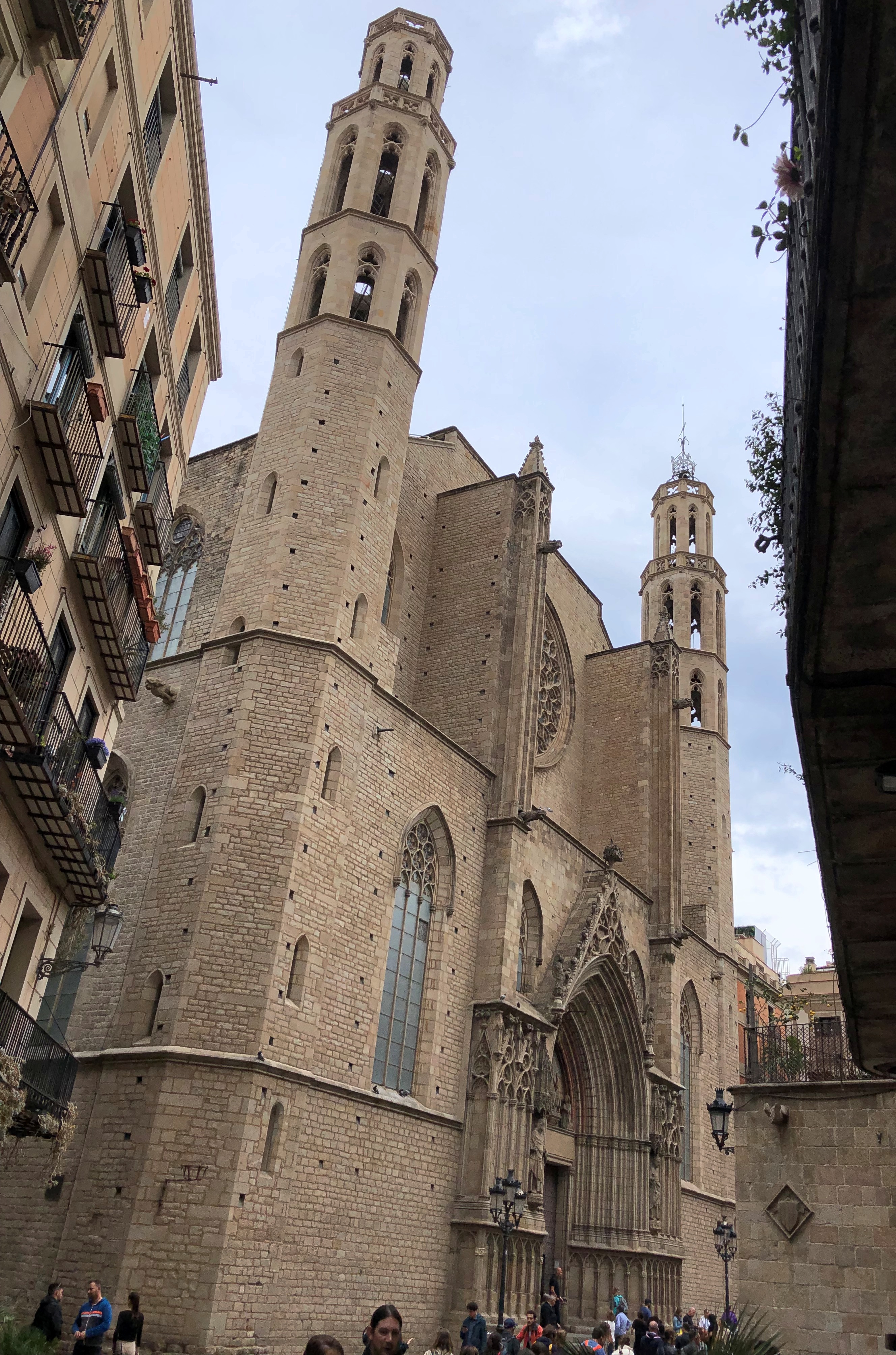
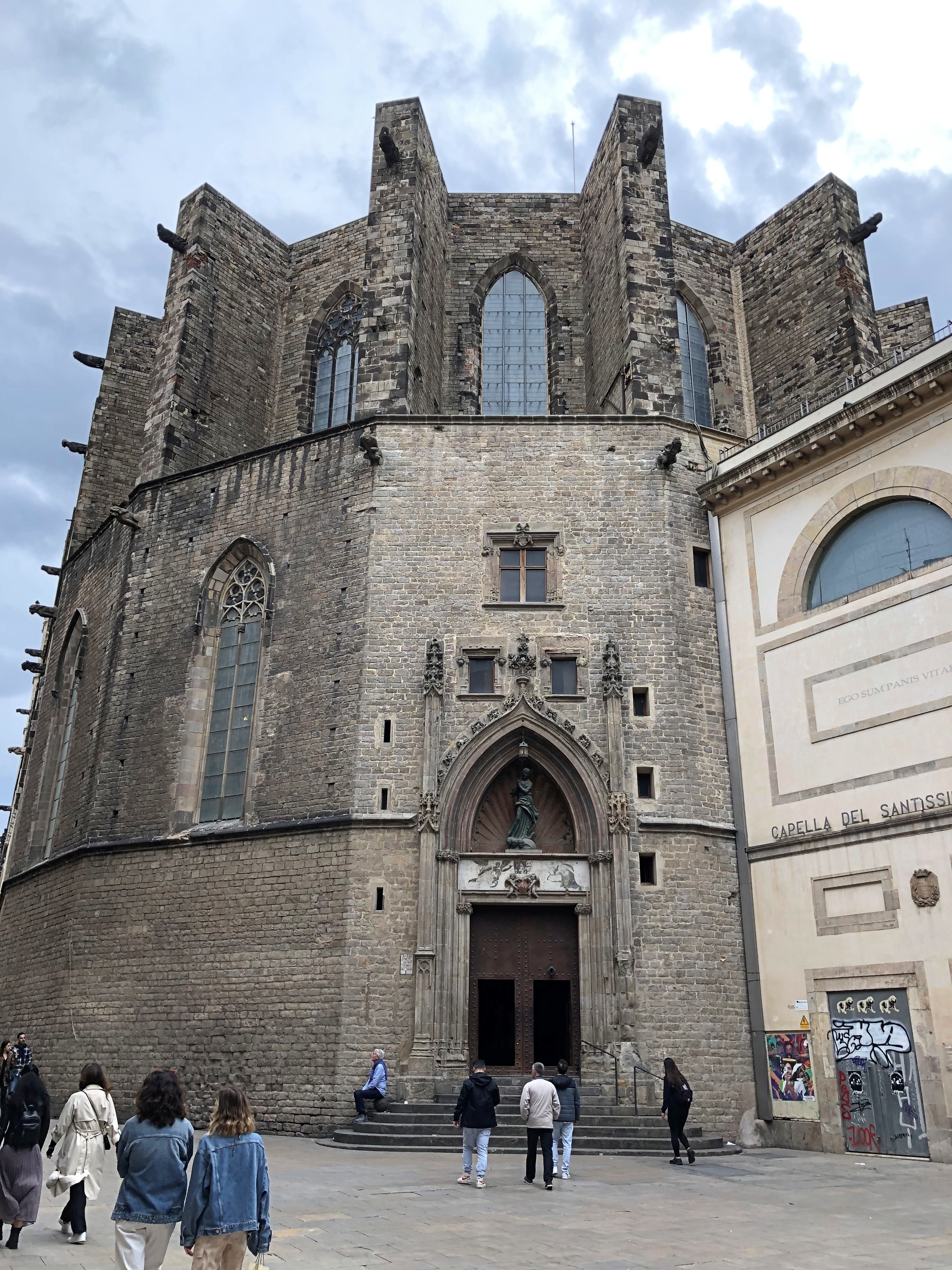
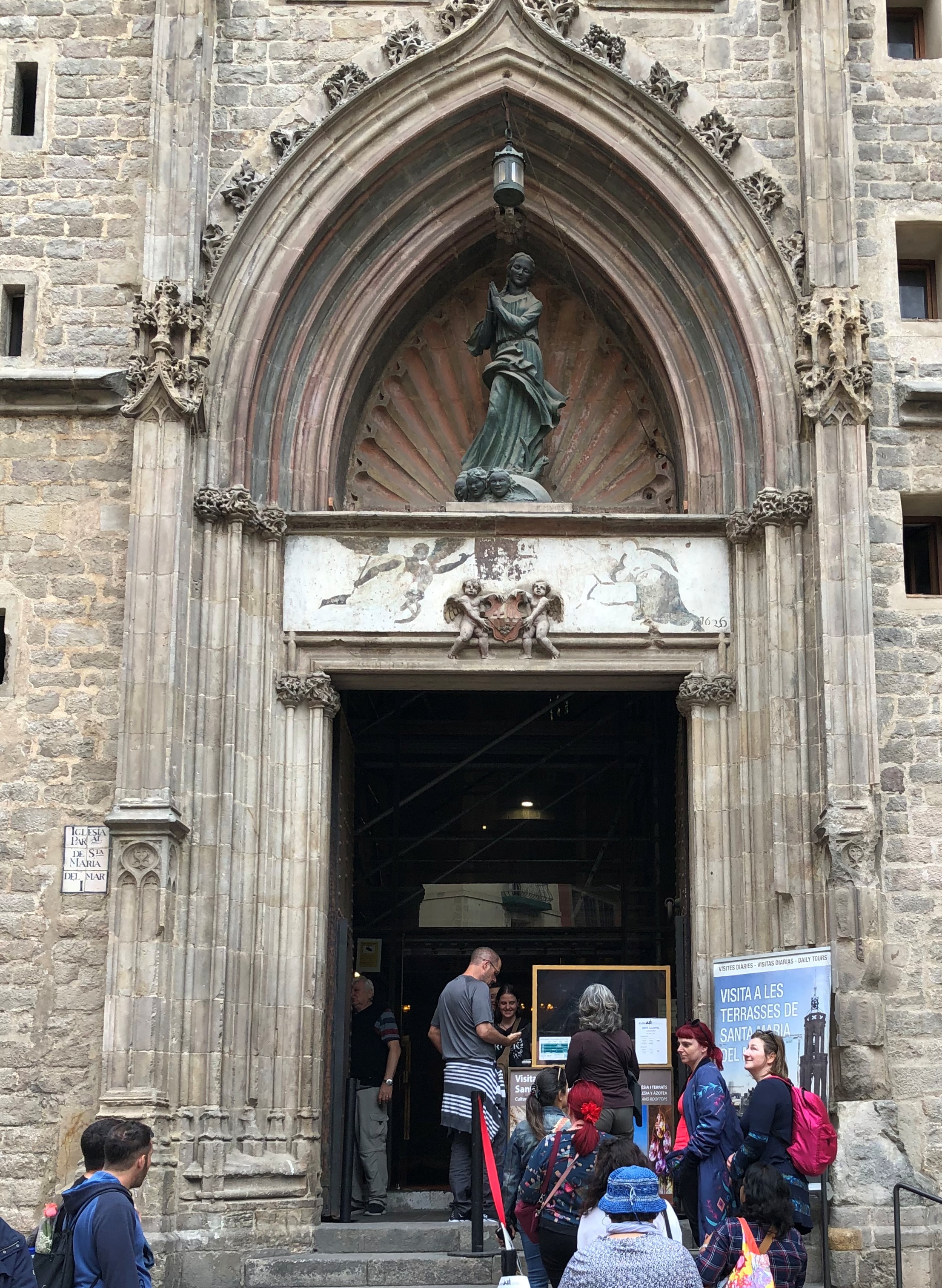
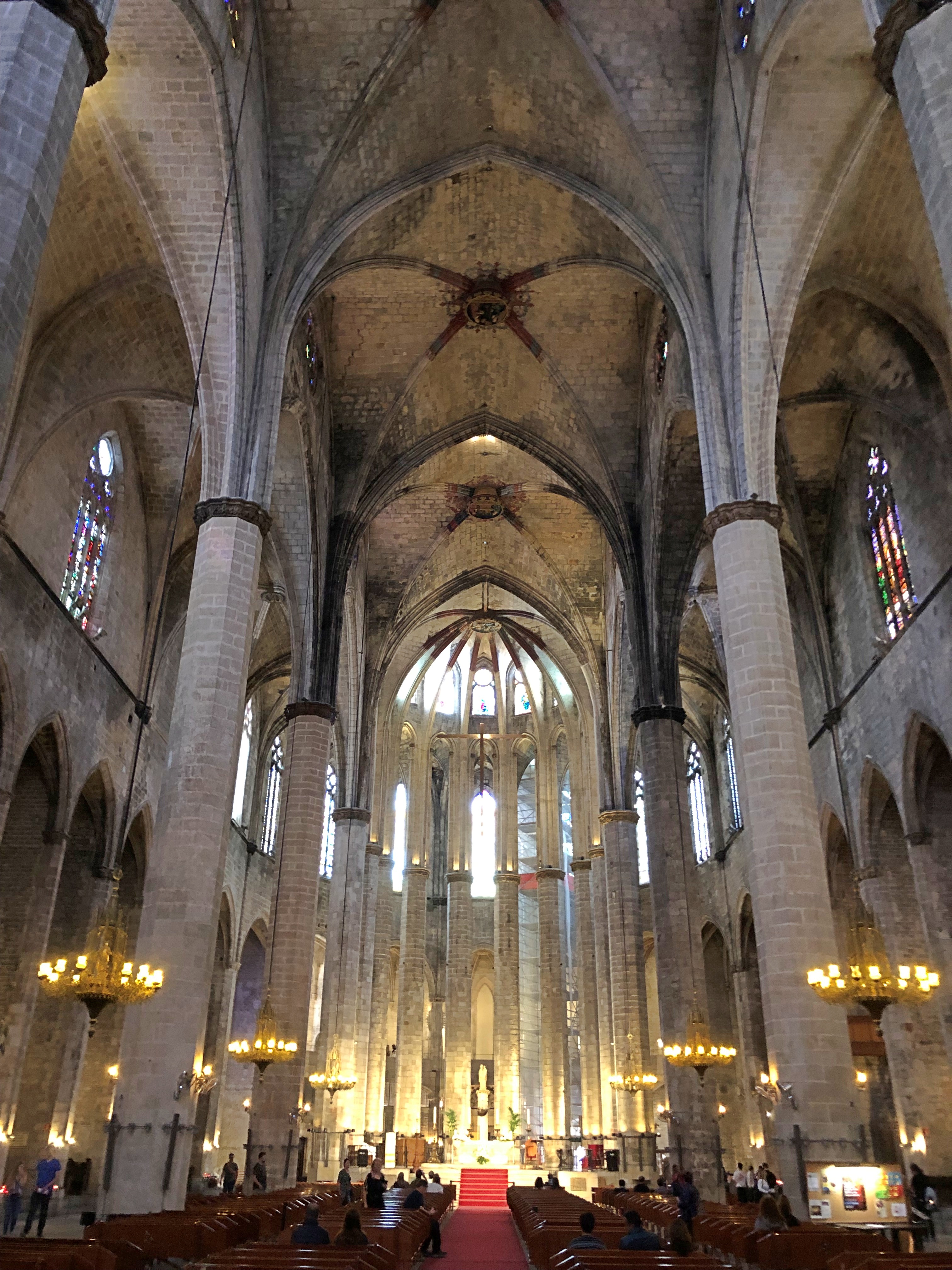
Basilica de Santa Maria del Mar

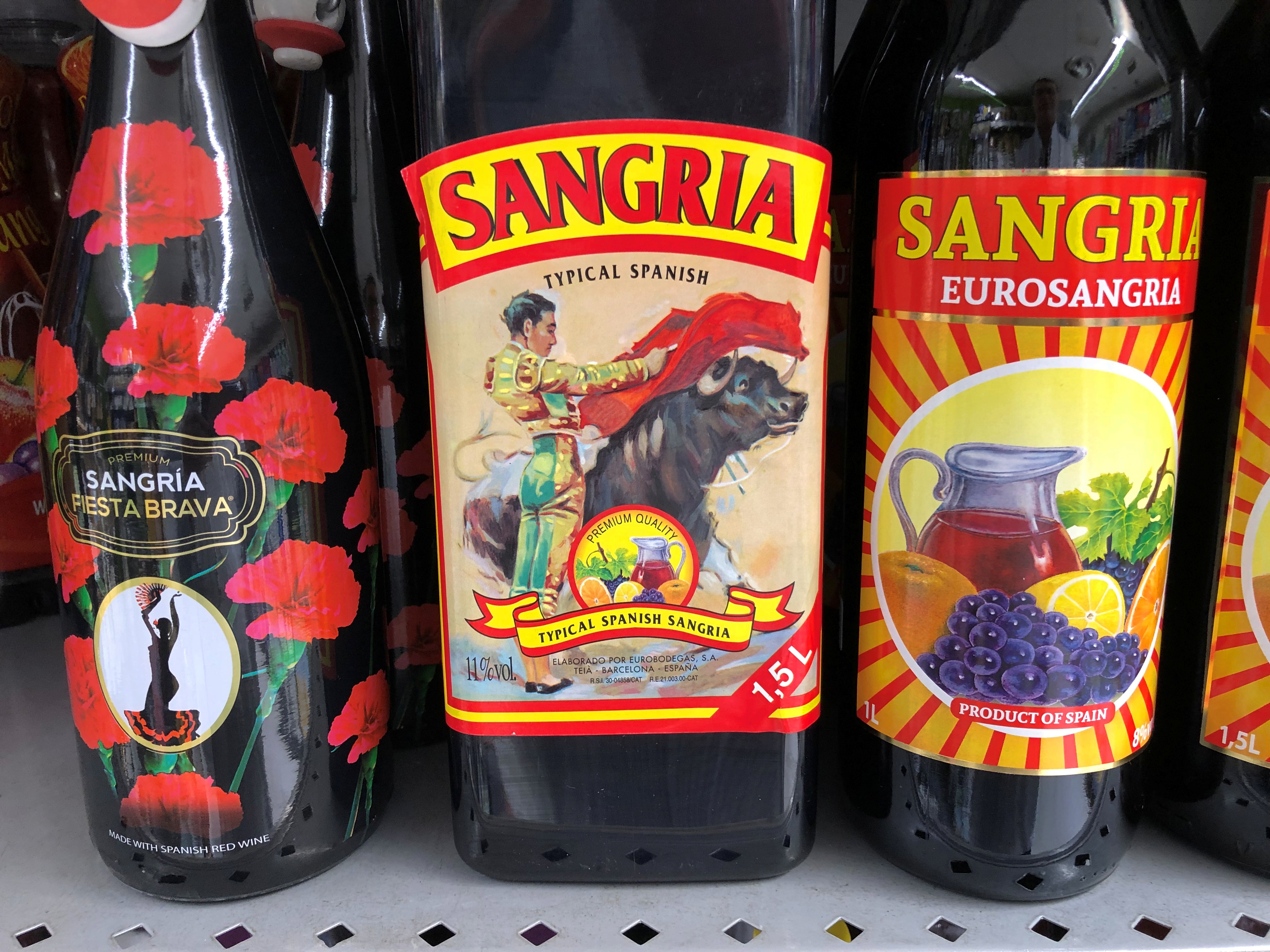
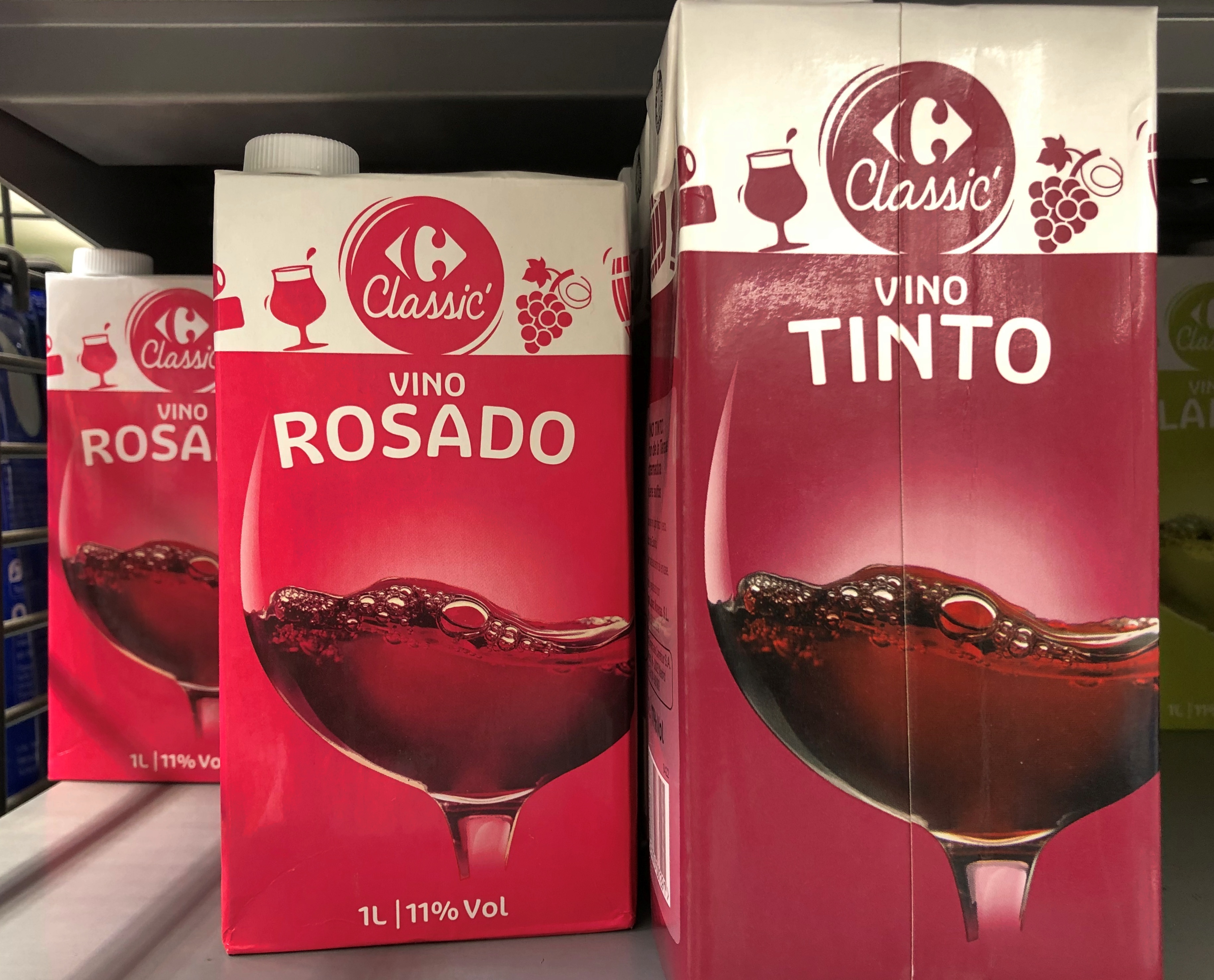
Scenes from a Barcelona grocery store.

Wasn’t a very big one. One of the many 24/7 jobs in the Eixample district.

I like that brand name, Fiesta Brava. Best to translate, Wild Party? Could be. Of course, the store had much more than sangria and boxed wine. Prices might be comparable, but I’d say the few we visited were a cut above U.S. convenience stores in selection.

I’ve read that sangria is considered a drink for tourists, but I have to wonder. I expect it’s mostly Catalans visiting these grocery stores and availing themselves of those rows of sangria bottles.

This is the entry at enciclopedia.cat about one Berenguer de Montagut, machine (Google) translated from Catalan.

Master of works

He worked preferentially in Manresa, where the New Bridge project is attributed to him (1318?); in 1322 he directed the works of the Carmelite convent and from 1328 he was master major of the seat. In Barcelona he contracted, with R. Despuig, the project of the church of Santa Maria del Mar (1329). Later, with Pere Baró, he began the construction of the sanctuary of Santa Maria de Lledó.

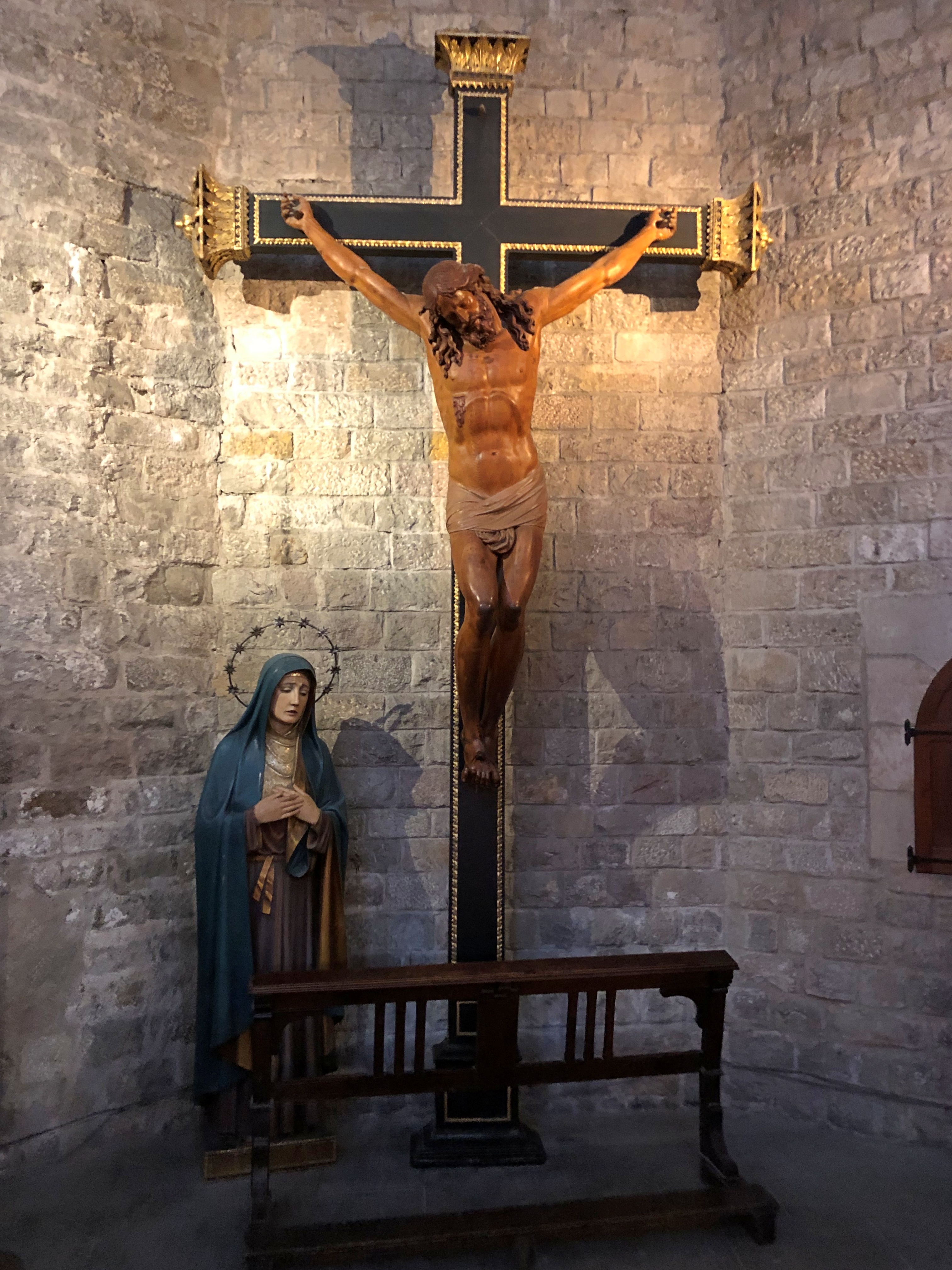
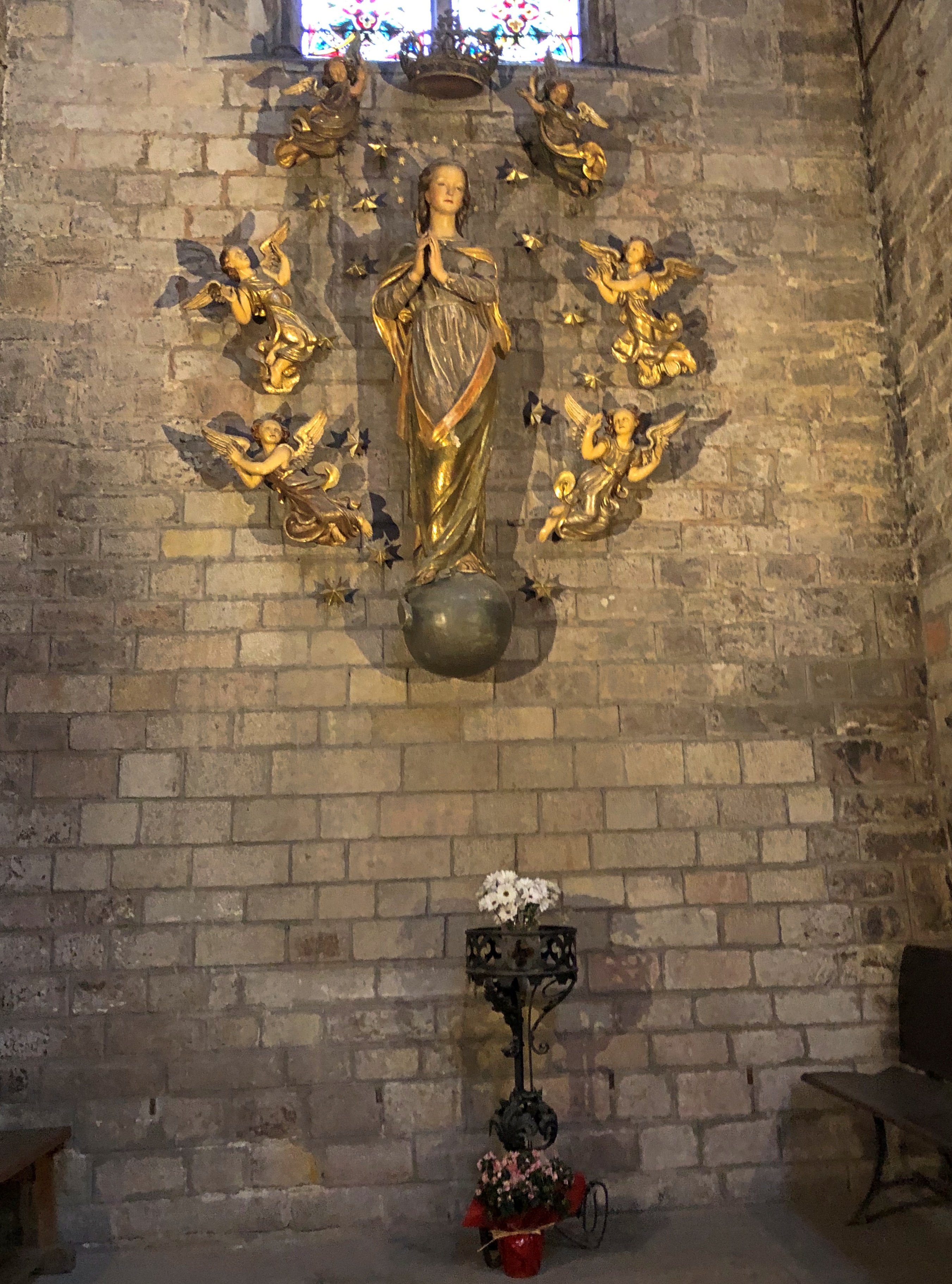
I find it astonishing that even the name of the man who – designed – oversaw construction – both, probably – of such an edifice as the basilica Santa Maria del Mar – is known at all. But apparently it is. Still, he didn’t do it alone.

“The neighbourhood’s inhabitants poured all their efforts into building… Santa Maria del Mar, successfully completing it in only 55 years,” says a surprisingly well-written item on the basilica, published in English by a Barceló Hotel Group, of all entities, which also notes that Santa Maria del Mar has been featured in recent novels, and a Netflix series.

“Although this monumental work was overseen by Berenguer de Montagut and Ramon Despuig, the real credit must go to the residents of La Ribera [the surrounding neighborhood] and, in particular, the bastaixos — in other words, those who carried on their own backs the stone from which the basilica was built. The stone had been brought from the royal quarry, located on the Hill of Montjuïc and transported by boat to the vicinity of the church.”Santa Maria del Mar, Barcelona Santa Maria del Mar, Barcelona Santa Maria del Mar, Barcelona

That’s the entrance, but for tourists (as opposed to parishioners), it was the exit. We entered from behind the sanctuary. Santa Maria del Mar, Barcelona Santa Maria del Mar, Barcelona

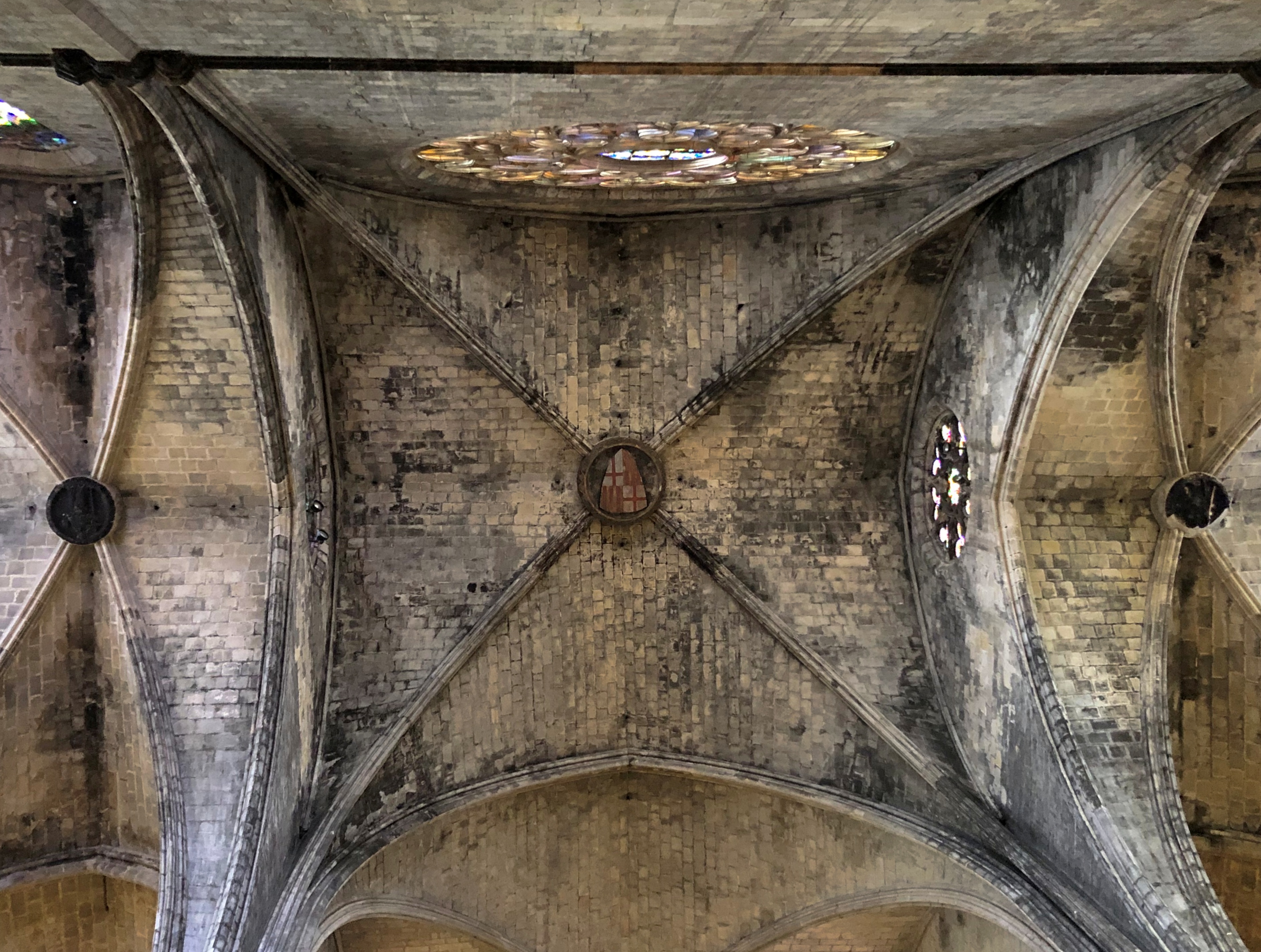
But soon enough, the vault appears overhead.Santa Maria del Mar, Barcelona Santa Maria del Mar, Barcelona

Looking back into the nave.Santa Maria del Mar, Barcelona

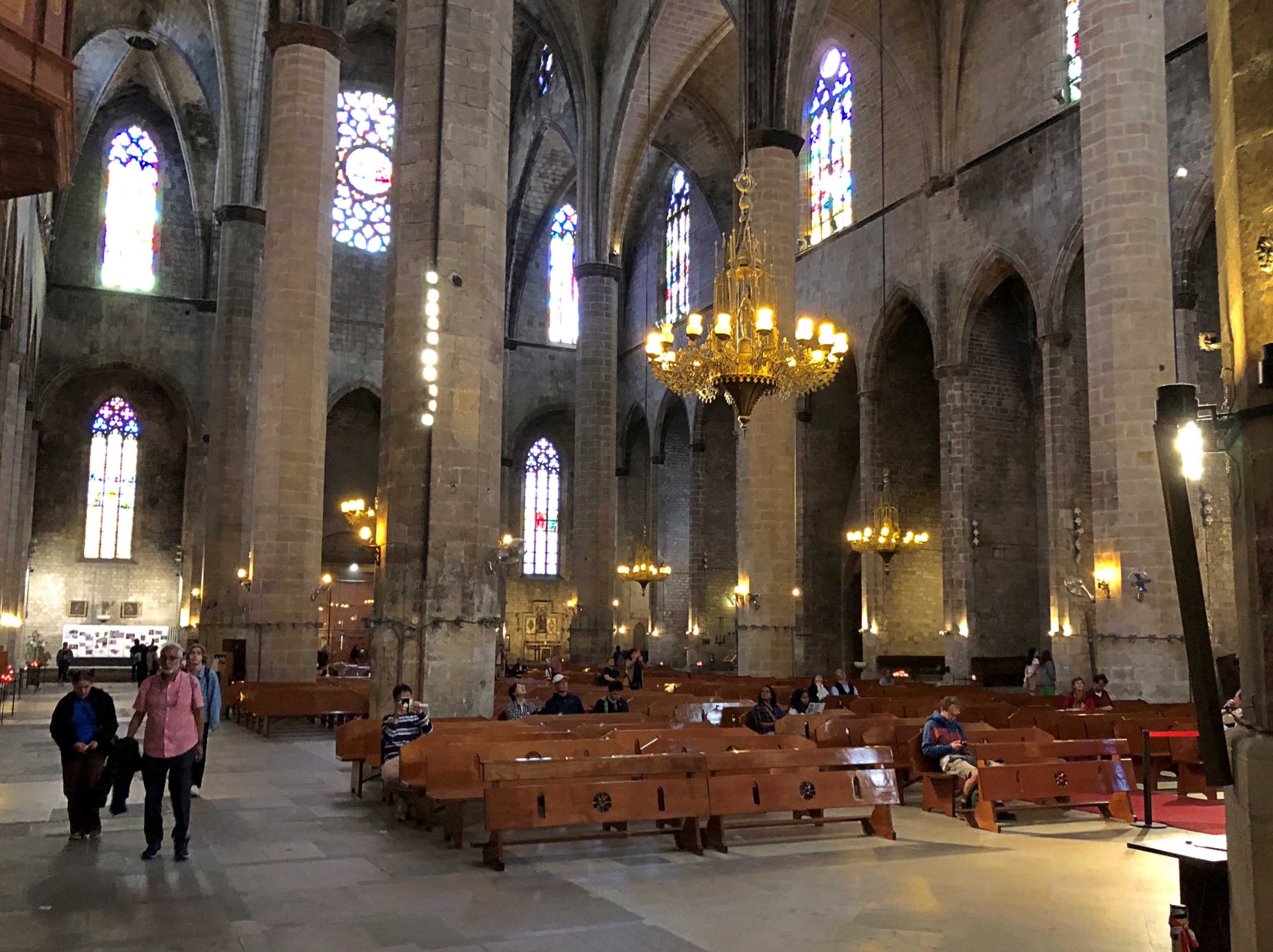
The chapels aren’t closed off.Santa Maria del Mar, Barcelona Santa Maria del Mar, Barcelona

The basilica has stood since the 14th century. It abides. Considering the vicissitudes of Barcelonan history, quite a feat. Another line from EB (1929) on Barcelona, on the political violence of the modern period: “ [E]specially serious were the uprisings of 1835, when 11 convents were destroyed, and of the “tragic week” in 1909, when over 60 churches and religious buildings disappeared from the city’s architectural heritage.”

And of course, 1929 Barcelona was completely unaware of other things to come, and soon.

Translated from the basilica’s web site: “One of the most important defeats [sic, incidents] took place at the beginning of the Spanish Civil War, when the basilica burned down [sic, was seriously damaged] after a group of anarchists caused a fire there. Part of the baroque altar, some of the stained glass, numerous elements of furniture and an important part of the archives disappeared under the flames.”

Also worth mentioning: the 14th century was one of the prosperous periods in the city’s history, as a port doing well on trade from around the Mediterranean. Just the sort of place to set your historical fiction.

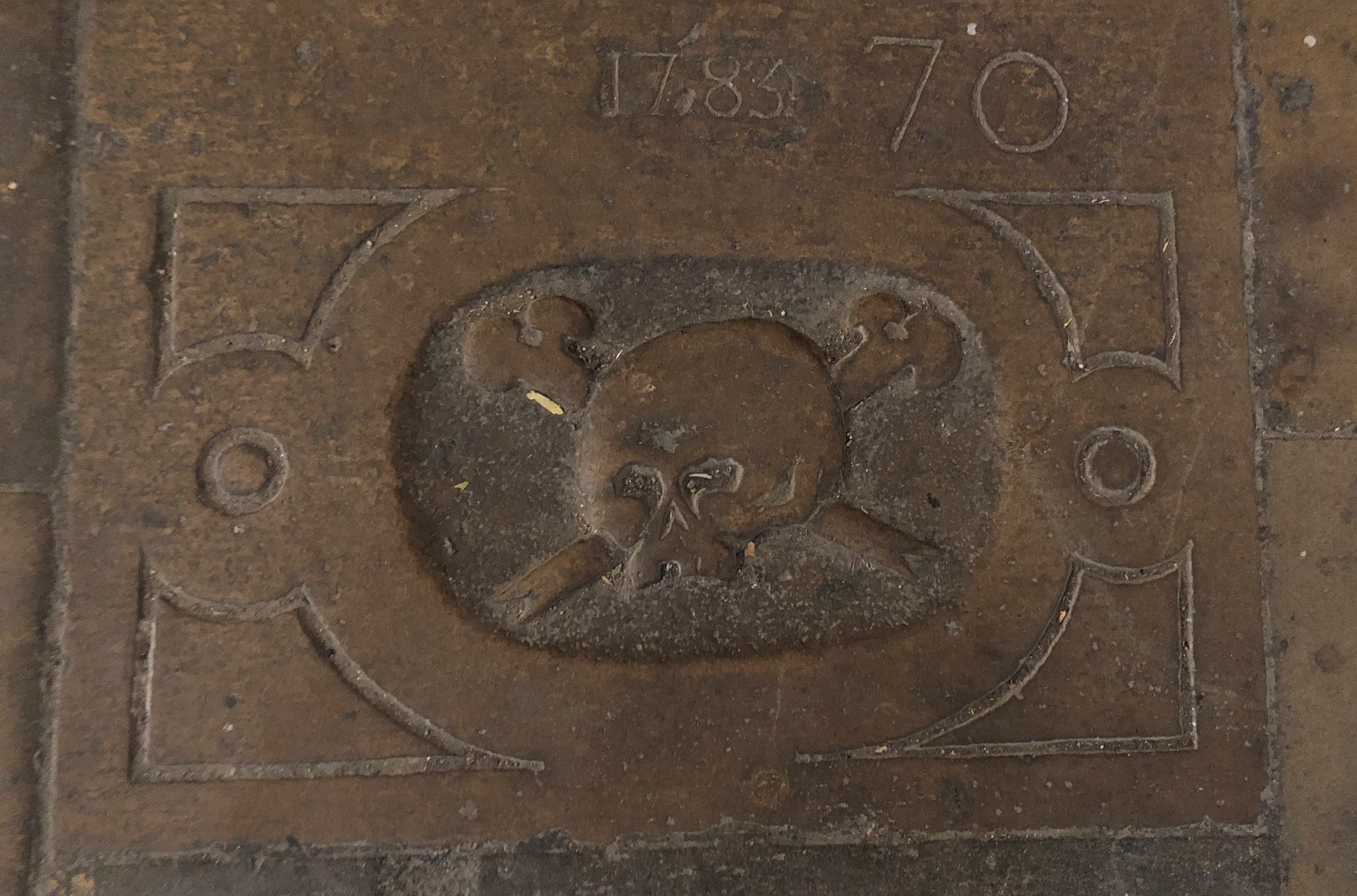
A look at the floor.Santa Maria del Mar

If I went to a modern headstone maker and asked for this design, would he or she do it? I wonder, but I’m also certain I’d never actually do that.

El Born & Parc de la Ciutadella

The first lines of the search results for the El Born district of Barcelona, sampled this morning:

El Born is sandwiched between Via Laietana and Barceloneta and is served by the metro stops Barceloneta and Jaume 1 which are on the same line. Las Ramblas and…

El Born brings to Greenpoint and NYC a taste of tapas y platillos from Spain and has a focus in Barcelona, where the owners are from.

A local’s guide to El Born district of Barcelona. The 26 best hotels, museums, bars, restaurants, shops and guided tours of El Borne for 2023.

Located in between the Gothic Quarter and the Ciutadella Park, El Born is one of Barcelona’s trendiest and most popular neighborhoods.

Once home to Barcelona’s affluent merchants, noblemen, and artisans, El Born is now one of the hippest, liveliest, and most creative…

That last line is from a site called “travel away” (no caps), which looks like an Afar knockoff, and the headline is “A Curated Guide to El Born, Barcelona.” Of course it’s curated. You must visit that perfect tapas place that serves unique craft sangria, or you’ll come down with a bad case of FOMO. (We had tasty tapas and swell sangria during our Catalonia holiday, but not in El Born.)

Anyway, you can’t just wander around to see what you can see, can you?

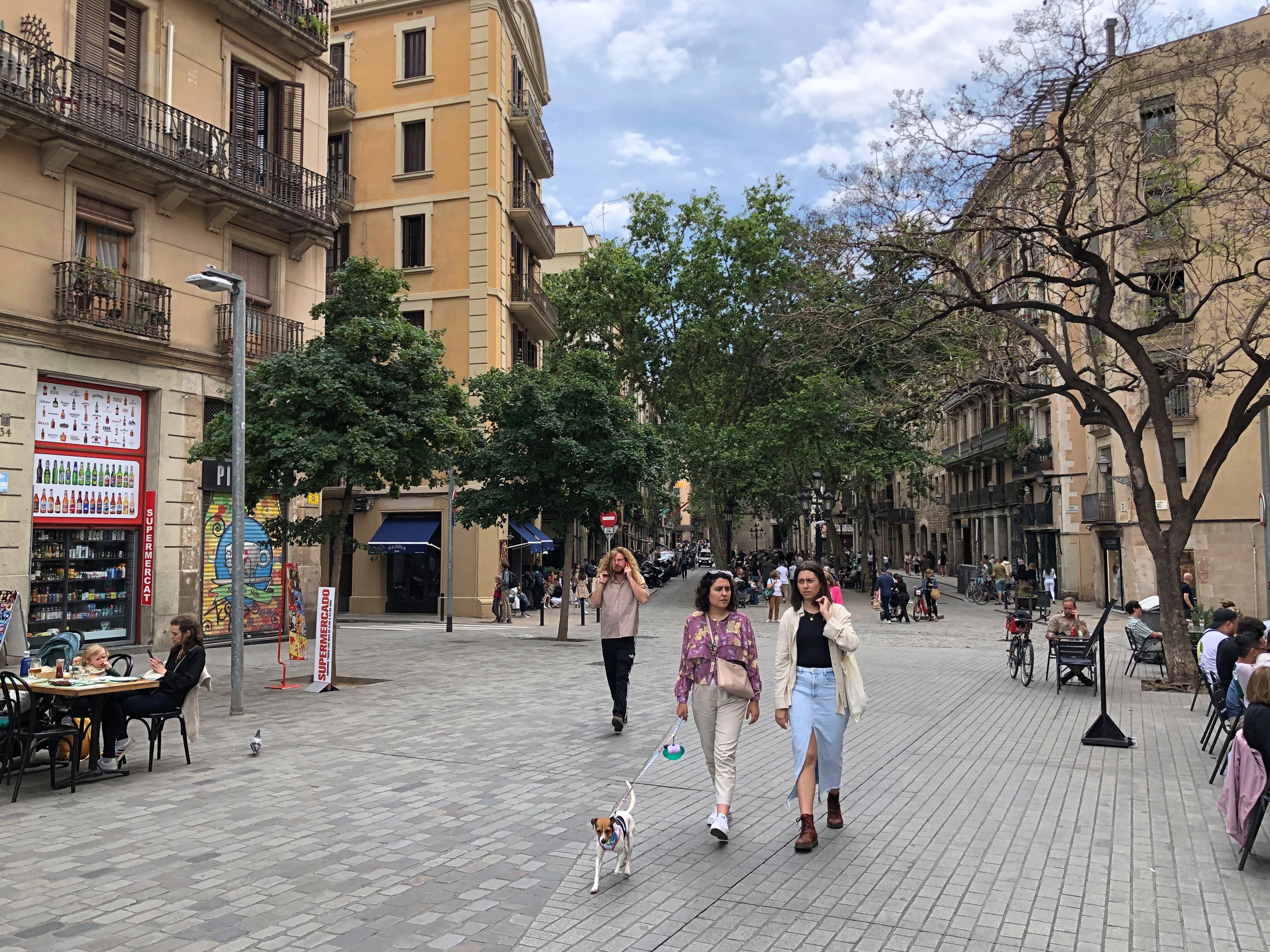
Of course you can. I wasn’t hip enough to know that El Born is trendy, but we were intrigued by our surroundings as we ambled along the mostly pedestrian thoroughfare Passeig del Born, where we acquired a drink and snacks to eat on a bench.El Born

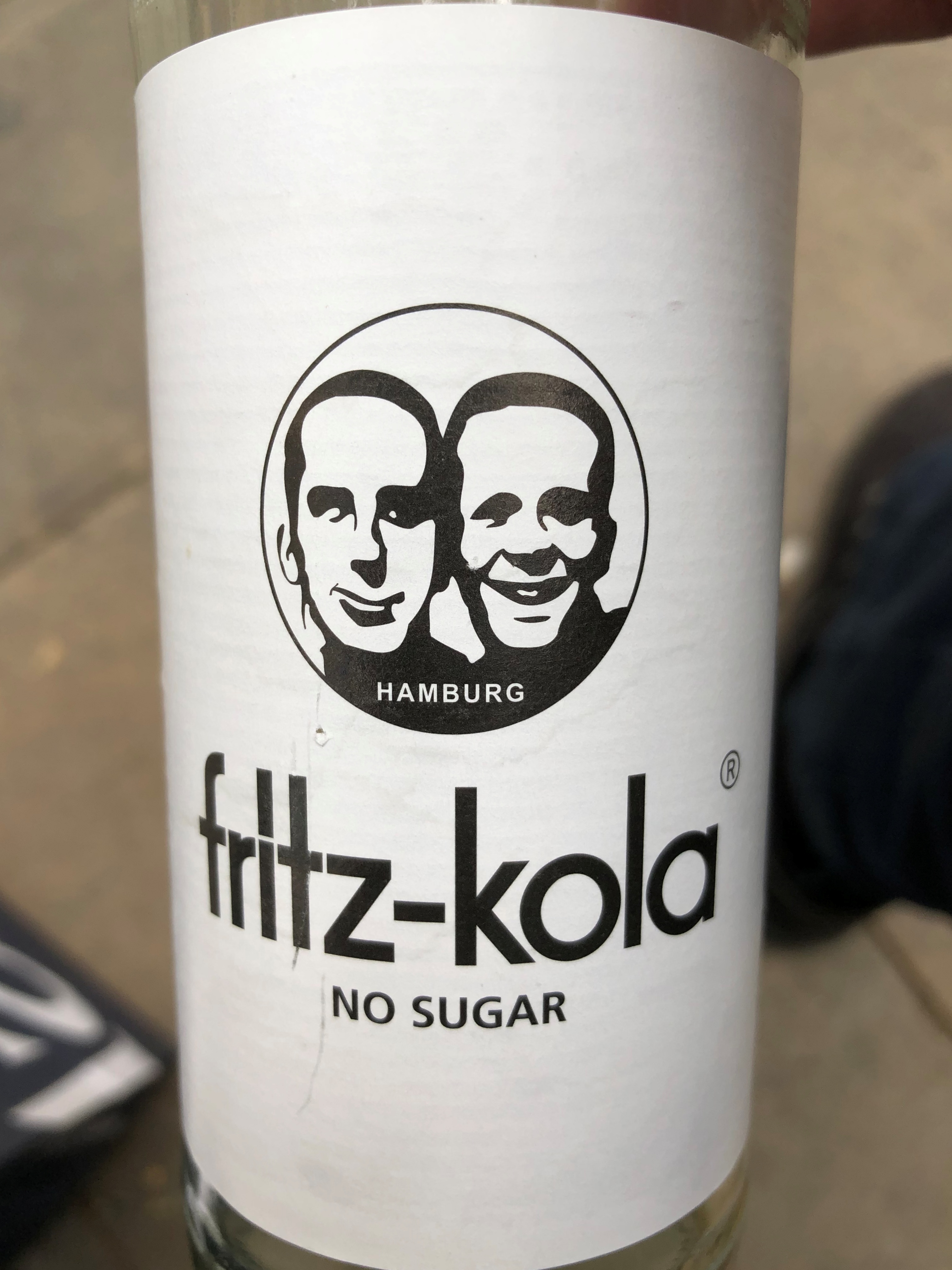
The soda in question. All the way from Hamburg. We’d never heard of it, so we gave it a go. Now I can’t remember what it tasted like, so it must have been neither that good or particularly bad.

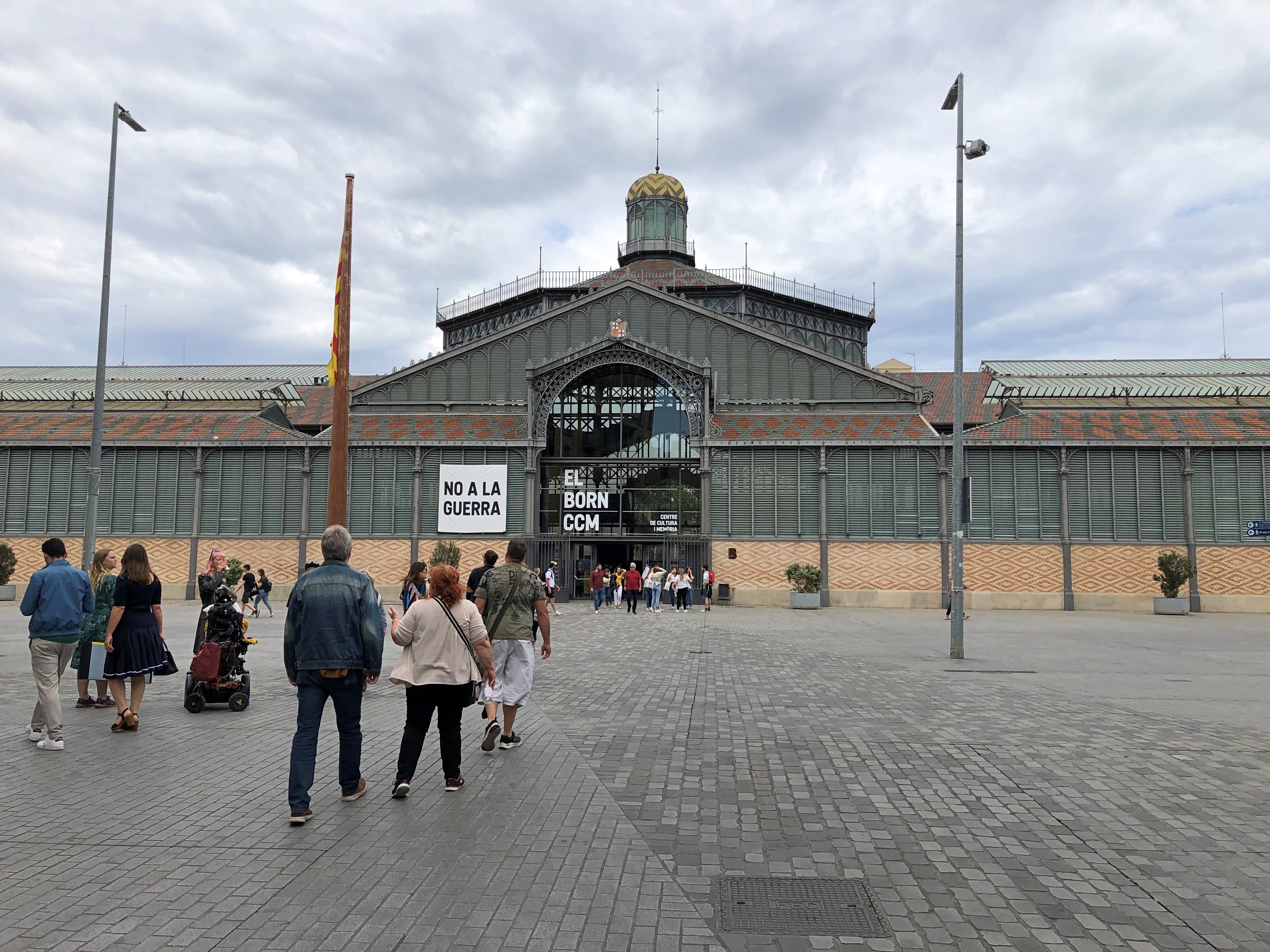
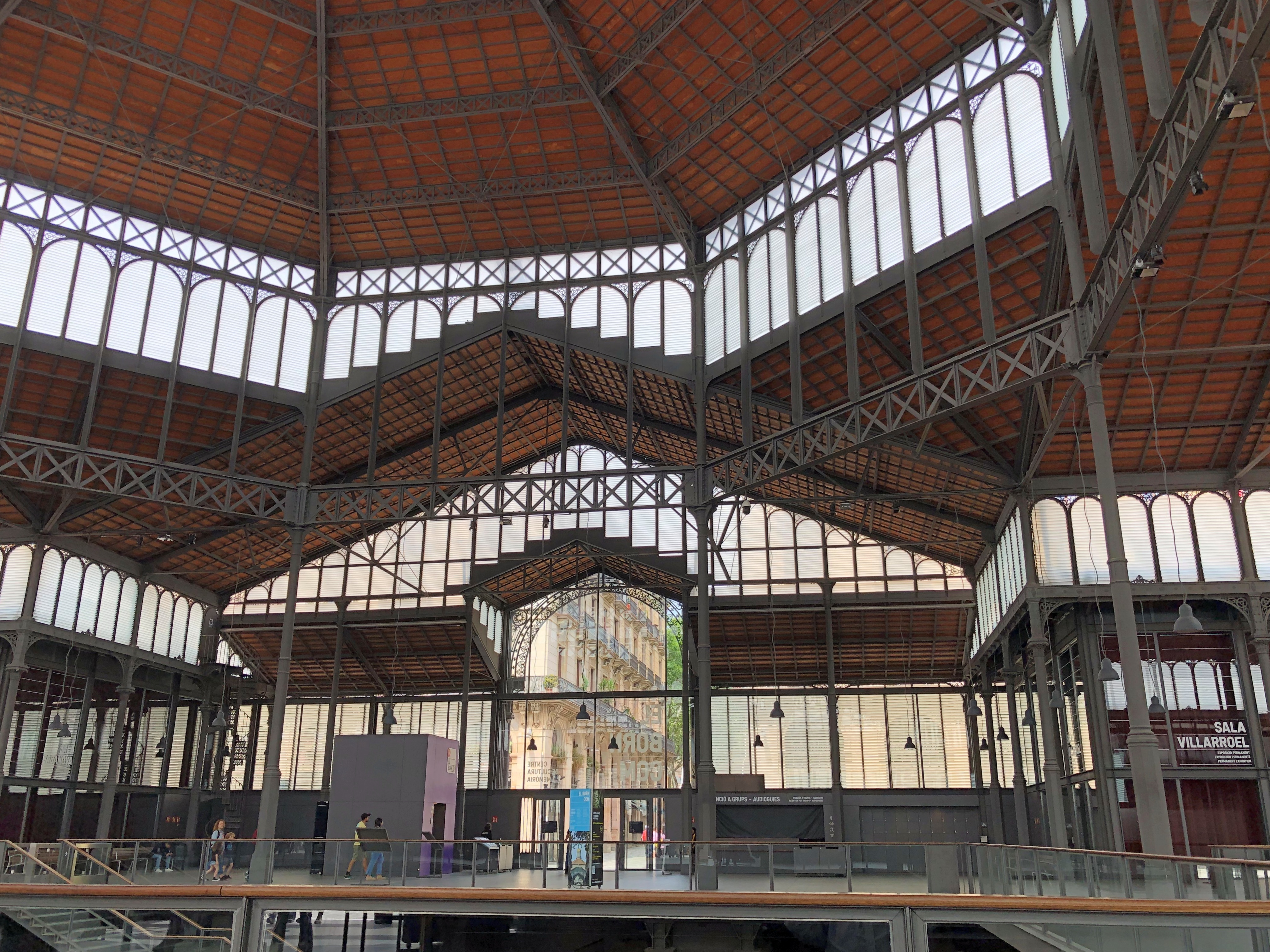
At one end of the passeig is a large plaza featuring an imposing cast-iron structure.El Born Centre El Born Centre

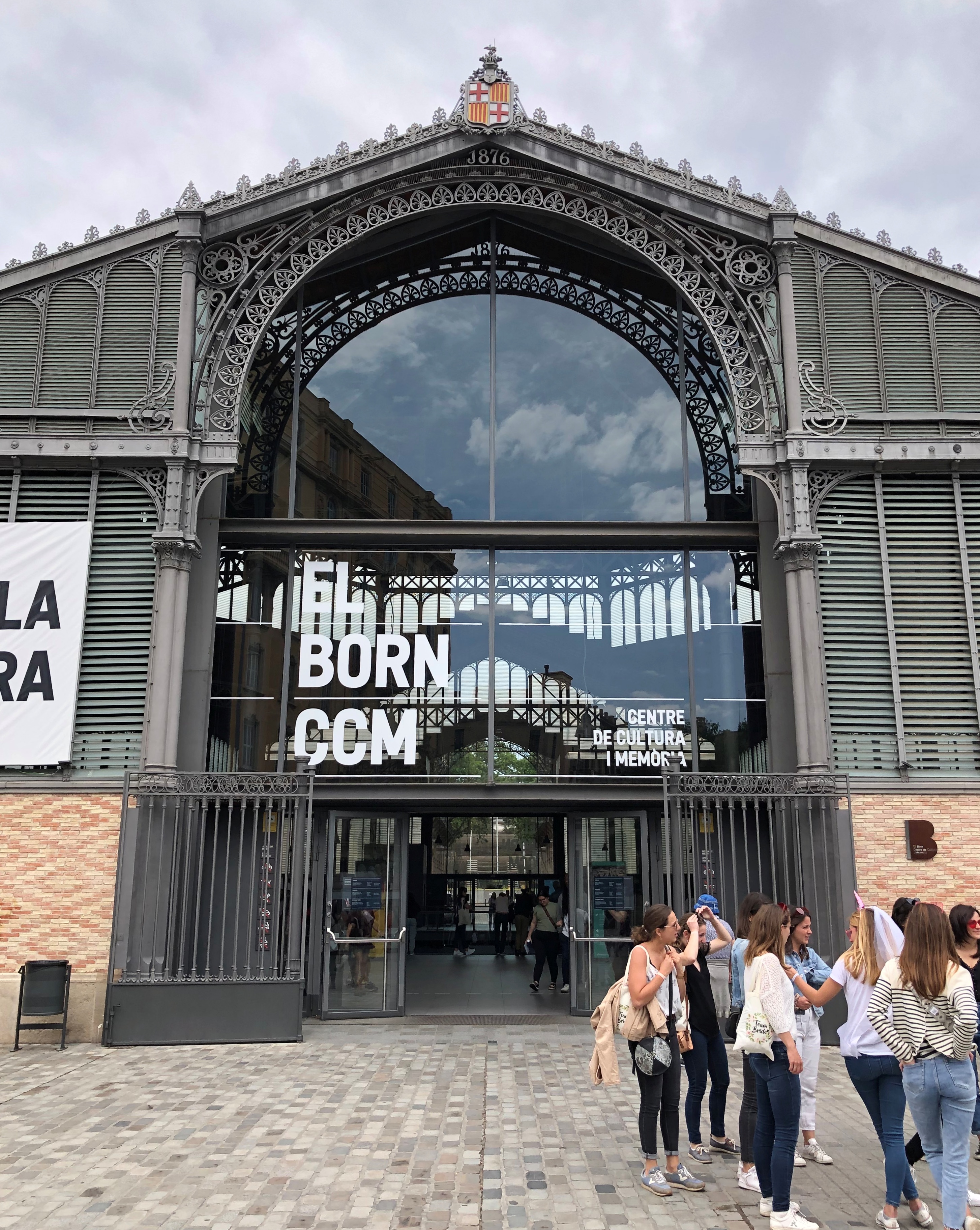
That’s El Born Centre de Cultura i Memoria. The main part of the inside was free to walk into; just follow the rules.El Born Centre

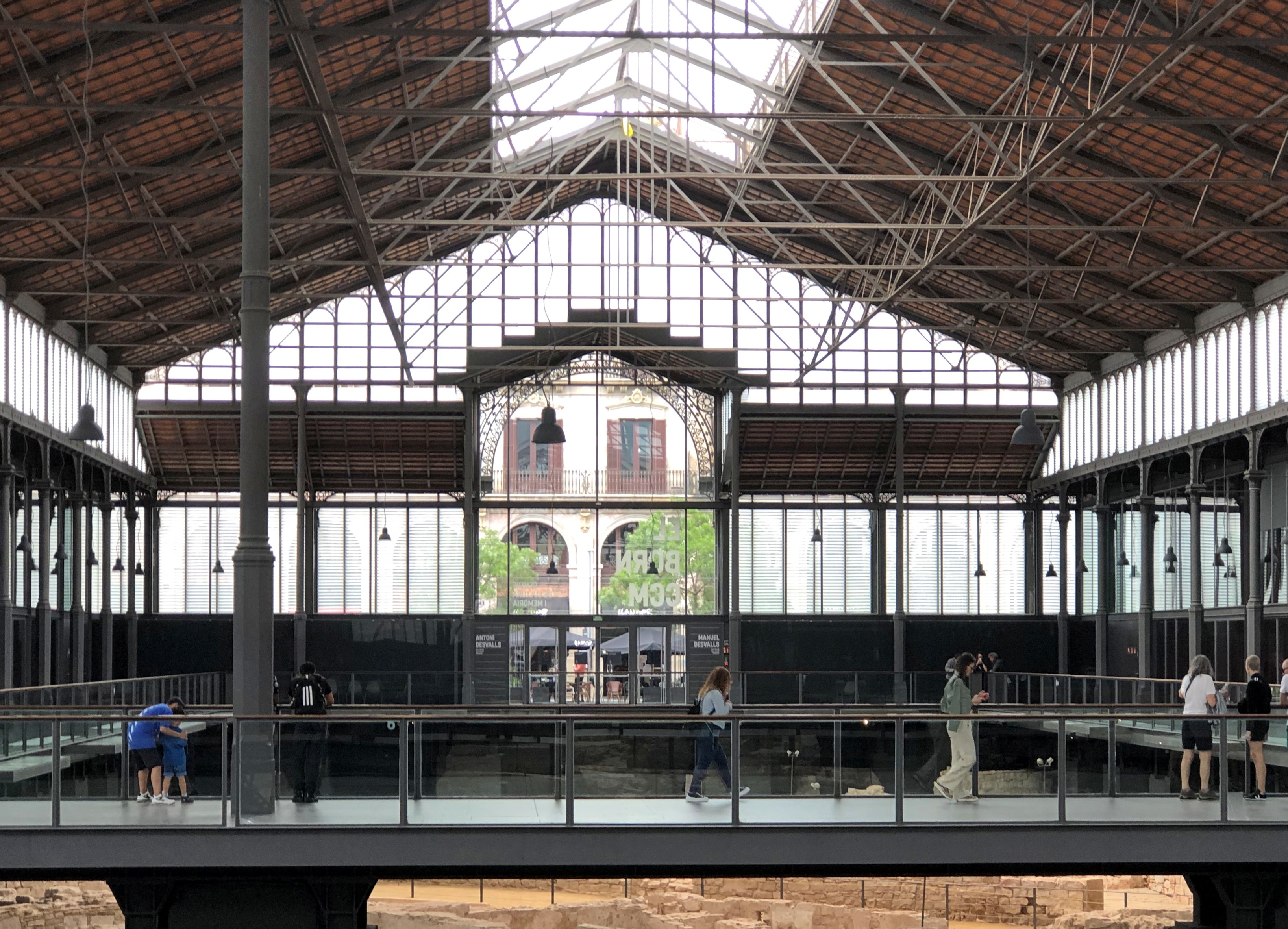
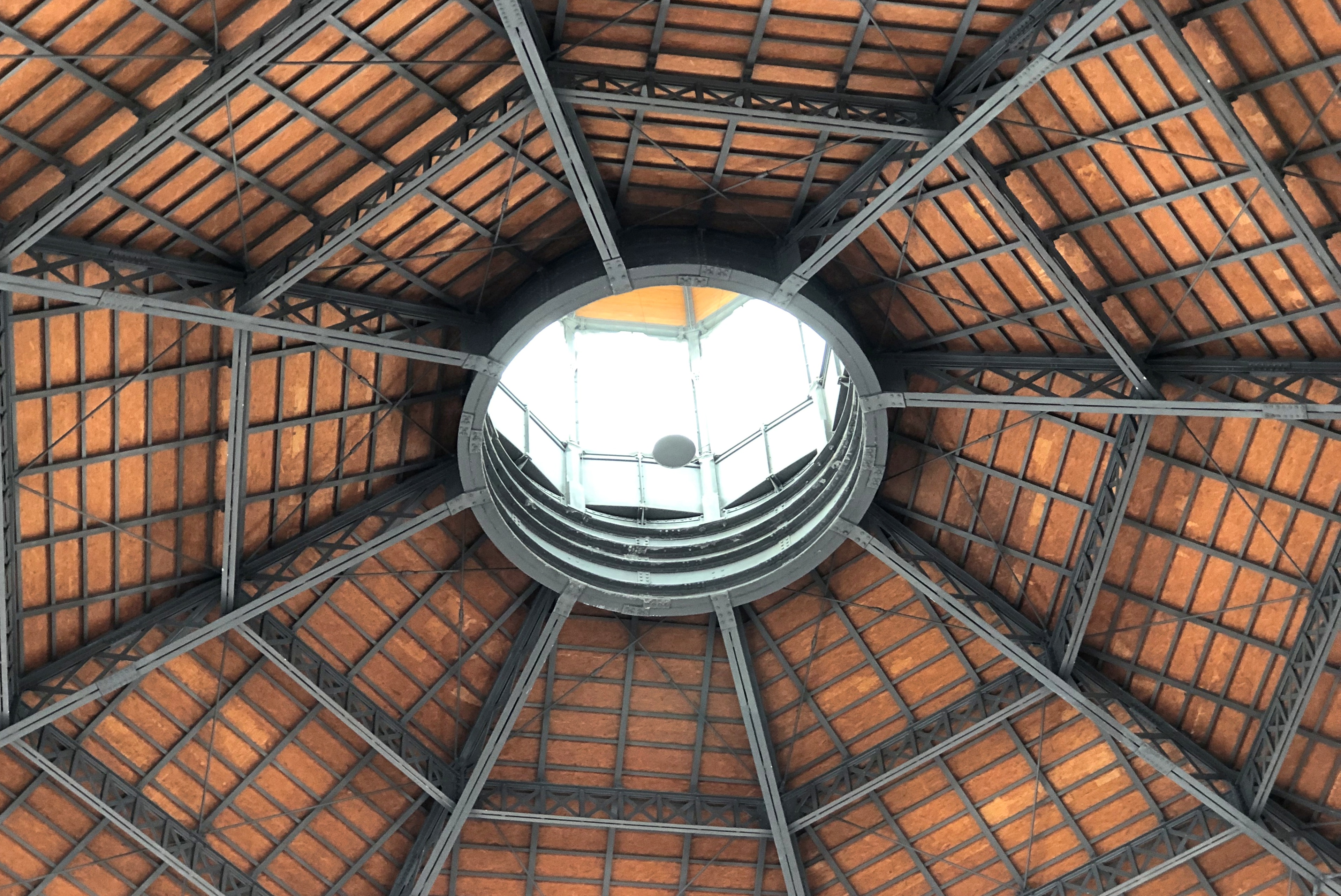
The El Born Centre was once a large public market (Mercat del Born), and the first cast-iron structure of its kind in Barcelona, dating from 1876.El Born Centre El Born Centre El Born Centre

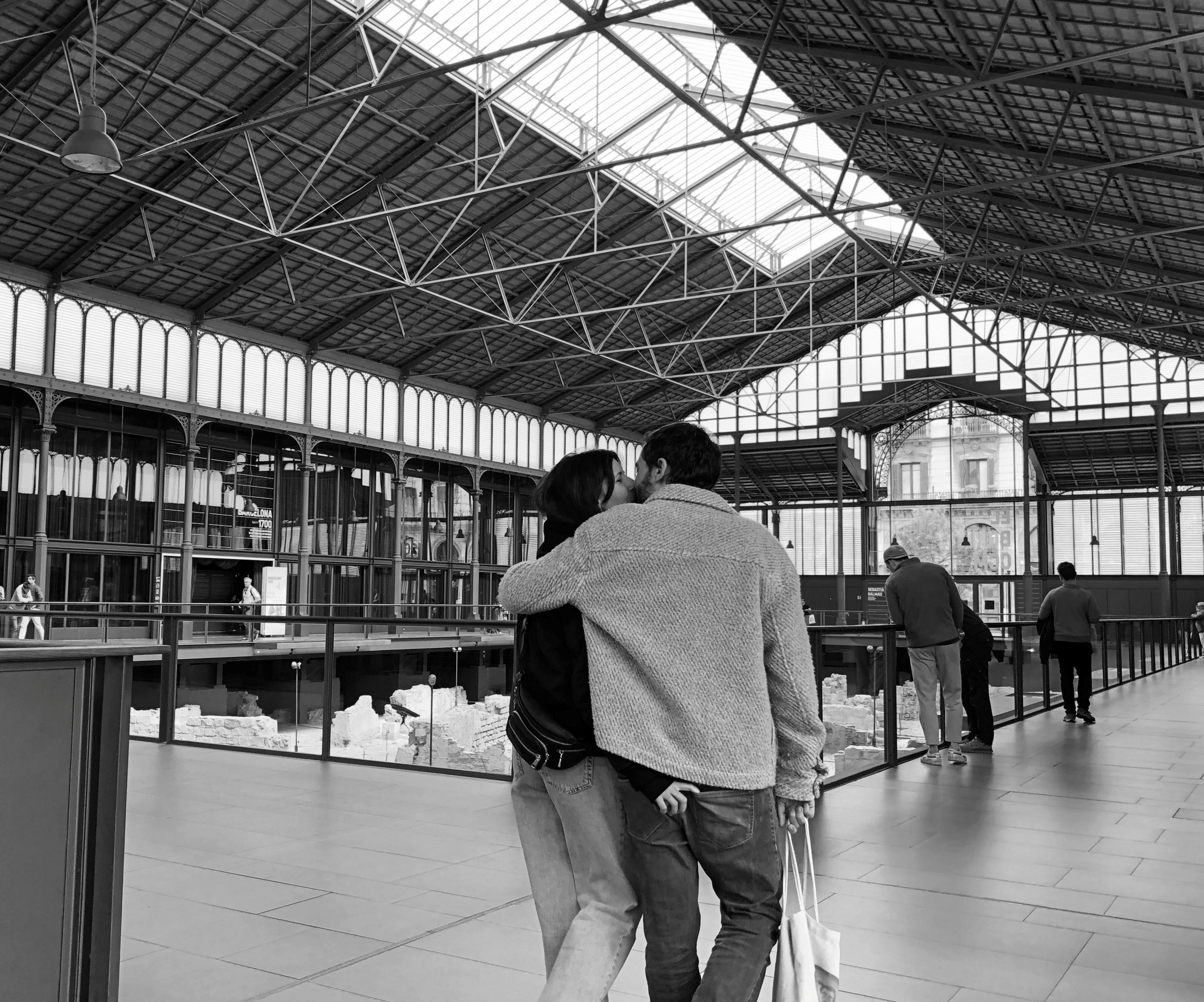
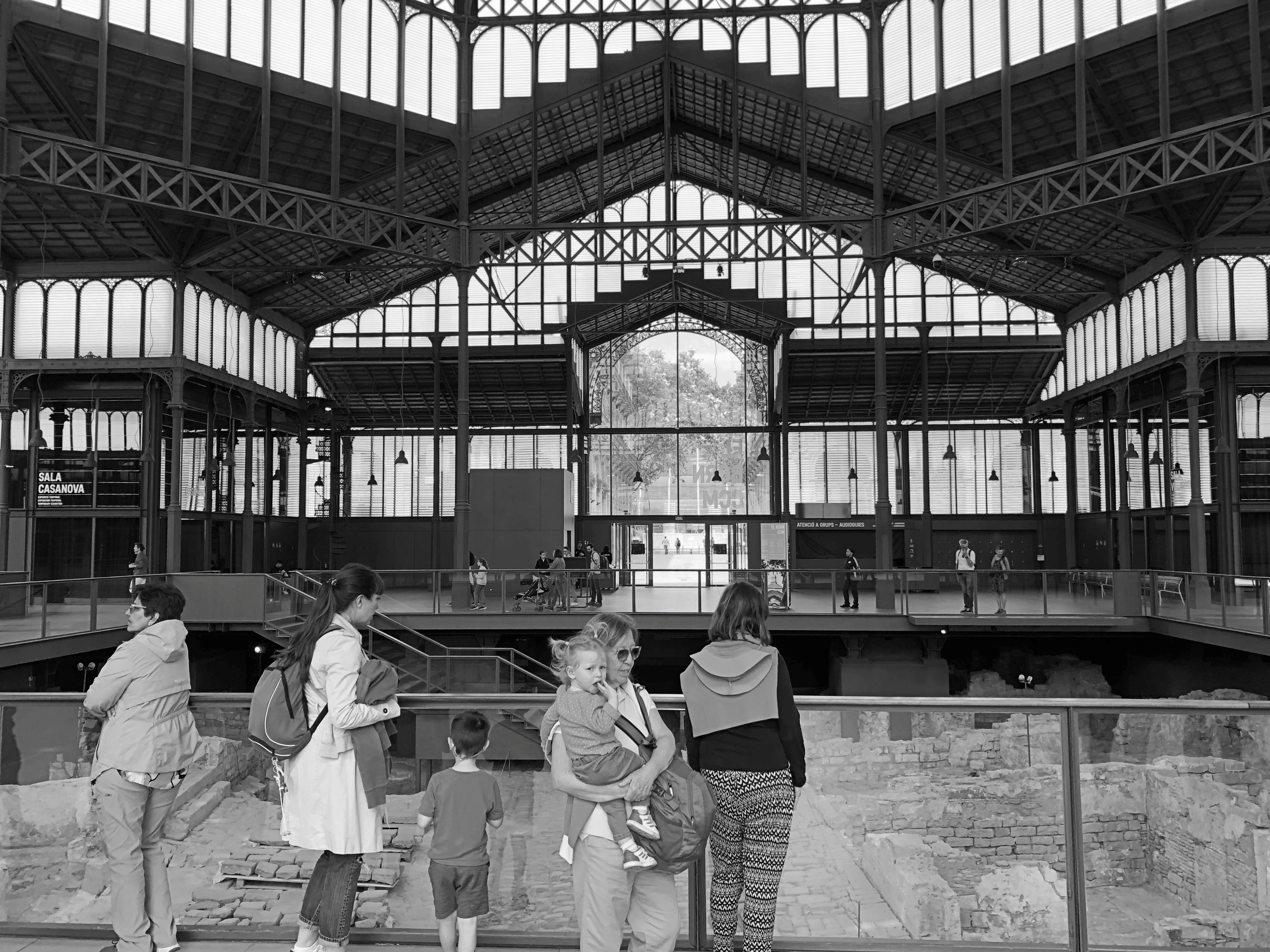
I was inspired to take a few black-and-whites.El Born El Born

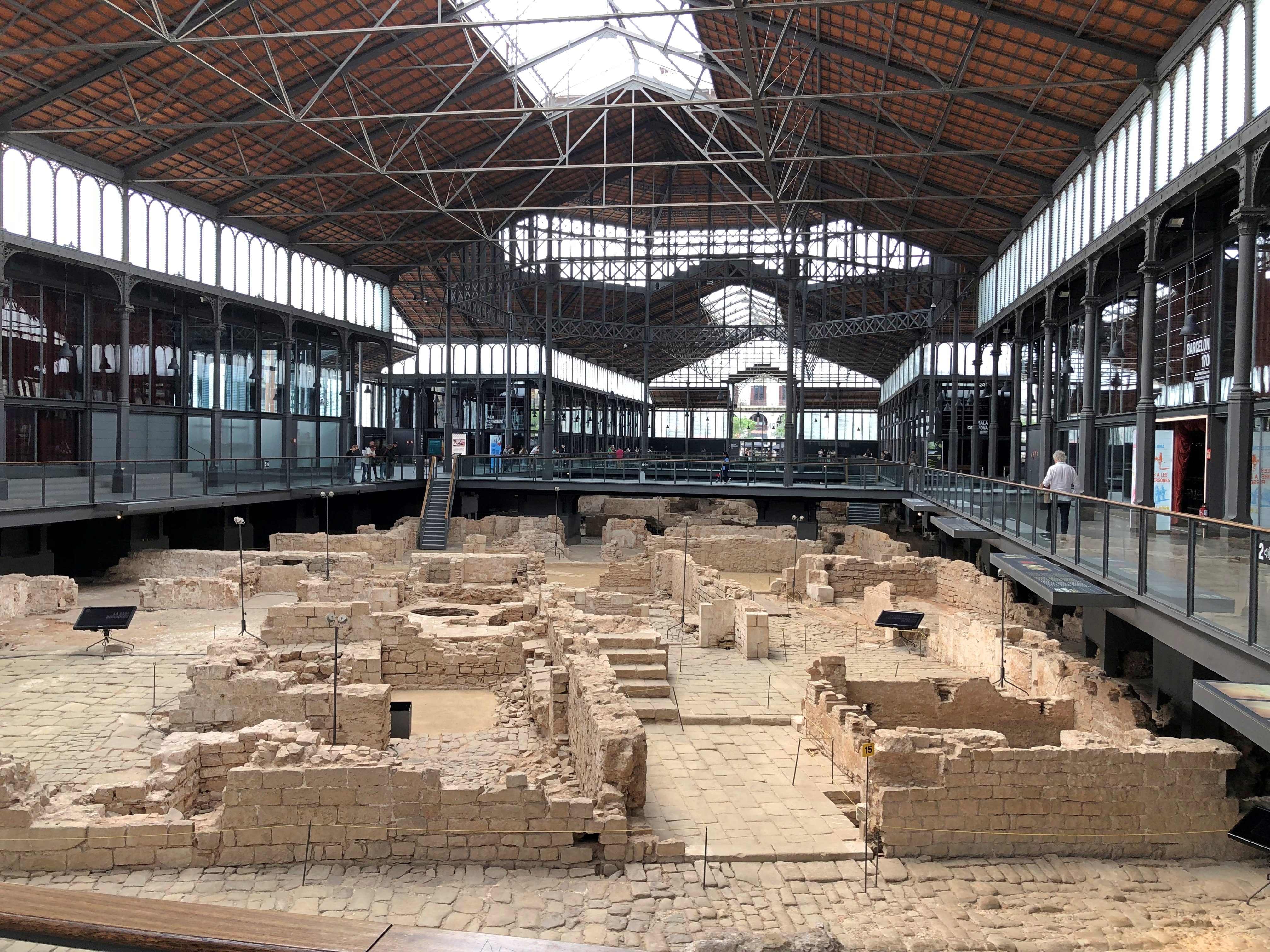
I should have take more of those in Barcelona, which has a lot of good contour for monochrome. Ah, well. The iron framework over our heads wasn’t the only thing to see at El Born Centre. Beneath the ground-floor walkways is an archaeological site with a connection to Barcelona’s bloody past.El Born El Born

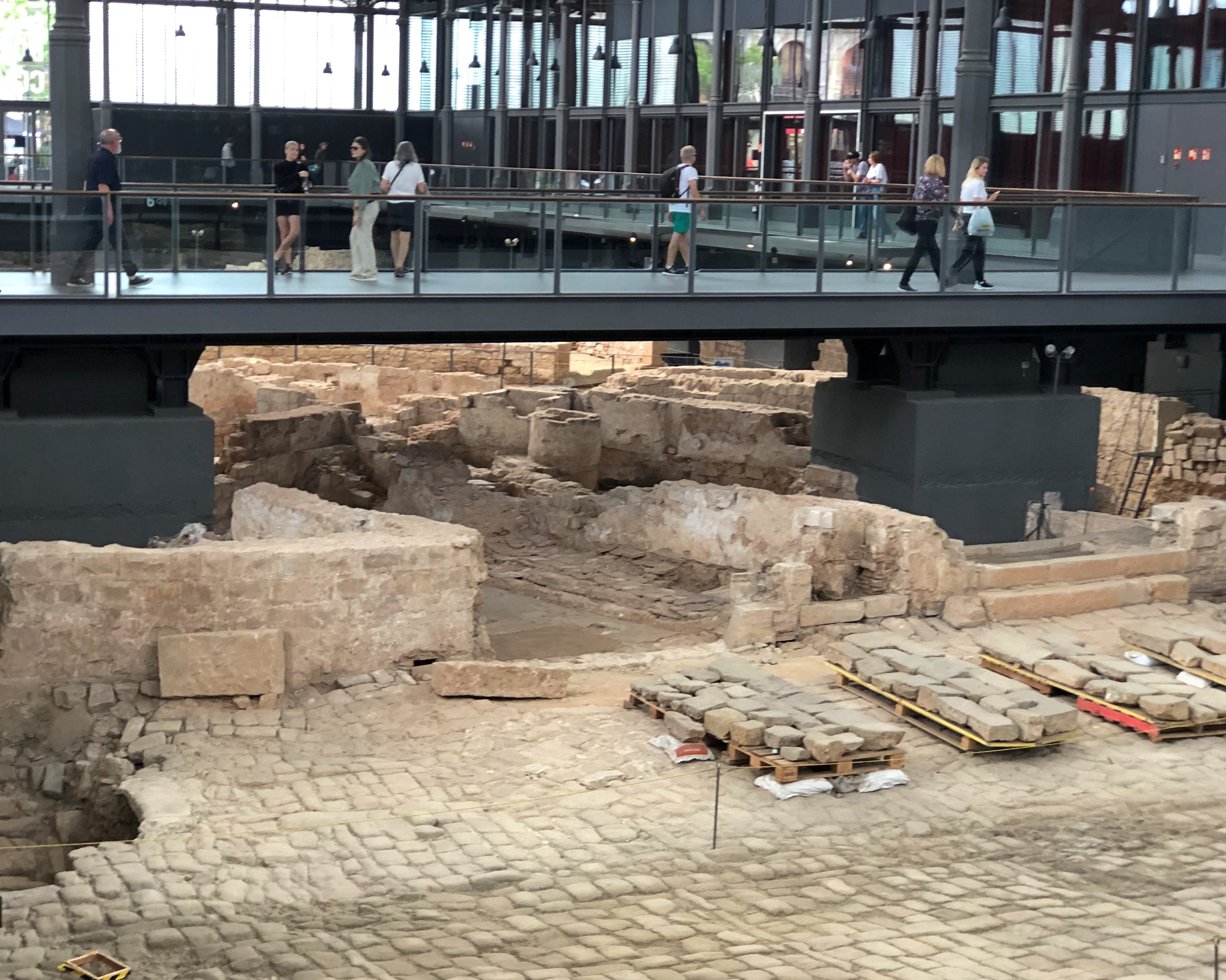
A neighborhood once existed here, as it becomes clear staring down on the ragged wall stubs and stones. In 1714, after the Principality of Catalonia capitulated to Bourbon forces toward the end of the War of Spanish Succession, the victors leveled the neighborhood to build the Ciutadella (citadel) and its security esplanade, presumably to help keep the Catalans in line. Well over a century later, after the hubbub in ’68 (1868, that is) the city assumed control of the site and eventually built the market on a relatively small part of it.

Much later, the ruins were uncovered, and archaeological investigations proceed. Sources tell me the ruins of 60 houses in 11 separate blocks can be found in El Born’s archaeological site.

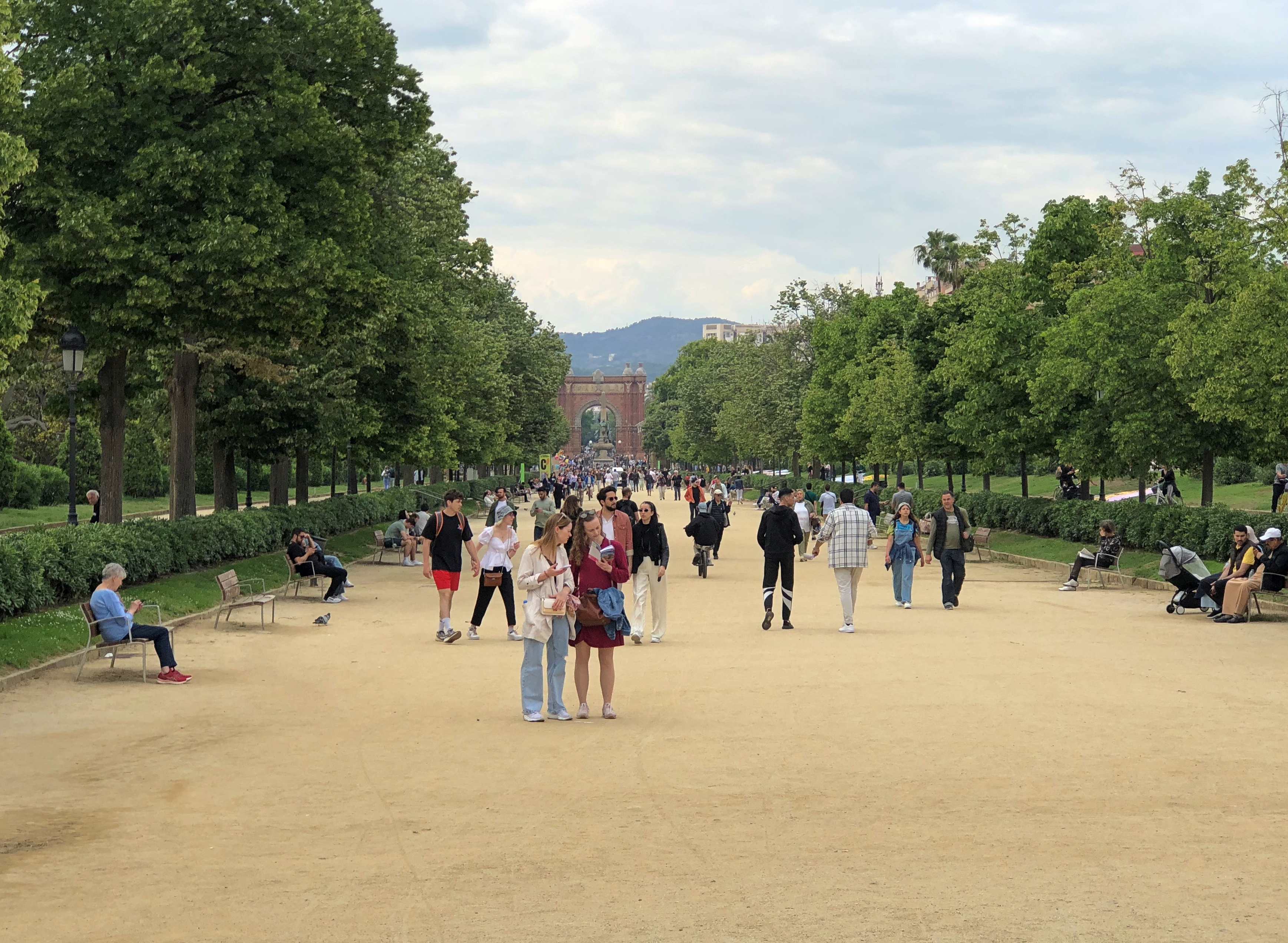
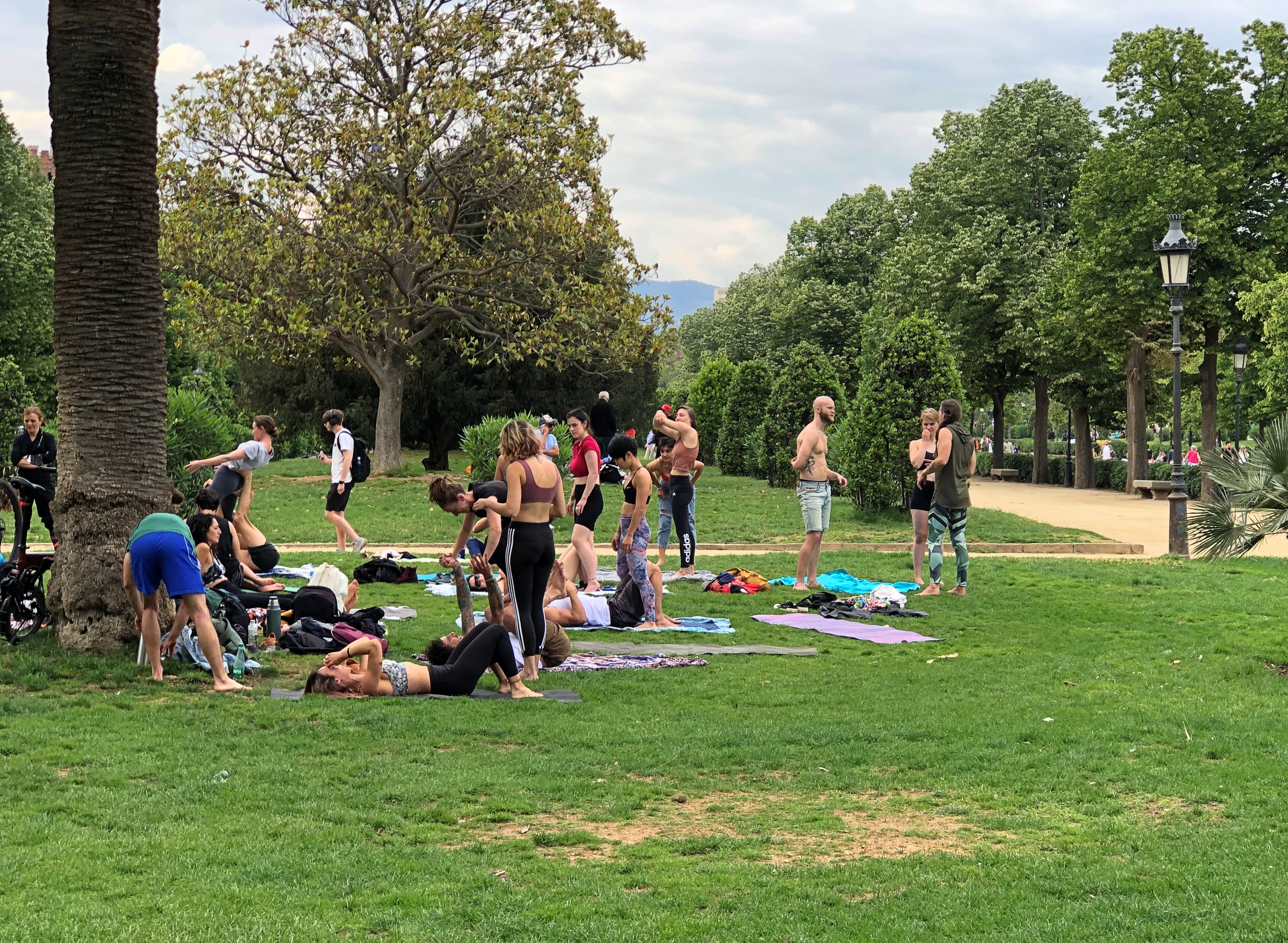
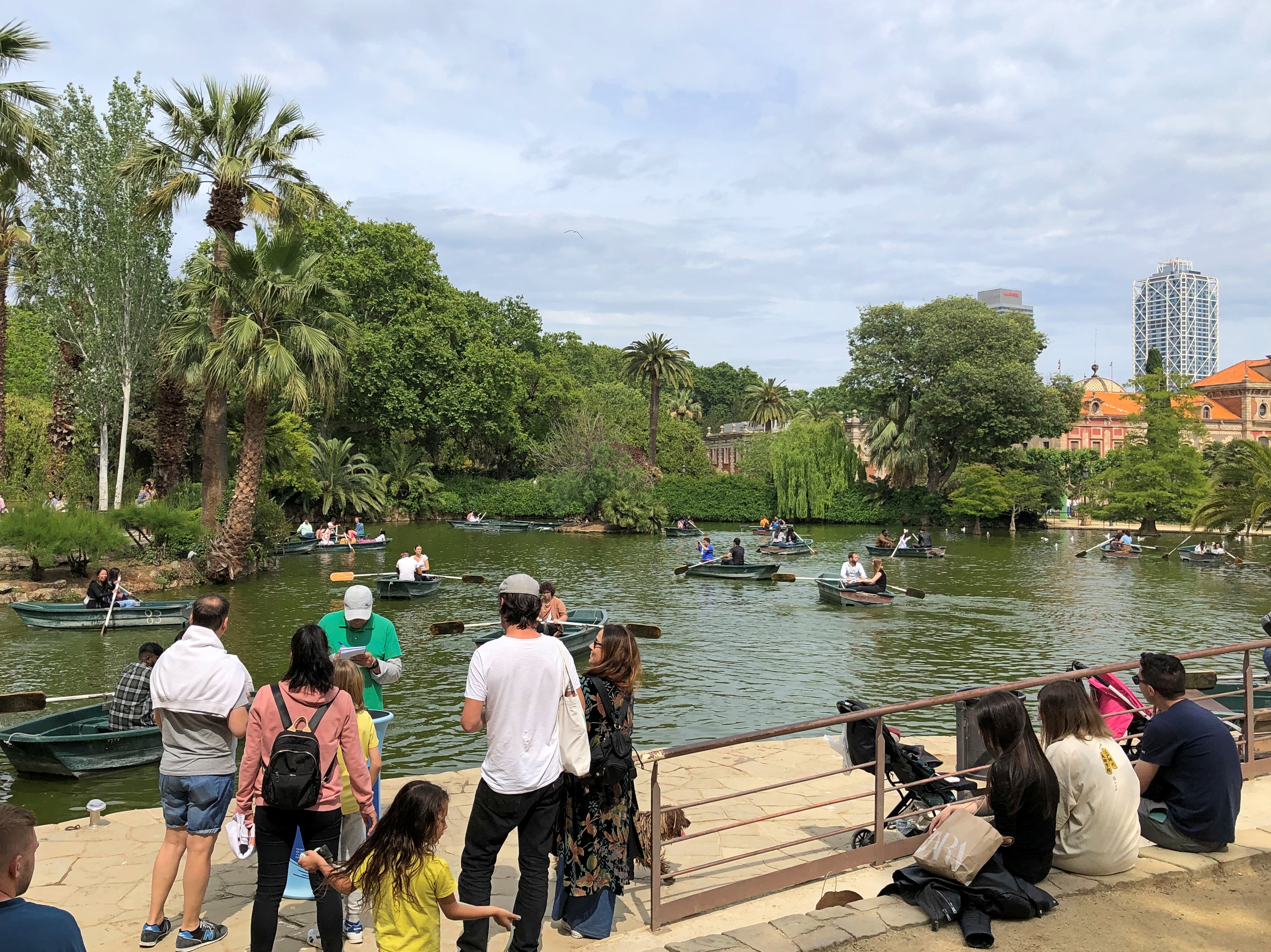
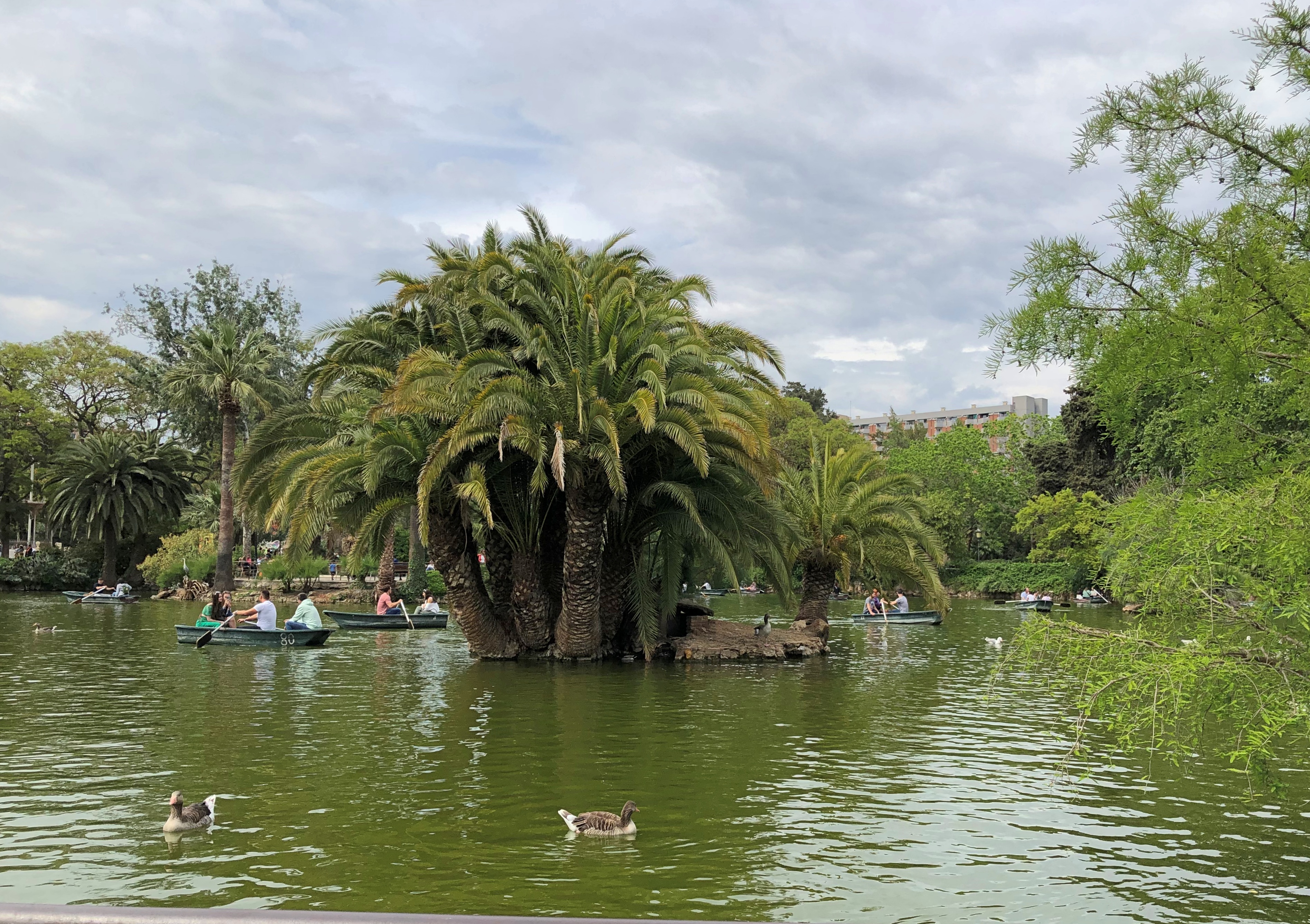
We exited from the opposite end of El Born Centre that we entered, and from there a short street leads to the sizable Parc de la Ciutadella (Citadel Park), which is the use 19th-century Barcelona had for most the former military facility. Good choice. It’s a grand place for a stroll. Or just to hang out.Parc de la Ciutadella Parc de la Ciutadella

A water feature. Reminded me a little of Chapultepec Park in Mexico City.Parc de la Ciutadella Parc de la Ciutadella

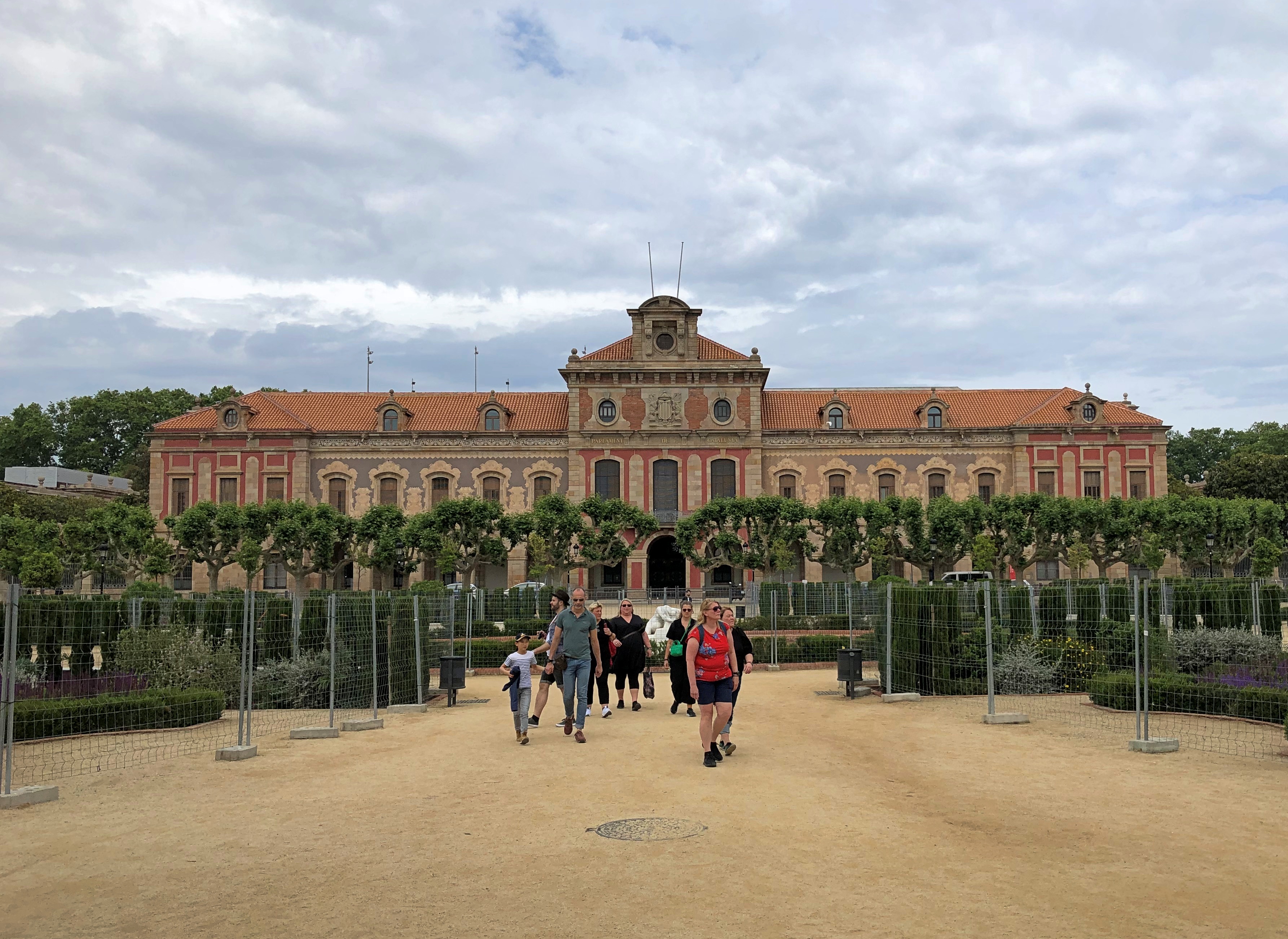
Plus an assortment of monumental structures. Such as the Catalonian parliament building.Parc de la Ciutadella

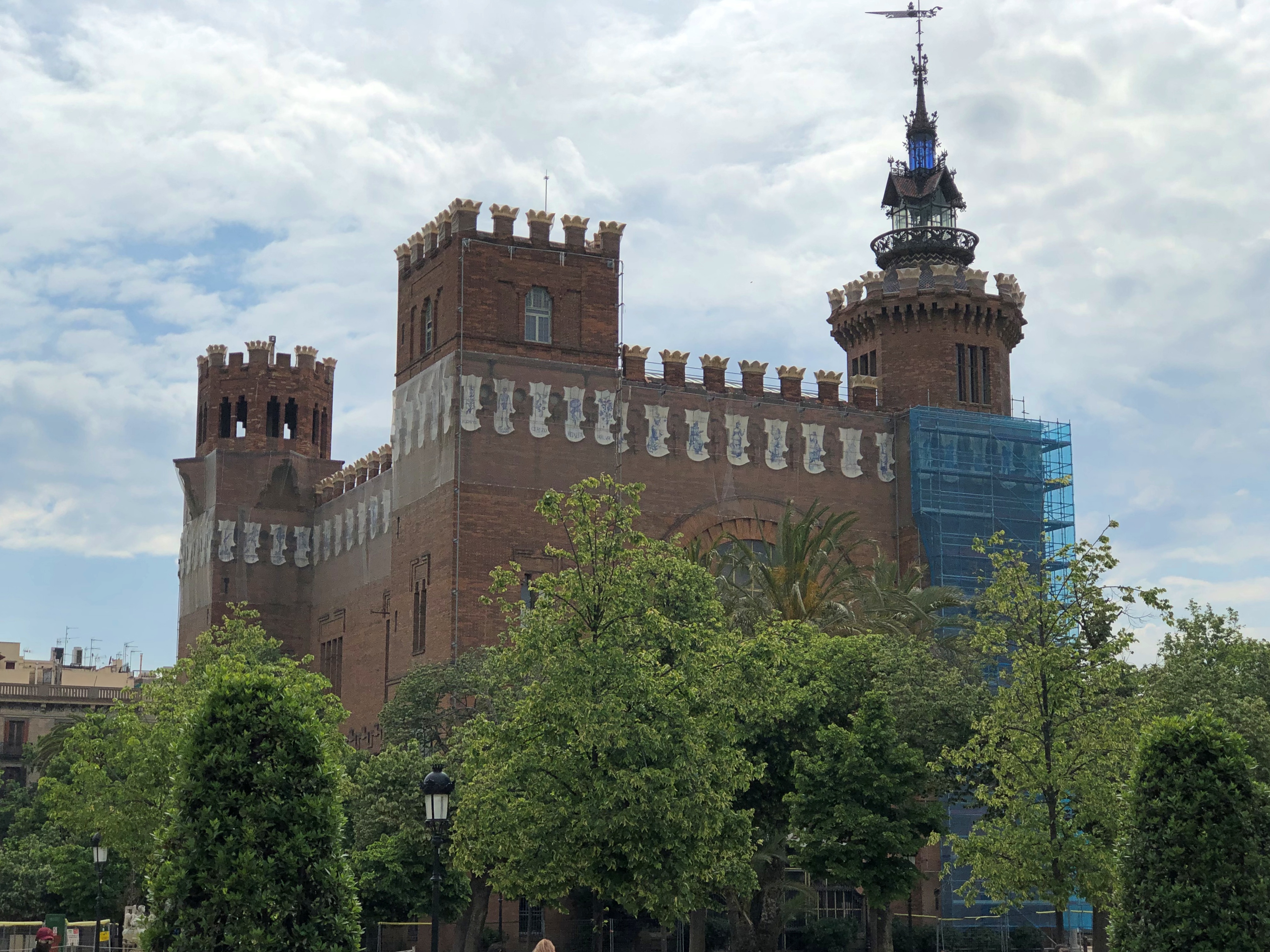
A thing called Castell dels tres Dragones, which seemed to be closed for repairs. Later (as in, today) I learned that Lluís Domènech i Montaner designed it. We’ll come back to him. He did something much more amazing that we saw later.Parc de la Ciutadella

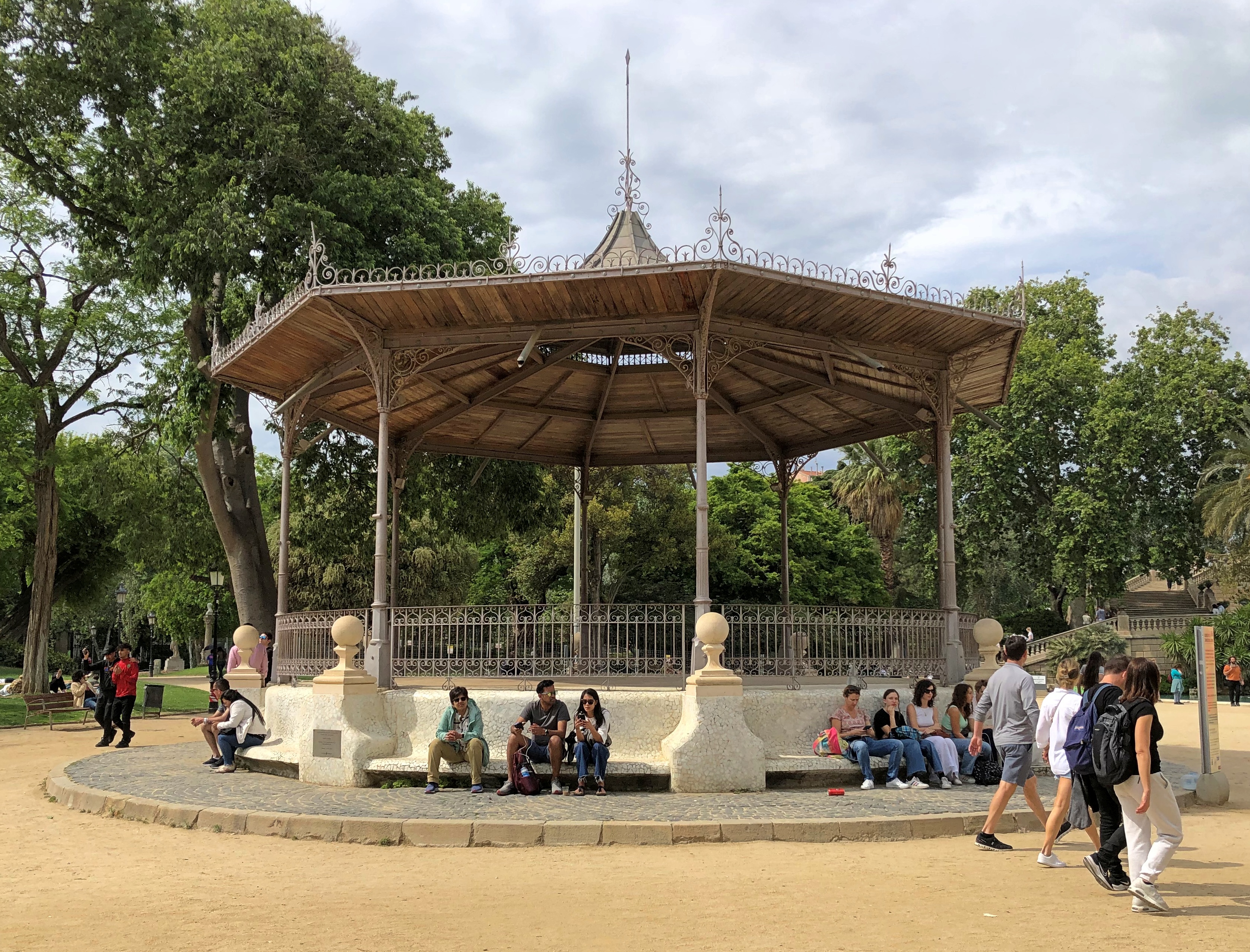
A Catalan gazebo. Note the difference in detail from Castilian gazebos. Catalans are reportedly fiercely proud of their gazebo heritage.Parc de la Ciutadella

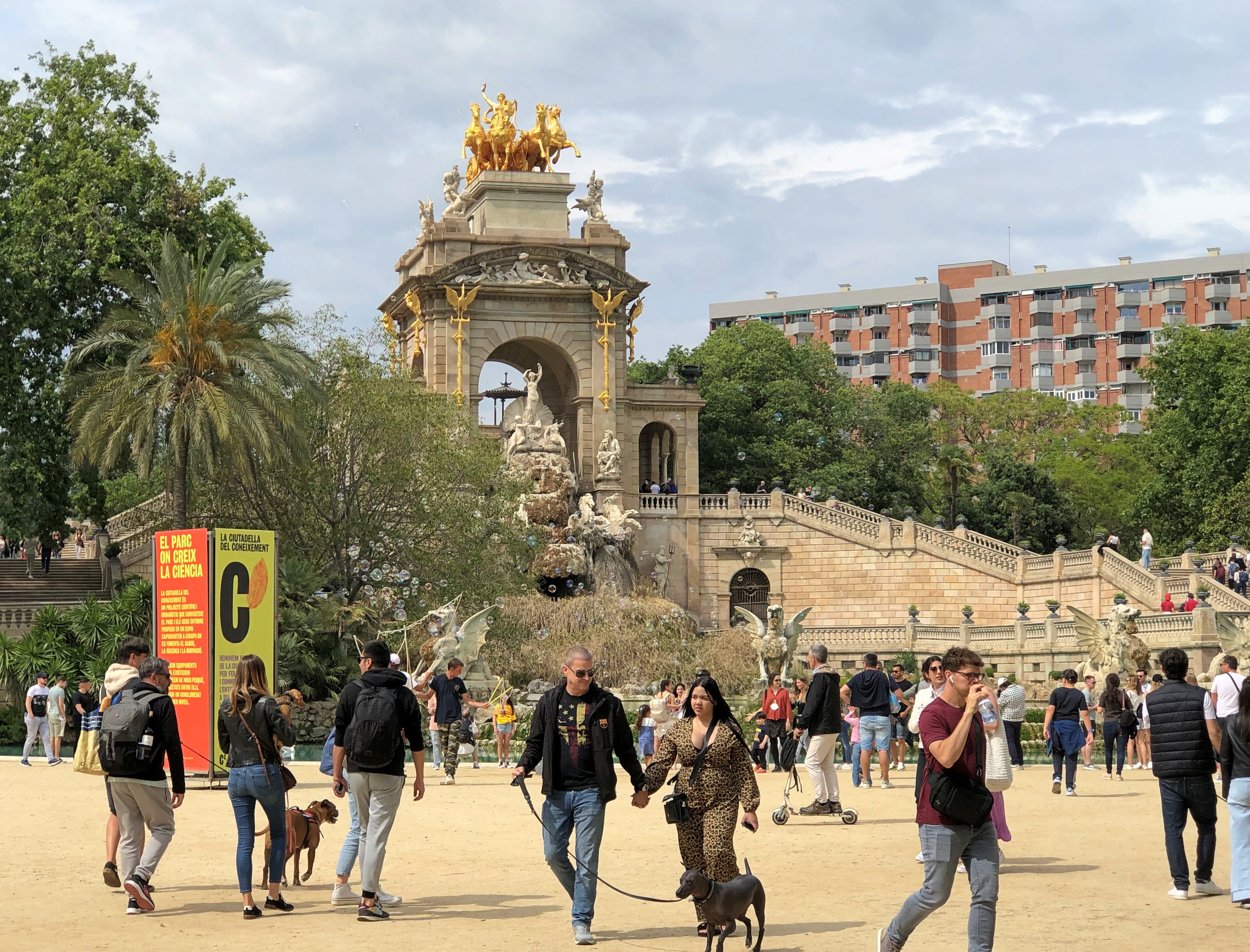
We were too tired to climb these stairs, but we did admire the work from some distance.Parc de la Ciutadella

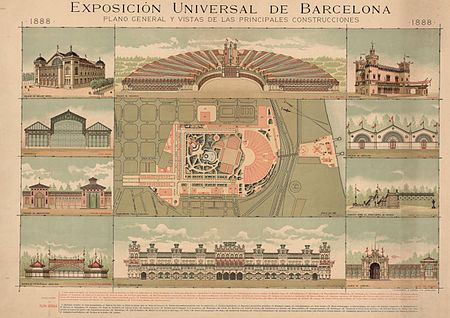
That’s the Ciudadela Park Cascade, which as far as I can tell doesn’t honor anything specific, but was built in the late 19th century to celebrate Barcelona’s revival. And in time for the Universal Exhibition of Barcelona in 1888, which is yet another place to visit once that time machine is up and running (and 1929, too).

The park, like Jackson Park in Chicago and Hemisfair is San Antonio, owes much of its modern shape to a long-ago world’s fair.

Guinness Storehouse

Summer-like days have arrived here in Illinois more-or-less on time, the last week of May. Temps pushing and then exceeding 30° C., as they would calculate it in the EU. Which I suspect would wilt the Irish.

Climates To Travel, re Ireland: “In Summer, from June to August, temperatures are cool: average highs are around 17/18° C. (63/64° F.) in the north, and around 19/20° C. (66/68° F.) in the rest of Ireland. The rains are also frequent in this season.”

Once upon a time, the population just lived with it. And maybe drank heavily, though far be it from me to peddle Irish stereotypes.

Now many Irish can afford sunny holidays around the Mediterranean. On the way to the airport to catch our flight to Barcelona, I told our cab driver – a fellow about my age –  where we were headed, and he said he’d just been to somewhere on the Costa Brava for holidaymaking, though I didn’t catch the name of the place. (Indeed, from 2014 to 2019, the number of Irish taking trips to the rest of the EU and everywhere else ballooned, according to the Republic’s Central Statistics Office.)

I asked him whether he’d grown up in Dublin, and he said he had, and that the city wasn’t anything like it used to be.

“You know where O’Connell crosses the river?”

As it happened, I did. Busy place. Lots of traffic.

“There used to be two cops directing traffic there, one on each side. That was all there needed to be.”

Everywhere is different compared with 50 years ago. I seem to remember having a similar conversation with our driver about how much Mexico City had changed since the Olympics, and my own experience with San Antonio and Nashville on even shorter timelines is the same.

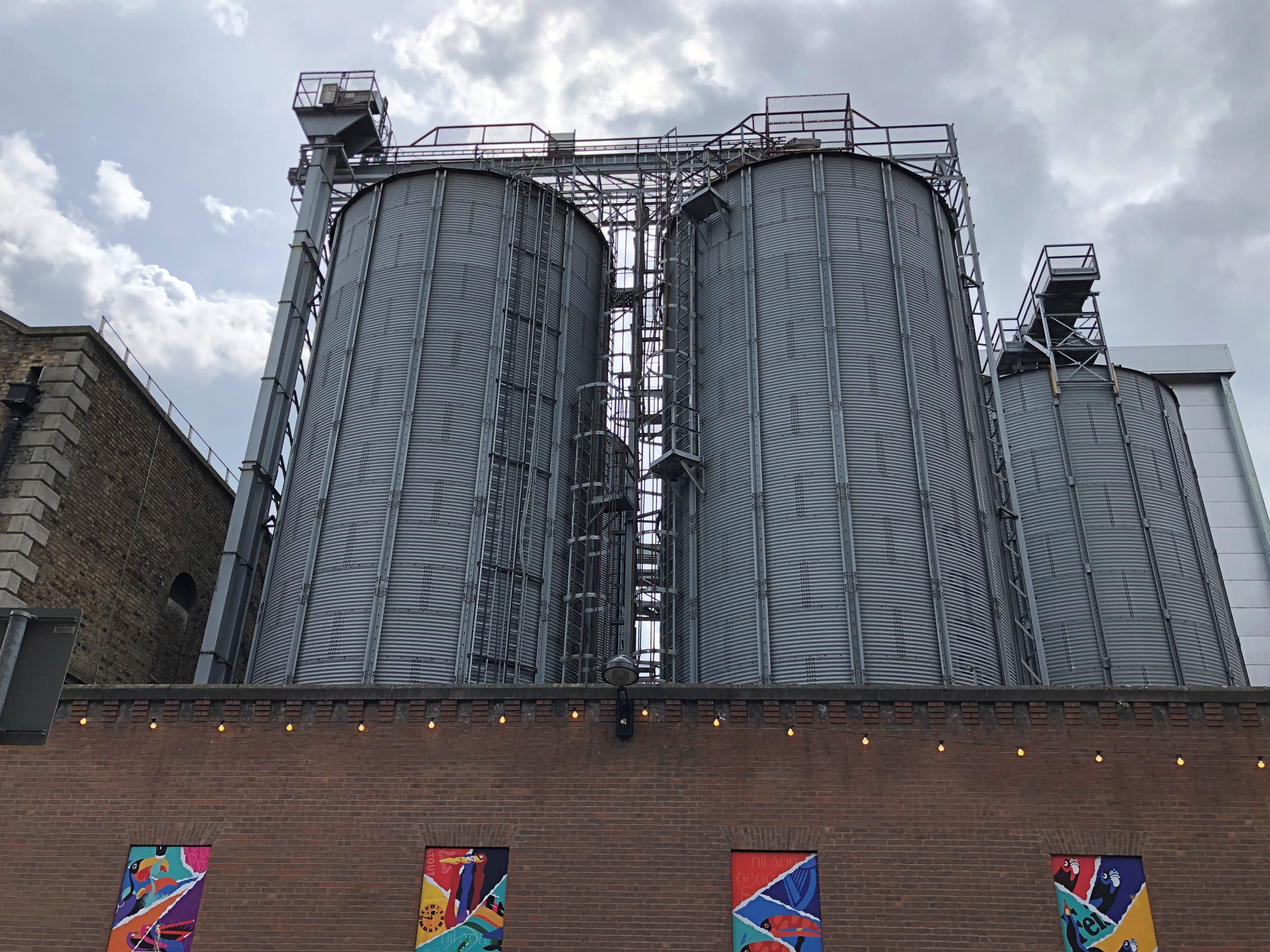
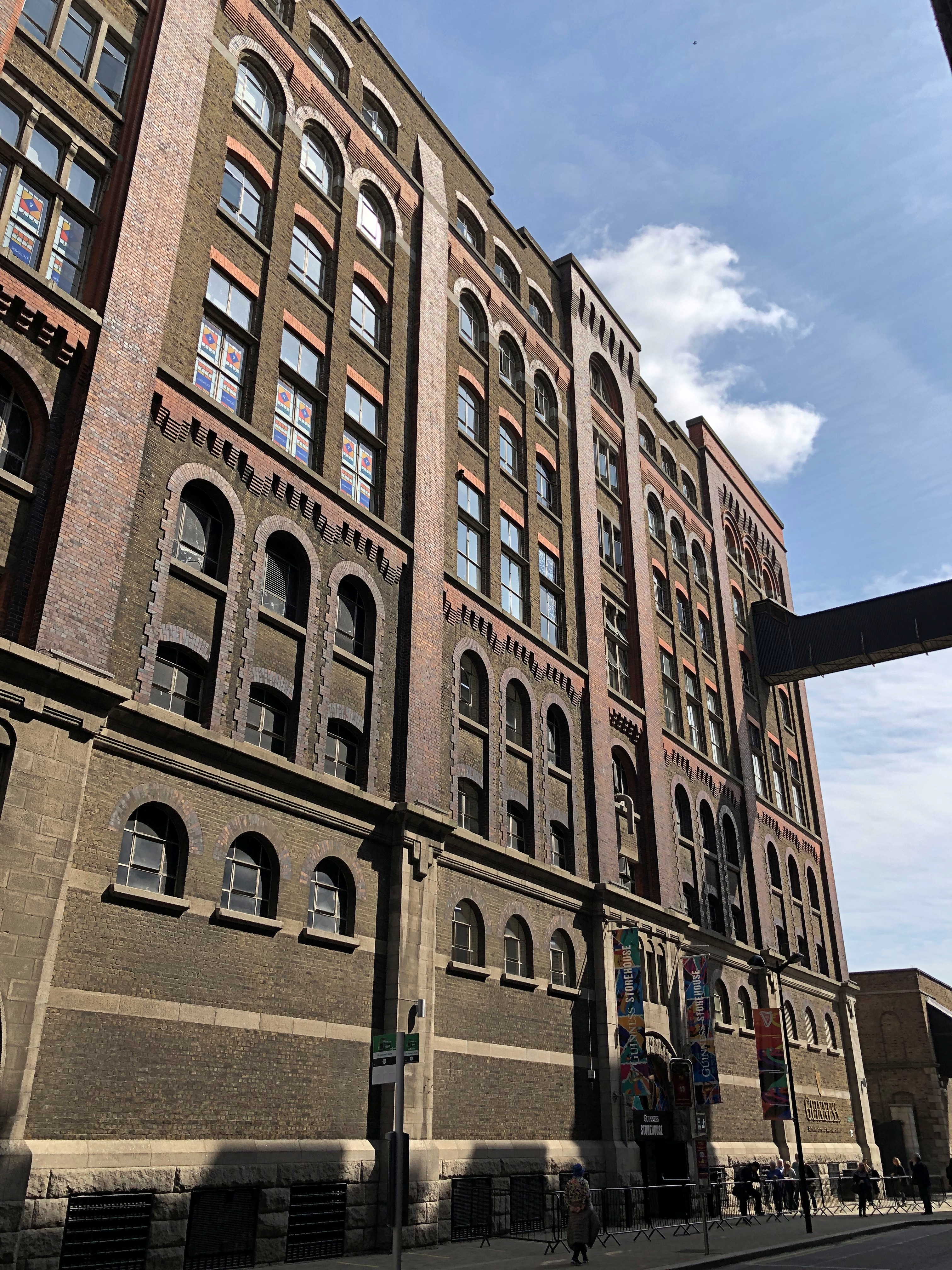
One of the last places we visited in Dublin, while our bags under the care of the front desk of the hotel we’d checked out a few hours earlier, was the Guinness Storehouse. It isn’t far west of central Dublin, and part of the Guinness brewery complex in St. James’s Gate, but not a brew facility any more.Guinness Storehouse Guinness Storehouse

The façade of the storehouse.Guinness Storehouse

I prefer touring actual breweries and seeing their equipment, such as at the Carlsberg brewery in Copenhagen or the Yuengling brewery in Tampa. But Guinness is probably too popular for that, so the famed brewery created a museum within an old fermentation plant that had been originally developed in 1904 and, remarkably enough, was Ireland’s first steel-frame building, nearly 20 years after Chicago’s Home Insurance Building.

As a tourist facility, the storehouse opened in 2000, and an uncited stat at Wiki says 20 million people have visited since then. I believe it. The place was fairly crowded, with mostly Irish and American English audible, but some German too — the only place in Dublin where I heard much.

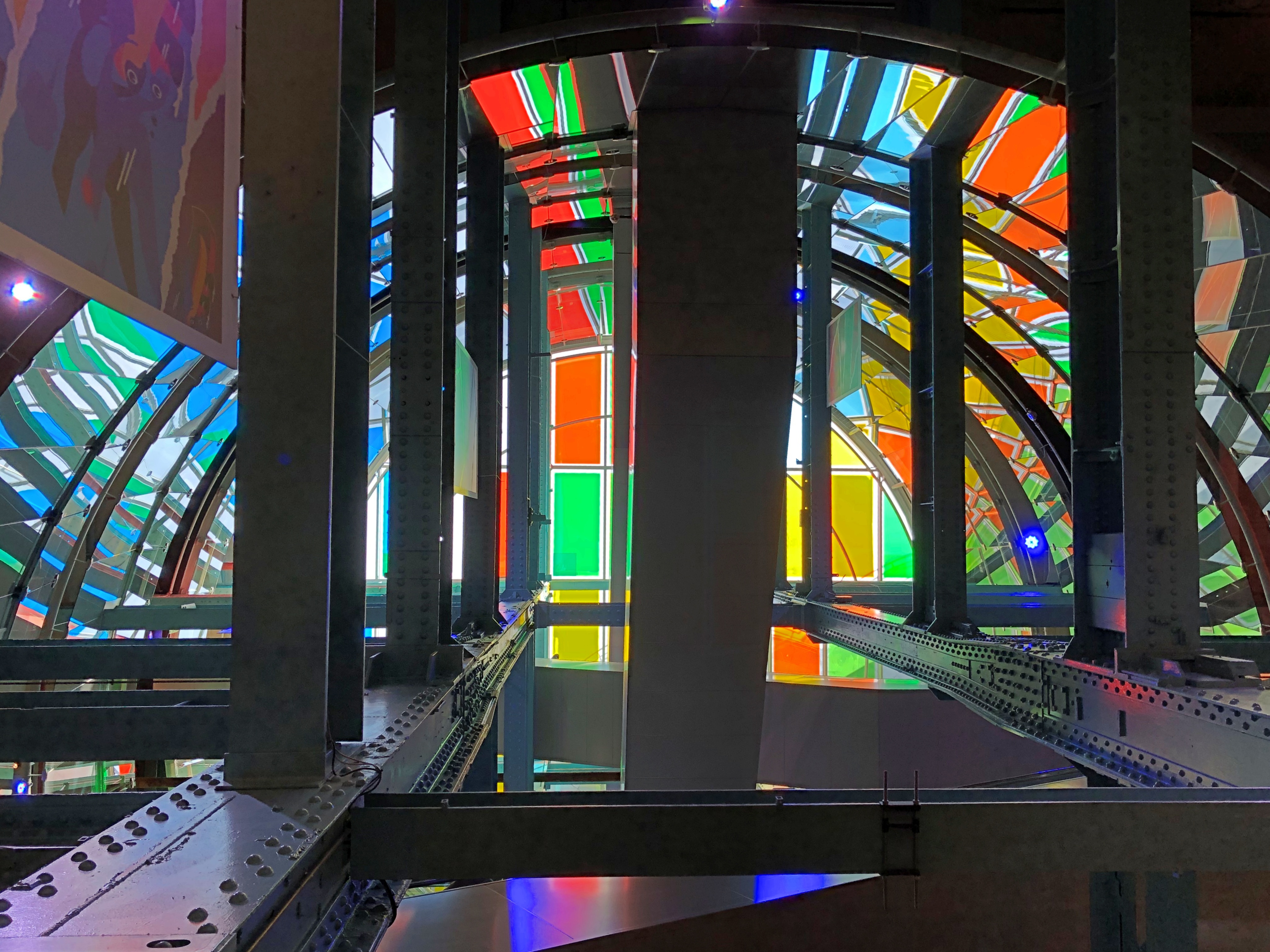
Looking up from the ground floor inside the storehouse.Guinness Storehouse

Not, I have to add, the first floor, which is the second floor, and typically marked “1” on Irish elevator buttons, that is, lift buttons (“0” is the ground floor, “-1” the basement). It was the same in Barcelona.

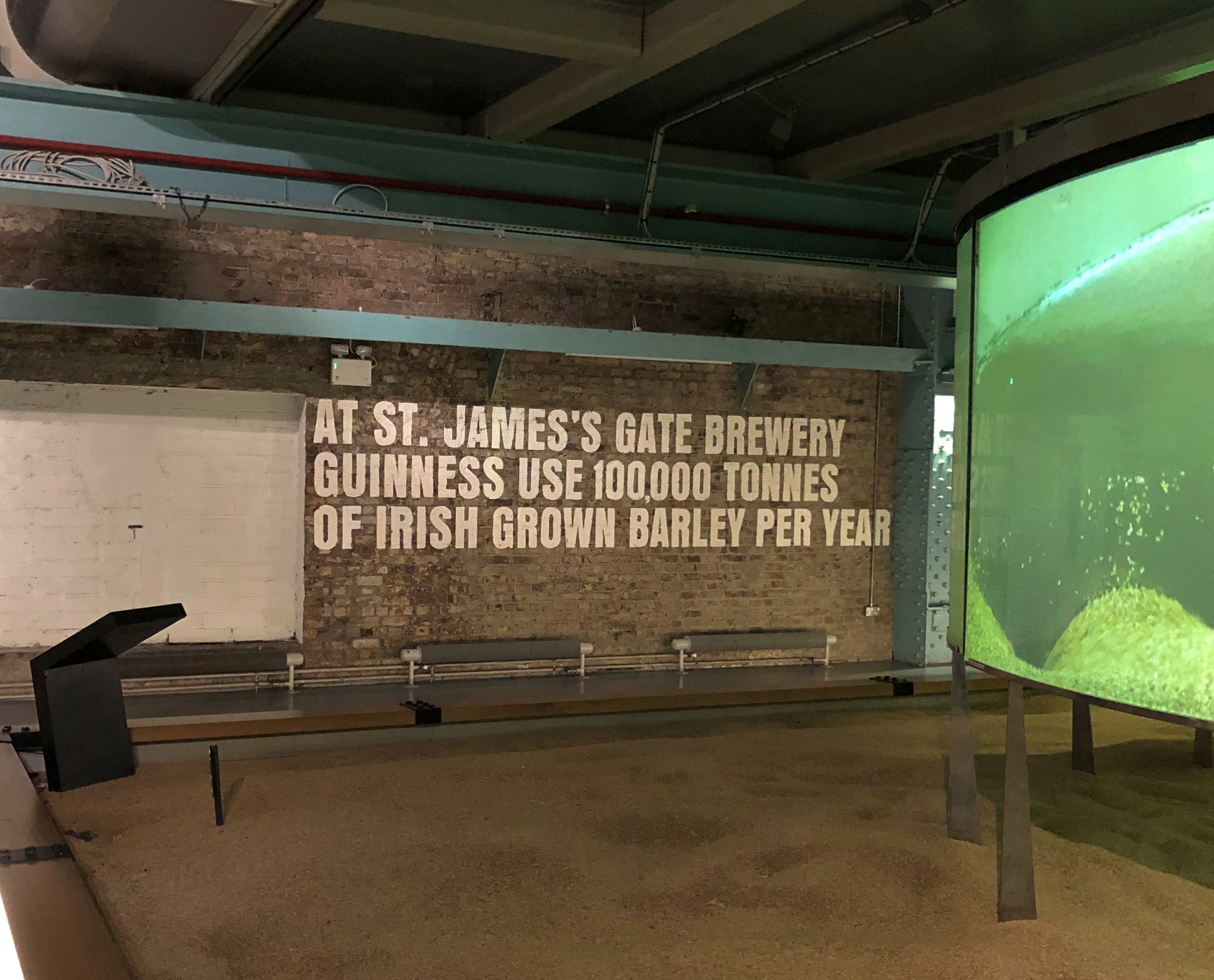
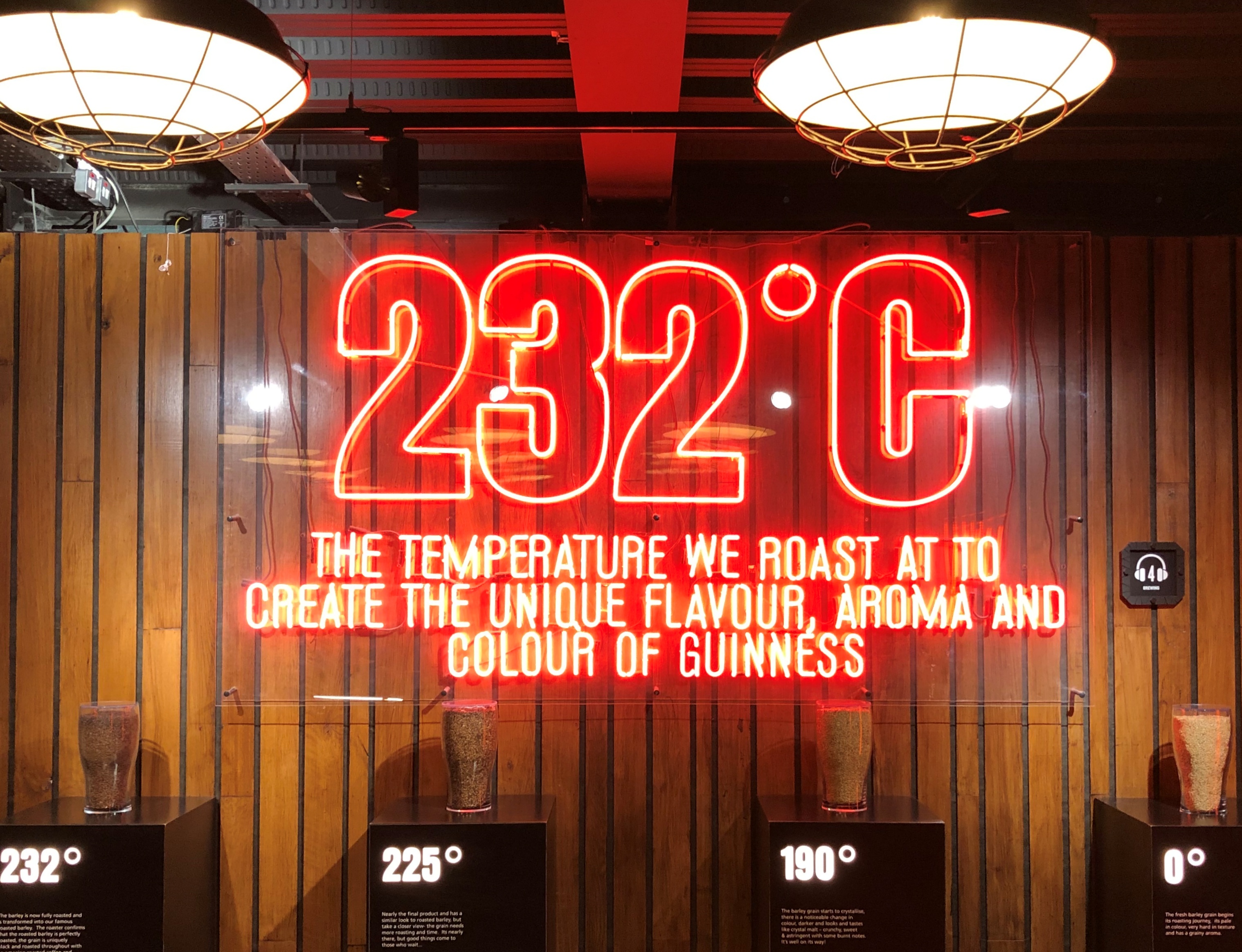
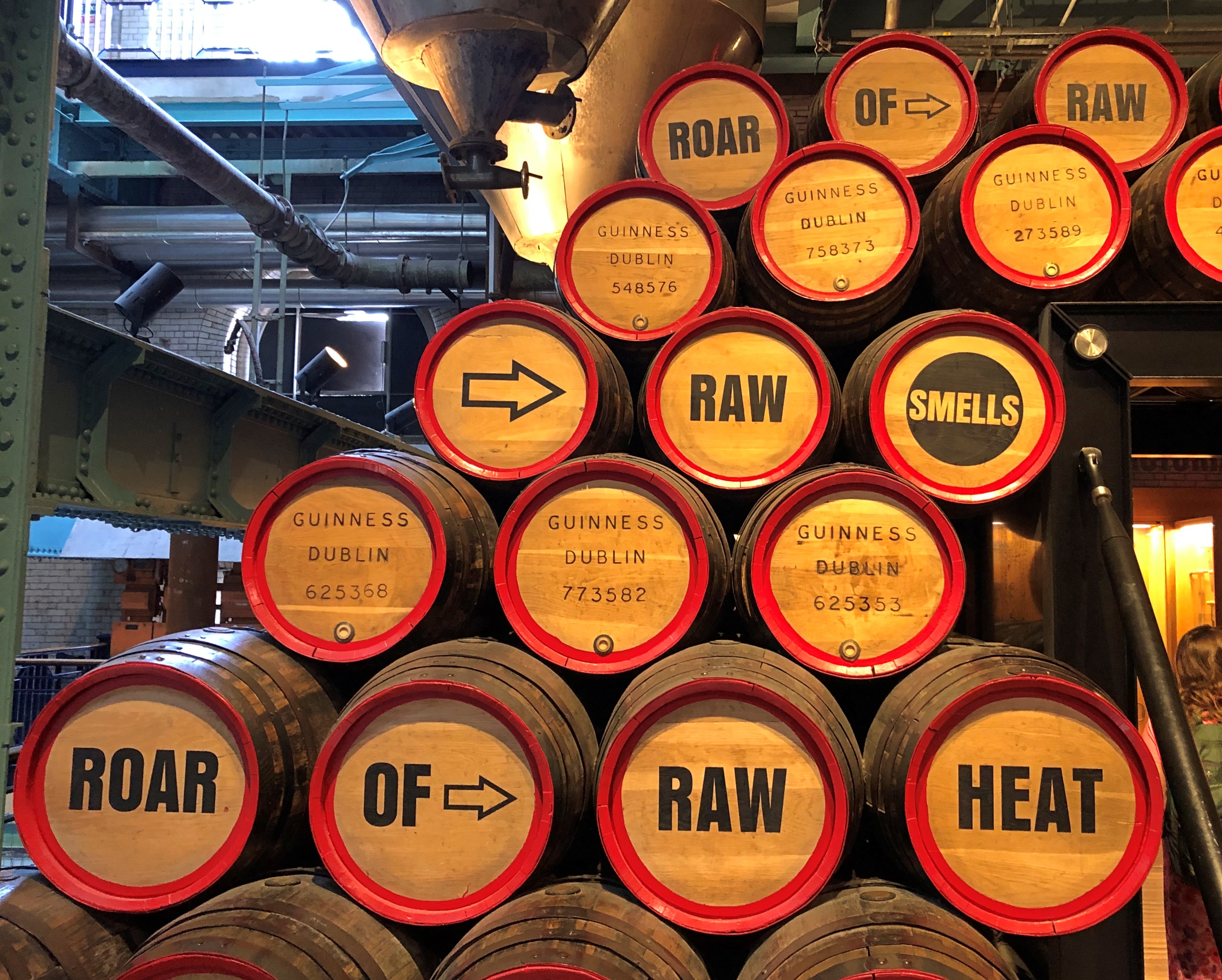
You don’t take elevators up anyway. Going up via escalators to the next few floors, you see various facts on the wall.Guinness Storehouse Guinness Storehouse

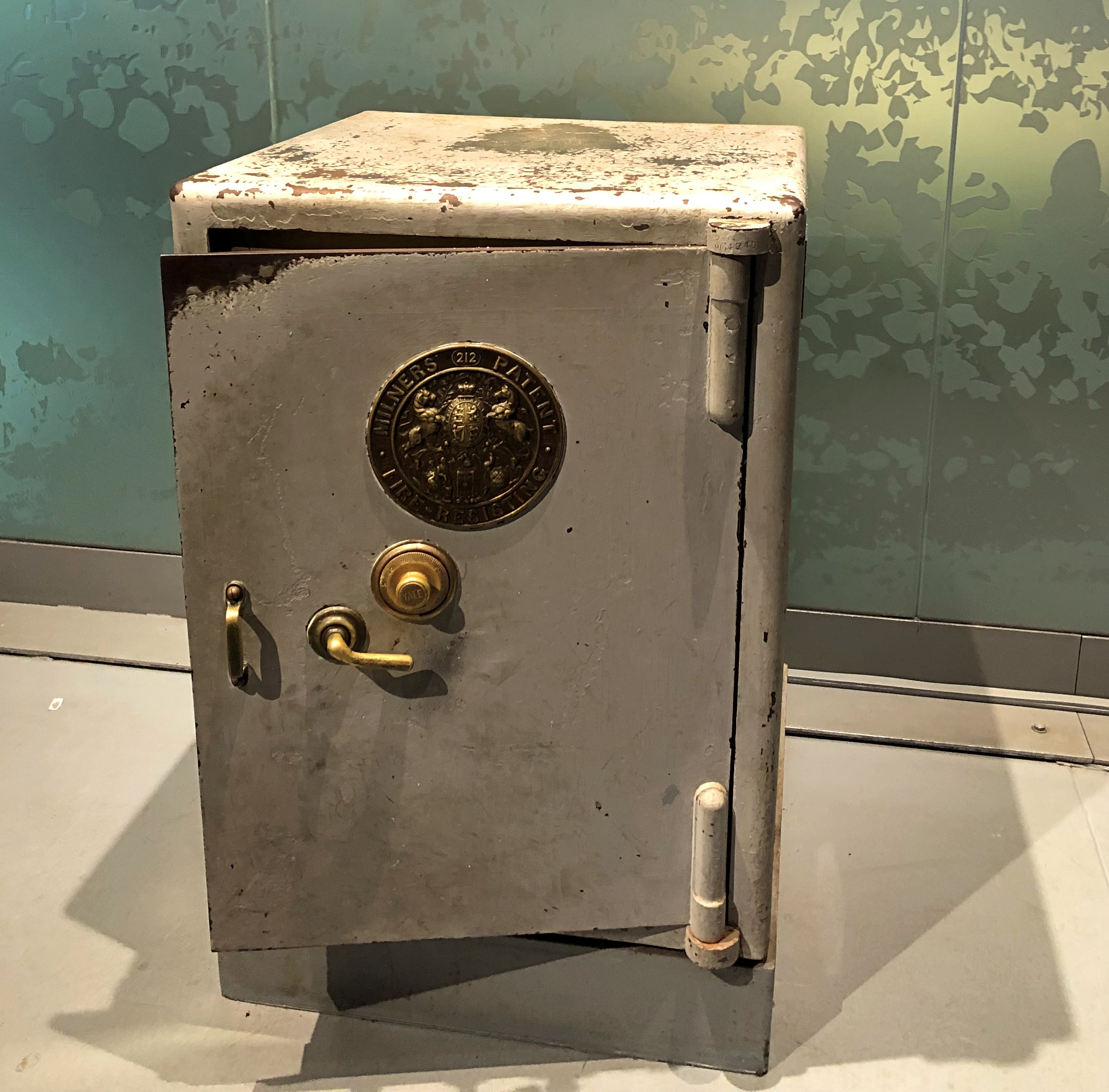
Plus artifacts from the brewery’s history, such as a safe in which a supply of spare yeast used to be kept.Guinness Storehouse Guinness Storehouse Guinness Storehouse

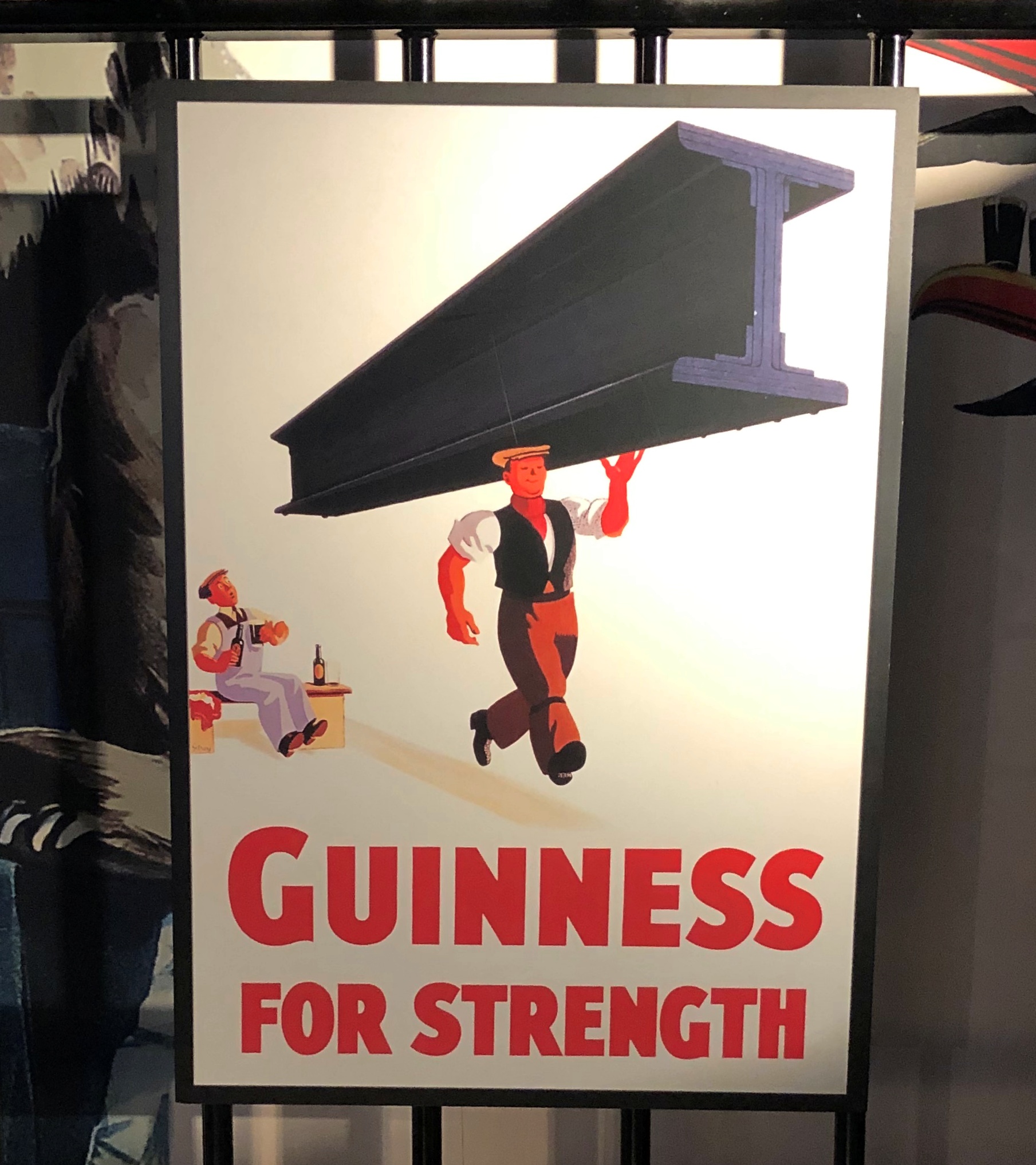
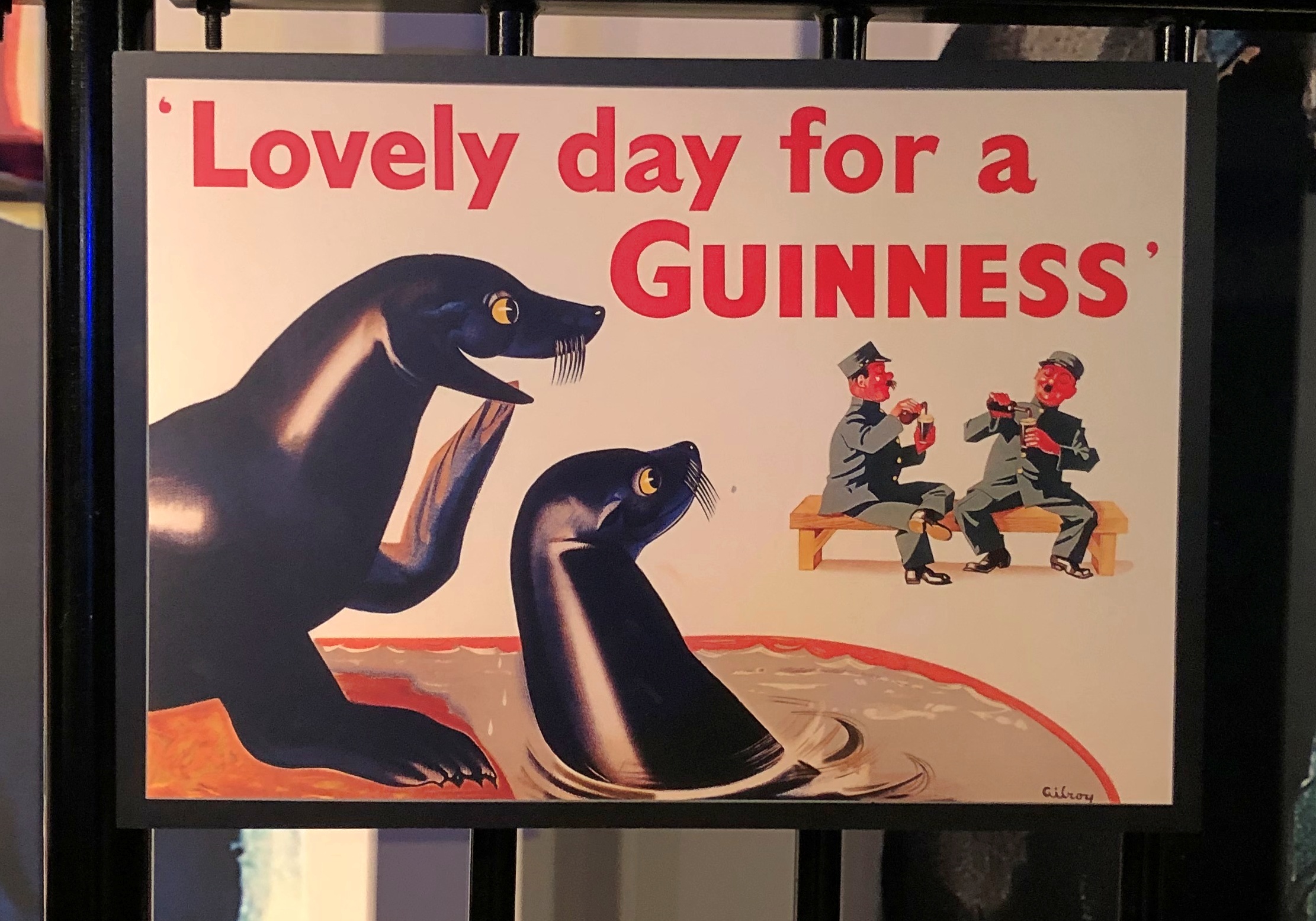
My favorite displays were of Guinness advertising over the years.Guinness Storehouse Guinness Storehouse Guinness Storehouse

The famed zoo animals advertising the beer – which I didn’t realize were famed – were the creation of English artist John Gilroy (d. 1985).

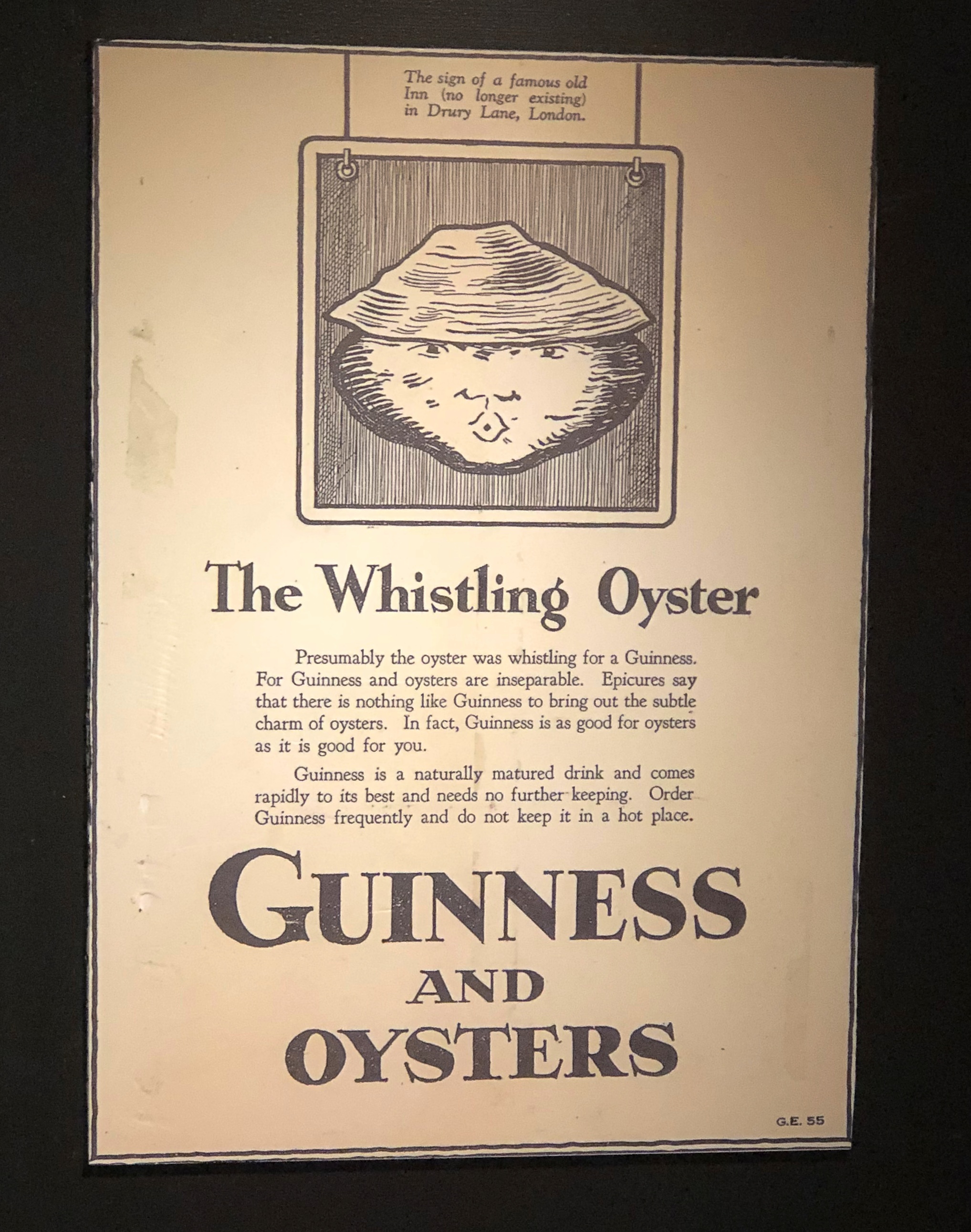
“Guinness is Good for You” was a mid-century ad slogan. For years, I thought that was just something people said. I guess it was, encouraged by adverts. These days, however, that sort of claim, vague as it is, would seem to be banned by Irish advertising standards.

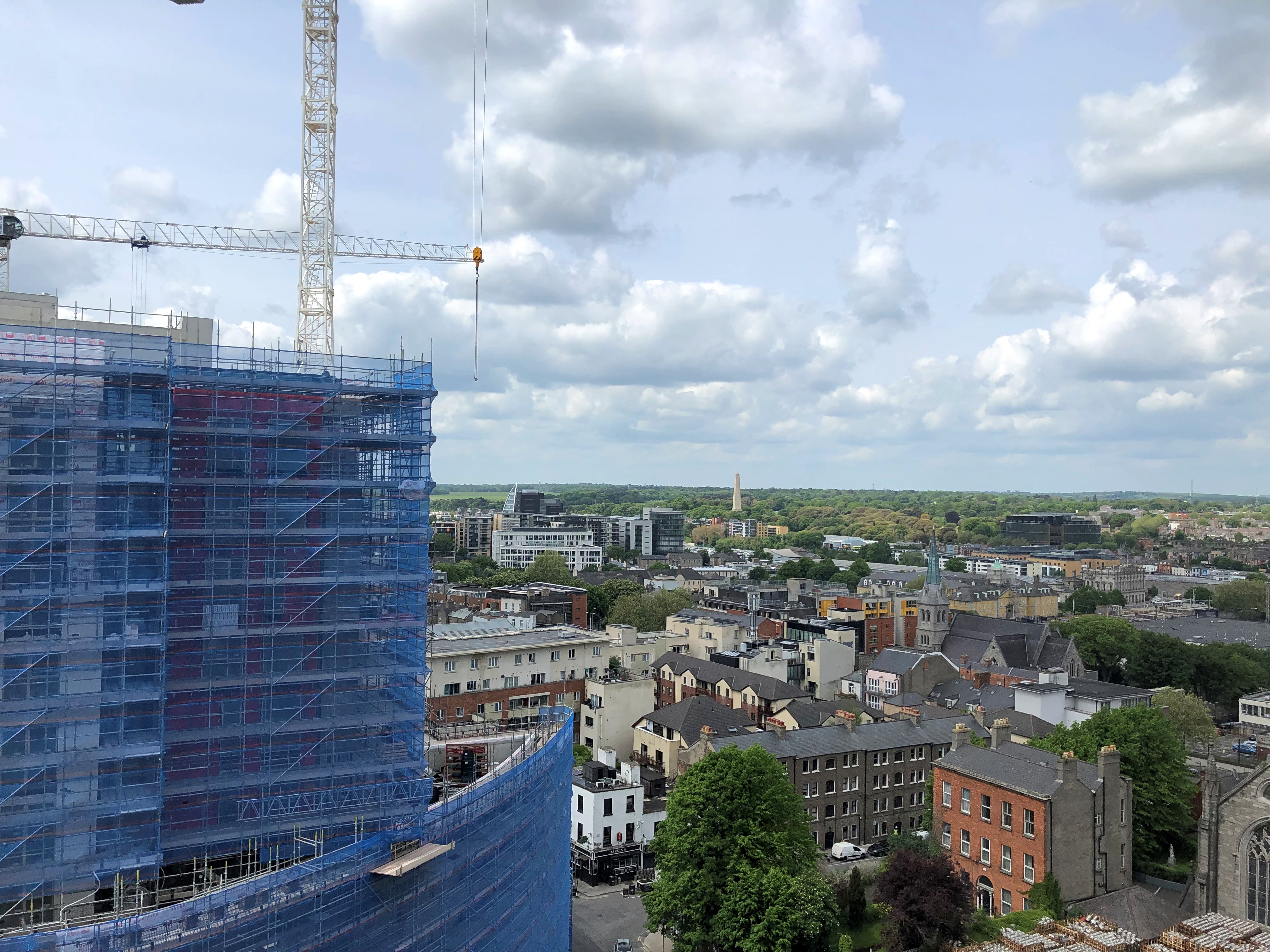
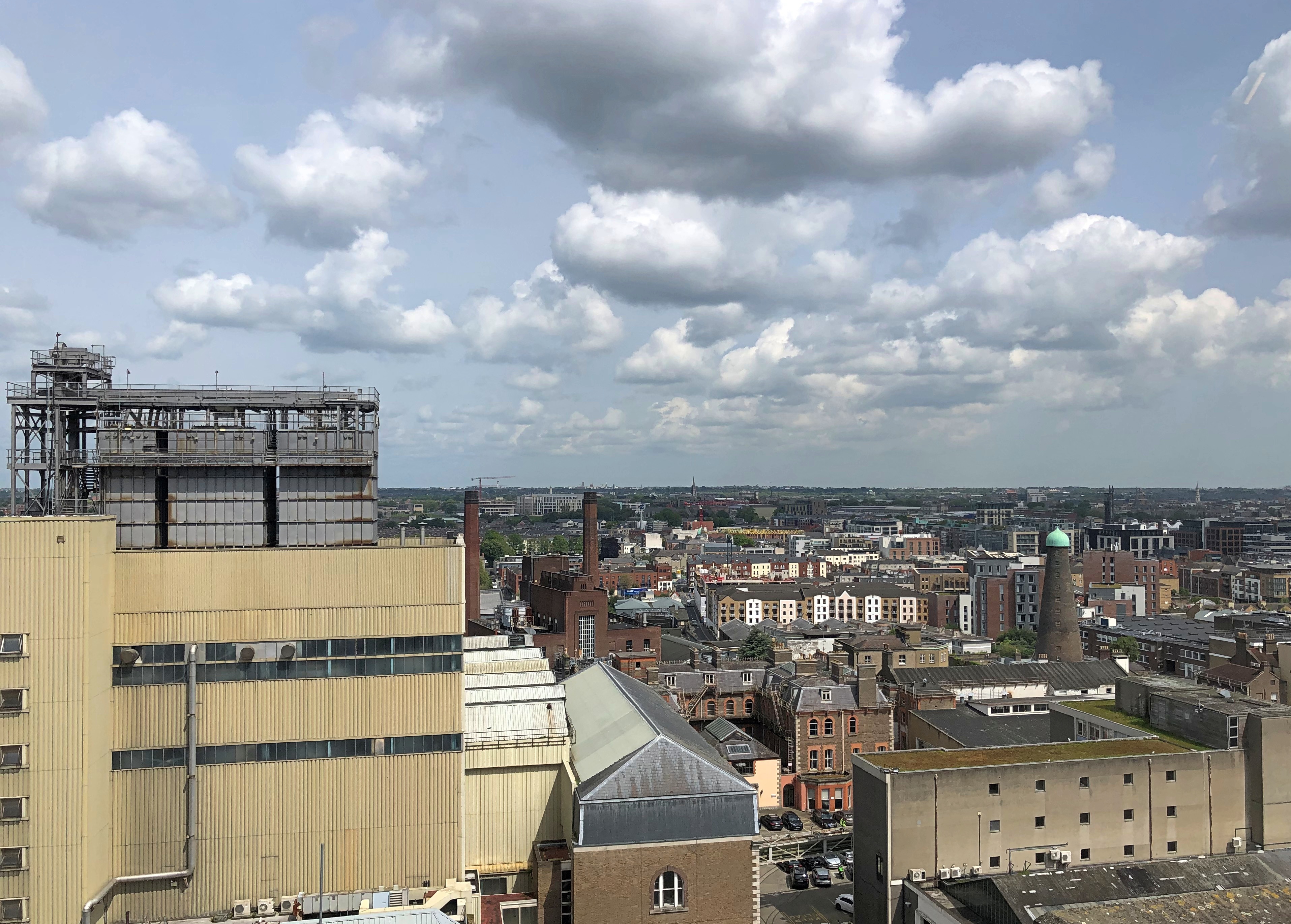
The tour ends on the top floor of the building, home of the Gravity Bar, which has some fine views of Dublin, making you realize what a low-rise place it is, for a metro area of about 2 million. That is due to regulation, which limits building height to a maximum between 16 meters and 28 meters – about what, eight or nine stories? The Gravity Bar is on the seventh floor; which would be the eighth floor.

The structure to the left is part of the actual production facility for Guinness.Guinness Storehouse

Not sure what building that is under construction, but there were a fair number of cranes active in Dublin when we were there. That activity will probably slow down soon, since the European Central Bank has been raising interest rates, too.Guinness Storehouse

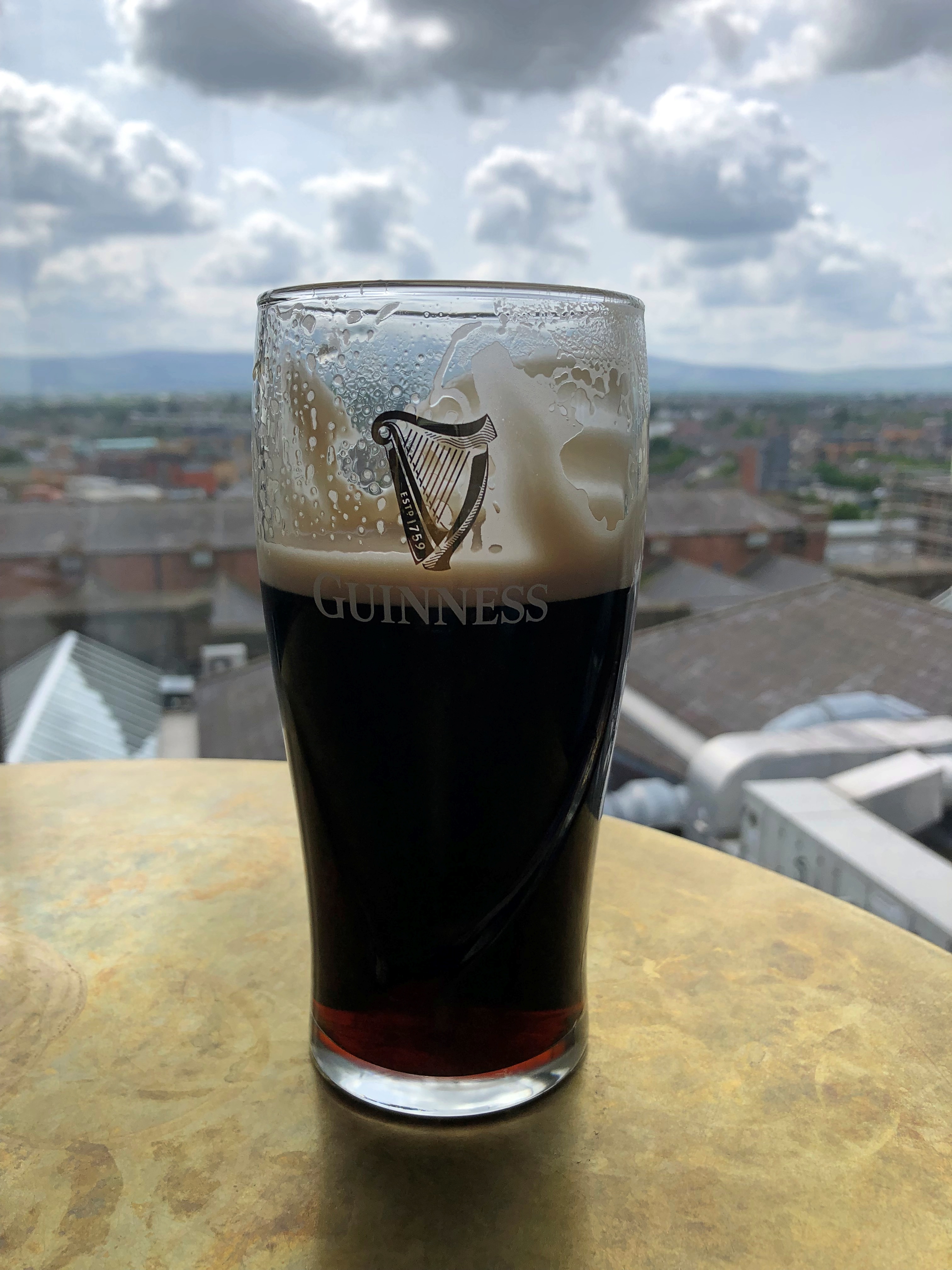
The Gravity Bar is where you have your Guinness, which comes with the price of the tour. I don’t particularly care for it, but I drank it all. You can’t come to Ireland and not drink at least one. No doubt the marketing staff at Diageo, the London-based multinational that owns Guinness, would be happy to know that even a fairly beer-indifferent American feels that way.Guinness Storehouse

Besides the traditional stout, the brewery offers other Guinness products, including a 0.0 stout, which Yuriko had. Not to trade on stereotypes or anything, but that doesn’t seem very Irish.

Thursday Nodules

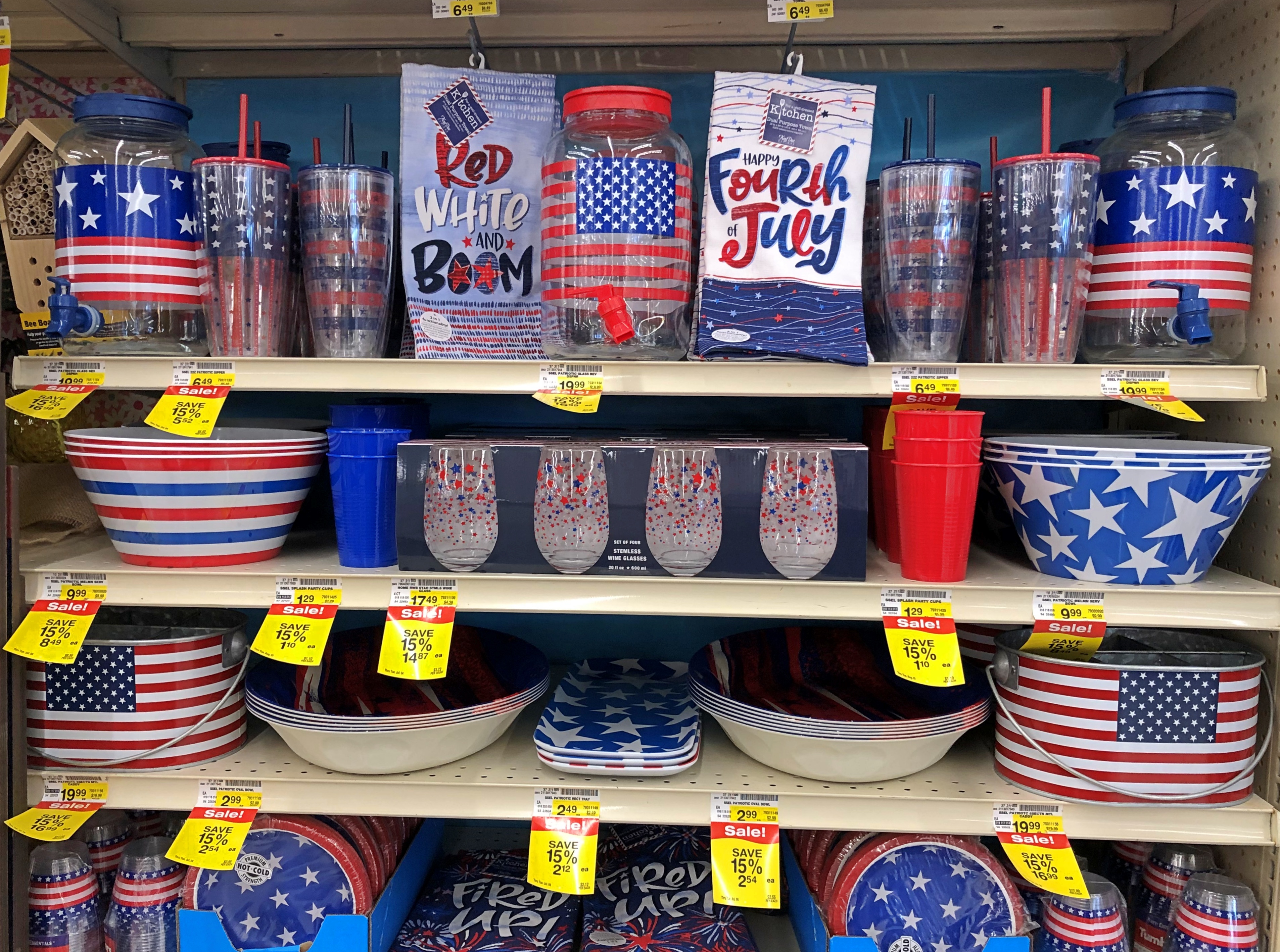
Did a little shopping at a local grocery store (part of a grocery conglomerate) and saw this display.

The Fourth of July? Really?

The Kingston Trio did a version of “Seasons in the Sun,” in 1964, a song recorded 10 years later to vast popularity by Terry Jacks, one remembered for being as saccharine as a Shirley Temple. One that was on the radio all the time.

The Kingston Trio version has a bitter twist to dilute the sentimentality, which I suspect is closer to the French-language source material. Just another thing I happened across in the YouTube treasure cave.

Not long ago, Yuriko bought an article of clothing at a local store (part of a retail conglomerate), and the clerk forgot to take off the bulky security tag. In trying to avoid a trip back to the store to have it removed, I looked up the matter on YouTube. Musical selections aren’t the only jewels in the cave. Of course, often enough you find cubic zirconia.

One video suggested a technique using two forks that didn’t look remotely easy; another assumed you had a workshop of tools; and a third – my favorite – suggested you simply smash it with a hammer. Never would have thought of that.

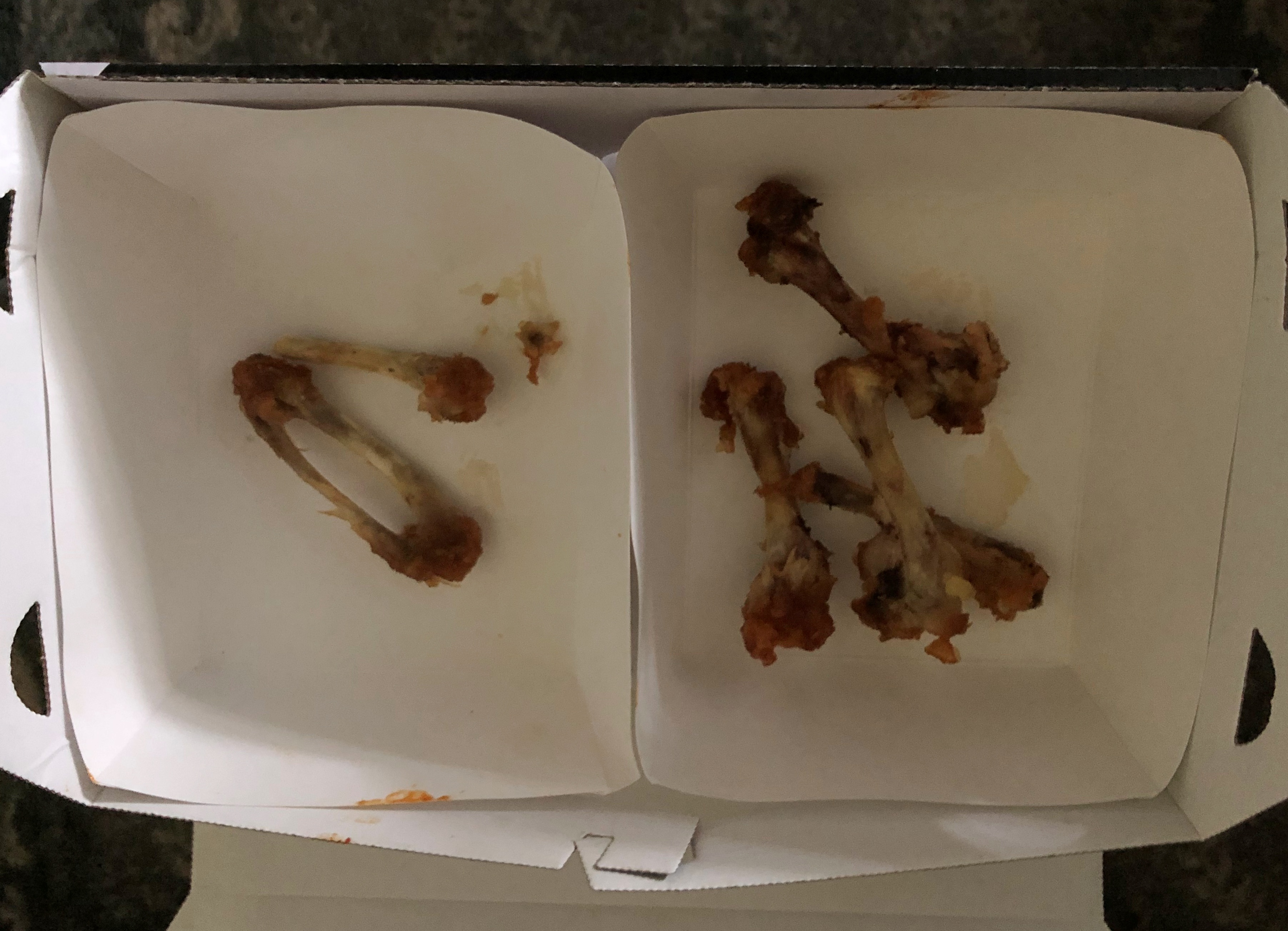
Lots of people post images of their meals, usually while there’s still food on the plate. But what about the debris of a good meal? Evidence that you completed the meal, with the hope that you might have enjoyed it.

Chicken bones, in this case. The last leftovers of the Korean chicken we bought about a week ago, and we did enjoy it.

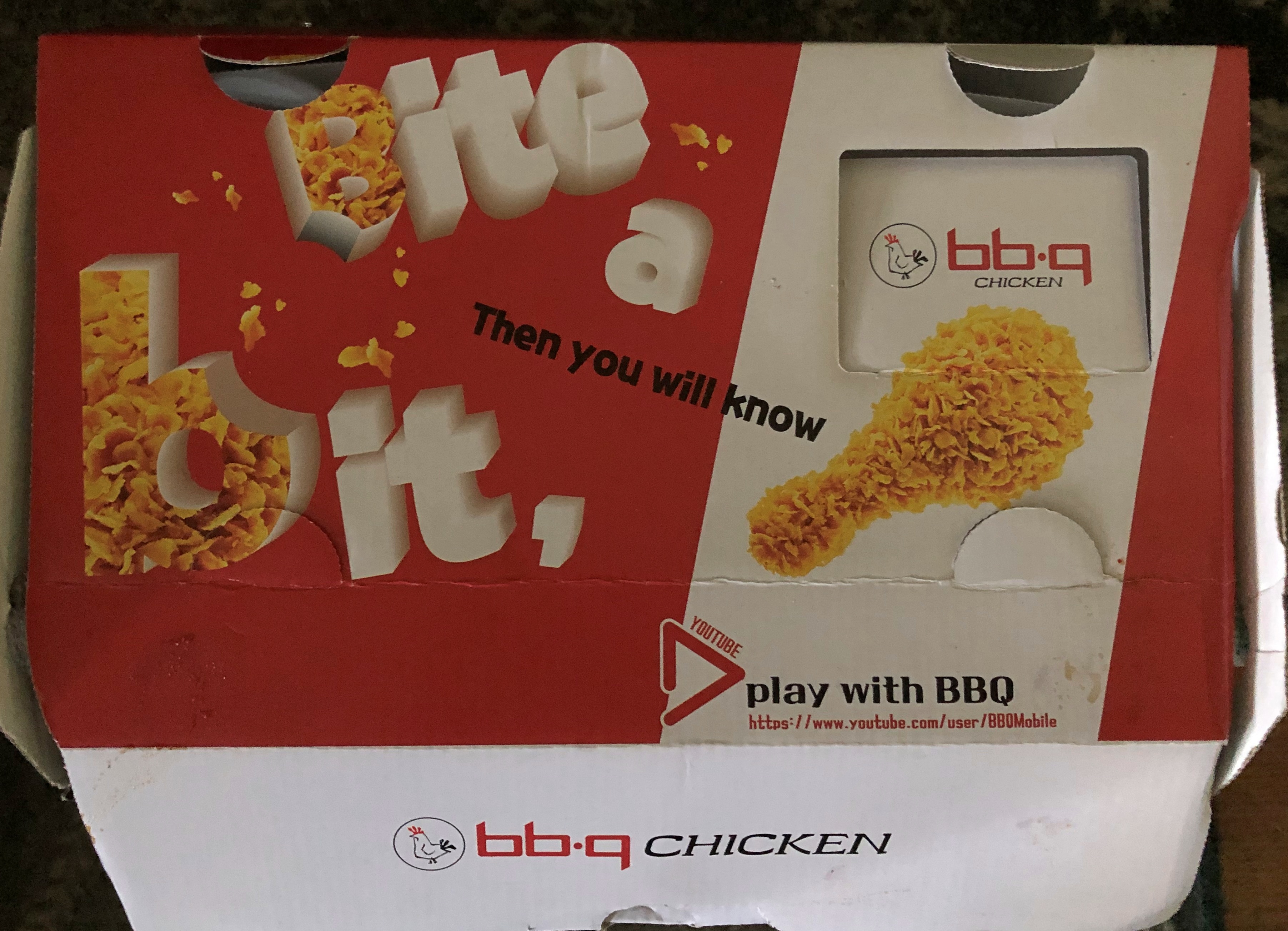
Brand name: bb.q chicken. It is an enormous chain, with more than 3,500 locations in 57 countries. Not quite sure when the northwest suburban outlet we go to opened, but it hasn’t been that long. We drop by once a month or so.

Ohio Timbits

Finally, a string of warm days here in northern Illinois, as in 80s in the afternoons. The grass is green and some bushes are coloring up, too. Trees are a little more hesitant, but it won’t be long. Of course, come Saturday, weather from up north will end our balmy run.

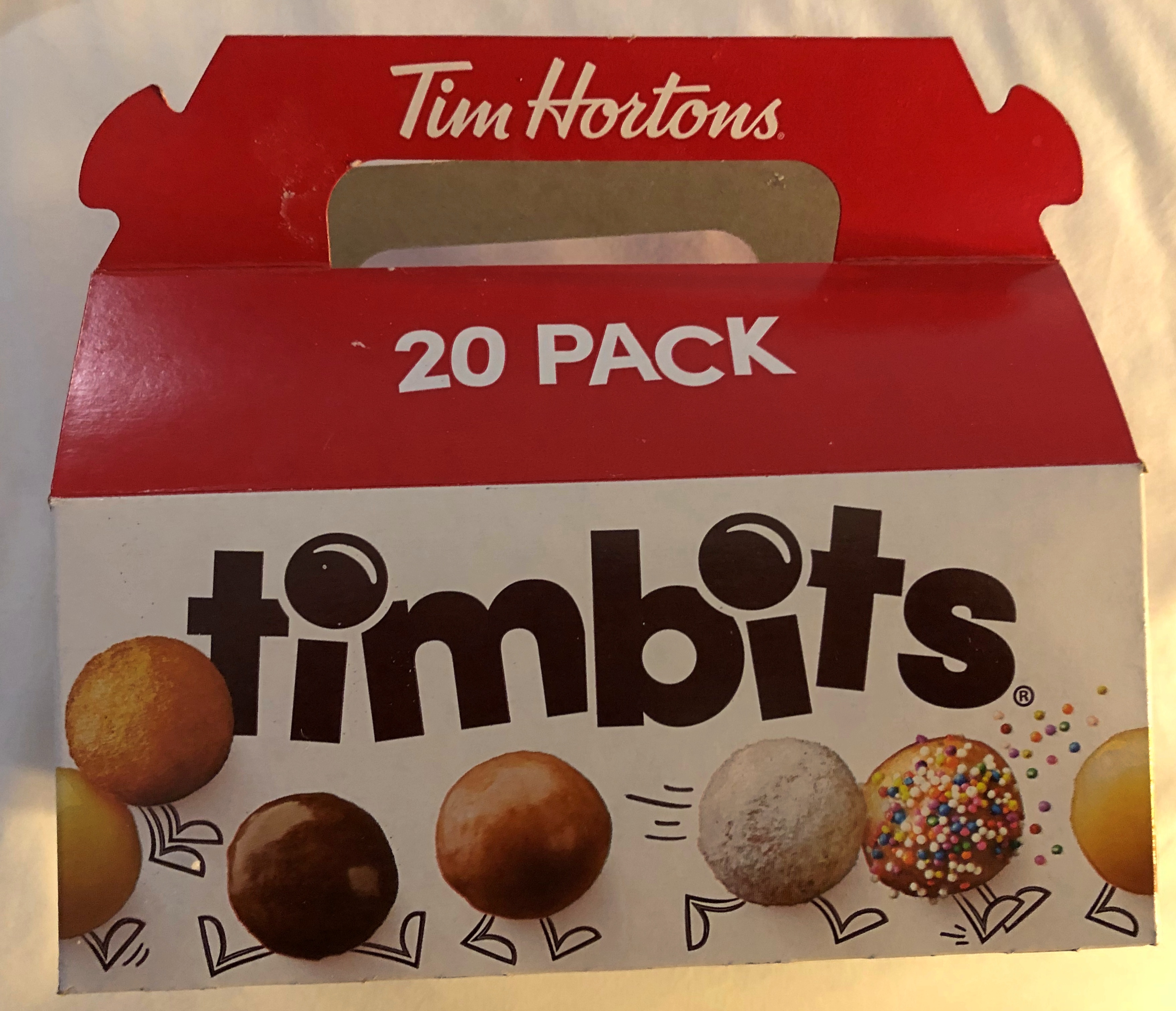
One thing I was glad to learn during our recent trip east was that Tim Hortons territory in the U.S. extends as far as Columbus, Ohio.

What is it about TH doughnuts that is so good, even in small form? The excellence of the dough, presumably, but that doesn’t really answer the question.

Another ahead-of-the-road-foodies discovery: Tudor’s Biscuit World. From a recipe dating back to the kitchens of Hampton Court Palace in the time of Henry VIII?

Of course not. The 20th-century founders were named Tudor. Though there’s a scattering of Biscuit Worlds in Ohio and Kentucky, and an outlier in Panama City, Florida, it’s largely a West Virginia operation. As we drove south through that state, we kept seeing them along the way. That inspired me, the next morning, to visit one and buy breakfast sandwiches for us.

Its sandwiches are much like McDonald’s breakfasts, the best thing that fast-food giant makes, except more variety, and Biscuit World’s various sandwiches were larger. Pretty much the same high quality. I can see why they can compete with McD’s.

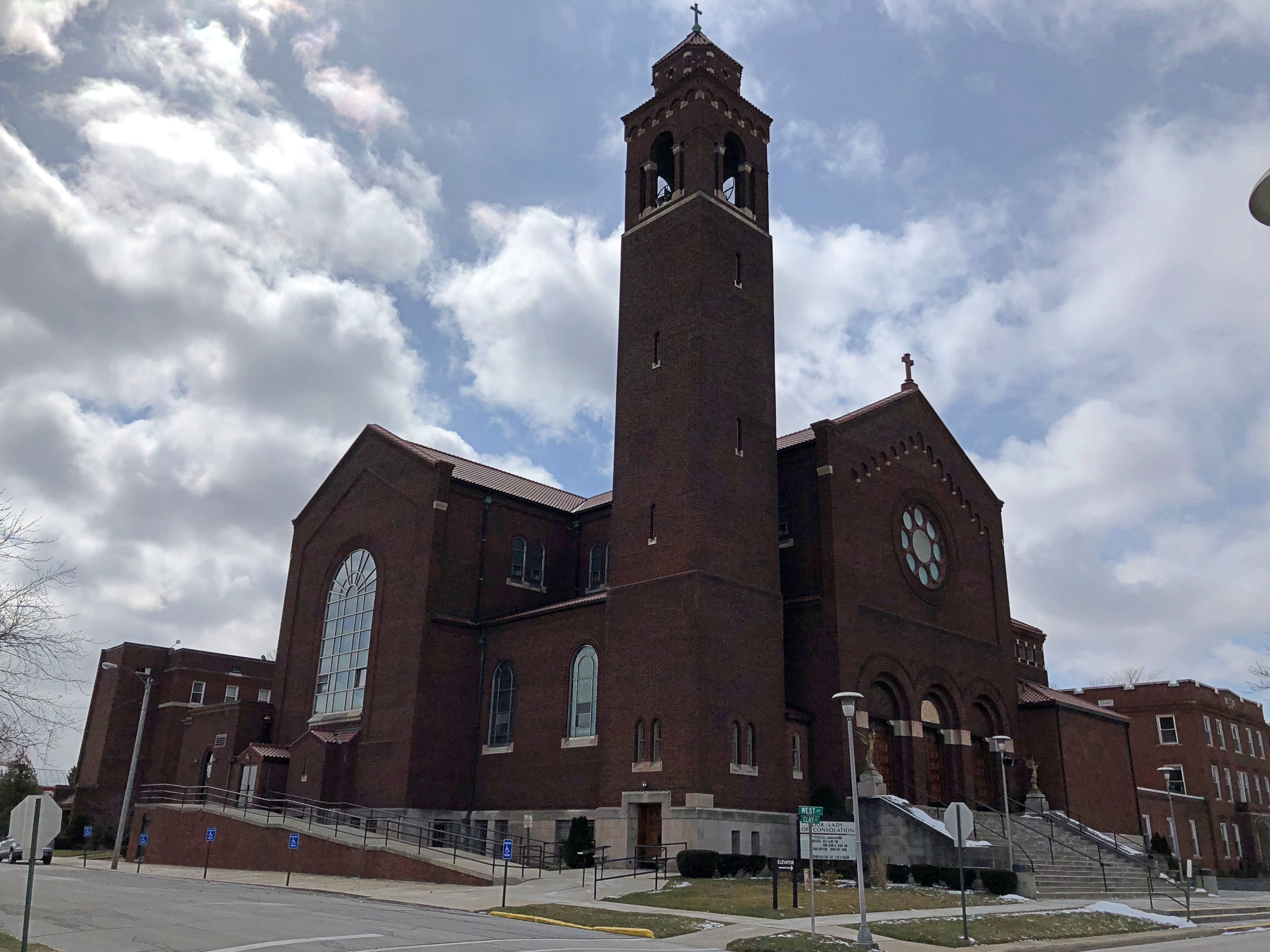
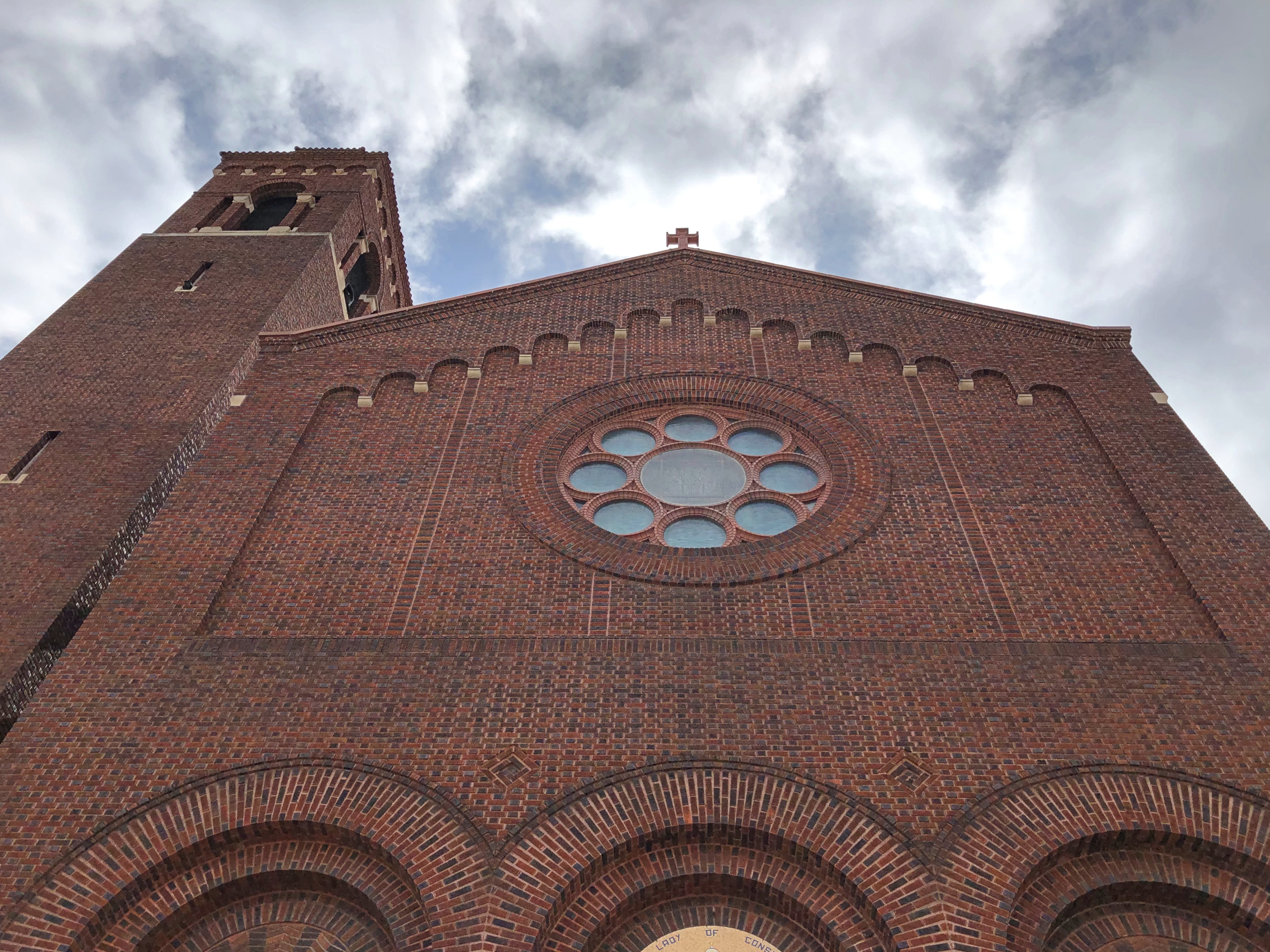
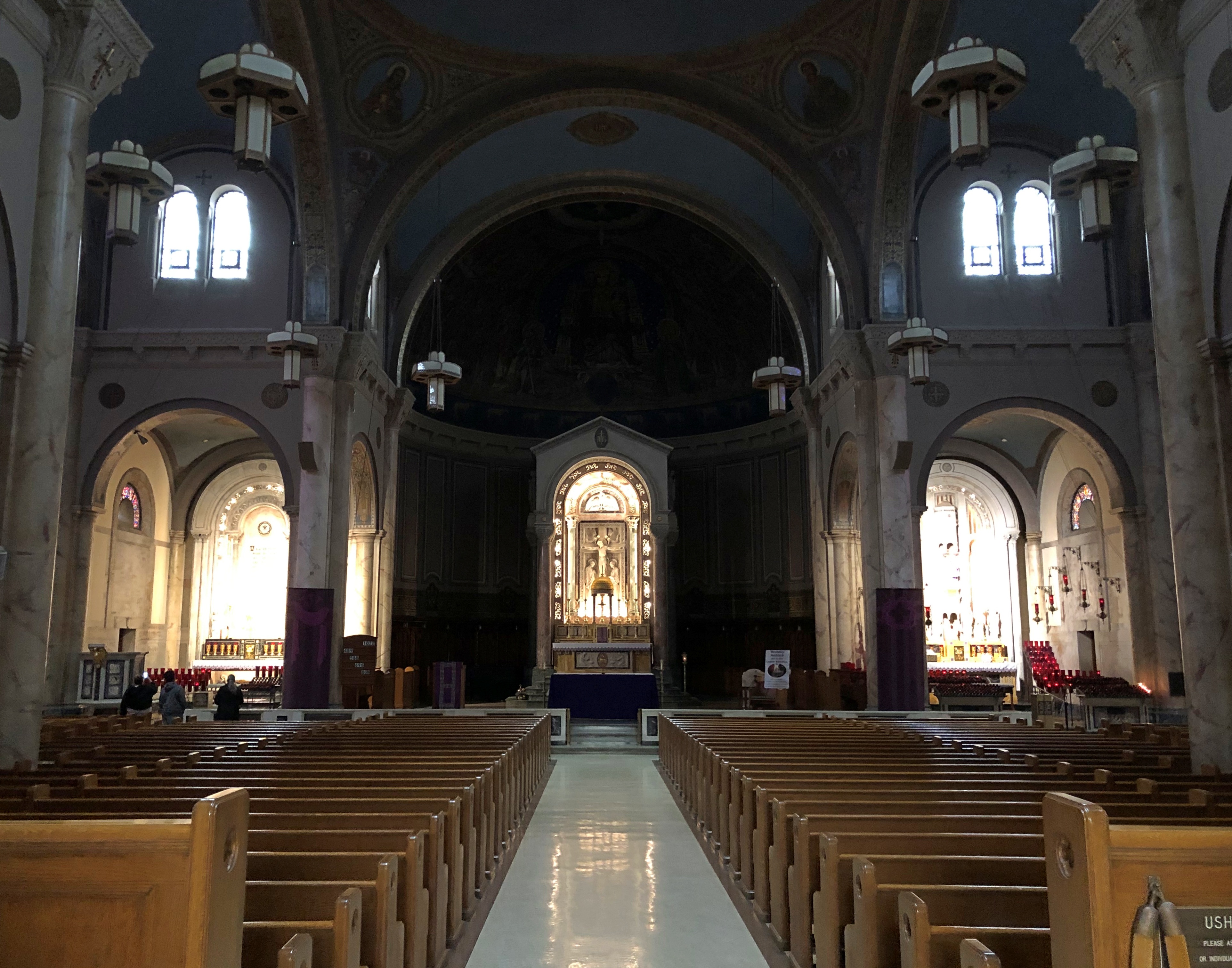
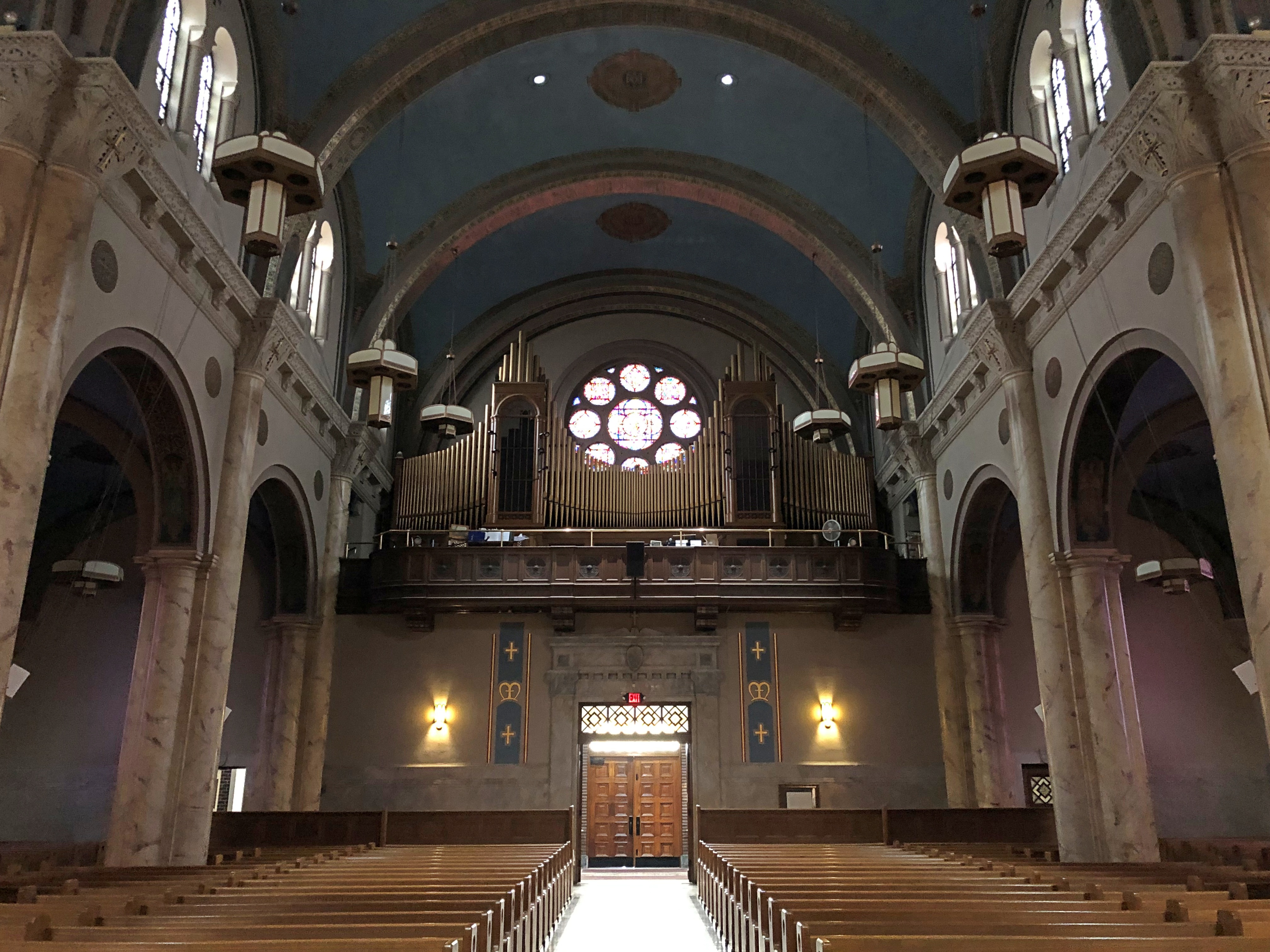
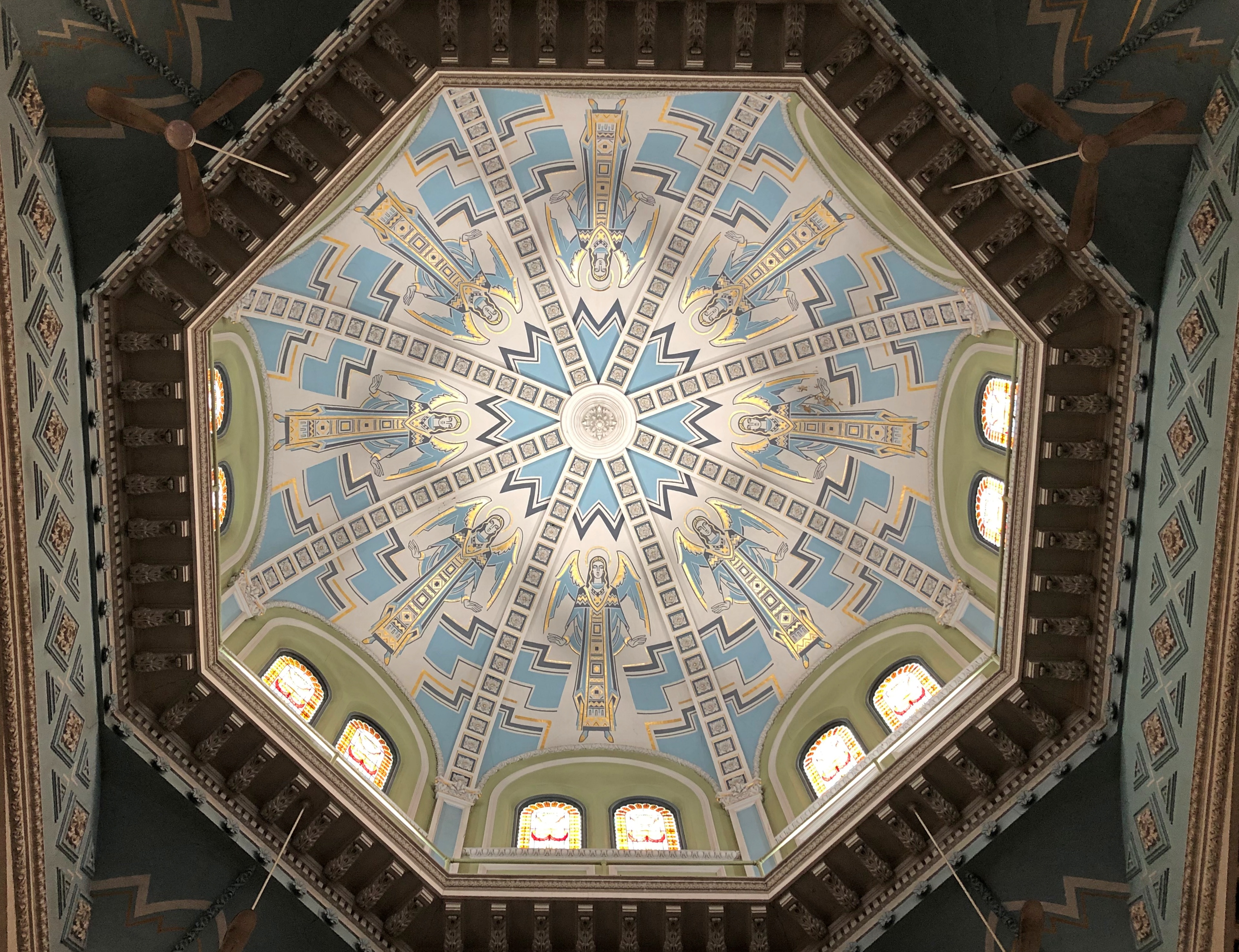
The Basilica and National Shrine of Our Lady of Consolation rises over the small-town streets of Carey, Ohio (pop. 3,500). I spotted it as a point of interest on one of my road atlases.Basilica and National Shrine of Our Lady of Consolation Basilica and National Shrine of Our Lady of Consolation

I’ve read that a lot of people show up for Assumption Day, but in mid-March, only a few other people were in the basilica.Basilica and National Shrine of Our Lady of Consolation Basilica and National Shrine of Our Lady of Consolation

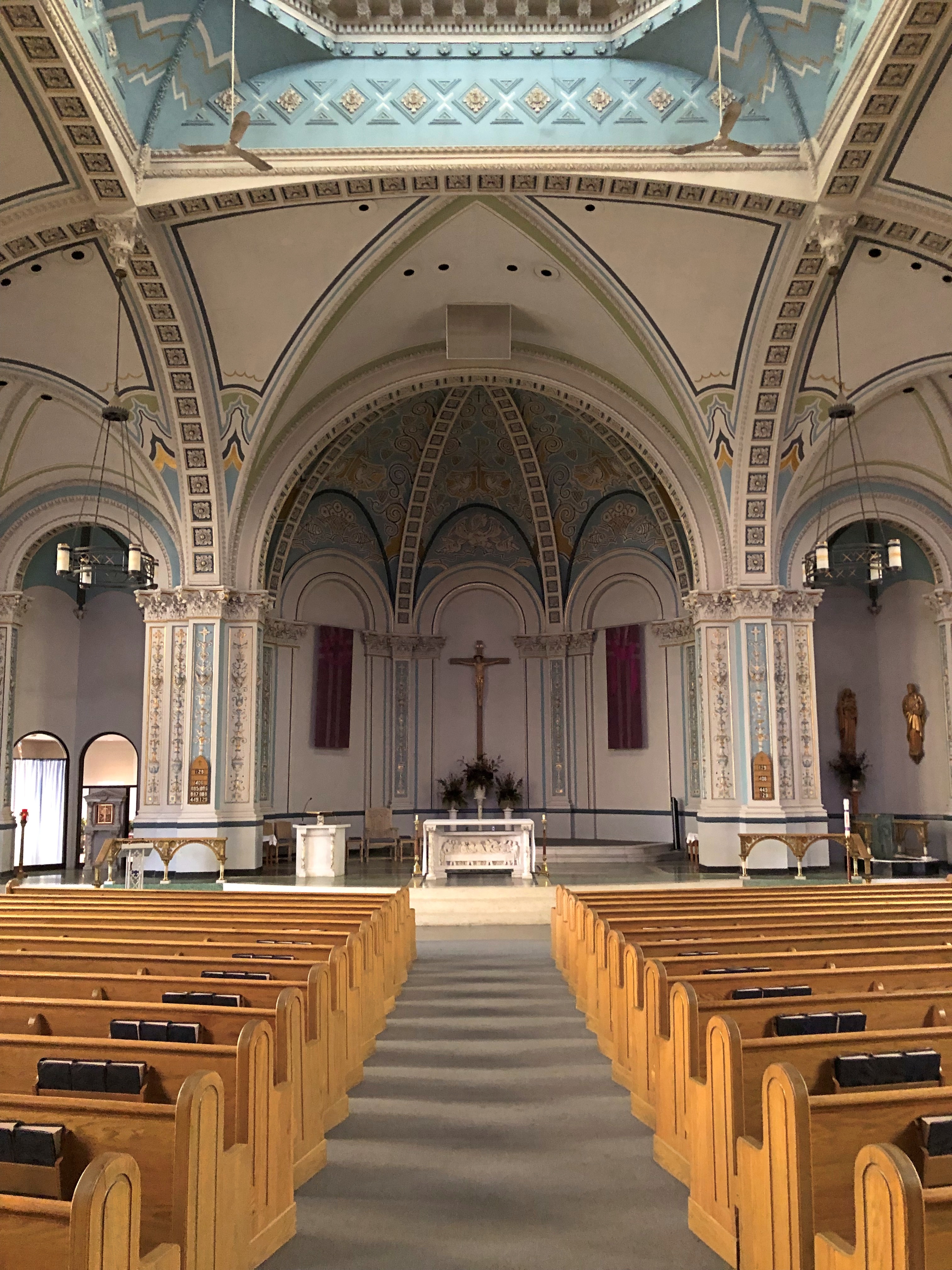
The next day, we saw St. Nicholas Catholic Church in Zanesville, Ohio, a handsome church that needs a grander setting, one not hemmed in by busy streets.St Nicholas, Zanesville St Nicholas, Zanesville St Nicholas, Zanesville

Zanesville is known for its Y Bridge, and I have to say driving over the thing was less interesting than driving down any of the other streets in Zanesville. As Wiki states: “It has received criticism for a tunnel-like effect due to its solid railings, providing hardly any view of the scenery.”

I agree. I know public budgets are tight in a place like Zanesville, median household income, $26,642. Still, there has to be a way that’s not too expensive to make experiencing the bridge genuinely distinctive, like the Tridge in Midland, Mich., except with vehicular traffic.

(Chin up, Zanesville. The Midwest is going to rise again, with its cooler temps and access to water. You or I might not live to see it, but still.)

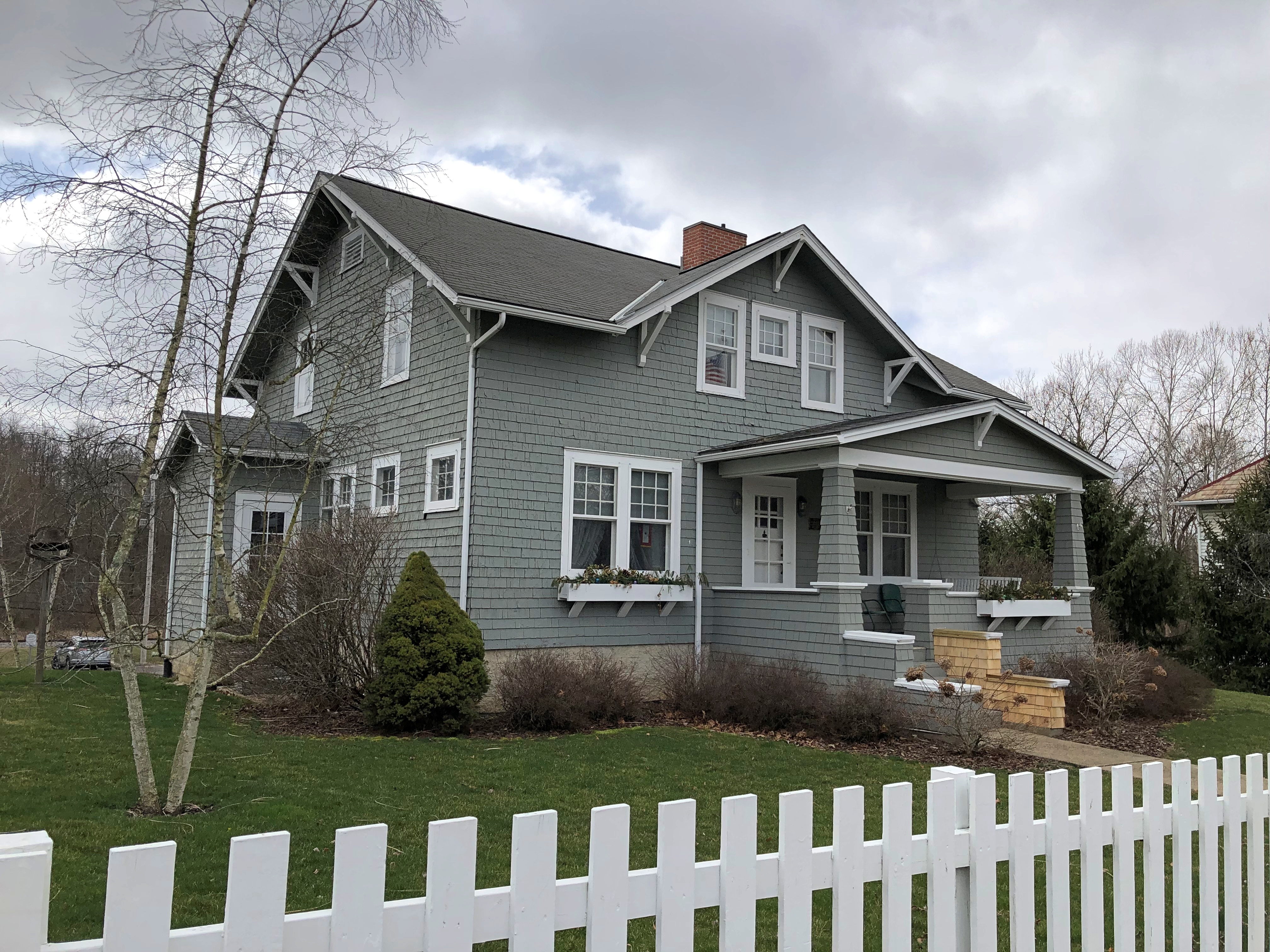
West of Zanesville – where you can find the National Road & Zane Grey Museum – you can also stand in front of this pleasant house in New Concord, Ohio.Glenn Museum

Behind the white picket fence, the John and Annie Glenn Museum.

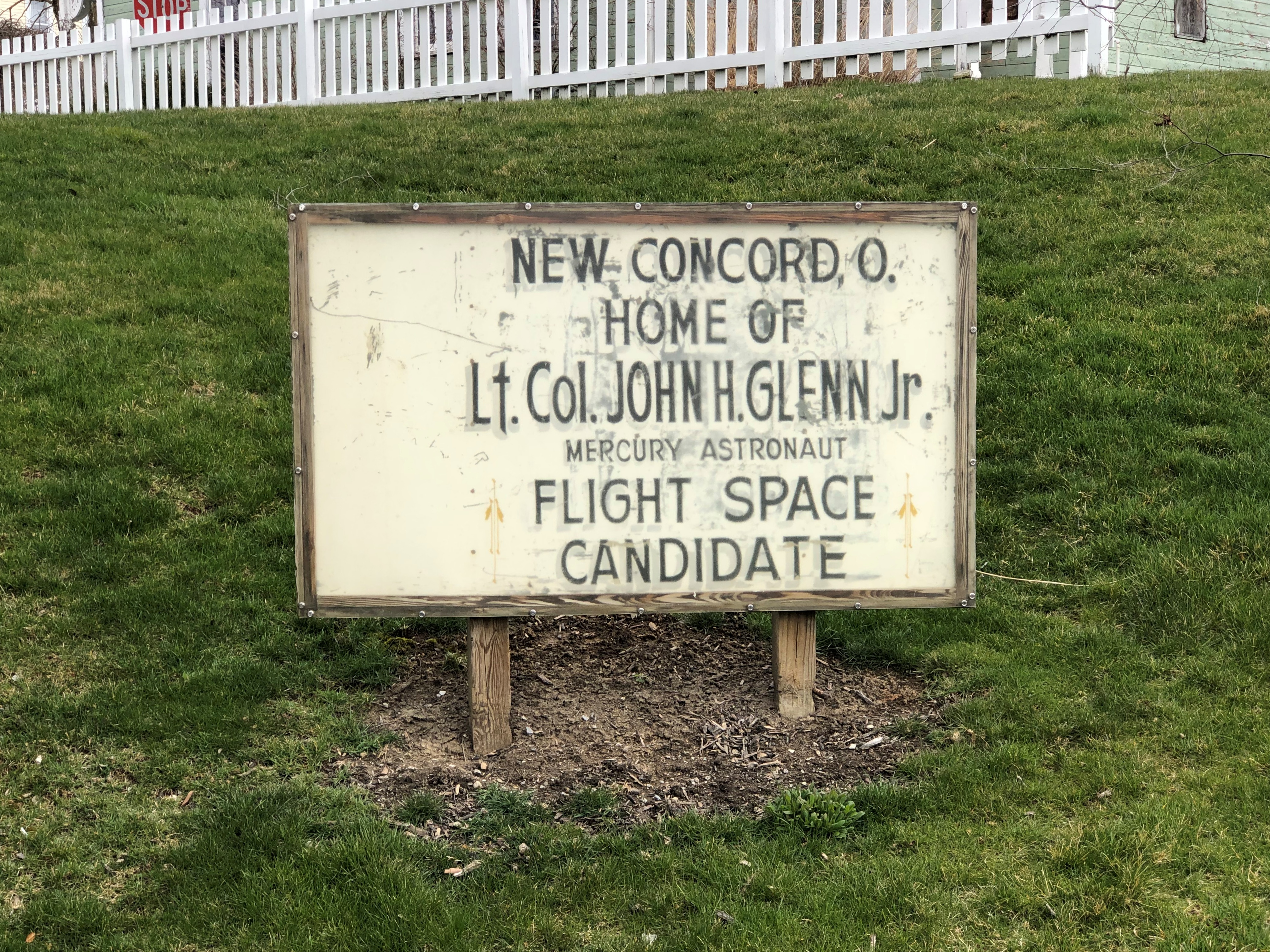
Then.Glenn Museum

Now.Glenn Museum

Leaving that early sign outside is a nice touch. Not every artifact needs to be behind glass.

Both the Glenns and Zane Grey were closed for the season. I didn’t need a museum to tell me that we were partly following the route of the National Road as we drove on U.S. 40 in Ohio and more so in Pennsylvania.

Route 66 has had better publicity, but the National Road – the original stab at an interstate – now that’s a traveler’s road, a route to seek glimpses of a past remote and tough. Well, from the vantage of today’s macadamized roads.

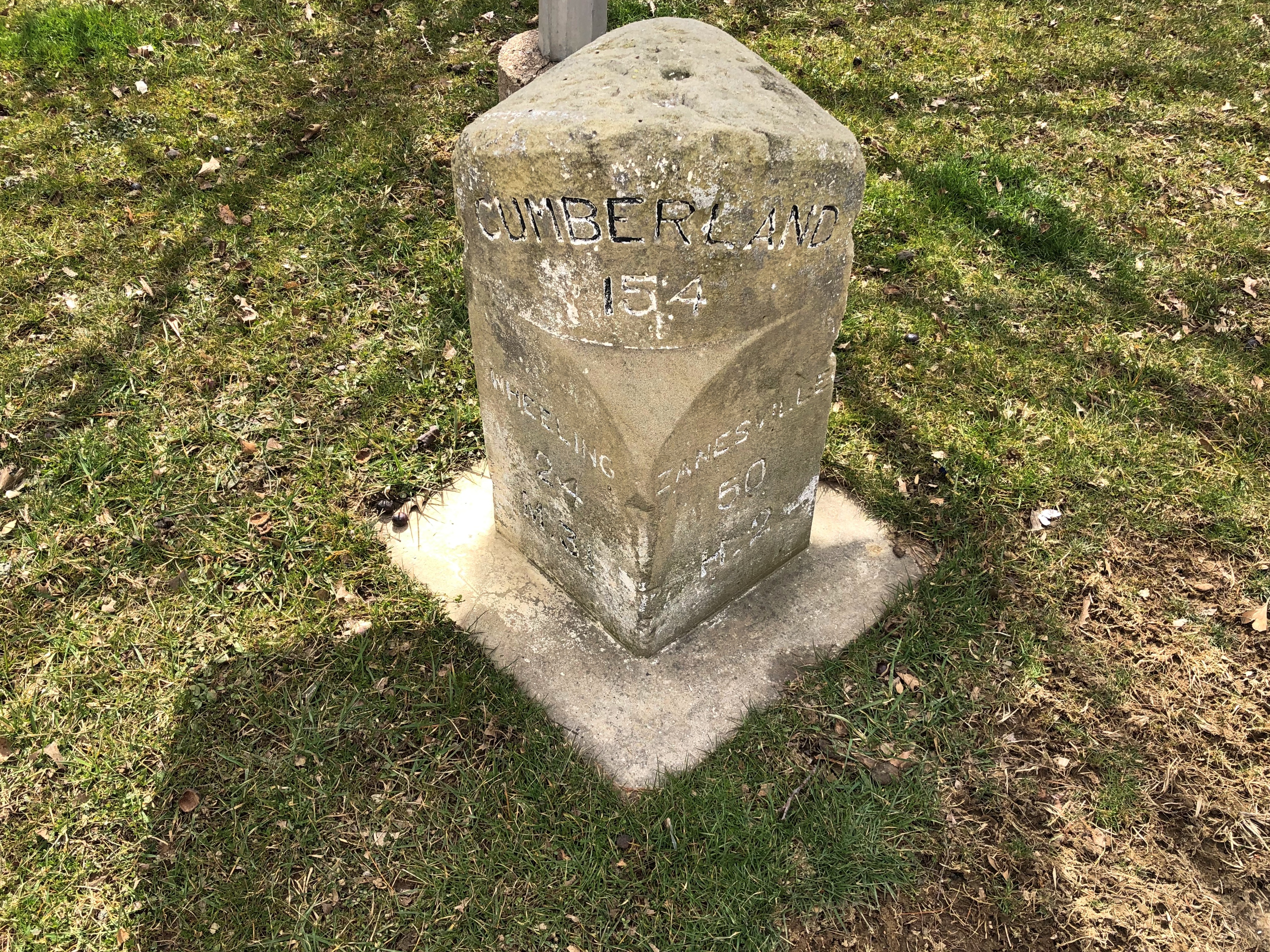
A mile marker on U.S. 40 in Ohio, but only 25 miles from Wheeling, West Virginia – as the marker tells us, and the fact that Zanesville is 50 miles west.National Road

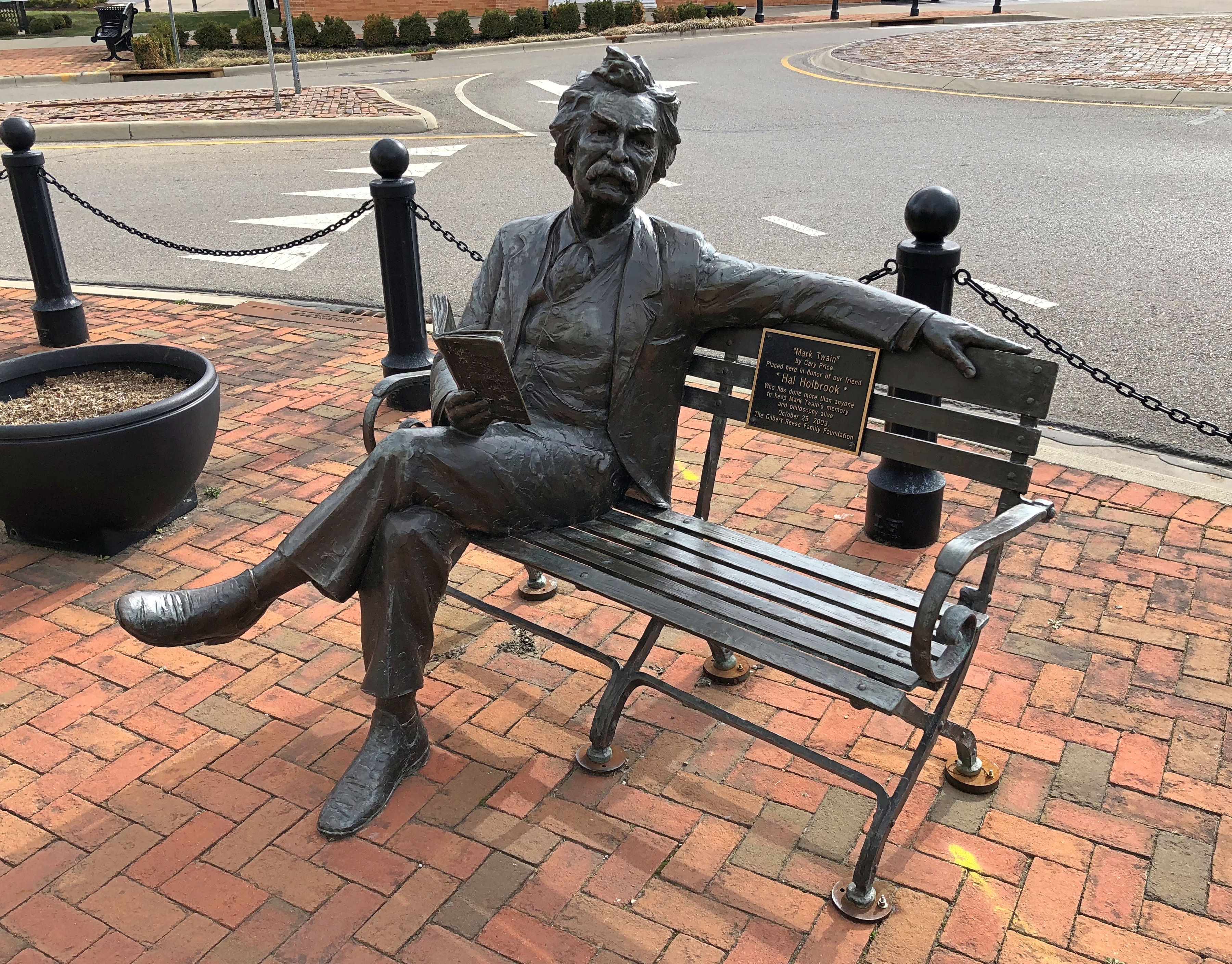
At the courthouse square in Newark, Ohio, bronze Mark Twain can be found looking Mark-Twainy except – no cigar. Come now, he even smoked cigars when he made an appearance on Star Trek: The Next Generation. Or maybe this is the reformed Mark Twain, who promised to give up cigars after the 1910 arrival of Haley’s Comet. No, that’s not it. I made that last part up. But he did in fact give up cigars that year.Columbus, Ohio

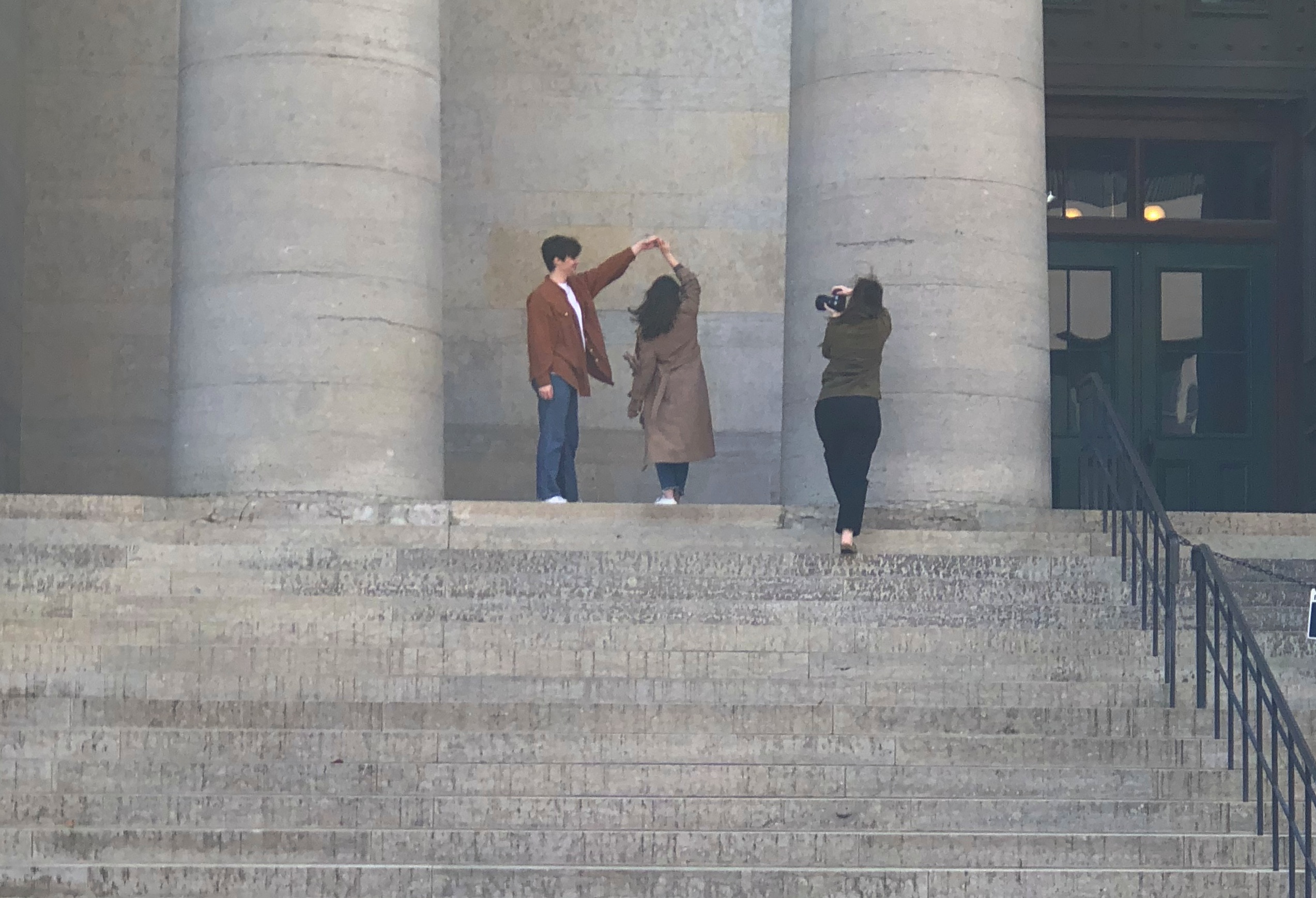
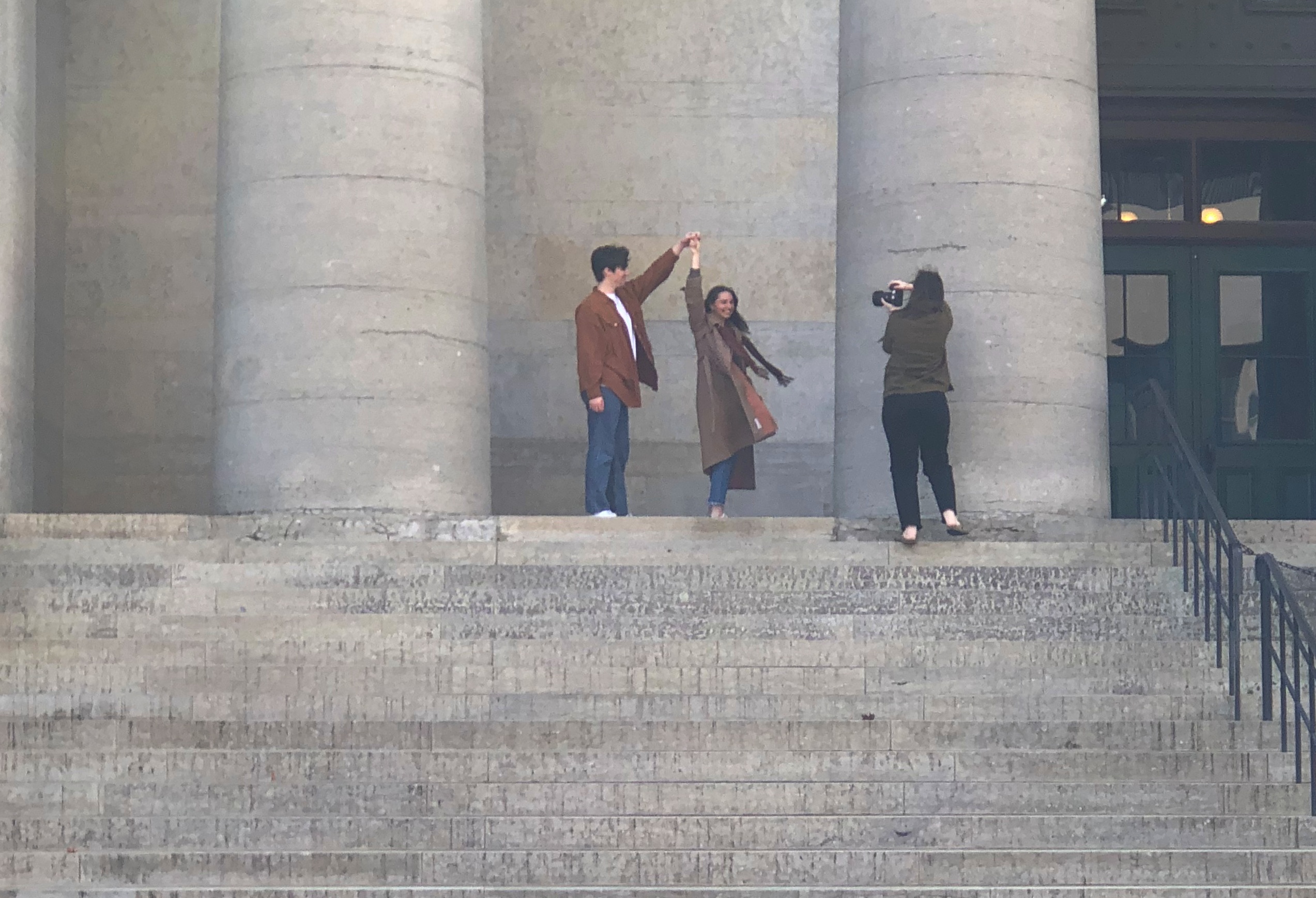
Outside the Ohio Statehouse, a couple danced and was photographed. For reasons, presumably. A spot of romantic whimsy, I hope.Columbus, Ohio Columbus, Ohio

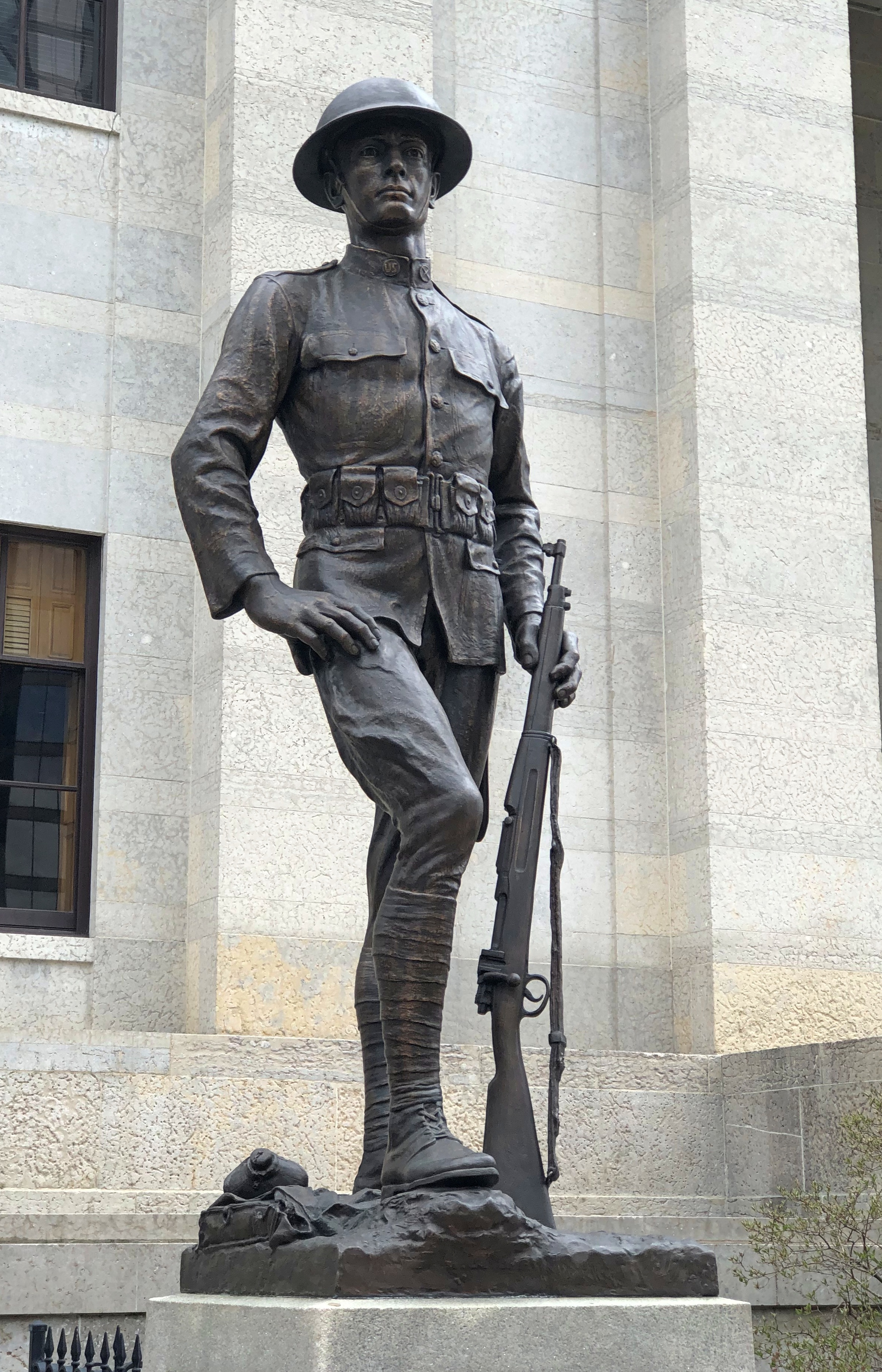
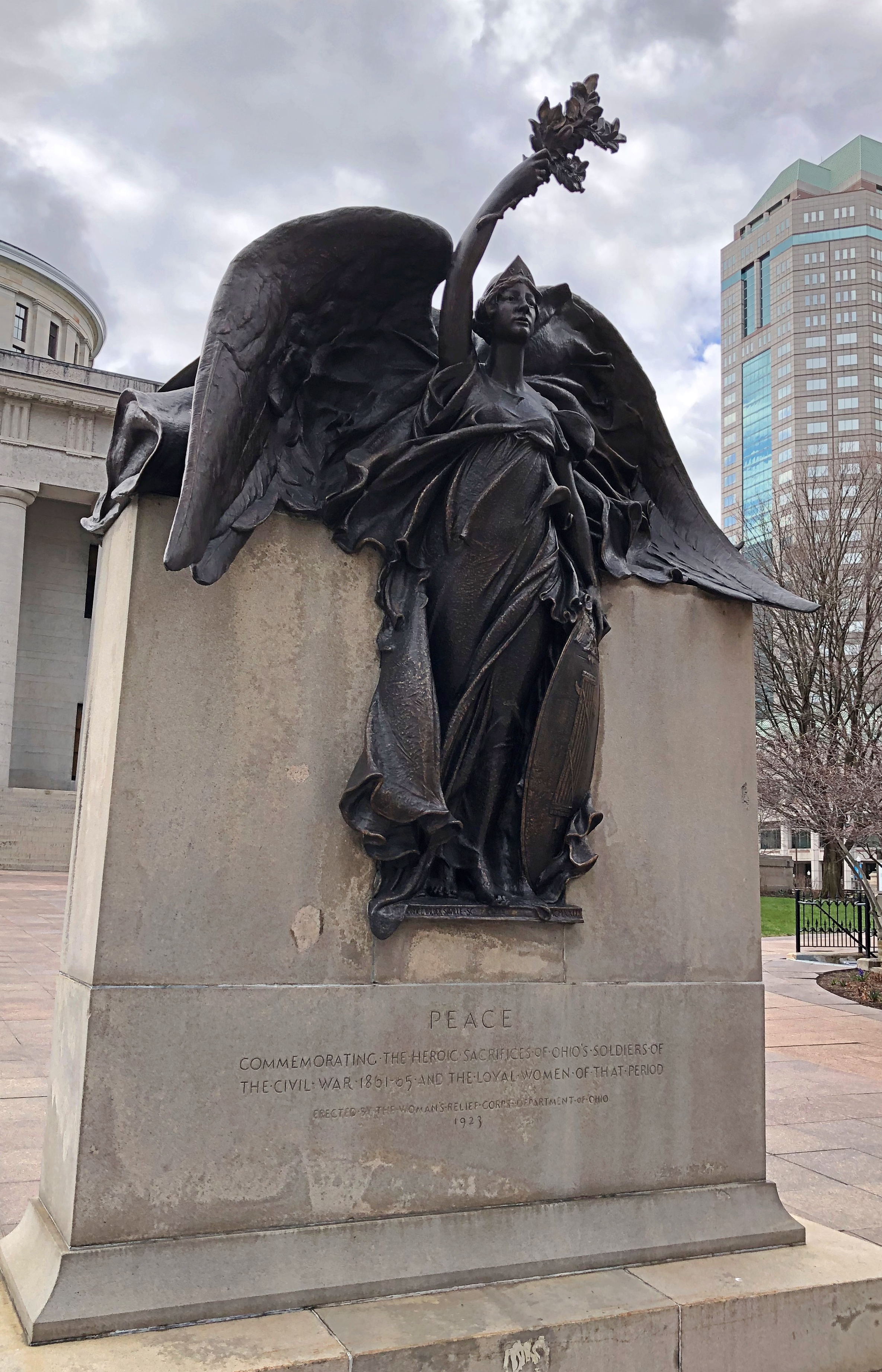
The capitol grounds are well populated with bronzes, including from just after the Great War.Columbus, Ohio Columbus, Ohio

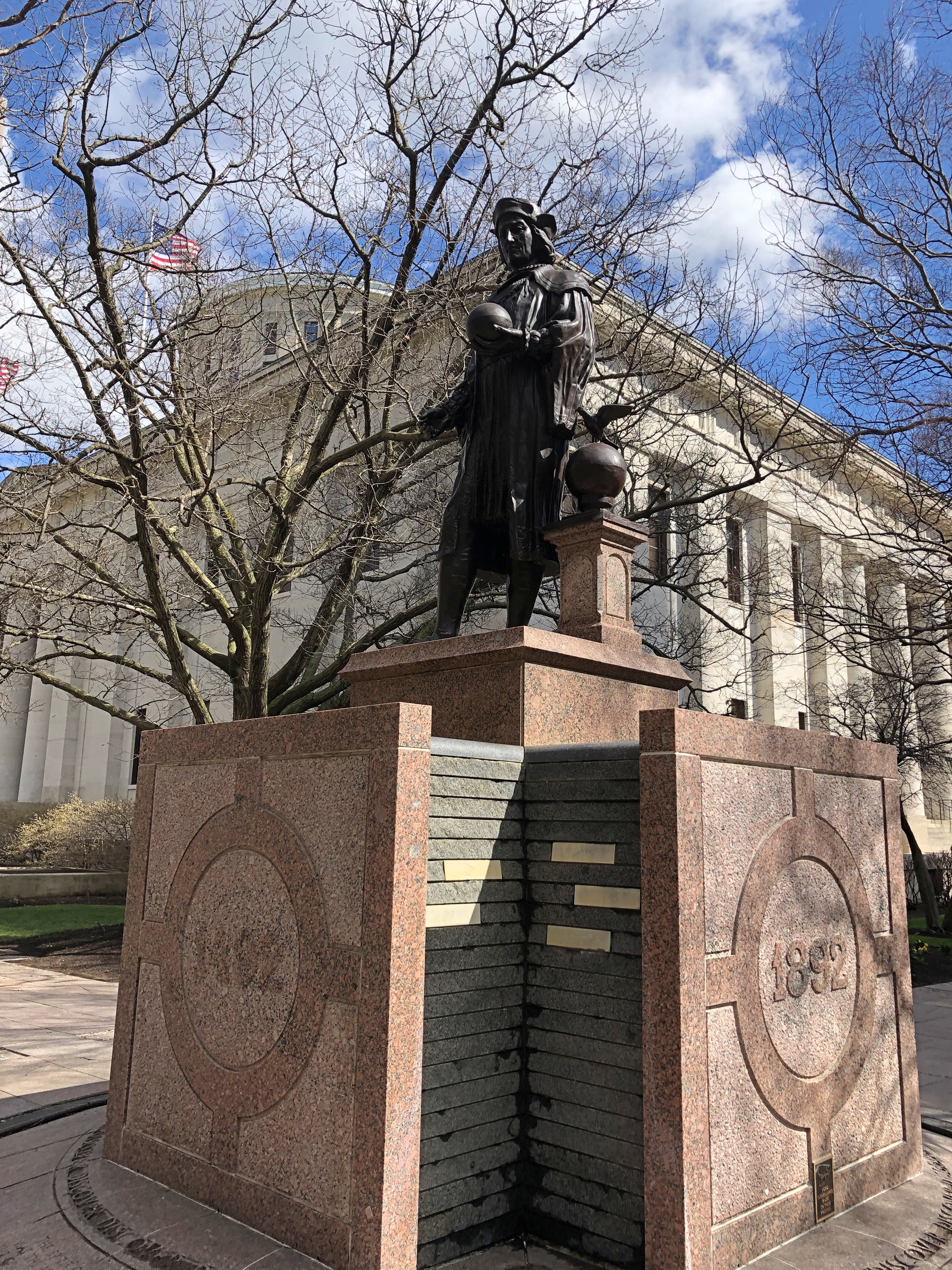
And a little earlier, historically speaking. Quite a bit, actually: Columbus, as in the Admiral of the Ocean Sea, in a 1892 work.Columbus, Ohio

See him, and reflect on the vicissitudes of history.

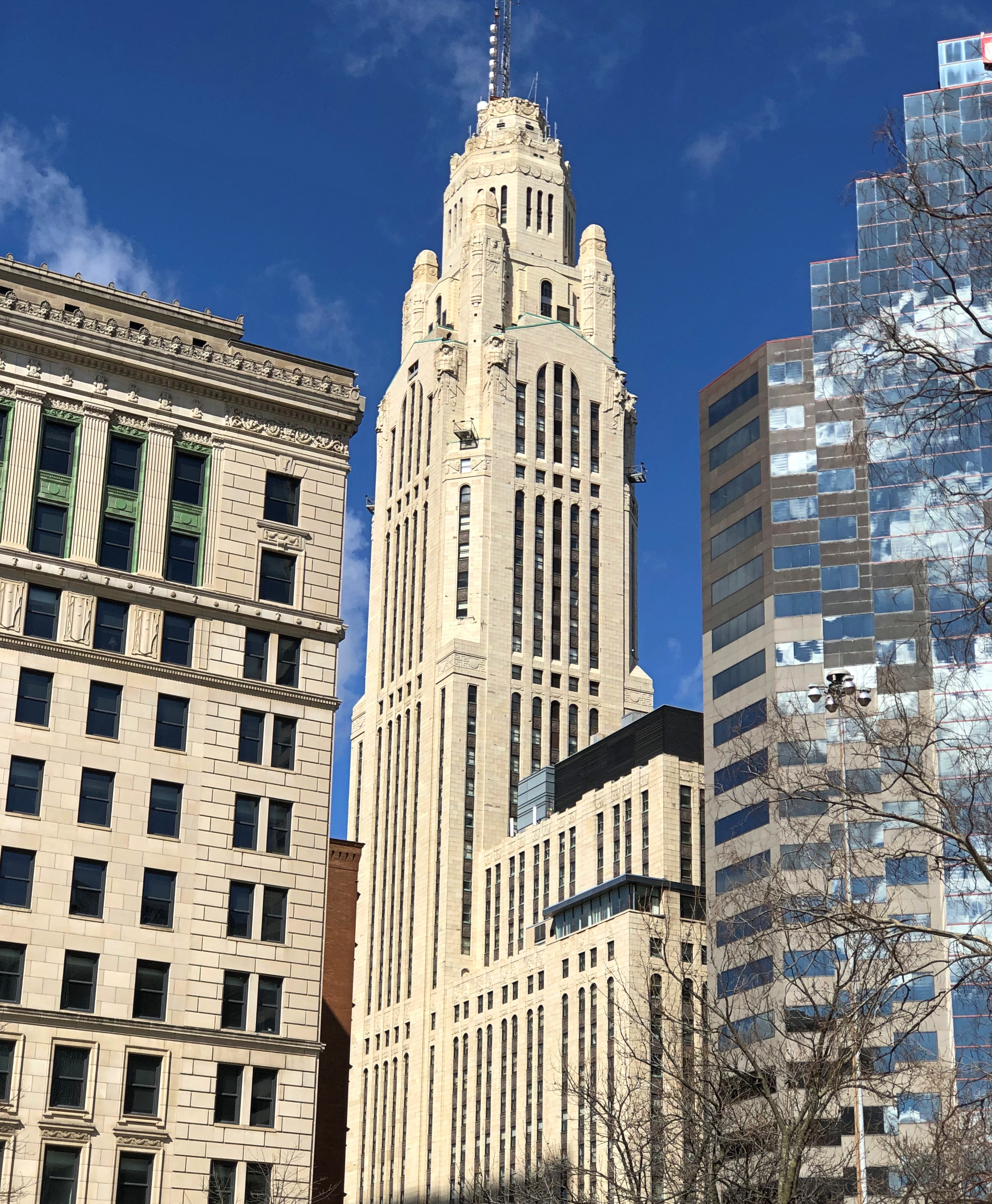
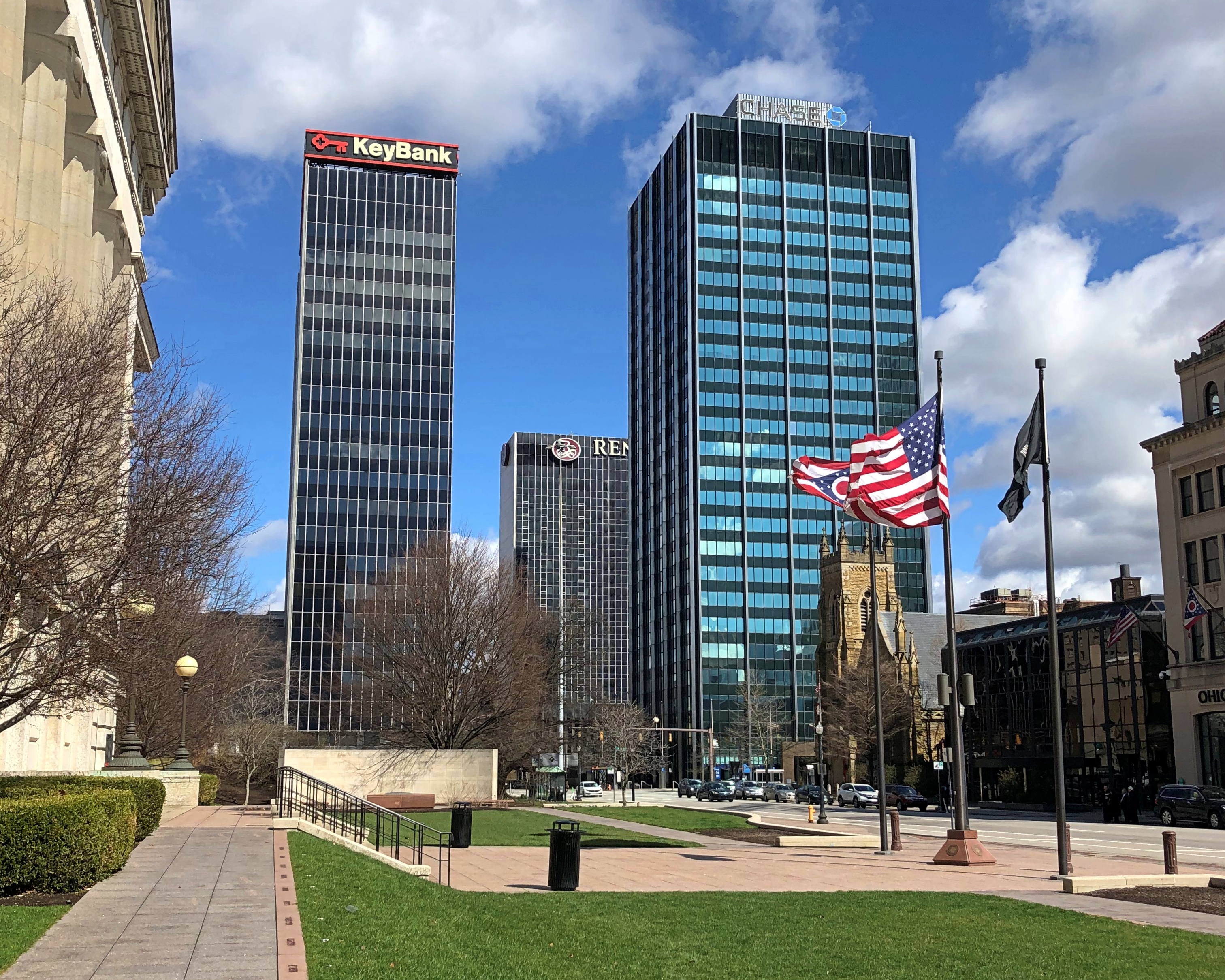
Columbus (the city) has a good skyline, at least from the capitol grounds.Columbus Ohio

We had lunch that day in the Columbus neighborhood of German Village, or maybe more formally, German Village Historic District, which has the hallmarks of fairly far along gentrifying, an old ethnic neighborhood revived some years after its ethnicity melted into the population.

We got takeout from a small-chain chicken wing joint, which was packed with a youngish crowd at the brunch hour on Sunday, and ate with gusto in our car, out of the wind and collecting enough sunlight to warm the inside of the car.

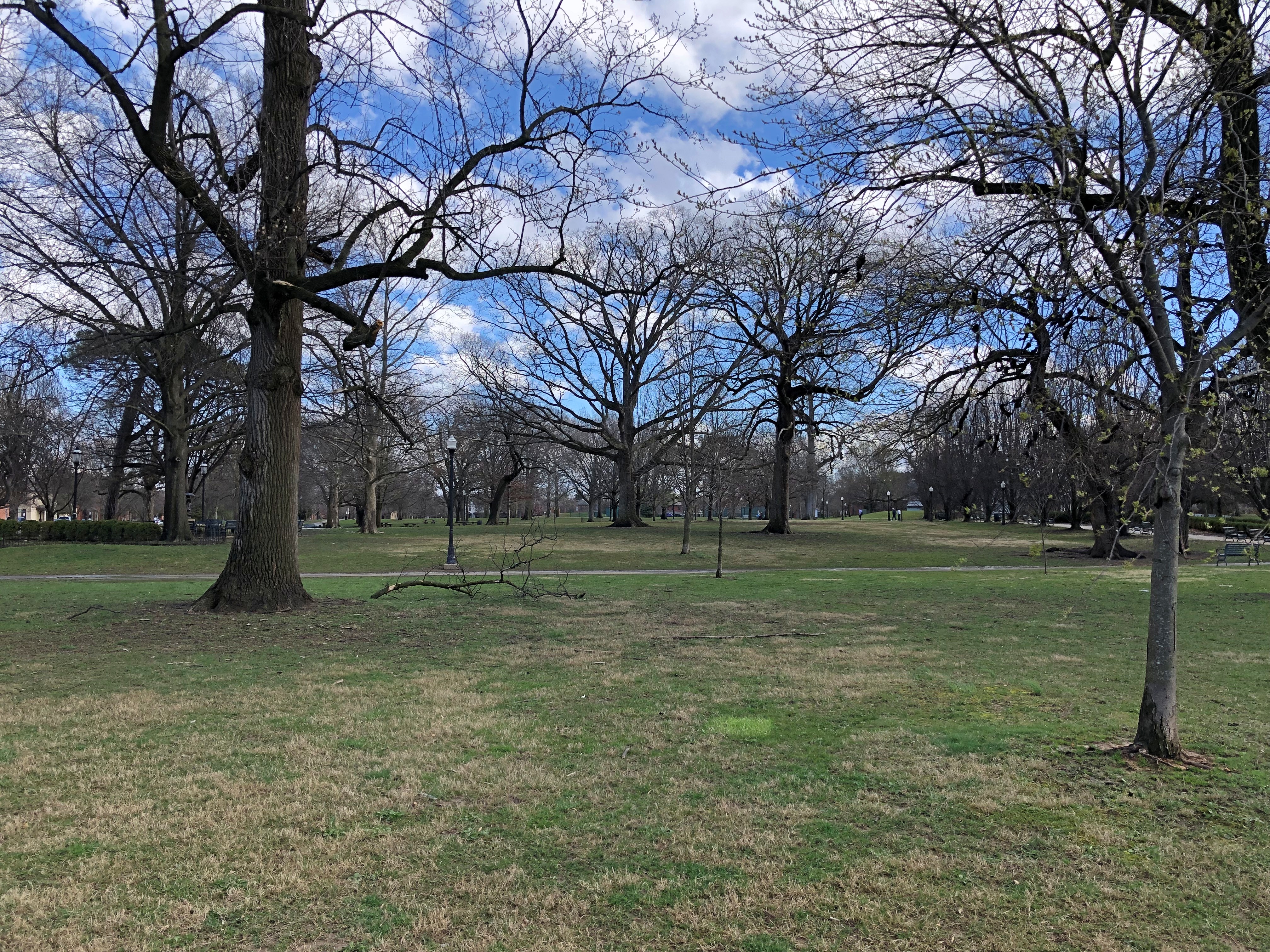
Across the street was a sizable park.Columbus Ohio

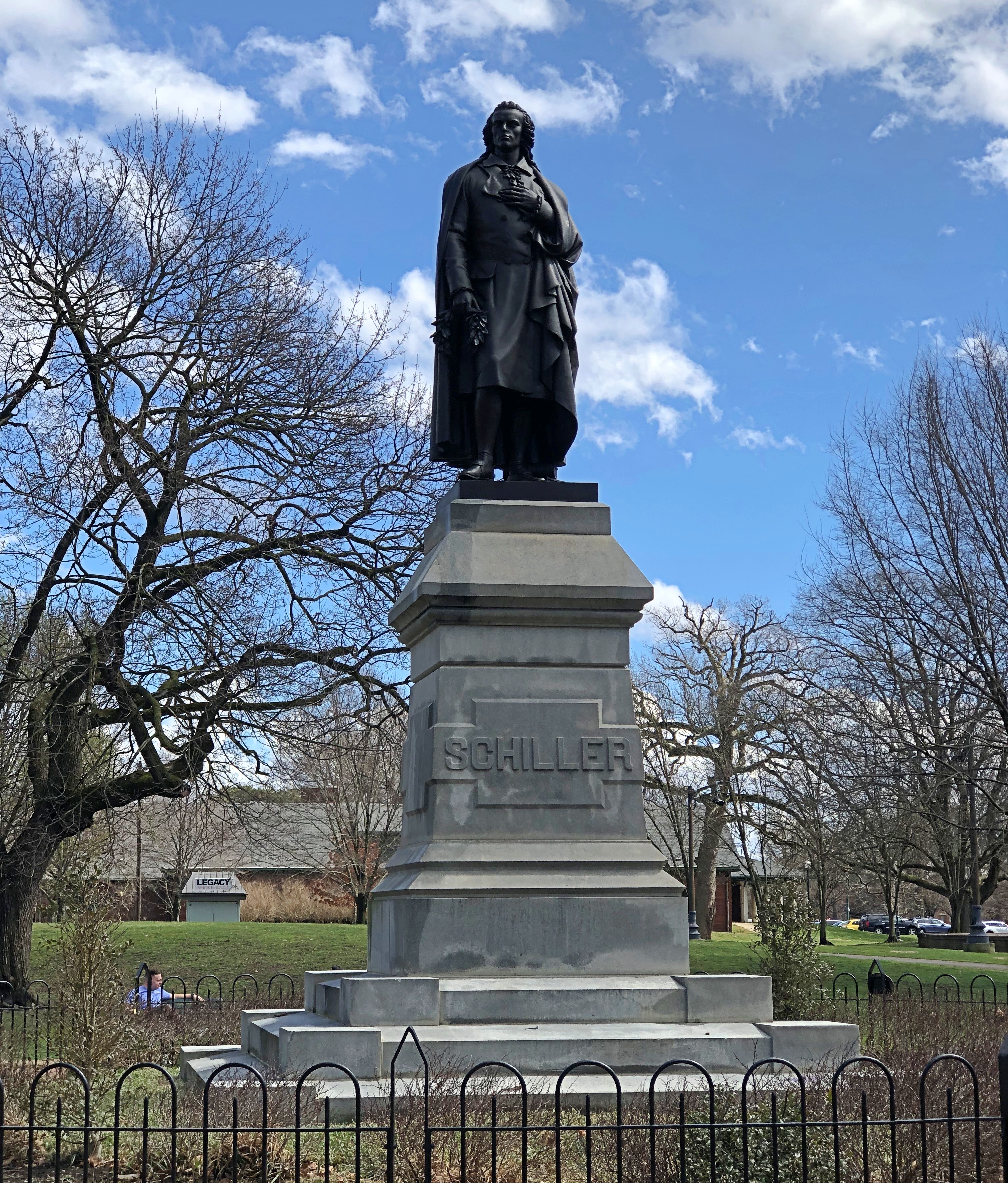
After eating, I took a look around. Schiller is honored in German Village. Check.Columbus Ohio

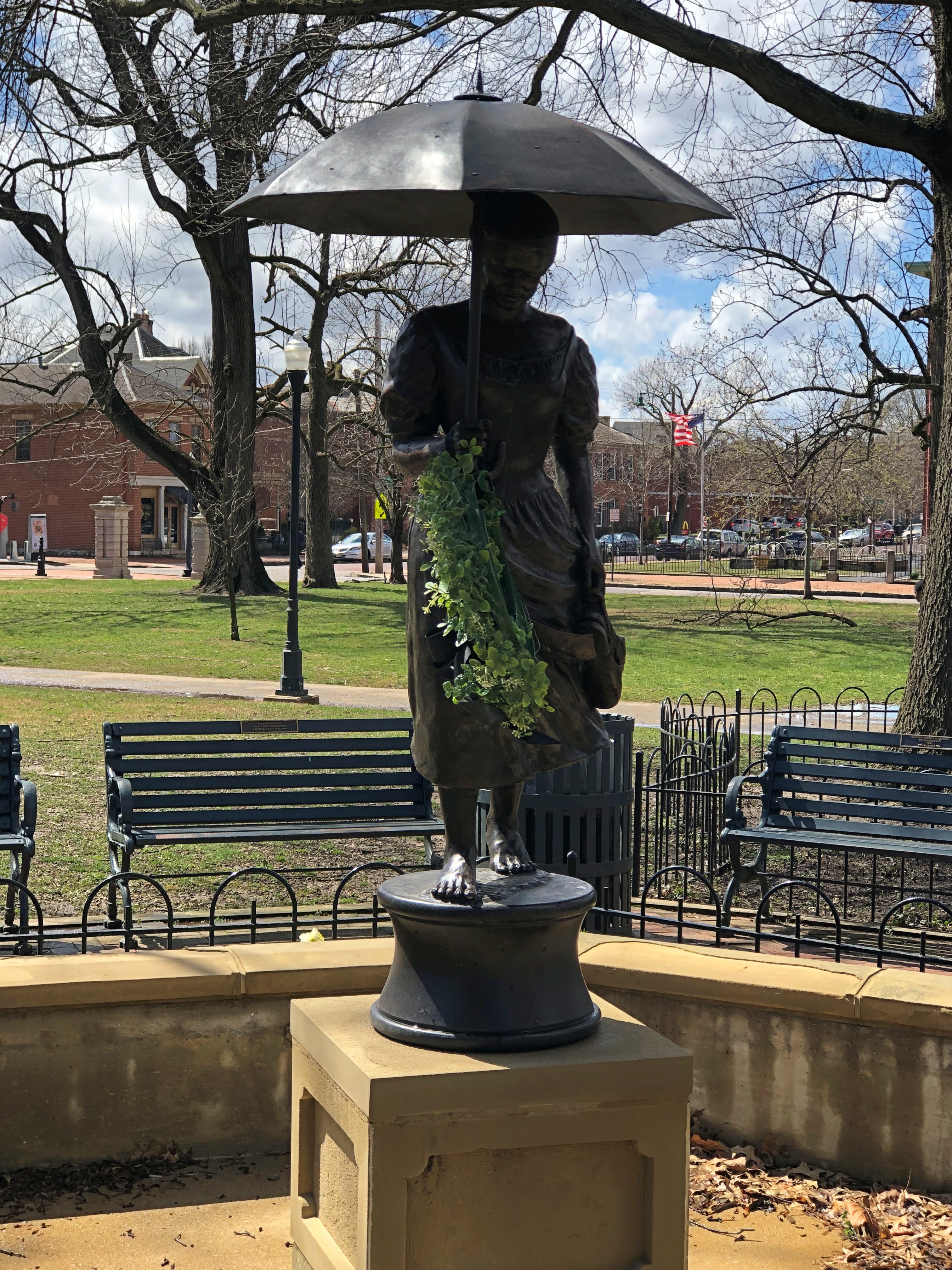
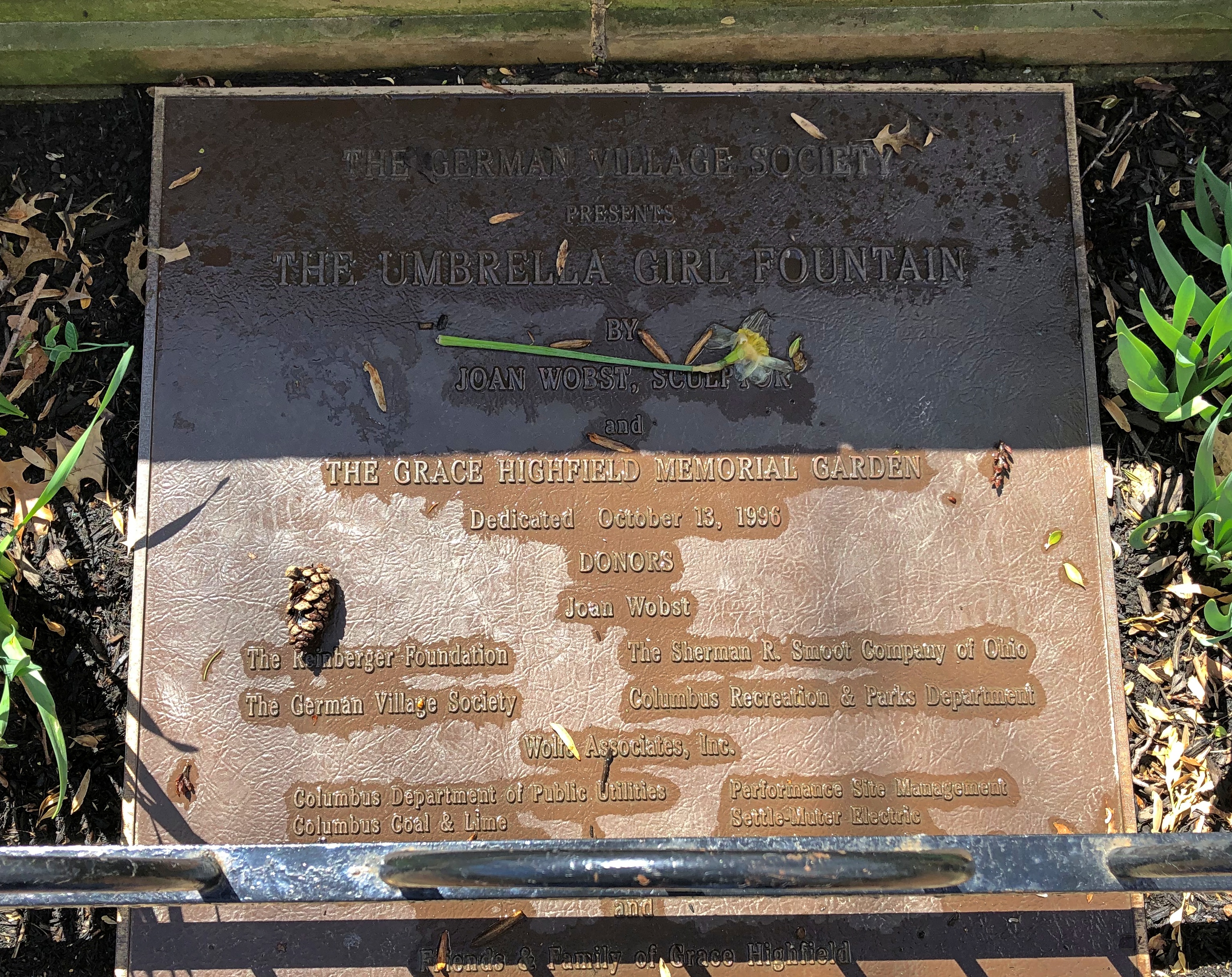
Then there’s Umbrella Girl, a fixture in a fountain still dry for the season.Columbus Ohio Columbus Ohio

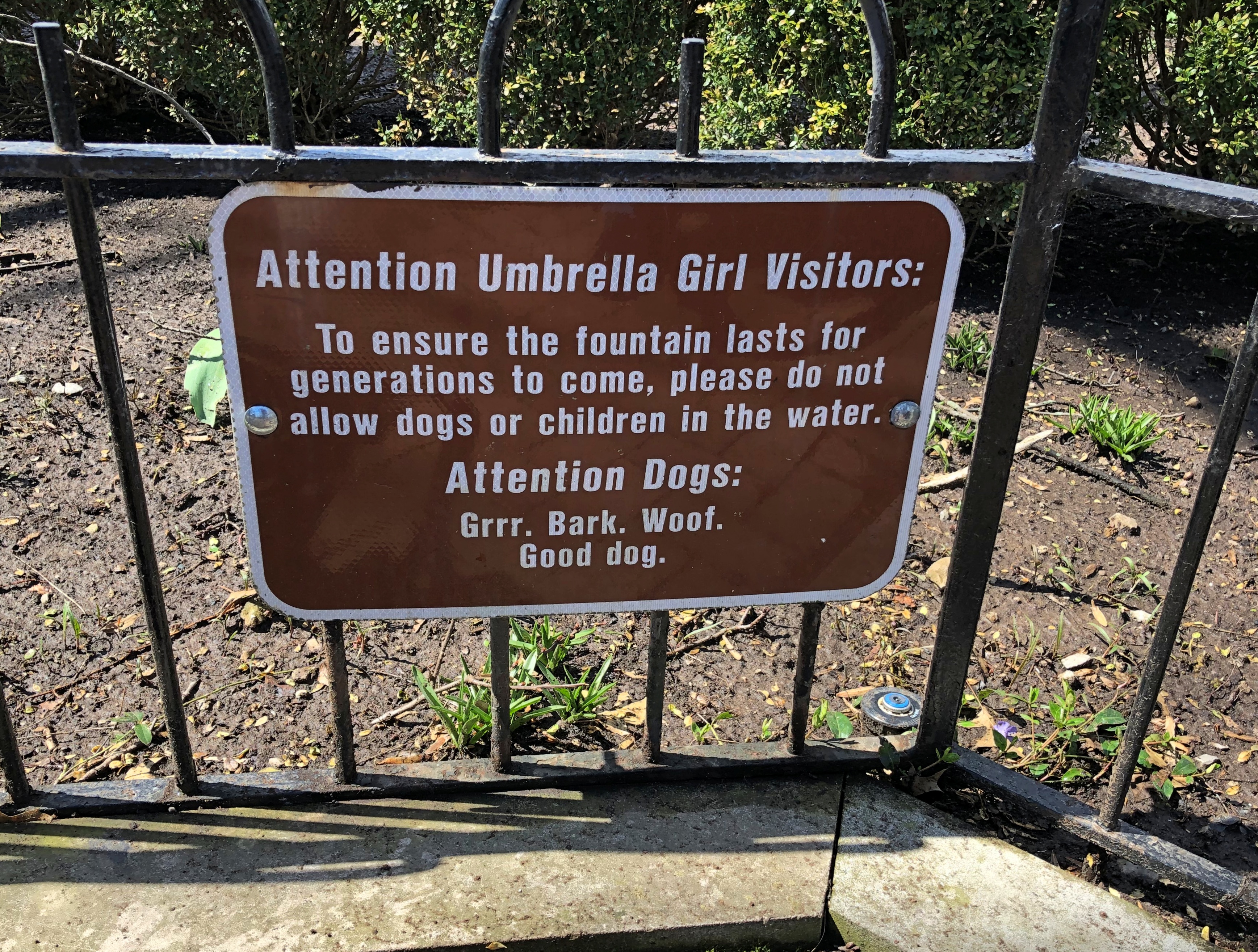
Instructions.Columbus Ohio

I’d say bilingual, but I don’t see that dogs have a lingua, as expressive as they can be.

Fayetteville, West Virginia

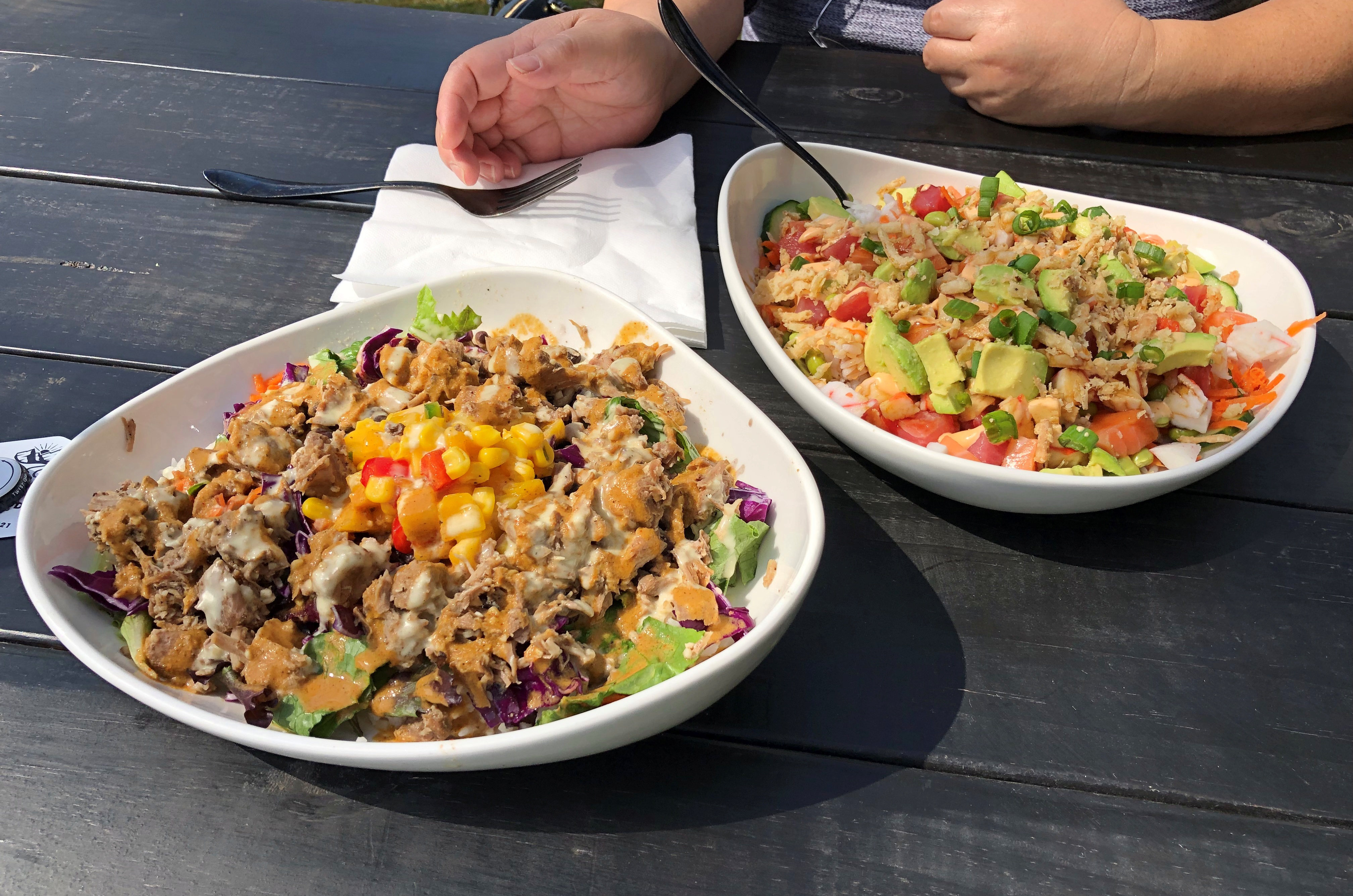
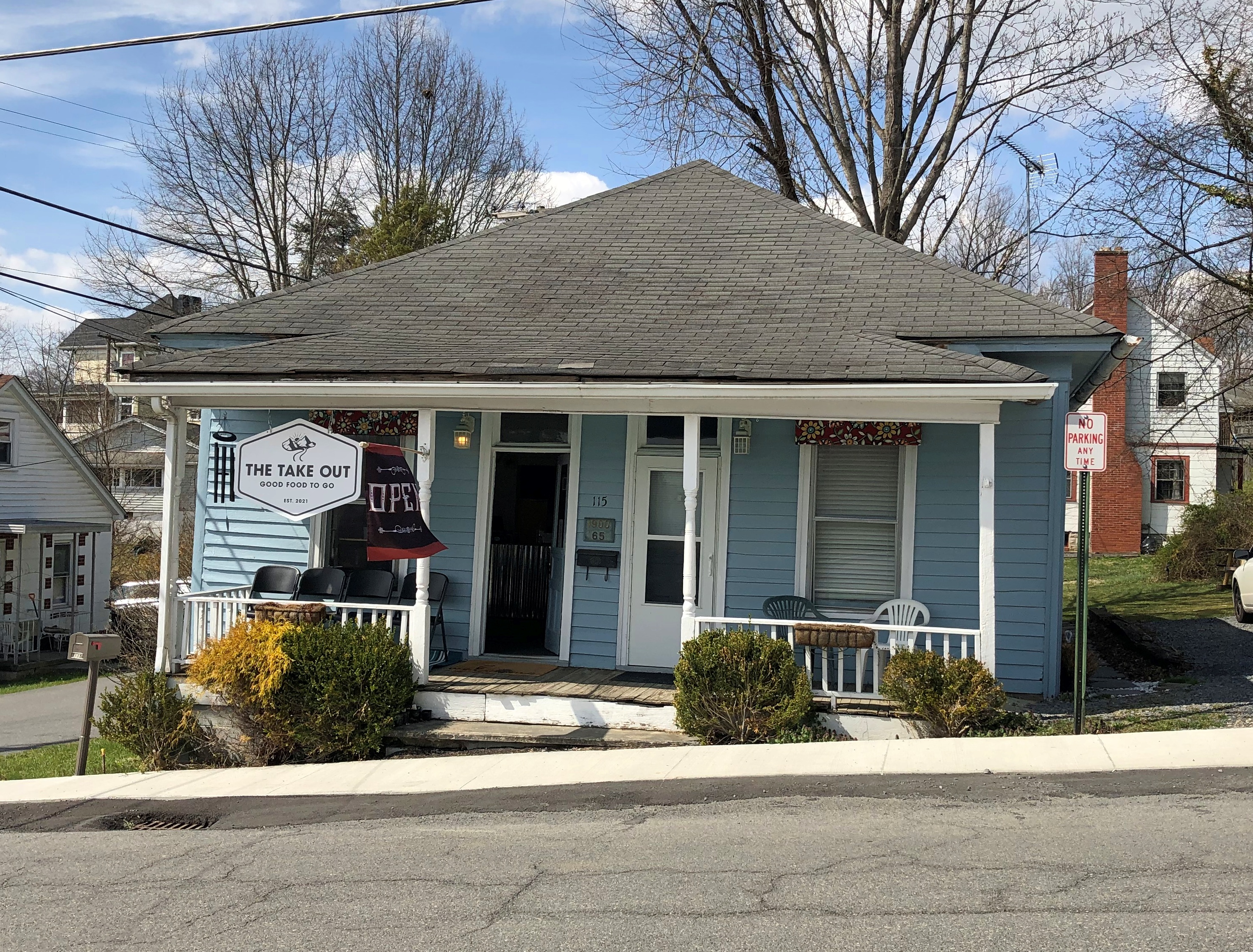
Unlike the near-ghost town of Thurmond, the town of Fayetteville, West Virginia (pop. 2,700 or so), is alive and looks reasonably well. One thing to know is that you can get some delightful rice bowls (rice, protein, vegetables) for lunch there, at a place generically called The Take Out.Fayetteville, West Virginia Fayetteville, West Virginia

We didn’t take it far. The day was Thursday, March 23, clear and in the low 70s F., and so ideal for taking our food to the picnic table outside The Take Out.

The fellow who prepared the bowls, with an exaltation of light curly hair on his head and looking unbelievably young, came out to chat for a few moments and try to make friends with the dog. The restaurant is a post-pandemic venture, opening only a year ago, he told us. Rice bowls of that kind are fairly recent to North America (I think), which shows the speed at which food innovation spreads in our time. Next thing you know, Korean corndogs will make an appearance in small-town West Virginia.

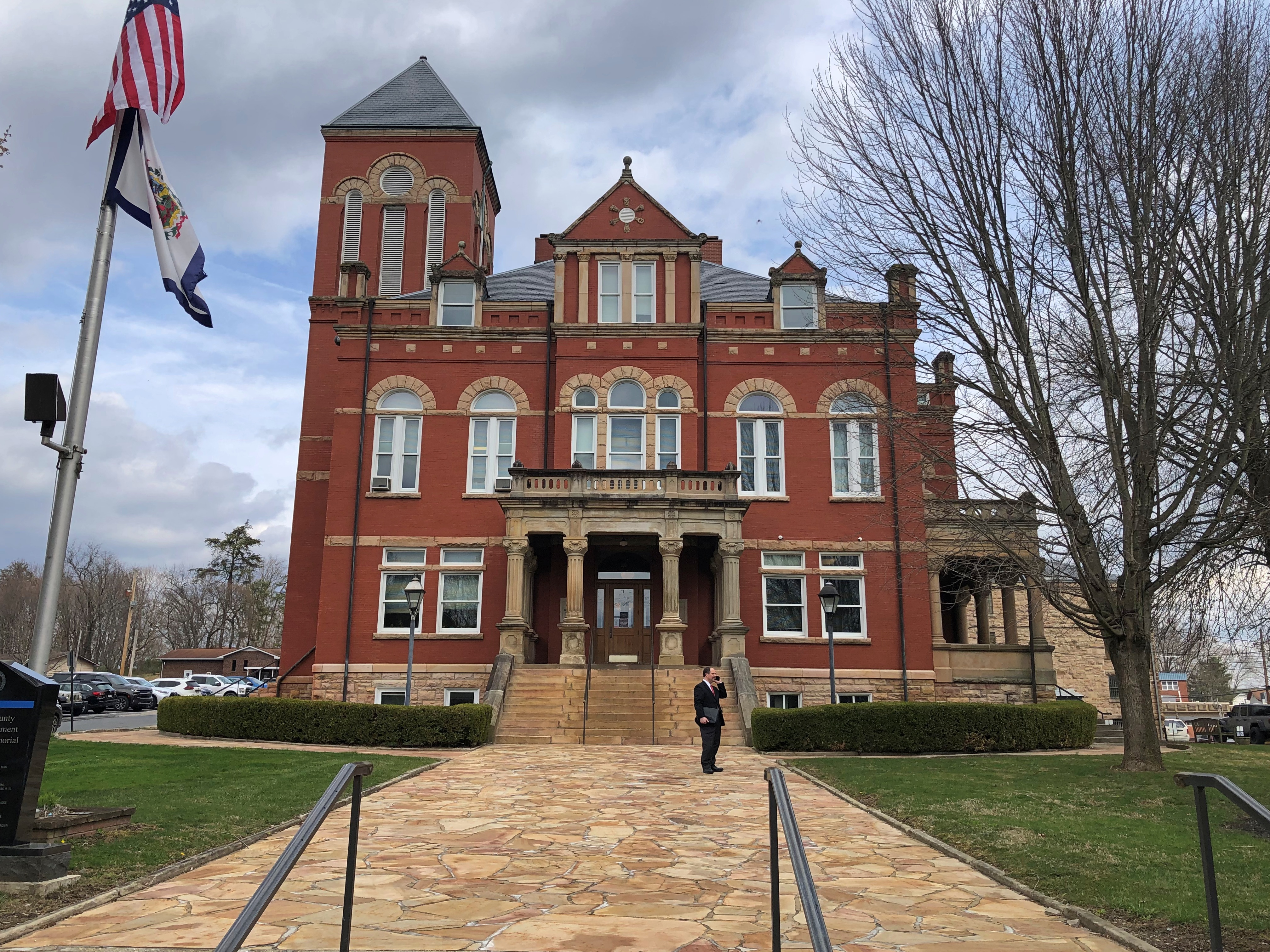
Signs on the highway promised an historic downtown in Fayetteville, and I’d say the place delivered. At the very least, there’s a handsome courthouse, since the town is the seat of Fayette County. This shot is complete with an attorney (a safe assumption) talking with someone.Fayetteville, West Virginia

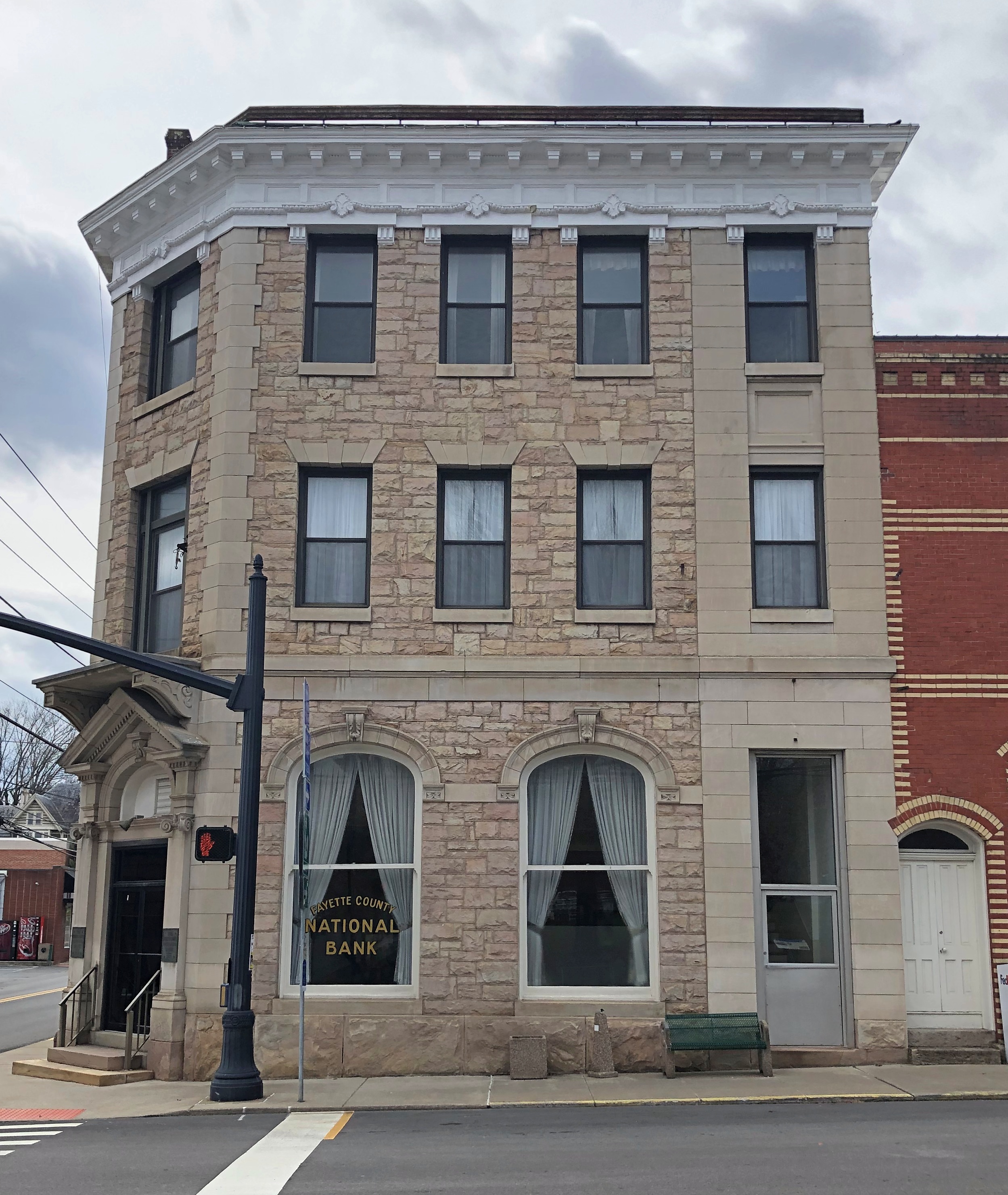
A number of repurposed buildings are near the courthouse, including a bank turned town hall. Not the first time I’ve seen that.Fayetteville, West Virginia

Actually not an ex-bank. Still a bank.Fayetteville, West Virginia

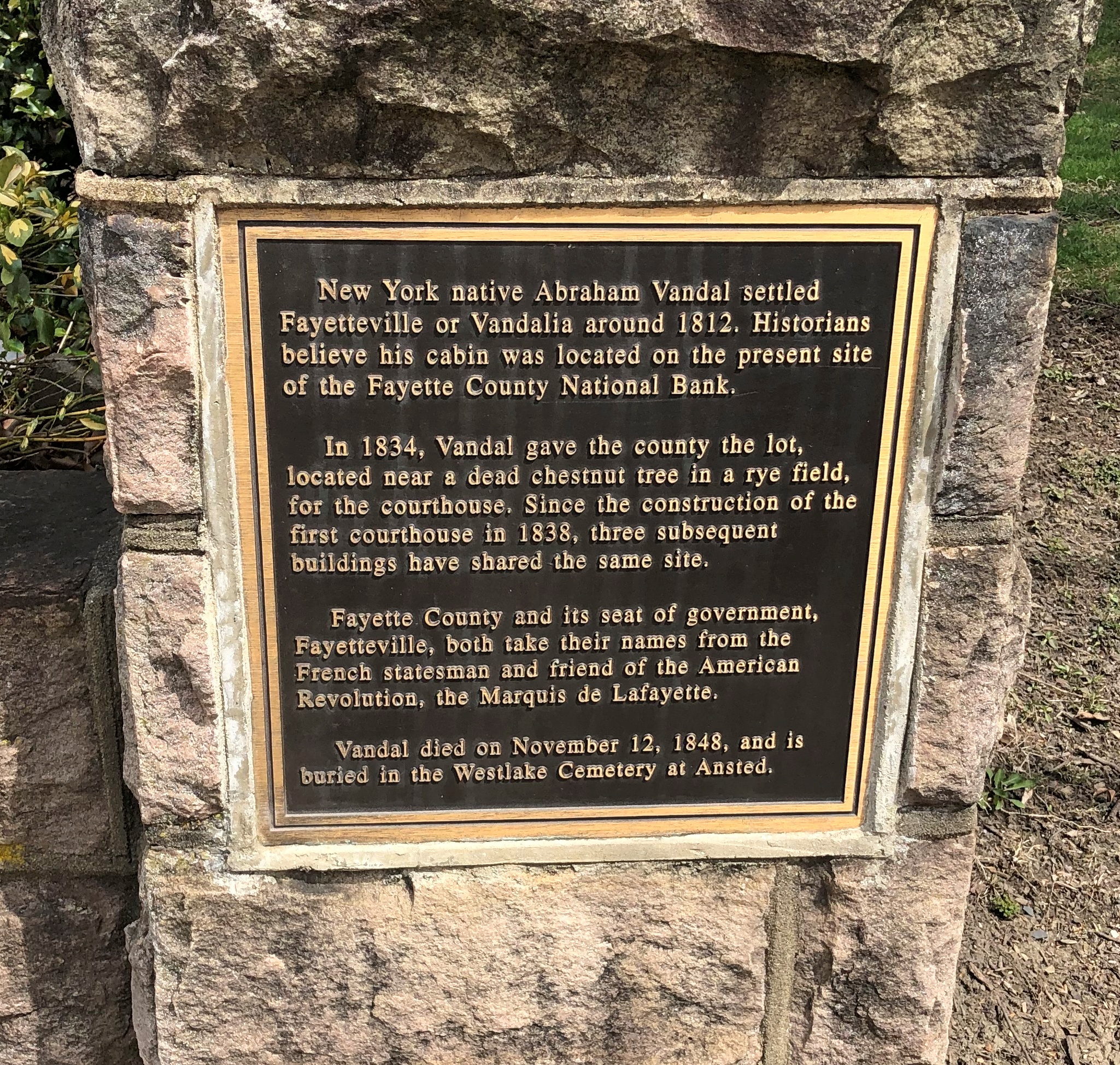
Plus history on plaques and signs. Fayetteville, West Virginia

The Battle of Fayetteville was part of the Kanawha Valley Campaign, which has to count as a lesser-known incident in that sprawling war, unless you’re in Fayetteville.Fayetteville, West Virginia

Eastern Virginia got most of the attention then, as now. Whether part of the Old Dominion or not, western Virginia has a long history of being ignored.

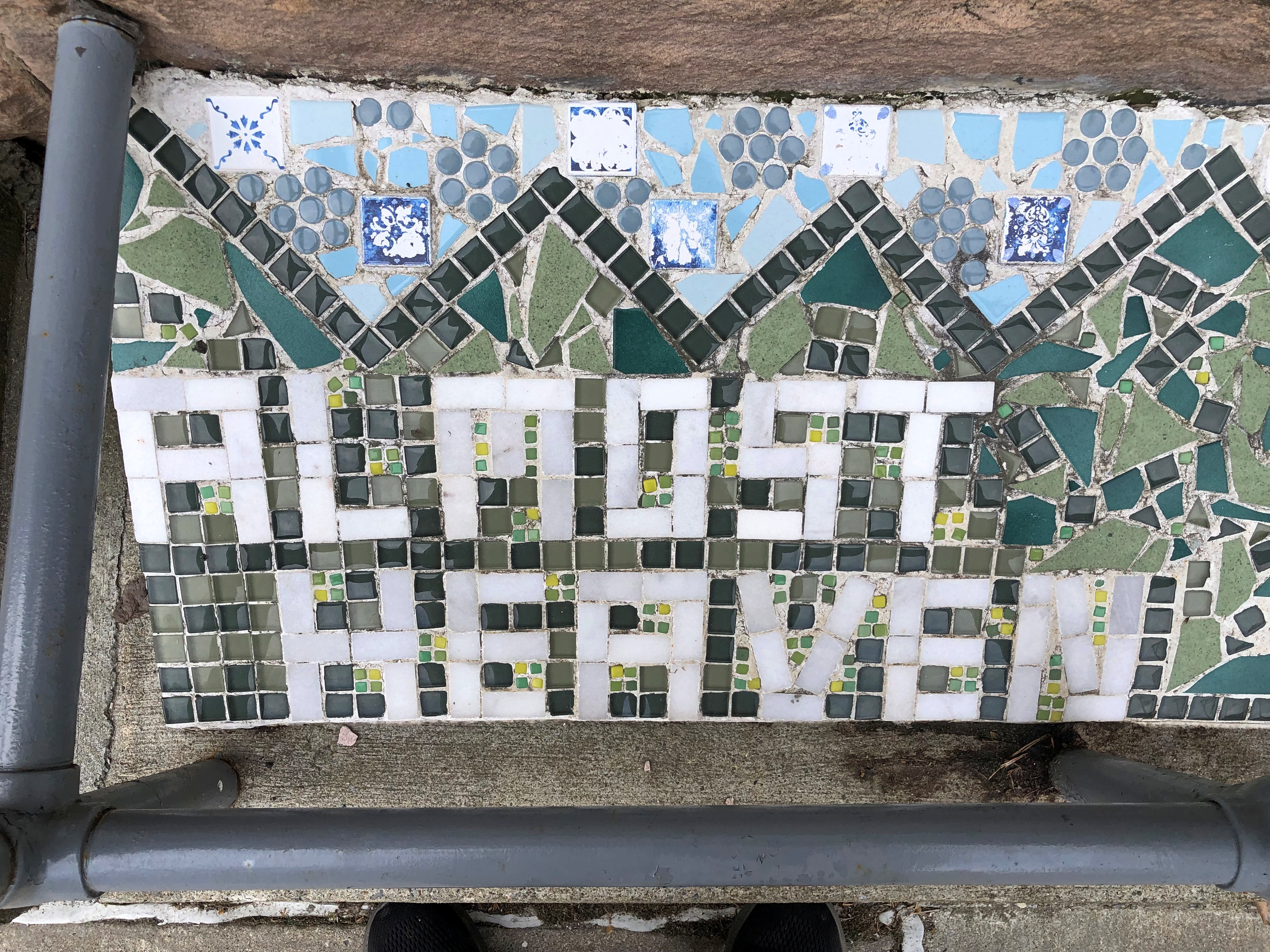
Which might account for the enduring popularity of “Take Me Home, Country Roads” in West Virginia. Here was a song that actually paid attention to the state, with “West Virginia” being the third and fourth words of the lyrics. The first two words made an arguably bigger impact, however.Fayetteville, West Virginia

That display of West Virginia regional pride was at an odd angle next to a building across from the courthouse, neither in the sidewalk nor on the wall. Odd for a slogan, as I forget which comedian pointed out: you mean Heaven is only a little bit better than West Virginia? Or maybe the joke went like this: you mean Heaven is only a little bit better than West Virginia?

Taishō-Era Beer

Back to the vault of my old correspondence again, for a postcard I mailed from Japan nearly 29 years ago. I picked up a set of cards at the Sapporo Brewery in Sapporo, Hokkaido on our trip there in the fall of ’93. One reason to visit the brewery — the main one, as it happened — was dinner at the beer garden, for its splendid Mongolian barbecue.

The cards were reproductions of old advertising posters for that brand of beer.

A Taishō-era (大正) poster, in this case. In particular, Taishō 13, or as most of the rest of the world would call it, 1924.

As an era, Taishō didn’t last much longer, expiring in 1926 with the sickly emperor Yoshihito, who became known as Taishō posthumously. Taishō Democracy, such as it was, didn’t last much longer either, since like Weimar Germany, it had never really taken root, and the Depression laid the groundwork for its demise.

Thursday Collection: Claw Machines, Ramen & Dreams Odder Than Usual

Spotted recently at the mini-mall attached to Mitsuwa, the largest Japanese grocery store here in the northwest suburbs, which is in Arlington Heights.

Banks of Japanese claw machines where a travel agency used to be. Not quite sure what this one is.

The arcade, if you can call it that, is under the brand name Kiddleton Kiosk. Turns out there are quite a few of them, mostly associated with Japanese grocery stores in the U.S.

I never had much use for claw machines. Probably because they seemed like a good way to feed quarters, or tokens, into a machine, and watch it give you nothing. Maybe Kiddleton has a different business model involving a low cost of prizes, which do deliver sometimes, compared with a higher input of tokens. I didn’t feel like testing out that idea.

Not long ago, we went to Hokkaido Ramen House in Hoffman Estates. Hit the spot. Hot steamy ramen, mine with thin slices of pork, egg and some vegetables. Just the kind of thing to enjoy on a raw winter evening.

I didn’t realize it was part of a chain until after we were there. When I found out, I looked at the chain’s web site to see where the others were. California, I figured, and maybe in the Northeast and Texas. You know, the usual chain restaurant suspects.

Turns out there’s only one in California (Santa Cruz). Guess the Asian restaurant competition’s a little stiff in that state. There are indeed a few in the Northeast and Texas as well, including one in Waco, which is a little surprising. But the real surprise is five in Montana and three in Idaho. Then again, maybe not a surprise. It’s cold a lot in those places, and ramen warms you up.

Two old friends of mine met for the first time recently, in a dream of mine. One a lanky bald fellow I’ve known 40 years, the other sporting long gray hair and a thick beard for that Old Testament prophet look, whom I’ve know nearly as long. They were sitting at a table, with me, eating a meal, despite the fact that we were weightless in a space station. They seemed to be getting on well, and one of them, or me, or someone, explained that the company that built the space station had done so well renting cars that it was able to send people to the station at a low cost.

An even odder dream, later the same night: I climbed a ladder to rescue – kidnap? – a group of sentient pens and pencils. Semi-sentient, at least. I couldn’t carry them in a pocket, so I put the group of pens and pencils, who knew what I was doing, under my arms to carry them down the ladder. It all felt a little precarious.