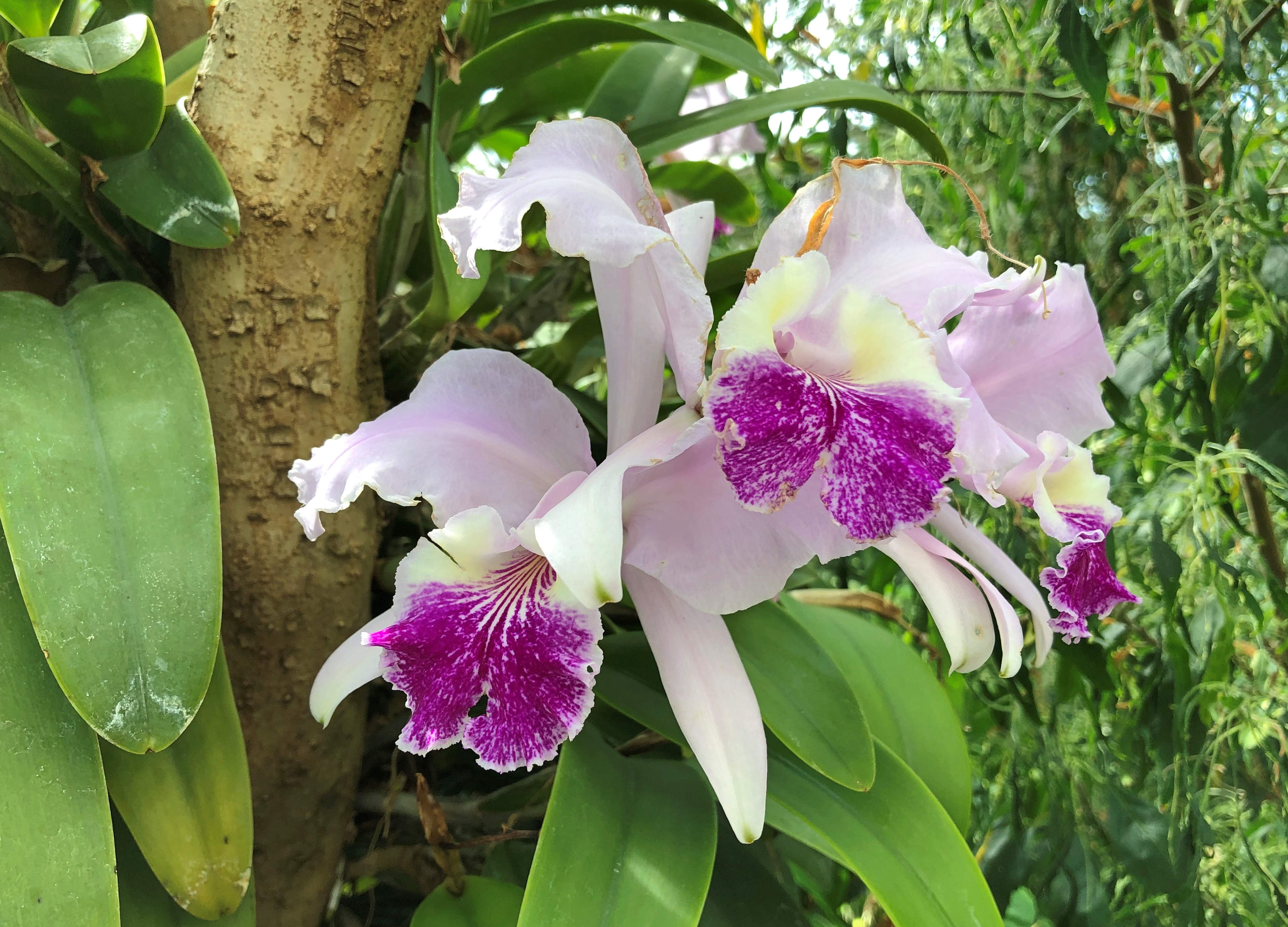
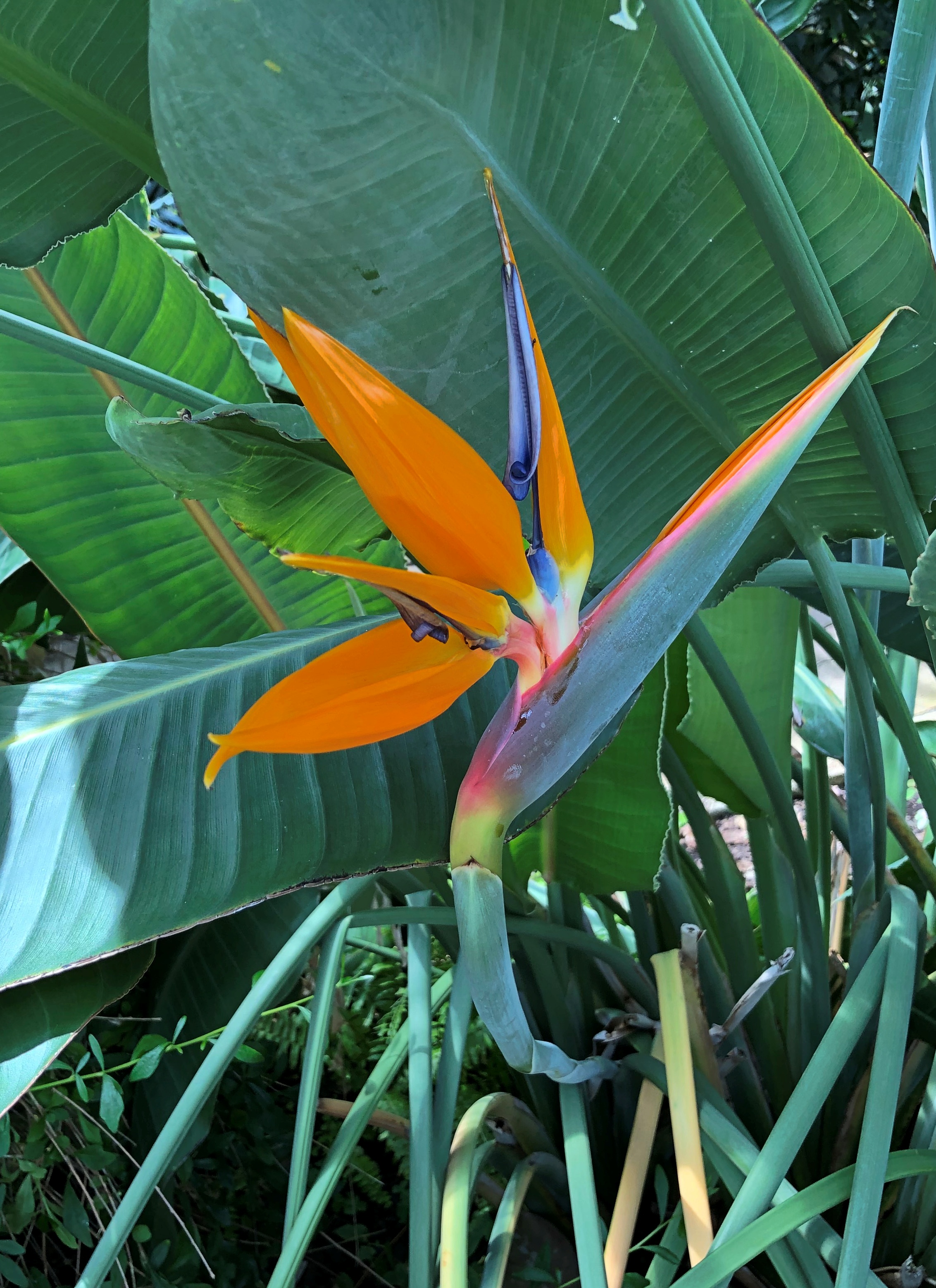
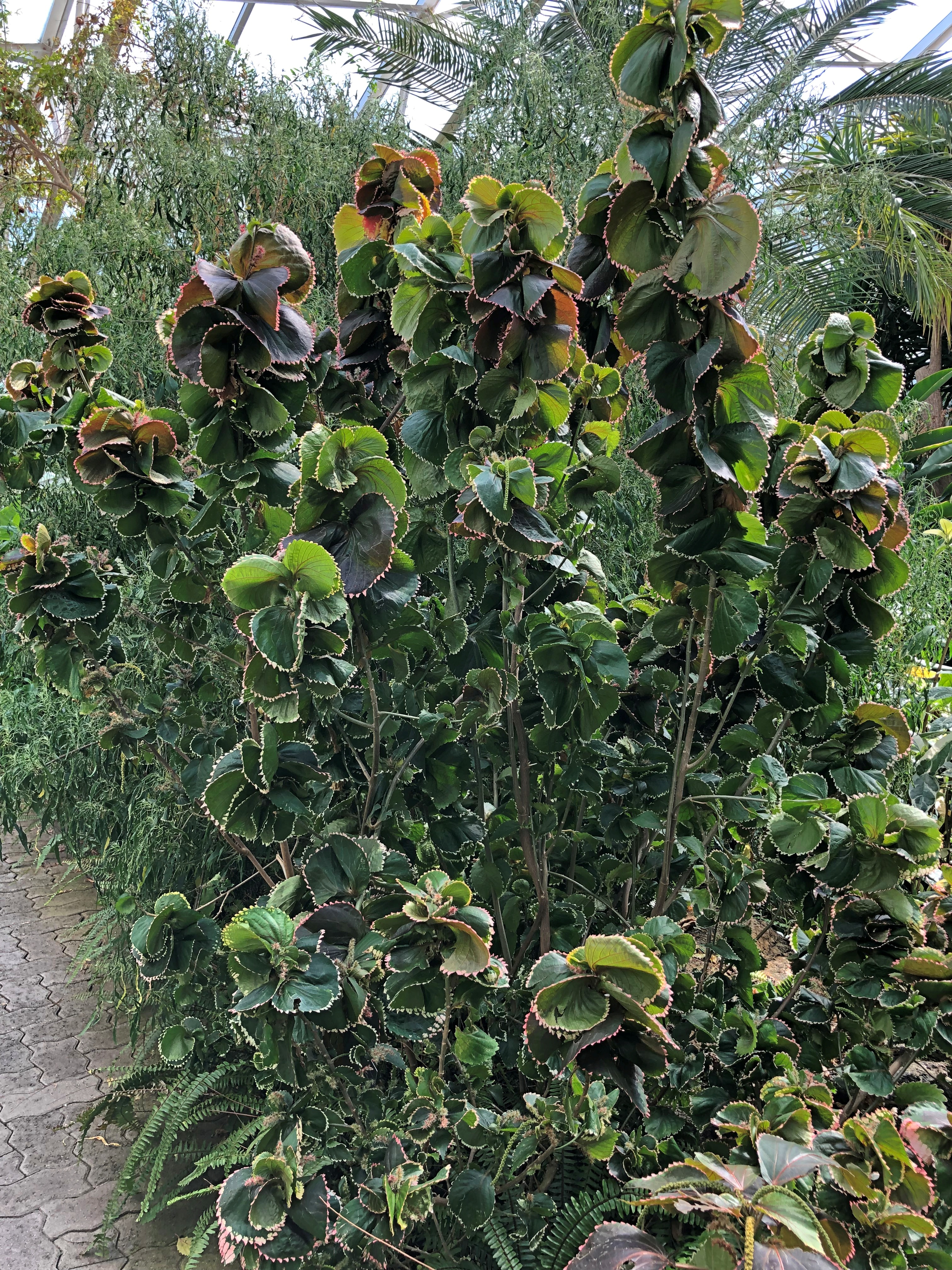
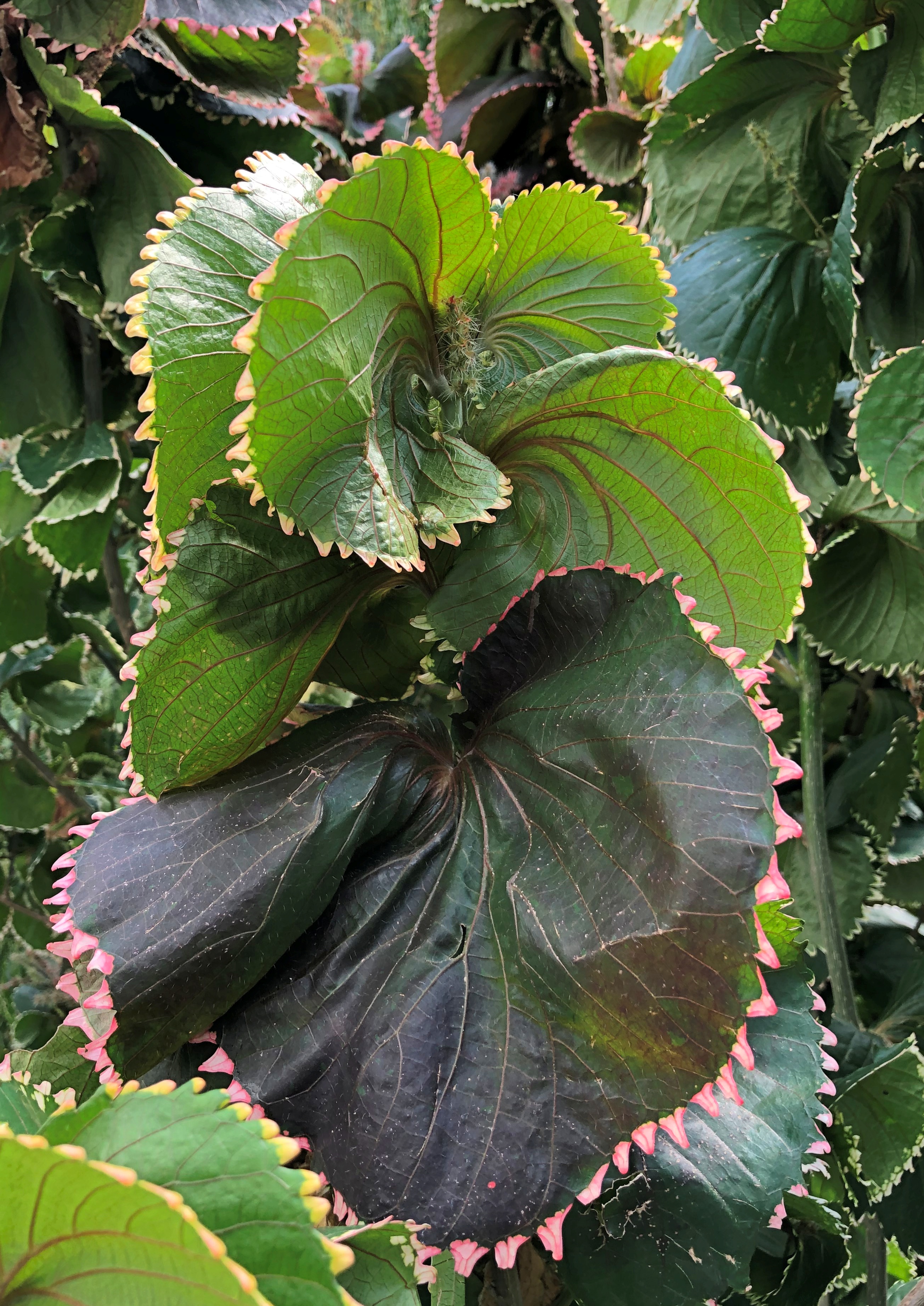
Frederik Meijer Gardens and Sculpture Park

You know, I said to my friends as we entered the Frederik Meijer Gardens and Sculpture Park in Grand Rapids on the second day of our trip, this place seems larger than it used to be.

Just an impression I couldn’t quantify on the spot. The place just felt larger.
My instincts were right. Nearly five years ago, The Art Newspaper published an item about the Meijer Garden’s 2010s expansion:
“[Meijer Gardens] is getting a major upgrade thanks to a successful $115m fundraising campaign, which will allow it to show off recent acquisitions and support the 750,000 annual visitors it has welcomed for three consecutive years — nearly four times the number it was designed for when it opened in 1995.

“The four-year building project, which launched in September [2017], includes new education and visitor centres, an expansion of the current indoor exhibition space and a transportation centre on the Meijer Gardens’ 158-acre main campus, designed by the New York-based Tod Williams Billie Tsien Architects.”

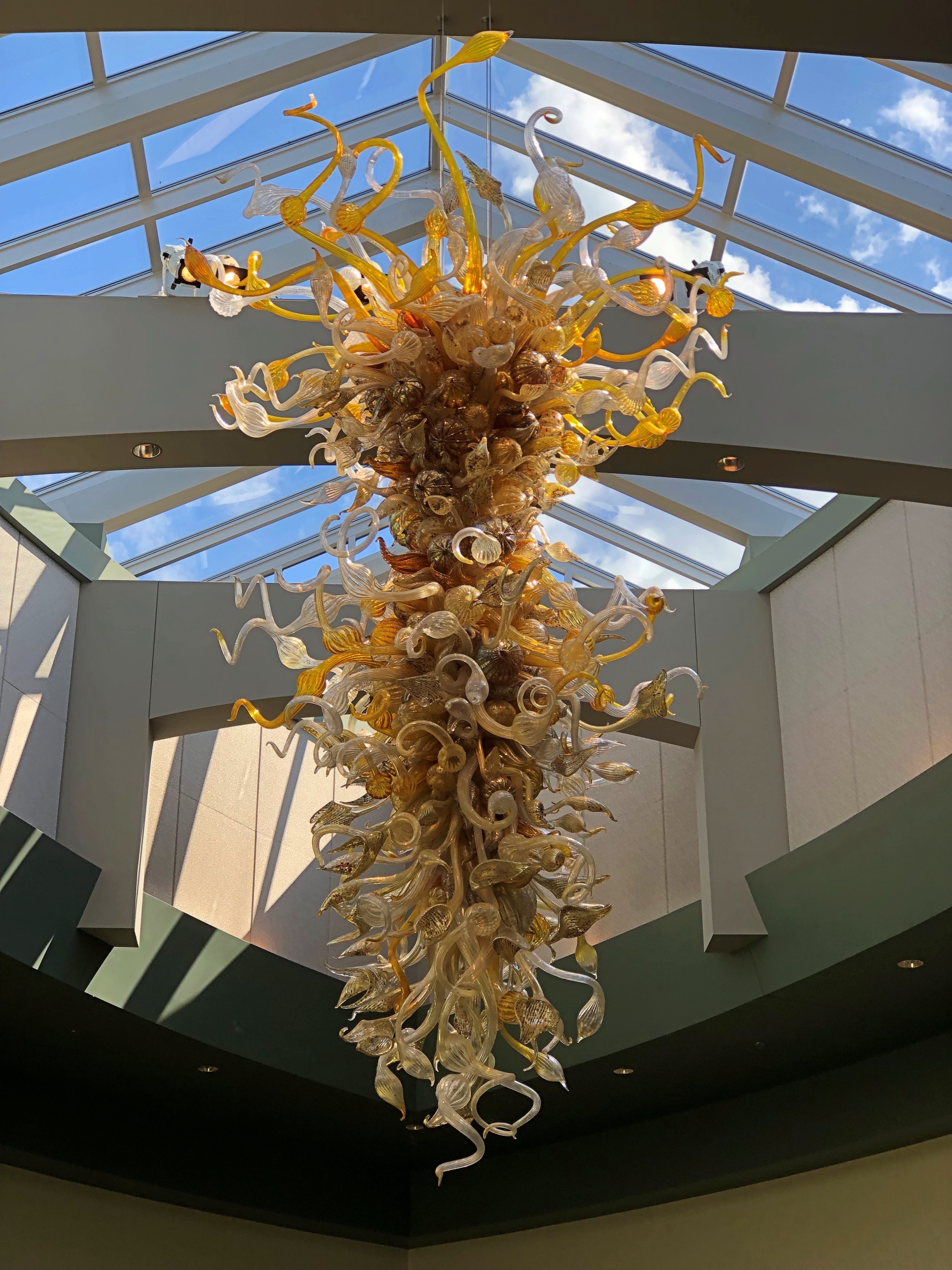
As we wandered through the new visitor center, we passed sweeping high ceilings, sizable sculptures, meeting space, a gift shop, an auditorium and a Chihuly.Frederik Meijer Gardens

When you get a chance to see a Chihuly, take a good look.

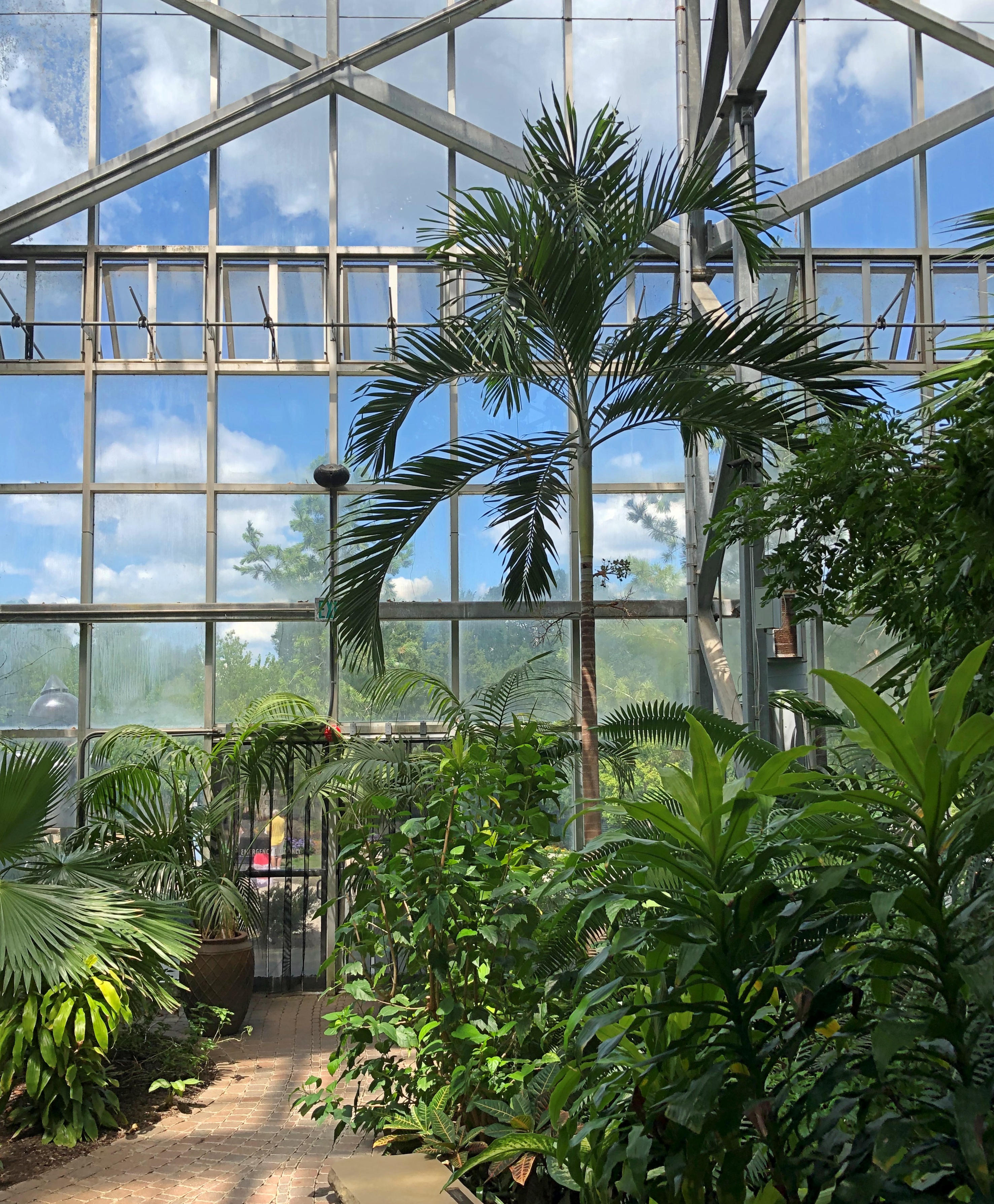
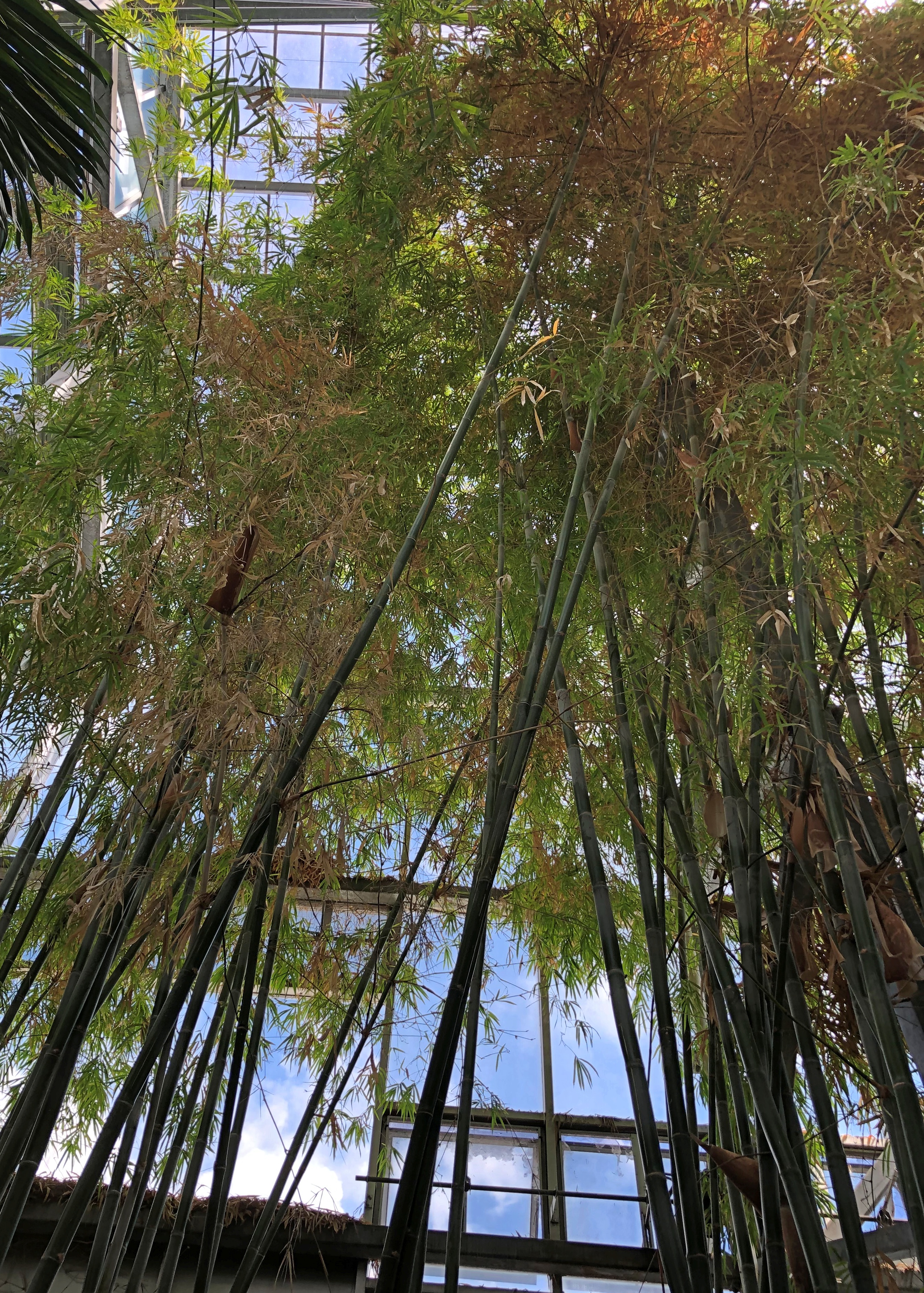
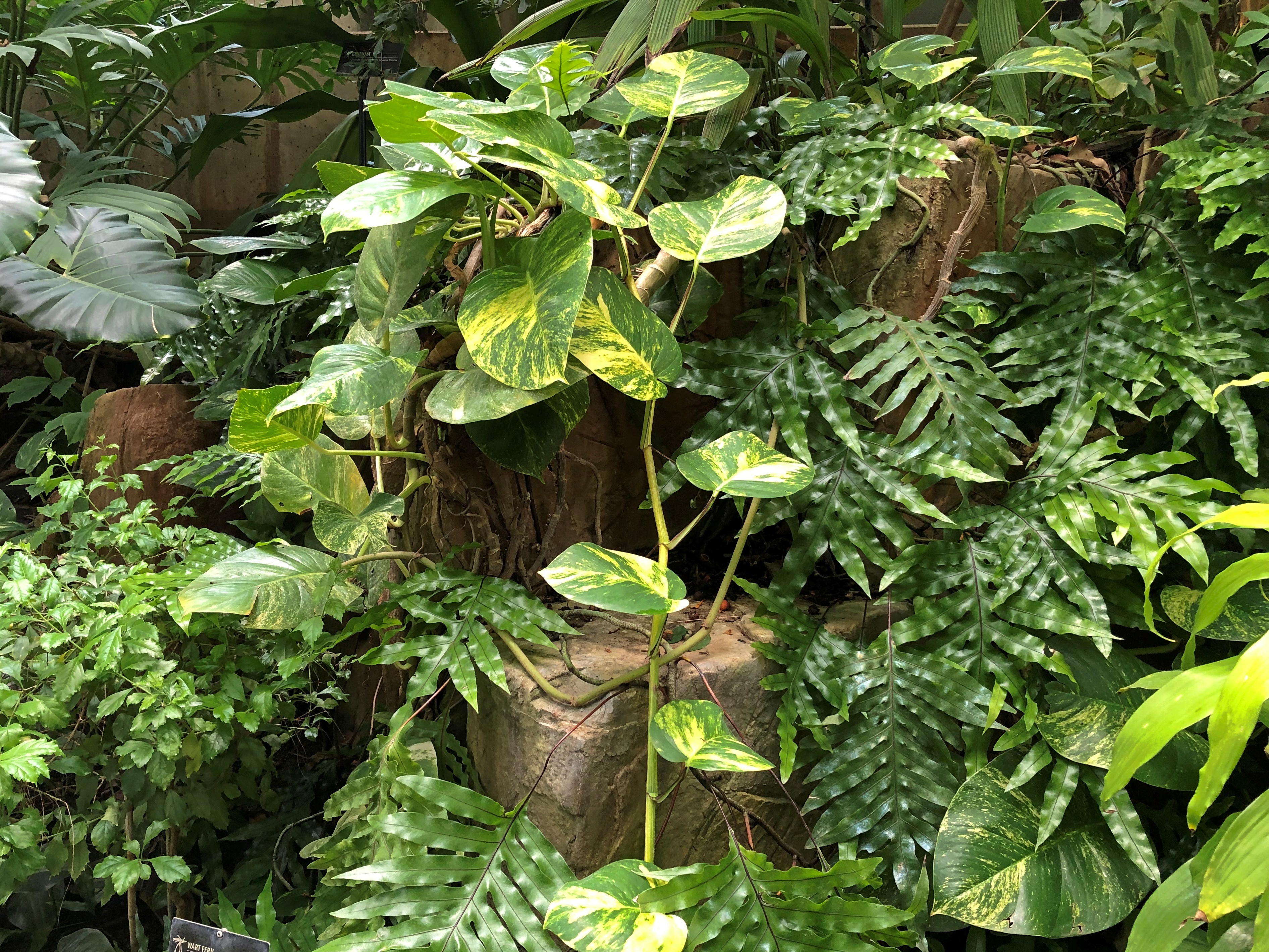
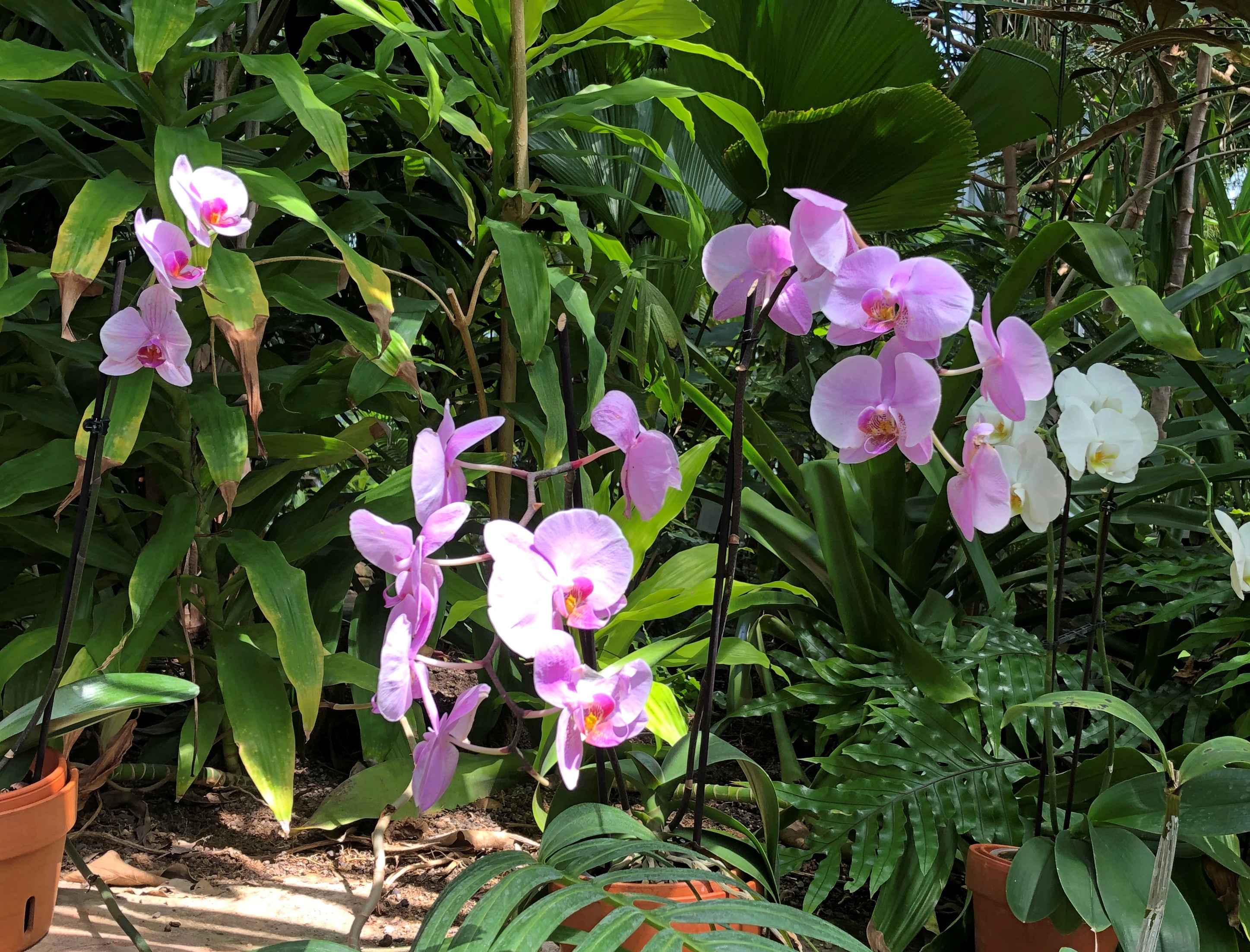
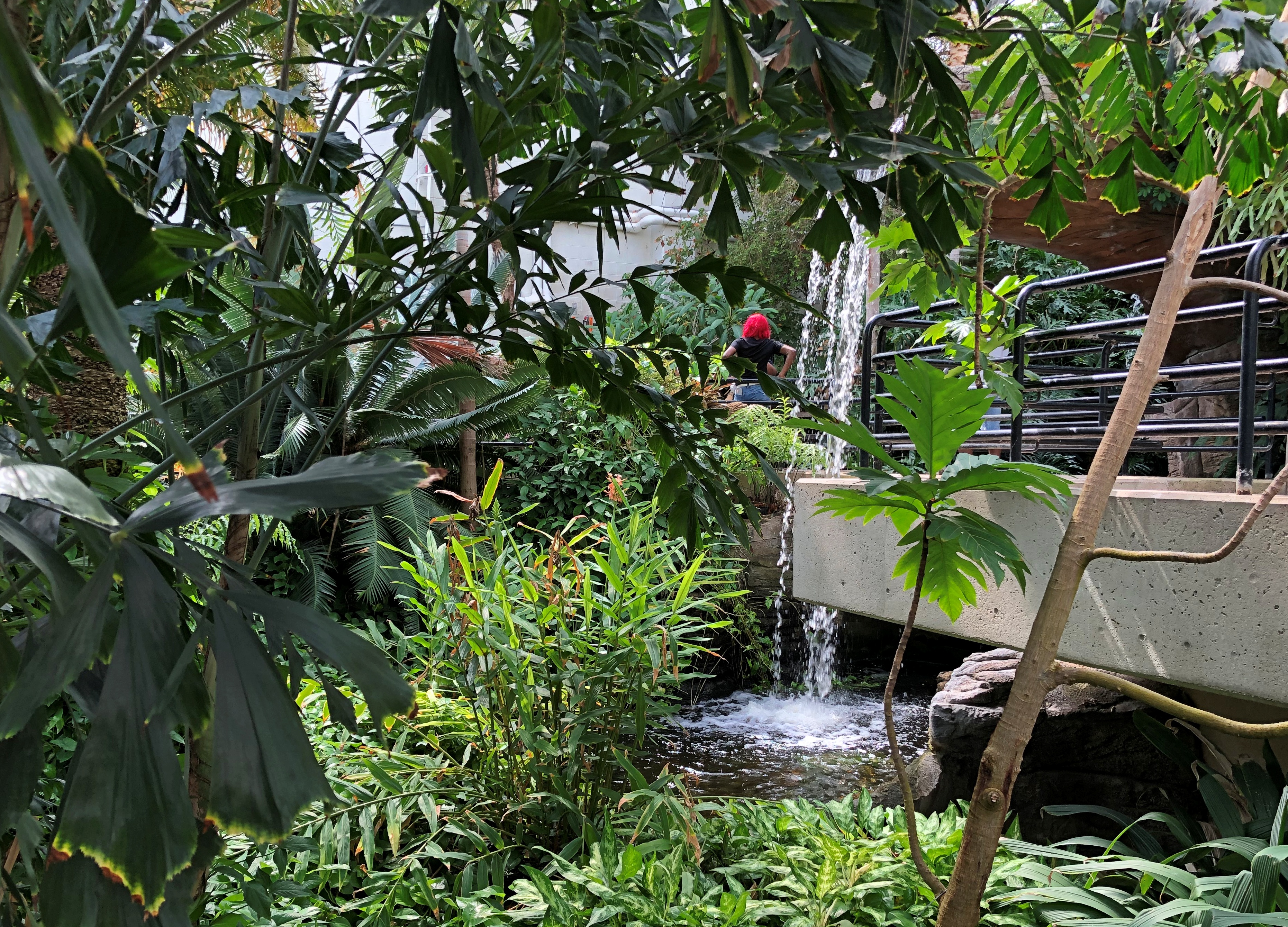
That was just our start of gazing at sizable works of art — and sizable plants. The new visitor center leads straight to the Lena Meijer Conservatory.Lena Meijer Conservatory
Lena Meijer Conservatory
Lena Meijer Conservatory Lena Meijer Conservatory

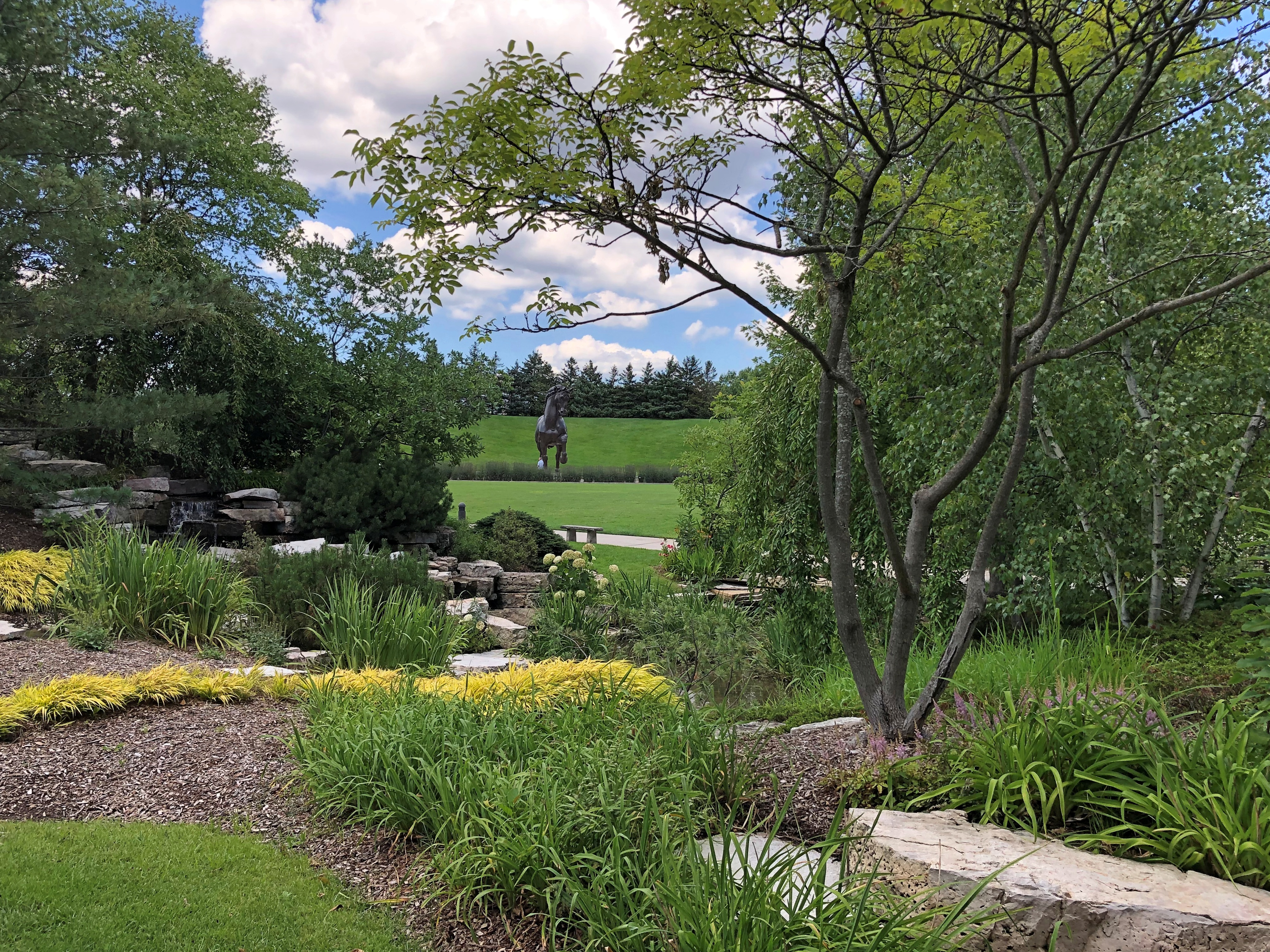
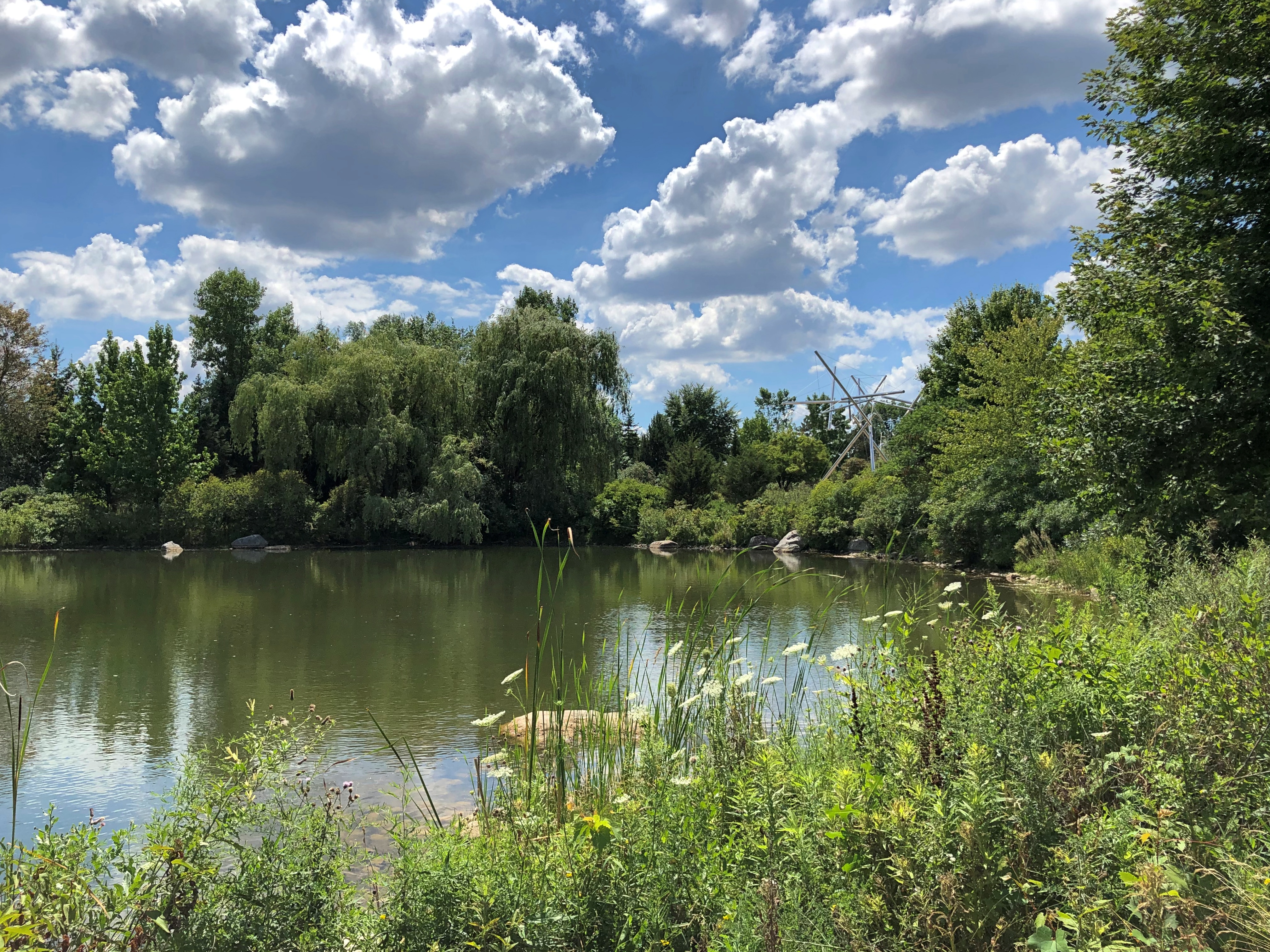
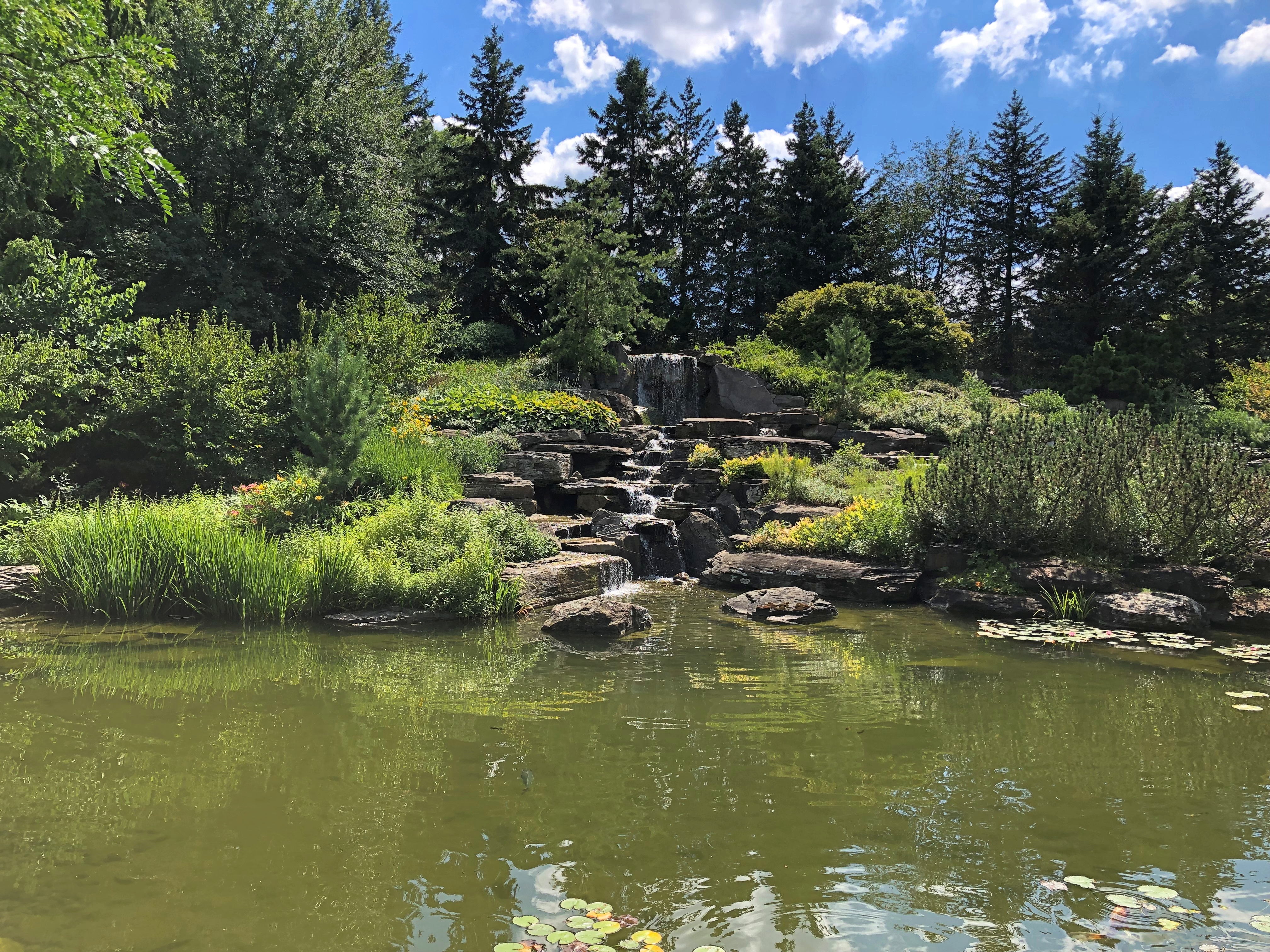
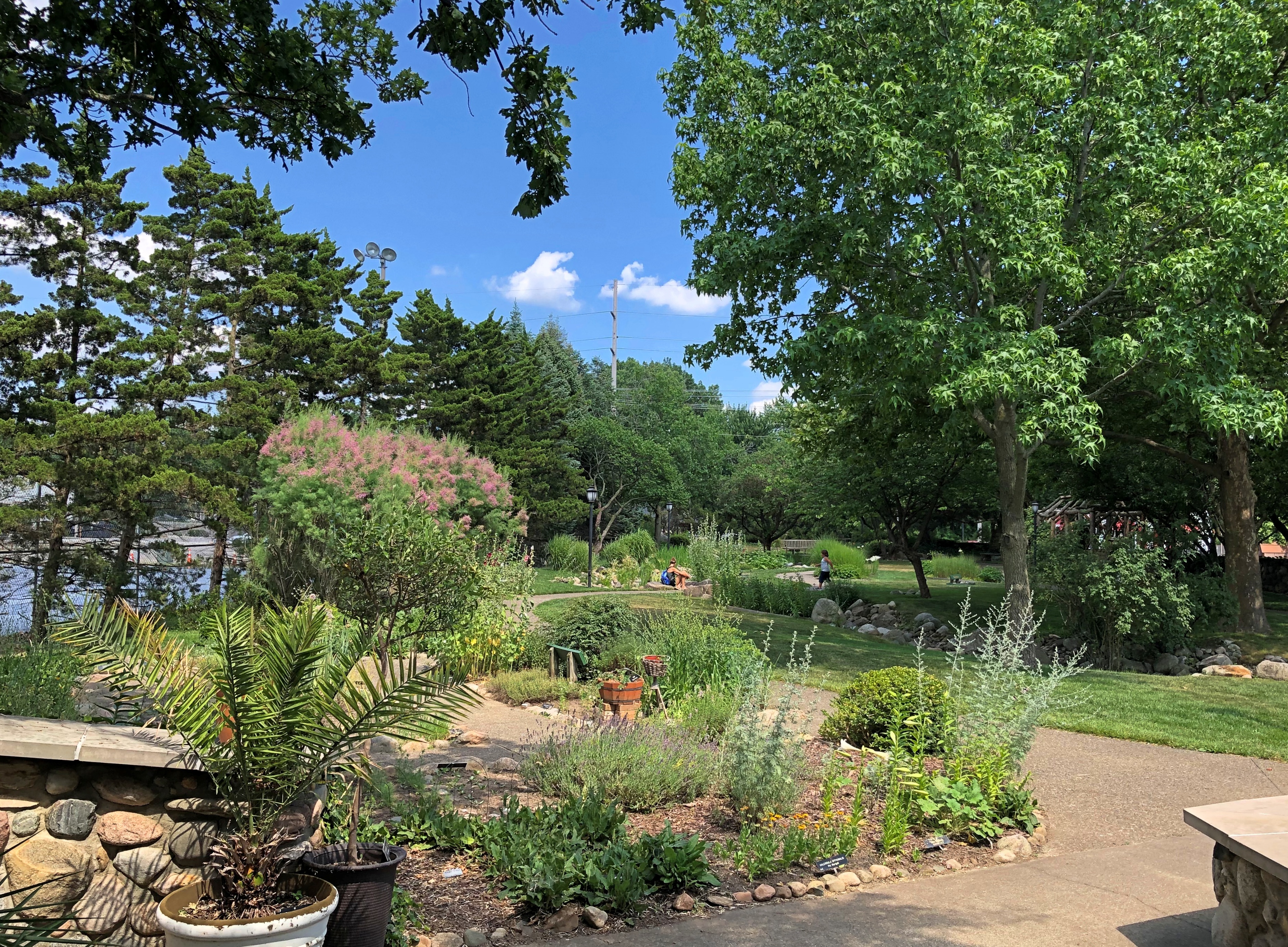
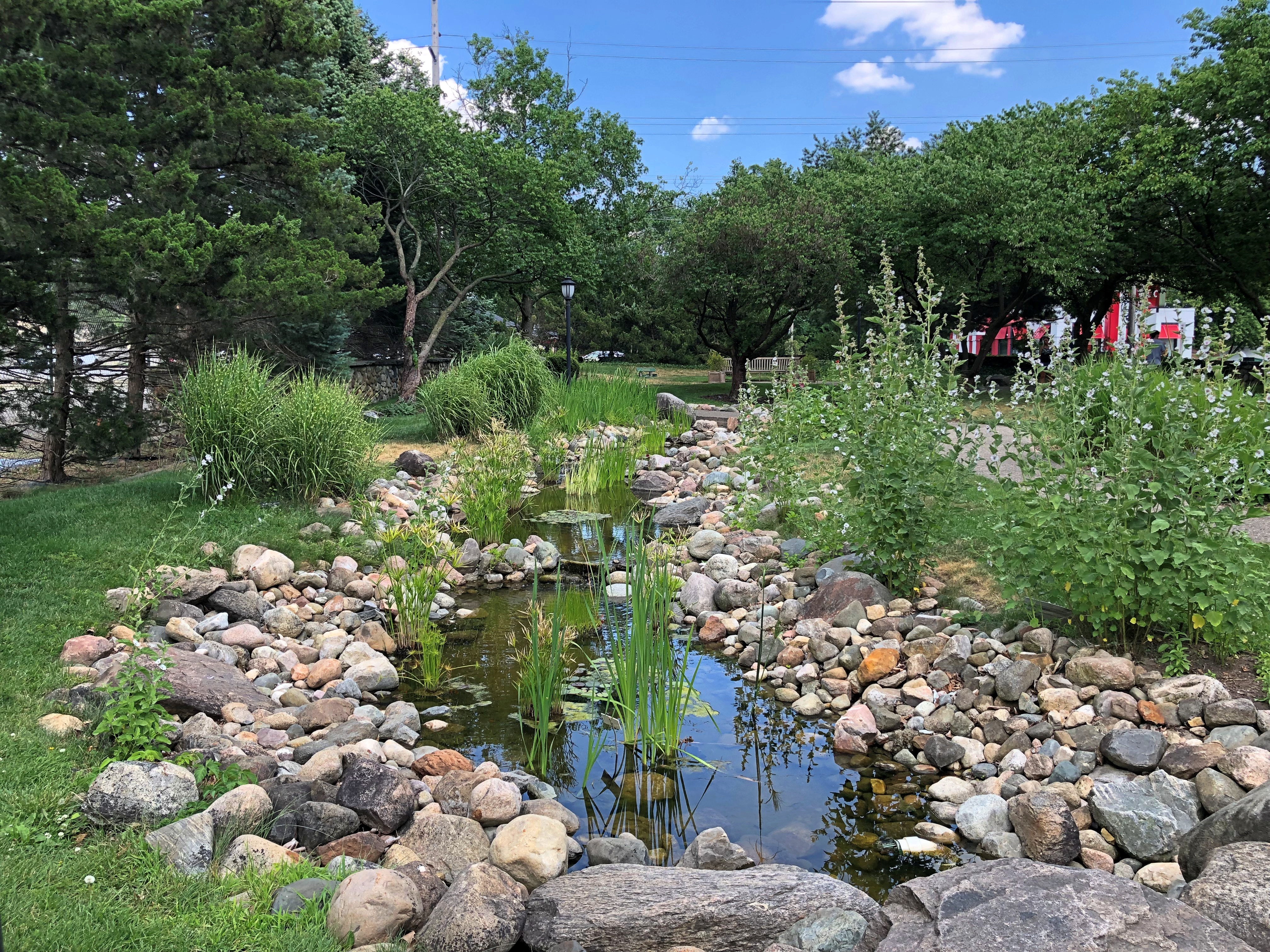
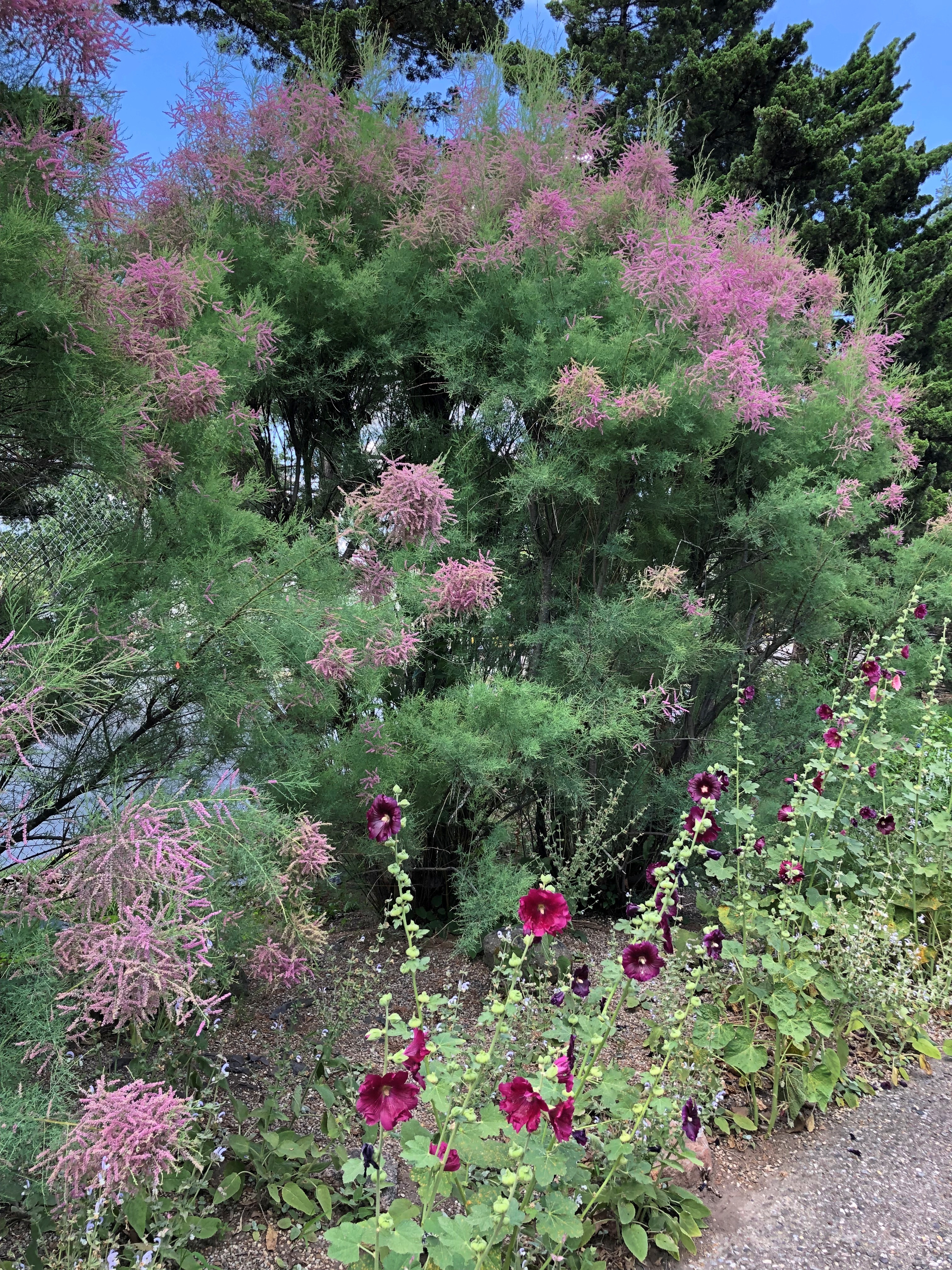
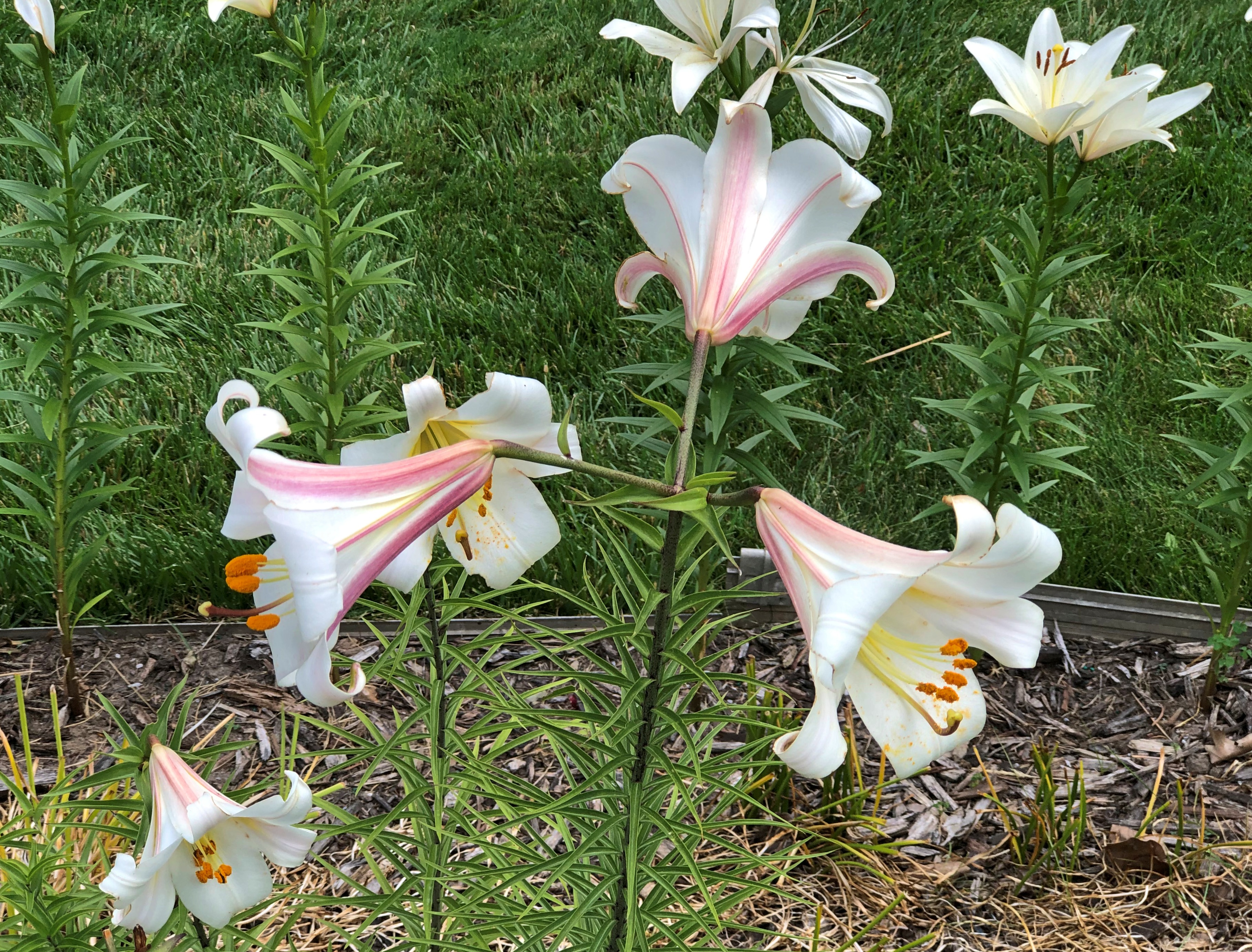
Outside is just as lush in summer.Frederik Meijer Gardens Frederik Meijer Gardens Frederik Meijer Gardens

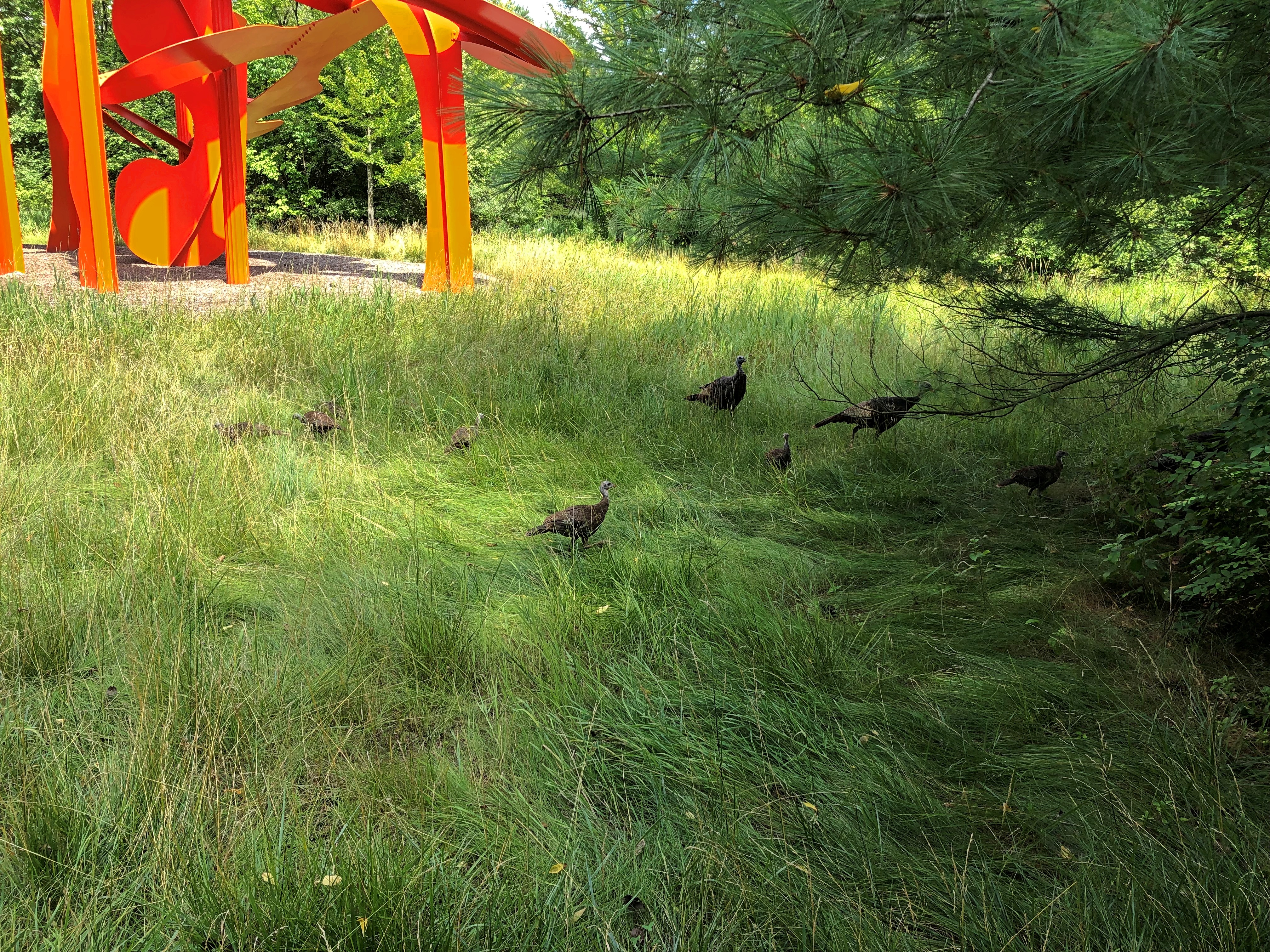
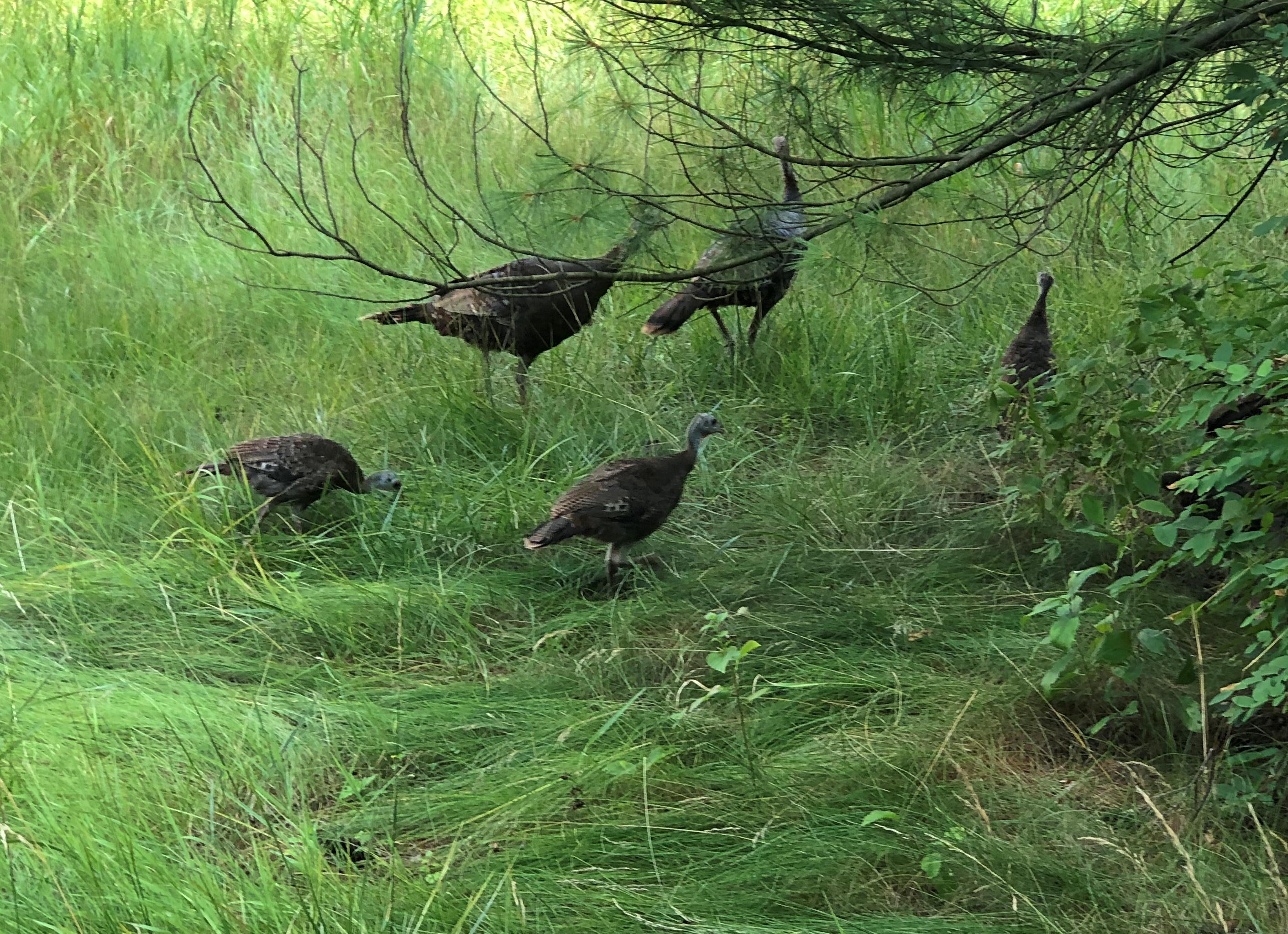
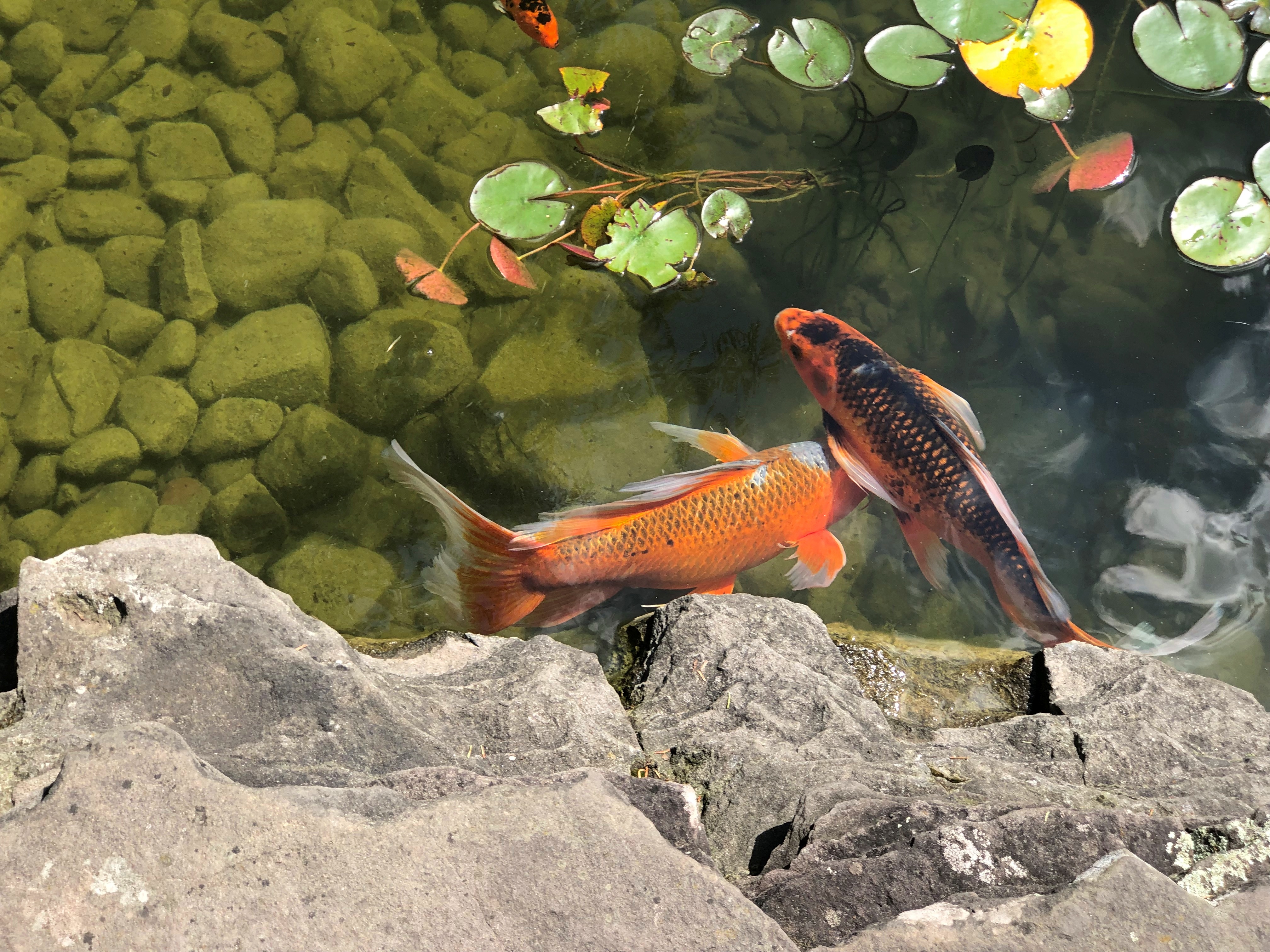
A little fauna to go with the flora.
Frederik Meijer Gardens

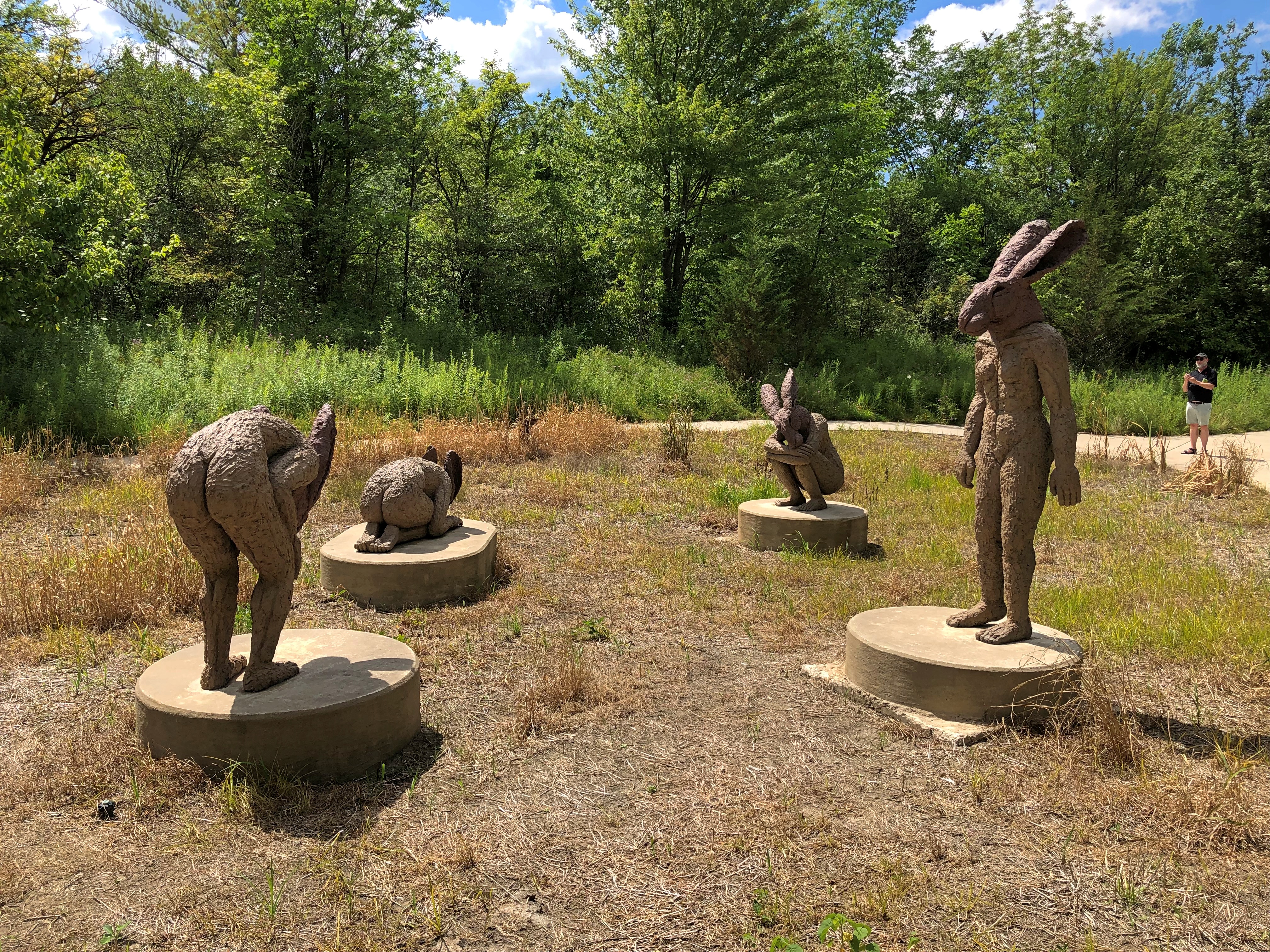
Sculptures rise amid the greenery, or are tucked away in small glades, or have their own plazas. Some I remembered, some I didn’t.

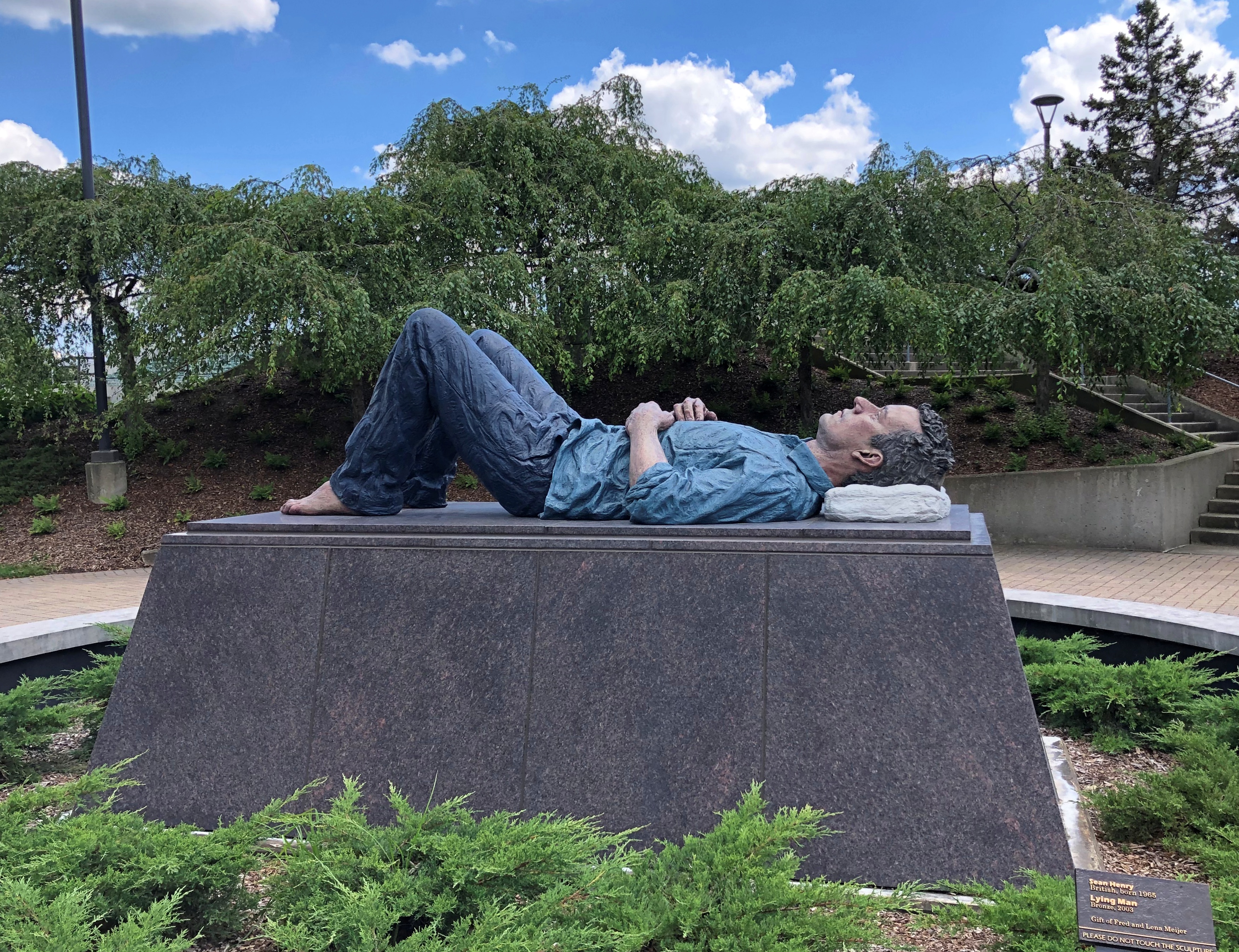
Sean Henry’s “Lying Man” (2003) always watches the zenith, rain or shine.Frederik Meijer Gardens

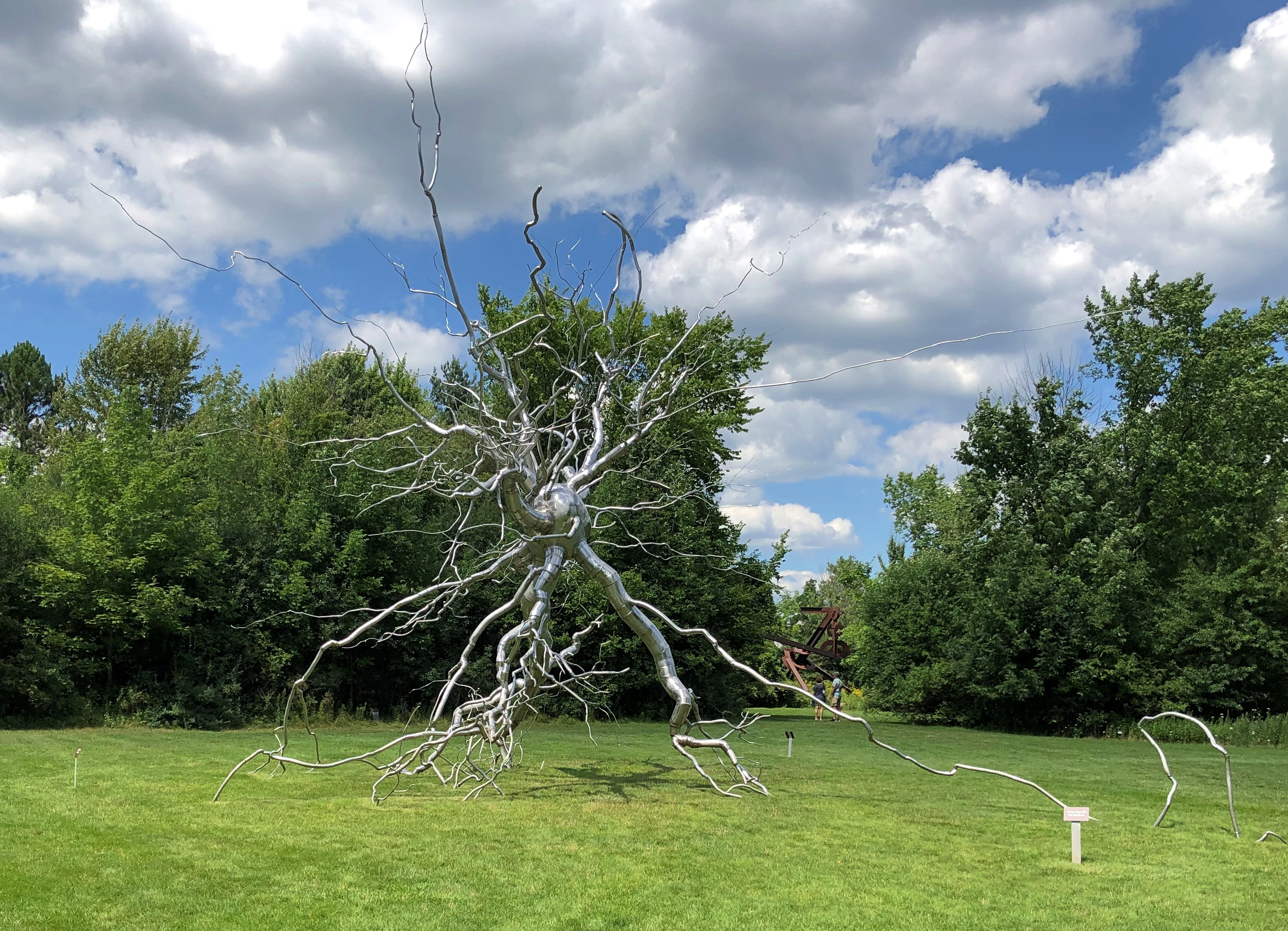
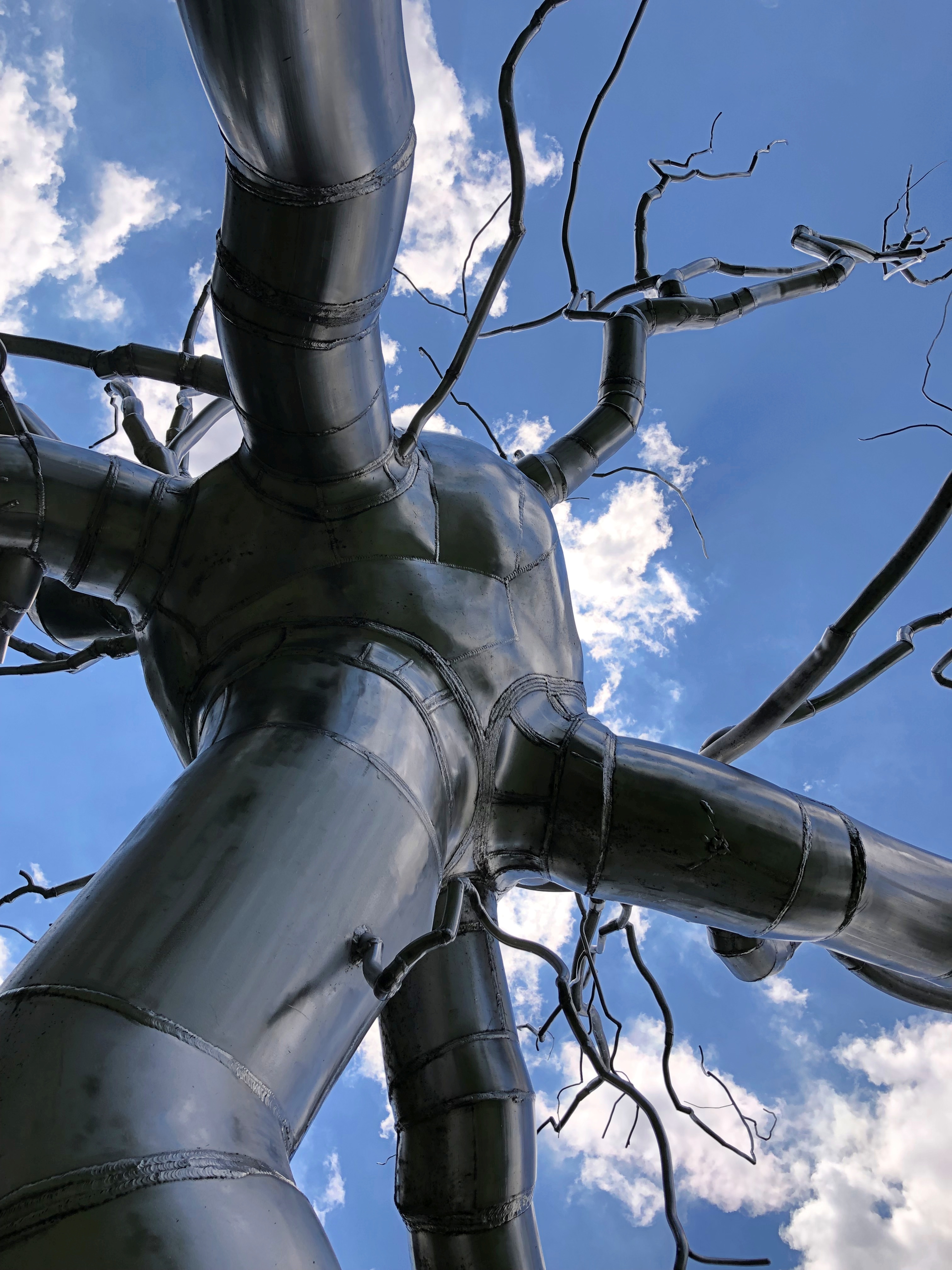
“Neuron” (2010) by Roxy Paine didn’t exist the last time I came this way. But I recognized the artist right away.Frederik Meijer Gardens Frederik Meijer Gardens

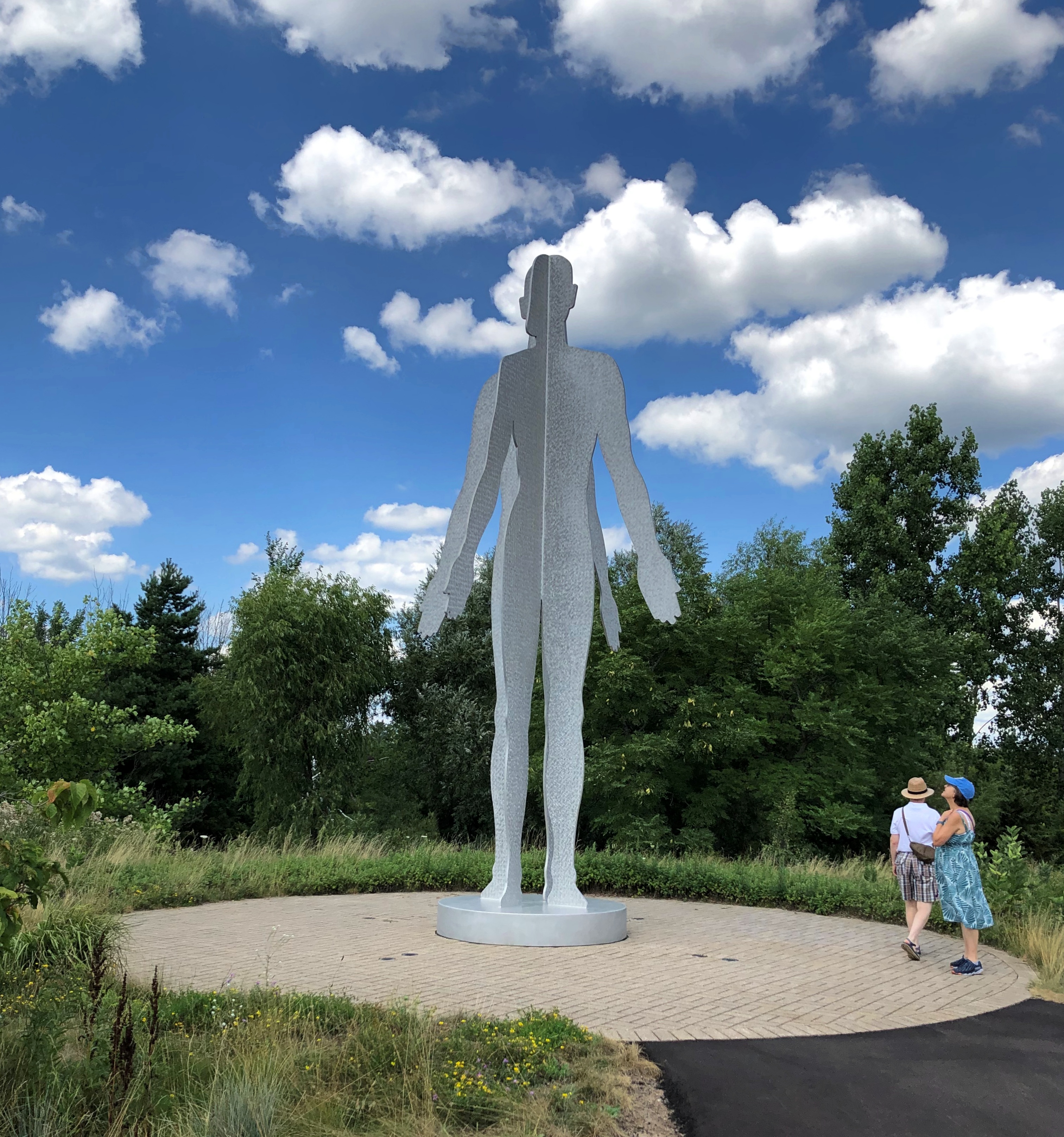
“Male/Female” by Jonathan Borofsky (2004).Frederik Meijer Gardens and Sculpture Park

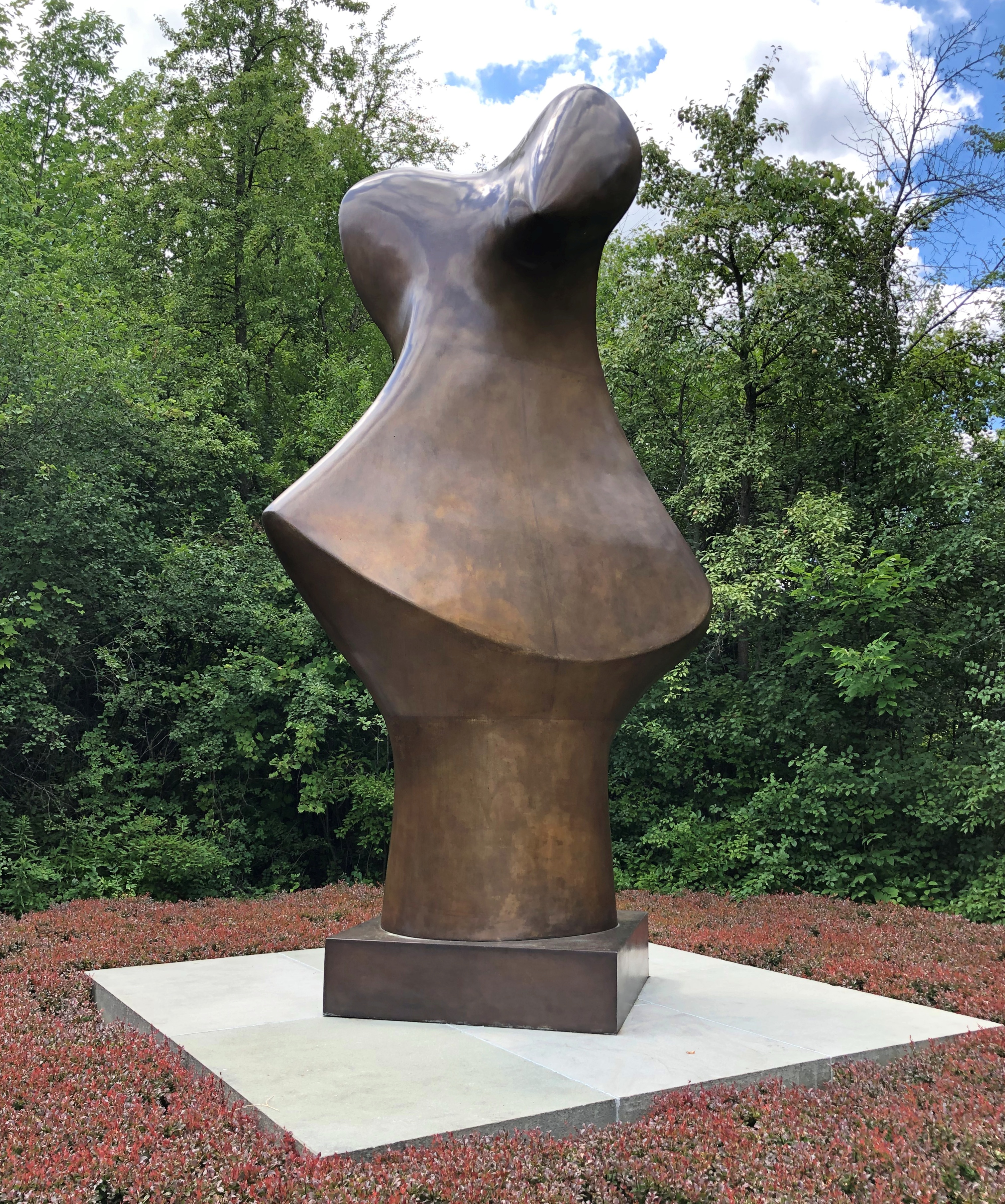
Also easy to recognize: the blobbity stylings of a Henry Moore. “Bronze Form,” in fact, a 1985 casting, so only a year before the sculptor died.Frederik Meijer Gardens and Sculpture Park

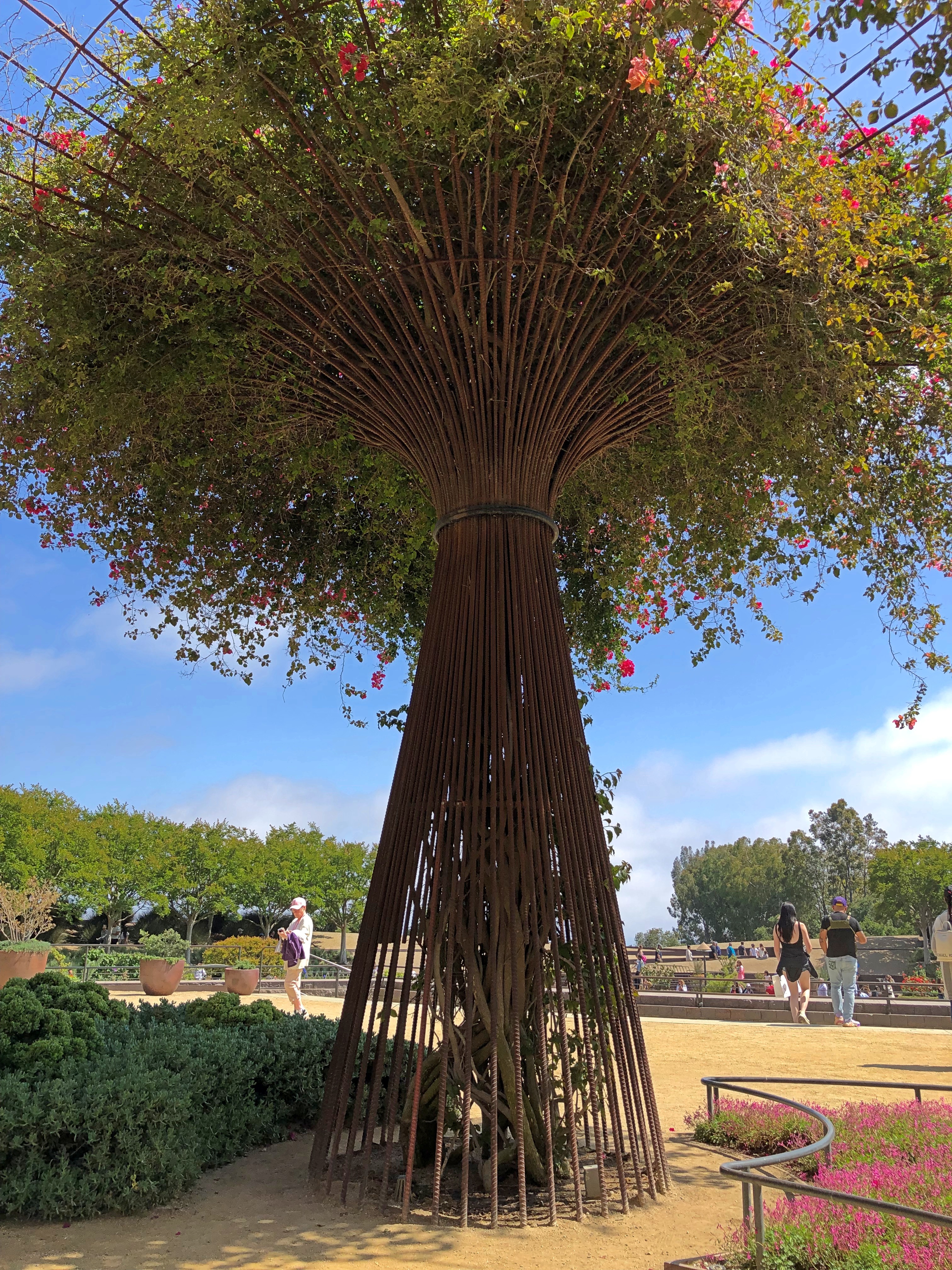
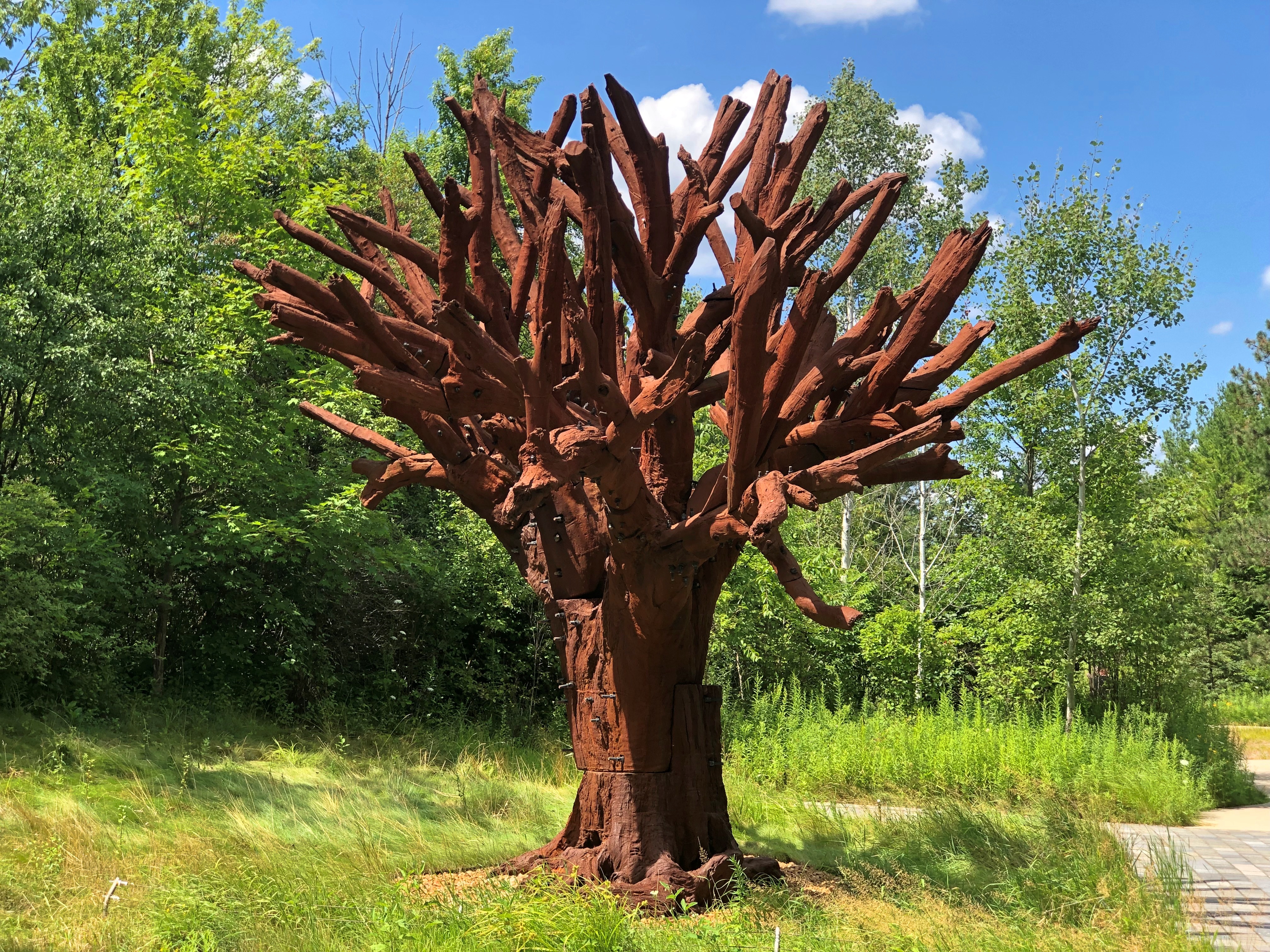
I really liked this one: “Iron Tree” by Ai Weiwei (2013). Iron, but also stainless steel.Frederik Meijer Gardens and Sculpture Park

I remember these figures. They’re a little hard to forget. “Introspective” (1999) by Sophie Ryder.Frederik Meijer Gardens and Sculpture Park

“Plantoir” (2001) by Claes Oldenburg and Coosje van Bruggen. Oldenburg died just last month. Also familiar; their work tends to stand out.Frederik Meijer Gardens and Sculpture Park

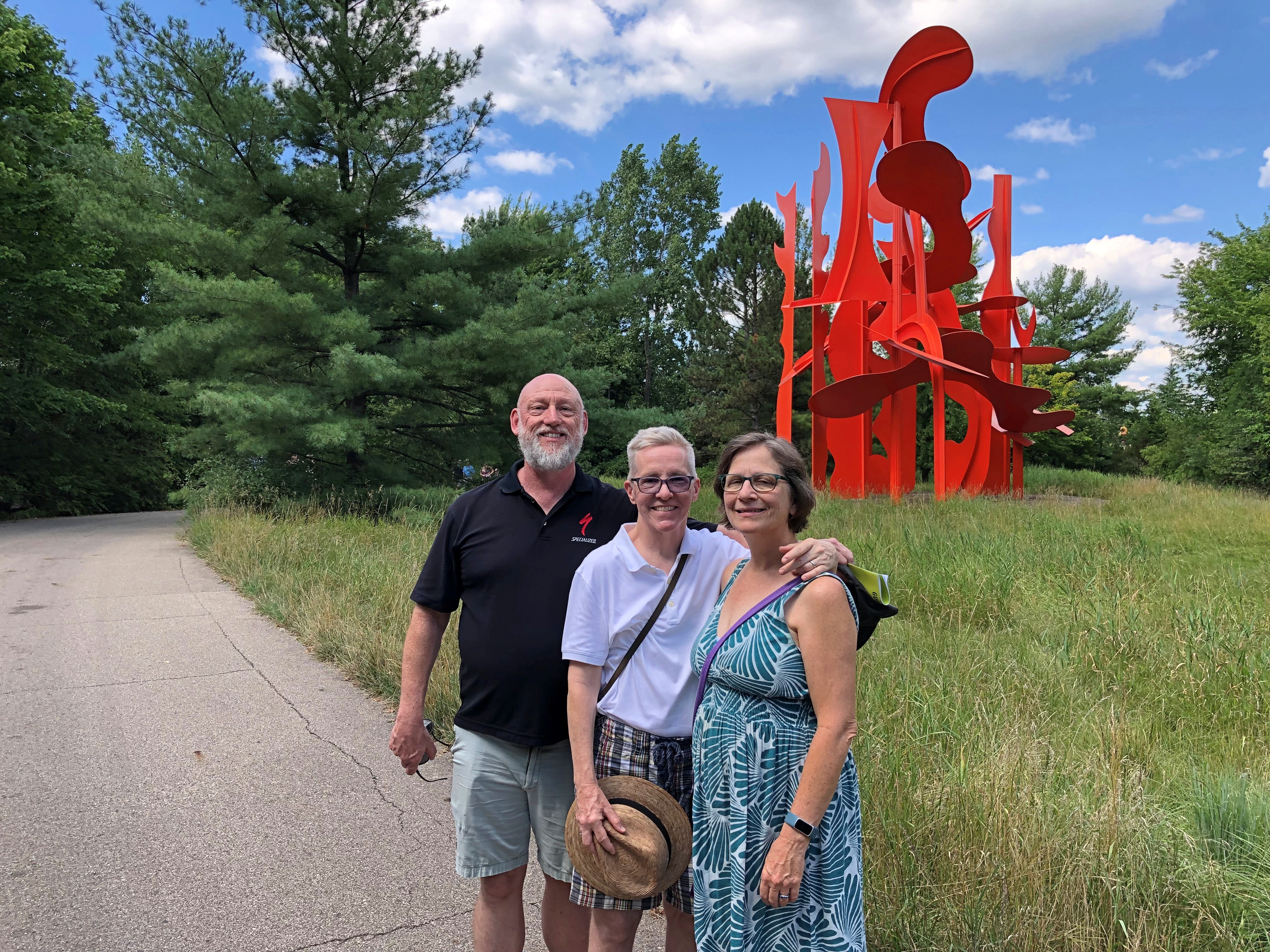
“Aria” (1983) by Alexander Liberman.

That’s only a small sample of the small sample of artwork we saw. Much more was in the greenery or entirely out of sight, off in another part of the garden. We spent most of the afternoon at Meijer Gardens and somehow only passed through a corner of the place. Another section, for instance, includes a Japanese garden developed since the last time I was here. We didn’t make it. That just means, of course, I need to go back to Grand Rapids.

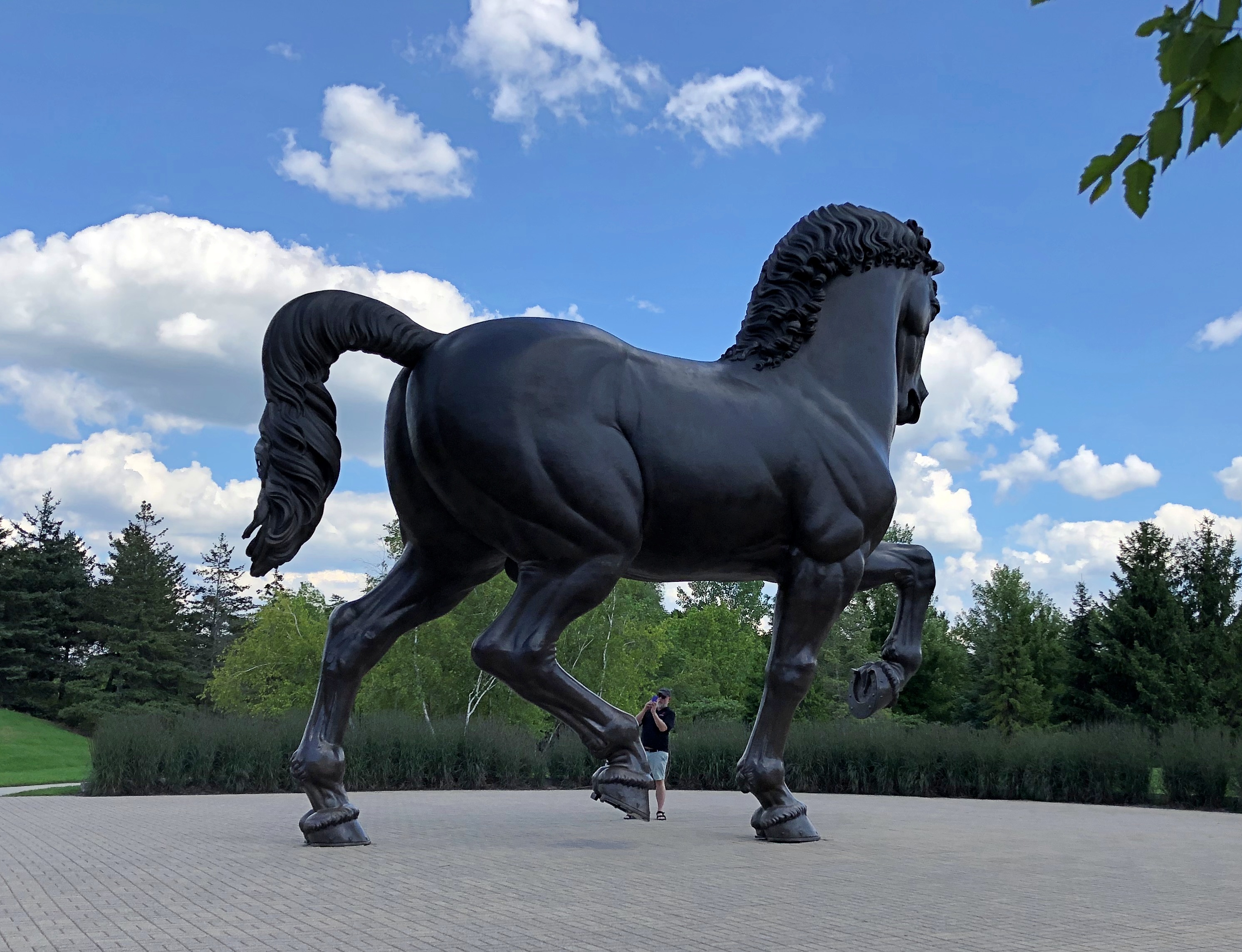
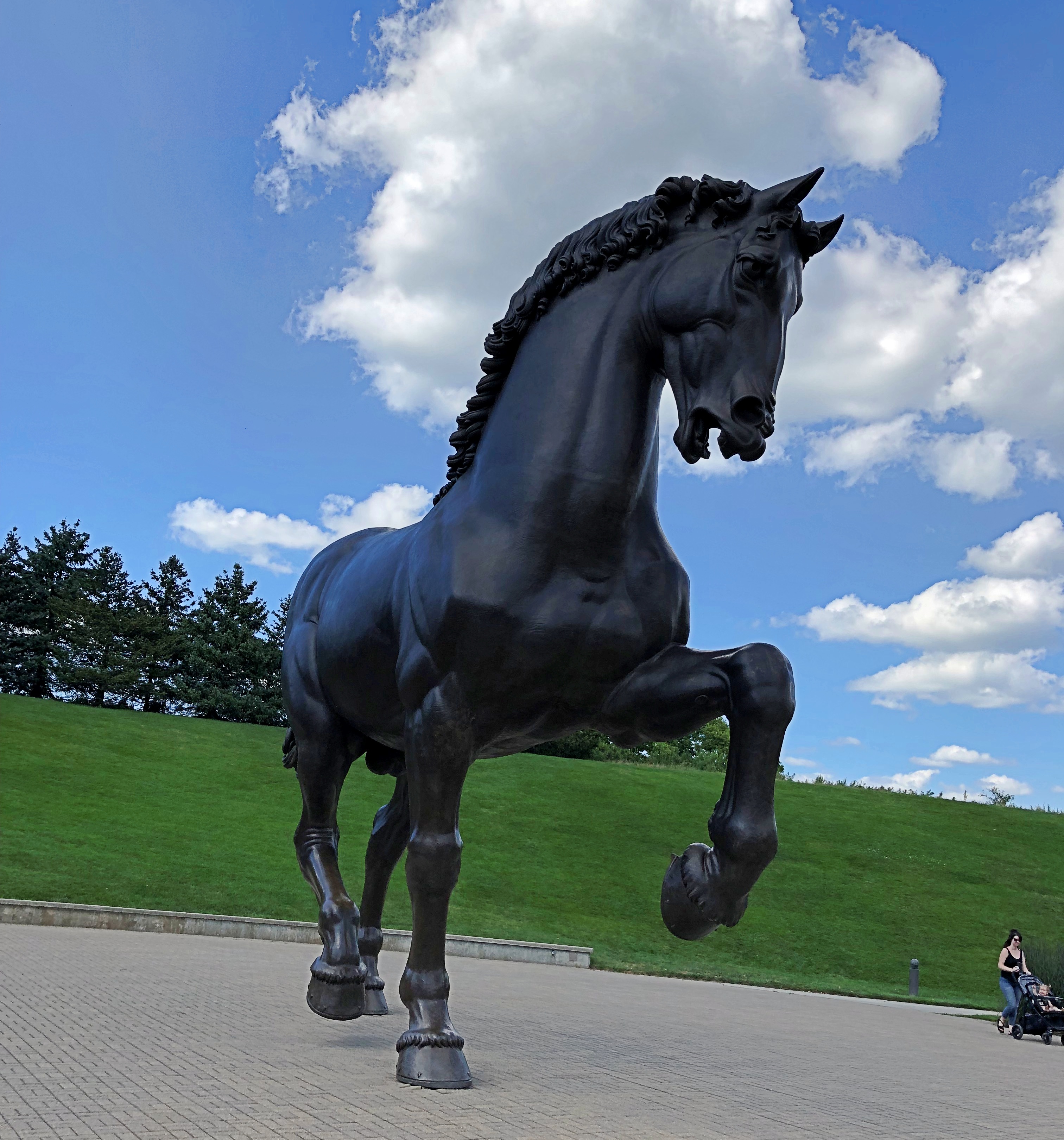
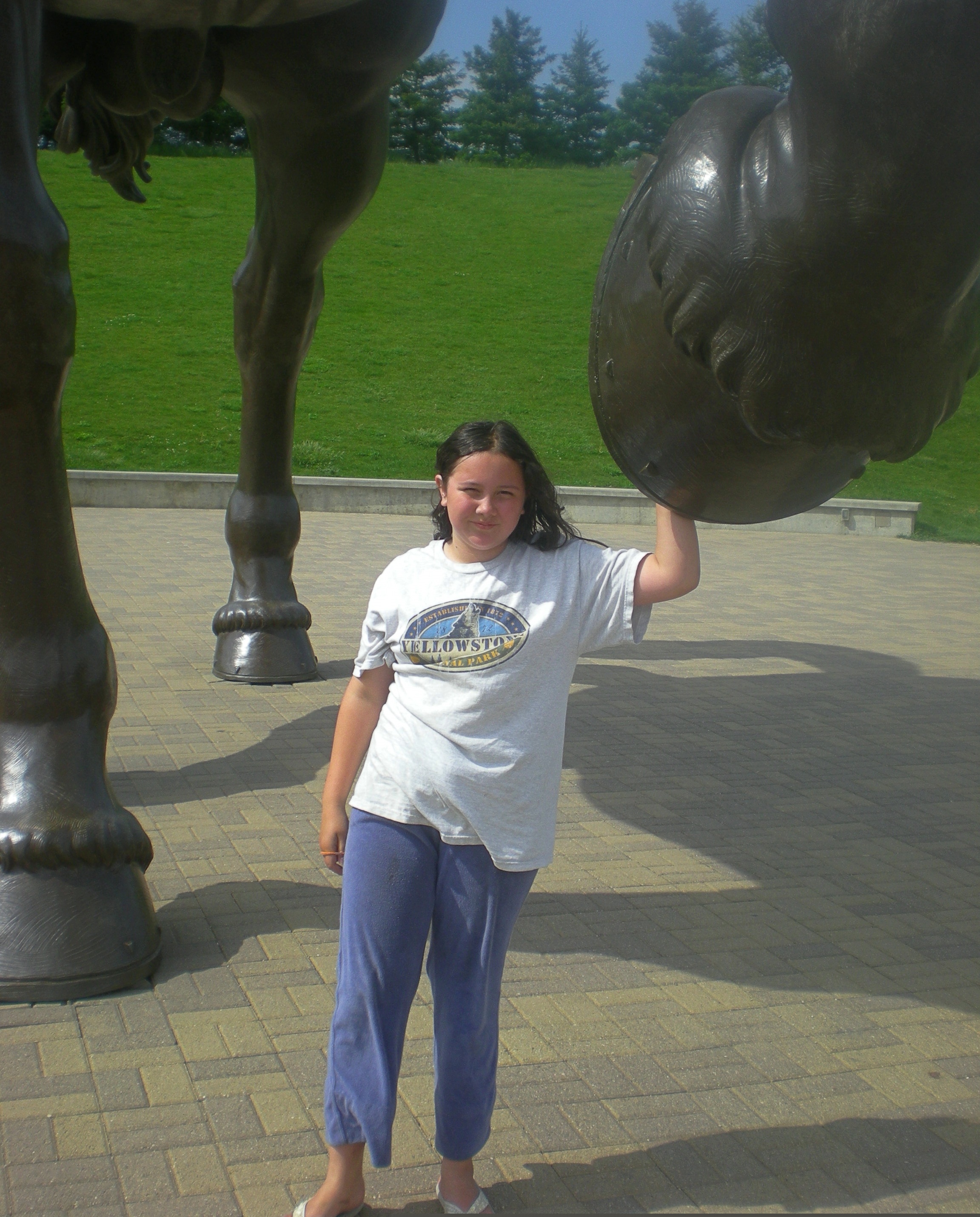
Before we left, we made sure we saw “The American Horse” (1999) by Nina Akamu.The American Horse 2022 The American Horse 2022

” ‘The American Horse’ was created by famed animaliere, or animal sculptor, Nina Akamu,” the Meijer Gardens notes. “The work was inspired, in part, by one created by Renaissance master Leonardo da Vinci for the Duke of Milan in the late 15th century.

“This project, championed by Fred Meijer in the late 1990s, resulted in two casts of the 24-foot monument — one for Meijer Gardens and one for the city of Milan, Italy. In addition to inspiration from Leonardo, Akamu was motivated by the history of equine imagery and the study of horses.”

“The American Horse” is 14 years older than the last time I saw it —
The American Horse 2008

— but none the worse for wear, which suggests regular (and costly) maintenance.

Foellinger-Freimann Botanical Conservatory

Some years ago, we passed through Fort Wayne on the way home from Dayton. It was a Sunday afternoon, and we had a choice between lunch and spending some time at the Foellinger–Freimann Botanical Conservatory, which is in downtown Fort Wayne. Lunch usually wins out in such situations, and it did then.

But I didn’t forget about Fort Wayne’s conservatory. I like a good conservatory or botanical garden, whether under glass or open air. Forty years ago, while on my first visit to D.C., I happened on my first botanical garden — the most impressive United States Botanic Garden — and that piqued my interest.
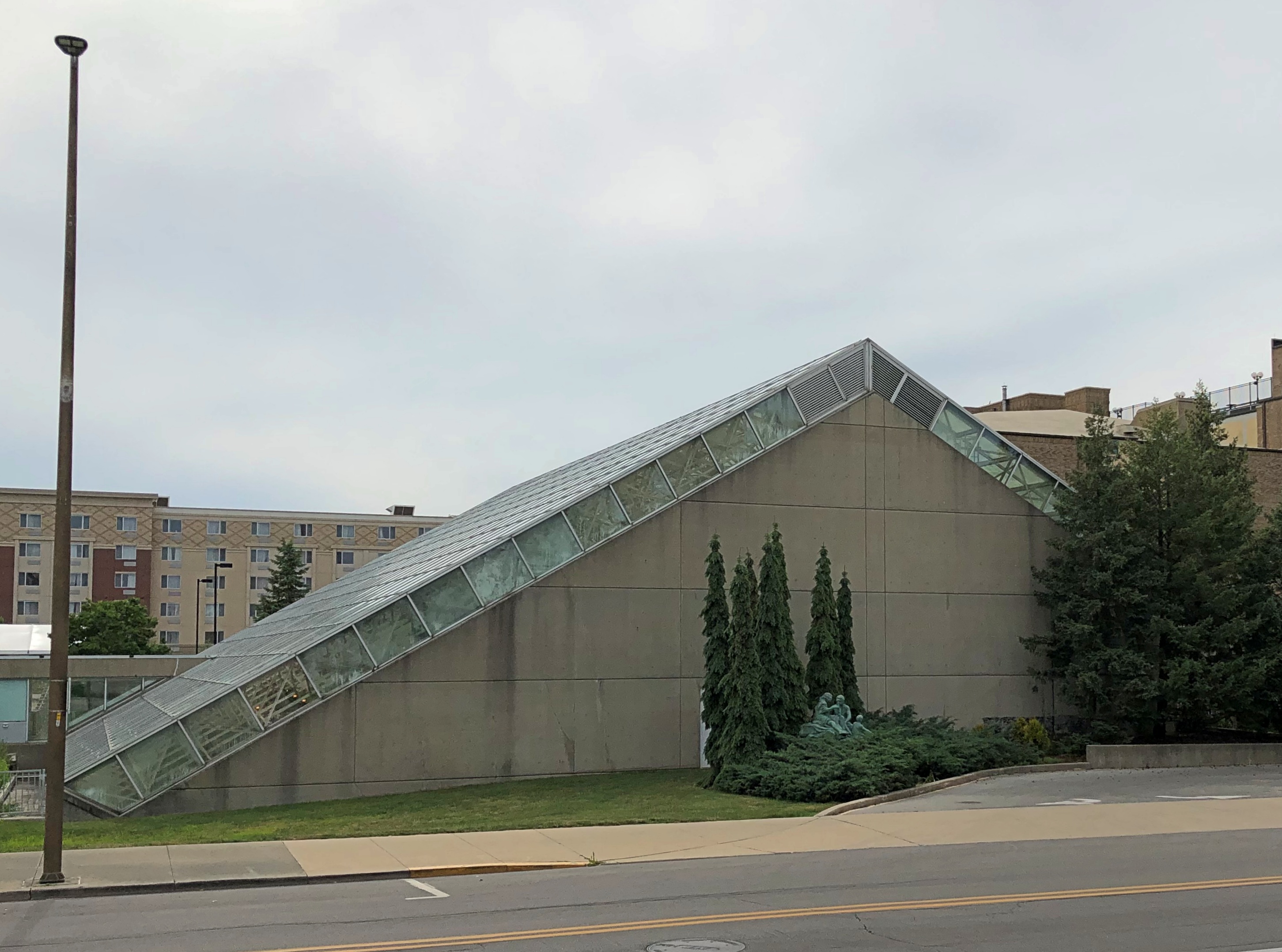
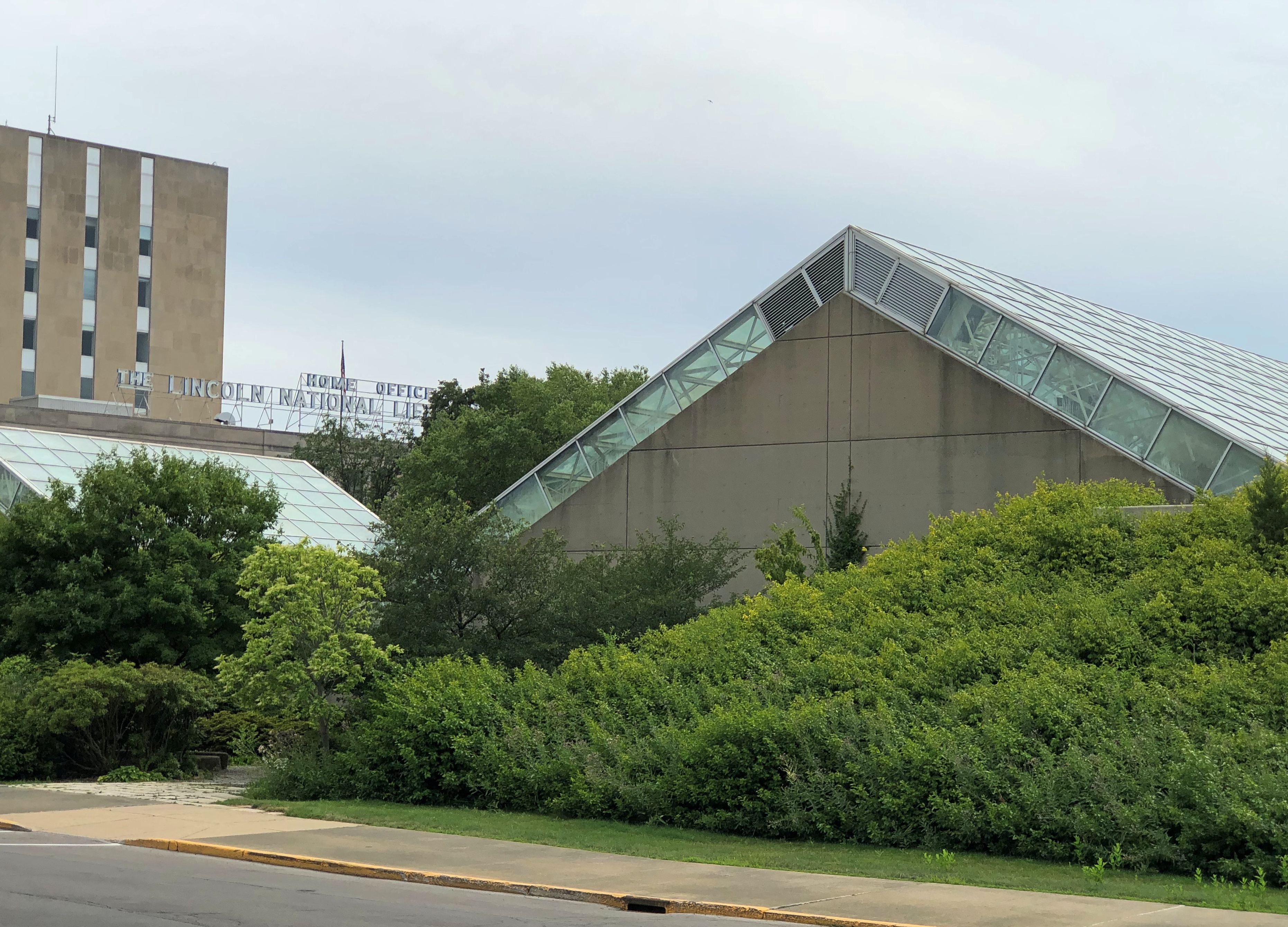
On July 2, we arrived in Fort Wayne an hour before the conservatory closed. Enough time this time. Not the most promising exterior. I’ve always been partial to domes when it comes to sheltering large numbers of plants.Foellinger-Freimann Botanical Conservatory
Foellinger-Freimann Botanical Conservatory

Foellinger-Freimann itself is nearly 40 years old, the result of redevelopment of the site by city, with the support of the Foellinger Foundation and the Frank Freimann Charitable Trust, both local orgs.

The grounds include 24,500 square feet of indoor gardens under three structures with slanting glass roofs, plus four outside gardens. From across the street, it looks a little bland, but it works well as a green space once you’re inside.

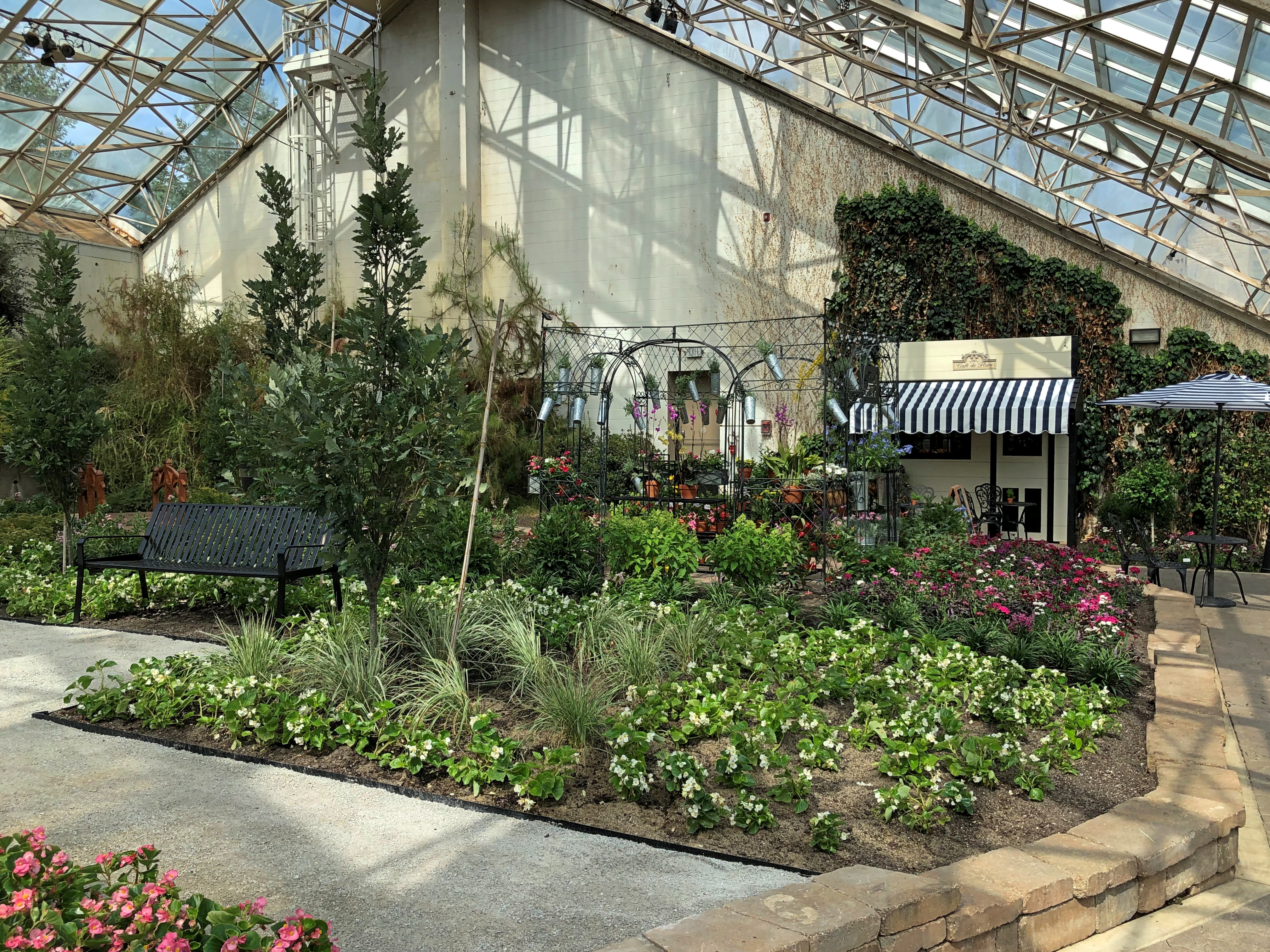
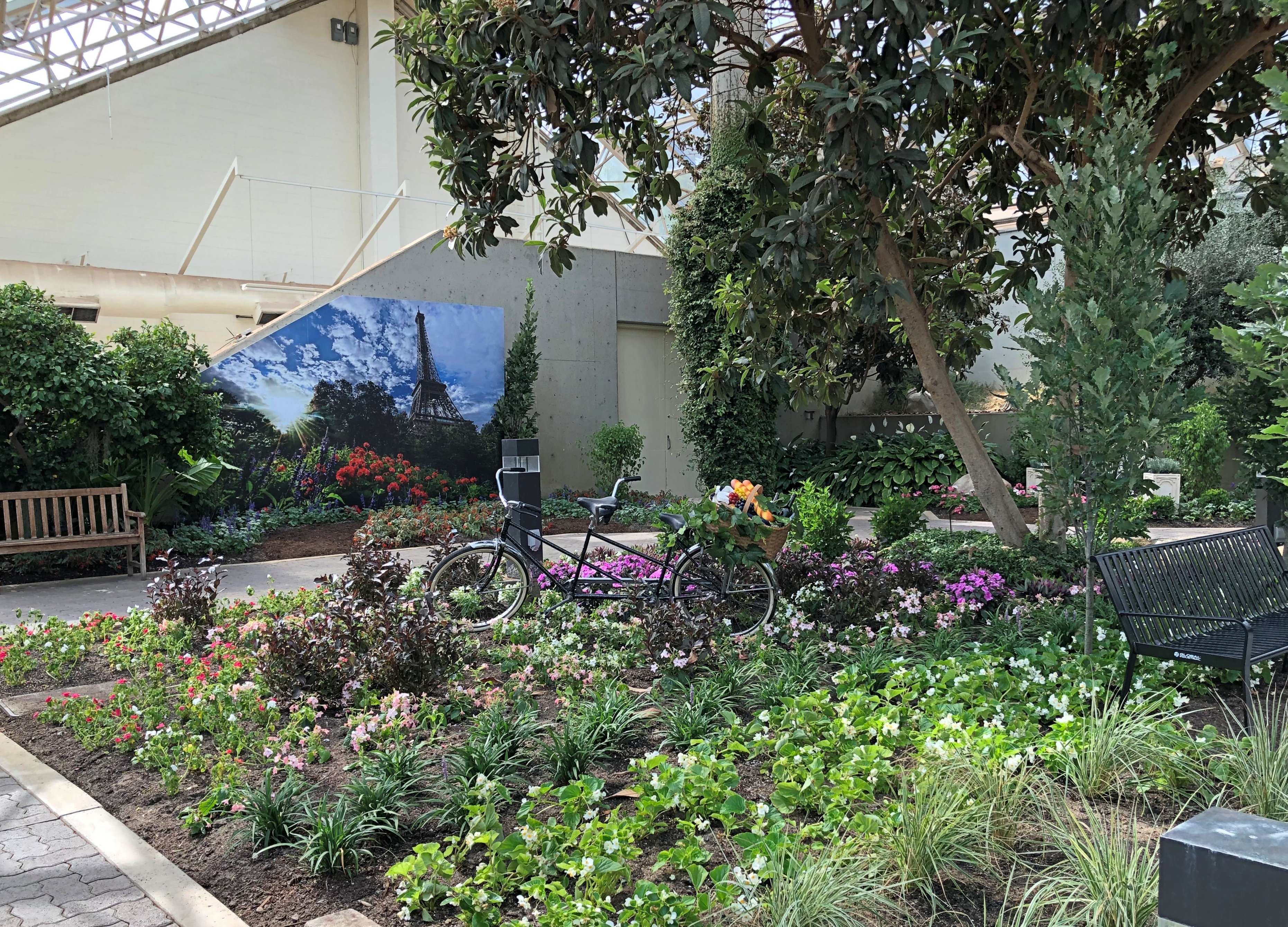
The first roofed garden has changing displays. The theme when we went was the gardens of Paris. Foellinger-Freimann Botanical Conservatory Foellinger-Freimann Botanical Conservatory

Nice. I guess it could have been the gardens of Nice — that would be different. But no, Paris gets all the glory. Wonder if the Corn Palace ever does Paris as its theme.

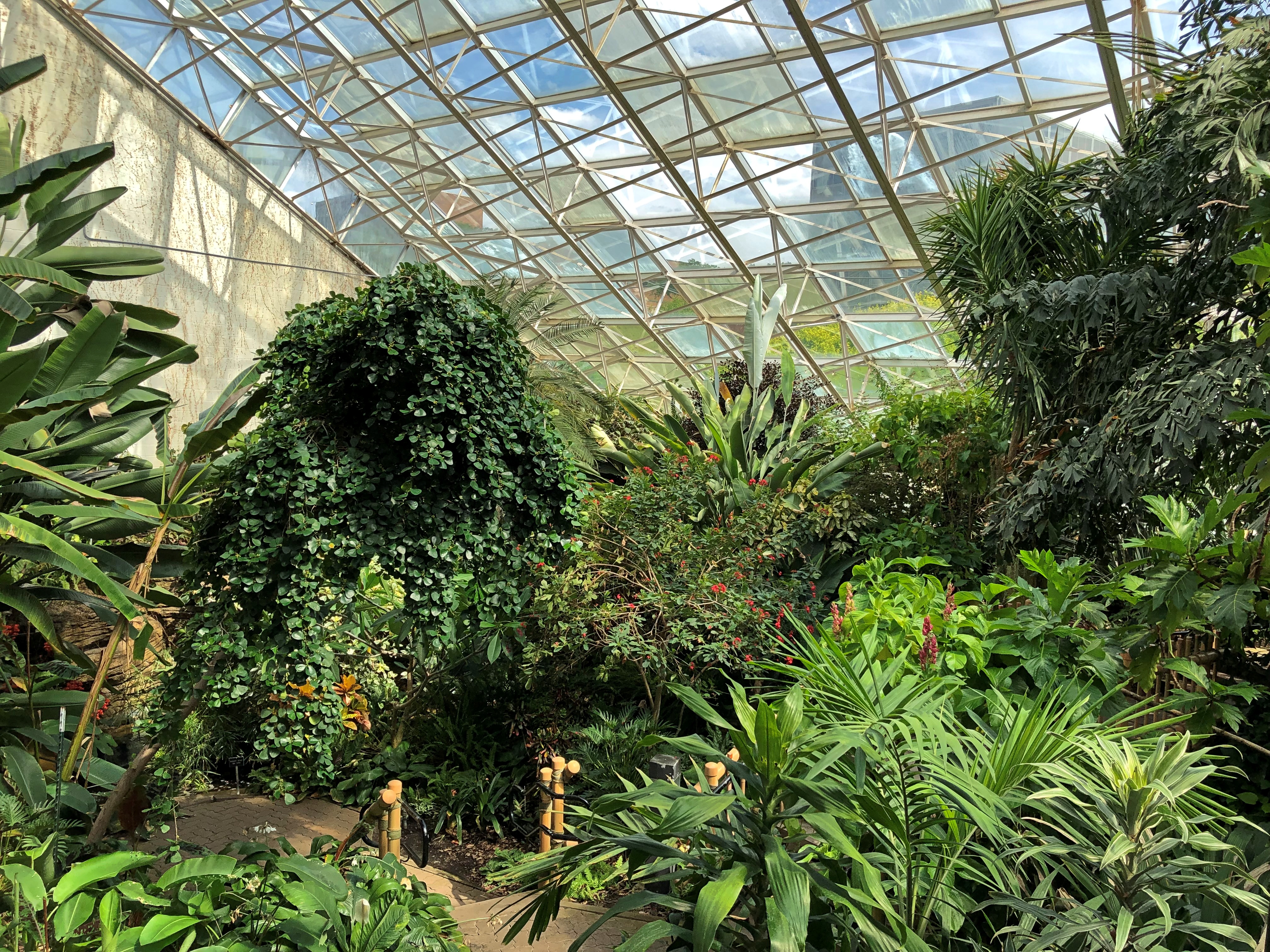
Next, a tropical garden. Guaranteed to be lush in July or January.Foellinger-Freimann Botanical Conservatory Foellinger-Freimann Botanical Conservatory

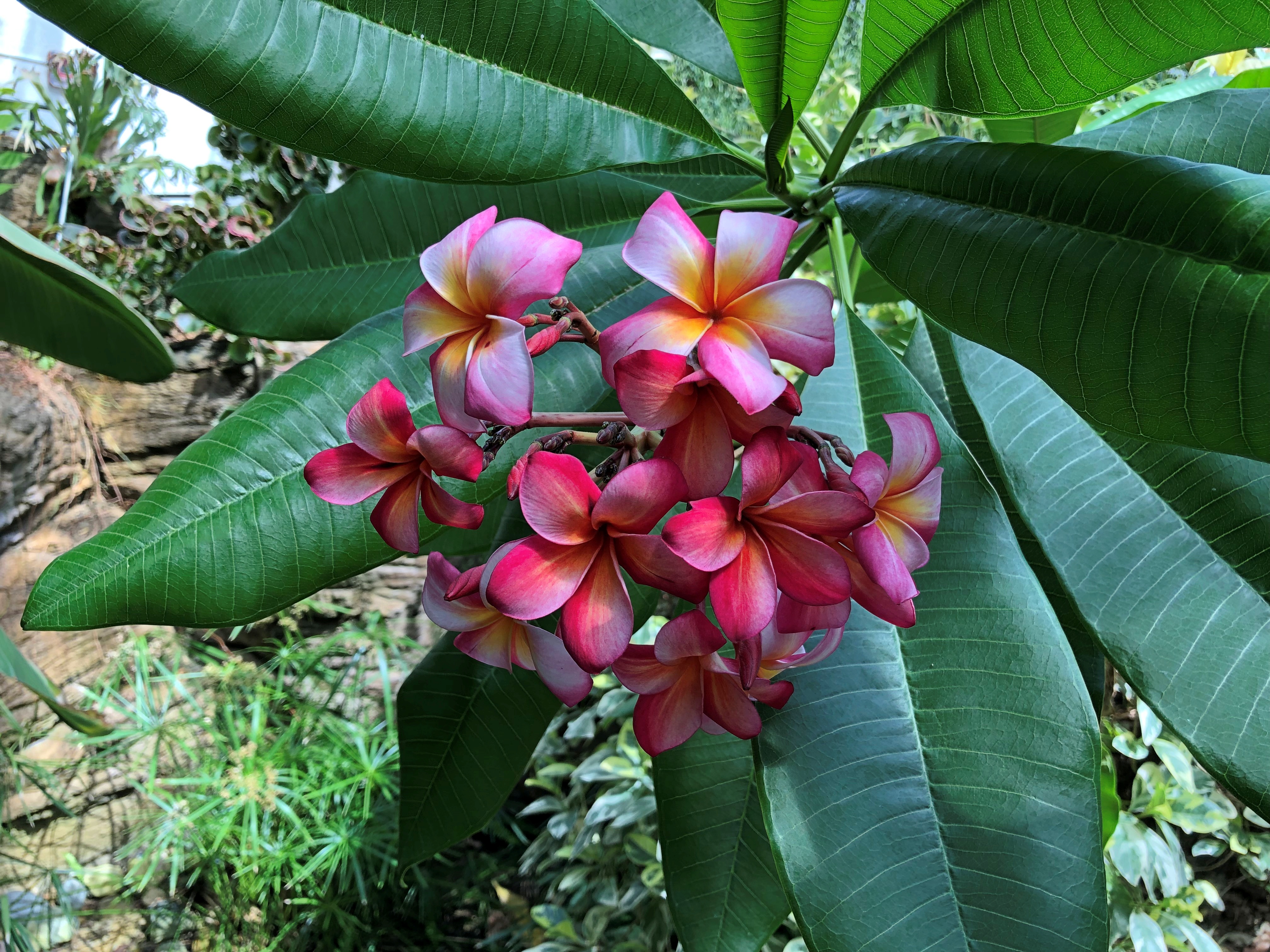
Too many good-looking flowers to name. At least, I don’t want to bother with names.Foellinger-Freimann Botanical Conservatory Foellinger-Freimann Botanical Conservatory Foellinger-Freimann Botanical Conservatory

And not just flowers.Foellinger-Freimann Botanical Conservatory Foellinger-Freimann Botanical Conservatory

But I will say this is a breadfruit plant.
Foellinger-Freimann Botanical Conservatory

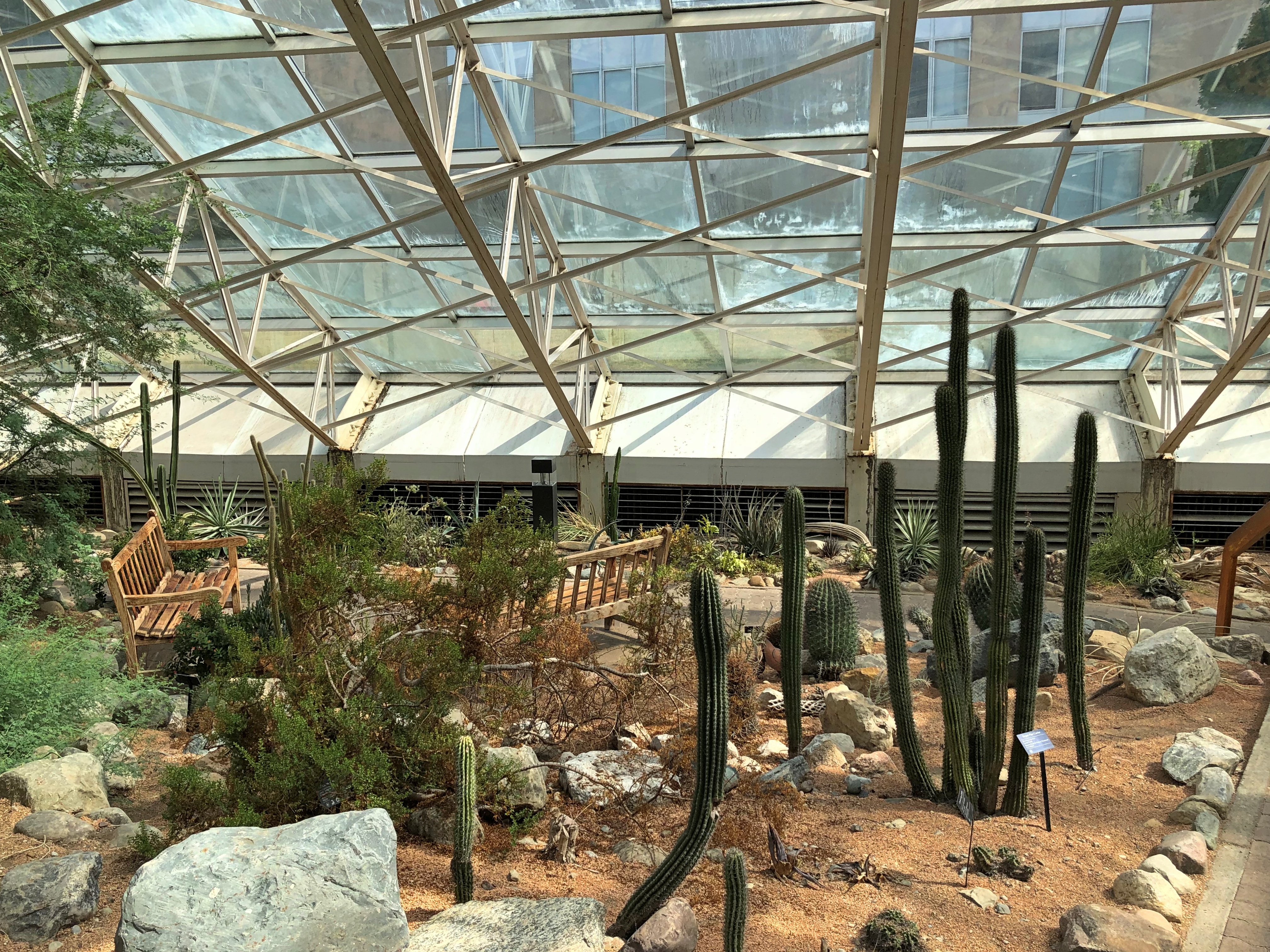
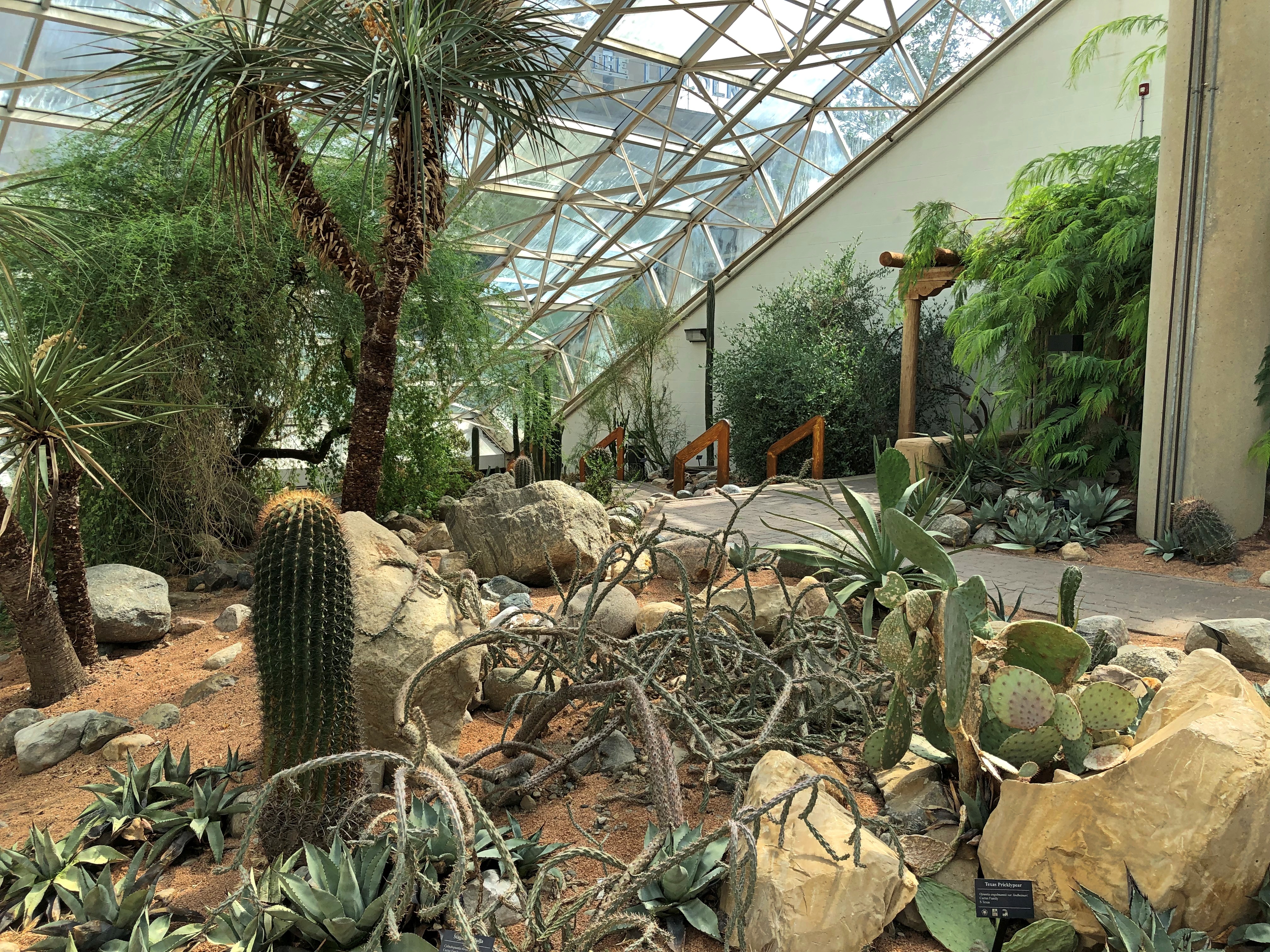
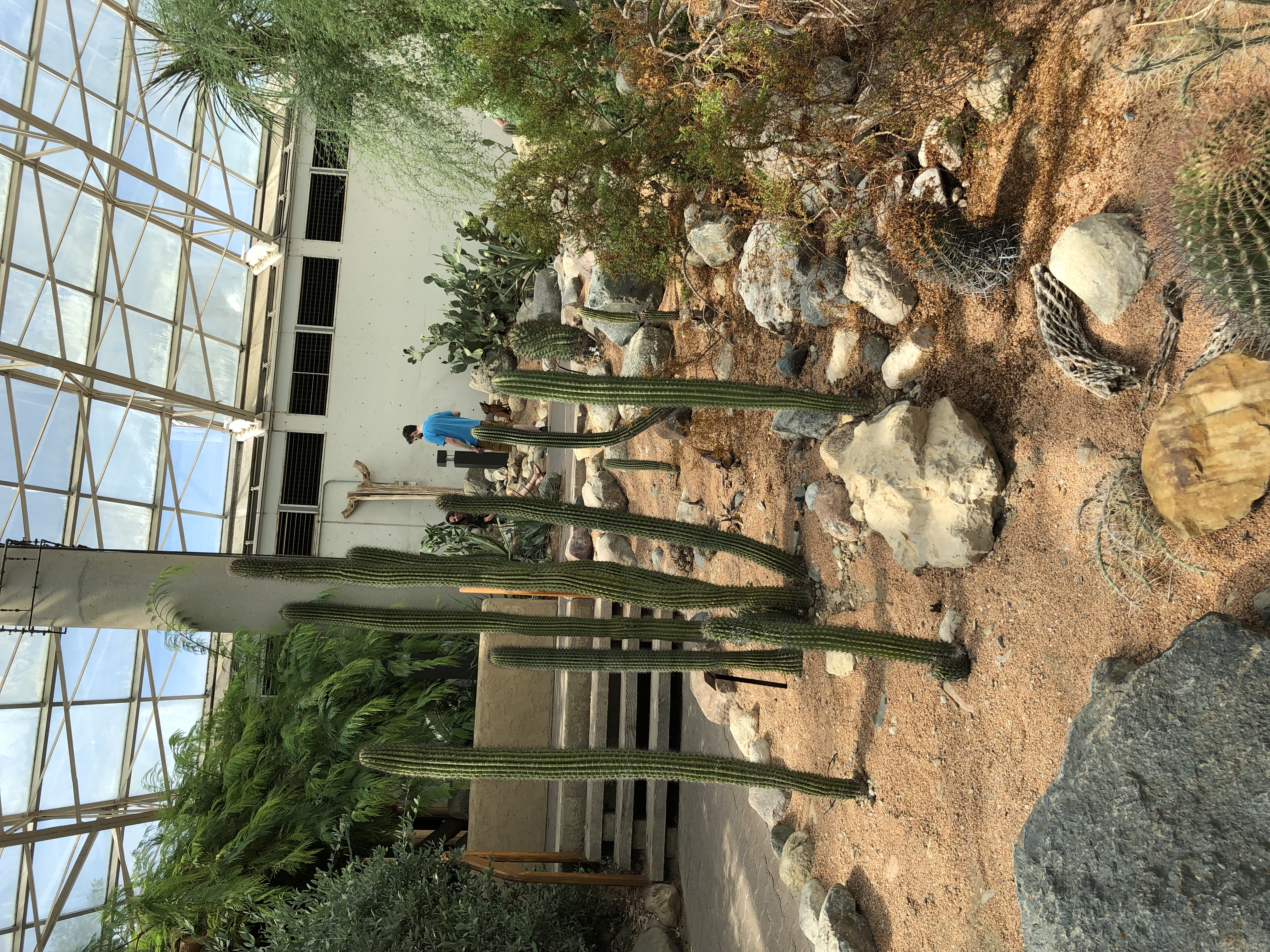
In the desert habitat, the plants are sparser, as you’d expect, but no less interesting.Foellinger-Freimann Botanical Conservatory Foellinger-Freimann Botanical Conservatory

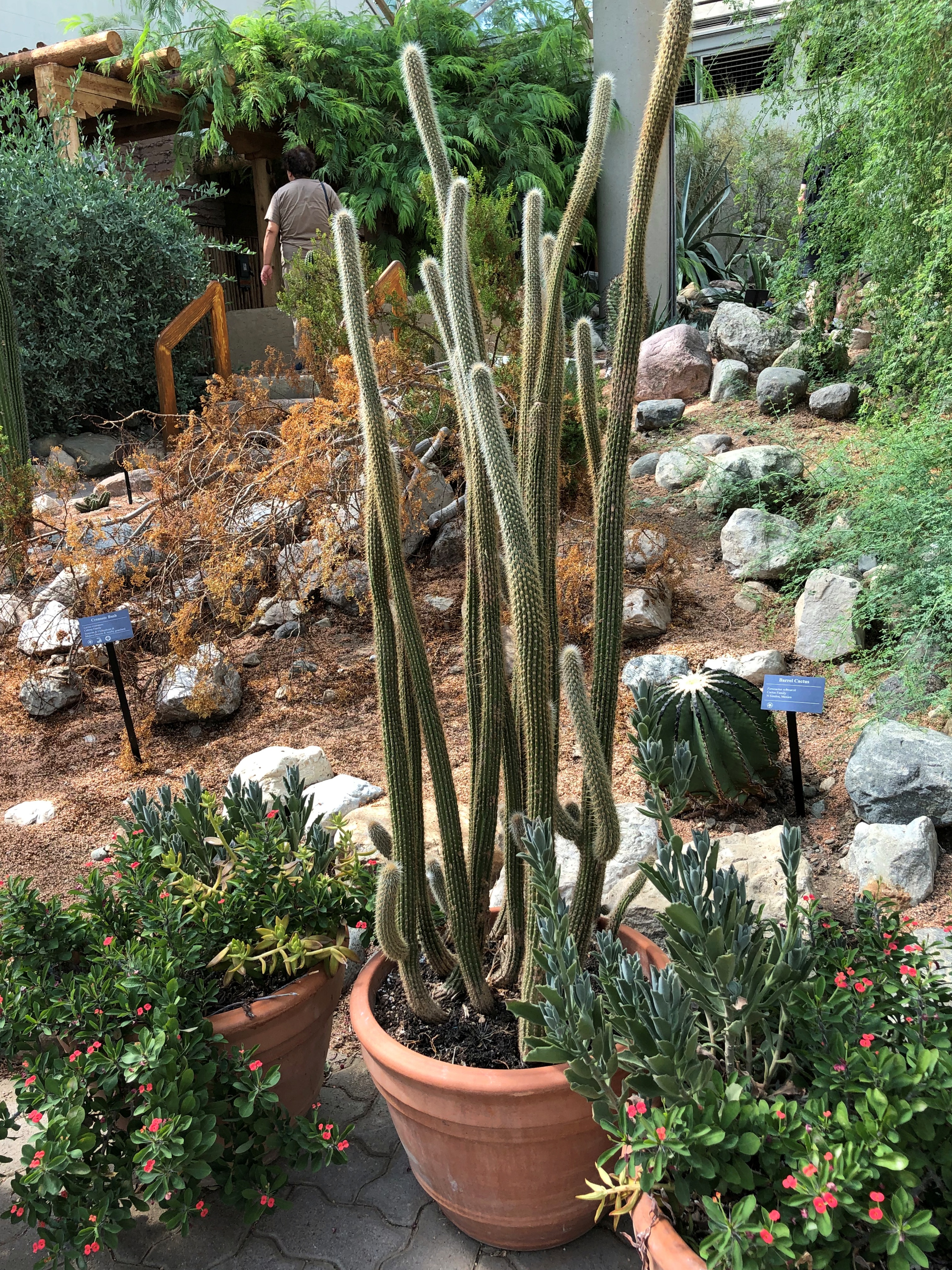
Various cacti, of course.Foellinger-Freimann Botanical Conservatory Foellinger-Freimann Botanical Conservatory

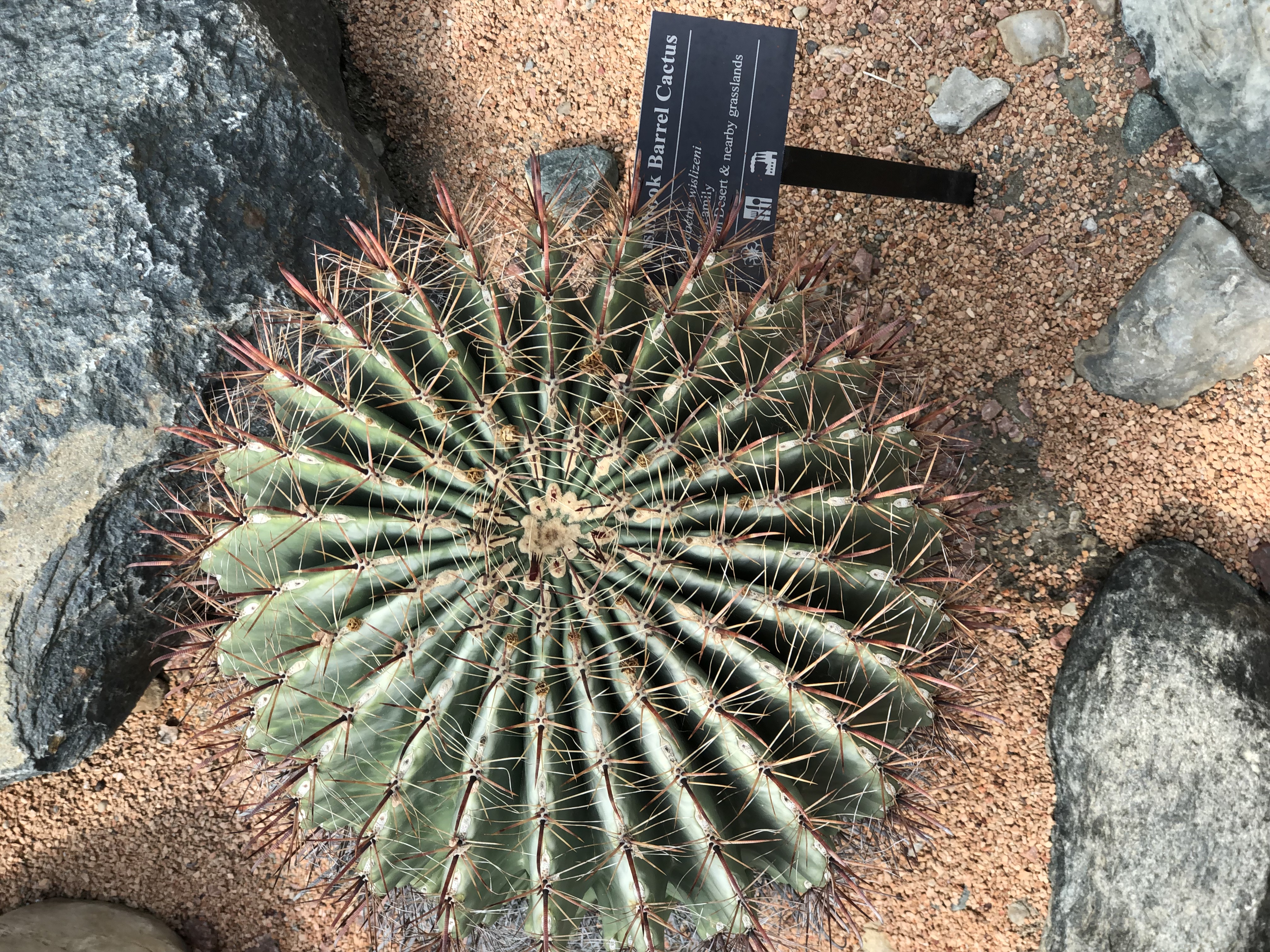
Including the fishhook barrel cactus, a painful-sounding name if there ever was one.
Foellinger-Freimann Botanical Conservatory

Outside, it was summer and the gardens weren’t short on blossoms.Foellinger-Freimann Botanical Conservatory Foellinger-Freimann Botanical Conservatory Foellinger-Freimann Botanical Conservatory

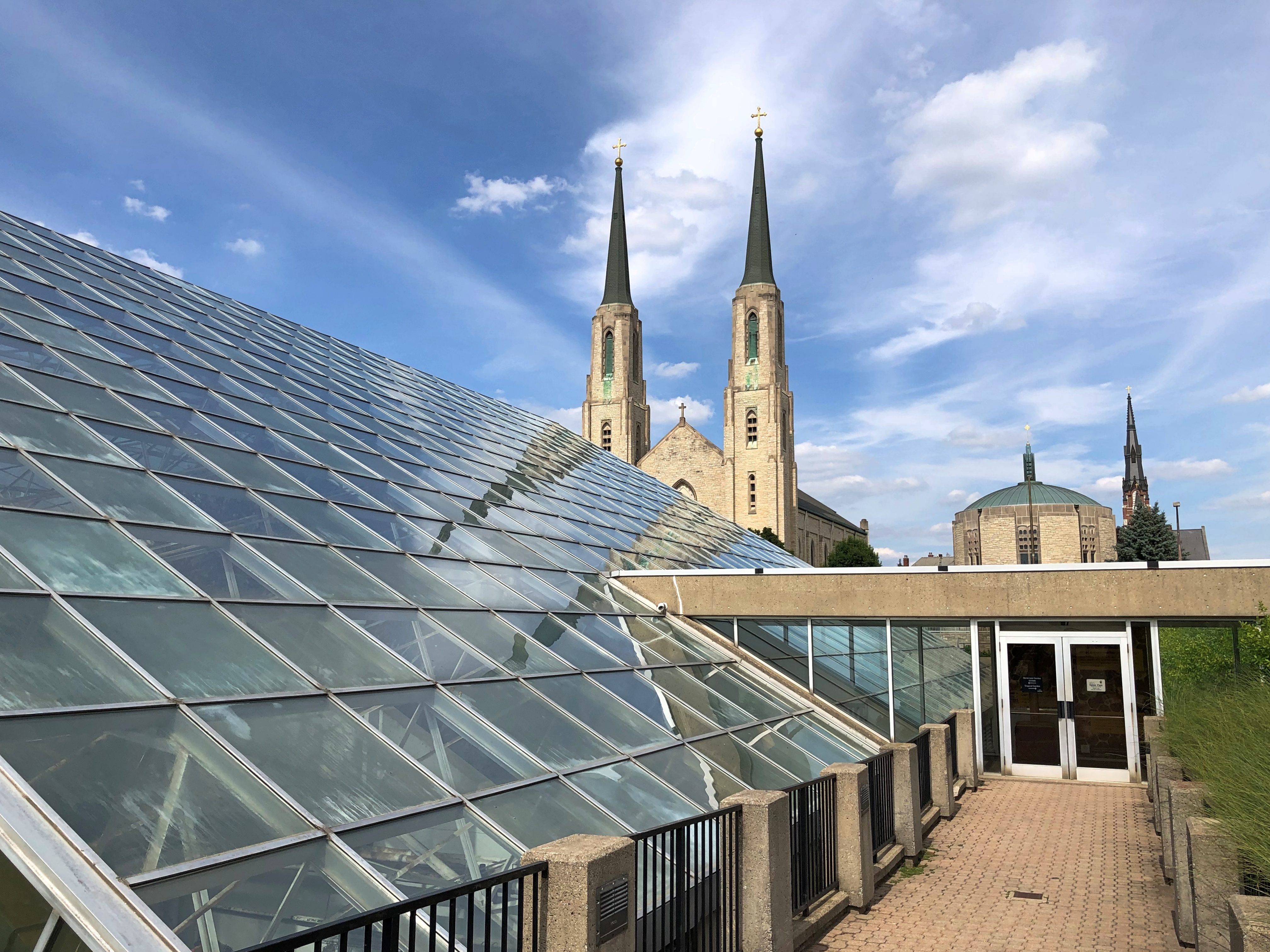
Just before heading back inside, I caught this view.
Foellinger-Freimann Botanical Conservatory

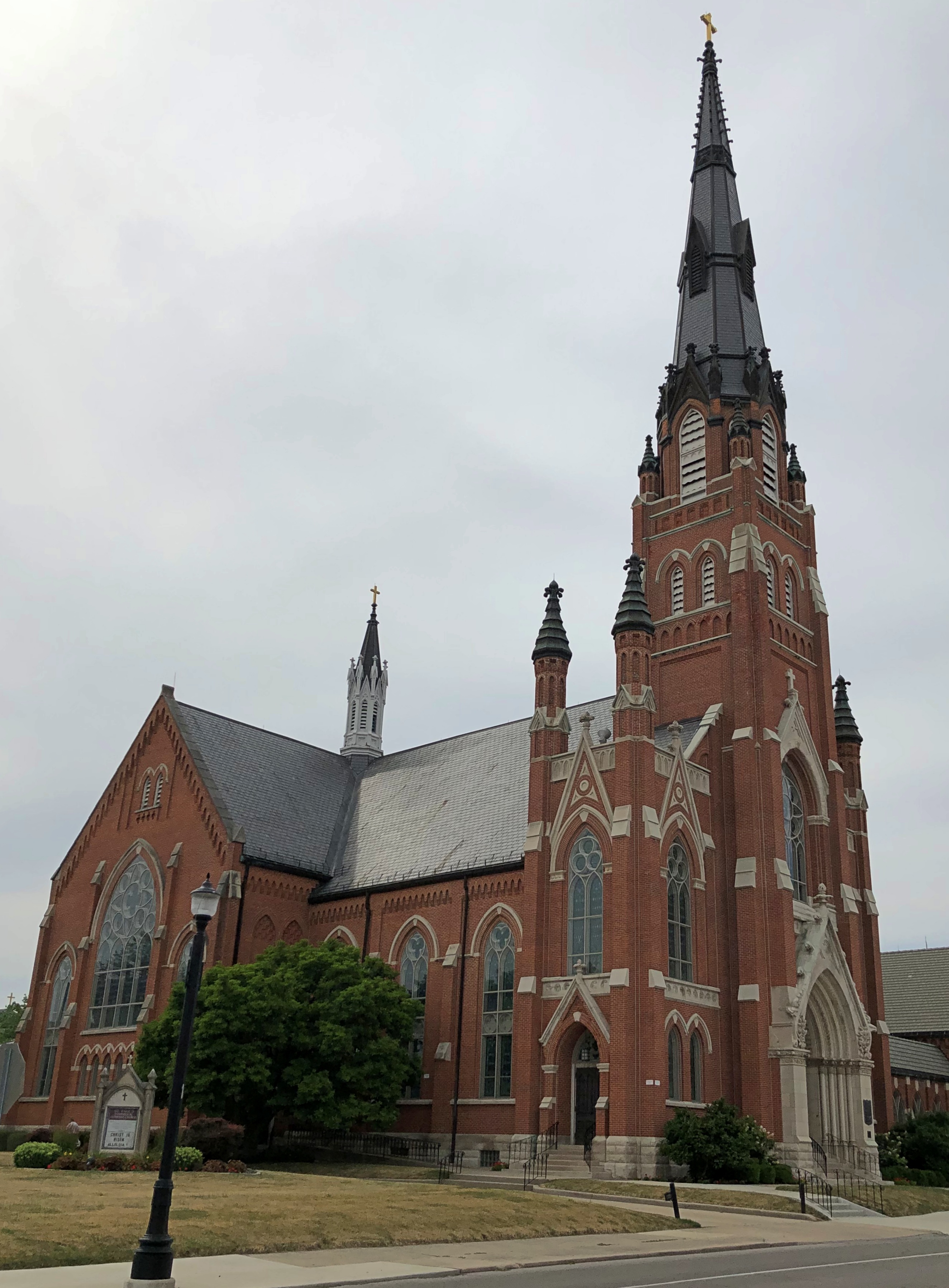
The Cathedral of the Immaculate Conception, which is across the street, looks like it’s inspecting the glass of Foellinger-Freimann.

Downtown Fort Wayne

RIP, Will Friend. I didn’t know him well, but did meet him at events over the years, and we got along. I didn’t realize he was quite that young.

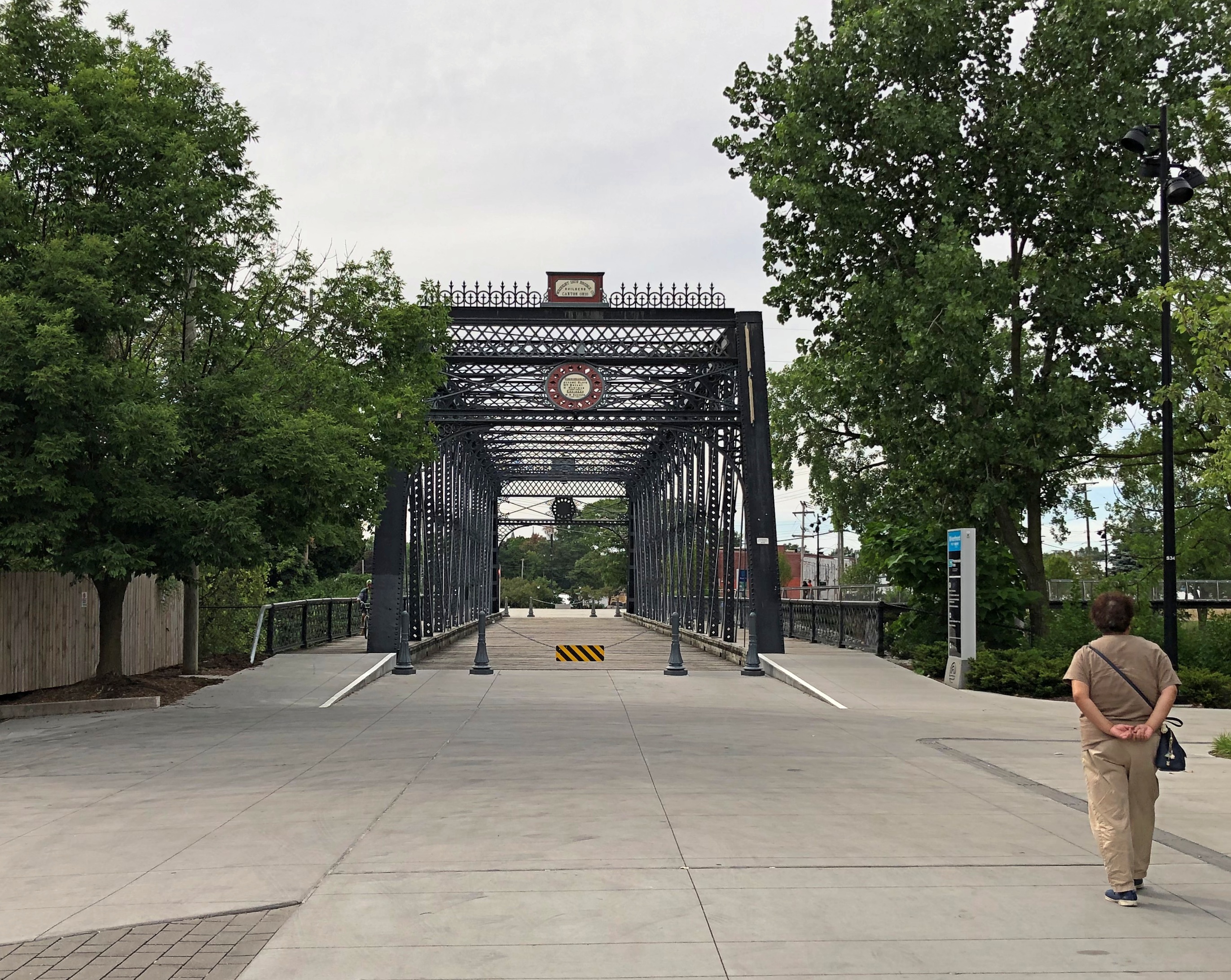
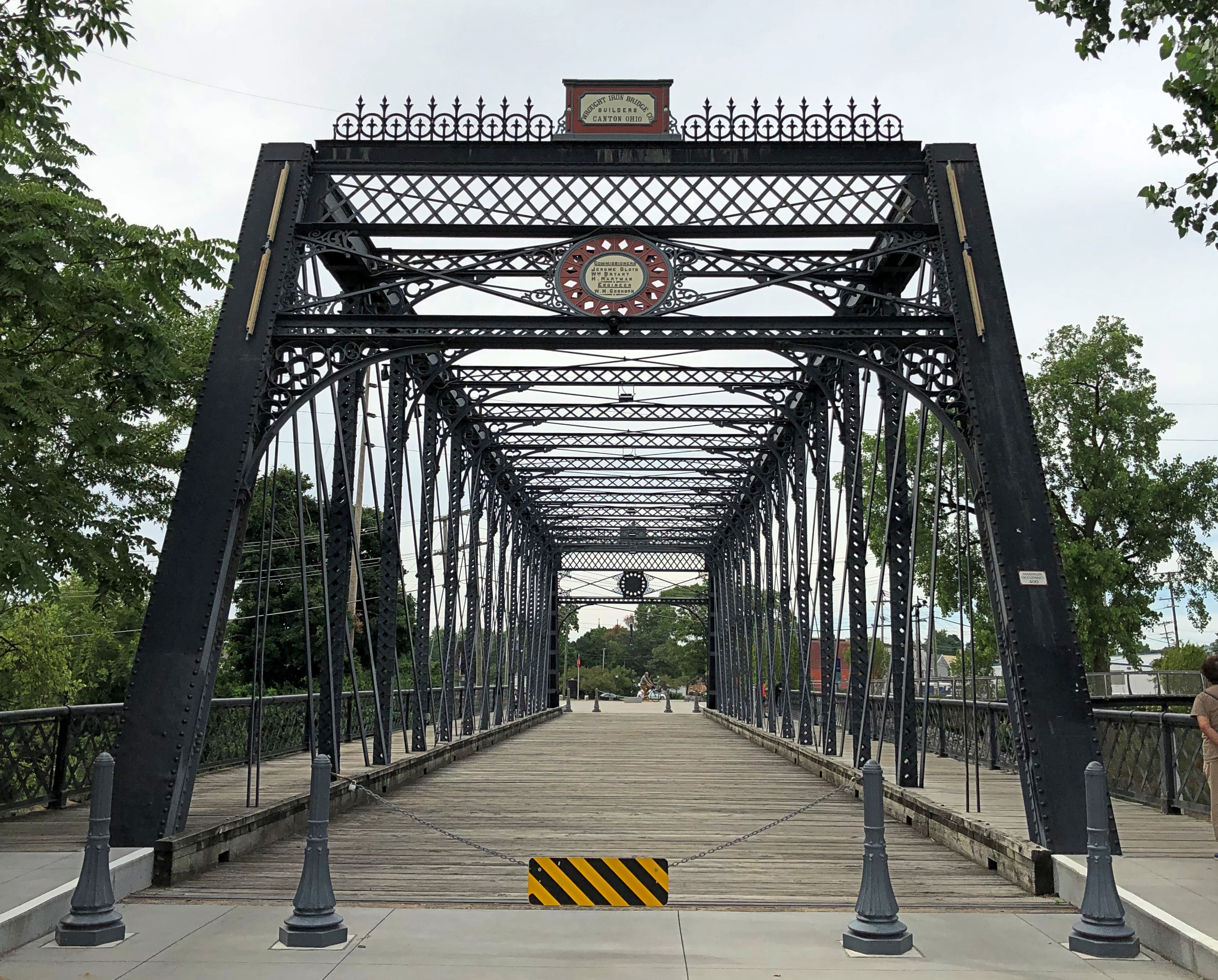
Toward the end of the afternoon on Saturday, we took a walk in downtown Fort Wayne. Not long after parking the car, this caught our attention.Wells Street Bridge, Fort Wayne Wells Street Bridge, Fort Wayne

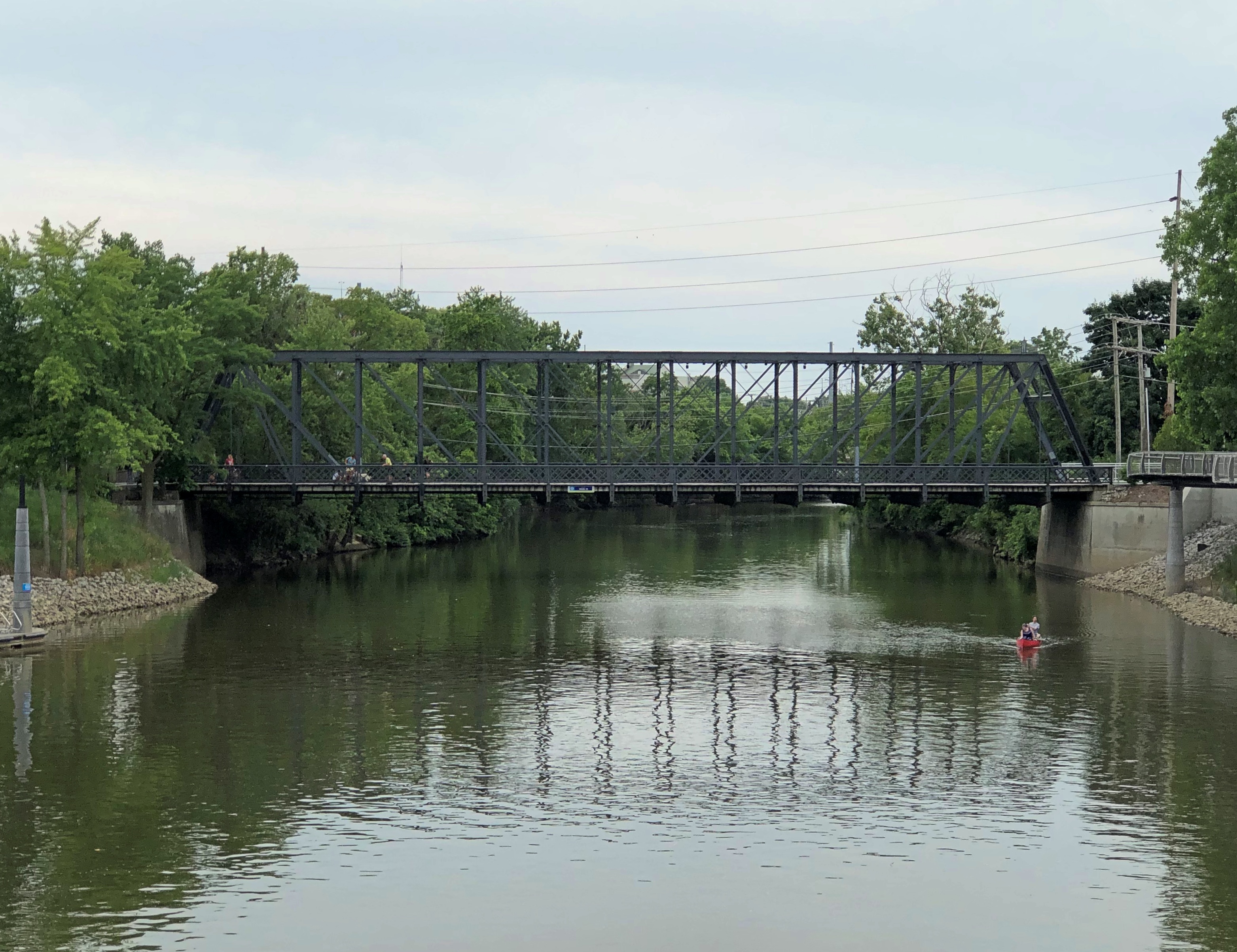
Not just any pedestrian bridge, but the historic Wells Street Bridge over the St. Marys River. A sign on the 1884 truss bridge names the Wrought Iron Bridge Company of Akron, Ohio, as the bridgebuilder.Wells Street Bridge, Fort Wayne

For nearly 100 years, vehicular traffic crossed the bridge, but in 1982 it became a pedestrian walkway. A view from the bridge, toward a less-developed part of the city.Wells Street Bridge, Fort Wayne

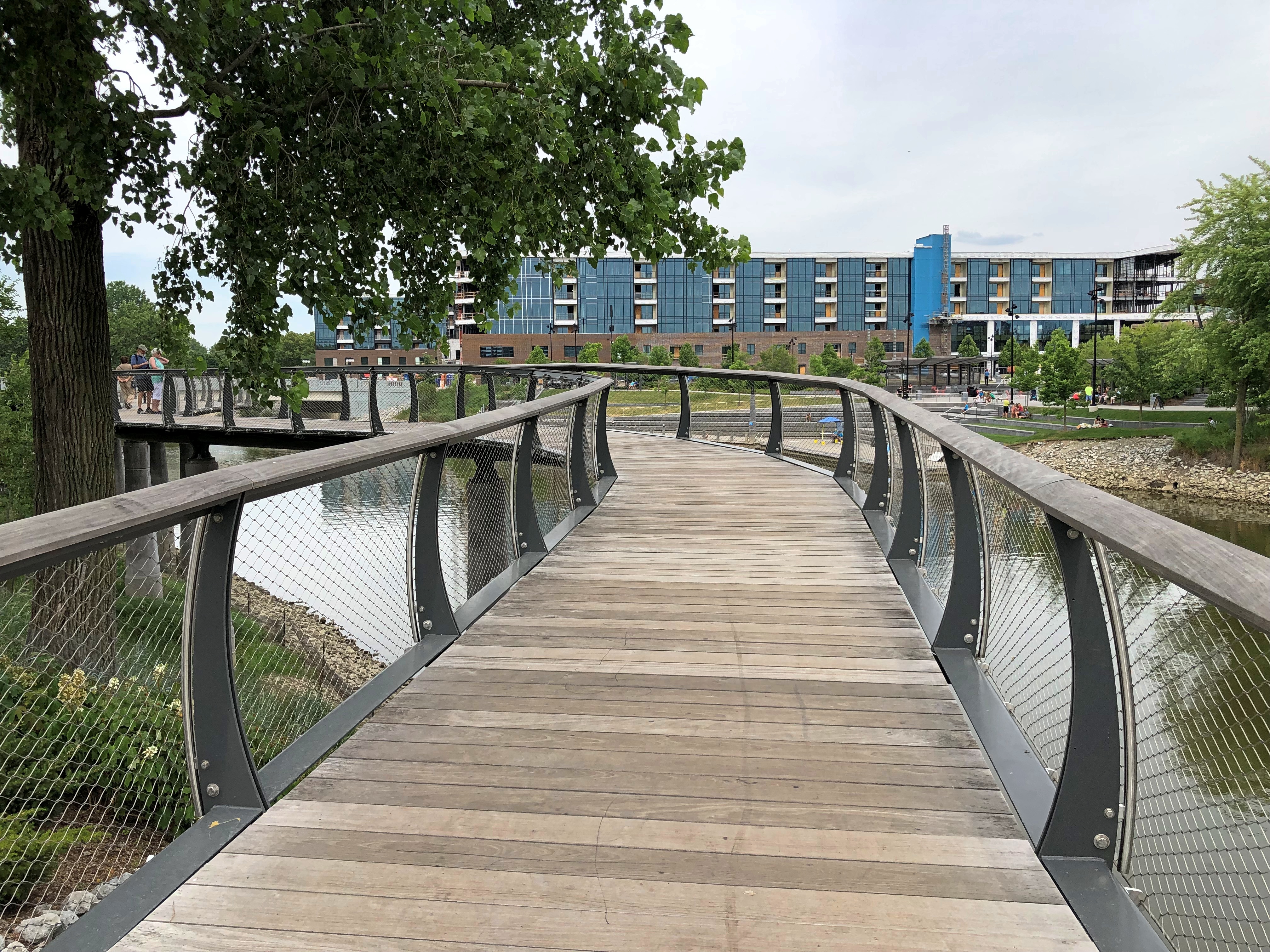
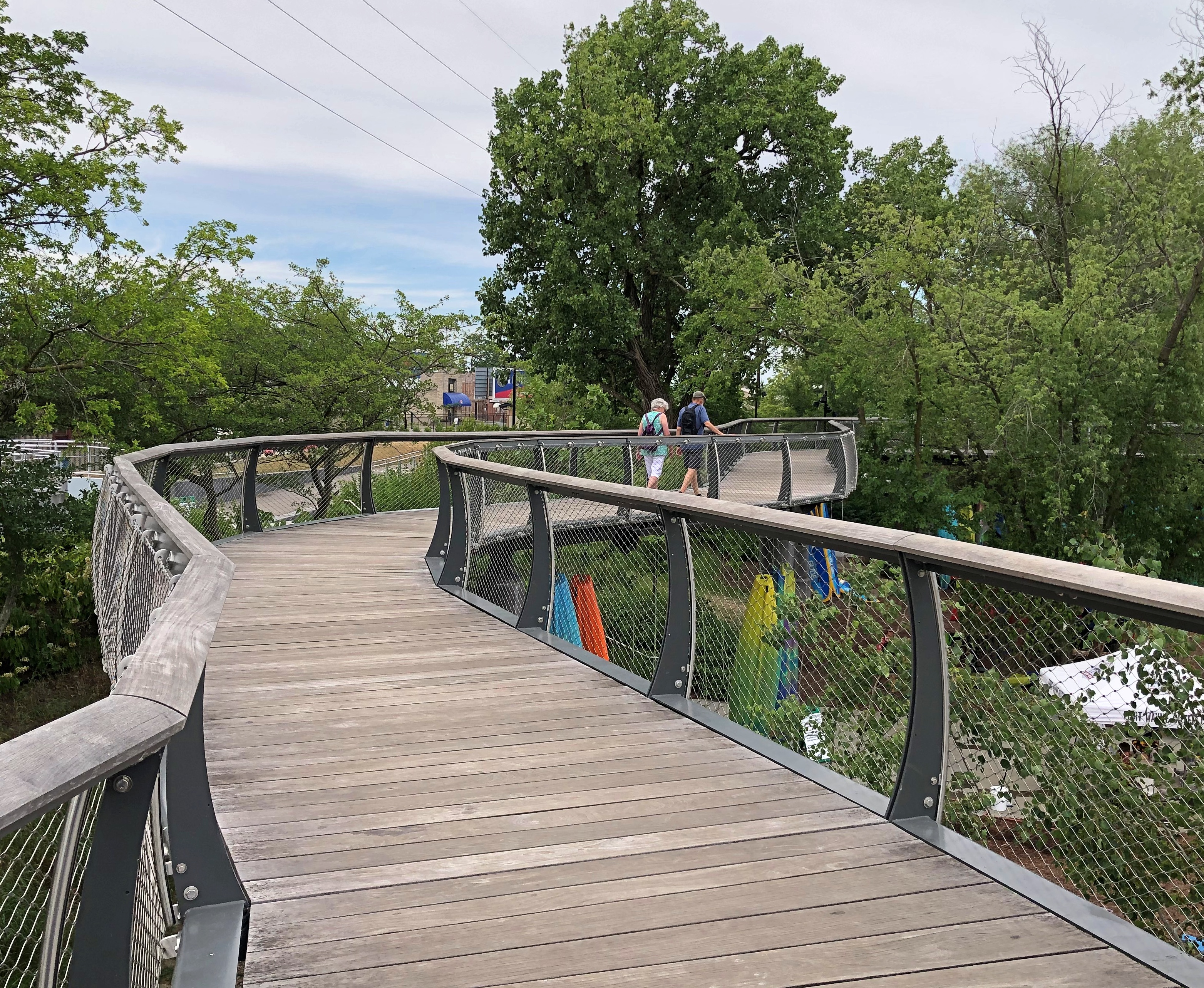
After you cross the bridge, there is another elevated walkway, this one over a small section of riverbank. The blue building in the background is a block of riverside apartments, under construction. Move to Fort Wayne, young members of the laptop class. While rents don’t exactly seem cheap there — I don’t think anywhere counts as that anymore — there have to better deals than in the large cities.Riverwalk, Fort Wayne Riverwalk, Fort Wayne

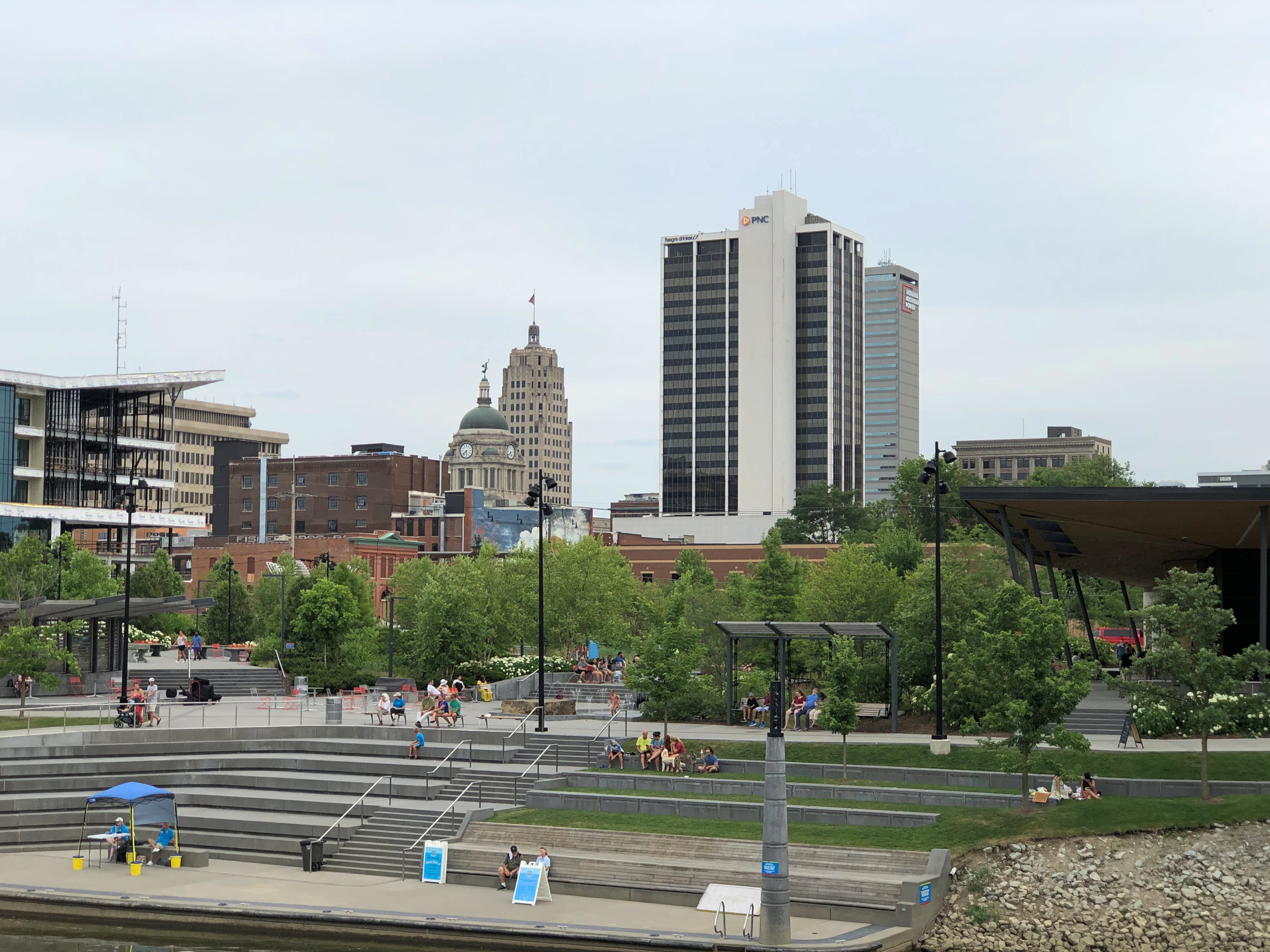
The walk offers a view of the Fort Wayne — skyline isn’t quite the word. A view of a few  larger buildings in the background, with Promenade Park in the foreground. We soon  rested a while at that park, lounging around on iron chairs at an iron table, drinking soda. Rest: always an essential part of any walkabout.Downtown Fort Wayne

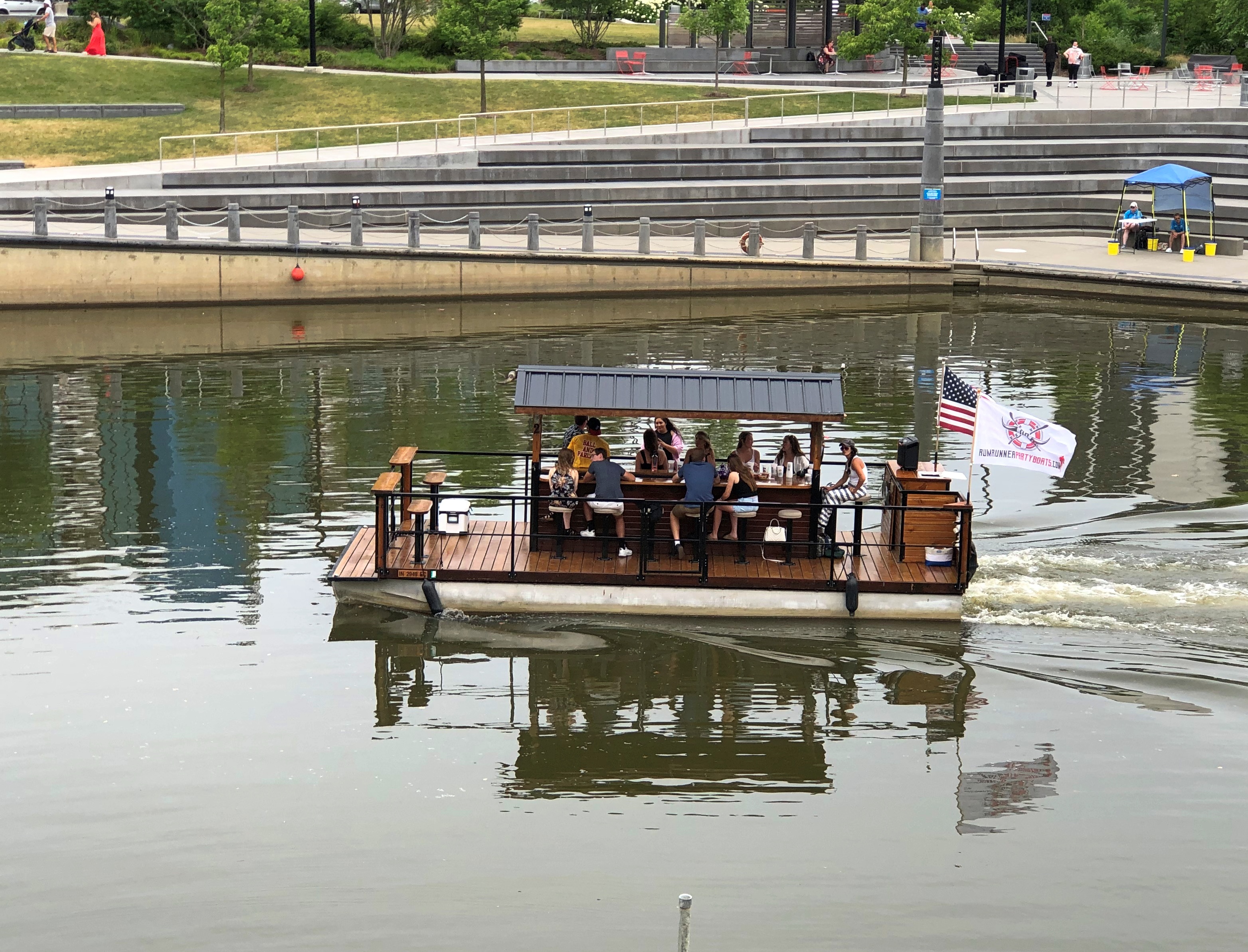
Occasional party boats ply the St. Marys.Downtown Fort Wayne

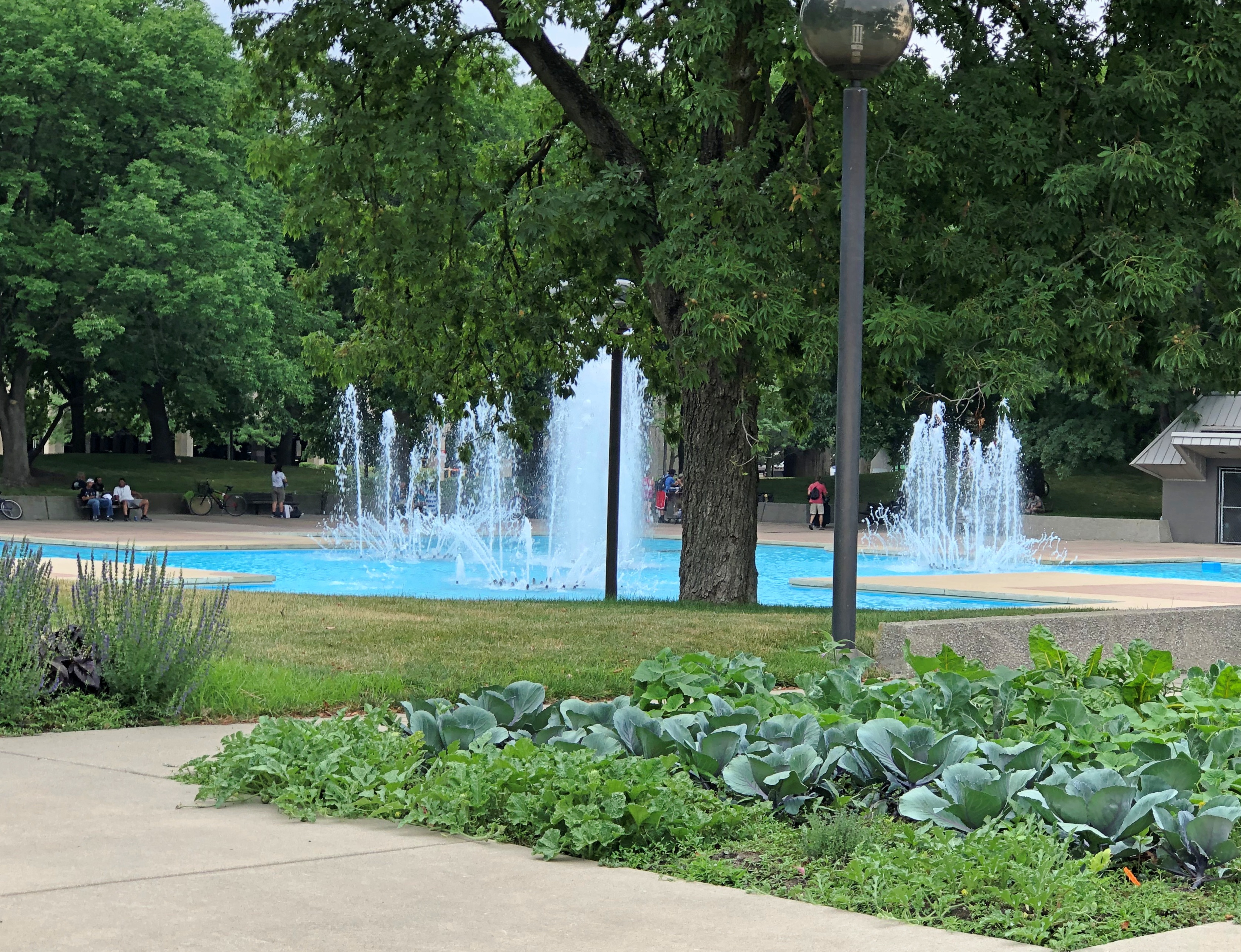
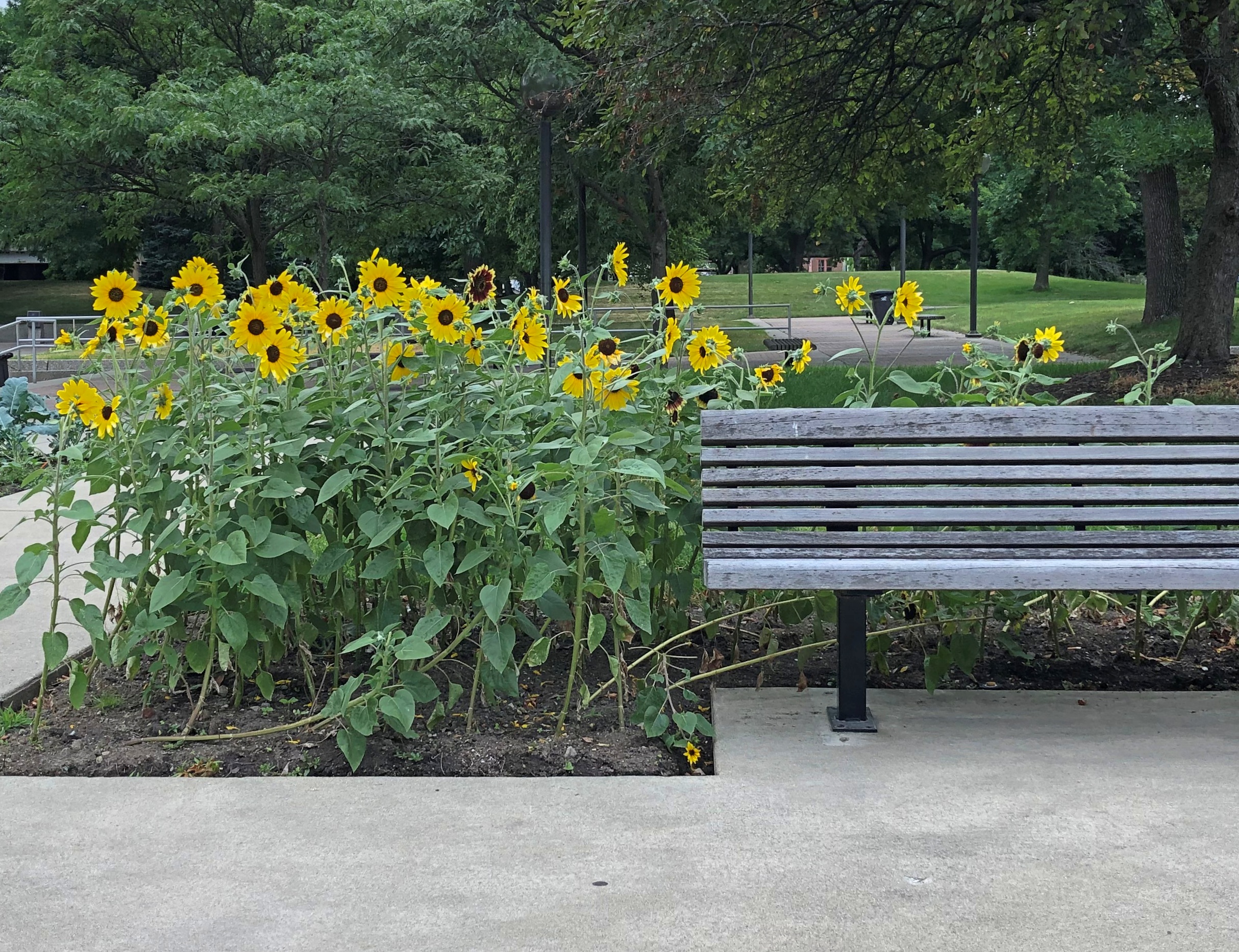
Away from the river is Freimann Square, home of the aforementioned Anthony Wayne statue, as well as a fountain and flower beds. Downtown Fort Wayne
Downtown Fort Wayne

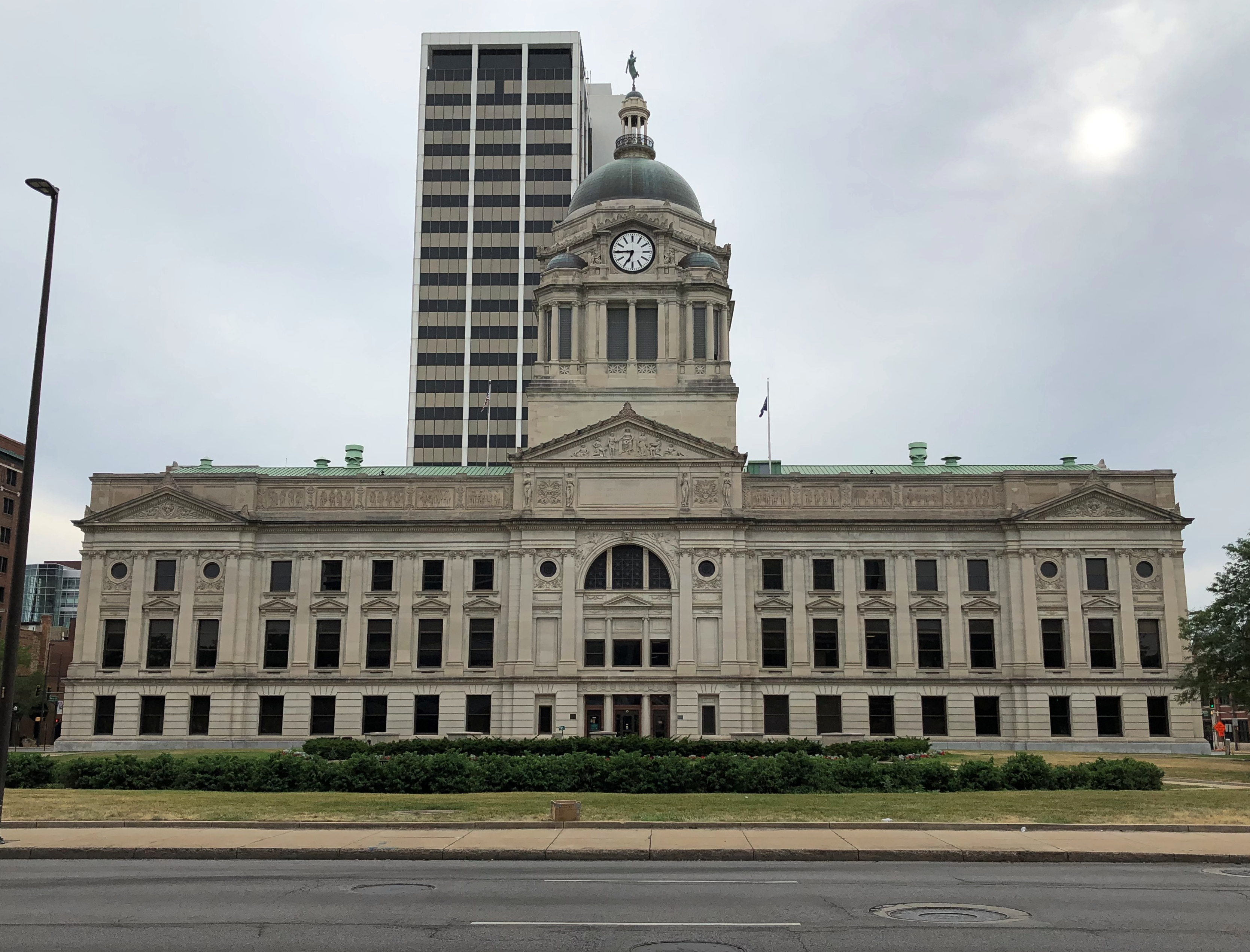
Not far is the Allen County Courthouse, designed around the turn of the 20th century by Hoosier architect Brentwood Tolan.Courthouse, Downtown Fort Wayne Courthouse, Downtown Fort Wayne

The figure on top, I’ve read, is a copper Lady Liberty that turns, as a vane does, with the wind.

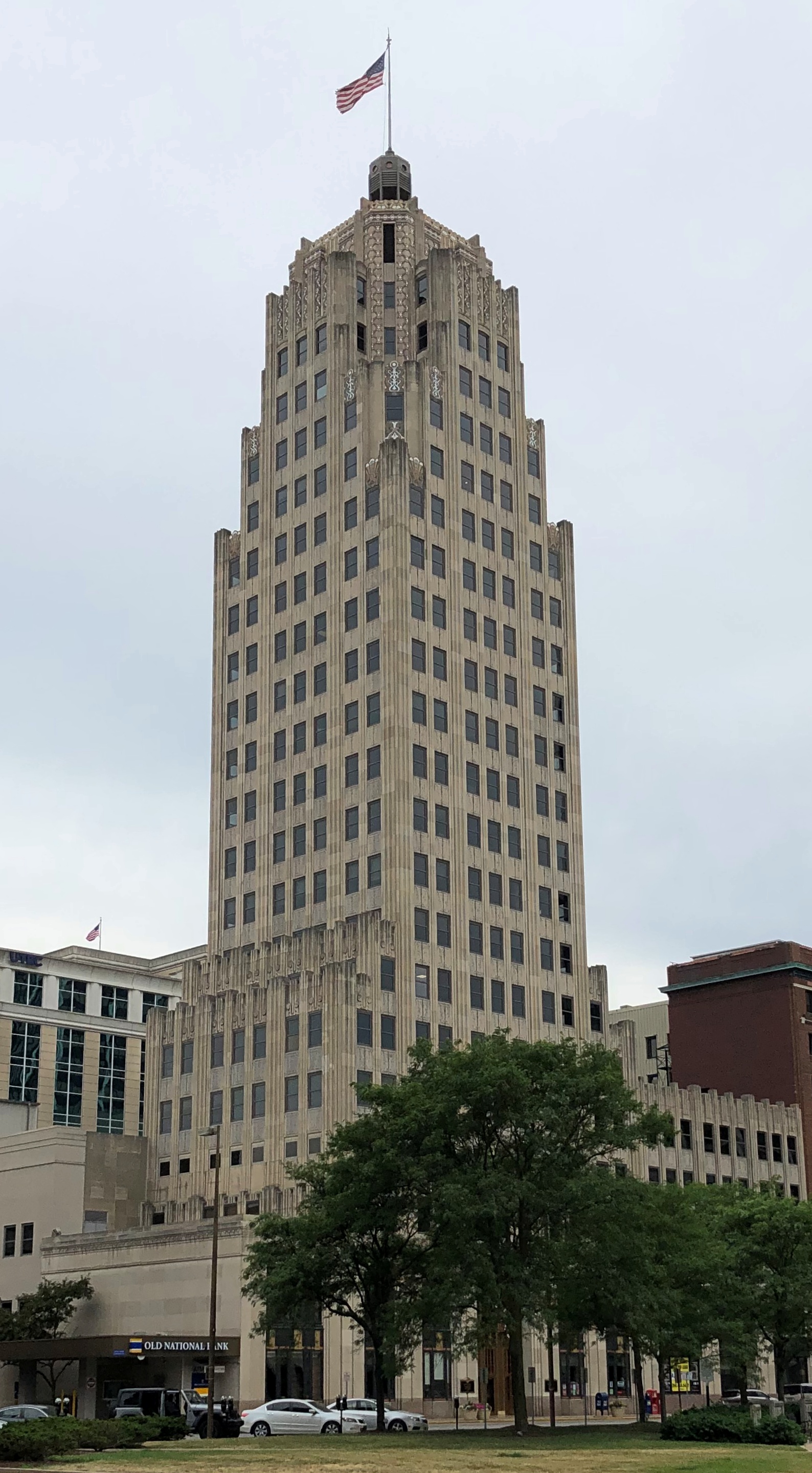
A few decades pass and you get art deco. In this case, the Lincoln Bank Tower, another of those structures started just in time — 1929. Design by another Hoosier architect, Alvin Strauss.Lincoln Bank Building, Fort Wayne
It could have been the German American Bank Tower, but for some hard-to-figure reason the bank changed its name in 1918.

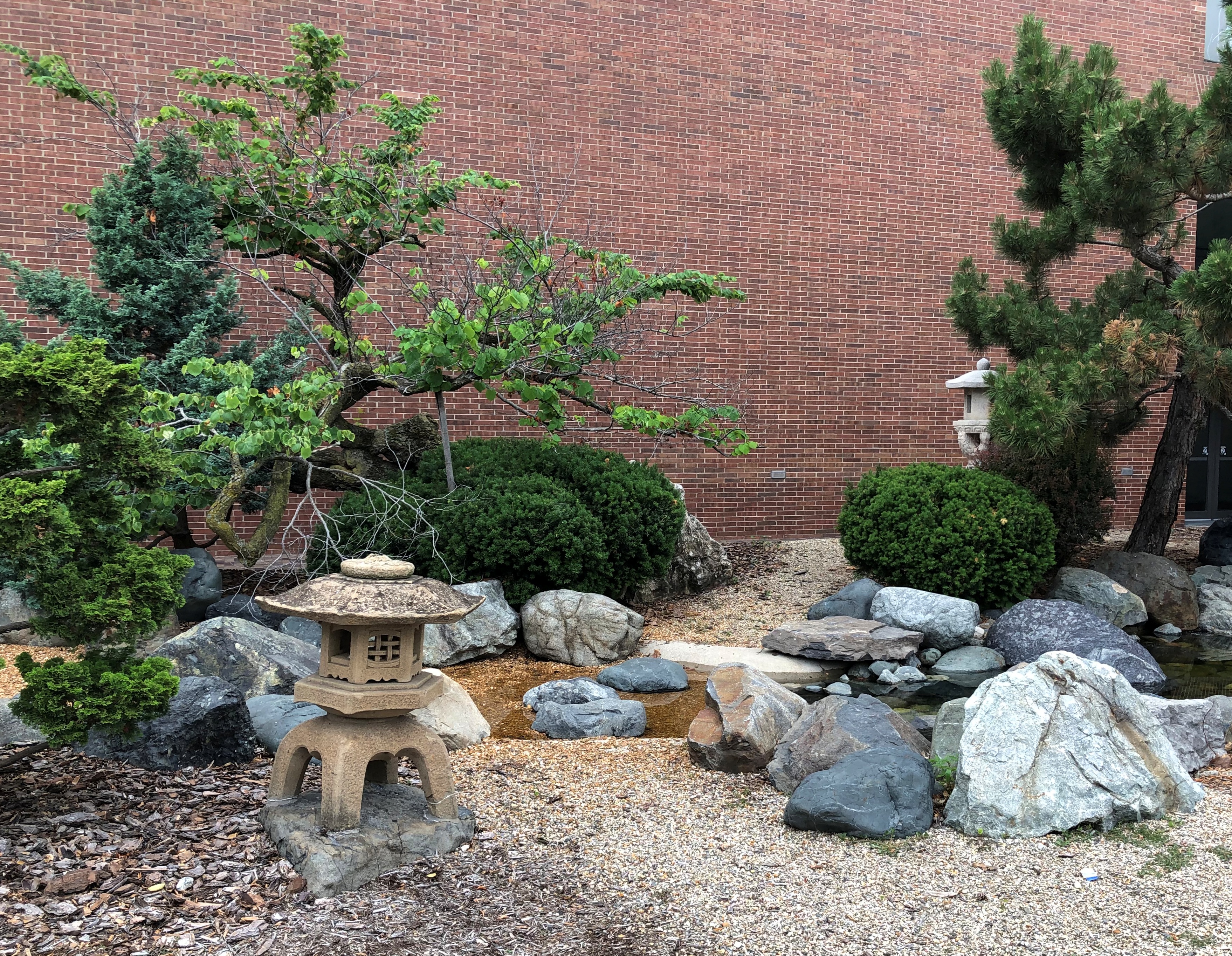
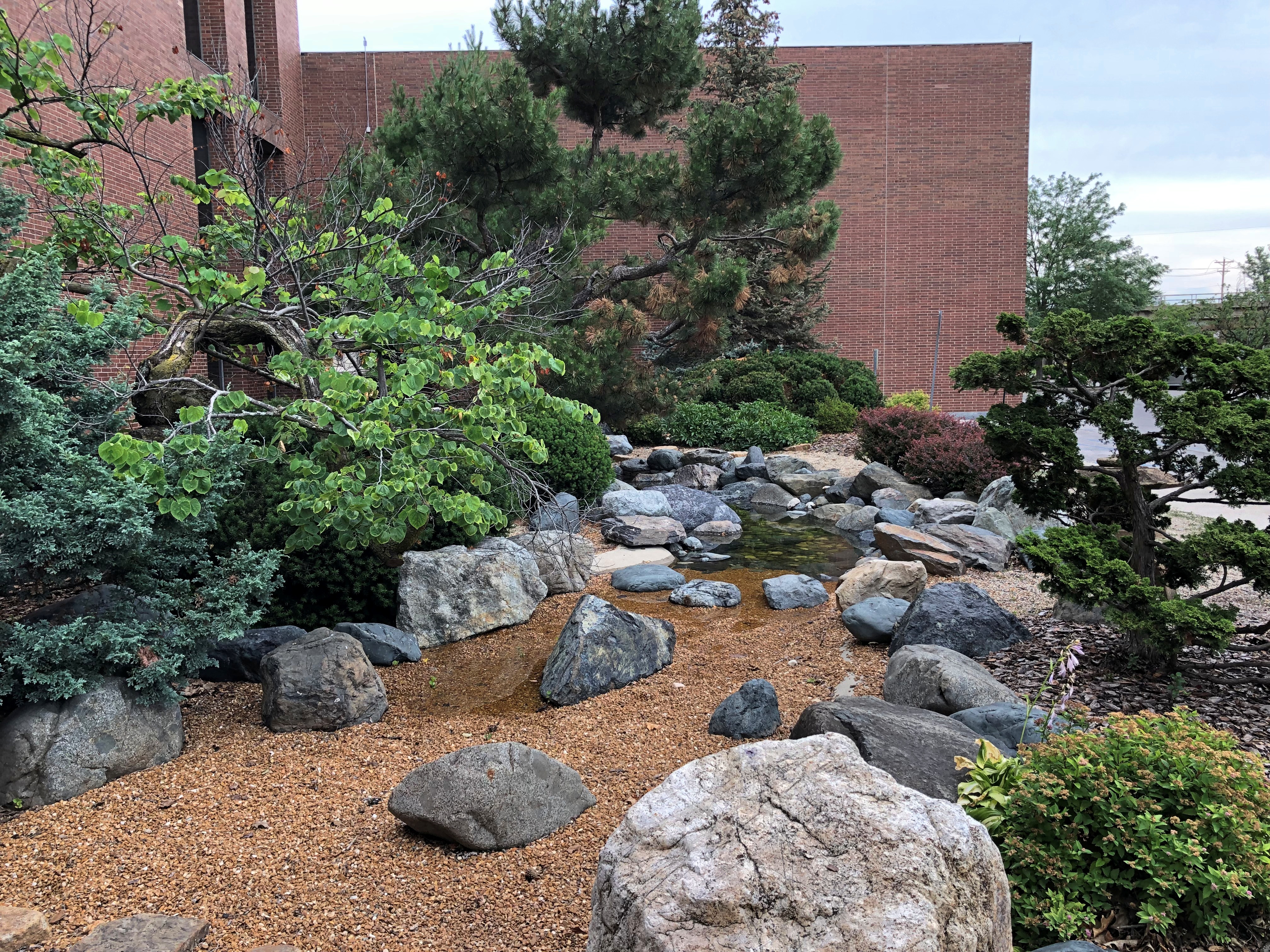
The Japanese Friendship Garden, on a tenth of an acre near the Fort Wayne Museum of Art, was gift of one of Fort Wayne’s sister cities, Takaoka. I had to look it up, even though I probably passed through it on a train the fall we went to Hida-Takayama. I suspect most Japanese, faced with the name Fort Wayne, would have to look it up, too.

The museum was closed when we got there, but the garden is always open. Bonus: the garden also features a 2002 time capsule under a rock, slated for a 2027 opening.Friendship Japanese Garden, Fort Wayne Friendship Japanese Garden, Fort Wayne

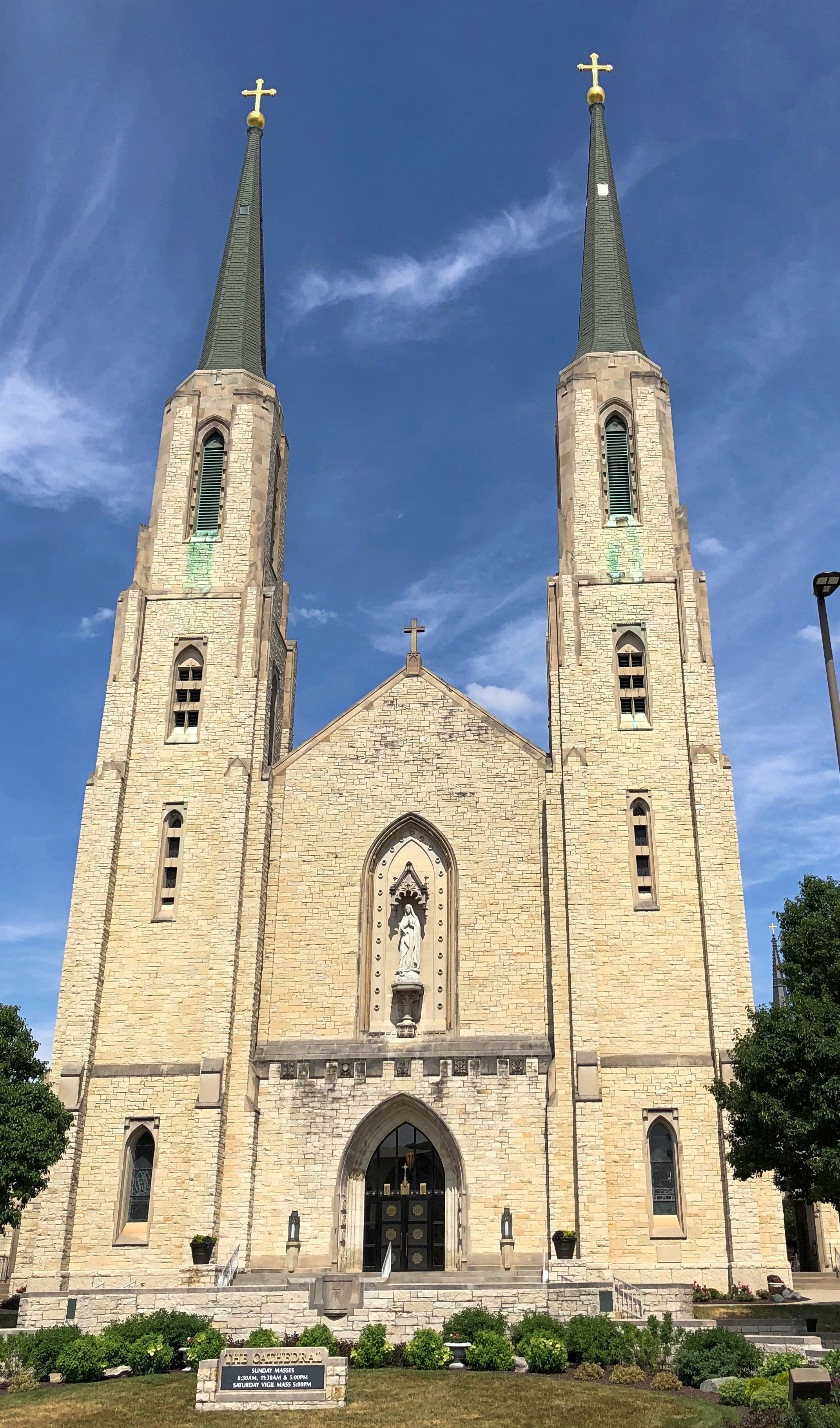
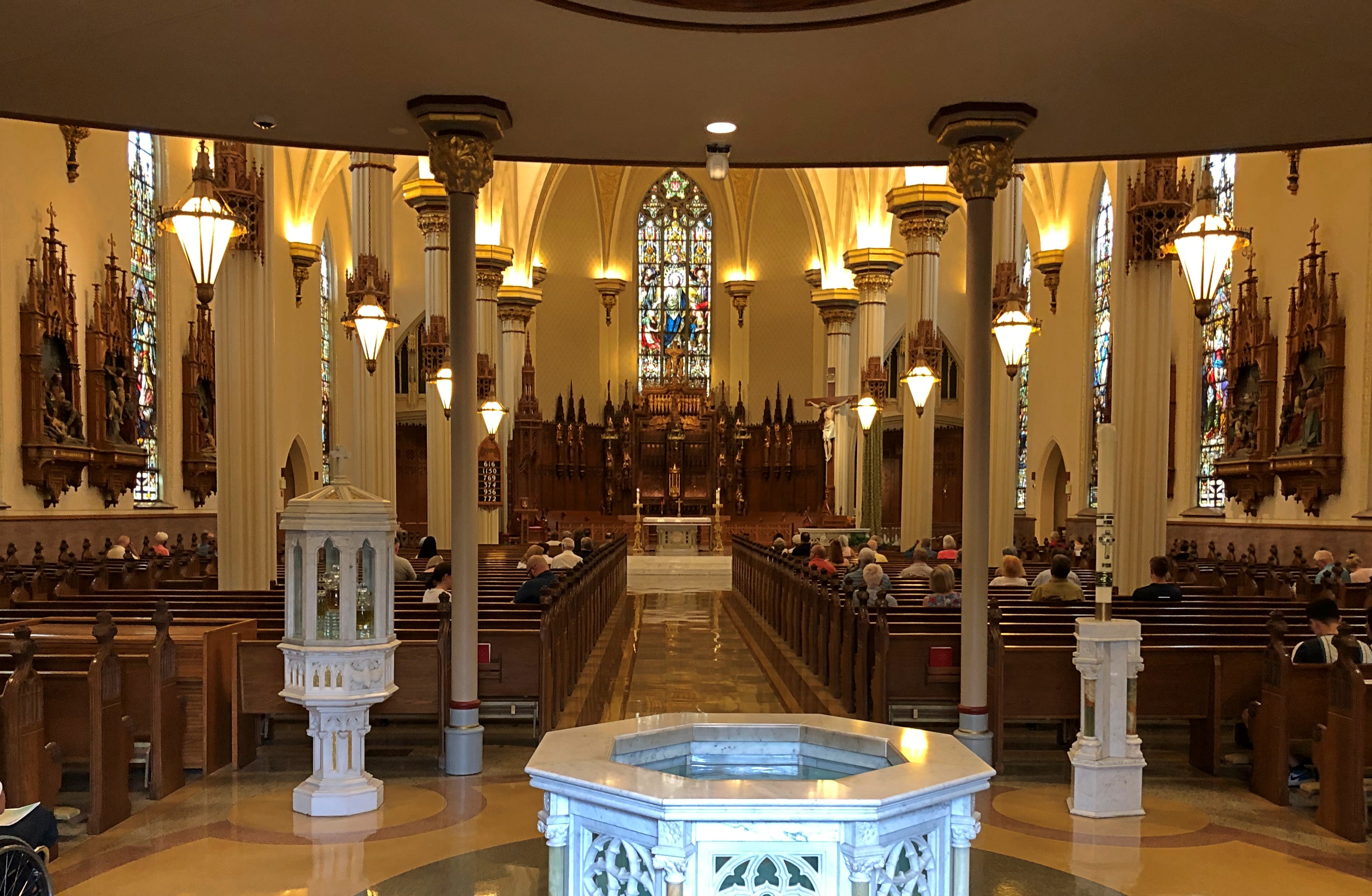
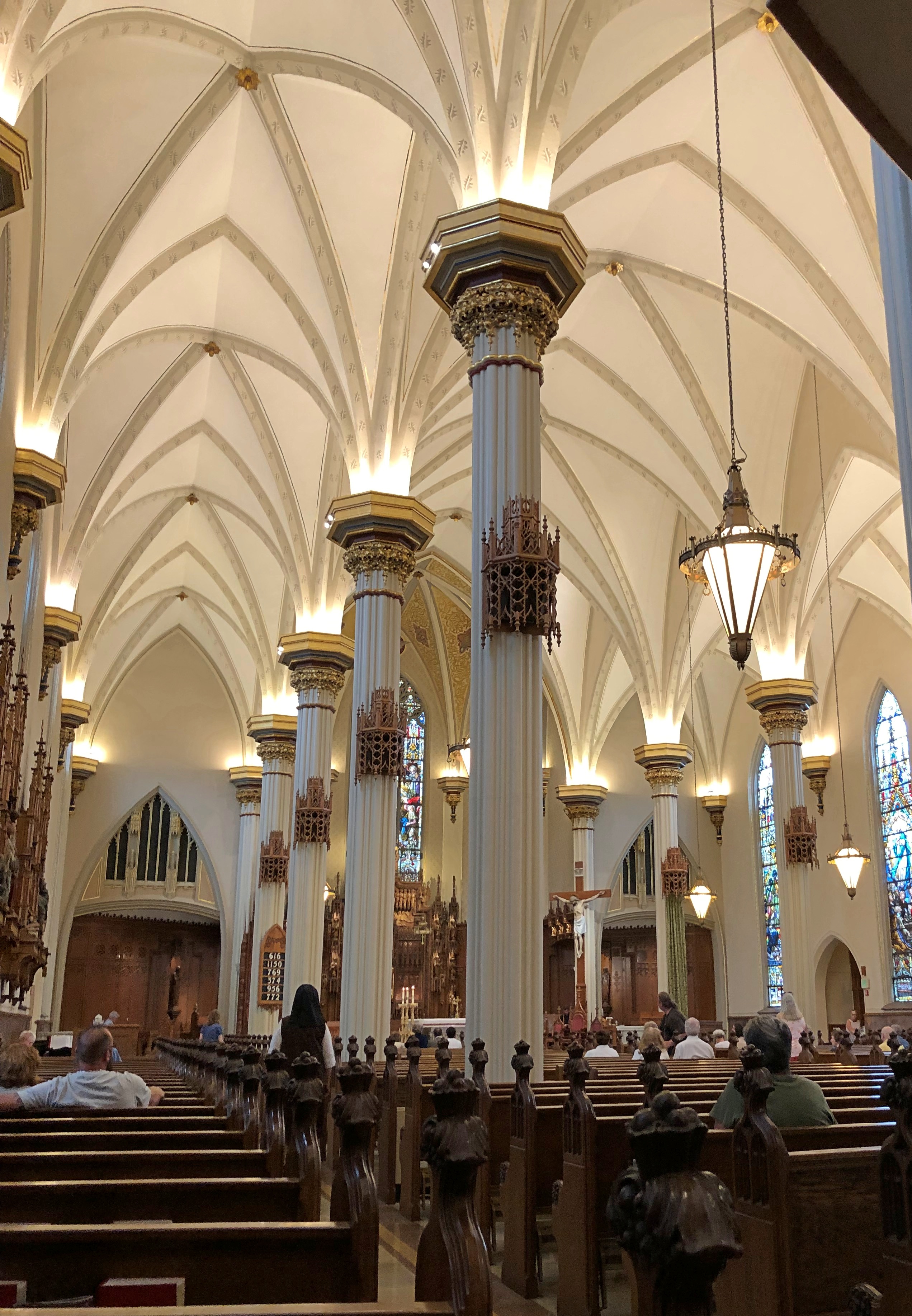
Elsewhere downtown: Cathedral of the Immaculate Conception. Dating from 1860, it is the oldest church building in Fort Wayne, with its Gothic design attributed to Rev. Msgr. Julian Benoit.Cathedral of the Immaculate Conception, Fort Wayne Cathedral of the Immaculate Conception, Fort Wayne

Vigil mass was about to start, but we got a peek.Cathedral of the Immaculate Conception, Fort Wayne
Cathedral of the Immaculate Conception, Fort Wayne

It isn’t the only sizable church around. A few blocks away is St. Paul’s Evangelical Lutheran Church. St. Paul's Evangelical Lutheran Church , Fort Wayne

Not open. Too bad, looks like quite a looker inside.

Northern Indiana Dash

Ah, high summer.

That’s in Dallas. I’m not there. Today’s high here was 79 F., a dip from a hot and muggy 90s-day on Tuesday. Several degrees of latitude will make that difference.

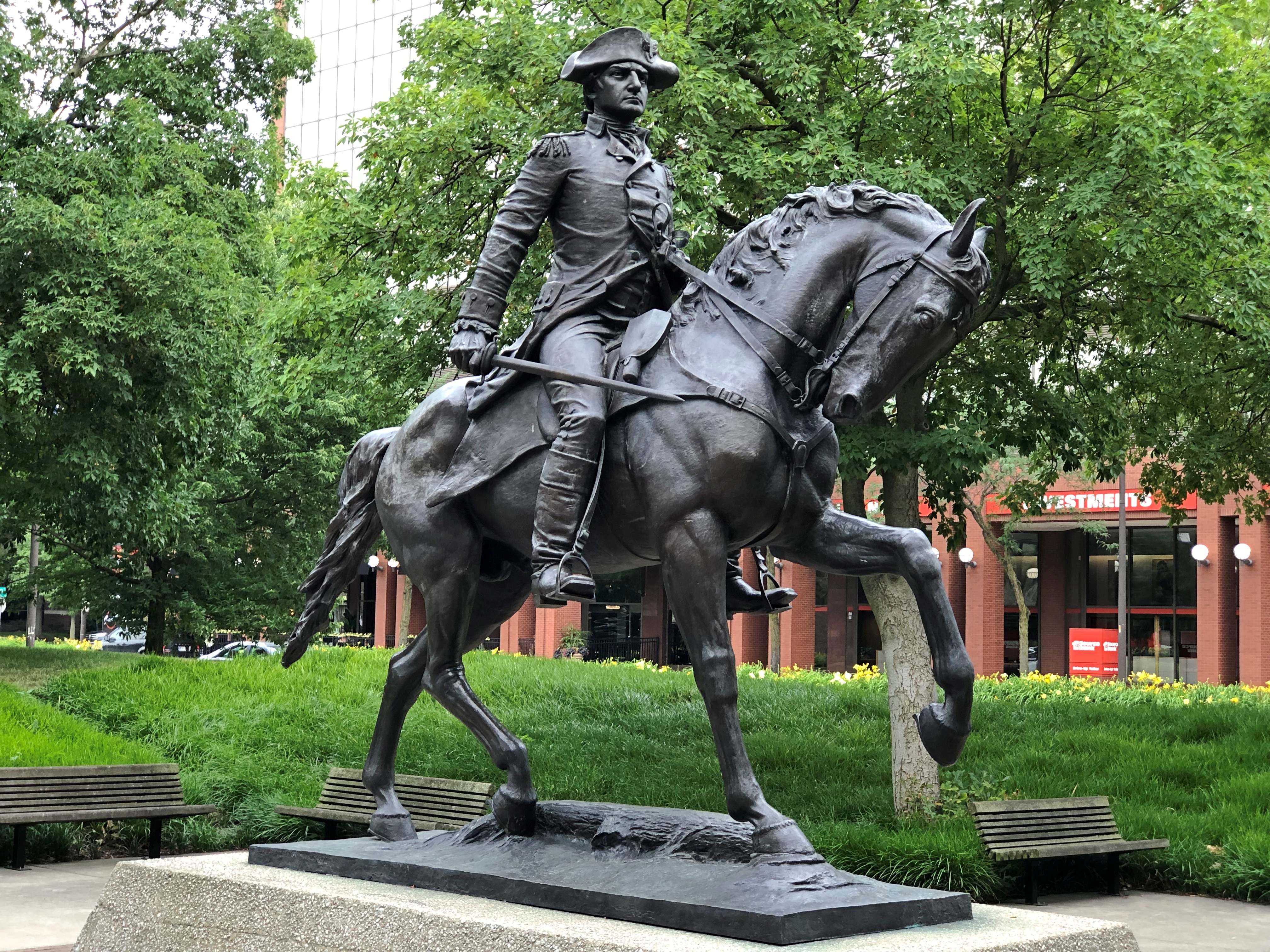
One of these days, the times might catch up with Gen. “Mad” Anthony Wayne, leader in the Revolution and scourge of the Northwest Territory Indians, but for now, you can find him on horseback in bronze at Freimann Square in downtown Fort Wayne, Indiana, in a work by Chicagoan George Etienne Ganiere (1865-1935).Gen. Mad Anthony Wayne statue, Fort Wayne

We gazed a Mad Anthony for a few moments as part of our trip through northern Indiana. I wanted to take a short trip over the long Independence Day weekend, but I didn’t want it to consume the entire three days.

So on Saturday, we left in mid-morning and made our way to Fort Wayne, where we stayed overnight. On Sunday, we returned across northern Indiana to get home, which took up most of the day.

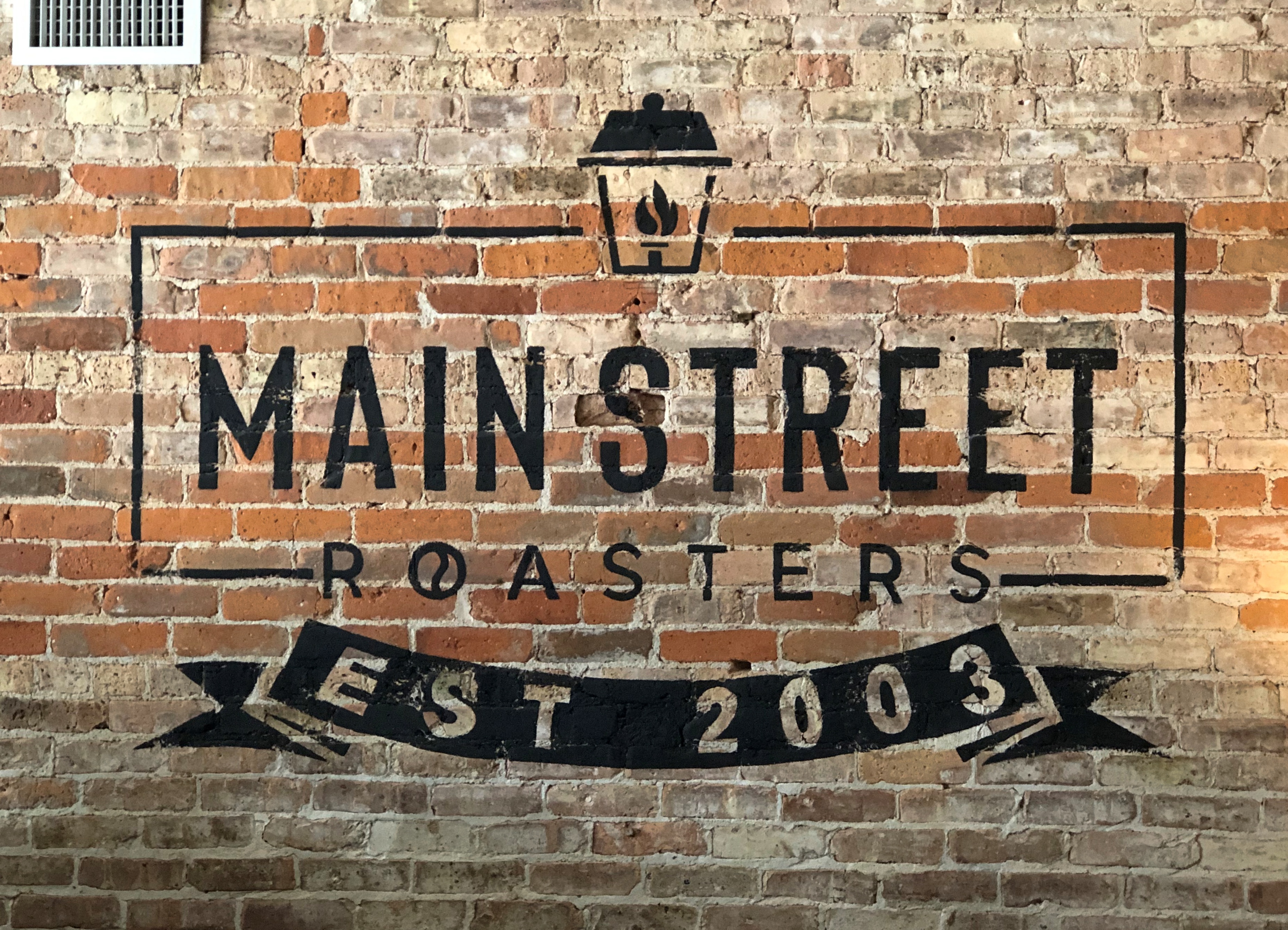
We arrived in Nappanee, Indiana, for lunch on Saturday. I’m glad to report that Main Street Roasters (not so new anymore, it seems) makes a fine pulled pork sandwich. Yuriko said the ingredients in her Cobb salad tasted very fresh, and I sampled some, and agreed. The place was doing a brisk business.Main Street Roasters

We figured the main source for both fresh pork and fresh greens was the Amish farms in the area. Nappanee is considered the focus of one of the country’s larger Amish populations, though that’s a little hard to tell in a casual look around downtown, which isn’t so different from other Indiana towns its size (pop. nearly 7,000). Out away from town, though, you can see from the road farm houses and other buildings, clustered closer than in other rural areas, which is characteristic of Amish settlements.

In town, Plain People in carriages rolled by now and then. Some female store clerks wore the small head coverings common among Mennonites. The Amish tourist attraction in Nappanee known as Amish Acres closed in late 2019, and a more upmarket property re-opened the next year — in an example of bad timing, though it seems to have survived — as The Barns at Nappanee, Home of Amish Acres. Maybe all those extra words are going to cost you more.

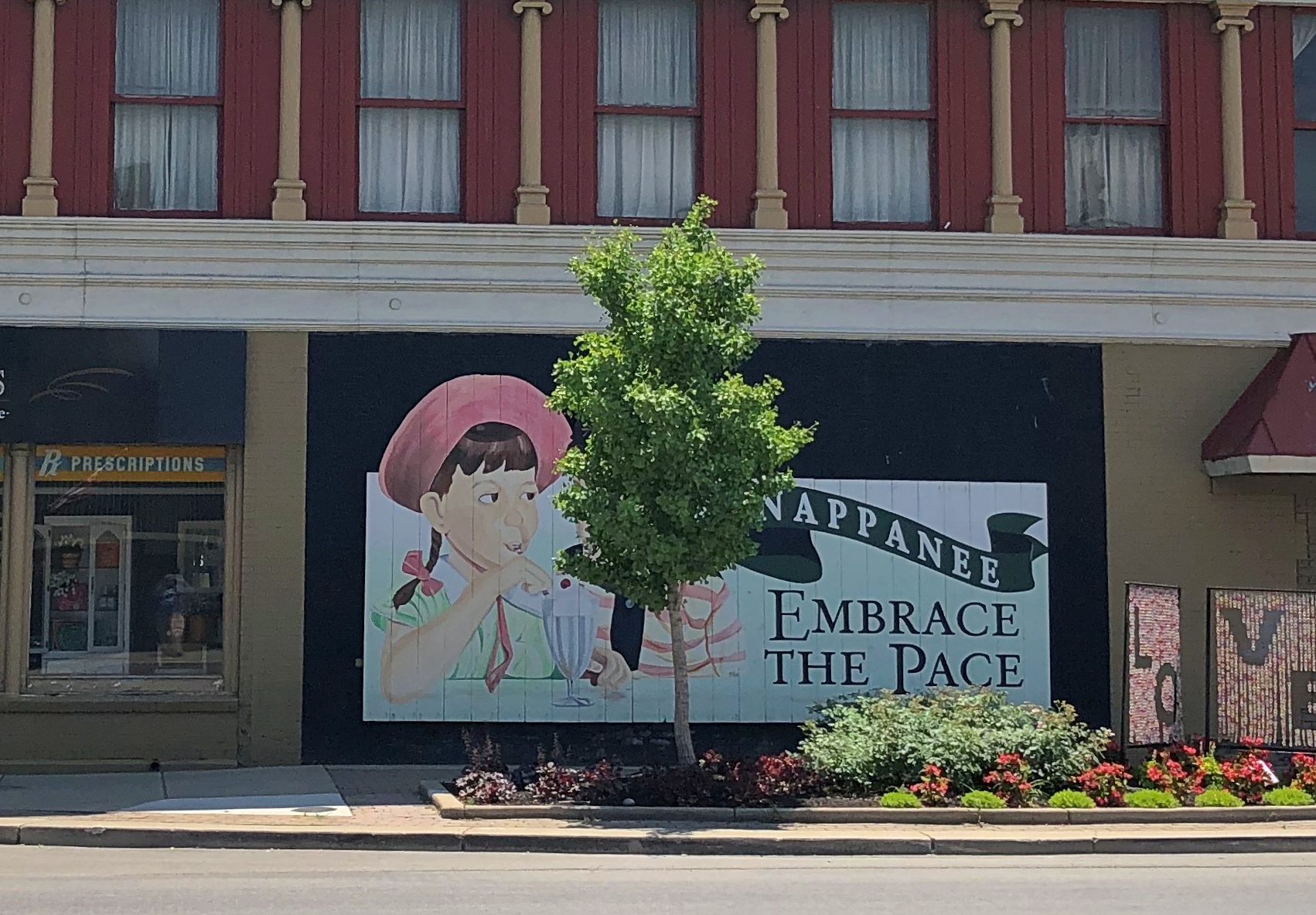
Across the street from Main Street Roasters (and not Amish Acres).Nappanee, Indiana

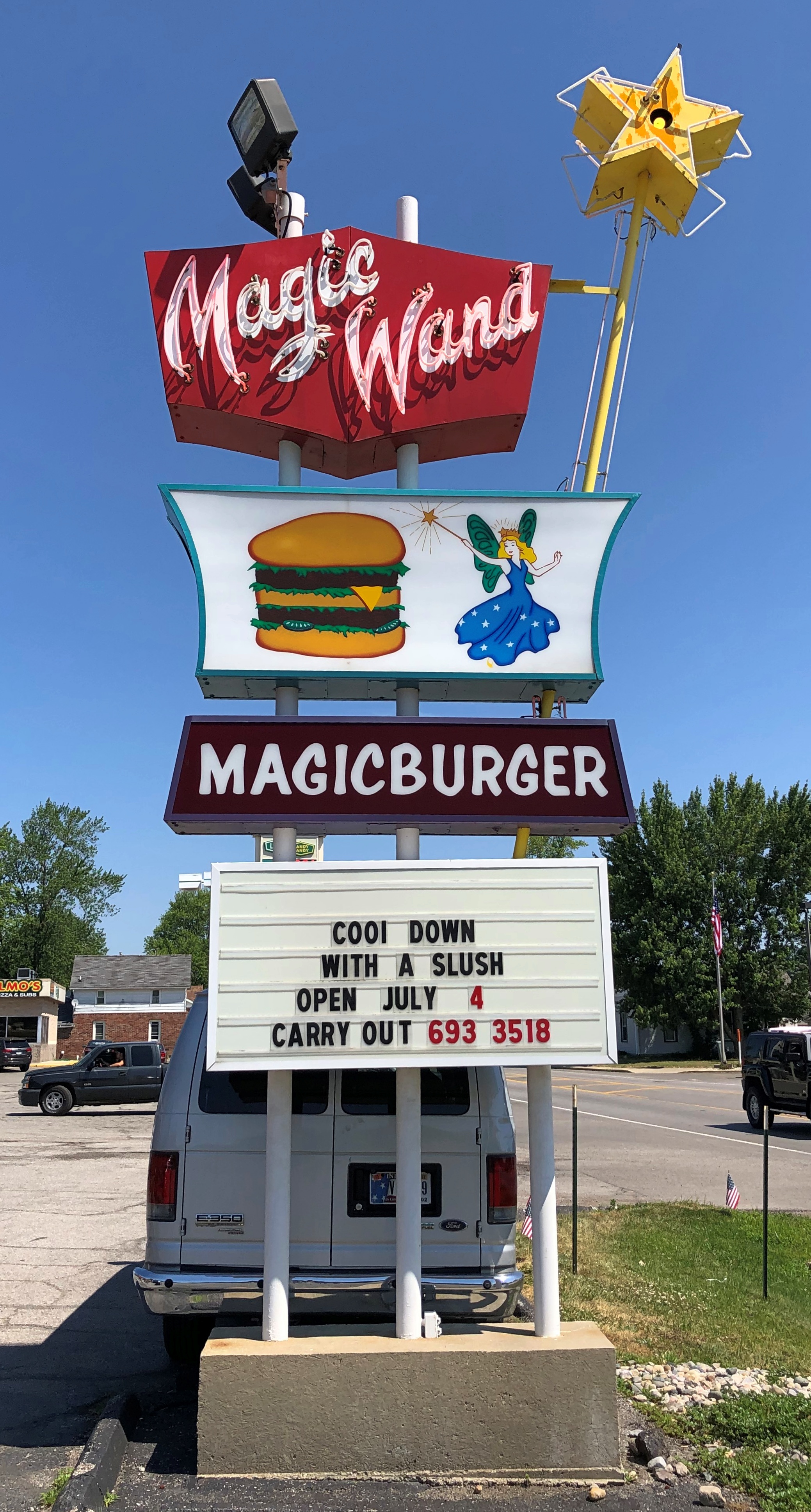
On Sunday, our first brief stop was at Magic Wand, home of the Magicburger, which can be found in Churubusco, Indiana.Magic Wand, Churubusco

We didn’t have a magic burger, but rather shared a strawberry milkshake to go. Among strawberry milkshakes, it was the real deal. The real tasty deal, straw-quaffed as we speed along U.S. 33.

Churubusco was a name I took an instant liking to. The town fathers apparently read in their newspapers about the battle of that name, and wanted the town to borrow a bit of its martial glory. According to some sources, it gets shortened in our time, and maybe for a long time, to Busco. I also noticed references to the place, on signs and the like, as Turtletown. Really? What was that about? I wondered.

The Beast of Busco, that’s what. Quite a story. A giant among turtles that the townsfolk never could quite capture. I haven’t had this much fun reading hyperlocal history — lore — since I chanced across a small lake in Wisconsin that is supposedly home to an underwater pyramid. Turtle Days was last month.

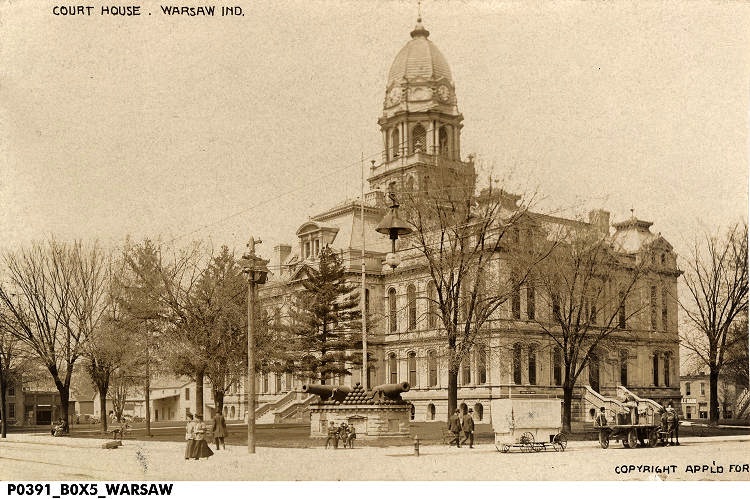
Another spot for a short visit on Sunday: Warsaw, Indiana. It’s the seat of Kosciusko County, with a handsome Second Empire courthouse rising in the town square.Kosciusko County Courthouse

Designed in the 1880s by Thomas J. Tolan, who died during construction, the Indiana Historical Society says. The project was completed by his son, Brentwood S. Tolan.Kosciusko County Courthouse

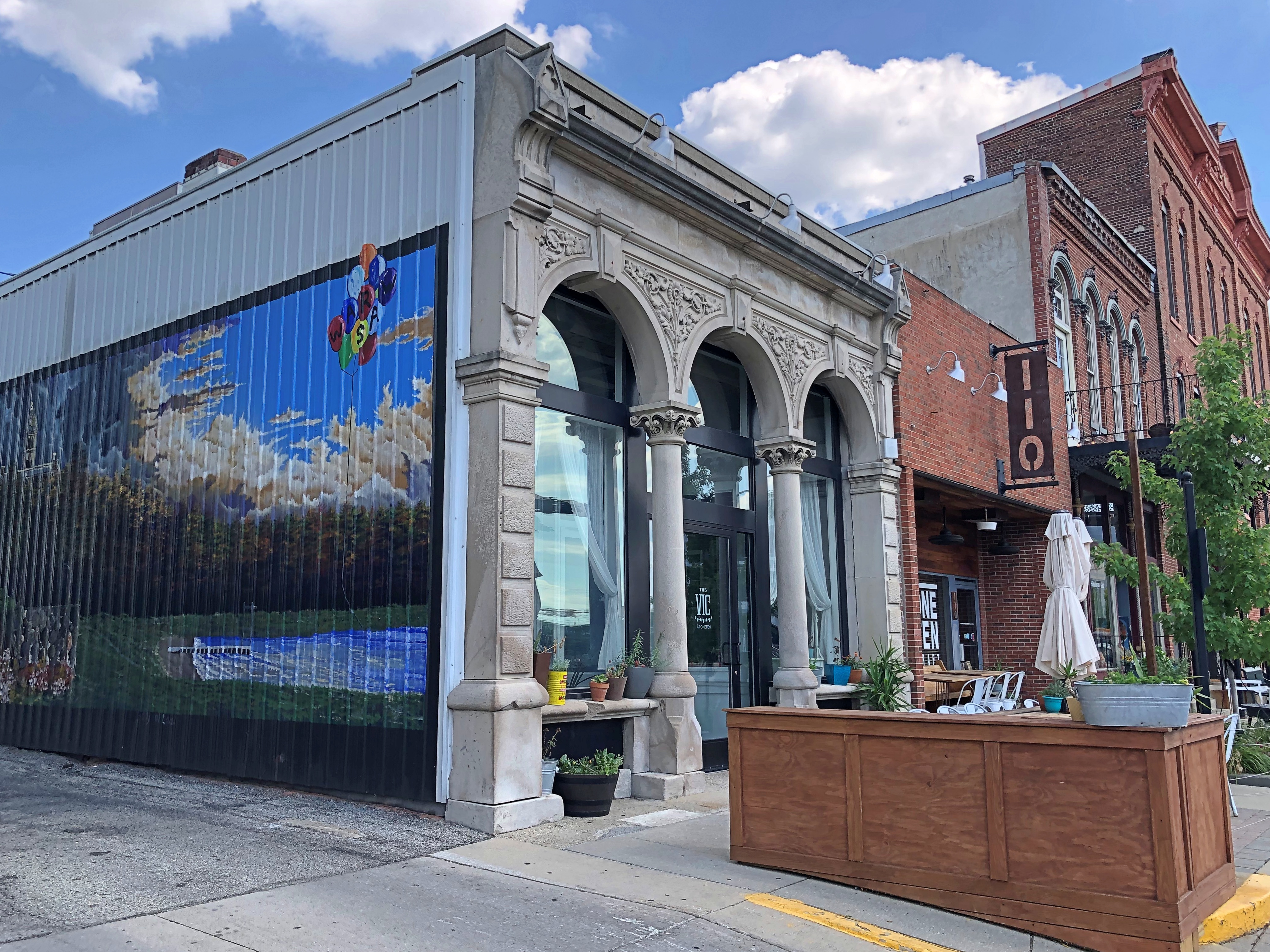
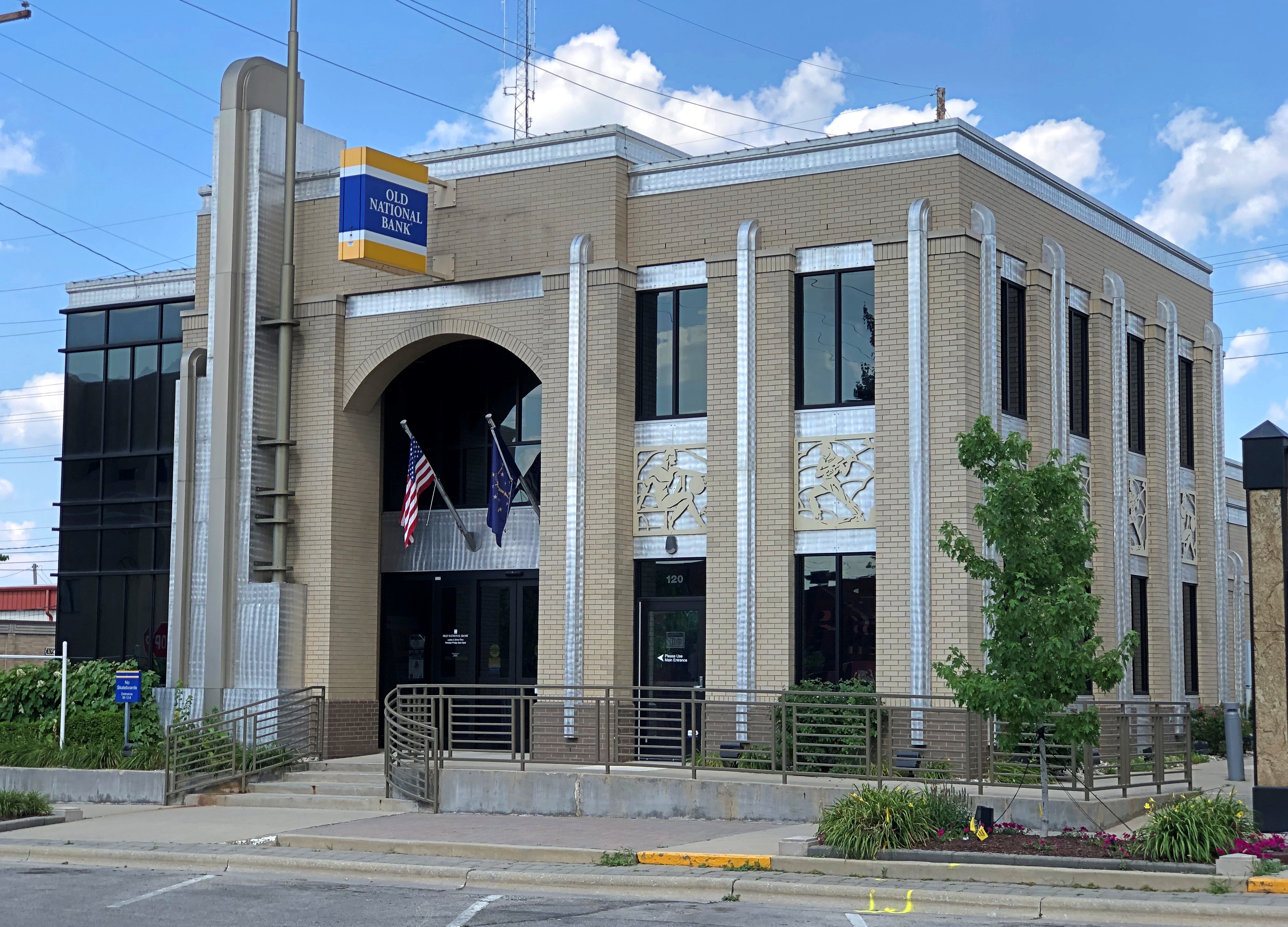
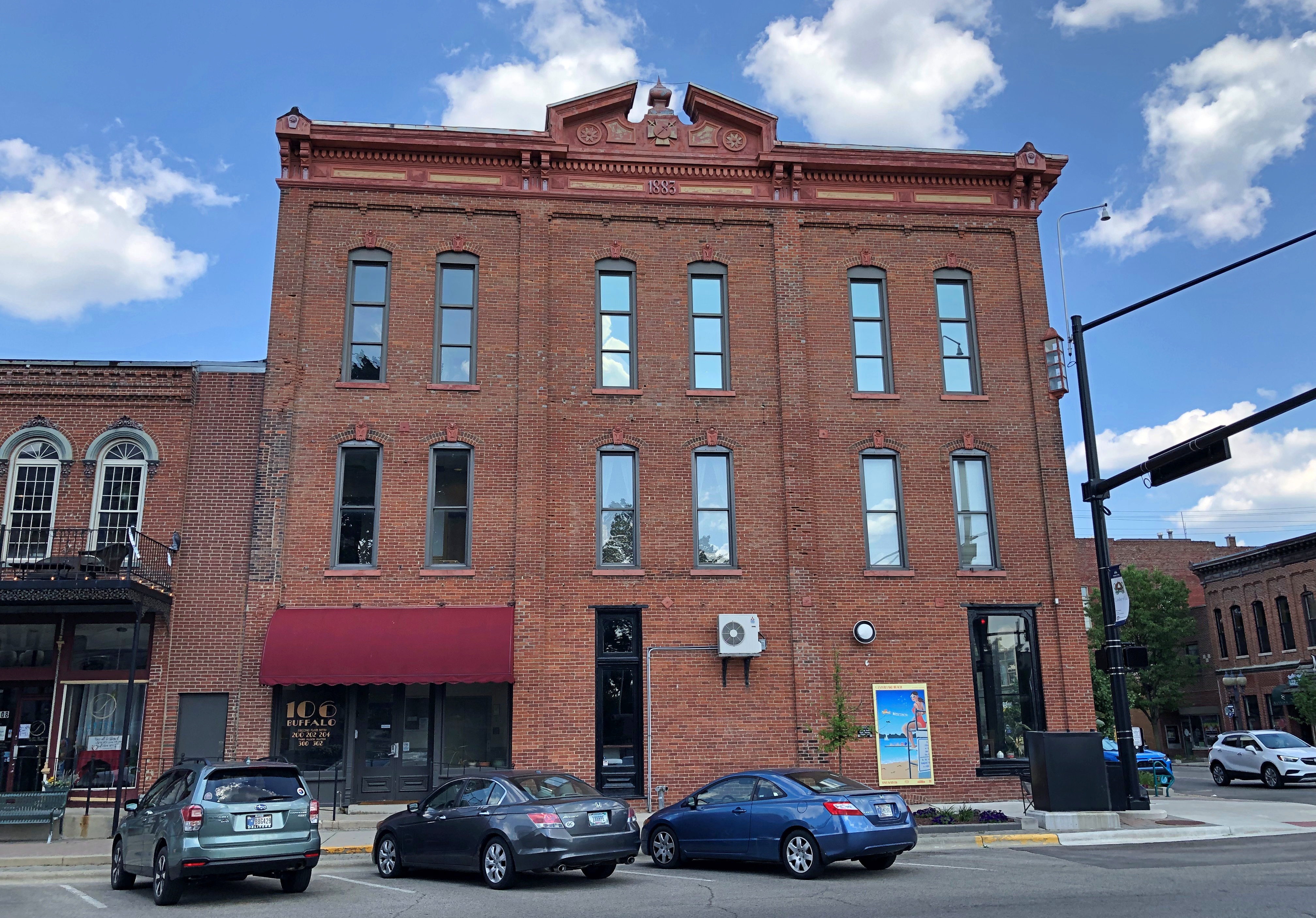
The square sports some other handsome buildings, too.Warsaw, Indiana Warsaw, Indiana Warsaw, Indiana

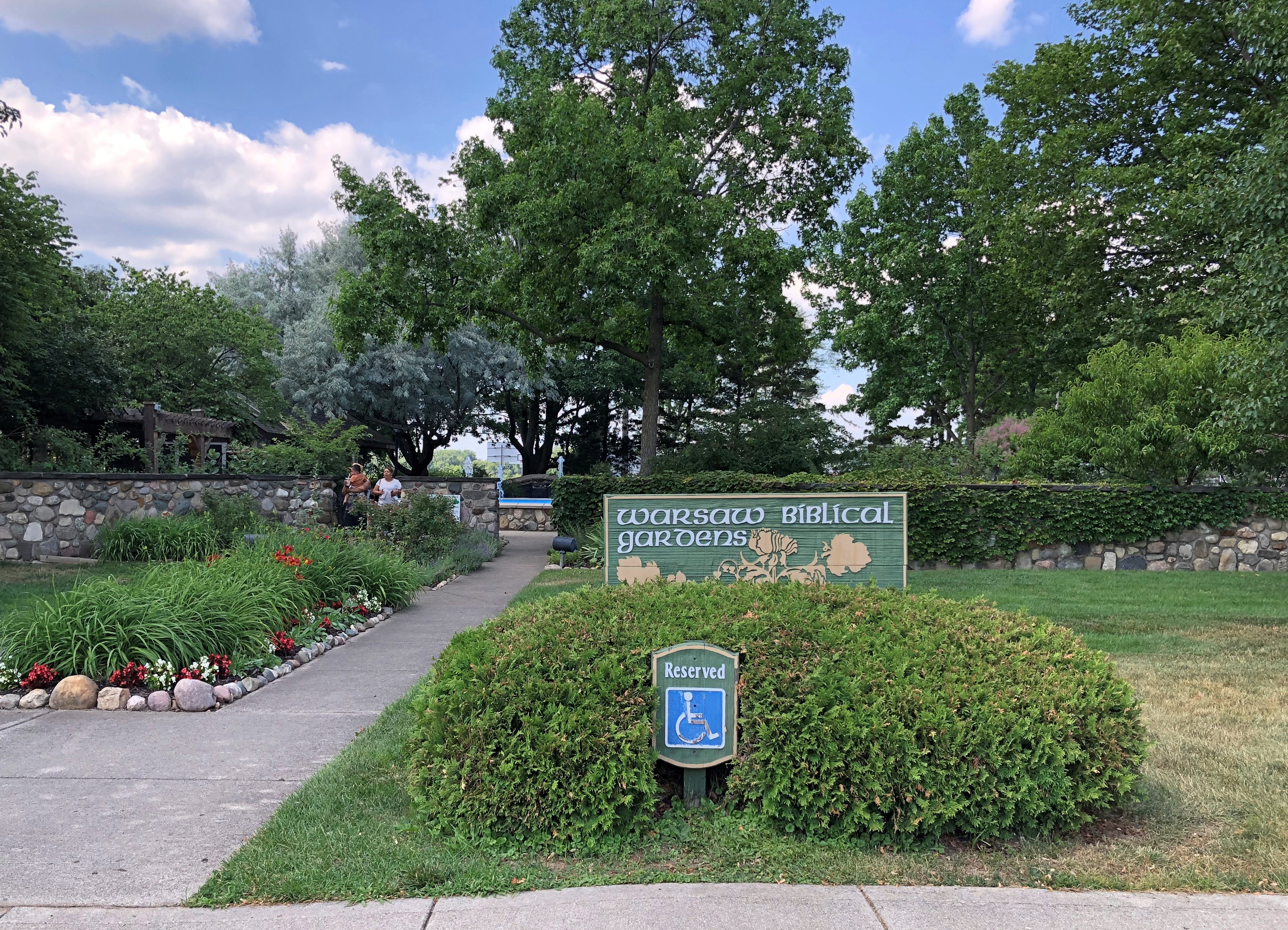
Warsaw is also home to a garden the likes of which I’d never imagined, and the reason I stopped in town, days after spotting it on Google Maps and then looking it up: the Warsaw Biblical Gardens.Warsaw Biblical Gardens Warsaw Biblical Gardens Warsaw Biblical Gardens

The brainchild of a local woman back in the 1980s with access to the land. “It would be no ordinary garden — not a rock garden, nor a rose garden, nor a perennial garden — it would be a truly unique and beautiful Biblical Garden,” the garden’s web site says.

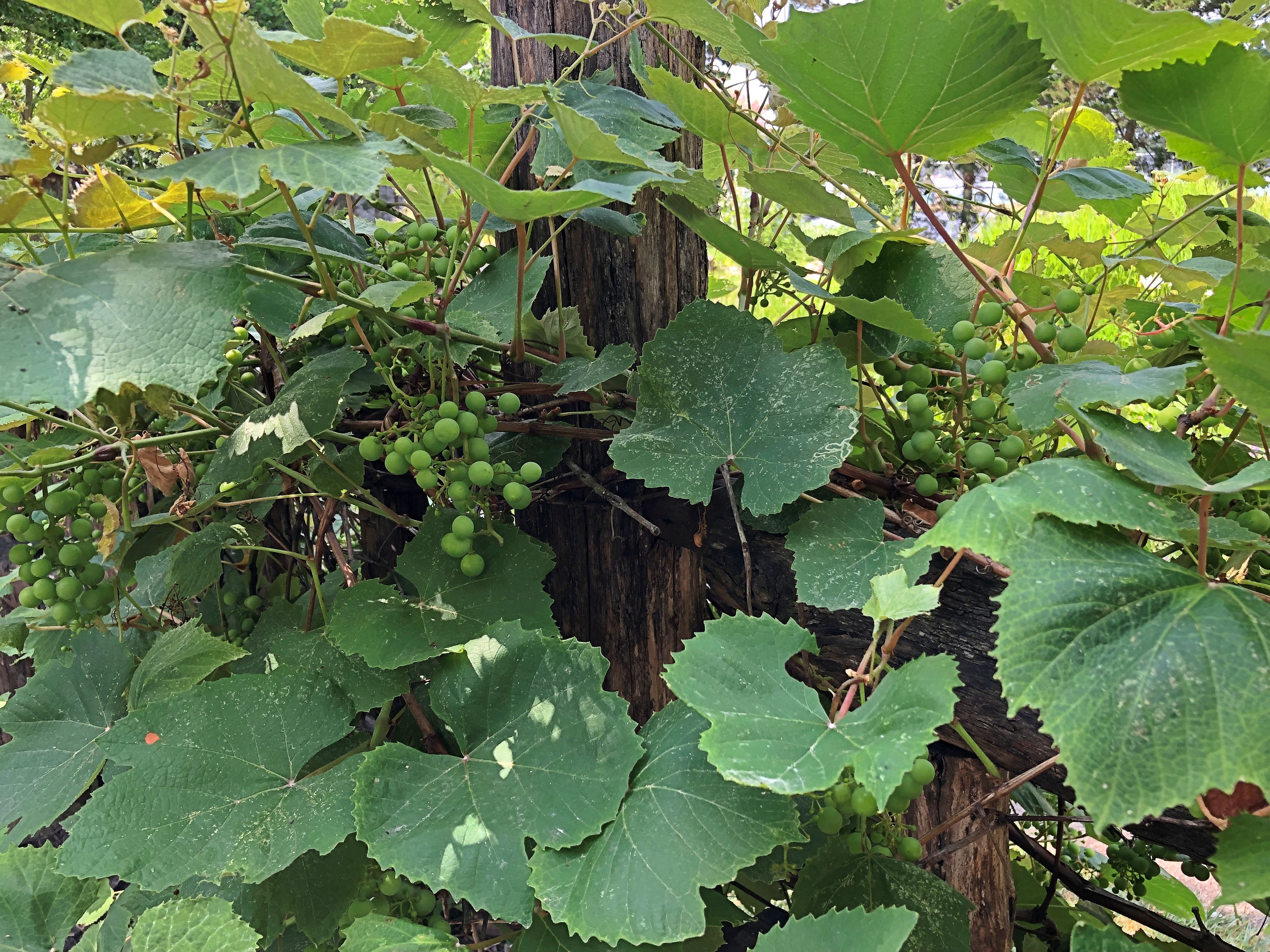
“Actually, we say ‘gardens’ because the Warsaw Biblical Gardens has a variety of areas: the Forest, Brook, Meadow, Desert, Crop and Herb gardens; the Grape Arbor; and the Gathering site. Warsaw Biblical Gardens is ¾-acre in size, and there are very few gardens like this in the United States.

“The term ‘biblical’ refers mainly to the fact that the plants, trees, flowers, herbs, etc., are mentioned in the Old and/or New Testaments of the Bible. These have been carefully researched to preserve the integrity of the Gardens’ uniqueness.

“The Warsaw/Winona Lake area of Indiana has a long religious history. That history begins perhaps with the Chatauqua times of Winona Lake, now being revived. [Really?] Many other famous historical religious figures made their home’s here, from Homer Rodeheaver to Fanny Crosby to Billy Sunday.”

I won’t pretend I didn’t have to look up the first two of those three. Regardless, it’s a stunning little place.Warsaw Biblical Gardens Warsaw Biblical Gardens Warsaw Biblical Gardens

Go far — always good if you can manage it. But also go near.

Art Show at Naper Settlement

Parking in downtown Naperville on a sunny summer Sunday takes a little time, featuring as it does slow drives through a few full parking lots and passing by other lots that look full, while navigating the crooked grid of streets and keeping an eye out for a free flow of pedestrians.

I’ve been on worse parking treks. Before too long, we found a spot at Naperville Central High School, whose lot was open and no charge. To reach the riverwalk from there, you have to go around Naper Settlement, an open-air museum covering 12 acres and featuring historic buildings from the vicinity.

Unless you go into the museum, which we didn’t particularly want to, since we’d been there before. September of ’09, when we attended a pow-wow.

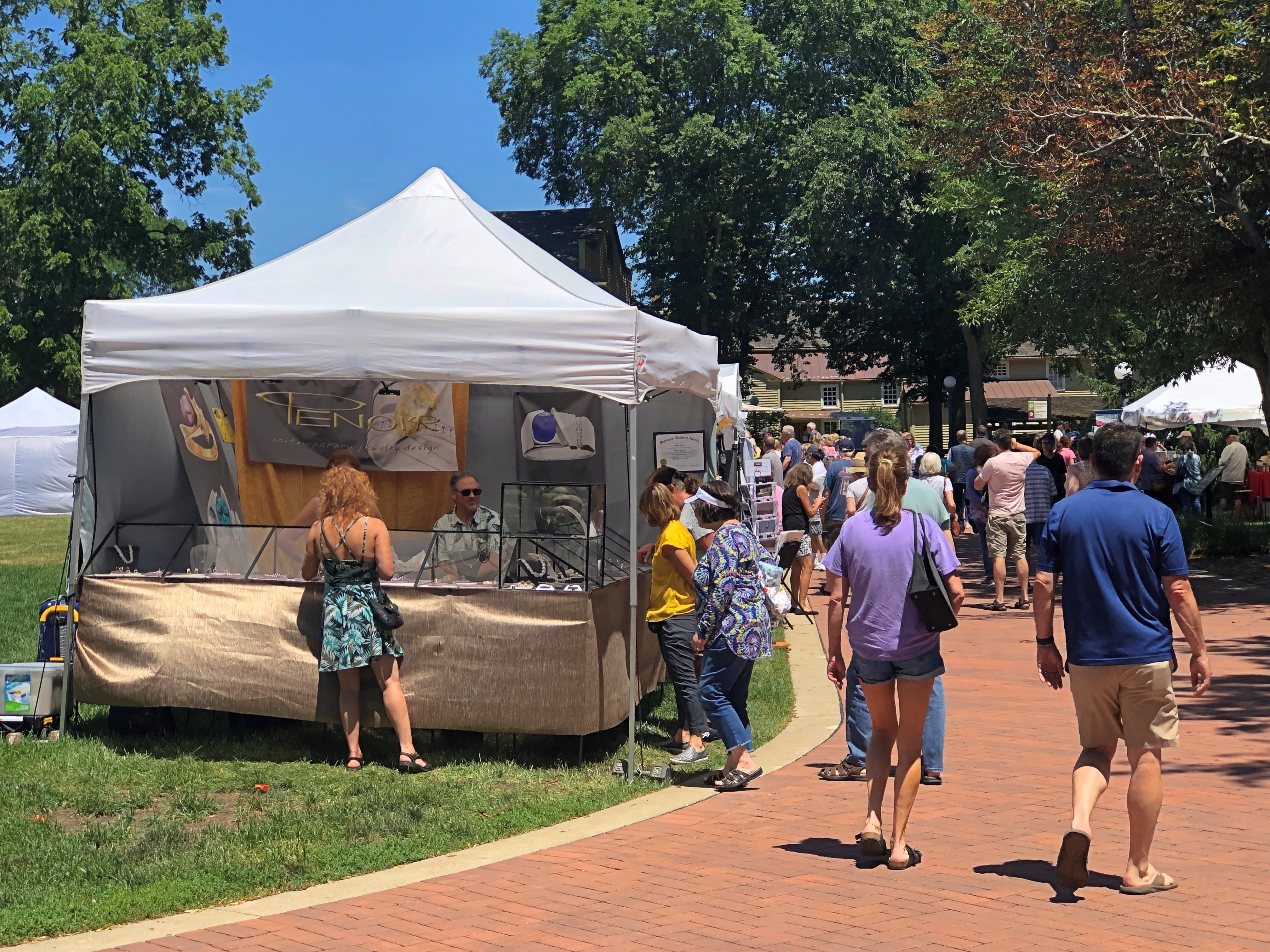
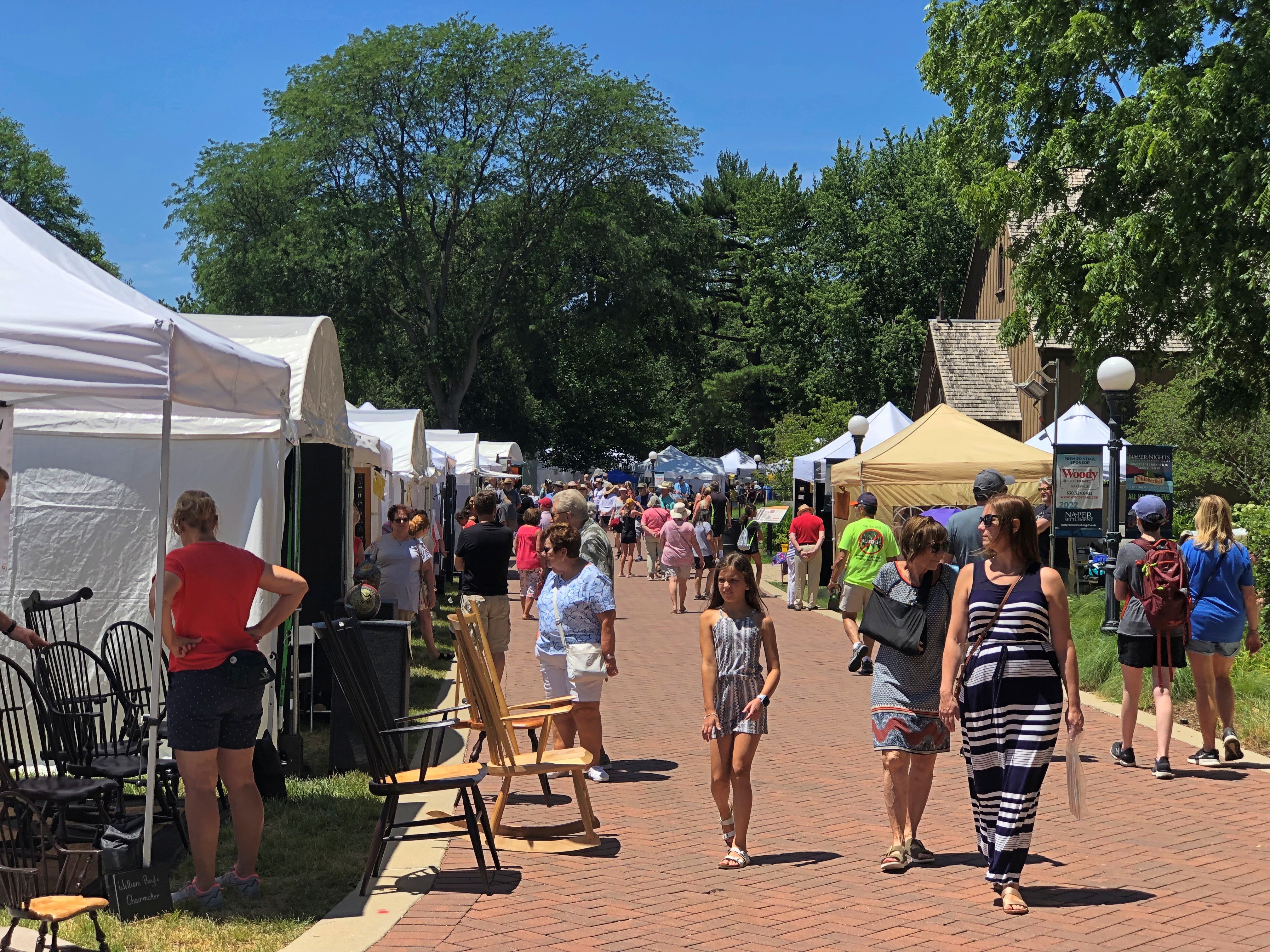
Then we found out that an art show was going on, with no admission to the grounds. So we popped in for a look-see.Naper Settlement Art Show Naper Settlement Art Show

“Since 1959, the Naperville Woman’s Club has presented a free art fair in the summer,” the Naper Settlement web site says. “The longest continuously running art fair in Illinois, this event brings a weekend of art and artistry to Naper Settlement in a free, fun, and family-friendly environment.” My italics.

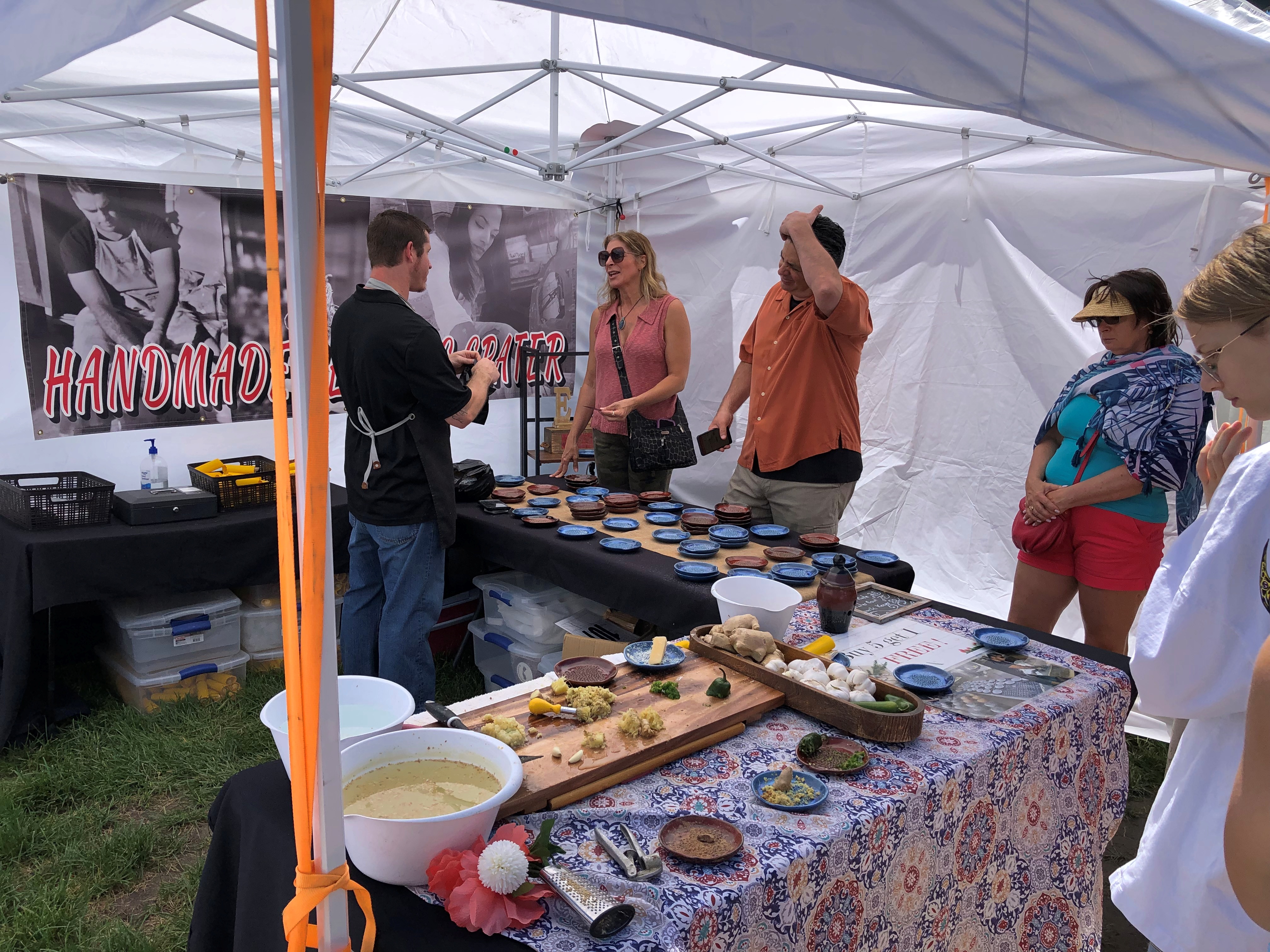
Some nice work was for sale. We managed not to buy anything, remarkably enough.Naper Settlement Art Show Naper Settlement Art Show

In that first pic, he’s selling ceramic graters. Not something I would have thought of.

I was more interested in taking a look at the buildings, even though most of them were closed. The crown jewel of the museum, of course, is the handsome Martin Mitchell Mansion, which we toured those years ago. I didn’t remember much about Mitchell — just that he made money in bricks, many of which are evident in the house, and that his daughter was a dwarf who willed the property to the city.Naper Settlement Naper Settlement

The Daniels House.Naper Settlement

Hamilton C. Daniels (1820-97) doctored in 19th-century Naperville. Wonder whether, toward the end, old doc Daniels was still a miasma man or he came around to germ theory.

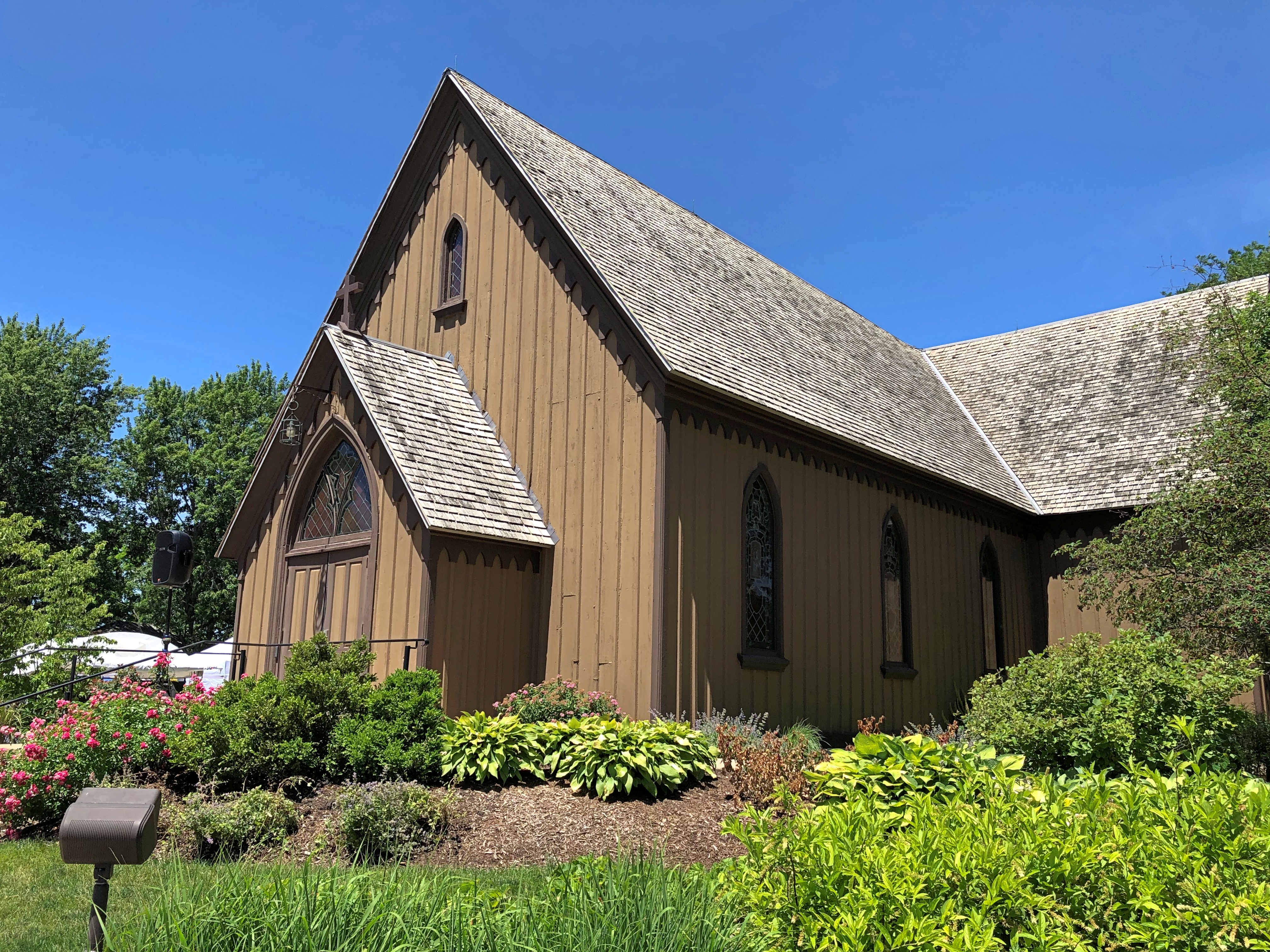
The Century Memorial Chapel.Naper Settlement

Formerly St. John’s Episcopal in Naperville, dating from 1864.

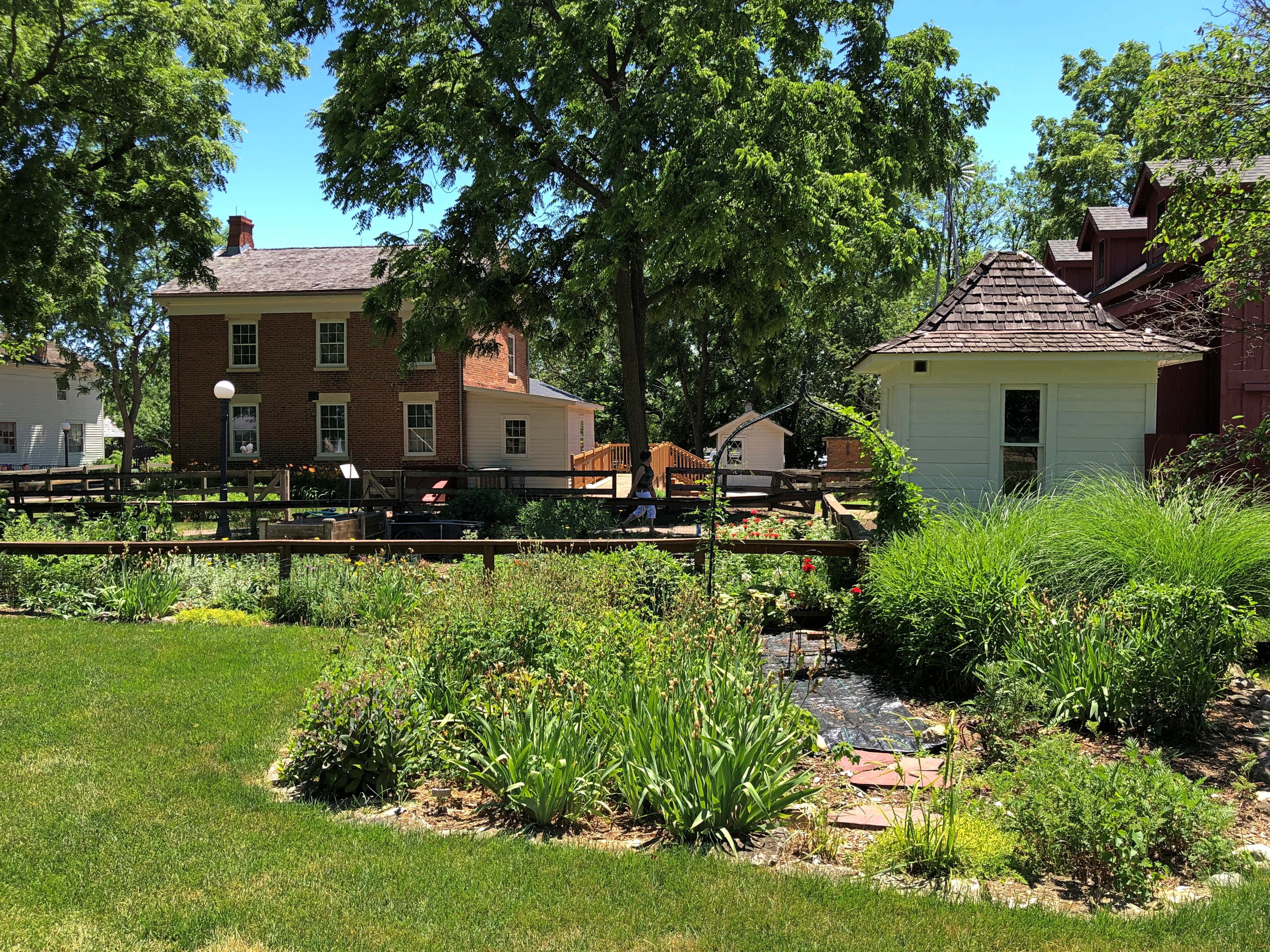
The museum also has some nice gardens.
Naper Settlement

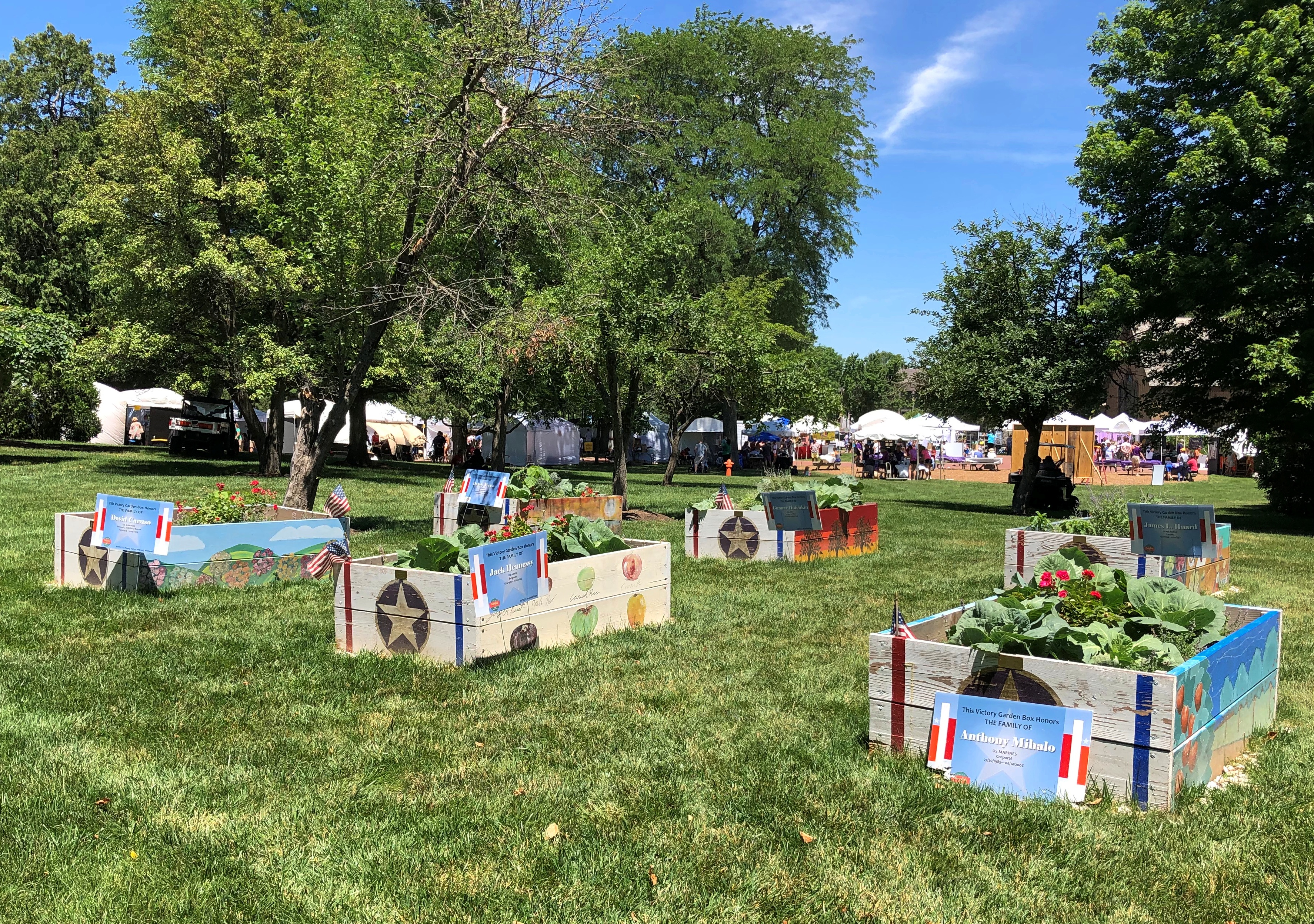
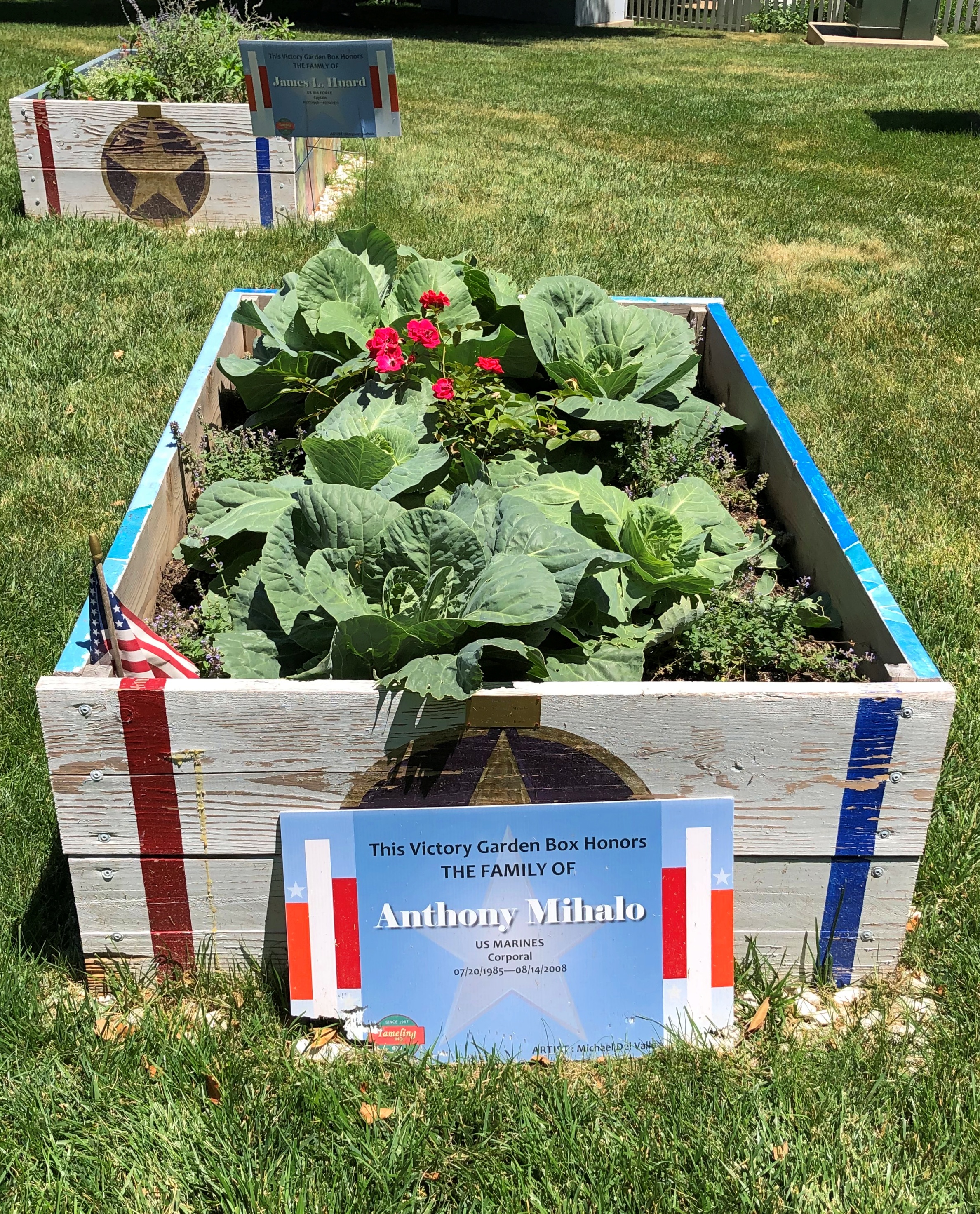
Speaking of gardens, there was a special display of Victory Gardens. Boxes honoring the originals, anyway, and individual service members.Naper Settlement Victory Garden Boxes Naper Settlement Victory Garden Boxes

Something I learned from the signage: In 1943, seven million acres of Victory Gardens were planted, producing 40% of the nation’s fresh produce that year.

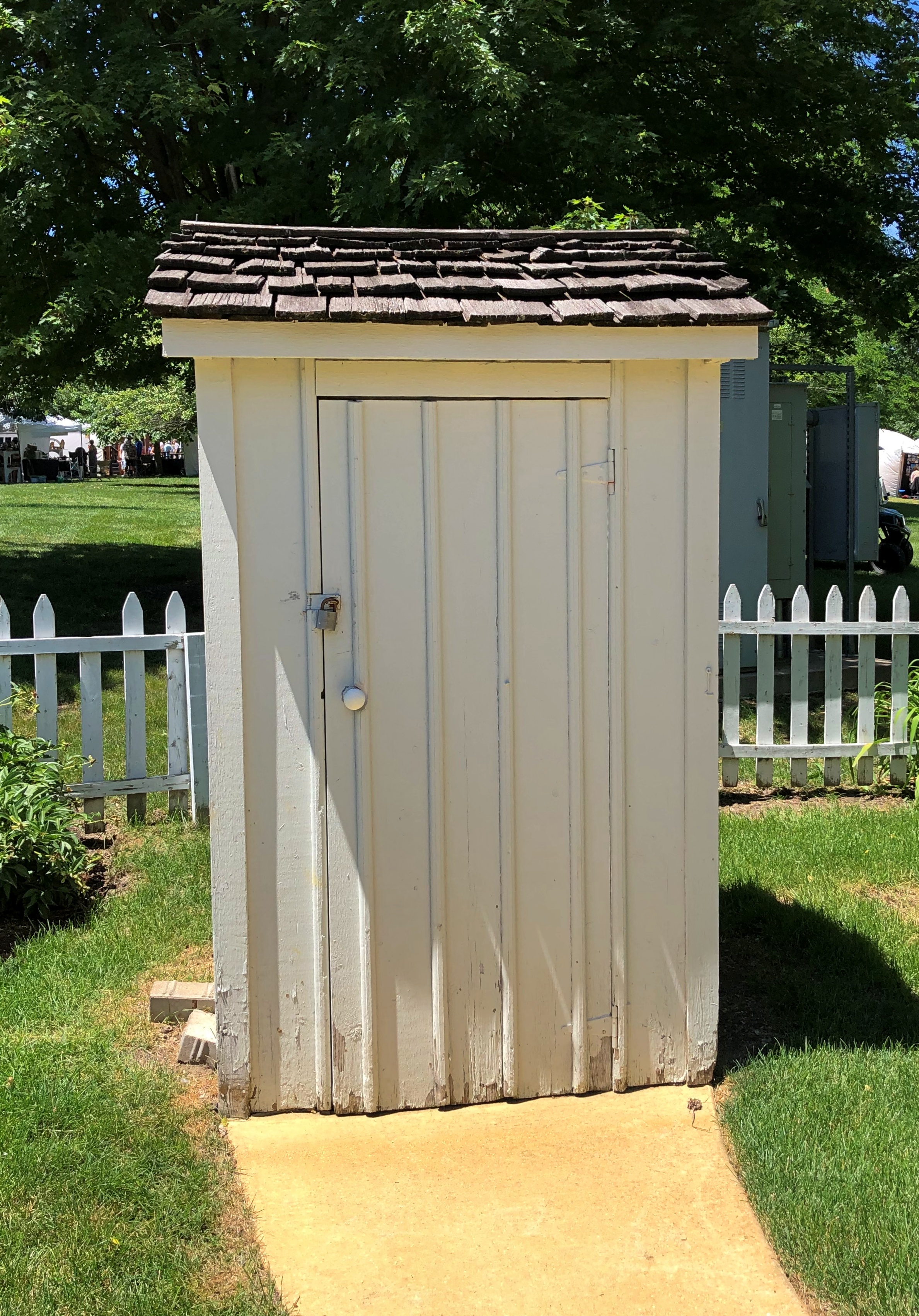
One more structure, though there are 30 all together on the grounds: the Murray Outhouse.
Naper Settlement outhouse

How many outhouses in the world are named? There have to be others, but there couldn’t be that many.

Mishawaka Walks

Worth noting: U.S. Grant was born 200 years ago today in Point Pleasant, Ohio. There hasn’t been a presidential birth bicentennial since Lincoln’s in early 2009, which came on the heels of Andrew Johnson’s in late 2008.

Later this year, there will be another one: Rutherford B. Hayes, born in Delaware, Ohio on October 4, 1822. One cold day in the mid-1990s, I dropped by the Hayes home museum in Fremont, Ohio, sparking an interest in presidential sites that hasn’t abated. Good old RBH. President most likely to be mistaken for Benjamin Harrison in a lineup. After his bicentennial, it won’t happen again till Chet Arthur has his day in 2029.

The St. Joseph River flows mostly westward through Michigan and into Lake Michigan, but it bends into Indiana at South Bend and its twin town, Mishawaka. Until recently I gave little thought to Mishawaka as a destination, but then I learned about its riverwalks. We arrived late in the morning on Sunday to sample one of them, the walk along the budding-verdant Kamm Island Park.

Downtown Mishawaka seemed fairly pleasant as well. It reminded me of some of the towns along the Fox River in Illinois — Aurora, say, or St. Charles, both of which hug a mid-sized river and consider it an amenity.

As well they should. Some views of Kamm Island Park.Kamm Island Park Kamm Island Park
Kamm Island Park

New development has come to the area. Not sure I’d want to live there, but I’d probably get a kick out of renting one of the units for a few days.Kamm Island Park

One curiosity on Kamm Island that I didn’t think to take pictures of: the fact that small, colorful figurines and other items, plastic and ceramic, stand at the base of many of its trees. No group is the same. A planned art project or spontaneous whimsy? Homage to elves or the work of elves?

Across the river at Kamm Island is Battell Park, the city’s oldest park, which has its own trail and some features not found elsewhere, namely a rock garden built by the WPA. This is the view of the lower level of the rock structure.Battell Park

After lunch, which consisted of takeout Chinese from a storefront near UI South Bend eaten at the picnic shelter of a windy park near the Potawatomi Zoo, we stopped at Battell Park for a look at the upper level of the rock garden. Water must flow through its channels some of the year, down to the river, but looks like it hasn’t started for the season quite yet. Still, it’s an impressive work.Battell Park

As much as I laud the CCC — whose works I keep encountering, some stunning — I have to put in a word for the WPA and its wide legacy too. I grew up with one of its finest projects — the San Antonio Riverwalk — as well as our high school stadium, which once upon a time had a plaque denoting it as a WPA project. This is an excellent site for browsing its projects, along with the rest of the visible New Deal.

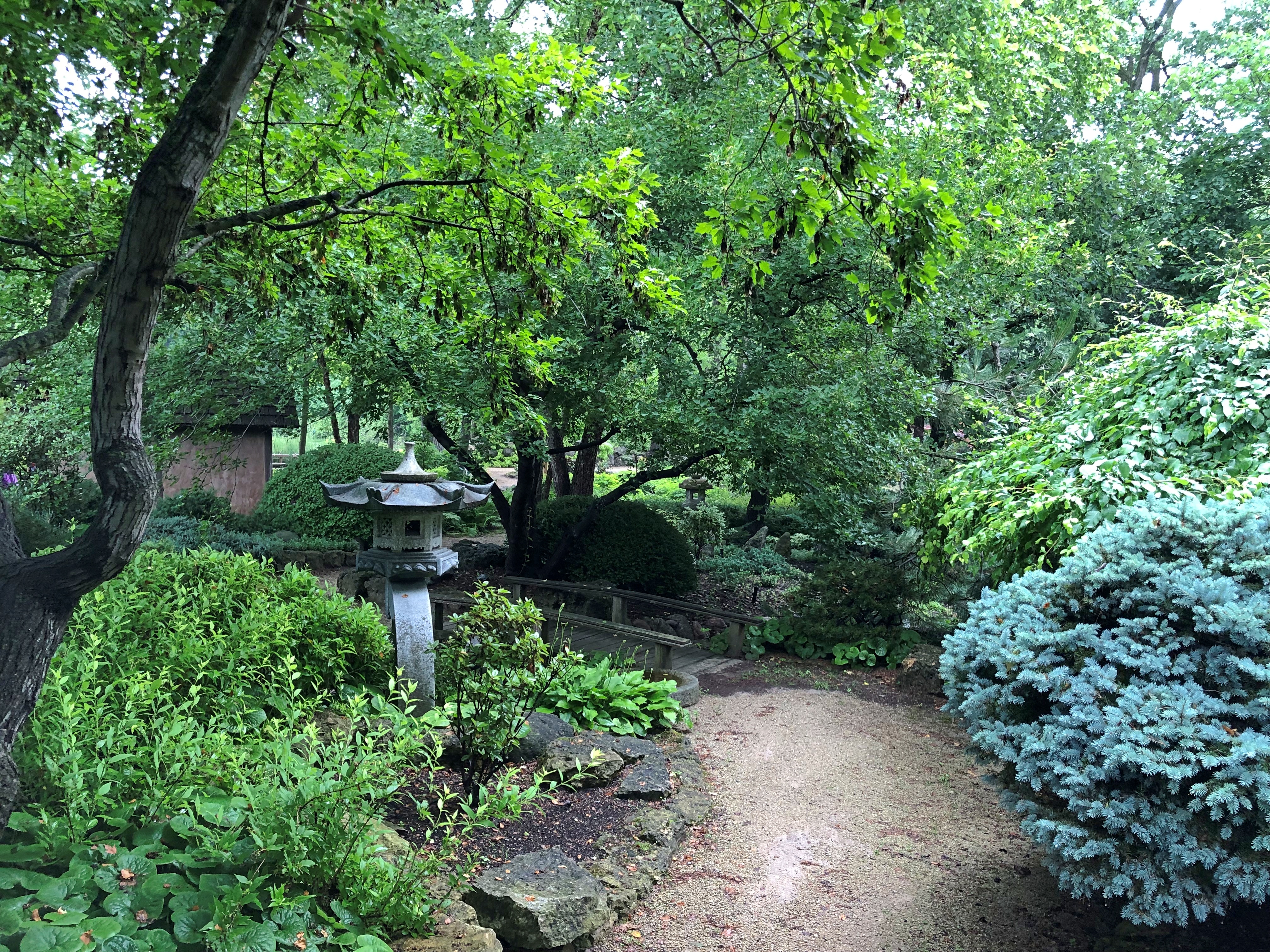
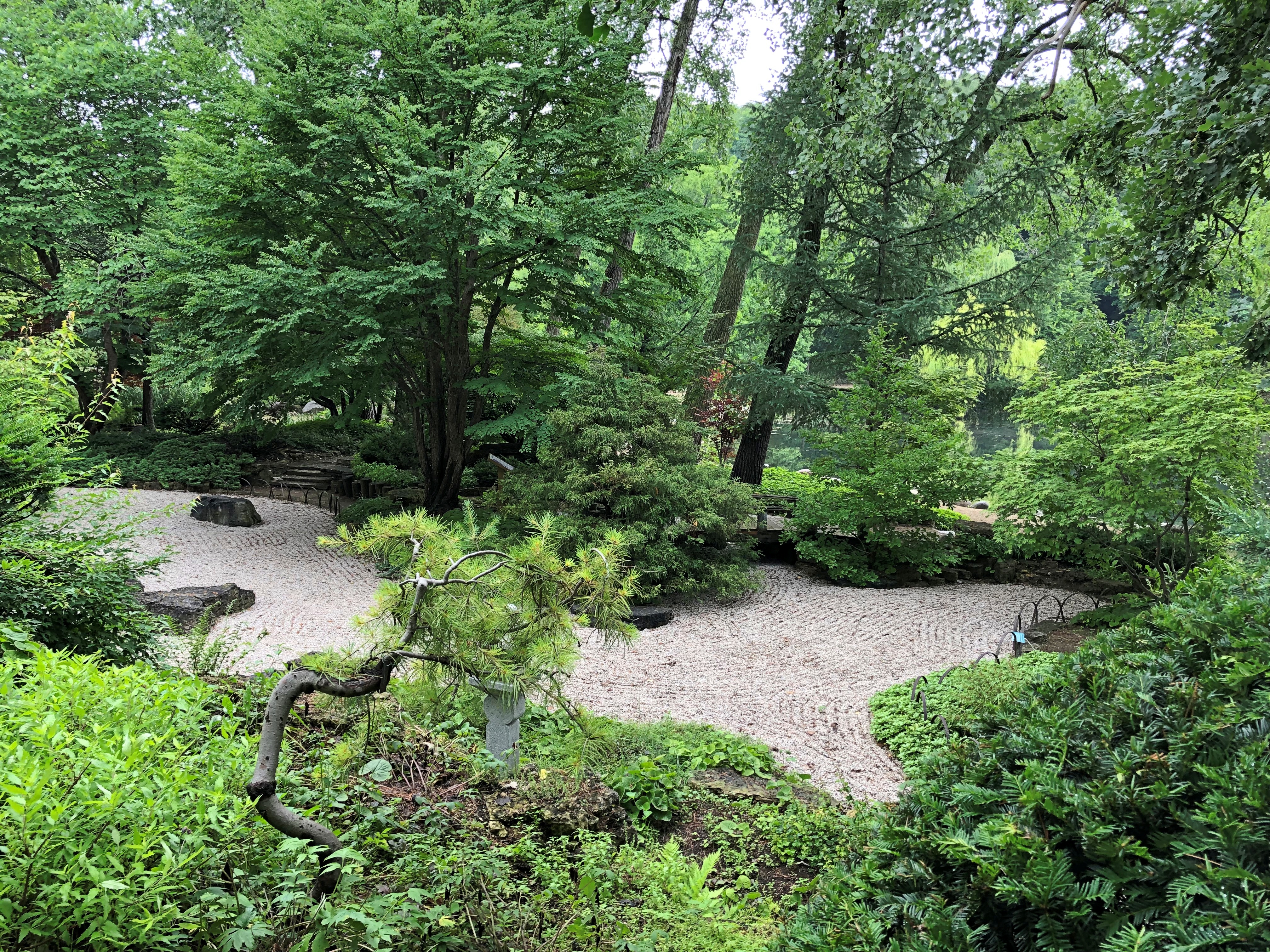
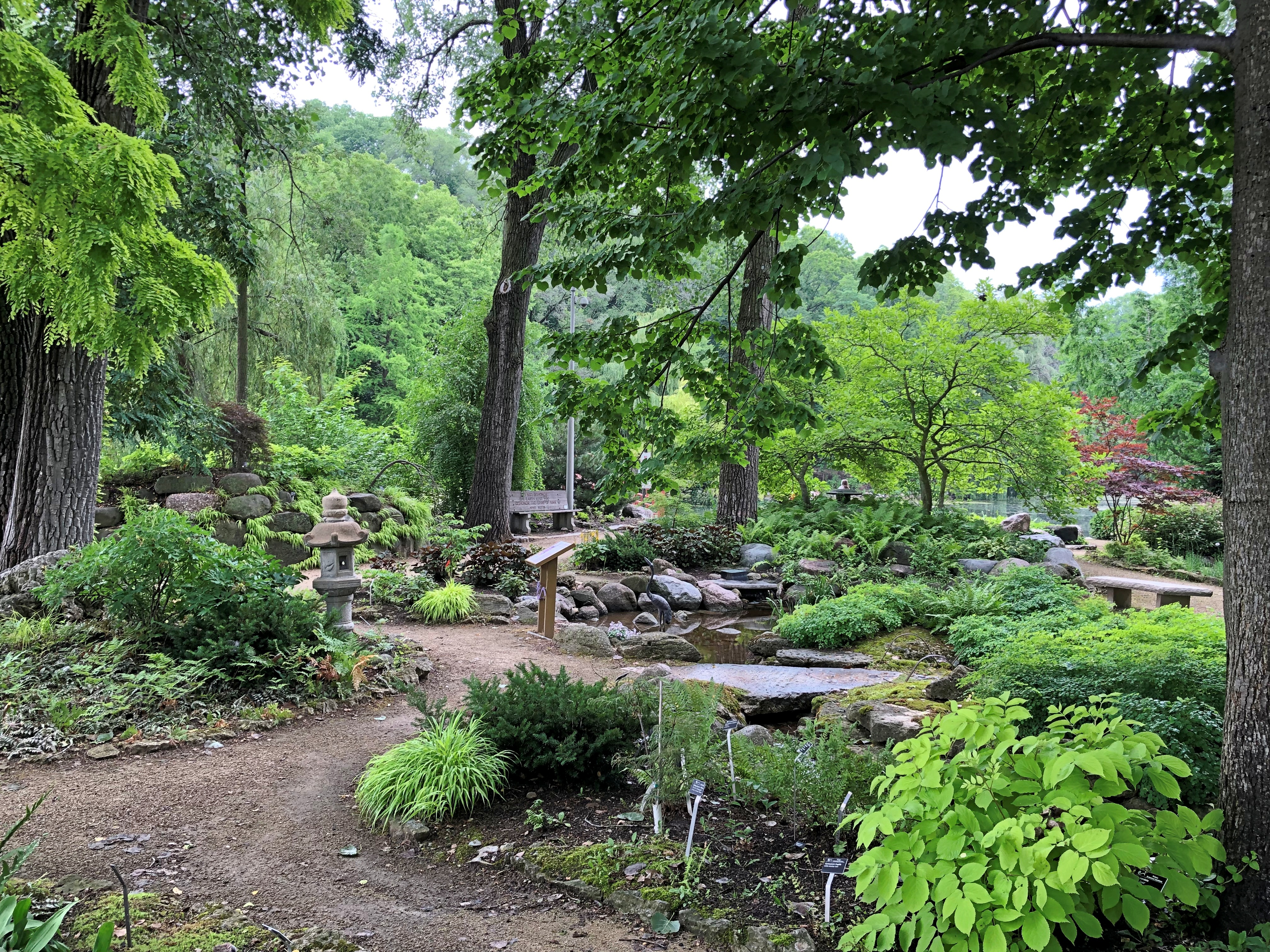
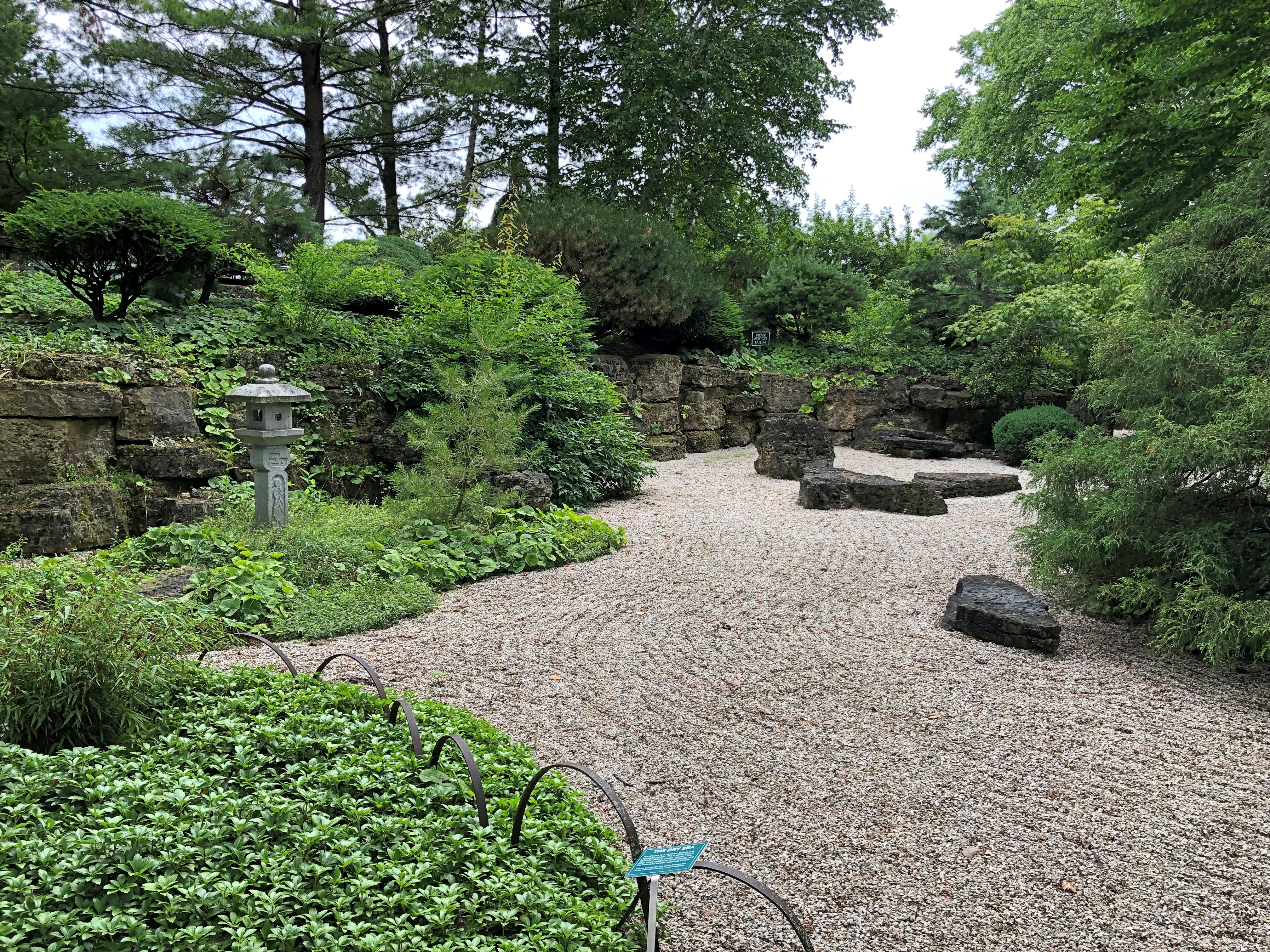
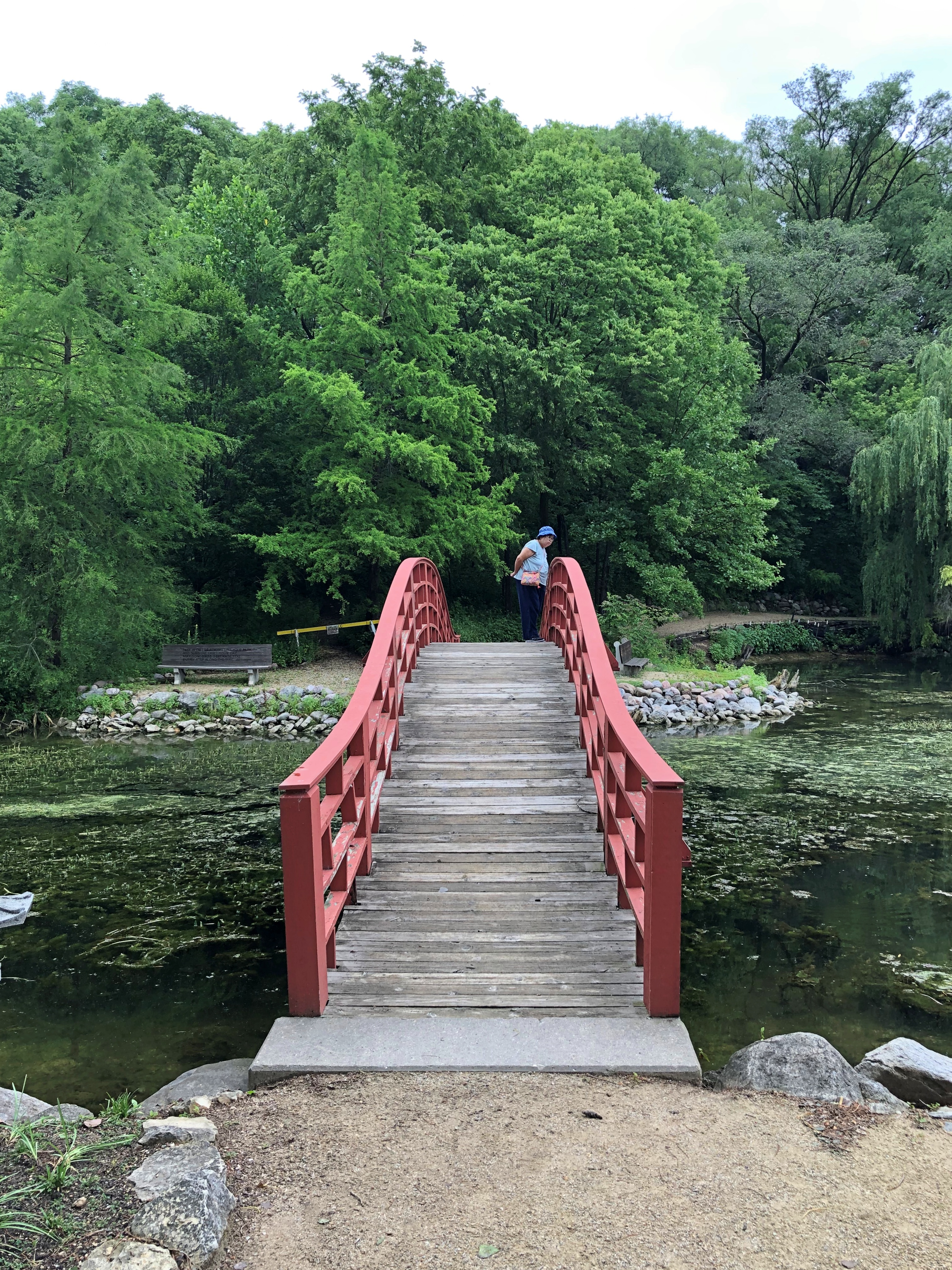
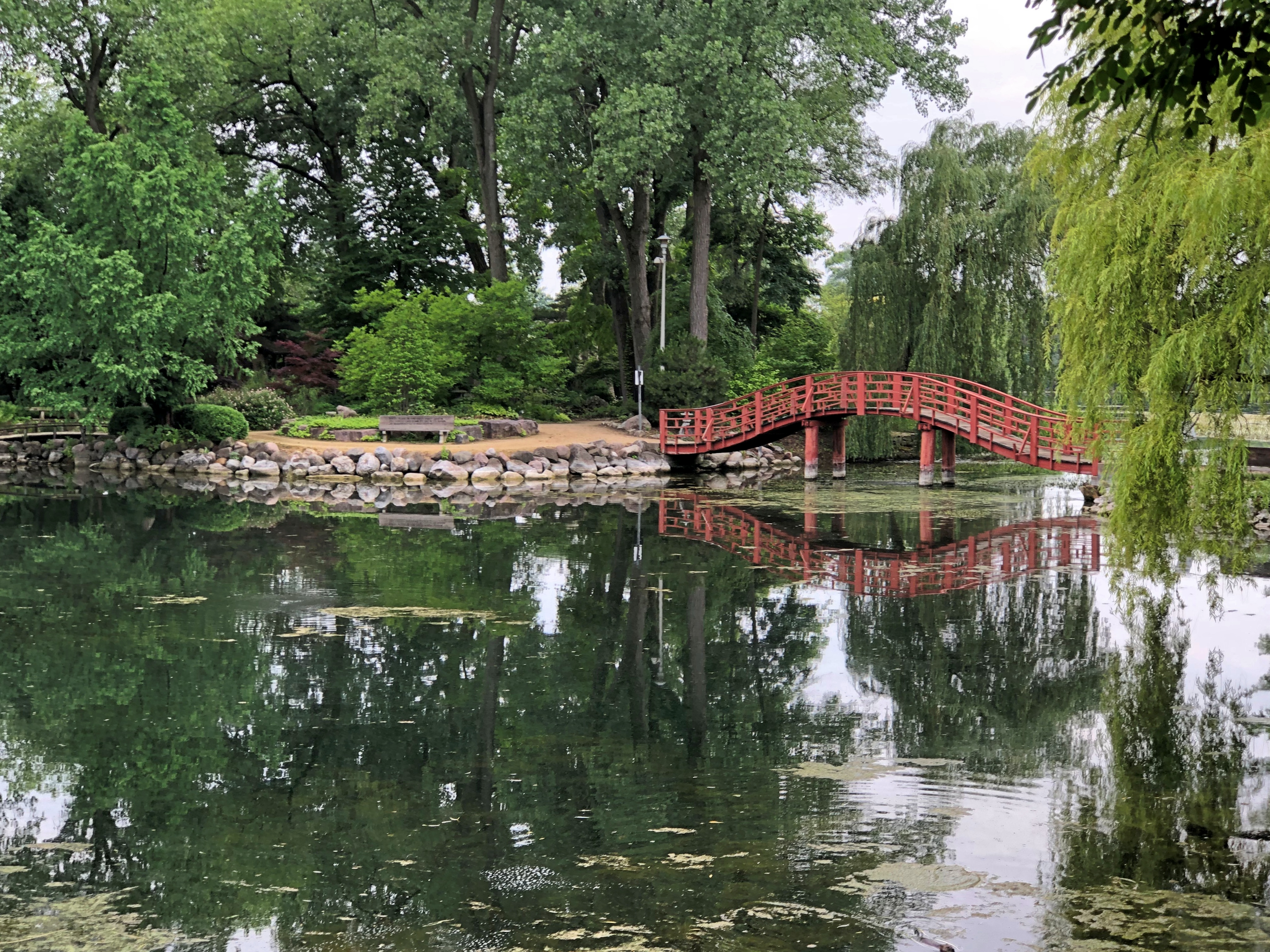
Upstream a mile or so from Battell is Merrifield Park, also in Mishawaka. That was the last place we visited in town before heading home, because we wanted to see one of the park’s smaller features, Shiojiri Garden (Shiojiri Niwa), dedicated in 1987. Small but enchanting.

“This garden was a gift to the city of Mishawaka from its sister city, Shiojiri (Nagano Prefecture, Japan),” Atlas Obscura notes. “The designer was Shoji Kanaoka, the same man who planned the Japanese gardens at the Epcot Center in Florida. It features a multitude of trees and flowers, including a grove of cherry trees. There are also two snow lanterns, four bridges, and a teahouse pavilion built in the traditional Japanese style.”Shiojiri Niwa Shiojiri Niwa Shiojiri Niwa

Nice. You might call it a pocket Japanese garden, and Mishawaka — and the world — are better for it.

The Gardens at Lake Merritt

Not far from the Cathedral of Christ the Light in Oakland is Lakeside Park, the lake being Lake Merritt. The afternoon of October 28 was sunny and pleasant in Oakland. Actually a little warm; I should have brought some water.

Nice views of the city from the park.Lakeside Park, Oakland
Lakeside Park, Oakland

Paths to follow.Lakeside Park, Oakland

With wildlife to be found. Small examples, at least.
Lakeside Park, Oakland

This isn’t a gazebo. No. It’s a bandstand. Quite a bandstand.Lakeside Park, Oakland Lakeside Park, Oakland

A section of the park is given over to the Gardens at Lake Merritt.Gardens of Lake Merritt Gardens of Lake Merritt

“In the late 1950s, a coalition of garden clubs and plant societies developed and built the Oakland-East Bay Garden Center,” says Pacific Horticulture. “Upon completion, the building was donated to the City of Oakland with the understanding that the coalition would be able to use it in perpetuity for meetings and other activities. Later, the various groups took on the task of landscaping the seven-acre site.

“The gardens flourished for many years under the care of 16 city gardeners. However, by the late seventies and eighties, membership in many formal garden groups waned and, little by little, the city’s resources were directed elsewhere. Inevitably, many of the garden plots were neglected, and the appearance and appeal of the Gardens declined.

“With the vision and commitment of Victoria (Tora) Rocha, who was appointed Park Supervisor in 2010, and with renewed interest from garden groups and local residents, the Gardens at Lake Merritt are once again an interesting, enticing, and very attractive group of plantings.”

Sure enough. All sorts of gardens are part of the collection: bonsai, California riparian, Japanese, lily, Mediterranean, pollinator, rhododendron, sensory and urban edible gardens, along with a native bee hotel and native lawn.Gardens of Lake Merritt Gardens of Lake Merritt Gardens of Lake Merritt

The Japanese garden.
Gardens of Lake Merritt

I spent the most time in the nearby bonsai garden.Gardens of Lake Merritt Gardens of Lake Merritt (Bonsai)

A collection of more species than I would have expected, but that’s just my ignorance of things bonsai.

A Chinese elm.Gardens of Lake Merritt (Bonsai)

Ivy, gingko and olive.Gardens of Lake Merritt (Bonsai)

Sierra juniper.
Gardens of Lake Merritt (Bonsai)

Not all the botanic marvels of the park were in the designated gardens. Some striking trees could be found scattered through the park.Gardens of Lake Merritt (Bonsai)

Including the impressive whatever-it-is pictured above. A botanist, I’m not.

The Georgeson Botanical Garden & Other Alaskan Flora

One of the channels on my hotel TV in Fairbanks was essentially a continuous commercial for places to visit in that part of Alaska. All kinds of tourist activities or things to buy to remind you of your visit.

Here’s a thought for the Great Alaskan Bowl Co. of Fairbanks: noting that your product was featured in the 2017 “Made in America Week” event at the White House, however much of an honor that might seem to be, and however excellent your paper-birch wood bowls might be, could be a way to alienate as many potential buyers as it impresses. Just a thought.

The only TV recommendation I took to heart was a suggestion to visit the Georgeson Botanical Garden on the campus of the University of Alaska Fairbanks.

Georgeson Botanical Gardens, Fairbanks

Georgeson Botanical Gardens, Fairbanks
At the end of July, the eight-acre garden is a lush place, flush with flowers and varieties of vegetables I wouldn’t have associated with Alaska. But I am horticulturally ignorant. The growing season is short in the subarctic, but there is a growing season.

Flowers.Georgeson Botanical Gardens, Fairbanks

Georgeson Botanical Gardens, Fairbanks

Georgeson Botanical Gardens, Fairbanks
Vegetables.
Georgeson Botanical Gardens, Fairbanks

Including the largest cabbages I’ve ever seen.
Georgeson Botanical Gardens, Fairbanks

“The Georgeson Botanical Garden began in 1989 as a research, educational, and public outreach program,” the garden web site says. “However, its roots lie much deeper. In 1898, 31 years after the US purchased Alaska, the Secretary of Agriculture of the USDA sent [a] special agent of agriculture, Charles Christian Georgeson, to Alaska to explore the agricultural potential of the state.”

Georgeson established seven agriculture stations in the territory, two of which still exist, one in Fairbanks and one in Matanuska.

“The Fairbanks experiment station was established in 1906 and in 1931 the farm was incorporated into the Alaska Agricultural College and School of Mines (renamed the University of Alaska Fairbanks in 1935). [By the 1980s]… UAF proposed turning the muddy paths and straight rows of trial plants into a space that is more accessible and welcoming to the public.”

Why do cabbages (and cantaloupes and broccoli and others) grow so large in Alaska? It might be counterintuitive, but NPR offers an explanation.

“It’s Alaska’s summer sun that gives growers an edge, says Steve Brown, an agricultural agent at the University of Alaska Fairbanks. Basking in as much as 20 hours of sunshine per day, Alaskan crops get a photosynthesis bonus, allowing them to produce more plant material and grow larger. Brassicas like cabbage do especially well, says Brown.”

Elsewhere I saw plenty of other intriguing flora, including the main kinds of trees in the state, such as spruces, black cottonwood, paper birch, quaking aspen, alder and balsam poplar.Alaskan bush

Alaskan bush

Fireweed. Late summer is its time, and I saw it everywhere.
Alaskan fireweed
Alaskan fireweed

Alaskan fireweed

“The fireweed we know in Alaska — Chamerion angustifolium — proliferates during summer, aggressively erupting in open spaces before cottoning in the turn toward fall,” the Anchorage Daily News says.

“Fireweed is common throughout much of the northern hemisphere. In Canada, it is the willowherb. In the United Kingdom, it is rosebay willowherb….

“The ‘fire’ in the name derives not just from the vivid color of the flower itself but from its tendency to grow in areas cleared by fire. As fireweed favors open, cleared and dry land, it was among the first plants to grow in the wake of the 1980 Mount St. Helens volcanic eruption in Washington state.”

Cantigny in May

It looks like Cantigny Park has taken the opportunity posed by the international health crisis to do some work on Col. McCormick’s mansion. This is what the outside of the mansion looked like on Saturday.
Cantigny Park

We didn’t visit to see the mansion, which we toured some years ago. Instead we wanted to see the grounds in spring. The day was cool — it’s been a cold spring lately — but not bad for a walkabout among the greenery.
Cantigny Park

And the flowers.
Cantigny Park

Lots of flowers.Cantigny Park

Cantigny Park

Along with other plants.Cantigny Park Cantigny Park

We haven’t been to Cantigny in a number of years. More recently than 2010 or 2011, but I don’t remember exactly when. On Saturday we also spent a little time at the McCormicks’ grave, in the shape of an exedra, which isn’t far from their mansion.

Cantigny Park - McCormick grave Cantigny Park - McCormick grave Cantigny Park - McCormick grave

Though a little chilly (mid-50s), it was a festive day at Cantigny.

Cantigny Park

Cantigny Park

People are gathering in groups once more this spring, or so anecdotal evidence, such as seeing them at Cantigny, tells me.

Suzhou 1994

A postcard I sent from Suzhou in May 1994.Suchou Suchou

Jim must have asked me about zoos and natural history museums, two kinds of places he likes to go. In Beijing, we did visit the main zoo, including a look at its moth-eaten pandas, but no natural history museums. We didn’t do that until we got to Mongolia.

Suzhou is famed for its gardens, and we visited a few. As far as I can tell, I took only one picture in any one of them.Limited film and the prospect of months on the road inspired that kind of parsimony in me, I guess.