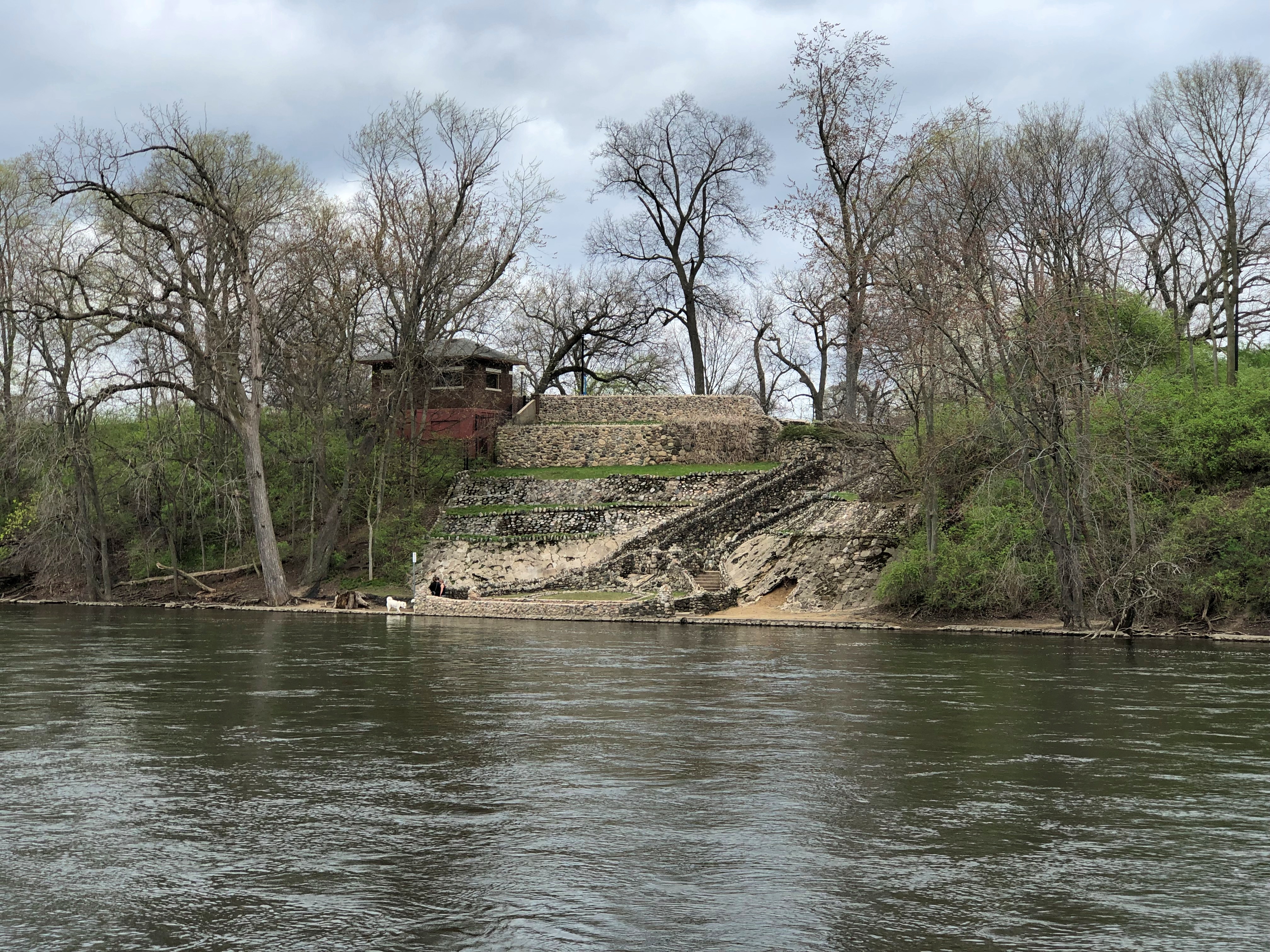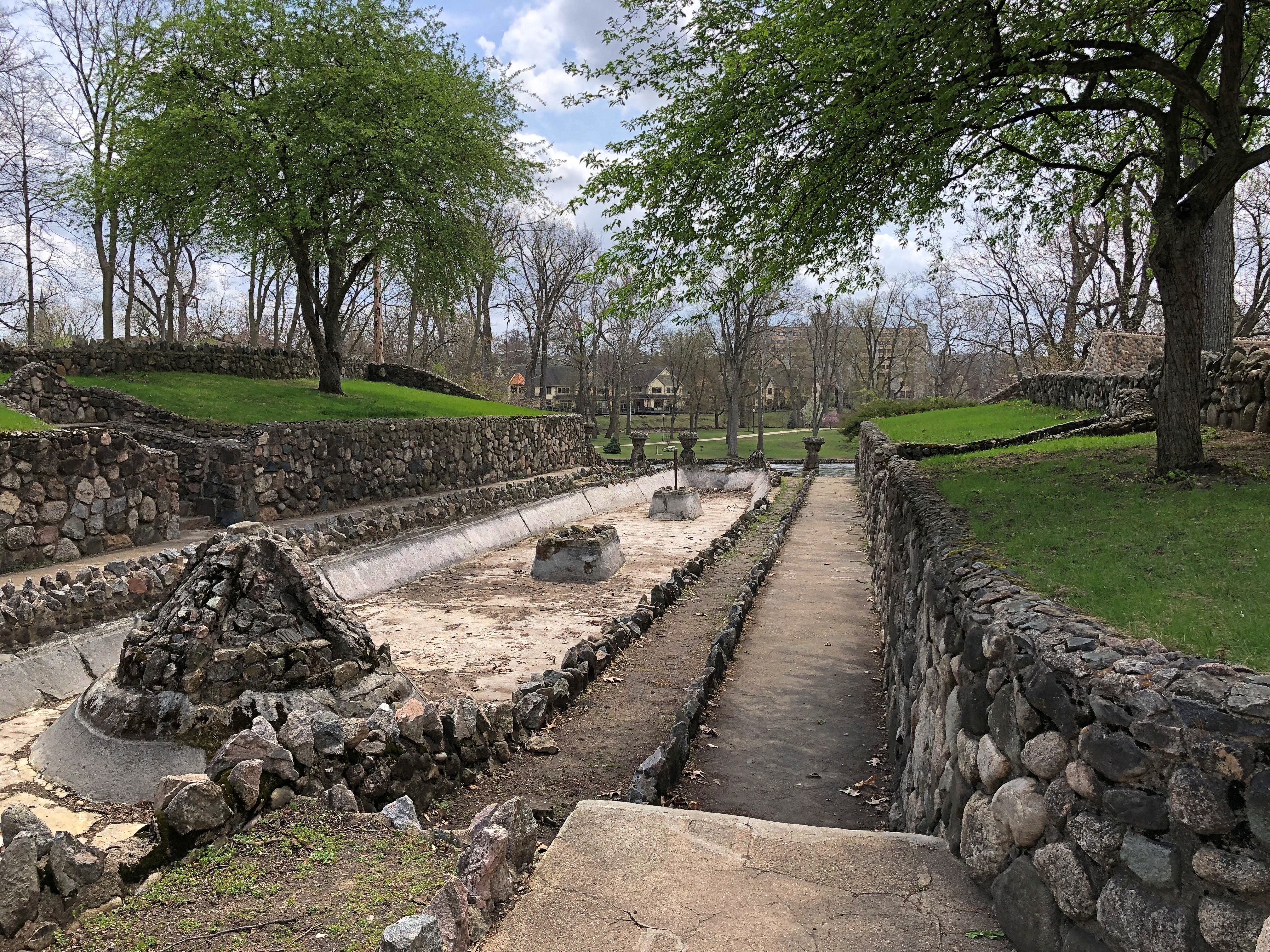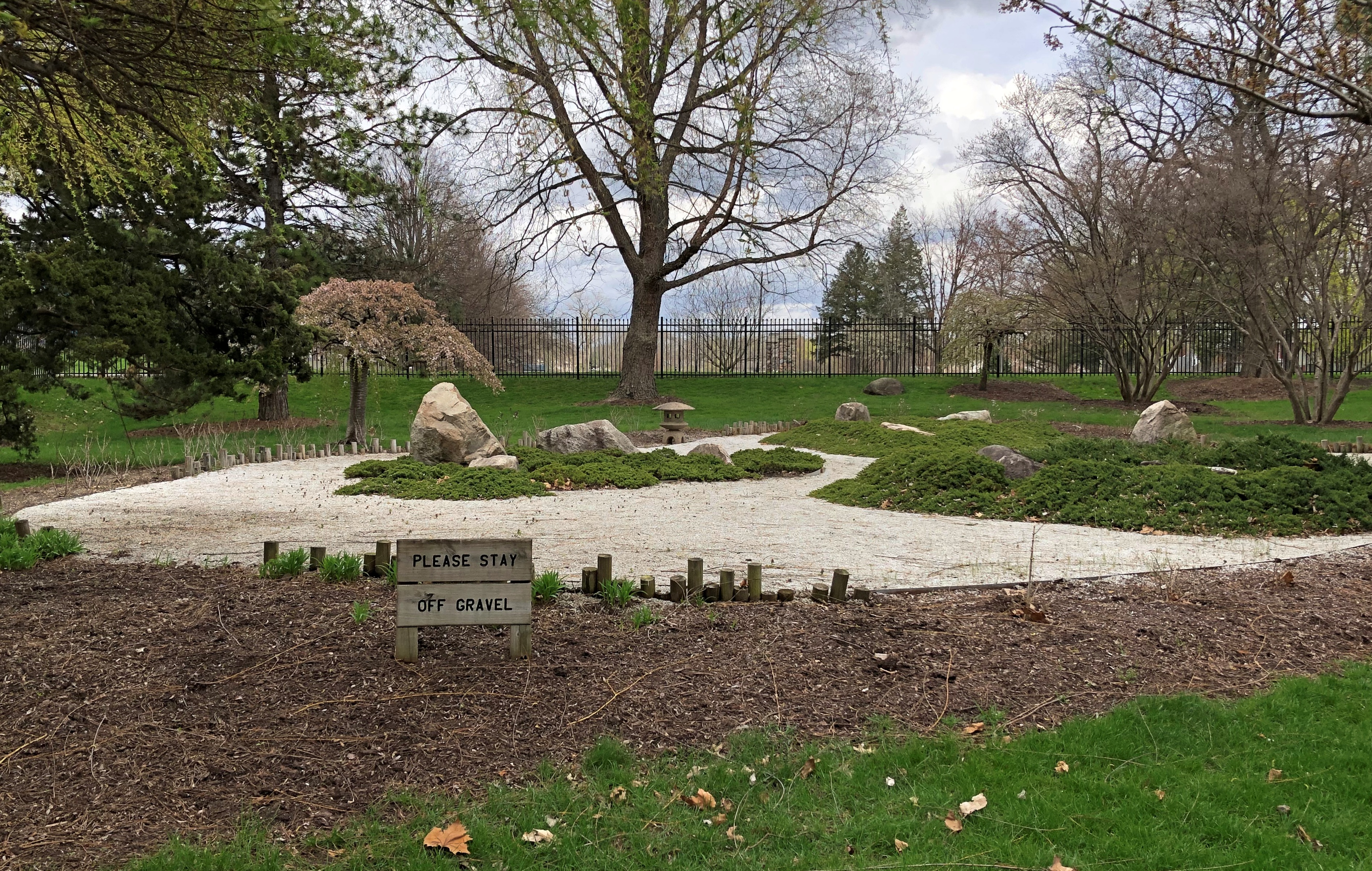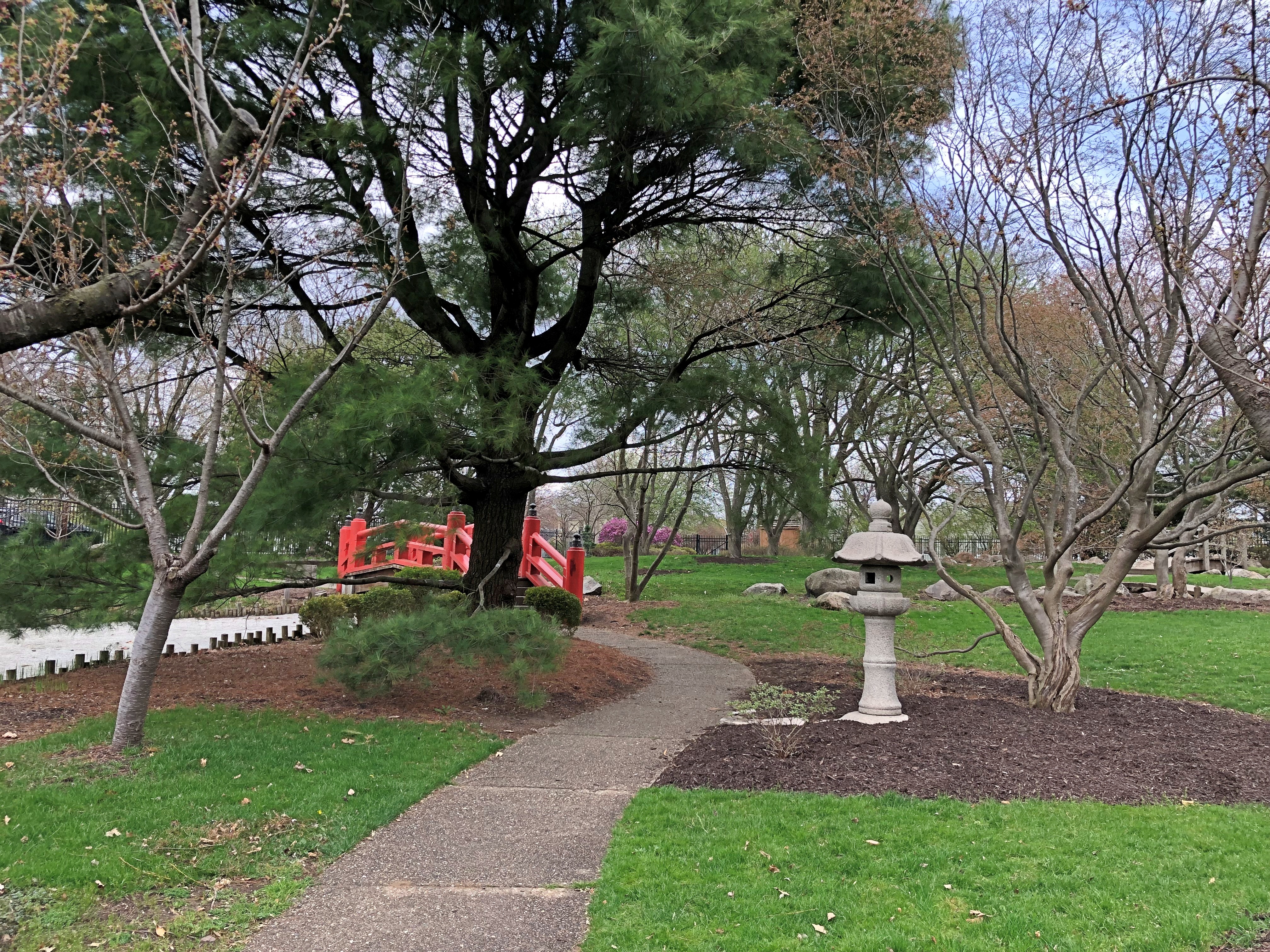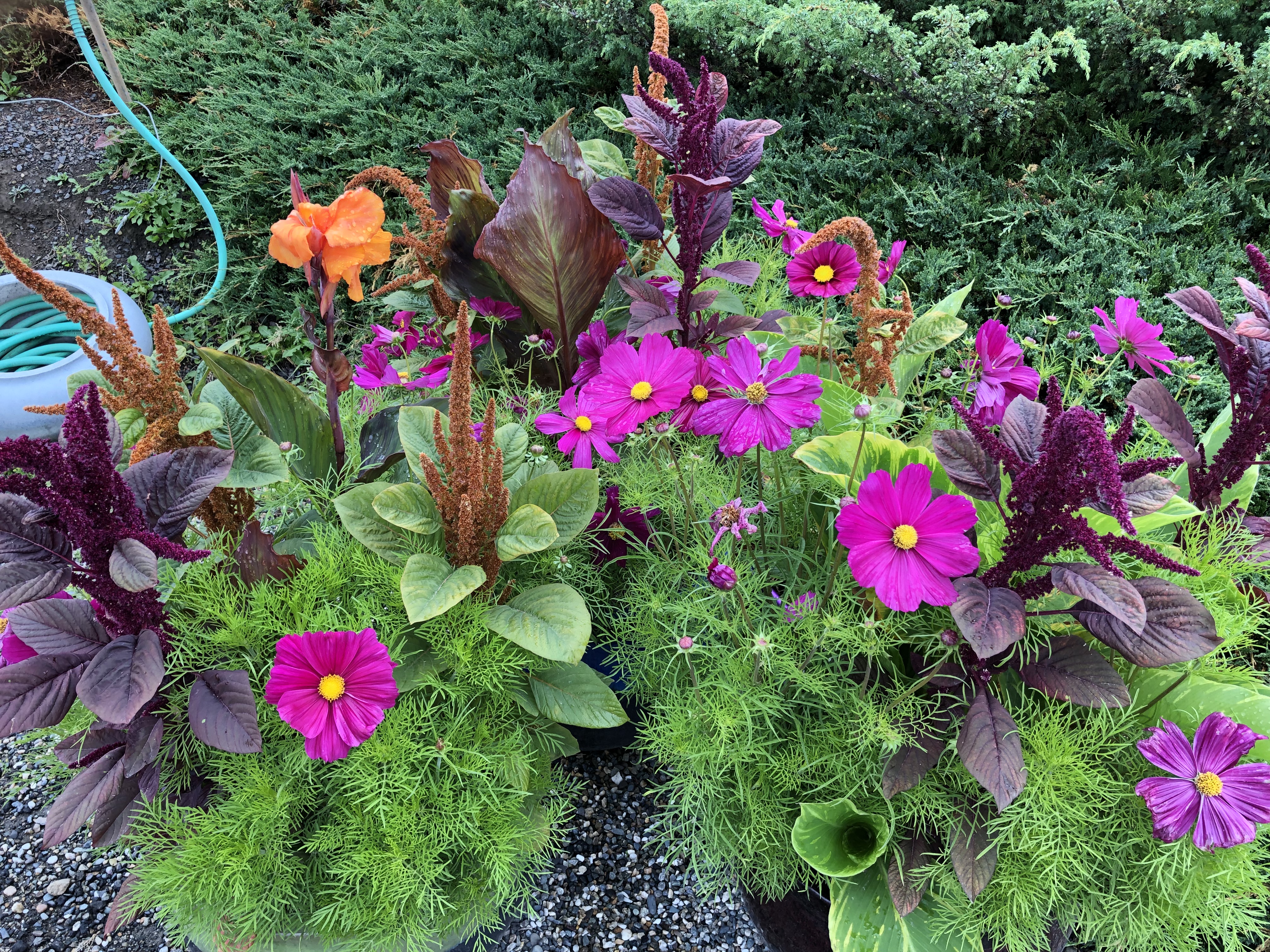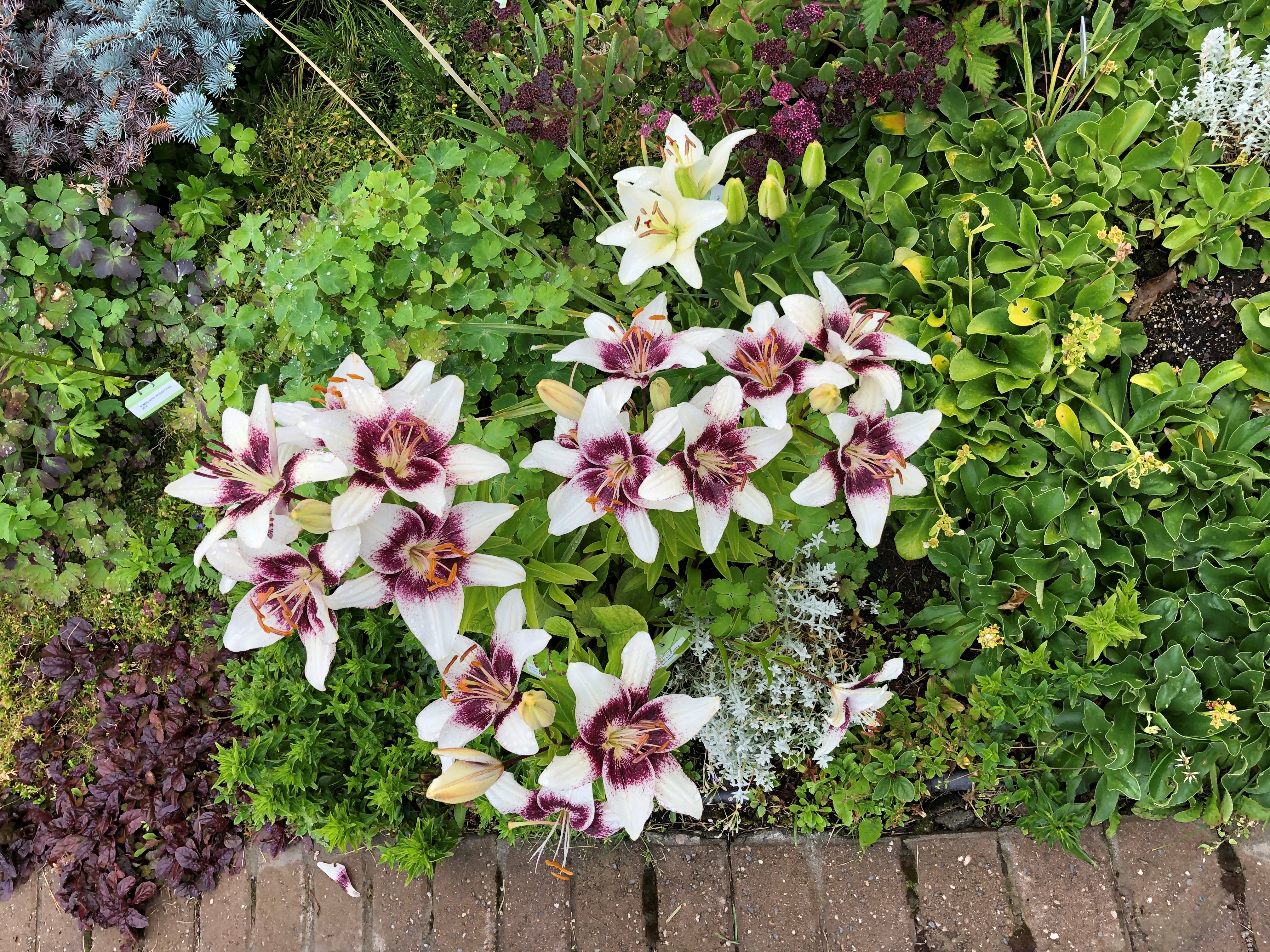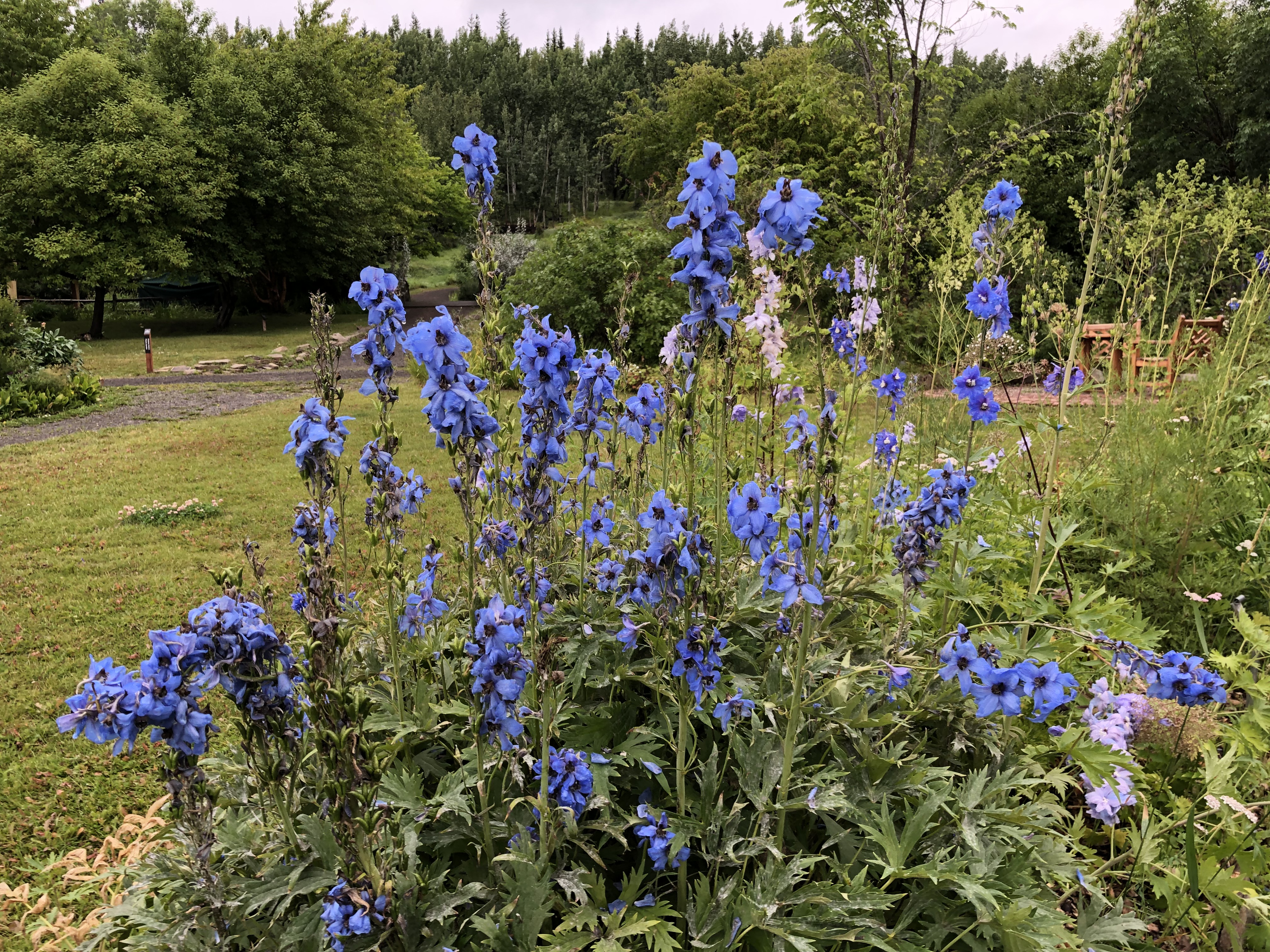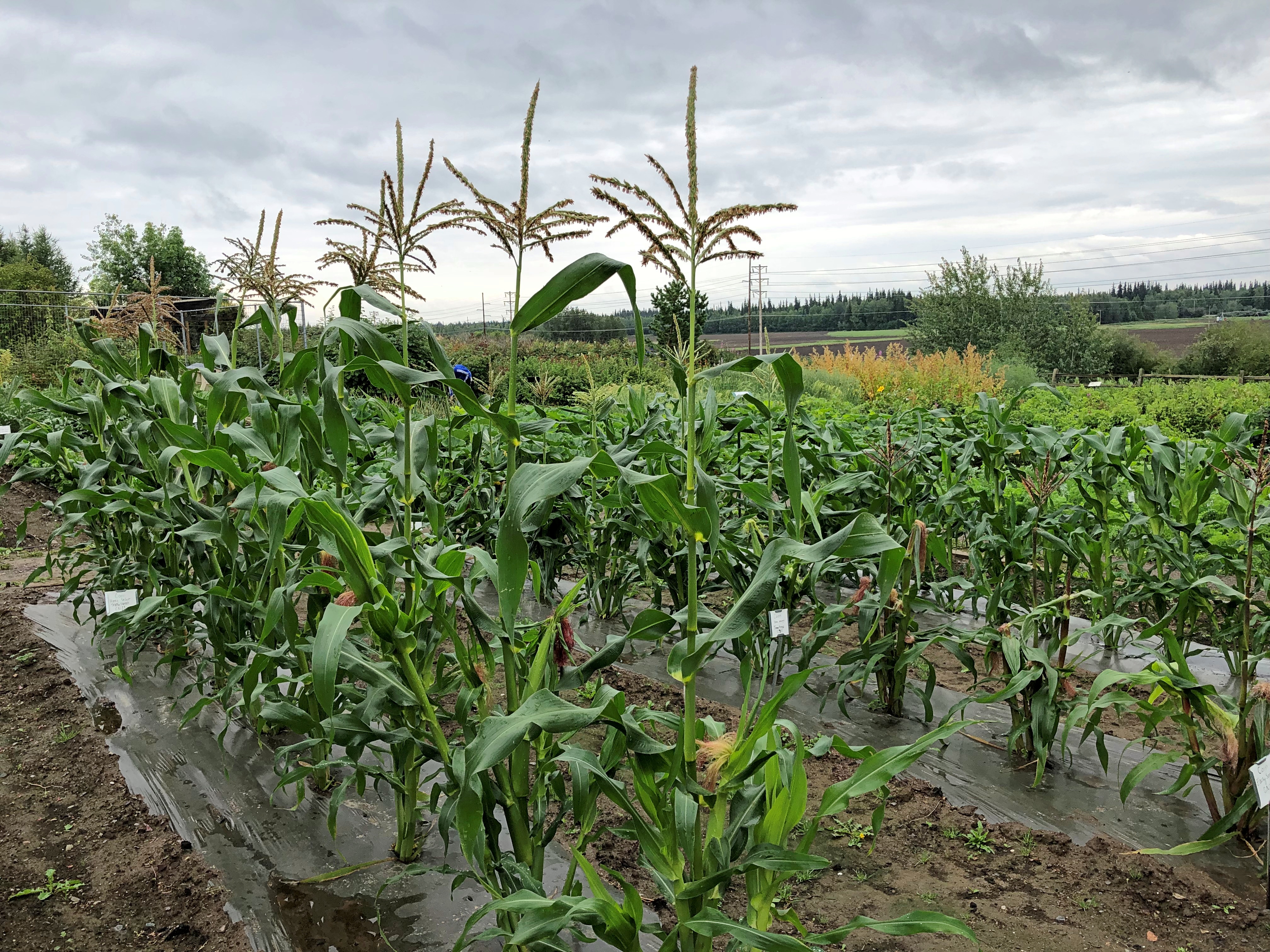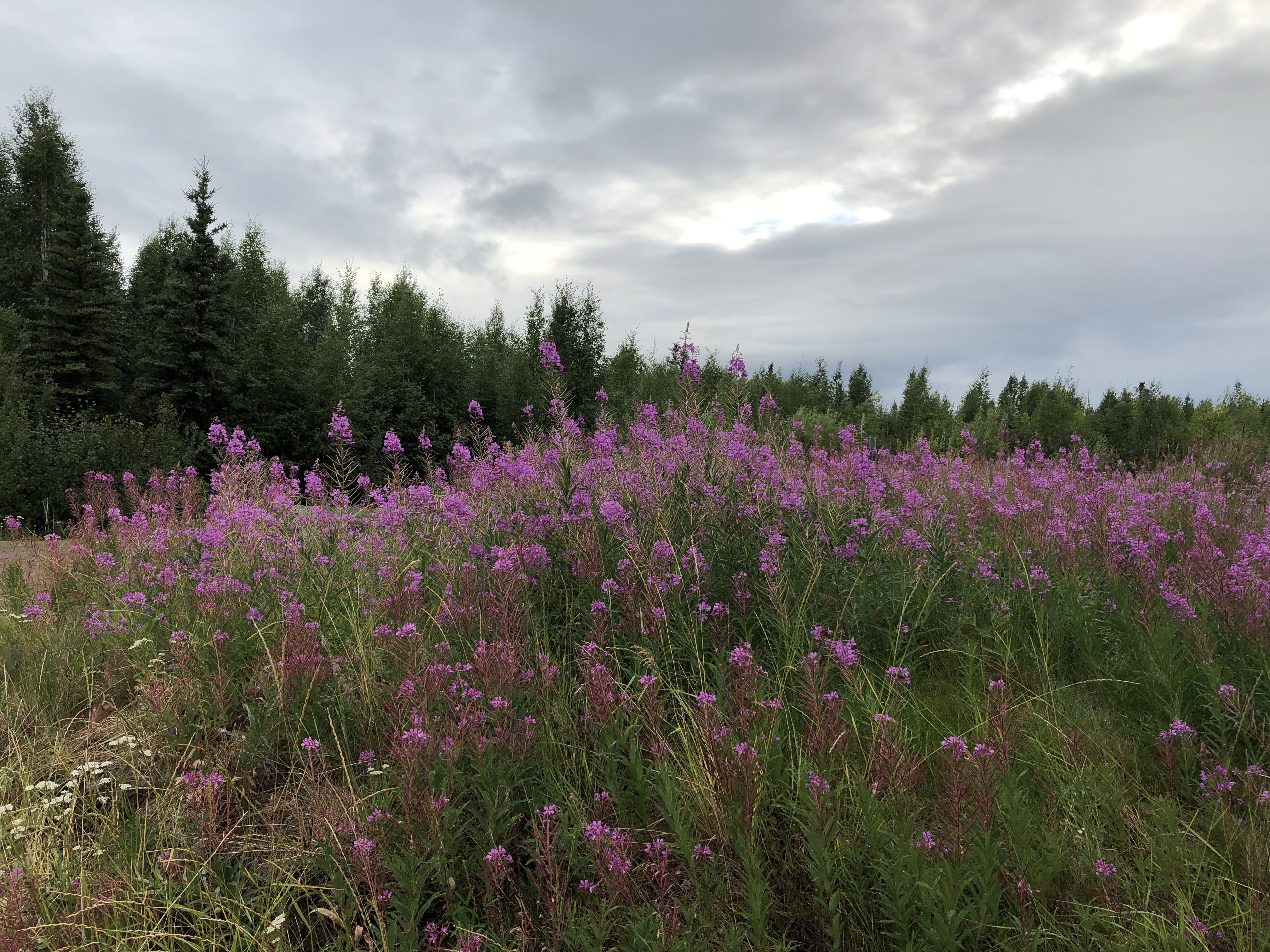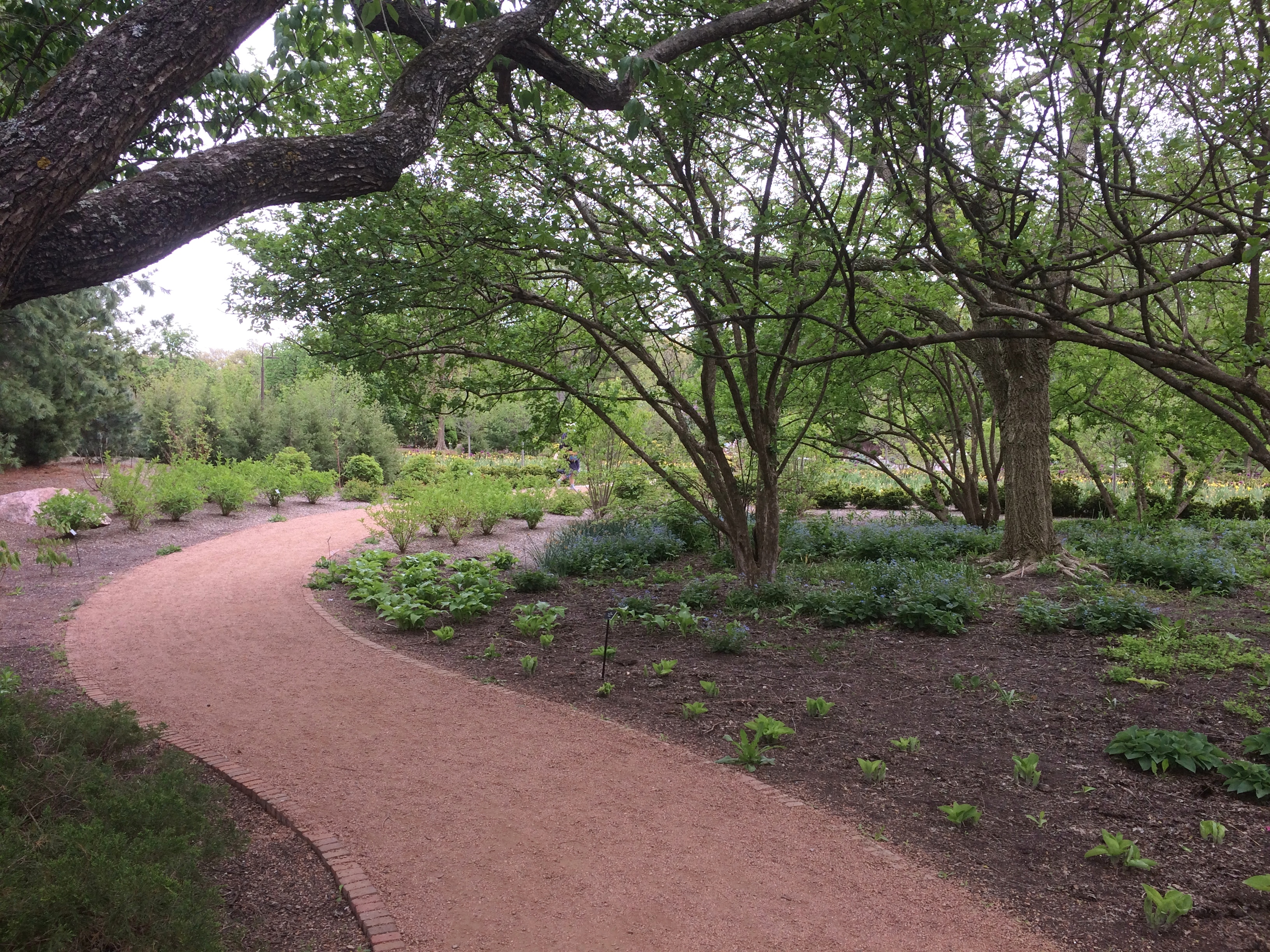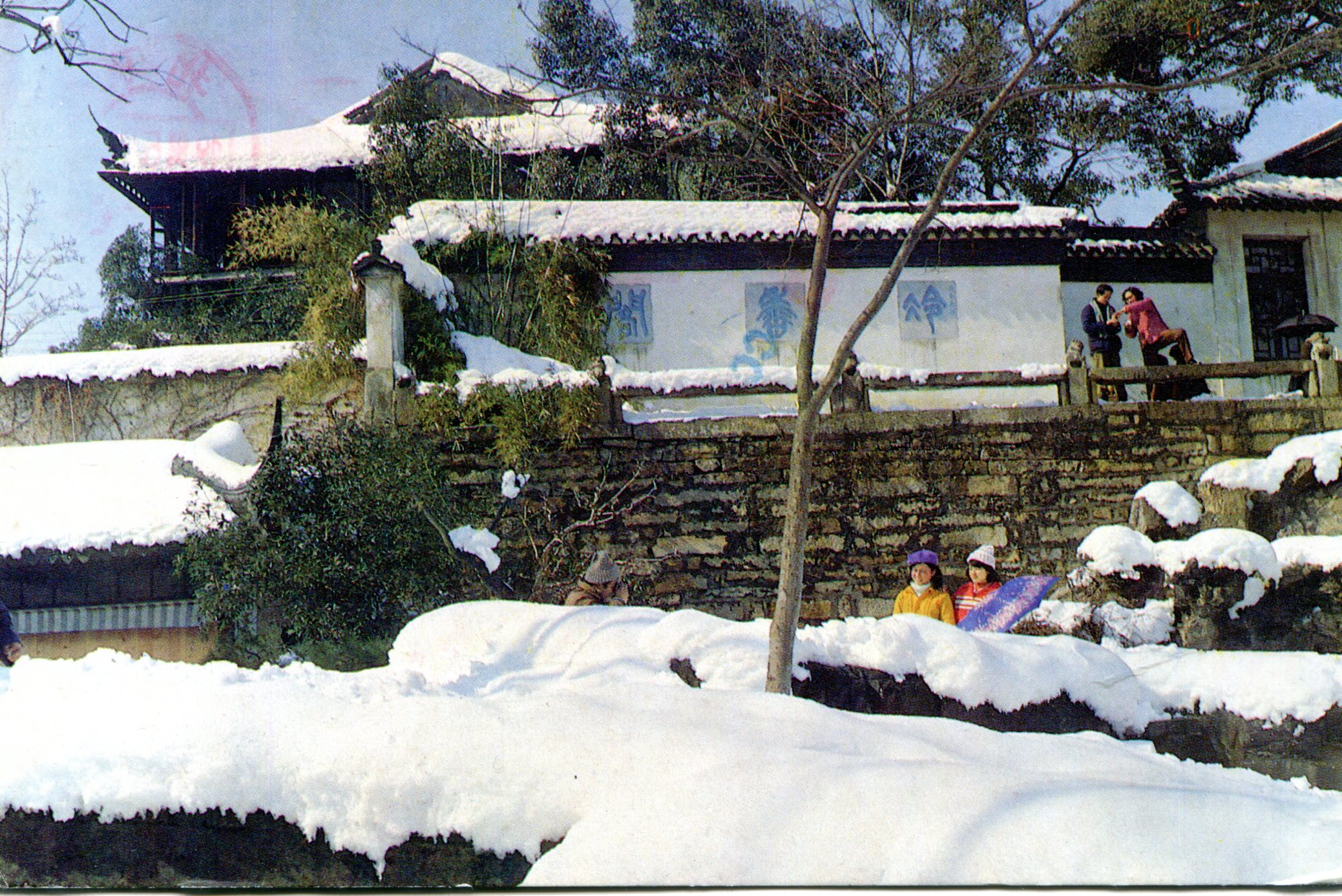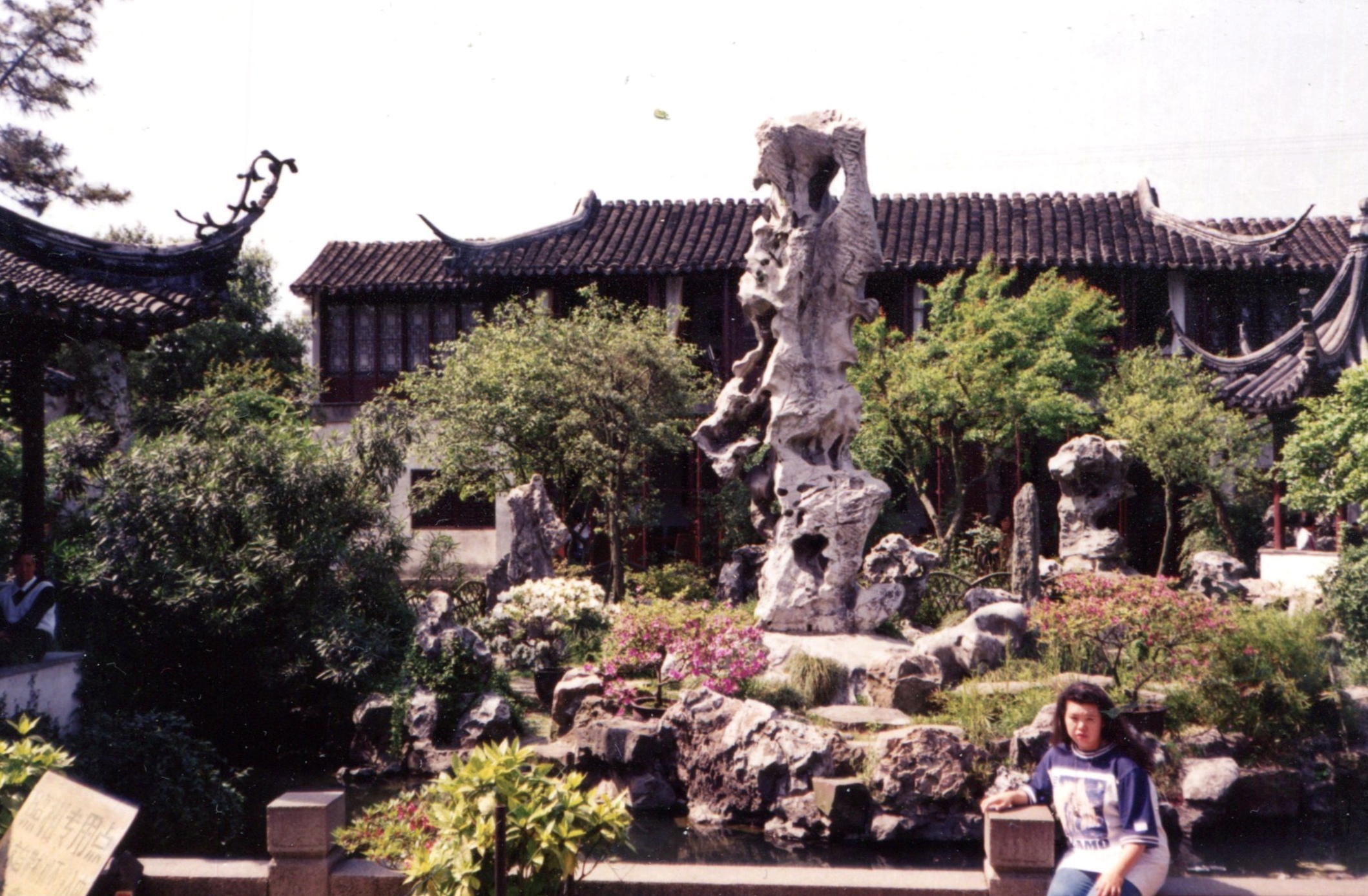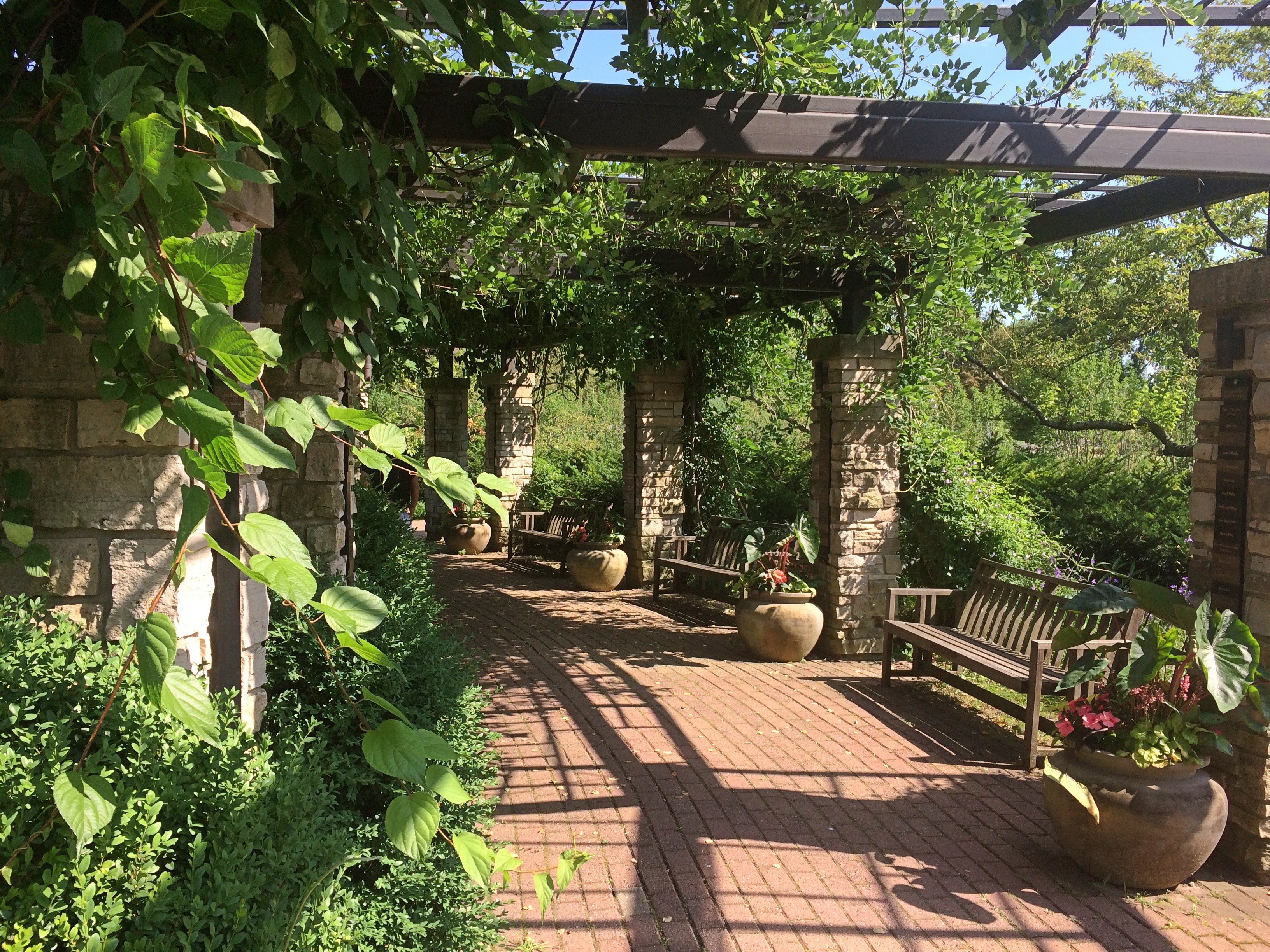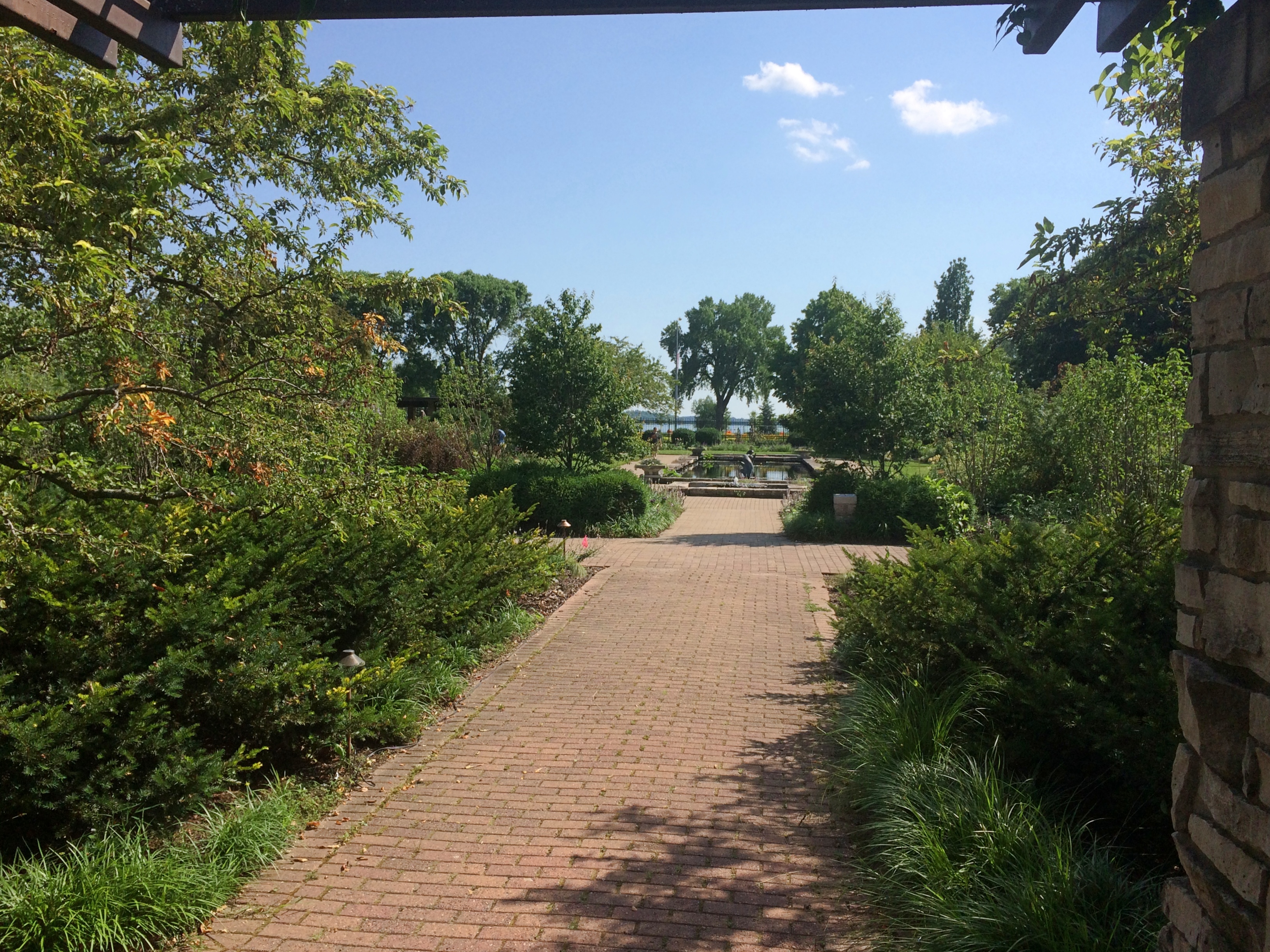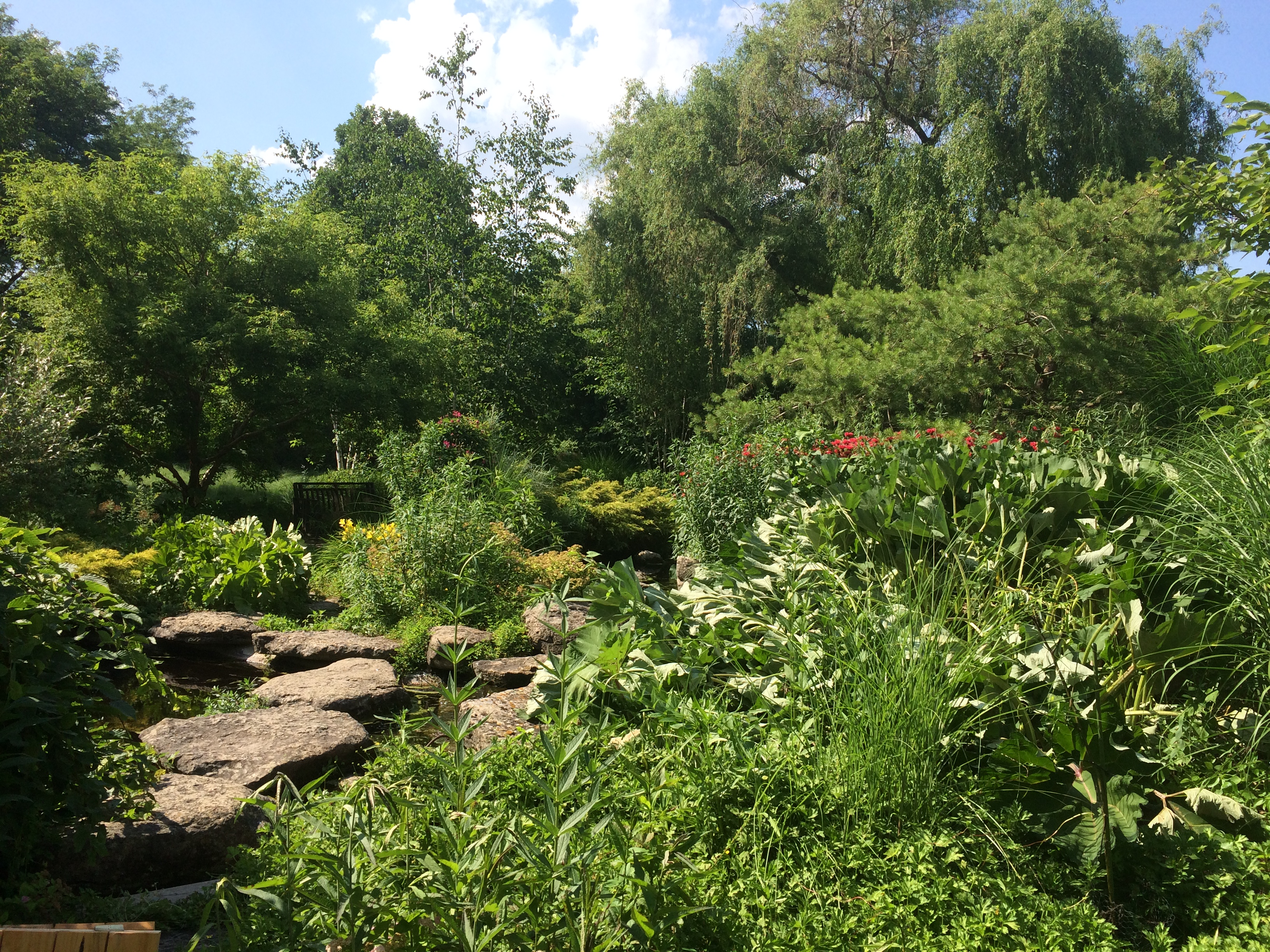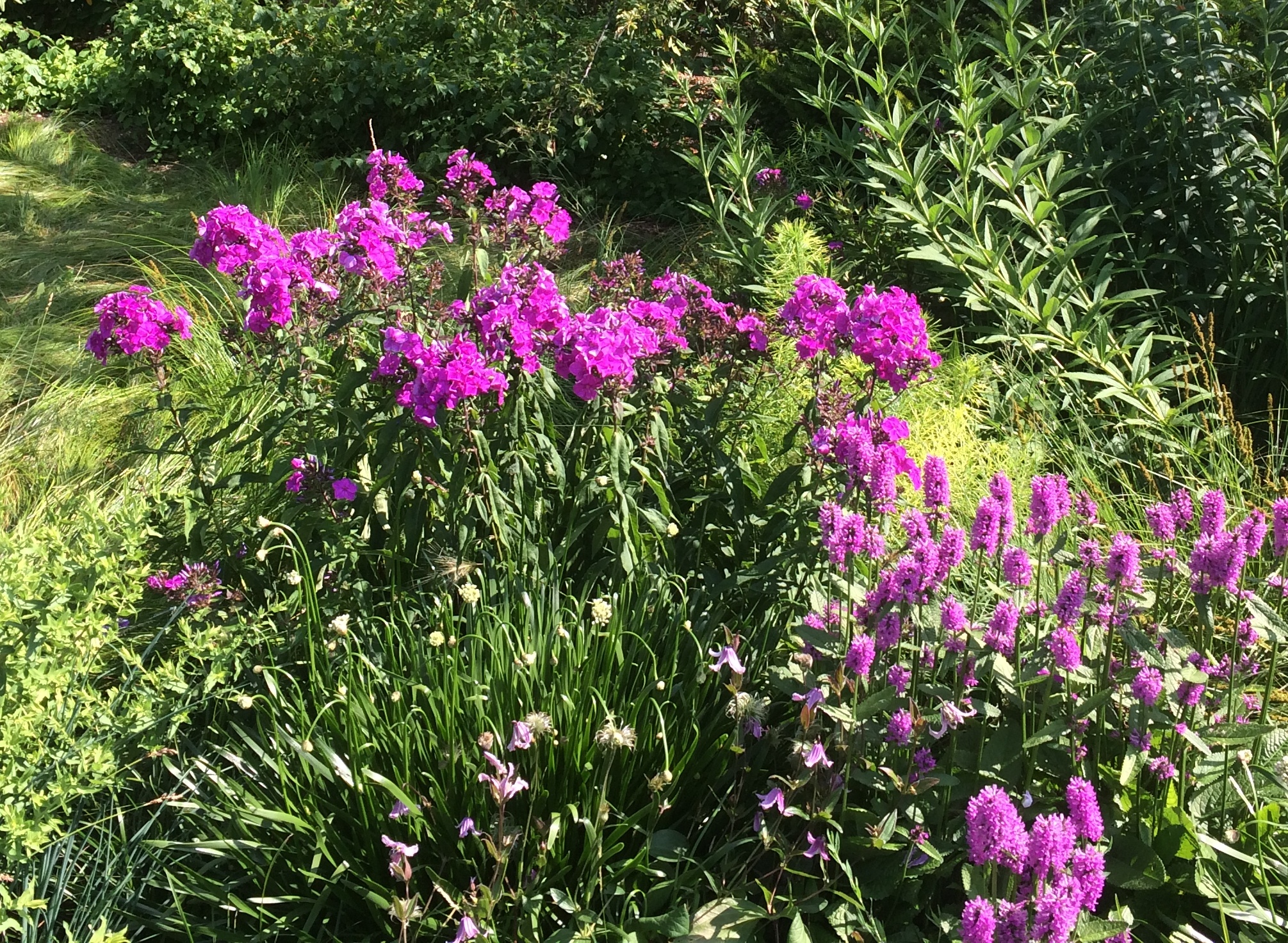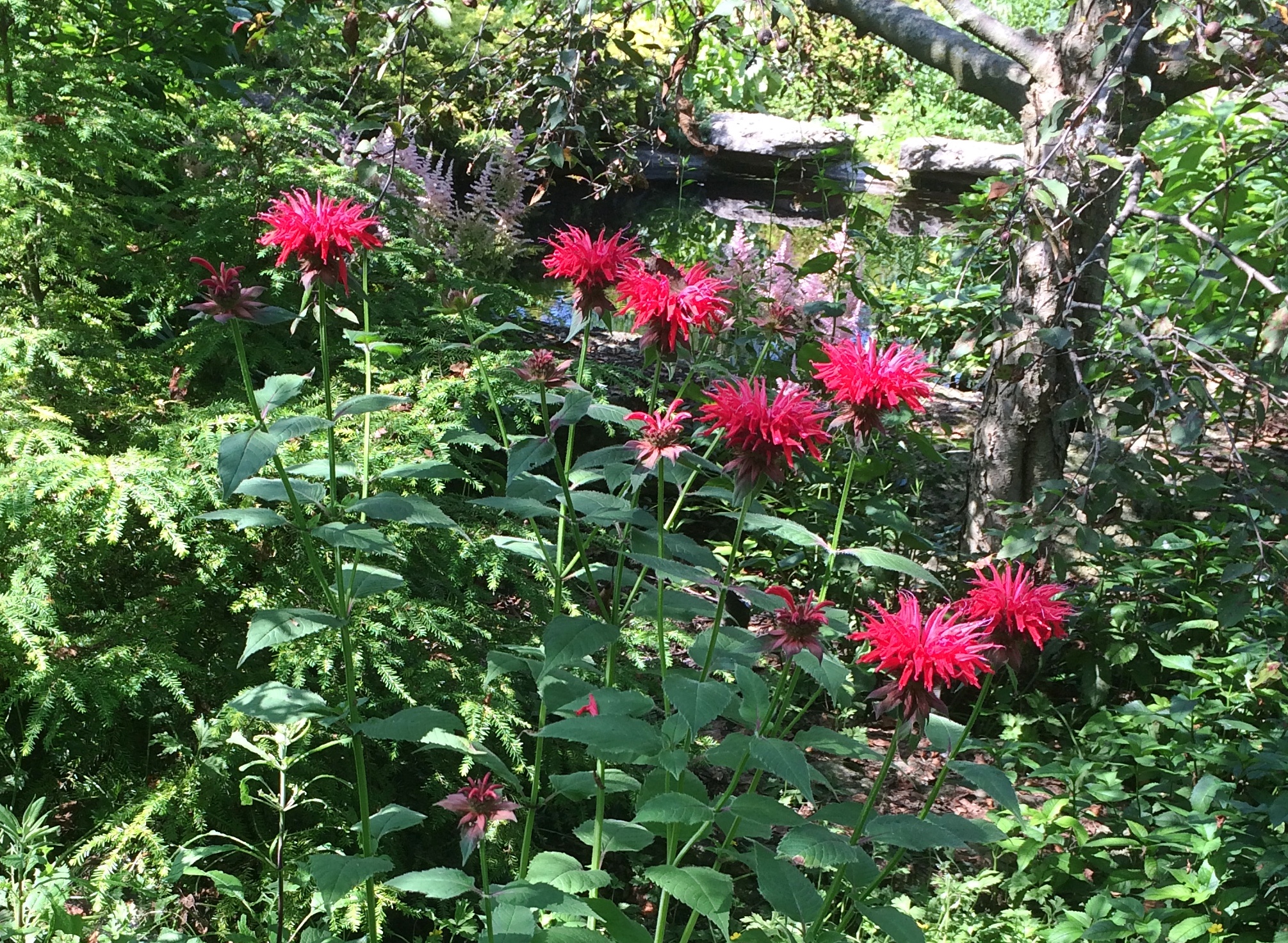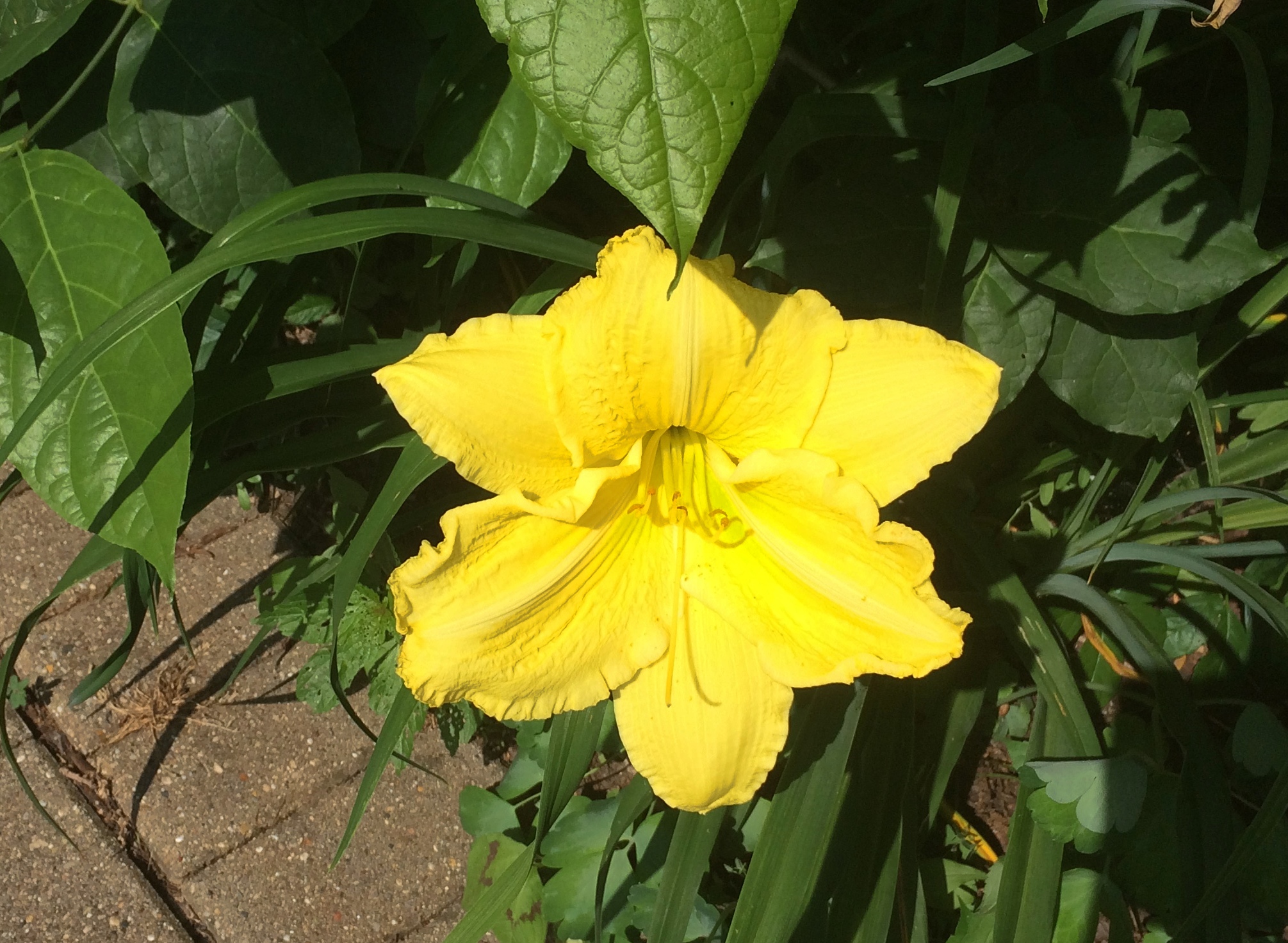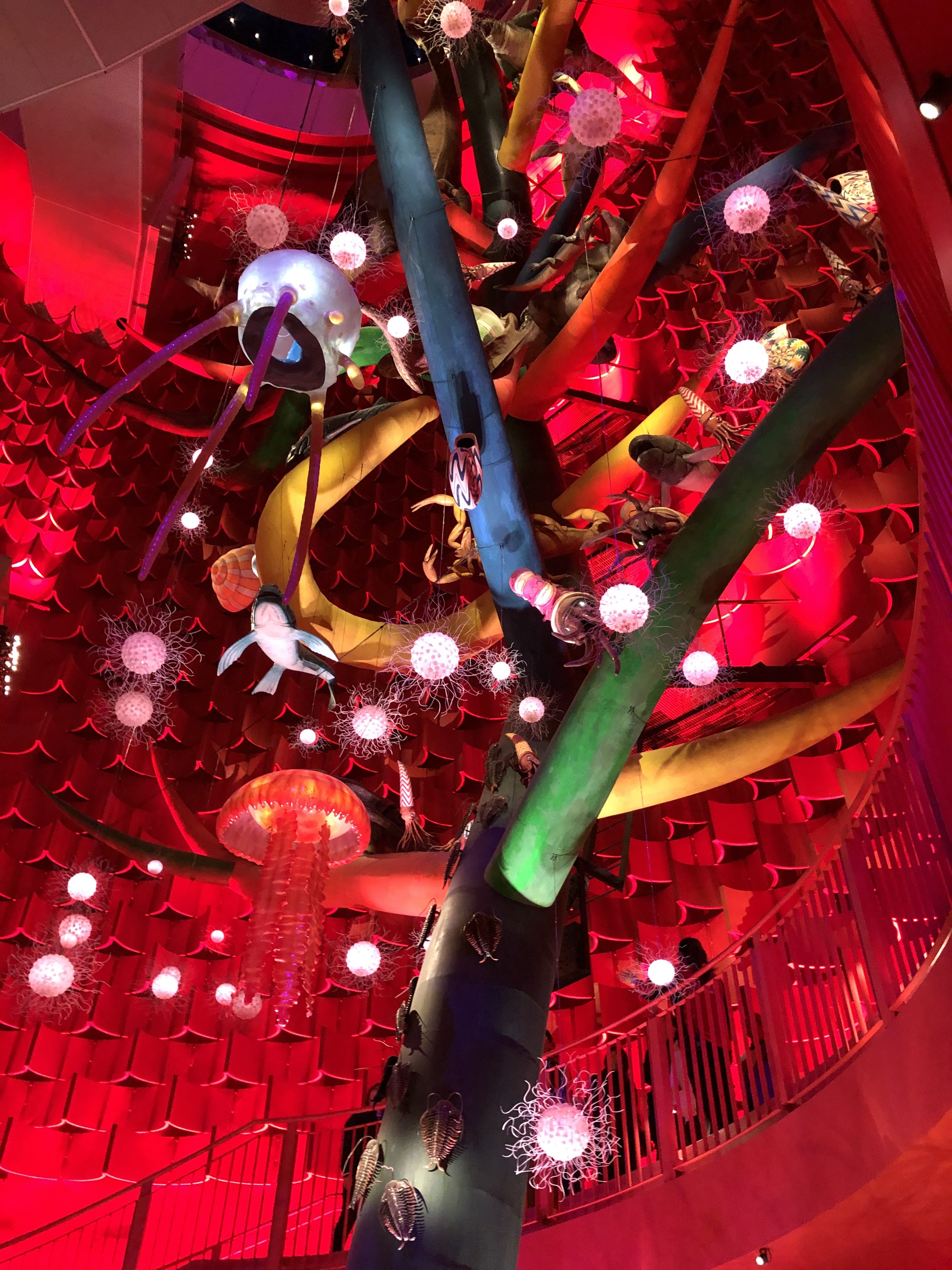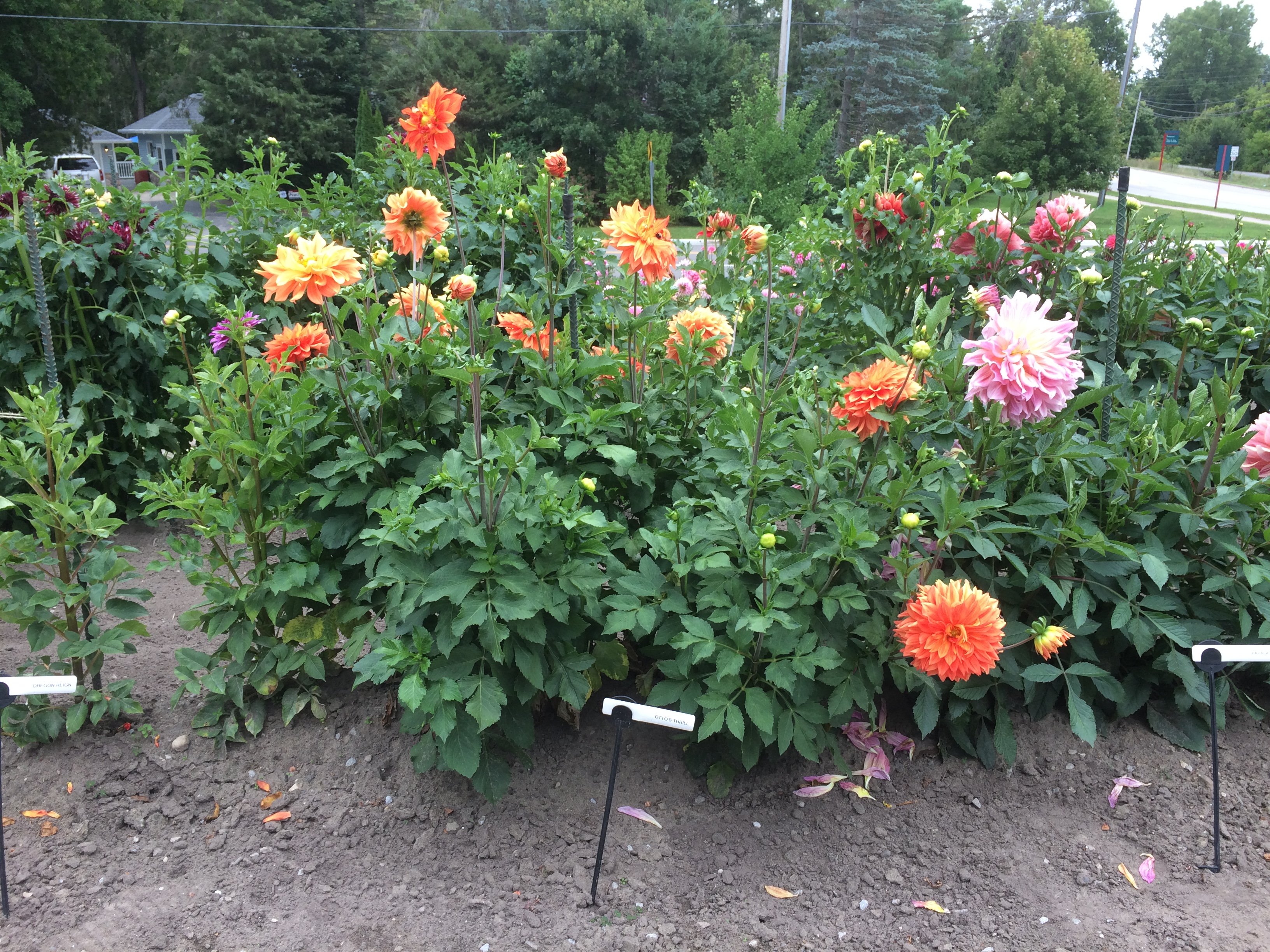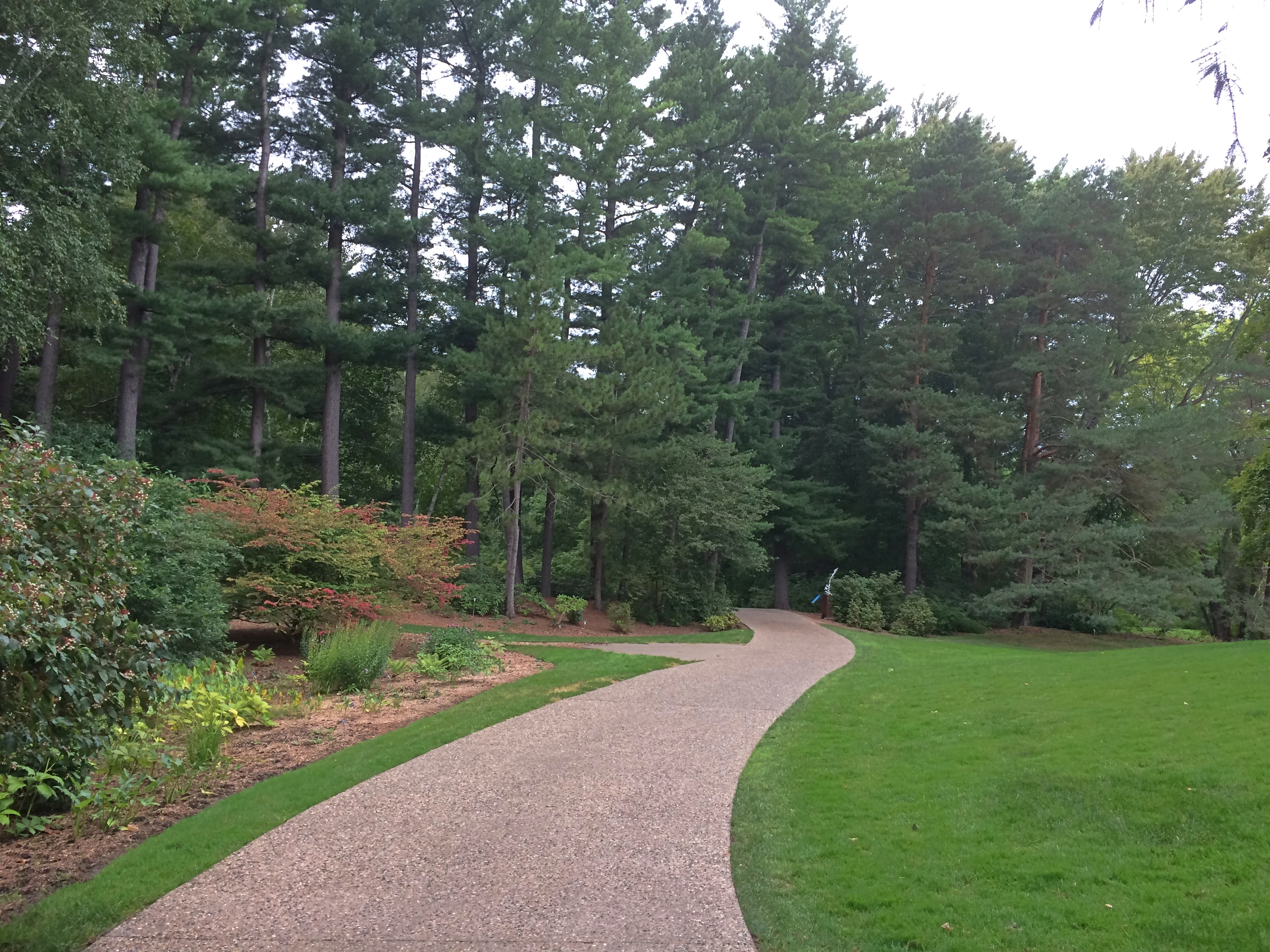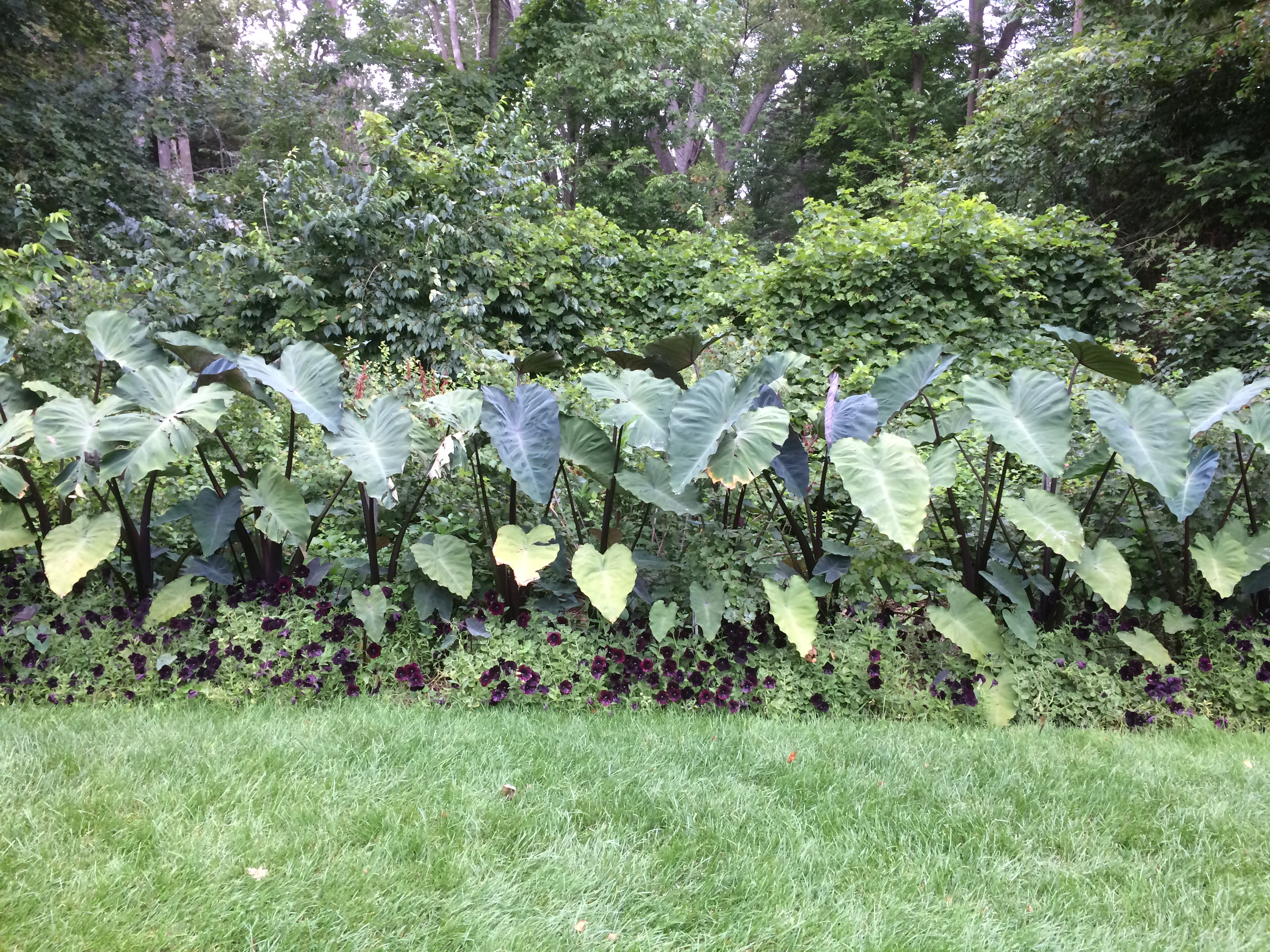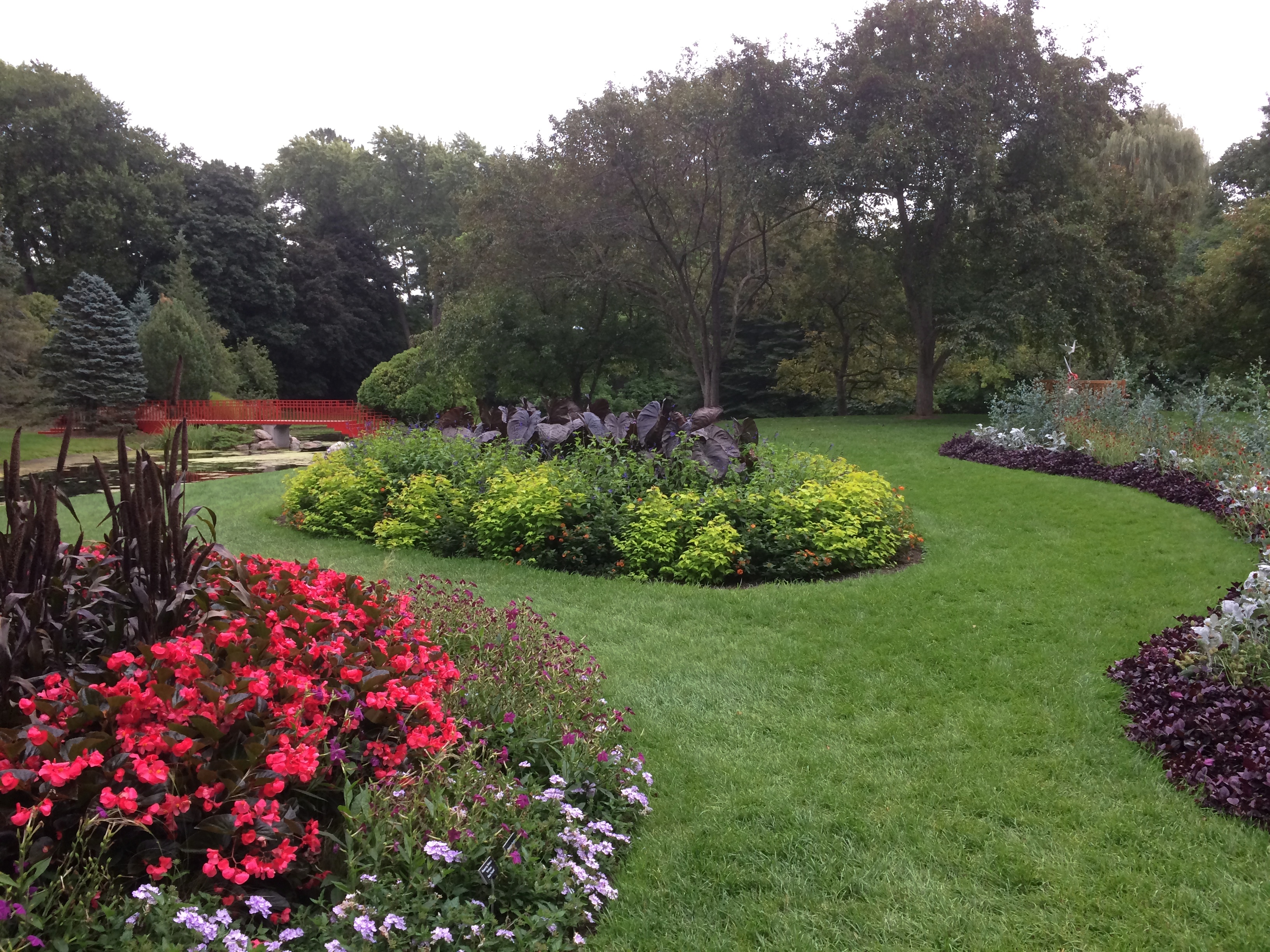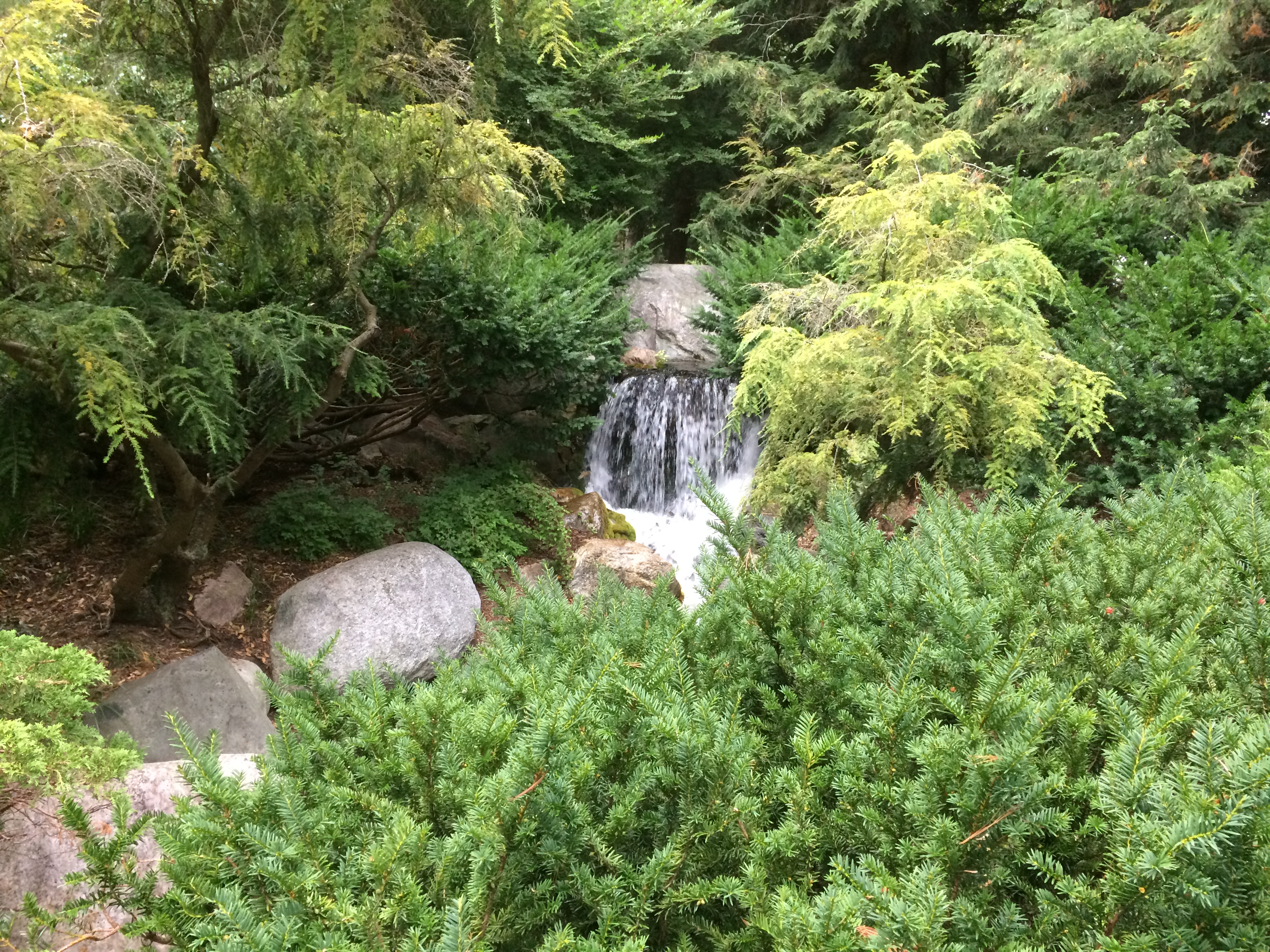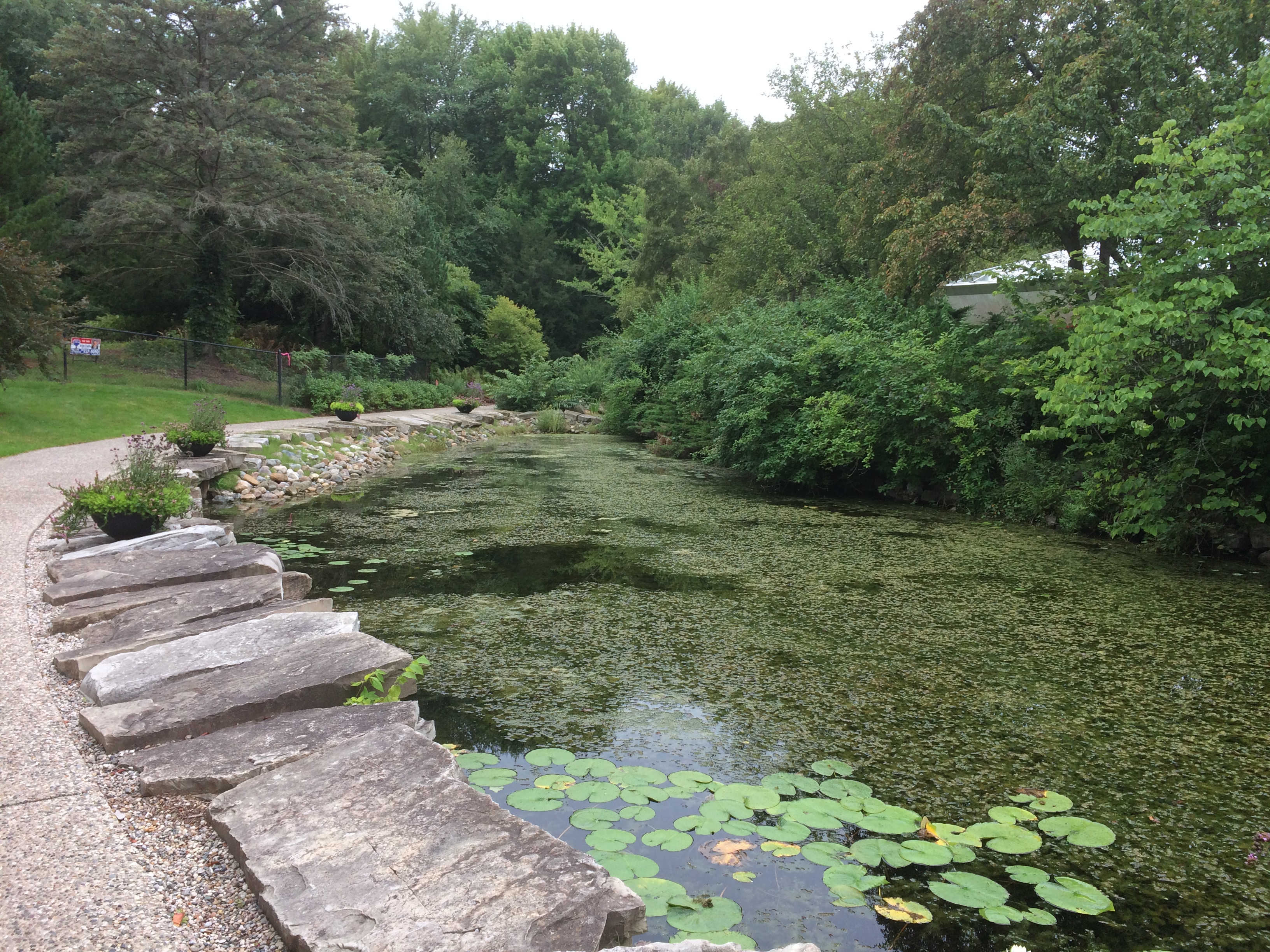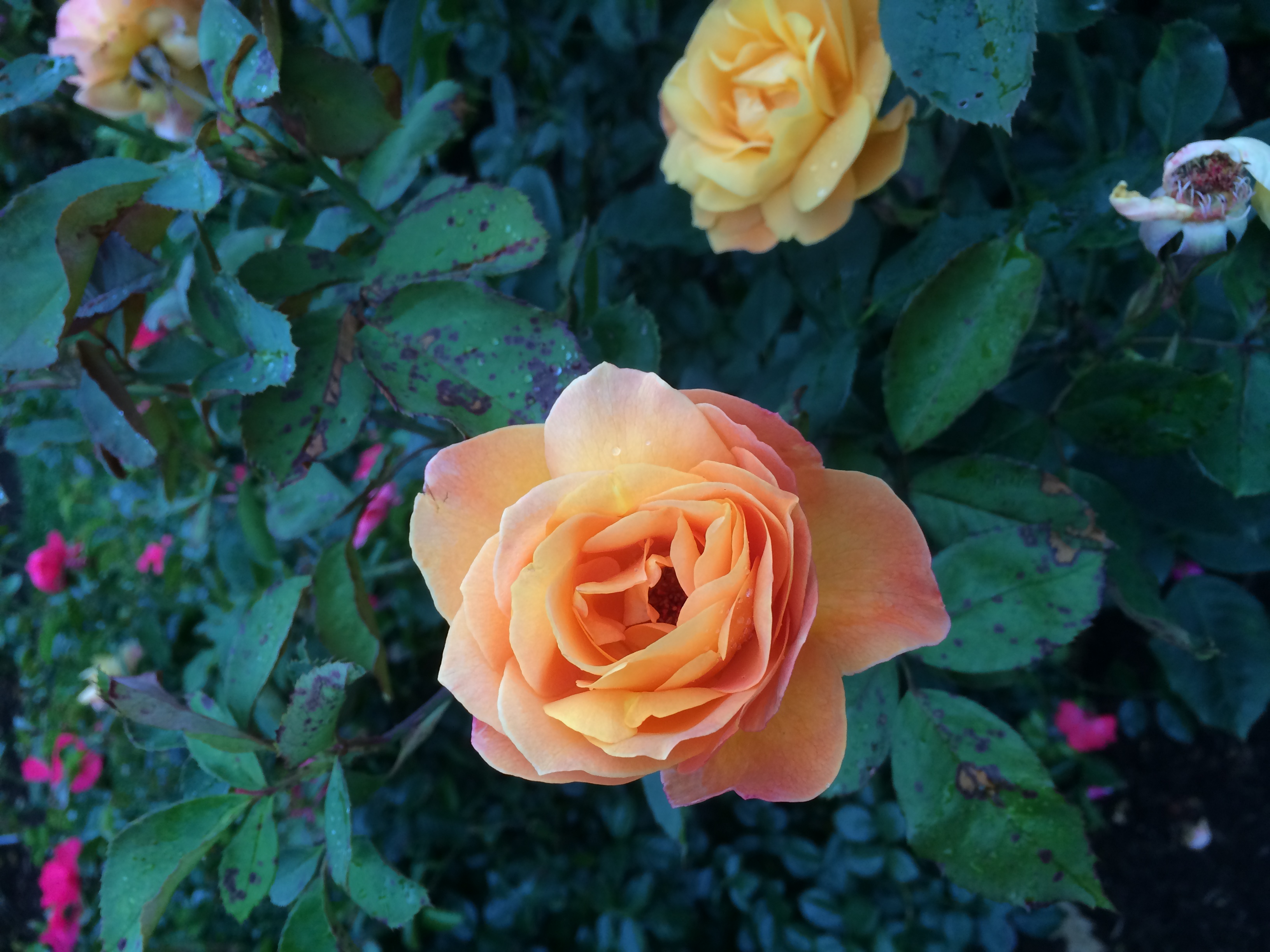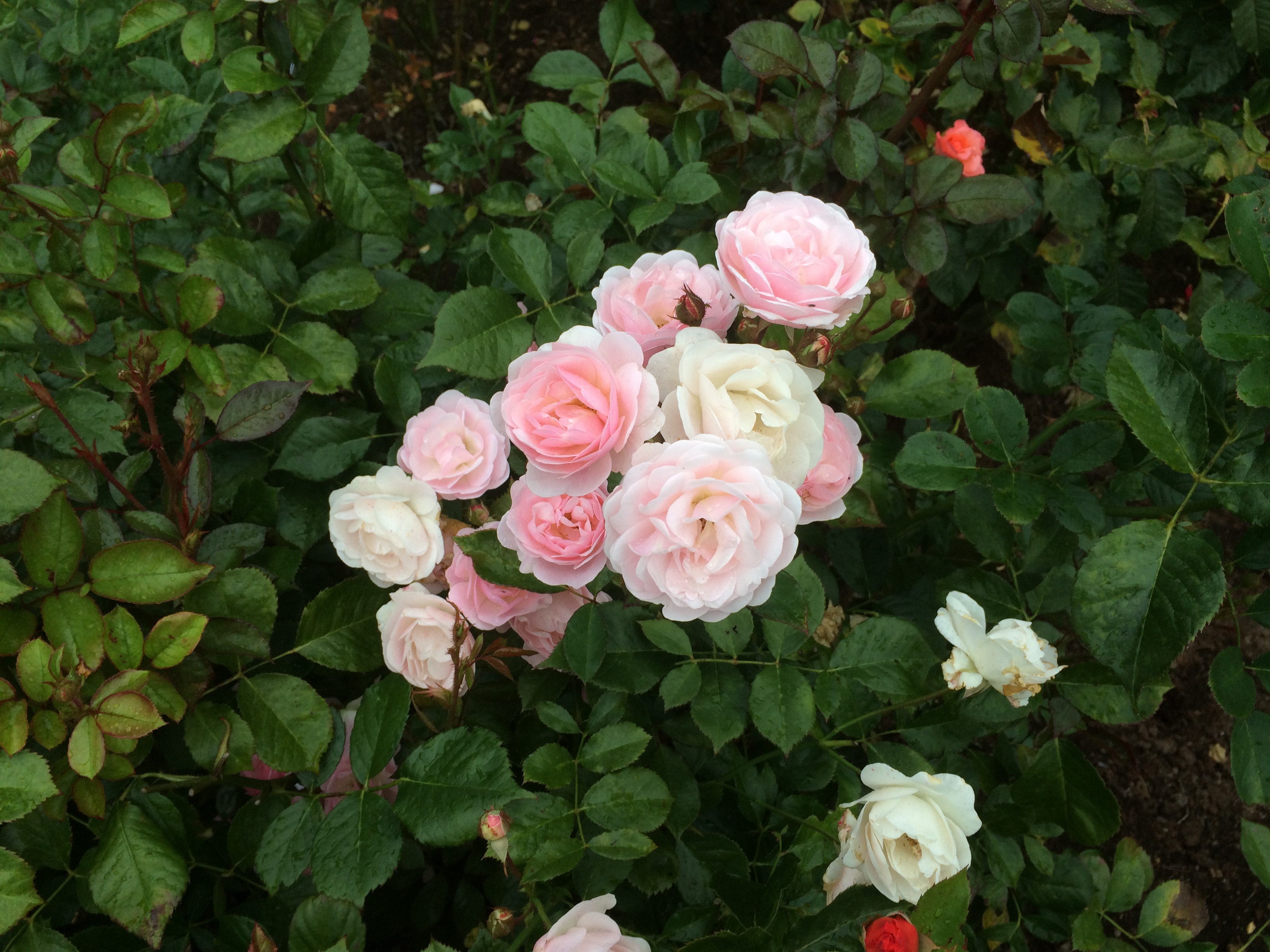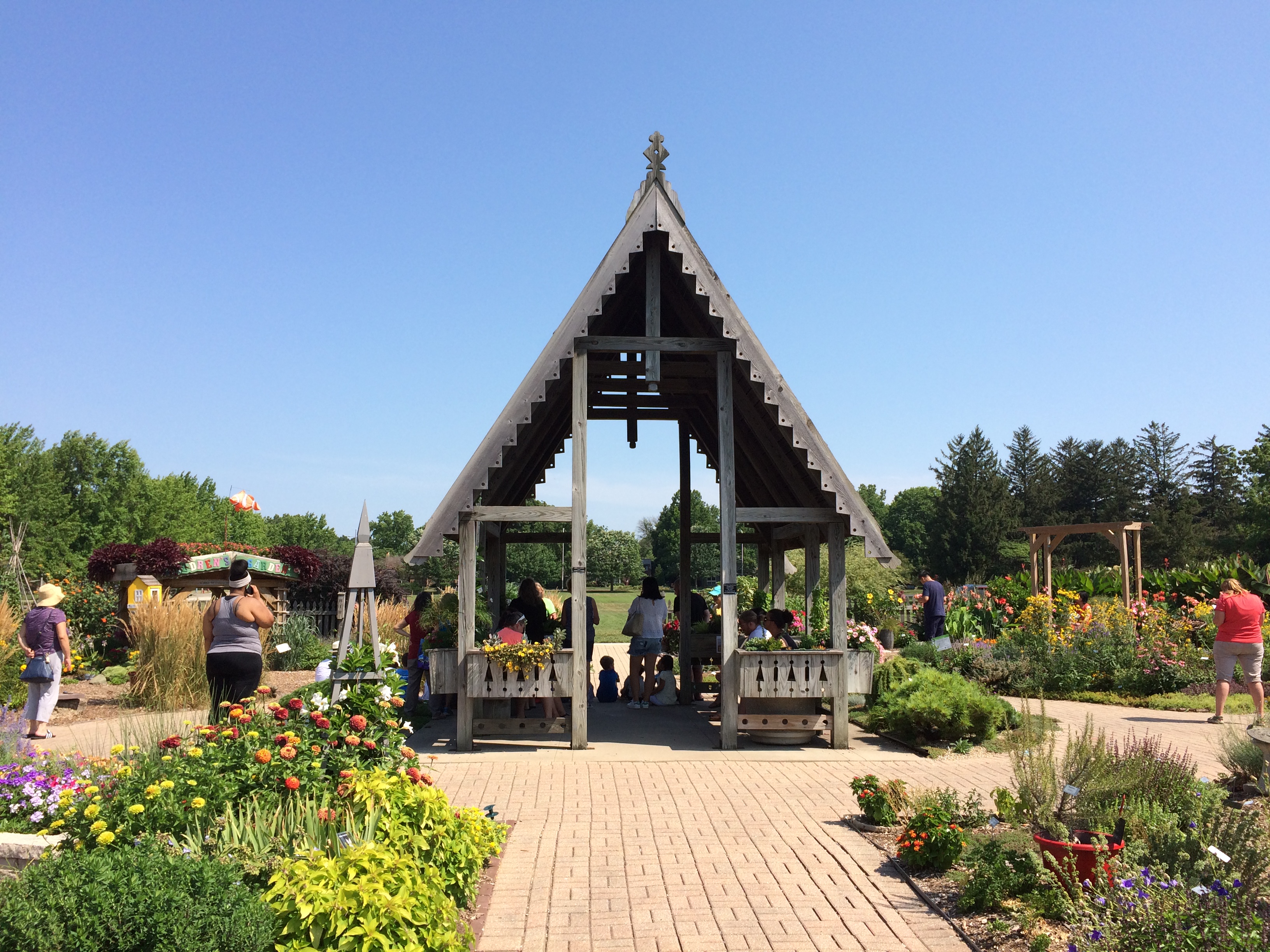
Olbrich Botanical Gardens

High heat over the weekend, but come this morning, pleasant upper 70s F. Heat returns later in the week, I hear. That’s a northern summer for you.

On the way back from Prairie du Chien last week, we stopped briefly in Madison. Good old Madison — been going there since the late ’80s, and I think of it as the Austin of the North. Yet I don’t know it all that well.

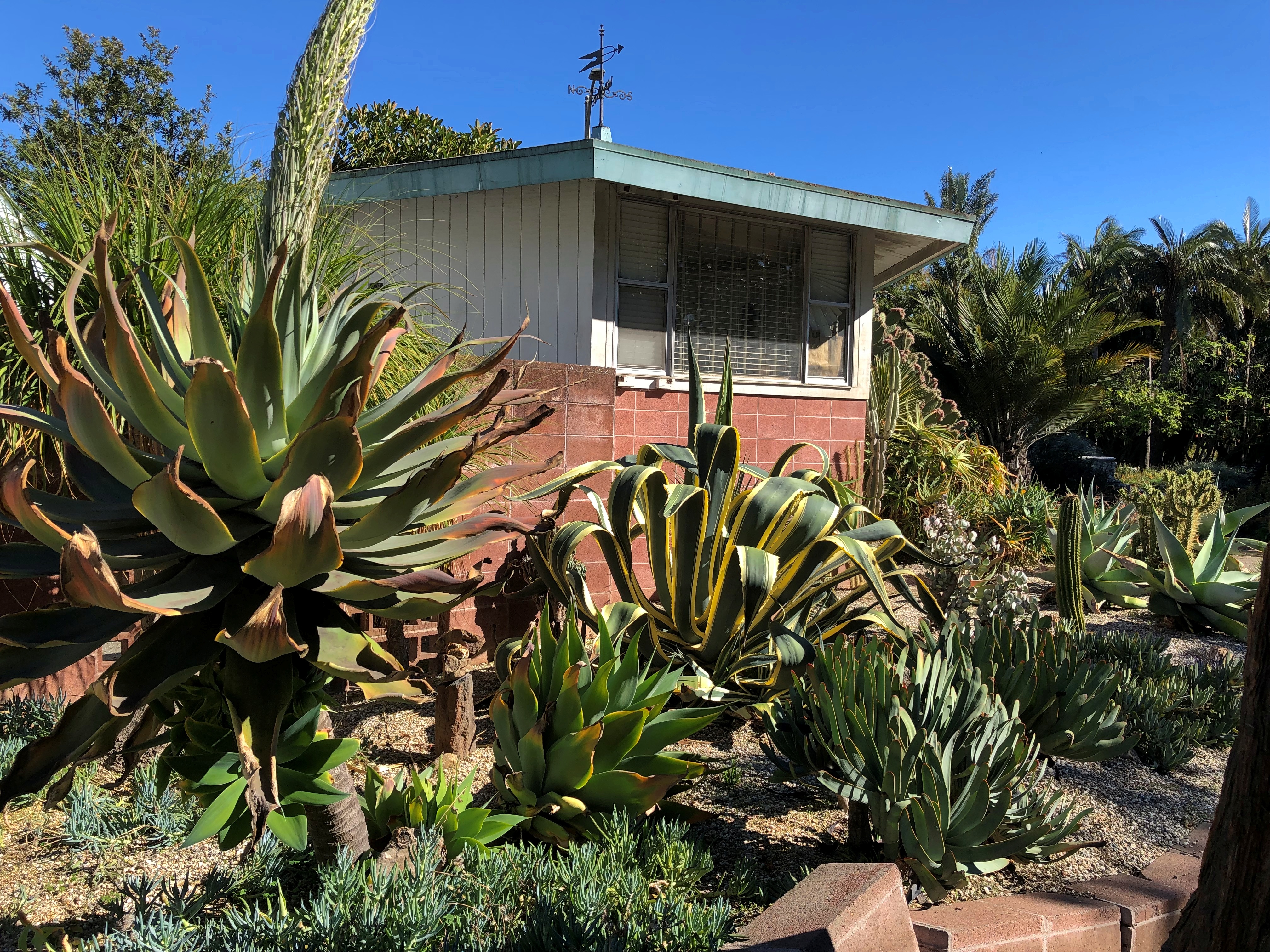
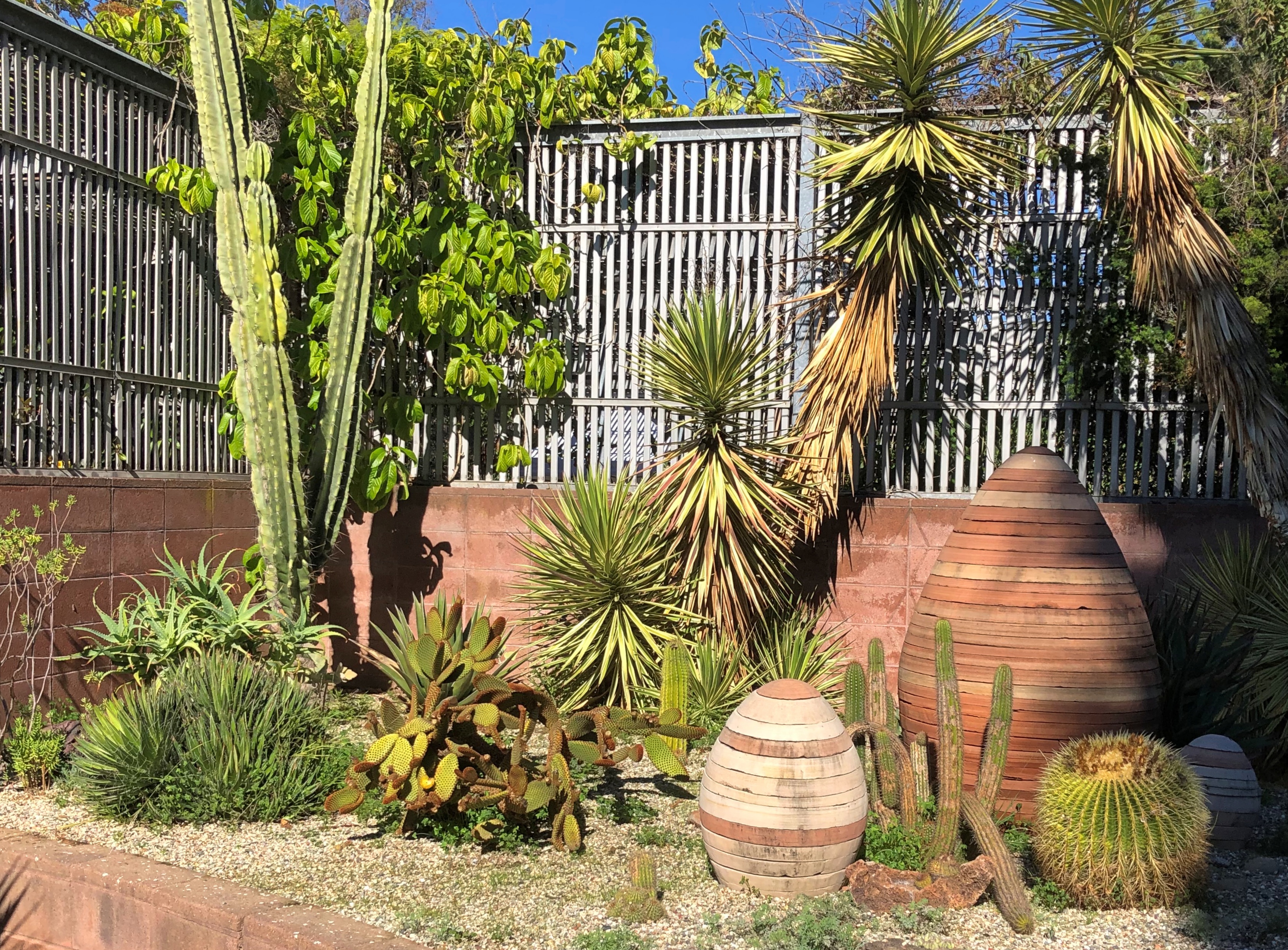
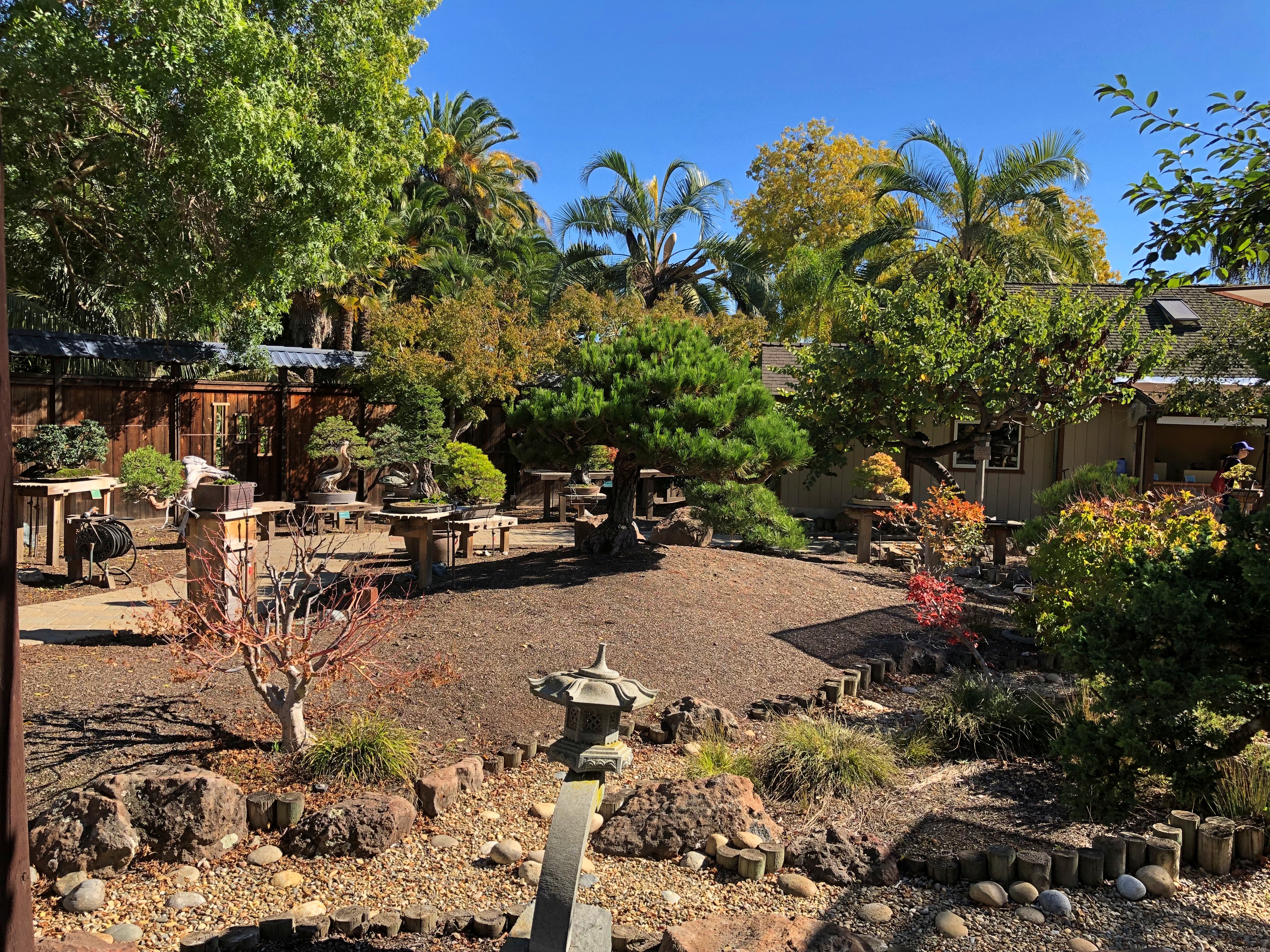
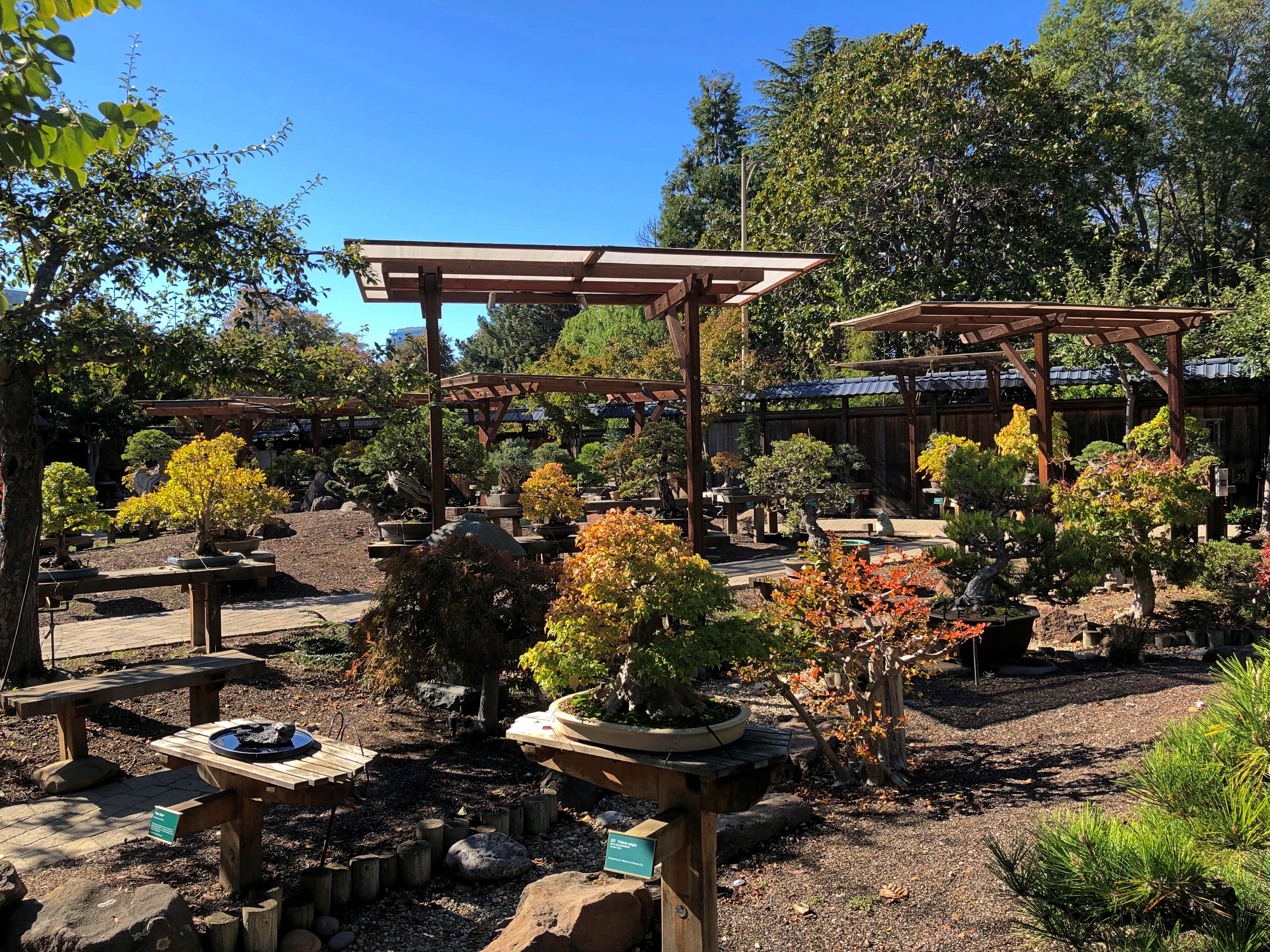
This time we visited Olbrich Botanical Gardens, another spot in Madison I’d never seen. These days, its indoor components, especially the tropical conservatory, are closed. But the lush outdoor gardens are open to walk around for no admission.

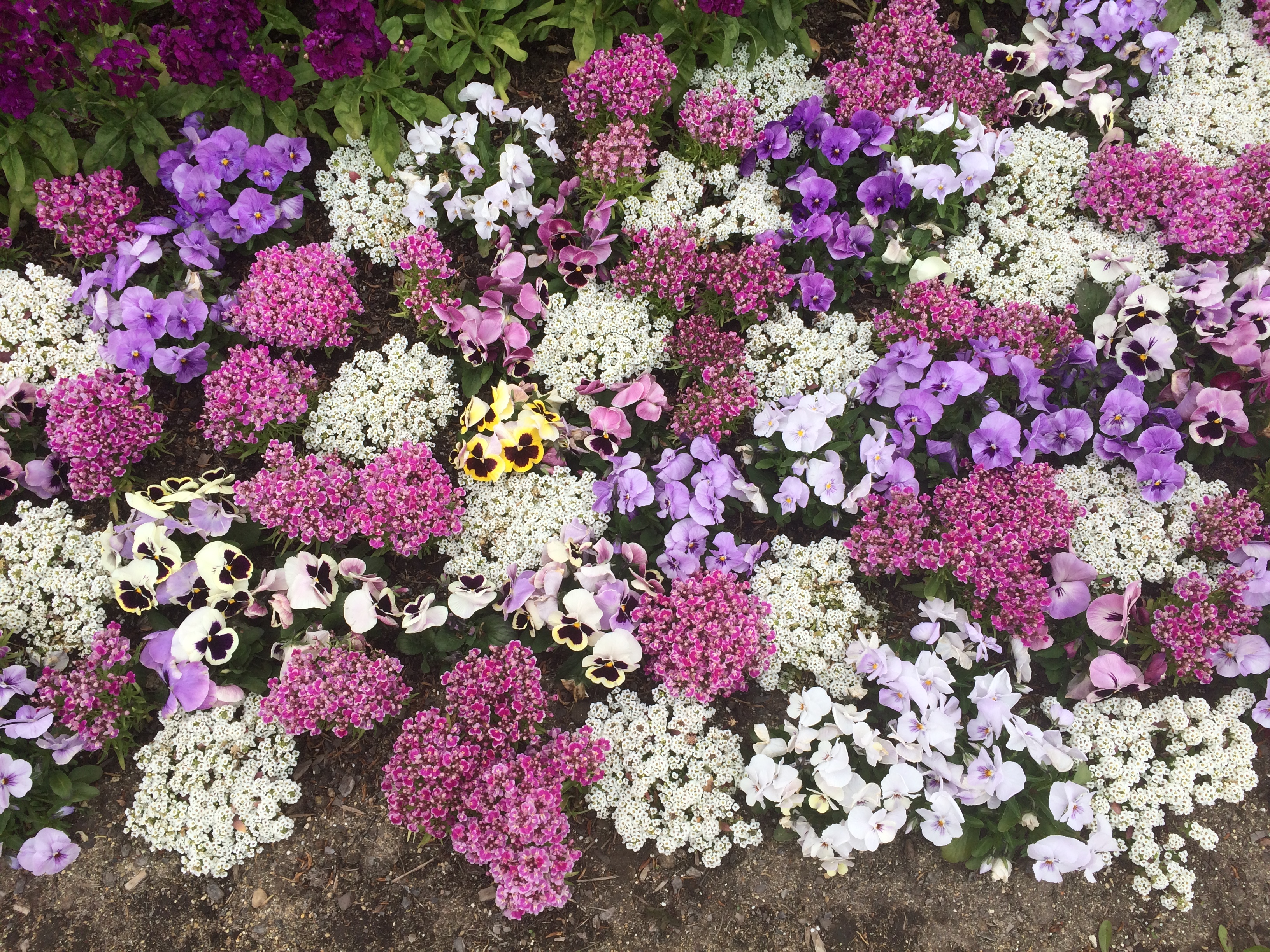
Olbrich Botanical Gardens

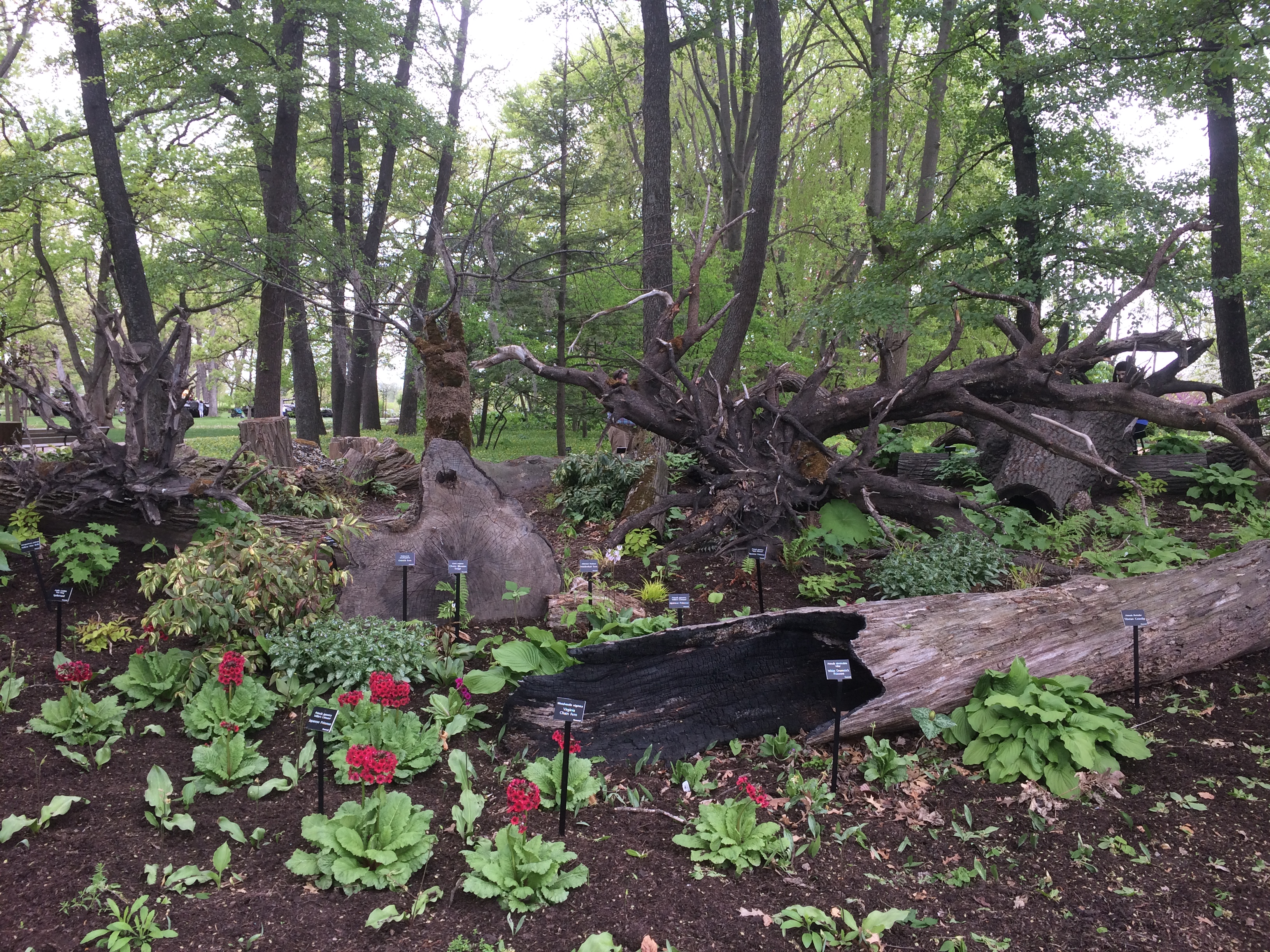
Olbrich Botanical Gardens

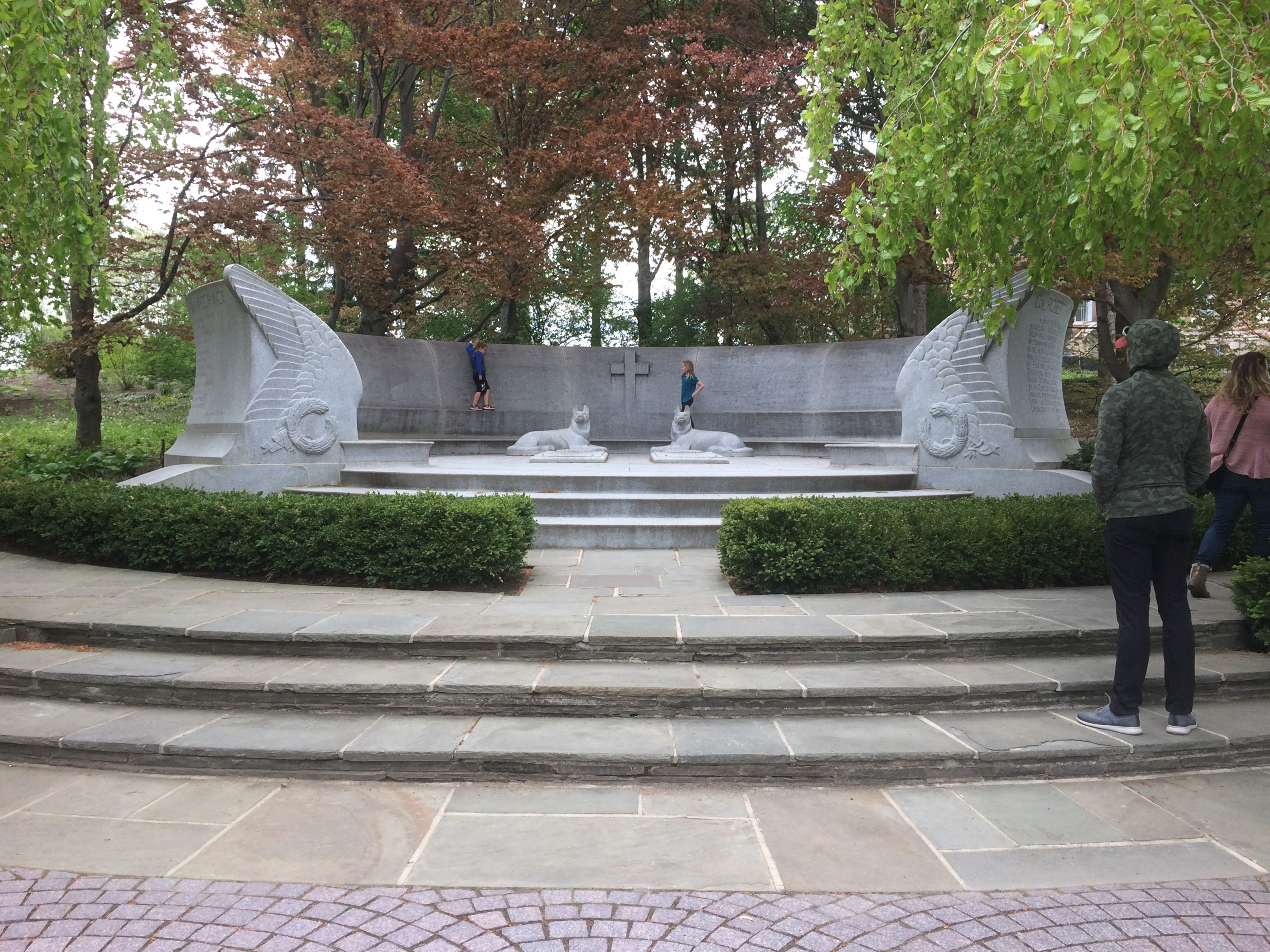
Olbrich Botanical Gardens
Like most botanic gardens, there were signs. But not that many, and mostly I didn’t bother with plant names. It was too hot to concentrate on that anyway.
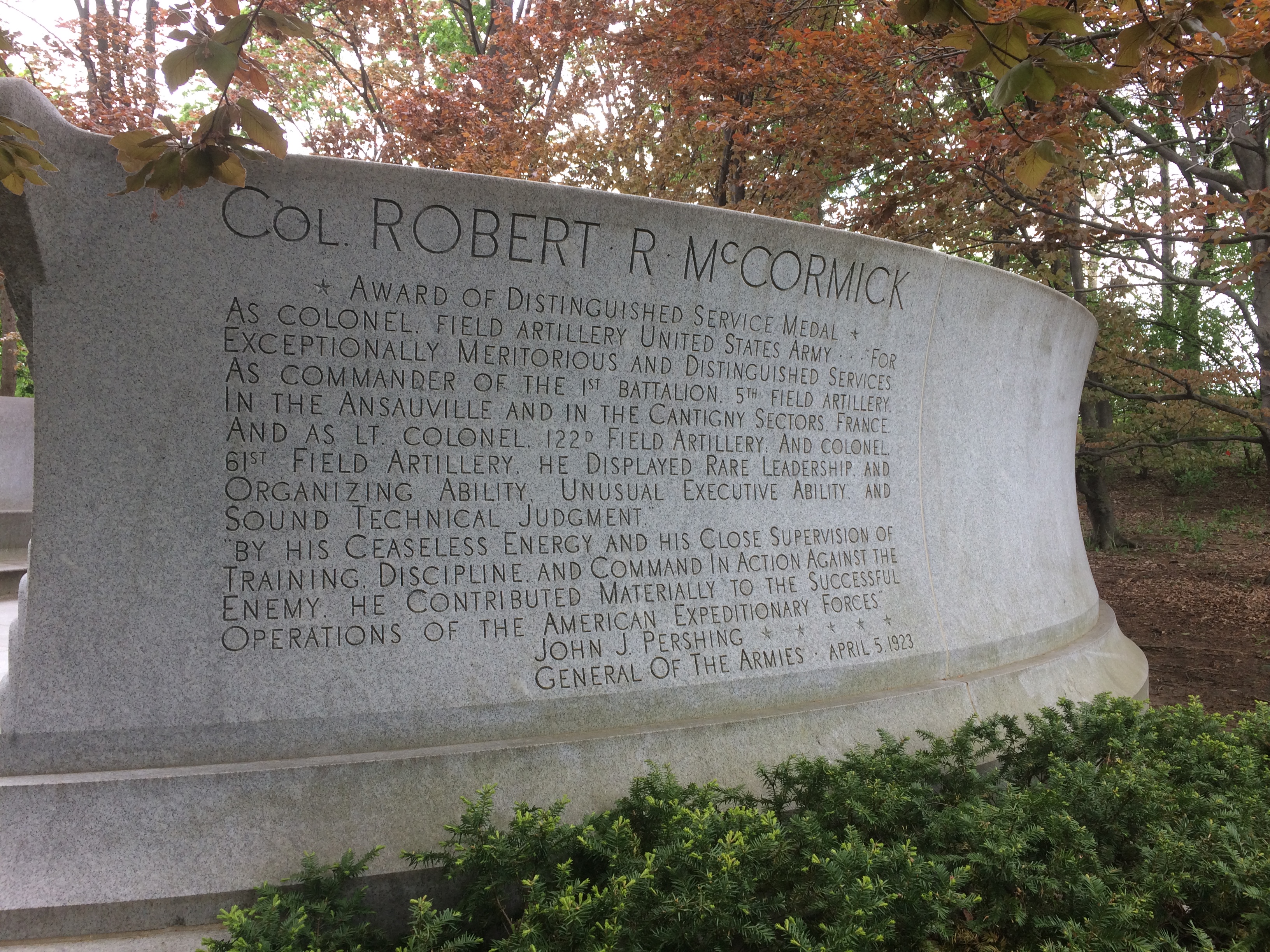
Olbrich Botanical Gardens

Olbrich Botanical Gardens

Olbrich Botanical Gardens
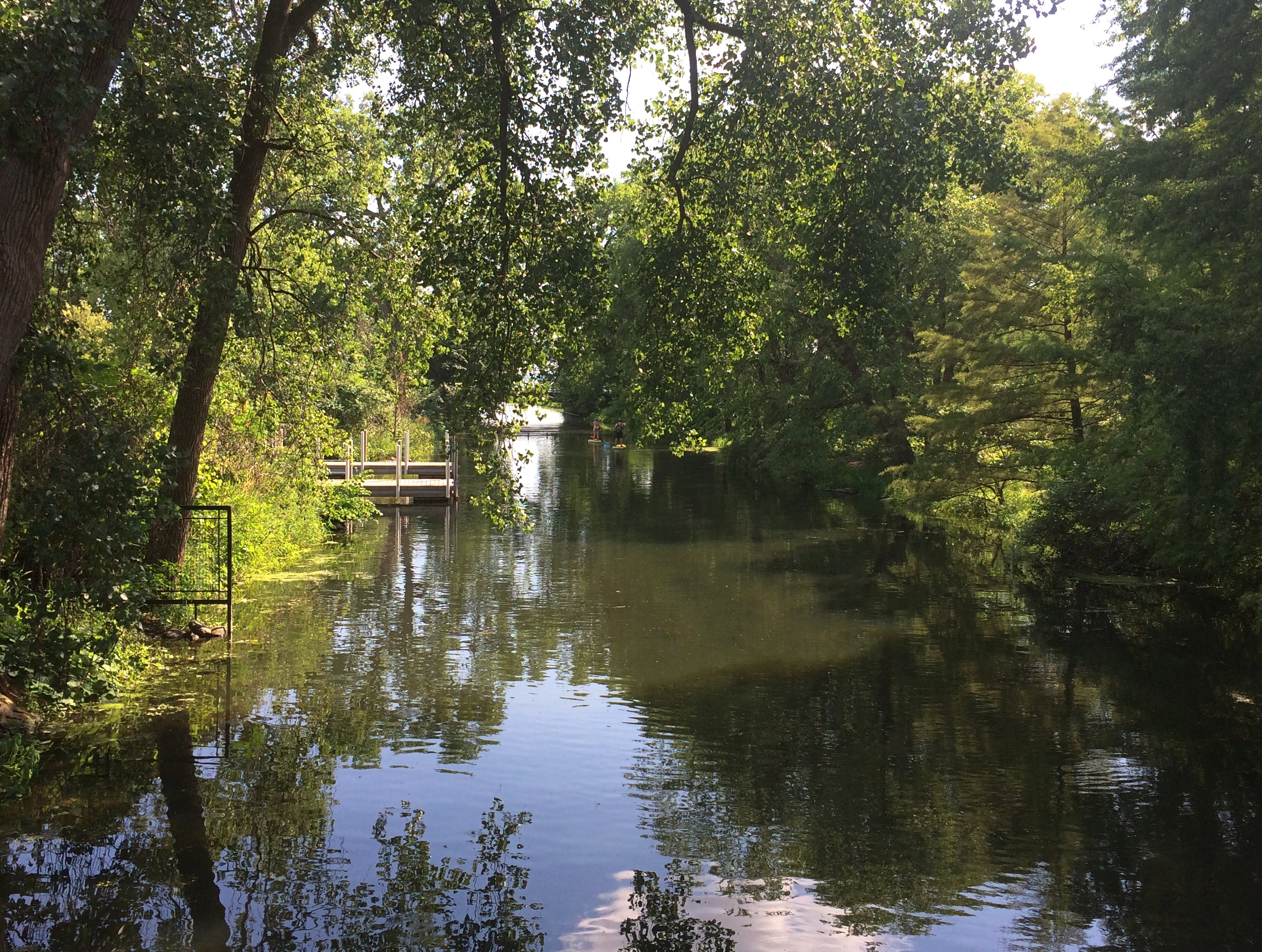
I hadn’t done much preparation for the visit, so I was pleasantly surprised when we crossed a water feature — Starkweather Creek, which flows into Lake Monona —
Olbrich Botanical Gardens
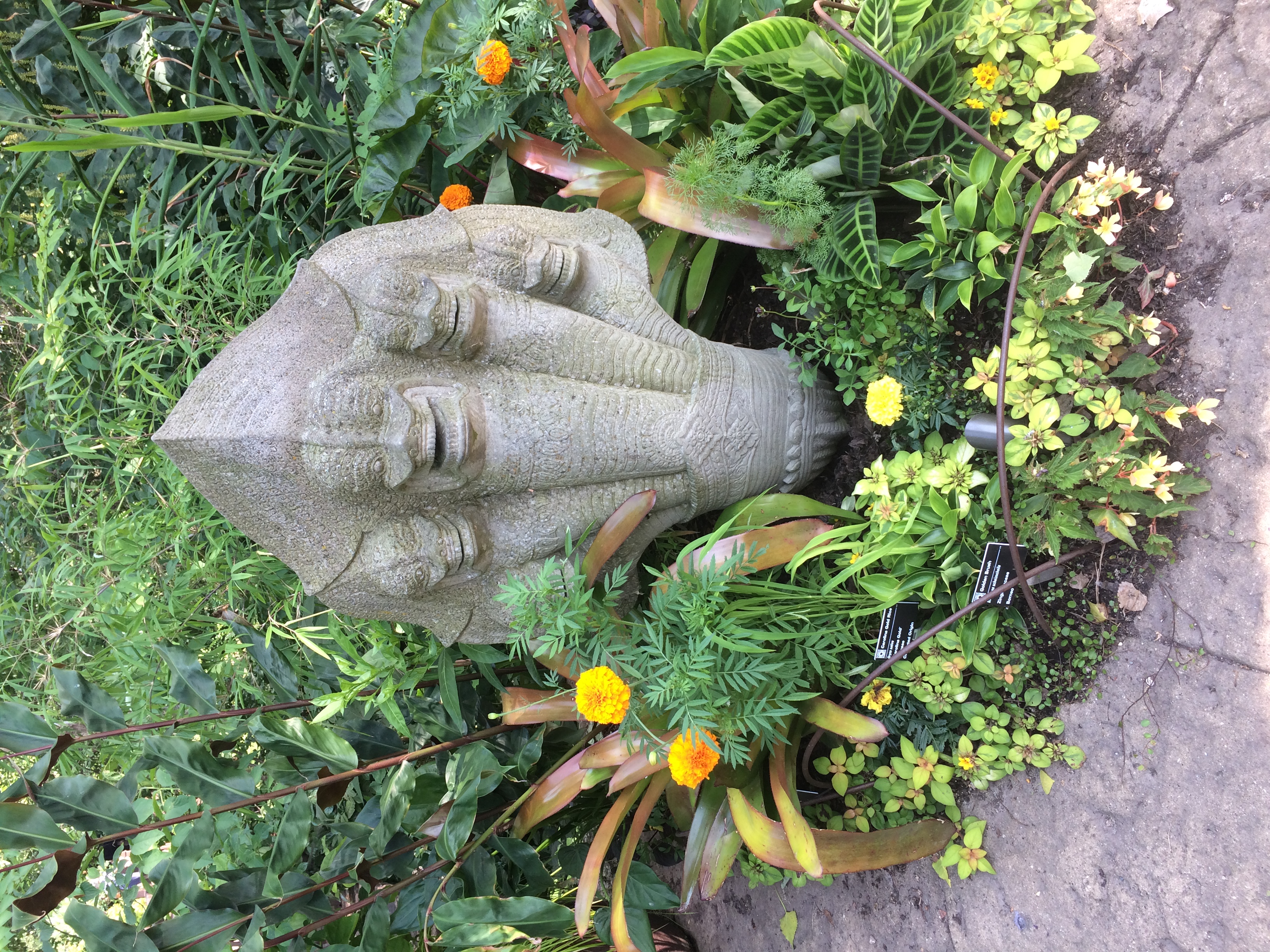
— and passed by some curious sculpture —
Olbrich Botanical Gardens
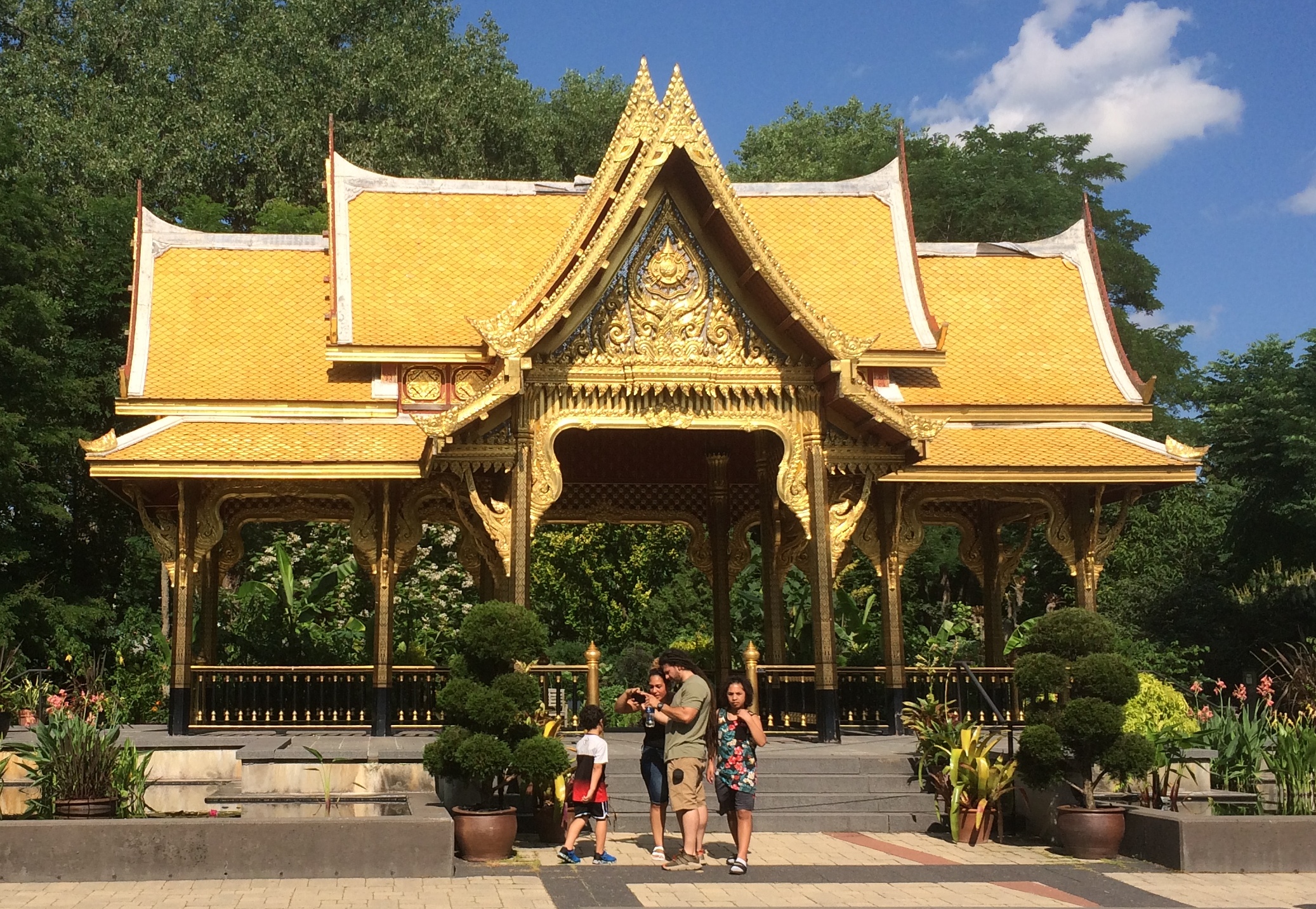
— and came to the Thai Pavilion and Garden.
Olbrich Botanical Gardens Thai Pavilion

Olbrich Botanical Gardens Thai Pavilion
“A pavilion, or sala, is a common structure in Thailand generally used as a shelter from rain and heat. Olbrich’s pavilion is more ornate than most roadside salas in Thailand and represents those found at a temple or on a palace grounds,” the garden web site says. “However, Olbrich’s pavilion is not a religious structure.

“The pavilion was a gift to the University of Wisconsin-Madison from the Thai Government and the Thai Chapter of the Wisconsin Alumni Association. UW-Madison has one of the largest Thai student populations of any U.S. college or university.”

I’d have never guessed that last fact. As I stood gawking at the thing, sun beating down on me, I felt just an inkling of being in Thailand again, near one of its impressive shiny structures, whose glint always seemed to accentuate the heat.

“The pavilion was built in Thailand, then disassembled and packed in shipping crates,” the garden continues. “The pavilion traveled seven weeks by sea, then by rail to Chicago, and to Madison by truck. Nine Thai artisans traveled to Madison to reassemble the pavilion after building it in Thailand. It took three weeks to reconstruct [in 2001].

“Amazingly, the pavilion is able to withstand the winter weather of Wisconsin with no protection because it is constructed of plantation-grown teak and weather-resistant ceramic roof tiles. The gold leaf, however, is delicate and not able to withstand the oils of the human hand.”

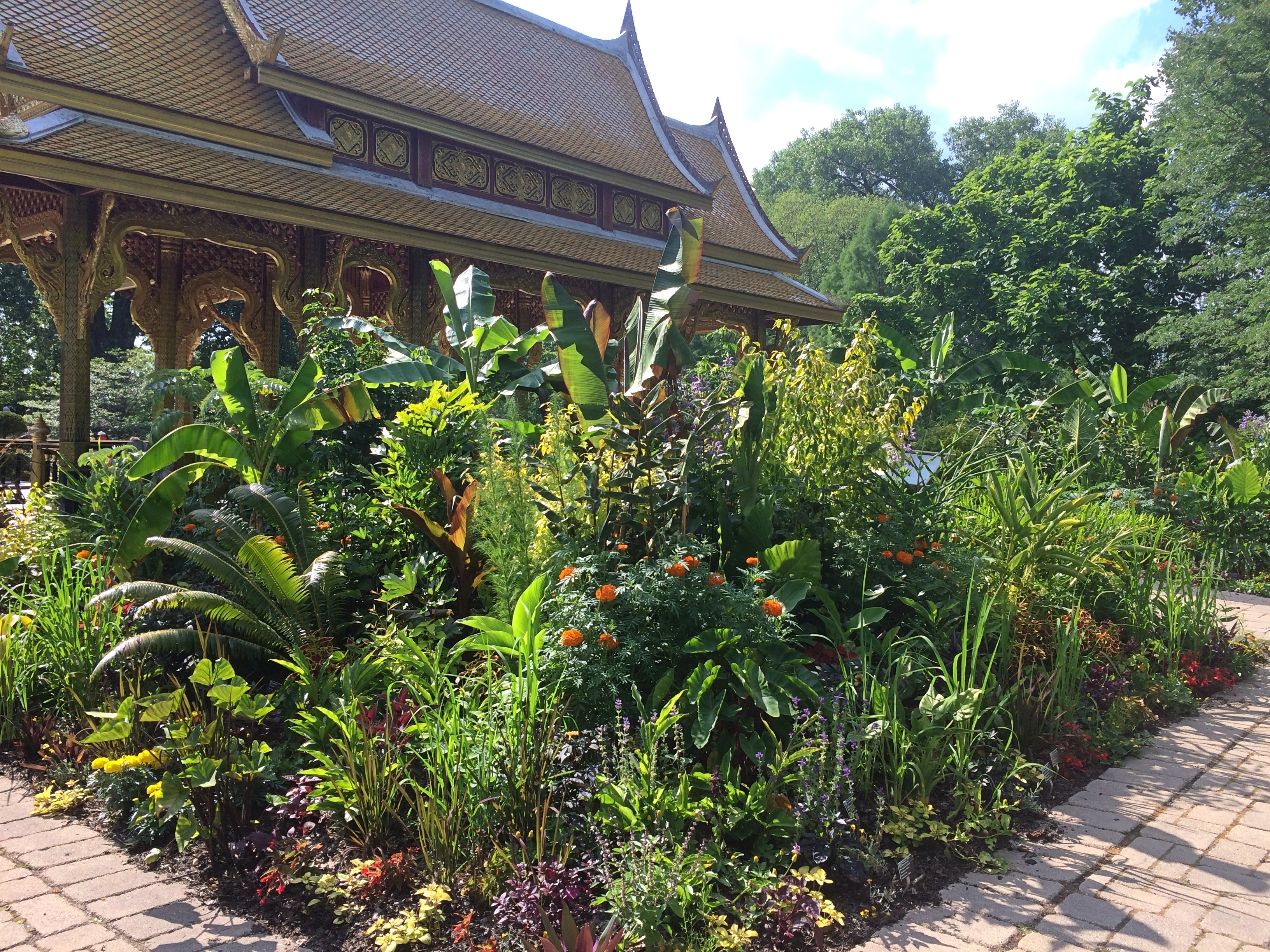
A pavilion and a garden, as the name says.

Olbrich Botanical Gardens Thai Pavilion

Remarkable simulation of tropical lushness, there in the distinctly non-tropical Wisconsin.

Japan ’19

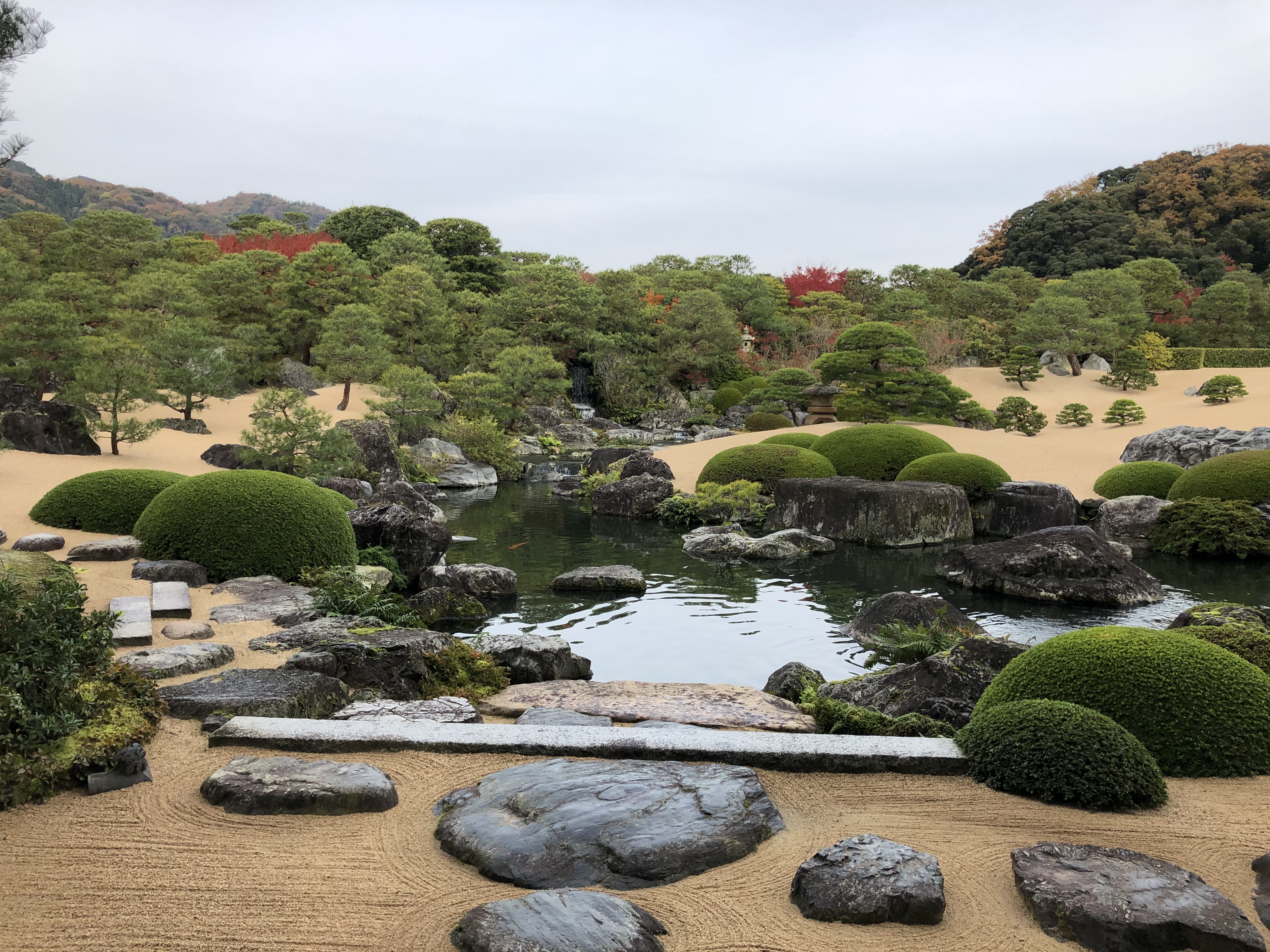
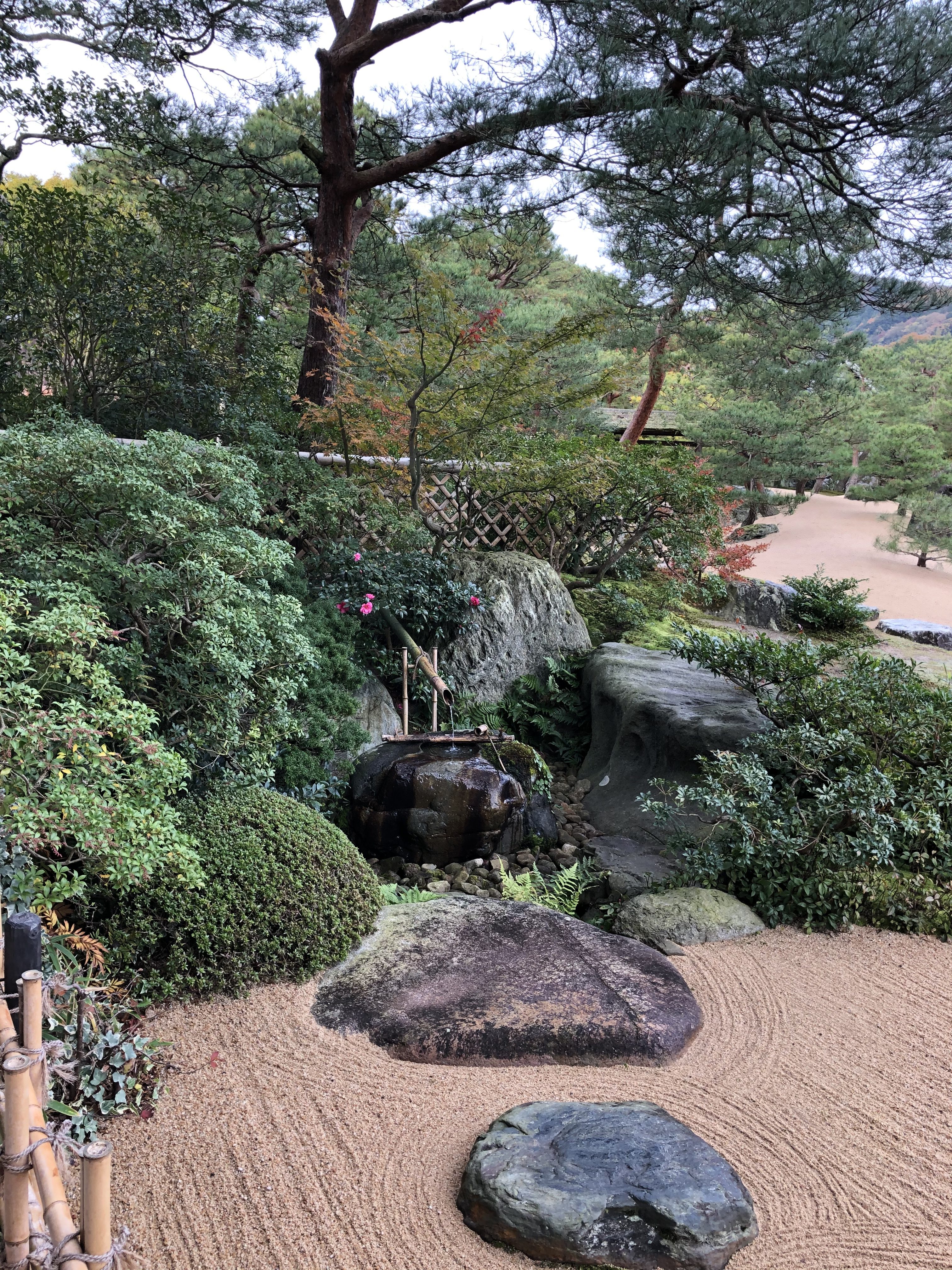
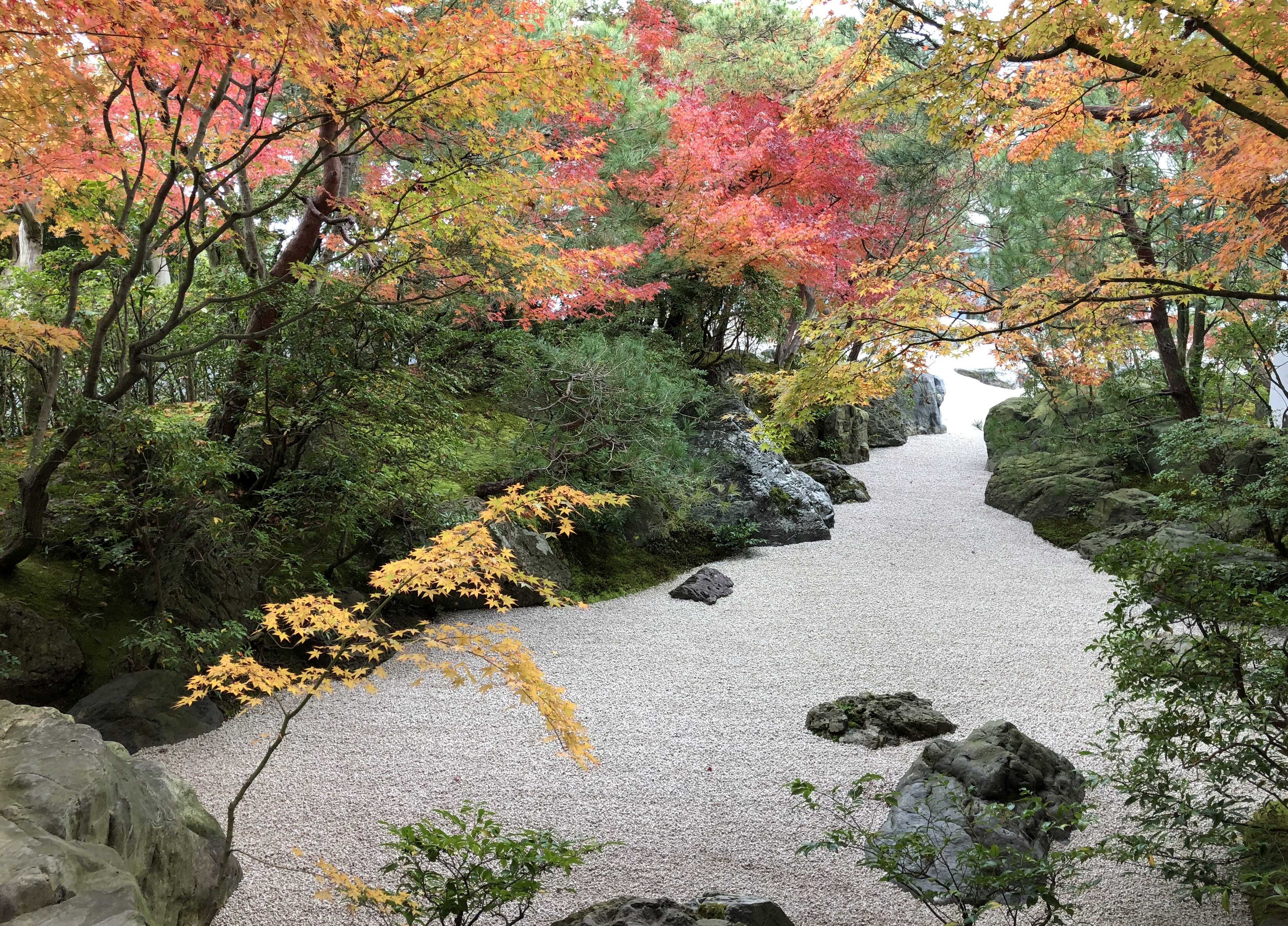
Yuriko returned recently from a couple of weeks in Japan. Besides time with family, she visited a number of interesting places in the Kansai and a little beyond, such as the Adachi Museum of Art off in Shimane Prefecture, which hugs the Sea of Japan coastline northwest of greater Osaka.

Never made it up that way myself. The museum, which features a large collection of works by Taikan Yokoyama and other artists, is also known for its garden. Looks impressive.Adachi Museum of Art

Adachi Museum of Art

I’d have to see it myself to compare it to Ritsurin Garden in Takamatsu on Shikoku — the most breathtaking Japanese garden I’ve seen. But best not to invent rankings for places like that anyway.

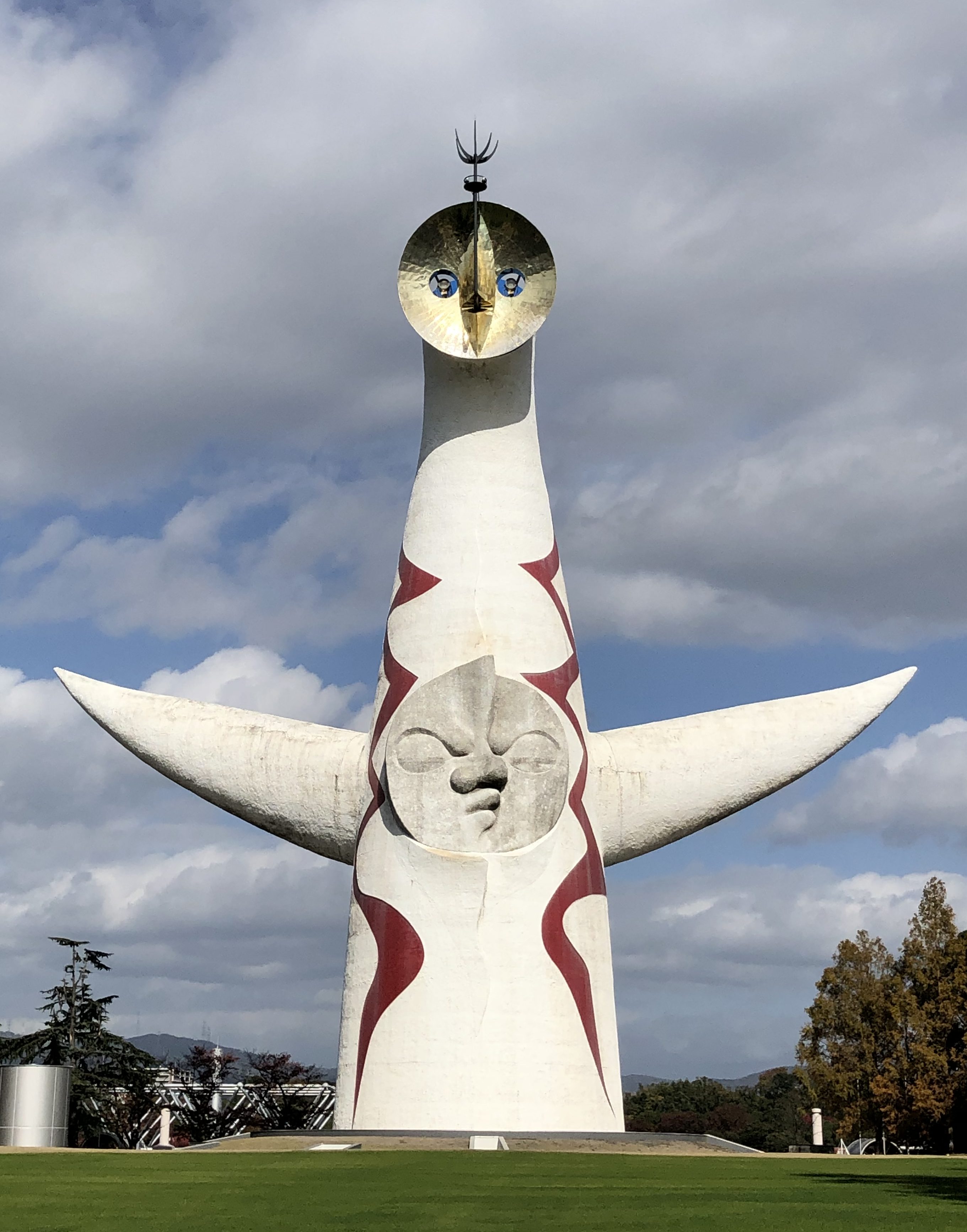
Also of interest: she visited not only the Tower of the Sun (Taiyō no Tō) on the former grounds of Expo ’70 in Osaka, she went inside.

That wasn’t possible when I was in Osaka, though gazing at the exterior was something I did from time to time. I’ve read that the interior only opened permanently last year after renovations to the structure, with the artwork inside refurbished too. It’s a depiction of the Tree of Life.
tower of the sun interior osakaWow. I’d like to see that as well sometime. Along with the Maishima Incineration Plant (which Y didn’t visit this time).

Divers Michigan Gardens

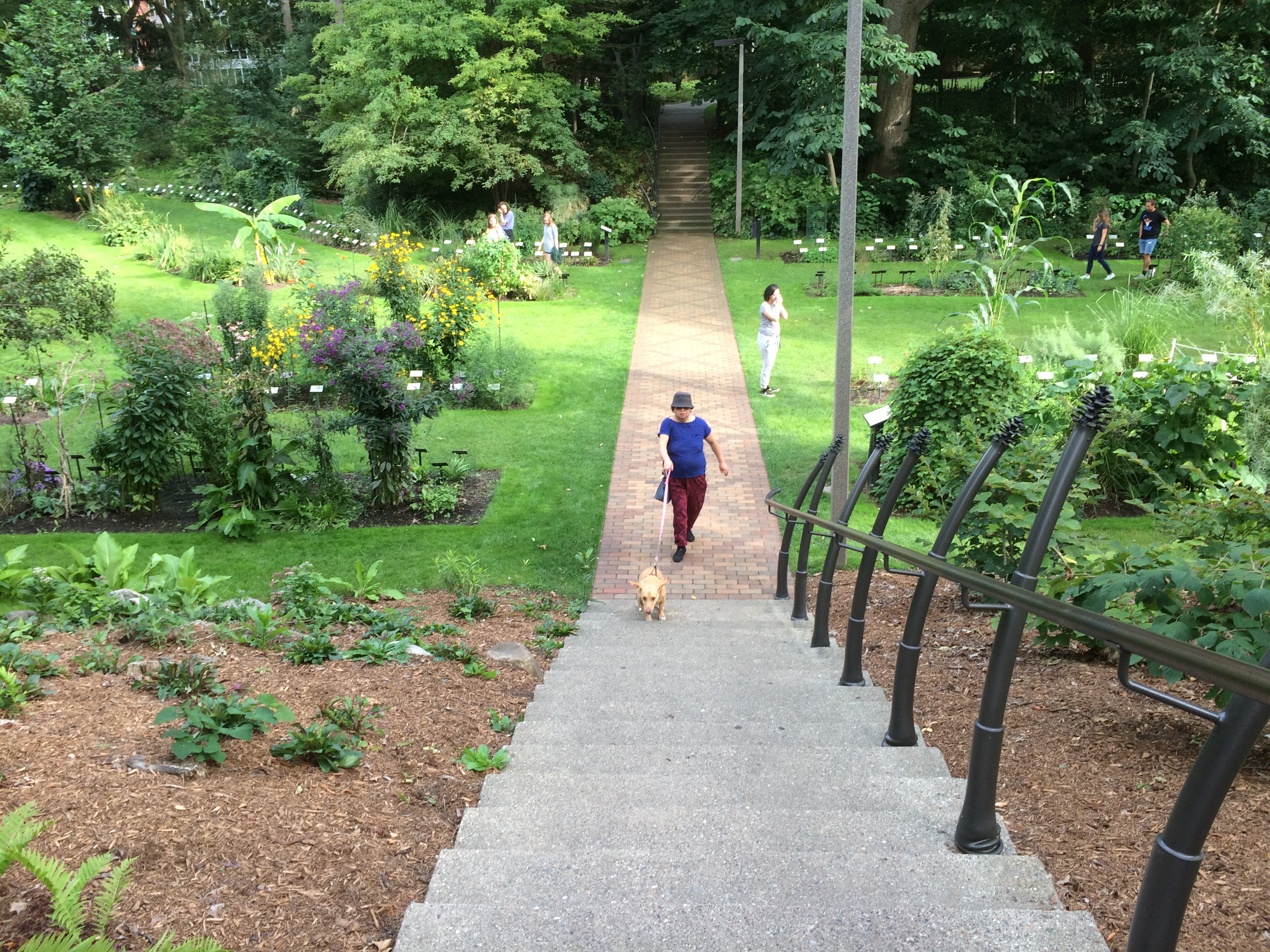
Michigan State University, which we visited on Saturday, is almost as big as they come in academia, in enrollment and acreage. Tucked away on campus is the W.J. Beal Botanical Garden — and I mean that almost literally, since the garden occupies a five-acre, near-circular depression in the earth. You need to go down an outdoor staircase to reach it.
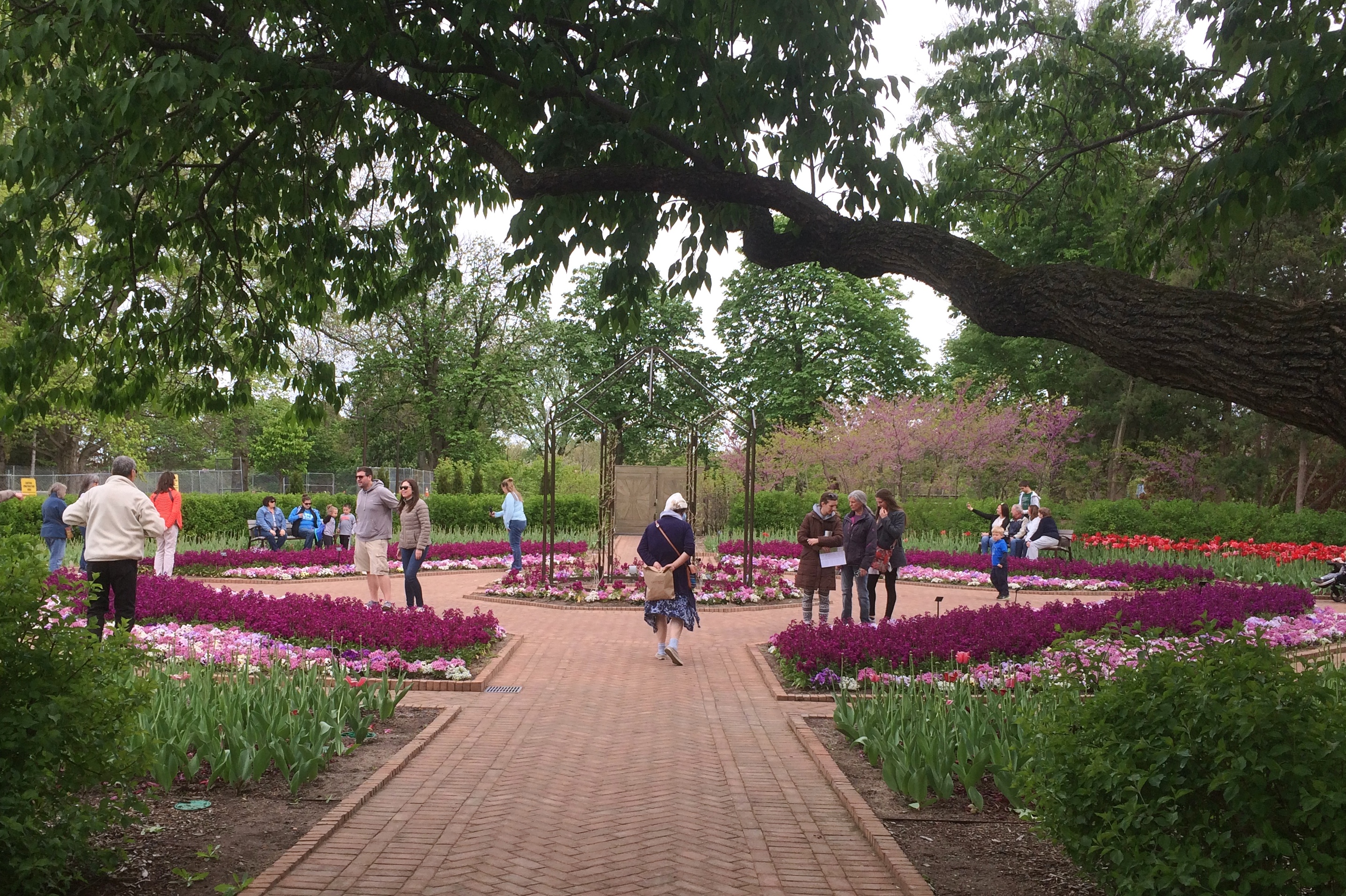
W.J. Beal Botanical Garden

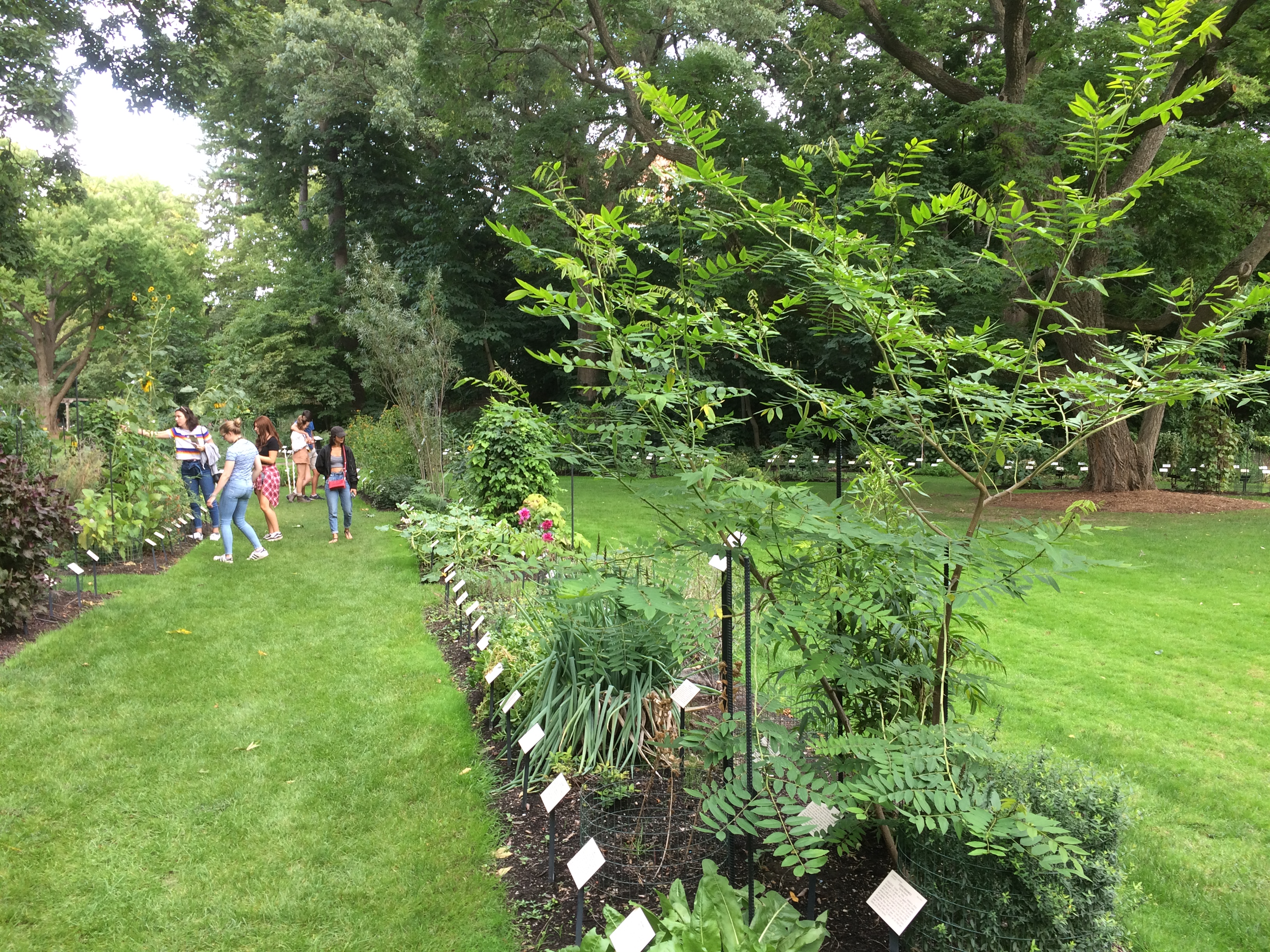
The garden is meticulously organized. I’ve never seen a botanical garden so thoroughly arrayed by categories important to botanists (and the rest of us, if you care about the difference between, say, edible plants and poisonous ones).

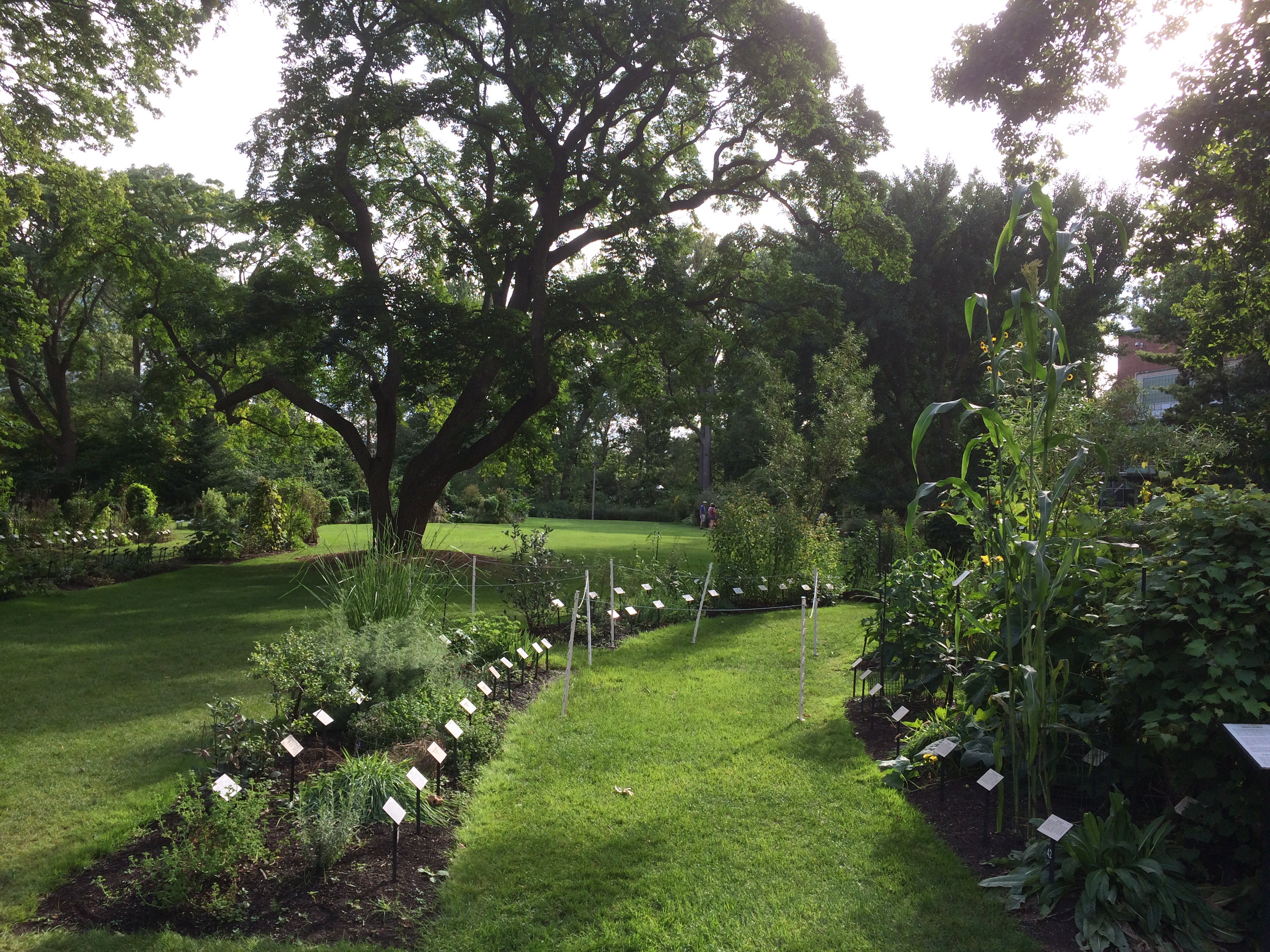
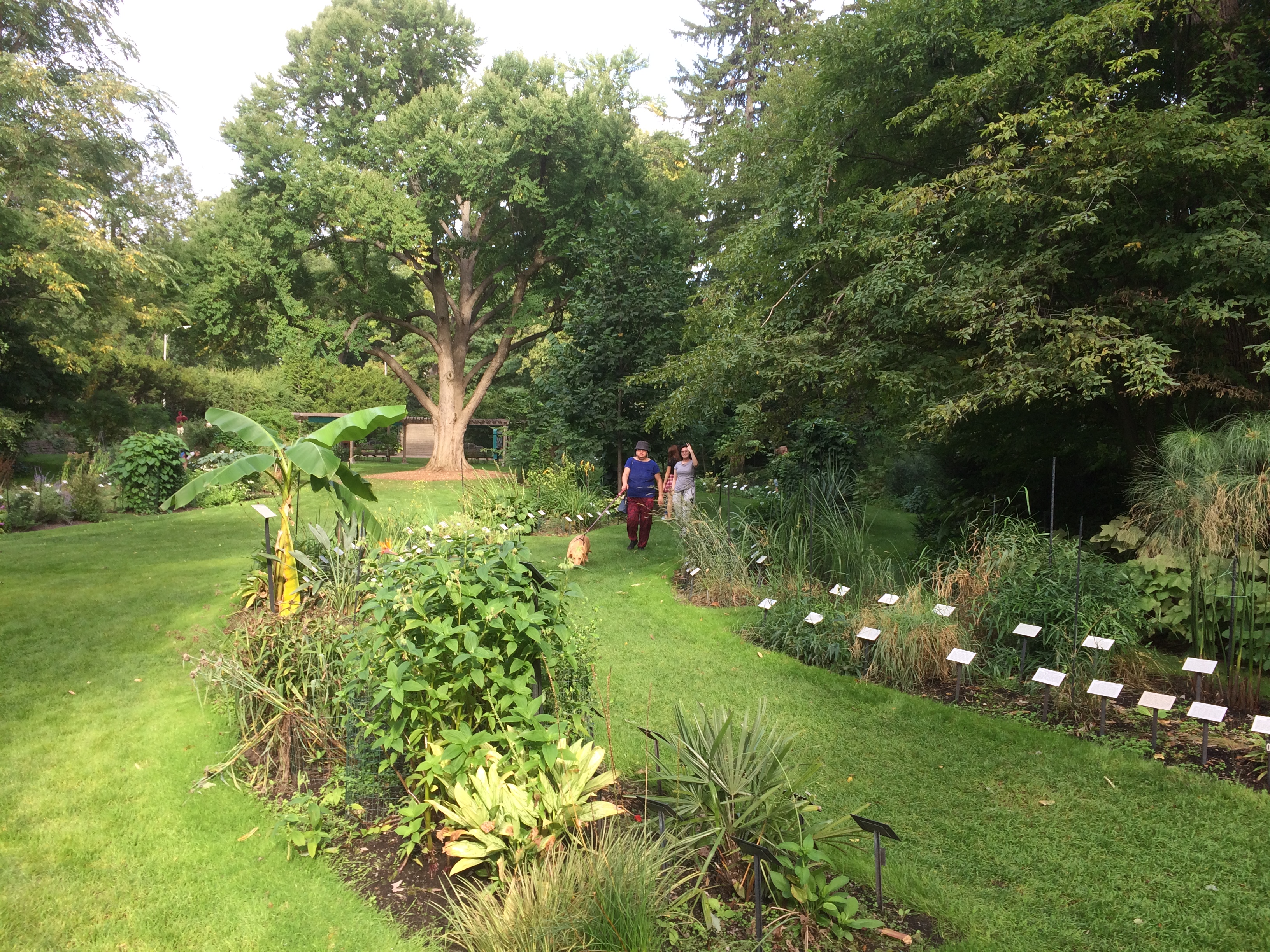
Long curving and straight beds separated by a fair amount of grass form the basis of the garden.

W.J. Beal Botanical Garden

W.J. Beal Botanical Garden W.J. Beal Botanical Garden Each bed belongs to a category of plant. According to a sign posted in the garden, categories include perfume plants, fiber plants, dye plants, fixed oil plants, honey plants, flavoring plants, injurious plants, indigenous American plants, weeds, vegetables, grains and medicinal plants. There are also geographic categories: Southeast U.S. forest, European forest, northern Michigan, southern Michigan, and so on.

“This garden,” the sign says, “functions as an outdoor laboratory, a repository of plant genetics, a resource for research and teaching, and a place for the community to appreciate the beauty and biology of plants. There are over 2,500 plants in the labeled beds alone… established in 1873, this is one of the oldest continually operated gardens of its kind in the United States.”

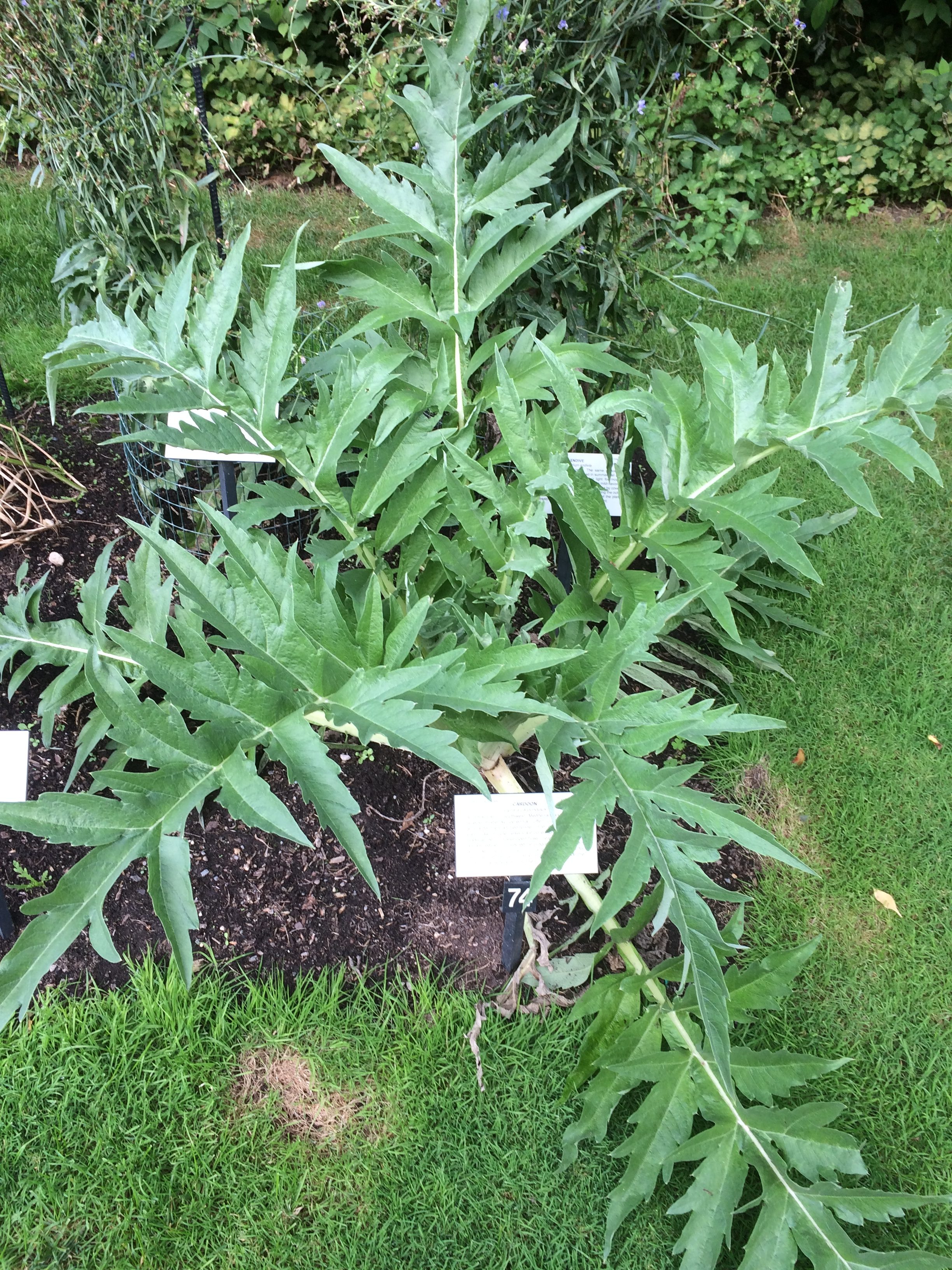
The place wows with variety. I have to like a garden that includes weeds on purpose. Such as the weedy-looking Cardoon.
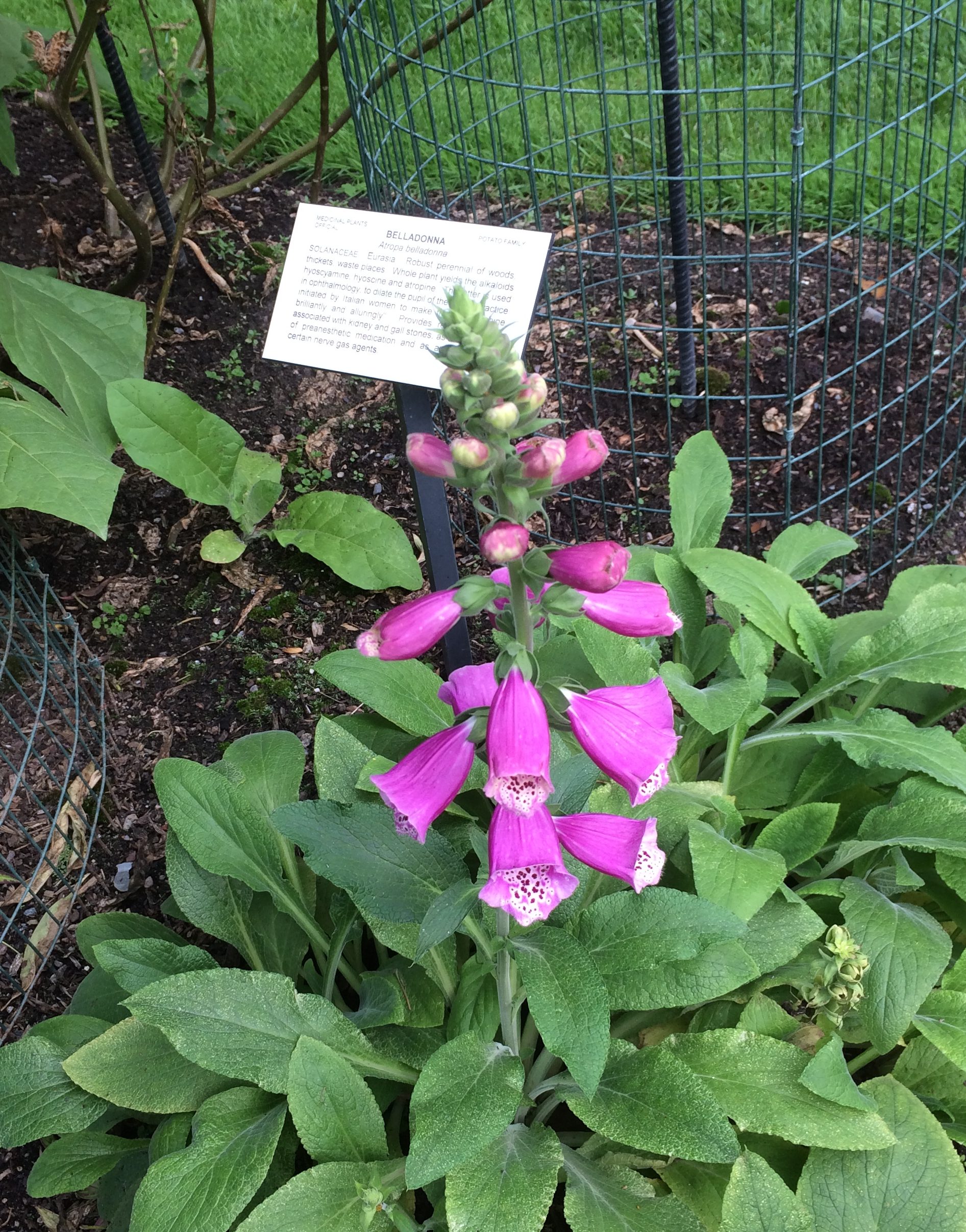
W.J. Beal Botanical GardenAmong the medicinal plants, there’s belladonna, though I would have thought it went in the injurious category.
W.J. Beal Botanical GardenInjurious plants, according to the garden, include mechanically injurious (guess that would be by thorns and such), milk-tainting, those that inspire hay fever and contact dermatitis, cyanogenic and poisonous seed, among others.

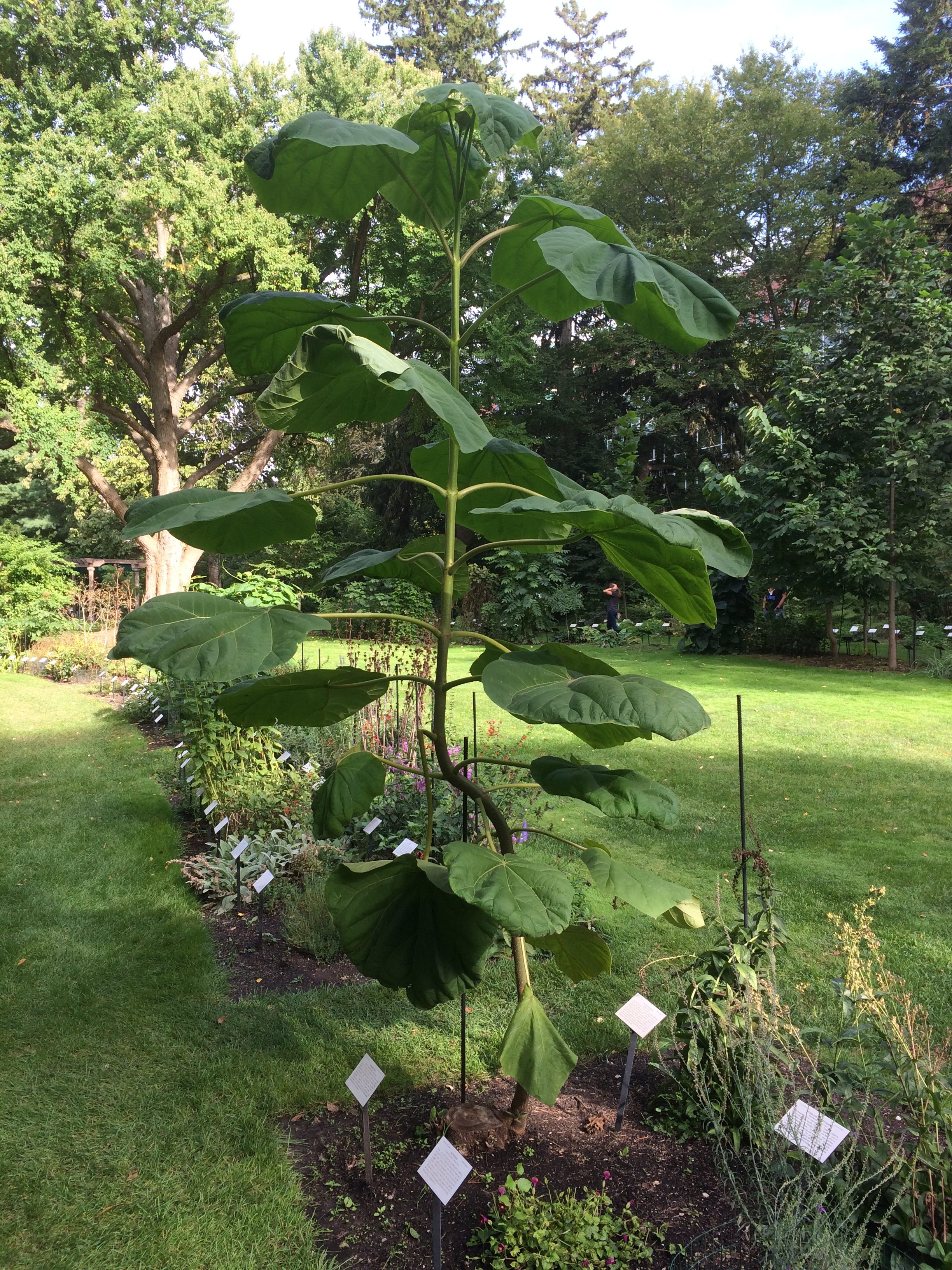
One handsome plant I’d never heard of before — there are a lot of those in the world — was the Princess Tree (Paulownia tomentosa).
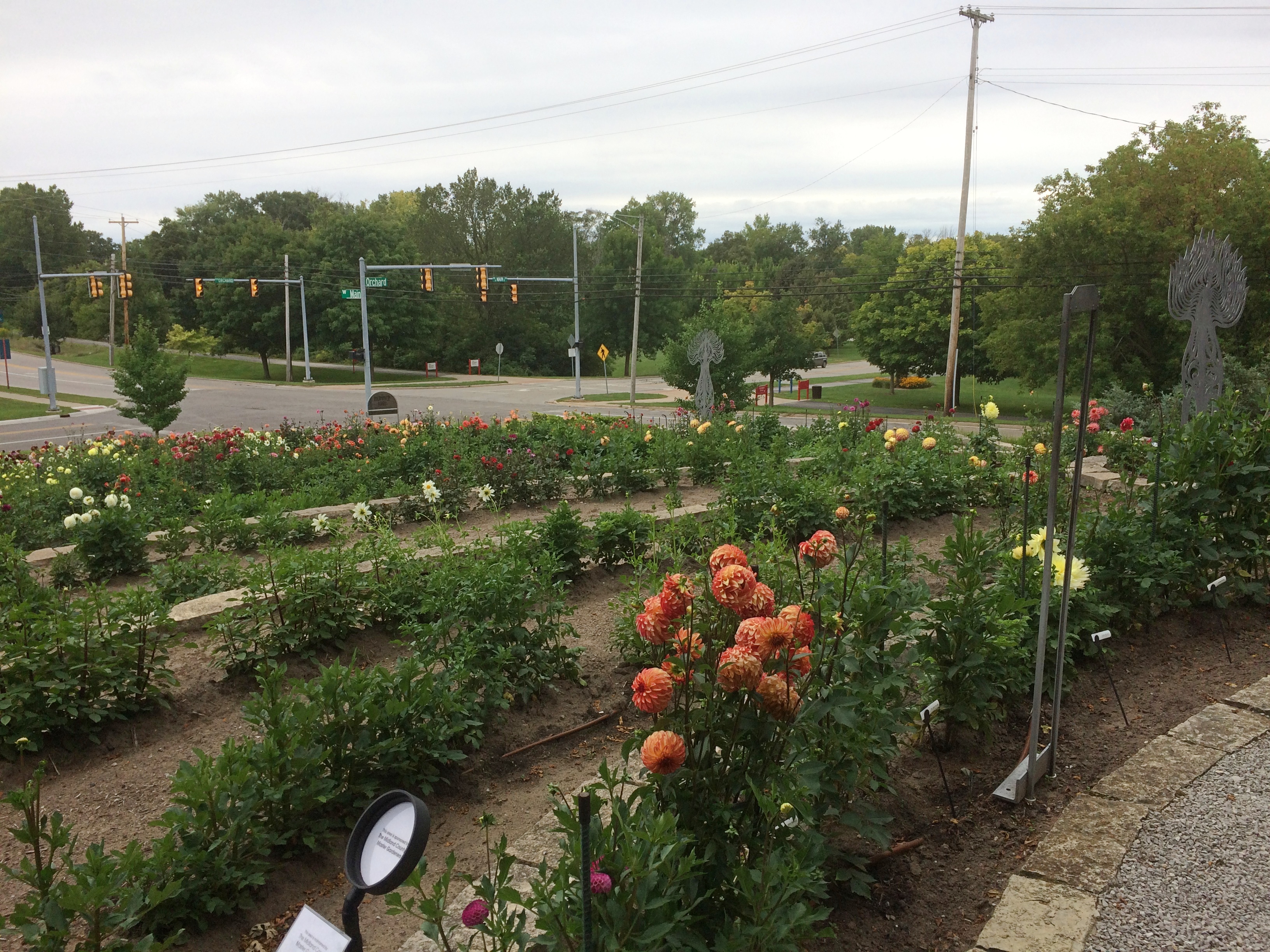
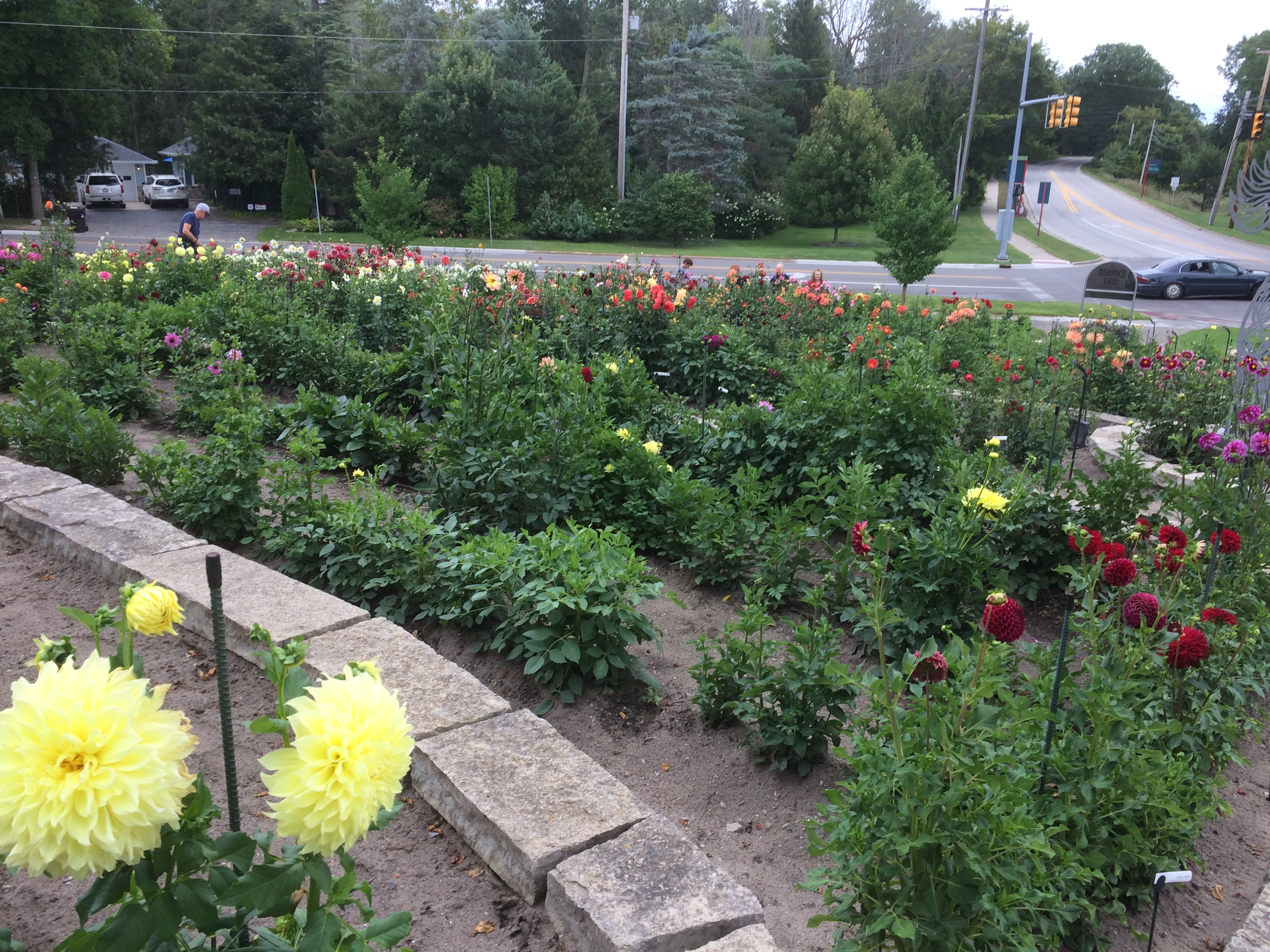
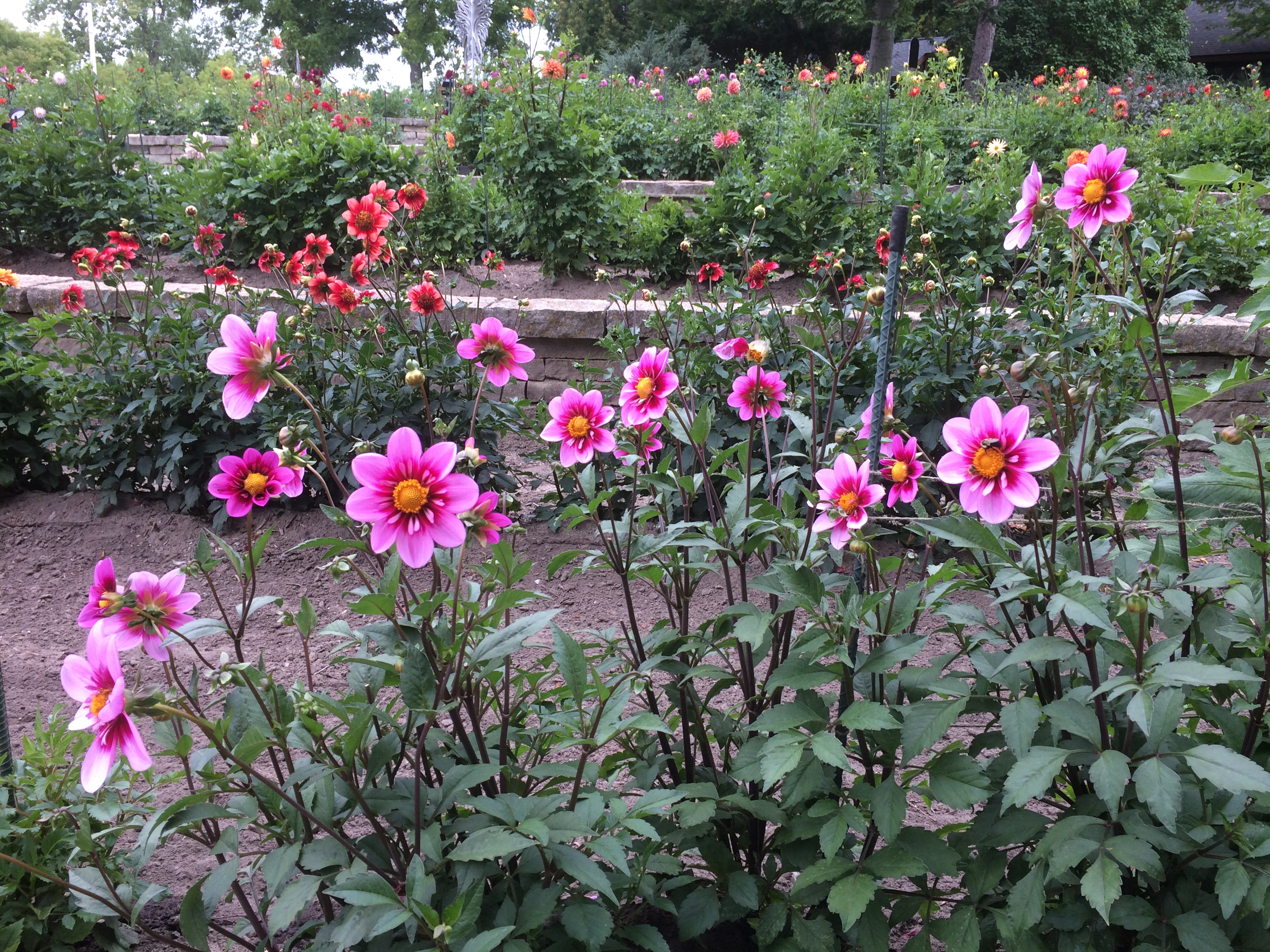
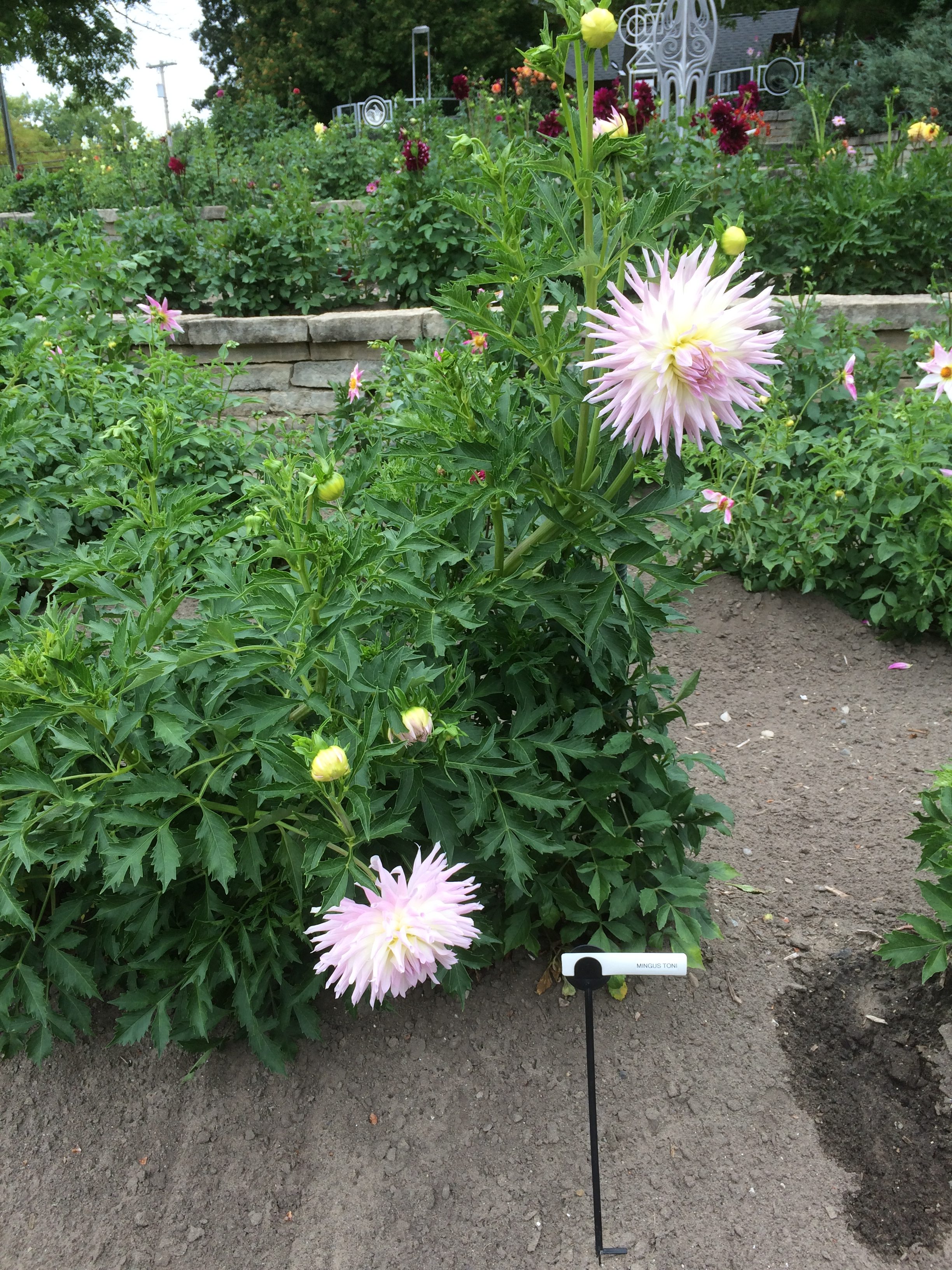
W.J. Beal Botanical GardenOn Sunday, we visited two gardens, both in Midland. One was the compact but a-bloom Dahlia Hill, which sports about 3,000 dahlia plants arranged on eight stone terraces. According to the garden, there are over 300 varieties of dahlias there, with an example of each variety planted and labeled along gravel pathways.

Dahlia Hill, Midland

Dahlia Hill, MidlandA local artist and dahlia enthusiast, Charles Breed (d. 2018), founded the garden in 1992 and oversaw its terracing some years later to control erosion.

Dahlias are another example of I-had-no-idea-that. As in, that there are so many varieties. Who knew? Not me.
Dahlia Hill, MidlandDahlia Hill, MidlandDahlia Hill, MidlandNo Black Dahlias that I could see. Some wag of a horticulturist might have bred such.

We visited the big Dow Gardens separately, Yuriko and Ann first, then me, since ordinary dogs aren’t allowed in.
I spent about two hours there under overcast skies that always threatened rain but seldom even drizzled. That must have kept the crowds away. For minutes at a time, I was by myself on the large lawns and among the countless trees, passing by lush bushes and flower beds.

Dow Gardens MidlandDow Gardens MidlandDow Gardens MidlandWater features figure prominently in the garden’s design.
Dow Gardens MidlandDow Gardens MidlandDow Gardens MidlandAll together there are 1,700 varieties of plant in the garden suitable for cultivation in central Michigan. Now at 110 acres, the garden started out as a private eight-acre garden of chemical mogul Herbert Dow, founder of Dow Chemical. Later generations of Dows enlarged the place and set up the foundation that runs it now.

Dow has a fine rose garden, too.
Dow Gardens MidlandDow Gardens MidlandDow Gardens MidlandWhat do you do in a rose garden, whether you’ve been promised one or not? Stop and smell the roses, of course.

My own skills at gardening are meager, but I like a stroll through a well-executed garden. That’s no different than a lot of things. I can’t sing worth a damn, but I sure like listening to a good singer.

To Lake Huron and Back

On Saturday we left town remarkably early (for us) and drove across the Lower Peninsula of Michigan so that on Sunday morning, I could stick my feet in Lake Huron.Lake HuronSaginaw Bay in particular. Of course that wasn’t the entirety of the trip. But it was the inspiration. Sometime years ago, I realized that I’d never really gotten a look at Lake Huron. I’ve crossed the Mackinac Bridge a number of times, which offers a view of the lake to the east, but somehow that doesn’t count. I wanted to see Lake Huron from outside a car, moving at zero miles an hour, and hear the waves and smell the water and feel the sand and pebbles.

So Labor Day weekend was the time. We all went, including the dog. First stop on Saturday morning was at one of the Sweetwater’s Donut Mills in Kalamazoo because I hadn’t forgotten them.
Sweetwater's Donut MillNear Battle Creek, we stopped at a novel local spot: Historic Bridge Park. I’ve seen open-air museums devoted to houses and other buildings, but this is the only place I know that functions as an open-air museum featuring bridges.

Heading northeast, we arrived in Lansing in time to visit the Michigan State Capitol. Or so I thought. There are usually Saturday hours, but not on Labor Day weekend. Still, we had a good walk around the grounds and Washington Square to the east, along with an al fresco lunch of Cuban sandwiches.

Michigan State University is in East Lansing. After some wandering around the sprawling campus, we found the W.J. Beal Botanical Garden, the first of three gardens we visited.

We made it to Midland, Michigan, before dark and spent the next two nights there. On Sunday morning, we visited Bay City State Park on the lakeshore, walking on the beach and a path around a large lagoon. By lunchtime, we were back in Midland, eating al fresco again — the thing to do with a dog in tow.

Midland has a lot of large parks accessible from its small downtown, but that’s not the distinctive feature. That would be the Tridge, a three-way bridge across the confluence of the Chippewa and Tittabawassee rivers. Naturally we had to cross that.

Next we visited Midland’s Dahlia Hill, which is planted with thousands of dahlias and open to wander around. After that, Yuriko and Ann visited the much larger Dow Gardens, while I took a drive with the dog to Bay City. No dogs allowed at Dow Gardens.

During my driving look-see in Bay City, I noticed a Huron Circle Tour sign. Like Superior, that would be a drive.
Lake Huron Circle Tour signWant. To. Do. It. But not now. While everyone else rested in the room early in the evening, I visited the expansive and exhausting Dow Gardens, along with the adjacent Whiting Forest. Open till 8:30 in the evening until Labor Day, fortunately.

On Labor Day we drove home, but not the most direct way. We passed through parts of Saginaw — parts beaten down by the contraction of U.S. manufacturing, it looked like — and then on to Michigan’s faux Bavarian tourist town, Frankenmuth.

Had a good time and a chicken lunch there, but the overstimulation of it all made the dog as nervous as I’ve ever seen her, so we headed home. Riding in the back seat seems to be as calming for her as parking herself on the couch at home.

As far as I can tell, she enjoyed the trip and the many new smells.

That last one almost instantly became a favorite picture of her.

Idea Garden, Champaign

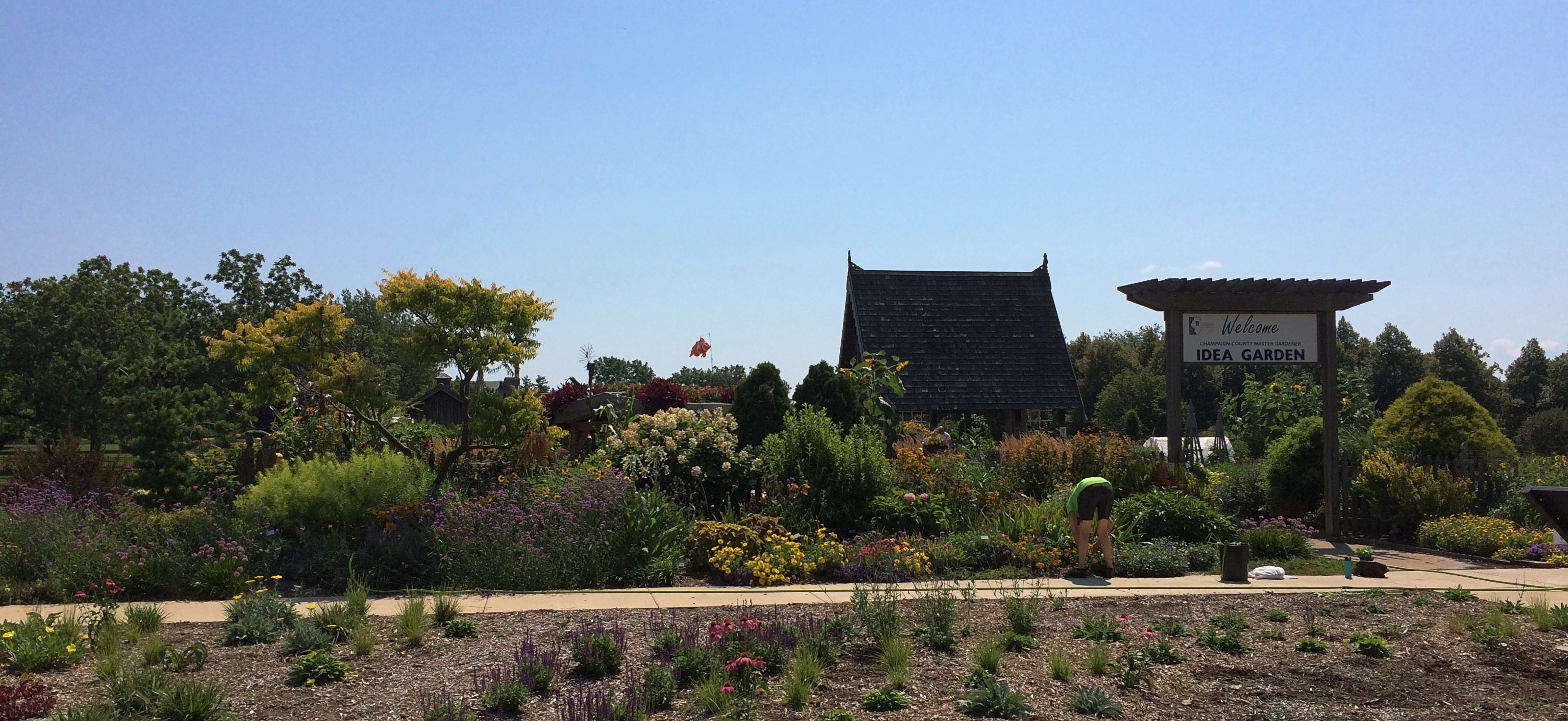
Besides Decatur, we spent some time over the weekend in Champaign, including a short visit to the Idea Garden of the University of Illinois Arboretum.Idea Garden, Champaign

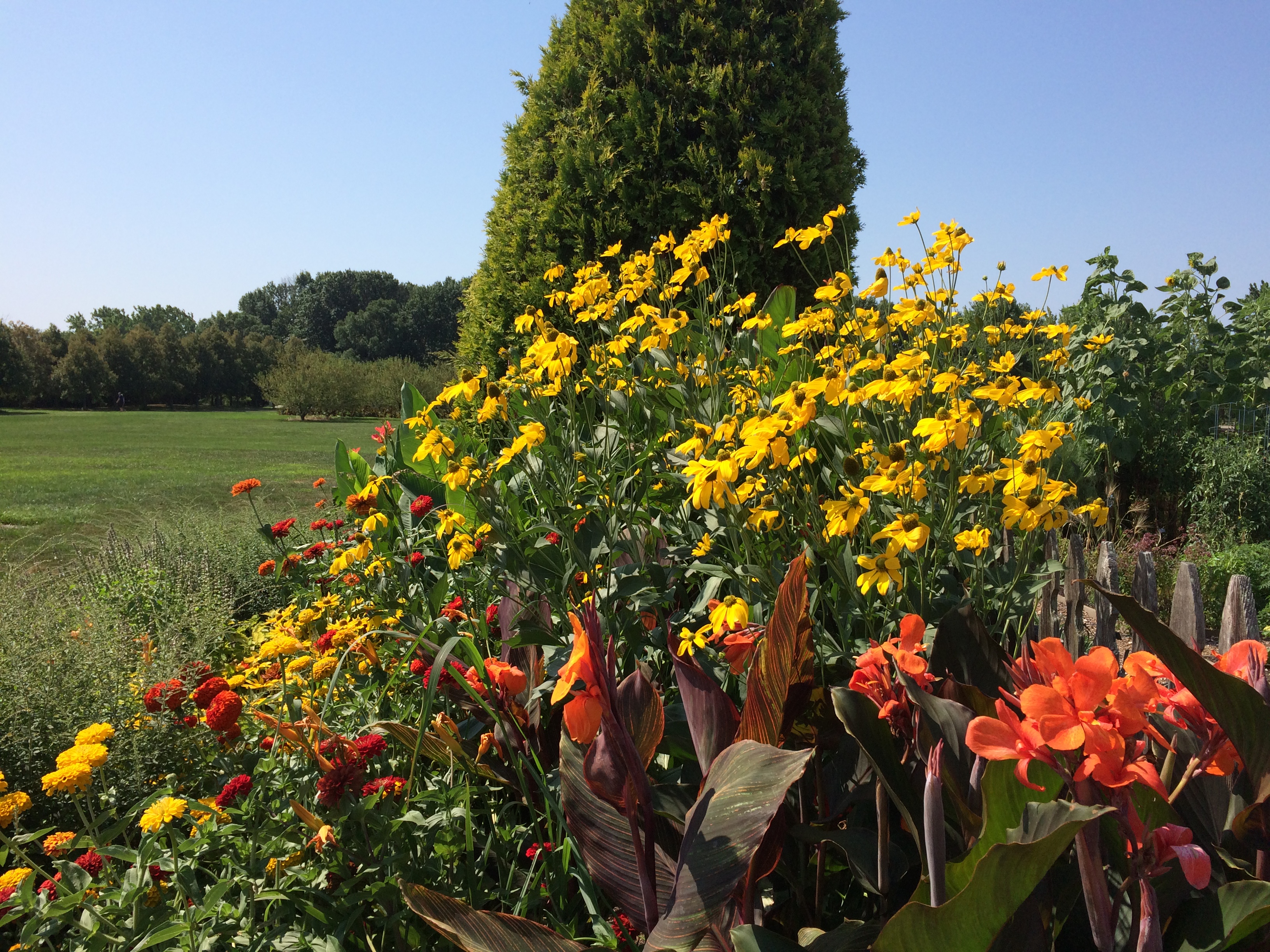
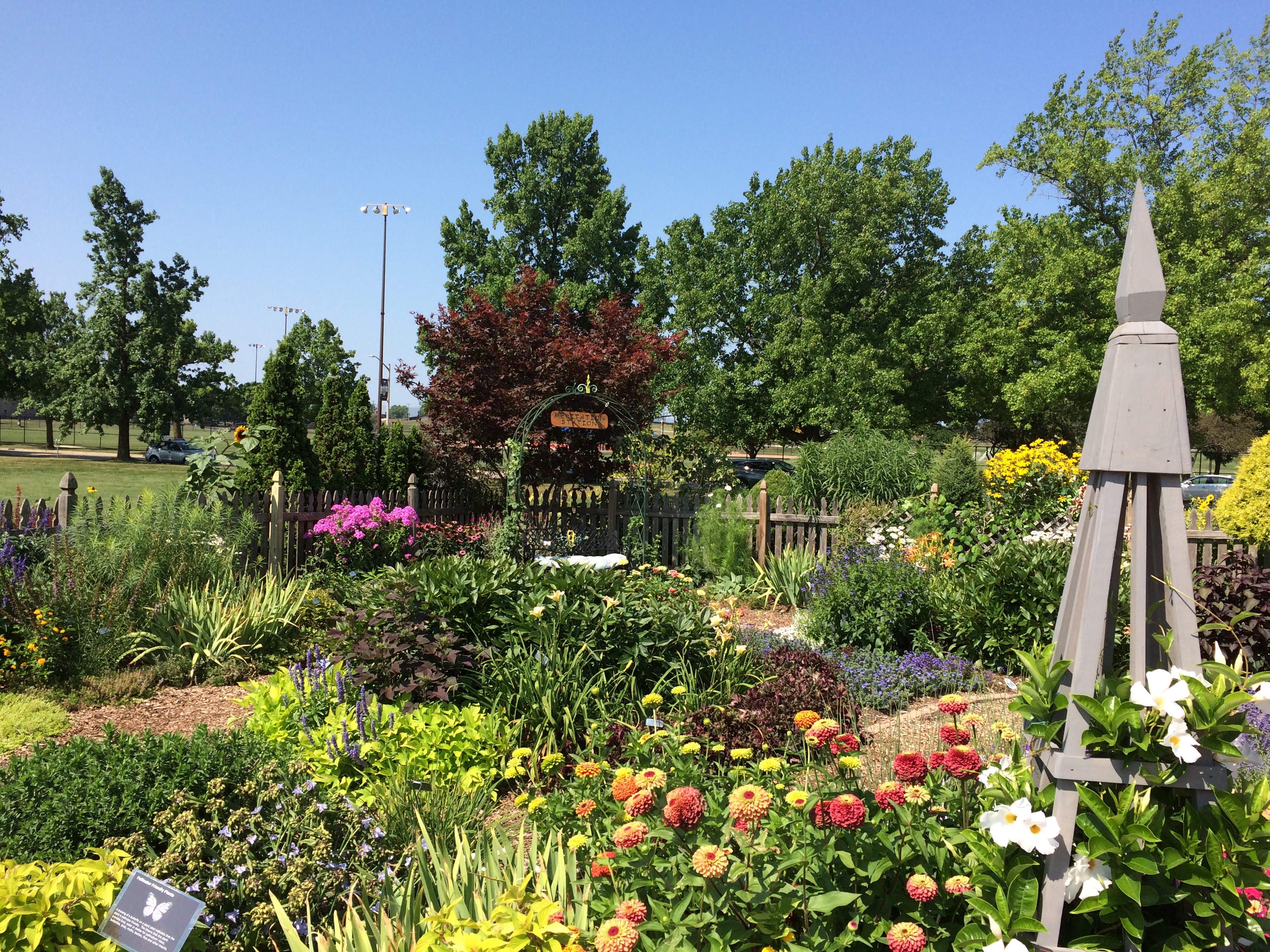
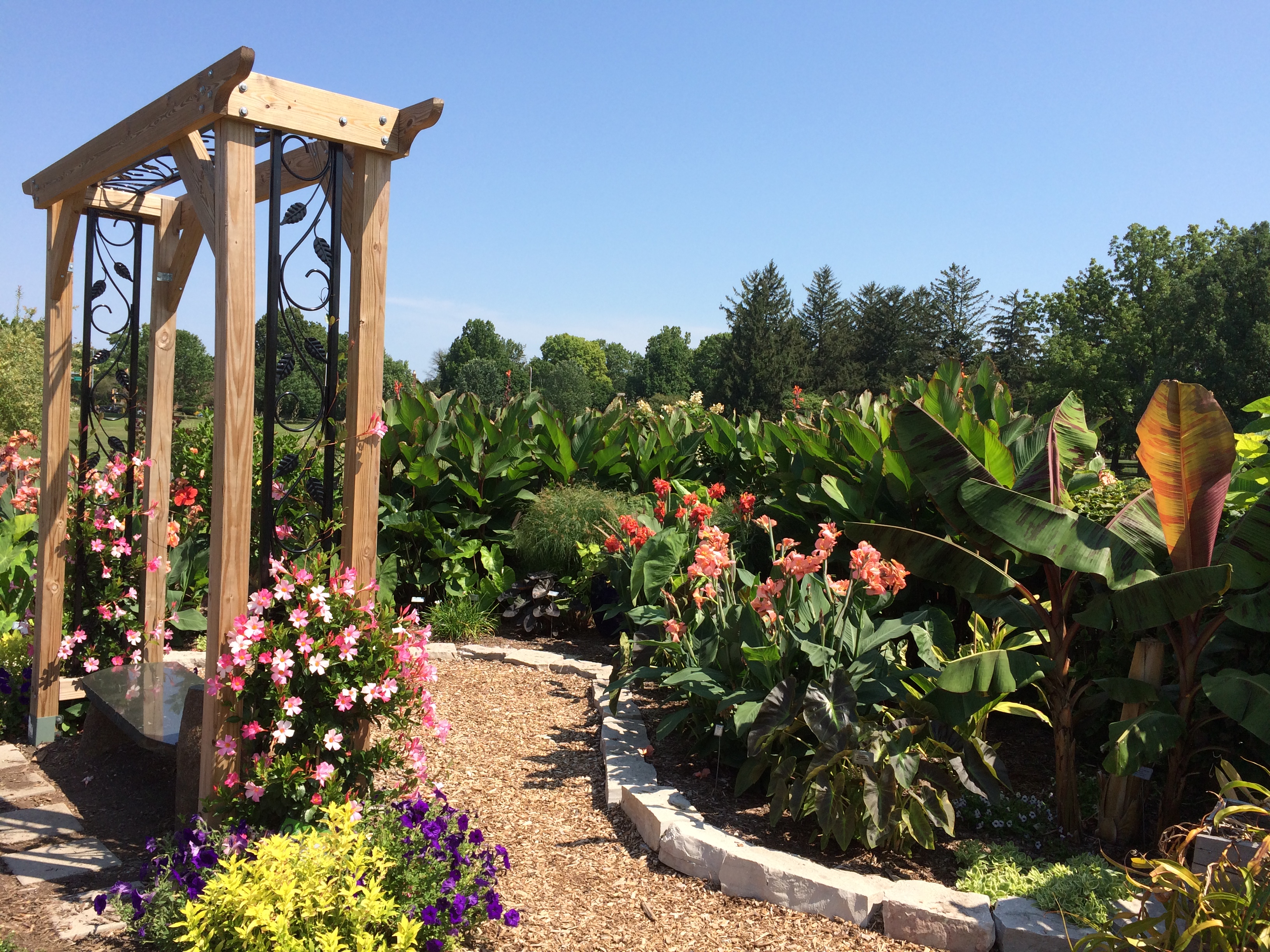
Back in the spring, the Idea Garden was mostly just that, notional, but since then volunteers have brought the place to full flower. Literally.
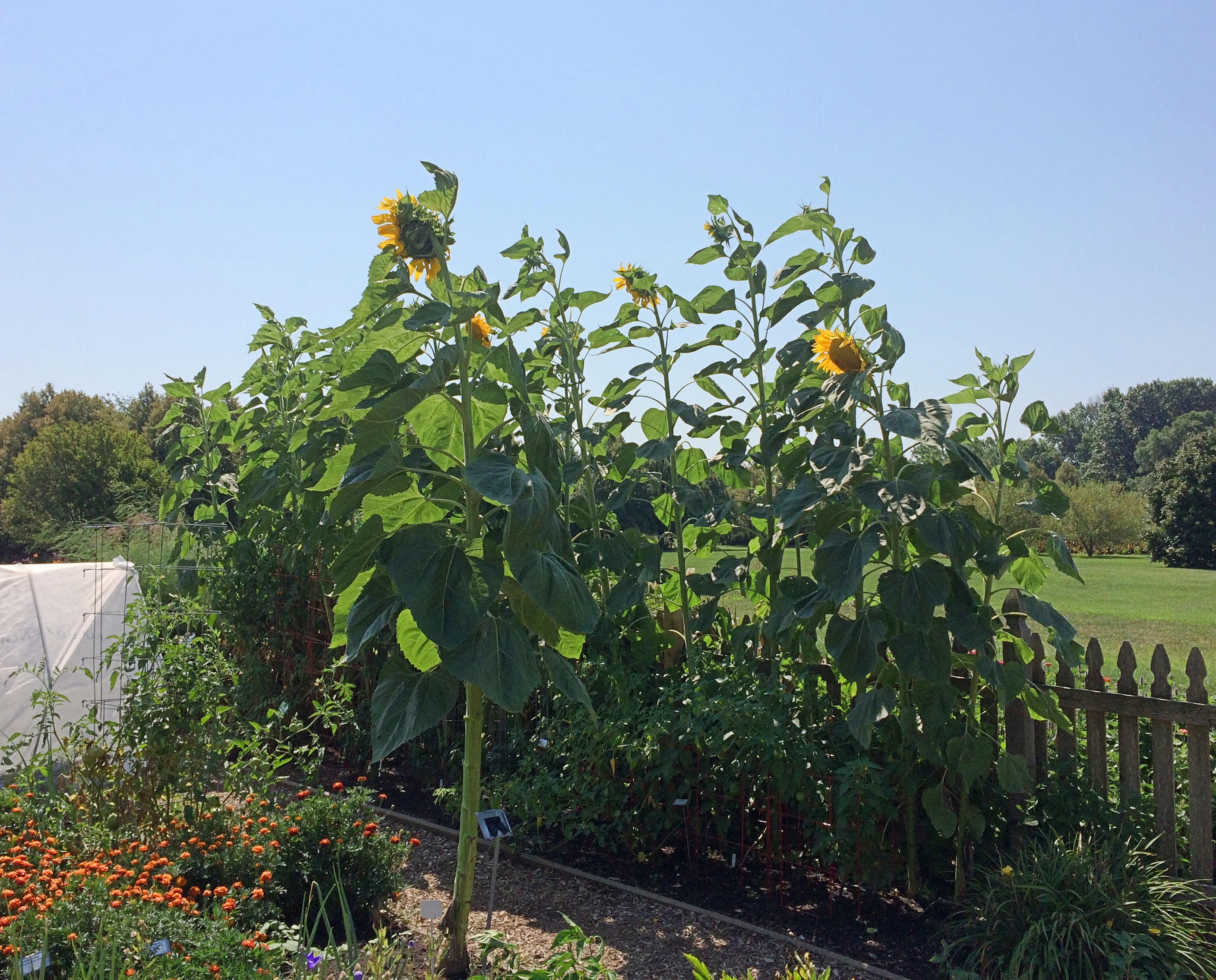
A small structure mid-garden was being used for an informal gardening class when we passed by. Something about garden pests. Sunflowers reaching to the sky. Taller than a grown human being. One of the volunteers told me it was a special kind that grows tall. Not a lot of gardeners like them, he said, but he did.

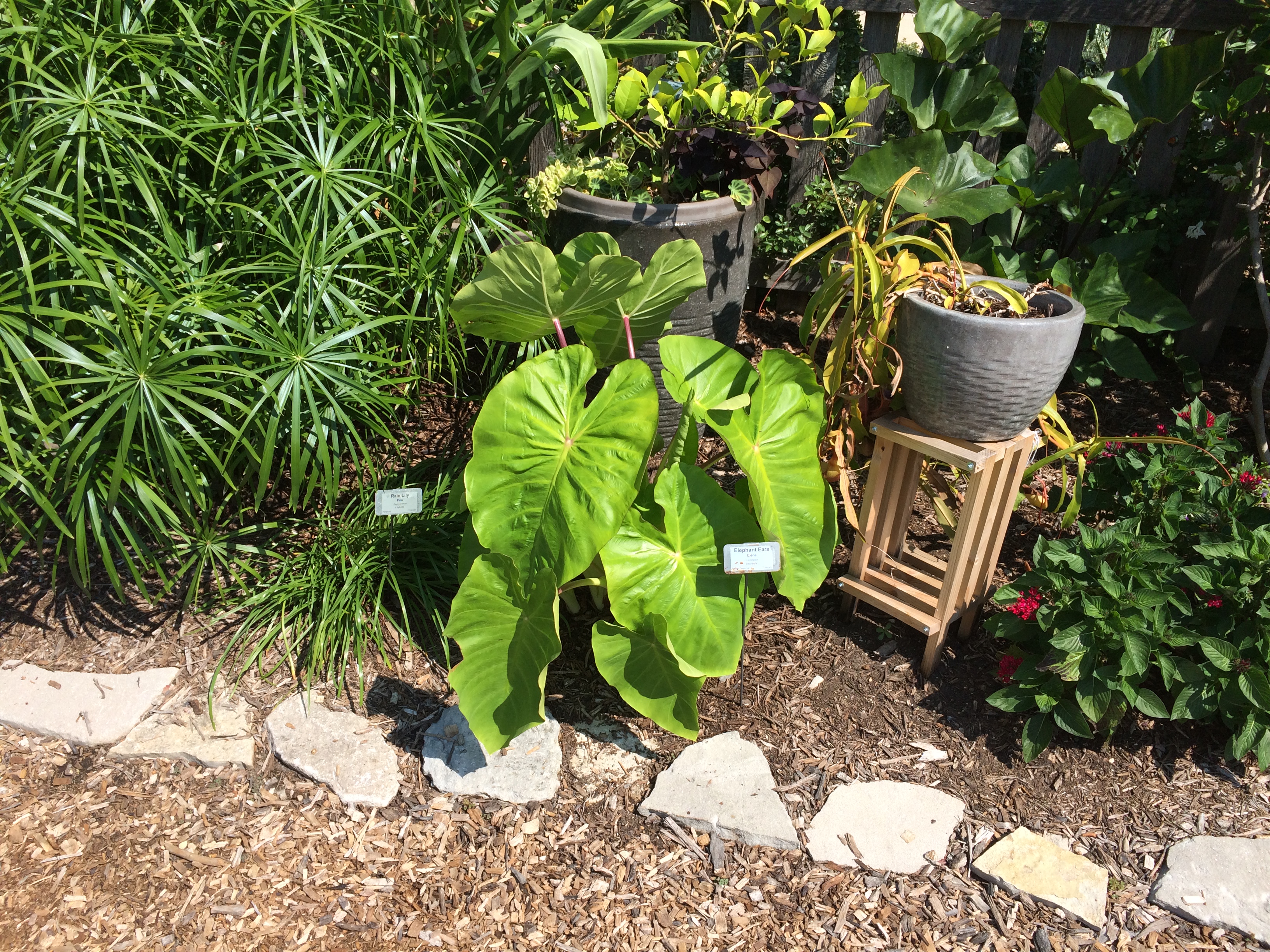
Elephant ears!
I have fond memories of large elephant ears when I was a child.
The picture is ca. 1970, of my brother Jim and I and the front-yard elephant ears. I might have been small, but that’s not why I remember our elephant ears as large — they were objectively large. That’s the way they grew for a few early years at our house in San Antonio. In later years, they came up smaller and eventually disappeared.

Scovill Sculpture Park

First, we drove across Lake Decatur on US 36. Later, we walked near the shore of the lake, though at that point a fence was between us and the lake.
Lake Decatur from Scoville ParkWe didn’t mind, because we were taking a late afternoon stroll on Saturday at Scovill Sculpture Park. As these things go, the lake is old — almost 100 years, a project of civic improvement that also happened to be very useful for corn wet-milling. A.E. Staley, of corn products fame (see yesterday), had a major hand in the creation of the lake by damming the Sangamon River upstream in the early ’20s.

On the other hand, the sculpture park, on Decatur Park District land between the Scoville Zoo and the Decatur Children’s Museum, isn’t that old — only about three years. Interestingly, the sculptures aren’t permanent fixtures, but leased from the artists. After a few years, a new crop is brought in. According to my sources, the second set of 10 is in place now.

“My Favorite Things,” by Travis Emmen.
Scovill Sculpture Park“Calibration,” by Luke Achterberg.
Scovill Sculpture Park“Absence,” by Joseph Ovalle.
Scovill Sculpture Park“Urban Forest,” by Richard Herzog.
Scovill Sculpture Park“Rybee House 2,” by Stephen Klema.

Scovill Sculpture ParkThe park also includes the Scovill Oriental Garden, which has elements of Chinese and Japanese gardens.

Scovill Oriental Garden

Scovill Oriental GardenScovill Oriental Garden

Of course the park has a gazebo.
Scovill Park Gazebo. Gazebos are cool.As well it should. Here’s a book or database for someone to create someday: The Great Gazebo Gazetteer.

Mabery Gelvin Botanical Gardens

RIP, Bernie Judge. He was an old-school Chicago newspaperman and my boss 30 years ago. Not a mentor, exactly, but I did learn a few things from him — most of which I didn’t appreciate until later.

By last Sunday morning, the rain had stopped and we visited the Mabery Gelvin Botanical Gardens in Mahomet, Illinois, not far outside Champaign.
At eight acres, the garden isn’t large, but it is a pretty place in June.
Mabery Gelvin Botanical GardensMabery Gelvin Botanical GardensFeaturing the blooming Dogwood (Cornus kousa).
A Saucer Magnolia (Magnolia x soulangeana). The South doesn’t get all the magnolias. According to the sign next to the tree, “… the genus magnolia is 95 million years old. Older than bees, they are pollinated by beetles.”
Japanese lilac (Syringa reticulata).
The garden is part of the larger Lake of the Woods Forest Preserve. We took a walk along some of its trails, eventually coming to a covered bridge: Lake of the Woods Covered Bridge. Wooden construction, but also with hidden steel support to make it vehicle-worthy.
Lake of the Woods Forest PreserveLake of the Woods Forest PreserveIt isn’t one of the 19th-century bridges you find in the Midwest. Rather, vintage 1965. As the park district says: “After the purchase of an 80-acre tract of land west of the Sangamon River in the 1960s, the Lake of the Woods Covered Bridge was constructed to connect the two sides of Lake of the Woods Forest Preserve in Mahomet. Designed by German Gurfinkel, a Civil Engineering instructor at the University of Illinois, the bridge was a replica of the Pepperel Bridge [sic] near Boston.”

The view from the bridge of the Sangamon River, which flows on to Springfield and then to the Illinois River.
We walked across the bridge. You should cross bridges when you come to them, if possible. Before we left the forest preserve, we also drove across it, because we don’t get to drive across covered bridges that much.

Indianapolis Artsgarden, 2014

Easter fell fairly late five years ago, April 20, and we traveled that weekend as well. That time to Indianapolis, where we saw the Eiteljorg Museum and ate at Maxine’s Chicken & Waffles. A good little trip.

We also spent part of that Saturday afoot in downtown Indianapolis, including a short stop at an interesting public space: the Indianapolis Artsgarden, a large domed structure built over a major intersection.

Besides connecting the adjacent Circle Centre Mall to a nearby hotel and other buildings, the Arts Council of Indianapolis — which owns the space — holds public performances there, along with art exhibitions.

Ehrenkrantz Eckstut & Kuhn Architects (now part of Perkins Eastman), who designed Circle Centre, did the Artsgarden too in the 1990s. Actually not so much a single dome as a series of glass vaults. Makes for a light, open space.

Even when occupied by fully grown trees.

No event was going on when we were there, but it was a pleasant place to hang out. I did that while everyone else went shopping at the adjacent retail. If I remember right, they found some spring clothes.

University of Illinois Arboretum & Japan House

On Easter Sunday, I drove Lilly back to UIUC, and this time the rest of the family came along for the ride: Yuriko, Ann and the dog. Been awhile since we’ve been on a trip of more than a few miles with the dog, but we figured she’d enjoy it and not be too much trouble. Except for the soda spill she caused toward the end of the trip, she wasn’t.

So we had a few pleasant hours in Champaign-Urbana, with temps in the 70s and greenery budding everywhere. Especially at the University of Illinois Arboretum.

“The University of Illinois Arboretum was developed in the late 1980s to early 1990s,” according to the university. “The original 1867 campus master plan placed the Arboretum north of Green Street where the College of Engineering currently exists. During the 1900s, the site moved to south campus, located near the Observatory, and Smith Music Hall.

“Now located at the intersection of South Lincoln and Florida Avenues, the Arboretum’s gardens, collections, and habitats are transforming 160 acres of the University’s south campus in Urbana-Champaign into an exceptional ‘living laboratory’ for students in plant sciences and fine and applied arts, as well as an oasis of natural beauty open to the public.”

I don’t know about natural beauty, since an arboretum, though working with living materials, is man-made. But if you called it artificial beauty, people think plastic or some other synthetic material. So let’s just say it’s a beautiful spot.

A trail leads from the small parking lot and toward the arboretum’s large pond.

Also on the grounds of the University of Illinois Arboretum is Japan House.
Japan House is a unit of the College of Fine and Applied Arts at the UIUC, beginning when a Japanese artist-in-residence, Shozo Sato, came to the school in 1964, with the building completed in 1998. Such rarefied arts are calligraphy, tea, ikebana and sumi-e are taught there.

Japan House itself wasn’t open on Sunday, but the grounds were.
Including a view of the zen garden.
The grounds would be a good place for moon viewing, or tsukimi. Wonder if that’s ever happened there.

The Warrenville Garden, 1987

About once a month during the warm months of 1987, and maybe a few times the year after that, I drove from Chicago to southwest suburban Warrenville — it seemed pretty far away — to visit a friend of mine who had just bought a house in that suburb. He lives in Texas these days, and I’ve since lost touch with him, except for a nominal link on Facebook.

He cultivated a large garden in his large back yard and I helped him out because it was a novelty and because he gave me some of the produce. There was a lot of produce.
“We aren’t gardening for food,” he once said. “We’re gardening for virtue.”

He was a conscientious gardener, and I took home so many vegetables and melons that I further took some to my office and gave them to anyone who wanted them. They were a hit. A woman in the office who’d grown up on a downstate farm complimented the squash in particular.
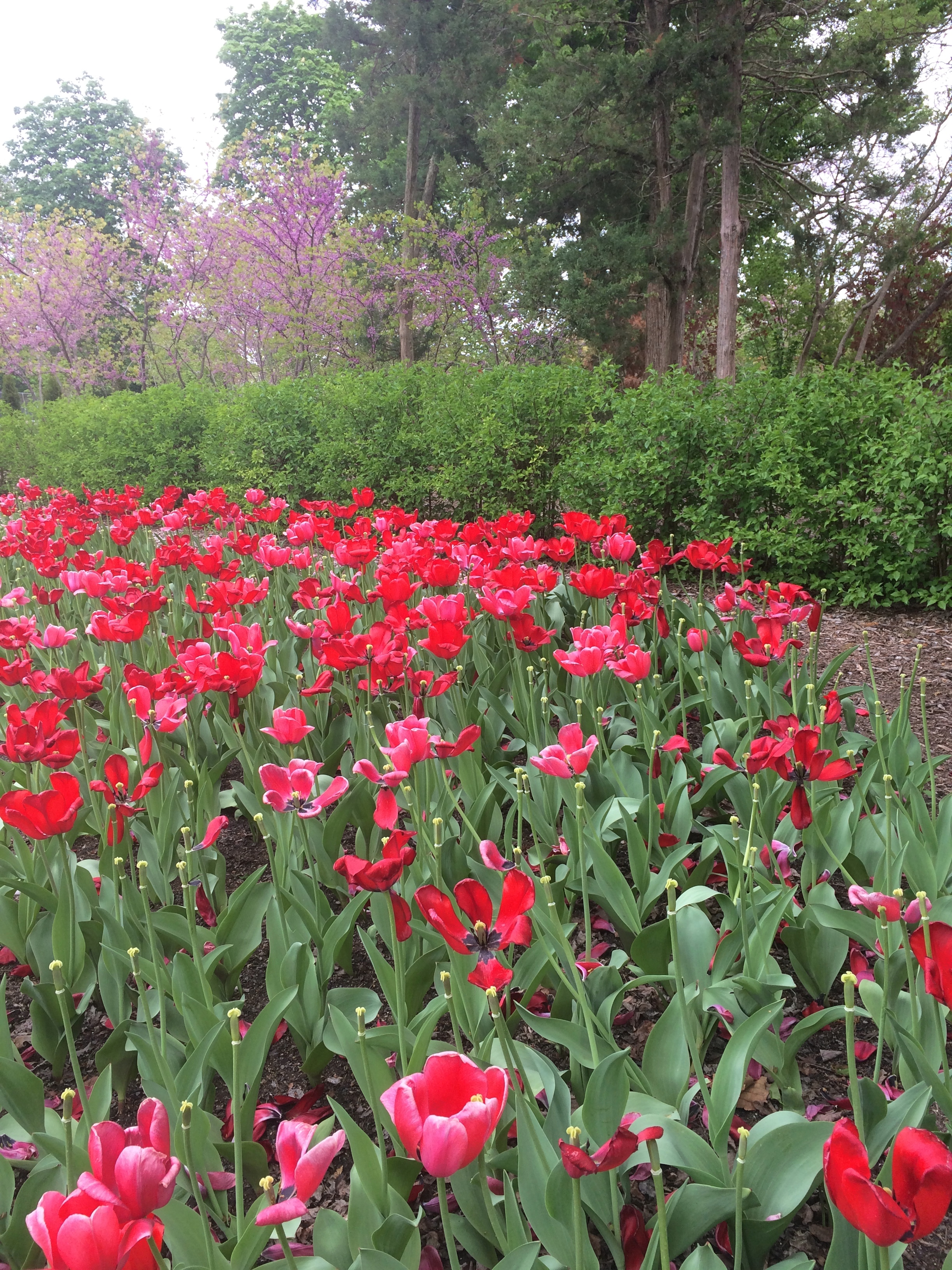
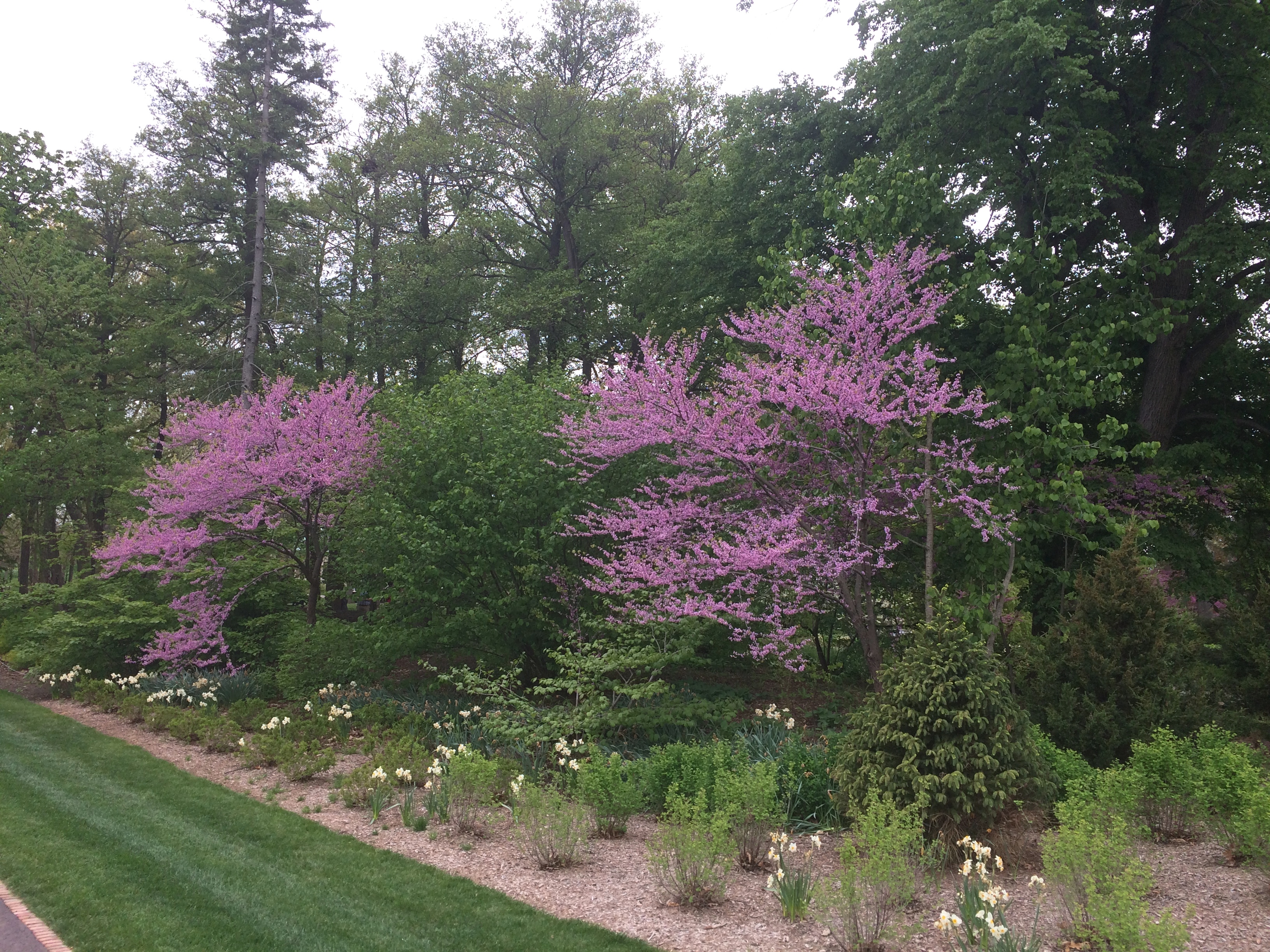
I’d forgotten that my friend had made pictures of the garden. Also that I had a few of them tucked away.

Corn, tomatoes, melons, carrots, peas, green beans, cucumbers, squash and much else I’ve probably forgotten.

Not a bad thing to do for part of a summer. But I also found I had no natural passion for gardening. Later attempts in my own back yards were indifferent and lackluster. One problem in particular, aside from hating to weed: when the plants I wanted to grow were just sprouting, I couldn’t always tell them apart from weeds.

The pictures of the plants on the seed packages were no use in making that determination, either. They always showed idealized, fully grown examples.