The Air Zoo of Kalamazoo

Mid-week between Christmas and New Year’s, I popped off by myself to Michigan, more specifically to Kalamazoo, the city with the most fun name in the whole state — just repeat it a few times and see — for a look around. One of its main attractions is the Air Zoo. I’ve heard about that place for years, but an air (and space) museum is a moderately hard sell for the family. Not for me. Spacecraft especially, but also aircraft.

The Air Zoo is relatively small, at least with the Museum of the U.S. Air Force still fairly fresh in mind, but it offers an excellent collection, including early airplanes, a lot of WWII aircraft, examples from the age of jet fighters, and a number of space-related objects. The museum is also in the major leagues of aircraft restoration efforts. A number of items that it had restored were on display, and later I read about a WWII dive bomber, a Douglas SBD-2P Dauntless, that was pulled from Lake Michigan recently and which will be restored by the museum.

Here’s a WACO VPF-7, something I’d never heard of, probably because it was only one of six ever built.

According to the museum, the ’30s-vintage aircraft “was designed as a trainer/combat aircraft for the Guatemalan Air Force. As an attack aircraft, the front cockpit would be covered and .30-caliber machine gun pods would be placed under the wings. However, this particular aircraft has no indication of machine guns ever having been attached.”

A Ford Tri-Motor. Also known as a Tin Goose, produced from 1925 to 1933. Indiana Jones got around in these sometimes, I believe.
Air Zoo“The Air Zoo’s 5-AT Ford Tri-Motor (N4819) came off the assembly line in 1929 with serial number 58 and was delivered to National Air Transport, where it probably delivered freight and mail,” the museum says. “It quickly went to Ford Motor Company for modifications and then was sold to Northwest Airways, flying the Minneapolis-St Paul-to-Chicago run. It was one of five Tri-Motors bought by [the company that] would become Northwest Airlines.”

Maybe so, but as a display item, the plane is painted as if it were in service of the U.S. Army. I’ve read that until last year, this very plane was airworthy, and the museum gave rides.

Here’s a B-25, one of almost 10,000 produced during the war.
Air ZooThis particular one made strafing runs with the 489th Bomb Squadron, 345th Bomb Group, according to the museum. I like that paint job.

Modern wars aren’t won just with fighting machines, but by getting materiel here and there as fast as possible. Enter the DC-3.

Air ZooTime flies, there are more wars. Jets do the fighting, such as this F-8 Crusader.
Air ZooThe sign said: “Photo reconnaissance variants of the Crusader flew several dangerous missions during the Cuban Missile Crisis. Then… the F-8 became the first U.S. Navy aircraft to routinely battle North Vietnamese MiGs.”

A small but distinctive collection of space artifacts is on display at the Air Zoo. I take ’em where I can get ’em. Such as this J-2 engine, famed for its attachment to the second and third stages of the Saturn V.

J-2 Air ZooThere aren’t many machines that have to be just so or they’ll blow up. Kudos to the engineers.

Here’s something I’d never seen before: a Gemini boilerplate.
El Kabong, Air ZooEl Kabong I is its whimsical nickname. I’d forgotten that, “as El Kabong, Quick Draw would attack his foes by swooping down on a rope with the war cry “OLÉ!” and hitting them on the head with an acoustic guitar …” (Wikipedia). Quick Draw McGraw made a fairly faint impression on me, even at an impressionable age.

Anyway, the boilerplate’s main job was to test the feasibility of recovering spacecraft on land using extendable skid-type landing gear, a steerable gliding parachute (para-sail), and solid-fuel retrorockets to help slow the spacecraft for landing, says the Air Zoo. I don’t think Gemini landed that way, but it sounds pretty cool.

The concept of the boilerplate spacecraft might be an obscure one to the public at large, but I like coming across them.

Lull-Time Reading

The lull time between Christmas and New Year’s is also a good time for reading, so I alternatively read Between the Woods and the Water, the second part of Patrick Leigh Fermor’s remarkable travels on foot in Europe in 1934, and American Mirror: The Life and Art of Norman Rockwell (2013) by Deborah Solomon.

I picked up the latter at Half-Price Books not long ago after reading a bit of it in the store, and realizing that I knew next to nothing about Rockwell, besides what his paintings look like, and that he’s been the subject of revisionism lately. Maybe more than one cycle of scorn and then revision have come and gone, for all I know.

Solomon skillfully makes the case that Rockwell’s work is well worth thoughtful attention. “Each of his Post covers amounts to a one-frame story complete with a protagonist and a plot…” she writes. “In some ways, Rockwell’s paintings, which are grounded in the rendering of the particulars, demand to be ‘read’ like a story. The experience they offer is literary as much as visual, in the sense that he cared less about the sensual dazzle of oil paint than the construction of a seamless narrative. The public that saw and appreciated his paintings walked away from them thinking not about the dominance of cerulean blue or cadmium yellow but about the kid on the twenty-foot-high diving board up in the sky, terrified as he peers over the edge and realizes there is only one way down.”

As for Rockwell the man, he comes off as a decidedly odd duck. An enormously talented odd duck. While perhaps not the most colorful of personalities — which is often just a way of denoting a jerk, anyway — he’s worth reading about too. (Then again, his family might have had some thoughts on Rockwell as a jerk.)

“On most days, he felt lonesome and loveless,” notes Solomon. “His relationships with his parents, wives, and three sons were uneasy, sometimes to the point of estrangement. He eschewed organized activity. He declined to go to church. For decades he had a lucrative gig providing an annual painting for the Boy Scouts calendar, but he didn’t serve as a troop leader or have his own children join the Scouts.

“He was more than a bit obsessive. A finicky eater whose preferred dessert was vanilla ice cream, he once made headlines by decrying the culinary fashion for parsley. He wore his shoes too small. Phobic about dirt and germs, he cleaned his studio several times a day. He washed his brushes and even the surfaces of his paintings with Irovy soap.”

Naturally the book is well illustrated with his work, though only a fraction of (say) his Saturday Evening Post covers, since he did so many (323 from 1916 to 1963). That made me look up more images posted by the Rockwell museums, one in western Massachusetts, another in Vermont (seemingly more of a store for Rockwelliana), both places that he lived. Just more things to see if I ever make it back that way.

Lull-Time Entertainment

We opened our presents early on the morning of December 22, since Yuriko and Ann were off to Japan later that day. Christmas itself passed quietly, though we did prepare a nice dinner. As for New Year’s Eve, Lilly went out with friends — as you should do at 19 — while I stayed home with the dog, a more fitting evening for middle age.

In between those moments, work slacked off, and I enjoyed the lull. Among other things, Lilly and I watched various TV shows when she was home, such as episodes of Frasier (it holds up well) and the newer and considerably different, but also very funny Louie. I also had her watch the “Turkeys Away” episode of WKRP in Cincinnati.

We saw an episode of Bob’s Burgers that involved a gingerbread house contest. Could those really exist? I asked myself later. Yes indeed. Just Google “gingerbread contest” or the like and you get many hits about various events, such as the 2016 National Gingerbread House Competition at the Omni Grove Park Inn in Asheville, NC, held just before Thanksgiving.

“It all began with a small group of gingerbread houses built by community members in 1992 as another way to celebrate the holiday season with no plans to continue the following year,” says the competition’s web site. “There was no possible way to know that more than two decades later The Omni Grove Park Inn National Gingerbread House Competition™ would be one of the nation’s most celebrated and competitive holiday events.”

We’ve tried to build those things before. We aren’t dedicated much to the task, so it usually ends up more like a gingerbread trailer park after a tornado.

On the evening before New Year’s Eve, Lilly and I went into the city to see The Christmas Schooner on stage at the Mercury Theater, a mid-sized Chicago venue on the North Side not affiliated with Orson Welles that I know of.

The play is a musical set in the 1880s, involving a German-immigrant ship captain in Manistique, Mich., who hits on the idea of shipping Christmas trees to Germans in Chicago. The trouble is, sailing on Lake Michigan in late November/early December is dangerous, especially in the days of small wooden vessels and no weather reports. Eventually the captain goes down with his ship but his widow and son figure out a way to keep the trade going. The story is a fictionalized account of the real Christmas tree trade between the UP and Chicago in the late 19th and early 20th centuries, which claimed a number of ships and men, notably the Rouse Simmons, which went down with all hands in Lake Michigan in late 1912.

I’ve long been impressed by the level of talent involved in the Chicago theater, and The Christmas Schooner was no exception. The acting, singing and dancing — or rather, motions on the stage, not a lot of formal dancing — were all first rate. It reminded me that I need to see more live theater in the city, now that the logistics of parenthood isn’t quite as complicated as it used to be.

Xmas Oddities

From the December 21, 1976 episode of Laverne & Shirley, “Christmas at the Booby Hatch” or “Oh Hear the Angels’ Voices.”

Featuring Michael McKean (Lenny) and David L. Lander (Squiggy). I don’t think I saw it 40 years ago — I only watched the show intermittently — but nothing every really goes away on the Internet.

Next, “Ríu Ríu Chíu,” as sung by the Monkees on their show on Christmas Day 1967.

I’m pretty sure I didn’t see that when originally shown either. But it was an inspired choice for the Prefab Four.

Finally, something not about Christmas: “Sailing to Philadelphia” (2000), sung by Mark Knopfler and James Taylor. It’s about Jeremiah Dixon and Charles Mason.

We are sailing to Philadelphia
A world away from the coaly Tyne
Sailing to Philadelphia
To draw the line
The Mason-Dixon Line

Just how many songs are there about the Mason-Dixon Line? One, anyway. I happened across it not long ago. A delightful discovery.

Godspeed, John Glenn

project_mercury_astronauts_-_gpn-2000-000651Occasionally, a public domain picture from NASA is just the thing. I opened up Google News at about 3 this afternoon to take a look at the latest outrages worldwide, and the page informed me of John Glenn’s passing. I knew he was still alive, but I wasn’t sure whether any of the other Mercury 7 astronauts were, so I checked.

The answer is no. He was the last one.

I don’t remember any of their flights, of course. I barely remember any of the Gemini missions. It wasn’t until Apollo that I started paying attention, but when I did, I made a point of learning about Mercury and Gemini too. I well remember my excitement at finding the July 1962 edition of National Geographic, which covered Glenn’s flight, about 10 years after it came out (because we saved them, like everyone). I read every word of the article. Early space flight was covered in other editions, too, and I read them as well.

Like all editions of NG, it was well illustrated. One in particular stuck with me: how John Glenn might have died in 1962 and not 2016. Reading that also meant that I knew how the dramatization of his flight in The Right Stuff movie would turn out (also, I’d read the book). Astronaut not incinerated.

The news set me wondering about how many of the Moon walkers are still around. Seven of 12, as it turns out, but every jack man of them are in their 80s. Buzz Aldrin’s the oldest, nearly 87, while Charles Duke is the youngest, at 81. Wonder if Aldrin would even have the energy these days to offer up a punch to a Moon landing denier who clearly deserved one (officialdom agreed; Aldrin wasn’t charged).

Calendar Oddities Are Back

A cheap calendar crossed my desk the other day, and I thought, that looks familiar. For a good reason: it’s the 2017 version of a cheap calendar I got four years ago. I don’t remember getting one last year or the year before that. I didn’t keep the ’14 version because, after all, it’s a cheap calendar. I expect I’ll throw away the new one soon enough. Got enough stuff around here without it.

I did check, and the parade of U.S. presidential birthdays is exactly the same oddball procession as on the earlier calendar: McKinley, FDR, Lincoln, Washington, Jackson, Madison, Jefferson, Grant, Kennedy, J.Q. Adams, Hoover, Benjamin Harrison, Eisenhower, TR, and Wilson.

Perhaps the other birthdays are the same, too, but I didn’t take notes on them: Alexander Hamilton, MLK, Ben Franklin, Stonewall Jackson, Henry Wadsworth Longfellow, and Jefferson Davis. Interesting selection, that. The other events noted on the calendar are exactly the same as before.

One thing that might be different this time, besides the normal shifting of dates, is that Memorial Day is marked twice. Once, May 29, is simply marked Memorial Day; May 30 is marked Memorial Day (True). Also, Columbus Day is likewise two different days, one True (Oct. 12) and the other presumably false. Or fake. Or bogus. (Oct. 9 next year, as it happens.)

An aside: the day the President Benjamin Harrison proclaimed to be the 400th anniversary of Columbus’ landing in the Americas was Oct. 21, 1892. He had his reasons. Oct. 12, 1492 was reckoned using the Julian calendar. To correct for the Gregorian, nine days were added. Presumably now we’d need to add 10 — or 11, I’m not sure how the fact that 2000 was a leap year affects things — to be mathematically correct. So arguably, if you really wanted to argue such a ridiculous thing, neither Oct. 9th or 12th would be the true Columbus Day.

Anyway, Memorial Day and Decoration Day might be worth distinguishing, but Columbus Day? The day we barely honor a sea captain from Genoa in the pay of Spain traveling to the Bahamas half a millennium ago. I might not live to see the change, but I suspect that holiday isn’t long for the calendar.

Thanksgiving ’16

One of the good things about Thanksgiving is that, while the next day technically isn’t a holiday — and some years ago, I worked for a skinflint who insisted that people work that day — it really is part of the holiday. So for me the thing stretched from Wednesday afternoon to Sunday afternoon (I usually get back to work on Sunday evening, since things need to be filed Monday morning).

Our Thanksgiving meal was pretty much the same as it has been for the last few years, after Lilly took over the making of the major starches: mashed potatoes, stuffing, macaroni and cheese. The meat, ham. The bread, King’s Hawaiian. The drink, Martinelli’s sparkling cider. The dessert, pecan pie. Call it habit, call it tradition.

Time to read: a valuable commodity. Needing something light, I buzzed through Lafayette in the Somewhat United States (2015), a popular history by Sarah Vowell, which guarantees a humorous tone. Humorous, but with genuine historical information included and, something I particularly like, accounts of her visits to often obscure places and monuments associated with the subject. In this case, sites associated with Lafayette. In the case of the only other book of hers I’ve read, Assassination Vacation, sites associated with the deaths of Lincoln, Garfield and McKinley.

There was also time over the holiday to watch a few movies, two on the small screen, one on the big screen. Radio Days, which I hadn’t seen since it was new. I appreciate the wonderful soundtrack a lot more now than I did then. Then there was Twelve O’Clock High, a first-rate war movie and Gregory Peck vehicle that I’d never seen before.

On Saturday, we all went to a nearby movie theater. Lilly and Ann wanted to see The Edge of Seventeen, a coming-of-age flick. Yuriko and I weren’t interested in that, so we saw Doctor Strange, a superhero movie about a character I knew virtually nothing about. Been a while since I’ve seen a comic-book inspired movie, especially in the theater. It was better than I expected. The story wasn’t great, but it managed to avoid outright stupidity, and the CGI was astonishingly good.

I also saw pieces of movies over the holiday. Days off or not, I see more pieces of movies now than whole ones, because there’s work to do, but also because I often don’t feeling like sitting through a whole movie, especially ones I’ve seen before, or already decided I don’t need to see.

Between Wednesday and today, I saw pieces of (no more than 30 minutes, no special order): Swing Shift, The Gay Divorcee, Fast Times at Ridgemont High, Marie Antoinette (2006), The Rocky Horror Picture Show, Gone With the Wind, The Godfather, The Purple Rose of Cairo, Capote, Juno, and Gran Torino. The last two were the only ones I’d never seen before. I lucked into some justly famous scenes in a few cases, such as the escape from burning Atlanta in GWTW, and the particularly memorable Phoebe Cates scene in Fast Times.

Phil-Tex Debris

I did my little part in the 58th quadrennial presidential election this morning — the 10th in which I’ve voted — at about 10:30, figuring that the morning rush would be over. Only one person was ahead of me when I arrived, but about a half-dozen were waiting when I left, so I guess there was ebb and flow throughout the day.

In Illinois, for the record, only four candidates were on the ballot for president: Democratic, Republican, Libertarian and Green. Left out: the Reform Party (remember them?); the Constitution Party, who seem to wuv the Constitution, except that pesky establishment clause; America’s Party, a splinter of the Constitution Party, because there are always splinters; the American Solidarity Party, an amalgam of social conservatism and economic redistributism; the Socialist Workers Party; the Communist Party USA; or any number of independents or micro-parties.

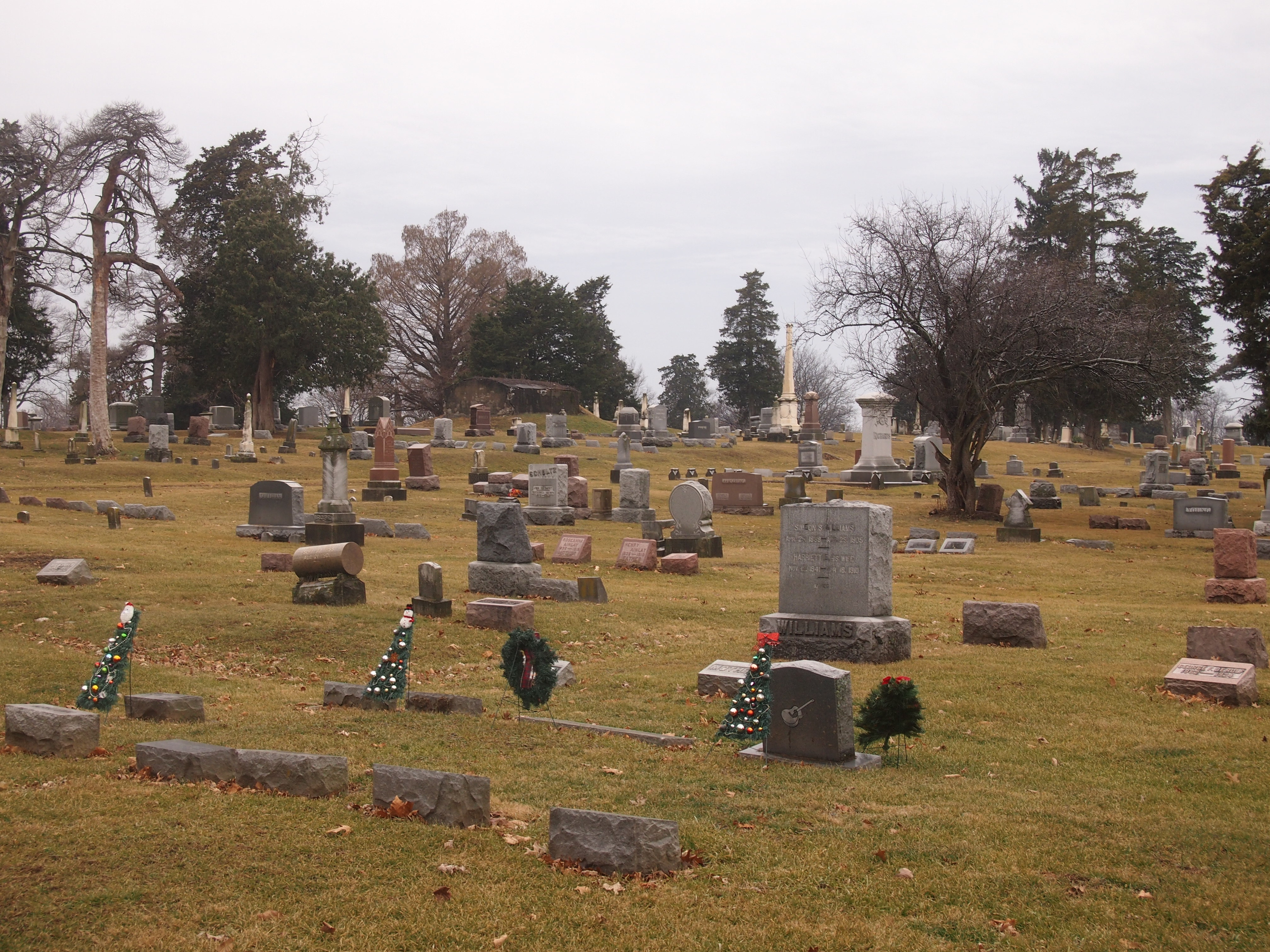
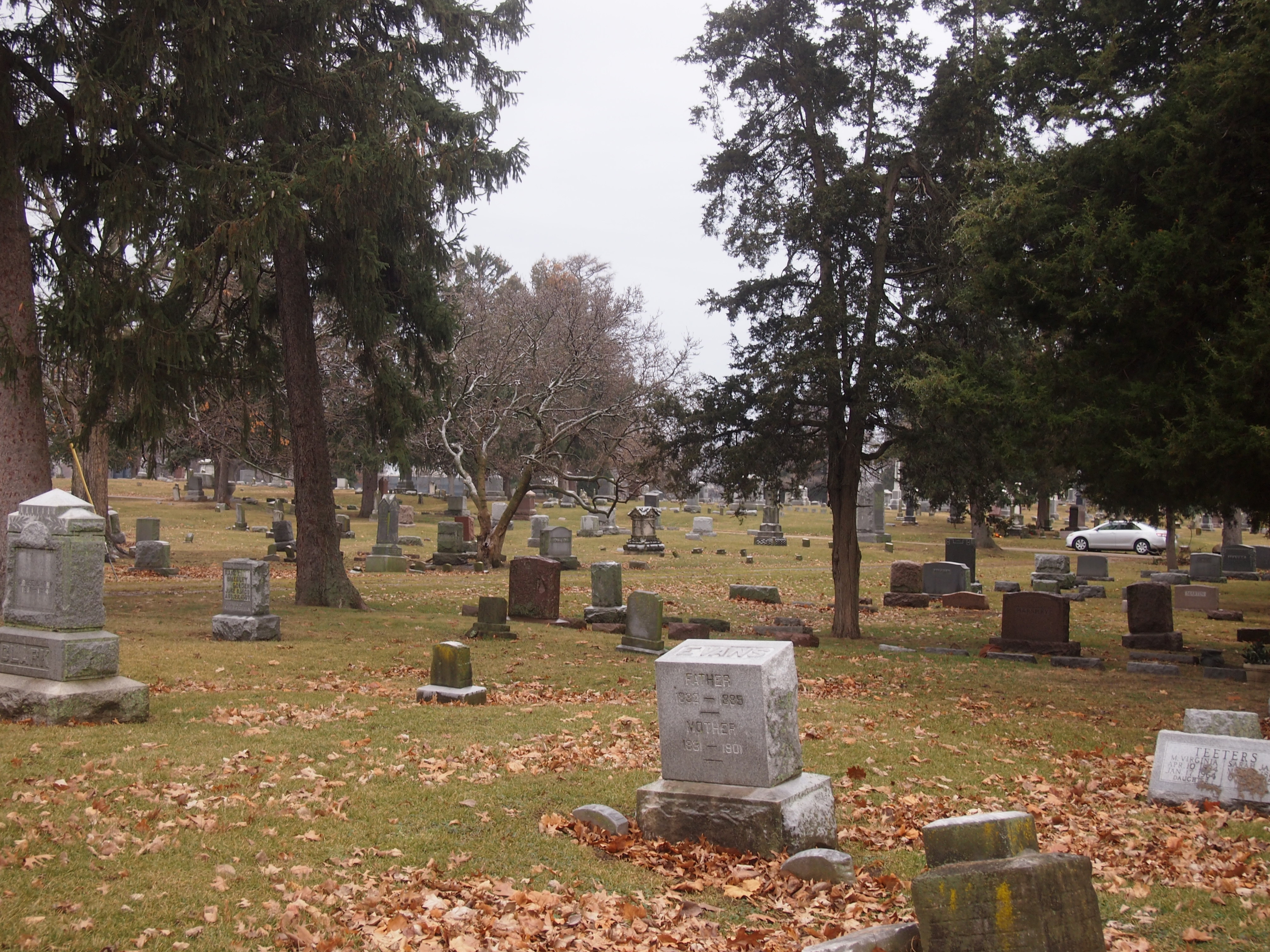
Besides Laurel Hill Cemetery in Philadelphia, I managed to see three other burial grounds during my recent trip, two others in Philly, one in Lampasas, Texas, none of them by design. They all happened to be near places I was going anyway.

Across the street from the U.S. Mint is Christ Church Burial Ground, home to about 1,400 markers on two acres, many dating from Colonial or Revolutionary times. With its irregular stones, worn inscriptions and modern buildings just outside the walls, the place reminded me of King’s Chapel and the Granary Burial Ground in downtown Boston.

Christ Church’s most famed permanent resident is Benjamin Franklin, whose stone was covered with pennies. I overheard a guide say that the cemetery earns a couple of thousand dollars a year picking up the coins left for Dr. Franklin. I like to think he’d be amused by that. A penny saved might be a penny earned, but better for people to give you pennies because they want to.

Another resident I recognized was Benjamin Rush, patriot and man of medicine, in as much as that was possible at the time. His attitude toward bleeding was, alas, about the same as Theodoric of York. Still, he did what he could, especially during the yellow fever epidemic of 1793.

The burial ground is a few blocks away from Christ Church itself, which presumably needed the expansion space. The church has a smaller cemetery on its grounds, as well as burials inside. It’s a lovely, light-filled Wren sort of church.

Besides its importance as a place of worship for numerous leaders of the Revolution and early Republic, Christ Church was also pivotal in the organization of the Protestant Episcopal Church in the United States of America. The Most Reverend William White, first presiding bishop of that church, is buried in the church’s chancel. (His house on Walnut St. is part of Independence National Historical Park these days.)

The churchyard is as much garden these days as cemetery.
Christ Church Philadelphia 2016Christ Church Philadelphia 2016Lampasas, Texas, is west of Killeen and Temple, and a burg of about 6,600. While driving along US 190 (Plum St.), a main road through town, I spotted Cook Cemetery, established as a pioneer graveyard in the mid-1850s, with its last known burial only in 1873.

In our time, it’s a slice of lightly wooded land between the road and a large parking lot. There are a number of stones, as well as broken stones and fragments, and a few burial sites enclosed by short walls.

Cook Cemetery, Lampasas, Texas

Cook Cemetery, Lampasas, TexasA couple of stones include later markers denoting citizens of the Republic of Texas. For instance, this stone’s a little hard to decipher, but one of the dates seems to be November 8, 1855, or 161 years ago exactly. Could be the stone was erected that day, since Rebeca seems to have been born in 1801 and died in ’54.
Cook Cemetery, Lampasas, TexasEnough about cemeteries. Here’s something else I spotted in Philadelphia, at Market and 5th. Another Megabus.
Megabus PhiladelphiaIn Dallas, I finally got a decent image of my brother Jay’s dogs, in one of their common poses.
dogz

Three More Philly Sites

One of the things to do while you wait to enter Independence Hall is take a look at the museum of the American Philosophical Society, which stands very near the hall itself.
American Philosophical SocietyI wasn’t aware that the APS is still an ongoing thing, but that’s just me being ignorant again. It’s a learned society, originally inspired by the old concept of leisure. “The first drudgery of settling new colonies is now pretty well over,” wrote Benjamin Franklin in 1743, “and there are many in every province in circumstances that set them at ease, and afford leisure to cultivate the finer arts, and improve the common stock of knowledge.”

The main current exhibit at the APS museum is Gathering Voices, which “tells the story of Jefferson’s effort to collect Native American languages and its legacy at the Society,” says the museum. “Jefferson had an abiding interest in Native American culture and language, while, at the same time, supporting national policies that ultimately threatened the survival of Indigenous peoples. As president of the APS from 1797 to 1814, Jefferson charged the Society with collecting vocabularies and artifacts from Native American nations. Over the next two hundred years, the APS would become a major repository for linguistic, ethnographic, and anthropological research on Native American cultures.”

It was an interesting display, including some documents in Jefferson’s hand. The collection isn’t as large as it might have been, however. The museum also tells this little-known story: “When Thomas Jefferson left Washington after two terms as President of the United States, he packed 50 Native American vocabulary lists in a trunk and sent them on a river barge back to Monticello along with the rest of his possessions. Somewhere along the journey, a thief stole the heavy trunk, thinking it was full of treasure. Upon discovering it was only filled with papers, he tossed the seemingly worthless contents into the James River. The loss of the vocabularies represented the destruction of 30 years of collecting on Jefferson’s part.”

Photocopying. That’s what Jefferson needed, but didn’t have.

In the West Wing of Independence Hall, there’s a small exhibit that doesn’t require waiting or a ticket to enter — another thing you can do while waiting to get into the rest of the hall. The exhibit is called Great Essentials.

On display are original printed copies of the Declaration of Independence, the Articles of Confederation, and the Constitution. All very interesting, but the thing that really got my attention was the Syng inkstand. A fine work of silversmithing, and highly placed in the history of the United States. It may be the only inkstand anywhere that has a proper name, though I wouldn’t swear to it.

“Irish-born Philip Syng was the son of Philip Syng, a silversmith,” notes the Penn University Archives and Records Center. “In 1714 he and his father emigrated to America. In 1726, after a successful apprenticeship in Philadelphia and a trip to England, Philip established himself as a silversmith in Philadelphia. In 1730 he married Elizabeth Warner; together they had at least eighteen children.

“Perhaps on his trip to England, and if not, soon thereafter, Syng met Benjamin Franklin. The two formed a friendship, leading to Syng’s inclusion in the Junto, Franklin’s group of political and intellectual civic leaders… Syng was also elected to various public offices including city assessor, warden of the port, and treasurer of the city and county of Philadelphia.

“Syng was renowned as a silversmith, creating the finest work for Philadelphia’s leading families. His most famous work was the inkstand he made for the Pennsylvania Assembly, which was then used by the signers of the Declaration of Independence and the U.S. Constitution. He provided seals for the Library Company, the Union Fire Company, the Philadelphia Contributionship and for various surveyors and Pennsylvania counties. His shop produced not only silver bowls, tankards, teapots and trays but also gold belt buckles, buttons and teaspoons.”

A block north of Independence Hall is a visitors center of fairly recent vintage, at least compared with the original buildings, and across Market St. from the center — between it and the Liberty Bell — is the President’s House Site.

Presidents House Site, Philadelphia

I quote the NPS on the history of the site at some length, because it’s a relatively unknown place, but much happened there. It was originally built in 1767, and was known as the Masters-Penn house (a grandson of William Penn lived there in its early days).

“In September 1777, British forces under General Sir William Howe occupy Philadelphia after the Battles of Brandywine and Germantown. General Howe makes the Masters-Penn house his winter residence and headquarters while Washington and his troops retreat to Valley Forge. In June 1778, the British evacuate Philadelphia and consolidate their forces in New York.

“Colonial forces enter Philadelphia under the command of Major-General Benedict Arnold. Arnold promptly makes the Masters-Penn House his residence and headquarters. In March 1779, Arnold resigns his post and two months later, while still living in the house, he begins his treasonous correspondence with the British.

“In January 1780, the house is severely damaged by fire, and is subsequently purchased and rebuilt by Robert Morris, the famed ‘Financier of the Revolution.’ Morris rebuilds the house to its original plan, enlarges the property, and adds an icehouse and several back buildings.

“In 1790, Robert Morris volunteers his house to serve as President Washington’s residence while Philadelphia temporarily serves as the nation’s capital. Washington occupies the property from November 1790 to March 1797, during which time his household includes nine enslaved Africans brought up from Mount Vernon. He also makes several enlargements and modifications to the house and back buildings, including the addition of a slave quarters between the kitchen and stables.

John Adams succeeds Washington as President and moves into the President’s House in March 1797. Adams leaves Philadelphia in 1800 and moves into the newly completed White House in Washington D.C. on November 1.”

So it’s a house associated with the Penn family, Gen. Howe, Benedict Arnold, Robert Morris, George Washington and John Adams. What happened to it later?

“In 1832, the building is demolished and rebuilt as a series of three narrow stores. Only the east and west walls of the original house are left standing, and are incorporated into the later commercial buildings… In 1935, the later commercial properties are themselves demolished, although remnants of the original east and west walls of the President’s House survive until the early 1950s. In 1951, the entire block is razed.”

What’s standing there now is a monument, completed in 2010 after much agitation, to the slaves who came with George Washington to attend his household while he lived there. (And whom he rotated back and forth to Virginia to avoid having to free them under Pennsylvania law.)

“Dominating the site as a whole is a large glass enclosure — the architects, Kelly/Maiello Architects & Planners, call it a ‘glass vitrine’ — protecting the fruits of a 2007 archaeological excavation. Within, about 10 feet below street level, visitors can see the remains of house foundations, revealing both the world of Washington and Adams (who held no slaves), and the world of indentured servants and Washington’s black chattel.”

For the record, Moll, Christopher Sheels, Hercules, his son Richmond, Oney Judge, her brother Austin, Giles, Paris, and Joe were the slaves who worked for President Washington at the Philadelphia household.

Of Hercules, the president’s chef, Wiki notes that “Stephen Decatur Jr.’s book Private Affairs of George Washington (1933) stated that Hercules escaped to freedom from Philadelphia in March 1797, at the end of Washington’s presidency… In November 2009, Mary V. Thompson, research specialist at Mount Vernon, discovered that Hercules’s escape to freedom was from Mount Vernon, and that it occurred on February 22, 1797 – Washington’s 65th birthday…

“At Martha Washington’s request, the three executors of Washington’s Estate freed her late husband’s slaves on January 1, 1801. It is possible that Hercules did not know he had been manumitted, and legally was no longer a fugitive.

“In a December 15, 1801 letter, Martha Washington indicated that she had learned that Hercules, by then legally free, was living in New York City. Nothing more is known of his whereabouts or life in freedom.”