LBJ’s Boyhood Home

Some years ago, I visited the “Texas White House,” that part of the Lyndon B. Johnson National Historical Park where President Johnson used to entertain politicos of various kinds, talk on the phone constantly, and perhaps watch all of the network news programs at the same time, though the picture I’ve seen of him doing that was at the regular White House. The Texas White House is on the LBJ Ranch near Stonewall, Texas, along with a number of other structures.

Not far away, in Johnson City, Texas, is another unit of the National Historic Park, which includes the Johnson’s boyhood home. En route from Austin to San Antonio on March 6 — I didn’t take the most direct way — I stopped at the boyhood home and caught the last tour of the day.
LBJ Boyhood Home“Lyndon Johnson’s family moved from a farm near Stonewall, Texas, to Johnson City (a distance of about fourteen miles) two weeks after his fifth birthday, in September 1913,” the NPS says. “For most of the next twenty-four years, this was their home…

“In February 1937, Lyndon Johnson returned home from Austin to seek the advice of his father — should he run for Congress? It was the first week of March, 1937, when Lyndon Johnson stood on the porch of his boyhood home to announce his candidacy for the U.S. House of Representatives for the Tenth District of the State of Texas.”

We too stood on the porch — me and the two other people on the tour. Our docent was knowledgeable, which is always good to find in out-of-the-way presidential sites. He was able to convey some sense of the Johnson family, and their Hill Country environs, during LBJ’s younger years.

Lyndon might have asked his father for advice, but Samuel Ealy Johnson Jr wasn’t entirely successful as a politician, or as a businessman. This might have been the source of some tension in the household, and perhaps spurred the younger Johnson to think bigger in terms of a political career, though plumbing the motives of historic figures involves speculation. In any case, it was probably important to the future cast of LBJ’s mind that his father entertained other local politicos on that same porch, within earshot of the boy.

The house itself is handsome and fairly spacious, which indicates that the elder Johnson had some financial success. A few of the items currently inside belonged to the Johnson family, but most of them are period pieces. During Johnson’s boyhood, none of the houses in Johnson City were electrified, including their house. That part of Texas was ultimately electrified through the efforts of Congressman Johnson via a Rural Electrification Administration loan.

According to the LBJ Library, he wrote in a 1959 letter, “I think of all the things I have ever done, nothing has ever given me as much satisfaction as bringing power to the Hill Country of Texas.”

The National Museum of the Pacific War

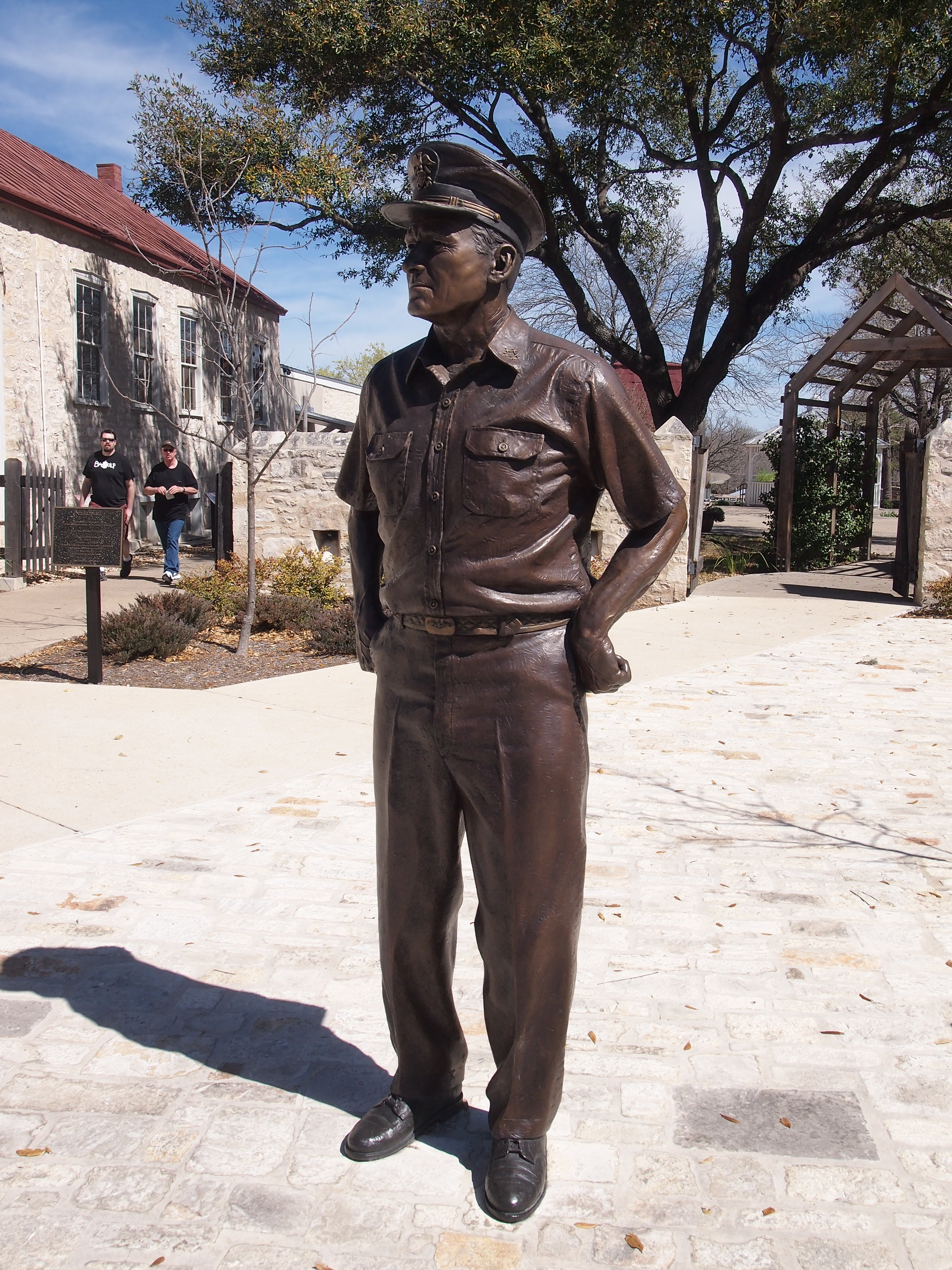
The National Museum of the Pacific War is a complex of structures at a short distance from each other in Fredericksburg, including the restored Nimitz Hotel, which now houses a museum about Adm. Nimitz; the George H.W. Bush Gallery, which focuses on the war in the Pacific; and more: the Veterans’ Memorial Walk, the Plaza of Presidents, the Japanese Garden of Peace, the Pacific War Combat Zone, and the Center for Pacific War Studies.

The Nimitz Hotel building used to include the war exhibits, but now they’re in the much larger (32,500 square feet) Bush Gallery, open since the 1990s, and expanded in 2009. Outside its entrance is the conning tower of the USS Pintado, a submarine that conducted a number of a patrols against the Japanese.
National Museum of the Pacific WarThe museum, organized chronologically beginning before the war and ending at the USS Missouri, is incredibly detailed, and home to a large array of impressive artifacts. That includes some impressively large artifacts, such as a Ko-hyoteki-class midget submarine that participated on the attack on Pearl Harbor, which actually seems pretty large when you stand next to it.
National Museum of the Pacific WarThe pilot of this particular vessel, Ensign Kazuo Sakamaki, survived its beaching and became the war’s first Japanese POW, having failed at suicide. According to the Honolulu Star-Bulletin in 2002, “When the war ended, he returned to Japan deeply committed to pacifism. There, Sakamaki was not warmly received. He wrote an account of his experience, titled The First Prisoner in Japan and I Attacked Pearl Harbor in the United States, and thereafter refused to speak about the war.” (He died in 1999.)

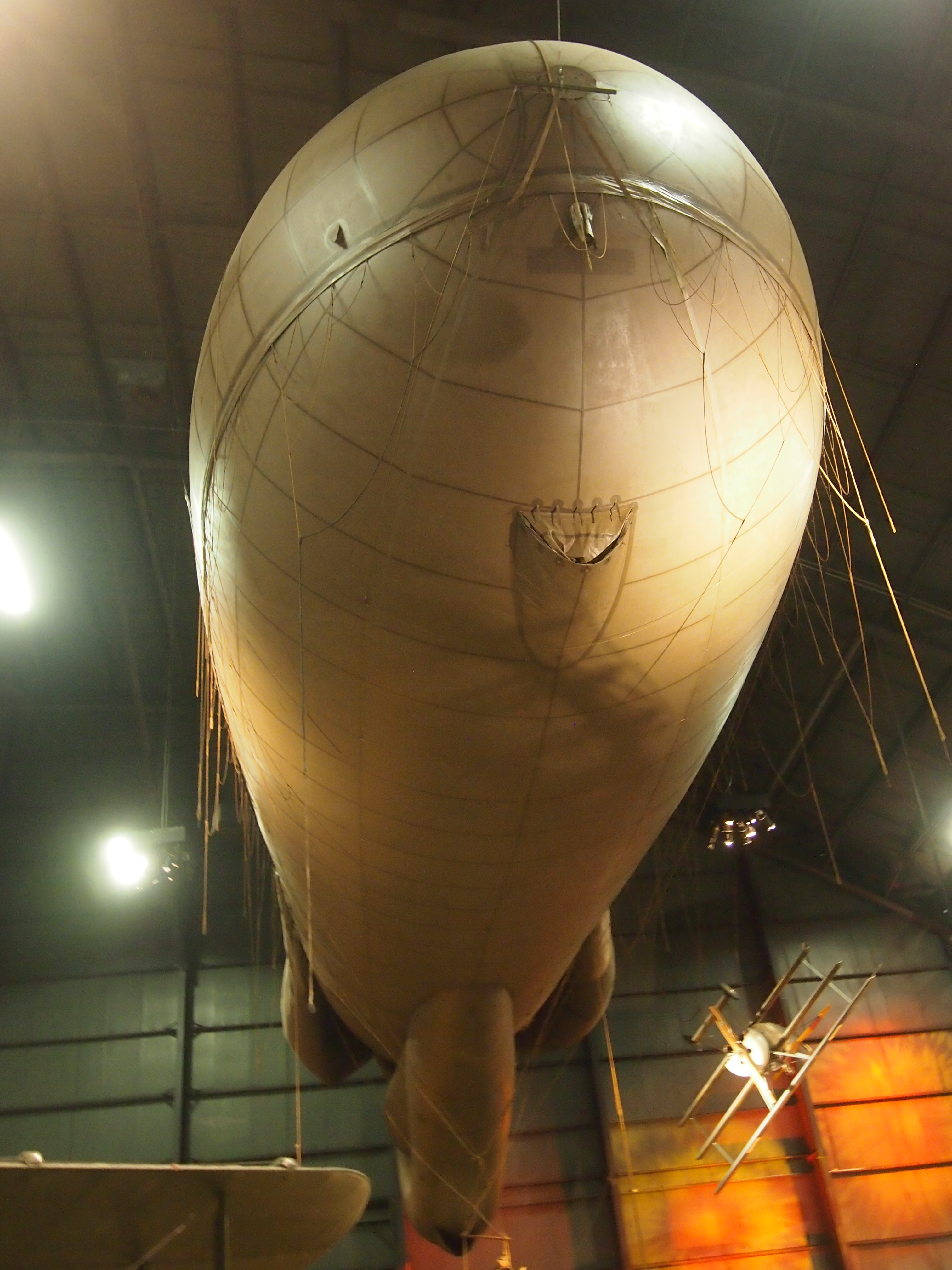
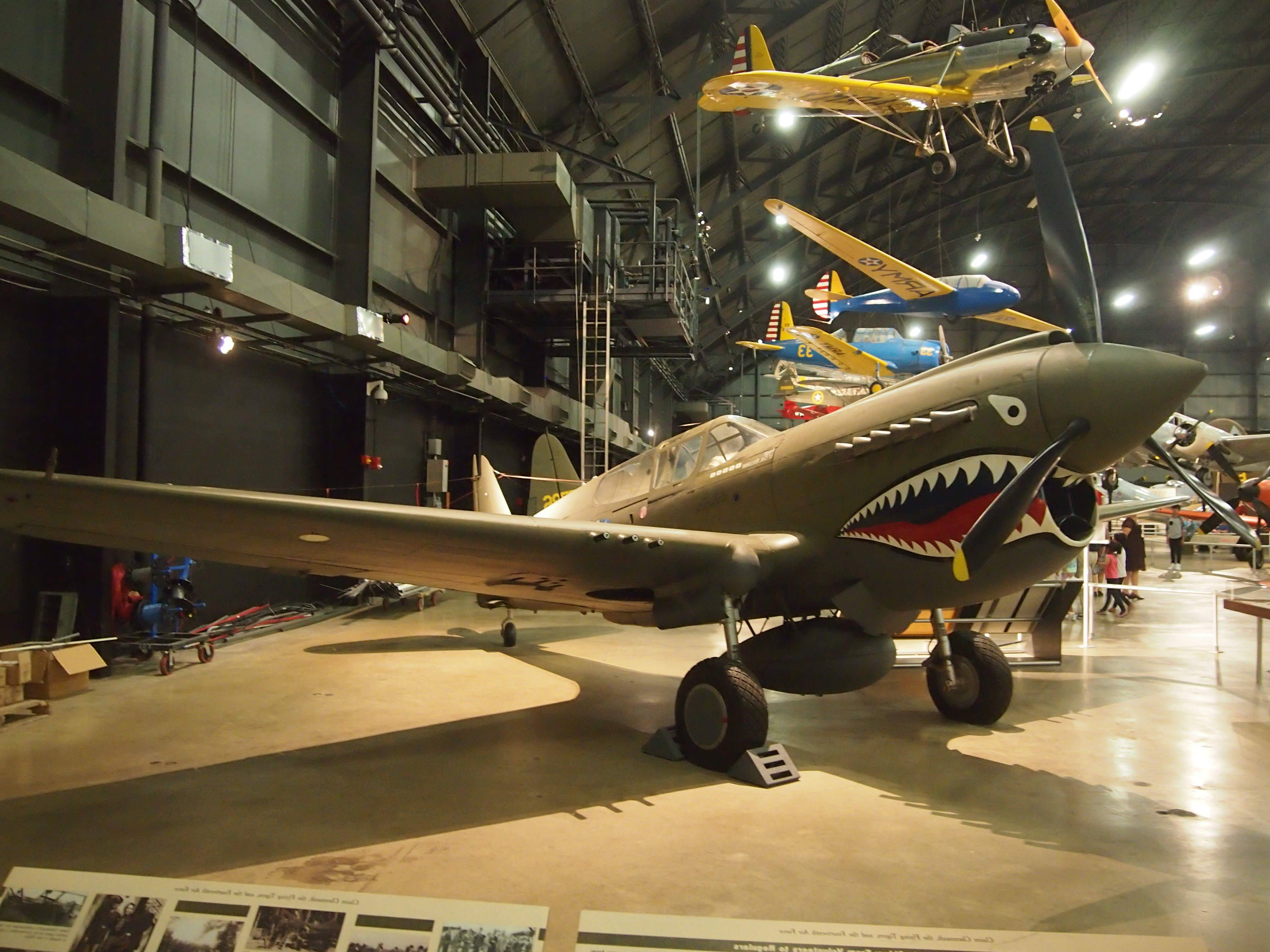
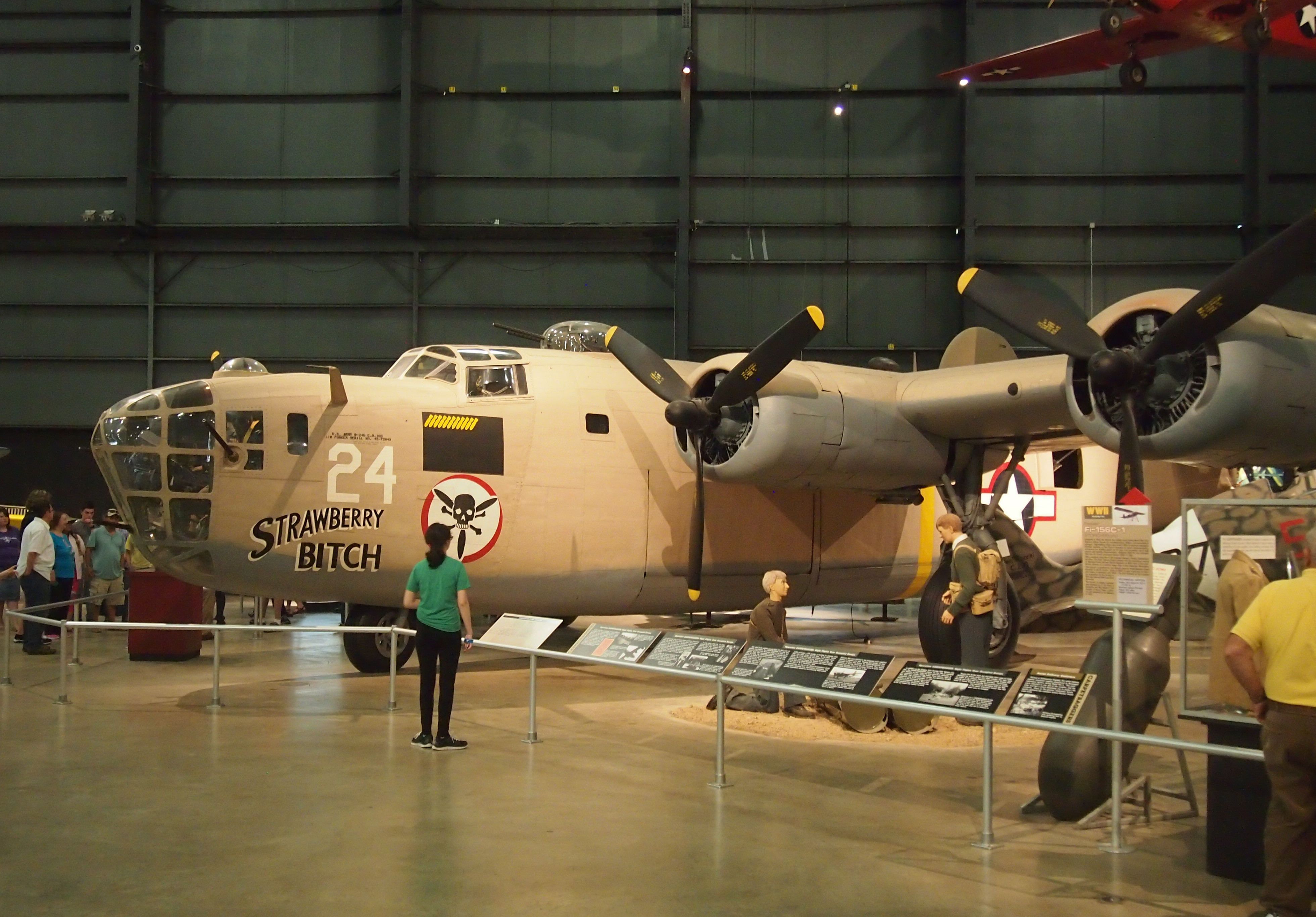
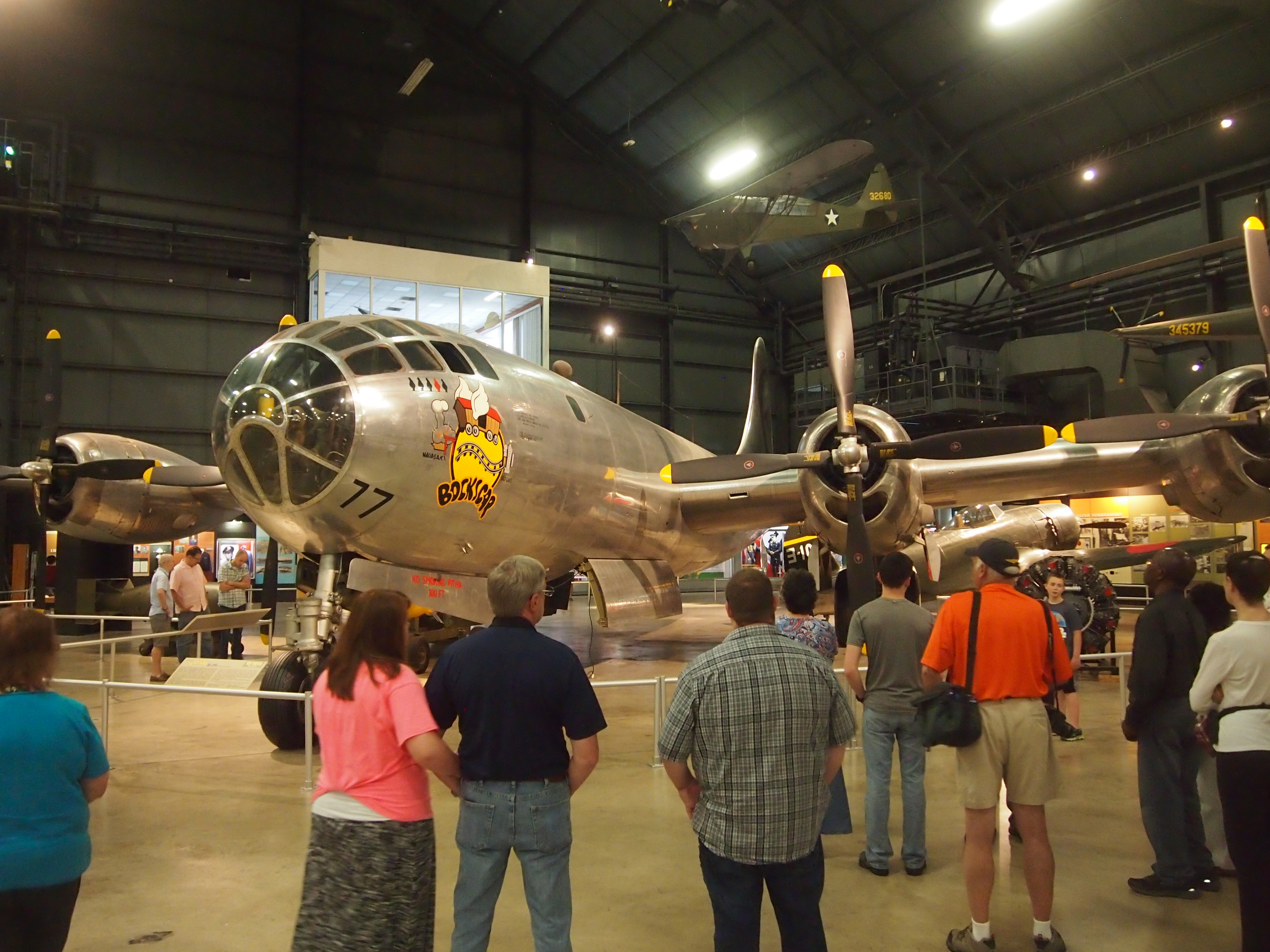
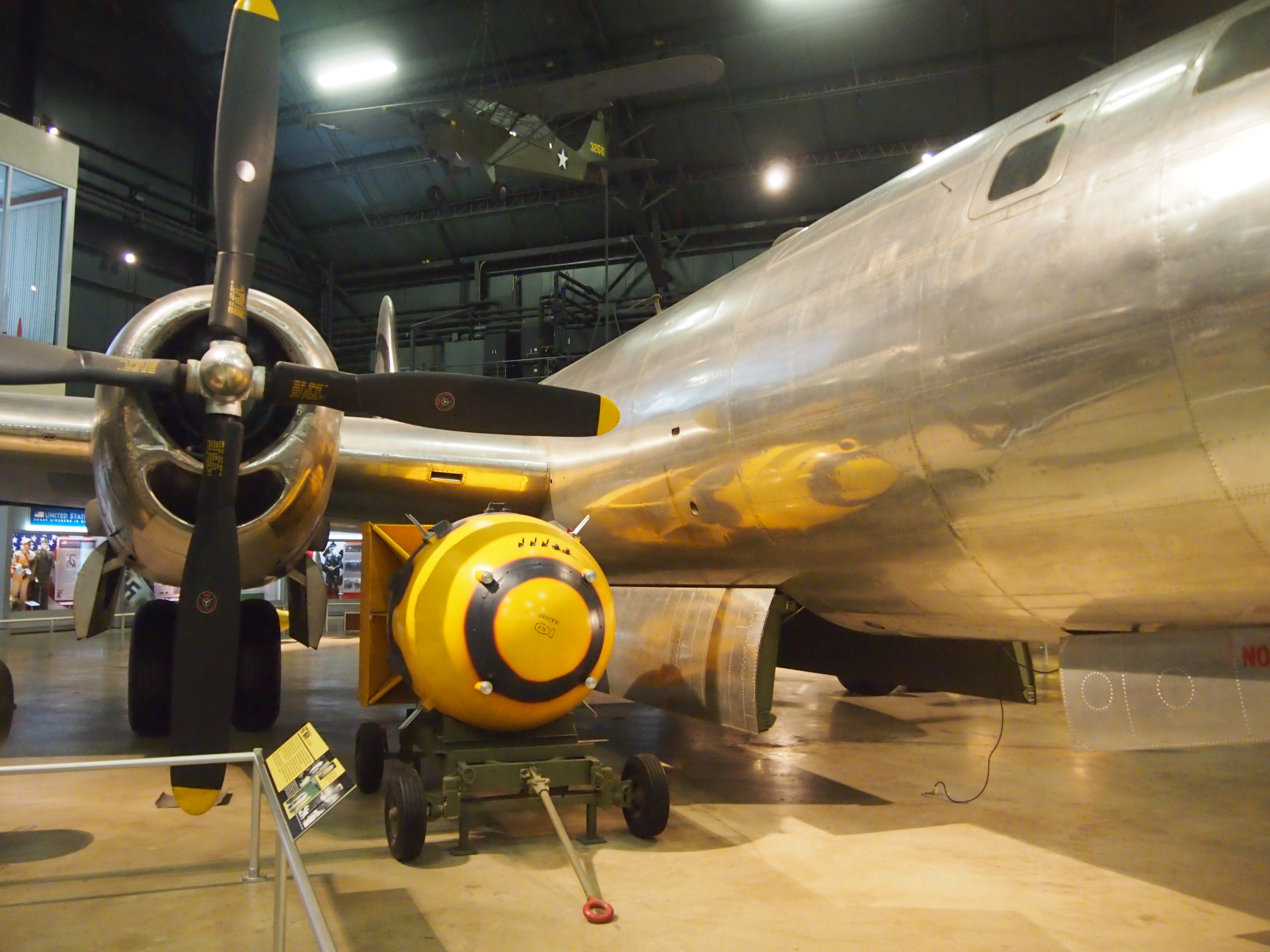
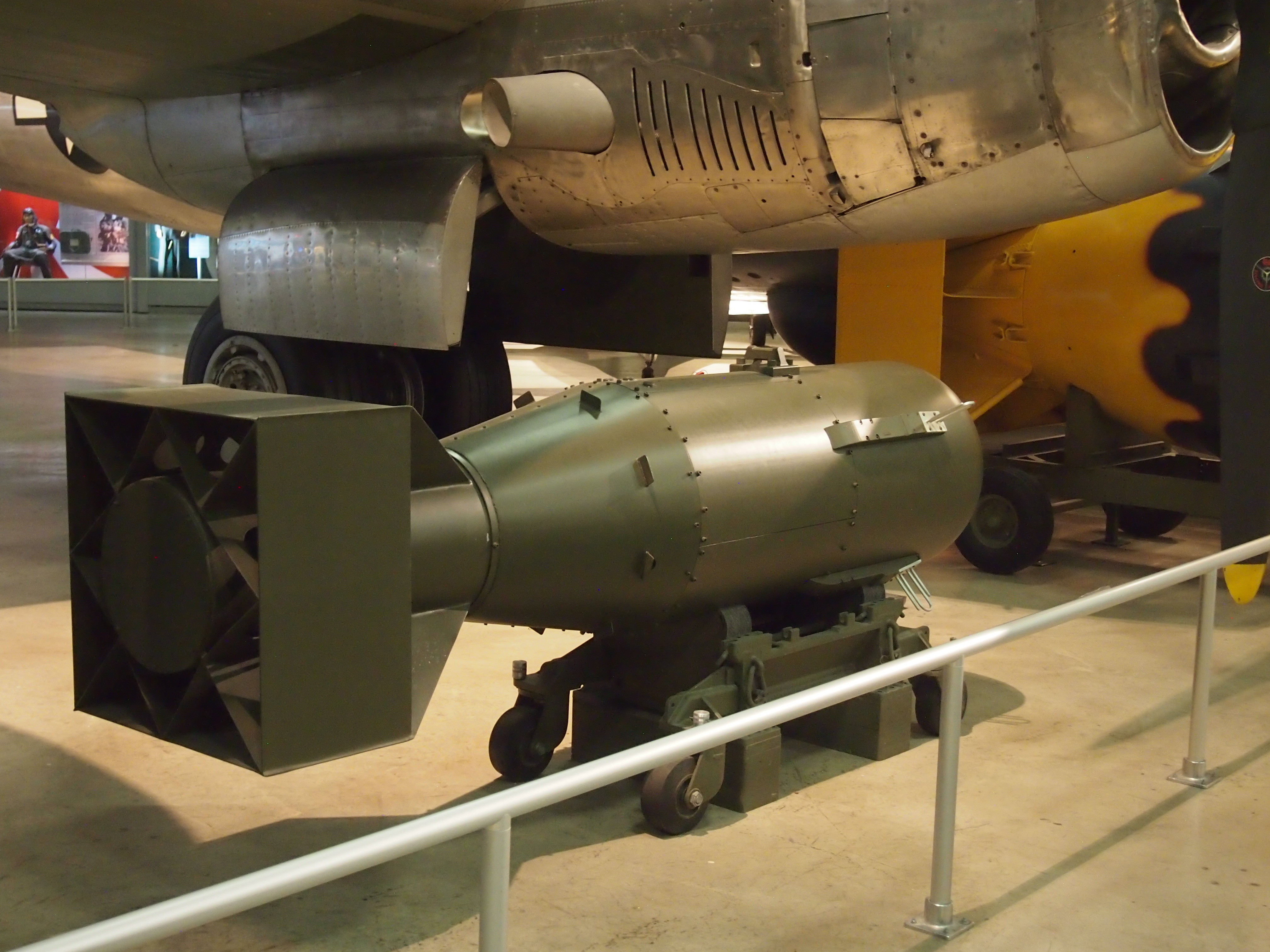
Also on display were a B-25 — as part of a exhibit about the Doolittle Raid — a Japanese N1K “Rex” floatplane, an F4F Wildcat fighter, and a replica of Fat Man, just to name some of the larger items.
Fat ManThe exhibits also included a lot of smaller weapons, tools, posters, uniforms, model ships and airplanes, military equipment, and sundry gear and items associated with the fighting and the people who were behind the front. Plus a lot to read. Campaigns and incidents both well known and obscure were detailed, such as the effort to salvage the ships in Pearl Harbor in the months after the attack, which was often dangerous work. Other Allied efforts weren’t ignored, such as the Australian advance on Buna-Gona, a campaign that incurred a higher rate of casualties than for the Americans at Guadalcanal.

All in all, a splendid museum. But exhausting. If I’d had time on Sunday as I went from Austin to San Antonio, I would have gone back (the tickets are good for 48 hours). It’ll be worth a return someday.

Fredericksburg Stroll & Der Stadt Friedhof

March 4 was sunny and pleasant in Fredericksburg, a settlement dating back to the efforts of German immigrants to Central Texas before the Civil War. A good day for a small town walkabout. As I walked, looking into the Main Street boutiques and wine shops and jewelers (James Avery has a shop there) and bistros and art galleries, it occurred to me that there needs to be a term for a town that partly or mostly lives off of upper middle-class day-tripers, retirees many of them, from near but not-too-near major metros.

Not tourist traps exactly, though there’s an element of that. I’ve been to a few of these towns, such as Galveston and Galena, Ill., and Sturgeon Bay, Wis., and Portsmouth, NH, and now Fredericksburg. Its locational advantage is proximity to Austin and San Antonio, and the town has a pleasant Main Street, a.k.a. Hauptstrasse, sporting a lot of repurposed 19th-century structures, many of historic or architectural interest.

Fredericksburg 2016The building on the left below was once the White Elephant Saloon, dating from 1888, featuring a whitish elephant above the entrance for reasons probably lost to time.
Fredericksburg 2016This was once a hospital.
Fredericksburg 2016I didn’t try for an exhaustive photo record of the many fine buildings in Fredericksburg. These visitors did a much better job of it, including many things I missed.

According to one source at least, St. Mary’s Catholic Church — which is off Fredericksburg’s Main Street by a block — counts as one of Texas’ Painted Churches, most of which are east of San Antonio. Some kind of adoration was ongoing at St. Mary’s, so I was able to drop in to see the lovely interior. Painted, yes, but also featuring stained glass and other objects of beauty.

“Still known as ‘new’ St. Mary’s, the church provides a classic example of Gothic architecture and was consecrated on November 24, 1908,” KLRU tells us. “Its principal architect was Leo Dielmann of San Antonio, with the contractor and builder, Jacob Wagner of Fredericksburg. Built of native stone quarried near the city, the total cost of building and furnishing the church was around $40,000.

“Still fully functional is the original pipe organ built by George Kilgen & Son of St. Louis, Missouri. It was installed in 1906 as a pump organ and has been completely electrified. The beautiful stained glass windows were added around 1914 and 1915.”

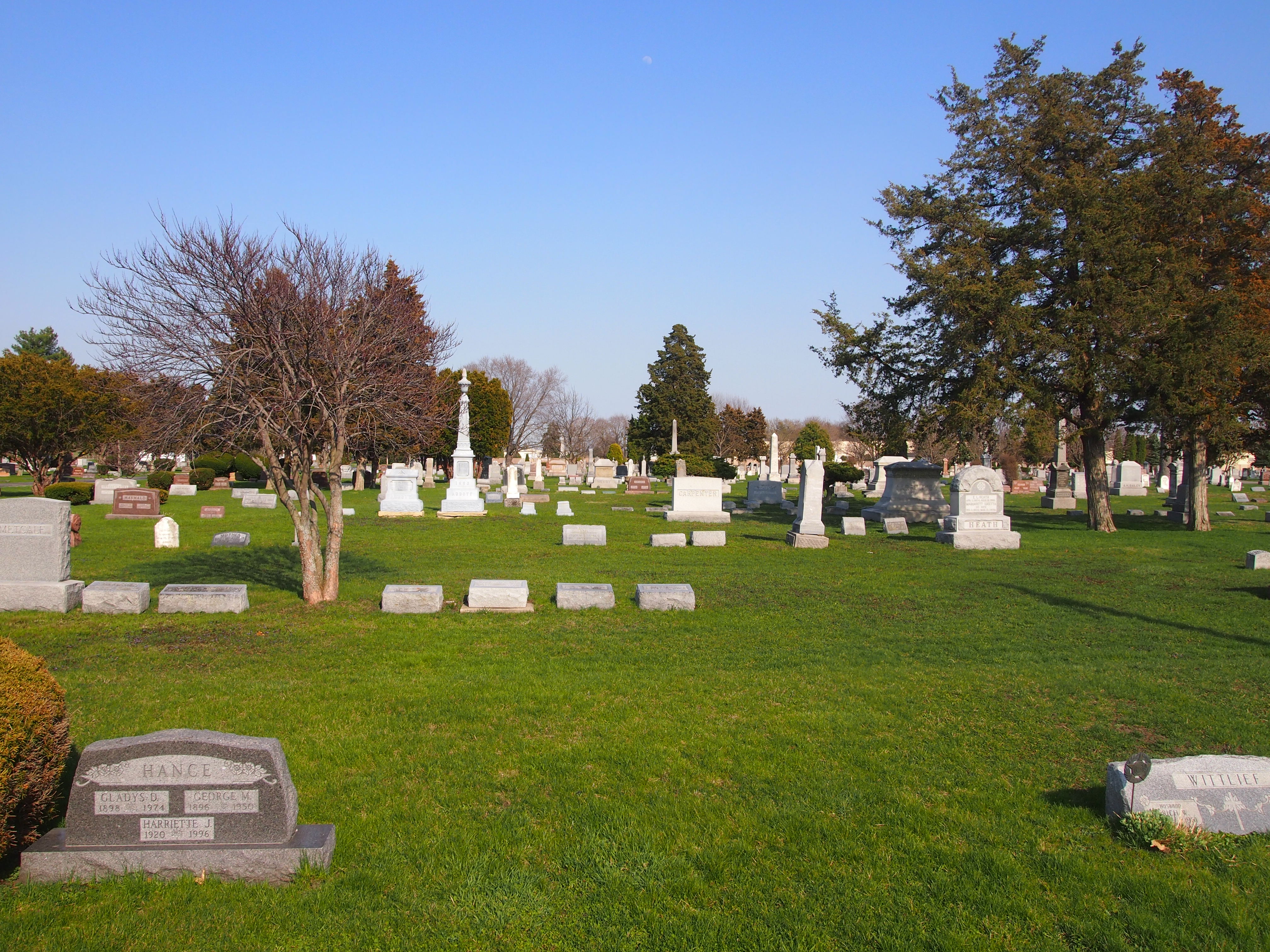
Further away from Main Street — and with absolutely no day-trippers or anyone else (alive) around — was the Der Stadt Friedhof, a cemetery established in 1846.
Der Stadt Fredhof Gate, FredericksburgIt’s more interesting than picturesque. For one thing, there are no trees or other large plants to speak of on the grounds, except out at the periphery. There’s a little funerary art, but its presence is fairly muted.

Still, I enjoyed looking around. The further you get from the boundary roads, the newer the stones become. Among the older stones at the edge of the cemetery are a number of graves surrounded by iron fences.
Der Stadt FriedhofDer Stadt FriedhofMany of which are neglected.
Der Stadt FriedhofDer Stadt FriedhofAlmost all of the oldest stones are German, with ethnically appropriate names, such as Durst, Kallenberg, Keidel, Kramer, Lochte, Schmidt, Schuchard, Stein, Weiss, Zincke, usw. Adm. Nimitz’s parents are somewhere in the cemetery, though I didn’t look for them, and the admiral himself is buried at Golden Gate National Cemetery in San Fransisco.

Herbert Hoover, Lizard Overlord

Recently I realized I have a minor collection of presidential post cards. Some I’ve acquired myself, some my brother Jay has sent me. I didn’t plan on it.

That comes to mind because last week Jay sent me one depicting Herbert Hoover. Here it is.

Wax HooverJay says it looks like the president is emerging from the Time Tunnel, a cultural reference for those of us of a certain age. Unless, he noted, Hoover’s an extraterrestrial impersonator in this image. I’ll go along with that one. He looks like one of our Lizard Overlords back in the early 20th century, before they perfected their rubber masks.

The card, incidentally, was produced by the Hall of Presidents Wax Museum, located once upon a time in Colorado Springs. It seems to have closed around 2000 or earlier (sources differ). Closed for lack of visitors, or because the aliens packed all the wax figures into their saucers and took them home.

Pipe HooverI already had a Hoover card, one produced by the Hoover Museum in Iowa, with him looking grandfatherly sometime after he left office — not nearly as much fun as the wax-lizard Hoover.

I did a quick and not completely thorough count of my presidential card collection, including only those with faces of presidents on them. (I have others that depict their homes, and two vice presidents: George M. Dallas and Al Gore.) So far I have Washington, Jefferson, Jackson, William Henry Harrison, Lincoln, A. Johnson, Grant, Benjamin Harrison, TR, Hoover, Eisenhower, LBJ, Ford, Carter, Reagan and Clinton. Got a ways to go.

First Folio Exhibit, Lake County Discovery Museum

ShakesBirthI’ve done a little Shakespeare tourism in my time, such as visiting his birthplace in Stratford. When I scanned the ticket from that visit, I noted that I paid £1 for admission in 1983. The Bank of England has a handy UK inflation calculator that tells me that’s the equivalent of just over £3 now.

I checked the Shakespeare Birthplace Trust web site today and found that a “Birthplace Pass” now costs £16.50 for an adult. For that, you get into “Hall’s Croft, Harvard House, Shakespeare’s Birthplace, Shakespeare’s Grave,” so that’s not as outrageous as £16.50 for just the birthplace, but it still doesn’t quite sit right. Can you just buy a single ticket for the birthplace, or is the pass the minimum? Also, there are other, more expensive options that include other houses and a garden.

Shakespeare’s grave is at the Church of the Holy Trinity, and I don’t recall being charged admission. These days, the church asks for a £2 or £3 donation if you want to take a look at the playwright’s grave, and spare those stones and not move his bones. A good idea, since moving those bones wouldn’t just get you cursed, it would probably be a fairly serious criminal offense in the UK.

FirstFolioAll this comes to mind because last week we — all of us going the same place, an increasingly rare thing — went to the Lake County Discovery Museum in Wauconda, Ill., to see a First Folio. It was my idea. On the occasion of the 400th anniversary of Shakespeare being laid to rest in that church near the Avon, the Folger Shakespeare Library has sent out some of its First Folios in traveling displays. Each state has one display in one location over the course of 2016, and Illinois’ is this small museum in the far northwest suburbs.

Of all the times I’ve been to DC, I’ve never managed to make it to the Folger. There’s a good chance I’ve seen a First Folio somewhere — maybe at the British Library or the New York Public Library — but I don’t remember. So I wanted to see this one.

I’d been the Discovery Center a few times before, mainly to see excellent exhibits drawn from the museum’s Curt Teich Postcard Archives. That includes over 400,000 postcards of more than 10,000 towns and cities nationwide and elsewhere, plus a lot of other subjects.

The First Folio exhibit was straightforward: a room with tall signs offering various facts about Shakespeare, his plays, the Quartos and the 1623 and later Folios, along with the King’s Men actors who saw fit to have them published: John Heminges and Henry Condell. A smaller, adjoining room includes the First Folio itself, behind glass and opened to the page that includes Hamlet’s soliloquy.

First FolioIt’s a handsome volume, not much worn or yellow. This was no pulp publishing. It’s also one of the 233 copies that are known to exist, and one of the 82 that the Folger owns as the largest collector of them. Remarkably, Meisei University in Tokyo has the second-largest collection, numbering 12. How did that happen?

A cop lurked in the shadows at the exhibit; a wise precaution, no doubt. At a Sotheby’s auction in 2006, a copy fetched £2.5 million, and thieves have been known to target the book, though the fellow in that article sounded like a bumbler.

I thought it was worth the 45-minute drive to Wauconda. My family might not have been persuaded, except we also had an enjoyable dinner in that town first. More about that tomorrow.

Map Hero’s Laminated Gitche Gumee

You never know what’s lurking in the fine print. Usually that’s taken to be a bad thing, but yesterday I took a look at a map I’ve owned for years and discovered a fine thing in the fine print.

First, the map. It’s laminated, and so in excellent shape. I got it when we went up to northern Wisconsin in 2003. At 16¾ inches x 10⅝ inches, it’s beyond the capacity of my simple scanner, so here’s a large detail from the midsection of the map: instantly recognizable as the ice-water mansion Lake Superior.
LakeSuperiorLake Superior Port Cities Inc., publisher of Lake Superior Magazine, published the map in 2001. It’s a quietly gorgeous map whose shadings not only indicate elevation above and below the surface of the lake, but are pleasing to the eye. Besides towns and roads, it notes all of the various state forests and parks along the shores of Lake Superior, plus the national lakeshores and the single national monument, Grand Portage in Minnesota.

Here’s a closeup of Keweenaw Peninsula, the UP’s UP, and a place I surely must see.
KeweenawVery small versions of the Lake Superior Circle Tour sign mark a network of roads that circumscribe the lake. If I had the time, that’s a drive I wouldn’t hesitate to do. I remember the first time I visited Lake Superior — Labor Day weekend 1989 — I was driving between Munising and Marquette and I saw one of the signs. I hadn’t realized there was a Lake Superior version of the drive; the Lake Michigan Circle Tour signs can be seen even in the Chicago area and, in fact, I’ve done my own version of circum-driving that lake twice (once was that ’89 weekend).

Instantly I was taken with the notion of driving around Lake Superior. I was by myself and could have done it. I didn’t have my passport, but you didn’t need a passport to visit Canada in those days. I hadn’t planned to take any time off after Labor Day, but I could have called in sick for a few days, something I very rarely did. But no. I was entirely too responsible.

On the lake itself, the map also features lighthouses and the sites of notable shipwrecks. Some of the lighthouses are probably easy enough to see, but others are impossibly remote, such as the Stannard Rock Light, more than 20 nautical miles southeast of Keweenaw Point, slap in the middle of the lake.

As the for the wrecks, few will ever see them in the chilly Superior waters (average temp, 40 degrees F.). The most famed of them, naturally, is the Edmund Fitzgerald, but it has a lot of company, such as the Onoko, Henry Steinbrenner, John Owen, Western Reserve, Gale Staples, Niagara, Superior City and others.

A handful wrecks are marked but also noted “went missing,” such as the Owen and Manistee. To quote Wiki on that ship: “The Manistee was a packet steamship that went missing on Lake Superior on November 10, 1883. It was presumed to have sunk, with no surviving crew or passengers. The cause remains a mystery, and the wreckage was never discovered.” Sometimes Gitche Gumee just eats ships, it seems.

As for the fine print, way at the bottom right corner of the map, in about 3-point print, it says, “Design/Cartography by Matt Kania.” He’s easy enough to find: Map Hero, maker of custom maps. Looks like he’s done a lot of wonderful maps besides Superior. If I had any talent for it, I’d do the same.

Captain Sir Richard Francis Burton

I’m about halfway through Captain Sir Richard Francis Burton (1990) by Edward Rice, subtitled in its Amazon entry, “The Secret Agent Who Made the Pilgrimage to Mecca, Discovered the Kama Sutra, and Brought the Arabian Nights to the West” (but that phrase isn’t on the cover of the book). At the halfway point, Burton’s already been an agent for Gen. Napier in Sind and other places, daringly visited Mecca, and done a lot more, and now — around the time he met Speke — he’s preparing to venture into Africa for a date with a spear through his cheeks.

Wiki (to borrow only one sentence) describes Burton as a “British explorer, geographer, translator, writer, soldier, orientalist, cartographer, ethnologist, spy, linguist, poet, fencer, and diplomat.” Rice’s biography, I’m happy to say, does him justice.

“Burton was unique in any gathering except when he was deliberately working in disguise as an agent among peoples of the lands being absorbed by his country,” Rice writes. “An impressive six feet tall, broad chested and wiry, ‘gypsy-eyed,’ darkly handsome, he was fiercely imposing, his face scarred by a savage spear wound received in a battle with Somali marauders. He spoke twenty-nine languages and many dialects and when necessary, he could pass as a native of several eastern lands — as an Afghan when he made his famous pilgrimage to Mecca, as a Gypsy laborer among the work gangs on the canals of the Indus River, as a nondescript peddler of trinkets and as a dervish, a wandering holy man, when exploring the wilder parts of Sind, Baluchistan, and the Punjab for his general. He was the first European to enter Harar, a sacred city in East Africa, though some thirty whites had earlier been driven off or killed. He was also the first European to lead an expedition into Central Africa to search for the sources of the Nile…

“His opinions on various subjects — English ‘misrule’ of the new colonies, the low quality and stodginess of university education, the need for the sexual emancipation of the English woman, the failure on the part of the Government to see that the conquered peoples of the empire were perpetually on the edge of revolt — were not likely to make him popular at home. Nor did his condemnation of infanticide and the slave trade endear him to Orientals and Africans. His scholarly interests often infuriated the Victorians, for he wrote openly about sexual matters they thought better left unmentioned — aphrodisiacs, circumcision, infibulation, eunuchism, and homosexuality…

“Burton’s adult life was passed in a ceaseless quest for the kind of secret knowledge he labeled broadly ‘Gnosis’… This search led him to investigate the Kabbalah, alchemy, Roman Catholicism, a Hindu snake caste of the most archaic type, and the erotic Way called Tantra, after which he looked into Sikhism and passed through several forms of Islam before settling on Sufism, a mystical discipline that defies simple labels. He remained a more or less faithful practitioner of Sufi teachings for the rest of his life…

Wow. Previously I only knew about his career in the broadest terms, colored by reading Mountains of the Moon by William Harrison in Japan in the early ’90s (published as Burton and Speke in 1982), an exceptionally fine work of historical fiction, and seeing the movie Mountains of the Moon, which is a good adaptation.

Never mind the fellow who hawks Mexican beer. Even though he’s been dead for over 125 years, I’d say Richard Burton would still be a strong contender for status as The Most Interesting Man in the World.

Africa-Dzonga 5c

One of my small-change-of-the-world coins has words in the Khoisan language on it. That, I’ve discovered, is a modern umbrella term for the peoples once known as the Bushmen and the Hottentots, and their languages. The words on the coin are rendered ǃKE E: ǀXARRA ǁKE, but don’t ask me how that’s pronounced. The English translation is, “diverse people unite.”

That’s the motto found on the South African coat of arms, which happens to be on the observe of the 2003 South African 5-cent piece that I have. A lot of recent SA coinage features the coat of arms, which was adopted by the post-Apartheid government in 2000.

The coat of arms also includes ears of wheat, elephant tusks, a shield, two human figures, a spear and a knobkierie. Over all that is a secretary bird and a rising sun. Around the coat of arms is Africa-Dzonga, which is “South Africa” in Tsonga, one of the 11 official languages of the country.
SAfrica5cOBVApparently the languages take turns each year on the coinage, beginning in 2002. Tsonga’s turn happened to come the next year, at least on the 5-cent pieces (it seems to be different on other denominations).

The reverse of the coin is simpler: a blue crane and the value.
SAfrica5cREVMinting of the copper-plated steel 5-cent piece stopped in 2012, a victim of inflation, but the coins weren’t demonetized, so it’s still technically worth about three-tenths of US cent. The 1- and 2-cent pieces were discontinued ten years earlier.

Manto Mavrogenous, Face on the 2-Drachma Coin

Among many other things, coinage is (or can be) educational. Take Manto Mavrogenous (Μαντώ Μαυρογένους), for instance. Until recently I didn’t know who that was. Then I acquired a demonetized 2-drachma piece, which has her portrait on it, so I had to find out more. I still don’t know that much — it would take more digging than I want to spend on the matter right now — but I learned some some basics, from the likes of this site and this one.

Such as that she participated in an important way in the Greek War of Independence, especially by outfitting rebel forces at her own expense, and encouraging other wealthy Europeans to support the cause. Apparently she was the subject of a Greek movie in 1971, but her story cries out for a big-budget biopic in our time, with a few changes, of course. It’s one thing for her to be Demetrios Ypsilantis’ lover, but the script can also spice things up with a love triangle that involves Lord Byron as well, played by some handsome English actor. Did she ever really meet Lord Byron? Details, details.

The Hellenic Republic thought enough of her to put her on the 2 drachma coin from 1988 to 2001, which was retired when the country traded for euros (and a peck o’ trouble).
2 drachma2 drachmaIt’s a nice little coin, and unlike many copper-plated coins of recent vintage, such as the U.S. cent since 1982, it’s actually copper. The nautical design on the obverse (at least, I think it’s the observe) makes sense in the context of Manto Mavrogenous’ contributions to kicking Ottoman butt, a good bit of which involved raising and paying for ships to fight near Mykonos.

Falkland Islands Penny

Not long ago I came into possession of a Falkland Islands penny. I wish I could say that it’s worth a lot, but the currency is pegged to the pound sterling — and probably minted in the UK — that would put it at about US 1.44 cents. A proof issue might be worth more, but mine isn’t a proof, and technically not even uncirculated, though it’s pretty shiny.

The coin is copper-plated steel. This particular design was issued in 1998 and ’99, as engraved by Arnold Machin (1911-1999). If you’ve handled a British coin or stamp made during the latter half of the 20th century, he likely had something to do with it. The Falklands coins seem to have been among his last works (he did most of the other denominations, too).

Naturally the observe features Queen Elizabeth.

FIpennyObvThe reverse sports a pair of gentoo penguins and their egg.

FIpennyRevThat seems fitting, though there ought to be a suitable motto as well. Something like, THEY’RE OURS, BUGGER OFF.