Roadside America Museum, Hillsboro, Texas

This clown in your nightmare. What did he look like again?
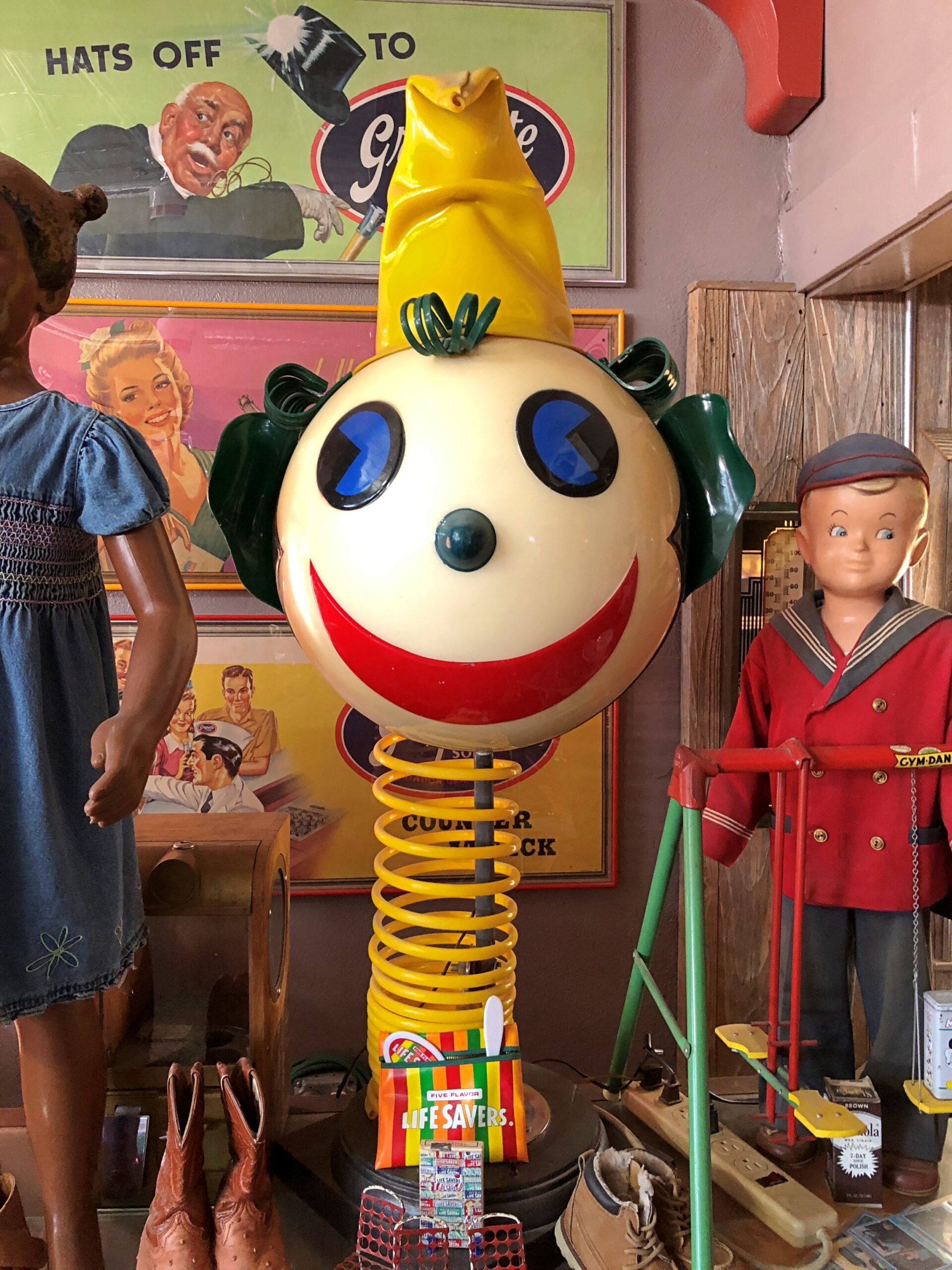
Right, Jack from Jack In the Box fame. Old Jack, that is, maybe from the early days of the fast-food chain in the ’50s and ’60s. Has that tired mid-century look because the mid-century was quite a while ago now. On the whole, even later versions of the clown has been retired.

I was fully awake when I encountered Jack, an artifact at Roadside America Museum, Hillsboro, Texas, a wall-to-wall gathering of American roadside advertising, or at least items that were pretty close to the roads – a sign or novelty item or product you might see at a gas station or a diner or a bar or a small grocery store or any such mid-century service business for a nation newly on the road, and with great gusto. Items large and small.
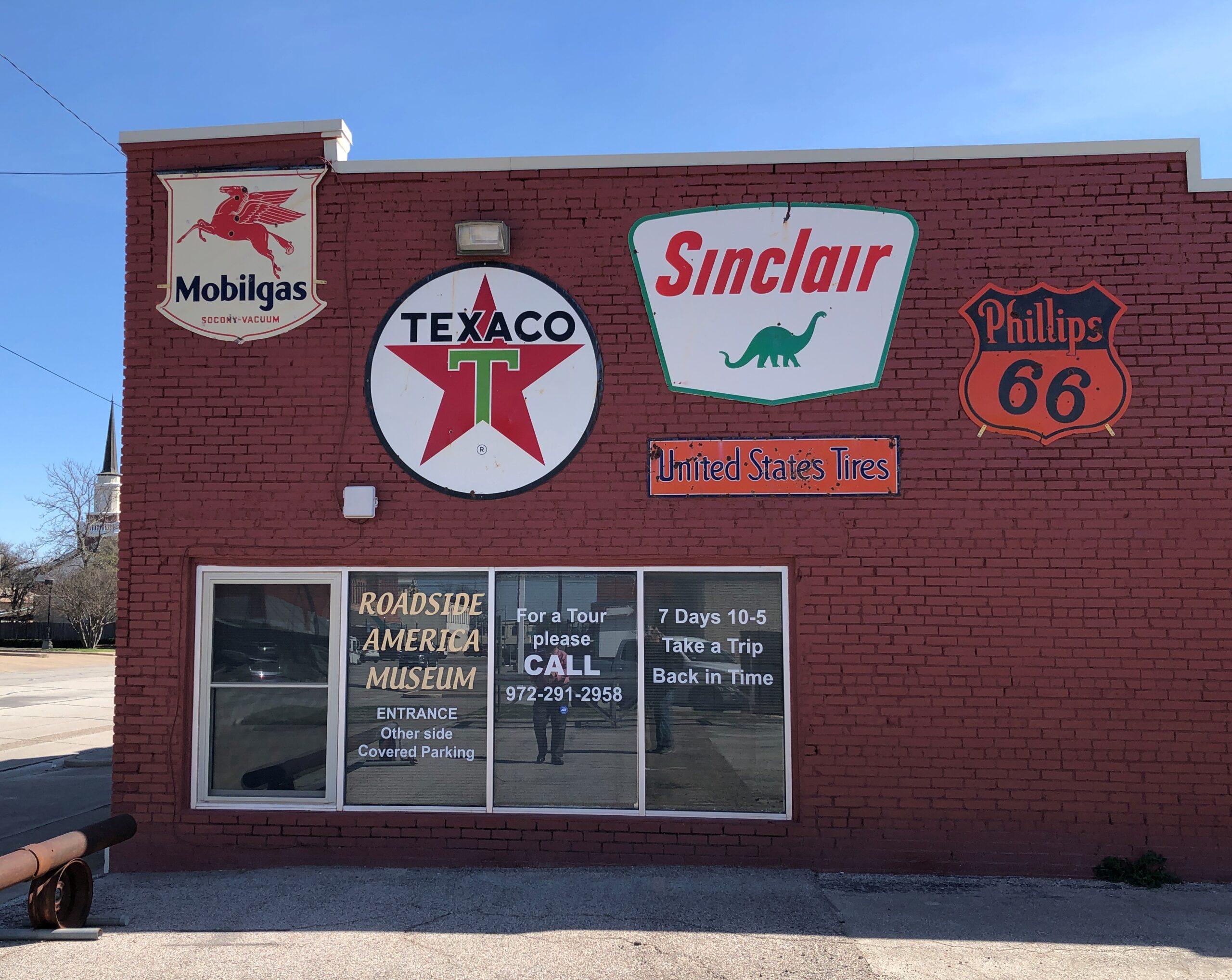
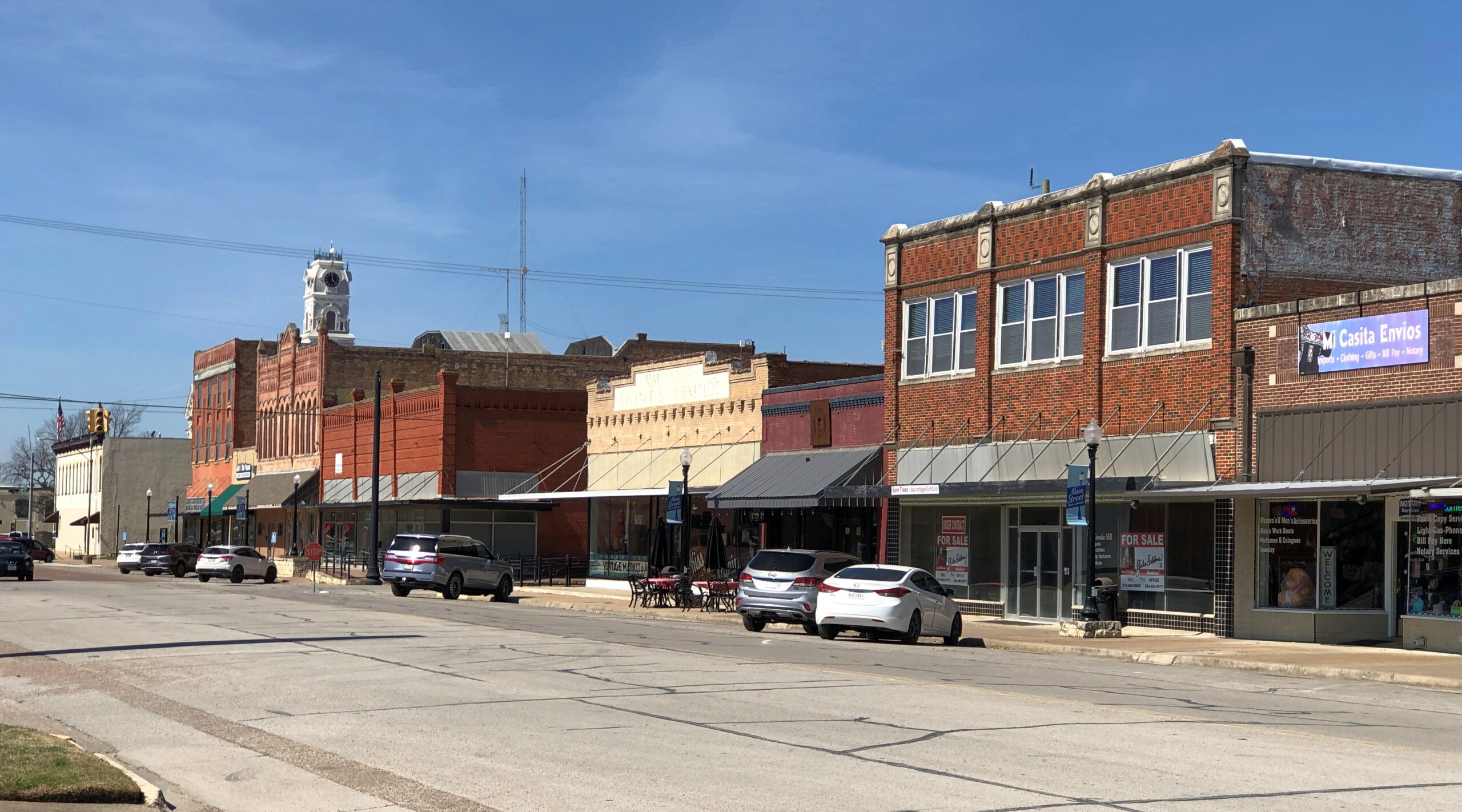
Located on a modest street of Hillsboro, a town between DFW and Waco. Jay and I arrived around mid-day on February 23.
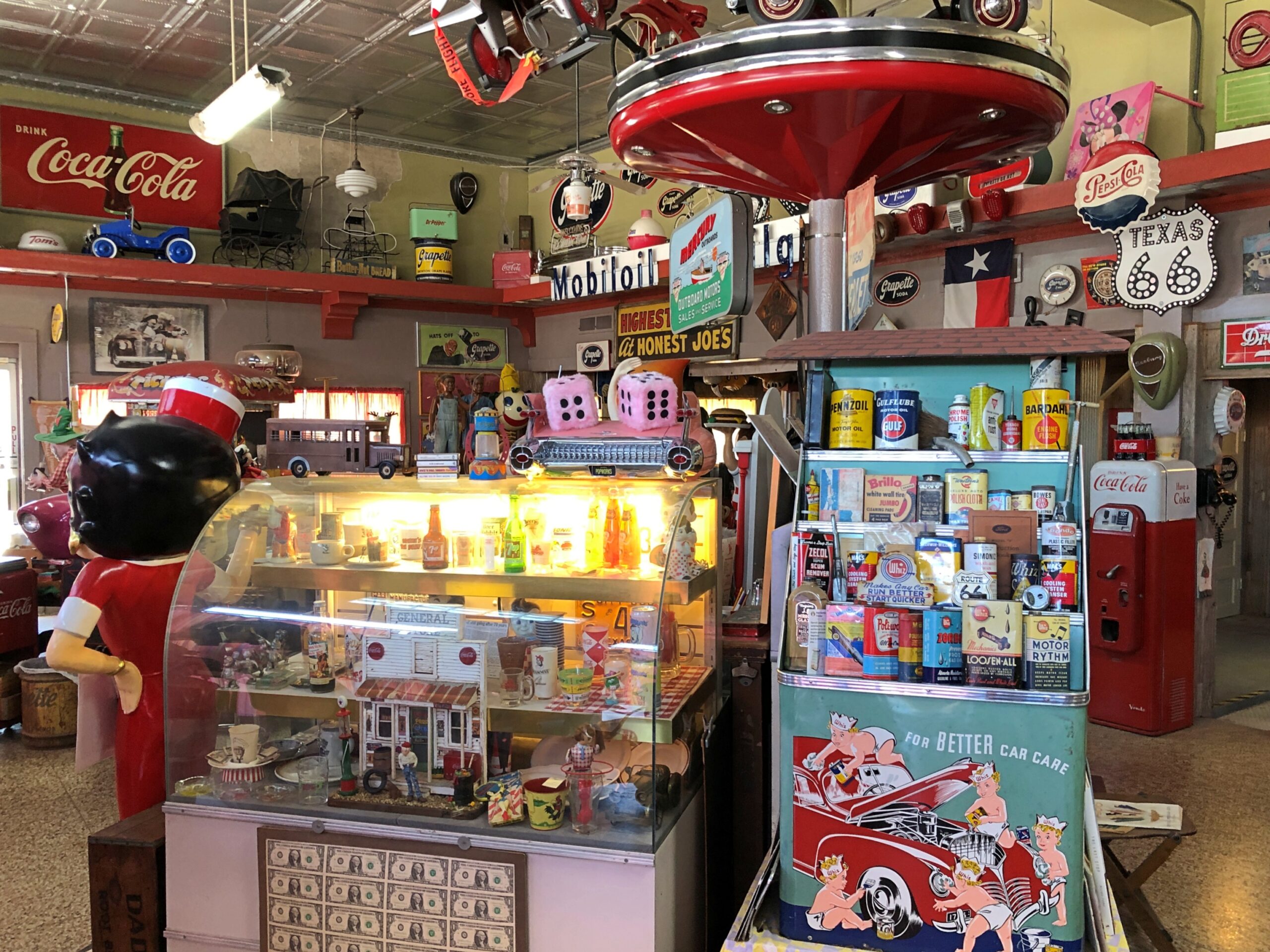
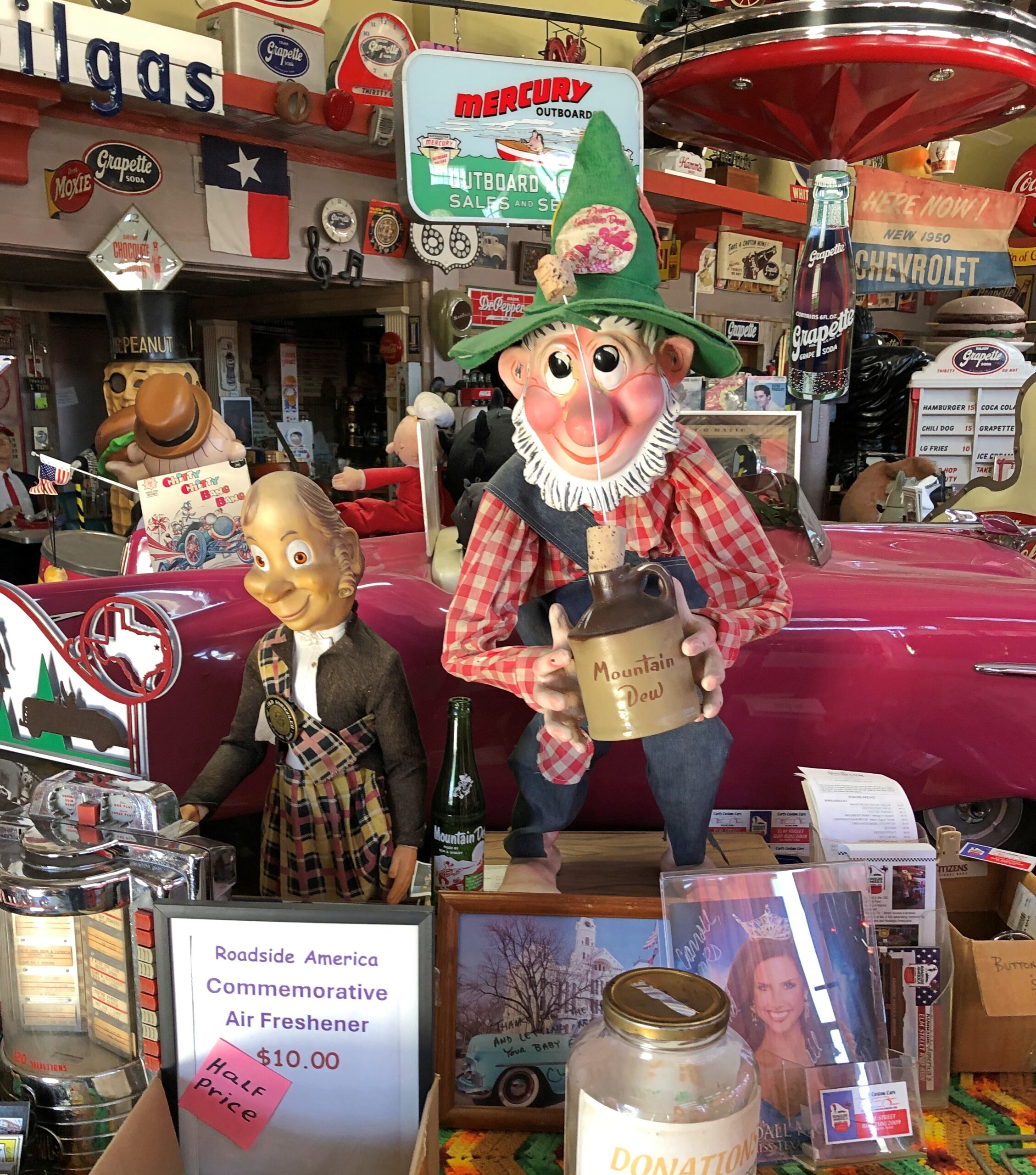
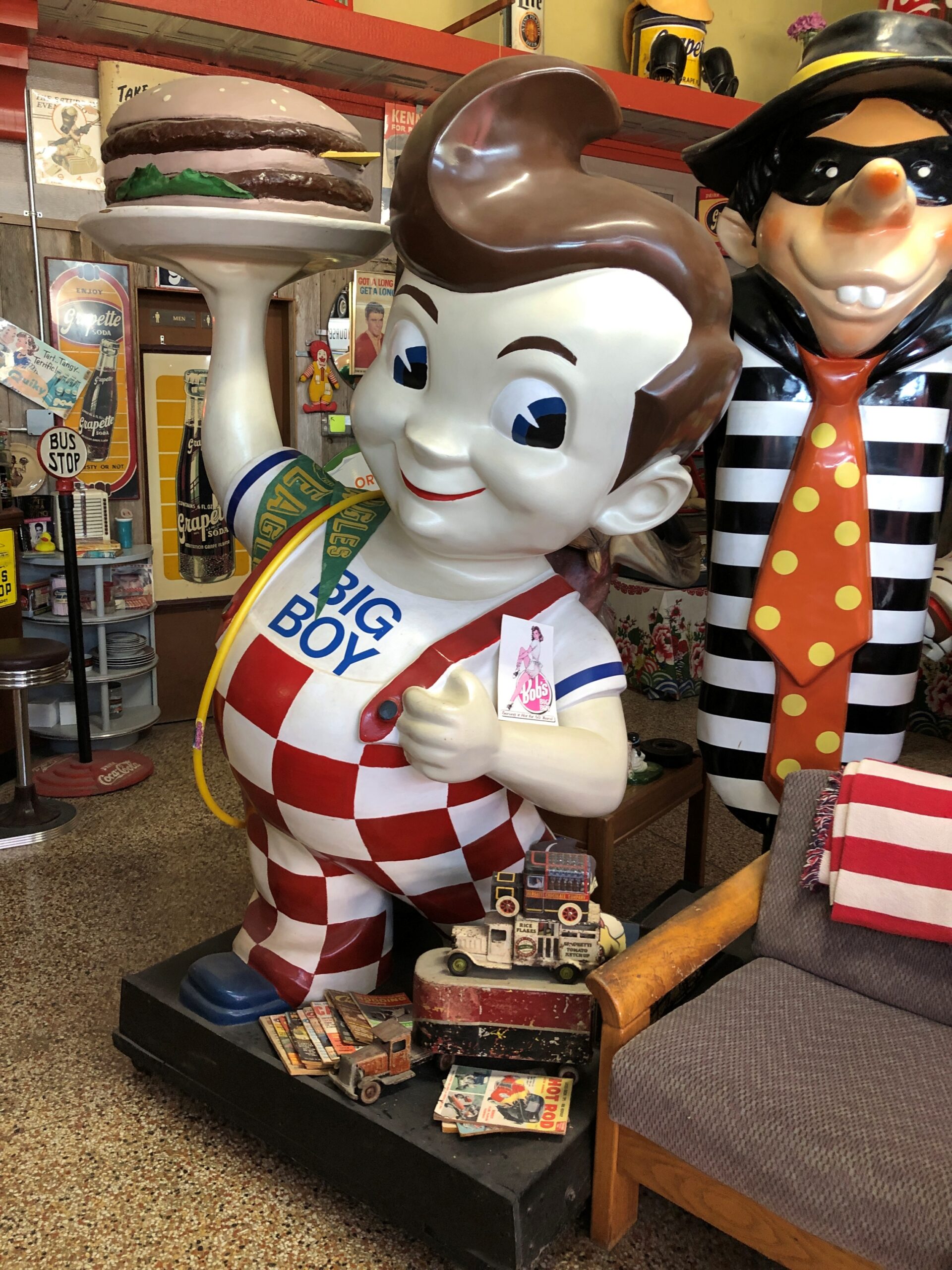
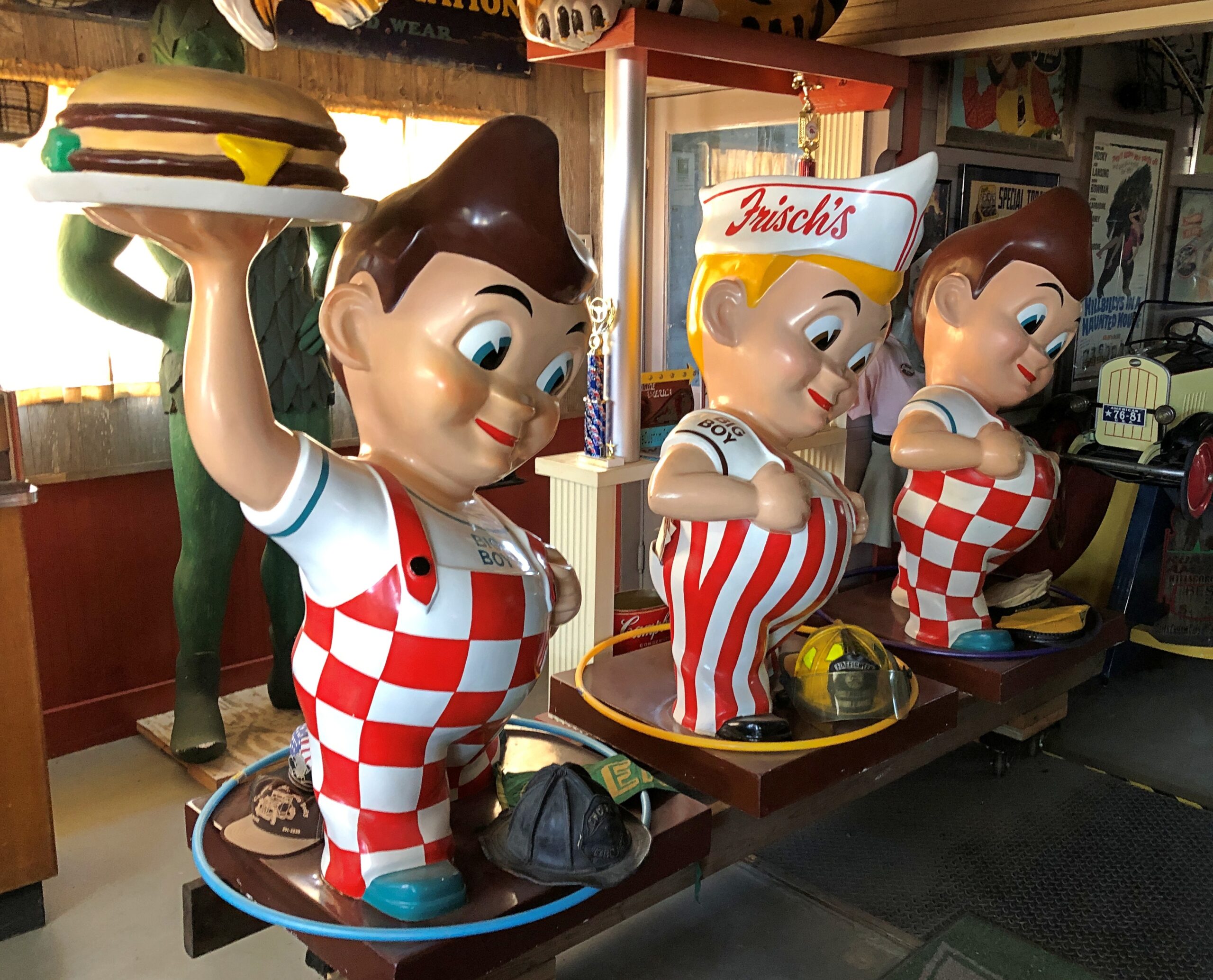
Jack is around, but there are also Big Boys in quantity and variety. If I were that first one, I’d watch out for the criminal element from McDonaldland, standing right behind him trying not to look suspicious. Sure, he’s a burglar, but he might be a pickpocket or even a stickup man, too.
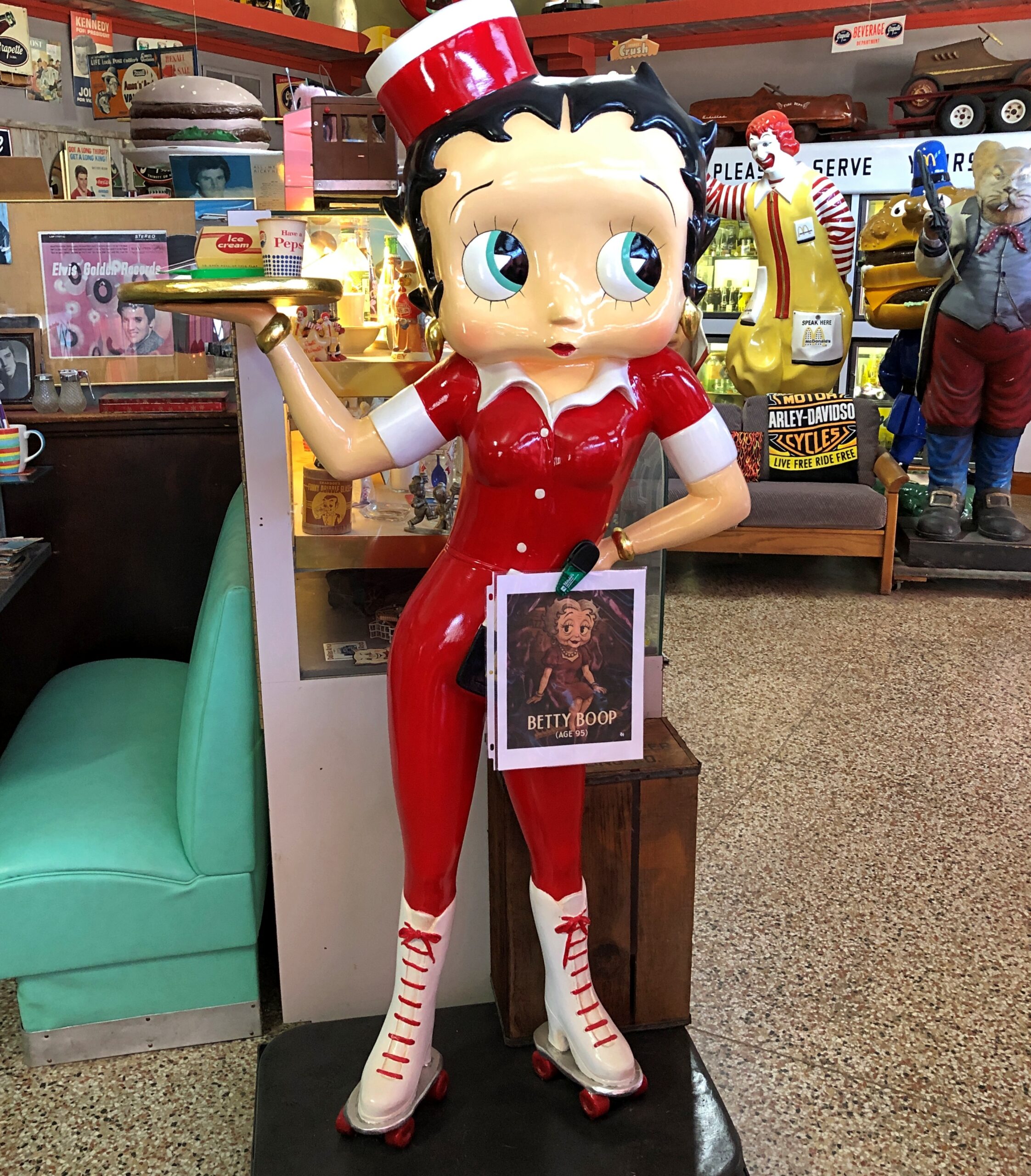
Betty Boop. From a slightly earlier time, but still pulling her weight as a carhop.
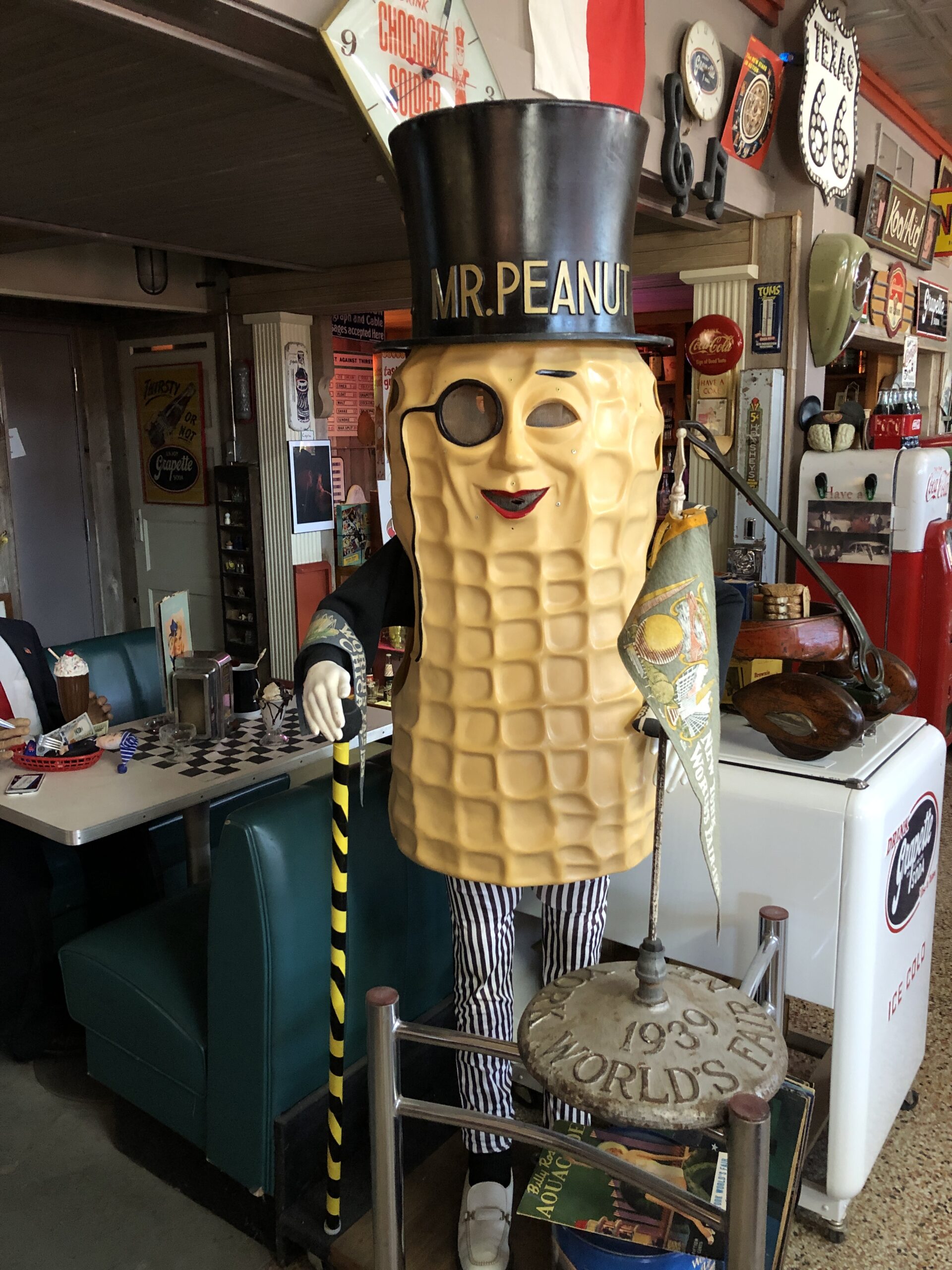
Mr. Peanut. Didn’t something happen to him? Died of a busted goober?
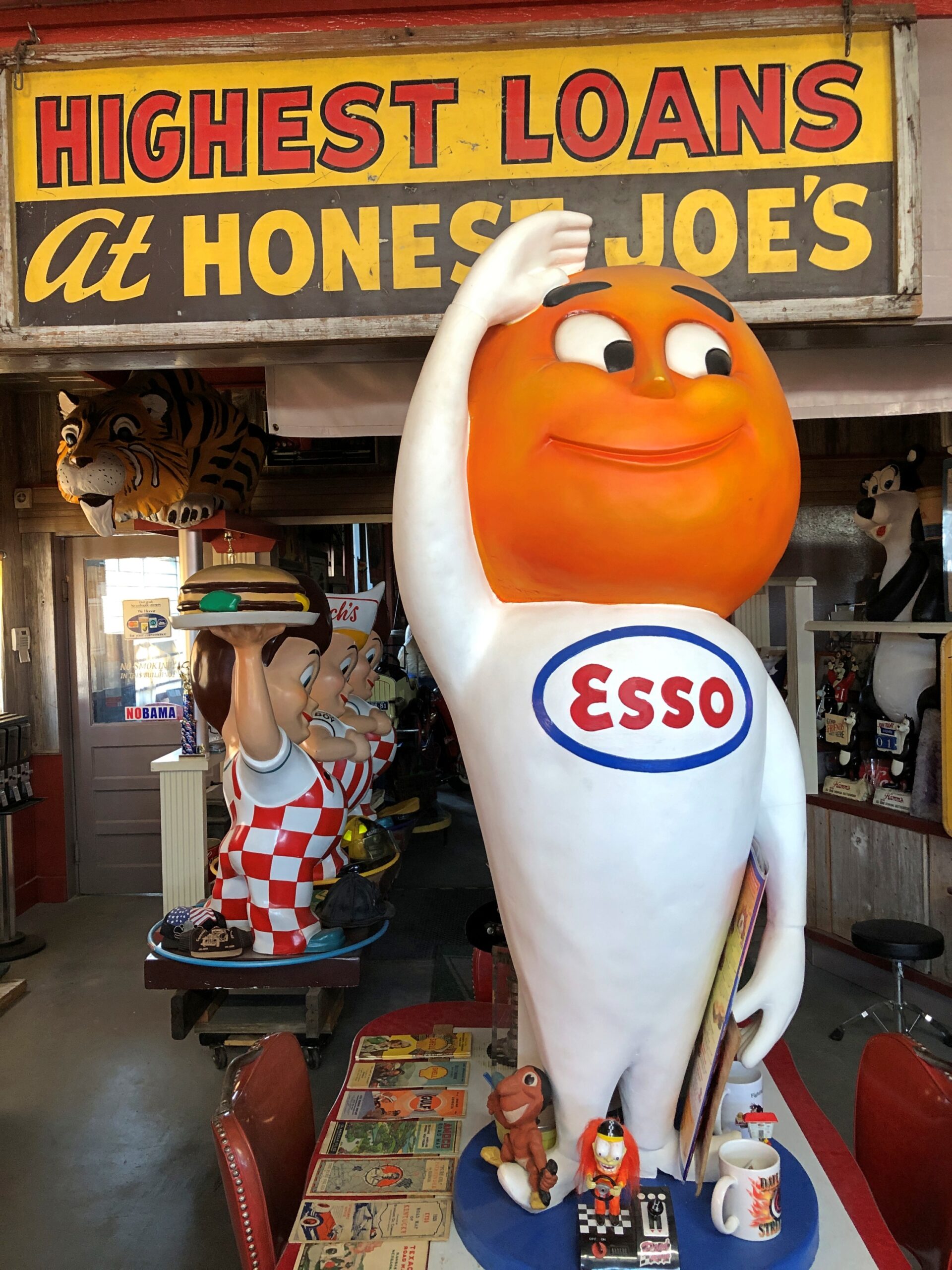
Esso. I’m barely old enough to remember the Exxon brand consolidation. (Mad magazine parodied that as “Nixxon: Still the Same Old Gas.”)
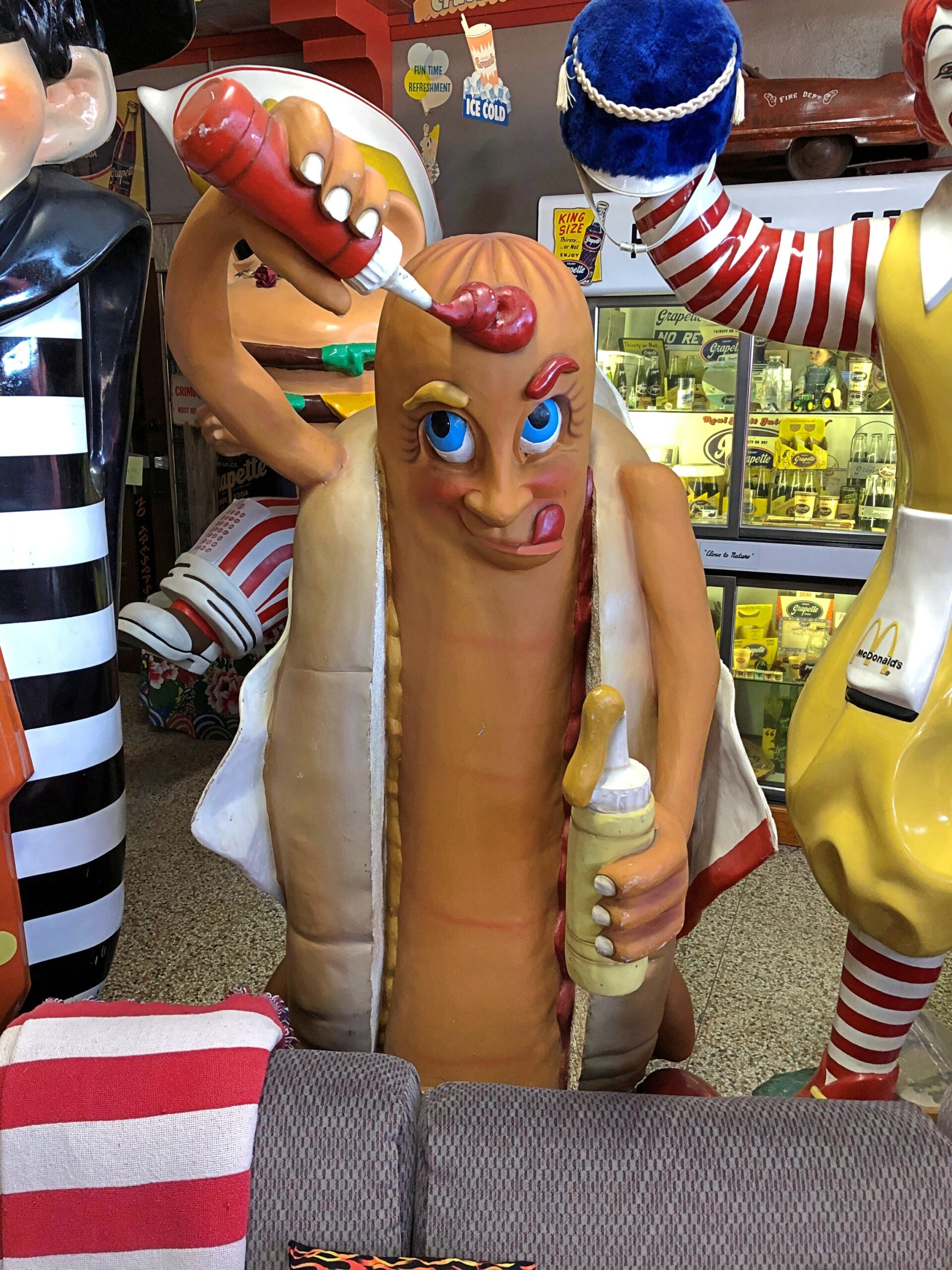
Who is this? Why does anthropomorphic hot dog man, though the liberal application of condiments, encourage larger creatures to take a bite out of his head, indeed consume him as completely as unfortunate extras in Jurassic Park movies?
Admittance to Roadside America – no relation to the web site and (former?) book series of that name that I know of – is by making a phone call outside its door. The proprietor, one Carroll Estes, comes to the door, invites you in, and shows you around the place, pointing out things and sometimes recalling the acquisition of this or that, or letting you know how rare or not certain items are. An affable old fellow, grizzled if ever anyone was, probably in his 70s. So the commercial memorabilia all around us was no memorabilia when he was a lad, but part of the lay of the land. I came along in time to see some of those ads or at least characters myself, though they were fading.

He said he was particularly fond of Grapette items. Once he pointed that out, I started seeing them everywhere.
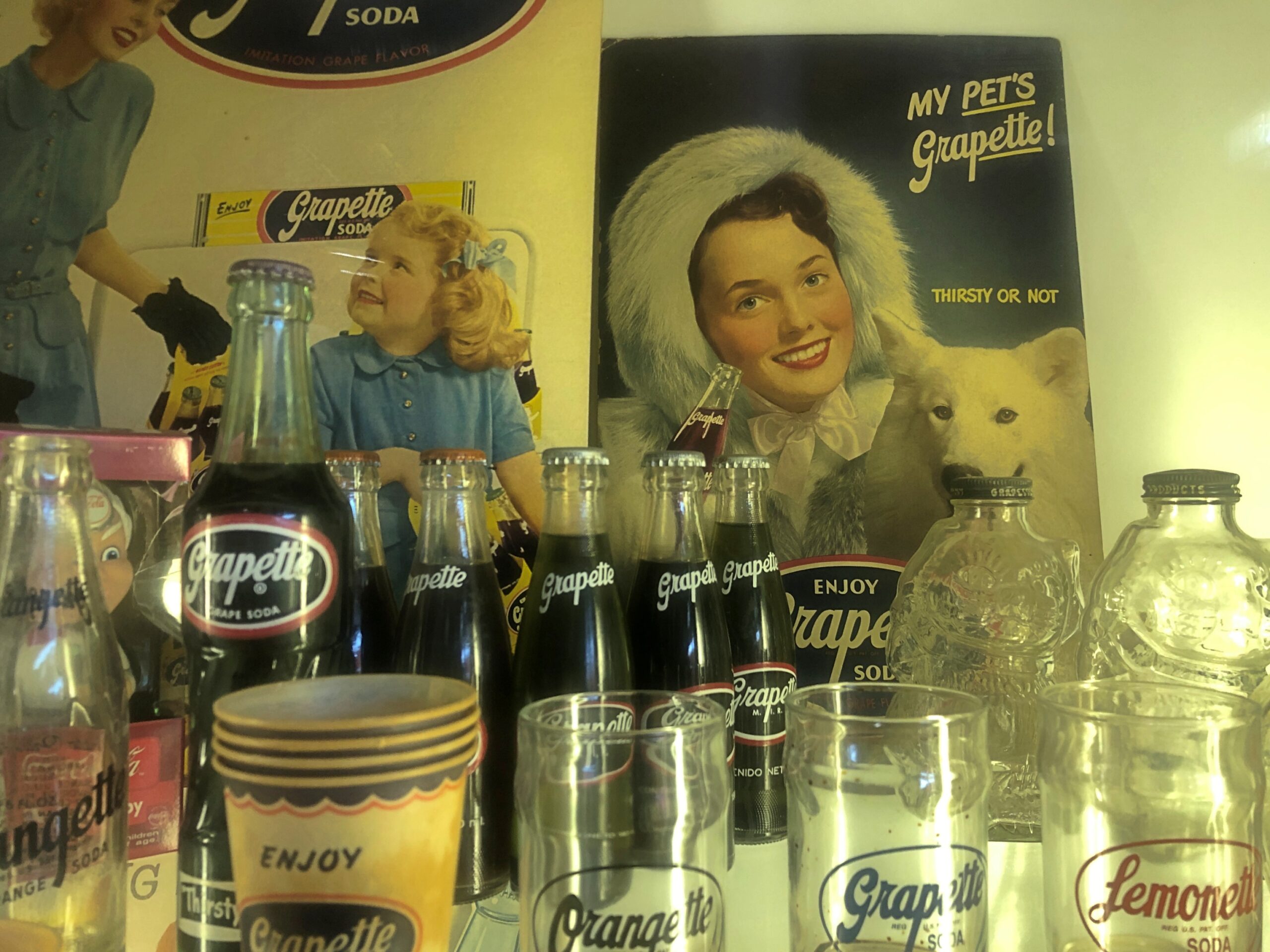
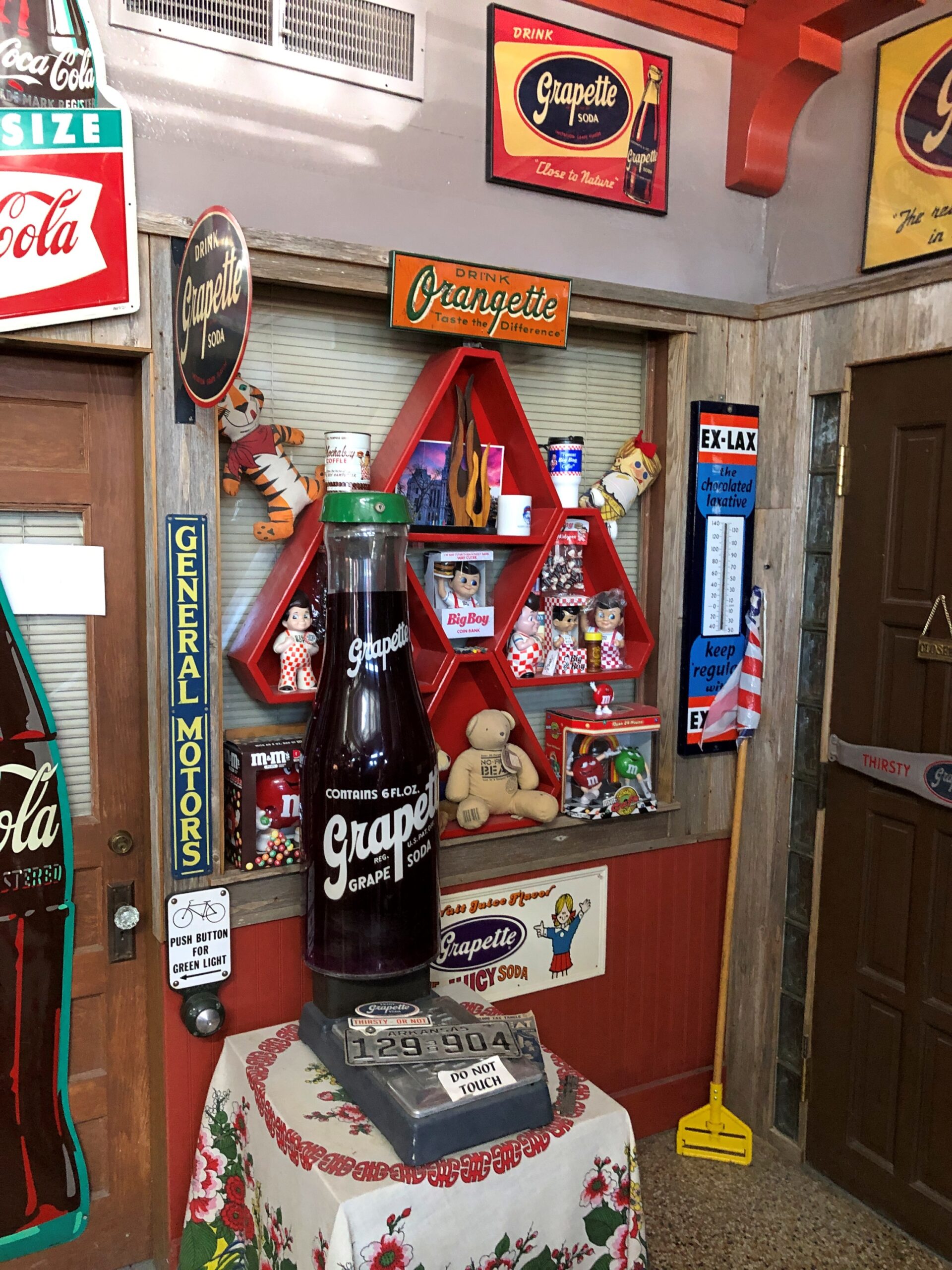
Been a long time since I had a passing thought about Grapette soda. It was available in north Texas in the mid-60s, and I’m sure I had more than a few Grapette bottle caps, once upon a time. I don’t remember its sister sodas, Orangette and Lemonette. According to Wiki at least, Grapette still exists as a house brand in Walmart’s beverage stable, and is popular even yet in Latin America.

I don’t remember O-So Grape.
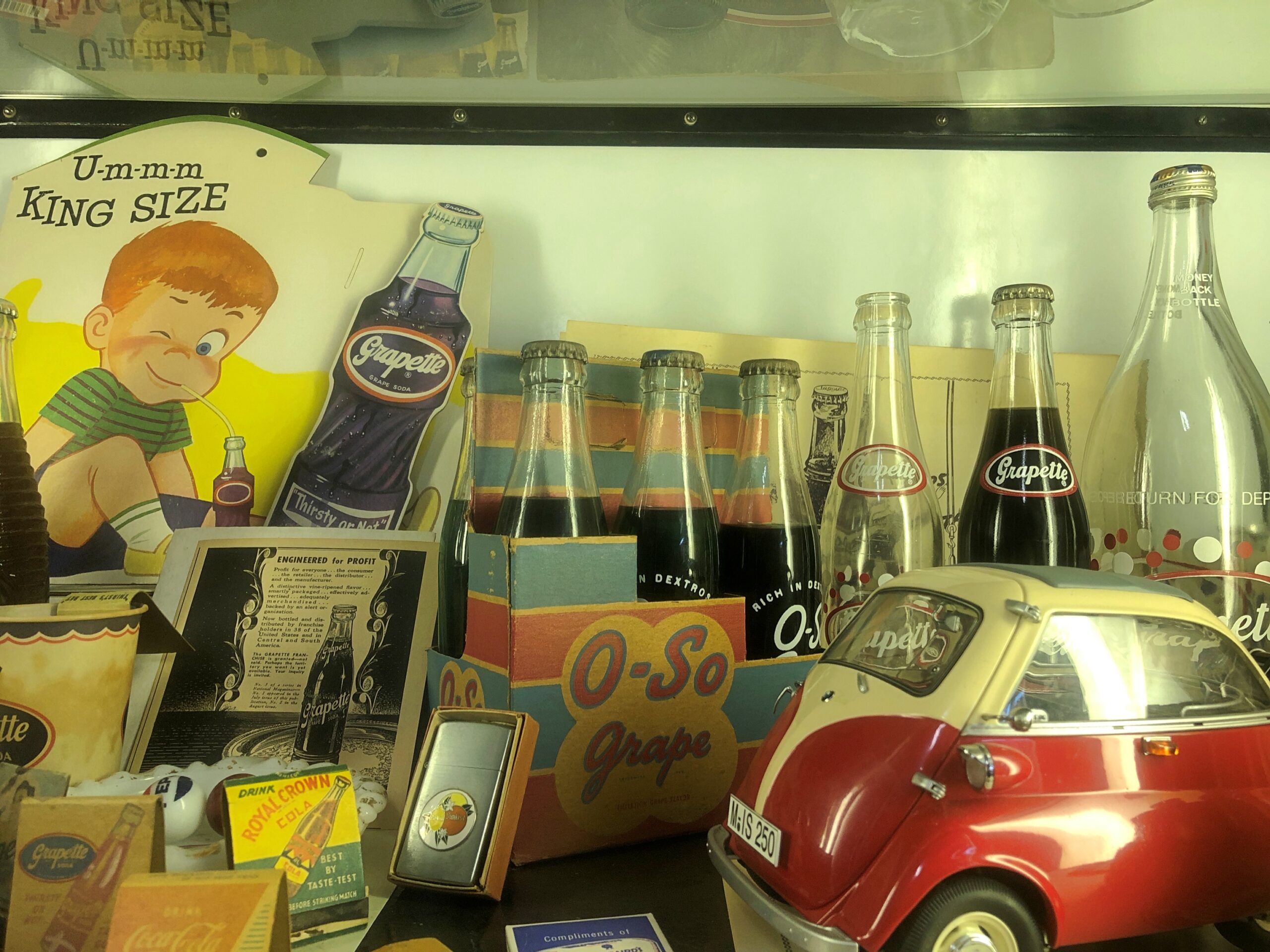
Originated in Chicago and, like so many, has been revived at premium prices, which seems to go against the spirit of soda water you bought for coins in your misspent youth, but never mind.
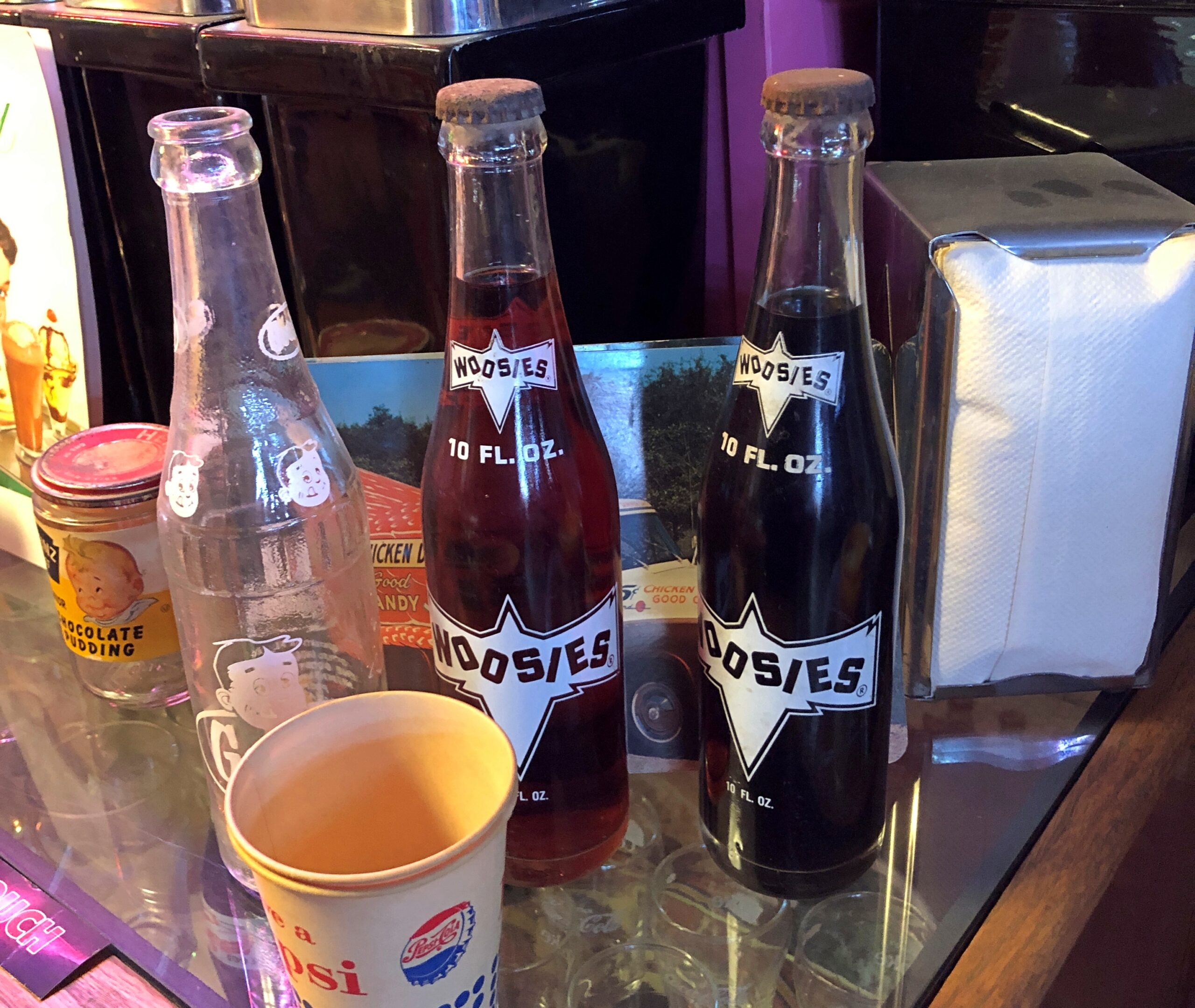
A Dallas-area mid-century beverage, apparently.

There was much more. Mr. Estis has a sizable classic car collection in another part of the building, a much larger structure that had some industrial use at one time. He showed us around. He’d restored many of them himself, but he said he doesn’t do that as much anymore. He had some great ones, too. Wish I’d taken notes. But I was in the moment.

Even in the moment, you don’t notice everything. Especially at a chock-a-block place like Roadside America, where curios compete for your attention like a gaggle of souvenir-wallas in Delhi. It wasn’t until I looked at this picture that I noticed Wile E. Coyote sitting at the diner booth.
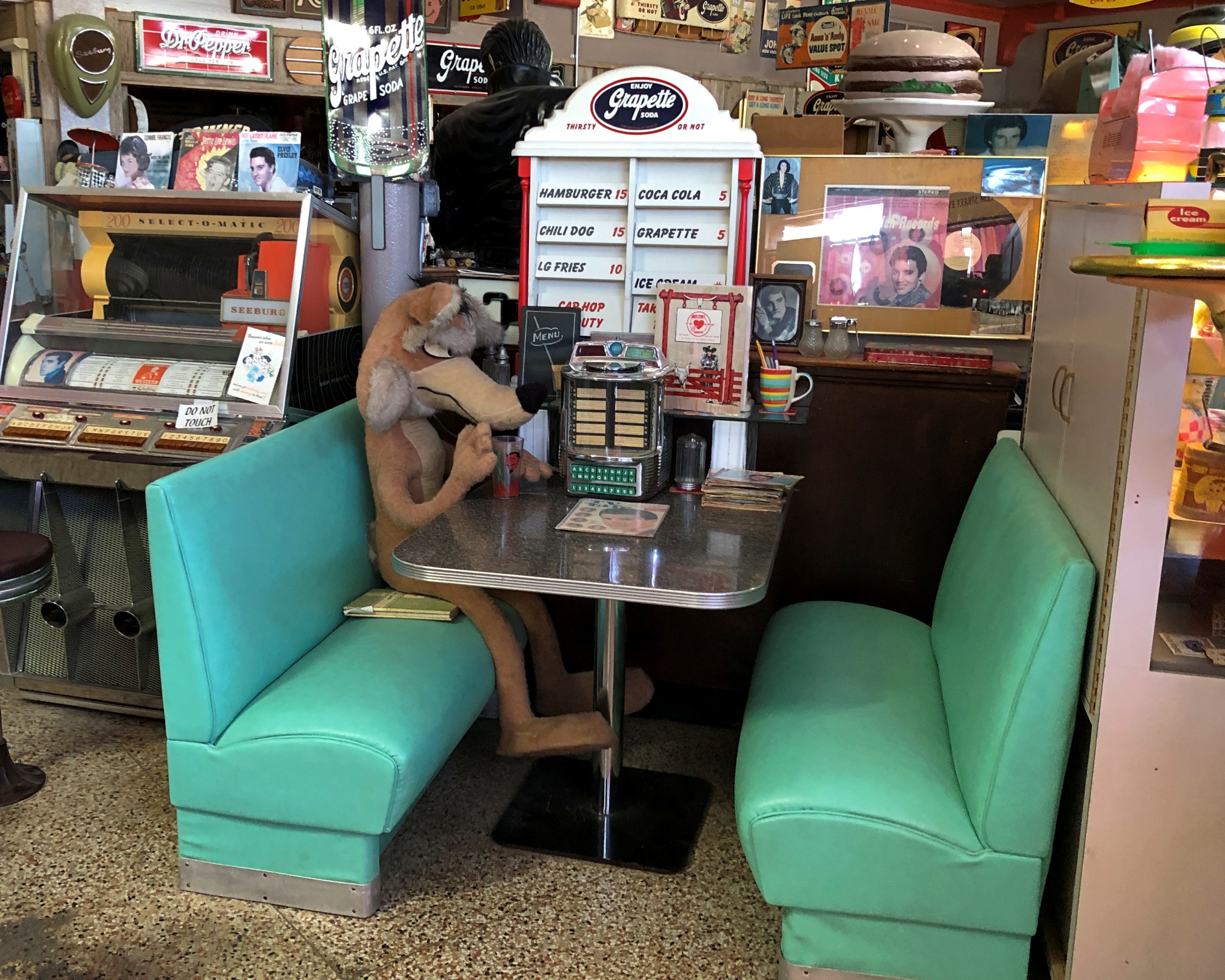
Stands to reason that Wile E. would patronize the few diners on the desert roads he haunts. He never managed to make a decent meal of the Roadrunner.

A Short Visit to the Chinati Foundation

Rain. All the way from Illinois to Texas. We got mighty bouts of it that had died down ’round midnight. As if to remind me, about time I’m home. Huh?

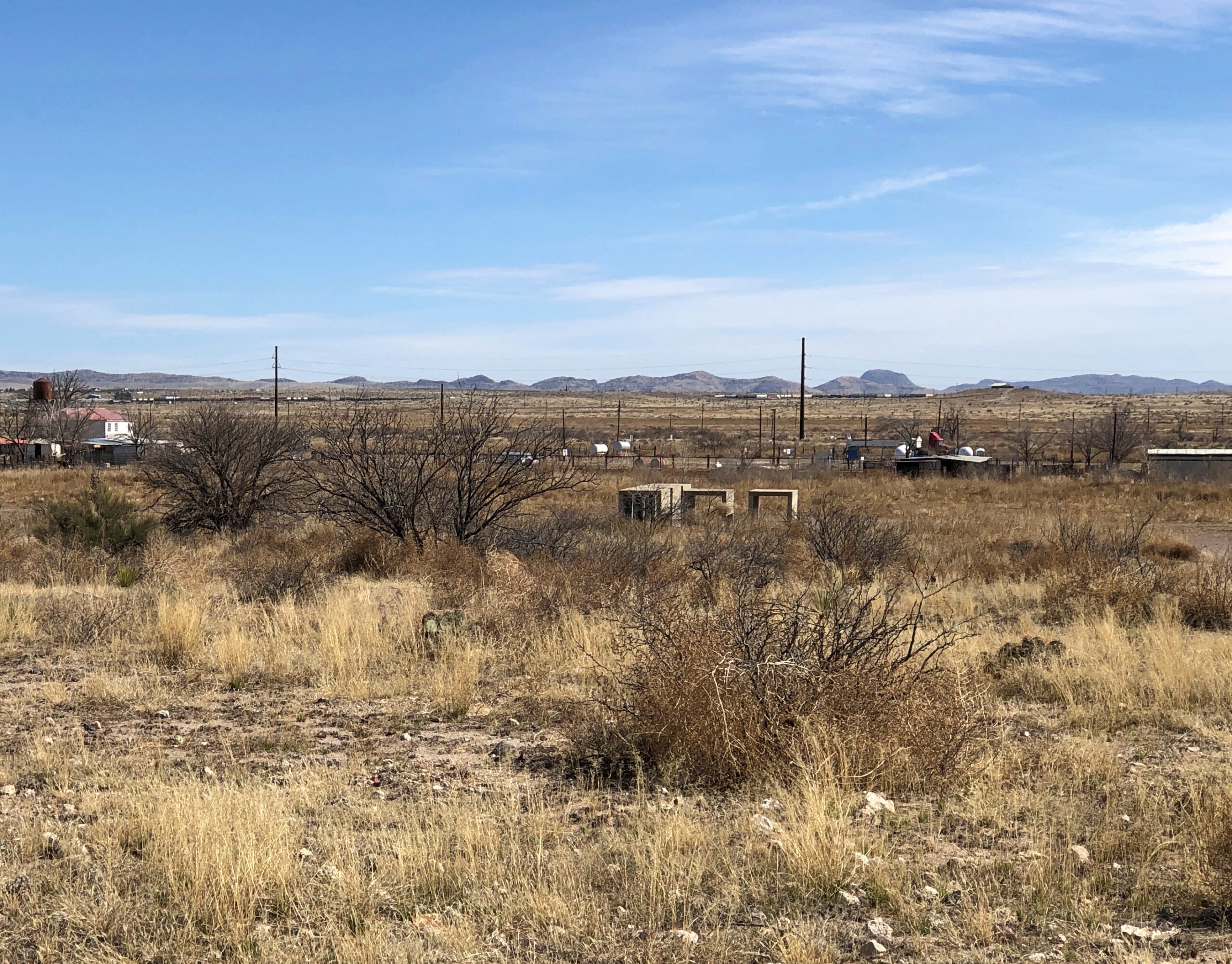
Come to Marfa for the West Texas art city vibe, stay for the concrete structures. Even if they are off in the distance, at least from the parking lot.

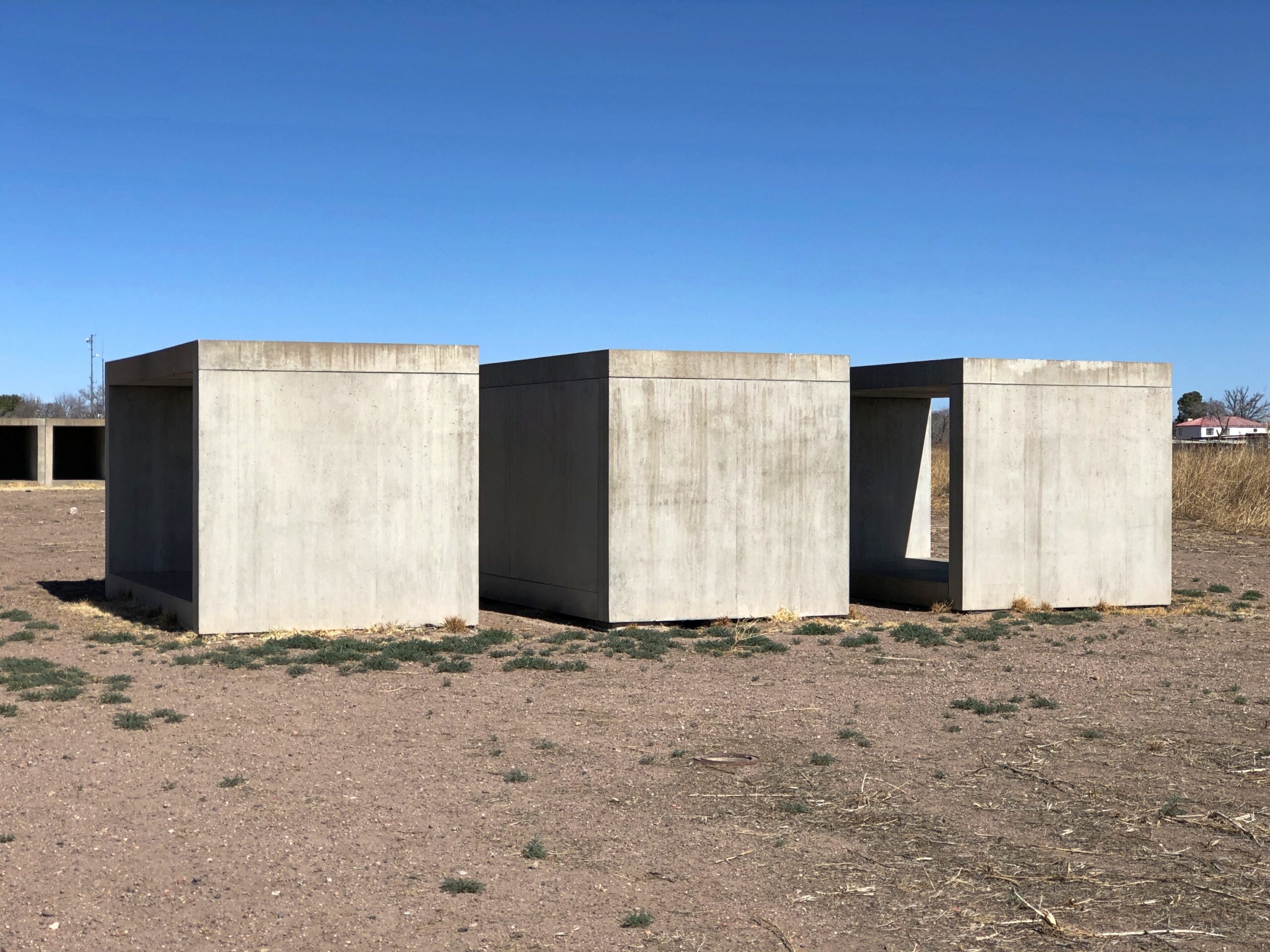
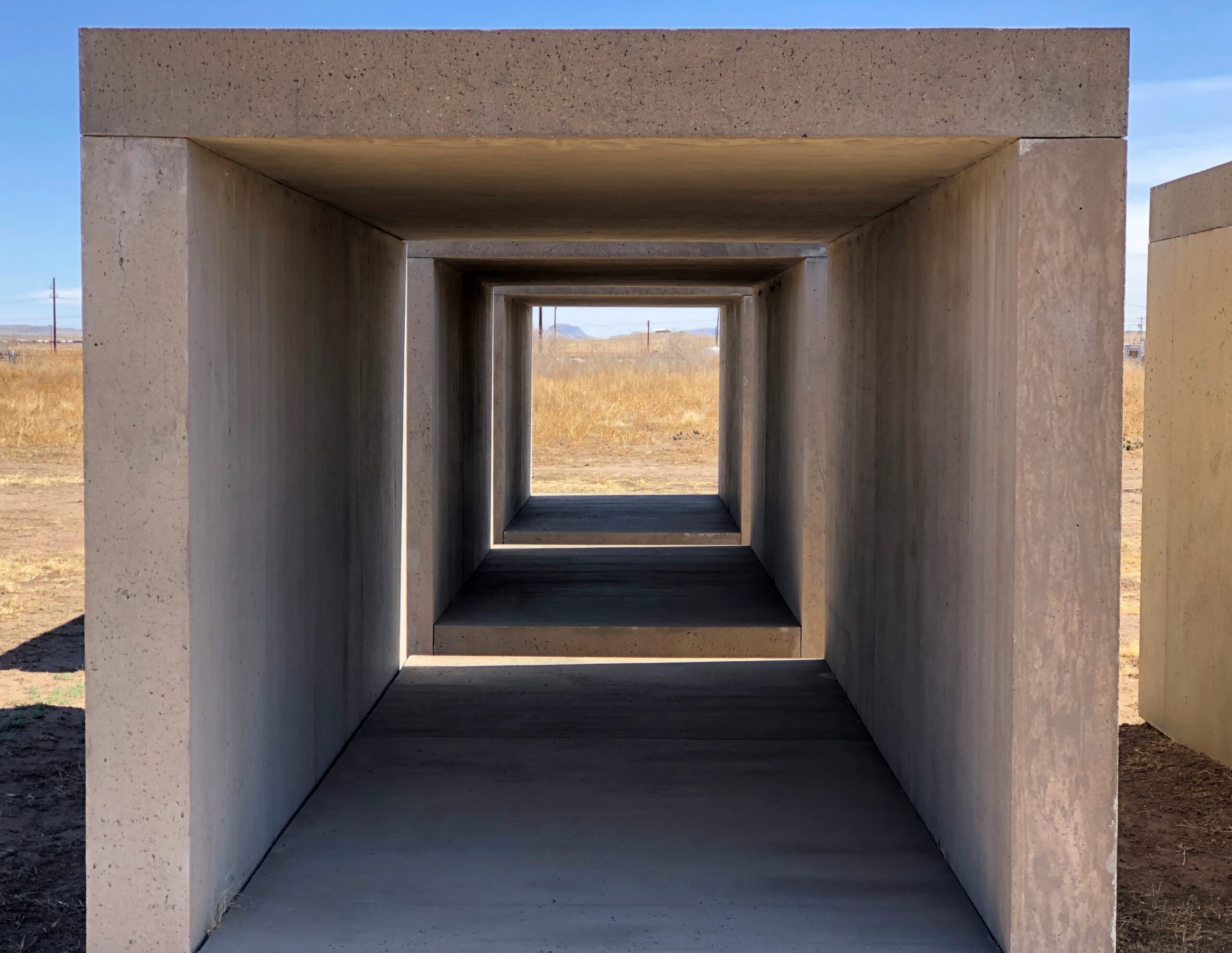
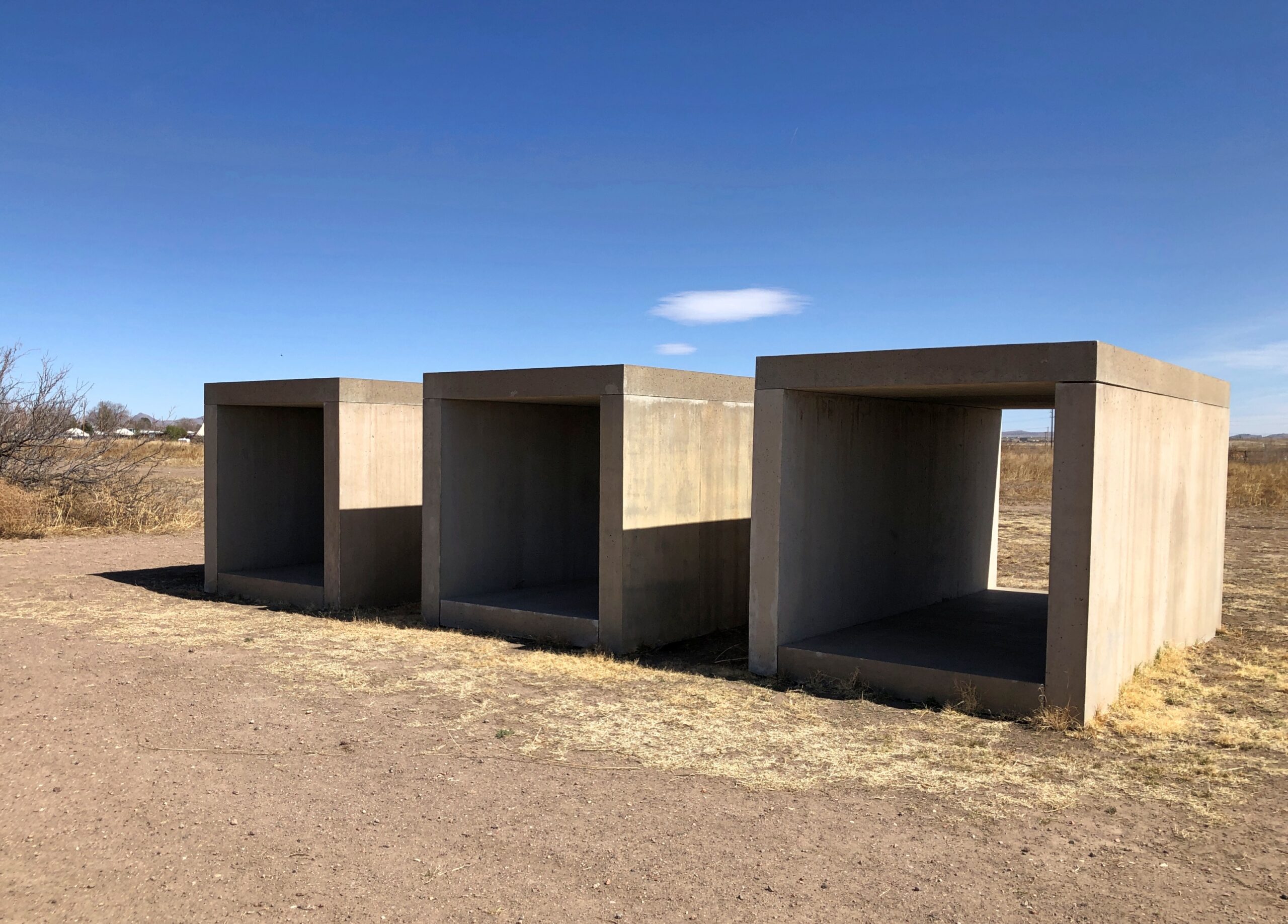
How to think of the untitled works by Donald Judd (d. 1994) on the grounds of the Chinati Foundation in Marfa? Brutalism in a brutal environment? Man’s – that is Humanity’s – longing for angular order in world of irregularity? The strange coprolite of giant angular creatures barely known to paleontology?

I could go on like that all day. Yuriko and I arrived at Chinati early in the warm afternoon of February 18. I can’t say we weren’t warned. The foundation’s web site says: “Our collection is installed across 21 buildings and two off-site locations; additionally, three works are site-specific, outdoor installations. Guided tours are the only way to see the majority of Chinati’s collection and grounds. Purchase your tickets in advance; tours often sell out.”

As we told a volunteer behind the desk, we didn’t have time for a tour. What to see on one’s on?

A long line of concrete structures in the West Texas scrub, that’s what. No tour guide, just a wander among the structures. But not inside them, according to instructions that we did follow.

After a little wandering, I came to think it isn’t just the structures, but the shadows too. What is it that the shadow knows? Right, the evil that lurks in the hearts of men.

I could turn on the art-speak spigot to describe Chinati (one of those infinite AI spigots, I figure), but no. I will note the tumbleweeds we saw.

A little less permanent than the Judd works, but only a little.

Big Sam

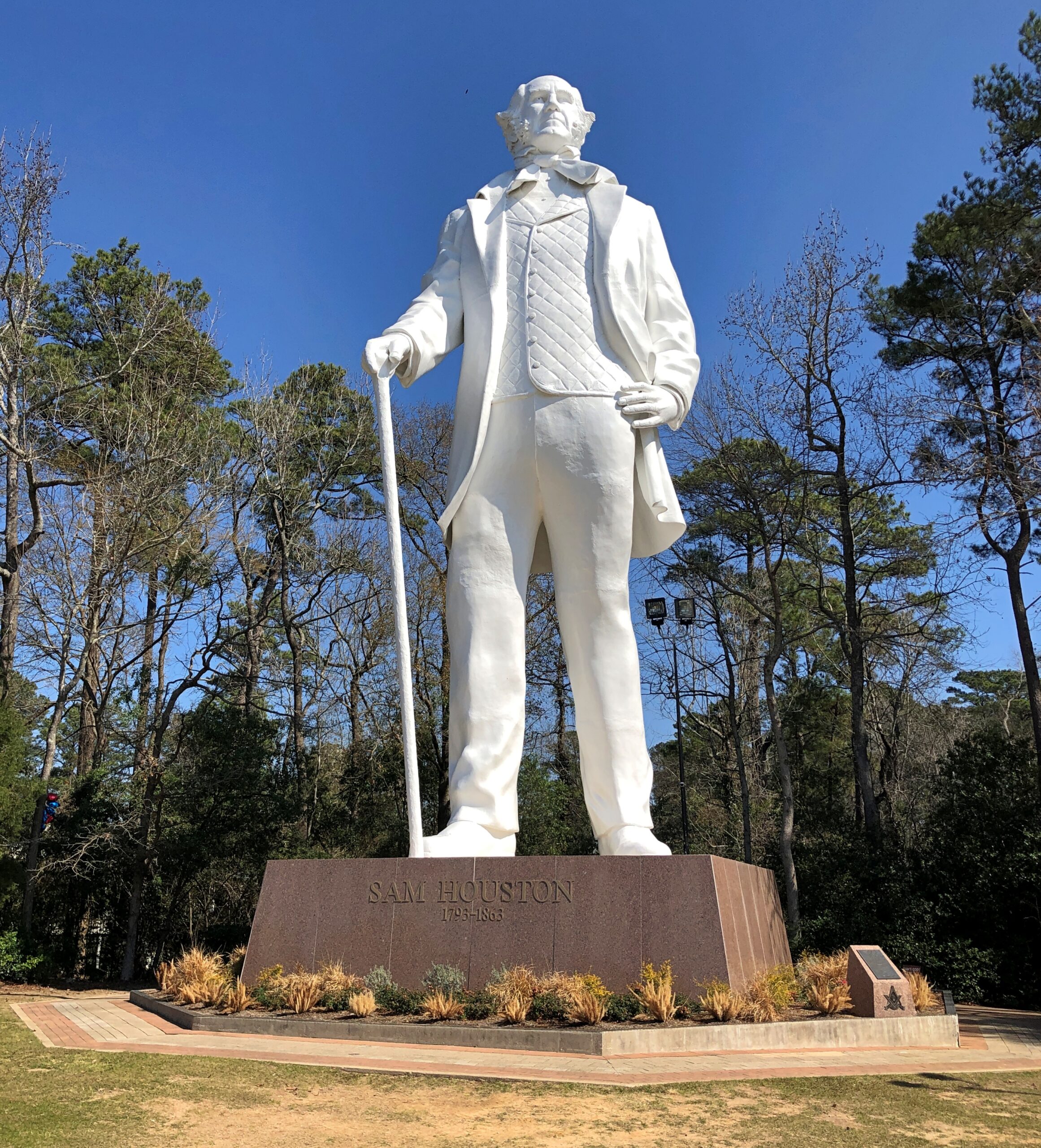
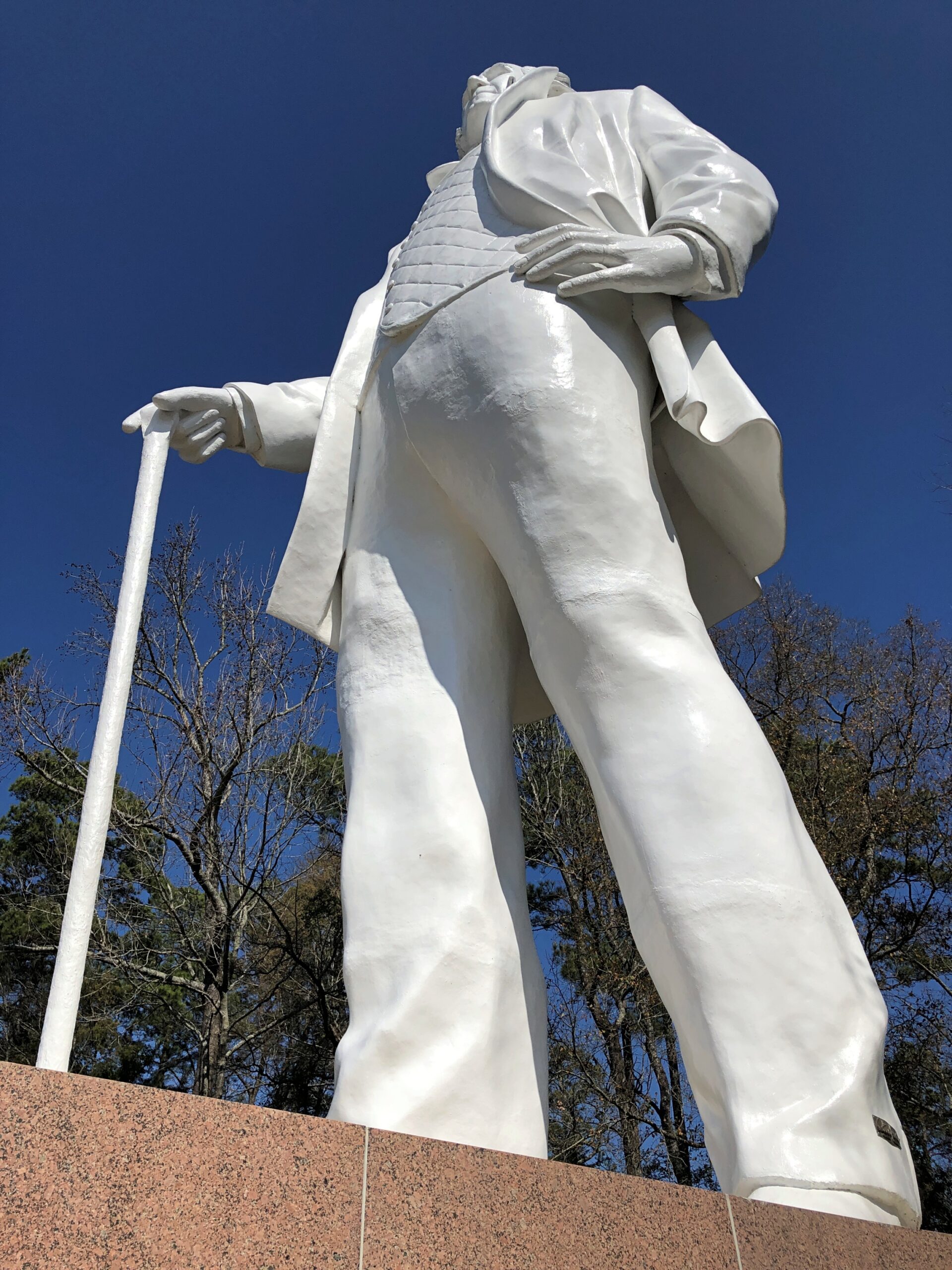
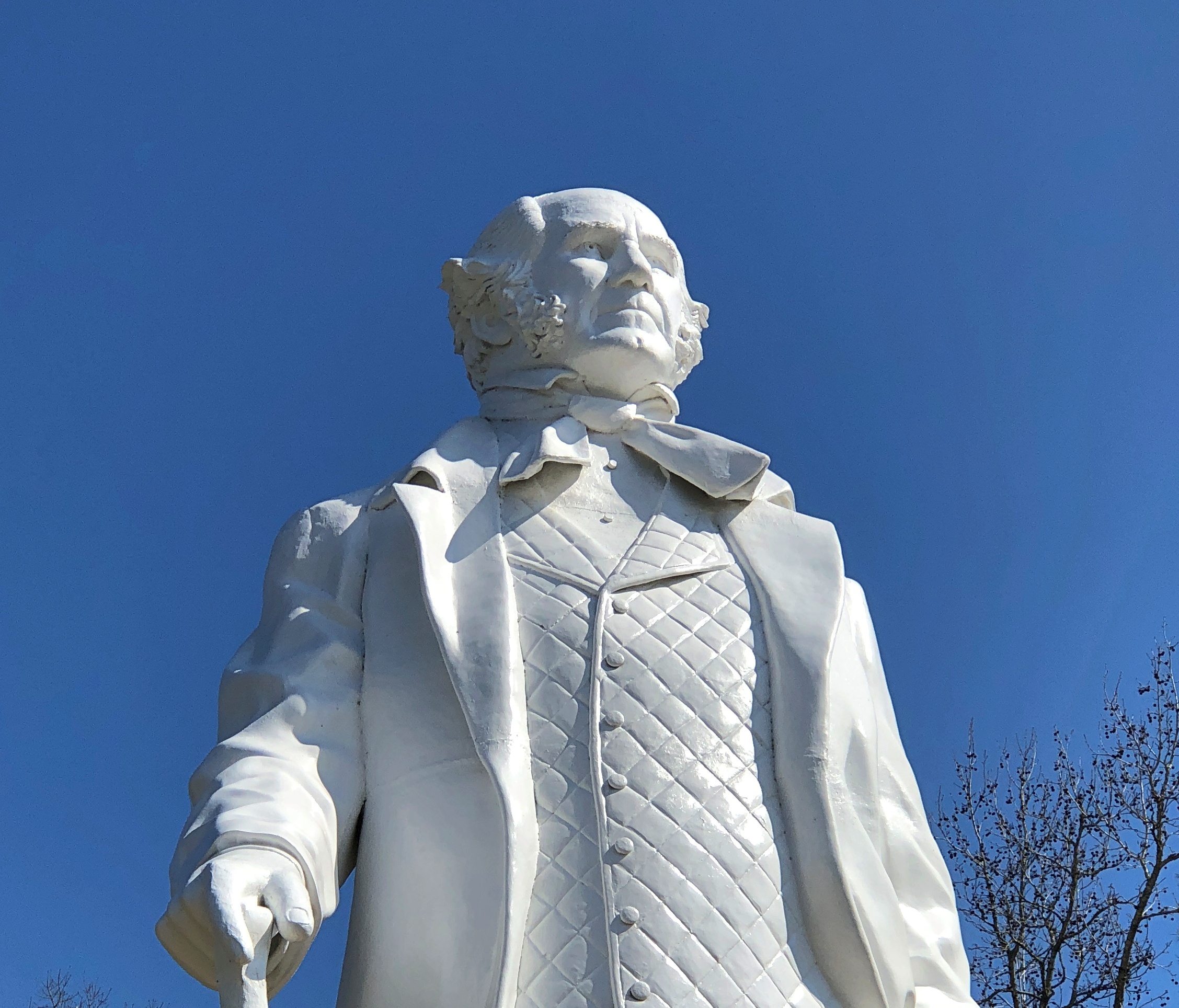
Approach Huntsville, Texas, from the south on I-45, and you can’t miss Sam Houston. Big Sam.

The largest soap carving in the world until the city of Qufu (曲阜) in southwestern Shandong province put up one of Confucius that is 18.5 inches taller, from pedestal to top of the head.

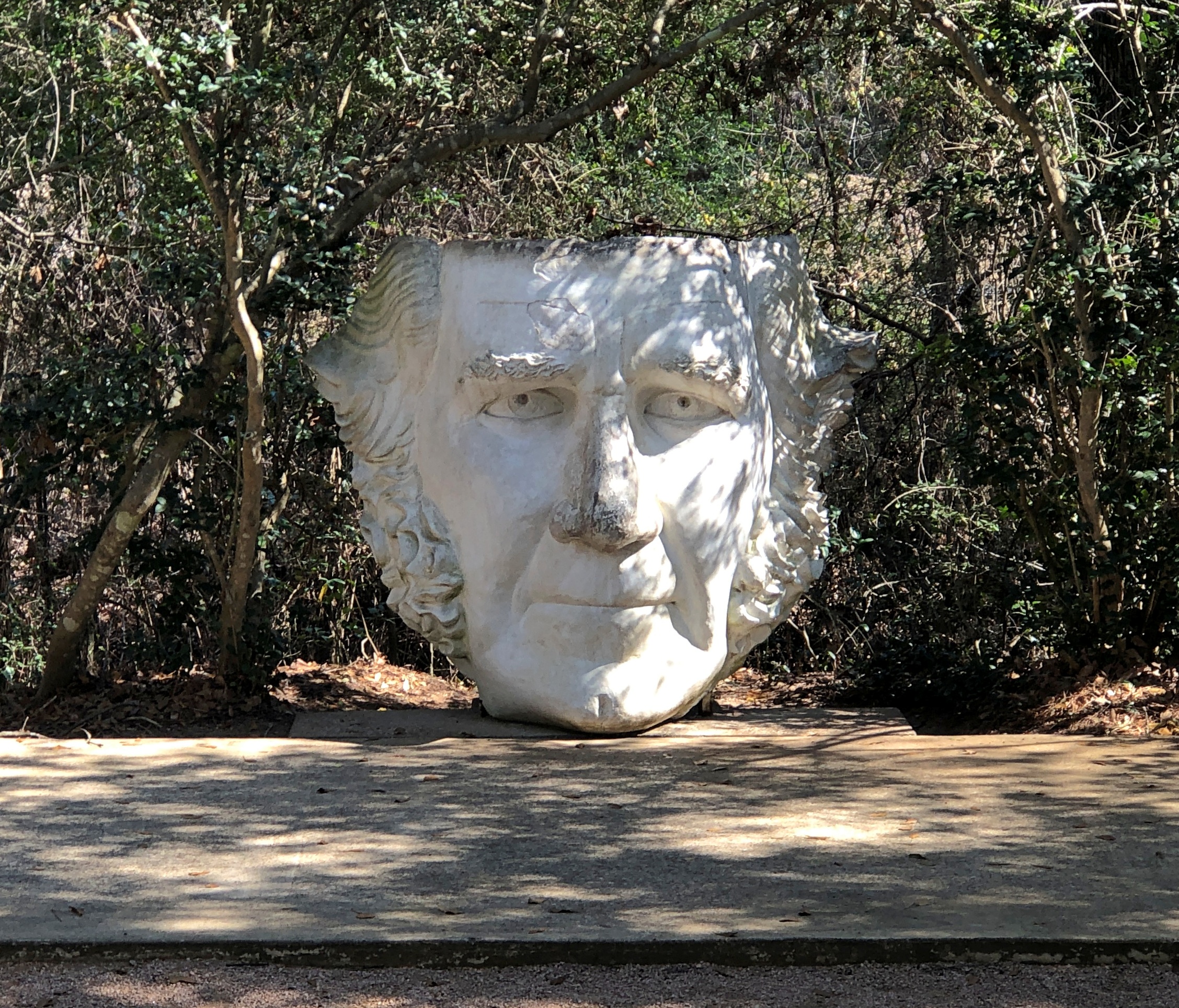
That only goes to show that you don’t need AI to make stuff up. Sam Houston isn’t made of soap, naturally, but something a little more durable, concrete and steel, and towers 67 feet from the plinth — he must have a dandy view of the Interstate. It’s been up only since 1994, the work of Huntsville native David Adickes. As for Qufu, there are surely statues of Confucius there, but I don’t feel like looking them up.

Naturally I followed the signs to the statue’s parking lot, got out and looked around.

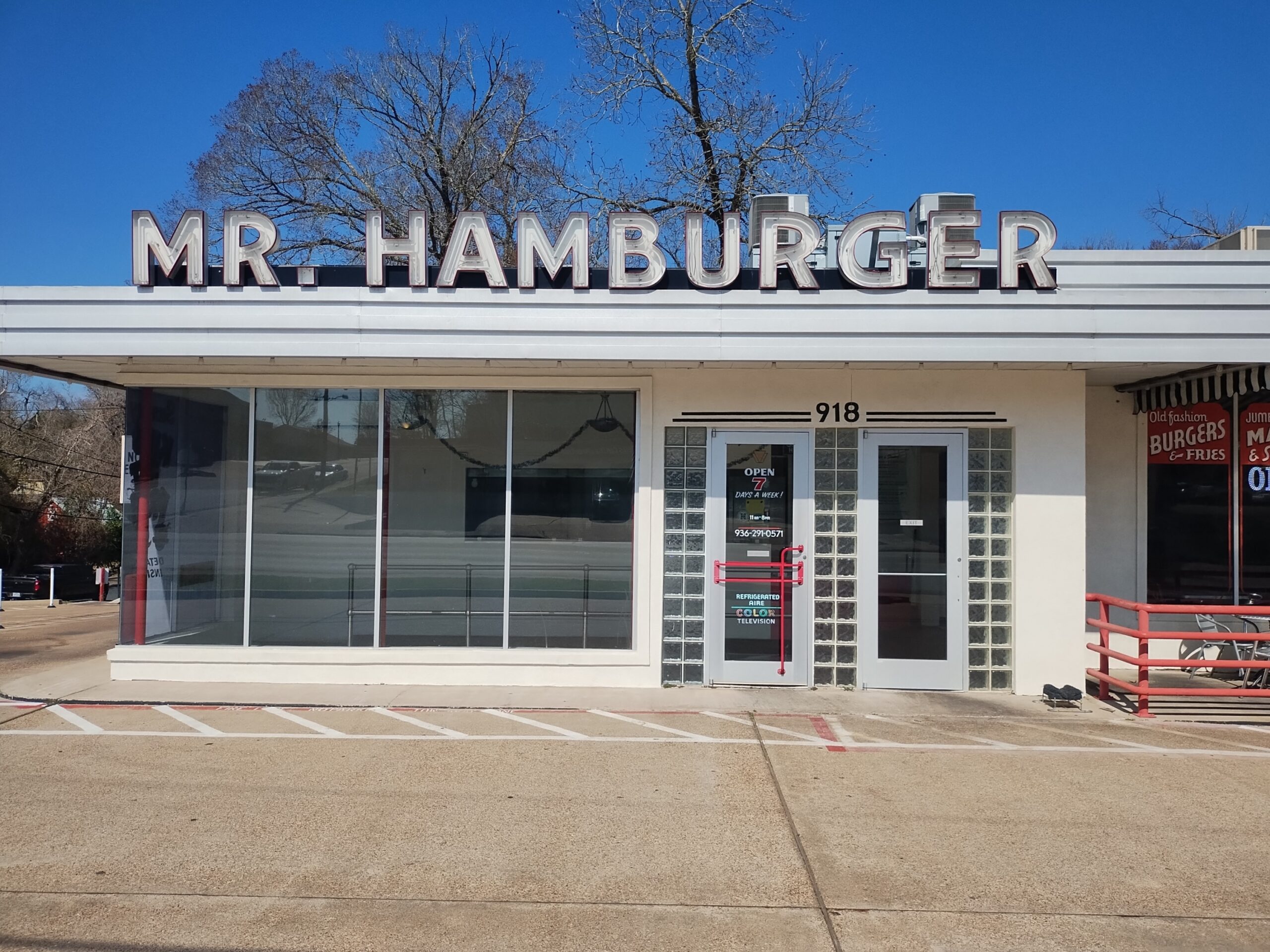
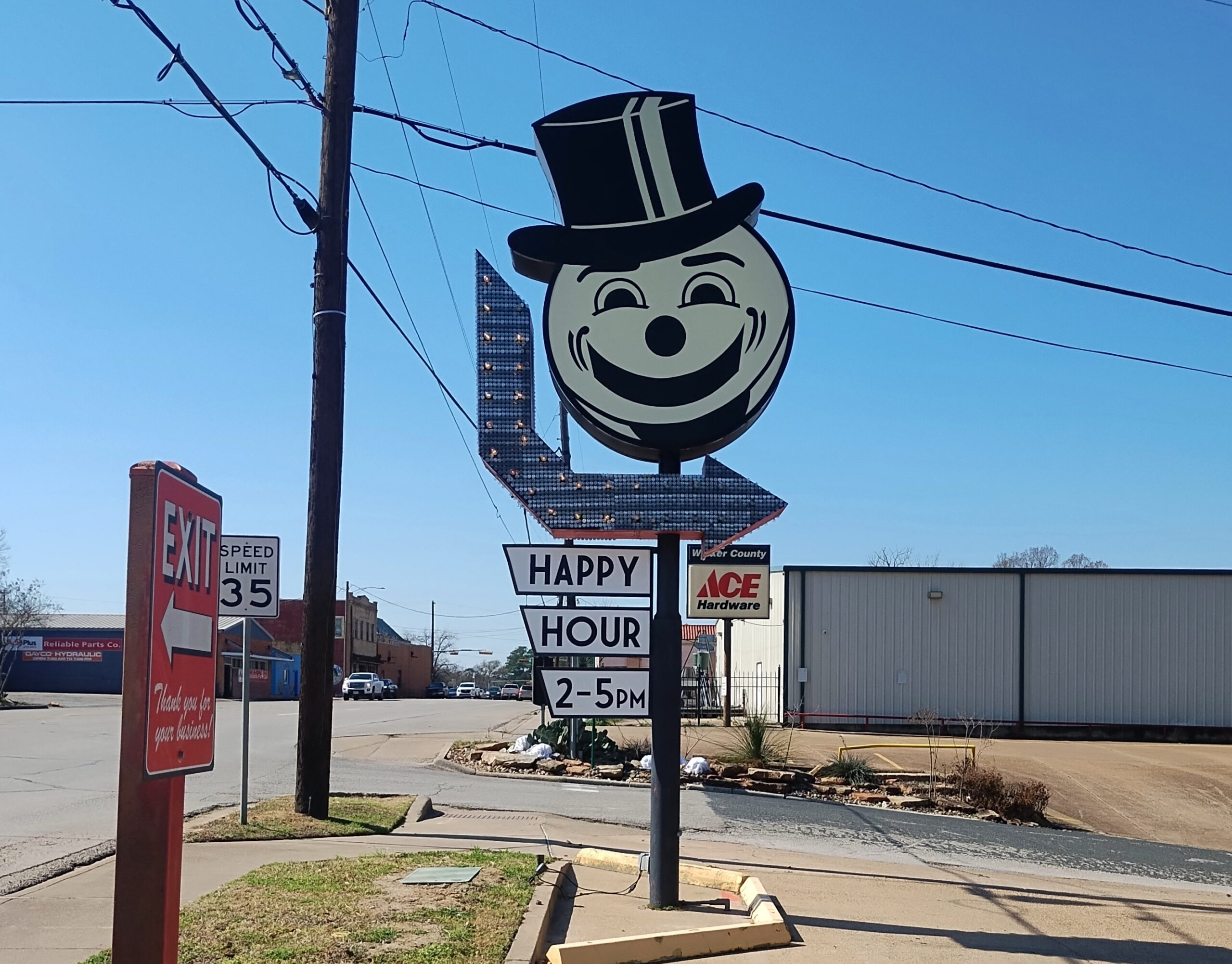
My priority afterward was lunch, and I happened on Mr. Hamburger there in the heart of Huntsville, a few miles from Big Sam.

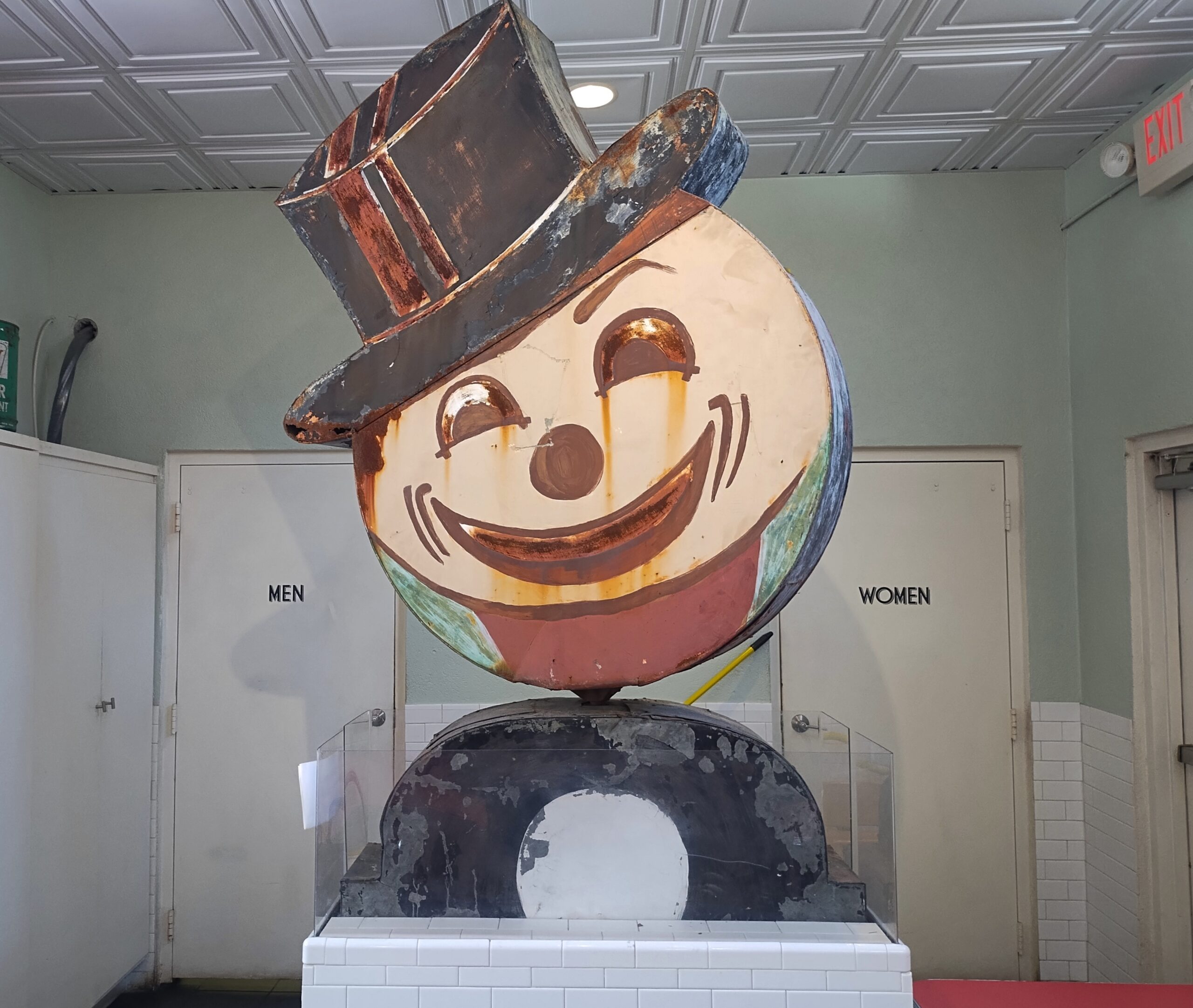
Not in the original location that opened nearby in 1959, I later found out, but in a redeveloped gas station. The original mascot, looking a little tired after decades in the Texas weather, had been moved inside to greet customers as they go to the bathroom.

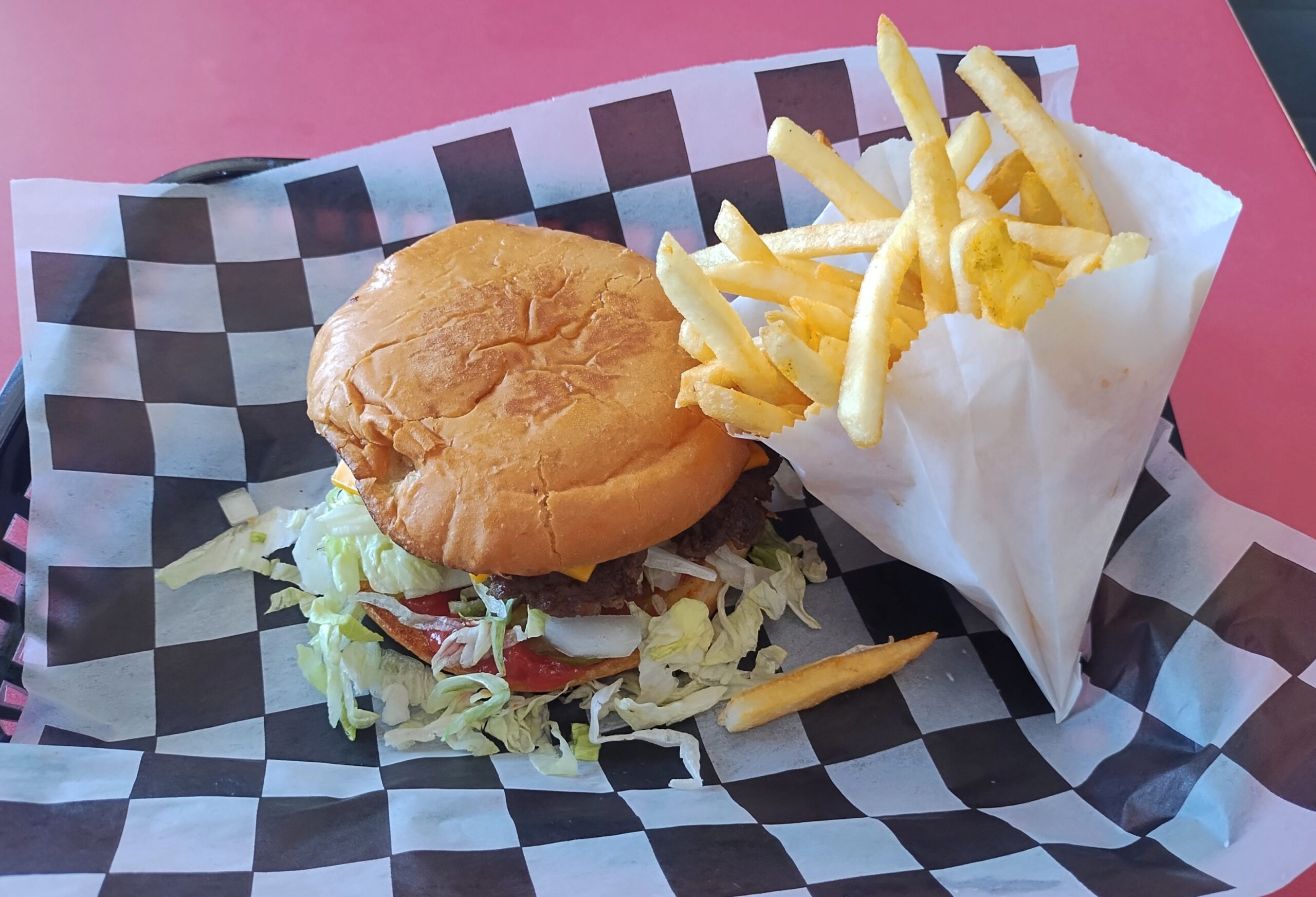
All that wouldn’t be noteworthy if the place hadn’t delivered the goods, but it did.

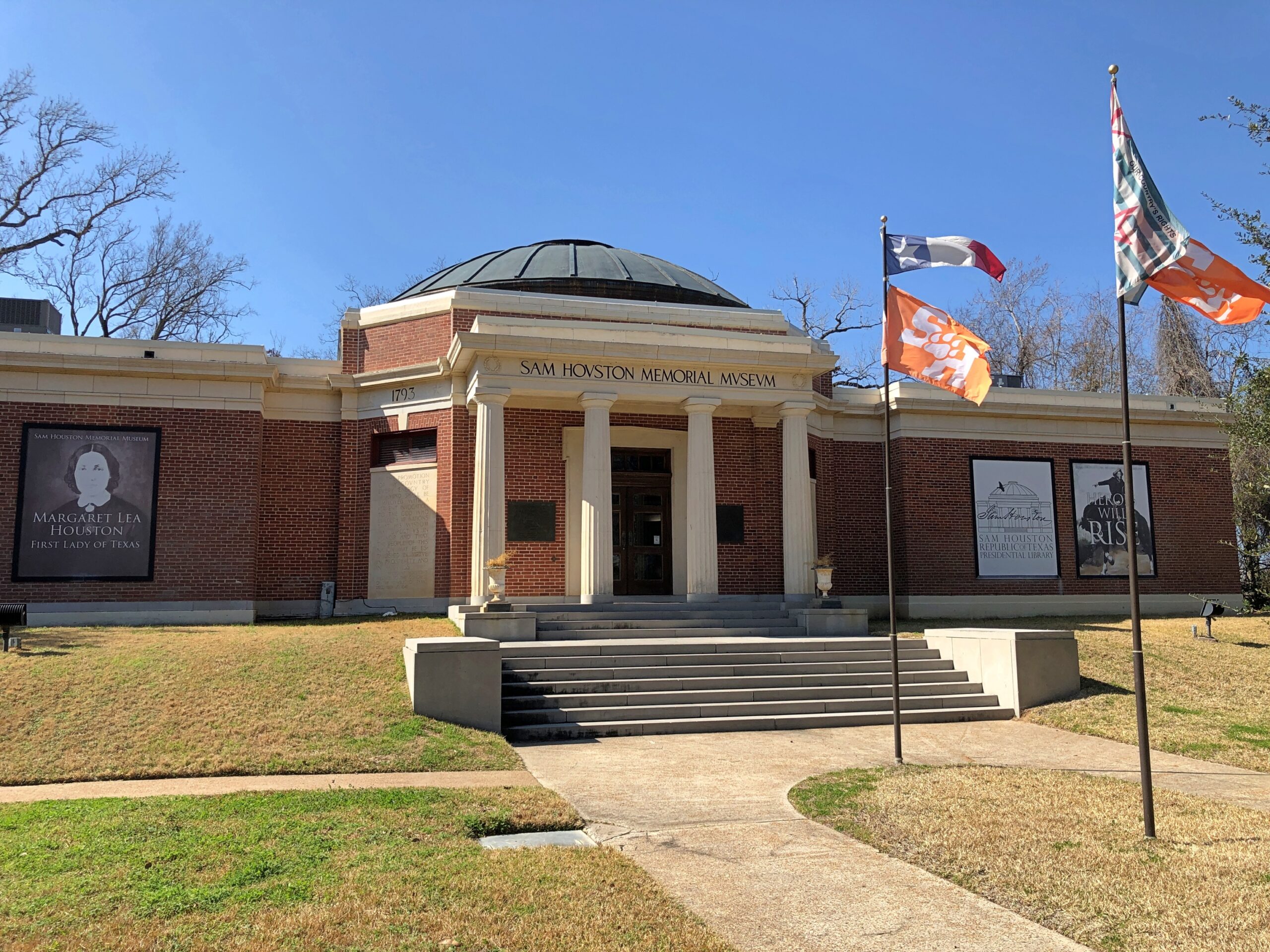
Thus fortified, I found my way to the Sam Houston Memorial Museum, which is on the campus of Sam Houston Institute of Technology.

SHSU

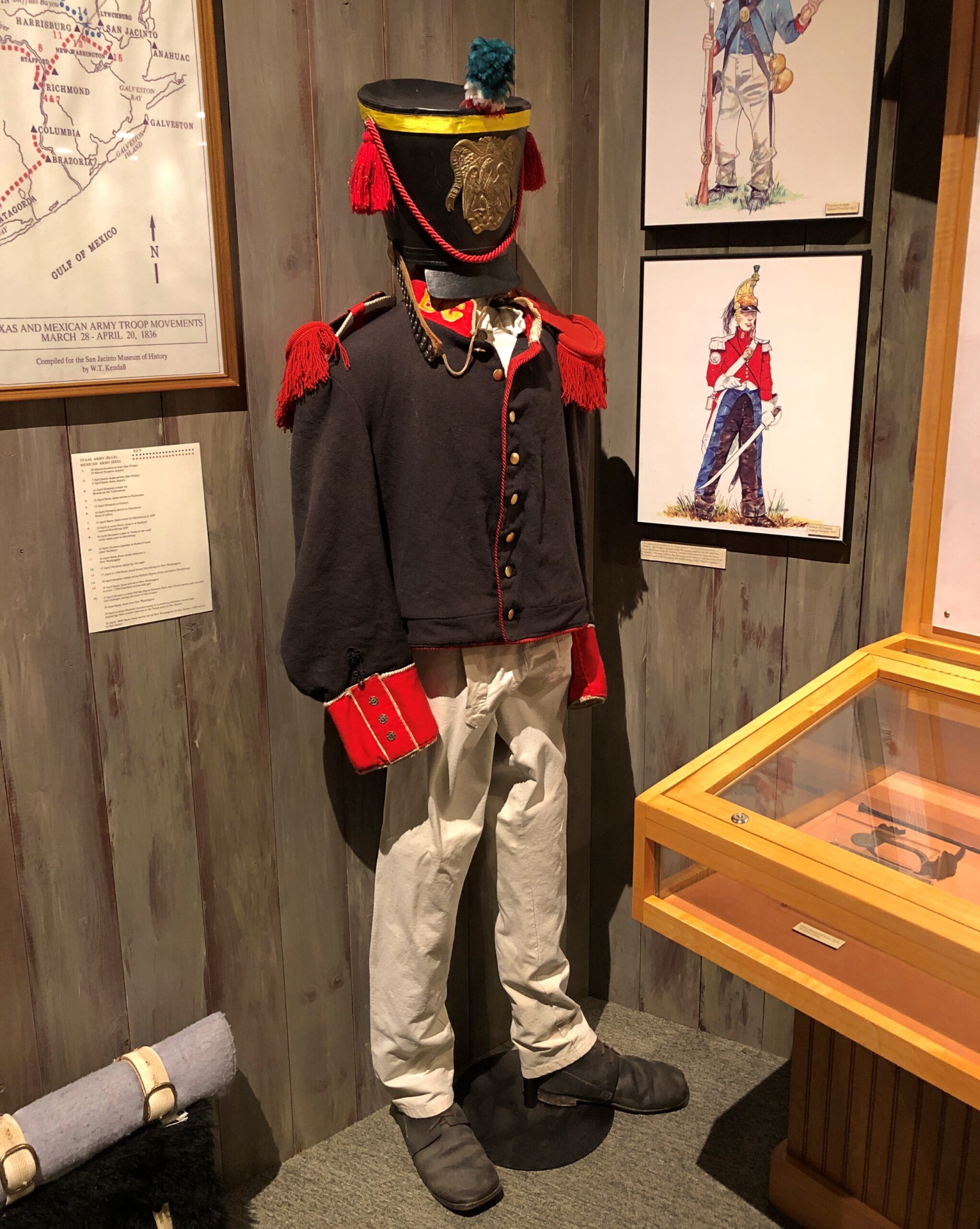
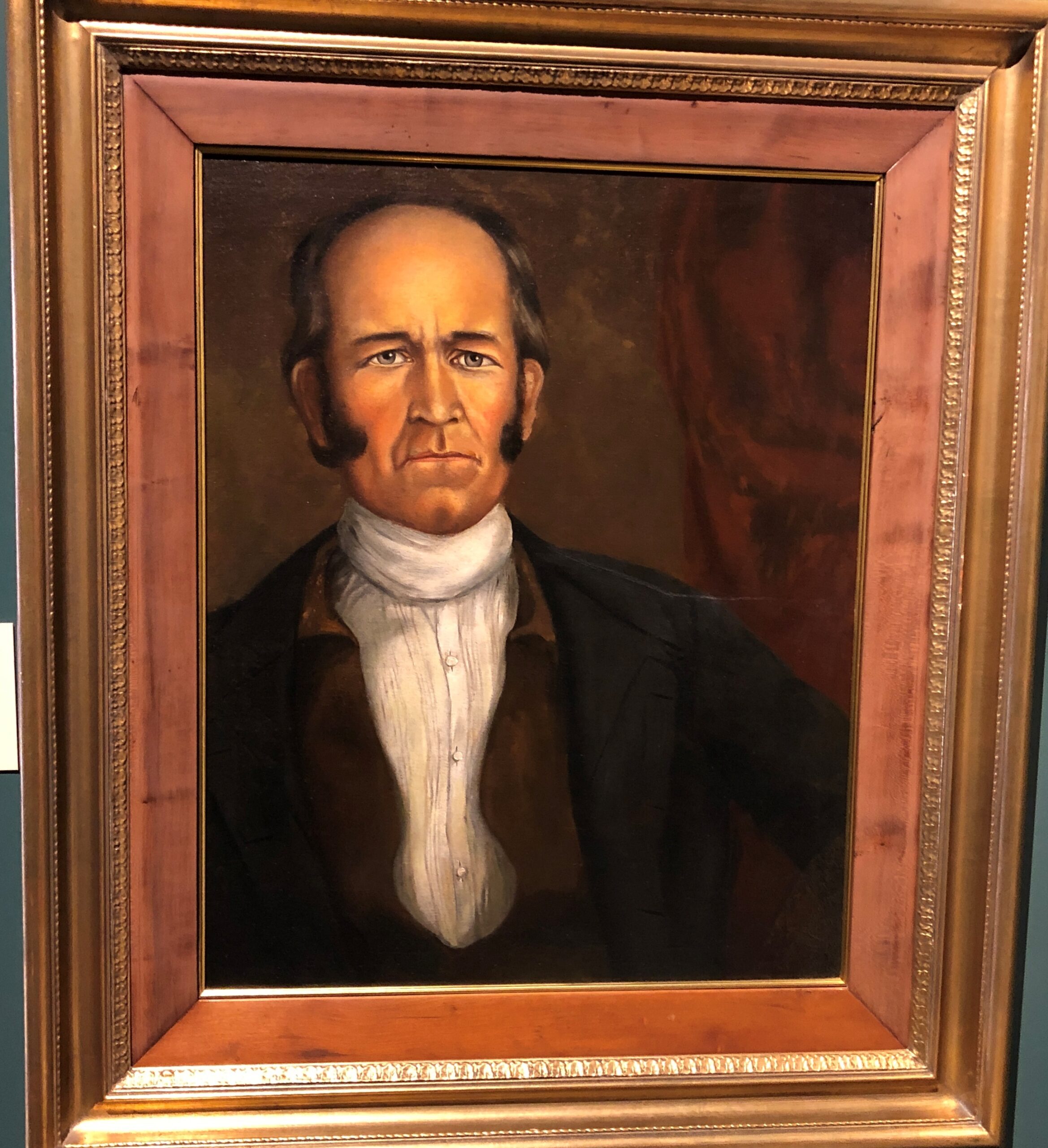
Old joke: Sam Houston State University. Not a large museum, but a nice collection of artifacts.

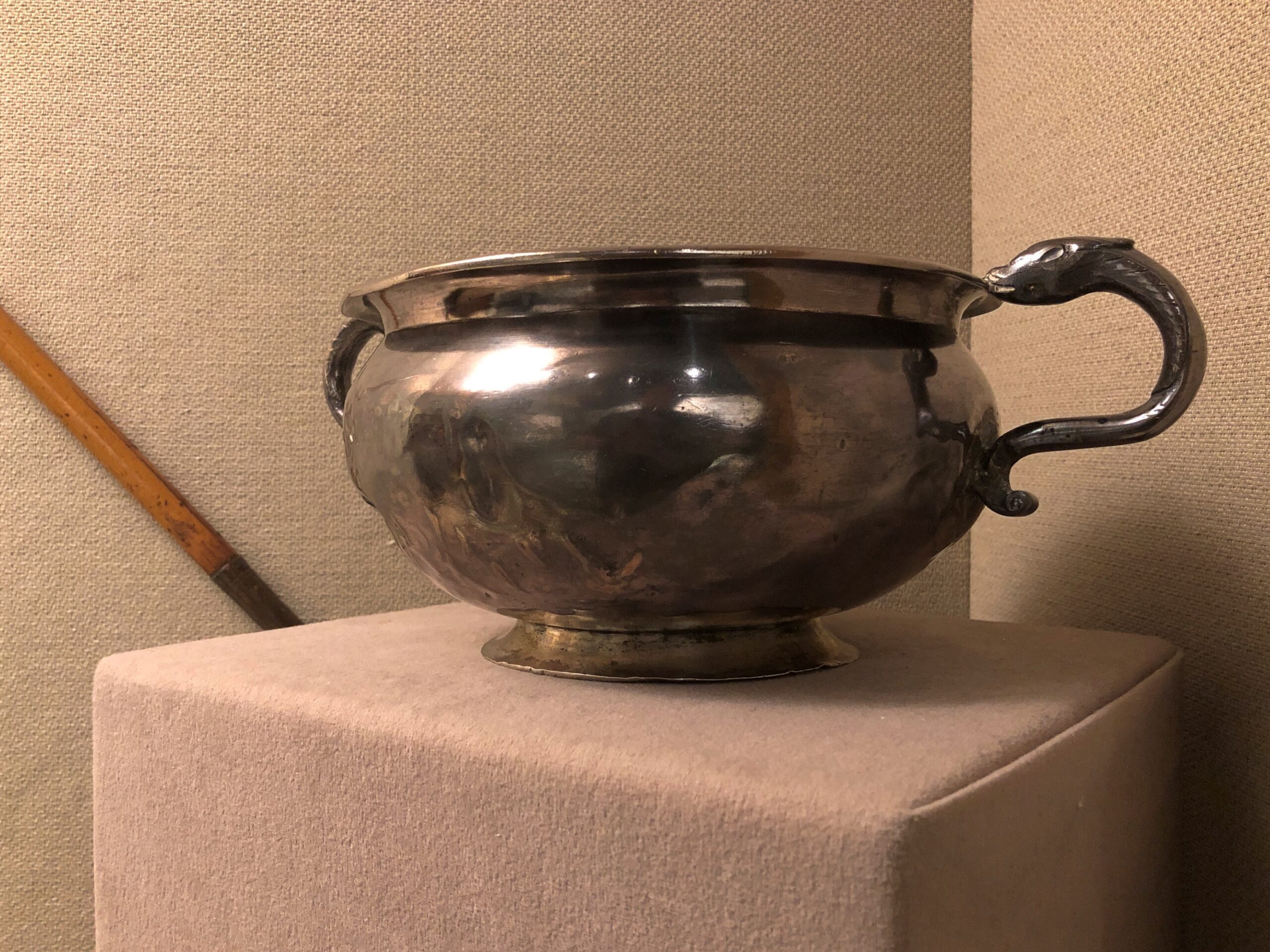
None better than Santa Anna’s silver chamber pot, a spoil of war at San Jacinto that the Mexican government probably has never wanted back.

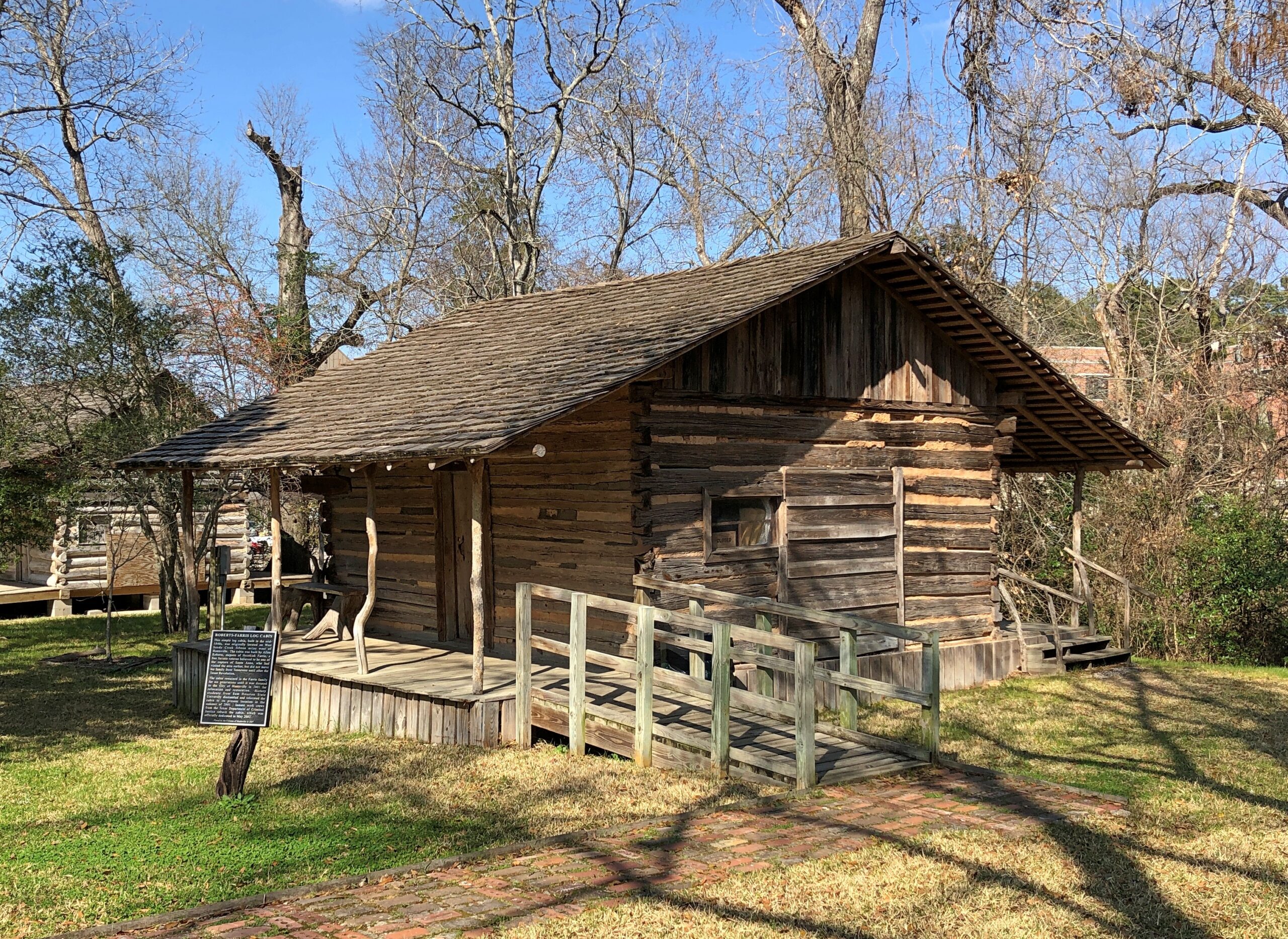
Besides the museum building, the grounds sport a small open-air museum. Including a log cabin (not Houston’s) from the Huntsville area, from around the time of the Republic.

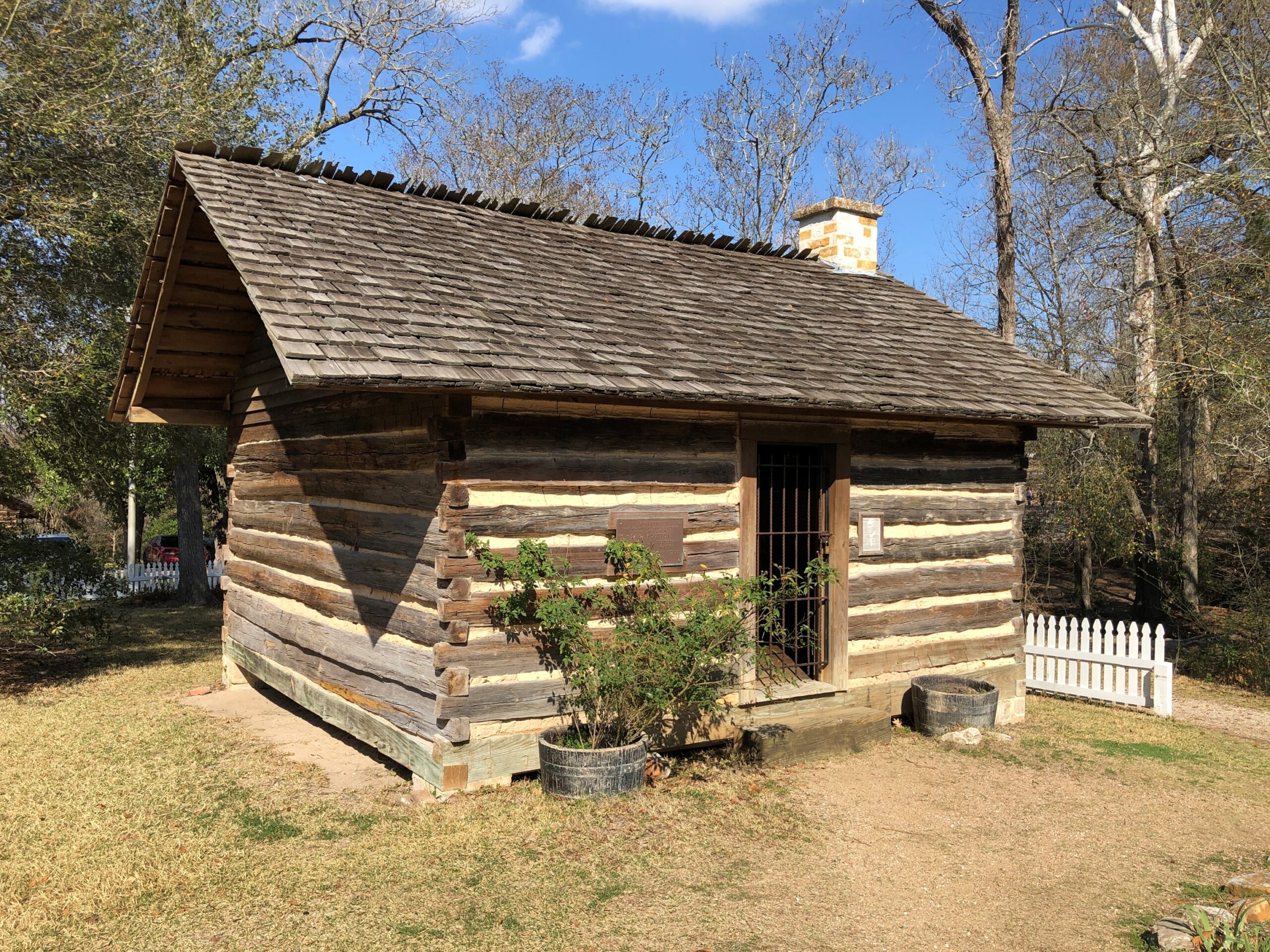
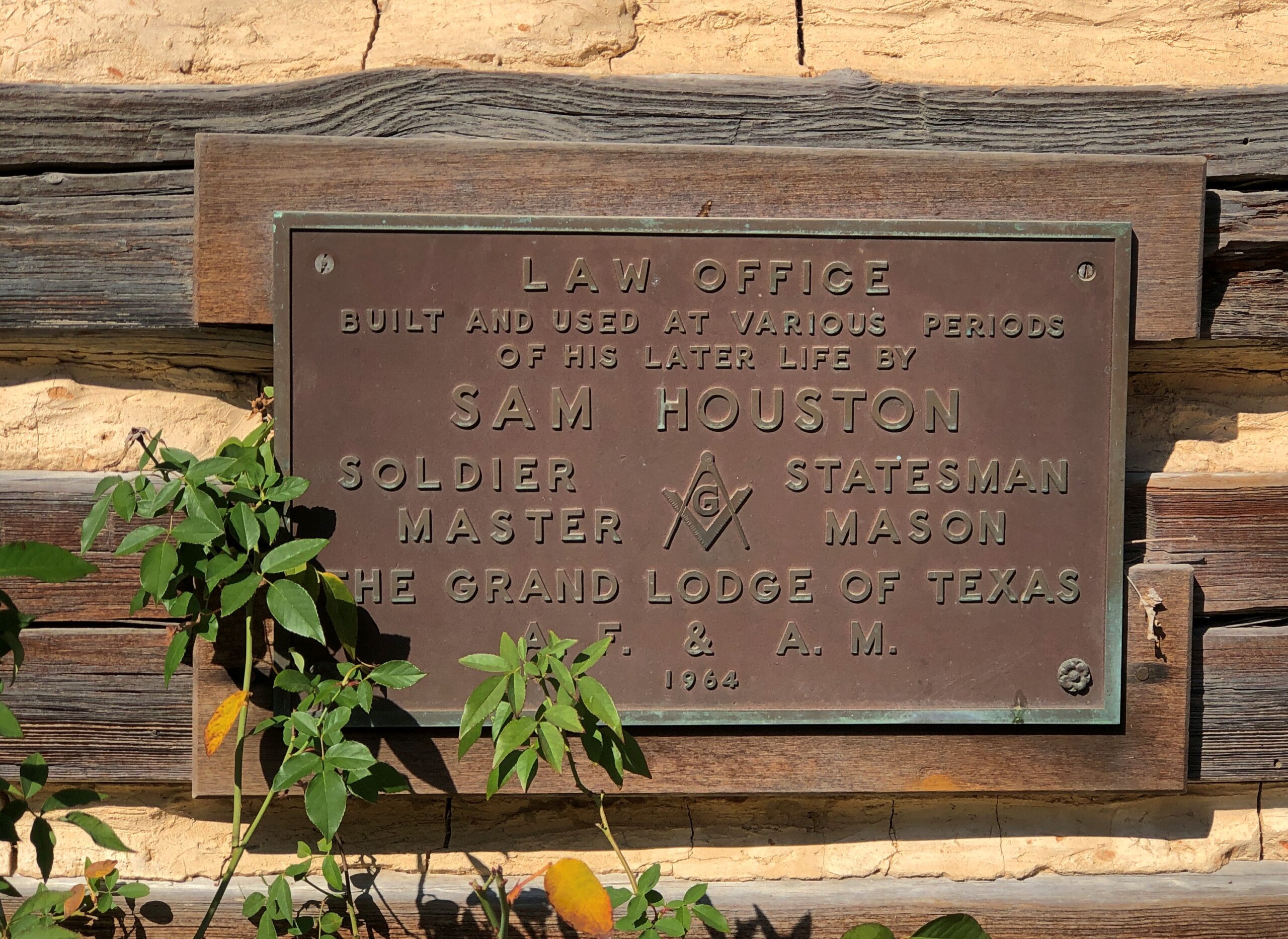
A log cabin that was Houston’s. He used it for his law office.

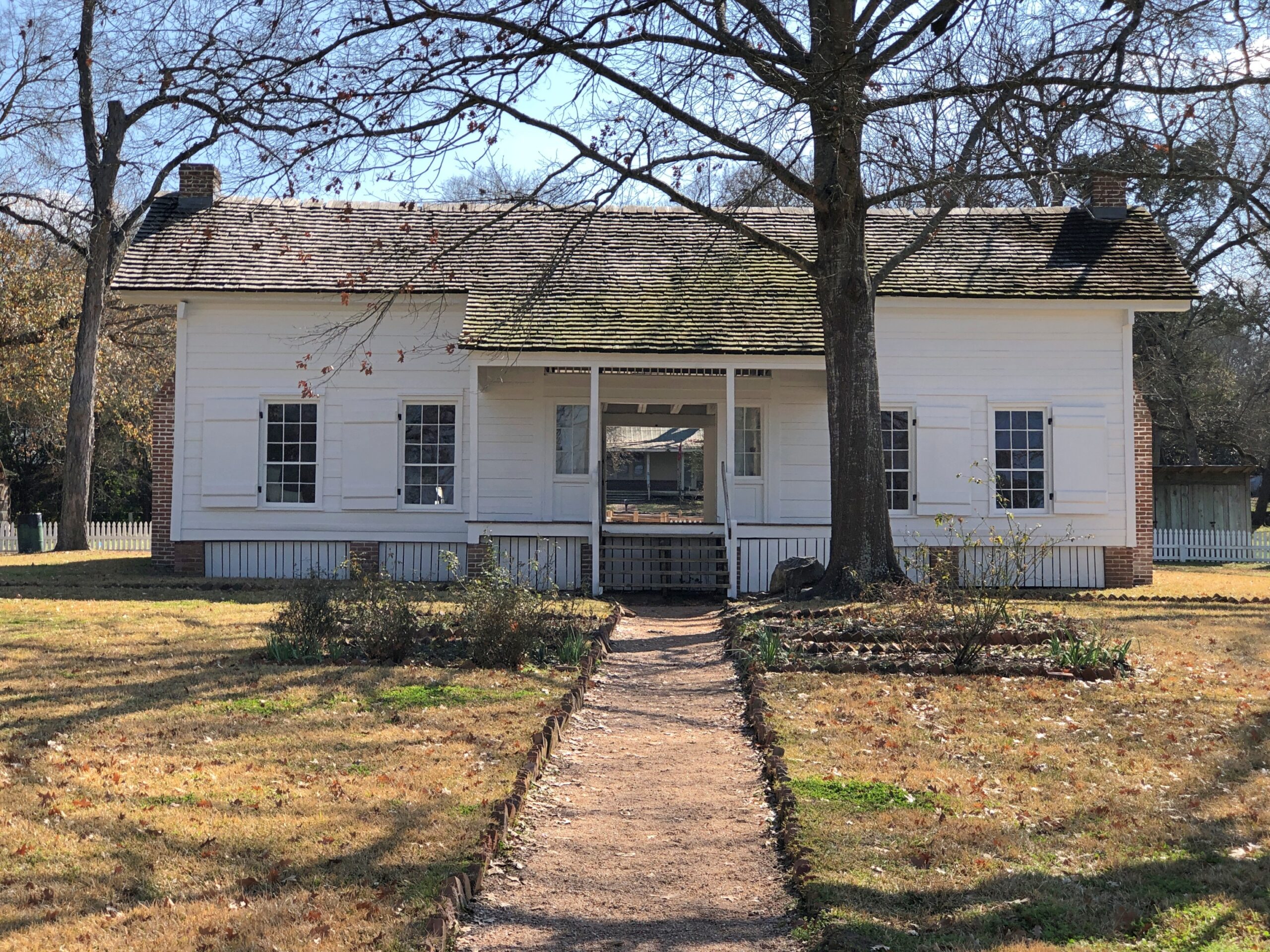
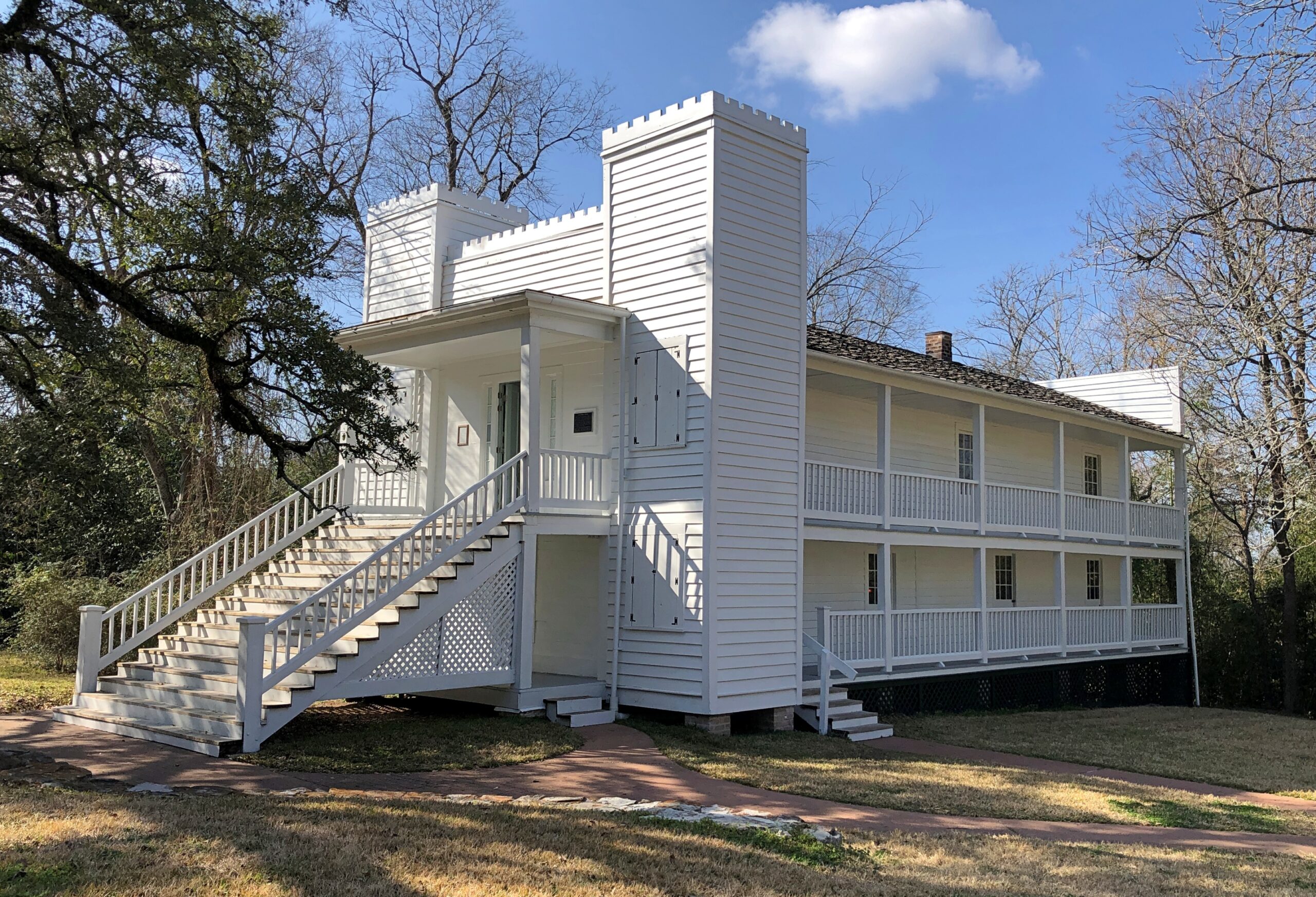
The earlier of the two Houston homes in Huntsville.

The later of the two, Steamboat House. The nickname fits. Houston, relieved of the governorship due to his belief that Texas was making a mistake in leaving the Union, died there in ’63.

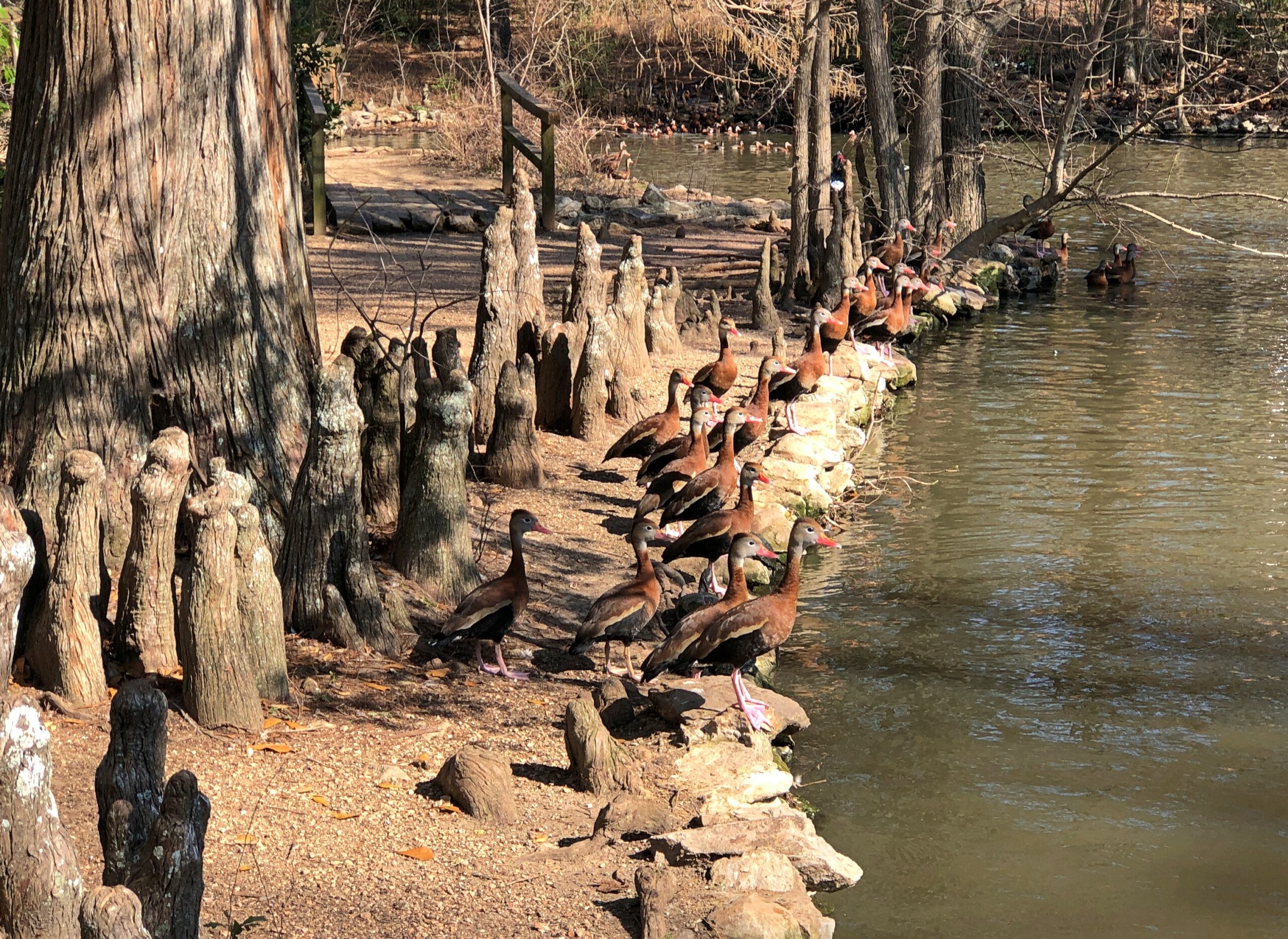
The grounds has a water feature. With water fowl and cypress knobs.

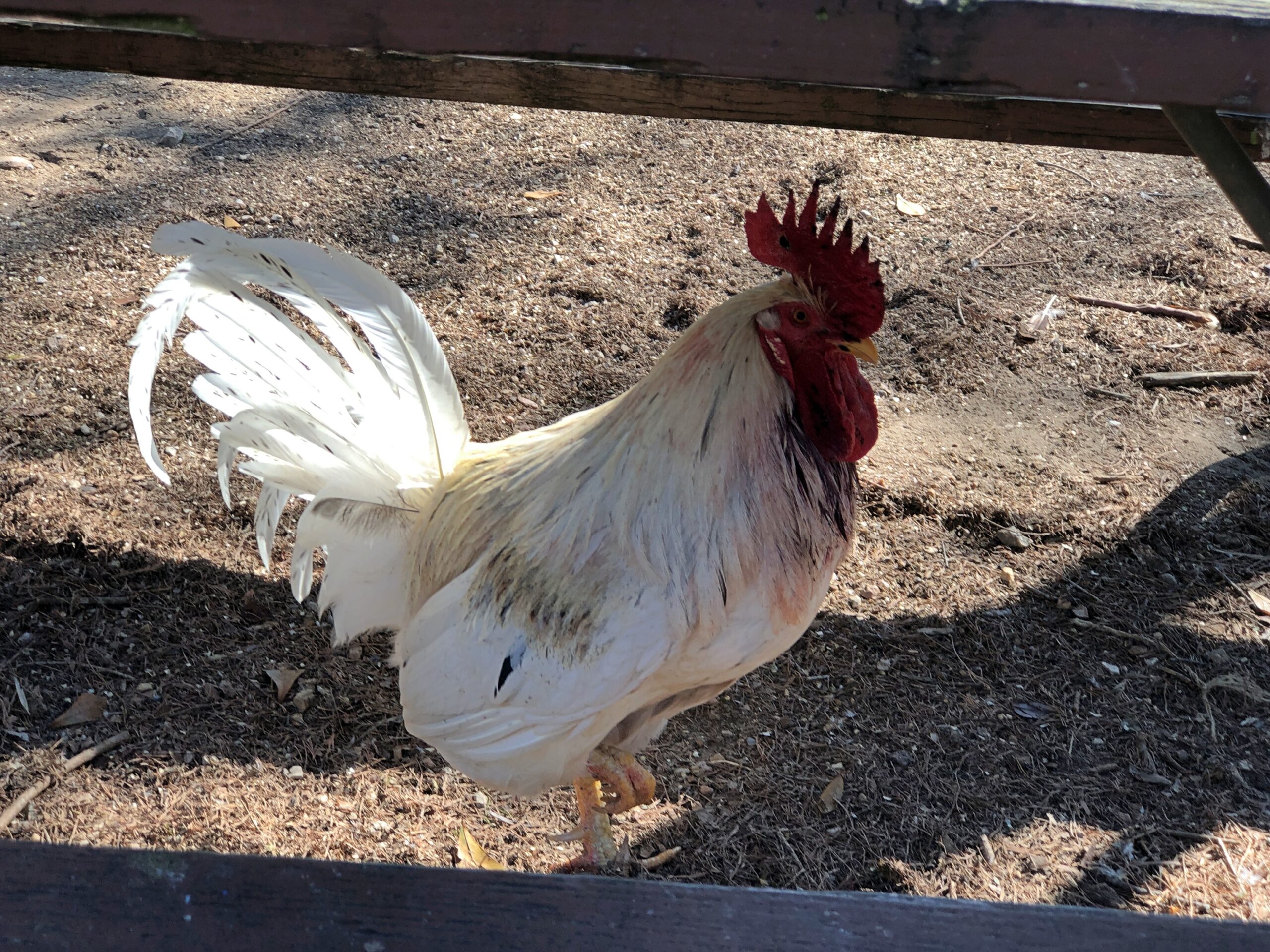
Elsewhere, some land fowl.

A touch of authenticity, since the Houstons must surely have had chickens around.

The National Museum of Funeral History

One place I didn’t go in February was Ghana, the west African nation. If I had to pick a place to visit in that part of the world, I might well pick Ghana, for various reasons. One is that the coffin shopping is unlike anywhere else.

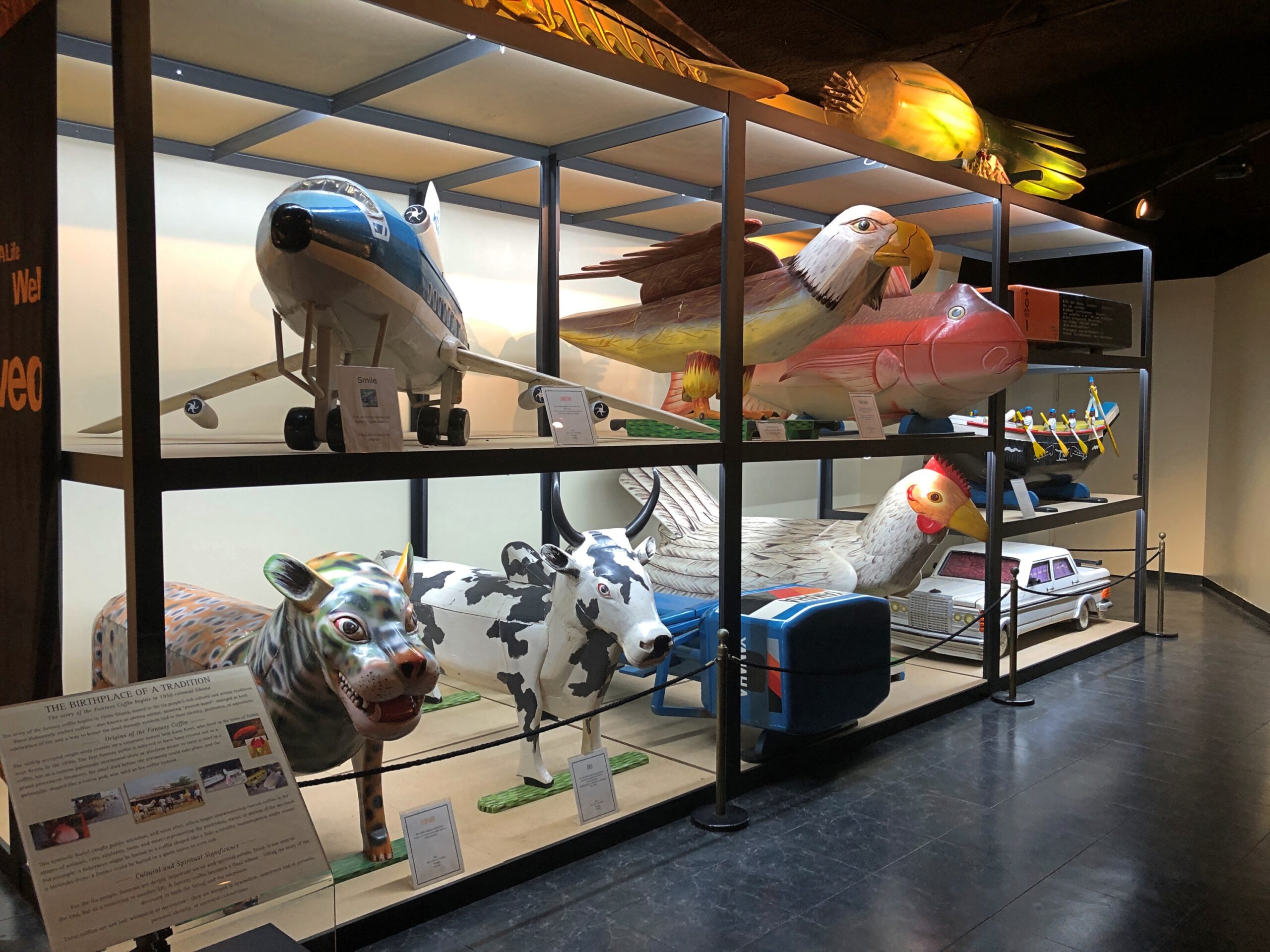
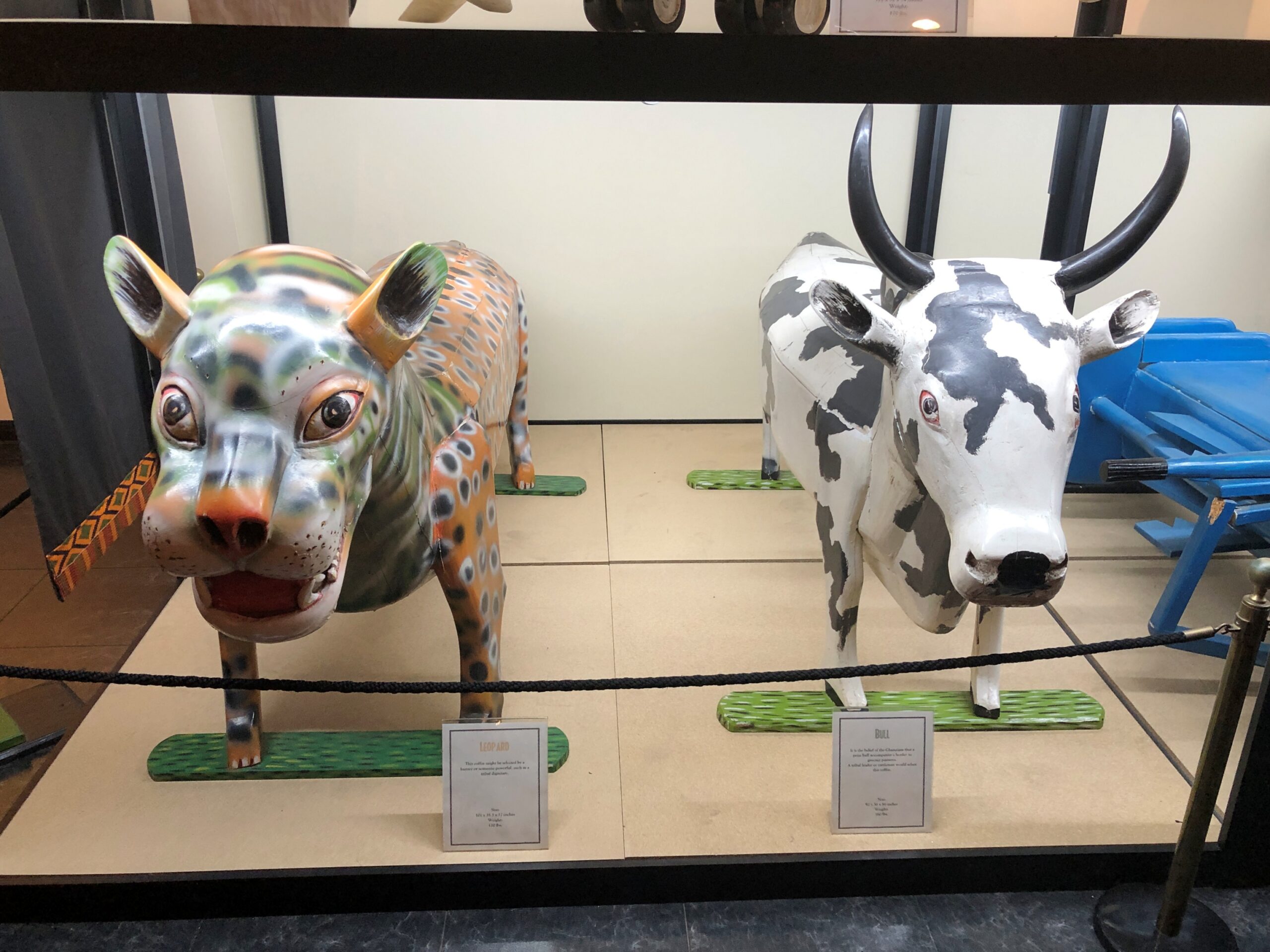
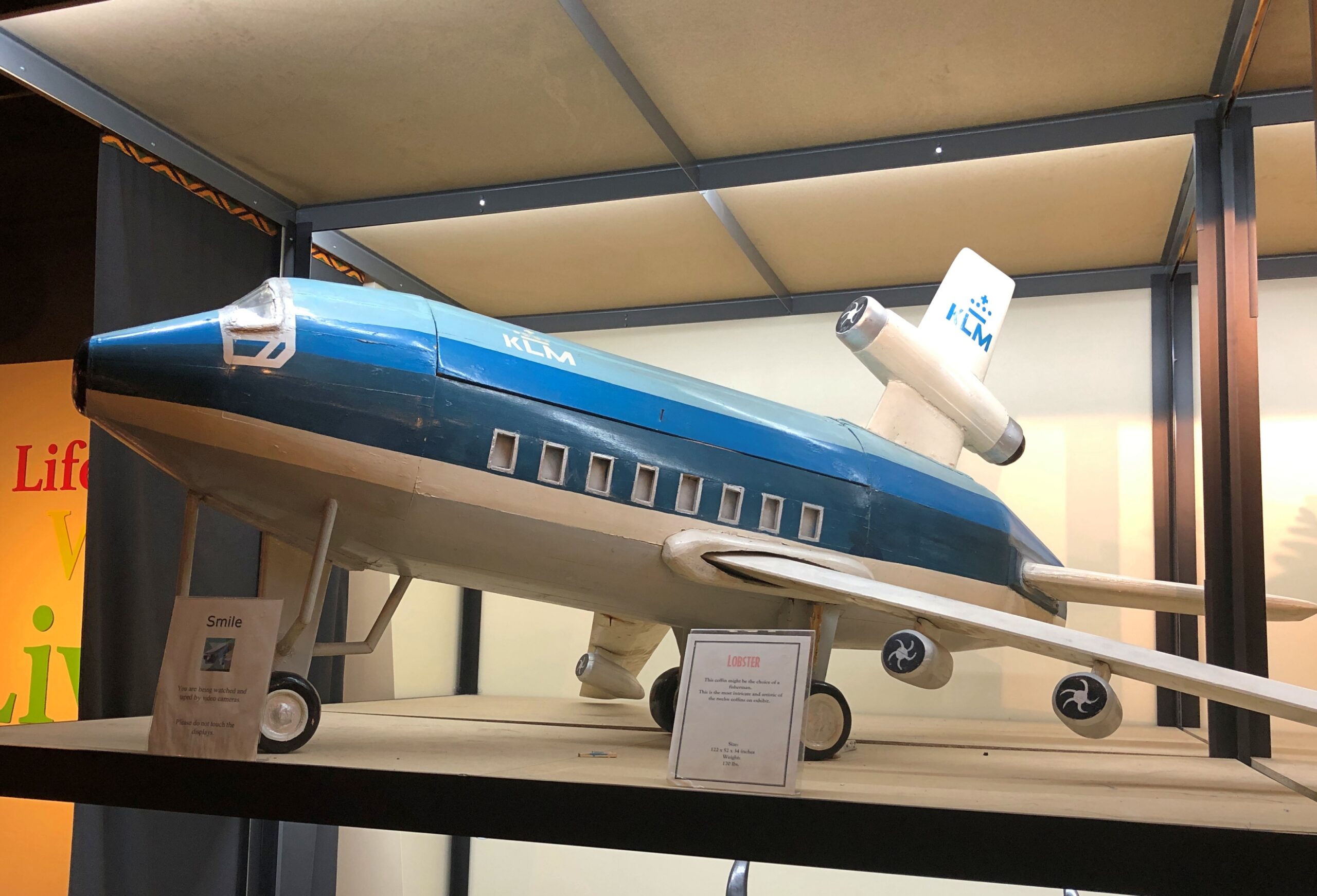
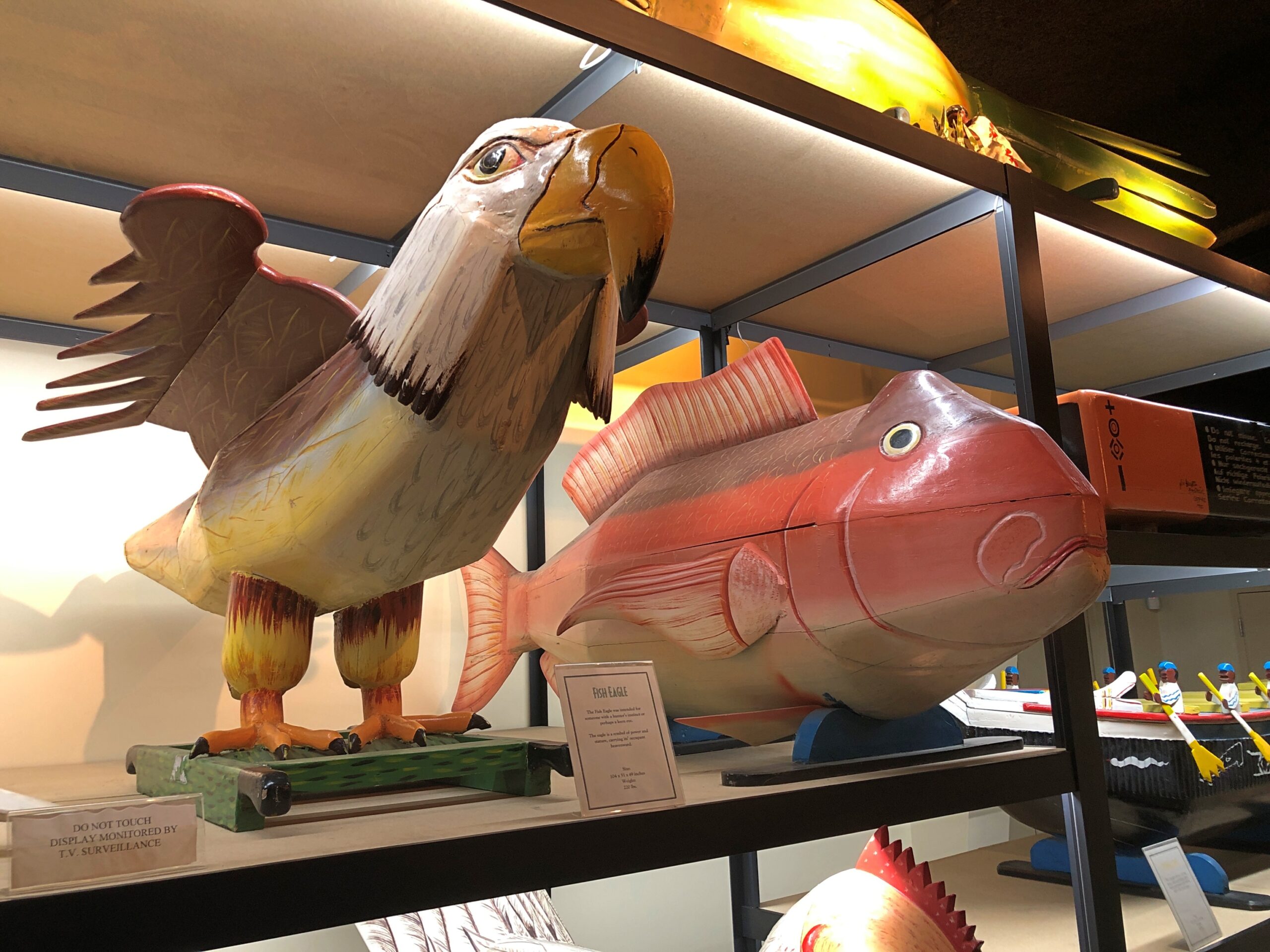
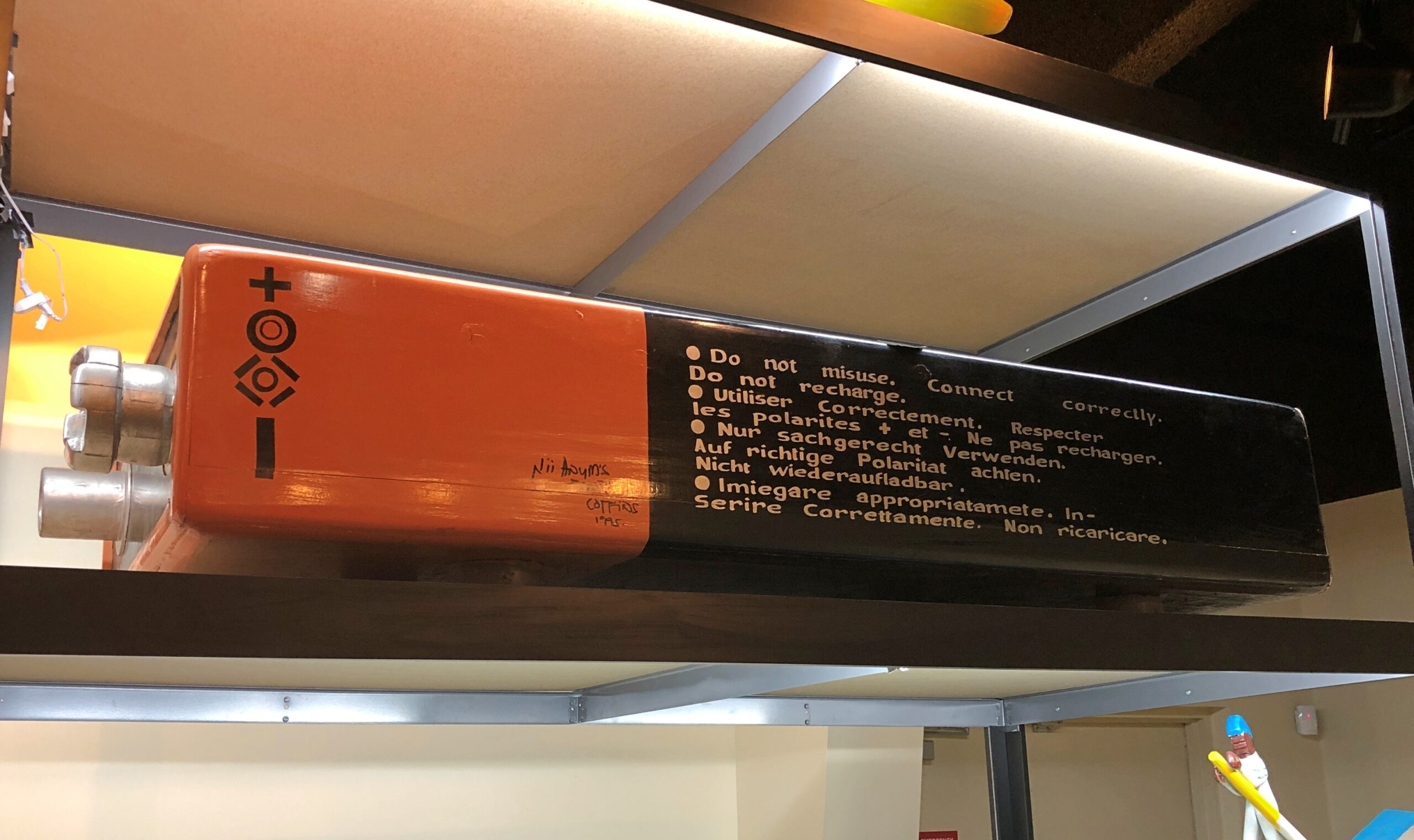
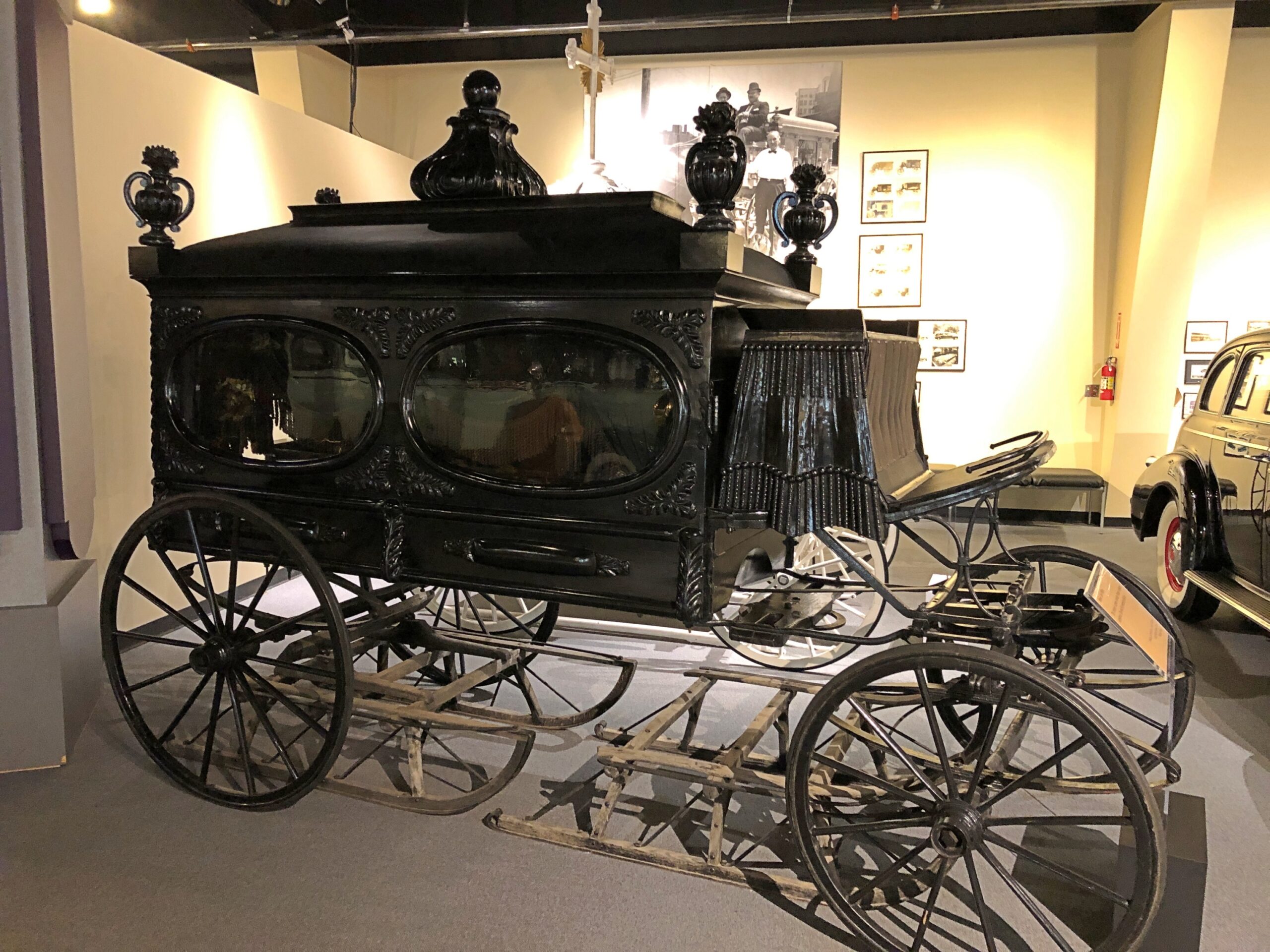
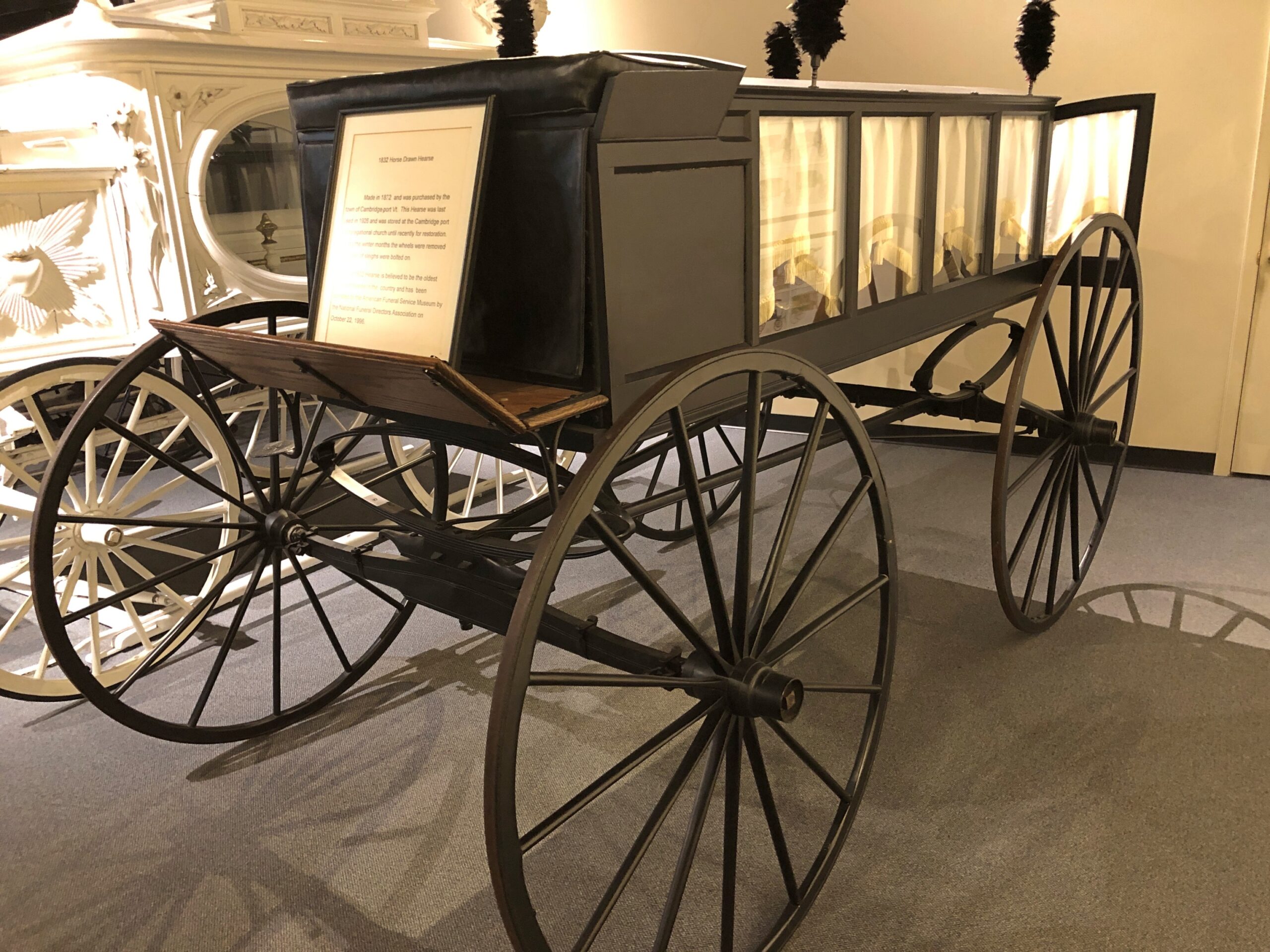
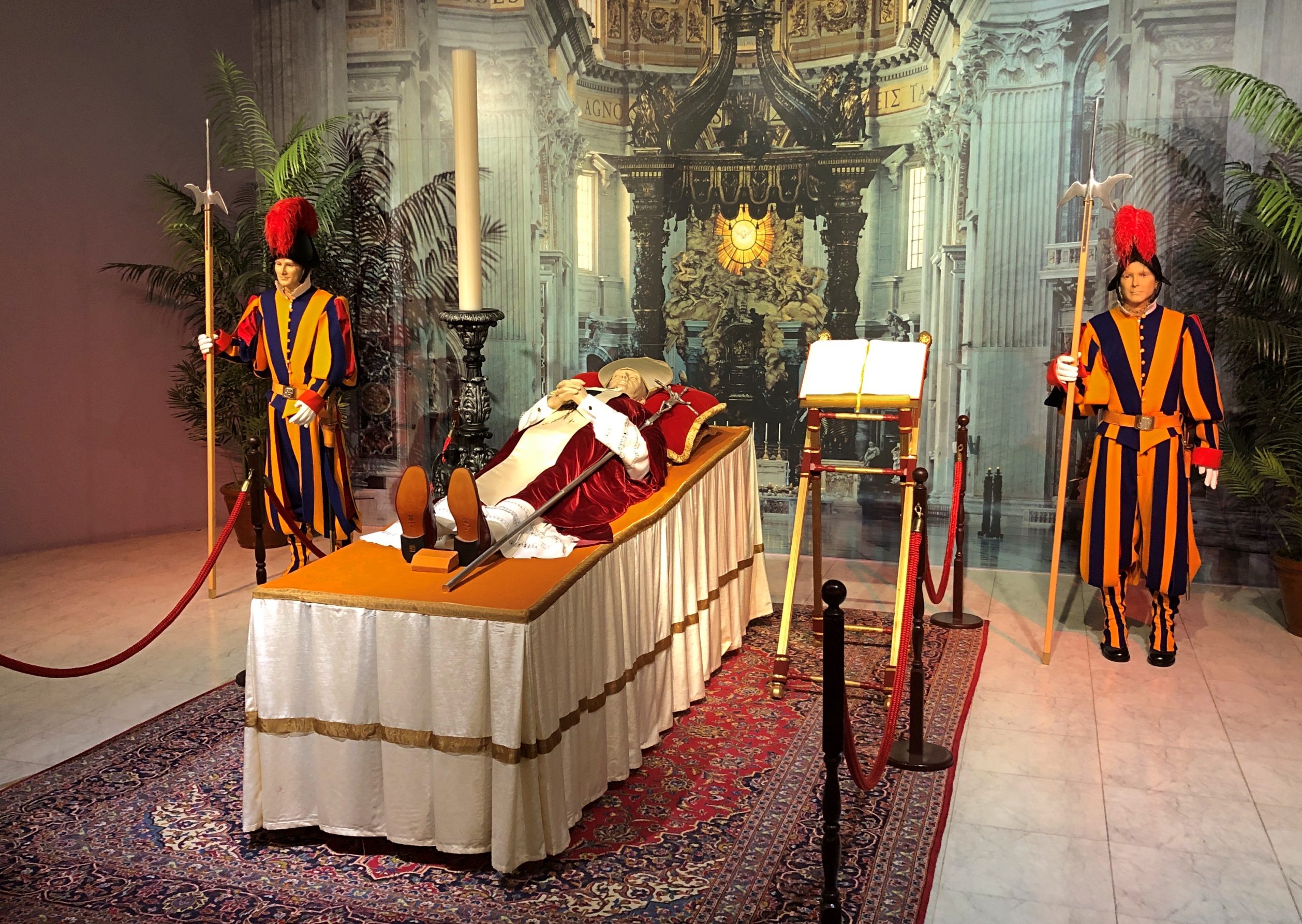
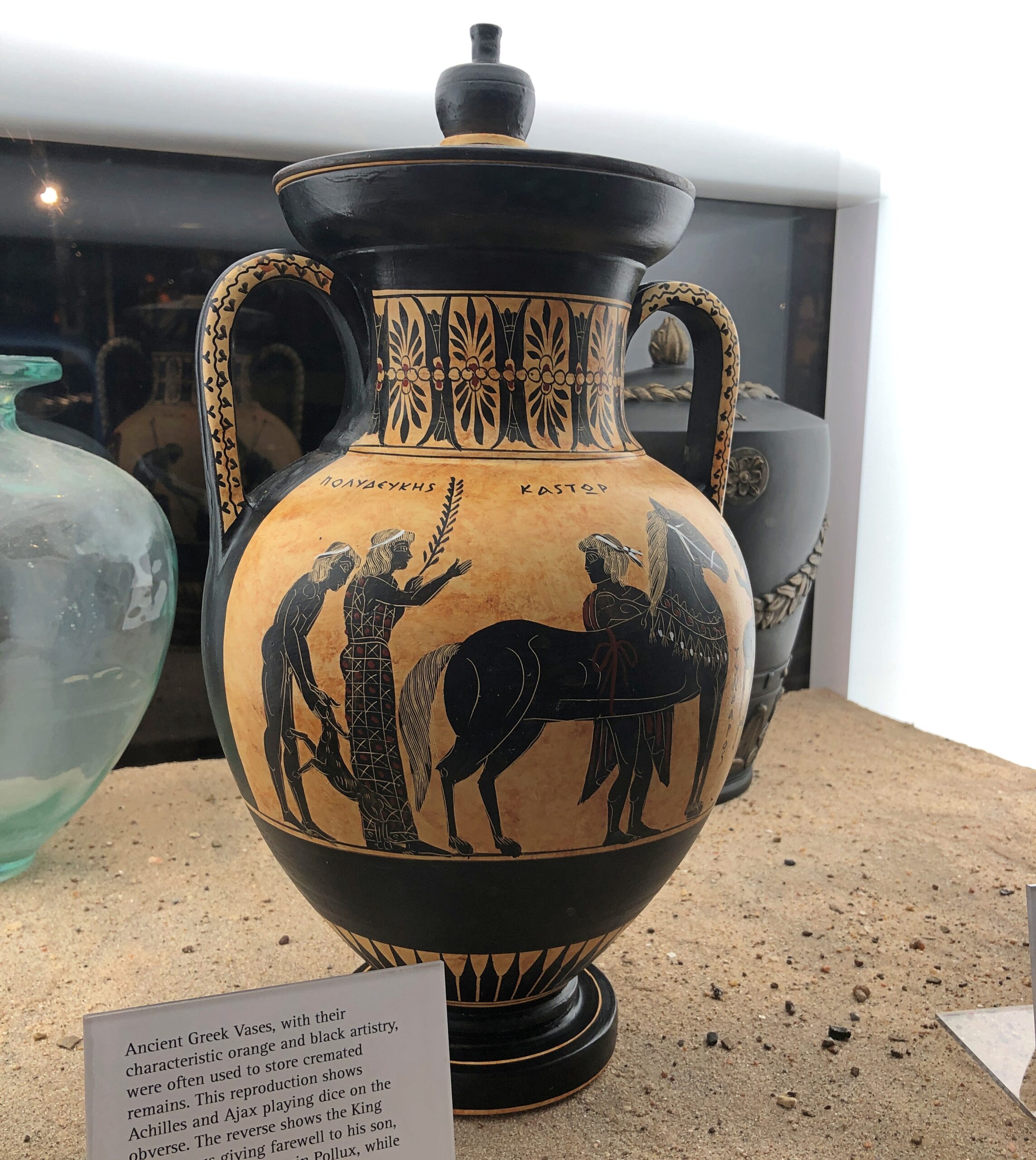
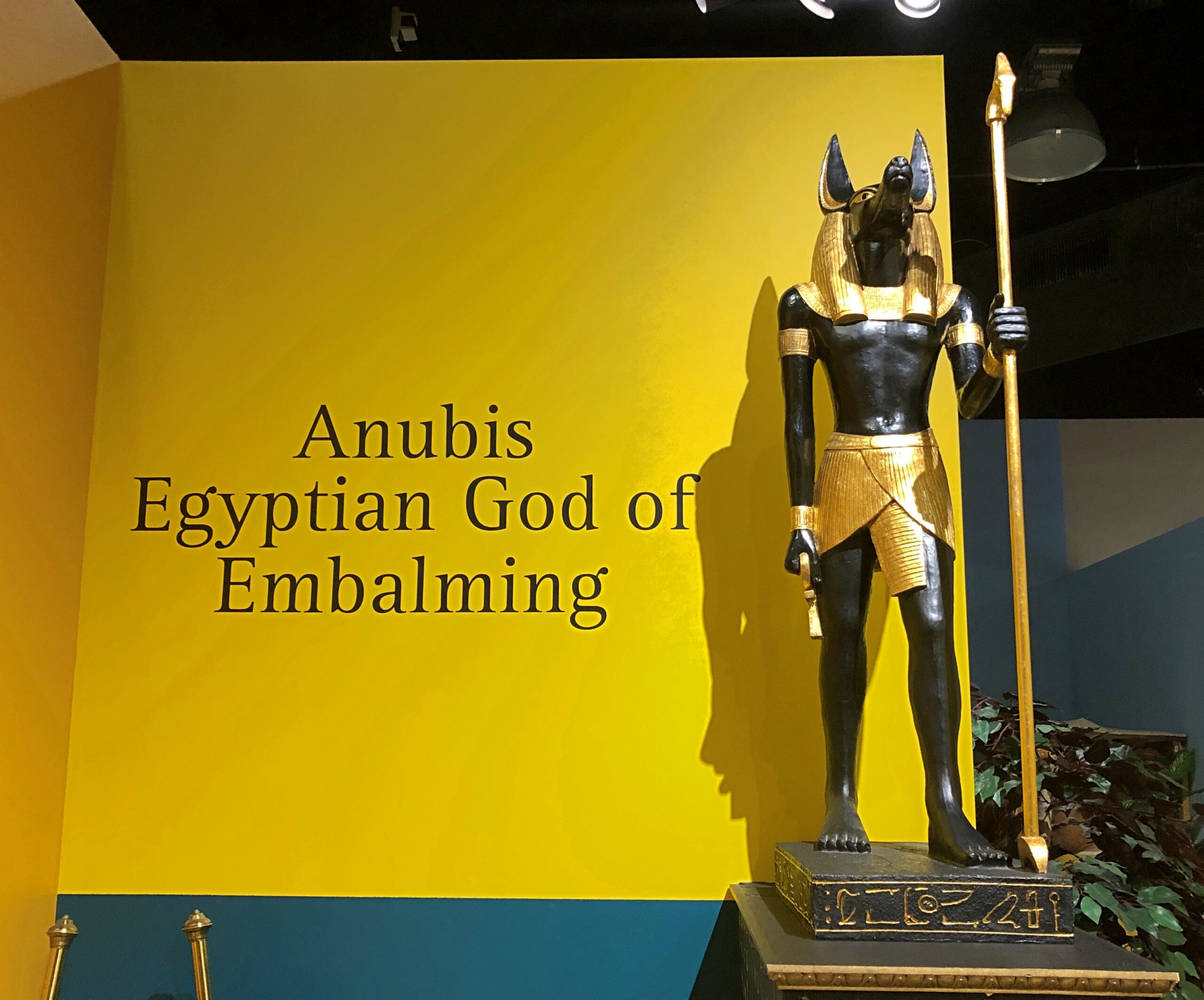
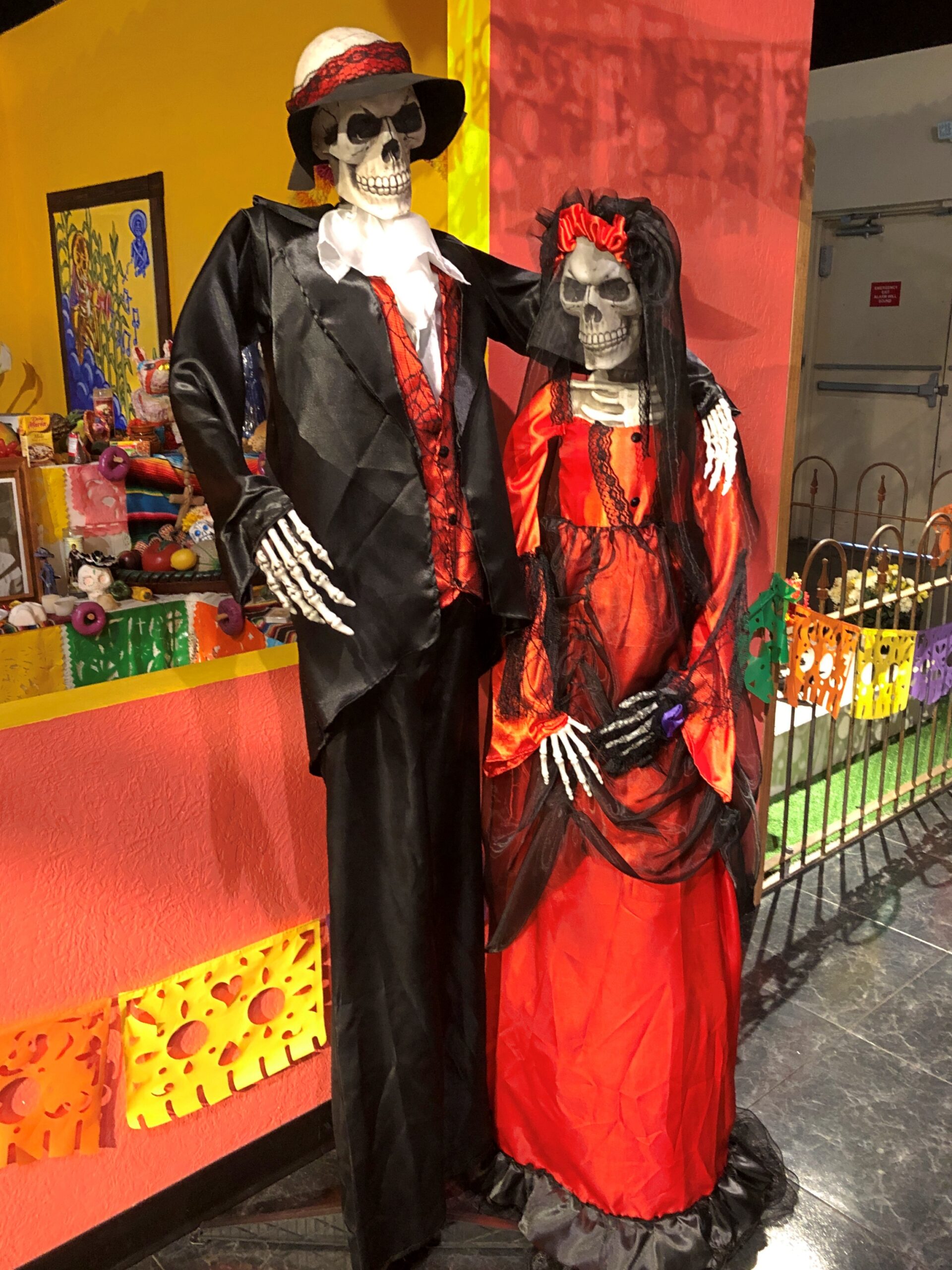
Rather, I stopped by the National Museum of Funeral History in northern Houston, which has a connection to Ghana. I was expecting a display of coffins maybe, but the museum has so much more: many hearses, horse-drawn and automobiles; items from the funerals of U.S. presidents and popes, including a large display about the funeral of President George Bush the elder; entire sections on cremation and embalming from the earliest times to now; Victorian death memorabilia in its macabre (to us) variety; a Day of the Dead exhibit; and, to my surprise, Ghanaian coffins, which the museum calls the largest such collection outside west Africa.

My favorite, though it’s a hard choice: the Duracell coffin, with its distinct copper top. Guess those batteries are sold in west Africa. You’d think Energizer would be the better choice.

The museum, founded in 1993, occupies more than 30,000 square feet in an unassuming building in a neighborhood of unassuming buildings. Had it not been for the billboard advertising it on the highway into Houston, I might have missed it. Or not. I have a way of ferreting out smaller museums. One important advantage of the NMFH: it’s open on Mondays. Many Houston museums are closed on Mondays and Tuesdays — the two days I was in town.

As with many specialized museums, NMFH is the legacy of a single person with a driving interest in a single subject and, in his case, access to many of the relevant artifacts. The subject just happens to be death adjacent, so when I mention the museum, people get a little weird.

“The idea for the Museum grew from Robert L. Waltrip’s 25-year dream of establishing an institution to educate the public and preserve the heritage of death care,” the museum says. Waltrip, a Houston mortician born to an undertaker father, didn’t need death care himself until recently, dying in 2023 at 92.

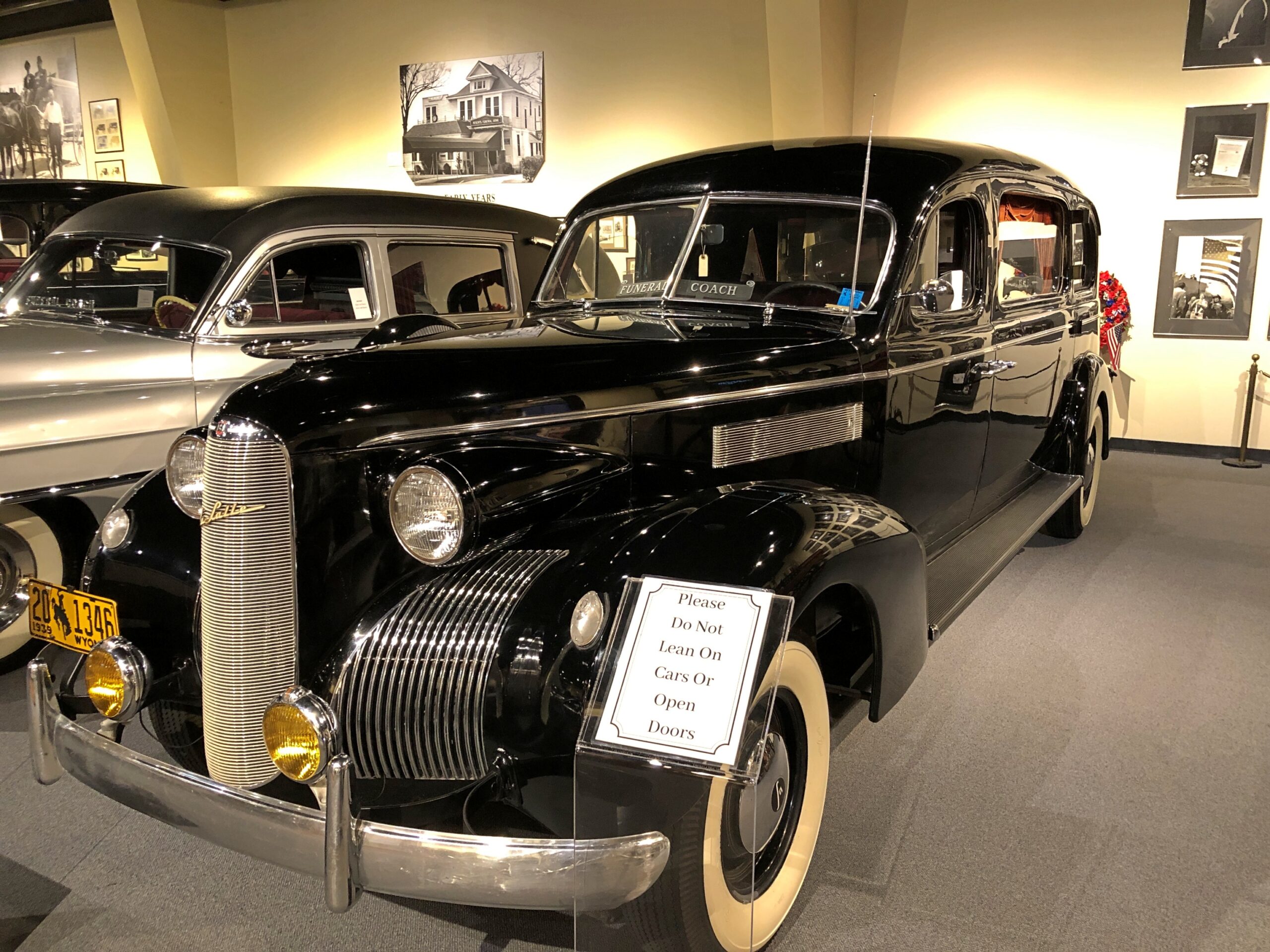
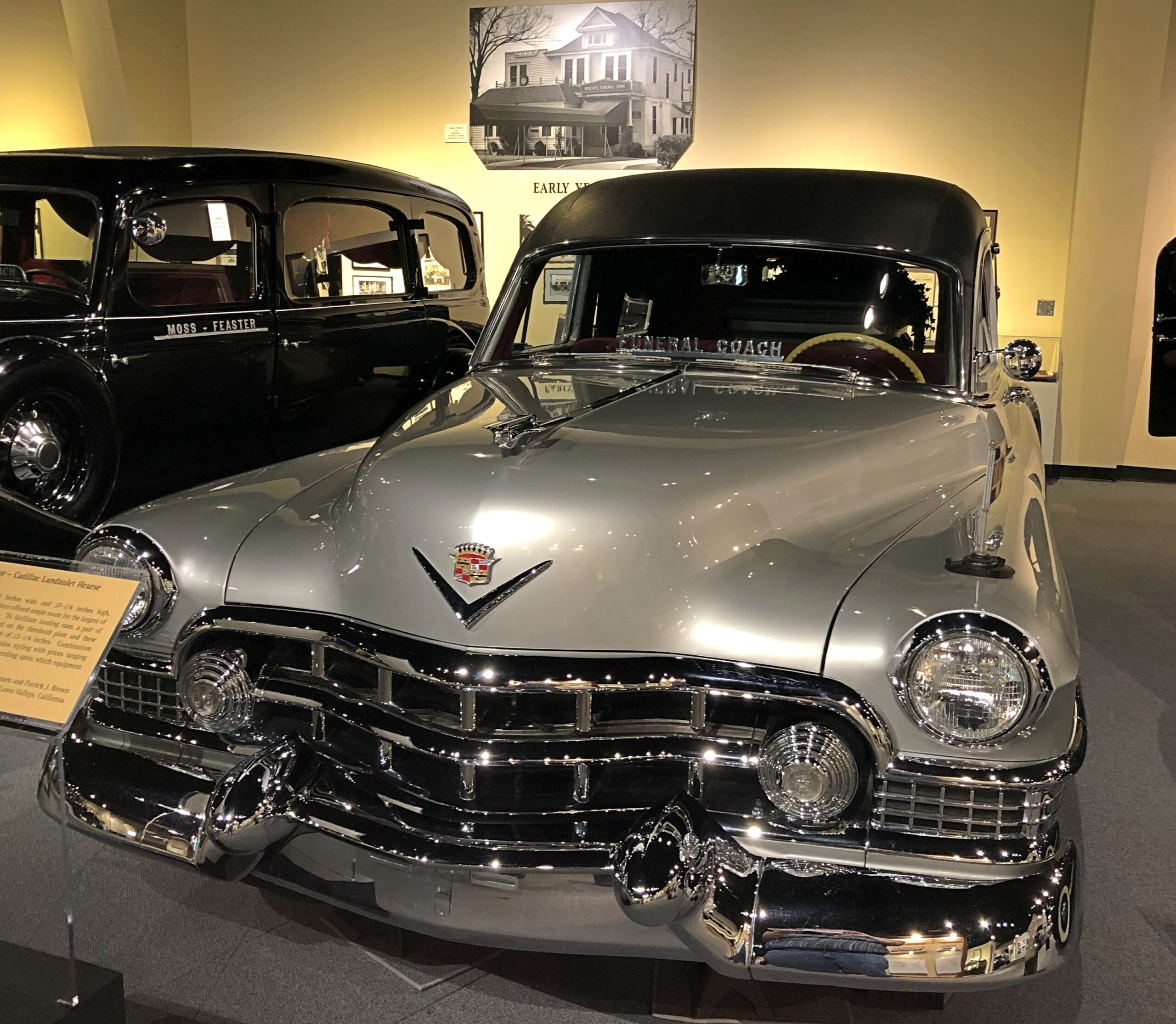
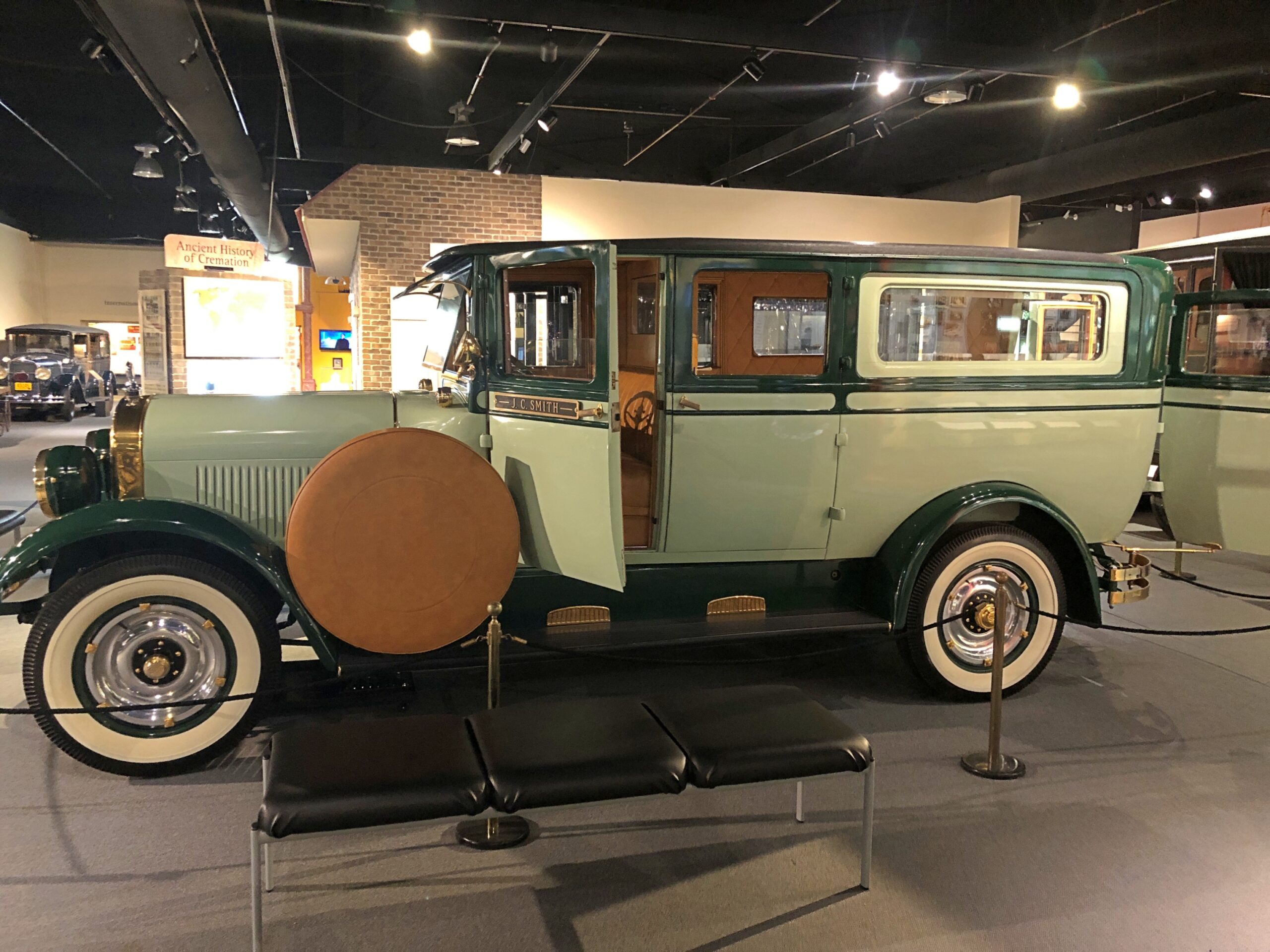
The hearse collection is impressive, making the museum count as a carriage and auto museum. Not all automotive hearses, at least in earlier times, looked like the stretch postwar hearses one thinks of now.

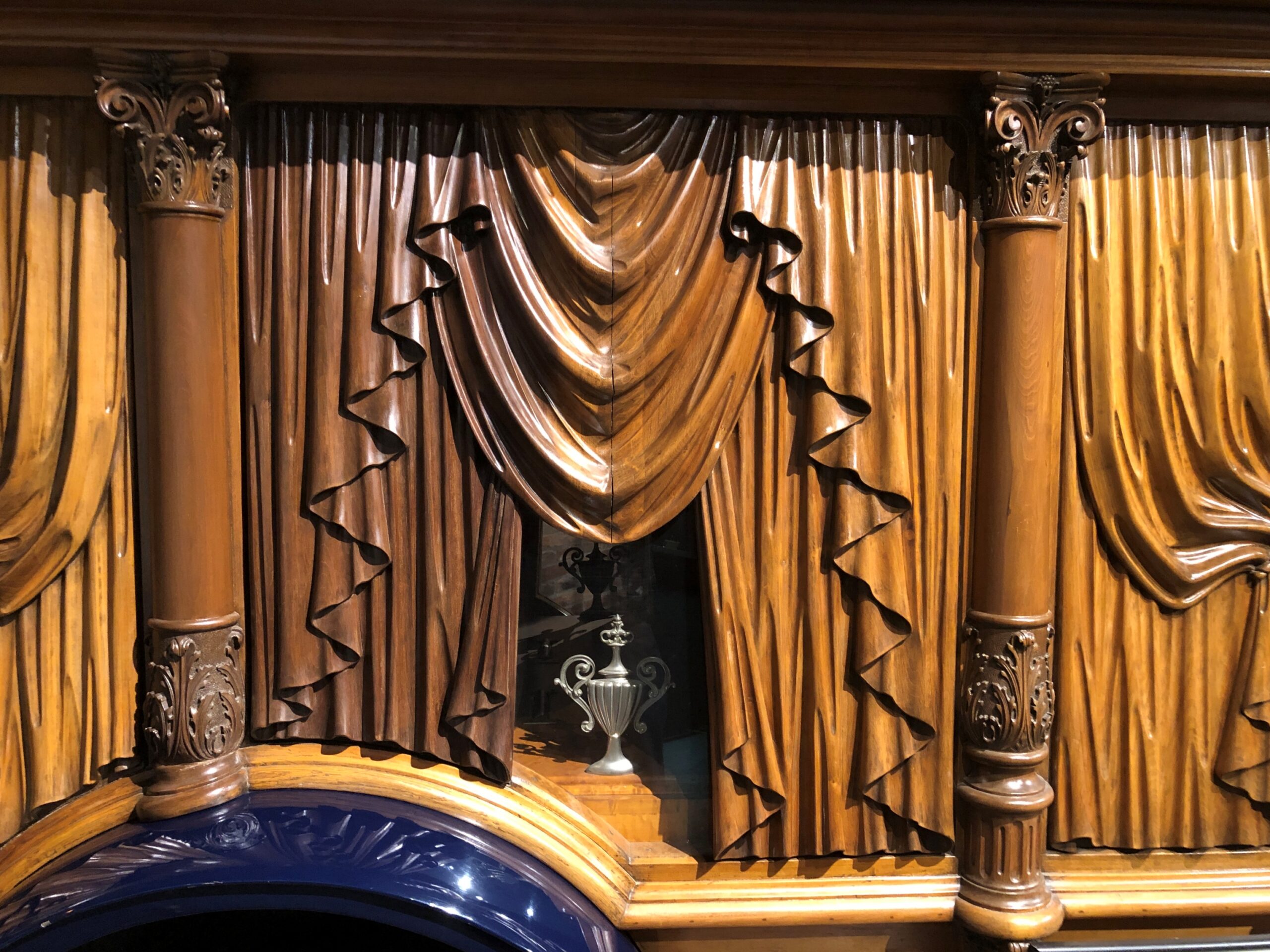
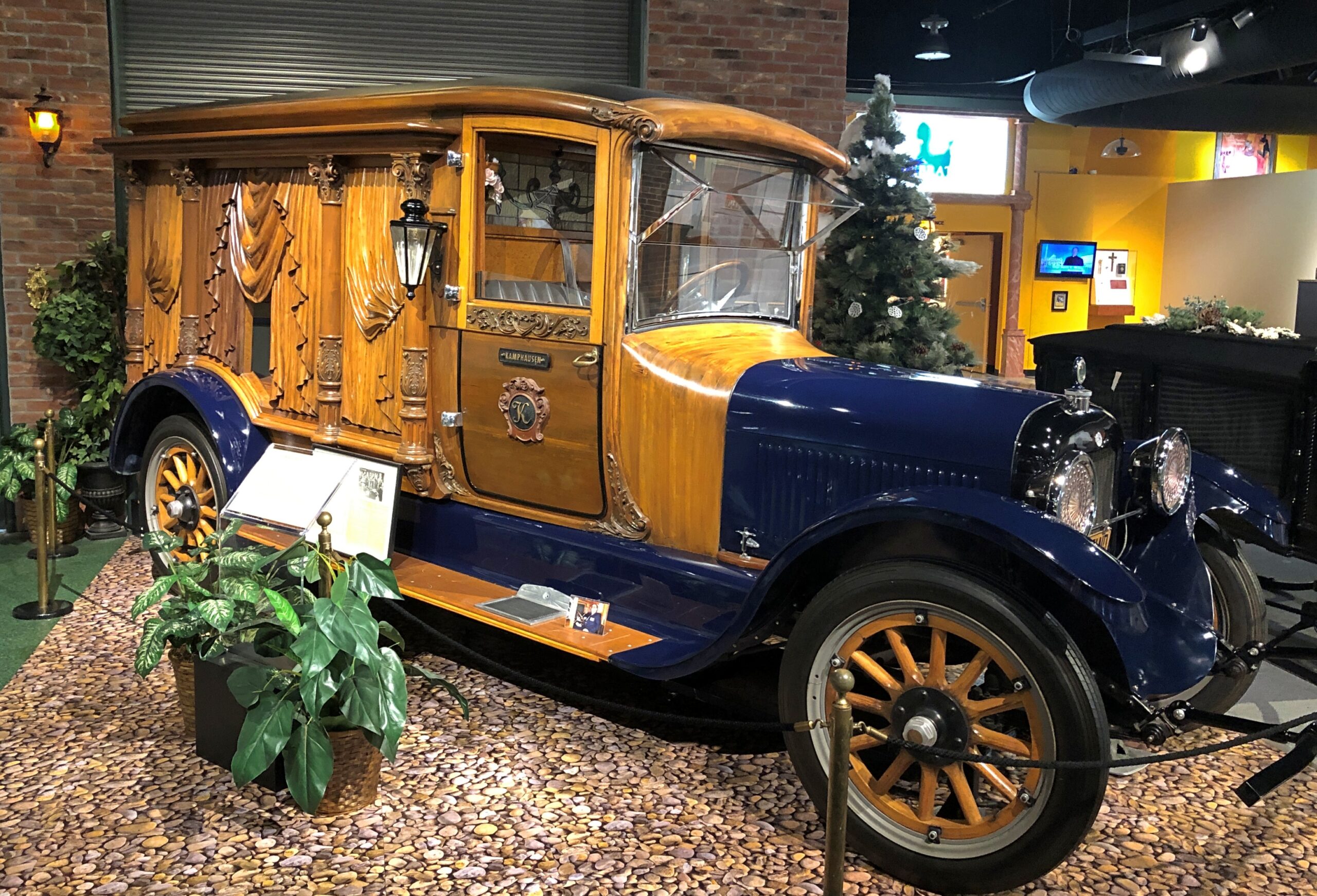
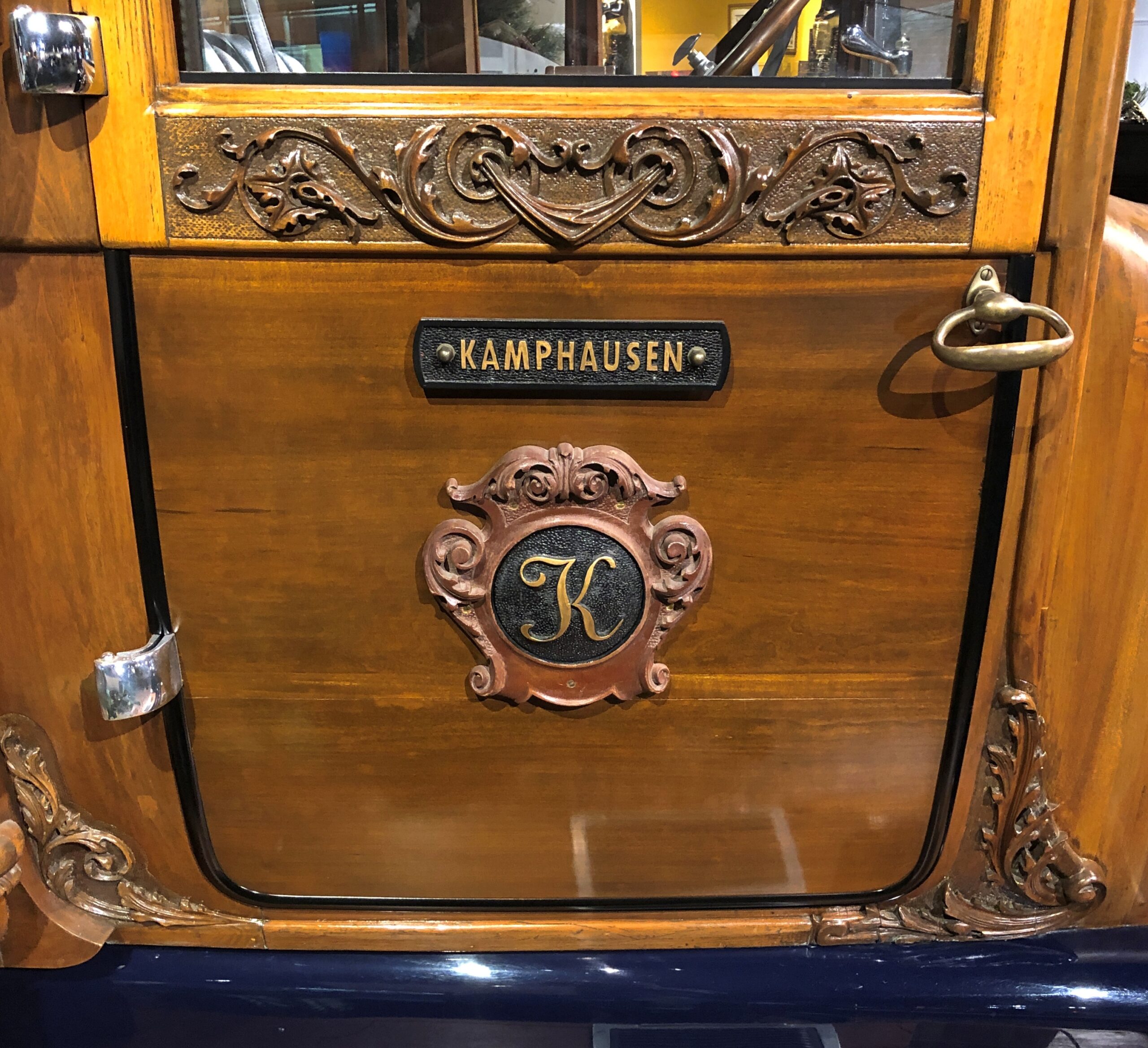
A vehicle the likes of which I’d never seen: a 1921 Rockfalls Hearse, built in Sterling, Illinois, the museum says. The hearse’s hand-carved body is composed of six types of wood.

Some horse-drawn hearses.

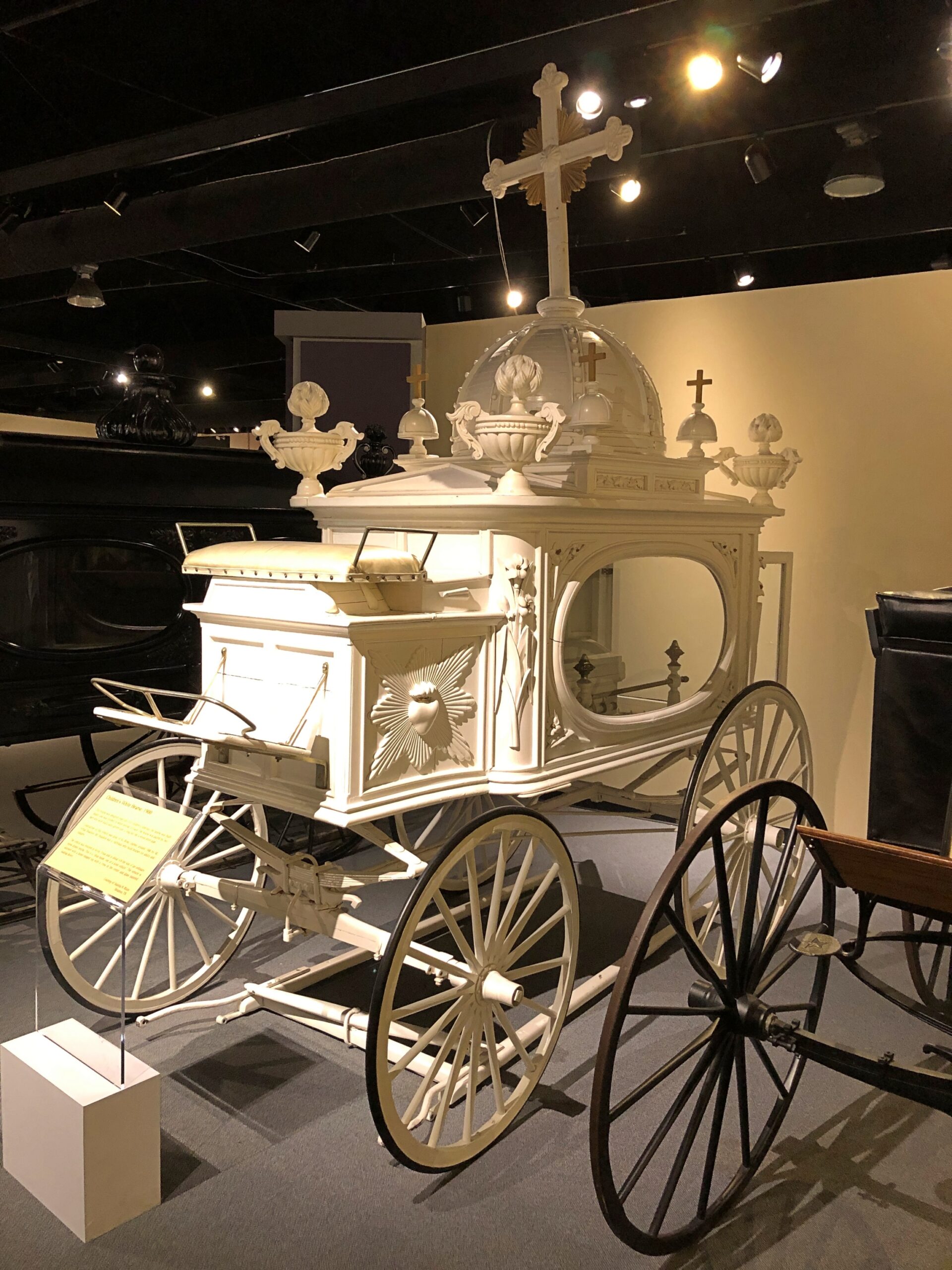
A children’s hearse from, of course, Victorian times.

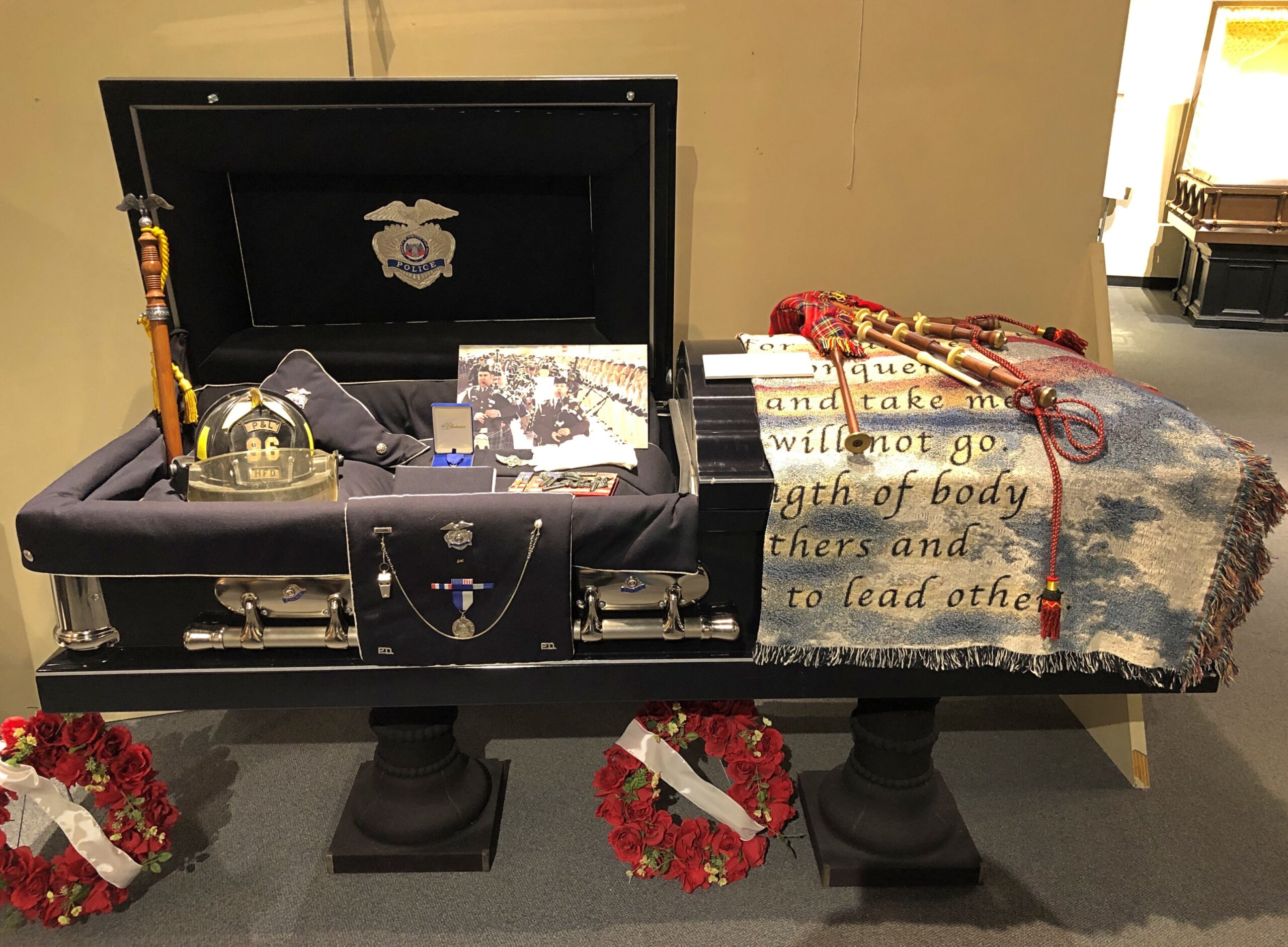
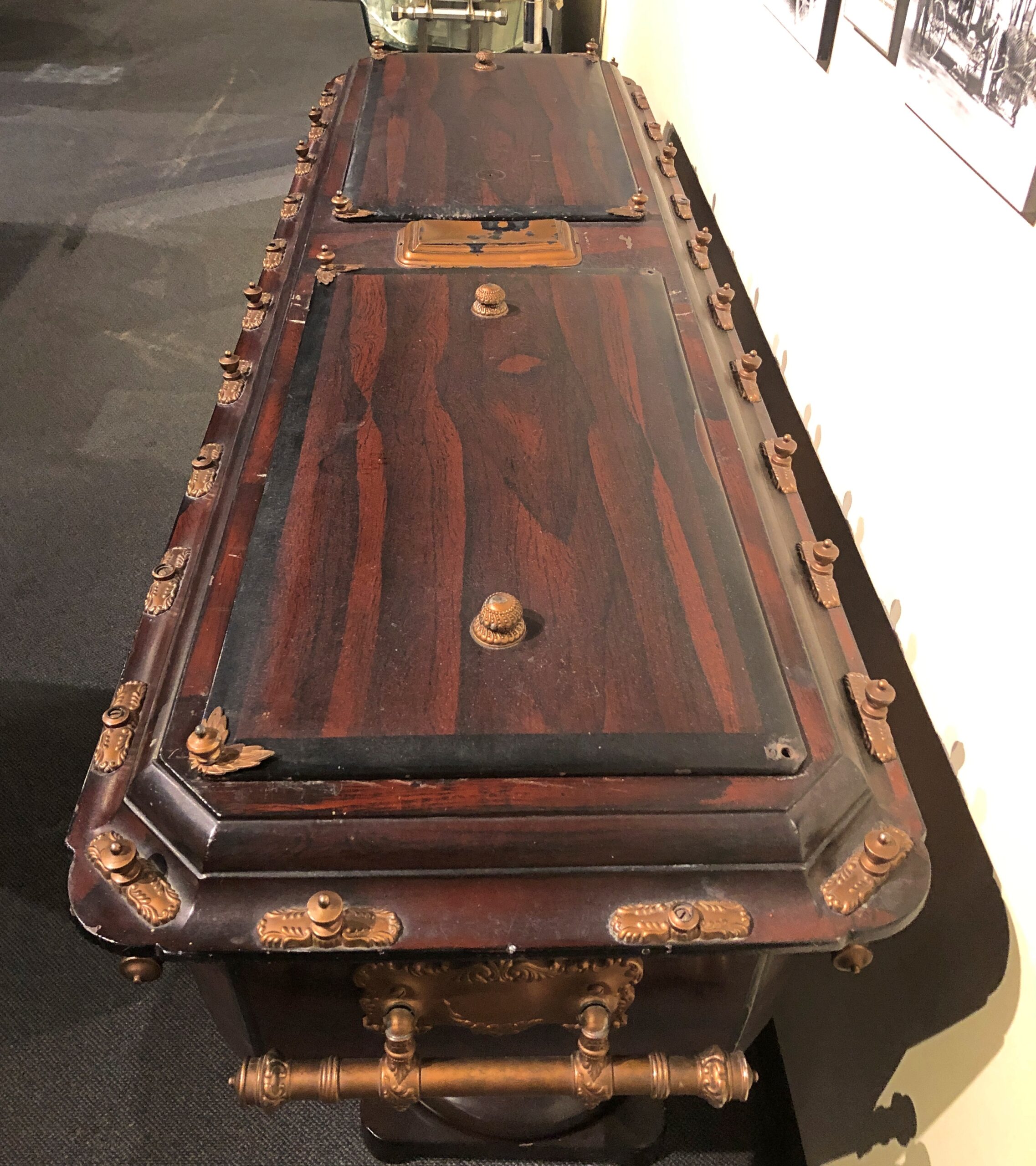
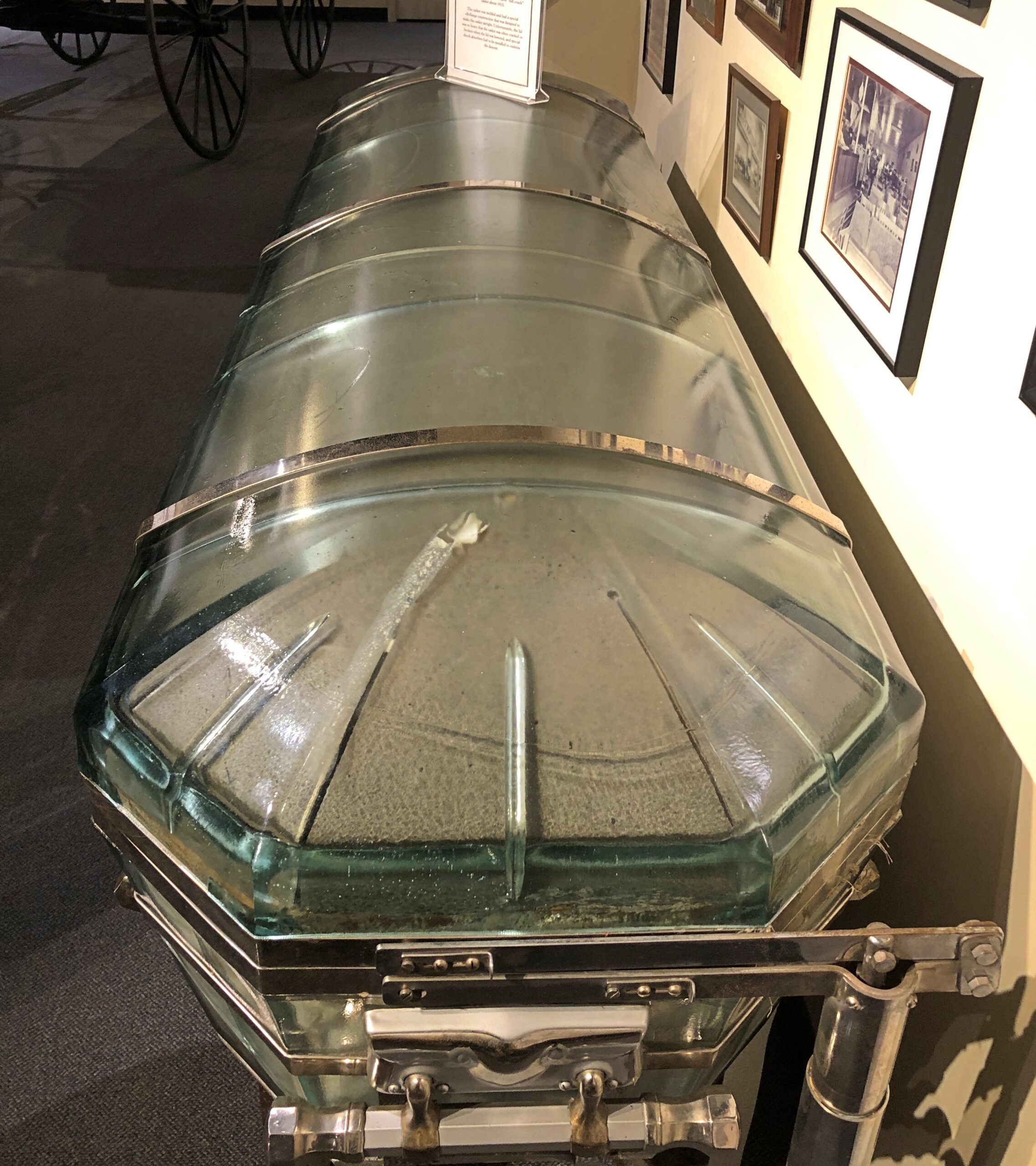
Some coffins and caskets, too. “It’s not the cough/that carries you off/but the coffin/they carry you off in.”

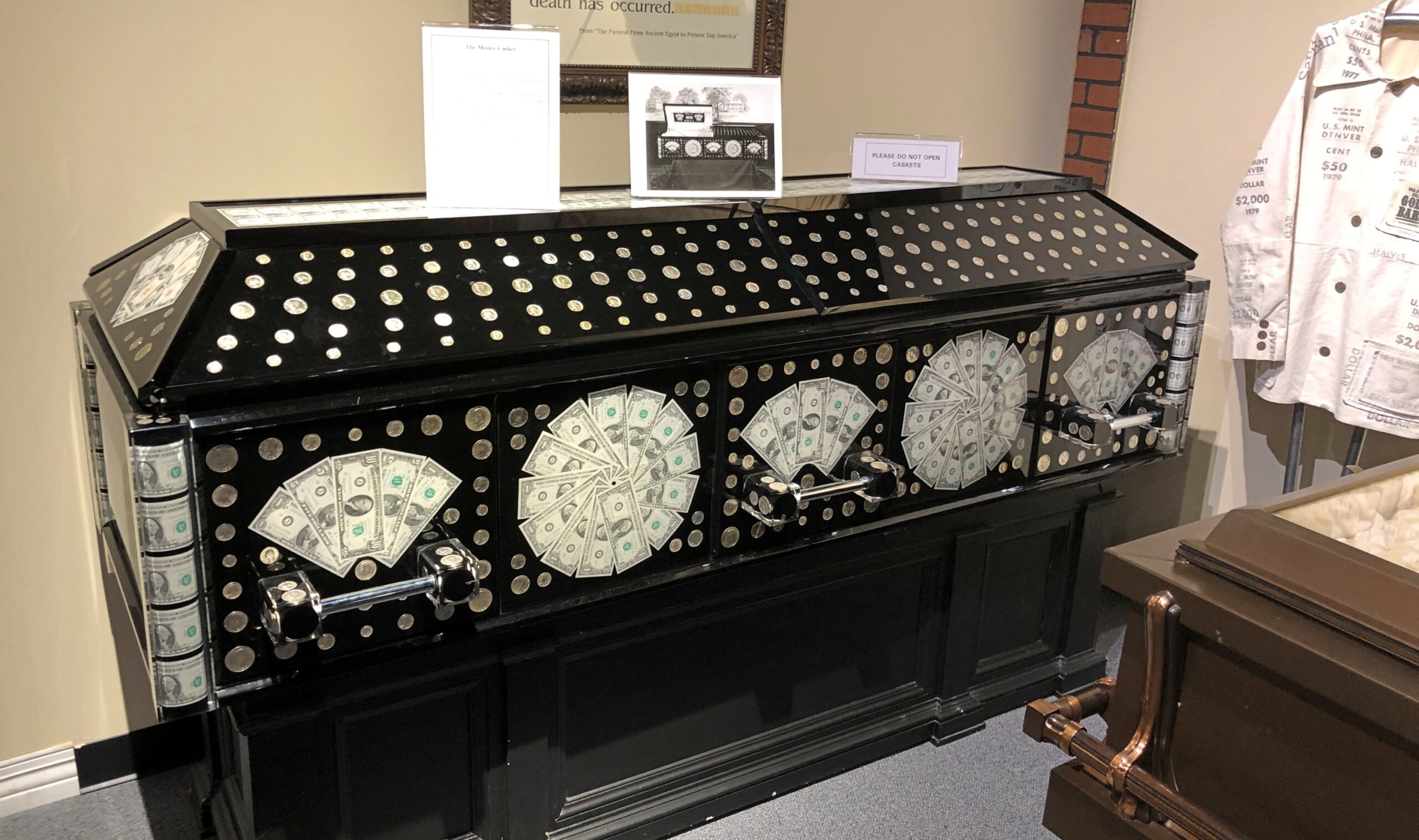
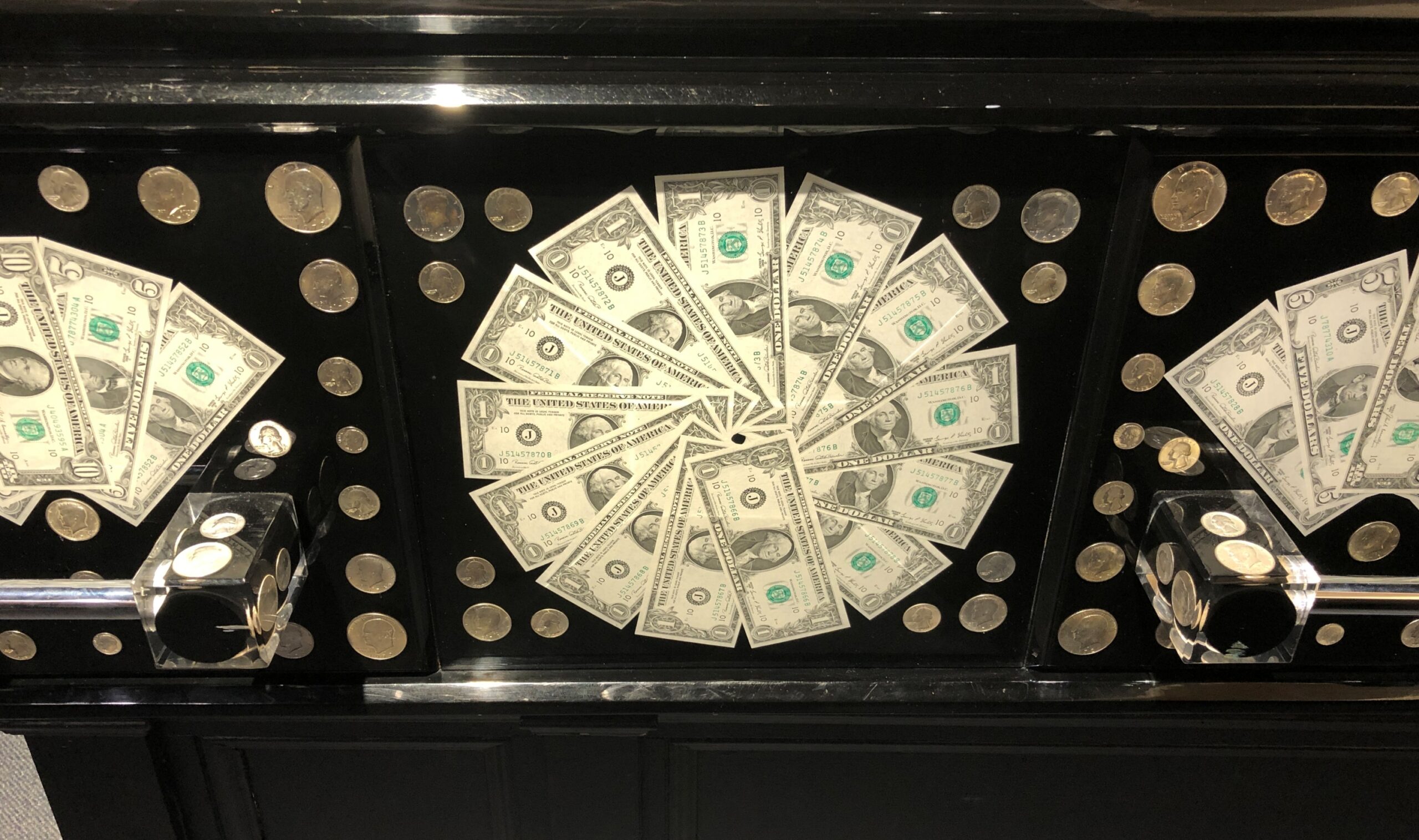
Including an oddity known as the Money Casket, which is on loan to the museum, and was never meant to be put into the ground.

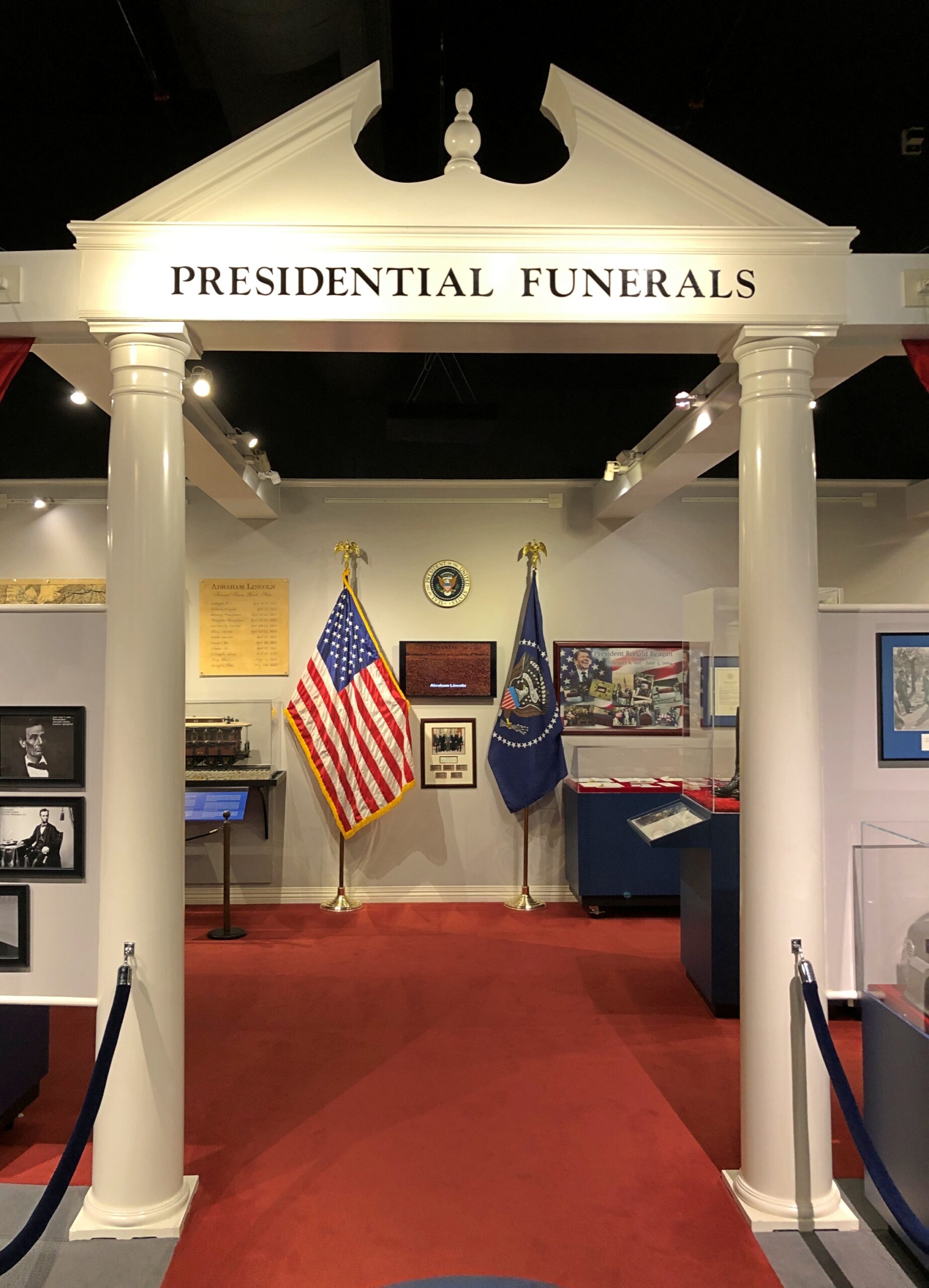
A section about presidential funerals. I spent a while there.

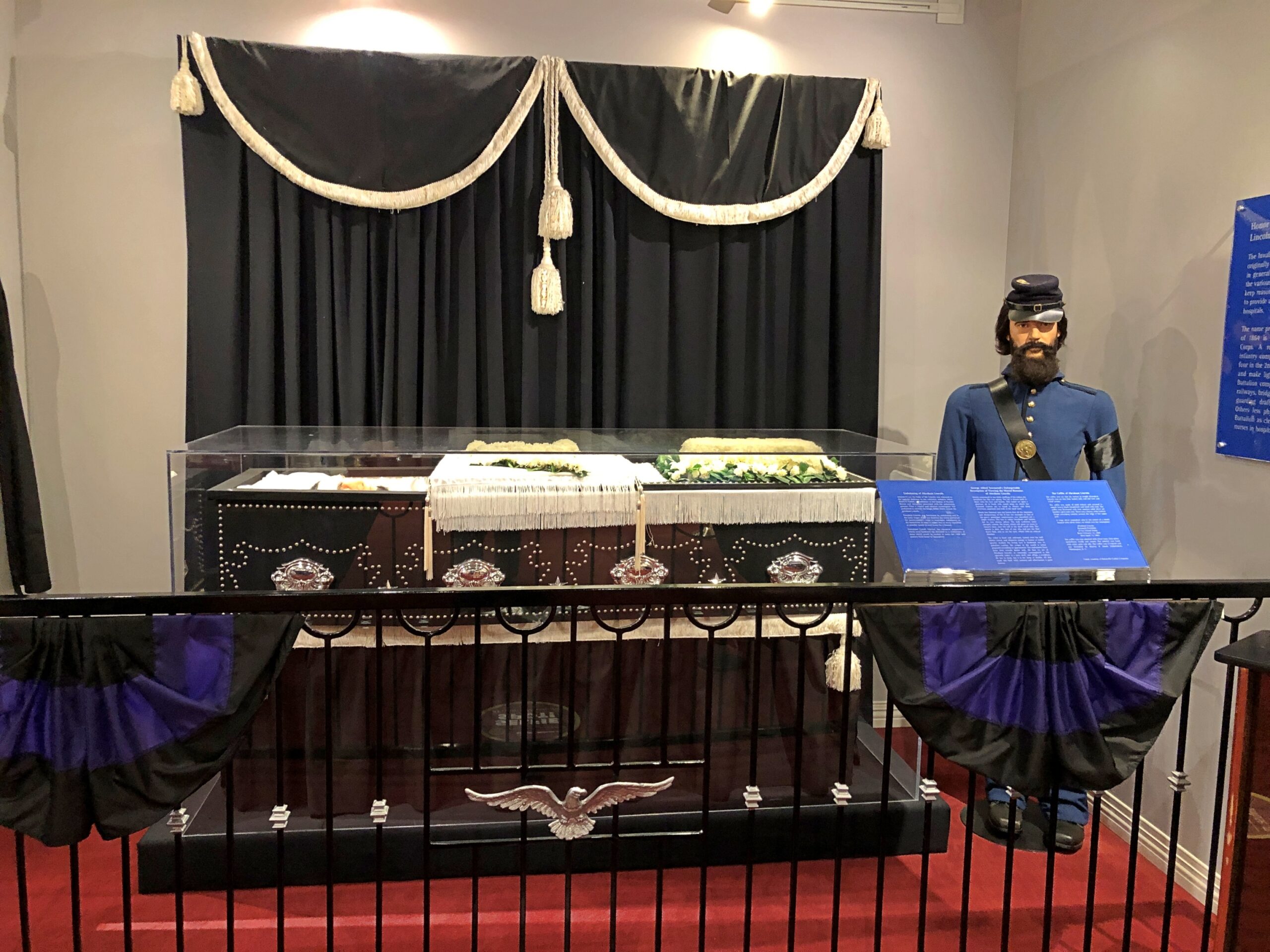
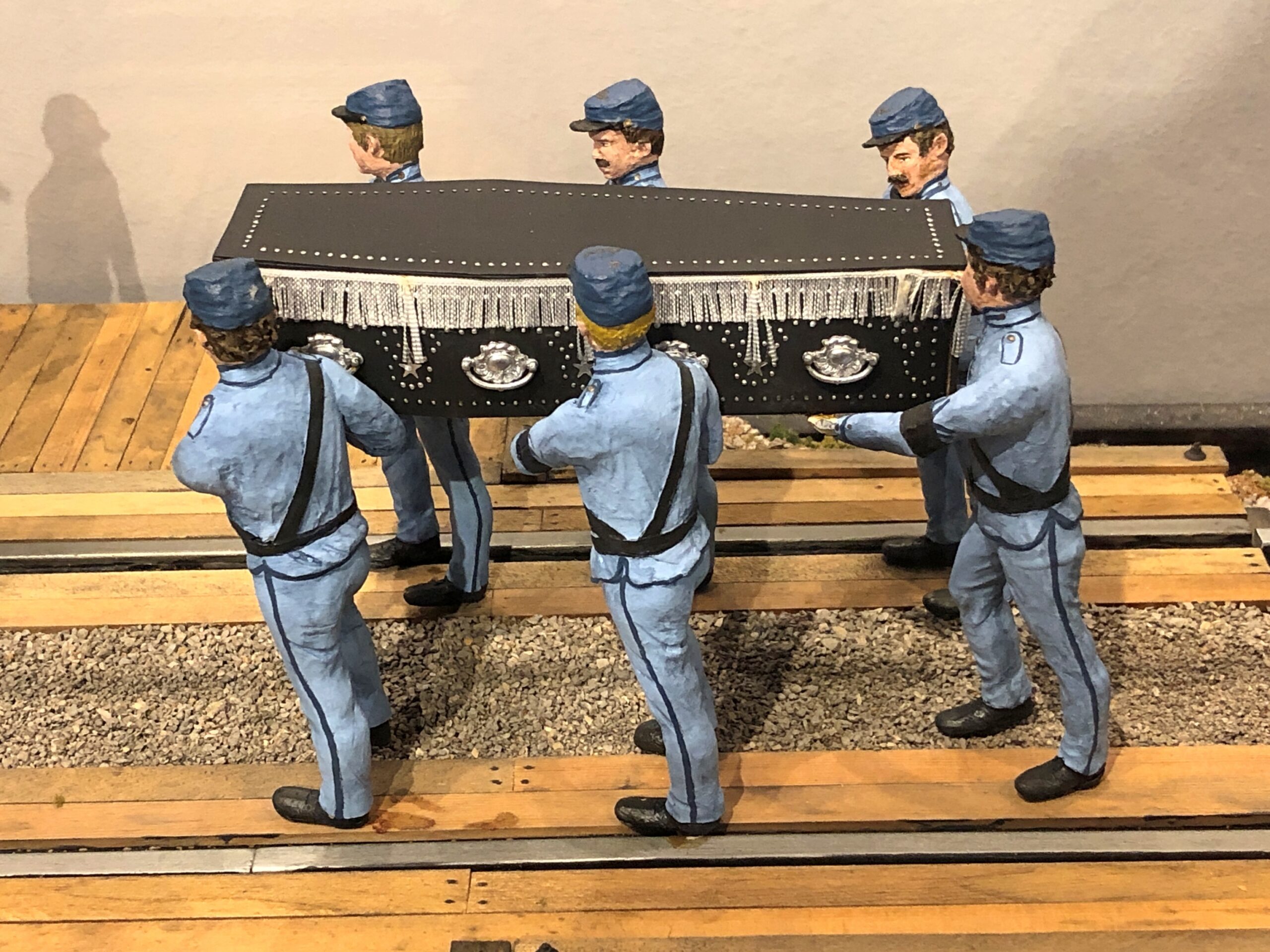
Prominent is a replica of President Lincoln’s casket.

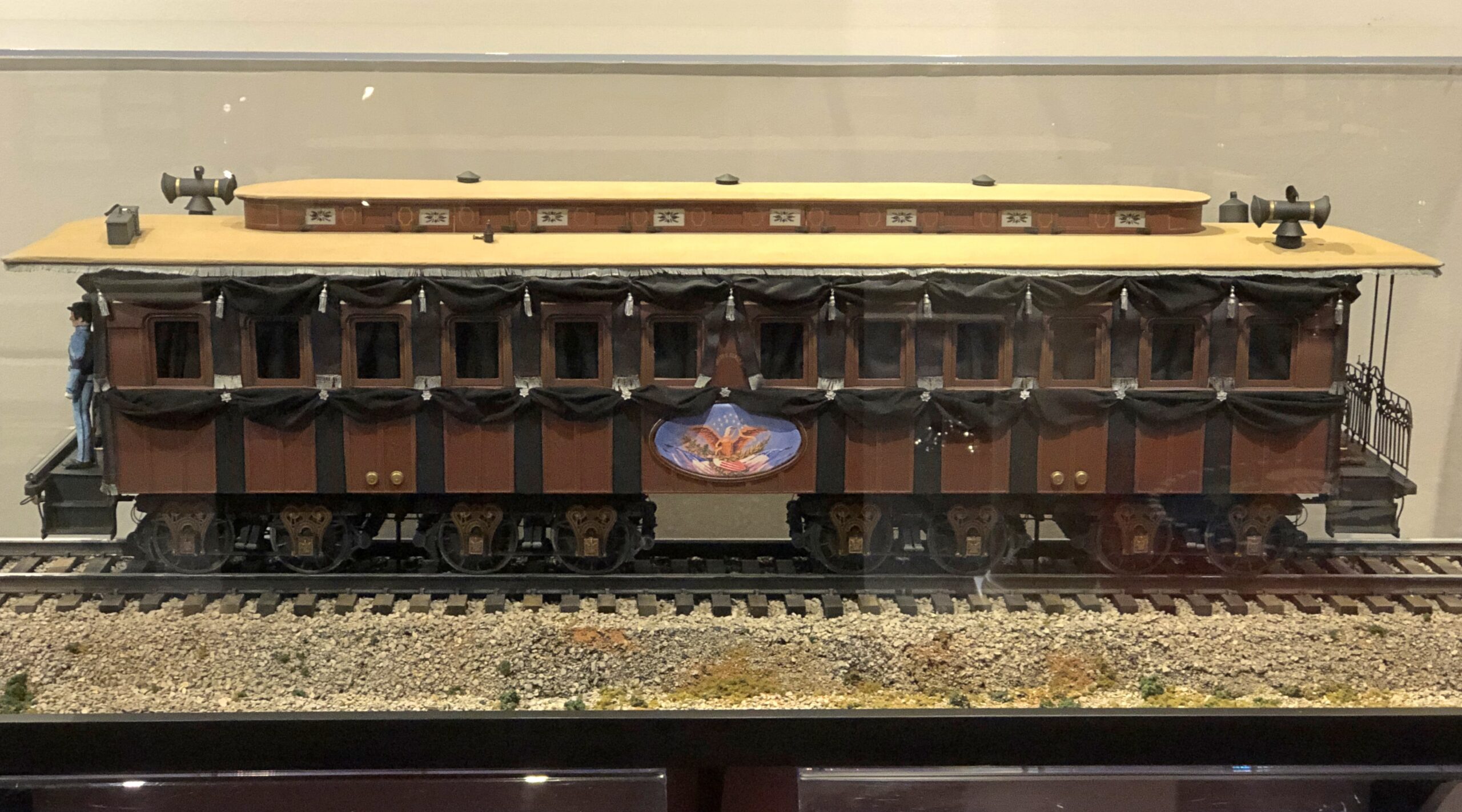
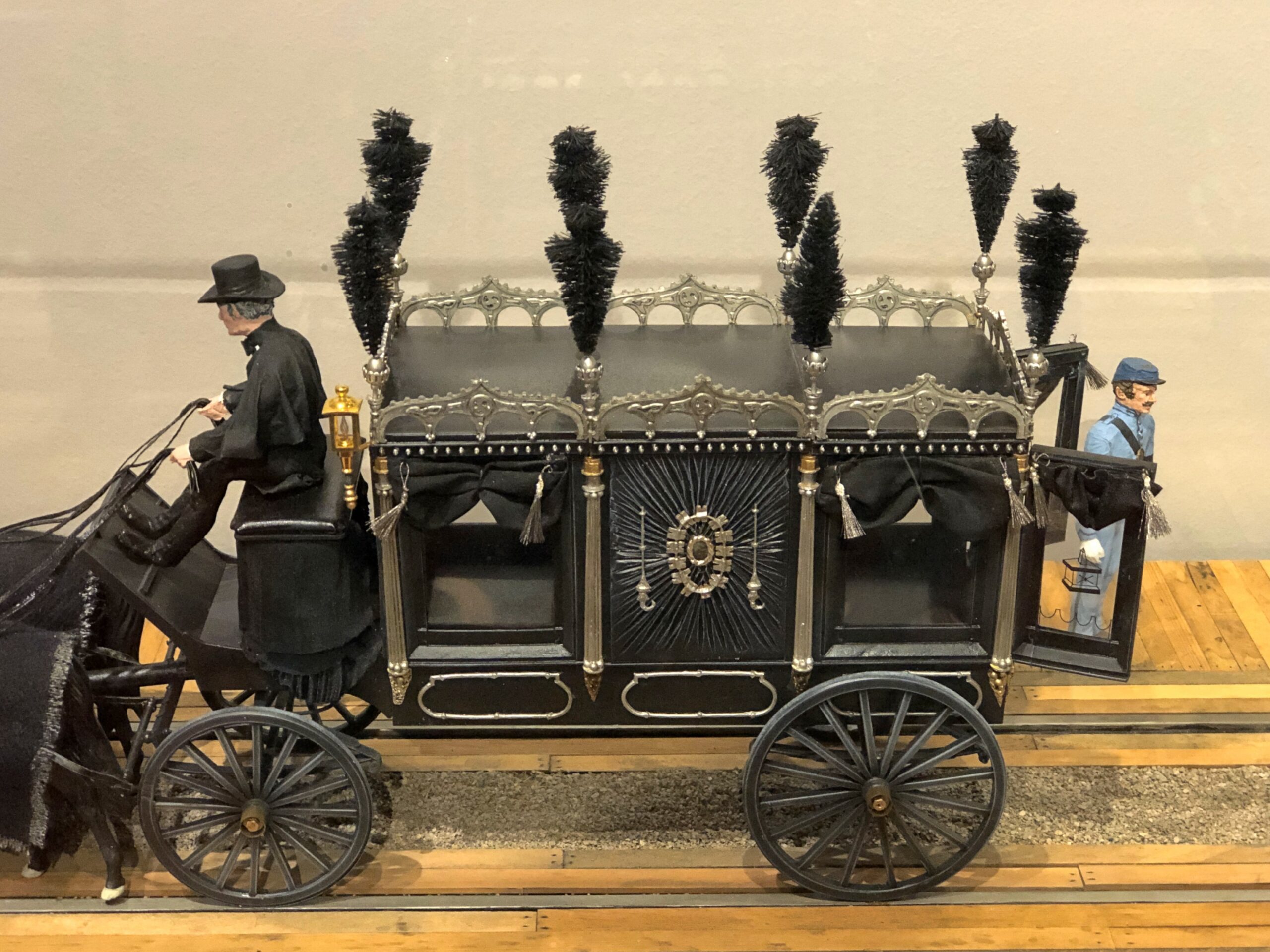
There was a model of Lincoln’s funeral car, probably the most famous such in American history.

Other methods for carrying Lincoln when he wasn’t on the train.

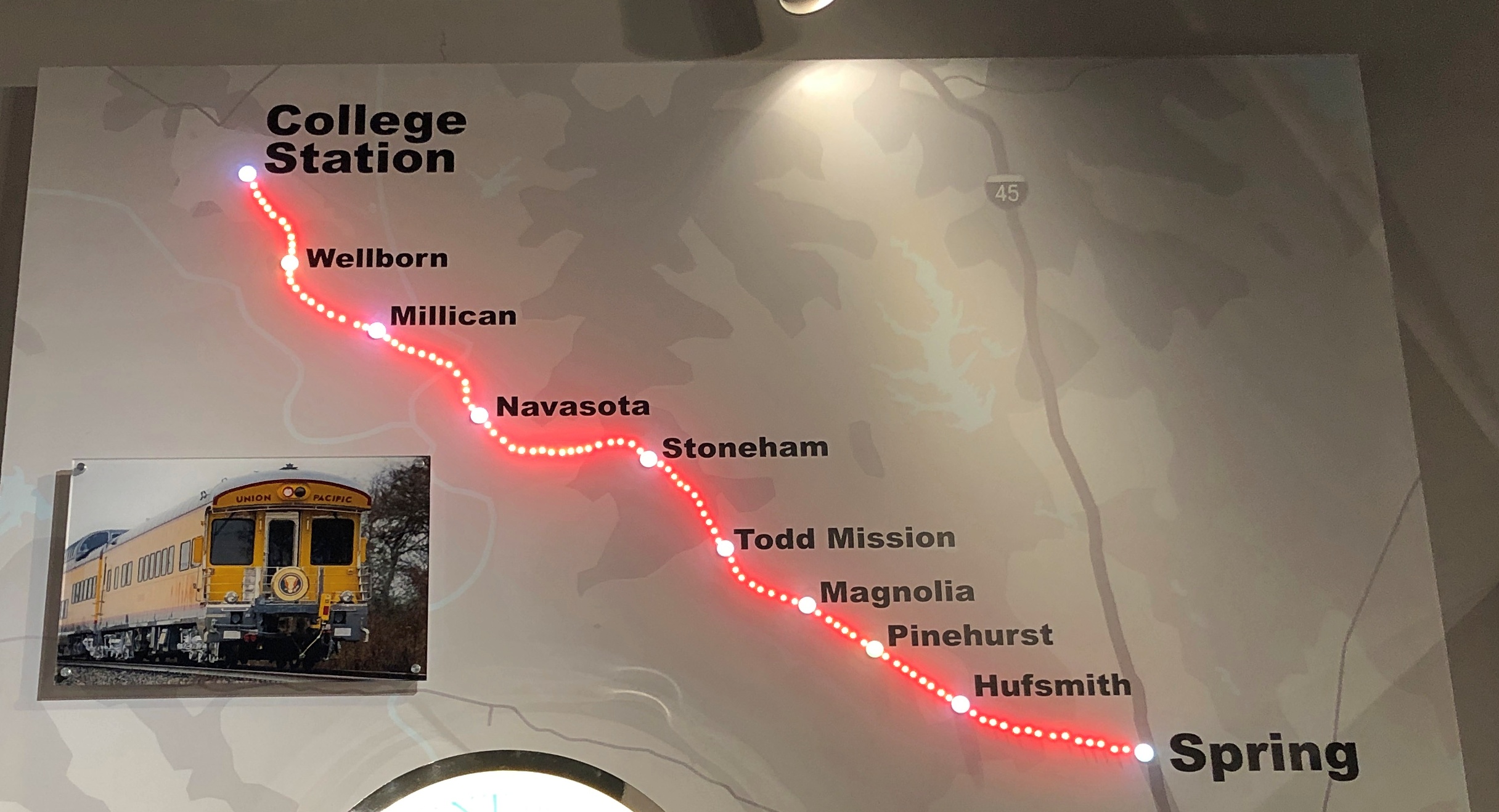
Other presidential funerals got their due, such as those of Washington, Grant, Garfield, McKinley, TR, FDR, Truman, Eisenhower, JFK, LBJ, Nixon, Ford and as mentioned, an entire small room about the elder Bush. He had a funeral train as well, though relatively modest: from Spring to College Station, all within east Texas.

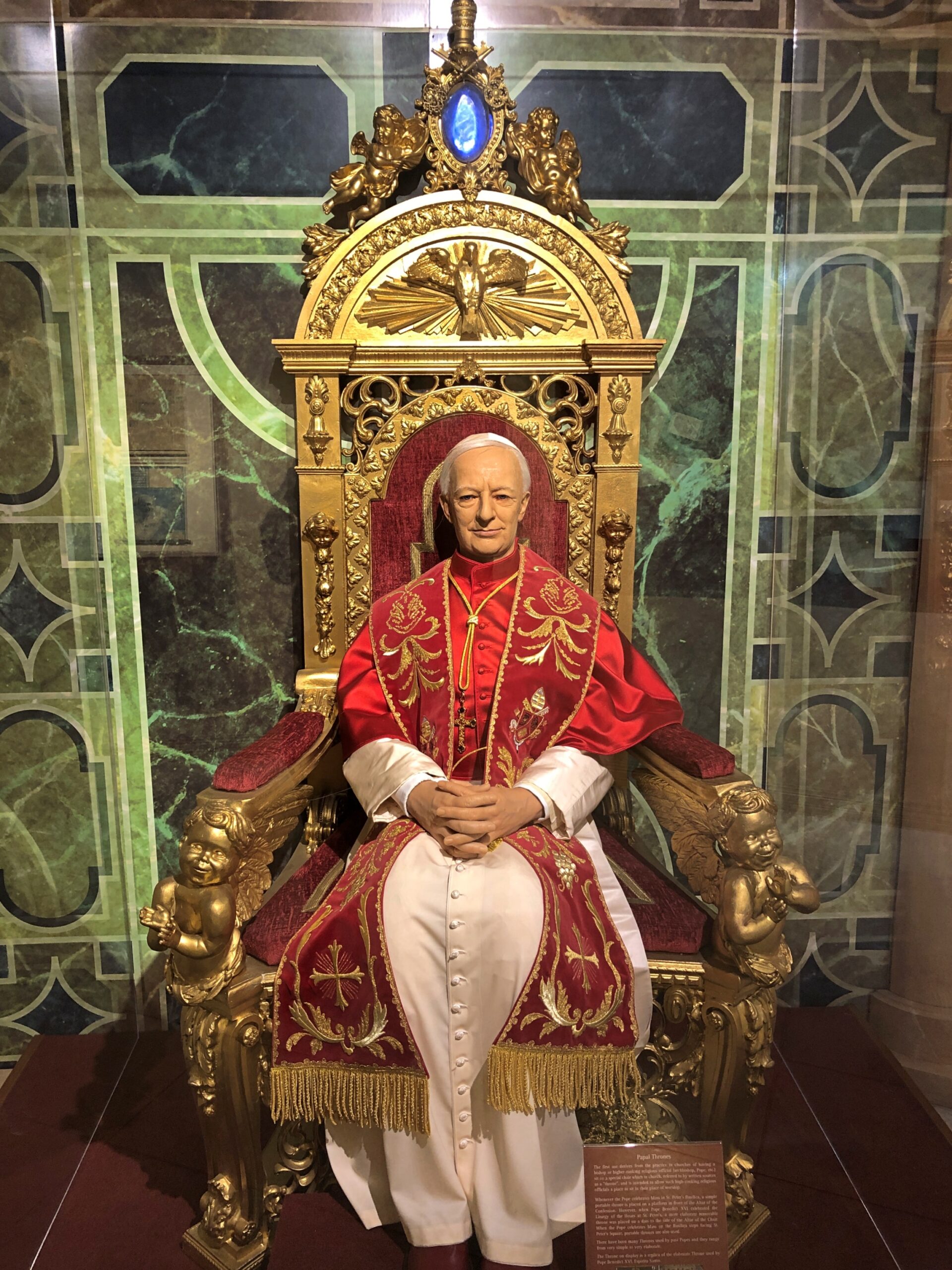
Papal funerals, as you’d think, involve a highly precise set of rituals, told in some detail by the museum.

There is much more.

All in all, a first-rate museum about coping with finality.

GTT ’26, With a Small Side of NM

Never cared much for the term snowbird, with its connotations of getting up every morning to play golf during winter in some arid place, or spending the evenings with members of your cohort in some gated community, maybe drinking but definitely grousing about the state of the world. Still, considering that in the winter of 25/26, I’ve spent two out of the last three months – the hard winter months, up Illinois way – in warmer places, it would be churlish to cast shade on fellow old people who happen to enjoy golf or grousing.

On the other hand, I’m not about to claim snowbird as descriptive for myself. I just happen to be able to take long trips during the cold months (along with my laptop, for work). In December, Florida. In February, Texas.

Back on February 3, I got on a plane and flew to Austin. I flew home from Dallas on March 3. In between, I spent time – and Yuriko joined me for a while – traversing the state of Texas, going so far west at one point that we ended up in New Mexico. By traversing, I mean long drives, in a rental car part of the time, and in my brother Jay’s car as well, a blue Subaru known as the Blubaru.

I drove from Austin east to Houston, mostly on US 290; from Houston to Nacogdoches, mostly on US 59; then to Dallas on various state highways, such as Texas 21 and 19; and from Dallas to San Angelo to Marathon, Texas, on US 67 and on the grandly remote US 385, which will also take you to the desert reaches of the Big Bend.

From Marathon, Texas, across to Carlsbad, NM, our route took us along US 90, then Texas 56, then US 62/180. Later, US 62/180 took us from Carlsbad part way back to Dallas — to Sweetwater, Texas — but mostly we went on the faster but less interesting I-20. Dallas to San Antonio was partly I-35, but also US 281, which takes you around the perma-gridlock that is Austin.

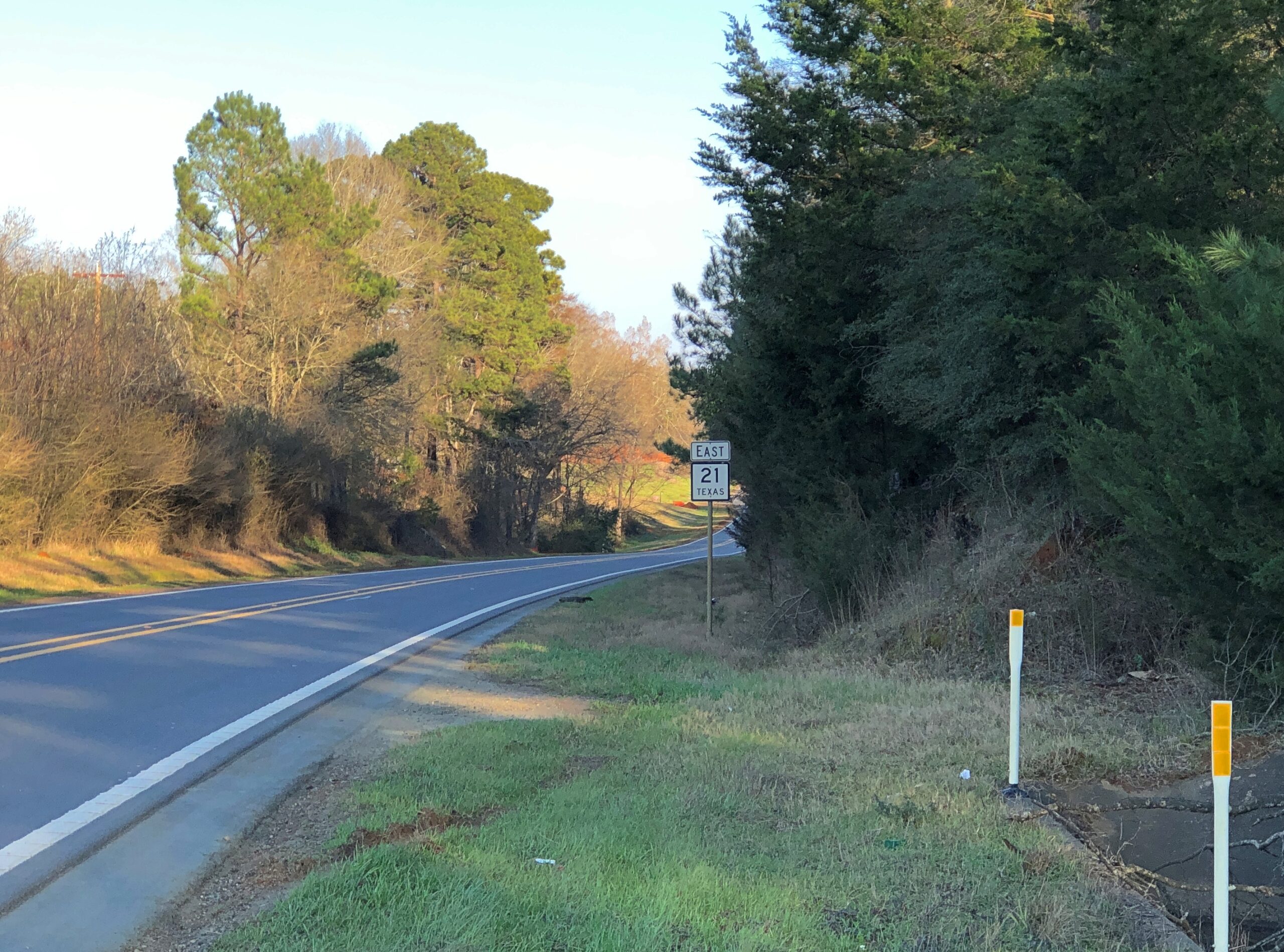
Of all those, the road between Nacogdoches and San Augustine on a day trip, Texas 21 heading east, winding through greenish (for February) rolling hills, was a favorite.

The towns listed above were just the places I spent the night, alone or with Yuriko or with my brothers. In between were such places as Bastrop, these days a day-trip from Austin, with the requisite boutiques and restaurants; Huntsville, home of Sam Houston and memorials to the first president of Texas; San Augustine, rival with Nacogdoches in claiming to be the oldest town in Texas; Stephenville and Ballinger, geographically about as deep in the heart of Texas as you can be; the West Texas art town of Marfa and the way station of Van Horn; a string of oil patch towns such as Hobbs, NM, and Seminole, Lamesa, Snyder, and Sweetwater, back in Texas. Later, traversing north to south and back again, I stopped in Hillsboro and Belton, along the I-35 axis; and Lockhart, which has claimed for itself barbecue capital of the state.

Along the way, oddities were encountered. Otherwise, why drive on smaller roads?

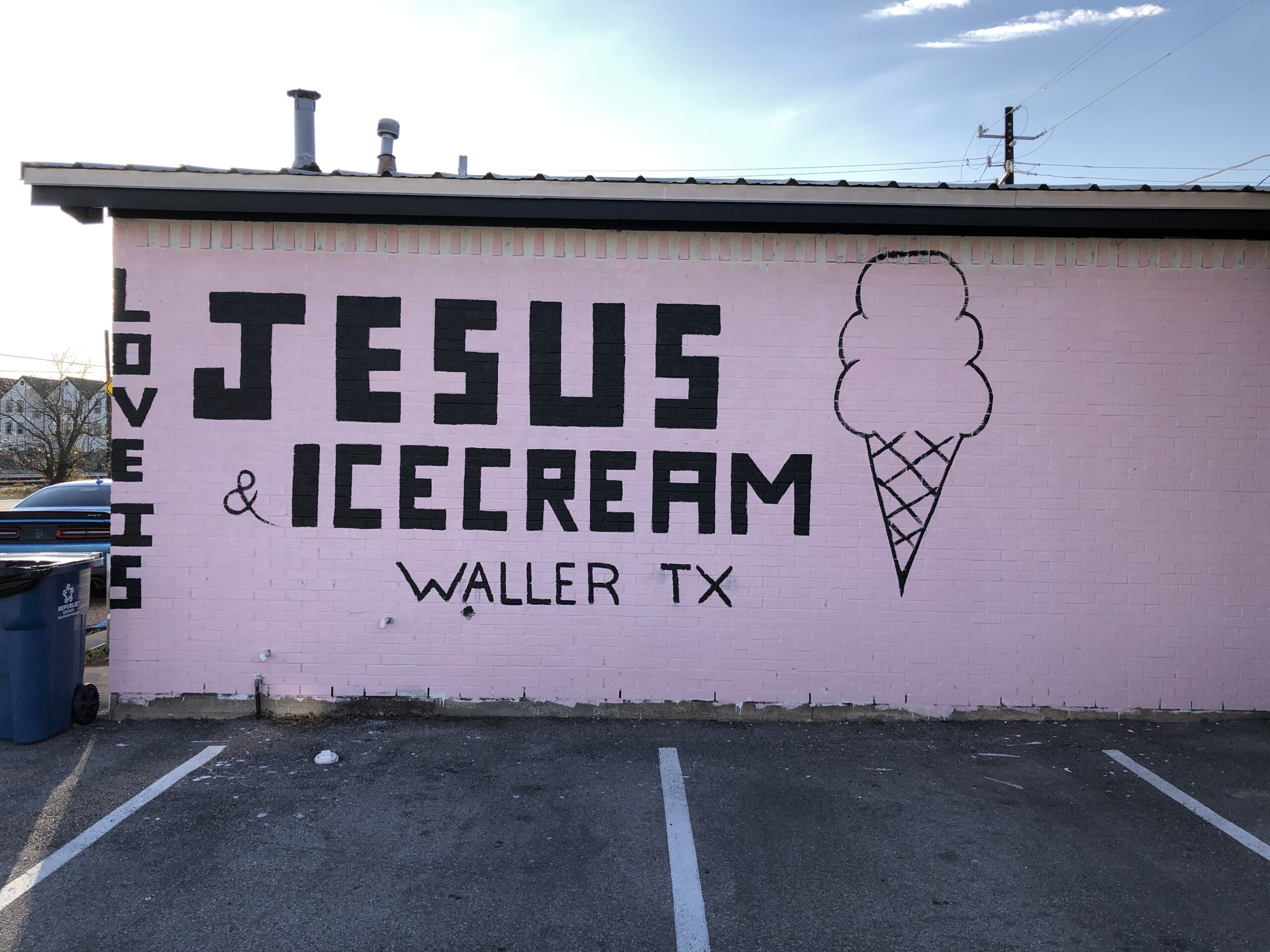
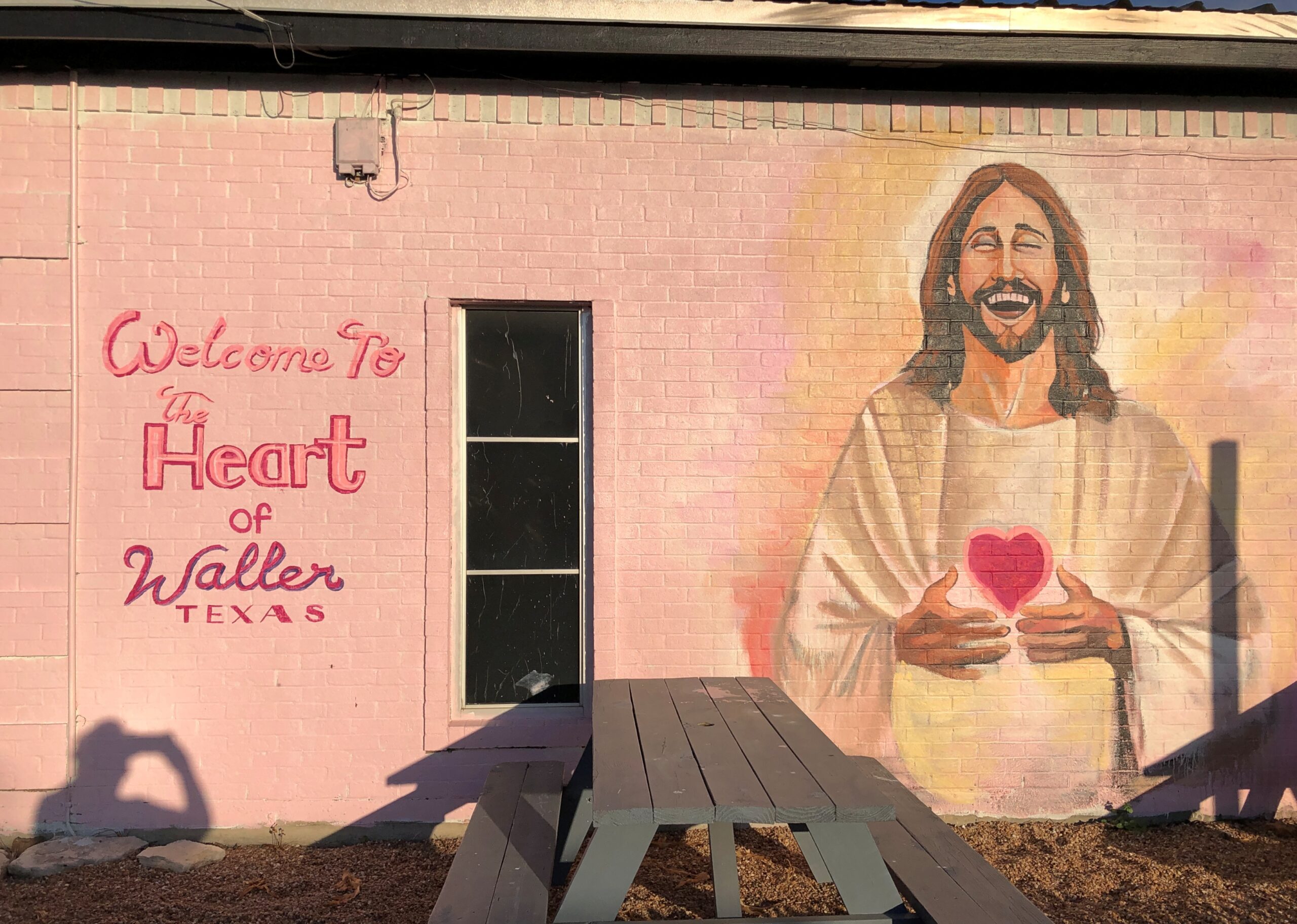
Such as an ice cream shop in Waller, Texas.

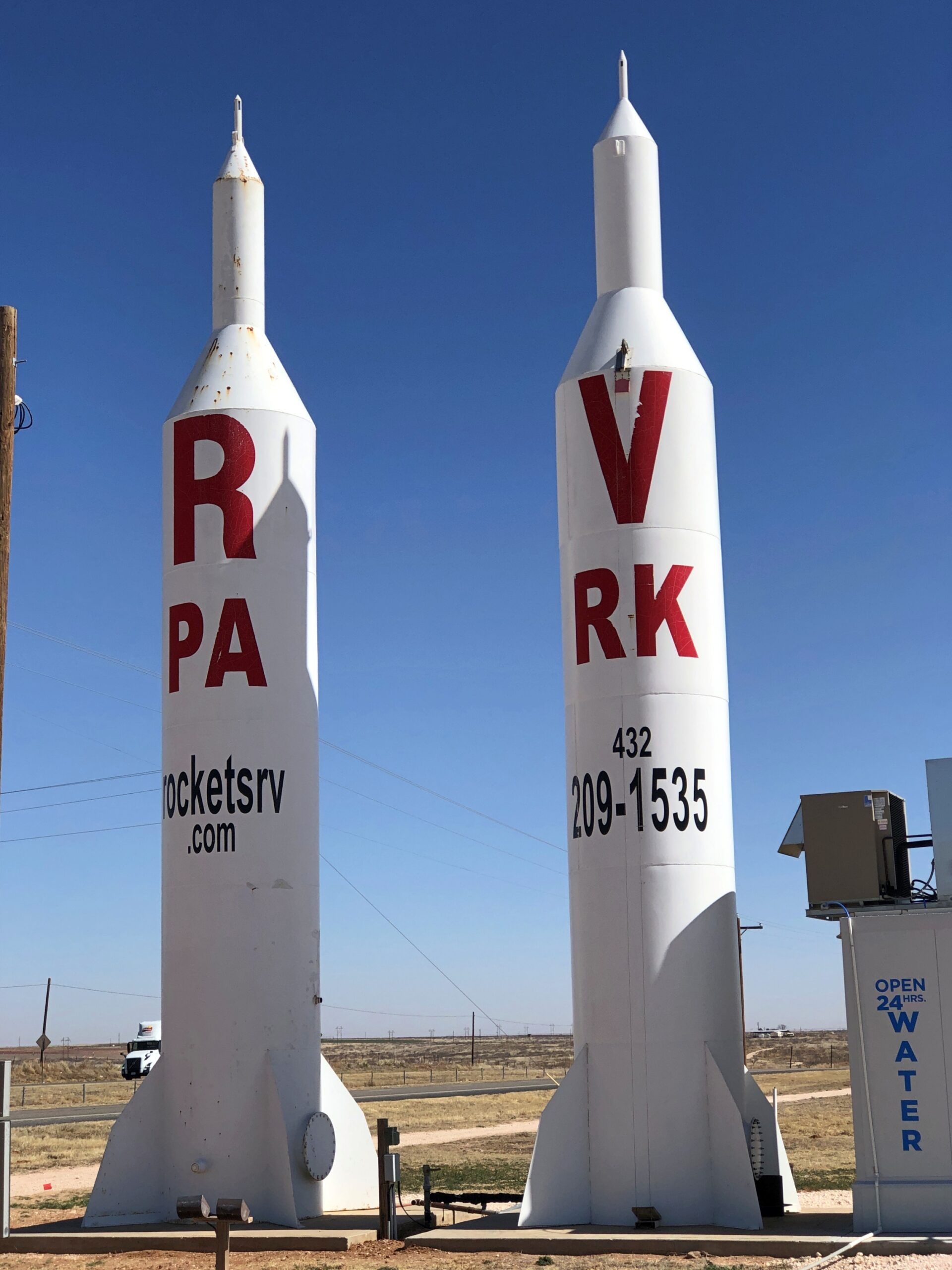
Or a highly visible ad for Rockets RV Park in Gaines County, Texas, not far east of the border with New Mexico.

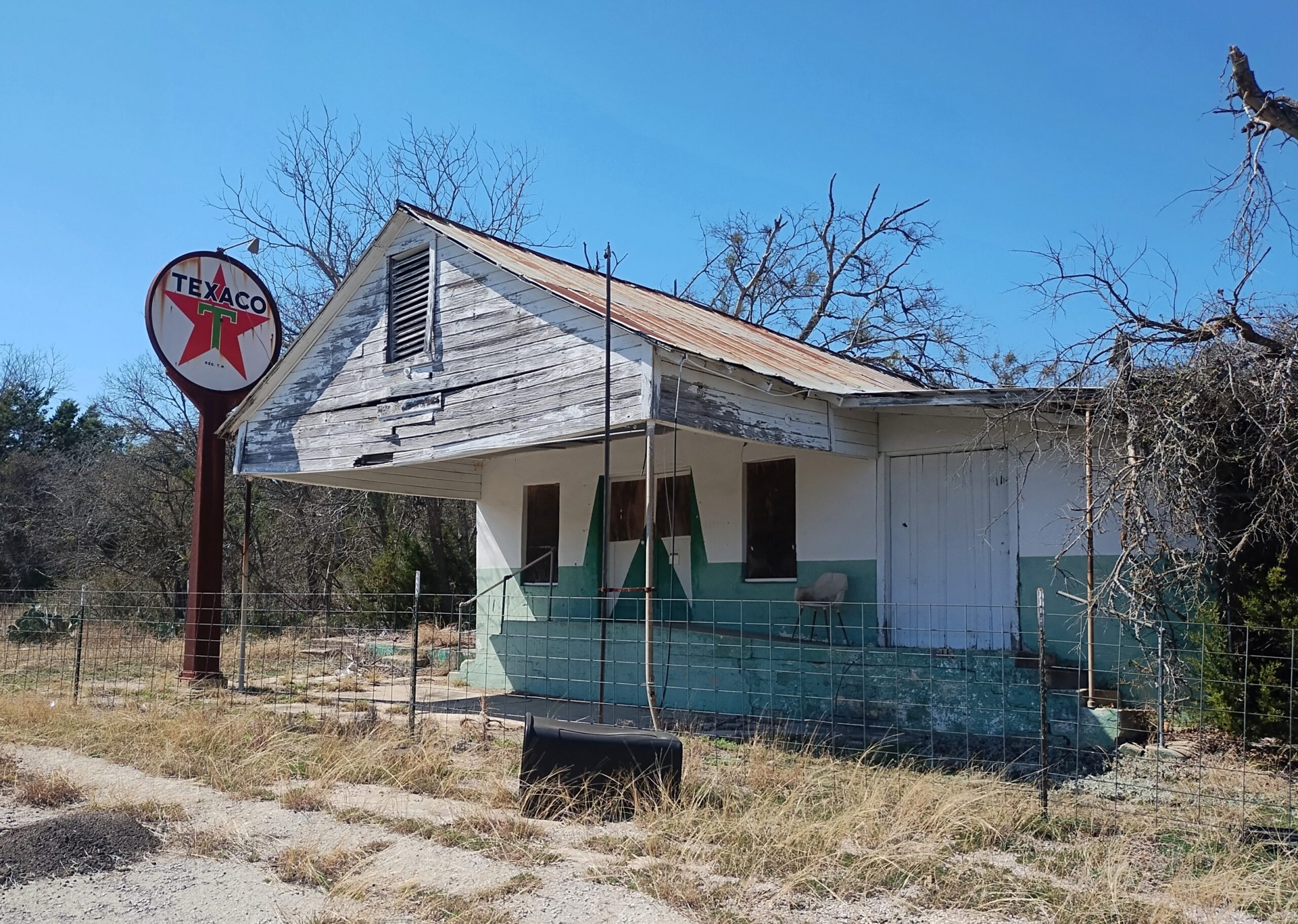
A former Texaco station on an obscure Texas highway (Farm-to-Market 1690).

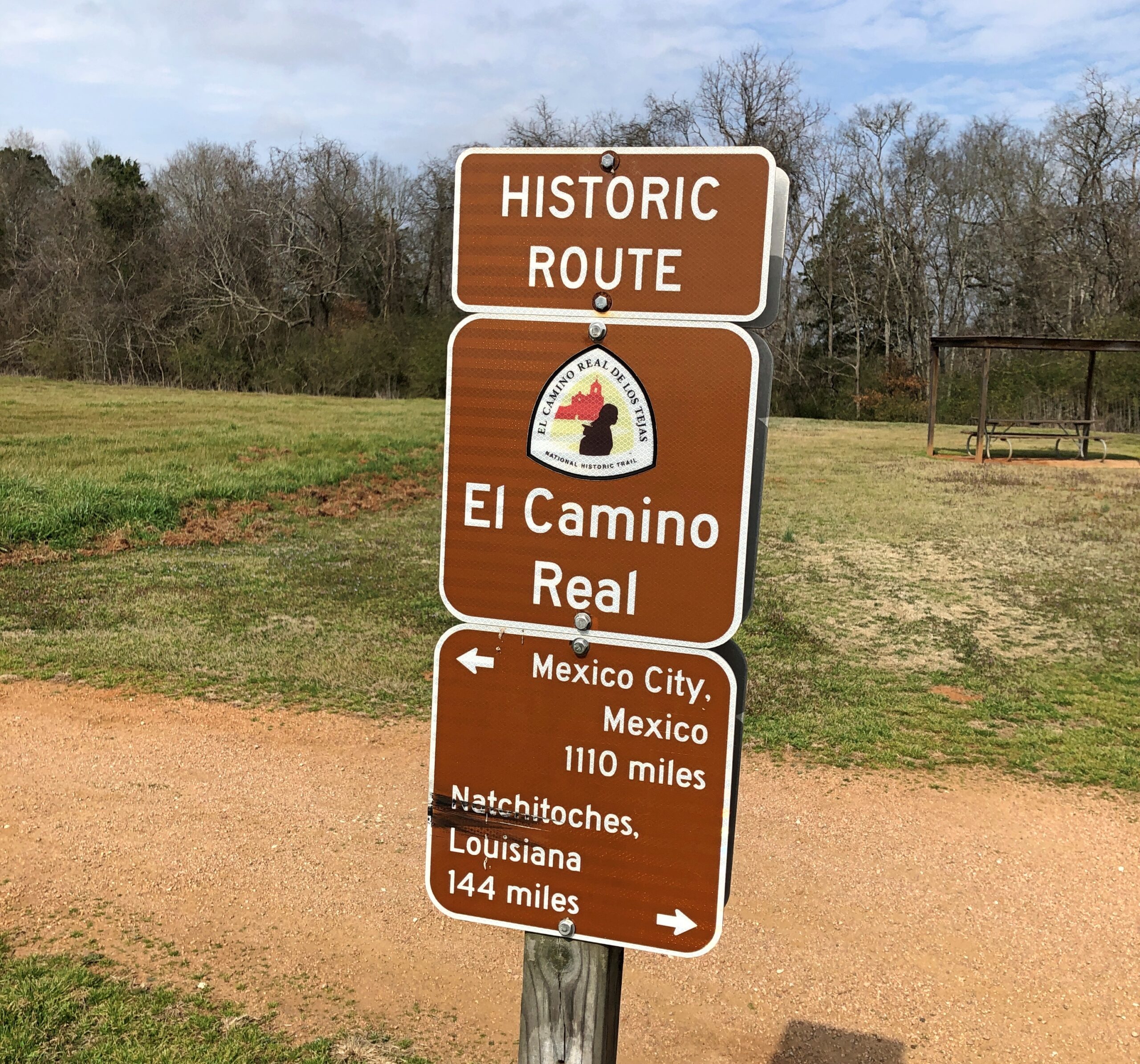
Had various encounters with the historic El Camino Real, whose various tendrils crossed a large slice of the future state of Texas, once upon a time.

Yuriko and I visited Big Bend National Park, Guadalupe Mountains National Park and Carlsbad Caverns National Park. I saw the National Museum of Funeral History in the city of Houston and the museum devoted to Houston (the man) in Huntsville. Also, Roadside America in Hillsboro, an eccentric collection of American commercial art, complete with a personal tour by the proprietor, and the outdoor art at the Chinati Foundation in Marfa, that is, brutalist concrete structures in the brutal desert environment. I became acquainted with the splendid Glenwood Cemetery in Houston and the smaller and more ragged, but no less interesting city cemeteries in Huntsville and Nacogdoches and Palestine. I stopped and looked at about a dozen county courthouses, of which Texas has many.

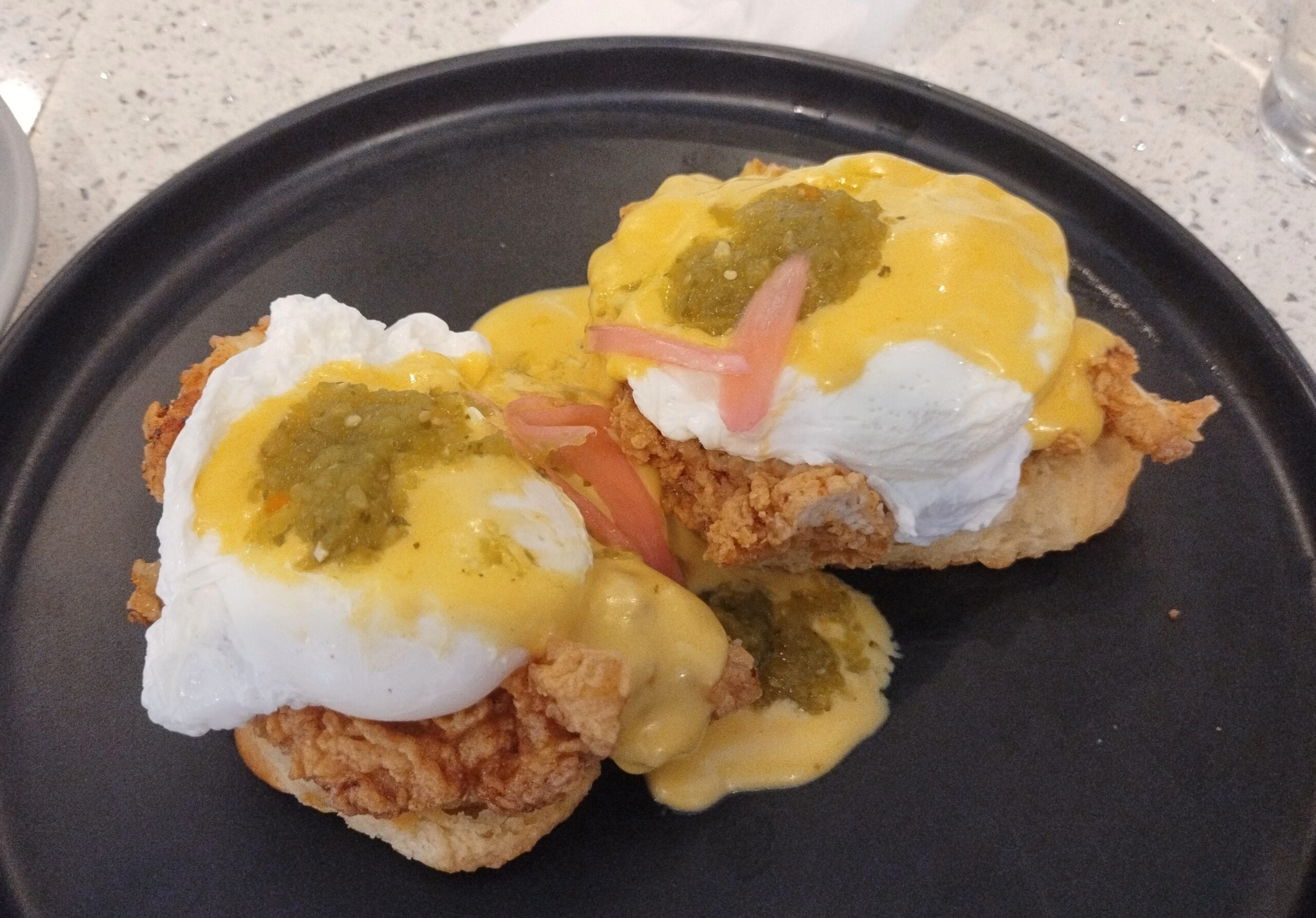
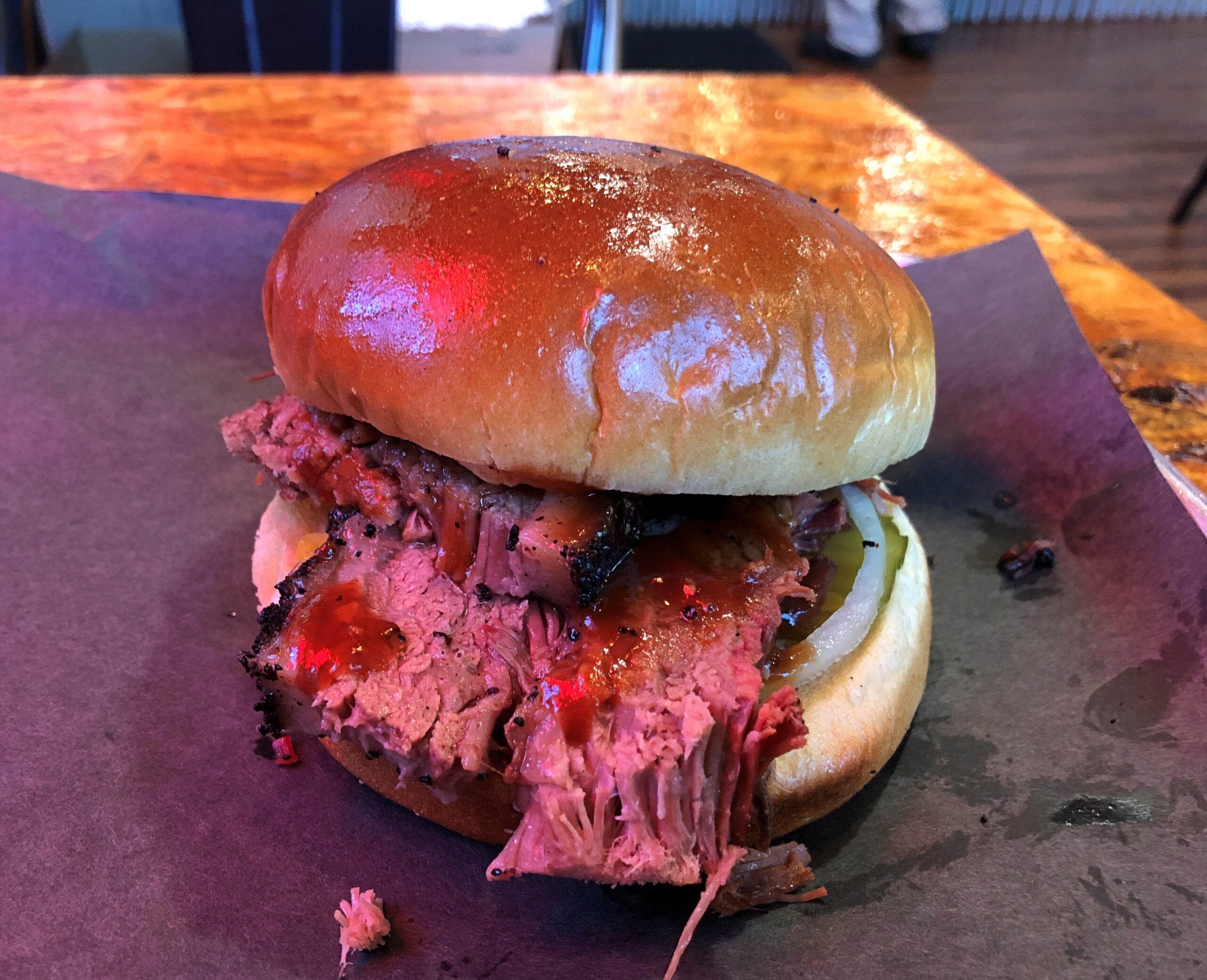
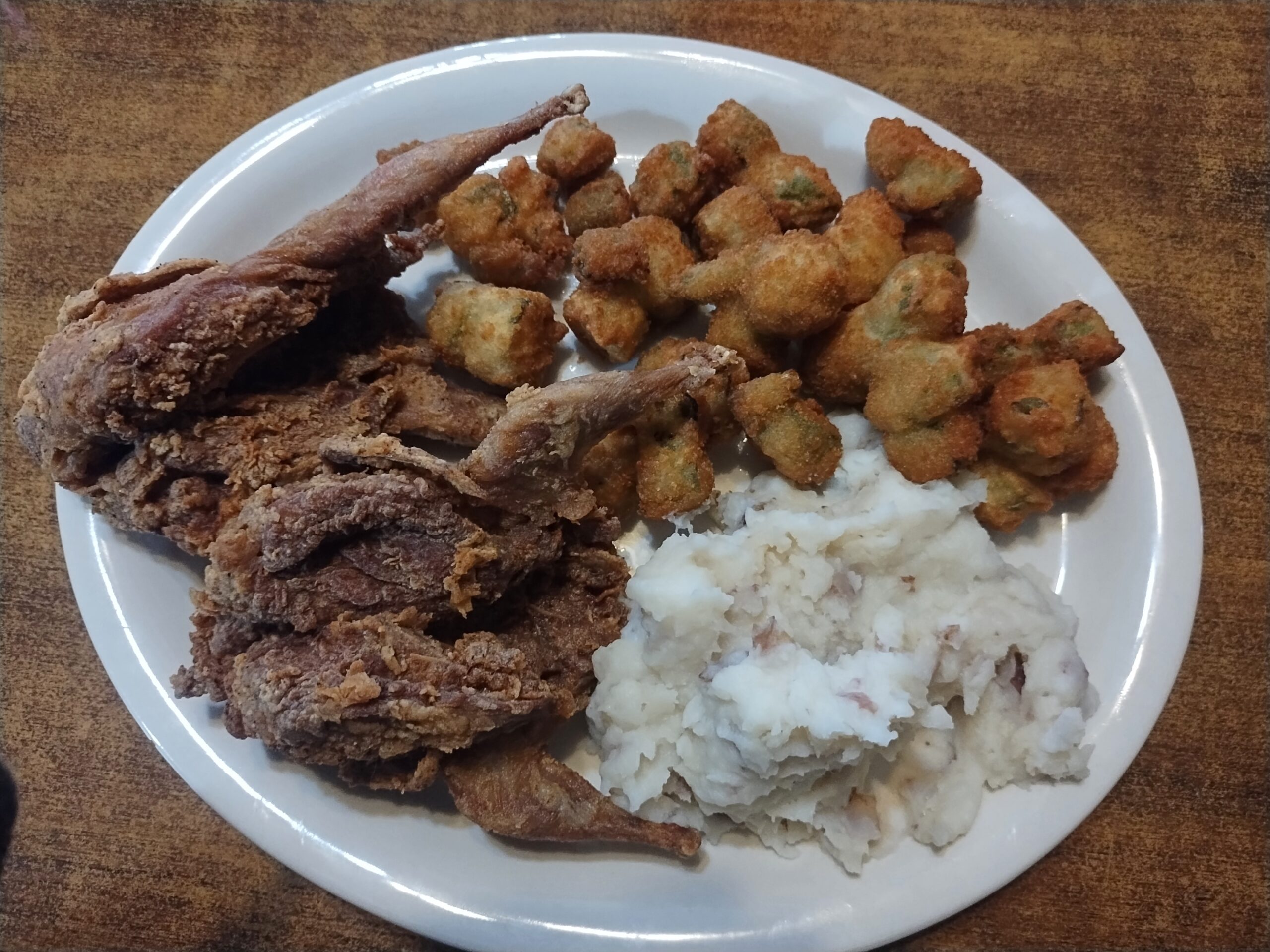
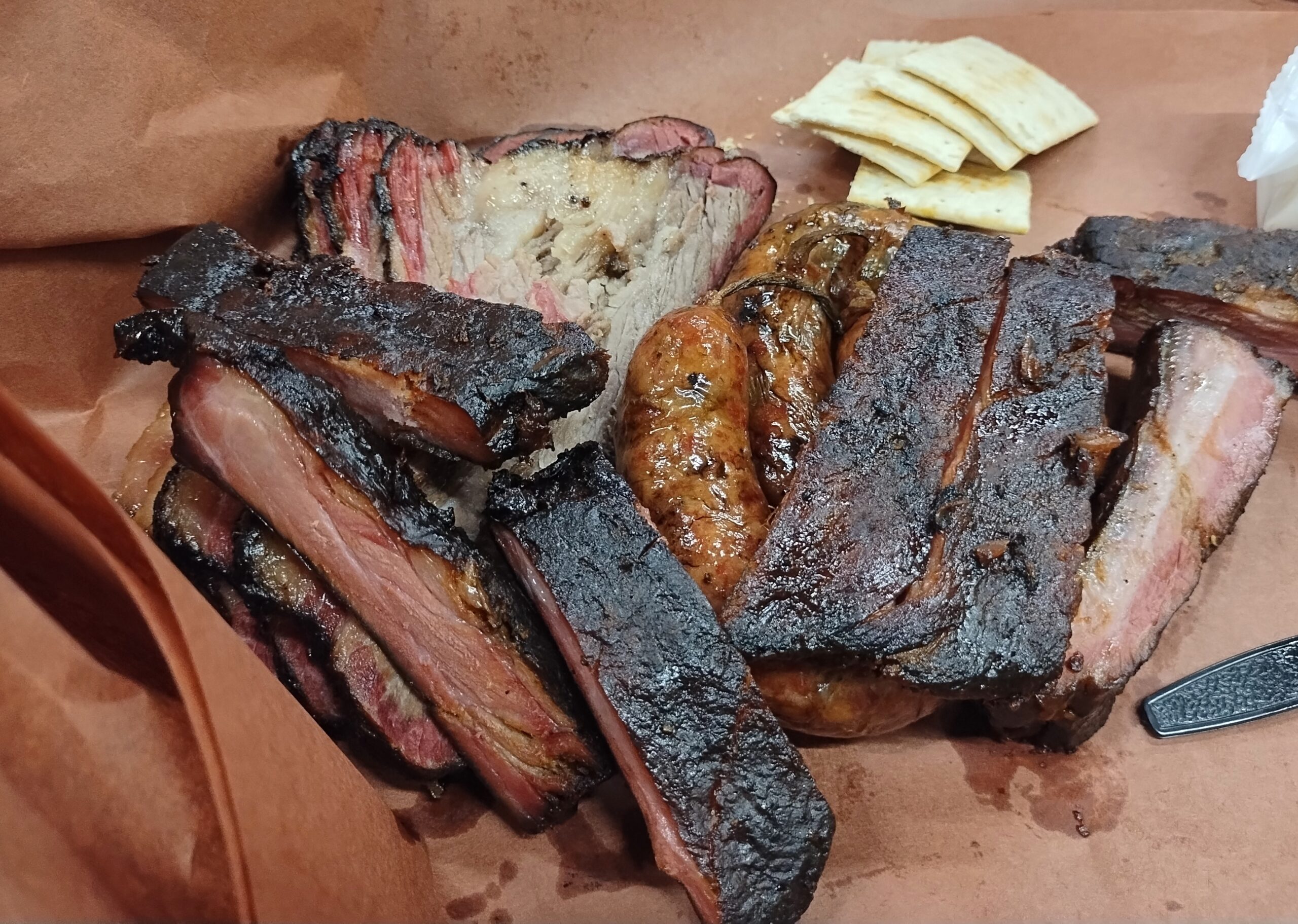
We ate a lot of meat along the way. As one does in Texas.

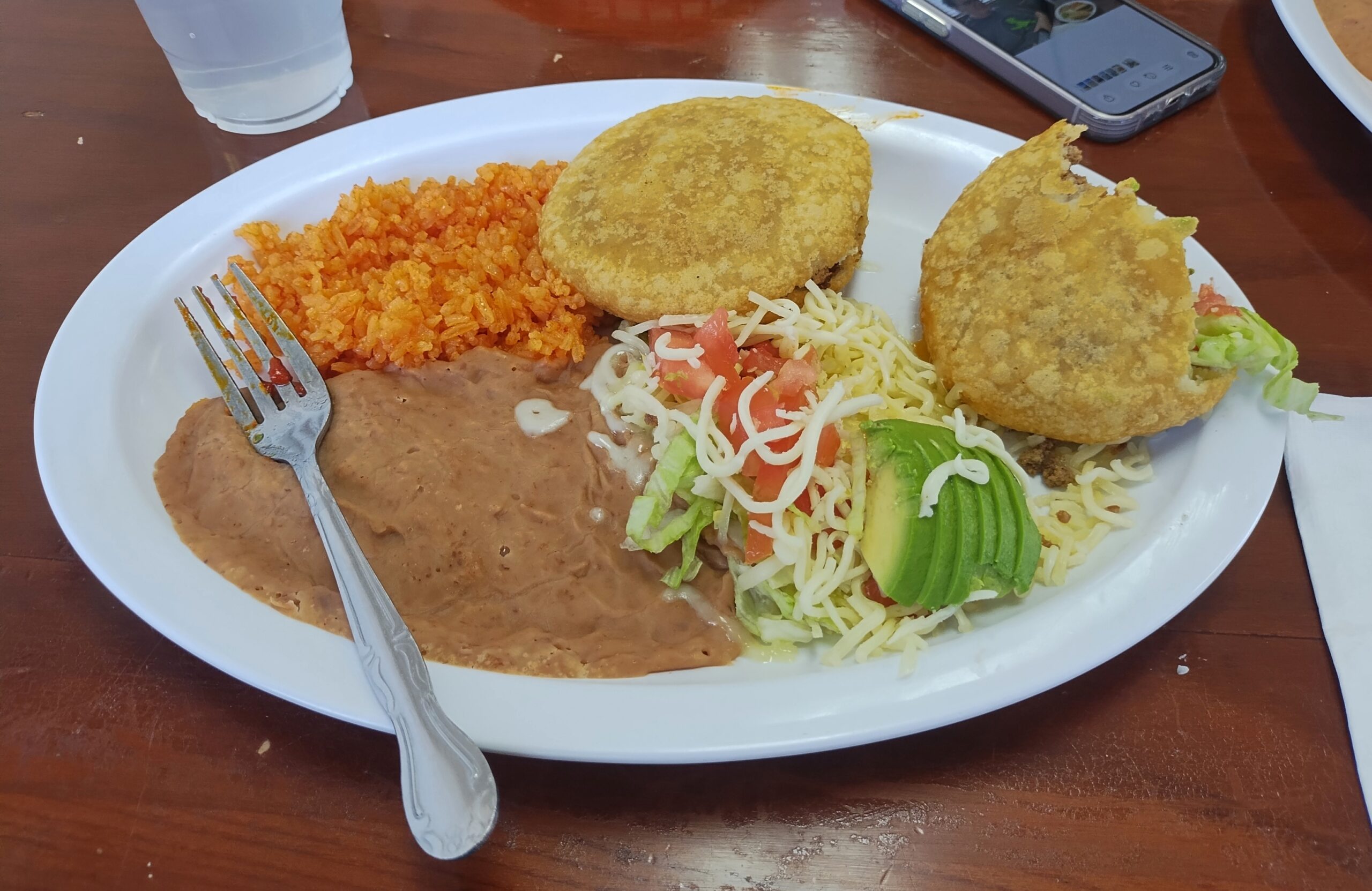
Also, Mexican food.

Eat like that and you’d better do some walking, and I did: various places in Austin and Houston and Dallas, in all three national parks, around downtowns and courthouse squares in a number of small towns, and a handful of local parks.

All that was good, but of course best of all, I had time to visit friends and relatives, of whom there are many in Texas: Tom and Nancy in Austin, Kirk and Lisa in Nacogdoches, another Tom and Steve and Ron and Greg and Judith in San Antonio, to list the friends; both brothers, two out of three nephews and their wives and all four of their children, to list relatives, along with the mother of one nephew’s wife (niece-in-law sounds peculiar, but that fits too). Also, I met for the first time two good friends of Tom’s in Austin, and one of Kirk and Lisa’s granddaughters.

I’d set out to do four long drives when I was 64, but this makes five. Guess I’m an overachiever about driving, anyway.

World of Coca-Cola

Years ago, when we visited the Spam Museum in Austin, Minnesota, I noted with satisfaction that Monty Python’s Spam Sketch was playing on demand in one of the exhibit rooms. I understand the museum has moved to a different location in Austin since then, but I hope they still play the sketch.

As far as I noticed, there was no clip of One, Two, Three playing at the World of Coca-Cola in Atlanta last month. The scene I’d pick is the back-and-forth about Soviet scientists’ efforts to replicate Coca-Cola without its famously secret formula: “Even the Albanians wouldn’t drink it.”

I’d have this clip playing, too.

Or even the jingle scene from The Coca-Cola Kid. Nice jingle.

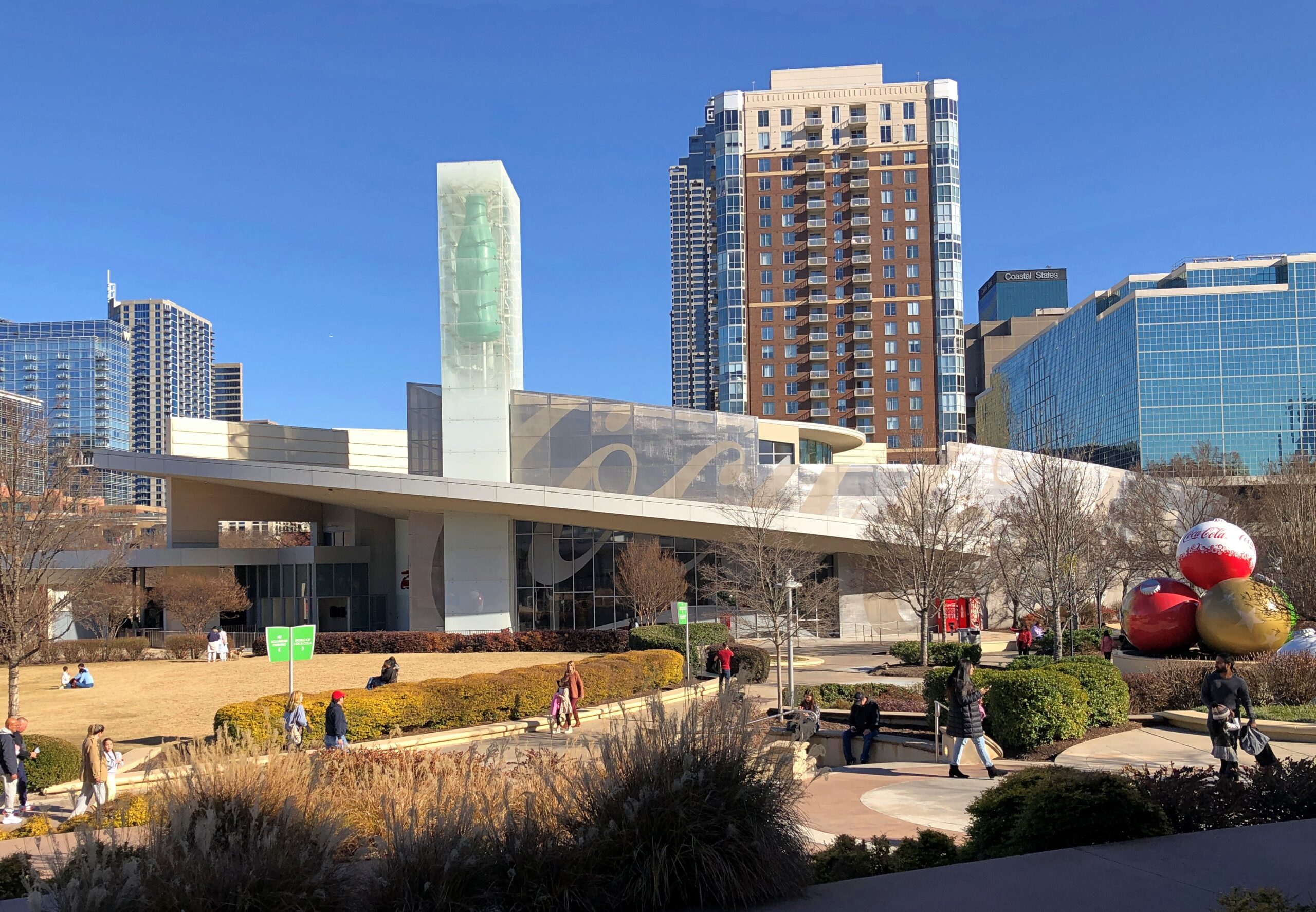
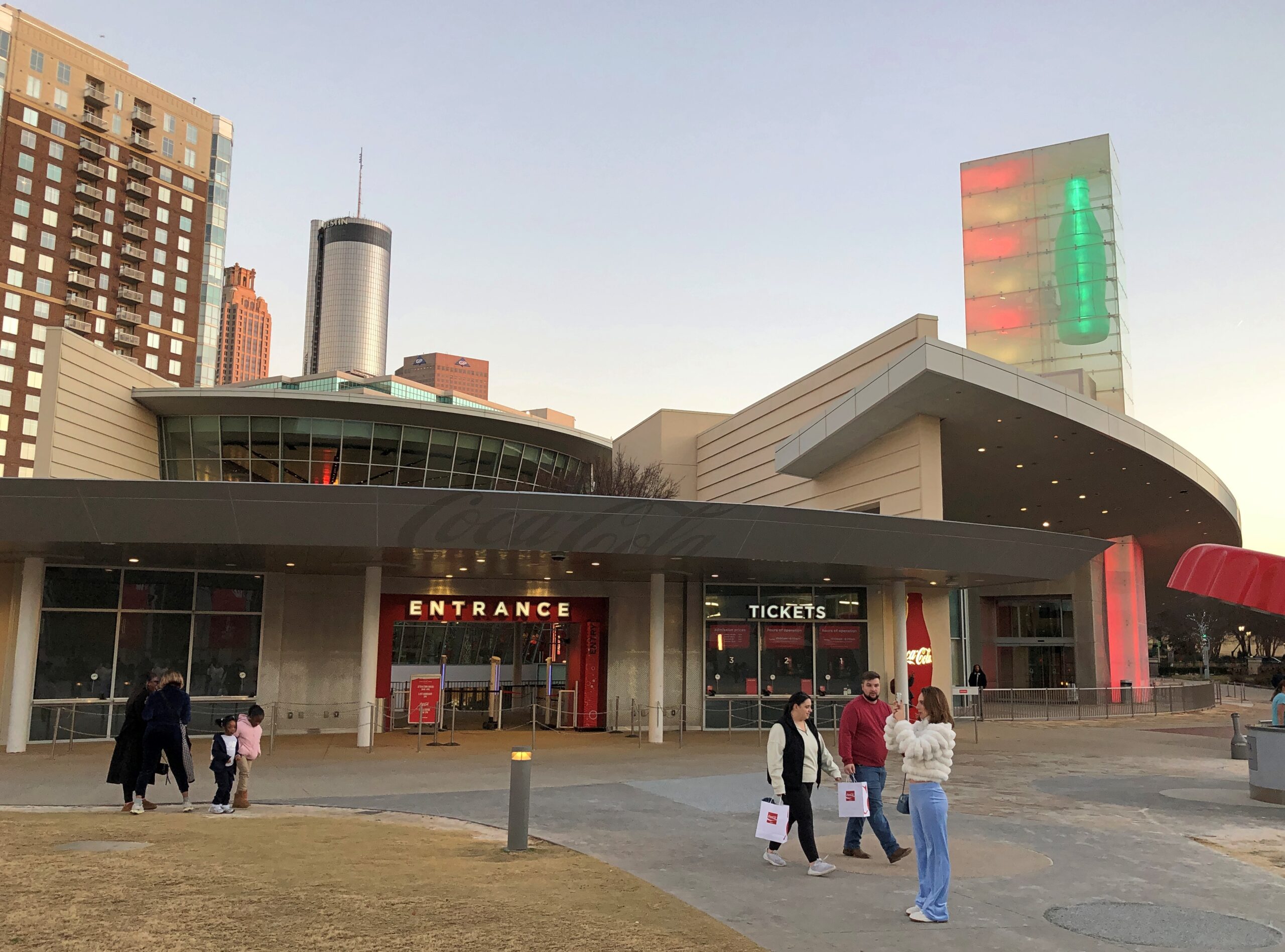
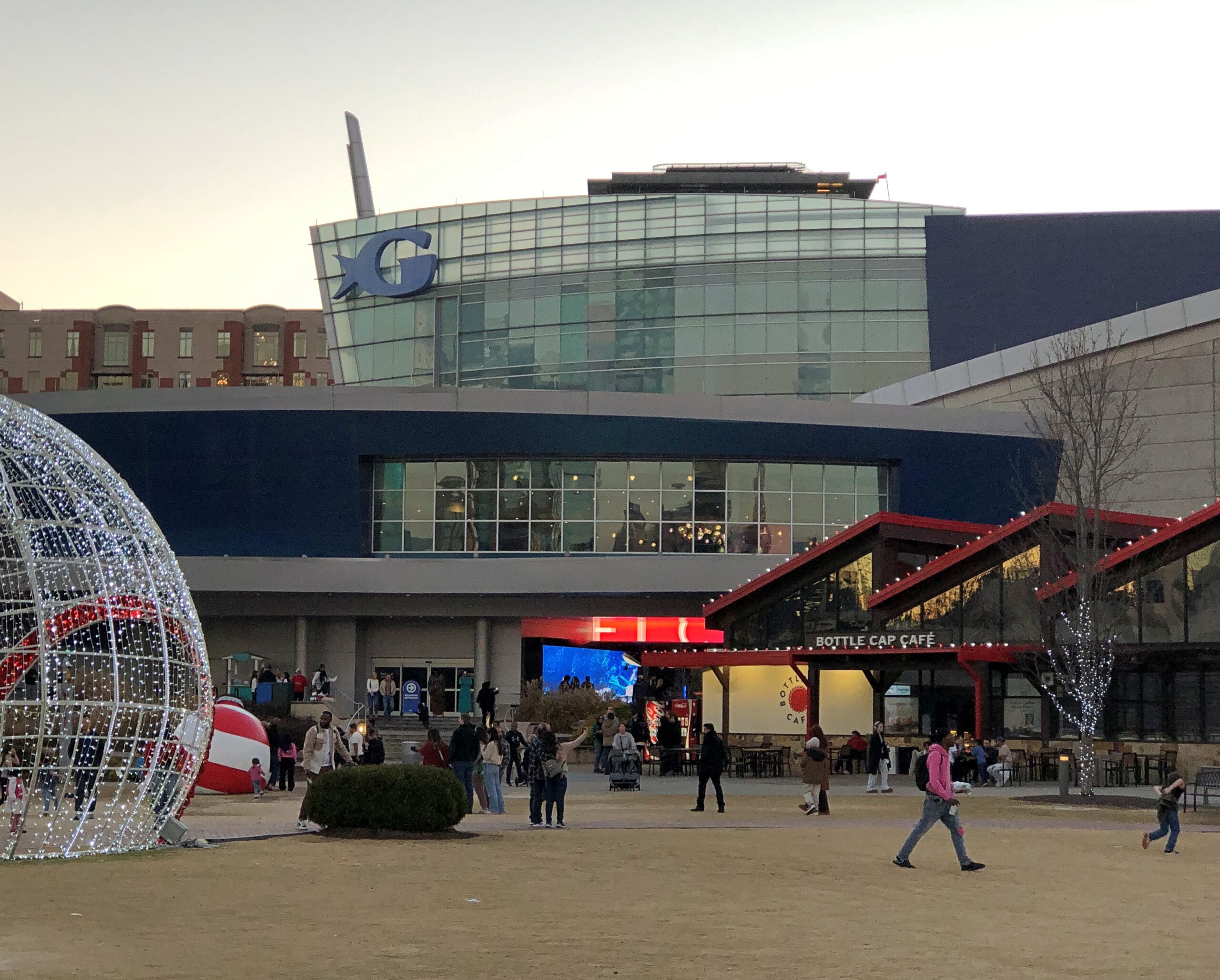
The World of Coca-Cola shares a plaza with the Georgia Aquarium. Pemberton Plaza, named for the doctor who invented a particularly successful “brain tonic,” back in the days when enterprising doctors and druggists did that sort of thing. Interestingly, the museum doesn’t play up Lt. Col. John Pemberton’s military service for the CSA, or his morphine addiction, which drove him to experiment with a new wonder drug, cocaine, to kick his habit. That didn’t work out, but he did leave a lasting soft drink legacy.

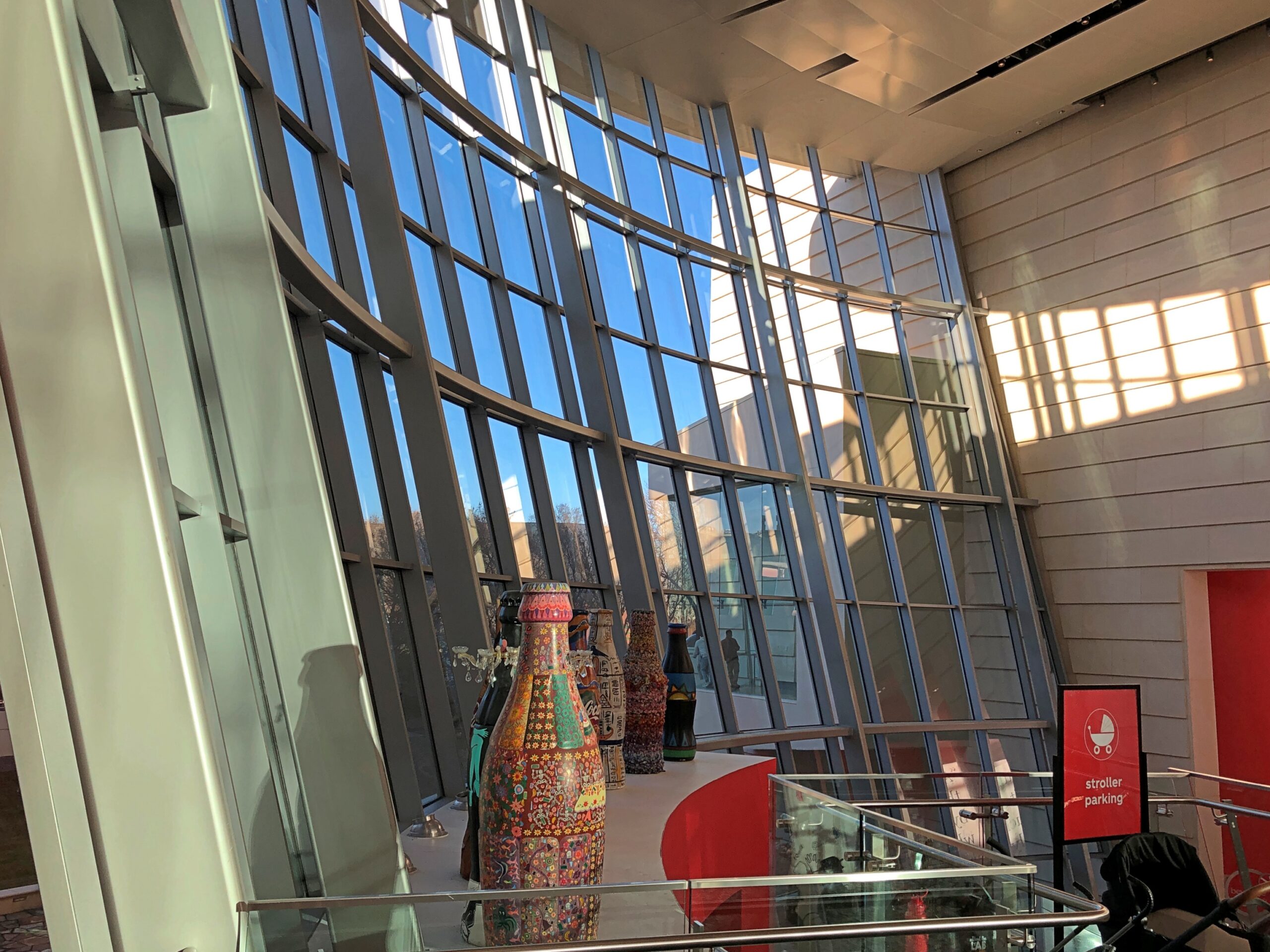
At 300,000 square feet, the museum is expansive, a 1990s design by architectural firm Jerde.

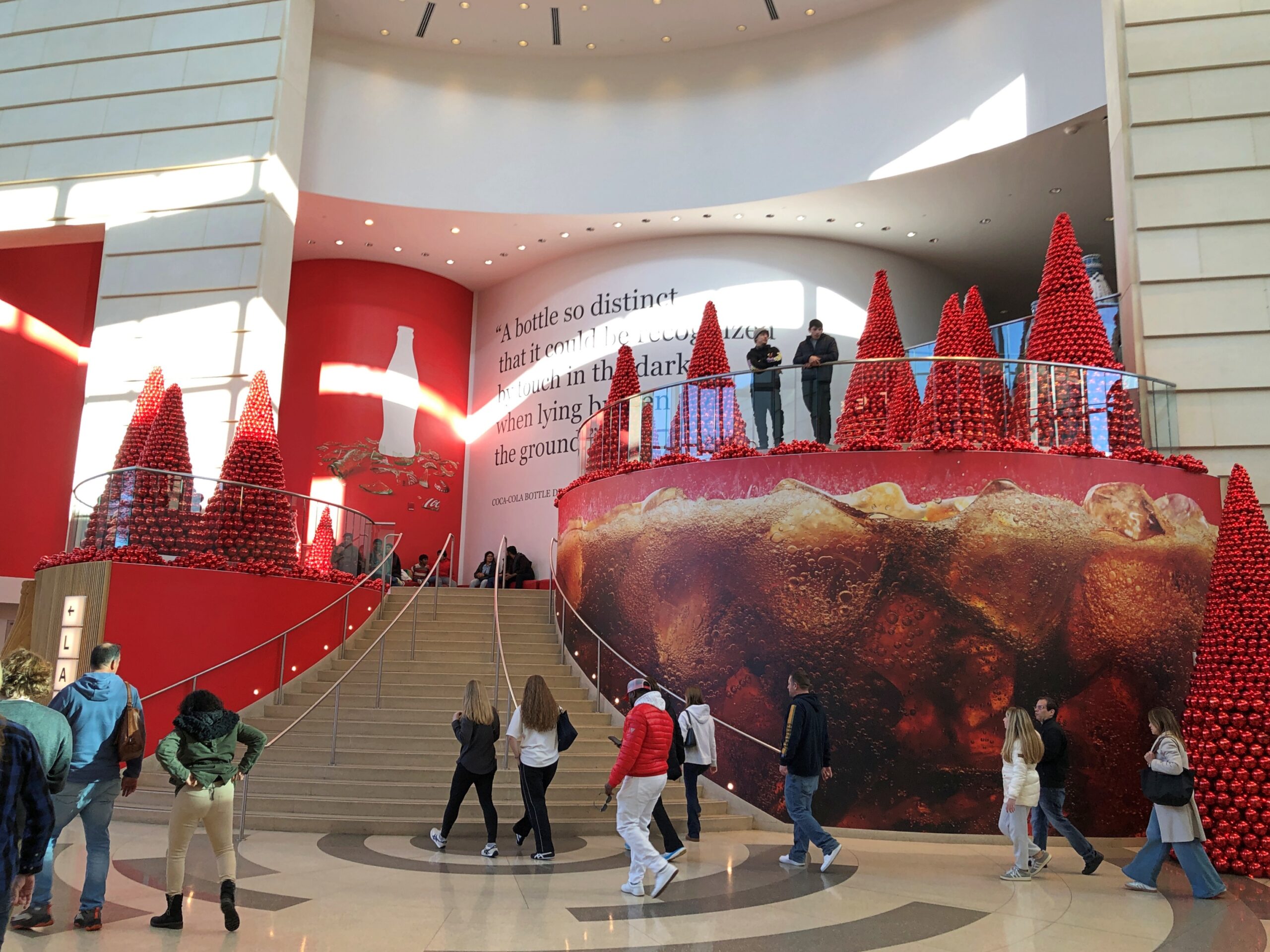
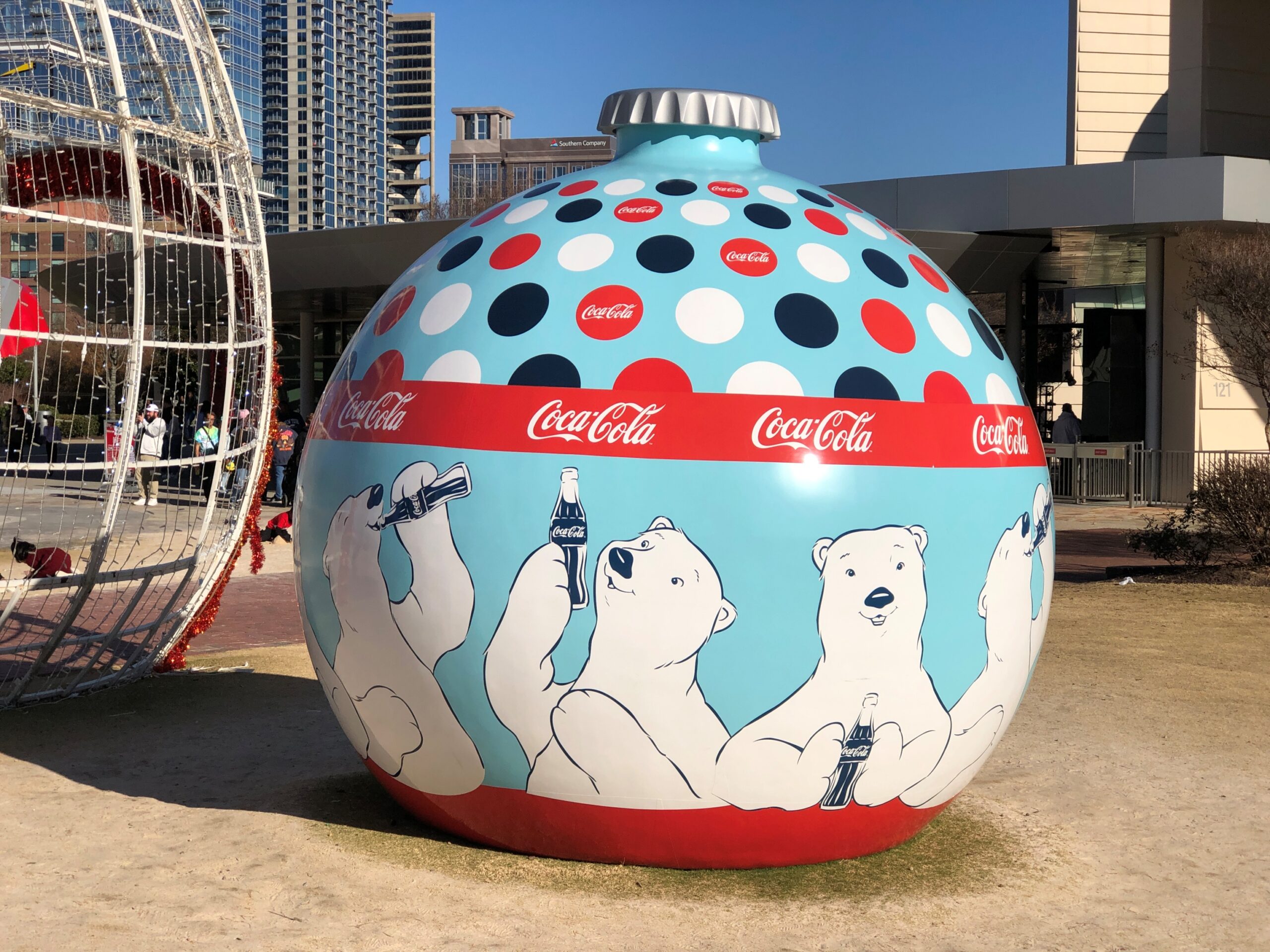
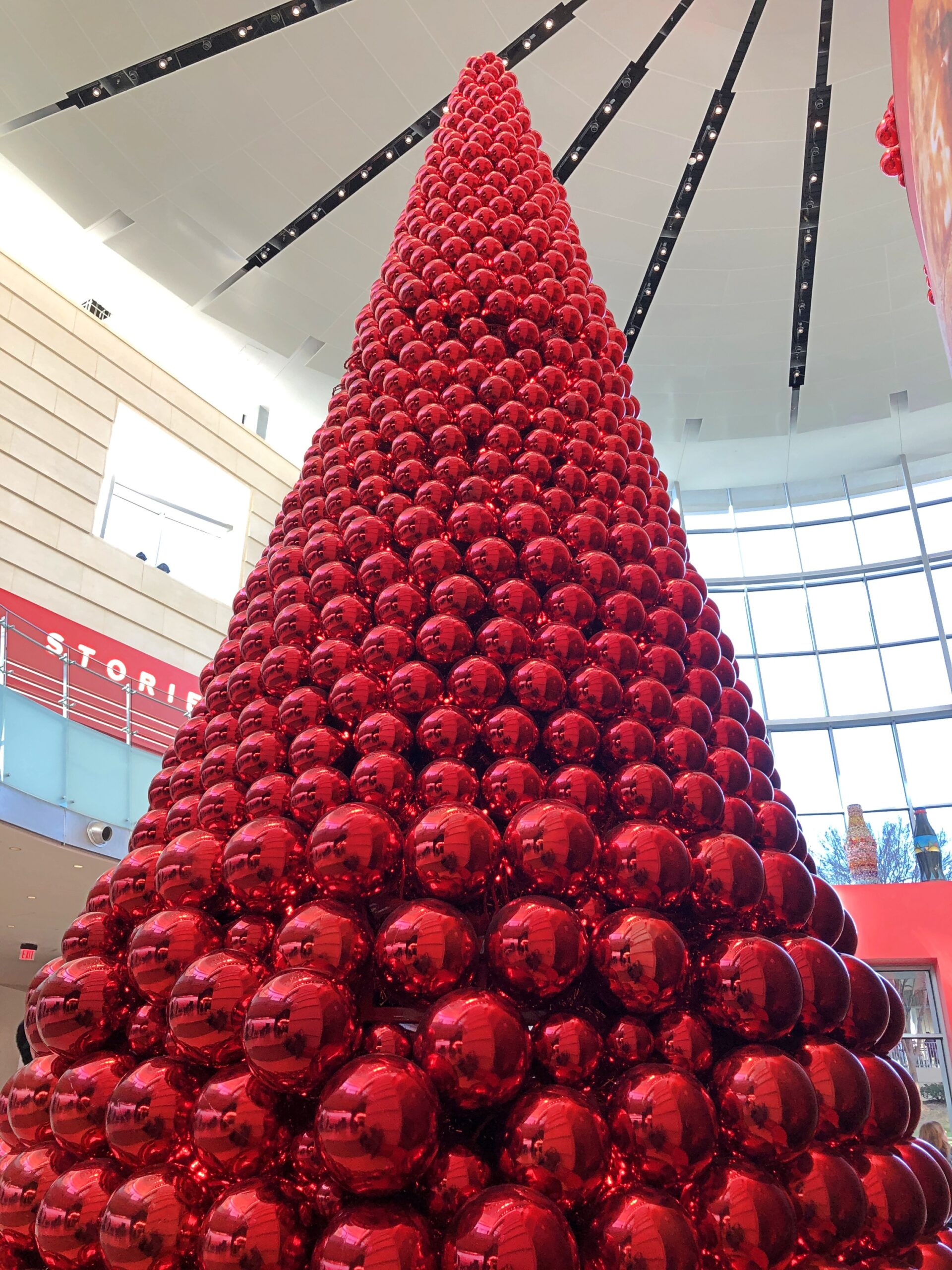
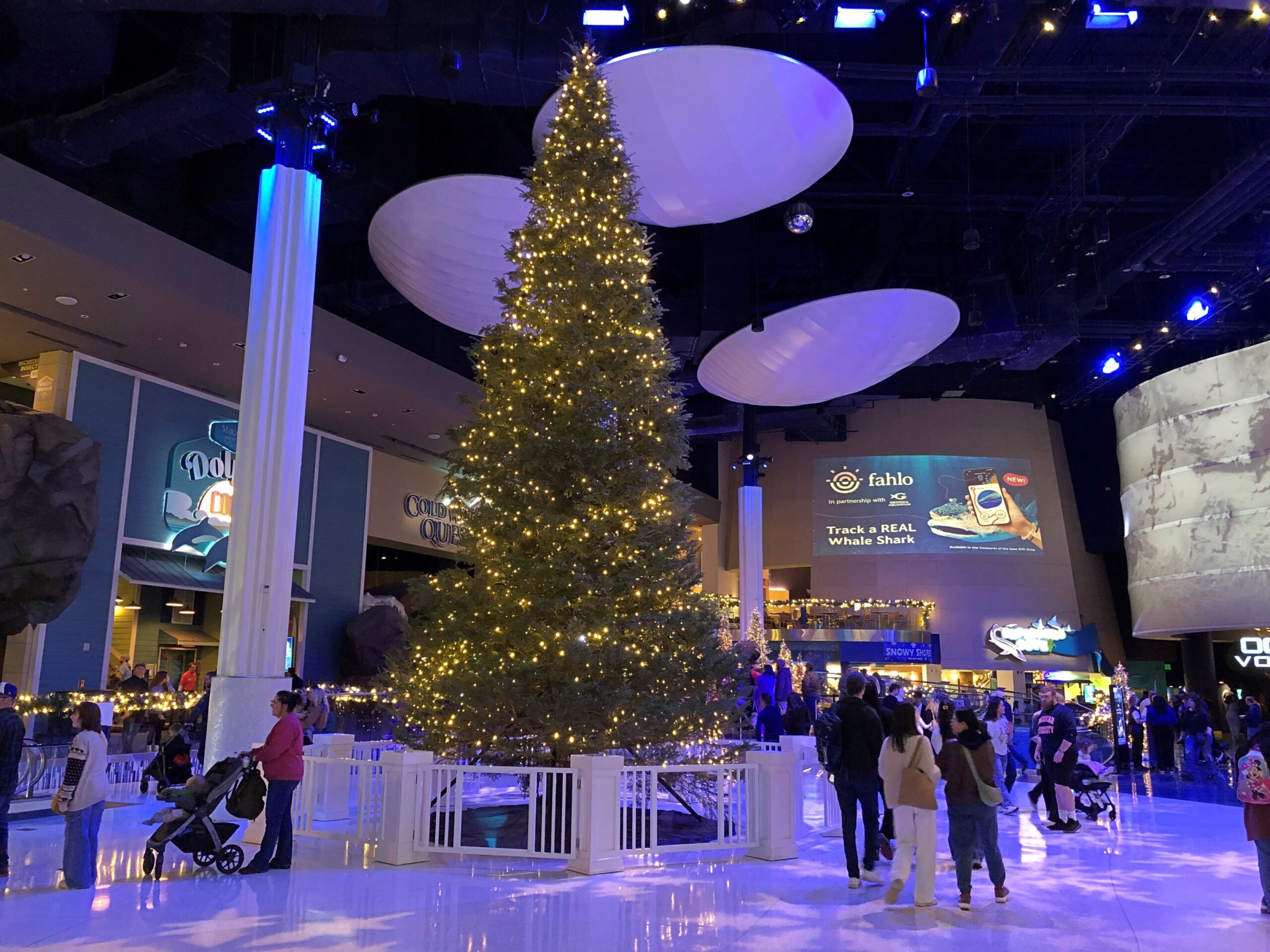
In December, decorations outside and in.

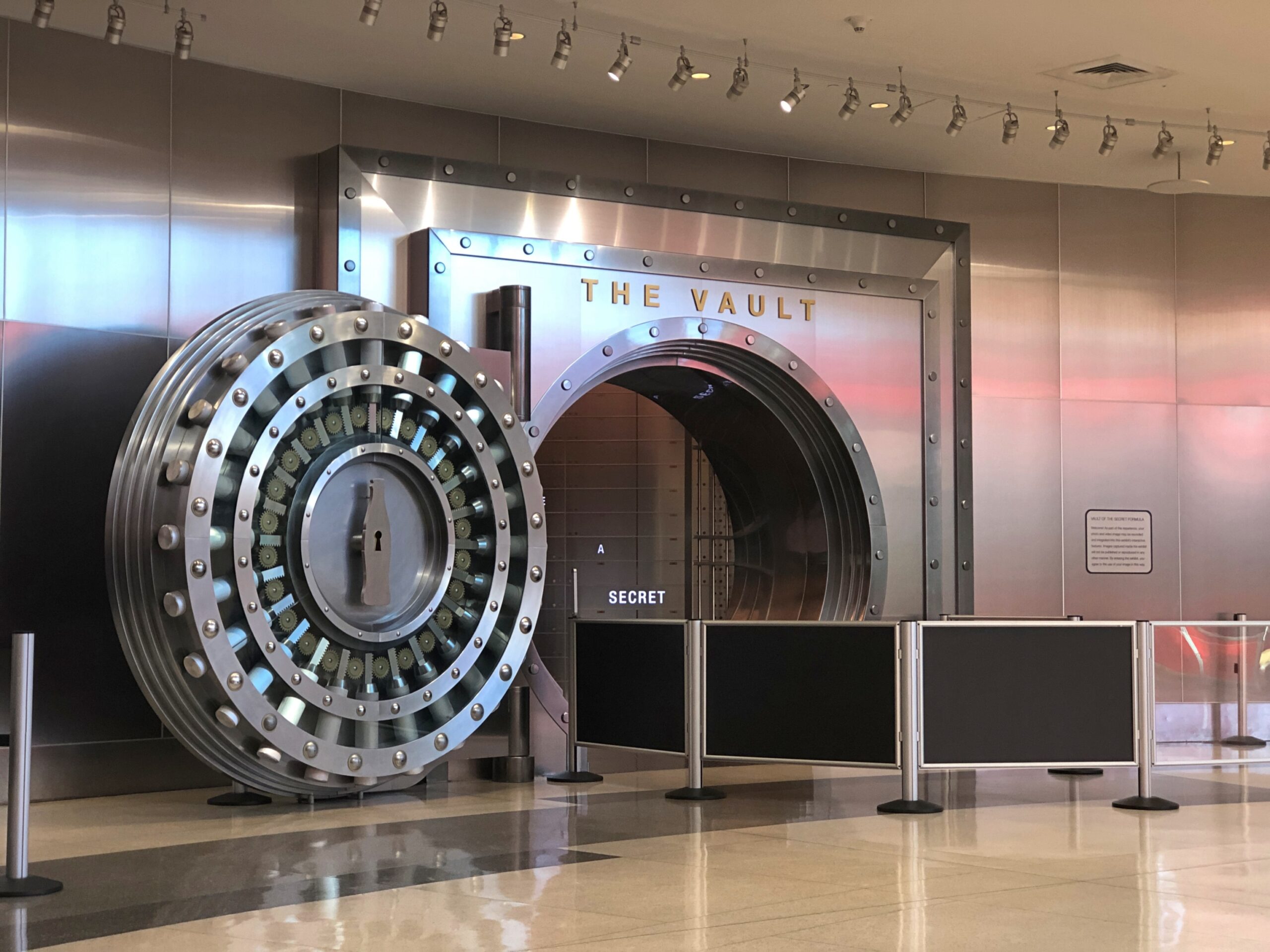
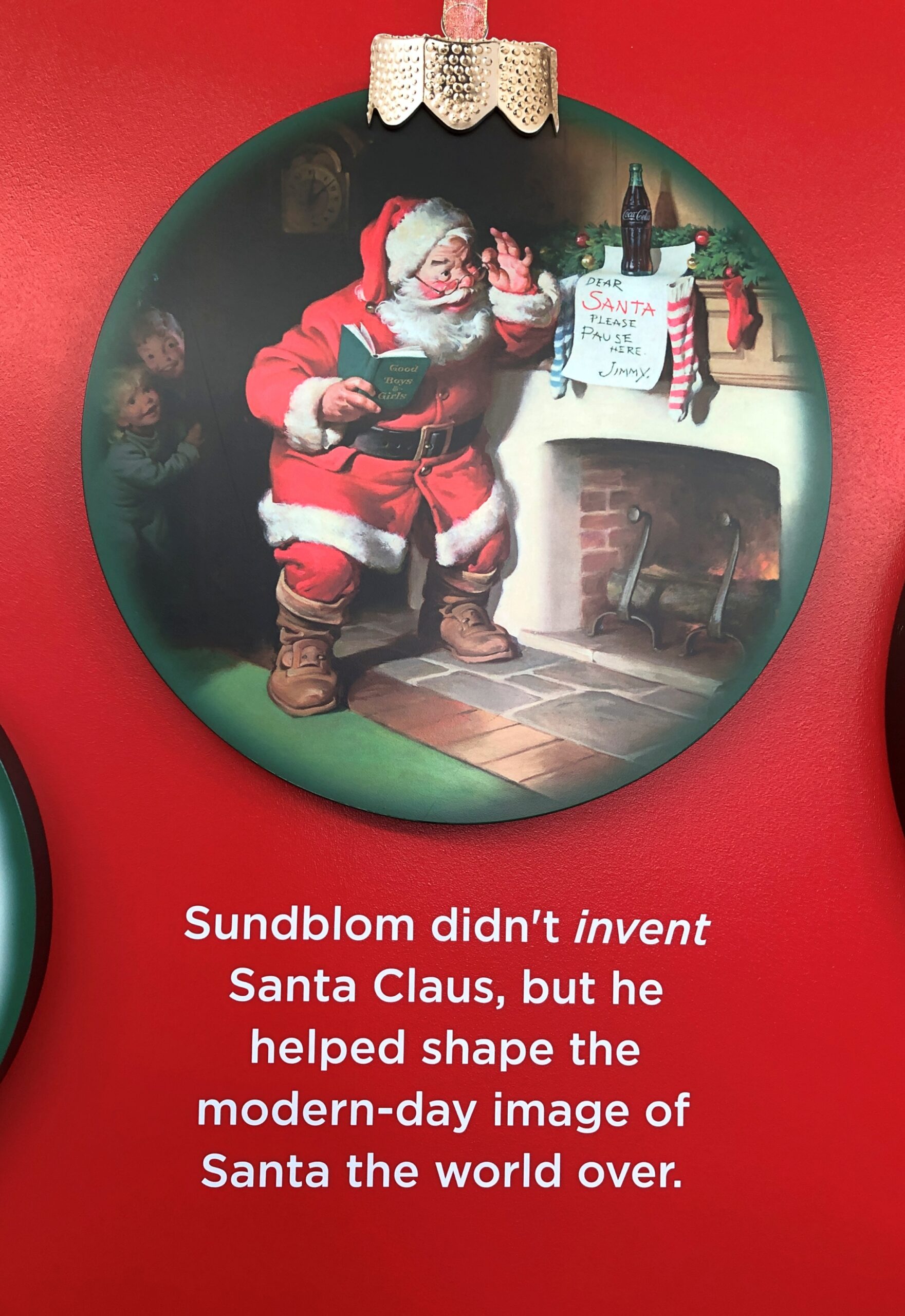
As a museum, the place includes a number of interactive exhibits and activities, starting at the Coca-Cola Theater with a six-minute commercial. I mean, a short history of Coke. You can also see the vault where the secret formula supposedly resides —

— check out various smells associated with the cola-making process, “explore Coca-Cola’s iconic influence on art, music, fashion, sports, and entertainment,” and “engage with interactive displays and AI magic that bring Coca-Cola’s legacy to life in new, unforgettable ways,” the museum explains. You can even, if you register – maybe with some app? – stand in line to have your picture taken with a person in a polar bear suit.

“The Coca-Cola Polar Bear… became truly iconic in 1993 with the launch of the ‘Always Coca-Cola’ campaign. In the famous ‘Northern Lights’ commercial, created by Ken Stewart, animated bears gather to watch the aurora borealis while enjoying Coca-Cola — a scene that brought the Polar Bear to life and captured the hearts of viewers worldwide,” the museum notes.

Does it rise to the level of icon? Somehow the Coca-Cola Polar Bear had made only a faint impression on either of us, so we took a pass on it. Also, there was a line. And it cost extra? Always with the revenue streams. But I did enjoy the more standard sort of museum exhibits on offer at World of Coca-Cola.

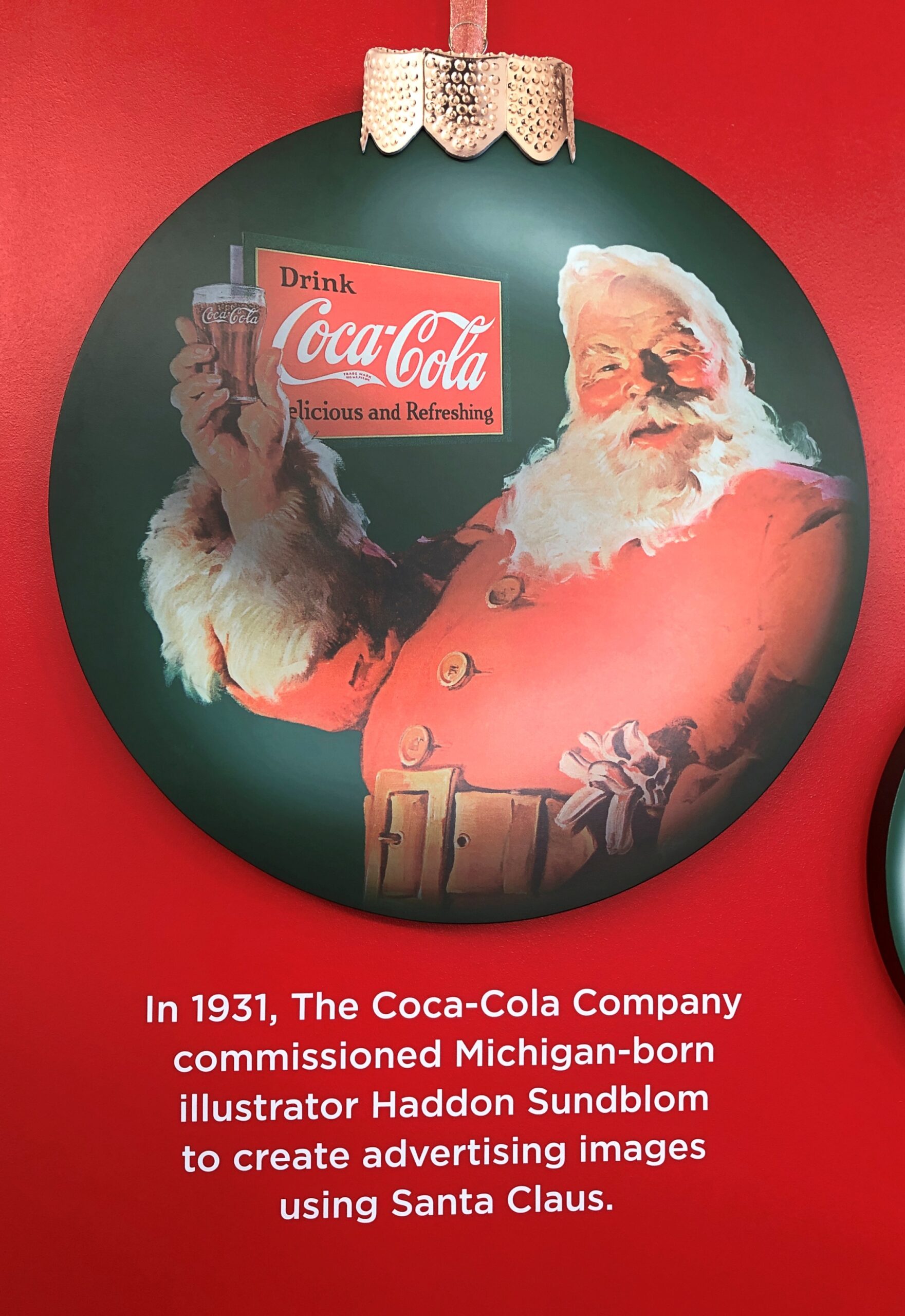
A seasonal observation.

Artifacts from long ago.

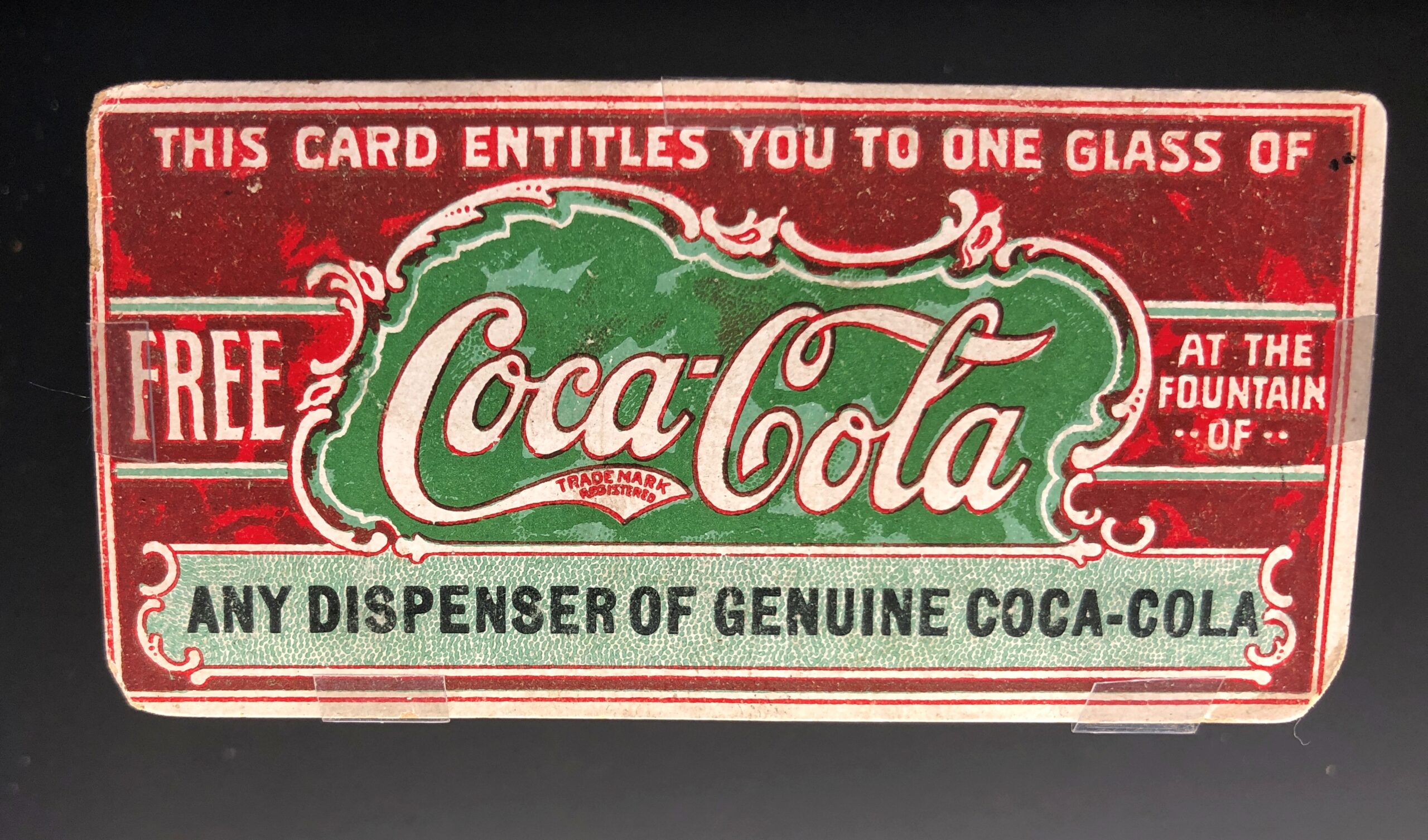
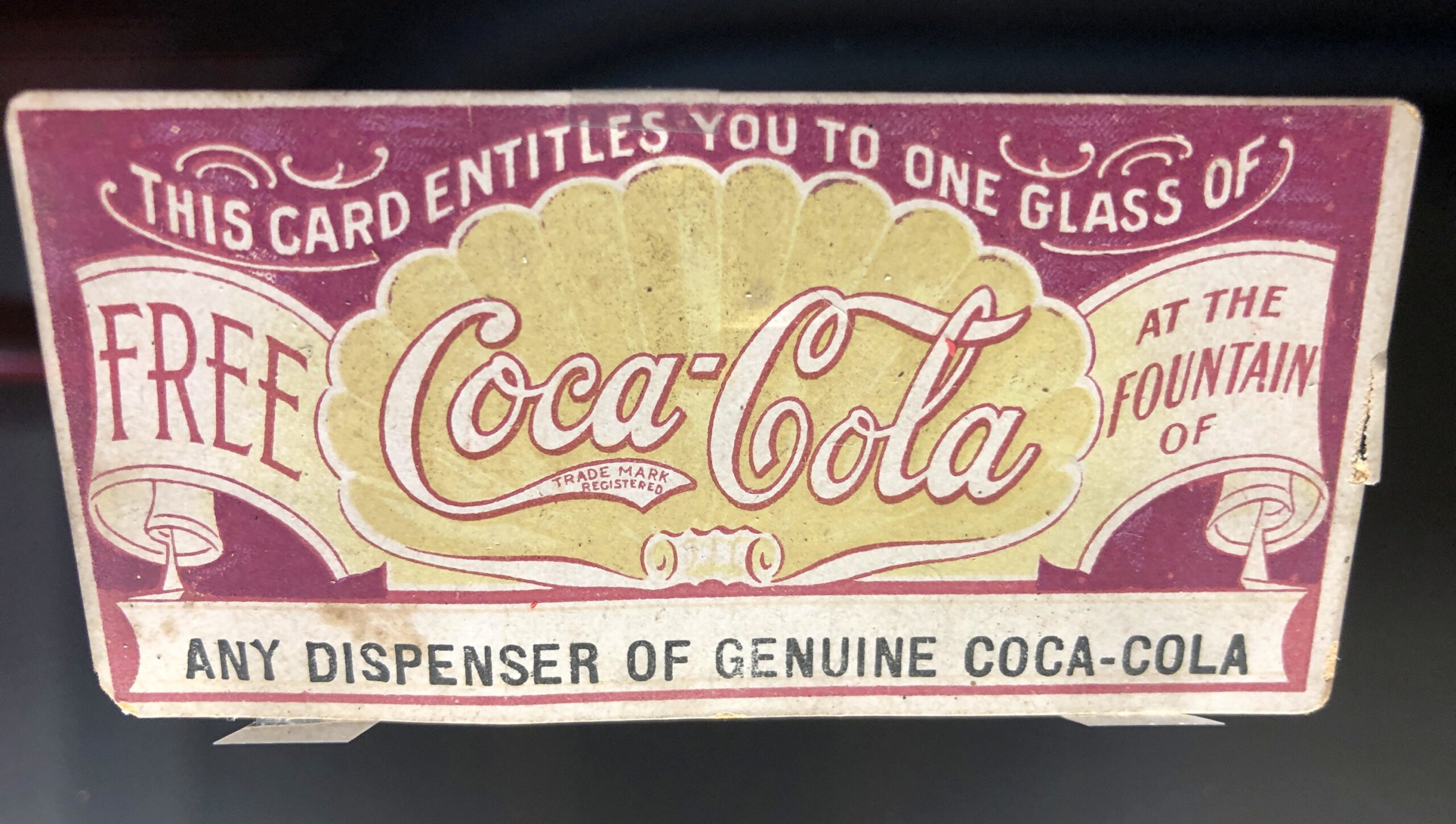
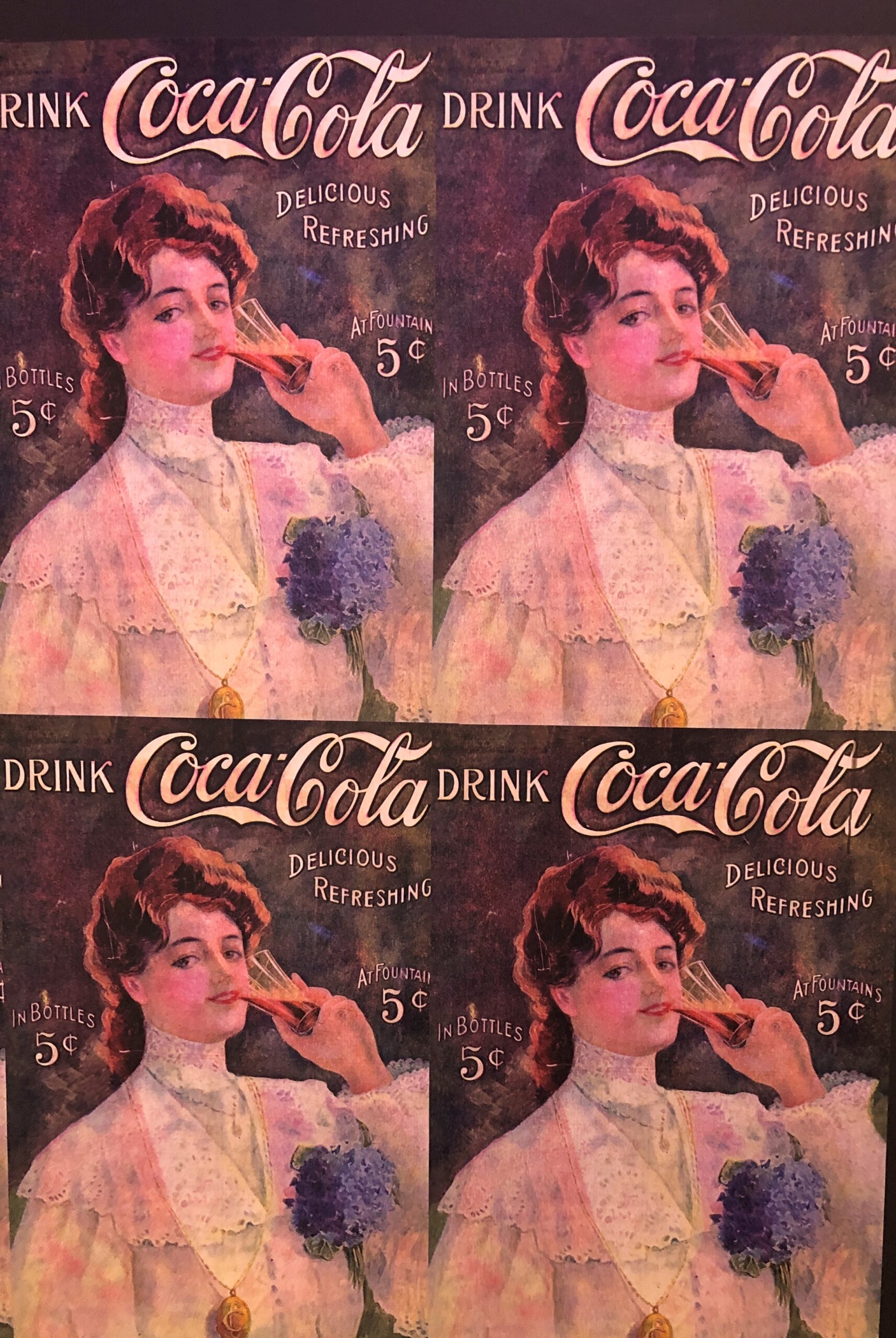
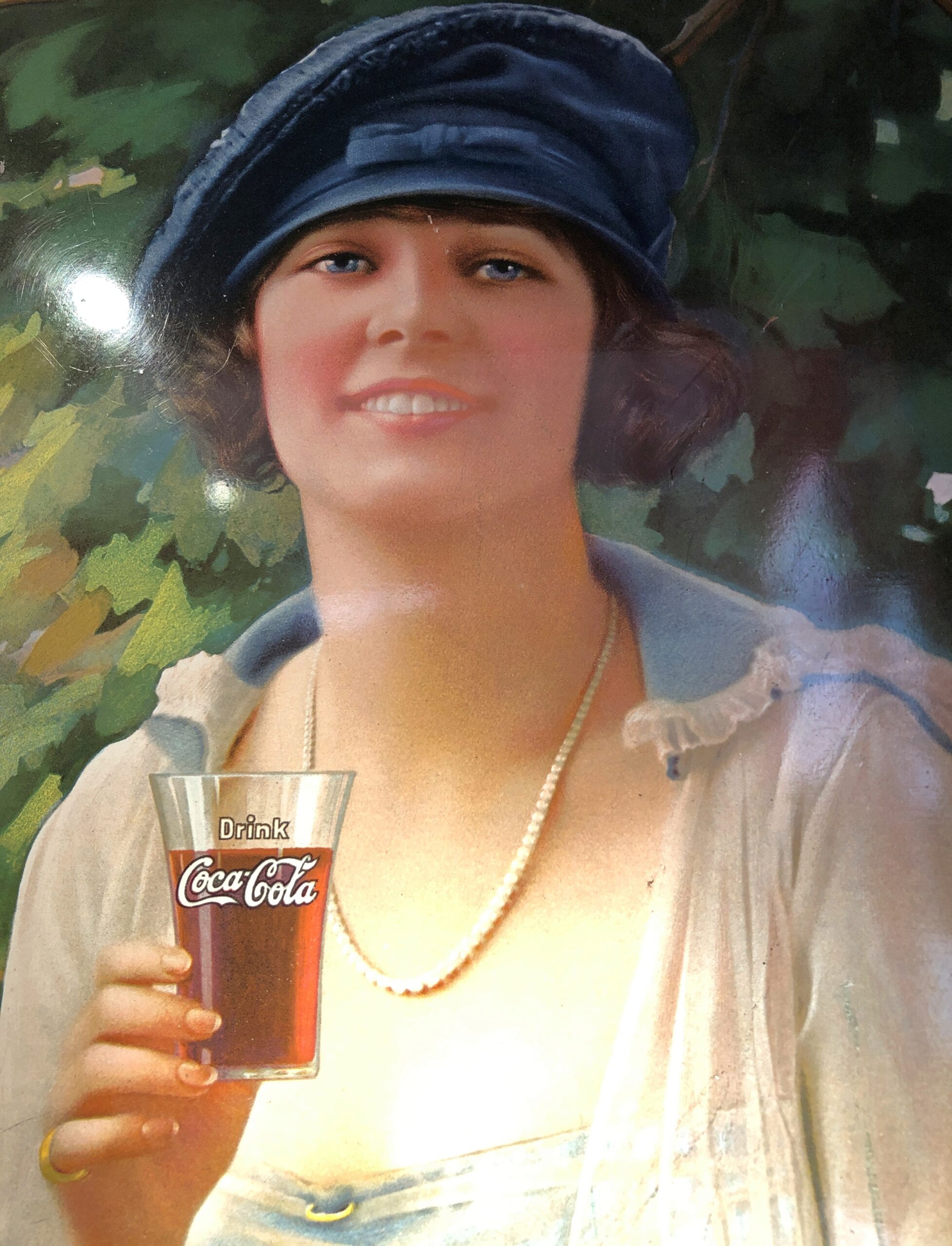
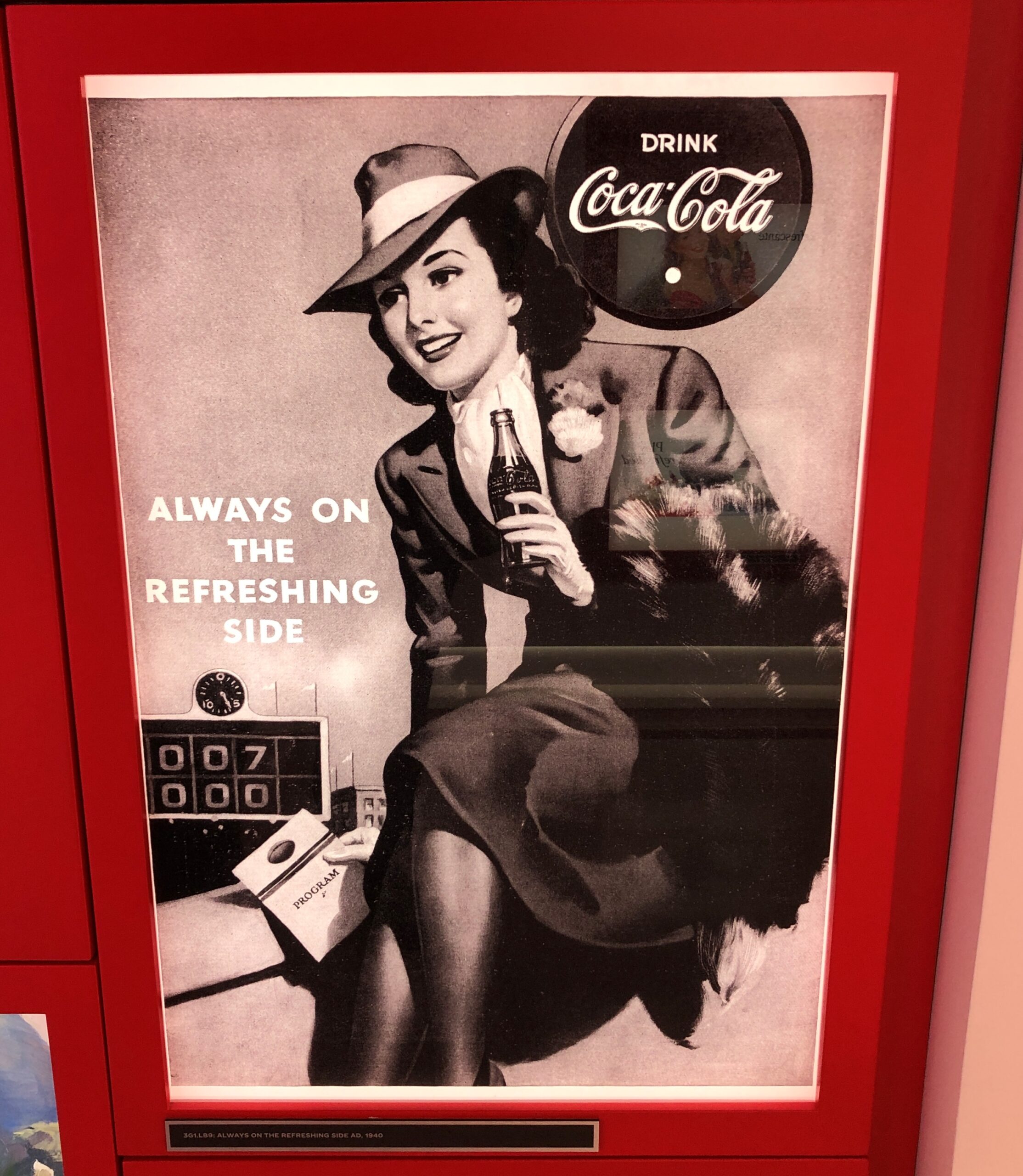
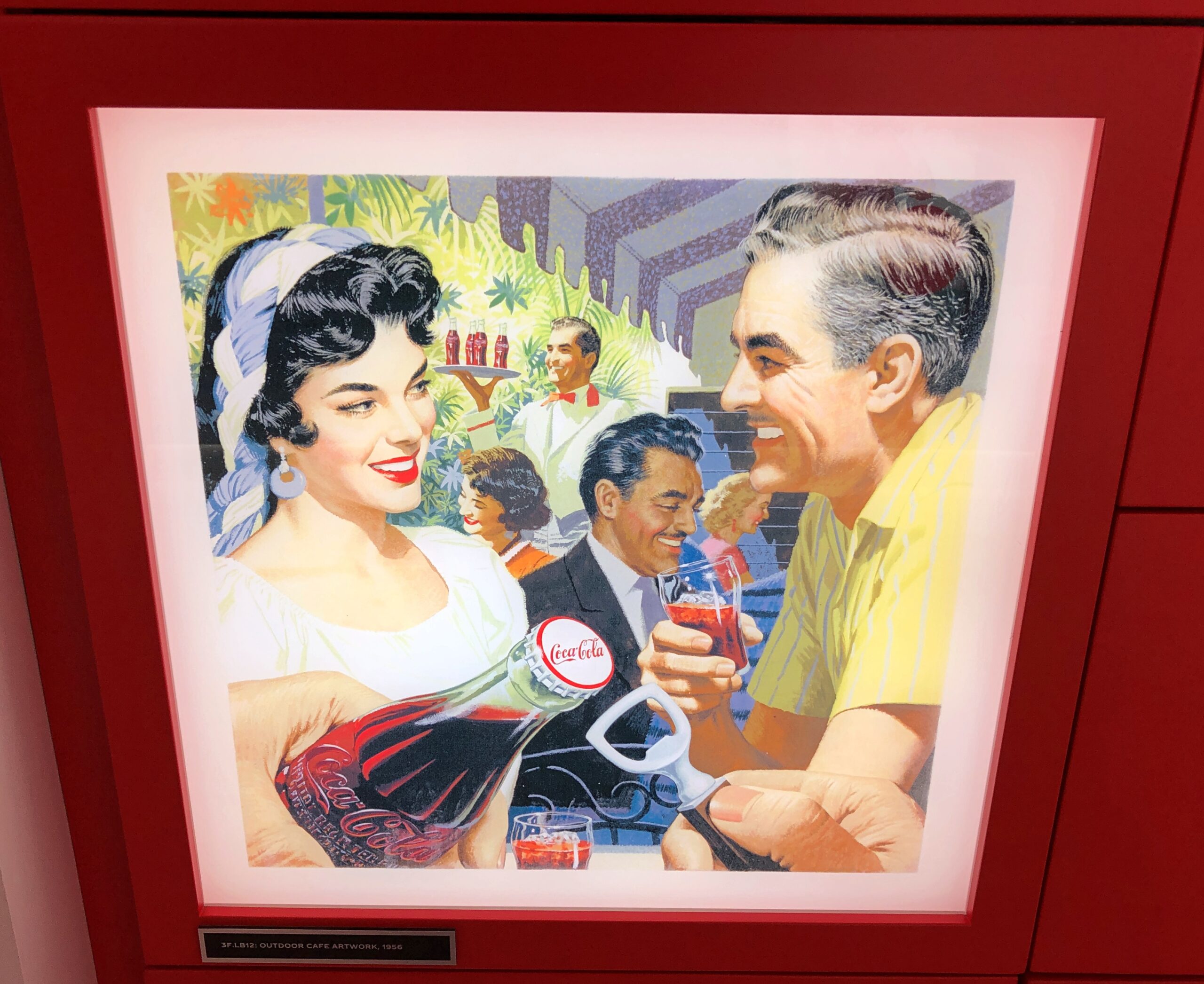
Ads from long ago.

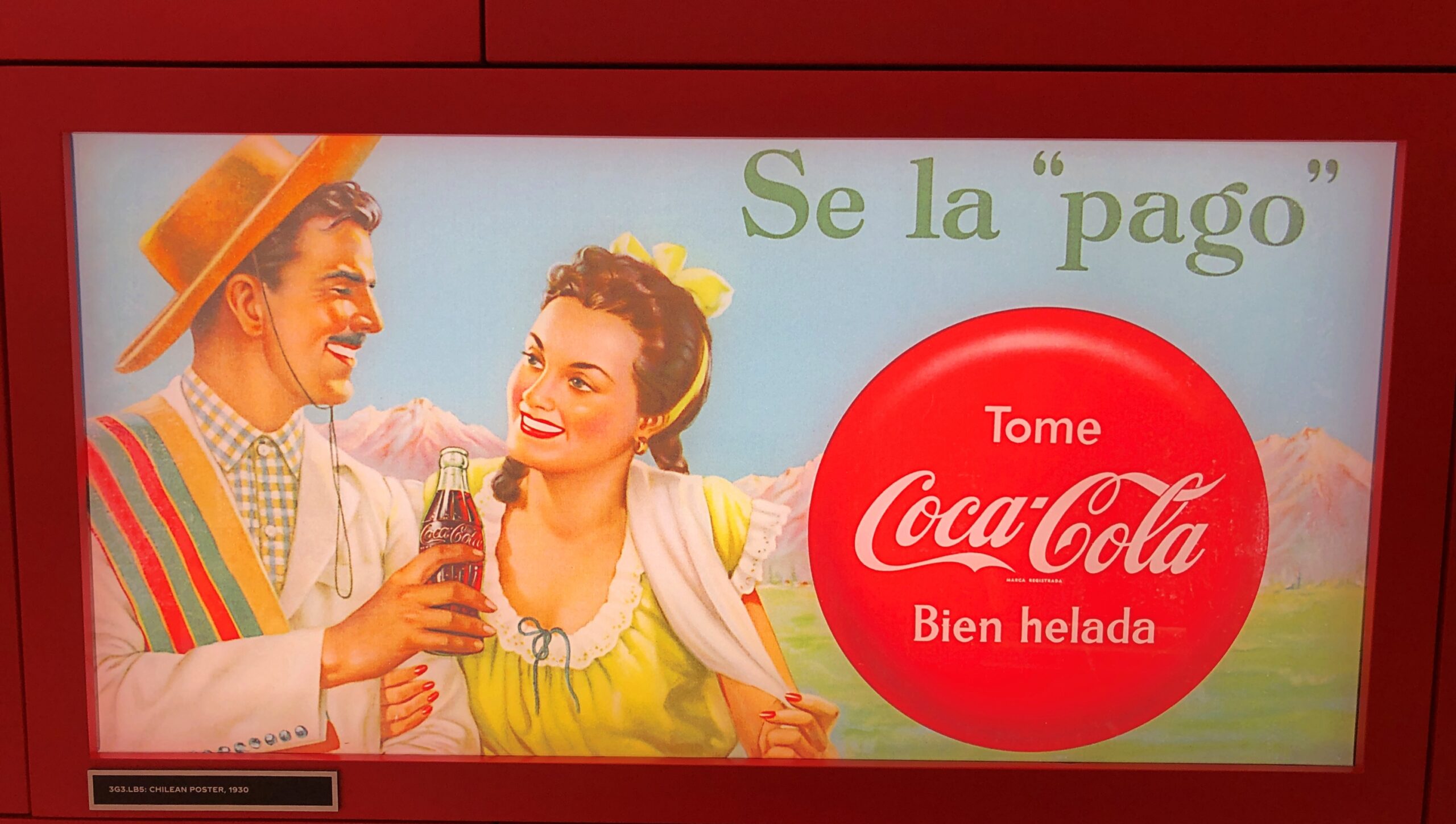
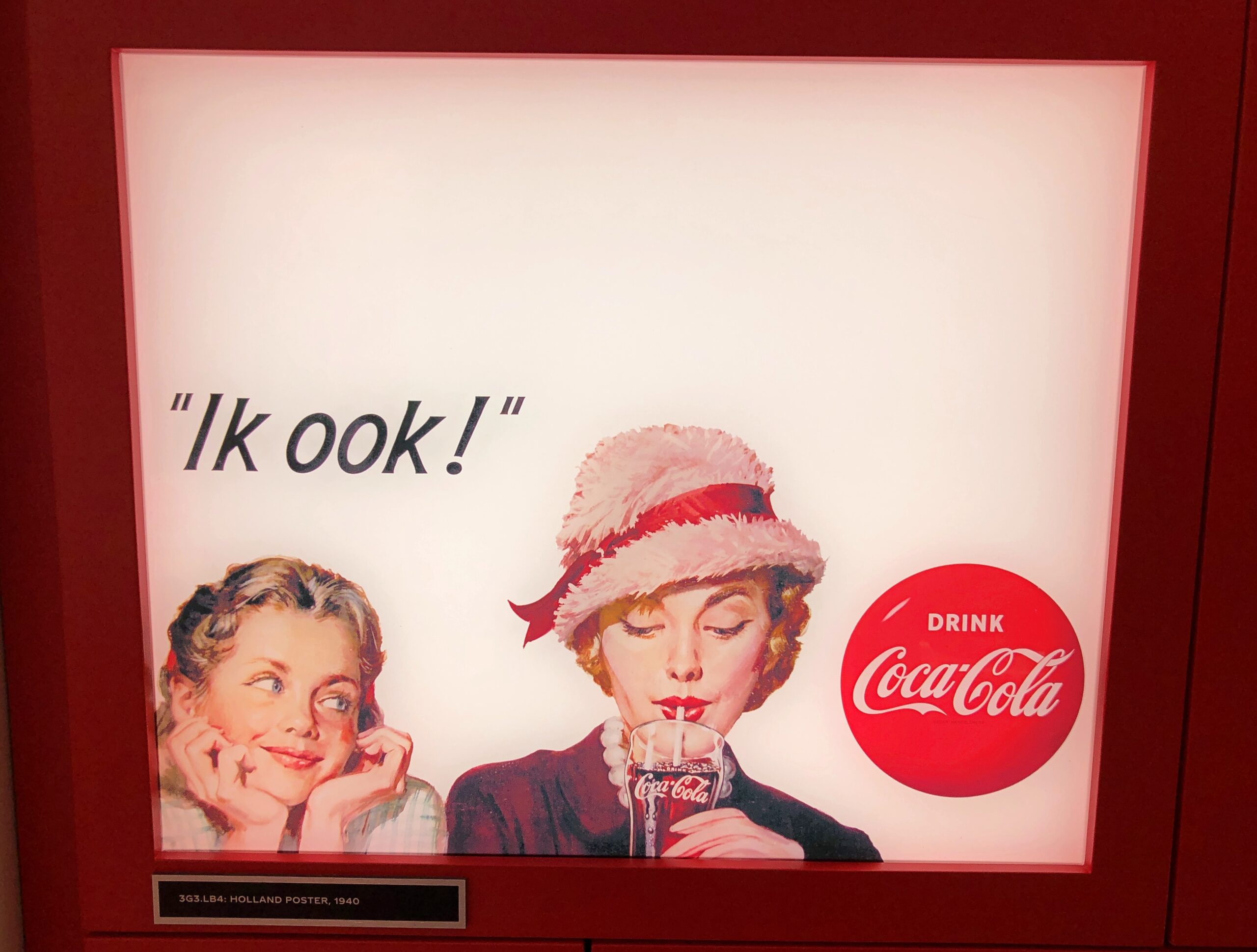
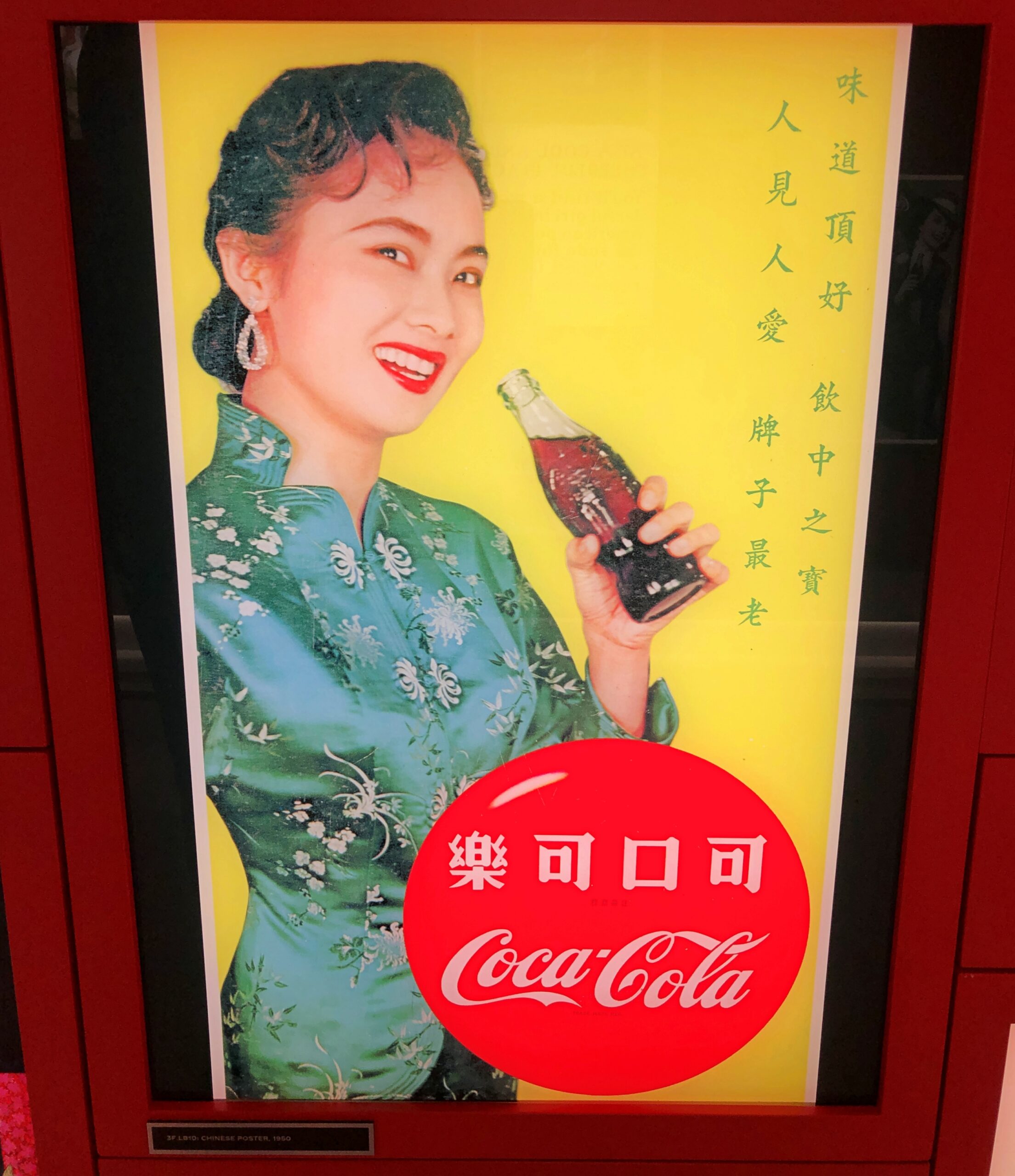
And from distant places.

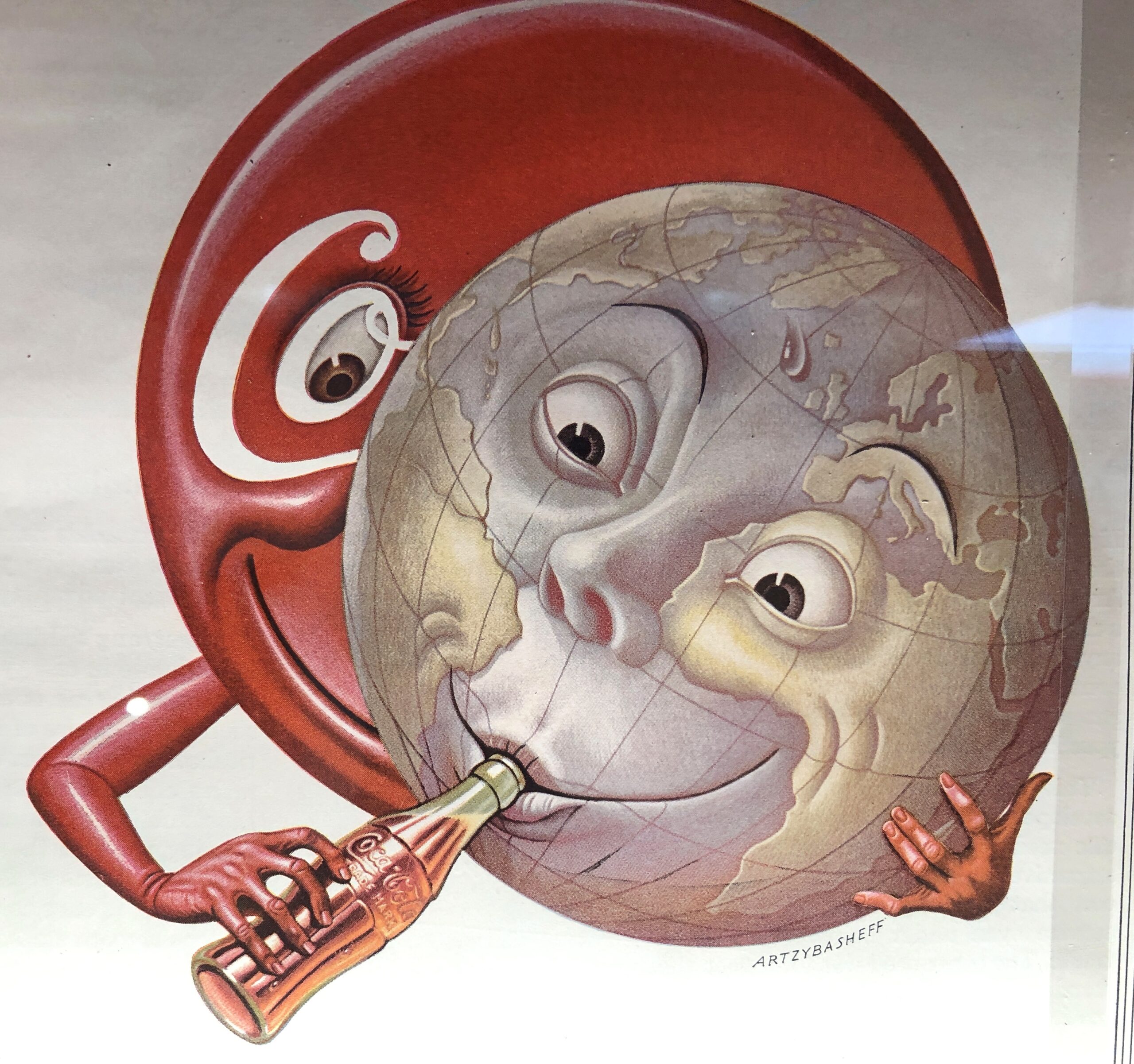
I seem to remember a similar political cartoon of featuring the Earth being nursed back to health after the ravages of WWII, but I can’t quite place it.

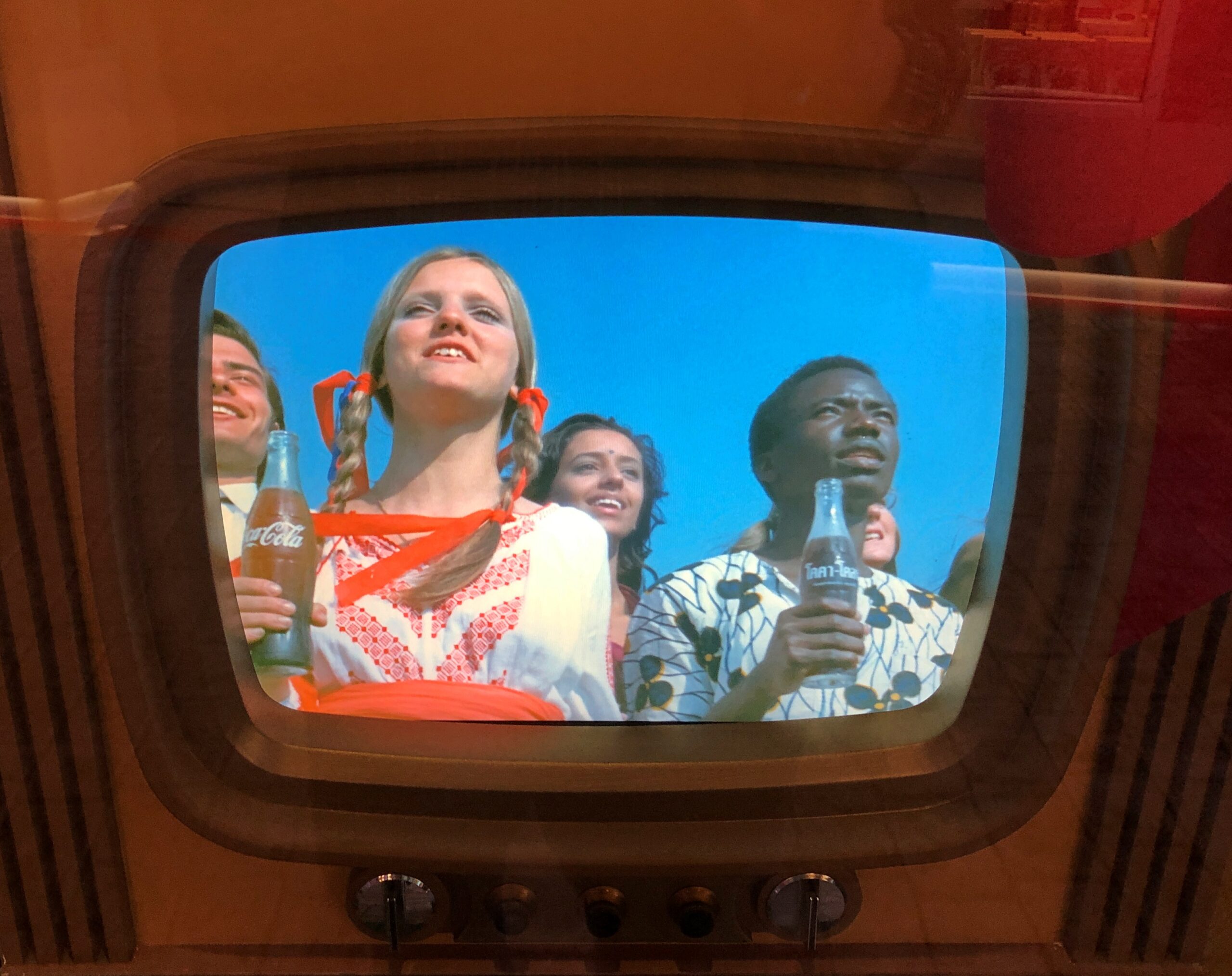
There were video clips, including of course the “Hilltop” commercial. That, I remember. Many people old enough do too, which naturally gave the final moment of Mad Men its punch.
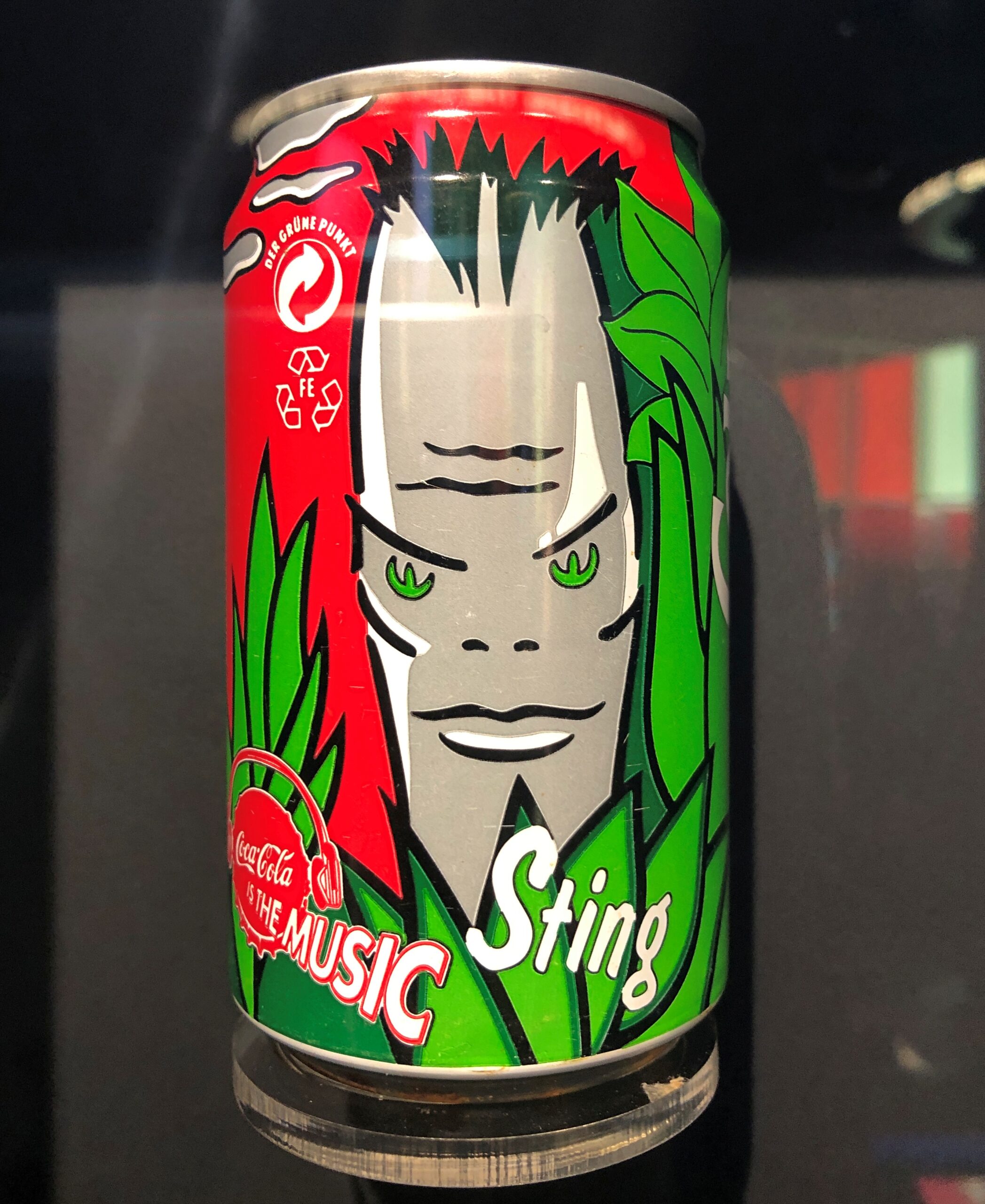
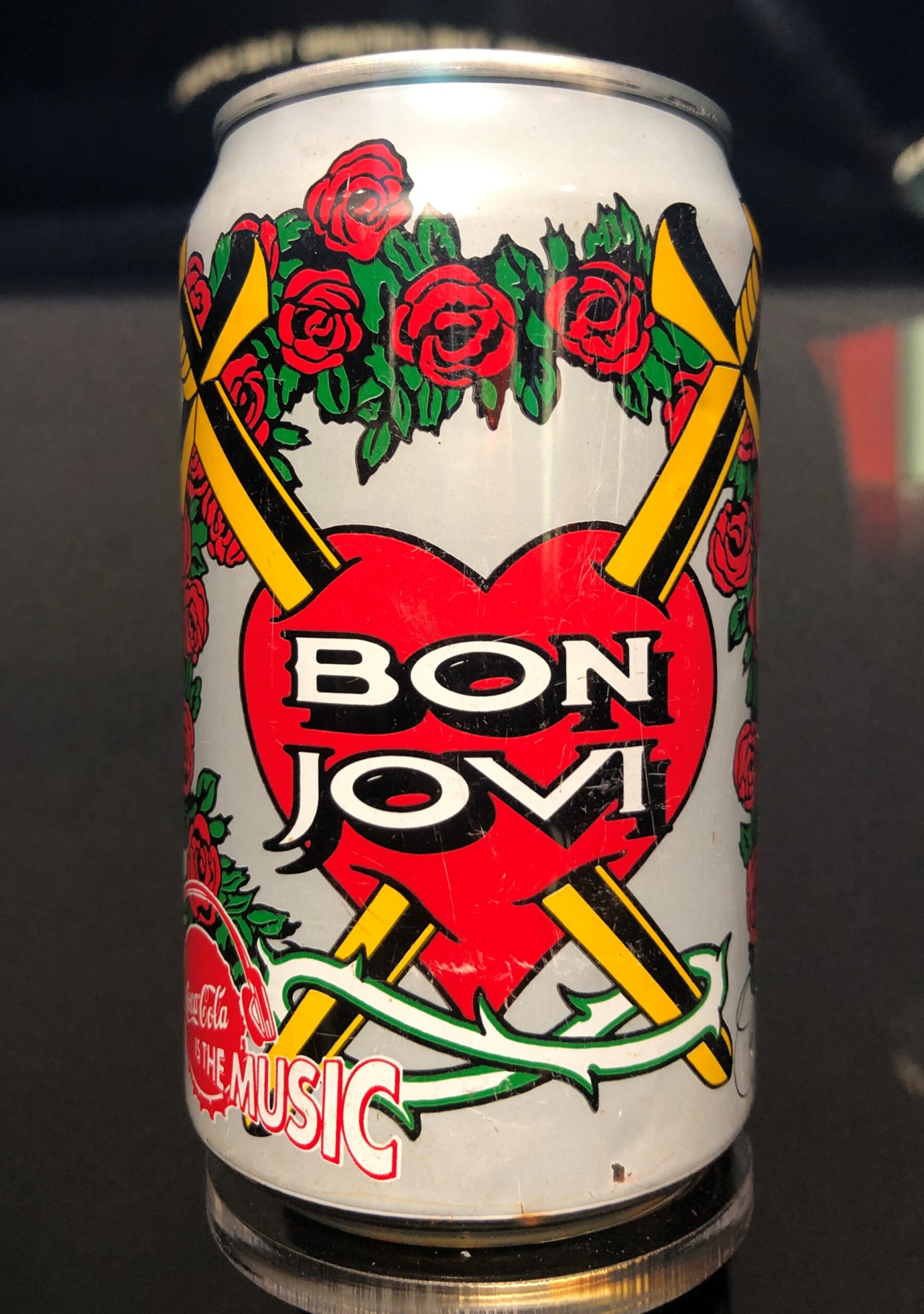
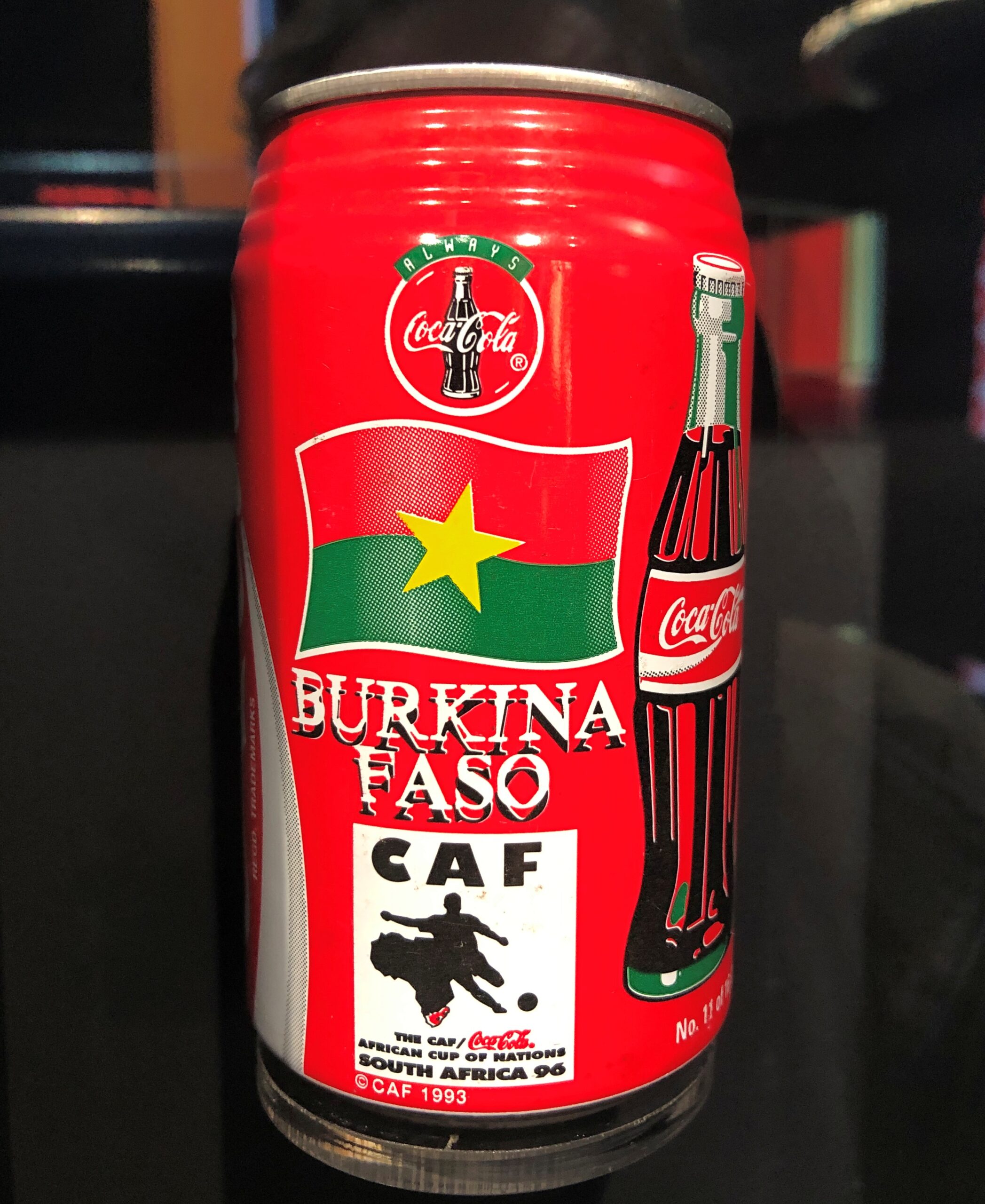
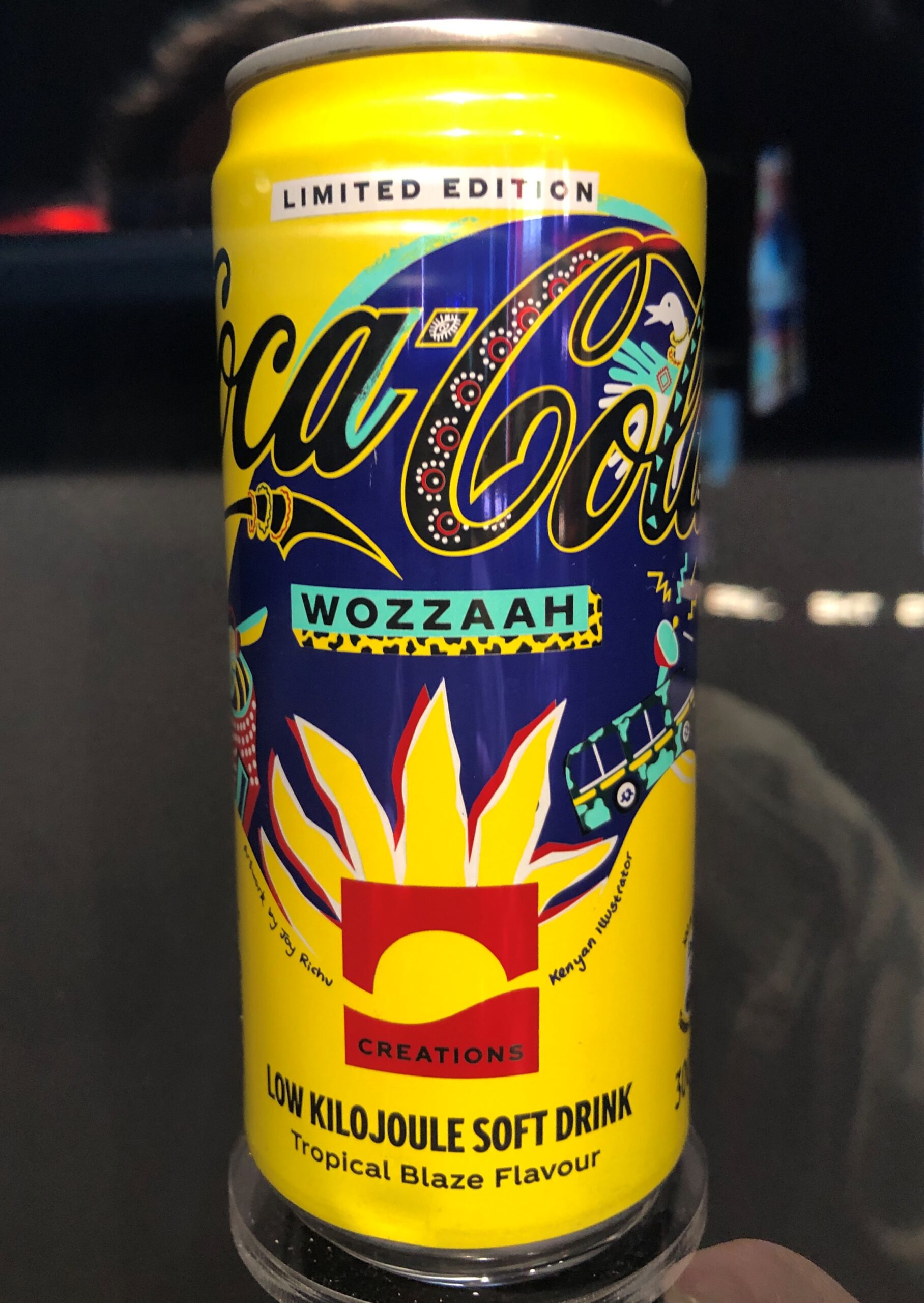
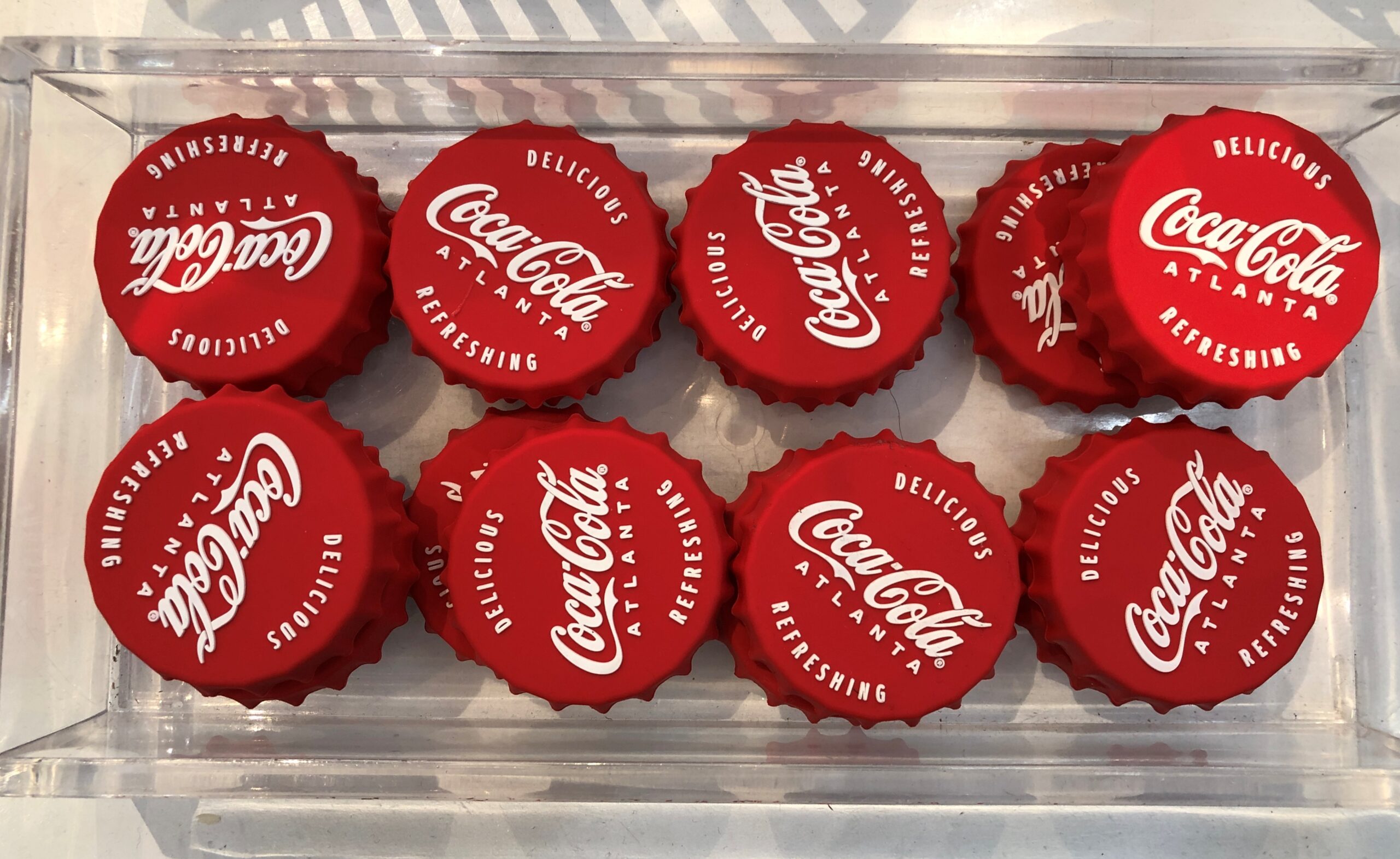
The museum also featured Coke product cans and bottles of various kinds (but not a collection of caps that I saw), many more than you see in everyday grocery stores. For instance, Sting and Bon Jovi had their own cans at one point, as part of a musician series.

Cans from around the world.

A very crowded room includes soda and water dispensers that allow visitors to sample Coca-Cola products from around the world. We went to town trying the various concoctions, as did a lot of people, and eventually I found my favorite: Bonbon Anglais, a wonderful fruit drink from Madagascar.
The web site Madagasikara tells us: La boisson gazeuse Bonbon Anglais est fabriquée à Madagascar, un pays reconnu pour ses produits naturels et son savoir-faire artisanal. I would expect no less.
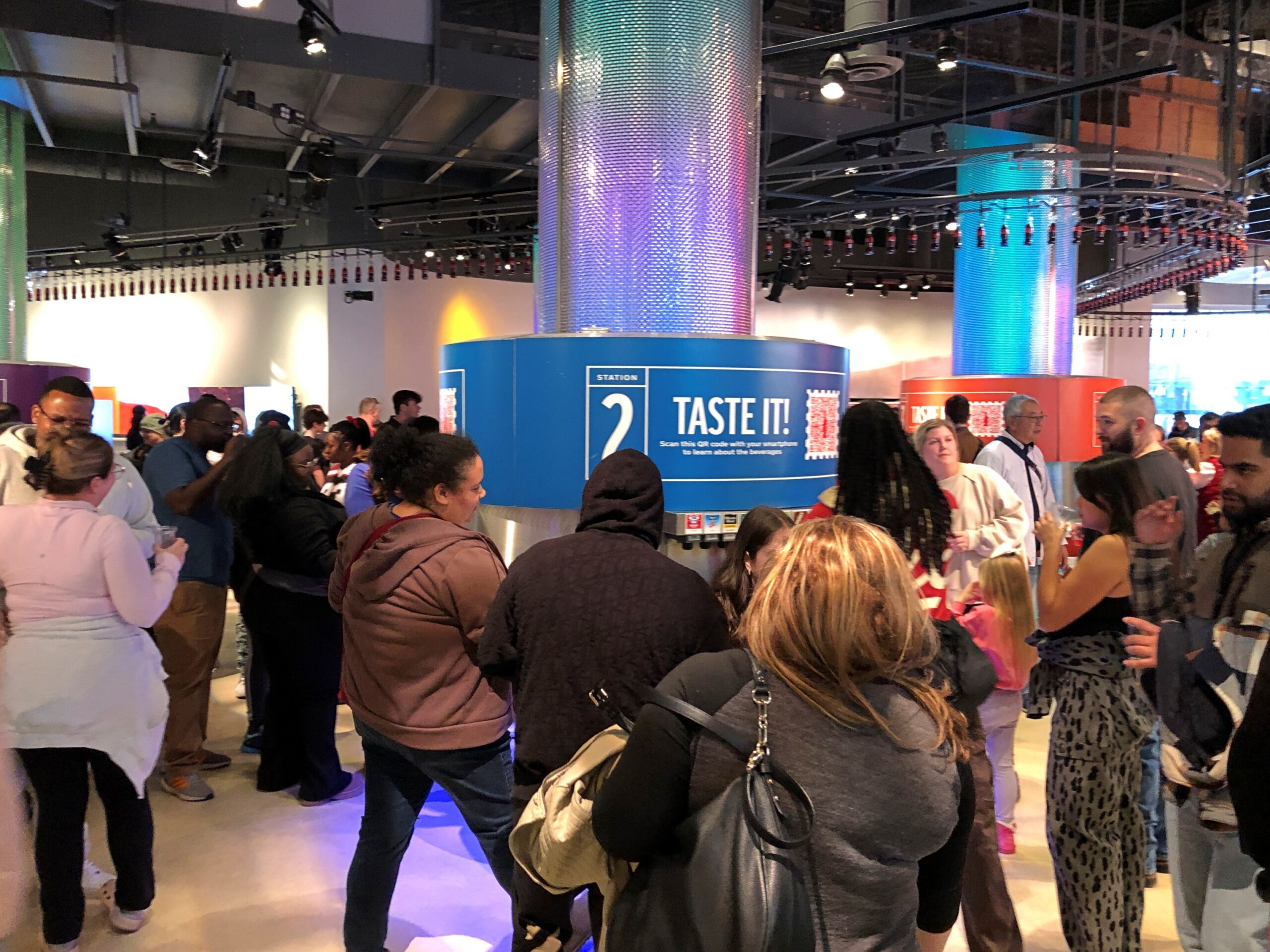
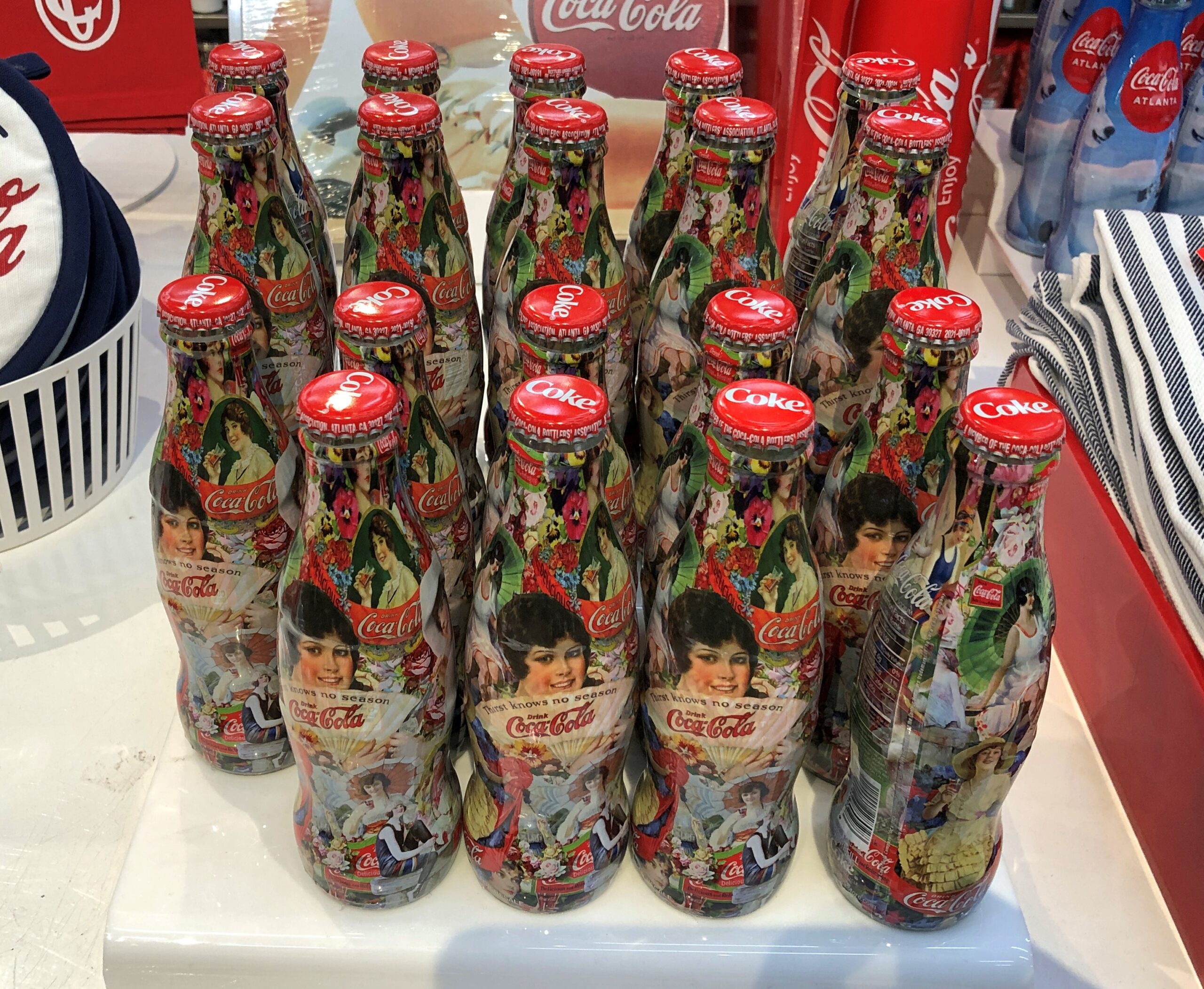
The gift shop was crowded, too. I took pics but bought no Coke merch. (I might have bought a postcard, but found none.)

To my way of thinking, the Coca-Cola Co. should pay me – even a little – to advertise its products on my person. Also, while I’m on that particular hobby horse, the World of Coca-Cola shouldn’t charge admission, especially not as much as a standard museum.

I ran the numbers, and World of Coca-Cola admission costs more than twice as much as admission to the Taj Mahal. Sure, Georgia isn’t Uttar Pradesh, but it’s galling that you’re paying at all, just to be marketed to. Obviously Middle America disagrees with me – and Yuriko didn’t mind paying for both of us – so that idea will just have to be a quixotic hobby horse of mine.

The Georgia Aquarium

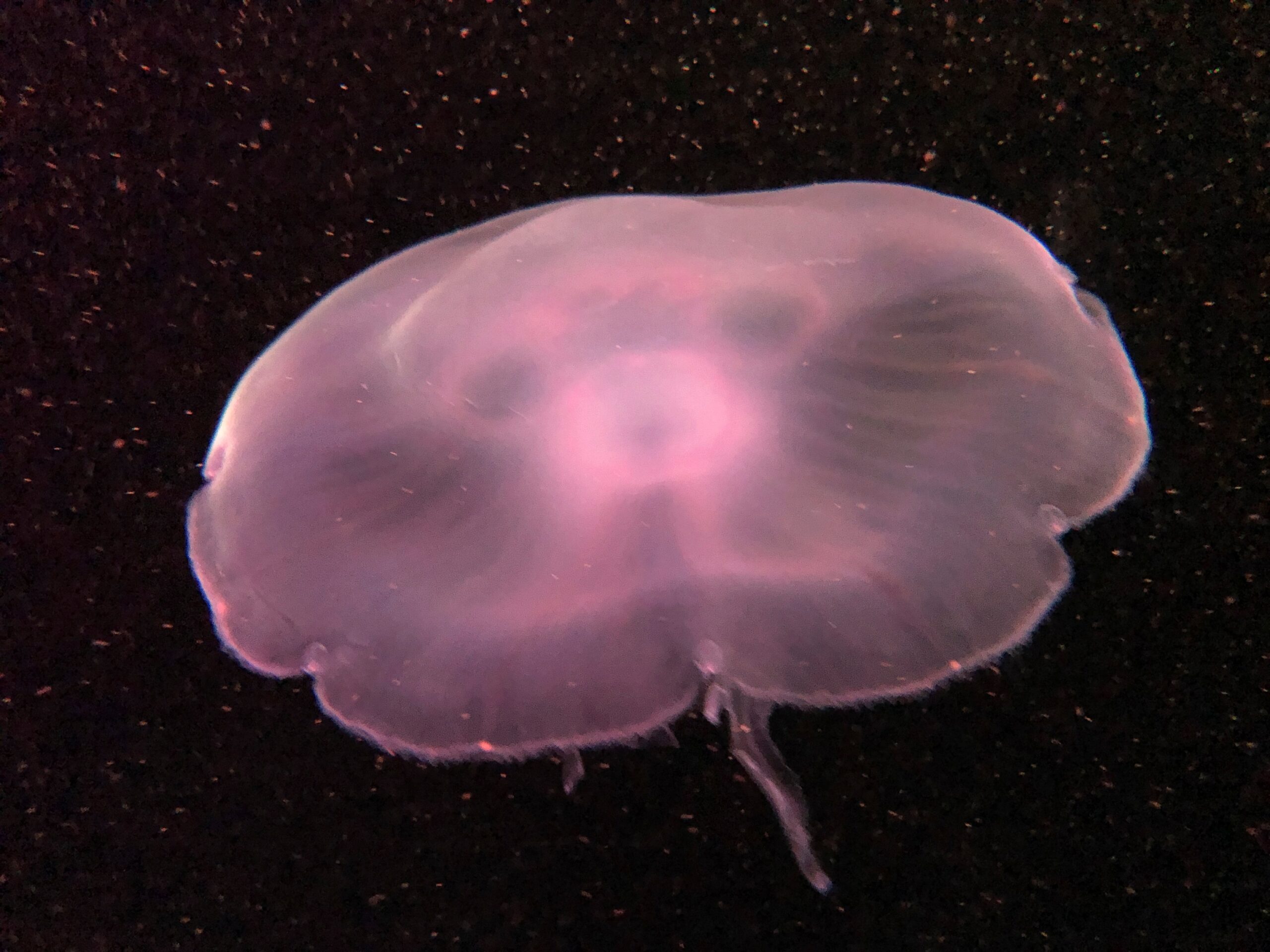
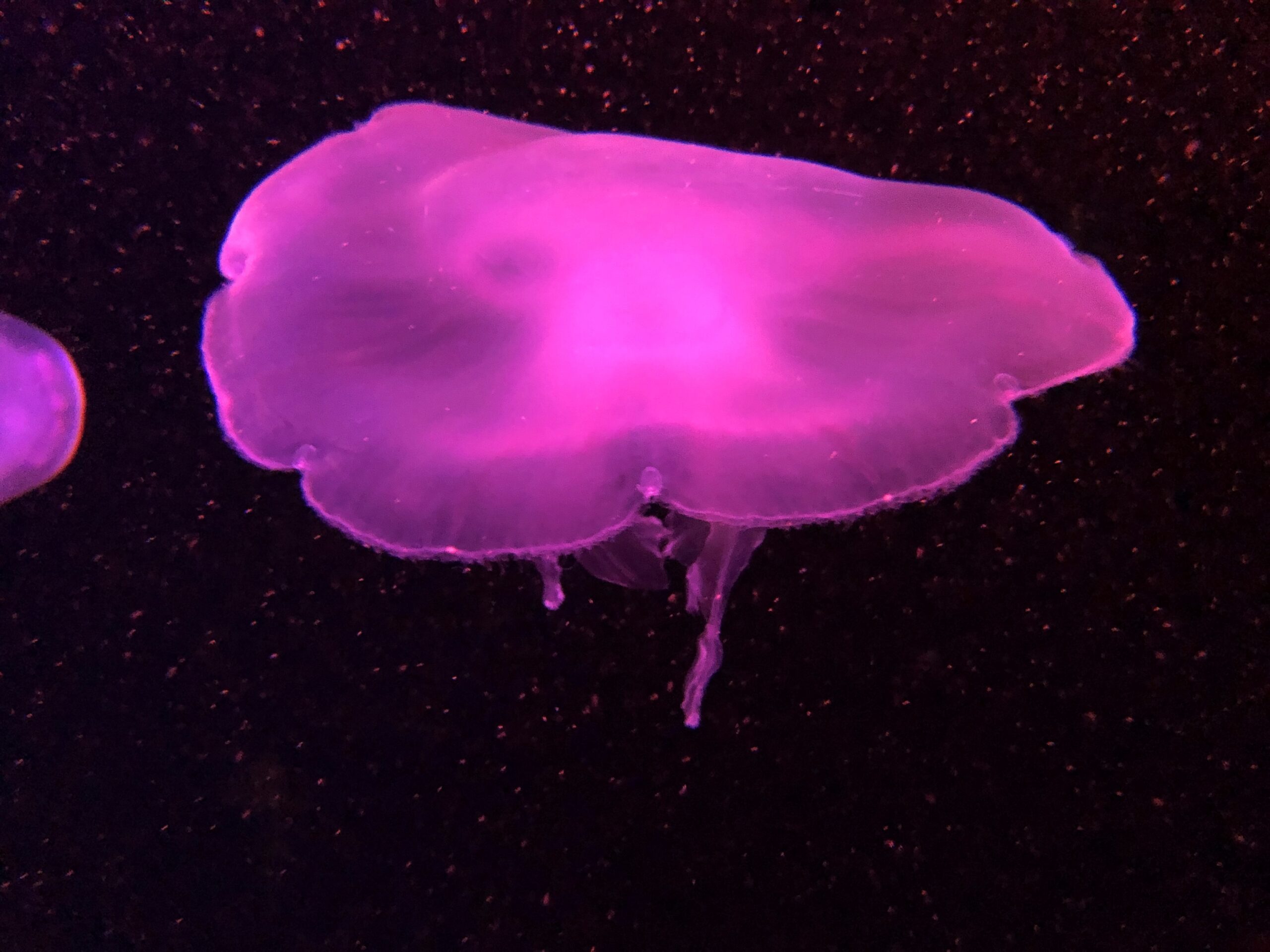
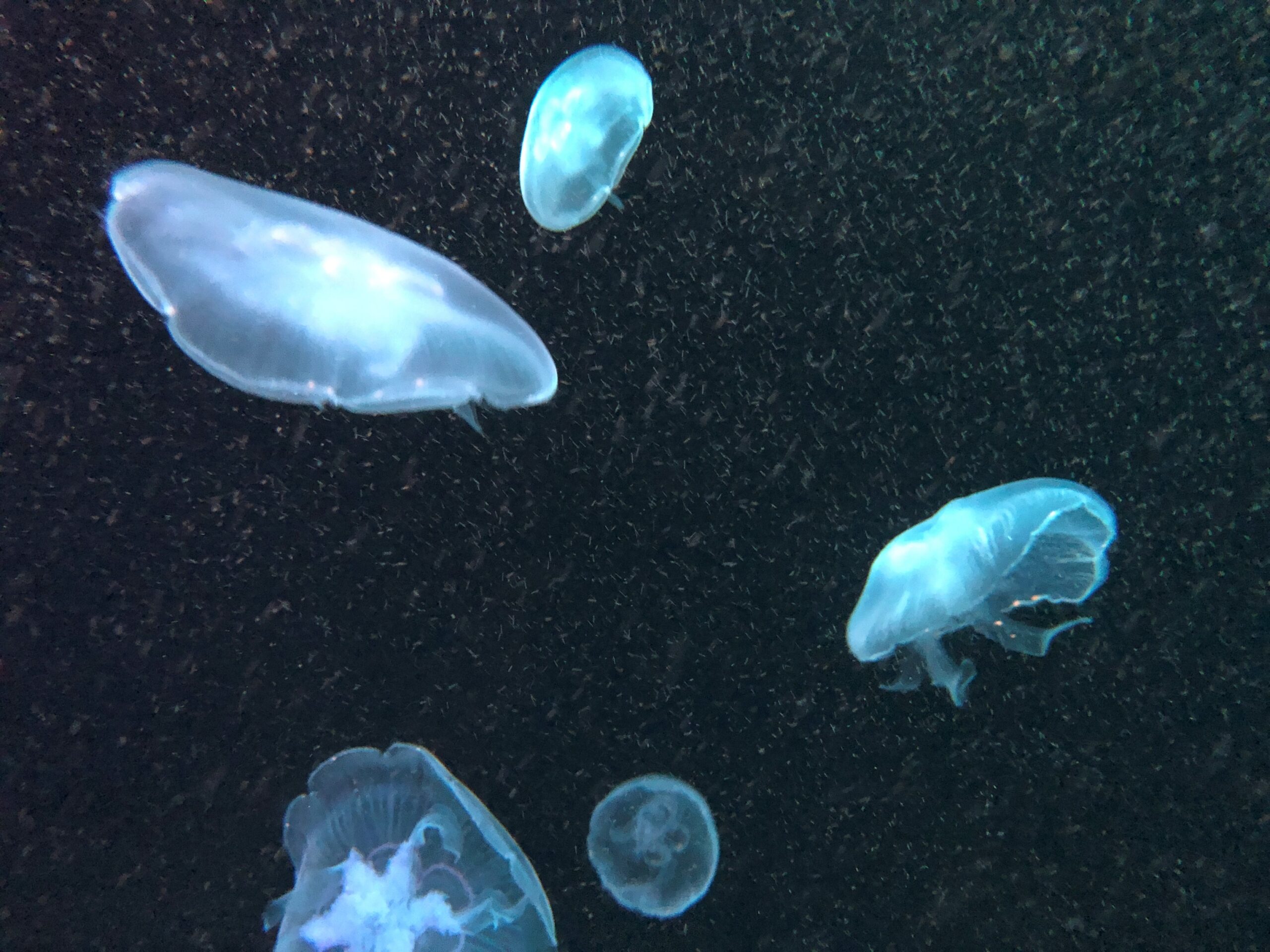
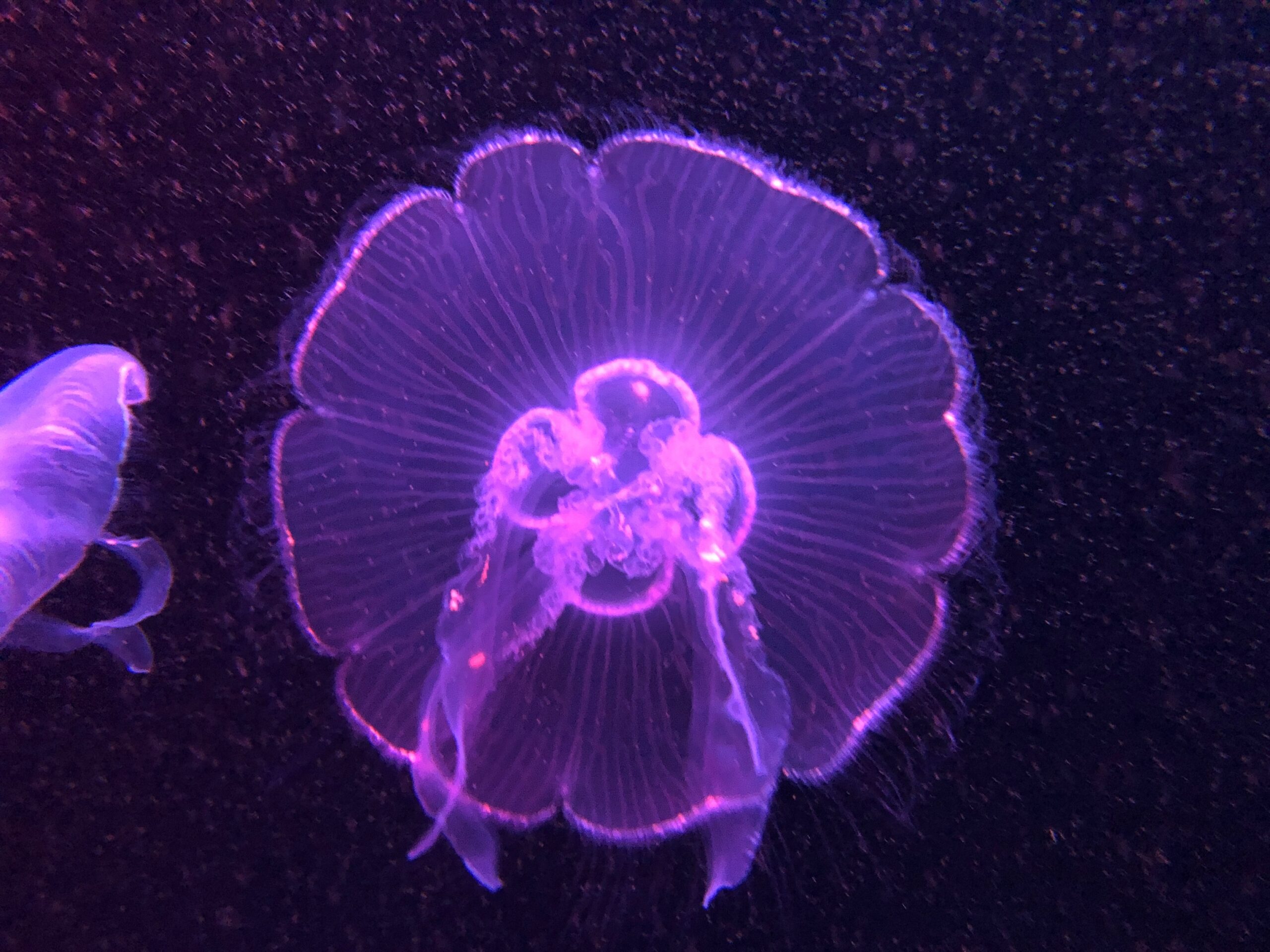
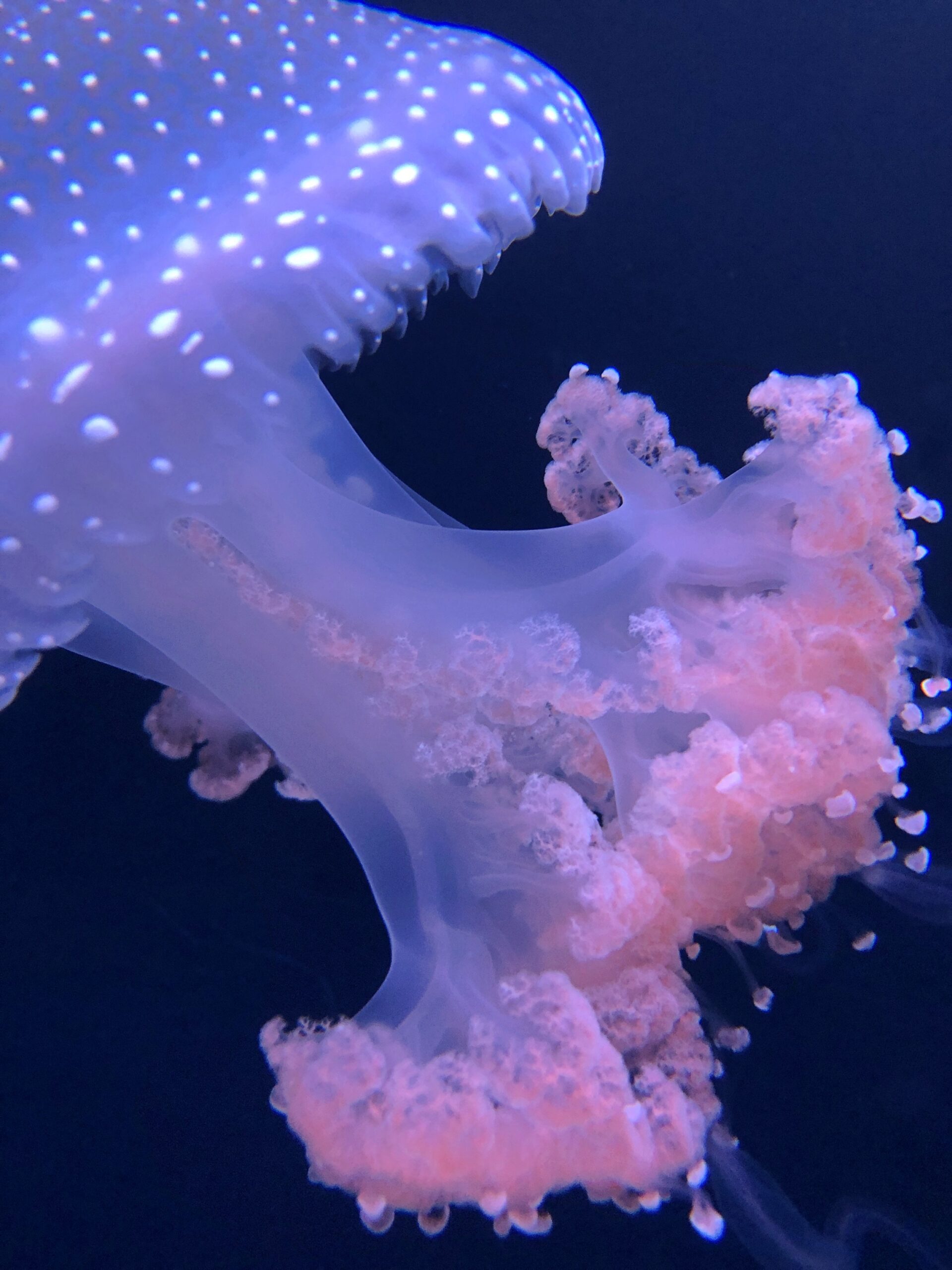
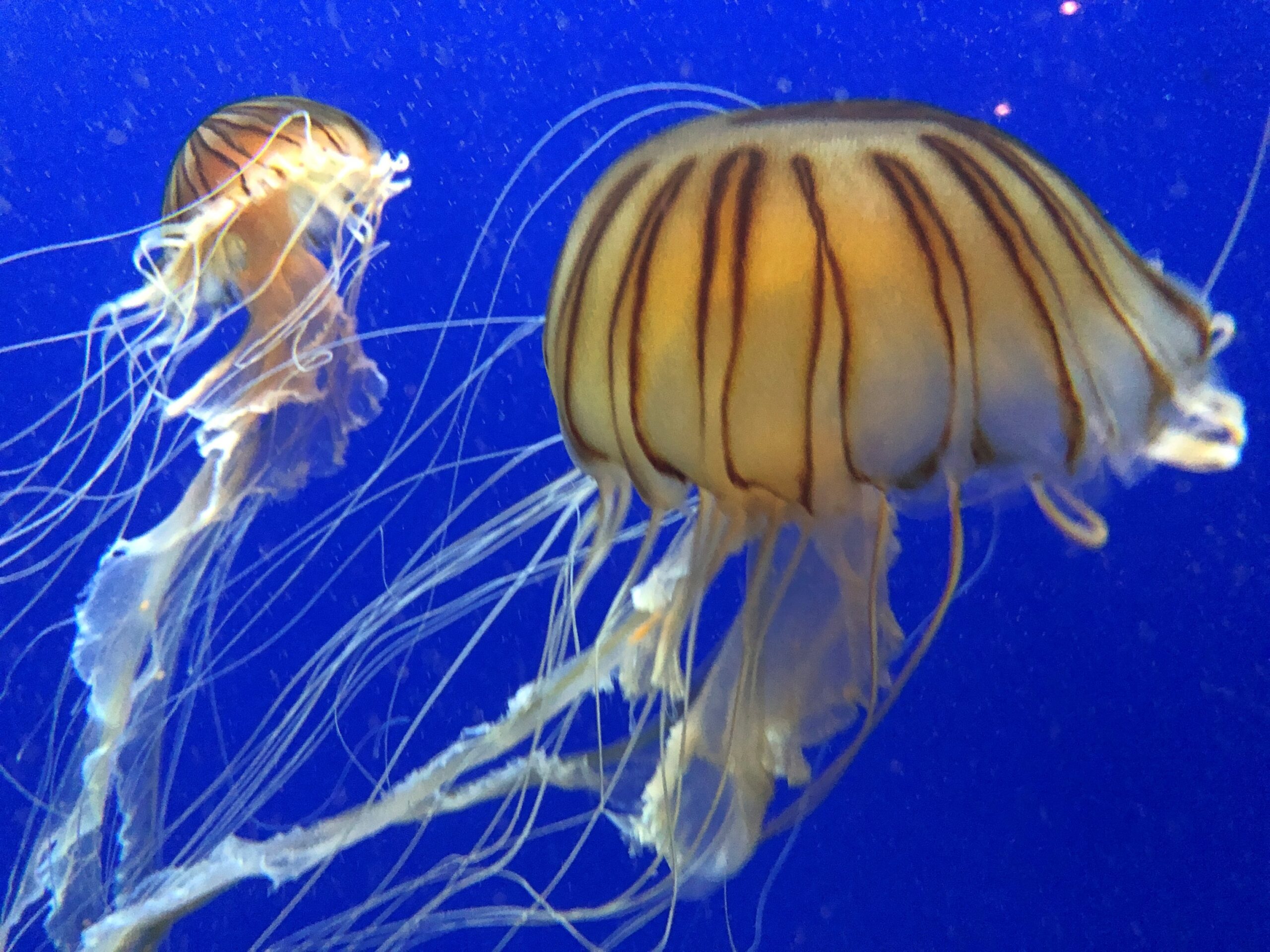
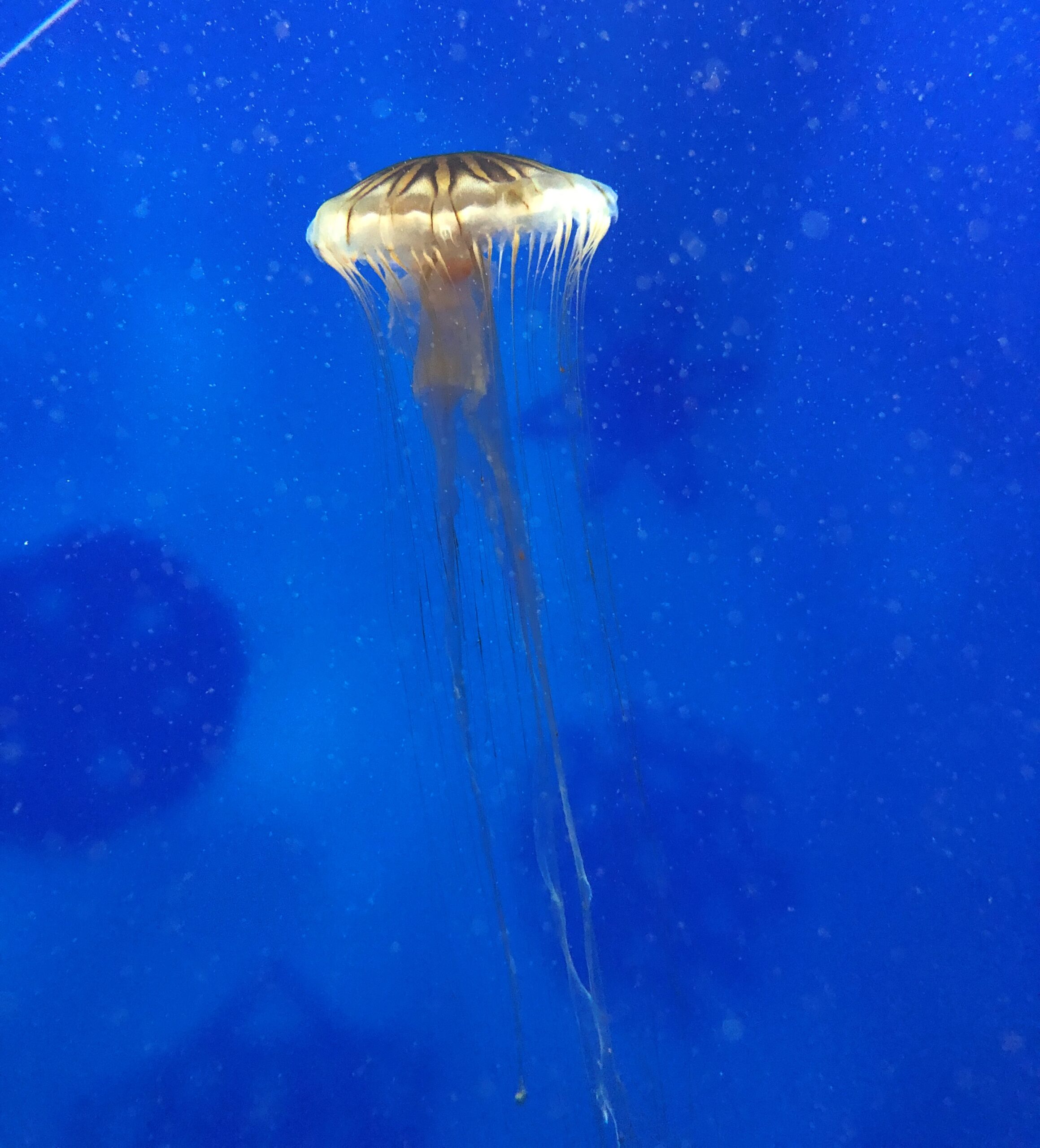
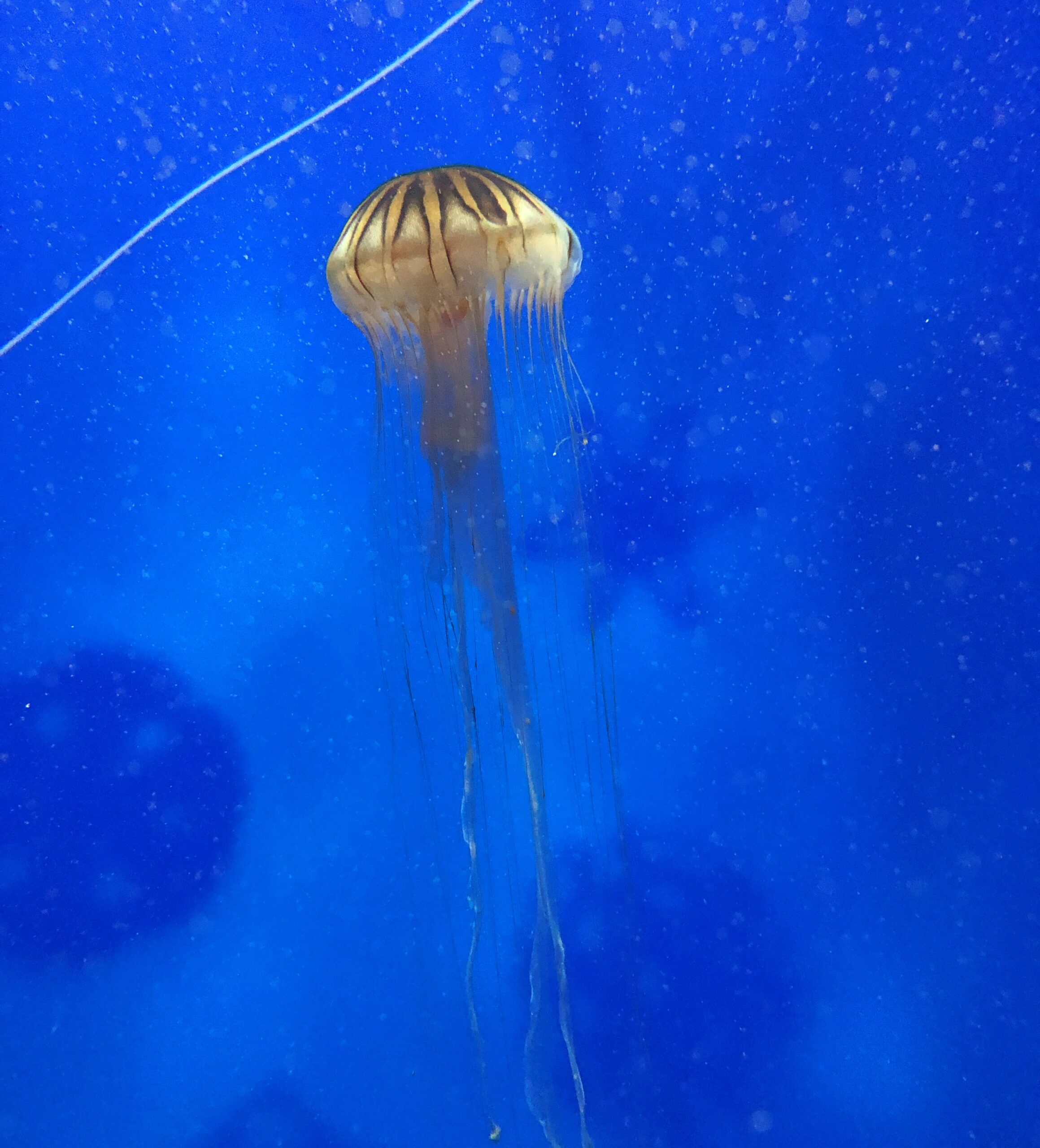
Moon jellies are mesmerizing.

I’m always glad to spend some time peering into a tank where the moon jellies drift, but also somehow contract their entire selves to glide along in deep quiet.

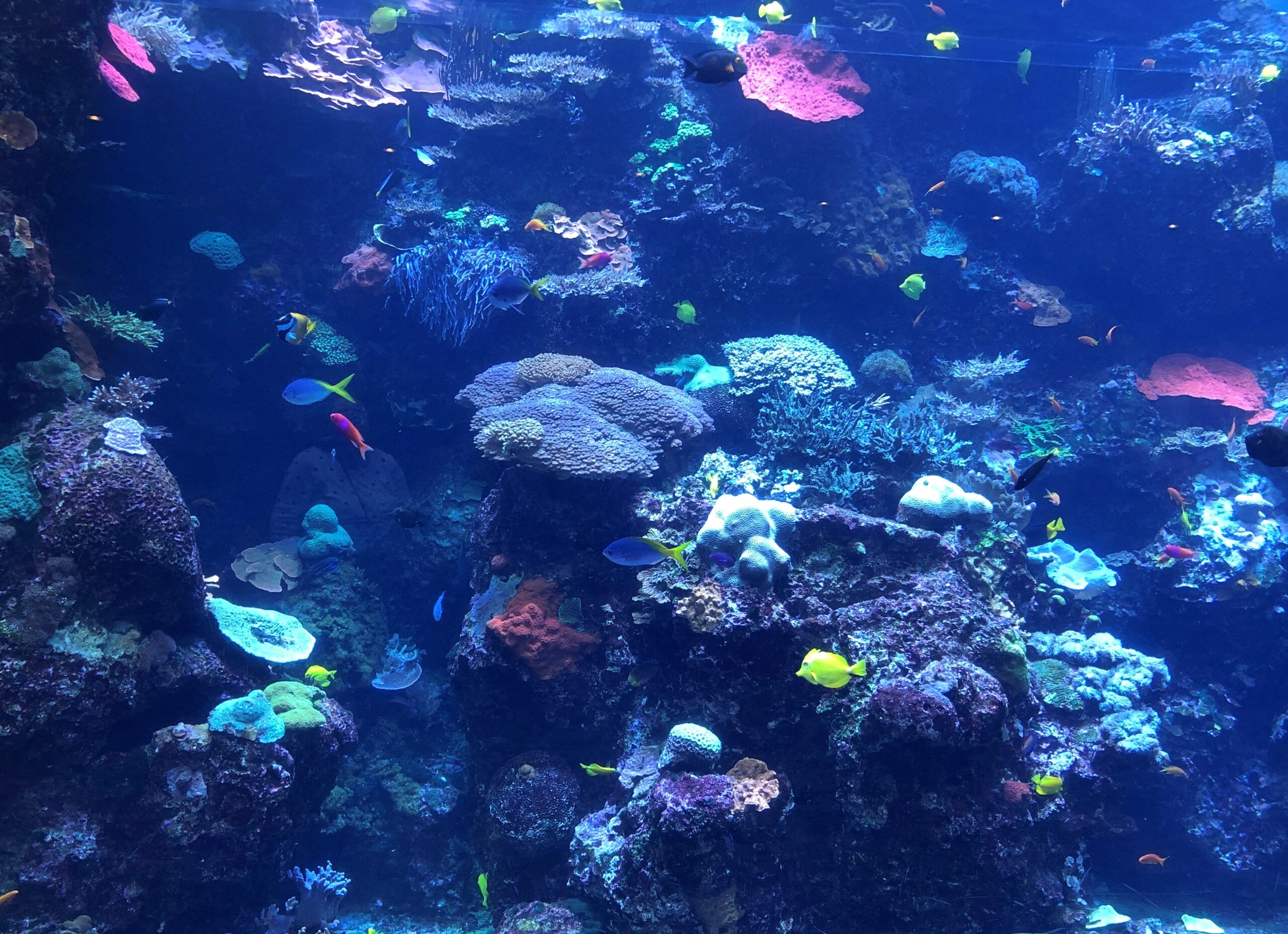
We’d come to the Georgia Aquarium, which keeps company in downtown Atlanta with the World of Coca-Cola, the National Center for Civil and Human Rights, and a large parking deck on about 20 acres of a plaza known on maps as Pemberton Place. To its south is Baker St. and Centennial Olympic Park; to the north, Ivan Allen Jr. Blvd. and a massive substation behind walls. For just an instant I thought that was Irwin Allen Jr. Blvd., and was disappointed to realize otherwise.

At 11 million gallons – which is apparently how major public aquariums are measured – the Georgia Aquarium is listed on Wiki as the sixth largest in the world and the largest in the United States, and I believe it. The structure is hub-and-spoke, with an enormous, vaulting hall with sizable exhibit spaces radiating from that hall: Tropical Diver, Ocean Voyager, Explorers Cove, Cold Water Quest, Southern Company River Scout, Dolphin Coast, Truist Pier 225 and Aquanaut Adventure.

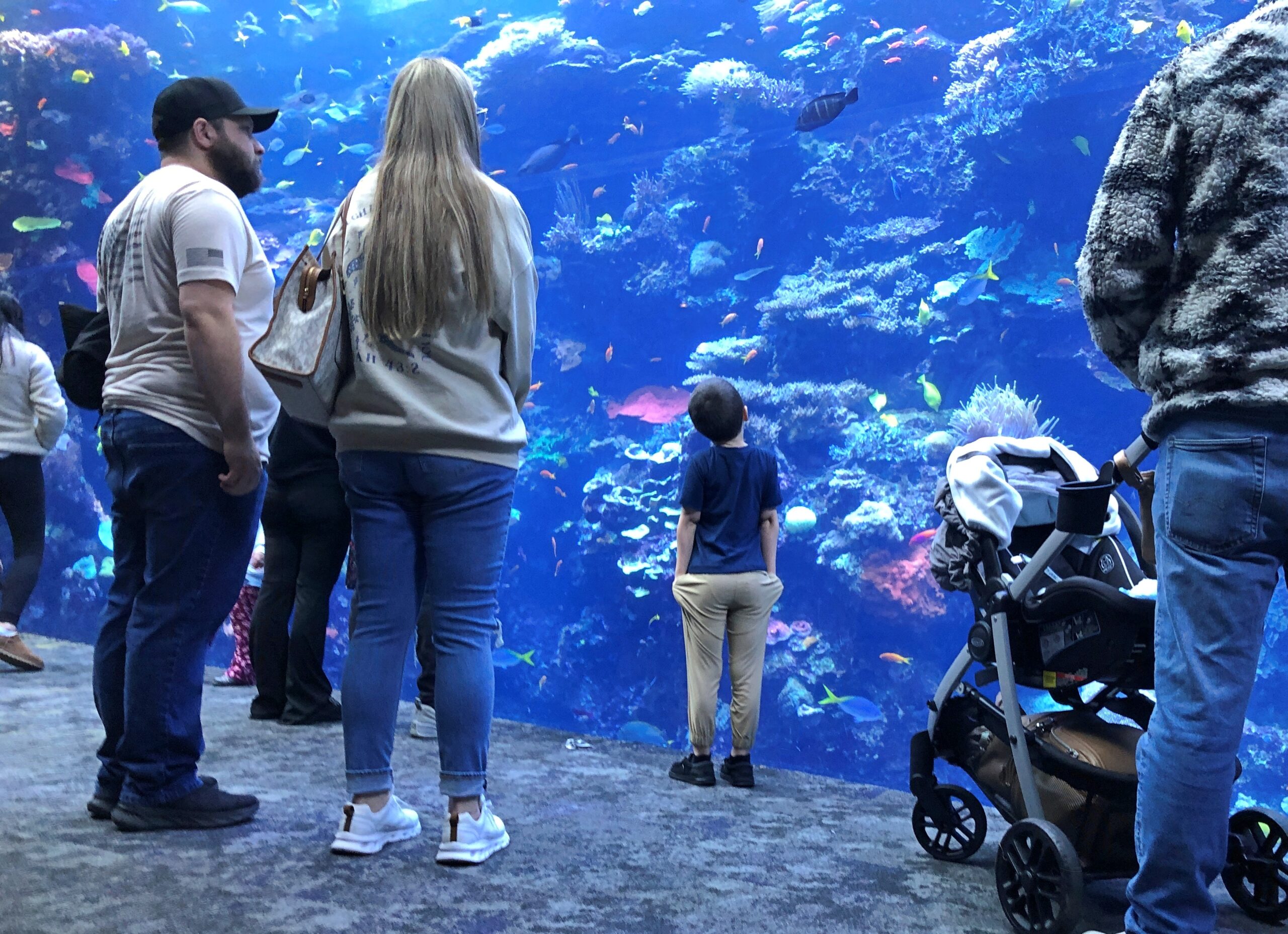
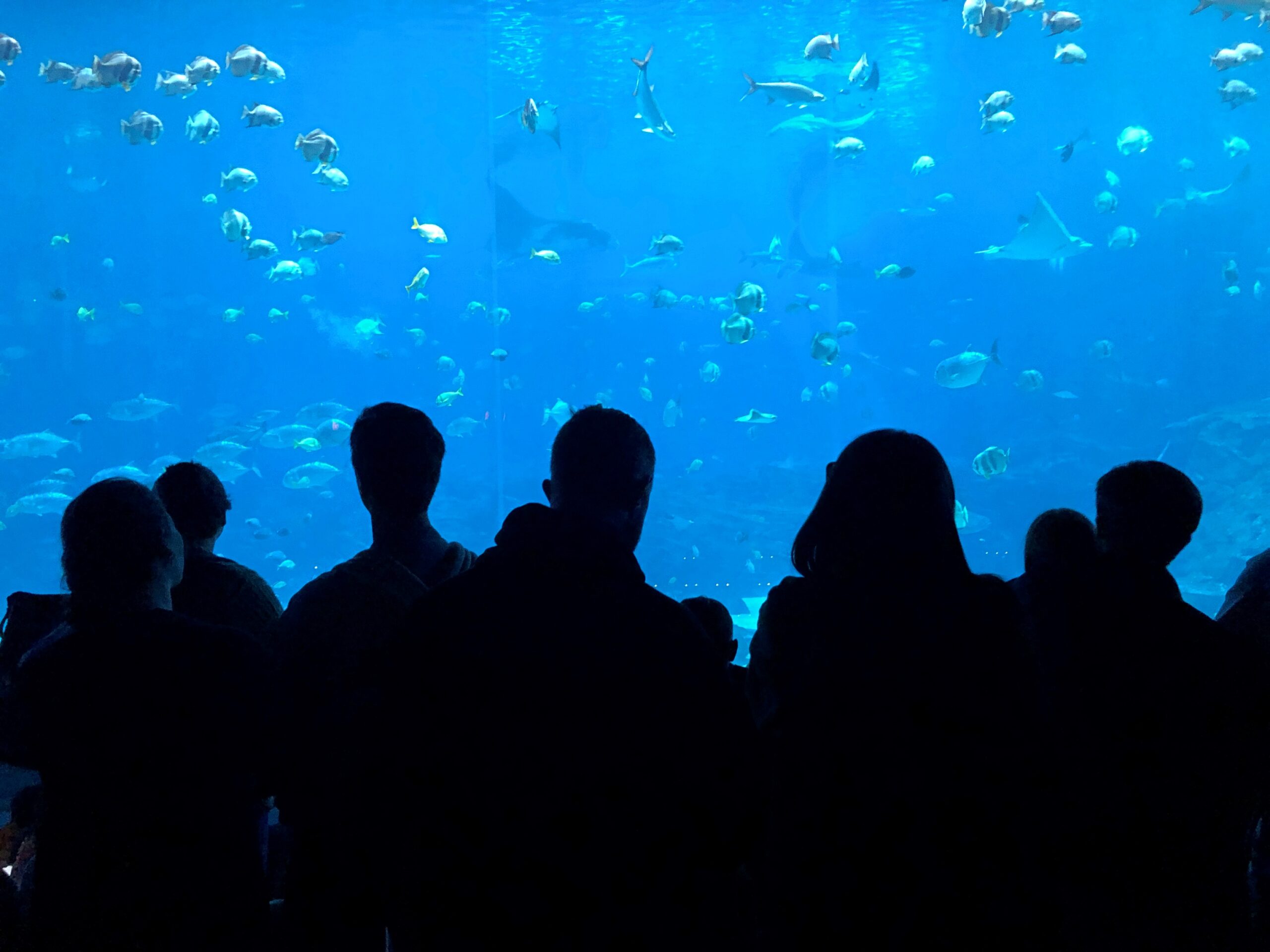
Five days before Christmas, much of the human population of Atlanta was there, gawking at the sea and land creatures. We did our own gawking.

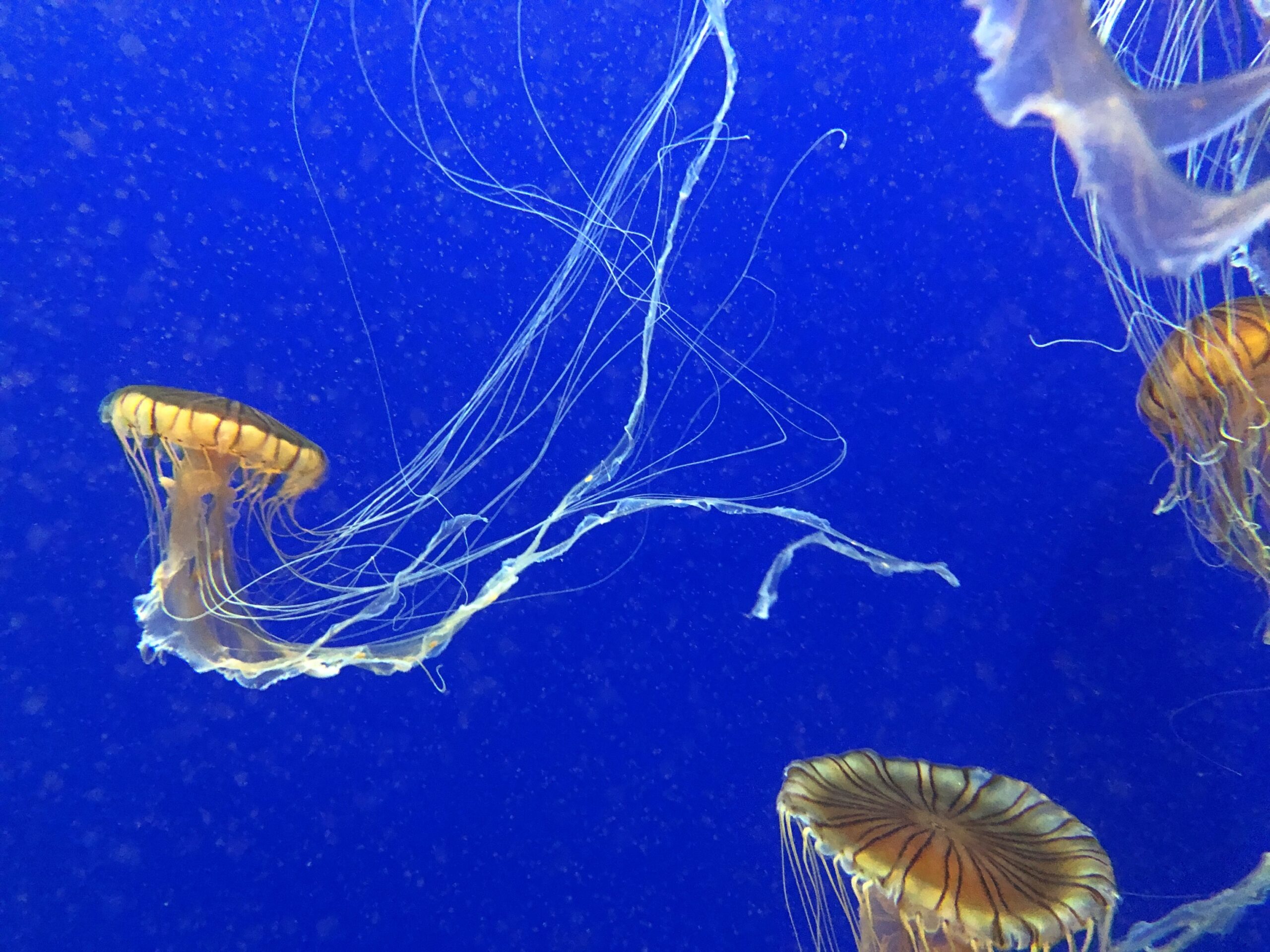
The invertebrate collection included much more than moon jellies. There were other kinds of jellyfish, too, looking like the sort of thing that if you see on the beach in Australia (or anywhere), you’d better not to touch.

They puff along.

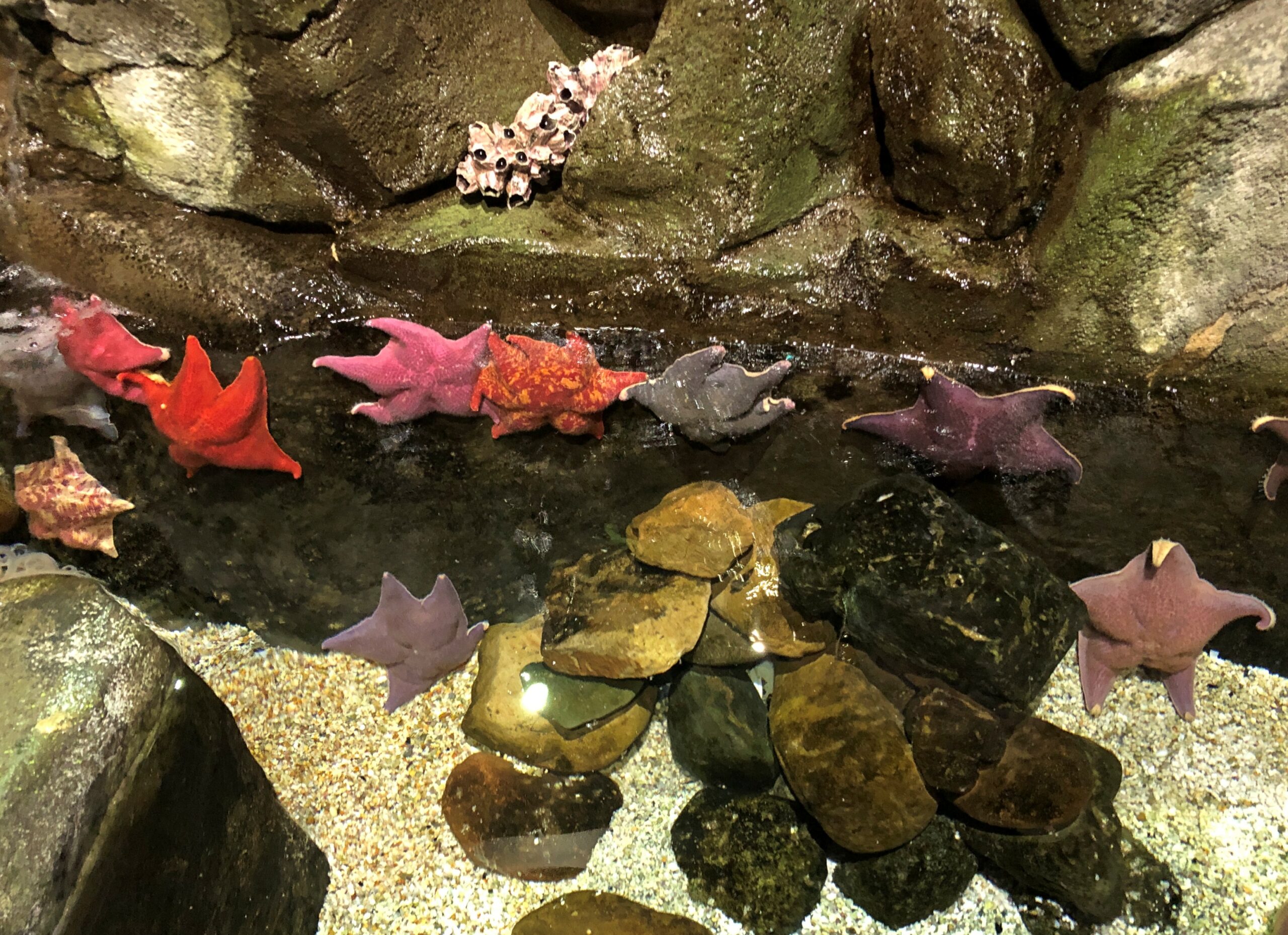
Other invertebrates. Such as the inspiration for Patrick Star.

And of course, fish. Many, many fish.

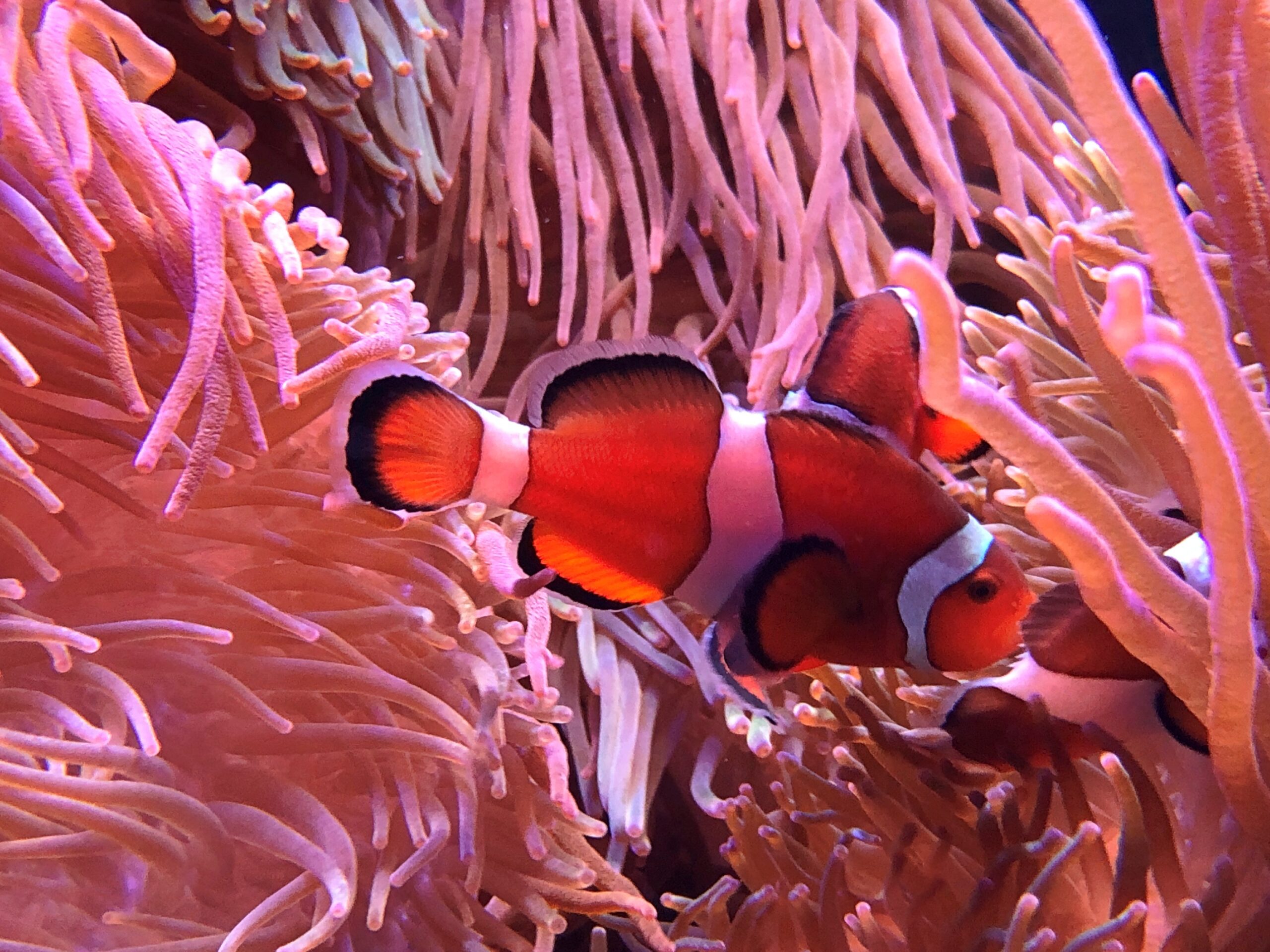
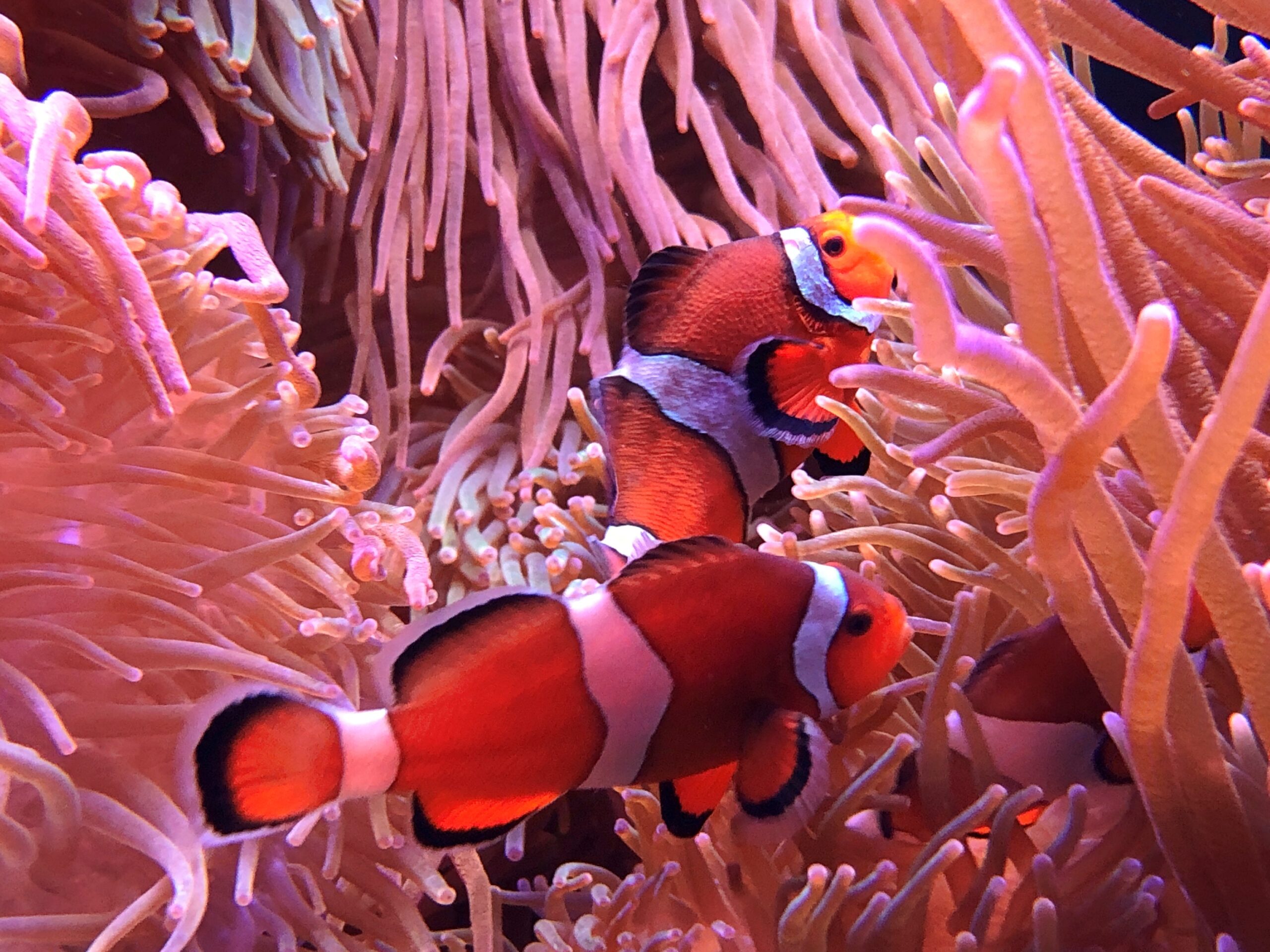
Including the inspiration for Nemo.

Small creatures can be intriguing or even enchanting, but what really packs ’em in are the likes of whale sharks, the largest fish species know to science, and one of the aquarium’s signature attractions. There’s no shortage of other kinds of sharks as well, it always being Shark Week at the facility: tiger sharks, silvertip sharks, blacktip reef sharks, and great hammerhead sharks.

More from the sea: Manta rays, goliath groupers, green sea turtles, Japanese spider crabs and weedy sea dragons. Freshwater creatures include, but are hardly limited to, Asian small-clawed otters; black spot piranhas — just how many kinds of piranhas are there, anyway? — snapping turtles; banded archerfish; discus fish; and shovelnose sturgeon.

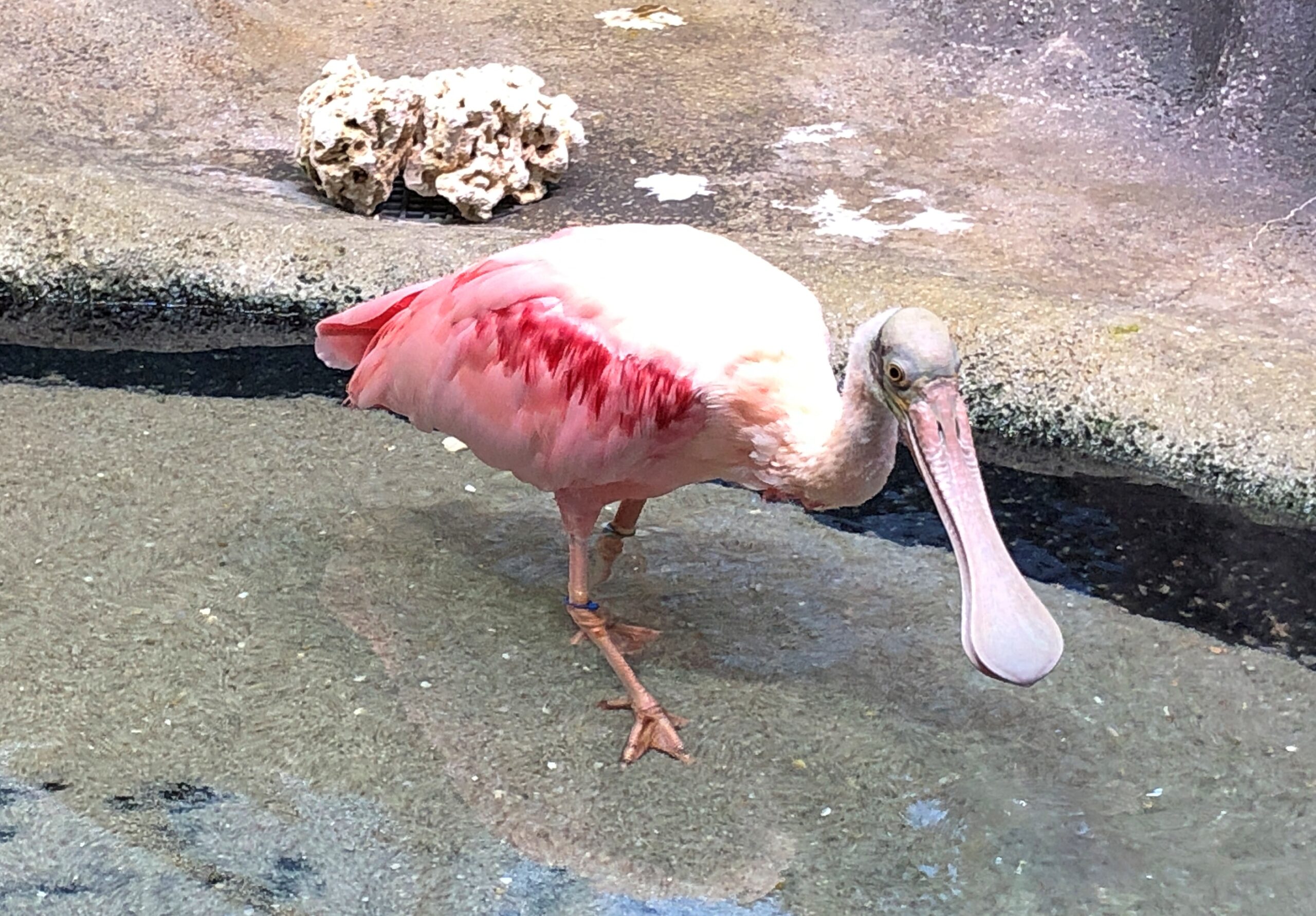
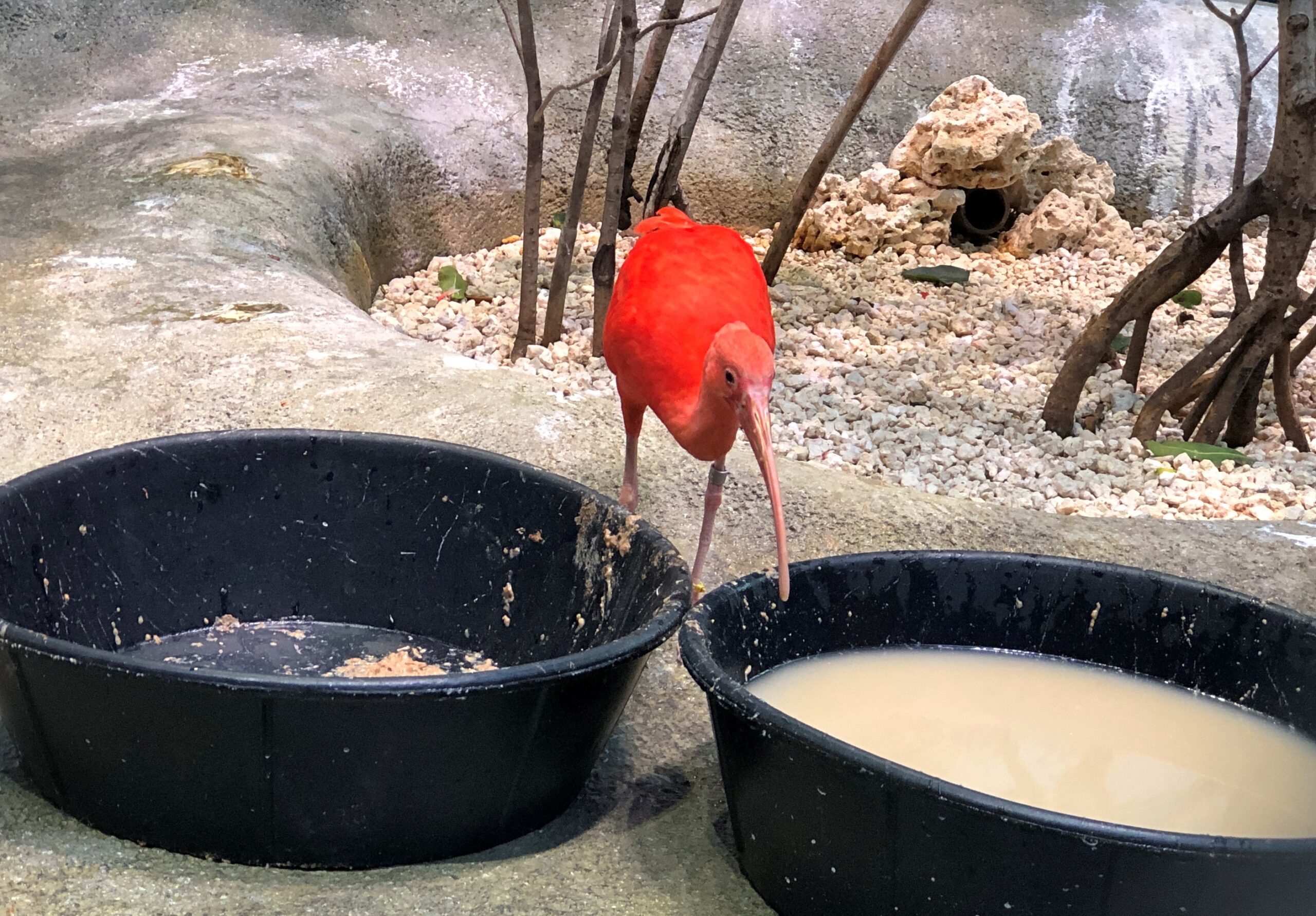
A few birds are on hand, such as spoonbills and ibises. Ones that subsist on fish, in other words.

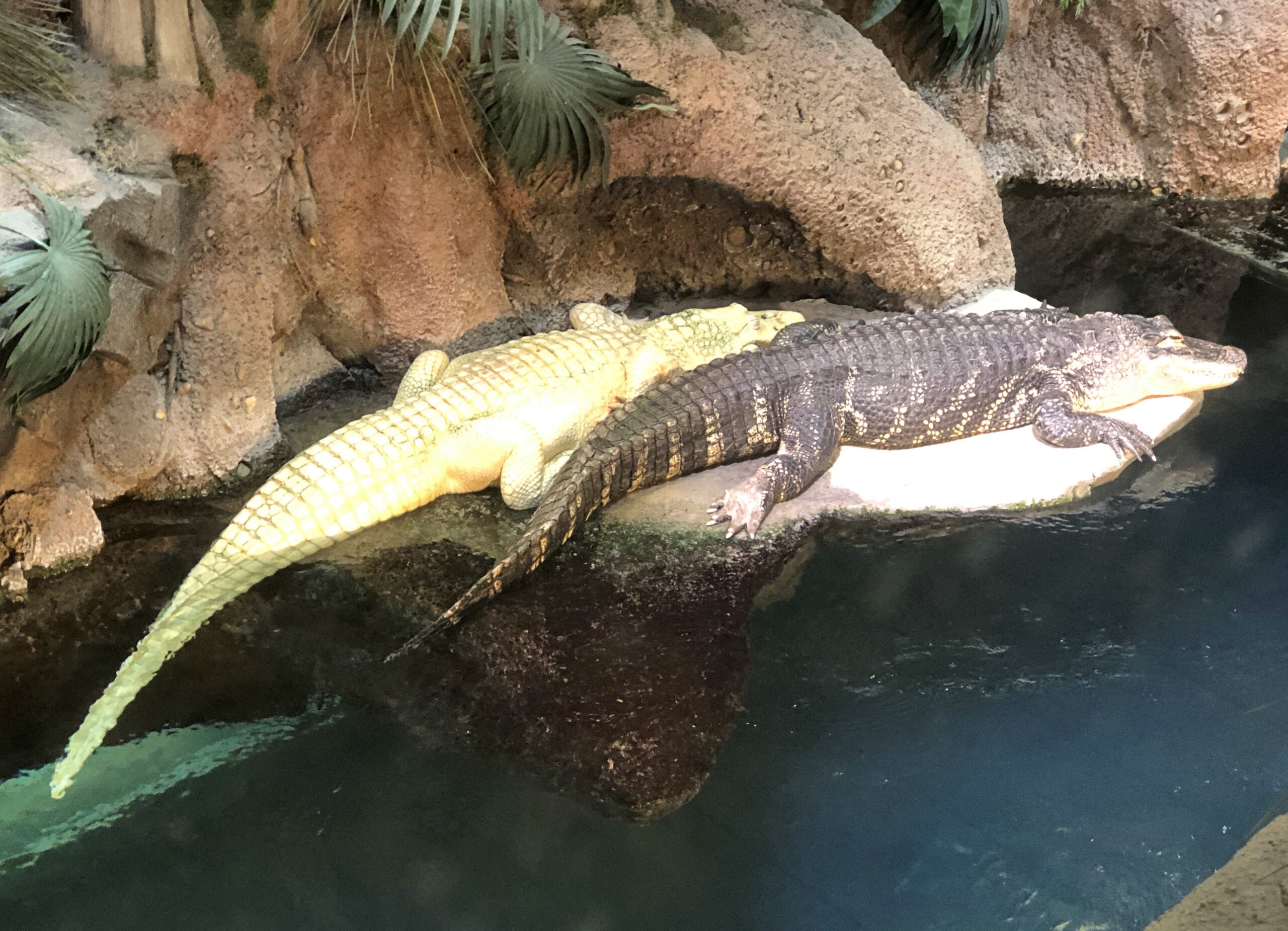
In case we hadn’t had enough gators in Florida, the aquarium had a few Georgia gators, including a rare albino. I take it Georgia gators were the inspiration for Albert in Pogo.

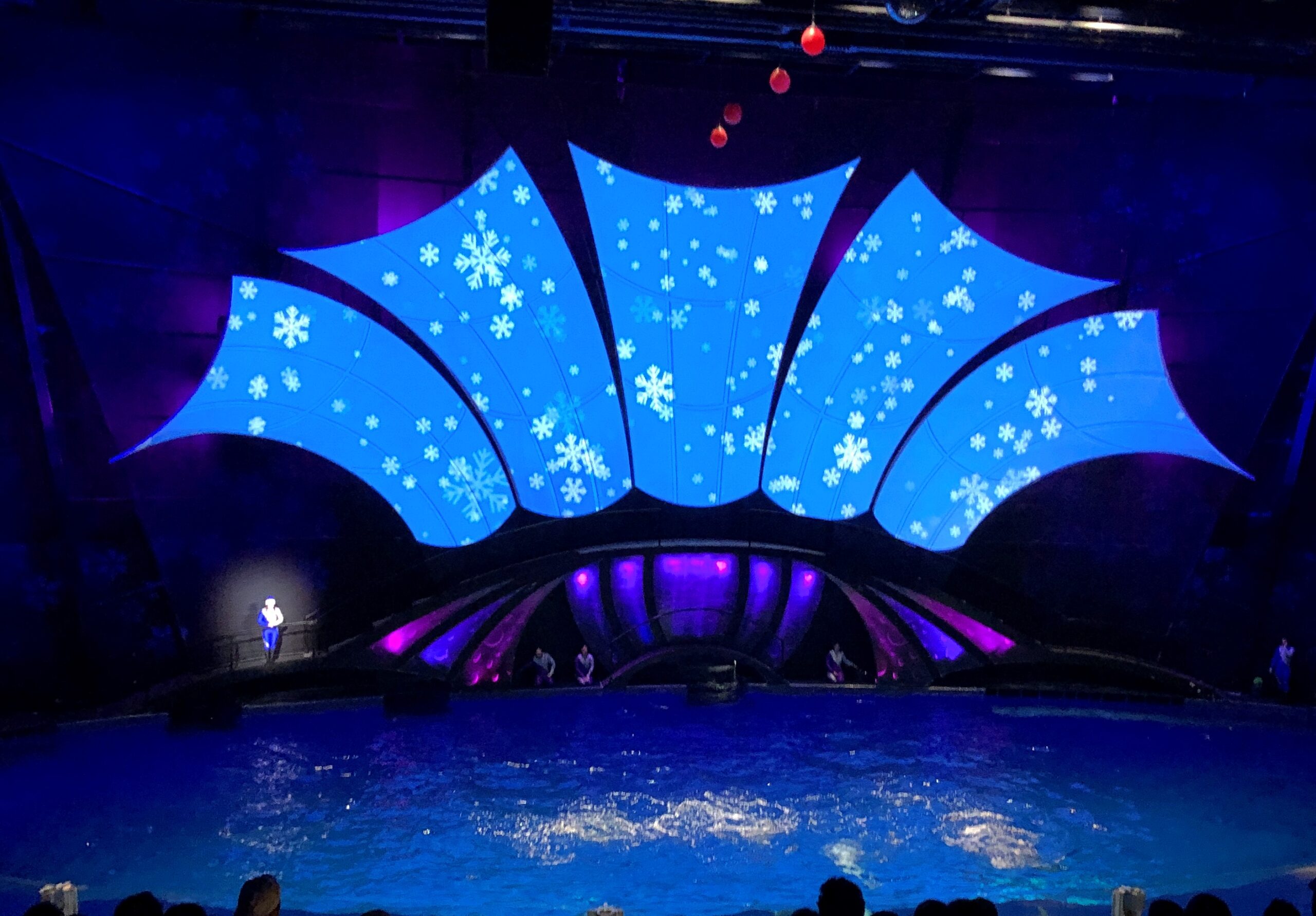
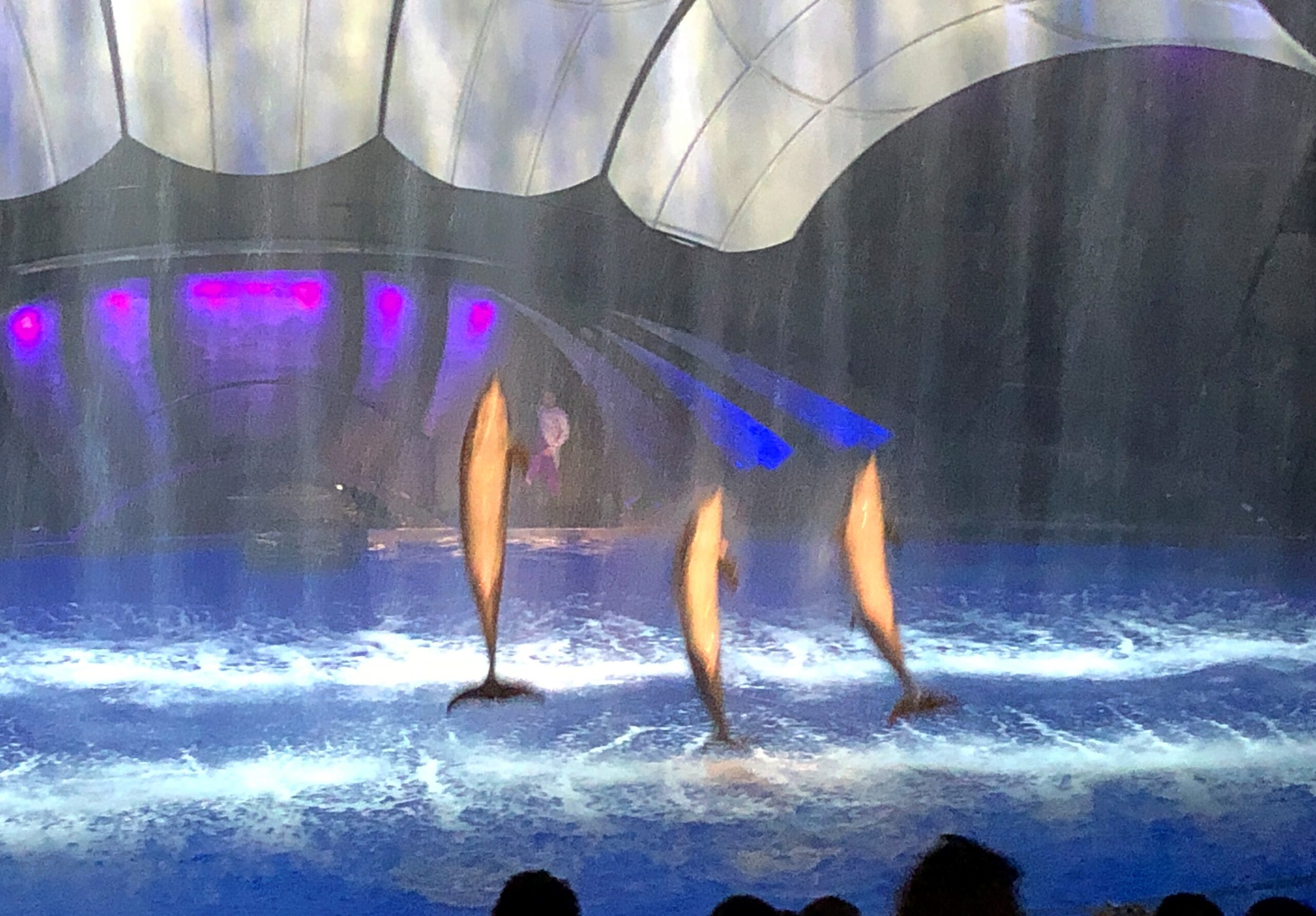
We saw the dolphin show. My still camera wasn’t the best for capturing the action, and there was a lot of jumping and splashing, but squint and the second shot looks like an impressionist work featuring a line of mid-air dolphins.

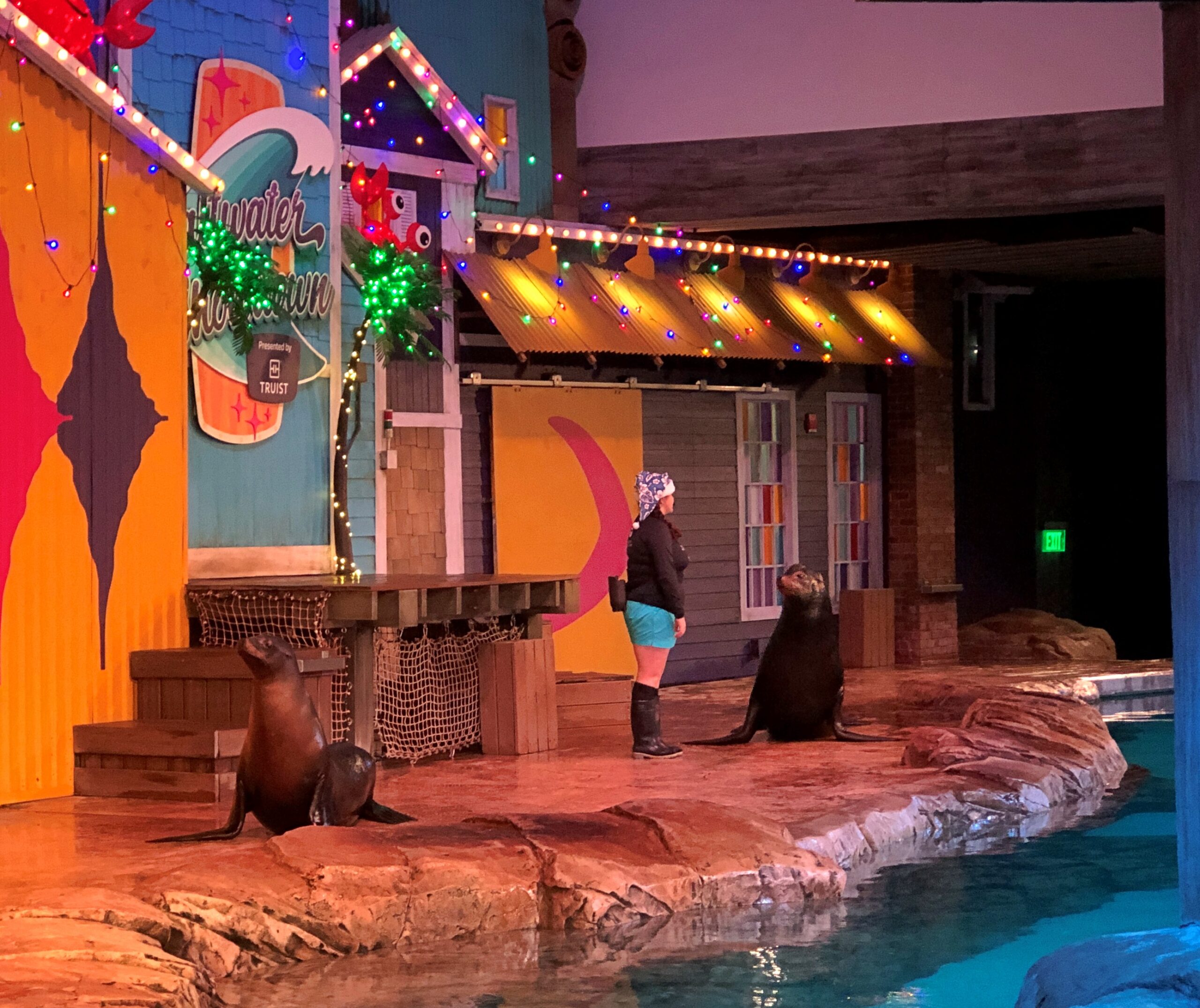
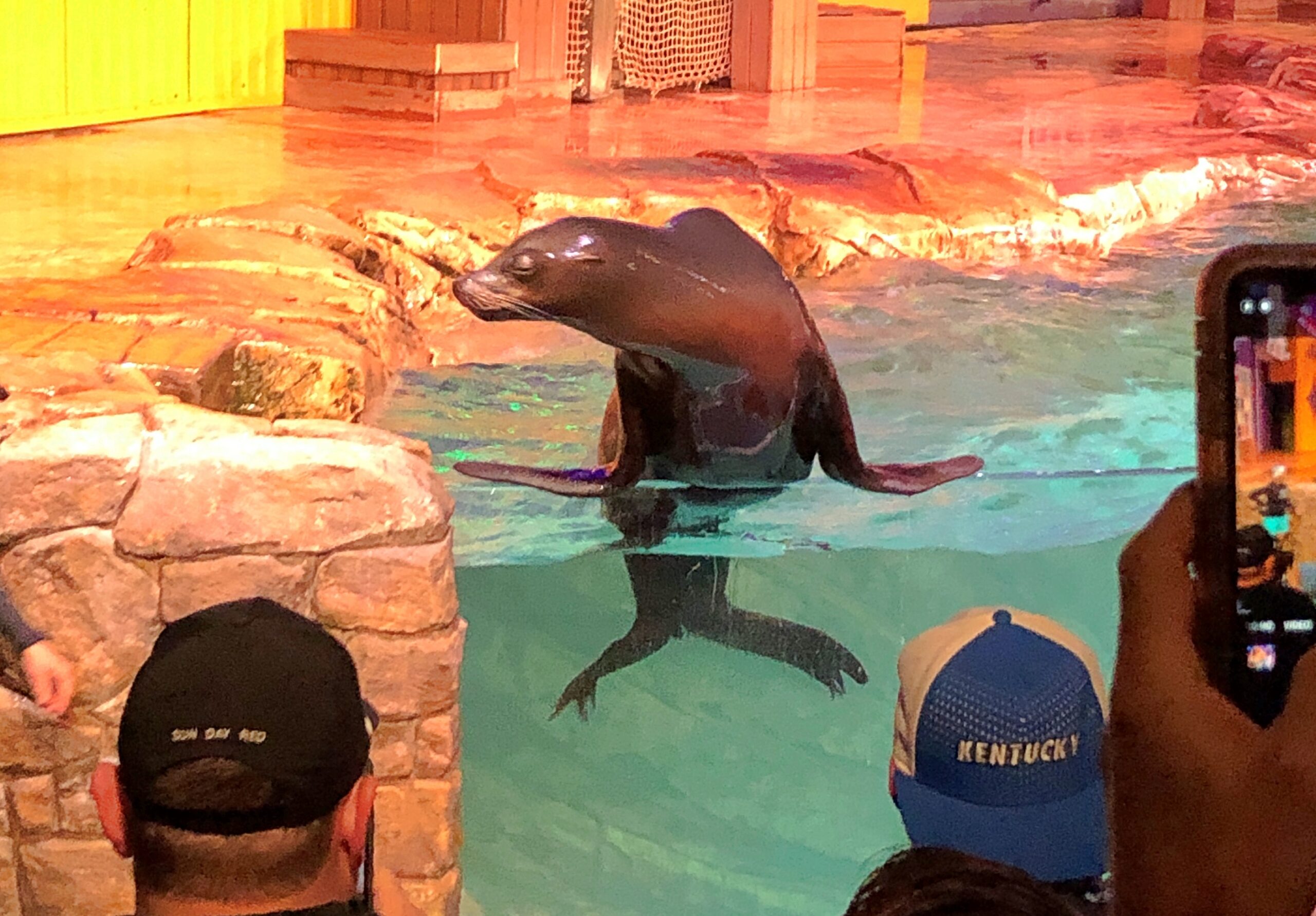
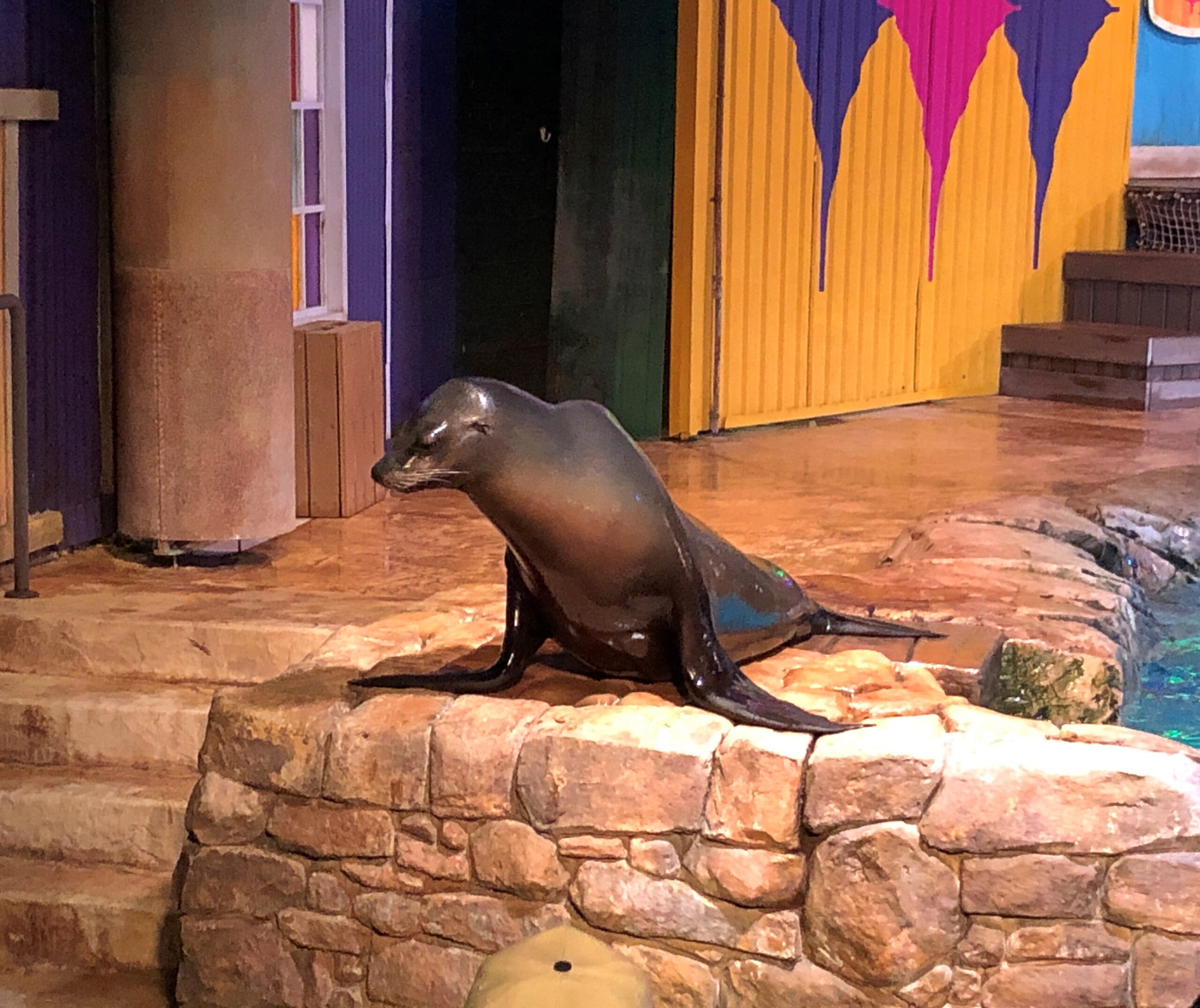
A separate show features seals and sea lions, doing seal and sea lion things for fish rewards.

About half as many people crowded into the aquarium would have made for a better experience, but I can’t begrudge the Georgia Aquarium its massive popularity, since it delivers the aquatic goods. Better a crowd than too few people. They’re out seeing real things. Often better, I believe, to see some part of the physical world than an electronic simulacrum.

Hemingway Visits the Key West Aquarium

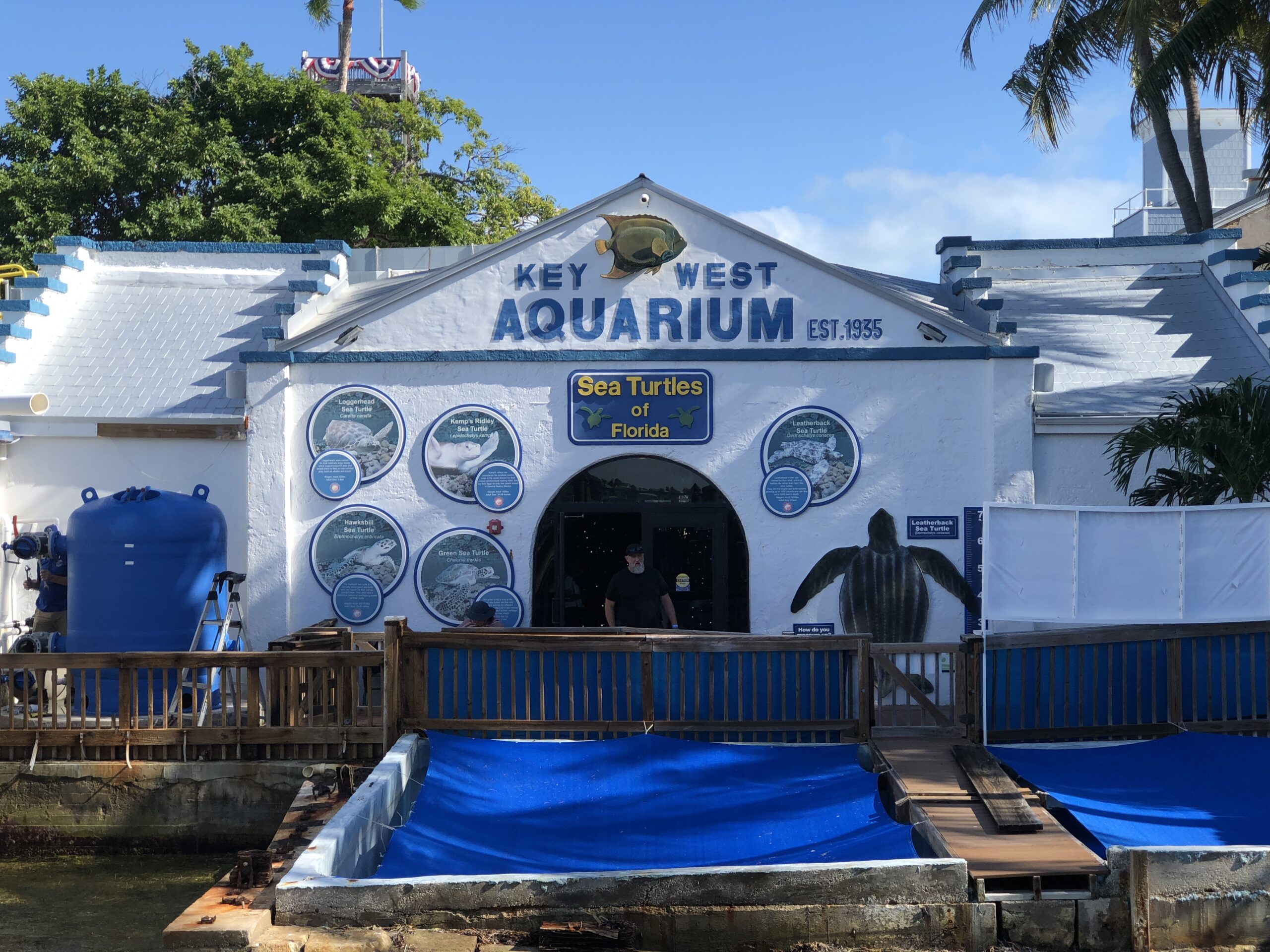
Land meets sea in Key West. For encounters with sea creatures, one can hire a boat and some deep-sea fishing gear and make like Hemingway. We went to the Key West Aquarium instead. A sedate sort of place, a legacy of early 20th-century Key West, when tourists started coming in numbers.

I managed to make one of the employees, or volunteers, laugh a bit. A youngish woman, she took our tickets and said that if we wanted to touch any of the sea creatures – there were a few large tanks with rays and the like, touching allowed – use only two fingers.

“So you’ll still have three, right?” I said.

Most of the aquatic life was in smaller tanks. A nice selection, “home to over 250 specimens of fish, sharks and four of the five species of sea turtles that inhabit the waters of the Florida Keys,” the Aquarium web site says. Also, the place is a more manageable size. Not a big-deal world-class mega-aquarium that takes all day to visit. Not that those can’t be impressive. But we had a good hour as childfree adults at Key West Aquarium, and that was about the right length for a visit.

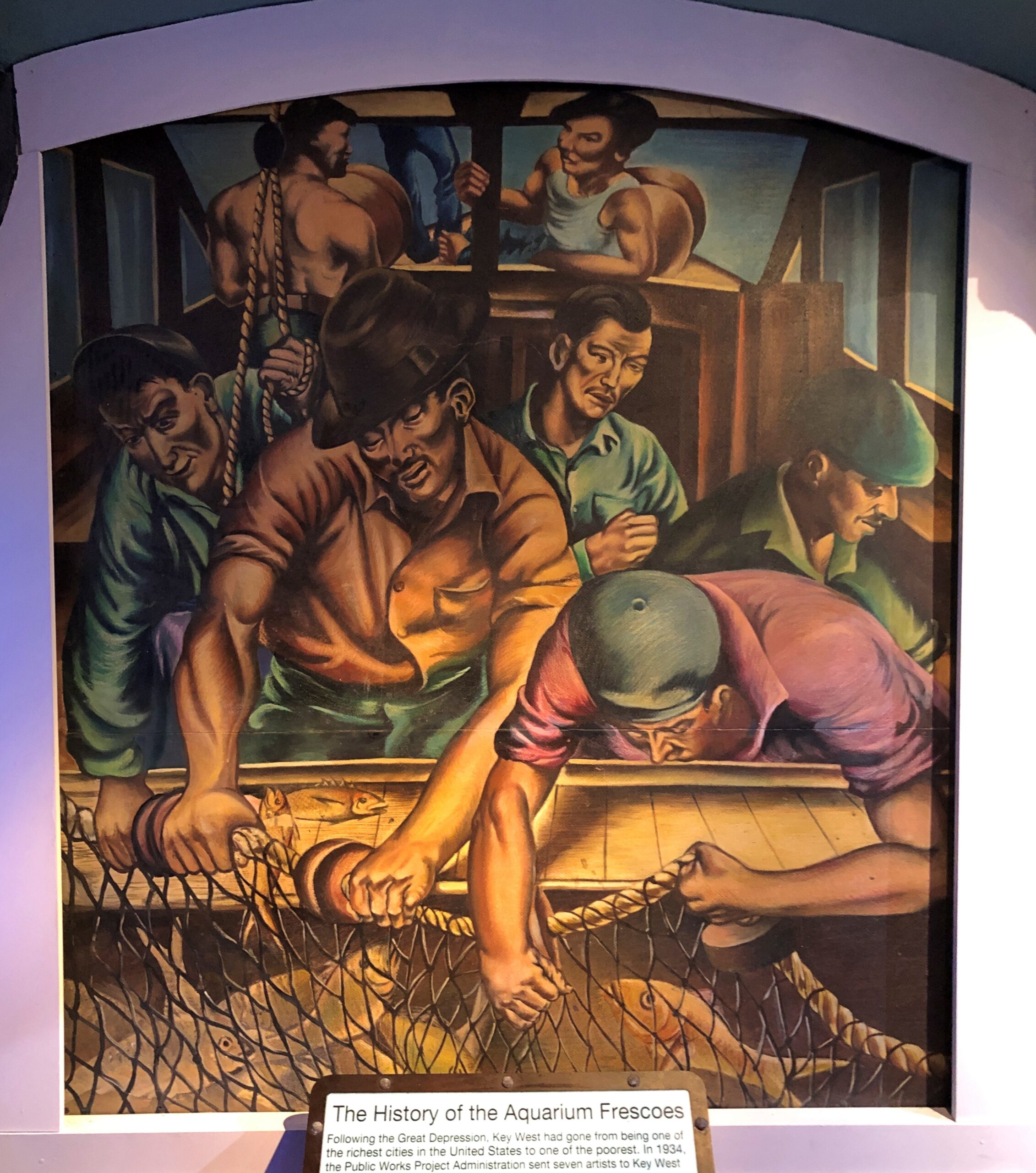
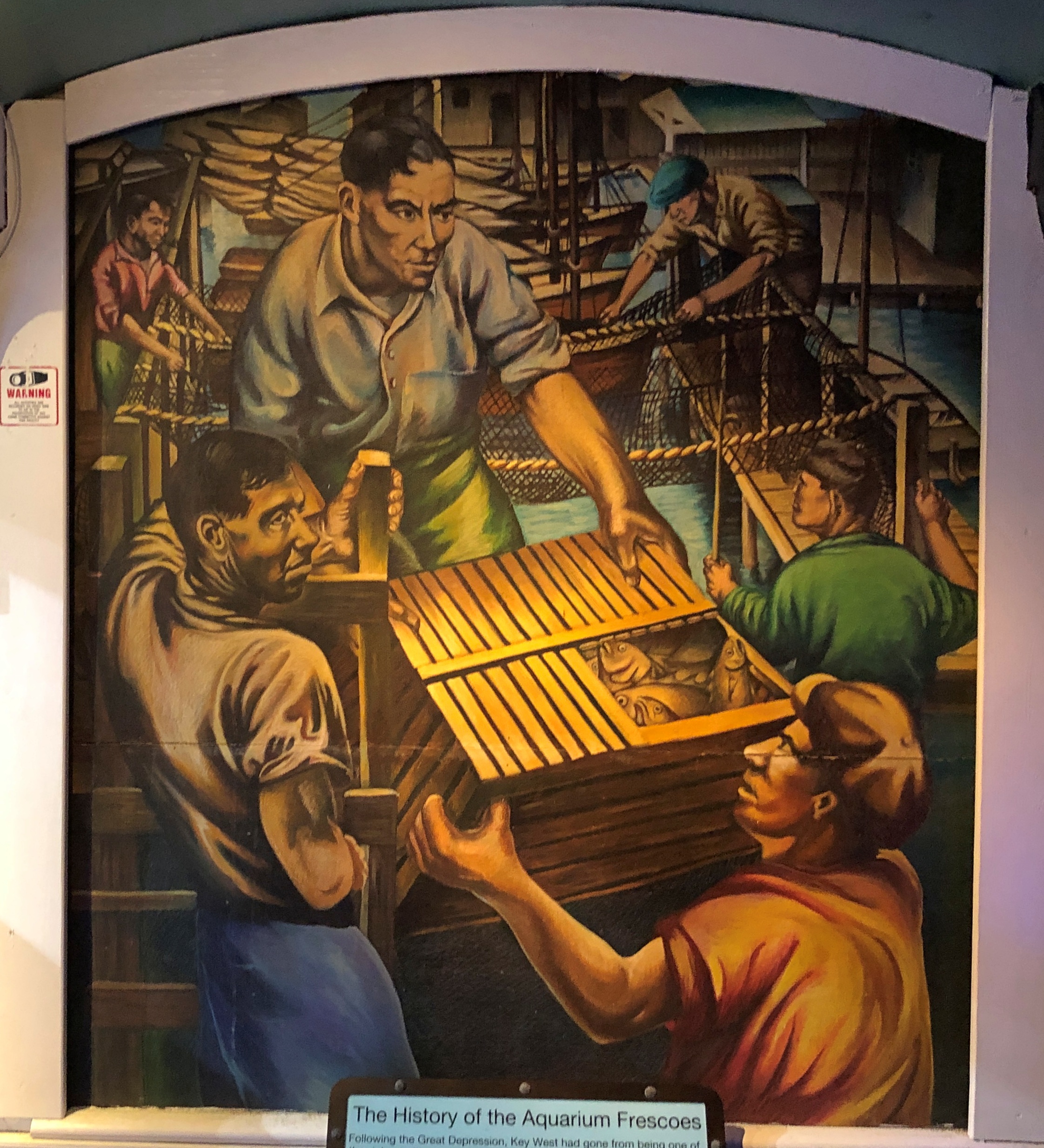
Besides fish, there are fishermen. Depression-era murals of fishermen, that is.

What a pleasant surprise. By the Civil Works Administration, a short-lived predecessor to the WPA. Not the originals, however, which were by an artist named Alfred Crimi (d. 1994). The Living New Deal says they’re more recent replicas.

Come to think of it, Hemingway would have known about the aquarium. Key West isn’t that big a place, and the attraction would have been fairly new when he and Pauline lived mere blocks away. Wonder whether he ever went there.

Of course, we’re used to thinking of the youngish Earnest as a hard drinking, hard fishing sort of guy. Notions that, I believe, Hemingway carefully cultivated. Not only did he create memorable characters for his books, he did for himself as well.

On a whim, I turned to an AI writer available on line, and fed it the following prompt:

Write an account of visiting the Key West Aquarium, in the style of Earnest Hemingway. Three paragraphs is sufficient.

All of 15 seconds later, the machine gave me this.

The aquarium sat low and white against the glare, and the heat lay on the street like a weight. Inside, the air was cooler and smelled of salt and old wood. The tanks were clean and plain, and the fish moved with the calm certainty of things that belong where they are. A tarpon held itself still in the water, strong and watchful, and its eye followed me as if it knew I was only passing through.

I stood by the open pool where they fed the fish, and the water broke suddenly with life. The fish came hard and fast, flashing silver and green, their bodies cutting the surface and falling back again. It was violent in a small way and honest. The men who worked there spoke little, and when they did it was direct, as if there were no reason to waste words on what could be seen.

When I stepped back outside, the sun struck again and the sea wind came down the street. The aquarium stayed behind me, quiet and contained, holding its ordered slice of the ocean. I thought of how the fish swam without doubt, and how good it must be to live so close to what sustains you. Then I walked on, feeling the heat, and the day continued.

I was expecting something from a bad Hemingway writing contest, but no. This is pretty good. Better than that, actually. A little wow moment for me, and the day continued.

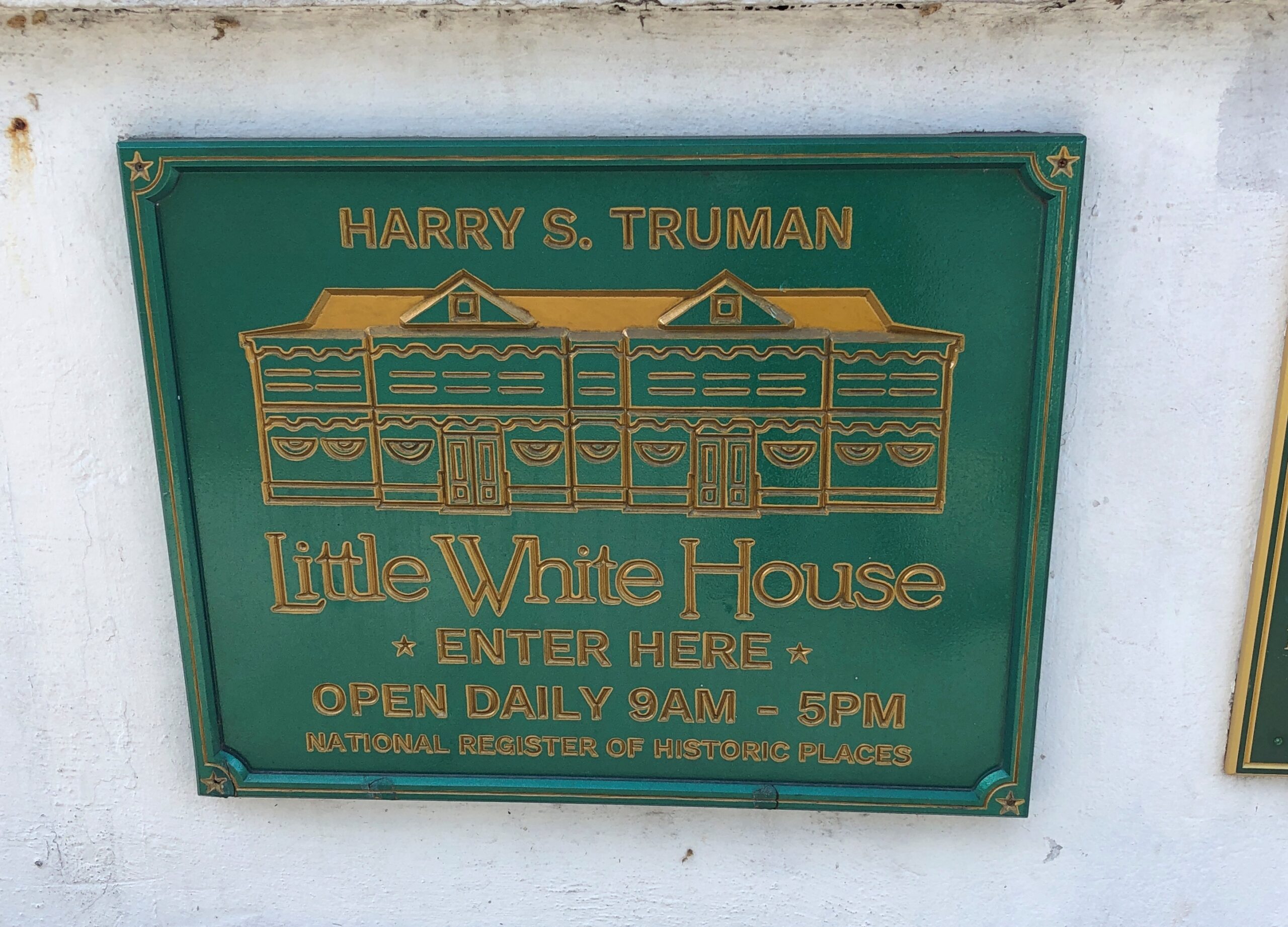
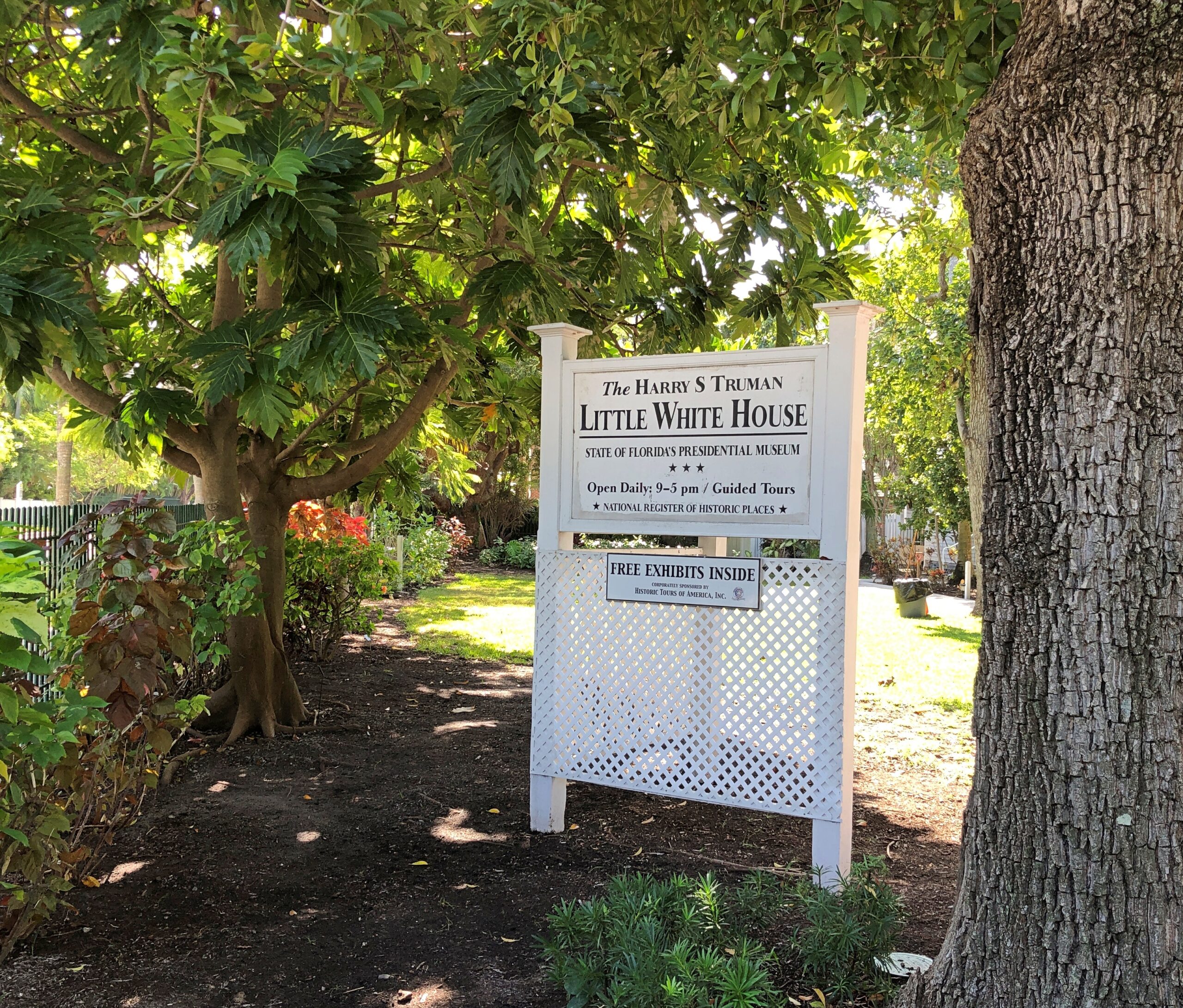
The Harry S. Truman Little White House

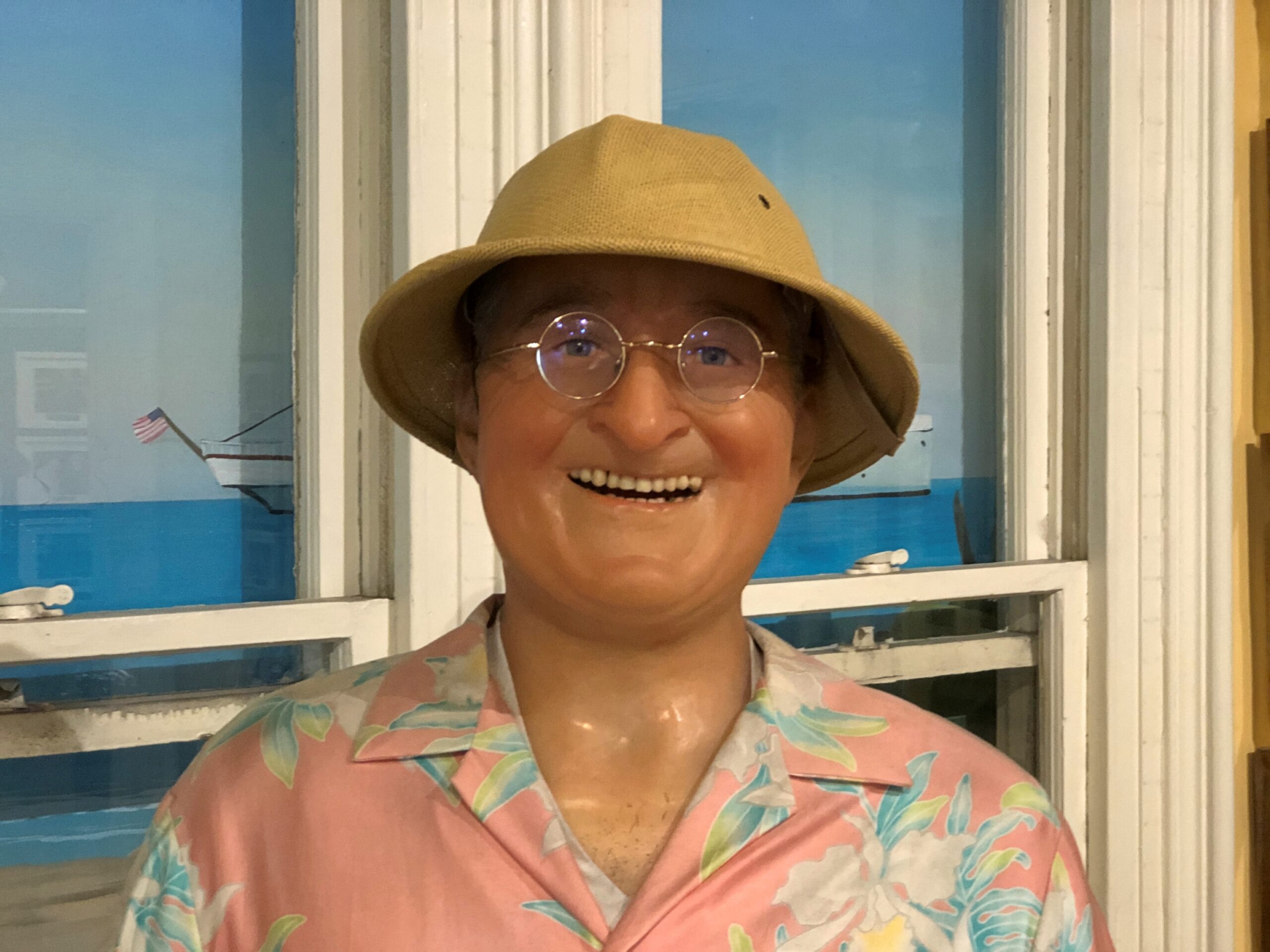
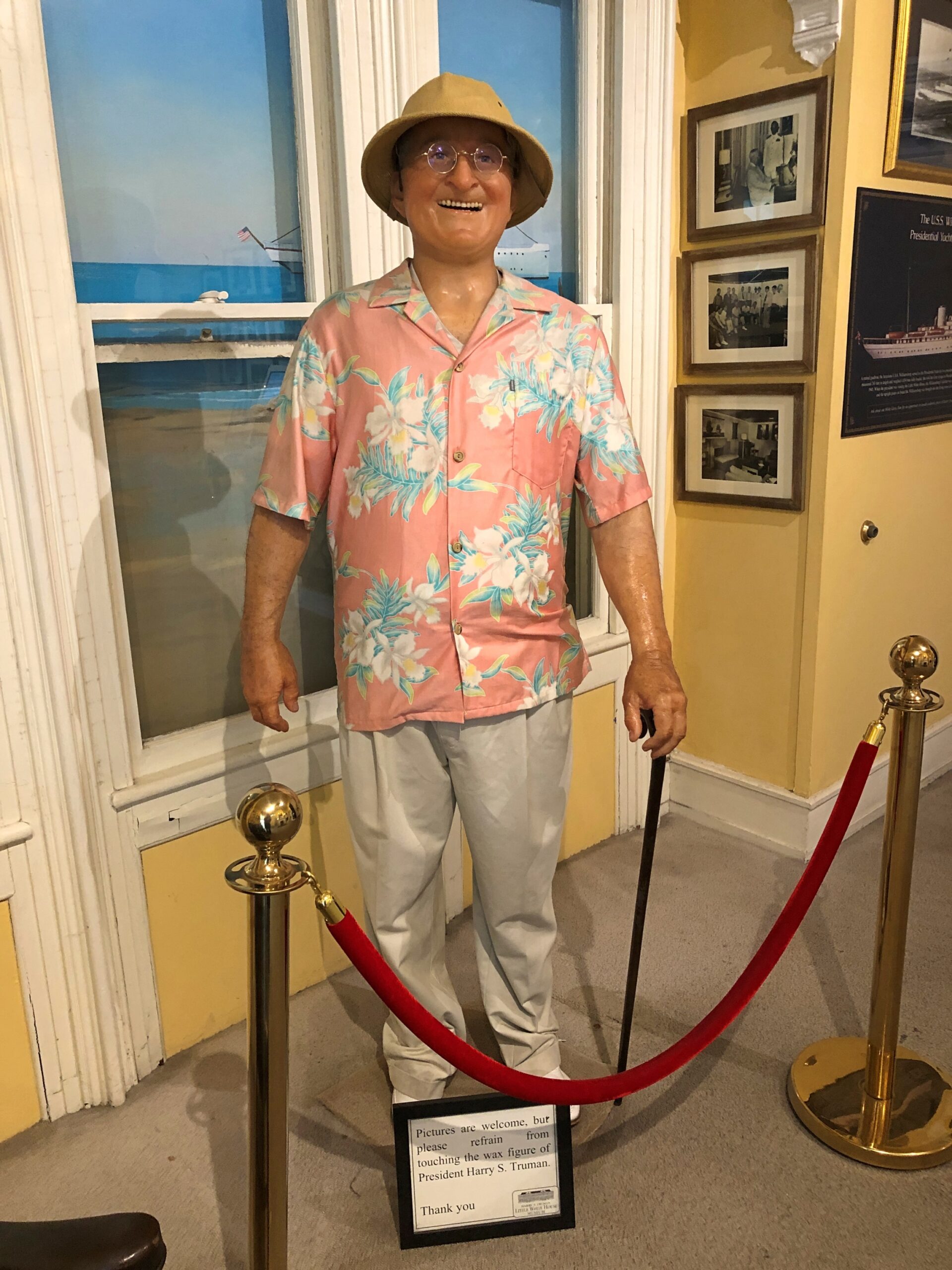
Nightmarish human faces weren’t invented by demented AI, but have long been with us. Case in point.

There’s Harry Truman in there somewhere. This particular wax dummy watches patrons in the small gift shop at the Harry S. Truman Little White House, which we toured on our second day in Key West.

The property belongs to the state of Florida these days, but of course was once a federal facility. Specifically, used by the Navy as officers’ quarters for the base at Key West. Truman took a cotton to the island early in his presidency, and visited often, and this is where the Navy put him up. He came to relax and play cards and fish and drink, naturally, but also to be president somewhere besides Washington in winter, since by the 1940s communication tech could facilitate such a thing.

The museum has been restored to its appearance in the late 1940s, and damned if it isn’t like walking into my grandparents’ time, entering an ordinary sort of American house of the period. The president might have stayed there, but Harry and Bess weren’t the sorts who went in for the latest expensive styles, but rather the sort of things available at a department store or via mail order: couches with some color but not too much, wooden coffee and end tables, mid-century lamps, etc.

Except, that is, for the handsome custom-make card table. That wasn’t available from Montgomery Ward.

“The poker table was a gift to Truman in 1949 by three civilian contractors working in the U.S. Naval Station cabinet shop,” says Wood Shop News. “The table is a marvel of craftsmanship and one of the most popular pieces at the Key West facility. Measuring 58” in diameter and 28” high, according to Little White House executive director Bob Wolz, it is based on a poker table that was used on the U.S.S. Williamsburg presidential yacht. The piece is made of mahogany with built-in chip holders and ashtrays crafted from recycled brass shell casings. A solid tabletop can be used to cover the poker table to turn into a dining space.”

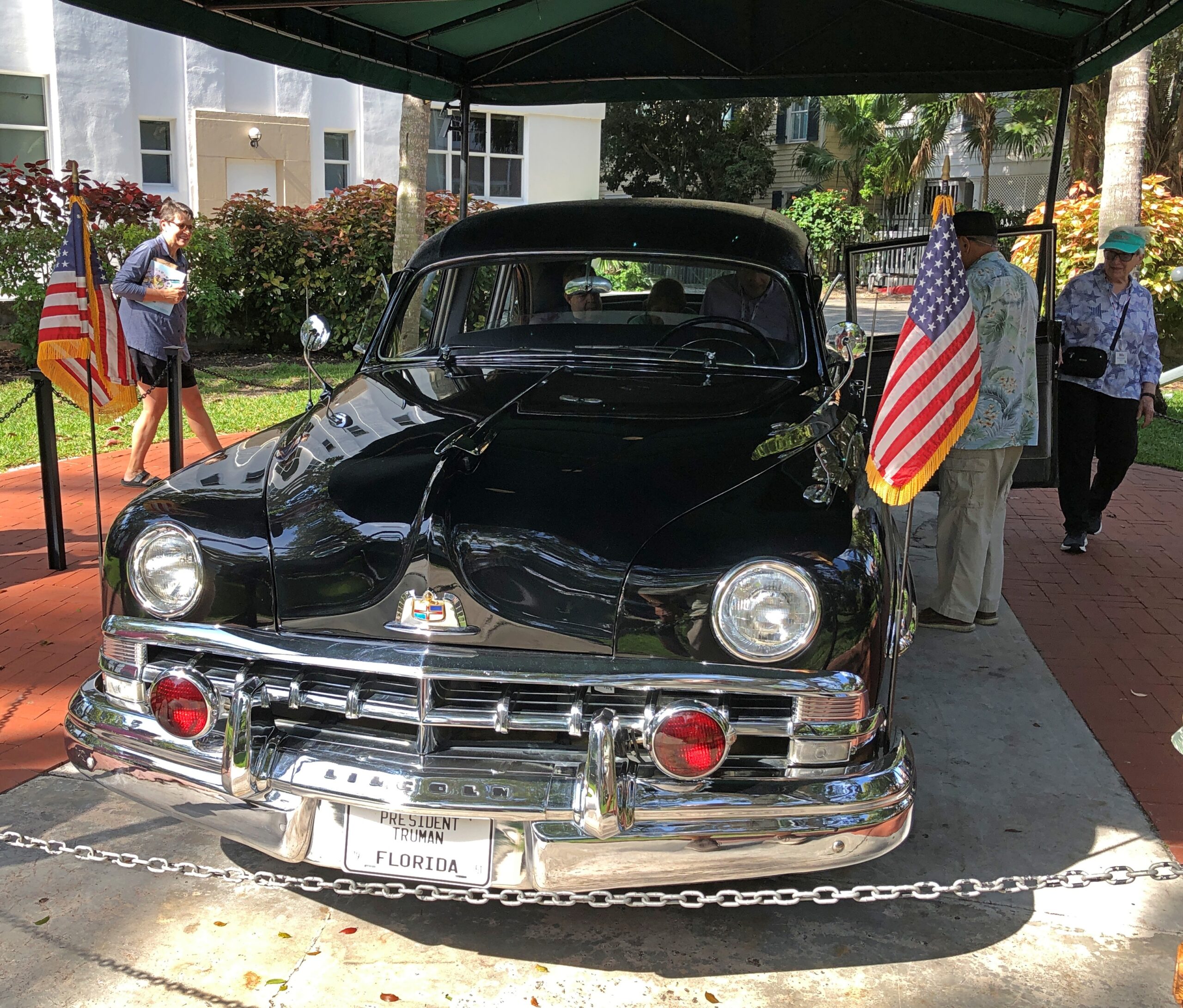
The limo parked on the grounds of the Little White House wasn’t standard mid-America either.
A nearby sign says that it is a 1950 Lincoln Cosmopolitan Presidential Limousine. One of nine that the Truman administration used, since in those days presidential vehicles weren’t transported by air, as they are now, so the government had them stationed in various parts of the country, ready to use.

The car is a museum piece, but no mere museum piece, since I understand that the current owner, the Key West Harry S. Truman Foundation, rents it under specific conditions. Namely, you pay some large fee, and are driven around Key West for a while. I learned this when we saw an elderly couple get in the back seat, followed by a uniformed driver, and off they went.

One more thing about the Little White House: the grounds are a small arboretum.

Flora includes well-known varieties, such as avocado, coconut, date palm, mahogany and mango, plus less-than-household names, such as Fiji fan palm, soapberry tree, and my own favorite name, gumbo limbo, whose “wood, though soft, was used in the past to carve carousel horses,” the museum tells us.

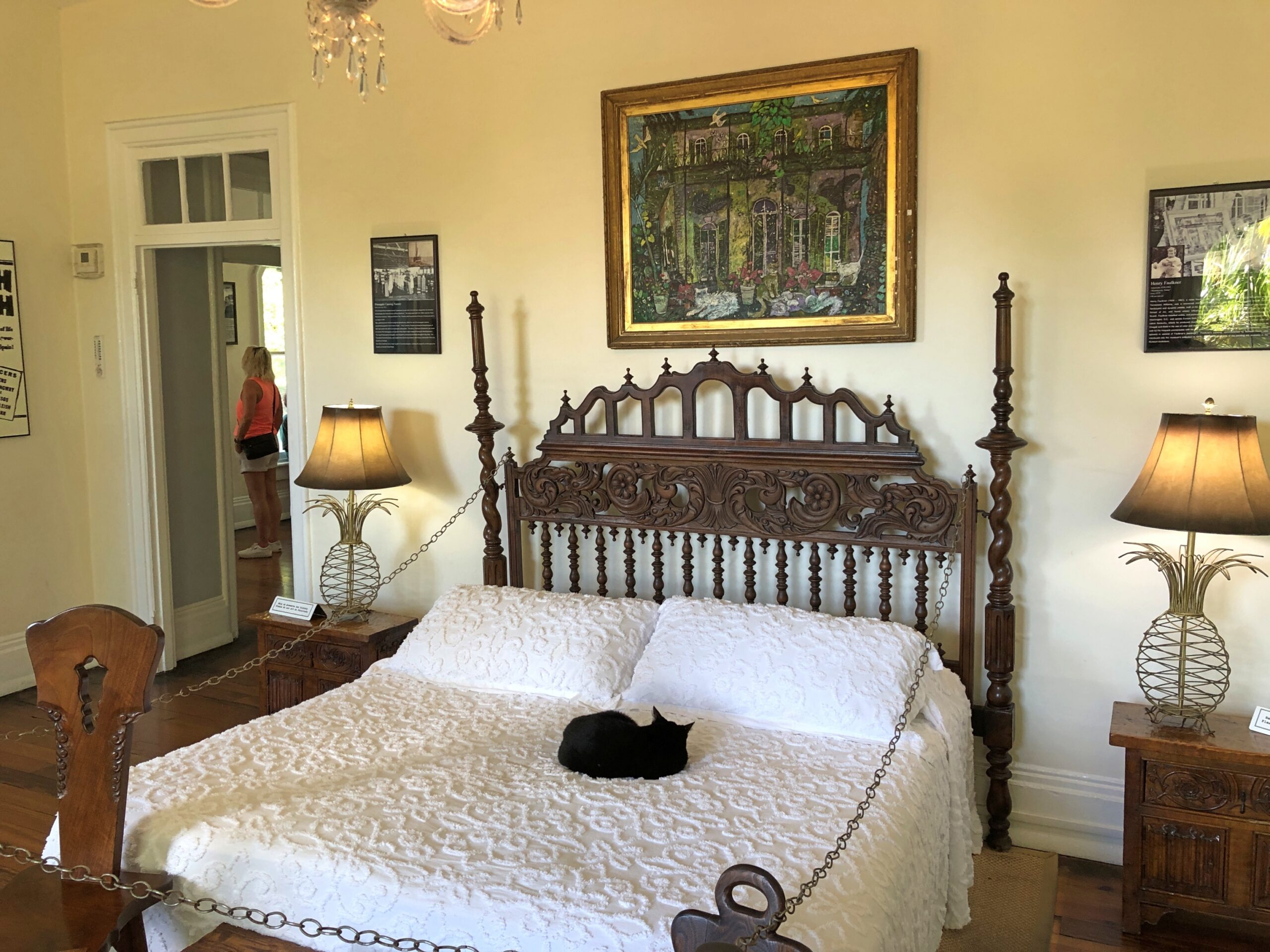
Earnest Hemingway House, Key West

“How many of you came because you’ve read some of his books?” our guide at the Earnest Hemingway House in Key West asked our small group. We’d paid our entrance fee, waited outside the house for a few minutes, then started on the tour. I was in that group. Most of his books, in my case.
“OK, some of you. How about because someone else dragged you here?”

A few more hands went up. I don’t think he was taking a survey, exactly, just kicking off the tour in an interesting way.

“What about to see the cats?” Hands went up. Some laughter.

Yuriko came for the cats, mostly, though she told me Hemingway is a writer than isn’t hard to read in the original English. We’d come to Hemingway House after our Duval Street stroll. It was about as pleasant a day as possible for such a walk. Everything is a short distance in Key West, so we arrived after a short walk.

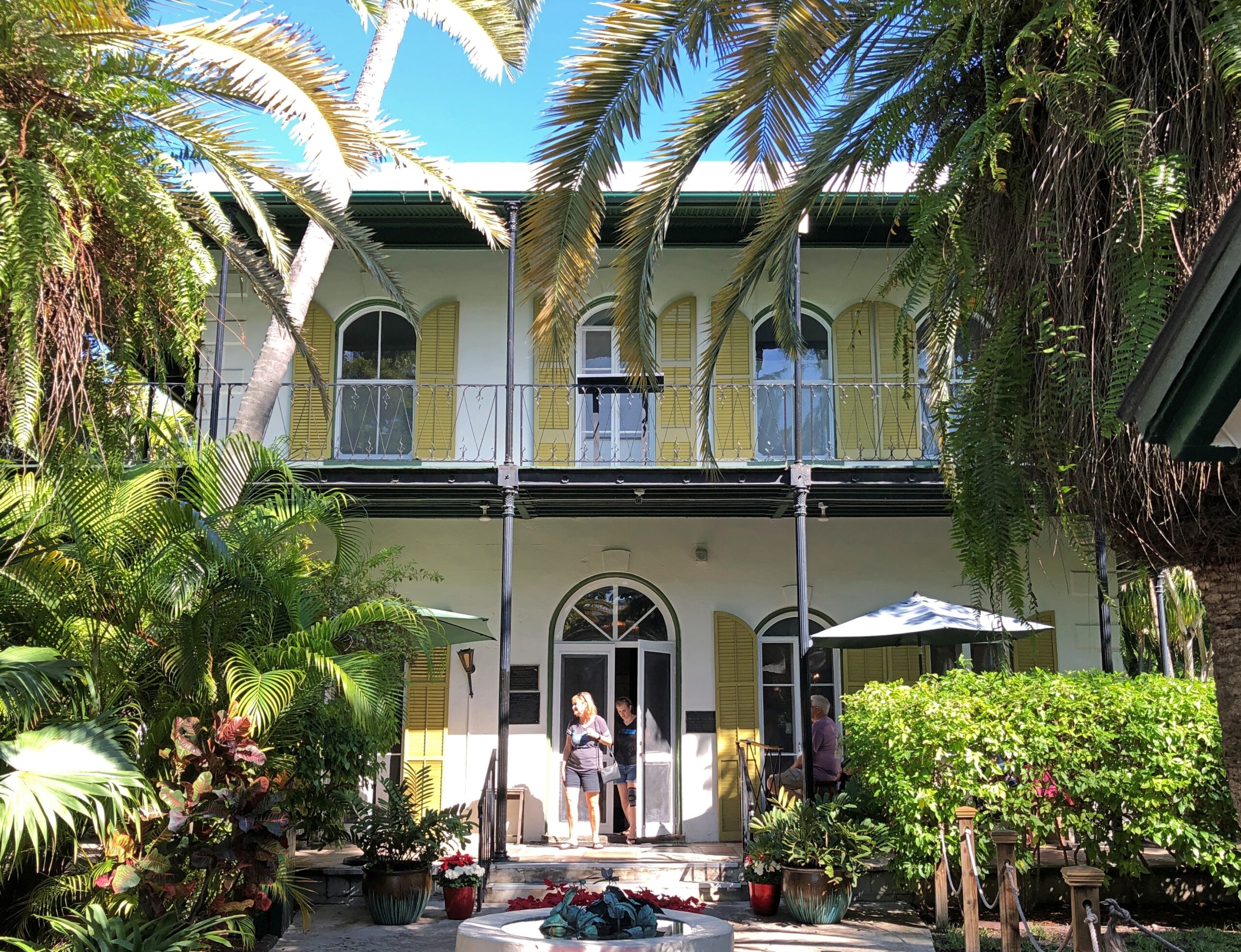
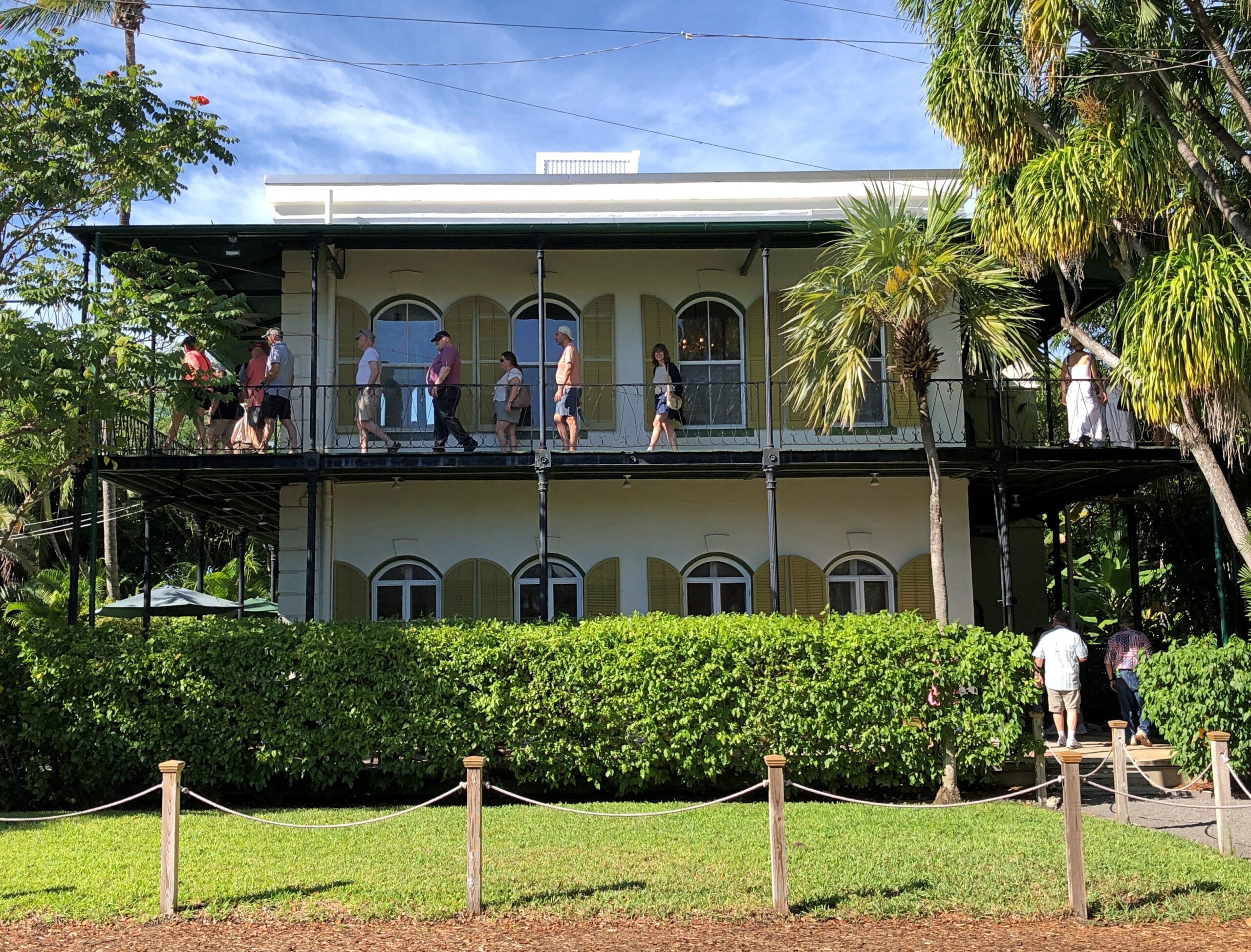
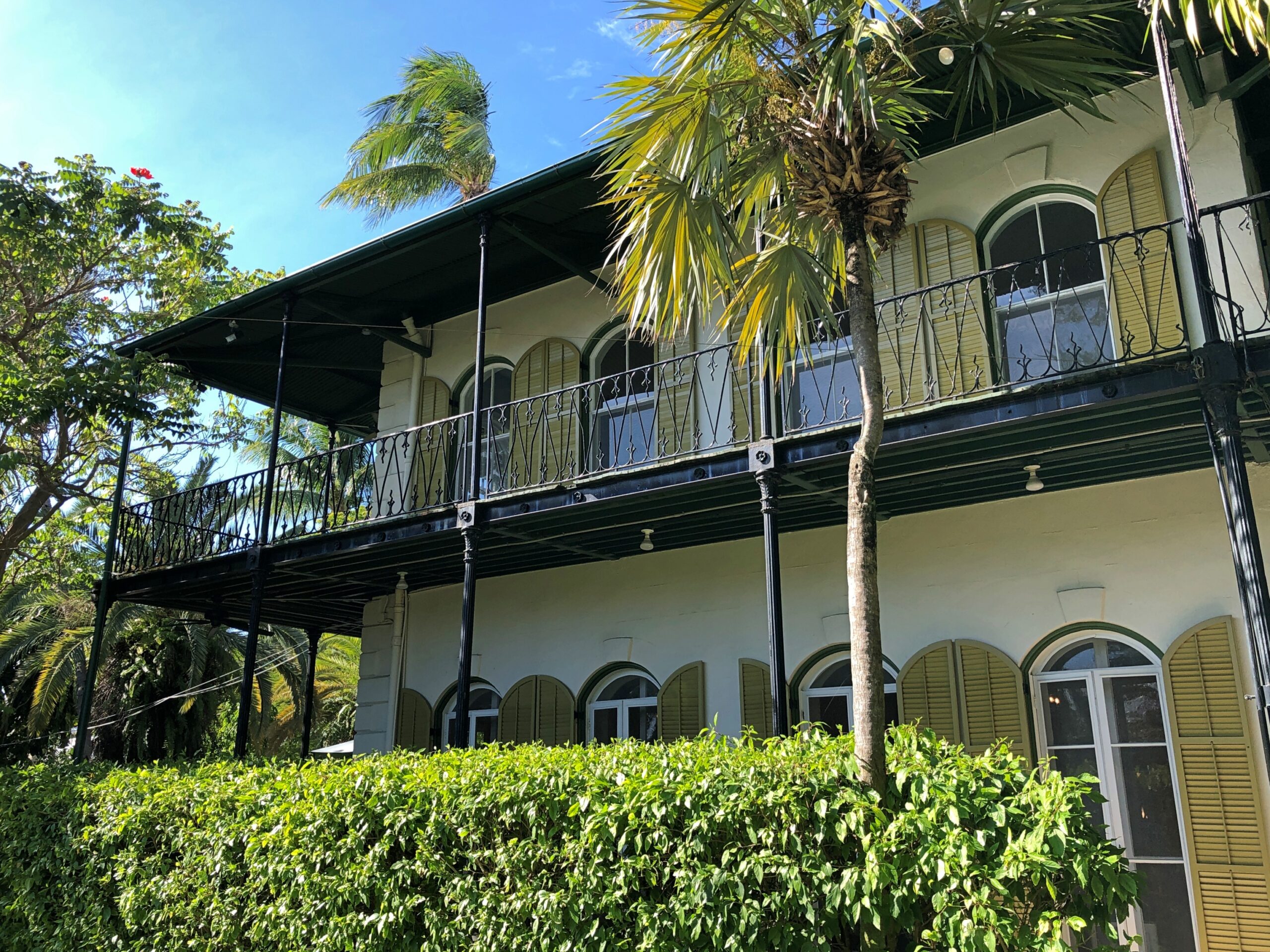
The house is a block off Duval, on as high a spot as Key West provides, and in the shadow of a lighthouse about a block away. The grounds are lush, the house itself a handsome two-story legacy of one of the 19th-century Key West booms. One Asa Tift, a Key West wrecker, completed the house in 1851.

Tift was one of the more successful wreckers, looks like: a man who led small boats out from Key West to the nearby hazardous reefs when ships foundered there. Wreckers were eager for valuable salvage from these vessels, and if the Hemingway House is any indication, the rough-and-tumble of salvage — and you know the process was dangerous, full of natural hazards, but especially other violence-prone wreckers out for the same prize — nevertheless produced at least few men of means in isolated, pestilential Key West.

Emphasis on pestilential. Just ask Asa Tift, whose sizable family, for whom the house was built, were carried away in that all too common 19th-century way, by communicable disease.

The Hemingways showed up some decades after old man Tift died, acquiring and renovating the property using her family’s money. They did what they did, and these days the house is a museum to their presence.

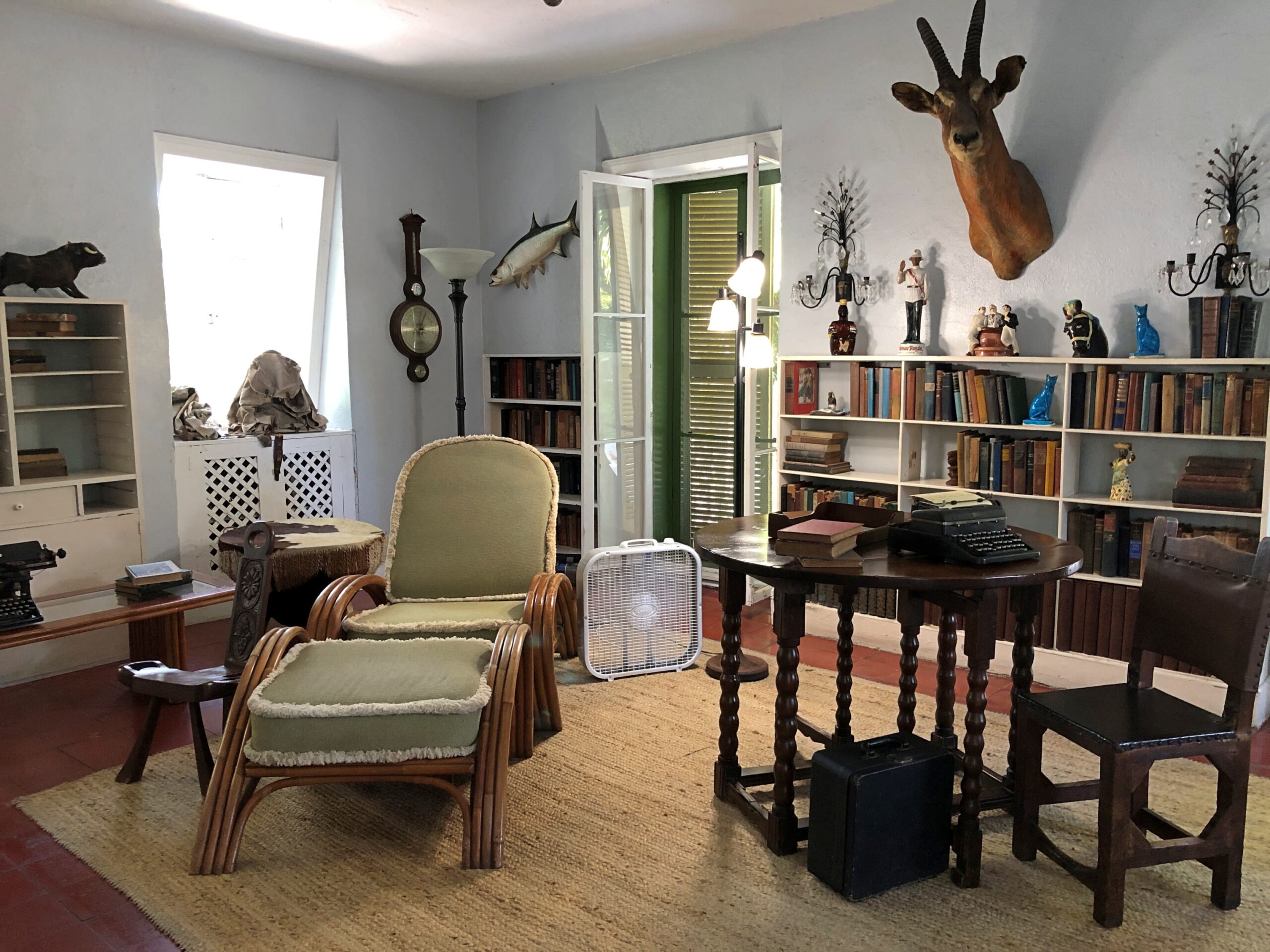
No one lives there anymore. No hefty, dark-mustachioed man staggers home from Sloppy Joe’s bar good and drunk and flops to bed there, or goes to the upstairs office-studio and bangs out famed literature during sober periods, or argues with his wealthy wife under the sub-tropical shade trees – quarrels whose root seemed to be Hemingway’s roving eye, with a dash of alcoholic irresponsibility added to the mix.

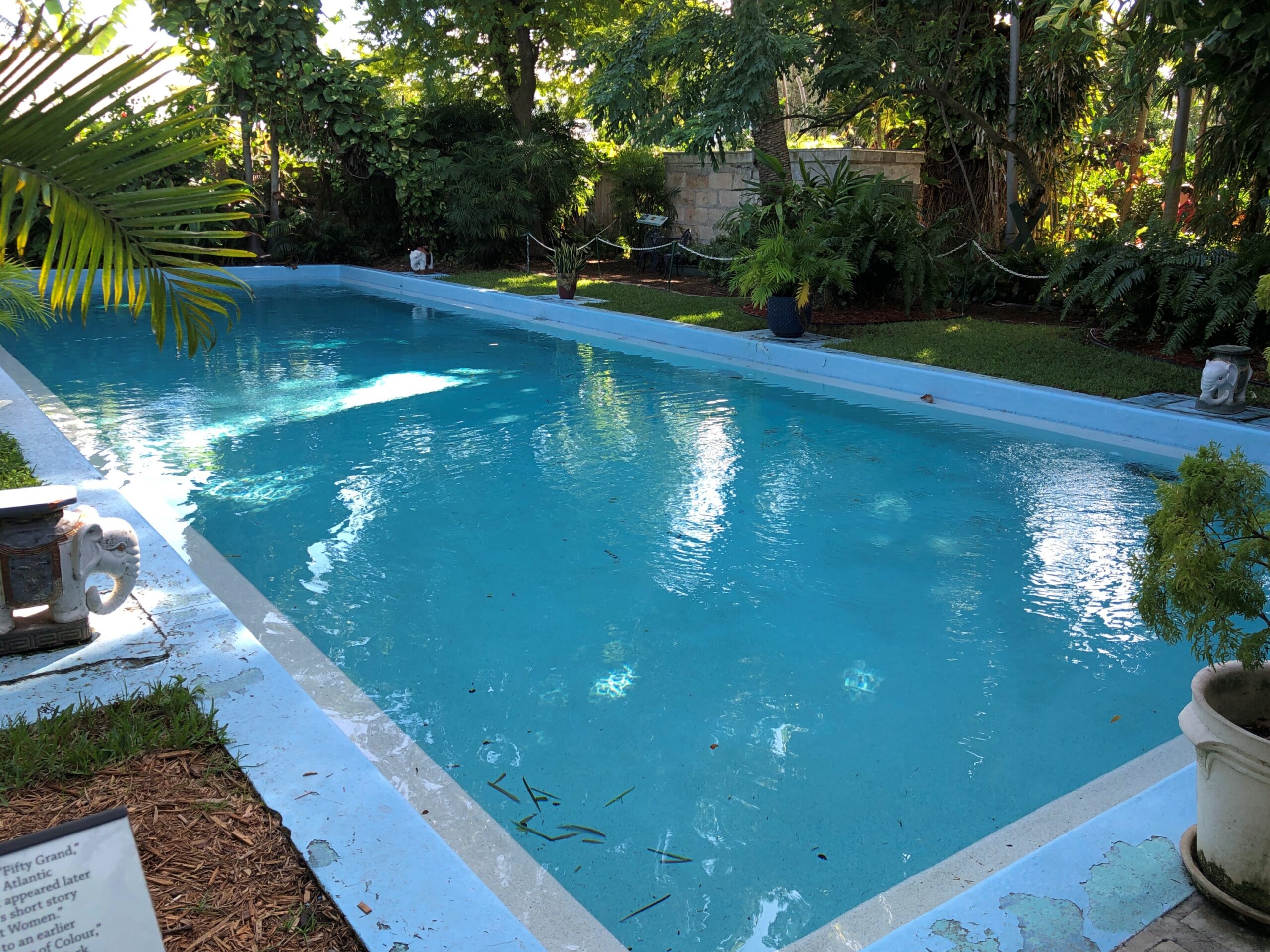
The pool was an addition by his wife, Pauline Pfeiffer, which caused consternation for Earnest. Something about taking the place of his informal boxing ring on the same site, done while the author was out gallivanting somewhere. Terrific writer he might have been, and I certainly admire his talent for gallivanting, but he also seems to have been a touchy bastard.

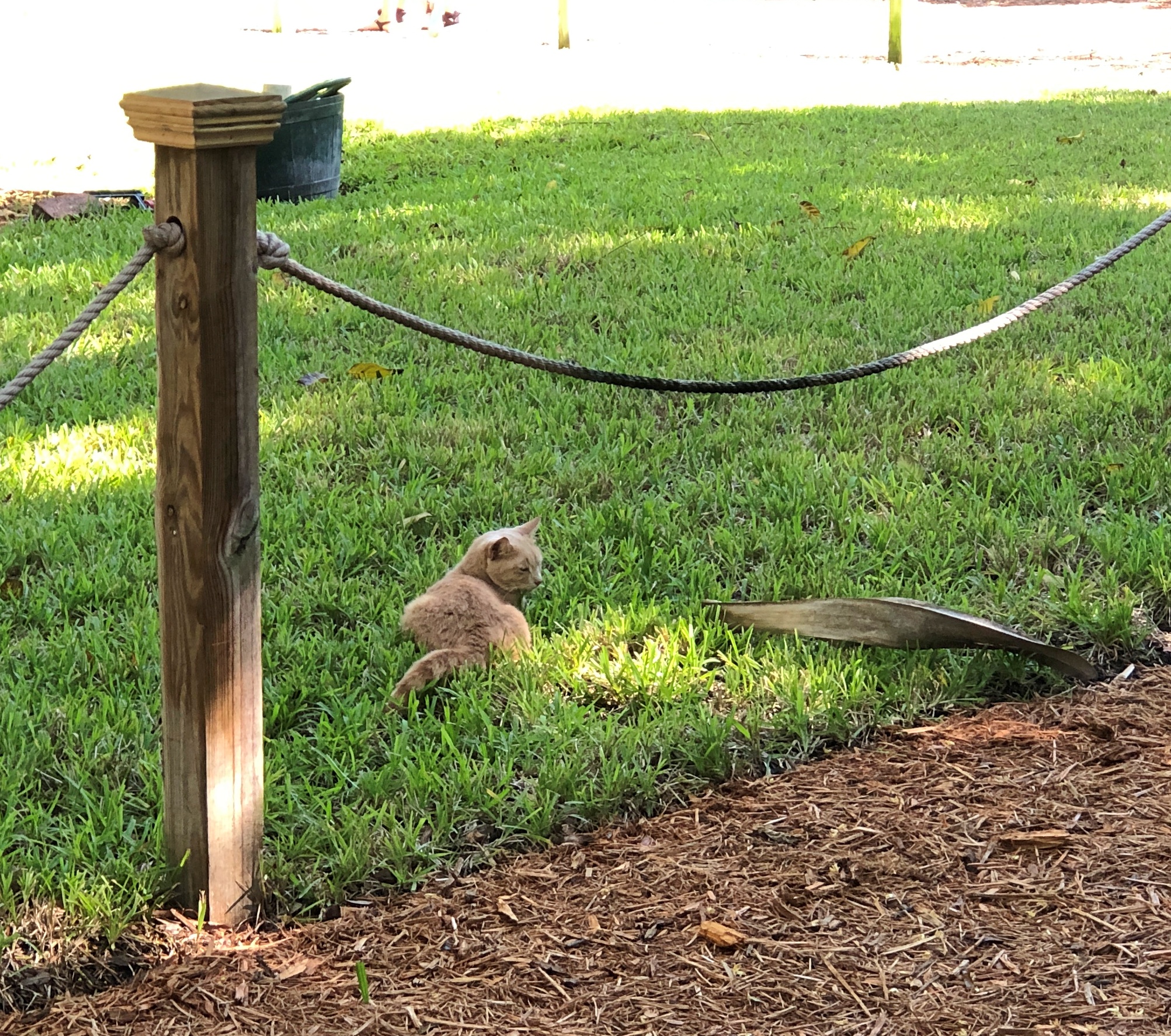
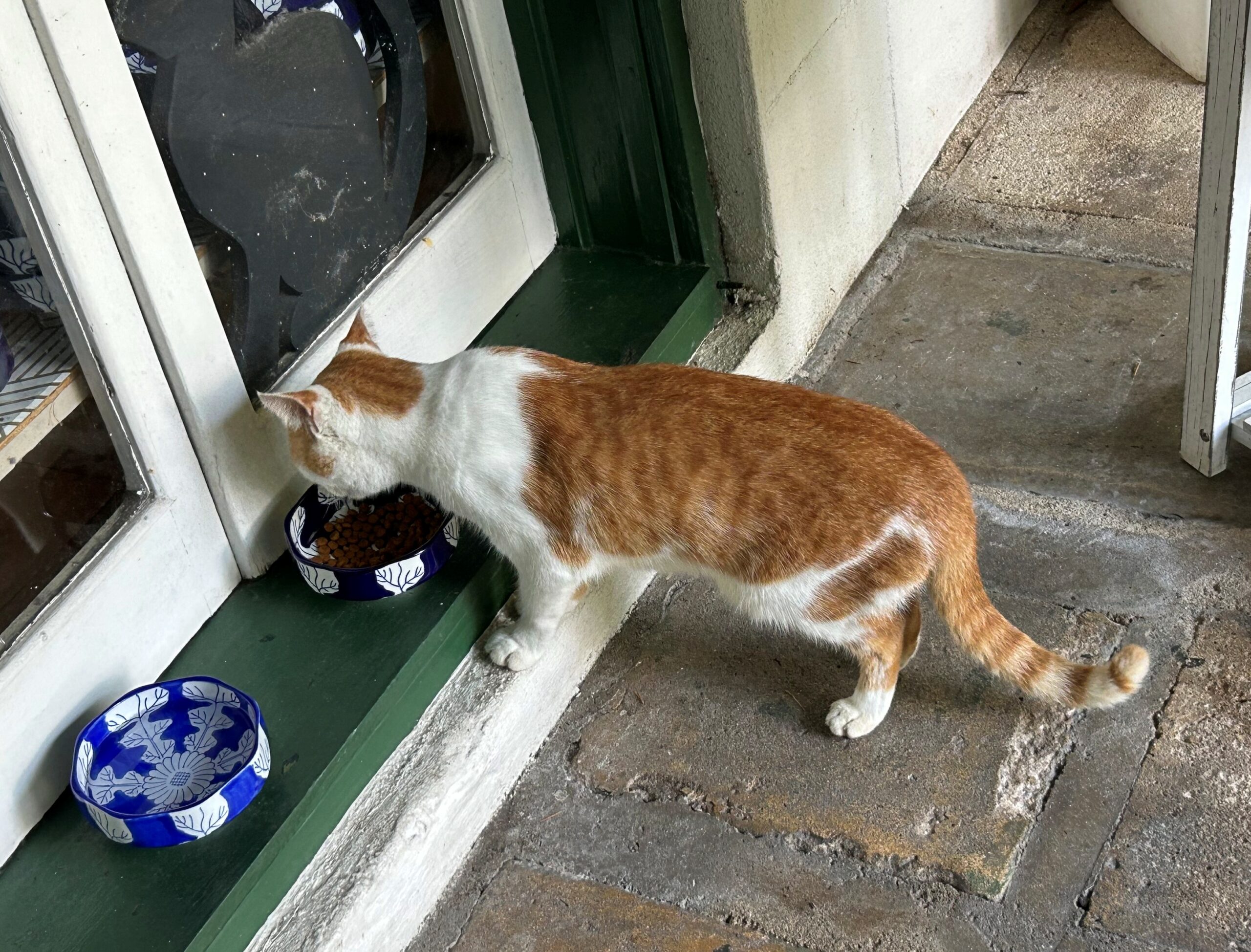
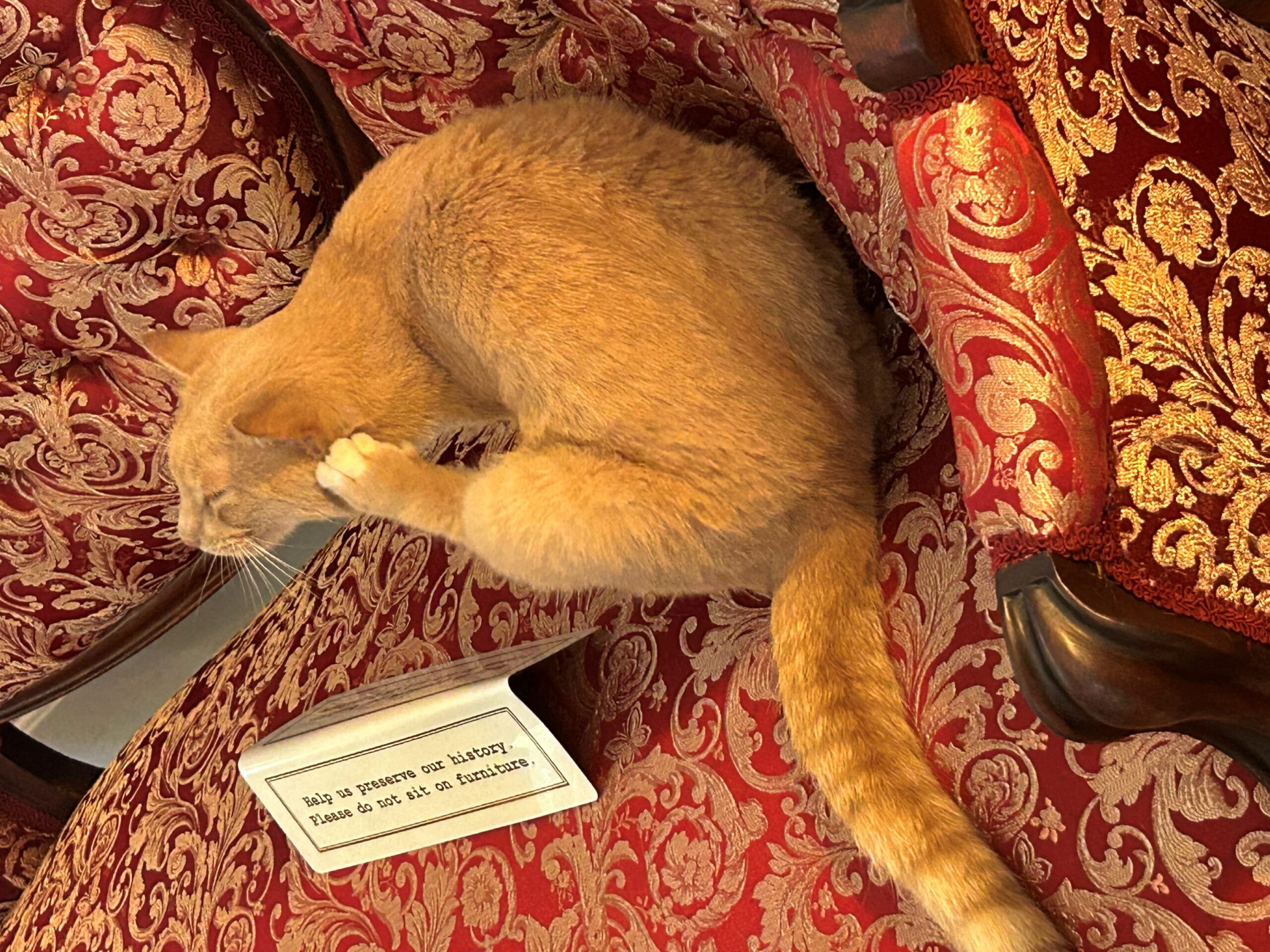
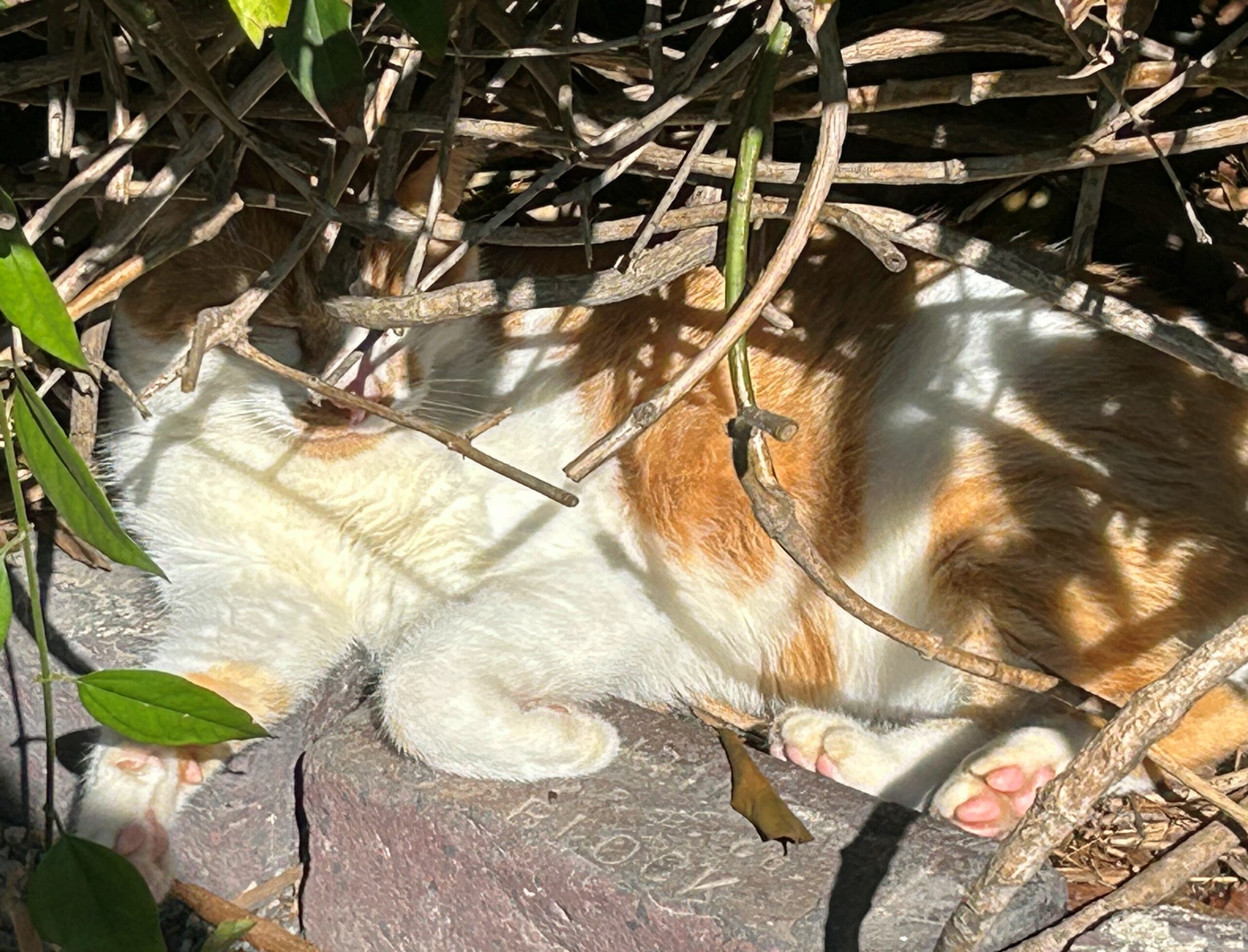
Tourists and staff come and go, but in our time, only cats live at 1301 Whitehead St., a property enclosed by sturdy brick walls. Said the be the descendants of Hemingway’s son’s six-toe cat, the herd is large. Our guide told us how many, though I can’t remember the exact number now. In the range of dozens, beyond the dreams of even the most thoroughgoing cat ladies.

They are everywhere.

I mean everywhere, except maybe the pool.

My favorite story about the house doesn’t involve cats. The guide didn’t tell it this time, but I heard it before. By the mid-1930s, Hemingway was already a Famous Author, and without even telling him, the local chamber-of-commerce or the like put the house on a pamphlet given to tourists, as one of the local sights. Inevitably, people started showing up at odd and inconvenient hours, or entered expecting a tour. The brick wall all the way around the house is a legacy of that situation.