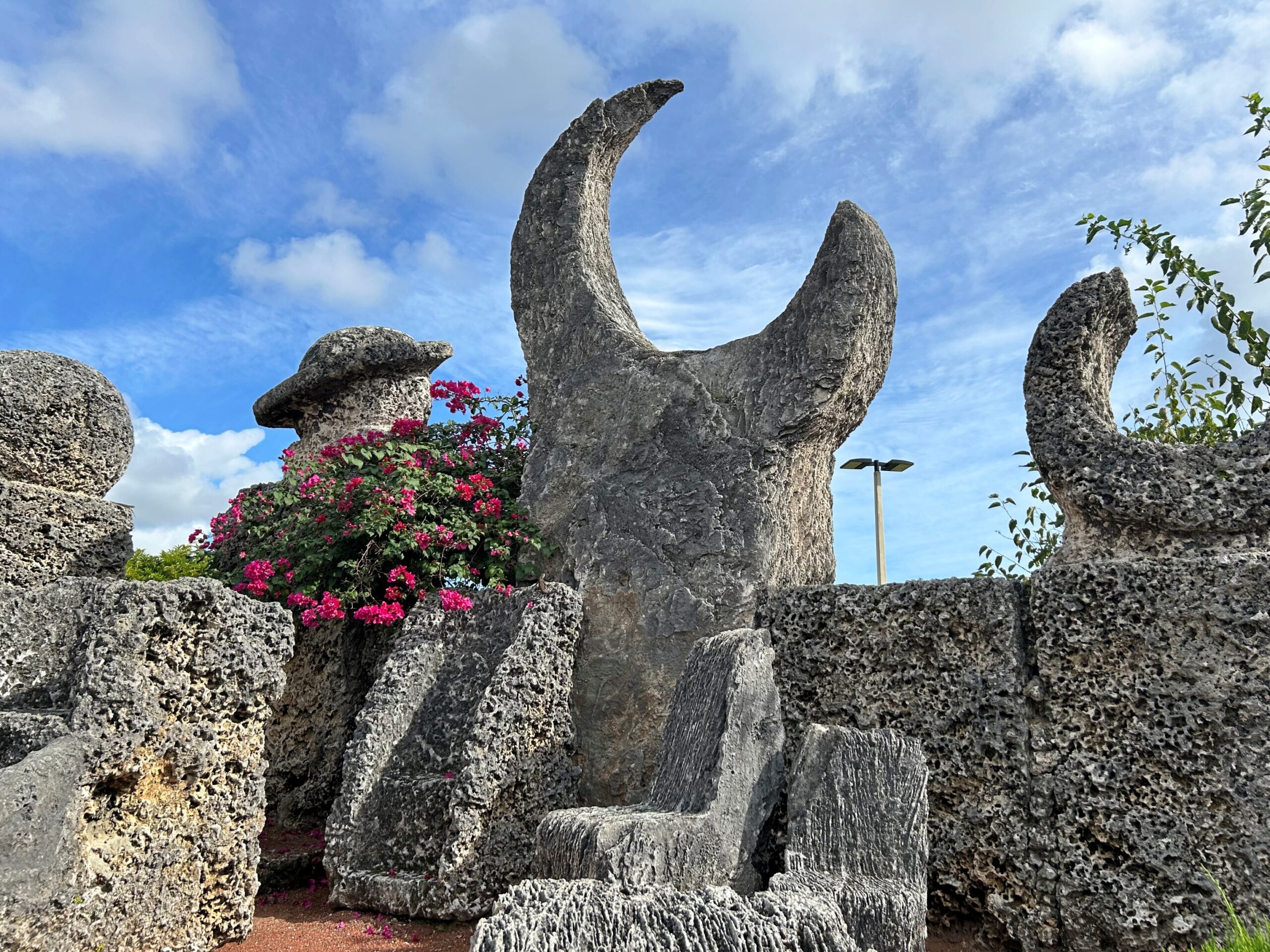
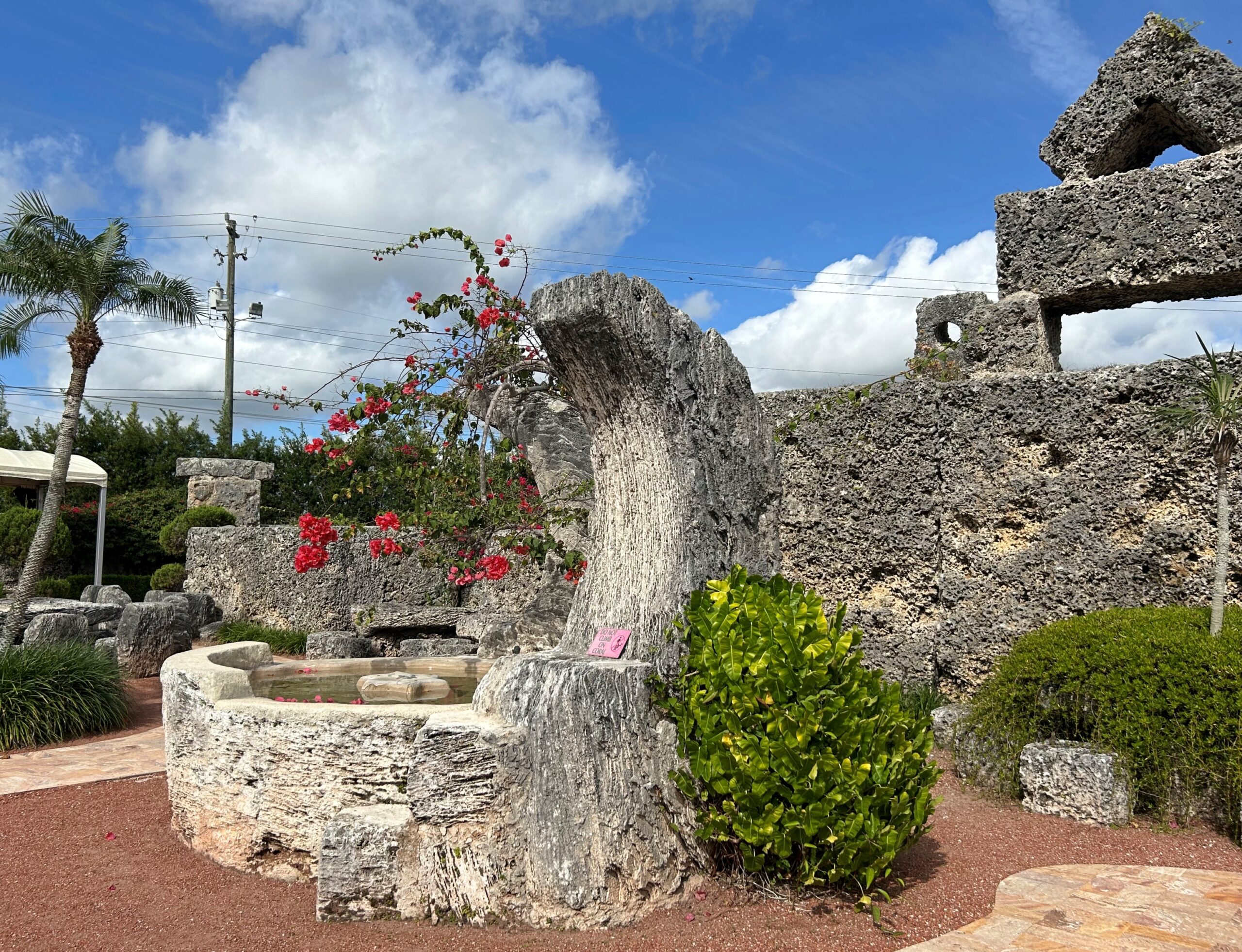
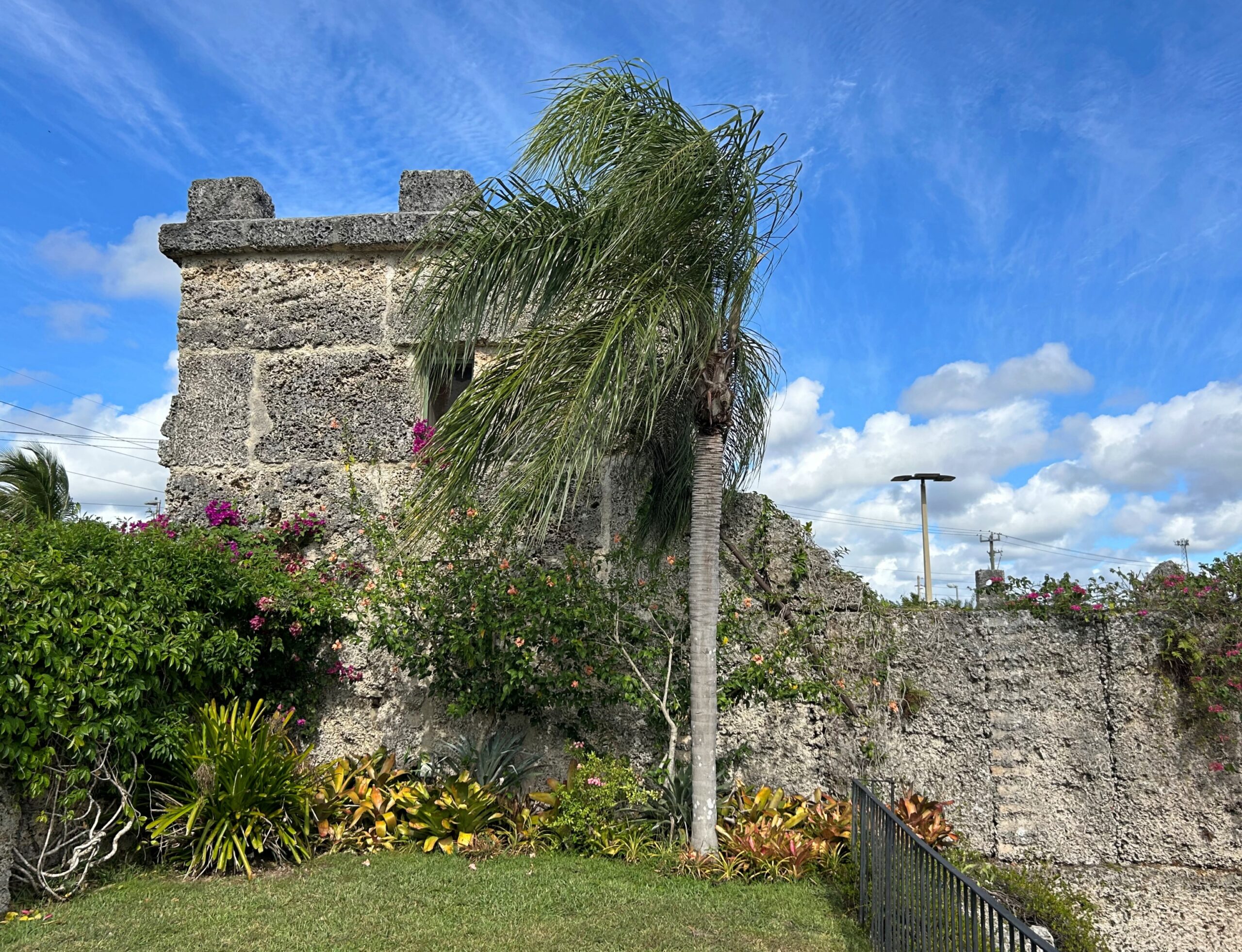
Where does eccentricity come to flourish? America, you could argue. Even more specifically, Florida. That might be too much of a generalization, and these might not be the best of times (or the worst) for American eccentricity, but the example I have in mind actually reaches back a century or so: Ed Leedskalnin, immigrant from Latvia who single-handedly built the Coral Castle in Homestead, Florida.
The story goes that his fiancée left him at the altar back in Latvia and that Leedskalnin, born into a family of stonemasons, built the place to remind himself of his lost love once he’d settled in Florida. Since he lived and worked alone, an undergrowth of lore grew around his creation, some stories more ridiculous than others.
Actually, he called it the Rock Gate, and started building it in the 1920s in Florida City, not far away. Considering that some of the oolite limestone structures weigh some tons, one of the amazing parts of the story – just one among many – is that Leedskalnin decided to move them in the late 1930s to their current location on US 1. After that, he added more structures, and the whole thing stands today as a somewhat overpriced tourist attraction, but also a monument to eccentric, determined monomania, the kind that leaves behind a place to gawk at.
I was willing to pay. We took the tour, which is the only way to legally visit inside Coral Castle’s stone walls, just before we left Homestead for the Keys.
“The castle contains many wonders including a sundial, a stone rocking chair, a 500-pound heart-shaped stone table (a ‘Valentine’ for his lost love), and a 9-ton gate made to spin with just a light touch,” Atlas Obsura notes. “Ed was secretive, working on the castle mostly at night, and keeping to a policy of letting no one see his working methods. This led to much speculation that Ledeskalnin used some magical or ancient power to move the giant stones.”
Magical power, eh?
As a more detailed article published by the Skeptics Society points out, Ledeskalnin clearly knew the “principles of levers and fulcra.” I’ll go along with that. If anything, that’s more of an achievement than using magical powers. For all I know about levers and fulcra, it might as well be magic.
And what of Latvia? Our tour group was about 10 people, including a young couple who said they were from Latvia when the guide asked where everyone was from. This answer didn’t surprise him. Apparently they weren’t the first.
Toward the end of the tour, I asked the Latvian man if Ledeskalnin was known in his home country after all these years, and for something so odd (not quite how I phrased it). Oh yes, he said. Maybe not famous, exactly, but people had heard of him (not quite how he phrased it), enough that a steady trickle of Letts come to see his creation while in distant Florida.
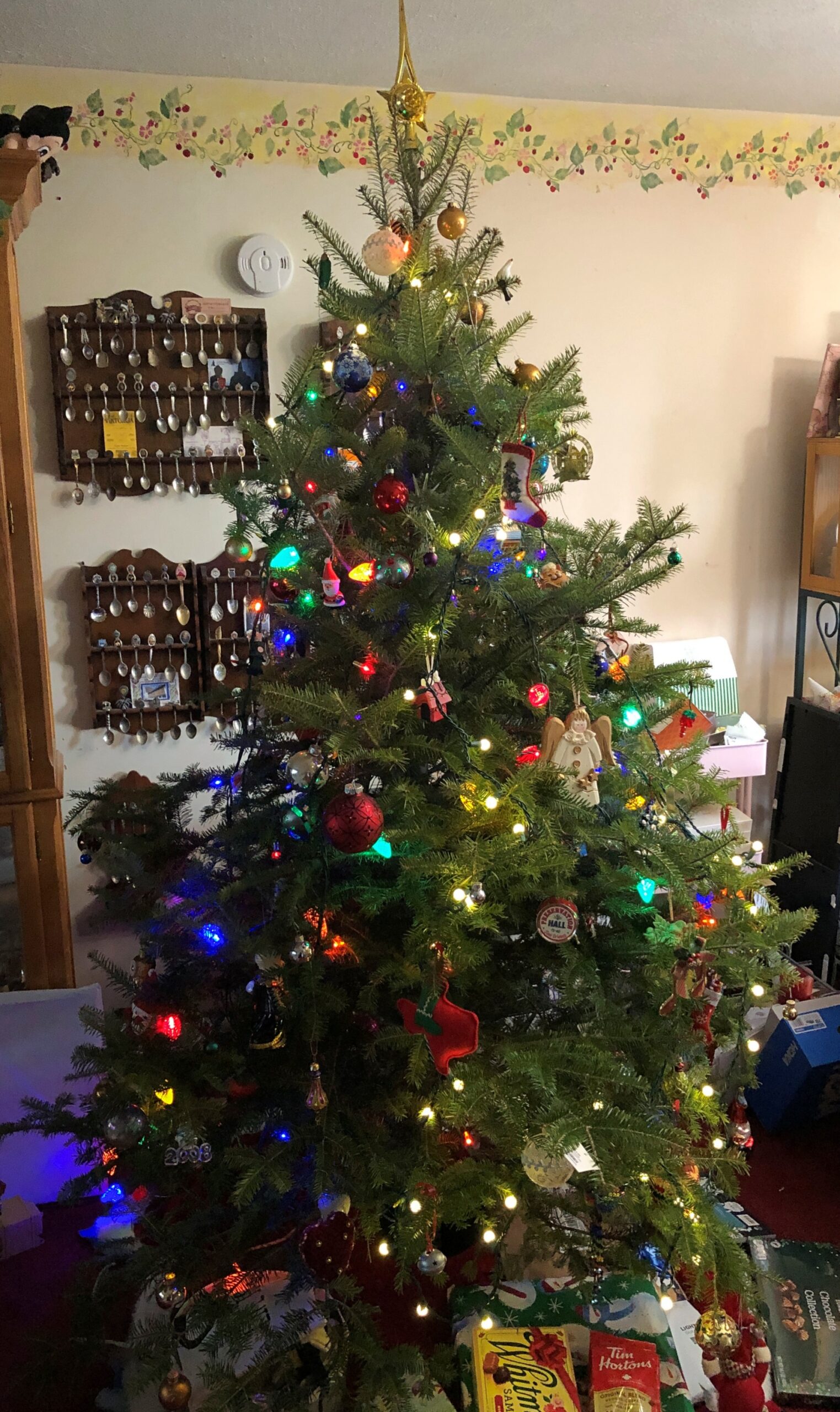
Decorating for Christmas this year meant a rapid set-up. We spent a fair number of hours on the 23rd making the living room ready for a tree – moving clutter, mostly. On Christmas Eve, I brought the tree in from the garage, and Ann mostly decorated it. Finishing touches, by me, were in progress even on the morning of Christmas Day, but since that moment in the life of our family doesn’t involve an early-morning rush downstairs by children anticipating Santa’s bounty any more, that was doable.
Ann did a fine job of decorating, in the style of our family: fill up the tree with a wide variety of glowing and glinting objects accumulated across the decades.
We got a late start on decorating for Christmas, though when I think about, decorating after the Solstice discourages the sort of front-loading of Christmas that a lot of people complain about, but which they do anyway.
We had a good reason for the late start: a drive to Florida and back, beginning on December 4 and ending on the 22nd. Not just to Florida, but as far as you can go in that state, at least by car, namely to Key West and back. Early to mid-December seemed like a good time to do such a thing, after any traveling people do for Thanksgiving but before the worst of the Christmas-New Year’s rush. A short shoulder season in other words, but a good one, with room rates not quite subject to surge pricing, and crowds thick in some high-volume tourist destinations, but not impossible.
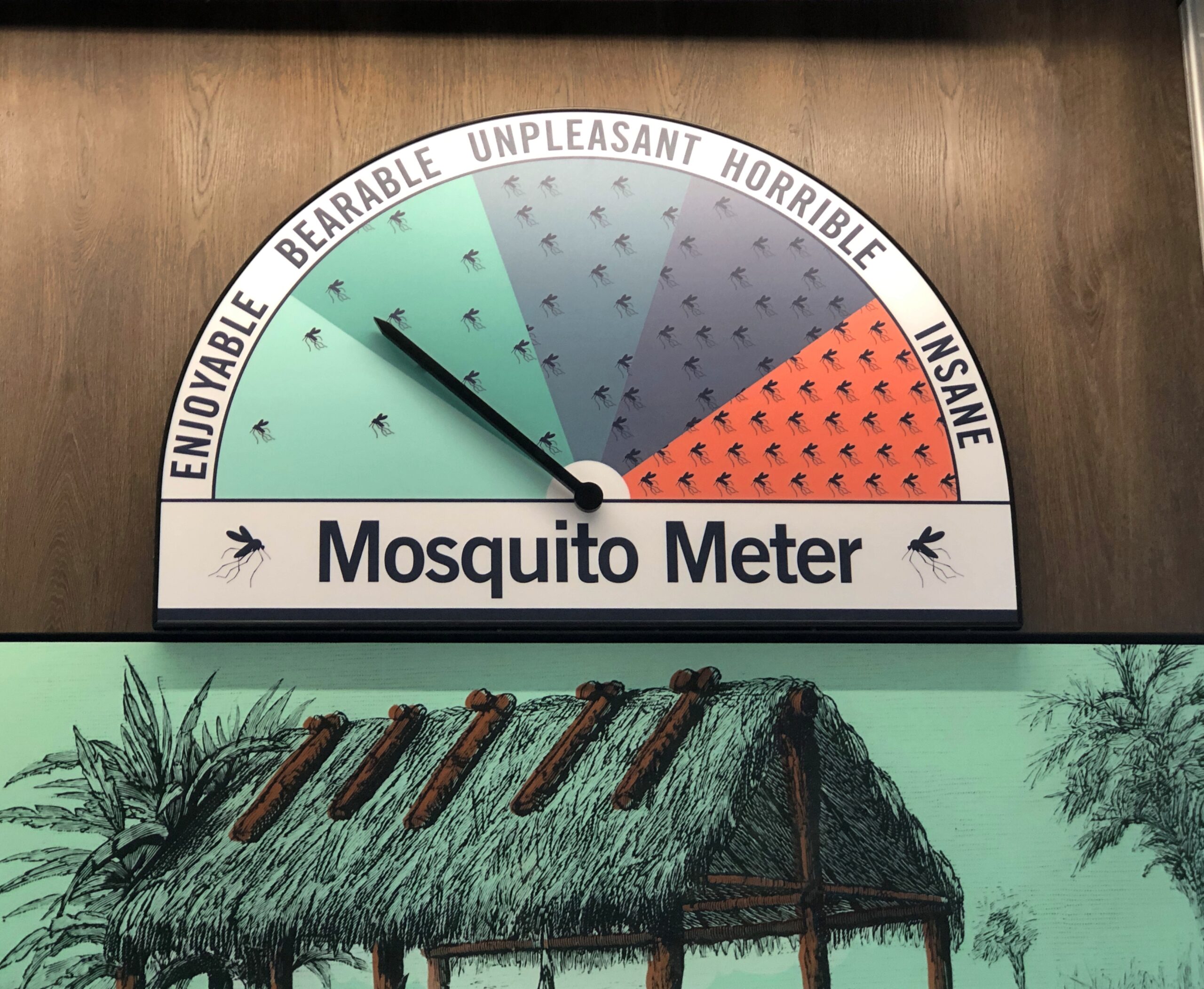
Also, Florida has few mosquitoes this time of year. Not no mosquitoes, as we found out one day in the southern reaches of the peninsula, just a “bearable” number.
Sometime earlier this year, I got the idea that I wanted to take four long drives after turning 64. Four for 64, you could say. Doing so by the end of 2025 wasn’t part of the idea, but that’s how things worked out. The drive to Florida and back, by way of such places as Indianapolis, Louisville, Chattanooga and Atlanta, totaled 3,682 miles. For all four trips since June, the total is about 14,300 miles.
That could be made to sound impressive, but in fact American men my age average more than that every year, about 15,000 miles, at least according to this source, which cites US DOT data. Younger men drive even more annually. Most of that is commuting, however. My commuting mileage by car has been exactly zero this year, and while I drive locally to stores and such, it couldn’t be more than a few thousand miles. So it seems clear that, as an American man, it was my duty to get out and drive.
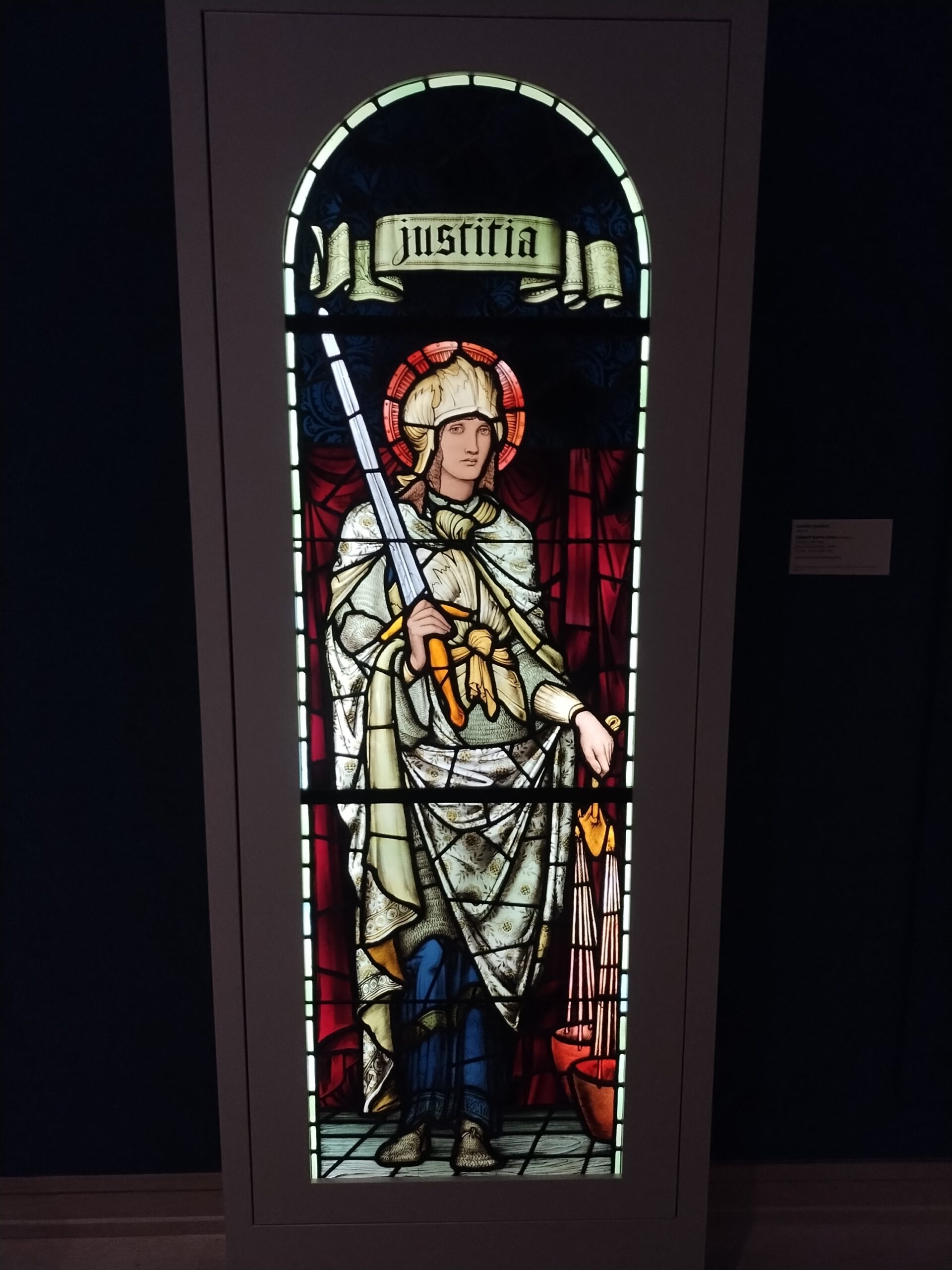
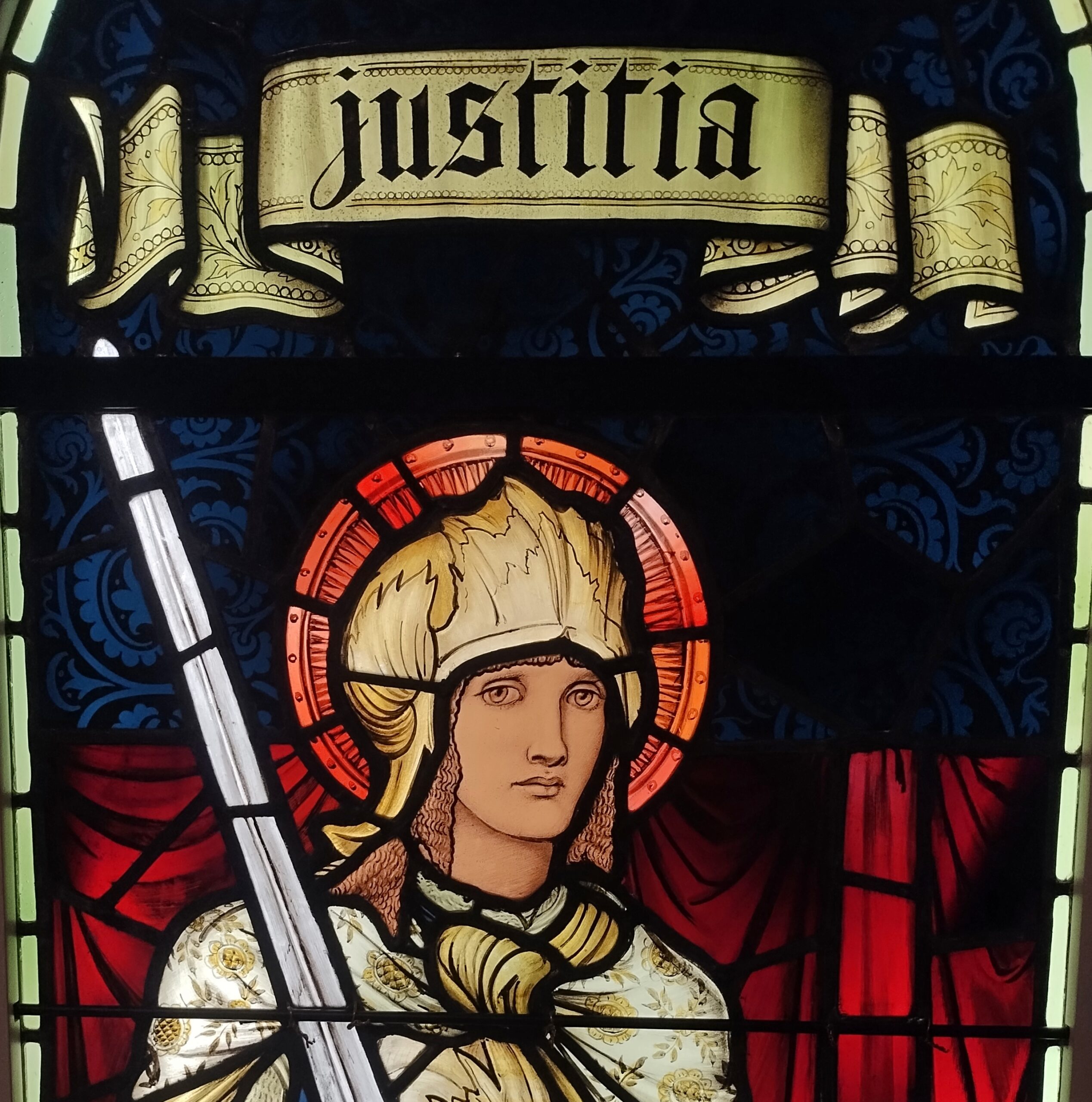
When we headed south in early December, snow covered the ground all the way past Indianapolis, where we stopped for a few hours at the Indianapolis Museum of Art, which is part of a larger campus called Newfields – and better examined in summer, I think. But the museum is a good one, with a solid collection, especially 19th-century American and European works. Such as “Justitia,” a Morris & Co. work from the 1890s.
After overnighting south of Louisville, we diverted from I-65 and took smaller roads through southern Kentucky and into Tennessee to a holler in Jackson County, where we were the guests of dear friends. Tennessee musicians from those parts — some professional, others skilled amateurs — gathered on the the evening of Saturday the 6th, for one of the periodic jams in our friends’ barn, which houses no animals these days, but a small stage and some sound equipment and a fair number of folding chairs. A joyful jam it was. Food was potluck. I like to think we went to a hootenanny.
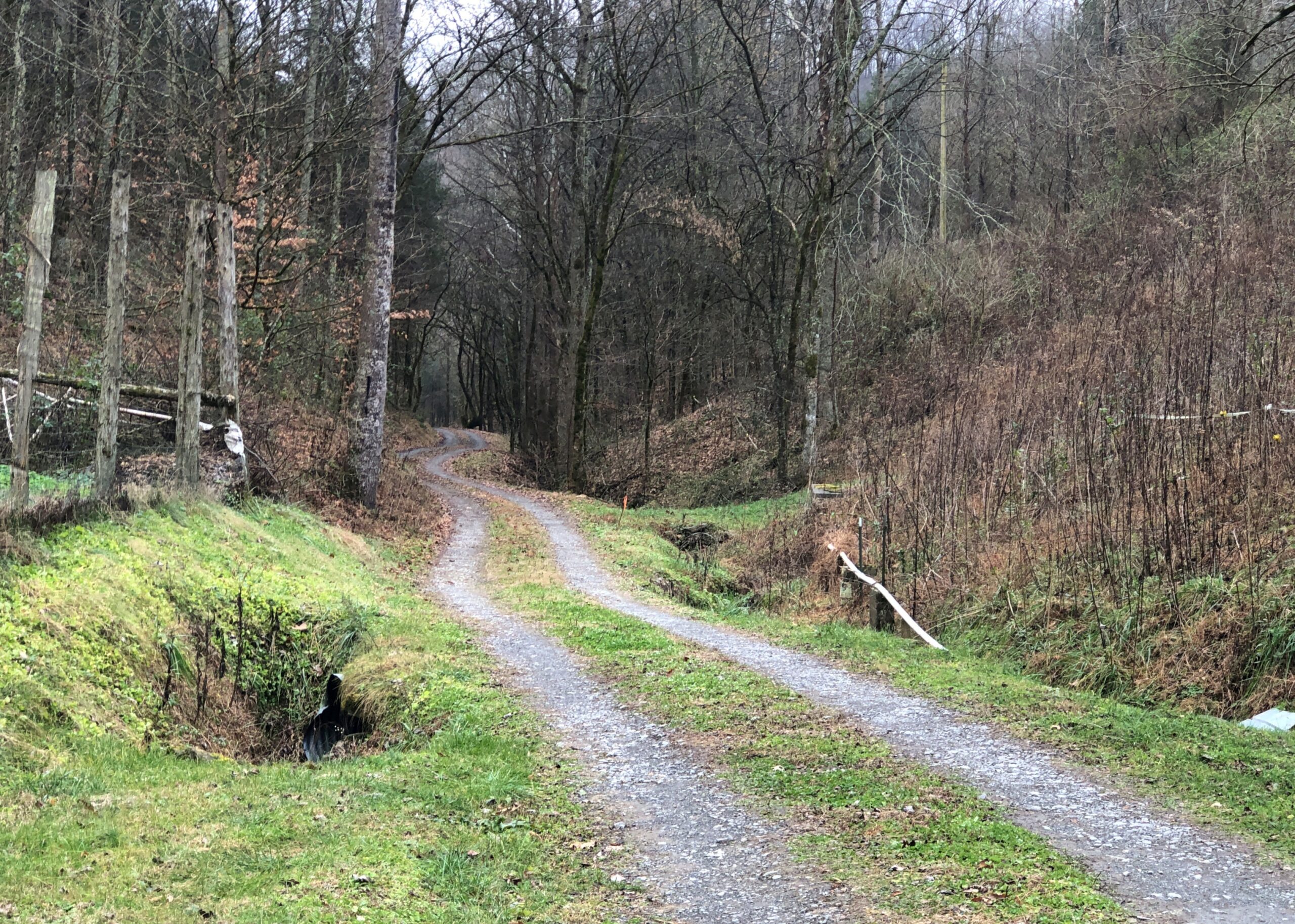
The road through the holler. By this point, no snow. We were trading cold for warmth. That was one of the goals of the trip. Maybe the main one.
From there it was mostly a straight shot down through Georgia on I-75 to Florida, and eventually US 27 to Orlando by way of non-coastal Florida places like Gainesville, Ocala and Lady Lake, a string of settlement less agricultural and less pastoral now than ever, more like an endless outer suburb. Heavy traffic is an invasive species in this part of Florida, surely as pythons are in damper parts of the state. Not just masses of cars and trucks, either, but also golf carts. We passed close enough to The Villages to see billboards advertising legal representation in the event of golf cart accidents. Carts, I’ve heard, provide transport in great numbers in that sprawl of a settlement.
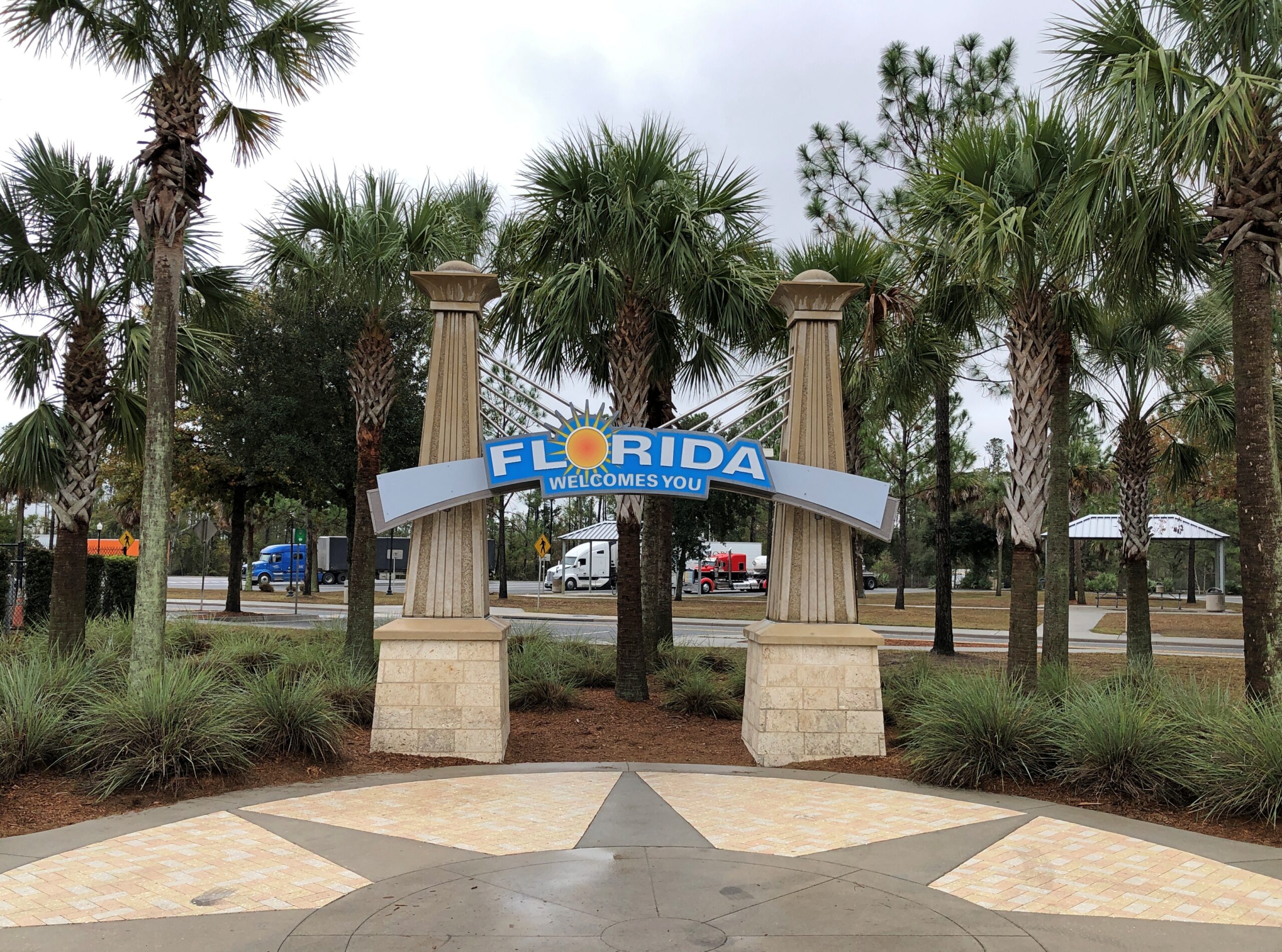
The drive to and in Florida involved the usual North American mix of large and small roads, smooth and ragged, grid-like and irregular, though Florida cities tended toward the irregular (except for Key West), and as crowded as can be and as empty as can be. Snow lined the way up north, thinning out the further south we went, giving way to brown landscapes and bare trees. Then we came into greenery – evergreens and palms and even deciduous species turning color. We crossed mighty bridges over mighty rivers, small culverts over alligator haunts, and the string of bridges that make up the civil engineering marvel known as the Overseas Highway (US 1). We crossed barely acknowledged borders and signs at the Florida visitor center on I-75 proclaiming The Free State of Florida.
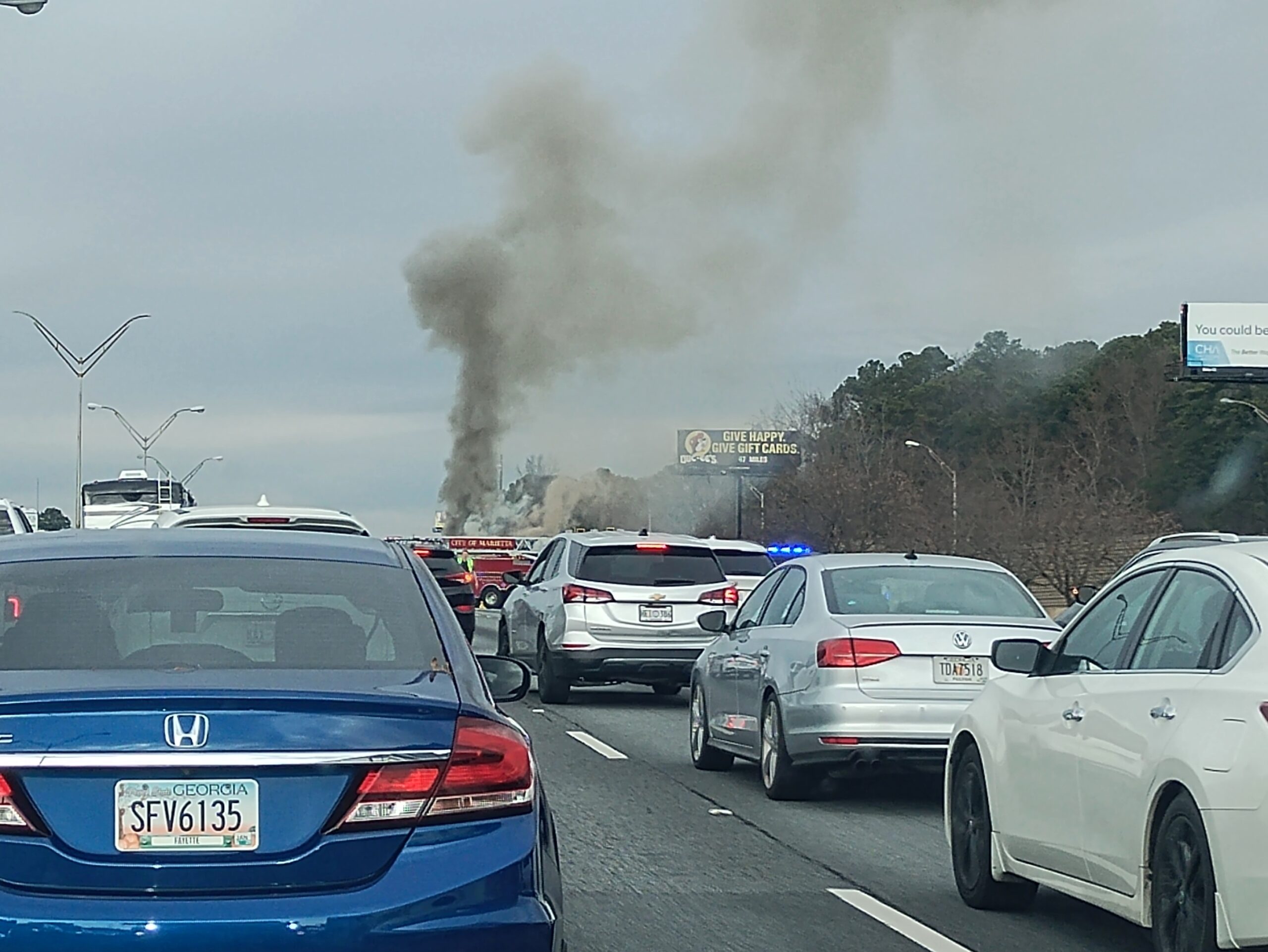
Florida Man was out and about, weaving in and out of high-speed traffic, pushing 100 and pretty sure that physics doesn’t apply to him, though I have to admit that Florida isn’t different from any other state in that way. Traffic stopped cold more than once: for a banged up, upside-down SUV; for a raging RV fire, attended by a half-dozen firemen; for a serious two- or maybe three-car wreck on the other side of a divided highway; for construction, usually without any workers in sight; and once for no reason that we could tell at all.
In Orlando, we spent all December 9 at Universal Epic Universe, a theme park that only opened in May. Ann flew in the day before we went to the park and flew home the day afterward, taking advantage of the low prices that discount airlines offer to high-volume places in a shoulder season, if you take no bags and buy nothing to eat or drink at sky-high prices, literally and figuratively. A small bag of hers had been stowed in our car for the visit.
A theme park is one thing, but I wanted a look at Orlando, at least a sliver of it, the next day. Ann’s flight was fairly late that day, so we were able to spend part of it in posh Winter Park, including a tour boat ride through the town’s small lakes, lush with greenery and expensive houses on their banks, and connected by canals.
A drive that included the stretch of US 41 that passes through the Everglades took us to Homestead, Florida, and the mid-century charms of The Floridian motel. A day in Everglades NP followed, including an airboat tour and a drive to the coast at Florida Bay. The next day, before leaving Homestead for a drive in the rain across the Overseas Highway to Key West and while the sun still shined, we toured the Coral Castle, a one-man construction project using 1,000 tons of oolite to make walls, carvings, stone furniture, and a castle tower.
Key West was a two-day, three-night mid-December ramble on the busy and less busy streets of Old Town, including humans but also chickens, taking in the likes of the Hemingway House, the Little White House, Mallory Square, the San Carlos Institute, the Key West Aquarium, and the Key West Cemetery. Also, tourist shops, boutiques and the building where Pan-Am was founded. We ate and drank, though as our wont, nothing alcoholic. Key West was decked out for the holidays but not over the top. We walked and walked some more. It felt like a couple of pleasant summer days.
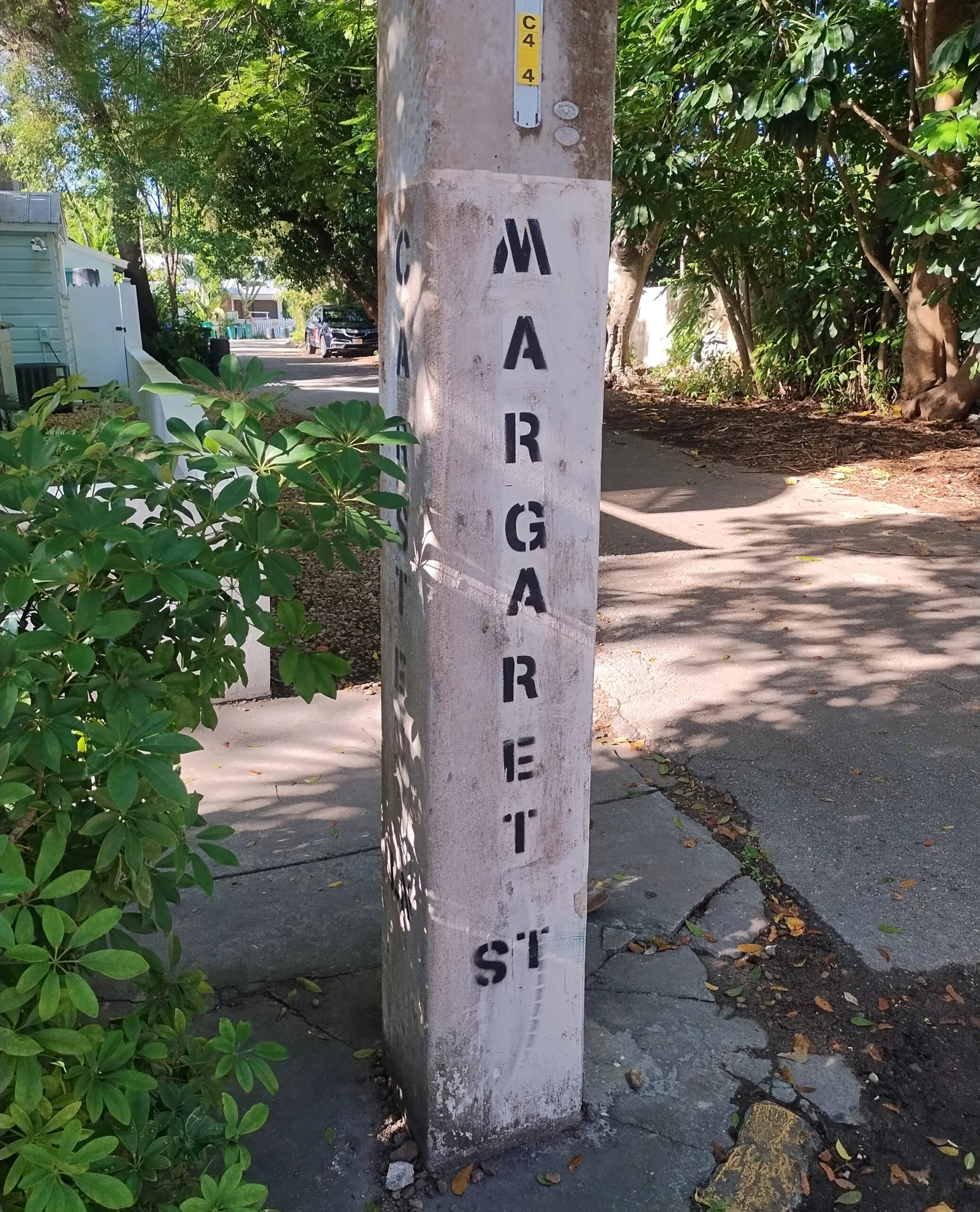
From my 2014 visit, I knew that on the back streets near the little-visited cemetery, parking was possible on an otherwise cramped island. So it was. On Margaret Street, within sight of the cemetery.
The return drive took us up the eastern coast of Florida, but avoiding the worst traffic in Miami-Dade by taking Florida’s Turnpike. By December 17, we’d arrived in Orange Park, a large suburb of Jacksonville, for a stay with two other dear friends, former Austinites now in northern Florida. Part of the next day was in and near downtown Jacksonville, one of the larger U.S. cities I’d never visited before (I believe San Jose is now the largest on that list). During our downtown stroll, we encountered the coolest building in Jacksonville and certainly one of the coolest in Florida.
We quit Florida on the 19th, but weren’t quite done with the trip. Yuriko had never been to Atlanta and wanted to go. Though I’d been however many times since 1982, I was happy to oblige, so we spent two nights and a day there, using the day to see the astonishing Georgia Aquarium and the impressive but somewhat overpriced World of Coca-Cola.
The last legs of the trip were long drives: Atlanta to Elizabethtown, Kentucky; and from there to home the next day. I wasn’t about to let them be completely dull drives, so we stopped on the second-to-last day in Chattanooga, to see the conveniently located, blocks-from-the-highway Chattanooga Choo-Choo redevelopment. On the last day of the trip, we stopped in Jeffersonville, Indiana, and walked across the Big Four Bridge, a former RR bridge across the wide Ohio, now serving pedestrians and bicyclists.
Home and then — Christmas, when things slow down for a week or so. Good timing.
At least a foot of snow covers the ground outside, so it’s good to be inside. Winter has fully returned, but at least the early part, when the holidays are yet to come, and not the post-New Year grind of January or the interminable days of February, the alleged shortest month.
Thanksgiving was low key. I expect that’s actually true for most people, however many anecdotes there are about fractious Thanksgivings. Low key doesn’t get into sitcoms or in real or made-up tales on a Thanksgivingishell subreddit.
Back to posting after Christmas, maybe the first Sunday after. Got a lot to do before then.
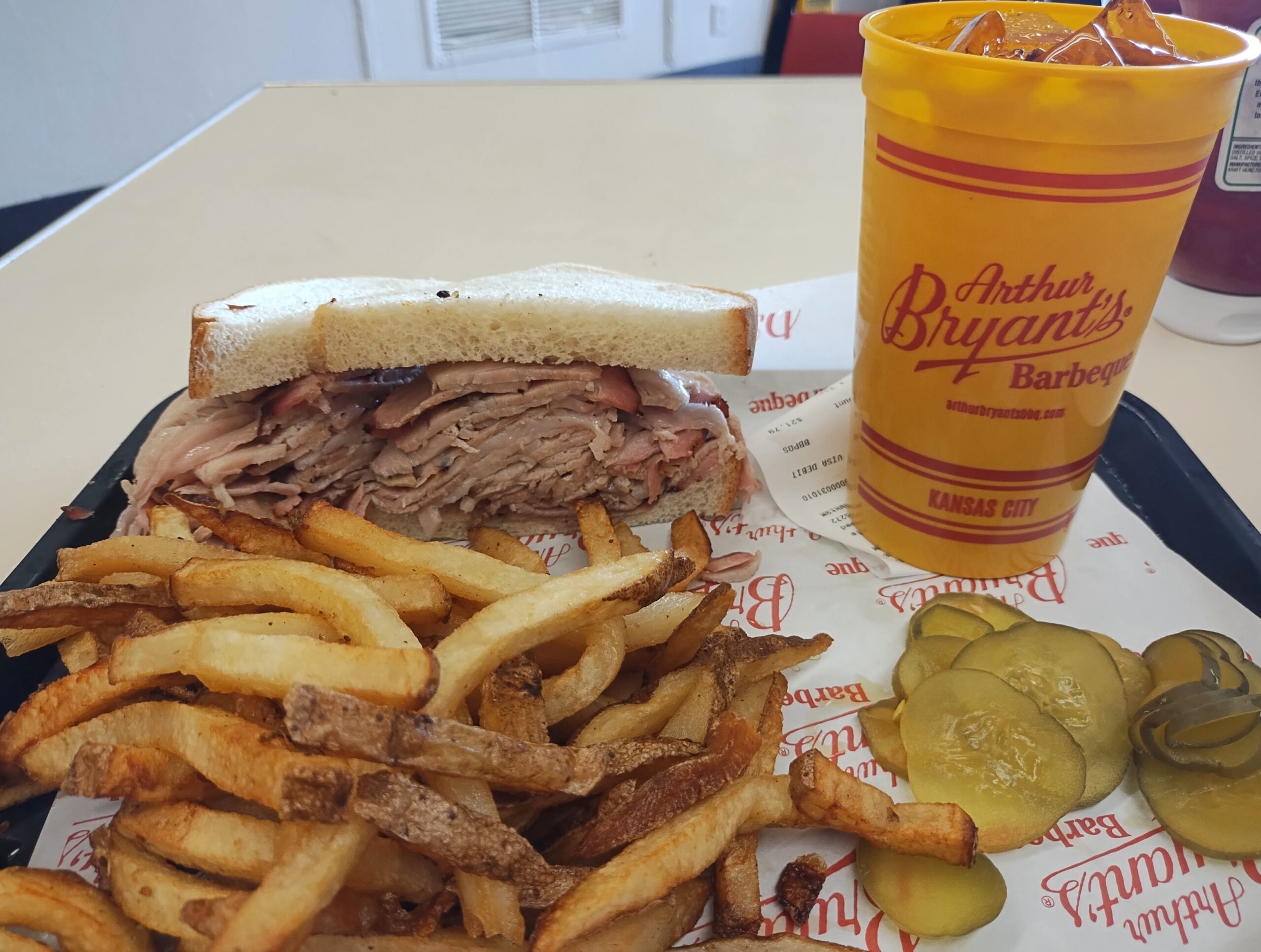
One more note about Kansas City in September. Besides the World War I Museum and Memorial, there was one more place I wanted to be during my visit: Arthur Byrant’s, for the barbecue I remembered so fondly from the late 1990s. Good ‘cue has sustained AB long after the pitmaster of that name died in 1982.
I’d go again.
After I left KC, I headed not too far northeast to the Jesse James Birthplace Museum.
The birthplace museum, like the house, isn’t a large place, but it does convey some of the life and times of the famed outlaw, with some good artifacts and reading. Posters, too. I hadn’t realized that Jesse James was a character in the very last Three Stooges theatrical release, The Outlaws is Coming (1965), but there was the poster, along with ones advertising better-known biopics or Jesse James-adjacent movies. Somehow I missed that Stooges picture on TV as an impressionable kid, though I saw the likes of The Three Stooges Meet Hercules.
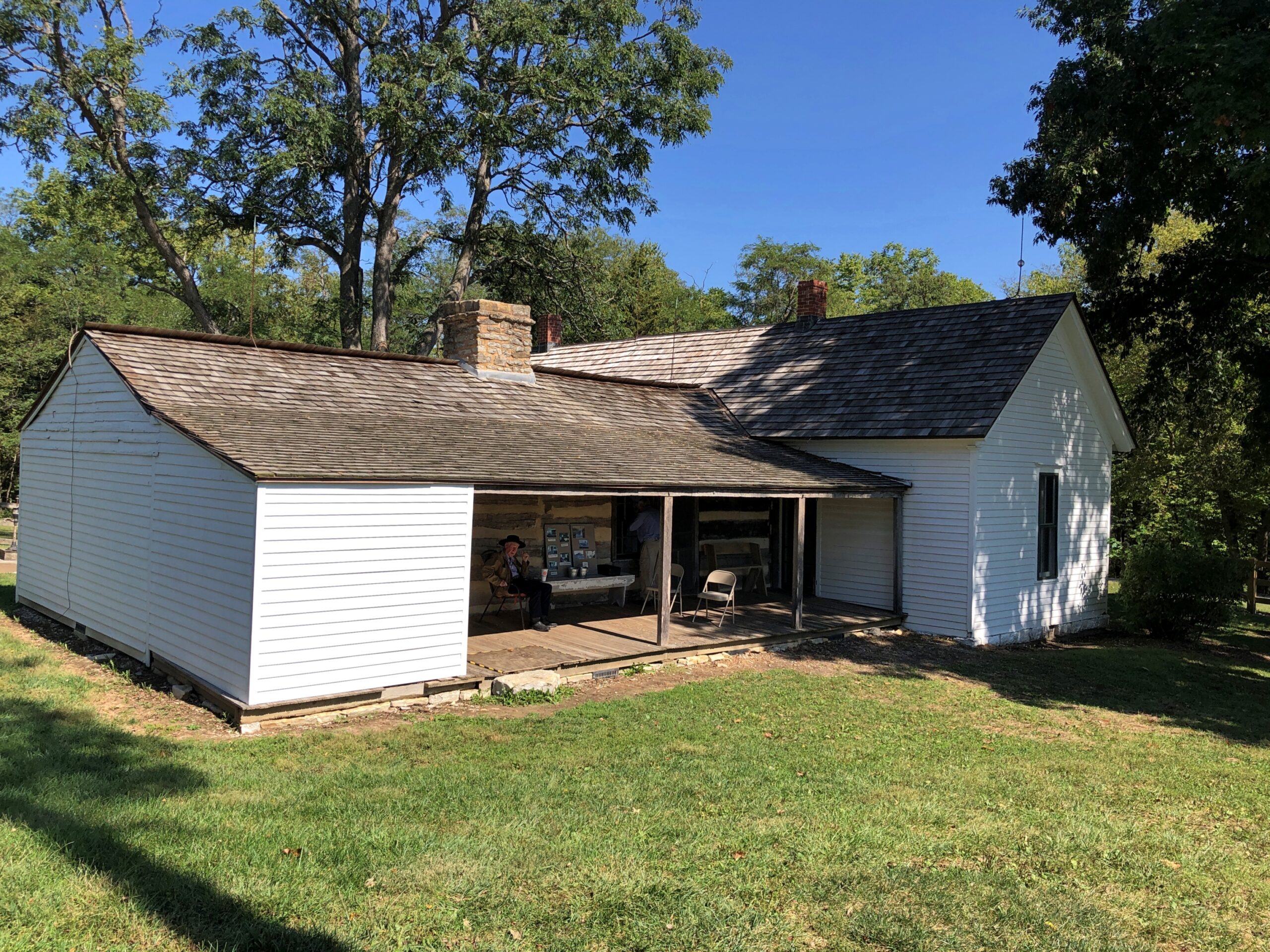
Jesse used to be buried at the homestead.
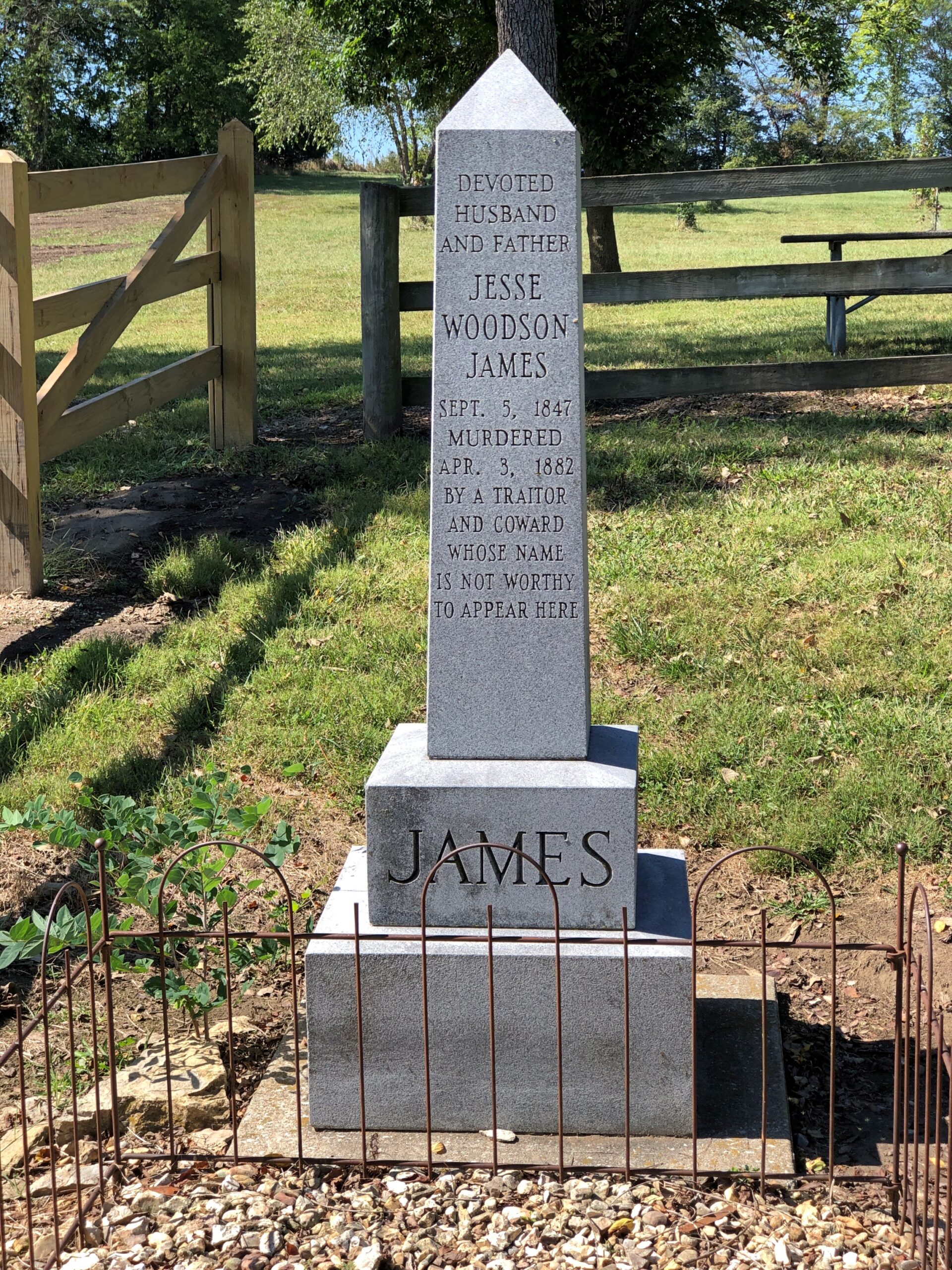
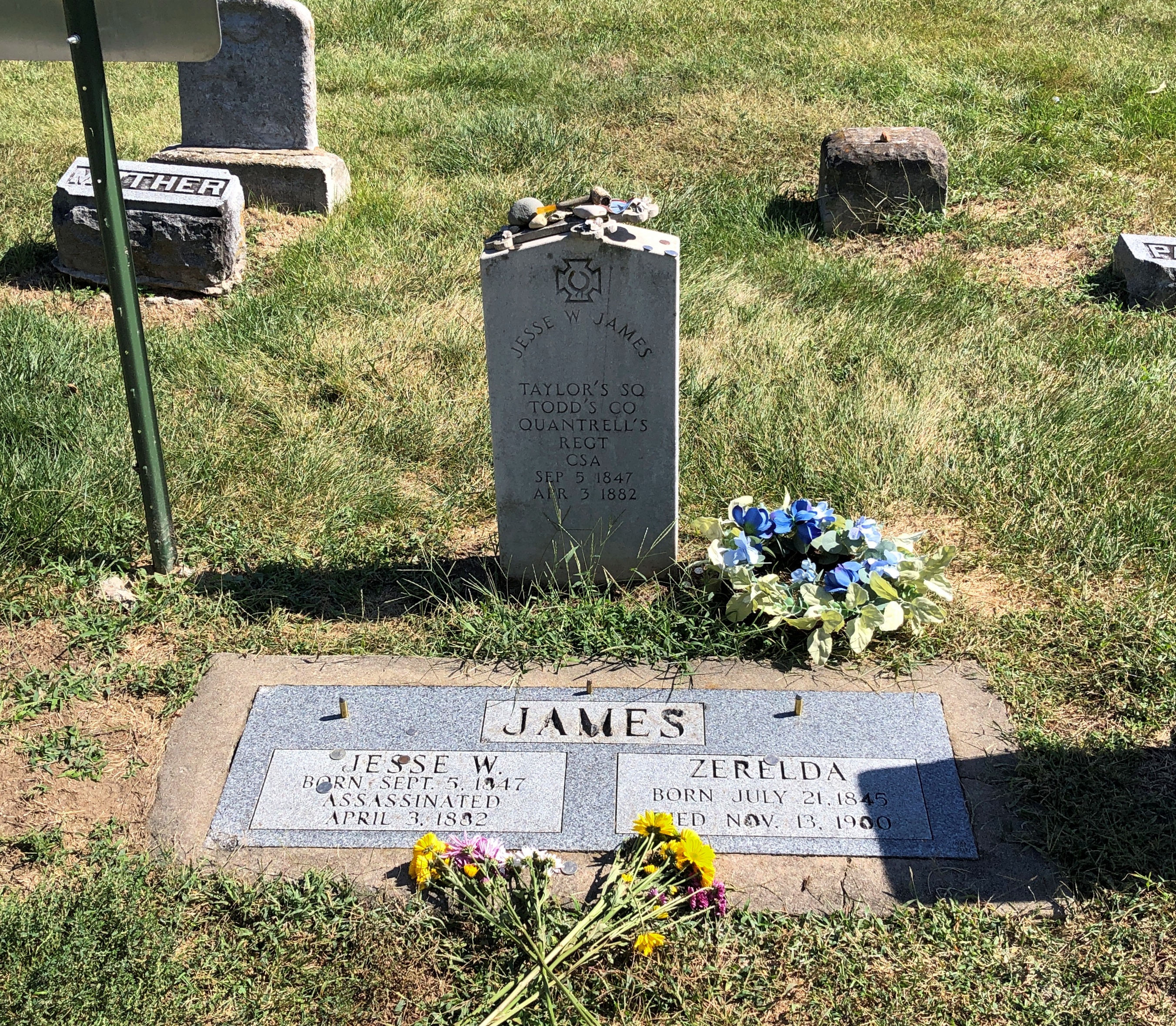
But at some point he was moved to Mount Olivet Cemetery in nearby Kearney, Missouri. Jesse receives rocks and flowers and coins from visitors 140+ years after his assassination by the Coward Robert Ford (“coward” capitalized, because the word is welded to his name in popular memory). As for Jesse, not a bad posthumous haul for a train robber.
Just as an example, do the Newton Boys get that kind of attention? No, they do not.
“The Newton boys were a criminal gang composed of brothers Willis, Joe, Jess and Wylie (Doc), who operated mostly in Texas during the 1920s,” says Texas State Historical Association. “Willis ‘Skinny’ Newton robbed over eighty banks and six trains from Texas to Canada with his brothers and other outlaws, including the single biggest train robbery in United States history. By the time they were captured, they may have stolen more money than all other outlaws at that time combined.”
I liked Mount Olivet. Got some stones of yore.
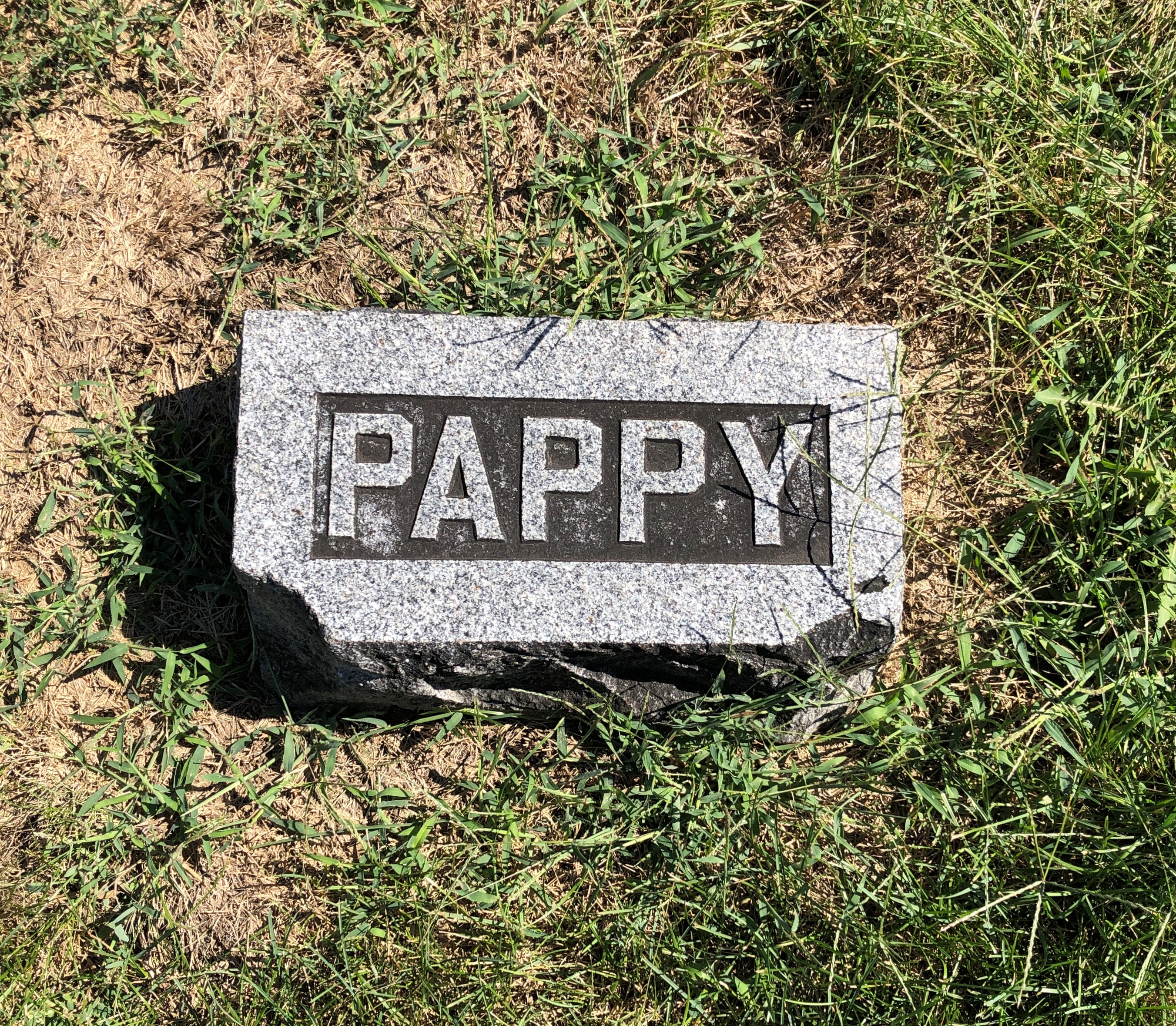
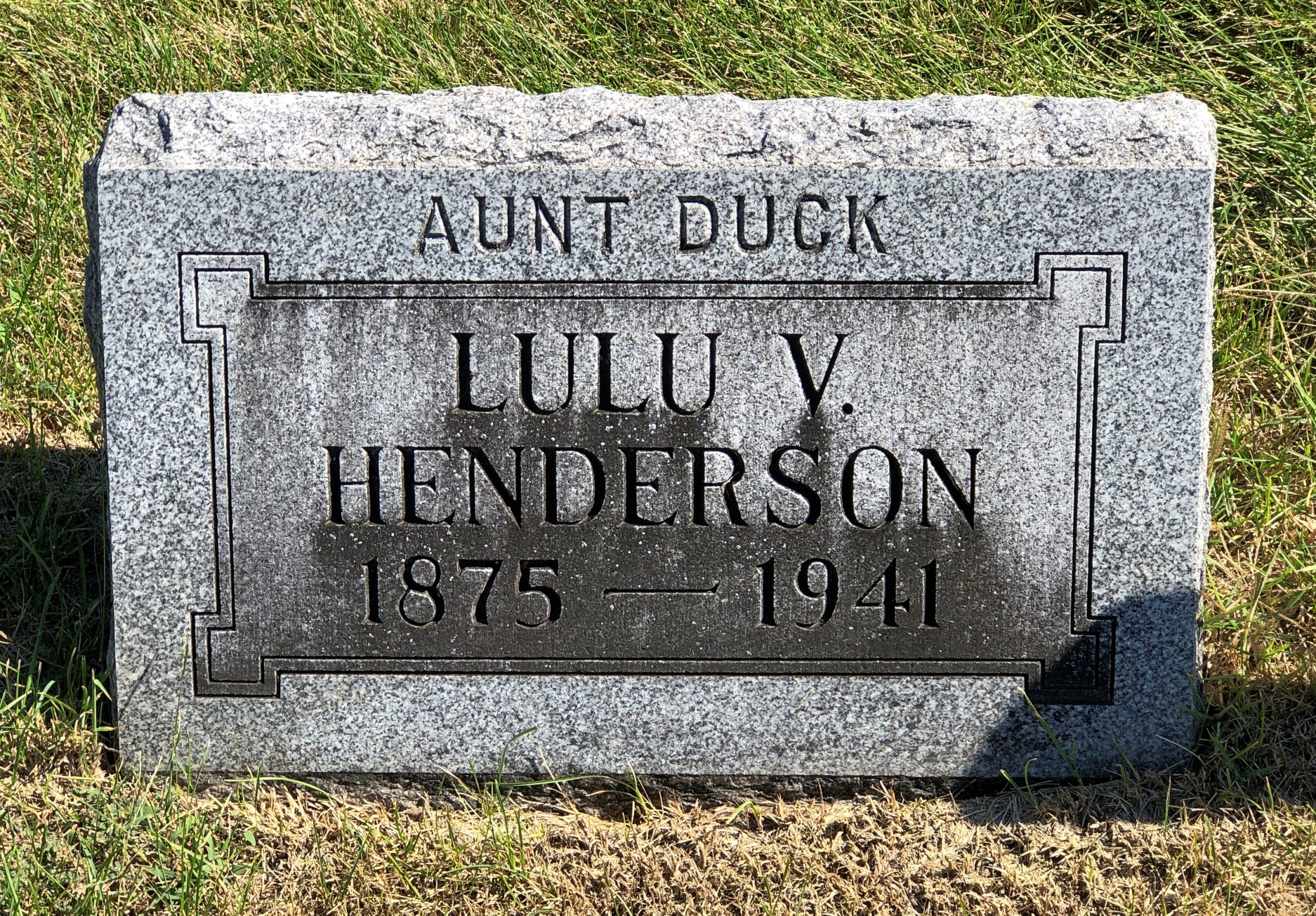
Aunt Duck had to have been a character.
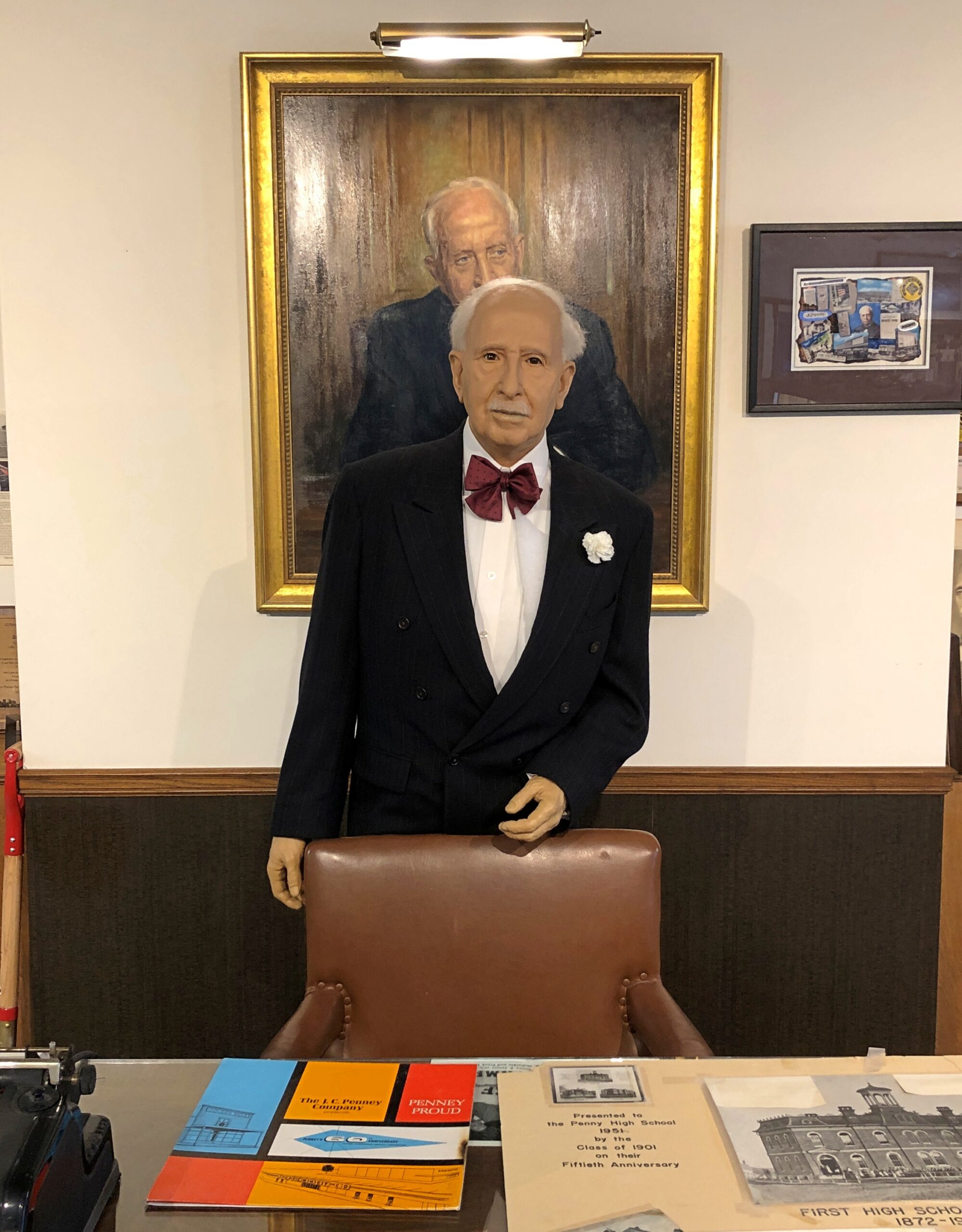
Further east, along U.S. 36 in Hamilton, Missouri, is the two-roomed JC Penney Library and Museum. The town library is in one room, the museum in the other. Most of the Penney artifacts are under glass. A wax JC Penney stands in front of a portrait of the department store mogul.
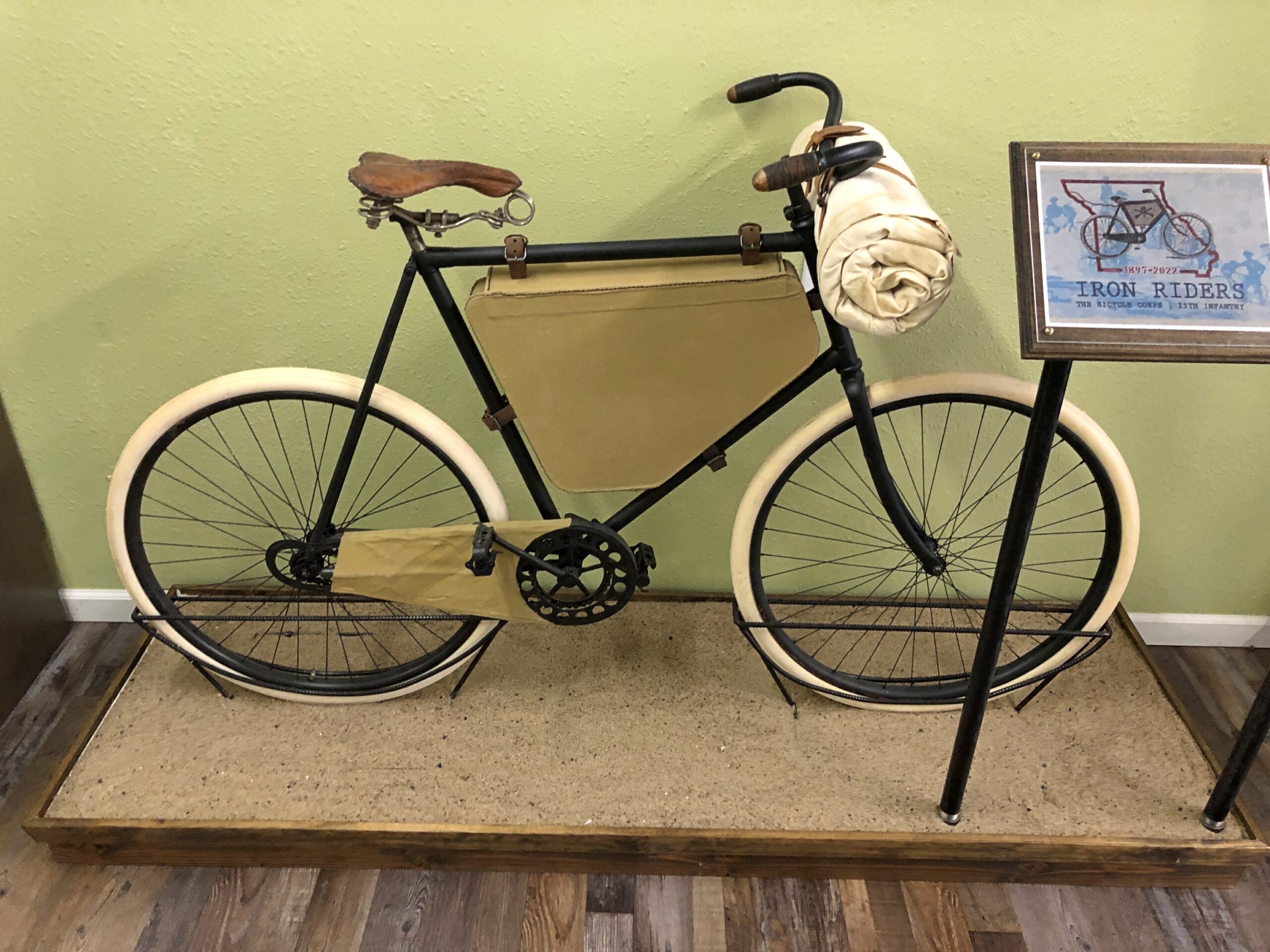
In Laclede, Missouri, is the Gen. John J. Pershing Boyhood Home State Historic Site. A fine museum about the General of the Armies, including an exhibit on something unknown to me, the Twenty-Fifth Infantry Bicycle Corps — the Iron Riders. The Army tested long-distance bicycling in 1897 as a strategy for troop movement, with the corps riding from Missoula, Montana to St. Louis. Pershing wasn’t involved in that effort, but it did happen during his time in the military. Quite a story. Deserves to be better known.
One the last day of my driving, I didn’t want to stop for much, but I did spend a while in Nauvoo, Illinois.
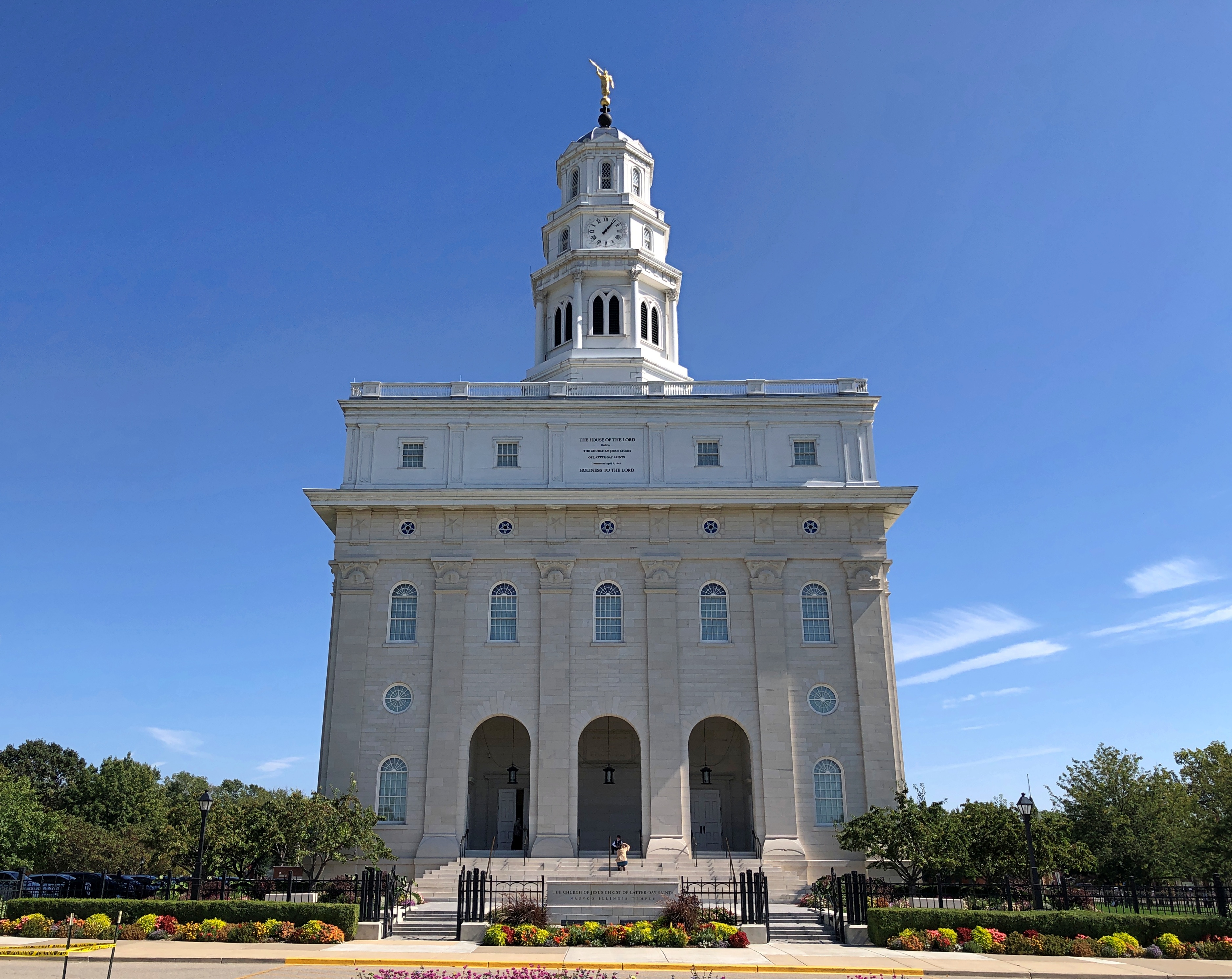
There’s a LDS temple there now. It wasn’t the last time I came this way, in 1997. I couldn’t go in, of course. For that you’d have to join the club.
As a kid, that is as a kid in the late ’60s and early ’70s, I took an unusual interest in WWI. My grandfather, my mother’s father, had been with U.S. Army Corps of Engineers in France, but it was more than that, since he was gone by the time I could remember, and I only heard bits and pieces about his service from family members who knew him. Some of his gear was still around, such as a bent-up canteen and some binoculars, and a panoramic photo of his regiment, but that was about it.
My interest was more likely sparked by The American Heritage History of World War I, a book we had around the house, along with the Civil War and WWII titles by the same publisher. The WWI volume, a weighty tome lavishly illustrated, had such chapter headings as When the Lights Went Out, Appointment at the Marne, Deadlock, Ordeal of Nations, Crisis in the Allied Camp, Enter the Yanks and Eleventh Hour. I spent quality time with that book.
Just as important, there was a companion record to go with the book: World War I, Historic Music and Voices. I listened to it many times, fascinated by the music and voices from an age that seemed to have nothing to do with the time and place I found myself. That was an illusion of youth. Growing up in the 20th century meant you were in the shadow of that war, know it or not. I’d argue that’s still true. Anyway, I ended up knowing such songs as “Over There,” “It’s a Long Way to Tipperary,” “Keep the Home Fires Burning,” and even “K-K-K-Katy.” all of which were mostly unknown to my contemporaries.
I’m glad to report that the record is available on line. The narrator, Charles Collingwood, had just the right earnest, commanding voice for the record. It was years before I knew anything else about him – his time covering WWII for radio, especially, but also as a TV journalist for CBS.
Like many boyhood interests, WWI carried over into adulthood, faded but never quite gone. I knew, for instance, of the shameful neglect when it came to memorializing the war in the U.S., especially in Washington, DC. The first time I ever visited the National Mall, in 1982, I noticed a (relatively) small memorial, the District of Columbia War Memorial, off to the side at some distance, forlorn and badly aged, though I understand it was finally renovated in the 2010s. The memorial honors the “residents and citizens” of DC who performed military service in the Great War.
There was nothing else in the nation’s capital to honor anyone else in that war, not until National World War I Memorial was completed last year, and even it isn’t on the National Mall.
I haven’t seen the new DC memorial, though I’m sure it’s a worthwhile effort. Still, for a memorial really worthy of the event, go to Kansas City, Missouri.
The National World War I Museum and Memorial started as a local memorial soon after the war ended. Long enough ago that Vice President Coolidge was at the groundbreaking, as was Gen. Pershing and a number of other Allied military luminaries. Local, perhaps, but with the heft of a national memorial, designed by Harold Van Buren Magonigle, who was known for his memorial work.
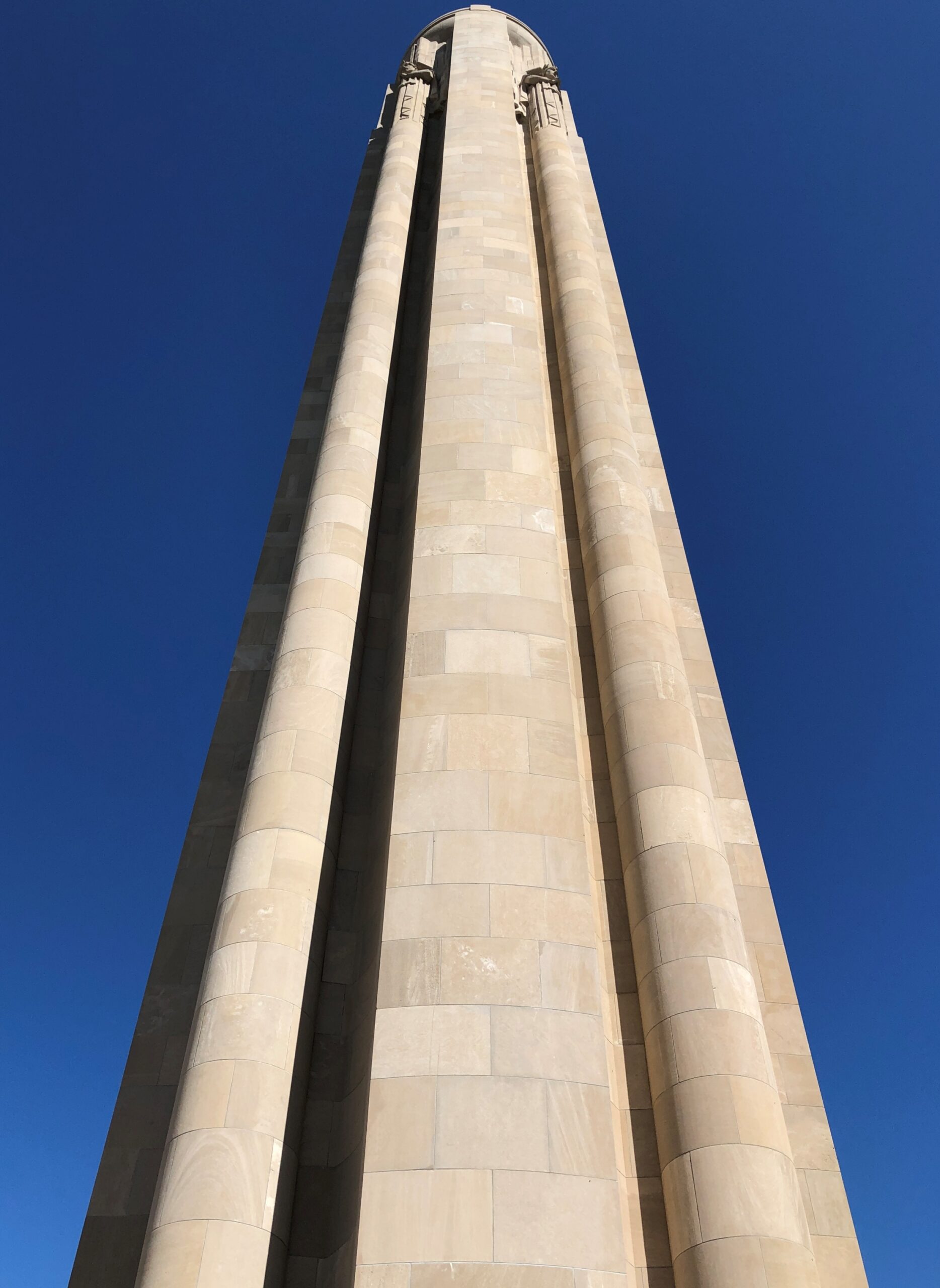
Magonigle’s limestone tower soars.
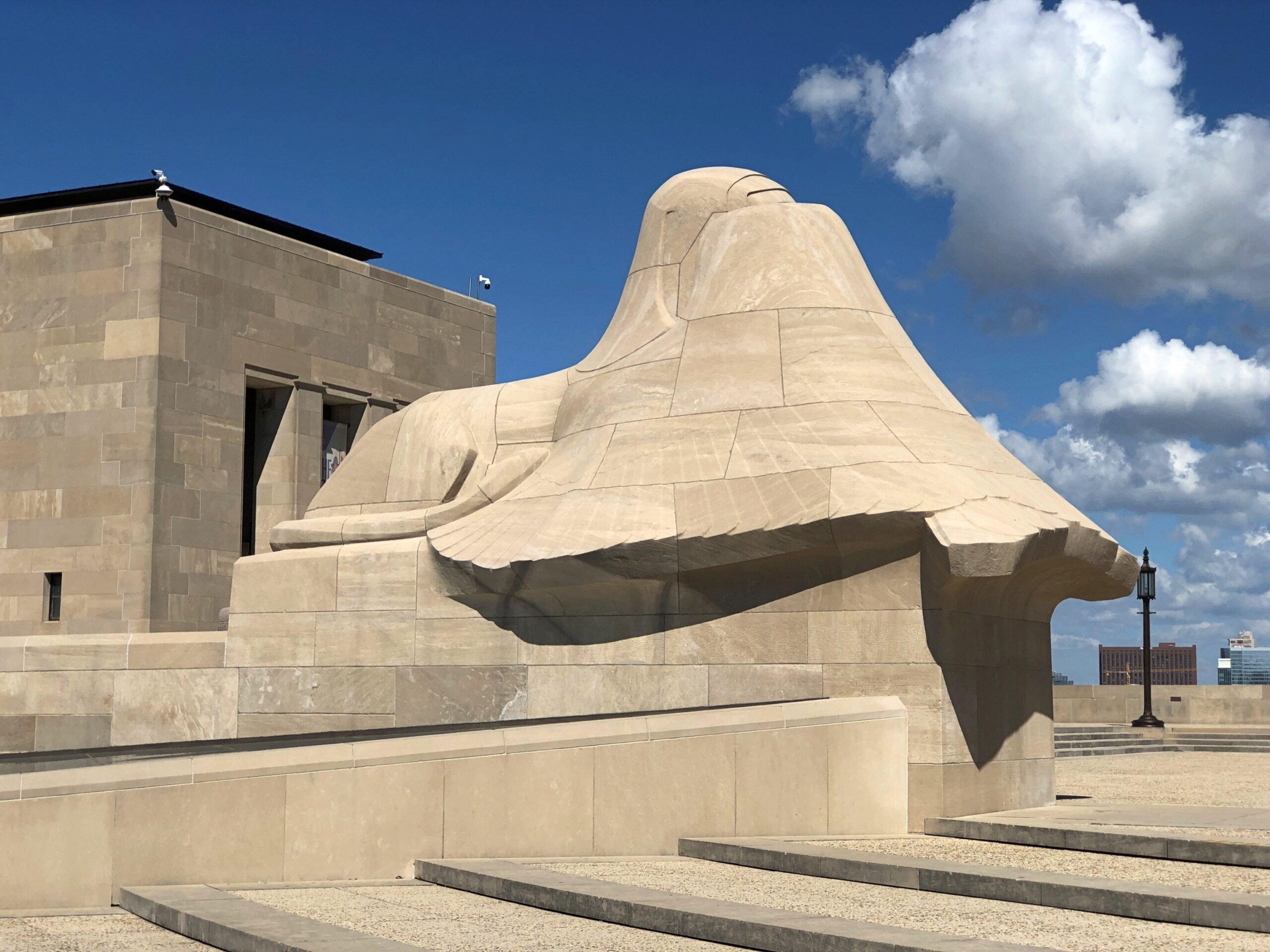
Sphinxes crouch near the shaft, supposedly covering their eyes from the horrors of war.
Naturally the memorial went through a period of neglect, and the museum came later, as the site evolved from a local to a national memorial, finally acknowledged as such by Congress in 2004. I’m glad to report that now the memorial stands renewed, and the museum, built under the memorial, is first rate. Beginning at the entrance: One enters the museum over a glass bridge that crosses a field of 9,000 red poppies, each representing 1,000 combatant deaths during the war.
As usual with any good museum, there is more than you can absorb in one go, organized in two wings: the war before U.S. entry, and after. All together, it holds more than 350,000 items, a collection comparable with the likes of the Imperial War Museum or the Musée de la Grande Guerre du pays de Meaux.
The museum’s scope is wide ranging as well, including not just the U.S. part, but perspectives and memories from people from all of the major participating nations, and some smaller ones. There was even a small display, including a map that explained things well, about the Japanese participation in the war. Japan joined the Allied side early in the game, taking the opportunity to kick the Germans out of China and seize Germany’s scattered possessions in the Pacific. A low cost, high-gain exercise for Japan, unlike the next war in the Pacific.
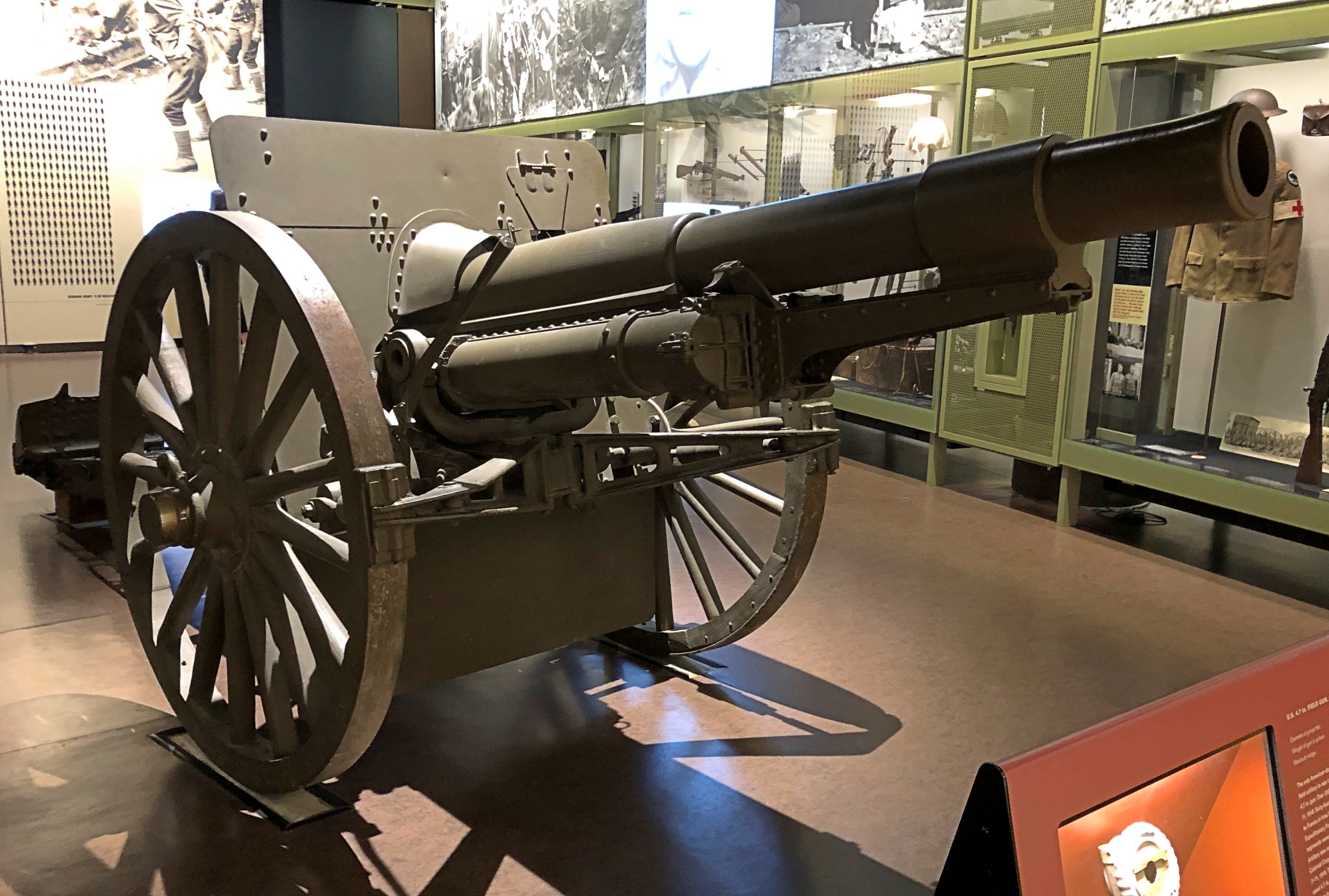
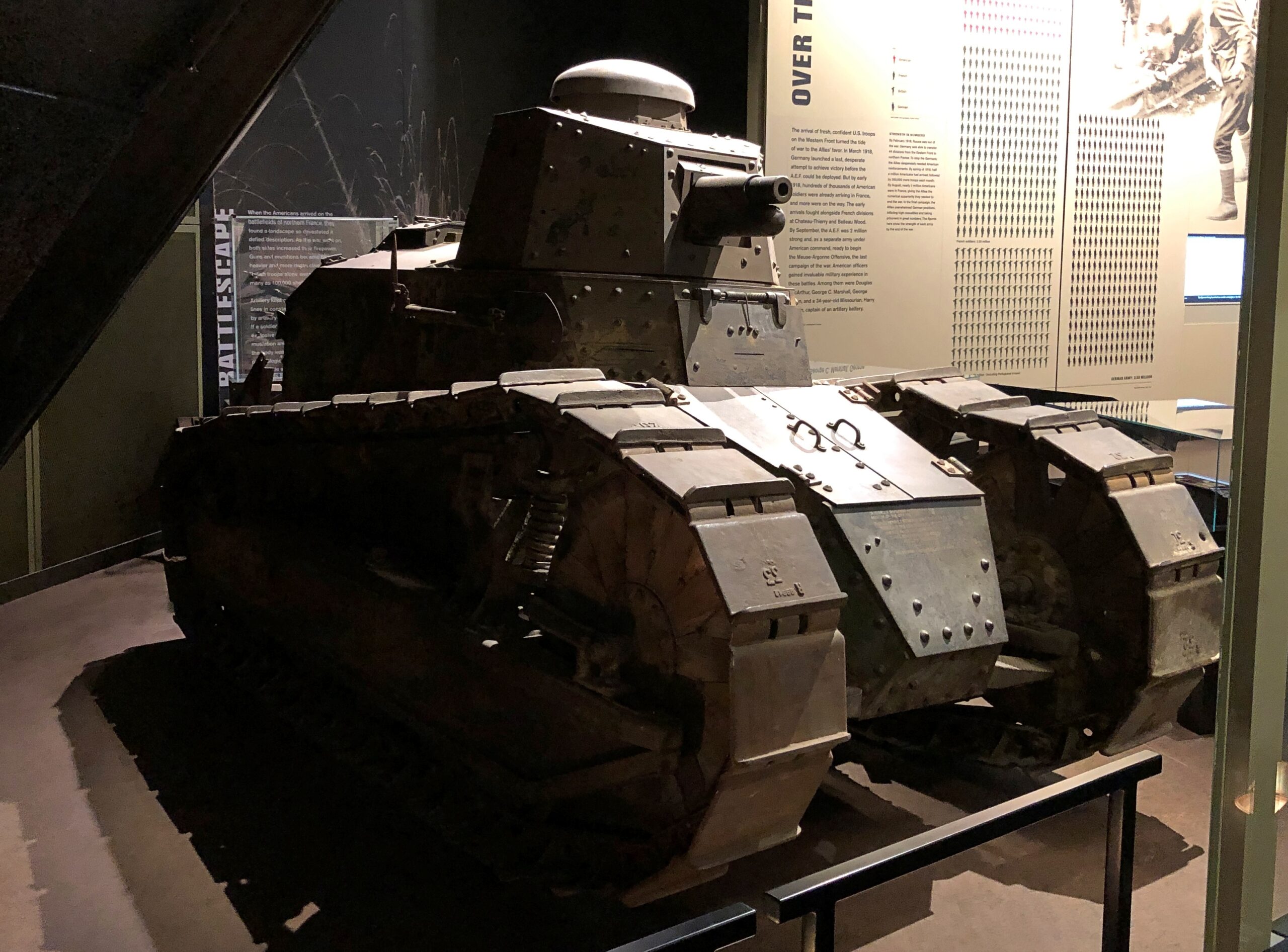
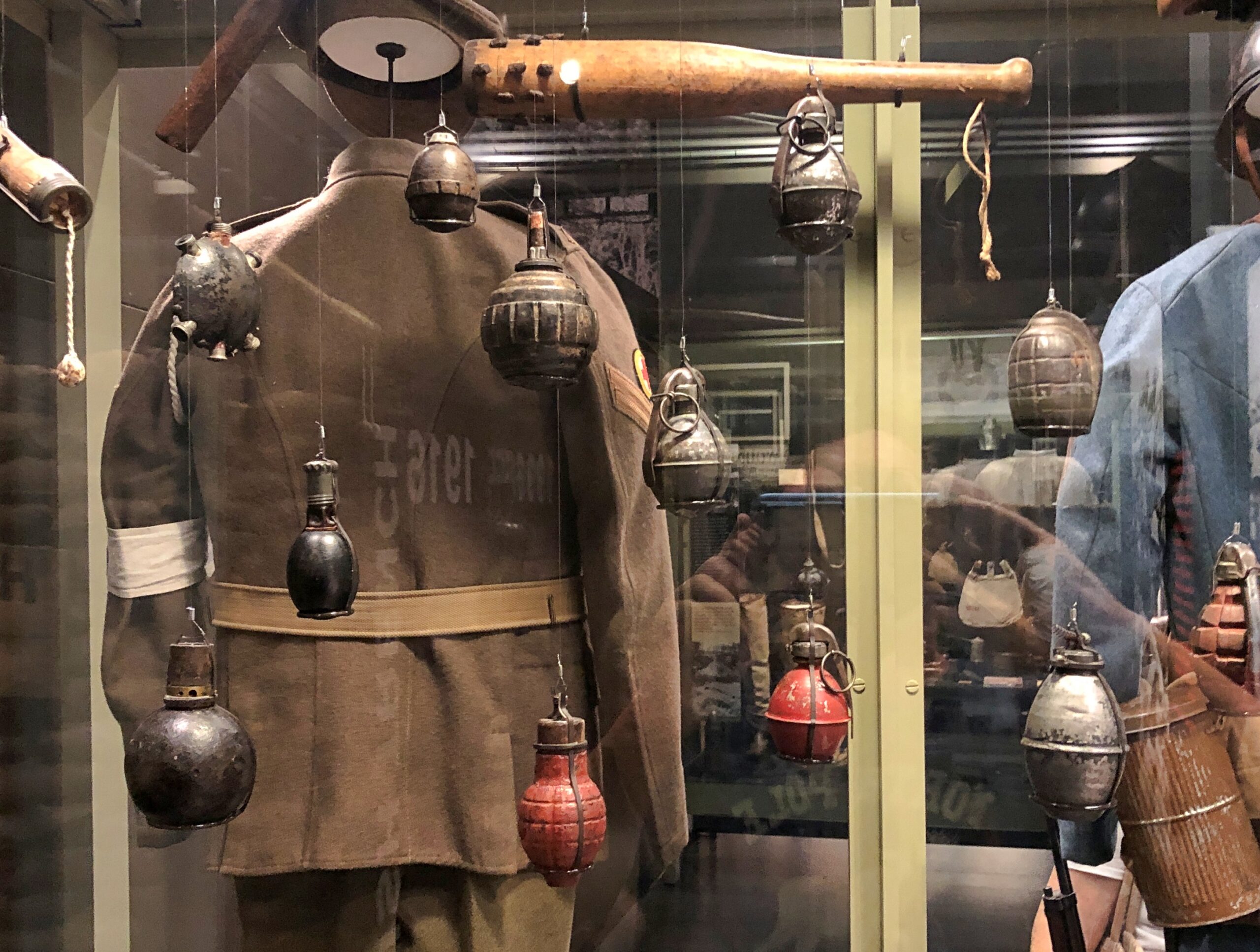
Artifacts were large and small.
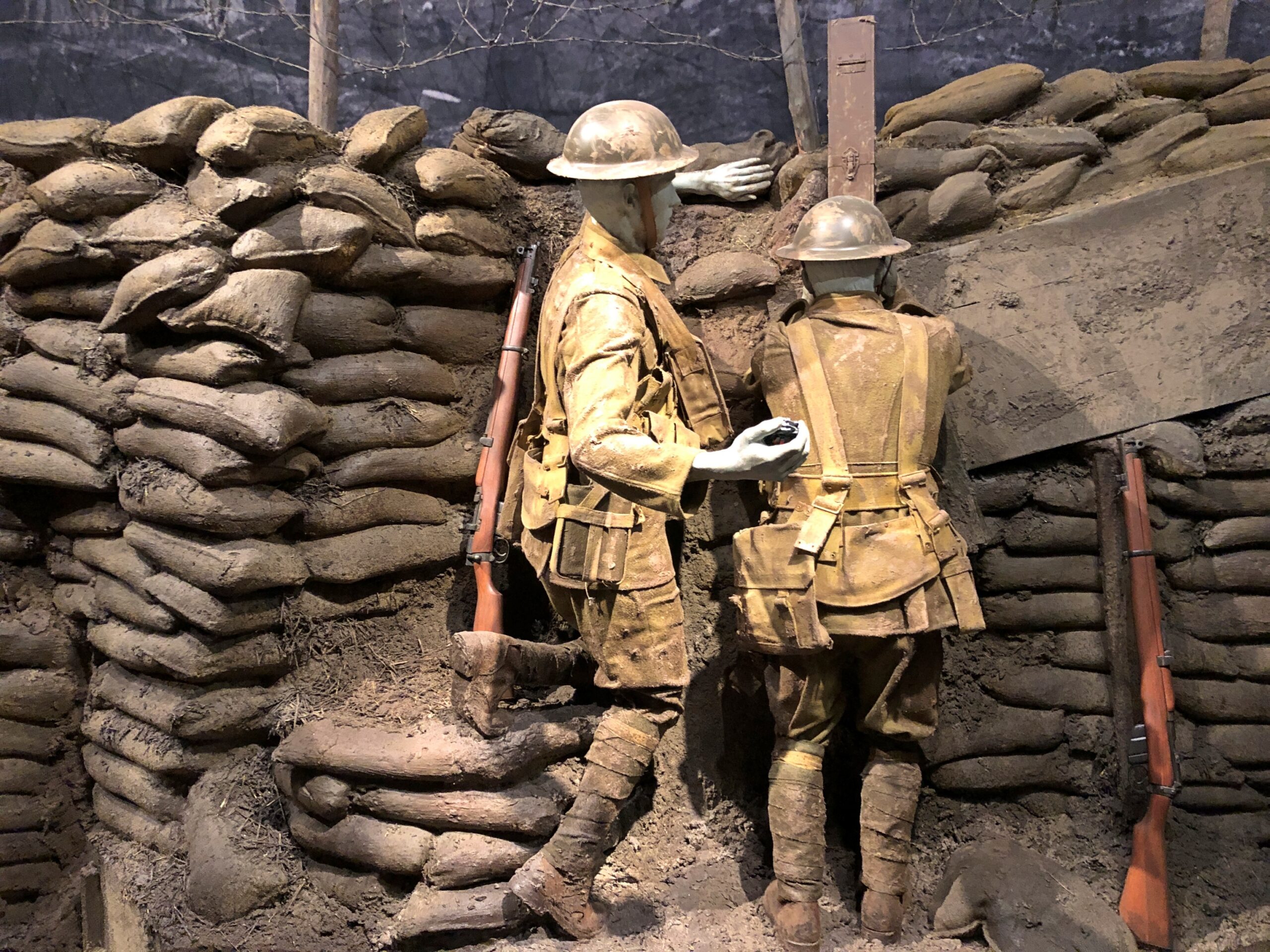
There are only a few life-sized dioramas – there are more to be found at the National WWII Museum in New Orleans – but the WWI museum did a good job of it.
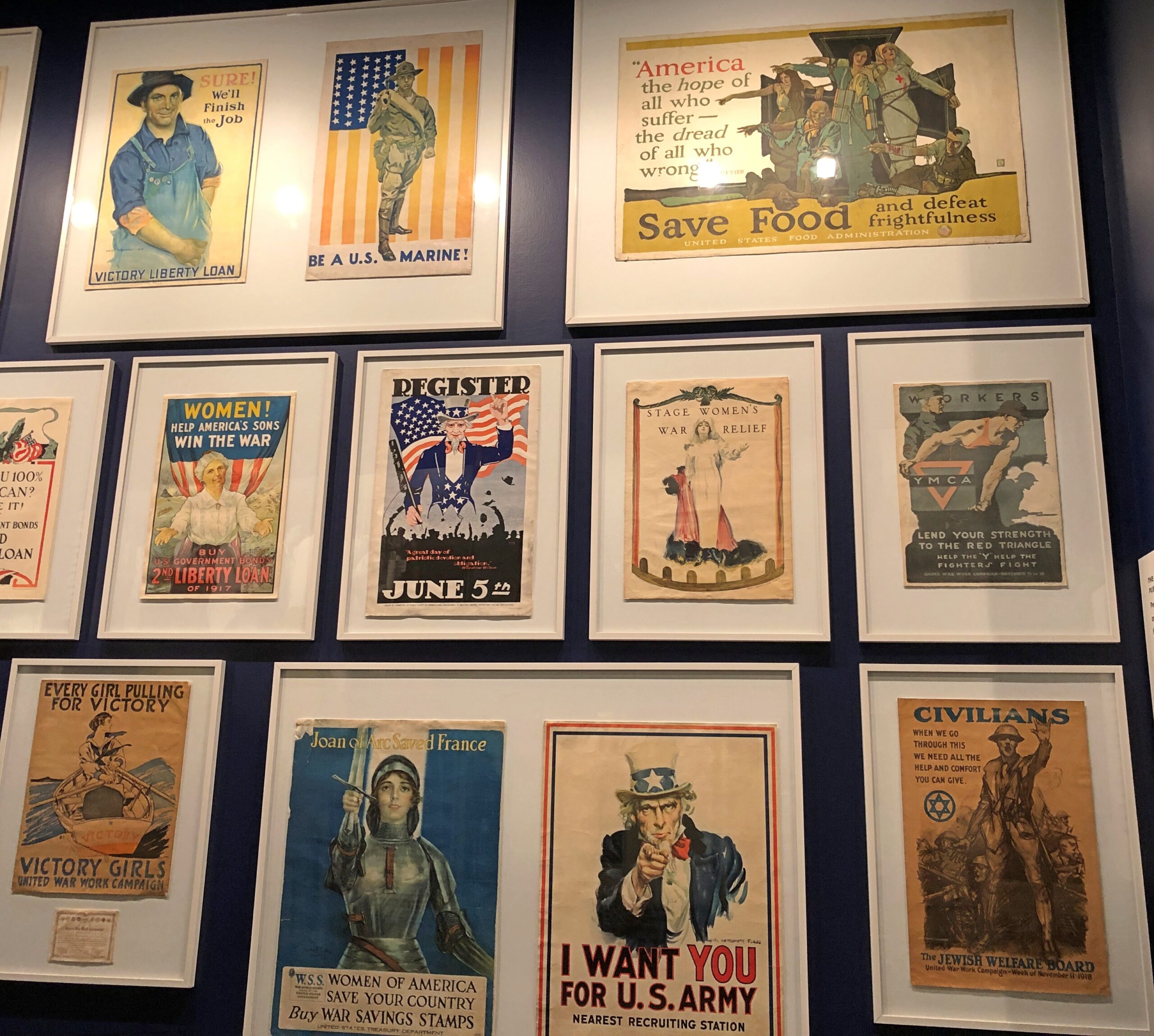
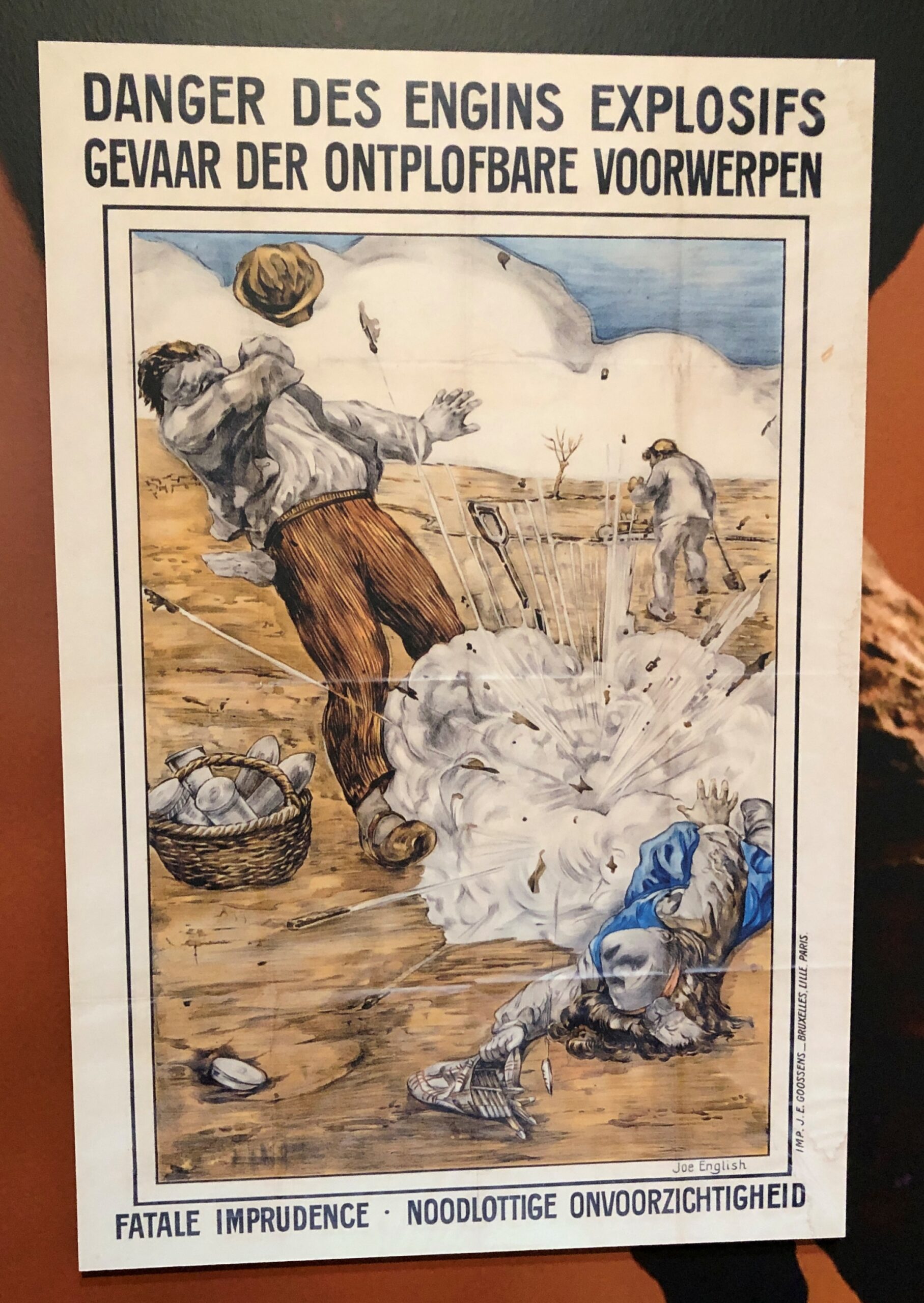
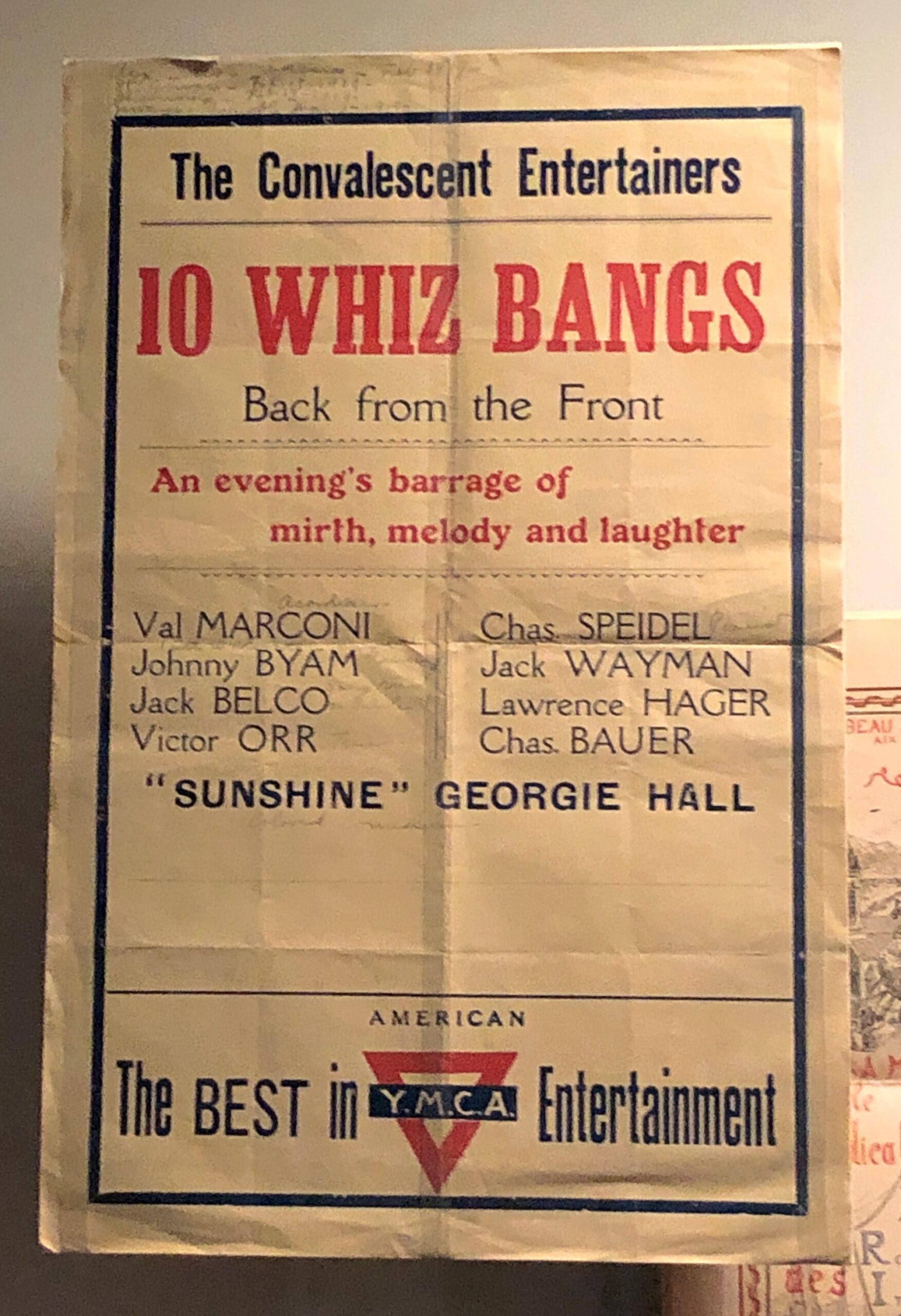
I was particularly taken with the posters. I’d never seen most of them.
The 10 Whiz Bangs, even though there are only nine names listed. Then I realized that, at least symbolically and maybe literally, the 10th man hadn’t made it home, like so many.
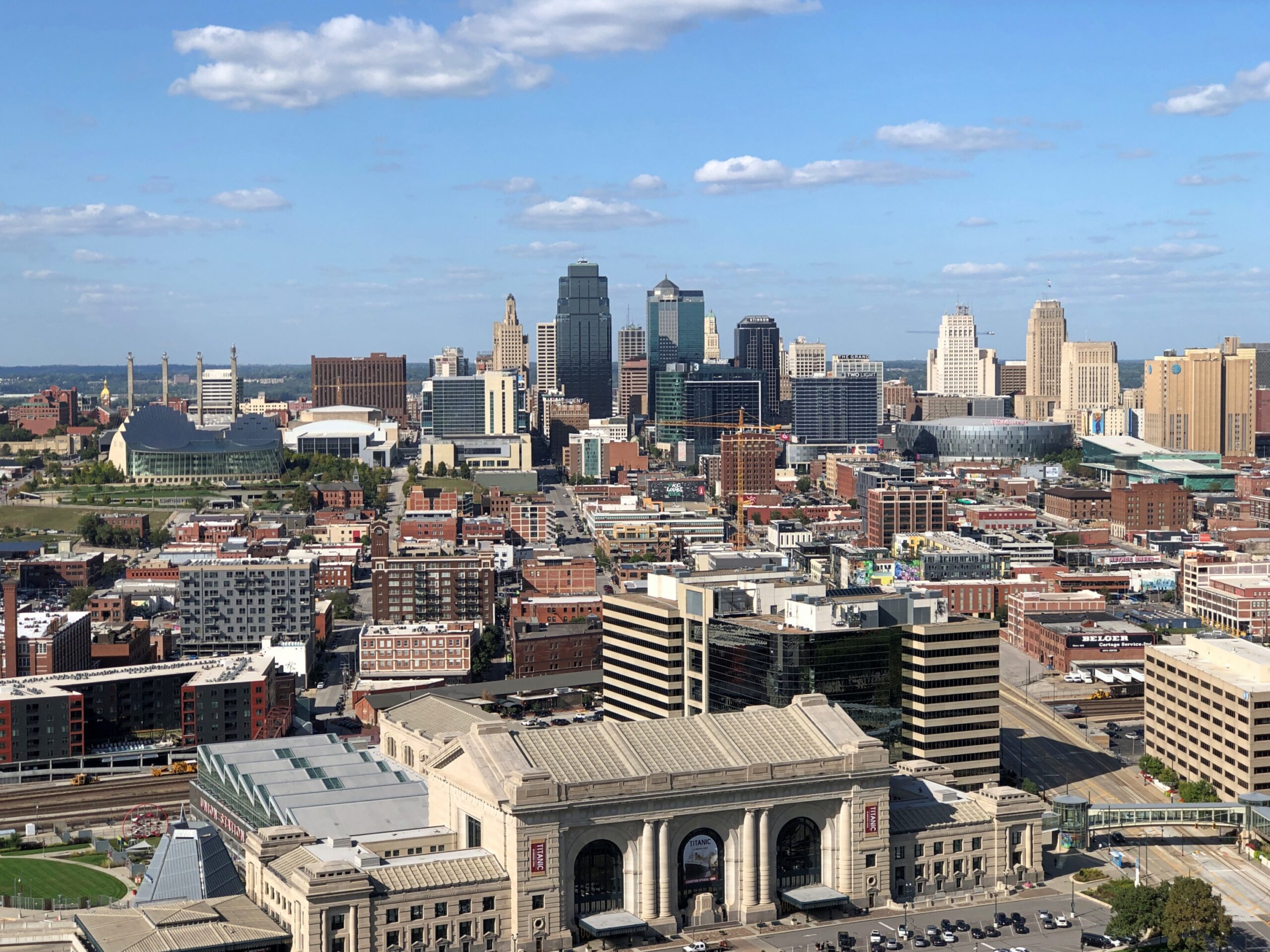
After visiting the museum, the thing to do is take the elevator to the top of the memorial, for a modest extra fee. Elevator, then iron circular stairs, actually, for an excellent view of downtown Kansas City.
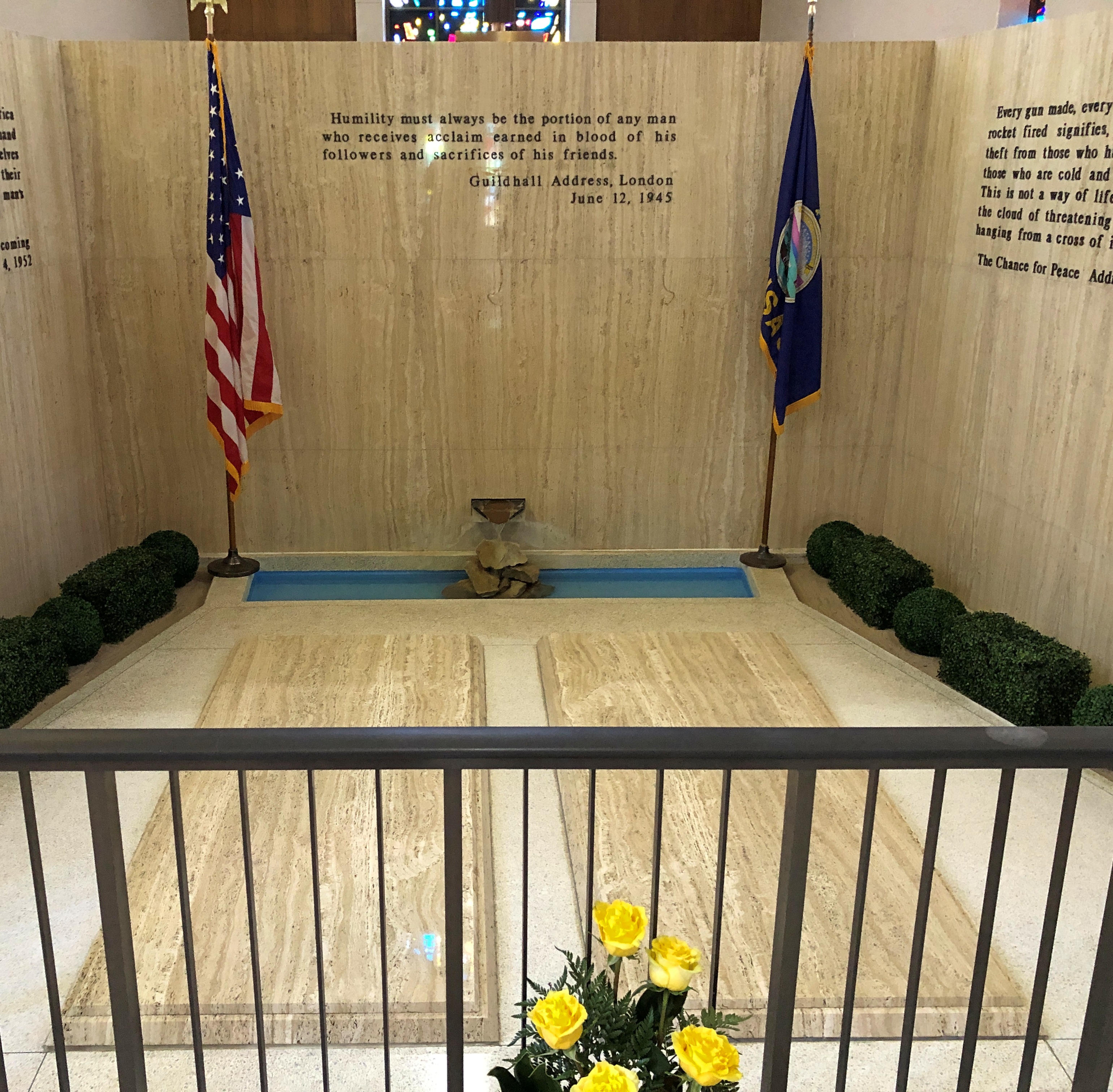
In Abilene, Kansas, not long ago, I found myself wondering, whatever happened to Manus Hand? That’s because I stood at that moment near the graves of President and Mrs. Eisenhower, Ike and Mamie.
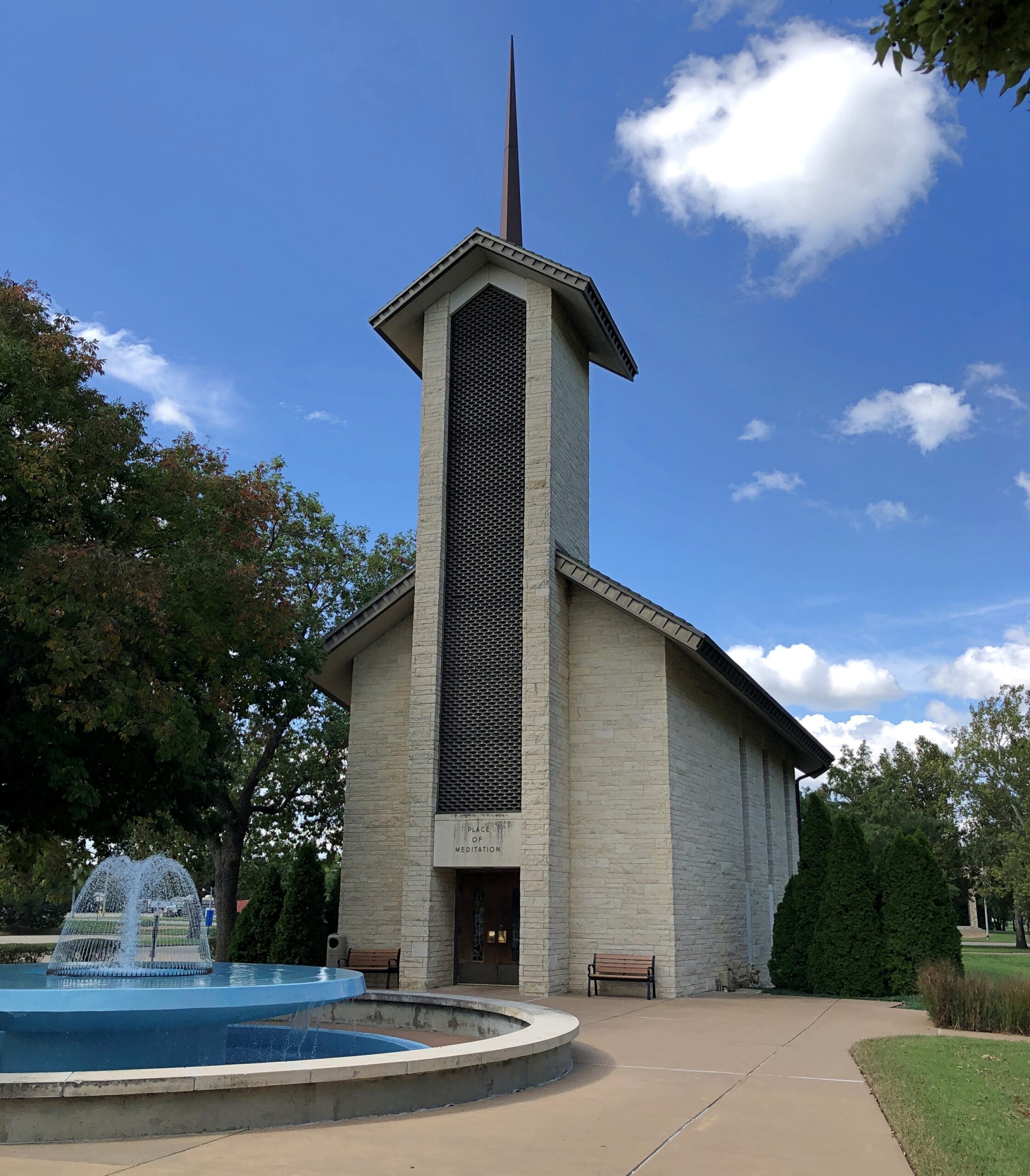
The 34th President of the United States and the First Lady repose in a chapel-like structure on the grounds of the Dwight D. Eisenhower Presidential Library, Museum and Boyhood Home in Abilene, pop. 6,400 or so, the town where the president came of age.
I’ve been told I visited before, with my family during a trip to Kansas when I was a wee lad, but I don’t remember that at all. So I count this as a new visit to a presidential sight, including a grave site, which makes 21 presidential graves all together. But for the federal shutdown in October, there would be four more at least: Adams père et fils, FDR and TR.
I thought of Manus Hand because, back in the Neolithic age of the Internet, he had a web site featuring photos of him at presidential grave sites. In my own dead presidents days, I found Hand’s site at some point. He had visited almost all of them by then, 36 by his count. His site is still in existence, without much change, except an update to note that George H.W. Bush had died (2018), but not Jimmy Carter.
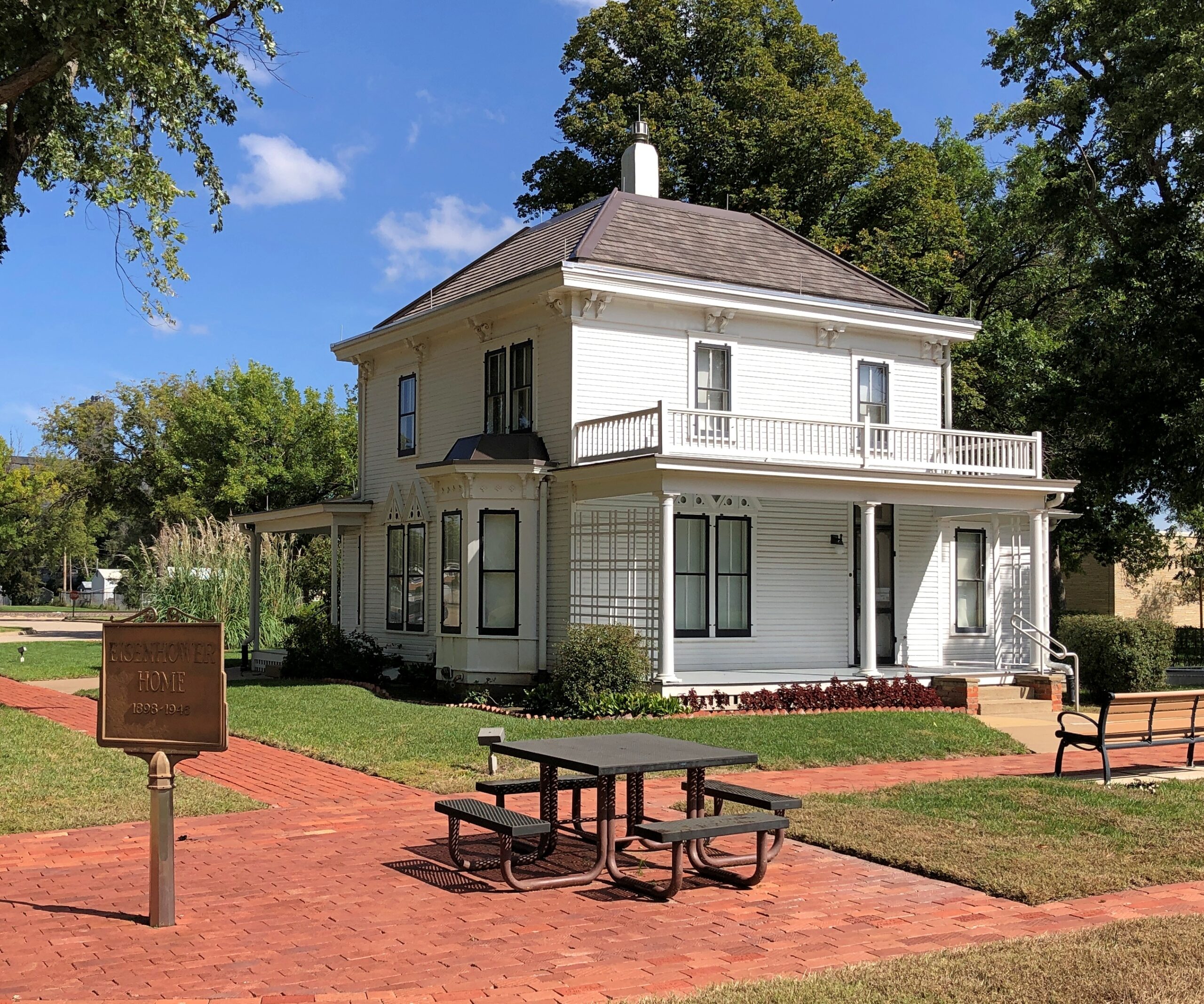
The Eisenhower Boyhood Home, moved to the site. No tours available when I came by.
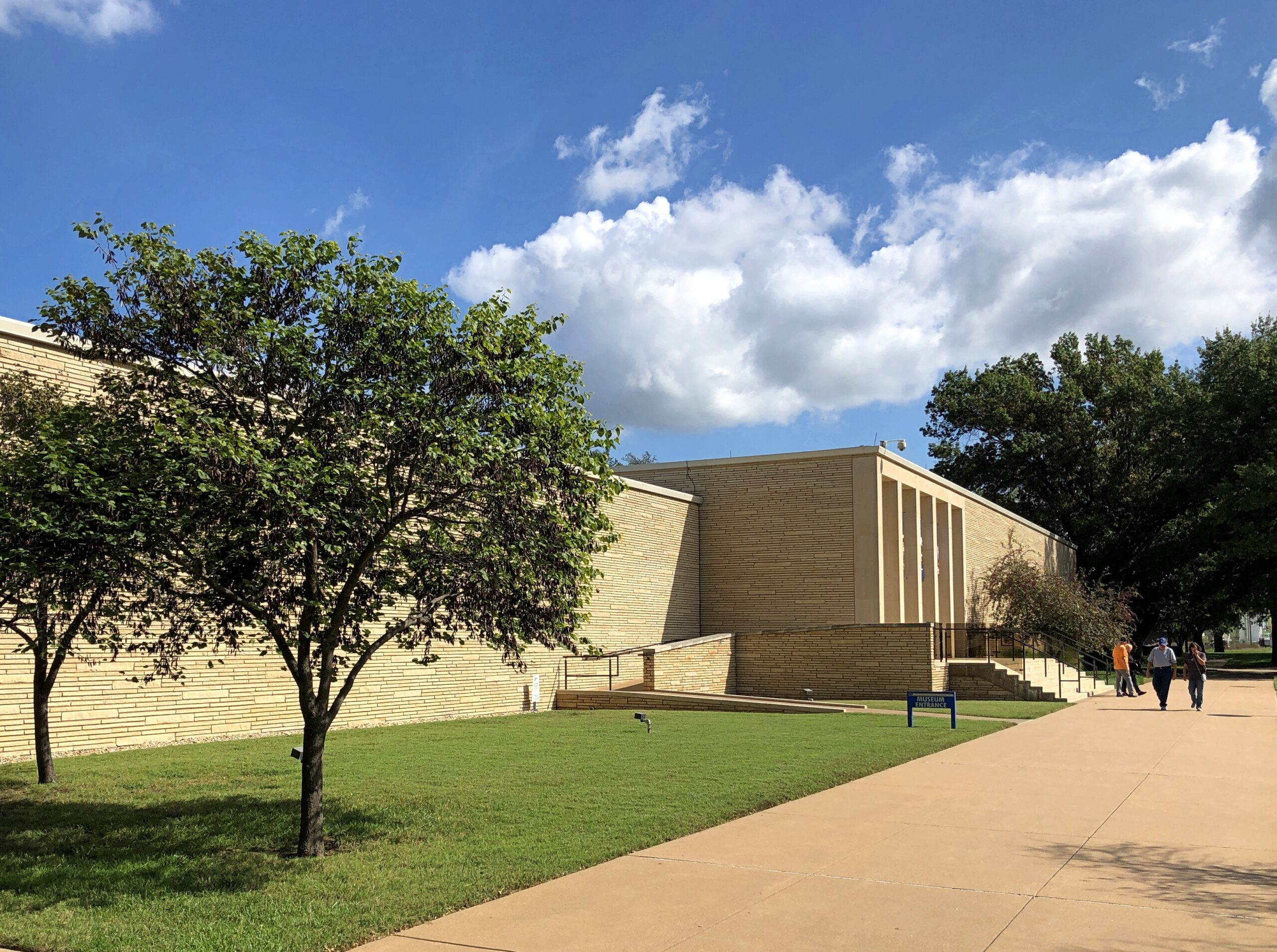
The Eisenhower Museum.
Midcentury, and what could be more fitting for Eisenhower? It’s chronologically organized: early Ike in Abilene; his Army career before WWII, including his cross-country epic; during that war and right after the war; his presidency and post-presidency, and a gallery about Mamie. Well organized, interesting artifacts, but (for me) none more interesting than a titanium sphere.
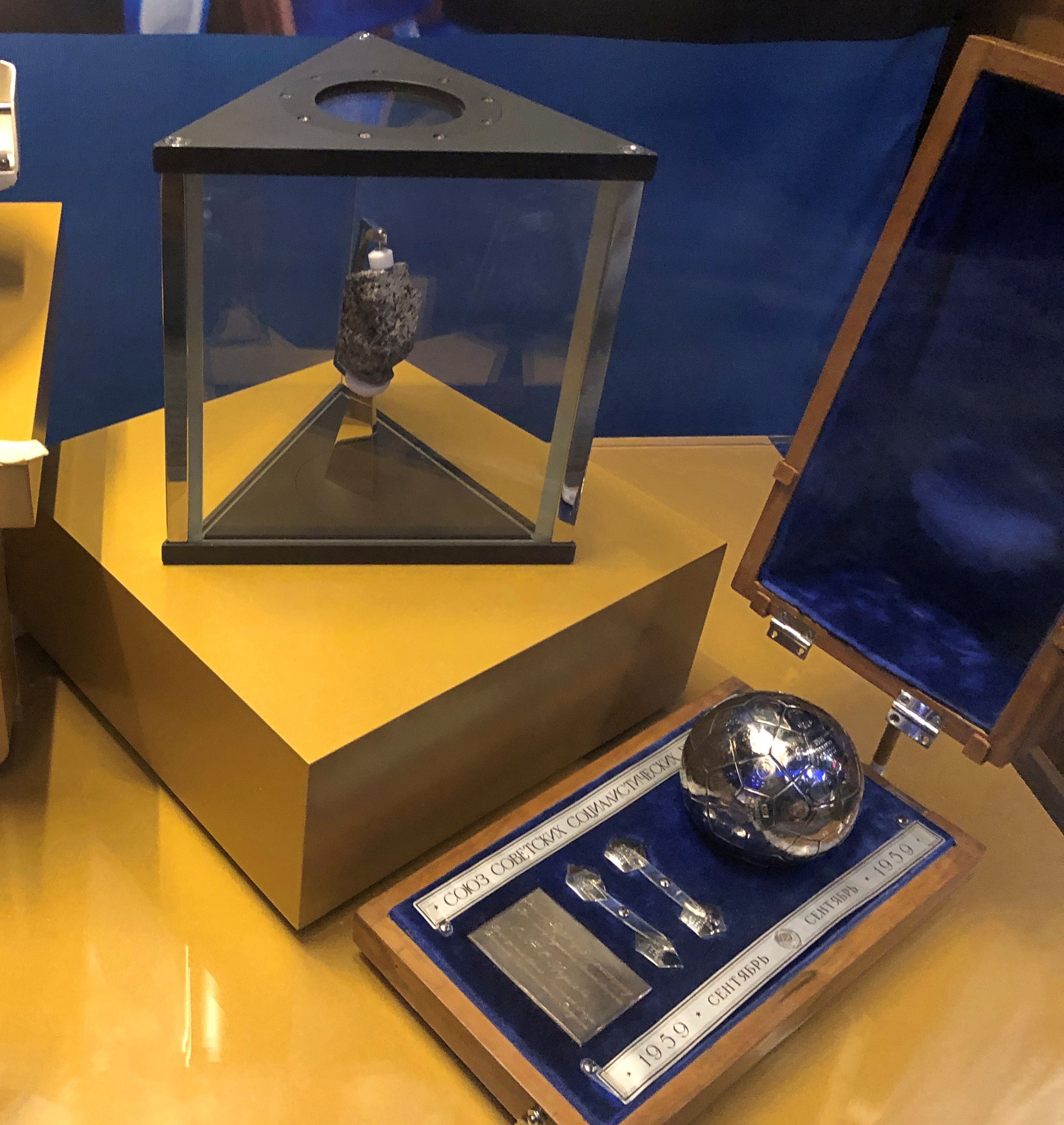
The sphere is a replica of the pennant sphere that traveled to the Moon in 1959 aboard the Soviet spacecraft Luna 2, which was the first manmade object to reach the lunar surface, or any celestial body. The sphere was a detail that I remembered from long-ago reading about space exploration. I didn’t realize one existed any more, even in replica form. Khrushchev presented it to Eisenhower during his famed visit to the U.S. that year (Khrushchev’s due at Idlewild!).
Luna 2 carried two spheres filled with liquid and an explosive charge, designed to burst apart on impact and scatter pentagonal pennants, the Moon Registry says. The pennants were imprinted with: 1) Sentiabr 1959 (September 1959); CCCP… ; and the state seal of the USSR, a wreath of grain around the hammer and sickle. It is theorized that the medallions vaporized on impact.
Russia is still shooting Luna missions to the Moon. The most recent, Luna 25, crashed near the lunar south pole in 2023 but, unlike Luna 2, not on purpose. Oops. More about the many pennants the Soviets sent into space is here. On display next to the sphere is a lunar rock, which must have been a posthumous gift, since Ike didn’t live quite long enough to benefit from astronauts rock-gathering on the surface, though he was still alive during Apollo 7, 8 and 9.
A close second excellent artifact was a dagger Marshal Zhukov presented to General Eisenhower on the occasion of the defeat of Germany, a good-looking blade with an ivory hilt and gold decorations. I picture an exuberant Zhukov, as in The Death of Stalin, handing the knife to Ike and saying something earthy. Apparently the two, Ike and Zuke, got along well in the early months of the joint occupation of Germany. Differences aside, they had job experience in common. I don’t remember seeing anything about that in the museum, but there was a lot of material, so that could have been easily missed. That and any reference to Kay Summersby.
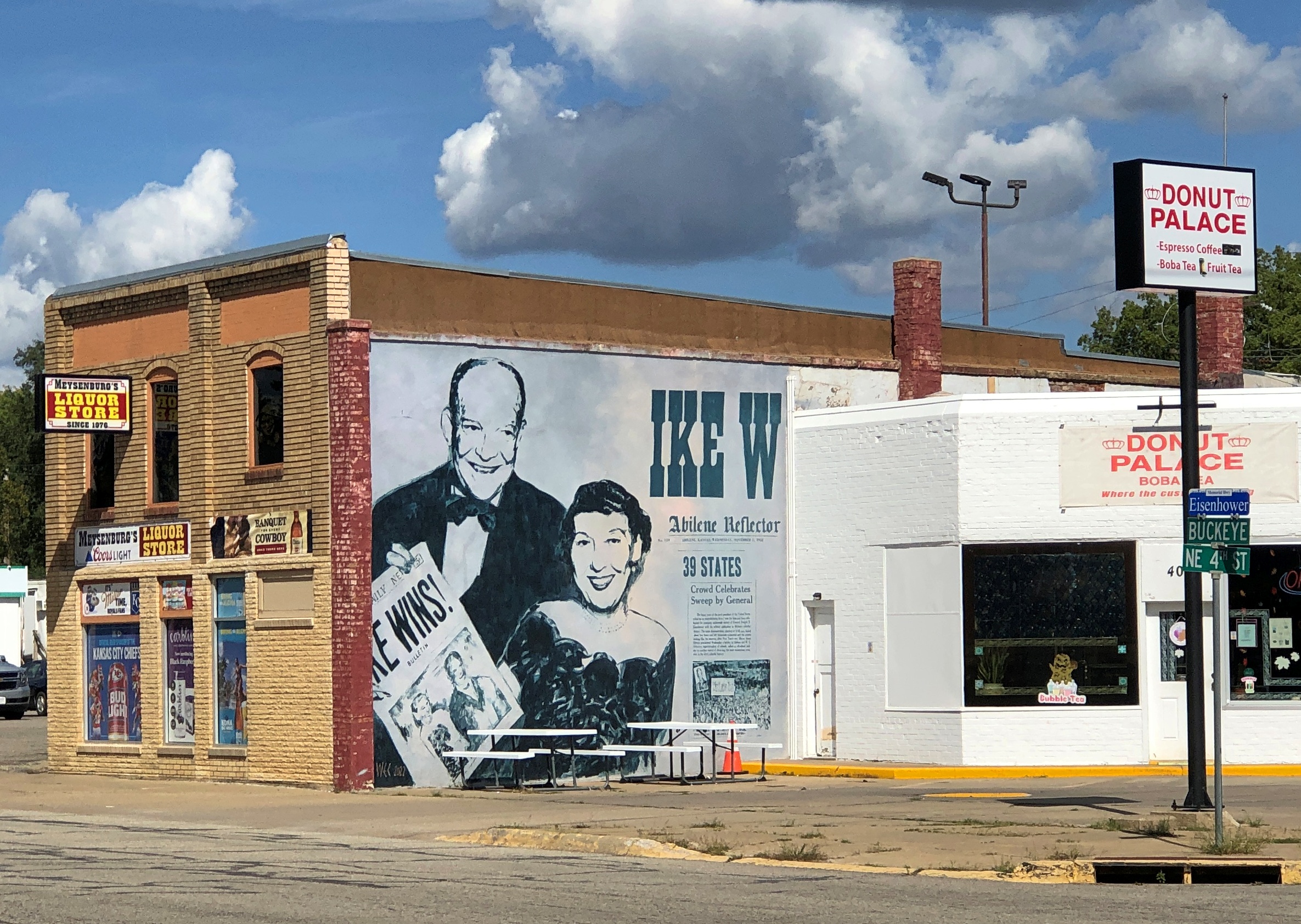
It was hot that day, September 24, but after visiting the museum, I took a look around Abilene anyway. The town hasn’t forgotten its most famous native son. Also, Donut Palace was closed.
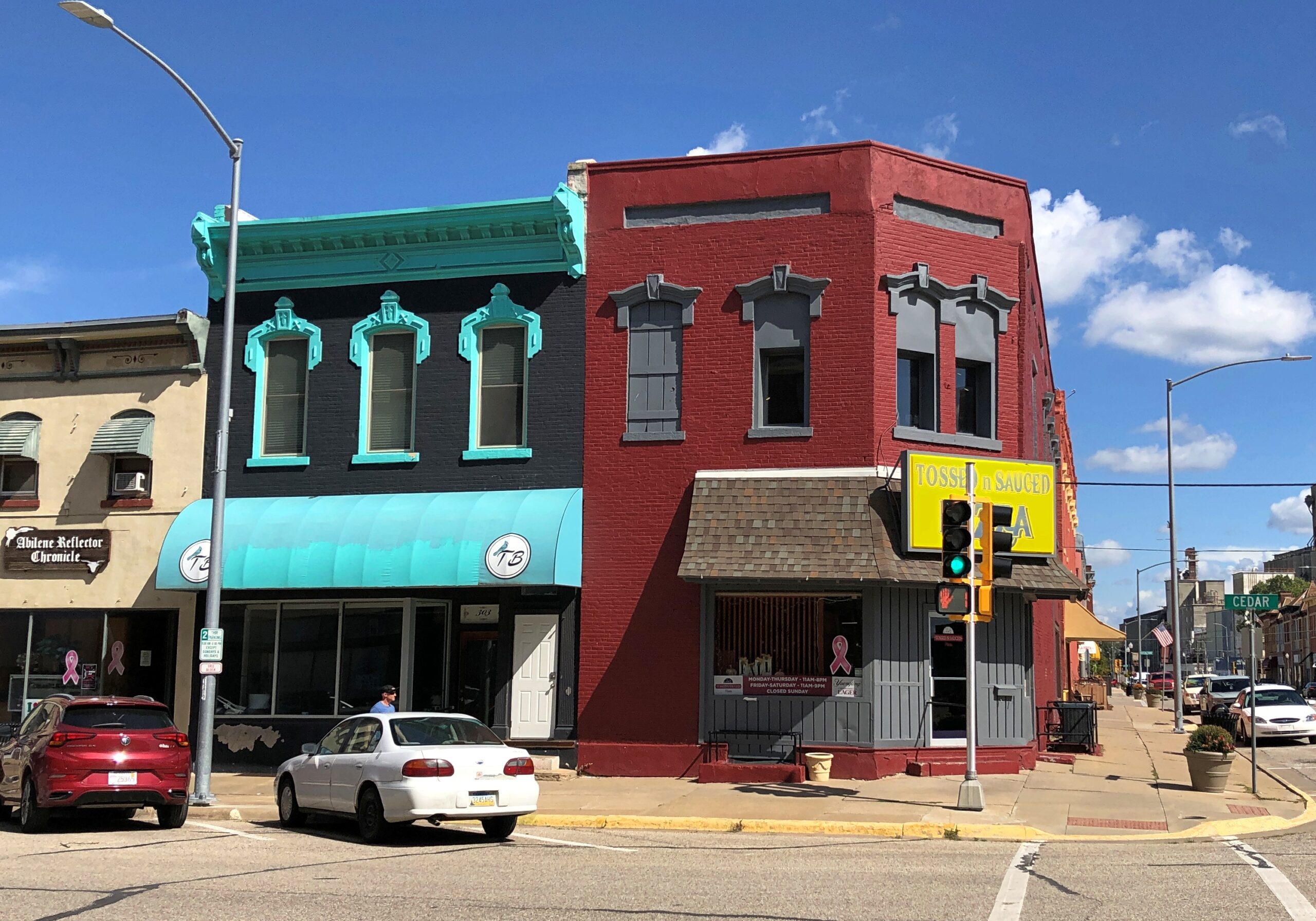
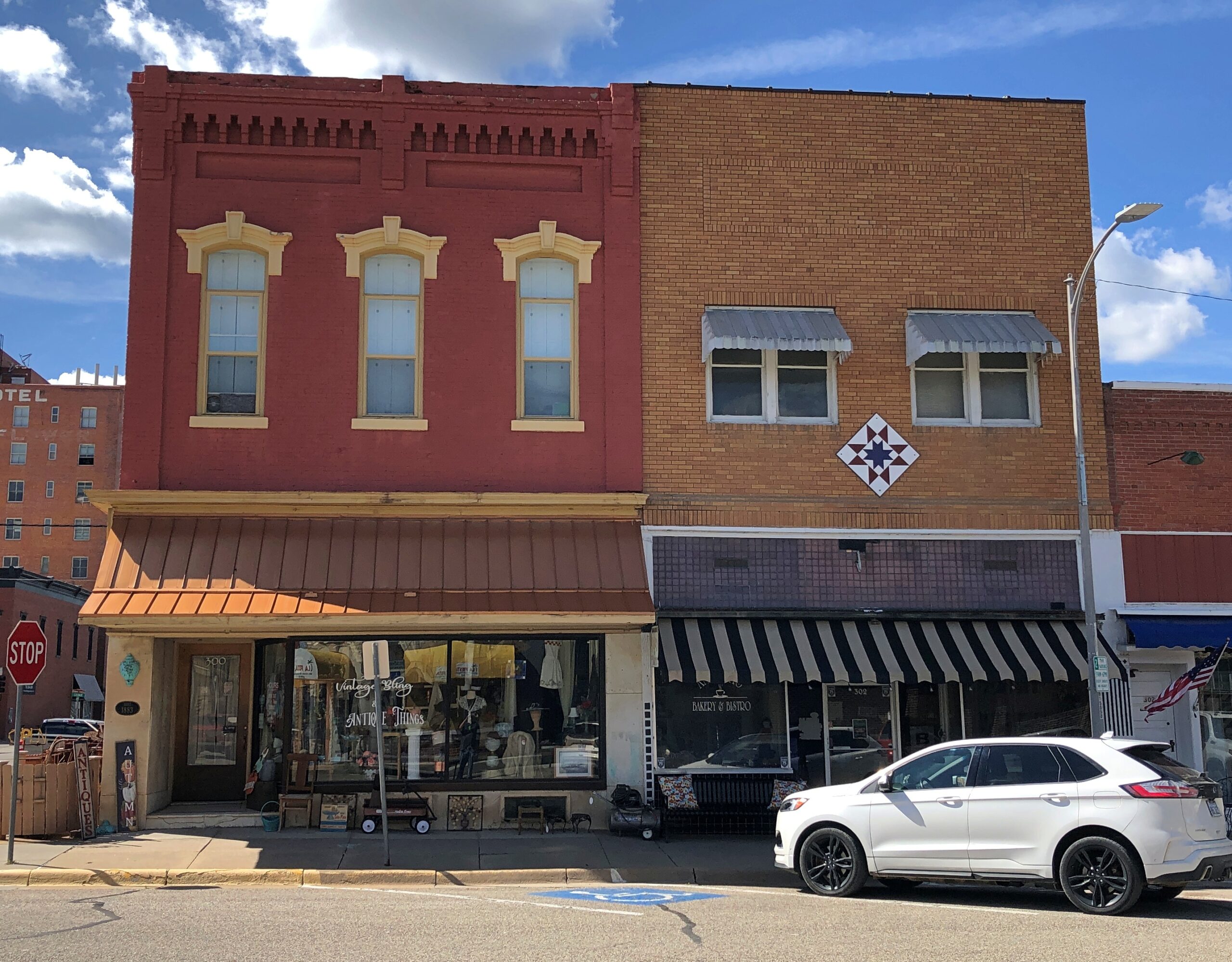
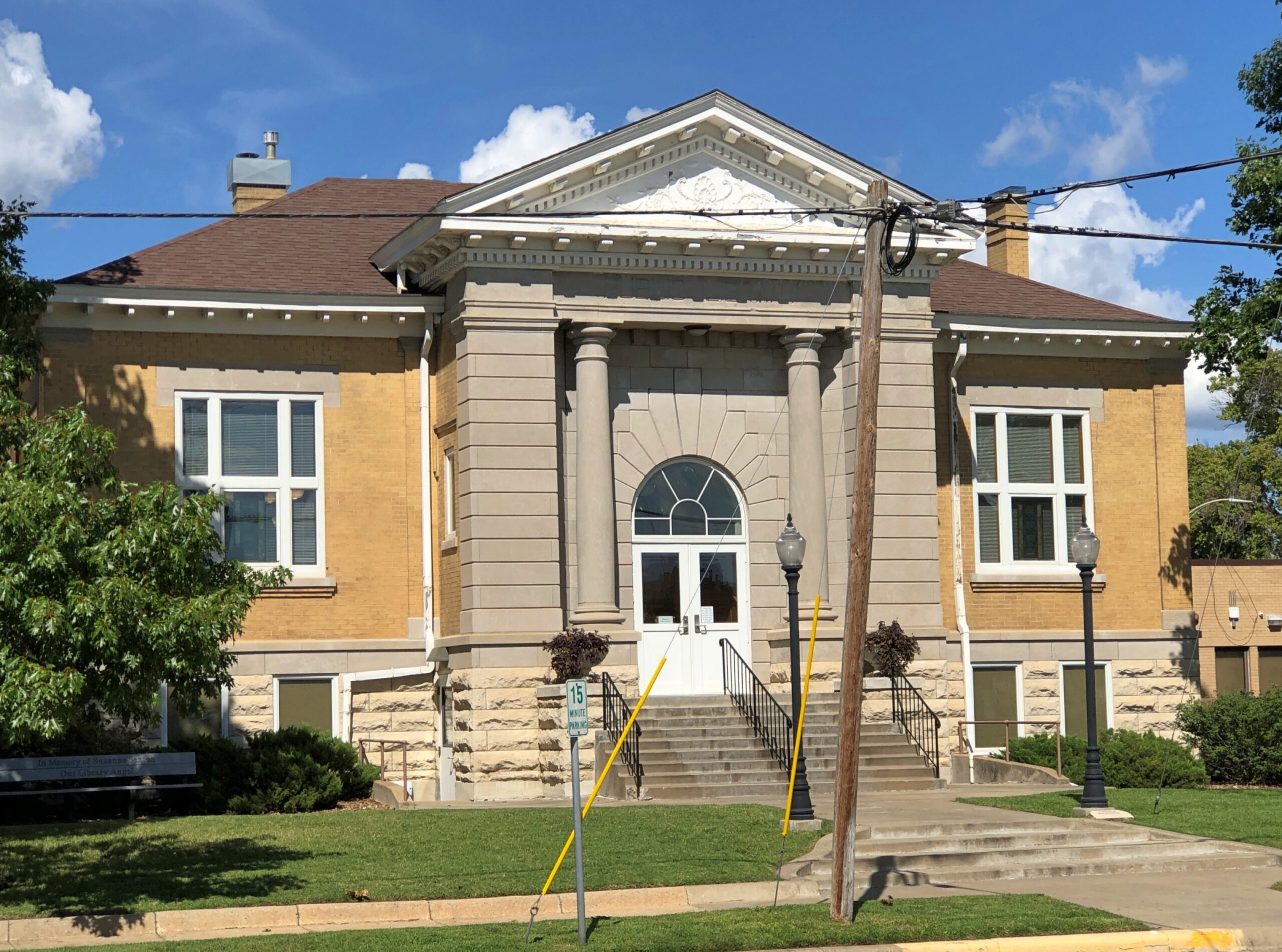
A lot of the detail would be different, but I’ll bet Ike would still feel at home with the scale of Abilene. Small town, small buildings, but some solid touches.
Including at least one building Ike would have known.
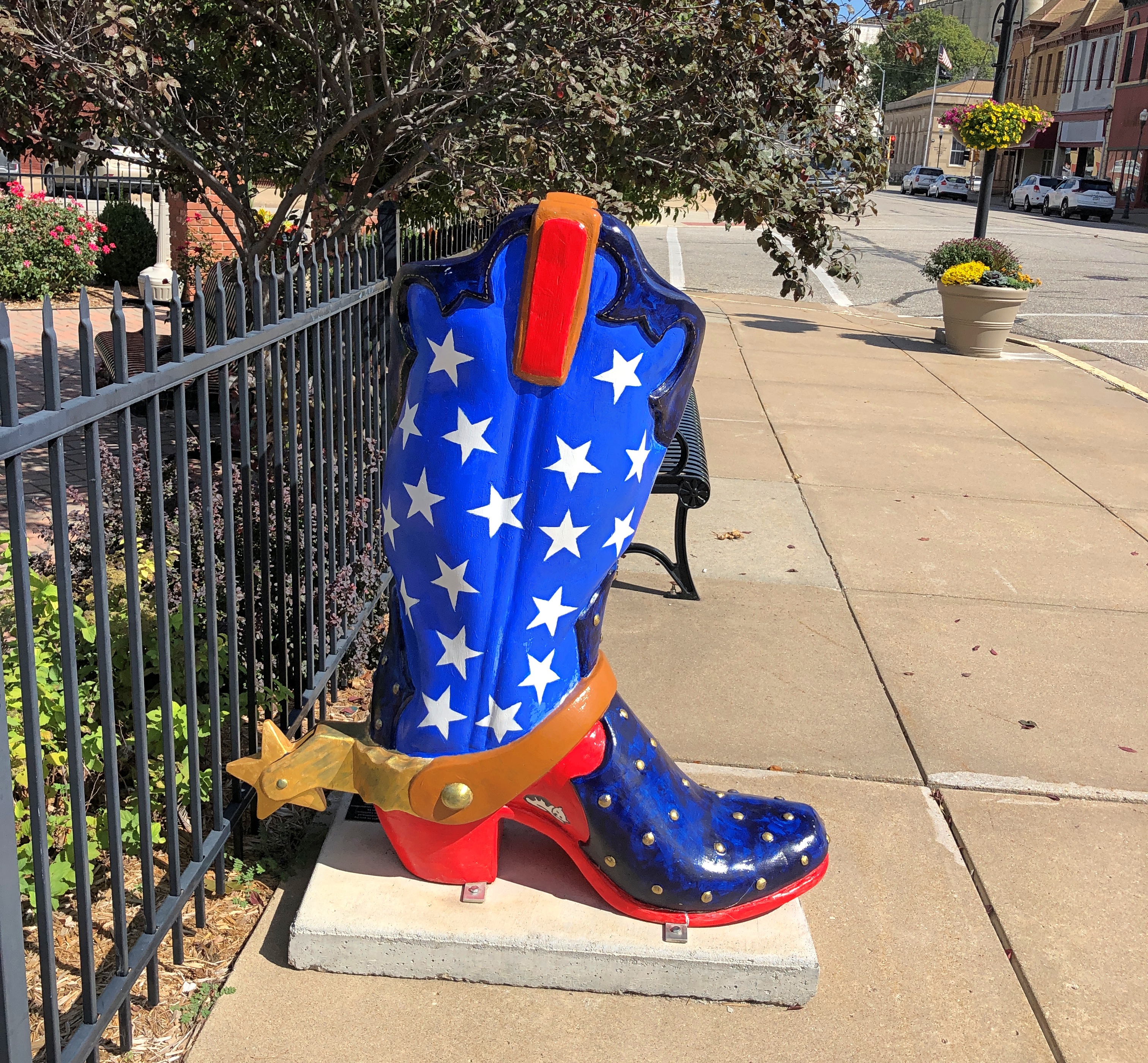
Chicago had cows, Abilene has cowboy boots.
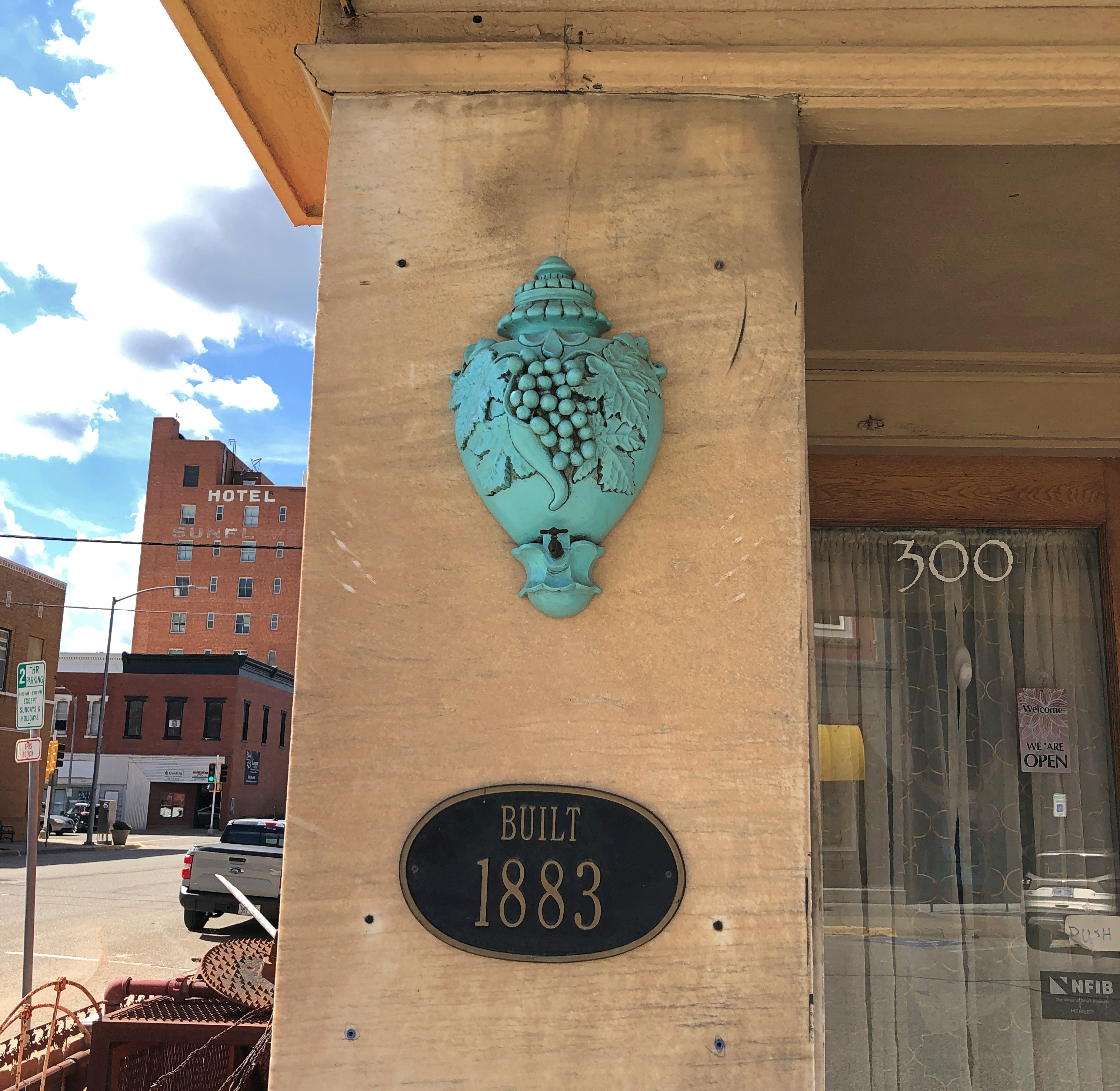
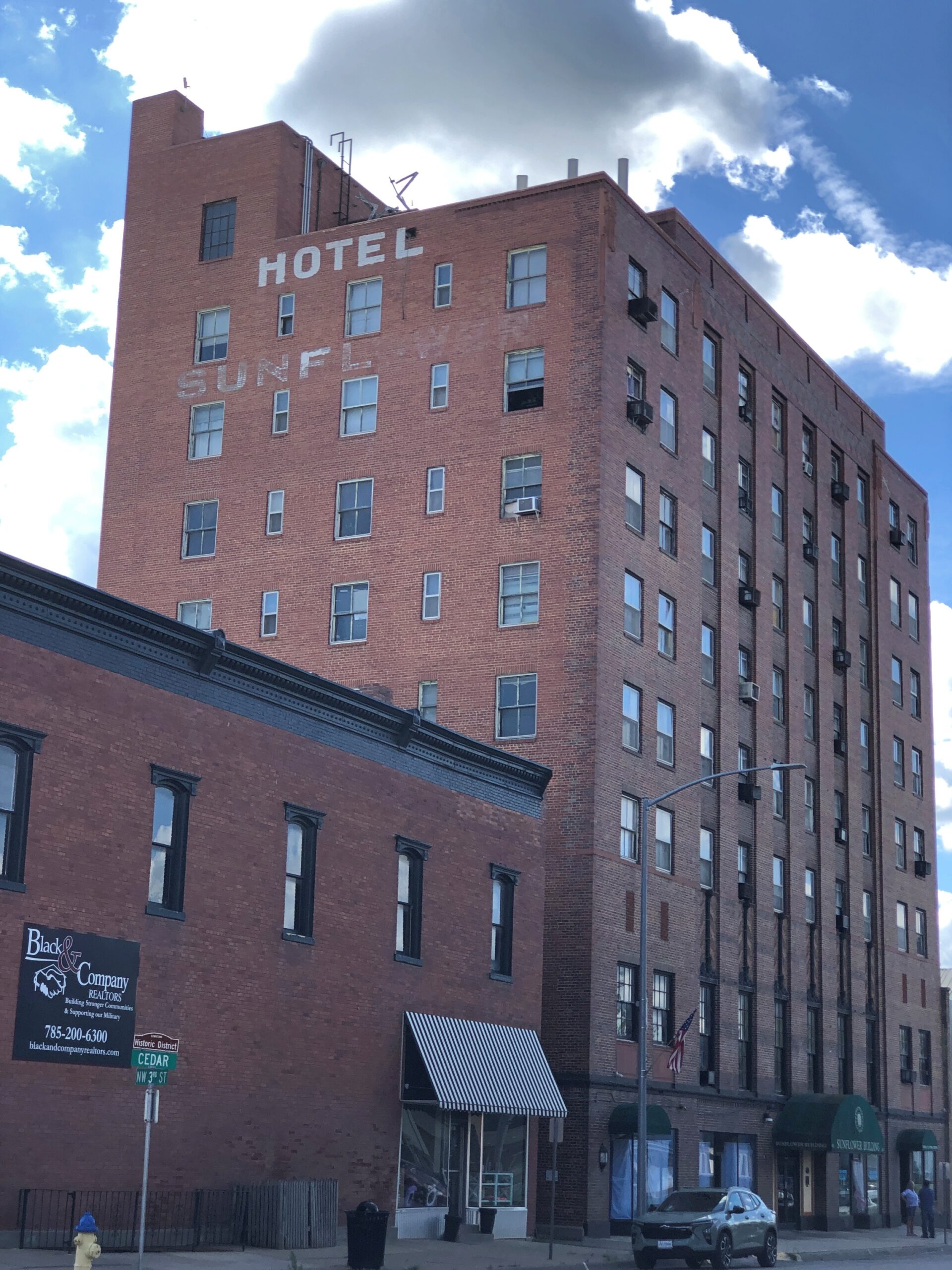
The Hotel Sunflower. Former hotel, that is, now apartments.
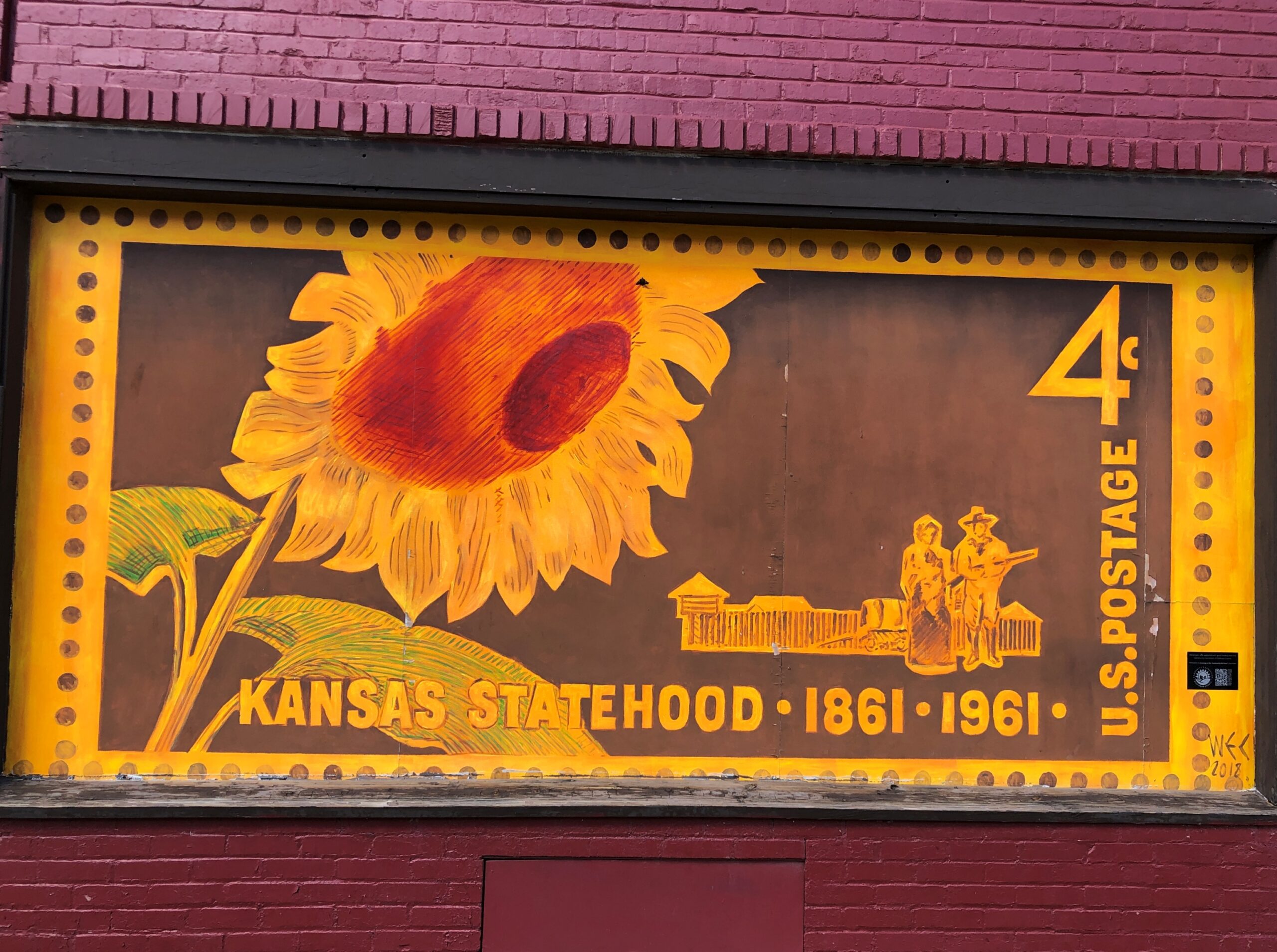
The Sunflower State. The flower looks a little ominous, peering down at the settlers.
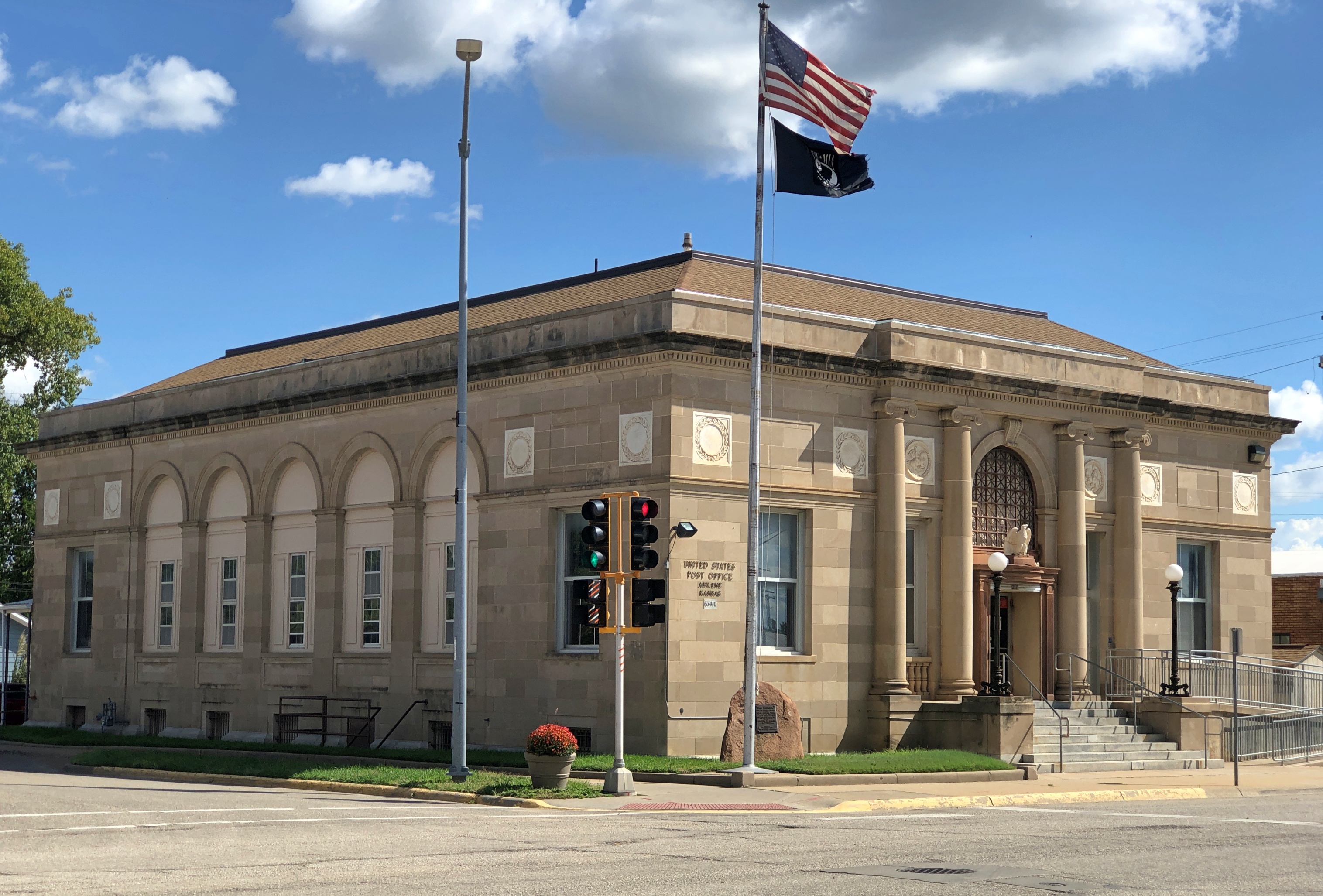
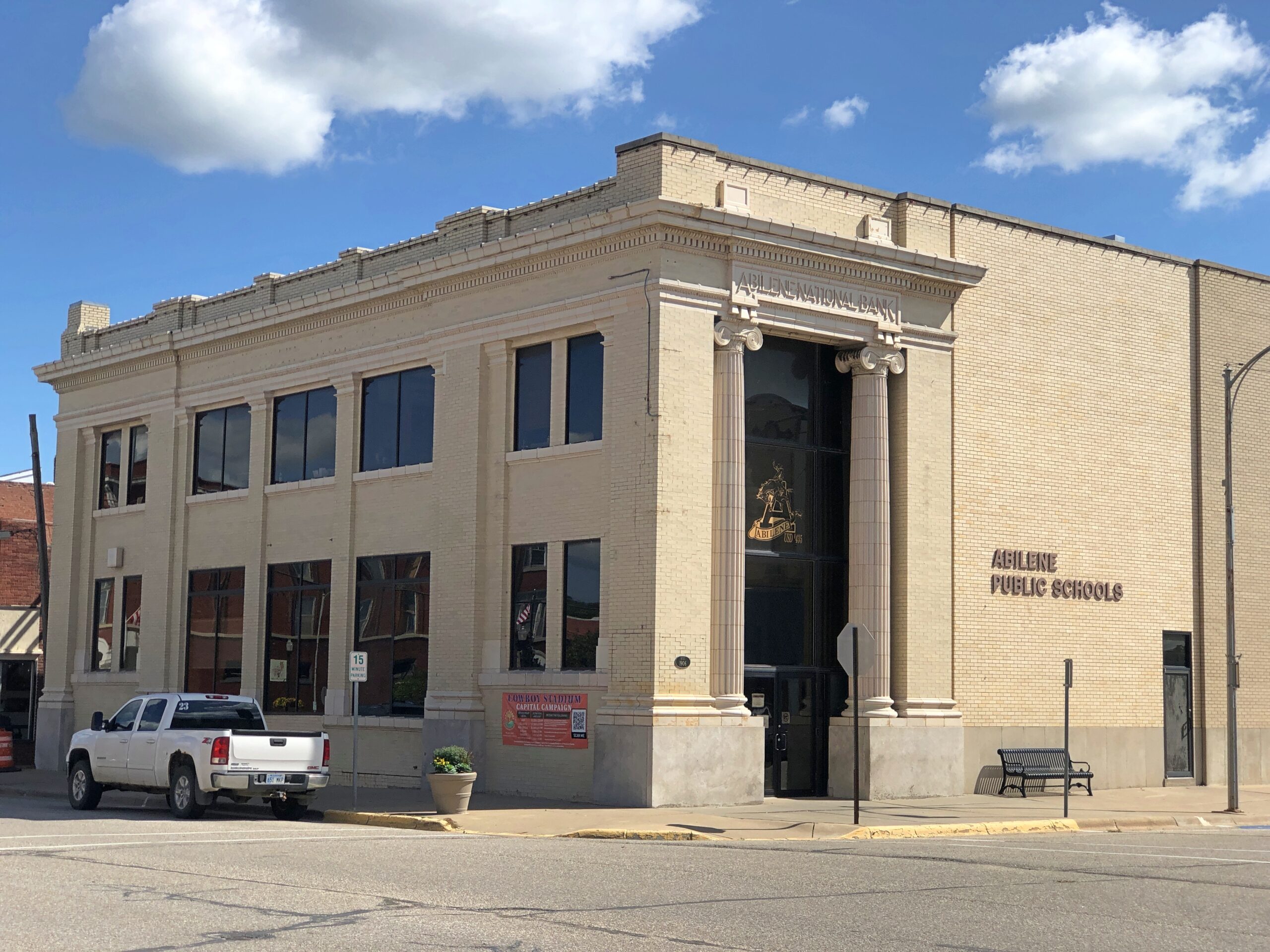
Structures that aren’t grand, but stately even so. Petite stately, you might call them.
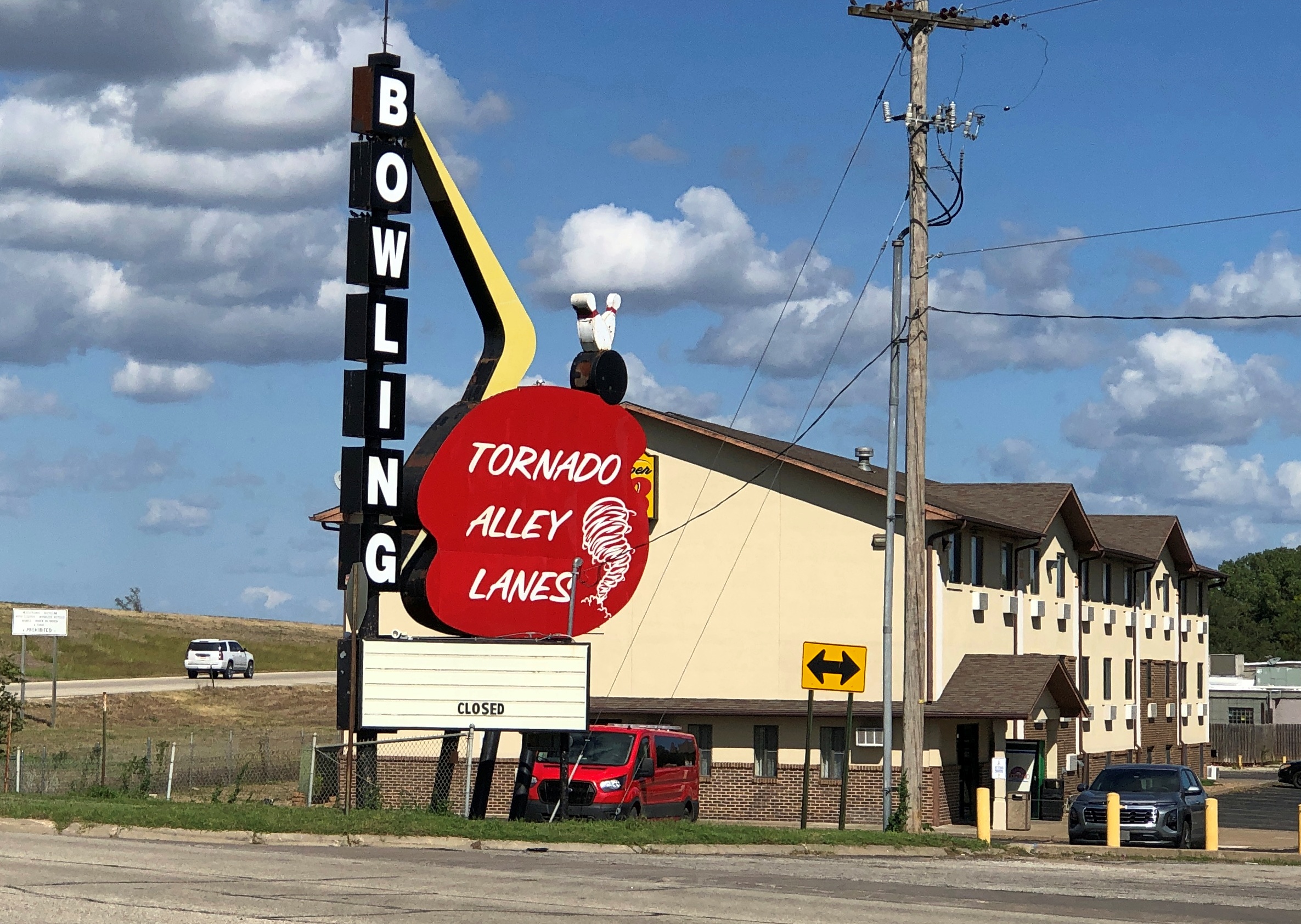
Out near the highway: truth in naming. But note also, the bowling alley is closed. I could go either way on the reopening of an alley in that location, but I really want the sign to stay.
One more thing Abilene is known for, at least since 2022.
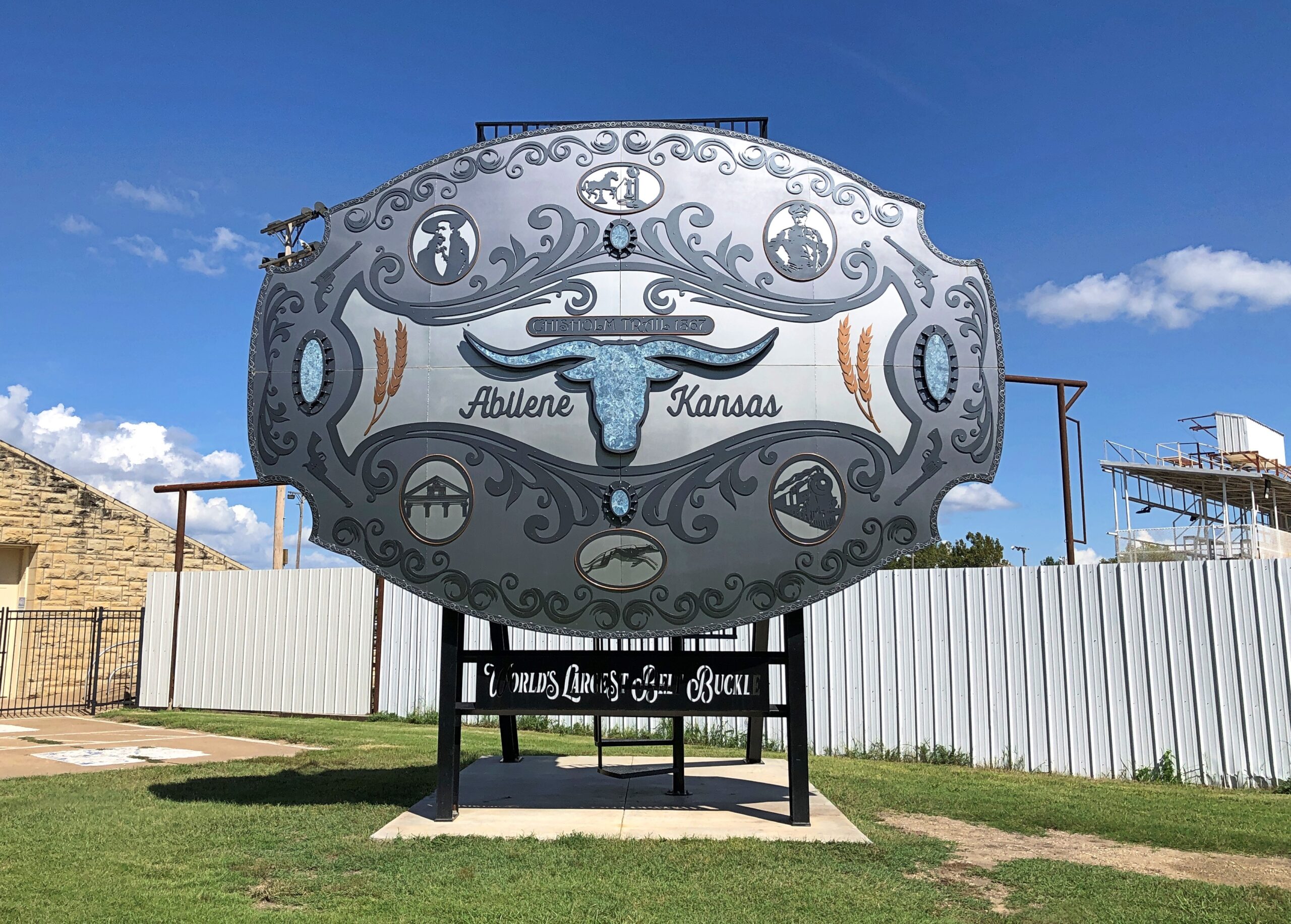
The World’s Largest Belt Buckle. Says so right there on it. How large would that belt have to be?
“Designed by local artist Jason Lahr, Fluter’s Creek Metal Works, the buckle features Dwight D. Eisenhower, Wild Bill Hickok, Abilene & Smoky Valley Railroad, Historic Seelye Mansion, C.W. Parker carousel horse, C.L. Brown telephone, a racing Greyhound and Chisholm Trail longhorn inlaid with blue quartz,” says the city of Abilene, Kansas.
“The buckle is a project of the Abilene Convention and Visitors Bureau which hopes the new roadside attraction will entice travelers to stop and visit the Best Historic Small Town.”
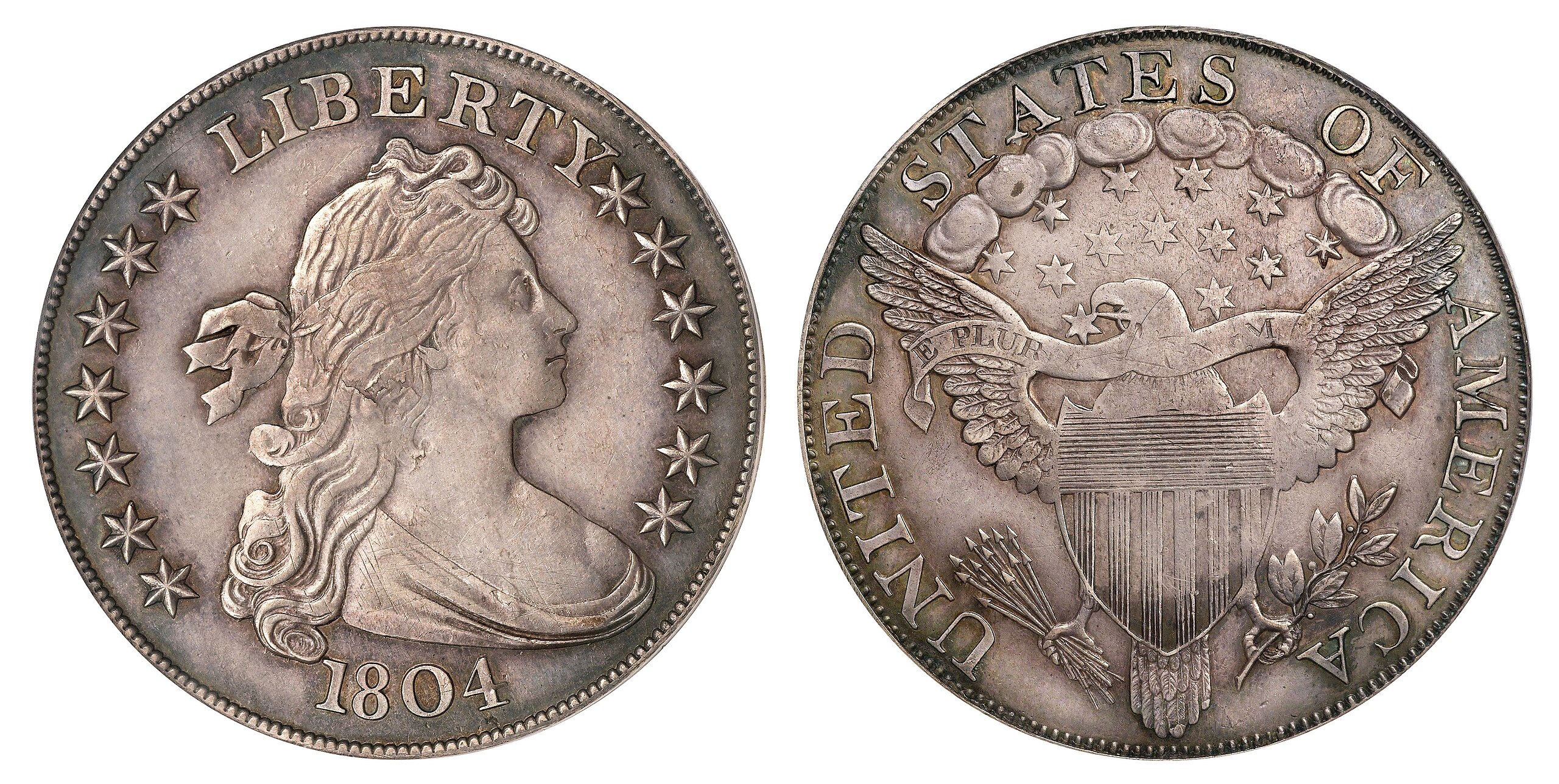
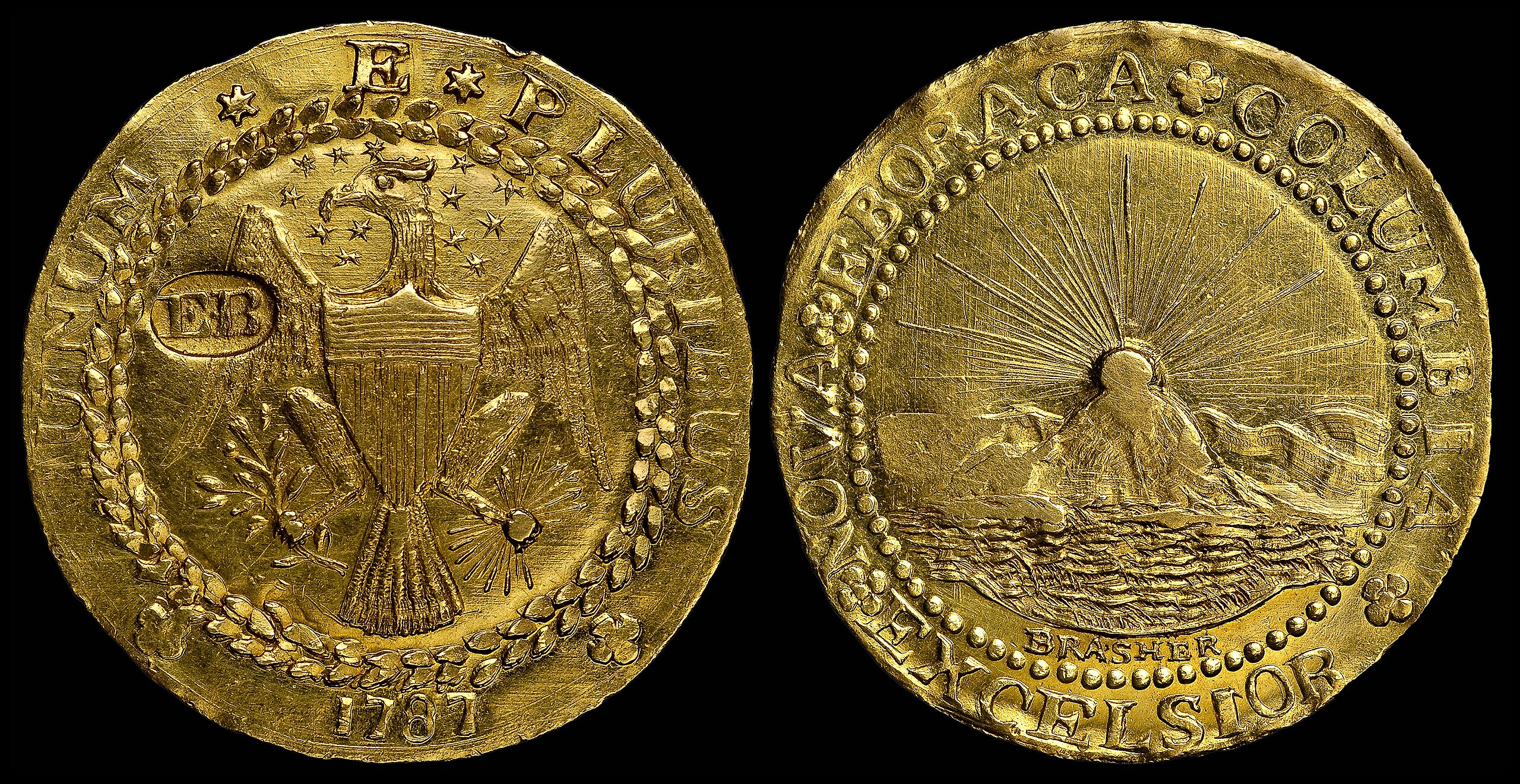
This might be unfair to the Money Museum in Colorado Springs, Colorado, but its collection disappointed me in one key way: No Brasher Doubloon.
It is unfair. The place is great: wall-to-wall coins rare and common, beautiful and crude, familiar and strange, a vast domestic collection (USA!) and a sizable array of coinages from other nations past and present. Much familiar to me, but not all, and much new and strange to Yuriko.
I’d known about the museum, which is owned and operated by the American Numismatic Association, since years ago, when I collected the sort of cheap coins I could afford on my allowance. I followed, in a lackadaisical adolescent way, numismatic news. Big coin deals in those days involved tens and maybe hundreds of thousands of dollars. Coins like the 1909S VDB cent and the 1916D Mercury dime commanded sizable premiums, but the major money was in even rarer strikes or errors.
The Money Museum and the ANA offices are in a boxy structure, brutalist lite, dating from 1967. It isn’t a large museum, with a few living room-sized galleries on its first floor, another in the basement, with each floor attended by bored-looking security guards. U.S. coins beckoned from their own gallery, with vertical coin displays behind glass on all the walls, along with paper money displays and a generous amount of exposition.
The displays had themes: early U.S. gold coins, coins struck in California and Colorado during their gold rushes – including $50 California Territorial Gold piece (!) — uncut paper money, Federal and Confederate tokens and paper, Gilded Age paper money (a riot of design), the various representations of George Washington on medals struck down the years, and many more. There was a 1933 eagle (gold $10) and a flawless set of 1915 Panama Pacific Exposition commemoratives, which are a wow in just about every way imaginable.
Next to Americana Gallery, another gallery housed an incredibly detailed exhibit featuring coins used on the Silk Road across the centuries, something I can’t say I’d given much thought to, despite the enormity of the subject. Such as coins from the time of Alexander, whose empire was home, briefly, to around 25 mints. They say the treasury at Persepolis alone guarded 3,000 tons of gold and silver, but not from the conqueror, since it was just the thing to feed those mints once Alexander had made the Persian empire his own.
Or Parthian drachms, which feature a ruler observe and a seated archer reverse. Or the hemidrachms, obols and hemiobols of the Sassanids. Or Chinese coinage: “Made by the bureaucracy, for the bureaucracy, coins were tools to facilitate minor trade and local business. Because precious metals and high-value denominations posed the threat of wealth accumulation, low-value bronze pieces sufficed.”
Those are only a few examples. The exhibit also had early Chinese non-coin money, Islamic coinage and the coinage of the Kushans, whose central Asian empire faded from memory until its coins were unearthed.
It was all too much. Coin overload had kicked in. We spent a little while in the basement – given over to the broad sweep of the history of money – and then to the crown jewels of the place, to cap off the visit.
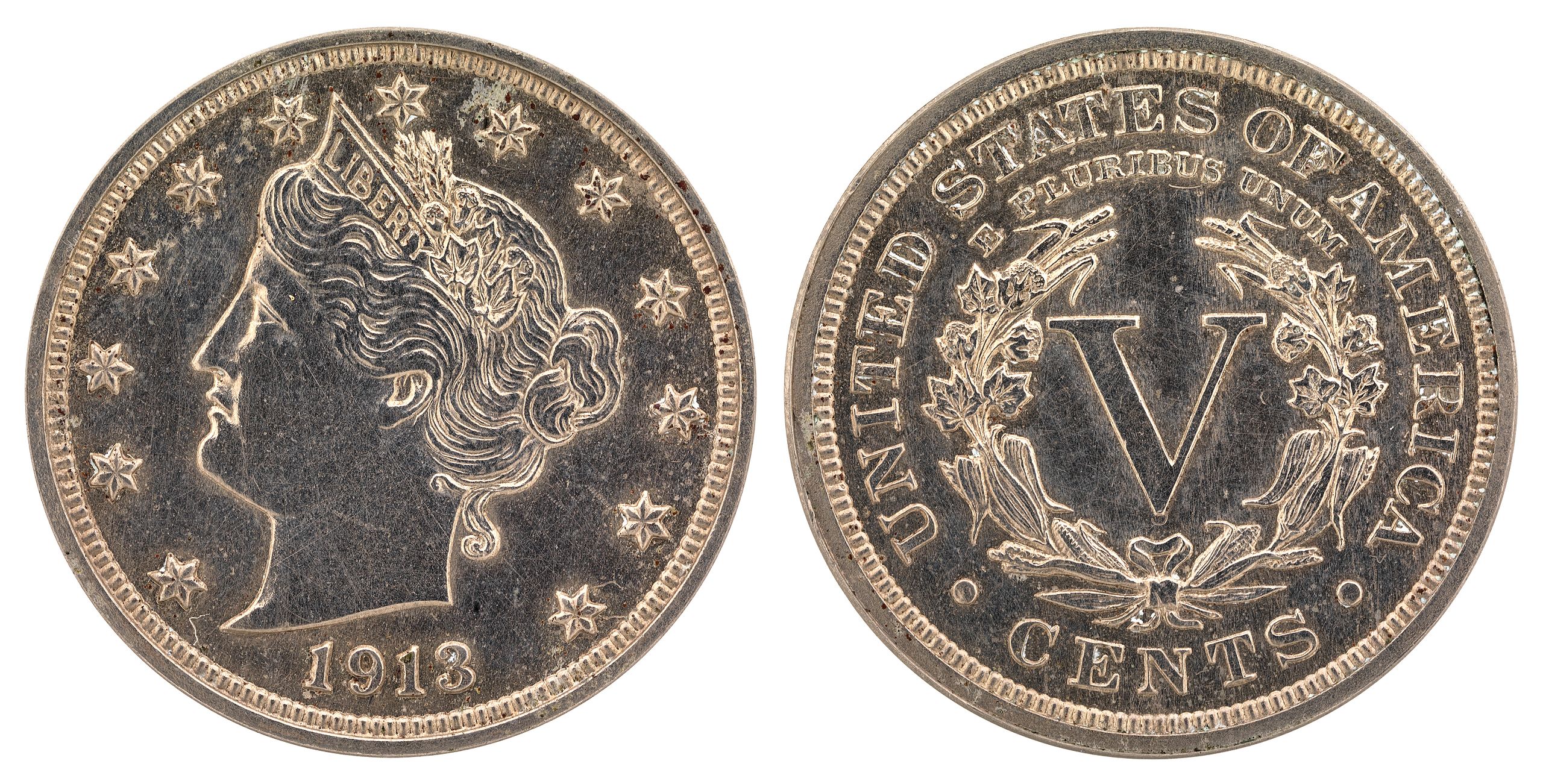
A coin that goes to show that the entire game isn’t just gold and silver, but base metal coins can have their shot at being priceless collectibles. Famed in story, and maybe an eccentric will write a song about the 1913 Liberty Head, predecessor to the Buffalo nickel. The last year for minting the Liberty Head was to have been 1912, and there are scads of those, except for those made at the San Francisco mint. Only five 1913 specimens are known to exist, all with a mysterious origin at the U.S. Mint and history of trading at ever-increasing prices, with one most recently fetching $5 million. They are such a part of numismatic lore that each specimen has its own name.
We were getting ready to go, when I noticed a museum employee talking to the volunteers behind the front desk. I asked him whether the museum had a Brasher Doubloon. I’d looked, but I could easily have missed it, among the many coins on display.
He knew what that was. Of course he did. Unfortunately, no, he told me. Someday someone might donate one, but otherwise it would be beyond the museum’s budget. Someday, maybe, he said, a little wistfully. Good man, a true coin nerd.
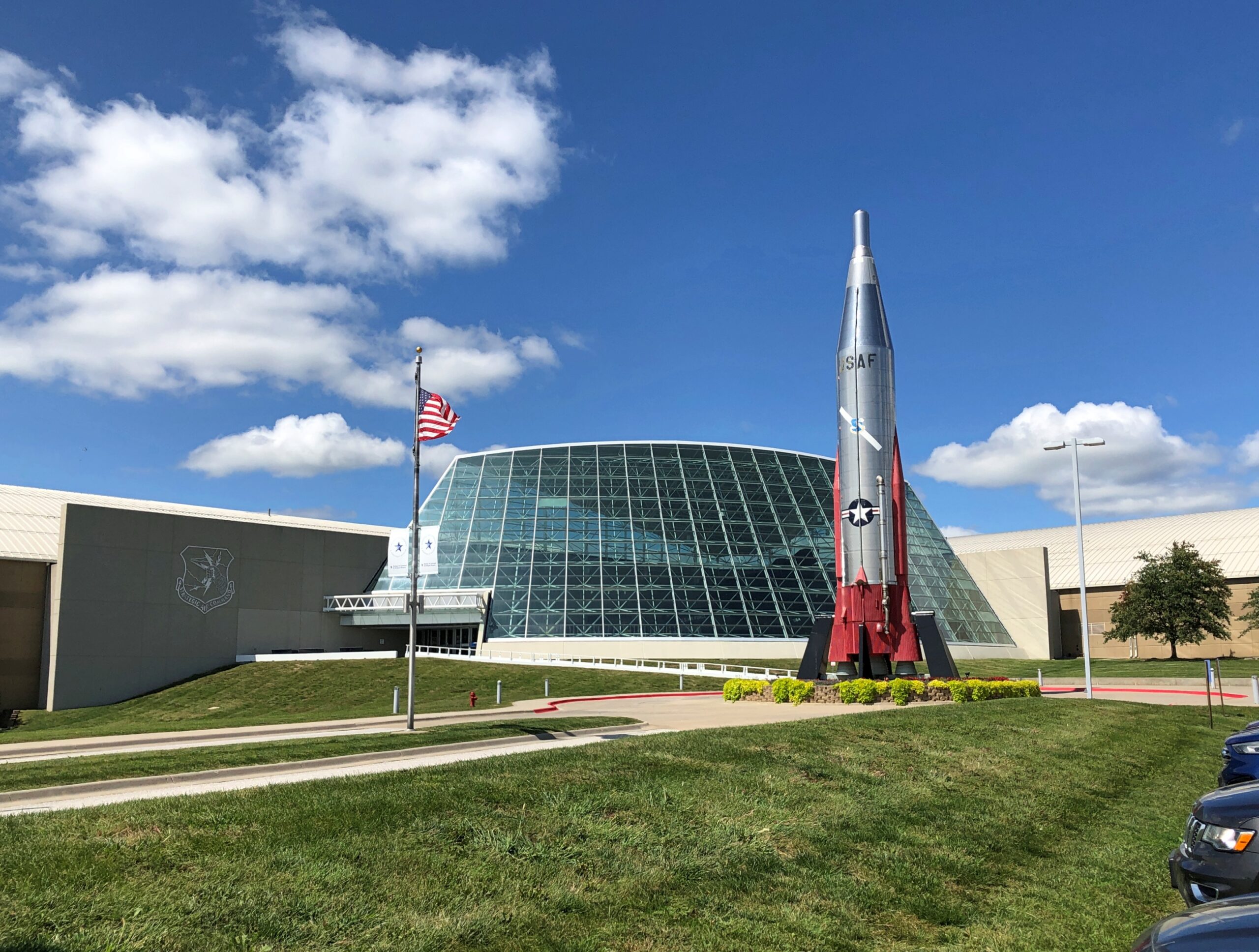
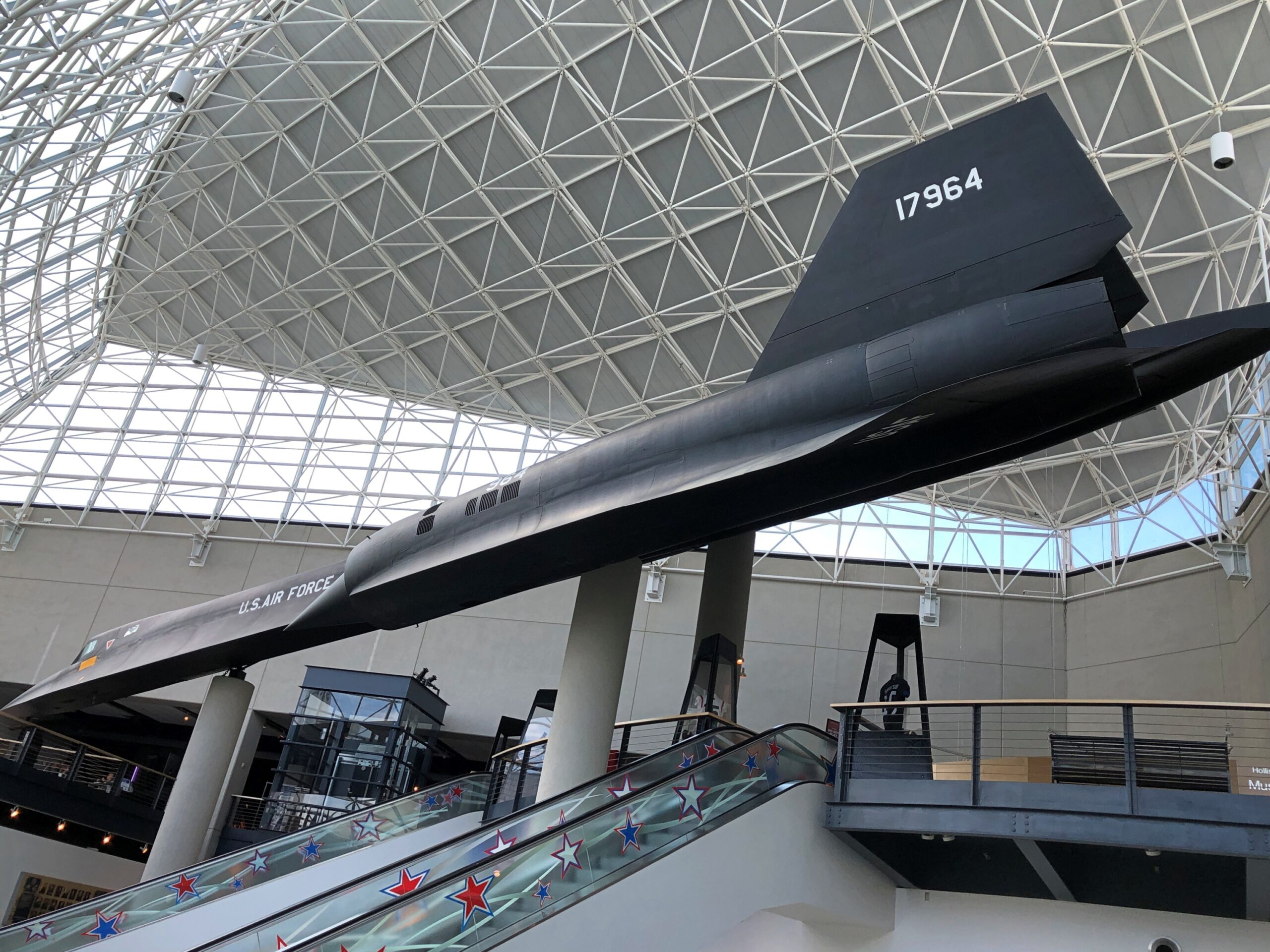
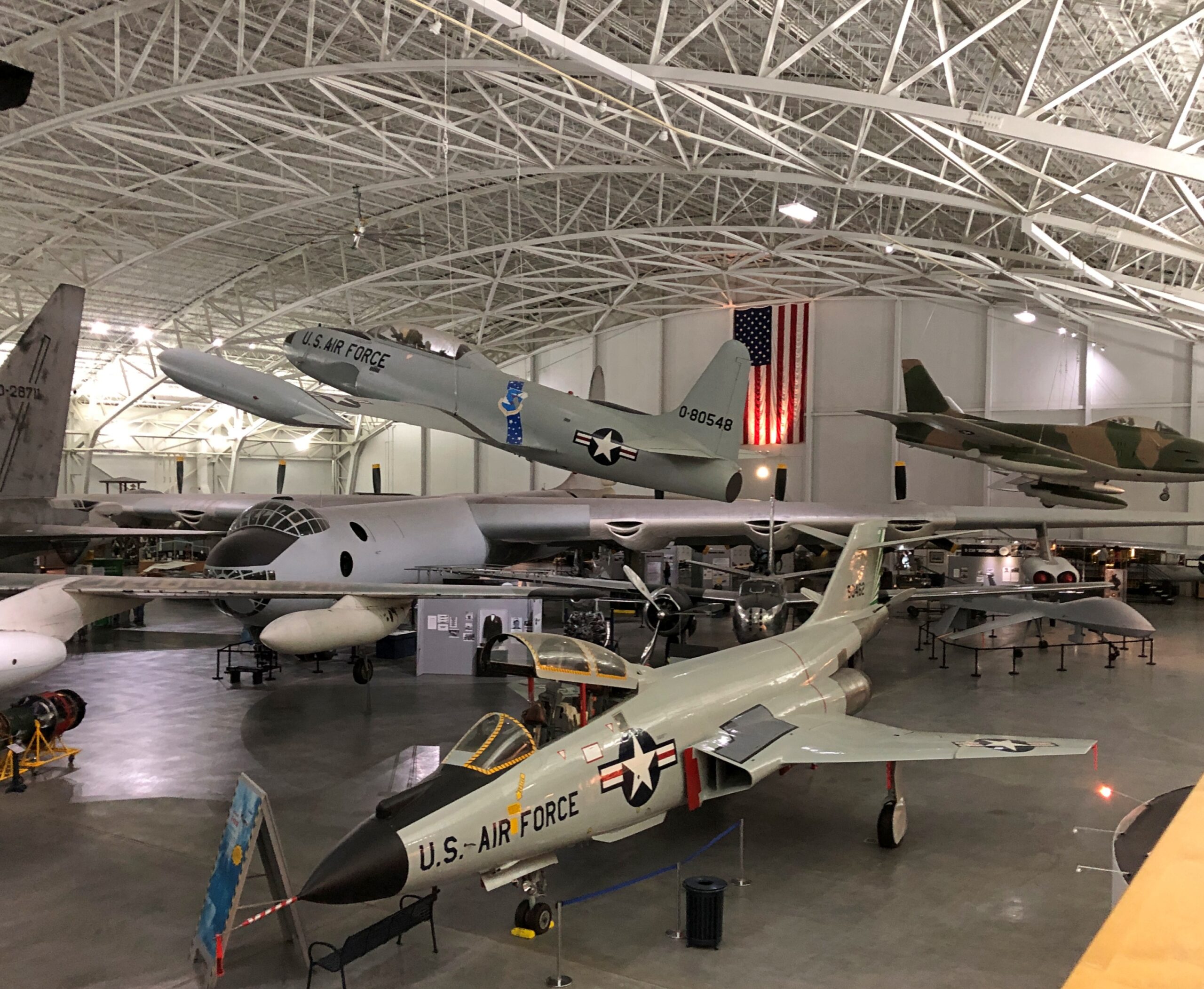
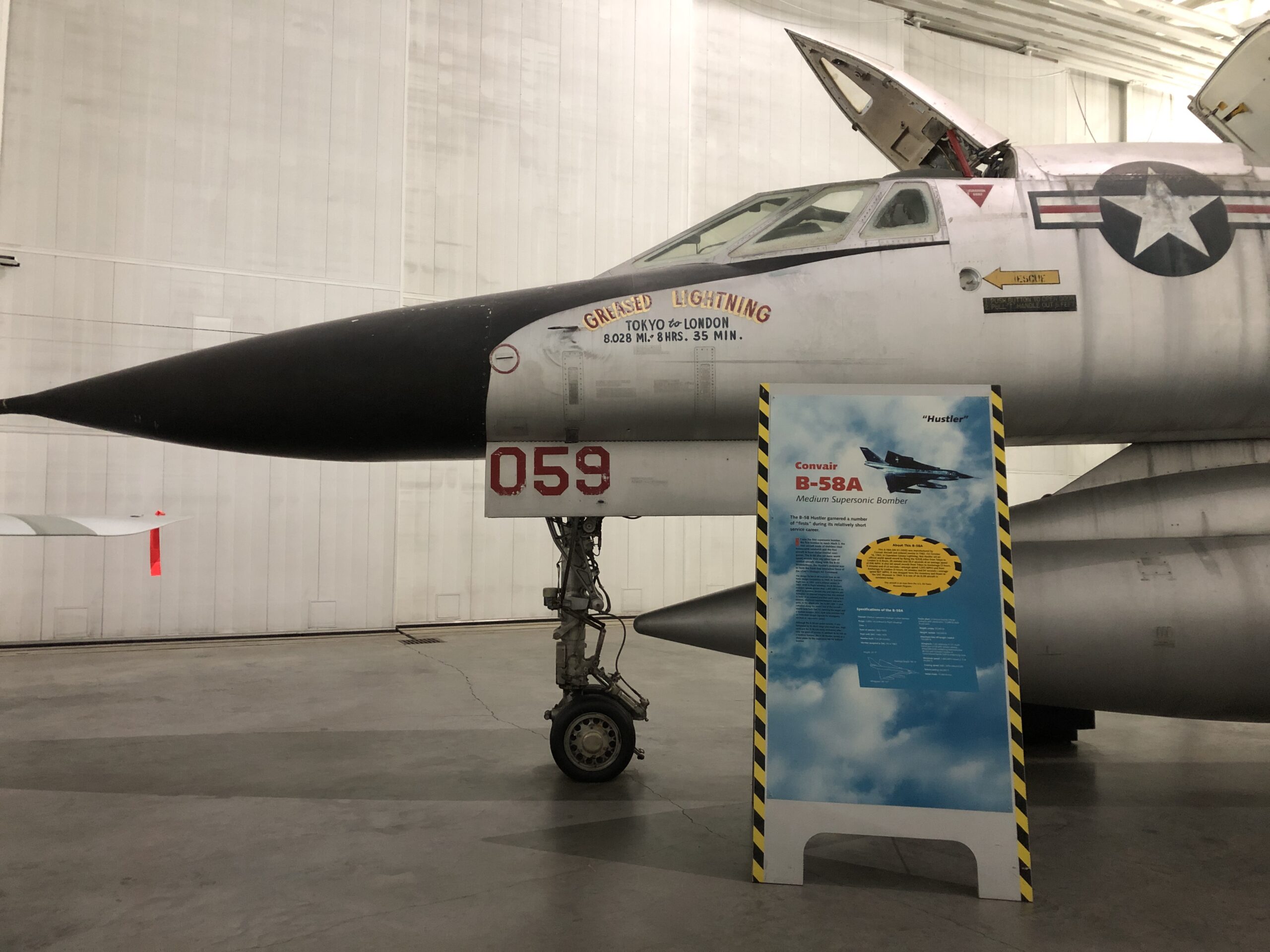
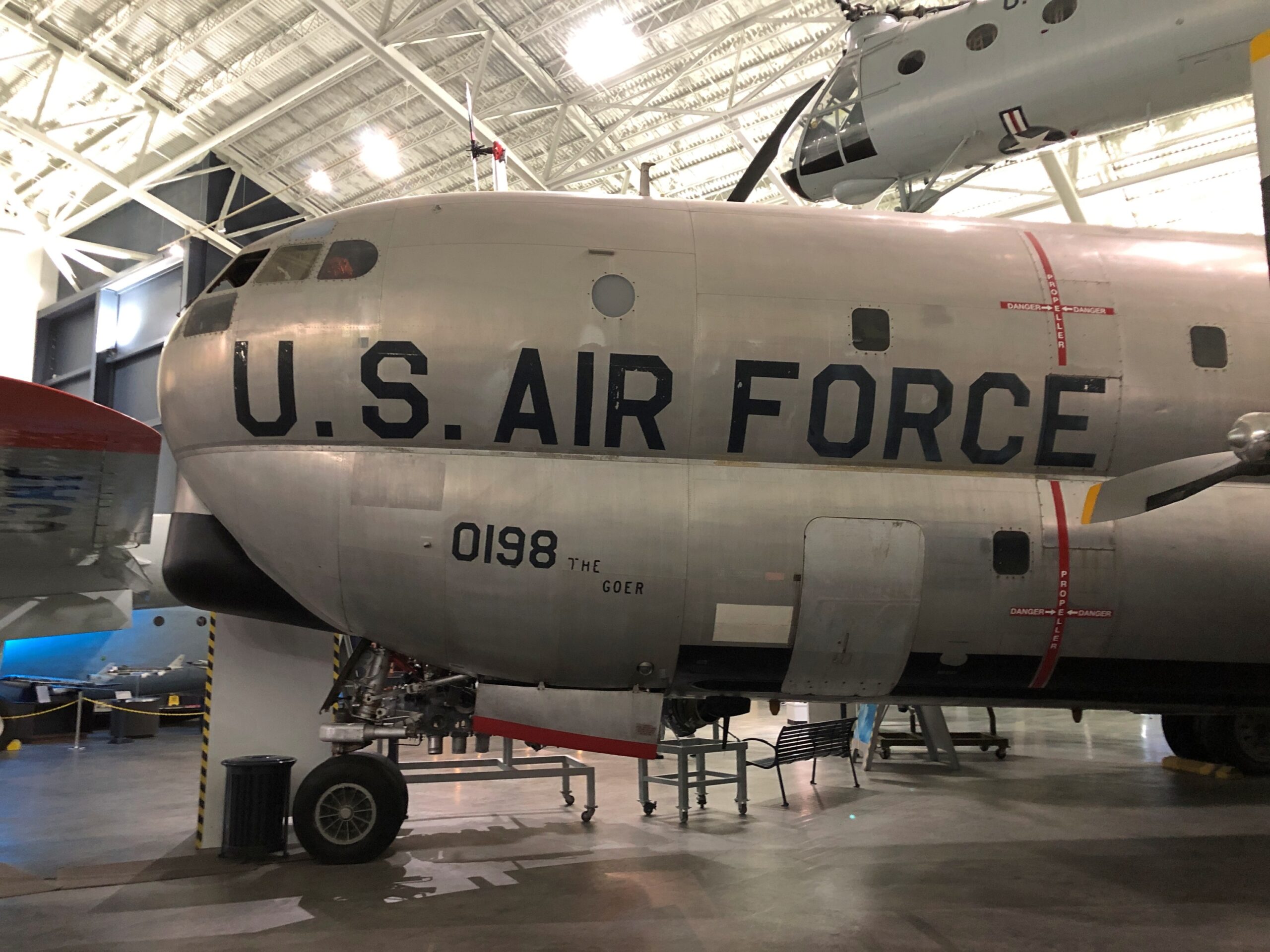
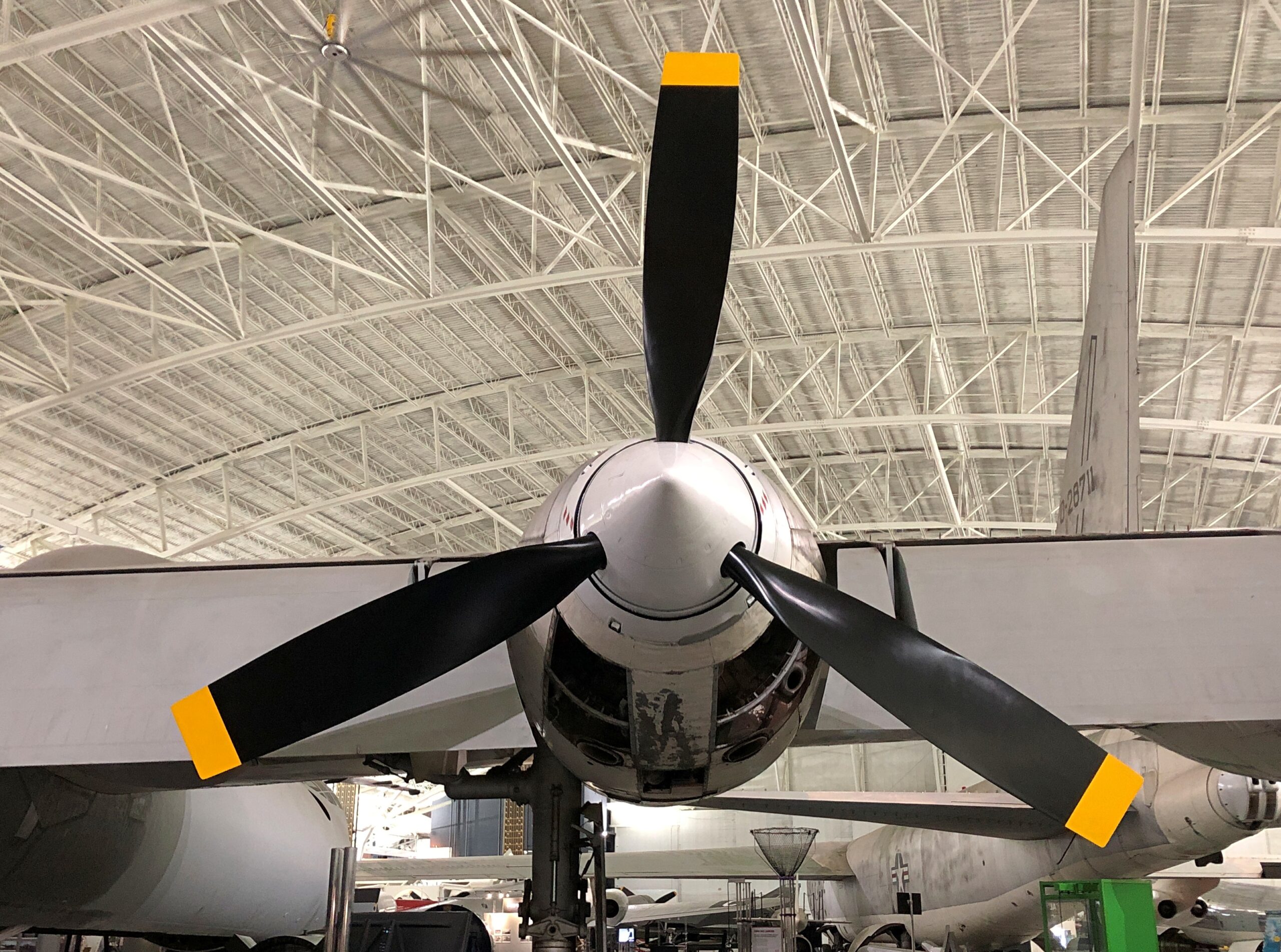
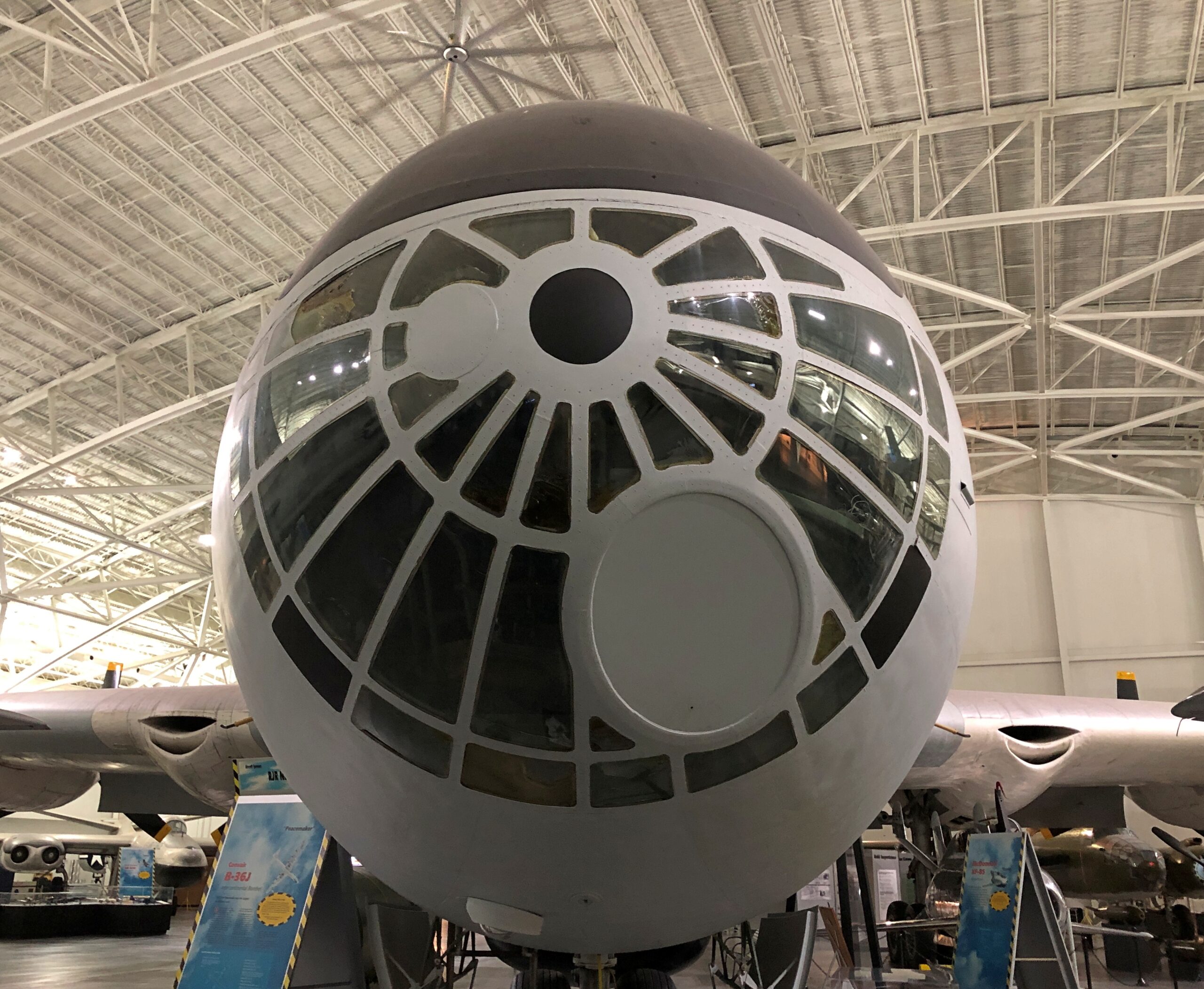
Not far outside Omaha, along I-80, it’s possible to stop and see, under two very large roofs, such marvels of aeronautical engineering as a B-17, B-29, B-36 and B-52, a Lockheed SR-71 Blackbird, a Douglas C-47 Skytrain and a Douglas C-54 Skymaster, a Convair F-102, and a Fairchild C-119 Flying Boxcar, among many others. Along side the airplanes are exhibits about the Tuskegee Airmen, Doolittle’s Raid, the Berlin Airlift and Francis Gary Powers.
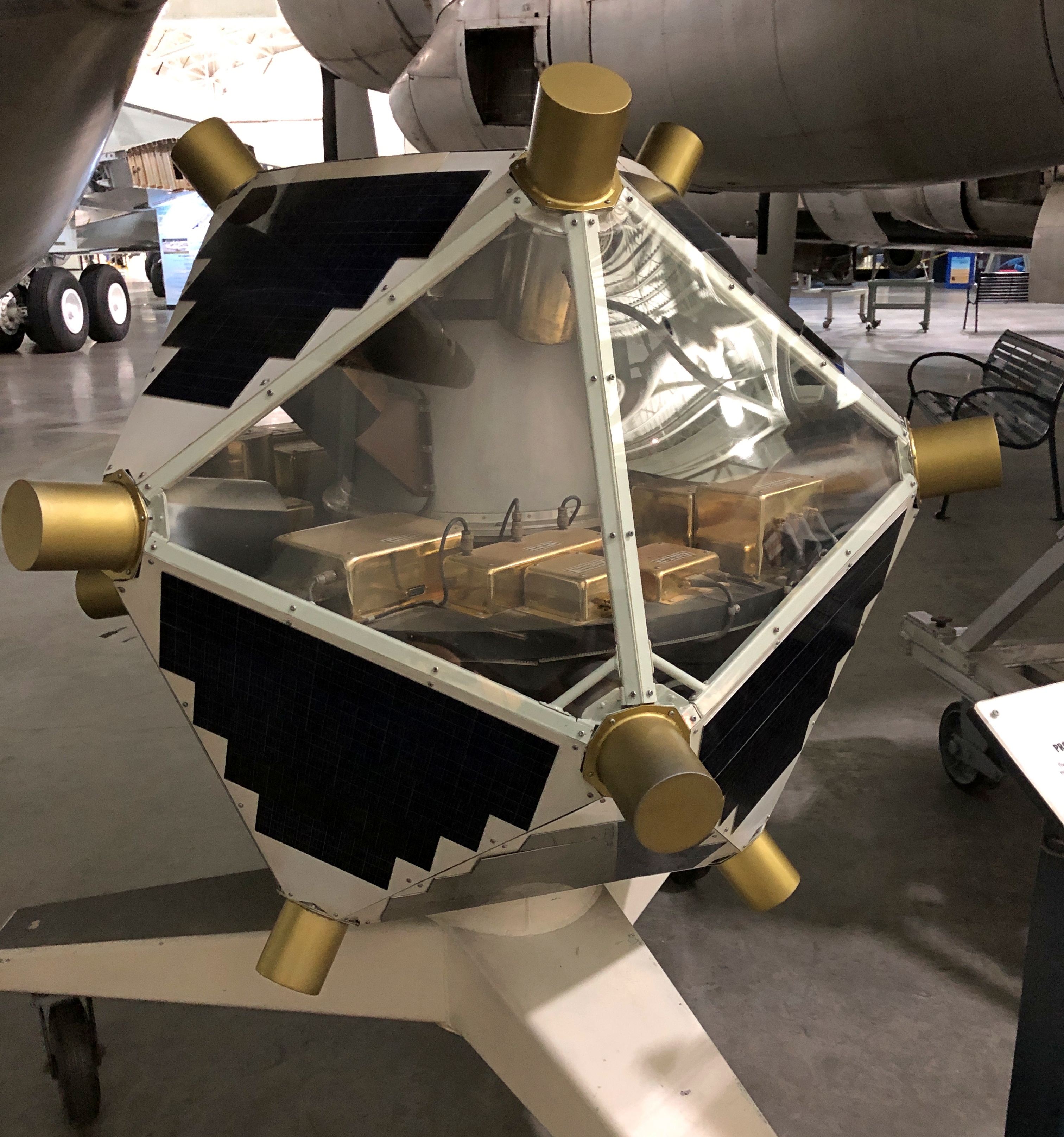
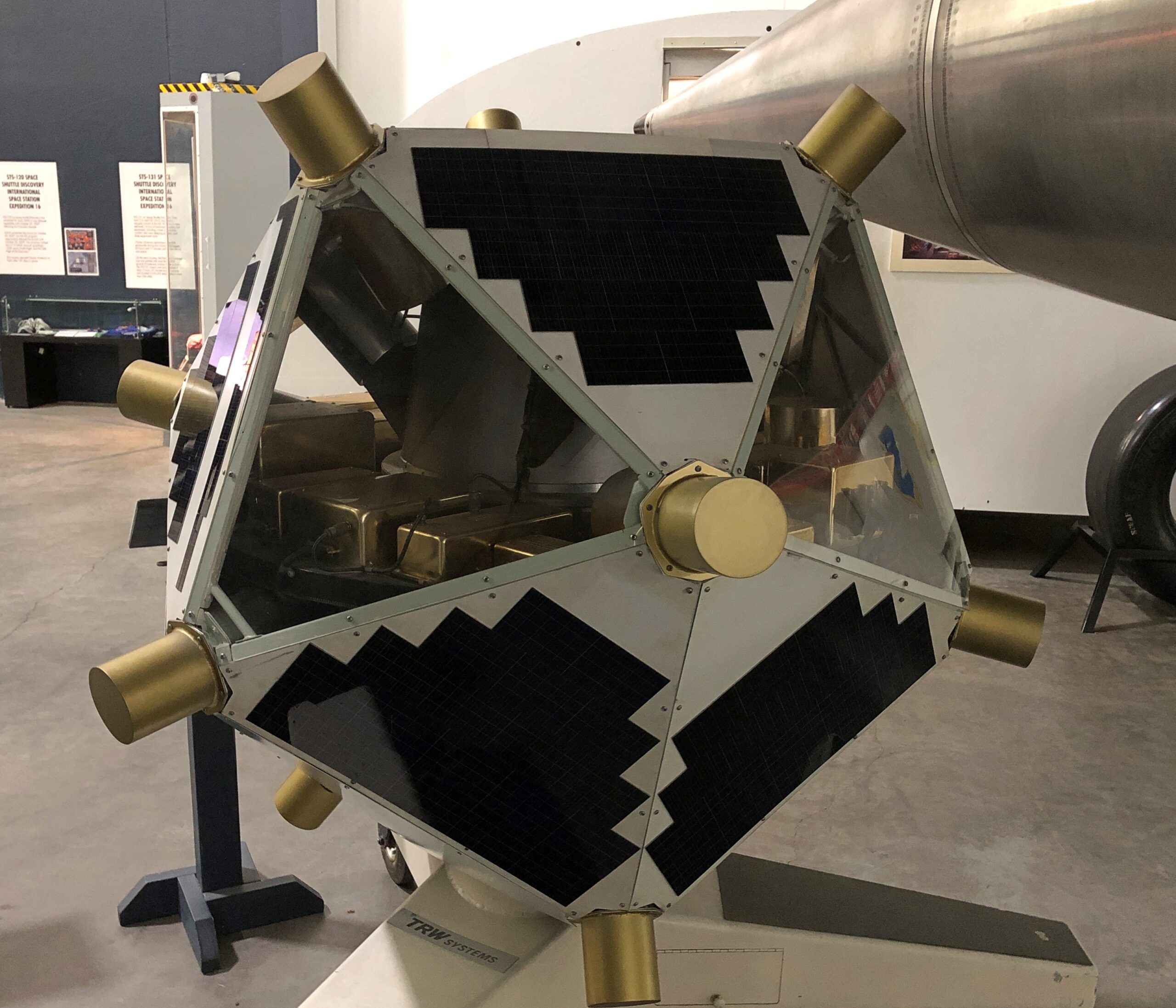
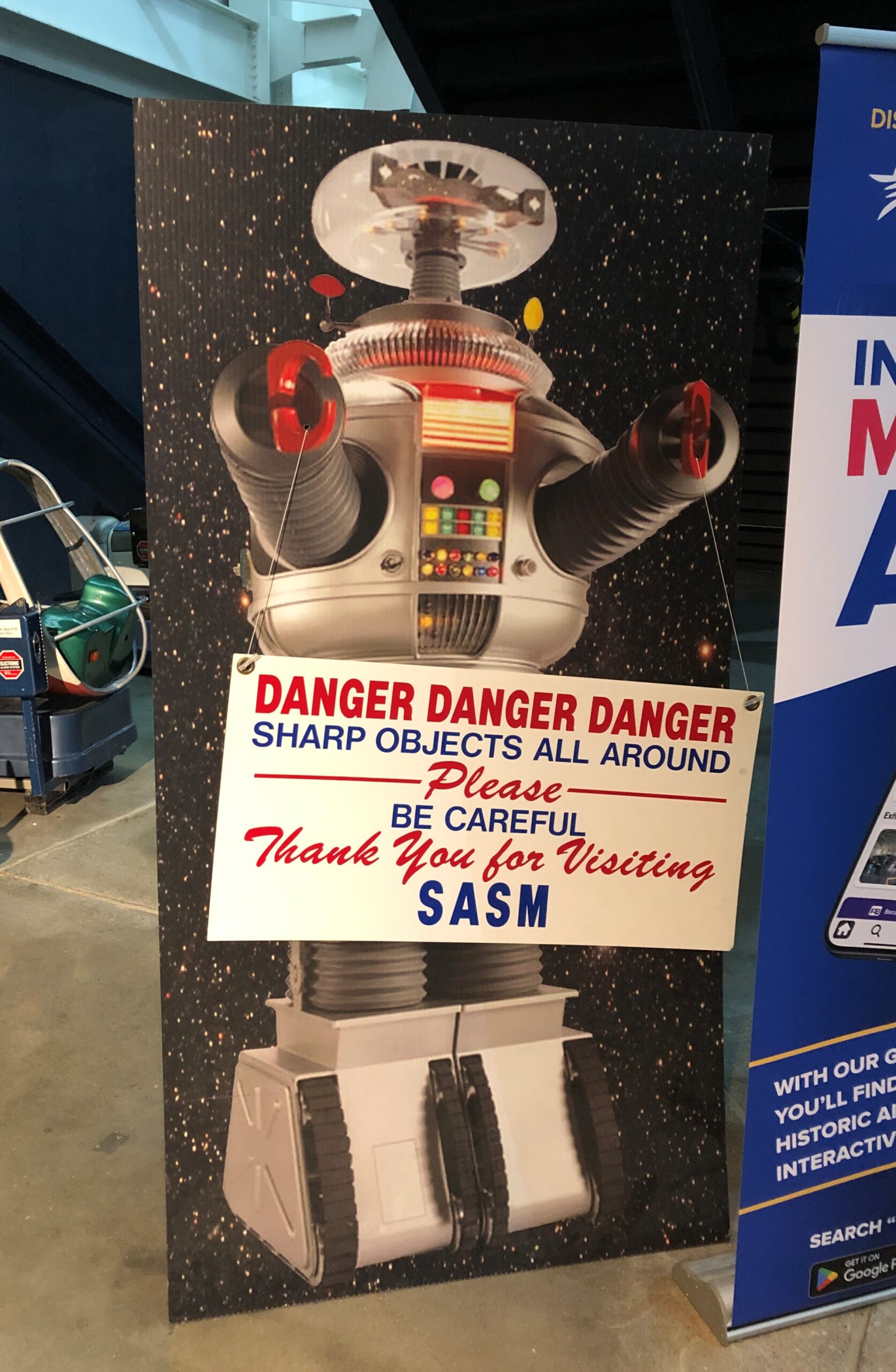
There are also space artifacts at the Strategic Air Command & Aerospace Museum, as the name says, but not that many. Still, my favorite artifact at that museum, the coolest bit of space hardware I’d seen since the Kansas Cosmosphere, was a Vela satellite.
Looks like something you’d see on the set of Space: 1999, but the Vela is more than just a curious glassy polyhedron. In September 1979, a Vela satellite noticed the characteristic flash – actually a double flash – of a nuclear explosion in the atmosphere, near the remote Price Edward Islands in the ocean south of Africa, roughly half way to Antarctica. It wasn’t long before the press got wind of the event, and I remember a widely held suspicion that Israel had tested a nuclear warhead, with the cooperation of South Africa, whose island it was. It seems likely that this was the case.
Besides that, “in 1967, the satellites were the first to detect extra-terrestrial gamma-ray bursts, thought to be the brightest and most energetic electromagnetic events in the universe,” the Space Force notes.
I arrived at the museum on September 5 heading westward, bypassing Omaha in favor of it.
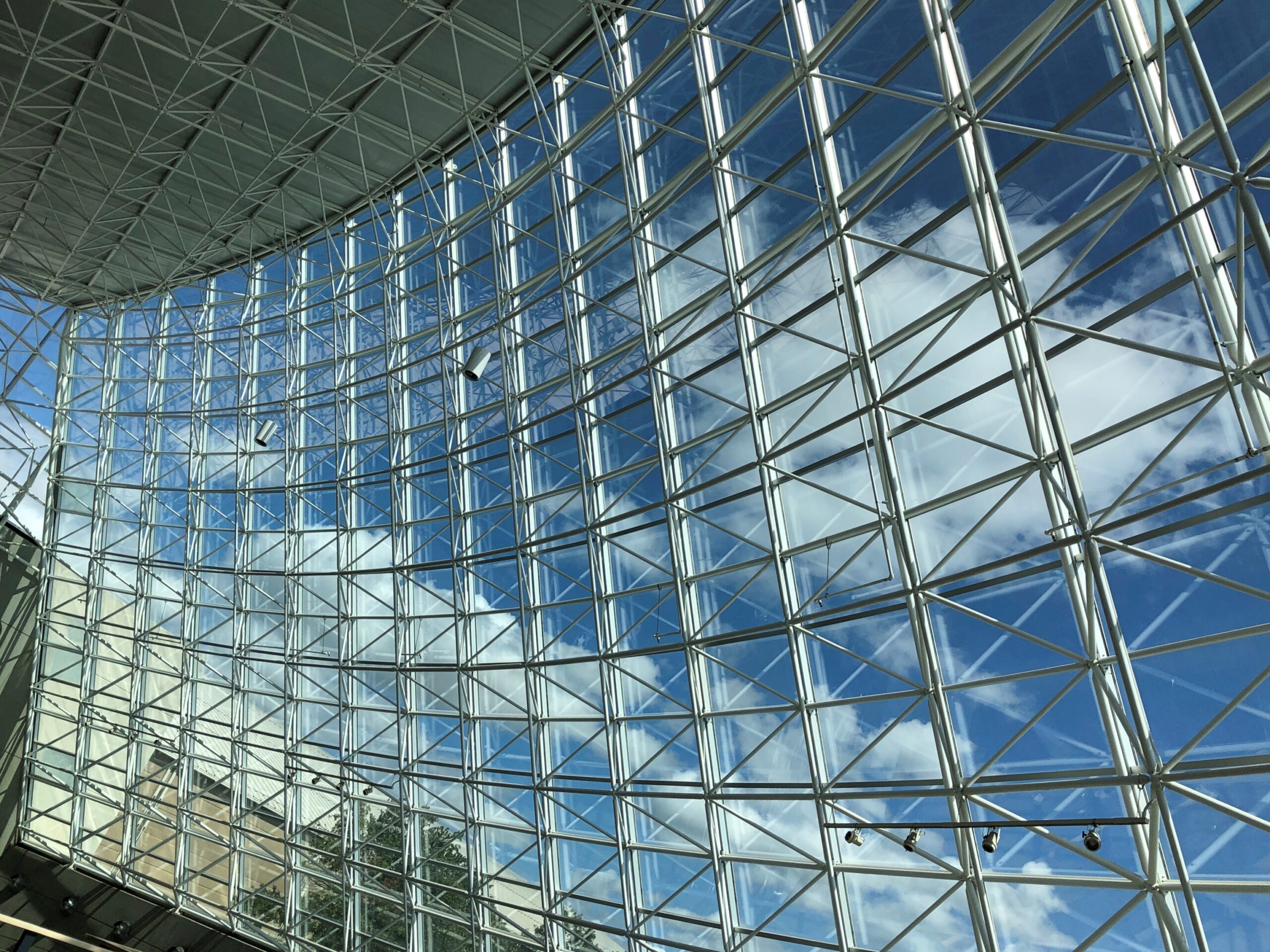
Most of the artifacts are aircraft used in one way or another by SAC, on display under sprawling ceilings. Leo A. Daly, a longstanding Omaha architect, did the museum’s design, completed in 1998.
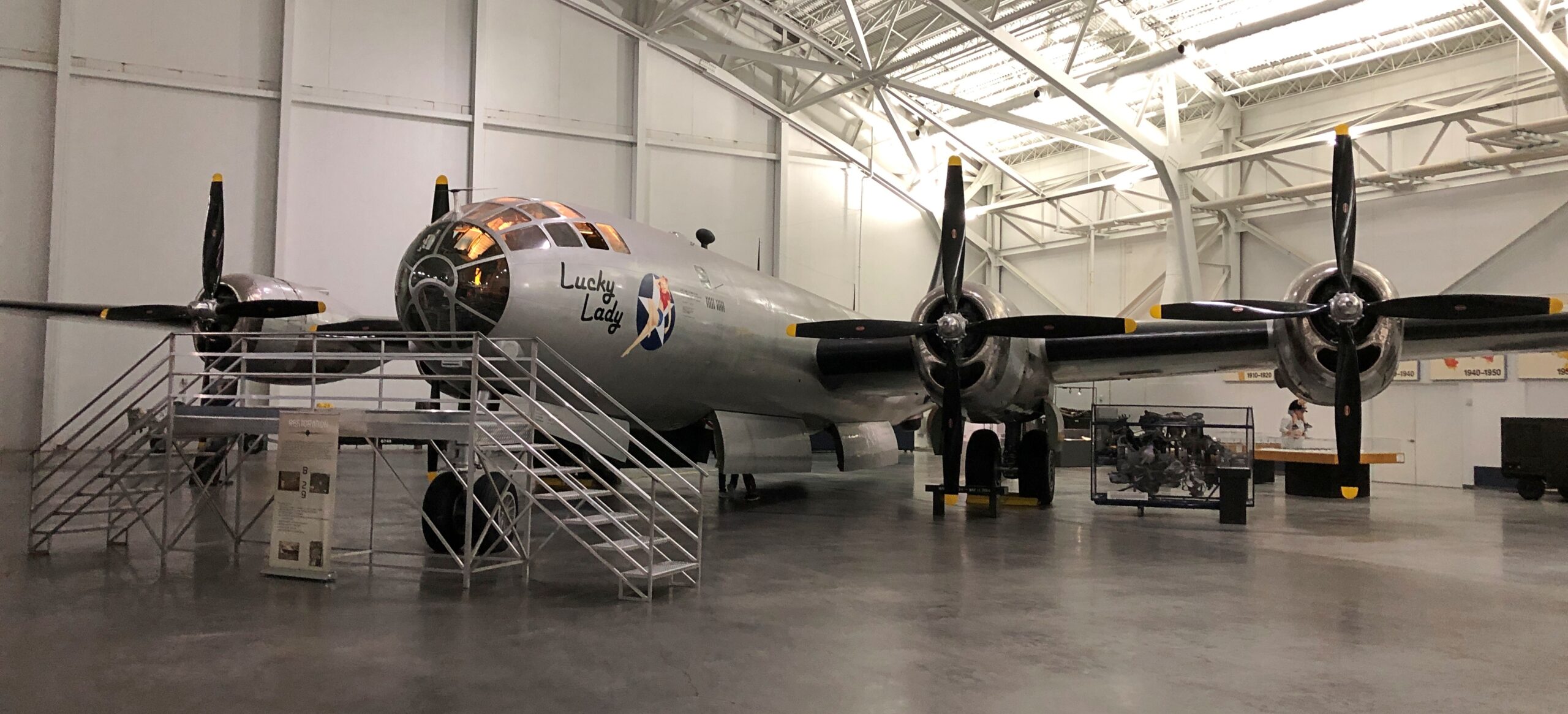
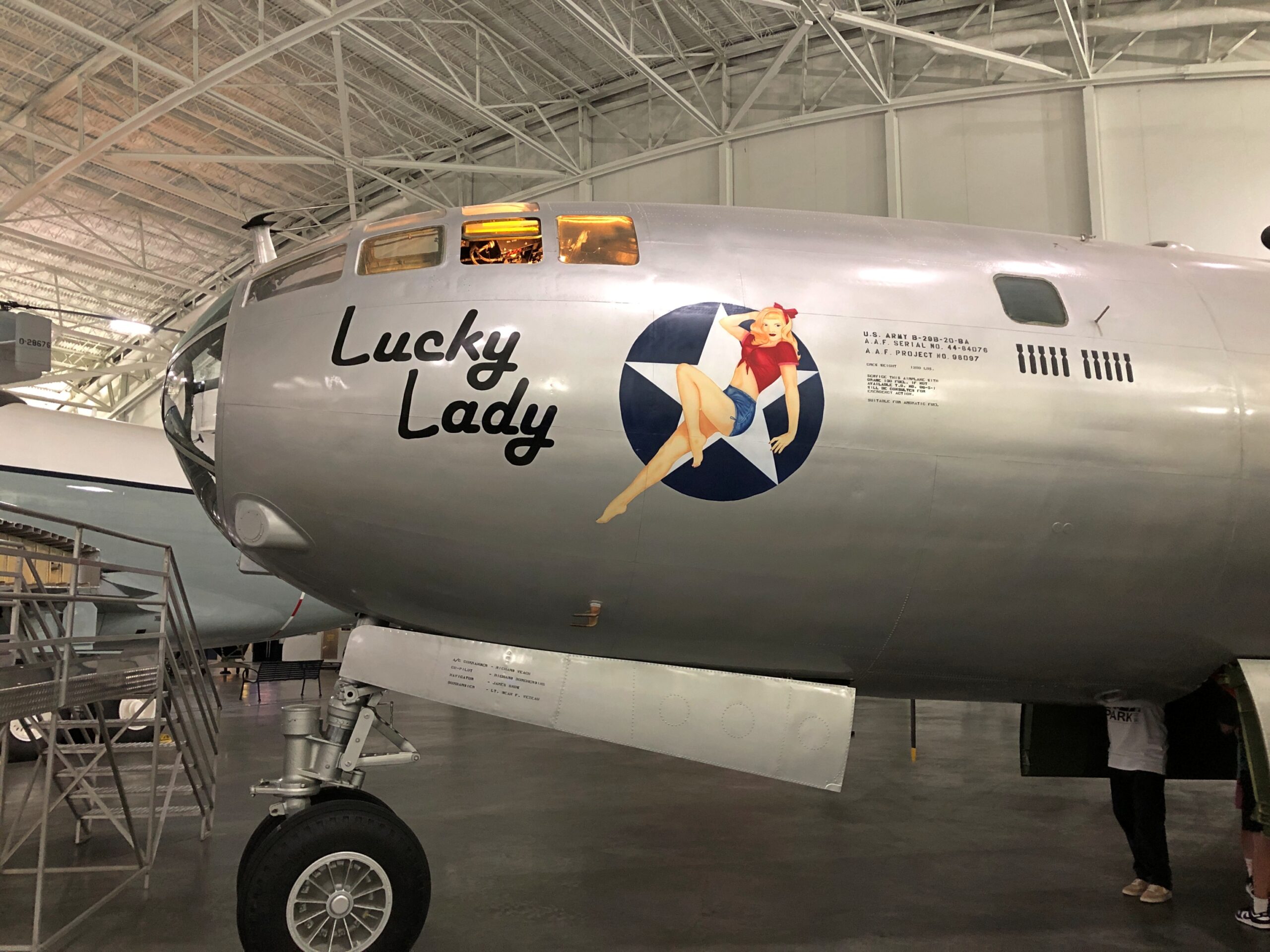
A named aircraft, the Lucky Lady, a B-29 Superfortress.
“The bomber was manufactured by Bell Aircraft, in Marietta, Georgia and delivered to the U.S. Army Air Force on August 4, 1945,” Airplanes Online says. “Its initial assignment was to Walker AAF (Second Air Force), Victoria, Kansas.” Lucky all right, as in manufactured too late in the war to get shot at, unless there’s something about 1940s Kansas I don’t know.
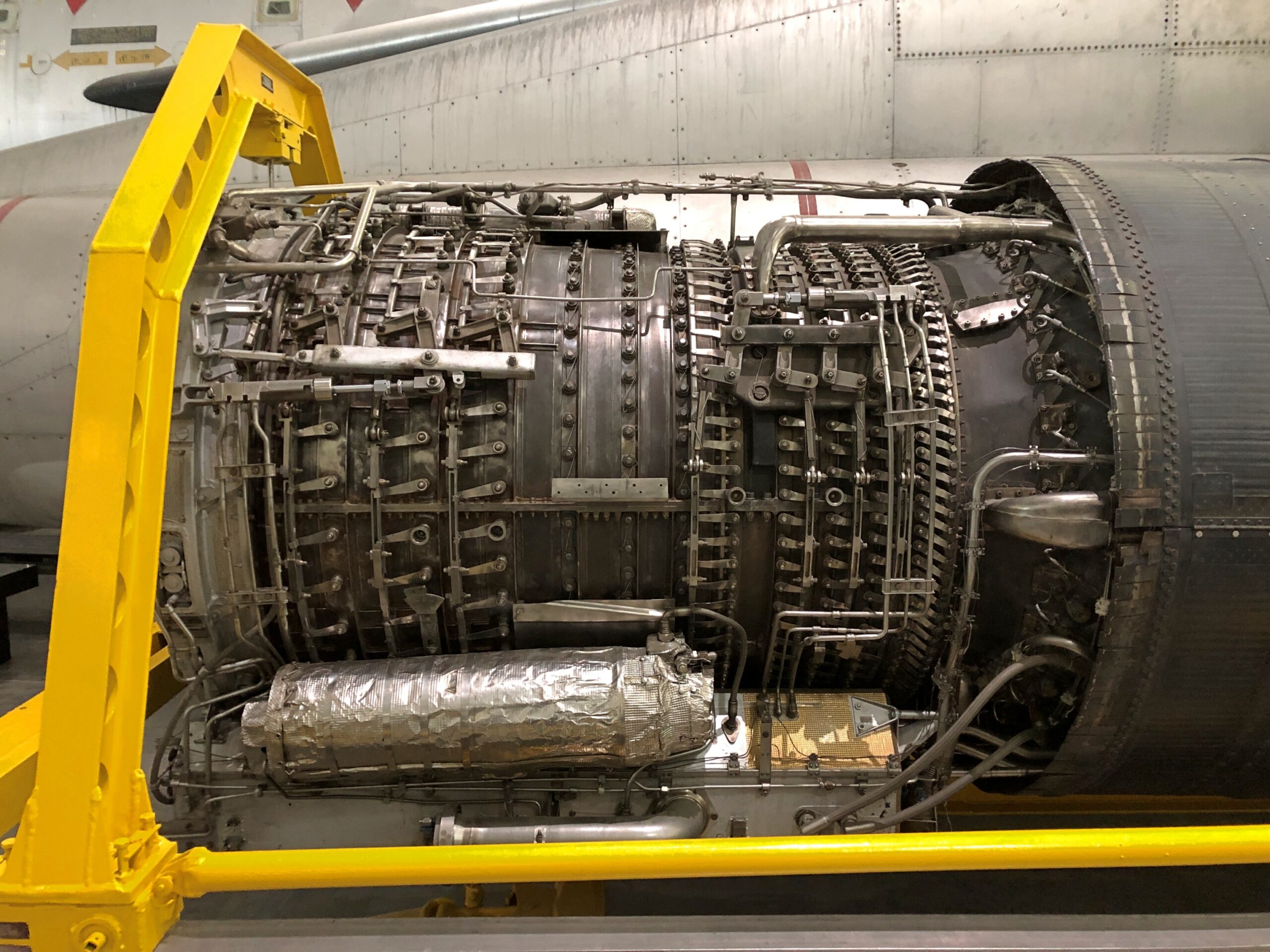
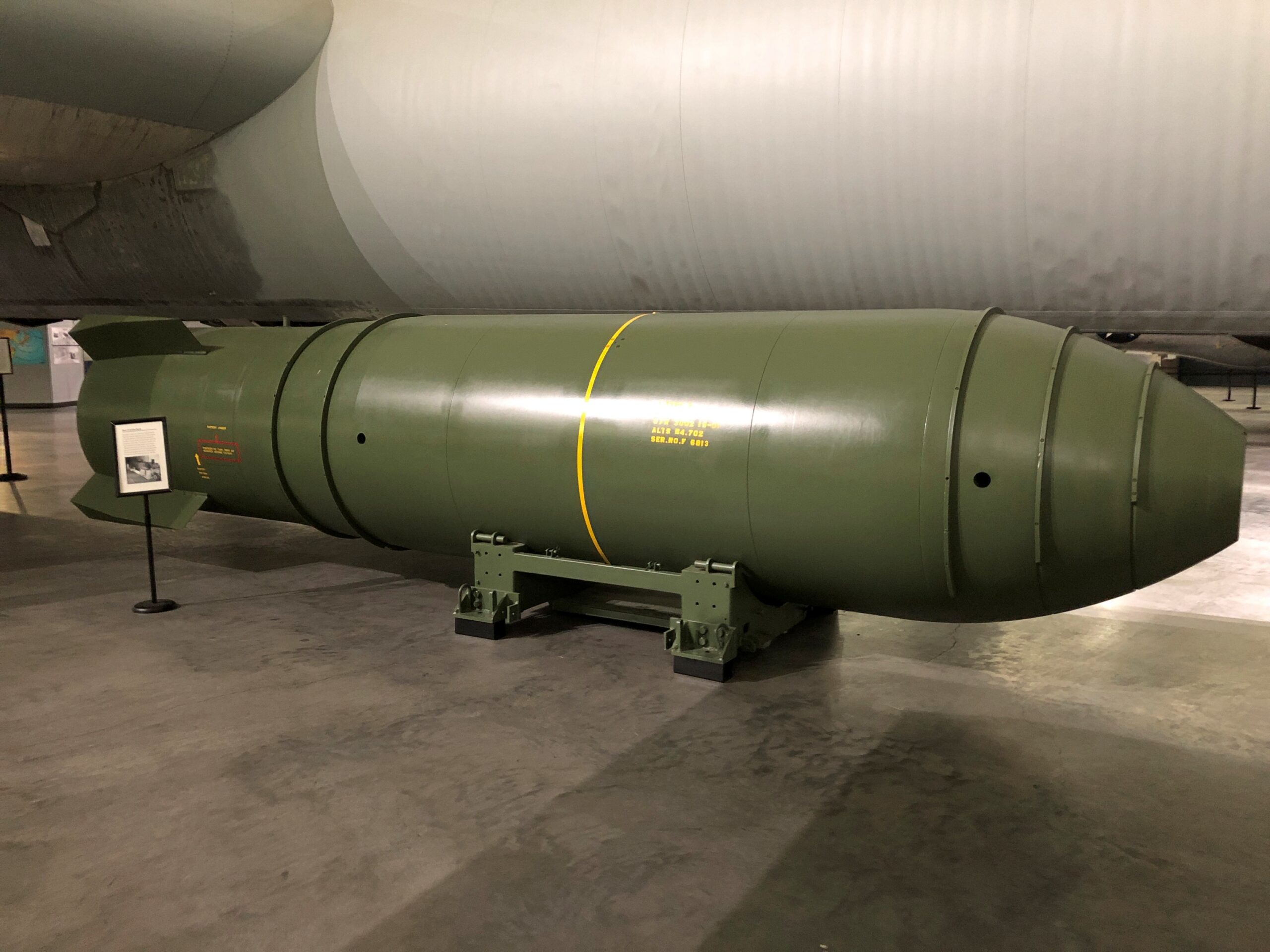
Smaller items, though not actually that small.
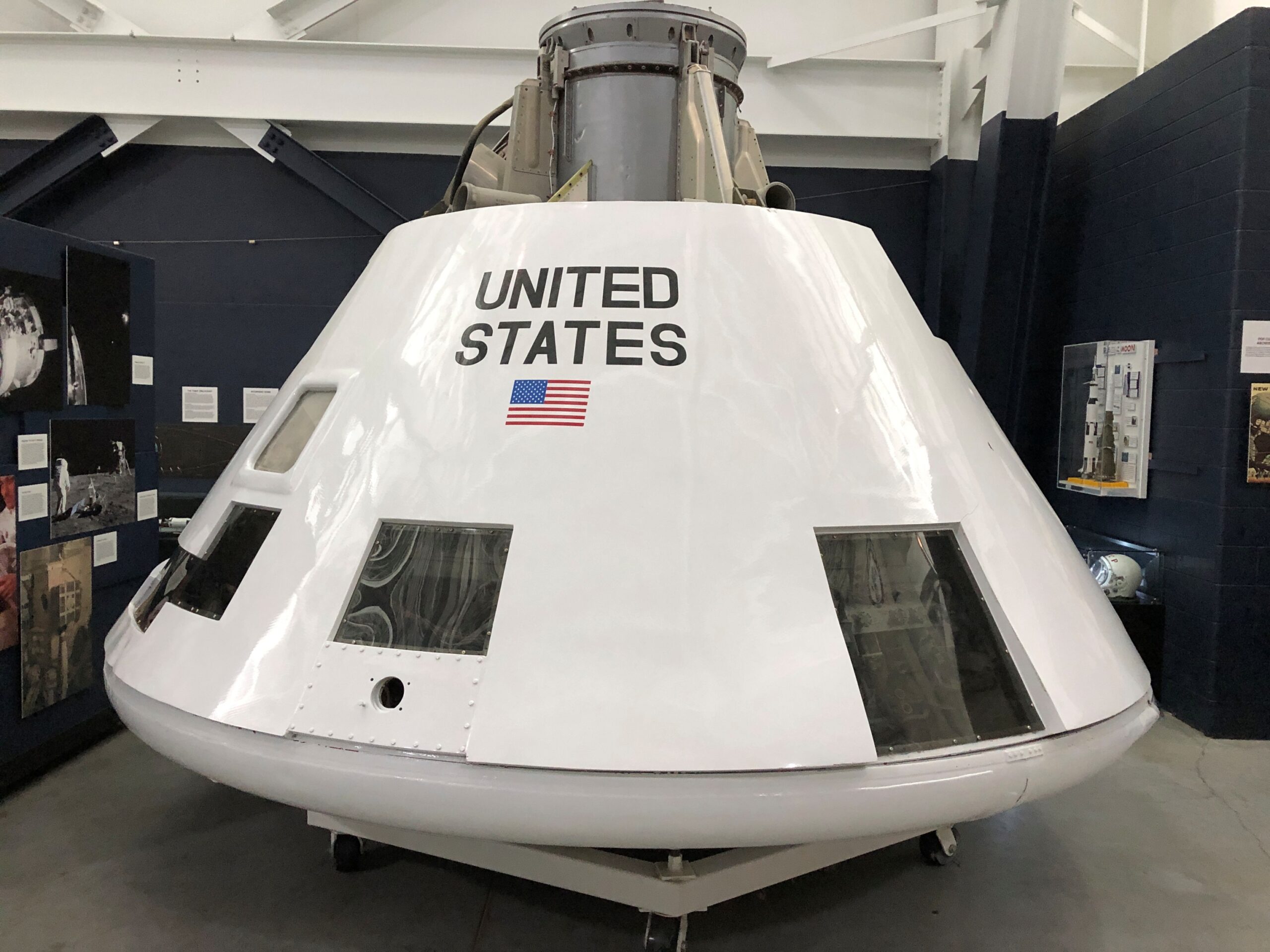
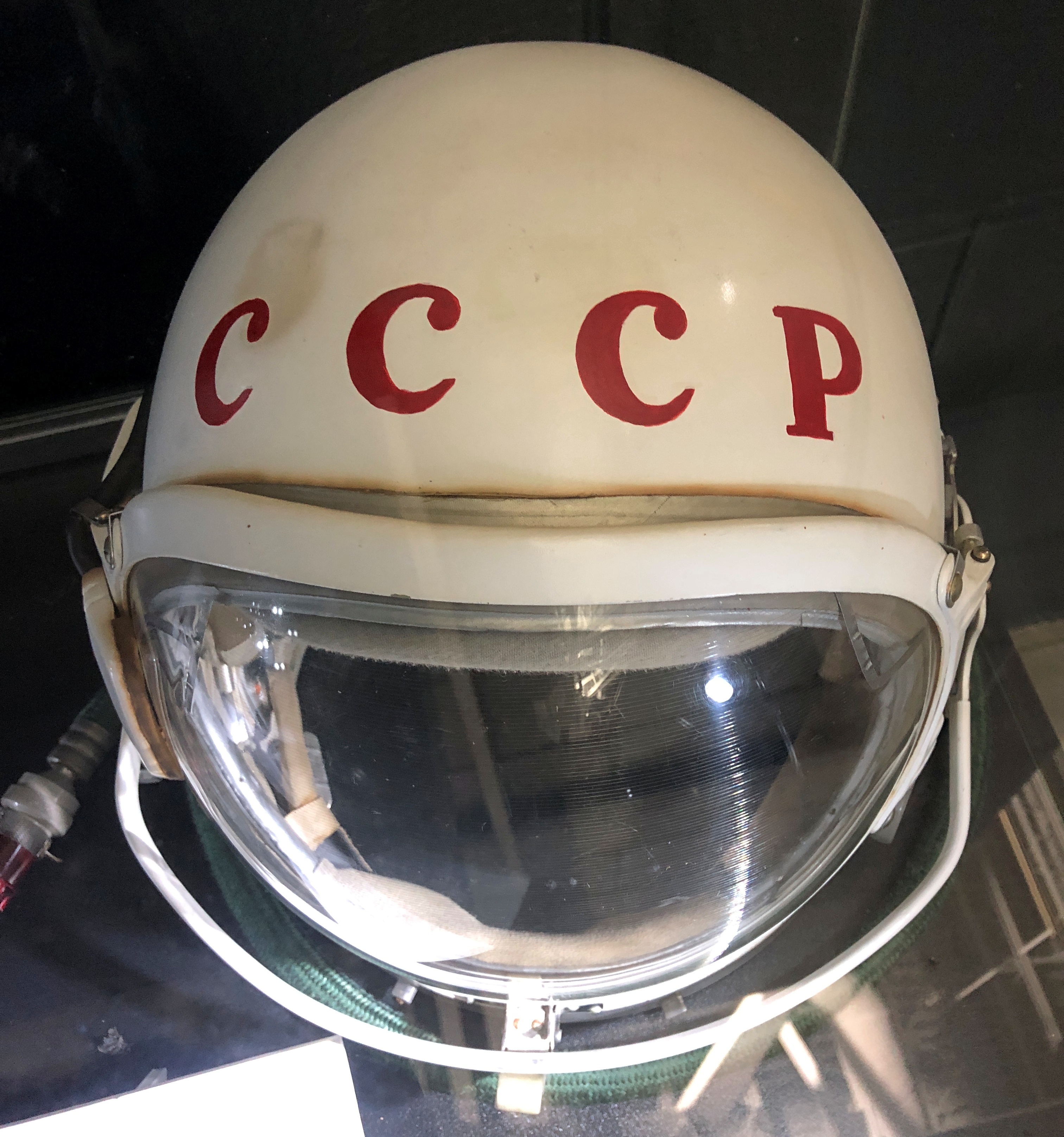
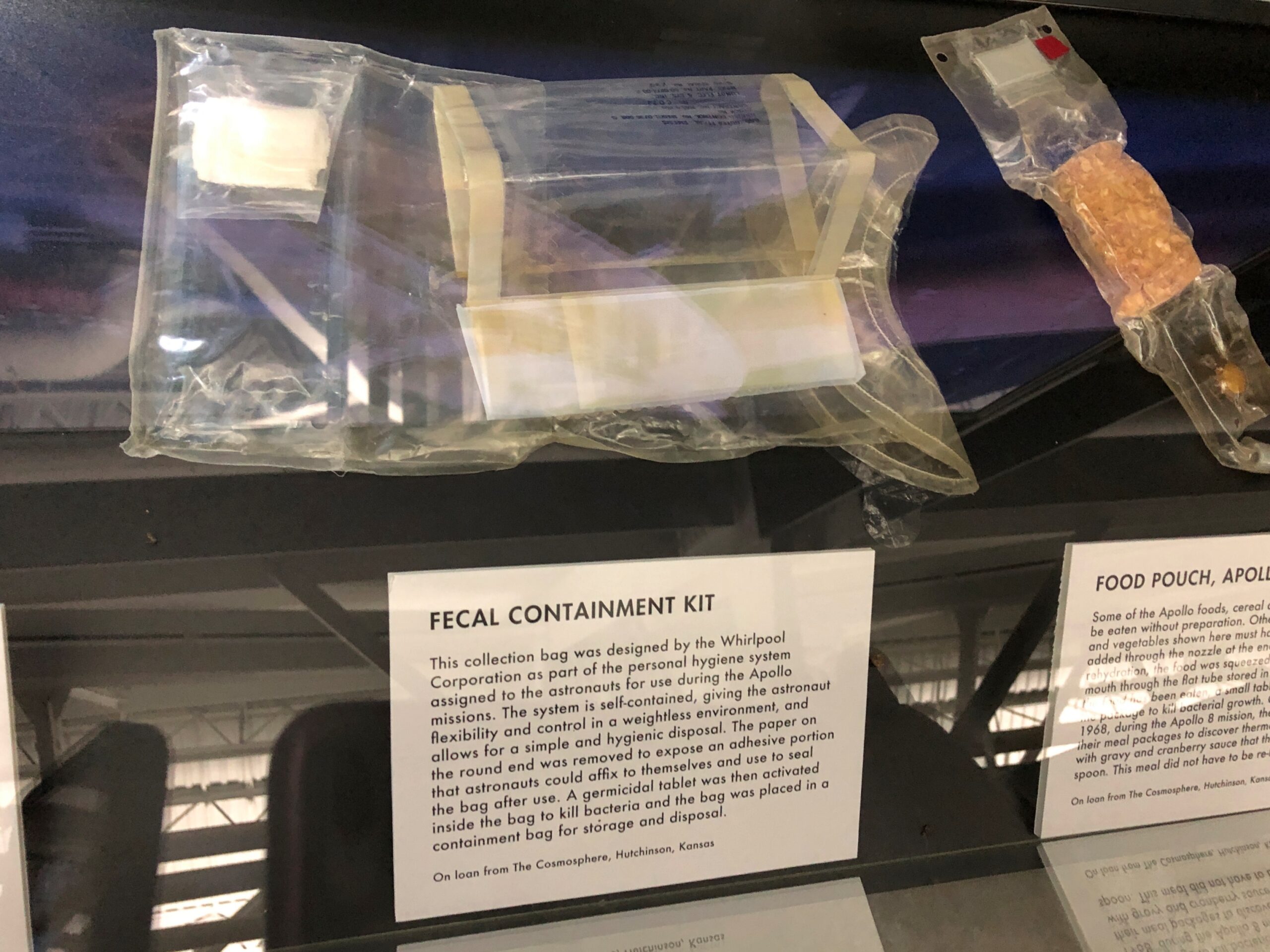
Besides the Vela satellite, other space items include spaceman gear and leftovers from the early days of manned space flight, such as a boilerplate Apollo, which wasn’t actually a capsule, but had the size, shape and mass of a command module, for testing.
Picked up cheap after the dissolution of the Soviet Union?
Probably something non-astronauts wonder about a great deal.
That was the goal about two months ago now, after I left Colorado Springs for a solo drive back to Illinois. The fastest way would be to link with I-70 while still in Colorado. I wasn’t inclined to do that, though I did take that Interstate route through much of Kansas. Instead, I wanted to start remote and stay that way for the length of eastern Colorado.
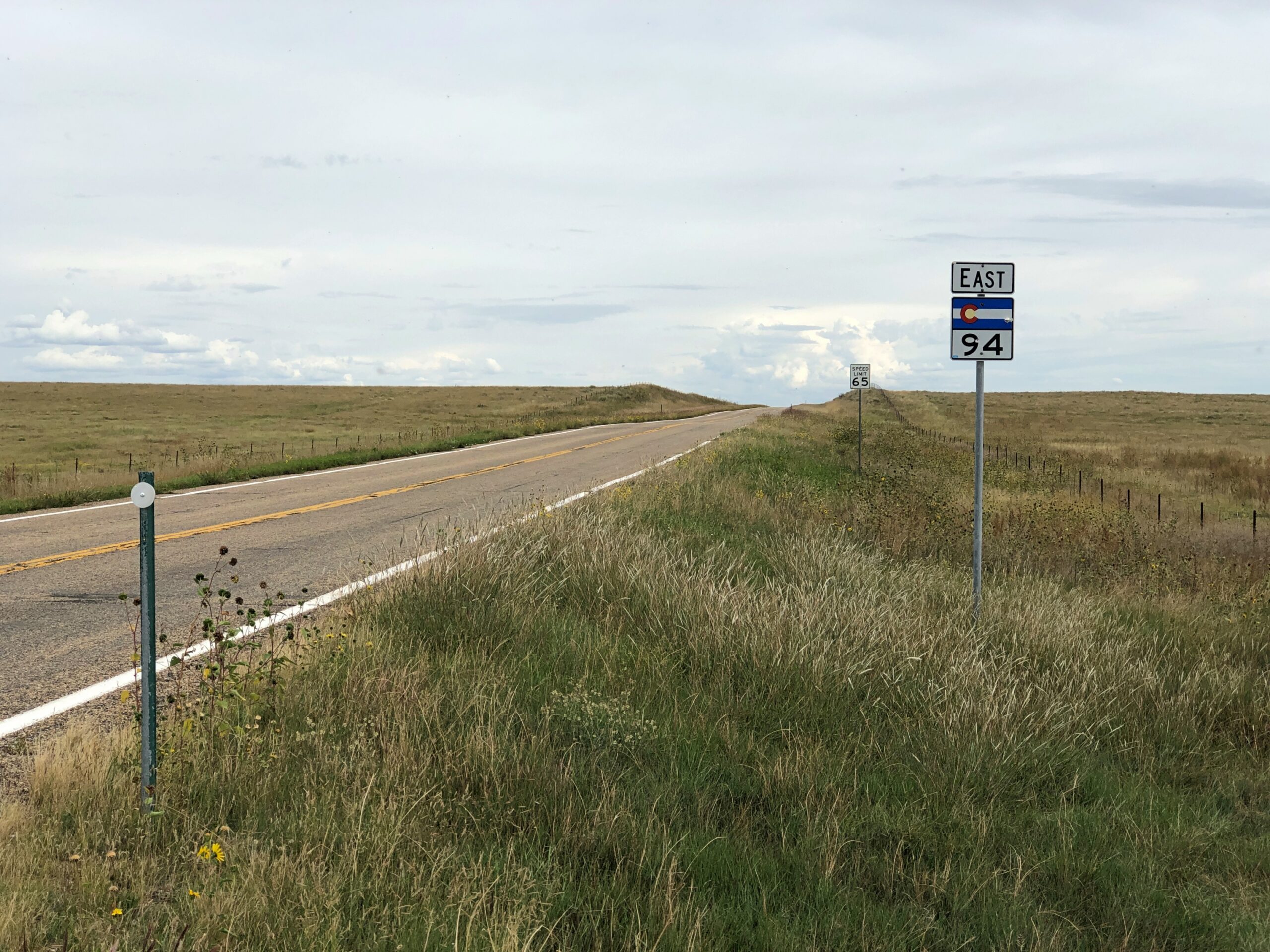
So east on Colorado 94 it was, which passes through such hamlets as Yoder, Rush and Punkin Center. Mostly, though, there are few signs of people.
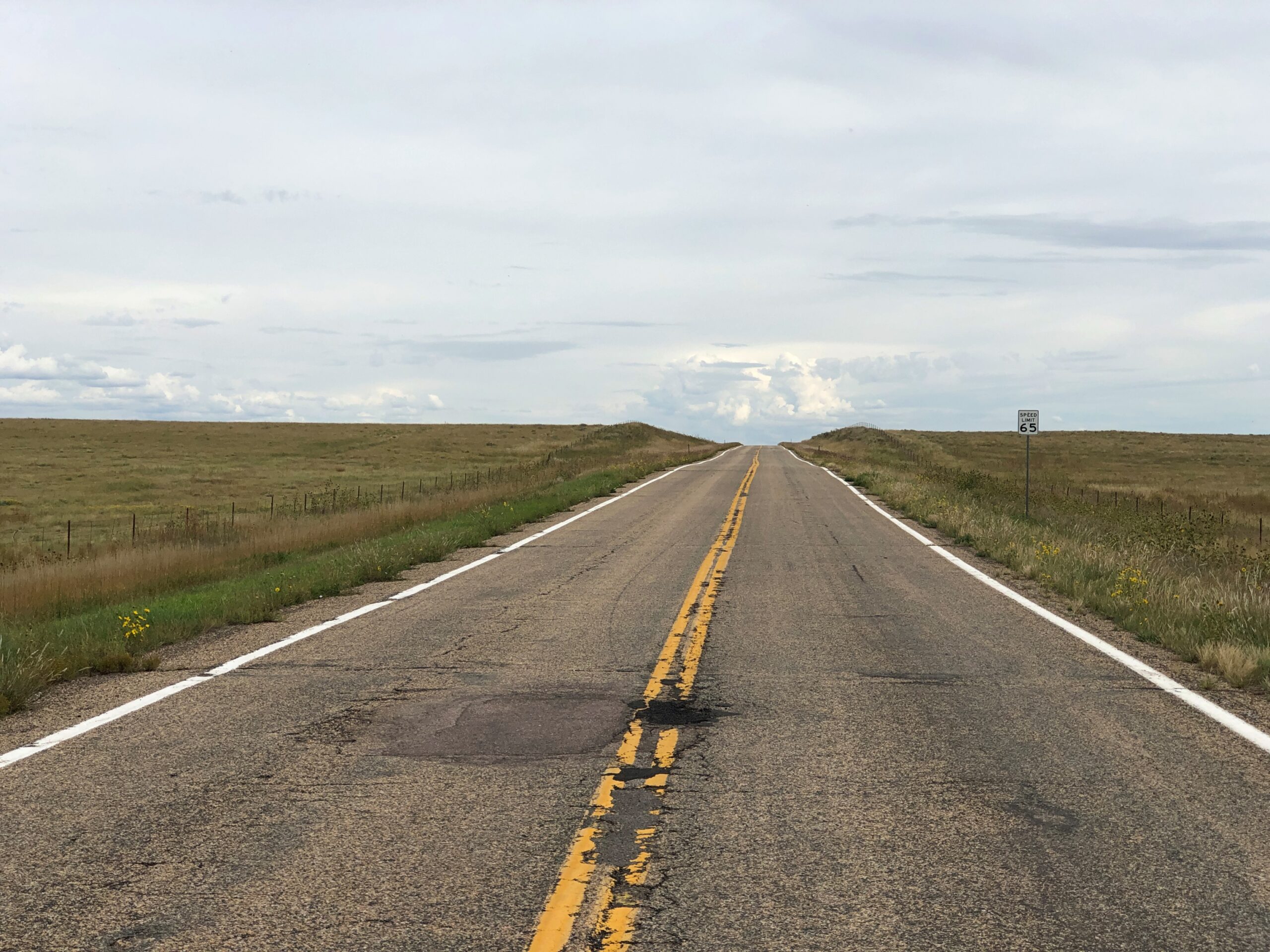
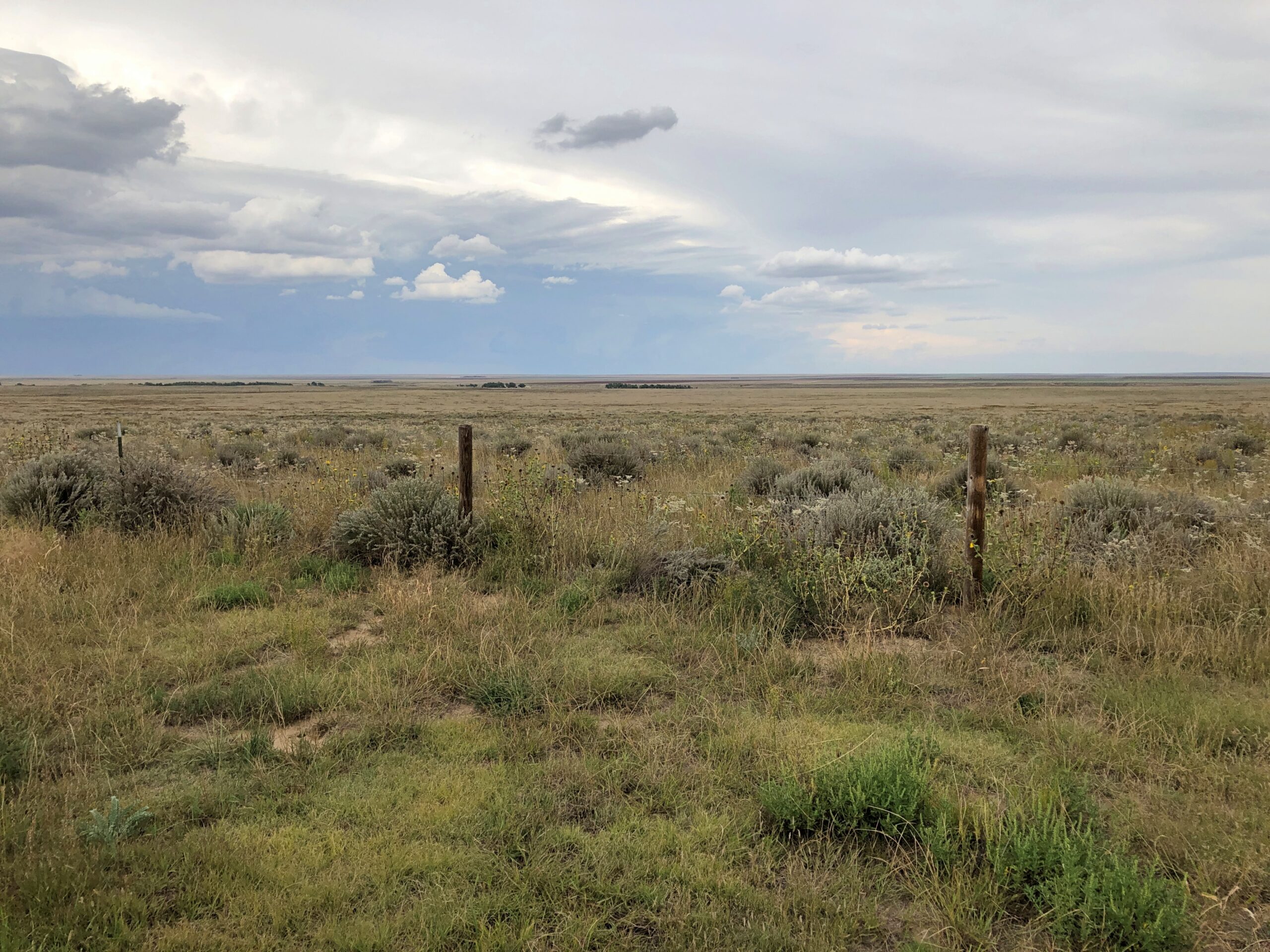
I noticed the Front Range growing smaller in my rearview mirror. I wondered at what point they would vanish from sight, and decided to keep track of their shrink, and note the last time I could see them. Naturally, I forgot about that resolve, and next thing I knew, the road backward and forward stretched to both horizons.
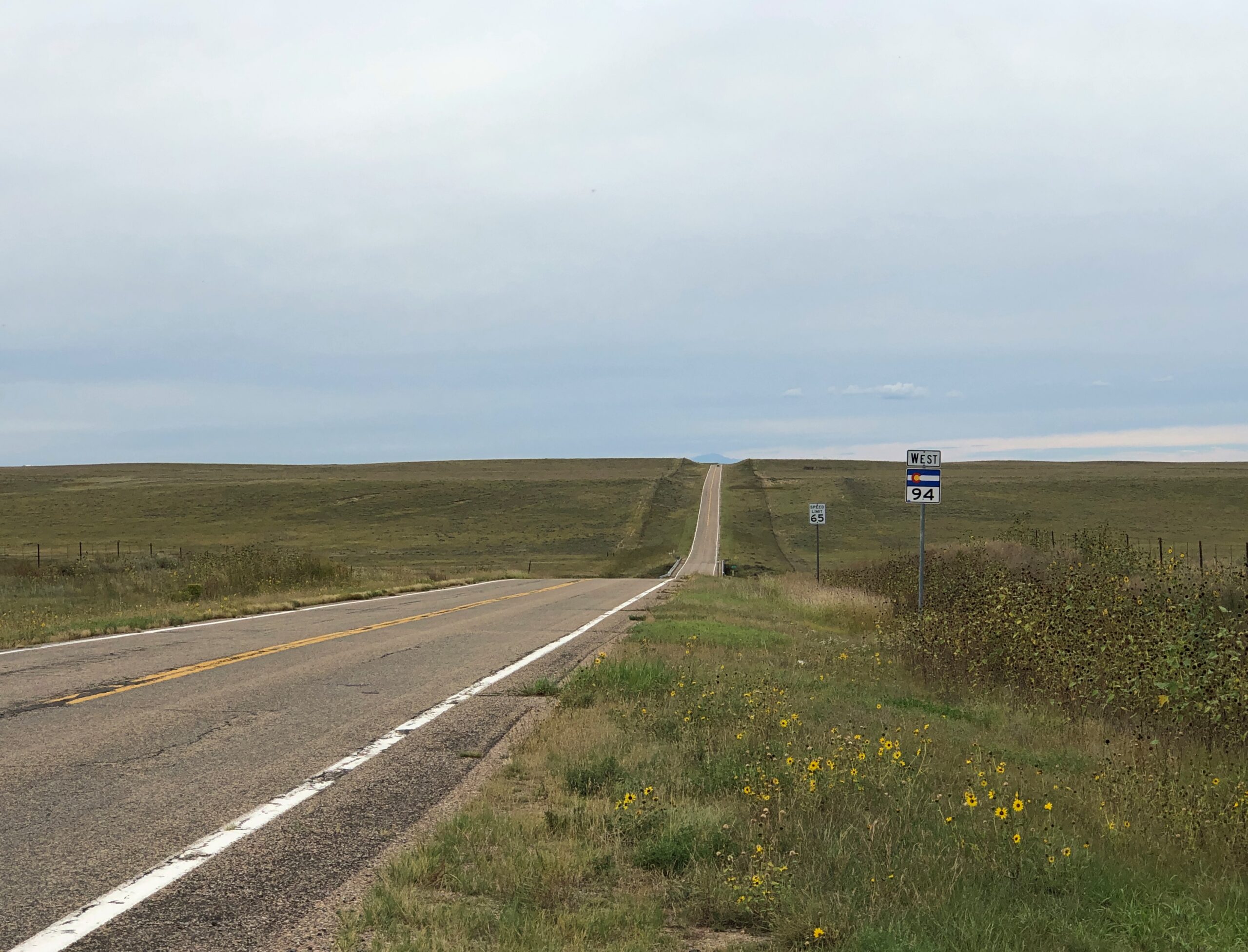
This is looking back west, a mountain barely visible, and is also an image illustrating that the eastern Colorado terrain isn’t completely flat.
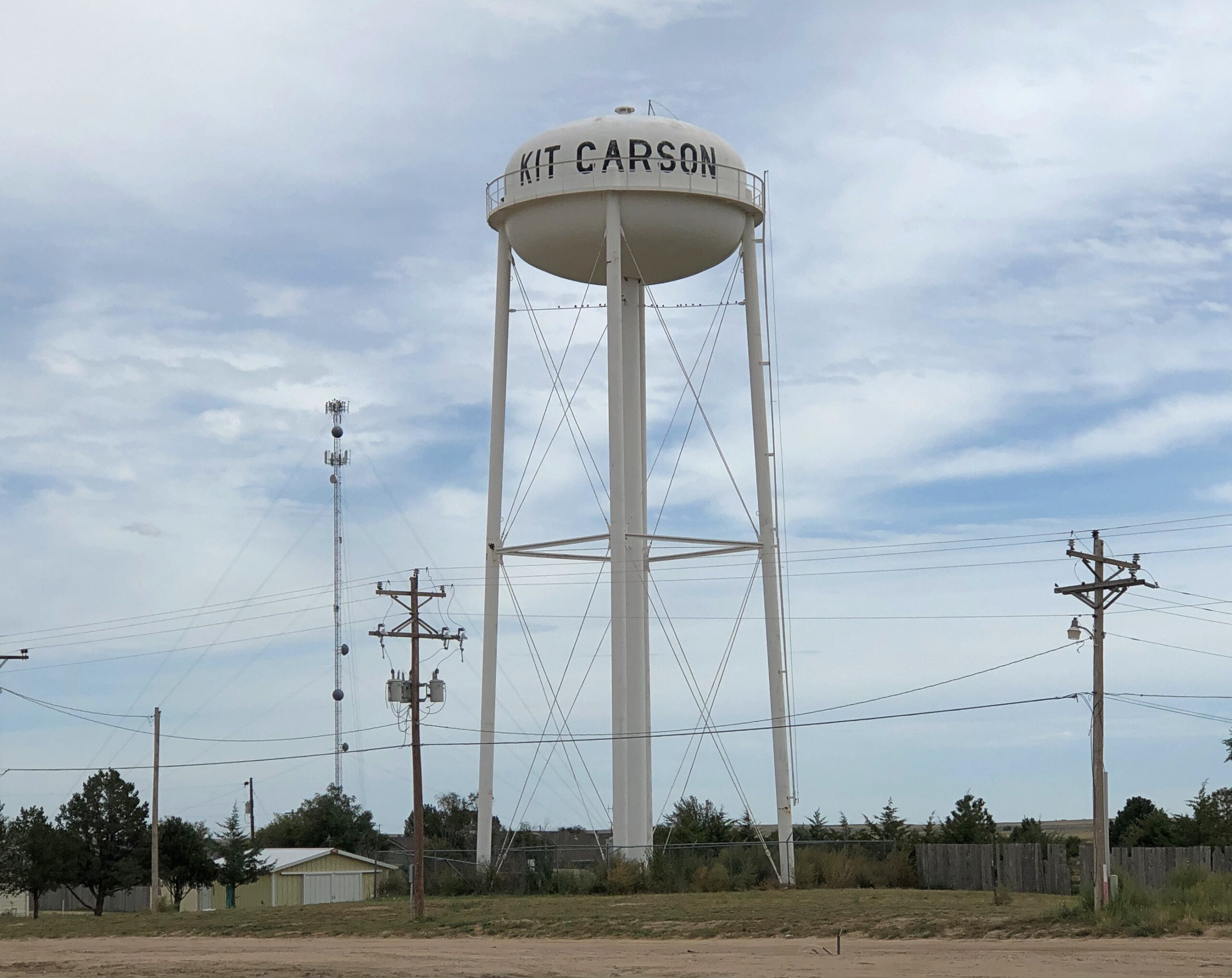
Eastbound Colorado 94 ends near Aroya, where it meets US 40/287. I took that road southeast to Kit Carson (pop. 255).
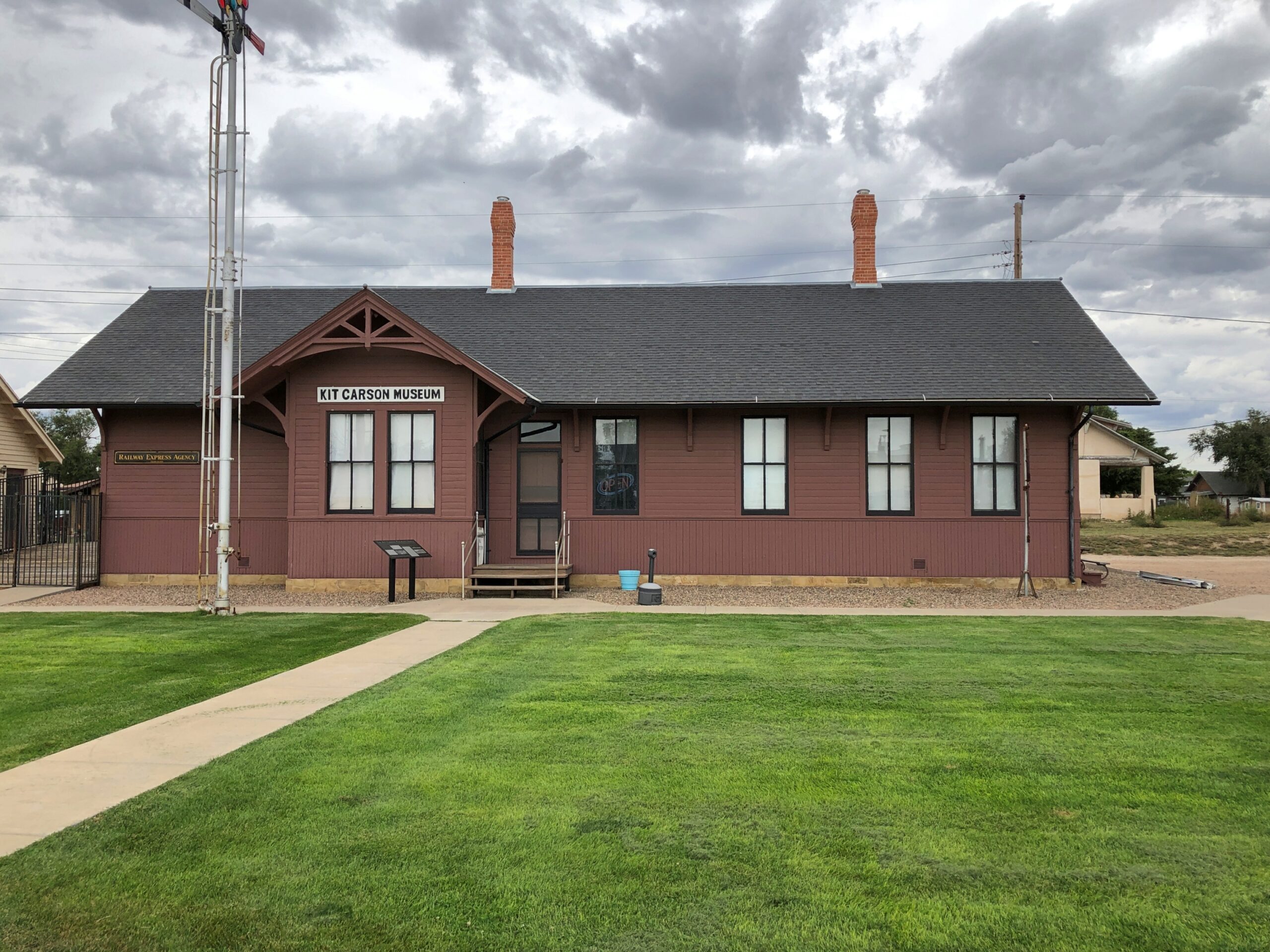
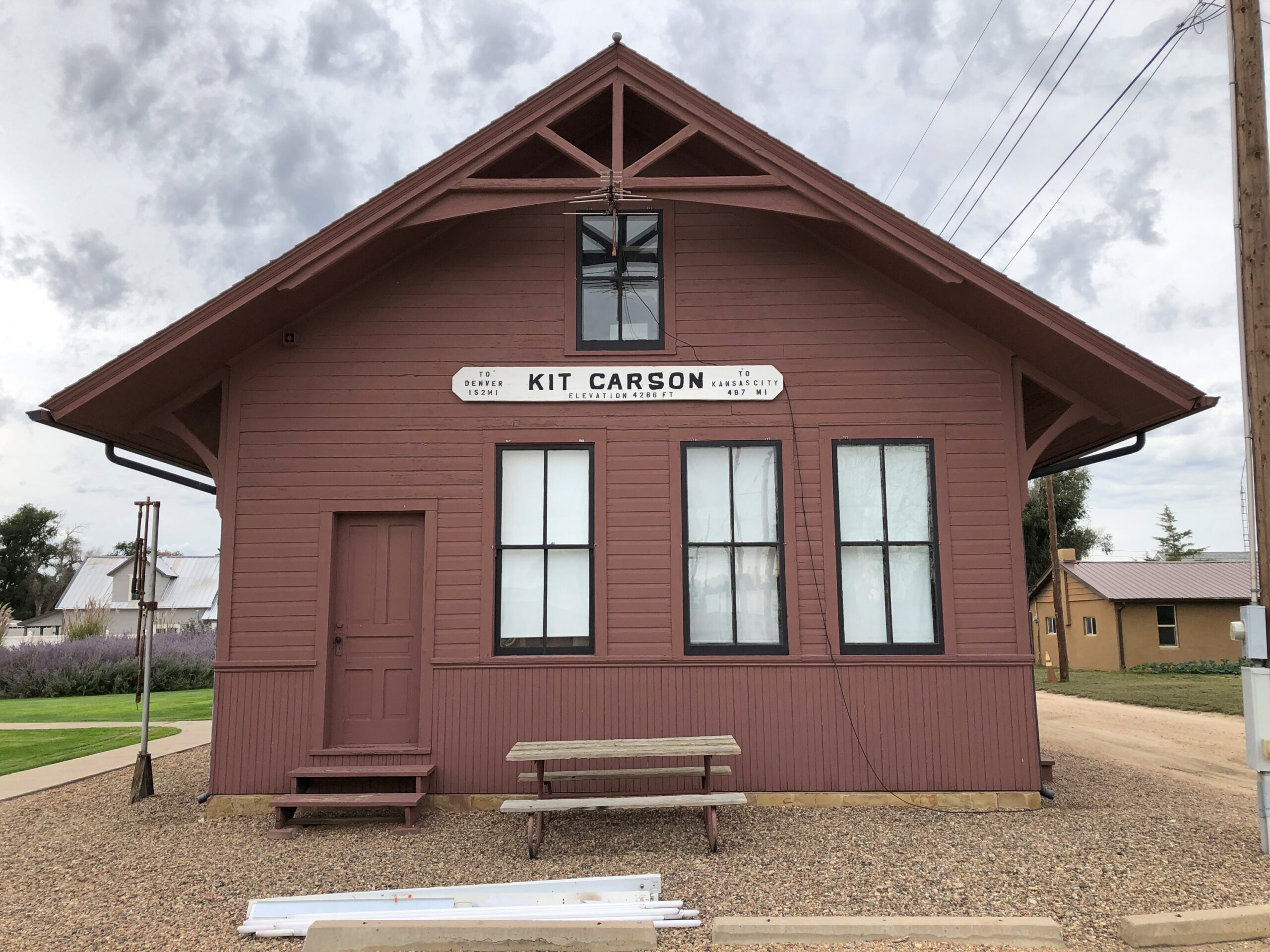
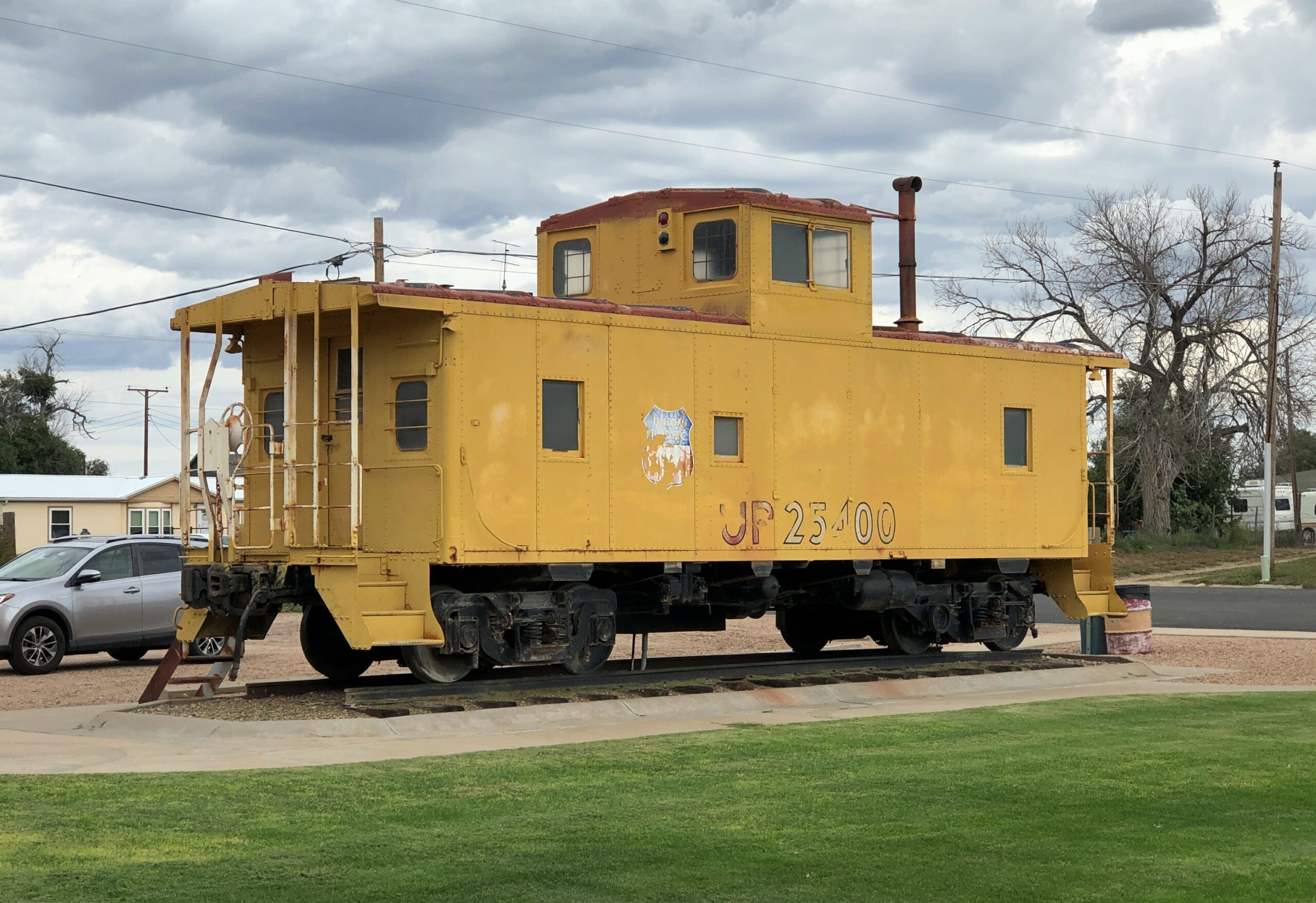
The railroad still comes through Kit Carson. It’s safe to say that without the railroad, the town might be no larger than Punkin Center. The Kit Carson Railroad Depot is now a museum.
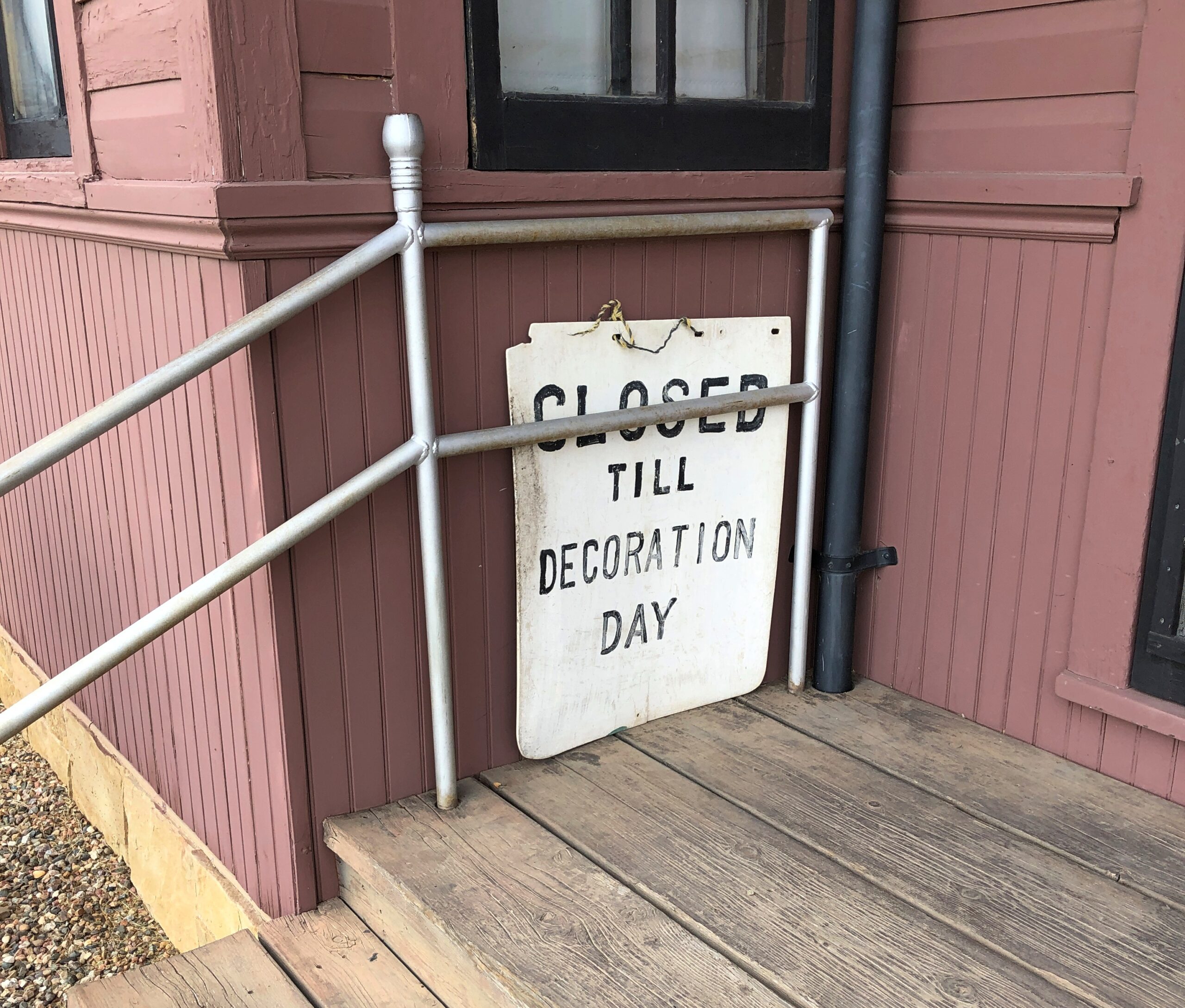
Closed. Till Decoration Day. Really?
In any case, it was closed on September 22.
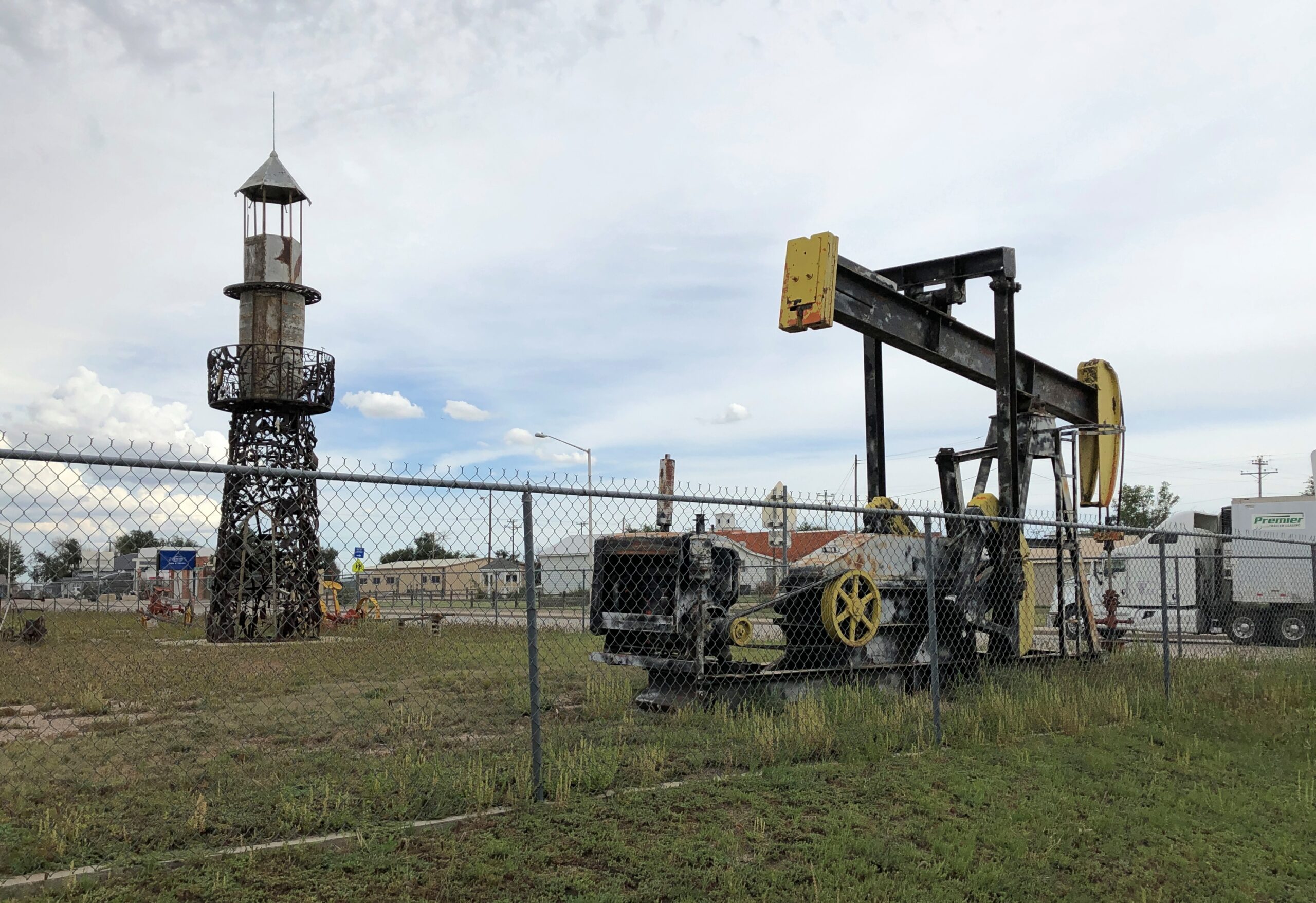
Across the street, metal works. The pump jack is one thing, but the other is a — tower?
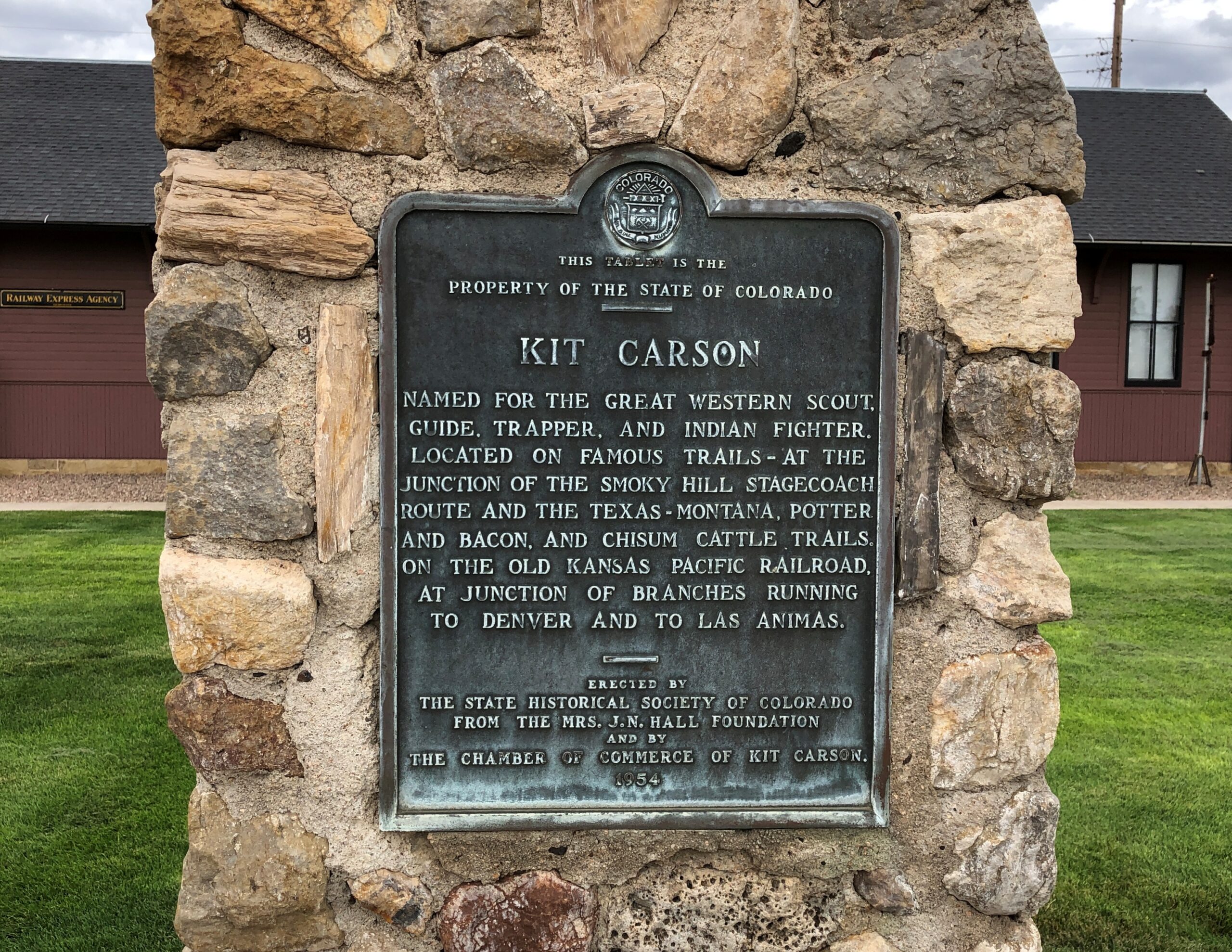
The town of Kit Carson had two locations. The original site was located near the site where Kit Carson traded with the Arapahoe and Cheyenne Indians. The present site was determined by the arrival of the railroad. Destroyed by fire three times, twice by the torches of Indians and once by carousing cowboys, the determined citizens of the town showed their desire to survive by rebuilding.
I can’t help but think those carousing cowboys were actually a gang of rustlers, cutthroats, murderers, bounty hunters, desperados, mugs, pugs, thugs, nitwits, halfwits, dimwits, vipers, snipers, con men, Indian agents, Mexican bandits, muggers, buggerers, bushwhackers, hornswogglers, horse thieves, bull dykes, train robbers, bank robbers, ass-kickers, shit-kickers and Methodists.
Also of note, according to the town: The railroad brought in foreign dignitaries, such as the Grand Duke Alexis [Alexei Alexandrovich] of Russia. The Grand Duke hunted in Kit Carson and was accompanied by his military escort, General George Armstrong Custer on January 20, 1872. [Custer was a lieutenant colonel at the time, but never mind.]
Grand Duke Alexis was on his 1871-72 tour of America. Sounds like he had a fine old time. Could have been the subject of an episode of Death Valley Days, but I don’t think it was. Dom Pedro, emperor of Brazil, made an appearance, as did the Emperor Norton, but I digress.
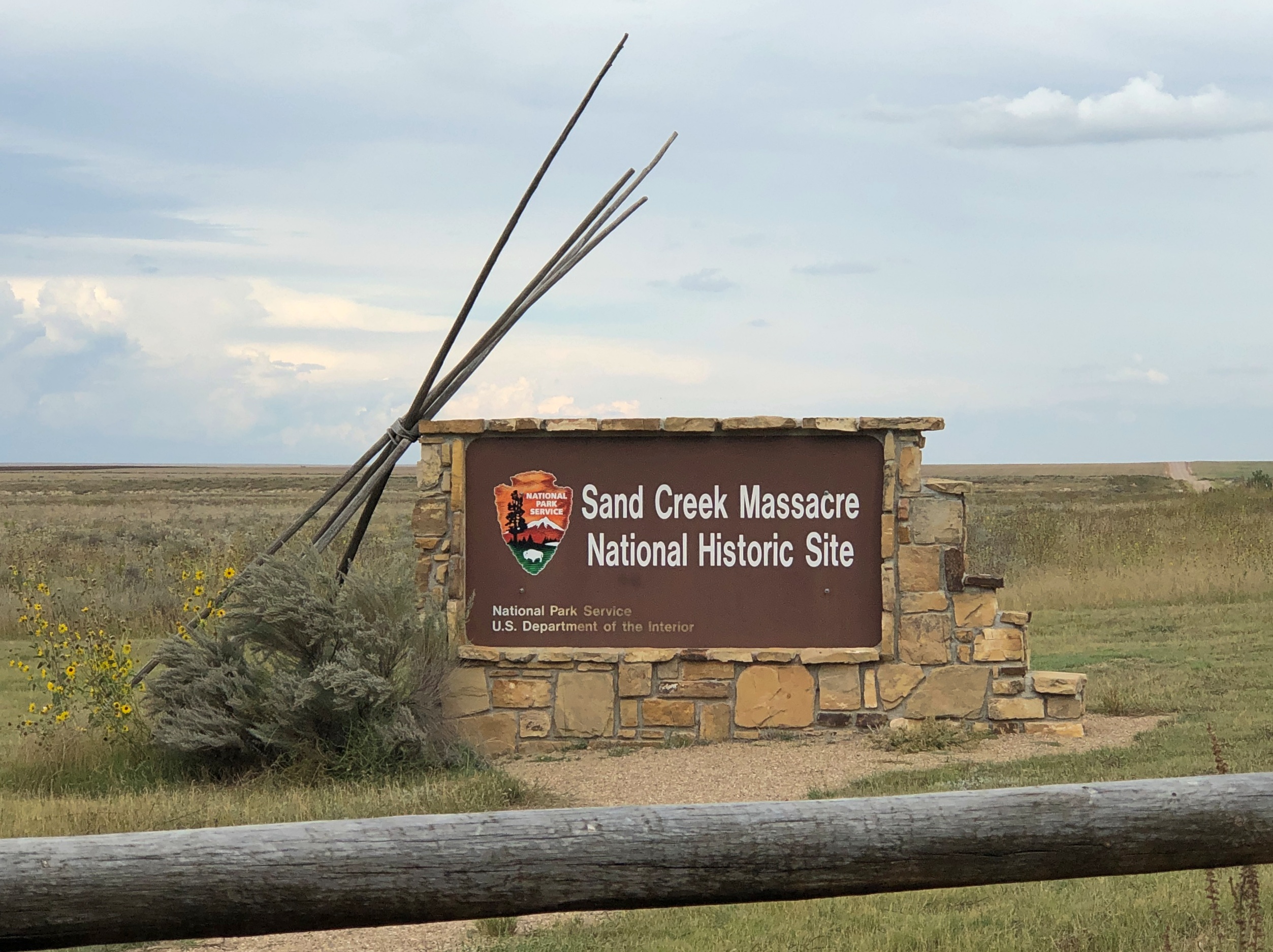
From Kit Carson, I headed south to Eads, still in Colorado, and then east on Colorado 96. I had the idea that I wanted to see the Sand Creek Massacre National Historic Site, which isn’t too far from that road. Just before the turnoff to the historic site, I noticed something odd near the highway.
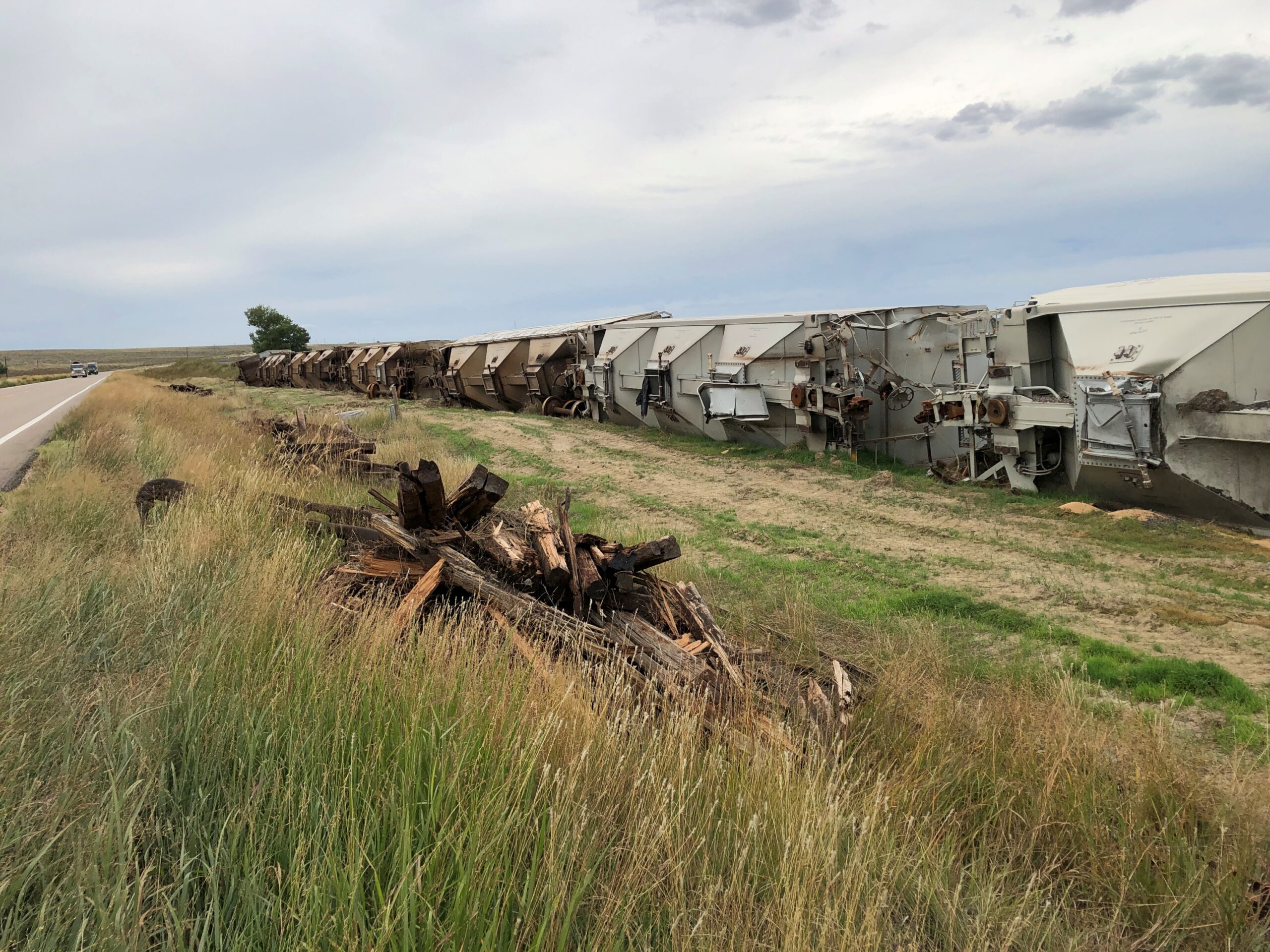
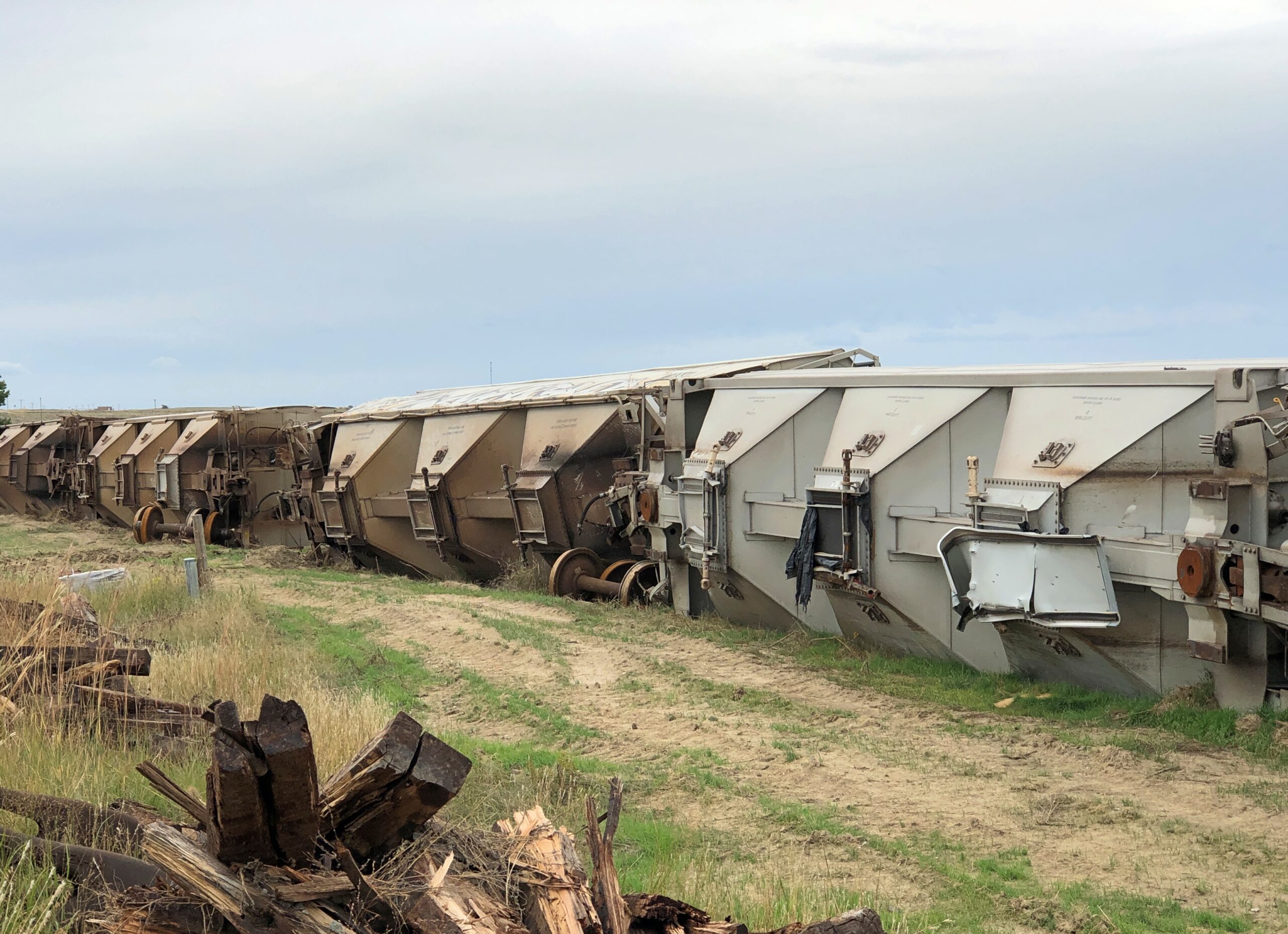
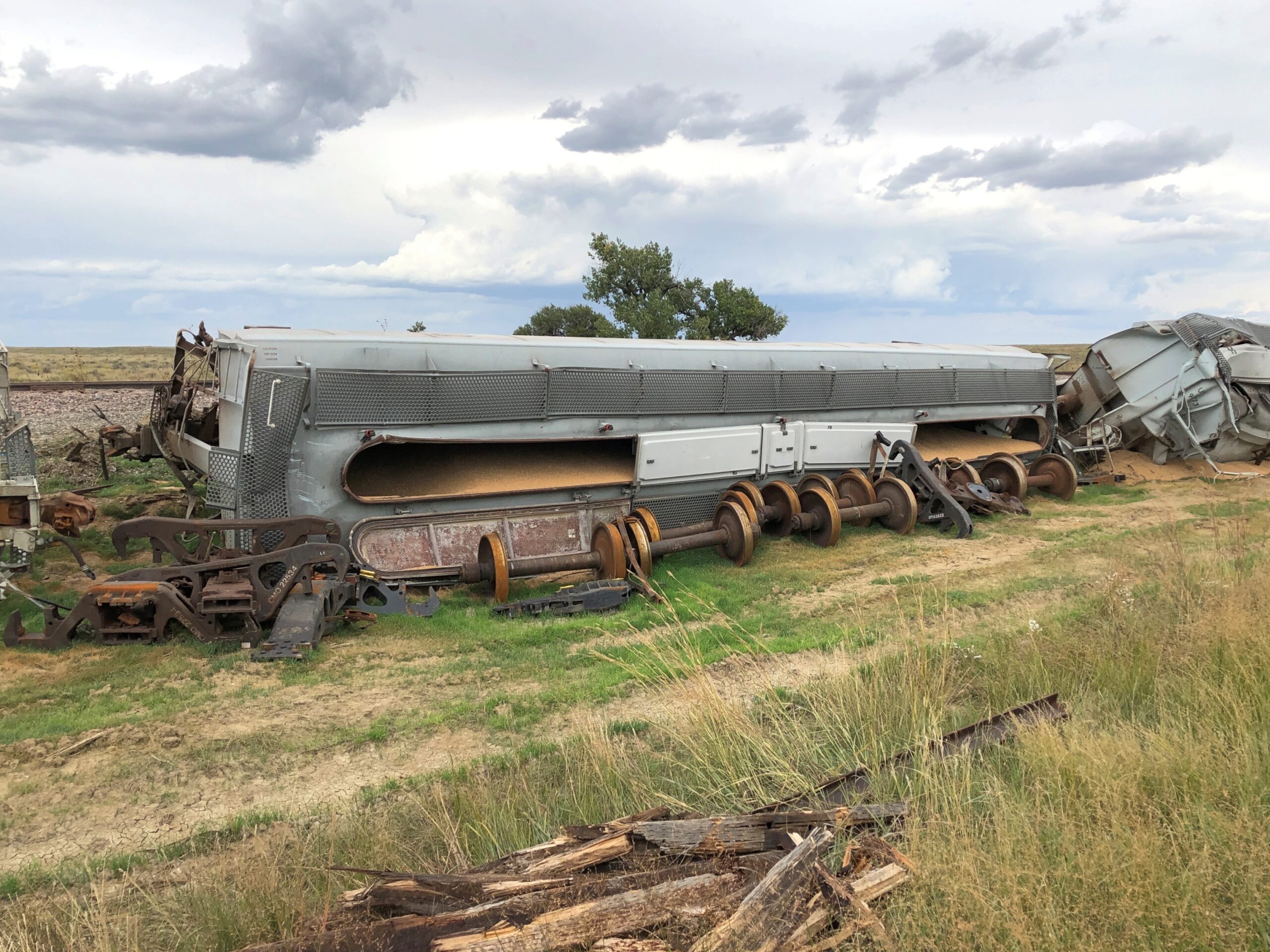
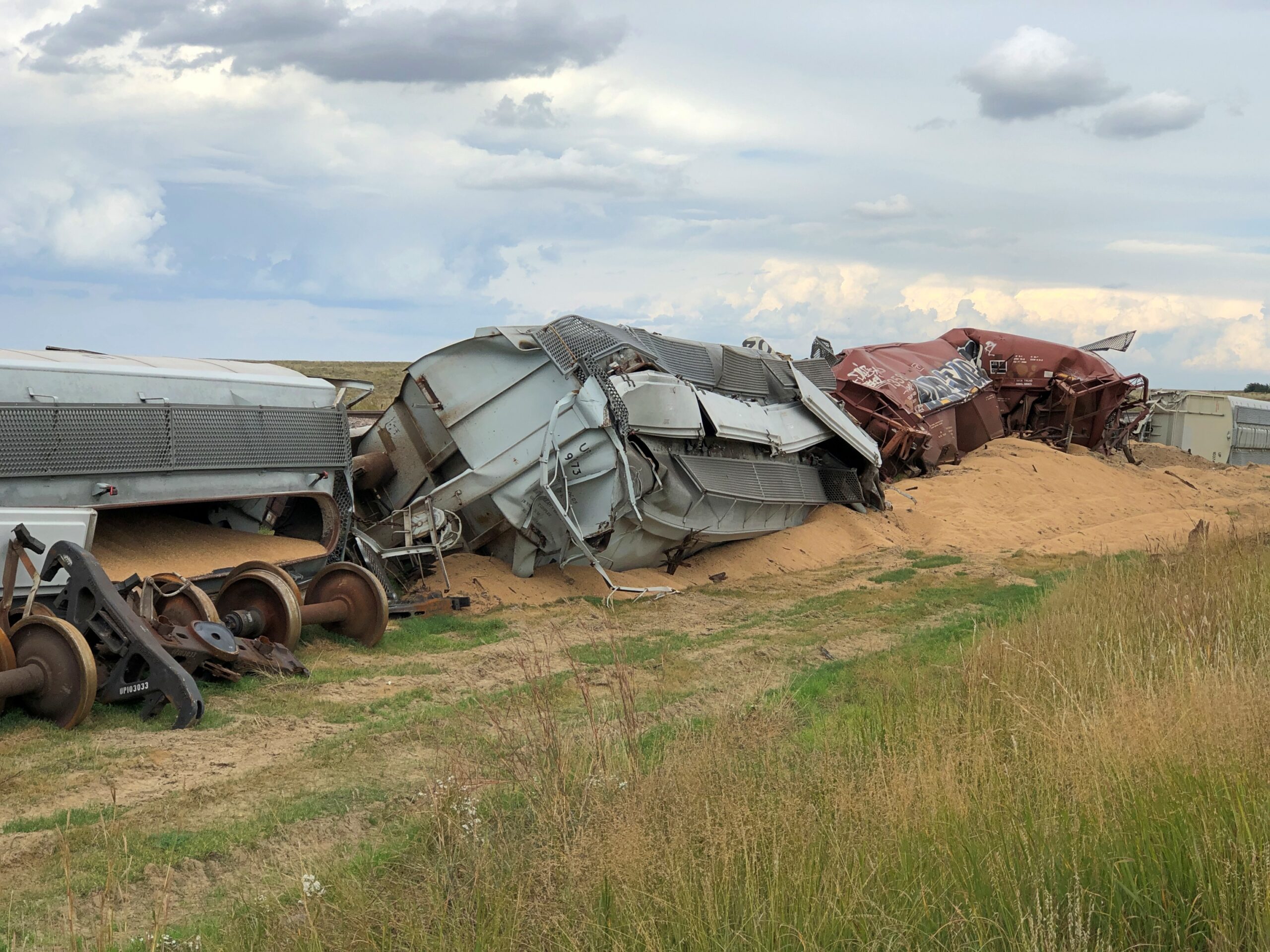
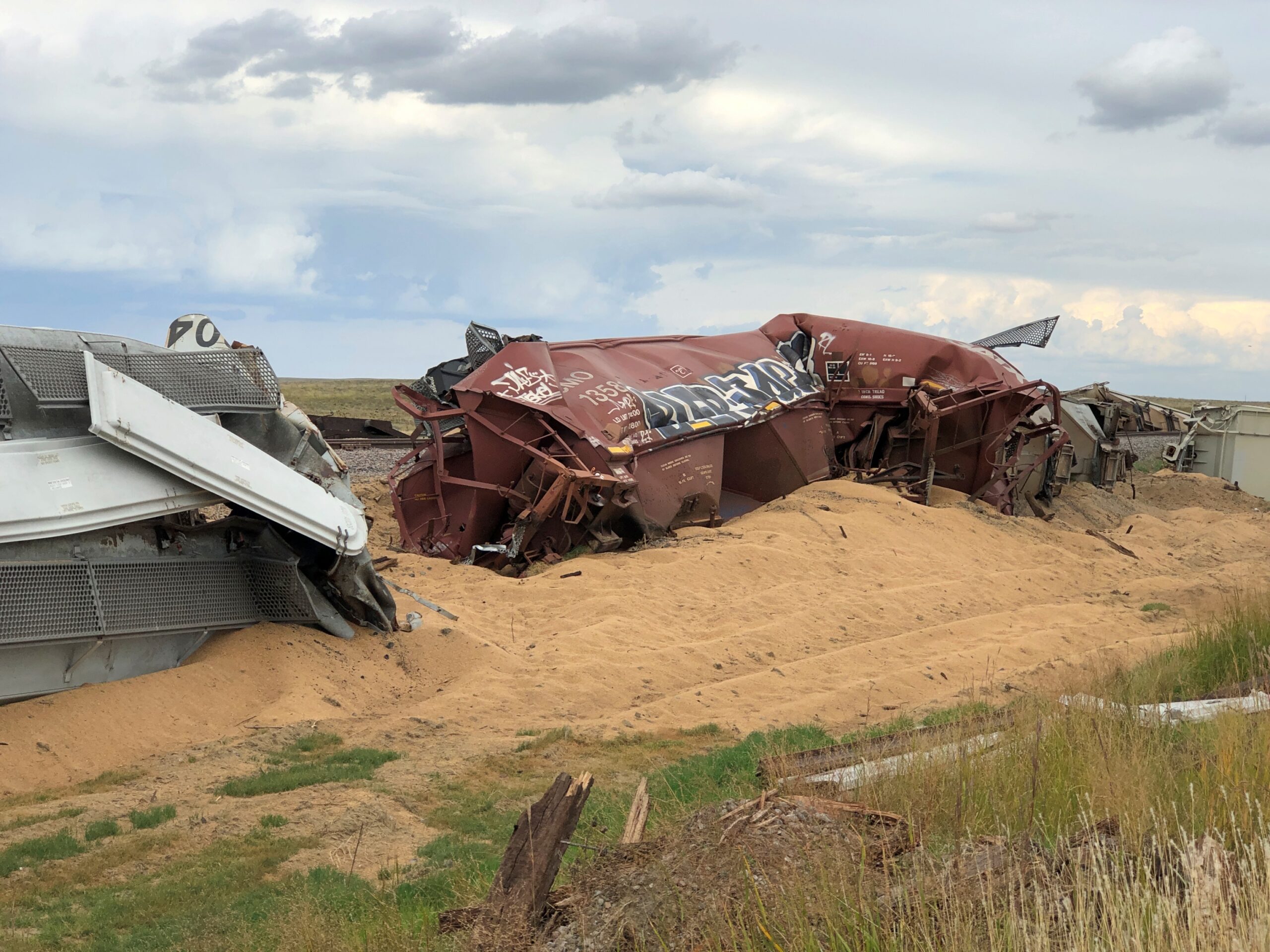
A wrecked train. A long wrecked train. The cars toward to back.
Toward the front.
Nary a clue as to how it happened, or when, except that the cars don’t seem rusted or overgrown. I stayed on the road to take my pictures. The cars are lined up as if they were dumped off the track on purpose. No. Why? Or could it have been some odd accident in which the train essentially fell off in place? Or is that how derailments work? Why are front cars especially mangled?
It didn’t take too much research (later) to find some answers. The Kiowa County Independentreported in August: The heavily laden train was navigating a significant curve and elevation change west of Chivington when 16 covered hopper cars derailed. Each was filled with thousands of bushels of wheat, spilling tons of grain onto the ground along Highway 96, which runs parallel to the rail line.
Oops. Guess everyone would have heard about it if the cargo had been more volatile or toxic.
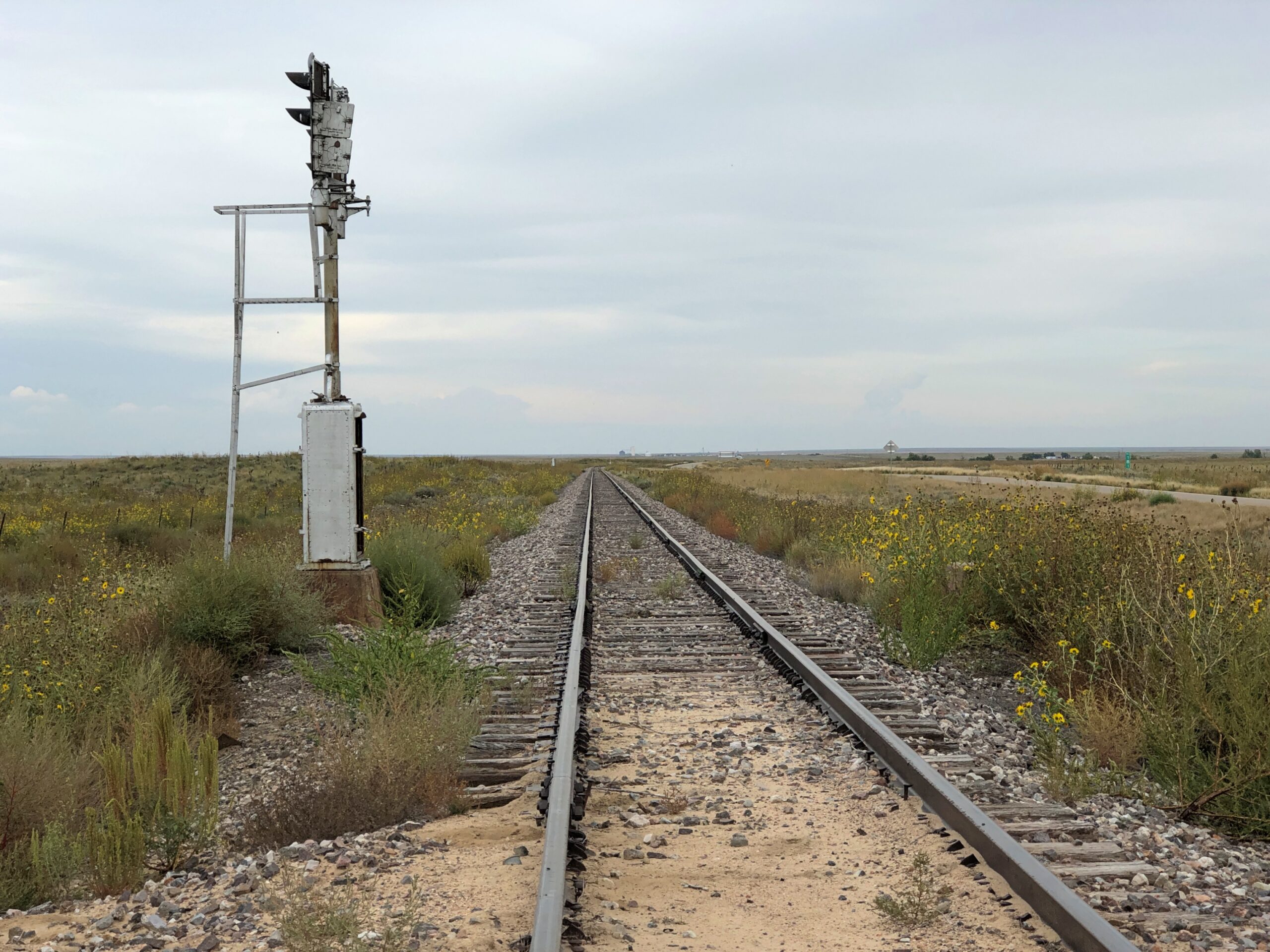
At the turnoff to the historic site, I got a view of the tracks (again, from the road). Far enough away that the mangled train cars aren’t visible.
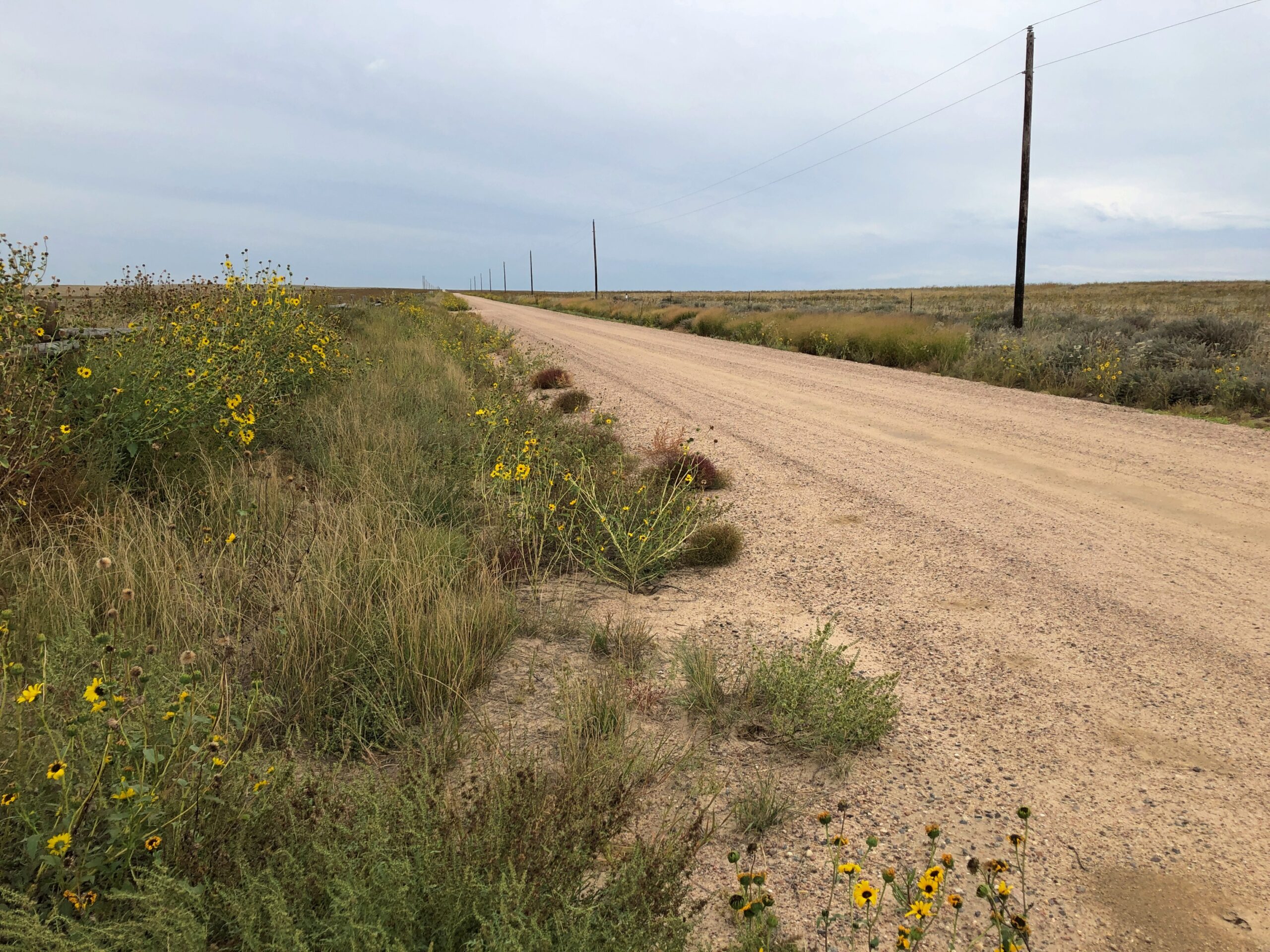
On to the historic site, via an unpaved road.
Turns out the historic site closes at 4 pm. I got there just as the rangers were leaving, and one of them, who had a remarkable collection of snaggled and bent teeth, told me so politely. I didn’t argue with him, but I also wondered why a site so remote closes at all, except maybe for the visitors center or small museum. Rules is rules, I guess.
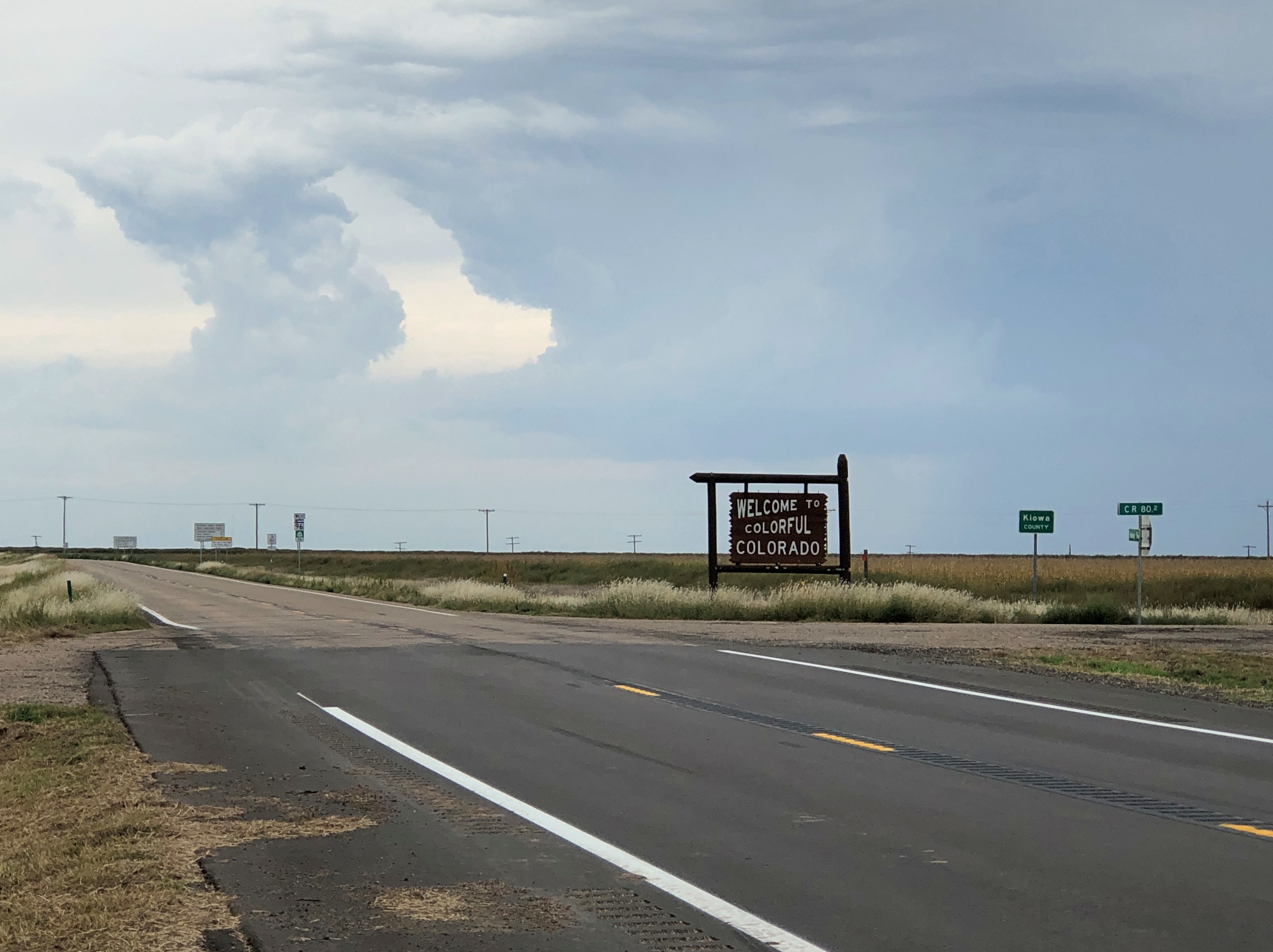
That was pretty much it for Colorado. I got to the border with Kansas not long after, and looked back.
The Avalon Project, run by Yale Law School, has a remarkable trove of “documents in law, history and diplomacy,” as the site says. If you’re looking for a translation of the Code of Hammurabi or the Athenian Constitution, there are links. You can also find the annotated text of Magna Carta, the Mayflower Compact, and the many founding documents of the United States, just to mention some of the more famous ones.
Also within the Avalon Project is the text of the Ratification of the U.S. Constitution by the State of Delaware, December 7, 1787. To wit:
We the Deputies of the People of the Delaware State, in Convention met, having taken into our serious consideration the Federal Constitution proposed and agreed upon by the Deputies of the United States in a General Convention held at the City of Philadelphia on the seventeenth day of September in the year of our Lord one thousand seven hundred and eighty seven, Have approved, assented to, ratified, and confirmed, and by these Presents, Do, in virtue of the Power and Authority to us given for that purpose, for and in behalf of ourselves and our Constituents, fully, freely, and entirely approve of, assent to, ratify, and confirm the said Constitution.
Delaware ratified before any other state, and so claims “First State” as its nickname. I have my own private nickname for Delaware. At least I do now, since waking up on the morning of October 25 in my rented room in Dover: “Last State.” As in, the 50th state I’ve spent the night in. That isn’t an achievement of any kind, just a reflection of the fact that I’ve been fortunate enough to have the time and resources necessary to go that many places. Also, that I’m eccentric enough to keep track.
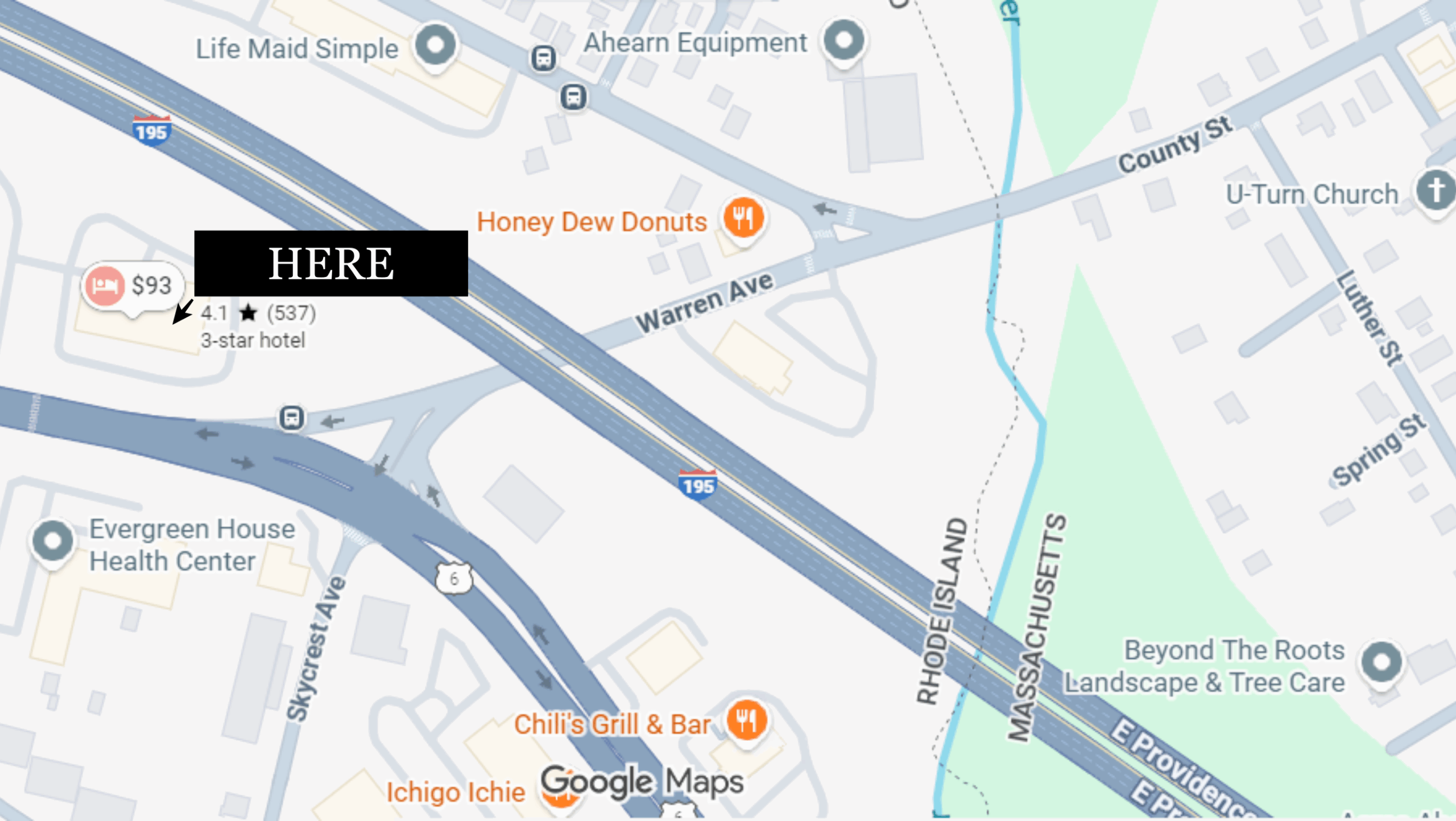
After dallying in Concord on the 23rd, and spending some time in Attleboro, Massachusetts, I arrived in East Providence, Rhode Island for the night. The point of that stop was entirely to spend the night in Rhode Island, since I’d never done that either. So RI was number 49. My hotel was just barely in that state.
I noticed the Honey Dew Donuts even closer to the border. I’d seen other locations driving in. The breakfast at my “3-star” hotel was meager, so I went to Honey Dew for a second breakfast. I wish I could say I’d discovered a great regional doughnut shop along the lines of Tim Horton’s, but it was only OK. Maybe I’ll give the brand another chance sometime.
Since I’d wanted to go from eastern Massachusetts to central Delaware, I should have broken that day’s journey somewhere in New Jersey. But that wouldn’t have involved stopping for the night in Rhode Island, which had been a short stop back in the summer of ’91 – a few hours to look around Providence, and especially the capitol – and the destination of a day trip in ’95, to Newport.
As for Delaware, my entire previous experience with the state was the Wilmington interstate bus station, a break in a bus ride from Washington DC to Boston, which was a leg of the Great Bus Loop of 1982. I’m not even sure I got off the bus, though I usually did when it stopped for long enough.
Getting to Delaware last month involved an aggravating day’s drive, mostly on I-95, spending a lot of time in traffic jams. Counting the cars on the New Jersey Turnpike, bah: more than grains of sand on a beach or stars in the sky.
Even so, there were a few worthwhile moments. I finally got to see (from the turnpike) the enormous American Dream mall, adjacent to the Meadowlands Sports Complex. Reportedly now second largest in the nation, after only the Mall of America. I’d been reading about American Dream for years, since “chronic delays” always figured in real estate reporting on the project, but now it’s more or less complete. (If the developers had asked me, they’d have kept the much cooler earlier name: Meadowlands Xanadu.)
At the Vince Lombardi Service Area on the NJ Turnpike, I parked in the very large parking lot and headed for the very large building and its very large men’s room. As I walked along, a small group of Hasidim went around me, not running but at a brisk pace, headed the same direction. By the time I got to the bathroom, they were almost done with their business, and off they went. Nothing unusual about seeing Hasidim, certainly not in New Jersey, but I have to note that October 24 was a Friday, and it was mid-afternoon. So they were racing the clock. Or, more accurately, the sun.
A digression: service areas on the New Jersey Turnpike and the Garden State Parkway are named for famed New Jerseyans. A list is here. I suppose it’s fine that musicians such as Frank Sinatra, Whitney Houston, Jon Bon Jovi and Celia Cruz are honored, but where’s Bruce Springsteen? It isn’t a matter of posthumous naming, since Bon Jovi is still alive – as is Bruce Willis, who also gets an area, and Connie Chung, who does as well, though she isn’t actually from New Jersey. The ways of the NJ Turnpike Authority are mysterious.
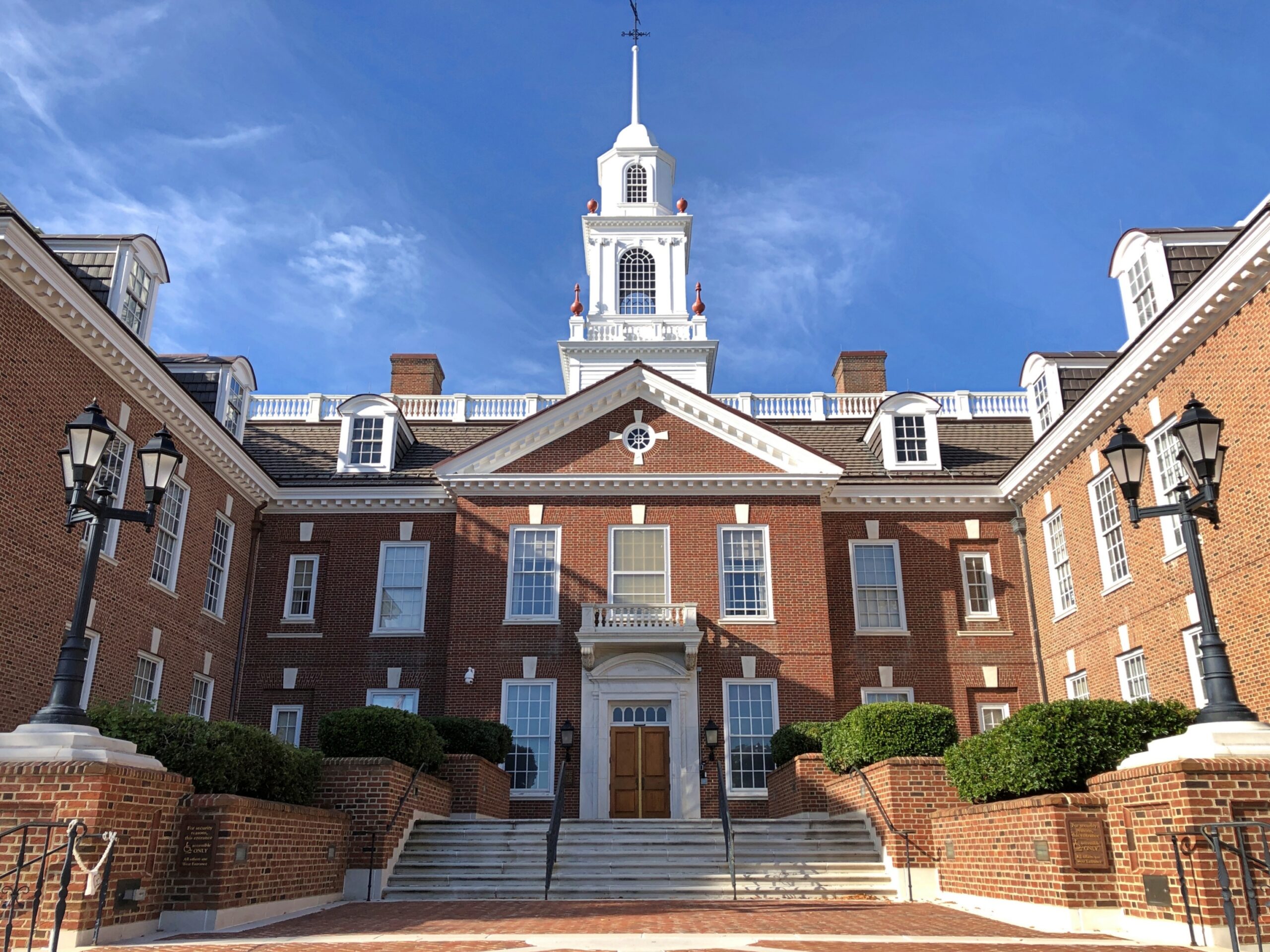
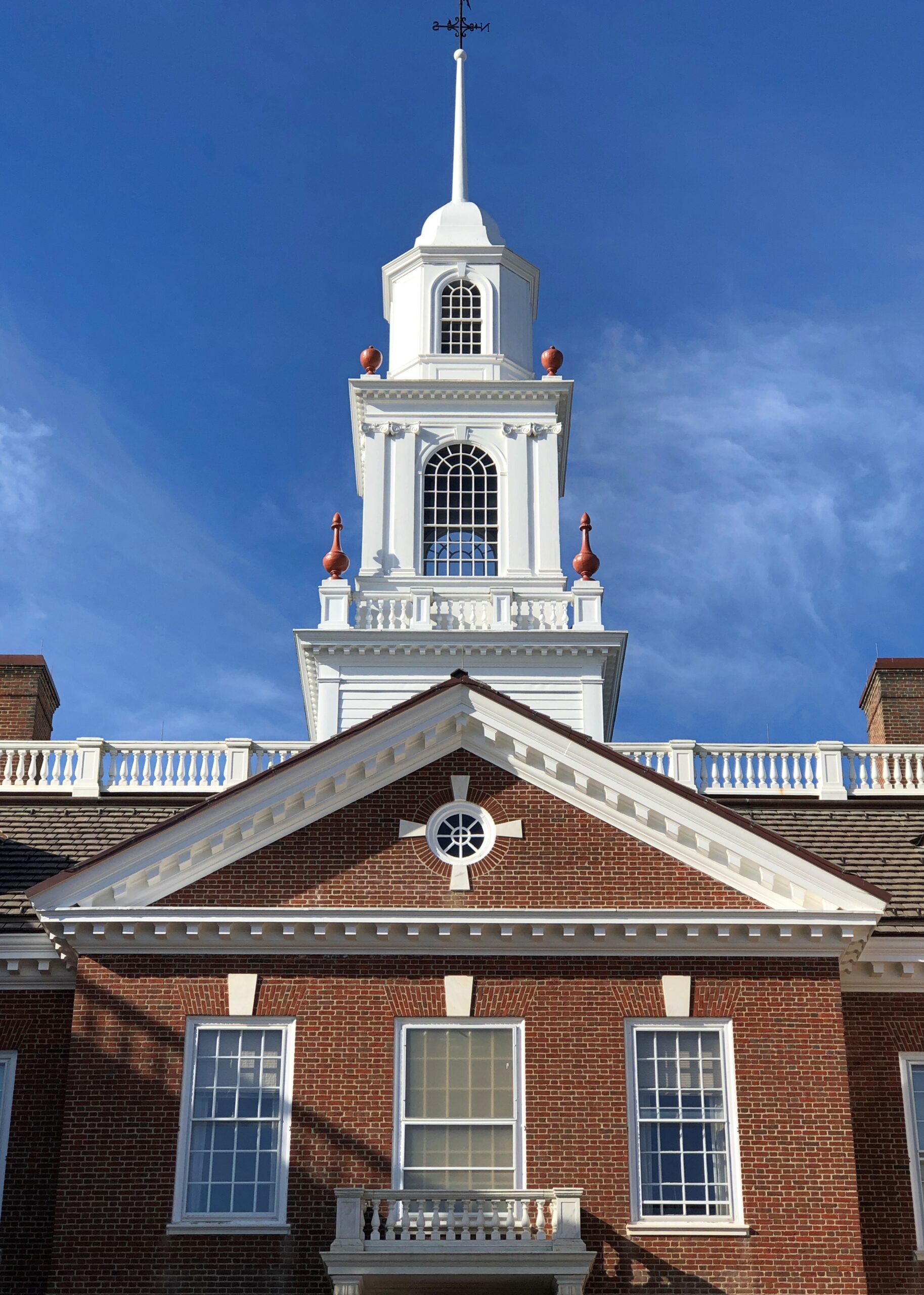
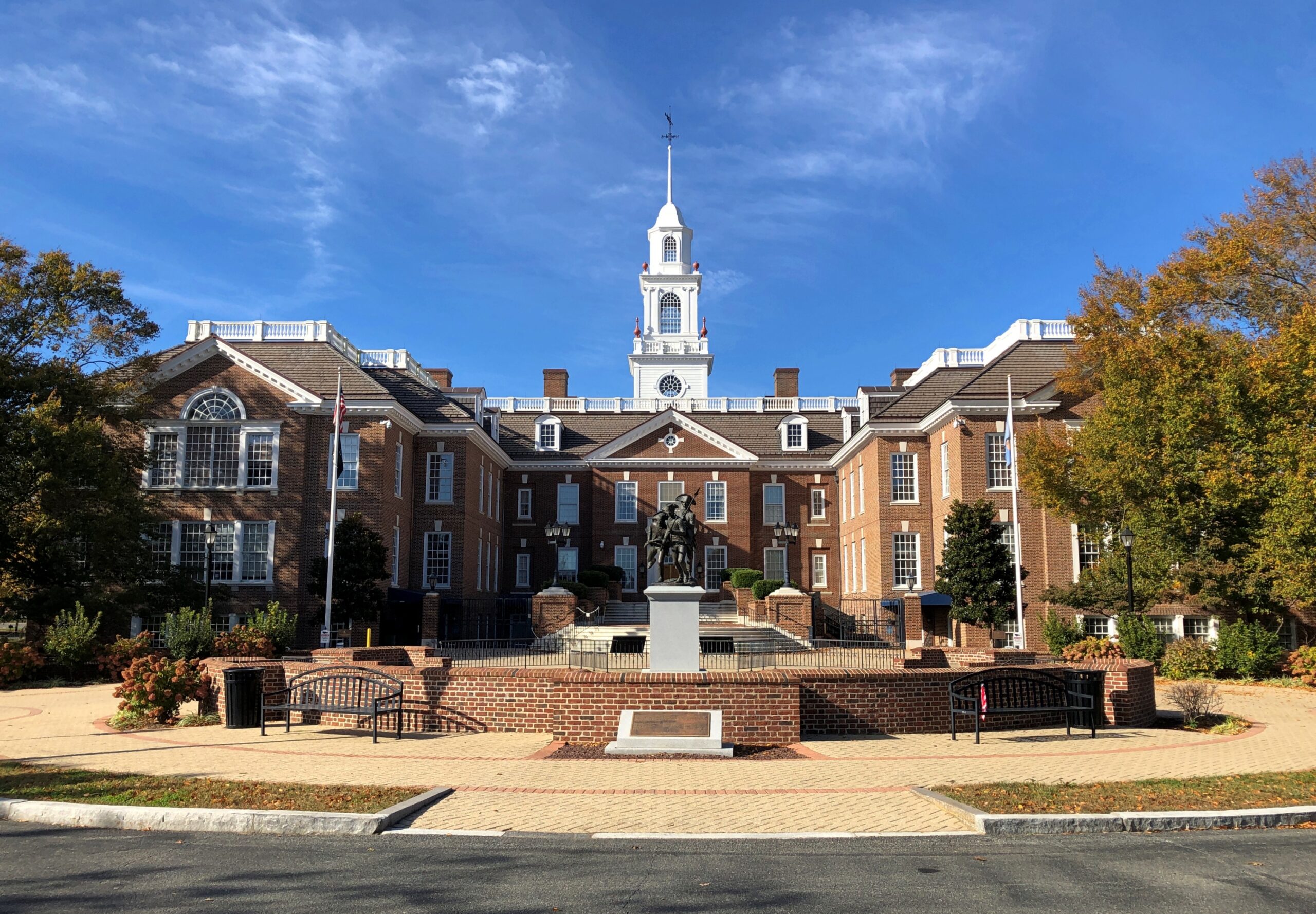
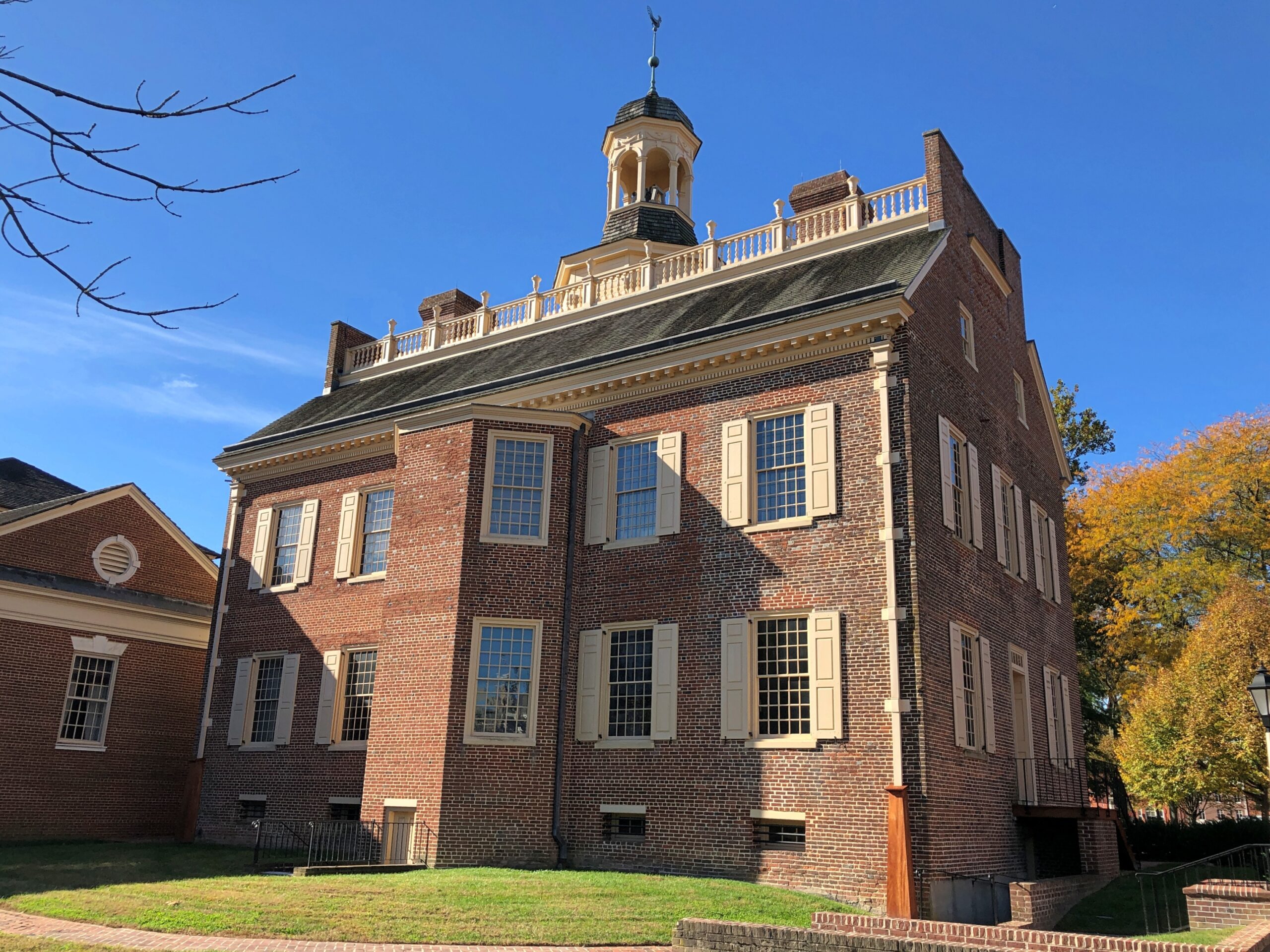
I arrived in Dover late on the October 24. The next morning, a Saturday, I left fairly early. First stop: the Delaware State House. It was closed for the weekend. My reaction: what kind of Mickey Mouse operation is this? I got a good look at the exterior, at least.
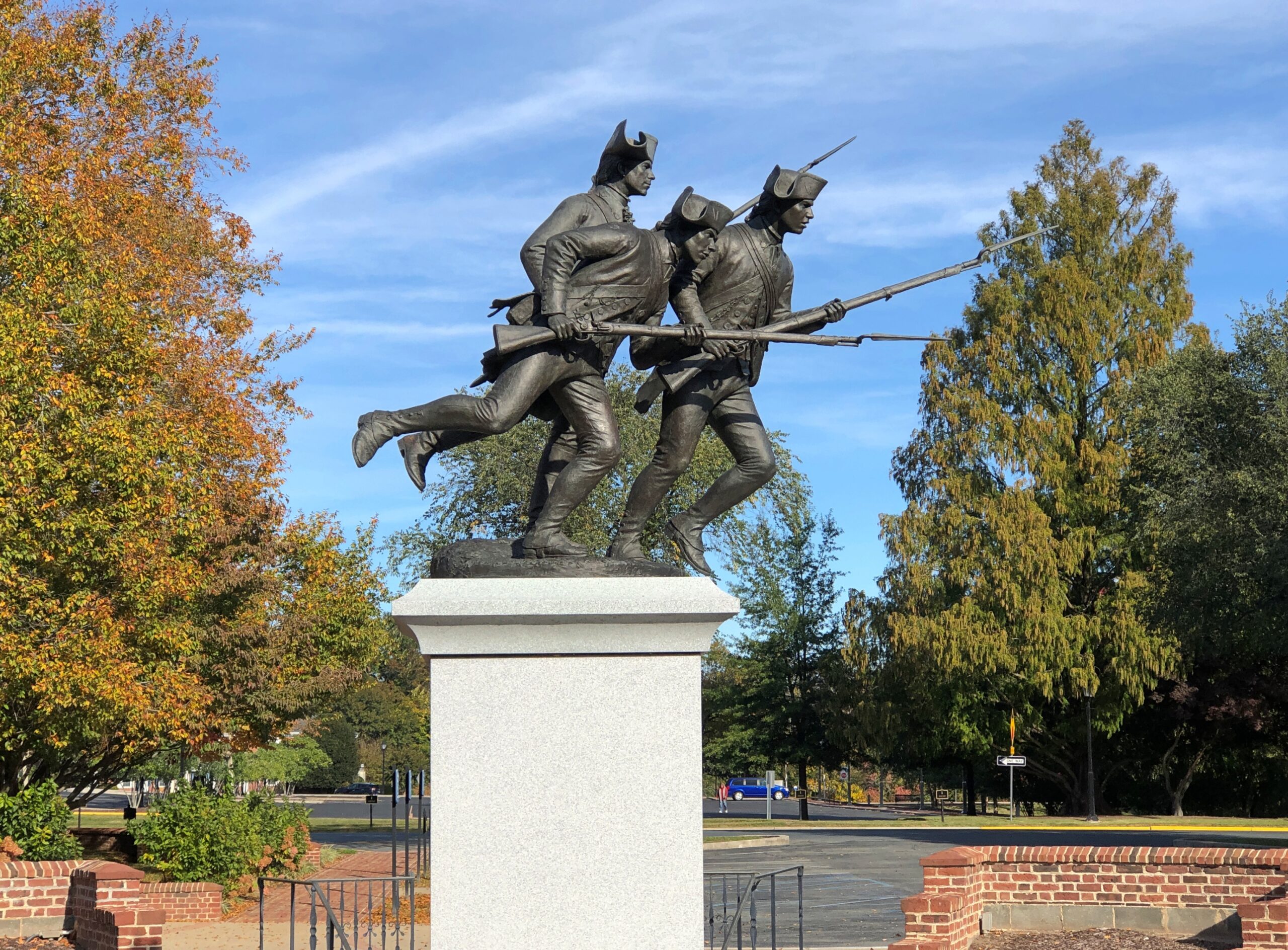
A fairly new sculpture, in front of the capitol: The Delaware Continentals.
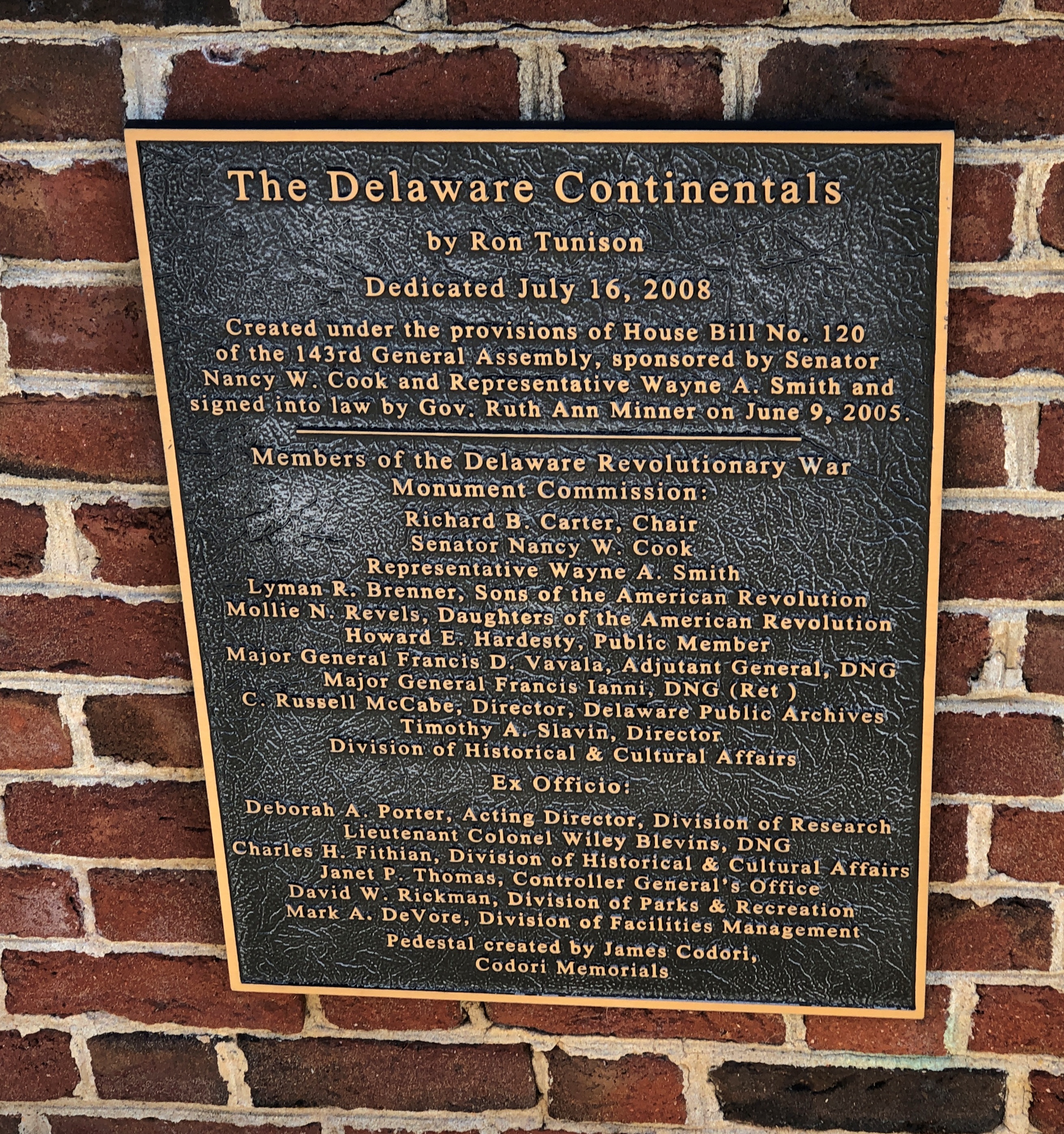
The plaque is long on functionaries’ names, short on information about the Delaware Continentals. An historic plaque up in Wilmington says of them:
Commanded by Colonel John Haslet, the Delaware Regiment consisted of more than 500 battle-ready troops when they marched northward to join the Continental Army in August 1776. After expiration of enlistments and Haslet’s death, the Regiment was reorganized in the winter of 1776-77 under the leadership of Colonel David Hall. Participants in many of the major battles of the Revolution, their conduct earned the praise of their superiors and the respect of their enemies. Forced to endure great hardship, the Regiment was widely acclaimed for its discipline and bravery. Greatly depleted in number, they returned to Delaware victorious in January 1783.
That was hardly the end for the regiment. The 198th Signal Battalion in the Delaware Army National Guard traces itself directly to the Delaware Regiment.
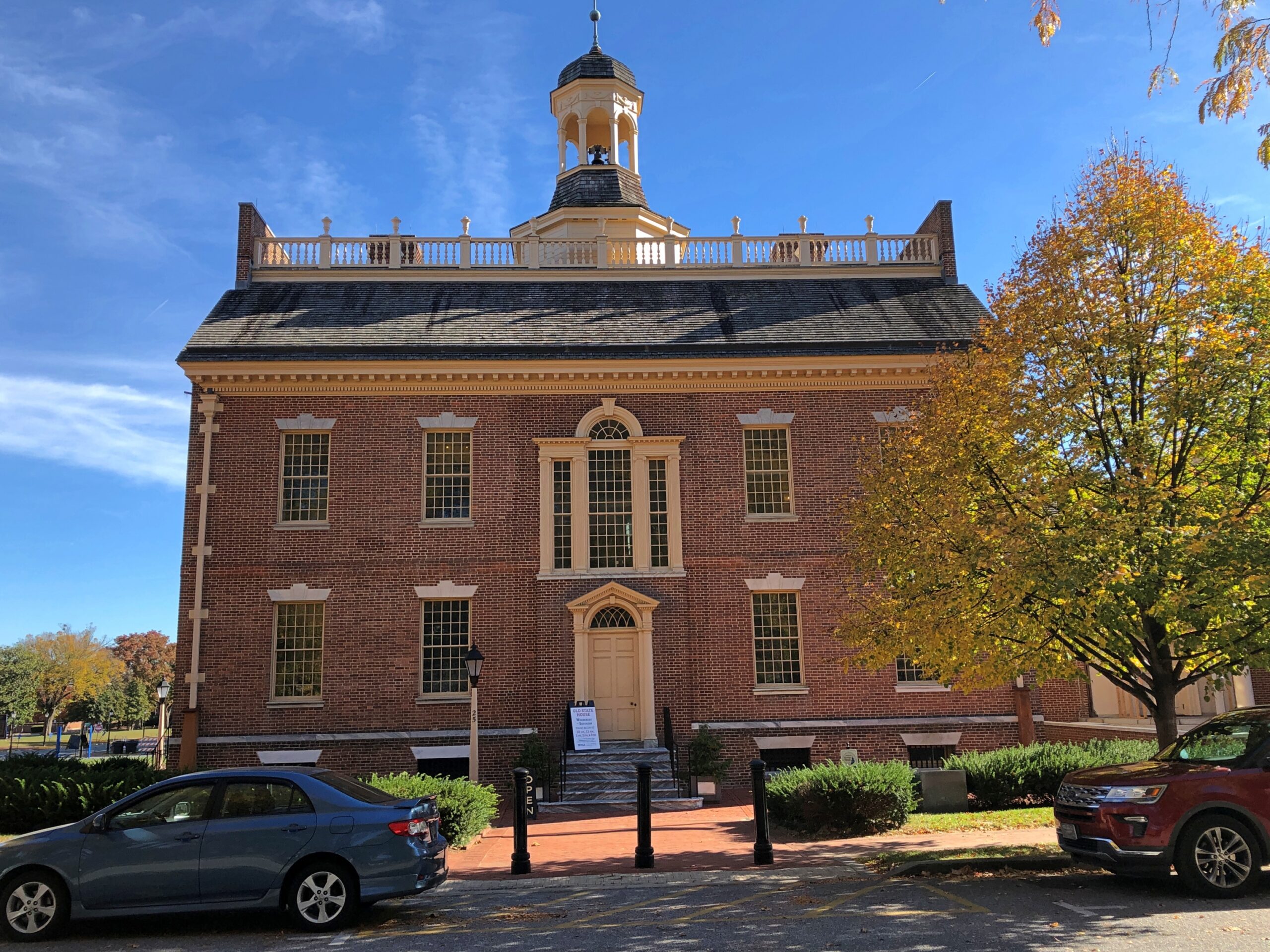
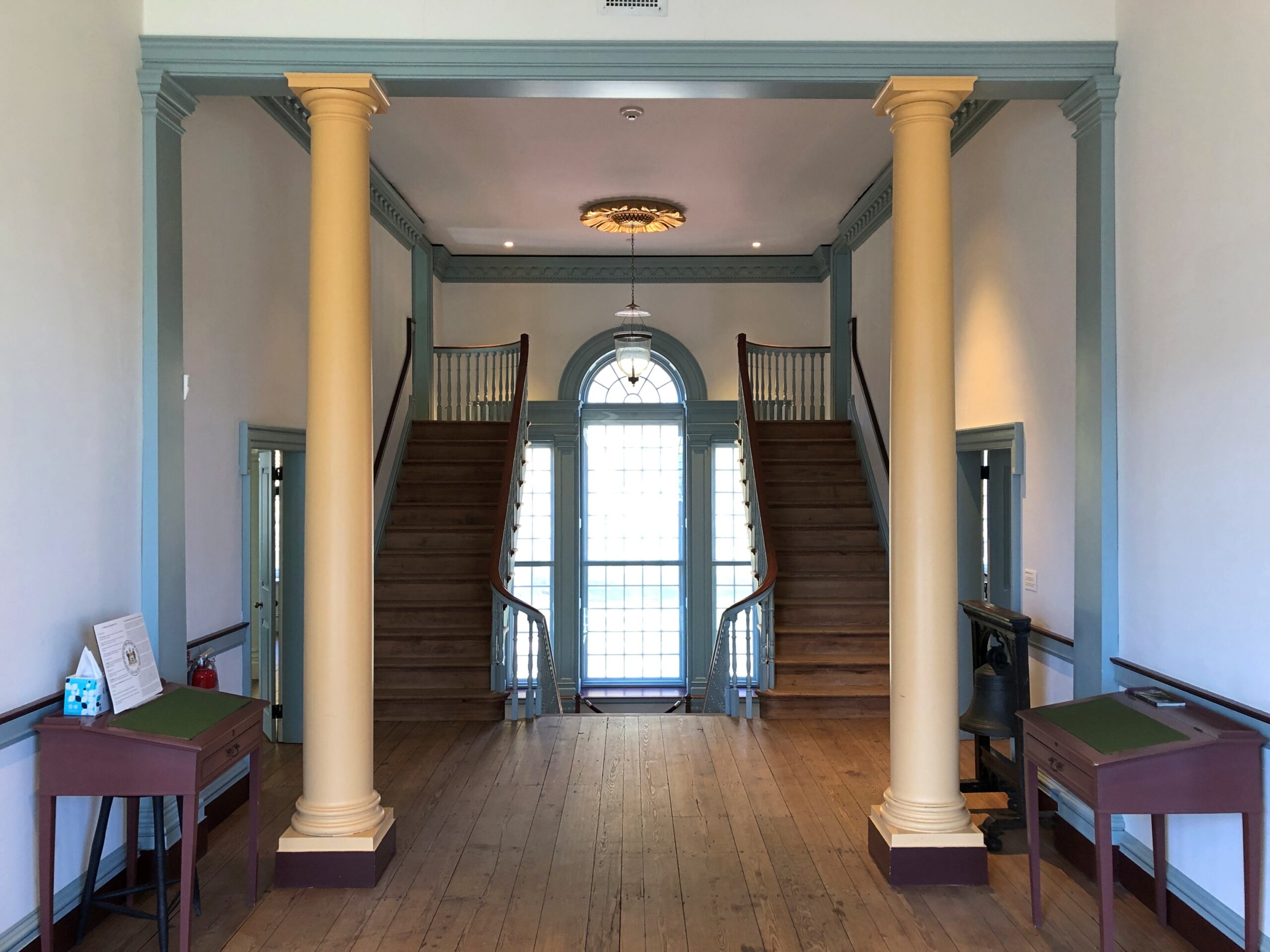
Not far from the current capitol is the former state house, now a museum. It was open.
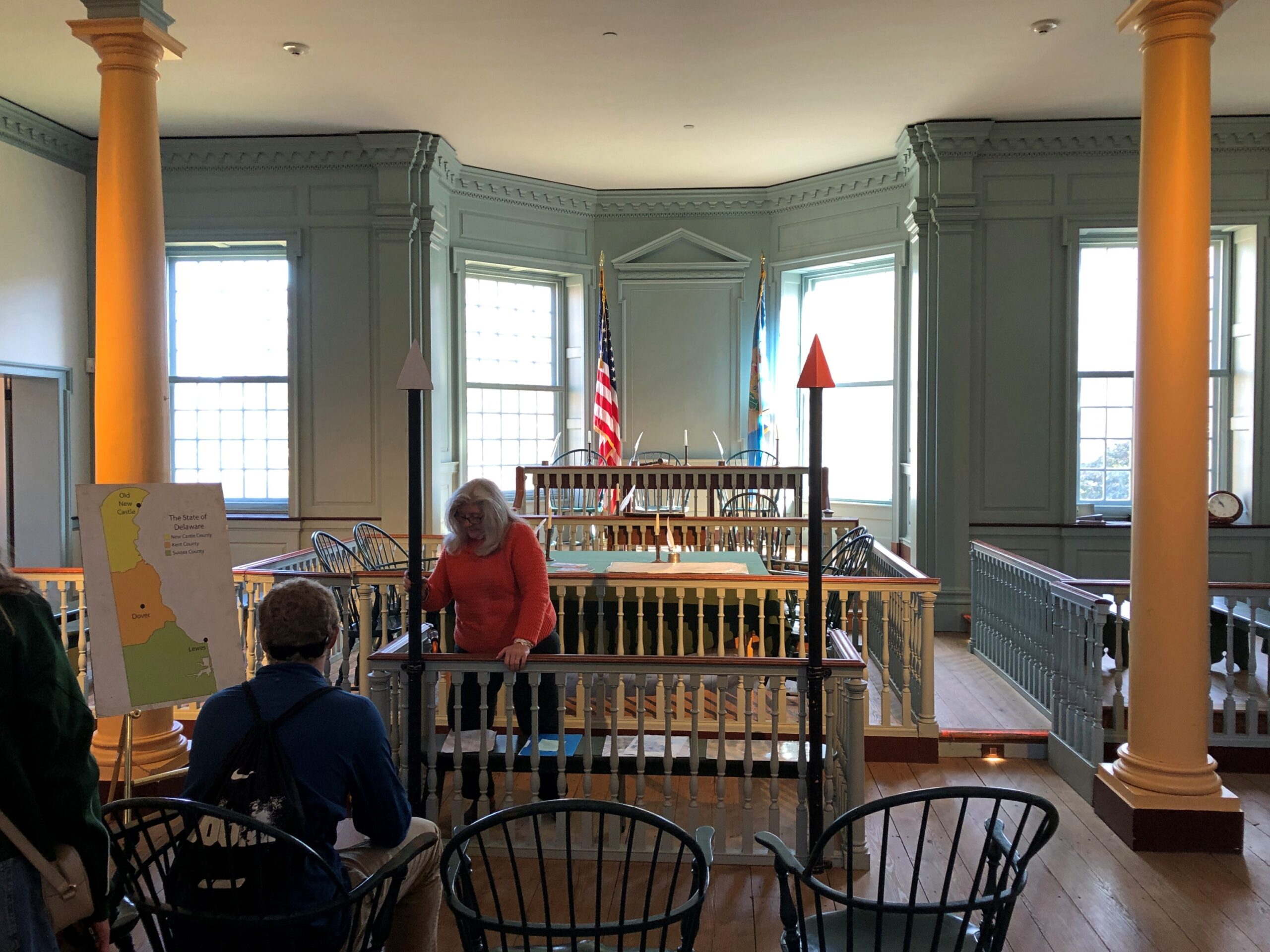
In fact, I got a tour.
I was happy to learn that here, in this very room, the delegates to the Constitutional ratifying convention met, and made their quick and unanimous decision.
I didn’t visit Massachusetts last month to do sightseeing, but rather to see old friends – Rich, Lisa and Steve. They are the latest in my visits to old friends in ’25, which took me to Texas, Tennessee, North Carolina, Georgia and New York before I arrived in Massachusetts, where I stayed with Rich and Lisa, whose home is in Lexington.
Being a mid-week visit, my Massachusetts friends had work to do during much of the day on October 22, which is how I ended up at Battle Green that morning. I wasn’t about to sit around at Rich and Lisa’s when I could go see nearby places. Even places I’d been before, such as Battle Green. But it had been about 30 years, so (as usual) it was like I’d never been there before.
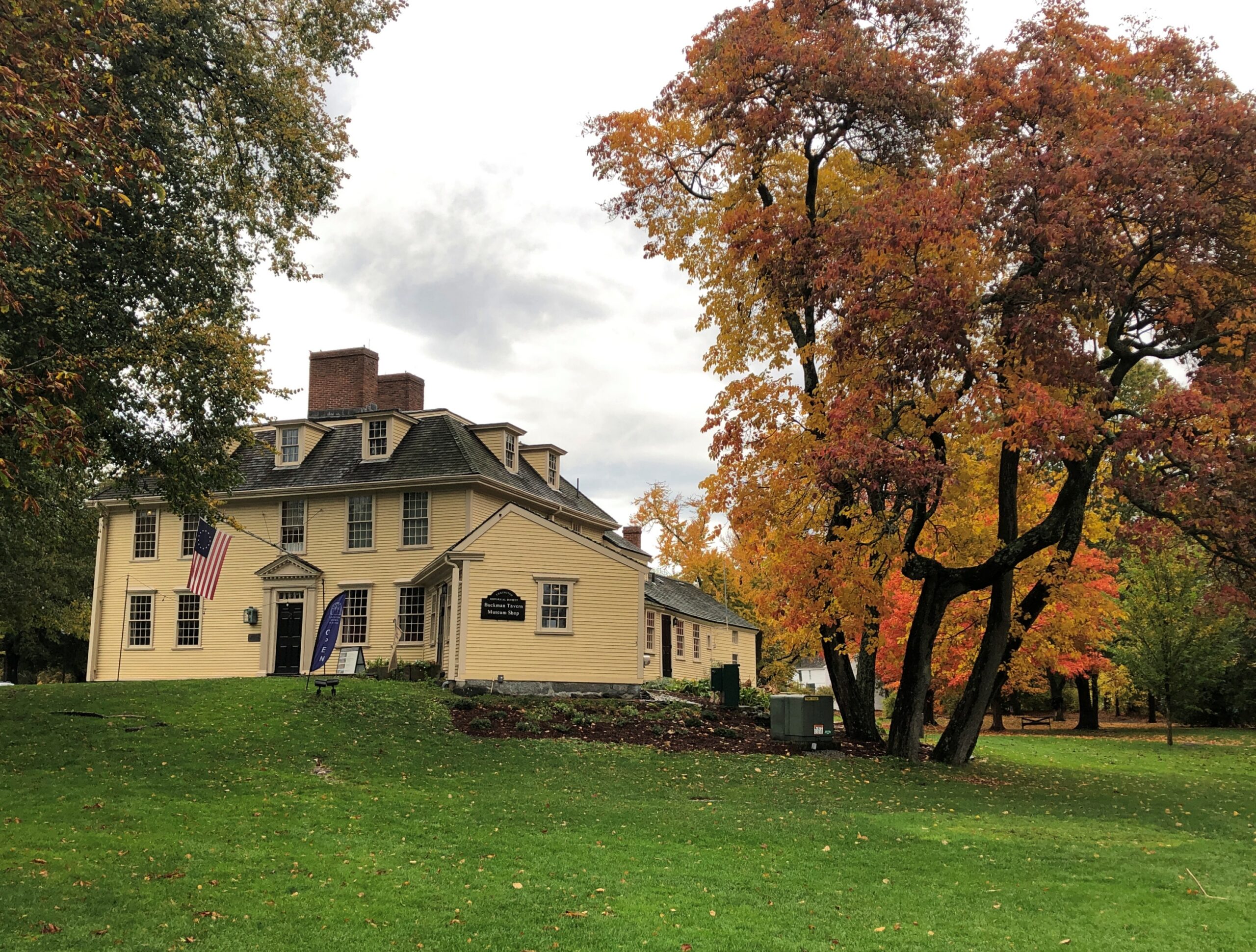
Near Battle Green is Buckman Tavern.
I didn’t remember visiting before. It’s a small museum these days, dedicated to the part it played in the Battle of Lexington – militiamen gathered there ahead of the battle, not knowing what to expect – but also its existence as a tavern in colonial and early Republic days.
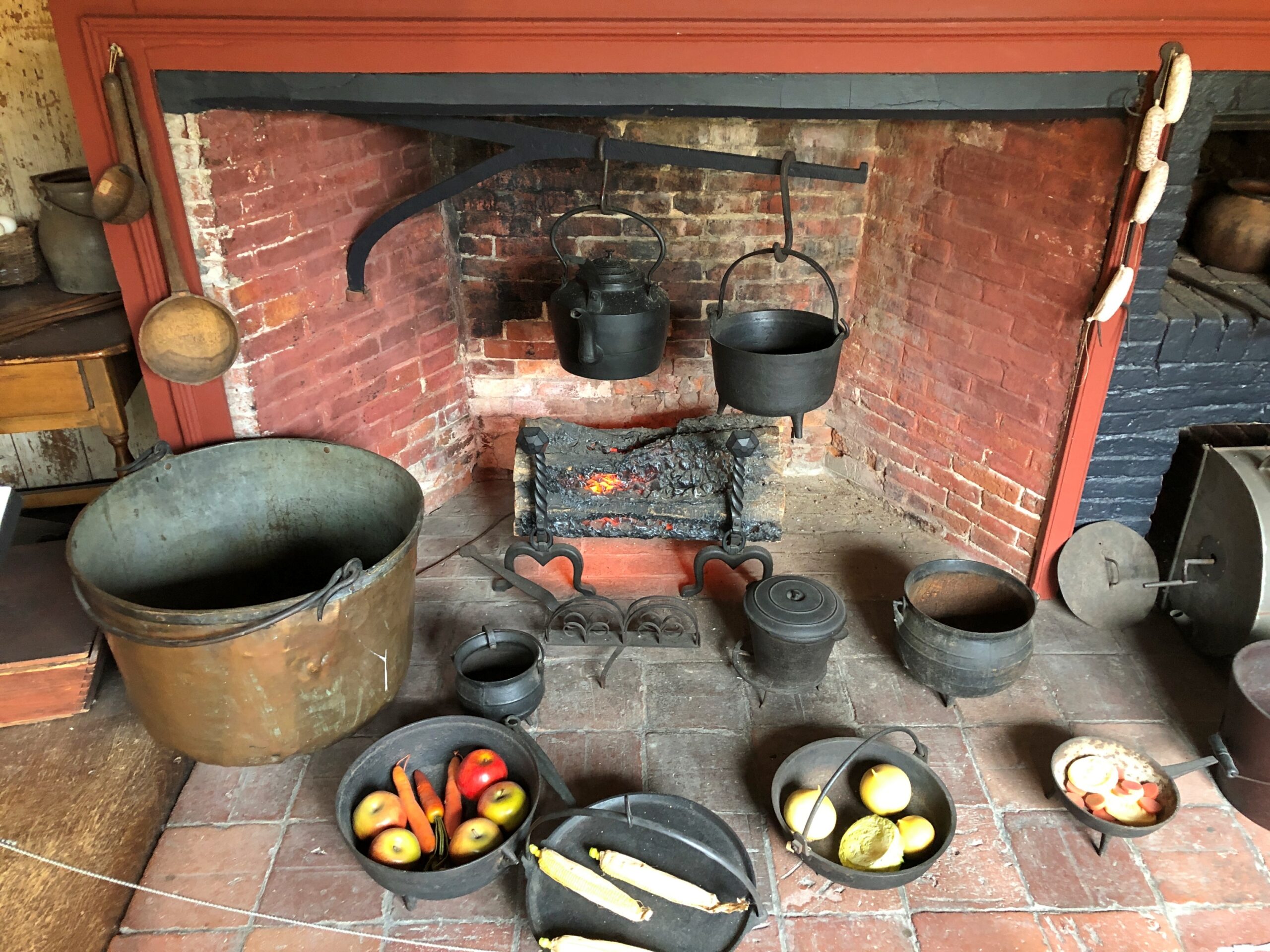
Wandering through, I couldn’t help being impressed by how much effort running a tavern must have involved in those days, which not only included work in the building itself, but also running a nearby farm, since 18th-century tavern keepers weren’t going to get their food and drink from wholesalers, shipped in by truck.
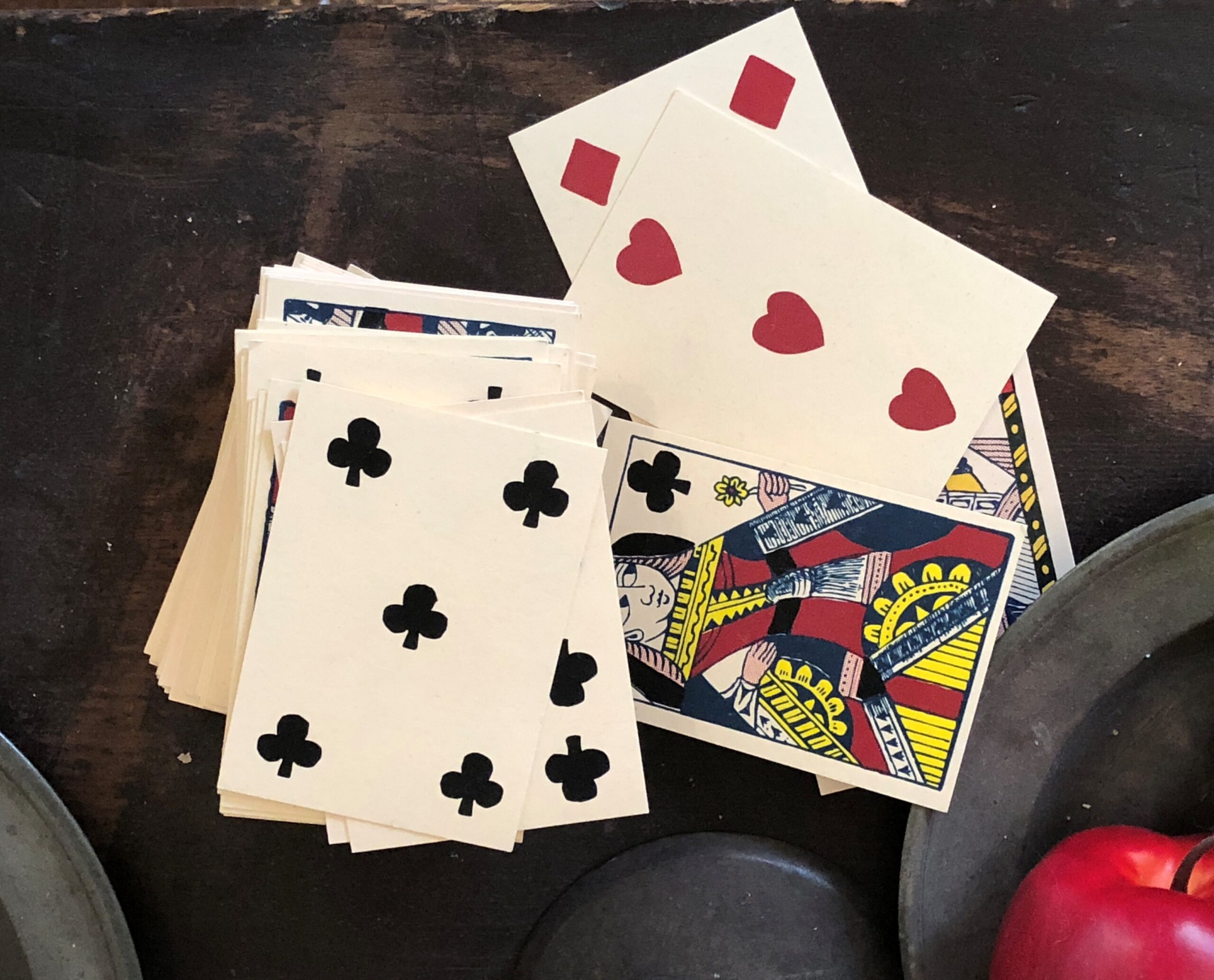
Of course, just staying alive in the 18th century, or really most anytime before the 20th century, seems like it would have been a lot of grinding effort for most people a lot of the time. But they had their recreation, too (and of course drinking).
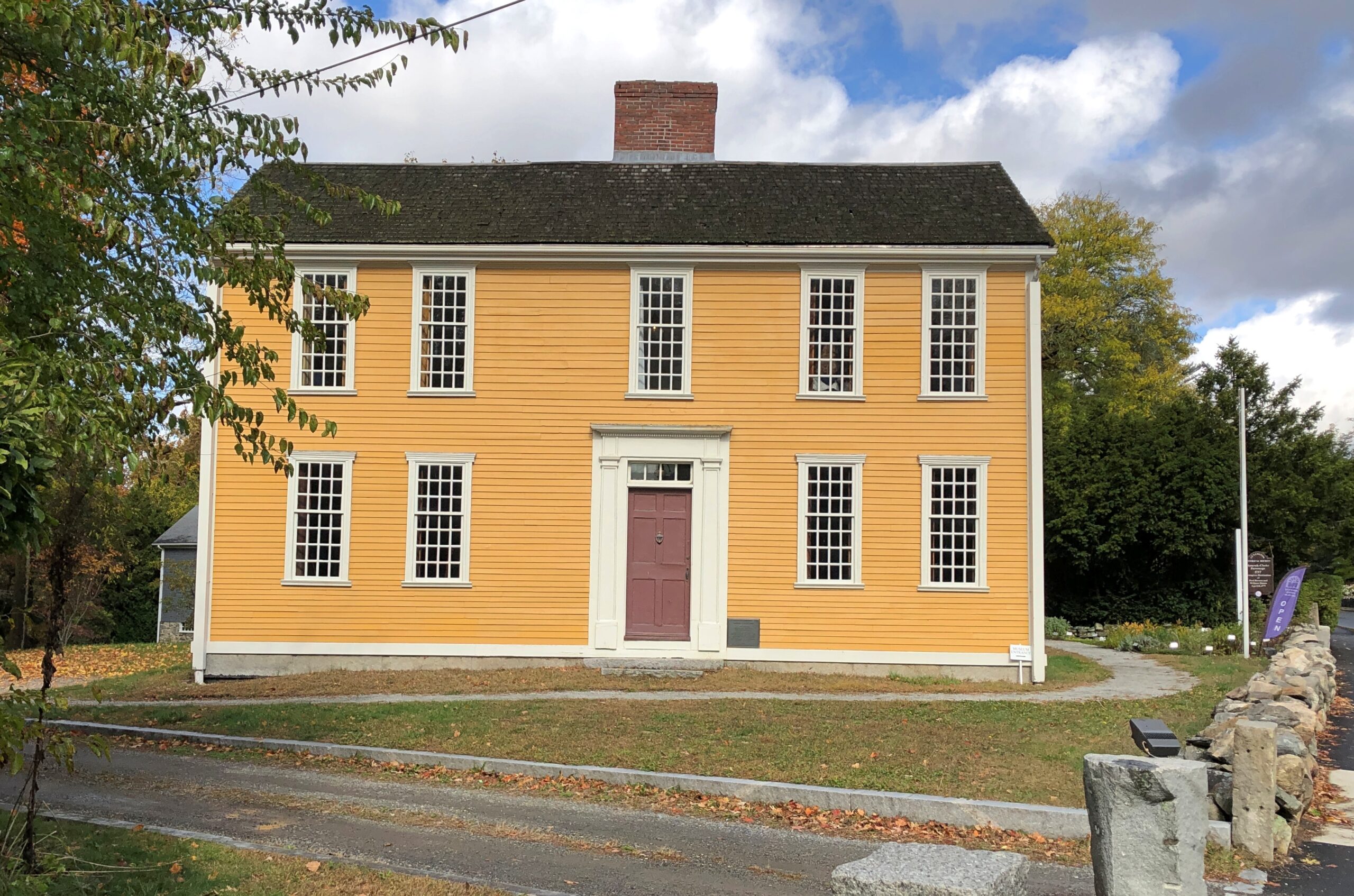
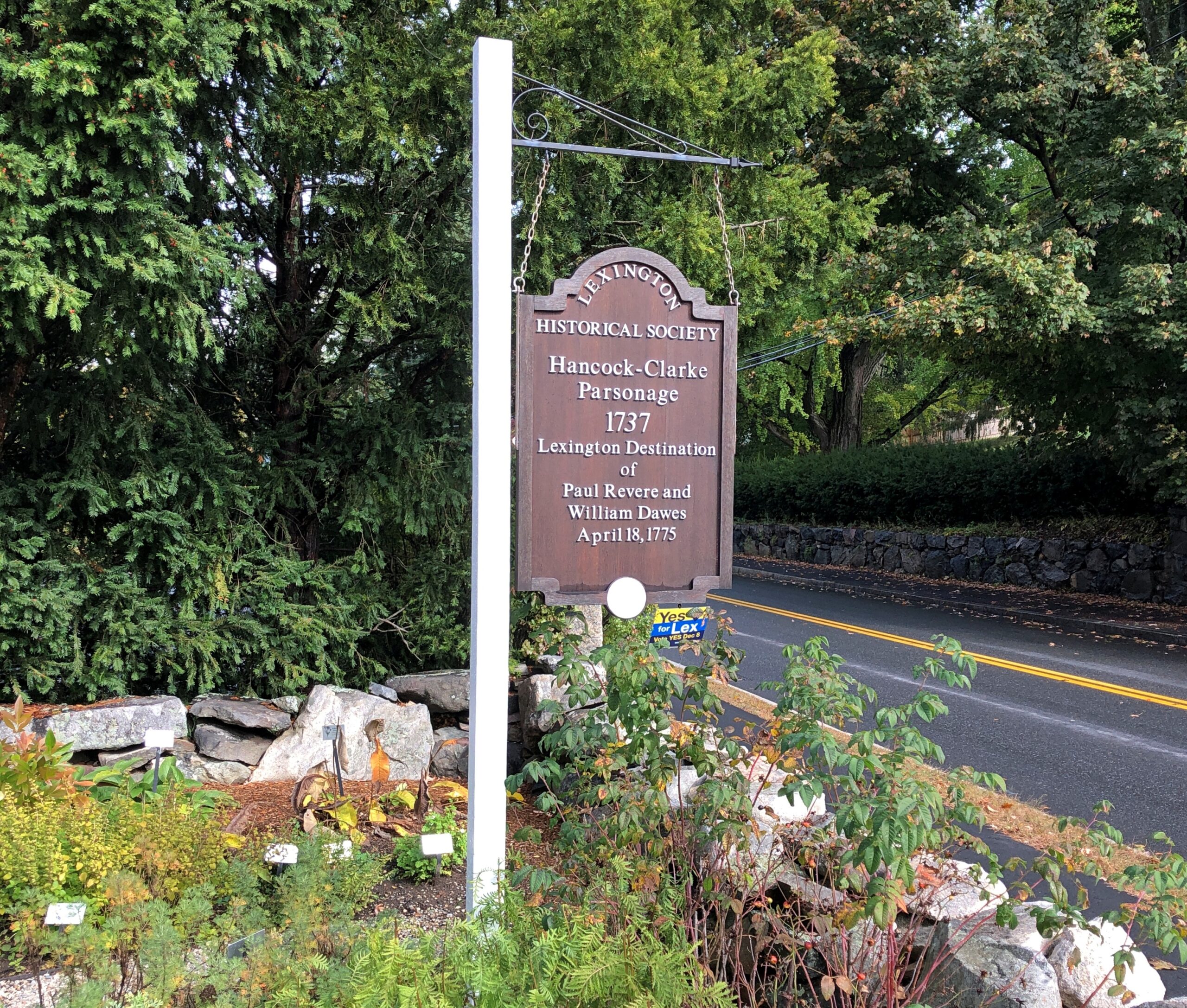
Not far from Battle Green, on the fittingly named Hancock Street, is Hancock-Clarke Parsonage, another Lexington museum these days, and one I didn’t recall visiting before. It was close enough to the green to walk there. I took the noon tour.
I’m glad William Dawes gets this due on the sign. As my one-armed 8th grade history teacher told us, Listen my children and you shall hear/ of the midnight ride of William Dawes just doesn’t work. (He wasn’t the first to notice.) I see that he has a memorial at King’s Chapel Burial Ground in downtown Boston. If I ever make it back there, to visit Hopestill Barns, and I should, I’ll look for Dawes.
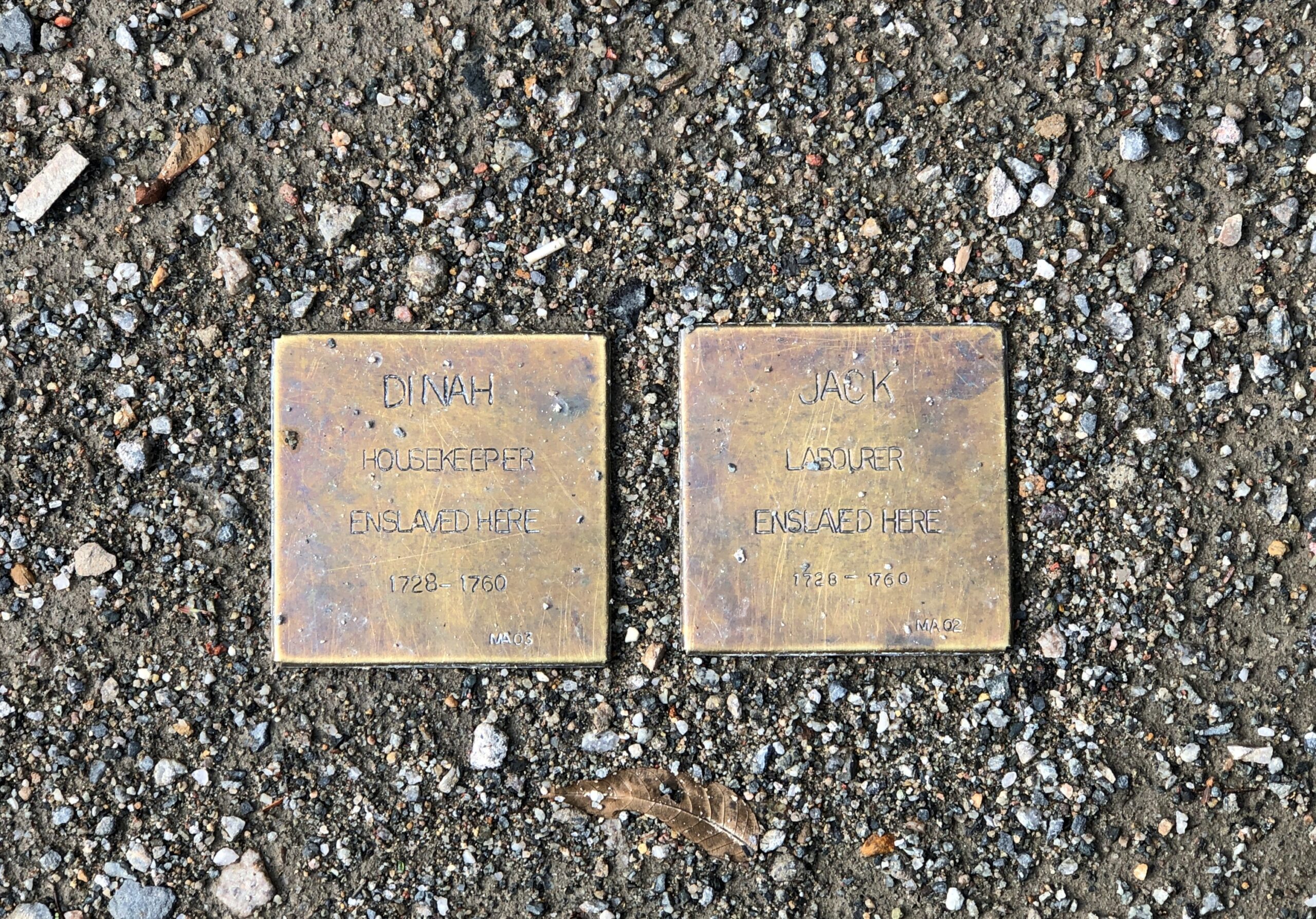
Also mentioned at Hancock-Clarke: the slaves that worked at the house during the pre-Revolutionary period, Jack and Dinah. Their names appear on small plaques near the museum entrance.
As the longstanding residence of Lexington’s minister, Hancock-Clarke has a rather different feeling than the tavern down the road. That is, austere yet well-furnished due to the wealth of the Hancock family. John Hancock’s grandfather, Rev. John Hancock (d. 1752), lived there, and afterwards Rev. Jonas Clarke (d. 1805) and his passel of children lived there during the Revolution. So it was entirely reasonable that John Hancock and Sam Adams were staying there on the night of April 18, 1775. As a visitor in modern times, you can see the very place where those two sat and drank (tea, the docent claimed) in front of one of the house’s large windows.
That evening, I had dinner with Rich and Lisa and Steve at Field & Vine in Somerville, which made for that most excellent combination: a good meal and convivial conversation. In 30 years since I spent any time in Somerville, the town has apparently become a foodie destination. Who knew?
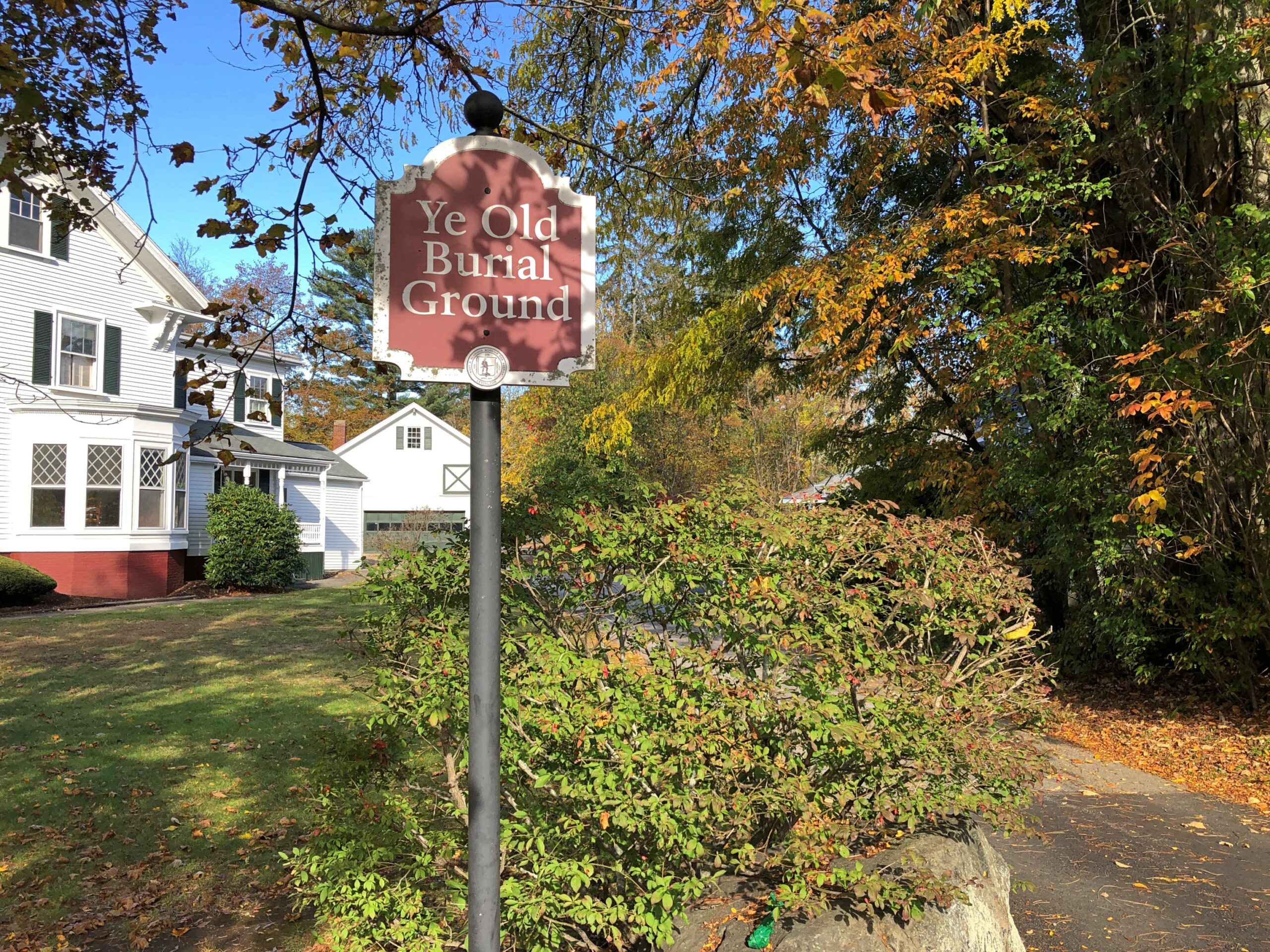
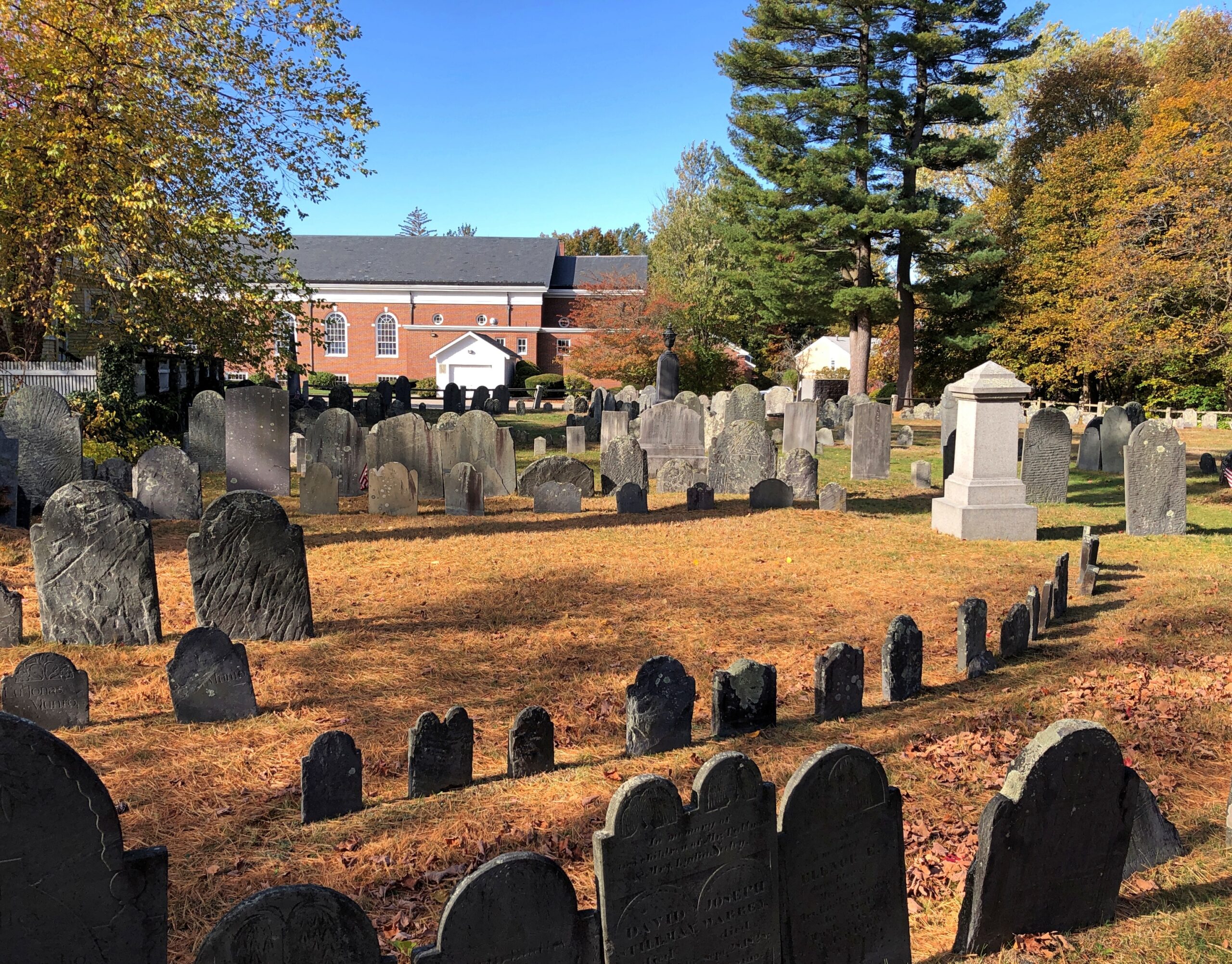
On the morning of 23rd, I left Massachusetts to begin my drive home. True to character, not a direct drive. But I didn’t want to leave Lexington without a visit to the Old Burial Ground, which I hadn’t had time for the day before. “Ye” Old Burial Ground, as the town puts it. At least there isn’t an “e” tacked onto “Old,” but I doubt that whoever did the sign was thinking, let’s use a thorn.
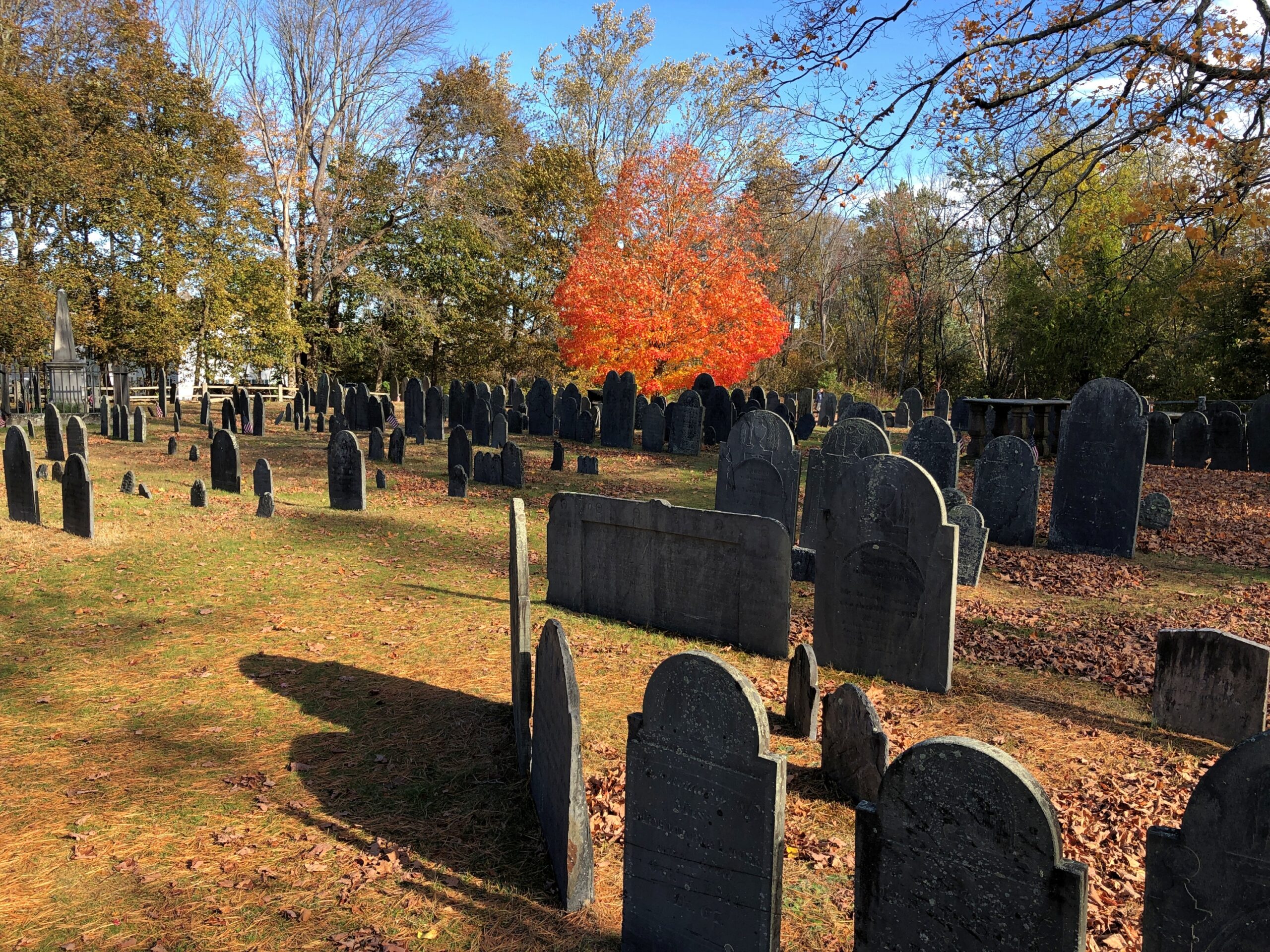
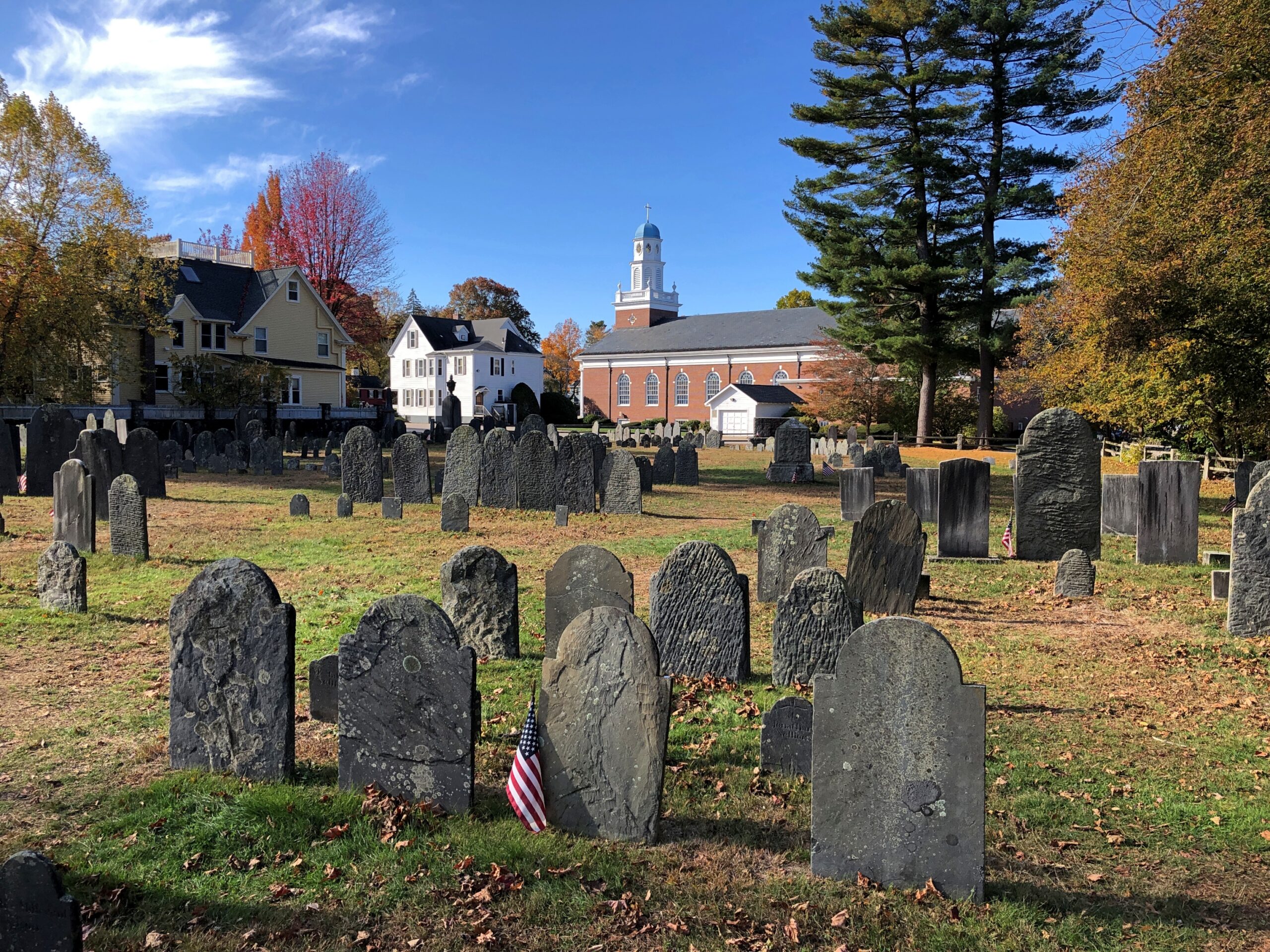
That aside, it’s a fine old cemetery.
The building in the background, incidentally, is the Church of St. Brigid. One wonders how most of the permanent residents of the Old Burial Ground would react to a Catholic church in the vicinity. Not too well, I suspect.
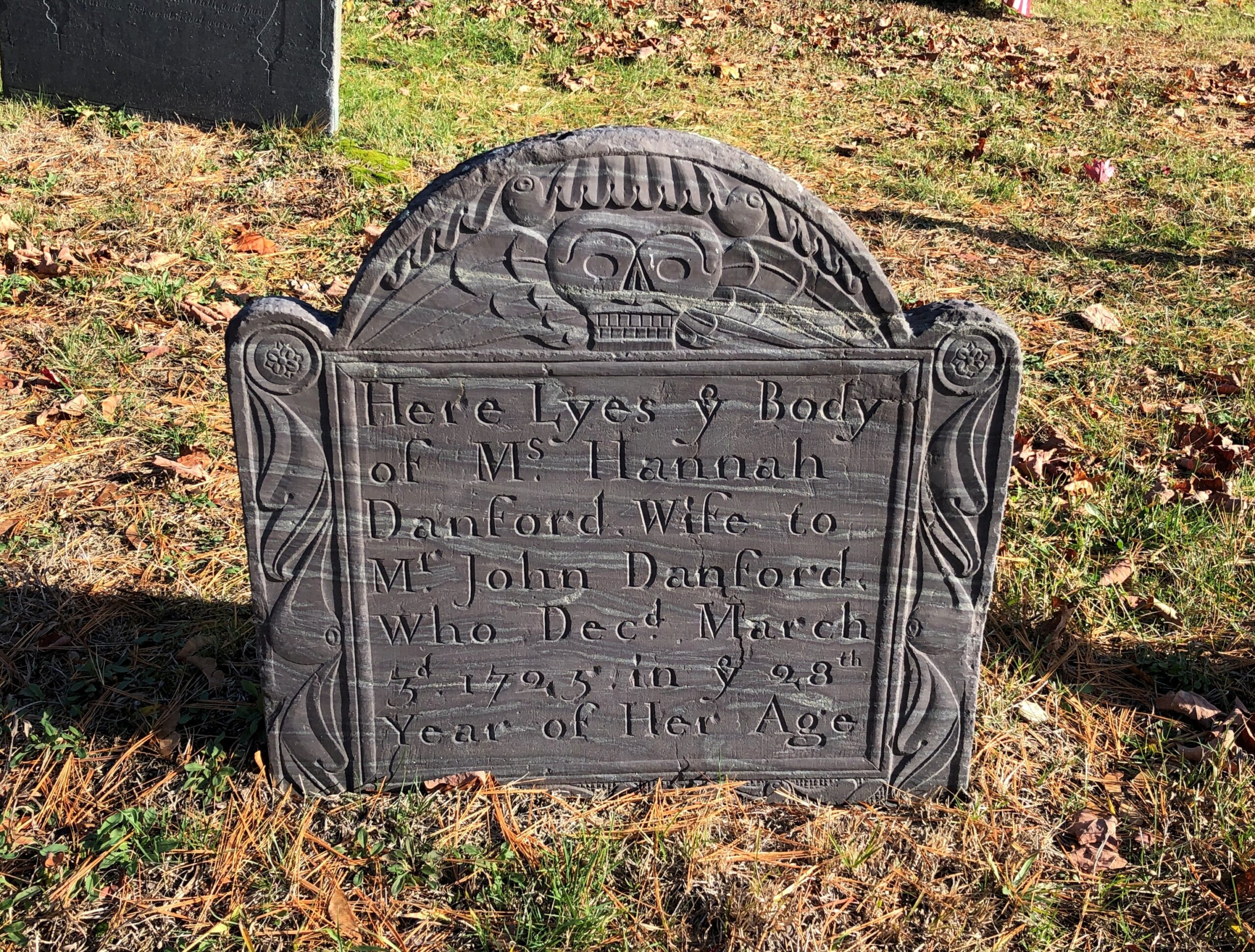
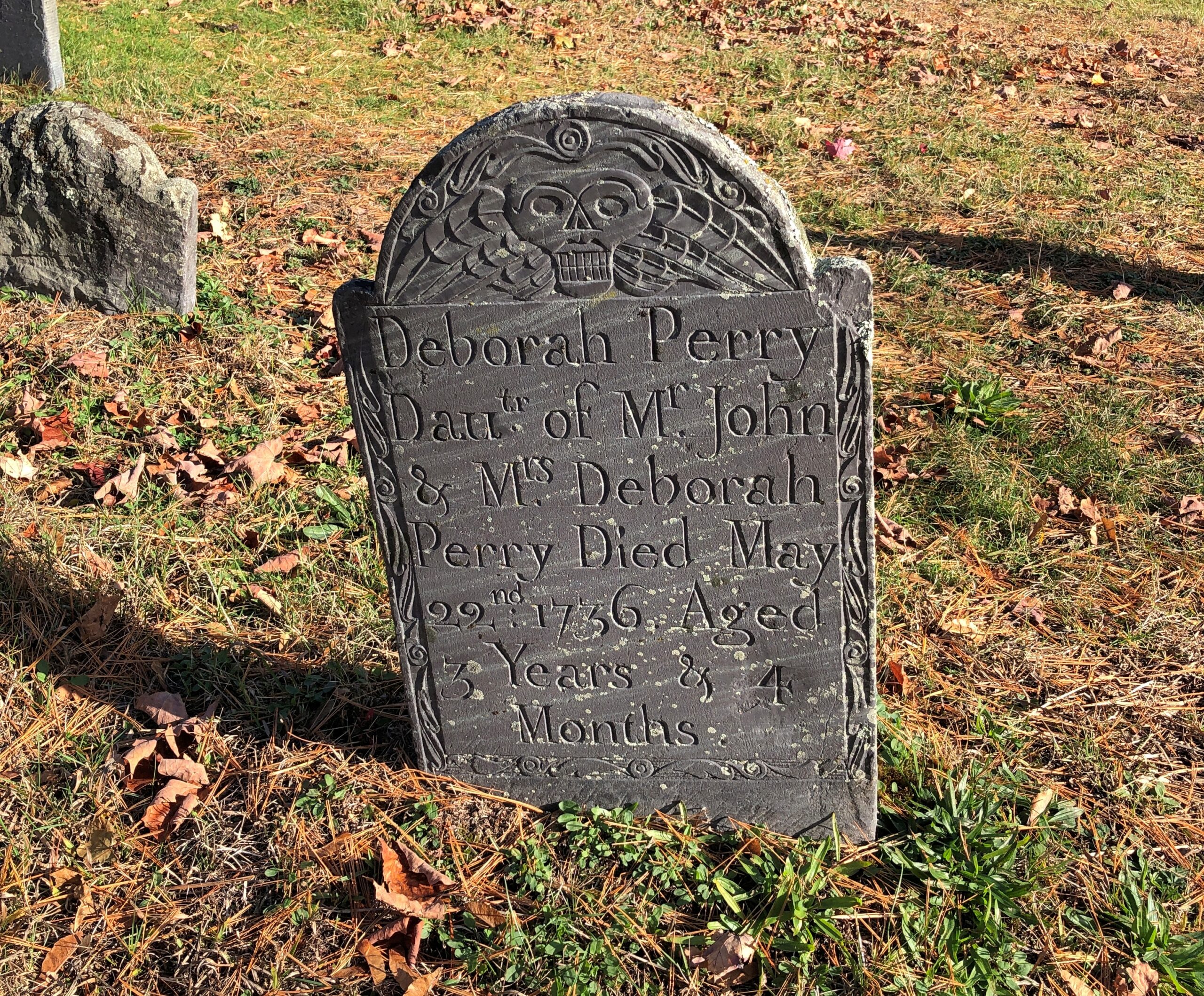
Memorials from a time before the Victorians came along and ennobled them a bit.
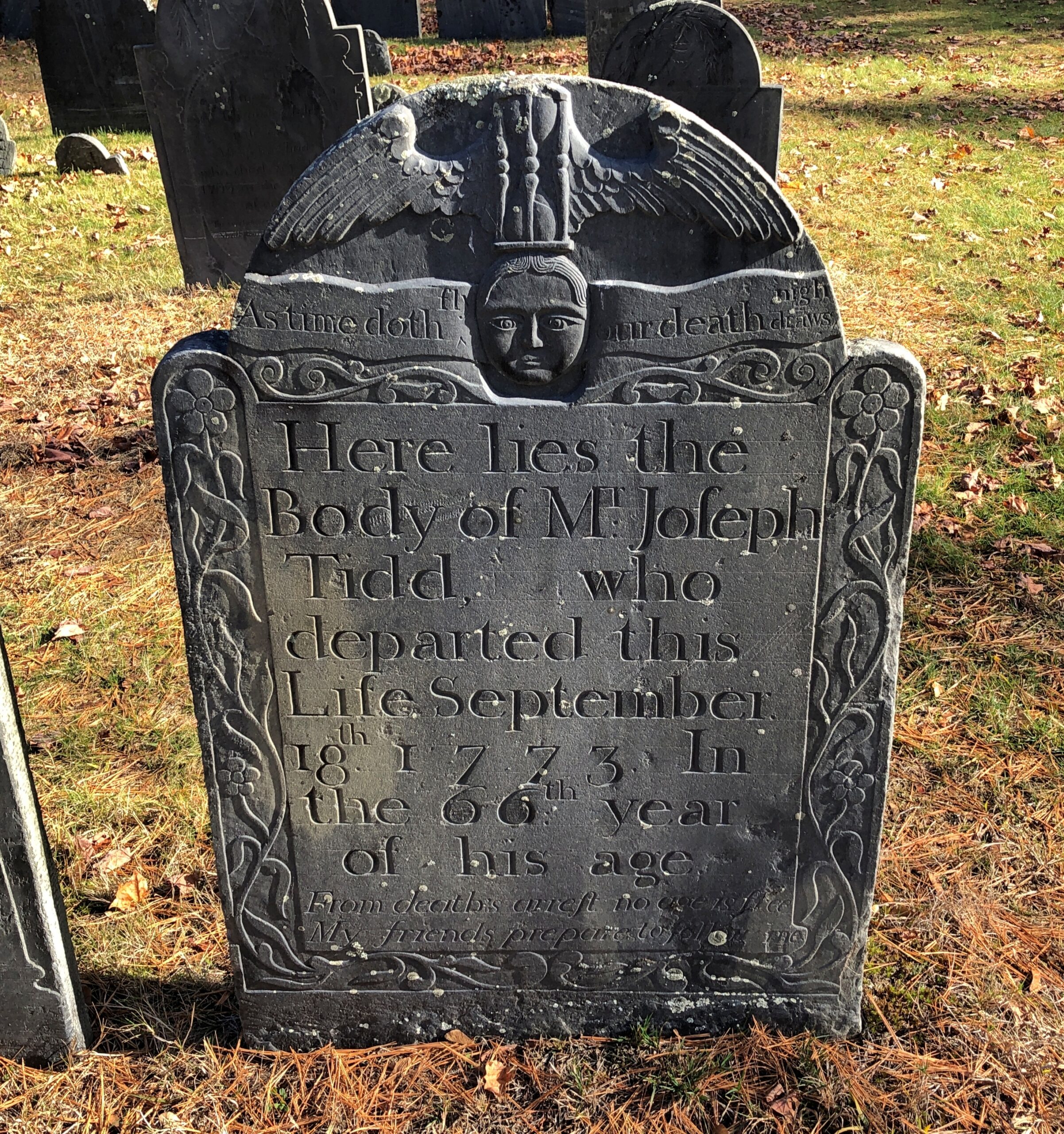
Or we moderns came along with our “celebration of life” euphemisms. It’s right there on the stone: As time doth fly, our death draws nigh.
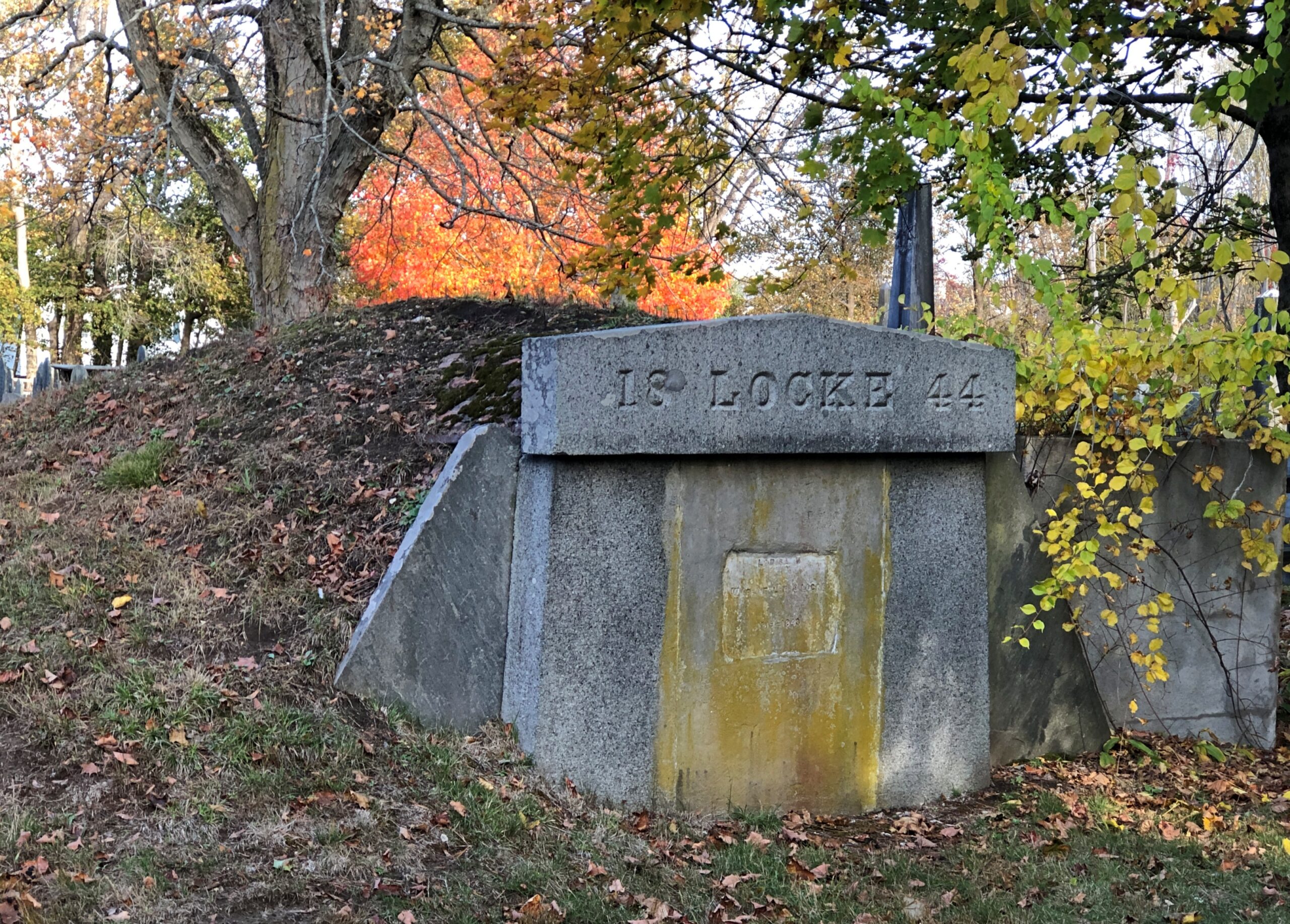
Not many tombs like this. Locke might have been the only one, come to think of it.
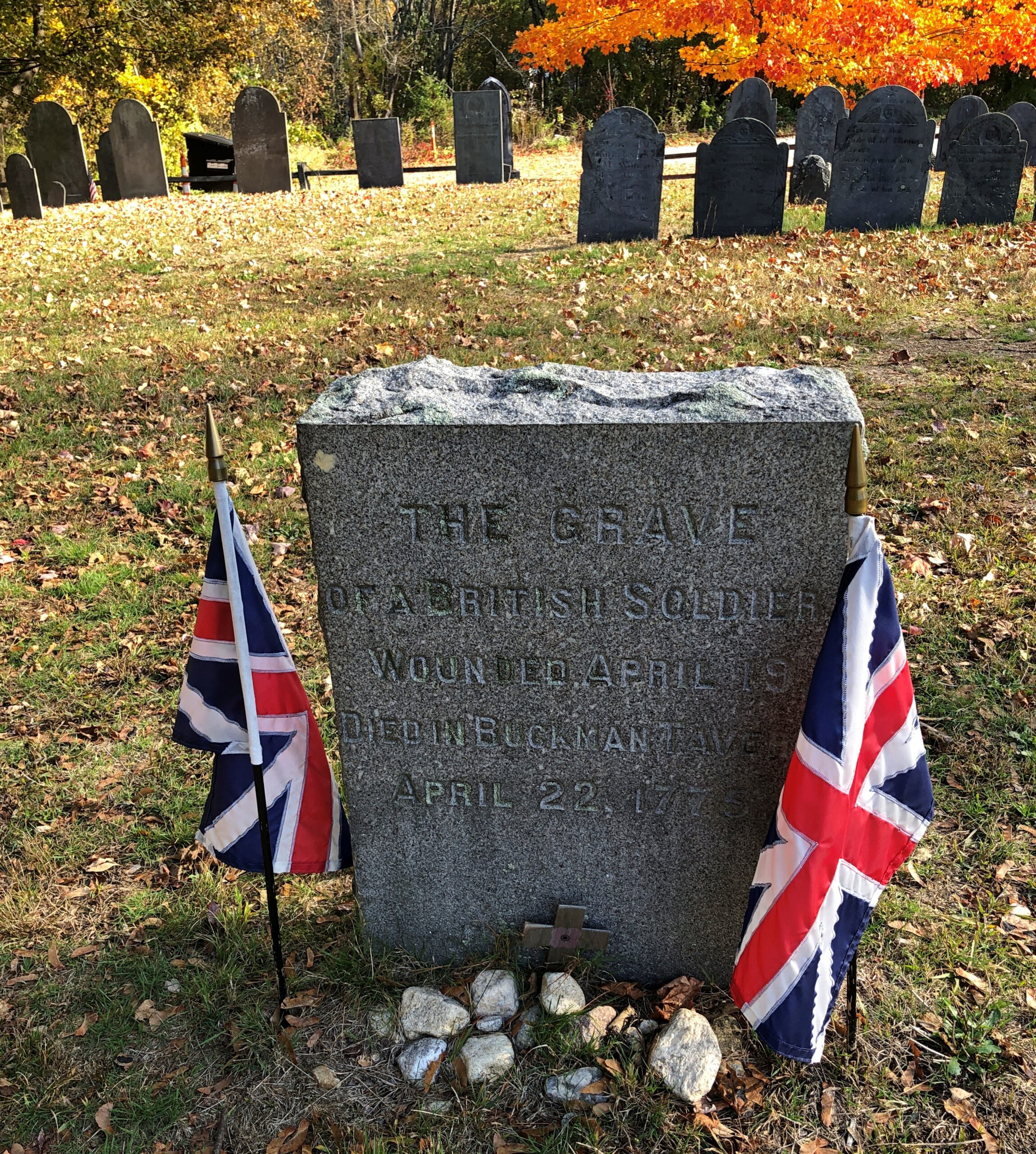
Something of a surprise.
Maybe not. However they felt about Regulars, the townspeople surely must have felt that a dead one deserved a Christian burial, and it wasn’t like they could ship him back home. The stone clearly came later, long after the passions of the war had cooled.
Indeed:Joseph Fiske, Lexington’s town doctor, recorded a bill for seven wounded soldiers he treated at Buckman Tavern the day after the battle [did he get paid?]. This soldier was likely one of them, but succumbed to his wounds in the following days. The simple granite slab was erected by the Lexington Historical Society in 1905.
The wonder is that anyone knew where the Regular was buried at all. Unless they were guessing in 1905. After all, militia commander John Parker – who died of TB only months after the Battle of Lexington – is known to be in the Old Burial Ground, but his exact location is unknown.