Battle Green, Lexington

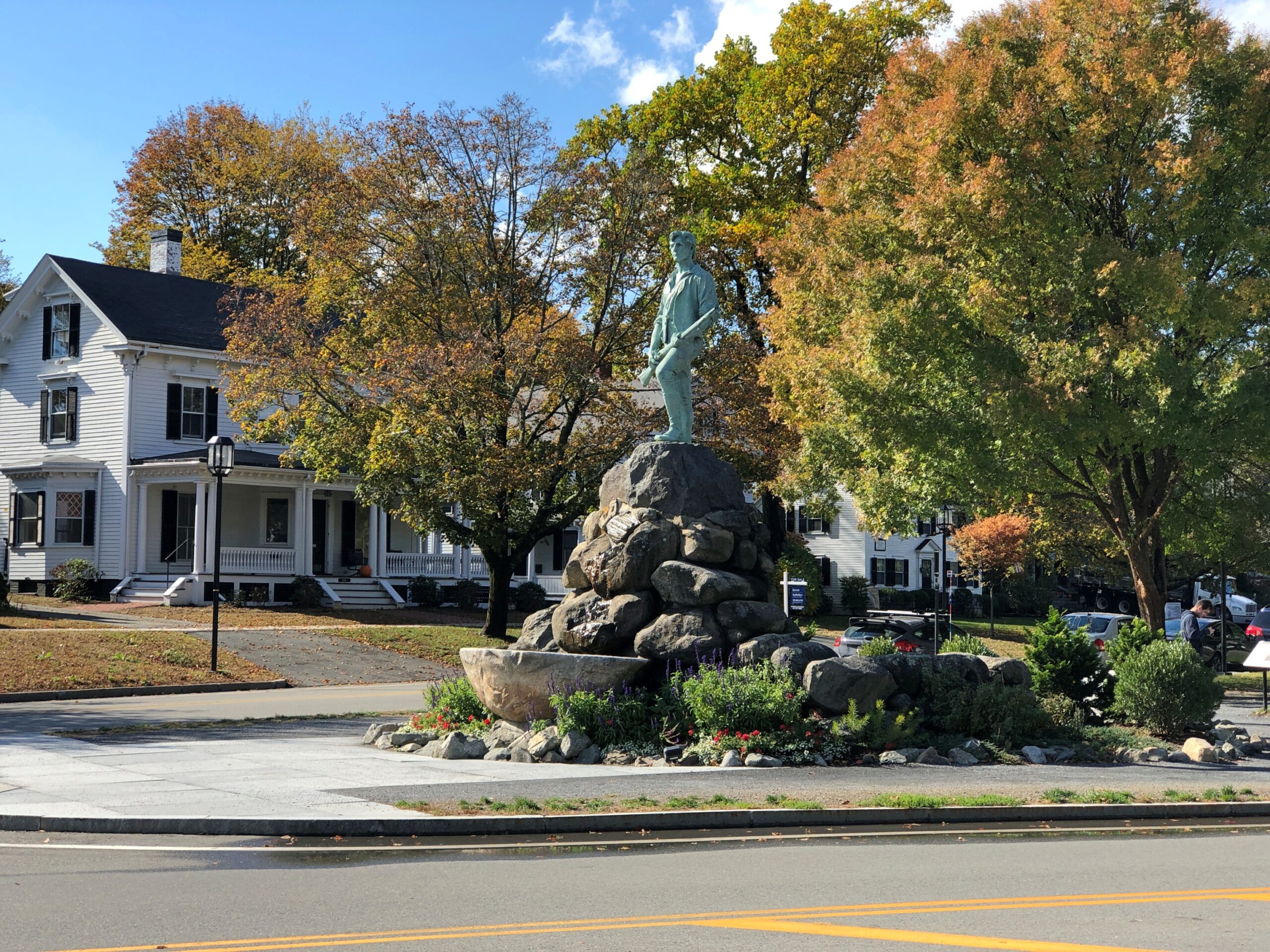
Too bad about iconic. If there ever were a time to use iconic to describe sometime distinctive and revered, John Parker in bronze would be it.
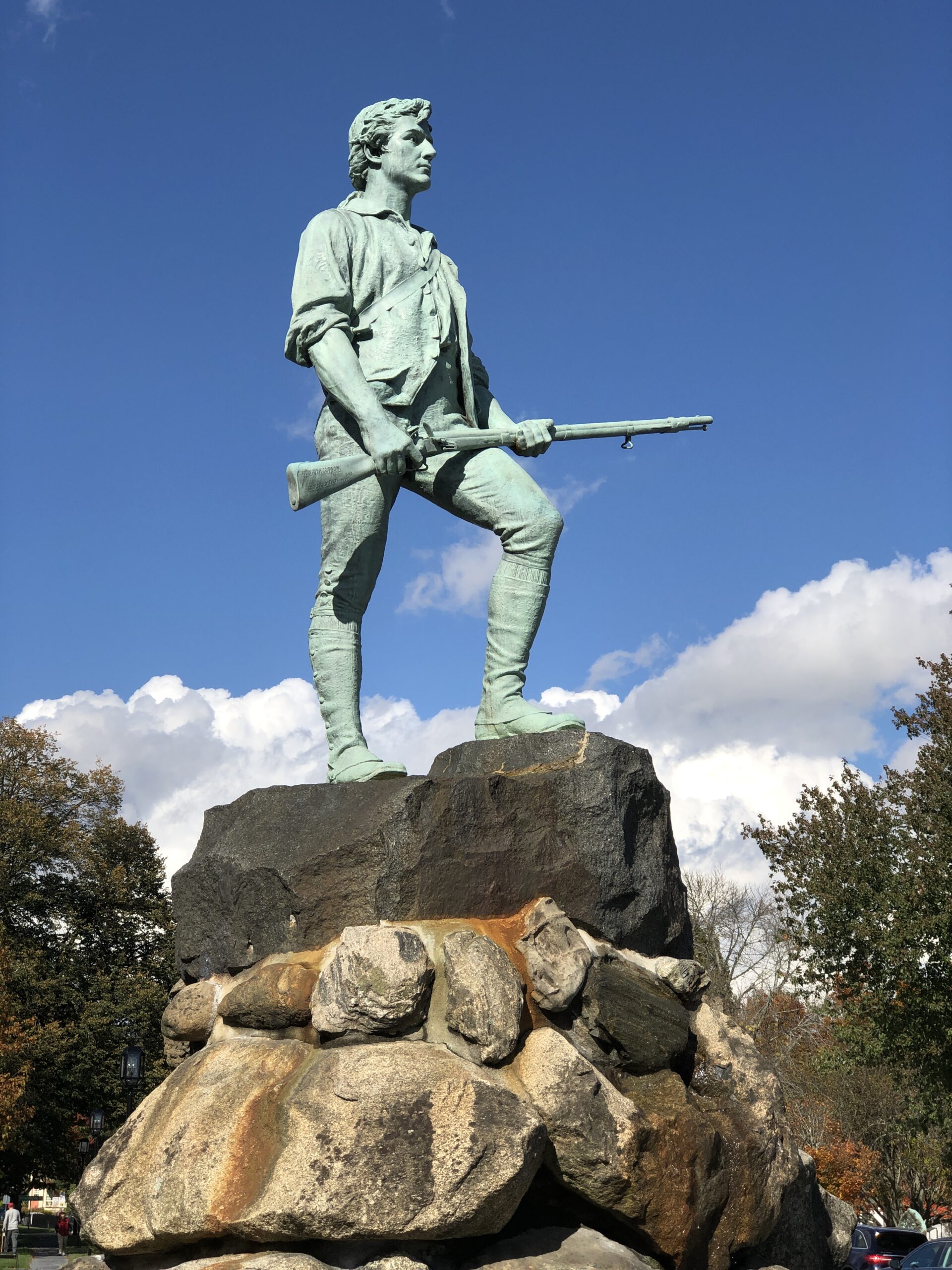
Lexington Battle Green

Icons are no accidents. The pose captures the Battle of Lexington as we, Americans, want to remember it: the resoluteness of an ordinary man in the face of the enemy. What the militiamen experienced that morning is partly enshrouded in mystery like a battlefield of the time might be with gun smoke. No one knows who fired the first shot, for instance, but that doesn’t keep the Shot Heard Around the World from having its own name during later generations — a remarkable thing for a simple firearm discharge to have.

Lore has encrusted the story. Even so, the Patriot soldiers in the Revolution, collectively, can’t be said to have lacked resoluteness over the long years of conflict.

The Parker bronze stands on the edge of Battle Green in Lexington, Massachusetts, and across the street from Buckman Tavern, where the militiamen of the town waited the night before the battle. Among their number on April 19, 1775, was a young man named Jonathan Harrington, a fifer in the militia. About 75 years later, he’s thought to have posed for a photograph, now on display at Buckman Tavern.
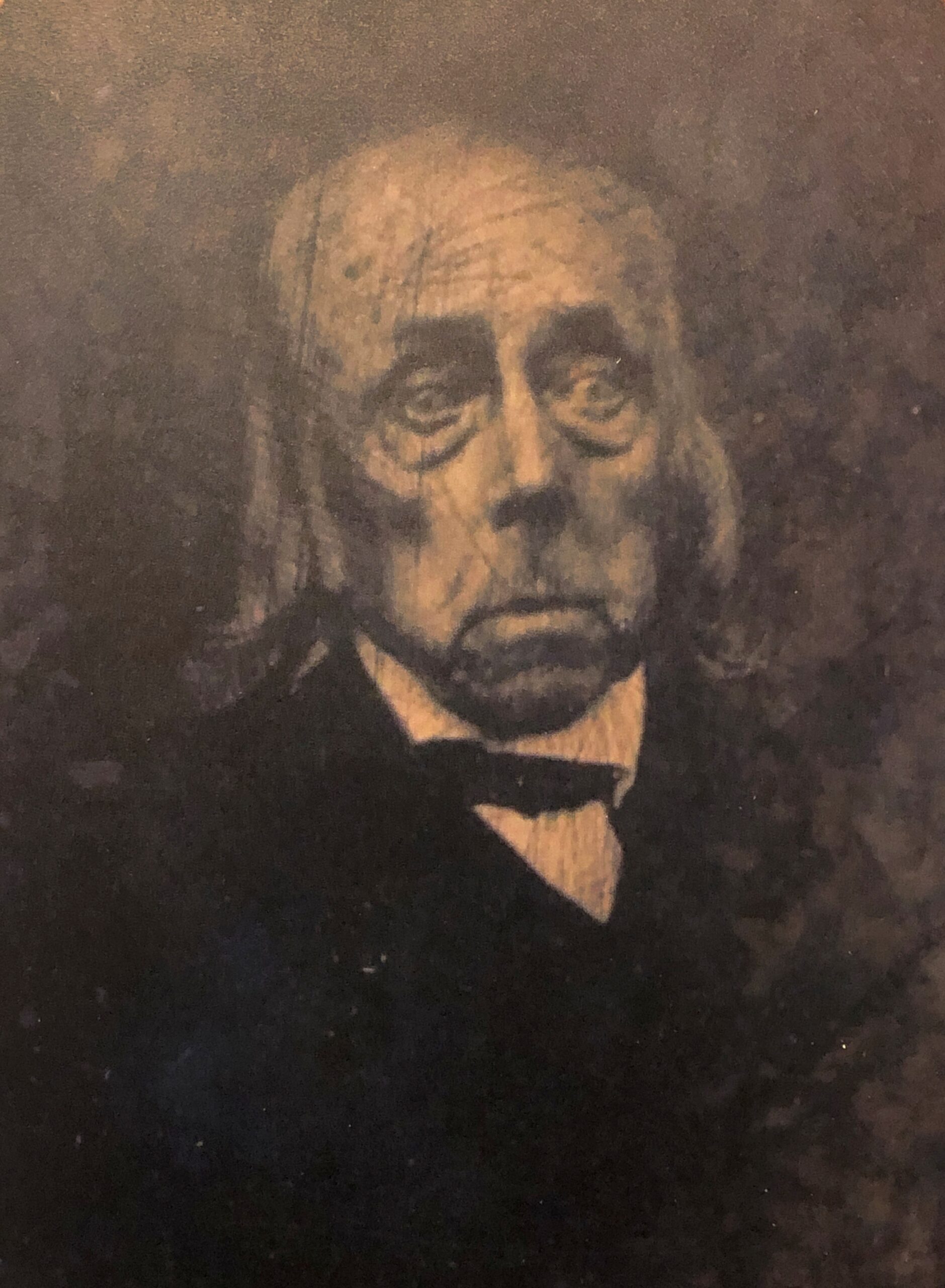
Jonathan Harrington, Lexington

Said to be the last survivor of the battle, and the only one to be photographed. The American Battlefield Trust cites a Harrington family history: He said he was aroused early that morning by a cry from his mother, who said: ‘Jonathan, get up, the regulars are coming, and something must be done.’ Jonathan was a fifer. He arose, went to the place where the patriots were gathering, and was with the company on the approach of the British. 
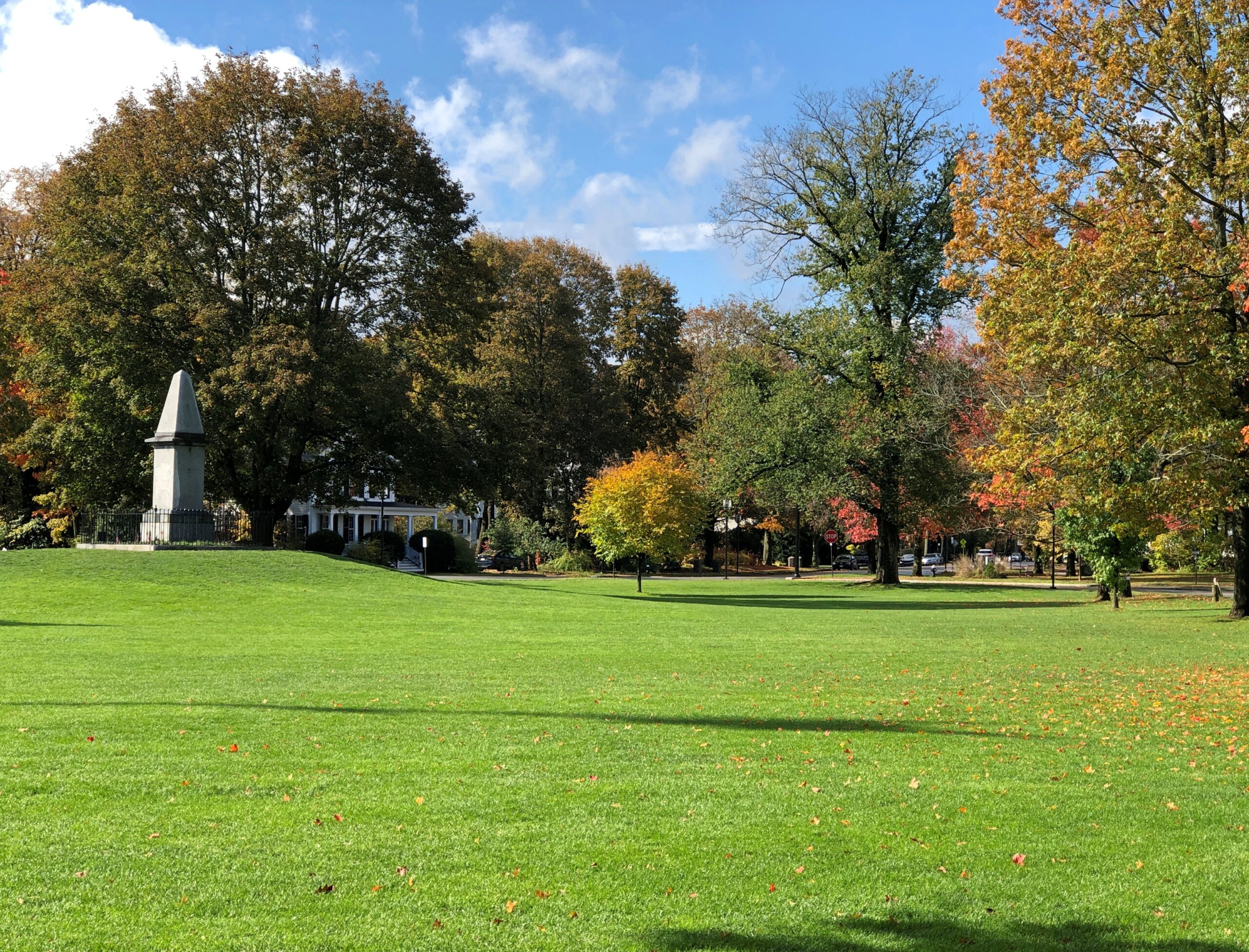
It had rained during the early hours of October 22, 2025 in Lexington, but by late morning the sun was out and only a scattering of puddles remained. Battle Green stretched out behind the bronze John Parker. For a time, I was the only person on the green, though a steady stream of car traffic was the be seen on the roads edging the grounds.
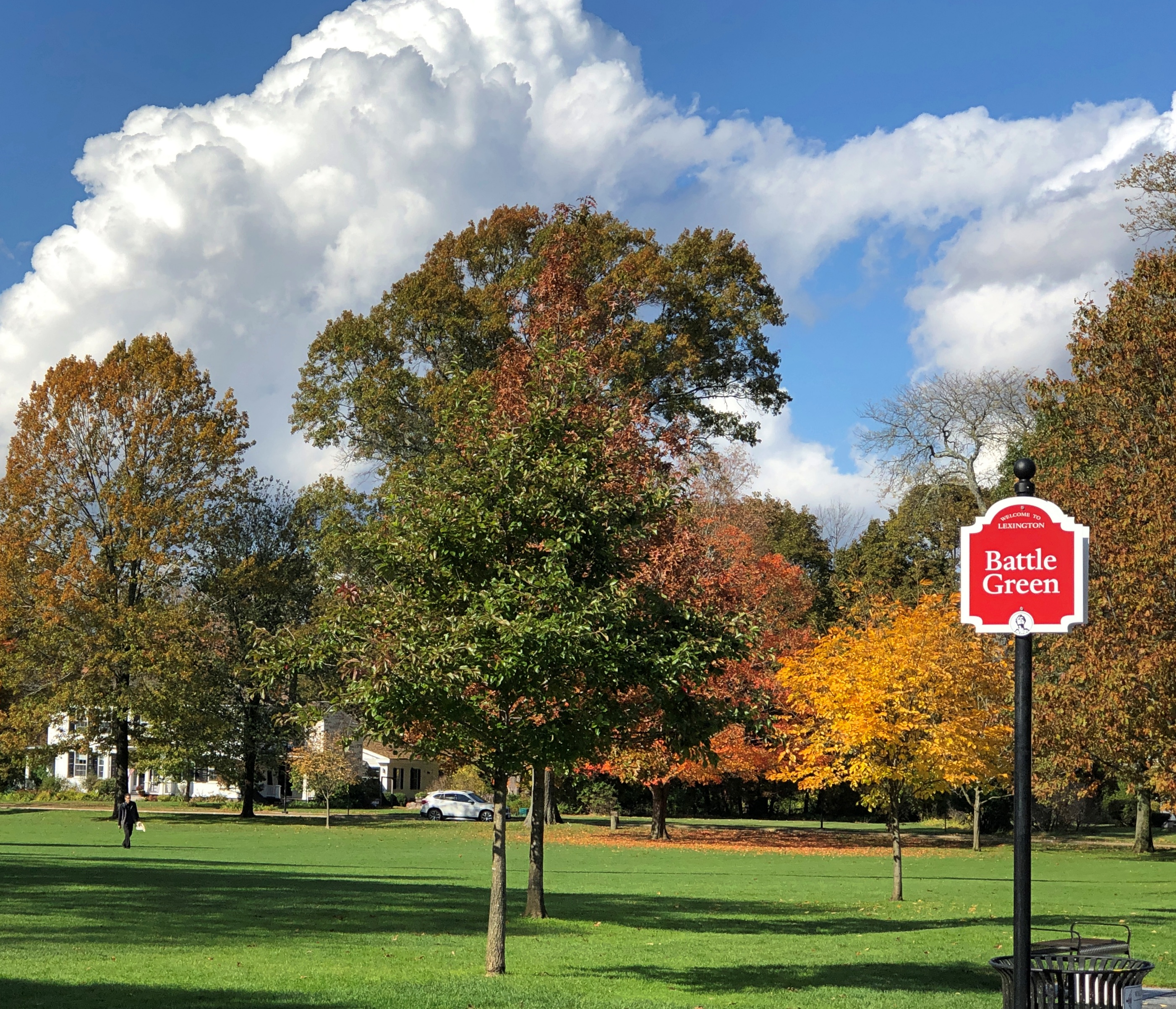
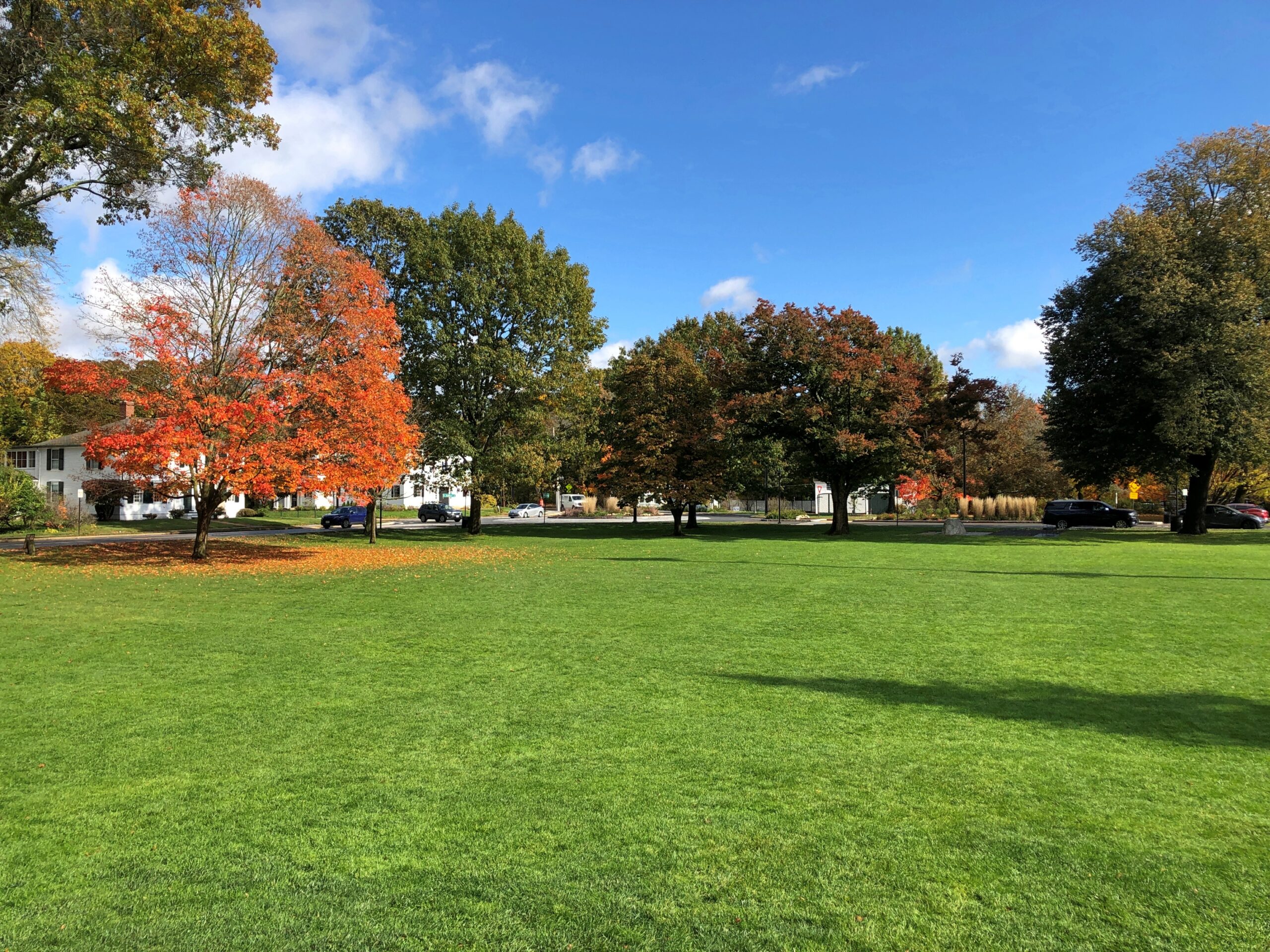
Battle Green,
Lexington
Battle Green, Lexington

John Parker, originally “Minuteman Statue” by the prolific sculptor and public monument specialist Henry Hudson Kitson, is a latecomer to the green, erected in 1900.
Battle Green, Lexington

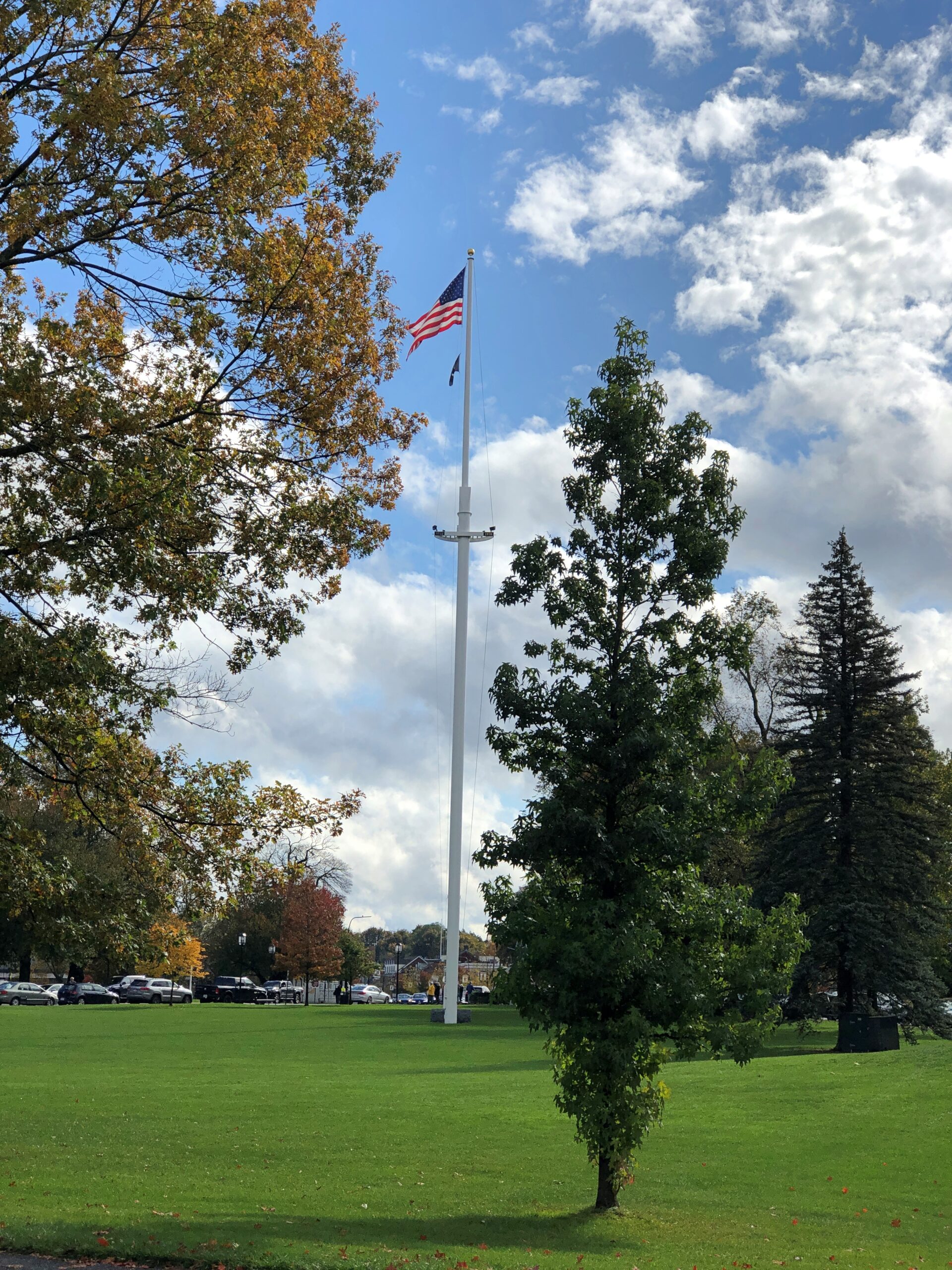
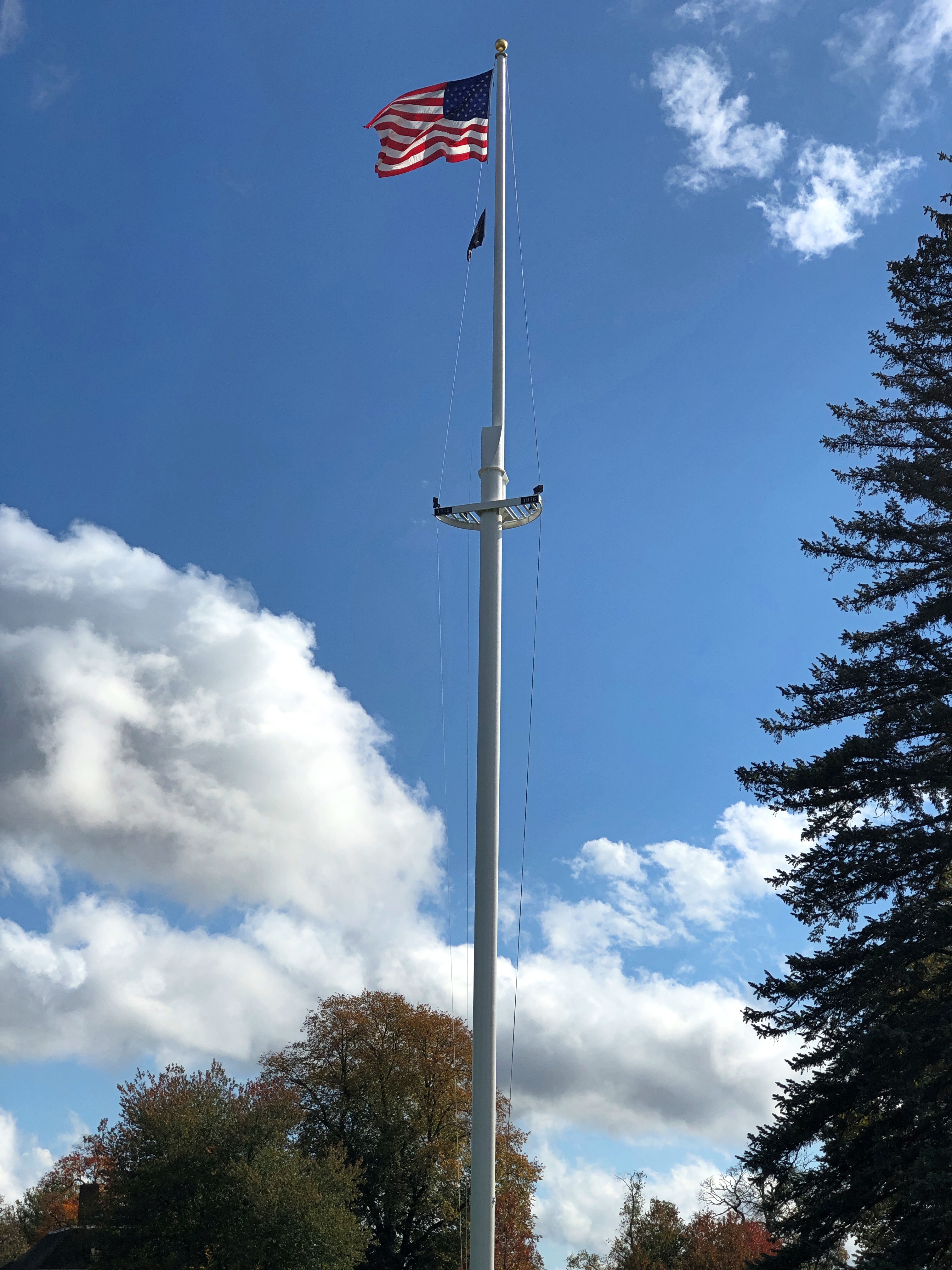
The Battle Green flagpole is newest of all, erected only in 1962. Even so, the pole is on the National Register of Historic Places, and an act of Congress specifies that a flag will always be flown there.
Battle Green, Lexington

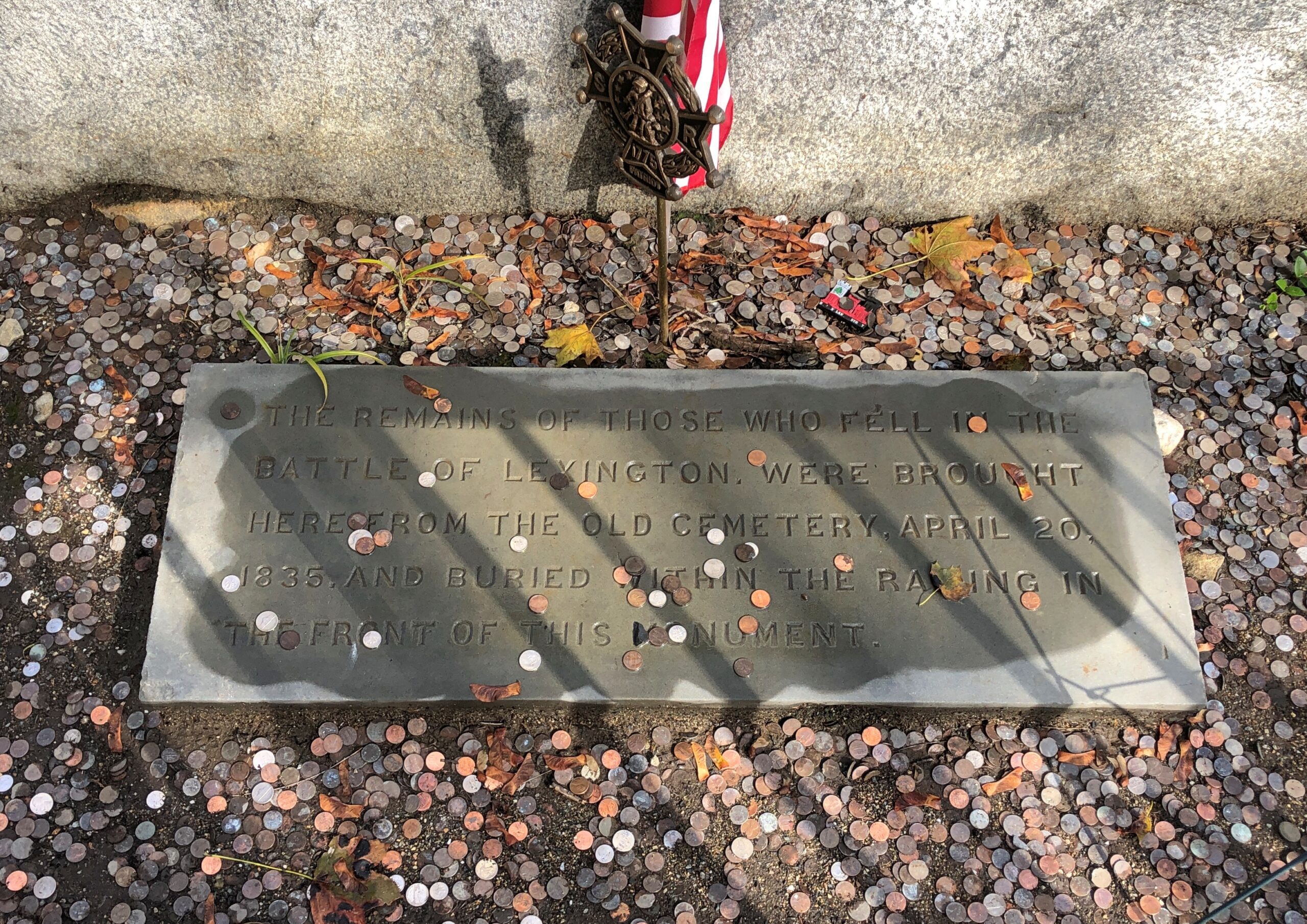
Well within living memory of the battle itself (1799), the town – fully aware of its role as spark of the Revolution – erected a memorial, and relocated the bones of the militiamen killed in the battle to a spot in front of it.
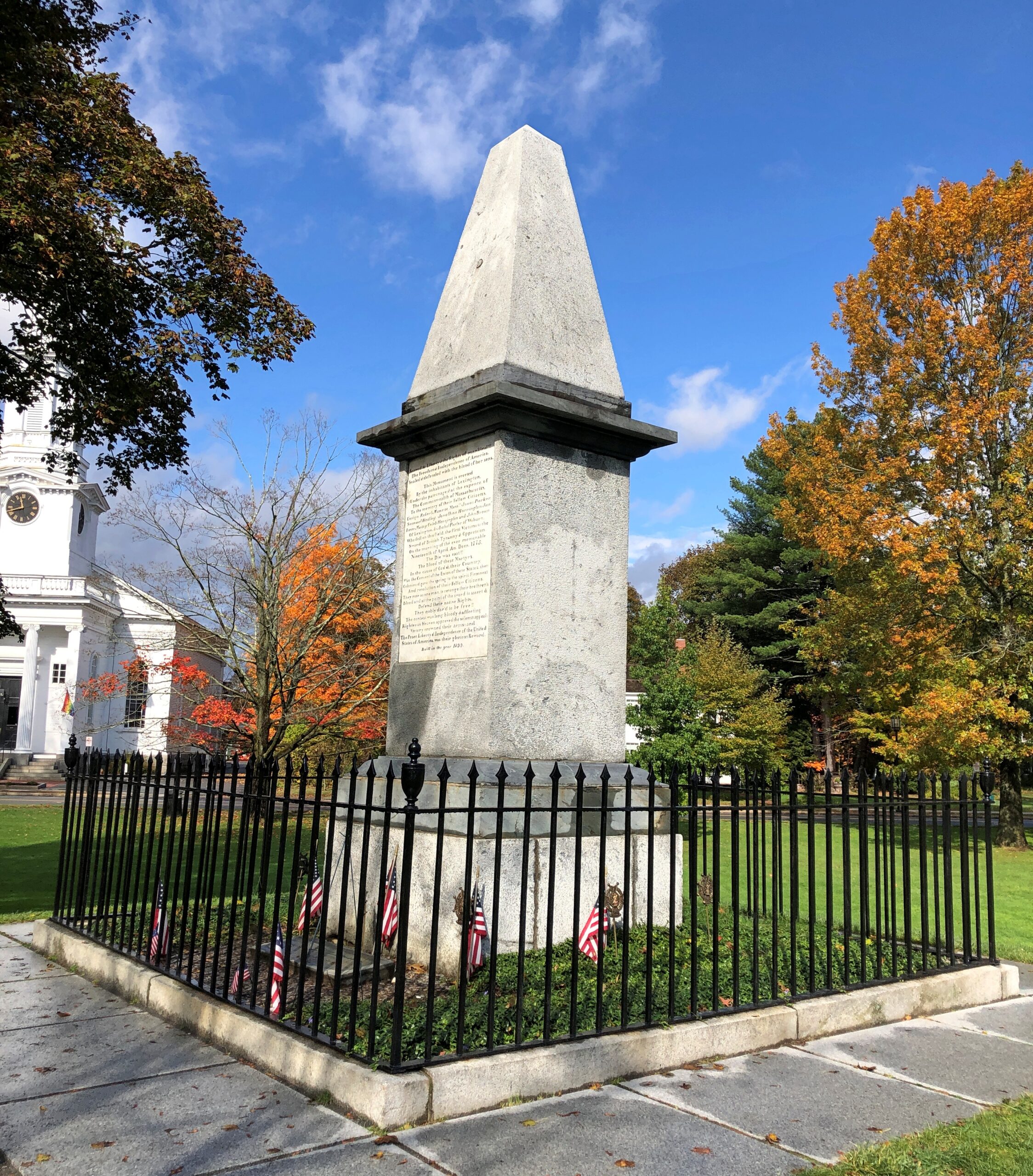
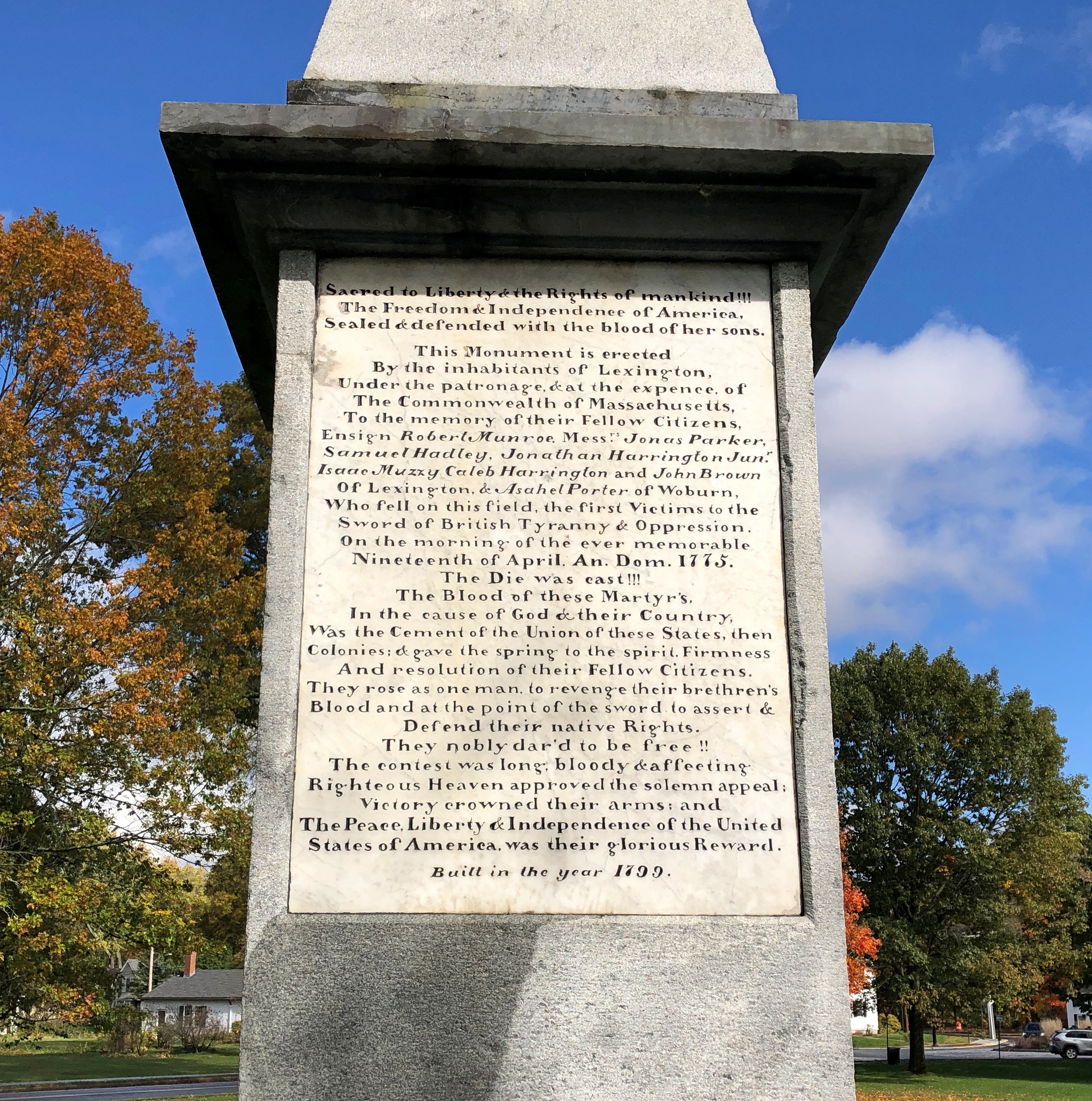
Battle Green, Lexington

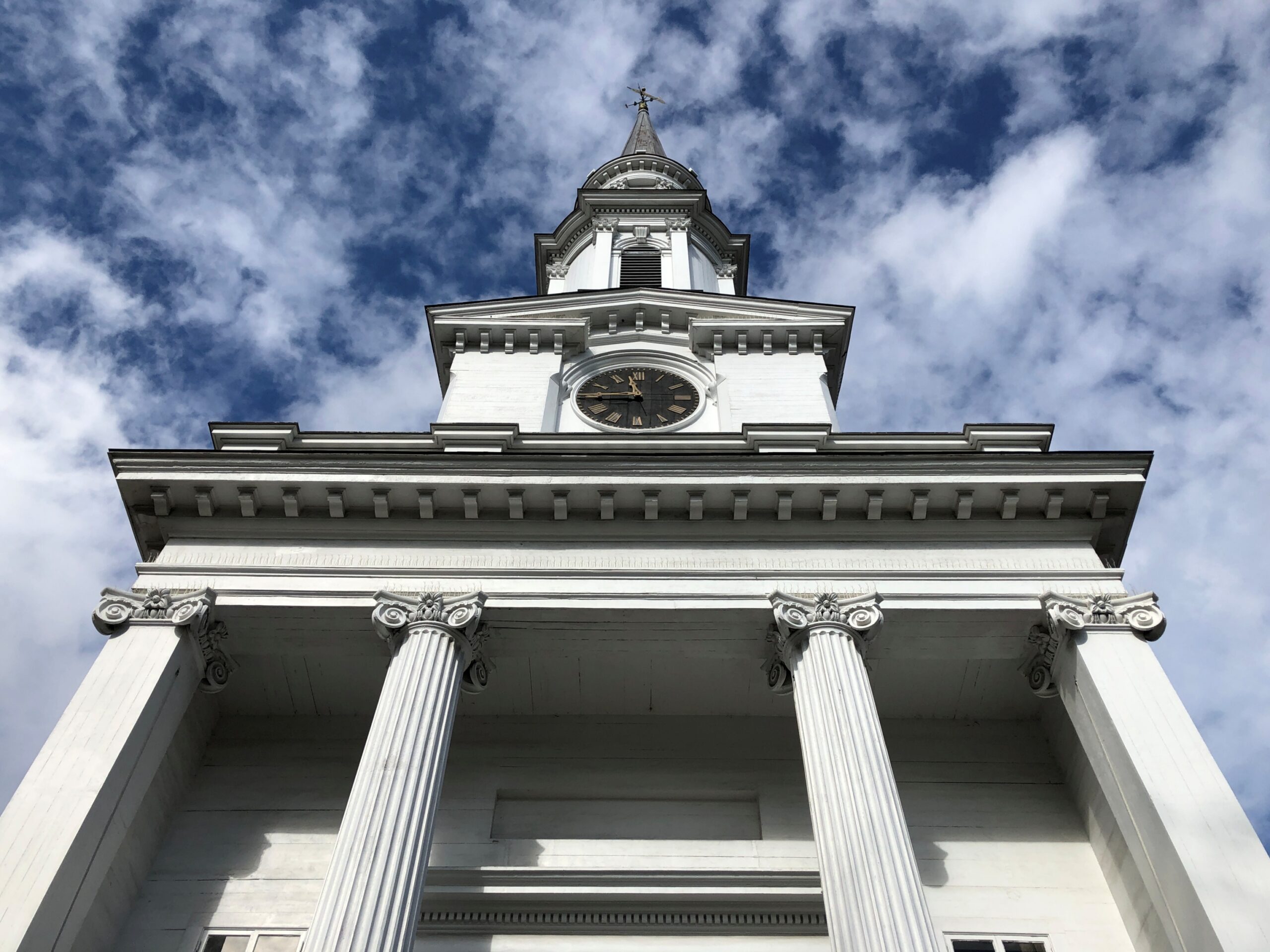
Though not formally part of the green, First Parish Unitarian-Universalist is distinctly part of the place, and looks about as New England as a church can.
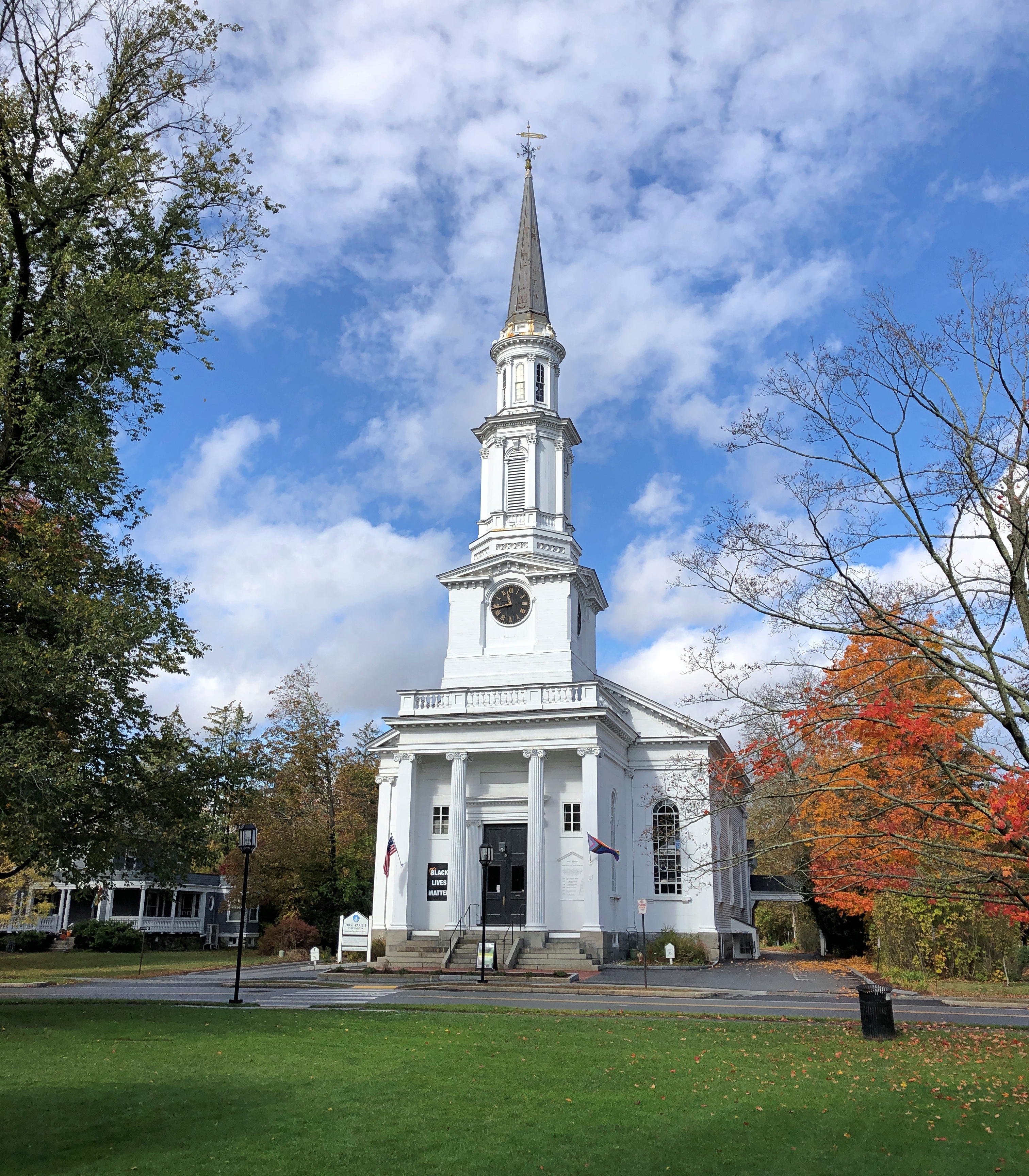
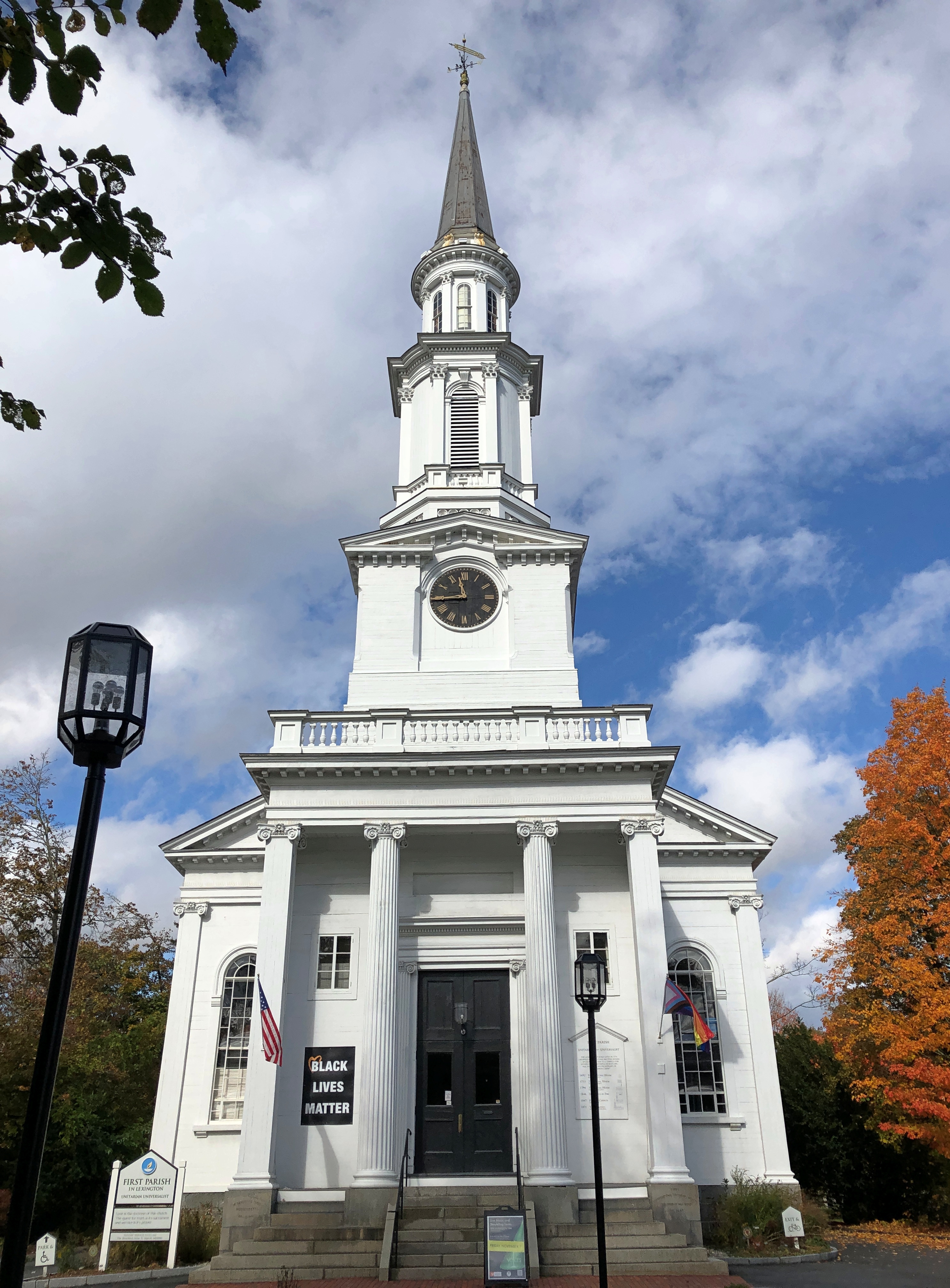
Battle Green, Lexington

It might as well be part of the green, considering the history of the congregation. The present church is a 19th-century structure near the site of Lexington’s only church in 1775, which was a hotbed of Revolutionary sentiment at the time.
Billie Creek Village

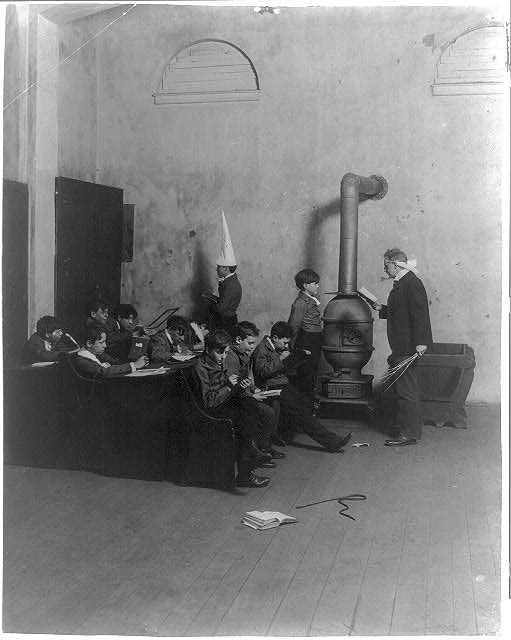
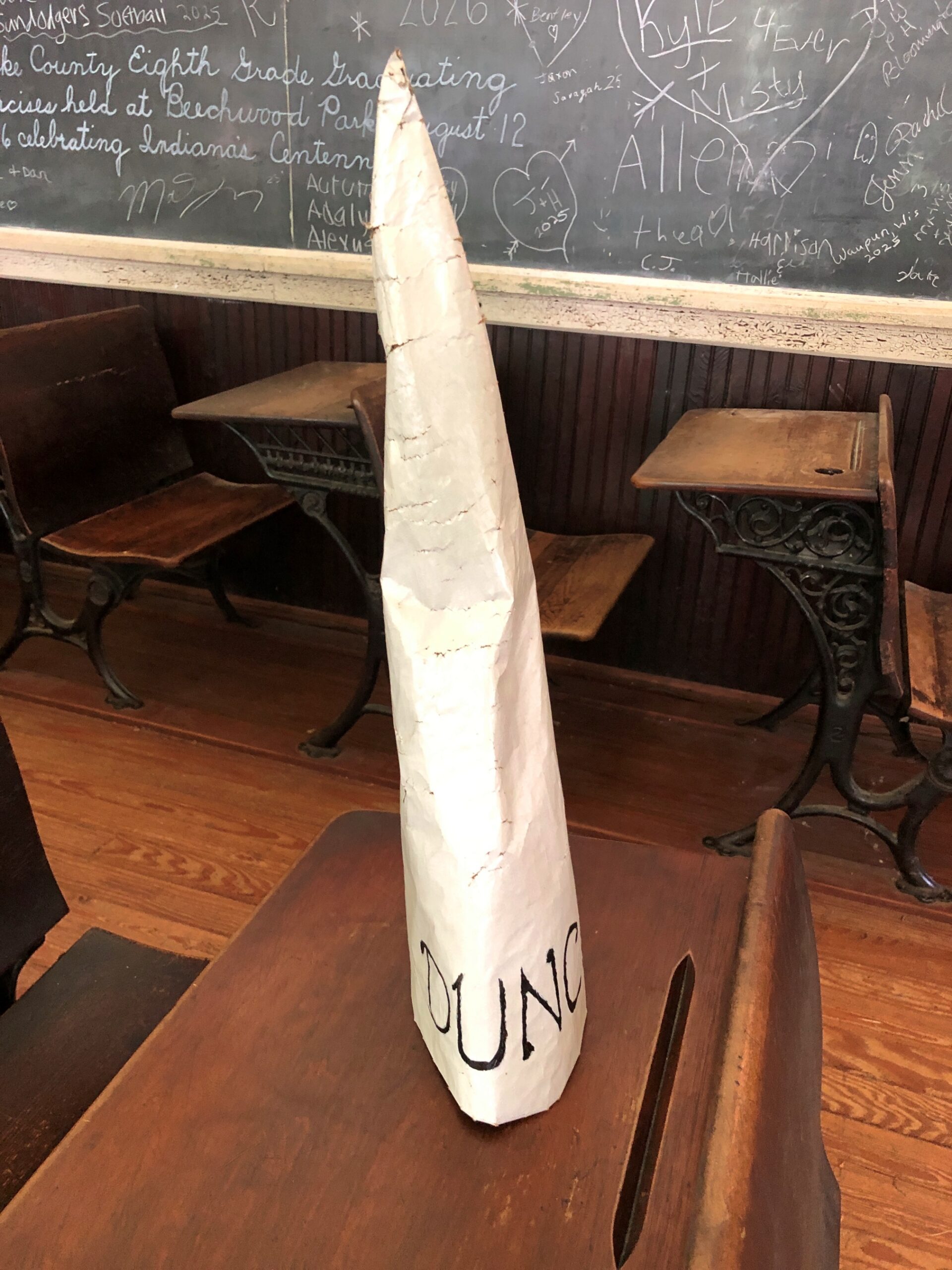
I don’t know whether it was a relic or a replica, but there it was, something we’ve all heard about, seen in drawings and as the stuff of metaphors: a dunce cap. I’d never actually seen one before that I remember, not as a physical object.

Billie Creek Village

That is why you (I) visit such places as the open air museum Billie Creek Village in Parke County, Indiana. To be mildly surprised. Such as the time I encountered a can of White Star brand tomatoes with a hammer and sickle on it, or a Papua New Guinea battle shield sporting the Phantom, just to name two among many such little surprises.

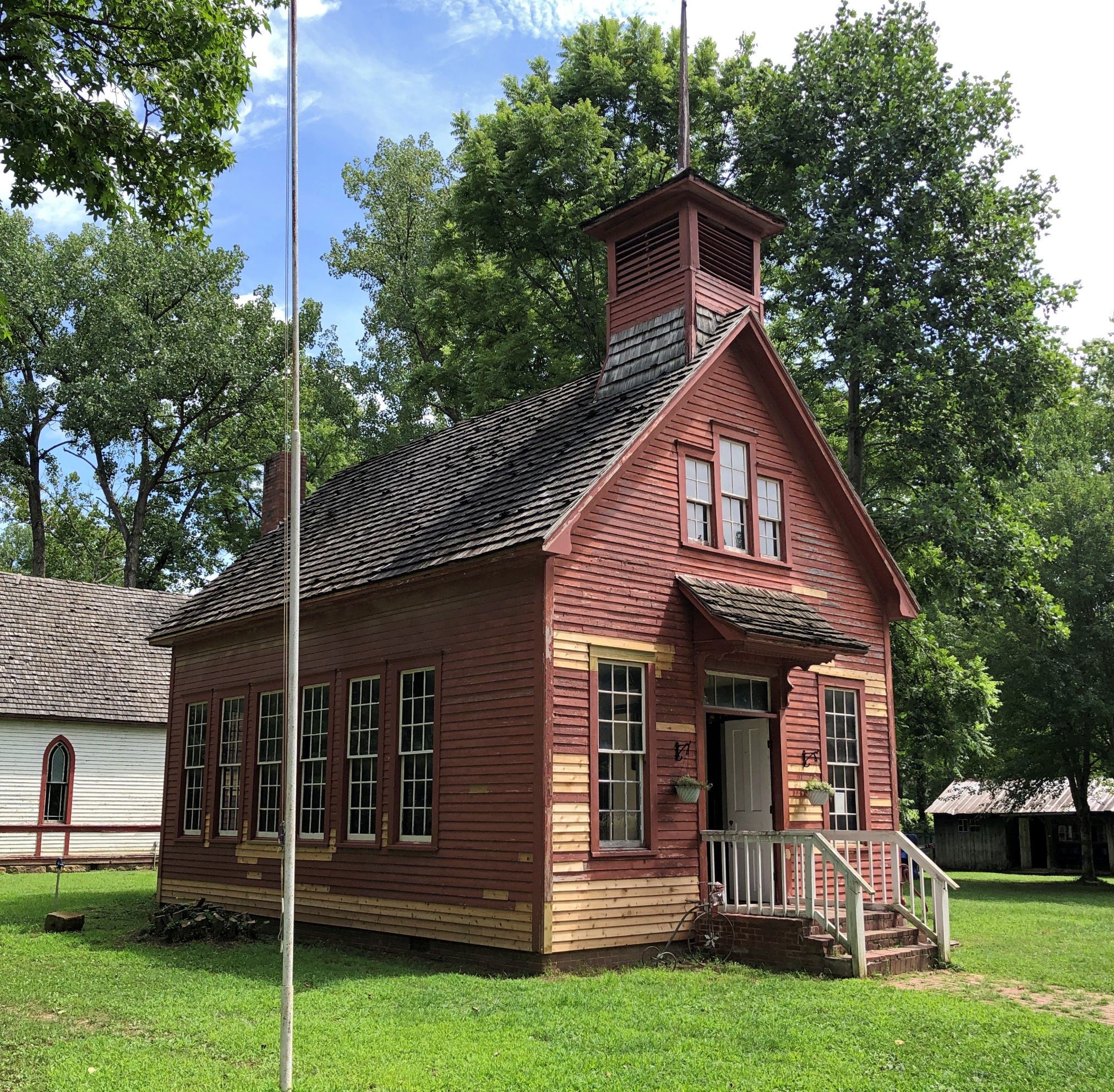
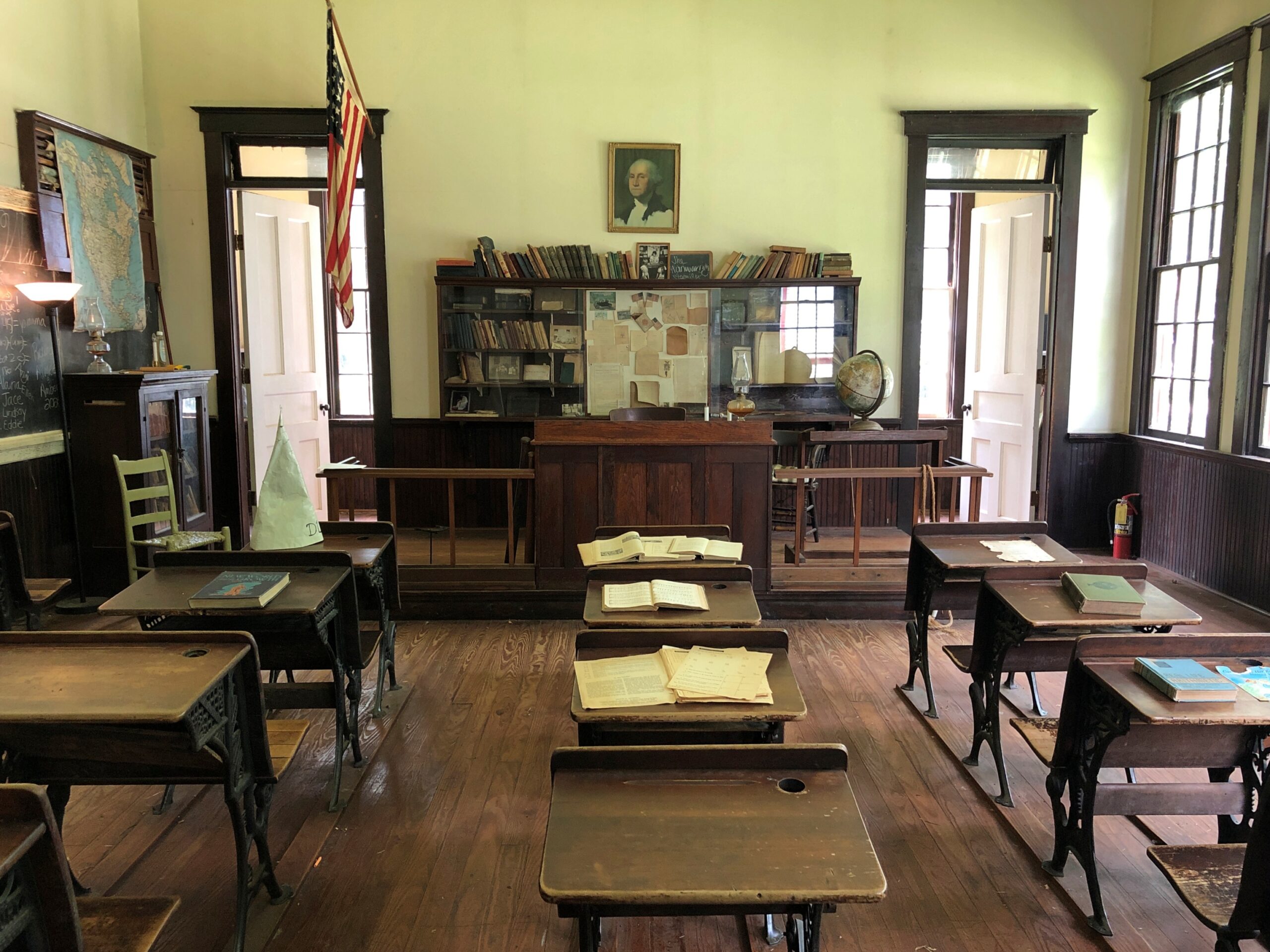
The dunce cap was on one of the desks at Billie Creek’s one-room school house, used until the early 20th century, as usual for that kind of school.

Good old dunce caps. Sure, they go against the grain of modern thinking, antiquated as a one-room school, but we all can remember a few goofballs from our school days who deserved one, can’t we? As seen in a pic from the Library of Congress, dated ca. 1905, but with no information about where it might have been. Just a small school in the years before self-esteem was discovered.

The old school house at Billie Creek is one of 38 historic structures relocated from various parts of Parke County, Indiana, to about 70 acres west of Rockville on US 36. Originally opened in 1969, the place has had a series of owners and been through periods of abandonment, but since 2022 has been under management that seems to know what its doing.

That’s my thinking, anyway, since its refreshing informality perfectly suits the place. You go, you park your car, you wander in. No irritating timed tickets, no gouging entrance fee, no expensive yet mindless luxury goods and experiences that could be pretty much anywhere. Yet there is an economic model: Billie Village hosts events – one was going on when we visited around mid-day on a Sunday – and some of the buildings are also shops, and do sell luxury goods, in the sense that such handcrafts aren’t found in modern grocery or drug stores.

We supported the place by buying a few things, including (yes!) postcards. A few dozen other people were doing so by attending the event. I watched part of some sort of award ceremony as it happened at the village gazebo, and even asked one of the bystanders about what was going on, but couldn’t quite get the gist of it. The meeting seemed to be one of those Society of Creative Anachronism sorts of things, though not that specifically. Attendees wore fantasy- and history-adjacent costumes, mostly with that homemade vibe. One of those outings for adults who didn’t get enough playing pretend when they were kids, I guess. All well and good.

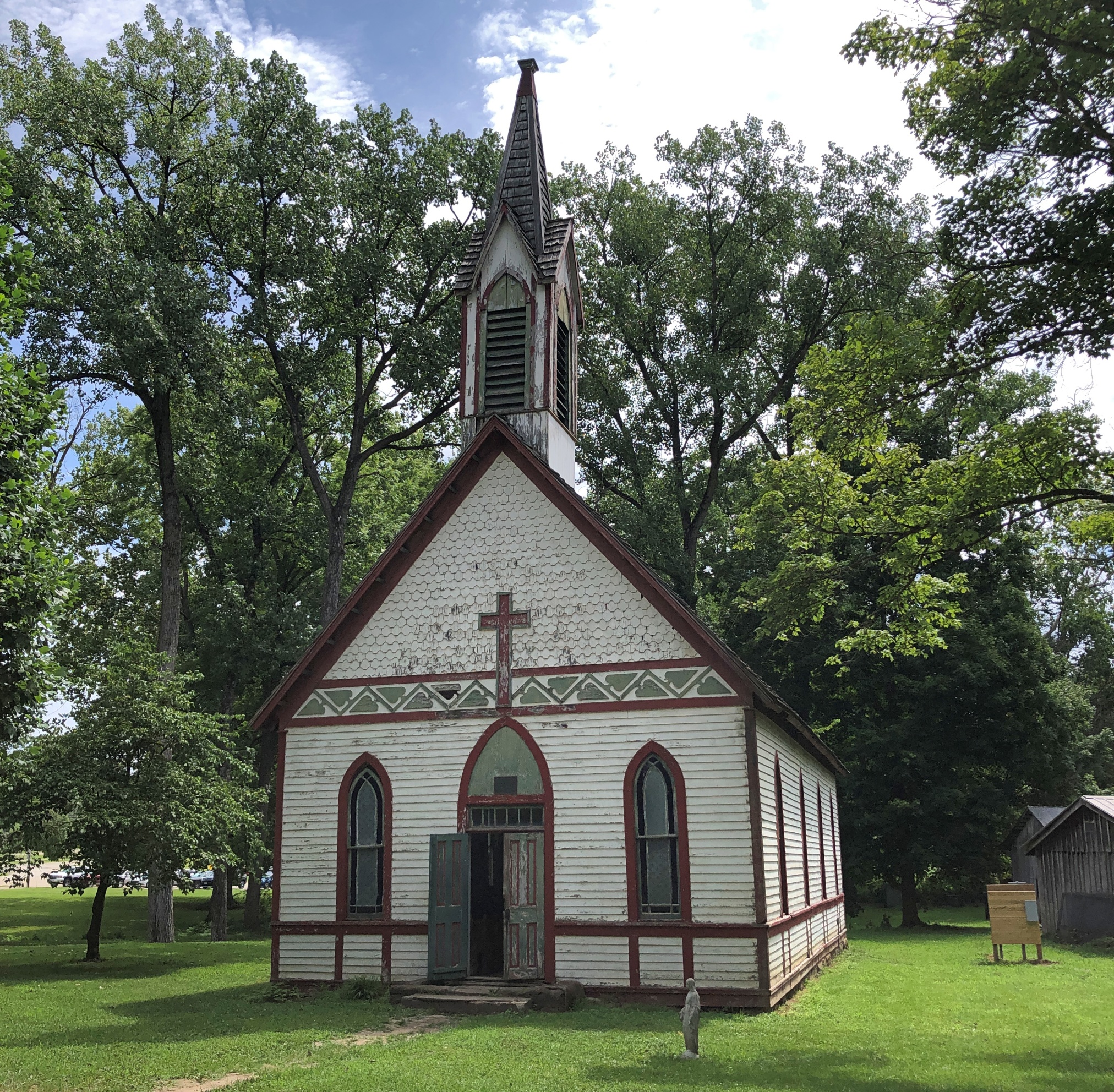
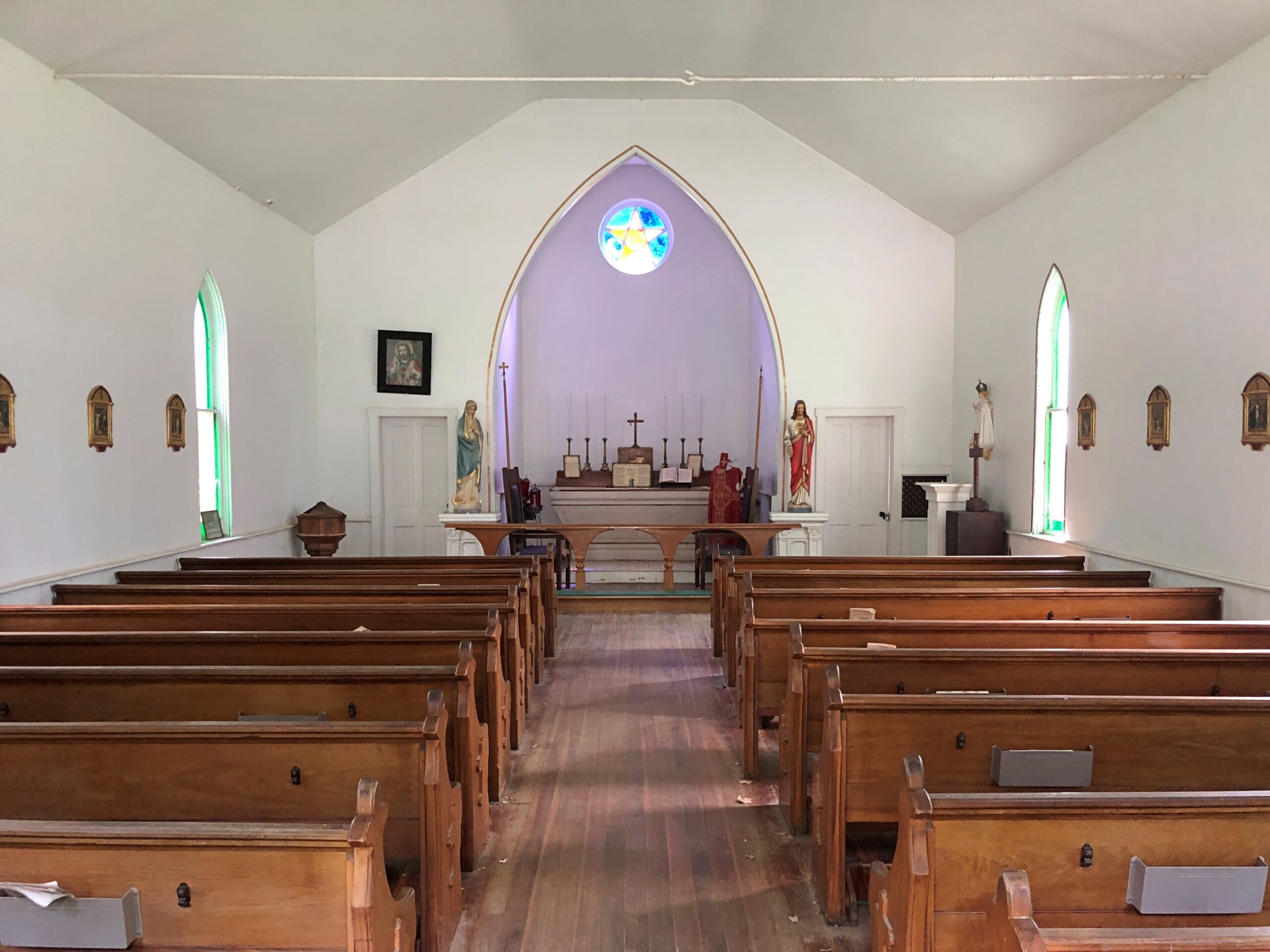
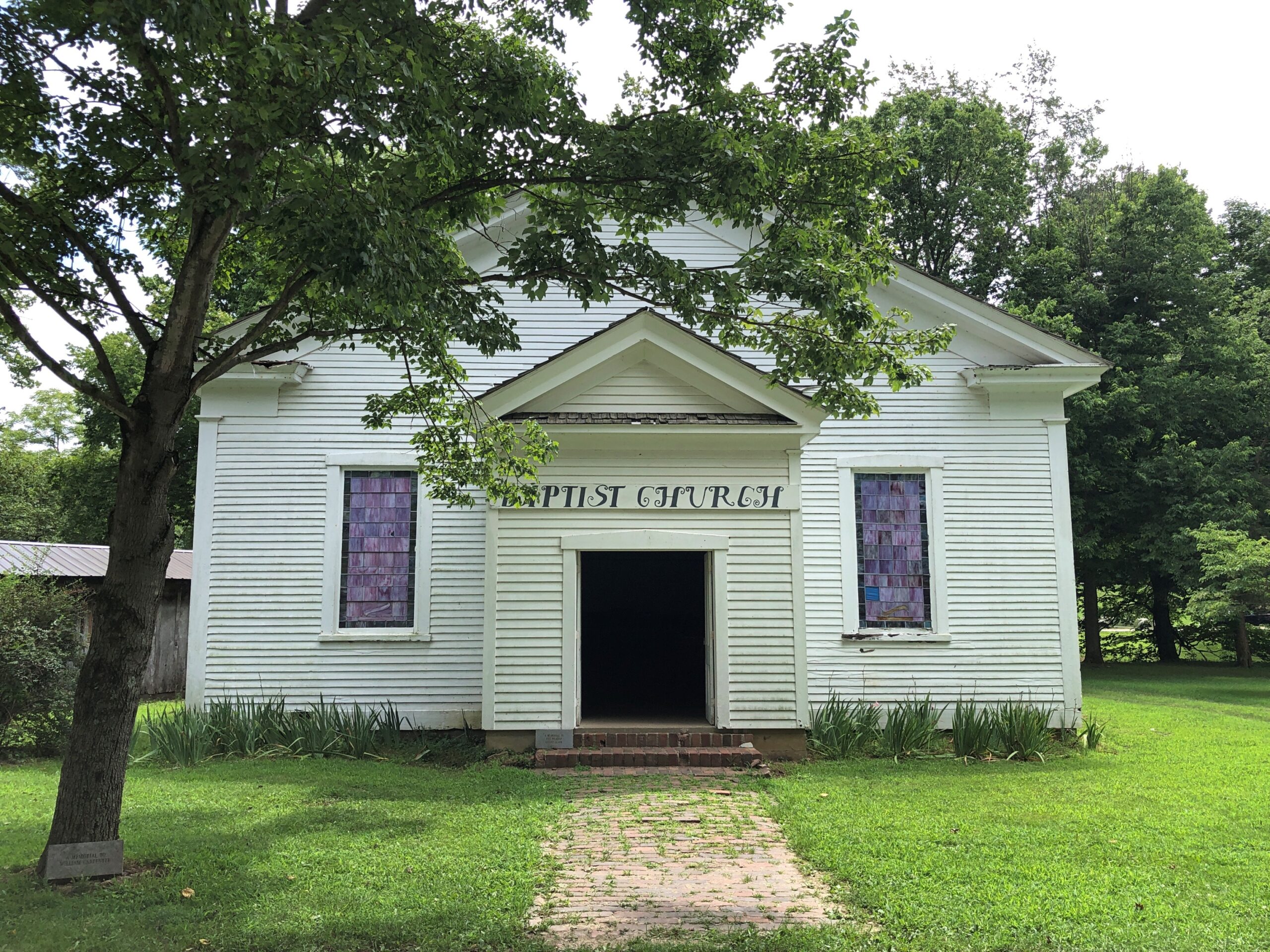
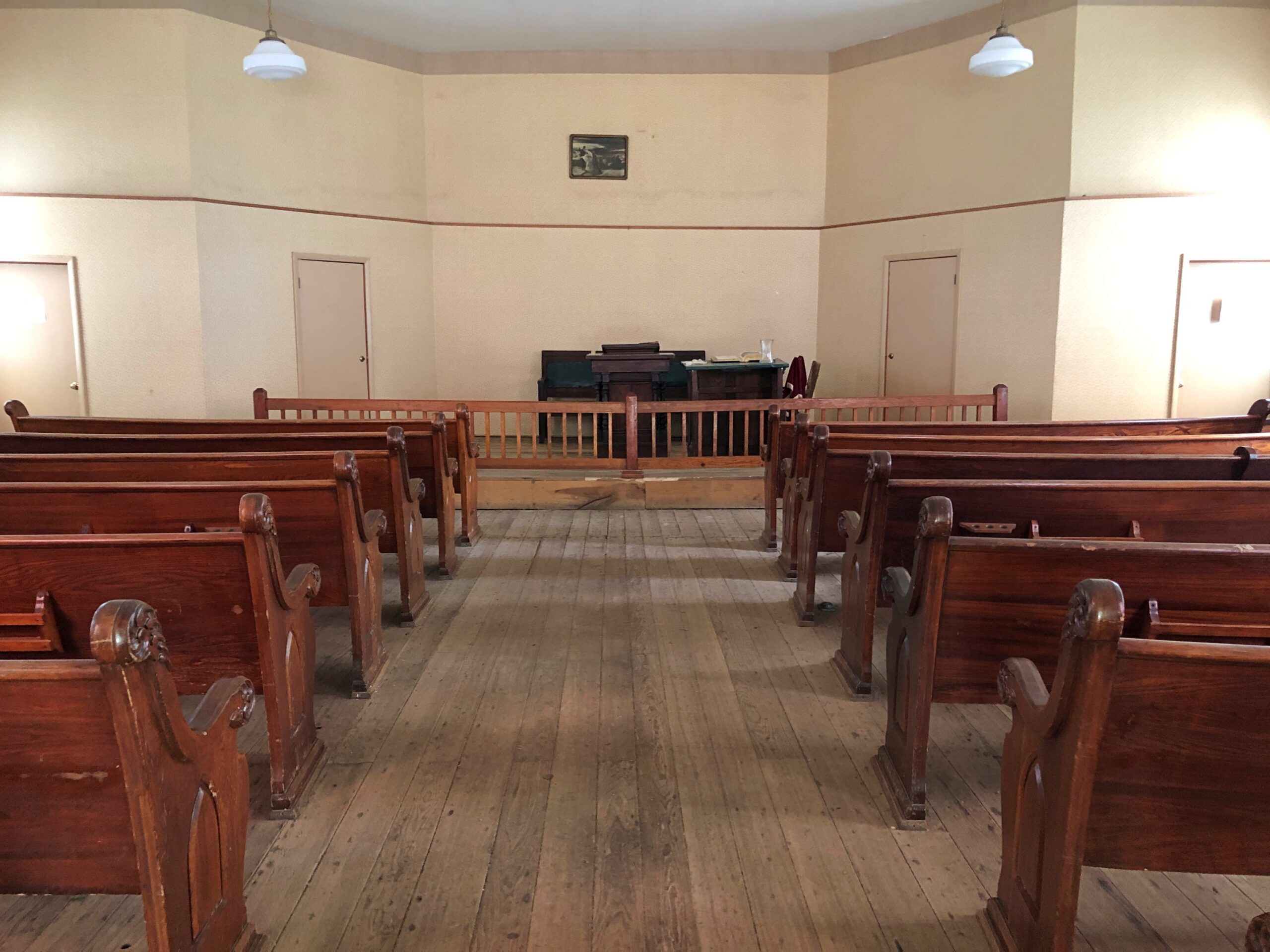
I hope that economic model keeps the place open, because one recipe for a good couple of hours on a hot weekend in July is visiting curious old buildings. Such as a couple of relocated churches.

One Catholic.

The other Baptist.

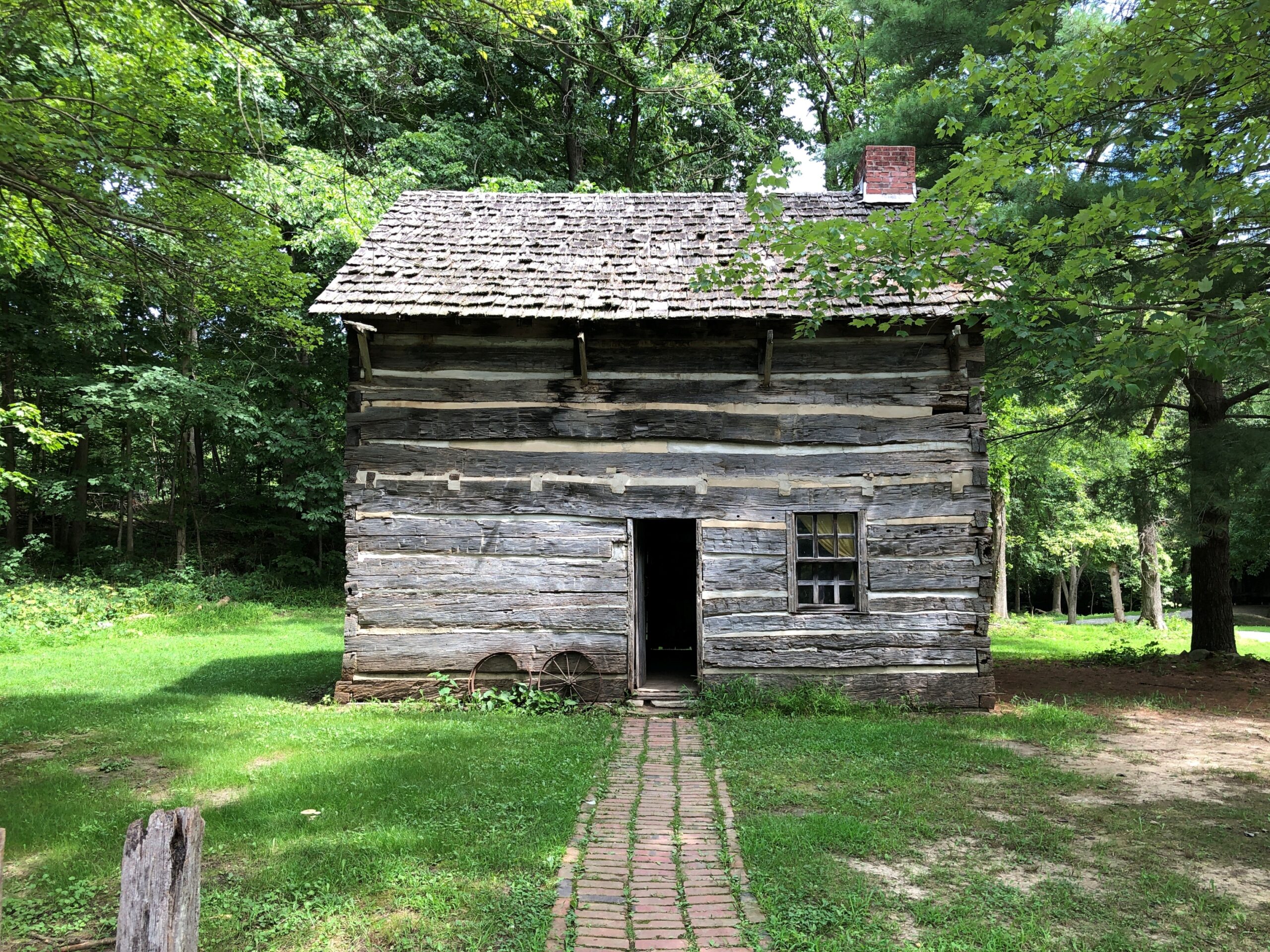
An early Parke County cabin.

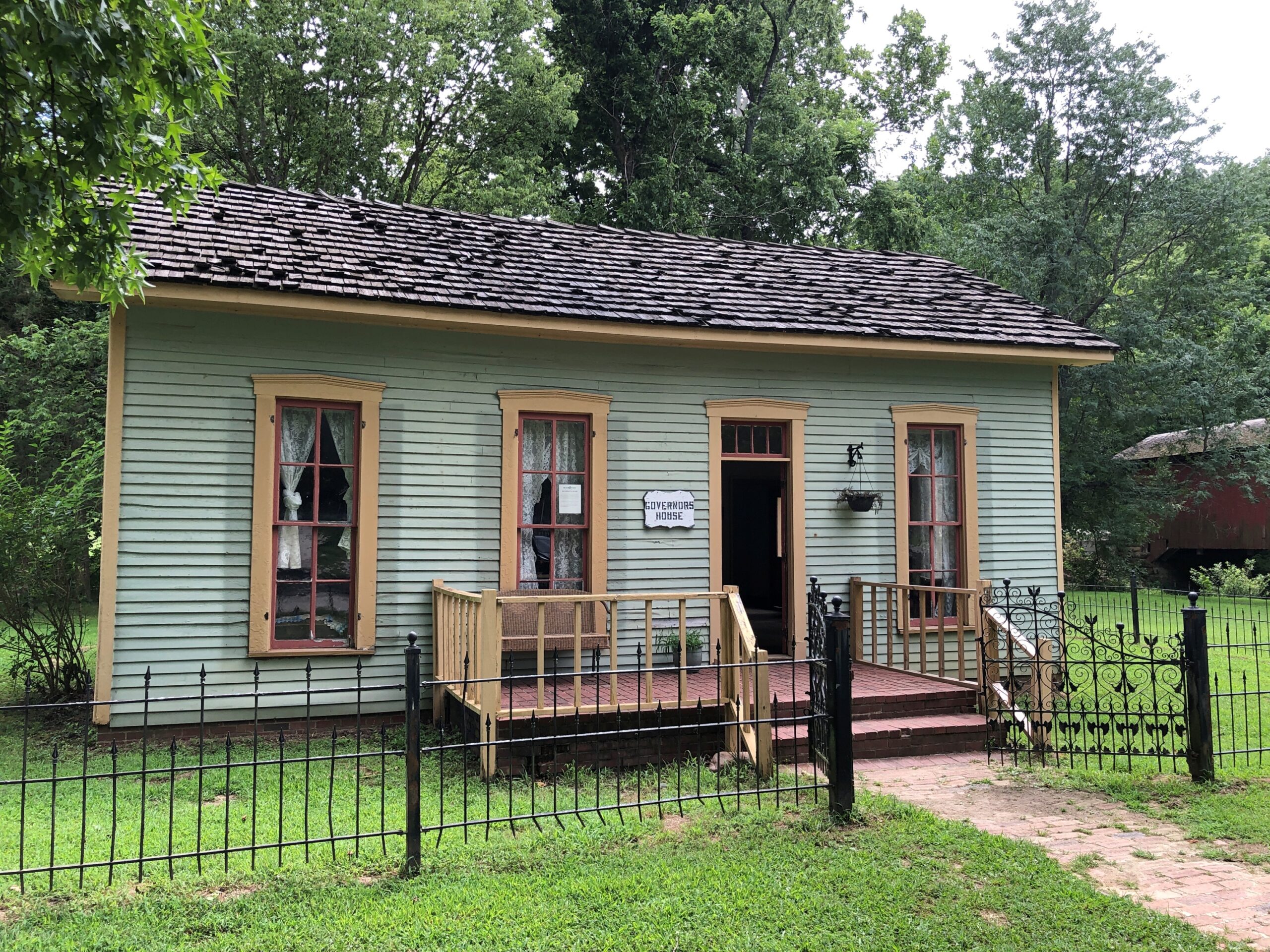
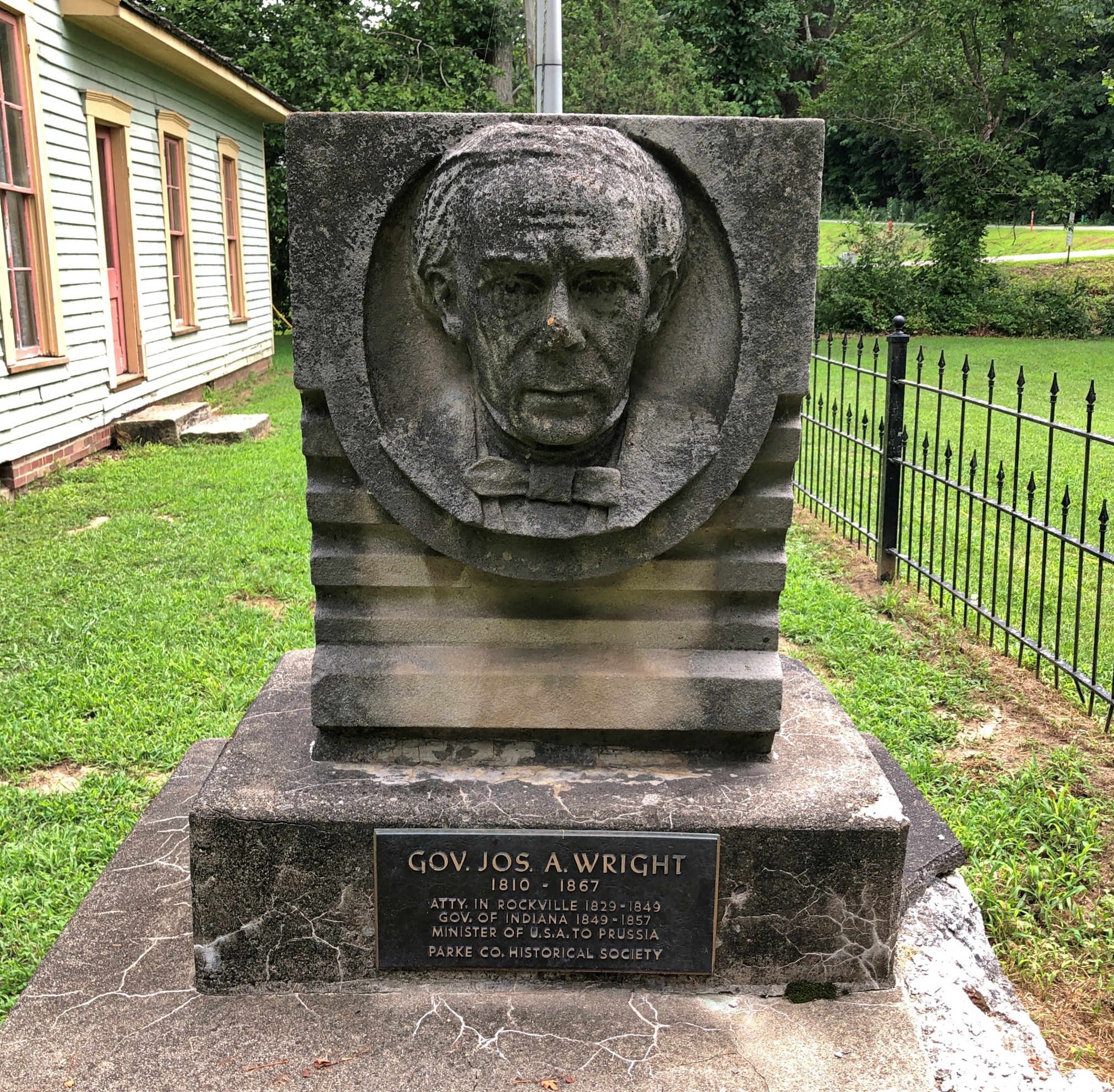
The home of an Indiana governor, one Joseph A. Wright (d. 1867), in office 1849-57. A Rockville native son.

Here he is, just outside his house, in dour Hoosier mode.

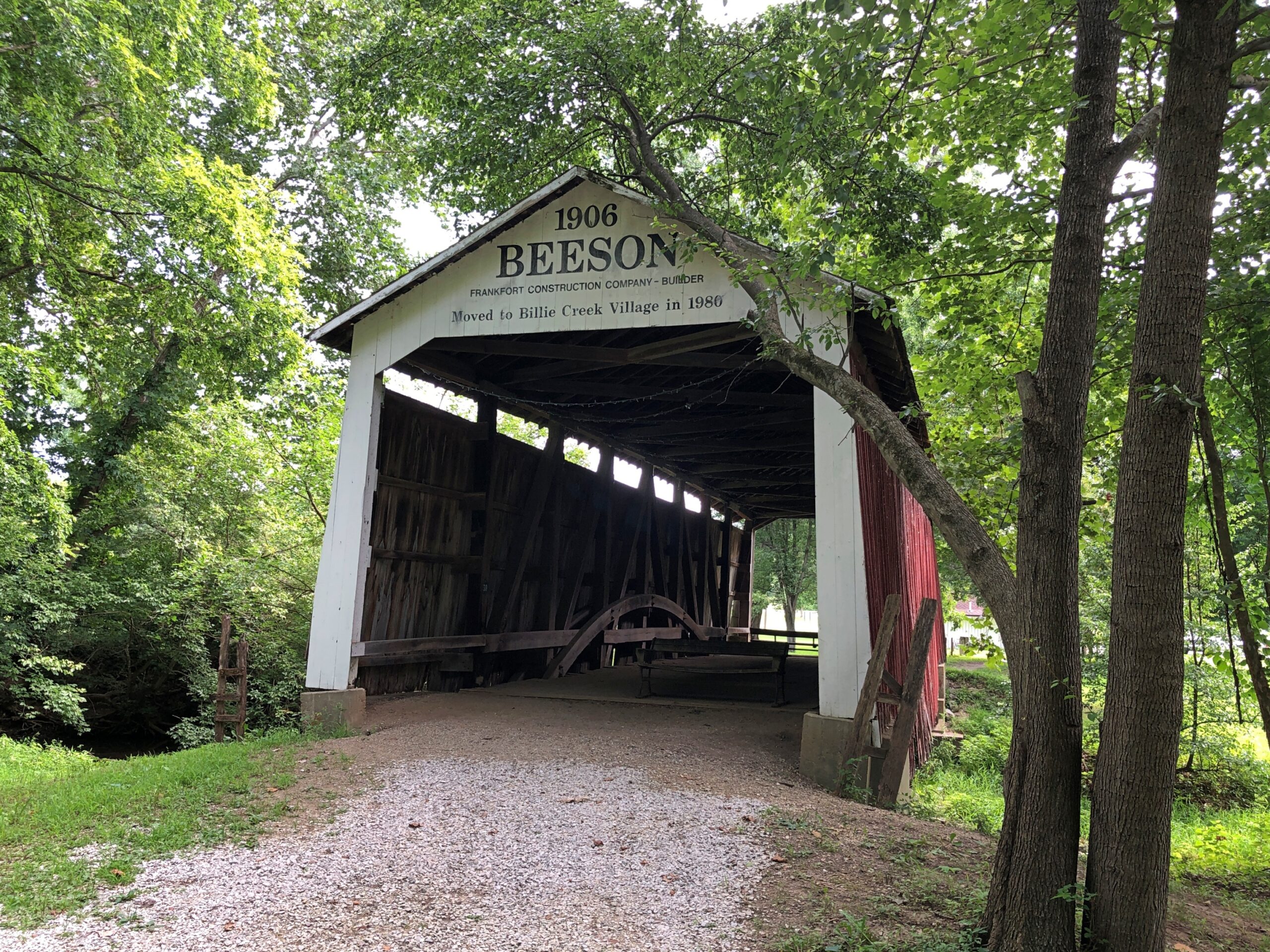
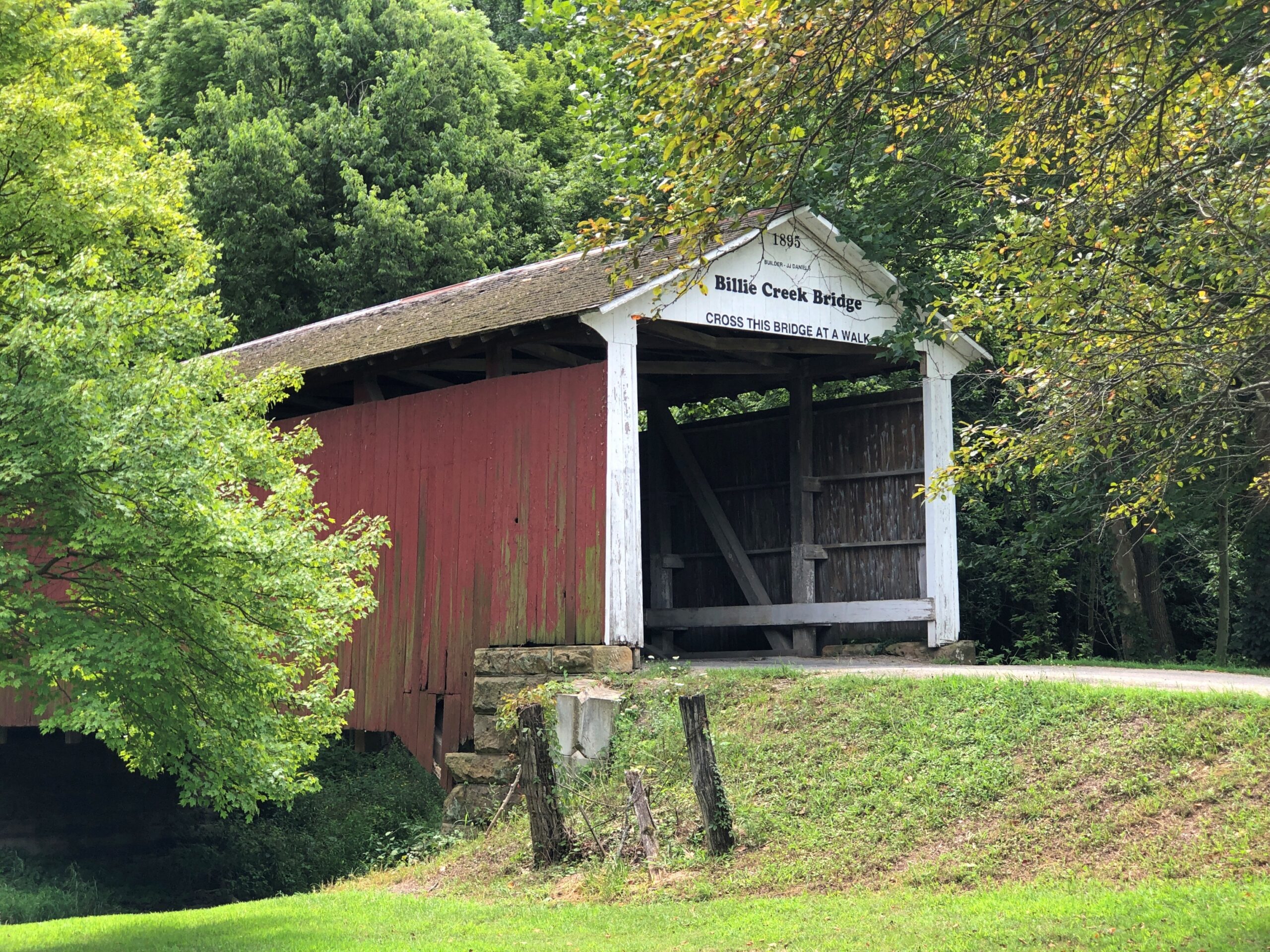
As the Covered Bridge Capital of the Galaxy (or some slogan like that for Parke County), it’s no surprise that covered bridges can also been seen at Billie Creek.

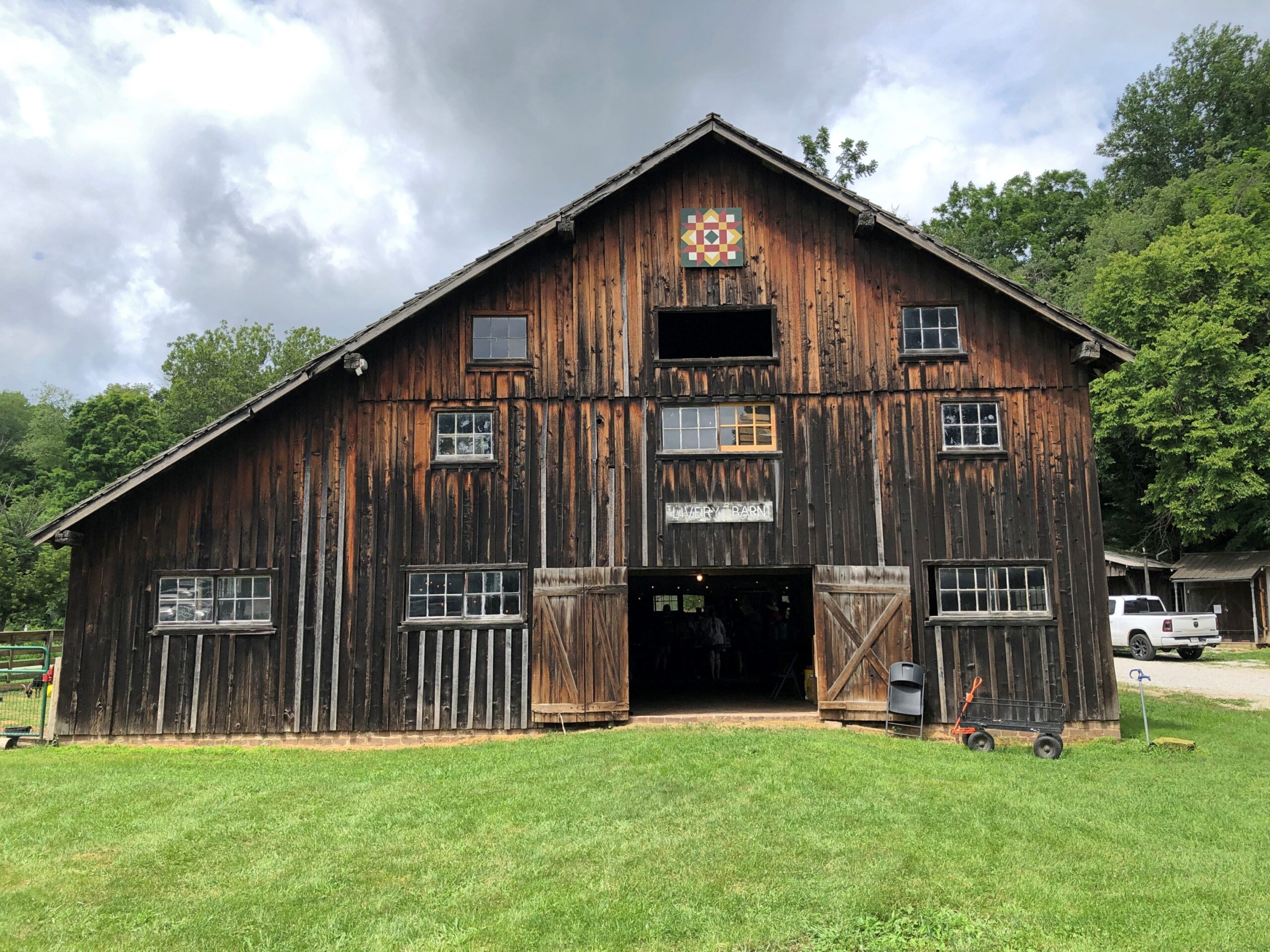
A barn, weathered yet handsome.

Craft goods were for sale inside. So were books by a local author who was there, hawking them. He told me about the books, some sort of fantasy series, and I was curious enough about them to listen to him, but not enough to buy one, which I think left him a bit miffed. Such is the writer’s lot.

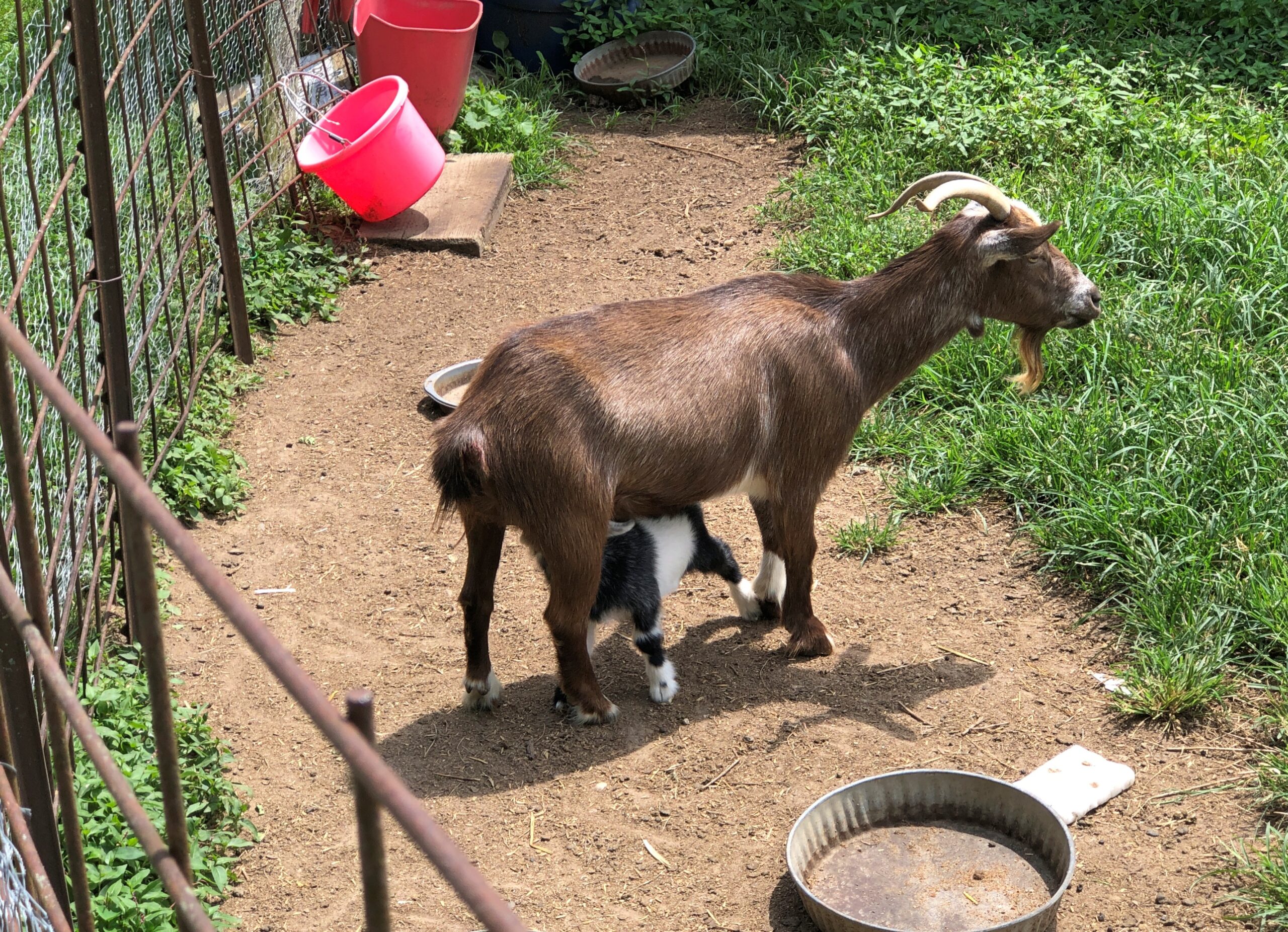
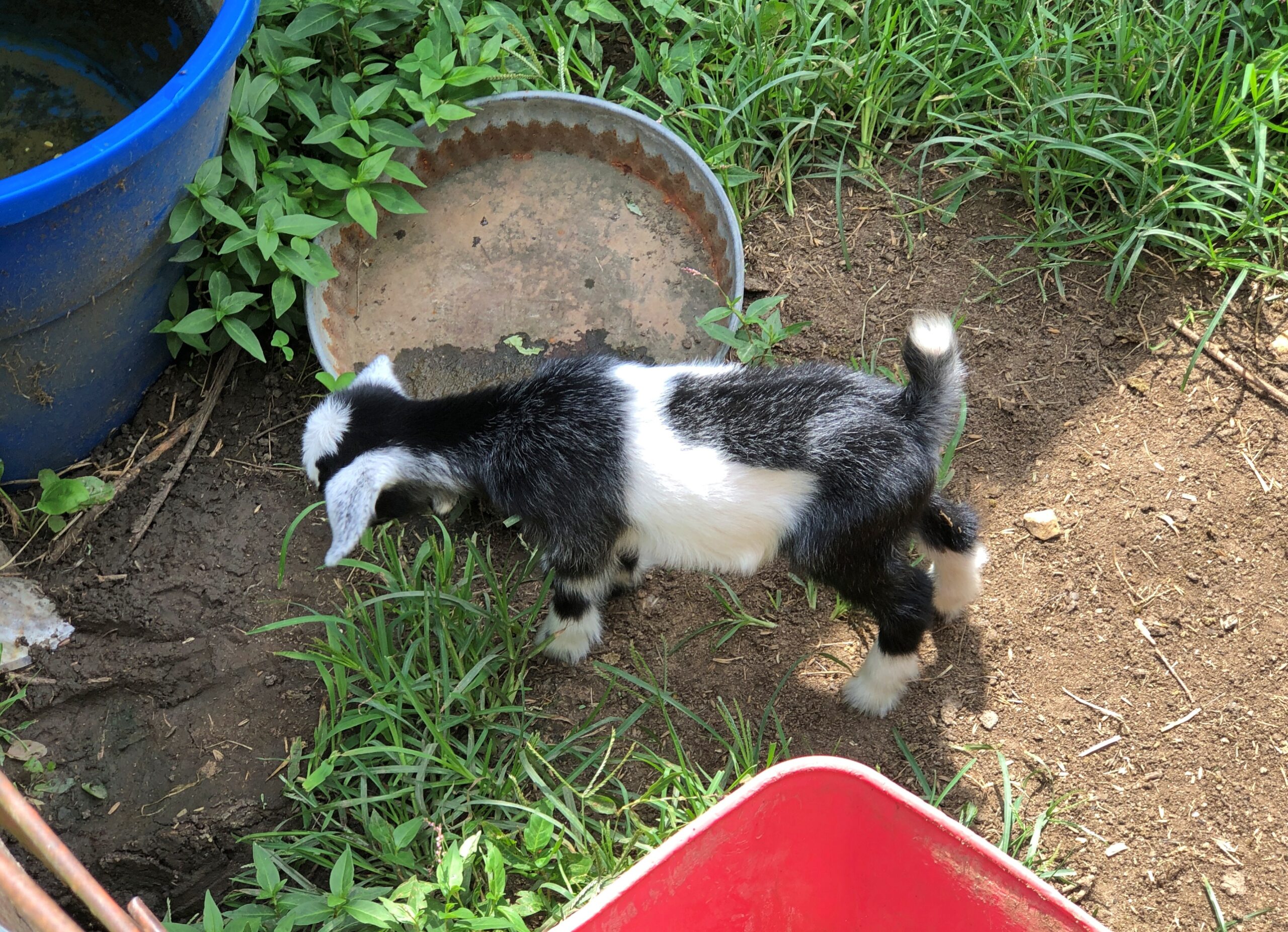
Behind the barn, goats.

Goat, Billie Creek Village

I wasn’t able to test the notion that goats eat tin cans. But I already knew the answer: it’s a ridiculous myth, as this item in Goat Owner tells us.

Southern Loop Leftovers: TN & NC

Had a bizarre dream last night, which isn’t really unusual, since that’s the way of dreams often enough – but this one – let’s call it rich and strange. And lengthy. It kept going and going, involving an alt version of downtown Chicago, and alt version of the company I worked for in the late 1980s, though no one that I knew was there; a vaguely menacing, nighttime scene always, though it wasn’t a nightmare; a message that had to be relayed, somehow; a fictional character – a very famous fictional character – spoken of as if real, who eventually showed up after a funeral, laughing; and details that made me think, that’s too much of a detail. For a dream. Is this a dream? One detail involved a chipmunk peaking out of a hole in the sidewalk, or maybe the street; another was a globe that I could see but not get close enough to read well, though I really wanted to. But I did notice that the United States, on this globe, included British Columbia and maybe the Yukon Territory, and I woke up thinking that maybe that 54° 40′ or Fight business led to a real war, in which the U.S. prevailed.

Perhaps the strangest thing about this rich and strange dream is that fully an hour and a half after I woke on this bright summer morning in the northwest suburbs, in the waking world I know and inhabit, I was able to write the above description.

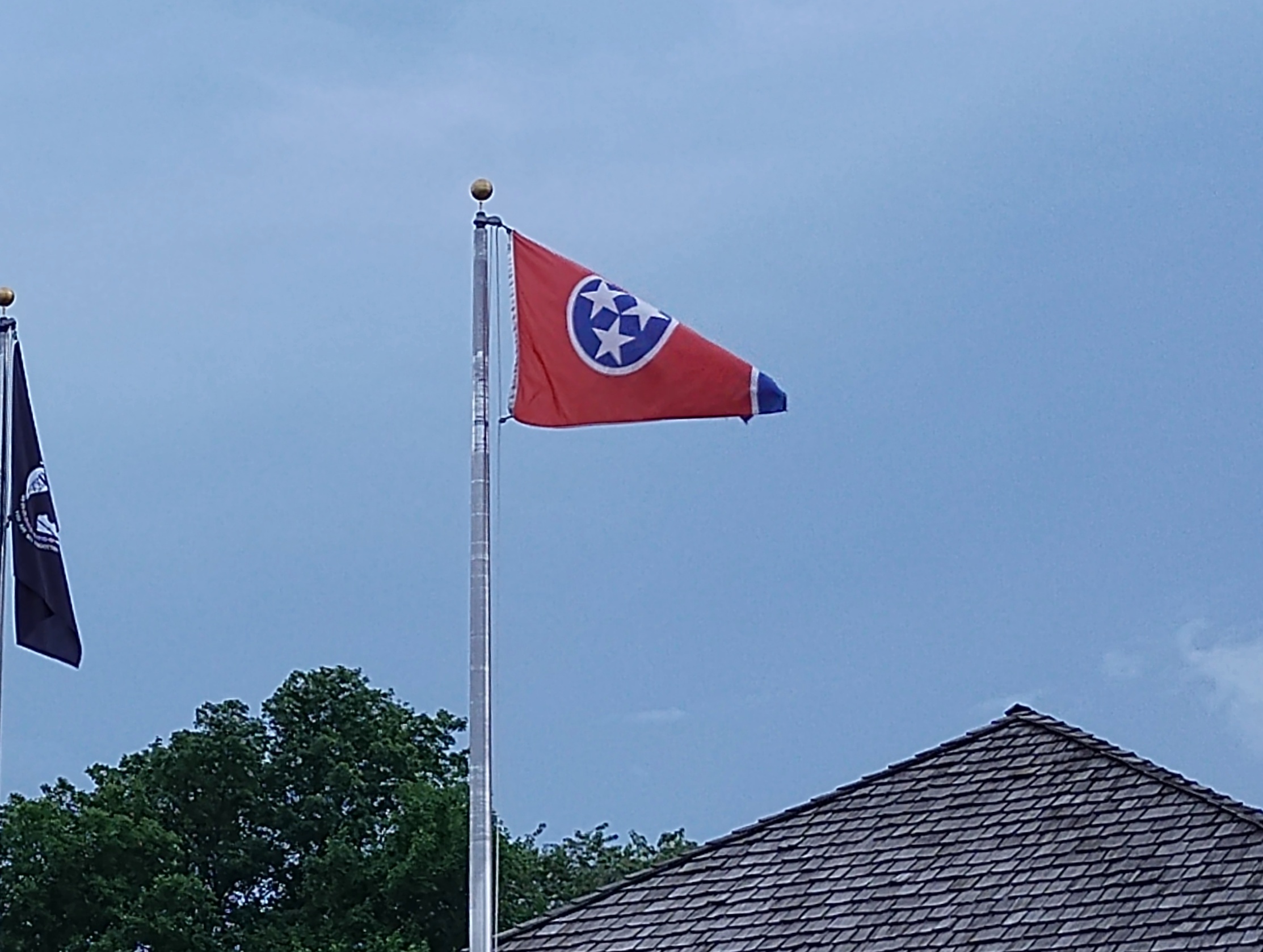
Tennessee

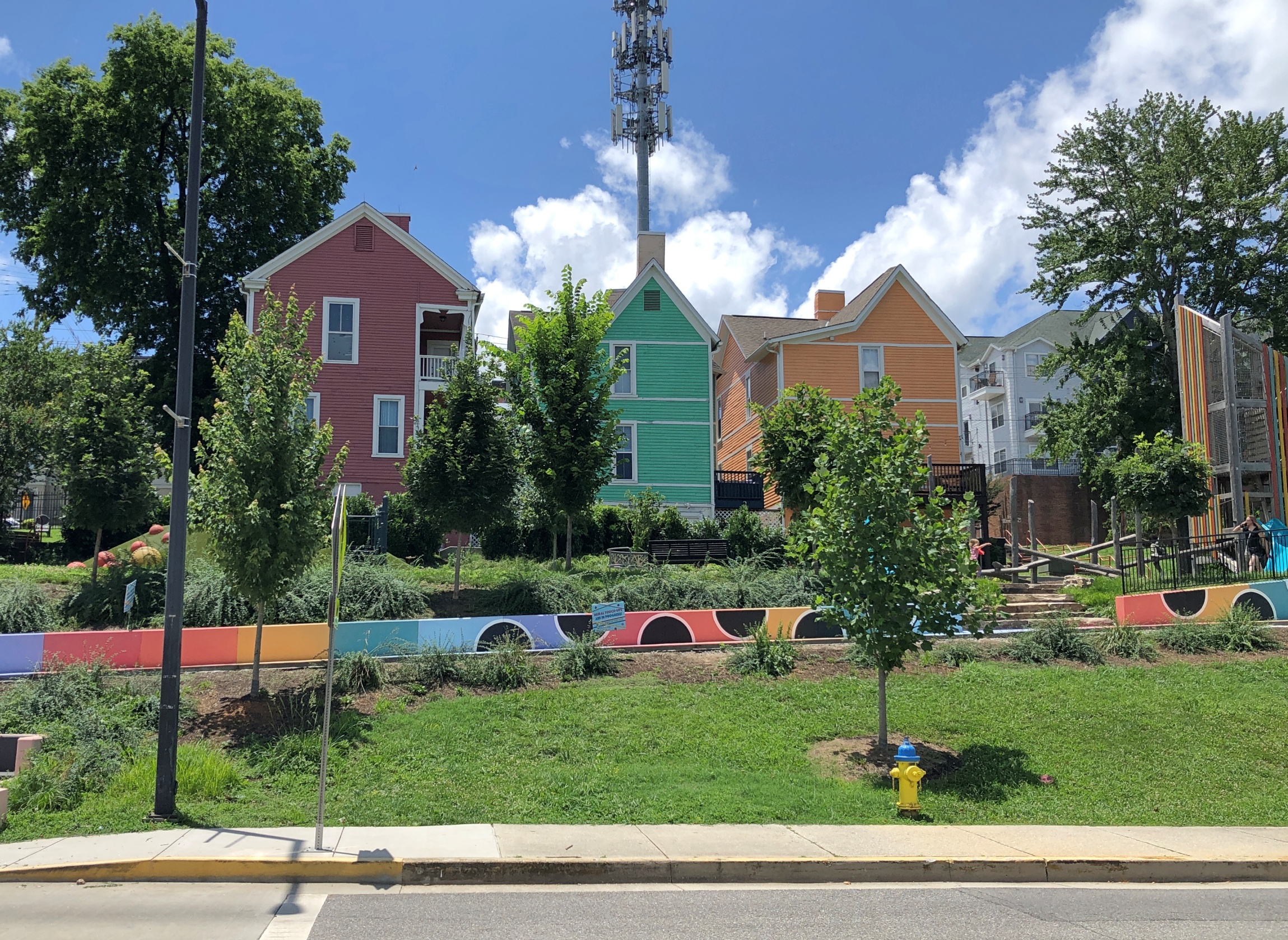
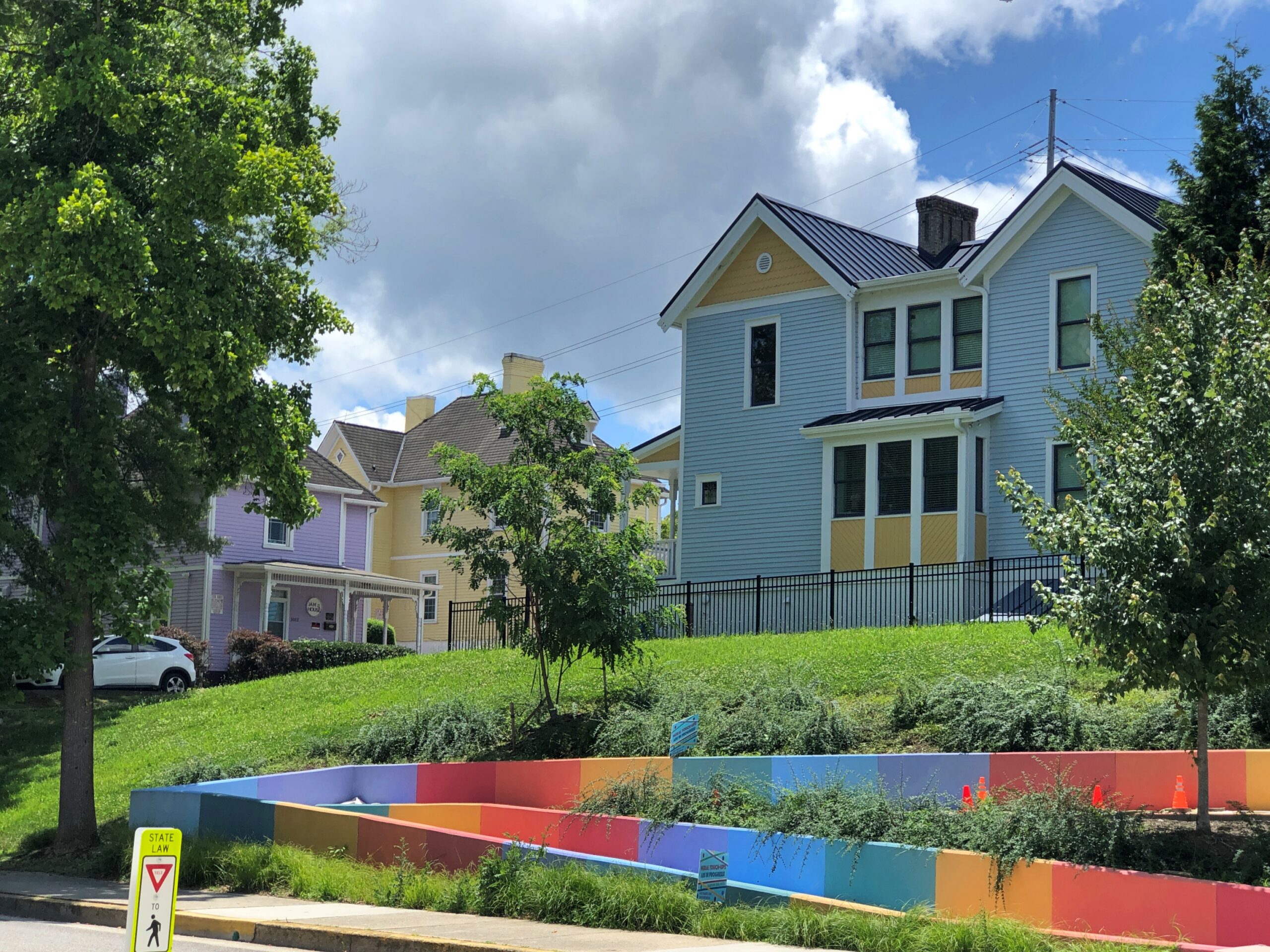
When passing eastward through Tennessee during my most recent interstate drive, I spent a little time in Knoxville, as mentioned, mostly to see the Sunsphere. To get to the tower from the free parking lot, I walked along part of World’s Fair Park Dr., with these colorful pastel houses visible on a small rise nearby. I was reminded of Rainbow Row in Charleston.

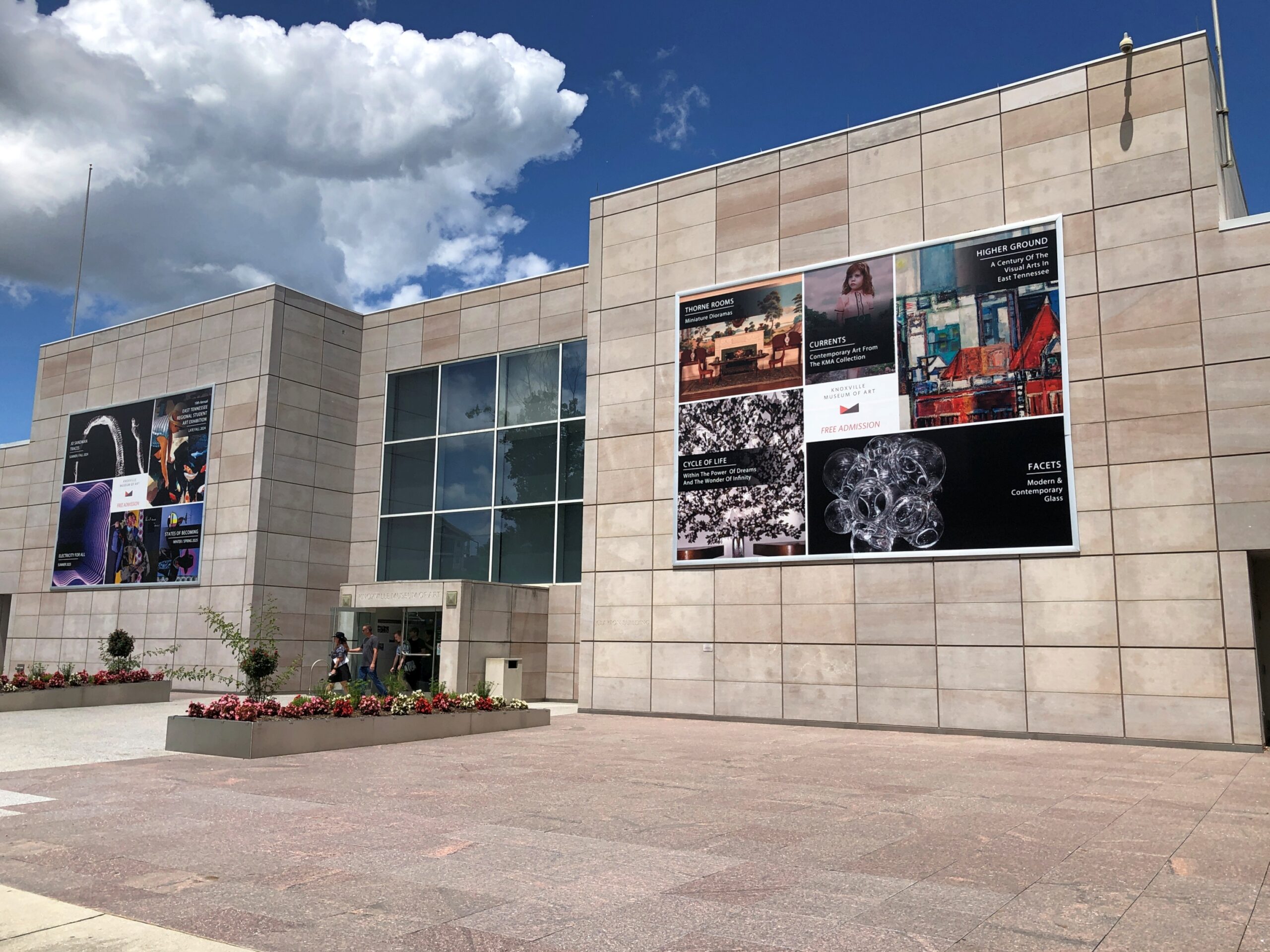
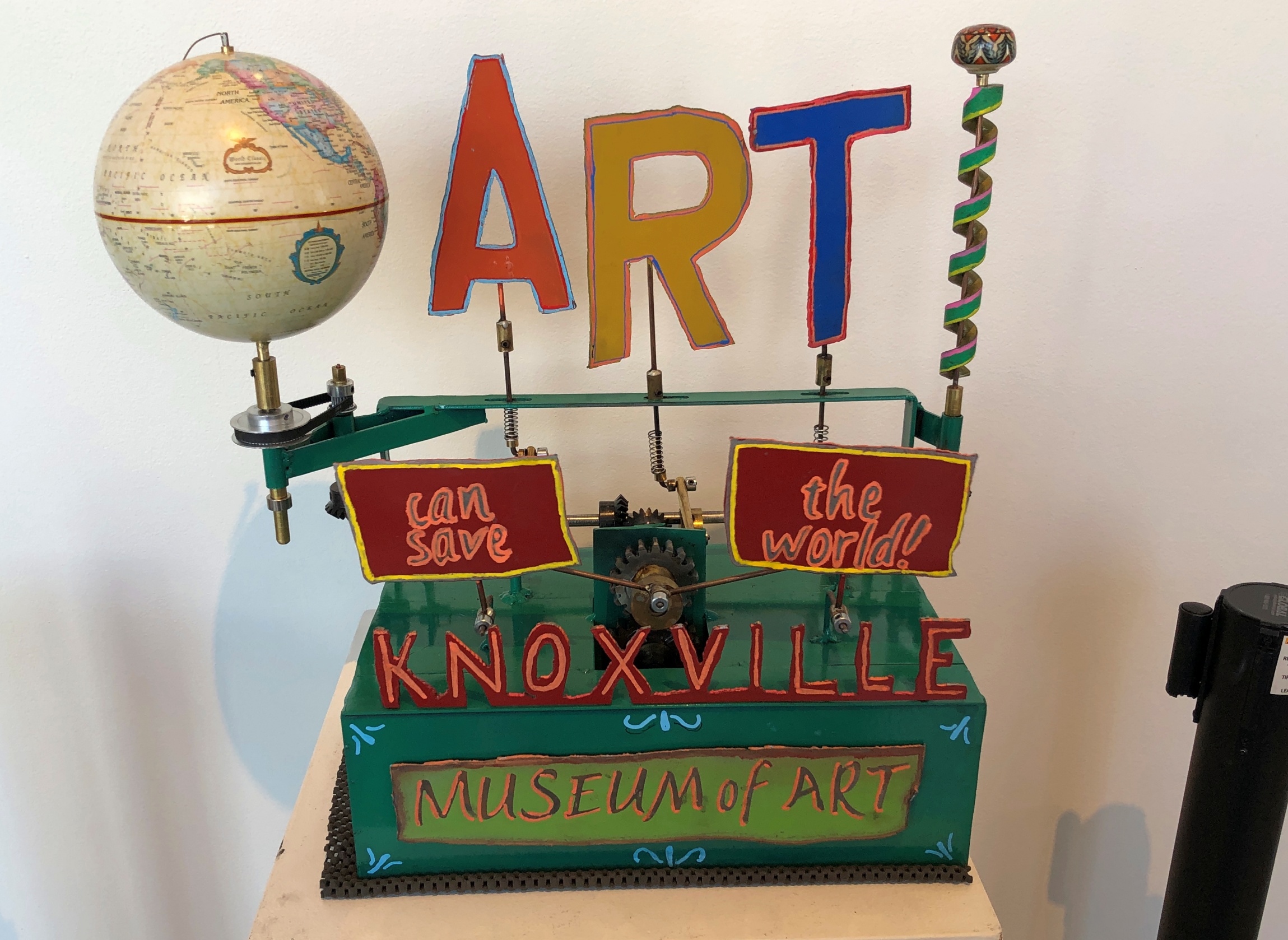
On the way back, I popped into the Knoxville Museum of Art.

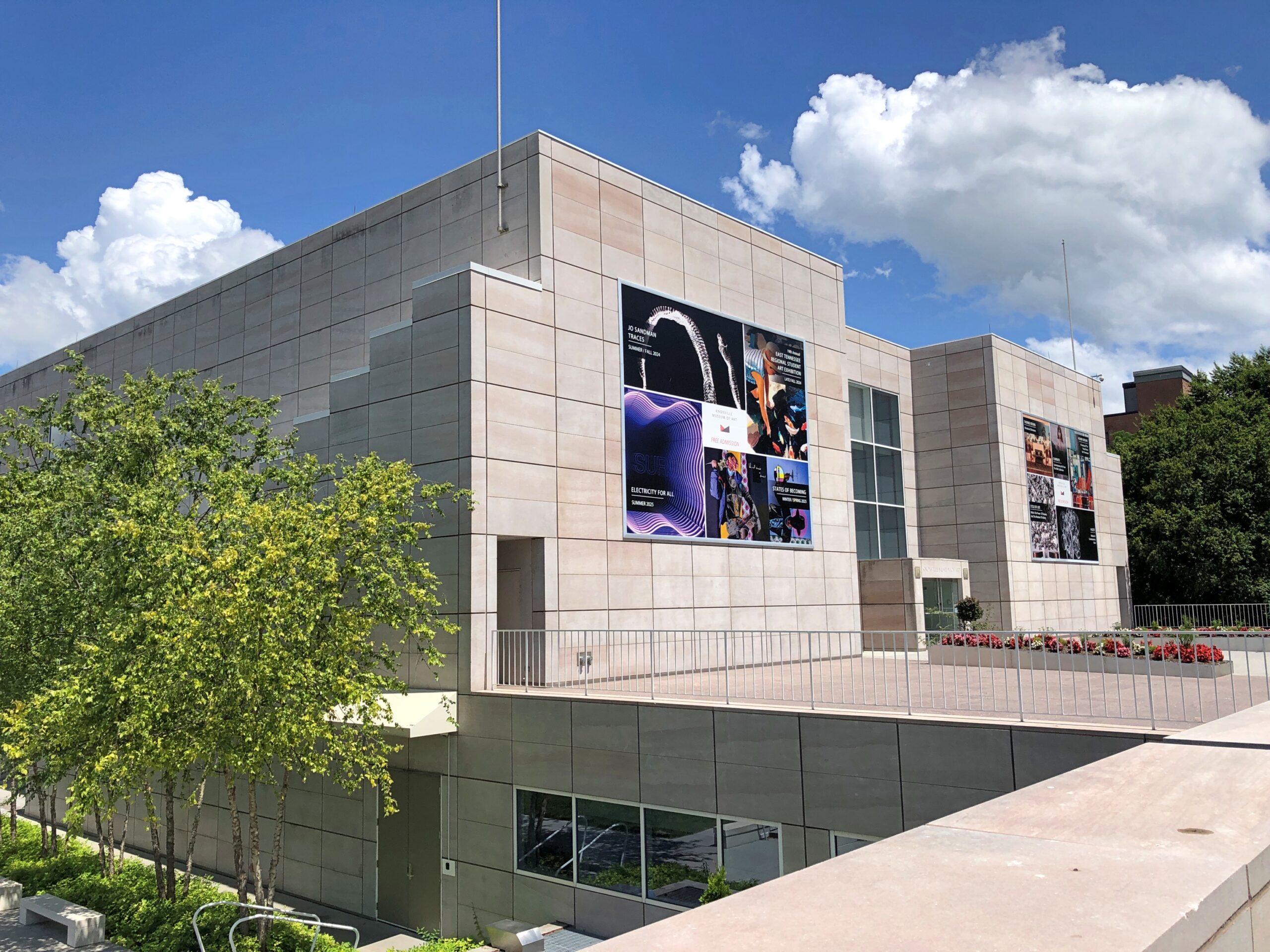
For a brutalist building, a nice bit of work by Edward Larrabee Barnes (d. 2004). If it blackens and streaks in the future, as such buildings tend to do when exposed to urban air, its appearance might morph into something merely ugly. But it looks like it’s been kept clean enough since its construction in 1990. As a museum, KMA has a lot to recommend it, such as air conditioning, free admission and a not-too-vast collection specializing in something you aren’t going to see elsewhere, namely East Tennessee art.

Such as a piece by artist Patrick Deason. Ah, the optimism. Unless he’s being sarcastic.

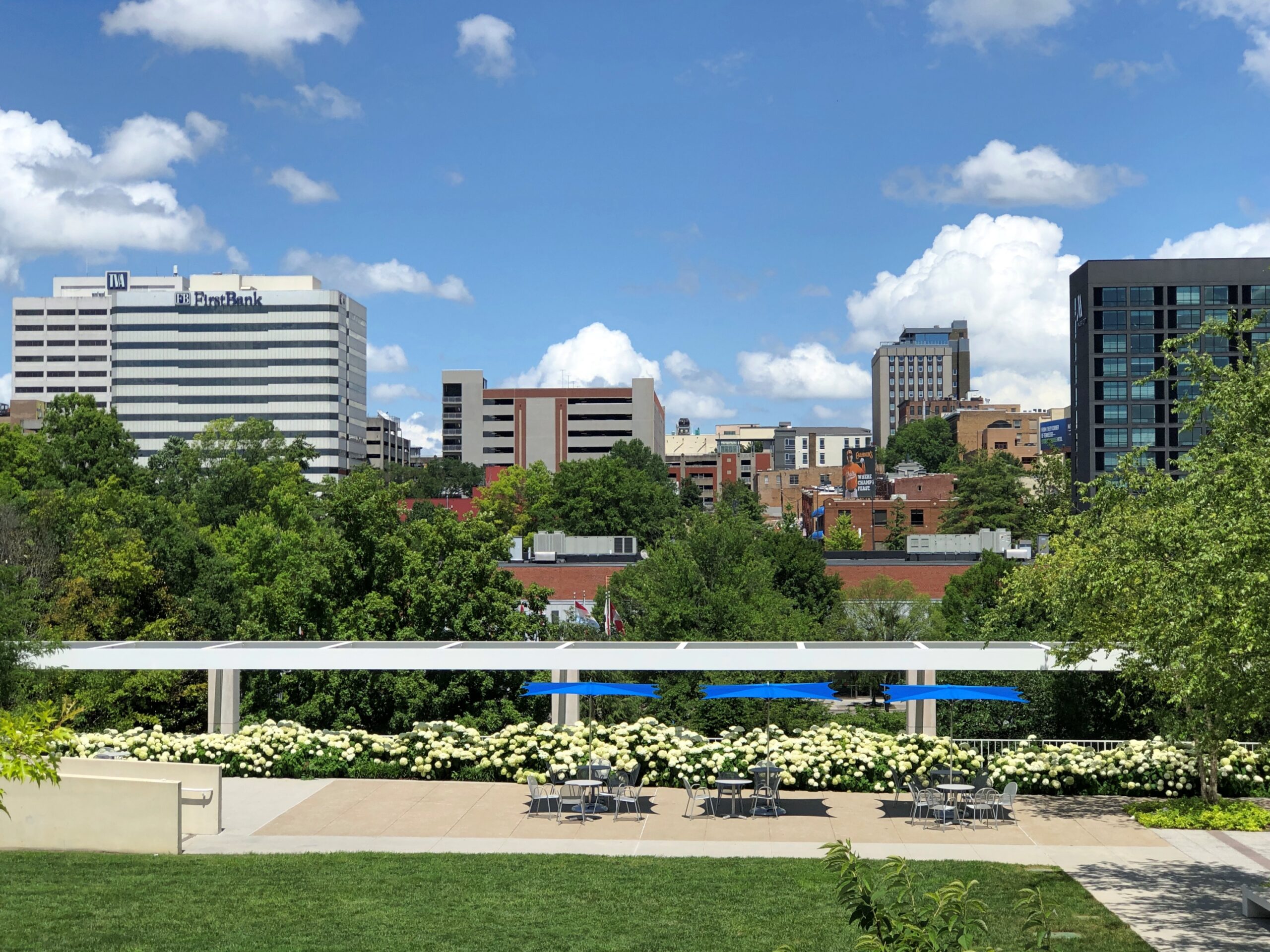
The museum also has a porch with a nice view of downtown Knoxville.

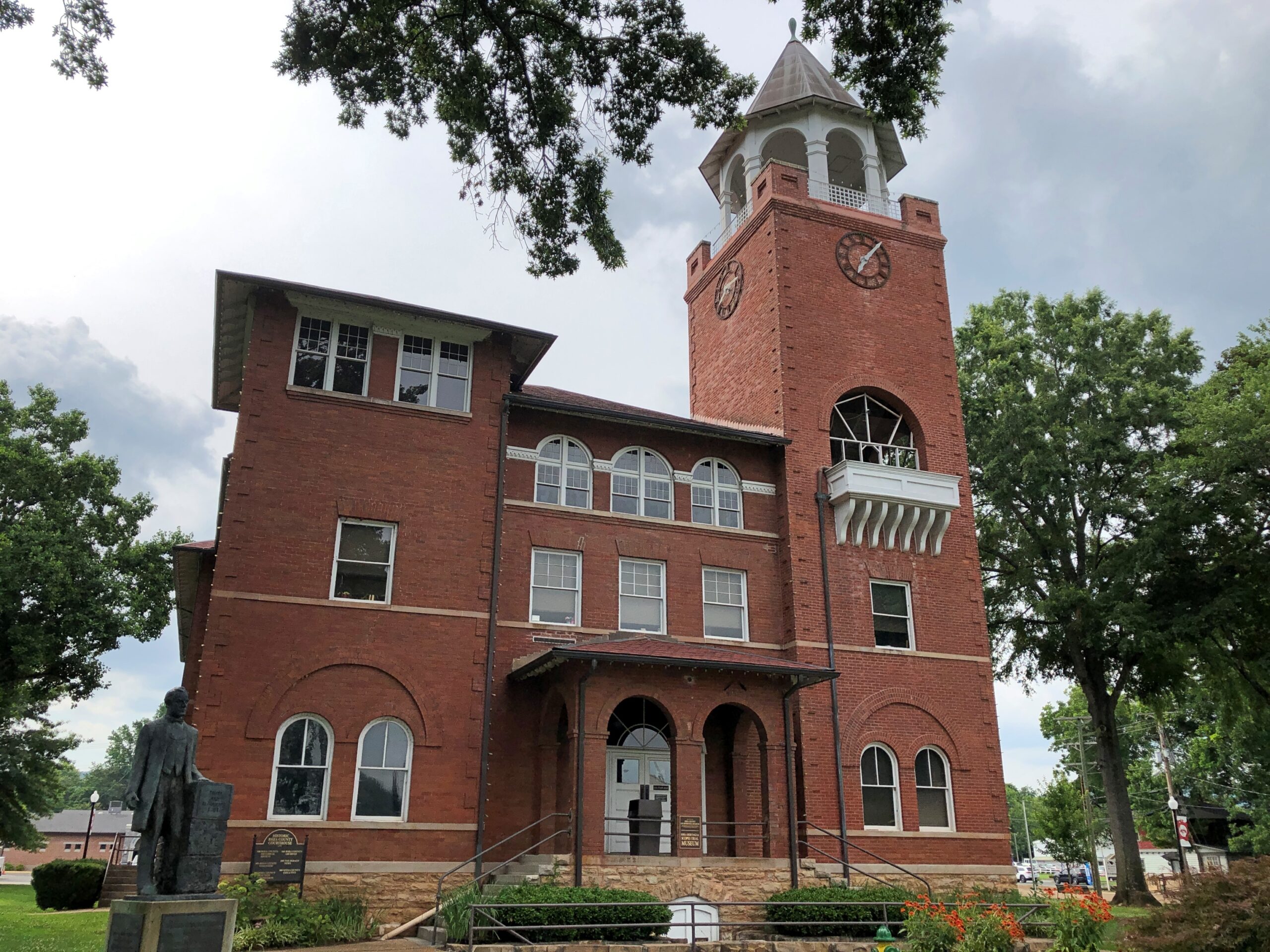
On my return westward through Tennessee, I made a point of passing through Dayton, site of the Scopes Trial, now 100 years ago. There is a museum devoted to the trial in the handsome and nicely restored 1890s Rhea County Courthouse, though I arrived after it had closed for the day.

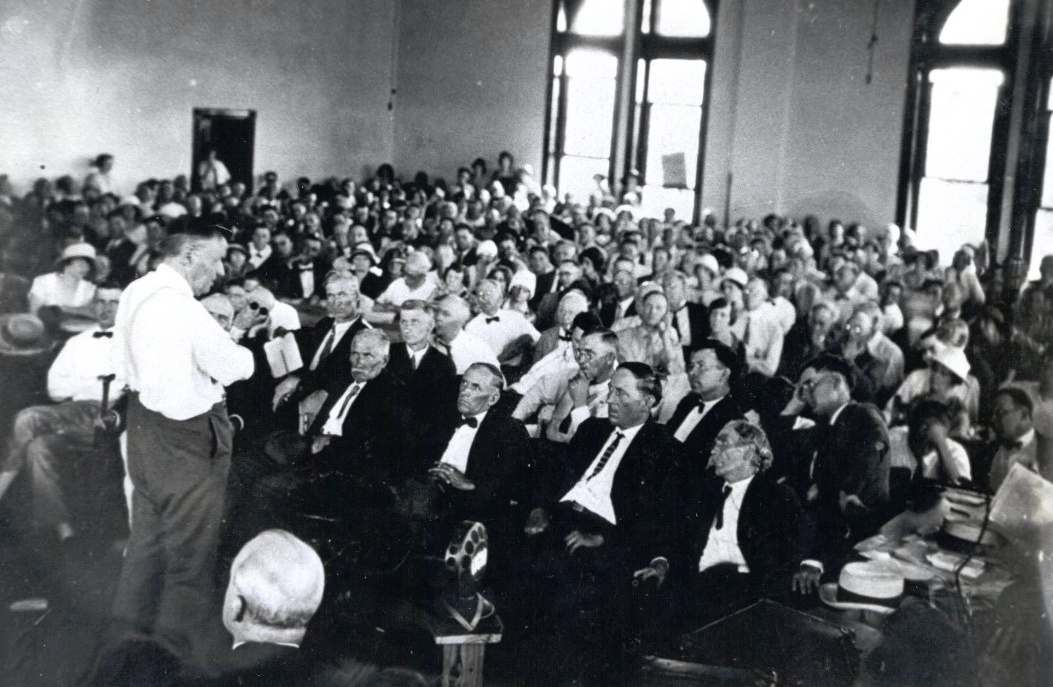
I look at pictures taken during the trial, and wonder how this multitude sat through it all, in an un-air-conditioned building. Guess like my grandma, as late as her last summer in 1970, they were used to it.

Before I got there, I heard a fellow on the radio discussing the (then) upcoming festival that Dayton was planning in honor of the centennial, as a bigger version of an annual event held in July. He might have been the organizer, I forget.

He pointed out that for many years Daytonites mostly wanted to forget about the trial – especially after the movie Inherit the Wind (1960) depicted the residents of Hillsboro, stand-ins for them, as fundamentalist bumpkins, at a time when the actual event was still in living memory. Which is nothing that Mencken didn’t do in 1925. Now the trial and Mencken and the movie are all part of that nebulous thing most people experience as the undifferentiated Past, and the townspeople have largely embraced the trial, according to the man on the radio. As well they should. It’s what Dayton, Tenn., has that no place else does.

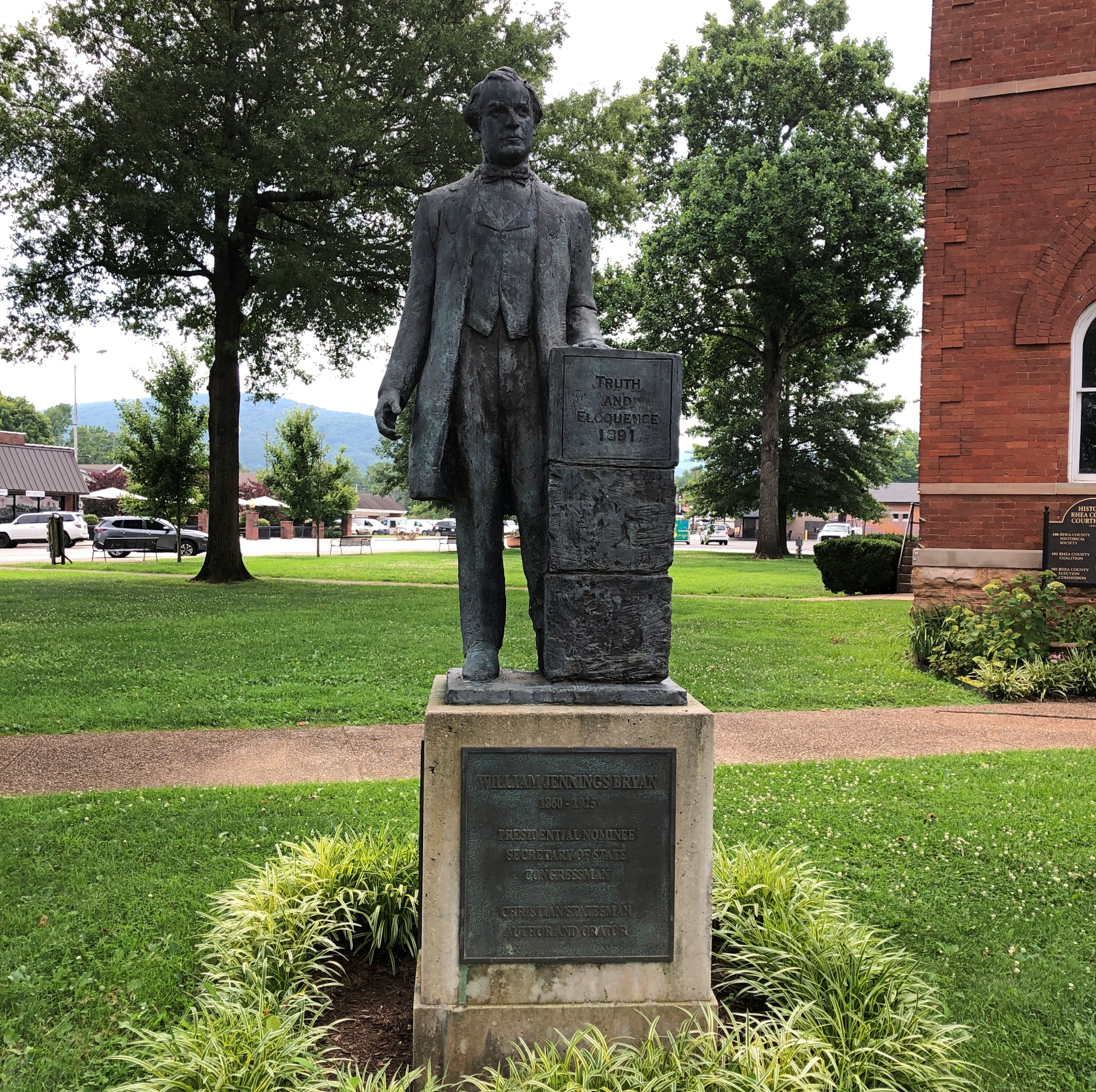
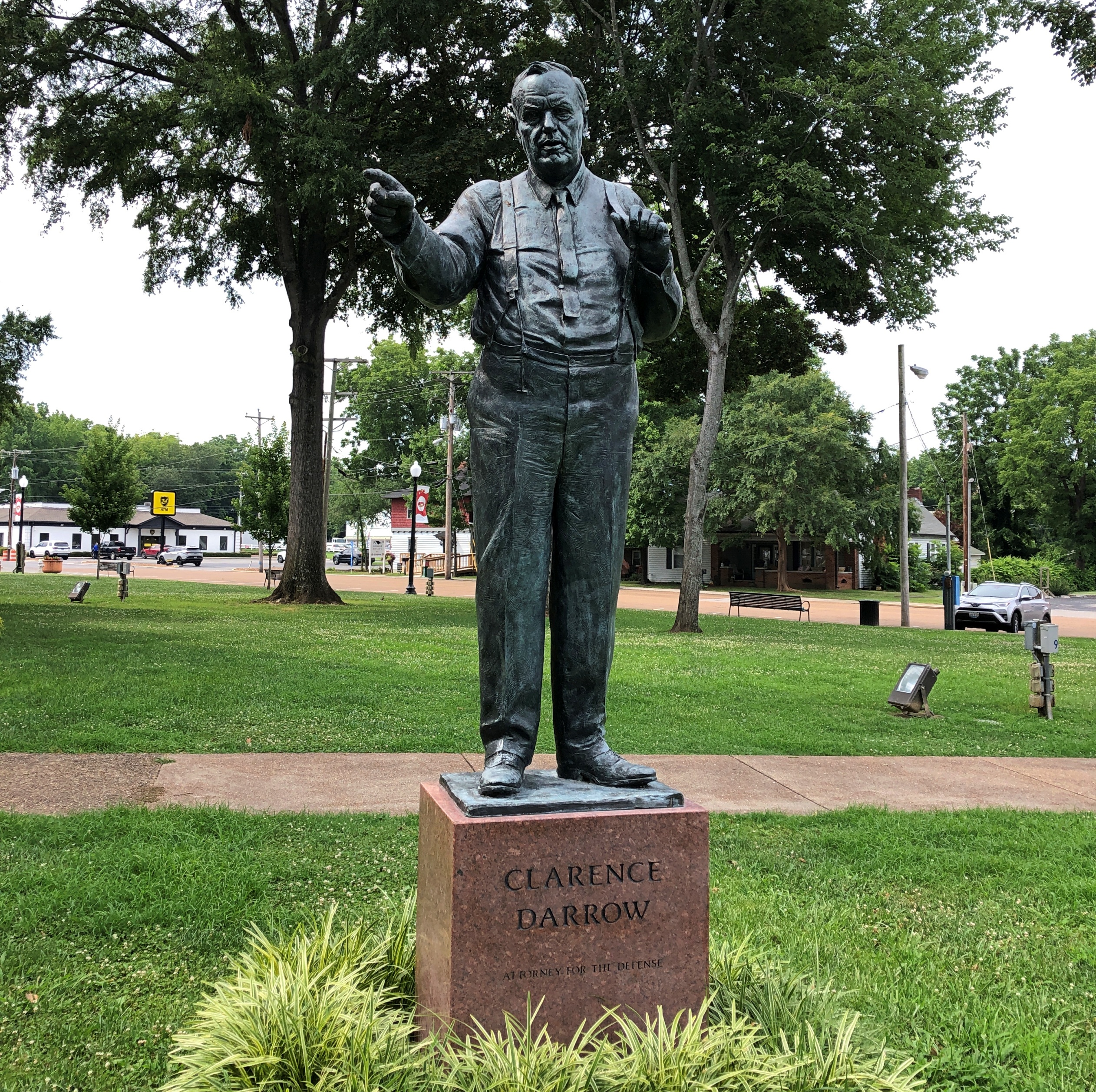
On the courthouse square, William Jennings Bryan and Clarence Darrow square off in bronze. Bryan College paid for the former, the Freedom From Religion Foundation the latter.

North Carolina

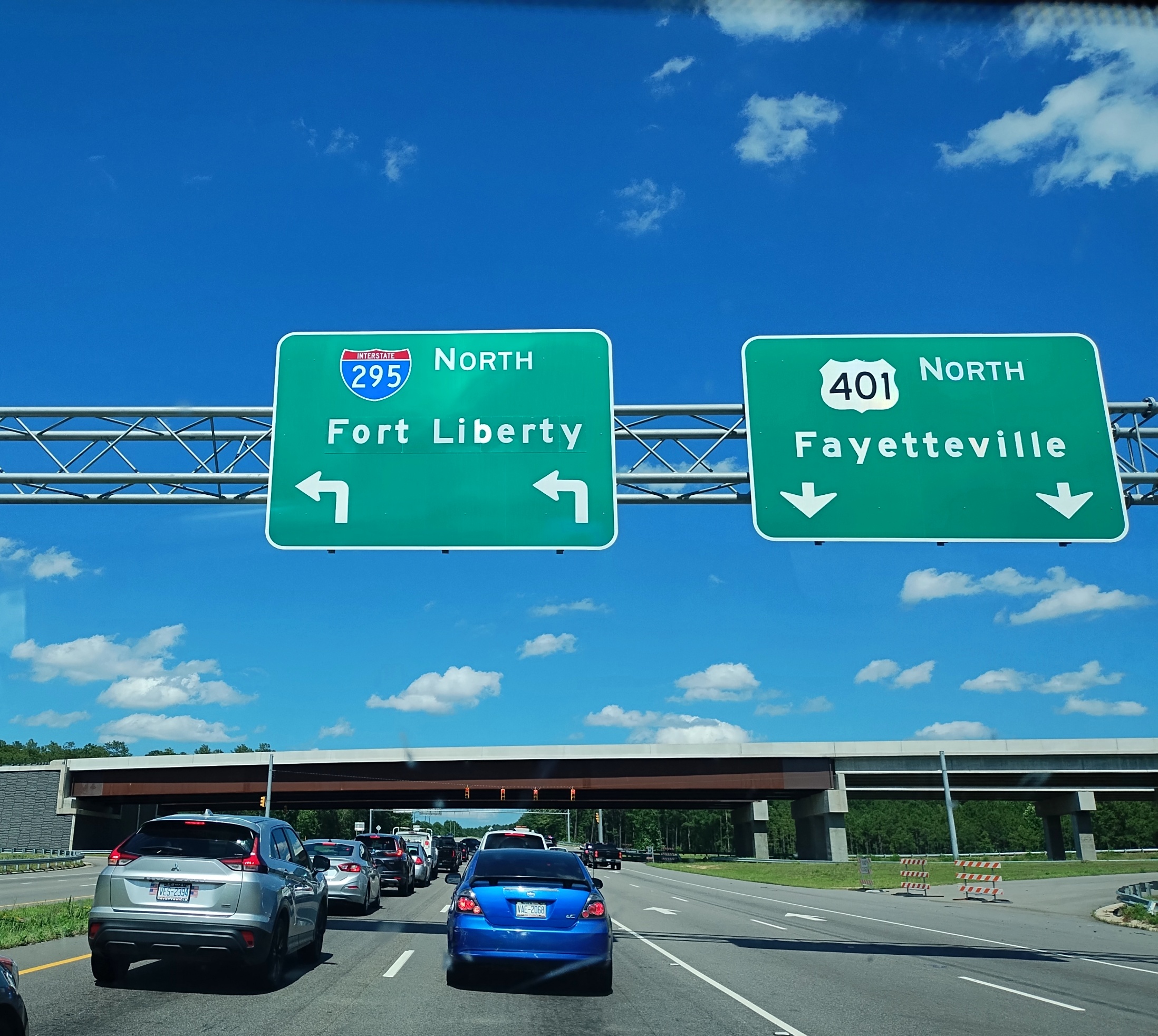
I was stuck momentarily in traffic near the military installation formerly known as Fort Bragg and then known as Fort Liberty and now known again as Fort Bragg. The traffic sign hasn’t caught up with the latest flip-flop.

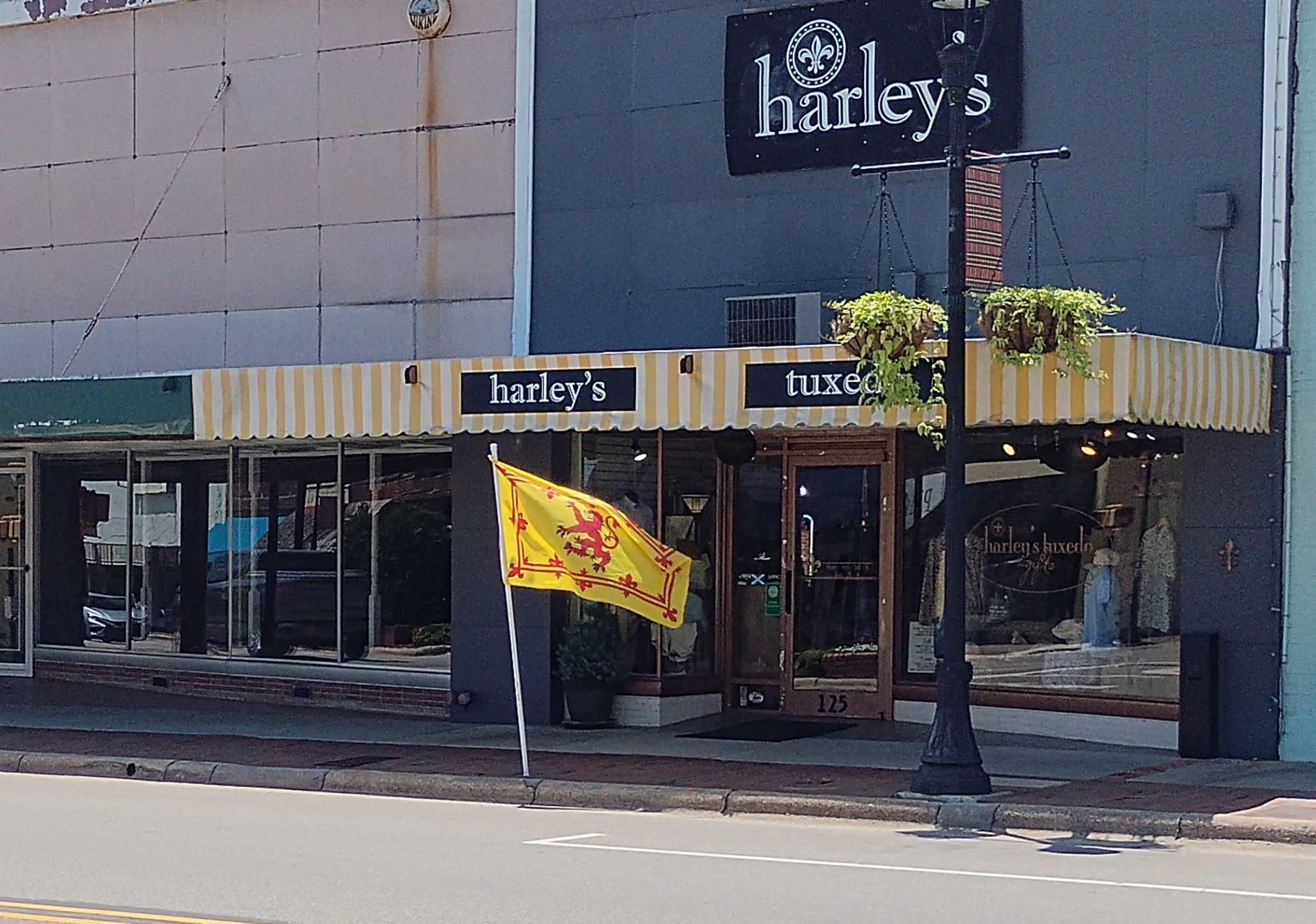
I stopped for lunch in Laurinburg, NC, at a storefront Chinese restaurant. Across the street, a tuxedo shop flew the Royal Banner of Scotland. Not something I’ve ever seen aflutter in the U.S. or anywhere, for that matter. But there is a school called St. Andrews University nearby, so maybe it’s not such a stretch. Make that was — the school closed just this May.

Wiki tells us: “As the personal banner of the Monarch, use of the Royal Banner of Scotland is restricted under the Act of the Parliament of Scotland 1672 cap. 47 and the Lyon King of Arms Act 1867 (30 & 31 Vict. c. 17), and any unauthorised use of such is an offence under the Act.” That has no bearing on its use in North Carolina, I’d say, considering how the Revolution turned out.

In New Bern, NC, this was a bit of a mystery at first.

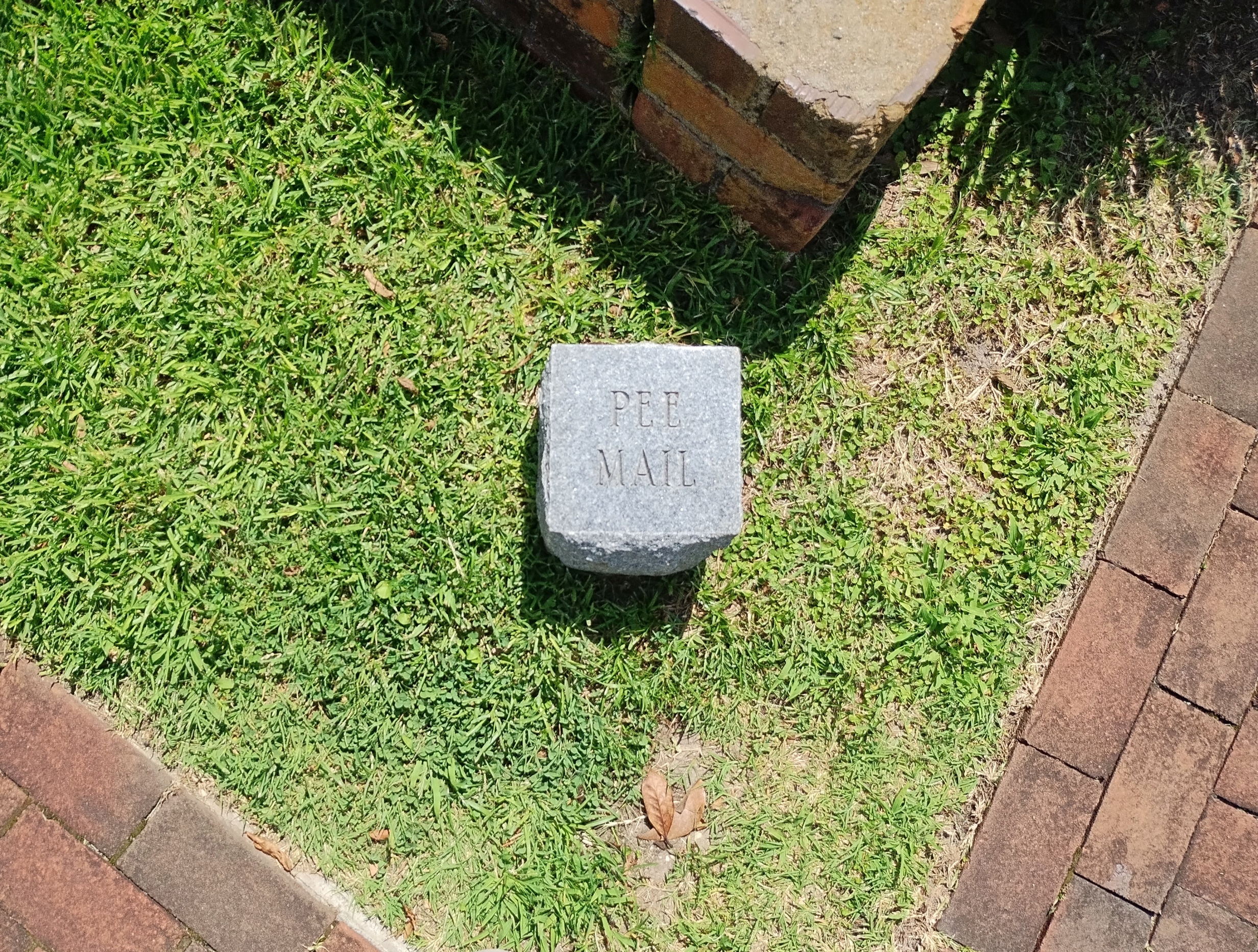
Until I figured it out. A place for dogs to leave messages.

Gold!

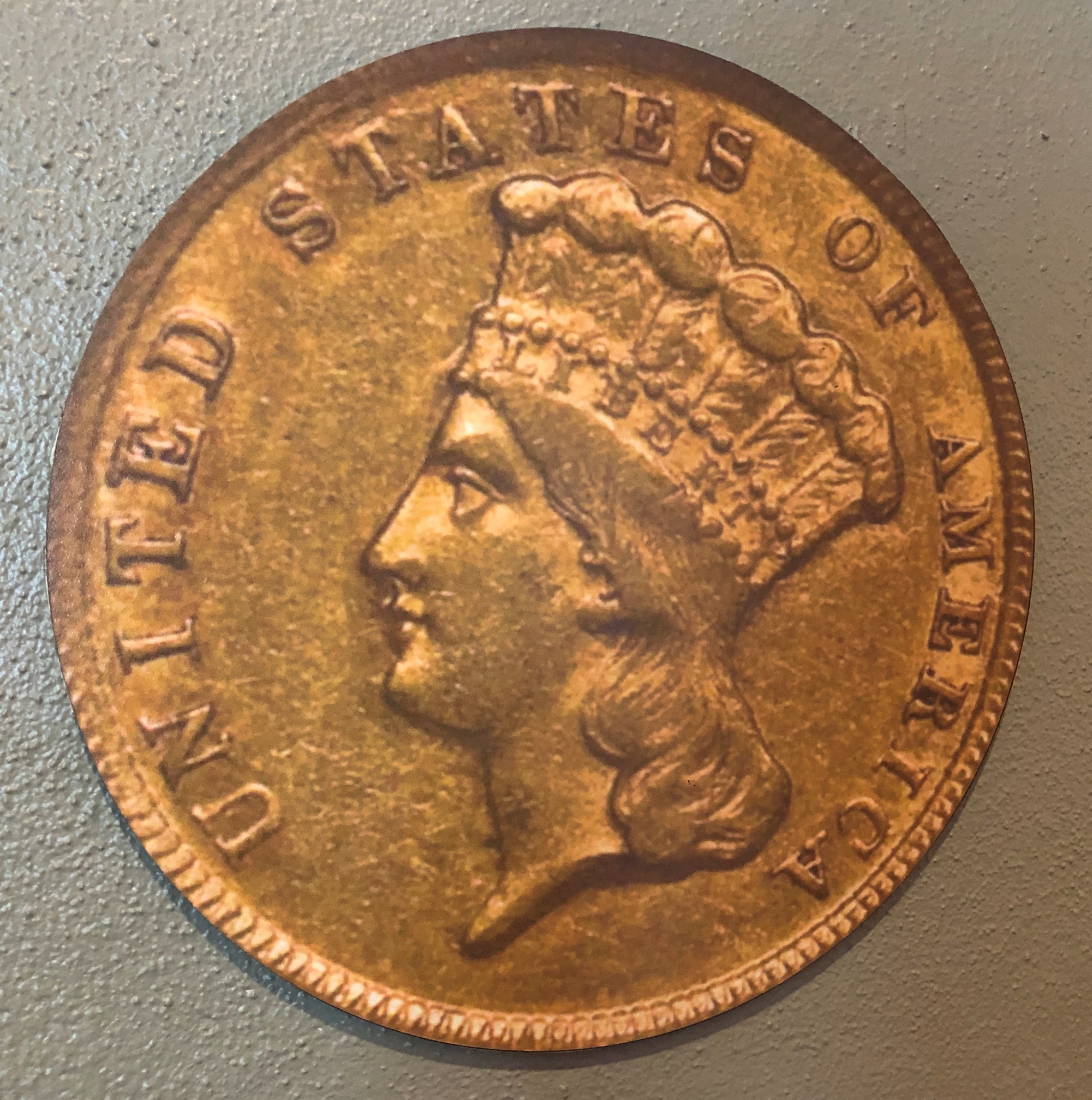
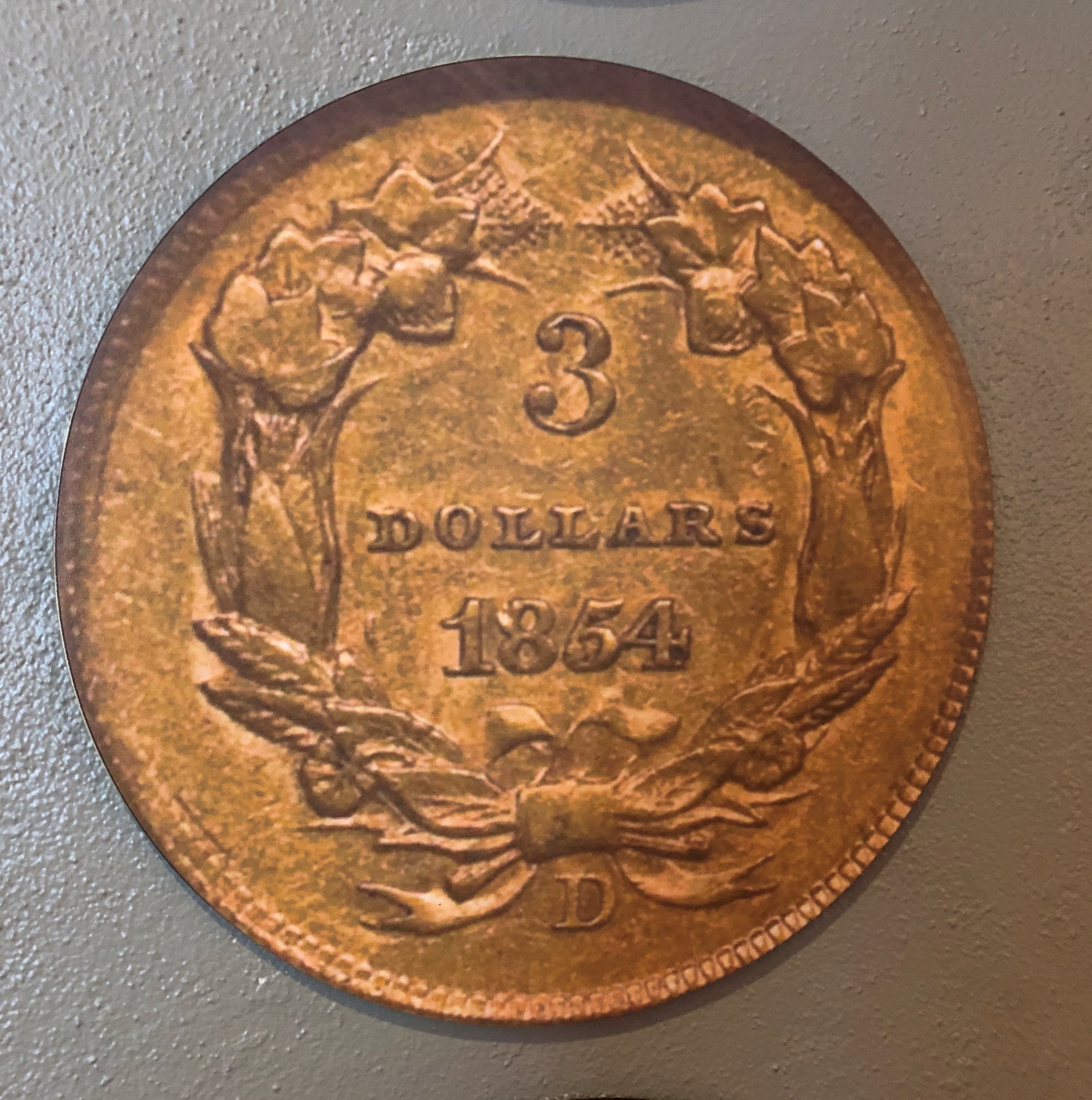
When pondering the immortal deeds of President Millard Fillmore, as one should occasionally, his signature on the Coinage Act of 1853 is worth a thought. The law, signed weeks before he left office, adjusted the silver content of most U.S. coinage, but also created the $3 gold piece. When that hoary old cliché about the queerness of a $3 bill is trotted out, I’d guess that most people don’t know that there was actually such a denomination. It was a gold coin rather than paper, made from 1854 to 1889, though few were minted most of those years.

I already knew about $3 gold pieces before I arrived at the Dahlonega Gold Museum in late June on my way to Tennessee, but if I hadn’t, I could have learned about them there. Dahlonega, Georgia, used to be home to a branch mint where they were made. Only gold coins were made at Dahlonega, including that odd duck of a denomination for exactly one year (1854), but also gold dollars, quarter eagles and half eagles until 1861. No eagles or double eagles, however.

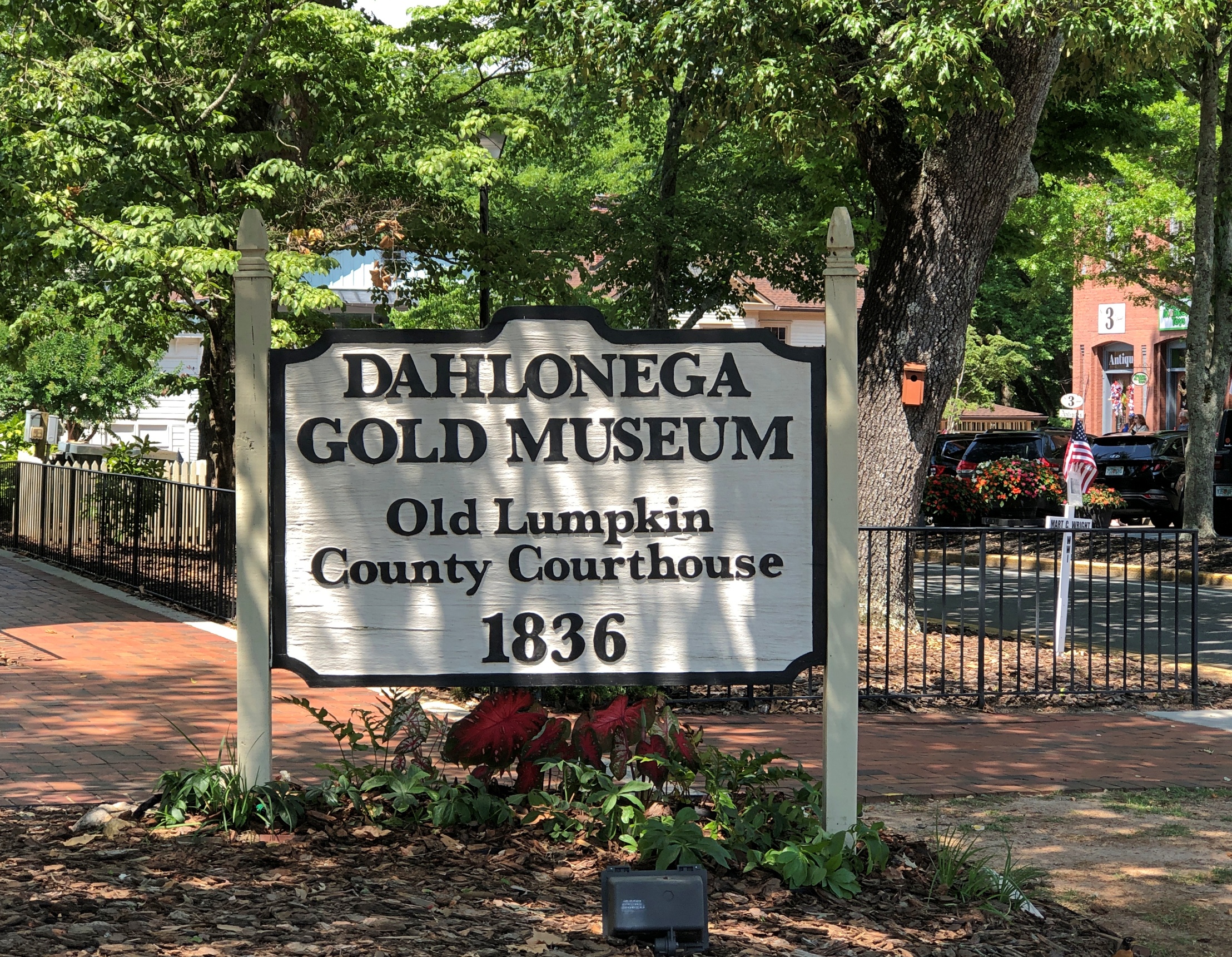
The history of gold coinage at the Dahlonega Mint wasn’t that long. Congress authorized a branch mint there (and in Charlotte, NC, and New Orleans) in 1835, and coin production started at Dahlonega in 1838. The north Georgia gold rush beginning in the late 1820s justified such a move. The Civil War resulted in the closure of the mint, which never reopened afterward, and not too much later, the mint building in Dahlonega burned down. The modern museum is in the former Lumpkin County Courthouse and tells the story of gold in the area.

The museum has exhibits about the mint, but also the gold rush, including information about the discovery and mining of the metal, some antique equipment, and a nod to the Cherokee on whose land the gold was discovered — the rush helped precipitate the Indian Removal Act — as well as the slaves and free labor that worked the streams and hills looking for gold. There was also, behind thick glass, a complete collection of Dahlonega gold coins, mint mark “D,” long before Denver got that letter for its coins.

The protective glass made photographing the actual coins problematic, but the museum thoughtfully provided enlarged images of a few of the coins in its display, including the $3 piece.

Like the 20 cent piece or the Susan B. Anthony dollar, the $3 gold piece wasn’t popular when new. Too easily confused with the quarter eagle would be my guess, though their designs are very different. But they are popular among collectors now, and quite valuable. As a result, alas, I’m unlikely ever to own one. In the most extreme case, an 1870-S $3 piece, the only example known to exist, sold at auction in 2023 for more than $5.5 million.

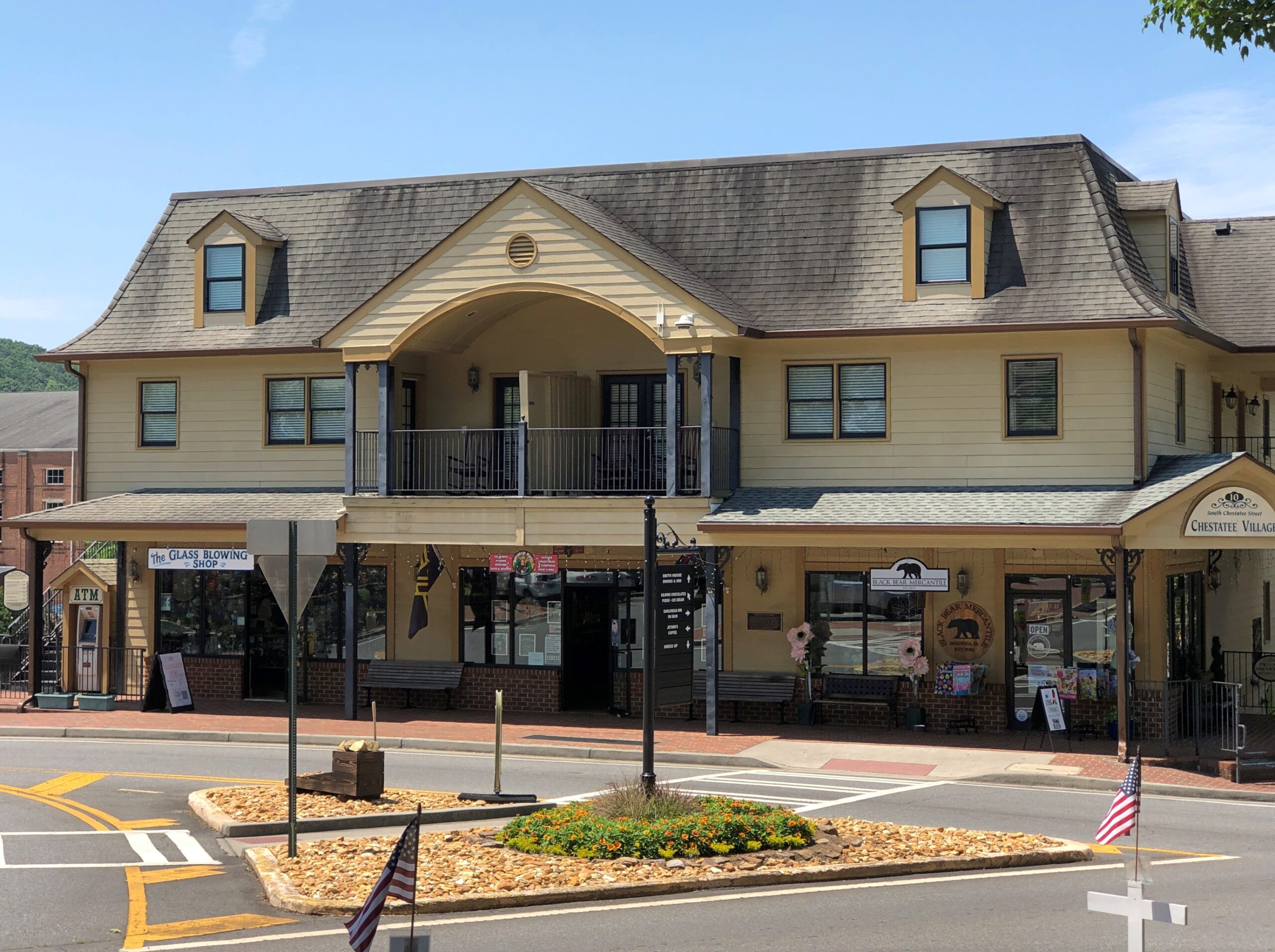
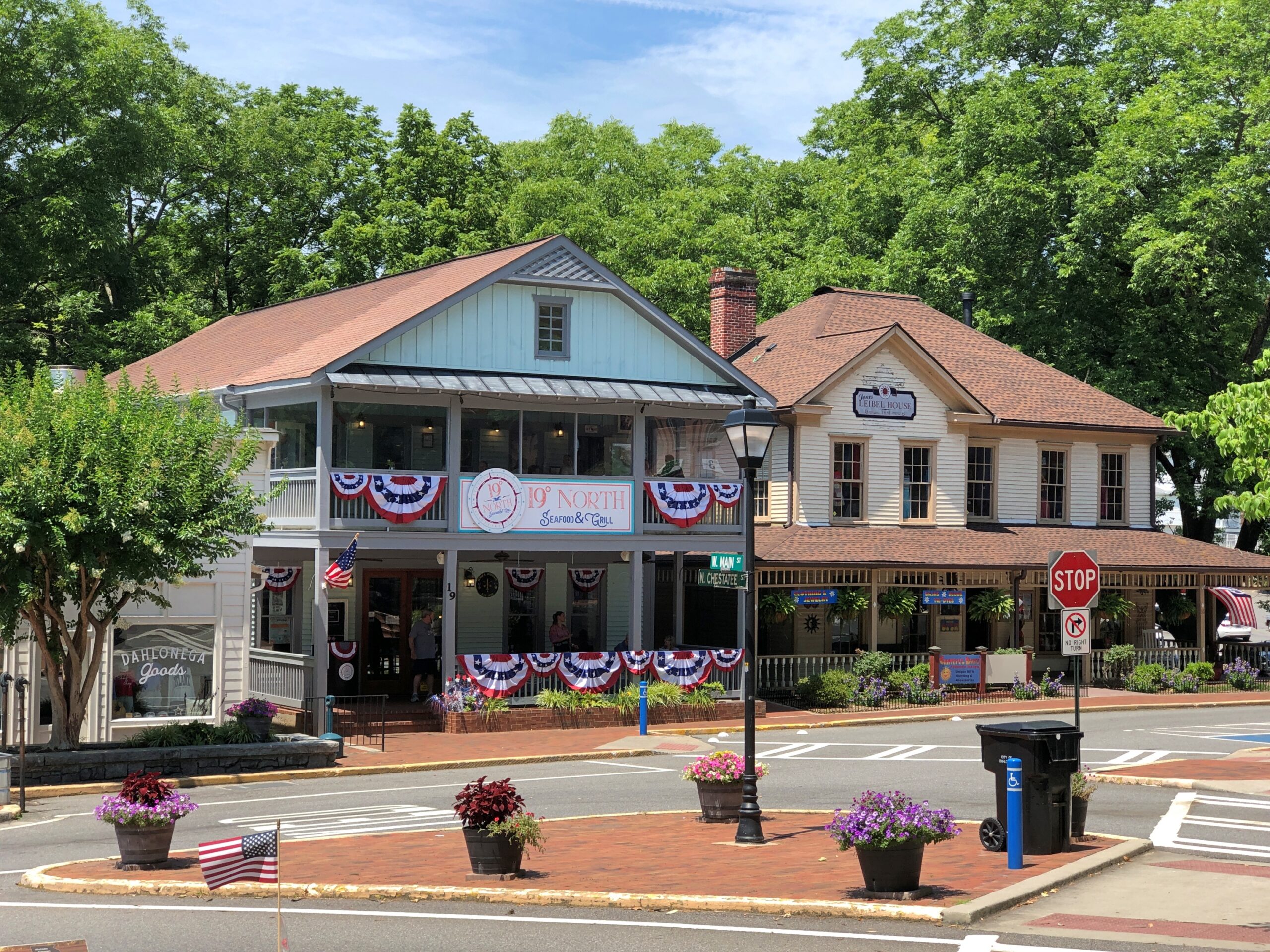
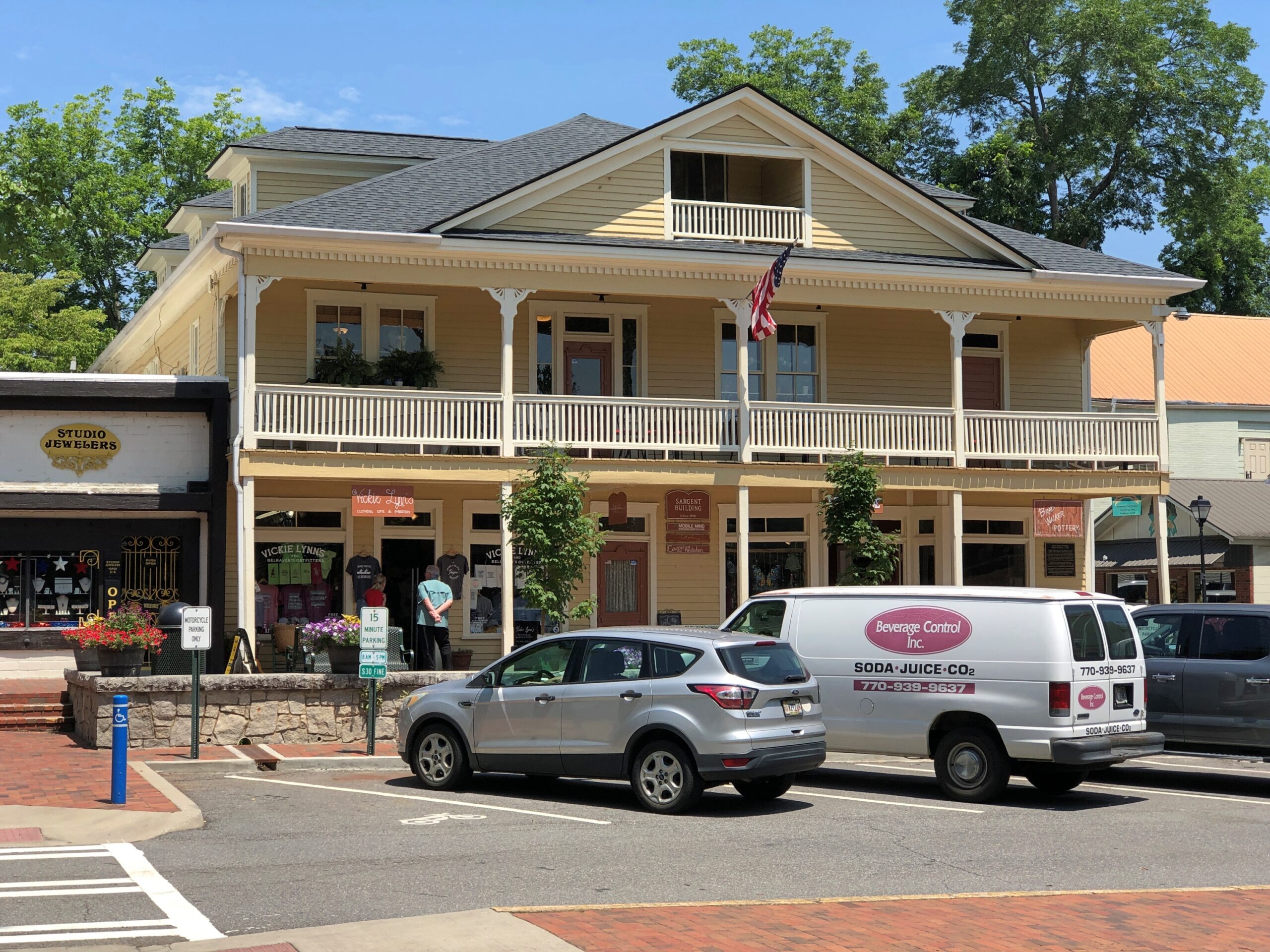
As for Dahlonega, its downtown has the handsome look of a day-trip destination from Atlanta and a lot of suitable businesses. On the former county courthouse square, you can find the likes of Gustavo’s Scratch Kitchen, Vintage Musical Instruments, Dahlonega Tasting Room, The Glass Blowing Shop, Studio Jewelers, Lynn’s Gifts, Country Cottage (also gifts), Local Pup pet store, 19° Seafood & Grill, Paul Thomas Chocolates, Dahlonega Goods and Dress Up Dahlonega.

Dahlonega, Ga.
Dahlonega, Ga.

A blazing hot day might not have been the best time for a visit, so the square wasn’t especially crowded. I only spent enough time on foot to get from a parking lot a block away to the museum, and then took a walk around the building under the shade of the trees on the grounds. For a hot summer day, not a bad walkabout. Certainly worth the effort to see some Dahlonega gold.

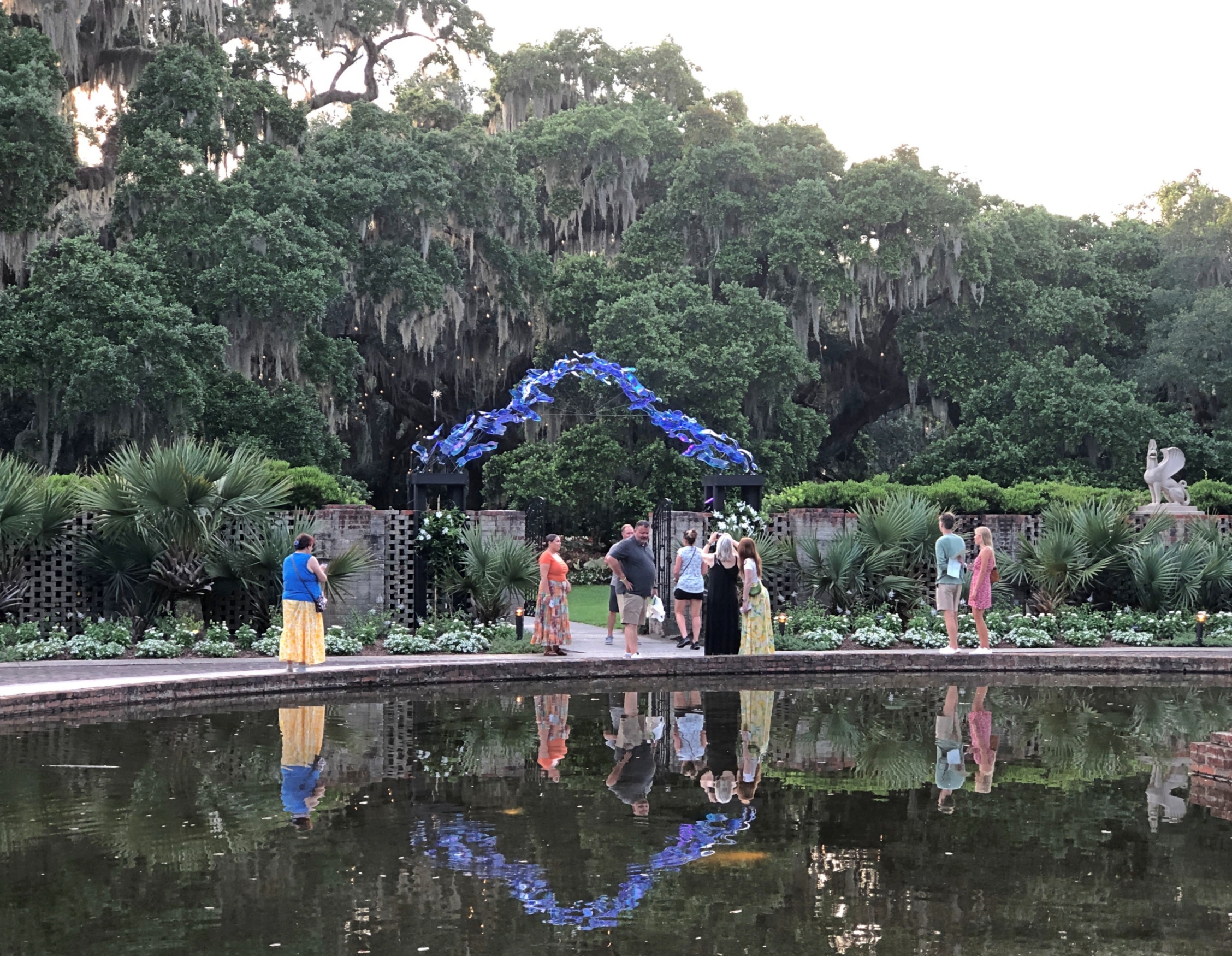
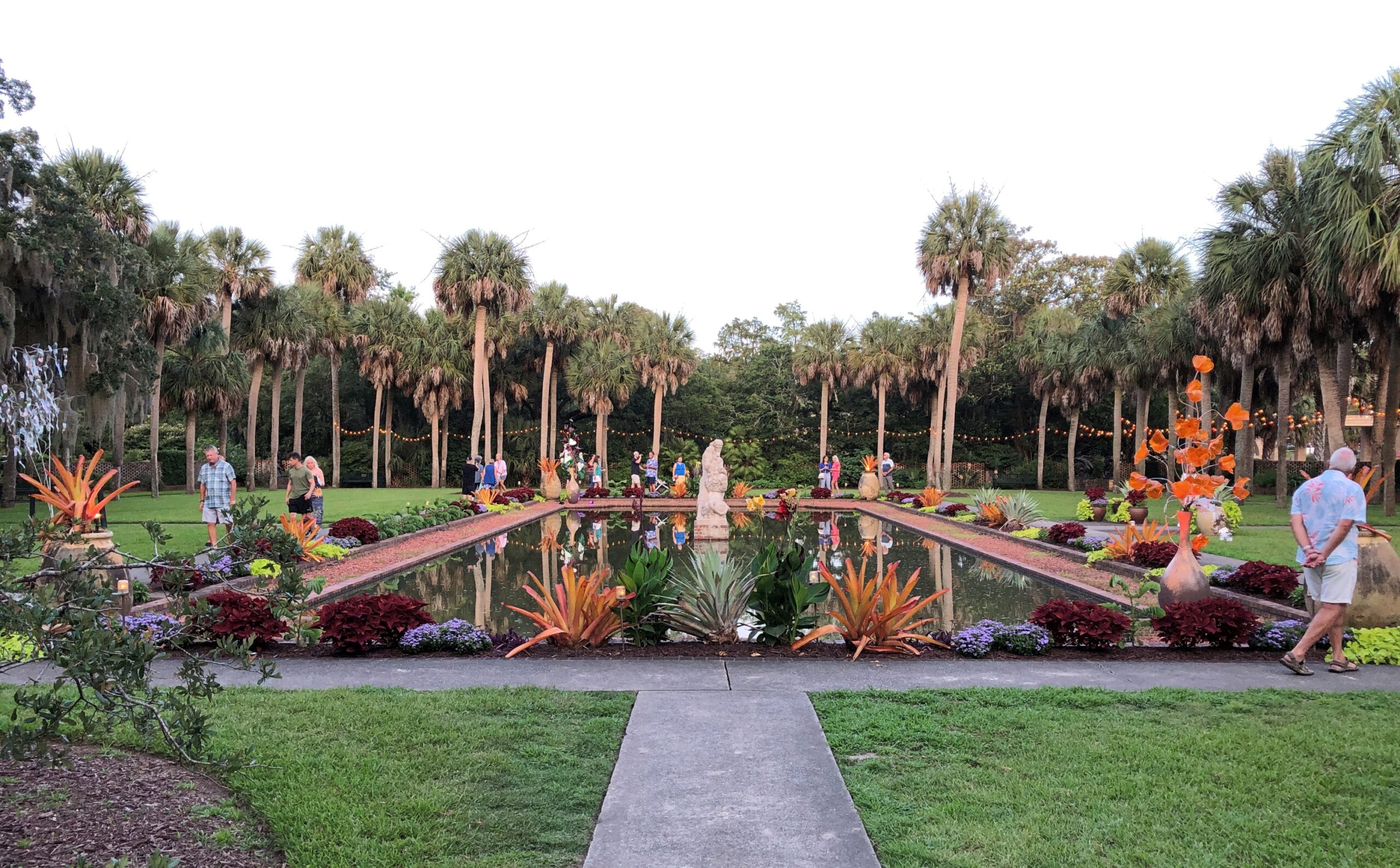
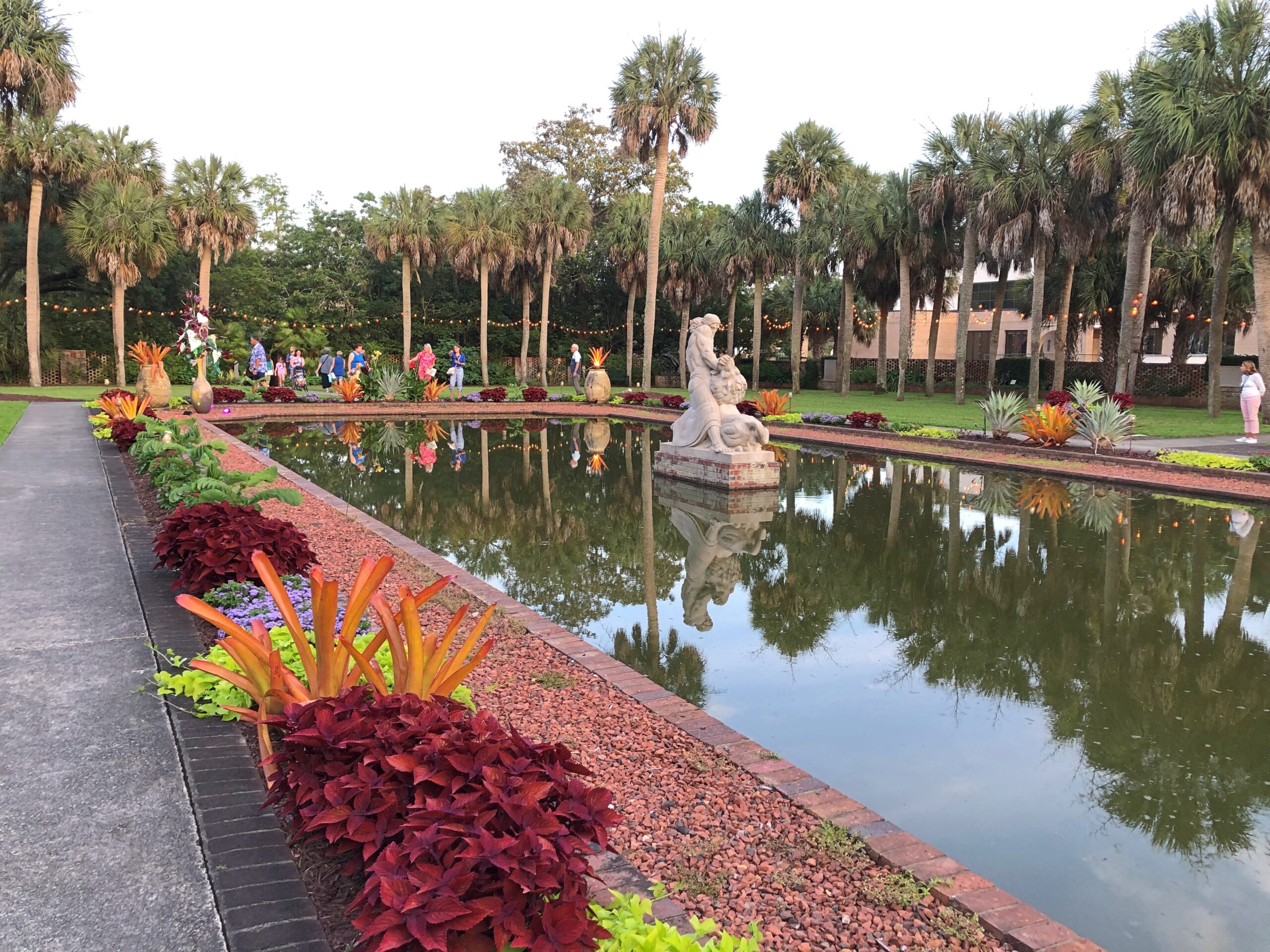
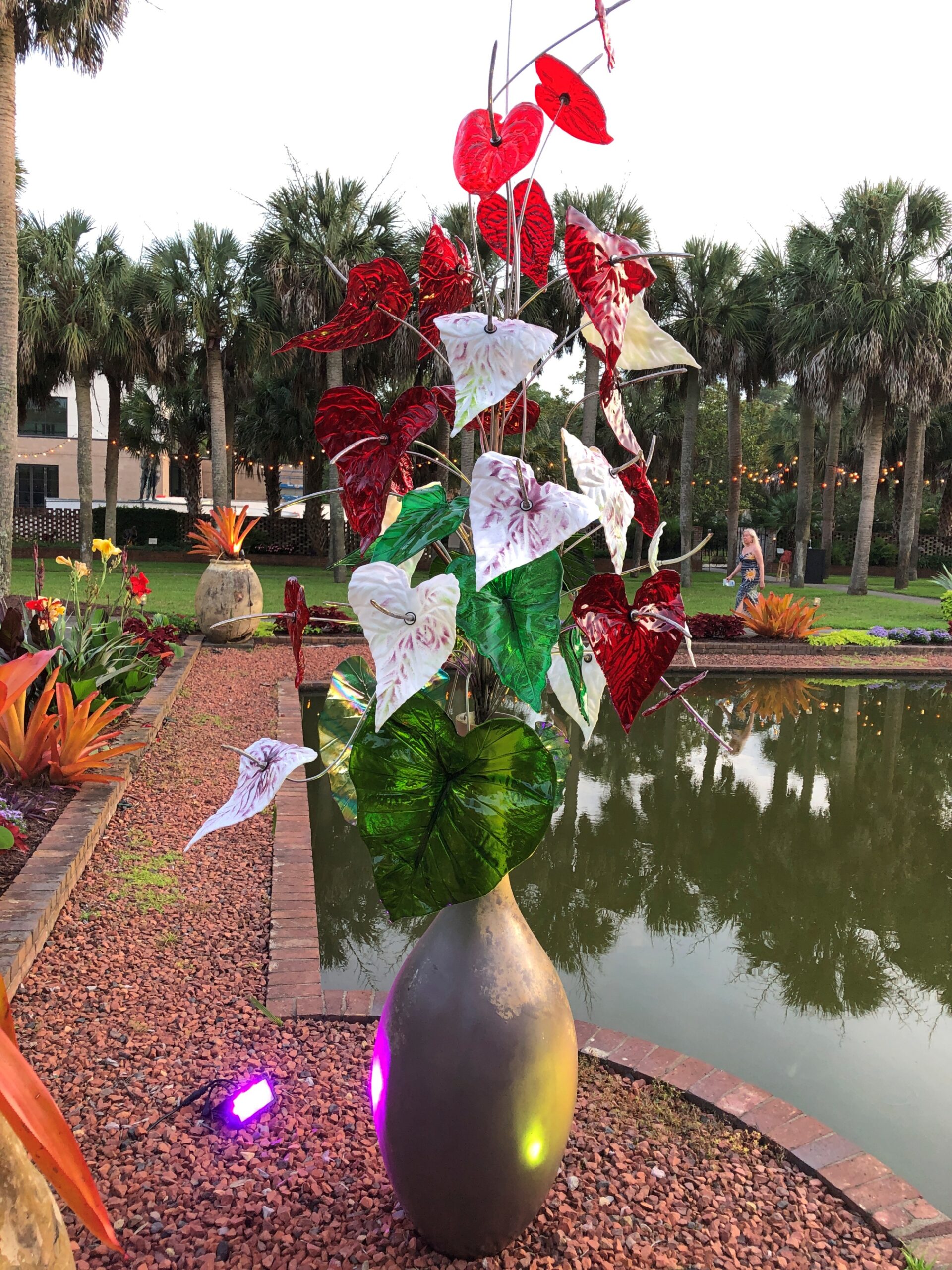
Brookgreen Gardens by Day

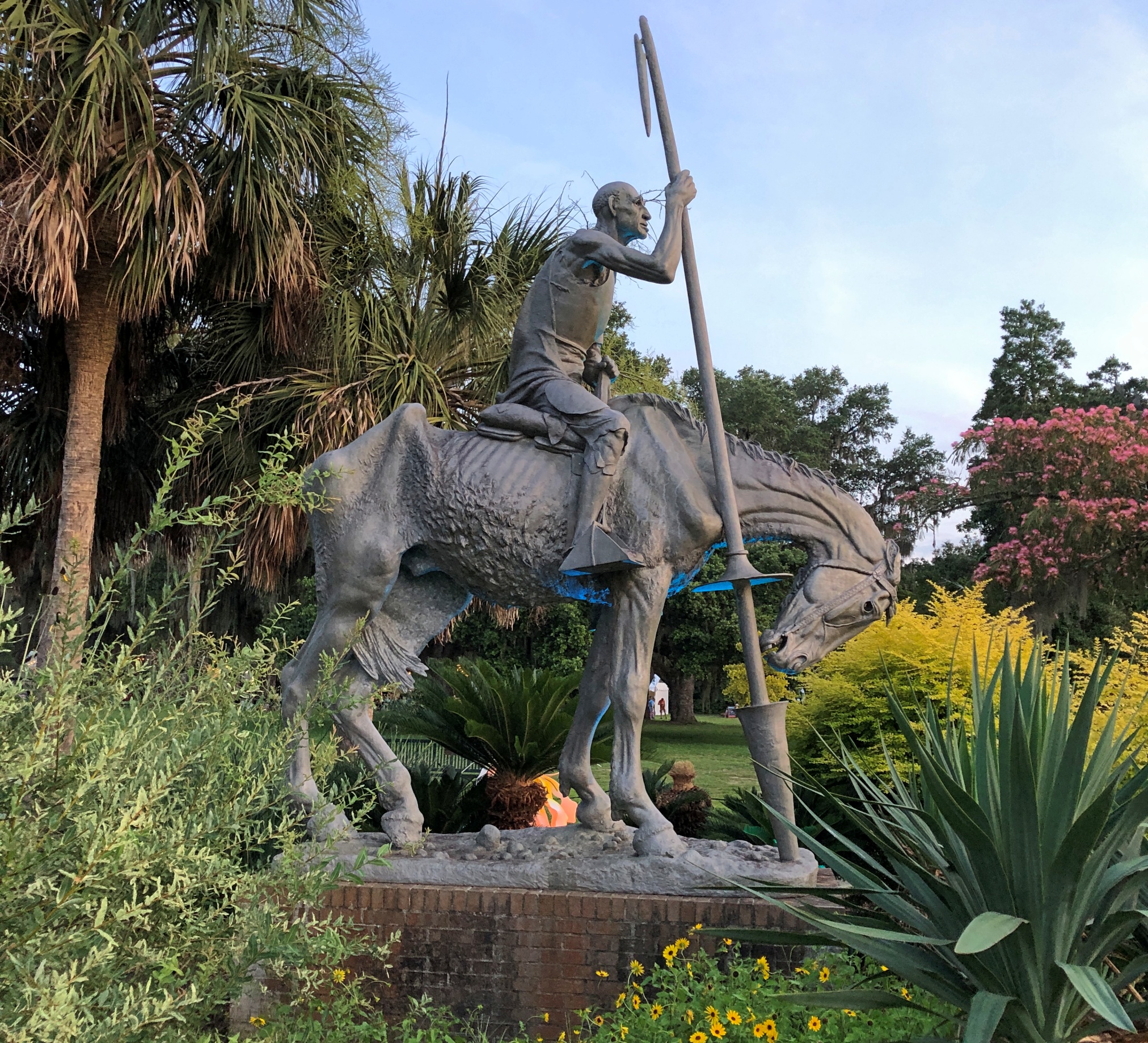
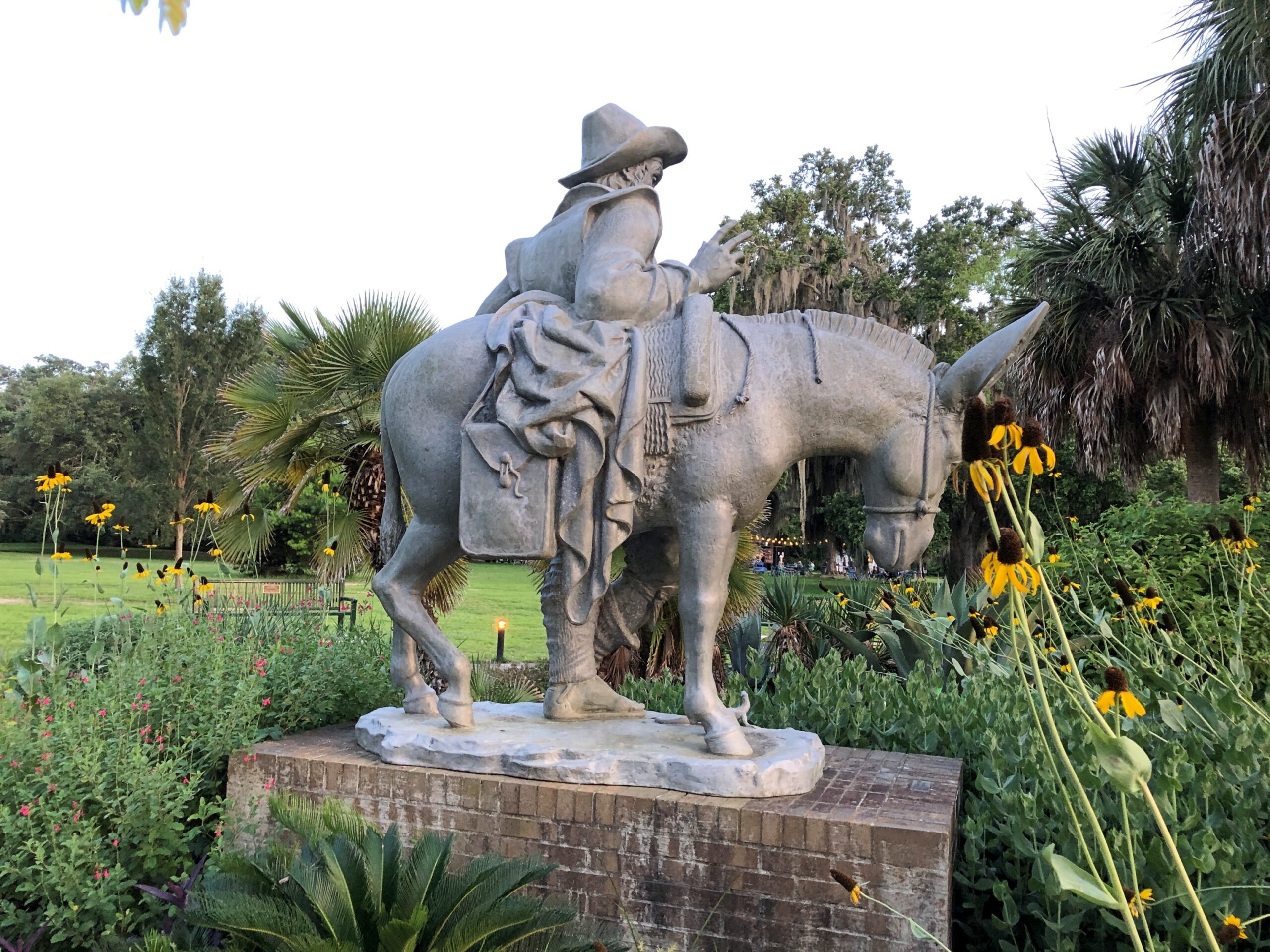
How does the saying go? Wherever there is Don Quixote –

– there is Sancho Panza.

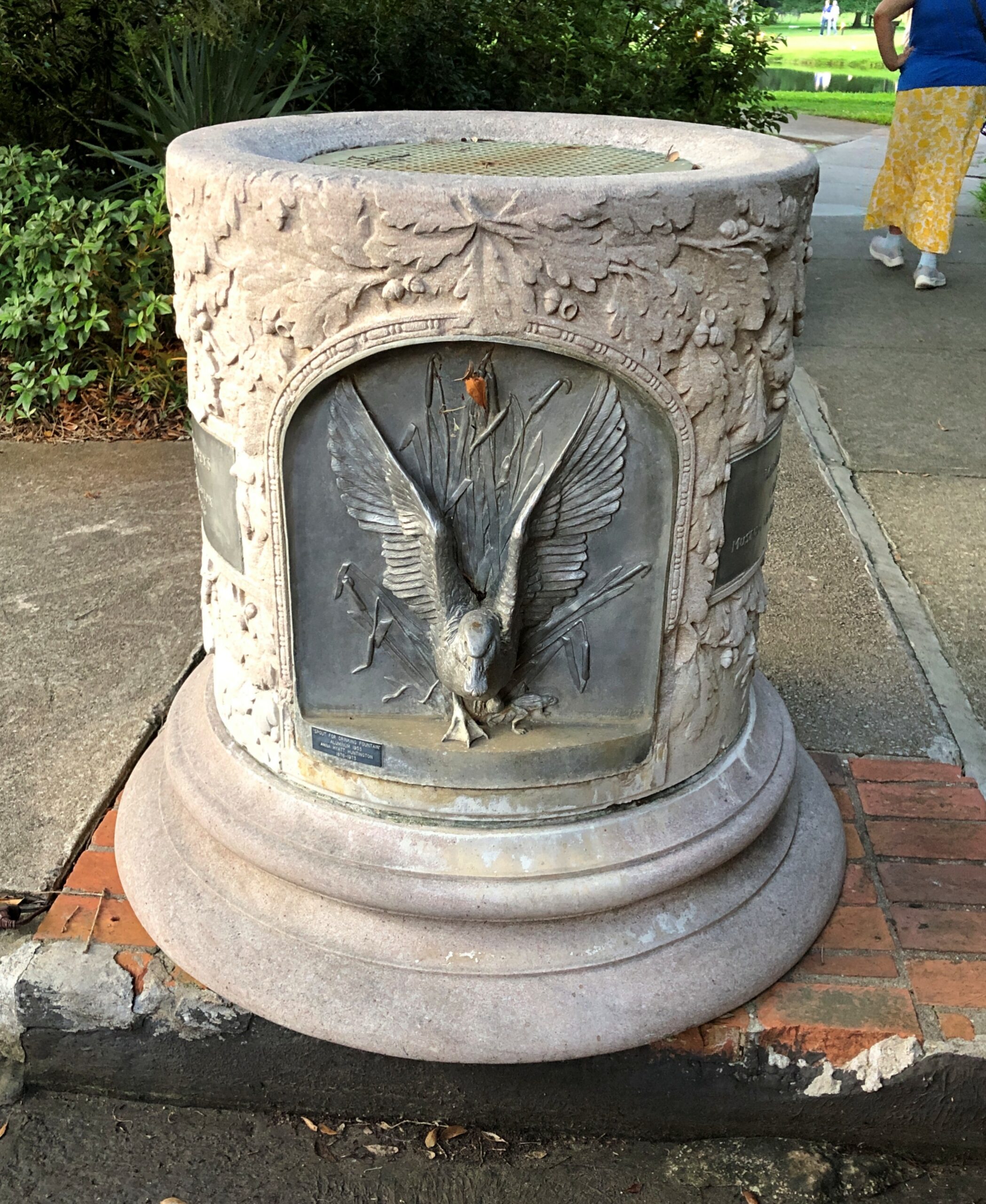
No one says that as far as I know. But you could. Anna Hyatt Huntington (d. 1973) created “Don Quixote” in 1947, and eventually Carl Paul Jennewein (d. 1978) did the companion “Sancho Panza” in 1971, apparently at Huntington’s request. You can find the famed literary pair in aluminum among many other artworks at Brookgreen Gardens in South Carolina – over 2,000 works by 430 artists, according to the garden. We arrived late in the afternoon of the 21st, dodging most of that day’s heat by timing it that way.

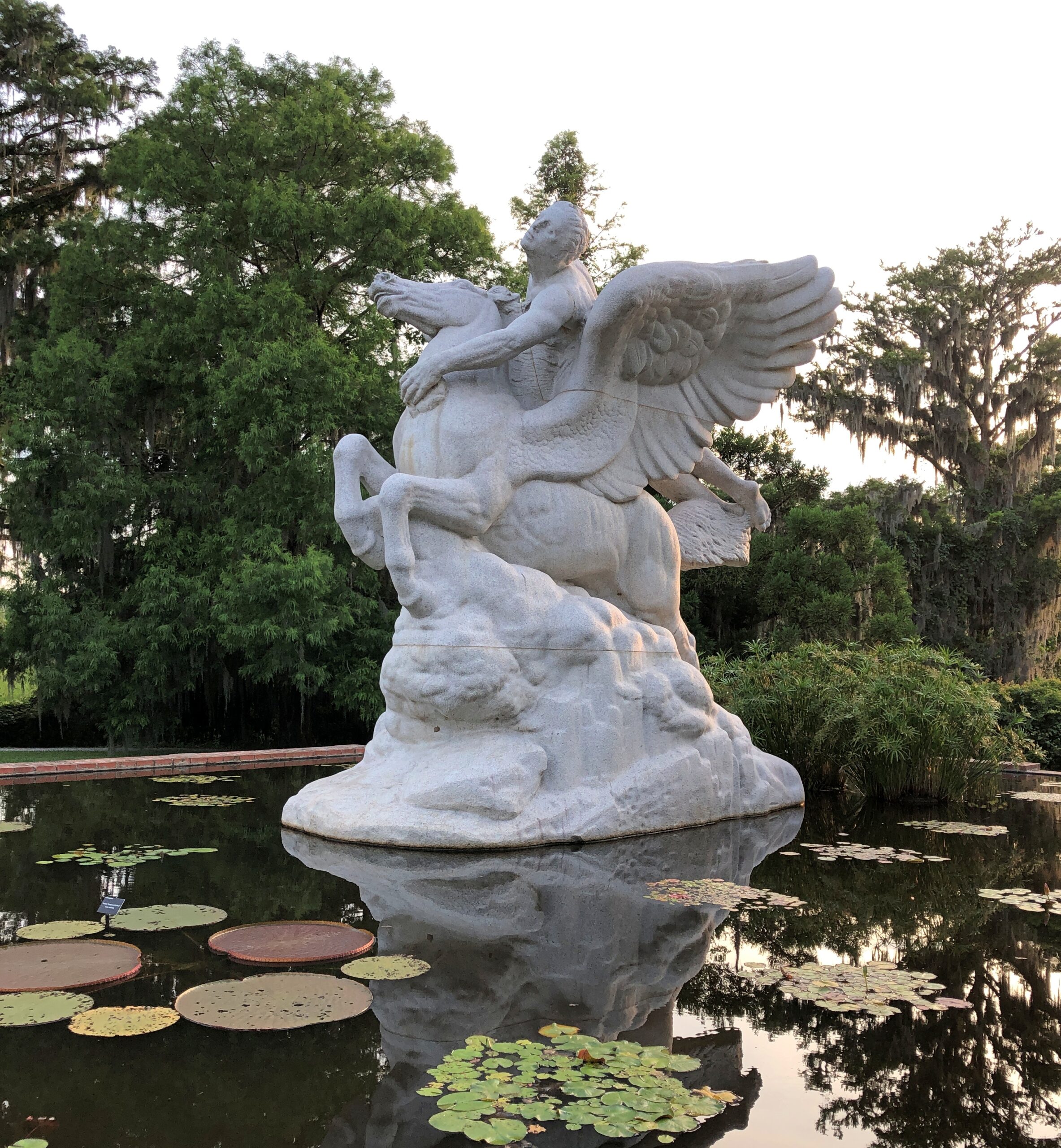
Some works are larger than the Cervantes characters.

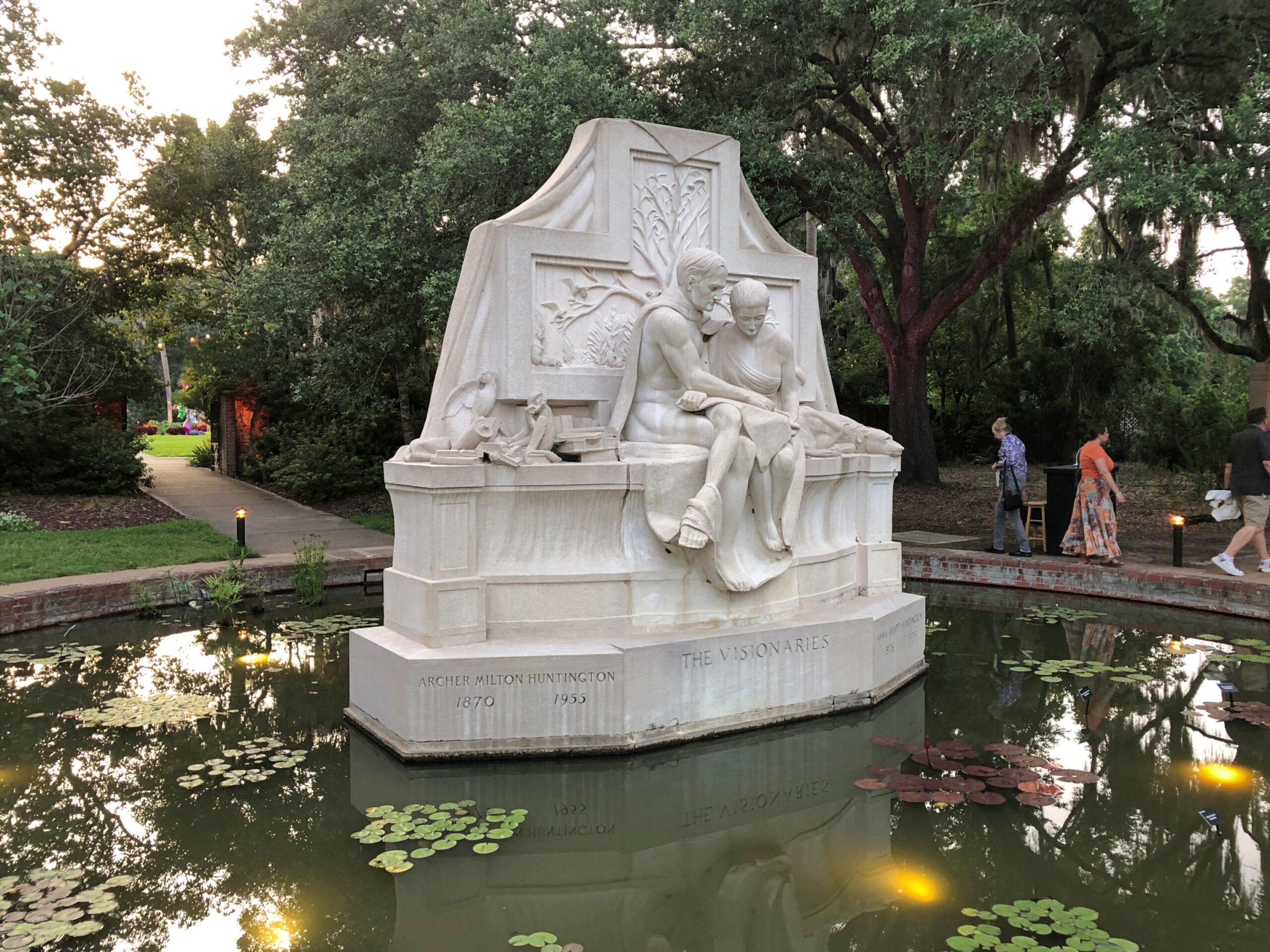
Archer Milton Huntington (d. 1955) isn’t entombed in that artwork, as much as it looks like it. He’s in a mausoleum in the Bronx befitting a very wealthy man, so this one just honors him. Along with his wife Anna, a successful artist in her own right, railroad heir and scholar Archer acquired the land and planned the gardens.

Others works aren’t as large, or as conventional.

The sculpture garden, formally known as Archer & Anna Hyatt Huntington Sculpture Garden, is only part of Brookgreen Gardens. Spanning 9,100 acres, the grounds also count as a botanical garden, and there is a zoo and wilderness areas, all teased out of the swampland, rice fields, woods and beaches that marked the site before the 20th century. Some historic sites still exist on the land, especially relating to the rice plantations that used to be there.

“From its inception [in 1931], Brookgreen had a three-pronged purpose: first, to collect, exhibit, and preserve American figurative sculpture; second, to collect, exhibit, and preserve the plants of the Southeast; and third, to collect, exhibit, and preserve the animals of the Southeast,” the garden’s web site explains.

Paths wind through the lush landscapes.

And under towering oaks bearded with Spanish moss.

And along fine water features.

Brookgreen Garden
Brookgreen Garden

As sculpture gardens go, the place is top drawer.

Tryon Palace

Talk much about colonial North Carolina and Blackbeard is going to come up – at least when talking with my old friend Dan, who had a fascination with the buccaneer even back in college. An artful storyteller, which surely helped him in his former career as an ad man, Dan can regale you with Blackbeard stories, detailing his short but colorful pirate career, including the fiery display he made of his person to scare onlookers witless. A pirate needs to be known for more than mere thievery on the high seas.

“In battle [Edward] Teach would have a sling over his shoulders that held at least three flintlock pistols and would often stick lit matches under his hat to give a smokey and fearsome appearance,” the Golden Age of Pirates explains, though without the Dan’s storytelling gusto, illustrating Blackbeard’s pyrotechnical flair with gestures all his own.

Dan and his wife Pam recently moved to New Bern, NC, very near Blackbeard’s haunts, including the site of his swashbuckler’s death in action off Okracoke Island. I don’t believe their retirement move from Alabama was to be near Blackbeard, but it certainly couldn’t have hurt during site selection. On the first evening of my visit to New Bern, Dan and I spent had a fine time out on his deck, perched near a small inlet ultimately connected to the wider ocean, watching the stars slowly emerge and talking of old times and newer things but not, at that moment, about Blackbeard.

That was the next day, as we toured Tryon Palace, even though the original structure was built many decades after Blackbeard’s newly severed head wound up tied to the bowsprit of the sloop Jane, put there by pirate hunter Robert Maynard. One colonial subject leads to another.

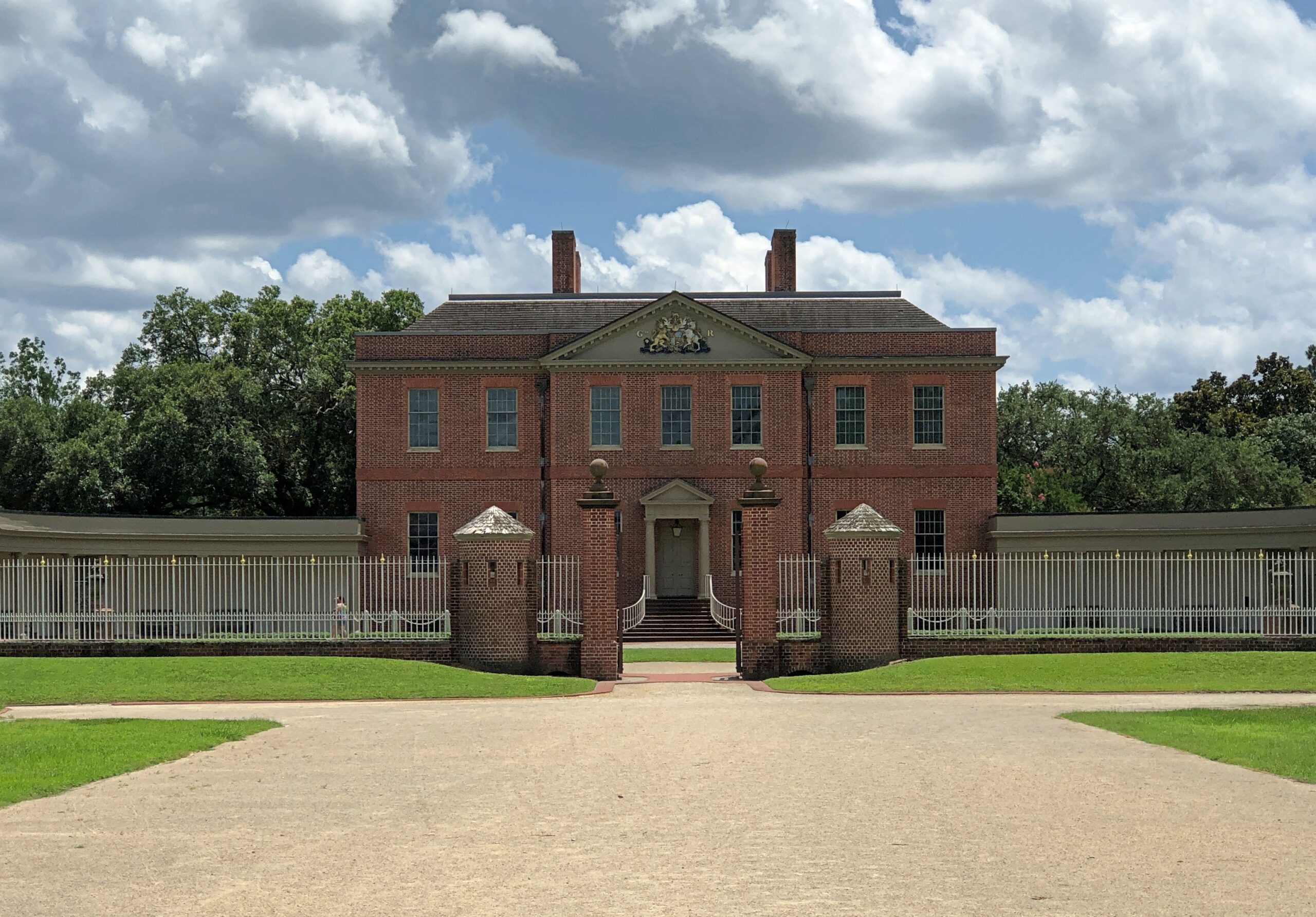
Tryon Palace is crown jewel of historic sites in New Bern, except that it’s actually a recreation of the 20th century. Somehow that doesn’t take away from its historic appeal.

Tryon Palace

When you stand in front of it, you’re peering not only back to 1770, when the colonial government of North Carolina completed, at great expense, a structure that looked like this one. You’re also looking at a building completed within living memory, in 1959, which is considered a faithful restoration of the one that NC Gov. William Tryon had erected.

“When the colonial Assembly convened in [New Bern] on 8 Nov. 1766, Tryon presented a request for an appropriation with which to construct a grand building that would serve as the house of colonial government as well as the governor’s residence,” says the Encyclopedia of North Carolina.

“Less than a month later, the Assembly acceded to the governor’s wishes by earmarking £5,000 for the purchase of land and the commencement of construction. The appropriated sum was borrowed from a fund that had been established for the construction of public schools. To replenish the depleted school fund, a poll tax and a levy on alcoholic beverages were imposed.”

Just about the worst kind of taxes when it came to irritating the non-coastal non-elites of the colony, a discontent that eventually erupted as the Regulator Rebellion. Ultimately Gov. Tryon, in personal command of the colony’s militia, crushed the Regulators – untrained men who seem to have been foolish enough to meet Tryon’s trained men in an open field at the Battle of Alamance in 1771. (Which isn’t entirely forgotten.)

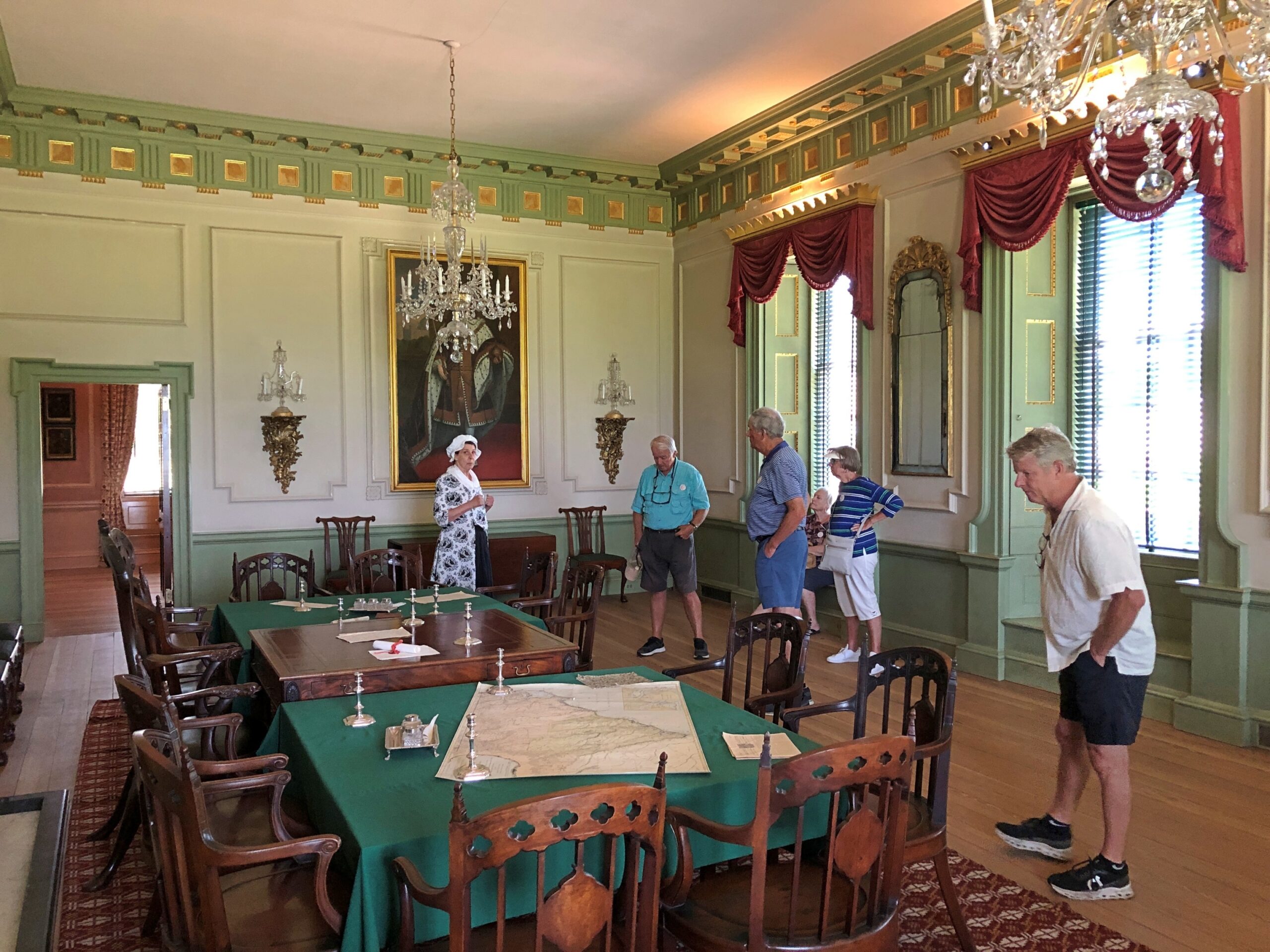
We took an early afternoon tour of Tryon Palace, guided by a woman in period costume. She told us about Tryon – no mention of Alamance, however – and his successor, Josiah Martin, the only other royal governor to use the palace. Gov. Martin spent more on furnishing the place, only to be obliged to skedaddle come the Revolution. We also heard about architect and master builder John Hawks (d. 1790), who came to North Carolina from England to build the palace which, of course, is only a palace by canebrake standards of the colony. It is a stately manor house, however.

Tryon Palace

The colonial legislature and the new state legislature both used the palace for a while, so it counts as the first capitol of North Carolina. That meant I was visiting yet another state capitol, without realizing it at first. A former capitol, that is, including ones I’ve seen in Illinois, Texas (counting Washington-on-the-Brazos as such), Virginia, Florida and Iowa. Abandoned as a government building after the NC capital left New Bern, fire consumed most of Tryon Palace just before the end of the 18th century. Its west wing survived for other uses over the next century-plus.

In the 20th century, along came Maude Moore Latham, a wealthy local woman with a taste for historic restoration. If much of colonial Williamsburg up in Virginia could be restored, so could colonial New Bern in North Carolina. Despite the fact that a road and houses had been built on the site of old Tryon Palace, she eventually facilitated the restoration, made possible (or at least more accurate) by the fact that John Hawks’ plans for the building had survived.

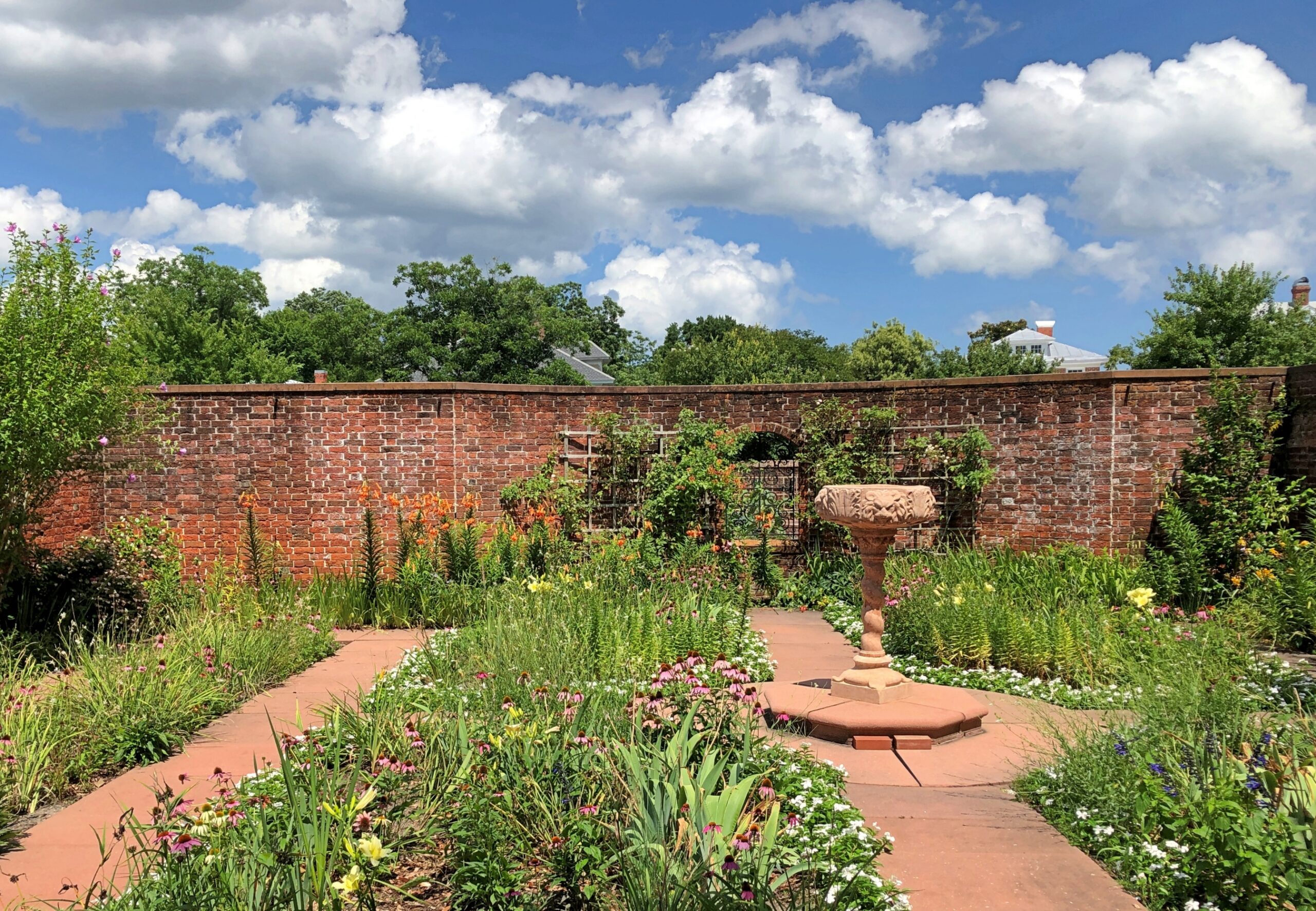
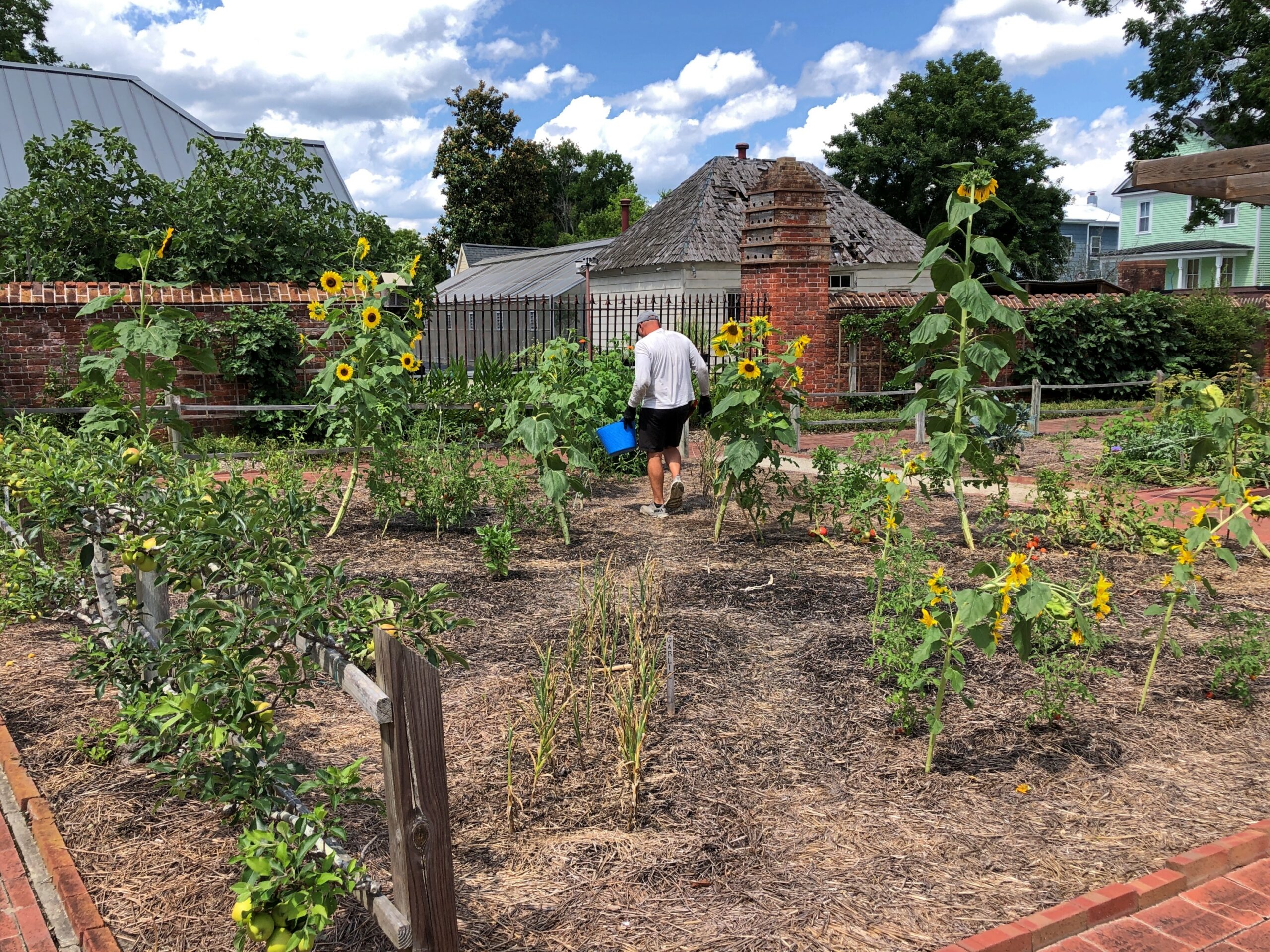
Also restored: The gardens of Tryon Palace, flower and vegetable. Despite the heat, we couldn’t miss that.

Tryon Palace garden
Tryon Palace garden

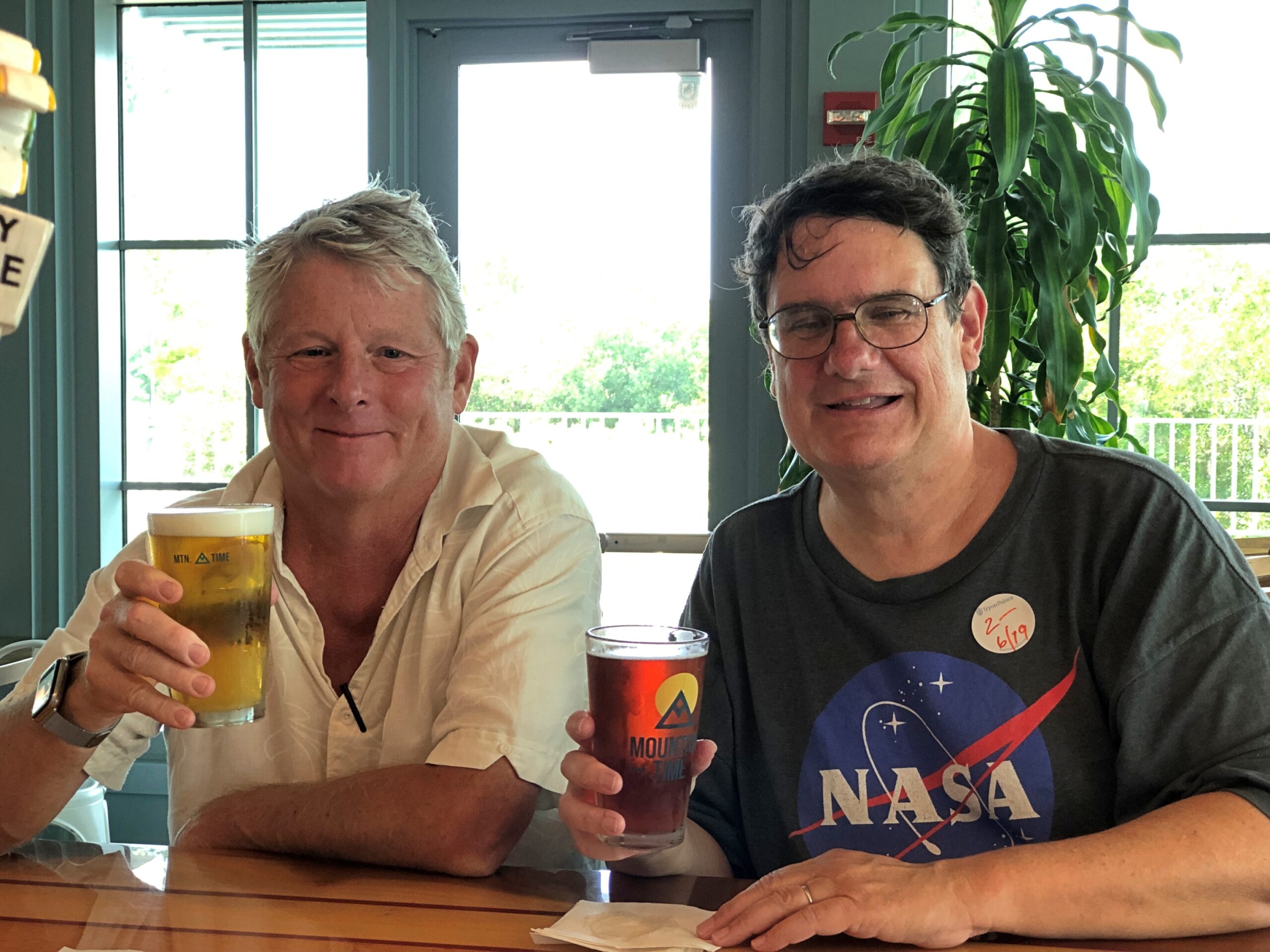
After our sweaty visit to the palace and gardens, Dan and I repaired to the restaurant in the nearby North Carolina History Center, called Lawson’s On The Creek, for refreshing beverages and more talk of Blackbeard and many other things. We closed the joint down over beer, at 4 p.m.

Dan and Dees

Downing a beer was just the thing. That was our homage to those days of yore. In colonial America, beer was no mere refreshing beverage, but an essential one.

RTW ’25 Leftovers

Summertime, and the living’s not bad. Pretty good, really. But those aren’t as catchy as the actual lyric. Time to pause posting for the summer holiday string: Flag Day, Juneteenth, Canada Day, Independence Day and Nunavut Day. Come to think of it, that’s an exceptionally representative run of holidays for North America. Back around July 13.

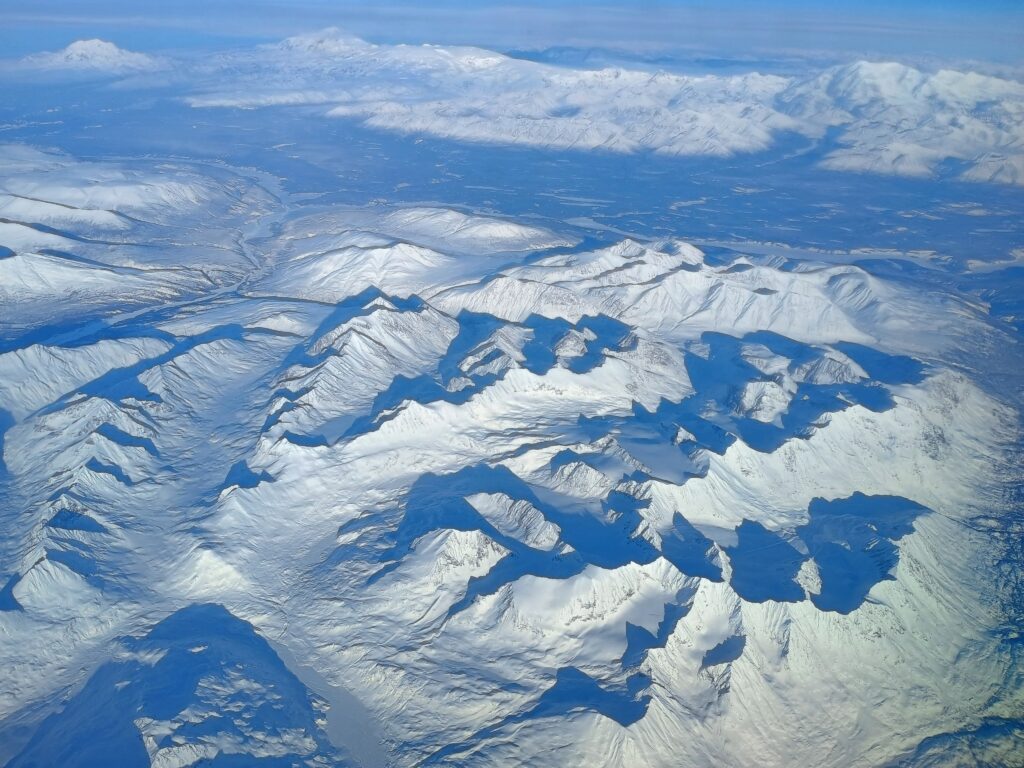
The flight from Chicago to Tokyo took us far north, as that flight path usually does. There was more light than I thought there would be, looking down at this moment on the February snows of the Yukon or Alaska; I’ll never know which. I could have been eying the border, for all I know, which suggests that borders are a gossamer fiction at these latitudes.

Japan

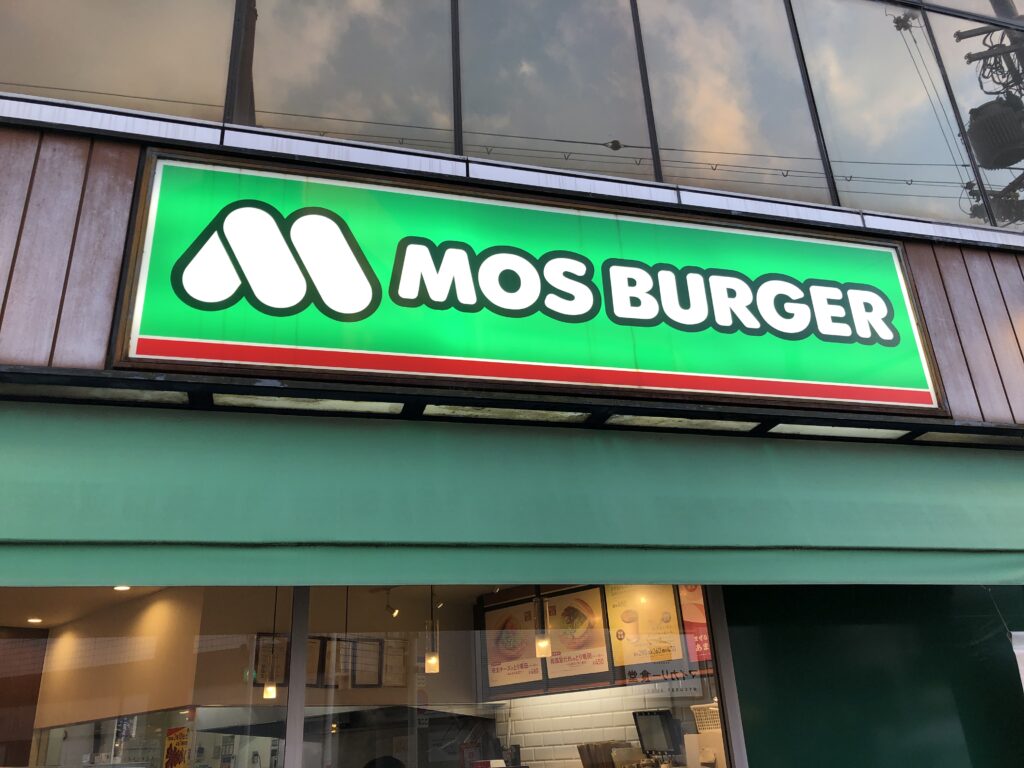
It was a happy moment when we ate at Mos Burger. One of these days, I’m going to dig out my paper copy of an article I wrote for Kansai Time Out in 1993 about four varieties of Western-style fast food chains founded in Japan, and post it. Today isn’t that day. But I can say that Mos Burger was the best of them.

As good as I remember it from 25+ years ago, the last time I went to one.

In Enoshima, near the ocean, this fellow hawks soft serve ice cream. Goo goo g’joob. Look but don’t touch.

I am the Eggman

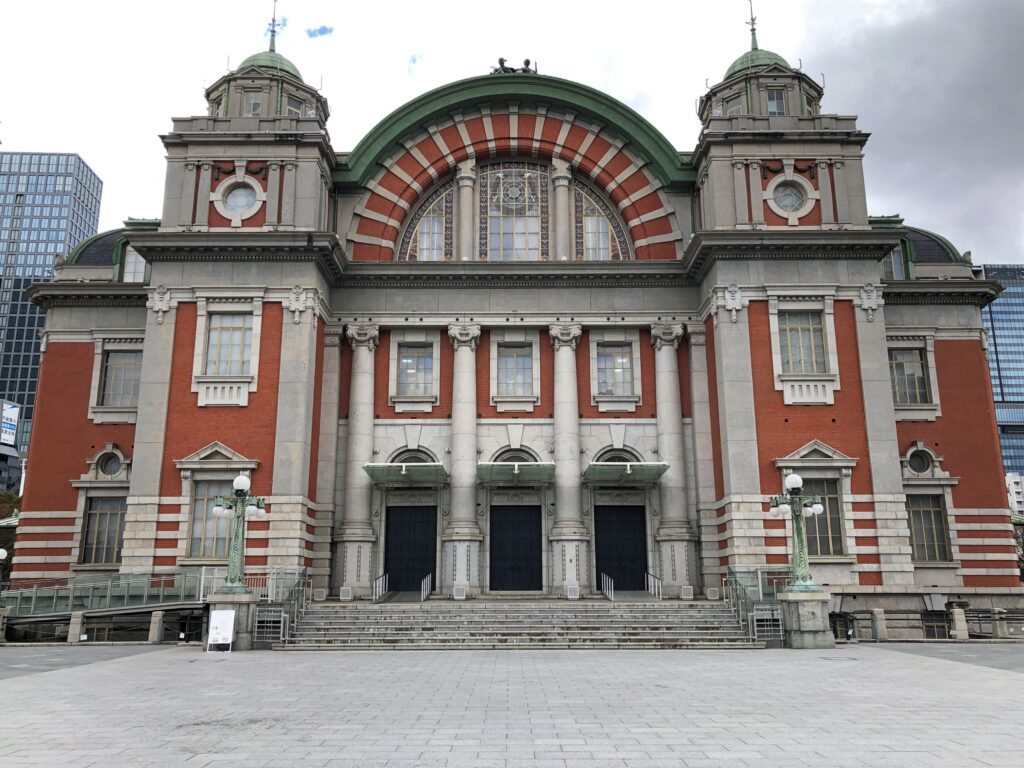
The handsome Osaka City Central Public Hall, completed in 1918. Amazing that it survived the war and urban renewal 20 years later, those forces that generally gave modern urban Japan the boxy concrete character it enjoys today.

India

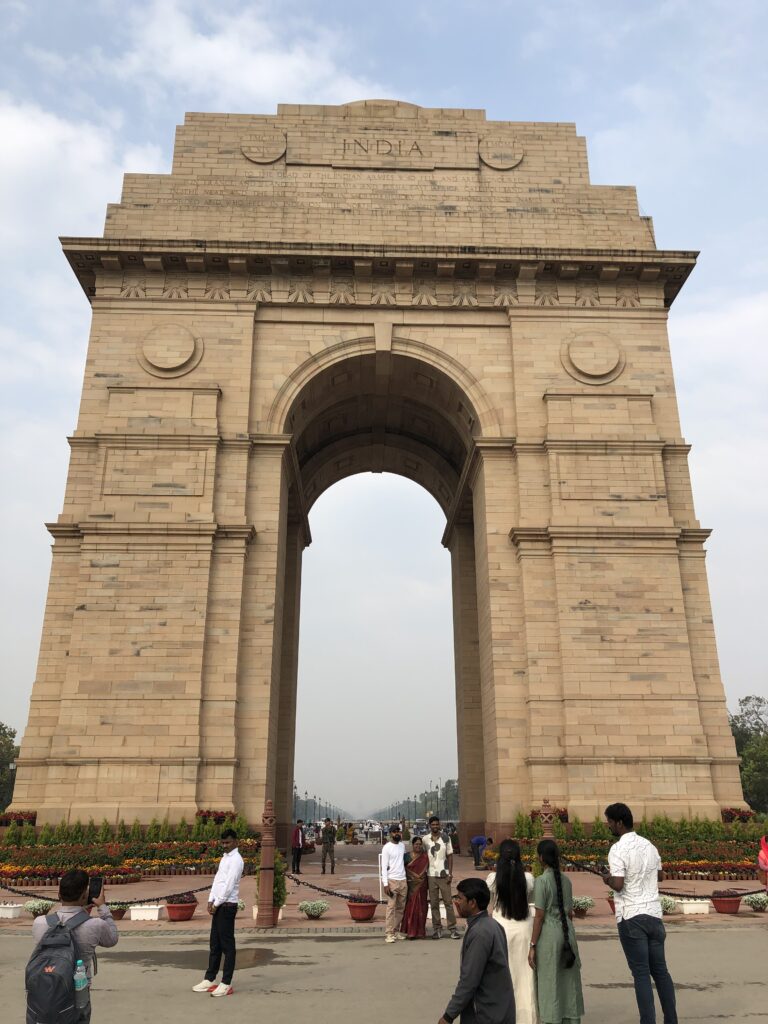
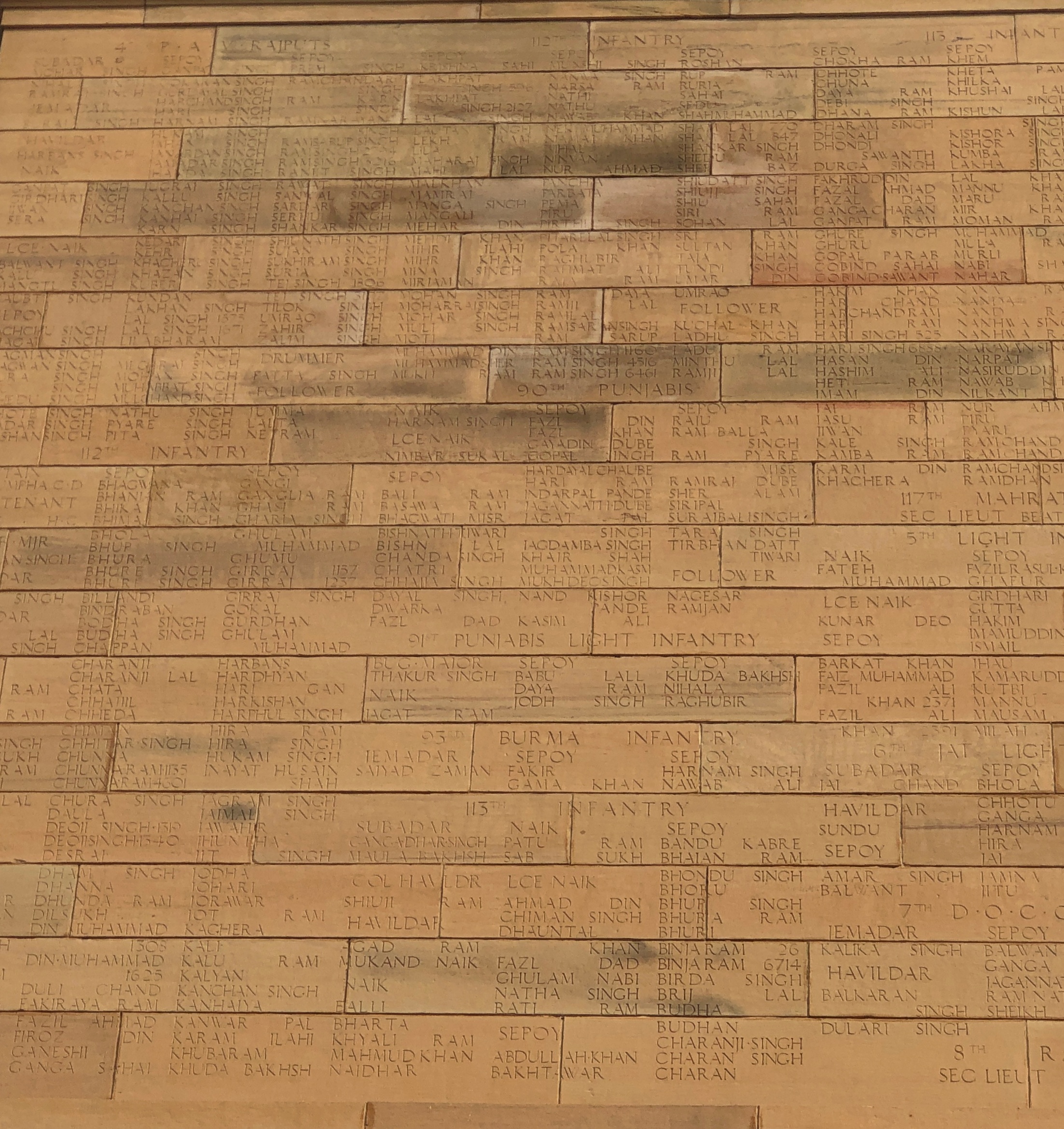
A monumental monument in New Delhi: India Gate, which honors more than 74,100 soldiers of the Indian Army who died during the Great War, and a number more in the Third Afghan War a few years later. They did their part. One of the larger relics of the Raj, unless you count things better described as legacies, such as railroad lines, parliamentary government, and the bitter feud between India and Pakistan.

While we were looking at India Gate, a group of about a dozen uniformed schoolboys, who had detached themselves from a larger group, approached me and asked where I was from. They were gleeful to hear “America,” a reaction I didn’t know anyone would have anymore, but I suppose they’ve seen a lot of our movies. A middle-aged male chaperon appeared in short order and shooed them away, while giving me a sidelong glance with a hairy eyeball, though I hadn’t precipitated the encounter in any way. I was just a suspicious foreigner, I guess.

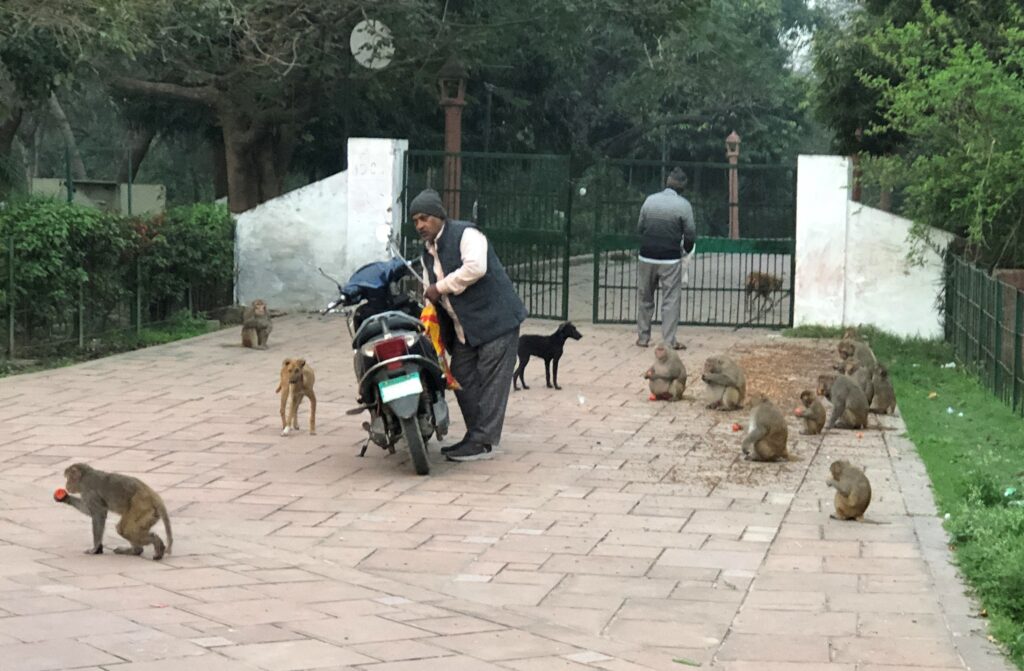
The Taj Mahal has a fair amount of parkland around it. That means a population of monkeys, too. I spotted more monkeys in urban India than I would have anticipated. These didn’t seem to be bothered by the men, the dogs or the motorcycle.

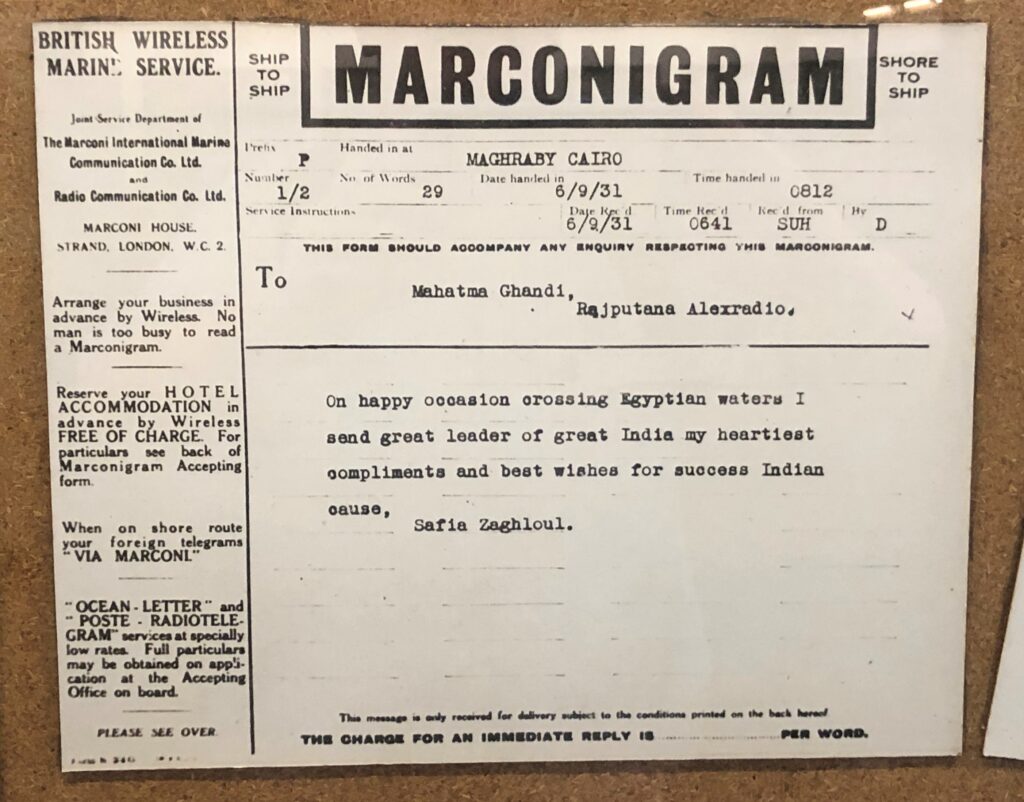
On display at the Ghandi Museum: a Marconigram. I don’t know that I’d ever seen one of those before. Or maybe there was one on display at the Titanic Museum in Branson. Anyway, that’s one good reason to go to museums: for things once common, now curiosities. Safia Zaghloul was an Egyptian political activist of the time.
United Arab Emirates

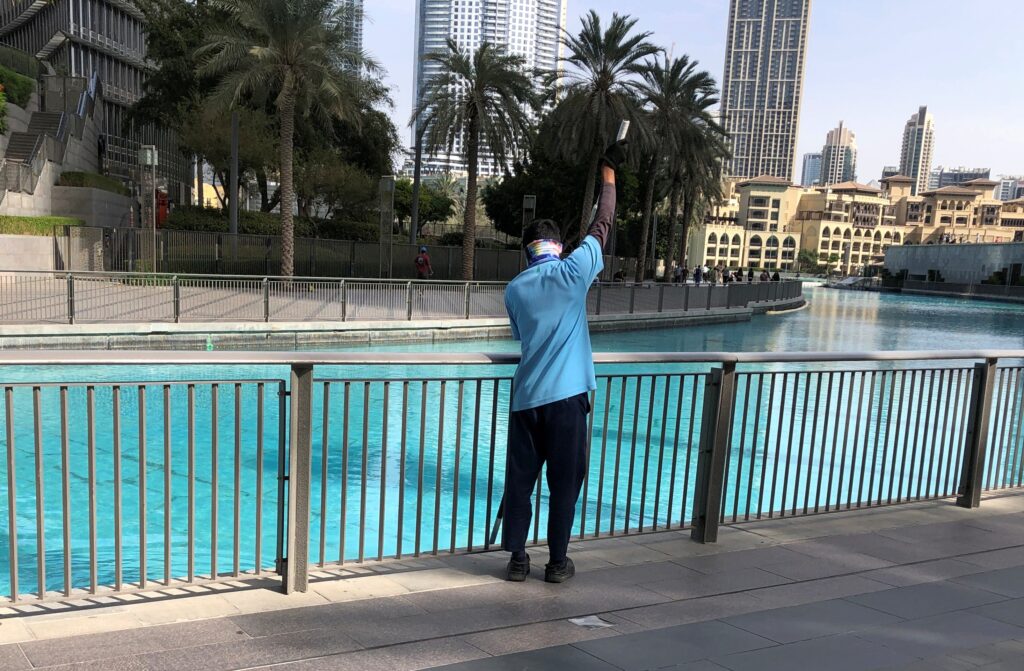
In Dubai it seemed like there were more men at work sweeping, mopping and other cleaning of floors and other flat places, per square meter, than anywhere else I’ve ever been. There are worse things to do with cheap labor.

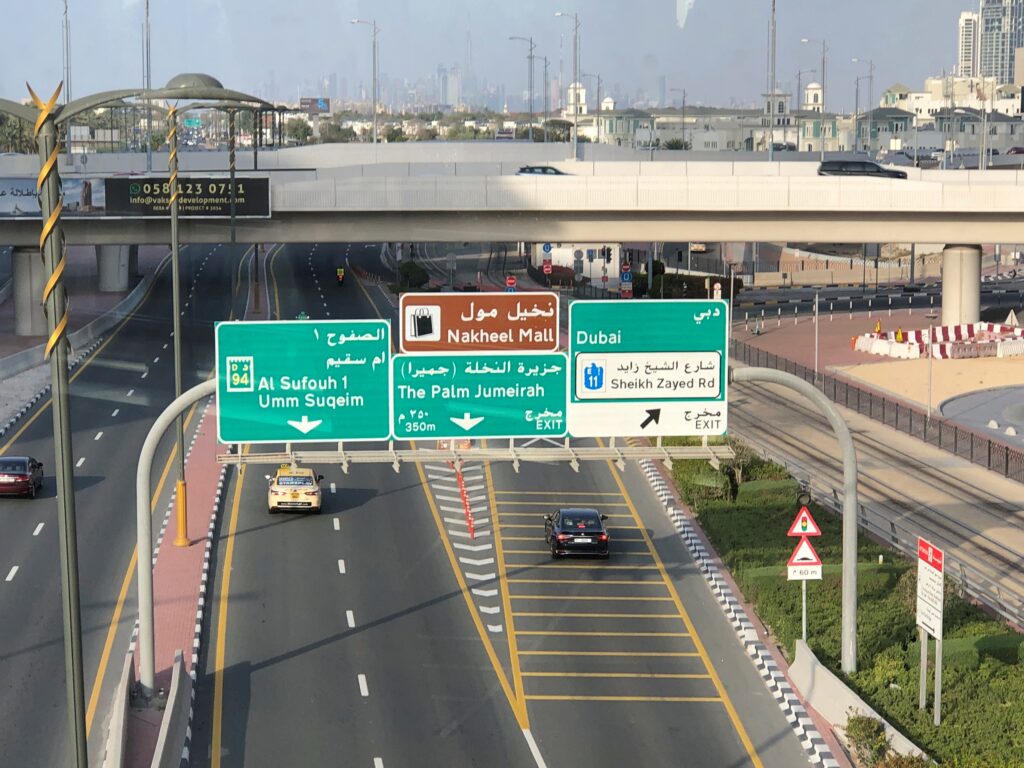
Not sure exactly where this was, except somewhere out on Palm Jumeirah. Must have been a wall, or like a wall, in one of the posh retail corridors winding through one of the posh resort properties amid the poshness of the island.

Note: White on green is common indeed around the world.

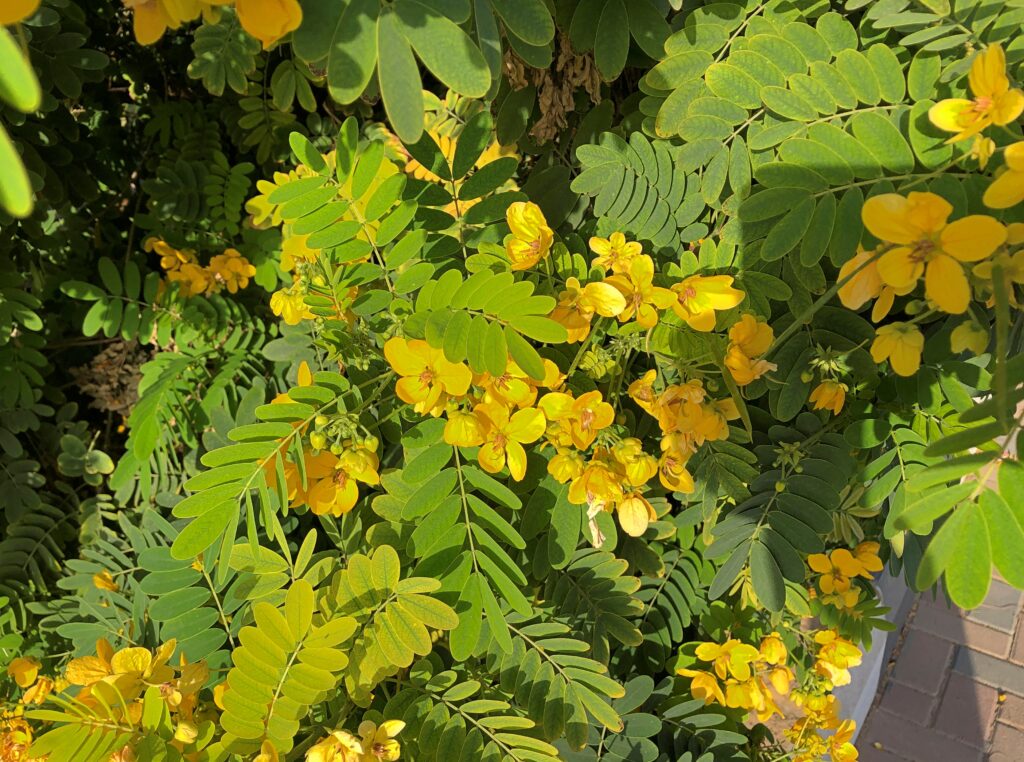
Desert flowers. Of course, sprinklers water that bit of terrain at regular intervals.

Germany

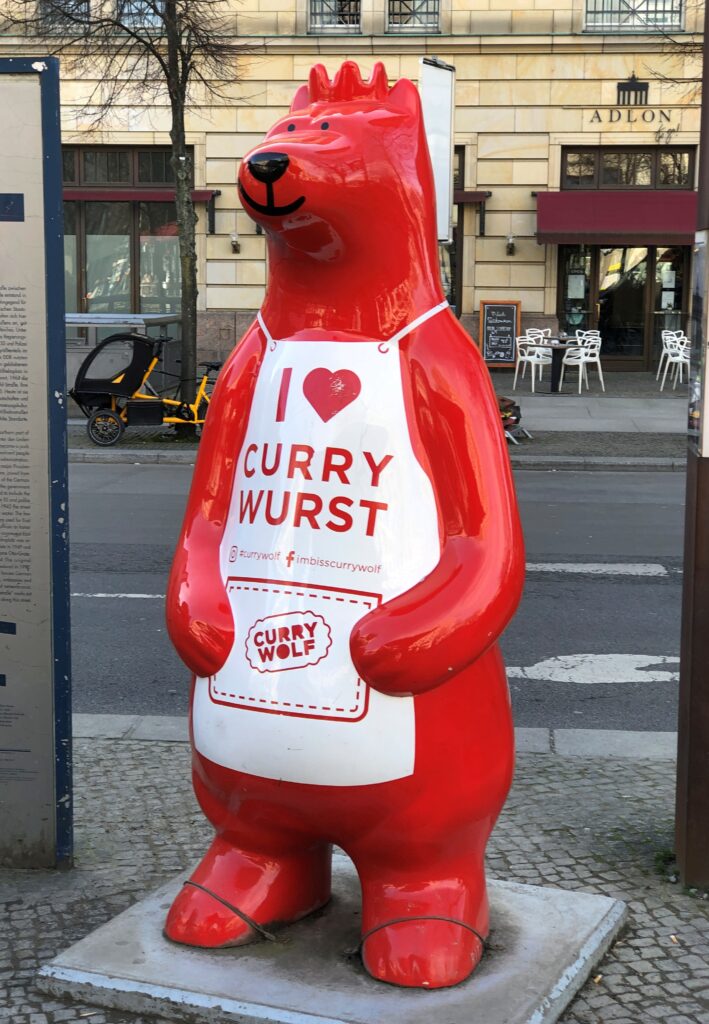
What’s Berlin without currywurst? They say it came into style soon after the city was divided.

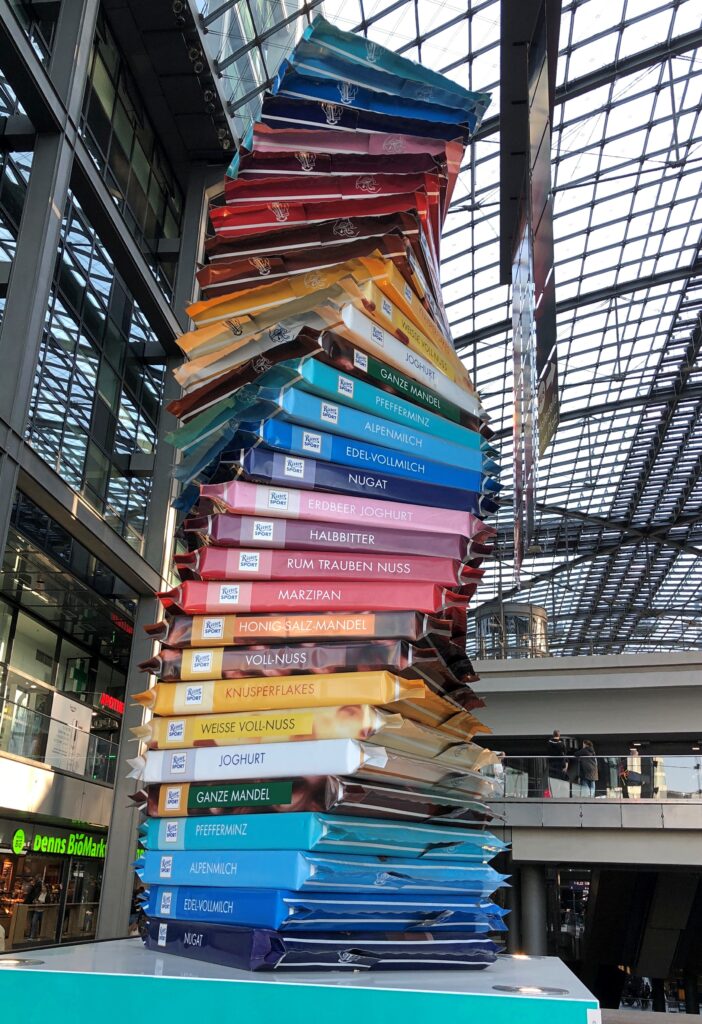
What would Germany be without Ritter Sport? A giant stack of them can be seen, in their great variety, at the Hauptbahnhof in Berlin. Later, I bought about 10 squares of RS at a discount price at a Netto grocery store near our hotel. Think Aldi or Lidl, but more cluttered.

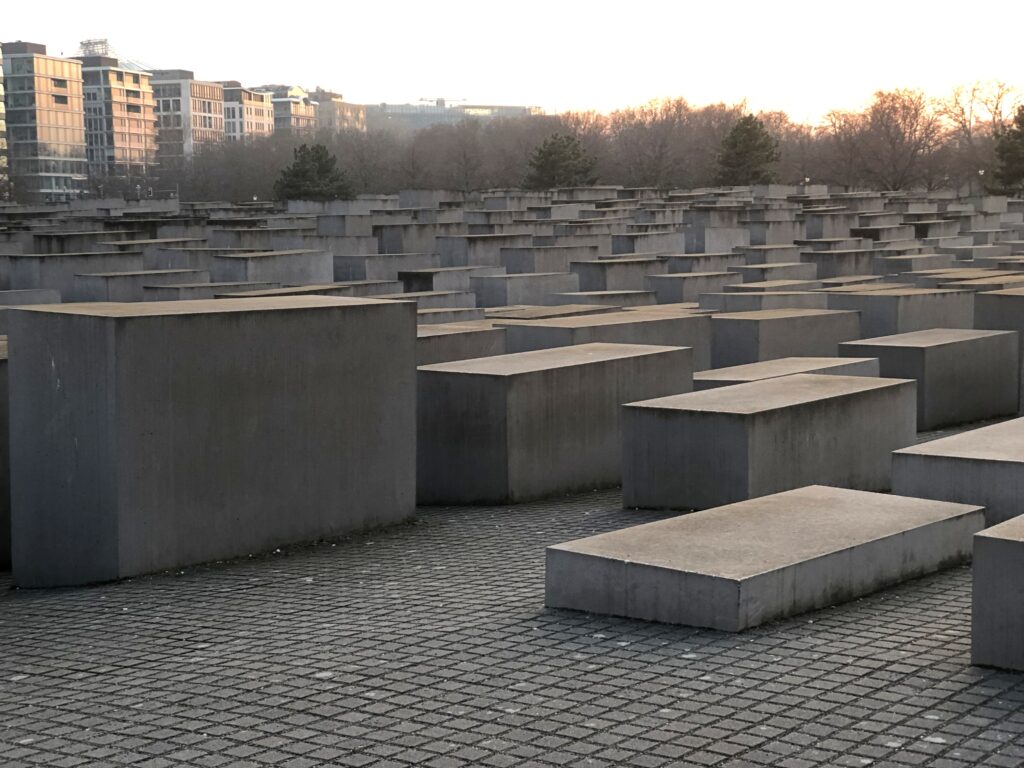
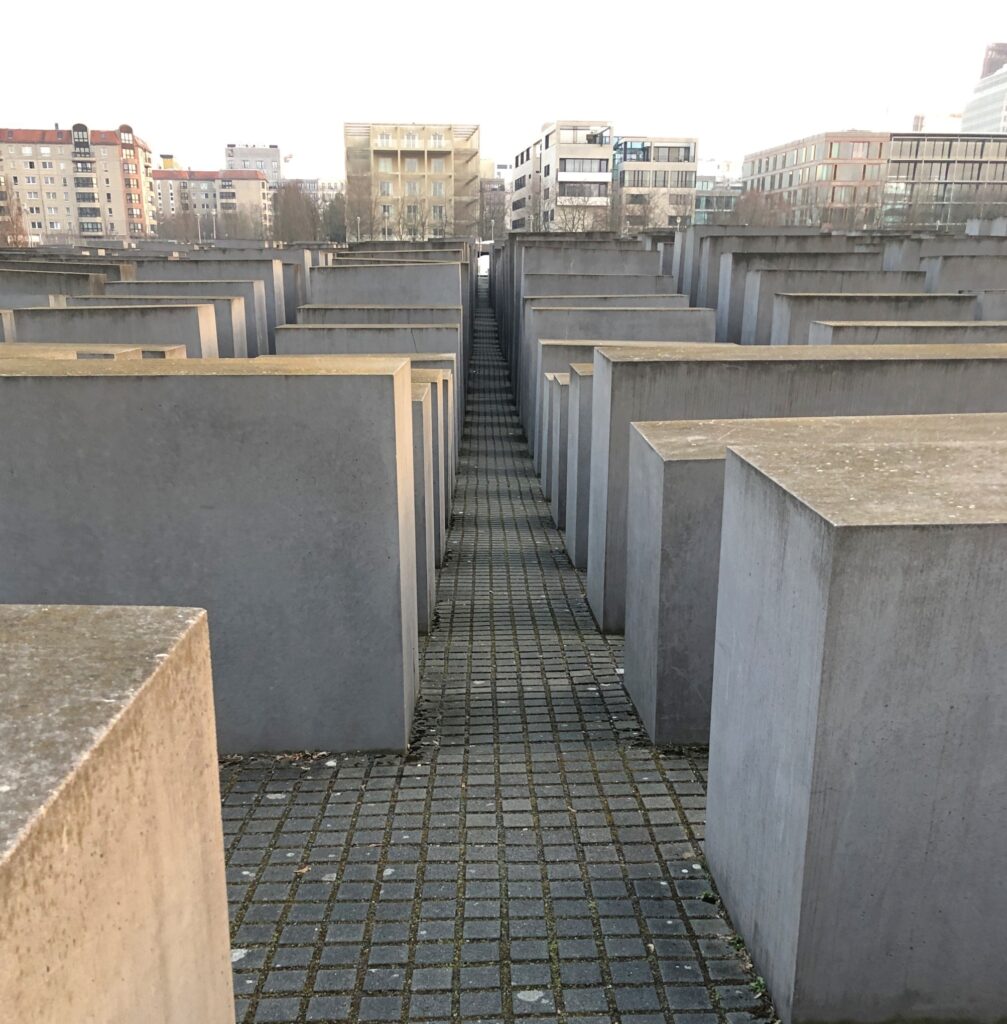
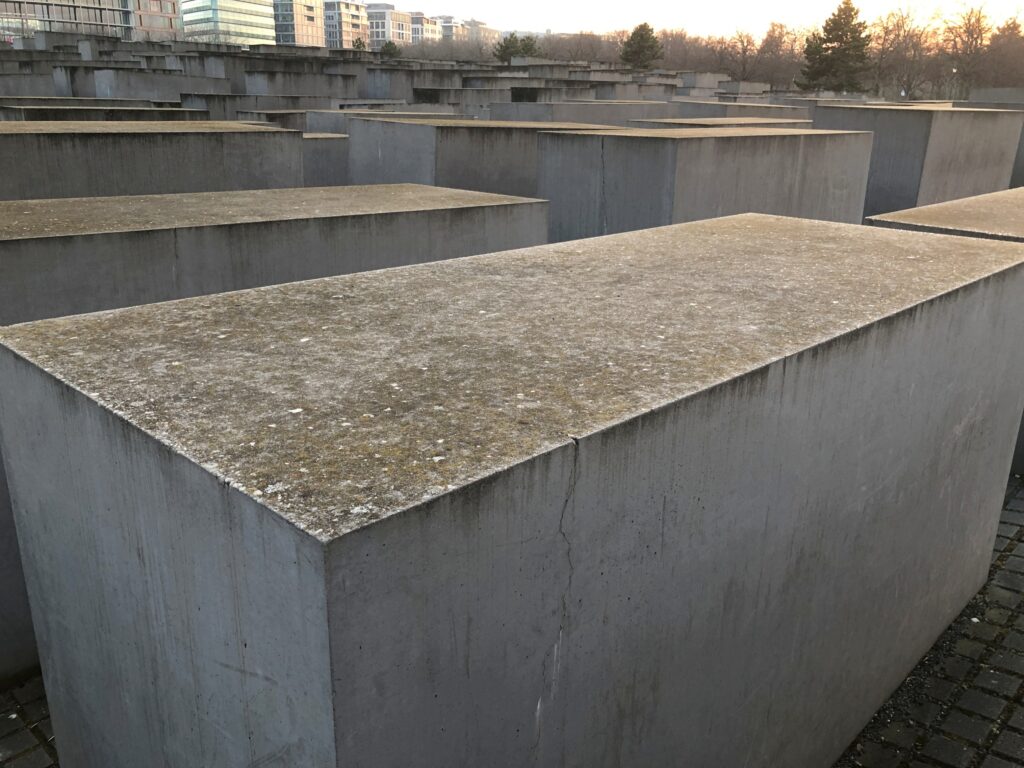
Views of the Memorial to the Murdered Jews of Europe, Denkmal für die ermordeten Juden Europas, near the Tiergarten in Berlin. It wasn’t there in 1983.

Czech Republic

Not calling it Czechia. Or, if it ever comes to it, not calling India Bharat, either.

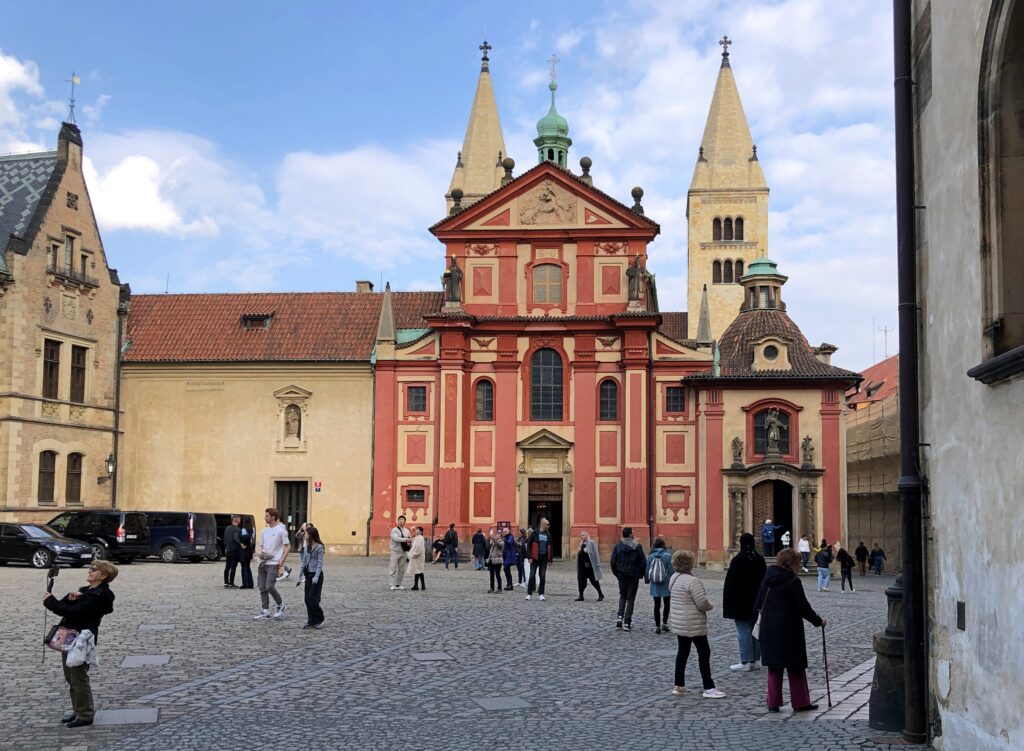
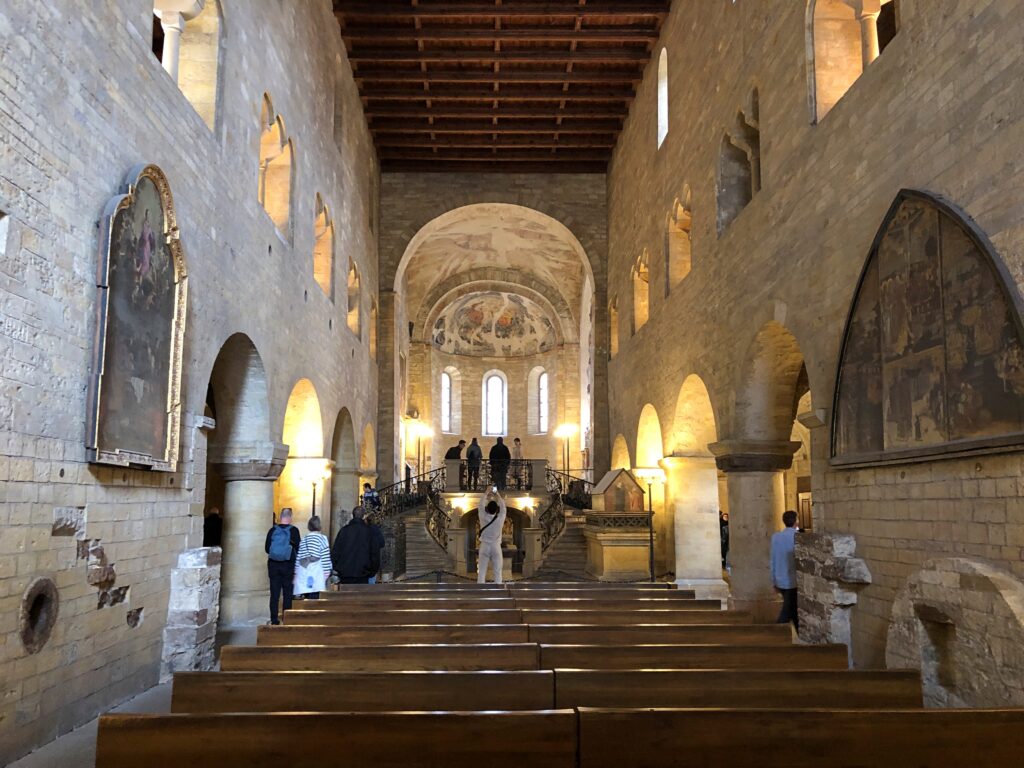
St. George’s Basilica. I admired the nearby St. Vitus Cathedral. That’s a grand edifice. But St. George’s has that human scale, and echoes of an even earlier time. It was completed during the time of Good King Wenceslaus.
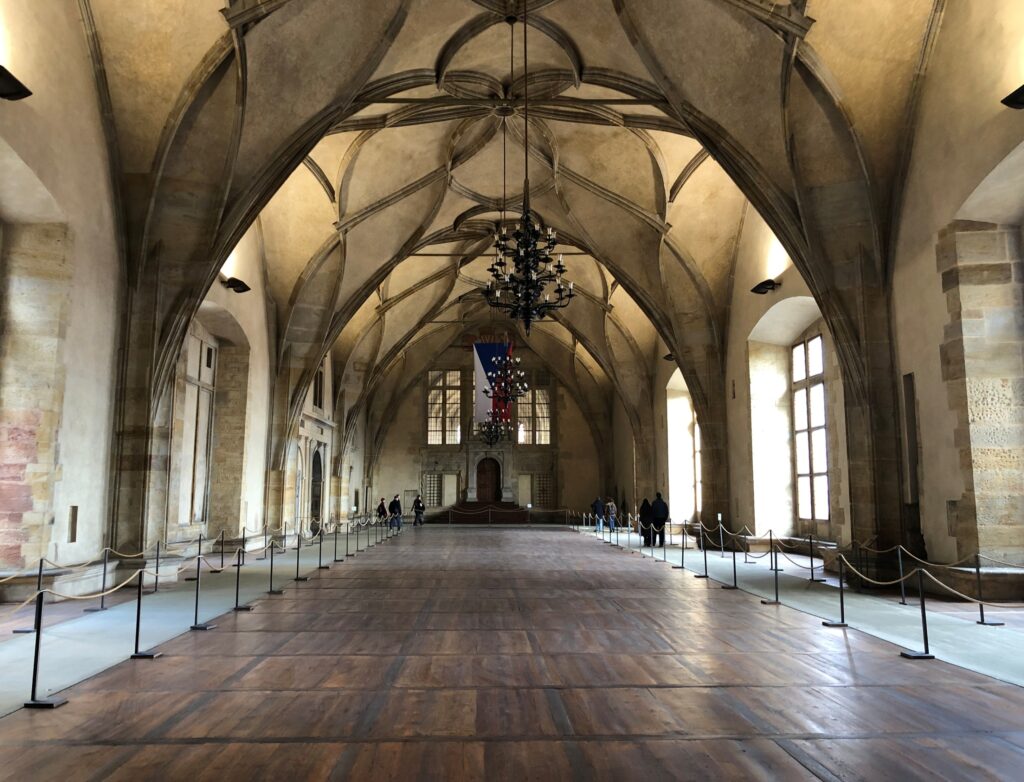
Vladislav Hall. The site of centuries of Bohemian parties, banquets and balls, me boys. That and affairs of state.

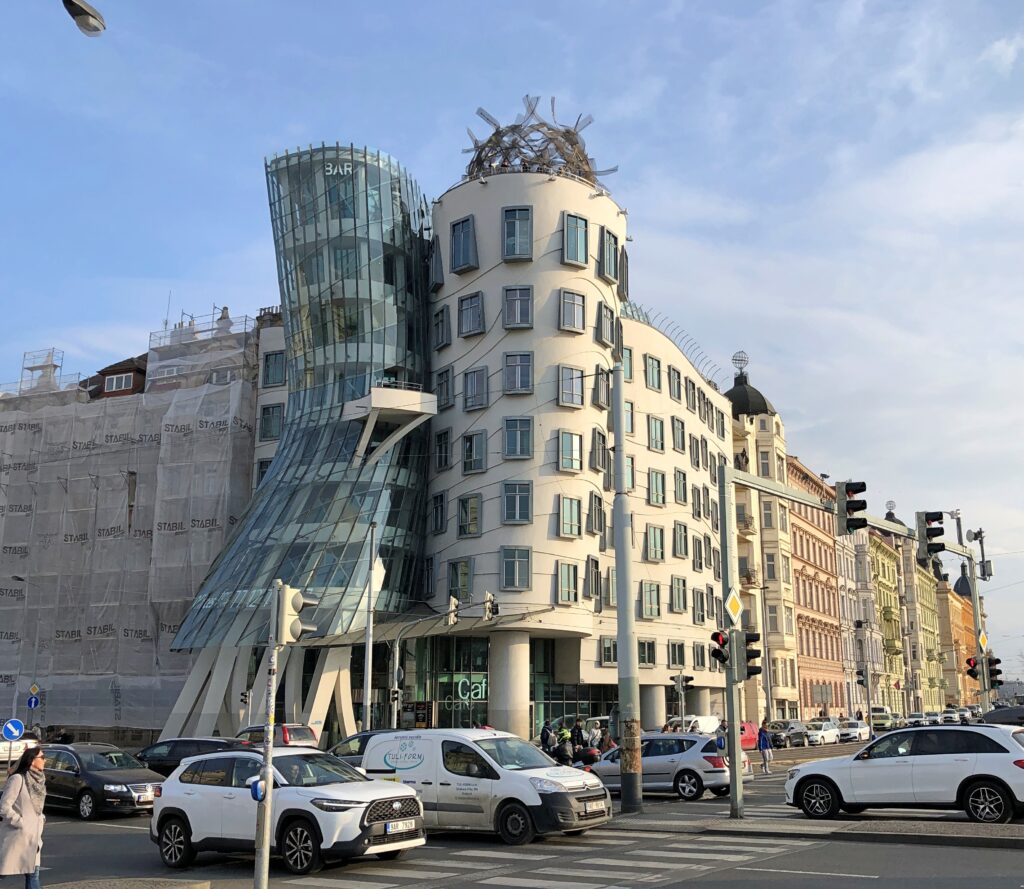
The Dancing House. We rode a streetcar line out of our way to see it, though not that far. It wasn’t there in 1994.

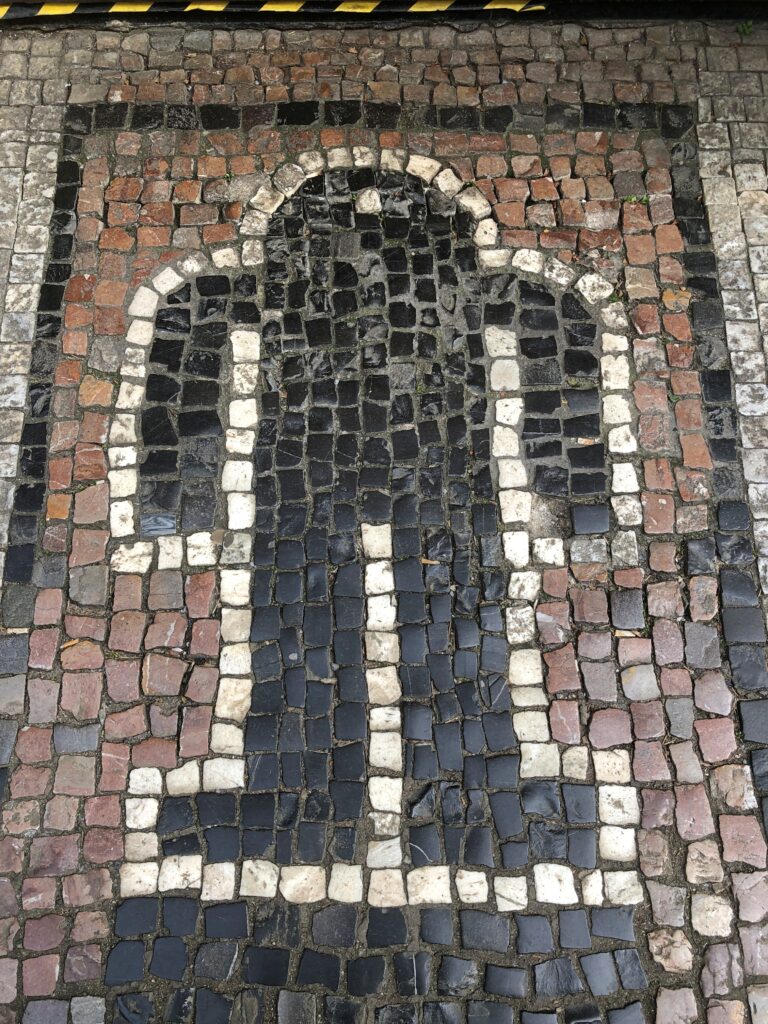
A sidewalk golem in the old Jewish Quarter of Prague. The Sidewalk Golems was a relatively obscure band who sometimes toured with Irwin Hepplewhite and the Terrifying Papoose Jockeys.

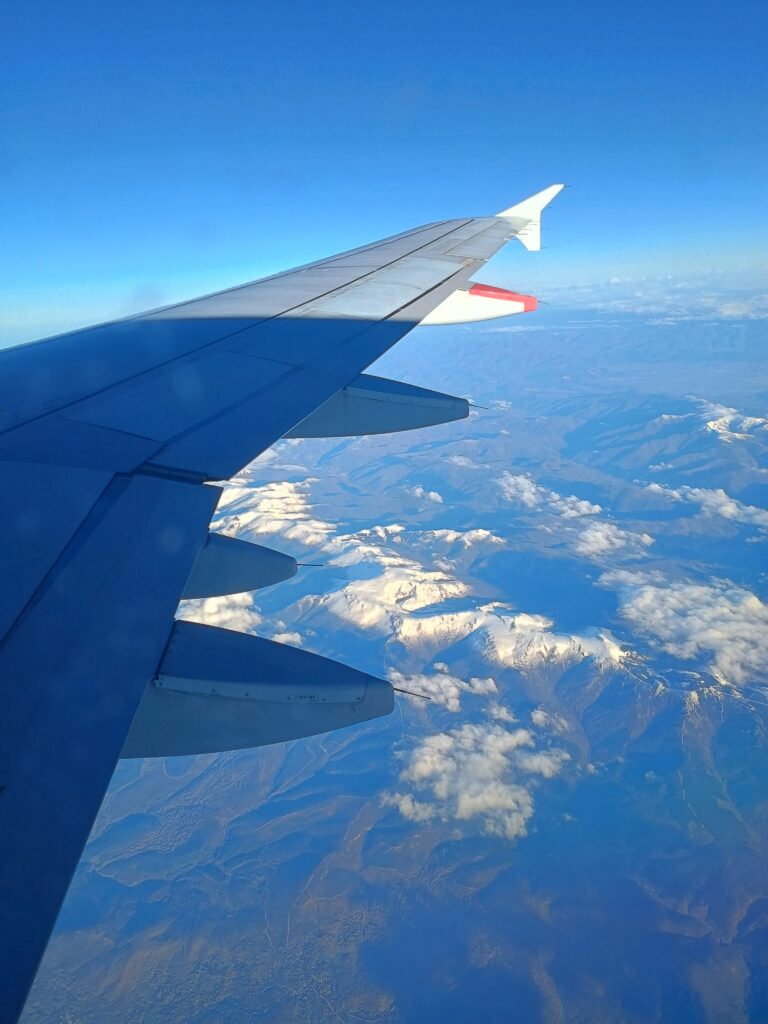
This could have been over Spain or Portugal.

The last image of thousands that I took, a staggering number in any context except digital images that take practically no time or effort to make.

The Bridgehouse Museum, Chicago

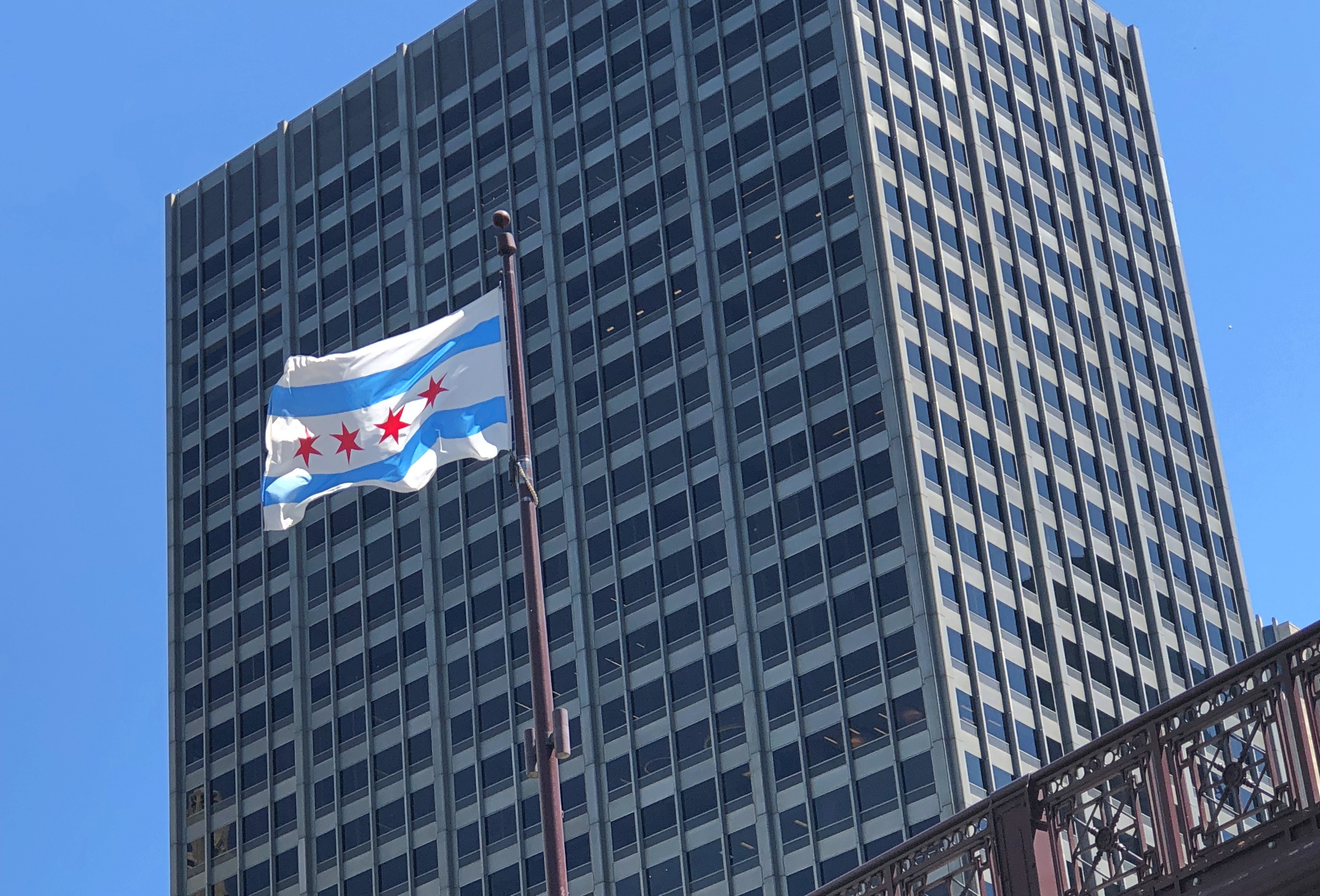
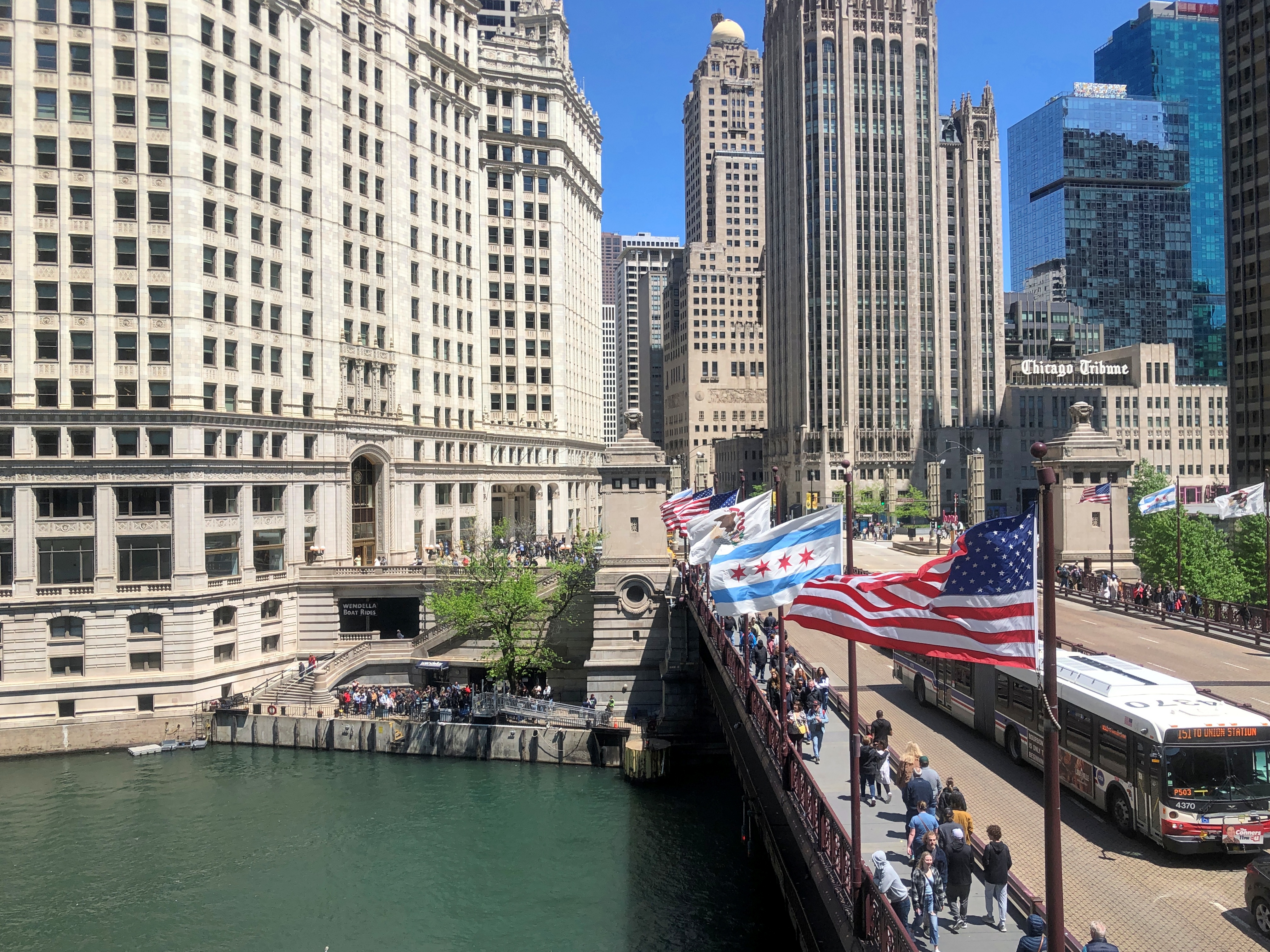
Vexillologists, I understand, are fond of the Chicago flag. So are the people of Chicago. I’ll go along with them on that.Bridgehouse Museum Chicago

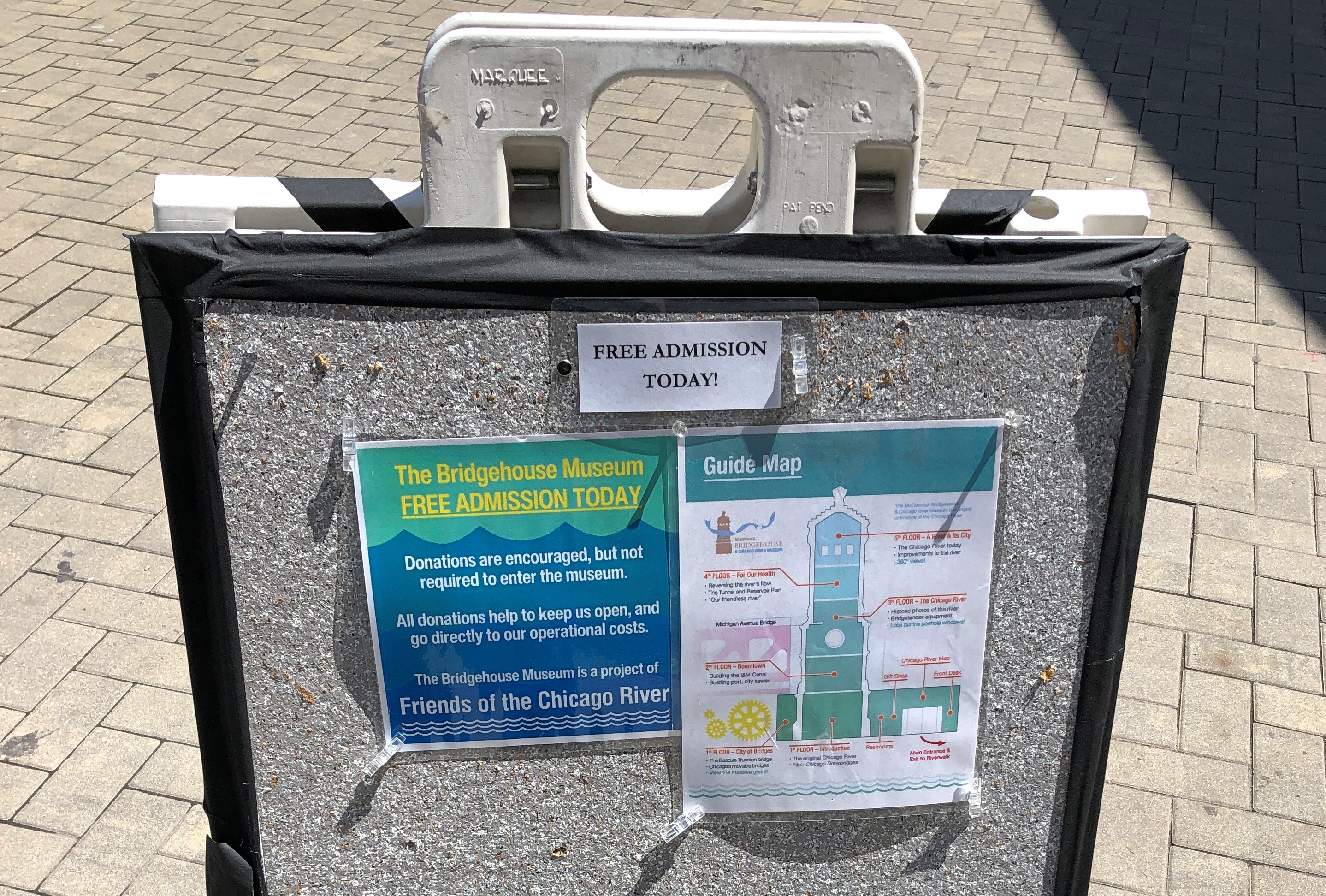
Walking along the Chicago Riverwalk last Friday, how could I say no to this?Bridgehouse Museum Chicago

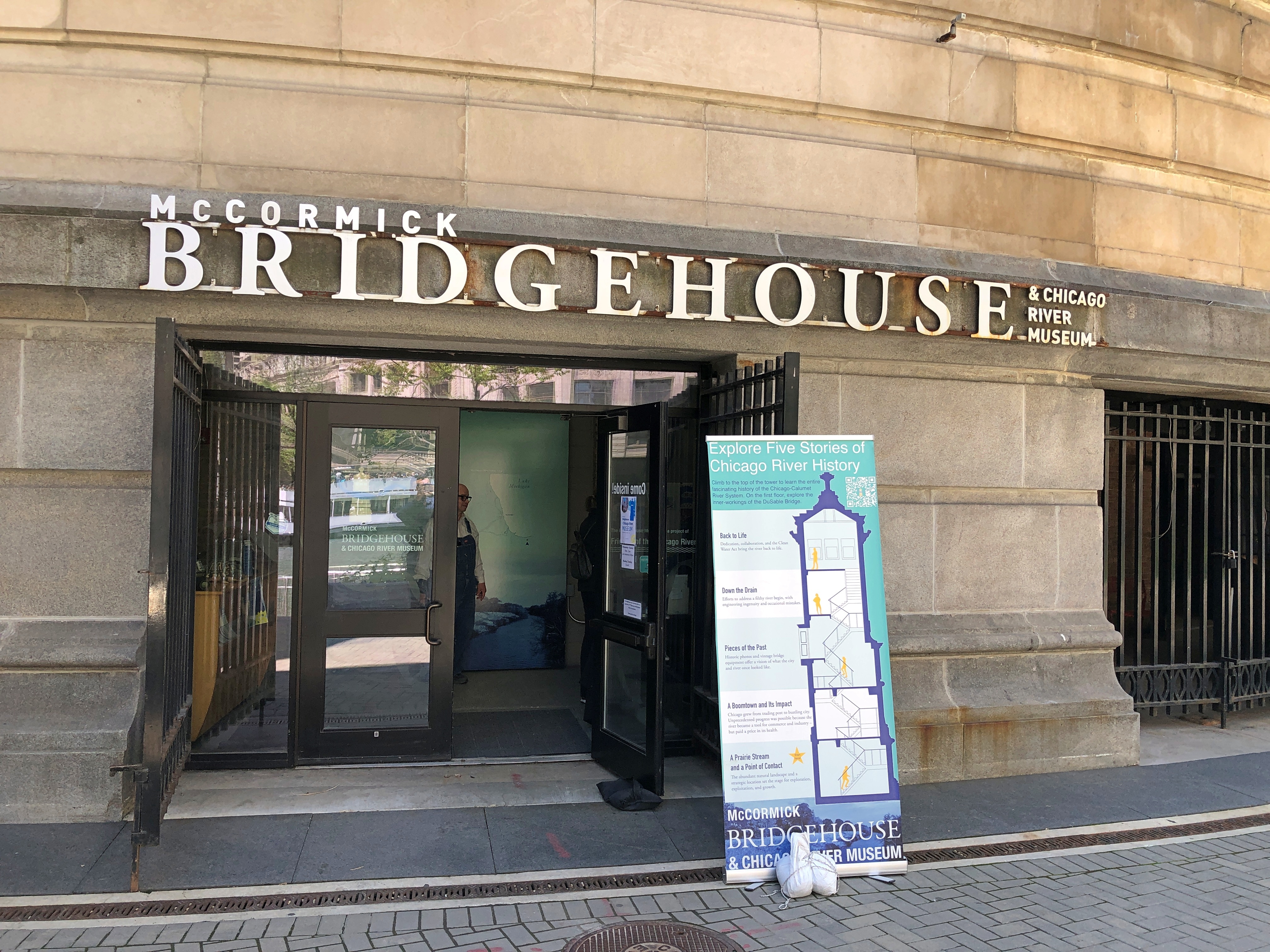
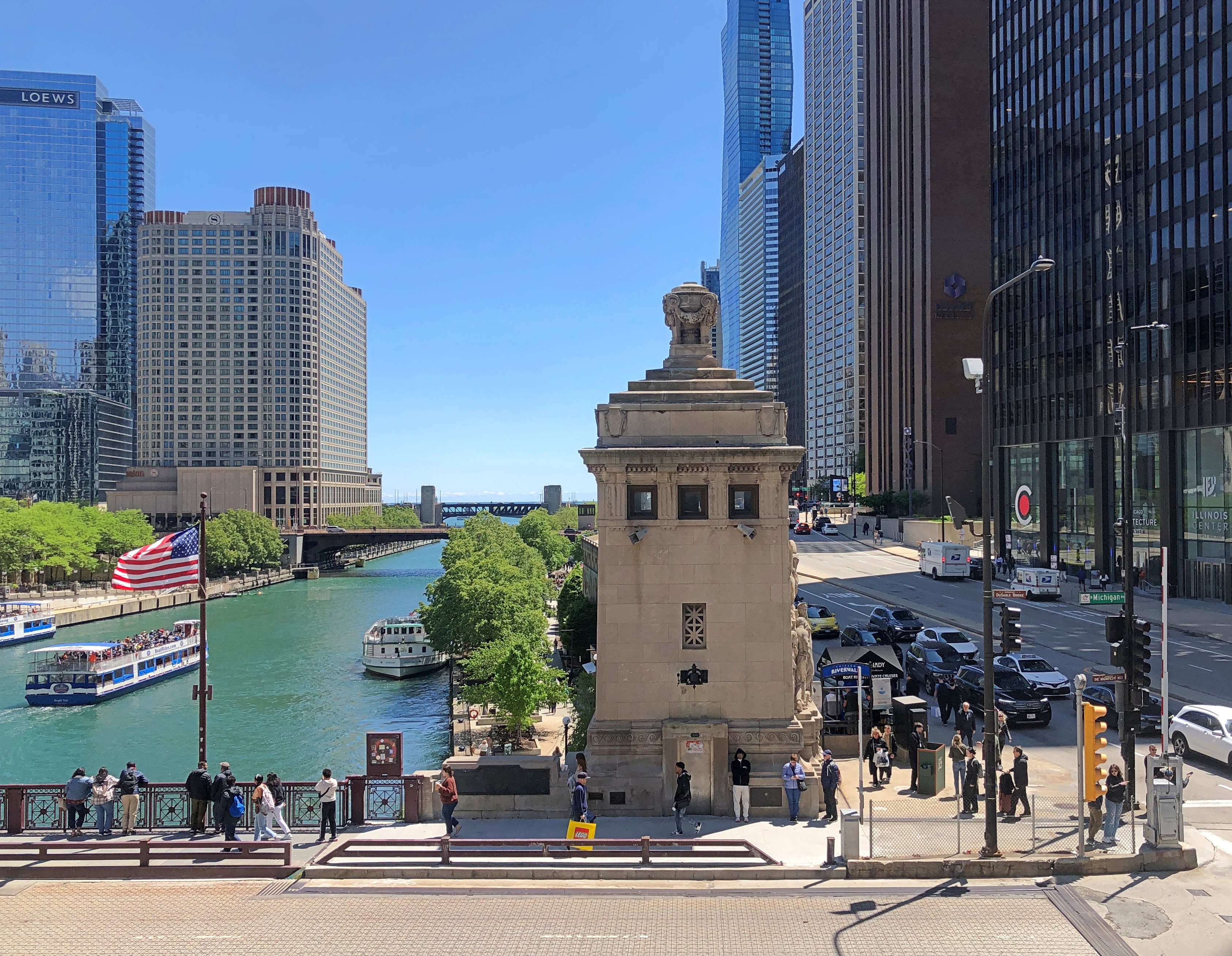
By happy chance, I’d arrived at the Bridgehouse Museum, whose entrance is on the Riverwalk level on the Chicago River next to Michigan Avenue bridge, on a free admission day.

Actually not next to the bridge. The museum is part of the bridge, consisting of one of the four bridgehouses at each corner of the Michigan Avenue bridge, which houses the Machine Age equipment that raises and lowers part of the bridge. In full, it is the McCormick Bridgehouse & Chicago River Museum.Bridgehouse Museum Chicago

The museum tells the story of the bridge, completed in 1920, and the Chicago River, which has the distinction (among others) of having its course reversed by the U.S. Army Corps of Engineers in 1909, during the heroic age of American civil engineering. The story arc of the Chicago River is that of a modern urban river beginning as a sluggish, marshy stream in pre-settlement times that gave way to periods as an open sewer and home to a welter of commercial docks and warehouses; long periods of unhealthy levels of pollution and its abandonment (mostly) as a working river; and more recent efforts to remediate the waters.

Mr. Dooley on the river as it was: “Twas the prettiest river f’r to look at that ye’ll iver see …. Green at th’ sausage facthry, blue at th’ soap facthry, yellow at th’ tannery, ye’d not thrade it f’r annything…”

The challenge posed by the river to the free movement of vehicles and pedestrians in downtown Chicago was solved by a raft of bridges, most of which are bascule, as is the one at Michigan Ave. The river sees the life of the city along its shore and on its bridges, and it has seen death, such as the almost comic collapse of the Rush Street bridge under the weight of cattle in 1863 and the nightmarish capsizing of the pleasure vessel Eastland in 1915.

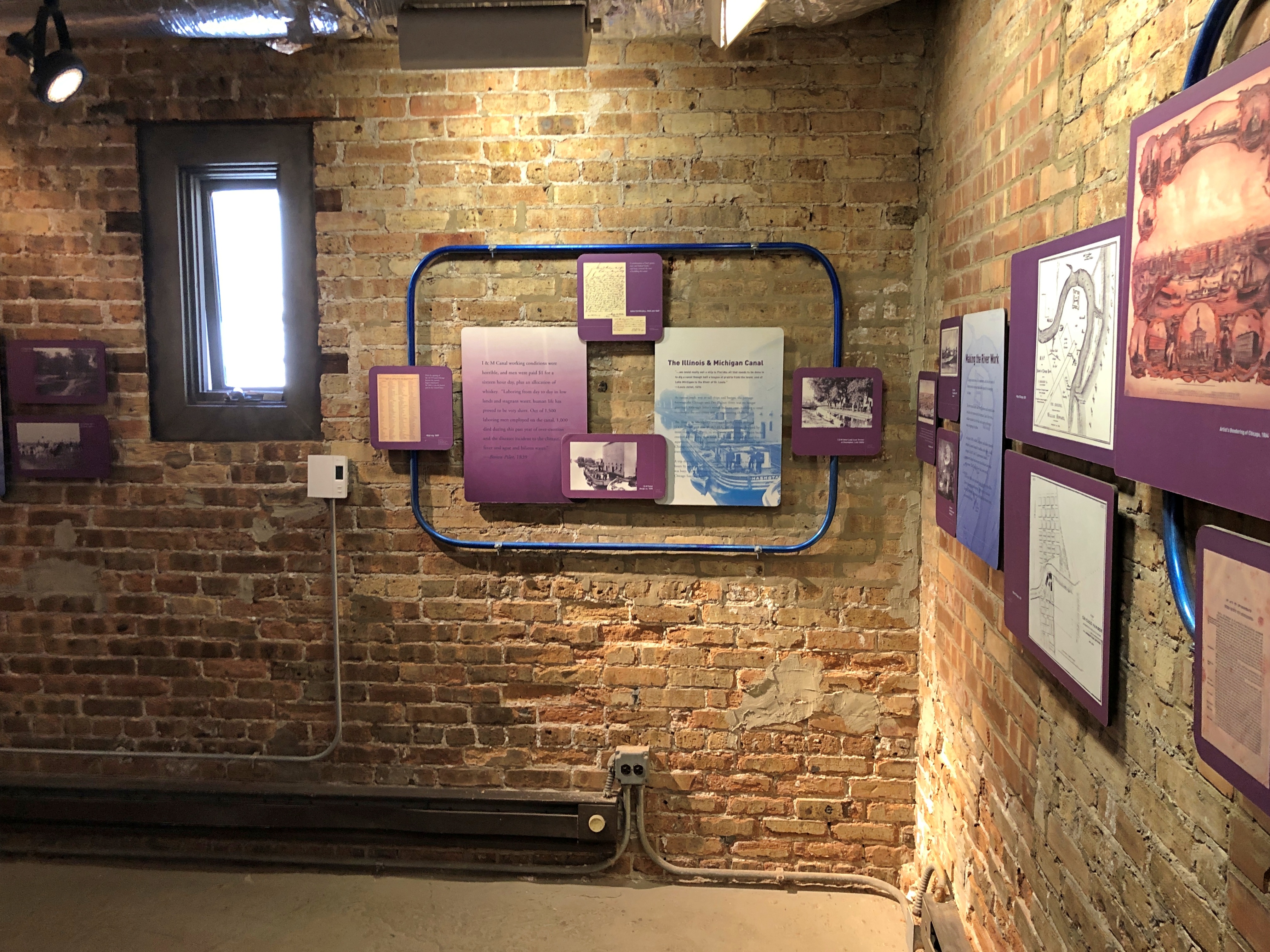
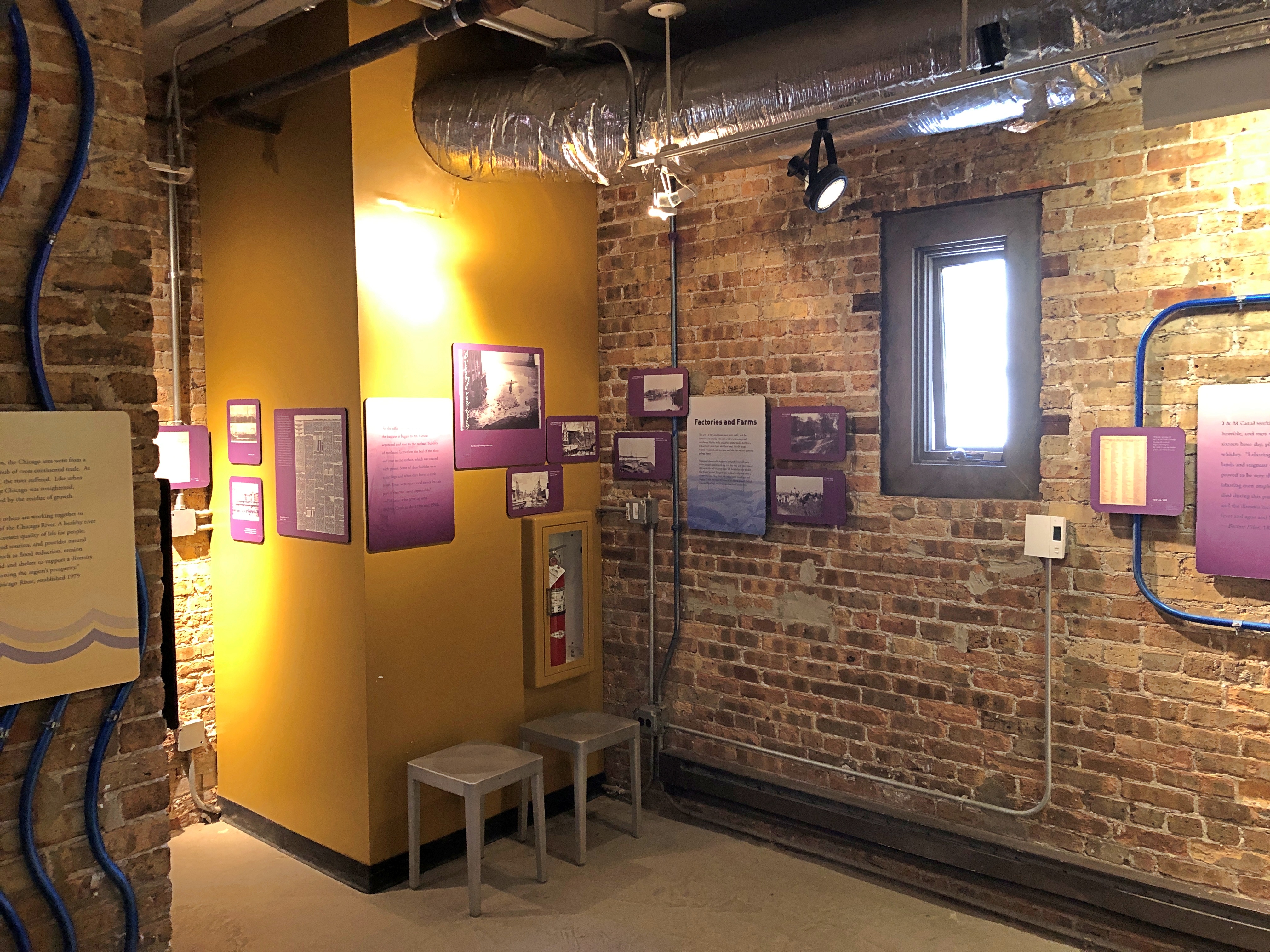
The museum consists of five floors, each a smallish room connected by concrete steps. Brick walls and battleship gray floors form the dominate color palate of the place. There is a fair amount to read and images to see, with each room covering a different subject, such as the bridge itself and the ecology of the river.Bridgehouse Museum Chicago Bridgehouse Museum Chicago

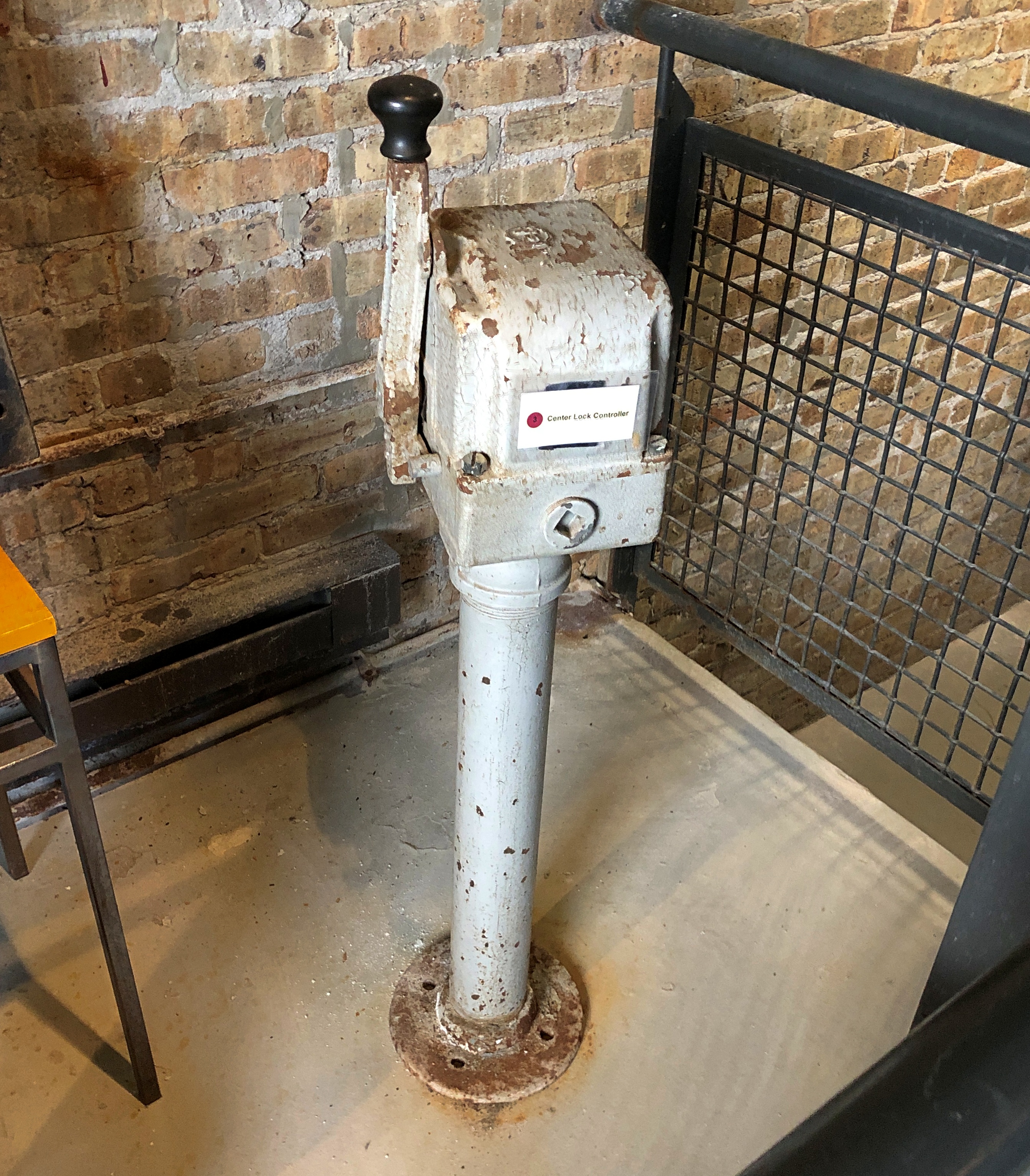
A door from the first-floor room leads to a view of some of the steel equipment that makes the bridge move, such as this massive pinion.Bridgehouse Museum Chicago

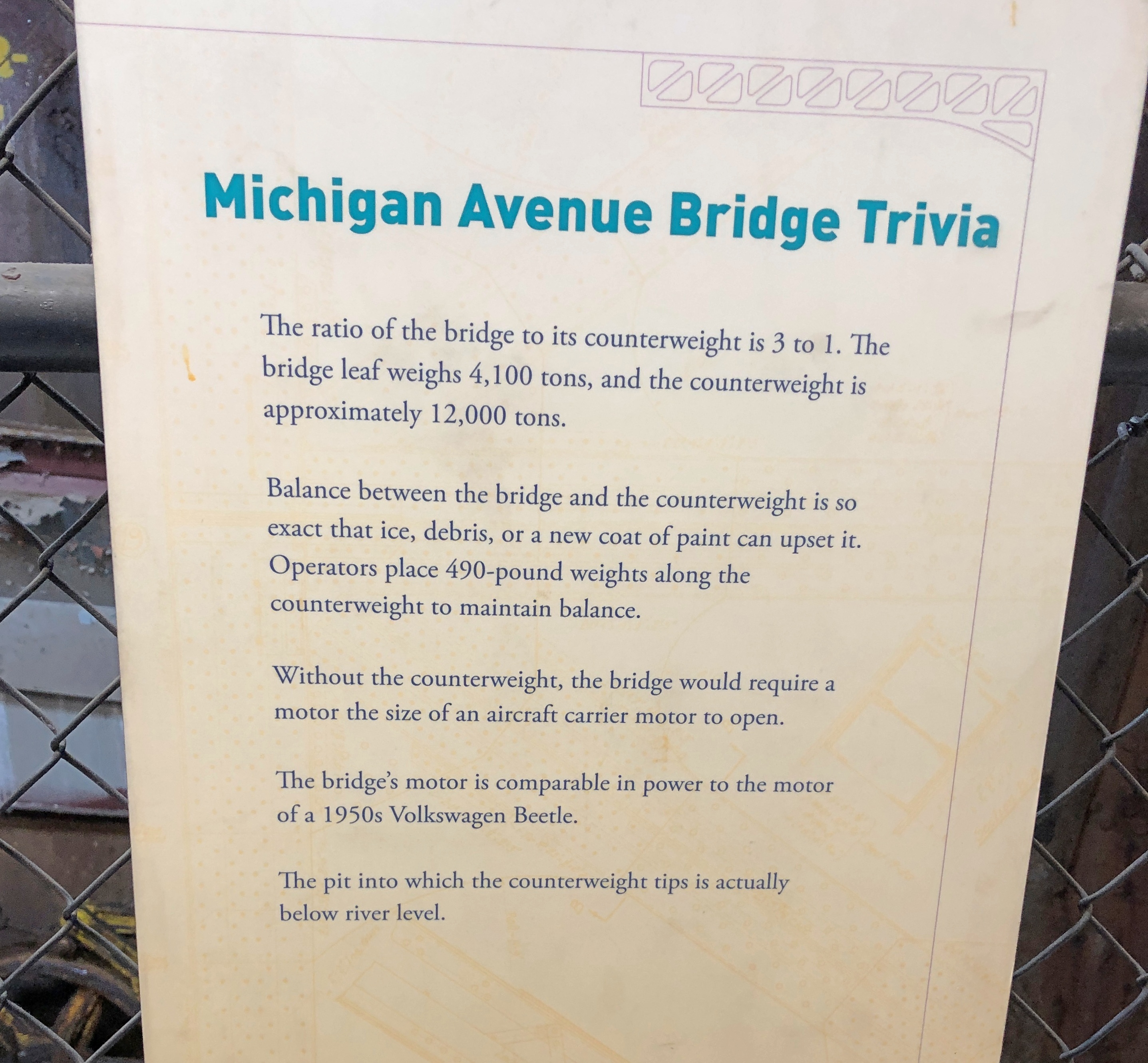
Not everyone likes reading at museums, but I do. You just have to be selective. Some bridge facts.Bridgehouse Museum Chicago

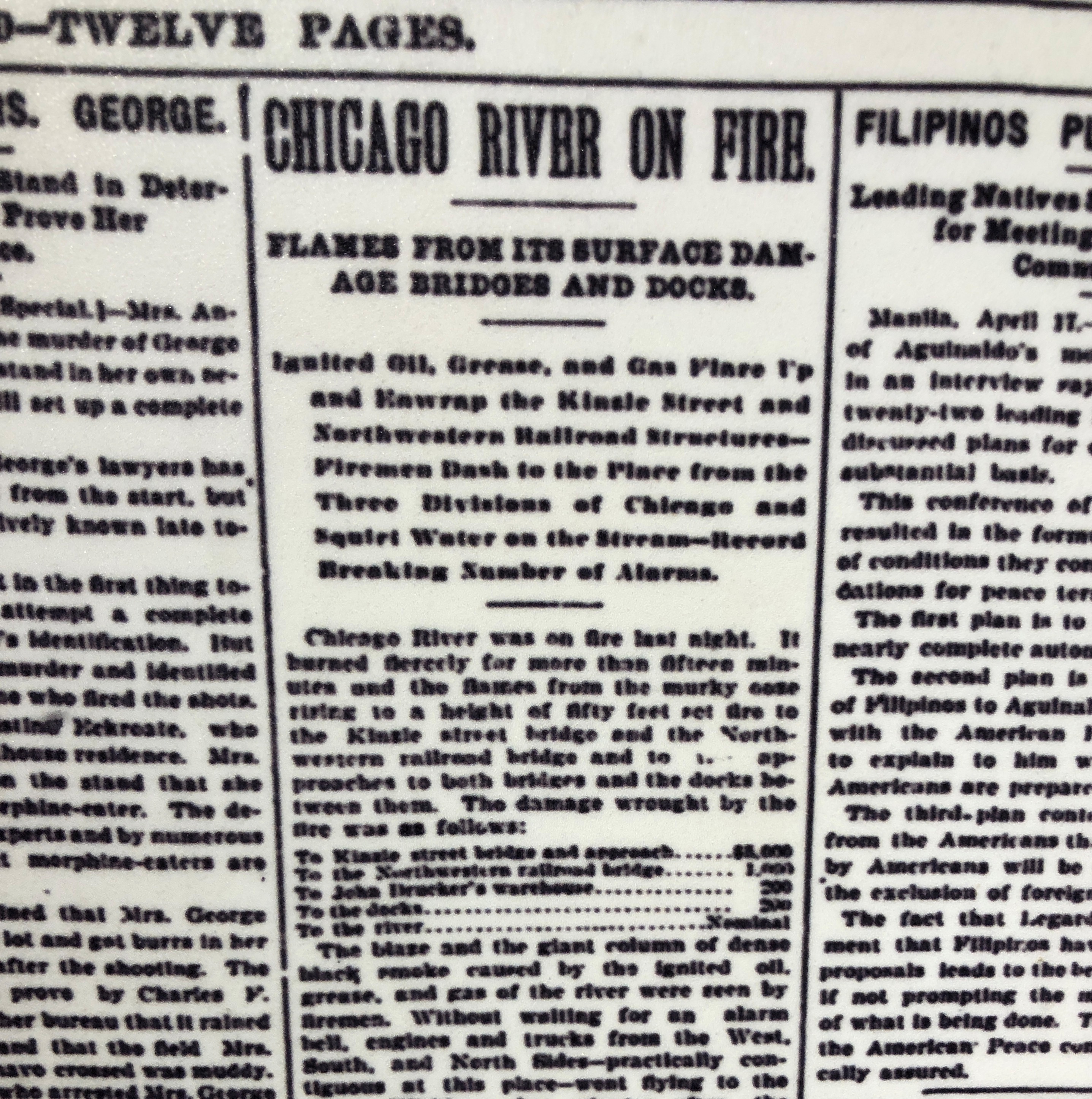
A display about a time the Chicago River caught fire. Cleveland shouldn’t be the only place known for that, though of course the incident at the Cuyahoga was recent enough to be on TV news.Bridgehouse Museum Chicago

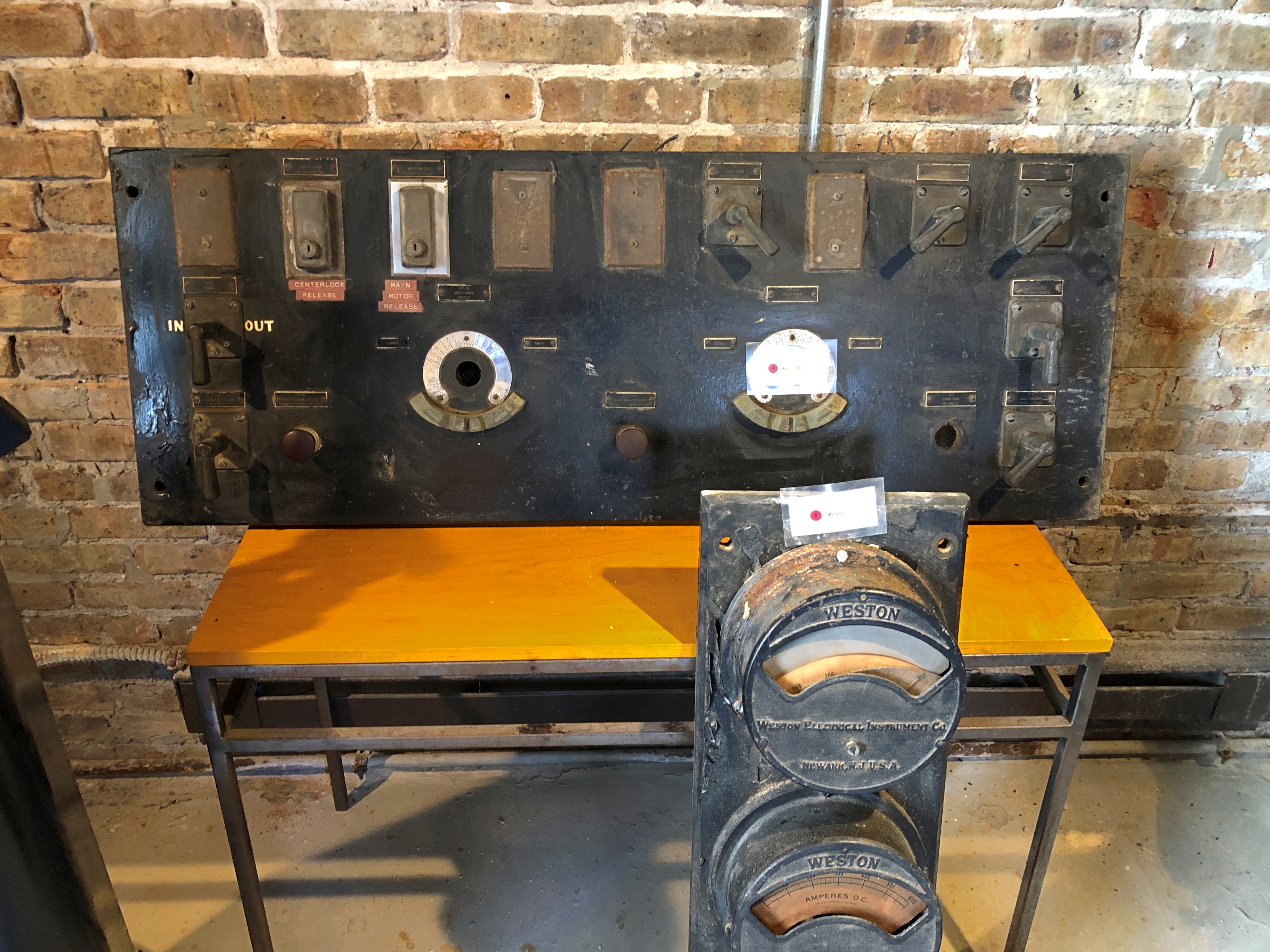
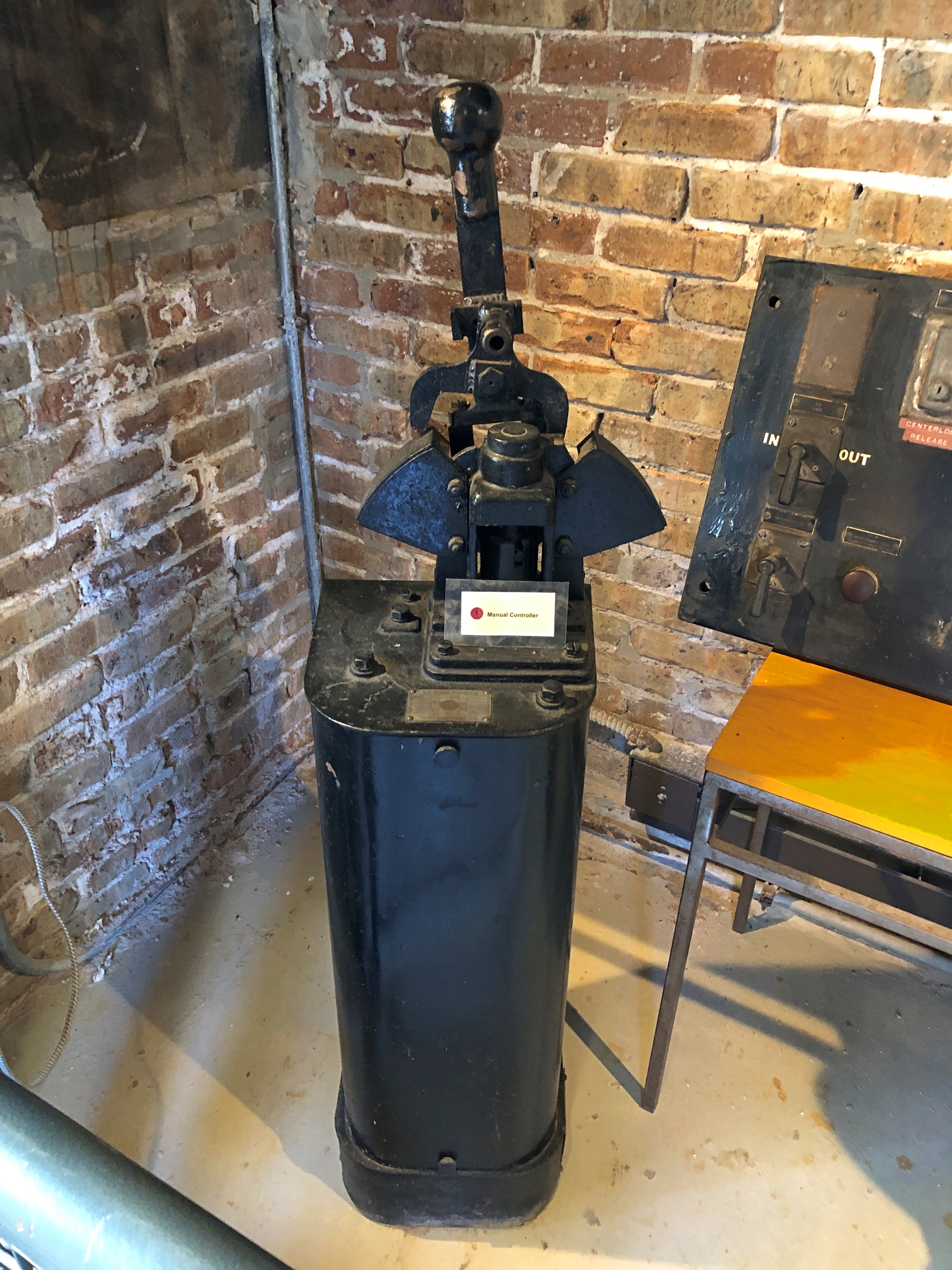
Antique bridge equipment.Bridgehouse Museum Chicago Bridgehouse Museum Chicago Bridgehouse Museum Chicago

Small windows in the bridgehouse offer large views, especially from the top levels.Bridgehouse Museum Chicago Bridgehouse Museum Chicago

The other three bridgehouses are visible, for one thing. Then I wondered: why four and not two, since the bridge has two leaves that are raised and lowered? Later, I found out that each leaf is actually two separate sections, divided in the middle of the road, so in fact there are four parts being raised and lowered in unison.

There are two reasons, I understand. One is that each quarter section is lighter, and thus easier to move. Another consideration is what happens when a ship hits the bridge — an incident apparently more common in the 1920s than now, with a higher volume of ship traffic on the river in those days. Even if the damaged section has to be raised for repair, its companion on the same side of the bridge can (probably) stay in place, so the bridge wouldn’t need to be completely closed, which would be disruptive indeed for the city.

All in all, a good little museum. I made a small donation. One complaint, though — and I see this much more than I used to — no postcards at the gift shop. Note cards, yes. But not postcards. If there had been reproductions of this one, I would have bought at least one.

Ancient Roman Sculpture from the Torlonia Collection

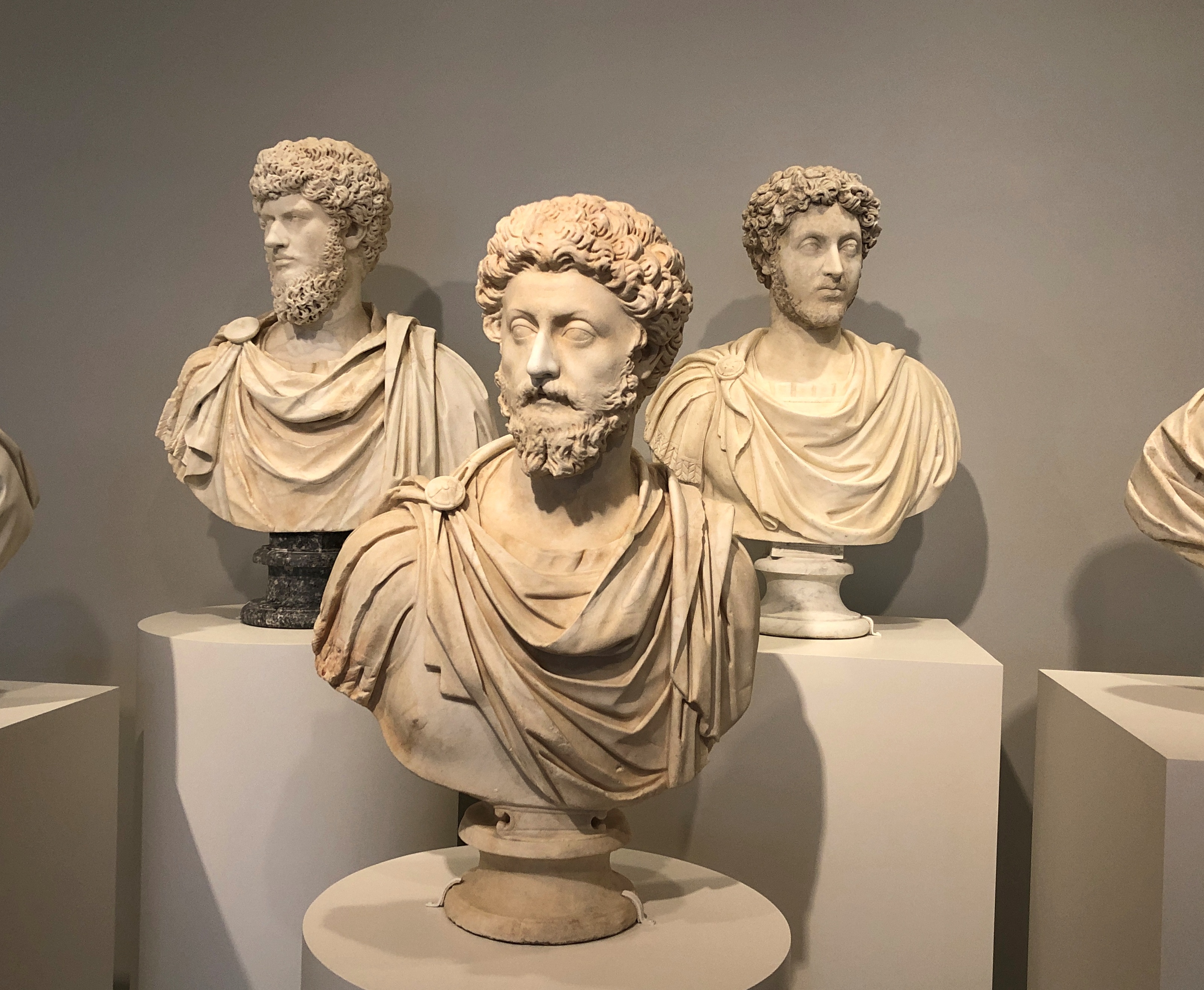
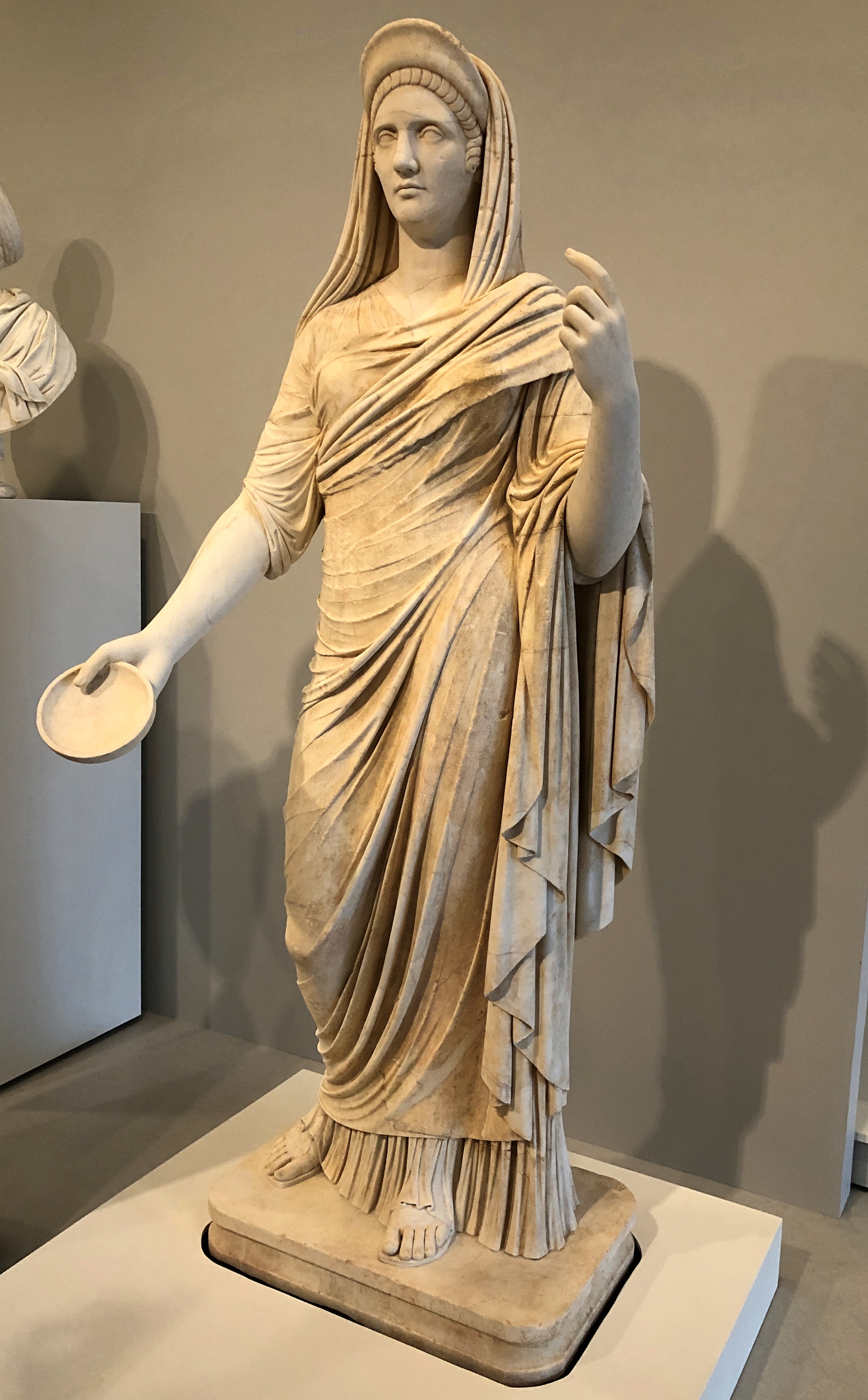
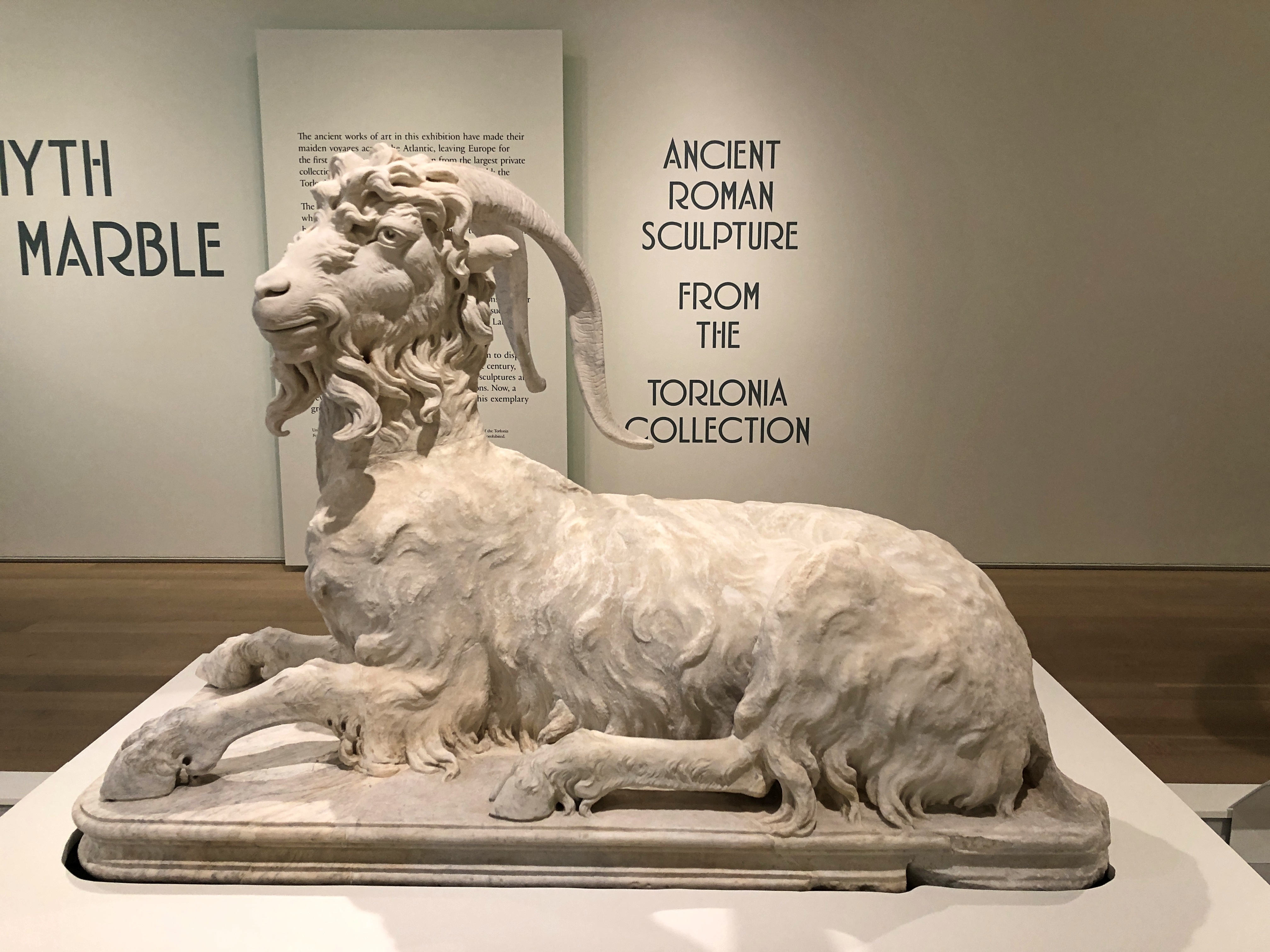
Go to one of the newer galleries at the Art Institute of Chicago, at least until June 29, and these figures will greet you. Or at least stay still while you take a good look.Marcus Aurelius

Marcus Aurelius is front and center, looking rather stoic, or should I say Stoic, with some contemporaries near him.

He doesn’t look that much like Alec Guinness. Or rather, Sir Alec doesn’t look much like him. Long ago, I watched The Fall of the Roman Empire in Latin class, one of those last week of the school year sort of activities, finding it a ridiculous mess, despite a stellar cast that included Guinness as the last Good Emperor, and lavish production values.

Also, as a fellow named John in the class pointed out, the movie left out good old Pertinax in its depiction of the events after the death of Commodus. “Where is he?” John said. “Pertinax came after Commodus.” Latin students were the sort likely to notice that kind of omission.

There’s the seed of a series of counterfactual novels: Pertinax survived for some years, re-establishing a chain of Good Emperors, thus preventing the chaos of the 3rd century and hey – Rome didn’t fall. Or something like that.

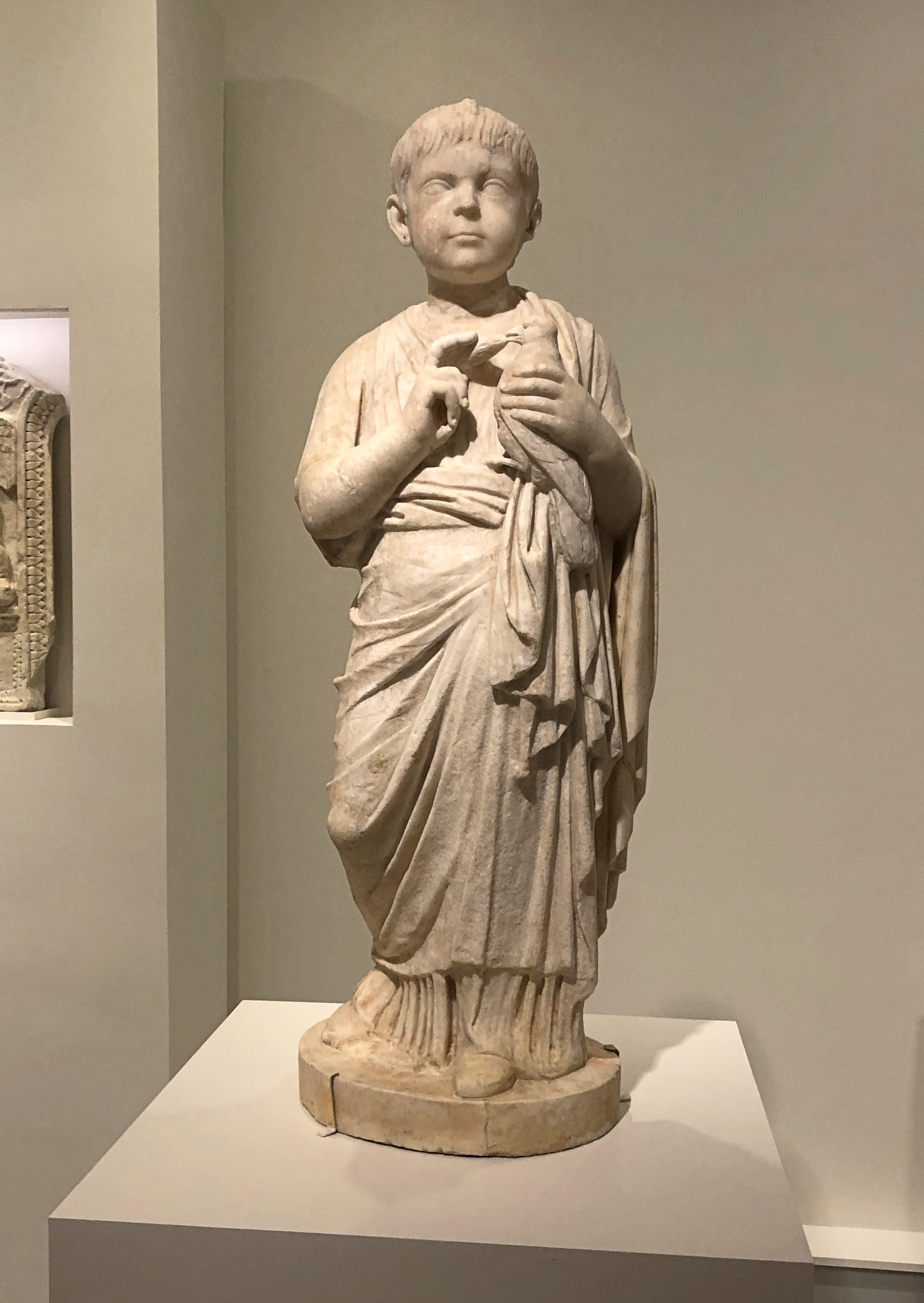
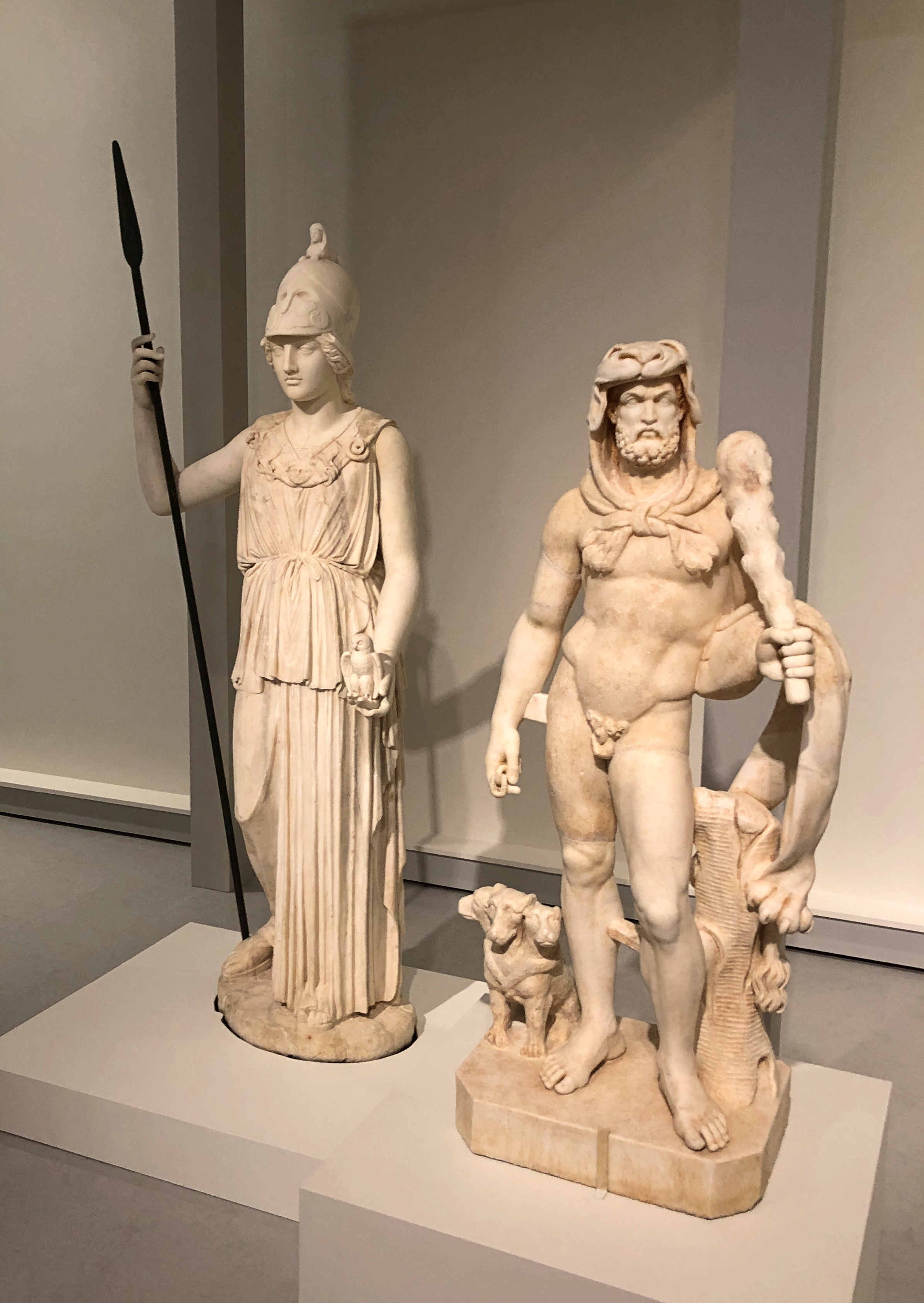
We’d come to the Art Institute, a few weeks ago now, to see Roman sculpture.Torlonia Collection

After spending time in Berlin seeing the same sort of ancient art, I couldn’t very well miss something so close to home. The collection owes its origin to Prince Giovanni Torlonia (d. 1829) and his son Prince Alessandro (d. 1886), who bought ancient works when the getting was good, and dug up other pieces at their extensive estates.
“The Torlonia Collection is not only the largest private collection of Roman marble sculptures in Italy, but it is also arguably the most important of such private collections in the world,” the Art Institute says. “Comprising 622 works and a wide range of sculptural types and subjects, its holdings rival those of major institutions in Europe, including the Capitoline and Vatican Museums.

“Nearly half of these sculptures, which range in date from the 5th century BCE to the early 4th century CE, have not been publicly displayed in more than 70 years and have been newly cleaned, conserved, and studied specifically for this exhibition, making for a spectacular opportunity to experience their first public presentation in decades.”

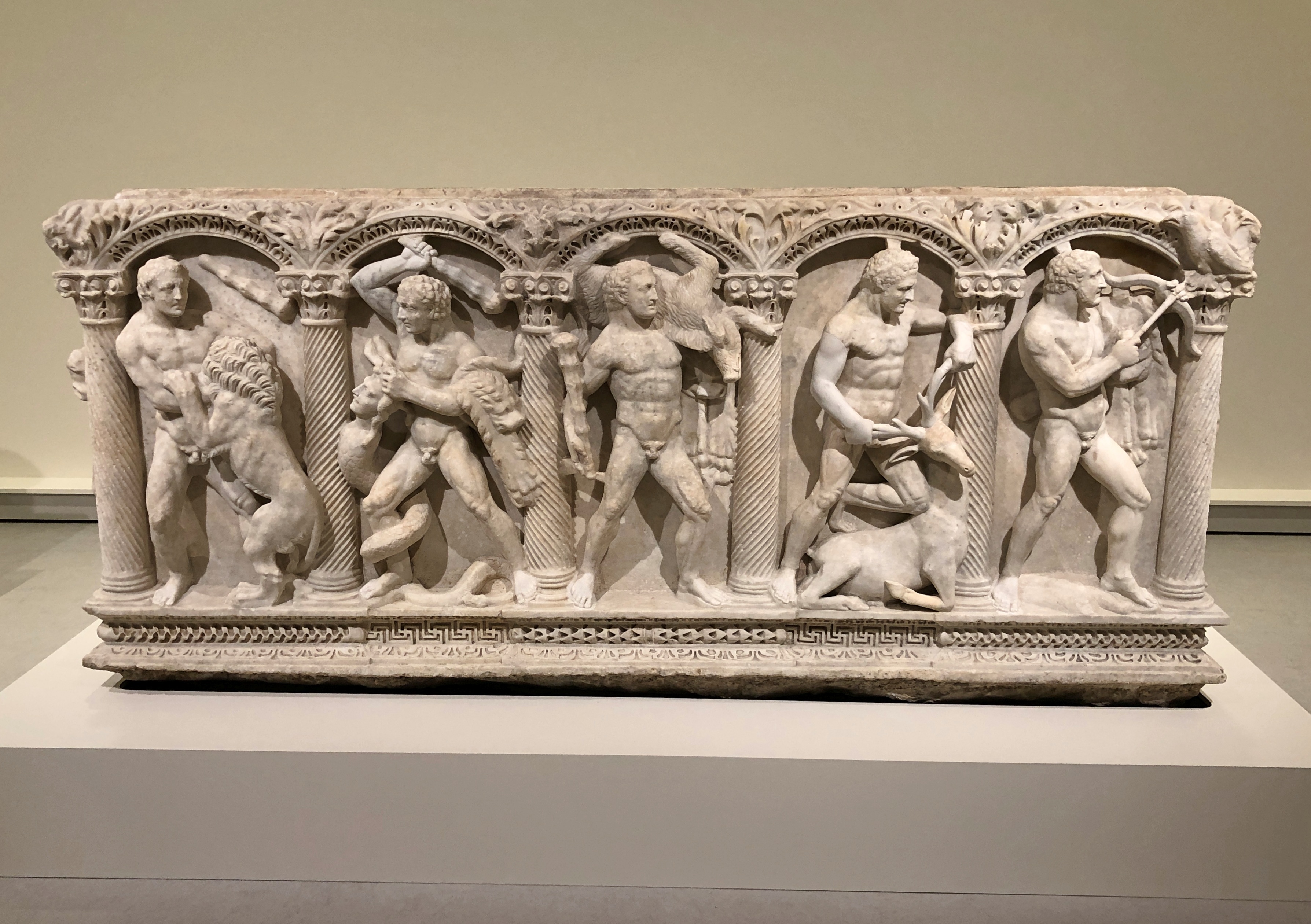
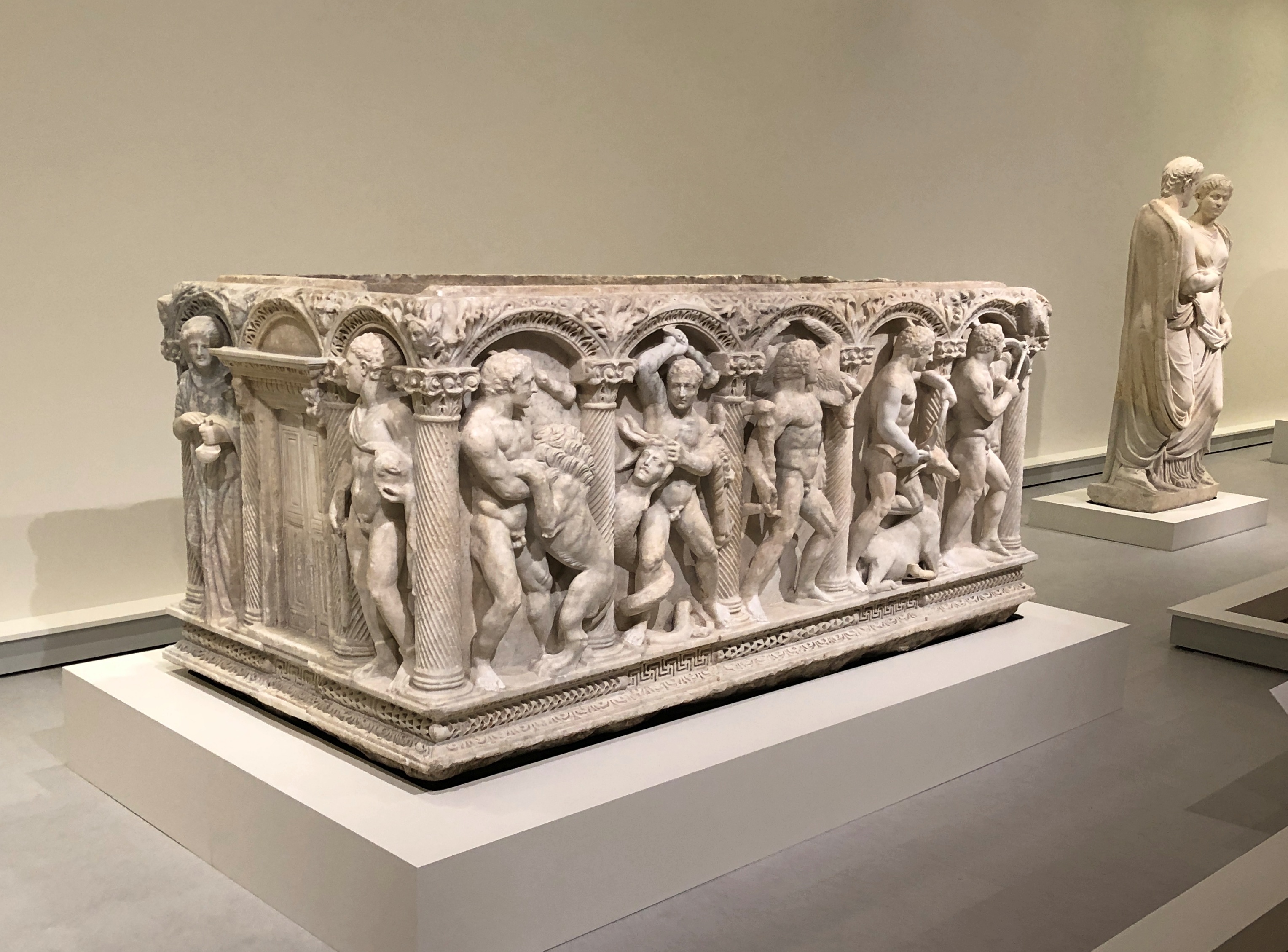
For once, a curated experience that reflects the actual meaning of that now abused word, since I’m assuming expert curators were involved. They had a great deal to work with besides imperial portraits.Torlonia Collection Torlonia Collection Torlonia Collection

Such as a sarcophagus depicting the Mighty Hercules at his Labors.Makes you wonder who was the last person to see it who knew the people depicted. A grandchild perhaps, now nearly as remote in time as sarcophagus. After that person was gone, the figures might have been considered revered, but increasingly distant ancestors. Eventually -- who were these people again? Makes you wonder who was the last person to see it who knew the people depicted. A grandchild perhaps, now nearly as remote in time as sarcophagus. After that person was gone, the figures might have been considered revered, but increasingly distant ancestors. Eventually -- who were these people again?

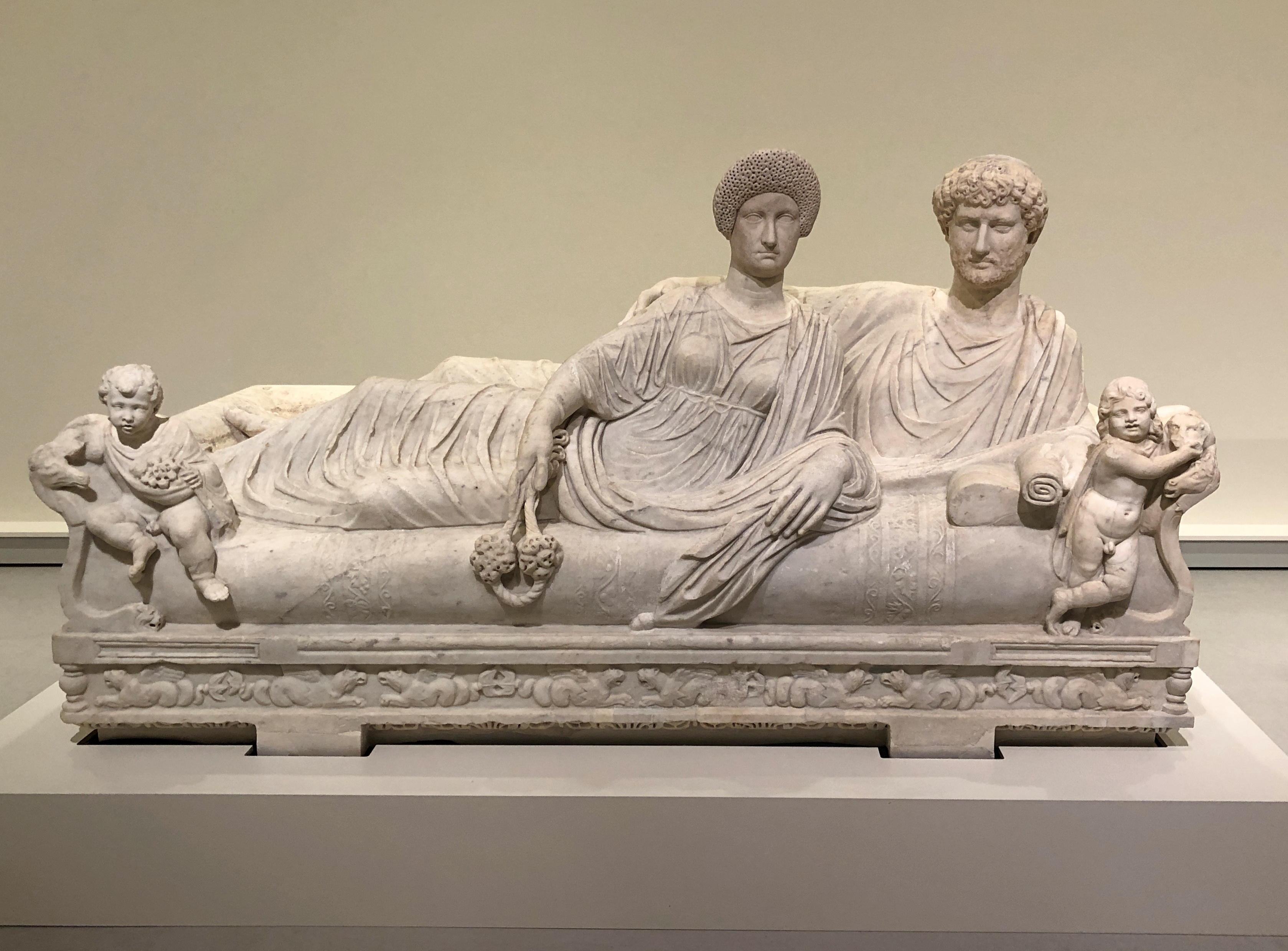
Its lid. sarcophagus

Makes you wonder who the last person was to see it, who knew the people depicted. A grandchild perhaps, now nearly as remote in time as sarcophagus itself. After that person was gone, the figures might have been revered as Noble Ancestors, but increasingly distant ones. Eventually — who were these people again? And so no one minded as the object slipped out of sight, only to be found much later by antiquarians of a remote posterity.

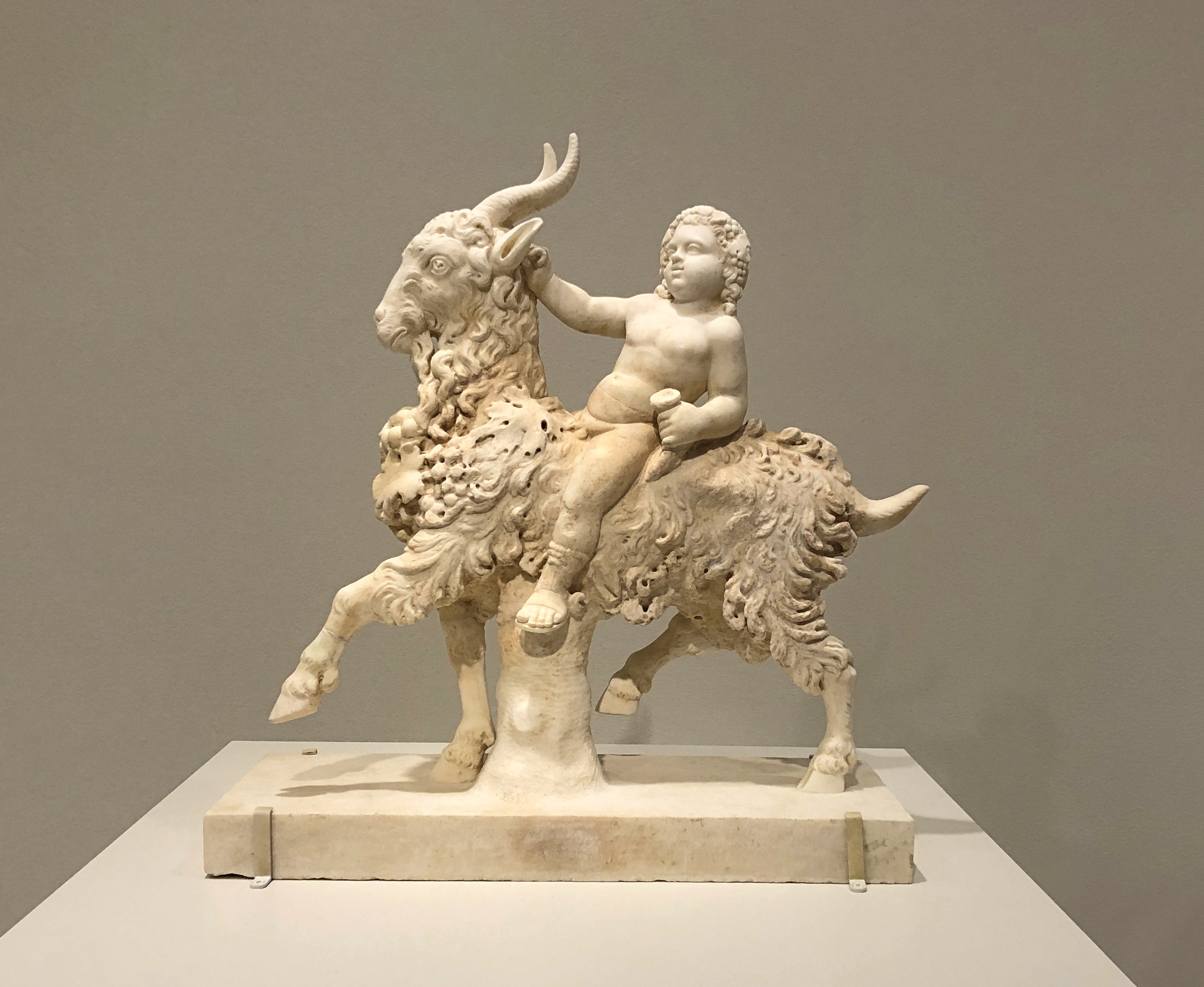
The exhibit included more than people in stone.Torlonia Collection Torlonia Collection

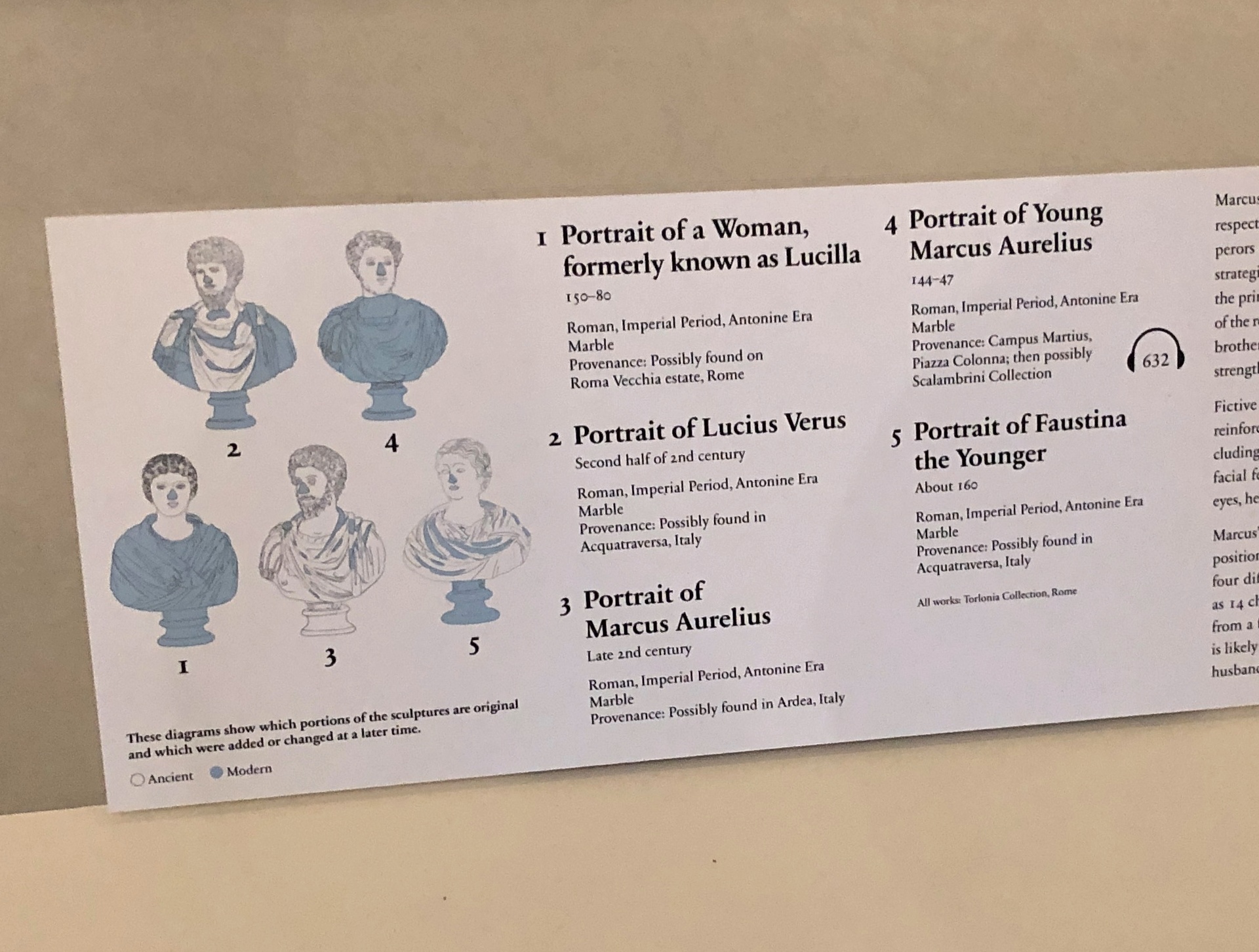
The signage for the exhibit included information I’d never seen depicted in quite this way.Torlonia Collection

Part of the history of these works now includes restorations done during centuries previous to ours, but still comparatively recent. That’s more information that you usual get at a display of ancient art, and I compliment the curators on it.

Alte Nationalgalerie, Berlin

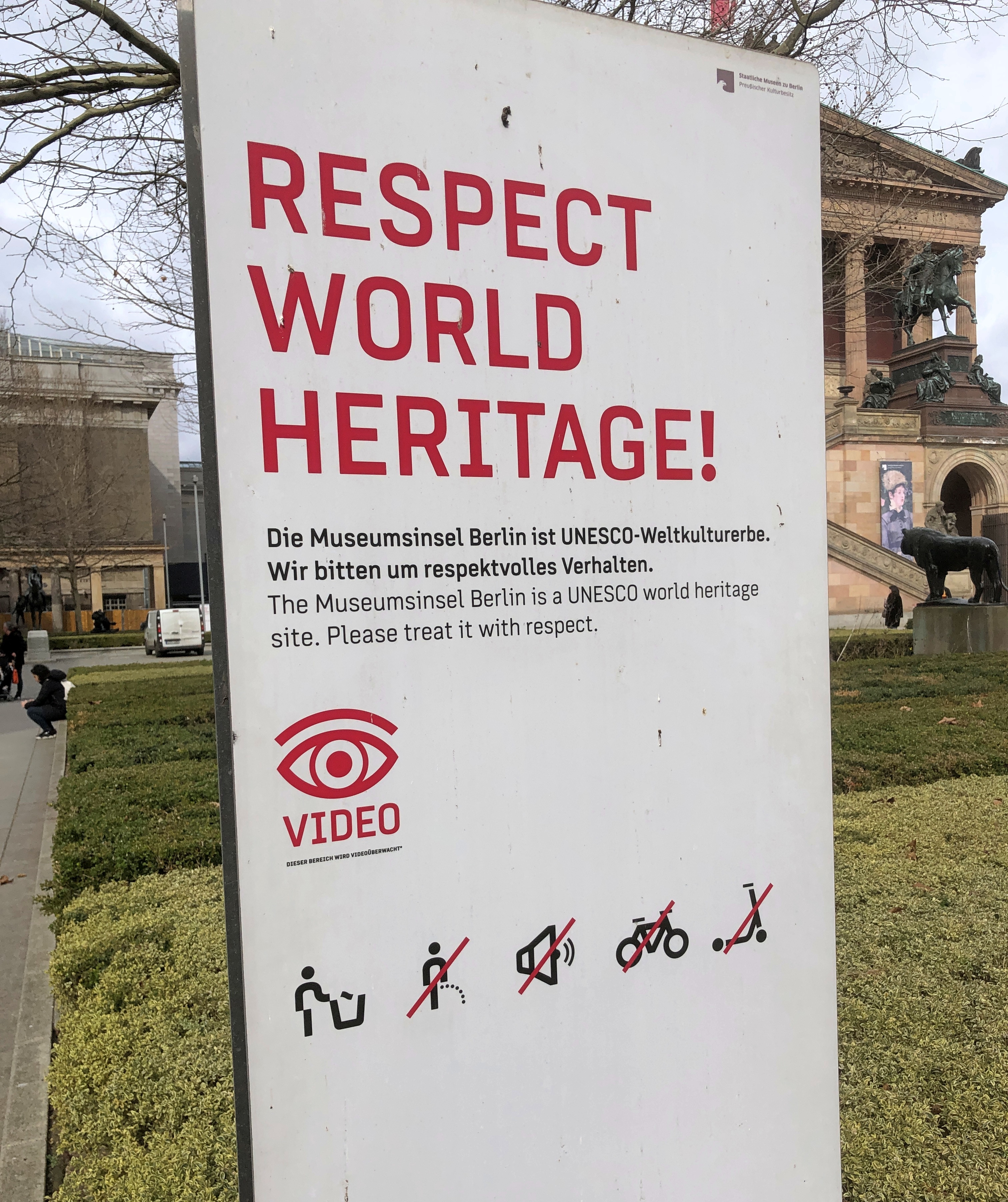
I’m not sure exactly what “Hey, this is a World Heritage Site! Show some respect, wanker!” would be in German, but I suspect in German you probably could shout just the right mix of threat and shaming.

Spotted in March on Museum Island (Museumsinsel) in Berlin.Alte Nationalgalerie, Berlin

Note that the red-letter headline is in English. I think of that as more of a function of English as a ramshackle world language than the propensity of Americans, Britons or Australians to use bullhorns while peeing on World Heritage Sites from their bicycles or scooters. Well, maybe Australians would. (I trade in that stereotype with abiding affection for that nation, since the Australians I know would sound right back about Americans). To be honest, it also sounds like something Florida Man would do.

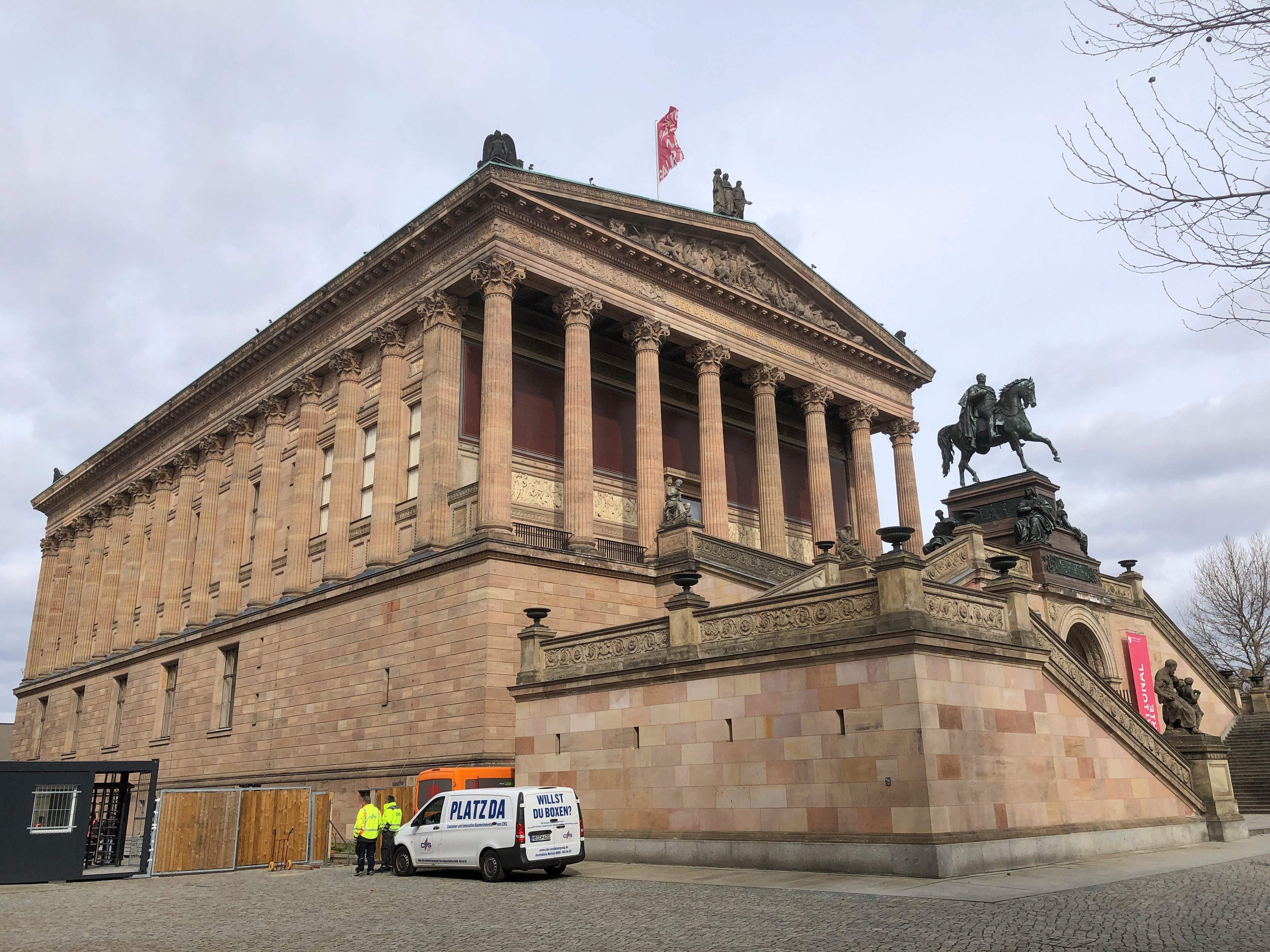
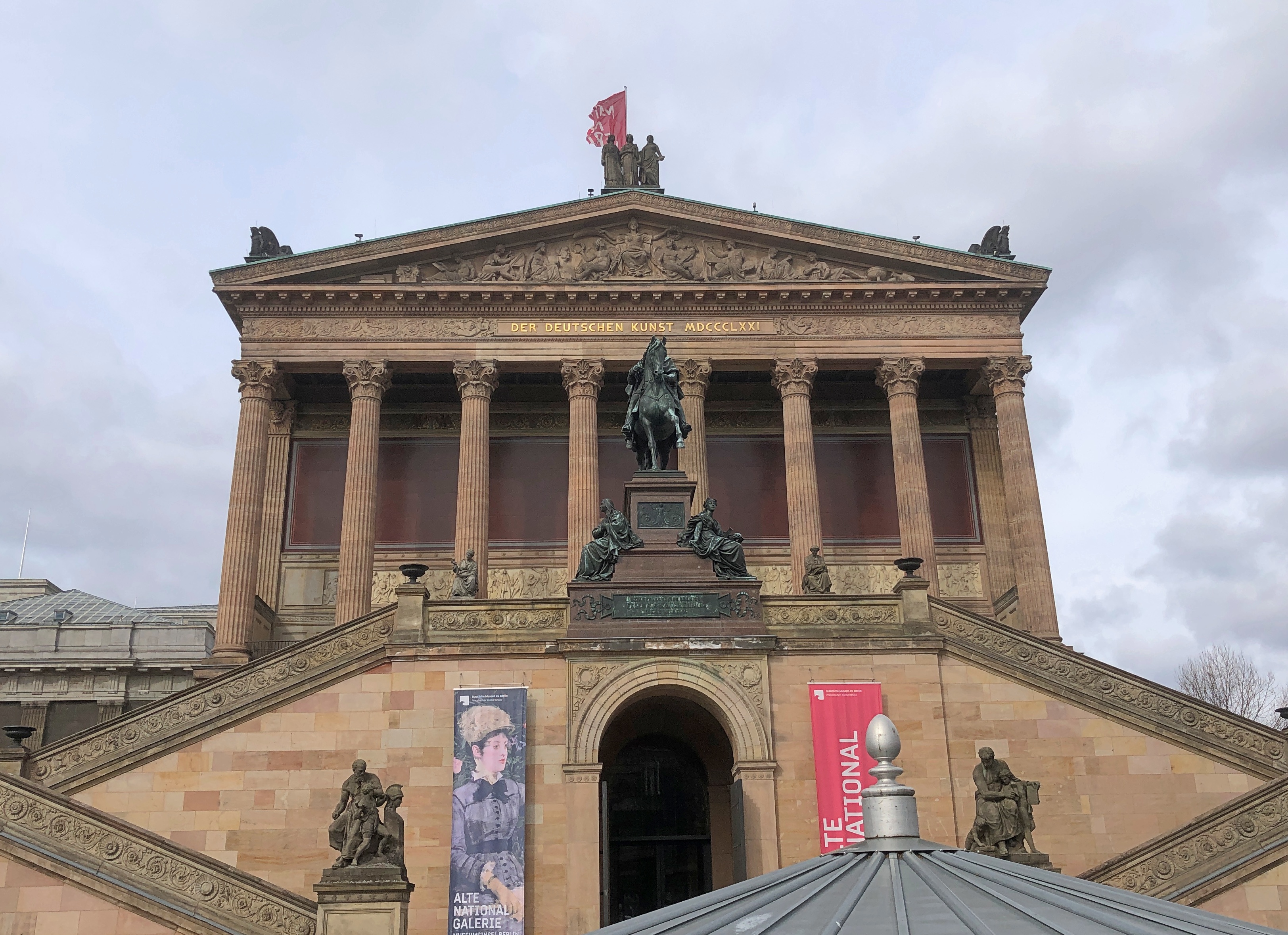
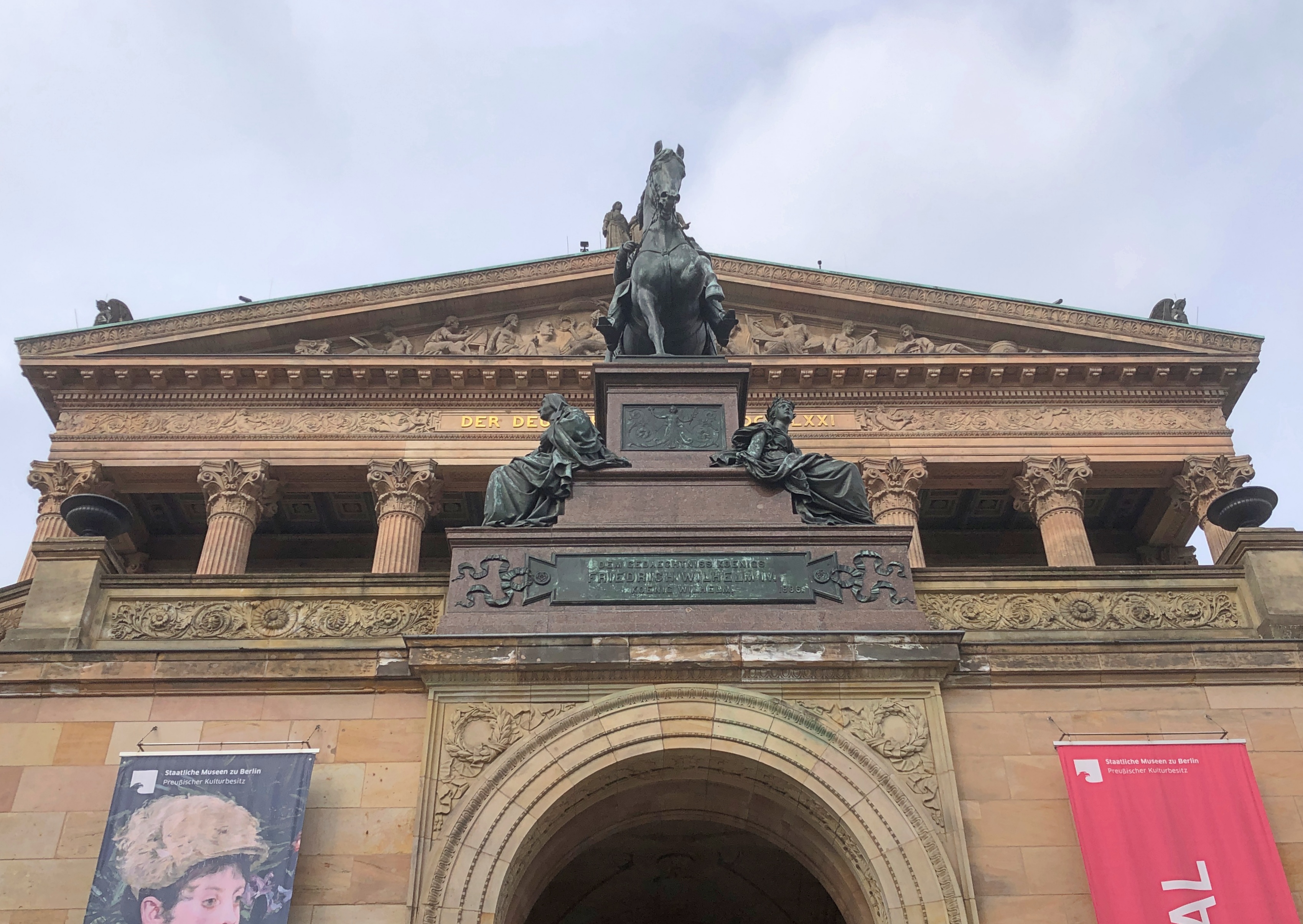
We were in the vicinity of the Alte Nationalgalerie.Alte Nationalgalerie, Berlin Alte Nationalgalerie, Berlin Alte Nationalgalerie, Berlin

Make it a Greco-Roman temple, at least on the outside, King Friedrich Wilhelm IV must have said, though he didn’t live to see its completion in 1876. August Stüler was tasked with the design, but he didn’t live to see it done either.

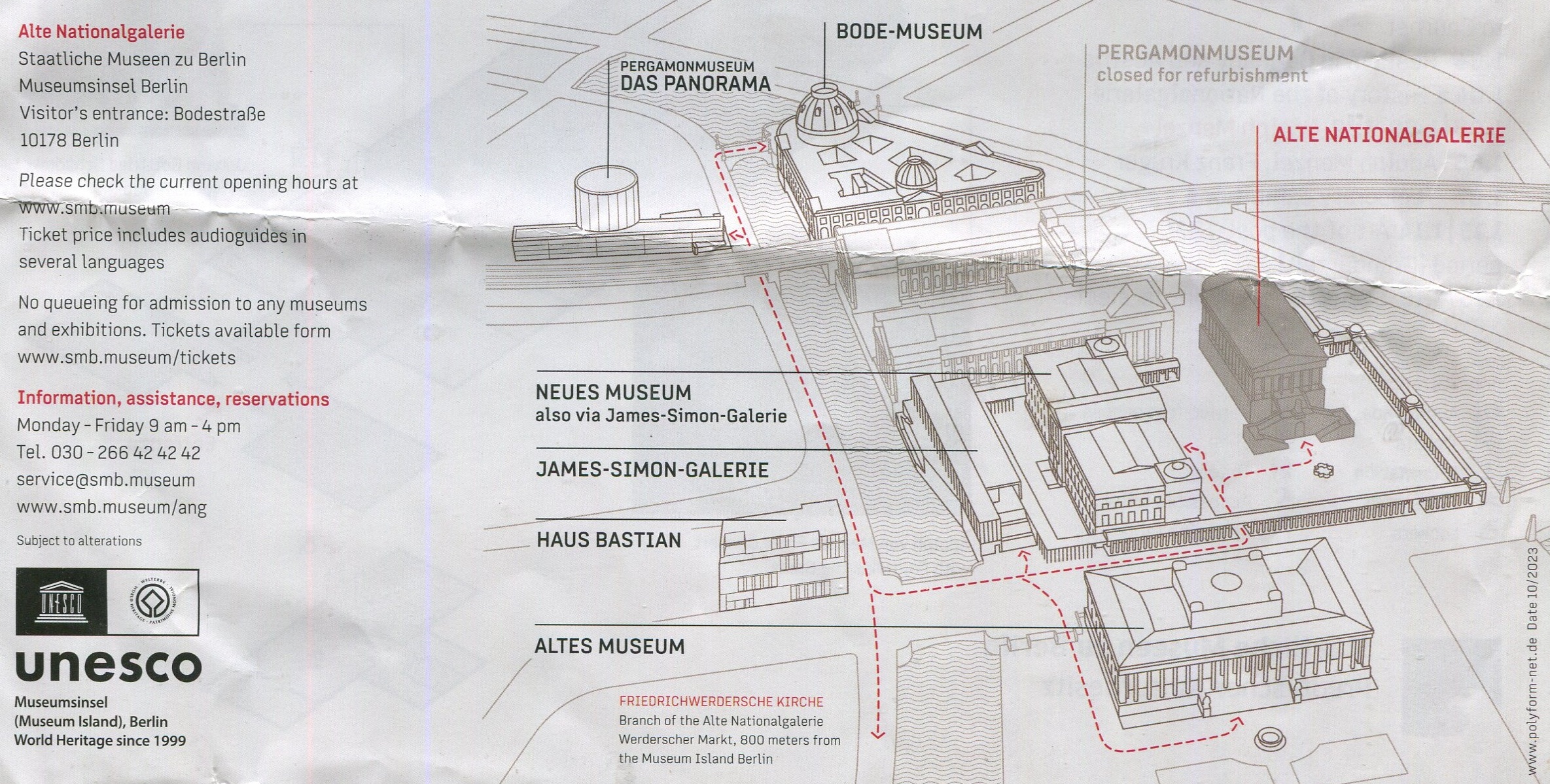
The museum complex on Museum Island certainly deserves to be on the UNESCO list. A detail from the museum’s tourist leaflet shows the Old National Gallery in relation to the others, and the fact that the Pergamon Museum is “closed for refurbishment.” Dang.

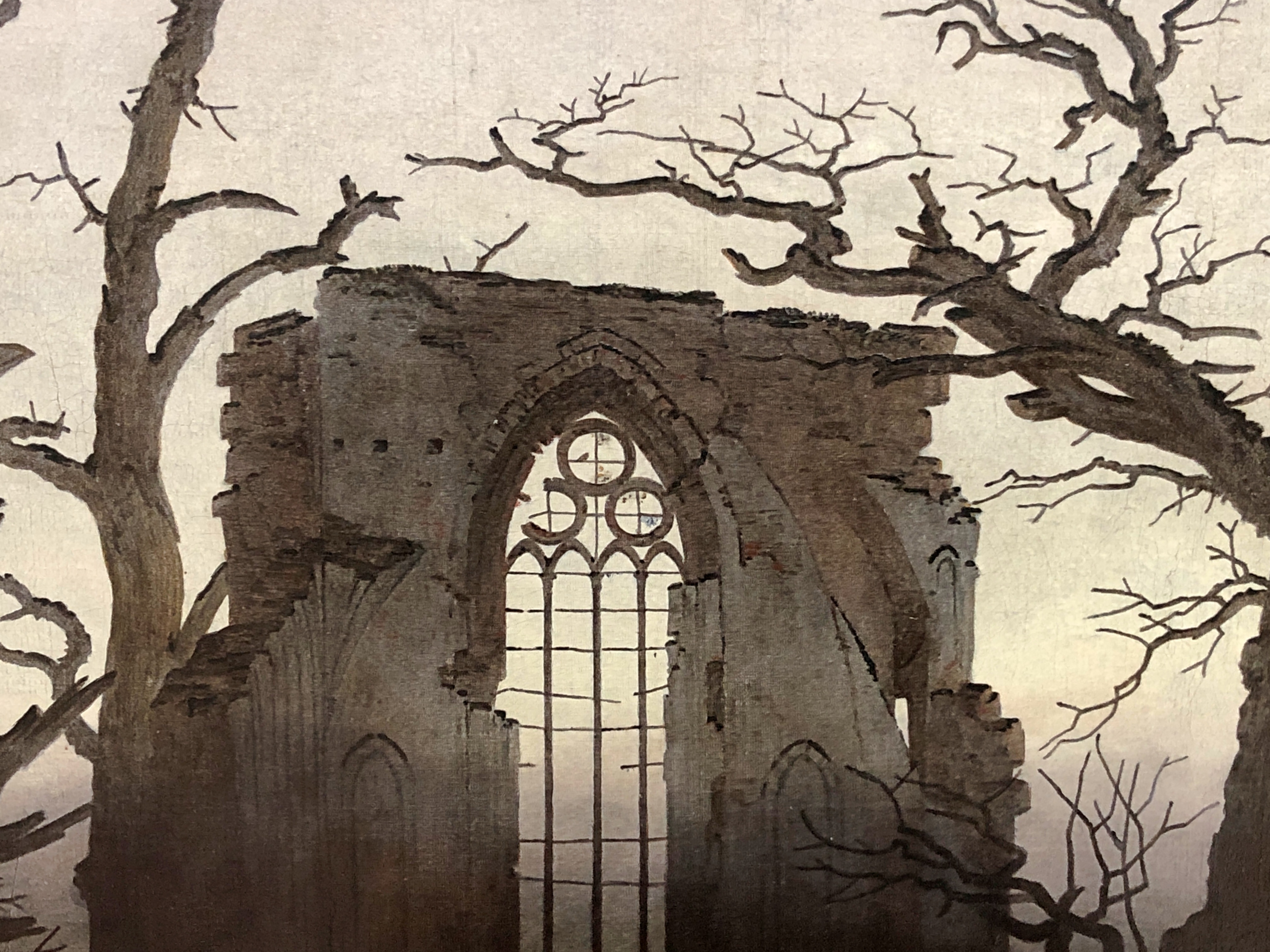
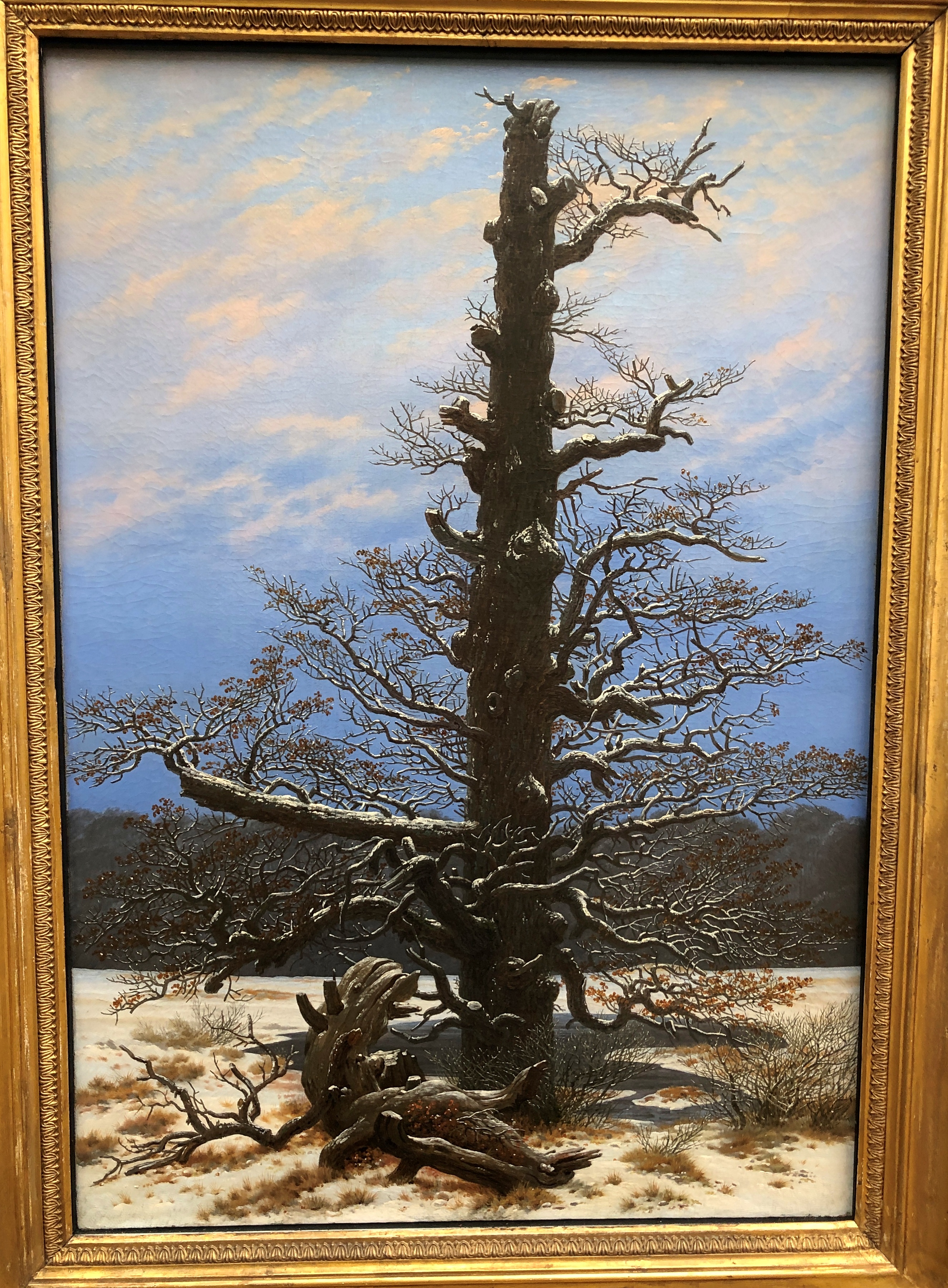
We didn’t go directly to his gallery up on the third floor, but I knew the Casper David Friedrich was a priority at Alte Nationalgalerie. Like visiting an old friend. They say maintaining social relations is important for one’s health in older years, and maybe that’s so. But I’m sure visiting old friends makes your life better in the here and now. Mine, anyway. Including mainly people, but also places and favorites in art or entertainment.
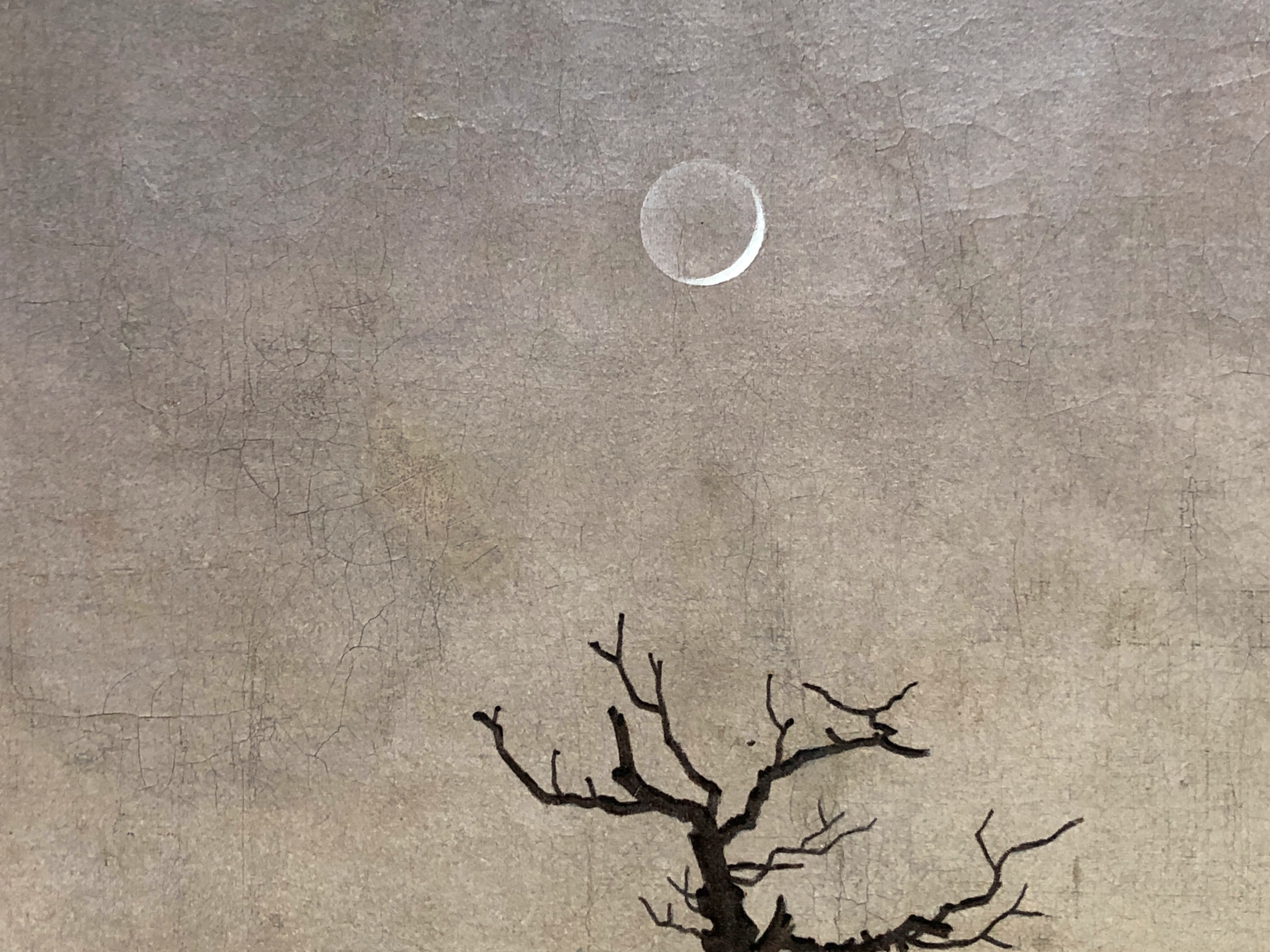
My old buddy Casper’s canvasses are usually good for more than one detail. Such as “Abtei im Eichwald” (1809/10), sporting a good old Casper David Friedrich moon.Alte Nationalgalerie Alte Nationalgalerie

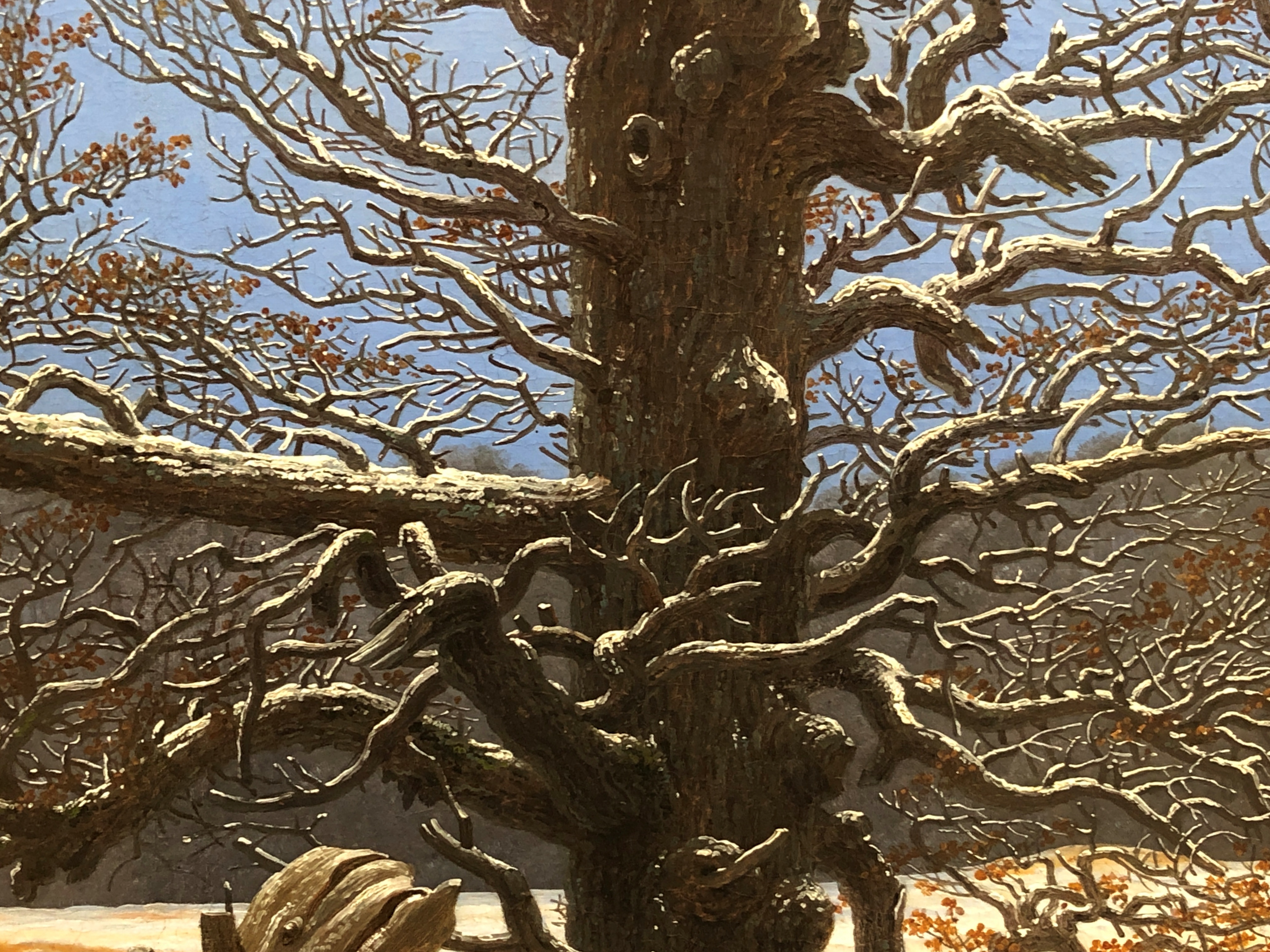
Or “Eichbaum im Schnee” (1829). The man had a gift for trees too.Alte Nationalgalerie Alte Nationalgalerie

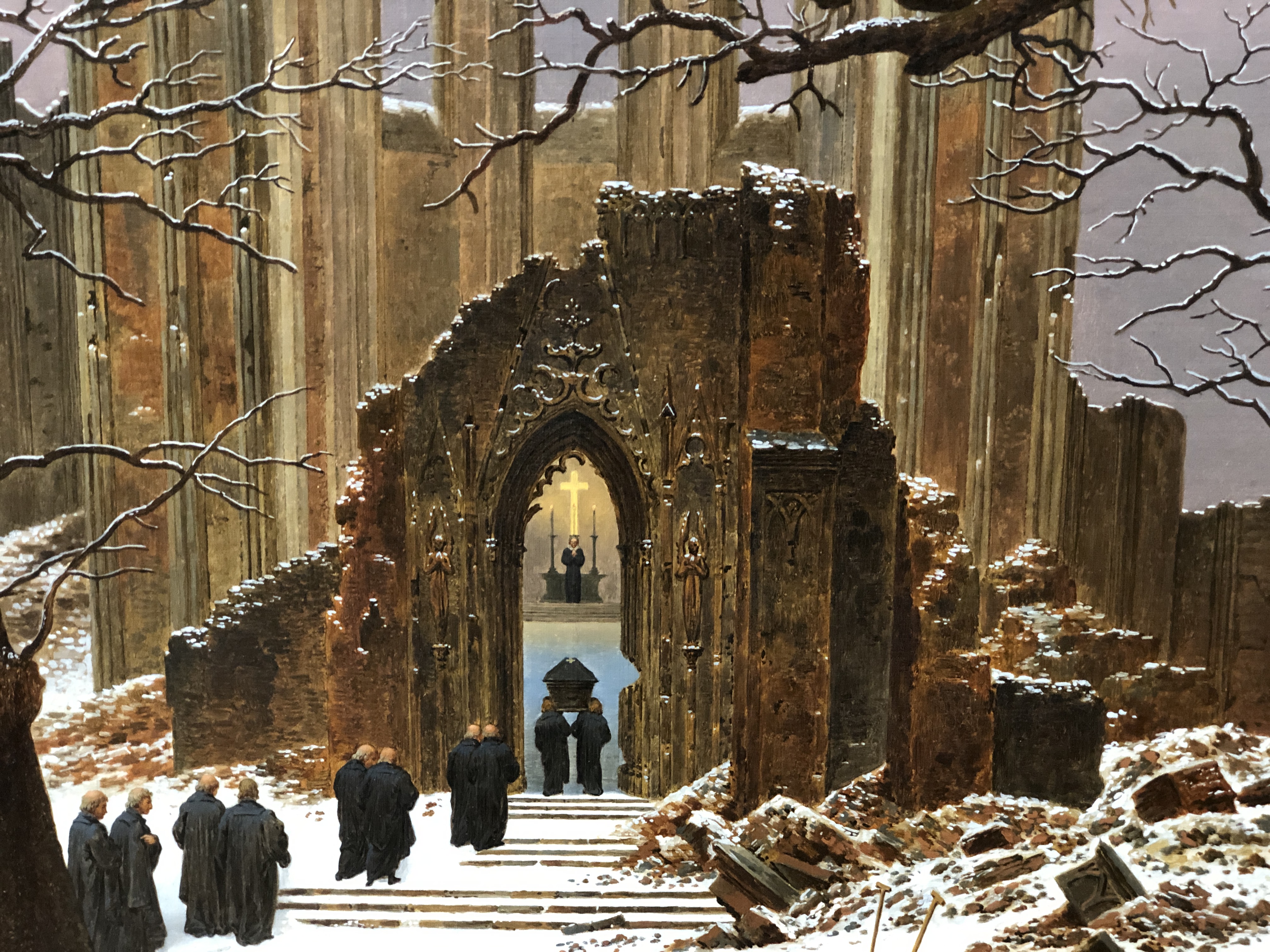
This one is CDF and it isn’t, since it is a copy of one of his paintings, “Klosterrunie im Schnee” (1891), by an unknown artist. The original didn’t survive WWII.Alte Nationalgalerie

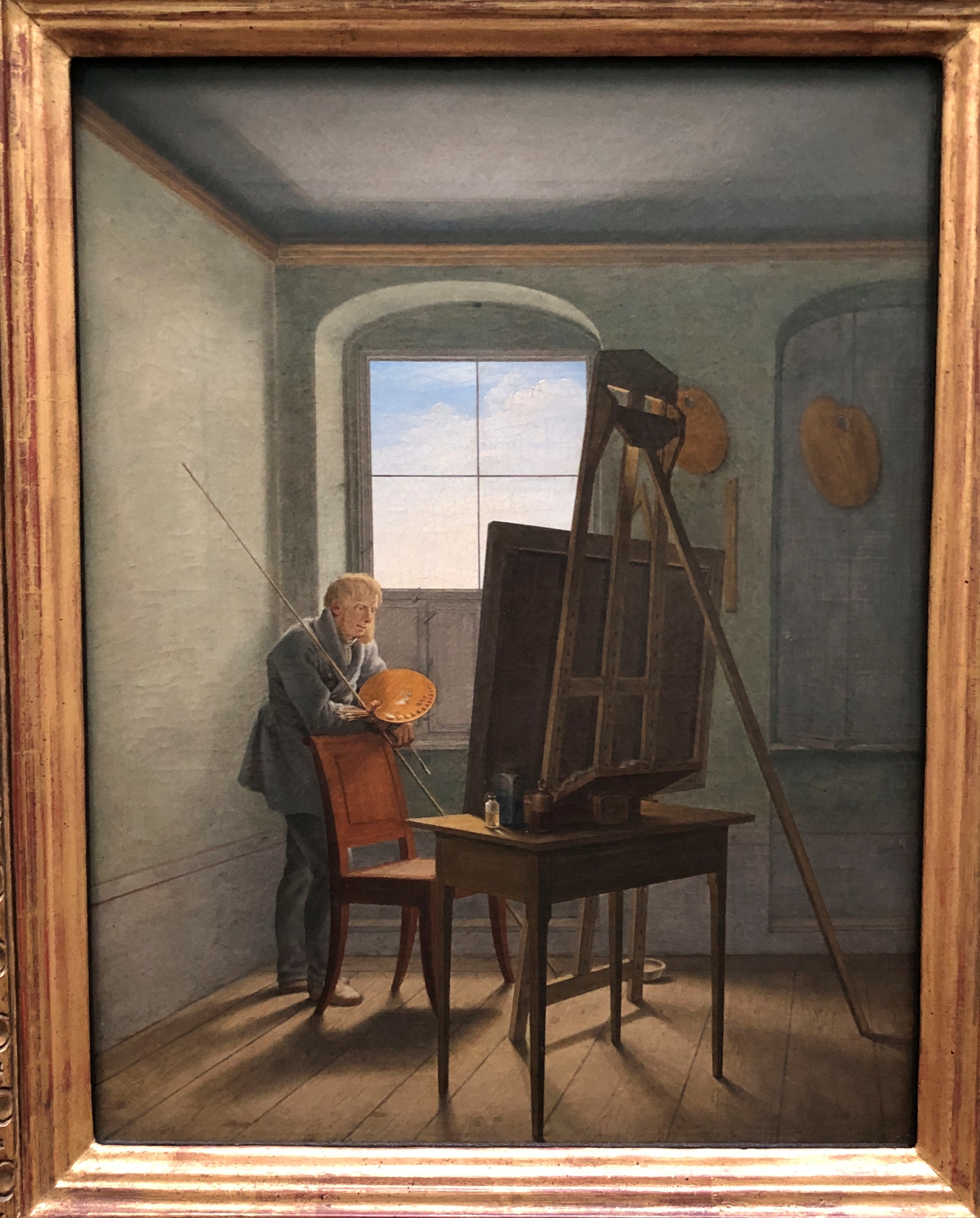
There was even an appearance of CDF himself, at work, in a portrait by colleague Georg Friedrich Kersting (d. 1847).Alte Nationalgalerie

There probably would have been more CDF on display, but as it happens, the place to be right now to see many of his works is the Met, which is hosting Caspar David Friedrich: The Soul of Nature until May 11. Seventy-five paintings, drawings, and prints by Friedrich are in that show.

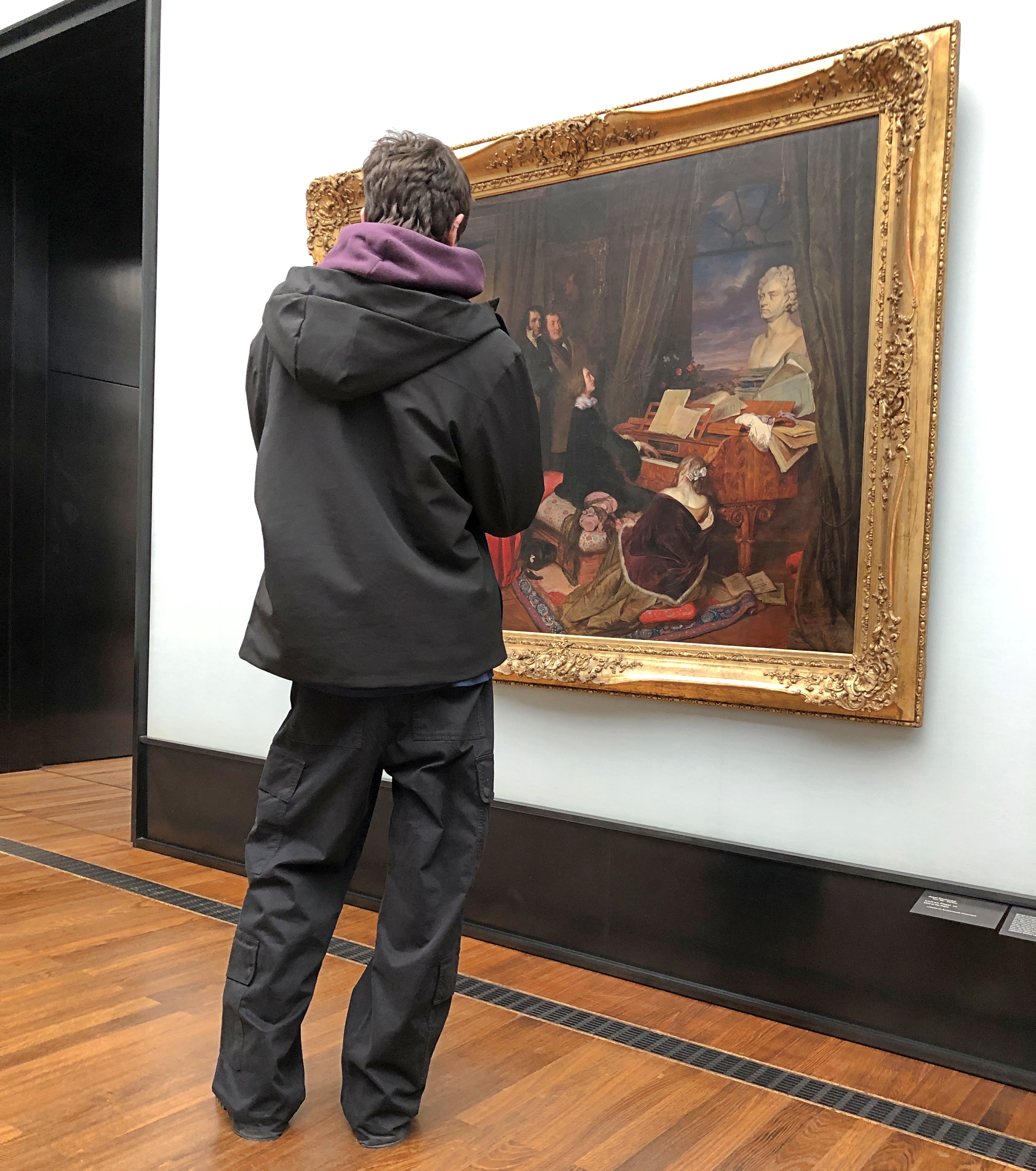
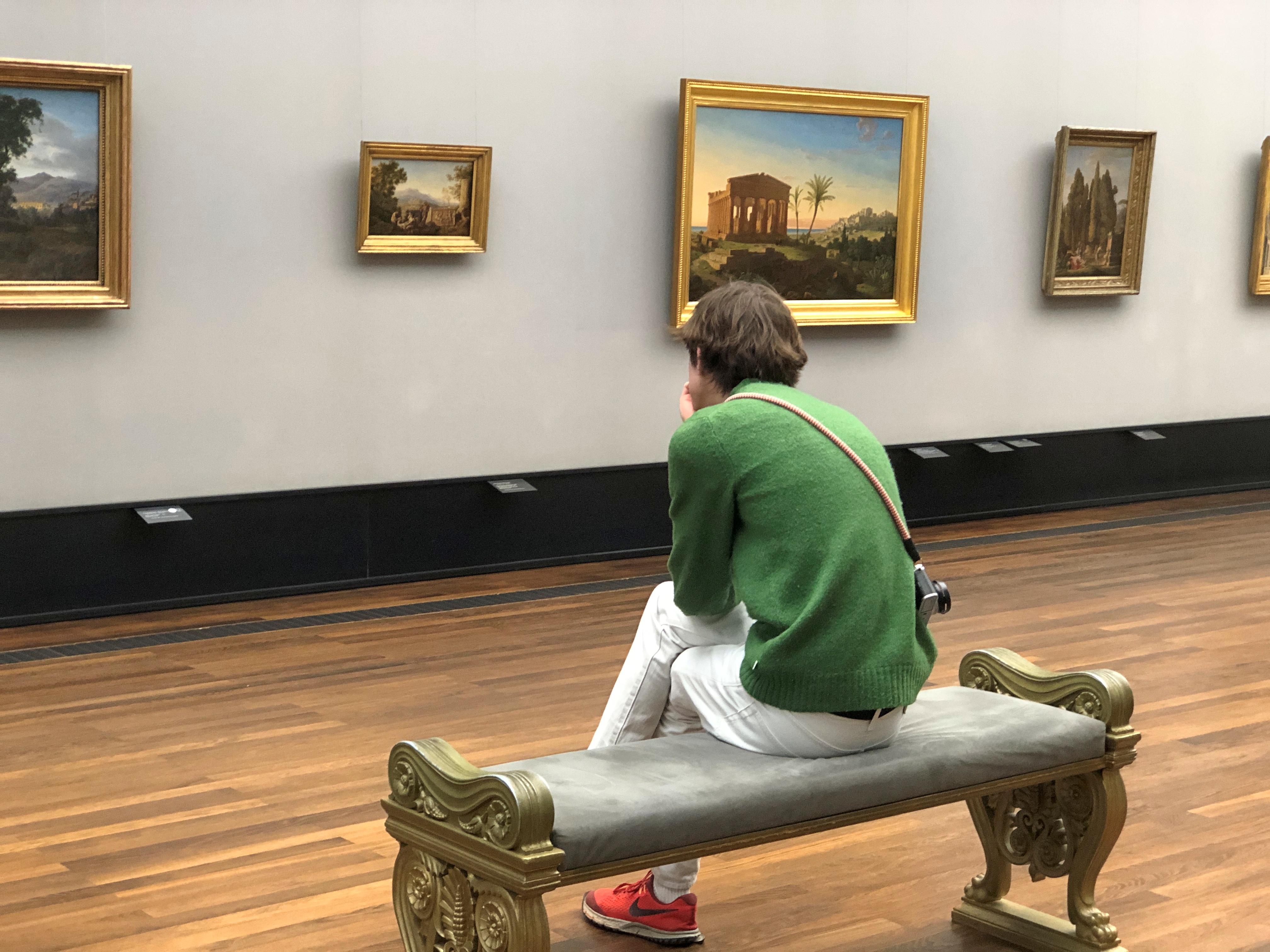
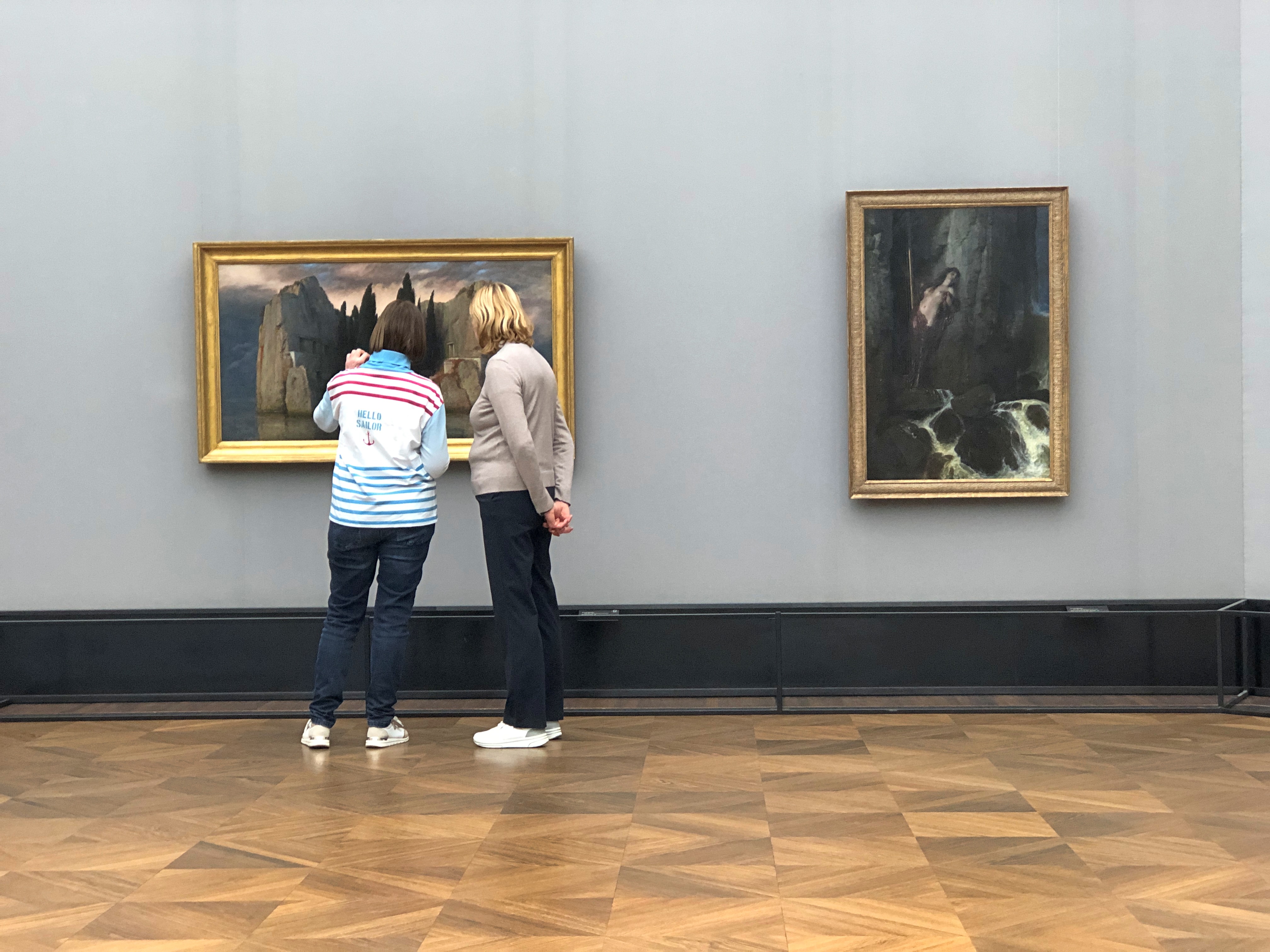
No matter, the museum offers plenty else to see, with a collection of European art roughly from the French Revolution to WWI. The place wasn’t crowded, but a fair number of museumgoers were around.Alte Nationalgalerie Alte Nationalgalerie Alte Nationalgalerie

We spent a while looking around ourselves.

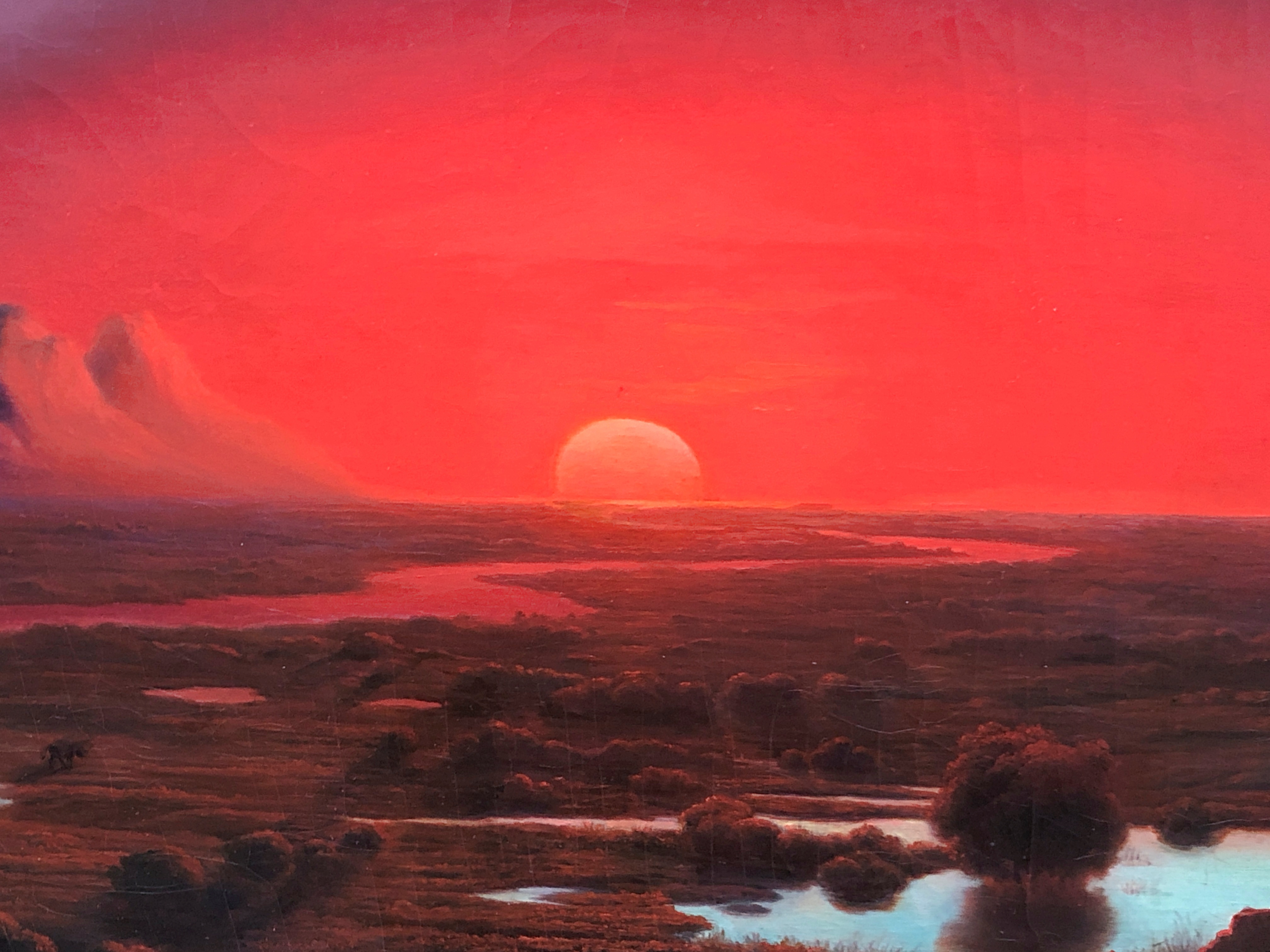
Detail from “Die Pontinischen Sümpfe bei Sonnenuntergang” (“The Pontine Marshes at Sunset”) (1848) by August Kopisch, which has a Chesley Bonestell vibe.Alte Nationalgalerie, Berlin

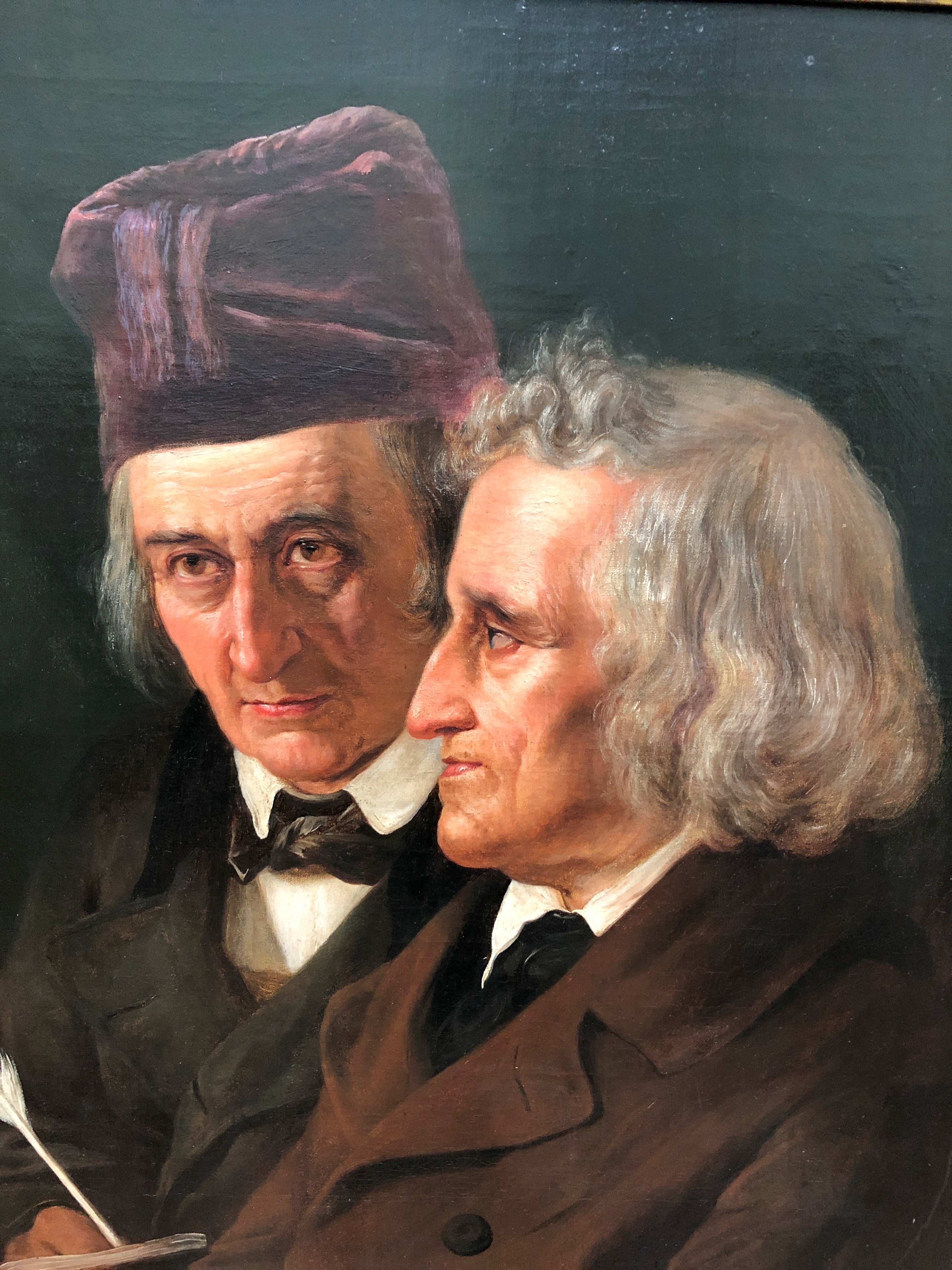
Detail from “Doppleporträt der Brüder Jacob und Wilhelm Grimm” (1855) by Elisabeth Jerichau-Baumann.Alte Nationalgalerie, Berlin

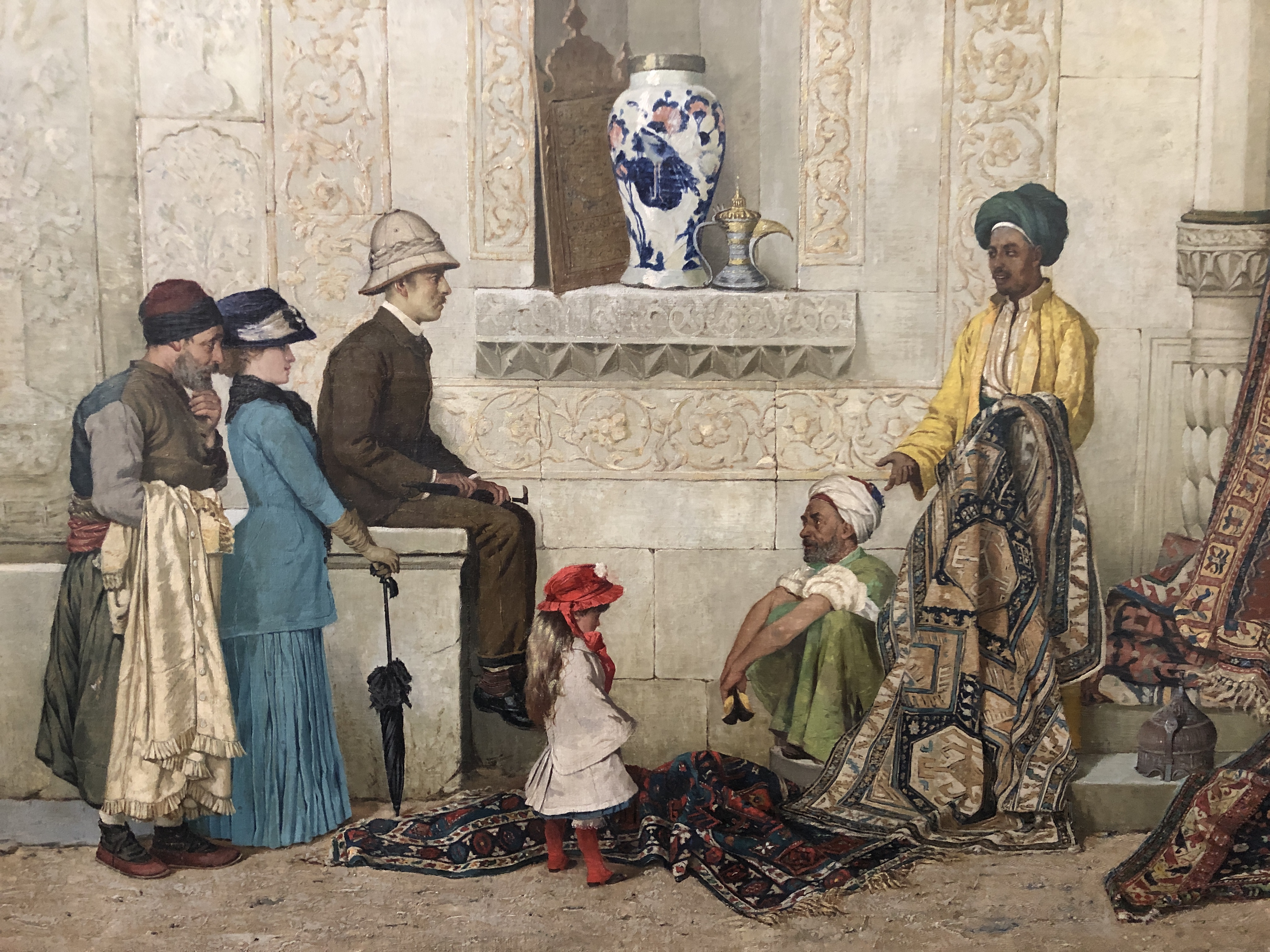
Detail from “Tükische Straßenszene“ (1888) by Osman Hamdi Bey.Alte Nationalgalerie, Berlin

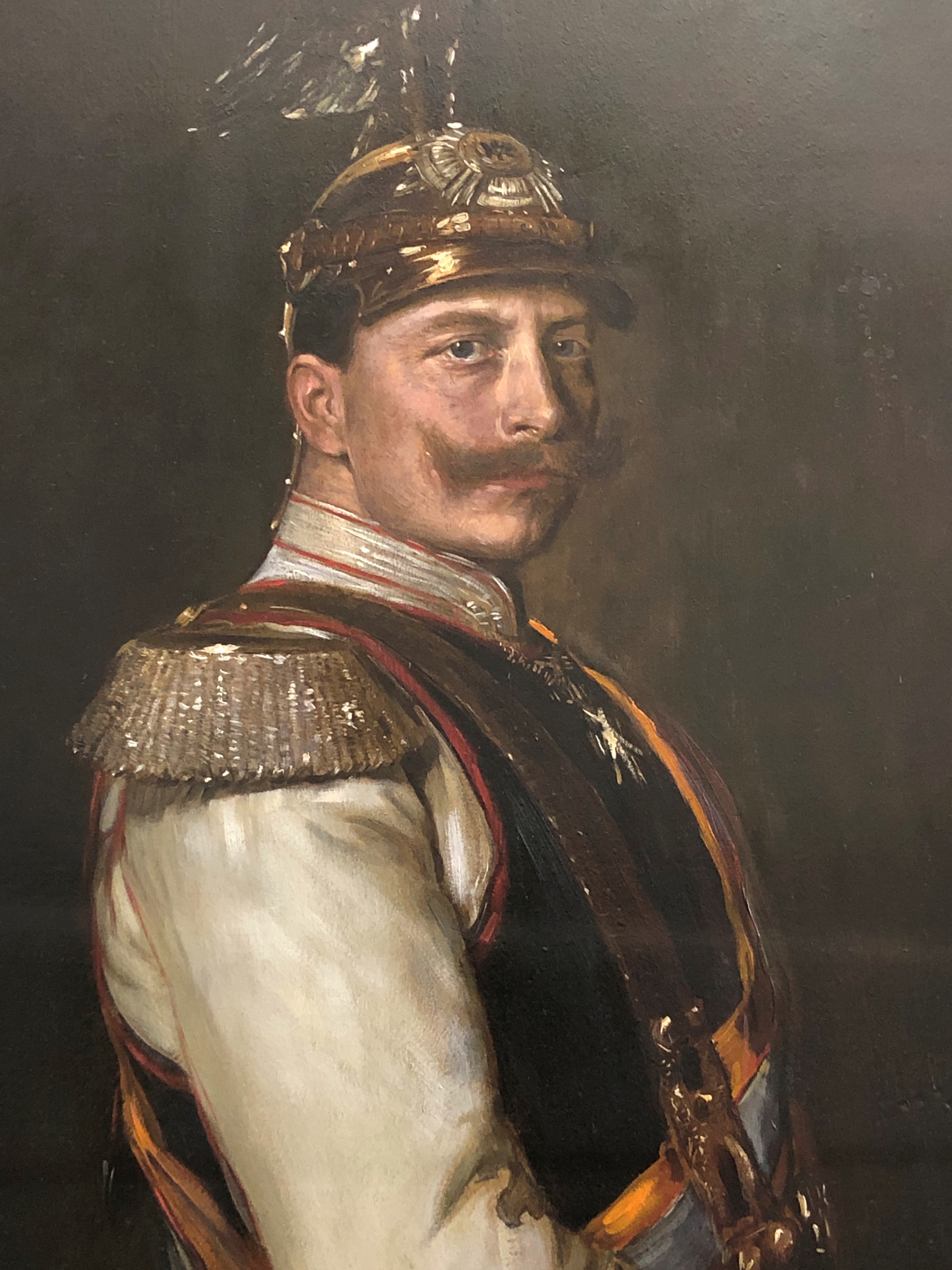
Detail from “Porträt Kaiser Wilhelm II” (1895) by Vilma Parlaghy.Alte Nationalgalerie, Berlin

 Tough luck, Willie. But at least your hope didn’t end at the end of a rope.