NW Suburban Xmas Tree Lot

Beginning late in the day on Friday, rain starting falling and continued through much of Saturday. Not particularly heavy, and temps were warm enough, barely, to prevent ice formation. But all the wet did delay our planned Christmas tree acquisition until today.

Fairly cold today, but dry, so there were no issues with a wet tree in the back seat. That’s how we carry it home, bottom of the trunk pointed toward to floor of the back seat, the thin top pointed out the opposite window, which is rolled down a bit. This year the top of the tree stuck out about a foot, and the window was rolled down about that much.

The modest NW suburban lot we patronized. Cash only.
Xmas Tree LotI took that picture last year. This year I didn’t bother. But it looked almost exactly the same today, and the tree-buying was the same. Find a tree at or under what I wanted to spend, exchange a few words with the proprietors (a middle-aged couple), watch as the one of them, the man as it happened, cut a few inches off the bottom with a chain saw and then run the tree through the netting gizmo. I carried the netted tree to the car and loaded it myself.

After some re-arrangement of the debris in the living room, the 7-foot or so balsam now awaits decoration. We’ll get to it when Ann feels like helping. Doing most of it, actually.

Verschiedene Artikel (Donnerstag)

Still above freezing most of the time, and no snow or ice. My kind of winter. But rain is slated for the weekend, devolving into snow. Maybe. That might interfere with getting a Christmas tree.

Not long ago I visited a high floor of an office building here in the northwest suburbs, something I don’t do to much these days. The view included the roof of a major retail location.Not very green, that roof. Besides whatever sustainability might be achieved, a roof that includes plants is more interesting to look at. Such as can be seen here and here. I don’t get to visit green roofs that often — ones such as the Chicago City Hall are inaccessible — but I did see one in suburban Toronto during my green press tour in that metro area. Didn’t take any pics.

Just behind the retailer is the office building’s nigh-empty parking lot.

Parking takes up a lot of space, no doubt about it. This study only focuses on a few cities, however, not the endless suburbs.

I set the background of my laptop to change every minute, and to keep things interesting, and I change the collection of images the computer uses every few days, if I remember to. Yesterday I directed the computer to use the images in the file July 5, 2019, which was our first day in Pittsburgh last year.

This popped up as part of the cycle. I’d forgotten I’d taken it.
That was in the Andy Warhol Museum.

Ann and I are still watching Star Trek roughly once a week. I’d say she’s seen about half of the original series. The most recent ones were the “Immunity Syndrome” and “A Private Little War,” both of which hold up reasonably well, though in strict storytelling terms, “Immunity” is better, since the concept is simple and the execution fairly taut. It’s the crew of the Enterprise vs. a whopping big space amoeba.

Best of all, it doesn’t turn out that the whopping big space amoeba is actually a sophisticated intelligence that the heroes eventually learn to communicate with and peacefully coexist with, a la Roddenberry.

That can be an OK track for a story — such as in “Devil in the Dark” — but for sheer space pulp drama, what you want is a mindless menace that needs to be destroyed by the last act. Star Trek did an even better job of that in “The Doomsday Machine,” in which the Enterprise fights a massive bugle corn snack that shoots death rays.

At first I thought “A Private Little War” was the (stupid) episode with the Yangs and the Cohms, in which Capt. Kirk recites the Pledge of Allegiance, among other looniness. No, that’s “The Omega Glory,” which we haven’t gotten to.

“War” is a jerry-built metaphor for the Vietnam War, involving as it does war among alien rustics, a Klingon plot to arm the natives, Kirk’s “balance of power” response, etc. Also, there was a raven-haired femme fatale with a bare midriff that got the attention of the 13-year-old I once was, and a creature that looked like a man in an albino gorilla suit, because that’s what it surely was. Spock bled green from a gunshot wound and Nurse Chappell got to slap him around. Why didn’t we ever see more of Dr. M’Benga? (Seems he was in another episode briefly.) Here’s why: actors cost money, as much as showrunners might wish otherwise.

One more item for today. Not long ago we got takeout at Asian Noodle House, a wonderful storefront that seems to be surviving on the takeout trade. We go there every other month or so. Fortune cookies come with each order, one per entre. Each wrapped in its own little plastic bag.

Today we got three little bags. One of them had two cookies tightly packed within. Is that like getting a double yolk? Does it mean extra good fortune or extra bad chi? Maybe one cookie is ying, the other yang.

East Branch

We haven’t been in any restaurants or theaters or concert venues since March, and our membership at the municipal indoor pool long ago lapsed. On the other hand, we’ve been to a lot of green spaces this year, now brown as fall has vanished into winter, including city parks, state parks, and one national forest, monument and park each. But especially that kind of undeveloped land specific to Illinois: the forest preserve, a localized legacy of Progressive Era activism.

I wondered how many we’ve been to this year, so I made a count. Five visits to forest preserves we’ve been to before, and 10 new ones, variously in Cook, DuPage, Kane and Lake counties. I doubt that we visited more than one or two new ones a year before 2020. Fifteen is only a small fraction of however many hundreds of preserves there might be statewide, but I’m glad we’ve taken the walks, and plan to continue doing so next year.

On Saturday afternoon, we took a walk at East Branch, a 521-acre unit of the DuPage County Forest Preserve District in Glendale Heights. Temps were in the 40s. That’s warm enough for a forest preserve walk.
East Branch forest preserve“East Branch was previously used as farmland prior to the Forest Preserve District acquiring it in the early 1970s,” the district web site says. “During the 1980s, wetlands were created along the East Branch DuPage River as mitigation for the construction of Interstate 355.”

A trail from a small parking lot off Glen Ellyn Road leads to a small lake.
East Branch forest preserveIt’s called Rush Lake. The district asserts that it’s a good place to see waterfowl, and so it was. Ducks, at least.
East Branch forest preserveThe main trail circles around the lake, though sometimes a little ways from the shore. Hoofprints in the mud along the way meant horse riding is an activity there, but we didn’t see any riders. We saw two men with fishing poles, a woman walking a dog and a man simply walking around. That was all.
East Branch forest preserveIt was about an hour until sunset. The view to the west.
East Branch forest preserveThe view to the north.
East Branch forest preserveThe dome off in the distance is St. Andrew Ukrainian Orthodox Cathedral.

Wintertime Social Zoom

On Friday evening, I participated in another social Zoom, once again attended by old friends. Really old friends. As far back as I can go among my friends, since I doubt I’d ever be able to contact my best friend in first grade, whose name was Smith.

The recent Zoom involved two friends I met in elementary school and another in junior high, and who continued to be friends in high school: Steve, Rob and Kevin. After that, we weren’t in touch so much, with sporadic contact over that last 40 years, though Kevin went with me and two other high school friends to New Orleans in the summer of ’81.

Steve I met in 1968, Rob and Kevin in the early ’70s. As I said, taking things back as far as I can go. Only my brothers have known me longer.

Two participants were in Texas, one in New Mexico, and one in Illinois. Steve is a high school band director, Kevin a graphic artist, and Rob a retired computer programmer.
One of the things we did as a group in the mid-70s, beginning in junior high and petering out in high school, was play penny-ante poker at my house. Good fun, as I recall.

So was the Zoom call, though occasionally awkward. After all, there’s been a lot of water under the dam since we hung out.

Winter ’20

Winter starts on December 1, as far as I’m concerned. Some past years, that day has obliged us with snow cover, or least snow flurries, such as in 2006 and 2008 and 2010.

Not this year. I had to be out early in the morning to be somewhere, but it was merely dry and below freezing.

Or maybe winter started the night about a week before Thanksgiving when I was out ’round midnight and spotted Orion riding high in the sky, trailed by the loyal Canis Major.


After I got home yesterday, I had a lot to do, and so didn’t spent much more time out in the early winter temps, or even thinking about them. Early in the evening, I looked up the local temperature. About as cold as I thought: 28.
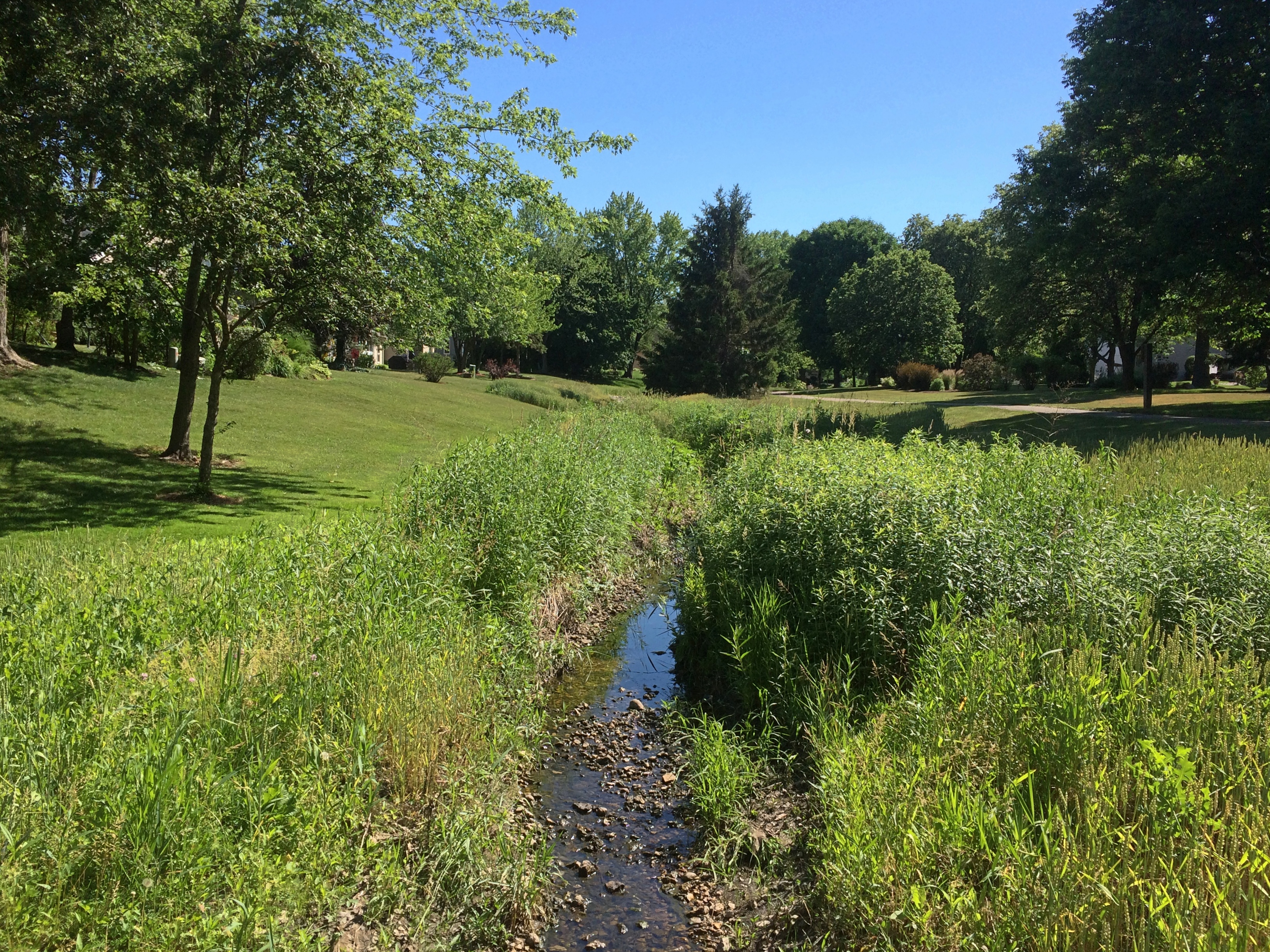
Then I had a moment of idle curiosity. The Internet was made for just such moments, so I looked up what I wanted to know: how cold it was at that moment in Anchorage, Alaska: 37.

Not as cold as I thought. The kind of thing TV weather presenters occasionally yak about, though usually in January: Look, it’s colder in Illinois than Alaska! But according to the respective 10-day forecasts, it will soon be single-digits in Anchorage, but not here.

Grassy Lake Forest Preserve

Up among the various Barrington-named towns in northern Illinois — Barrington itself, but also North Barrington, South Barrington, Barrington Hills, Lake Barrington — is the Grassy Lake Forest Preserve, a unit of the Lake County Forest Preserve District. Its 689 acres are tucked away along the banks of the Fox River, a tributary of the Illinois River.
Grassy Lake FP
“Silver maples, cottonwoods and willows line the banks of the Fox River and its floodwater-storing floodplain,” says the Lake County FP web site. “Burly old-growth oaks occupy slightly higher ground above the river, and former agriculture fields now being restored to prairie can be viewed.

“Prominent geological landforms such as kettles and kames tell of Lake County’s not too distant glacial shaping, while providing sweeping views of the river valley and the surrounding area. Centuries-old landscape plantings of catalpa trees, Douglas firs, and a hedgerow of osage orange remind of us those who lived here before us.

I’m not sure exactly what a kettle or kames might look like, but I assume they’re some of the undulations we saw in the landscape. We arrived soon after noon on the day after Thanksgiving. This year, we participated in Buy Nothing Day by taking a hike.Grassy Lake FP
Grassy Lake FP
Grassy Lake FP
The trail winds into the forest preserve. Soon you come to a memorial to an unfortunate lad named Derek Austin Harms that includes trees and benches and a boulder with a plaque.
Grassy Lake FP
It isn’t hard to find out more about the young Mr. Harms, 1997-2018.

Side trails wander down to the edge of the Fox. The river widens quite a lot at this point, perhaps forming the feature called Grassy Lake, though I haven’t found anything to confirm that.
Grassy Lake FP
Grassy Lake FP
Grassy Lake FP
Follow the main path far enough and it rises to the highest point in the forest preserve, where it dead ends.
Grassy Lake FP
Not the highest view I’ve seen recently, but on a clear warm-for-November day, a good one.

Thanksgiving ’20 &c.

Clear and cool lately, with daytime temps in the 50s. Not bad for late November. So far, no snow yet except for a dusting we had a few days before Halloween. It didn’t last. Next time, it probably will.
october snow
Pleasant Thanksgiving at home. Nothing made from scratch this year except the gravy, but the boxed macaroni and stuffing you can get at Trader Joe’s isn’t bad at all. And what’s a Thanksgiving dinner without olives, I tell my family. They aren’t persuaded.
Thanksgiving victuals
Took a walk last weekend at Fabbrini Park in Hoffman Estates.
Fabbrini Park
The geese were still around, mucking up the place.

Across the Border

If you like maps, you’re going to have a certain fascination with borders, as imaginary and fluid as they may be. If you travel at all, you’re going to cross borders. If you have a fascination with maps and you travel at all, you’re going to be fascinated when you come face-to-face with a border.

Such as standing on state borders. Or national ones, which are harder to stand on, but not impossible.

On Saturday morning, when it was cool but before the cold rains that evening, I took a walk along a path, headed toward a border.
Higgins Road footpathActually, as you can see, the footpath was under construction, so I for 100 feet or so I followed the cut ground where pavement would soon be. Replacement pavement, since I’ve seen a path there for years. I can’t imagine it’s being replaced with anything else.

Not all of it is being rebuilt.
Higgins Road footpathSoon I came to the border. Or at least a sign, if not the precise line.
Higgins Road footpathThe Schaumburg-Hoffman Estates Border. A simple map shows how convoluted it is, an echo of a competing annexation rush in the late ’50s and early ’60s.

On the back of the sign is the Hoffman Estates seal, or emblem or logo. I didn’t remember seeing it before. Edited from the original: “Growing to Greatness, and Those Schaumburg Bastards Aren’t Going To Stop Us.”
The blue diamond marks where I was, heading west into Hoffman Estates, and then back east into Schaumburg. The road is Illinois 72, but we never call it that. It’s Higgins Road. Just to the east of the blue diamond is a small office complex that includes our dentist as a tenant. I took Ann there Saturday morning for an appointment, but there’s no waiting in the waiting room, so I hit the footpath.

“Early records date the road back to 1851,” writes Pat Barch, Hoffman Estates historian. “It was identified as the Dundee Road on 1904 maps. Early settlers called it the Chicago-Dundee Rd. Today’s Higgins Road (Route 72) wasn’t opened as a state road until 1924. It runs for 110.71 miles from IL Rt 43 in Chicago to Lanark, IL.”

Also, the road might have been named for nearby landowner “F. Higgins.” Lots of early landowners gave their names to later suburban roads. As suburban roads go, I like Higgins, at least at this juncture. It’s usually less crowded than the similar-sized and nearby Golf Road, which runs past the Woodfield Mall, car dealerships and other traffic generators.

All the years I’ve been driving on Higgins, I’d never walked on the path. Or seen many other people doing so, or riding bikes. So I guess the current crisis is good for something — getting me out to see the territory.

This is the view across the border. Not much of a change in scenery.
Higgins Road footpathHiggins to the left has some traffic, but only enough to be distracting when you’re on foot, until you start to ignore the sound. To the right are bushes and fences that separate the road and footpath from suburban back yards.

I got as far as the intersection of Higgins and Ash Road. Years ago, I used to turn on Ash to drive to the home of a babysitter we used occasionally, who had a daughter about Lilly’s age. Live in a place long enough and everywhere reminds you of something.

Crabtree Nature Center

Unlike the most recent weekend, the weekend before that was unseasonably warm and pleasant. Naturally that meant we wanted to visit a forest preserve, so I took to Google Maps and picked one I thought we’d never been to before: Crabtree Nature Center.

That sounds like a building you’d visit for the edification of small fry, and there is such a facility on the property (closed for now). But mostly it’s green space — woodlands and prairie and wetlands — on about 112 acres that are part of the Cook County Forest Preserve system.
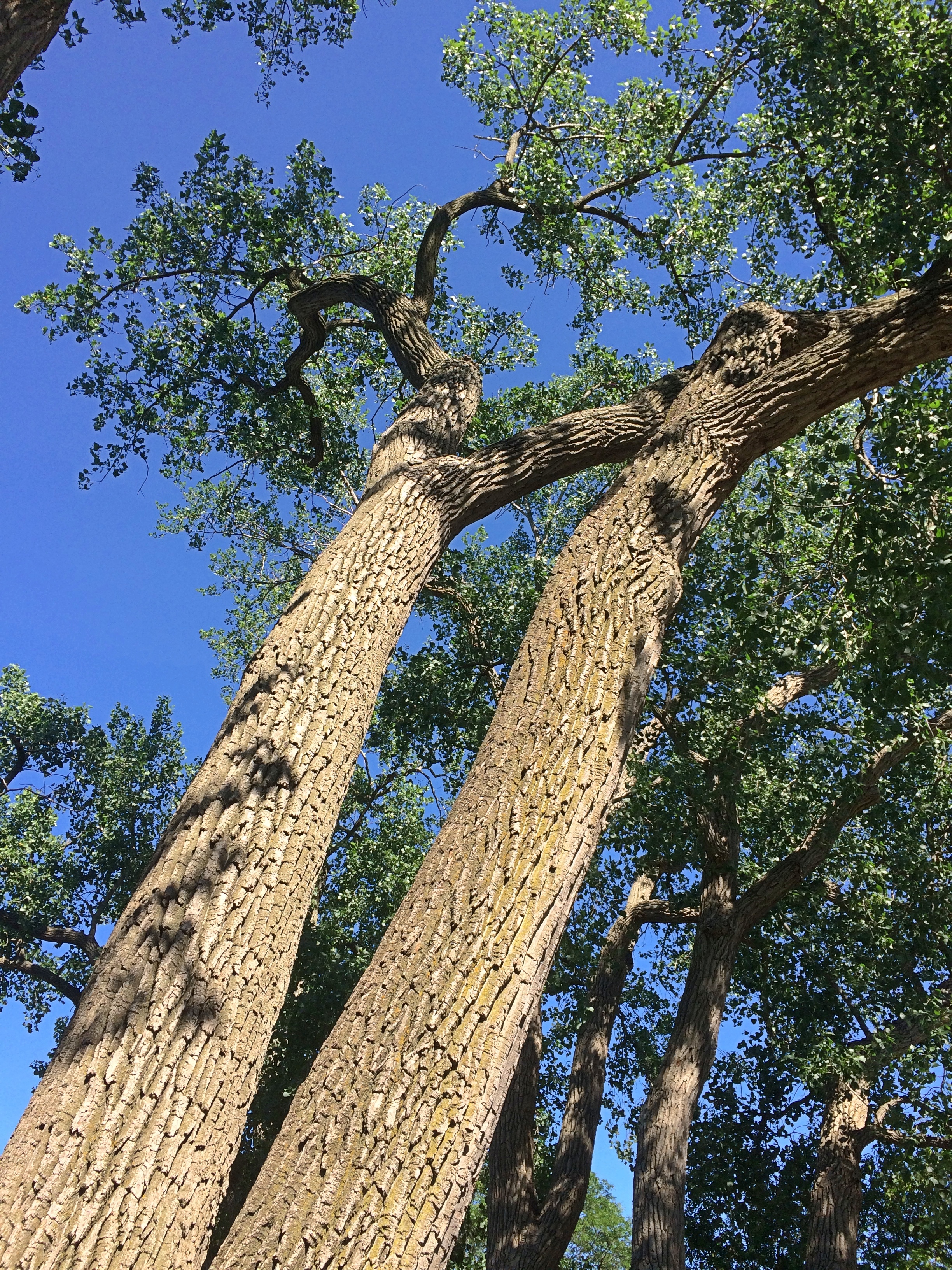
Not far from the parking lot, which is half blocked off now to prevent crowding, a trail loops around two small lakes. I suspect crowding isn’t usually an issue, but never mind.Crabtree Nature Center
Crabtree Nature CenterCrabtree Nature CenterA pleasant walk on a warm day. Most of the leaves had already transitioned to the ground, making for a lush underfoot crunch as you walked on. Or the swish of knocking leaves out of the way with your feet. Distinct fall sounds.Crabtree Nature Center

Crabtree Nature Center Crabtree Nature CenterToward the end of the loop, you pass by some large iron-mesh enclosures, about two stories tall, home to a number of large birds that I suspect had been rescued for one reason or another, and who couldn’t survive in the wild.

Then it occurred to me: we had been here before. I remembered these enclosures. How long ago? I couldn’t recall exactly, but I did have a fleeting memory of pushing someone in a stroller. Probably Ann, since she would have been the right age for that right after we moved to the northwest suburbs, and I doubt we would have been up this way before that.

Forest Home Cemetery

After visiting Garfield Park in Chicago on October 25, I took a short drive to Forest Home Cemetery, which is near west suburban Forest Park. One of metro Chicago’s splendid cemeteries. It had been a number of years since I’d been there, but I hadn’t forgotten how schön the place is in October.Forest Home CemeteryForest Home CemeteryForest Home CemeteryForest Home CemeteryForest Home CemeterySome unusual memorials I didn’t remember.Forest Home Cemetery

Forest Home CemeteryI couldn’t identify this large mausoleum, since there are no names on it.
Forest Home Cemetery

Later I found out that it is the Lehmann Mausoleum, dating from 1902, and the largest in the cemetery. The Lehmanns ran department stores in Chicago, but for whatever reason, they built another mausoleum in 1920 in Graceland Cemetery in the city and had the deceased members of the family moved there, leaving the Forest Home structure vacant, as it remains, according to the cemetery’s web site.

The Haymarket Martyrs’ Monument.Forest Hill Cemetery - Haymarket Memorial

Forest Hill Cemetery - Haymarket MemorialForest Hill Cemetery - Haymarket Memorial“On June 23, 1893, thanks to Lucy Parsons [widow of Albert Parsons, one of those executed] and the Pioneer Aid and Support Association, the Haymarket Martyrs’ Monument was dedicated,” Atlas Obscura says.

“On the front of the granite monument is the imposing figure of a woman representing justice standing over a fallen worker. The bottom of the 16-foot monument features the final words of August Spies [also executed]: ‘The day will come when our silence will be more powerful than the voices you are throttling today.’ ”

Emma Goldman and the cemetery’s gaggle of leftists are of course still present.
Emma Goldman graveIncluding some relatively new additions.Forest Home Cemetery Forest Home Cemetery

Forest Home CemeteryMaybe not a gaggle. What would be a good collective for leftists? How about a soviet of leftists? The opposite would be a fascio of rightists.