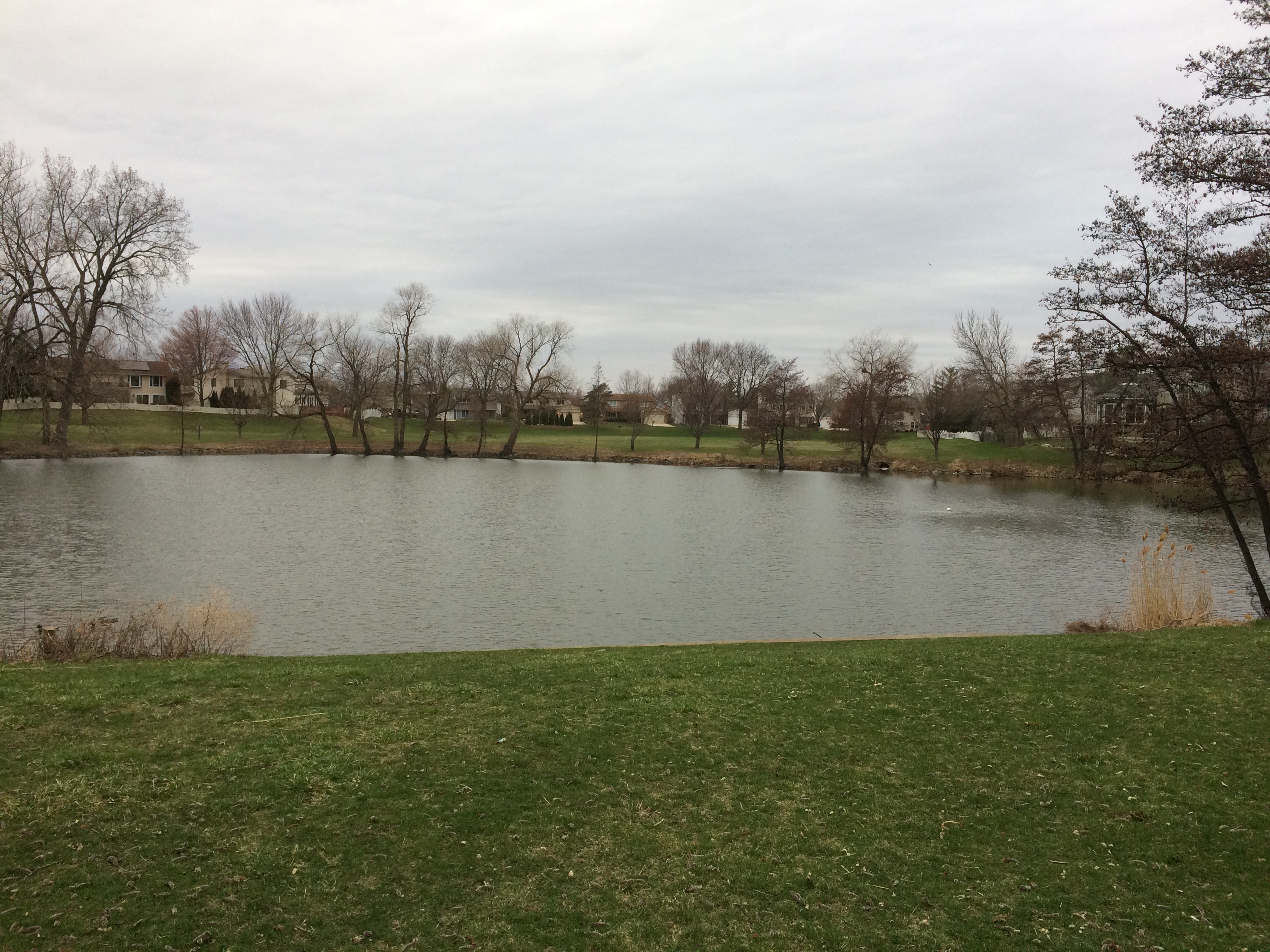
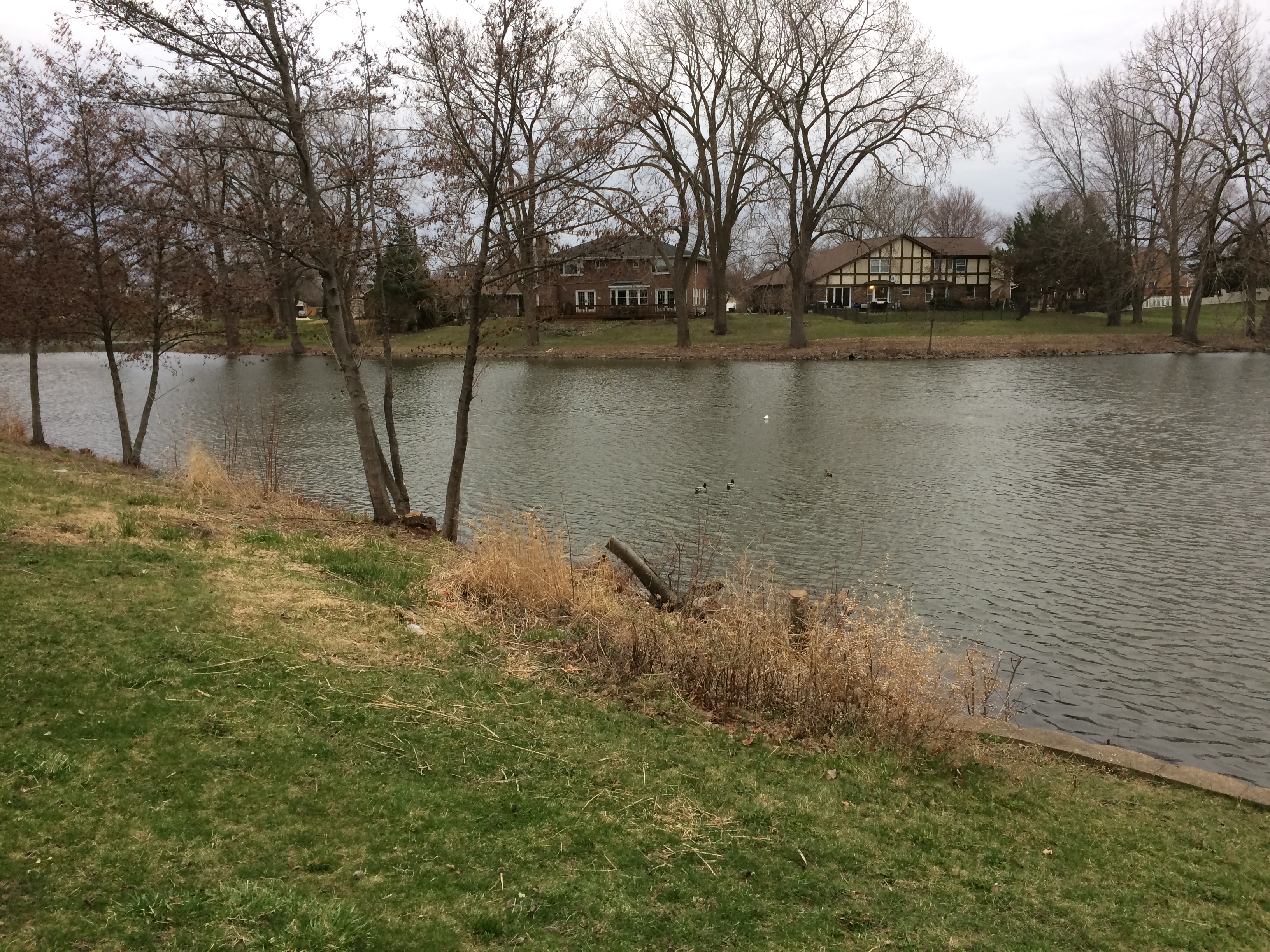
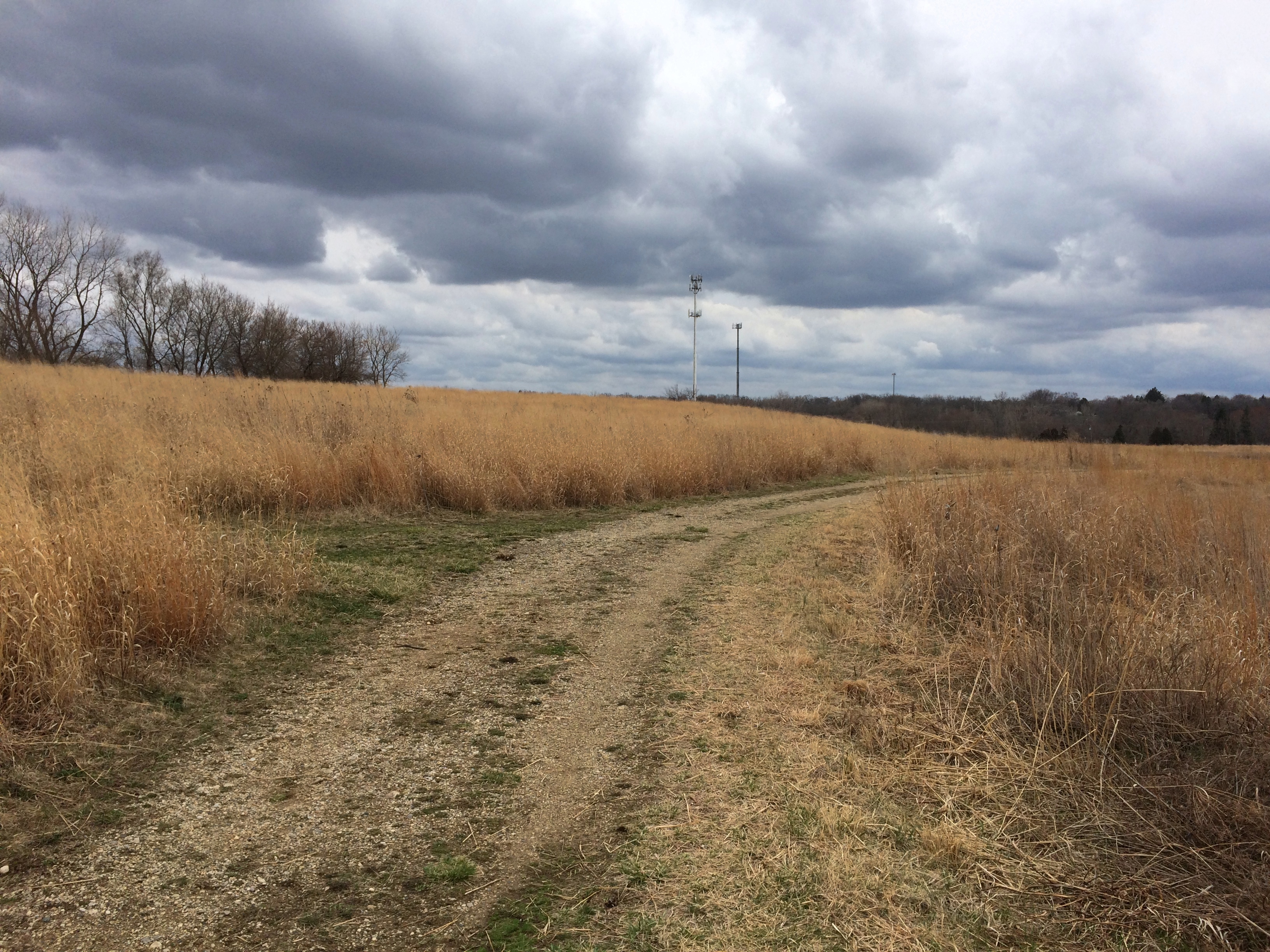
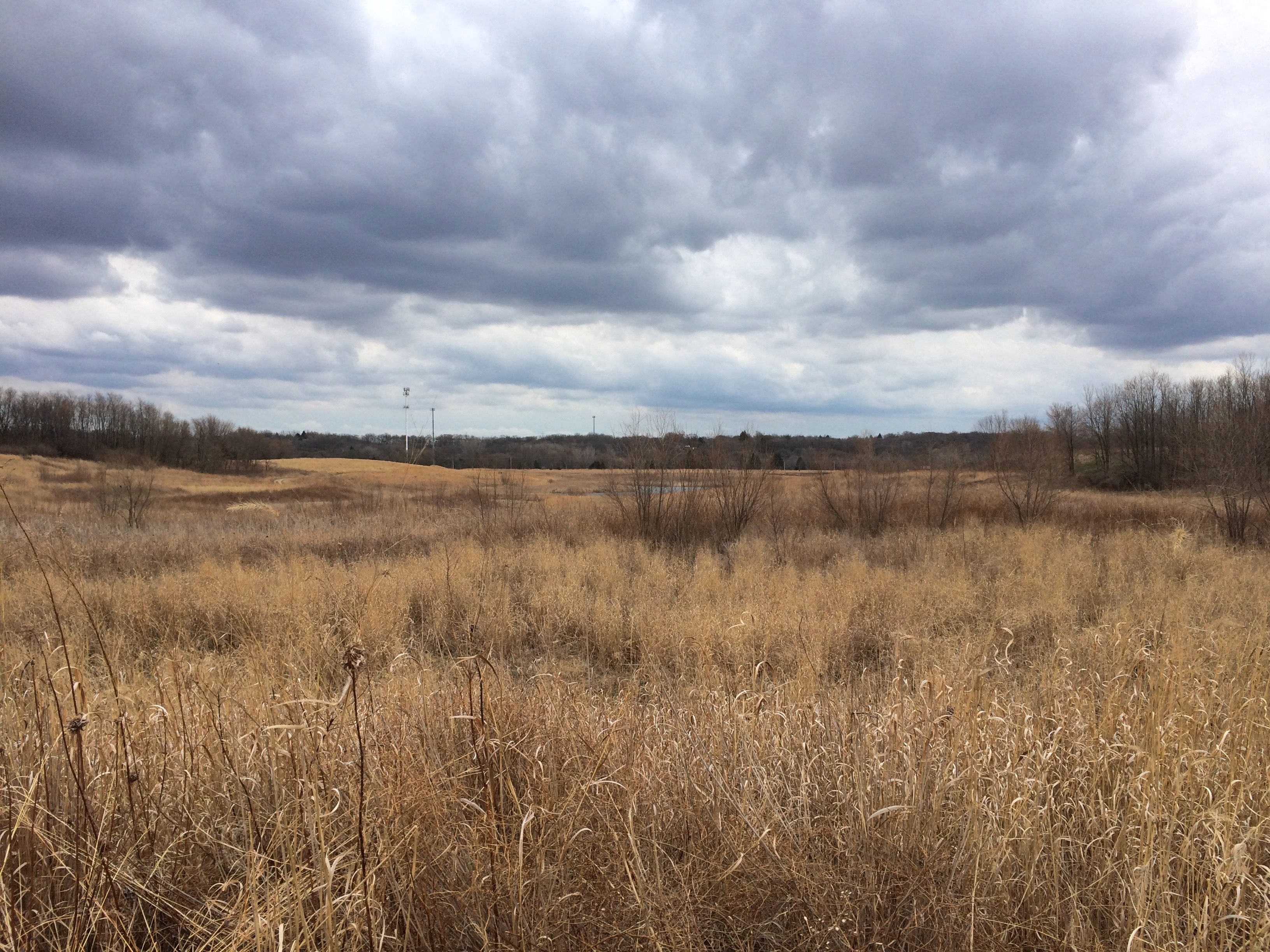
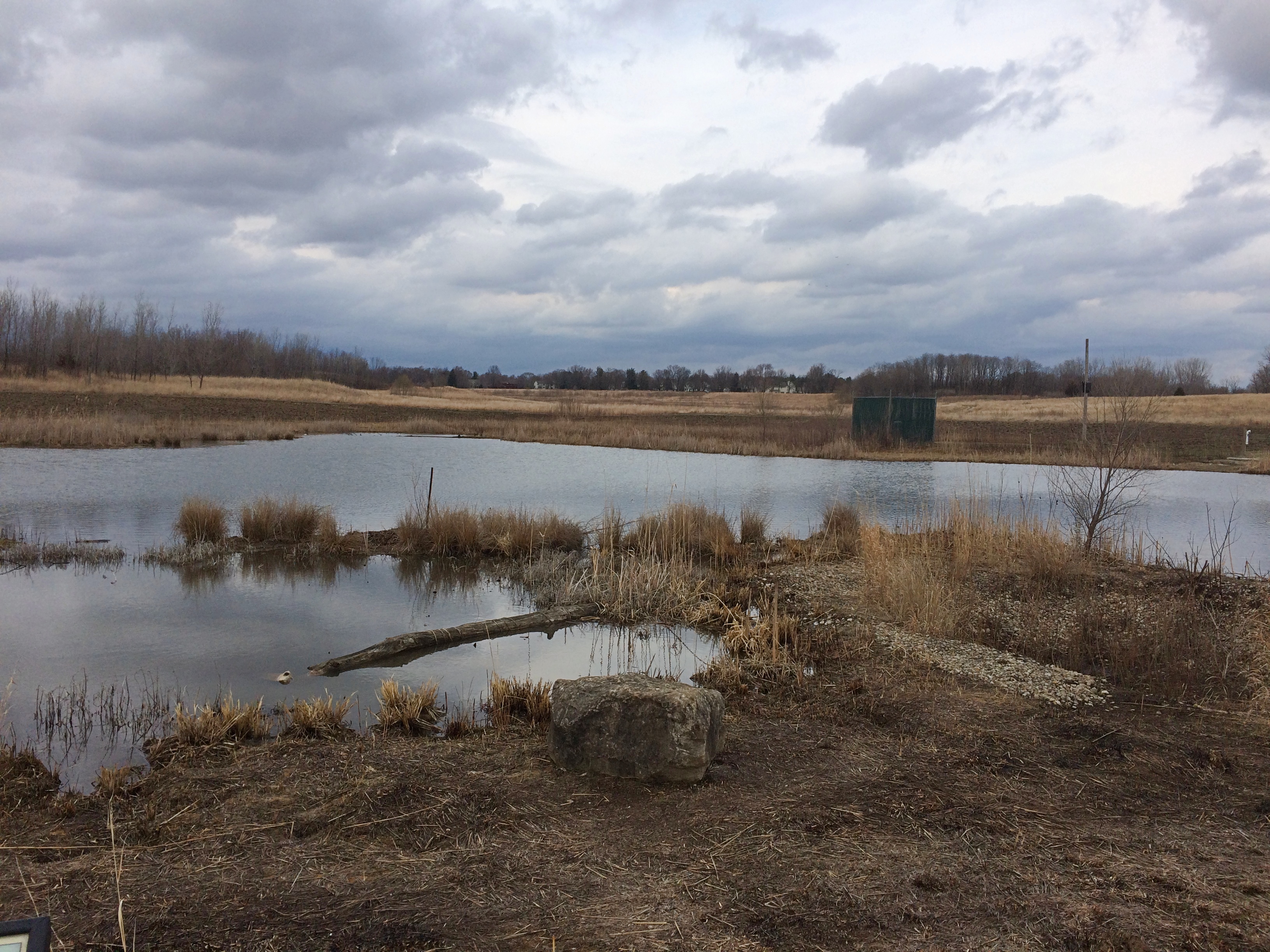
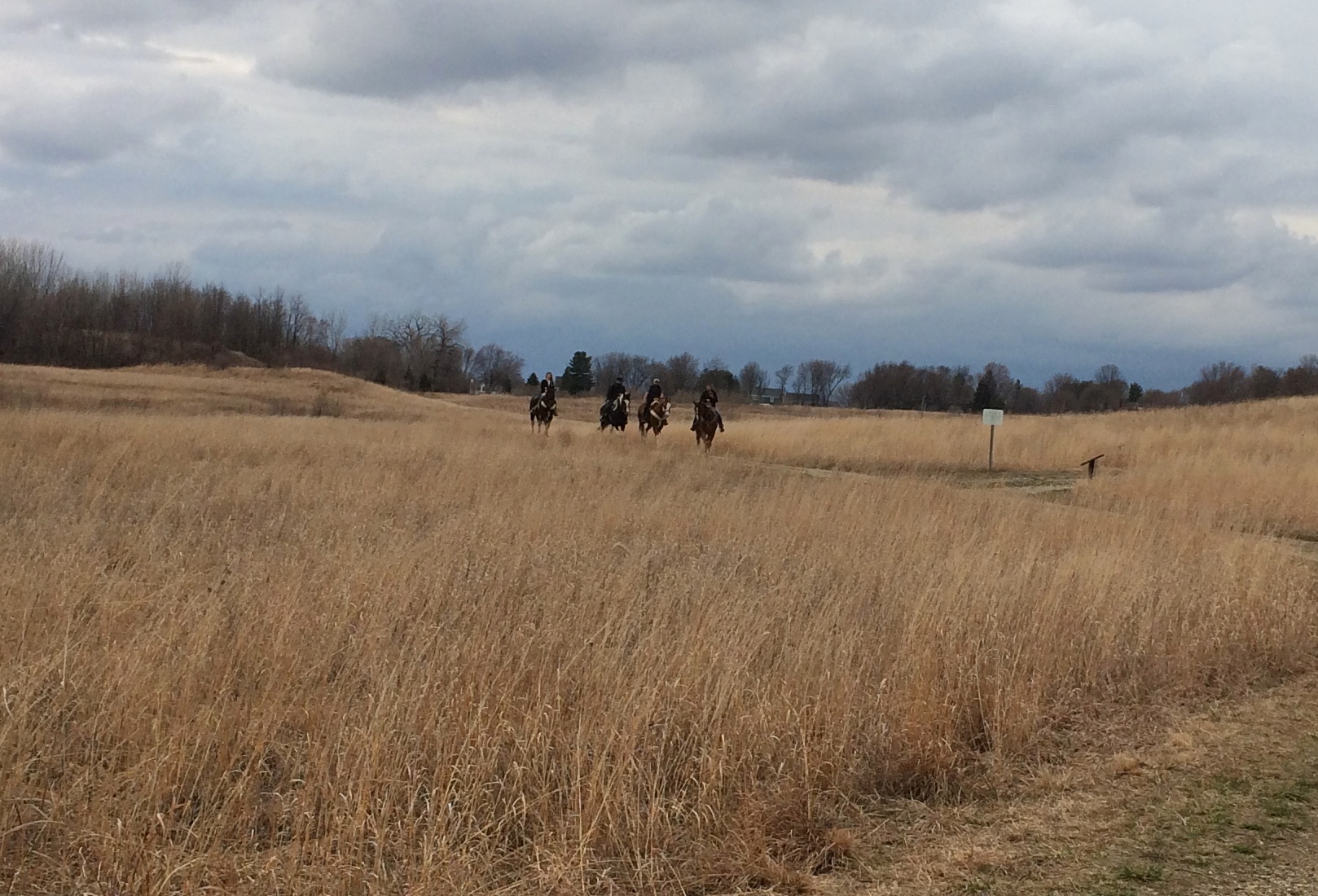
Plum Grove Reservoir

Frost this morning. I know that because I needed to be somewhere at about 8 am, so went out to my car to leave, and a thin frost coating covered all of the glass. Easy to scrape off, but a reminder of tougher ice to come. Oh, boy. Or is that oh, joy?

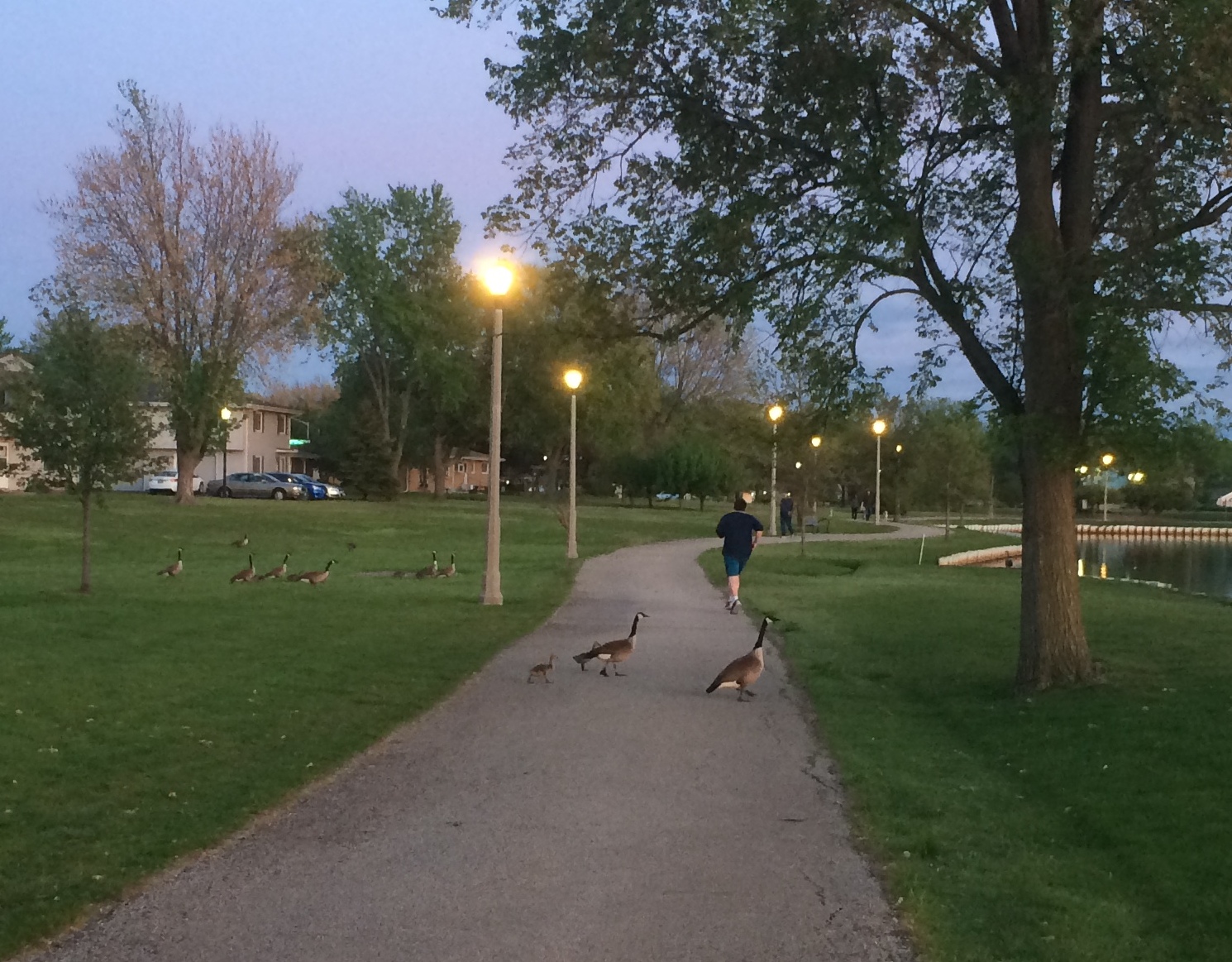
Warmish days are ahead, though, at least for a short spell. Such is October. Yesterday afternoon was cool, but still good for a short walk near Plum Grove Reservoir.
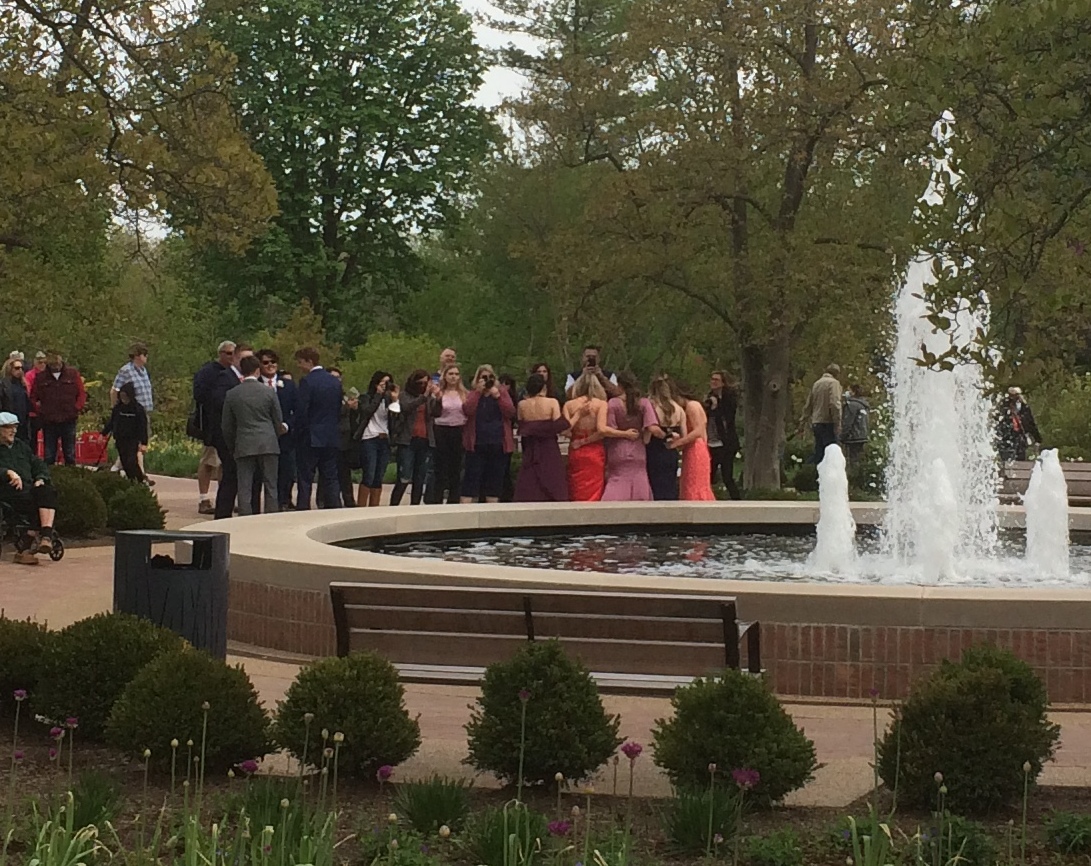
Plum Grove Reservoir
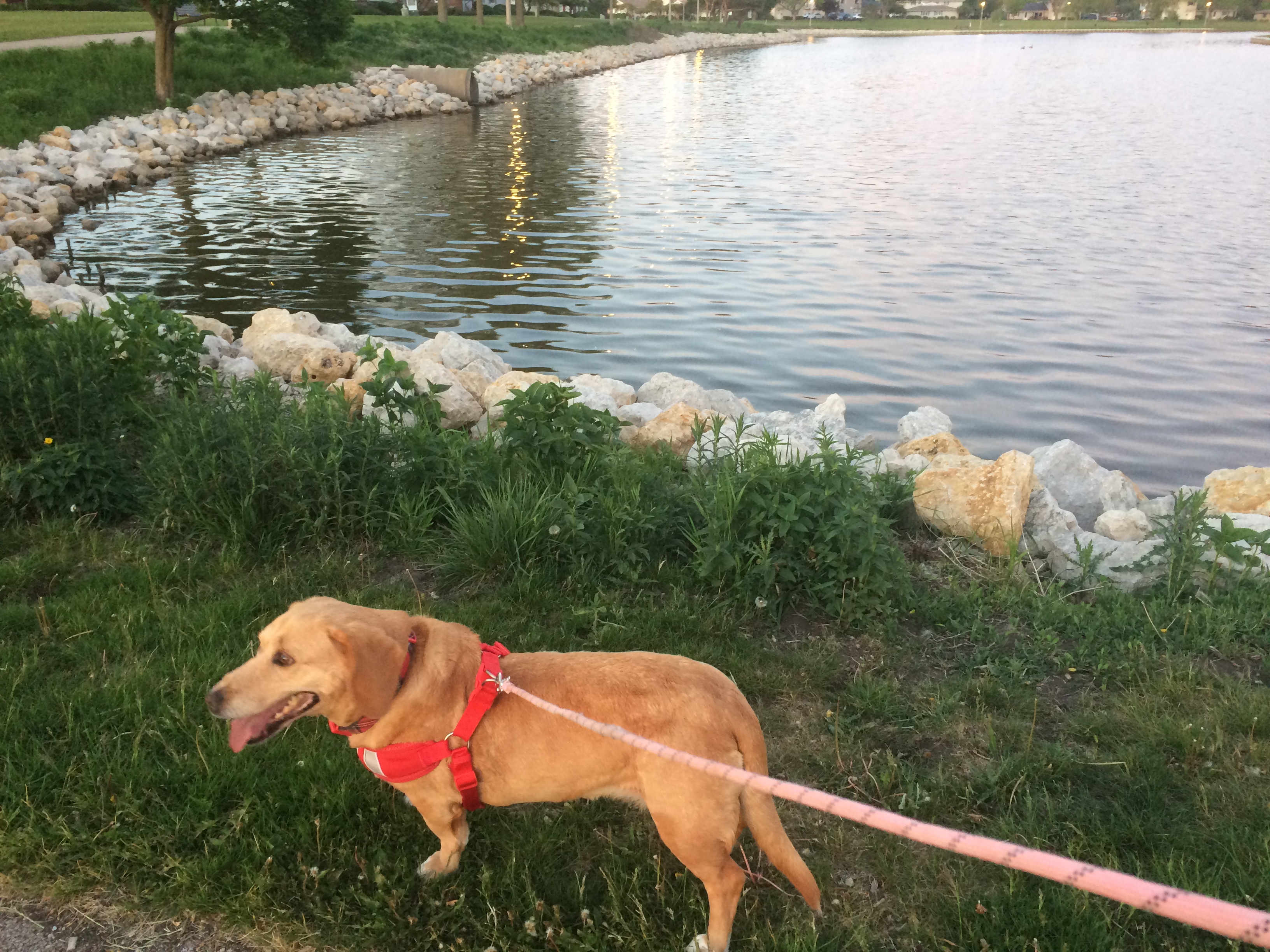
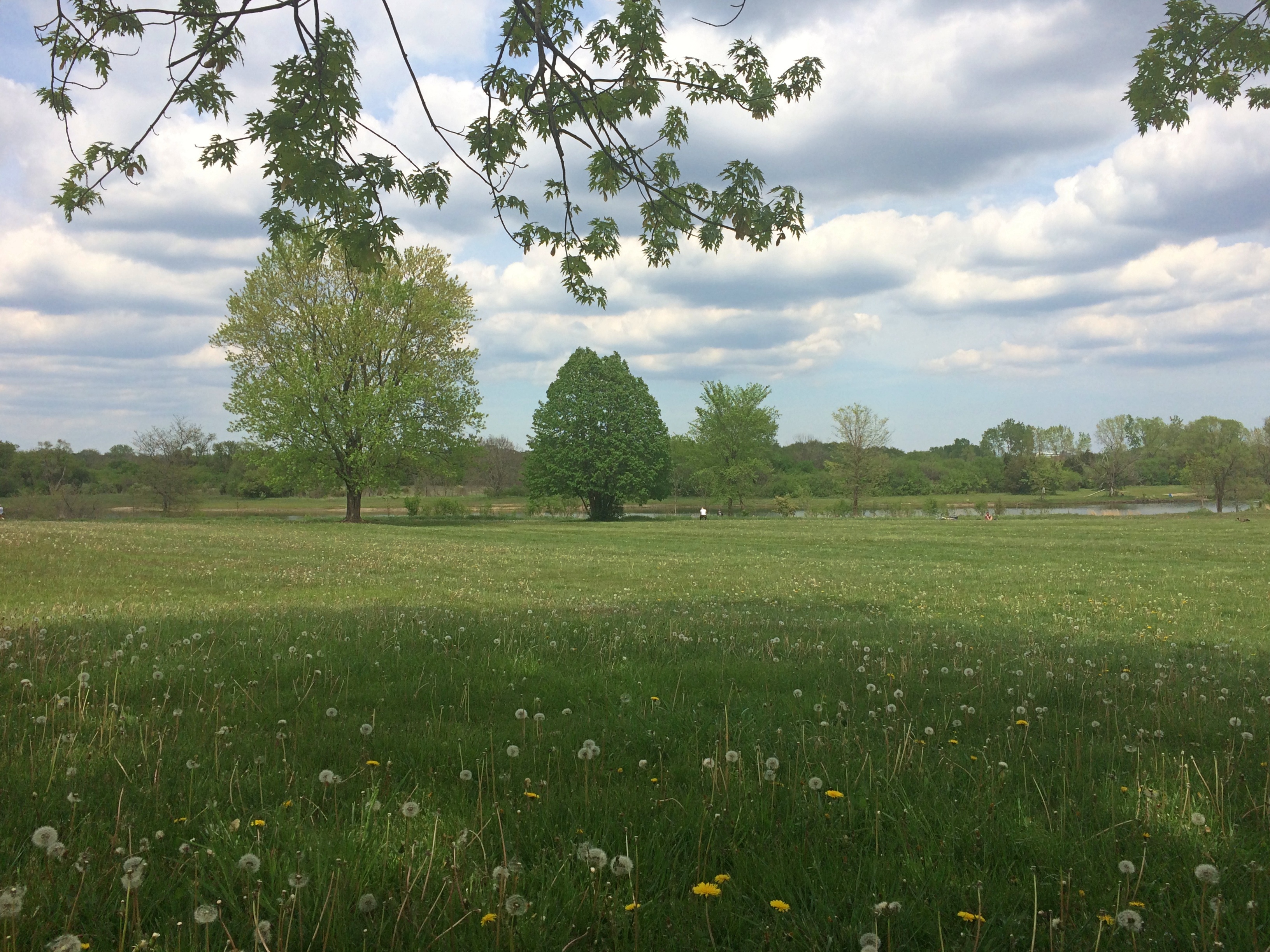
The reservoir is near Harper College in northwest suburban Palatine. A 44-acre park surrounds it, making for a pleasant place to walk, as long as the temps are high enough. Plum Grove Reservoir
Plum Grove Reservoir
Visitor parking near the park is allowed in part of Harper College’s vast lot. Here’s the view of the reservoir from the outer edge of the lot.
Plum Grove Reservoir
Turn the other way, and you see an expanse of asphalt.
Harper College
Harper College, in full William Rainey Harper College, is a community college here in the northwest suburbs, opened in 1967. Sure enough, its layout owes more than a little to that of a mid-century mall: an island of buildings surrounded by a sea of parking.

Charles Deering Memorial Library ’16

One of the places we visited during Open House Chicago in October 2016 was the Charles Deering Memorial Library on the Northwestern University campus in Evanston.Charles Deering Memorial Library Charles Deering Memorial Library A design by James Gamble Rogers, who did a lot of academic buildings at Northwestern and other schools. Apparently his taste for Gothic revival wasn’t entirely appreciated by the time the library opened in 1933, especially by budding modernists, but we don’t want every campus to look like the University of Illinois at Chicago, do we? (As interesting as that place is.) The library’s a handsome collegiate structure.

As you enter the library, you receive some advice. They say most things aren’t carved in stone, but this is. Also: Go Cubs Go!
Charles Deering Memorial Library Where to find such wisdom? Another entrance provides the answer. I’ll go along with that. Also, Go Wildcats!
Charles Deering Memorial Library Inside are artful windows. “The Deering Library’s 68 painted window medallions were created by G. Owen Bonawit (1891-1971), a master of secular stained glass from New York City,” the library says.

“The medallions represent scenes and figures from literature, mythology, religion and history. Library staff helped to select subjects and sent illustrations to Bonawit for translation into the designs.”
Charles Deering Memorial Library Charles Deering Memorial Library Charles Deering Memorial Library Such as early North America.

Dolce Far Niente and All That

Here’s an interesting list of words, if accurate, or even if not, and I suspect that’s the case for some of them (but I can’t know). Dolce far niente is a worthwhile concept: pleasant idleness, or the joy of doing nothing.

Such lists now appear periodically on line, and I believe they hark back to a pre-Internet book called They Have a Word For It: A Lighthearted Lexicon of Untranslatable Words & Phrases by Howard Rheingold (1988).

I have a copy of it around somewhere, bought fairly new. I don’t remember any of the words in it, except the concept of a ponte day. “Bridge” day in Italian, meaning a day off between the weekend and a holiday, an especially useful concept in that country since Italy doesn’t have a version of the Uniform Monday Holiday Act, and holidays can fall mid-week.

I also remember the author appearing on the radio show Whad’ya Know? Maybe in 1989. I didn’t listen to it every week in those days, but fairly often. I understand that it ran as a radio show until 2016, and now exists as a podcast.

Just before Christmas 1989, I went to a broadcast of the show when it was in Chicago, at the Blackstone Theatre (these days, the Merle Reskin Theatre). Remarkably, I can listen to it again if I want. So far, I haven’t.

Today I was near the Robert O. Atcher Municipal Center, not far from where we were yesterday. Atcher, besides being mayor of Schaumburg from 1959 to 1975, was a successful country musician.

The trees are just beginning to turn.

Schaumburg in the fall

Schaumburg in the fallClose to the Atcher Center are flowers. We’re in the narrow window when the trees are coloring up, yet some flowers are still blooming.
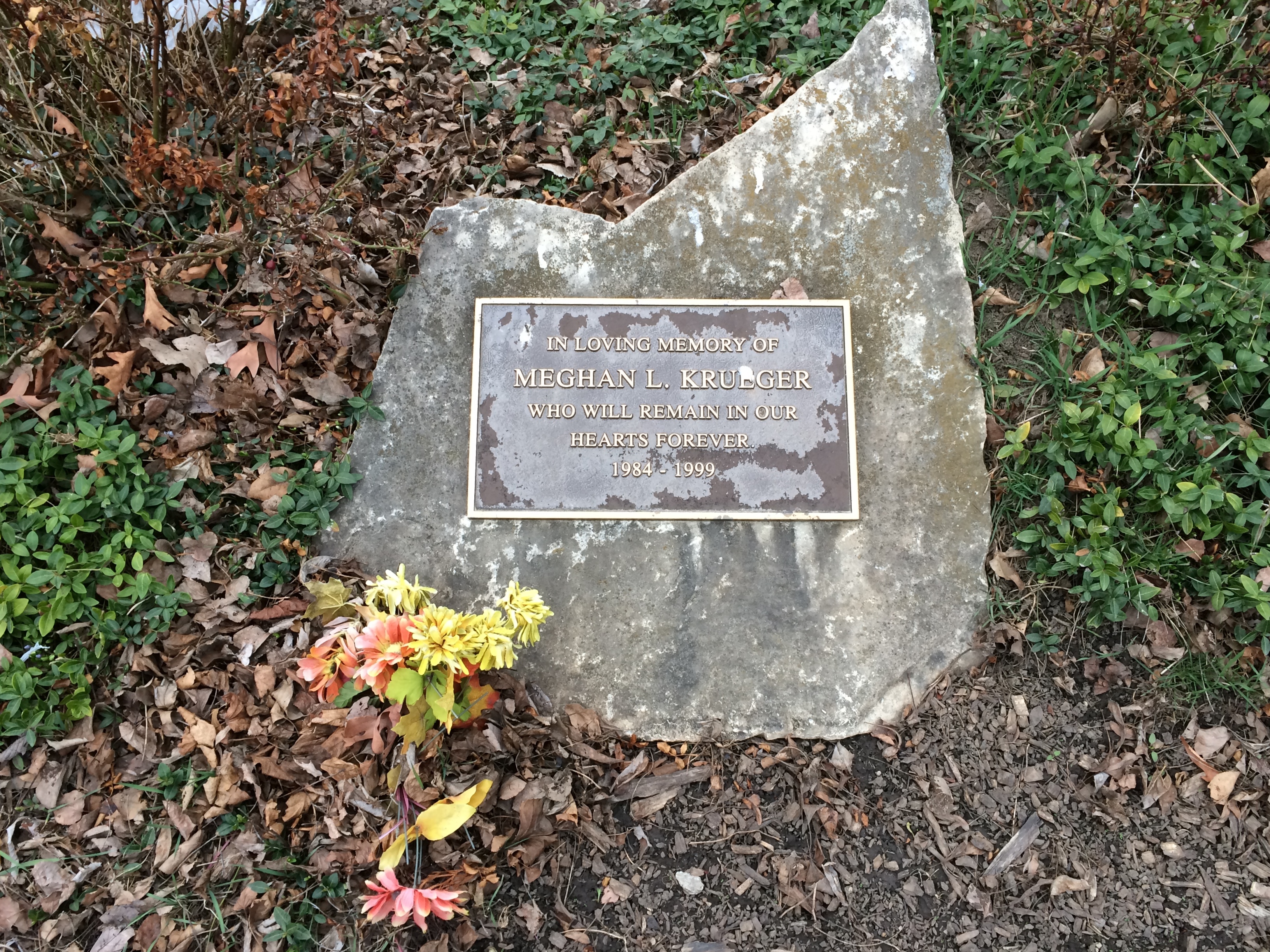
Schaumburg in the fall While on the grounds, I noticed a memorial I’d never noticed before. According to various news reports, it’s been there some years — how did I miss it? A plaque for a Schaumburg resident, René LeBeau, who died awfully young.
René LeBeau memorialI must have heard about the crash of United 232 when it happened, but I had to read about it to remember. Quite a harrowing story. It’s a wonder anyone survived.

A Short History of Gazebo Standards*

This afternoon we took a walk near the Al Larson Prairie Center for the Arts, which as far as I know is still dark. We thus passed through a bit of open land here in the northwest suburbs on the last day of September 2020. Another gazebo belonging to the Village of Schaumburg. Not too far from this one.
Its circumference is about one-quarter open, but got me to thinking: does it really count as a gazebo? Shouldn’t gazebos be almost all enclosed, with only space for an entrance?

A little research reveals two separate standards for gazebo enclosure. According to the International Gazebo Society (IGS), a gazebo has to be three-quarters enclosed. Académie international du belvédère (AIB), on the other hand, specifies seven-eights.

The divergence has a long history. The IGS, founded in London in 1787 but now headquartered in Scottsdale, Arizona, first specified gazebo standards the year after its founding. That definition traveled to other parts of the British Empire over the next decades, though it wasn’t formally adopted in the United States until the Fifth International Gazebo Conference in 1884, which was held in Washington D.C. at about the same time as the International Meridian Conference.

Meanwhile, in a fit of revolutionary zeal, the French took a different tack. In 1796, the Directorate promulgated gazebo standards for the First Republic that were the antecedents of the AIB’s standards. Bonaparte annulled those standards, but they were restored by Louis Philippe, who had a personal interest in modern gazebo theory. The AIB, headquartered in Paris, came into being later in the 19th century, and has governed gazebo standards in France and the Francophone world since then.

So most of the world follows either IGS or AIB. For a time in Maoist China, both standards were rejected as relics of European imperialism, a stance echoed today by the more woke members of the gazebo community. “Let a hundred gazebos bloom” was the Chinese slogan, beginning in about 1956, and structures built from then to 1976 are colloquially known as Maozebos.

They tended to be flimsy, and most have since fallen down or have been razed, though a good example is still standing in Shaoshan village, Hunan. The Gang of Four were thought to have even more radical ideas about gazebos, but with their defeat, China gradually returned to the IGS standard (interestingly, Taiwan adheres to the AIB standard, reportedly because Madame Chiang believed them more elegant). Indeed, China is now exporting gazebos more than any country, especially to Africa.

* Completely made up.

Churches by Bus ’15

No Open House Chicago this year, as you’d expect; no Chicago Architecture Center bus tours or house walks or Doors Open Milwaukee either. For some time now, those events have often been part of fall for us, such as in 2013 or 2014 or 2017 or last year.
Five years ago we took a Chicago Architecture Foundation (as it was then) bus tour of six Chicagoland churches. The other day I took a look at the images from then.
Such as at the First United Methodist Church in Park Ridge, including docent Jack pointing out some feature.
First United Methodist Church in Park RidgeA detail from the church’s stained glass.
First United Methodist Church in Park RidgeNext was the Holy Resurrection Serbian Orthodox Cathedral. A bell hangs outside.
Holy Resurrection Serbian Orthodox CathedralA plaque next to the bell tower explains, in English and Serbian, that the bell was cast in 1908 and formerly hung at a Serbian Orthodox church in Chicago. “[It] has been placed in this tower so that it may once again peal with joy at weddings and baptisms, announce the commencement of church services, and sadly toll at the passing of our parishioners,” the plaque says.

A detail of the bronze front doors.
Holy Resurrection Serbian Orthodox CathedralA prelate I didn’t know. Now I do.
Holy Resurrection Serbian Orthodox CathedralSt. Joseph the Betrothed Ukrainian Catholic Church.
St. Joseph the Betrothed Ukrainian Catholic Church.Near the main structure is an outdoor shrine to Our Lady of Hoshiv.St. Joseph the Betrothed Ukrainian Catholic Church.“The icon in the grotto is a modern replica of the miraculous icon of Our Lady of Hoshiv, considered by many Ukrainians to be a special place of pilgrimage,” the church web site notes.

“The original icon was painted at the beginning of the 18th century, and during the Turkish and Tatar incursions in Ukraine was taken to Hoshiv for safety.

“In Hoshiv, the icon began to miraculously glow with a great halo, as witnessed by many locals and their priest. After the glow subsided, there were tears on Our Lady’s face.

“After this miracle, the people petitioned Metropolitan Lev Sheptytsky to transfer the icon to a ‘holy place’ and it was moved to the Basilian monastery of Yasna Hora (Bright Mountain) in Hoshiv. There the miraculous nature of this icon continued to reveal itself with many documented healings.

“The Grotto of Our Lady of Hoshiv that stands next to St. Joseph Church was built in 1961-1962, and was dedicated in May 1962 by Bishop Jaroslaw Gabro.”

Outside Our Lady of Hope in Rosemont is, was, a patch of elephant ears.
Our Lady of Hope RosemontThe church isn’t overwrought with stained glass, but there is some.
Our Lady of Hope RosemontMuch more stained glass can be found at St. Luke’s Lutheran Church in Park Ridge.St. Luke’s Lutheran Church in Park Ridge

St. Luke’s Lutheran Church in Park RidgeOne church we visited but which I didn’t post about — I don’t remember why — was Mary, Seat of Wisdom, also in Park Ridge.

Mary, Seat of Wisdom

Mary, Seat of WisdomMary, Seat of WisdomInteresting stained glass, not quite like I’ve seen elsewhere.Mary, Seat of Wisdom Mary, Seat of Wisdom

Mosaics. Or was it a painting that looks like a mosaic? I don’t remember.
Mary, Seat of WisdomAnother detail I liked.
Mary, Seat of WisdomThe Eye of Providence clearly belongs in a church, and maybe even on the dollar bill, but it would be interesting if it popped up randomly in public places. Just to give people something to think about.

Thursday Postscripts

Beverly Shores, Indiana, pop. 600 or so, is completely surrounded by Indiana Dunes NP. One way to get to the town, or the national park for that matter, is to take the South Shore Line from Chicago. If you do so, the place to get off is at Beverly Shores station.
Beverly Shores Train StationSince its renovation in recent years, the station also includes an art galley. Closed when we got there.
Beverly Shores Train StationWhen I’m pretty sure no train is nearby, it’s hard to resist a shot of the rails converging off toward the horizon. The rails go on forever in a silver trail to the setting sun.
near the Beverly Shores Train Station

Arthur Gerber designed the station in 1929. “Gerber was the staff architect for Samuel Insull, who then owned the line, [and] it is one of several examples of an ‘Insull Spanish’ style used on the rail line,” writes historic preservationist Susie Trexler.

Insull must have been fond of the style. “Say, Gerber, old man, whip up some more Spanish-style stations.”

After all, look at his mansion, which is generally classified as Mediterranean.
Cuneo Mansioncuneo mansionBetter known as the Cuneo Mansion, for its second owner, but utility magnate Insull had it built. Above are shots I took when we visited. When was that? I couldn’t remember till I checked. Ten years ago.

The fellow interred in the Beyond the Vines columbarium at Bohemian National Cemetery is Benjamin George Maldonado, 34, who died unexpectedly of an undiscovered brain cyst, according to a column in the Tribune by John Kass.

“The priest gave a great eulogy of Ben,” Kass quoted Maldonado’s widow as saying. “His urn had a baseball on top. We all signed the baseball that went into the wall. There were sandwiches and sodas, and we had a picnic. He was so young. A headstone would have been so somber.”

The man who created the columbarium, whom Kass also quotes, was Dennis Mascari. He’s interred there now as well.

My brother Jay is skeptical that the parade pictures posted on Sunday were taken in September 1967, he told me by email. Two reasons: yellow foliage and people wearing a little more than they would on a very warm Texas September day.

As Jay points out, mid-September is far too early for changing leaves. But I color corrected the images. In the original, faded now for more than half a century, it’s hard to tell whether the leaves are green or yellow. Denton Texas 1967

In the color corrected version, some of the leaves look green, some yellow. I don’t know whether that reflects the original color of the leaves, or the color-correction process itself. So I’d say the leaf colors are inconclusive.

The clothes are a more compelling argument. The kid on the top of the station wagon is indeed wearing more than any kid would in high 80s temps, and so is the woman on the flatbed, and maybe the men leaning against that vehicle, who seem to be wearing long-sleeve shirts or jackets. Of course, the members of the band would wear their uniforms no matter how hot it was. I remember some sweaty times in my own band uniform, about 10 years later.

“When is it then?” Jay writes. “I don’t know. I know that the Denton HS band was one of many high school bands that participated in the NTSU homecoming — which sources online say was November 11, 1967 — but: (1) I have no recollection of a parade, only of marching in formation on the playing field, and (2) if there was a parade, it seems odd that it’s heading away from NTSU rather than towards it, as it appears to be the case here. Of course, the fact that I don’t remember a parade isn’t dispositive, nor is the direction.”

Ah, well. Guess we’ll never know for sure. The lesson here is to write the date on the back of physical prints. But even that is an increasingly obsolete bit of advice.

Myrick Nathan 1875Here’s Nathan Myrick, founder of La Crosse, Wisconsin, whose for-certain public domain image I obtained. Founding a town is more than most people get to do.

It occurs to me that I’ve now visited all of the 15 largest municipalities in Wisconsin, and maybe the 20 largest, though I don’t remember visiting New Berlin, but as a Milwaukee suburb, it’s likely that I passed through.

Is that important for some reason? No. But for a state in which I’ve never lived, I’ve been there a lot. As an old Chicago friend of mine once said, one of the amenities of living in the Chicago area is access to Wisconsin. I agree.

Aurora West Forest Preserve

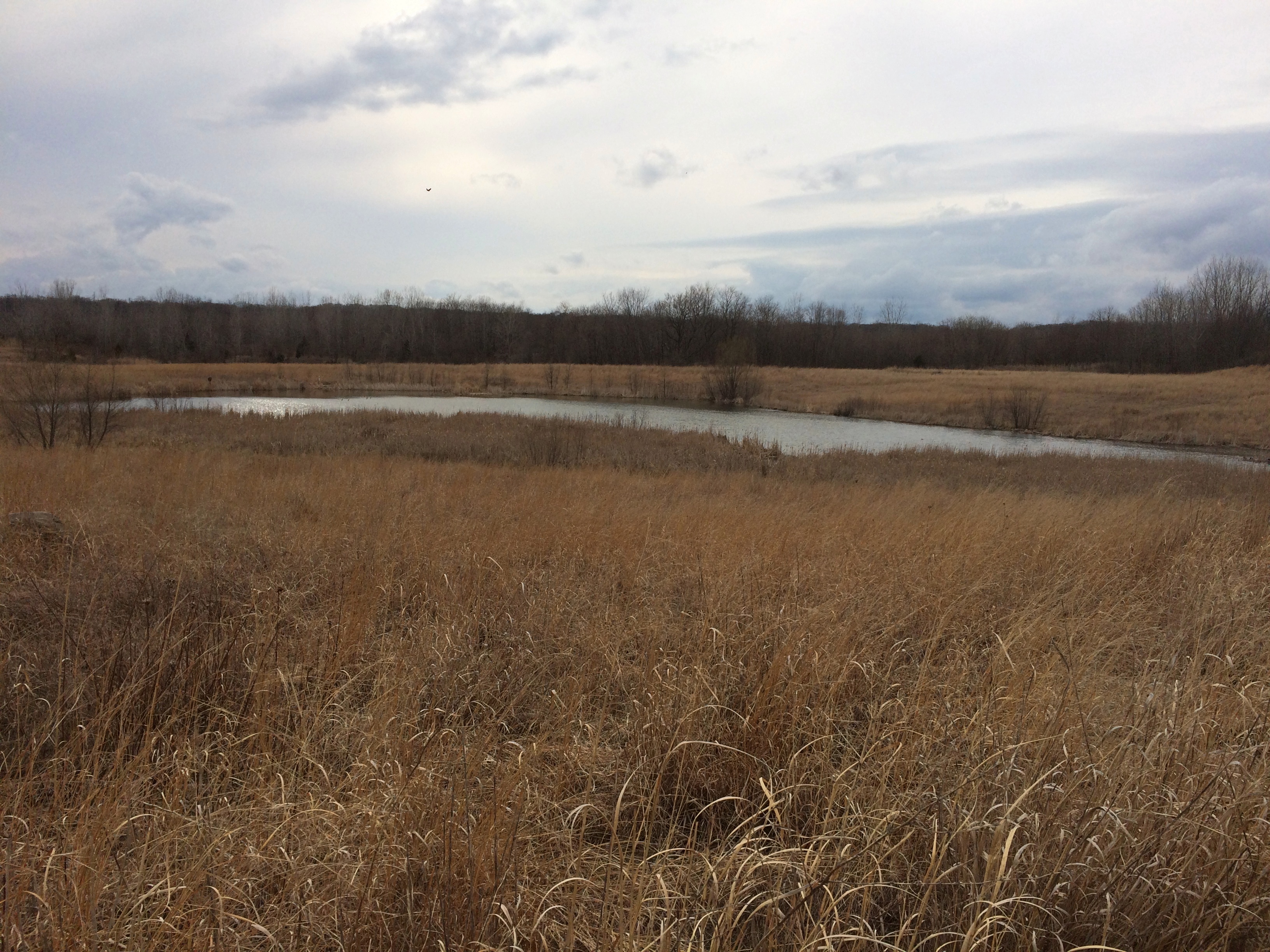
Sometimes forest preserves include more prairie than forest here in the Prairie State, but not so for the Aurora West Forest Preserve in Kane County.
Aurora West Forest PreserveForest means forest, once you walk a short way along a wide path.
Aurora West Forest PreserveAurora West Forest PreserveSupposedly it’s a path for unleashed dogs, but we didn’t have our dog, and we didn’t see anyone else’s either. Or anyone else at all.
Aurora West Forest Preserve

Aurora West Forest PreserveA good place to imagine you’re far from the works of man.
Aurora West Forest PreserveMostly.

Greve Cemetery

Tucked away north of Higgins Road but south of I-90 (the Jane Addams Memorial Tollway) in Hoffman Estates, Illinois, is Greve Cemetery. It’s about a half a mile to the west of Fabbrini Park as the crow flies, which I guess would be a fitting bird to seek out an obscure burying ground.
For a suburban development, the streets of the surrounding neighborhood of Barrington Square are fairly dense, with houses and townhouses of various configurations lining the way. A lot of people were out and about on those streets and yards late in the afternoon when I parked on Abbey Wood Drive to look for the cemetery, but no one else was interested in it.

It wasn’t hard to find.

Greve Cemetery Hoffman EstatesGreve Cemetery
In 1827 was called “Wild Cat Grove”
Johann Gerhard Greve settled here from
Hanover, Germany, in 1838
Purchased land from government in 1842
Property was first used as a family and
Community cemetery in the 1840s
Sold to Cook County in 1899
Acquired by the village of Hoffman Estates in 1989

Ah, those plucky German settlers. The cemetery is atop a small hill — pretty much the only kind in Illinois — and thick with oaks and other tall trees.
Greve Cemetery Hoffman EstatesFenced in completely. I assume because of a history of wanker vandals beginning with the surrounding development in the late 20th century.
Greve Cemetery Hoffman EstatesStill, most of the stones are visible. Including the Greves.
Greve Cemetery Hoffman EstatesAnd the Völkenings, complete with umlaut.

Greve CemeteryStones without much left to tell their tales.
Greve CemeteryA short history of the cemetery is here, and another article about it is here.

NW Suburban Tree in Motion

Occasionally I wake up in the wee hours and have trouble falling asleep again, which I figure must be true for a lot of people. That happened this morning at around 4. One strategy to deal with that is to put a very familiar album on the CD player/tape deck on the night table. Familiar and not too loud. I listen to the first song or two and then realize I’m listening to the last, or one of the later songs on the album, having slept through the rest.

That didn’t work this morning, so I just waited for sleep to return as the morning light began to creep into the room. Then I remembered I needed to put gas in my motorcycle, so I put the nozzle in the right place, and sat down at a small cafe table under an umbrella for a cold drink, trusting the pump to shut off automatically. Mm. I’ve never owned a motorcycle, I thought. Ah, I’m dreaming.

Later in the morning, when I was fully awake, I was in the back yard for a few minutes, enjoying a pleasant breeze.

I’m fairly sure that’s an aspen in my back yard, just on my side of the fence. I’ve seen it grow quite tall over the years. It will be one of the first to turn color for the fall — a few leaves are already yellow, I see.

I’ve read that they’re sometimes called quaking aspens. Or trembling aspens. The names certainly fit today.

The Old Ontarioville Cemetery

Ontarioville, Illinois, is the geographic equivalent of a ghost sign on the side of a building. Its history is detailed by Neil Gale of the Digital Research Library of the Illinois History Journal. Enough to note here that it was a 19th-century town, but it didn’t prosper in the 20th century for various reasons, not enough to remain a distinct entity. Now Ontarioville is the name of a neighborhood in northwest suburban Hanover Park.

One bit of residuum from the town is the Old Ontarioville Cemetery, located on an unattended slice of land between the driveway to a water reclamation facility and the parking lot of the Grace Orthodox Presbyterian Church.
Old Ontarioville Cemetery Hanover ParkIt only has a scattering of stones, mostly obscured by grass in August and illegible anyway.
Old Ontarioville Cemetery Hanover ParkOld Ontarioville Cemetery Hanover ParkSome have almost completely worn away.
Old Ontarioville Cemetery Hanover ParkBut not the Schick stone.
Old Ontarioville Cemetery Hanover ParkOr the Harmening stone.
Old Ontarioville Cemetery Hanover ParkFred Schick (d. 1933) owned a general store in the community in the early 1900s and was postmaster besides, so it seems likely that Schick Road, a thoroughfare not far to the south, was named for him. He rests in the weedy cemetery with his wife Sophia, who lived to 1952, and his son, who died at 17 in 1920.

Heinrich Harmening (d. 1903), here with wife Dorothea (d. 1924), seems like a somewhat bigger fish in this small pond, apparently owning a prosperous dairy farm and building a large house on what is now U.S. 20 (as pictured in Gale’s article). I must have driven by it many times without noticing, so one fine day I might go looking for it, if it’s still around.