Eclipse Leftovers

Time for a second spring break. It isn’t really spring unless you can squeeze in two. Back to posting around May 19.

Today didn’t much feel like spring, anyway. Cold drizzle. Not that cold, really, but it felt that way after a run of warm days.

I’ve read about people who become eclipse followers. There’s a word for it, at least according to Time: umbraphile. (Time is still a thing?) It’s an impulse I appreciate, but I don’t know that I’ll join them.

On the other hand, Pamplona (say) on August 12, 2026 sounds good in all sorts of ways, so we shall see. I’m not counting on being unshuffled when it comes to this mortal coil on August 12, 2045, which is the timing of the next North American total solar eclipse.

Last month, we passed through Farmington, Missouri, which is the seat of St. Francois County.Farmington, Missouri

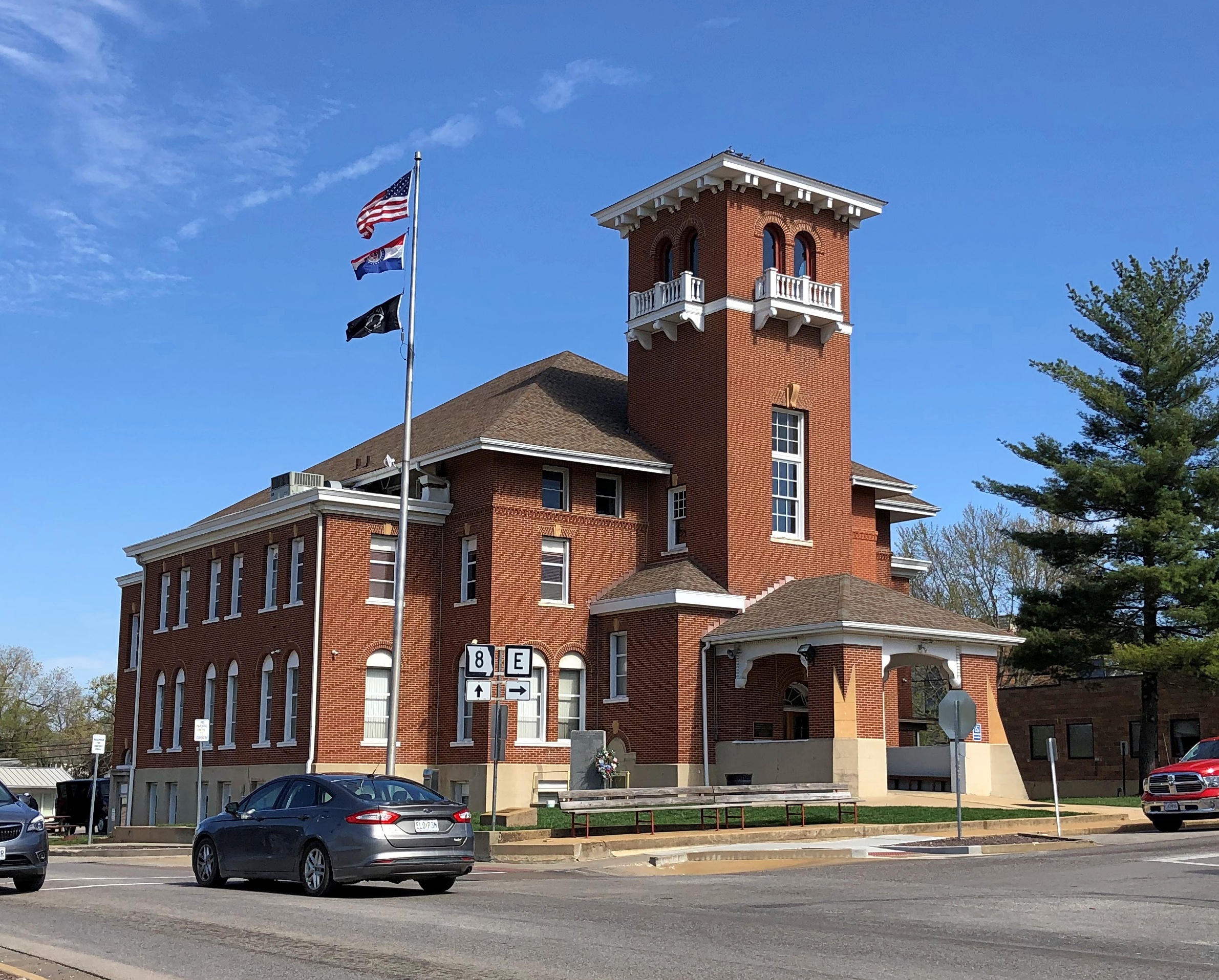
The courthouse, fourth on the site, dates from the 1920s. “Innuendoes about fraud led to a grand jury investigation; the solution to the architect’s questionable procedure apparently was resolved by closer supervision,” says the University of Missouri about Norman Howard of St. Louis, the architect of the current courthouse.

There’s a story in that line, the details of which may be lost to time.

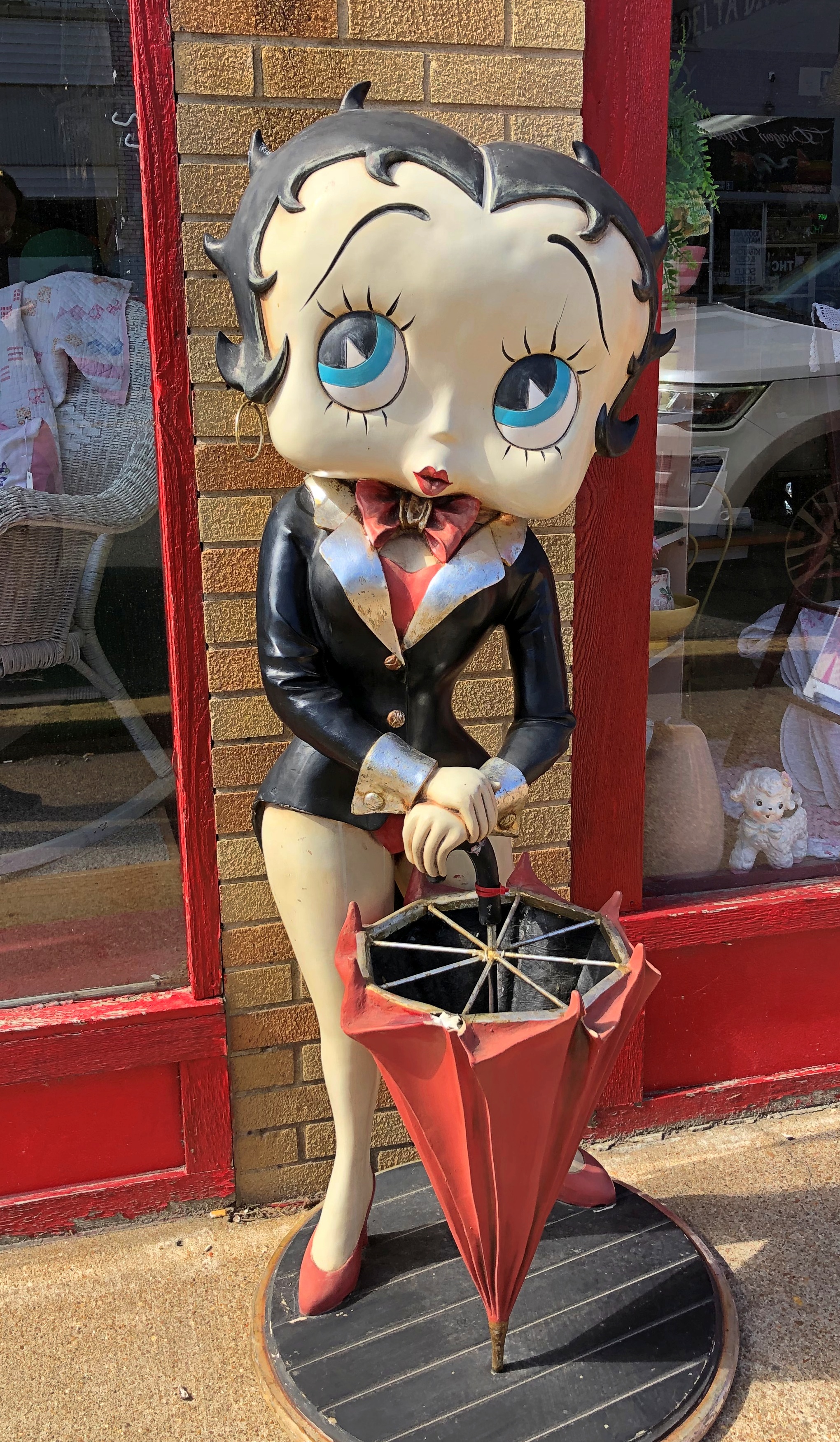
Who can you see outside an antique store on the main street of Potosi, Missouri? Betty!
Who can you see on the wall of the Laura Ingills Wilder Home in southern Missouri?Rose Wilder Lane
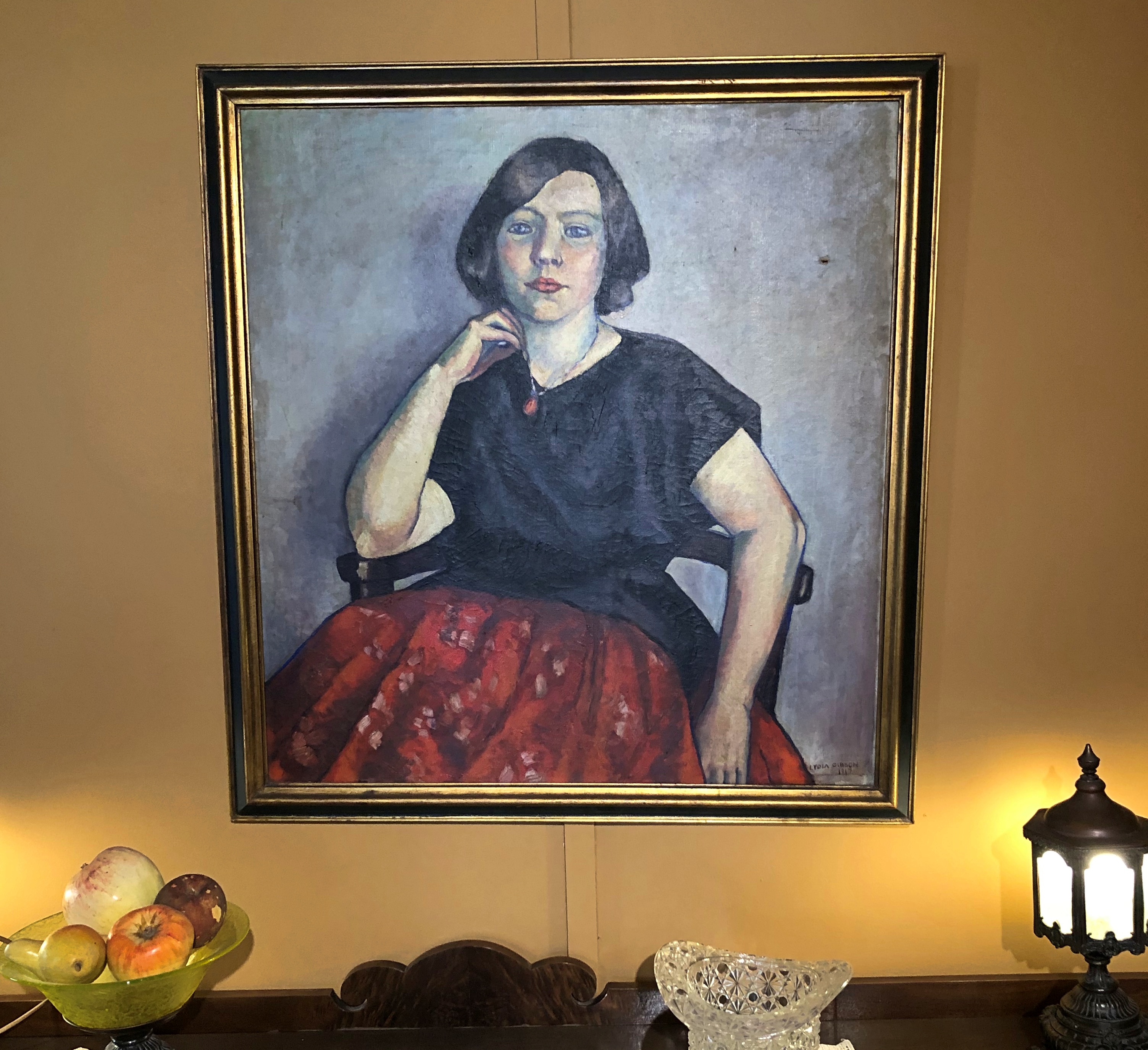
A young Rose Wilder Lane, Laura’s daughter and a writer herself, and apparently a foremother of modern libertarianism.

Spotted in downtown Nacogdoches. Nacogdoches
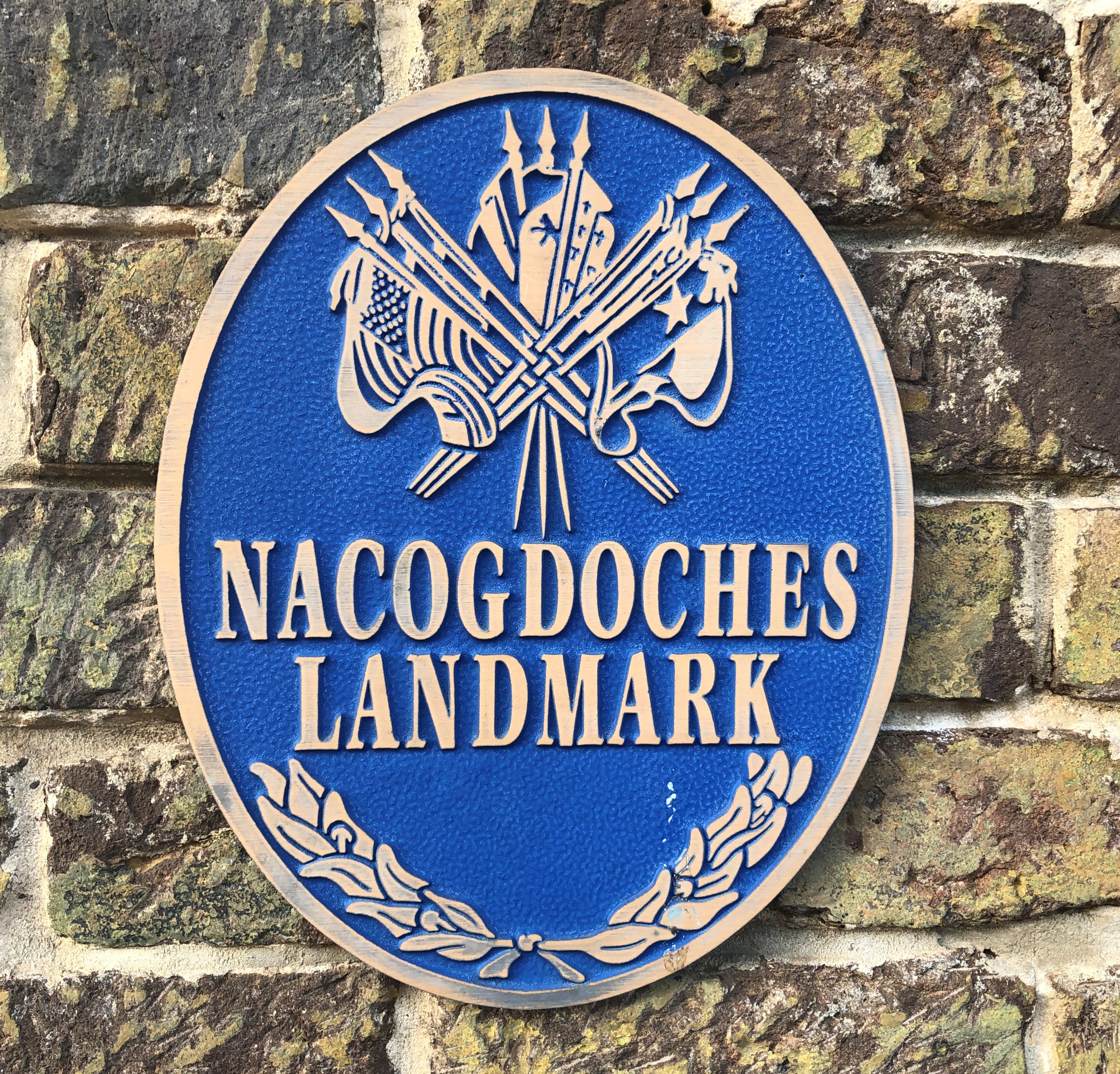
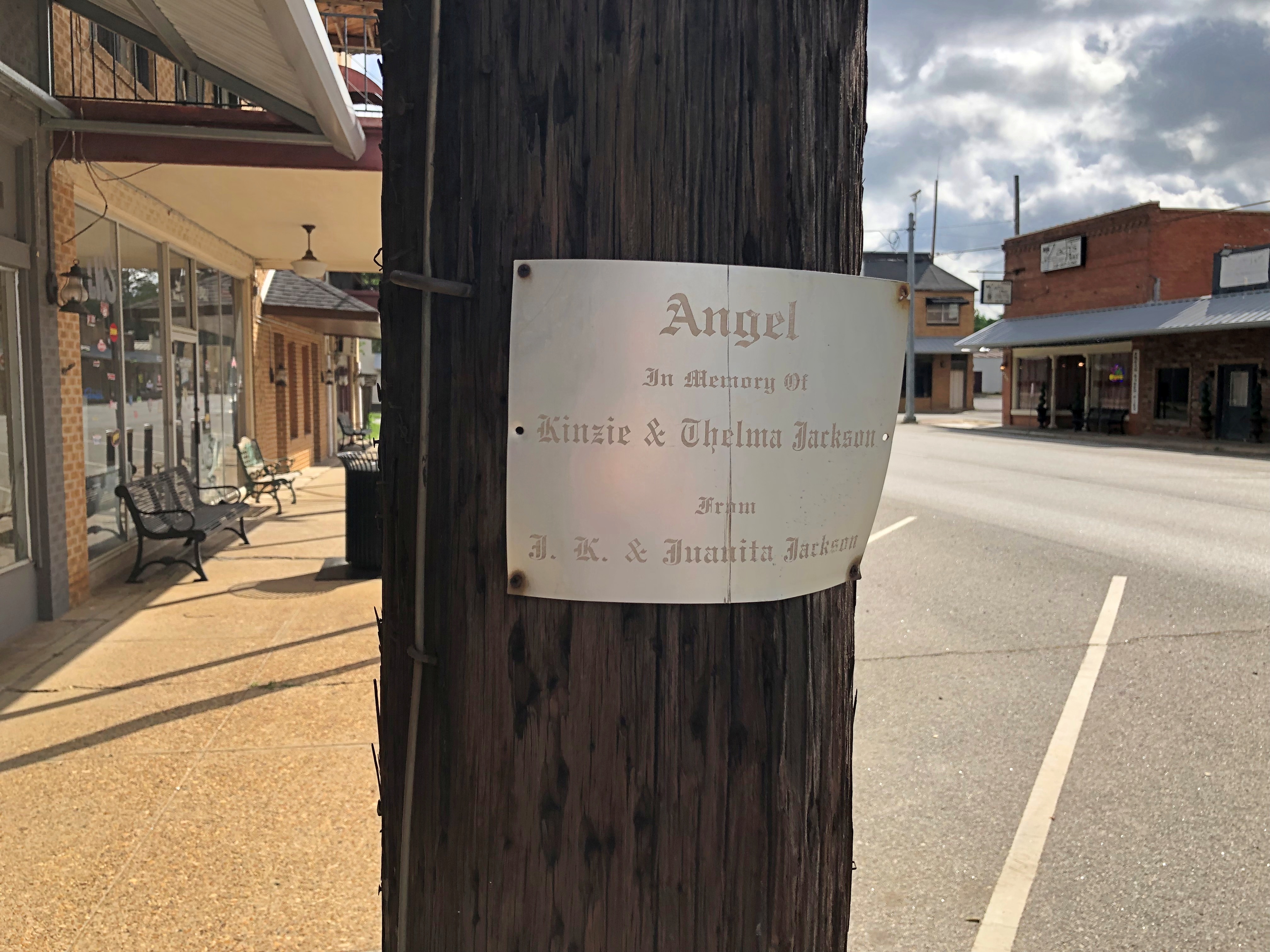
That’s a nicely designed memorial plaque. Showing the nine flags over Nacogdoches; the usual six in Texas lore, plus three more localized ones raised during various rebellions.

Did I make note of the landmarked building? It was nice enough, but not memorable. Lone Star Feeds, on the other hand —Lone Star Feed

A pet food plant, about 50 years old now.

For sale in Logansport, Louisiana.Logansport, La.
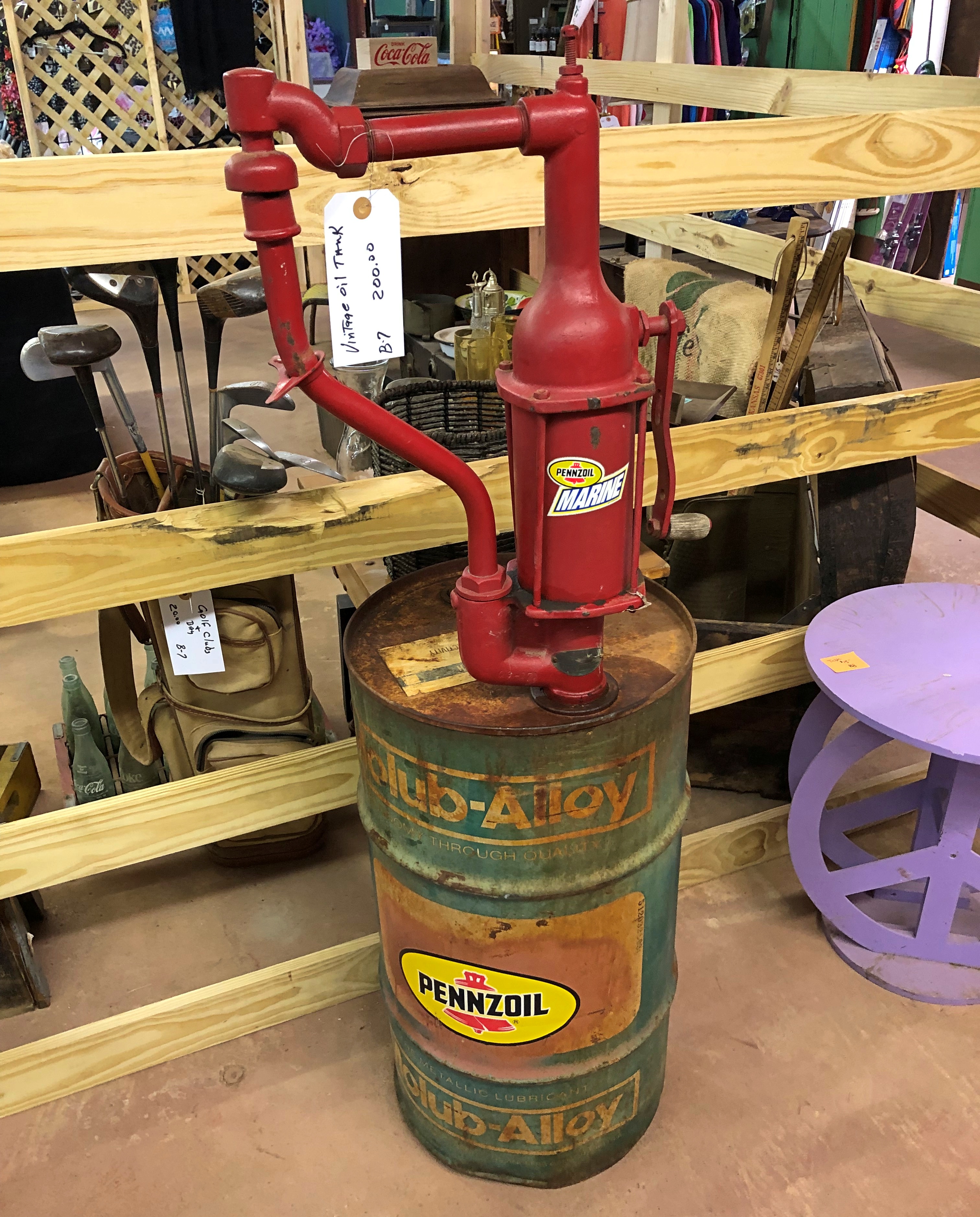
“Vintage oil tank,” yours for $200, as of April.

One of the murals I saw in Shreveport was prominently signed.Shreveport, La.
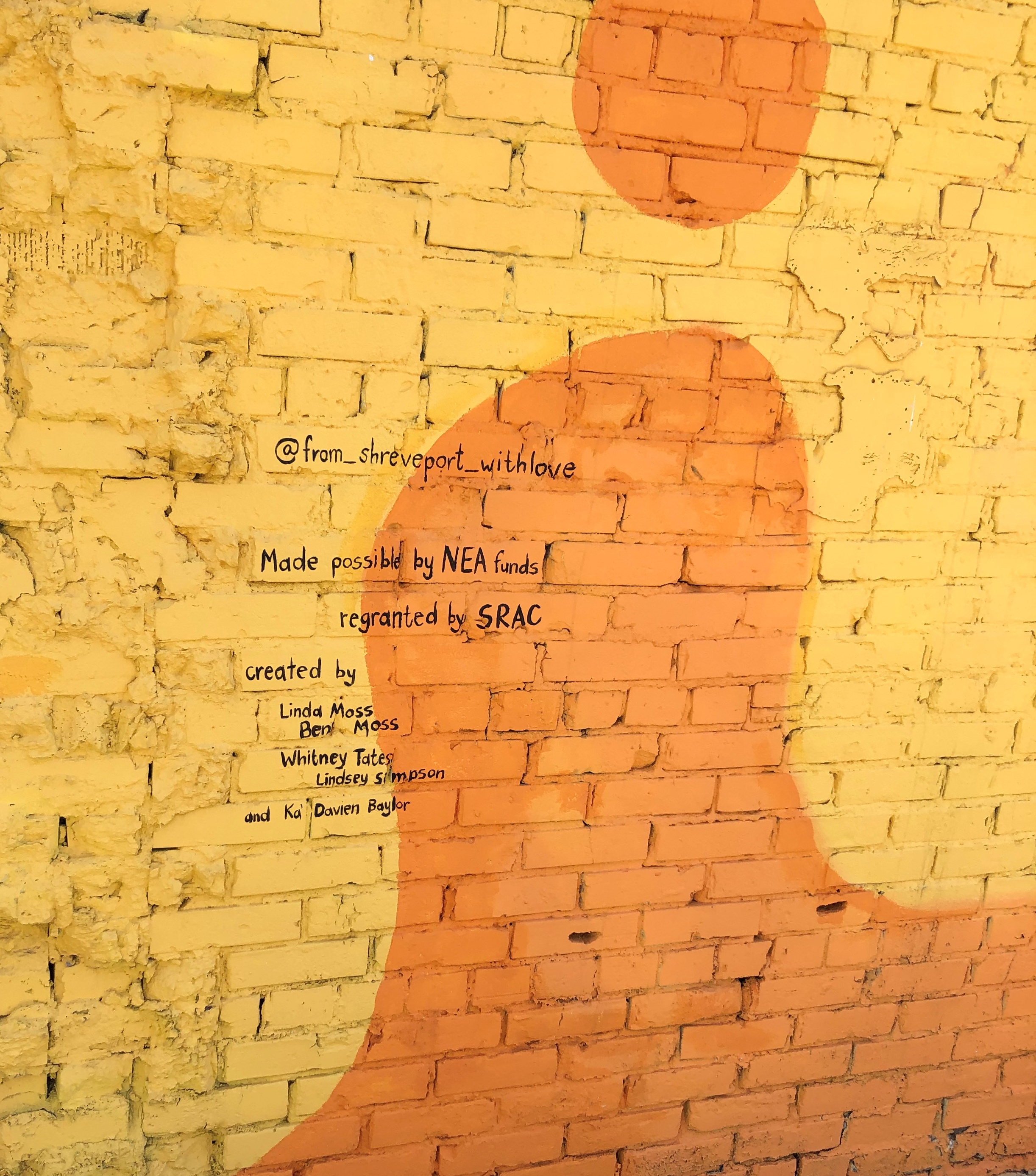
Your tax dollars at work: funding by the National Endowment for the Arts. Actually, that strikes me as a good way to spend a minuscule amount of federal dollars.

A redevelopment opportunity in Hot Springs, Arkansas.Hot Springs, Arkansas
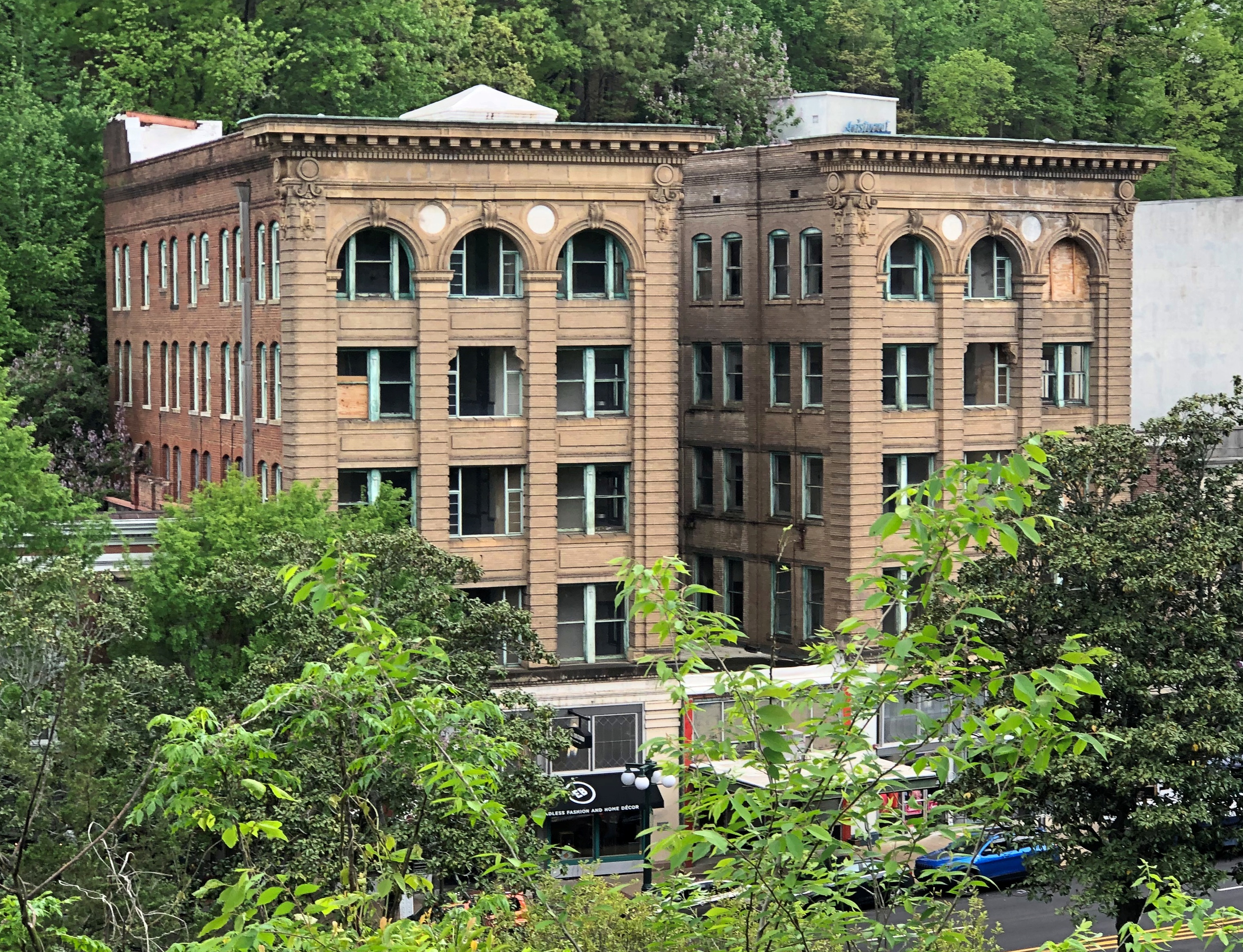
That would take some serious coin, but maybe it could work. Step one, hire that structural engineer to do a report.

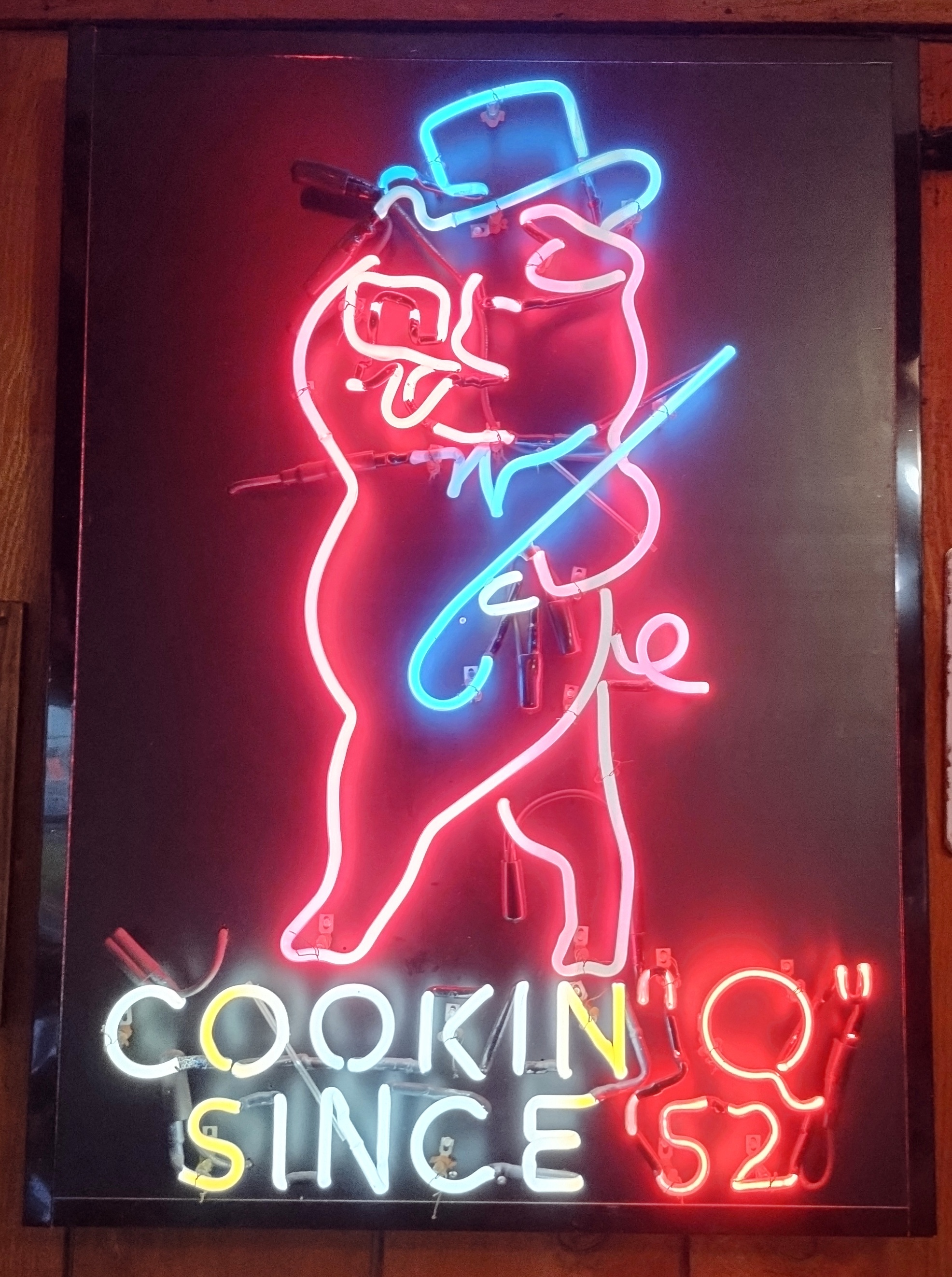
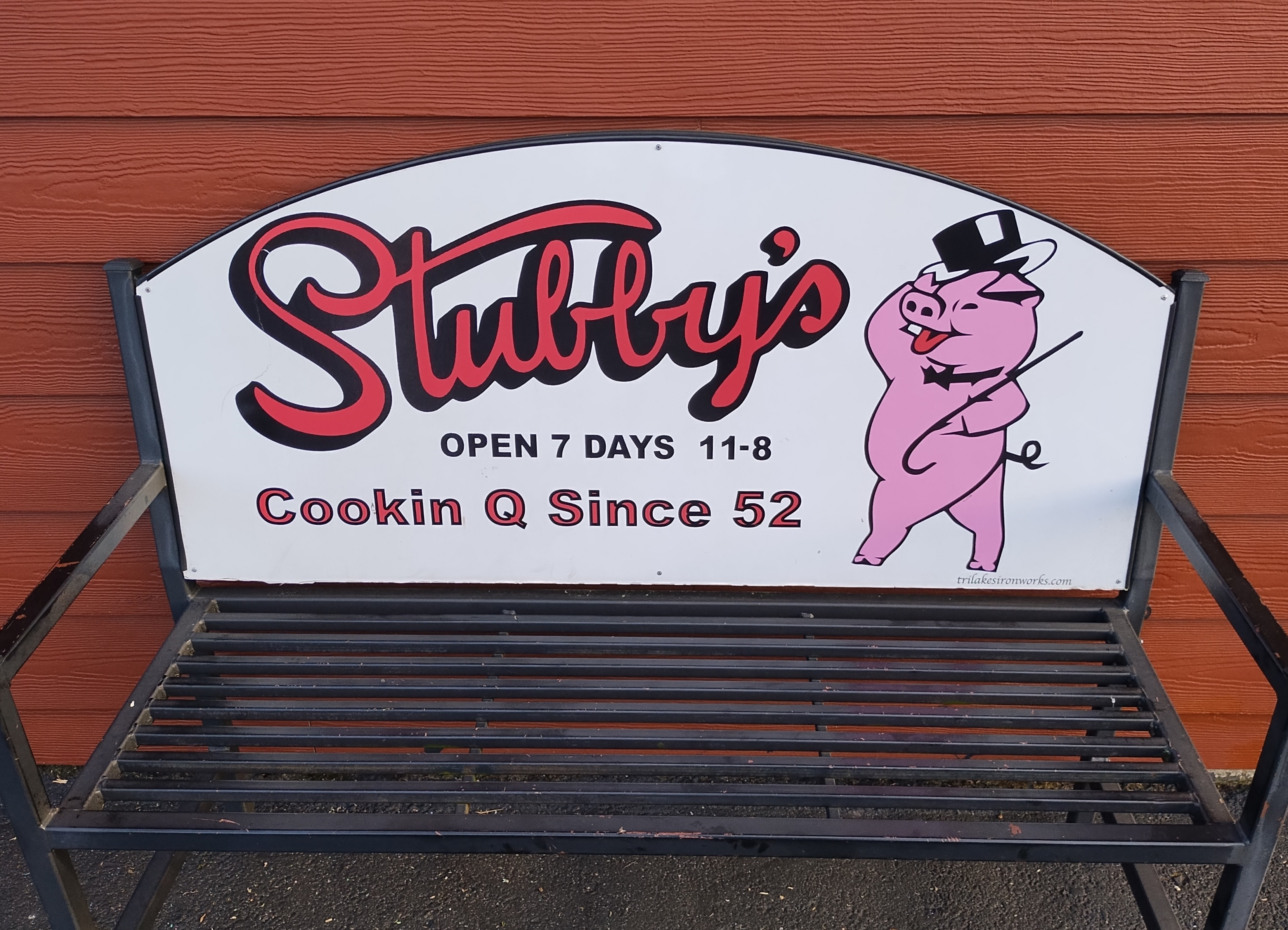
If you have the urge for barbecue in Hot Springs, this place will satisfy. Cookin Q since ’52.Stubby's, Hot Springs, Ark
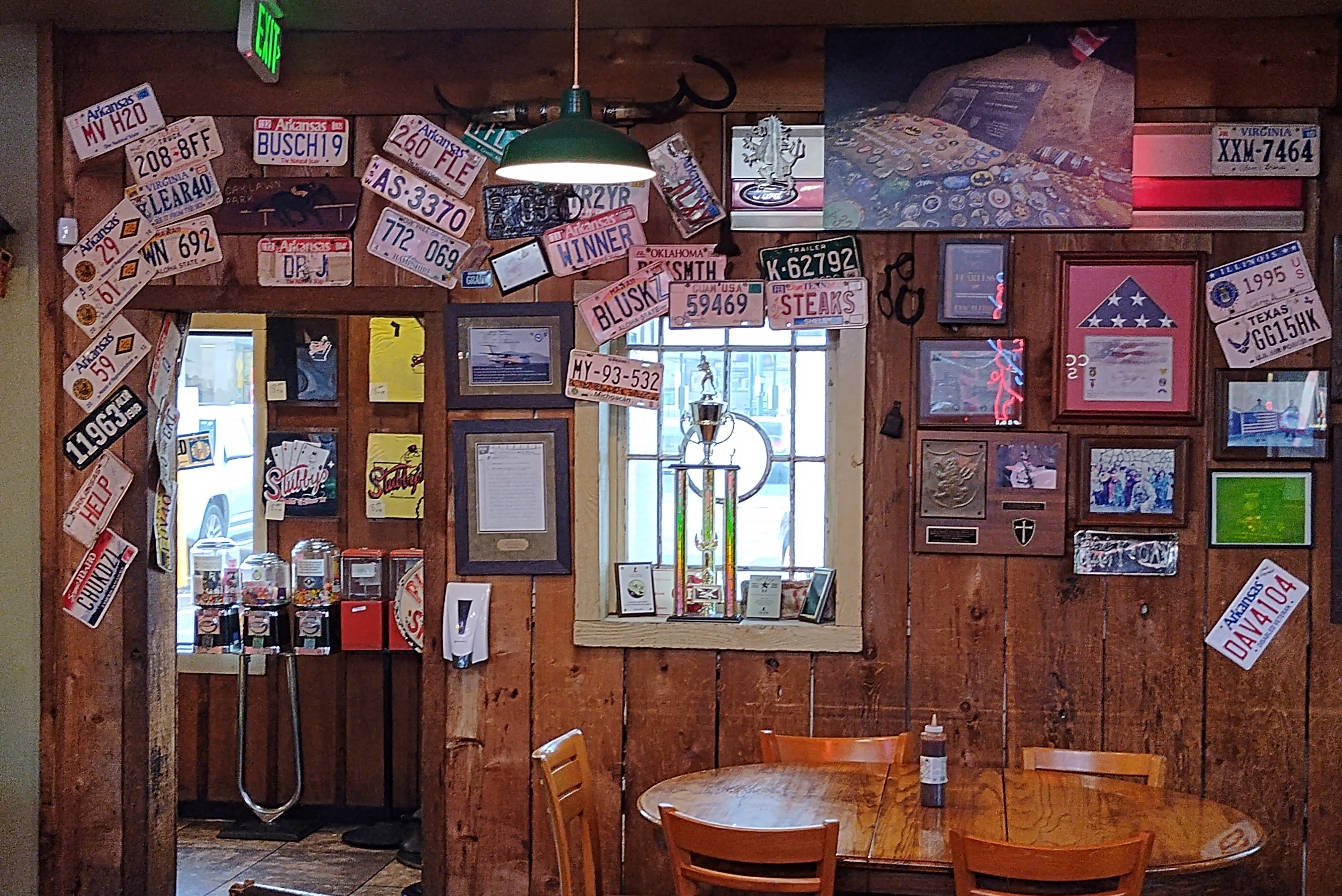
The sort of place with license plates on the wall.Stubby's, Hot Springs, Ark
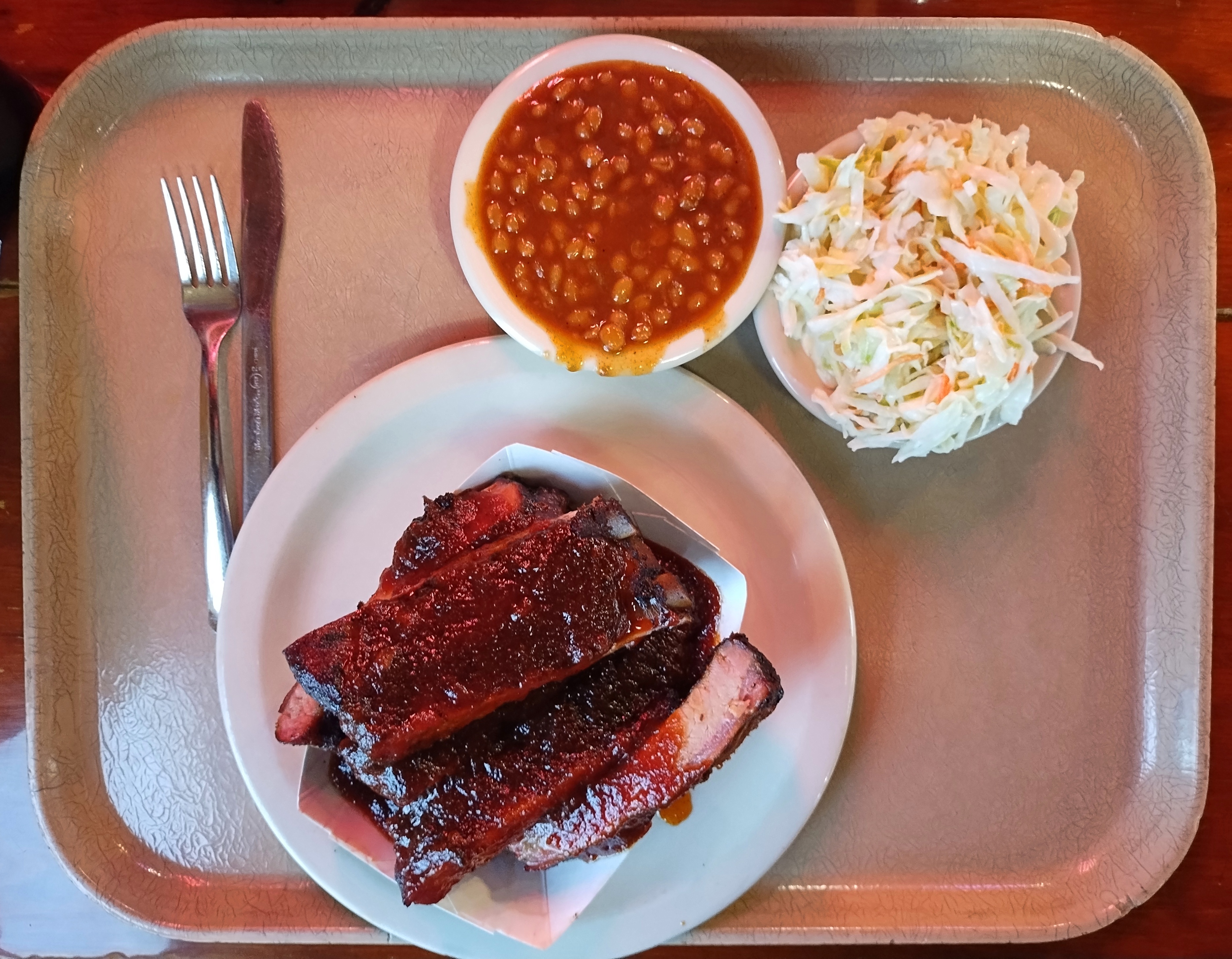
All that is window dressing. The ‘cue is the thing, and Stubby’s has lasted so long for a reason.Stubby's, Hot Springs, Ark
On the side of the road on highway Arkansas 7, part of a wayside park.Arkansas 7
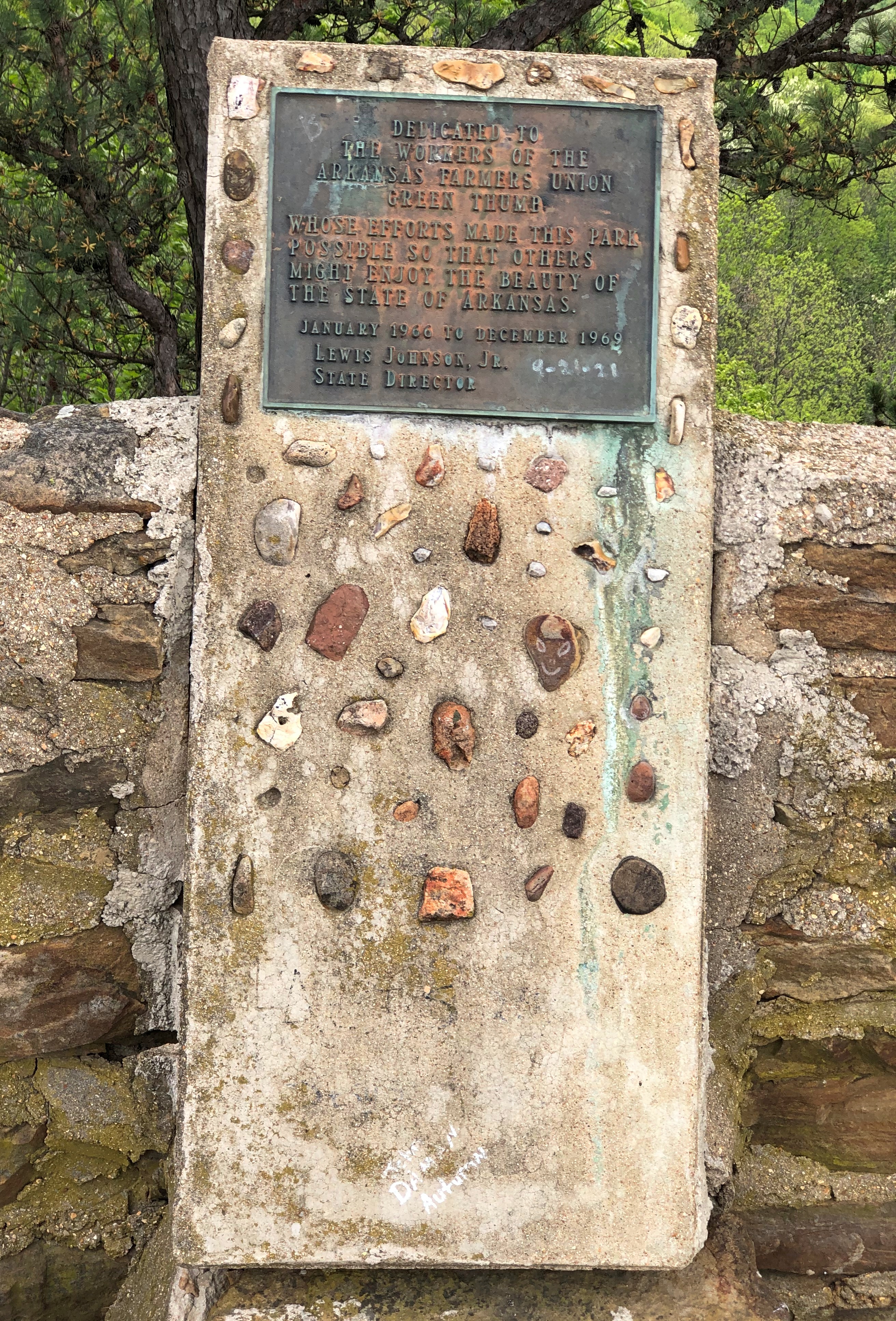
The plaque reads:

Dedicated to the workers of the Arkansas Farmers Union Green Thumb whose efforts made this park possible so that others might enjoy the beauty of the state of Arkansas. January 1966 to December 1969. Lewis Johnson, Jr. State Director.

Green Thumb?

“Green Thumb was the first nonprofit organization to run a jobs program for disadvantaged rural Americans in response to the War on Poverty,” the union says, beginning in 1966, employing low-income rural residents to build things, something like the WPA or the CCC did. By the ’80s, Green Thumb had vanished.

At Uranus, Missouri, off I-44, Yuriko was driving and I happened to have my phone handy. We were too tired to stop.Uranus, Missouri
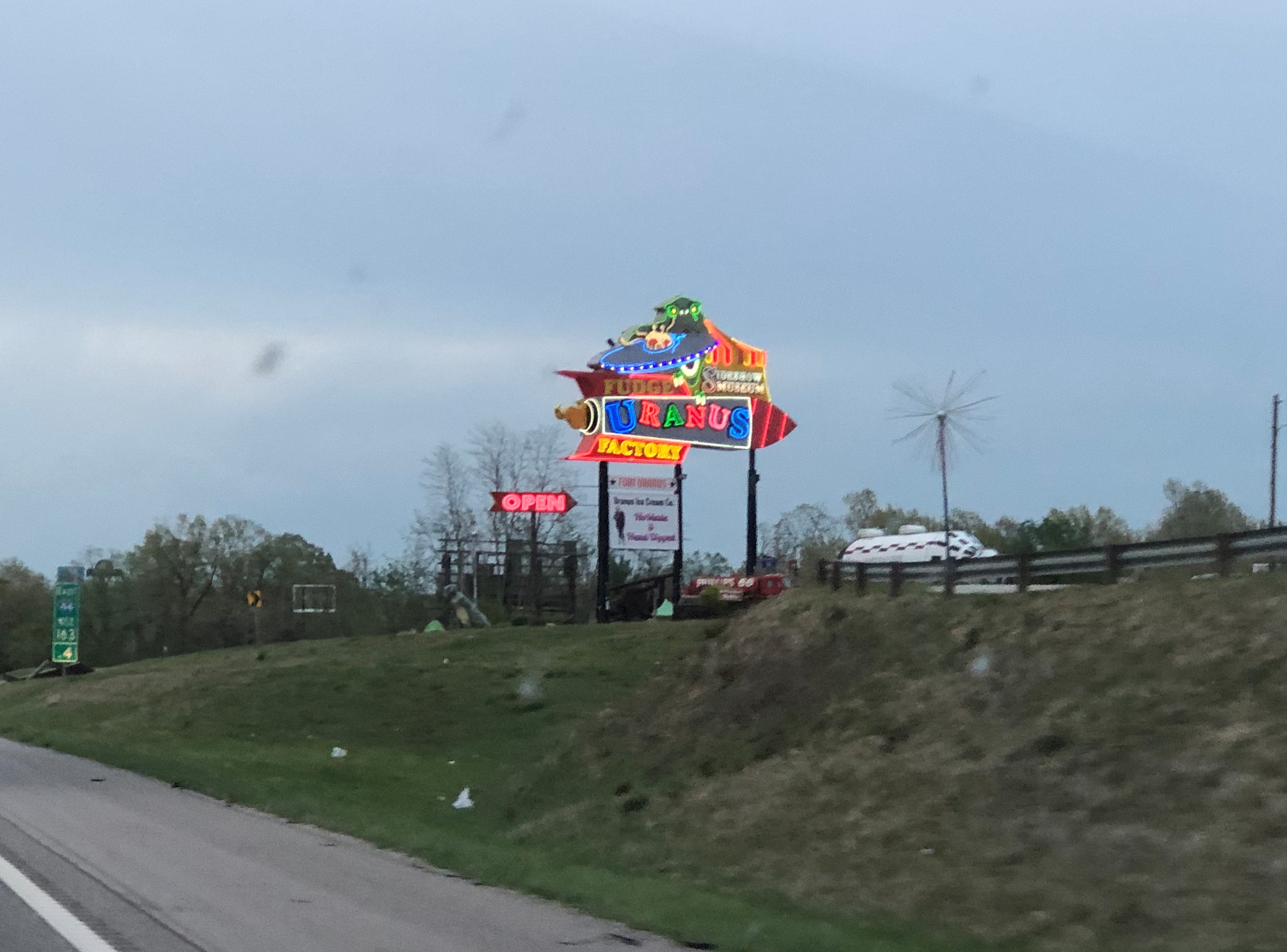
I’d driven by Uranus a few times, but not stopped. Something like the Snake Farm on I-35 between Austin and San Antonio. Clearly, I need to visit sometime. Uranus, that is. Maybe the Snake Farm, too.

“Beyond the appeal of what [Uranus owner Louie Keen] insisted was very good fudge, Uranus enticed travelers as a kind of dysfunctional, self-contained utopia, like South of the Border and Da Yoopers,” Roadside America says.

“Uranus, said Louie, was the kind of place tourists want to find on a road trip, with life-size dinosaurs, cheesy photo-ops, ridiculous souvenirs, two-headed freaks, the World’s Largest Belt Buckle, and various shops and attractions such as a hatchet-hurling venue named The Uranus Axehole.”
Center, Texas & Logansport, Louisiana

The town of Center, Texas is in East Texas, while the town of West, Texas is in Central Texas. Just a mild example of Texas naming oddities. This is the state with Cut and Shoot, Dime Box and Jot-Em-Down, after all.

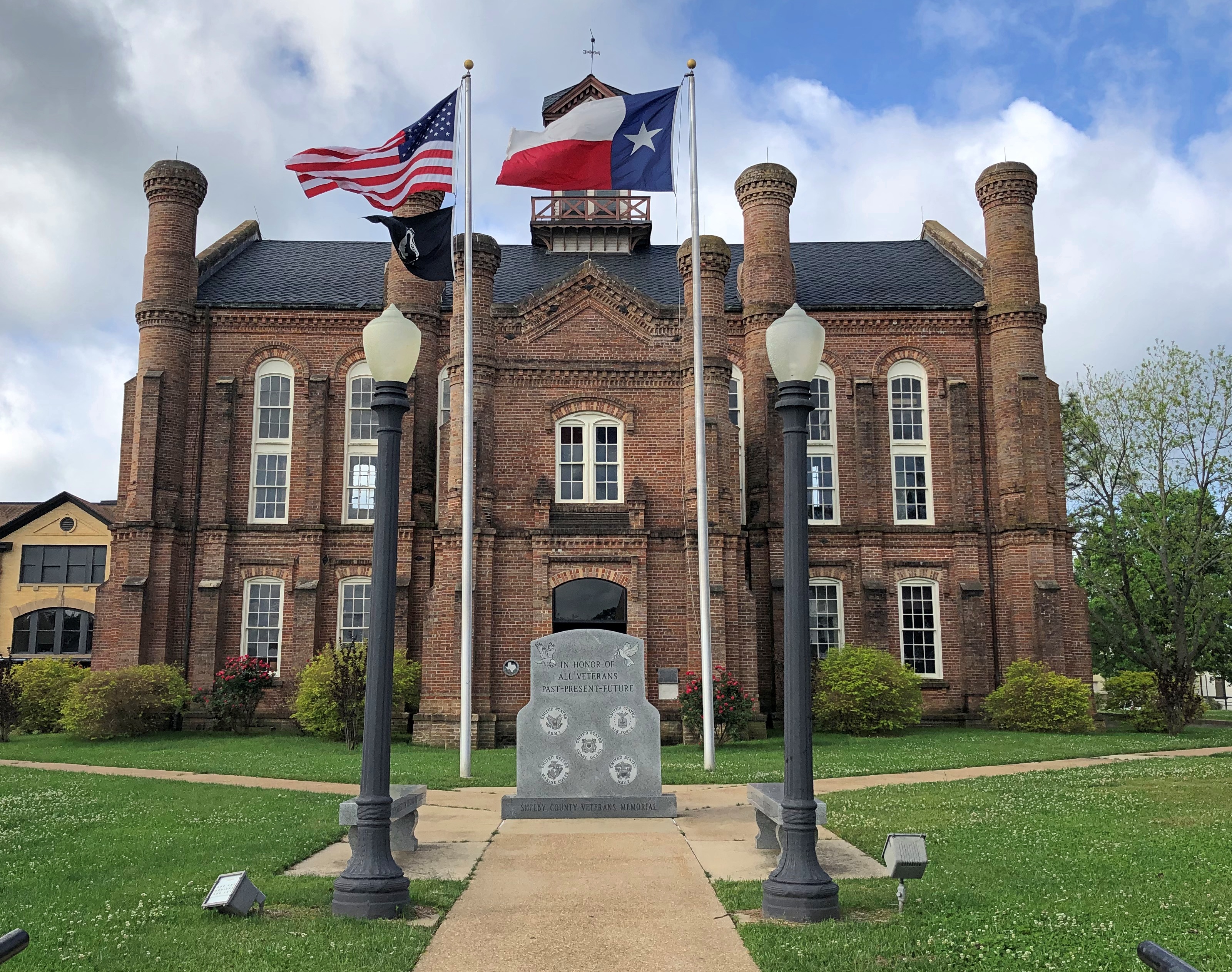
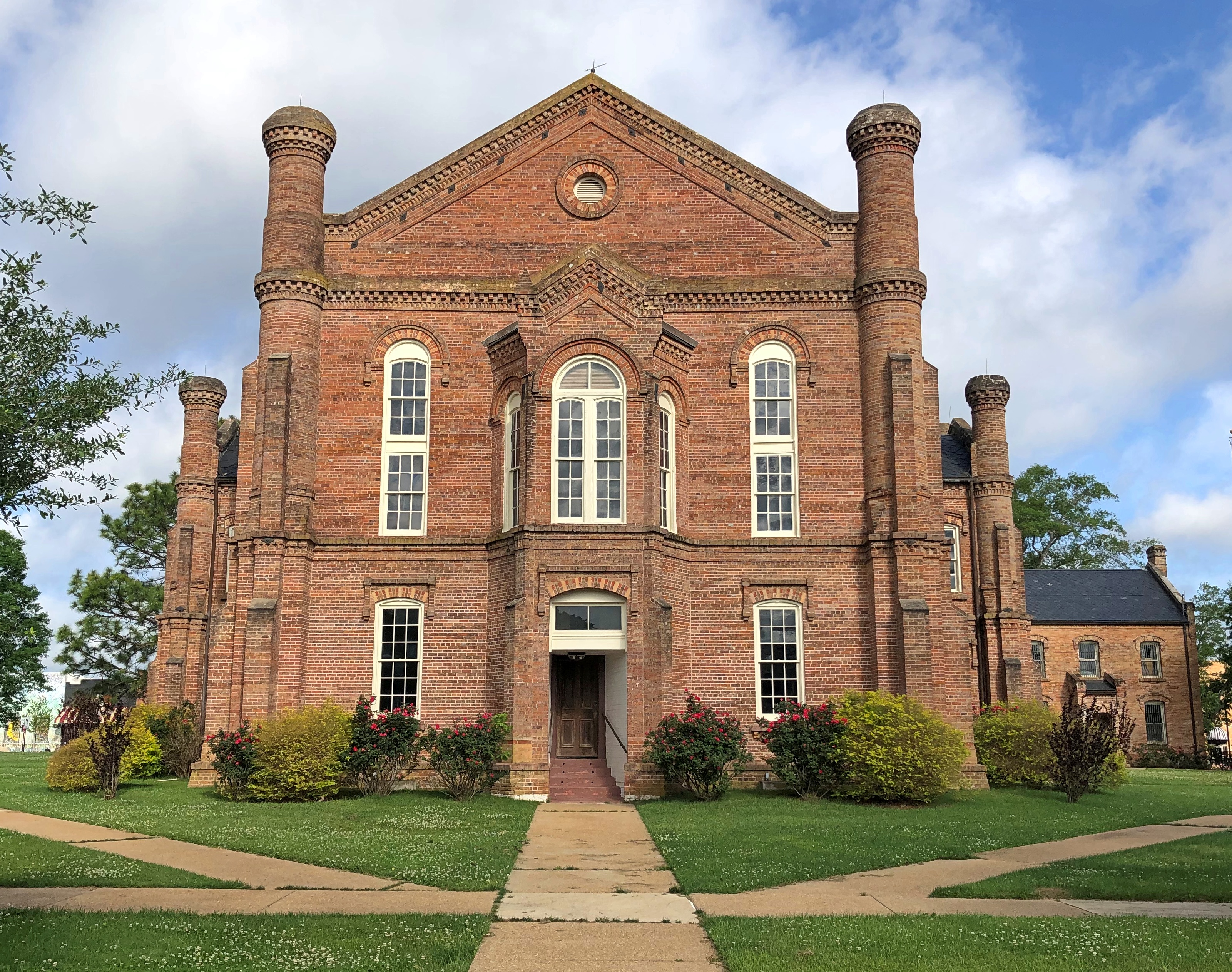
We spent the night in Center (pop. 5,200) and the next morning, April 14, took a look around the Shelby County Courthouse, which also happens to the focus of downtown Center.Shelby County Courthouse, Texas Shelby County Courthouse, Texas

It’s a less common style for courthouses, Romanesque Revival, at least in my experience. Impressive brickwork. The story of one John Joseph Emmett Gibson is given in a Texas Historical Commission sign on the site. Originally a brickmaker from Ireland, Gibson ultimately made his way to Texas, in time to design and oversee construction of the courthouse in the 1880s, showing off his skill with bricks.

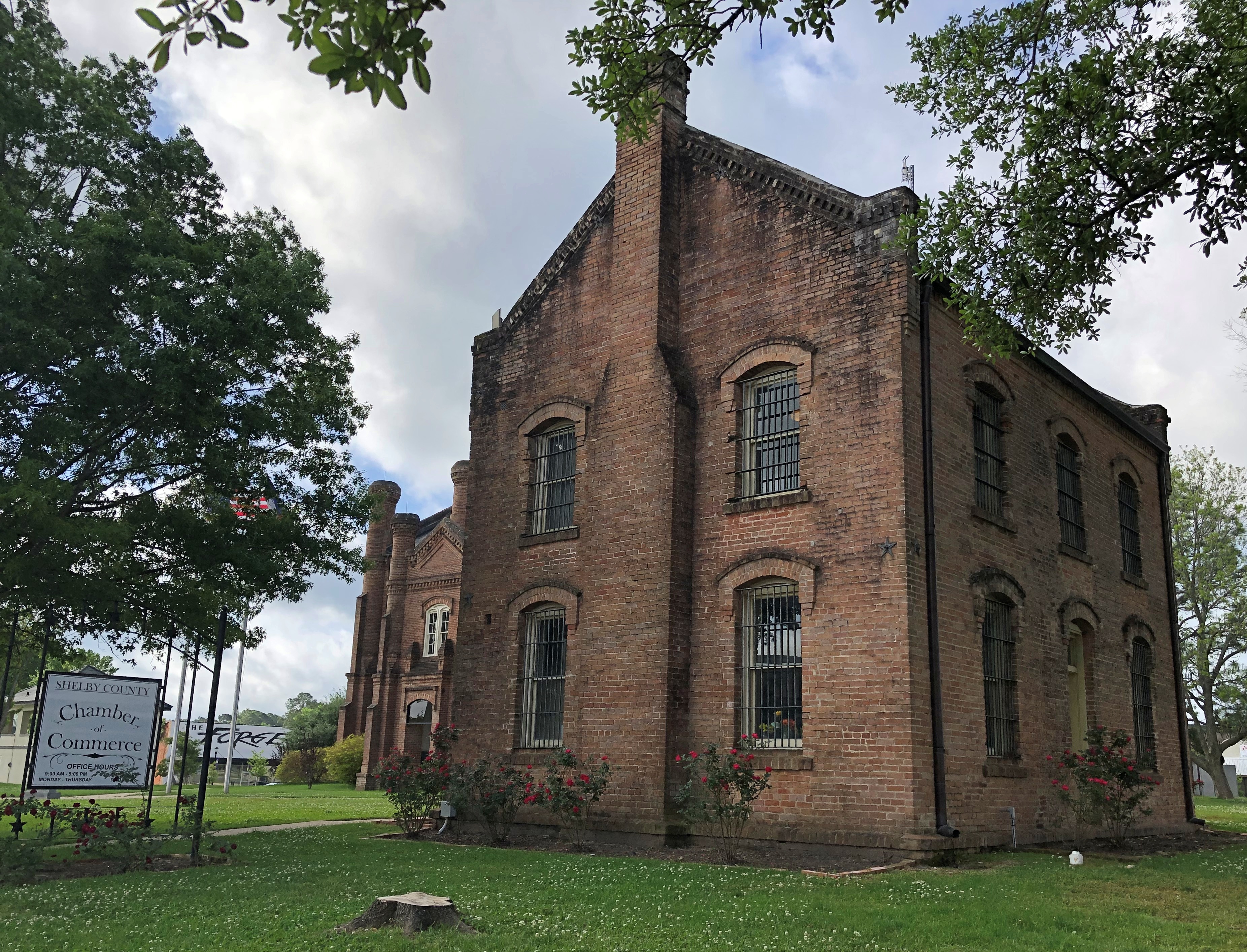
Older than the courthouse is the nearby former jail. These days home to the local C-of-C.Shelby County Courthouse, Texas, old jail

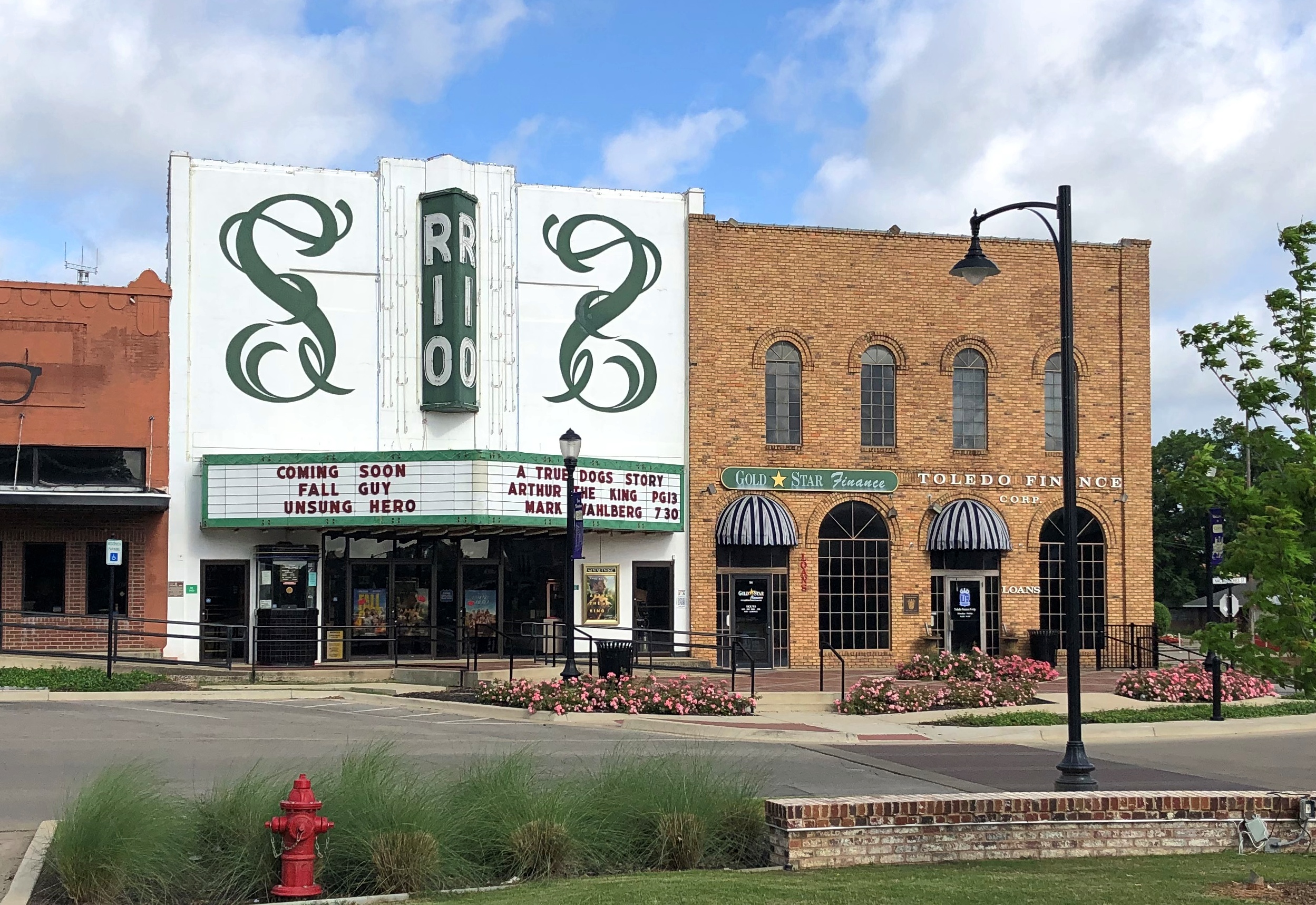
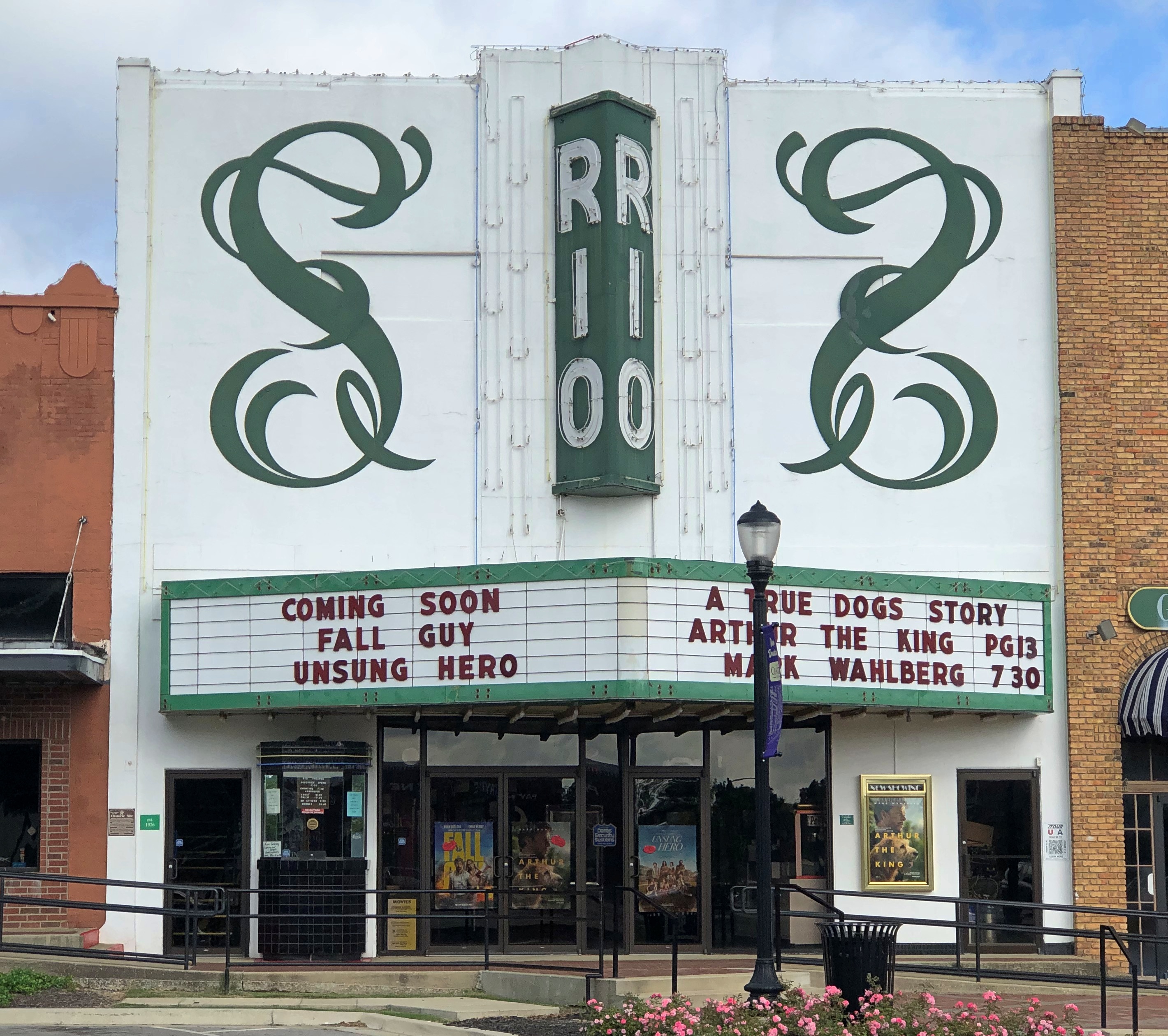
An assortment of buildings line the square. Mostly occupied. That includes the art deco Rio, open since 1926 as a movie theater, without having been closed or put to any other use since then, which is remarkable in itself.Rio Movie Theater, Center, Texas Rio Movie Theater, Center, Texas

Not a retro theater, either, but one showing new movies. Such as Unsung Hero and The Fall Guy, coming soon.

Unsung Hero is a 2024 American Christian drama film directed by Richard Ramsey and Joel Smallbone. The film follows Rebecca, Joel, and Luke Smallbone of For King & Country, and their life journey to become Christian recording artists.”

The Fall Guy is a 2024 American action comedy film directed by David Leitch and written by Drew Pearce, loosely based on the 1980s TV series about stunt performers. The film follows a stuntman working on his ex-girlfriend’s directorial debut action film, only to find himself involved in a conspiracy surrounding the film’s lead actor.”

I’d never heard of either of them, but now I have. 1980s TV series about stunt performers? That didn’t ring a bell either. So that’s what Glen A. Larson did after the implosion of the original Battlestar Galactica, and Lee Majors did after the Six Million Dollar Man was retired for lack of replacement parts.

How did I miss that? Right, I didn’t have a television in the ’80s.

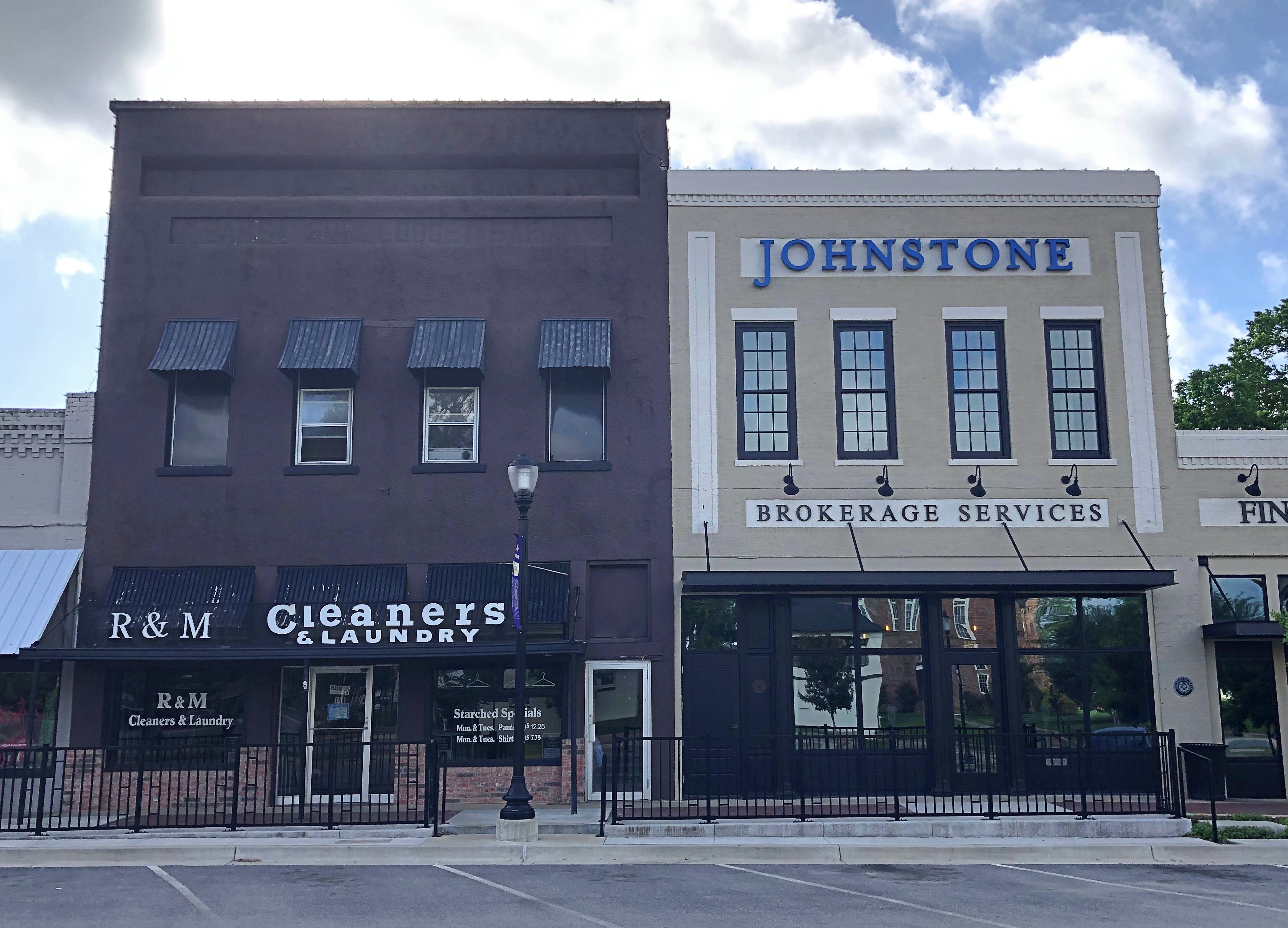
More buildings on the square.Downtown Center, Texas Downtown Center, Texas

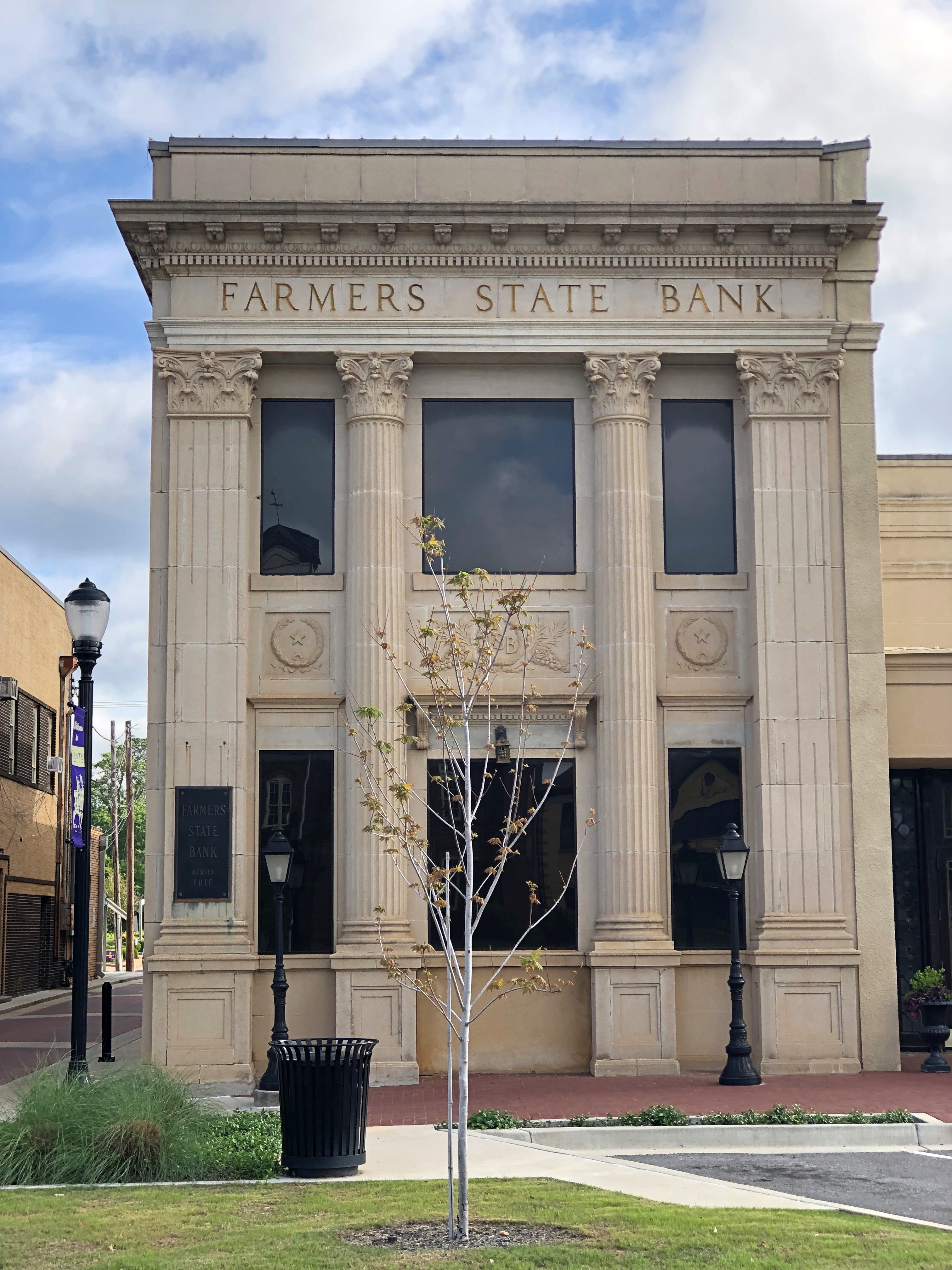
One that’s small but stately. Farmers of Shelby County, it says, your money is safe here.Farmers State Bank, Center, Texas

It was. Farmers is still an ongoing operation, nearly 120 years after its founding. The bank still occupies the building, and has other locations in East Texas.

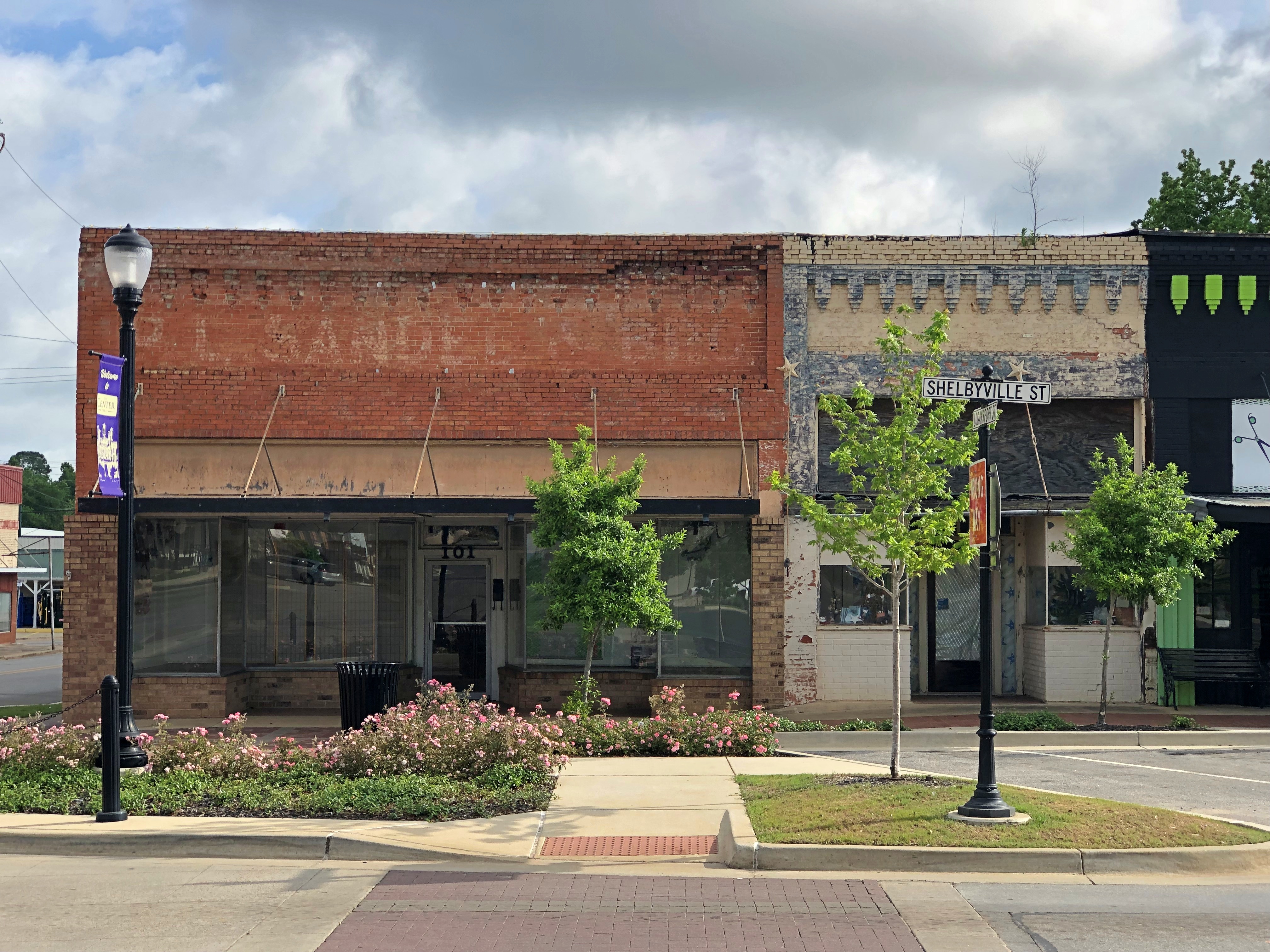
Not every building on the square is occupied.Downtown Center, Texas

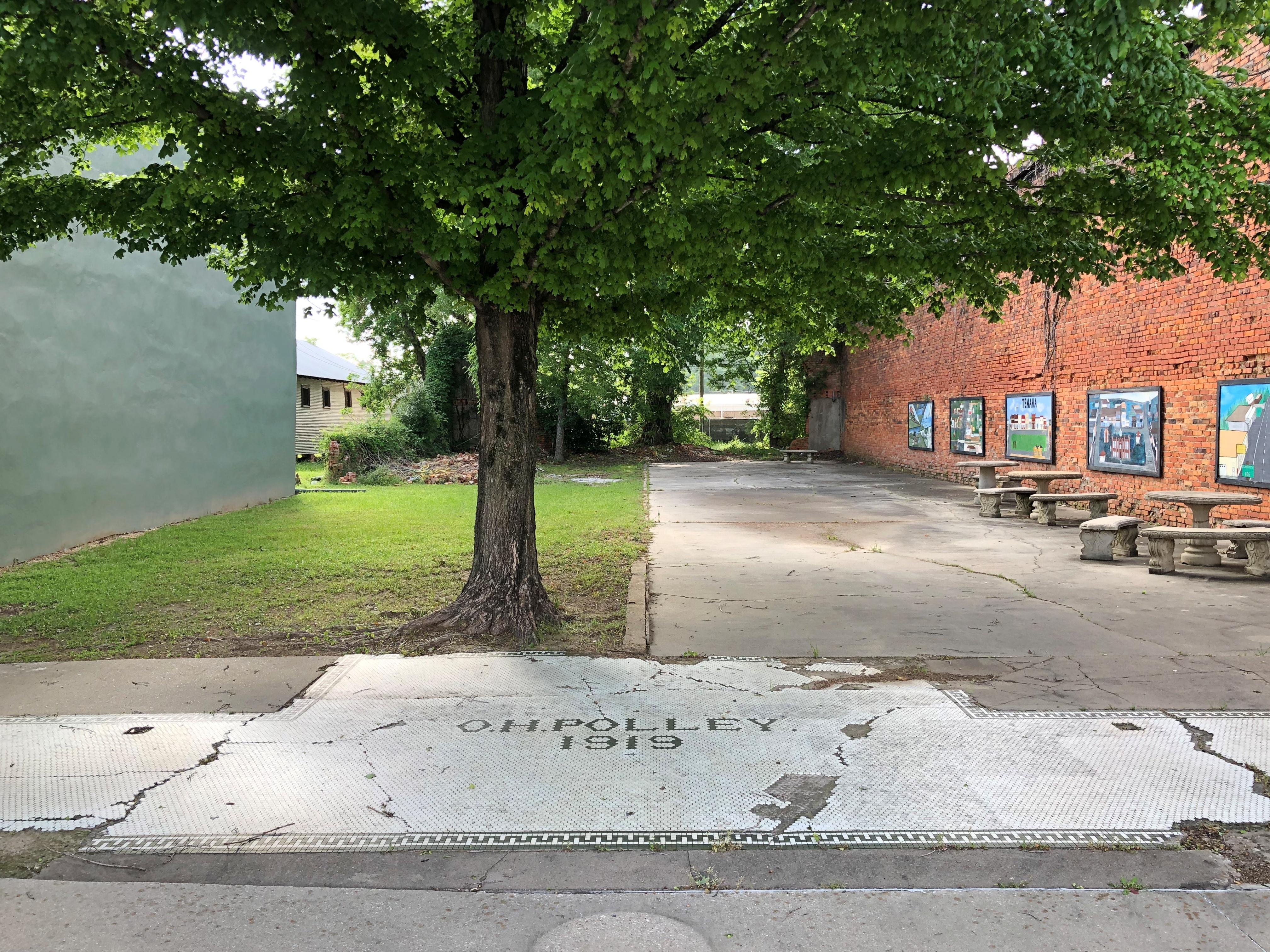
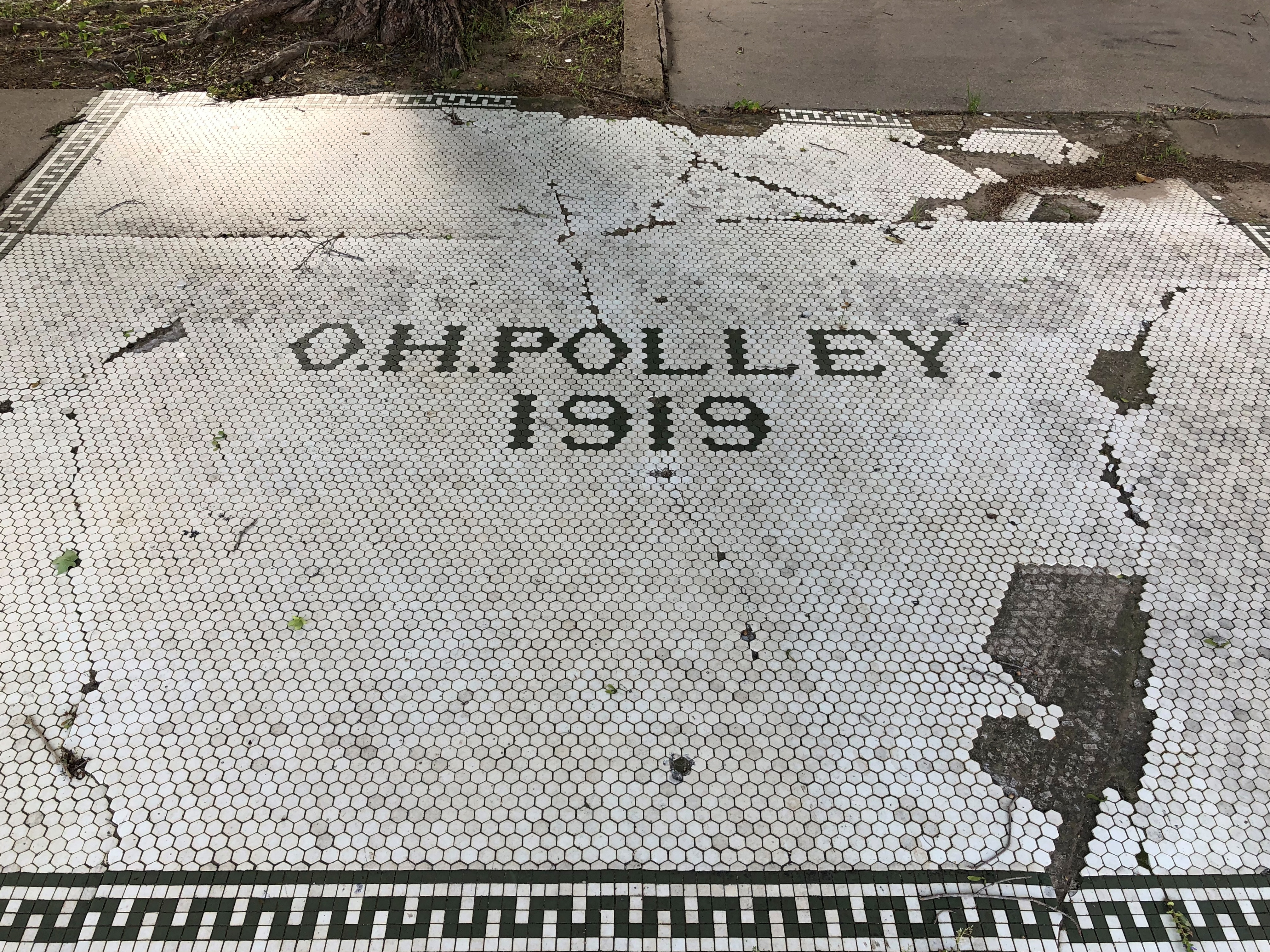
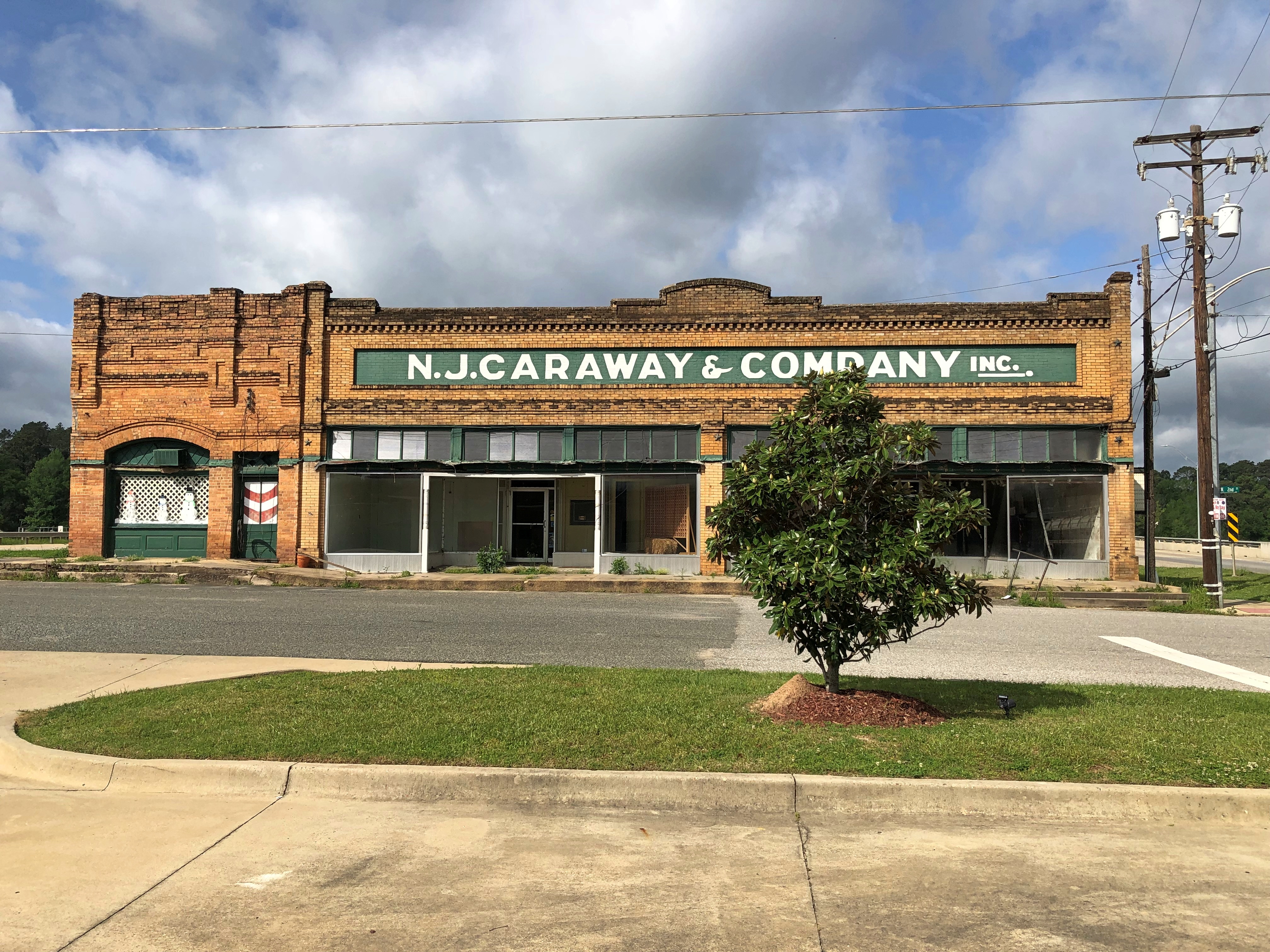
Not every building is even a building any more, but clues remain.Downtown Center, Texas, O.H. Polley ruin Downtown Center, Texas, O.H. Polley ruin

That didn’t take long to look up. Site of a dry goods store for much of the 20th century.

Shelby County partly borders De Soto Parish, Louisiana. That morning, we headed for the border, driving on Texas 7 and then U.S. 84 until we got to a town without any sign noting its name (or maybe we missed it), crossing a river without any identification either. I remembered I wanted to mail a few postcards when I saw a sign pointing the way to a post office. When we got to the p.o., I saw that we were in Logansport, Louisiana. We’d crossed the Sabine River, but as noted, there was nothing to tell us that.

Missed the former international boundary marker, too. I didn’t read about it until later. It’s a few miles out of Logansport (pop. 1,300), and once (and briefly) marked the border between the Republic of Texas and the United States.

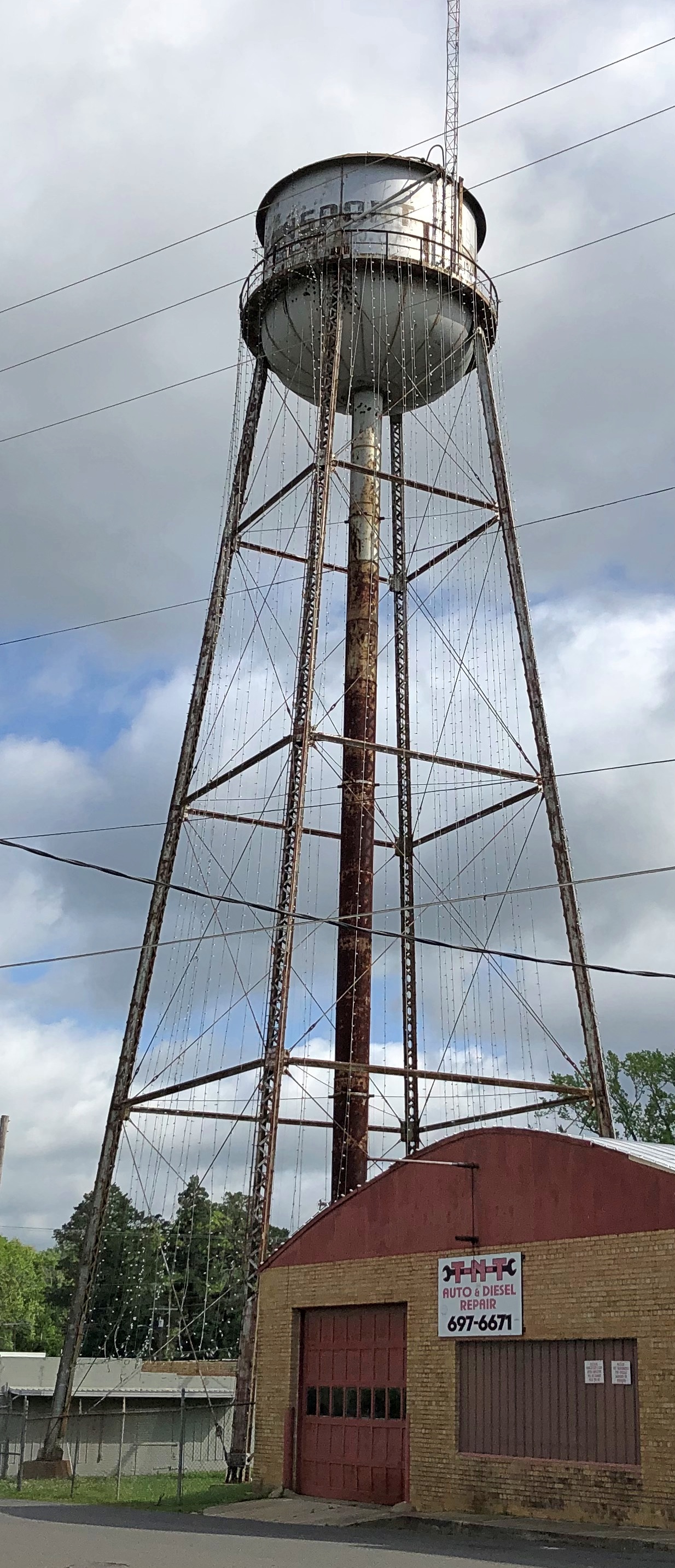
No matter. Took a look around Logansport.Logansport, Louisiana

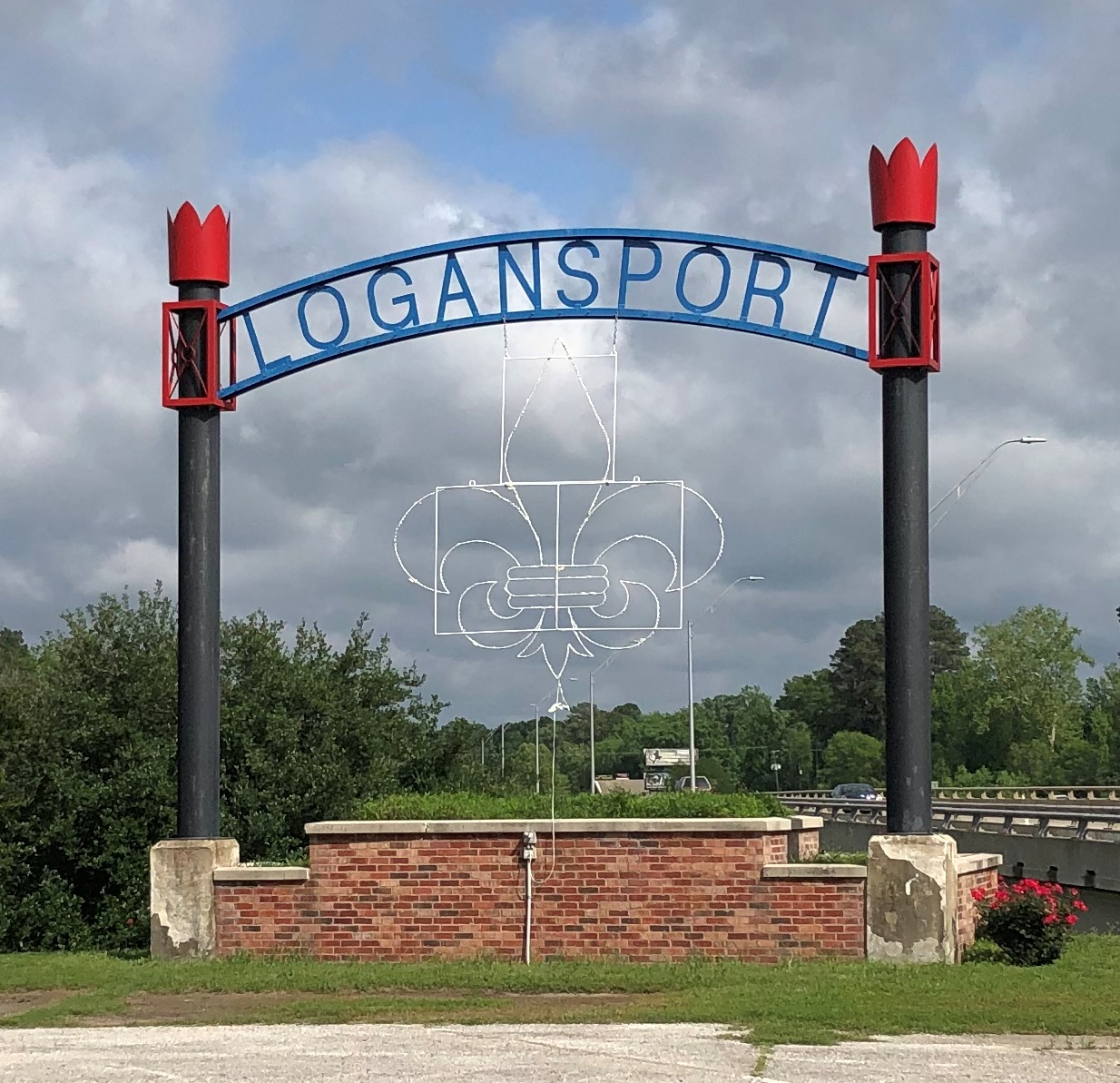
Here’s the name we missed. Not on the road we came in on.Logansport, La

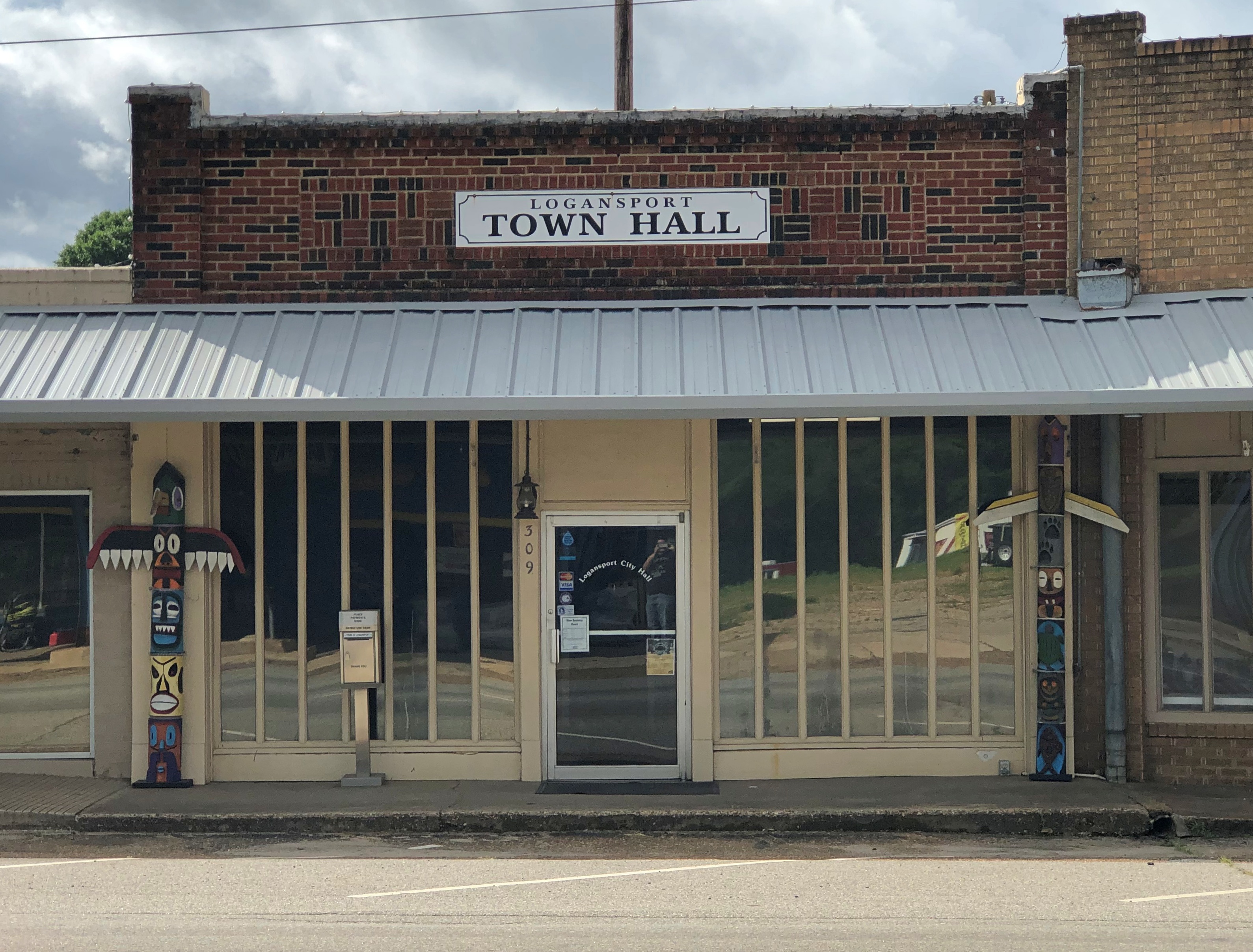
Main Street.Logansport, La Logansport, La Logansport, La

Seen in a shop window in Main Street. Do they celebrate Mardi Gras in Logansport?Logansport, La

Yes they do, in the form of a parade put on my an outfit called the Krewe of Aquarius.

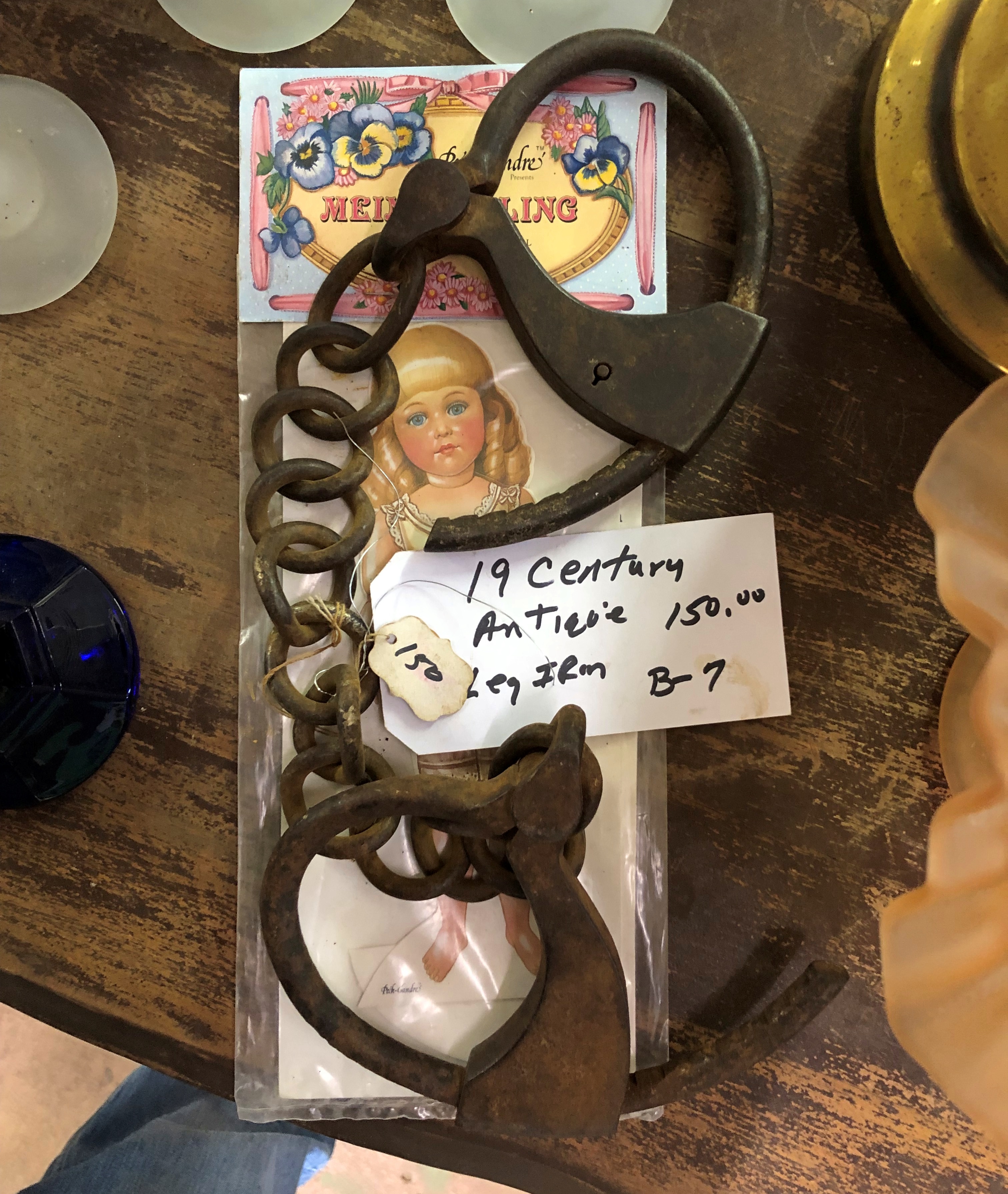
We spent some time in a resale store on the main street, Swamp Water Flea Market. I spotted something I don’t think I’ve ever seen at a resale shop.Logansport, La

Yours for $150, an antique leg iron. Not sure I’d want to have it around. Seems like a haunted artifact that might land you in an episode of The Twilight Zone.

Have You Ever Been to Nacogdoches?

When planning our most recent trip, devising its dumbbell structure of three days on the road, five in place, and four more on the road, it occurred to me that with a little southward jiggering from Dallas, we could visit Nacogdoches, Texas, one of the oldest towns in the state, rife with history: home to prehistoric Indian activity and the establishment of a Spanish mission in the 18th century, base of filibusters and other rebellions in the early 19th, mentioned famously in a late John Wayne movie, and much more.

All that would have been a reason to come, but mainly I wanted to visit my old friend Kirk, resident of the town for nearly 40 years. We hung out mostly in high school, but had known each other as far back as elementary school, ca. 1970.

In exchanging text messages ahead of the visit, we couldn’t remember the last time we’d seen each other, but finally decided, once Yuriko and I met Kirk and his wife Lisa at their home for lunch on April 13, that it was probably in April 1986 at the wedding of a mutual friend of ours in Austin.

That’s a long time. We had a good visit, a good reconnect – I find it good to reconnect – spending most of the afternoon with them, hearing about life in Nacogdoches, his medical practice there, their raising six children, all grown.

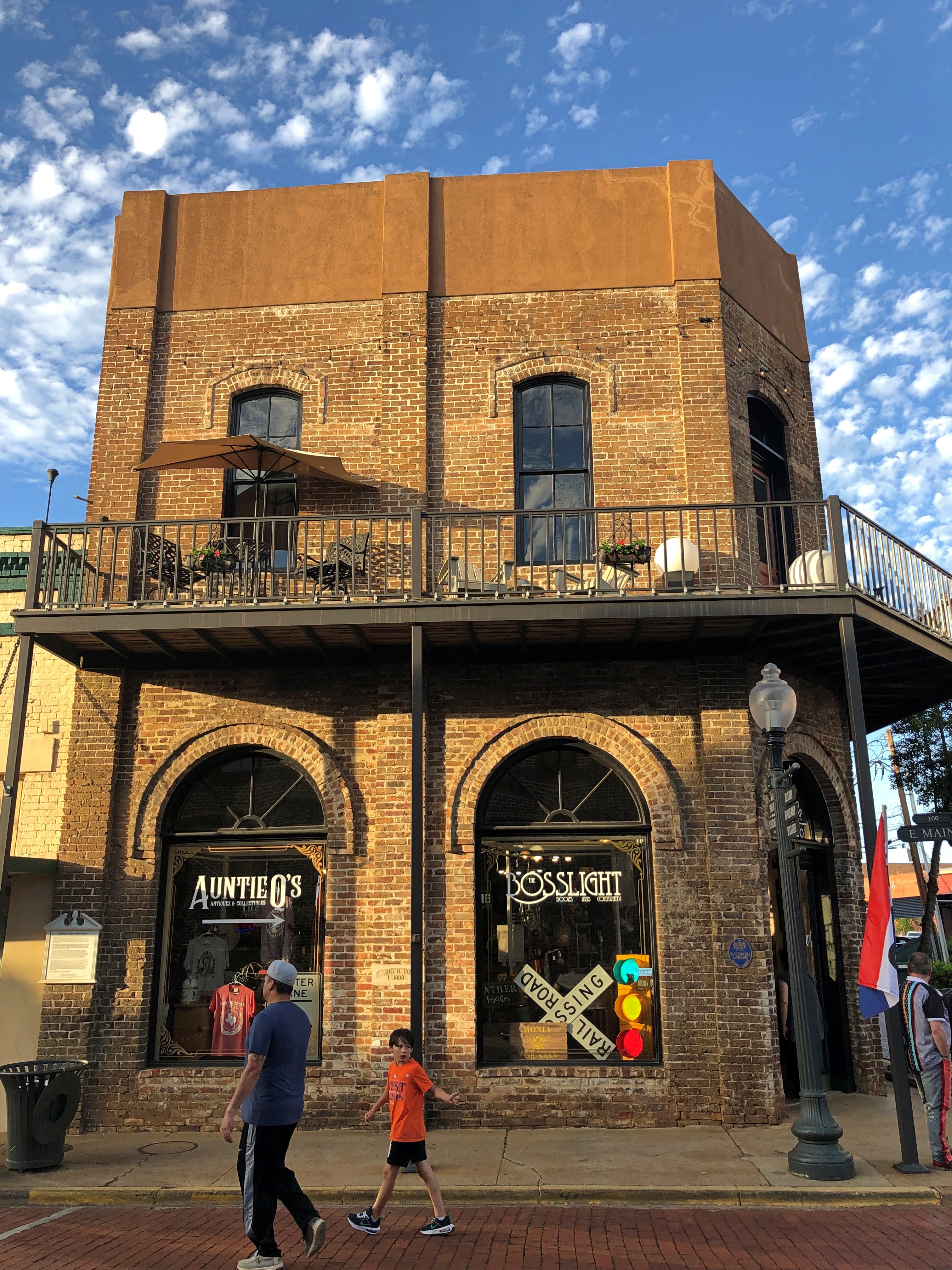
Later in the day, Yuriko and I spent a little time in downtown Nacogdoches, which offers a more sizable square than most towns, even in Texas, handsome on the whole, with a scattering of specialty retail in the area, but mostly still professional services, city government offices and other utilitarian activities.

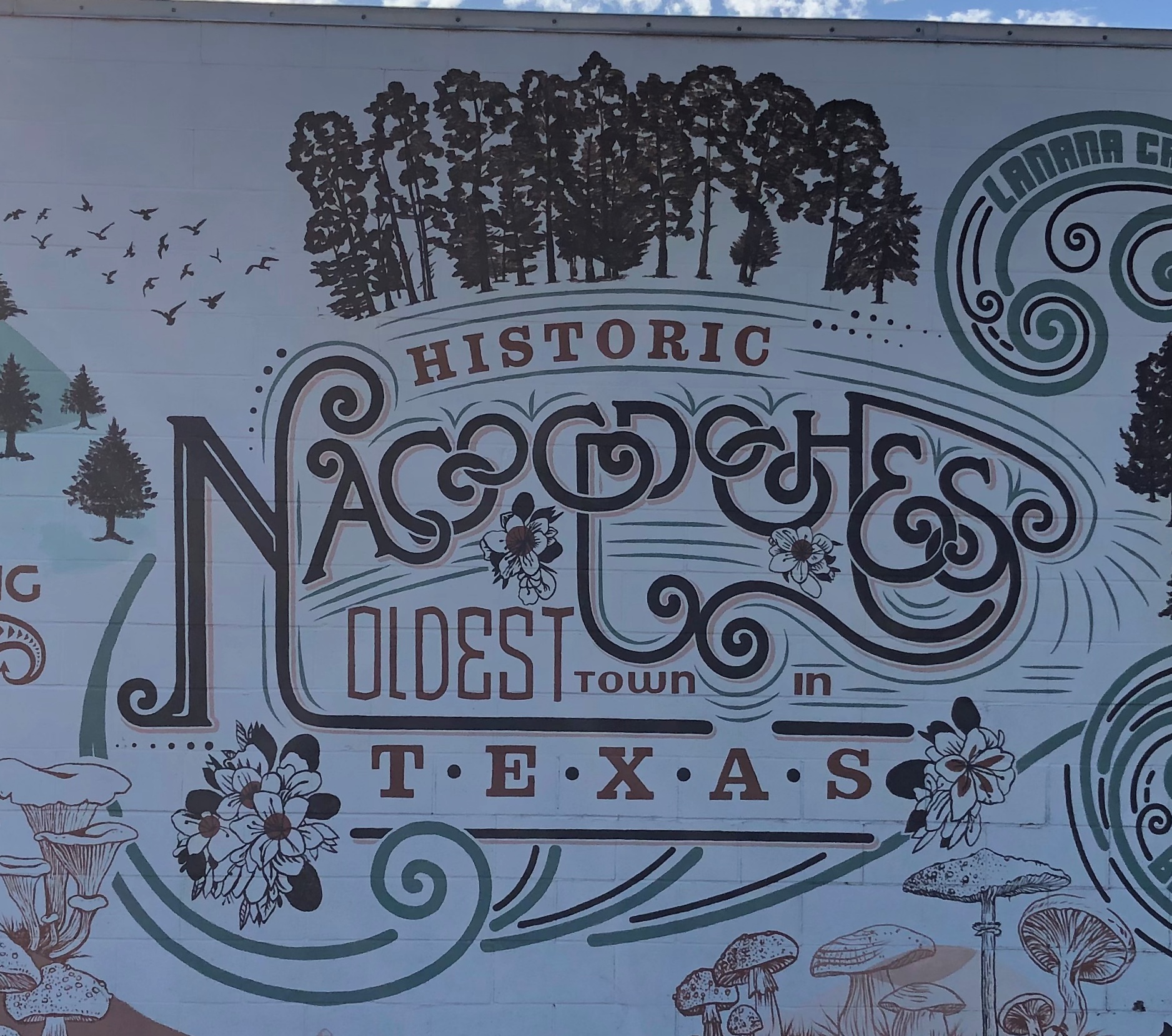
Mural detail a block from the square, facing a parking lot.Downtown Nacogdoches

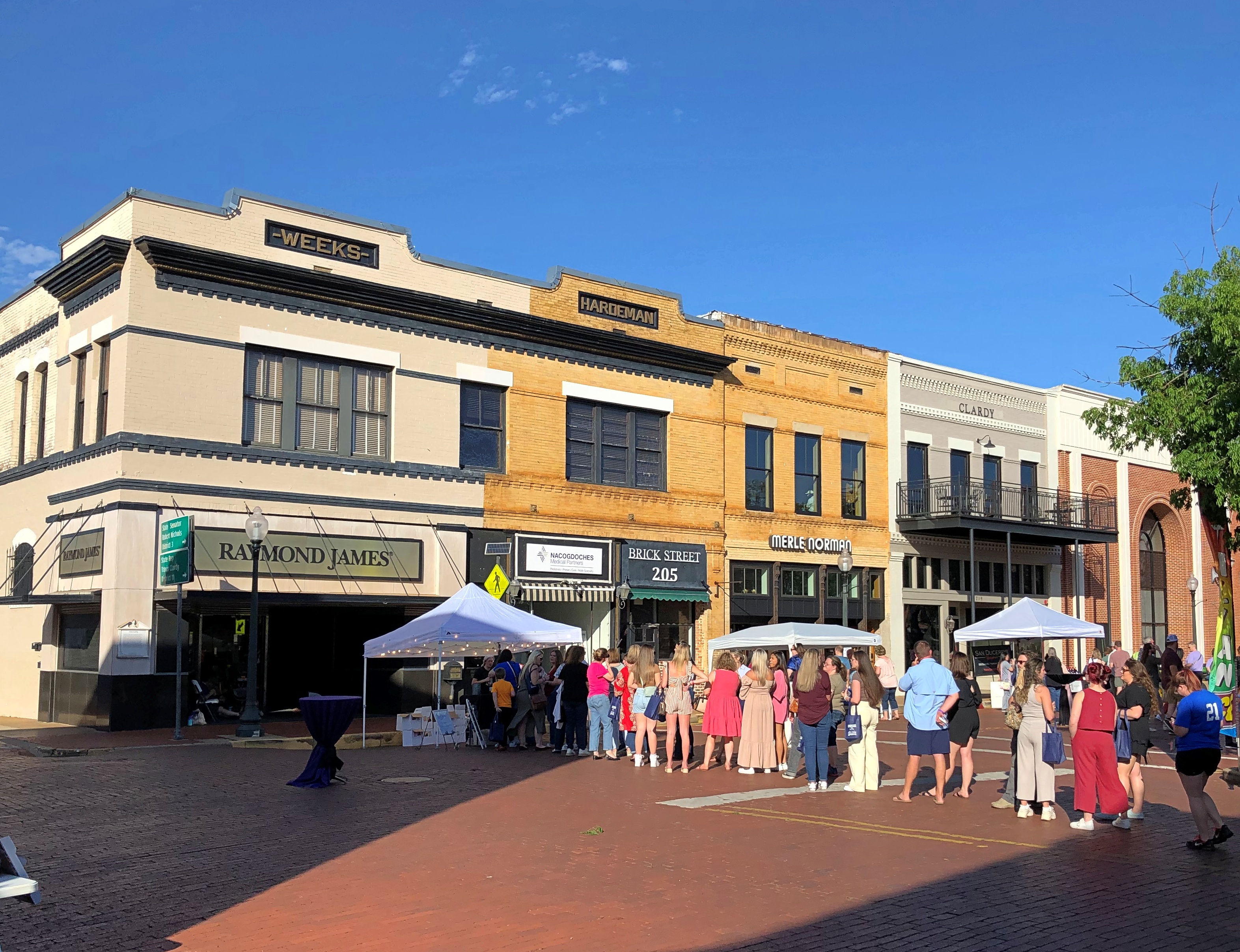
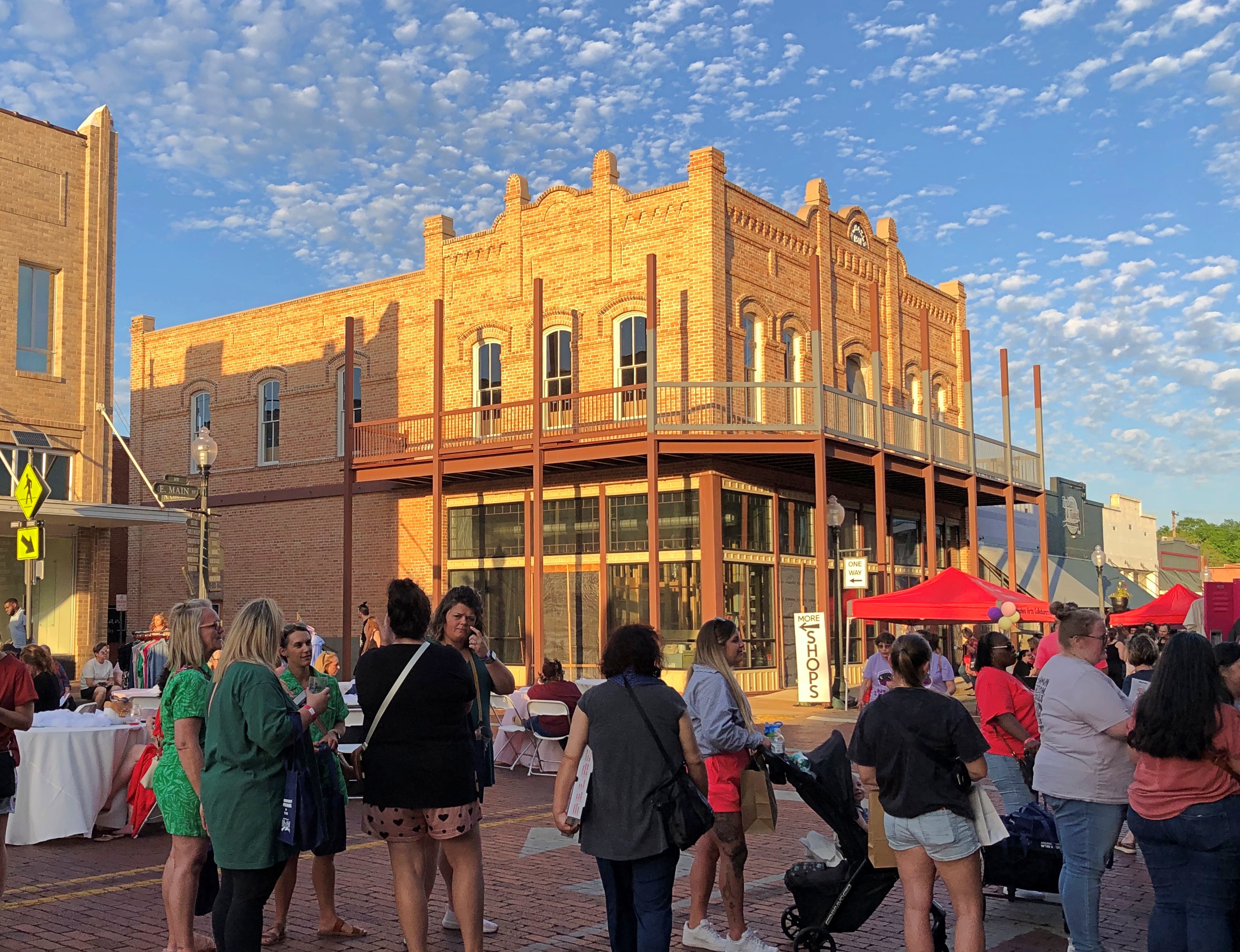
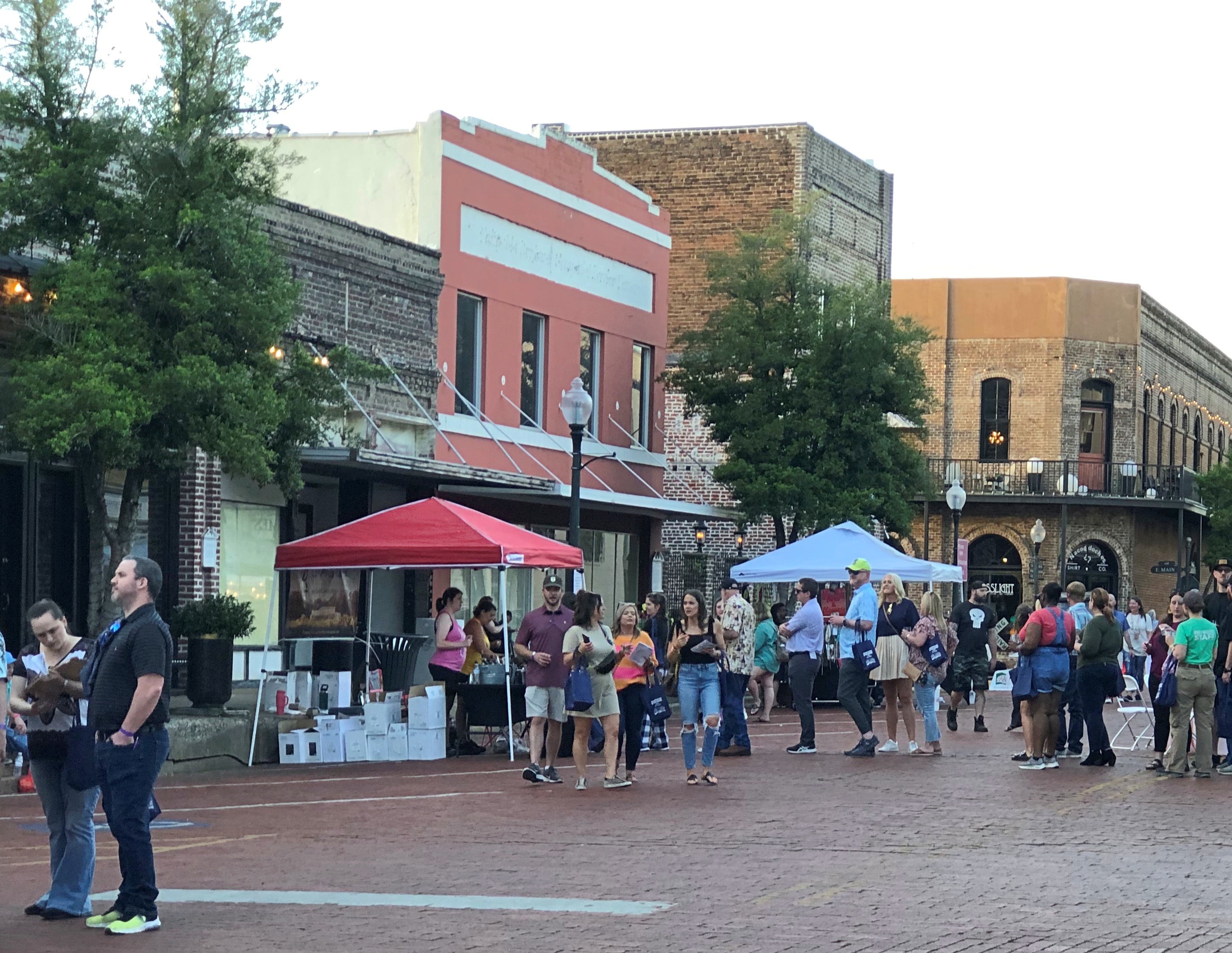
We arrived during the 12th annual Nacogdoches Wine Swirl, just by raw chance. I’d never heard of a “wine swirl.” The brick streets around what I took to be the courthouse were closed to cars. People clustered here and there and lined up for wine.Downtown Nacogdoches Downtown Nacogdoches Downtown Nacogdoches Downtown Nacogdoches

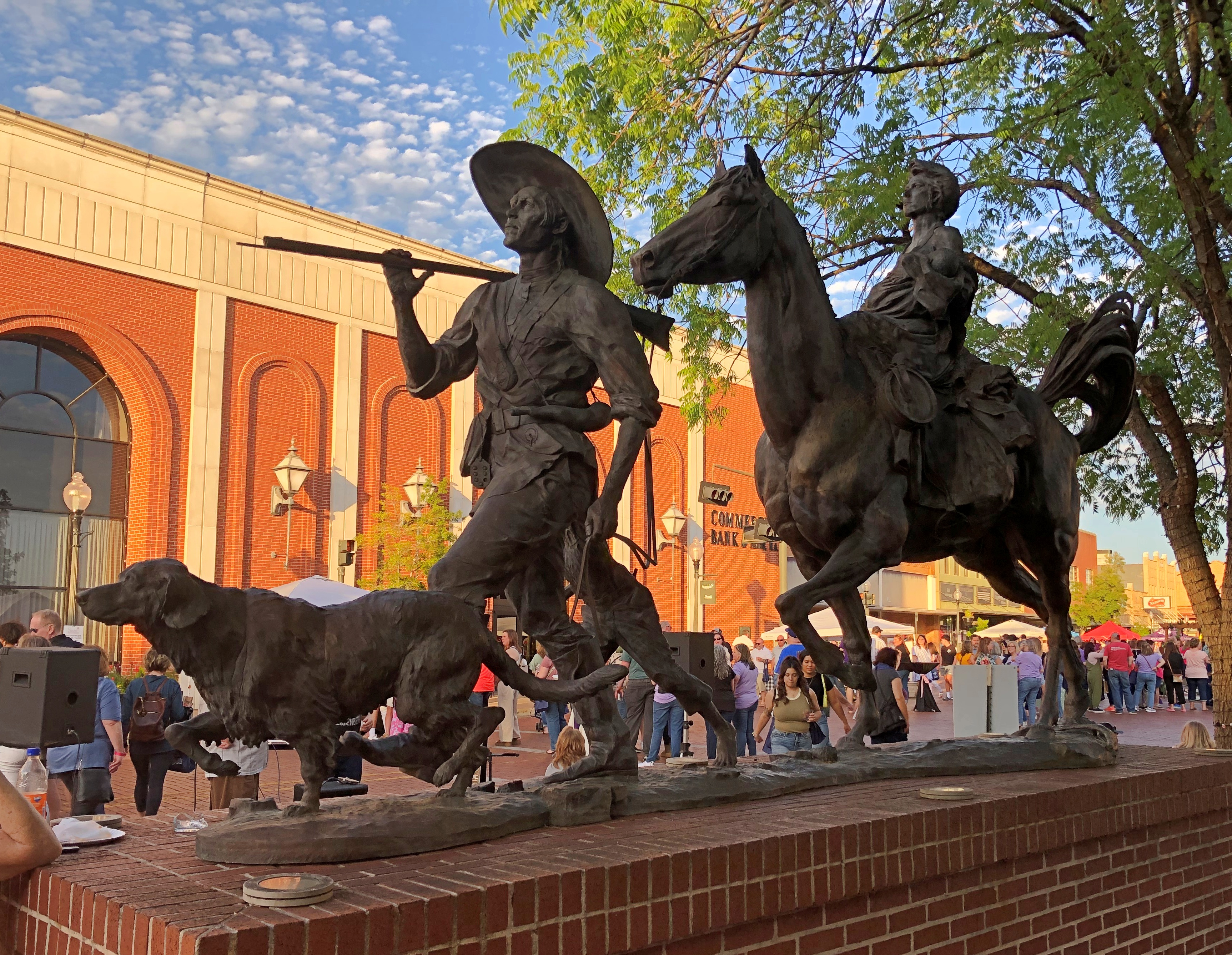
The square doesn’t surround a courthouse, but rather a former federal building, now the Charles Bright Visitors Center. Nearby is “The Gateway,” depicting doughty American pioneers traveling the Old San Antonio Road into Texas, a fairly recent work (2013) of Michael Boyett.Downtown Nacogdoches

“The ticketed wine event will showcase Texas wineries and local and regional food trucks and shopping vendors along the historic brick streets,” Visit Nacogdoches says regarding the event. More marketing at work, with the goal of furthering Nacogdoches as a day-trip town.

That Texas has wineries is not news. I went with Jay to visit one of the earlier ones in the Hill Country in the mid-70s. But did Central Texas wine makers come all the way to Nacogdoches to sell their wares? Further investigation tells me there’s an established wine-growing biz in East Texas.

“But, what if I were to tell you that East Texas has over 30 wineries and vineyards just waiting to be explored?!” Totally Texas Travel breathlessly says. Even if that isn’t the precise number, I’ll take even a paid travel site as a reasonable source the existence of wineries here.

Moreover, there’s a marketing invention called the Piney Woods Wine Trail.

The Piney Woods Wine Trail? In East Texas? That goes against stereotype, and I won’t have it. They make (and drink) either beer (domestic beer, closer to Texas-made the better) or hard liquor, the closer to homemade the better. That’s what I get for traveling into East Texas, a busted stereotype.

Tyler Rose Garden

The cliché is to stop and smell the roses, lest you pass your life in drab unappreciation of the delights easily available to you during your short lifespan. It expresses a worthwhile sentiment, almost always meant metaphorically.

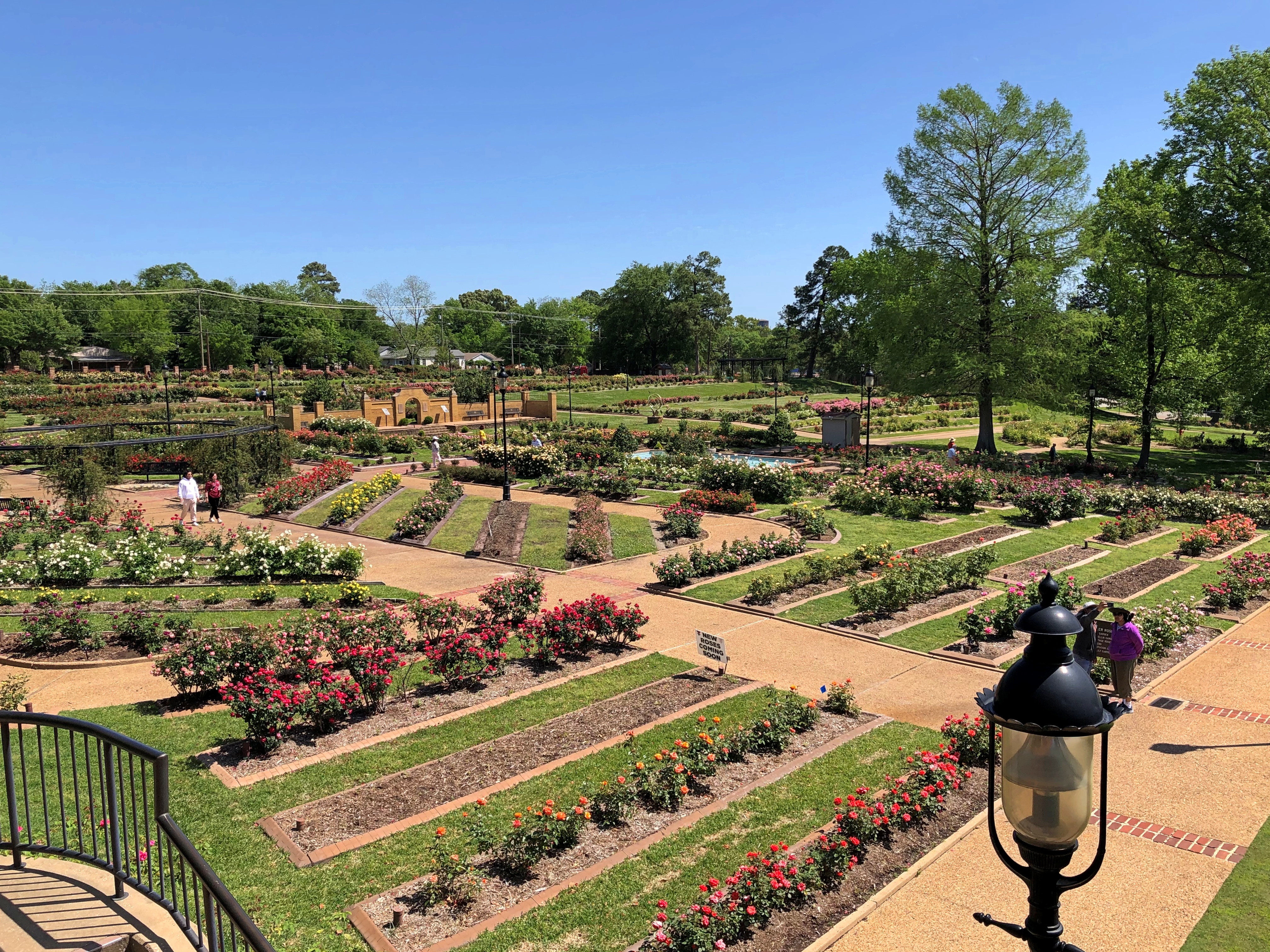
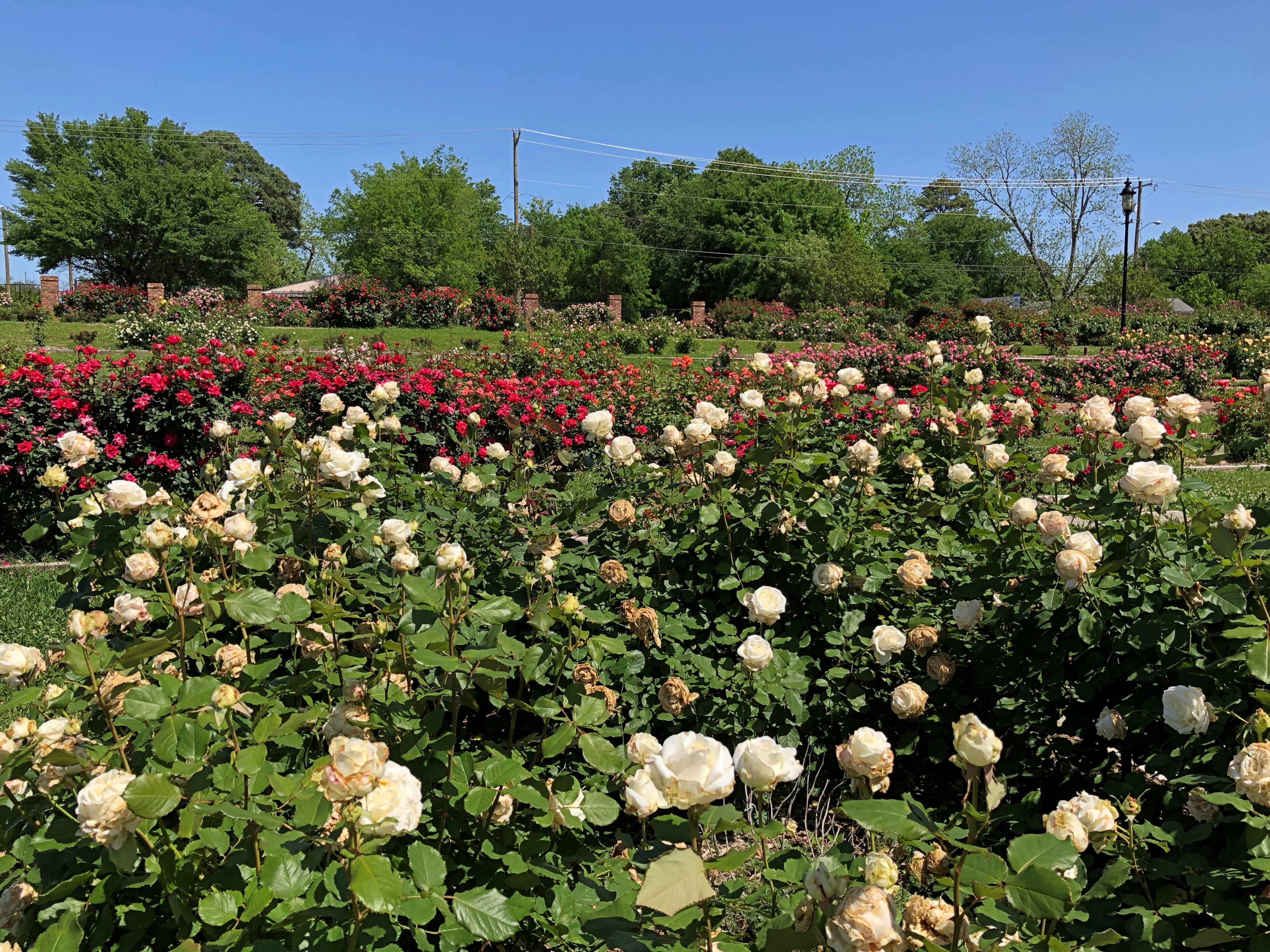
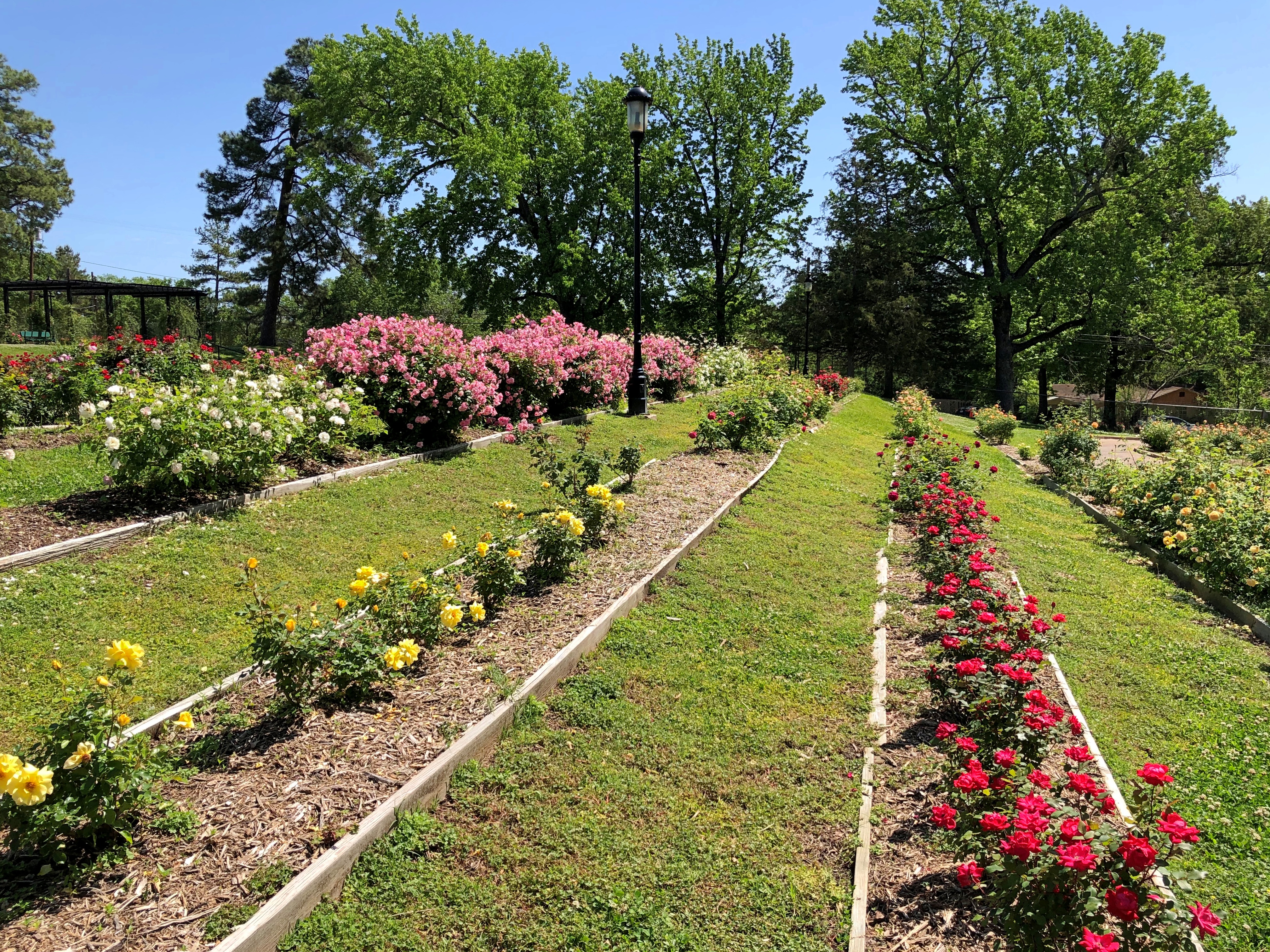
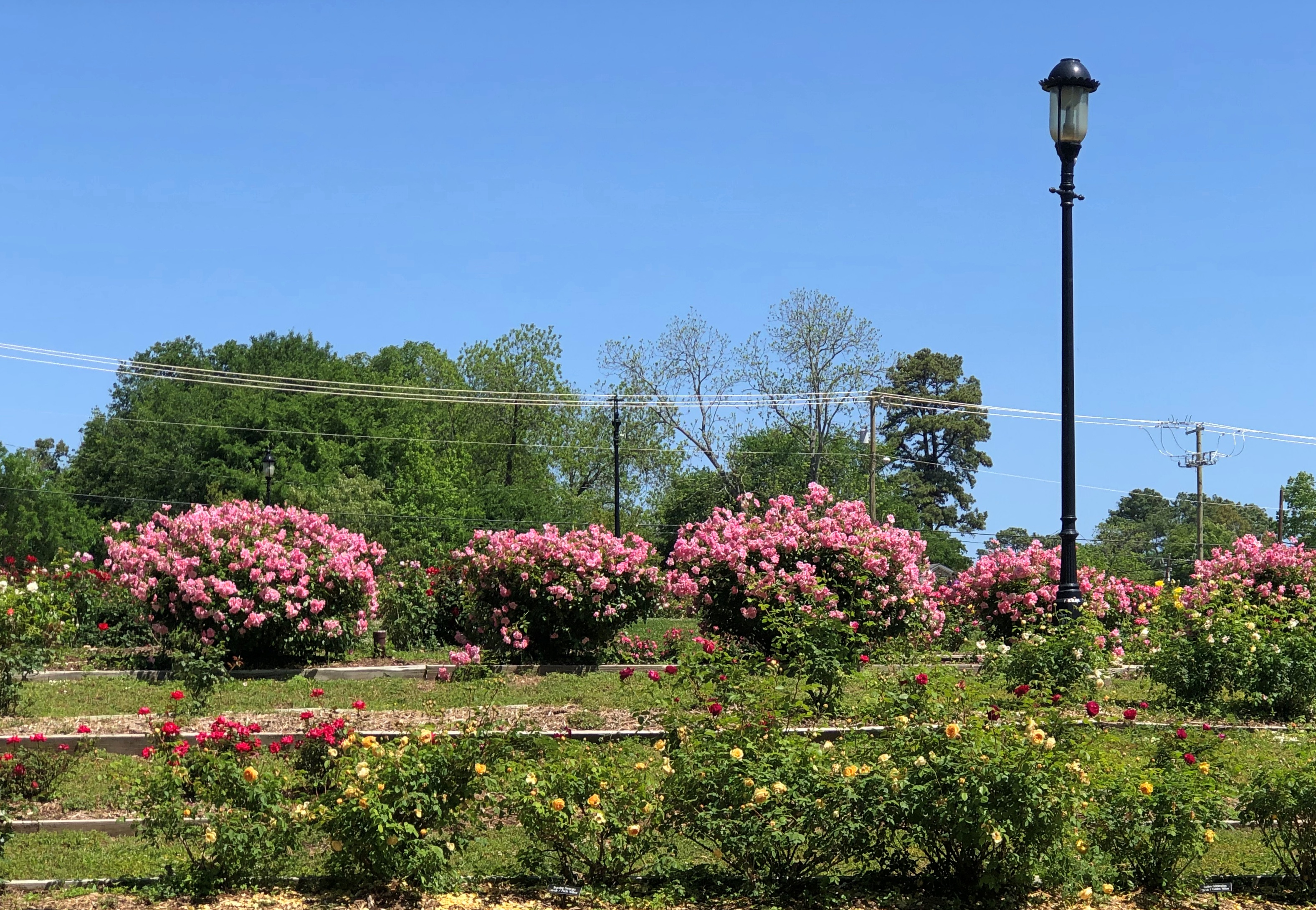
At Tyler Rose Garden in Tyler, Texas, smelling the roses is literal. It’s the largest rose garden I’ve ever seen — and according to some sources, the largest such garden in the United States — with some 38,000 bushes representing 600 cultivars on 14 acres.Tyler Rose Garden
Tyler Rose Garden

We arrived late in the warm morning of April 13, the day we left Dallas, on our way to visit an old friend of mine in Nacogdoches, Texas, as well as to (partly) rectify how little time I’ve spent in East Texas, a serious lacuna in my travels. Tyler is just south of I-20 east of Dallas, but not quite on that highway. We headed south on U.S. 69 from I-20 to get there.

Why a rose garden? Turns out Smith County, of which Tyler is the seat, was once the hub of U.S. rose production.

“Large-scale commercial production started in the early 1900s, and in 1917 the first train carload was shipped,” the always informative Texas State Historical Association says. “Droughts, freezes, and disease had destroyed the area’s peach orchards, so the nurserymen were forced to turn to something else. The climate and sandy loams of Smith, Van Zandt, Gregg, Cherokee, Harrison, and Upshur counties proved excellent for this type of horticulture, and large-scale commercial rose growing centered there.”
By the end of the 20th century, domestic and foreign competition had eaten into Texas’ market share for roses, but they are still grown in the area.

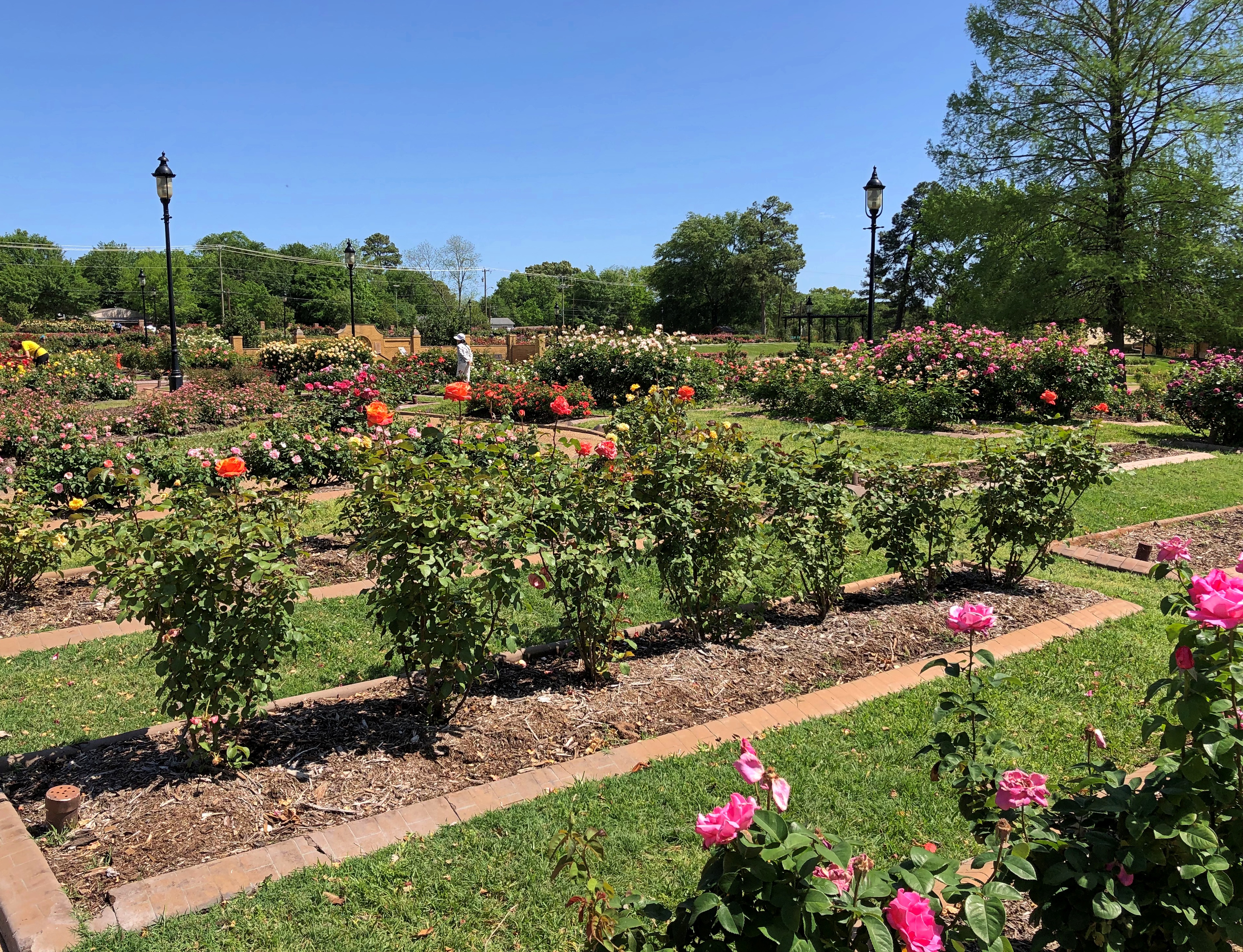
The day we came to Tyler was warm and clear, just right for a stroll among the roses of a free municipal garden.Tyler Rose Garden Tyler Rose Garden Tyler Rose Garden

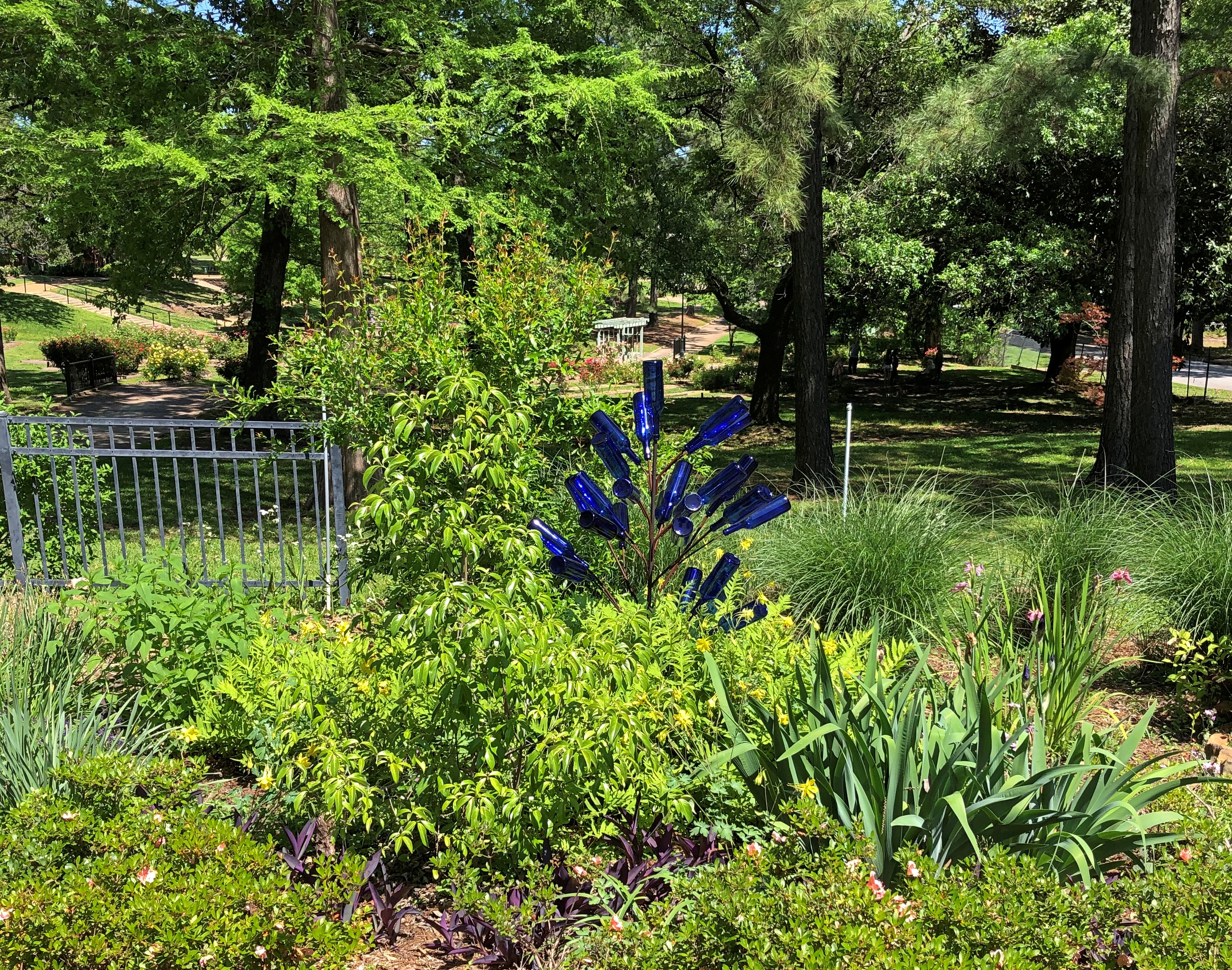
And take time to look closely at – and of course – smell the roses. Watch out for bees, though.Tyler Rose Garden Tyler Rose Garden Tyler Rose Garden

It isn’t all roses.Tyler Rose Garden Tyler Rose Garden Tyler Rose Garden

“Let’s spell out Tyler in big metal letters, but leave out the Y.”
“Why?”
“Right, Y.”

But why?”

“Yes, Y.”

“Huh?”

And so on. A clever idea, whoever thought it.

Potosi, Missouri

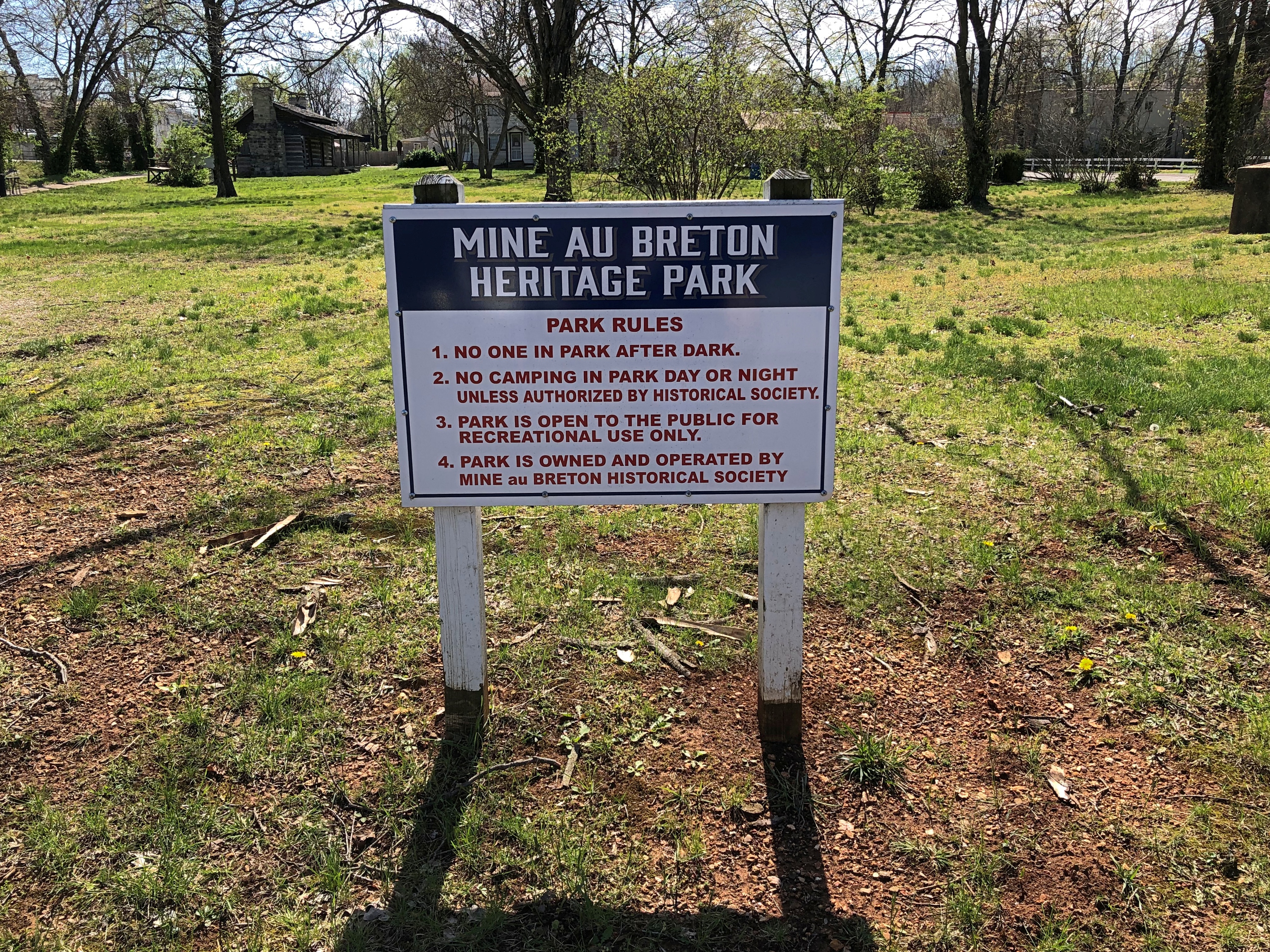
Sometime in late 18th century, Frenchmen came to a spot in the wilds of North America, which in later years would be southeastern Missouri, and began digging for lead in a place they called Mine Au Breton – Mine of the Breton, for Brittany native Francis Azor, who pioneered the effort in the area to extract the element. The name didn’t last, however. Since early U.S. sovereignty, it’s been Potosi, Missouri.

Still, the earlier name lingers in a small park in Potosi, which we visited on the morning of April 6 after leaving where we’d spent the night, Farmington.Mine Au Breton Heritage Park, Potosi, Mo.

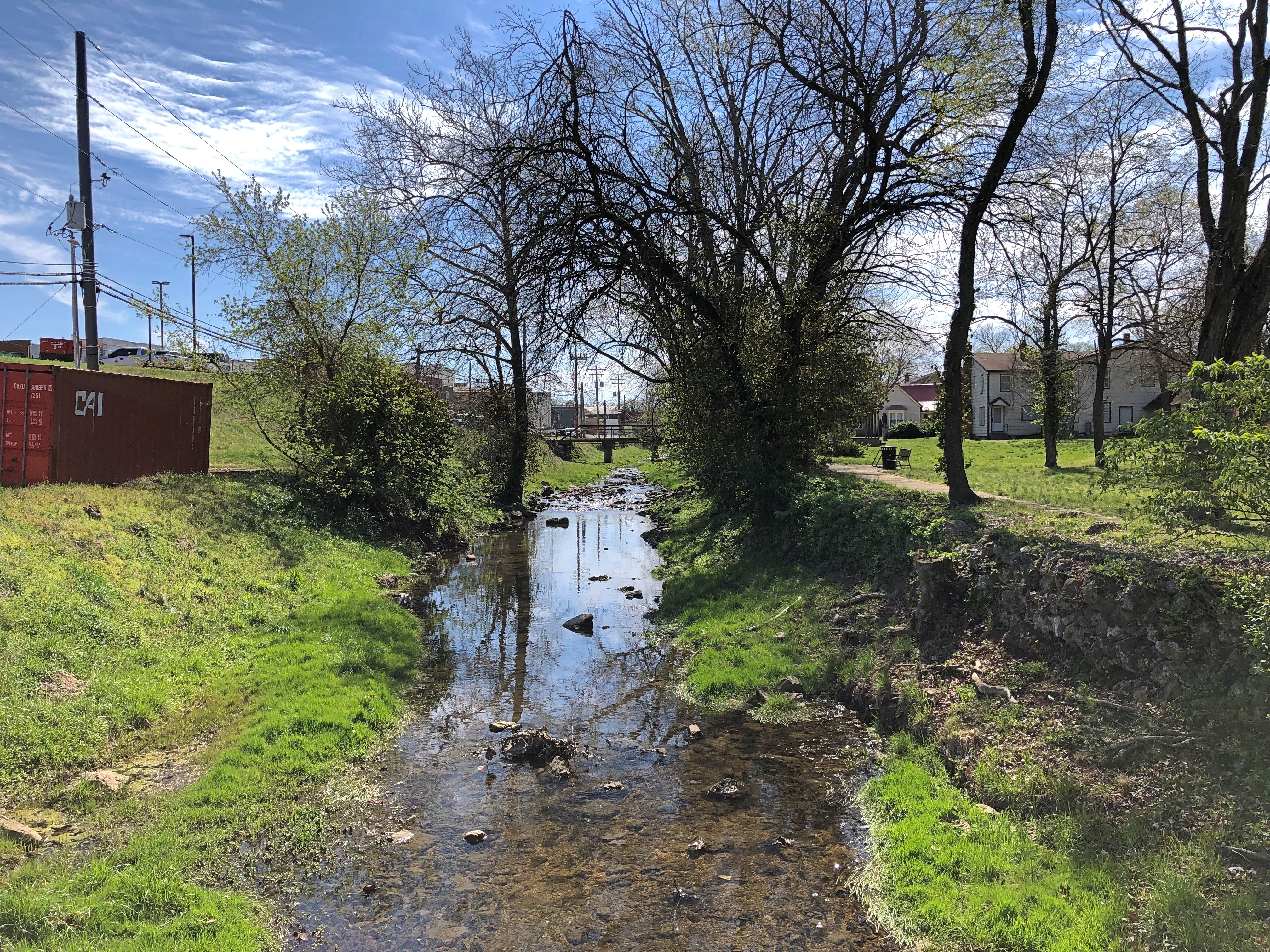
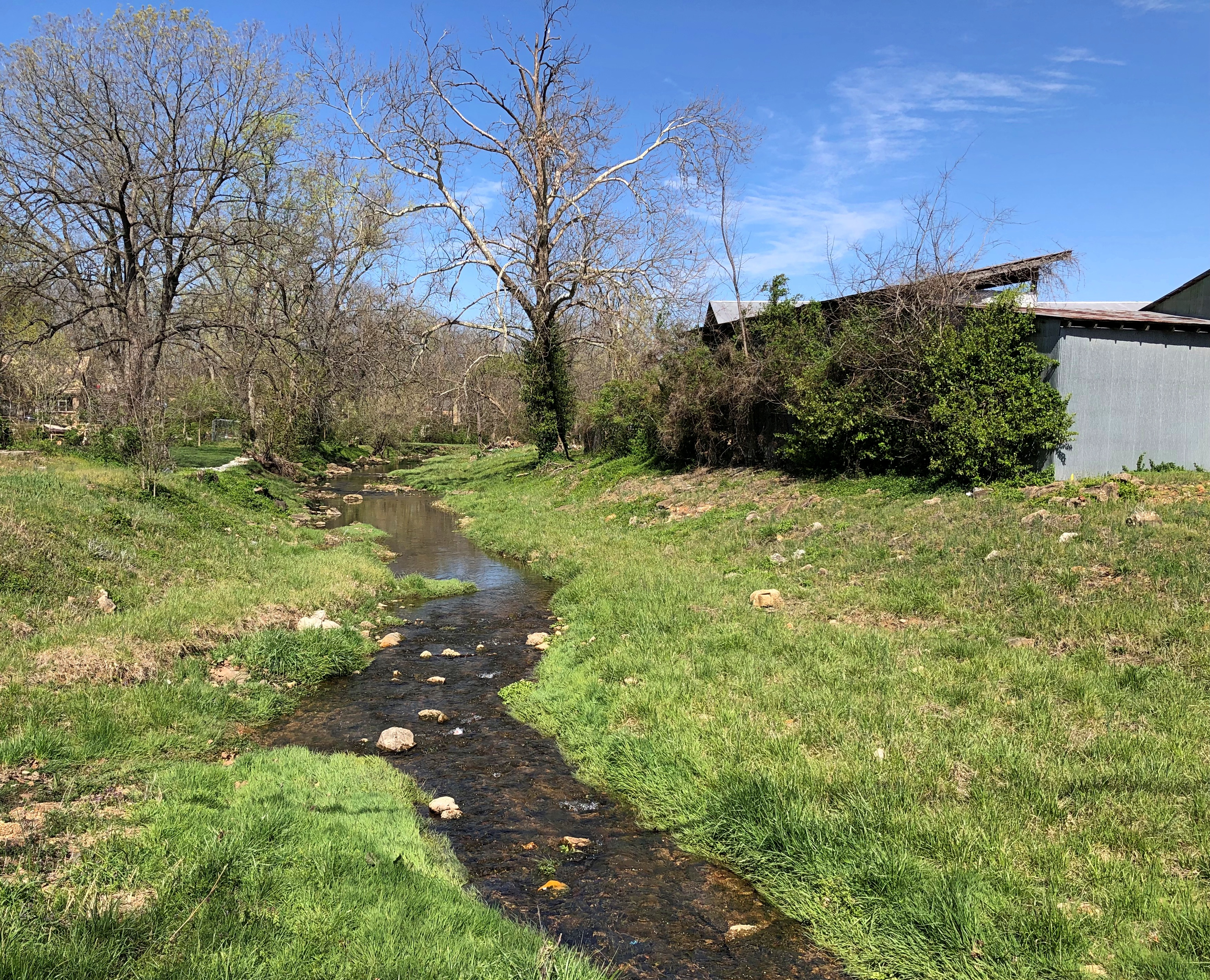
A nice little park, a block from the town’s main thoroughfare, High Street. Mine a Breton Creek runs through it.Mine Au Breton Heritage Park, Potosi, Mo. Mine Au Breton Heritage Park, Potosi, Mo.

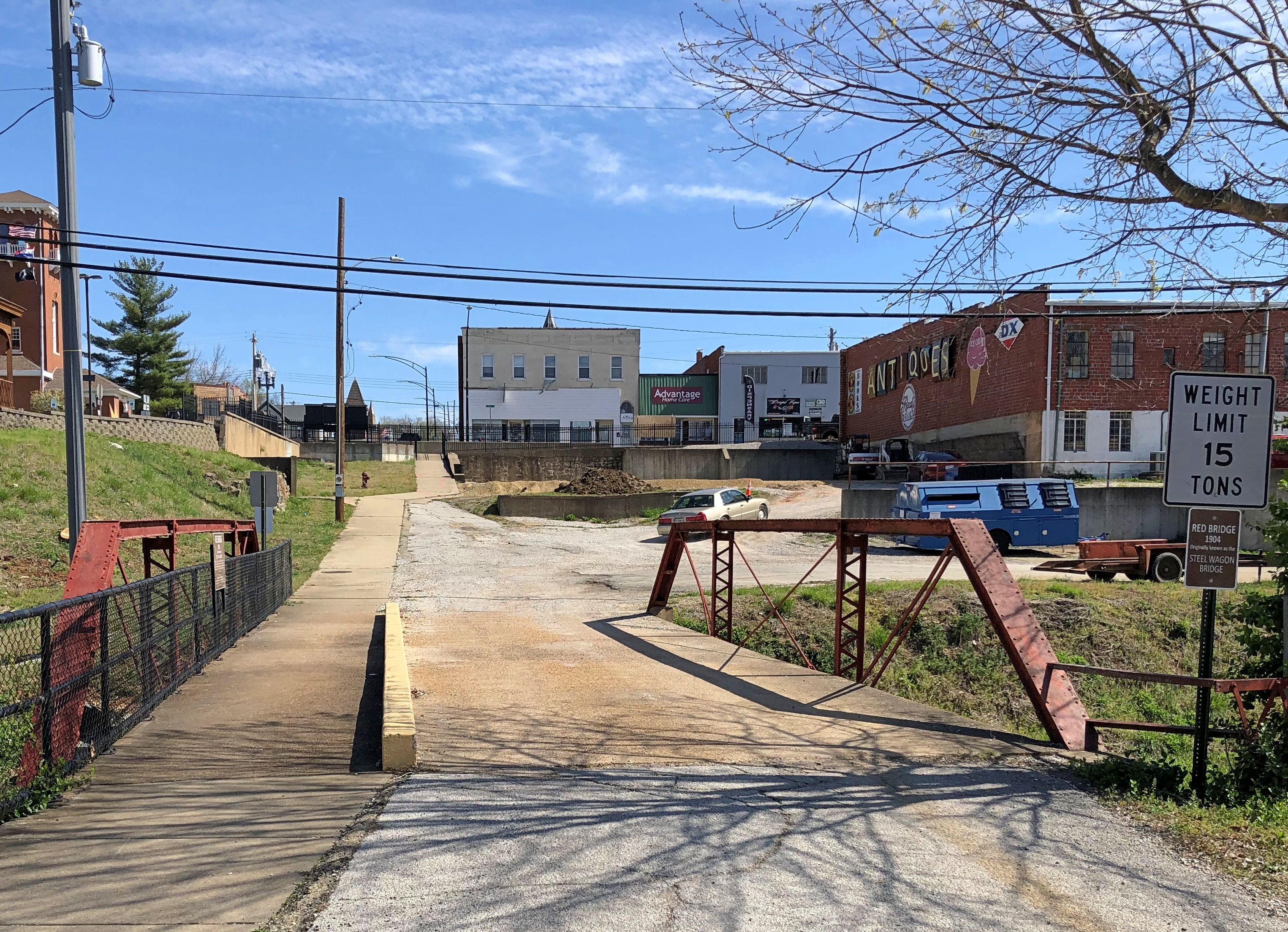
A small bridge crosses the creek at one point. You wouldn’t think such a bridge would merit a name, but the people of Potosi (pop. 2,500) clearly disagree.Mine Au Breton Heritage Park, Potosi, Mo.

Red Bridge. It even has a former name: Steel Wagon Bridge. Maybe more minor bridges should have names. Adds a little character to localities. Of course, if that caught on, most of them would be named after minor local politicos.Mine Au Breton Heritage Park, Potosi, Mo.

After the Louisiana Purchase was a done deal, Americans came to the area, but Moses Austin was already there, having cut a deal with the Spanish to mine there. Texas schoolchildren learn who he was, or at least they did 50+ years ago, when I was such a schoolchild. He’s the father of Stephen F. Austin, who was the Father of Texas. So maybe Moses is the Grandpa of Texas. My brother Jay suggested that we visit Potosi to see his grave, and since it was only a few miles out of the way, we did.

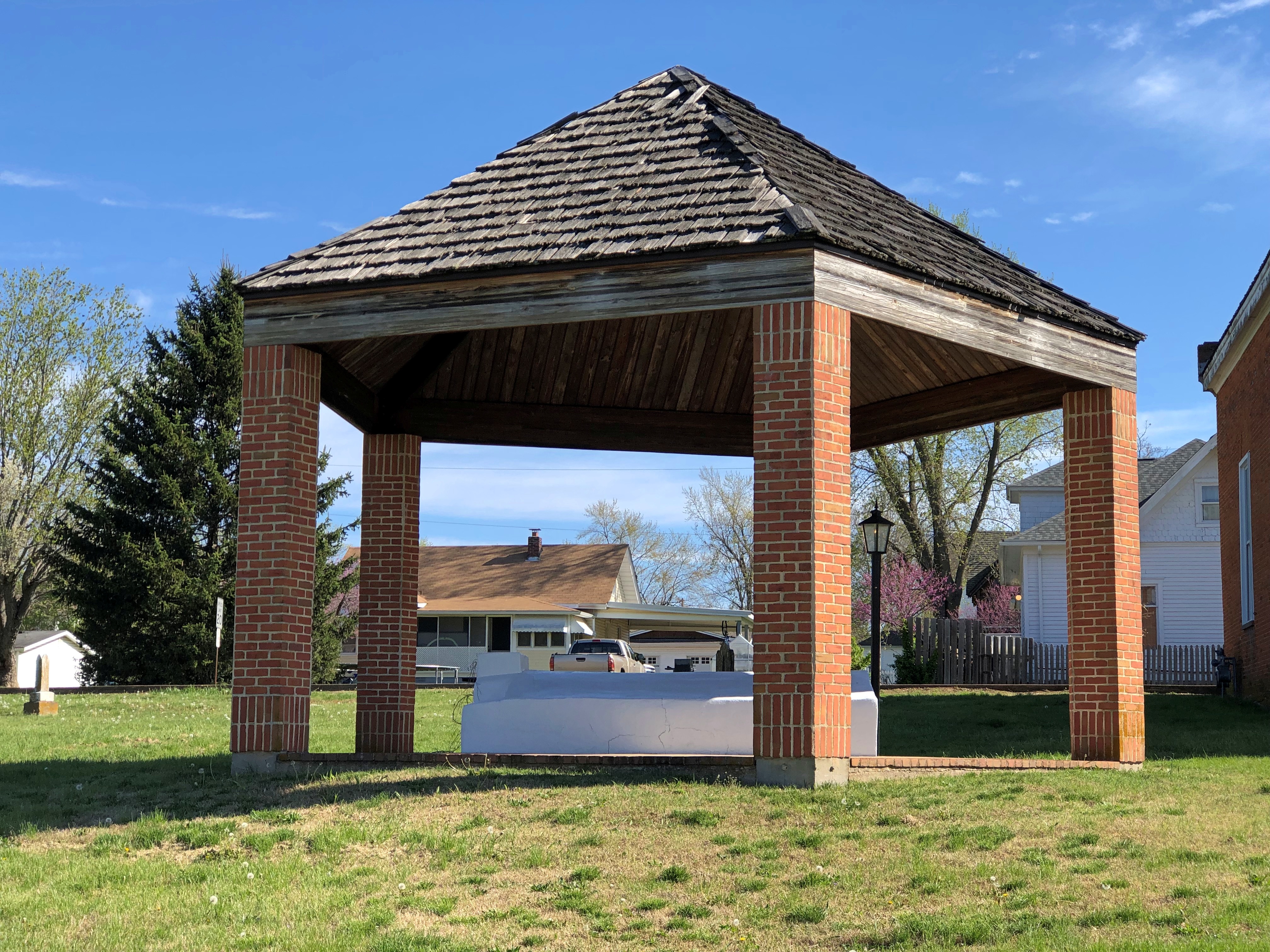
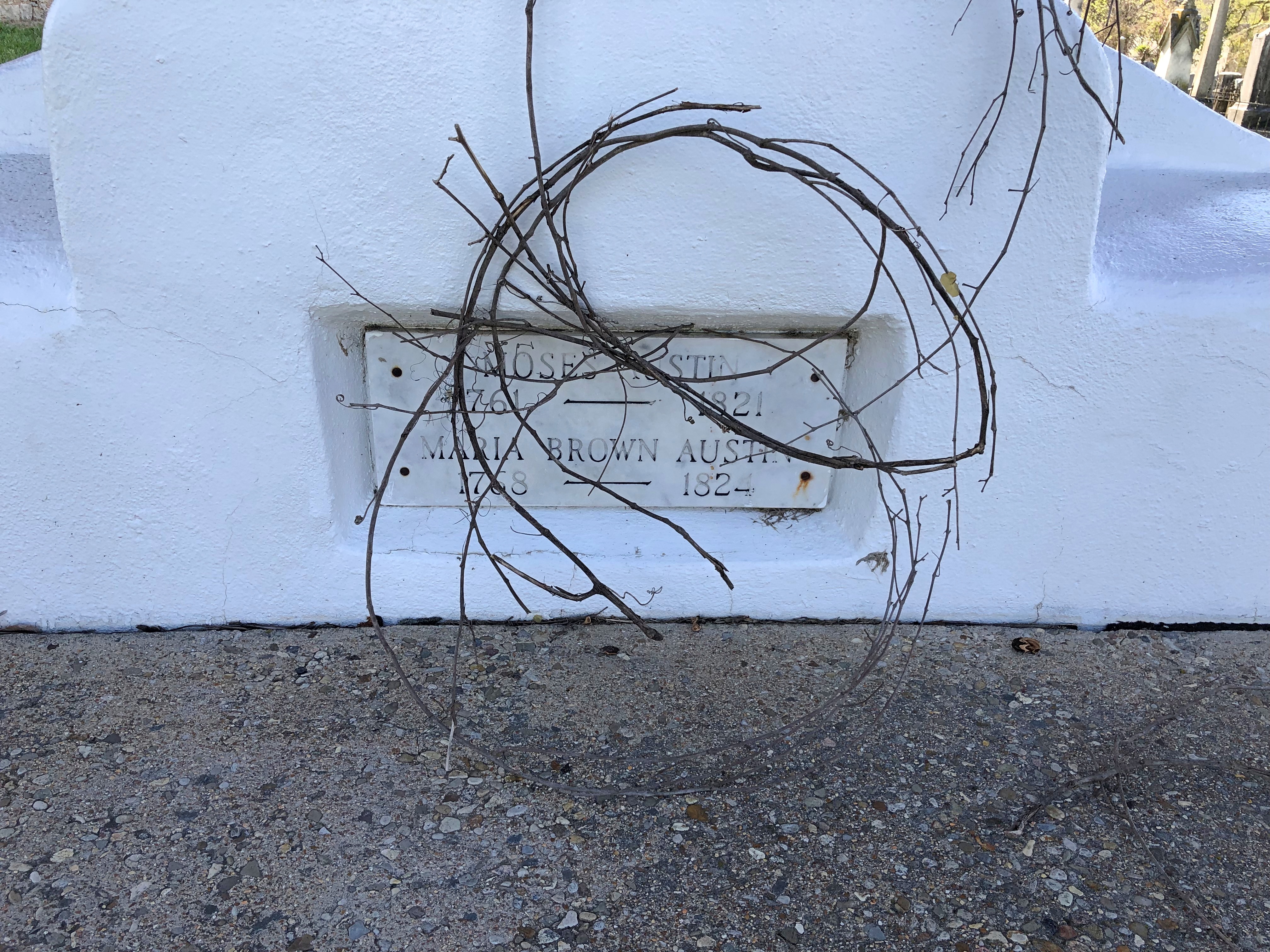
The grave itself isn’t one of the better-looking ones I’ve ever seen: a white, virtually unadorned slab under an uninspired protective shelter.Grave of Moses Austin, Presbyterian Cemetery, Potosi, Mo. Grave of Moses Austin, Presbyterian Cemetery, Potosi, Mo.

His wife Mary Brown Austin, daughter of an iron mine owner and mother of Stephen F., is there as well. We didn’t hear that much about her in school.

Moses Austin came to the area to mine lead – and escape debt back in Virginia — and apparently had a good go of it in the 1810s, though I suspect life wasn’t as good for the slaves that did the actual digging. Austin is credited with renaming the town Potosi, after the place in Bolivia, a silver mining center known as the location Spanish colonial mint, producer of countless Spanish dollars. Educated miners like Austin would have known it, anyway, and maybe he was thinking big. As in, dreams of silver. But lead would have to do.

Quite the go-getter, Moses Austin. “He & his 40 to 50 slaves & employees built bridges, roads, a store, a blacksmith shop, a flour mill, a saw mill, a shot tower, and turned out the first sheet lead & cannonballs made in Missouri,” the informative Carroll’s Corner posted.

Austin suffered reversals and ultimately lost his fortune in the Panic of 1819, and so schemed to take settlers to the underpopulated wilds of Texas, then part of New Spain — to escape his debts, among other things. He received a land grant from the Spanish Crown (that’s quite a story), and was set to go when death came calling, leaving the task to his son – who had to deal with newly independent Mexico for his grant. That’s another story, one far from modern Potosi.

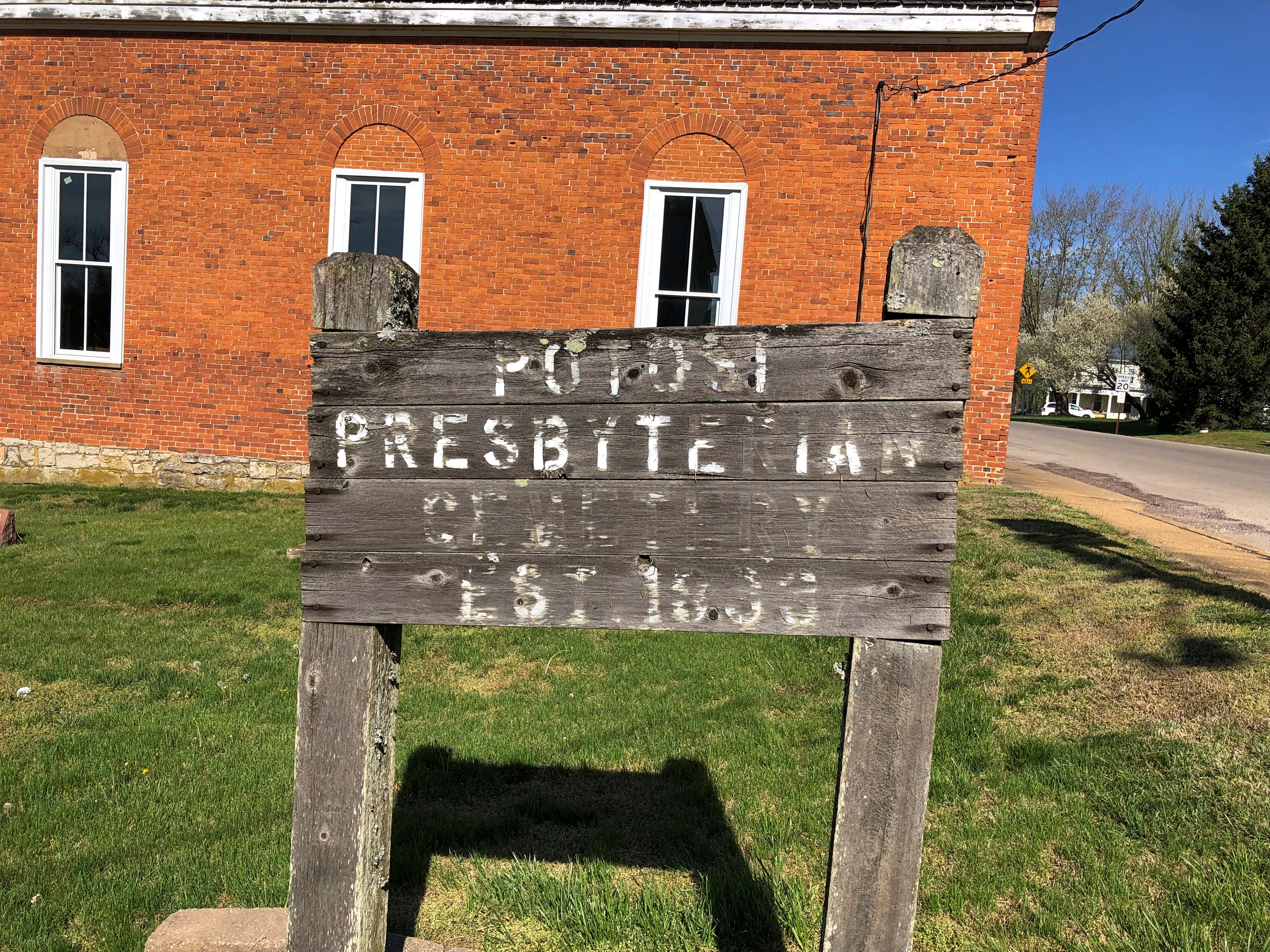
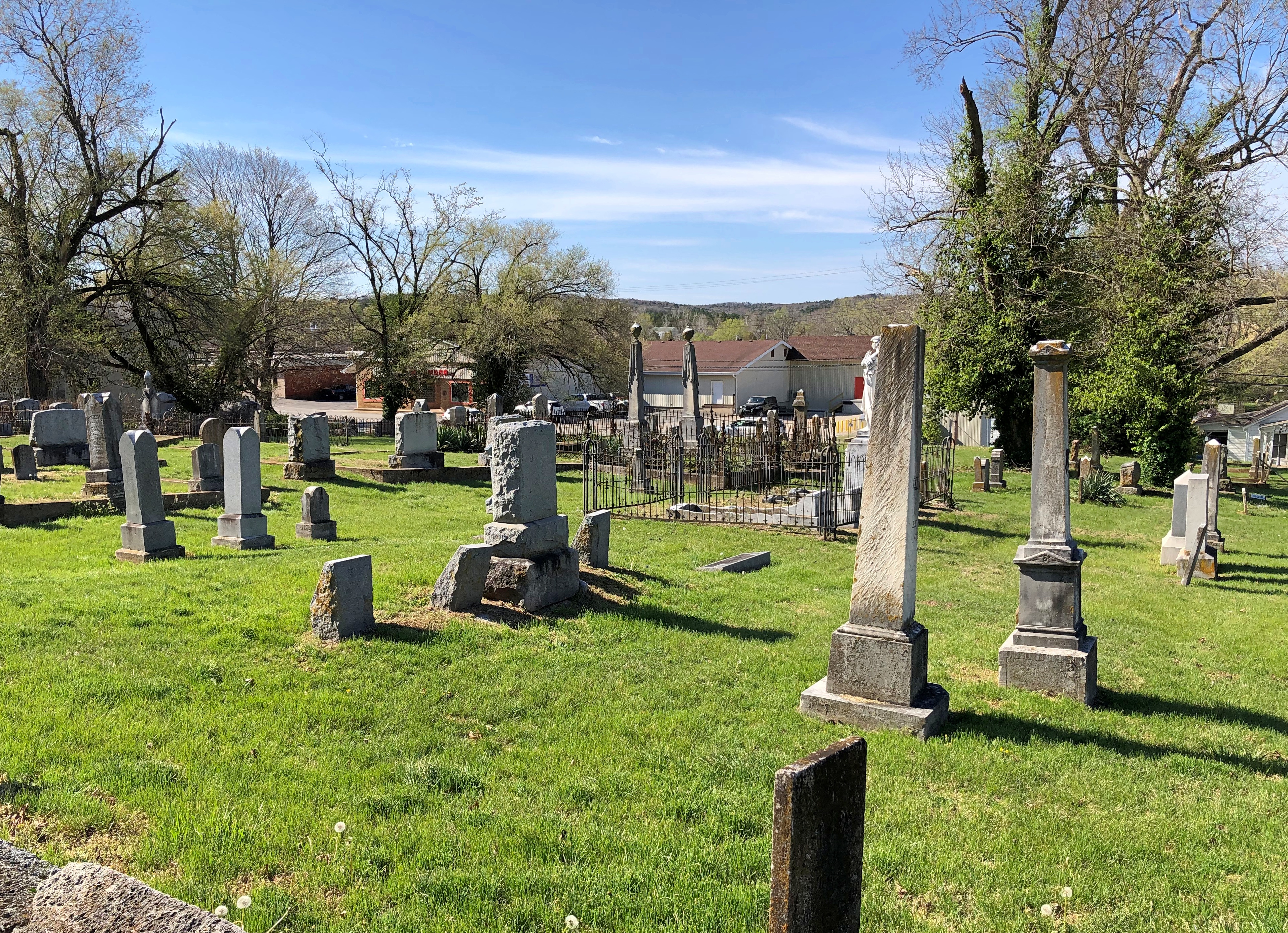
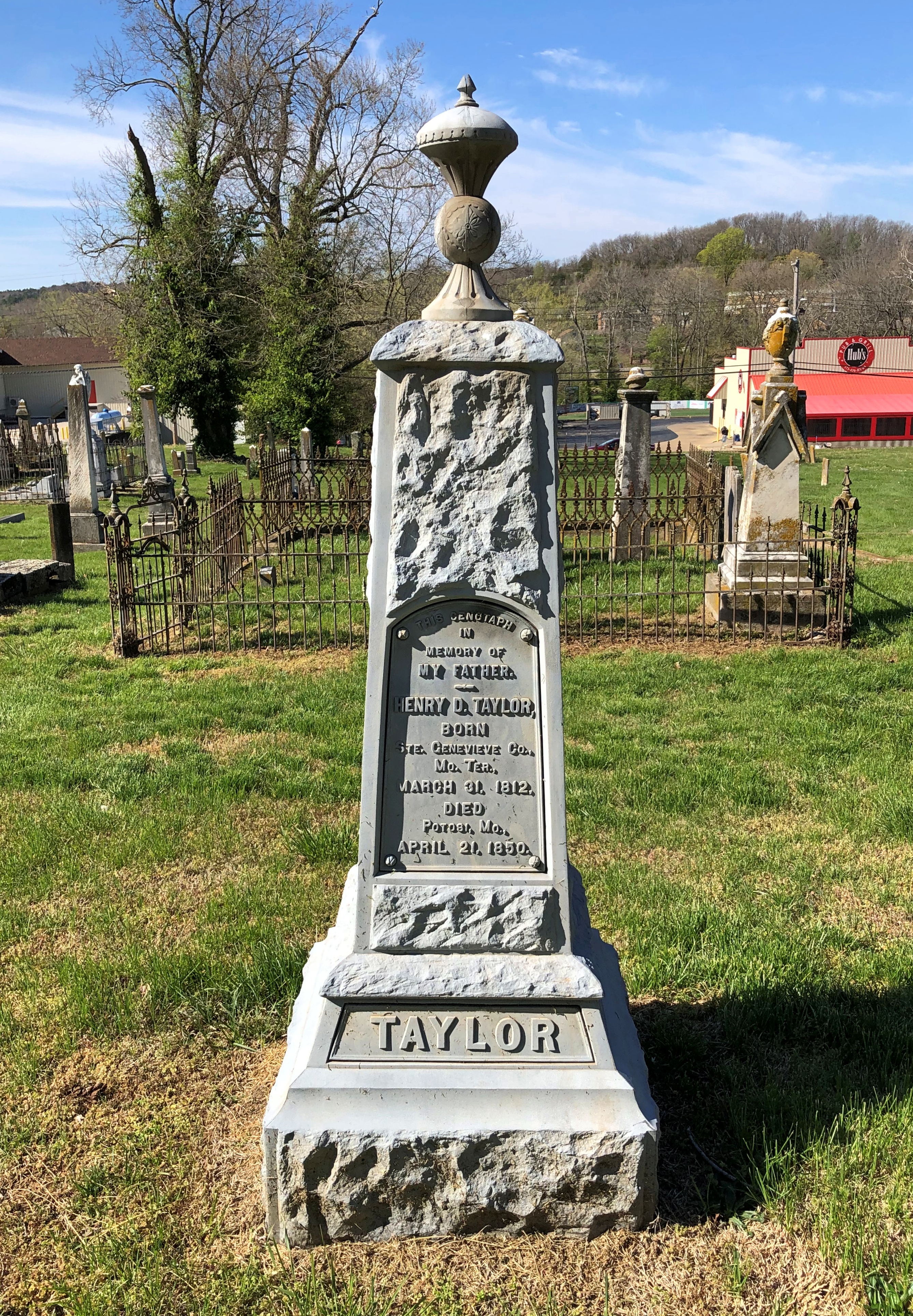
Google Maps calls the cemetery along High Street, with the Austins’ grave, City Cemetery. A sign at the site says: Potosi Presbyterian Cemetery, Est. 1833.Presbyterian Cemetery, Potosi, Mo.

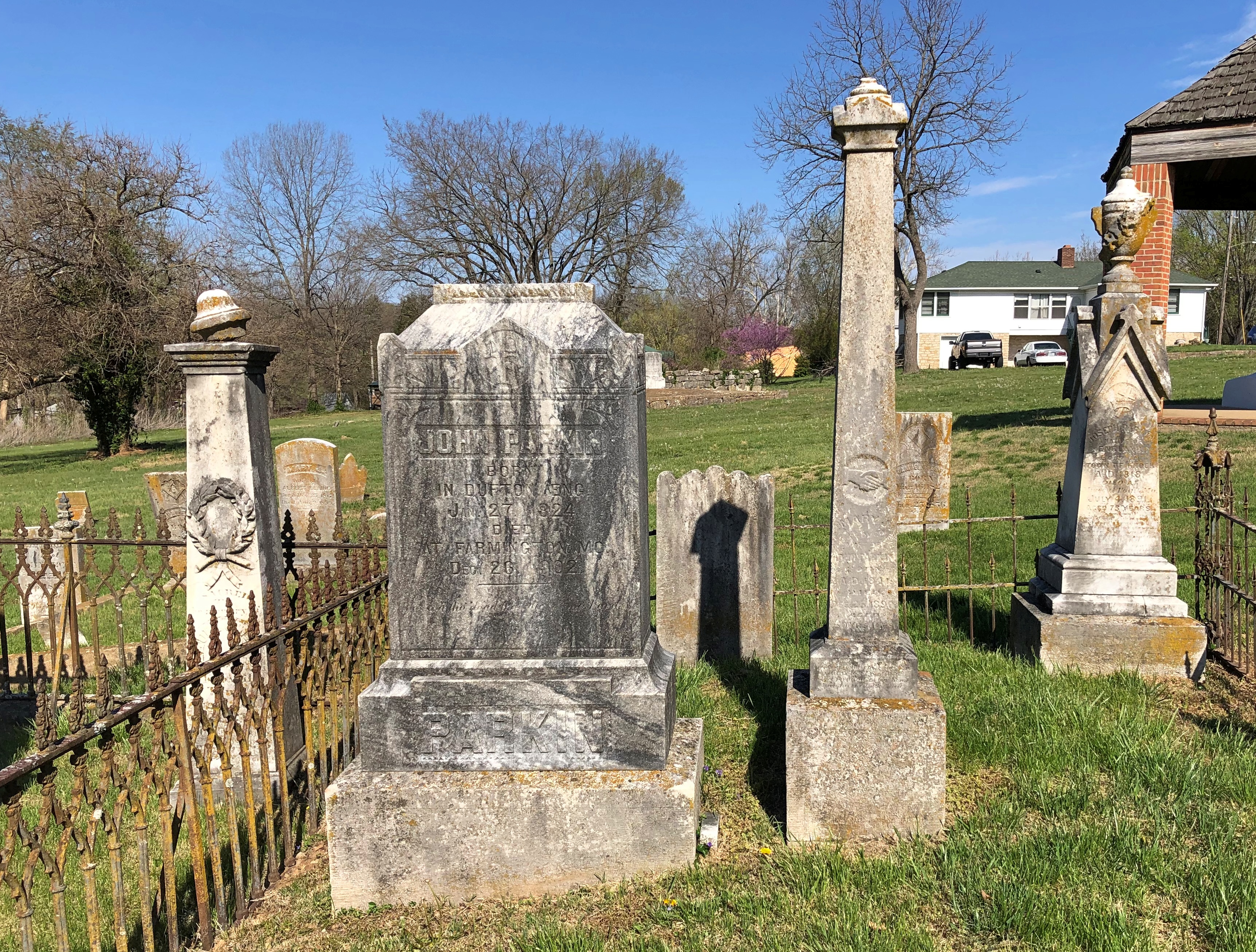
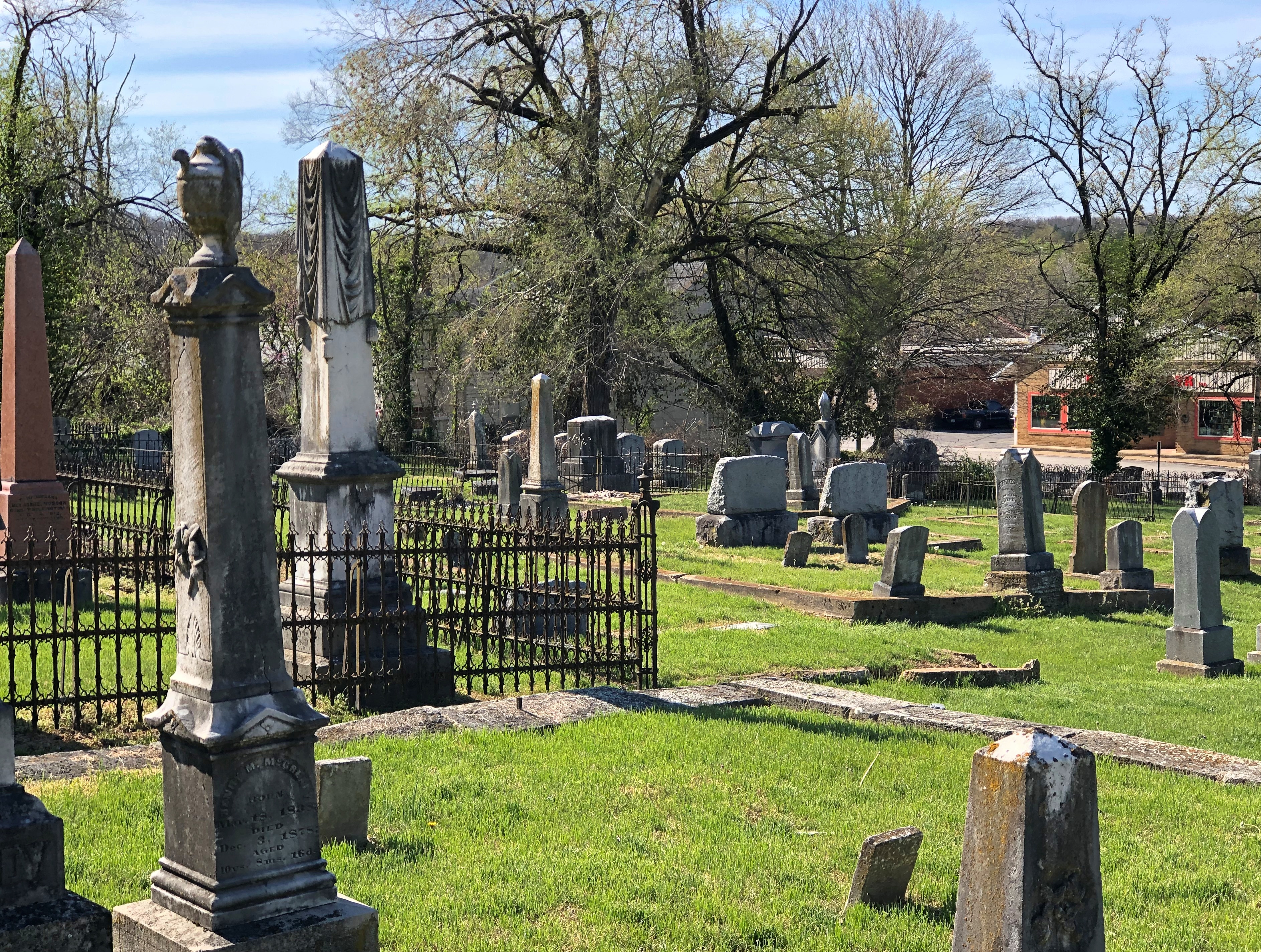
It’s a mid-sized, old-style cemetery with some charm.Presbyterian Cemetery, Potosi, Mo. Presbyterian Cemetery, Potosi, Mo.
Presbyterian Cemetery, Potosi, Mo.

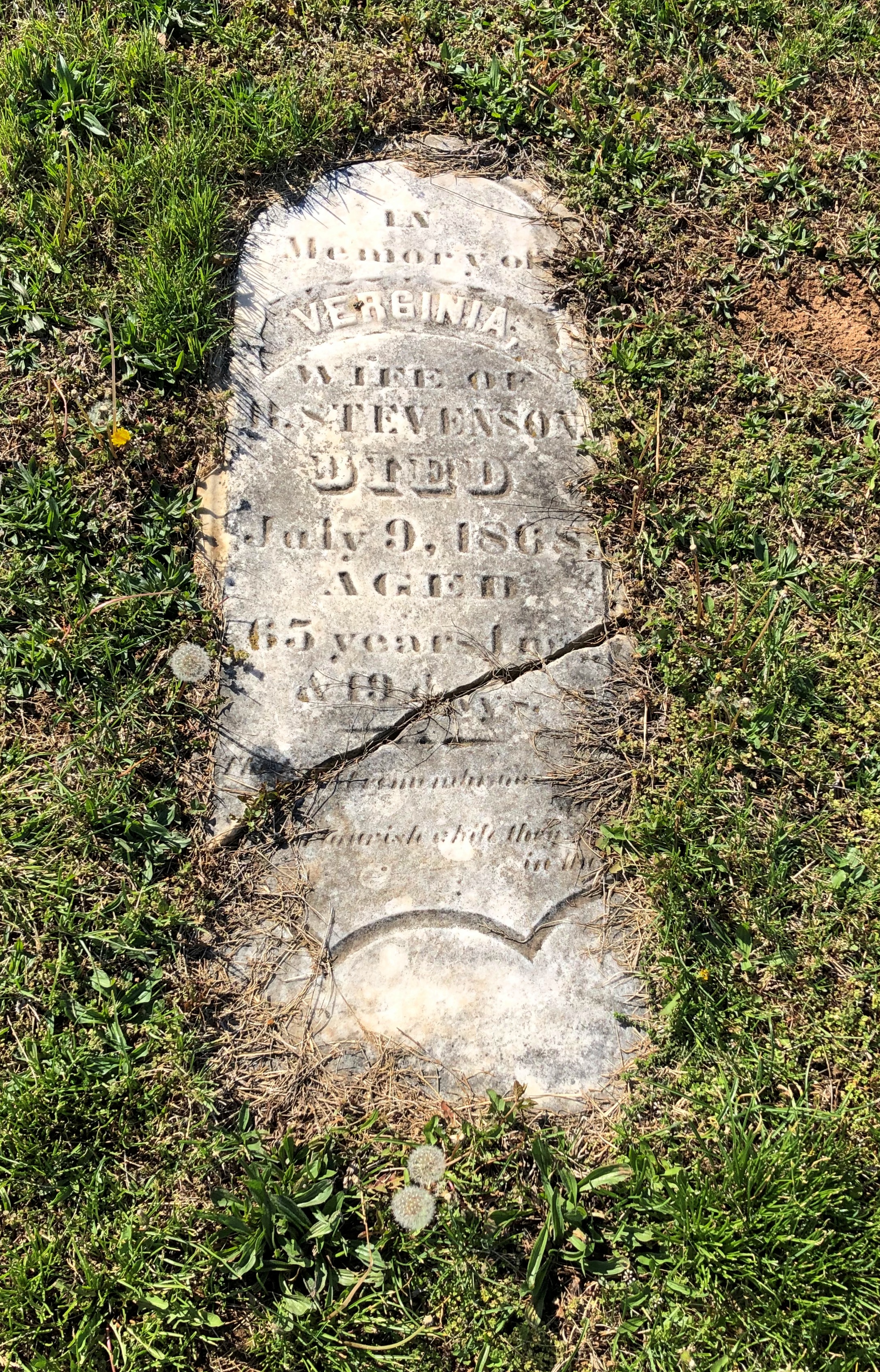
With memorials broken and worn.Presbyterian Cemetery, Potosi, Mo.

And others still waiting for that wear to happen. It will.Presbyterian Cemetery, Potosi, Mo.

High Street is the location of a handsome county courthouse (Washington County), the third on the site and a 1908 design by one Henry Hohenschild, a Missouri architect who did a number of public buildings. Remarkably, the same document tells us that Moses Austin (probably) designed the county’s first courthouse. Moses was one busy guy.Washington County Courthouse, Potosi, Mo.

There are a number of antique stores on High Street, and while Yuriko was off exploring them, I was buttonholed by two Jehovah’s Witnesses sitting with their material across the road from the courthouse. Or rather, I allowed myself to be buttonholed, so I could talk a little religion. Just like I did in Salt Lake City. Or religion-adjacent. I think the ladies, Mary and Kay I believe it was, were surprised that I knew about the sale of the JW HQ property in Brooklyn some years ago.

Ozark Plateau & Dallas Figure Eight Road Trip & Total Solar Eclipse Extravaganza

The April 8, 2024 North American solar eclipse is already old news. It was practically so the minute it was over, a news cycle balloon whose air didn’t just leak out, but popped. A thousand articles bloomed in the days ahead of the event, mostly trotting out the same information: an elementary-school level explanation of solar eclipses, dire warnings about the dire consequences of staring into the Sun, maybe a note about festivals, quaint towns and surge motel pricing in the path of totality as people gathered in cities and towns in that narrow band.

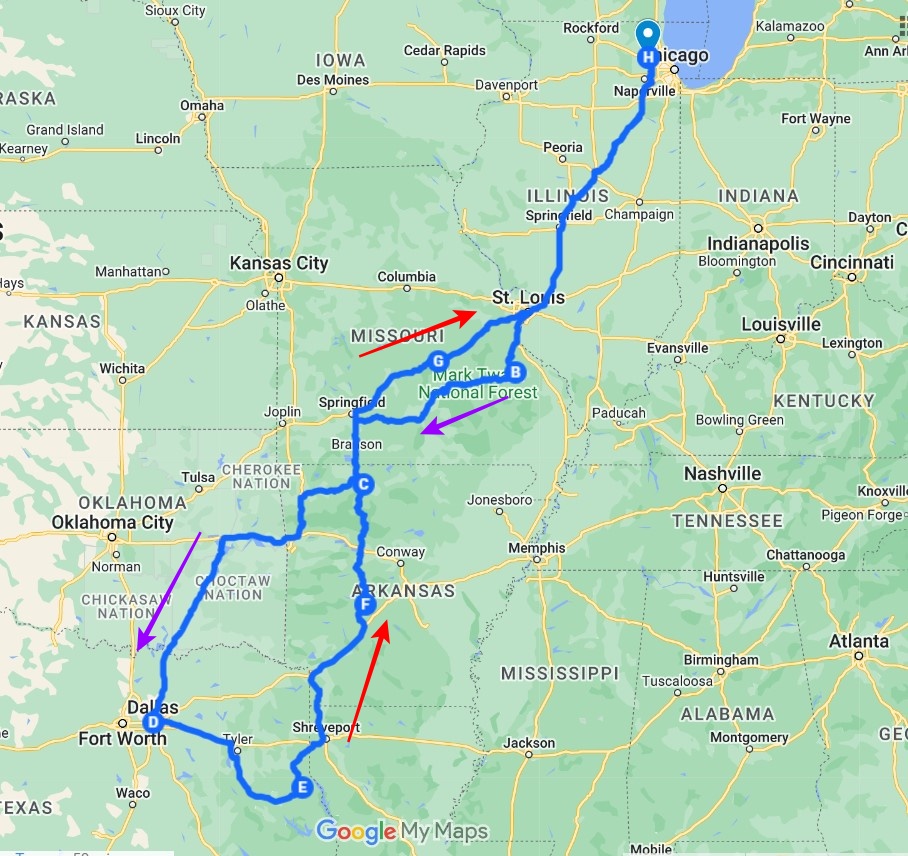
Yuriko and I headed south to Dallas to see totality, making a two-night, three-day drive of it beginning on April 5; stayed five nights in Dallas; and then made a three-night, four-day return drive, arriving home yesterday. All together we drove 2,496 miles, generally crossing the Ozark Plateau in a course that made a (badly crumbled) figure 8 on a string.

After checking into a limited-service hospitality property in the old lead mining hills of southeastern Missouri on (Friday) April 5 – T-minus three days ahead of totality on Monday – I asked the clerk if they were booked up on Sunday, the day before.

“We’re booked up all weekend,” she said.

“At high prices?”

“Some places are getting $300 or $400 a night,” she said, not willing to admit (you never know who’s listening) that the same was true at her property, a franchisee of a multinational hospitality company that surely knows a thing or two about surge pricing.

I had a similar conversation with the desk clerk in 2017, ahead of the solar eclipse that year. I’d booked a room months earlier then – and this time too – to avoid surge pricing. Eclipses can be predicted at least 1,000 years into the future, and more importantly for ordinary folk, that information is readily available in our time. So it’s easy enough to avoid motel gouging. The next night, April 6, we were in a different motel, also (probably) a creature of surge pricing, also booked early.

As for the night before the eclipse, April 7, we avoided paying for a place to stay by relying on the good offices of my brother Jay, whom we stayed with. It just so happened that the path of totality passed over Dallas, a fact not lost on me some years ago. So I planned to be there at that time, and we were fortunate enough that all went according to plan.

We’ll never be able to do that exactly again, either, since the next time Dallas – or the place where Dallas is – will be in the the path of totality is 2317.

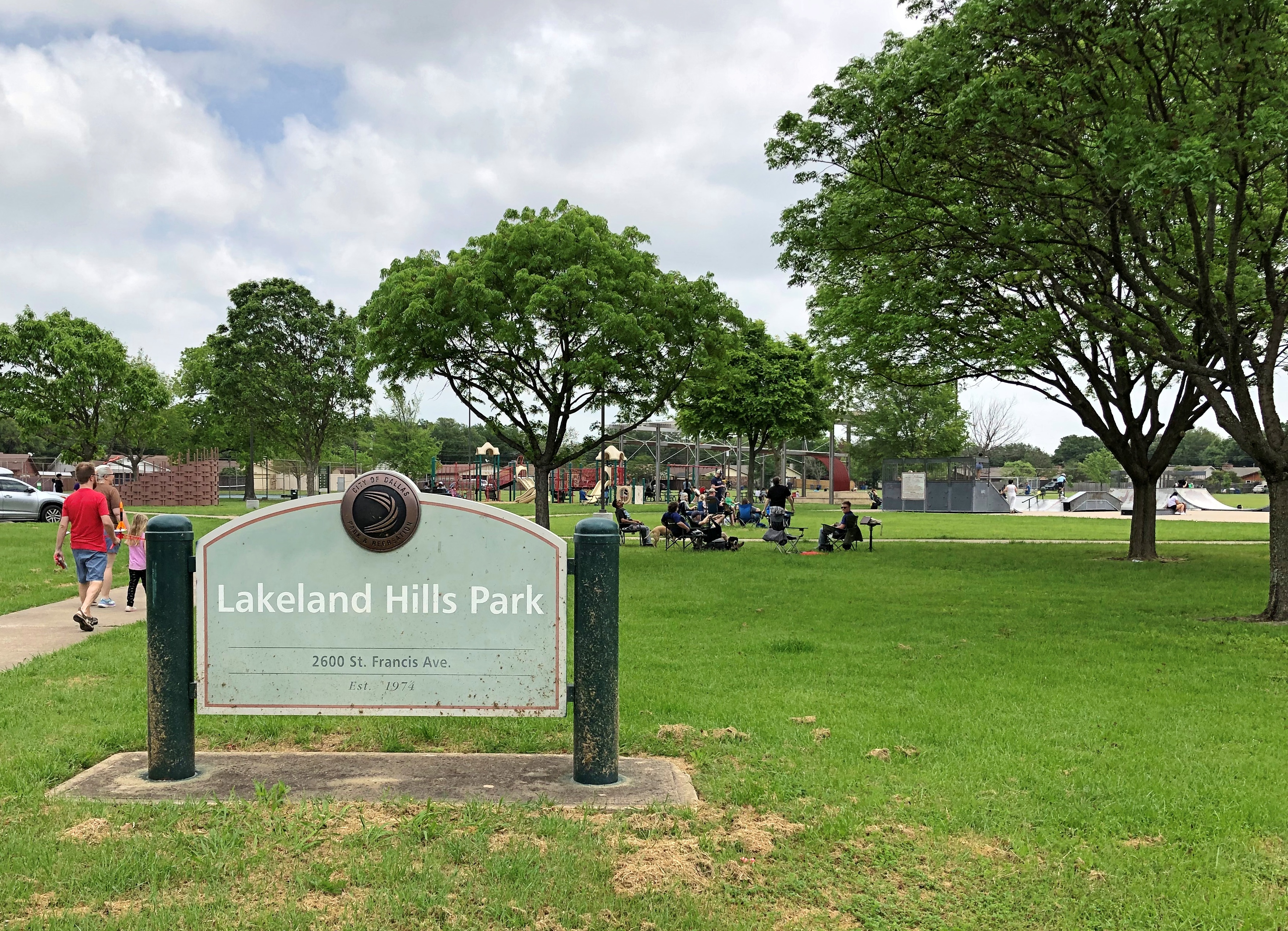
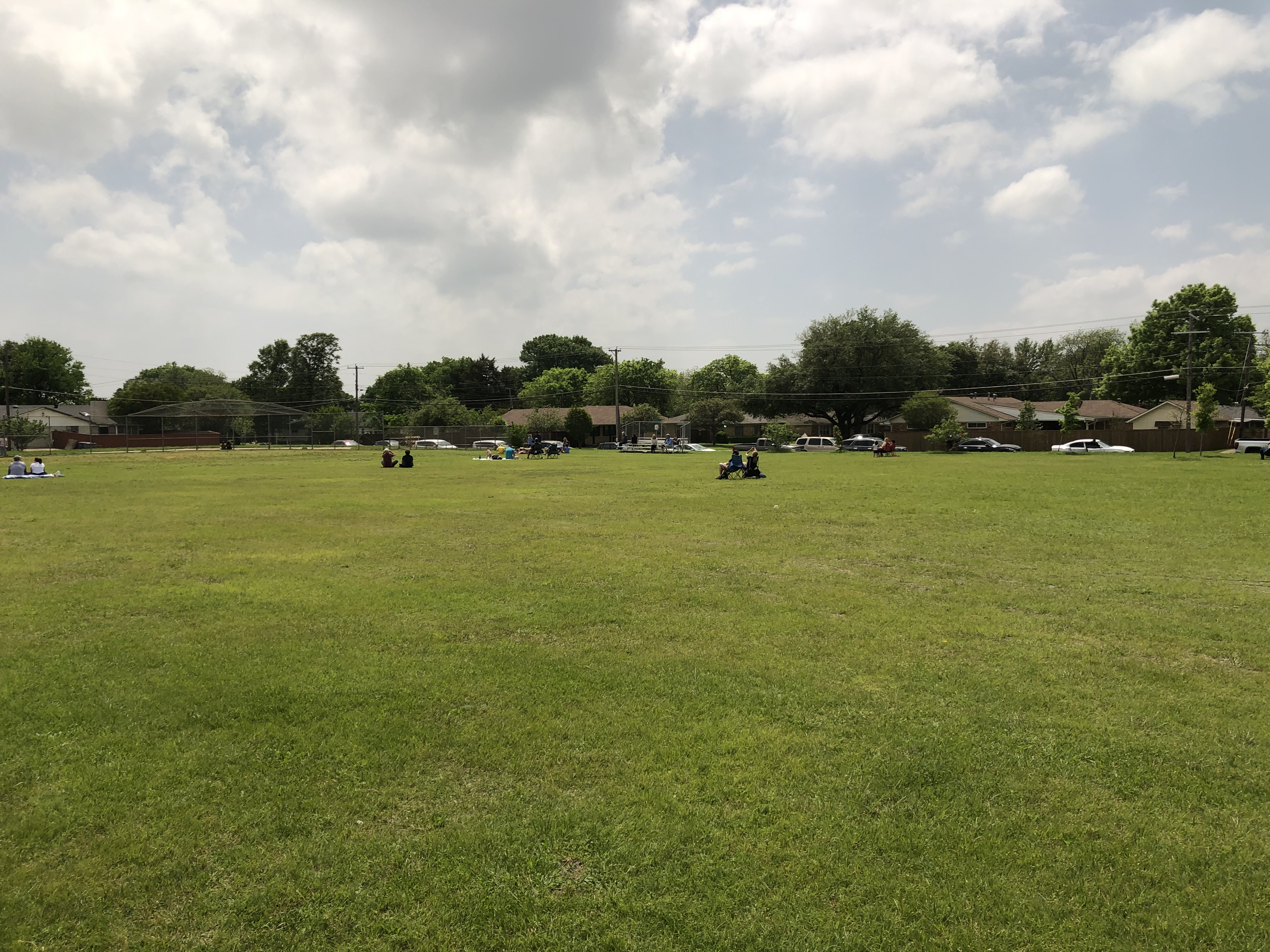
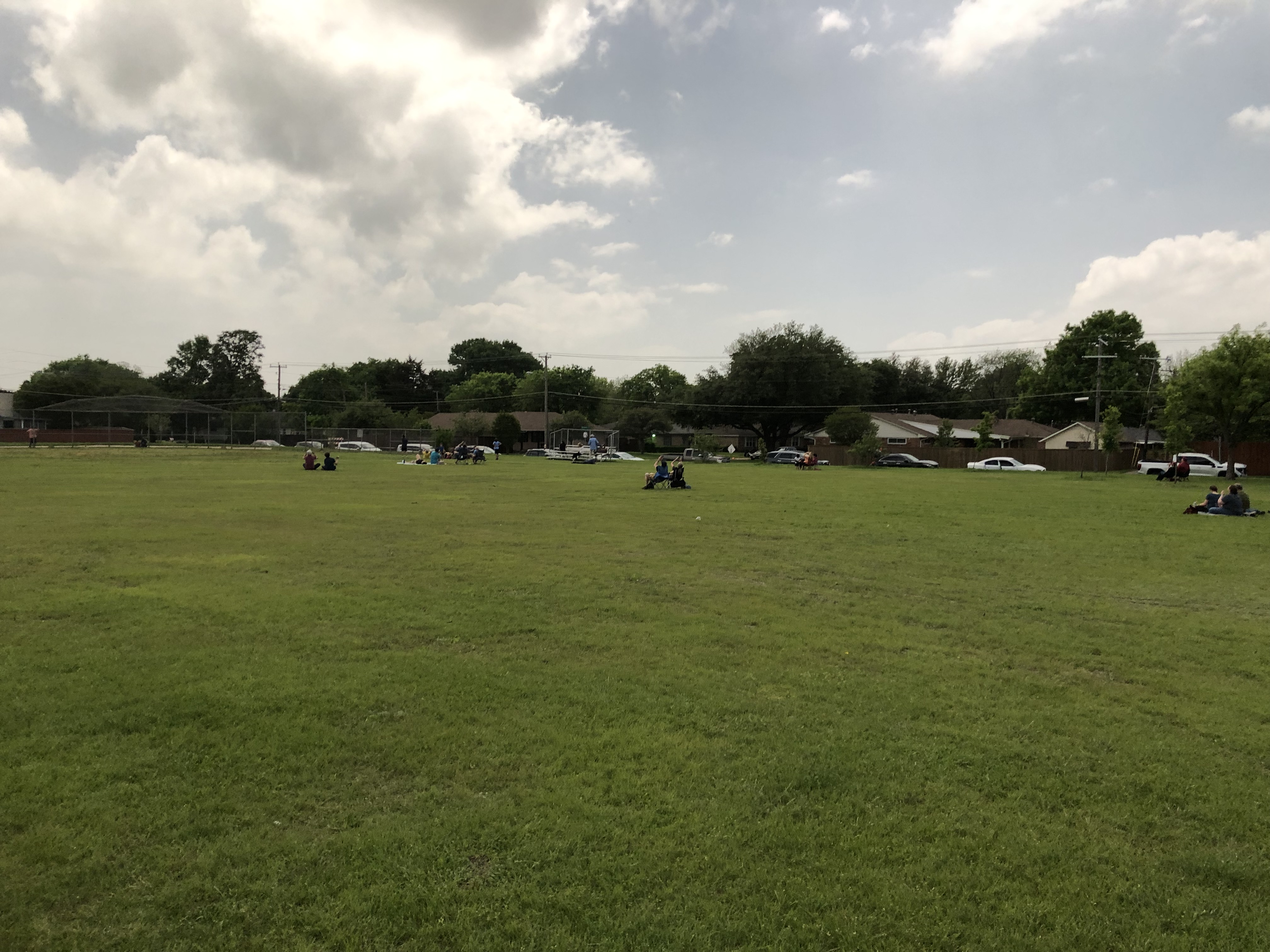
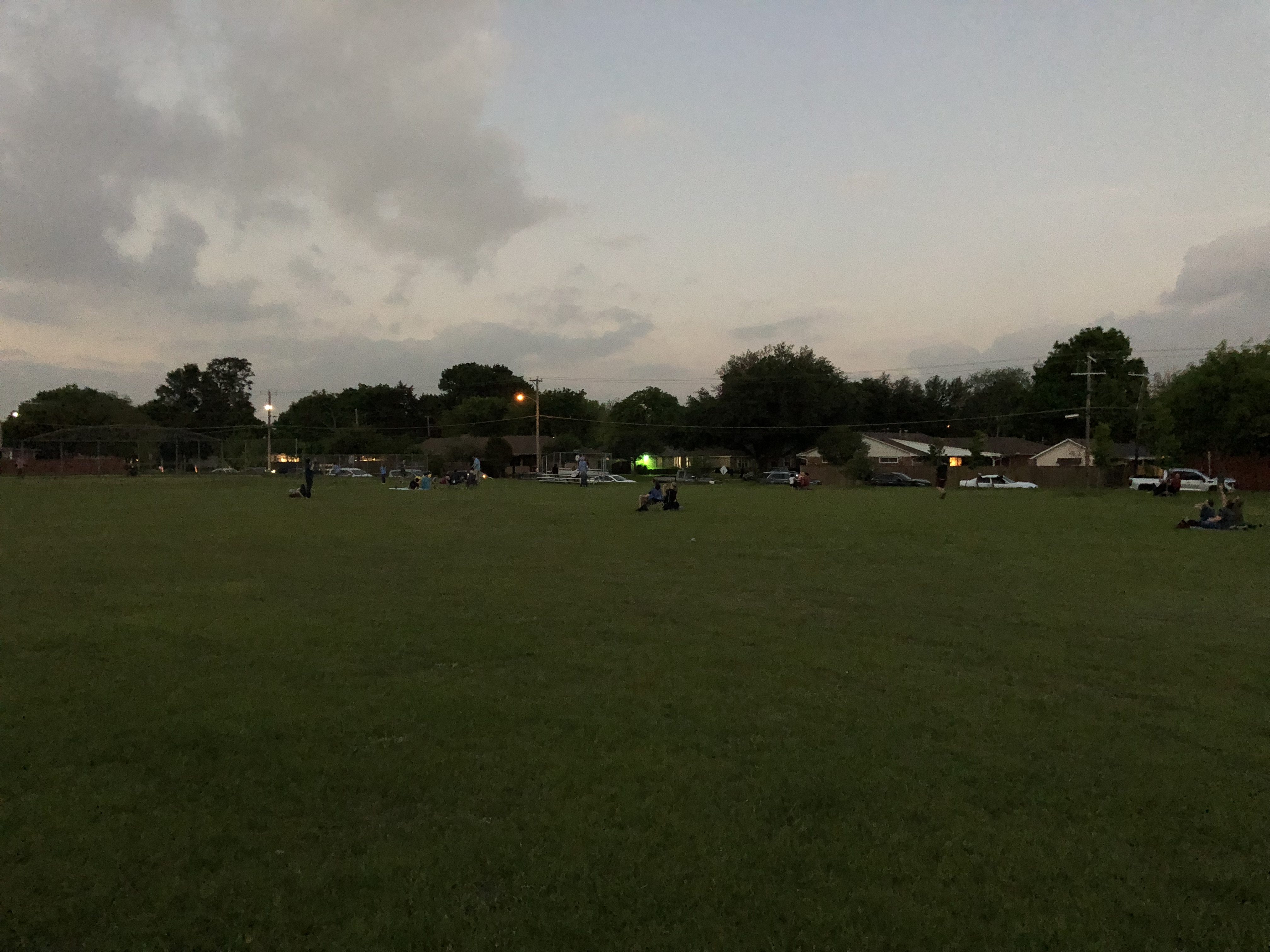
Totality was in the early afternoon. I considered it my lunch hour, since I was working that day. The skies over Dallas that morning were uncooperatively cloudy most of the morning, but by noon the Sun peeked out sometimes. Jay and Yuriko and I joined my nephew Sam and his family and, after a quick Torchy’s takeout lunch – and a zoom interview for me – we went to the nearby Lakeland Hills Park, at 32°48’14.1″N 96°41’47.5″W, according to Google Maps.Lakeland Hills Park, Dallas, April 8, 2024

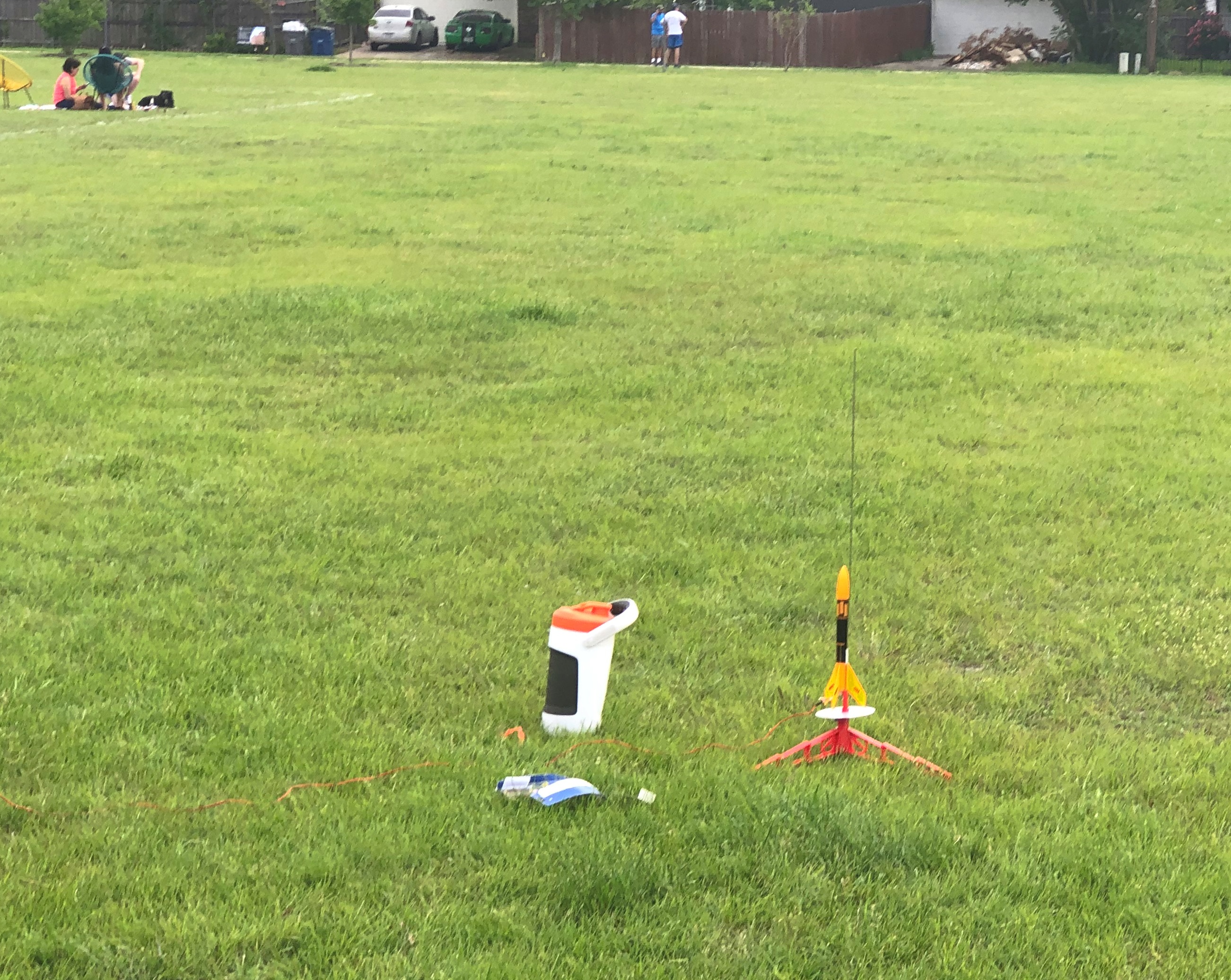
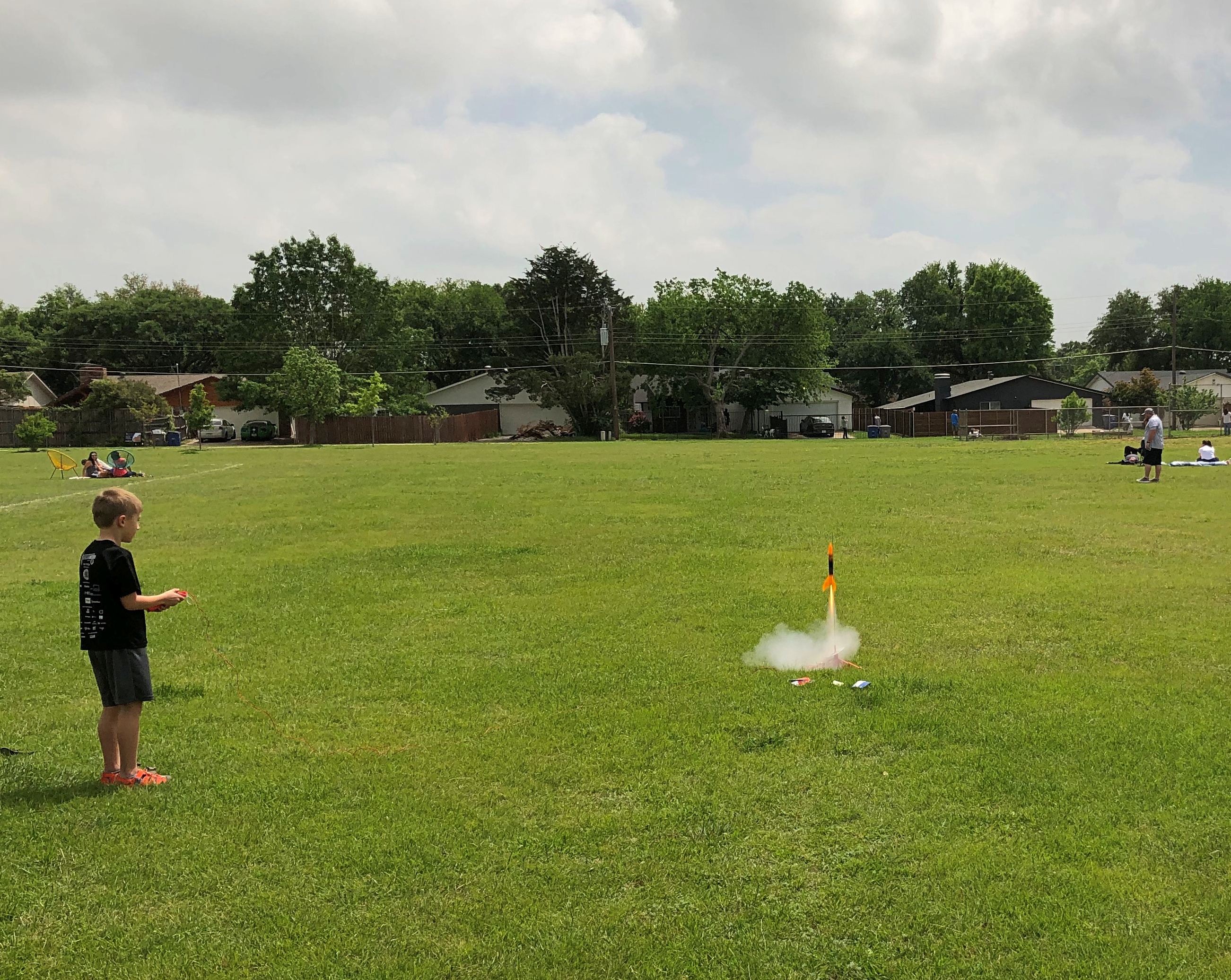
To add to the entertainment, Sam shot off a rocket. The idea had originally been to do so during totality, but he correctly decided that would be a distraction from the main event, so he shot it off early. Twice. Small children, including his children, chased it as it parachuted to the ground the first time. The second time, the parachute failed and that was the end of the rocket’s useful life. Naturally I was reminded of the rockets we shot off in ’75.Lakeland Hills Park, Dallas, April 8, 2024

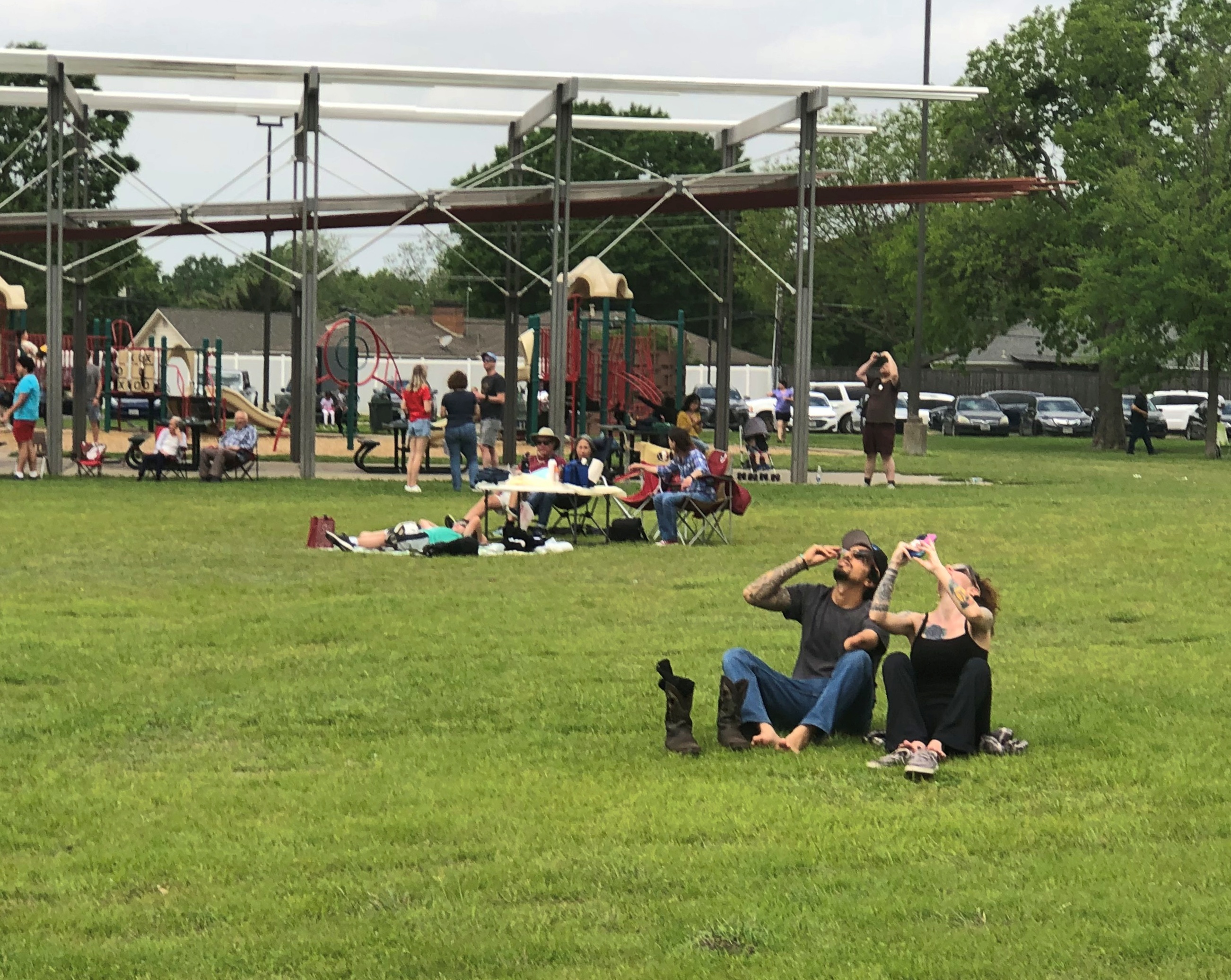
The orange crescent Sun was visible on and off as the Moon ate further into it. People were watching.Lakeland Hills Park, Dallas, April 8, 2024

No need to see the partial eclipse via pin-hole when the Sun happened to be out.Lakeland Hills Park, Dallas, April 8, 2024

We assessed the nearby clouds for size and what direction they seemed to be moving. The odds didn’t look that great for an unobscured view. Darkness began closing in anyway.Lakeland Hills Park, Dallas, April 8, 2024 Lakeland Hills Park, Dallas, April 8, 2024 Lakeland Hills Park, Dallas, April 8, 2024

Totality came, just as the astronomers said it would. Luck was with us, mostly. We saw the blackened disk of the Sun and much of its close-in corona, as apt a name as any in astronomy, though little of the corona’s tendrils that so memorably stretched into the void in the clear skies of ’17. Still, quite the sight in ’24. Even saw a few solar prominences, gold-red-orange light blips at the edge of the disk, which I’m not sure I did last time. So was the partly cloudy totality worth driving more than 1,000 miles to see? Yes. Double yes.

Pretty Sure It Will Be Dry February As Well

Not only are we rid of January today, it was the most pleasant weather I can ever remember on a February 1 in northern Illinois: sun out sometimes, temps touching about 50 F.

YouTube algorithms are getting better at their game. Or so it seems. Today they suggested a Mexican ska band, Mexican Nutty Stompers, who have just released an album. The song, “Souvenir.” I was the 83rd listener.

Never mind the delight in finding Mexican ska when you didn’t such a thing existed, whoever the lead singer is, she’s got some voice. I might look into finding out her name, but for now the voice is more than enough.

A snippet from a press release that came a few weeks ago:

Embrace the spirit of Dry January with Hotel ZaZa Memorial City. Dine in at Hotel ZAZA’s Tipping Point Restaurant and Terrace and indulge in exclusive mocktail specials, crafted to make your taste buds dance without the spirits. Throughout the month of January, enjoy a selection of zero-proof concoctions, each priced at just $8.

Closer to my wheelhouse, but not quite in it. Still, I learned a couple of things from the release. One, Hotel ZaZa Memorial City is in Houston. Zaza is a collection of boutique hotels in Texas, in fact, with locations in Austin and Dallas too. I wasn’t familiar with the brand, but it looks posh all right. Also, this is the essence of the luxury hotel business: serving drinks at what would be a very reasonable price, if they contained any alcohol.

Dry January. I had to look around for more information on that, and it turned out to be a thing. Not sure if it’s just a thing of the chattering classes, or has stronger purchase on the steep slopes of American culture, but anyway you can find mainstream articles about it. Never heard of any of that. I’m late to the party, as usual. Or the non-party, considering no alcohol is served. As we all know, alcohol is essential to any fun party. That’s true in song and story.

The concept is simple enough to be a thing: Dry January just means not drinking alcohol during January, presumably timed to come after personal bacchanals in December. The hotel is using the concept to sell mocktails, but people do seem to use the idea to improve their lives. Good for them. I found it a little hard to imagine, though. Every January is Dry January for me.

I did order, and drink, an Old Fashioned at the bar of the Nashville Italian restaurant where we had dinner on the last full night with my friends in November. We were waiting for a table, so we all sat at the bar, enjoying some lively conversation with each other.

We also spent a few minutes watching the bartender, a nattily dressed slip of an African-American young man, maybe 30, who seemed to be everywhere behind the bar doing everything all the time, but mostly assembling the various liquors for his cocktail creations. With an economy and grace to his movements that spoke of years of practice. He was an artist.

So I wanted to order something from him. But what? As I later explained to my friends, a little part of every man wants to be Don Draper, so the drink in front of me was my homage to the character, and a vehicle to provide a nice tip for the bartender.

A little more than 12 years before ordering the Old Fashioned in Nashville, I ordered one in Appleton, Wisconsin on a press trip because I recently heard of the drink on Mad Men and was curious.

But mixed drinks haven’t been how I’ve usually spent my money over the years. All those years later in Nashville, I nursed my Old Fashioned a while – I’m not a hard-drinking TV character, after all – and concluded that I hadn’t had a bar cocktail between those two times, only occasional beer and wine, most of which wasn’t at bars anyway. What’s the term for that? Not teetotaler. Quasi-totaler?

More Manhole Covers

Almost warm today, except in the house, where I maintain temps at a skinflinty 68° F. in the colder months. It wasn’t warm enough outside to raise the inside temps, and it was so windy I decided not to built the possible last back-yard fire of the year. Maybe tomorrow.

One thing leads to another online, and from Hello Kitty I eventually made my way to the Atlas Obscura article on Japanese manhole covers.

“In Japan, many manhole covers are works of urban art — elaborate, curious, distinctive, even colorful,” AO notes. “They have become a tourist destination unto themselves, and attract a legion of dedicated manhole enthusiasts who travel the country to visit some of the thousands of unique designs.”

This seems to be a thing that has happened in the about 30 years since I lived there, so I’d never heard of it. At least, the article puts the origin of the covers as a local initiative in 1985, and it probably took a while to become a mass phenomenon.

“Typically, ‘local manholes’ or ‘design manholes’ feature elements special to a particular location: a town emblem, landmark, event, or official bird or flower,” the article says. “While there is some logic to the placement of the covers… [some] appear to have been placed without rhyme or reason.”

The last image in the article, depicting Osaka Castle, would hew to its place even without the kanji for Fukushima Ward, Osaka – it has the miotsukushi.

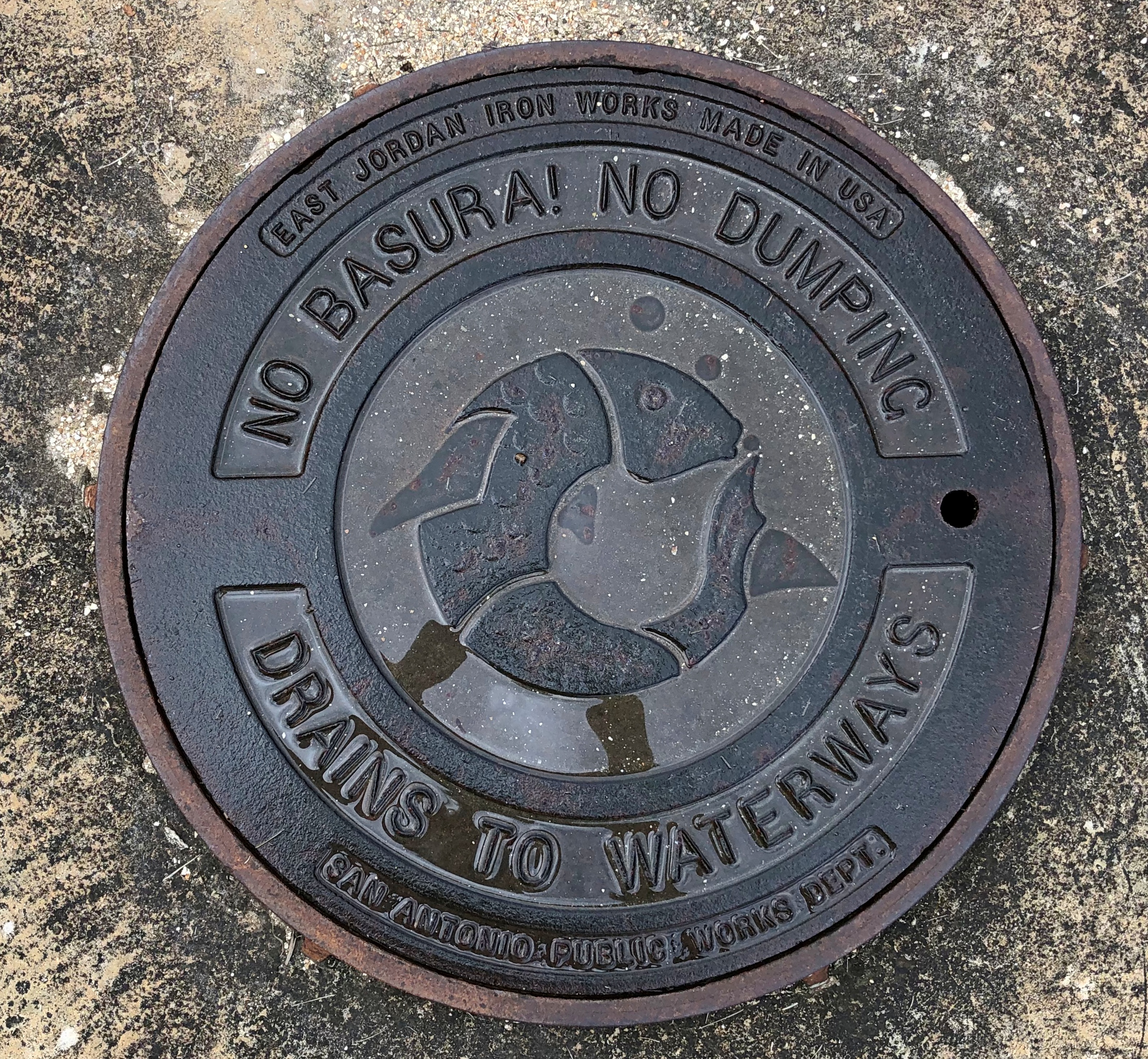
That’s something to look for, should I make it back to Japan. In the meantime, I sometimes look down at manhole covers in other places. Such as in Ireland and Spain, and in San Antonio more recently. Here’s one weathered by many decades, probably.MANHOLE COVER San Antonio

At least the lettering is barely visible. A much newer cover reminds us to protect the downstream fish.MANHOLE COVER San Antonio

East Jordan Iron Works are headquartered in Michigan, and the company these days is known by the less specific moniker, EJ Group. No substance to that name, if you asked me.

Simple, but with a certain style.MANHOLE COVER San Antonio

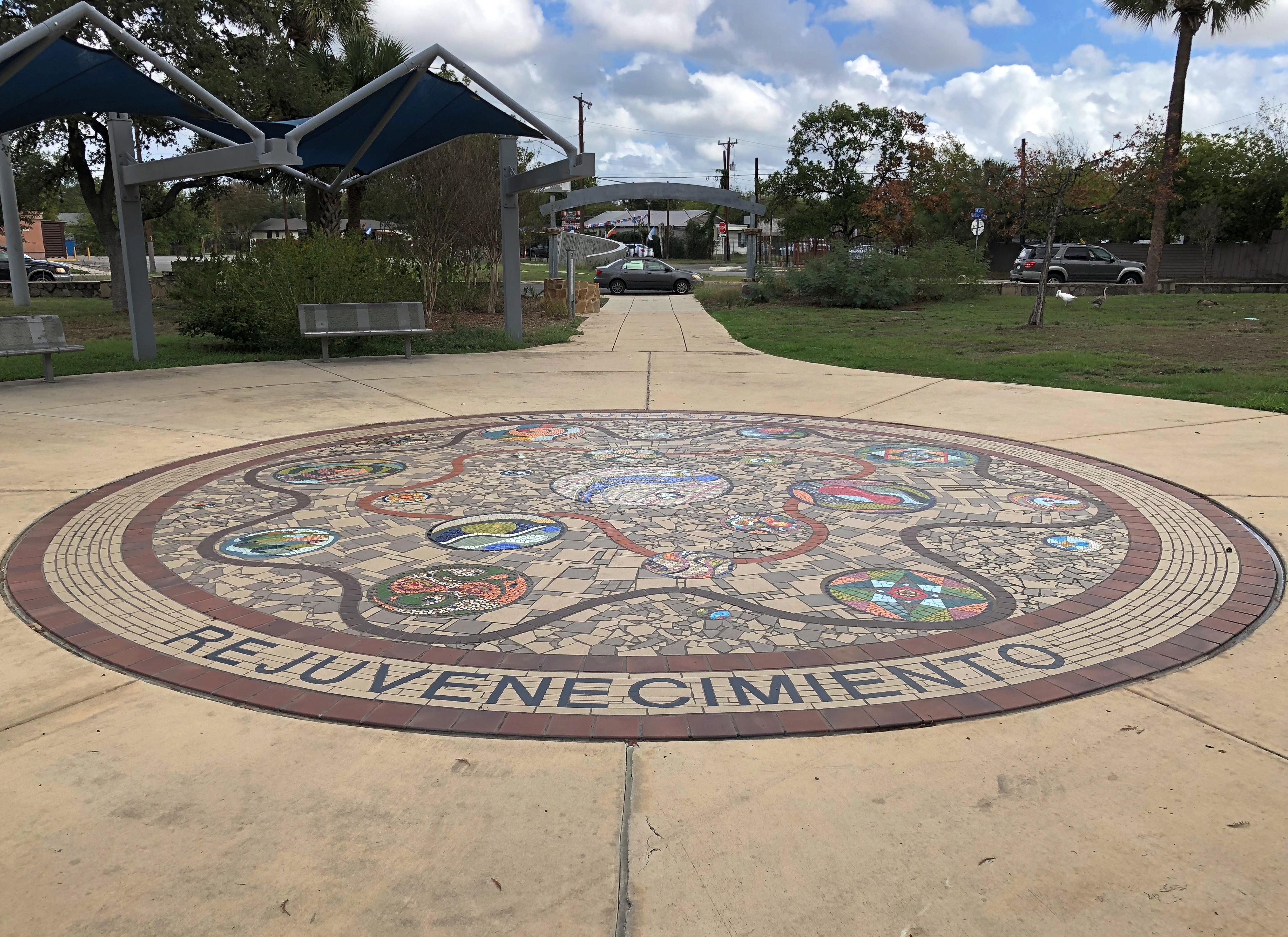
Not a manhole cover, but sharing a similar shape, and displaying an intricate design, at Lake Plaza in Elmendorf Lake Park in San Antonio.MANHOLE COVER San Antonio

Best visibility would be with a drone, looks like, but the edge-on view isn’t bad.

Friends

Drove from metro Nashville to metro Chicago yesterday, which takes pretty much all day, but remains doable for me. Also doable is a day in which I walk four or five miles. That wasn’t yesterday, but Saturday.

Old friends, the kind you’ve known for decades, exist if you’re inclined toward close friends in the first place — and further inclined to put some effort in keeping up. A lot of people drift away. I’m fortunate in that I have a dozen old friends at least, not including that handful who have died. This fall I saw most of them, in person, first in Austin and then Nashville, and including some in the Chicago area that I visited before my recent travels. I played a large part in organizing the meetings, because it’s a thing much desired.

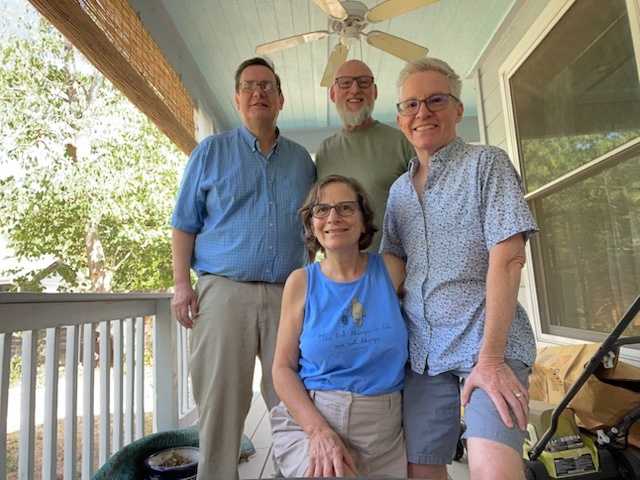
Austin, October 22, 2023: Me, Catherine, Tom, Jae.

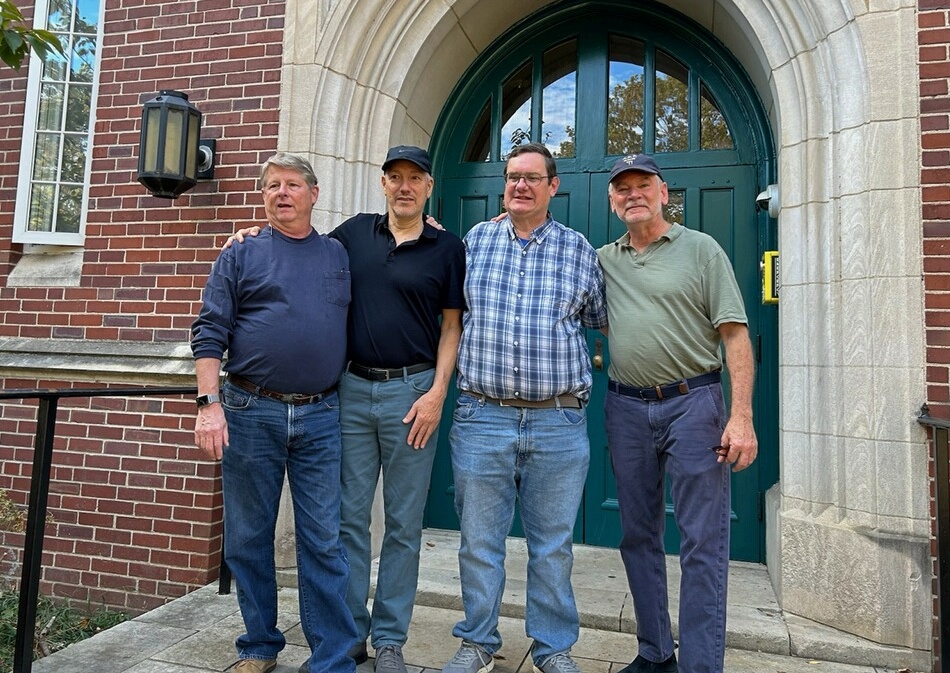
Nashville, November 4, 2023: Dan, Rich, me, Steve.

I’ve known the six individuals in the pictures who are not me a total 231 years, and while I haven’t been in contact with every one of them each one of those years, the continuity is there.

After returning from Texas a week ago on Sunday, I left for Nashville last Thursday. The trip had been quite a while in planning. It’s about 500 miles, so a serious commitment of driving time. I left early in the afternoon and drove not quite all that way, but rather far enough to overnight in Cave City, Kentucky, at Wigwam Village No. 2, a preserved tourist court with a faux teepee theme.

The next morning I drove to Nashville and had lunch at the home of Stephanie and her husband Wendall; I’ve known her since 1986. Later, Dan arrived from his home in Alabama, and early that evening, Dan and I picked up Rich and Steve, who had flown in from Massachusetts. We began our visit at a Nashville hot chicken joint that didn’t exist in our student days 40+ years ago.

From Friday evening to Monday morning, we hung out, conversing and laughing and playing cards and listening to music and eating and drinking and walking and driving around the city from our short-term rental apartment near the Vanderbilt campus. For much of Saturday, another old VU friend of ours, Margaret, a Tennessee resident originally from Kentucky, joined us with her husband Dave, as we walked around Vanderbilt, and then had dinner at a Korean storefront – another thing Nashville didn’t have all those decades ago. Among many pleasurable walks I’ve ever taken, this was one of the best.

Late Sunday morning, the four of us visited the grave of our mutual friend Mike, and spent much of the rest of the day in Nashville’s Centennial Park, including the inside of the Parthenon, which neither Rich nor Steve had seen since the monumental statue of Athena had been put in. Dinner at an Italian restaurant capped things off. Dan returned home Sunday night and I took Rich and Steve to the airport Monday morning, after which I drove the 500 miles home, stopping a little while in Louisville.

A complete carpi diem sort of weekend. We had a gas.

Halloween Residue

Back to posting November 7. Got things to do.

One more pic from San Antonio for now. A Halloween inflatable I saw there last week. Much amused to see it.

Not bad staying power for a movie that came out nearly 40 years ago.

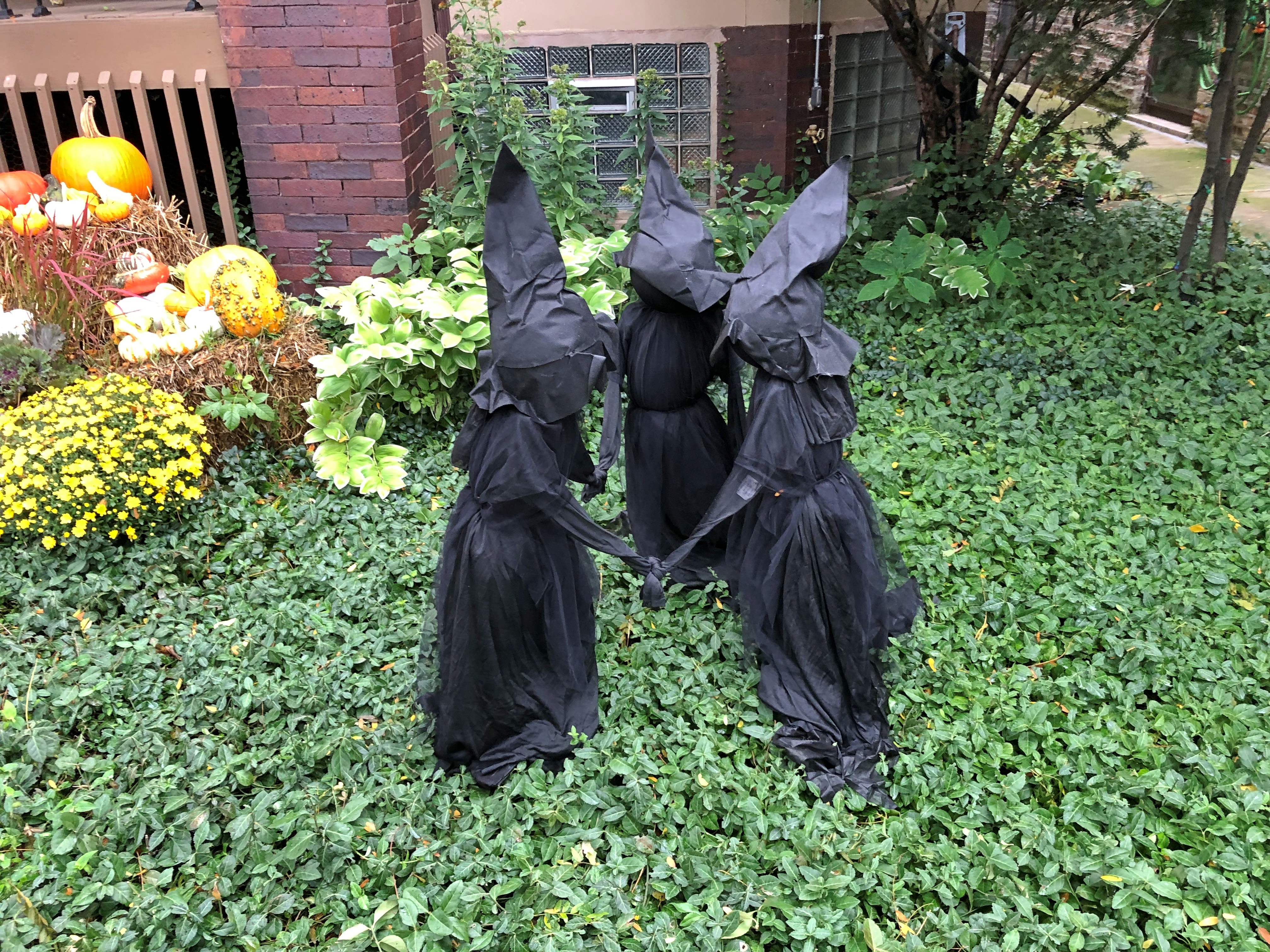
In Chicago, the week before, I saw this tableau, referencing lore older than a mere movie.

Three witches made partly from black paper. I assume they’re supposed to be witches. Why paper? The better to burn them, of course.