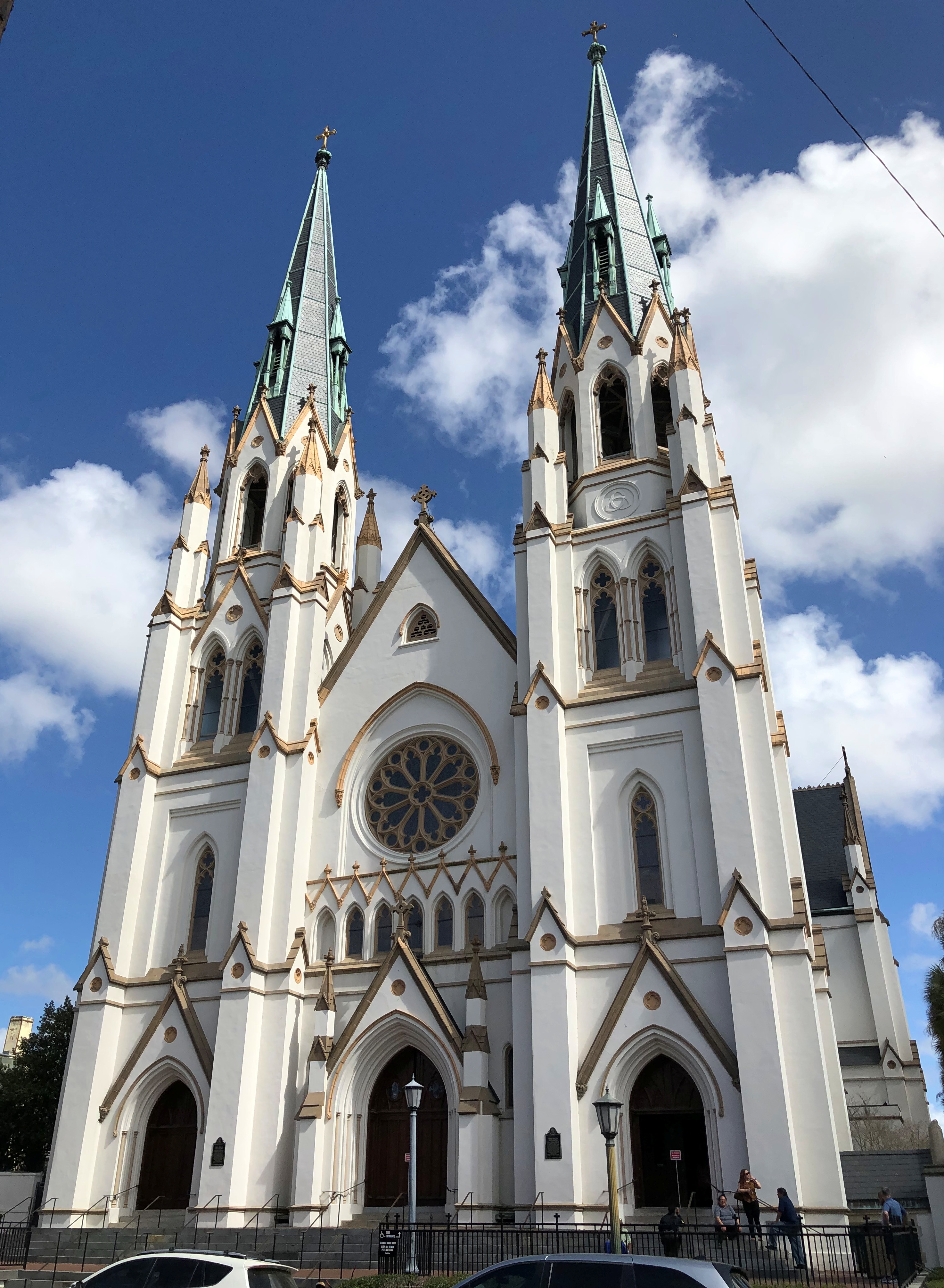
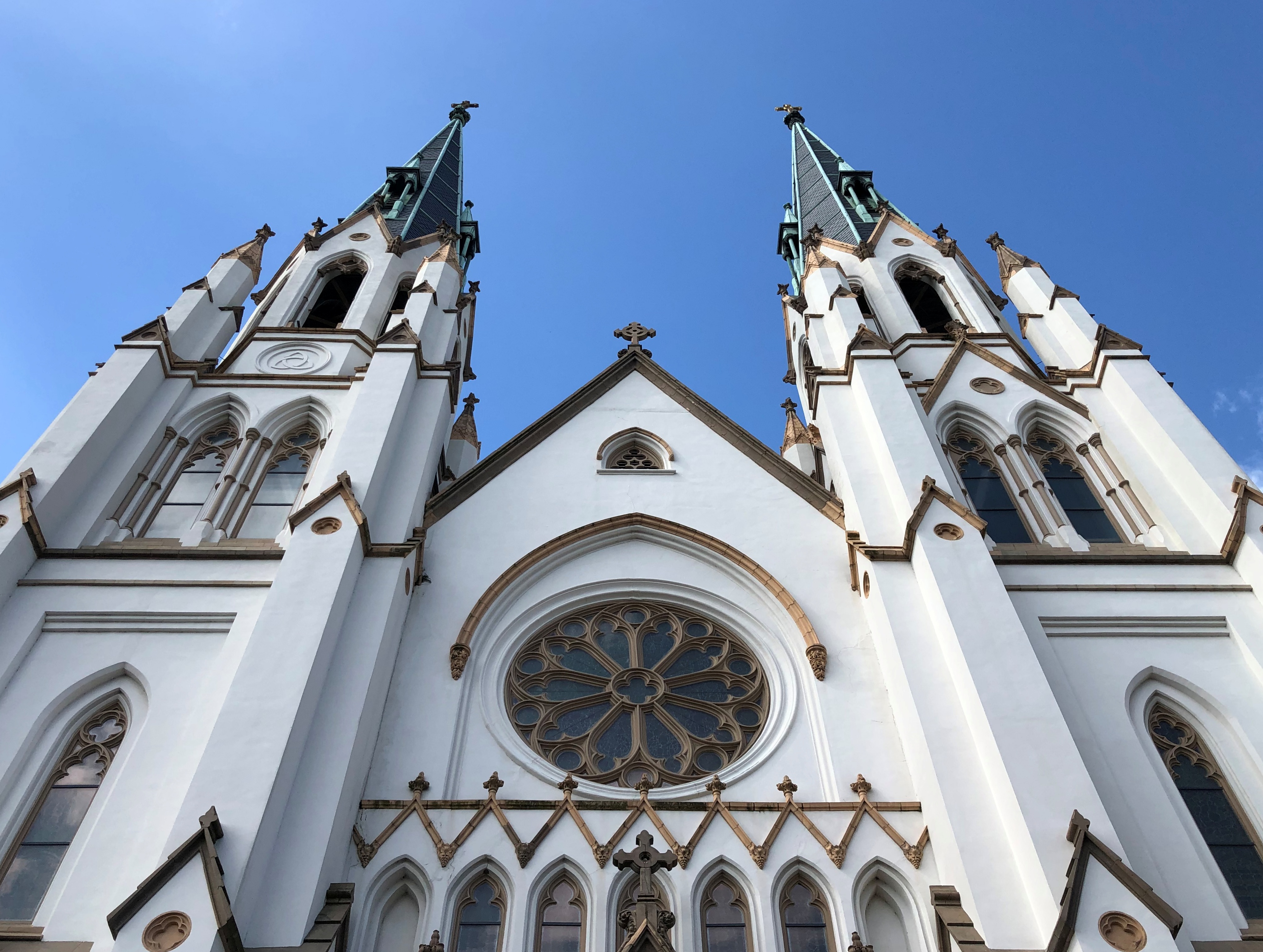
Wednesday Debris

Warm days and cicadas at dusk. Back to posting around August 1.

I saw this in my back yard yesterday.

Imagine my surprise. A lawn circle! The suburban version of crop circles. (In the UK, they’re called garden circles.) Clear evidence that space aliens visited.

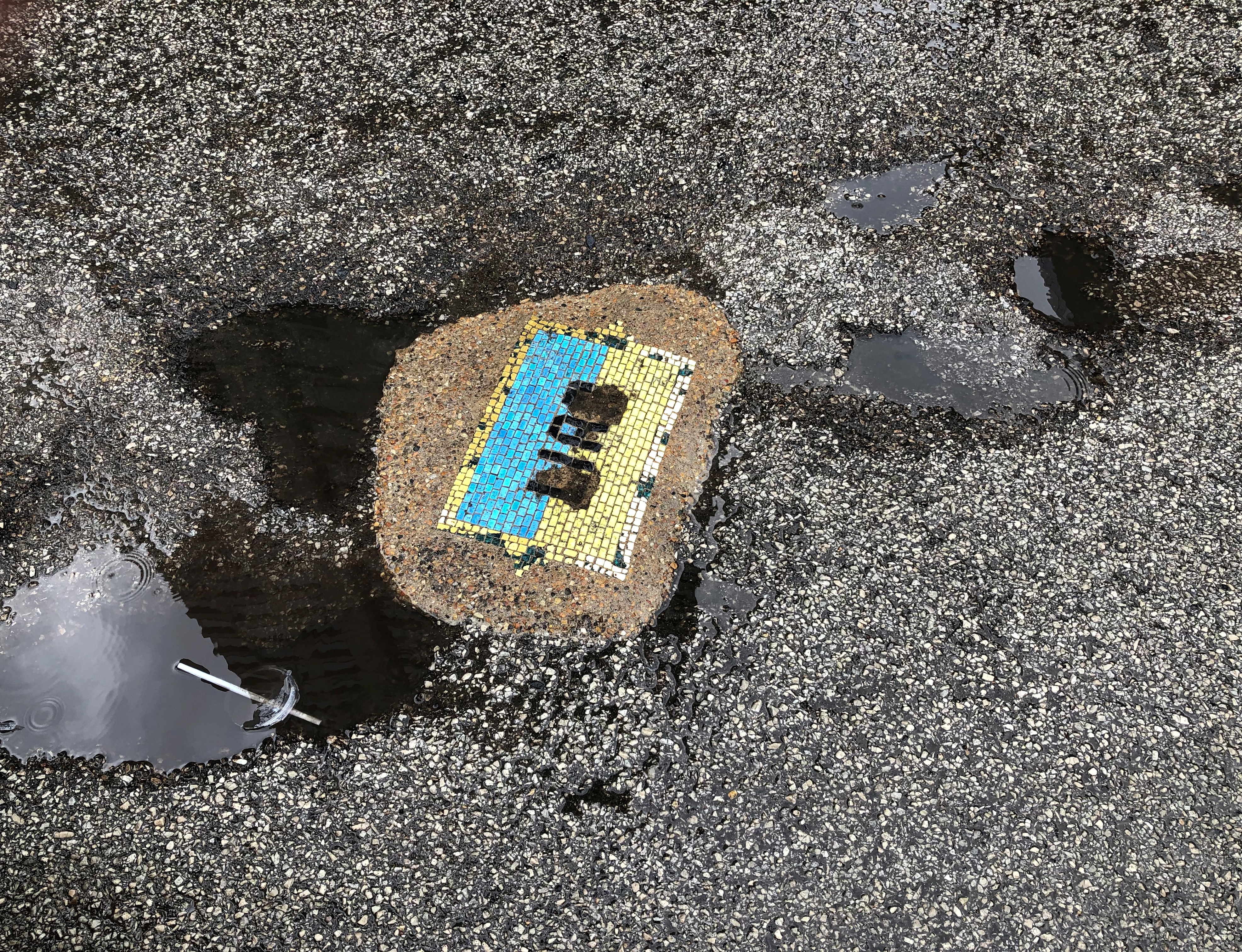
Spotted in a northwest suburban parking lot the other day.
Color Me Green
I ought to look that up, but I don’t want to.

Dear streaming service that I subscribe to: When you send me an email with links in it, the links should not take me to this.

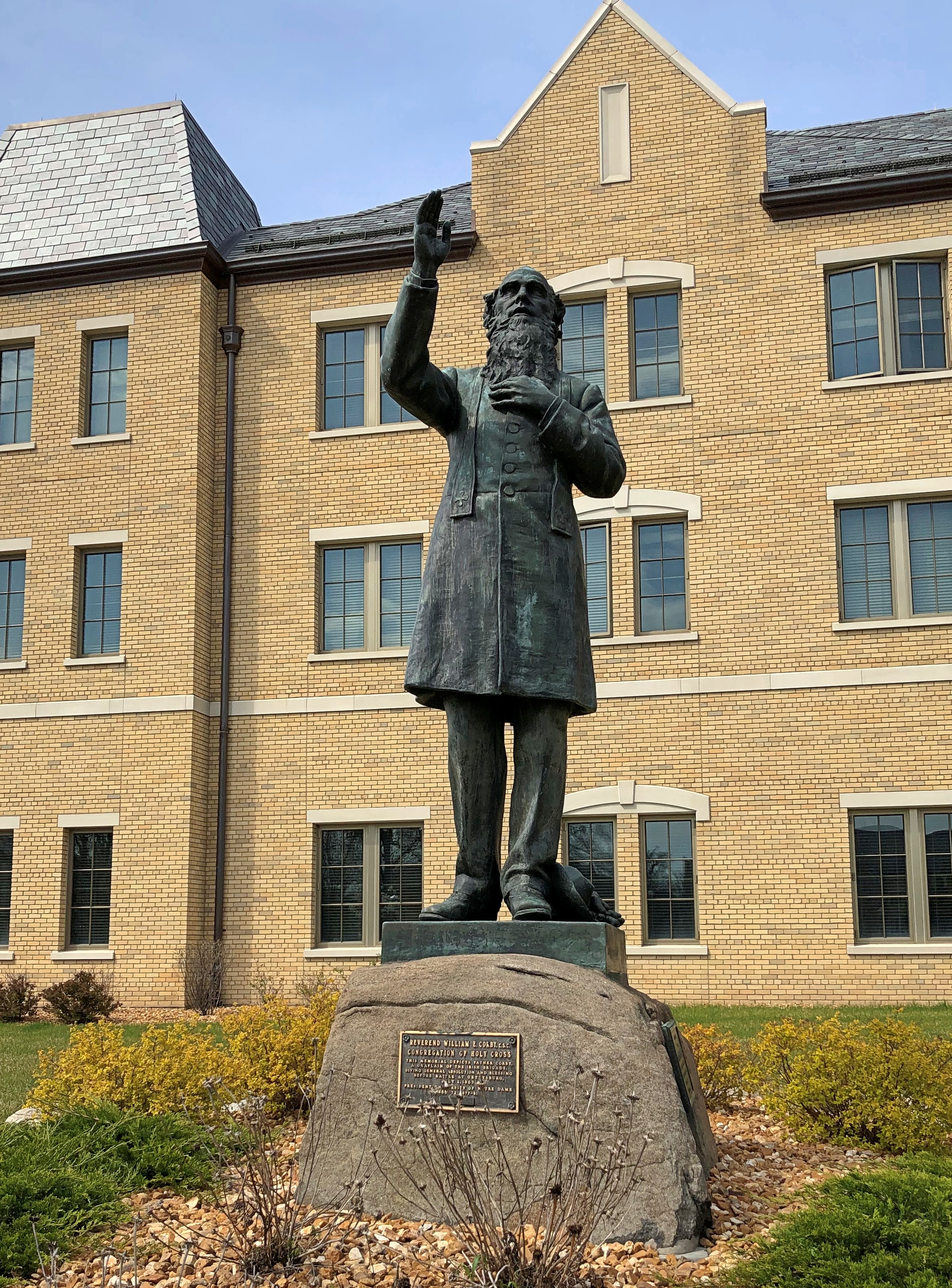
This statue was just east of the commuter rail station in New Buffalo.
"Gakémadzëwen," which is Potawatomi for "Enduring Spirit,"

“Gakémadzëwen,” which is Potawatomi for “Enduring Spirit,” by Fritz Olsen, dedicated only in 2018. The plaque says it was erected by the city of New Buffalo “in recognition of the generous contributions to the city by the Pokagon Band of Potawatomi.”

“The 1833 Treaty of Chicago established the conditions for the removal of the Potawatomi from the Great Lakes area,” says the band’s web site. “When Michigan became a state in 1837, more pressure was put on the Potawatomi to move west. The hazardous trip killed one out of every ten people of the approximately 500 Potawatomi involved.

“As news of the terrible trip spread, some bands, consisting of small groups of families, fled to northern Michigan and Canada. Some also tried to hide in the forests and swamps of southwestern Michigan. The U.S. government sent soldiers to round up the Potawatomi they could find and move them at gunpoint to reservations in the west. This forced removal is now called the Potawatomi Trail of Death, similar to the more familiar Cherokee Trail of Tears.

“However, a small group of Neshnabék, with Leopold Pokagon as one of their leaders, earned the right to remain in their homeland, in part because they had demonstrated a strong attachment to Catholicism. It is the descendants of this small group who constitute the Pokagon Band of Potawatomi Indians.”

Even so, it wasn’t until 1994 that Congress reaffirmed the federally recognized status of the Pokagon Band of Potawatomi. The band now owns some Michigan casinos, including Four Winds New Buffalo, which features 3,000 slot machines, 70 table games, four restaurants, bars, retail venues, and a 415-room hotel.

Got a boring email from Amazon the other day. It said:

Unfortunately, we weren’t able to cancel the items you requested and these items will soon be shipped. We apologize for the inconvenience.

You can track your package at any time. If you no longer want these items, you may refuse delivery or return them after they arrive. You can visit Your Orders to start a return.

There’s no style to that. How about:

Unfortunately, we weren’t able to cancel the items you requested and these items will soon be shipped. No force in the universe can stop an Amazon order once it is past the FailSafe Point.®

Not even the mighty Jeff Bezos can stay your package from its appointed delivery, even from his perch in space. You may refuse delivery or return them after they arrive. You can visit Your Orders to start a return.

Also from Amazon: One of our updates involves how disputes are resolved between you and Amazon. Previously, our Conditions of Use set out an arbitration process for those disputes. Our updated Conditions of Use provides for dispute resolution by the courts.

Well, well, well. The Wall Street Journal reported in June: “Companies have spent more than a decade forcing employees and customers to resolve disputes outside the traditional court system, using secretive arbitration proceedings that typically don’t allow plaintiffs to team up and extract big-money payments akin to a class action.

“With no announcement, the company recently changed its terms of service to allow customers to file lawsuits… The retail giant made the change after plaintiffs’ lawyers flooded Amazon with more than 75,000 individual arbitration demands on behalf of Echo users.”

This is the flag of Greater London. The officially approved flag of that political entity, I’ve read. It looks like it was drawn by a ten-year-old.

One more thing: National Geographic now asserts there is a “Southern Ocean,” hugging Antarctica below 60 degrees South. That’s a term that I know Australians have long used — I heard it from Australians in the ’90s, and saw the term on a sign at Cape Leeuwin — though I believe they mean the “waters south of us.”

Speaking of ten-year-olds, I understand that part of Nat’l Geo’s mission is educational, but a headline asking whether I can name all the oceans, as if I were that age?

Further Considerations About Sock Monkeys (And Long Grove Community Church & Cemetery)

Rockford, Illinois, is generally credited with creating the modern sock monkey, and more recently fiberglass sock monkeys were put on display there. There are even sock monkeys at the Midway Village Museum in Rockford.

So how is it Long Grove is getting a sock monkey museum? I’ve only done cursory research, the kind the subject deserves, and I haven’t found a connection. I like to think the Long Grove museum will be run by a breakaway sock monkey faction, rivals of the sock monkey orthodoxy in Rockford, but that’s just me amusing myself.

A short distance from Long Grove’s historic downtown is Long Grove Community Church, which is historic in its own right, built by Evangelical German immigrants in the 1840s.Long Grove Community Church

Long Grove Community Church
“With a new century, came many changes,” the church’s web site says, referring to the 20th century. “The church widened her circle of ministry to include local people who were not German-speaking. Two denominational mergers took the church away from her Evangelical roots.

“By 1950, the church had grown so small that the denomination recommended the doors be closed. But God gave the people a vision. Instead of closing their doors, they built Sunday School rooms for children. As people migrated from the city to the suburbs, the area grew and so did the church. By the late 1960s, we had transitioned from a small rural church into a suburban church.”

The Long Grove Cemetery is next to the church.

Long Grove Community Church

Long Grove Illinois Cemetery

Long Grove Illinois Cemetery

There isn’t much information on line about this cemetery, despite its clear historic aspects.Long Grove Illinois Cemetery

But I don’t need a web site to tell me it’s another of the many cemeteries in the Chicago area with immigrant German stones, many dating from the 19th century.

The Edsel & Eleanor Ford House

Major thunderstorm last night, especially around 10:30, when I had a mind to take out the trash. Soon my phone started making a racket. It was sounding a tornado warning. That and the lightning and the heavy rain persuaded me to postpone my outdoors task until around midnight, when the storm had blown over. Naperville, a good ways to the south, had the worst of it.

Last Friday afternoon in greater Detroit, we made our way to Grosse Pointe Shores to see the Edsel & Eleanor Ford House, a 20,000-square-foot mansion on the shore of Lake St. Clair completed in 1928. The Fords hired Albert Kahn, who seems to have done everything in metro Detroit, to design the place.Ford House, Michigan

Ford House, Michigan

Ford House, Michigan

The Fords had liked the cottages they’d seen in England, especially in the Cotswolds, including such features as stone roofs, vine-covered walls and lead-paned windows. Not only did the Ford House design reflect English inspiration, the Fords had paneling, fixtures and other bits and pieces of Old England brought over for installation in the new mansion, back when that sort of thing was possible.

All in all, a handsome set of rooms to wander through. Such as barrel-vaulted Gallery, the largest room in the house. Sizable events were (and are) held here.Ford House, Michigan
“The Gallery… is paneled with sixteenth-century oak linenfold relief carved wood paneling,” notes Wiki. “Its hooded chimneypiece is from Wollaston Hall in Worcestershire, England; the timber-framed house had been demolished in 1925 and its dismantled elements and fittings were in the process of being dispersed… [the] barrel-vaulted ceiling for the Gallery was modeled on one at Boughton Malherbe, Kent, England.”

A handsome living room. Too handsome ever to be a living space, I think, and no doubt clutter wasn’t allowed, or at least the staff made sure it disappeared.
Ford House, Michigan

This looks more livable: an upstairs art deco bedroom, one of the more modern rooms designed by Walter Dorwin Teague. You can imagine leaving newspapers and magazines and books lying around in a room like this, with a globe or two sitting around as well. Not visible in my picture are the number of radios the Fords had built into various pieces of furniture.

Ford House, Michigan
An attached complementary bathroom.

Ford House, Michigan

In Edsel Ford’s private office, I noticed a flag behind glass.
Ford House, Michigan

Adm. Byrd had taken the flag with him on his flight over the South Pole, and gave it to Ford — who had supported Byrd’s expedition, besides being the president of the company that built his airplane, a Ford trimotor — along with a handwritten letter. In another part of house is a flag Byrd took with him on his North Pole expedition.

One more item inside the house: a copy of a portrait of Edsel Ford by Diego Rivera. The artist wasn’t so much of a red that he wouldn’t take money from a leading captain of industry.Ford House, Michigan

Outside, as you’d expect, the house has an expansive view of the lake.Ford House, Michigan Ford House, Michigan Ford House, Michigan

Plus swarms of mayflies, some of which decided to land on my shirt. They didn’t bite or do anything but appear in large numbers in my vicinity.

Ford House, Michigan

We asked a Ford House worker about them, learning that they’re known locally as fishflies. This is their high season, when they are most likely to swarm.

Juneteenth ’21

What do you know, Juneteenth’s a federal holiday. I have to say that I made a correct prediction on that score. But it wasn’t really that hard to guess. Anyway, I welcome it, and in fact have tomorrow off.

August-like heat has returned here in northern Illinois, though it looks like next week will cool off a bit after possible rain, as summers tend to do in the North. We could use the rain.

So far much of June has been more like summer down South: early and sustained heat, though not quite as bad as all that, since we haven’t hit 100 F yet. The high was supposedly 90 F today, and it felt like that outside. I had a simple lunch of a sandwich and a banana today out on the deck, make tolerable by the deck umbrella, which cut at least 10 degrees out of that high for me.

An HVAC tech, who has been looking after our air conditioning and heating for years now — I don’t remember how I found his company, it’s been so long — came by the other day for the annual check of the AC. Our antediluvian AC, whose mechanicals were assembled in the 20th century.

It’s a miracle it’s still running, the tech said (I’m paraphrasing). Got my fingers crossed that this won’t be the summer it gives up the mechanical ghost. We shall see. Years ago we bought a central AC unit for our small, postwar-vintage house in the western suburbs, not because the old one failed, but because the house didn’t have one. Imagine taking a new house to market these days without AC. Bet that’s a nonstarter even in a place like Fairbanks.

The Erie Canal

On our last day in metro Buffalo, we drove to Lockport, New York, late in the morning to see the Erie Canal. Even in my South Texas elementary school, and in U.S. history classes later, we heard about the Erie Canal. It probably was of special interest to my high school U.S. history teacher, the estimable former Wobbly Mrs. Collins, who grew up in Buffalo. Yuriko, on the other hand, heard nothing about it in Japanese schools; no reason she would.

I’ve heard the songs, too. The oft-recorded one about the loyal mule (which Bruce Springsteen does wonderfully, paying homage to Pete Seeger). The more fun one is about drunkenness among bargemen (and -woman), which I expect was true enough to life in the early days of the canal. The obscure Yellow Jack version, incidentally, used Lockport as a backdrop for the video.

Despite all that, I’d never gotten around to seeing the canal with my own eyes. So it was time. Naturally, we visited only the smallest slice, since the canal stretches more than 360 miles.

Lockport’s an interesting spot on the canal because it originally had five locks, which is unusual enough to have its own name: Flight of Five Locks, to allow the canal to cross the Niagara Escarpment. For the 1820s, I expect it was state-of-the-art engineering.

We got there at about 10:30 and knew we were in the right place.Erie Canal, Lockport NY

There were other signs as well.Erie Canal, Lockport NY Erie Canal, Lockport NY

Looking east, from the bridge over the locks.Erie Canal, Lockport NY
As usual, an historic site isn’t as simple as somewhere or something that magically hasn’t changed since its most interesting period. In structure, and certainly a lot of other details, the canal as we saw it isn’t how the 19th-century bargemen would have.

To the left in the picture is the original canal locks, the five of the name. It’s a narrow passage compared to the wider channel on the right, which involves two locks covering the same distance as the older five locks. In the early 20th century, the state of New York upgraded its canals, including the Erie, to form the New York State Barge Canal system. That’s when wider channel was built, no doubt state-of-the-art in its time.

Such a change made for much faster commercial movement on the canal. Of course that’s an obsolete virtue now, though the wider canal still makes for the more expeditious movement of pleasure craft, which are all that use the waterway anymore. The last commercial vessel to ply the Erie Canal, or rather that branch of the NYS Barge Canal system, was the Day Peckinpaugh, which quit service in 1994. Later than I would have thought.

Apparently there was (in effect) a Day Peckinpaugh class of ships on the NY canals. “After her 1921 maiden voyage, she was followed by over a hundred similar motorships on the Barge Canal,” notes the Waterford Maritime Historical Society. A lot more about the ship, at first unimaginatively called the Interwaterways Line Incorporated 101 and built to traverse the Great Lakes as well, can be found here.

We took a tour that started with a walk along the canal. Here is one of the two locks filling or draining, I forget which.Erie Canal, Lockport NYMore boats.
Erie Canal, Lockport NY

The hill side.Erie Canal, Lockport NY Erie Canal, Lockport NY

The “Upside-Down Bridge.” It’s a railroad bridge over the canal in Lockport, build just before the canal was improved.
Erie Canal, Lockport NY

“This bridge is a multi-span railroad bridge built in 1902 by the prolific and noteworthy King Bridge Company of Cleveland, Ohio,” says HistoricBridges.org. “The main span which crosses the river is a Baltimore deck truss. The bridge was referred to as the ‘Upside-Down Bridge’ because as a deck truss, it looks like a through truss positioned upside-down.”

Erie Canal, Lockport NY
Near the bridge, the tour turned into a man-made cave in the hill, a water tunnel (hydraulic raceway) built in the 19th century using muscle power, hand tools and black powder.
Erie Canal, Lockport NY

The raceway used to power local industry, opening for tourists in 1977. That happened, it seems, because the natural cave in the limestone under Lockport proved disappointing in the 20th century, and possibly a locus of fraud in the 19th century.

It was dark in there.Erie Canal, Lockport NY
The tour also involved a short boat ride in part of the tunnel that’s partly flooded still. A novelty, certainly, but not for anyone even a little claustrophobic. I figure they stay away from commercial caves anyway.

Out in the sun again, we looked around town a little more. The west entrance of the locks is visible from Big Bridge.
Erie Canal, Lockport NY

A sign near Big Bridge (built 1914) claims that at 399 feet, the bridge over the canal at that point is one of the world’s widest. Maybe so, but it’s completely undistinguished in every other way.Erie Canal, Lockport NY
One more sight in Lockport.Erie Canal, Lockport NY mural
A fairly recent (2015) mural called “Guardian of the Waters” by Augustina Droze and Bruce Adams. Its plaque says: “The mural is inspired by the history and engineering marvel of the Flight of the Five Locks, which opened a path to the West, inspired inventions that changed the world, and gave rise to the city of Lockport, NY.”

Theodore Roosevelt Inaugural National Historic Site

Theodore Roosevelt Inaugural National Historic SiteQuoted in the pamphlet that the National Park Service gives out at the Theodore Roosevelt Inaugural National Historic Site on Delaware Avenue in Buffalo is a characteristic TR thing to say:

“It is a dreadful thing to come into the Presidency this way; but it would be far worse to be morbid about it. Here is the task, and I have got to do it to the best of my ability; and that is all there is to it.”

On September 14, 1901, the site was the house of Ansley and Mary Wilcox, friends of Theodore Roosevelt, when he took the oath of office there as 26th President of the United States. TR had hurried there from the Adirondacks when word came that President McKinley was dying.

We arrived ahead of lunch on May 30. One docent and two other staff members were there. That was all. The docent thus gave us a personal tour of the house, which is part house museum and part museum devoted to TR and his presidency.

It’s a handsome mansion, typically of those that used to stand on Delaware, though in a little need of paint these days.
Theodore Roosevelt Inaugural National Historic Site

Delaware Avenue, once Buffalo’s Millionaire’s Row, is still characterized by large houses, many of which are now office buildings for attorneys and accountants and such. There are also places where mansions probably used to be, but which were lost to time. Directly across the street from the former Wilcox house is a chain pharmacy.

TR stands in bronze on the grounds. The work is surprisingly new, completed only in 2015 by sculptor Toby Mendez.
Theodore Roosevelt Inaugural National Historic Site

Photography was allowed inside, and while I’m not always inclined to take pictures inside house museums, I wanted to take one of the room in which TR took the oath. Most of the items are period-specific but not actually owned by the Wilcoxes.
Theodore Roosevelt Inaugural National Historic Site

“No definite plans had been made for swearing him in,” Wilcox wrote, “and it had not even been settled where this should be done. The first suggestion had been to take him directly to Mr. Milburn’s house, there to be sworn-in, but this had been objected to as unsuitable, while the body of the president was lying in the house. So he was asked to go to my house to get lunch, and immediately at arriving and being equipped with borrowed clothes, more appropriate than his traveling suit, he insisted on starting for Mr. Milburn’s house, to make a call of sympathy and respect on the family of the dead president. This was done, and by three o’clock he was at my house again…

“The room [the library], not a large one, was far from full, and at the last moment, the newspaper men, who were eager for admission, were all let in, but were prohibited from taking any photographs…

“The new President was standing in front of the bay window on the south side of the room. Others had fallen back a bit when Mr. [Elihu] Root spoke. After his response, Judge [John] Hazel advanced and administered the oath… The written oath, which Judge Hazel produced…was then signed. Then President Roosevelt made the announcement of his request to the cabinet to remain in office. The whole ceremony was over within half an hour after the Cabinet had entered the house, and the small company dispersed, leaving only the six Cabinet officers with the President, who at once held an informal session in the library.”

The Wilcoxes died in the early 1930s, and afterwards the house was used as a restaurant until the 1960s, when it was in danger of demolition, as so many historic structures were at the time. Fortunately, the citizens of Buffalo didn’t let that happen, and 50 years ago the house opened as a museum.

Visiting this particular national historic site made me wonder how many there are. Quite a few, Wiki tells me: 87, most of which (76) are National Park Service units, with 11 as affiliate areas, though I’m not sure what that distinction might mean on the ground.

How many have I visited? Only 14, counting the latest one, though I’m not entirely sure about two of them. Clearly I need to get out more.

Main Street, Buffalo (Theater District)

At the five-way intersection of Main, Edward, Pearl and Goodell streets in Buffalo — only Main has the same name on both sides — stand the Catholic Center and the Sidway Building (mentioned yesterday) but also St. Louis Roman Catholic Church.St Louis Roman Catholic Church Buffalo St Louis Roman Catholic Church Buffalo

Designed by Schickel and Ditmar in 1889 on the site of the two earlier churches, it’s considered the Mother Church of the Diocese of Buffalo. Local architectural firm HLL, who did some restoration work in 2003, notes that “the 245-foot-tall steeple includes a 72-foot-tall, pierced spire, reportedly the tallest open-work spire ever built completely of stone without reinforcement. It is reputed to be the only remaining pierced spire in the United States.”

I popped in for a look, surprised to find it open on Sunday afternoon. A wedding was in progress, but I was able to see much of the interior from the narthex, through large windows in the doors.
St Louis Roman Catholic Church Buffalo

A descriptive stone outside the church.
St Louis Roman Catholic Church Buffalo

Main Street continues southward, but not as New York State Route 5, which veers off onto Edward St. and heads into downtown via another street. Main becomes narrower at that point, includes tracks for Buffalo’s light rail system, and runs through Buffalo’s Theater District, which I expect hasn’t been too busy lately. By that I mean in 2020, but also since its heyday about 100 years ago, when it was home to about 50 theaters of various sorts. I didn’t count, but maybe there are seven or eight.

Still, even former or diminished theater districts have their interests. Dotonbori in Osaka, for instance, only has a single theater any more (for Kabuki), but it sure is interesting to walk through.

The grande dame of Buffalo theaters is Shea’s Buffalo, these days one of a complex of three theaters known as Shea’s Performing Arts Center.

It’s one of the many Rapp and Rapp theaters that started as a movie palace in the 1920s, like the Chicago Theatre. If it had been open, I would have gone in.

Shea's Buffalo
“A casual observer may not know the history behind Shea’s. Michael Shea, for whom the venue is named, was born in St. Catharines, Ontario, in 1859,” Buffalo Tales reports. “Around the turn of the century, he operated several vaudeville theaters in Buffalo and Toronto. By the early 1920s, Shea and his associates had traveled the country to gather ideas for constructing an ornate theater in Buffalo.

“Cornelius and George Rapp, famous theater architects based in Chicago, were hired to design a building that would resemble a European opera house and ‘compare favorably with such buildings in other cities.’ The initial plan was to spend approximately $1 million, but investors eventually spent twice that.”

A little further south and across the street is another splendid bit of Beaux Arts, the Market Arcade.Market Arcade Buffalo

“Designed in 1892 by Buffalo architects Edward B. Green and William S. Wicks, the Market Arcade is the city’s only historic covered shopping arcade,” the site Buffalo As An Architectural Museum says. “This nineteenth century building type, which first achieved popularity during the 1820s, is generally regarded as the forerunner of the contemporary suburban mall.

“The Market Arcade recalls more famous arcades, such as the Gallery Umberto I (1887-90) in Naples and London’s Burlington Arcade (1818-19), which G.B. Marshall, the builder of the Buffalo Arcade, suggested to the architects as a model for his structure.

“Like European arcades, the Market Arcade maintained close ties to the street life around it. When constructed, the building connected this bustling stretch of Main Street with the flourishing public market that formerly existed at Washington and Chippewa streets. It was the market — the ‘belly of Buffalo’ – that gave the arcade its name.”

These days, the restored Market Arcade is home to CEPA Gallery and a mix of retail shops. The building was closed when I wandered by.

Further south still, the theater district peters out, giving way to a more general commercial area. I was a little tired by this point, but I had to get a closer look at the gold-domed building on Main, which I’d seen from a distance earlier in the day from the lawn of the Buffalo and Erie County Public Library, and which I’d imagined might be a church.

Turns out it’s a temple of mammon instead, a branch of M&T Bank that used to be Buffalo Savings Bank. That institution was founded in the 19th century by prominent Buffalonians, including local attorney and politico Millard Fillmore.
Buffalo Savings Bank

“Few buildings on Buffalo’s skyline are as pronounced or recognizable as the historic Gold Dome building,” USA Today reported in 2014. “Designed by E.B. Green [him again], the granite landmark was commissioned in 1898 and opened in 1901 — just before the Pan Am Exposition. But back then, this ornate edifice was actually rather plain.”

The article details the artwork added in the 1920s to the interior — inaccessible on a Sunday — and then says about the outside of the dome: “When it was built, the tiles were a simple beige terra-cotta. They stayed that way until the ’50s when they were gilded with 23 and 3/4 karat gold leaf.”

A bank building with a gold leaf dome. Now that’s something you’d think there would have been more of, at least adorning banks of the pre-FDIC period. A good-looking way to send a simple message: We’ve got the dough.

Along the Niagara Gorge

What’s within walking distance of Niagara Falls State Park if you want a (relatively) inexpensive lunch? There’s a food court in an ugly building, but also Zaika Indian Cuisine, Taste of Nepal and Punjabi Hut on streets near the park, all of which speak to fairly recent immigration in this corner of western NY. When honeymooners visited Niagara in the early 20th century, or even most of the rest of the century, those were surely not options. We had the buffet on Saturday at Punjabi Hut, which was pretty good.

Afterwards, we spent a little more time at the park riding the Niagara Scenic Trolley, whose route was shortened during the pandemic, and then headed north by car on the Niagara Scenic Parkway. The road is fairly short — 18 miles or so — and goes from the town of Niagara Falls to Lake Ontario, but it is definitely scenic, except for the section that passes by the New York Power Authority plant on the river. Just north of the falls the parkway follows the river fairly closely.

The road was known as the Robert Moses Scenic Parkway until about five years ago. Looks like Confederate memorials aren’t the only ones getting the boot these days. So are those honoring urban planners with a taste for neighborhood-impinging expressways. (And what’s to become of this state park on Long Island? Time will tell.)

North of the town of Lewiston, the parkway still follows the river, but at a remove of a mile or so. It’s pretty enough, but I understand that the Niagara Parkway on the Canadian side, which follows the river quite closely, is the prettier drive. But one goes where one can go.

First stop: Whirlpool State Park. The intense current of the Niagara River rushes to this point and forms a enormous whirlpool at a bend. Been quite a while since I’ve had a good look at a natural whirlpool which, despite the name, looks like a choppy patch of water rather than the thing you see in a drain.

The view upriver. In the distance is the Rainbow Bridge. As I’ve said, nothing is very far from anything else in this part of New York state.Niagara Gorge

The flow into the whirlpool.
Niagara Gorge

The whirlpool.
Niagara Gorge Whirlpool

It doesn’t look like a particularly safe place for boats, but that doesn’t keep tourists from venturing there under the command of “highly skilled captains.” I’d hope so. I don’t know whether the jetboats are running now. We didn’t see any. The cable car that dangles over the whirlpool, the Whirlpool Aero Car, and which launches from the Canadian side, looked immobile, still shut for the pandemic.

Then there’s the story of Capt. Joel Robinson, skipper of the Maid of the Mist in 1861, who shot the Niagara rapids and whirlpool. Niagara Falls Info tells the story:

“In 1861, due to a financial crisis and the American Civil War, the Maid of the Mist was sold at public auction to a Canadian company. The deal would go through if the boat could be delivered to Lake Ontario. To get to Lake Ontario, the Maid of the Mist had to be navigated through the Great Gorge Rapids, the Whirlpool, and the Lower Rapids.

“On June 6th 1861, 53-year-old Captain Joel Robinson undertook this risky mission along with two deck hands…[McIntyre and Jones]. With both shores lined with onlookers, Captain Robinson and crew rode the Maid of the Mist into one of the world’s most wild and dangerous whitewater rapids.

“The first giant wave that struck the boat threw Robinson and McIntyre to the floor of the wheel house. It also tore the smoke stack from the boat and Jones was thrown to the floor of the engine room. The tiny boat was now at the mercy of the massive waves crashing against it. The boat was carried at approximately 63 km/h through the rock strewn rapids. Soon the Maid of the Mist was propelled into the Whirlpool where Captain Robinson was able to regain control of the boat.

“Captain Robinson had great difficulty maneuvering the Maid of the Mist from the grip of the Whirlpool… The 5 kilometre journey through the rapids and the Whirlpool was well executed, although they lost the smoke stack. Captain Robinson was the first person to accomplish the impossible [obviously not, just difficult] task of taking a boat through the dangerous waters.

“The frightening experience of this journey caused Captain Robinson to give up a career that he loved. He retired into near seclusion and died two years later at the age of 55.”

In modern terms, sounds like he suffered from PTSD. In 19th-century terms, I figure people said he was spooked by the ordeal. No mention of the aftermath for the deck hands.

Not long after visiting Whirlpool State Park, we spend a while in the pleasant town of Lewiston, New York, whose equally pleasant riverfront isn’t at the top of a gorge, but at river level. Not far from the river is the Freedom Crossing Monument, an ensemble of bronzes by Susan Geissler commemorating those escaped slaves who crossed into Canada.Lewiston, NY
Elsewhere in Lewiston is the variously named Earl W. Brydges Artpark State Park, or Earl W. Brydges State Artpark, or simply the Artpark, a venue for summertime musical entertainment. It also includes some other standard features of a park, such as playground equipment and picnic tables, as well as an Indian mound. I expect there haven’t been any events there in more than a year, but maybe that will pick up soon.

All very interesting, but what struck me was the parking lot. It’s large and undistinguished except for the paintings on its surface. When I pulled into the lot, I took them for children’s chalk drawings, maybe left over from a kids’ event, but soon I noticed they were paintings, and extensive in scope across the lot.Lewiston, NY Artpark parking lot art

More parking lots such be decorated like this.Lewiston, NY Artpark parking lot art Lewiston, NY Artpark parking lot art Lewiston, NY Artpark parking lot artThe end of the line for the Niagara Scenic Parkway is near Old Fort Niagara State Historic Site, which overlooks the mouth of the river on Lake Ontario. The fort itself, which is ringed by an iron fence, was closed by the time we got there. But the rest of the grounds were open. While Yuriko napped in the car, I looked around.

The Old Fort Niagara lighthouse.
Old Fort Niagara lighthouseThis particular light dates from 1871, but the fort had more primitive lights much earlier than that, ca. 1781, which count as the first lights on the Great Lakes.

The old fort also has an old cemetery.Old Fort Niagara cemetery Old Fort Niagara cemetery Old Fort Niagara cemeterySmall, but a dignified spot for those who died here during the War of 1812. The fort was scene of a bloody bit of business during that dimly remembered war. Good to see that the stones were ready for Decoration Day.Old Fort Niagara cemeteryErected to the memory of unknown soldiers and sailors of the United States killed in action or dying of wounds in this vicinity during the War of 1812.

Shuffle Off To Buffalo

Just back yesterday evening from 72 hours in Buffalo. Roughly. Not quite 72 hours over Memorial Day weekend and not quite all in Buffalo, though we were in the Buffalo-Niagara Falls MSA the whole time.

Three days isn’t enough to drive to Buffalo from northern Illinois and spend a worthwhile amount of time. Like Pittsburgh, that would be a four-day venture. So we flew. First time since early 2020. Except for mandatory masking at the airports and on the planes, everything was about the same as it used to be, including holiday-weekend crowds. One of our flights was on a Boeing 737 MAX-8, and clearly we lived to tell the tale.

We, as in Yuriko and I, arrived late Friday night and made our way to Amherst, New York, a Buffalo suburb, where we stayed. We were up early the next morning to spend most of the day at Niagara Falls State Park. I was fulfilling a promise I made in 1996, when we arrived at the falls in March to find the American Falls still frozen. I told her we’d come someday when the liquid was moving again, and so we did.

That wasn’t the whole first day. I discovered that nowhere is very far away from anywhere else in this corner of New York state by driving north along the Niagara Gorge, stopping at Lewiston and Fort Niagara, and then returning to Amherst.

On Sunday, we weren’t up quite as early, but we made it to downtown Buffalo in the morning for a walkabout. As promised by various sources, the city has some first-rate architecture, most especially Buffalo City Hall. Late in the morning, after a brief stop at Tim Horton’s — they’re everywhere in metro Buffalo — we toured the Theodore Roosevelt Inaugural National Historic Site, formerly the Ansley and Mary Wilcox home.

Lunch that day was on Main Street at the Anchor Bar, which specializes in Buffalo wings and claims their invention, but in any case the joint didn’t disappoint. Afterward, Yuriko napped in the car while I spent time looking around Main Street, which includes Buffalo’s theater district and Saint Louis Roman Catholic Church.

Also, this mural.Keep Buffalo A Secret
Created by local t-shirt designer David Horesh and painter Ian de Veer, it’s highly visible when you’re traveling southbound on Main.

Could it be that current Buffalonians might not want millennials, or more importantly, tech-industry millennials with high incomes, to show up in droves to drive up prices for everyone else? Maybe. Not sure Buffalo has the tech ecosystem, as they say in the biz, to support such an influx. Then again, in the vicinity of the mural are places probably supported by people with at least some disposable income, such as Just Vino, the House of Masters Grooming Lounge, Hair to Go Natural, and Fattey Beer Co. Buffalo.

I had a mind to visit Delaware Park afterwards, since a Frederick Law Omstead park is always worth seeing, but we ended up sampling it merely by driving around it. Looks like a nice place to while away a warm afternoon.

By that time, Sunday afternoon, it was fairly warm in greater Buffalo. Rain had clearly fallen the day before we arrived, and cool air arrived afterward, taking temps down into the low 50s early Saturday, when we got to Niagara Falls. Did that matter? No. It wasn’t cold enough to freeze anything.

On Monday I got up early and visited the splendid Forest Lawn Cemetery, permanent home of President Fillmore and Rick James, among many others. Later, we drove to Lockport, New York and spent some time along the Erie Canal. As long ago as elementary school, I heard about the Erie Canal, but had never seen it. We also took a tour of one of the manmade caves near the canal, where rapid water flows formerly powered local industry.

Back in Buffalo for a satisfying lunch at Lake Effect Diner, housed in a chrome-and-neon diner car dating to 1952. Then we drove south via surface streets to Lackawanna, where you can see the Basilica of Our Lady of Victory, our last destination for the trip.
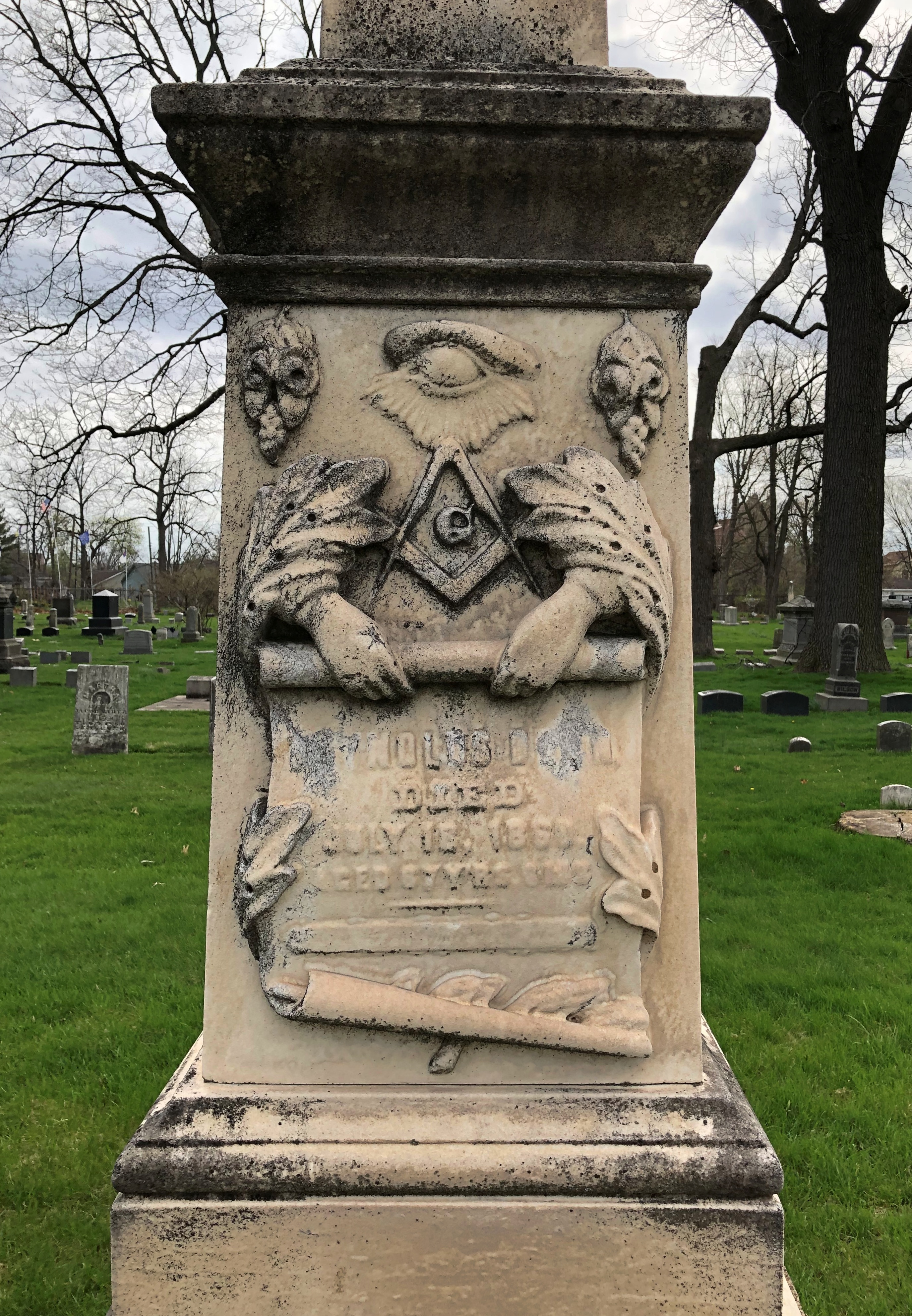
Why Buffalo? There was that promise to visit the falls, of course. But I also wanted to see Buffalo. My single previous experience there had been a quick drive-through in 1991 after I saw Niagara Falls for the first time, from the Canadian side. Every city of any size has something interesting. A lot of smaller places do as well. So we shuffled off to Buffalo.
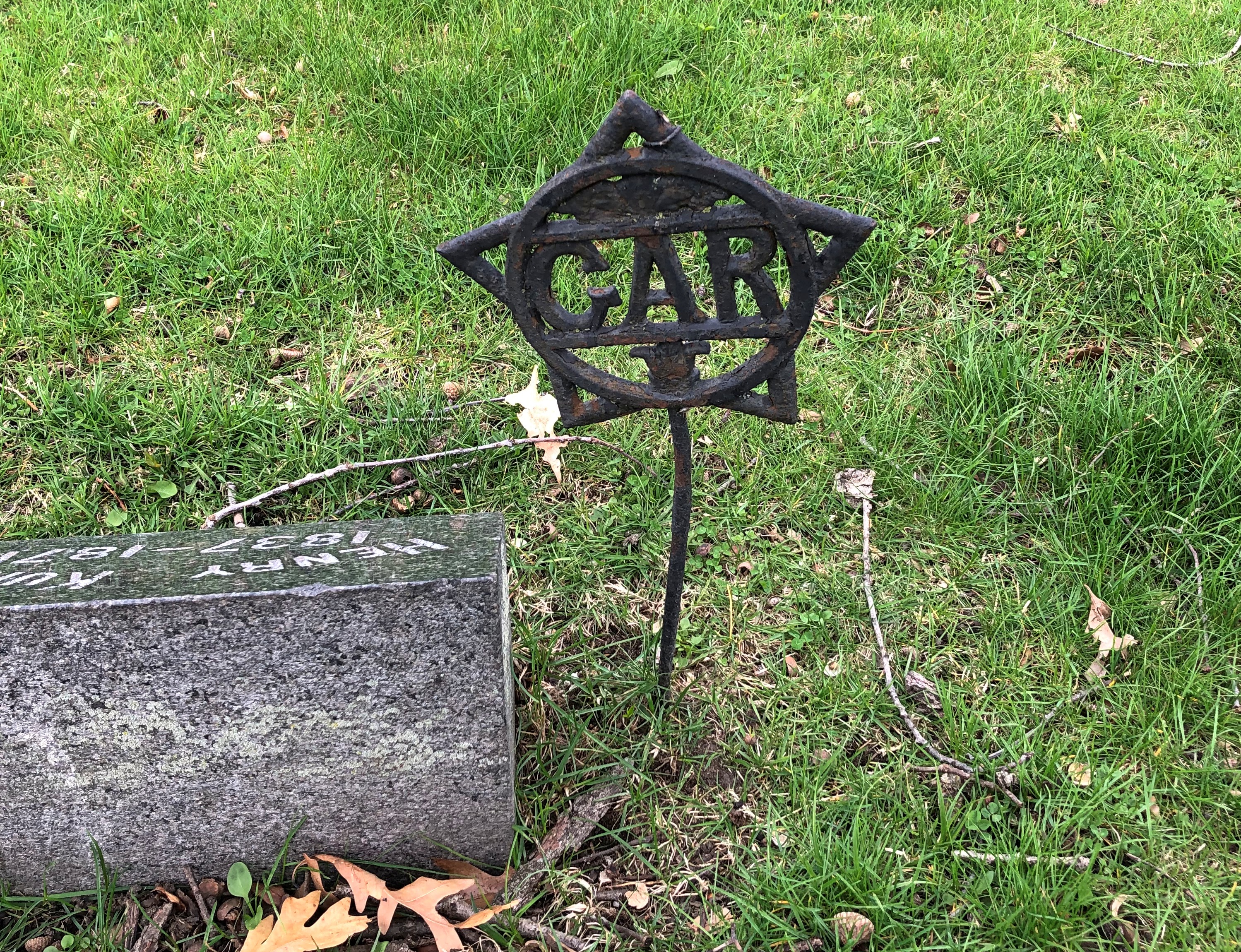
Wright Flyer III

During our visit to Dayton five years ago — has it been that long? — we saw this downtown sculpture array, depicting the Wright Brothers and the Wright Flyer III, which the brothers built and first flew in 1905, a much improved version of their two earlier planes.Flyer III Dayton Flyer III Dayton Flyer III Dayton

Sometimes I’m curious to keep up with places I’ve been, so I checked and the sculpture group, by Dayton architect and sculptor Steve Brown, has been removed, reportedly for re-installation elsewhere at an unspecified later time. Hope that unspecified time doesn’t stretch out so far that it becomes “never,” and the works remain in storage somewhere or gets lost in some future decade. Sidewalk sculpture this kinetic deserves to be out in public.