Monastery of the Holy Cross and Ling Shen Ching Tze Buddhist Temple

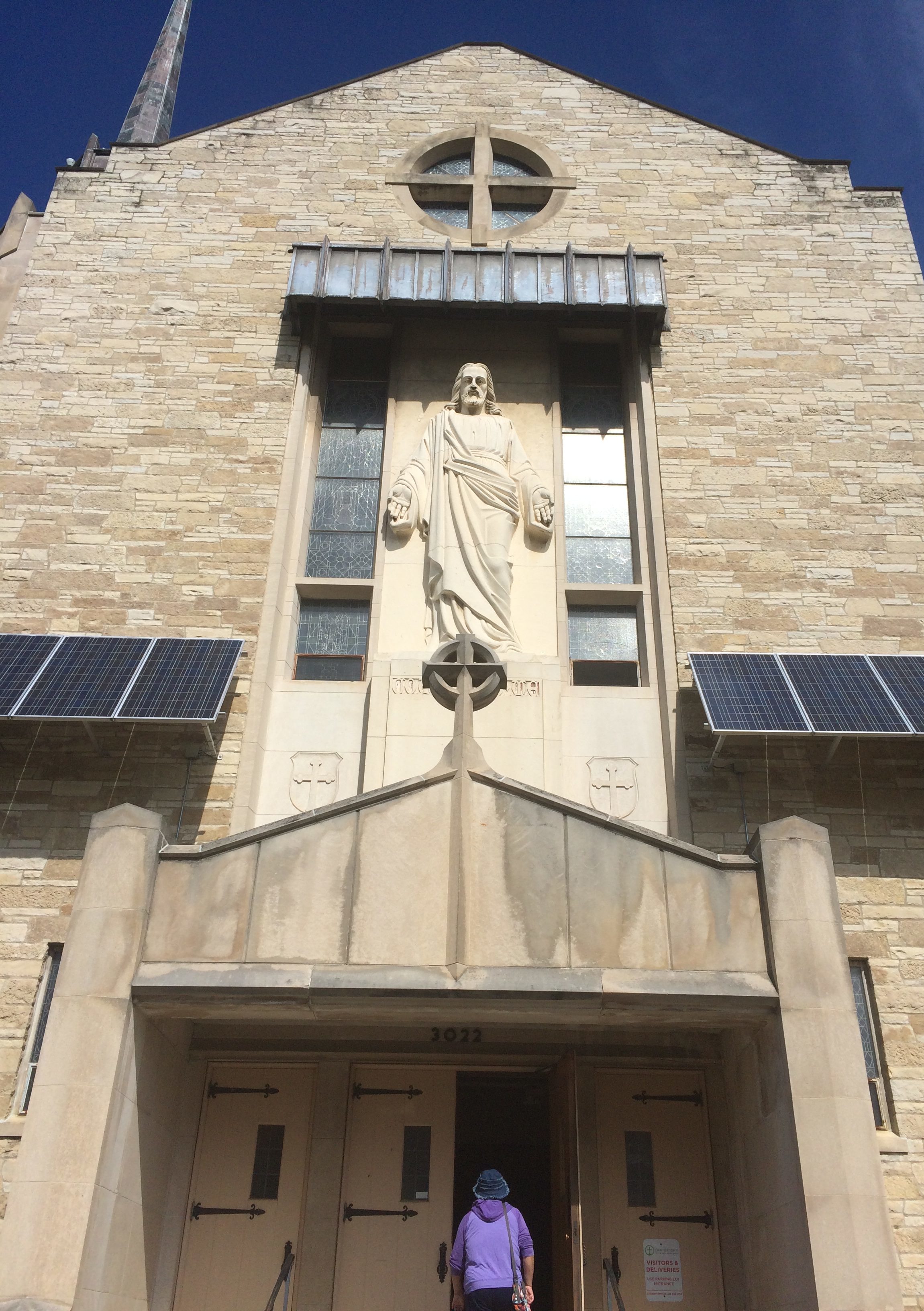
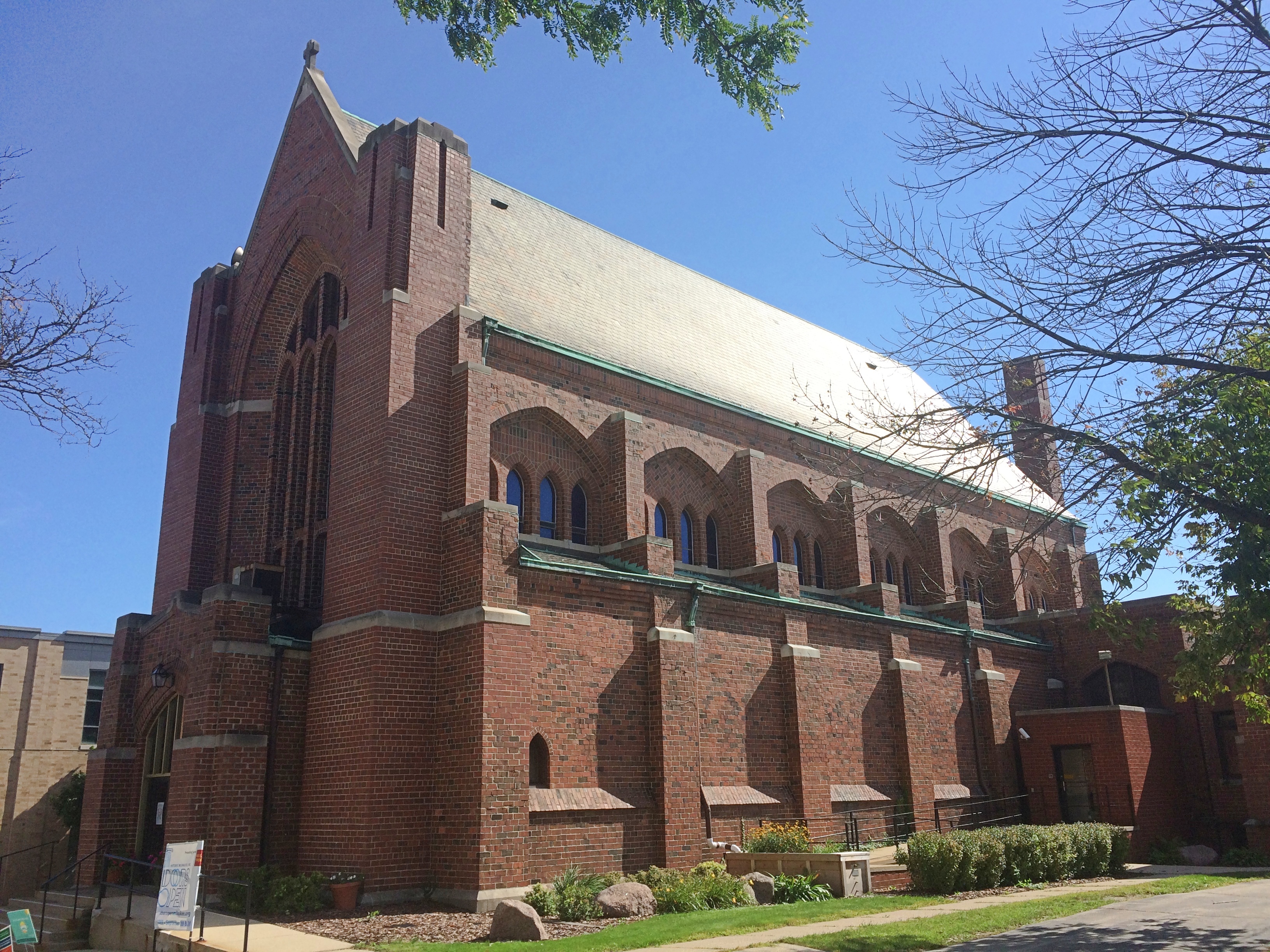
Two stops on the churches by bus tour in the Bridgeport neighborhood of Chicago on Saturday weren’t churches any more, not at least as they’d originally been built. One was the Monastery of the Holy Cross on S. Aberdeen St.

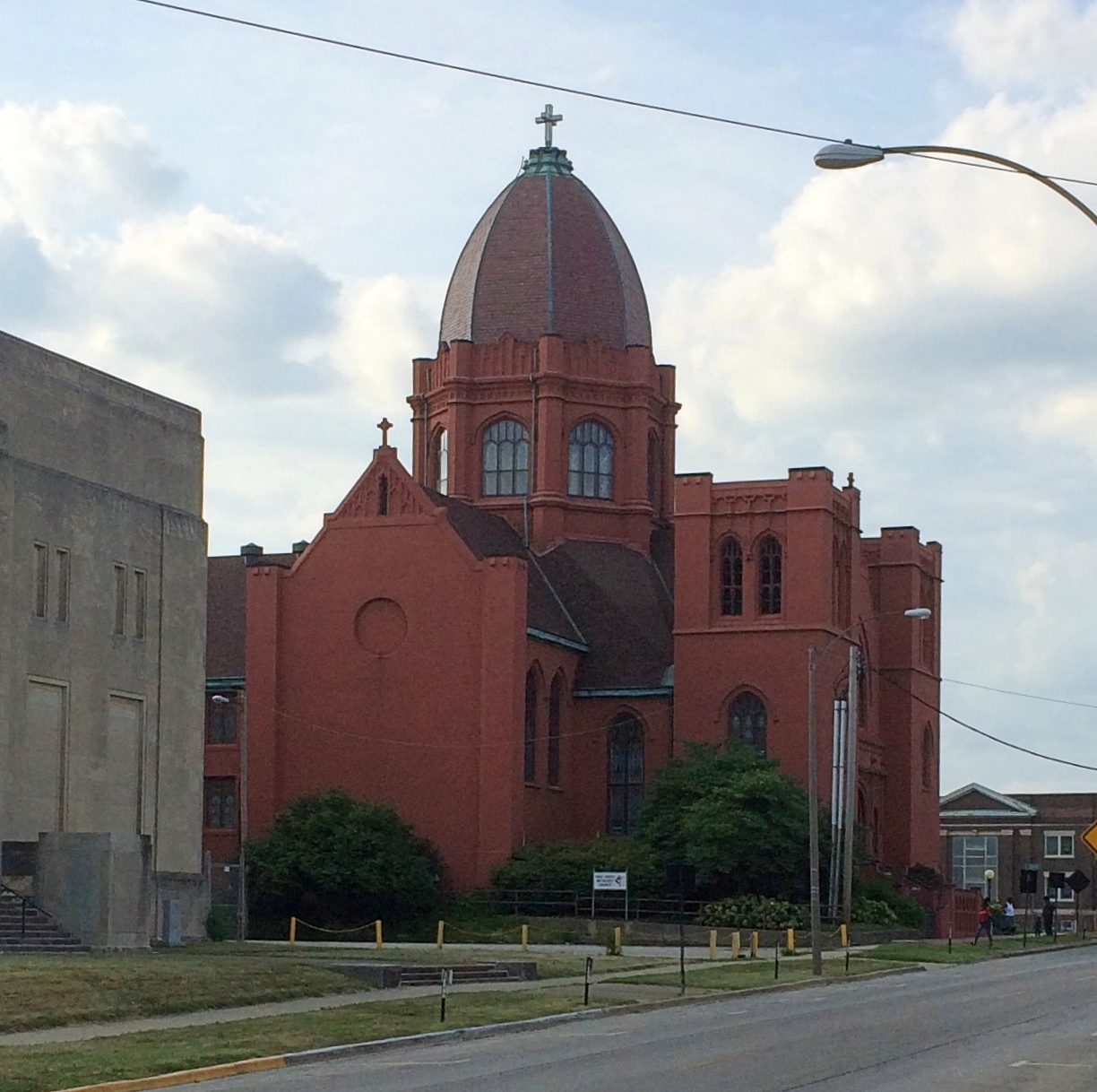
Hermann Gaul designed the Gothic structure as Immaculate Conception Church in 1908. You have to like a tower that sports gargoyles.
It occurred to me that Gargoyle or the Gargoyles would be a good name for a punk or metal band, but as usual keener minds are ahead of me.

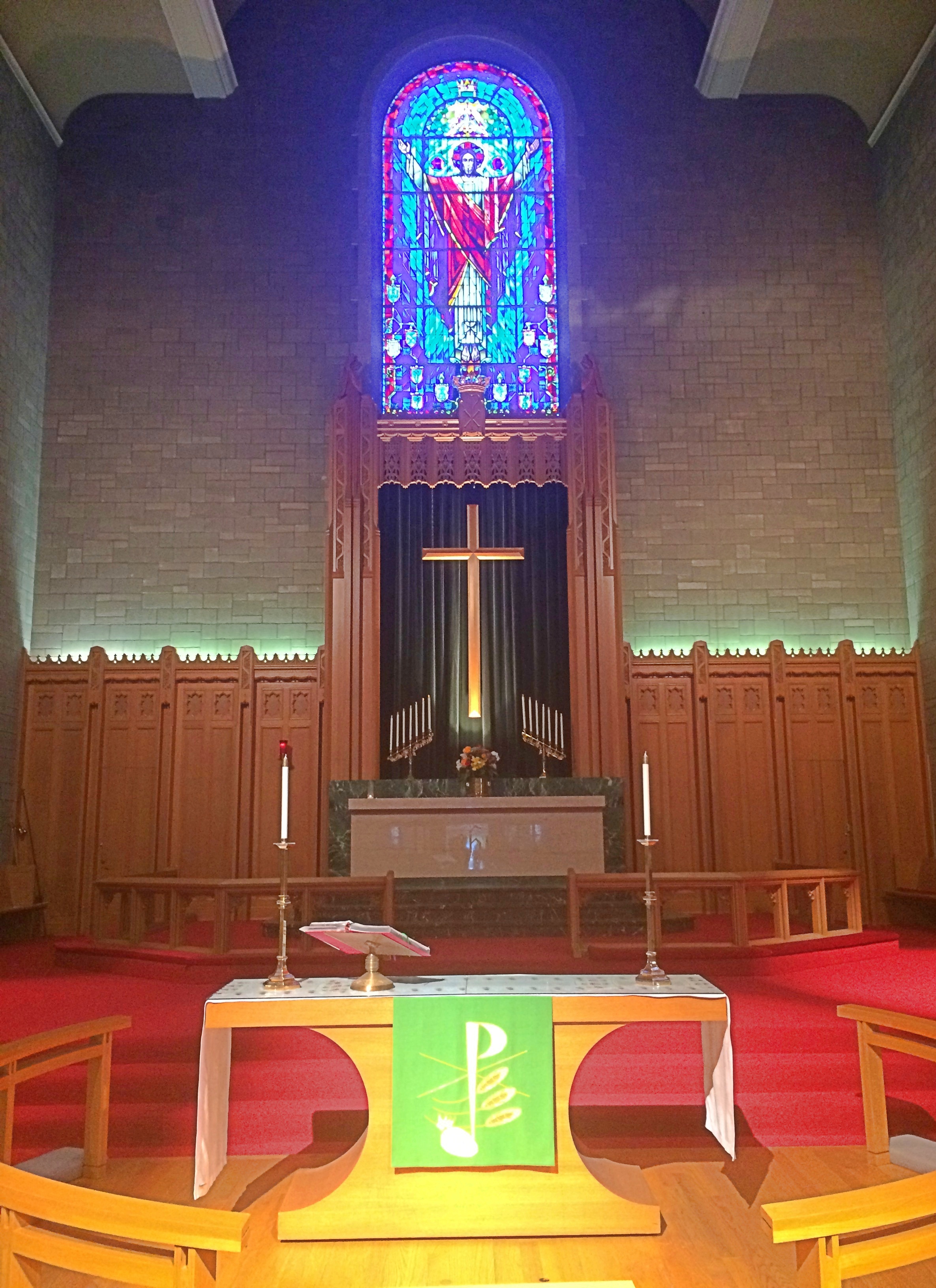
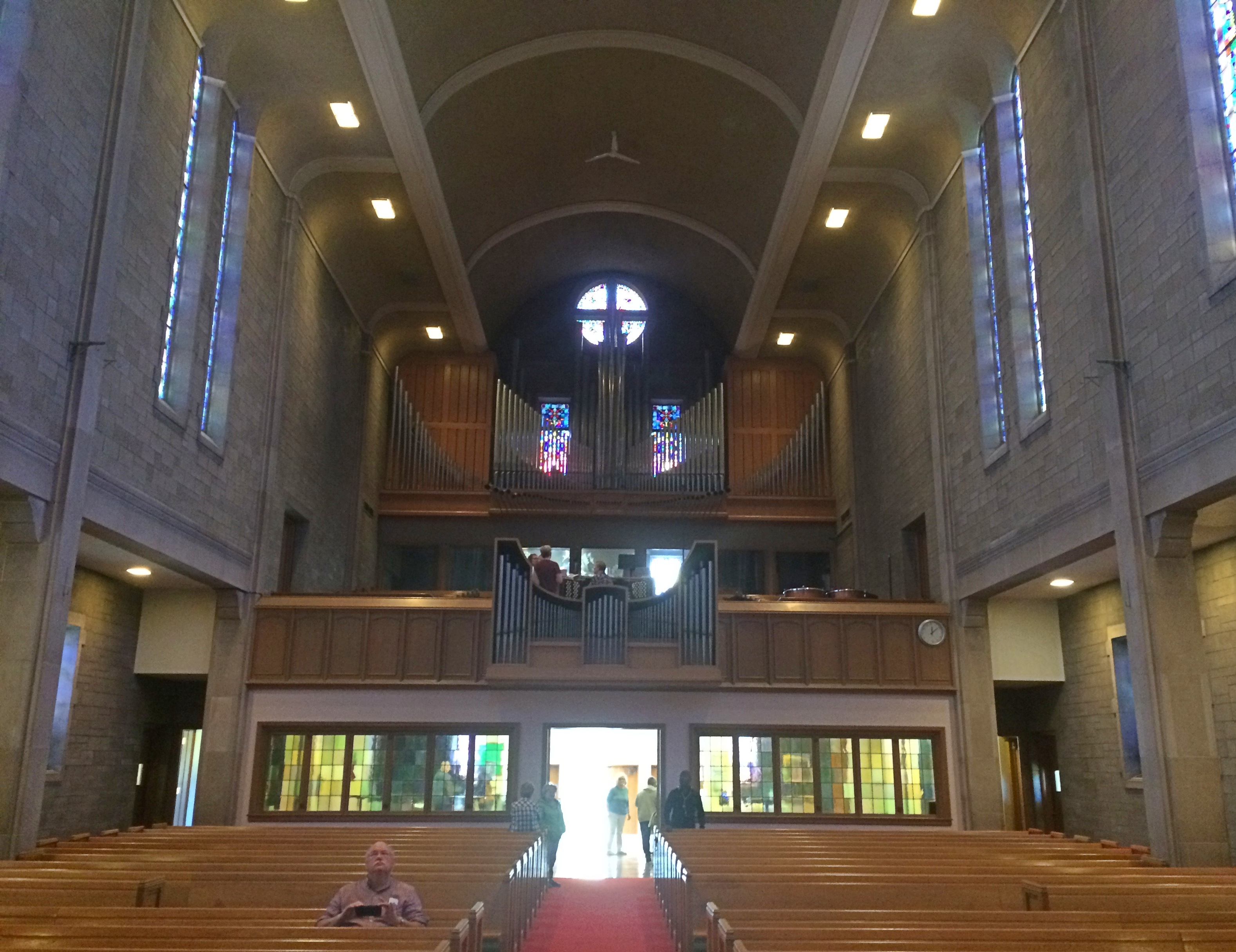
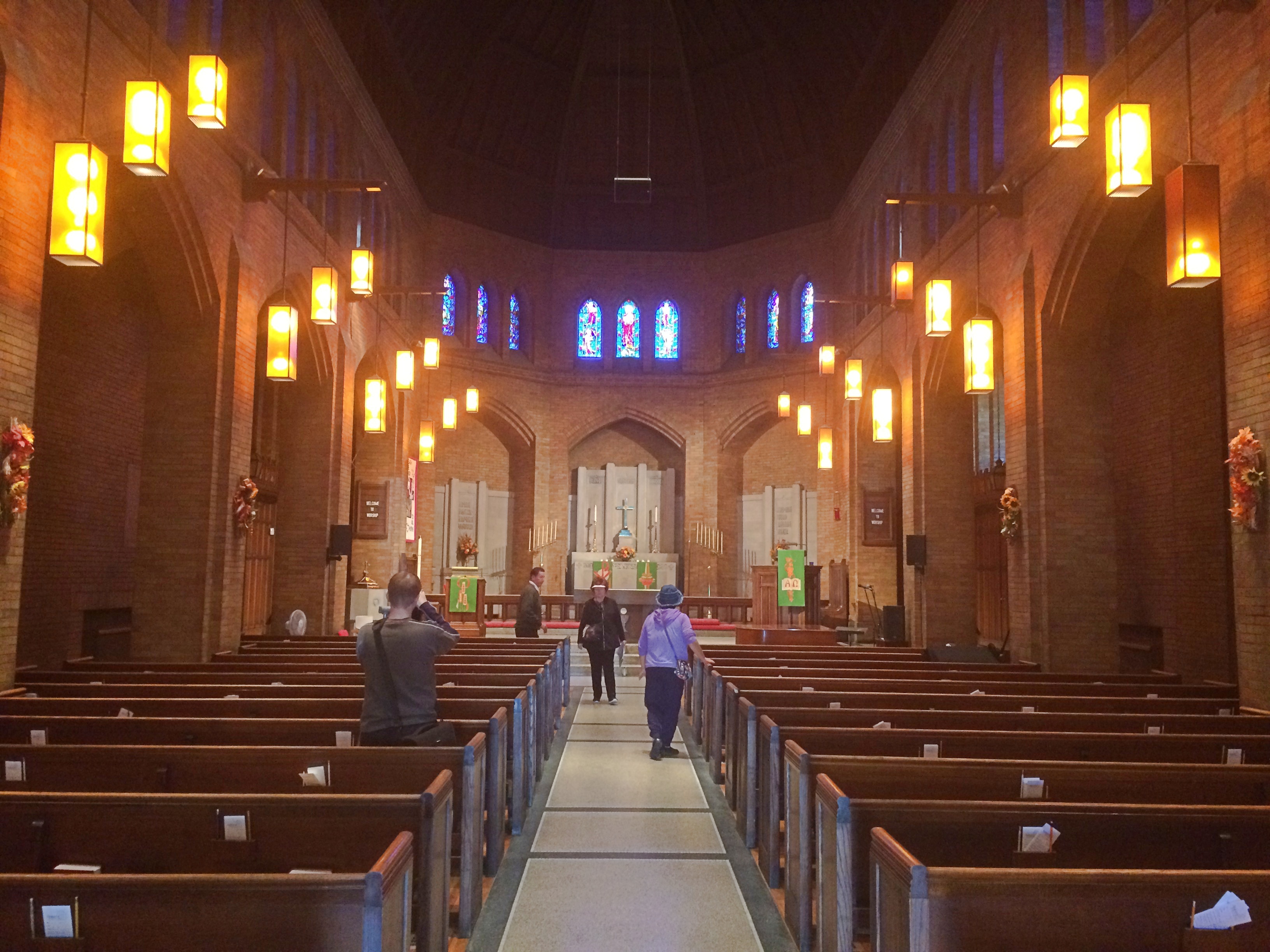
Eventually the church closed due to declining attendance, and some Benedictines took the place over in 1991. I understand that the monks have to be self-sustaining, so they operate a bed and breakfast on the property (which we did not see), and also sell coffins and CDs of their plainsong.

I’d say the brothers have done a pretty good job of keeping up the place.

As well as providing sacred art.
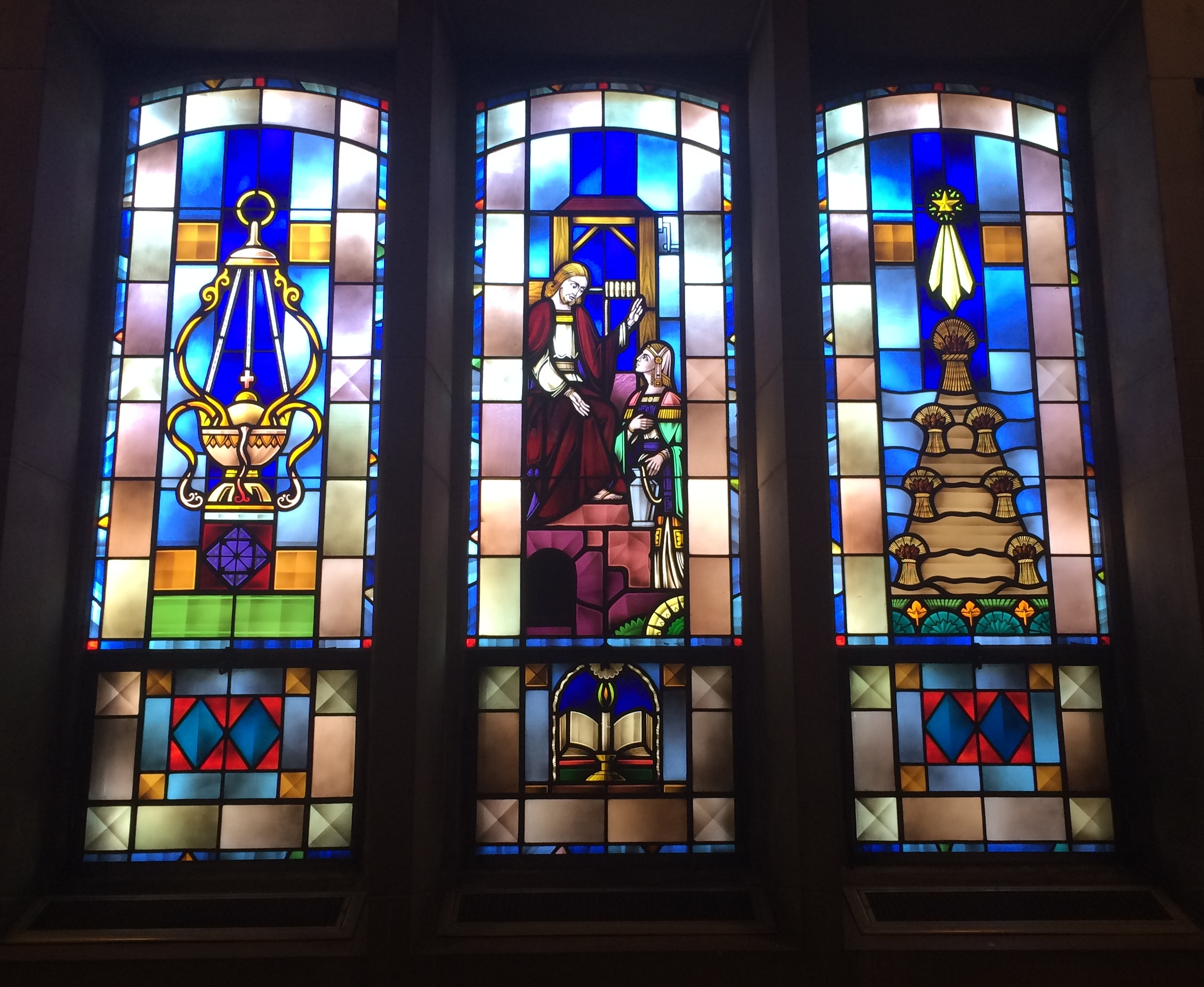
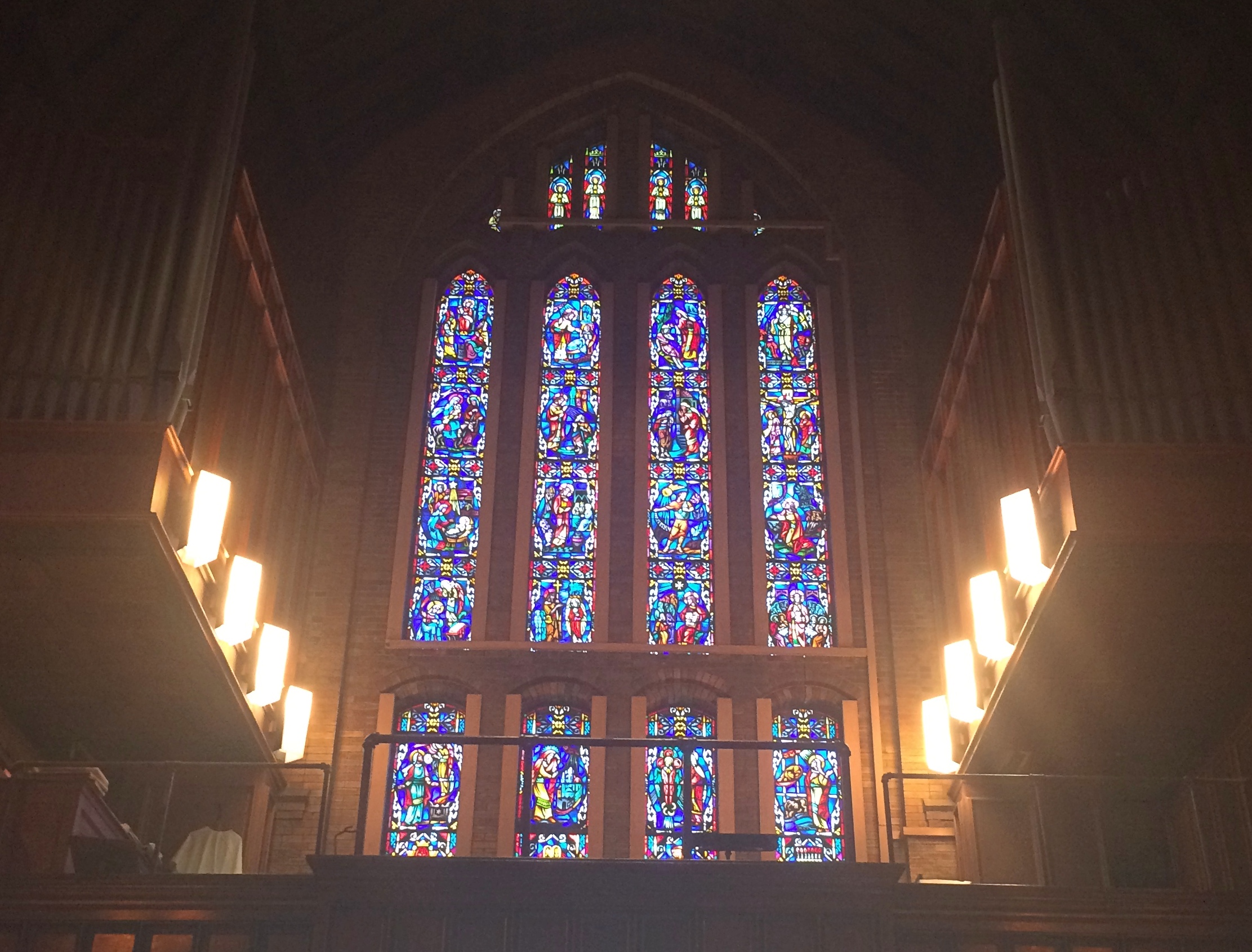
Here’s an unusual subject for a stained glass window, but it does reference the original name of the church. The glass depicts Pius IX promulgating Ineffabilis Deus, which defined the dogma of the Immaculate Conception, in 1854.
A block away from Monastery of the Holy Cross is Ling Shen Ching Tze Buddhist Temple, on W. 31st St. For most of its existence, the structure was Emmanuel Presbyterian Church. Which looks better, at least at the time of day I visited, in monochrome.

John Wellborn Root designed the church before his unfortunate death at 41, and Daniel Burnham oversaw its construction in 1894. In 1994, Ling Shen Ching Tze acquired the property.

A service was going on when we visited, so we could only peek inside.
The temple’s headquarters is in Washington state. As far as I can tell, it’s devoted to the teaching of Taoism, Sutrayana and Tantric philosophies. A mite different from Presbyterianism, no doubt.

St. Mary of Perpetual Help

It’s been a few years since we took a church bus tour — 2014 and ’15, as it happens — so a while ago I looked into this year’s offerings from the newly renamed and relocated Chicago Architecture Center on E. Wacker Dr.

Formerly, Chicago Architecture Foundation. Why did the organization give up the solidity of foundation for the generic center?

Never mind, the tours look as good as ever. The church bus tour selection this year was a cluster of churches in the Bridgeport neighborhood of Chicago. Actually, four Christian churches, one monastery, and one Buddhist temple in a building that used to be a church, but has been modified to meet the needs of the Chinese-American population moving into Bridgeport from nearby Chinatown.

Even now, Bridgeport evokes the Irish. After all, that’s the neighborhood that gave Chicago the Daleys and, going back a little further, Mr. Dooley. Of course in our time, other ethnicities are in the mix, such as the aforementioned Chinese, but also an Hispanic population. As far as I can tell, Bridgeport never really was home to just one group, because even in the early days there were Irish, but also Germans, Poles, Lithuanians, Italians and Bohemians.

It hasn’t always been a peaceful place. “Bridgeport once stood as a bastion of white ethnic communities,” the Encyclopedia of Chicago says. “Racial and ethnic strife has always been part of its history. An almost legendary clash between the Germans and the Irish occurred in 1856. During the Civil War pro-Confederate rallies were held in the neighborhood. In the twentieth century Polish and Lithuanian gangs often clashed along Morgan Street.”

St. Mary of Perpetual Help, tucked away on W. 32nd St. in Bridgeport, originally had a Polish congregation. It’s a magnificent blend of styles, with Romanesque on the outside.
Inside, a handsome Byzantine style.

With impressive domes, though I didn’t manage a good shot of any of their exteriors.
Henry Engelbert designed the church, which was completed in 1892. He’s listed as one of the designers of Our Lady of Sorrows Basilica in Chicago, but he’s better known for his work in New York City. St. Mary of Perpetual Help’s interior was by John A. Mallin, who did the interiors of a lot of churches in his long career.

Here’s the resplendent altar.

Stations of the Cross, with original Polish.

First-rate stained glass, as you’d expect.

Everything looks impressively new, but that’s because during the decades of the 21st century so far, the parish has undertaken major restoration work both exterior and interior. Being able to raise that kind of money must count as a minor miracle, though probably not in the theological sense.

The Ellwood House Museum

Every junior high student in Texas takes, or used to take, a class in Texas history. My teacher 45 years ago was the no-nonsense Mrs. Carrico, whose first name I do not remember. She told some Texas history stories that I do remember, including one I thought of not long ago when we visited the Ellwood House Museum in DeKalb, Illinois.

The story was about the popularization of barbed wire in Texas, specifically a demonstration of wire in 1876 in San Antonio organized by salesmen from up north. As the Texas State Historical Association puts it:

“In 1876 salesman Pete McManus with his partner John Warne (Bet-a-Million) Gates conducted a famous demonstration on Alamo Plaza [other sources say Military Plaza, including the TSHA] in San Antonio in which a fence of… wire restrained a herd of longhorn cattle. Gates reportedly touted the product as ‘light as air, stronger than whiskey, and cheap as dirt.’ Sales grew quickly thereafter, and barbed wire permanently changed land uses and land values in Texas.”

I’d heard of steel and oil magnate John Bet-a-Million Gates before, but until I visited the Ellwood I hadn’t connected him with this incident. It was early in his career and before he was renowned as a gambler.

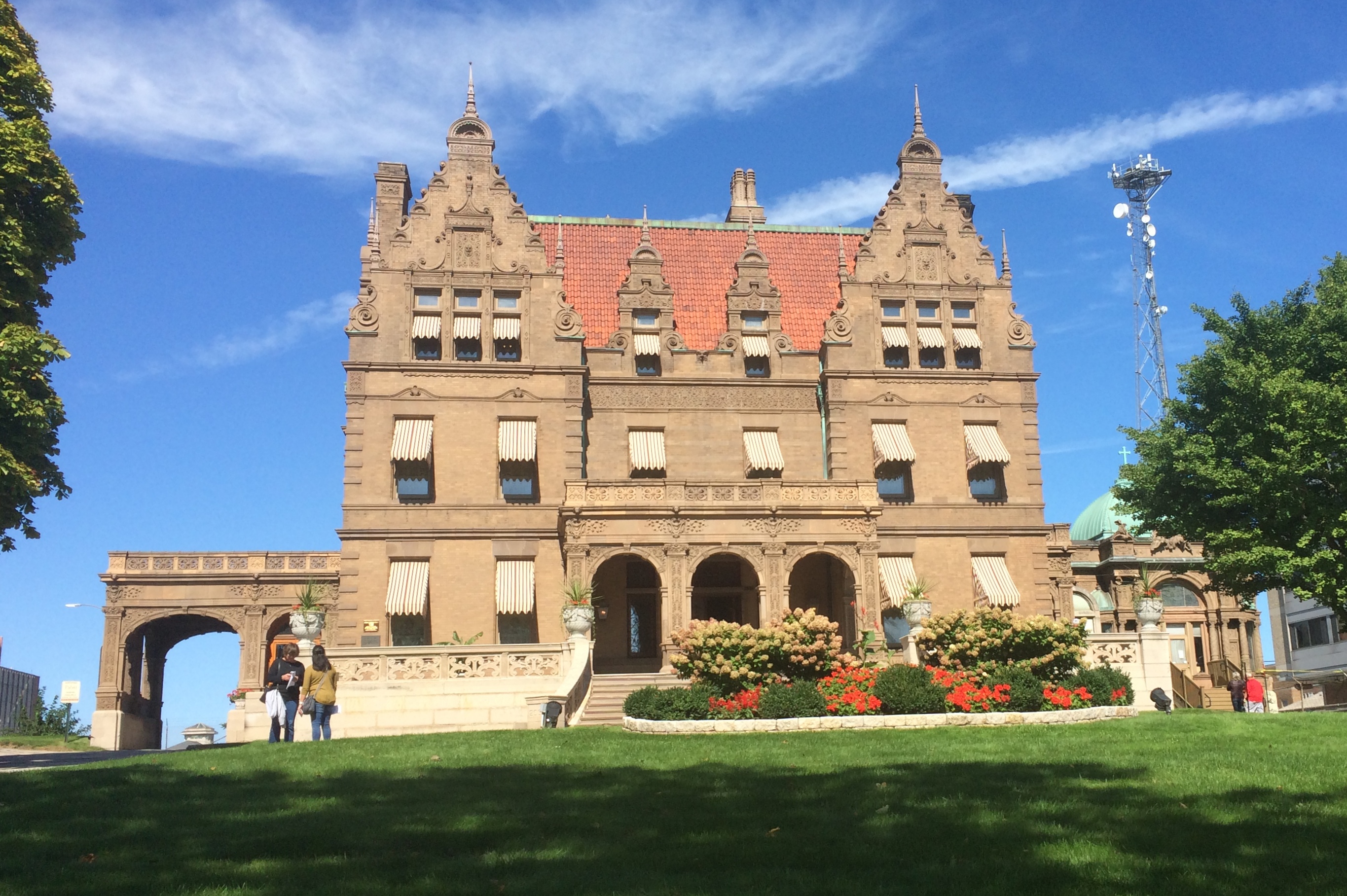
At the time, Gates was working for Isaac Ellwood, barbed wire manufacturer of DeKalb. Later Ellwood owned a major ranch in Texas, and built a “Pompeiian Villa” in Port Arthur, but it’s his Illinois manse that concerns me here.It’s a handsome Victorian house, originally dating from 1879, and designed by a Chicago architect named George O. Garnsey, with later modifications by others.

The museum web site says: “The museum campus consists of seven historic structures (including the 1879 Ellwood Mansion and 1899 Ellwood-Nehring House), four gardens, and 6,000 square feet of exhibit space in the Patience Ellwood Towle Visitor Center, a converted and expanded 1912 multi-car garage.

“Originally built for barbed wire entrepreneur Isaac Ellwood, the Mansion was home to three generations of the Ellwood family from 1879 to 1965. In 1965, the Ellwood Mansion was given to the DeKalb Park District by Mrs. May Ellwood and her three children.”

No pics allowed inside, but be assured that it’s lavishly decorated and includes a lot of the furniture that the Ellwoods owned. No barbed wire, though: that’s on exhibit at the visitors center.

Yellowstone 2005: Yellowstone, Badlands, Albert Lea, Etc.

Part of a letter I wrote to Ed about 13 years ago, with a few relevant pictures and hindsight notes in brackets.

Aug 22, 2005

Time to start another letter, which I might as well subhead “Things About My Recent Travels That Didn’t Make It Into the Blog.” If letters had subheads, that is.

In some ways, I hope this is a pattern for future travels [mostly it wasn’t]. Of the nine nights we spent on the road, six were in a tent, three in a motel. Better still, of the six nights in a tent, four cost nothing. Call me a cheapskate, but it did me good to return every night to Yankee Jim Canyon about 15 miles north of Yellowstone, in Gallatin Nat’l Forest land, and crawl into the tent knowing that I paid nothing. Well, no extra charge, no insidious “user’s fee,” because some small bit of my taxes must go to support the Gallatin Nat’l Forest.

Some of the most striking things about the many striking things in Yellowstone were the places — whole mountainsides, in some cases — that had clearly burned down in 1988. Hundreds of grey-dead trunks, stripped of anything remotely alive, still stand, lording — if such be possible among trees — over forests of mid-sized pines, very much alive, the spawn of the great fire. In other places, hundreds of tree corpses have tumbled into random piles, also interlarded with young living trees. You can drive for miles and miles and see scene after scene like these. They say it was a hell of a fire, a complex of hell-fires, really, and I believe it.

[A post-fire landscape in Yellowstone in 2005, 17 years later.]Yellowstone 2005

I saw something in South Dakota that the rest of the nation can emulate: two kinds of X signs, marking traffic deaths I think. One says: “WHY DIE? Drive carefully.” And the other: “THINK: X marks the spot. Drive carefully.” For such a sparse population, South Dakotans seem to kill themselves often enough on the roads. Long winters, cheap booze, almost empty roads.

I recommend the drive along the Missouri River from I-90 to Pierre, SD — along state roads 50, 10, and mostly 1806, all of which also form a National Scenic Byway. Hilly, bleak territory largely given over to Indian reservations, though not quite as bleak-looking as Badlands NP.

[Badlands NP, 2005]

In places, except for the road, it couldn’t have been that much different than what Lewis and Clark saw. I never can remember, without looking it up, which one probably blew his brains out a few years after co-leading the Corps of Discovery. [Lewis] Clinically depressed, before there were clinics worth visiting, and before melancholia became depression. Anyway, if I remember right, there’s a monument to him near where he died, on the Natchez Trace. I saw it years ago. A lonely place to die.

We spent the first night out at a campground near Albert Lea, Minnesota. According to me (and only me), Albert Lea is important for two things. One I just noticed: it’s the closest town to the junction of I-35, the U.S. branch of the Pan-American Highway, and I-90, the Boston-Seattle transcontinental epic of a highway. [I’ve since learned that no U.S. road is officially called the Pan-American; it’s just custom that attaches the name to I-35.]

The other thing is that I was visiting Albert Lea for the second time, after a span of 27 years. What was I, a south Texas lad of 17, doing in south Minnesota en route to Wisconsin one August day in 1978? Am I repeating myself here? Maybe I mentioned that epic bus trip before. It was an important one for me. No family, distant states — Wisconsin seemed wildly exotic. Christmas trees grew in people’s yards.

Anyway, in 1978 we stopped for lunch in Albert Lea. I went with the bus driver and some other kids to Godfather’s Pizza, a place I’d never heard of. After that, I walked around a little, relishing the remoteness of the place.

In 2005, we encountered wildlife at the campground near Albert Lea, namely mosquitoes in great numbers. The place was fairly green and lush, so I guess southern Minnesota hasn’t had the drought that Illinois has had this year. When we were leaving the next morning, we drove down the town’s main drag and there it was: Godfather’s Pizza, looking like not much maintenance had been done since the late 1970s, though of course I had no memory of how it looked then, just that I was there. [In Eau Claire this year, we ordered a pizza from a Godfather’s and ate it in our room. I ordered from there because of my experience 40 years earlier. And it was close.]

One other note, for now: Hot Springs, SD, is a lovely town. Near much of the main street flows a river, and alongside most of the main street across from the river are picturesque sandstone buildings, vintage pre-WWI. Evidently, it was locally inexpensive building material.

I left the family at a spring-fed swimming complex while I looked for a pay phone, since my cell phone refused to transcend the hilly surroundings. Argh, what an odyssey that was – “Yeah, we used to have a phone…” I’d foolishly agreed to do an interview that day, figuring I could use my cell. Anyway, after much to-do, I found a phone, did the interview, and then relaxed by the riverside, which has a sidewalk and a hot spring (Kidney Spring) under a gazebo. Free for all to drink, with a metal plaque describing its properties. Not bad. A little salty, but not bad, even on a hot day in South Dakota.

The Colonel Wolfe School

I’ve gotten to know Champaign-Urbana better since 2016, and on Saturday was back again, helping facilitate Lilly’s return to UIUC for the 2018-19 academic year. I didn’t have a lot of time to look around, but one thing did catch my eye: the Colonel Wolfe School building.

Looks a little run down, but seems like it has good bones. The name, hard to see at a distance, is carved in stone over the main entrance.

Lilly will be seeing this building with some regularity, so I asked her whether she knew anything about it. She didn’t. Neither did I, so I did the next best thing: made something up.

“I’ll bet it was a private school run by this fellow Wolfe in the late 19th century,” I said. “One of those schools where the students were mistreated. You know, regular beatings for minor infractions. On quiet moonlit nights, maybe you can hear their ghosts moaning inside the old school.”

Lilly brushed off this suggestion, but I will say in my defense that I suspect that’s how places acquire their reputation as haunted: by people saying they are.

The facts of the Wolfe School are more prosaic. There isn’t a gush of information online about it, but I did find out it was a Champaign public elementary school built in 1905. That was a time of school building reform, so it probably had the latest amenities, such as light-admitting windows and toilets on each floor.

As a school, Colonel Wolfe lasted into the 1970s. Some time later, UIUC acquired the building and used — uses? — it for this and that (sources are a little vague). Doesn’t look like the university has put much money into spiffing up the exterior.

As for Colonel Wolfe — John Wolfe (1833-1904) — he was a civic leader, though not an office holder, in late 19th-century Champaign. As a young man, he fought for the Union as a member of the 20th Illinois Volunteer Infantry and then the 135th Illinois Infantry.
An obit is online. Wolfe never even saw the building, much less thrashed his charges there.

Stray Thursday Items

Various things my computer has told me lately:

Object reference not set to an instance of an object.

Description: An unhandled exception occurred during the execution of the current web request. Please review the stack trace for more information about the error and where it originated in the code.

Sure, whatever you say.

Tremendous loud thunderstorm yesterday evening. Short but dramatic. The yard needed the water. Been a dryish August so far. But not too hot. I try to enjoy lunch on my deck daily, and sometimes breakfast, because soon the air will grow cold. All too soon.

Cicadas are in full voice during the day now. Crickets are on the night shift, singing their songs. Sounds just the same — to my human ears — as it did in 2015. But for all I know, the songs have morphed since then, and are as different to the insects as Middle English compared with Modern English.

Presidential sites are pretty thin on the ground up on the north shore of Lake Superior, but I did find one place during our recent trip that has the vaguest connection to a U.S. president. Its name: Buchanan.

Here it is.
That might look like undeveloped shore on Lake Superior, and it is, but not far from shore a plaque says: This town site, named after President Buchanan, was laid out in October 1856. From September 1857 until May 1859 the place, though little less than wilderness, was the seat of the U.S. land office for the northeastern district of Minnesota. After the removal of the land office, the settlement disappeared.

This sizable sculpture is on the campus of University of Minnesota Duluth, near that school’s planetarium. It’s called “Wild Ricing Moon.”“The sculpture… was designed by John David Mooney, a Chicago sculptor with an international reputation,” the university says. “The piece is 89 feet tall. The first half of this large-scale outdoor sculpture was erected in October 2005. The first installation, a large steel circle, 40 feet in diameter, represents the full, rice-harvesting moon of late summer.

“A ‘rice stalk’ section and bird was included in the pieces that arrived in June. Mooney described the sculpture as reflecting the North Shore of Lake Superior and natural features of the region.”

Here’s the pleasant open area behind the Allyndale Motel in Duluth.

One morning I ate a rudimentary breakfast there as the girls slept. One night I went there on the thin hope that the northern lights would be visible. No dice.

I spent a few minutes tooling around Eau Claire, Wis., on the Saturday morning on the way up to Minnesota. One thing I saw in passing was the impressive Sacred Heart-St. Patrick Parish church.
Unfortunately, the church was closed.

A little later that day we stopped at Leinenkugel Brewery in Chippewa Falls. The tourist-facing part of the operation is known as the Leinie Lodge®, which “is filled with historical photos, vintage brewing equipment and plenty of Leinie’s wearables and collectibles to take home,” notes the brewery web site. There’s also a bar. Guess what it serves.

Boy, the Leinie Lodge was crowded. That’s the result of years of clever advertising (autoplay) and what we get for going on a Saturday morning. But that wasn’t the irritating part, not really. Leinenkugel Brewery tours cost $10. Admission for a brewery tour?

I’ve been on brewery and vineyard and distillery tours all over the world, including a beer brewery in Denmark, a bourbon maker in Kentucky, a winery in Western Australia and a sake brewery in Japan, and that’s one thing I haven’t run across. Because, you know, the tour is marketing — building goodwill — introducing new customers to your product — not a damned revenue stream. For the birds, Leinenkugel, for the birds.

But I have to confess that Lilly wanted a Leinenkugel shirt, so I got her one. Her souvenir for the trip. I got a couple of postcards.

On the way back from Minnesota, as I’ve mentioned, we ate lunch in Madison, Wis., at the excellent Monty’s Blue Plate Diner.

Across the street from Monty’s is the Barrymore Theatre. I like its looks.

Various live acts play at the Barrymore. Looking at the upcoming list, I see that They Might Be Giants will be there in October after dates in the UK, Germany and Canada. Maybe I should see them again — it’s been almost 30 years now — but it’s a Tuesday show, so I don’t think I’ll make it.

One more thing. At a rest stop on I-94 near Black River Falls, Wis., there’s a state historical marker honoring, at some length, the passenger pigeon. Among other things, the marker says: “The largest nesting on record anywhere occurred in this area in 1871. The nesting ground covered 850 square miles with an estimated 136,000,000 pigeons.

“John Muir described the passenger pigeons in flight, ‘I have seen flocks streaming south in the fall so large that they were flowing from horizon to horizon in an almost continuous stream all day long.’ “

Wow. 136 million pigeons more or less in the same place? A marvel to behold, I’m sure. That and an amazing amount of noise and a monumental torrent of droppings.

Bong!

On the morning of July 31, as the girls slept a little late, I drove from Duluth to Superior, Wis., via the Richard I. Bong Memorial Bridge. It’s a long, not particularly wide bridge over St. Louis Bay, in service since 1985.

Richard Ira Bong, who grew up on a farm near Superior, is credited with shooting down 40 Japanese aircraft as a fighter pilot with the U. S. Army Air Corps, and likely got other kills that weren’t credited. Driving through Superior a few days earlier, I’d noticed the Richard I. Bong Veterans Historical Center on the lake, so after crossing his namesake bridge, I made my way to the Bong Center to take a look.

It’s a small military museum with a strong Bong component, but not entirely devoted to him. Walking in, it’s hard to miss the centerpiece P-38 Lightning fighter plane, the very sort that Maj. Bong flew to such lethal effect on the enemy.

This aircraft isn’t the one Bong flew. While he was stateside, it crashed while another pilot was flying it. The Army took delivery of the one on display in July 1945, after Bong had been ordered to quit flying combat missions. The Richard I. Bong American Legion Post of Poplar, Wis., acquired the plane from the Air Force in 1949, and it was on display in that town for some decades.

In the 1990s, the plane was restored to resemble Bong’s P-38J “Marge,” complete with his fiance Marge’s portrait on it.

Bong’s Medal of Honor is on display. His citation says: “For conspicuous gallantry and intrepidity in action above and beyond the call of duty in the Southwest Pacific area from 10 October to 15 November 1944.

“Though assigned to duty as gunnery instructor and neither required nor expected to perform combat duty, Maj. Bong voluntarily and at his own urgent request engaged in repeated combat missions, including unusually hazardous sorties over Balikpapan, Borneo, and in the Leyte area of the Philippines. His aggressiveness and daring resulted in his shooting down 8 enemy airplanes during this period.”

As mentioned, the museum isn’t all about Bong. There’s an assortment of artifacts, such as this magnetic mine.

Some home-front ephemera.

A piece of a Messerschmitt 109.

Bong came home for good in 1945, before the war was over, and did some test piloting of jet aircraft for the Army in California. Being a test pilot turned out to be more dangerous for Bong than facing the Japanese in the Pacific.

His plane crashed in an accident on an otherwise famed date: August 6, 1945. He and Marge had only been married a short while (she died in 2003, after playing an important part in establishing the museum).

Voyageurs National Park

What is it about national parks? The term is a charm, good juju, kotodama, perhaps to misuse all those expressions, that draws people to a place. People like me.

Had Voyageurs National Park, which is way up in northern Minnesota, merely been Voyageurs State Park — with the same lake-based natural sites and the same history stretching back to paleo-Indians — I doubt that I’d have made the effort to visit this time. I even picked it over a national monument about the same distance from Duluth, the similarly themed Grand Portage NM at the state’s northeast tip.
Recently I checked a list of U.S. national parks and discovered that Gateway Arch National Park in St. Louis was established earlier this year. I hadn’t heard that. The new designation was evidently something Congress could agree on, so now there are 60 national parks.

Including Gateway, because I’ve been there a few times, that’s a round 20 national parks I’ve visited, also including Voyageurs NP, which we went to on July 30.

Among the 60 U.S. national parks, Voyageurs NP is one of the least visited, in the bottom 15, with 237,250 recreational visitors in 2017. That’s many more than the likes of Gates of the Arctic (the least visited at just over 11,000 visitors last year) or the least-visited non-Alaska park, Isle Royale, at over 28,000. But not very many compared with the swarms at Great Smoky Mountains or the Grand Canyon or Zion, the top three 2017 tourist magnets among national parks.

The park is relatively new as well, something I hadn’t bothered to learn beforehand. Richard Nixon’s signature is on the 1971 bill creating Voyageurs NP, which was formally established in 1975.

Voyageurs NP is one of those parks designated for its natural beauty, but also its human history, with the name honoring the tough and probably randy Frenchmen who passed this way once upon a time, hauling pelts on journeys from the wilds of Canada toward the markets of Europe.

The park is a world of wooded islands and peninsulas but mostly lakes, including the sizable Rainy and Kabetogama lakes. So I figured only reasonable that the thing to do was take a boat tour.

The park itself offers a number of options, including one that’s six hours long, which didn’t interest me greatly, and one in small boats you paddle to evoke the transits of those hearty voyageurs of old, though I bet modern participants smell better than authentic voyageurs. That didn’t really pique my interest either.

So we took a two-and-a-half hour jaunt out on Rainy Lake, at the park’s western edge, accessed by driving a few miles east of the border town of International Falls, Minn. We boarded the good tourist ship Voyageur and off we went.
Along the way, our guide — Ranger Adam — pointed out various aspects of natural and human history in the land we cruised by, such as a number of eagles and eagle nests perched on tall trees, evidence of beavers at work, the sparse ruins of an 1890s settlement called Rainy Lake City, and a former fishing camp that petered out in the 1950s.

We stopped at one small island: Little American Island, which was added to the park only in 1989. Gold mining had occurred there briefly nearly 100 years earlier. These days, short footpaths take visitors to the few relics of the gold mining days.
Ranger Adam went with us to explain things and point stuff out, such as the hole in the ground left over from the gold mine and a few rusty mining machine parts.

“The Little American Mine operated from 1893 to 1898,” says Forgotten Minnesota. “The average value of the gold extracted during that time was $30 per ton, which represented a profit of around $12 per ton.

“The Little American is the only gold mine in Minnesota known to have produced a profit. The impact of the mine was felt primarily in Rainy Lake City. After the mine closed, Rainy Lake City slowly disappeared and was considered a ghost town by 1901.

“Although the mine was productive, a large vein of rich gold was never found to kick off a gold rush to rival those in California. Oddly enough, the influence of the Little American Mine on the mining industry occurred in Canada, where the large veins of gold were finally found.

“Remnants of the mine can still be found under years of overgrown brush and pine trees. Two major excavations from the Little American Mine are still visible on the island: a vertical, cribbed shaft and an entrance to a horizontal shaft. Both are filled with debris and water.”

Little American Island aside, the tour was mostly a relaxing few hours on the water. Though it was fairly warm — maybe 85 F and partly cloudy — as we chugged along the breeze kept things fairly comfortable.

One oddity: out on the lake, I felt my phone buzz in my pocket. I didn’t really want to have anything to do with it while on the lake, but I was surprised there was service at all. I glanced at the phone and the screen said, Welcome to Canada! Then it offered details about how I needed pay extra to call from within Canada.

I’m pretty sure we hadn’t crossed into Canadian waters, since a NPS tour is probably going to be precise about that kind of thing. But we were close. The nearest cell tower must have been on private land in Canada, so the phone, dense device that it is, figured we were there.

South Texas, Summer ’18: The King William District in July

Just back from eight days in San Antonio. Most of the time I visited with family or worked, since my kind of work is mobile. Also, temps in the high 90s and sometimes over 100 degrees F. discouraged me from too much wandering around during the day.

Even so, last Sunday toward the late afternoon I drove down to the King William District, which is leafy this time of year and so not quite unbearably hot, and took a few short walks.

“The district encompasses land that was once irrigated farm land belonging to the Mission San Antonio de Valero, commonly known as the Alamo,” the City of San Antonio says. “When the mission was secularized in 1793, the lands were divided among the resident Indian families from the mission or sold at public auction. In the 1860s the area was subdivided into lots and laid out with the present streets.

“In the mid-nineteenth century… a great many Germans, who had immigrated to Texas in the 1840s, began to settle in this area… The area developed into an idyllic neighborhood of large, impressive houses designed in the Greek Revival, Victorian, and Italianate styles.

“The main street into the neighborhood was given the name King William in honor of King Wilhelm I, King of Prussia in the 1870s. During World War I, when America was at war with Germany, the name was changed to Pershing Avenue. A few years after the war ended the King William name was restored.”

These days there’s a Pershing Ave. in San Antonio, but it’s further north, fittingly not far from Fort Sam Houston. By the mid-20th century, the King William District was run down. By the late 20th century, restoration was under way.

One of my short walks took me along King William St., which is an important street in the district, but hardly the only one. The array of houses made me think of the East End Historic District in Galveston. In King William, there are large and historic houses such as the Villa Finale.
The Steves Homested. One of these days, I’ll take the tour.Edward Steves was a successful businessman in lumber in San Antonio in the 19th century, and Steves & Sons, which makes doors, is still around. I went to high school with a girl who was descended from Steves on her mother’s side.

There are plenty of other large and not-so-large houses on the street, most of which are worth a look.
That last one is the Alfred Giles House. One the architect of that name designed for himself. He’s thought to have done the Steves Homestead, and he certainly designed a lot of buildings in Texas, including some county courthouses (such for Goliad County and Presidio County) and even some in Monterrey, Mexico.

The Hegeler Carus Mansion

Back to posting on July 8. A good Independence Day to all.

Before we went to Streator to see the Walldog murals, we visited LaSalle, Illinois. Like Streator, LaSalle is in LaSalle County, though it isn’t the county seat either — Ottawa is. Unlike Streator, LaSalle is on an Interstate. On two of them, in fact, at the junction of I-80 and I-39.

Those roads were still far in the future when a German, Edward C. Hegeler, came to LaSalle in the late 1850s. Before long he and his partner Frederick William Matthiessen, another German, were American zinc barons whose fortunes were made during the Civil War.

Why LaSalle? It was near coal deposits and the Illinois & Michigan Canal, besides a rail connection to Chicago. Smelting zinc required a lot of coal in those days. Zinc was to be had in southern Wisconsin. Cheaper to bring the zinc to Illinois than the coal to Wisconsin, I suppose.
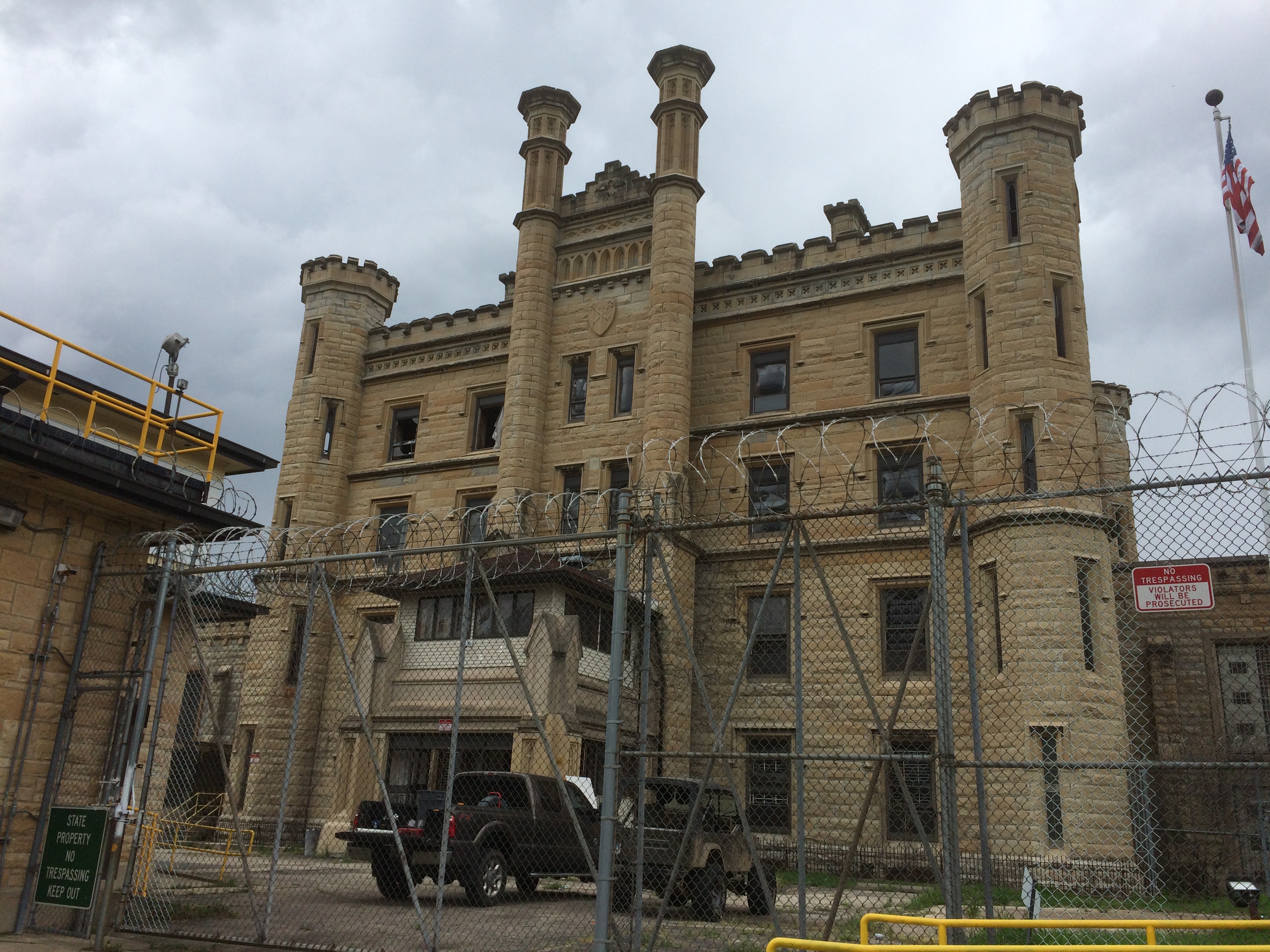
As propertied men of the Gilded Age often did, Hegeler had a mansion built for himself and his large brood. In our time, it’s the Hegeler Carus Mansion, completed in 1876 in that Second Empire style we associate with eerie residences because of the drawings of Charles Addams.
William W. Boyington designed the house. He’s better known for the Chicago Water Tower, but he also did the Joliet State Pen and the current Illinois State Capitol.

The Carus in the name is after Hegeler’s son-in-law, Paul Carus, who wasn’t a zinc baron. He was a scholar, eventually running Open Court Publishing Co., which was founded by old man Hegeler, who clearly didn’t have a one-track zinc-oriented mind. Open Court published — publishes, it’s still around — titles in philosophy, science, and religion.
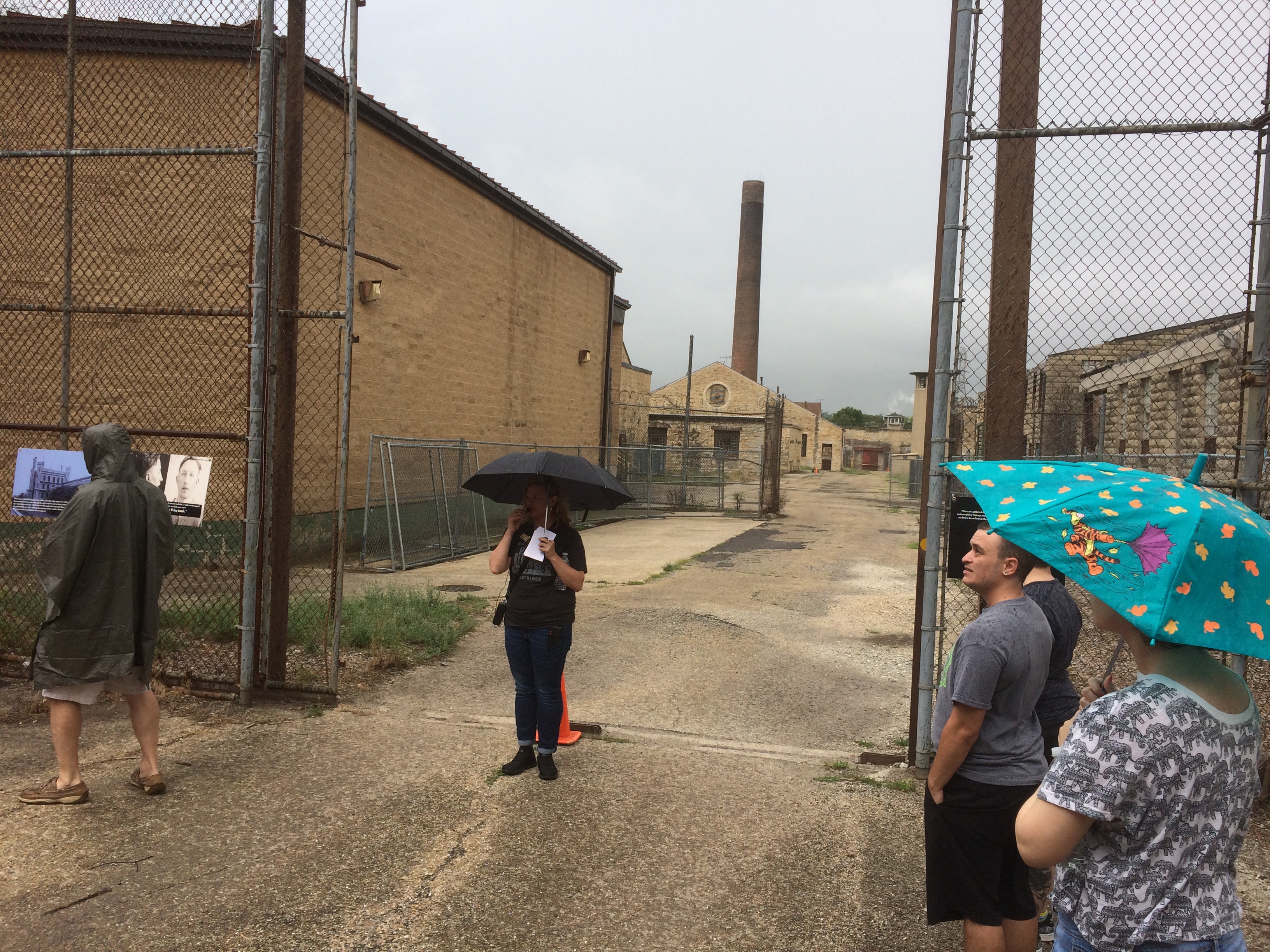
We took the 3 p.m. tour of the Hegeler Carus Mansion on Saturday, partly as something to do during the hotest part of a hot day. The house doesn’t have central AC, but thick walls and wall units and fans made it tolerable inside.

A third-generation member of the Hegeler-Carus clan lived in the house until 2004, when he died aged more than 100. Now a foundation owns the place, and it’s doing the slow work of restoring the mansion. A few rooms are finished, complete with high Victorian furniture and wall and floor decor — there are some elaborately styled floors in this house — and many, many books.

“The elaborate interior decoration of the Hegeler Carus mansion is the work of August Fiedler, a talented German-American who excelled in interior design and furniture making,” says The Story of a House. “Although he designed many interiors in Chicago and elsewhere, most have been lost, leaving the Hegeler Carus as the largest and most intact surviving example of his work.”

Most of the rooms aren’t finished yet. Still, the flavor of the place is distinct. A historic property doesn’t have to be a House Beautiful specimen to be enjoyable.