Murals & Milestones in Streator

Early in June, when we were visiting Arcola, Illinois, I noticed that the town sported more murals than it did during our 2007 visit. In fact, I didn’t remember any from that time. That’s because in 2012, Walldogs came to town and painted the murals.

I found that out by looking at Arcola’s web site, which mentioned the Walldogs, and then I looked them up. “The Walldogs are a group of highly skilled sign painters and mural artists from all over the globe…” the group’s web site says.

“Once a year, hundreds of Walldogs gather in one lucky town or city to paint multiple murals and old-fashioned wall advertisements. This meet – or festival – is usually held during the span of 4 or 5 days ending on a Sunday.”

More about the group was published recently by The Times, the area’s local paper.

While reading about the group, I noticed that the next Walldogs event was going to be in Streator, Illinois at the end of June. I knew right away that I wanted to go to Streator during the event, and that is what we did on Saturday. Since it was nearly 100 degrees F. during the early afternoon, we timed the visit so we didn’t get there until around 5:30 in the afternoon, when things had cooled off to around 90 or so, and it was easier to find shade.

Streator was glad to get the Walldogs, at least to judge by signs like this, placed in the window of a resale shop.

This is a mural to commemorate the event itself. It notes that this year is the 150th anniversary of Streator, the 200th anniversary of Illinois entering the Union, and 25 years of Walldogs events.
We’d been to Streator once before, but only for a short visit in 2005 that absolutely no one but me remembered.

I wrote in a previous BTST: “Illinois 18 took us exclusively through flatlands, once the Illinois River valley was behind us, and on to Streator. Streator’s one of those towns that the Interstate system has completely bypassed. It didn’t seem any worse for it, though, with all the usual features of rural Illinois county seats [sic]: a small downtown, a district of fine-trim houses, a trailer park or two, parks, schools, a police station, firehouse, and library with a historic marker out front dedicated to the discoverer of Pluto.”

I stopped to read the sign, but didn’t even get out of the car. That was all I did in Streator. This time around, I knew that Clyde Tombaugh was going to get his own prominent Walldog mural in Streator, and sure enough, that was one of the first of the spanking-new murals we saw when we got to town.

So new, in fact, that the artists were still working on it.
Just before we left, however, the mural was visible for all to see.

It did me good to know that Streator hasn’t forgotten its favorite astronomical son, a lad from the Midwest who discovered a whole planet. I bet Pluto isn’t anything but a planet to the good people of Streator. Me either.

Murals tend to be stylized, and so Tombaugh’s a stylized astronomer, looking through an eyepiece. Even in the 1920s and ’30s, I don’t think professional astronomers did that very much. After all, Tombaugh discovered Pluto by the tedious task of comparing photographic plates by eye, something that computers certainly do now.

Nearby were other walls with other brand-new murals, such as WWII Canteen.

They too are stylized, but supposedly there’s a story behind the couple on the wall. I didn’t get the details

Here’s Edward Plumb, a film composer who worked for Disney back when Walt himself was in charge, and who happened to be a grandson of the cofounder of Streator, Col. Ralph Plumb.

I noticed that Plumb’s mural is on the side of the boarded up Majestic Theater. No doubt once upon a time, you could hear his scores there as Disney movies played at the Majestic.

On this wall in the afternoon sun are Col. Plumb and Worthy Streator, town founders, along with the miners who came to dig coal in Streator’s early days, and a canary.

Some of the murals were being painted on aluminum panels fixed to temporary wooden scaffolding. The panels, I was told by a fellow who may or may not have been with the event, would be attached to walls later. Walls maybe not otherwise suitable for taking paint directly.

One honored native son was Clarence Mulford, creator of Hopalong Cassidy.

I’d say that Hopalong Cassidy is pretty much the definition of a forgotten figure from fiction. Even when I was growing up, he was little more than a vague Western character with an odd name.

Another forgotten name, though not from fiction: Calbraith Rodgers.
Rodgers had his moment in the public eye in 1911, when he flew the Vin Fiz Flyer, a Wright Brothers machine, coast-to-coast over the course of about three months. Vin Fiz was a soft drink, in case anyone thinks product sponsorship is a new thing.

According to Wiki: “The support team rode on a three-car train called the Vin Fiz Special, and included Charlie Taylor, the Wright brothers’ bicycle shop and aircraft mechanic, who built their first and later engines and knew every detail of Wright airplane construction; Rodgers’ wife Mabel; his mother; reporters; and employees of Armour and Vin Fiz.”

There’s a movie comedy in that story. Or there was, back in the 1960s, when the likes of The Great Race and Those Magnificent Men in Their Flying Machines were made.

Rodgers might have reached further heights of aviation fame, but he died in a crash soon after his transcontinental flight. In fact, according to the International Bird Strike Committee, he was the first person to die because his airplane struck a bird: “The first fatal bird strike accident was in 1912 at Long Beach in California, when a gull (Larus sp.) lodged in the flying controls of a Wright Flyer, killing Cal Rodgers.”

A mural honoring Engine No. 34 of the obscure Streator & Clinton RR.

Here are the Howe brothers, Orion and Lyston.
They were drummer boys from Streator with the 55th Regiment Illinois Volunteer Infantry. Lyston has the distinction of being the youngest known drummer boy in the war, and Orion received the Medal of Honor for his conduct at Vicksburg.

The lads have a memorial in the park, not far from where their mural was painted.
The citation for Orion says: “A drummer boy, 14 years of age, and severely wounded and exposed to a heavy fire from the enemy, he persistently remained upon the field of battle until he had reported to Gen. W. T. Sherman the necessity of supplying cartridges for the use of troops under command of Colonel Malmborg.”

Last Thursday in June Olla Podrida

A few days ago, when it was cloudy and cool, I happened to be at the Schaumburg Town Center. The place has an underappreciated garden. Underappreciated by me, anyway.Since then, genuine summer has returned in the form of warmer temps. High 90s are forecast for the weekend. It’s been a rainy summer so far, though.

One detail I forgot to mention about the Lincoln Museum. Ann said she was most amused by learning that in his youth, the president was a talented ax-thrower. I was amused too. They took entertainment where they could get it in the 19th century.

One more picture from the Lincoln Museum. Don’t recognize them? On Jeopardy, the clue would be “Maj. Henry Rathbone and Clara Harris.”

The question: Which couple was in the presidential box with the Lincolns at Ford’s Theatre?

Their story is as sad as that of the Lincolns, or even worse. Rathbone later married Harris, but his mental health deteriorated in the following years, and he eventually murdered her. He died in 1911 in an insane asylum.

Saw this not long ago in Chicago, on Irving Park Blvd.
A bust of Jose P. Rizal, ophthalmologist and martyred Philippine nationalist. How many ophthalmologists get to be national heroes as well? I can’t think of any others.

The Old Illinois State Capitol, Springfield

Before we revisited the Lincoln Museum in Springfield, we revisited the Old State Capitol. At least I revisited it. I’m not sure whether I’d ever taken Ann, or whether her friend had ever been there at any point. Never mind, it was worth a look.
In the background from that vantage is the larger dome of the modern capitol, on which construction started in 1868. Didn’t visit there this time around.

More formally, the old capitol is the Old State Capitol State Historic Site, a Greek Revival structure that served as the state house from 1839 to 1876, so it was the one Lincoln would have hung around. In fact, as a state legislator, Lincoln was among the legislators who facilitated the movement of the capital from Vandalia, which is further south.

“In the Legislature at Vandalia in the session of 1836-7, Sangamon county was represented by two senators and seven members of the lower house,” says ‘The Story of the Sangamon County Court House,’ a 1901 monograph by H.D. Giger. “They were a singular body of men, all tall and angular and their combined height was exactly 54 feet, they are famous in Illinois history as the ‘Long Nine.’

“The capitol of the State at this time was at Vandalia, having been removed there from Kaskaskia, and as the tide of emigration was moving northward it was conceded that the capitol must be nearer the center of population; although Vandalia and Southern Illinois fought hard against it.

“From the beginning of the session the Long Nine set to work log rolling. They asked for no public improvements; they wanted no railroads, canals, no plank roads, but would help out any member that did want them for his district, if he would vote to remove the capital to Springfield.

“There were many applicants, and on the first ballot Springfield had but 35 out of 121 votes… Poor old Peoria, as usual, brought up the rear and Springfield captured the prize on the fourth ballot.”

Abraham Lincoln Online picks up the story: “The capitol building, designed by architect John Rague, was the third to appear on the square, replacing two previous courthouses.” (Rague also did the old Iowa capitol.)

“The [state] outgrew the building during Lincoln’s presidency, and work on a new statehouse began soon after his death. The present building was dismantled in 1966 and rebuilt, which allowed the inclusion of an underground public parking lot and space for offices. The original stone exterior was stored and rebuilt, but the interior was completely reconstructed.”

It’s a well-done reconstruction.

The exhibits include a statue of the Little Giant.
While we were there, a group of historic re-enactors in 19th-century costumes happened to be in the recreated House chamber.
They gave a lively 20-minute or so performance, recalling the lives of black Illinois citizens of the Civil War era.

Springfield ’18: Another Look at the Rubber Lincolns

The weekend before last, we popped down to Springfield for a short visit. As in the capital of Illinois, not any of the many others, or the cartoon town. Ann had expressed an interest, mostly in passing, that she’d like to see the Abraham Lincoln Presidential Museum again. So, like a parent does sometimes, I took that passing whim and ran with it.

The last time we were there was 2010, so I could see Ann’s point. She was only seven years old then and wanted an updated perspective. I also wanted to visit again, just to see if it was any different.

The short answer: not much. Is that part of the museum’s current problems?

Maintaining attendance as the years go by means offering new things from time to time, and I got the distinct impression that most everything was the same as eight years ago — including the short films shown in the museum’s two main auditoriums. I know it costs money to make new films, but that can’t be done in eight years?

Then again, maybe the museum isn’t interested in repeat visitors. School groups come, tourists come. For most people, once is probably it. Or maybe again many years later as a child who visited returns with a child of his or her own. The museum isn’t quite old enough for that yet, but I suppose it will happen.

Actually, I noticed a few small changes. Take a look at the picture of the “rubber” Lincoln family near the museum’s entrance that I took in 2010, with my own family posing.

Now look at this one from 2018, with Ann on the right and a friend of hers on the left.

There are some small differences in the Lincoln family — a different but similar dress for Mary, for instance, and for all I know the life-sized figures might be different ones from the ones standing there eight years ago. But the main difference is behind the Lincolns.

Eight years ago, a life-sized John Wilkes Booth lurked in the background. Now he’s gone. The figure you can see in the back to the left is George McClellan, standing inside the fence with U.S. Grant, who isn’t visible in my picture. (Also obscured, and off the right, are Harriett Tubman and Frederick Douglass.)

Is Booth out for a touchup? Or did the museum get tired of people complaining about his presence? He did murder Lincoln, after all. His figure in such a prominent place is a little like putting a print of the famed photo of Lee Harvey Oswald and his rifle on the wall at the Kennedy Museum.

Never mind all that, I enjoyed the museum the second time around enough to make it worth the trip, though I think it will be my last. I’m sure Ann got her revised impression of the place.
I paid close attention to the rubber figures, which aren’t rubber, of course. As I wrote in 2010, “Though derided as ‘rubber’ Lincolns, they’re actually sculpted foam coated with fiberglass, and then painted, clothed and fitted with a mix of real and synthetic hair.”

The figures are a distinguishing feature of the museum, and on the whole, add to the experience. Here’s the thinkin’, book readin’ young Abe.

The store-keeping Lincoln as a young man in Salem, Illinois. It didn’t work out for him.

Abraham courting Mary. That worked out for him.

The Lincoln-Herndon law office. Perhaps the best tableau in the museum. Clutter is an essential aspect of people’s lives that historical museums often miss. Lincoln had better things to do than tidy his office or discipline his sons. Namely, read.

Can’t very well have a Lincoln museum without Mr. Douglas debating Mr. Lincoln.

Mary Lincoln dressed for her husband’s inauguration.

There is another Mary Lincoln figure, dressed in black, sitting alone in a dim room with the sound of rain in the background. She is depicted grieving for their son Tad, who died in 1862. It’s the saddest tableau in the museum, even more than the Ford’s Theatre depiction.

The first reading of the Emancipation Proclamation to the cabinet. (“By the way, gentlemen, one more thing…”) Clearly inspired by the famed Carpenter painting, if not so formally posed.

And, of course, the Lincolns at Ford’s Theatre.

Booth is depicted entering the door behind them, so maybe that’s the only place to find the rubber assassin in the museum these days.

Thursday Stew

Back again on Tuesday, May 29. Memorial Day is pretty close to Decoration Day this year, but not quite. The next time they will coincide will be 2022.

I finally got around to looking at the professional photographer’s pictures from my nephew’s wedding last month. Quite a selection. She was really busy.

File this book under relics of the midcentury, subfile: things unlikely to inspire a period TV show on cable, unlike Madison Avenue, Pan Am, Camelot, etc.

I found it at my mother’s house and, considering my interest in U.S. presidents and candidates for that office, borrowed it for a bit. It’s a first edition, with Pyramid Publications putting it out in August 1965. In other words, just as soon as possible after Adlai Stevenson died.

I’m sorry to report that, after reading a fair sample of the book, wit is pretty thinly represented. Maybe he had some wit about him in person that didn’t translate into print. More likely, Oscar Wilde, he was not. But I can sense some wisdom in the pages.

What’s the mascot of Eufaula High School in Eufaula, Oklahoma, a town of about 2,800?

The Ironheads. I drove through Eufaula last month and happened to be stopped at a place where I could appreciate the water tower.

Merriam-Webster offers two definitions: 1) a white stork (Mycteria americana) with black wing flight feathers and tail that frequents wooded swamps from the southeastern U.S. to Argentina — called also wood ibis; 2) a stupid person. I bet the school was thinking of the first definition.

Also in Oklahoma, just off of the Will Rogers Turnpike at Big Cabin.
All the usually wordy Roadside America has to say about the statue: “Standing Brave is over 50 feet tall, and guards an Indian tax-free cigarette store.”

The Swamp

The following is the kind of color I want from history books, not the kind of experience I want for myself:

April 12: Did nothing but send off express to Fort Deynaud at 4 a.m. and mourn my existence the rest of the day. Mosquitoes perfectly awful.
April 13: No peace from mosquitoes… Stayed up all night… Mosquitoes awful. 1,000,000,000 of them.
April 18: Mosquitoes worse than ever. They make life a burden.
April 19: I am perfectly exhausted by the heat and eaten up by the mosquitoes… They are perfectly intolerable.

The time: 1856. The place: Florida, during the Third Seminole War. Pre-DEET Florida. The writer: Alexander Webb, with the U.S. Army at the time. He survived the mosquitoes (not everyone did), was later a hero at Gettysburg and died in 1911.

The diary extract is quoted in The Swamp by Michael Grunwald (2006). Subtitled “The Everglades, Florida and the Politics of Paradise,” it’s a history of human interaction with the Everglades, and an interesting book with a large cast: Calusa Indians, Ponce de Leon, Andrew Jackson, the Seminoles, James Gadsden, Osceola, competing Florida Reconstruction governors Gleason and Reed, land speculator Hamilton Disston, John James Audubon, Napoleon Bonaparte Broward and Henry Flagler. That’s just up to the 20th century, when the only organization up to the task of draining much of the Everglades came to the fore: the U.S. Army Corps of Engineers.

Of course, draining or otherwise modifying the Everglades is now universally regarded as a mistake, and a remediation as slow as the Everglades is under way.

Early on, Grunwald pointed out that large parts of the ecosystem are actually marshes, with only some counting as swamp, but never mind. The Swamp it is.

Then it occurred to me that “drain the swamp” is an ossified metaphor. No one in the developed world advocates draining real swamps any more. We want more wetlands. As usual, language is a laggard. But that’s not always a bad thing.

Sightseeing at the Jetties Cafe 60-Odd Years Ago

Here’s a postcard I acquired at a Missouri antique mall not long ago. To judge by the automobiles in the image, early to mid-1950s.

The image doesn’t seem odd, not at first, but the caption on the other side tells a different story:

“Aliens who have entered the United States illegally are being returned to Mexico on this ship passing the Jetties Cafe on Padre Island, Port Isabel, Tex. Usually a smaller boat follows the ship to pick up aliens who prefer to ‘jump ship’ before it clears the channel.”

As postcard subjects go, that’s one of the odder ones I’ve seen. A casual scene of mass deportation. Maybe it was a strange card even 60+ years ago. Or maybe it counted as topical, referring to a not-well-remembered action by the Eisenhower administration.

The publisher was Frank Whaley Post Cards of McAllen, Texas, and this card is numbered FW-457. A casual look reveals that he seemed to specialize in South Texas. Apparently he was successful enough to own a couple of postcard vans.

Three West Texas Cemeteries

Heading out from San Antonio on U.S. 90, I considered a stop in Uvalde, Texas, to see the Briscoe-Garner Museum. Briscoe, as in Dolph Briscoe, 41st governor of Texas (in the 1970s, so I remember him), whose family owned 560,000 acres of Texas land not long after his death in 2010. That’s about 875 square miles, or about two-thirds the size of Rhode Island, and not a lot smaller than the Grand Duchy of Luxembourg.

Garner, as in Cactus Jack Garner, 39th Speaker of the U.S. House of Representatives and 32nd Vice President of the United States, who famously said the vice presidency wasn’t “worth a bucket of warm piss.” Especially when you end up at odds with your president. So far he’s the longest-lived vice president or president in United States history, and, as some anonymous writer at Wiki points out, had the distinction of living during the presidencies of both Johnsons: Andrew and Lyndon.

Enough there for a pretty good museum, I’d say. But as I stopped at a rest area along U.S. 90, I did a little more checking and found that the museum is closed on Mondays.

So I decided to drop by Uvalde Cemetery and find Garner’s grave. It’s a large burial ground, marked by some trees and greenery, but not overly garden-like.

Still, I figured I could find Garner. There would probably be flag poles near him. So there were.

Here’s the grave of John Nance Garner and his wife Marietta Rheiner Garner. Imagine that, he was a fully grown man at the turn of the 20th century, and yet lived to see men travel into space.

How many vice presidential graves have I seen? That is, the resting places of men who were never also president? Only one other that I can think of. I got a look from some distance at the stone of John C. Calhoun in Charleston. I need to seek more of them out.

In Fort Davis, Texas, after visiting the National Historic Site of that name, I dropped by the Jeff Davis County Library to check my email, and found it to be a fine adaptive reuse of a late 19th-, early 20-century building complex that had once been a general store, post office, an early telephone exchange and other things.

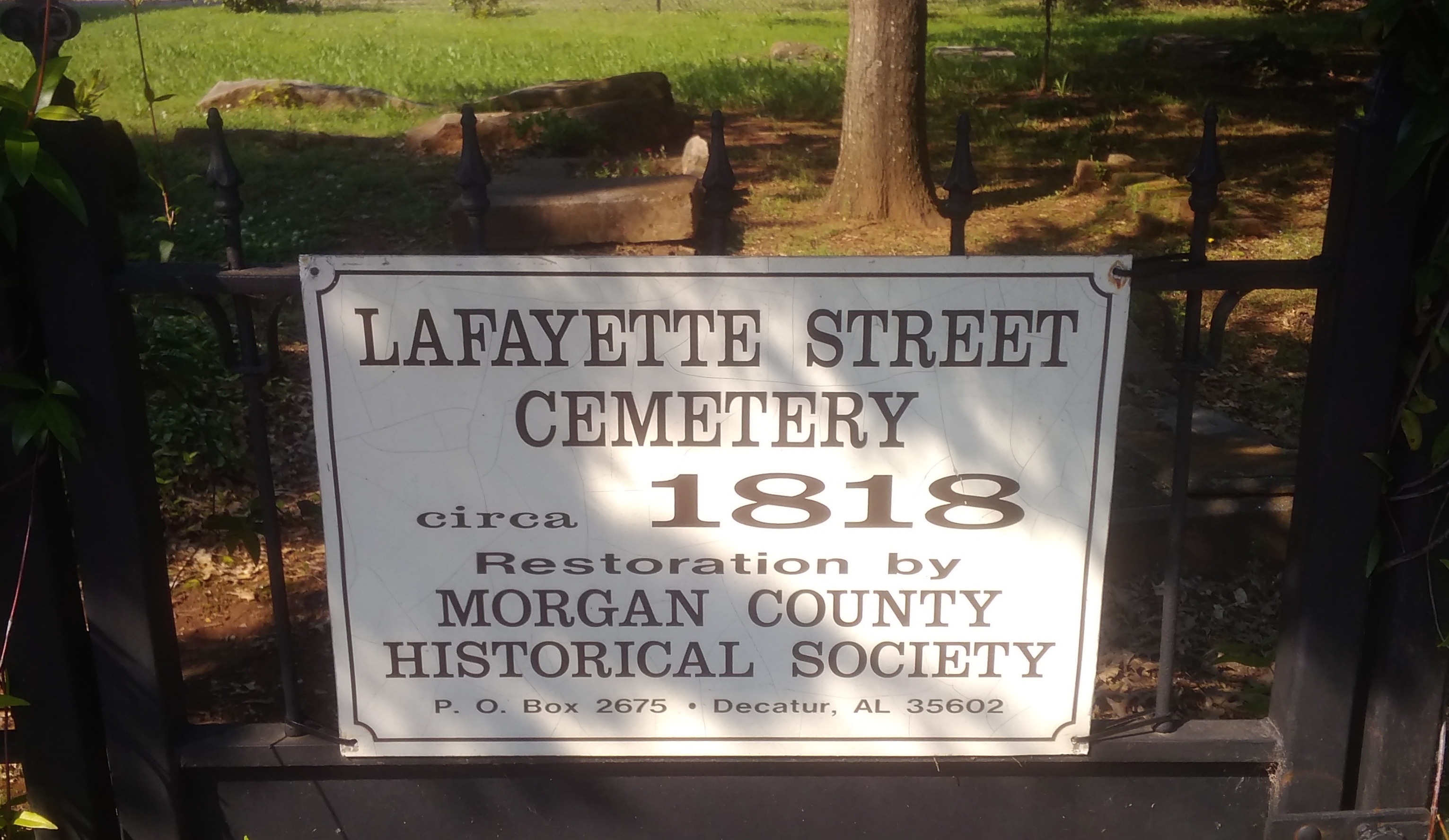
Just off Texas 118 in Fort Davis is a sign that says Pioneer Cemetery. I had to take a look at that. A narrow path, completely surrounded by the kind of diamond wire-mesh fence that you might see in any suburb, led to the cemetery gate. That was the only entrance that I saw, and otherwise the cemetery grounds were surrounded by fenced-off private houses. That felt a little odd at first, but soon I got used to it.

Like the region, the cemetery is sparsely settled.

But there are a few headstones and fenced-off plots.
One old soldier that I could see, Joseph Granger, CSA.

According to the plaque at the entrance, the cemetery was active from the 1870s to 1914, which also says that immigrants named Dutchover are buried here, along with a madwoman and a couple of horse thieves. Sounds like a motley mix of pioneers, all right. Here are some Dutchovers.

Marfa, Texas, famed among the glitterati these days, still looks a lot like a small West Texas town, though with galleries, tony hotels and Manhattan-priced shops thrown in the mix. Unfortunately, after visiting the McDonald Observatory and Fort Davis, I didn’t have the time or energy to visit the sizable Chinati Foundation in Marfa, which I’m sure is a worthwhile destination.

I did look around at some other spots. The Presidio County Courthouse is handsome, for one thing.

The Hotel Paisano is decidedly handsome, too.
Before I left Marfa, I stopped at Cementerio de la Merced, a desert cemetery with a mix of wooden markers and more formal stones. Bet not many of the glitterati pause there to pay their respects.

The names on the graves are largely, but not completely, Hispanic in origin. Not far away, but separated by a fence, was a graveyard mostly of formal stones, and Anglo names.

Marfa Public Radio had this to say: “One cemetery is known as the Anglo cemetery. The other two — Cementerio de la Merced and the Marfa Catholic cemetery — are Hispanic…

” ‘Well, it was not legally segregated, but it was segregated by custom,’ says historian Lonn Taylor, a former curator at the Smithsonian Institution in Washington DC…

“In this part of Texas, Hispanics hold many key political offices. Yet a visible reminder of historic inequality are the cemeteries, where in death, people remain divided.”

Two Entertainers Who Died in Unfortunate Air Crashes

I asked Ann about both Buddy Holly and Will Rogers not long ago. She was unfamiliar with them. That only goes to show a generational difference. As far as I’m concerned, both are visible threads in the American cultural fabric, people I always remember hearing about. But the tapestry is very large and changing, so every generation sees different threads.

While driving from Marathon, Texas, to Amarillo, I passed through Lubbock, a city I’d had scant experience with before. Maybe none, I’m not sure. So I took a short look around. If I’d had more time, I might have strolled around the campus of Texas Tech or visited the American Wind Power Museum or the Prairie Dog Town at Mackenzie Park.

But I only wanted to spend a few hours in town, so I made my way to the Buddy Holly Center.

The center, which is at 1801 Crickets Ave., and a block from Buddy Holly Ave., is a performing and visual arts venue that also includes a small museum dedicated to the rock ‘n’ roll pioneer from Lubbock whose surname was actually spelled Holley. The museum takes up two rooms. Really one and a half, since one room is more about other famous musicians and entertainers visiting the center, such as Sir Paul McCartney, who played a concert there in 2014 (and who, last I heard, owns the rights to Holly’s songs).

Still, I will say that the main exhibit room, which is guitar-shaped, was packed with items and full of things to read. Buddy Holly might have died at 22, and only worked for a few years as an up-and-coming professional musician, but he was busy. He wrote songs, made records, toured constantly, appeared a few times on TV, and somehow found time to get married. Clearly he’d found something he was good at — this new music genre — and went after it with great energy, creating a remarkable output in a short time.

On display are photographs, letters, post cards, tour itineraries, including one for the Winter Dance Party, recording equipment, a microphone, business cards, contracts, performing outfits, furniture, Buddy’s childhood record collection (all 45s), and his Fender Stratocaster, which is the last one he ever played. There’s a lengthy timeline posted on the wall detailing Holly’s life and career, and other one about the evolution of rock ‘n’ roll.

Also on display, oddly enough, are the horn-rimmed glasses he was wearing when he died. Apparently they were in an evidence locker in Cerro Gordo County, Iowa, until 1980. The 750-pound giant glasses outside the center were fashioned in 2002 by a local artist, Steve Teeters, who died a few years ago.

No photography allowed in the museum. The clerk who sold me my ticket, and signs in the display room, were clear on that point. Something about copyright. No doubt the RIAA would release flying monkeys to snatch the camera away from anyone foolish enough to take pictures, and bill him $10,000 per image besides.

You can, however, take all the exterior shots you want, including across the street at an eight-and-a-half foot bronze of Buddy and his Fender Stratocaster, created in 1980 by San Angelo-born sculptor Grant Speed, well before the Buddy Holly Center opened in 1999.  The statue was moved from elsewhere in Lubbock only a few years ago, and now fronts a wall with various plaques honoring 30 years of inductees on the West Texas Walk of Fame.

I recognized only a handful of names on the wall besides Holly, such as Waylon Jennings, Mac Davis, Tanya Tucker, Roy Orbison (who lived in Wink when he was young) and Dan Blocker, whose alma mater, Sul Ross State University, I drove by in Alpine.

The Buddy Holly Center is an adaptive reuse. Long ago, the building was a handsome depot for the Fort Worth and Denver South Plains Railway Co., dating from the 1920s.
En route from Amarillo to Lebanon, Missouri, I made a stopover in Claremont, Oklahoma, not far from Tulsa, to visit the Will Rogers Memorial Museum. Strictly speaking, I’d been there before sometime as a child. But I had no memory of it.

Will Rogers, on the other hand, I’ve always seem to have known about. That’s remarkable for an entertainer who wasn’t actually of my parents’ time — my mother wasn’t quite 10 when he died — but rather of my grandparents’ time. I knew enough about him to go see James Whitmore do his fine impression of Rogers live, including a rope trick or two, on one of the Vanderbilt stages in the summer of 1984 .

Here’s the view of the museum from the back. John Duncan Forsyth designed the original 15,000-square-foot limestone building, though there was an addition in the 1980s.

Will Rogers has a good many more exhibits than Buddy Holly, as you’d expect, considering that Rogers’ career in entertainment lasted quite a bit longer, beginning with wild west shows when that was still a thing, and moving on to all the media available in the first decades of the 20th century: vaudeville, movies, radio, and newspapers. No doubt if Rogers had lived on into the 1950s — he was only 55 when he died — we’d remember an early TV program called The Will Rogers Show.

Before I went to the museum, I had only the vaguest notion of Rogers’ early life in the Oklahoma Territory. I imagined that his origins were quite modest. Probably he was happy to have people think that, but in fact his father, Clem Rogers, was quite prosperous. The museum hints that Clem considered his son something of a ne’er-do-well, slumming as a cowboy and lassoist.
The last laugh was on Clem, who died before his son got into movies or on the radio. Ultimately, Will Rogers built himself a 31-room ranch house in California, which (per Wiki) “includes 11 baths and seven fireplaces, is surrounded by a stable, corrals, riding ring, roping arena, golf course, polo field — and riding and hiking trails that give visitors views of the ranch and the surrounding countryside — 186 acres.”

When the nation loves you, you can afford such digs. Here’s what President Roosevelt said over the radio in 1938 to dedicate the memorial in Claremore: “This afternoon we pay grateful homage to the memory of a man who helped the nation to smile. And after all, I doubt if there is among us a more useful citizen than the one who holds the secret of banishing gloom, of making tears give way to laughter, of supplanting desolation and despair with hope and courage. For hope and courage always go with a light heart.

“There was something infectious about his humor. His appeal went straight to the heart of the nation. Above all things, in a time grown too solemn and somber he brought his countrymen back to a sense of proportion.”

Rogers, his wife, three of his children and one of his grandchildren are interred on the grounds.

Naturally, there’s an equestrian statue of Rogers on the grounds.

It’s now near the tomb. To judge from the ca. 1970 picture I posted a few years ago, the statue has been moved from wherever it was then. The view from the back of the museum:

I didn’t take too many pictures inside the museum, but I make an image of a painting I liked.
It’s by an artist named John Hammer, who lives in Claremore. (More about him here.) I knew his style at once, since about a year ago I saw an edition of Travel Buddy — a coupon book you get at rest stops — that had a painting of his on the cover, a portrait of another Okie of renown, Woody Guthrie.

I picked it up because it was so different that anything you might see on a publication like that. I kept it because I really liked it.

Fort Davis National Historic Site

The town of Fort Davis, which I later learned is unincorporated despite being the county seat of Jeff Davis County, Texas, has an example of an historic site worth seeing, though probably not worth going to see: Fort Davis National Historic Site. I was there a week ago, after visiting McDonald Observatory.

The place was a military post from 1854 to 1862 — Confederate the last of those years — and again from 1867 to 1891 as part of the string of forts in the region to protect emigrants, mail coaches, and freight wagons.

Fort Davis National Historic Site had about 60,900 visitors last year, putting it at 278th out of 377 Park Service units. About an hour wandering around the grounds was enough to see the standing buildings, ruins, a handful of exhibits, and the sizable parade ground.

Without this sign, there’s little to tell you that the old San Antonio-El Paso Road passed this way.
The odd thing to me is that when Fort Davis was re-established after the Civil War, the U.S. Army kept the name. Sure, Jefferson Davis had been Secretary of War in the 1850s. But from the point of view of the United States government, he had done some questionable things since then. Maybe it’s just an example of bureaucratic inertia.