The Trans-Pecos & Llano Estacado

Back on April 14, I headed for Texas by car. I spent most of following two weeks in that state, arriving home today. Along the way, I drove 3,691 miles and change.

The main event was the wedding of my nephew Dees and his betrothed Eden on April 21 at Hummingbird House, a gorgeous outdoor wedding venue just south of Austin in the full flush of a Texas spring. An actual warm and green spring, unlike the cold and still brown spring I left in Illinois.

Rain had been predicted for the day, as it often is this time of the year, and there was an indoor pavilion just for that circumstance, but the Texas spring accommodated the bride and groom and wedding party and all the guests by not raining. If fact, the sun came out just before the ceremony, which was picturesque as could be.

I was remiss in taking pictures of Dees and Eden or anyone else, except for a few shots of my family.They’d flown to Austin the day before the wedding, in time for the rehearsal dinner, which was a pizza party in Dees and Eden’s back yard. The logistics of my family getting to Austin were a little involved, but everything worked out.

As for me, I’d spent most of the week before the wedding with my brother Jay in Dallas, arriving in Austin the Thursday before the wedding. The morning after the wedding, a week ago now, Yuriko, Lilly and Ann and I drove to San Antonio, where we all visited my mother and brother Jim. They flew back home that evening, leaving me to drive back to Illinois.

I wanted to return a different way than I’d came, especially since I had the week off from work (the week before the wedding was a work week). So I didn’t pick the most direct route home.

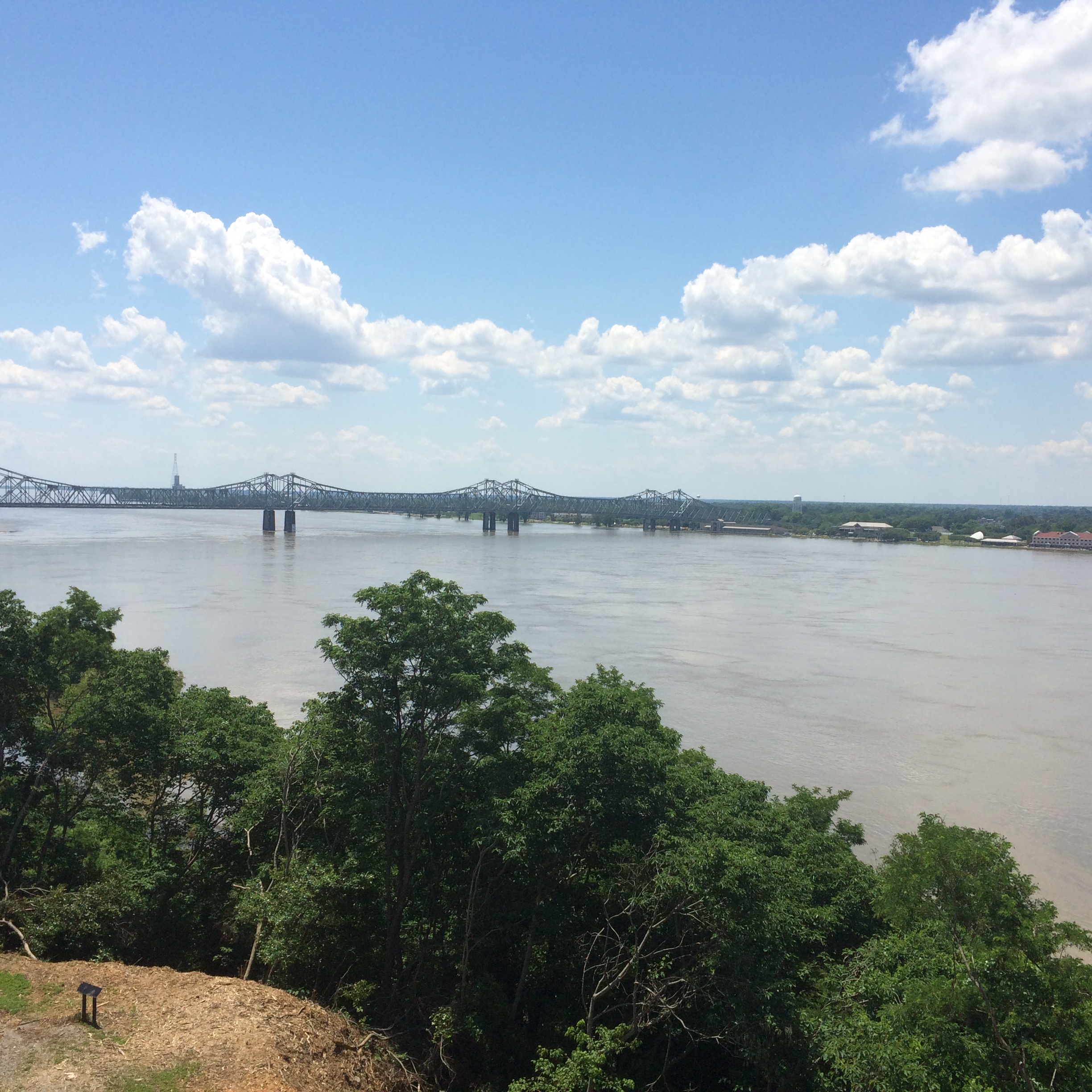
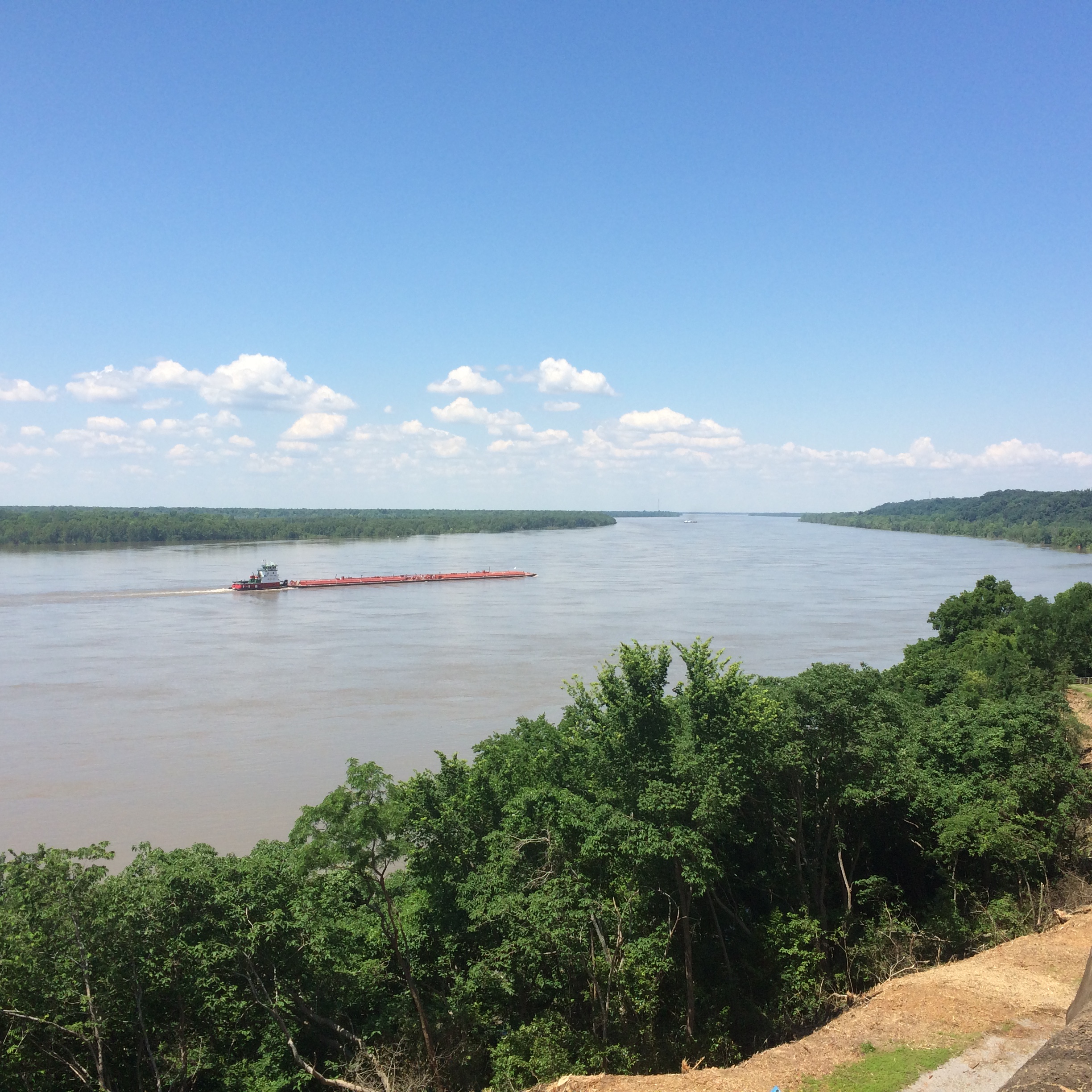
Namely, I drove west from San Antonio to Marathon, Texas, a town of a few hundred people in West Texas whose main distinction is its proximity to Big Bend National Park, which I visited last Tuesday. There are many impressive things to see there, but I was most astonished by the cliffs on the Rio Grande that form Santa Elena Canyon.

The next day I went to the Trans-Pecos towns of Alpine, Marfa and especially Fort Davis. Not far from Fort Davis is the McDonald Observatory, which I’ve had a mind to visit for years. It was cloudy and misty and a little cold when I got there, but that doesn’t matter when you’re looking at impressive telescopes. In Fort Davis itself, I visited the Fort Davis National Historic Site.

The next day, I drove north, through Midland-Odessa and Lubbock and finally to Amarillo, a shift in scenery from the desert of the Trans-Pecos to the high plains of the Llano Estacado. Along the way I made a few stops: the Presidential Archives and Leadership Library in Midland and the Buddy Holly Center in Lubbock.

While in Amarillo, a city I had not seen since a brief visit in 1979, I took the opportunity on Friday to see Palo Duro Canyon State Park, which is about 30 minutes outside of town. It’s a great unknown among natural areas in Texas and, for that matter, the United States.

I had enough time that day after visiting Palo Duro — the days are getting longer — to drop by and see the Cadillac Ranch, famed oddball tourist attraction, which is on the western outskirts of town.

This weekend was a long drive home: Amarillo to Lebanon, Missouri, on Saturday (I’d stopped in Lebanon the first day out, on the way to Dallas), and Lebanon to home in metro Chicago today. Tiring, but I did squeeze in two more sites. In Claremore, Okla., on Saturday, I saw the Will Rogers Museum. Not bad for an entertainer who’s been dead more than 80 years.

Today I stopped just outside St. Louis and took a walk around the Cahokia Mounds State Historic Site. Not bad for a culture that’s been gone for about 800 years.

Back to the Bronx

Early in the afternoon of Easter Saturday, I boarded a 4 train at Atlantic Ave.-Barclays Ctr. in Brooklyn and rode it all the way to the Woodlawn station in the Bronx, which is the end of the line and nearly as far as you can go in New York City in that direction. It was a local train. As far as I could tell, there were no expresses to be had on that line that day, though I might have been wrong.

It was a long ride: the better part of two hours. But it was a ride I wanted to take, watching a shifting array of passengers get on and off, and when the train got to the Bronx, watching the borough go by, since the train is elevated up that way.

Some time ago, I wrote about my passage through the South Bronx in 1983: “Before long I was on the #5 IRT, which after leaving Manhattan becomes an elevated train and gave me a full look at the wasteland that is the south Bronx. Blocks of rundown buildings are one thing, but what’s astonishing is how few buildings stand on many blocks, and how much rubble there is. I’ve never seen the aftermath of a city shelled by an enemy, but I’d think it would look like this place.”

That impression of the South Bronx never quite left me. Of course things were different this time, because of the passage of 35 years, and the fact that the 4 takes a very different course than the 5 (which, note, I called the IRT 5 in those days). The 4 train took me past block after block of large apartment buildings, as you’d expect in much of New York, as well as by Yankee Stadium. A casual look at the route of the 5 on Google shows that much redevelopment has been done in that part of the borough, which I’ve also read about.

My goal for the day wasn’t riding the train, but walking through Woodlawn Cemetery. After I first visited Green-Wood Cemetery, I became intrigued with the prospect of seeing Woodlawn, which is an equivalent historic, park-like cemetery in the Bronx, founded in 1863 and so part of the rural cemetery movement. More than 300,000 people are interred there. When Saturday turned out to be clear and almost warm, that tipped my decision toward taking the trip up to Woodlawn.

The cemetery’s web site says: “Our 400-acre cemetery has become an outdoor museum to more than 100,000 visitors who tour our grounds each year. Our celebrated lot owners comprise artists and writers, business moguls, civic leaders, entertainers, jazz musicians, suffragists, and more, including Herman Melville, Joseph Pulitzer, Fiorello LaGuardia, Celia Cruz, Duke Ellington, Irving Berlin, and Elizabeth Cady Stanton, just to name a few.

“The cemetery’s collection of monuments — including over 1300 mausoleums — were designed by American architects, landscape designers, and sculptors. The work of McKim, Mead & White, Carrere & Hastings, Beatrix Farrand, Louis Comfort Tiffany, and Daniel Chester French graces Woodlawn’s grounds.”

I entered at the Jerome Ave. entrance and walked across the cemetery, generally heading northeast along the main road toward the main entrance. The cemetery isn’t kidding about its many mausoleums. A lot of really large ones seem to be concentrated close to the Jerome Ave. entrance. The result of lots of wealthy people imagining they would be remembered when, of course, they are not.

Still, they’re wonderful to look at. Here’s the stately mausoleum of Julius Manger, early 20th century hotel mogul.

A Greek temple of a mausoleum for Francis Patrick Garvan, lawyer and long-time president of the Chemical Foundation.

The resting place of George Ehret, early 20th century beer baron. I was hoping it was the food faddist Arnold Ehret, but no.

Here’s more Egyptian revival. Always makes my day to run across an example of it.
Woolworth? That Woolworth? Yes, indeed. F.W. Woolworth, the king of the dime store, who died in 1919.

Among these major mausoleums, Woolworth was the only one I’d heard of before looking them up. I wasn’t out to look for famous graves, though I knew Woodlawn has plenty. I had no guide or map. I was just walking to see what I could see.

Mausoleums weren’t the entire scope of the cemetery. I saw many more modest markers, or not so modest, some very elegant.

This one was unusual: Jerome Byron Wheeler (1842-1918). Seems like he wanted to be remembered as a man of refined literary tastes. Or at least as a lover of books.

Wiki, at least, claims his mother was a second cousin of Ralph Waldo Emerson. That didn’t pay for the stone and the relief, however: Wheeler owned mines in Colorado.

One more grave of a noted person: Joseph Pulitzer and other family members, which I found by chance.

Near the main entrance, I saw this wood carving.
Glad to see that the cemetery didn’t simply rip the stump out. Like all the best rural cemeteries, Woodlawn is an arboretum too. This is a kind of memorial to the tree.

Return to Green-Wood

About three and a half years ago, I took a brisk walk through Green-Wood Cemetery in Brooklyn, a hilly, wooded place featuring a vast array of headstones and funerary art. The very model of a Victorian rural cemetery, you might say, except that the city has grown around it. Also, it’s still an active cemetery in the 21st century.

I wanted to go back, especially since I spent the latter part of my recent trip to New York staying with my nephew Robert and his girlfriend Meredith at their apartment in Brooklyn, which happens to be two subway stops away from the main entrance of Green-Wood. Even better, I discovered that a tour — the Twilight Tour — ran from 6 to 8 p.m. on Friday, March 30, after my work obligations were over.

So I bought a ticket online, and showed up at the main gate not long before 6. The gate itself is a striking bit of Victorian Gothic Revival. Outside the entrance:
None other than Richard Upjohn, the same architect who did Trinity Church Wall Street, designed the gate. Looks like it, too. Inside the entrance:
A resurrection-themed detail on the gate, one of four by John M. Moffitt.
Gray clouds hung over the cemetery and there was occasional drizzle. But I was dressed for it, so that didn’t interfere with the pleasure of walking through Green-Wood again, into parts I didn’t go to last time, so vast is the cemetery.

Even the bare trees and brown-green grass had their charms.

The tour wound up hills and down and around. I didn’t even bother trying to keep track of where we were. I just followed and listened to the guide, who knew a lot and pointed out things you might otherwise miss.

For instance, there aren’t that many Confederates in the cemetery, but there are a few. Such as Col. George Henry Sweet.
We soon came to the highest point in the cemetery, and in fact in Brooklyn, called Battle Hill for its part in a bloody episode in the Battle of Long Island (a.k.a. the Battle of Brooklyn) in the Revolution.

About 100 years ago, that event was memorialized on the hill by a sculpture called “Altar to Liberty: Minerva” by Frederick Ruckstull, which faces toward New York Harbor.

On a clear day, you can see the Statue of Liberty from Minerva’s perch, but we didn’t have a clear day. I understand that that particular the sightline is protected by law, like views of the capitol in Austin.

Also on Battle Hill is a sizable monument to New Yorkers who fought for the Union.

Not far away is the Van Ness-Parsons Egyptian Revival tomb. Pianist, teacher, organist and composer Albert Ross Parsons is interred there, among others.

Clearly they wanted everyone to know that the tomb doesn’t evoke pagan Egypt, but rather Christian Egypt.

Soon we came to the grave of Leonard Bernstein.
Then the more elaborate memorial to Elias Howe, improver of the sewing machine and archenemy of Issac Singer.
As promised, the tour started to become a twilight tour after sunset. The last large tomb I had light enough to shoot was a doozy, though: Charlotte Canda.
I didn’t know the story of Charlotte Canda. The guide informed us. Charlotte, daughter of a wealthy New Yorker, died on her 17th birthday in a carriage accident in 1845. Her tomb is based on unused sketches she made herself a few months earlier, for an aunt of hers who had predeceased Miss Canda.
Restoration efforts have been underway in recent years. According to the guide, back when Green-Wood was treated as a city park, Miss Canda’s tomb was an especially popular place to visit and picnic. The pathos of her story appealed to Victorians, I guess.

We carried on in the near-dark, often using smartphone flashlights, and saw the remarkable gravestone of Cortland Hempstead, chief engineer of the steamship Lexington, which burned and sank in Long Island Sound in January 1840. Of the 143 souls aboard, only four are known to have survived. Hempstead wasn’t one of them.

As seen here, the stone includes a relief based on a Nathaniel Currier lithograph originally published in the New York Sun: “Awful Conflagration of the Steam Boat ‘Lexington’ in Long Island Sound on Monday Eveg Jany 13th 1840, by Which Melancholy Occurrence Over 100 Persons Perished.”

We also saw Green-Wood’s catacombs, which are usually closed to the public. They aren’t remotely as extensive as the catacombs of Rome or Paris, but they were interesting: a long concrete tunnel dug into a hill with some dozens of chambers off to the sides, and people interred in the walls of the chambers. The place was dank and smelled like a cave. According to the guide, the catacombs were a more economic alternative than burial in a plot for a while in the 19th century, but they never really caught on, probably because water always made its way in.

After leaving the catacombs, we passed by the single grave at Green-Wood that I wanted to see more than any other: Boss Tweed. Not for the aesthetics of the marker — it’s large but fairly ordinary — but for making the passing acquaintance of such an infamous scoundrel, when he’s no longer in a position to pick one’s pocket.

Stonewall National Monument

Last Saturday, which was my last full day in New York City, I made a brief late afternoon foray into Greenwich Village. Been awhile since I’d been there, but I have a special fondness for the Village. Not because of the Beats or bohemians or the like, which are certainly interesting, but because I stayed in an apartment there for a couple of weeks in August 1983.

The place I stayed back then had a Sheridan Square address, so I wandered over that way, which isn’t far from the excellent Washington Square Park, though it was a little chilly on Saturday to fully appreciate it. Pretty soon I came across a place I’d heard and read about, but hadn’t fixed in my mind as being where it is: Stonewall National Monument, on Christopher St.

As national monuments go, Stonewall is small, about 7.7 acres. It’s also new, designated only in June 2016, near the anniversary of the Stonewall Riots.

NYC Parks has a short history of the place: “Located at 51-53 Christopher Street, Stonewall Inn was formerly two adjacent two-story stable houses erected in 1843 and 1846. After numerous alterations, the two buildings were joined into a restaurant by the 1930s. By the 1950s the place was known as Stonewall Inn Restaurant.

“In 1966, it closed for renovations, and reopened in the following year as a private club known as Stonewall Inn – a bar and dance hall which, like numerous local establishments, catered to the homosexual community of Greenwich Village.

“In the early hours of June 28, 1969, police raided the Stonewall Inn and a melee ensued in which 13 people were arrested. Word of the raid and the resistance to it soon spread, and the next day hundreds gathered to protest the crackdown and advocate the legalization of gay bars.

“Further protests erupted in early July, and on July 27, a group of activists organized the first gay and lesbian march, from Washington Square to Stonewall. The events of that summer and their aftermath are often credited as the flashpoint for the gay rights movement in the United States.”

In 1983, I had no notion the Stonewall Inn was there. I’d heard the story of the riots a few years before, but I don’t remember anything to mark the site when I was there, and by then the building was being used for something else anyway.

Christopher Park, which is across the street from Stonewall Inn, was being renovated at that time. “The restoration of Christopher Park was initiated in 1983 by the Friends of Christopher Park, a community volunteer group organized in the late 1970s to maintain and beautify the park,” NYC Parks says.

“Under the direction of landscape architect Philip Winslow, over $130,000 was spent in order to restore the site to its 19th-century splendor. The renovated park, including a new gate, benches, lampposts, walkways, and numerous trees and shrubs, was officially reopened in 1986.”

This time around, I spent a few minutes resting at Christopher Park, even though it was distinctly cool by that time in the afternoon. (In New York, one walks a lot, or should.) There are three memorials in the small park. One is “Gay Liberation” by George Segal, unveiled in 1992.

A more traditional statue, erected in the 1930s, also stands in the park: Phillip Sheridan, by Joseph P. Pollia.

Finally, according to NYC Parks, there’s a flagpole in the park honoring the 1861 Fire Zouaves. Damn, how did I miss that? What the ’61 Fire Zouaves need is a statue on the site, or somewhere in New York. A bright, colorful statue.

Trinity Church Wall Street, Alexander & Eliza Hamilton, and Norges Bank Investment Management

On Broadway in Lower Manhattan, near the intersection with the storied Wall Street, stands the church and graveyard of Trinity Church Wall Street. Looking at the property means you’re peering deep into the history of New York and the early days of the Republic — and into a modern-day real estate story involving Norwegians.

First, the church building.

The current church is the third one on the site, completed in 1846, so it isn’t the building that George Washington and especially Alexander Hamilton would have known. The second building was completed in 1790 to replace the original, which burned down in the Fire of 1776.

Richard Upjohn designed the current Gothic Revival structure as one of the first in a very long list of churches that he did. For a good many years, it was the tallest building in New York, or in the United States for that matter, which is a little hard to imagine in its current setting among taller buildings.

Being Holy Week, the church was fairly busy, though no service was going on when I visited.
Busy inside, but the real crowd was outside, in the graveyard.
A school group happened to be wandering through when I arrived. They might have come for the history of the entire place, but who had they really come to see?

Alexander Hamilton, of course.
I have to admit that I either didn’t know, or had forgotten, that he is buried at Trinity. In a way, that was a good thing, since it was a nice surprise.

Note the enormous number of pennies and other coins at the base of his stone. Seemed like even more than I saw at Benjamin Franklin’s grave, who had the benefit of being associated with “a penny saved is a penny earned.”

Eliza Hamilton, who outlived Alexander by more than 50 years and is buried next to him, collected her share of pennies, too.
That’s what you get for being the subject of a very popular musical in our time. Even I’ve heard some of the songs. Ann plays them in the car. They’re interesting. I’m all for musicals about major historical figures, but I’m not going to pay hundreds of dollars for a ticket.

The Hamiltons weren’t the only famed permanent residents of the graveyard. There’s steamboat popularizer Robert Fulton, who has a memorial fittingly erected by the American Society of Mechanical Engineers.

Here’s Capt. James “Don’t Give Up the Ship” Lawrence, hero of the War of 1812. His memorial’s looking a little green these days.
Nice detail on one side.

There are also plenty of memorials for regular 18th- and 19th-century folks. I’m glad to say they were getting some attention.

There are stones the likes of which aren’t made any more.

Or on which time has taken its toll.
About those Norwegians. Trinity Church Wall Street, which is part of the Episcopal Diocese of New York, is known for is being one of the wealthiest parishes in the nation. In 1705, Queen Anne granted the church 215 acres on the island of Manhattan. It still holds 14 of those acres, which these days are home to millions of square feet of commercial property. That kind of acreage would make anyone very rich indeed.

Recently —  in 2015 — the church monetized 11 of its office buildings by striking a deal with Norges Bank Investment Management, which oversees Norway’s sovereign wealth fund (a lot of North Sea oil money, I reckon). It’s no secret. I quote from the press release the church published:

“Norges Bank Investment Management will acquire its 44 percent share in a 75-year ownership interest for 1.56 billion dollars, valuing the properties at 3.55 billion dollars. The assets will be unencumbered by debt at closing.”

Unencumbered by debt. The sweetest words you can write about real estate.

“The properties are about 94 percent leased and total over 4.9 million square feet. They are all located in the Hudson Square neighborhood of Midtown South in Manhattan… The buildings were originally built in the early 1900s to house printing presses, but have been redeveloped by Trinity Church to attract a mix of creative office tenants.”

San Antonio Missions National Historical Park, Before It Was a World Heritage Site

In late March 2013, the girls and I went to San Antonio. I’m always glad to show a bit of the town to them, and the visit included some of the missions, which are collectively San Antonio Missions National Historical Park. A couple of years later, they became a World Heritage Site, the first in Texas.

At Mission Concepción.

In full, Mission Nuestra Señora de la Purísima Concepción de Acuña, founded by Franciscans, with work on the current structures started in 1731.
A little more than a century later, it was the site of the little-known Battle of Concepción in the Texas Revolution.
Mission San Jose.

In full, Mission San José y San Miguel de Aguayo, with construction starting in the 1760s, and restored by the WPA in the 1930s.

I forget where Lilly got the small piñata. I think eventually the dog destroyed it.
It’s still an active church.
Mission San Juan Capistrano.
The church building had just been renovated the year before, which accounts for its newish, rather than long-weathered look.

Much of the grounds is open, with a few other ruins.
We didn’t make it to Mission Espada, and I haven’t been back that way since. Maybe one of these days.

“Nuclear Energy”

If you visit the Smart Museum of Art at the University of Chicago, you can also easily visit “Nuclear Energy,” which is on a small plaza only about a half a block to the south, on Ellis Ave. (but not part of the museum’s collection). I’d seen it before — I couldn’t say exactly when — but Yuriko and Ann hadn’t. So we took a look.

“Nuclear Energy” is a Henry Moore bronze on the site of the first manmade self-sustaining nuclear chain reaction, the 75th anniversary of which just passed last December 2.

As for the sculpture, it was dedicated exactly 25 years after Chicago-Pile-1 was built and tested on the site, so its 50th anniversary was on December 2 too. Looks good for being out in the Chicago weather for so long, but I suppose it’s maintained.
Abstract, as Henry Moores tend to be, but of course you think of a mushroom cloud. Moore denied that, offering up (I’ve read) some art-speak about a cathedral, but I’m not persuaded. A mushroom cloud is perfectly fitting.

Still in Old Assenisipia

I was looking in a seldom-looked at file of images the other day and found a scan I’d made of a page from a collection of Thomas Jefferson’s writings. I’d forgotten I’d made ir. Here it is.

Nearly 15 years ago, I wrote: “Some years ago, I read a curious little document by Thomas Jefferson, who in 1784 made a report to Congress — the Congress under the Articles of Confederation — about how to create states from the Northwest Territory and what to call them.

“Jefferson suggested 10 states for the area that now contains six (Illinois, Indiana, Kentucky, Michigan, Ohio and Wisconsin). It was an exercise in hyper-rationality and hyperliteracy, though if his suggestions had been used, they would be normal and even venerated names — such is the power of custom.

“Hyper-rational because, instead of paying attention to natural features, Jefferson cut the district into rectangles measuring two degrees of latitude north-to-south and roughly four degrees of longitude east-to-west (‘roughly’ because the irregular Mississippi River forms the western boundary of the territory).

“Besides the Mississippi, geographic form did intrude in what we call lower Michigan — even Jefferson wasn’t going to ignore lakes Michigan and Huron in drawing lines — as well as a few other places on his map, but he was doing his best to apply Longitude and Latitude to the new states’ boundaries. It was as if Colorado- and Wyoming-shaped states were to be created in the Midwest.”

Naturally, other sites discuss this odd collection of non-realized states, such as (of course) Strange Maps.

Presidential Real Estate

“Presidents Day” weekend has rolled around again. Late last week I managed to make professional use of my slight knowledge of the presidency — or more exactly, the various U.S. presidents — to write an article about a selection of their houses. The final title: “The Fabulous Real Estate (And A Few Modest Digs) Of Past Presidents.”

It was a fun article to write. I didn’t want to make it overly long, so of course most of the presidents were left out. But I did have a nice selection from different eras: Madison, Jackson, Van Buren, Wm. Henry Harrison, Lincoln, Benjamin Harrison, Theodore Roosevelt, Hoover and Lyndon Johnson.

My sources included my own visits in some cases, online information, and two books that I own. One is the bare-bones Presidents, subtitled “Birthplaces, Homes, and Burial Sites,” by Rachel M. Kochman. I can’t quite remember where I got it, but it’s the kind of book that sells in national park or national monument or national historic site bookstores. Acquired sometime in the late 1990s probably, since it’s the 1996 edition, with the most recent president covered being Bill Clinton.

Bare bones because while extensively illustrated, all the photos and drawings are black and white. That’s no problem, really, but it’s set in an ugly sans serif. That makes what should be a browsing book less pleasant to browse. Still, the book includes a lot of information on presidential sites.

I also have a coffee table book called Homes of the Presidents by Bill Harris, 1997, so it too ends with Clinton. A remainder table find. The text is a little uneven, but not bad. The pictures are the thing, of course, and they are well selected.

Mid-February Natterings

Remarkably foggy day Thursday.
Above freezing, too, reducing the snow cover and making random puddles.

Reading a book about Lincoln’s assassination puts me in a counterfactural frame of mind. Not so much What If Lincoln Lived — a lot of consideration has been given to that — but what would have happened to Booth had he capped his murderous impulse that day, and not gone through with it? What would have happened to him?

I picture him living into the early 20th century, since he was only in his mid-20s in 1865, a star of the American and European stage in the pre-movie years, so he was mostly forgotten by later generations. He did have a small part as an elderly wise man at the court of Cyrus the Great in D.W. Griffith’s Intolerance (but nothing in The Birth of a Nation, which was never made). Also, one of Booth’s sons founded Booth Studios in the early 1900s, which was later acquired by MGM.

In his memoir, published in 1899, Booth confessed that he had a strong impulse to murder Lincoln right at the end of the war, and was glad he never acted on it.

Got a form letter from the chancellor of the University of Illinois the other day. Let’s call it a worrywart letter. It seems that the public houses in old Champaign-Urbana are encouraging students, perhaps tacitly, to celebrate St. Patrick’s Day in a blotto state of mind. The university frowns on such goings-on and wants me to know it will do what it can to educate the students about the perils of demon rum. Or more likely in this context, whisky.

Not that alcohol isn’t a form of poison, with risks. I expect that a handful of students manage to off themselves across the years under its influence, mostly via reckless driving. But do I need a form letter about this?