Two East-Central Illinois Memorials As Different As Can Be

Our recent short trip to east-central Illinois and west-central Indiana found us spending two nights in Champaign, last Friday and Saturday. During the day on Saturday, we drove east on U.S. 150 and a short way on I-74 into Indiana. Then we headed south on Indiana 36 to Terra Haute, stopping in Dana.

Returning from Terra Haute, we took U.S. 150 westward — that road jogs oddly to the south from Danville, Illinois — and caught Illinois 133 in Paris, Illinois, a town that sorely needs a replica Eiffel Tower or Arc de Triomphe or some such to distinguish it. That road takes you to Arcola, a town we’re familiar with. From Arcola it’s a straight and not too interesting shot back to Champaign on I-57.

So it was a rectangular driving course (roughly east-south-west-north), good for a day trip, despite the heavy rain at times. It’s been a rainy spring and early summer, which we noticed must be damaging crops, since a lot of corn and soybean fields were covered by large puddles (an item from Ohio about the problem).

The sites associated with Ernie Pyle and Eugene V. Debs, honoring Hoosiers of somewhat different cast, were our main destinations. But I had a couple of minor destinations in mind as well. One was an obscure memorial in the obscure town of Oakland, Illinois, which is Coles County. I had passed that way 12 years earlier. Here’s what I said then about the Oakland town square:

“The place was gloomy. Maybe it was just the overcast skies… Still, I wanted to see the monument in the middle of the square. It was Memorial Day, after all. Someone had decorated the edges of sidewalk leading to the monument with small flags, forming a spot of color in the square, so that was something. The monument consisted of two statues sharing one plinth, one of a soldier and the other sailor, clearly World War I vintage, with the names of locals who had participated in that war carved in the plinth. All of it was weathered and dark.”

I wanted another look. In 2019, the square’s a little better looking (officially it’s the Oakland Centennial Park). The monument, a lot better looking. The darkness this time was from the recent rain.
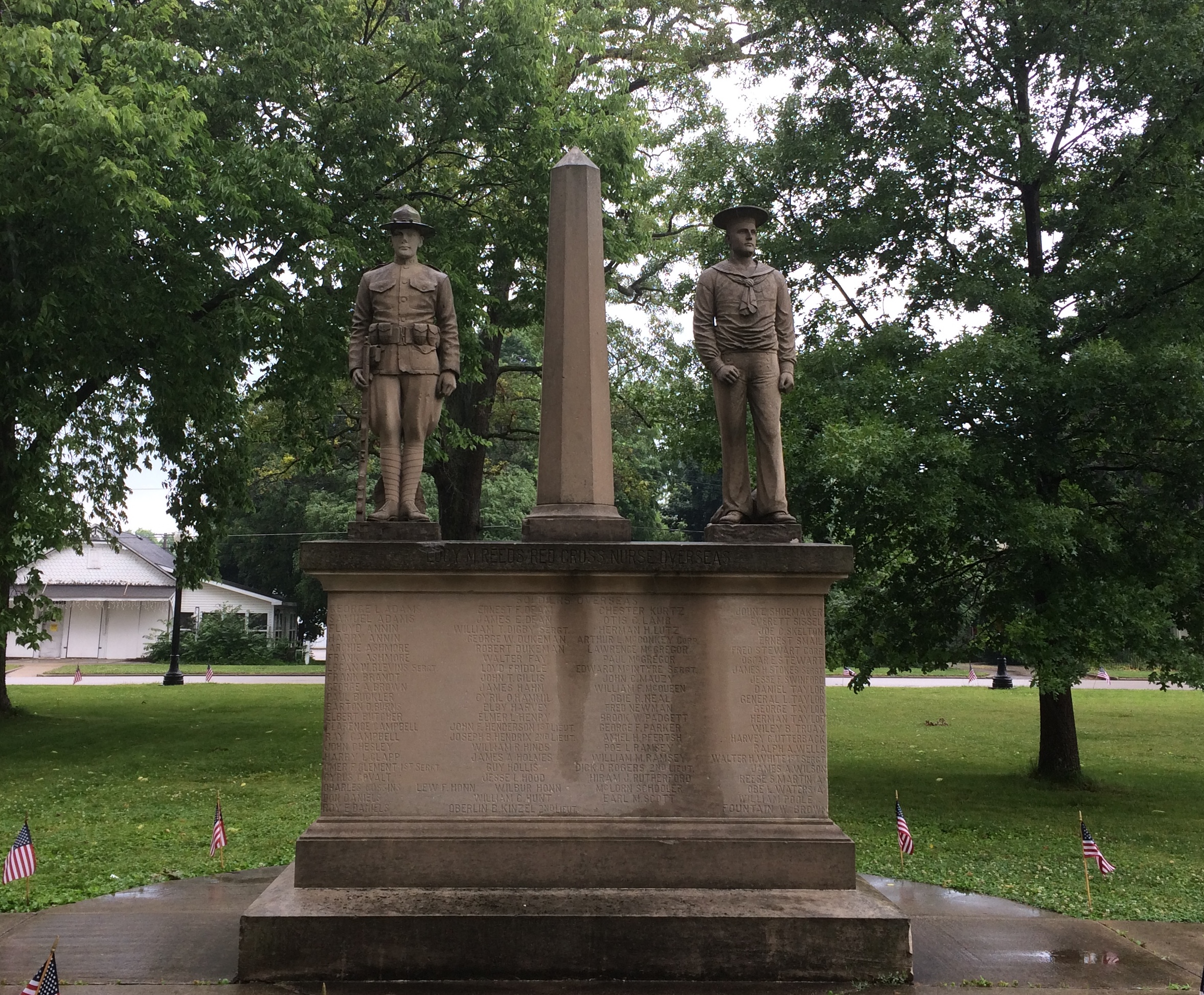
Oakland Illinois World War I memorialMaybe it was refurbished for the centennial of the war or its own centennial, since carved in stone is the memorial’s dedication date: May 30, 1919 — the first Decoration Day after the Armistice.

I’d forgotten about this item in the town square, a 77mm Feldkanone 16 German artillary piece. A local prize of war, I guess.
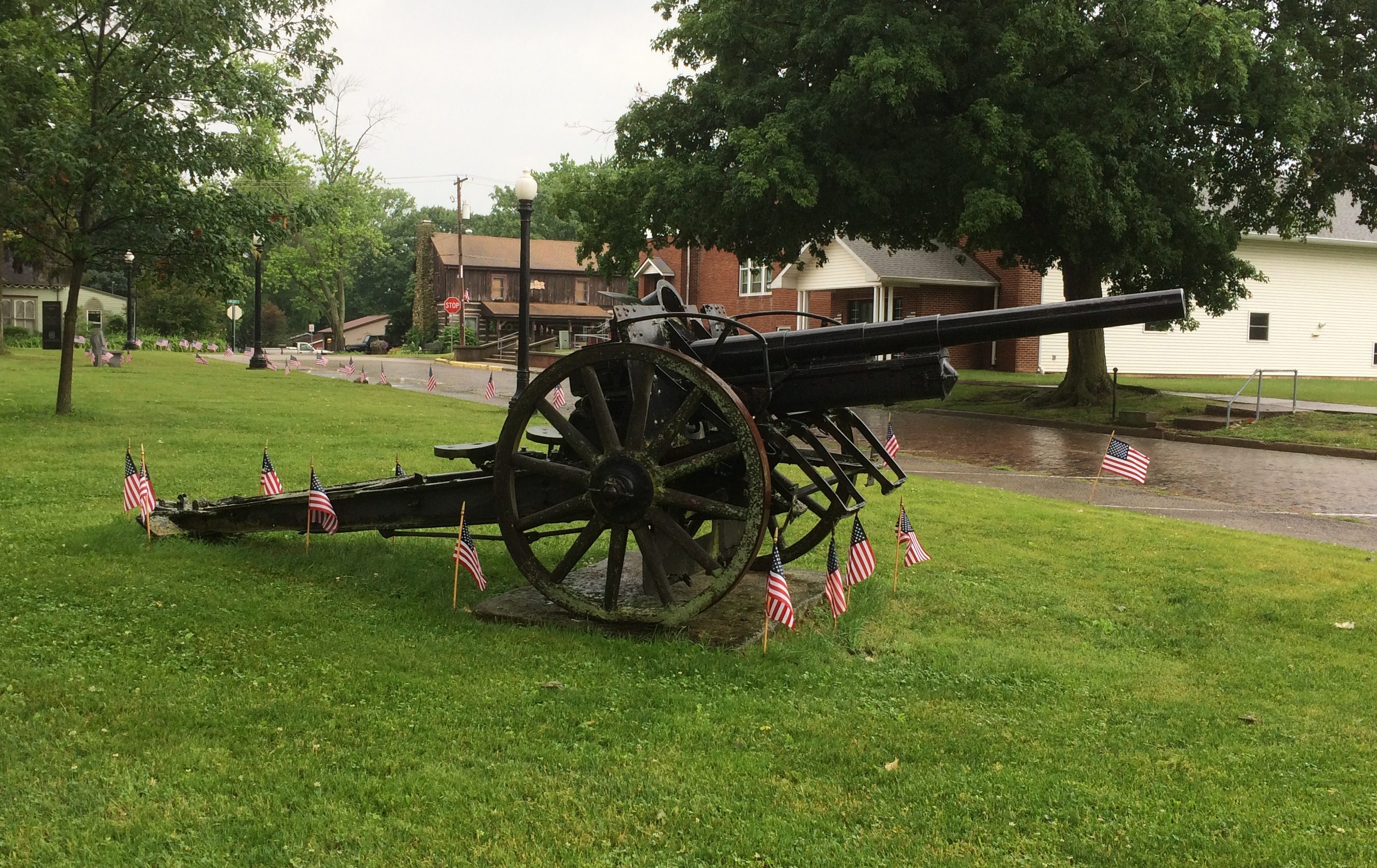
Oakland Illinois World War I memorial

In Arcola, I wanted to see something we’d overlooked last year: the Hippie Memorial. How we missed that, I don’t know, since it’s less than a block away from that town’s Raggedy Ann and Andy sculptures, which we saw.

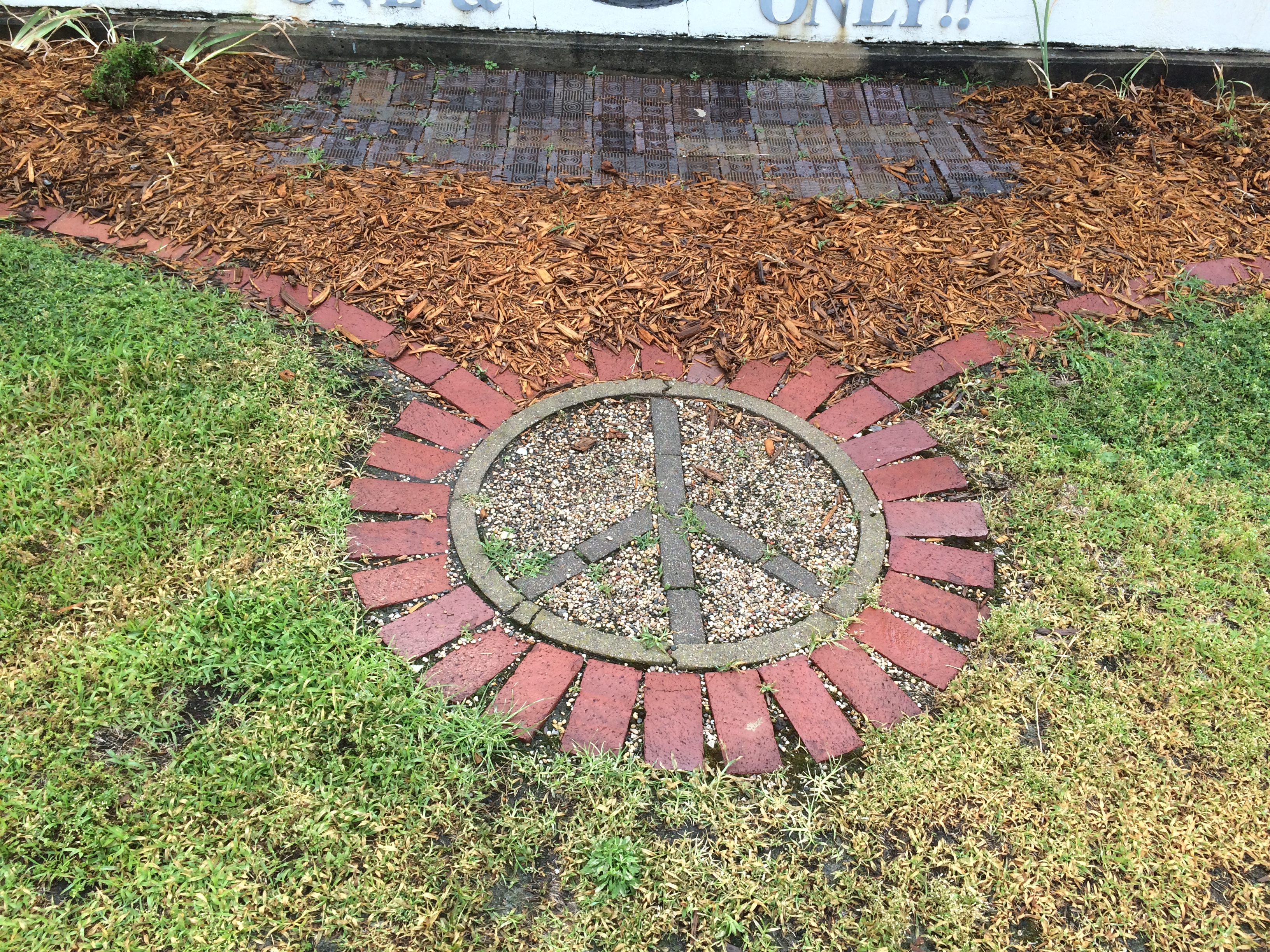
The Hippie Memorial is a very horizontal structure and an example of vernacular art. Better still, a vernacular memorial, which isn’t that common.
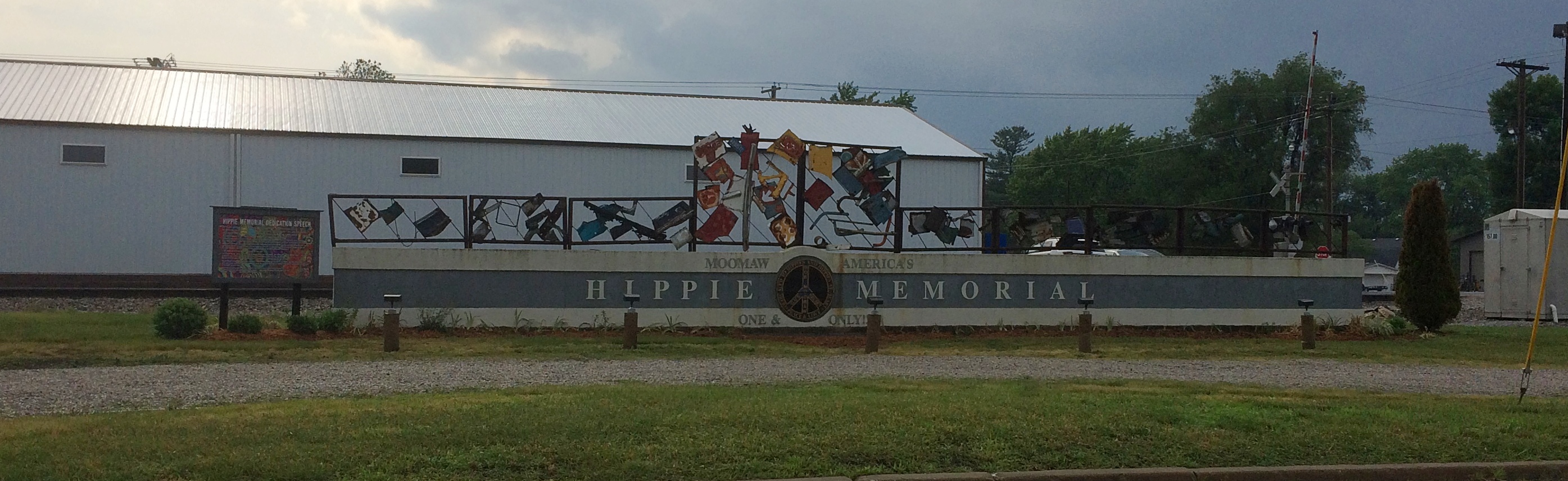
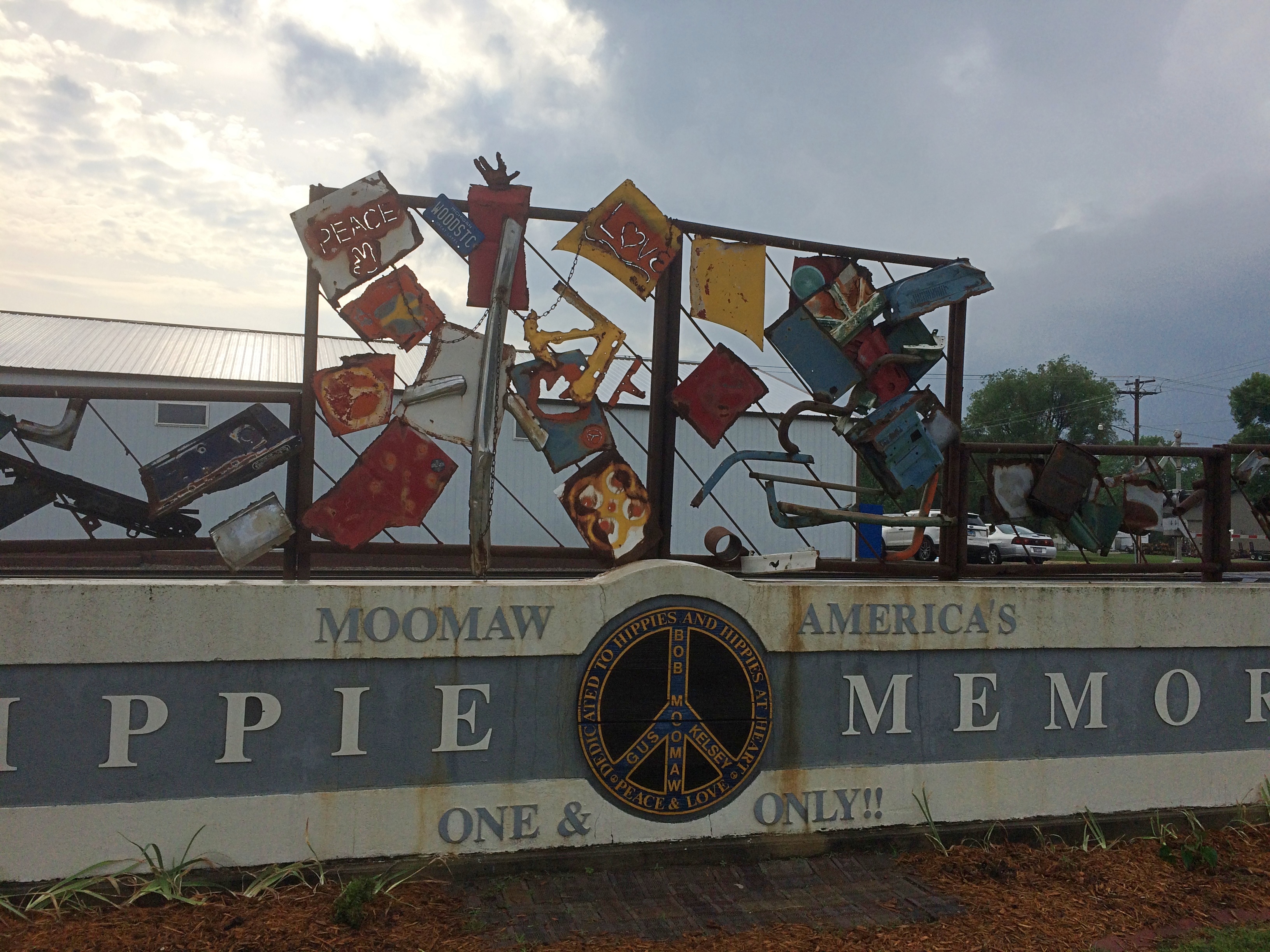
Hippie Memorial Arcola IllinoisHippie Memorial Arcola Illinois

Just how much recognition does ☮ get these days? I wonder.
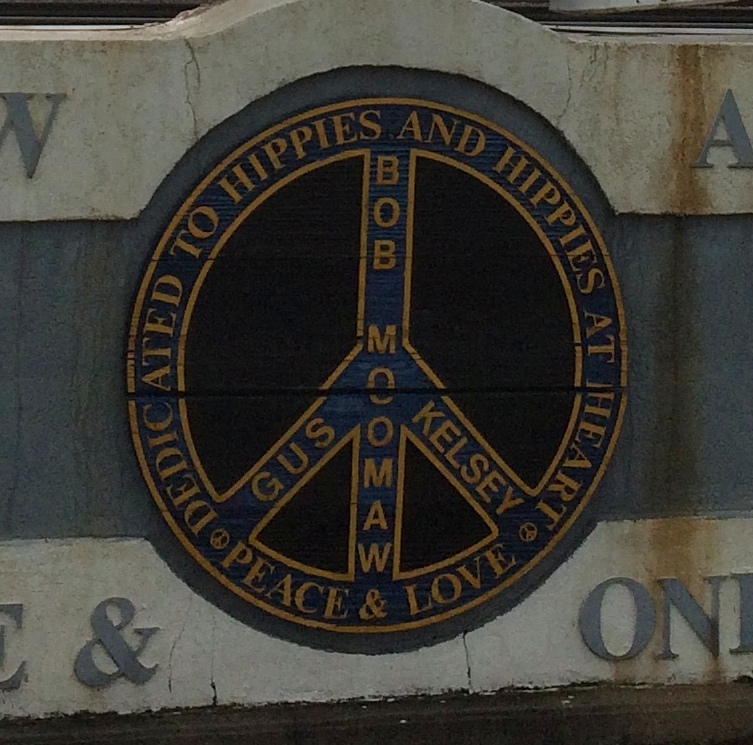
☮ Hippie MemorialHippie Memorial Arcola IllinoisNearby, a sign offers the dedication speech, made by the widow of the creator, local eccentric Bob Moomaw, almost exactly 20 years ago. The text seems the same, but the background is a lot more psychedelic than it used to be.
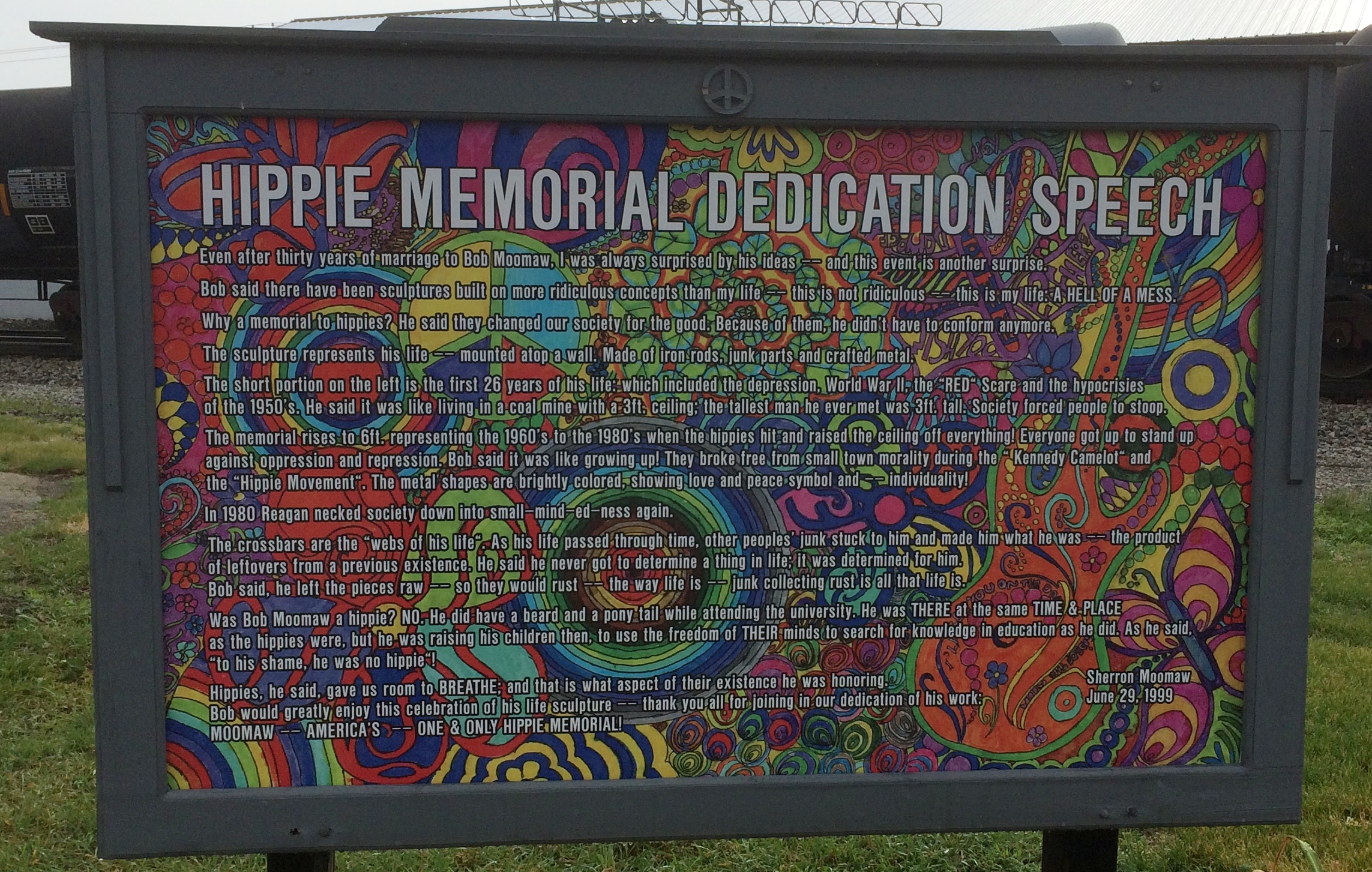
Hippie Memorial Arcola IllinoisSure, why not honor the hippie movement? It’s been subject to retroactive derision all out of proportion to its risibility. You can argue that hippies were yet another flowering of bohemianism, a periodic occurrence that’s helped keep things interesting since the Romantic movement at least.
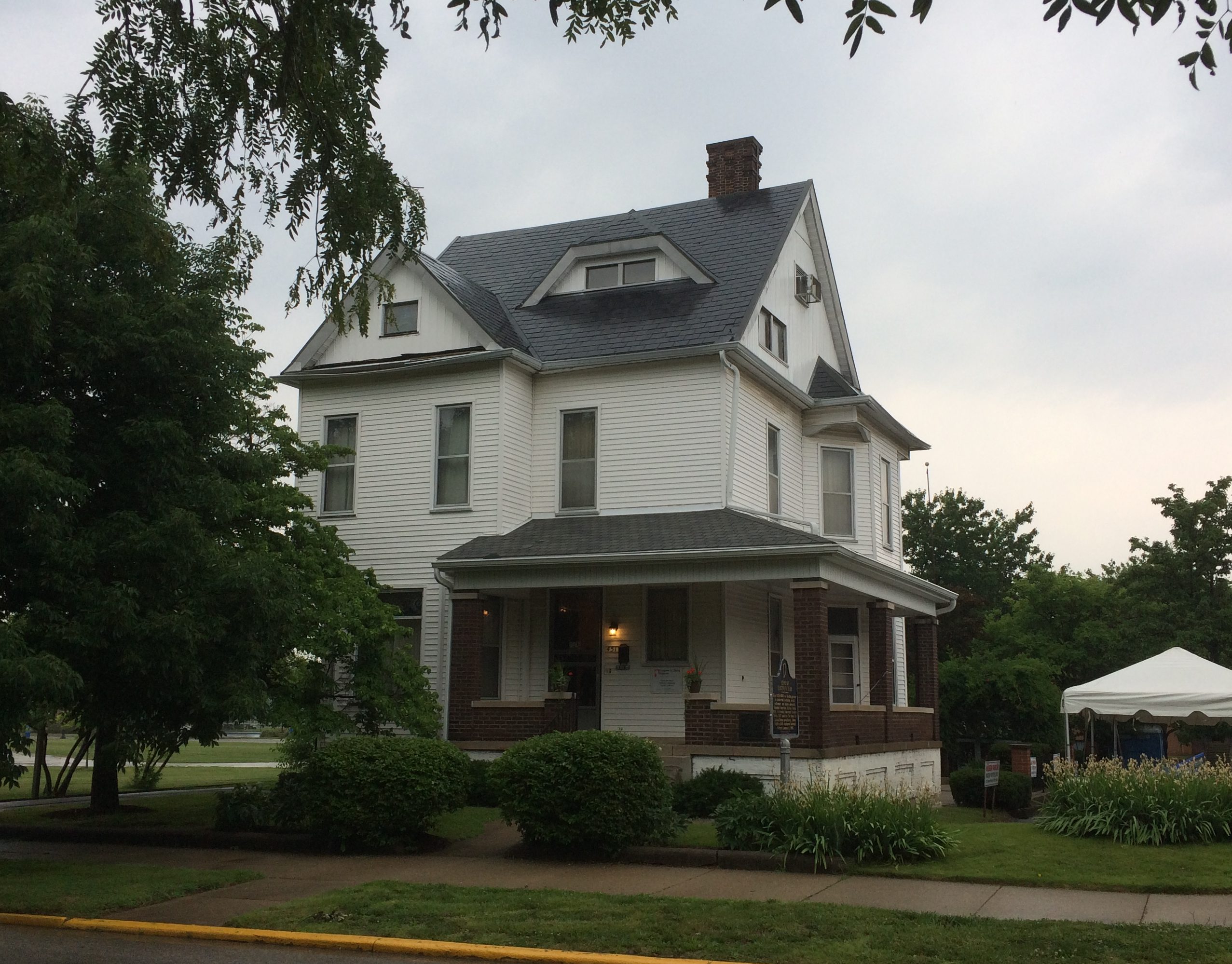
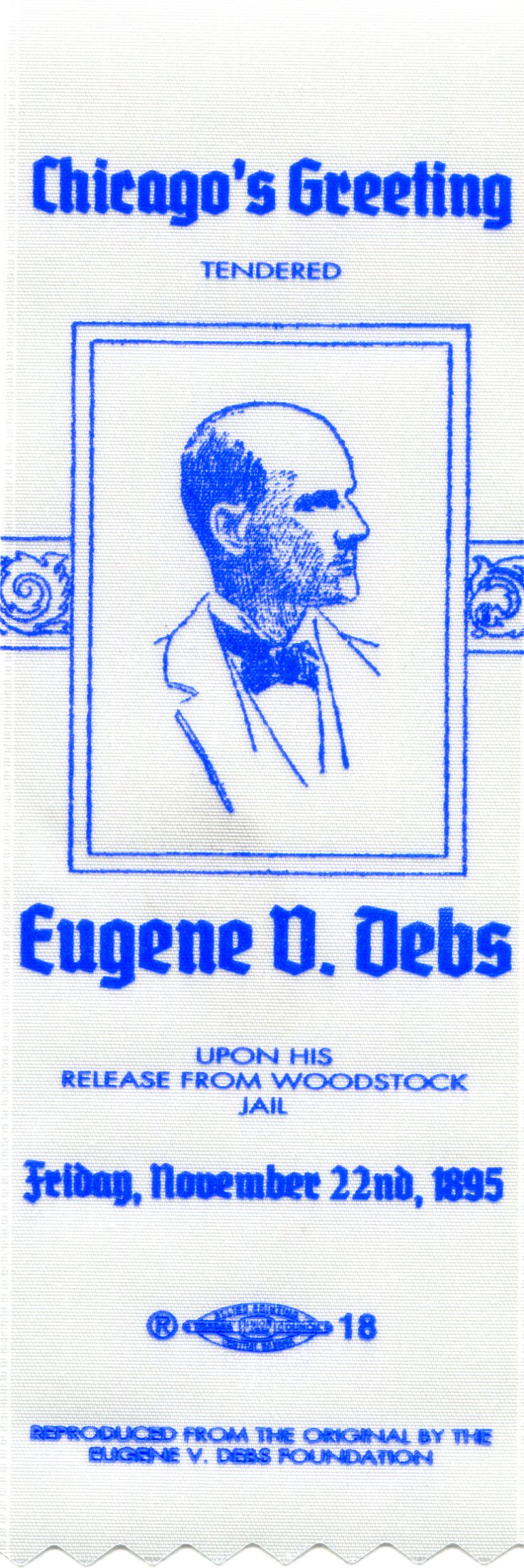
The Eugene V. Debs House

Tucked away among the buildings and open fields of Indiana State University in Terra Haute is a structure from the Gilded Age, but also associated with the golden age of socialism in the United States: the Eugene V. Debs House.

Eugene V Debs House

We arrived in the mid-afternoon on Saturday, in time to take a detailed tour from an exceptionally knowledgeable guide, but not for an event earlier that day in honor of the 125th anniversary of the Pullman Strike.

Debs led the strike, of course, and for his trouble was tossed in the McHenry County Jail in Woodstock, Illinois, for six months — an event that radicalized him. After he got out, his commitment to socialism never wavered.

The museum’s event involved a book signing of a new volume about the Pullman StrikeThe Edge of Anarchy: The Railroad Barons, the Gilded Age, and the Greatest Labor Uprising in America by Jack Kelly — and a reading of “Liberty,” the speech that Debs delivered to a crowd of thousands of supporters in Chicago after his release from Woodstock Jail, on November 22, 1895.

It was a speech I’d never read, so I looked it up later. Credit to Debs for giving good speeches in an era when political discourse hadn’t yet been dumbed down to semiliterate 280-character bursts. A couple of selections:

“Out of range of the government’s machine guns and knowing the location of judicial traps and deadfalls, Americans may still indulge in the exaltation of liberty, though pursued through every lane and avenue of life by the baying hounds of usurped and unconstitutional power, glad if when night lets down her sable curtains, they are out of prison, though still the wage-slaves of a plutocracy which, were it in the celestial city, would wreck every avenue leading up to the throne of the Infinite by stealing the gold with which they are paved, and debauch Heaven’s supreme court to obtain a decision that the command ‘thou shalt not steal’ is unconstitutional…

“I remember one old divine who, one night, selected for his text George M. Pullman, and said: ‘George is a bad egg, handle him with care. Should you crack his shell the odor would depopulate Chicago in an hour.’ All said ‘Amen’ and the services closed.

“Another old sermonizer who said he had been preaching since man was a molecule, declared he had of late years studied corporations, and that they were warts on the nose of our national industries, — that they were vultures whose beaks and claws were tearing and mangling the vitals of labor and transforming workingmen’s homes into caves.”

The museum staff was giving away souvenir ribbons, replicas of the ribbons worn by supporters who greeted Debs when he got out of Woodstock. We got one.

The house is both a house museum of the period, with many of the Debs’ possessions, as well as a museum about labor organizing, American socialism — Debs was adamant that the ideology wasn’t some imported Euro-virus — and the fight against government overreach, as expressed by siding with the bosses in the ’90s and the sedition laws of the First World War.

It was a pretty nice house for its time, vintage 1890. I understand that Debs caught some flack for living in a comfortable house. Comfortable with a few touches of affluence, since his wife Kate brought some money to the marriage. Some of the fireplaces feature cobalt blue porcelain tiles imported from Italy, the mahogany dining and parlor furniture is pretty nice, and a display case sports the Debs’ set of Haviland china.

Of course that’s the kind of lightweight criticism that politicians and activists of all stripes receive. The house was clearly upper-middle class for the time, but so what? The Debs were supposed to live in a shotgun shack? Besides, bread and roses.

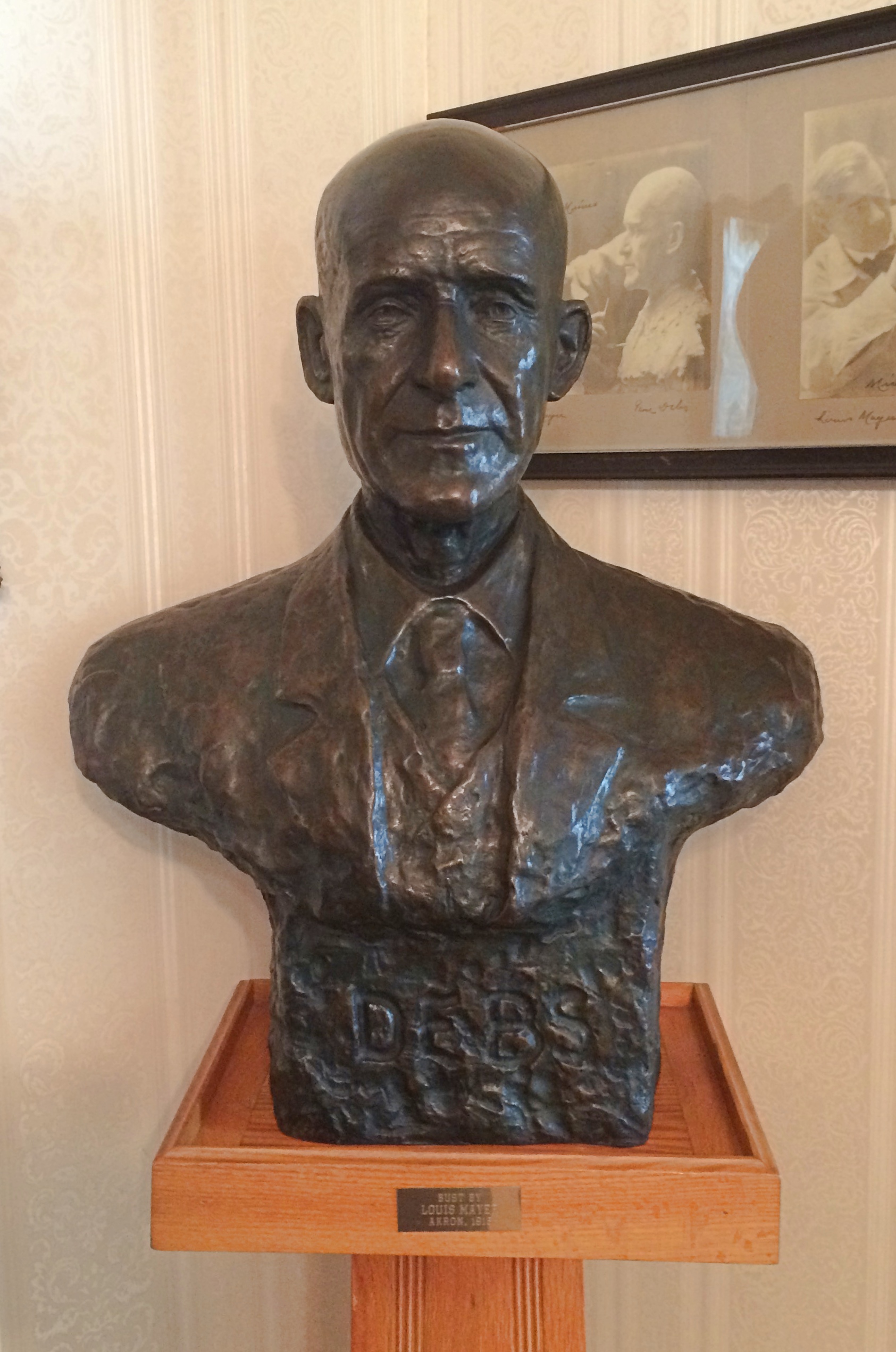
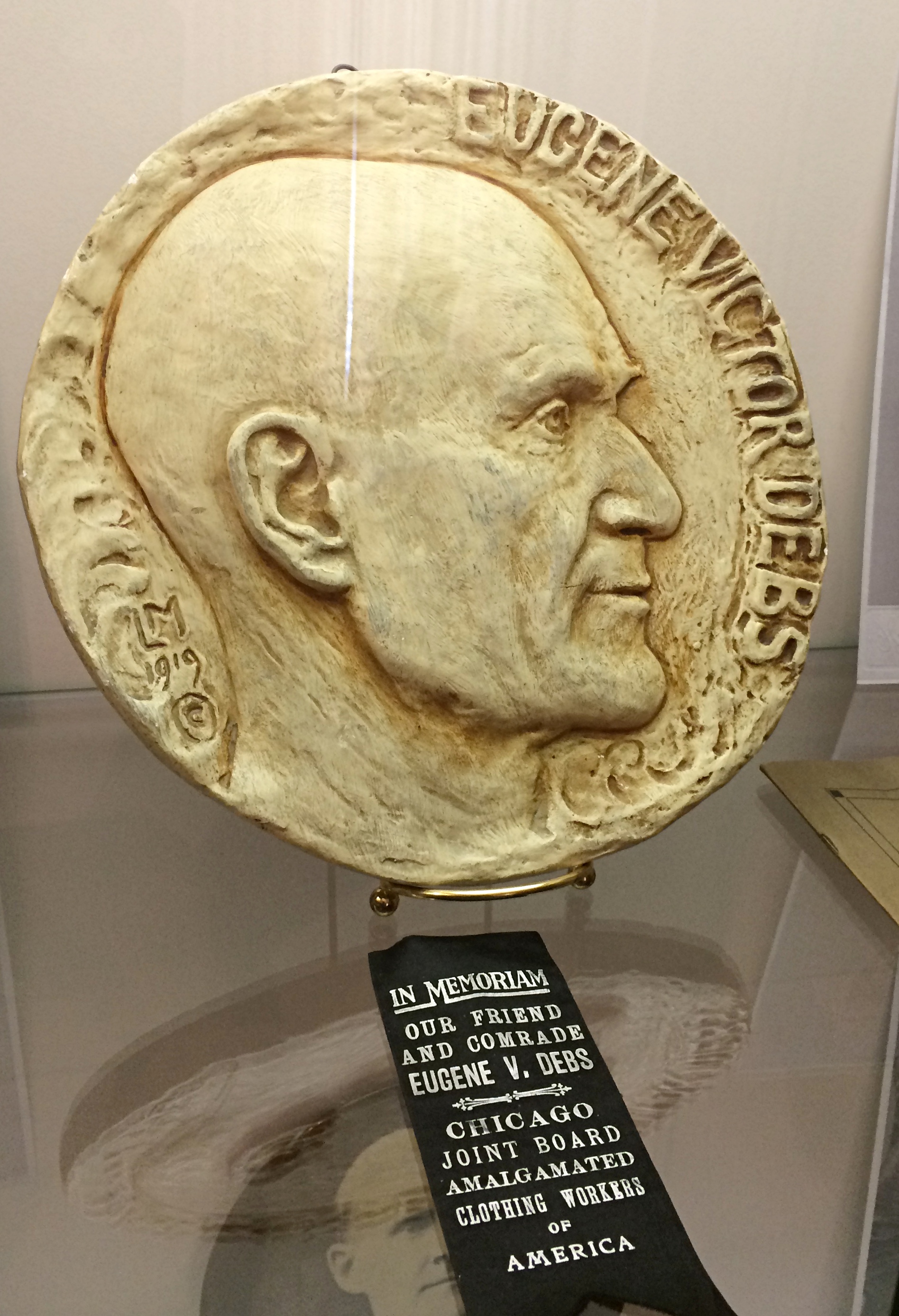
Also on display are a number of depictions of Debs. This one is by Wisconsin sculptor Louis B. Mayer (not the movie mogul).

Louis Mayer - Eugene V Debs

LM could also be Louis Mayer. In any case, this is also a sedition trial-era work.

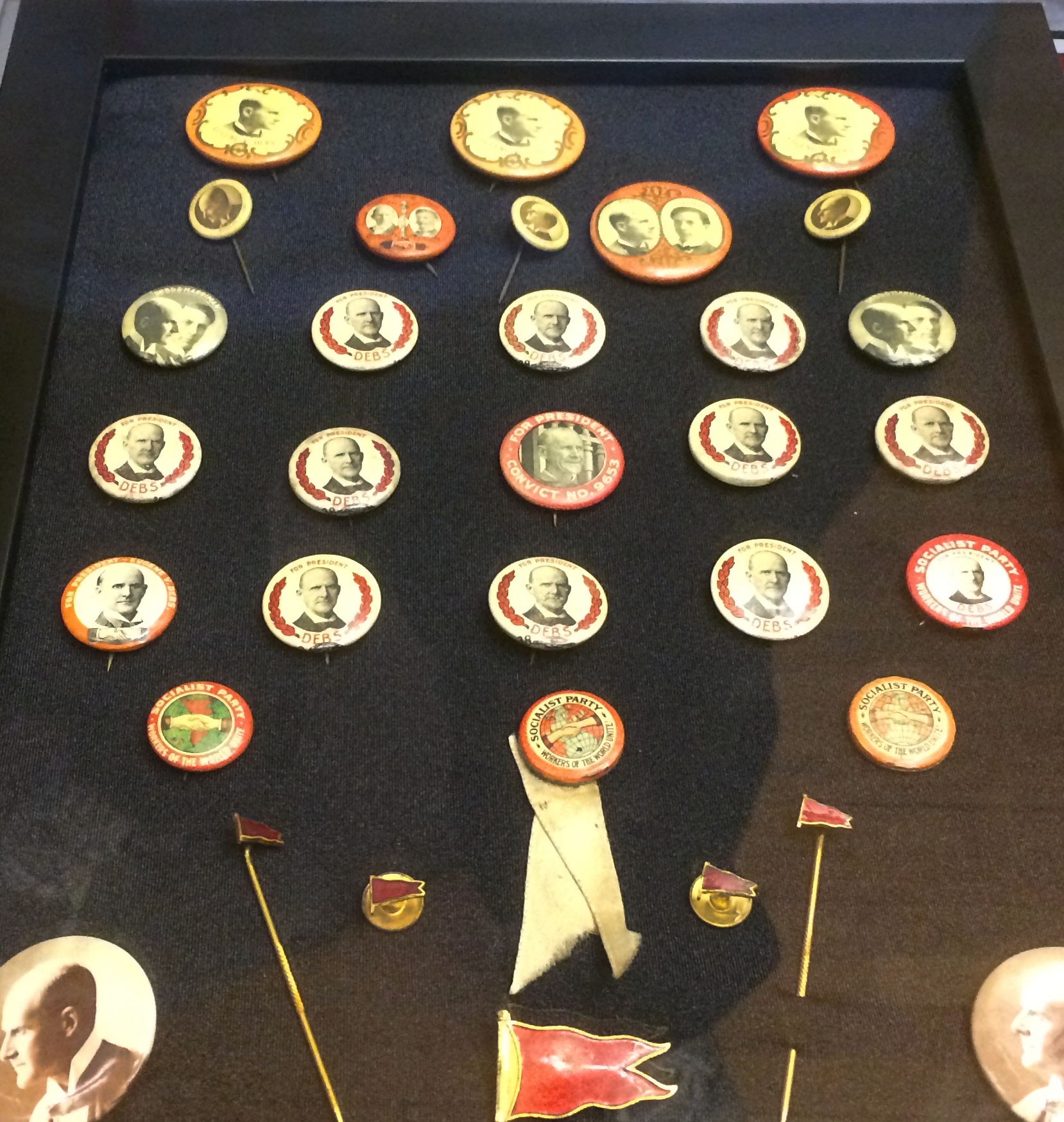
Plus plenty of buttons from Debs’ many runs for president.
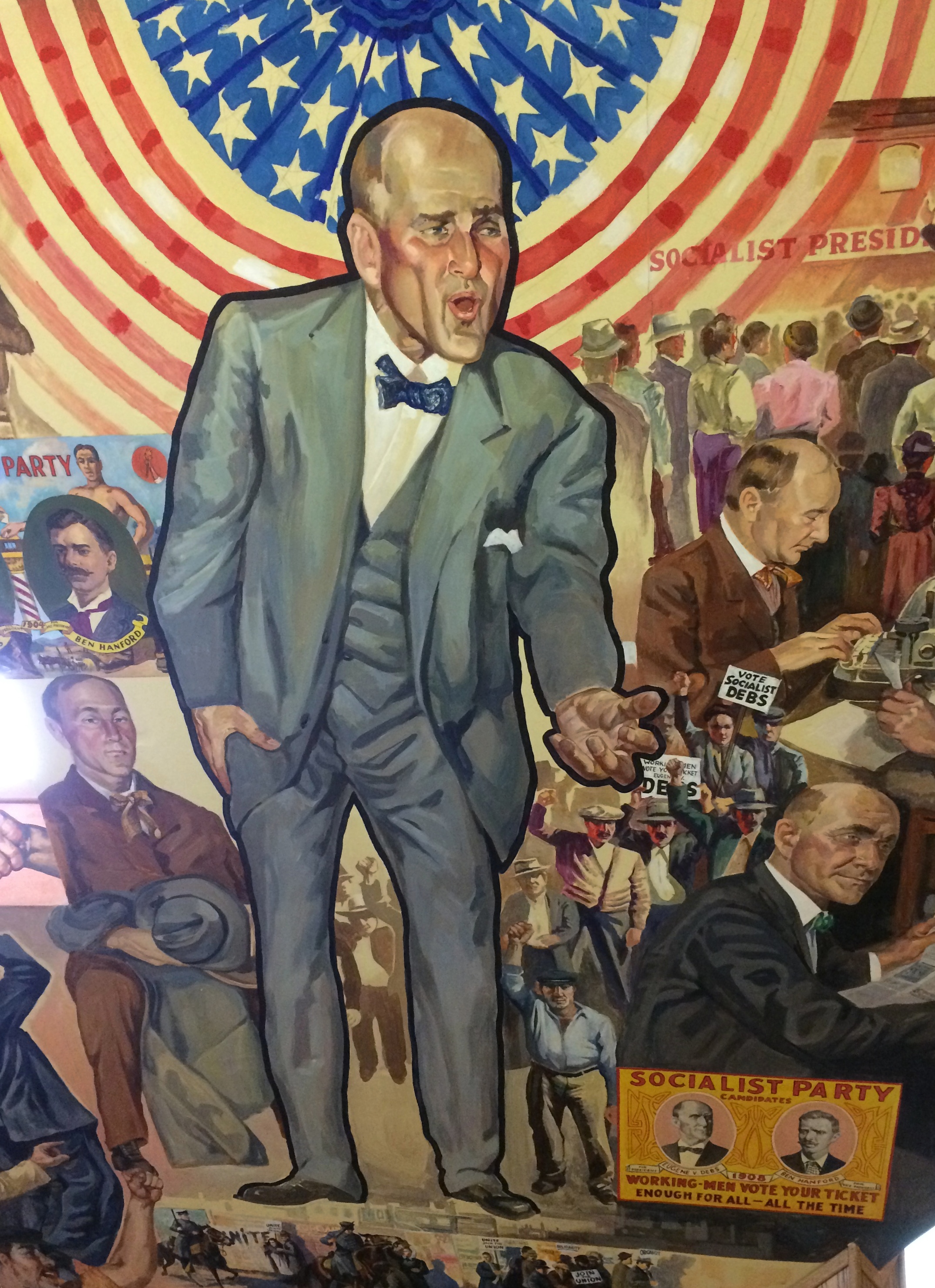
In the house’s attic, which was once merely storage, all of the walls are covered with murals. The centerpiece is Debs in campaigning mode.
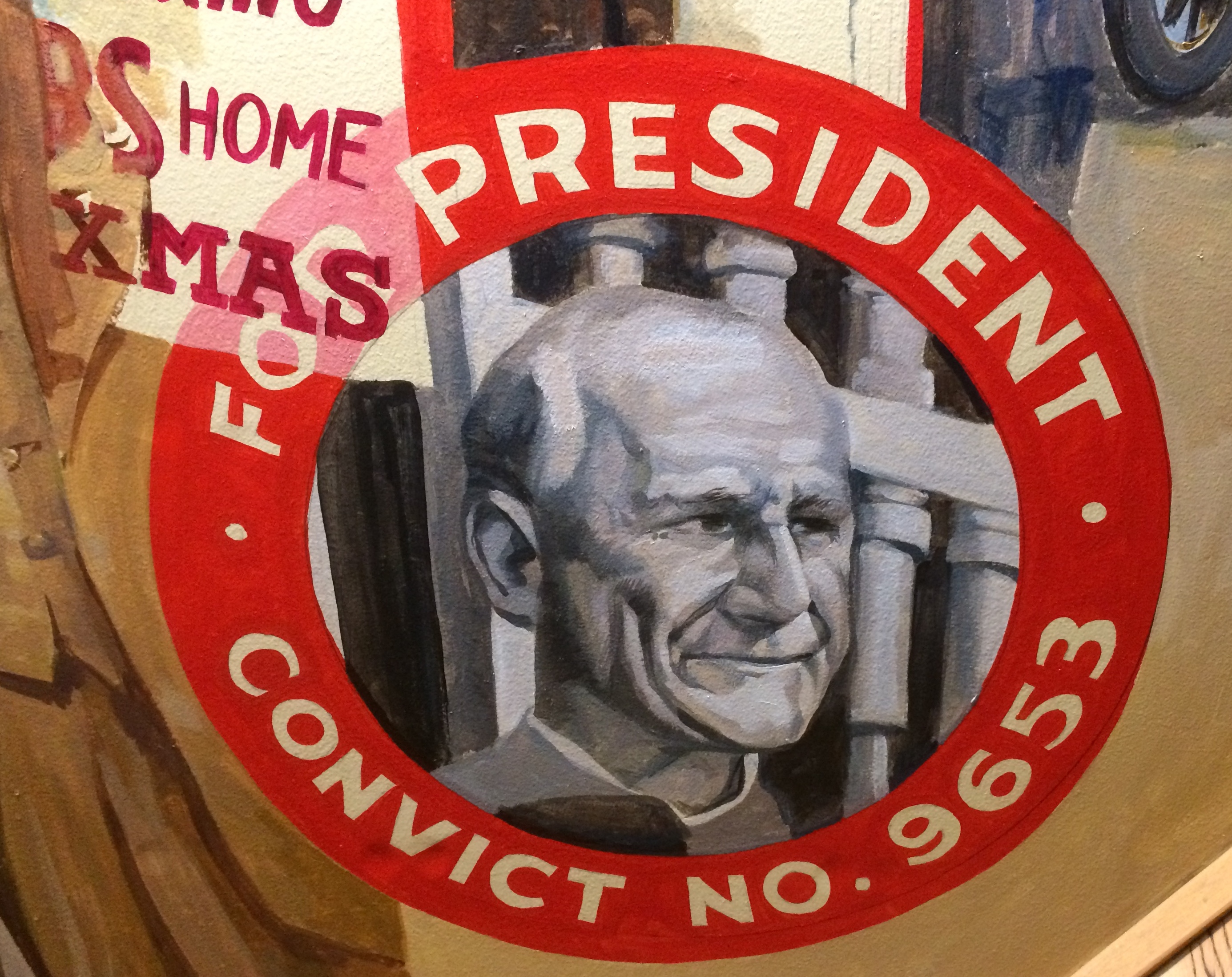
One of the smaller details on the mural walls, but one I liked best, is a campaign button from 1920. Debs received 3.5 percent of the popular vote, more than any other socialist candidate for U.S. president, before or since. While in federal prison.
The museum notes: “The murals were painted by John Laska, former Professor of Art at Indiana State University and active Foundation member. Completed in 1979 after three years of hard work, the murals depict Debs’ life and time in chronological order…”

The Ernie Pyle museum reminded me of a long-ago English teacher of mine, Mr. Swinny. The Debs museum reminded me of another long-ago teacher, Mrs. Collins. She taught us freshman U.S. history. About 60 at the time, she grew up in Buffalo and — I think I remember this correctly — had been a Wobbly as a young woman.

That would have been during the Depression, after the heyday of the Wobblies, but still. Mrs. Collins wasn’t shy about throwing in some labor history and using texts sympathetic to socialism, most notably The Jungle. Naturally, Debs came up as well.

Indiana Dash ’19: The Ernie Pyle World War II Museum

I have a sneaking suspicion that the later 21st century is going to be completely indifferent to war correspondent Ernie Pyle. Like almost everyone else, he’ll join the ranks of the obscure. The items now collected at the Ernie Pyle World War II Museum in rural Indiana will scatter to archives or private collections or landfills. Only occasionally will anyone read his writings, as found in libraries or odd corners of the Internet.

The process is already underway. The museum used to be the Ernie Pyle State Historic Site, owned and run by the state of Indiana. When the recession came 10 years ago, state budgets suffered. I doubt that anyone put it down officially in a memo or the like, but I’m sure the decision to close the Ernie Pyle SHS came down to, “Who’s heard of him anyway?”

A nonprofit, the Friends of Ernie Pyle, now owns the site and carries on the struggle against obscurity. The organization renamed the museum nearly a decade ago. Yet Randy McNally, in its 2017 Road Atlas, still calls it a state historic site. So does Google Maps. It isn’t a place that gets a lot of attention.

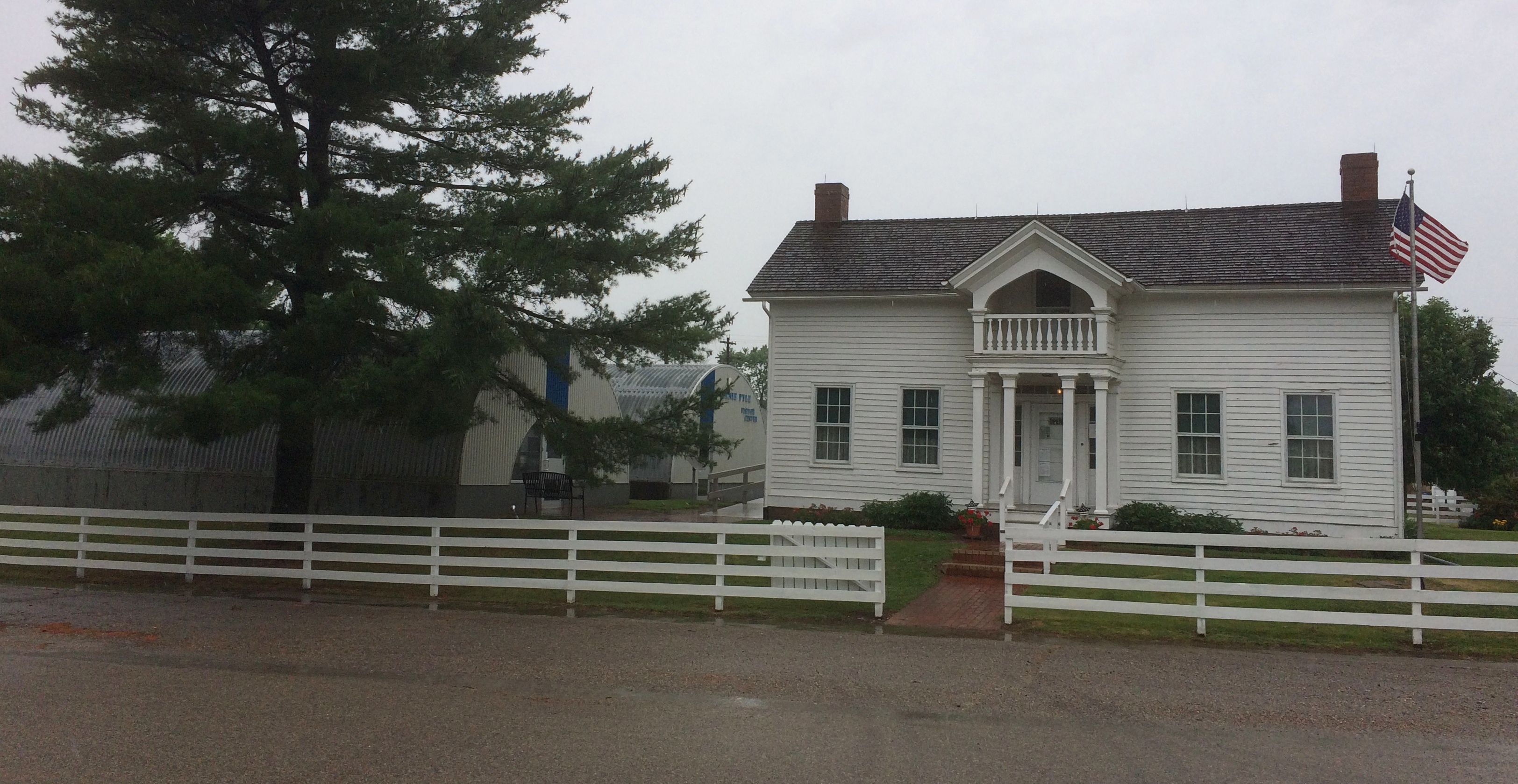
We arrived in the hamlet of Dana, Indiana, early in the afternoon on Saturday. Rain had dogged us most of the way from Champaign, Illinois, where we’d spent the previous night. The museum includes the house in which Ernie Pyle was born in 1900, relocated from the nearby farm fields.

Next to the birth house are two Quonset huts, World War II vintage but never used for military purposes, that house displays and Ernie Pyle artifacts. It continued to rain while we were in the huts, with drops drumming on the metal in their distinctive way the whole time.

I probably would have heard about Ernie Pyle later anyway, but I like to think that the reason we came was that Bill Swinny, one of my high school English teachers, planted the seed by telling us about him during class one day. Mr. Swinny, who taught us a good deal more than high school-level literature, managed to convey how upset the nation was at the death of Ernie Pyle, coming as it did right after the death of President Roosevelt.

We were the only visitors at the museum. An informative woman in her 60s took our admission. Also on staff was a much quieter young man, perhaps as young as 20 and perhaps a relative of the older woman, who was doing his bit to help out, though that’s just a guess on my part.

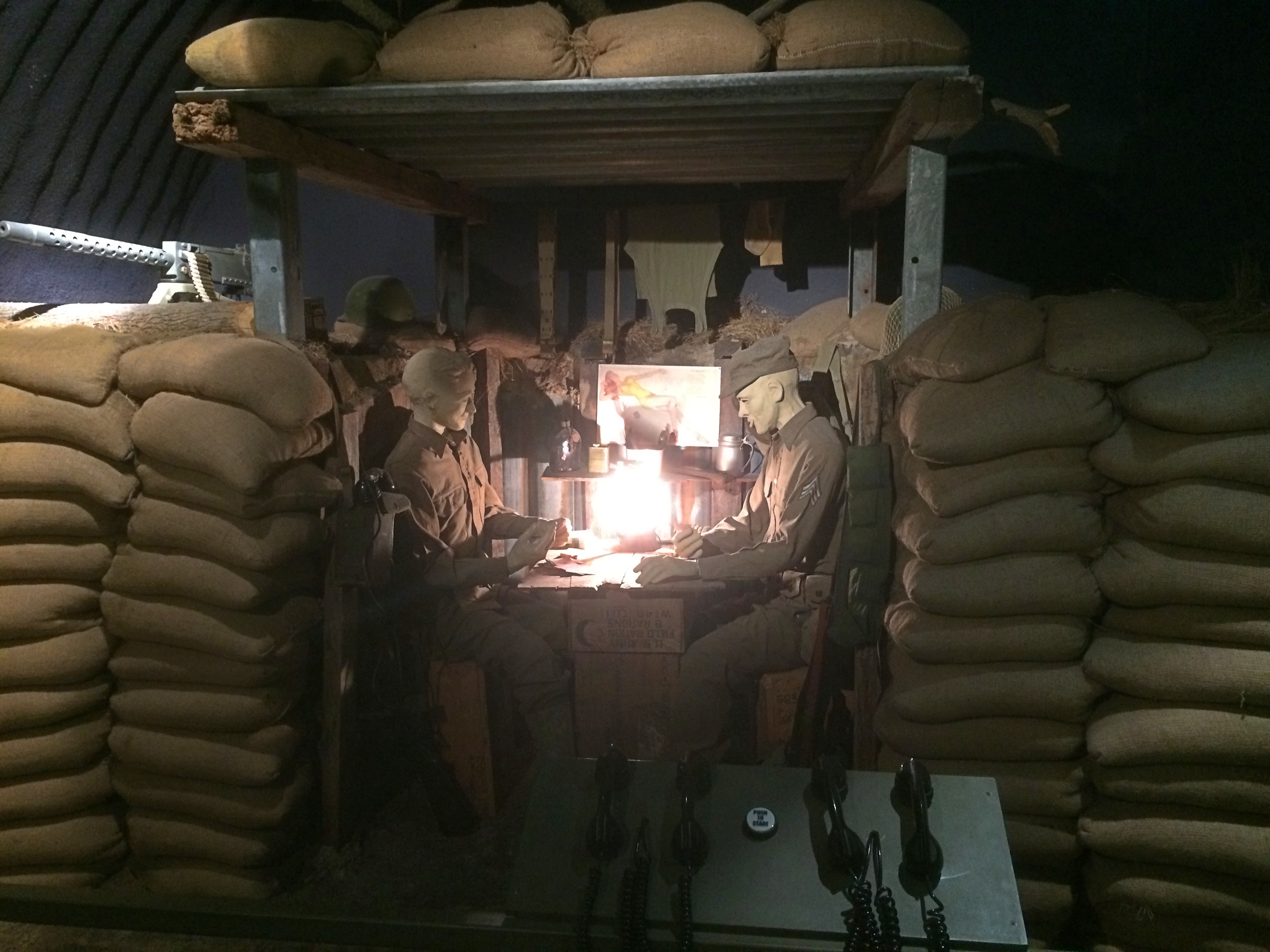
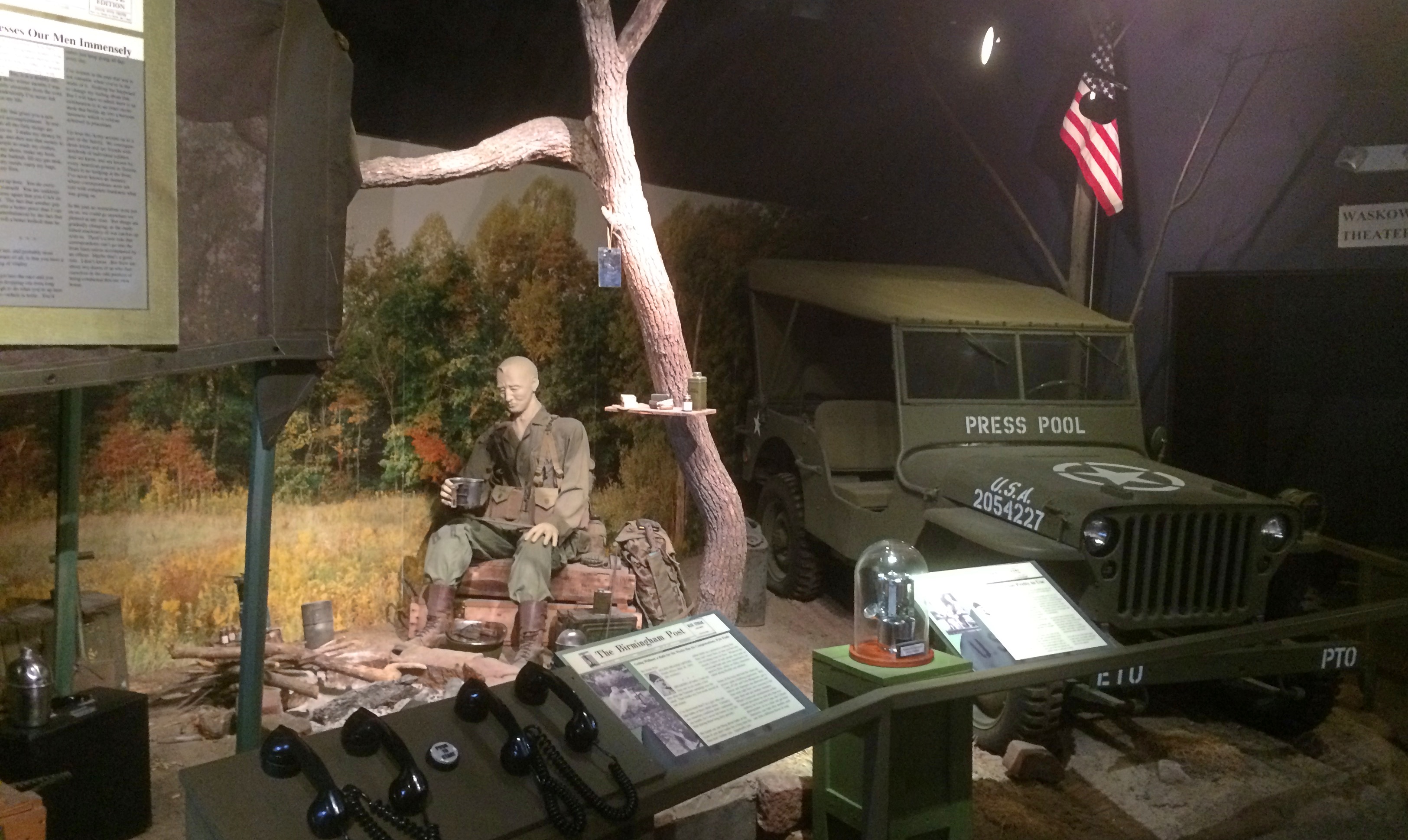
The larger displays, including Pyle-like mannequins standing in for him, evoke Ernie Pyle’s wartime circumstances. That is, living with the GIs he wrote about.
A good number of his columns are posted for visitors to read. You can also listen to excerpts from the columns by picking up telephone receivers. There are a few videos. One is devoted to a single early 1944 column, “The Death of Captain Waskow.” As well it should be, since the column is a masterpiece of reportage.

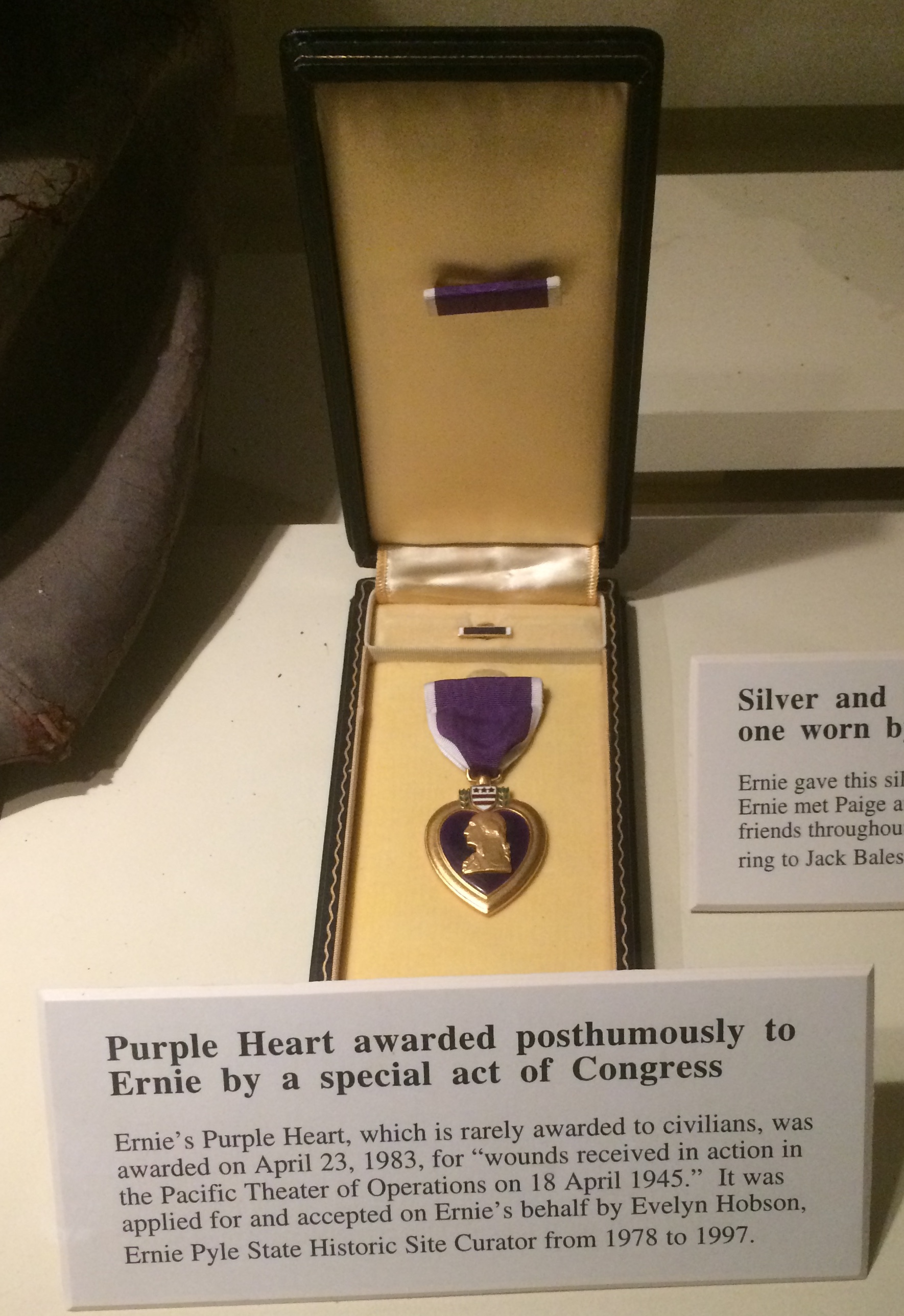
Good to know that Ernie Pyle got a Purple Heart, by act of Congress in 1983. A rare honor for a civilian.
The birth house was interesting, though less compelling. But I did learn that Ernest Taylor Pyle was born poor. At the time of his birth, his parents were tenant farmers.

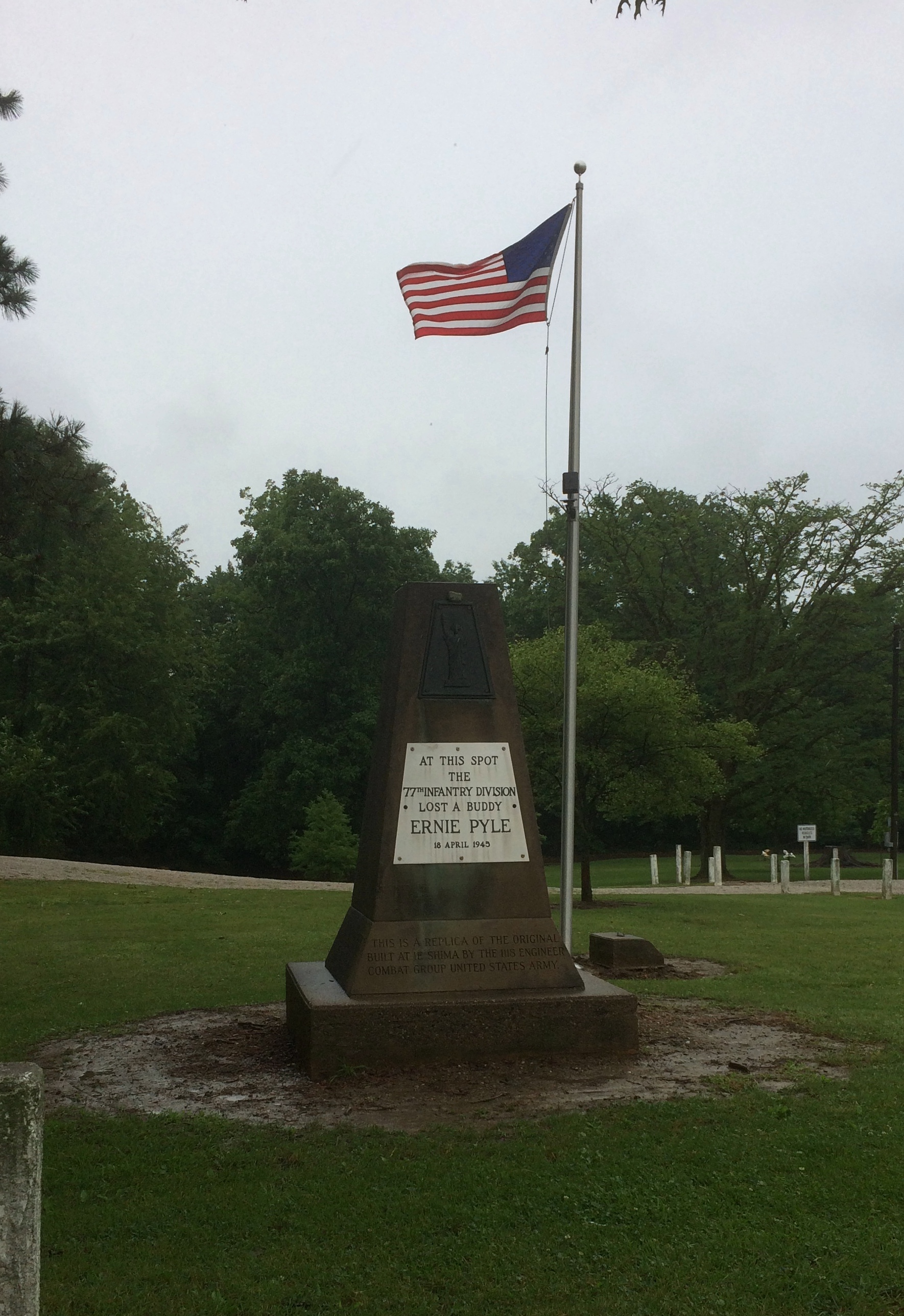
The museum isn’t quite all there is when it comes to commemorating Ernie Pyle in that part of Indiana. A few miles to the east of Dana, on U.S. 36, is the Ernie Pyle Rest Park, essentially a wayside rest stop. One feature stands out, and got me to stop despite the rain.

Ernie Pyle Memorial IndianaIt’s a replica of Ernie Pyle’s memorial on Ie Shima, the small island on which he was killed by enemy fire.

At This Spot
The
77th Infantry Division
Lost A Buddy
Ernie Pyle
18 April 1945

This is a replica of the original built at Ie Shima by the 111S Engineer Combat Group United States Army.

I can’t speak for Ernie Pyle, but I imagine that the thought of being forgotten by future generations might not have troubled him. I get the sense that he would have preferred that the men he wrote about be remembered instead.

Louisiana Capitol Views 2009

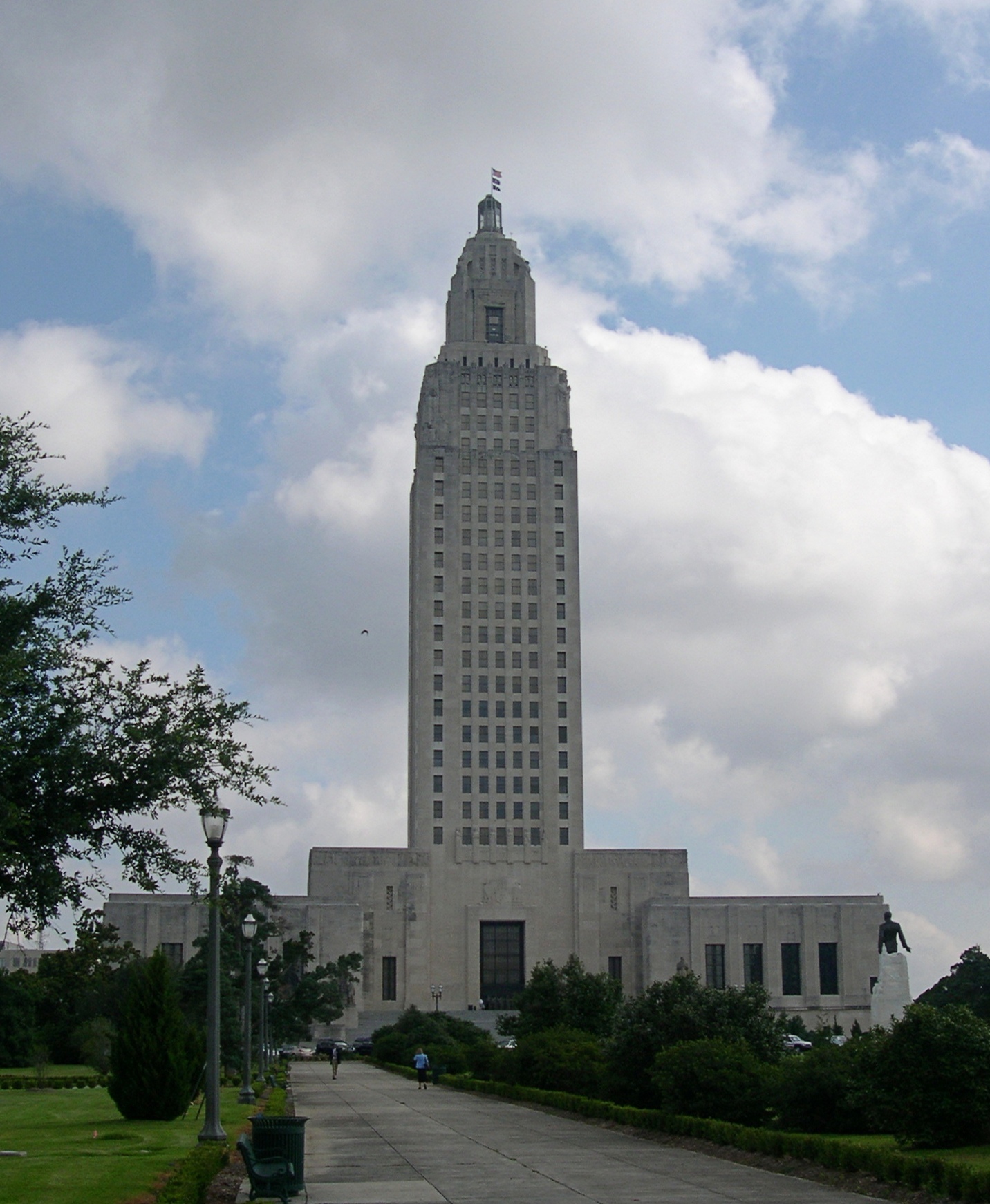
This year’s loop around the South was something like the loop I drove 10 years ago, but with key differences. For instance, I was by myself that time, and bypassed such places as New Orleans and Nashville. Instead I spent time in smaller places, such as Lafayette and Baton Rouge. In the capital, I visited the house — the state house — that Huey Long built, Louisiana’s art deco state capitol.

It’s a handsome building. Long hired a Louisiana architect, Leon C. Weiss, to design the building. No relation to his assassin Weiss, apparently.

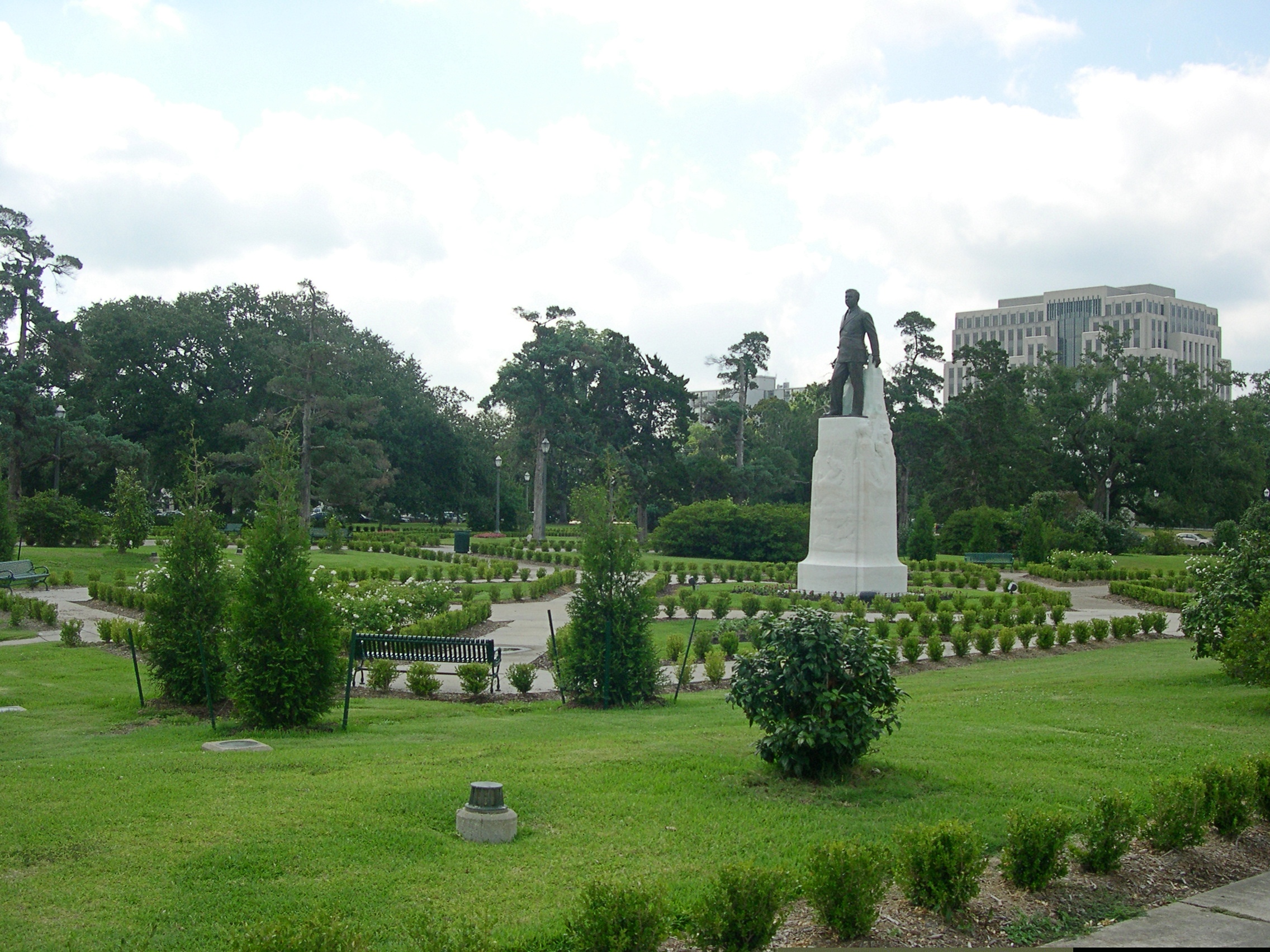
The garden front of the capitol, whose centerpiece is a memorial to the Kingfish, is also a cemetery with one occupant, Huey Long himself.

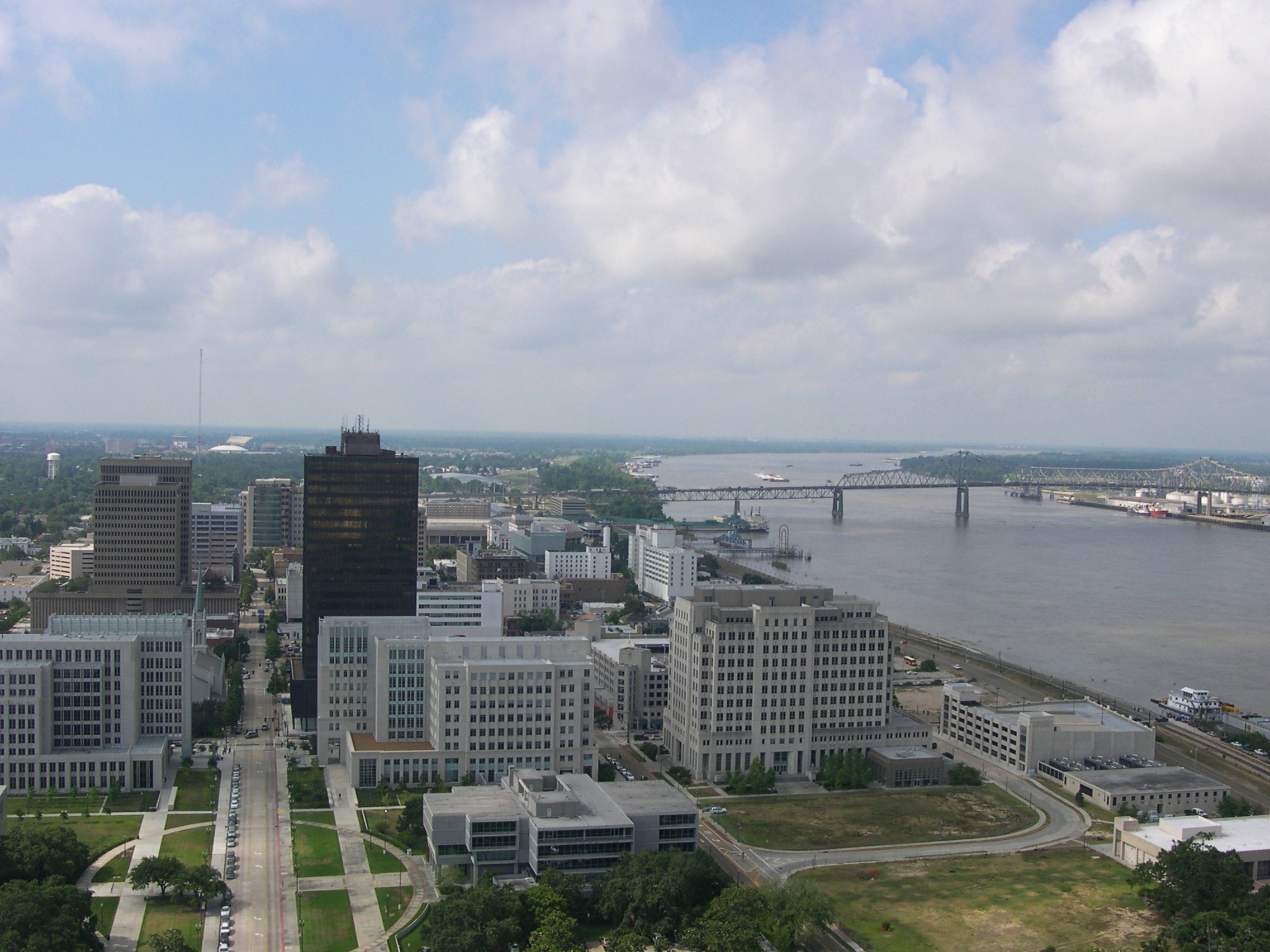
Louisiana Capitol - Long GraveThe observation deck on the capitol’s 27th floor, which charged no admission when I was there, has some splendid views of the Mississippi and the city.

Looking south toward downtown Baton Rouge.
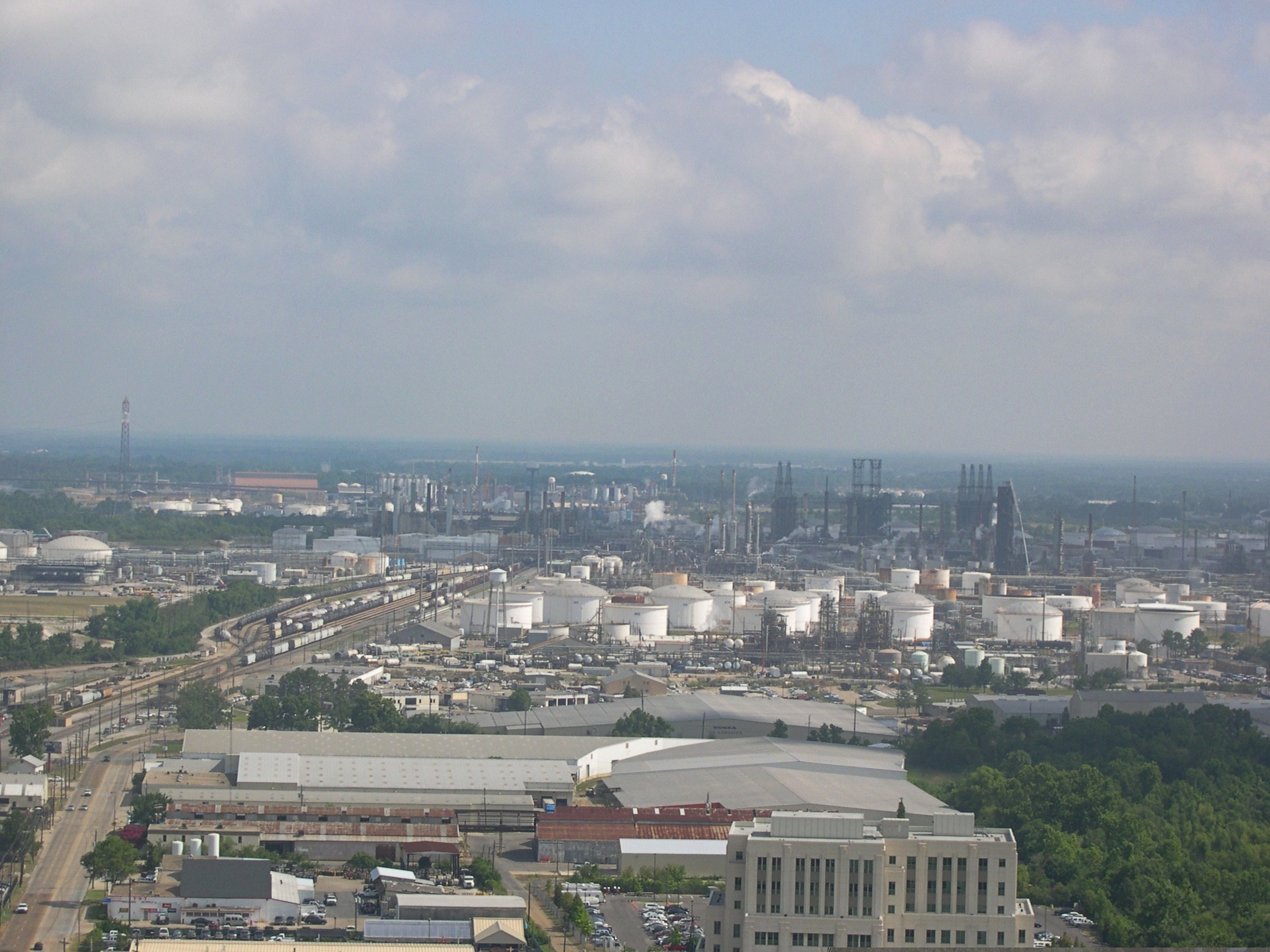
Louisiana Capitol - downtownNorth toward industrial Baton Rouge.
Petrochemicals. In fact, much of the view is taken up by ExxonMobil’s Baton Rouge Refinery, one of the nation’s largest such facilities.

Thursday Balderdash

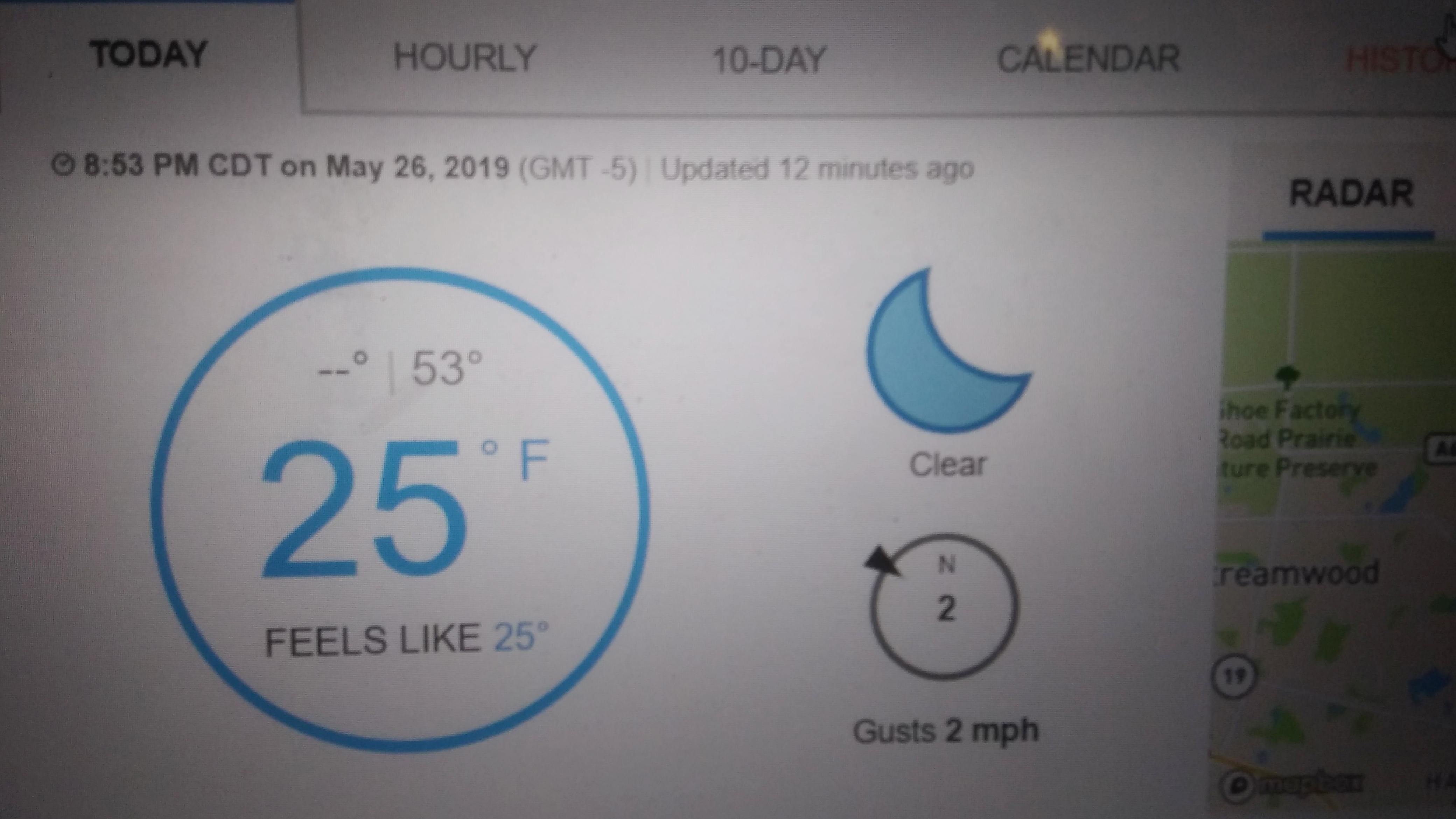
An unusual string of chilly days here in mid-June. As in, lower than 70 degrees F. even during the day. But at least it hasn’t been this cold, as the Weather Underground claimed it to be on the evening of May 26 in northern Illinois.

It was fairly chilly that night, but I believe 52 F. was correct.

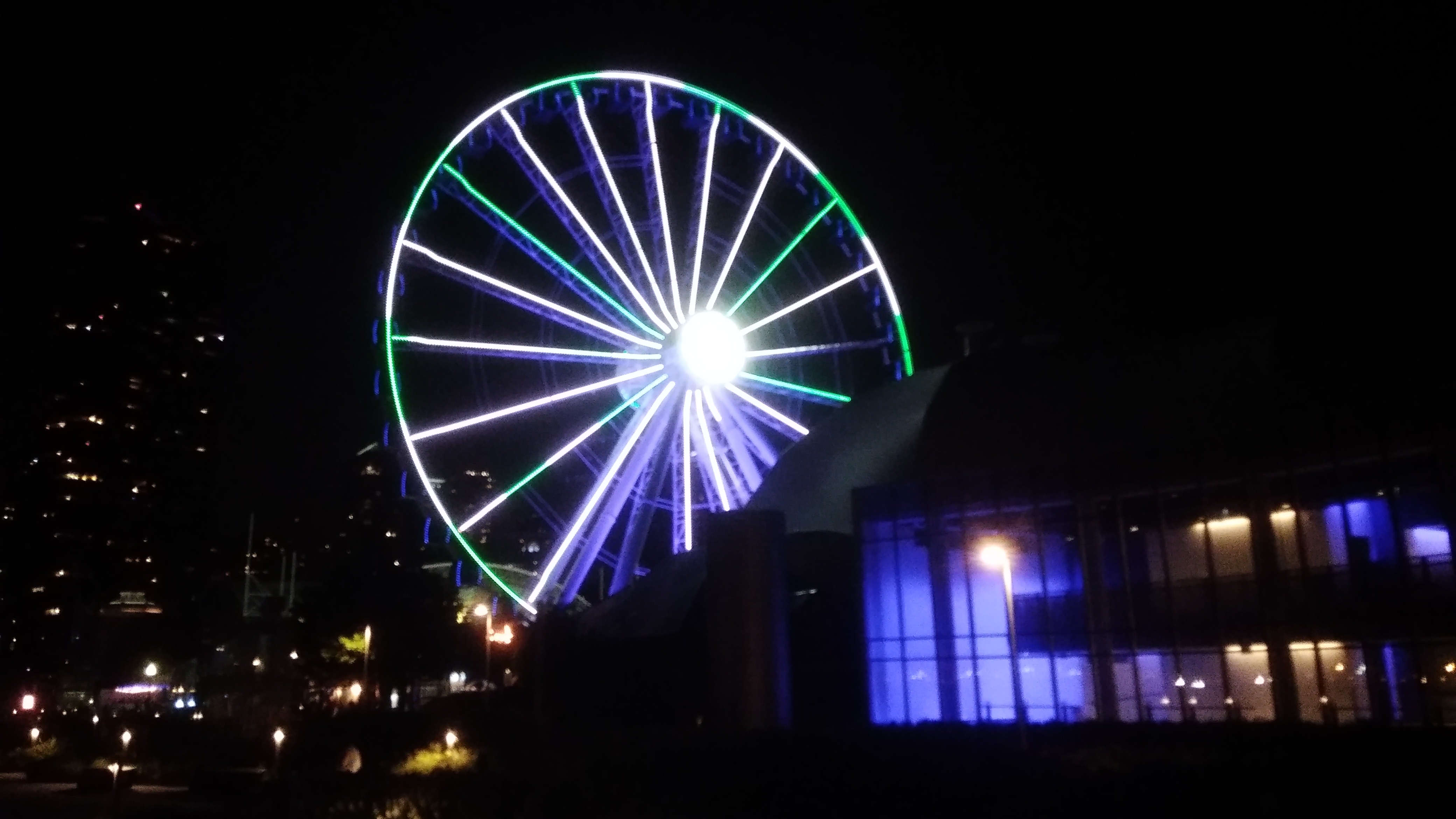
Toward the end of May, I visited Navy Pier in Chicago for a short while after dark. Unfortunately not on an evening with fireworks. But the area is alive with people well into the evening, many of them giddy and dressed to the nines after disembarking from party boats.

The new Ferris wheel on the pier (installed in 2016) is pretty by night.
“Both the 1995 and the 2016 wheels were manufactured by Dutch Wheels,” the Chicago Architecture Center says, referring to the two wheels that have been on the site since the redevelopment of Navy Pier in the mid-90s.

“Known as the Centennial Wheel, the new attraction measures 196 feet in height and has 42 gondolas. While this Ferris wheel won’t contend for the ‘world’s tallest’ title, it is currently the sixth-tallest wheel in the United States.”

The world’s tallest Ferris wheel would be…? The High Roller in Las Vegas, according to Wiki, since its development in 2014. You’d think it would a Chinese wheel, but no. Some functionary in the Chinese government hasn’t been doing his job, which is making sure that mindless giantism expresses itself in highly noticeable public structures. Too bad for him, the tallest one is in this country. USA! USA!

Spotted in I don’t remember which store recently.
The product might or might not be effective for pest control, but I know one thing: I ain’t gonna work on Maggie’s Farm no more.

For some reason, we had a 45 of that song around the house when I was a kid, though I don’t recall either of my brothers being Dylan fans. I had a certain fascination with it, especially imagining a literal window made of bricks in a room surrounded by National Guardsmen.

Curiously, Dylan saw fit recently to put the song on YouTube, along with others of similar vintage.

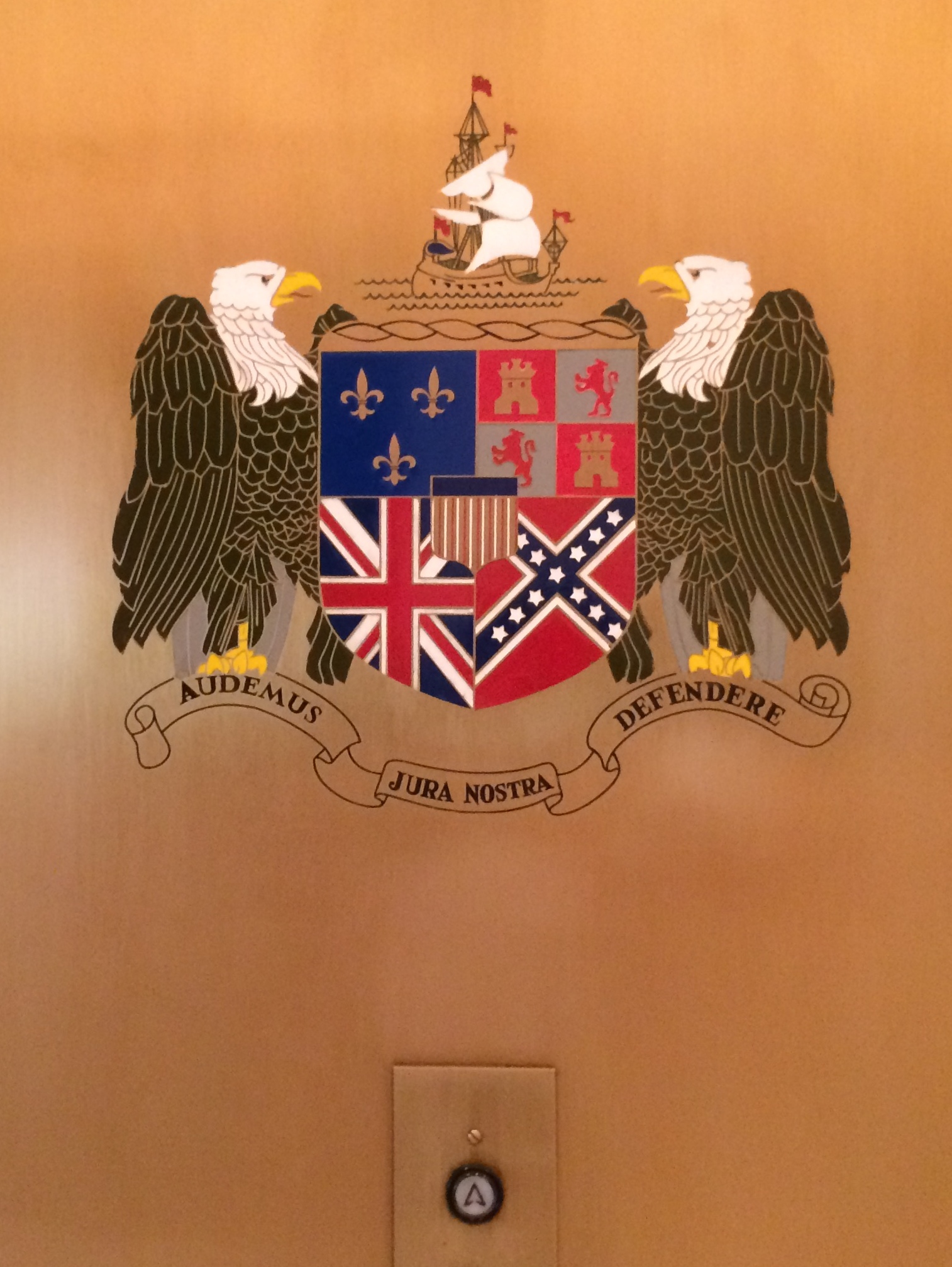
In case you’re wondering what the Alabama Coat of Arms looks like, wonder no more.
Found between a pair of elevator doors at the Alabama State Capitol. The Latin reads, We dare to defend our rights, which happens to be the state motto, adopted in 1939 due to the efforts of Marie Bankhead Owen, a ladylike white supremacist who also happened to be Tallulah Bankhead’s aunt. The ship is the Badine, which first brought Jean-Baptiste Le Moyne de Bienville and Pierre Le Moyne d’Iberville to the future Alabama, where they founded Mobile.

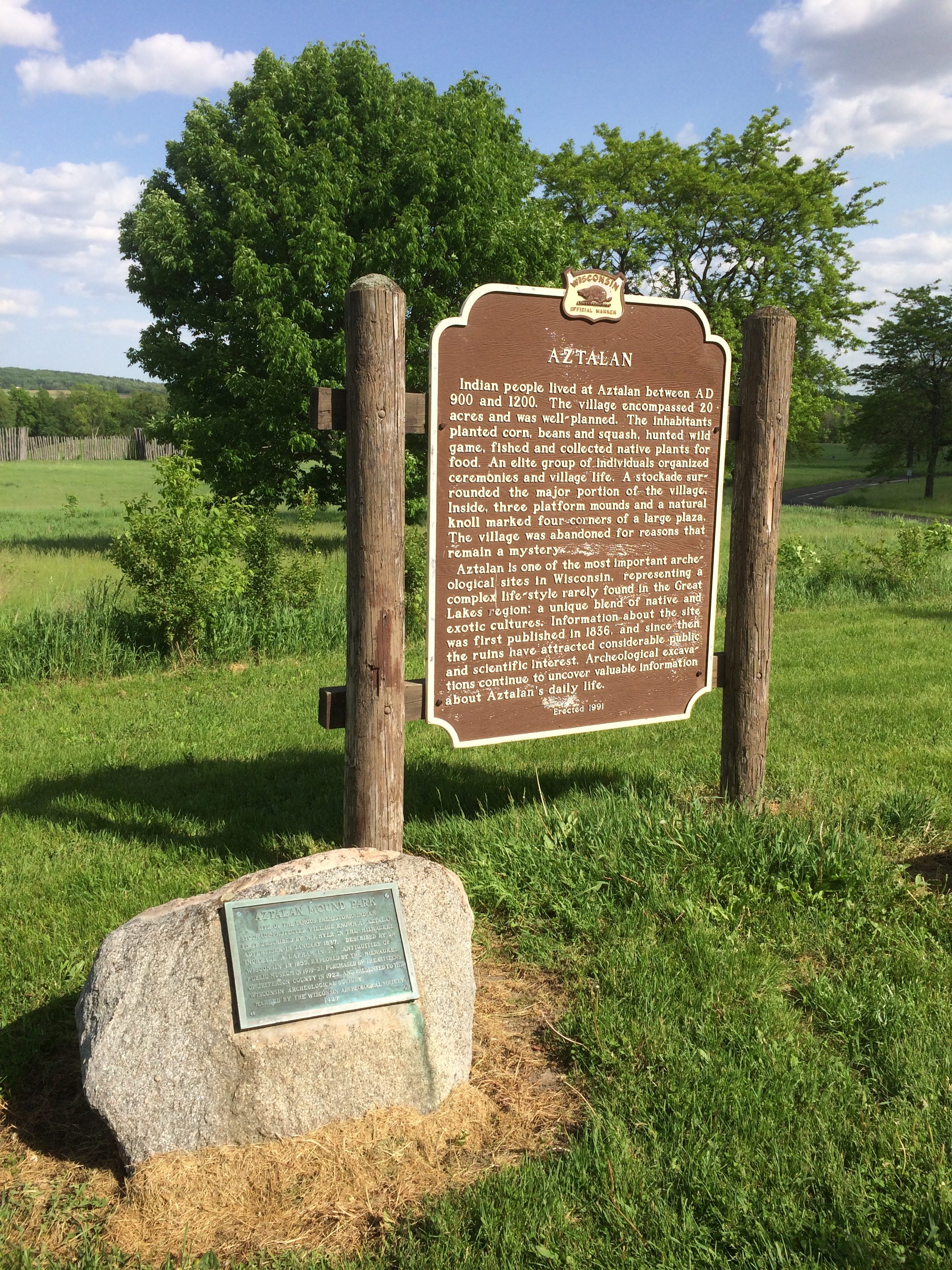
Aztalan State Park

After tooling around Lake Mills, Wisconsin, for a few hours, we got around to the original reason for driving up to southern Wisconsin for the day, a visit to Aztalan State Park. The park is a few miles east of the town, occupying 172 acres near the banks of the Crawfish River.

It’s a small version of Cahokia in Illinois, near modern-day St. Louis. The comparison isn’t idle, since both settlements were created and occupied by Middle Mississippian Indians more than 1,000 years ago.

Like Cahokia, Aztalan features manmade mounds and a rich archaeological legacy, despite 19th-century depredations. The Indians at Aztalan similarly and mysteriously abandoned it like those at Cahokia, centuries before the coming of Europeans.

The name is a misnomer in the sense that in the 19th century, one of the ideas about the prehistoric people who lived here saw them as ancestors of the Aztecs. The ancestors of the Aztecs were thought to be from a place north of Mexico called Aztalan. So the name was applied to the site, even though the Mississippians are no longer believed to be Aztec ancestors.

Then again, what the people who lived here actually called their settlement is unknown. I’d speculate that it was some variation of Our Place or This Here Place in their language, but who knows. Aztalan is as good a name as any in our time.

But why did they settle in the future Wisconsin? The Milwaukee Public Museum posits: “Things such as copper, lead (for white paint), deer, and certain types of stone materials such as Hixton Silicified Sandstone, were the basis of Mississippian trade interests in the northern frontier, and may have influenced the location of Aztalan as a Mississippian outpost in Wisconsin. Trade and other social and political processes expanded Cahokian influence out into much of the Midwest, as well as eastern and southeastern North America.”

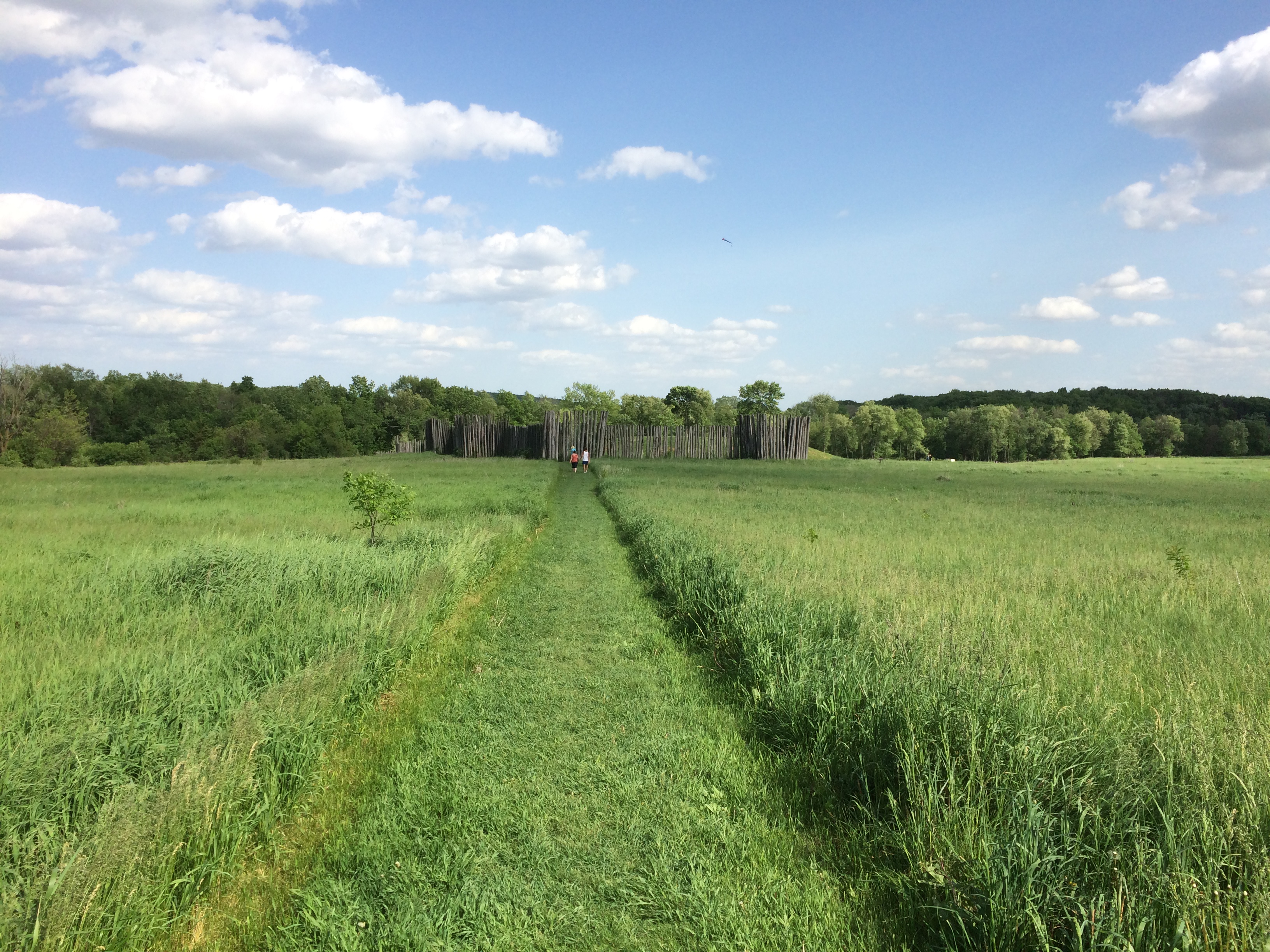
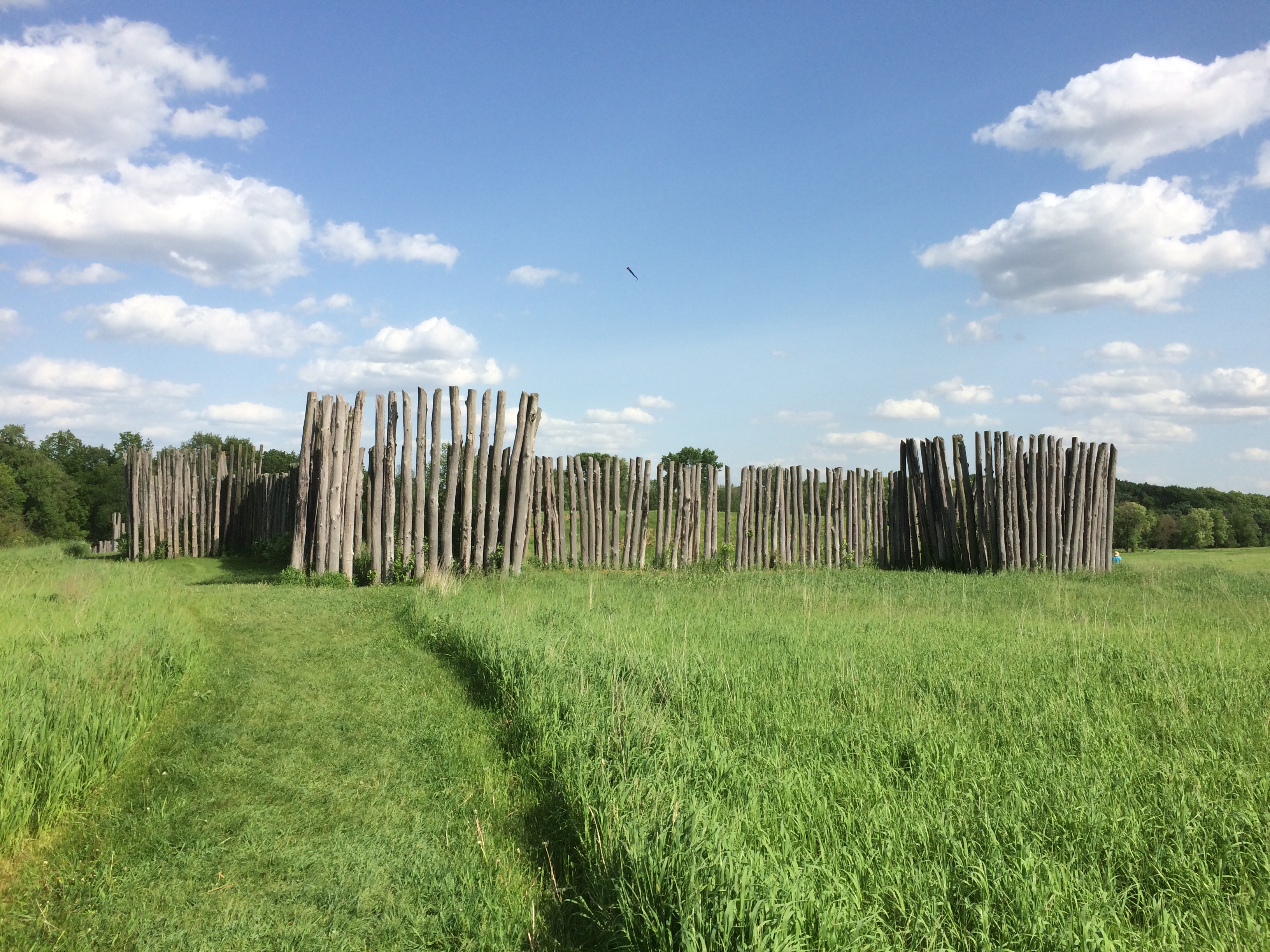
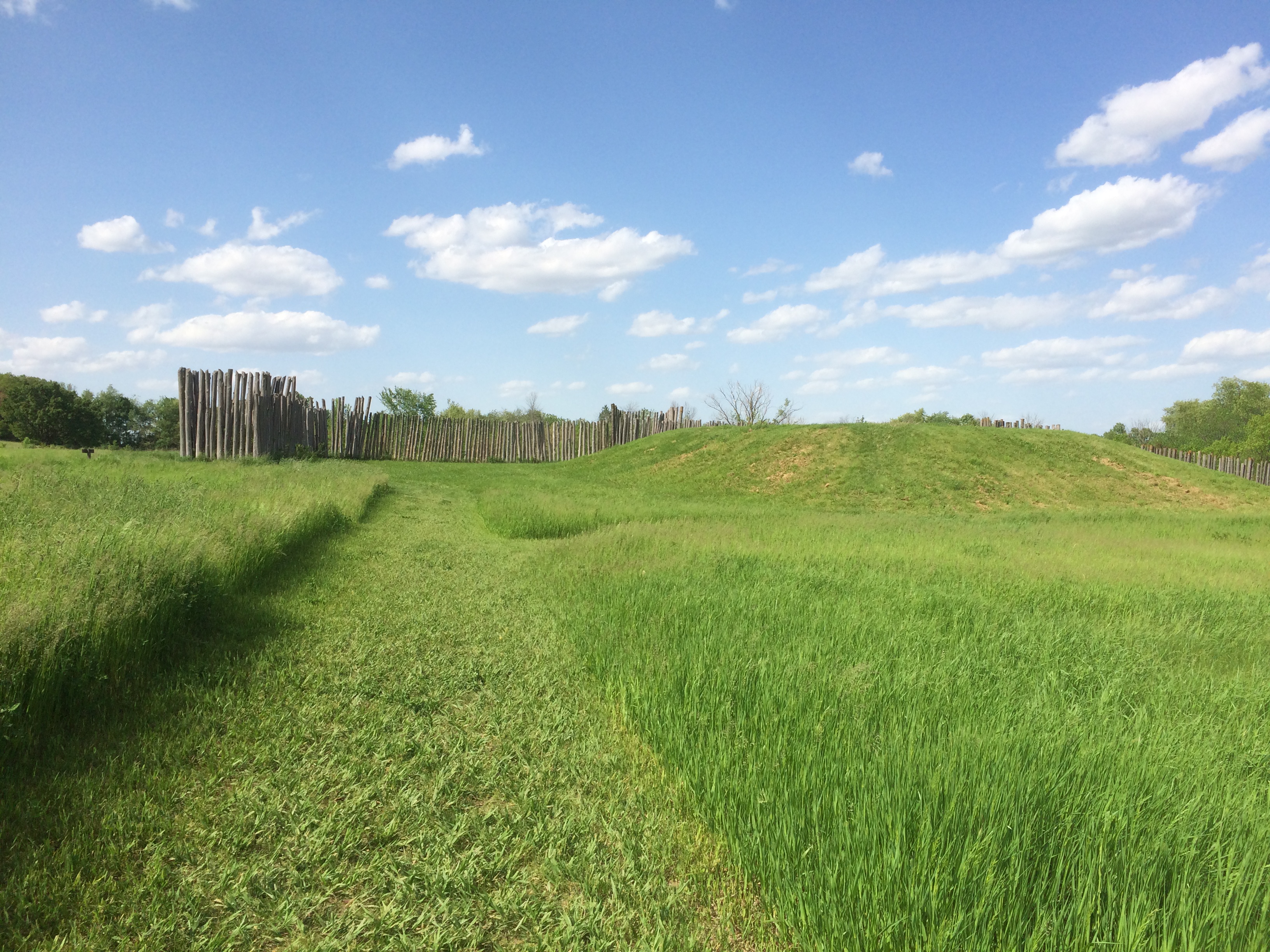
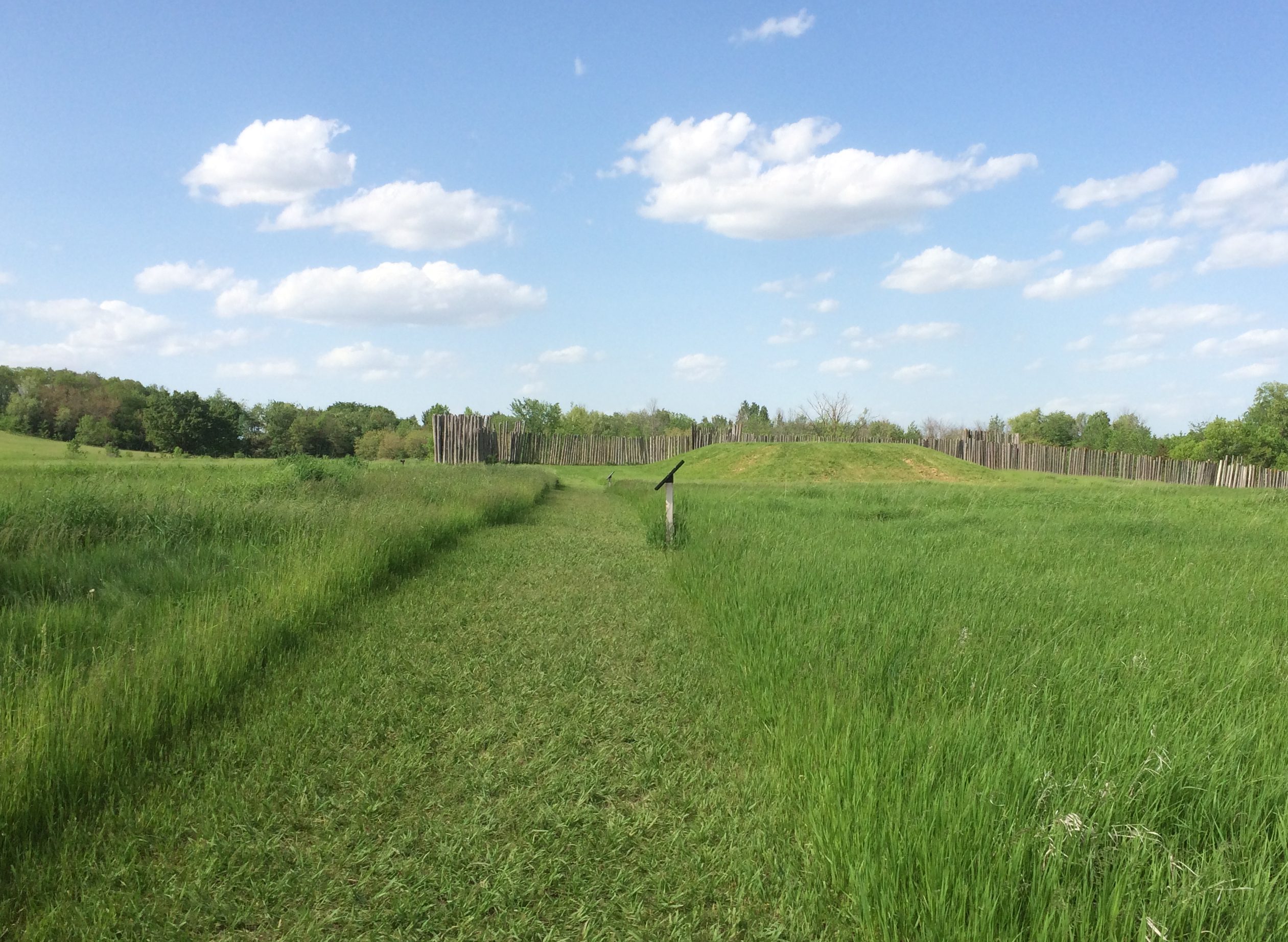
Aztalan State Park sports tall grass, mounds and stockade posts, with mowed paths connecting different areas.
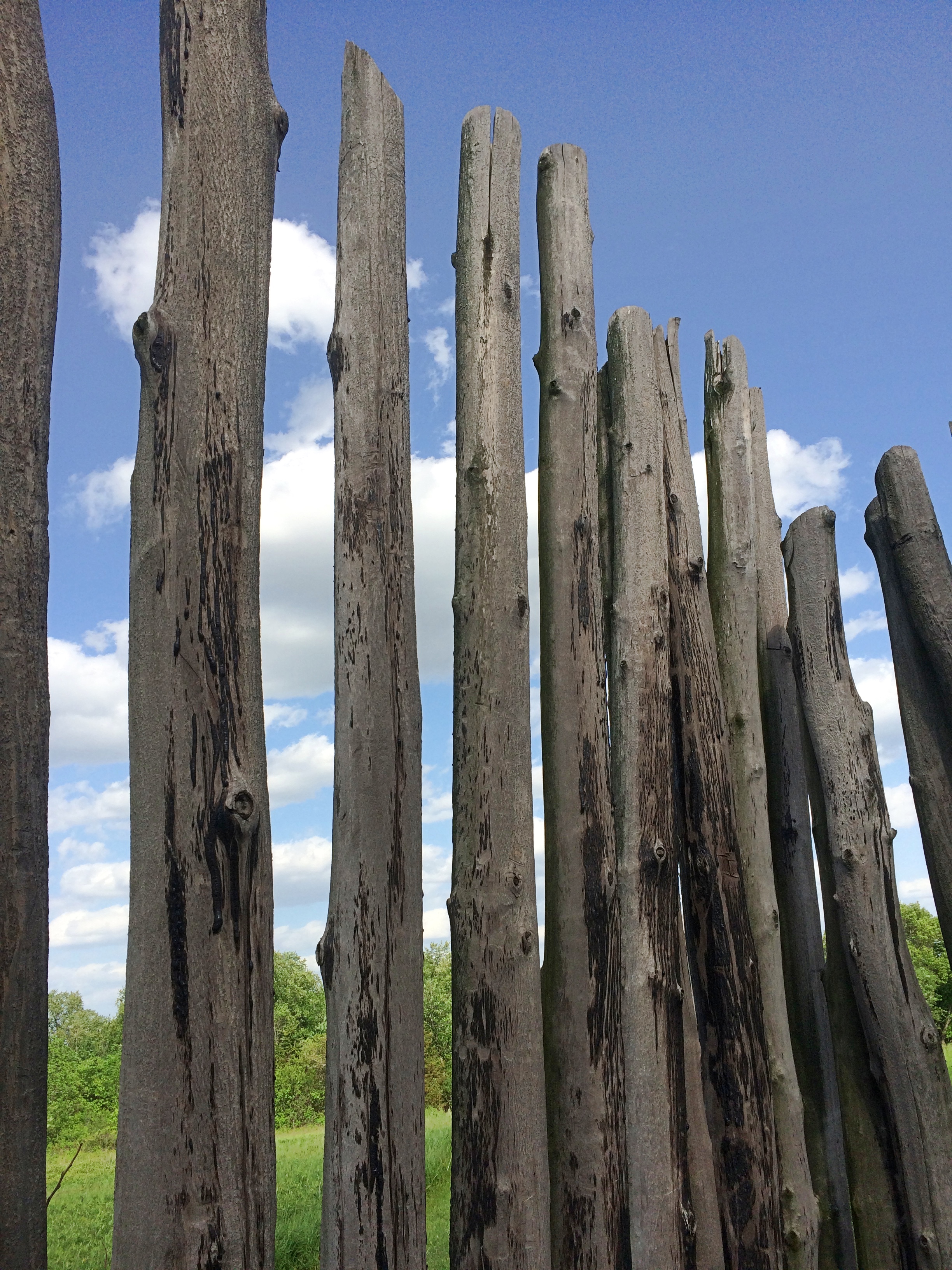
The stockade posts are 20th-century reconstructions, but I understand they were placed in the original holes.
One of the mounds. The second largest one, I think.

The path to the largest of the mounds. Large and small are relative terms for the mounds at Aztalan. Compared with Cahokia, they’re all pretty small.

Another path leads down to the Crawfish River, which I assume supplied Aztalan with its water and some fish.
Near the river is what I take to be an active archaeological dig, complete with screens for sifting the soil.
I don’t think I’d have the patience for that kind of work. But I’m glad there are people who do.

Glacial Drumlin State Trail

I might have heard the term drumlin before, but if so I didn’t remember what it meant. On June 2, after lunch and looking around Lake Mills, Wisconsin, for a while, we took a walk on the Glacial Drumlin State Trail, which runs through the southern part of the town.

A drumlin is a kind of elongated hill. The kind of formation receding glaciers are apt to leave. “One end is quite step, whilst the other end tapers away to ground level,” says the Geography Site, a British page with helpful diagrams.

The section of the trail we walked didn’t have any kind of slopes at all, but the name refers to the drumlins that the trail passes by or over during its entire length, which is 53 or so miles. It runs from suburban Milwaukee to suburban Madison, or the other way around.

The trail began as a section of the Chicago & North Western’s main line between Milwaukee and Madison. The railroad abandoned the line in the 1980s, after which I assume the Rails to Trails Conservancy did its fine work.

I first noticed the trail on Google Maps and decided to investigate further when I saw that the trail crossed a part of Rock Lake on a feature called Glacial Drumlin Train Trestle, which sounds like an English folk revival band from about 50 years ago. I decided I wanted to see the trestle.

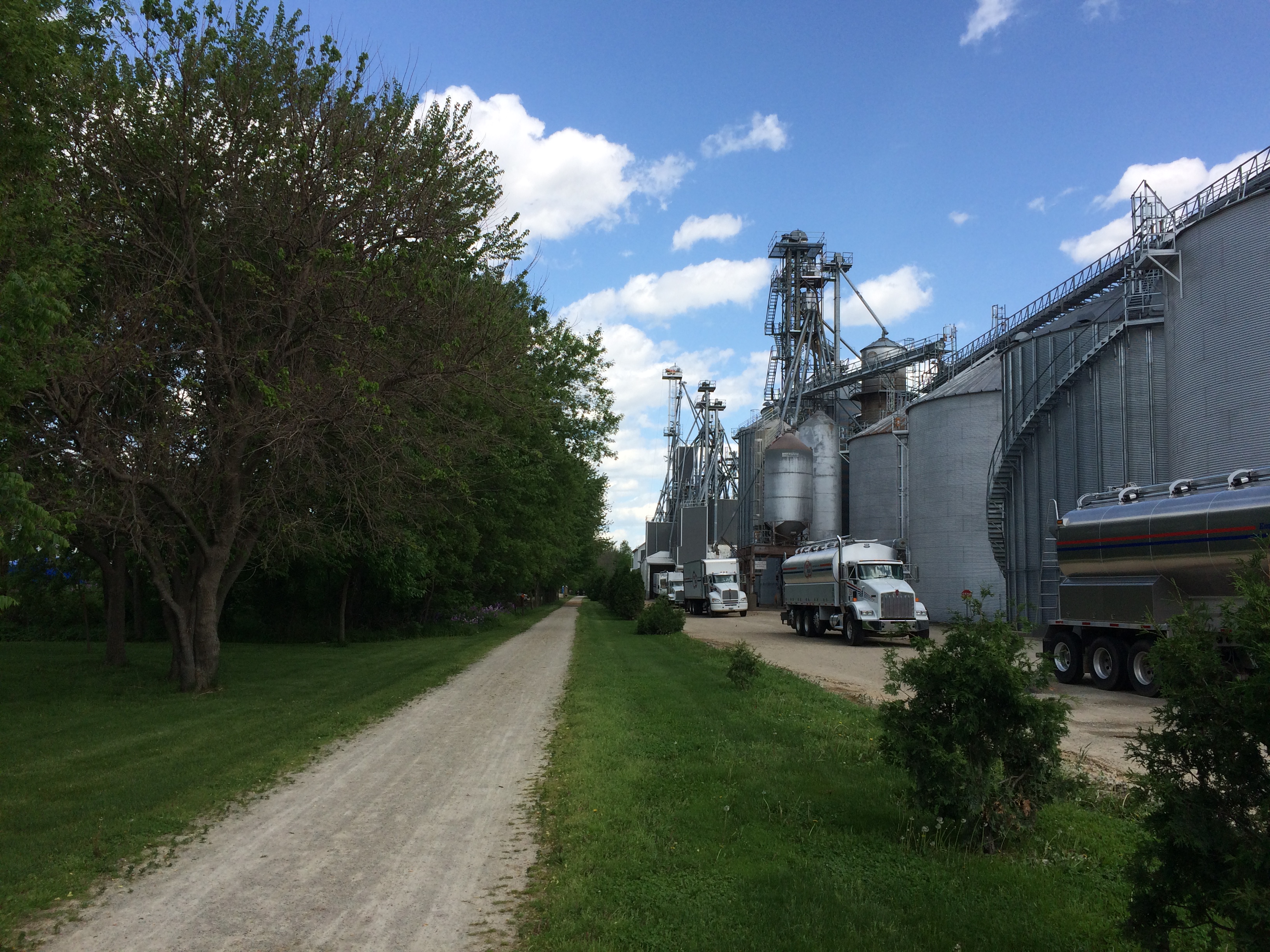
We accessed the trail from a parking lot near a renovated depot.
To the south of the trail at that point is an industrial complex belonging to Vita Plus. In its way, as interesting as anything we saw in Wisconsin that day.
The company provides “feed, nutrition and management expertise to dairy and livestock producers,” according to its web site.

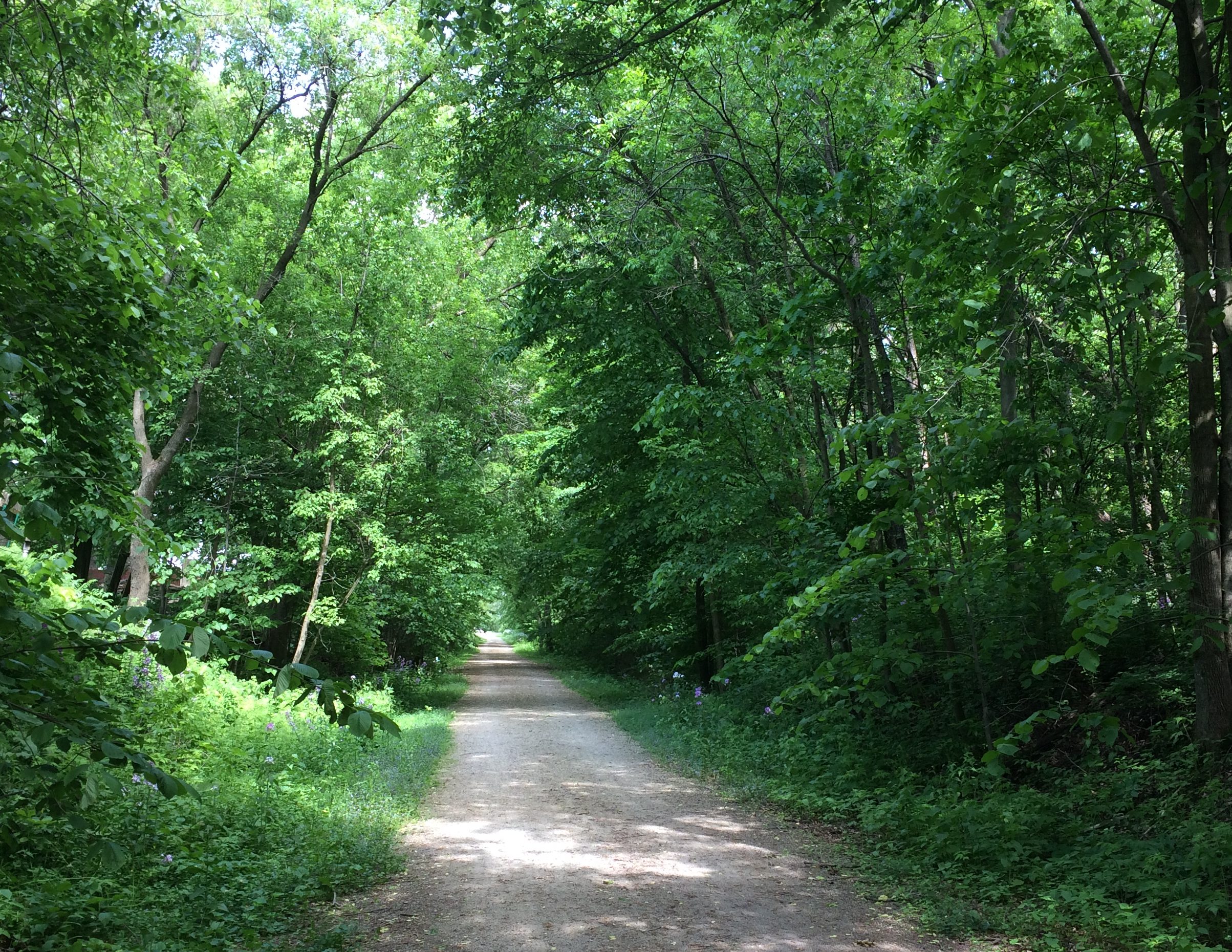
Moving on, we headed deep into the woods. Except that for most of the way to Rock Lake, residential districts were on both sides, maybe 30 feet from the edge of the trail.
Still, it was a pleasant walk, crowded with neither bicyclists nor hikers. Phlox were a-bloomin’ along the trail.
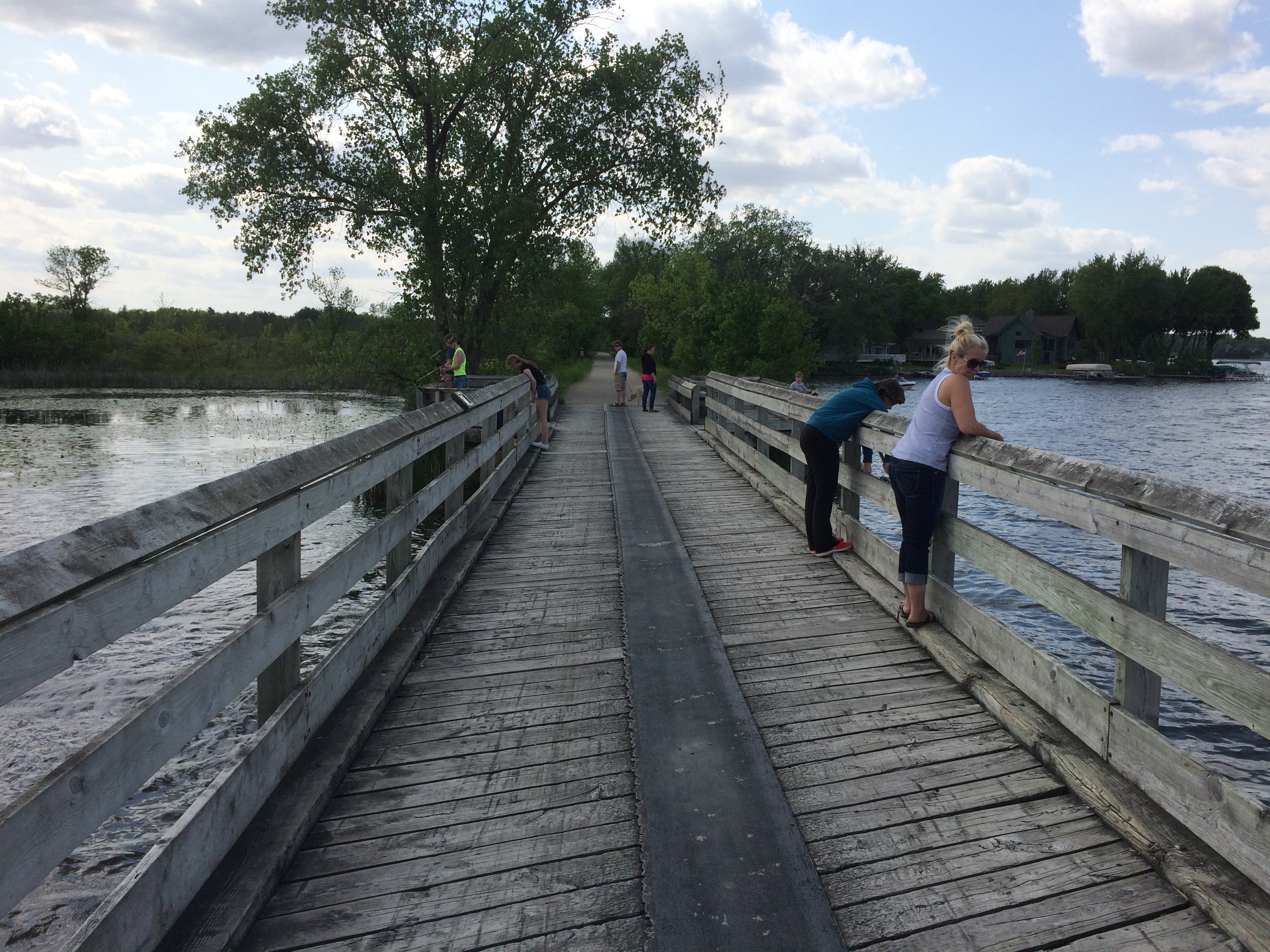
Eventually we got to the trestle. Because I didn’t bother to check Google Images, I was expecting to see some kind of bridge substructure. The term “trestle” inspired that idea. Instead, we crossed a nice enough but not very dramatic bridge occupied by a few fishing enthusiasts.
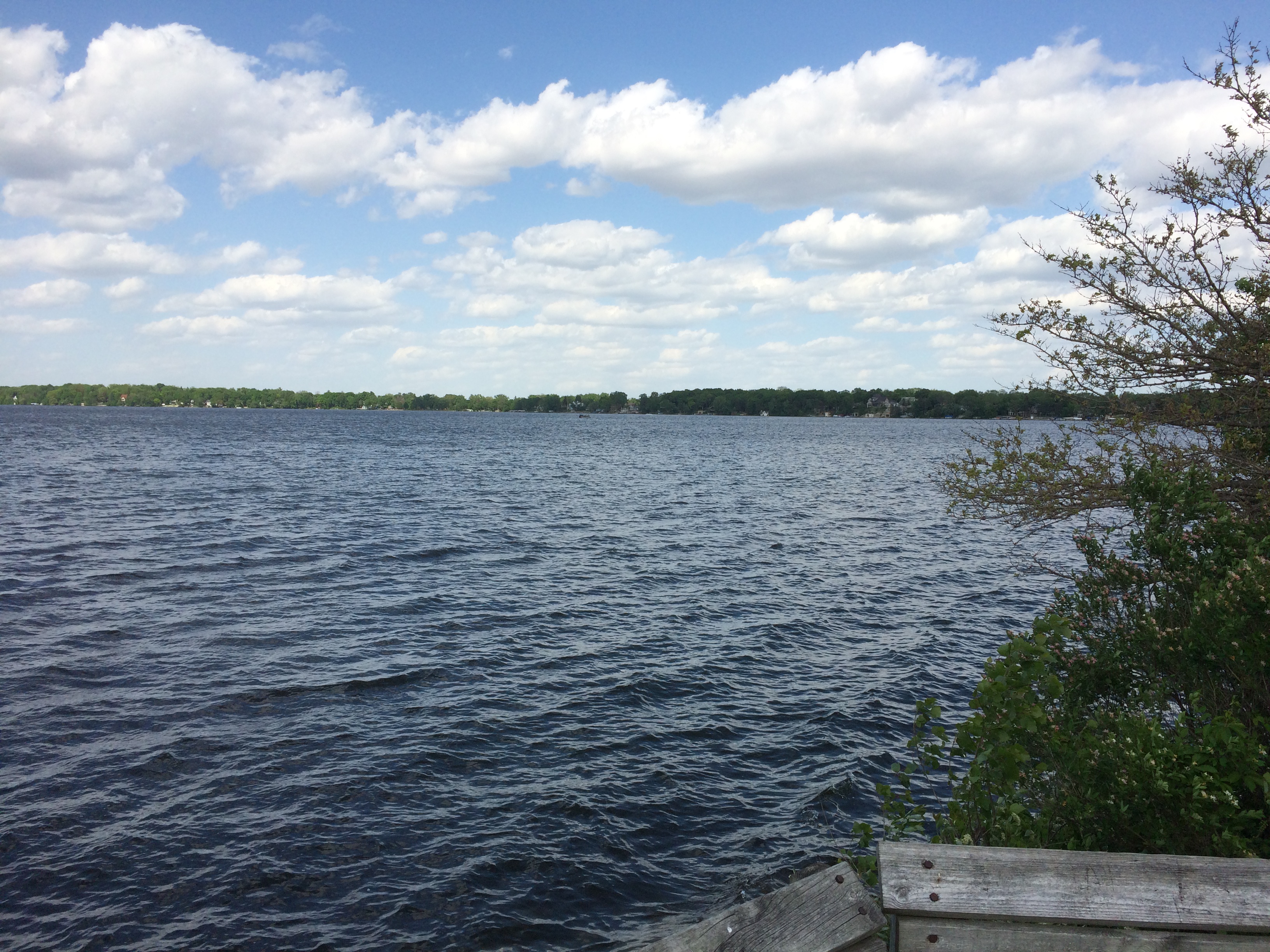
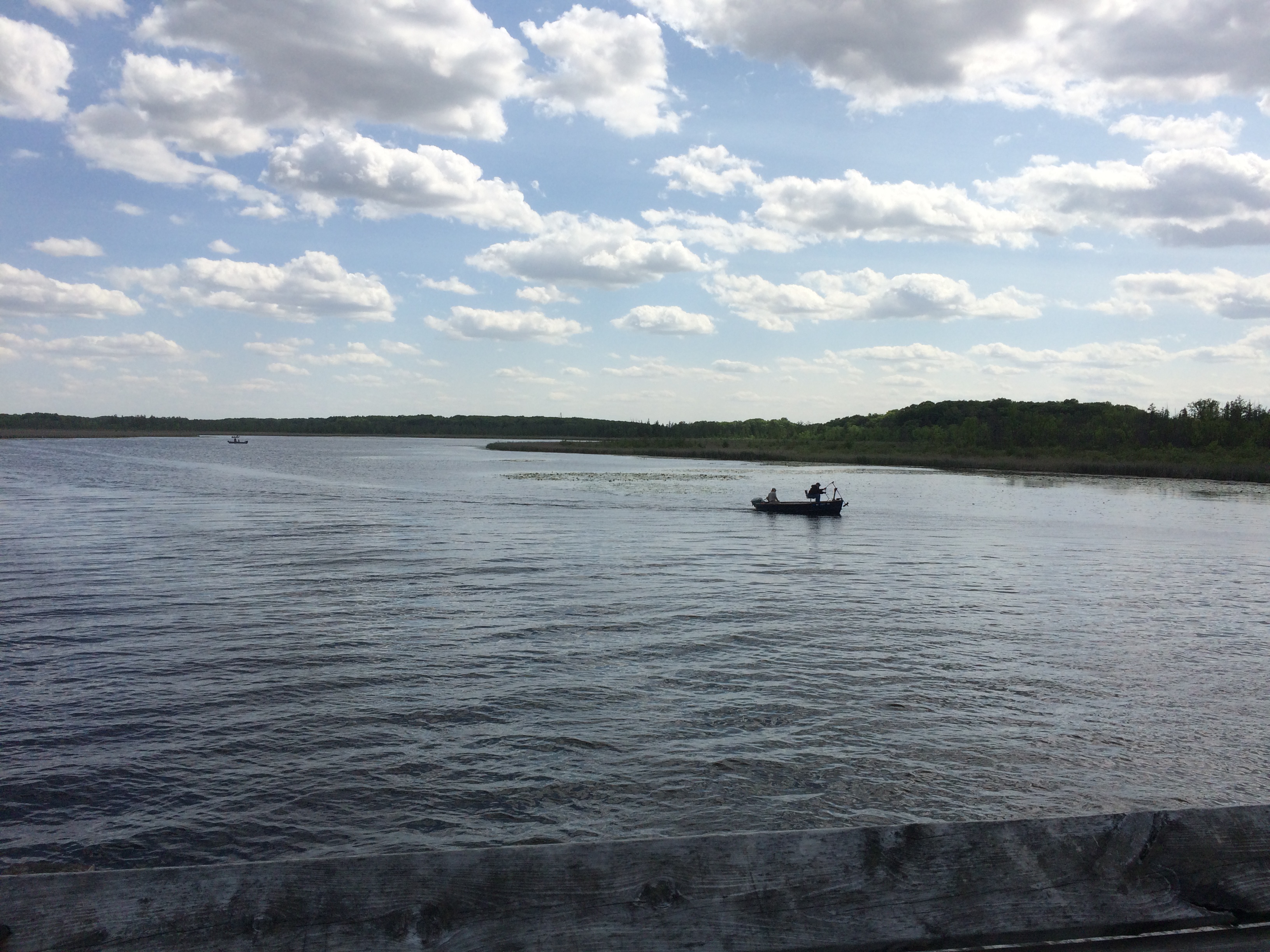
Views of Rock Lake from the trestle, to the north and to the south. Pyramids lurk under the waves, they say. Built by aliens, no doubt. To harness pyramid power and teach mankind to live in peace and harmony.

A local Nessie would be better, but I’ll pass along whatever tales are on offer.

Lake Mills and Its Pyramidal Oddity

In late May, I benefited from a bit of service journalism offered by the Chicago Tribune, which told me that the state of Wisconsin wasn’t charging entry fees to state parks on the first weekend in June.

So on June 2, we sought to take advantage of the situation by driving up to Wisconsin for the day — and probably proving the marketing arm of the state right when it calculated that such an offering would attract some out-of-state visitors, especially from Illinois.

Before we went to any state park, however, we stopped in the pleasant town of Lake Mills, which is in Jefferson County in the southern part of the state, between Madison and Milwaukee. We had a satisfying lunch at a diner called Cafe on the Park, which is on Main St. across the street from Commons Park. Then we took a stroll over to the park.

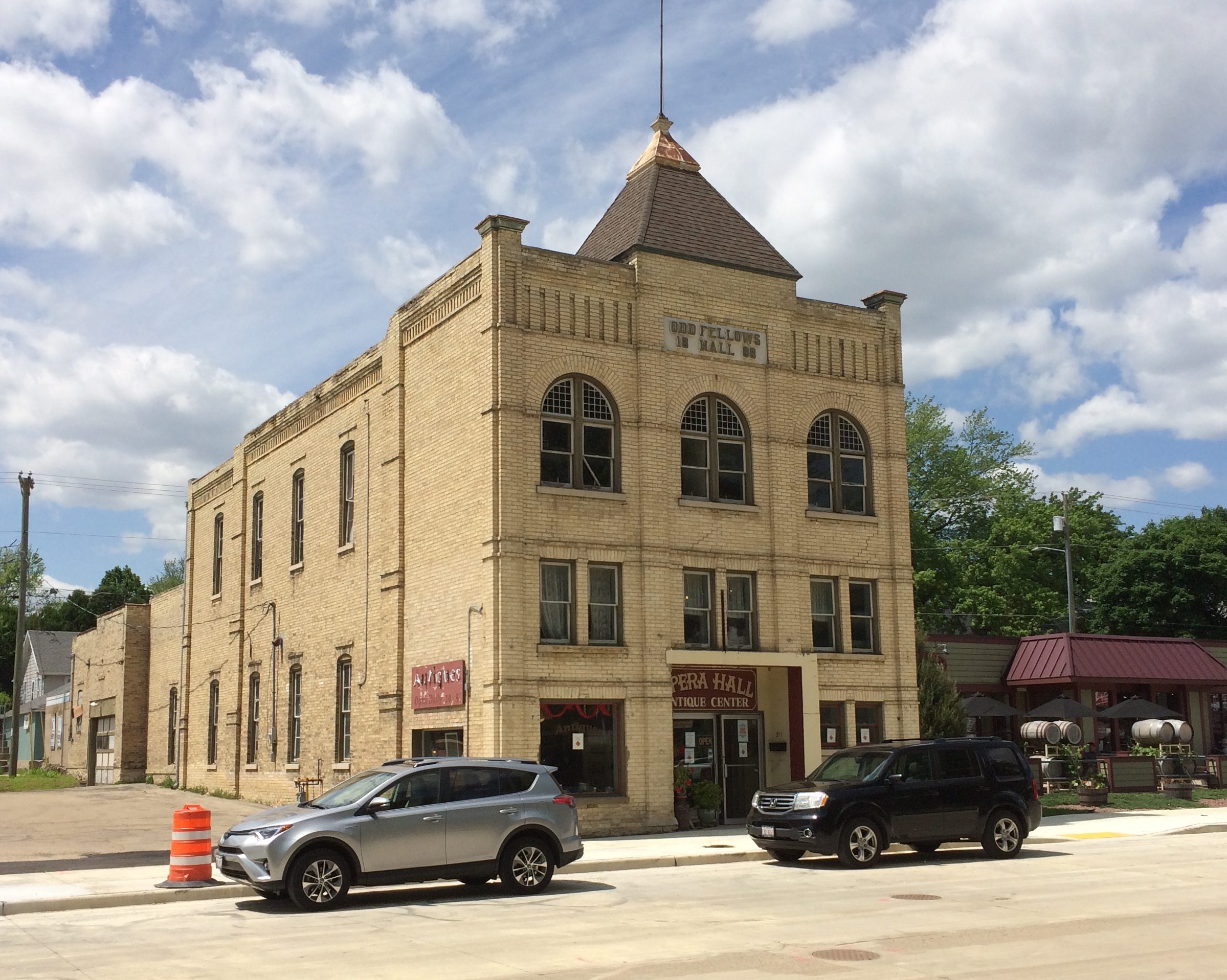
Visible from the park are some interesting buildings, such as the former Odd Fellows Hall and local opera house. Now it’s occupied by an antique mall.

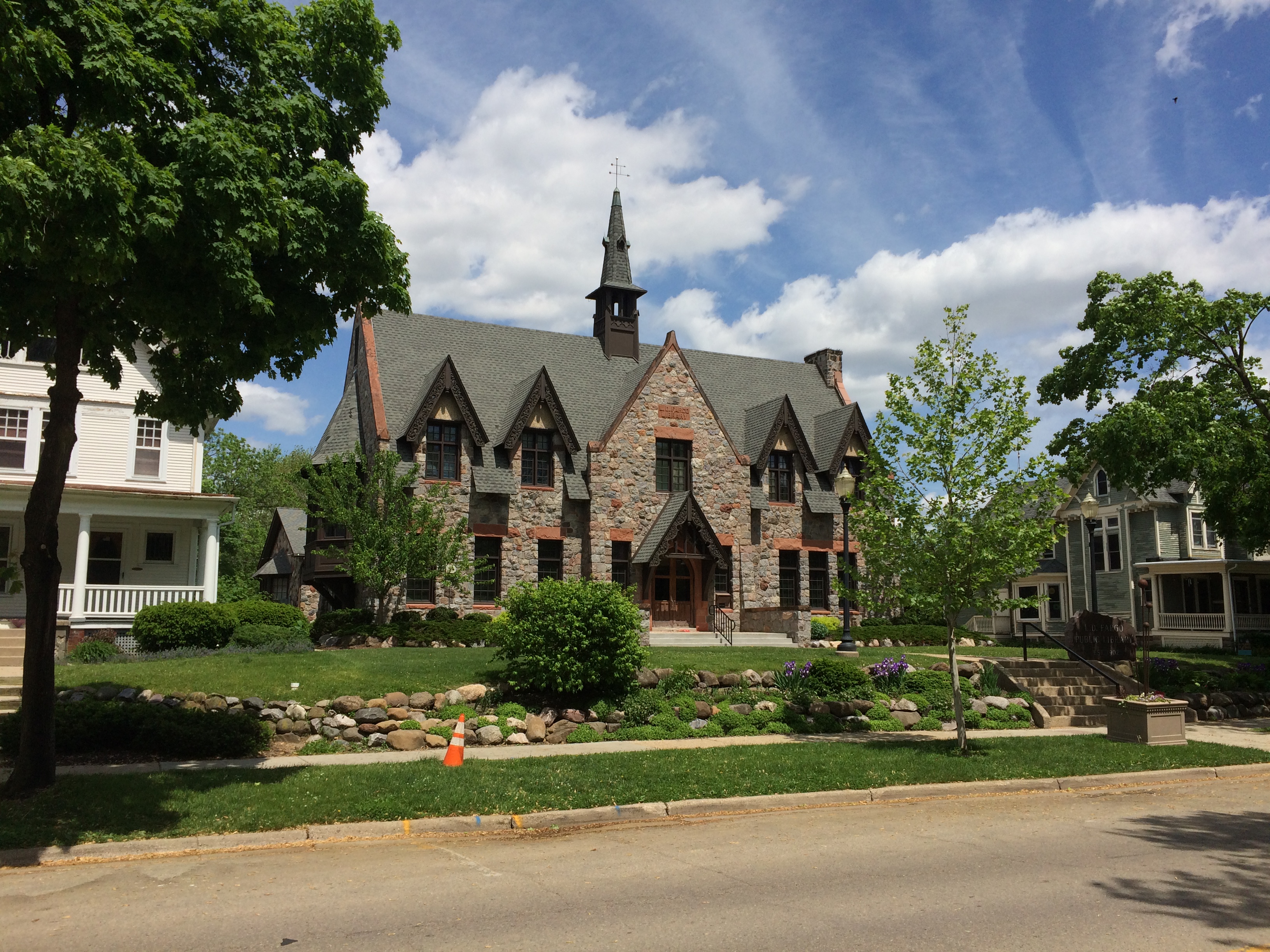
The charming Lake Mills Public Library. Closed on Sunday, or I would have gone in.

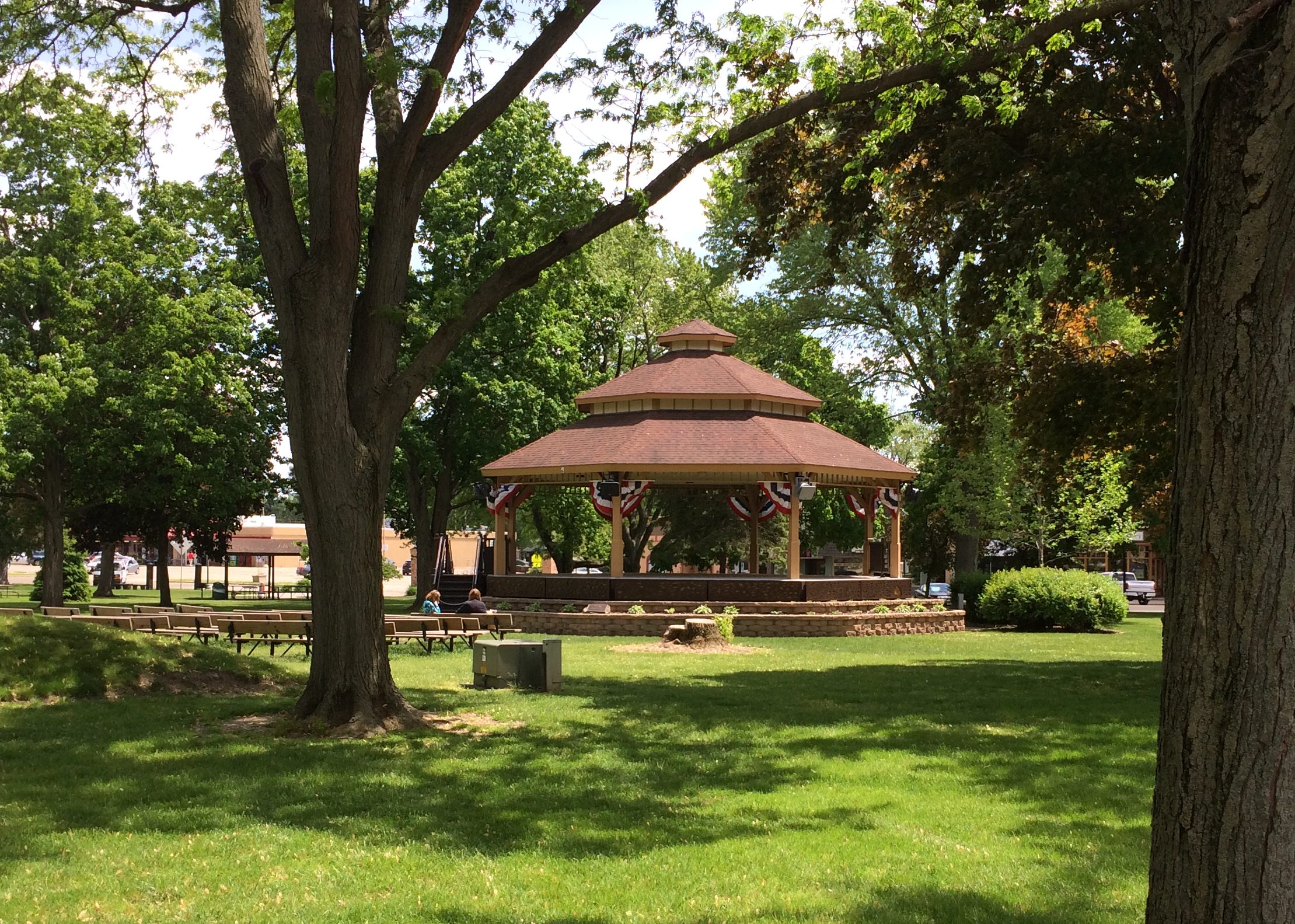
There’s a bandstand in the park. Wouldn’t be a proper small-town park without one. With patriotic bunting. Nice touch. Formally it’s the Franklin Else Memorial Bandstand, though you (I) could argue it’s a large gazebo.

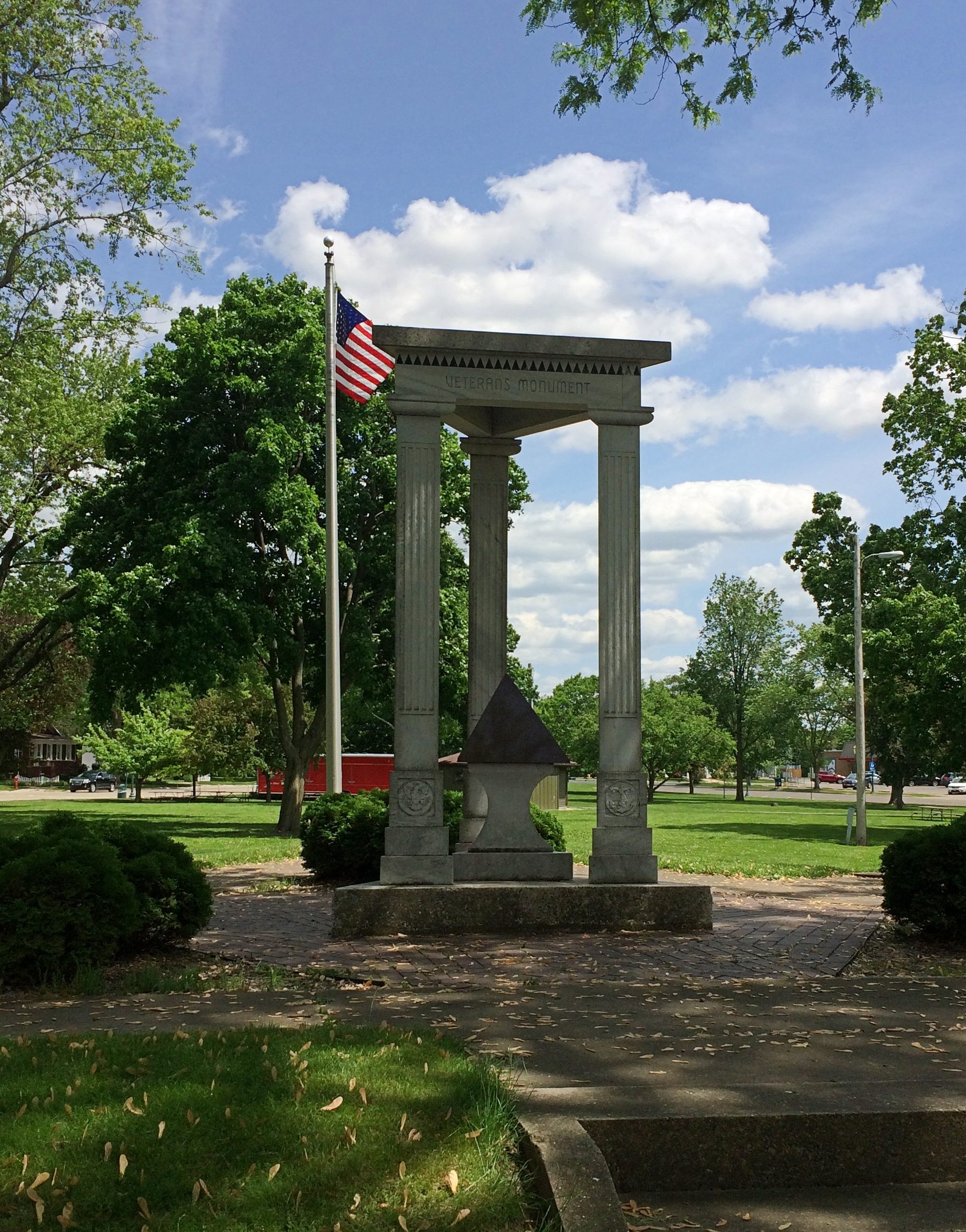
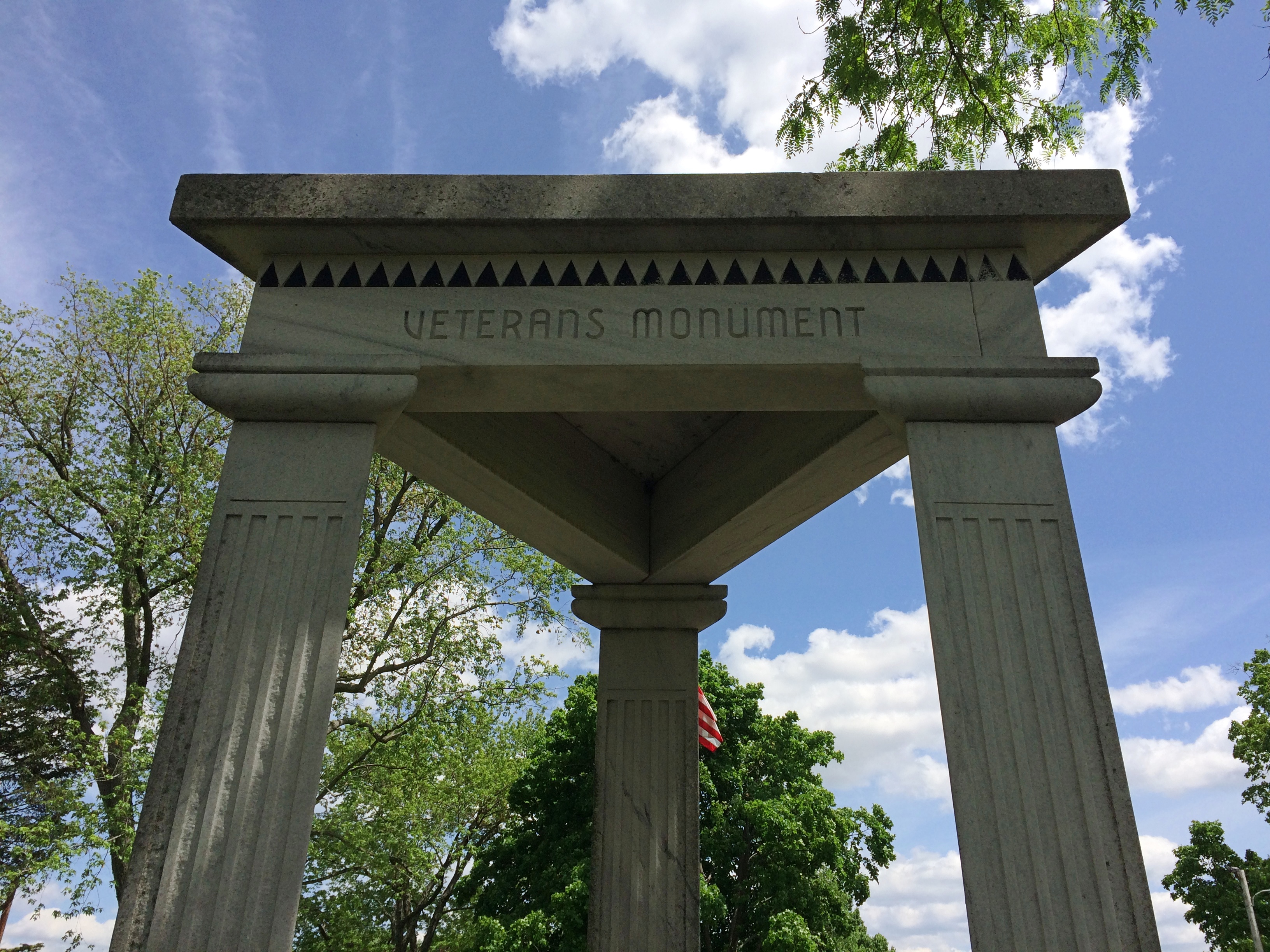
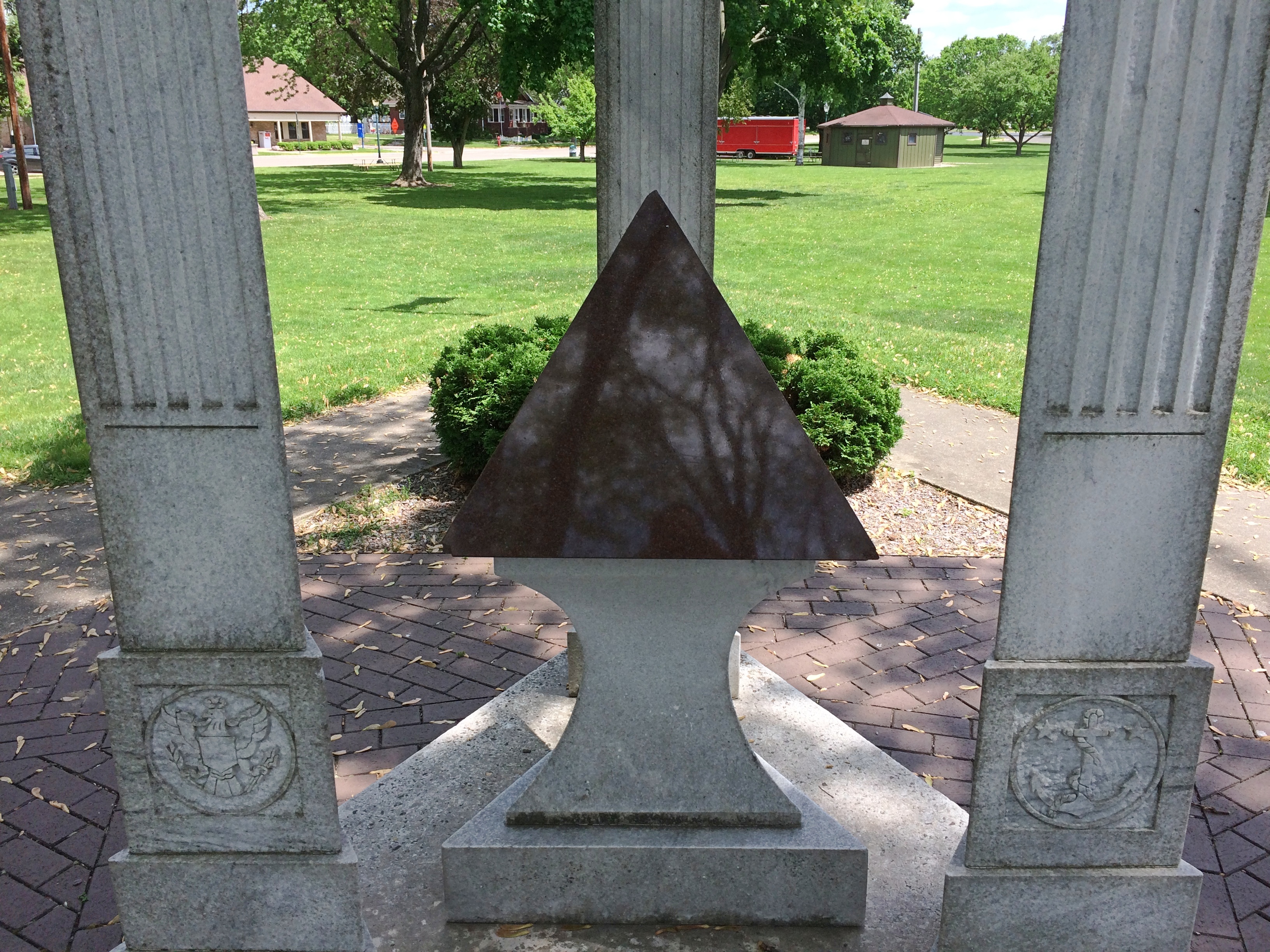
The Veterans Monument in the park is a little odd. It’s respectful and all, but has some unusual design elements.
It has a triangular shape, for one thing, with three triangular columns rising from a triangular base to support a triangular top. Triangles are also etched into the design in various places.
Besides all that, a black stone pyramid is the centerpiece of the memorial. Why? Or, if you’re feeling more surprised, WTF?

No marker on or near the monument explains. I didn’t know what to make of that local oddity until I got home and looked around some.

Twenty years ago, the Tribune published an article about Lake Mills and its adjacent body of water, Rock Lake.

“There’s something in Rock Lake.

“What, exactly, lies at the bottom of this placid fishing hole east of Madison is the stuff of local legend, the obsession of scores of divers and the spark of an unlikely controversy that has raged among locals for decades.

“Believers, including many old-timers and diving enthusiasts, say that ancient pyramids, ruins and even a serpent-like, 200-foot-long rock figure lay beneath these algae-filled waters. They say pre-Columbian dwellers built the structures on dry land before the area was flooded by geological upheavals and a dam built in the 1800s.

“Skeptics… say there’s nothing but natural piles of rocks below the 40-foot depths…. the otherwise unremarkable town of Lake Mills, which abuts Rock Lake, [calls] itself ‘City of the Pyramids.’ “

City of Pyramids, eh? Sounds like something a ’30s newspaperman made up and a ’50s chamber of commerce ran with. A little whimsical to incorporate into a veterans memorial, no? Then again, do such memorials need to be somber to the point of sameness, ignoring local lore?

That’s hardly the end of online descriptions of the supposed structures at the bottom of Rock Lake. Grazing through some of them, you come up with lines like:

“You can’t mistake certain things. There’s a city down there. There’s no question about it.”

“There are remarkable, artificial underwater structures beneath the waters of Rock Lake, Wisconsin but unfortunately for many years these prehistoric ruins have been ignored by researchers.”

“Much like Judge Hyer before him, Taylor believed that the three to four pyramids (the number changed with each reporting) was [sic] Aztec in origin and were built during a drought when the lake was completely drained and they were sacrificial altars to the rain god to bring the rains back.”

“Aerial photos, side boat sonar scans, and underwater divers eventually charted a complex of at least nine different stone structures, including: two rectangular pyramids, several stacked-rock walls, two ‘Stone Cone’ areas, a conical pyramid, and a large ‘Delta Triangle’ structure.”

“Former state archaeologist Bob Birmingham told the Wisconsin State Journal in 2015 that the tales were ‘a bunch of baloney.’

Bob Birmingham chalks up the shapes to piles of rock left by receding glaciers, and notes that such piles are found in other Wisconsin lakes. My, that’s boring. Tales of ancient peoples building mysterious structures are awfully romantic.

Somehow, I’m inclined to agree with Bob.

Cole Porter’s 128th Birthday

This year’s back yard grilling and gabfest has come and gone, when old friends gather to sit on our deck and gab. You know, old-fashioned conversation. It’s been an annual event now since 2014 on the second Saturday of June. In recent years, I’ve been claiming that we gather to celebrate Cole Porter’s birthday, which was on Sunday this year. No Porter songs were sung at the event, however, probably because none of us can sing.

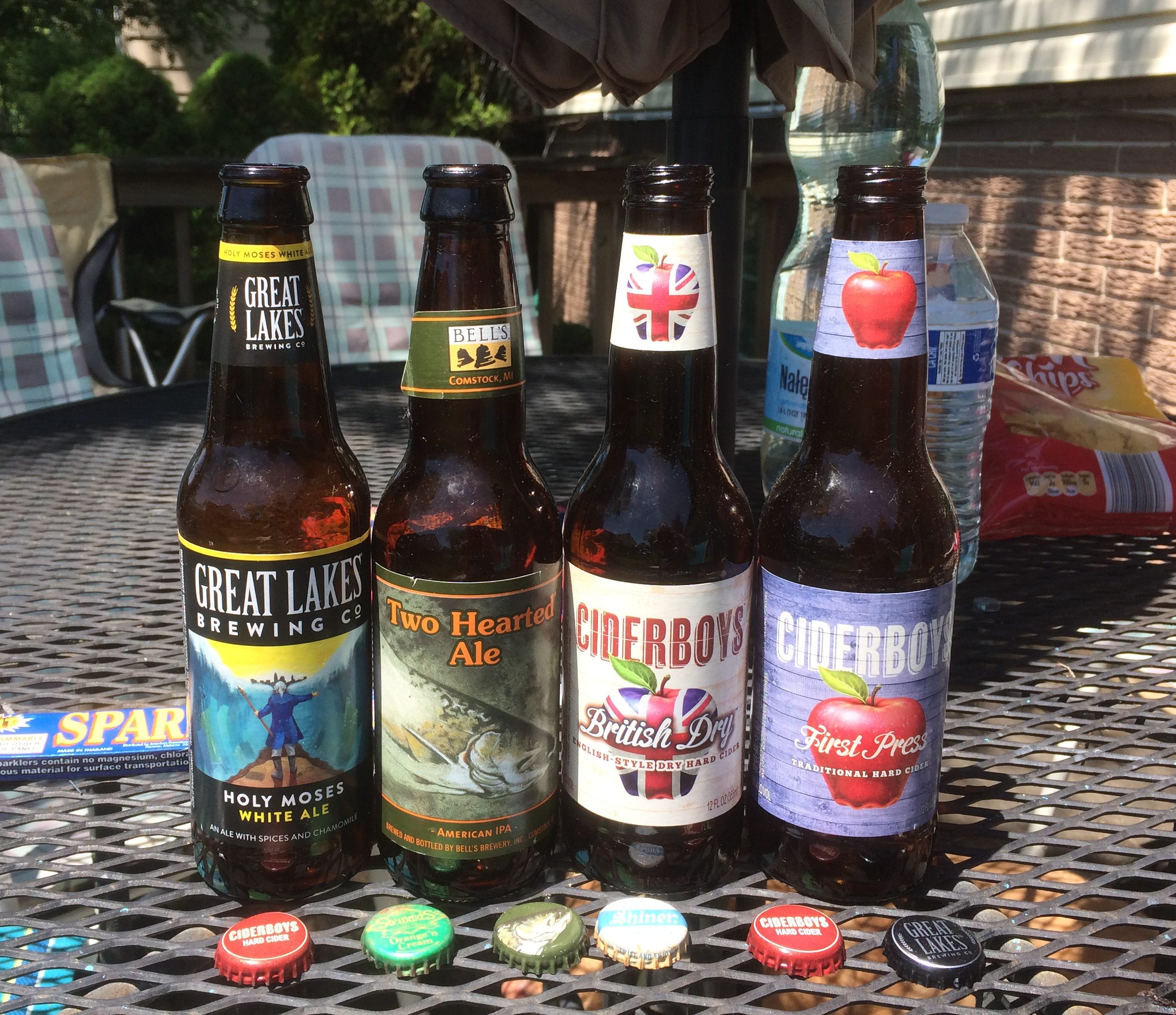
Beer bottles remain behind. Actually, beer and hard cider this year. I drank the Two Hearted Ale and tried one of the ciders this year, though I forget which.

We had a domestic array of alcohol this time. Know-Nothing brews, you might say. In fact, not just domestic, but all Midwestern.

The Holy Moses White Ale was brewed in Cleveland, while the Two Hearted Ale originated in Comstock, Michigan. Both ciders were from Stevens Point, Wisconsin, despite the Union Jack-themed label, and it did my heart glad to learn that.

Among Wisconsin towns, I have a sentimental attachment to Stevens Point, where I spent a few days in the summer of ’78. If you can’t be sentimental about the summer of ’78, when can you be?

Southern Loop Debris

When were driving through LaGrange, Texas, on the first day of the trip, I began to wonder. What’s this town known for? I know it’s something. Then I saw a sign calling LaGrange “the best little town in Texas.” Oh, yeah. Famed in song and story.

On the way to Buffalo Bayou Park in Houston, we took a quick detour — because I’d seen it on a map — to see the Beer Can House at 222 Malone St., a quick view from the car. Looks like this. Had we wanted to spend a little more time in Houston, I definitely would have visited the Orange Show. Ah, well.

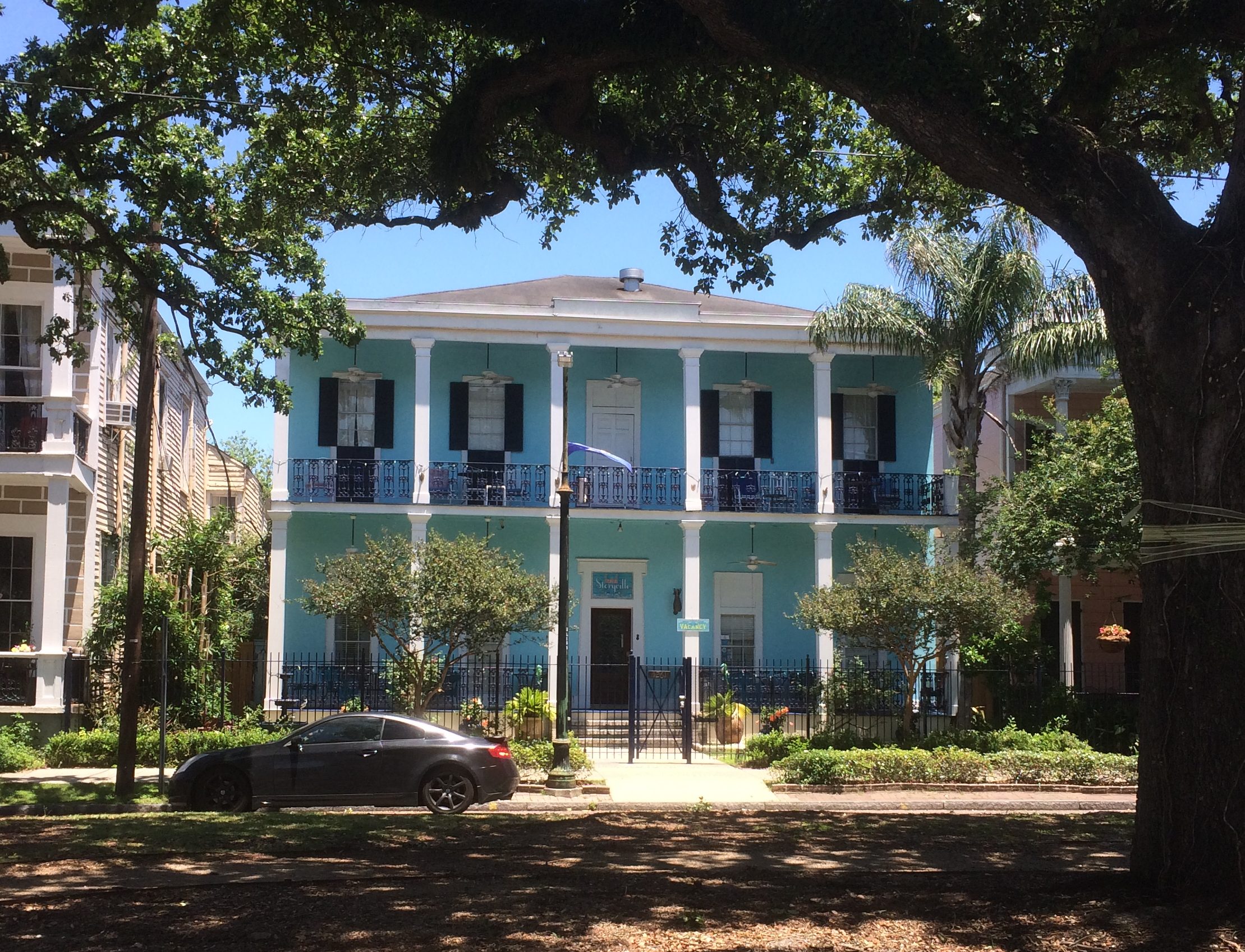
We enjoyed our walk along Esplanade St. in New Orleans, where you can see some fine houses.
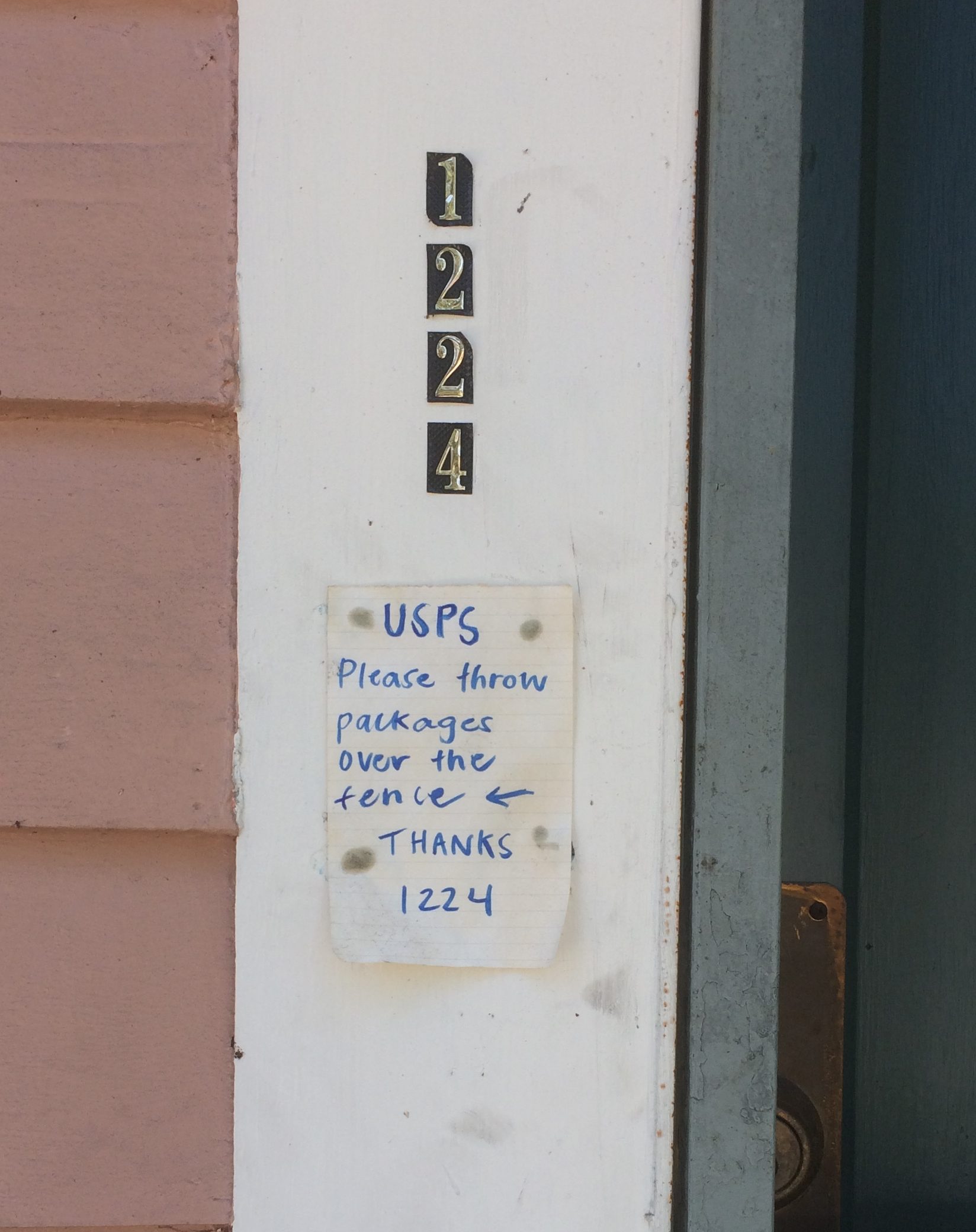
Plus efforts to thwart porch pirates. We saw more than one sign along these lines during our walk down the street.
We spent part of an evening in New Orleans on Frenchman St., which is described as not as rowdy or vomit-prone as Bourbon St., and I suppose that’s true, though it is a lively place. We went for the music.

At Three Muses, we saw Washboard Rodeo. They were fun. Western swing in New Orleans. Played some Bob Wills, they did.

At d.b.a, we saw Brother Tyrone and the Mindbenders. Counts as rock and soul, I’d say. Also good fun, though they were playing for a pretty thin Monday night crowd.

Adjacent to Frenchman St. is an evening outdoor market, the Frenchman Art Market, which we visited between the two performances. The market featured an impressive array of local art for sale, though nothing we couldn’t live without.

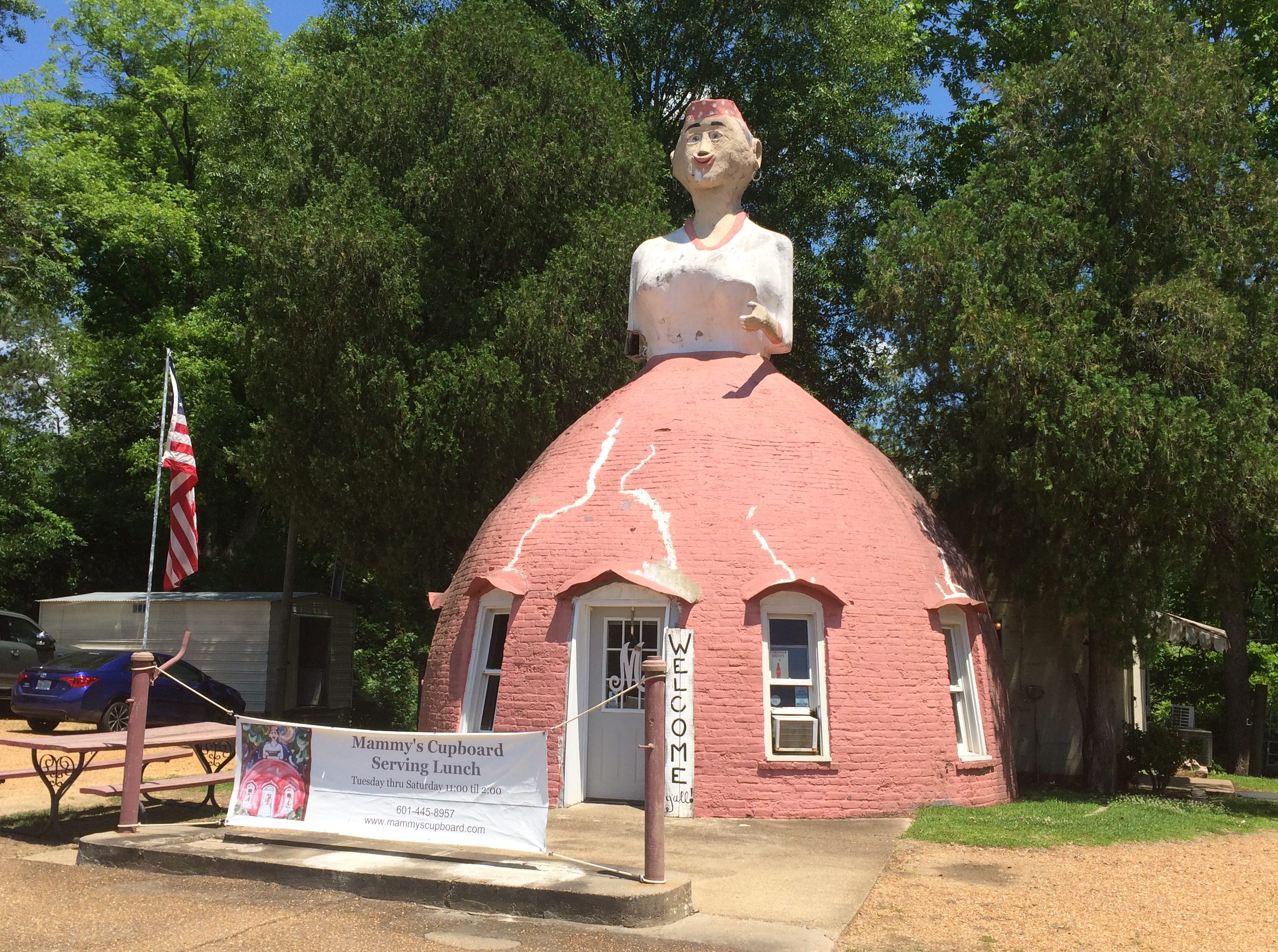
Something you see on U.S. 61 just outside of Natchez, Mississippi: Mammy’s Cupboard, a restaurant. More about it here.

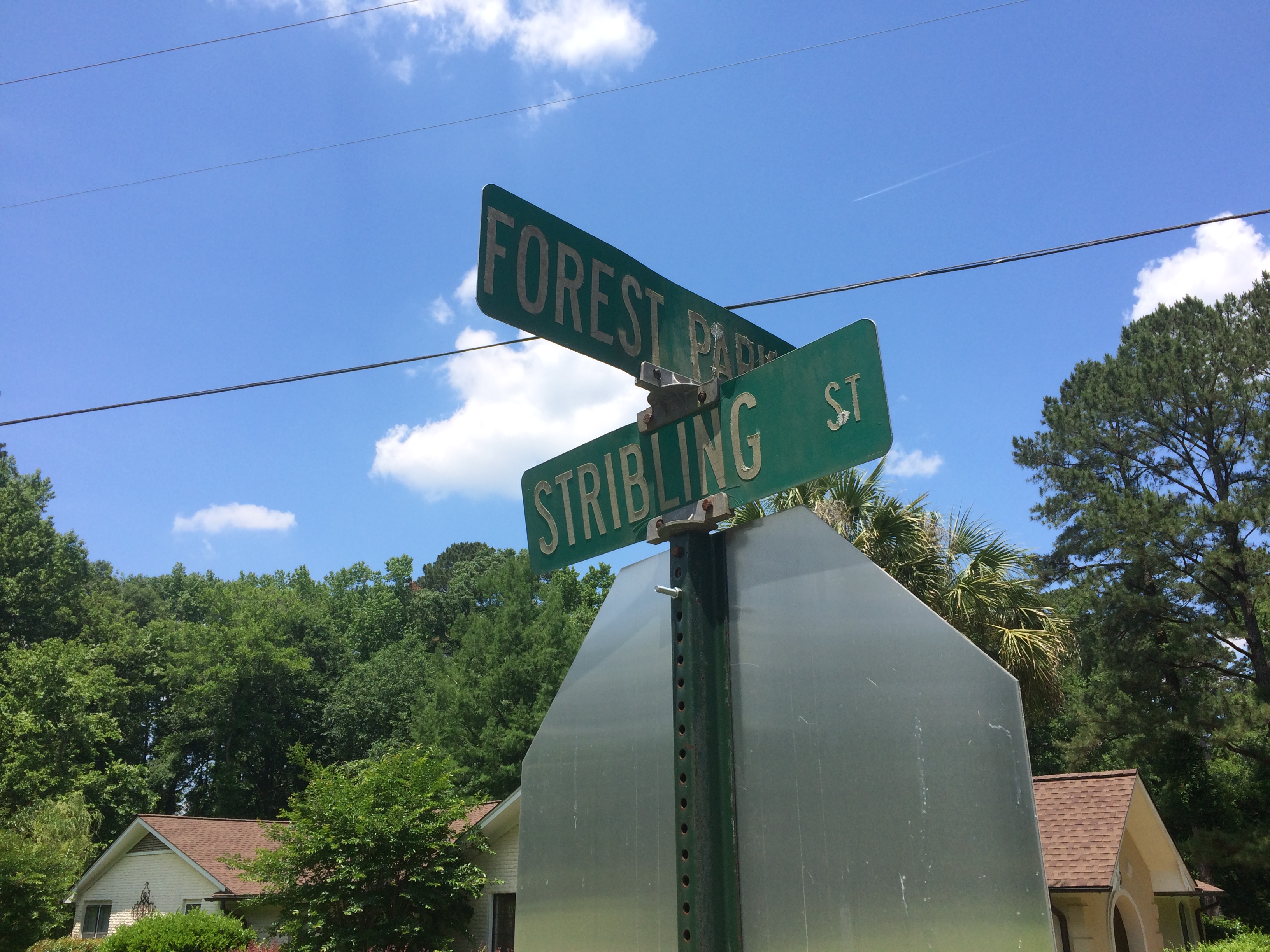
In Philadelphia, Mississippi, Stribling St. is still around. I don’t know why it wouldn’t be, but after nearly 30 years, I wanted another look.

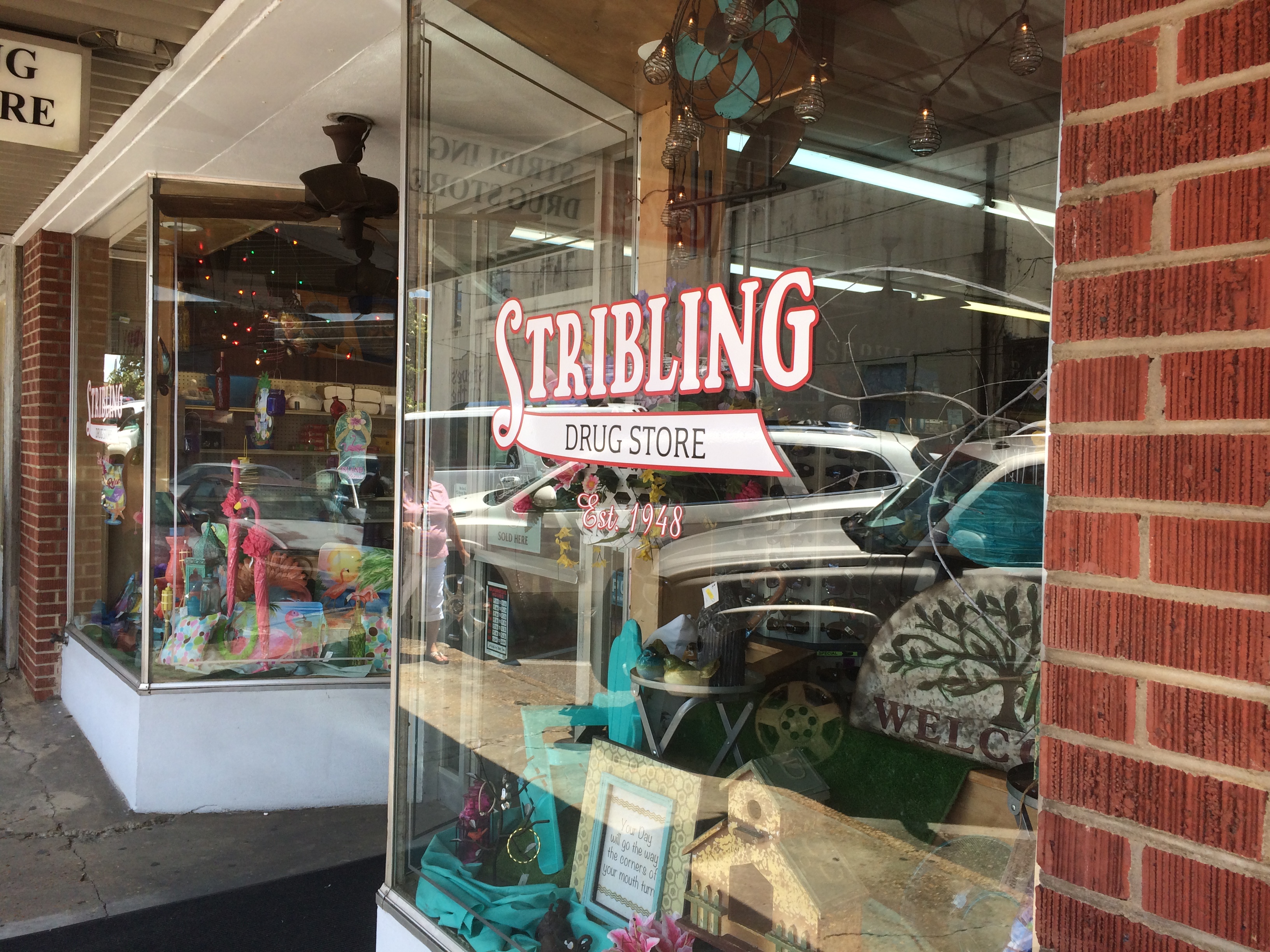
So is the local pharmacy run by distant cousins. Glad the chains haven’t spelled its demise.

During our drive from metro Jackson, Mississippi, to Montgomery, Alabama — connected by U.S. 80 and not an Interstate, as you might think — we passed through Selma, Alabama. I made a point of driving across the Edmund Pettus Bridge, though we decided not to get out and look around. Remarkably, the bridge looks exactly as it does in pictures more than 50 years old.

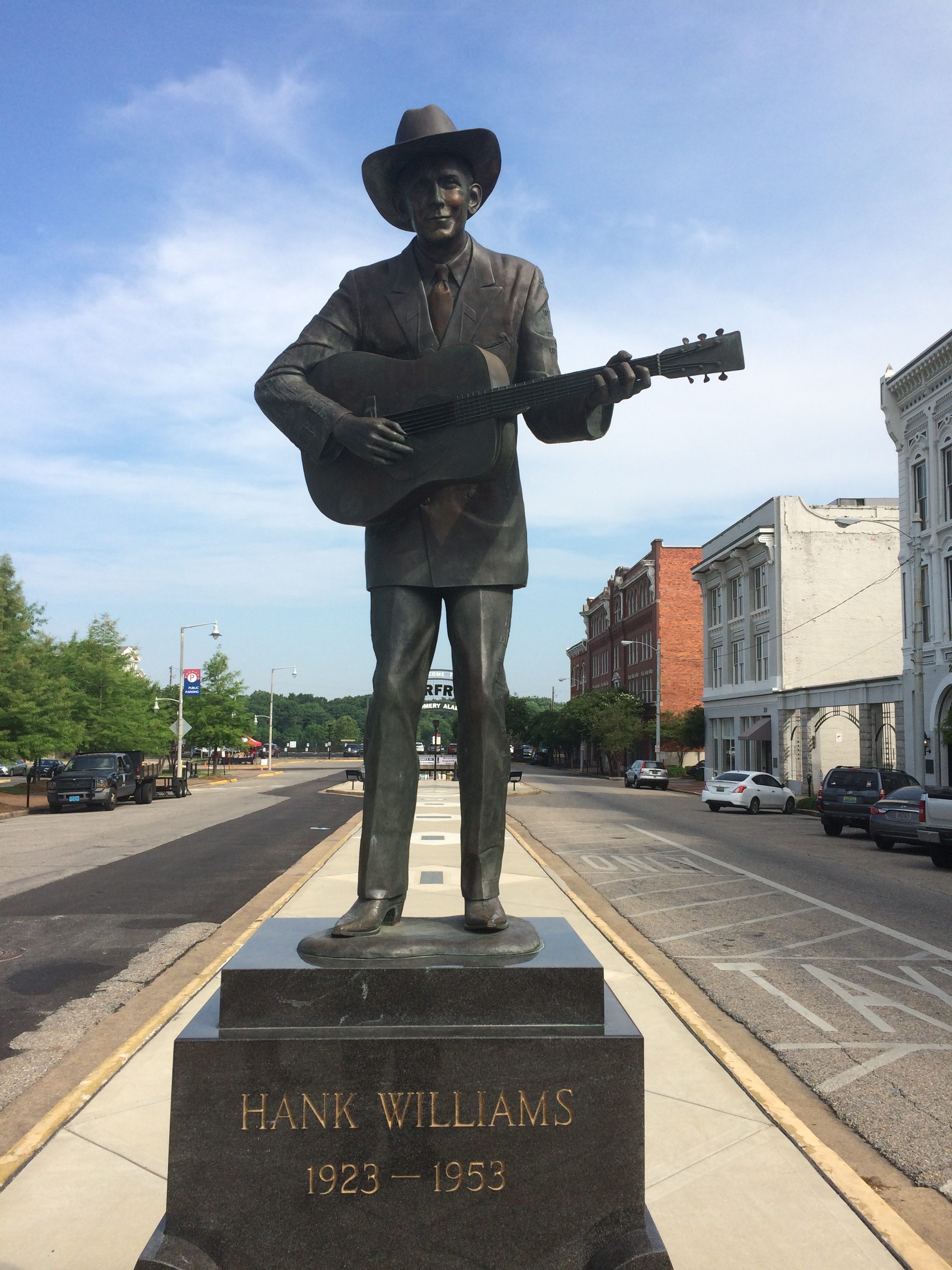
In downtown Montgomery, you can see this statue. I understand the bronze has been around since 1991, but was only recently moved to its current site not far from Riverfront Park, the river of course being the Alabama.
I’d forgotten native son Hank Williams died so young. Some singers die rock ‘n’ roll deaths, some die country deaths like Hank.

Speaking of death, early in the trip, I was activating my phone — whose dim algorithm always suggests news I seldom want to see during the process — and I noticed the name “Doris Day” in the feed. I figured that could mean only one thing. Sure enough, she became the first celebrity death of the trip.

I hadn’t known she was still alive. In fairly rapid order during the trip after Ms. Day, the reaper came for Tim Conway, I.M. Pei and Grumpy Cat. I didn’t know that last one, but Lilly did.

I remember a time that Tim Conway described himself as “the funniest man in the universe” on the Carol Burnett Show. We all took that as a comedian’s hyperbole. But what if he was right? What if some higher intelligence has made a four-dimensional assessment of human humor and come to that exact conclusion?

As for Doris Day, I will try to park as close to my destinations as possible in her honor for the foreseeable future (a term I remember hearing as long ago as the ’80s in Austin).

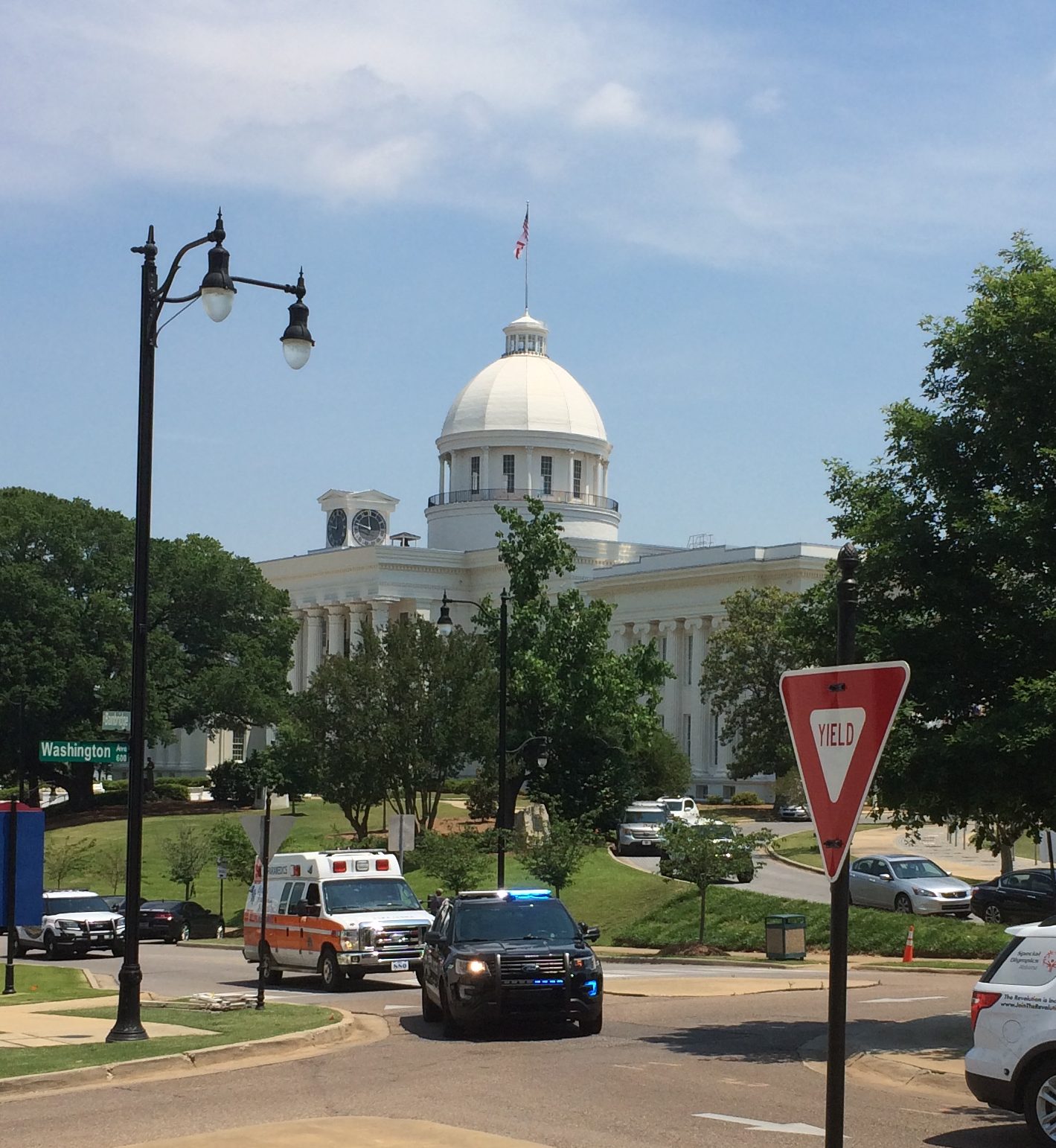
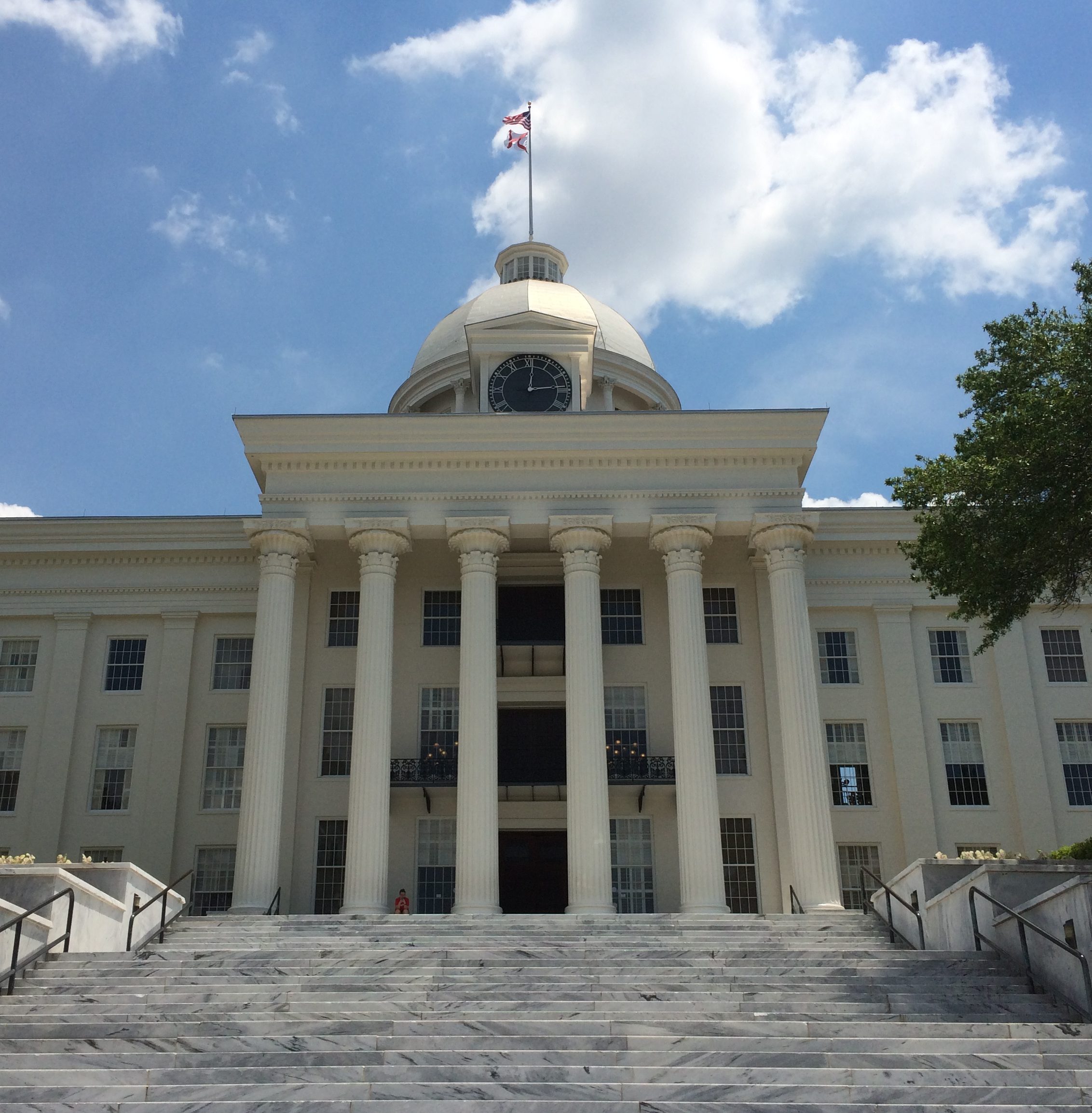
Also in Montgomery: the Alabama State Capitol. The Alabama legislature had been in the news a lot before we came to town, as the latest state body to try to topple Roe v. Wade. That isn’t why I visited. I see capitols when I can.

From a distance.
Closer.
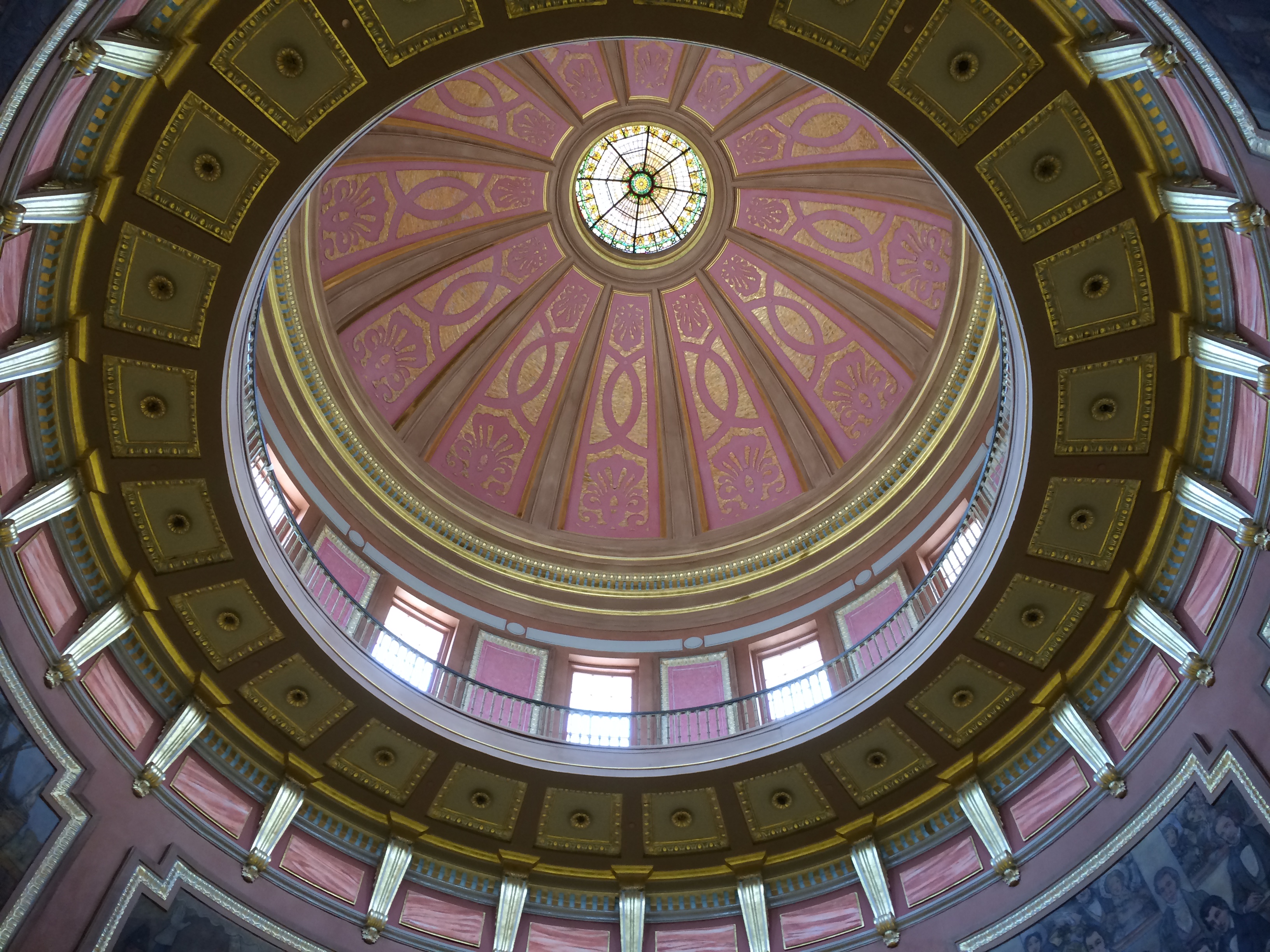
The capitol was completed in 1851, though additions have been made since then. The interior of the dome is splendid.

Actually, the Alabama House and Senate don’t meet in the capitol any more, but at the nearby Alabama State House, something I found out later. When we visited, the capitol’s House and Senate chambers seemed like museum pieces rather than space for state business, and that’s why.

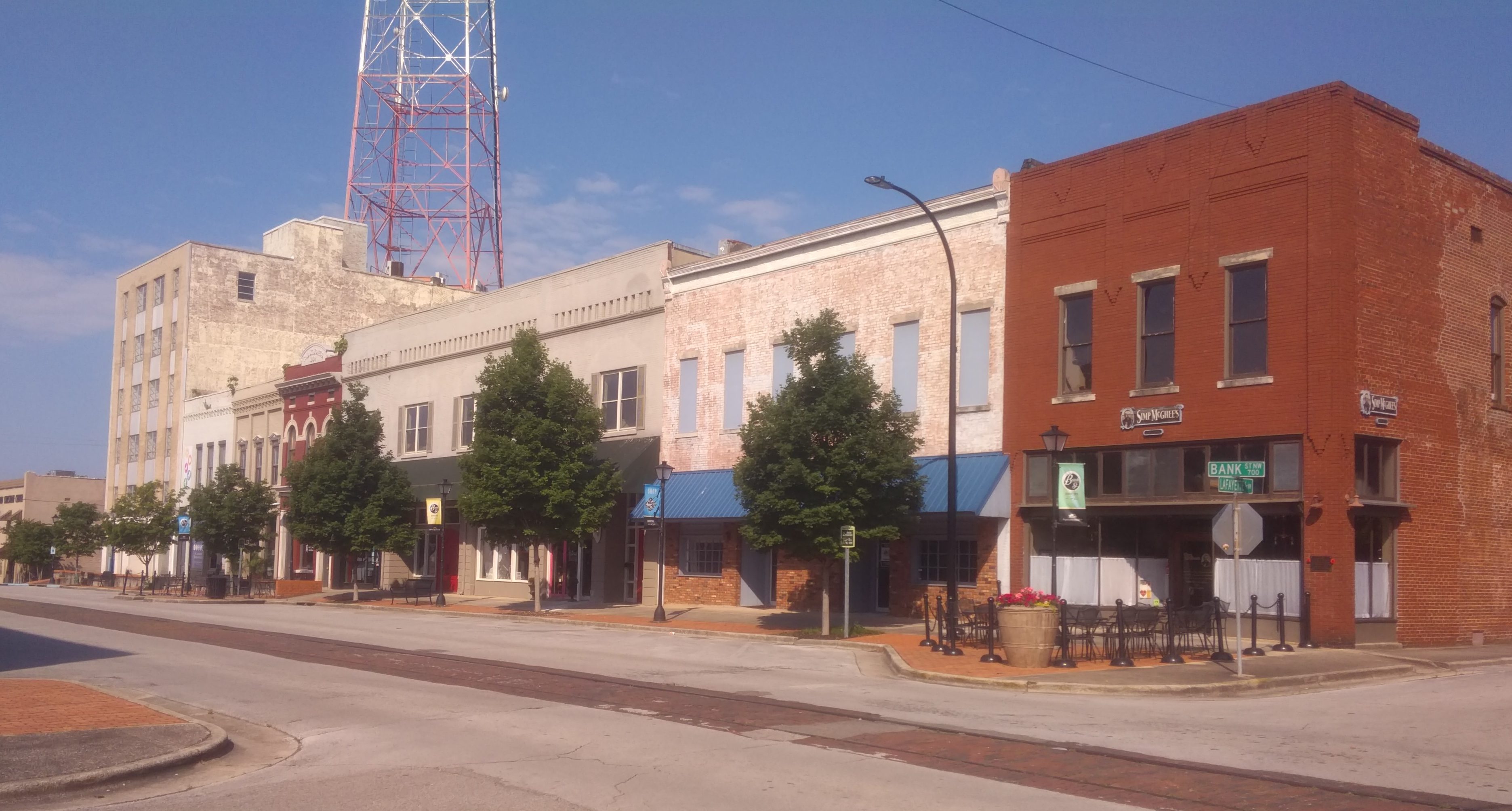
Seems like hipsters haven’t discovered Decatur, Alabama, yet. But as real estate prices balloon in other places, it isn’t out of the question. The town has a pleasant riverfront on the Tennessee and at least one street, Bank St., that could be home to overpriced boutiques and authentic-experience taprooms.
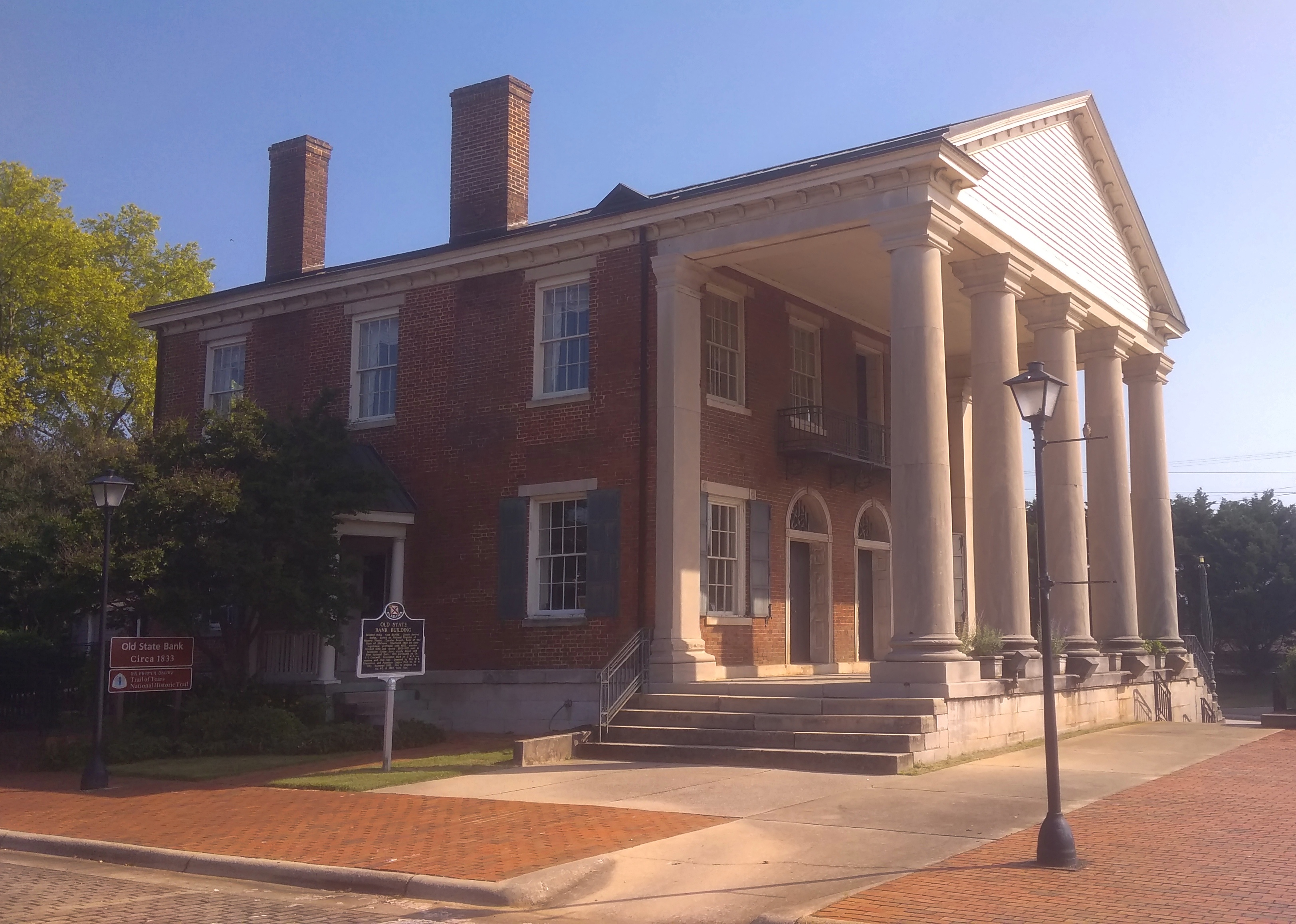
Of more interest to me was the Old State Bank, dating back to 1833 and restored toward the end of the 20th century. It is where Bank St. ends, or begins, near the banks of the Tennessee River.

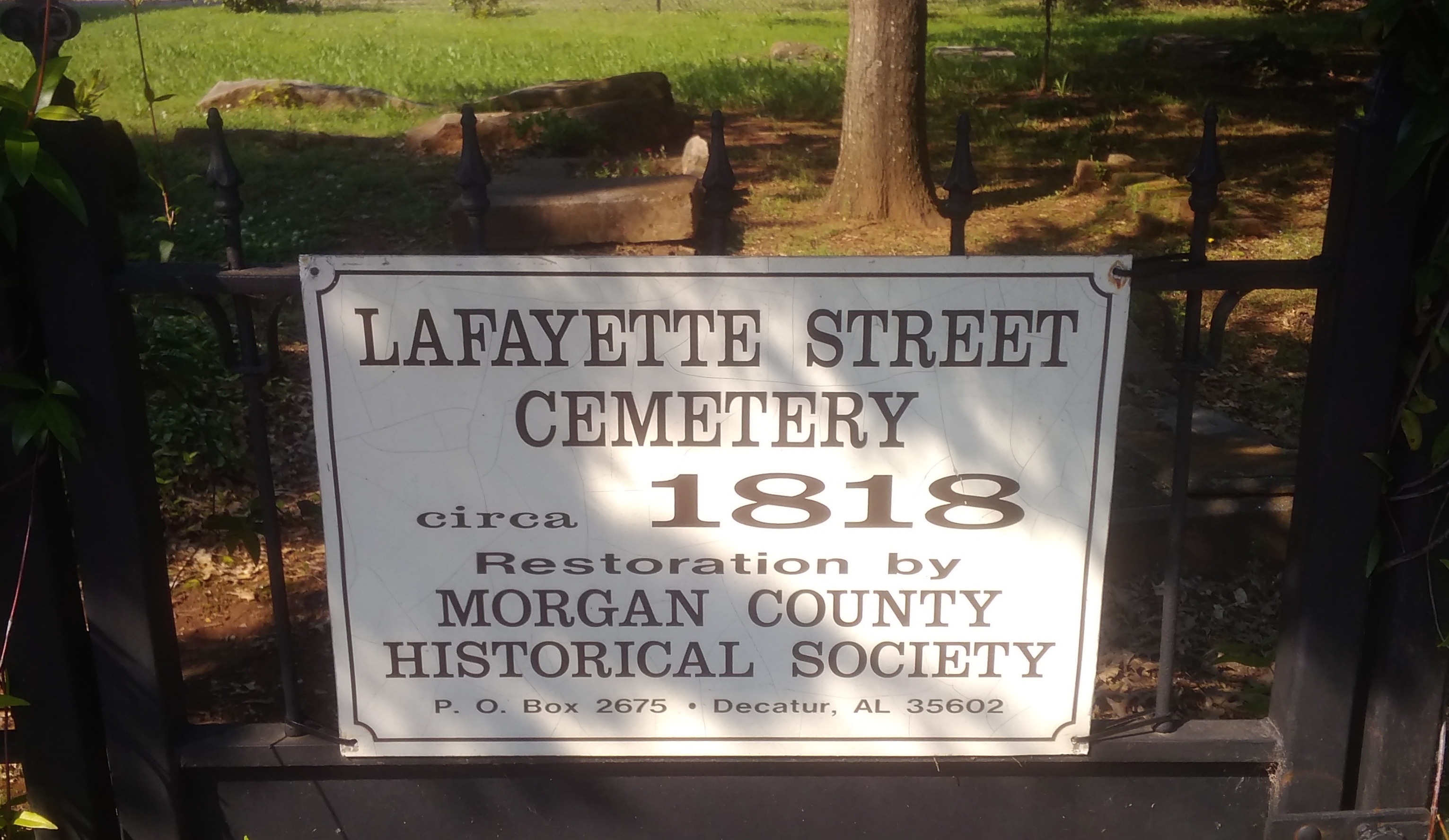
Even more interesting is the Lafayette Street Cemetery, active from ca. 1818.

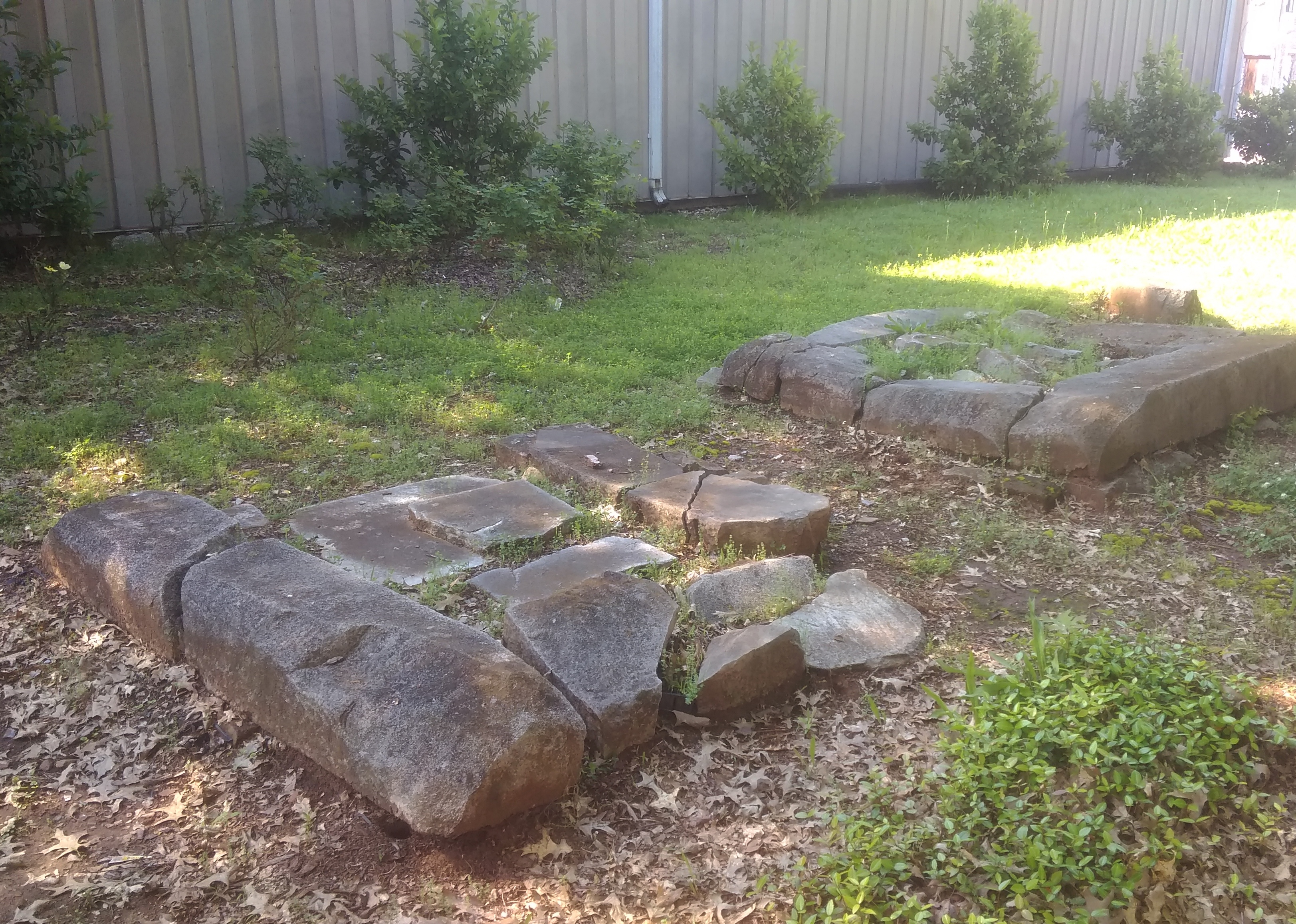
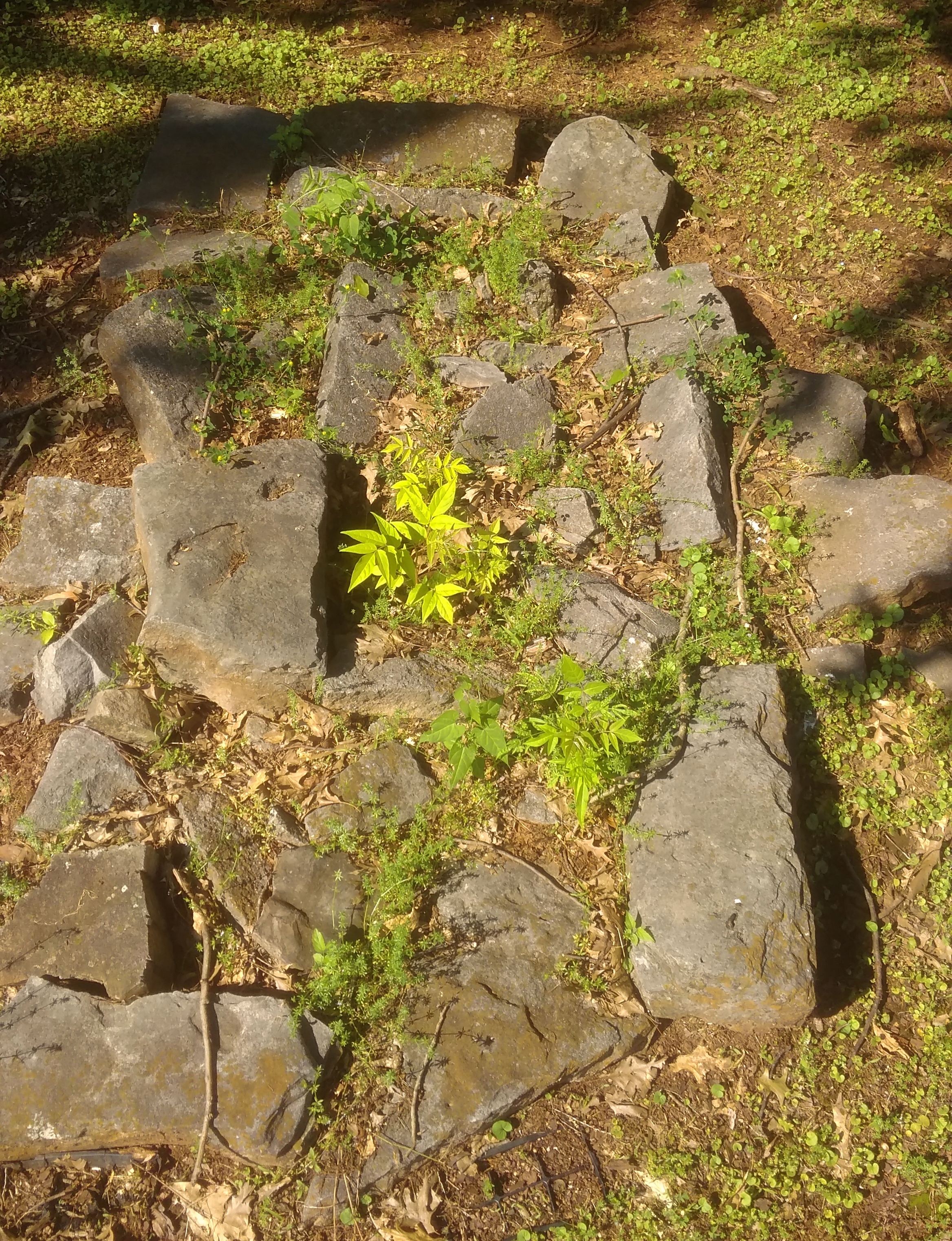
Lafayette Street Cemetery Decatur AlabamaIt’s more of a ruin than a cemetery, but I’m glad it has survived.
Lafayette Street Cemetery Decatur AlabamaLafayette Street Cemetery Decatur AlabamaLafayette Street Cemetery Decatur AlabamaDuring the entirety of the trip, there were plenty of random bits of the South to be seen along the way.
We also listened to a lot of Southern radio on the trip — something Lilly plans to avoid on future trips, Southern or not, with her Bluetooth and so on — and we had a little game whenever we tuned into someone discussing some social problem in earnest on a non-music, non-NPR station. The game: guess how long will it be before the discussion turns to God. It was never very long.