Beverly on a Sunday Afternoon

The leaves are turning. Here’s the scene at the 103rd St Metra Station, on the Southwest Side of Chicago, early Sunday afternoon, under a gray but not rainy sky.
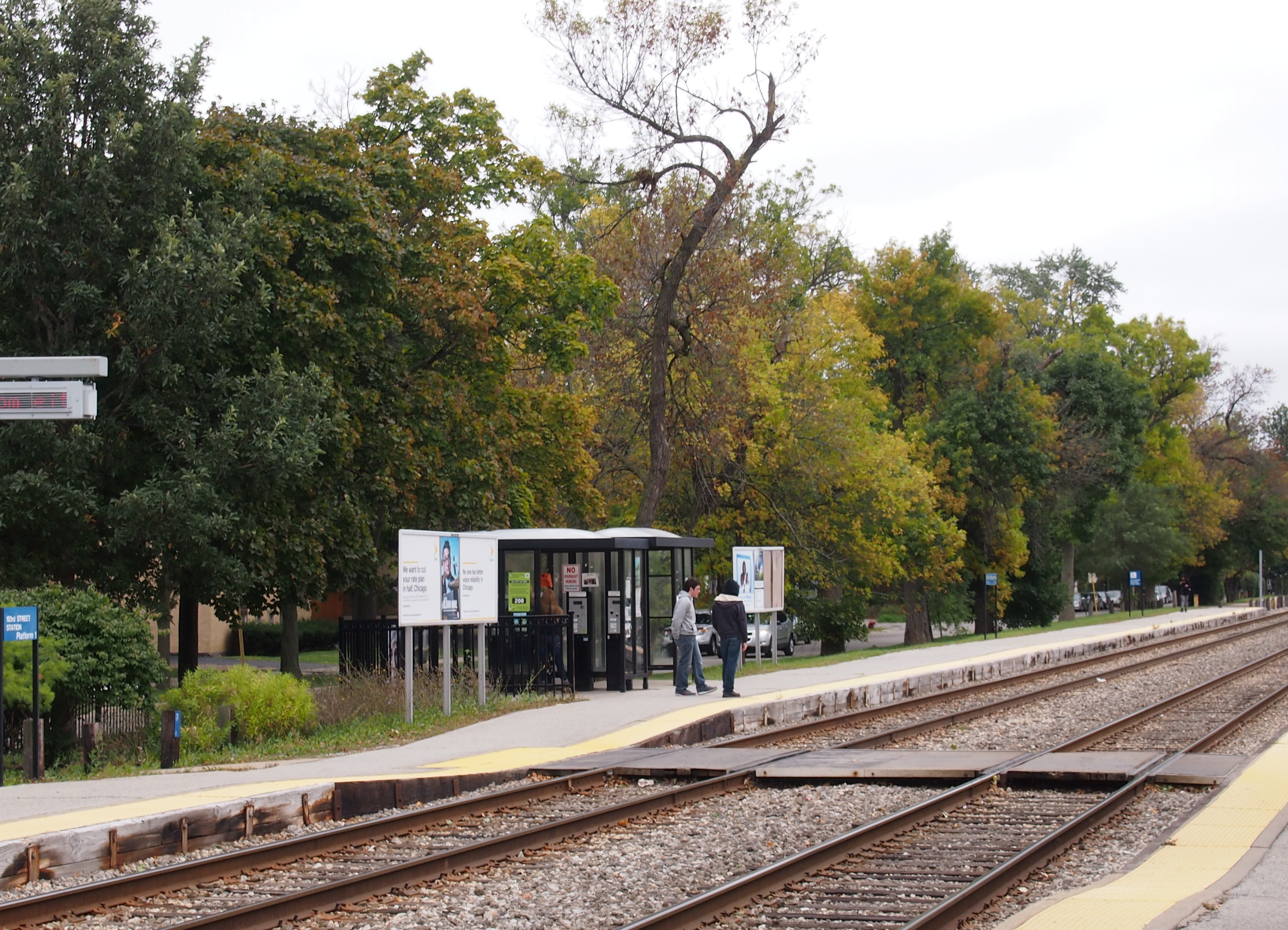
Beverly, ChicagoWe were at the station not because we rode the train that day — we drove, and parked nearby — but because Yuriko and I took a Chicago Architecture Foundation walking tour of the Beverly neighborhood, which started at the station. Beverly is on the Southwest Side of the city, and distinctive for a number of reasons, but one that stood out while walking around is its hilly contour. A glacial ridge just west of S. Longwood Dr. is easily visible near the station, which is on 103rd just east of Longwood, among a knot of small retail shops, including a local bank that tells one and all:
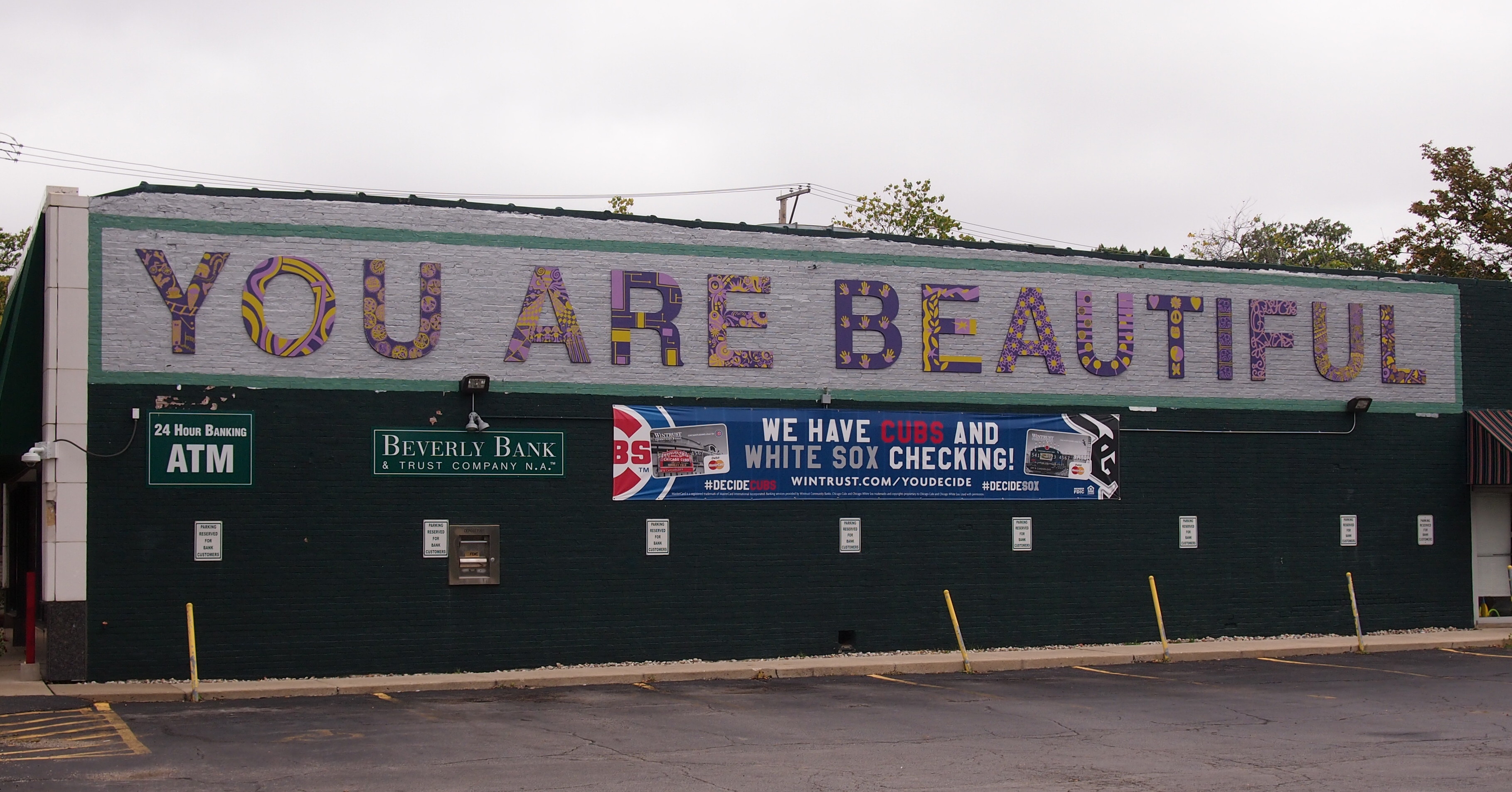
Beverly, Chicago“Known for its spacious homes, tree-lined streets, and racially integrated population, Beverly has retained its reputation as one of Chicago’s most stable middle-class residential districts,” notes the Encyclopedia of Chicago. Originally part of the village of Washington Heights (1874), the area was annexed to Chicago by 1890 but remained sparsely settled for decades.

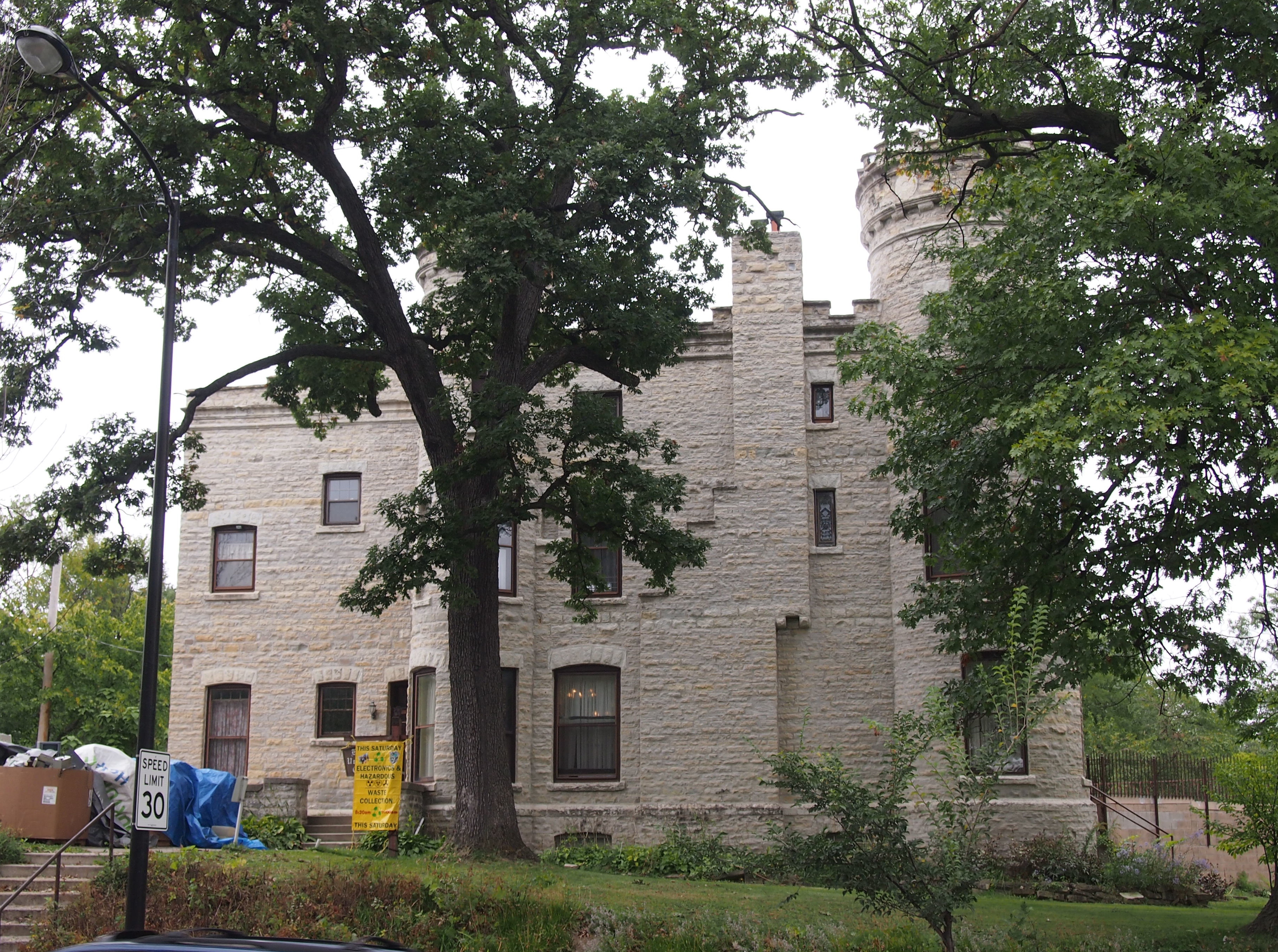
“In 1886, real estate developer Robert Givins constructed a limestone castle at 103rd and Longwood Drive in the Tracy subdivision of Washington Heights, but the surrounding neighborhood did not achieve residential maturity for decades. The situation was the same north of 95th Street, where Civil War general Edward Young and W. M. R. French, the first director of the Art Institute, had built homes along Pleasant Avenue in the 1890s. Vast sections of Beverly, especially the area south of 99th Street and west of Western, remained prairie until the 1940s and 1950s.”

This is the Gilded Age “Irish castle” of  Robert Givins, with its distinctive turret mostly obscured by leaves at the moment. These days, it’s a Unitarian church. Note the slope of the hill.
Beverly, ChicagoThe tour involved walking south on South Longwood Dr., which follows the bottom of the slope, then up (west) on W. 105th Pl., then north on S. Seeley Ave. and S. Hoyne Ave. Along the way, we stopped and looked at houses, while the docent described them. We got to go inside only one property, the Guy C. Smith House on Hoyne. More about that later.

The last place we saw was at the corner of Seeley and 103rd.
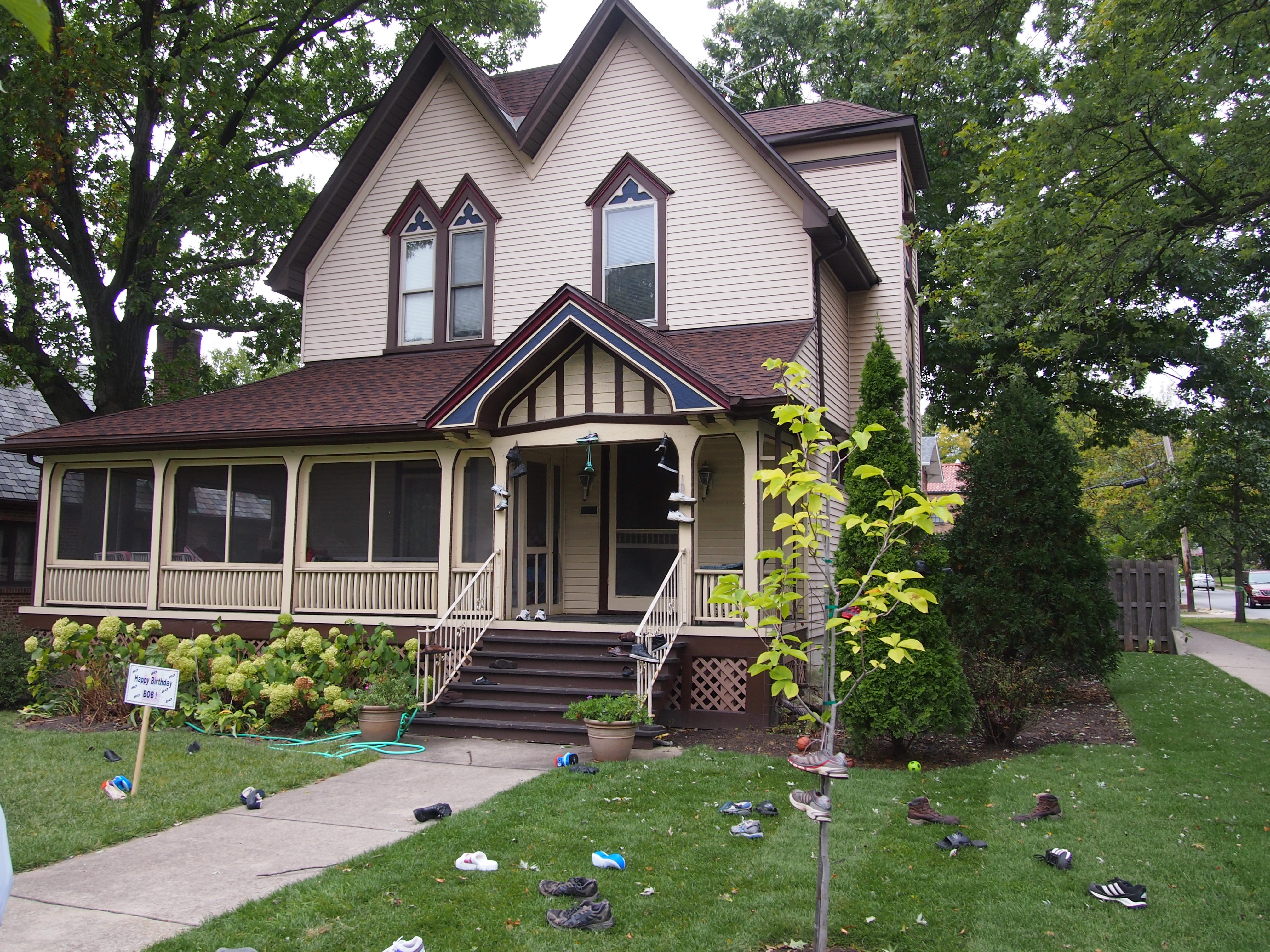
Beverly, ChicagoNice design, but the shoes got more attention. There was a sign in the yard saying HAPPY BIRTHDAY BOB! and another that said, 80 YEARS AND KICKING.
Nara 1991

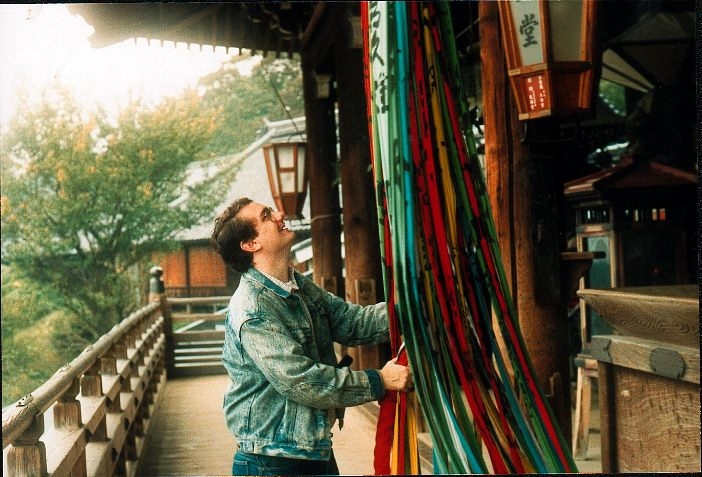
I can’t remember exactly which temple this was, but I’m sure it was in Nara. (Yuriko isn’t able to pinpoint it either.) This was October 1991, and it’s a favorite picture of myself.

Nara 1991My old college friend Steve probably took it, since he was visiting about then, and we went a fair number of places — Nara would have definitely been on that list. I went to Nara many times, since it was an easy subway and then train trip from where I lived.

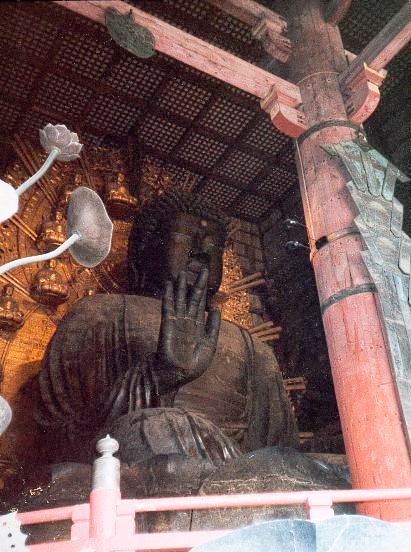
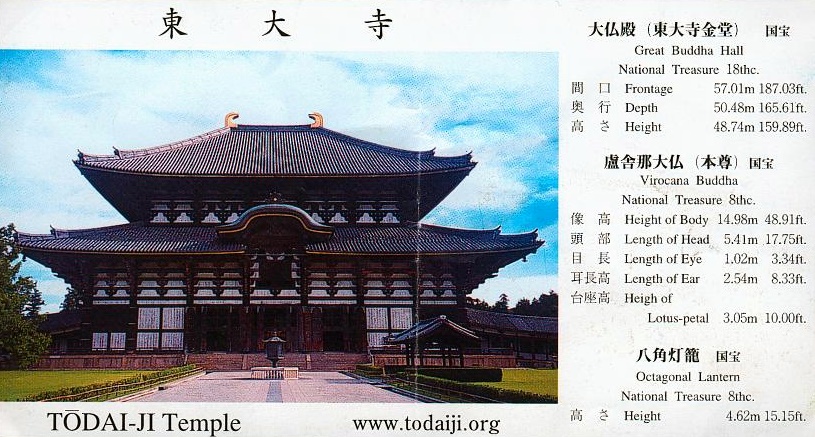
I took every visitor I had to Tōdai-ji (東大寺), a sizable temple complex in Nara. The star attraction at Tōdai-ji is the Daibutsuden, the Great Buddha Hall, which features the Daibutsu (大仏) or Great Buddha inside.

TodaijiIf I’m interpreting those measurements correctly, the Daibutsu is nearly 49 feet high, with over 17 feet of that devoted to his head. I never did take a good picture of the Daibutsu, but I do have this.

DaibustuThe size is impressive, but so is its age. The Daibutsu dates from the 8th century of the Common Era, though parts have been recast over the centuries, such as the hands and head, and the building around it has been rebuilt twice, most recently in the 18th century. I never got tired of visiting.

Thursday Tidbits

Cool air to begin October. Fitting.

I saw part of The Iron Giant on TV a few years after its 1999 release, coming away with the impression that I ought to see all of it someday. That day was Saturday: Yuriko, Ann and I watched it on DVD. Upon its theatrical release, apparently the studio dropped the ball in marketing it, so the movie didn’t do well, but it caught the attention of critics. I can see why. Not flawless, but high-quality animation and a fun story.

Occasionally we still discover another food that the dog will eat. This week it was refried beans. She was pretty enthusiastic about them, in fact.

NASA has just published remarkable images of Charon, moon of Pluto. Or are they considered twins these days? I haven’t kept up with those definitions. Anyway, how often do we see something that’s absolutely, for sure never been seen by humans before? Not often.

Around 30 years ago, when I bought my first car, I remember pricing some Volkswagens. As usual for a young man, I was looking for an inexpensive car. Volkswagens of the time weren’t as inexpensive as I thought they would be.

A decade earlier, when you wanted an inexpensive car, they would have been the thing. They were People’s Cars, after all. But somehow the brand had strayed away from the entry level by the early 1980s, and before long I owned an entry-level Toyota, a company that remembered to make models at a variety of price points. I’ve bought a number of other Toyotas since then, too, above entry level.

Now that Volkswagen’s been caught committing mass fraud, I imagine the talk a few years ago between two upper-level company managers (in cartoon German accents). After all, imagined conspiracy scenes can be fun.

Hans: Can we really get away with this?

Fritz: Ja, the Americans are too stupid to catch on.

Obviously they learned nothing from the history of the 20th century.

Map in the Mail

Medecins Sans Frontiers wants money from me, and toward that end sent me a map of the world specially printed for them by Rand McNally. That’s a pretty good way to get my attention. It’s not quite as aesthetic as one by National Geographic or Nelles, but not bad. But you’d think that for an organization that has “without borders” in its name, national borders would be left off the map to make a point. Instead, the nations of the Earth are variously hued, as on any political map.

Fine print on the side of the map is at pains to say that the lines and colors on the map don’t mean that the organization takes a position one way or the other on any of them. It also specifically mentions Sudan and South Sudan — a “final boundary… has not been determined” — and that “a dispute exists between the Government of Argentina and the United Kingdom concerning sovereignty over  the Falklands Islands (Malvinas).”

Mentioning Sudan and South Sudan, I understand, since I’m pretty sure the organization is active there. But the Falklands? Why a note about that and not, say, the West Bank or the Western Sahara or the Spratlys or just about anywhere else that’s disputed? Such spots are just about everywhere, though this map doesn’t show that some disputes are more intense than others.

Also: the map is a Gall stereographic projection. Looks like Rand McNally doesn’t mention Peters, and from what I can tell, this one doesn’t look as weirdly distorted as either Mercator or the maps I’ve seen called Peters projections. Speaking of which — here’s xkcd on maps.

A Spider in September

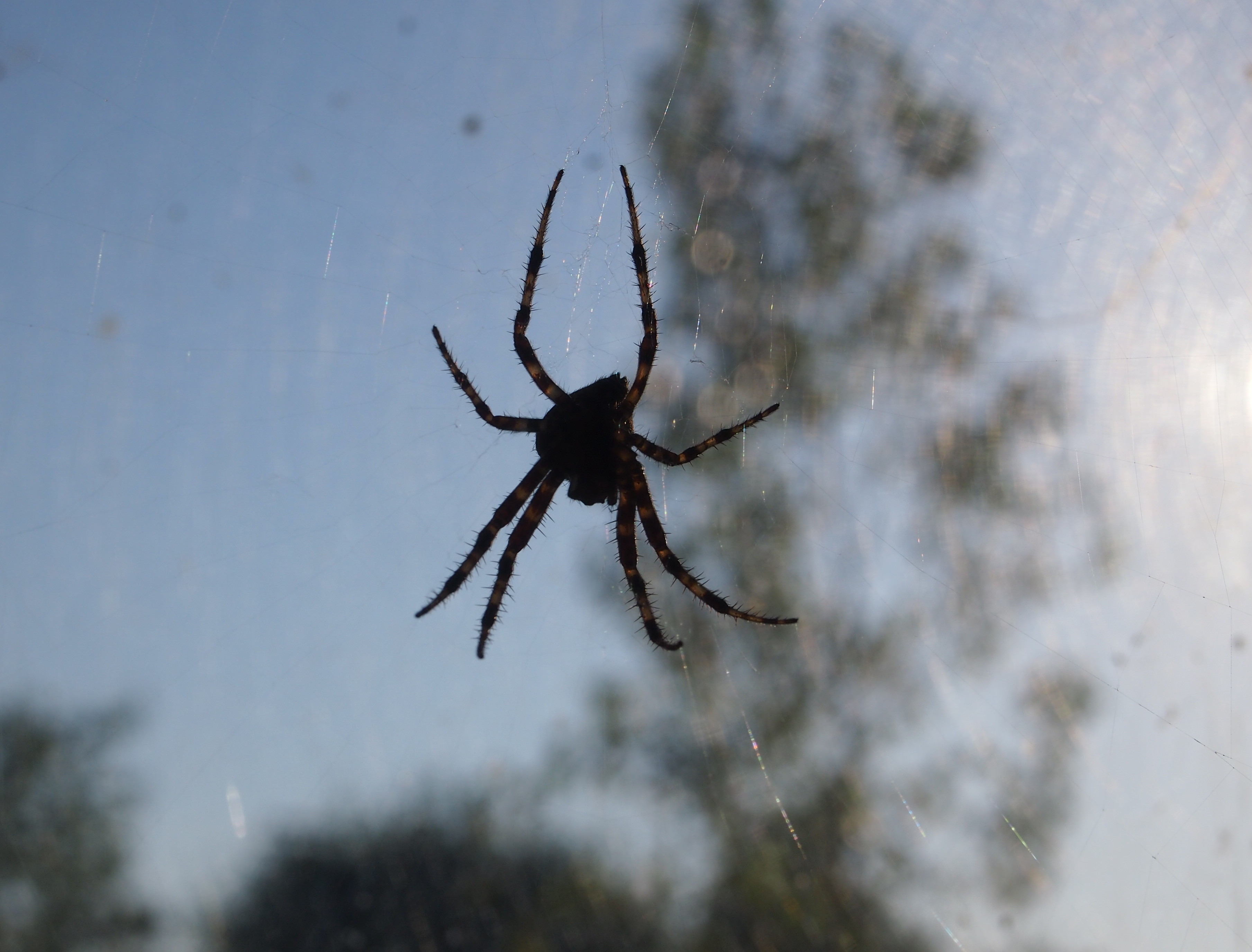
The single window in our garage looks at to the west, meaning that at this time of the year, the later afternoon sun comes in more-or-less directly. Last weekend I noticed a large web near the window, something new for the summer.

Spider!The image distorts its size to make it seem large, but tip-to-tip I’d say it’s no more than about an inch. The web’s large, though — a couple of feet in diameter, so I guess our spider friend’s been working on it a while.

I doubt that anyone else will disturb it, or even notice it. I plan to check in every now and then to see what it does as things get colder.

The Last of the Summer Weekends. Maybe.

On Friday afternoon, we took the dog for a walk at Poplar Creek Nature Preserve. A balmy afternoon. Most of the tree foliage is still green, but includes distinct tinges of yellow or brown. Goldenrod blooms profusely, and so do white daisy-like flowers, along with a larger version that’s lavender-colored, but not actually lavender. The tall grass is brown, the short grass green. The cicadas still buzz and the grasshoppers still hop.

The Woodfield Mall was busy in its own way on Saturday afternoon. I can’t remember the last time I was there, but it’s been a while. There’s a certain amount of renovation going on in the common areas, but nothing that affects the flow of people too much. A number of stores displayed Star Wars merchandise in highly visible ways. I haven’t been keeping track, but that must foreshadow a movie along those lines.

Sure enough, a line in the Sunday Tribune Arts and Entertainment section tells me that, “As a new Star Wars movie looms [interesting choice of verbs], many of the franchise’s original fans are as devoted as ever.” Guess the merch is partly for them and their offspring. As far as I’m concerned, the first three movies, while very entertaining in their time, need to go in a box labeled Things of the Past.

Most of Sunday was overcast, so I wondered whether I was going to see the lunar eclipse. A couple of hours before dark, however, the clouds cleared away, and at about 8:30 I went out to see the shadow of the Earth falling on the Moon. At about 9, Yuriko, Ann and I were out, and then again 15 minutes later for totality. The dog was out, too, but typical of dogs, she didn’t give a fig for the celestial phenomenon (no smell involved, I guess). The copper moon was a pretty sight, but it didn’t look any bigger than usual to me.

In time for the eclipse, the Atlantic posted these images, marvels of 20th-century manned space exploration. These images are more recent marvels of (mostly) unmanned space exploration.

Lilly was at a friend’s house on Sunday evening, so I did what you do these days, and sent her a text about the eclipse. Later she said she’d seen it. I’m also glad to report that at least two neighboring families on my block were out to see it, too. I noticed that while taking the garbage out under the dark copper moon.

The Kremlin 1994

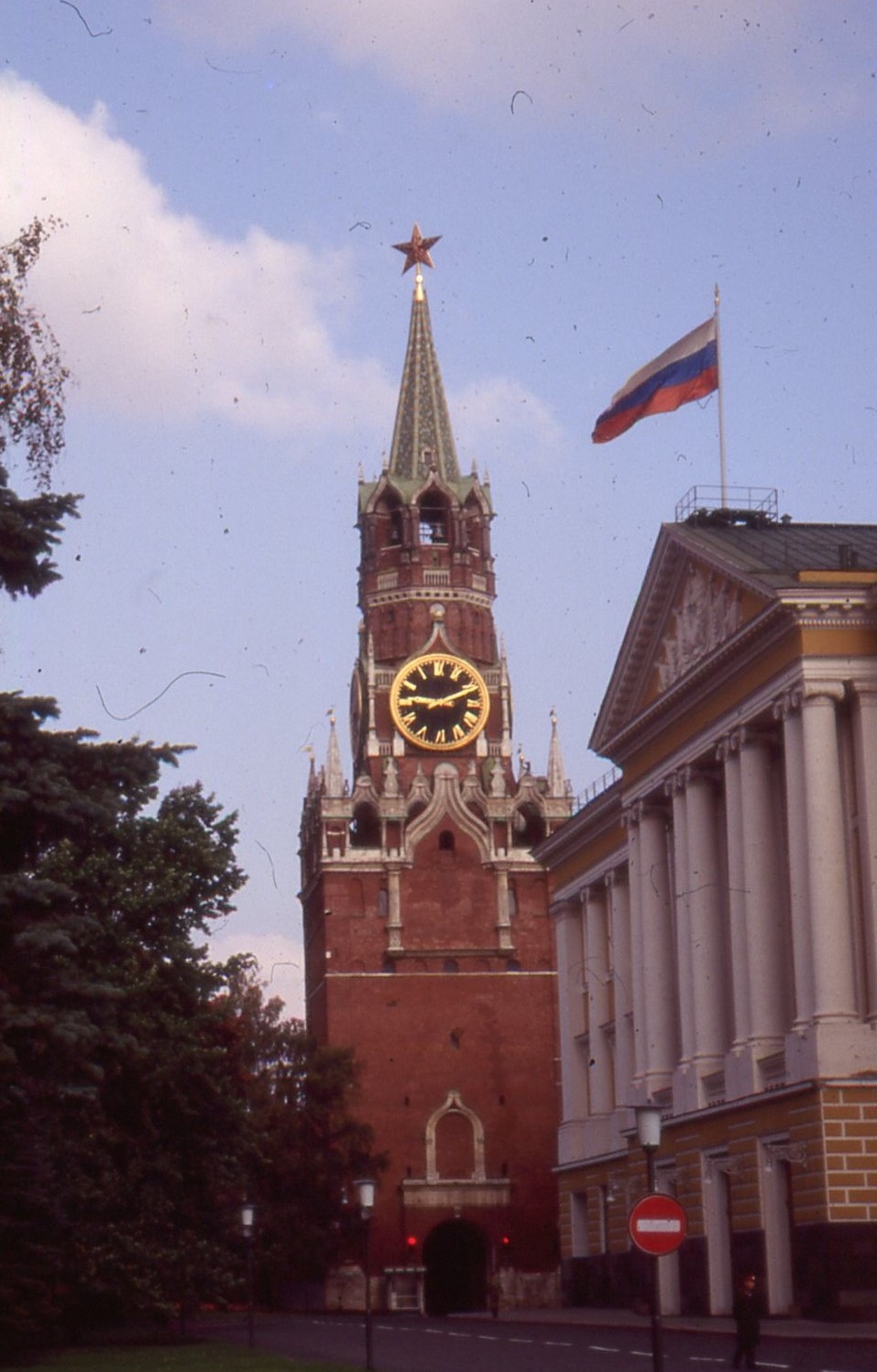
You can’t very well go to Moscow and not pose with St. Basil’s and the clock tower (Spasskaya Tower) of the Kremlin. Pedants might point out that Moscow’s Kremlin is only one of a number of kremlins in Russia, but I say common usage re-enforced by years of Cold War reportage means that the one in the capital of the Russian Federation is The Kremlin.

RedSquare94This was probably the afternoon of the first full today we were in Moscow. Note the clock puts the time at 3:15; in late September at that latitude, the sun would have been edging down pretty low by then.

It would not have been our first visit to Red Square. We arrived in Moscow in the afternoon, and Yuriko and I and most of the other people we’d traveled with on the Trans-Siberian went to the same guest house. Early in the evening, most of us met up again with two goals in mind: to go to Red Square because it’s Red Square, and to find something to eat. I remember our group — about a dozen people — walking down one of the thoroughfares that takes one to Red Square, turning a corner, and seeing it all at once. A place I’d heard about all my life, and there it was.

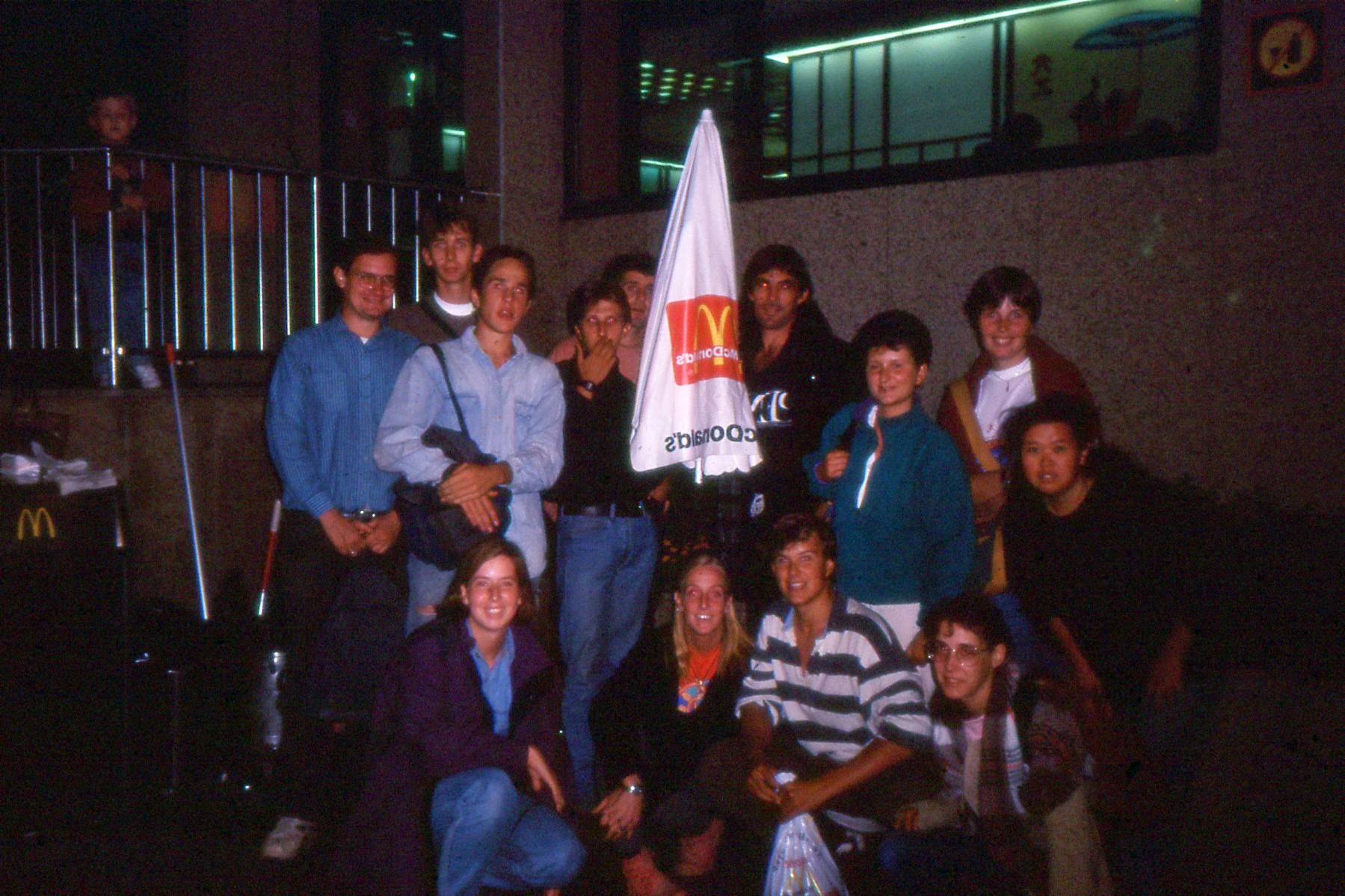
We ogled Red Square a while, but then got down to the business of finding food. The group settled on the Moscow McDonald’s, said to be the largest in the world at the time, and the only McDonald’s I’ve ever been to that had bouncers.

Moscow, Sept 1994There were some English lads, a couple of Australians, a Swiss woman, a Dutch couple and I don’t know who else or remember any names. I was the only American and Yuriko the only Japanese.

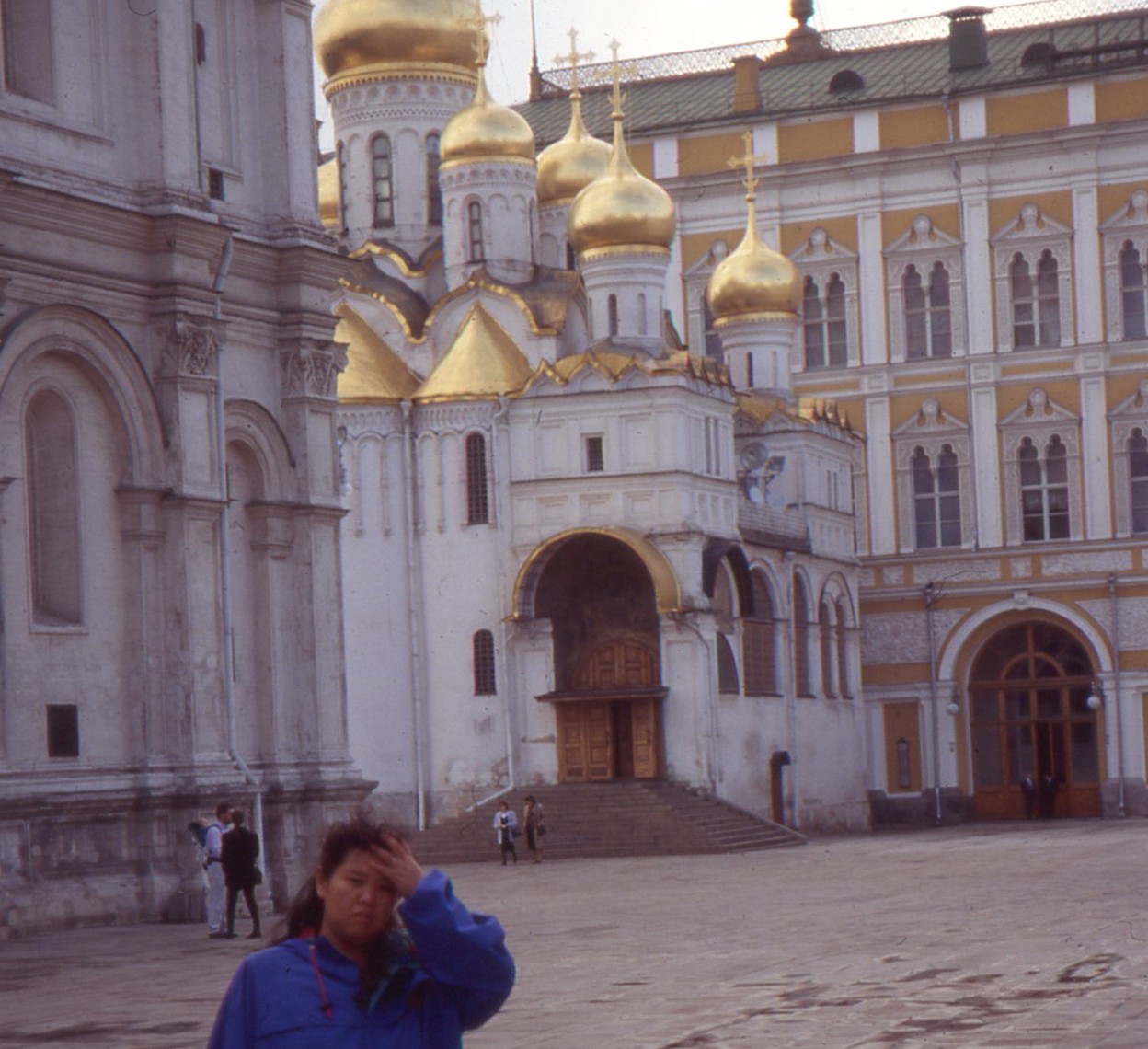
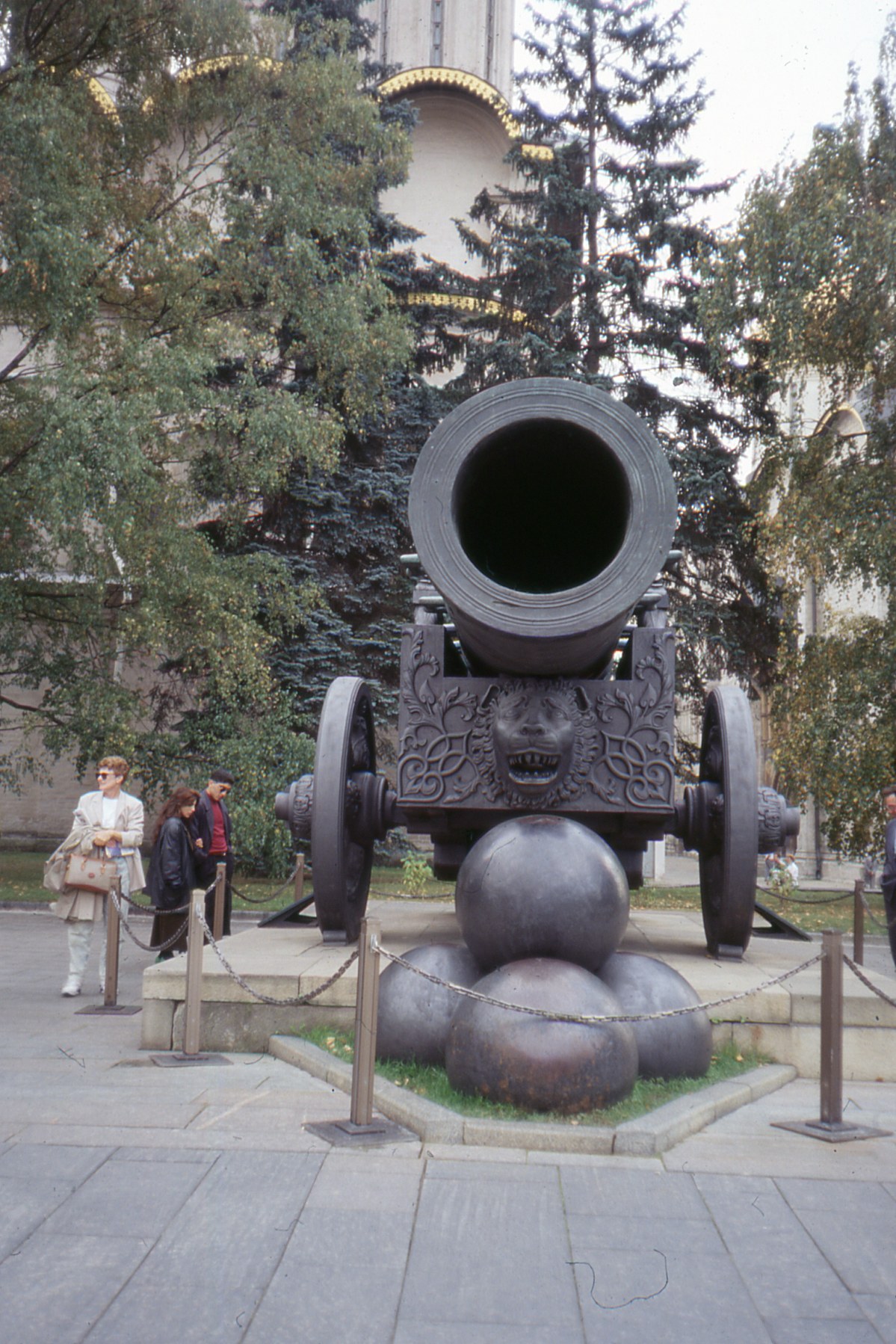
I didn’t appreciate the enormity of the Kremlin until we went in for a look the next day. Not everything was accessible, but I know we visited a number of palaces and churches (or maybe church-museums), such as the Cathedral of the Annunciation. Cathedral of the AnnunciationWe got a closer look at the clock tower, still featuring its red star. But within sight of the fluttering Russian tricolor.Clock TowerSpeaking of enormity, there was also the Tsar Cannon.

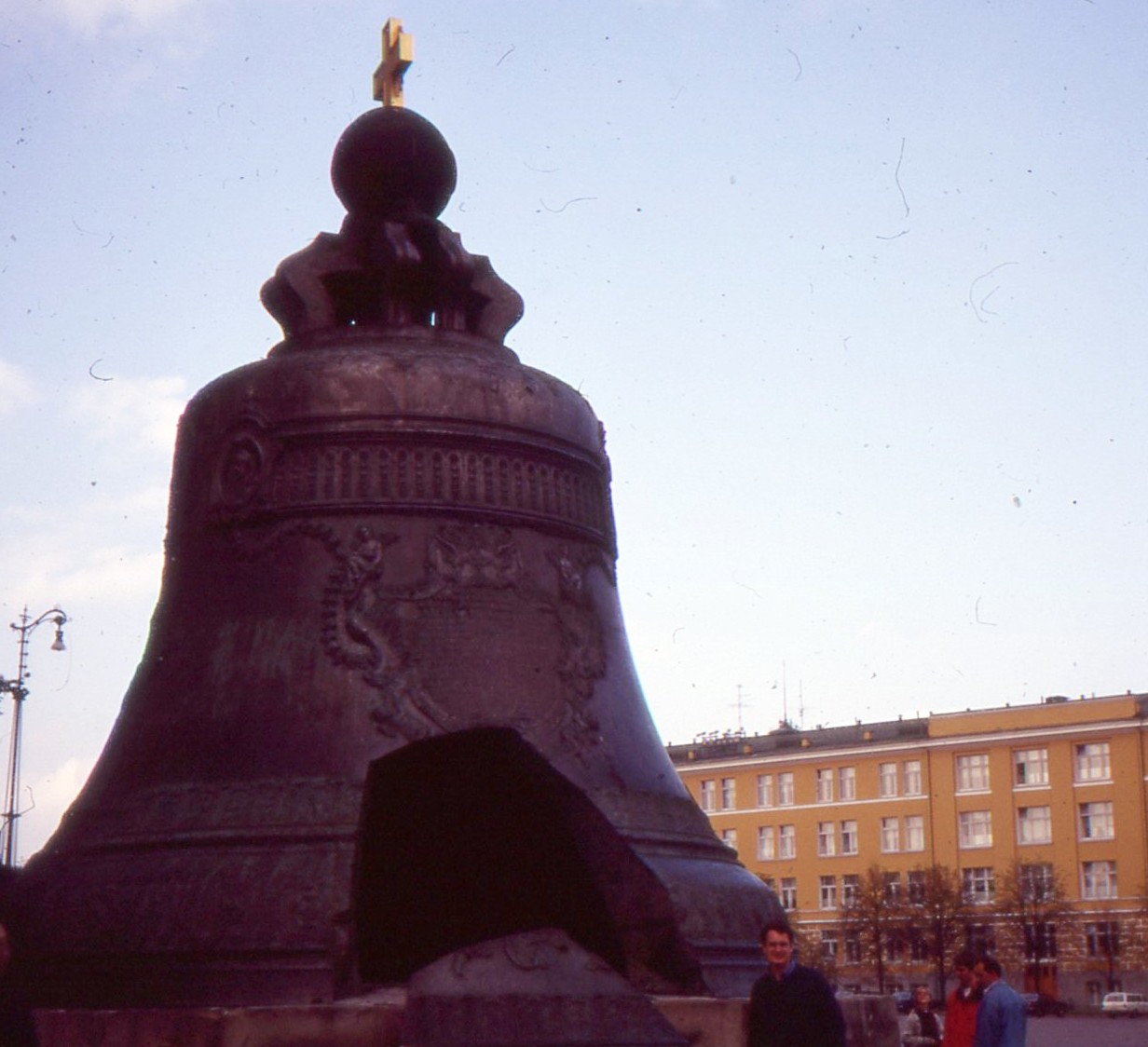
TsarCannonAnd the Tsar Bell.

Tsar BellJust outside the walls is Lenin’s Mausoleum, which we visited, and then the Kremlin Wall Necropolis. The likes of Stalin and various old bolshies were easy to pick out, since they were marked by busts. I didn’t see John Reed’s plaque, though I knew he was there. I didn’t know until later that some of Bill Haywood’s ashes are there (and some are near the Haymarket monument in suburban Chicago).

St. Luke’s Lutheran Church, Park Ridge

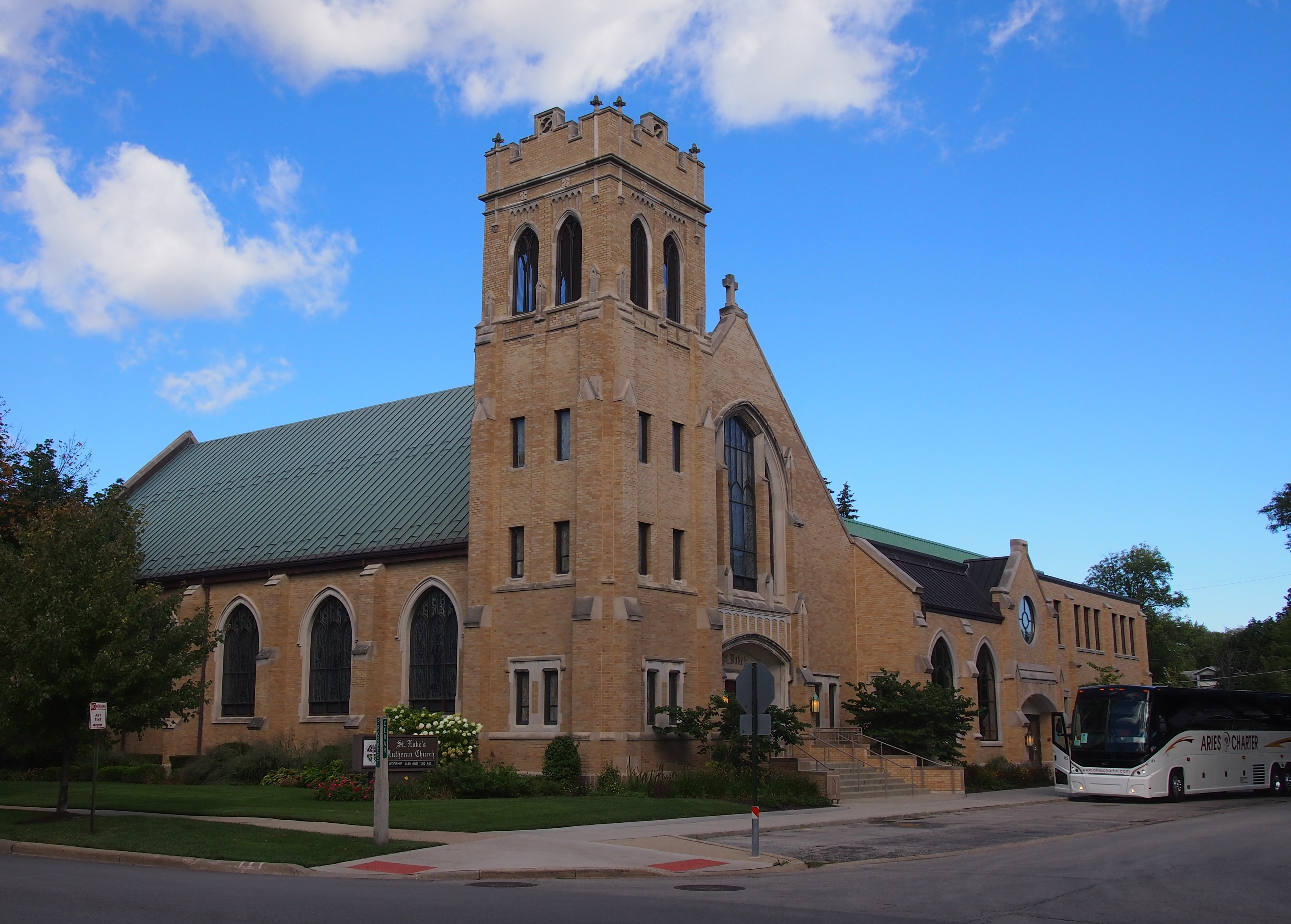
You might call St. Luke’s Lutheran Church at 205 N. Prospect Ave. in Park Ridge an example of Suburban Gothic, but apparently that’s the name of a movie that came out last year. Anyway, it’s a handsome English Gothic-style church in the suburbs. We were back in Park Ridge Saturday afternoon for the last stop on the Churches by Bus tour.

St Luke'sThe building has the distinction of being designed in the late 1920s by Elisabeth Martini (1886-1984), the first woman to be the proprietor of an architectural firm in Chicago. Mostly she did houses, but it seems that she was a member of this church, and did the design work for a payment of $60 a month for the rest of her life, which turned out to be another 50-odd years, though it might not have been adjusted for inflation.

Adjoining the sanctuary (next to the bus in my picture) is a 2010 addition by Douglas E. Lasch of Jaeger, Nickola, Kuhlman & Associates, which replaced a smaller addition from the 1970s and blends in remarkably well with the original structure. He has his own shop now, Faith Environ Studio, which focuses “primarily on providing architectural services to faith-based and other non-profit clients.”

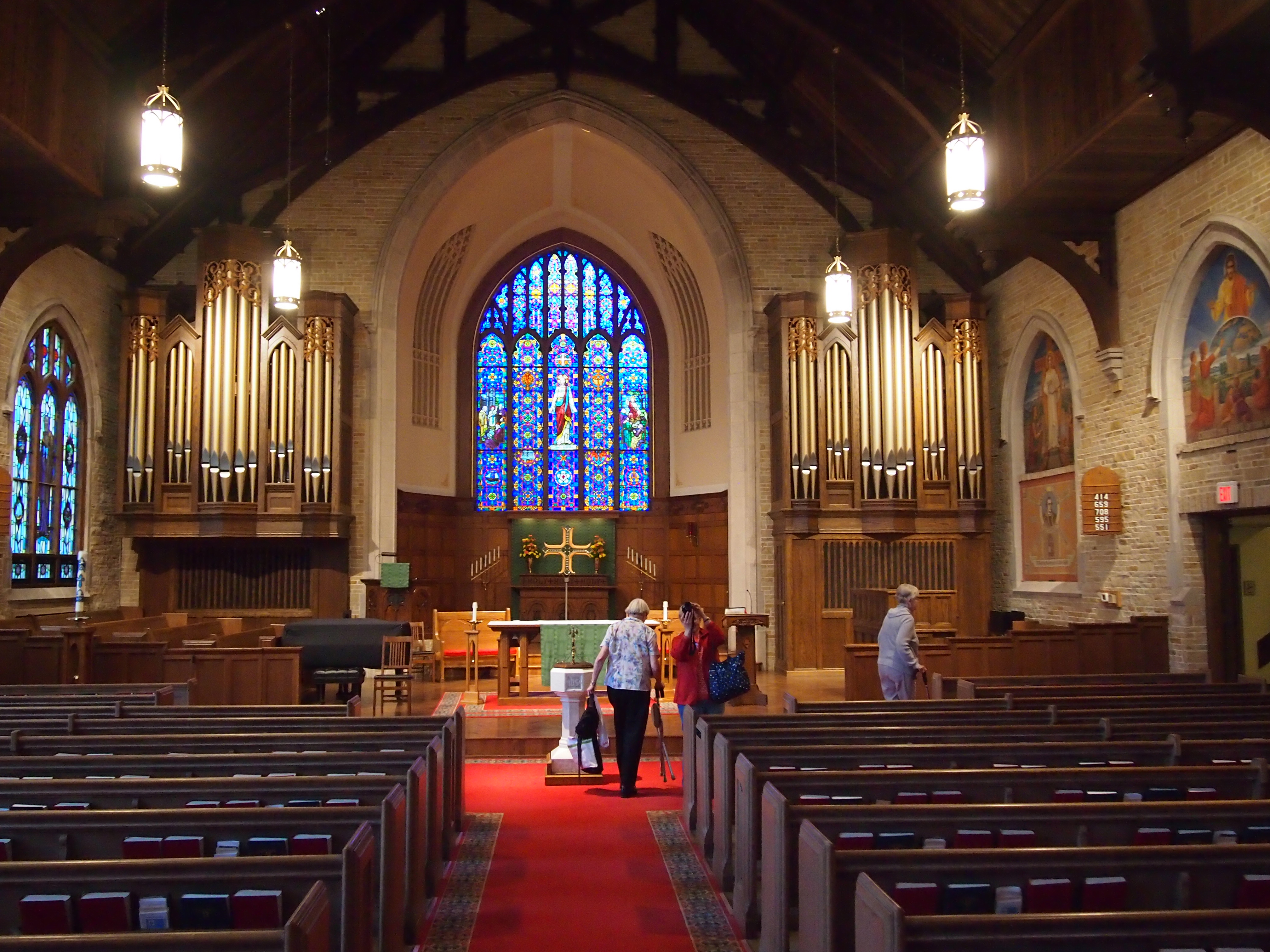
St. Luke’s sanctuary has an elegant interior.

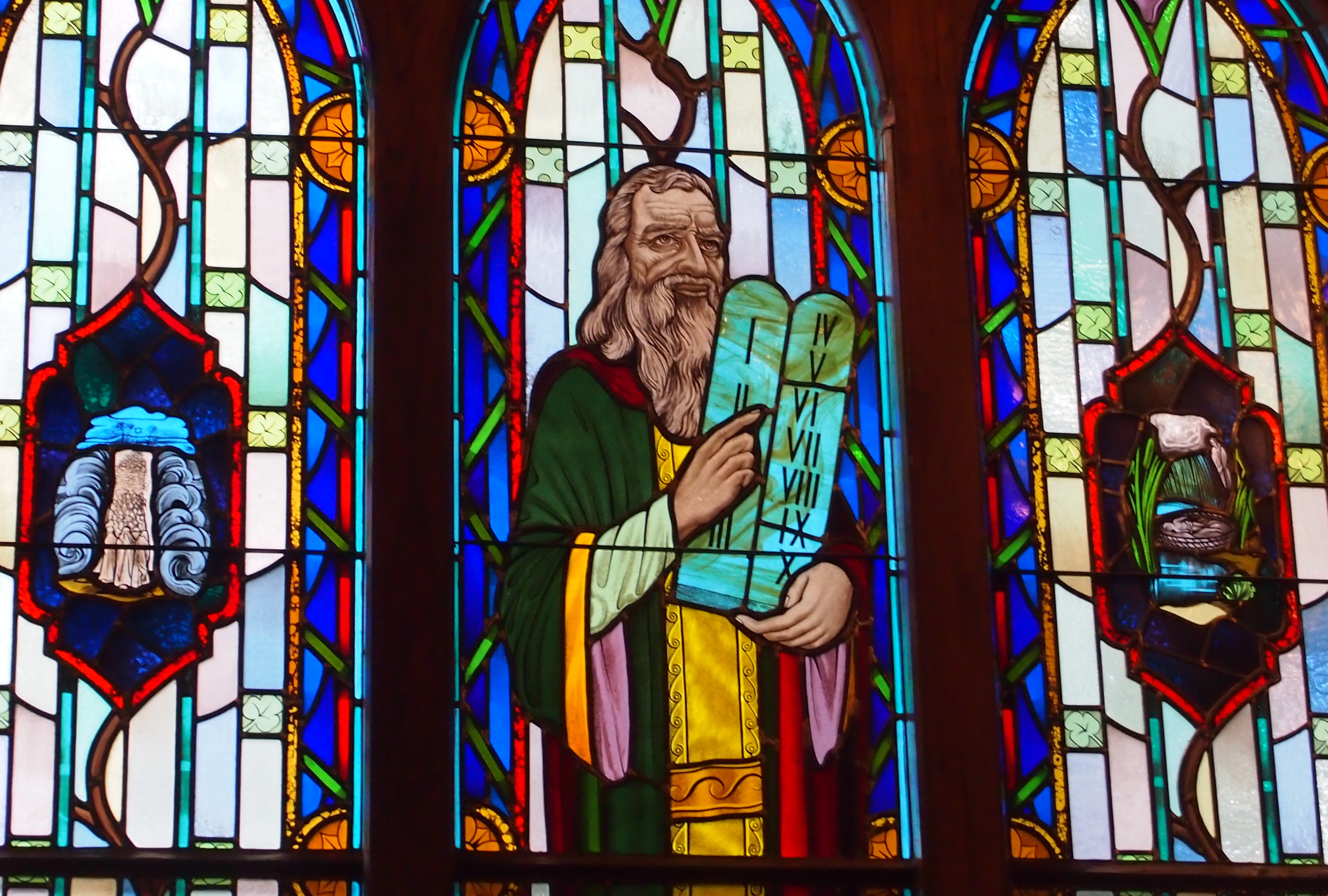
St Luke'sThe stained glass windows tell of the Old and New Testaments. I’m sure the representation of Moses in one of the windows was meant seriously, but I can’t shake the idea that he’s grinning. Maybe it’s the eyes. “See what I have here! Commandments! Ten of them! Aren’t they terrific?”

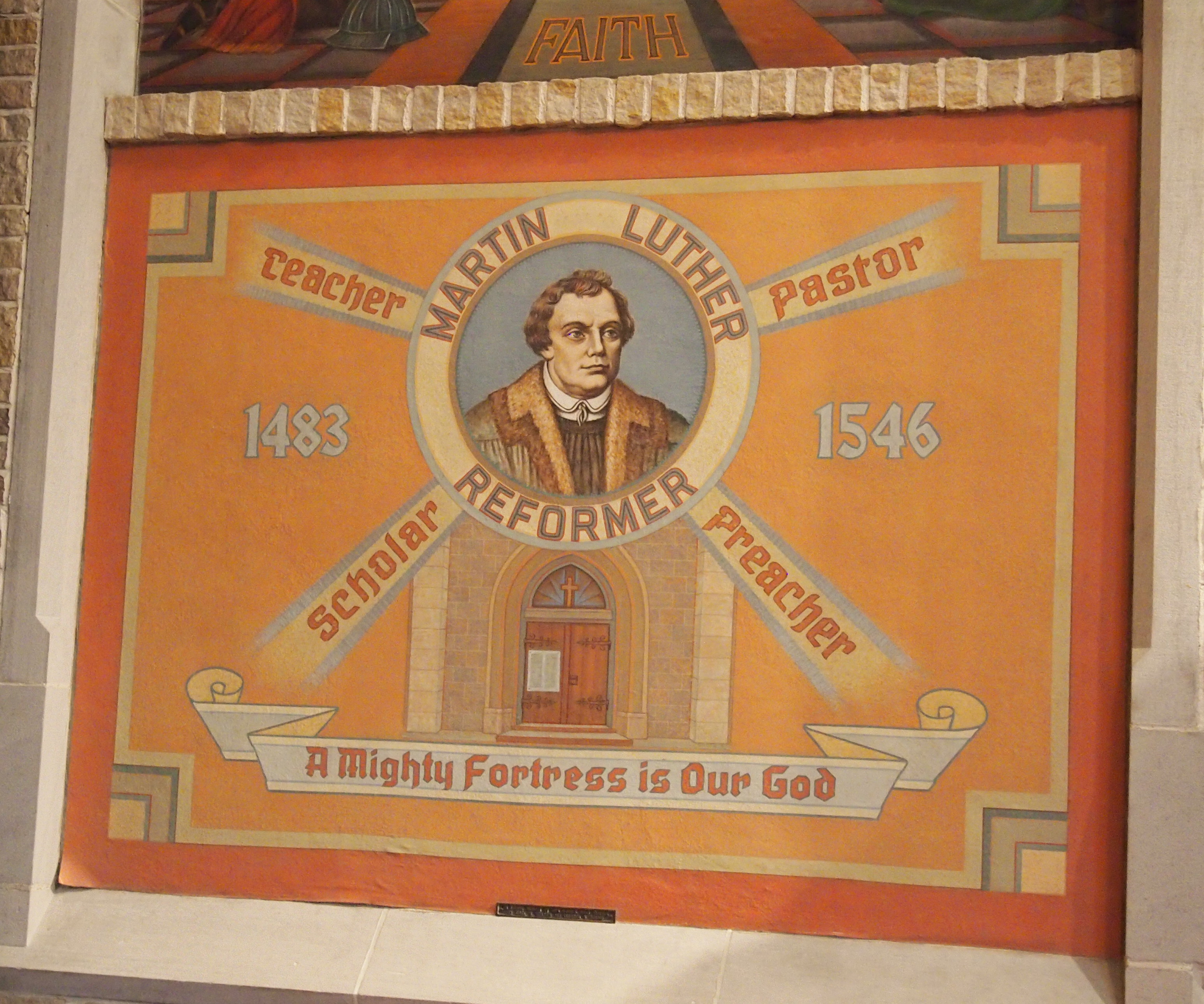
MosesLuther, on the other hand, looks fairly serious, but not grim.

LutherI suppose those are the 95 theses on the door. A little hard to read at this scale. Wonder if they’re microprinted in the original Latin? I didn’t check. Never mind, the text is easily available on line in Latin and English (and other languages).

I haven’t looked at the theses since sometime in a college history class, so I was amused to find No. 86: “Again, ‘Why does not the pope, whose wealth is today greater than the wealth of the richest Crassus, build this one basilica of St. Peter with his own money rather than with the money of poor believers?’ ”

Ah, if only in our time and place we could mention Crassus without having to explain who he was. Then again, if those poor believers were able to understand that they were doing their little part to build the grandest church in Christendom, would they have been particularly upset?

One more thing about St. Luke’s in Park Ridge, which I read about later. It’s the home to the Bottle Band. Odd the things you find out. More about the band here.

Our Lady of Hope, Rosemont

The newest church on our bus tour last Saturday was Our Lady of Hope, a Catholic church at 9711 W. Devon Ave., just barely in the boundaries of the small suburb of Rosemont, which is better known for its proximity to O’Hare and various entertainment venues. In fact, while I might be wrong, it seems to be the only church with a location in Rosemont, based on a Google map search.

Built only in 1986 (which seems new to me), the church counts as a “Modern Prairie” style, according to the Chicago Architecture Foundation. “Modern Prairie designs are often devoid of frills and decoration, but build character through asymmetrical shape, and large open spaces,” the CAF says.

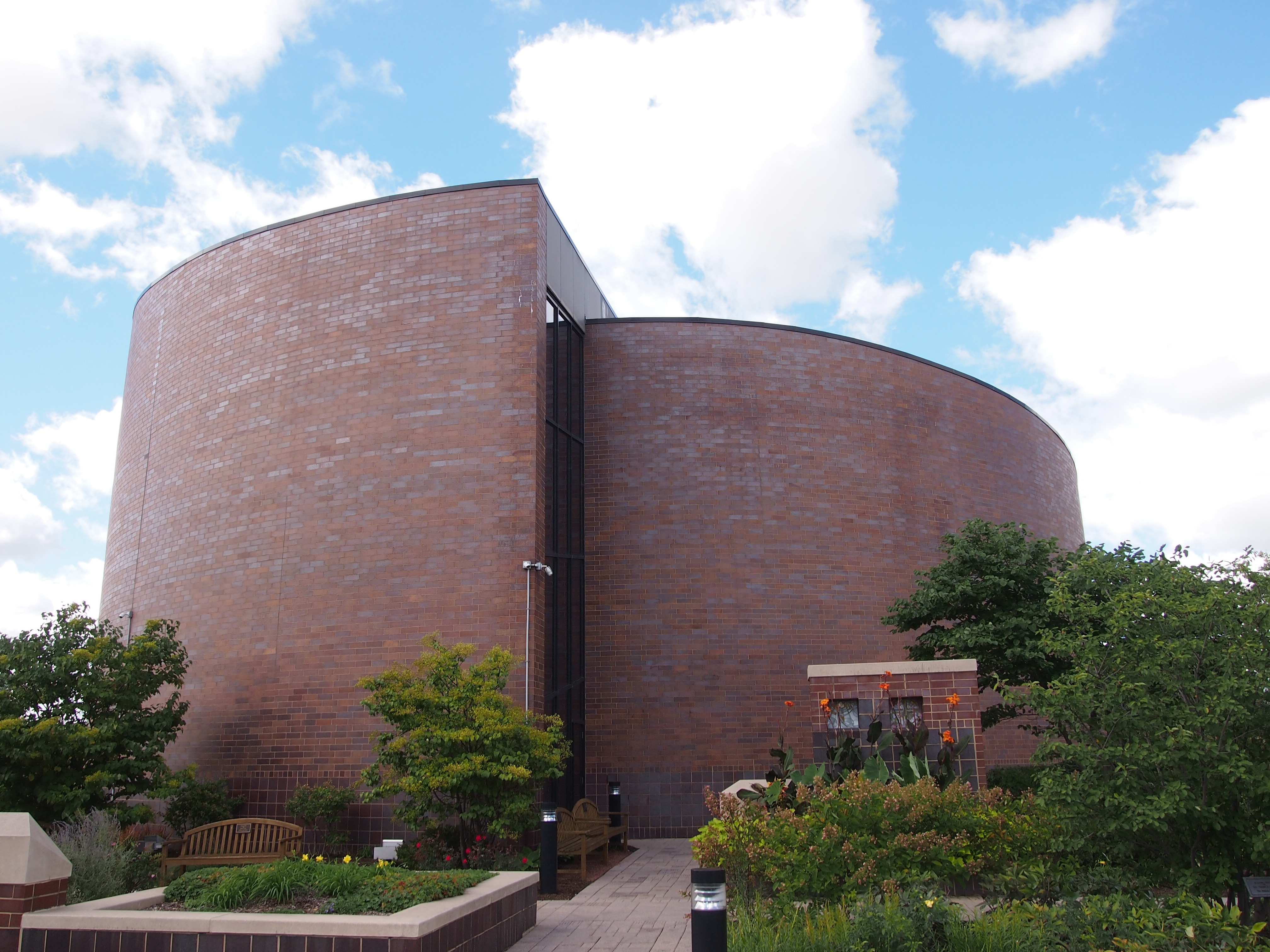
Frill-less indeed, especially on the outside.
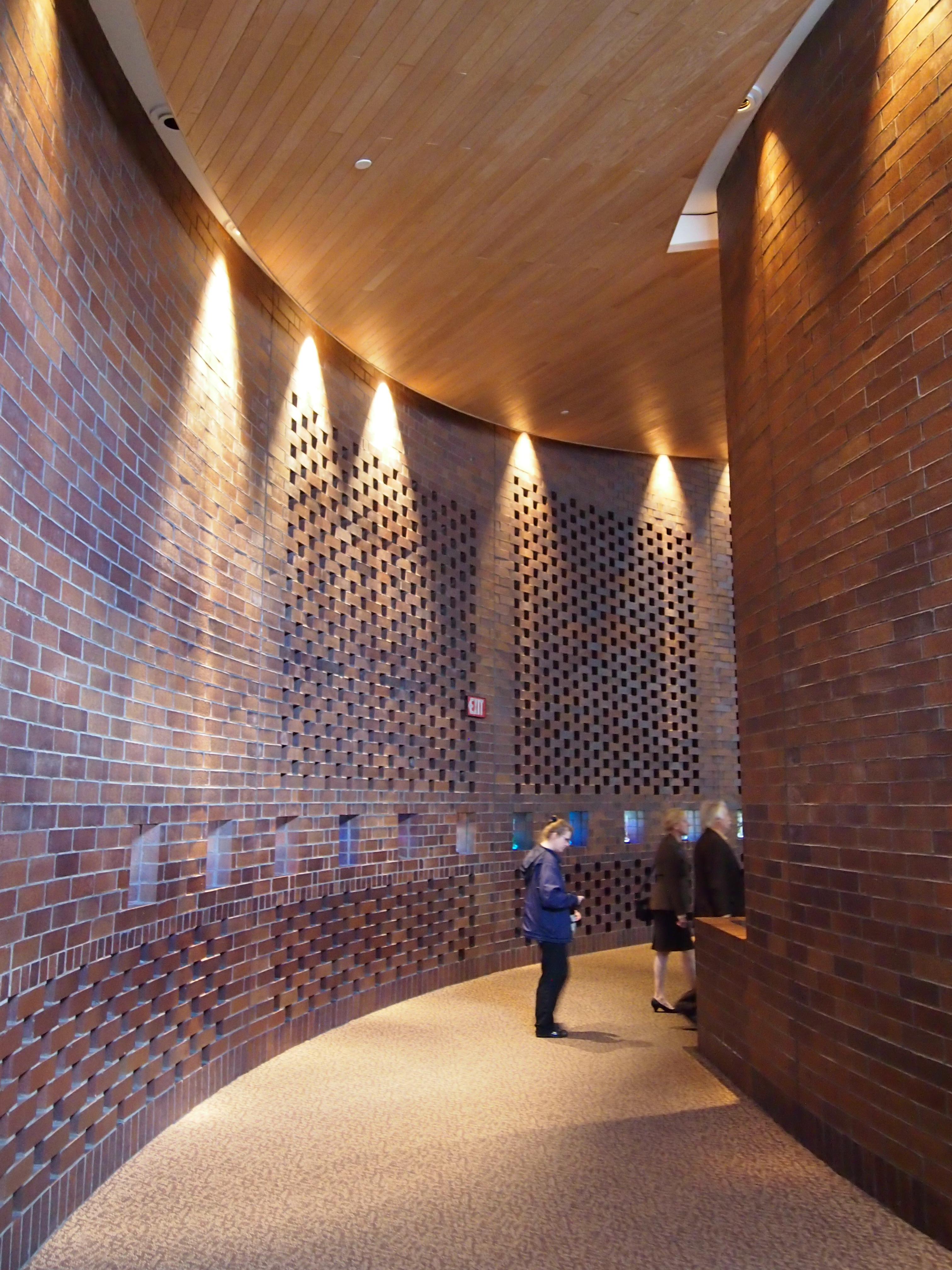
Our Lady of HopeAlso true to its prairie-style forerunners, the entrance isn’t immediately apparent, but once you go in, you do find large open spaces. I liked the curve into the nave — maybe this space counts as the narthex, though probably that terminology went out with traditional church decor.
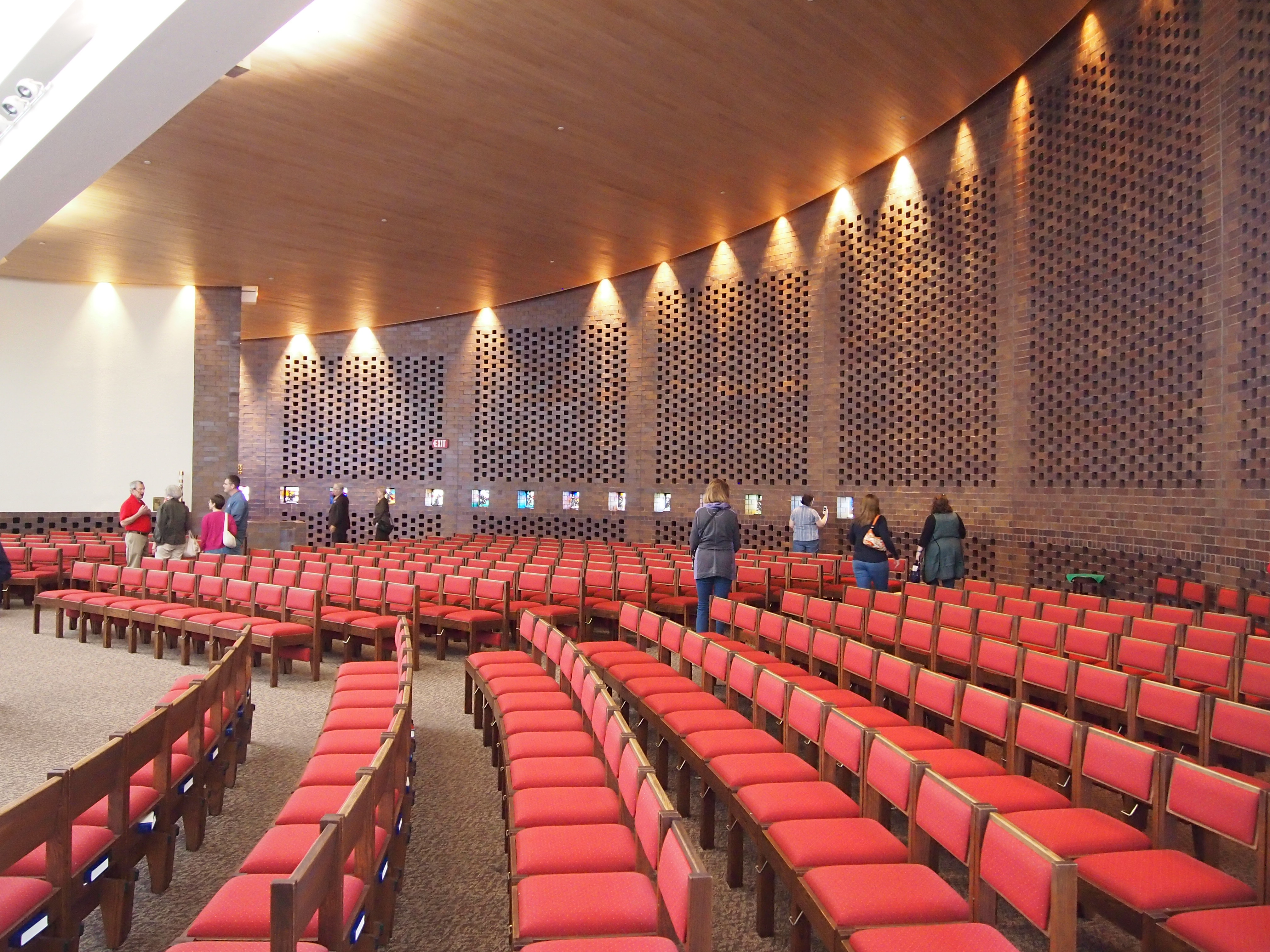
Out Lady of HopeA semicircle of seats faces the altar. The lighting was such that I didn’t get a decent shot of the altar. The seats, on the other hand, were quite visible.
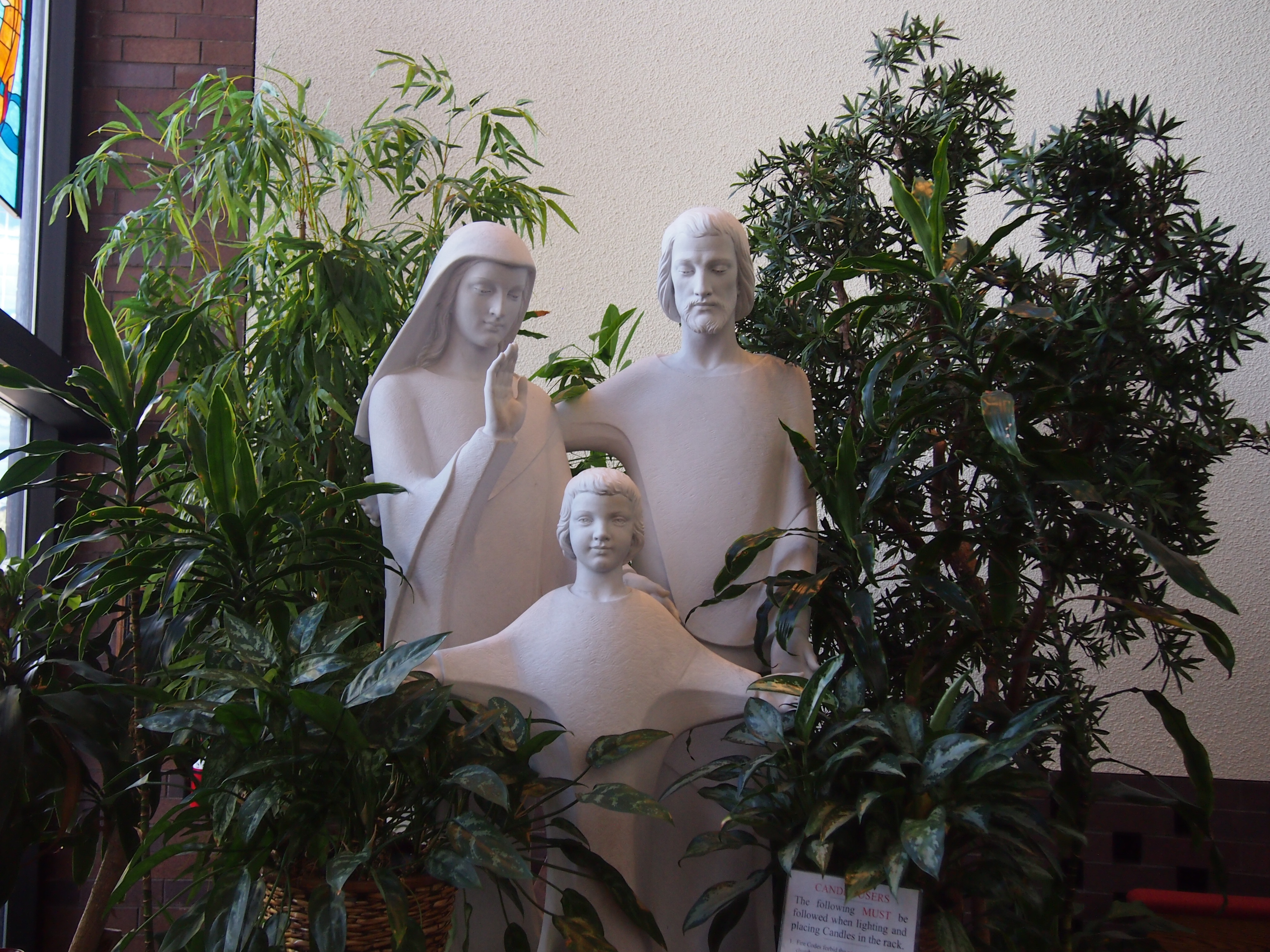
Our Lady of HopeThere was some representational art, but not much. Such as this group standing among plants.
Our Lady of HopeA young architect named Leslie Ventsch, working at the time for developer Opus Corp., designed the structure. These days he’s a design director at Gensler, according to LinkedIn. He won a Burnham Award in the mid-80s, for a different structure.

St. Joseph the Betrothed Ukrainian Greek-Catholic Church

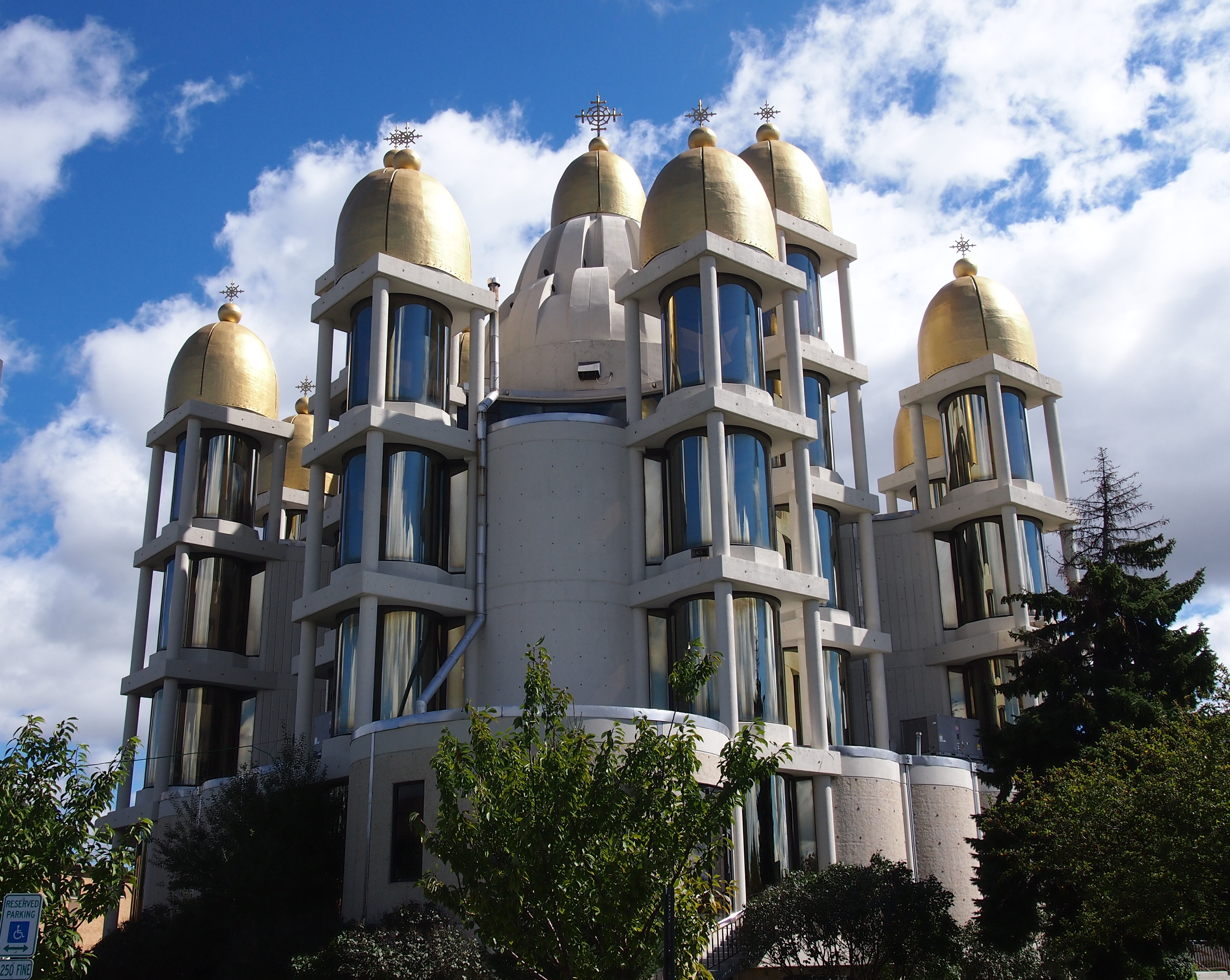
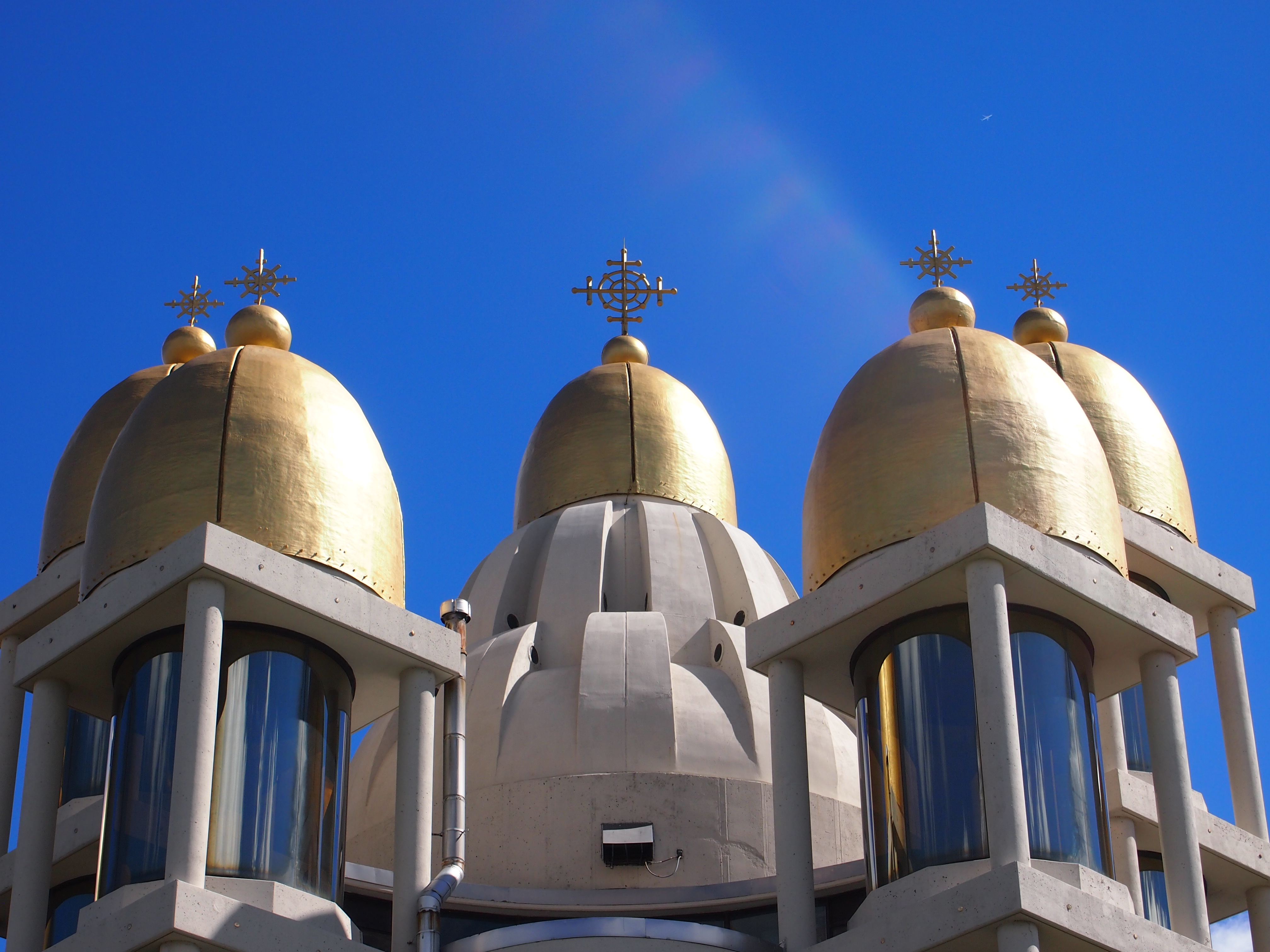
Go to 5000 N. Cumberland on the Northwest Side of Chicago, and then to the back of the building at that address, and you’ll be looking at this.

St Joseph'sIn full, the English name of this church is St. Joseph the Betrothed Ukrainian Greek-Catholic Church. The church is part of the the Ukrainian Catholic Eparchy of Saint Nicholas of Chicago, a diocese of the Ukrainian Greek Catholic Church. St. Nicholas Cathedral, which we visited last fall, is the mother church of this group. For simplicity, I’ll call this church St. Joseph’s, which is an Eastern church in full communion with Rome.

As a building, St. Joseph’s is an impressive use of glass, concrete and steel, completed in 1977, which such materials weren’t always so impressively used (and they still aren’t). The docent asserted that some people are reminded of rockets when they look at the church, but I think of those pneumatic tubes you use at drive-through banks. Still, they work somehow as building elements.

St Joseph'sThere are 13 domes, as often the case in Eastern churches, the center for Christ and 12 others for the Apostles (I assume that includes Matthias, who took Judas’ place). A Ukrainian-born Philadelphia architect named Zenon Mazurkevycz (Mazurkevich) designed the church. He seems best known for St. Joseph’s, though he’s obviously done other structures.

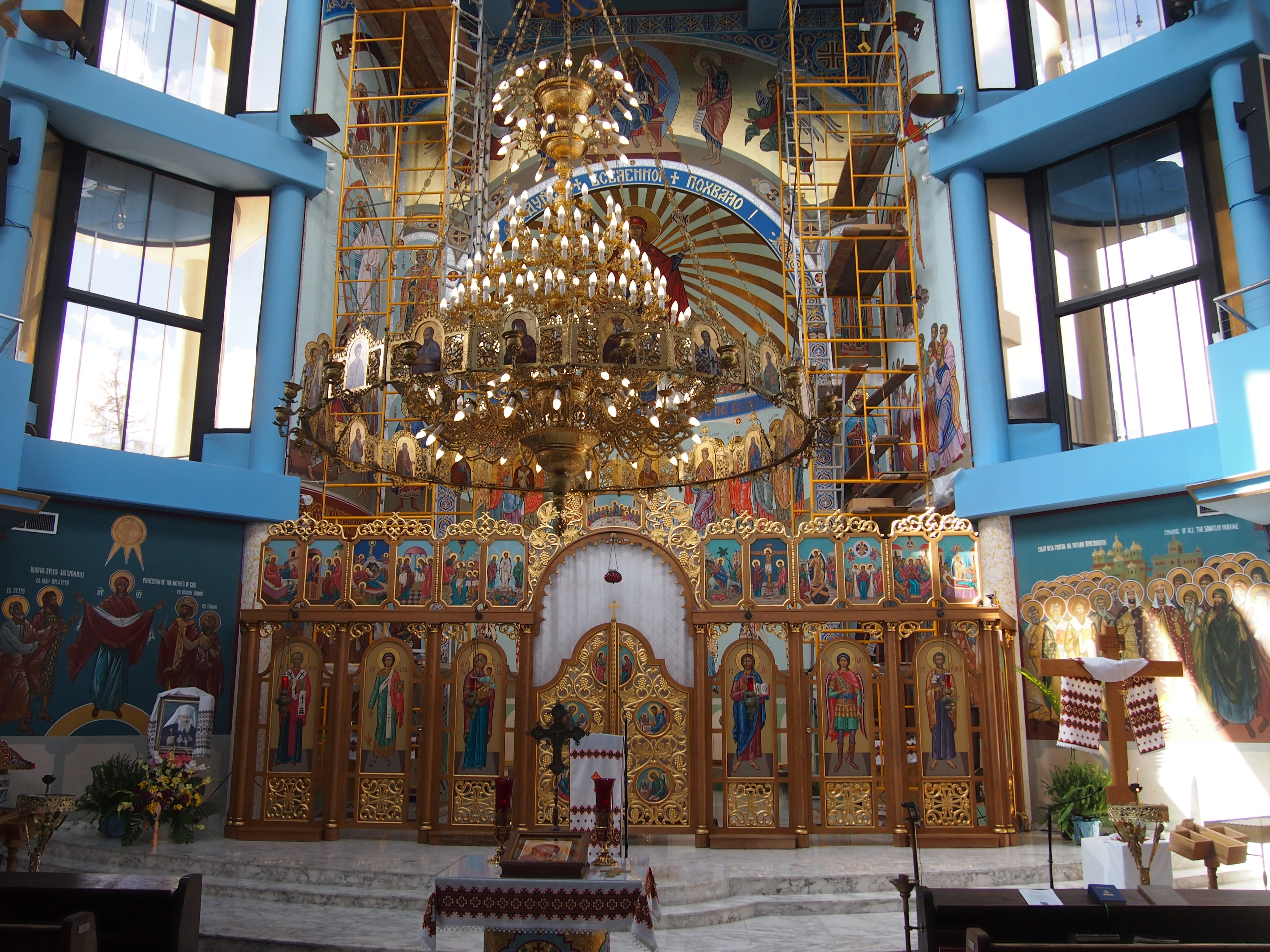
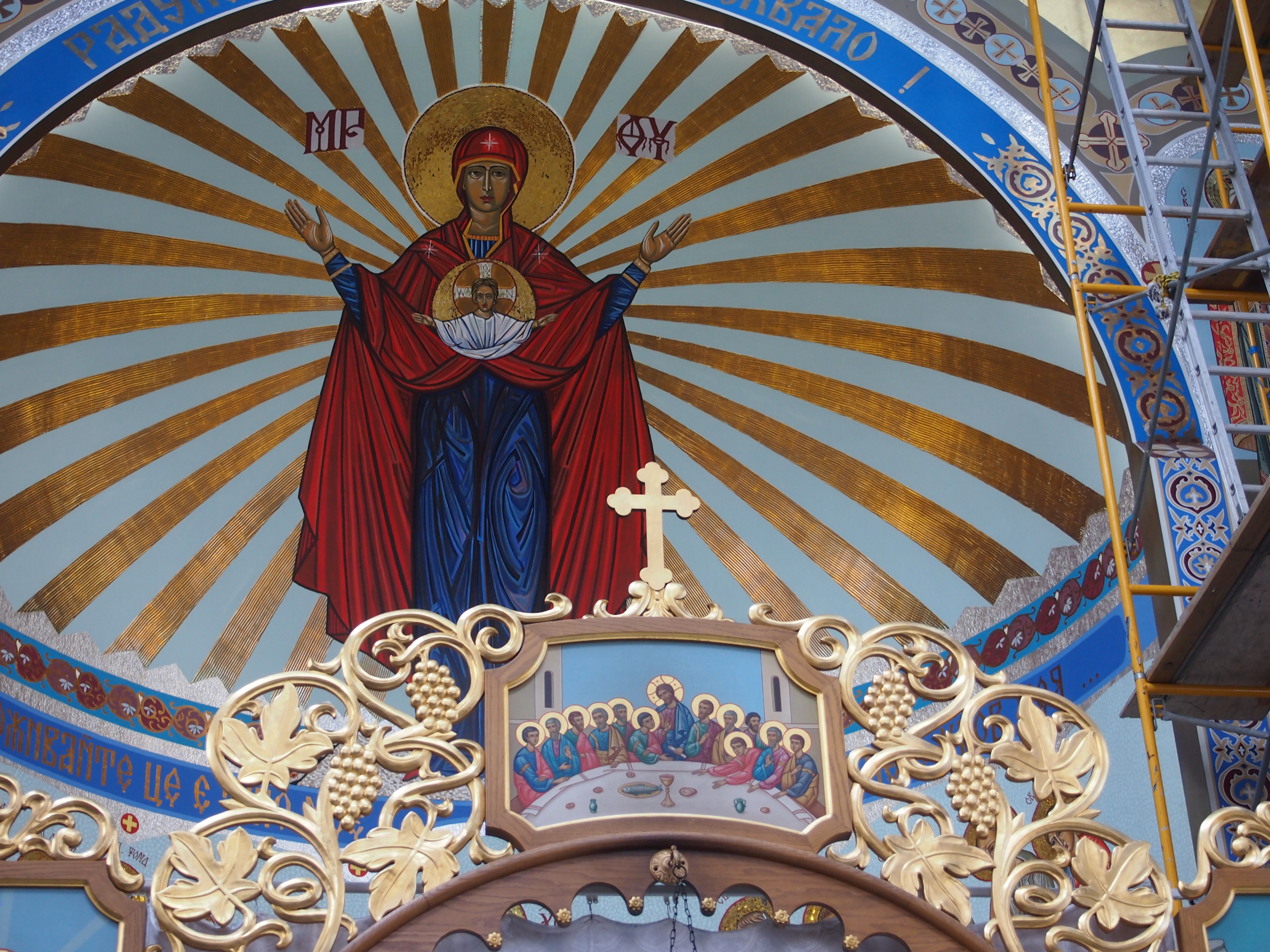
St Joseph'sThe inside is ornate and also light-filled, on account of the tall windows on all sides. I assume the scaffolding over the sanctuary are temporary.

St Joseph'sMazurkevycz is quoted, in this blog at least, as saying, “We are dealing with a very functional architecture today no matter what we do, but church architecture is aesthetically functional more than anything else… It probably is the last architecture, as our buildings become more regimented, in which you can be exuberant.”

Exuberant is a good word for this church, inside and out.