Holy Resurrection Serbian Orthodox Cathedral

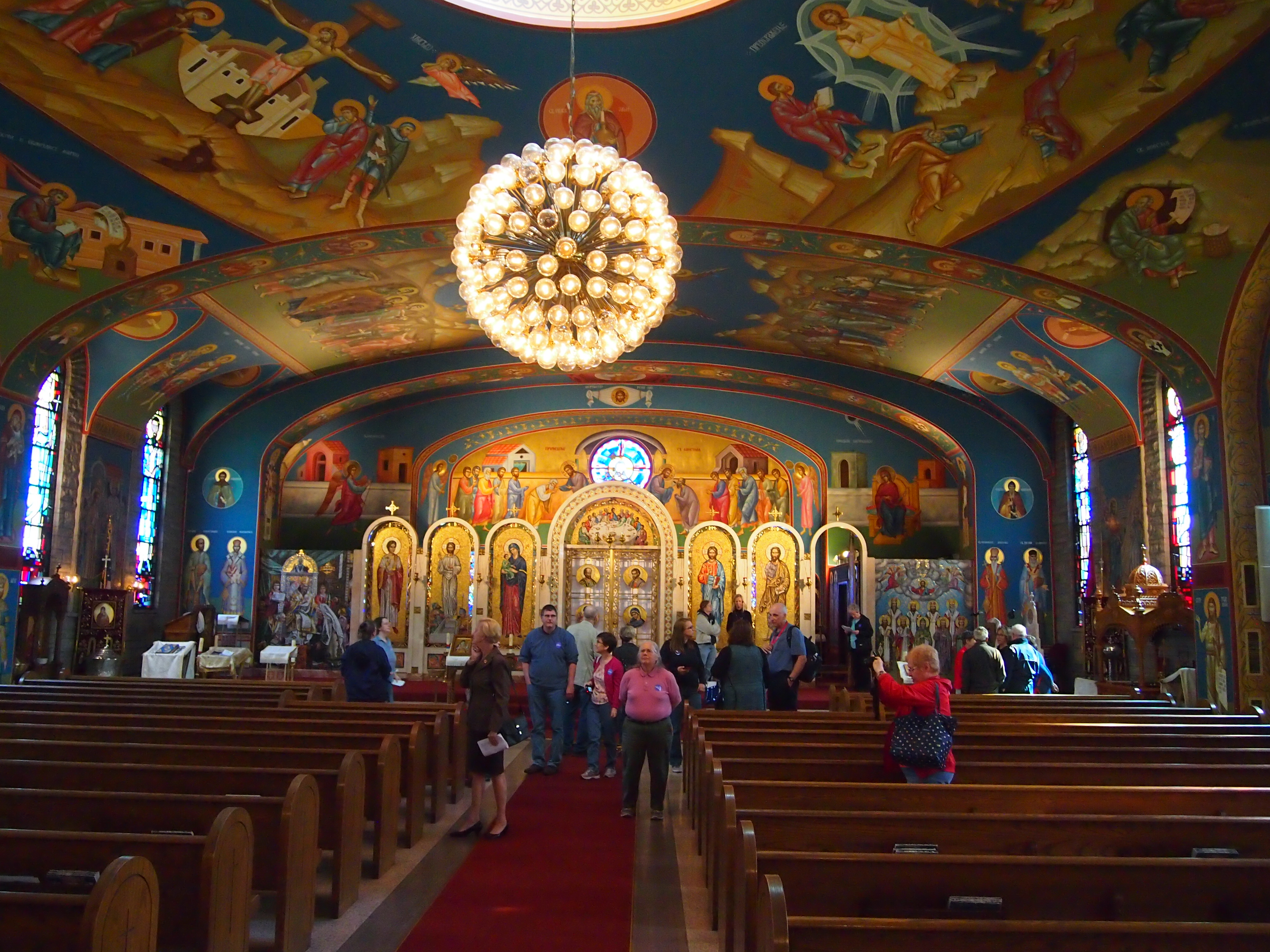
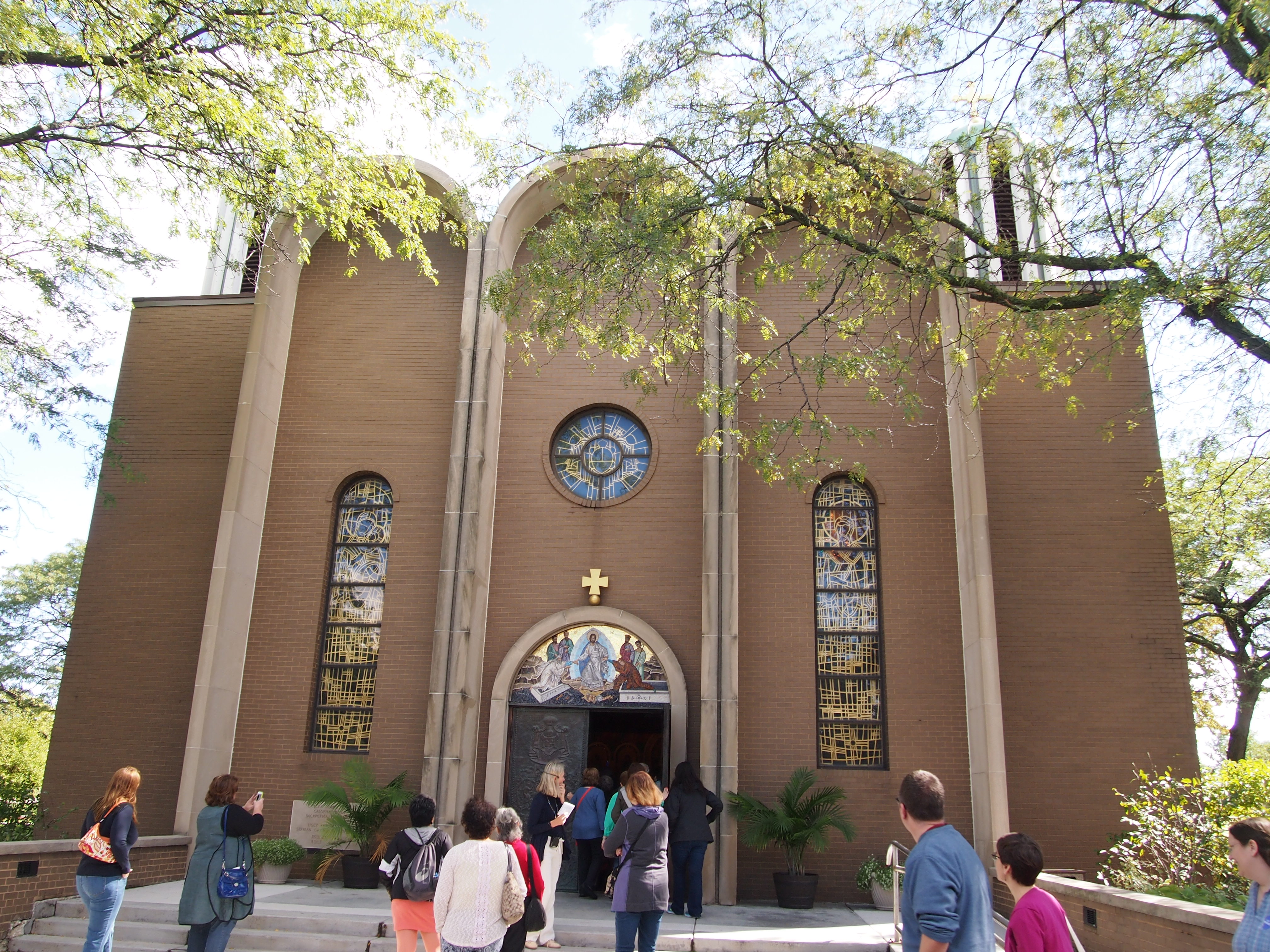
Holy Resurrection Serbian Orthodox Cathedral, at 5701 N. Redwood Dr. in Chicago and our tour’s second stop, isn’t far from O’Hare. Even if we hadn’t known that before visiting it, we would have found out standing outside the cathedral listening to the docent describe some of its features. Every few minutes, a plane would noisily fly by and she’d have to pause. In the background, Kennedy Expressway noise was also noticeable.

As we approached the building, I recognized the domes on top. They’re visible from the Kennedy. I’d seen them many times, but never knew they were part of this particular religious edifice. Pictures of the exterior and its domes are here, though more colorful than I saw.

This is the entrance, on the west side of the church, of course.

Holy ResurrectionHoly ResurrectionRadoslav Kovacevic designed the building, which was completed in 1973. According to his 2002 obit in the Tribune, the Belgrade-born Chicago architect “designed about two dozen houses of worship for Russian, Greek, Serbian, Protestant and Roman Catholic congregations,” as well as schools and commercial buildings. His funeral mass was held at Holy Resurrection.

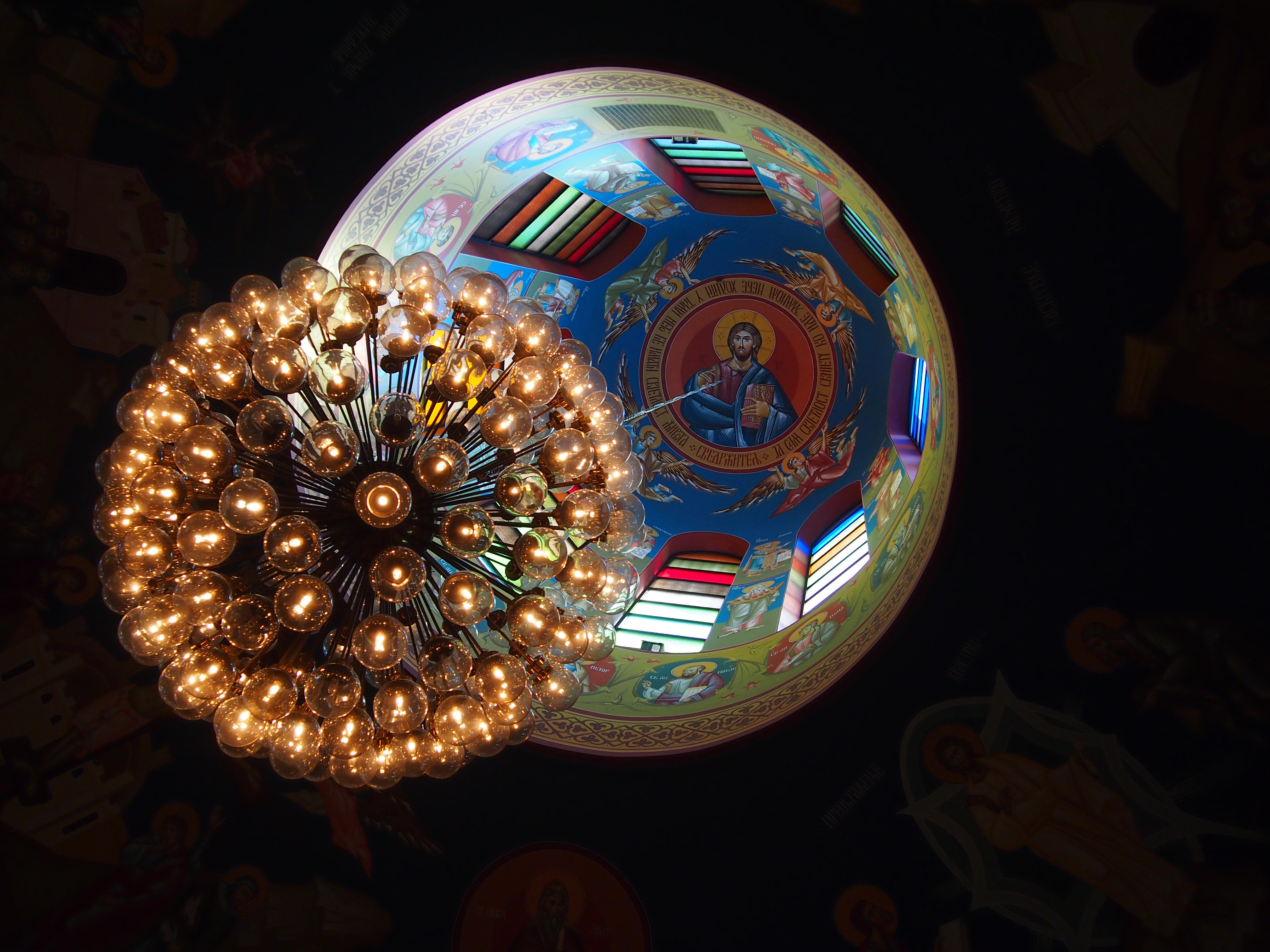
Holy ResurrectionHere’s the interior center dome and its Christ the Almighty and chandelier. Not sure if that counts as a horus, since it isn’t one of those circular jobs with depictions of the saints and apostles.

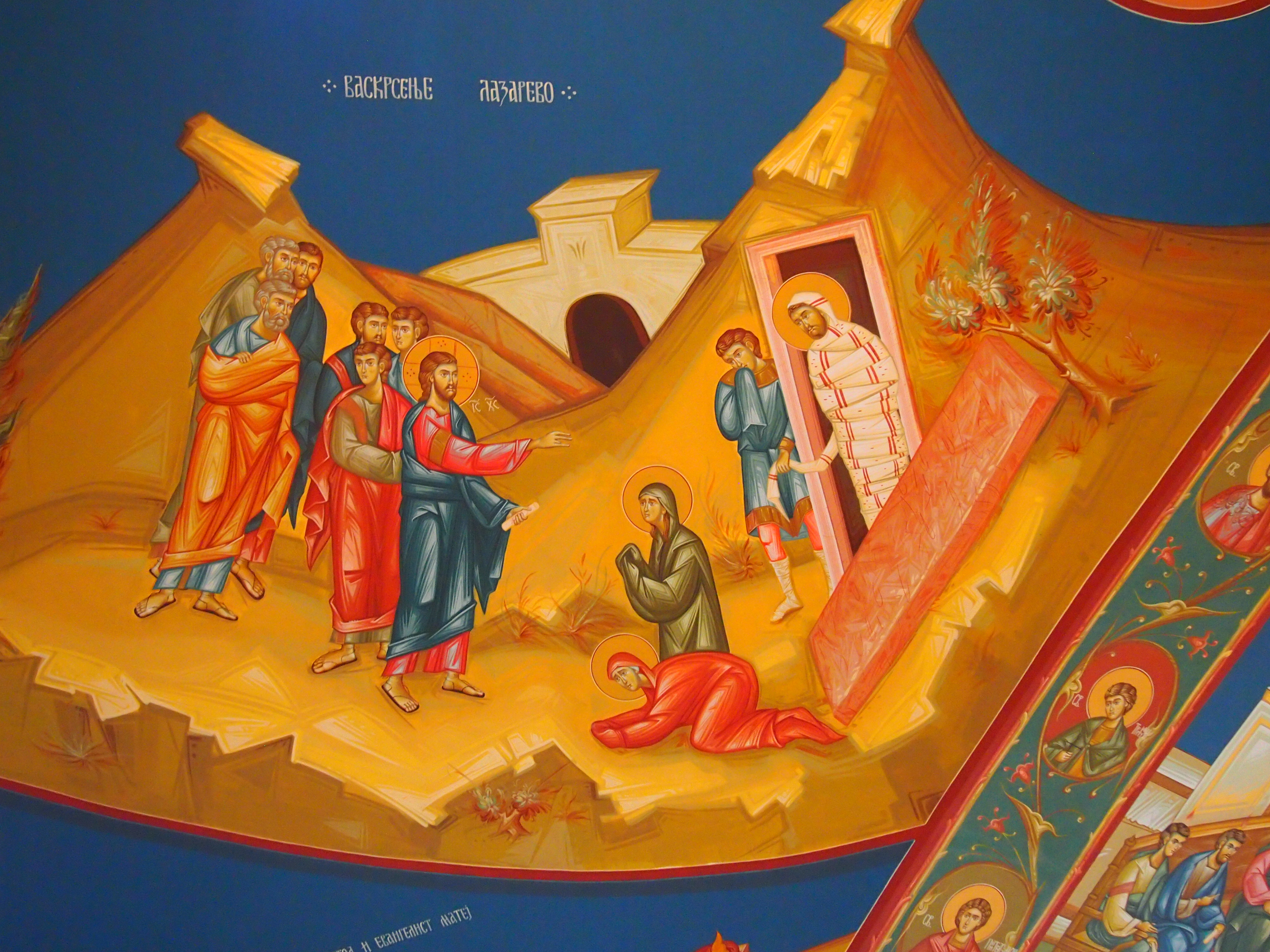
Holy ResurrectionAs you’d expect, the walls sported many murals, such as this one depicting the Raising of Lazarus. Note the fellow unwrapping Lazarus. He seems to be covering his nose. Lazarus had been dead a while, after all. I didn’t know until recently that Lazarus Saturday, the day before Palm Sunday, is celebrated in the Orthodox tradition.

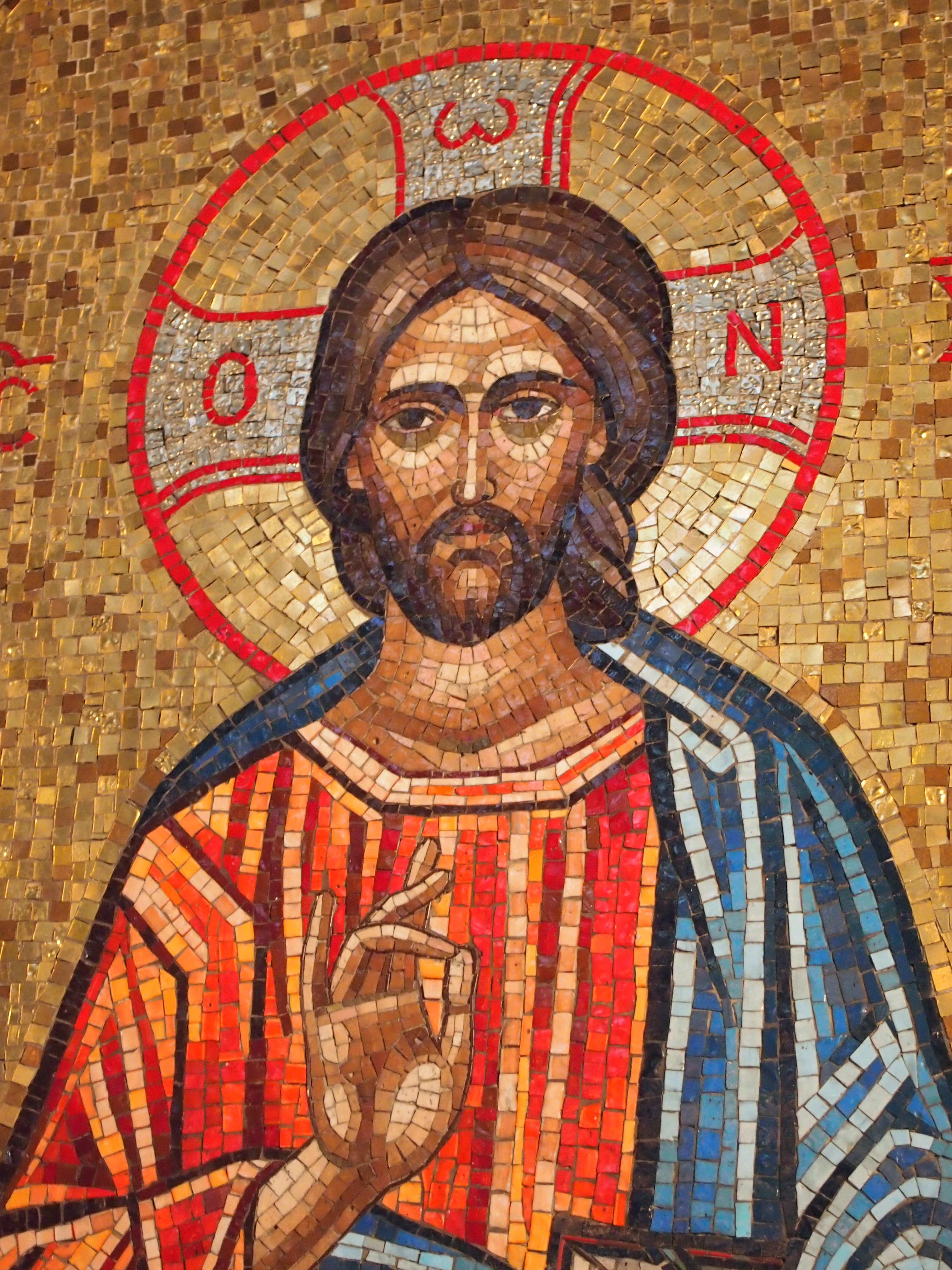
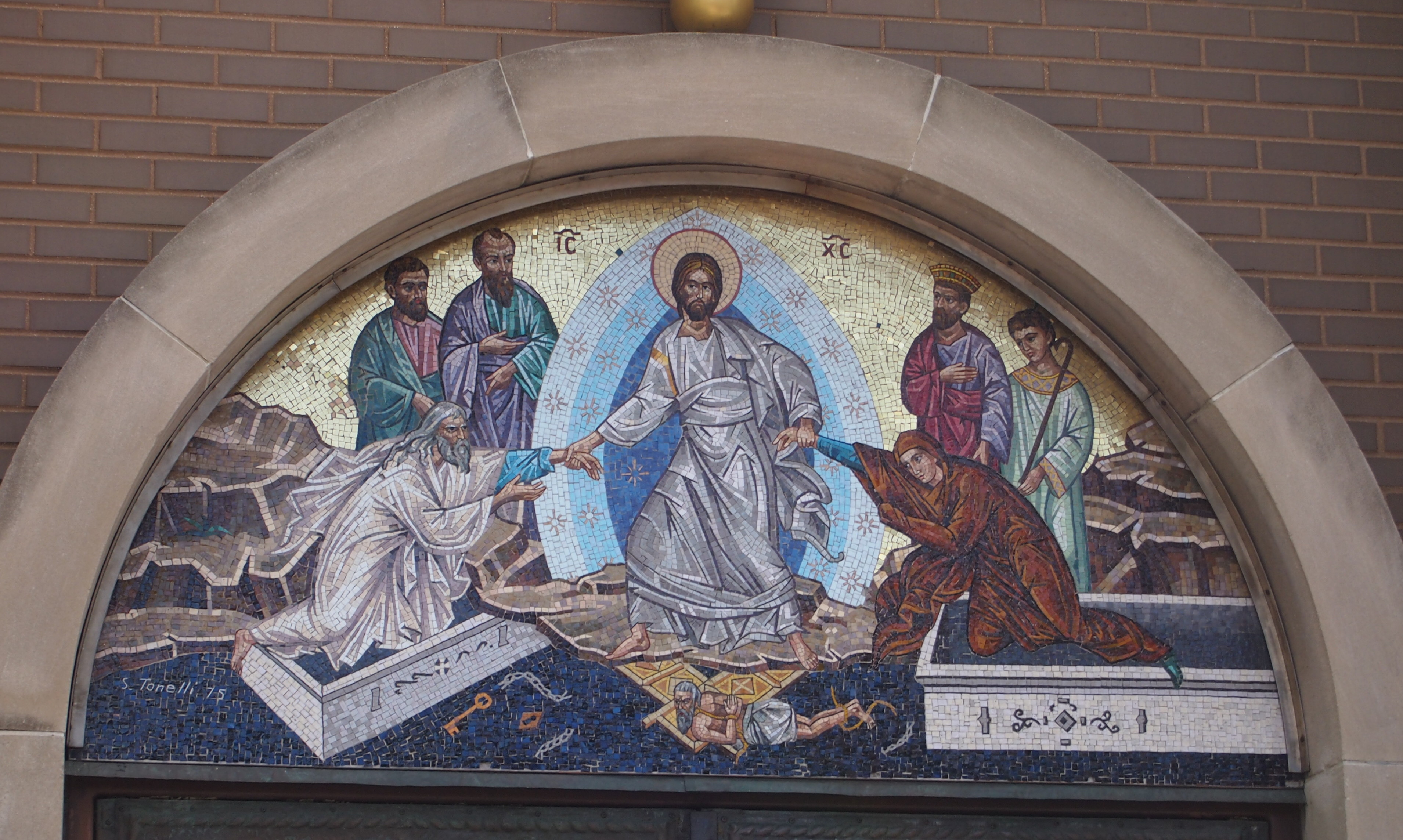
Holy ResurrectionThe church sports plenty of excellent mosaics, too.

Holy ResurrectionTo the left (observer’s left, to the north) of the iconostasis is St. Sava.

Holy ResurrectionThat’s a detail from this mosaic, which is a reproduction of a painting called “Sava blessing Serb youth.”

St SavaThe original painting dates from 1921, the creation of Serbian artist Uroš Predić. I’d never heard of the saint nor the artist before. Remarkable the things you can learn just looking around.

First United Methodist Church, Park Ridge

Late yesterday morning, Yuriko and I were in Park Ridge, Ill., an inner northwest suburb of Chicago. On the whole, it’s a handsome suburb, well marked by prosperity. A lot of rain had fallen on Friday as thunderstorms rolled through, but by Saturday morning the day was well on its way to being pleasant and clear.

So it was a good day to be on the Chicago Architecture Foundation Churches by Bus tour, as we did last year. This year, the tour visited six churches on the Northwest Side of Chicago and two of its adjoining suburbs: Park Ridge as well as the diminutive Rosemont, which is better known for its convention center and theaters and restaurants near O’Hare.

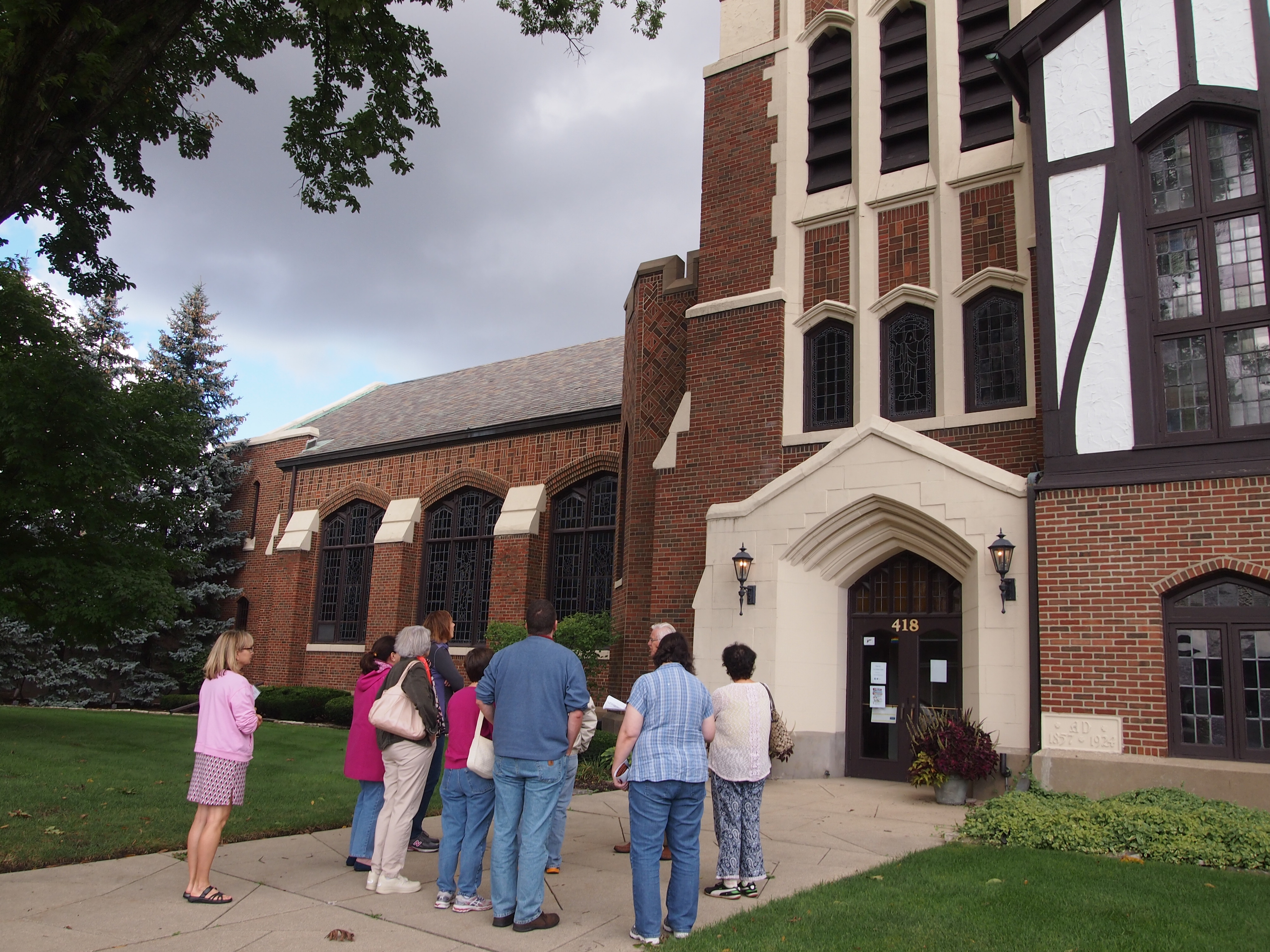
We were on Bus # 4 again. Our first stop was First United Methodist Church at 418 W. Touhy Ave. in Park Ridge.
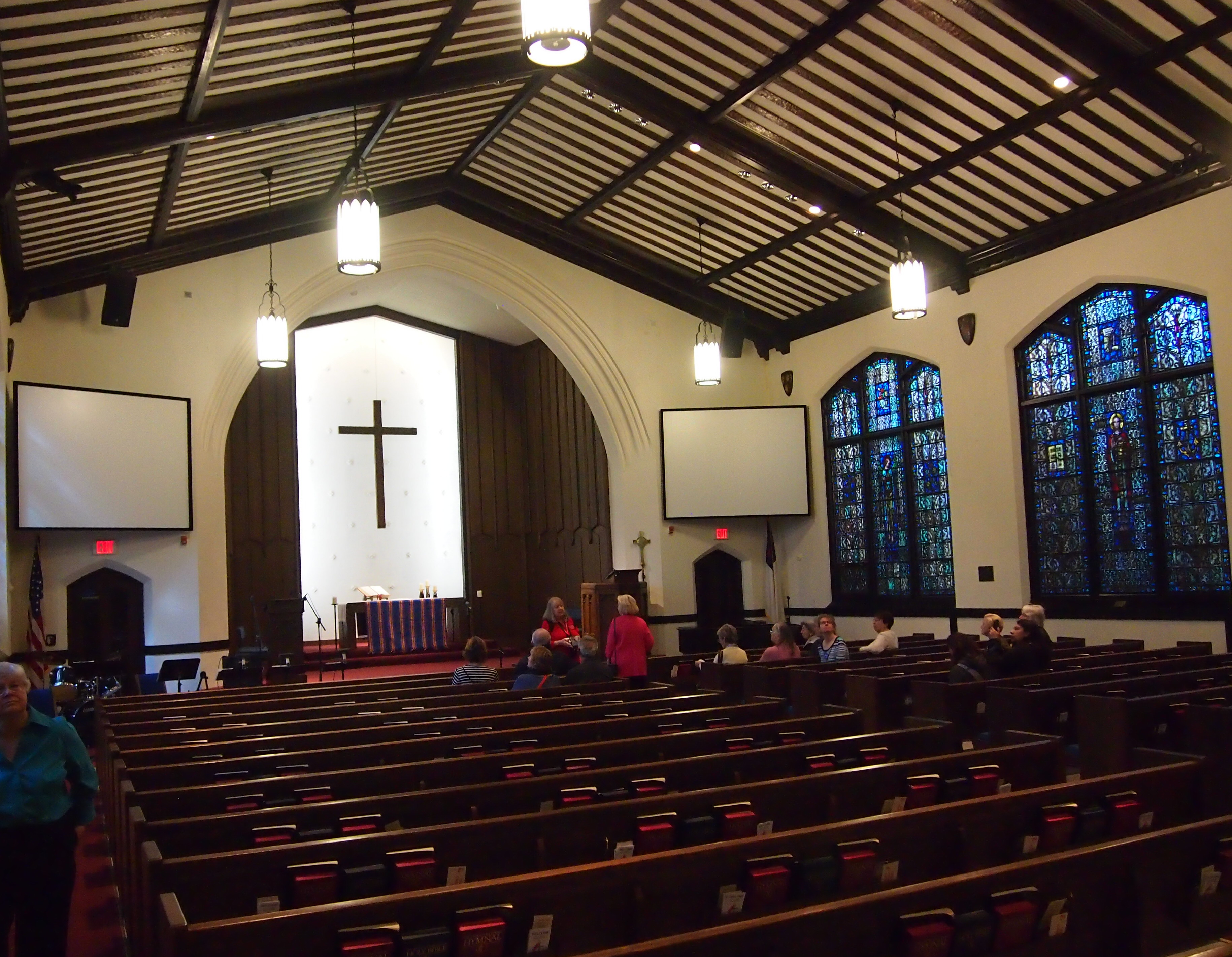
First United Methodist Church, Park RidgeAs suburban congregations go, it’s an old church, founded in 1856, with the original sanctuary built in 1857. The church building we saw dates from the 1920s, a Tudor Revival design by two men once in Daniel Burnham’s employ, Thomas Tallmadge and Vernon Watson. Inside, it isn’t particularly ornate.

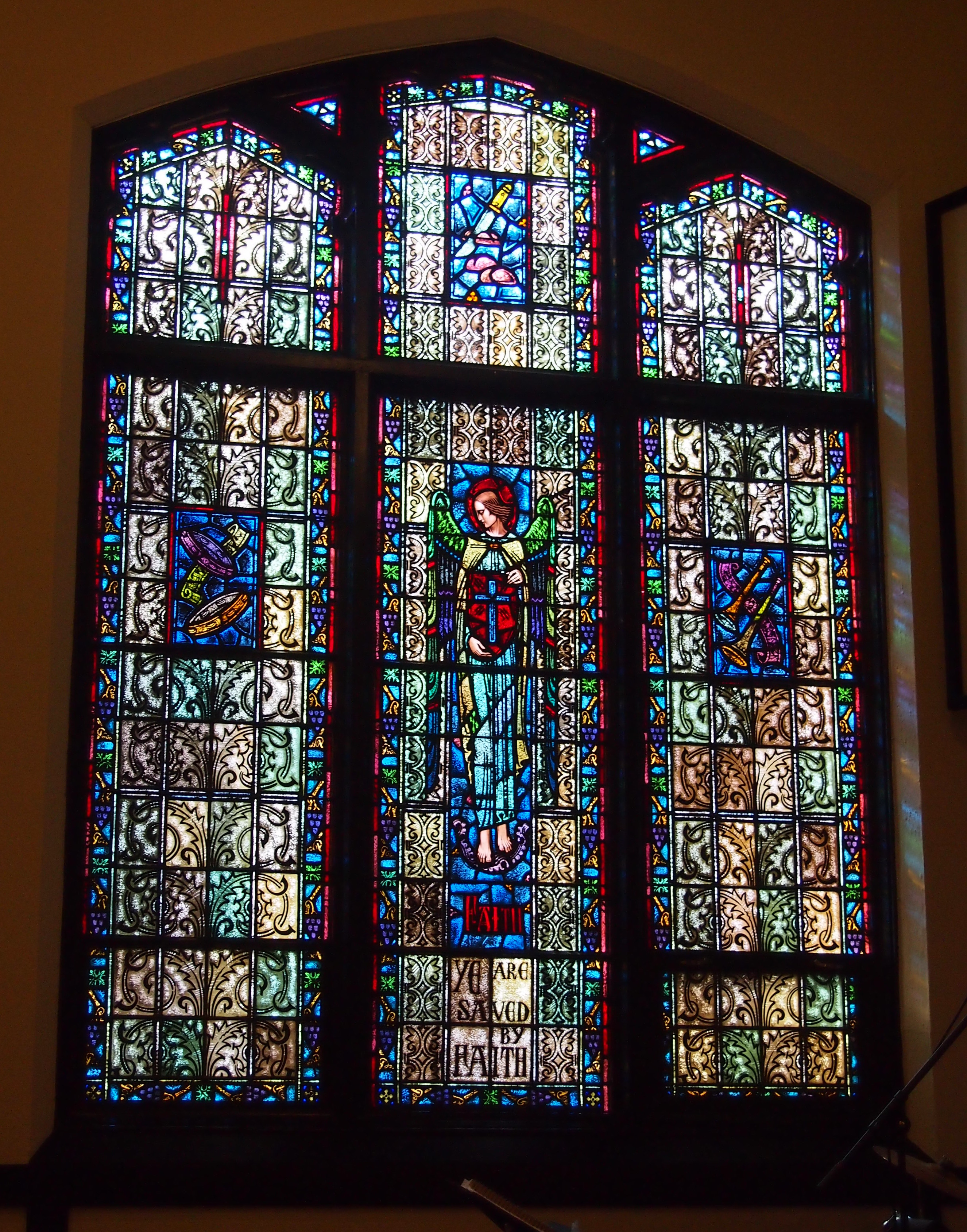
First MethodistExcept for the six large stained-glass windows, completed in 1940. They were fashioned by Conrad Schmitt Studios in Wisconsin, which is apparently still around, and designed by a young German immigrant named Conrad Pickel, whose children run a stained-glass studio in Florida.

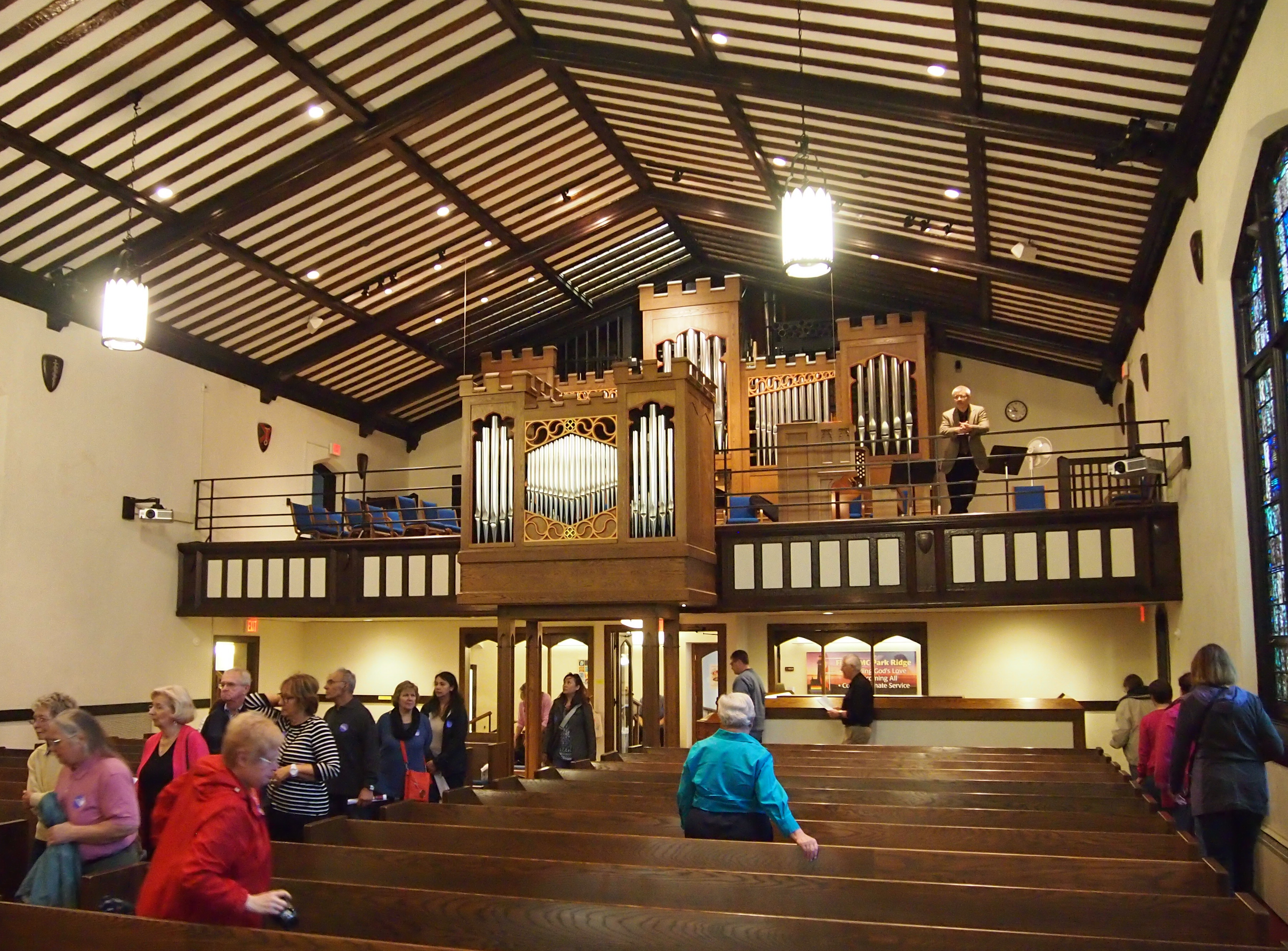
Stained Glass!The organ in back is much newer, installed only during this century. The organist (seen looking down at the sanctuary) played a bit for us. It has an excellent sound.
Big organ!The church has a couple of other distinctions besides its design. Hillary Clinton attended church here growing up in Park Ridge, and it’s also home to one of the first  Boy Scout Troops in the nation (the docent claimed it was the first), continuously active since 1912.

Thursday Ends & Odds

And why is the idiom “odds and ends” rather than the other way around? Just idle curiosity.

A huge thunderstorm started here at about 4:15 this afternoon. It was fast-moving. I sat out on the deck starting at around 3:45, when it was partly and cloudy windy and reasonably warm. I noticed a bank of black clouds to the west and northwest, and as the minutes passed, they crept closer. By about 4, the western half of the sky was covered, like a lid being closed.

In about 15 minutes, as soon as all of the sky was covered, enormous amounts of water cut loose, to the sound of some thunder. I was inside by that time. Whatever else you can say about me, I have sense enough to come in out of the rain.

The other day I saw a flying hubcap. Rolling, actually, most of the time. It was loose on the other side of a four-lane street, recently separating from a pickup truck, just as I drove by. I’ve seen enough hubcaps on the side of roads, but never one in motion. Fortunately, it stayed well clear of my position.

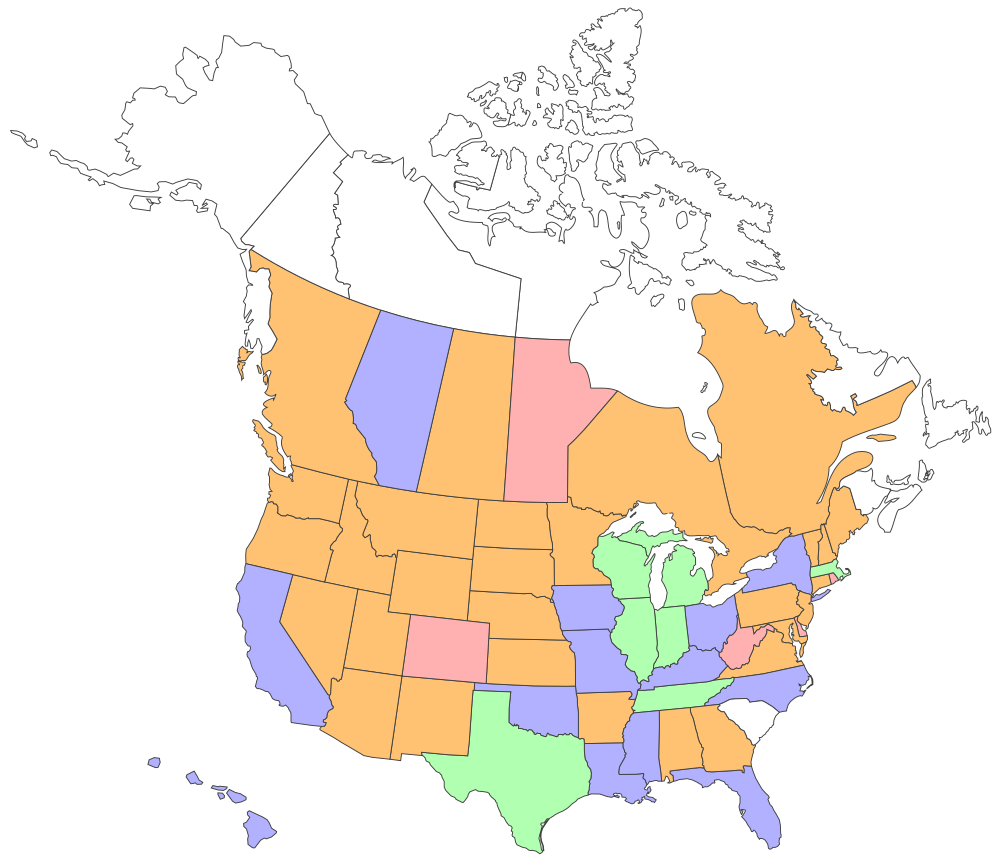
The following is strictly vanity. Everyone’s vain about something. About two years ago I found a web site that would generate a color-coded personal travel map. I found it again and updated it.

My North AmericaGreen: either lived in these places or visited so many times I’ve lost count. Very familiar.

Blue: Numerous visits covering a fair amount of the state or province, or one or two visits of strong intensity and some variety. Fairly familiar. (I changed Iowa to blue.)

Orange: Spent the night at least once, saw a relatively limited number of places. (I added Oregon.)

Pink: Passed through (on the ground) but didn’t spend the night.

White (no color): Never visited.

It’s good to have some ambition in this regard, even though making a list and checking it off is a pointless exercise. What I want to do is get rid of all the white and pink areas, but if not, I won’t fret about it (Nunavut seems particularly unlikely).

What’s Left of Summer

Today was a lingering summer day. Leftover summer. Declining summer. The butt-end of summer. Nothing to do with the approach of the equinox, just that temps were summerlike warm. But as I drove, I kept the windows down, and the air conditioning off. Soon it won’t be so warm, and I wanted to feel the warm wind while it’s still out there.

I went to two grocery stores and a drug store on this summerlike September day. All of them had their autumn-Halloween displays up. One emphasized pumpkins. A lot of pumpkins. Another was all about candy. A lot of candy. Yet another was spook gear: costumes, lawn decor, and so on. How long will it be before I see the first Halloween inflatables on lawns? I hope leaves will be falling by then, at least.

How much research has been done about the retail effectiveness of stretching holidays so far forward? Christmas is the prime example, but there are others. Is it really true that a longer merchandising season means more sales, or just the same sales spread out over a longer period? Whatever the answer, it’s annoying.

A Calendar for ’16

Something to note for the day: Lost in Space premiered on CBS, the Tiffany Network, 50 years ago today (and it’s been nearly 18 years since Jupiter II started its ill-fated voyage). My thoughts on the matter are here. But I left out another thing to like: those hip themes (first and second season, and then the third) by Johnny Williams, who clearly had potential as a composer. Also, there’s this.

Calendars for next year have started appearing. The first one to land on my desk was the “2016 Journey Through America” calendar, a sample that informs me that my company logo and promotional message can go at the bottom. It’s not a bad calendar. The holidays and other days are basic North American ones — U.S. and Canadian civic, Christian, Jewish, Muslim — and the images are the usual high-resolution pretty pics of various places. The only real oddity of a date is National Tartan Day, April 6.

Maybe the calendar makers couldn’t decide on whether to focus on highly famed American sites or photogenic but obscure ones, since it includes both for the monthly pictures. Maybe they just decided to split the difference. Overexposed places represented in the calendar include the Statue of Liberty, Miami Beach, Monument Valley and Yosemite. But it also includes a snow scene in Geneva, Neb.; a covered bridge in Wakefield, Mich.; a sunflower field in Limon, Colo.; and a small dam in Whippany, NJ.

Dog & Butterfly & Maybe a Squirrel

When my dog chases a butterfly, I don’t think it’s in the spirit of playfulness, however it’s characterized in the enigmatic song “Dog & Butterfly.” Not long ago I saw, for the first time, our dog chasing a butterfly, though it might have been a moth, or maybe just a small and less-than-colorful butterfly. Anyway, I’m pretty sure the dog had eating the butterfly in mind.

The dog is keen on catching insects and occasionally does. Fortunately for her, she hasn’t yet caught a bee in her mouth, even though I’ve seen her trying.

Today was warm again and the dog spent longer than usual scanning the upper reaches of the tree in the back yard.

DogI couldn’t make out what she was looking at. A squirrel would be the best guess. Or maybe a tree gnome invisible to us, but not dogs.

At the Mansfield Cut, ca. 1958

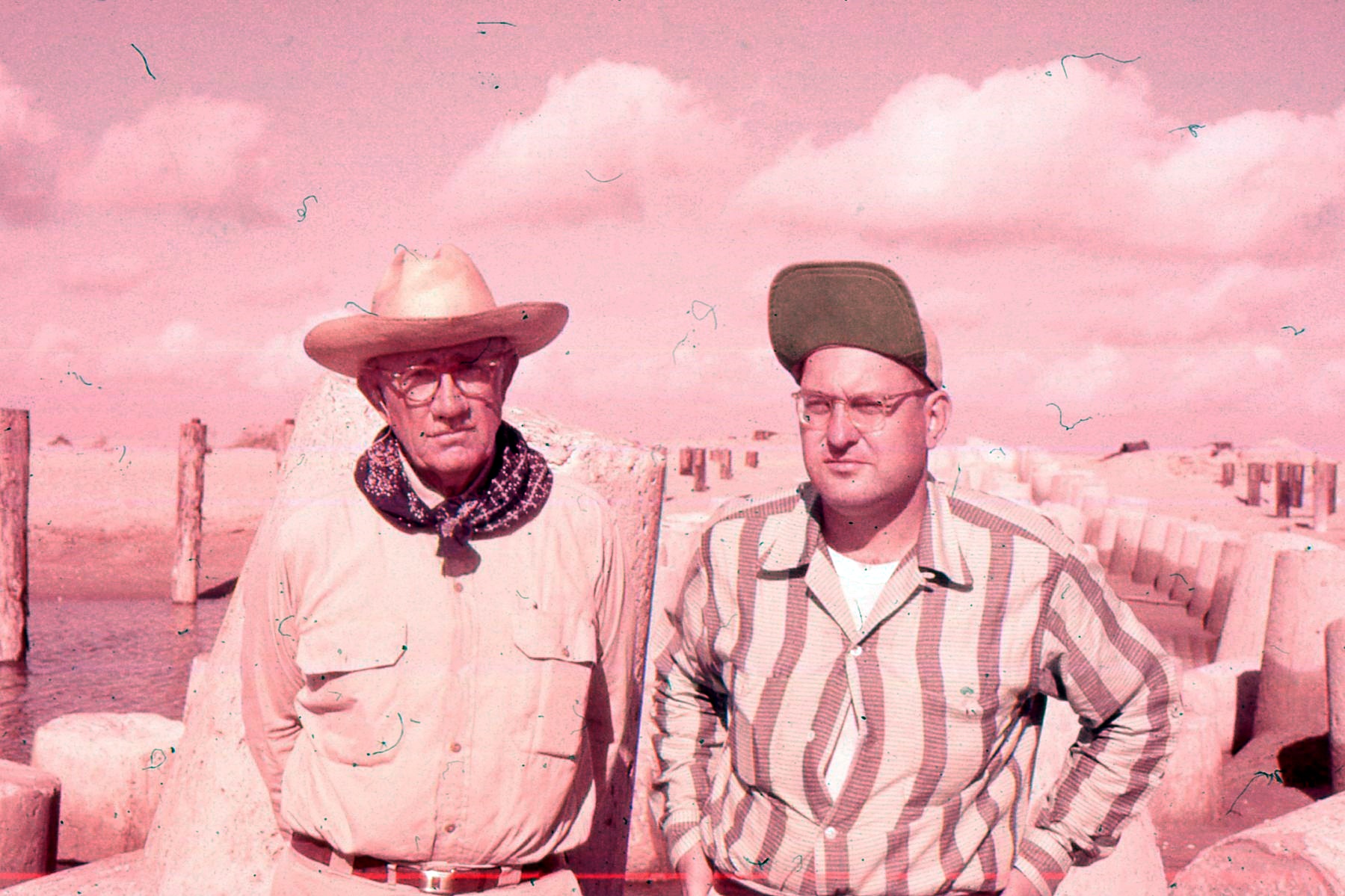
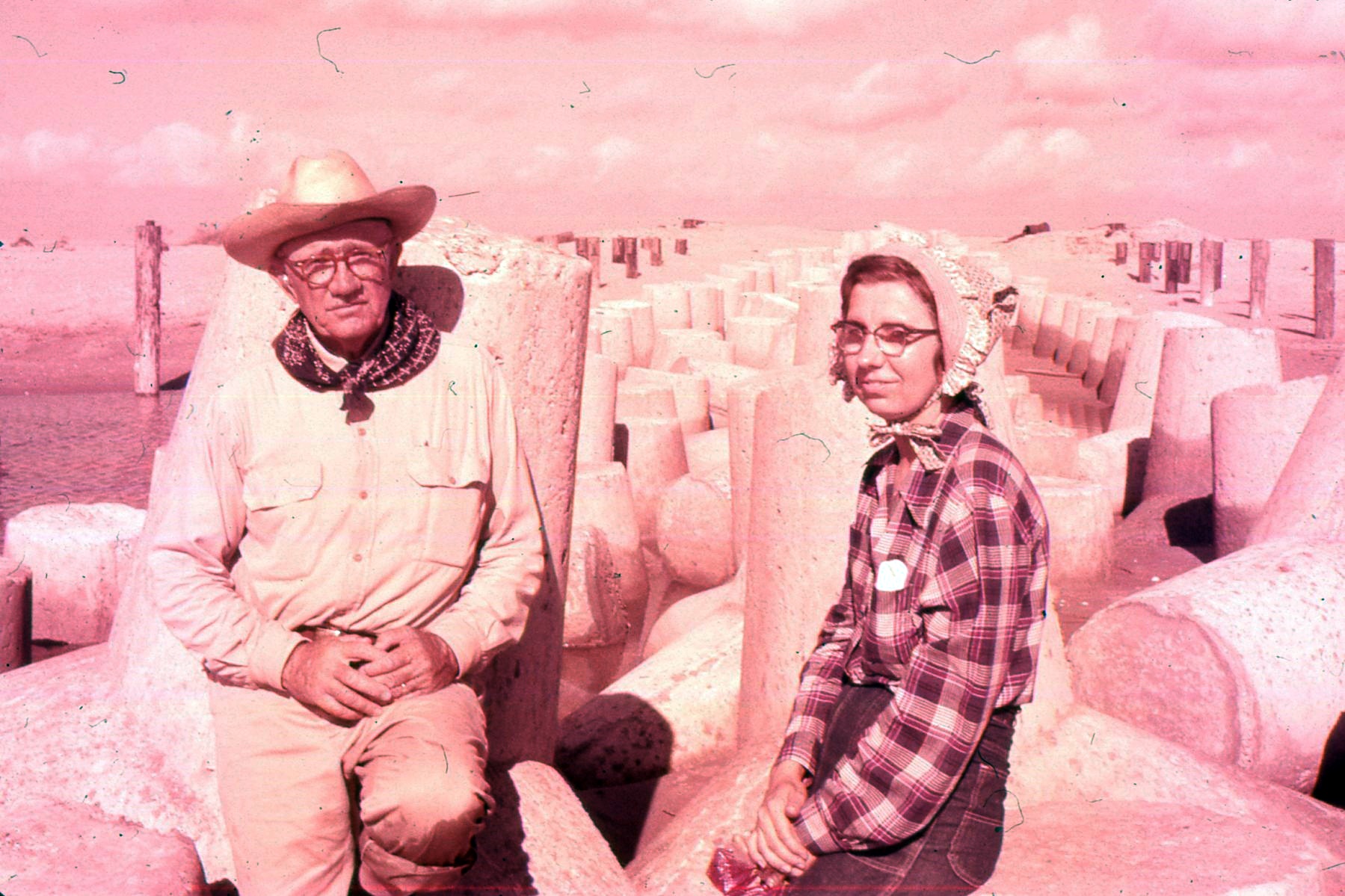
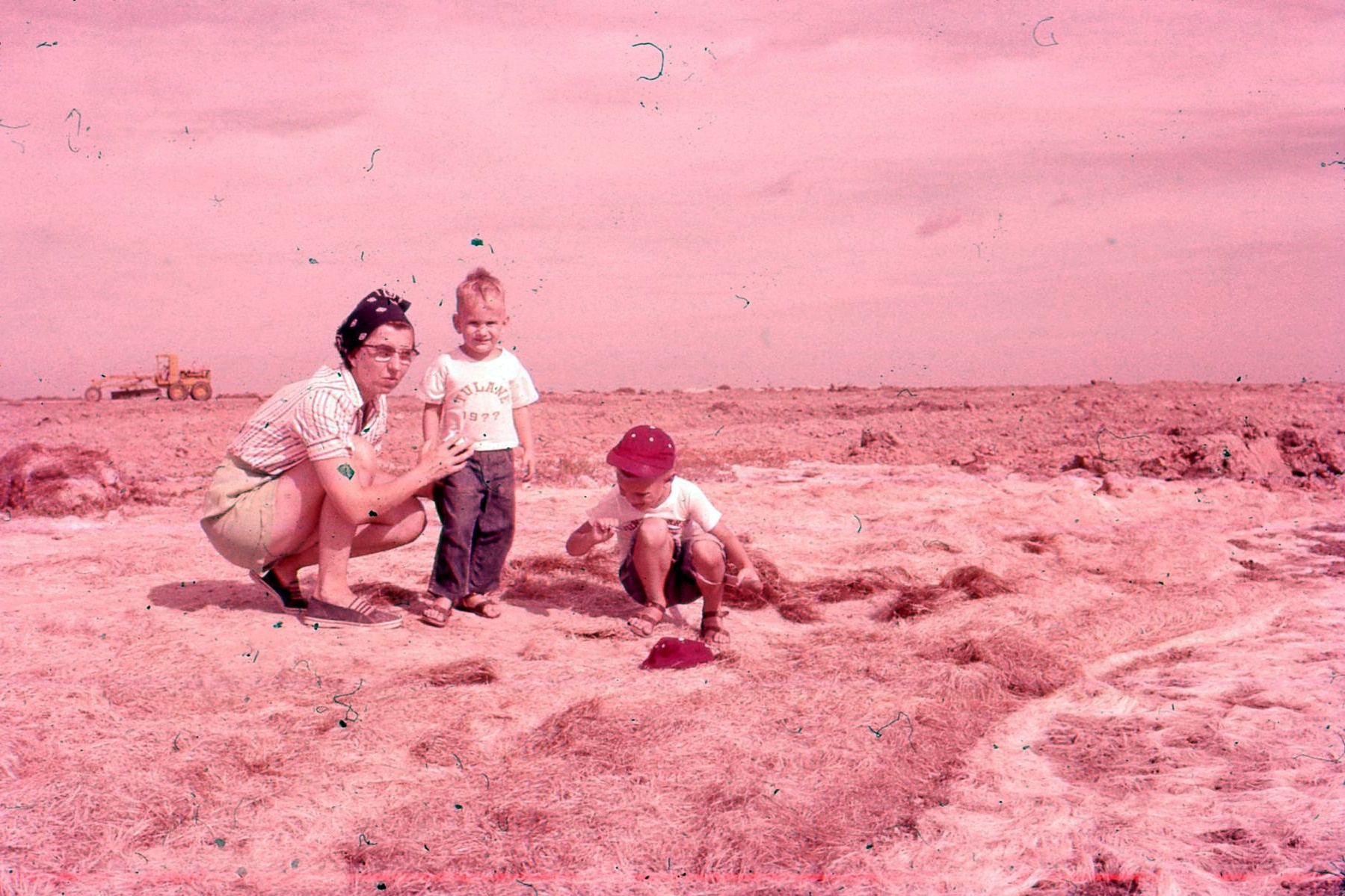
The last time I visited Texas, I dug into more of my father’s slides for scanning. Sometime during 1958, probably, my father, mother and brothers visited my grandparents on Padre Island. My grandfather (left), a civil engineer, was working in some capacity in the creation of the Mansfield Cut, though we’re not sure what. On the right is my father. Jay and I call this the wearing funny hats shot.GrandpaandDadMy grandfather (my mother’s father) and my mother. I suspect she borrowed the bonnet from my grandmother for the sunny day. Even in the late ’50s, it would have been considered old fashioned.GrandpaandMamaMy mother and brothers. It’s always a little odd looking at a picture of your family at a time when you don’t exist.MamaJimJayThe Mansfield Cut separates Padre Island from South Padre Island, and was made to provide access from the sea at that point to the Intercoastal Waterway. Jay says that mother marveled at the large numbers of shells on the beach there, since it was remote — it’s still remote — and not many people collected them. There’s a jar of shells at my mother’s home, and some of them might have been picked up during this visit.

Pacific Northwest Etc.

For once, I happened to be on the right side of the airplane when the pilot pointed something out. Namely, one of the massive forest fires burning on August 21 in the mountains of Washington state. It was an enormously tall, light gray cloud, reaching down toward the irregular ground below. If you looked carefully, you’d notice that very near the ground the cloud was tinged orange. I’d never seen the likes of it before.

Two days later, one of my ambitions on the road was to see Mount St. Helens, that storied volcano whose eruption captured the nation’s attention in the spring of 1980. No dice. When I got to the Mount St. Helens National Volcanic Monument visitors center, the ranger there told me that while I could drive to the lookout points, visibility was nil because of forest fire smoke.

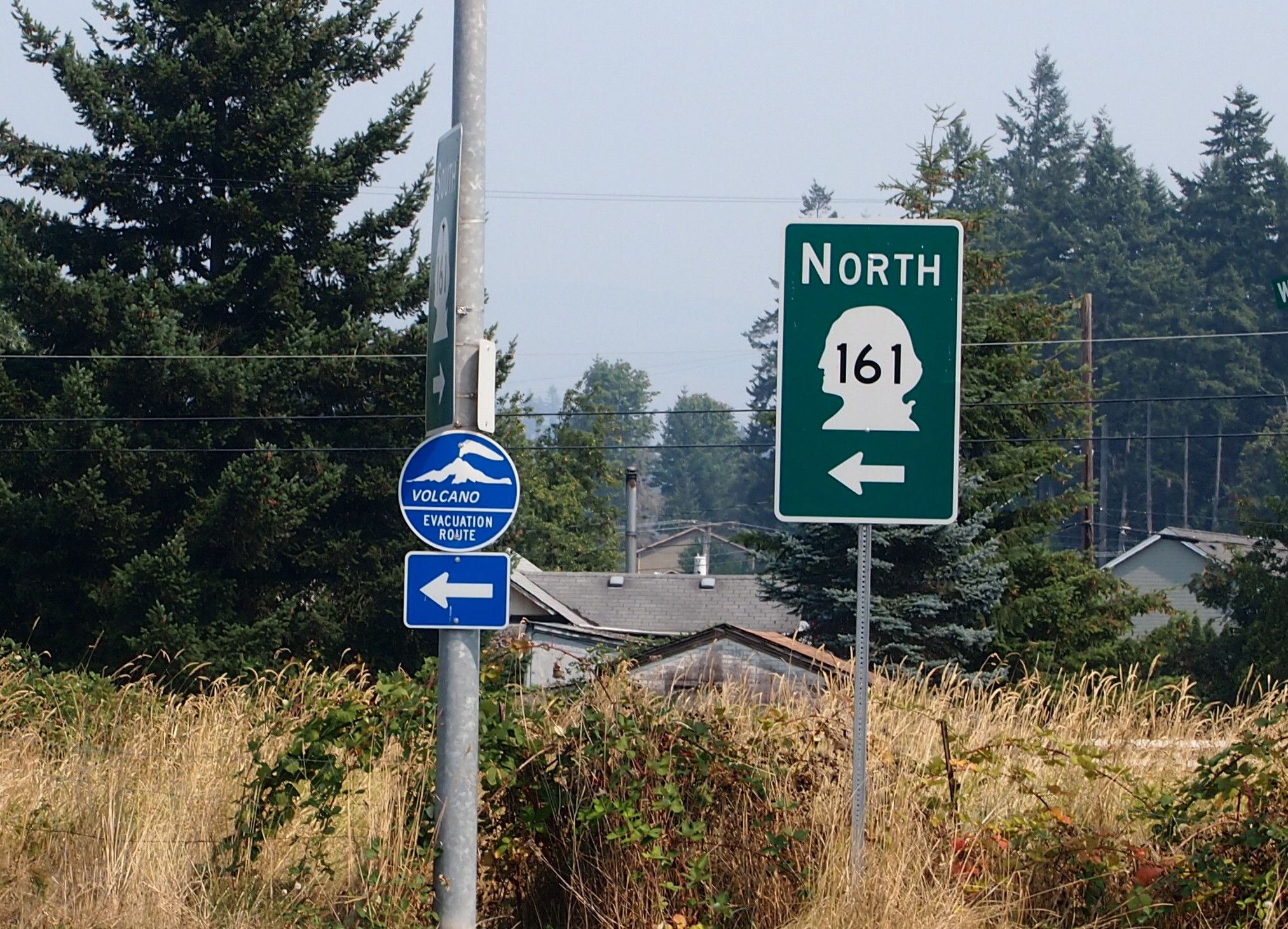
The only volcano I saw on this trip was on a sign not too far from the famed volcano.

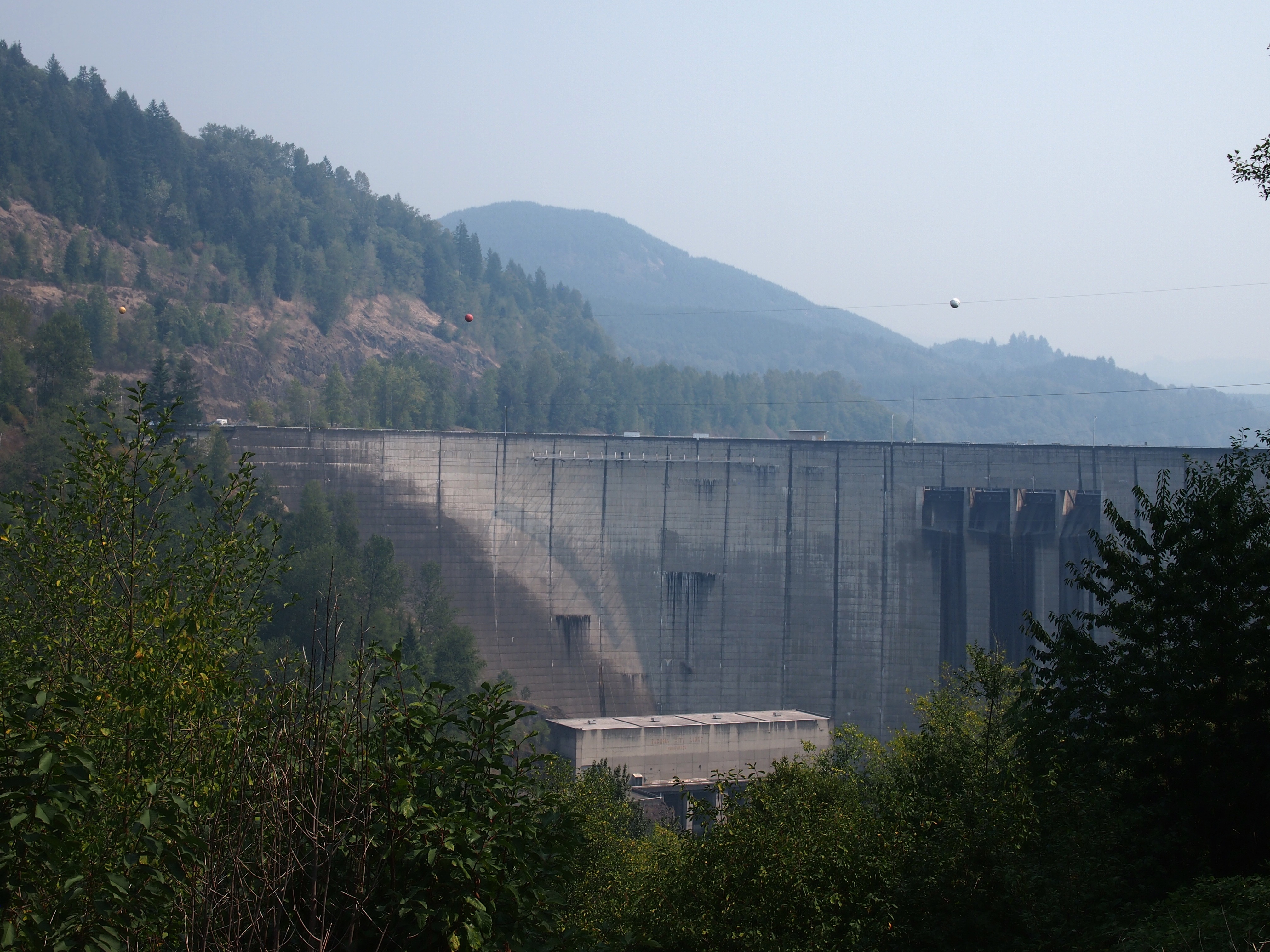
Washington state, Aug 2015I consulted my map and picked out something else in the vicinity to see. That turned out to be Mossyrock Dam in Lewis County, Wash.

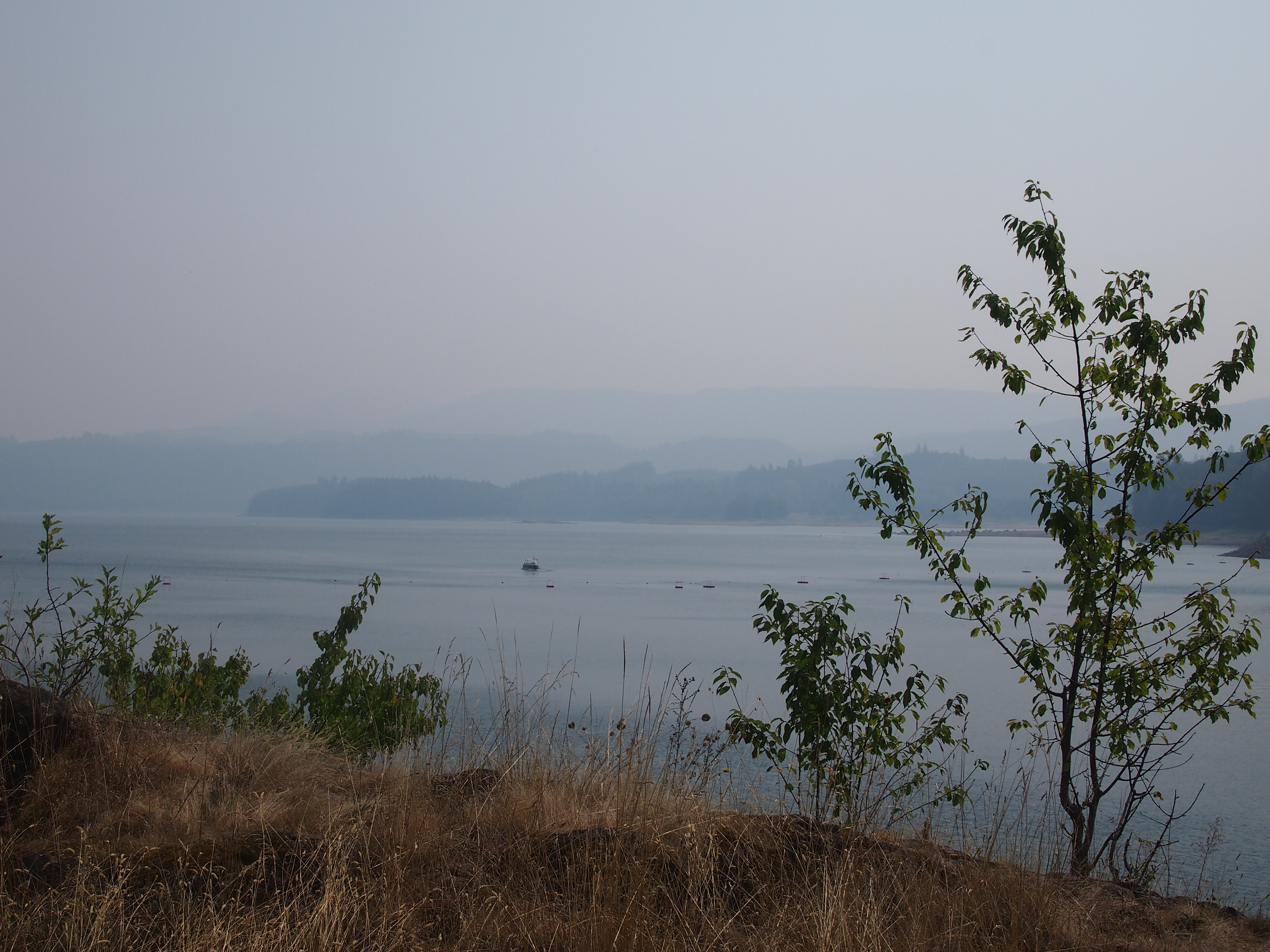
Mossyrock DamNote the haze in the background. That was everywhere in the distance that day. Mossyrock Dam dates from toward the end of the U.S. dam-building frenzy of the 20th century, being completed in 1968 (the frenzy has moved to China in our time). It dams the Cowlitz River, a tributary of the Columbia, and its main purpose is hydroelectric production. According to a number of sources, Mossyrock is the tallest dam in Washington state. I’d have guessed the Grand Coulee Dam, but maybe it just gets better press.

While I was reading about the dam, I came across an article about some towns that were flooded by the creation of the lake. That’s interesting, but I was also reminded of hearing about the 1940s flooding of the town of Stribling, Tennessee. I’m pretty sure my cousin Cook Wilson of Mississippi told my brother Jay, and Jay told me. Or maybe Cook told both of us at the same time, but I would have been pretty young, eight or so.

I looked it up again, and Stribling is under Kentucky Lake, one of the Between the Rivers lakes created by the TVA. When I was a kid, I imagined that such a town included whole buildings covered with water, and if you dove down, you could open the doors and look inside flooded buildings. It didn’t occur to me that pretty much everything would have been carted away before the inundation, even if only for scrap, leaving only building foundations, if that. Which would soon be silted over.

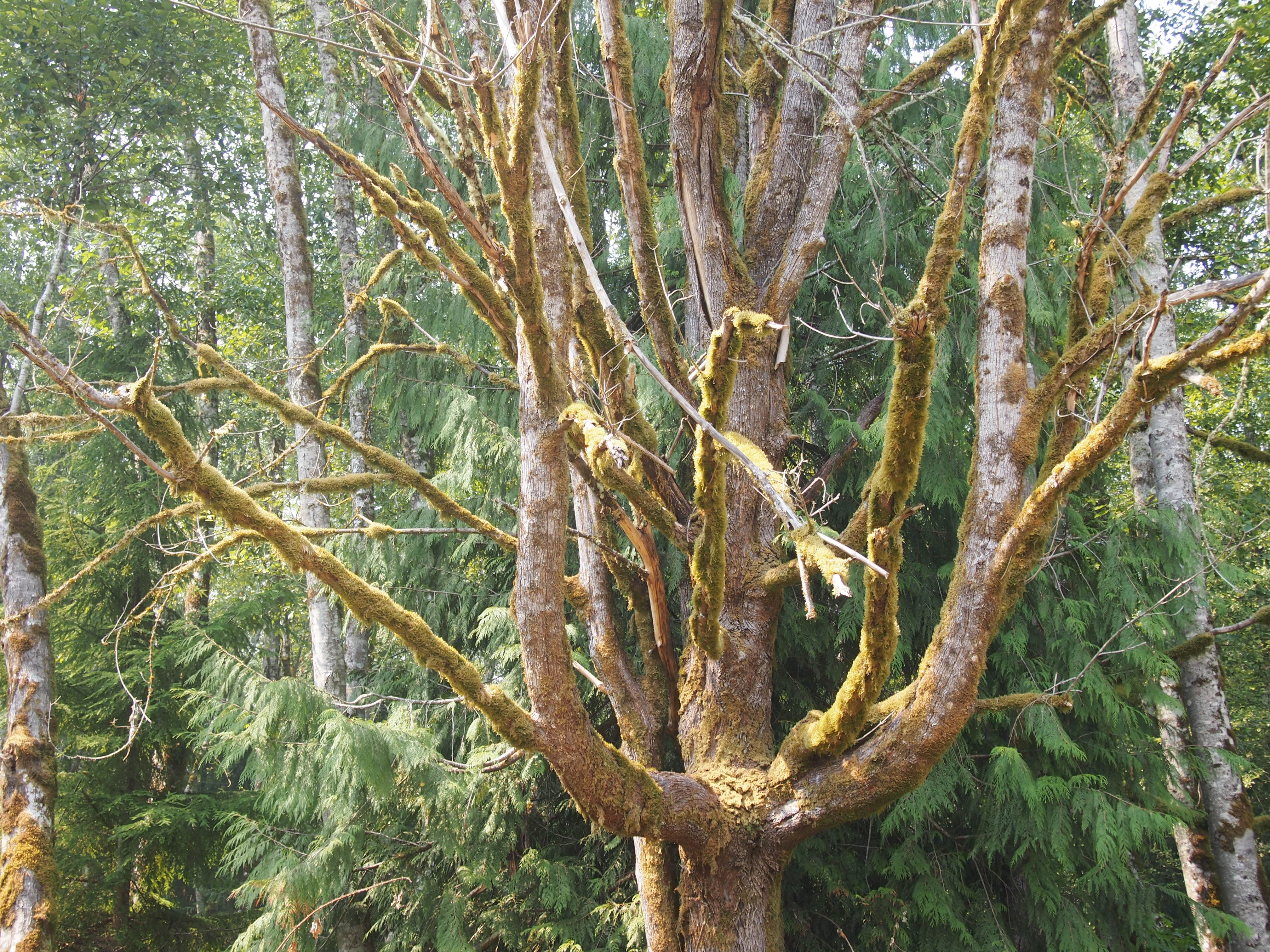
I also saw some mossy trees near the Mossyrock Dam.
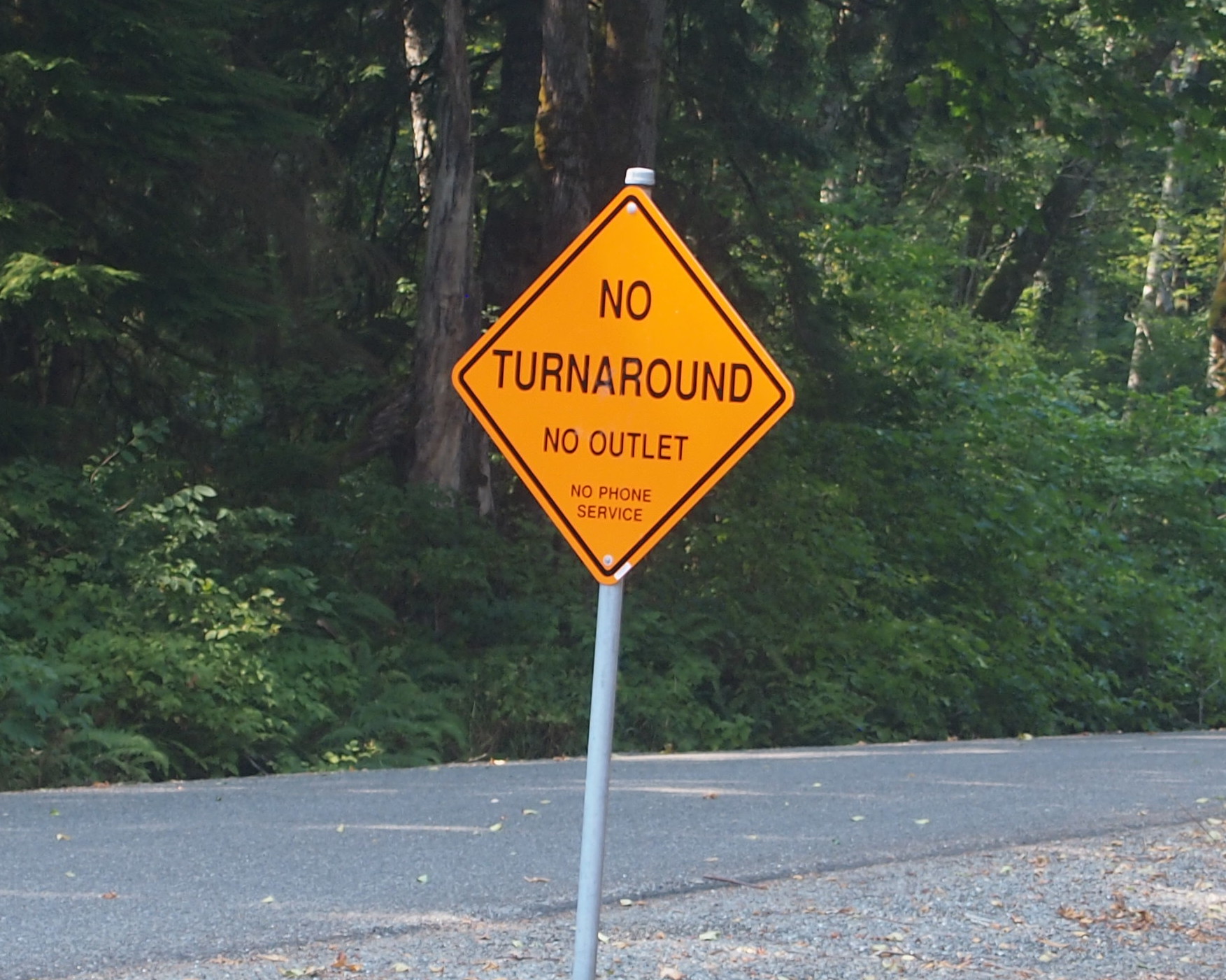
Washington state, Aug 2015And a sign that might as well have said ABANDON ALL HOPE… What’s the point of this road?
Go the hell awayThis is Riffe Lake, created by the Mossyrock Dam, and just as hazy that day.
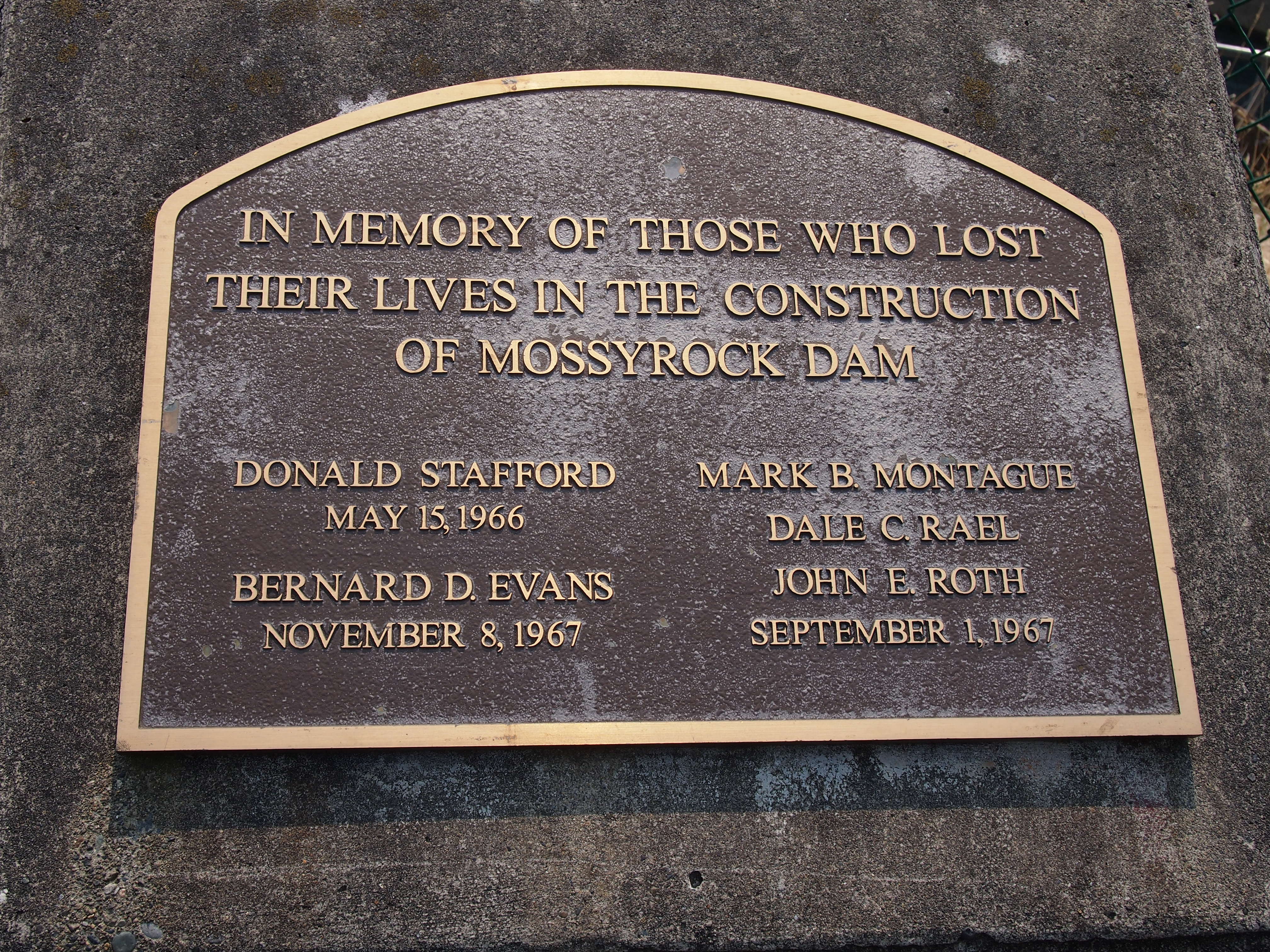
Riffe LakeI noticed this plaque near the dam’s observation point. I’m glad the men have some kind of memorial. More than the many more who died building the Coulee seem to have gotten.
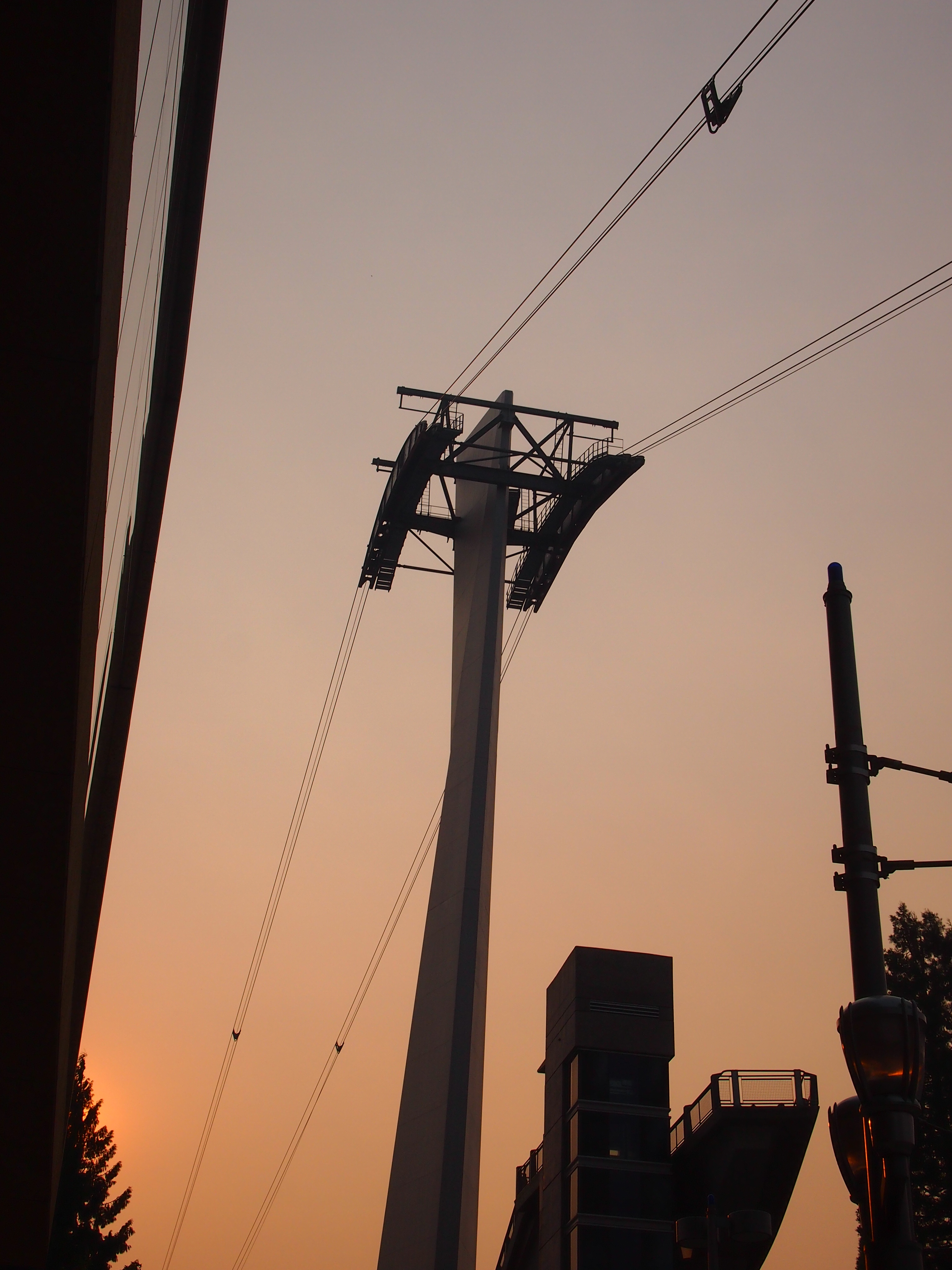
In MemoriamSomething else I didn’t get to do: the Portland Aerial Tram. On the morning I got to Portland, I could see it, but without a more detailed map, I couldn’t get to the damned thing. The part of town that’s home to one of the terminals, which is on the river, is essentially cut off from the rest of town by a freeway, and if you don’t know the exact way to get past that obstacle, you’re out of luck. By the late afternoon, when I had a better map and could find the tram, it was closed. Ah, well.
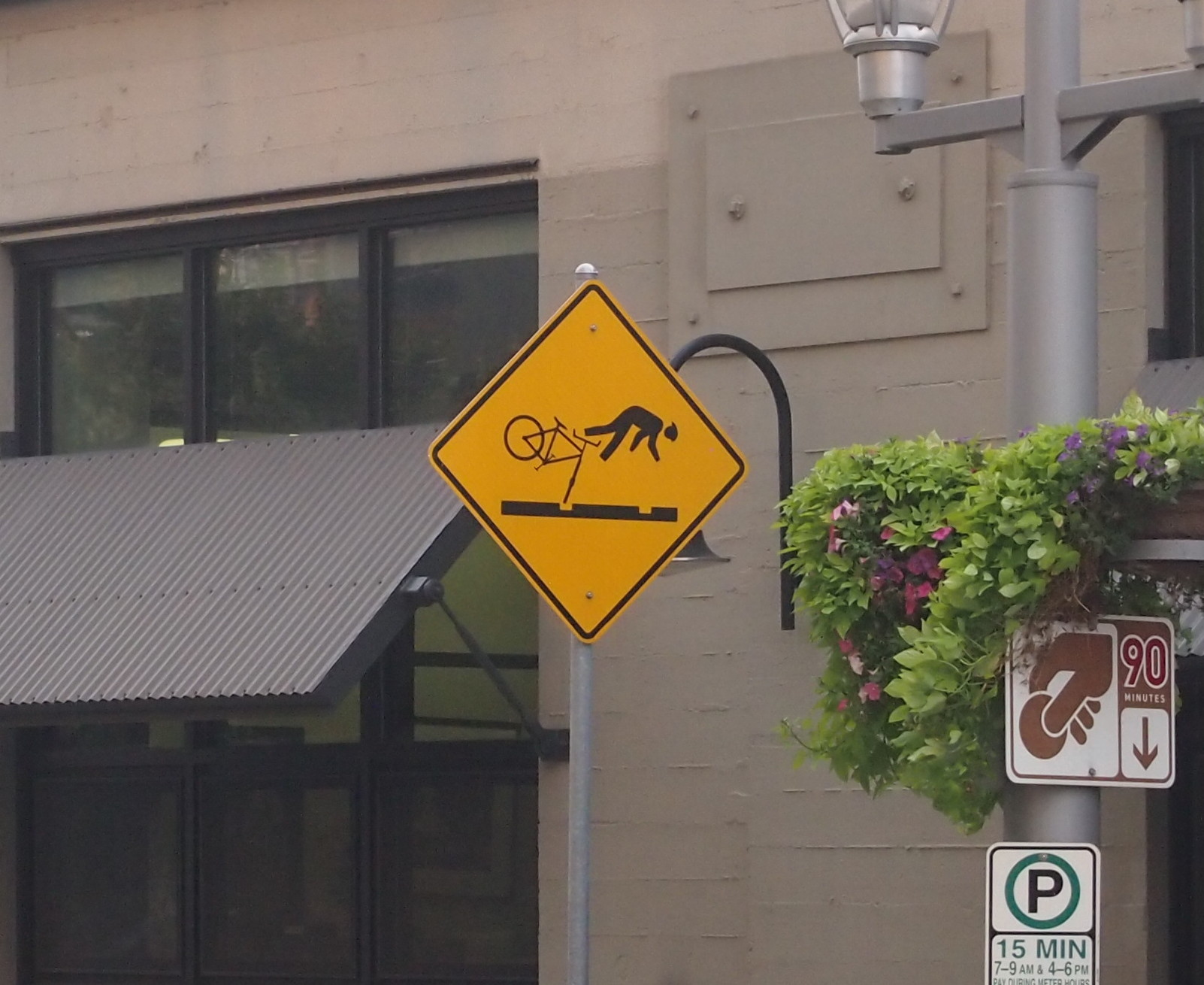
Portland Aerial TramPortland has a number of light rail lines, and I rode those just to ride them. I also noticed these signs near the lines, something I’ve never seen anywhere else.
PortlandUp north, one thing I noticed about major Canadian surface streets — or at least those streets in the Vancouver area — was that there’s no such thing as a double yellow line. BC 99 turns from a limited-access highway into a six-lane major street as you enter the city, and it’s divided by a single yellow line. It’s silly how unnerving that was, because the difference is only a few inches. Even so, all that separates you from a mass of cars and trucks coming at you is a thin yellow line instead of a double thickness of two. Canadian drivers must be used to it.

Know what else Vancouver doesn’t seem to have? Free parking. Not even at Stanley Park.

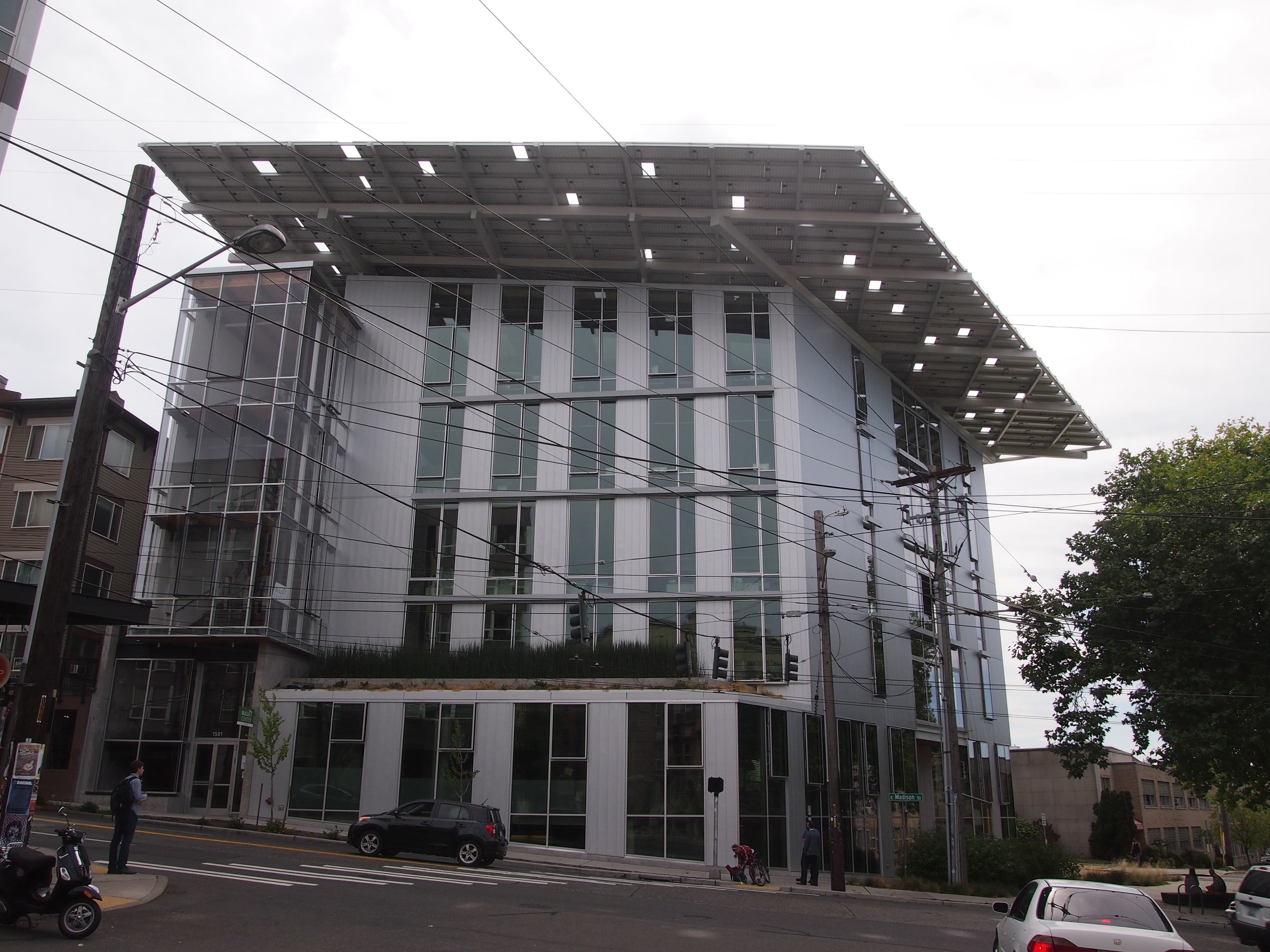
Finally, the Bullitt Center in Seattle, one of the greenest buildings in the nation, and a marvel of a building in that way.

The Bullitt Building, SeattleFor instance, that hat of a roof? An array of solar panels that produces more power than the building uses. As part of my work, I got a tour from the property manager. This is my writeup of the visit.

The EMP Museum

By chance today I saw about 10 minutes of Pompeii, a movie that apparently came out last year. The scene pitted gladiators vs. Roman soldiers, and clearly the gladiators were the put-upon salt-of-the-earth hero and his friends, while the soldiers fought for a cartoon Roman upper-class twit bad guy. I watched anyway. Nothing like a little implausible sword play to liven your afternoon. It didn’t take long to come to the conclusion that overall the movie was very stupid indeed.

But maybe I should have watched the end. According to Marc Savlov in the Austin Chronicle: “We all know what happens in the end and, to his credit, Anderson [the director] totally nails the vulcanization of Pompeii. You want it? You got it: flaming chariot melees, massive tsunamis, and a downright hellacious pyroclastic flowgasm that makes the ones in Dante’s Peak look like so many Etch-a-Sketch doodlings (all of it shot in well-above-average 3-D). Pompeii delivers the goods – well, at least during its final 20 minutes.”

It took me a while to remember what EMP stands for in the EMP Museum in Seattle, which I visited on the afternoon of August 28. That evening I said (jokingly) that I’d gone to the Electromagnetic Pulse Museum, because I’d forgotten it stands for Experience Music Project.

The EMP is at Seattle Center, just north of downtown. Seattle Center was the site of the 1962 world’s fair, interestingly known as the Century 21 Exposition. EMP didn’t come along until near the actual beginning of the 21st century, back in 2000, as the creation of Microsoft billionaire Paul Allen and right-angle averse starchitect Frank Gehry.

It’s a colorful 140,000-square foot blob of a building, roundly hated by many. I didn’t hate it, but it didn’t inspire much admiration in me either. I’ve seen plenty uglier buildings, following my own visceral and idiosyncratic standard for ugliness, which is uninformed by theory. Most parking garages are worse. So are many brutalist and otherwise concrete-based structures. EMP just seemed like Gehry being Gehry.

I understand it was a technical marvel to build, with more than 21,000 exterior aluminum and stainless steel shingles all uniquely shaped and designed to fit together like pieces of a puzzle, and an interior defined by strange irregular shapes and held up by 280 steel ribs. I found myself looking up at the interior with more admiration than the exterior. The engineers needed a terrific amount of computing power to design and put the thing together, which somehow seems fitting, considering that a software philanthropist paid for it.

Here’s an odd assertion from the museum: “If [the building’s] 400 tons of structural steel were stretched into the lightest banjo string, it would extend one-fourth of the way to Venus.” That must mean the average distance, since the true distance from the Earth to Venus changes every moment. Or maybe it means the distance between the orbits of Earth and Venus.

Wonder how many ping-pong balls it would take to fill it. Someone at the museum needs to figure that out.

Richard Seven wrote in the Seattle Times in 2010: “A smashed guitar, in honor of Seattle’s Jimi Hendrix and his rebellious style, was the inspiration and template. But the real collision was between one of the world’s most relentlessly anti-box architects, an unfathomable task of trying to freeze the rock ‘n’ roll process, and a wealthy private client who embraced the costs and advances in computing and engineering that allowed a building like that to even stand…

“When he toured the building just before it opened in the summer of 2000, Gehry told reporters, ‘It’s supposed to be unusual. Nobody has seen this before or will see it again. Nobody will build another one.’ ” Probably so.

As a museum, EMP is devoted to pop culture. Though “music” is in the name — and Jimi Hendrix and Nirvana each have their own galleries — that’s only part of the equation. One of the current exhibits, for instance, is “Star Wars and the Power of Costume,” which sounds like a display of costumes from that franchise. It cost extra, so I took a pass.

I didn’t miss “What’s Up Doc? The Animation of Chuck Jones.” That alone was almost worth the inflated price of admission to EMP. Besides original sketches and drawings, storyboards, production backgrounds, animation cels, photographs, and a fair amount to read, there was the opportunity to see cartoons on big screens, such as “What’s Opera, Doc?”, one of the Roadrunner cartoons — I forget which, not that it matters — and “One Froggy Evening,” which I probably hadn’t seen in more than 30 years, and which I didn’t fully appreciate when young. Especially the notion of a frog singing tunes from the 1890s.

The museum features some impressively large installations. One is made of guitars. A lot of guitars, arrayed upward in a kind of mass cone of guitars (and banjos and keyboards and other musical instruments) two stories high. The work is called “IF VI WAS IX,” and it was put together by a Seattle artist who goes by the single name Trimpin.

It’s more than just a cone of instruments. EMP notes that “short stretches of music were played into a computer then organized by Trimpin into a continuous electronic composition, with notes assigned to specific instruments. Customized robotic guitars play one string at a time. Six guitars work together to create the sound of one chord—a mechanical metaphor for how musical styles and traditions continue to influence one another.”

Nearby is the “Sky Church” room, whose main feature is a 33’ x 60’ HD LED screen that projects images on (from?) an enormous wall. The 65-foot ceiling is illuminated with parasols that seem to float overhead, and the space is well equipped with special-effects lighting. Technically impressive.

The perfect venue for, say, the restored color version of A Trip to the Moon. Or “Steamboat Willie.” Or “Duck Amuck.” Or the “Thriller” music video. Or any of many possibilities. All short, all worth seeing on a vast screen. Maybe shorts like these play at the Sky Church, but the day I was there, the venue seemed mostly to pump out music videos for people under 30.

I’ve read that the full name of the museum used to be the Experience Music Project and Science Fiction Museum and Hall of Fame (with the clunky initials EMP|SFM), but some years ago, the science fiction aspect was demoted. The museum still covers science fiction, as well as the horror genre, but in two galleries in the basement.

Not bad displays. I enjoyed seeing an assortment of SF movie and TV show props, such as the original Terminator’s leather jacket and I forget what else (no Lost In Space Robot, though), and playing with at least one of the interactive features: a large globe that would take on the likeness of each of the Solar System’s planets, along with the Moon (and Titan?), at the touch of a button.

Oddly enough, I got more out of the horror exhibit than the SF one. Besides static displays and props and the like, the horror gallery included a number of alcoves in which you can watch well-made short films on various renowned horror movies. These proved interesting, even though I don’t much care one way or the other about the genre.

Because of these shorts, I’m now inspired to watch two horror movies I’ve never gotten around to: The Cabinet of Dr. Caligari and The Exorcist. The former was on TCM late Sunday night, but I didn’t want to stay up late to watch it; such is middle age. I did see the haunting green credits, however, and I’ll get around to the whole thing before long.

There’s also a first-floor gallery devoted to the fantasy genre, but by the time I got there, I was a little tired of the museum. At least I happened to see the costume that Mandy Patinkin wore as Inigo Montoya.

As mentioned, two Seattle musical acts, Jimi Hindrix and Nirvana, had their own galleries. Of the two, I spent more time in the Hindrix room, despite being too young when he was alive to fully appreciate his talents, since he was common enough on the radio well into the 1970s. As for Nirvana, I was too old to appreciate them when they were around, and in fact out of the country during their heyday. I remember hearing about Kurt Cobain’s suicide right after I arrived in Hong Kong in April 1994, and my first thought was, Who?

Both galleries apparently change from time to time, rather than being generic tributes to the artists. The Hendrix exhibit I saw was  “Wild Blue Angel: Hendrix Abroad, 1966-1970.” It detailed his travels as a successful musician. As the museum explains: “At the height of his fame, Jimi Hendrix performed more than 500 times in 15 countries and recorded 130 songs in 16 studios. He was a musical nomad, his life an endless series of venues, recording sessions, flights, and hotels.”

His passport was on display. I got a kick out of that. Even better, while the original was behind glass, you could leaf through a replica, which I did. The dude got around.
Fremont, Seattle

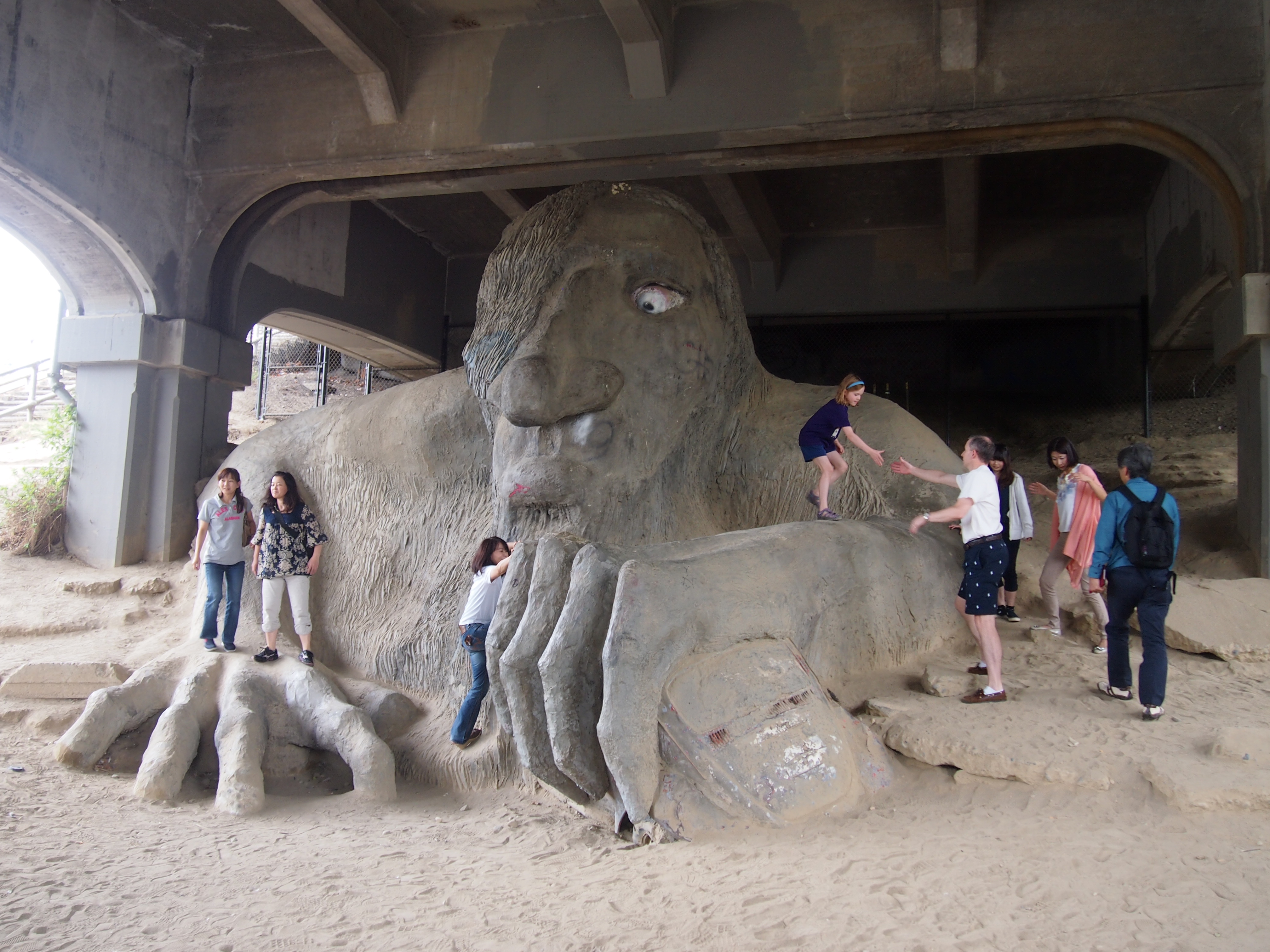
A popular thing to do during a visit to the Fremont neighborhood of Seattle is to pay your respects to the Fremont Troll. I’m not one to ignore a little local color, so naturally I went to see the troll on the morning of August 28, making my way there on foot from the room I’d rented in the “Upper Fremont,” about a 20-minute walk away.

I wasn’t the only one enjoying the troll that morning.
Fremont TrollFittingly, the troll is directly underneath a bridge, one that carries traffic across Lake Union on Aurora Ave. (Washington 99) to and from downtown Seattle (it’s also known as the Aurora Bridge, more about which later). The troll is right where the bridge starts to rise away from the ground, so it has a cozy home.

Roadside America, which of course lauds the troll as “major fun,” reports that, “the Fremont troll — a big, fearsome, car-crushing bruiser — took up residence under the north end of the Aurora bridge on Halloween 1990. He was sculpted by four Seattle area artists — Steve Badanes, Will Martin, Donna Walter and Ross Whitehead — for the Fremont Arts Council. The head-and-shoulders sculpture is 18 feet tall.”

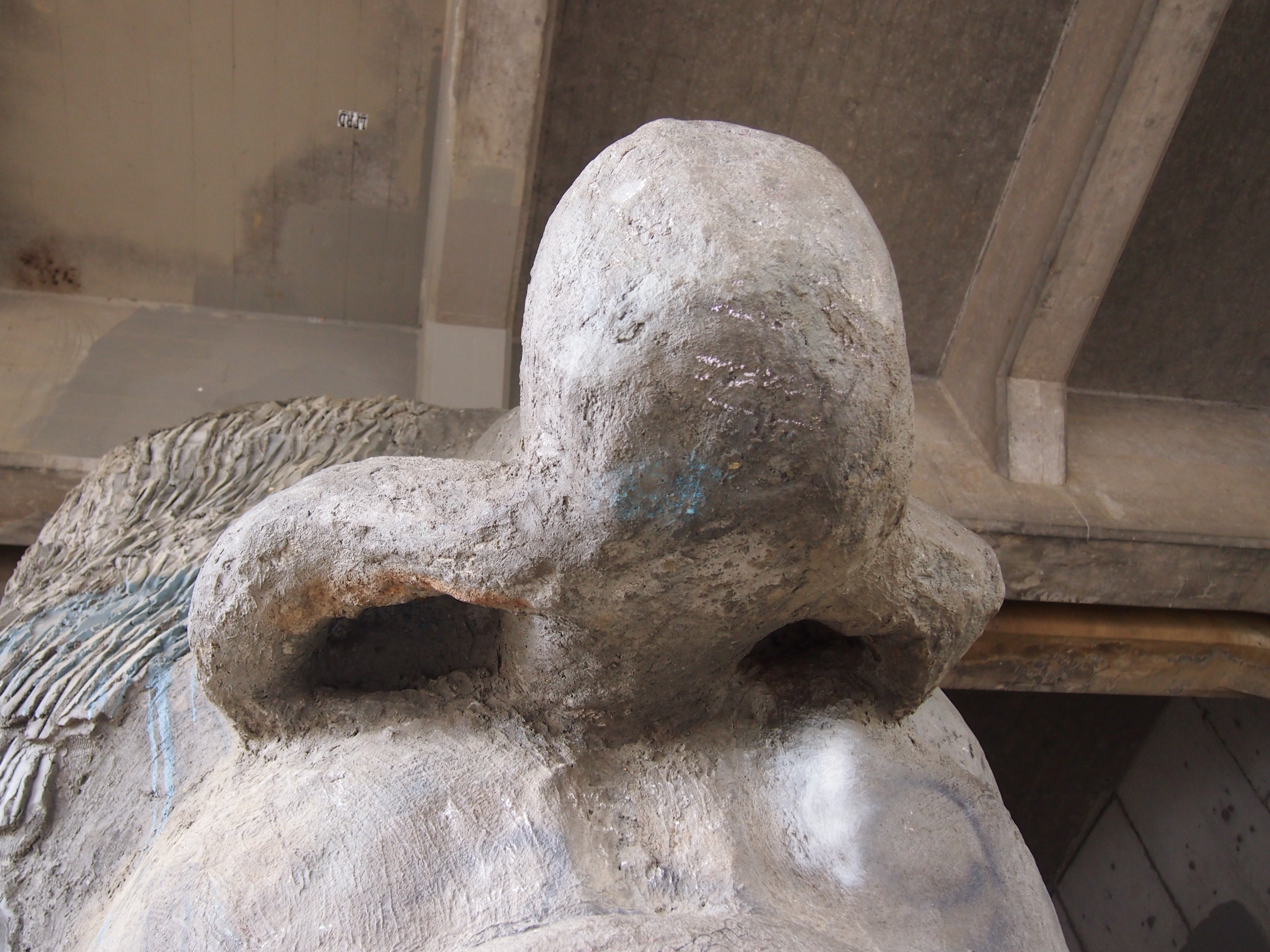
The nose is sizable, too.
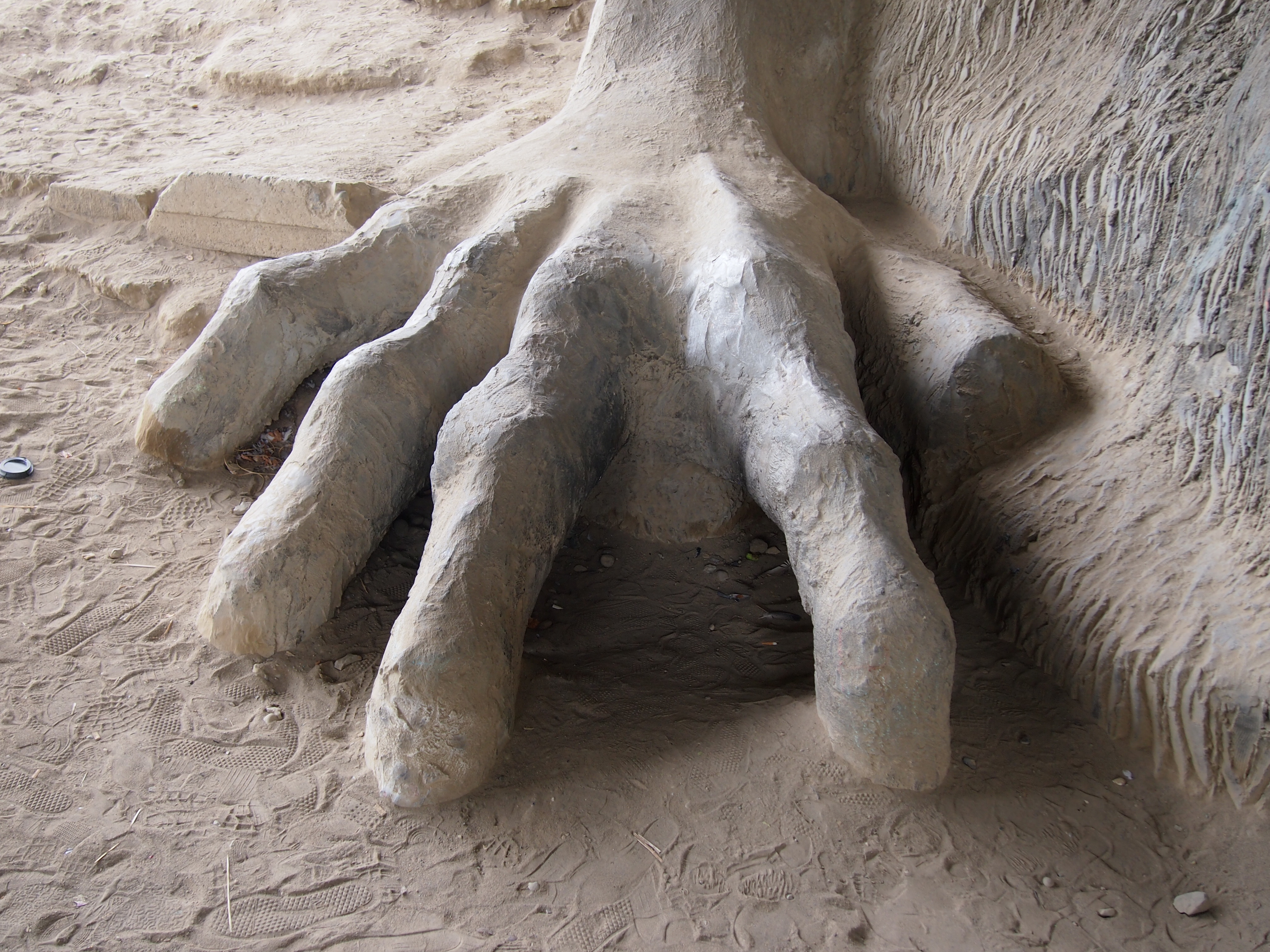
Fremont Troll 2015As are the hands. Paws? What do you call troll extremities?

Fremont TrollRoadside America again: “The shaggy-haired troll glares southward with his shiny metal eye — a hubcap? In his left hand, he crushes an old-style Volkswagen Beetle, which originally contained a time capsule of Elvis memorabilia; it was removed after the car was vandalized and the California license plate was stolen (the crushed car and out-of-state plate were meant as protests against ‘outsider’ development). There are plenty of places to pose, and interaction with the troll is encouraged as long as you’re respectful.” The entire entry is here.

Every year on October 31, the Fremont Arts Council holds an event called a Troll-a-ween. Not sure what that involves besides dressing up the troll.

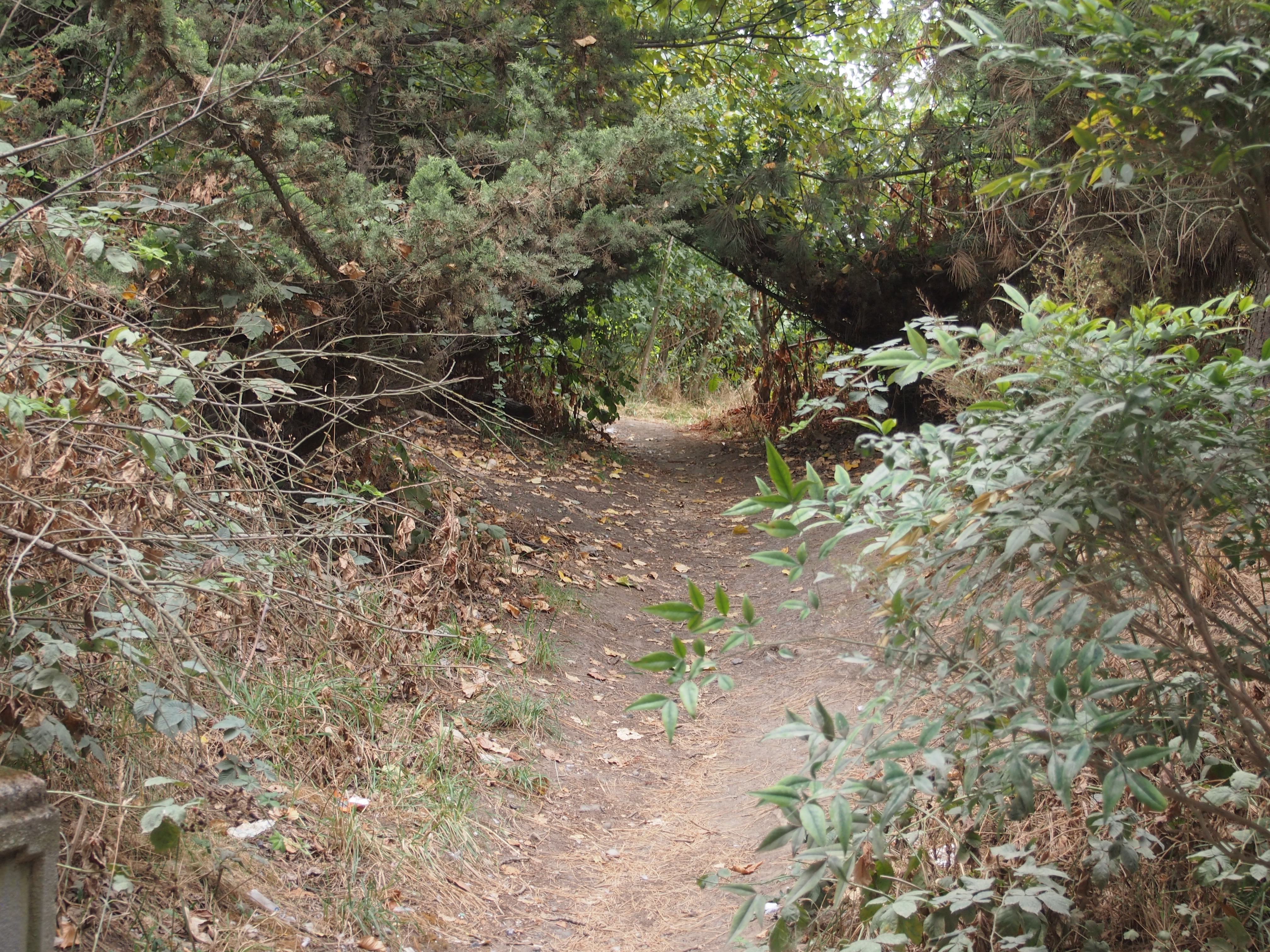
Just to the east of the troll, I noticed a path running parallel to the roadway, through a patch of undeveloped land. No one else had shown any interest in it.
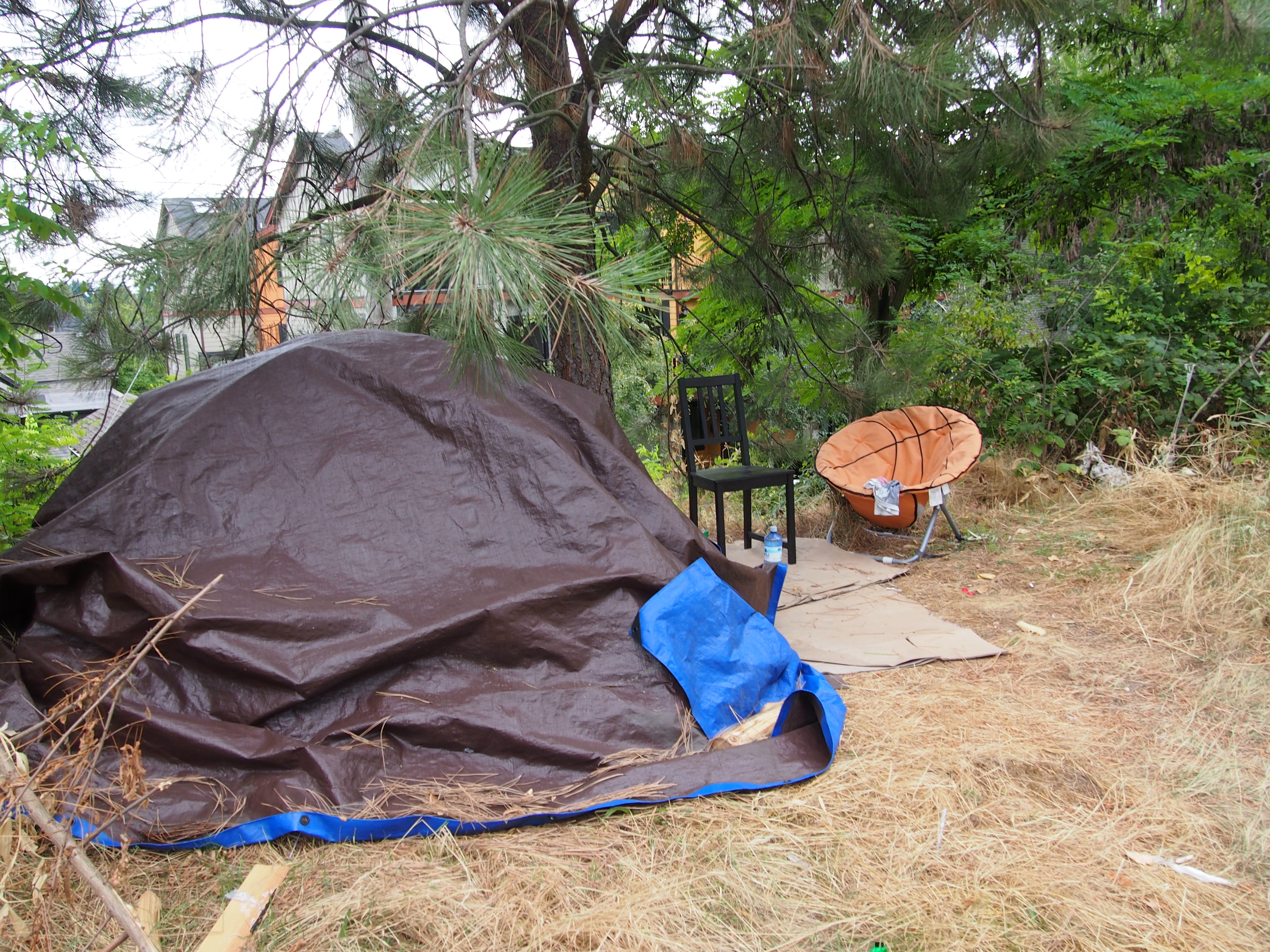
Fremont, 2015I soon discovered that the place was a residential pocket — an informal neighborhood for the homeless tucked in between Aurora Ave. and Winslow Pl. N., a surface street.
Fremont homeless tentAfterward, I made my way to Fremont Center, if in fact it’s called that, though “Lower Fremont” would be better, since the land slopes down from Upper Fremont toward the water at that point. There were other things to look for there, and I found most of them. Such as the statue of Lenin.
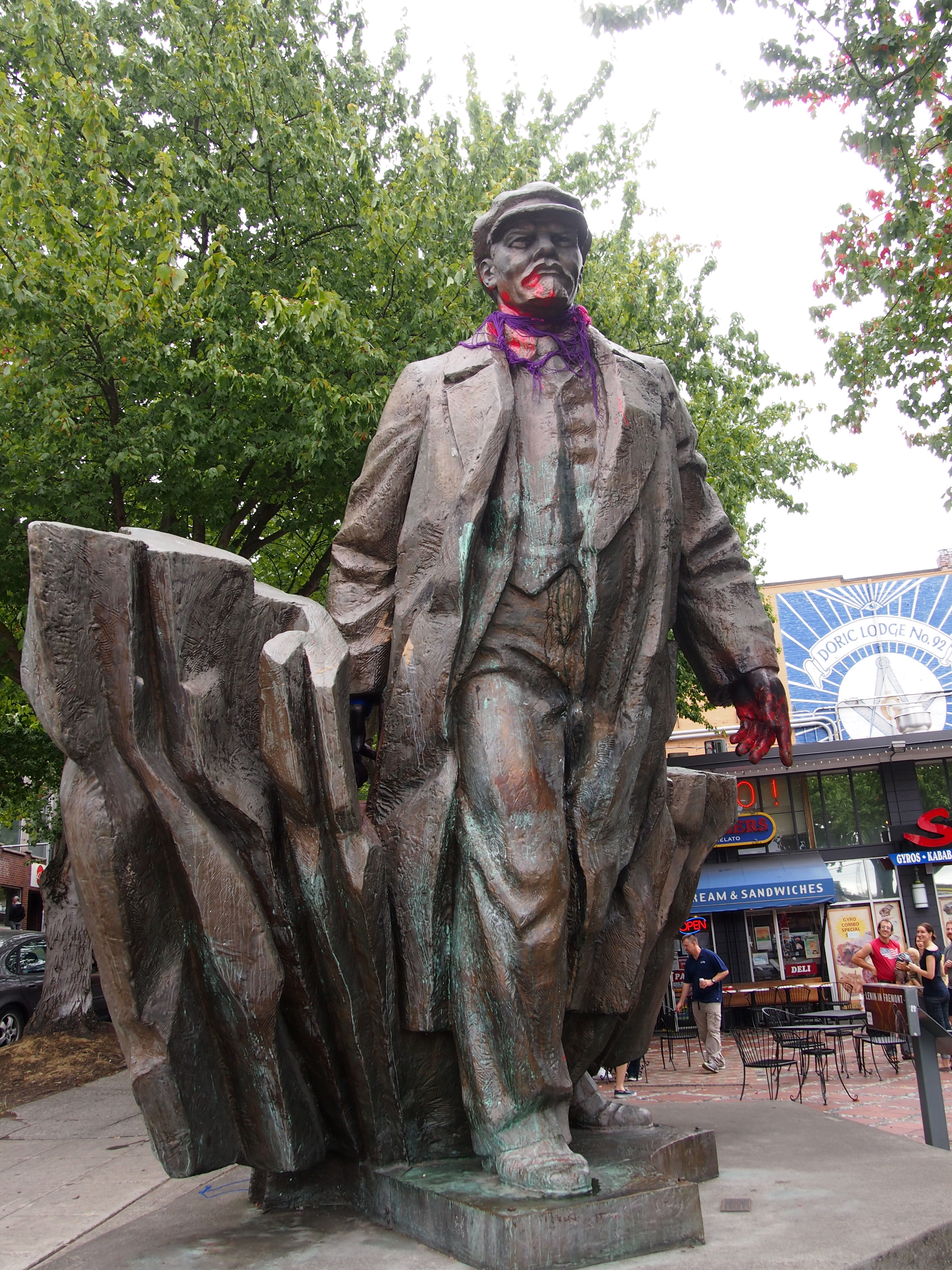
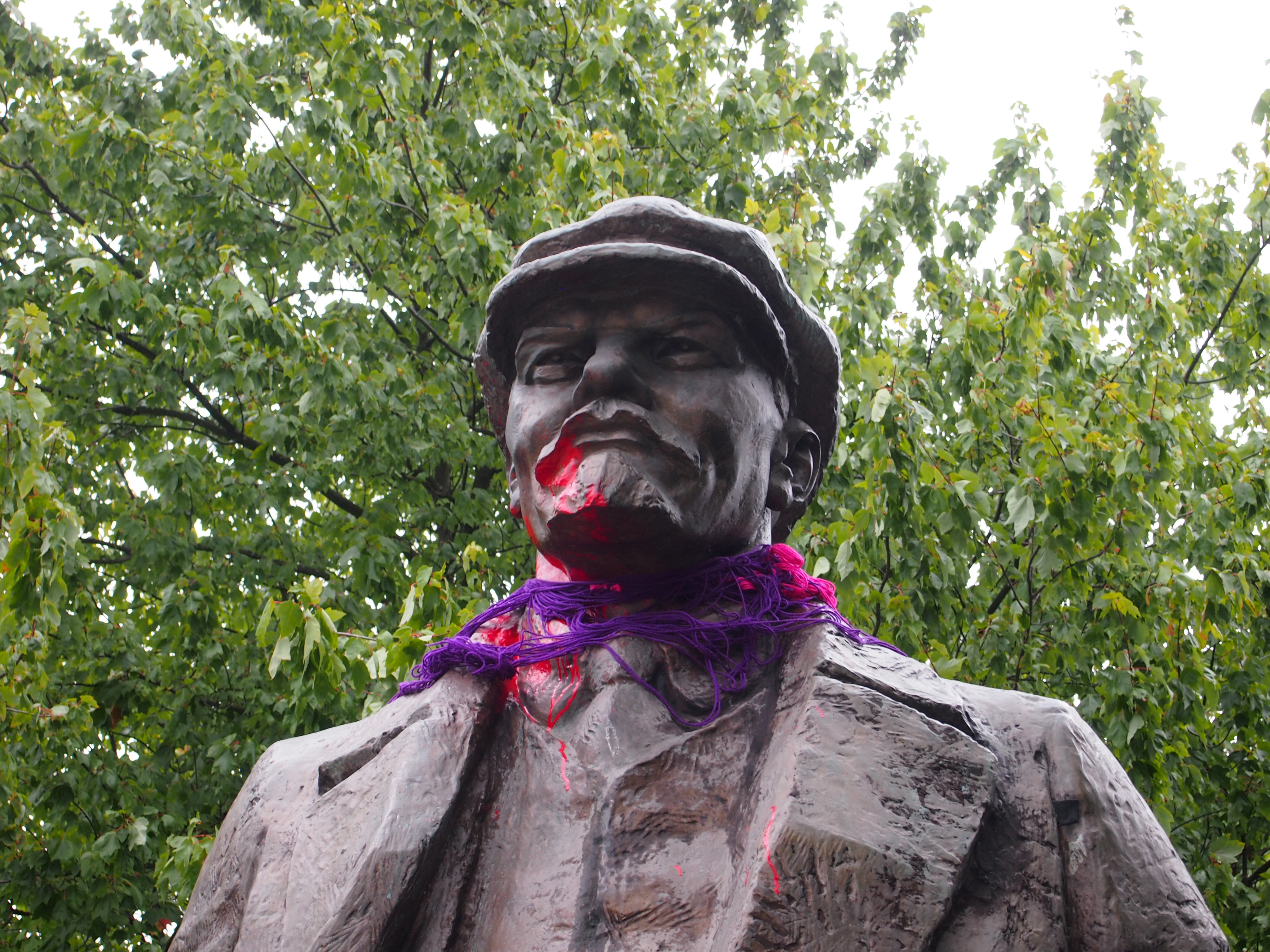
Fremont, 2015Fremont, 2015How did Lenin come to be in Fremont? A long story, apparently. The statue wasn’t on display in Slovakia very long, since it was erected in 1988 by an unpopular government that didn’t know it was on its last legs. After the Velvet Revolution, an American found the statue lying face down in the mud, and connived to bring it to Washington state. Various complications ensued, not all of which are clear, but I can report that as of the summer of 2015, Lenin stands on Fremont Pl. N. near N 36th St. and Evanston Ave. More detail is (again) at Roadside America.

Like the troll, Lenin is the focus of an event, too. Fremont seems fond of events, the best known of which is the Solstice bicycle parade in June, which involves painted bicyclists in various states of undress. In Lenin’s case, at least according to the Fremont C-of-C pamphlet that I picked up, there will be a “Festivus Celebration and Lenin Lighting” in early December.

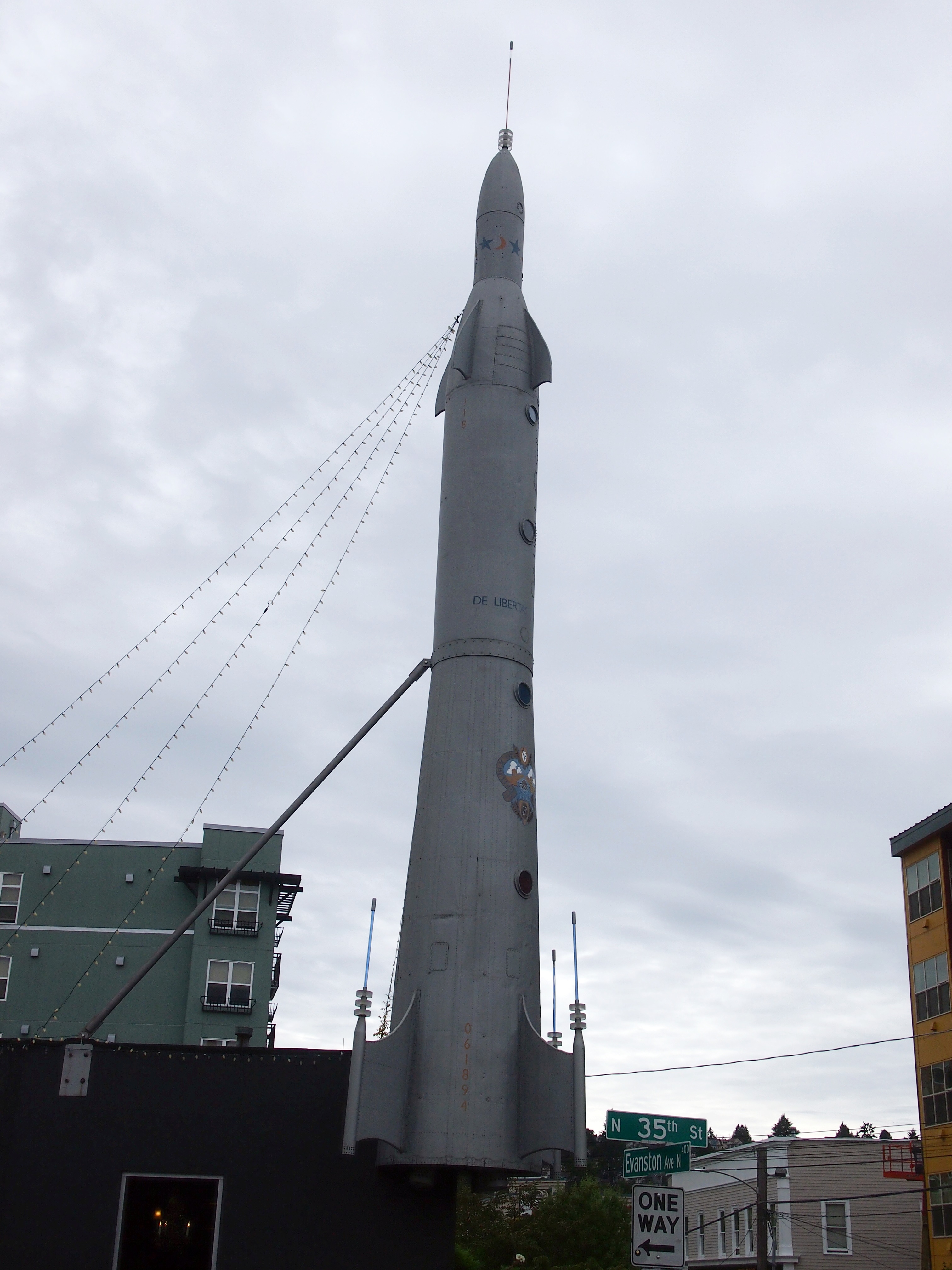
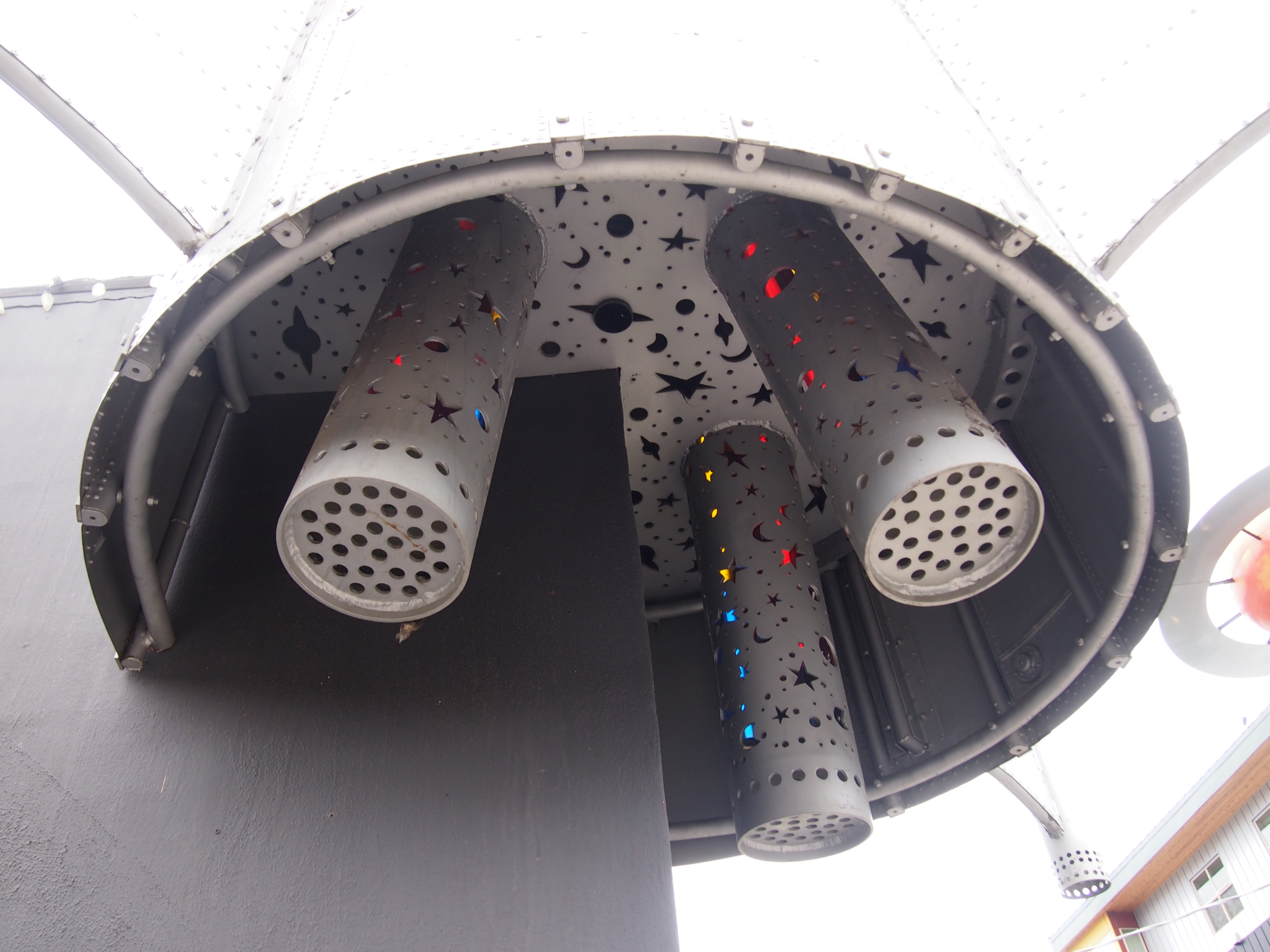
Not far away is the Fremont rocket.
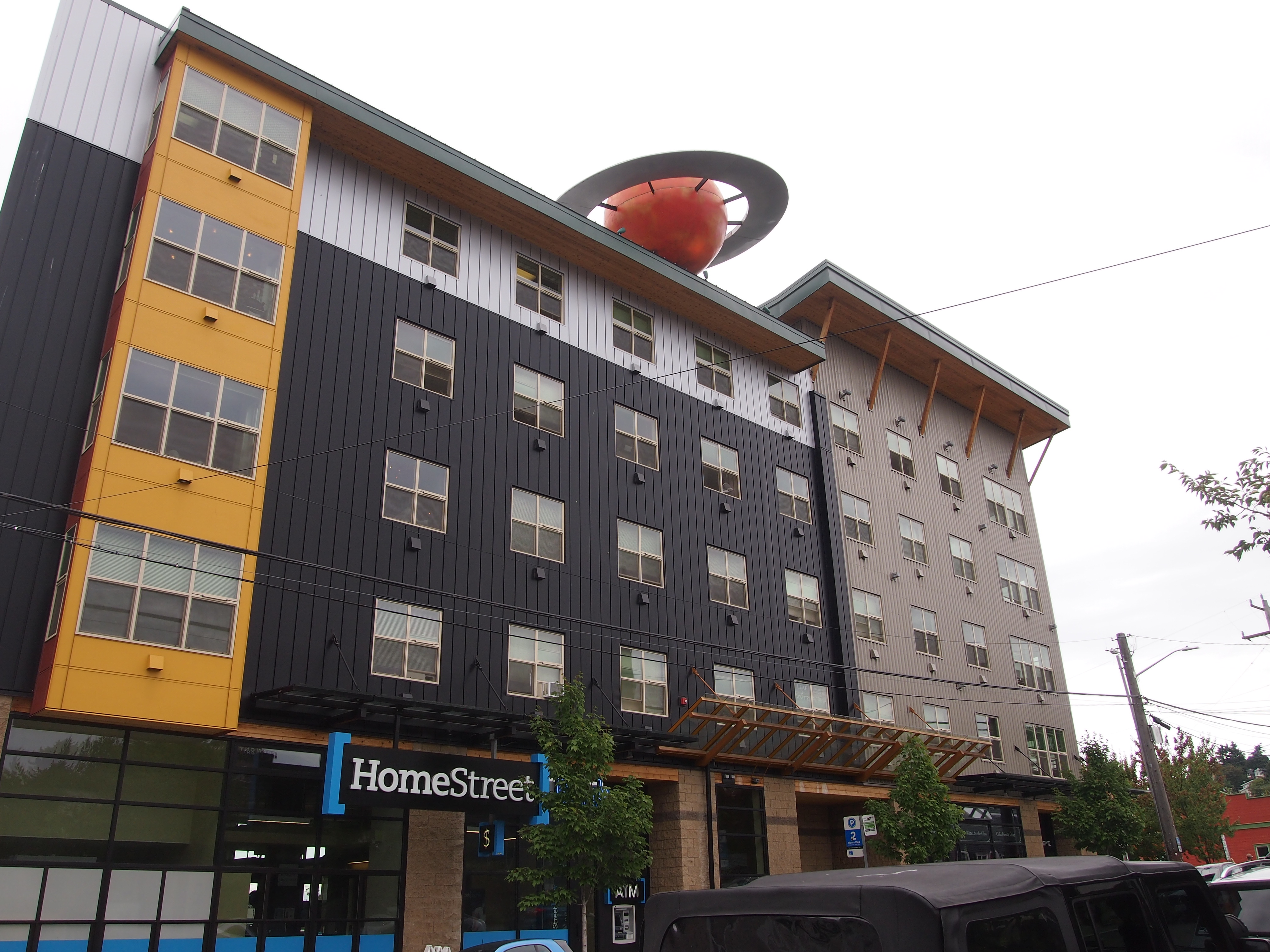
Fremont rocketFremont rocketAcross the street from the rocket is the Saturn Building, which I had a special fondness for even before I came to Seattle this time, having written about it (see No 4). I was happy to see it in person. That’s one thing this country needs: more planet models on more buildings.
Saturn BuildingI also managed to see the Fremont artworks called “Waiting for the Interurban,” along with “Late for the Interurban,” which is just down the street. I’d never heard of The J.P. Patches Show, but I didn’t pass my childhood in Seattle, either. That statue immediately suggested to me that Dallas needs a statue of Icky Twerp.

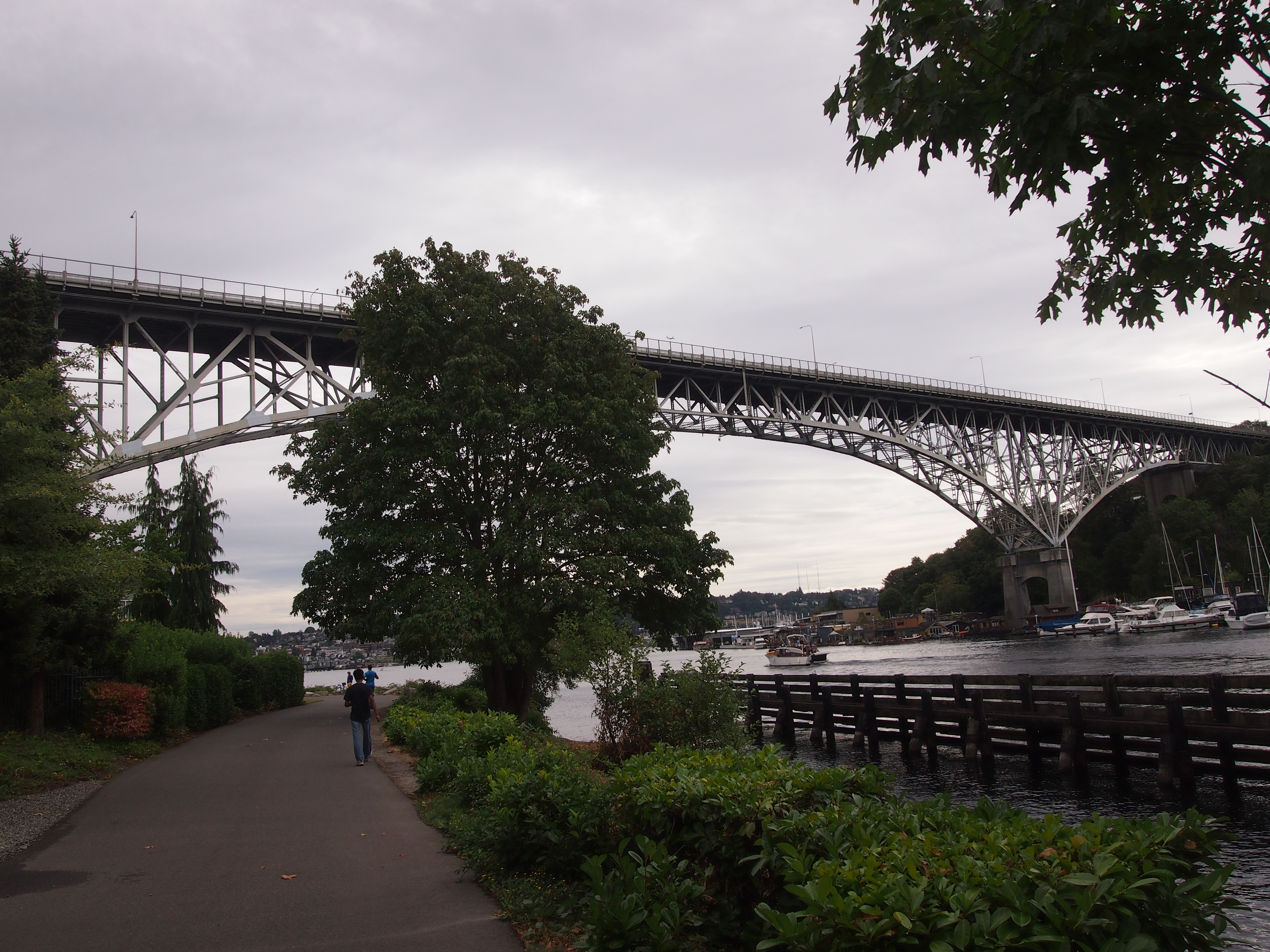
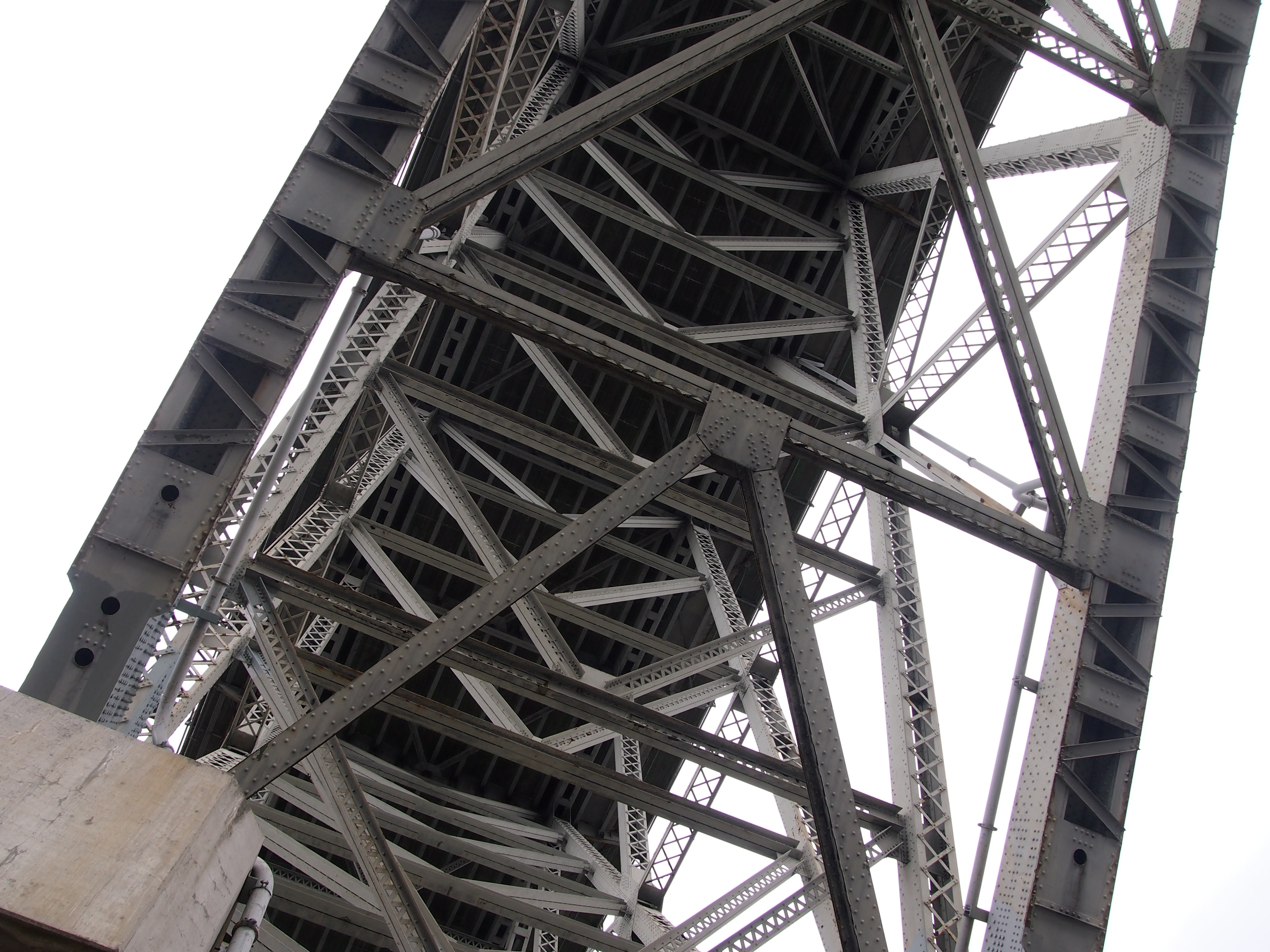
I took a walk along the Ship Canal at the very southern edge of the neighborhood, which connects Salmon Bay with Lake Union, and admired the Aurora Bridge — formally the George Washington Memorial Bridge, the same one under which the troll resides — as it soars more than 160 feet above the water.

Aurora BridgePeople who live in the area might not appreciate it for the fine bridge that it is. Or maybe they do. I didn’t fully appreciate it just driving across it. The view might be nice, but you can’t pay attention as a driver. Crossing on a bus, as I also did, was better, but even so there’s nothing quite like standing underneath an excellent bridge like this.
Aurora BridgeCrossing the bridge on foot is an option. The bridge is unfortunately notorious for despondent people taking a dive off of it. For non-despondent walkers, the pedestrian walkway looked so narrow and so close to the road, which is very busy, that a walk across would probably be made unpleasant by car noise and exhaust most times of the day.