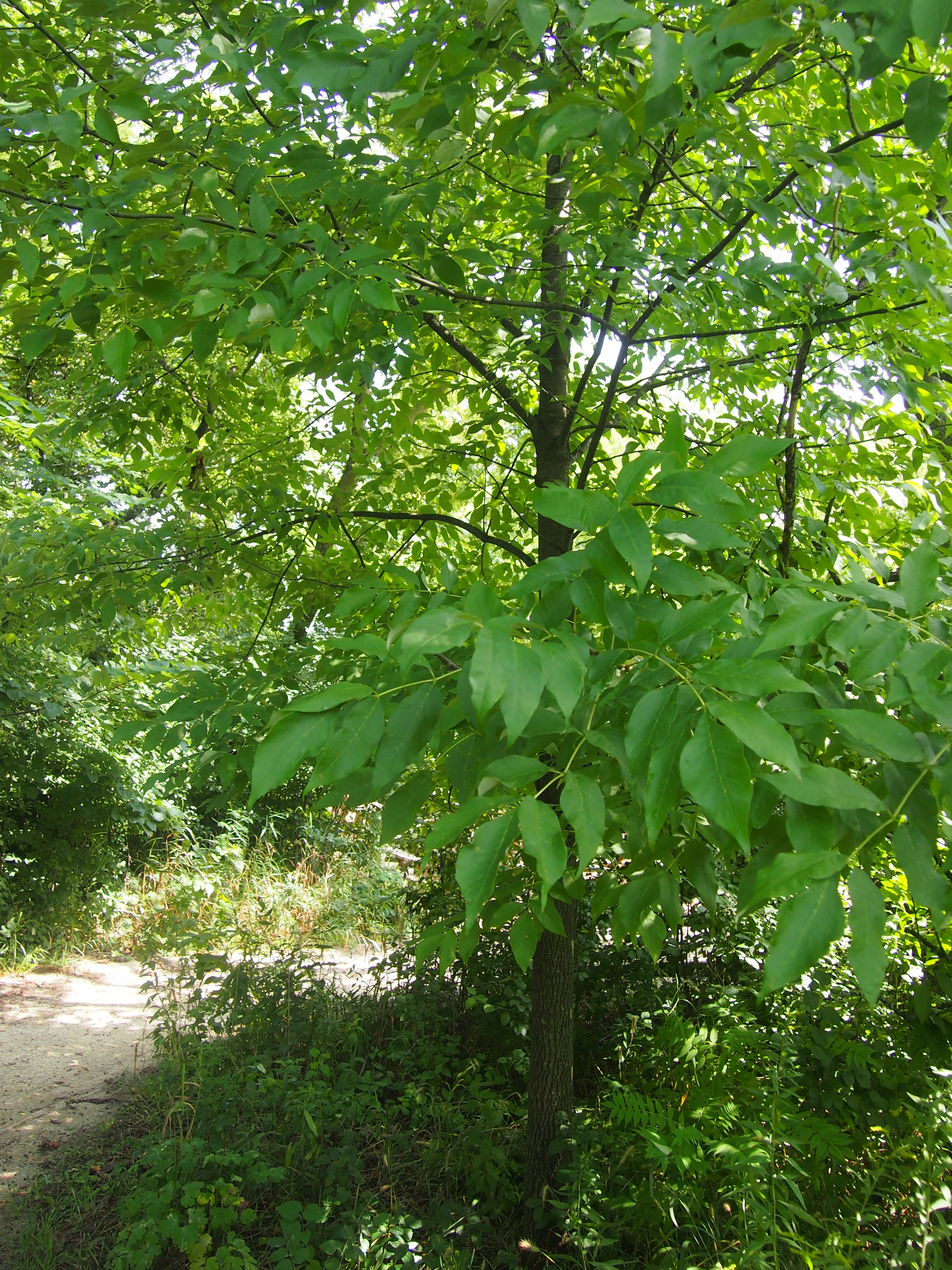
Western Ohio &c

We arrived in downtown Dayton late on a Friday afternoon, May 27, and from the look of things, Dayton isn’t an 18-hour city just yet. Municipal planners probably aspire to that: there’s been some nice infrastructure work at Riverscape Metro Park and Five Rivers Metro Park downtown, including walkways, an elegant garden, a pavilion and other public spaces that look fairly new. As for the private sector, I also spotted a few new apartment projects downtown.

But as a tertiary market, Dayton’s downtown still seems to close up at 5 pm. That’s almost old fashioned now, as the way things were in most smaller downtowns in the last third of the 20th century. Only a handful of people were out and about in the late afternoon/early evening of a warm late spring/early summer day in downtown Dayton, some at the riverfront, others outside the Schuster Center, an event venue.

The main river along downtown is the Great Miami River, which eventually flows into the Ohio. A tributary that meets the Great Miami near downtown Dayton is the Mad River. I like that name. Later, I drove by Mad River Junior High. Now that’s a name for your school.

Less amusing to learn about was the Great Dayton Flood of 1913 (part of the Great Flood of 1913), which is memorialized along the Great Miami. The Dayton flood spurred the creation of the Miami Conservancy District, established in Ohio by the Vonderheide Conservancy Act of 1914, which authorized levees and dams and such to prevent another monster flood. It was a great age of civil engineering, after all. So far, it seems to have worked.

Of course, no matter how obvious the public good, someone’s going to be against it.

Also downtown: Fifth Third Field, where the Dayton Dragons minor league team plays. In the plaza near field are large concrete baseballs. On these Ann proved herself to be more limber than the rest of us.
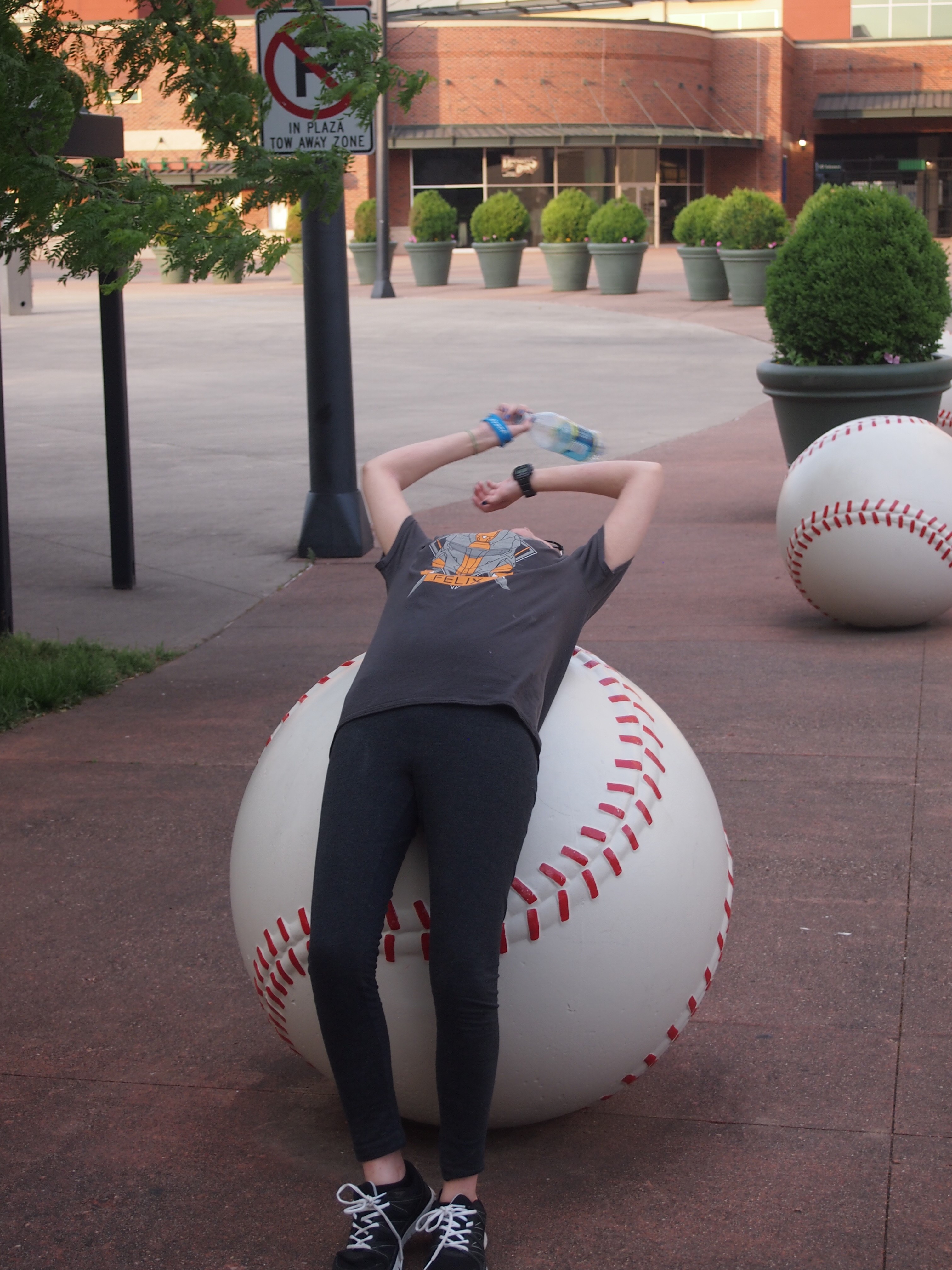
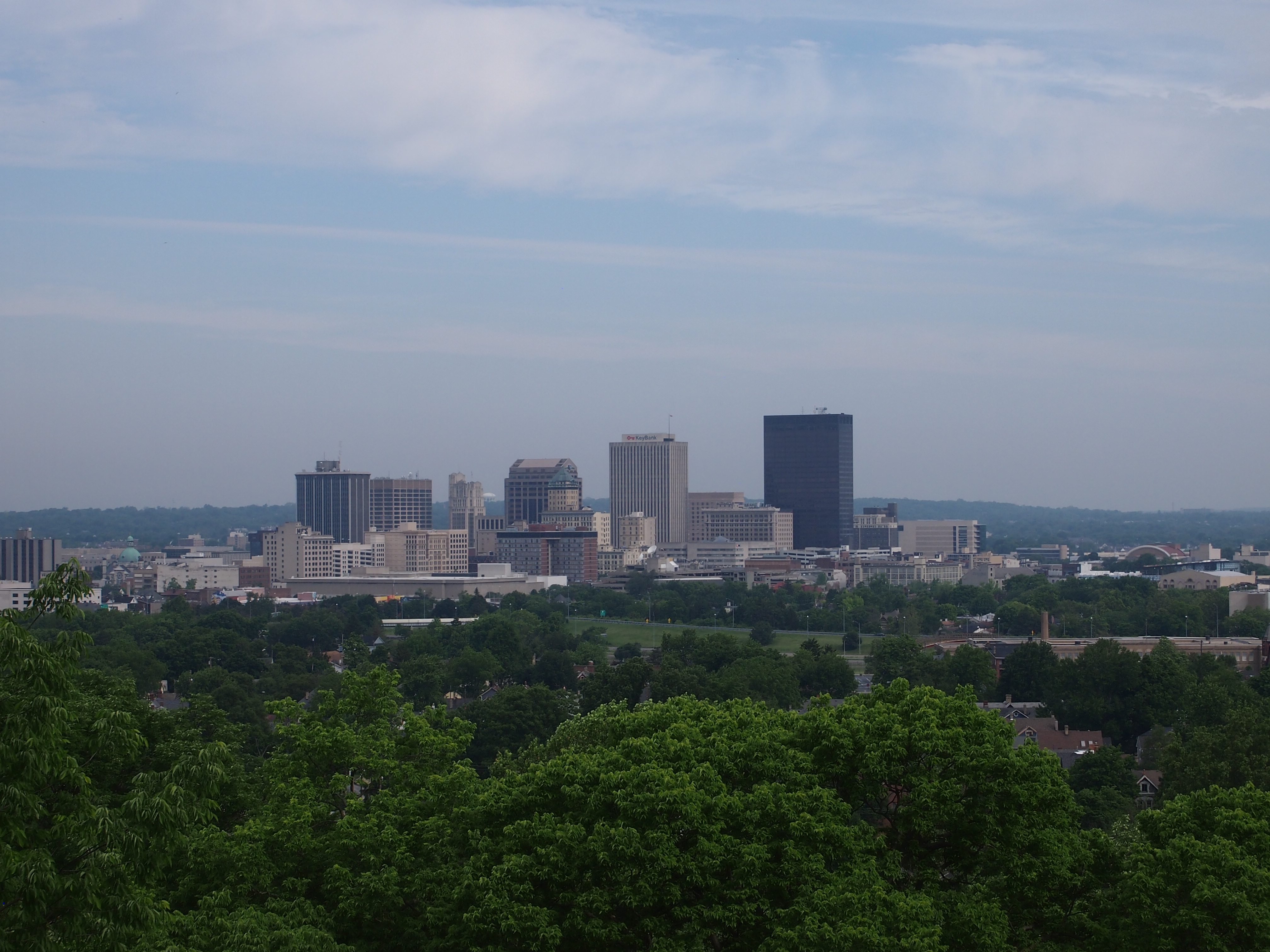
Fifth Third Park, Dayton 2016At the Woodland Cemetery and Arboretum, I happened across Lookout Point, the highest elevation in Dayton. This is the view from there.
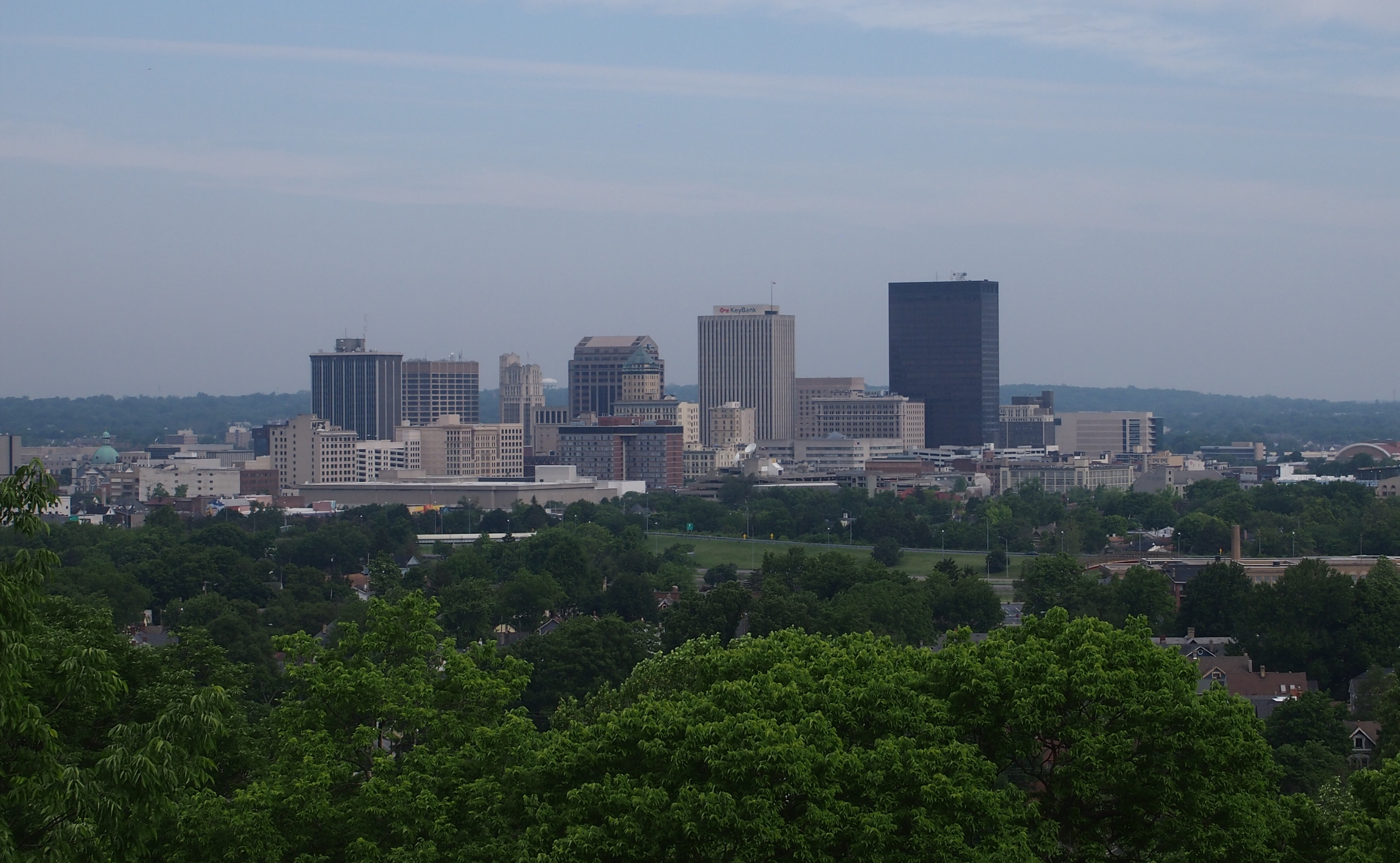
Dayton - View from Woodland Cemetery and Arboretum In 2010, the cemetery completed a tower and columbarium on the hill, along with landscaping all around. It’s a lovely spot.
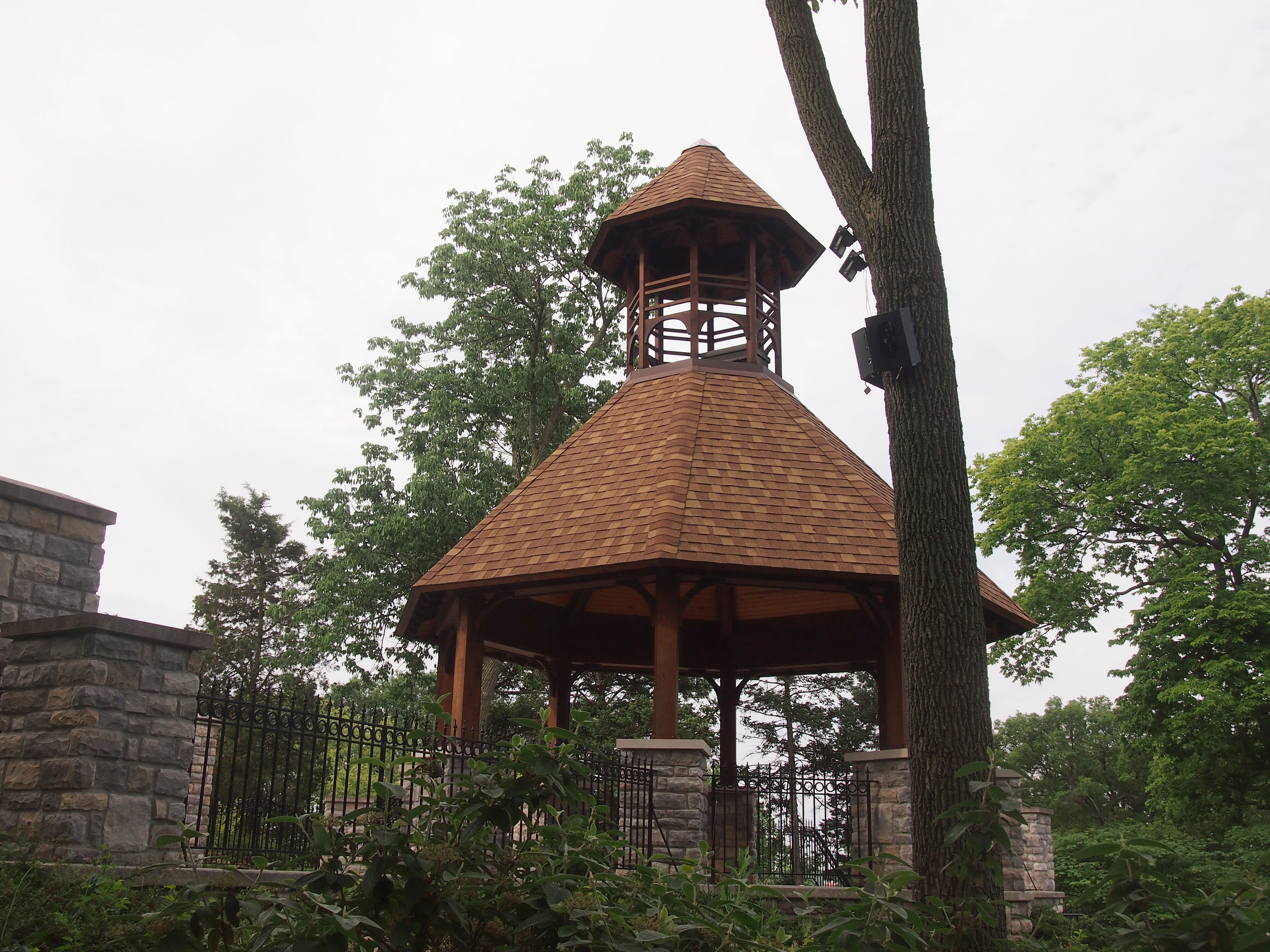

Woodland Cemetery and ArboretumLookout Point, Woodland Cemetery, DaytonThe cemetery also put in a time capsule at Lookout Point, to be opened in 2141, the year of the cemetery’s tricentennial. Guess 2041 wasn’t far enough in the future.

One famed burial I didn’t see at Woodland: copperhead Clement Vallandigham. In reading a bit about him, I found out about his death in 1871, when he was working as a defense attorney after unsuccessful attempts to return to office.

“Vallandigham’s political career ended with his untimely death on June 17, 1871,” notes Ohio History Central. “While preparing the defense of an accused murderer, Vallandigham enacted his view of what occurred at the crime scene. Thinking that a pistol that he was using as a prop was unloaded, Vallandigham pointed it at himself and pulled the trigger. The gun discharged, and Vallandigham was mortally wounded.”

At least his client was acquitted. That’s further even than Perry Mason would go to get a not guilty verdict.

On the way home, we stopped in Wapakoneta, Ohio, a town south of Lima and hometown of moonwalker Neil Armstrong. Just off I-75 is the Armstrong Air and Space Museum. I’ve read the design is supposed to evoke a future Moon base. Maybe the sort of Moon base Chesley Bonestell would put in the background of a lunar landscape.

Armstrong Air and Space MuseumThe museum’s probably interesting enough, with Armstrong artifacts and other items related to space exploration. The Gemini VIII capsule is there, in which Armstrong and Scott almost bought the farm. But Ann wasn’t particularly enthusiastic about the place, and we wanted to press on to Ft. Wayne for lunch, so ultimately the admission fee we didn’t spend went toward that lunch. I did buy some postcards at the museum.

The Armstrong Air and Space Museum’s web site stresses: “The museum is owned by the State of Ohio, is part of the Ohio History Connection’s statewide system of historic sites and museums, and is operated by the local Armstrong Air and Space Museum Association. Neil Armstrong was never involved in the management of the museum nor benefited from it in any way.”

Before leaving Wapakoneta, I wanted to find Armstrong’s boyhood home. It wasn’t hard; the town is small. The house is privately owned by non-Armstrongs, so the thing not to do is venture too close. No doubt occasional oafs do just that, though probably fewer as time passes and fewer oafs remember his achievements.

Another good-looking small town in western Ohio is Troy. We stopped there to obtain doughnuts at the local Tim Hortons. That part of Ohio is within the Tim Hortons realm; our part of Illinois is not. Troy has a handsome main street and a fine courthouse.

Finally, with this trip, I’m glad to report that I’ve been to Neptune. Neptune, Ohio, that is, an insubstantial burg in Mercer County along US 33. Far from the ocean, and far from the planet of that name, though no further (roughly) than anywhere else on Earth.

Curiosity made me waste spend a little time at the USGC Geographic Names Information System, and I discovered that there are five populated U.S. places called “Neptune,” not counting variants like Neptune Beach, Fla. Besides Ohio, they are in Iowa, Tennessee, West Virginia and Wisconsin. Someday maybe I’ll look up the other planets.

The More Common Kind of Transit

Transit of Mercury, eh? A few news sites were pumping up today’s transit as a “rare” celestial event, but something that occurs 13 or 14 times per century here on Earth doesn’t merit that adjective. The next one’s going to be in 2019, for crying out loud. A transit of Venus, now that’s rare in human terms.

Besides, Mercury’s annoyingly hard to spot in the sky under normal circumstances. Is it ever known to hang so bright in the morning or evening sky like Venus? Glimmer red-orange like Mars? Appear as a bright white dot late in the evening like Jupiter or even the dimmer Saturn? No, it hides in the glare of the Sun.

Even so, I might have taken my eclipse shades out — the ones I used during the transit of Venus, without harm to my retinas — and looked for it this morning, but for one thing here on my part of Earth: completely overcast skies. Ah, well. I’m glad that didn’t happen back in ’12 and I hope it doesn’t happen for the solar eclipse next year.

Curiosity observed a transit of Mercury on Mars about two years ago, the first time any kind of transit has been observed from anywhere other than Earth (by earthlings, I should add), and something I didn’t know until now. That should have been bigger news than today’s garden-variety transit. Also, should there be observers on Mars — people or machines — in 2084, a transit of Earth will be visible from that planet.

Here’s a take on the transit of Mercury I saw in Lileks, in the comments section of all places. Then again, his comments section tends to be a cut above the norm.

Guy Fawkes & Martians &c

One more warm day. Then no more. Unless the forecasts about next week are right. What kind of November is this?

It’s Guy Fawkes Day again, and not a burning effigy in sight. It’s really something we should import. Lately I’ve been reading What If? 2, a collection of counterfactual history essays that I picked up used for 50 cents, but “What If Guy Fawkes Had Succeeded?” isn’t one of the subjects. Naturally that question’s been taken up elsewhere.

All of us went to see The Martian on Sunday. All in all, a well done bit of hard SF. Titanium hard, though considering the story, the focus on the technology of space travel and survival in a hostile environment isn’t misplaced. The movie also managed to present its exposition — and there was a lot of it — in a way that didn’t goo up the narrative, which is no small trick.

One thing (which the author of the book has acknowledged): the Martian atmosphere is so thin that a raging storm of the sort that got the hero in his jam would be impossible. The planet does have dust storms, of course, but not hurricanes of dust. Never mind.

There’s no overt indication of when the story takes place, so I figured it was either 20 years or so from now — very optimistic indeed, considering the sluggish pace U.S. manned space exploration these days — or in a present-day world in which a program to send people to Mars got started in earnest in the 1990s (it was, after all, something the elder Bush proposed). The flags on the spaceships and shoulder patches, I noticed, had 50 stars. A nice detail would have been to use the 51- or 52-star designs.

I suspect the only way U.S. astronauts are getting to Mars in a few decades is if the Chinese decide to attempt it.

From a web site I’d never heard of before but happened across recently, purporting to cover real estate news (all sic): “According to Investor Daily, TIAA-CREF’s Phil McAndrews has recently stated that the United States economy is under fairly good state that tantamounts to the continuing optimistic forecasts for the commercial property segment.”

That’s a sample from an item laid out like a real article, but clearly not written by a native speaker of English. The item, in fact, is a little hard to read, and larded with advertising links and other annoyances. And then it crashed my browser with an irritating “Unresponsive Script” message. I’m not overly worried about competition from such Mickey Mouse efforts as this.

Does anyone use “Mickey Mouse,” as in amateurish, any more? I had a teacher in junior high, our band director Mr. Fields, who was fond of the term. Now it sounds like it belongs to an earlier generation — Mr. Fields’ generation, or about the same age as Mickey himself. Maybe in more recent years, Disney minions have made trouble for anyone who uses Mickey like that. I’d better watch out.

Thursday Tidbits

Cool air to begin October. Fitting.

I saw part of The Iron Giant on TV a few years after its 1999 release, coming away with the impression that I ought to see all of it someday. That day was Saturday: Yuriko, Ann and I watched it on DVD. Upon its theatrical release, apparently the studio dropped the ball in marketing it, so the movie didn’t do well, but it caught the attention of critics. I can see why. Not flawless, but high-quality animation and a fun story.

Occasionally we still discover another food that the dog will eat. This week it was refried beans. She was pretty enthusiastic about them, in fact.

NASA has just published remarkable images of Charon, moon of Pluto. Or are they considered twins these days? I haven’t kept up with those definitions. Anyway, how often do we see something that’s absolutely, for sure never been seen by humans before? Not often.

Around 30 years ago, when I bought my first car, I remember pricing some Volkswagens. As usual for a young man, I was looking for an inexpensive car. Volkswagens of the time weren’t as inexpensive as I thought they would be.

A decade earlier, when you wanted an inexpensive car, they would have been the thing. They were People’s Cars, after all. But somehow the brand had strayed away from the entry level by the early 1980s, and before long I owned an entry-level Toyota, a company that remembered to make models at a variety of price points. I’ve bought a number of other Toyotas since then, too, above entry level.

Now that Volkswagen’s been caught committing mass fraud, I imagine the talk a few years ago between two upper-level company managers (in cartoon German accents). After all, imagined conspiracy scenes can be fun.

Hans: Can we really get away with this?

Fritz: Ja, the Americans are too stupid to catch on.

Obviously they learned nothing from the history of the 20th century.

The Last of the Summer Weekends. Maybe.

On Friday afternoon, we took the dog for a walk at Poplar Creek Nature Preserve. A balmy afternoon. Most of the tree foliage is still green, but includes distinct tinges of yellow or brown. Goldenrod blooms profusely, and so do white daisy-like flowers, along with a larger version that’s lavender-colored, but not actually lavender. The tall grass is brown, the short grass green. The cicadas still buzz and the grasshoppers still hop.

The Woodfield Mall was busy in its own way on Saturday afternoon. I can’t remember the last time I was there, but it’s been a while. There’s a certain amount of renovation going on in the common areas, but nothing that affects the flow of people too much. A number of stores displayed Star Wars merchandise in highly visible ways. I haven’t been keeping track, but that must foreshadow a movie along those lines.

Sure enough, a line in the Sunday Tribune Arts and Entertainment section tells me that, “As a new Star Wars movie looms [interesting choice of verbs], many of the franchise’s original fans are as devoted as ever.” Guess the merch is partly for them and their offspring. As far as I’m concerned, the first three movies, while very entertaining in their time, need to go in a box labeled Things of the Past.

Most of Sunday was overcast, so I wondered whether I was going to see the lunar eclipse. A couple of hours before dark, however, the clouds cleared away, and at about 8:30 I went out to see the shadow of the Earth falling on the Moon. At about 9, Yuriko, Ann and I were out, and then again 15 minutes later for totality. The dog was out, too, but typical of dogs, she didn’t give a fig for the celestial phenomenon (no smell involved, I guess). The copper moon was a pretty sight, but it didn’t look any bigger than usual to me.

In time for the eclipse, the Atlantic posted these images, marvels of 20th-century manned space exploration. These images are more recent marvels of (mostly) unmanned space exploration.

Lilly was at a friend’s house on Sunday evening, so I did what you do these days, and sent her a text about the eclipse. Later she said she’d seen it. I’m also glad to report that at least two neighboring families on my block were out to see it, too. I noticed that while taking the garbage out under the dark copper moon.

July Back Yard Flowers &c.

Time for a summer interlude. Back to posting around July 19.

What this country needs is another summer holiday, sometime between Independence Day and Labor Day, and I nominate July 20, to honor the Moon landing. Or the fourth Monday in July, since the 20th is a little close to July 4 — a  Monday holiday to honor the astronauts’ return on July 24, recalling the bit about “returning safely to the Earth,” since the lunar mission wouldn’t have been complete without that.

To keep the accounting snits happy (we can’t afford another holiday!), Columbus Day can be de-holidayed. It’s truly the most insignificant of federal holidays anyway, whatever you think of the Admiral of the Ocean Sea.

New Horizons will fly by Pluto during my interlude. This week’s “glitch” was alarming, but the craft seems to have recovered. (I like the Wired caption: “Among with gobs of planetary science, New Horizons is capturing pictures of Pluto that are increasingly less crappy.”) I will be watching the news closely. Yesterday I came across theses proposed names for geographic features on the Ninth Planet and its moons. Interesting lists. The IAU might not be so keen on fictional explorers and their vessels, however.

Chanced recently across another musical act that I’d pay money to see (and there aren’t that many), namely the Ukulele Band of Great Britain. Pretty much on the strength of their version of the theme from The Good, the Bad, and the Ugly. Too bad the closest they’ll be to me this year is Muncie, Ind., and that isn’t close enough.

Here’s some speculation: Treasury Secretary Jack Lew’s playing a deep game with the $10 and $20 bills. He proposed making Alexander Hamilton second banana on his note to elicit a wave of support for the first Treasury secretary — at the expense of Andrew Jackson. A common notion now seems to be, “Go ahead, get rid of Jackson, but not Hamilton!” Previously, the idea of tossing Jackson in favor of a woman wasn’t so warmly received. But now…

This is a recent headline that amused me: Google Self-Driving Cars Head to Austin, from PC Magazine, which further says that “the company has selected the city to be the next testing location for its autonomous Lexus SUVs…” Austin’s a very safe choice, I figure, especially if you turn the vehicle loose on I-35, where it won’t move very fast, if at all.

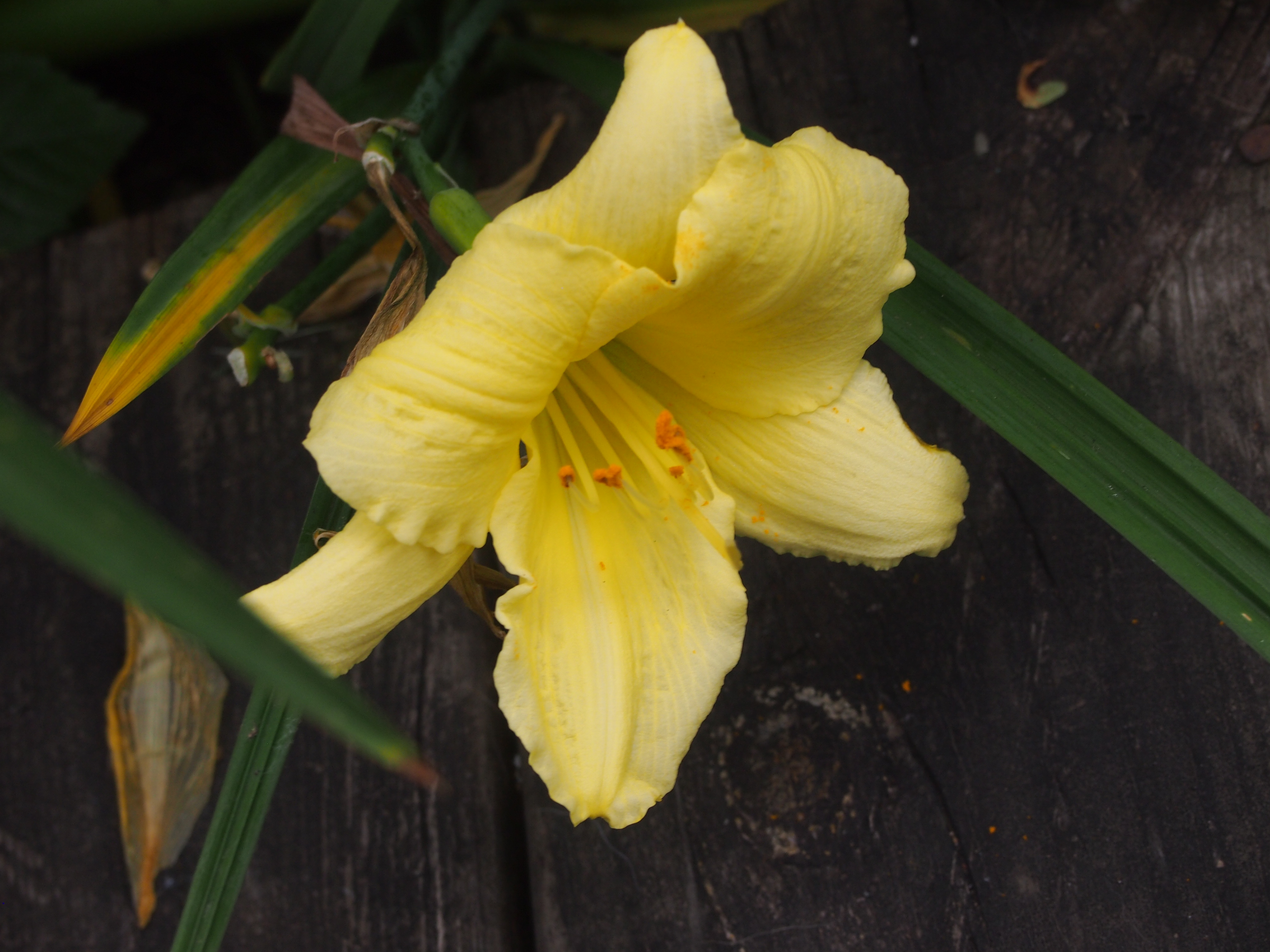
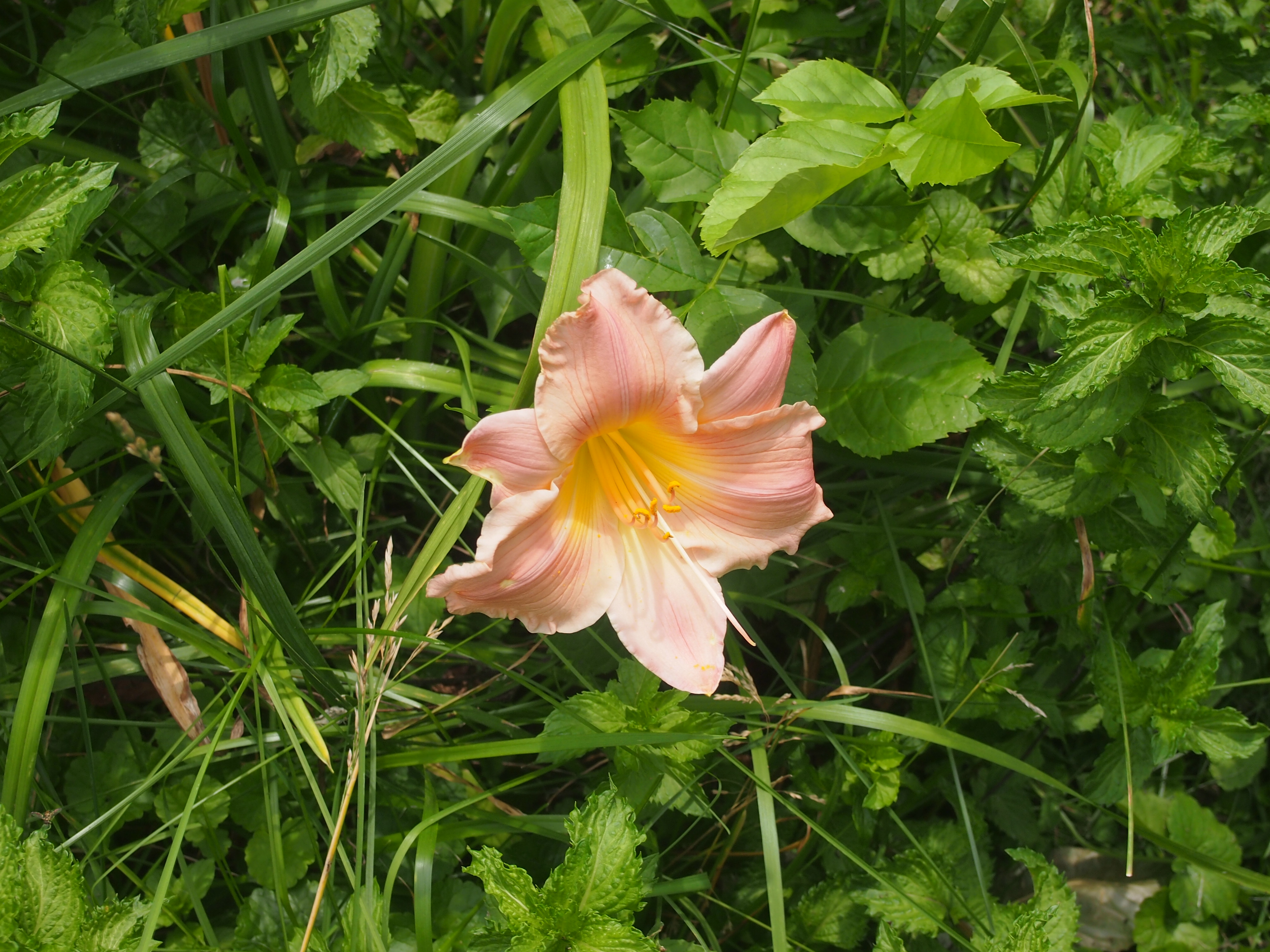
Just ahead of rain earlier this week, I went out to take some pictures of flowers. I went no further than my back yard.
July 2015July 2015July 2015July 2015July 2015O Summer,
Oft pitched’st here thy goldent tent, and oft
Beneath our oaks hast slept, while we beheld
With joy thy ruddy limbs and flourishing hair.

Christmas 1973

We bought a Christmas tree the day before yesterday. I’m not inclined to do so as much as I used to be, but the girls insisted, and took charge of the decorations.

For some reason, I documented our 1973 Christmas tree with the Instamatic 104 camera my mother had bought sometime in the 1960s. At least, I’m pretty sure this is what we had, along with millions of other people. It broke in 1976.

Xmas73.3Not a particularly good image, even for that camera. But it captures most of our indoor decorations. The tree, which always looked more-or-less like that; stockings, hanging from a small sled acquired in Germany; a hard-to-see nativity scene on the table next to the tree (under the lamp); and a poinsettia.

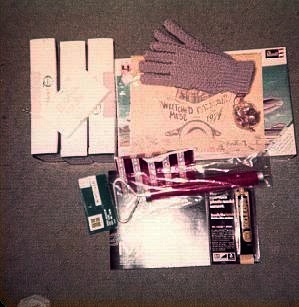
I also documented my presents for the year. The flash cube activated for this shot.

Xmas73.2There’s some kind of Revell model kit under there, but I don’t remember what it was (the company’s still around). That was probably among the last kits that I had, since I lost interest in models around this time.

On top of that are gloves, a bicycle pump, an envelope with some money tucked inside it, and a 1974 Wretched Mess Calendar. There isn’t much easily accessible information online about that publication, but there is a little evidence, besides my fractured memory and an overexposed print from late ’73, that such a thing existed. This is an article mentioning a ’69 version of the calender.

Finally, speaking of models, this shot. Not a Christmas image, but something I was doing at the time.

SaturnV.73My Saturn V model. My mother had acquired it for me some years before — at a trading stamp redemption center — but I was too young for it for a while. In late ’73, I took up the task and finished it. And a fine model it was, too.

Orion Rising

Am I going to get up early on Thursday to watch the Orion launch? The launch window opens up at 6 am Central. So probably not. I can watch a replay a few hours later. Hope it goes well.

The Weather Channel – which seemed very interested in the launch, which I suppose depends on the weather – called Orion the “first deep space mission” since Apollo 17, and I wondered about that. What about all of the missions to various planets? Turns out they were abbreviating things to the point of inaccuracy, as TV often does.

This from Jason Davis at the Planetary Society (italics added): “Exploration Flight Test 1 (EFT-1) is a two-orbit shakedown cruise designed to test out Orion’s critical components — specifically, how the vehicle responds to radiation in the Van Allen belts, and how the heat shield fares under a fast reentry from beyond low-Earth orbit. While Orion’s eventual ride to space is the Space Launch System, EFT-1 will use a United Launch Alliance Delta IV Heavy rocket. The Delta IV Heavy will fly out of Launch Complex 37 at the Cape Canaveral Air Force Station.

“Orion will be dropped into a preliminary, 185 by 888 kilometer orbit for a lap around the Earth. Then, the Delta IV’s second stage will re-ignite, kicking the spacecraft up to an altitude of 5,800 kilometers—higher than any human-rated spacecraft has been in more than 40 years. The unusual orbit will send Orion hurtling back into Earth’s atmosphere at speeds up to 32,000 kilometers per hour. Splashdown will take place off the coast of Baja California in the Pacific Ocean, where NASA and the US Navy will haul the capsule into the flooded well deck of the USS Anchorage.”

A National Champion Red Ash

Not long ago I was tramping around a small section of Spring Valley that I’d never visited, and I found a plaque I’d never seen. That’s a minor thrill. Guess I’m peculiar that way about plaques. It says:

NATIONAL CHAMPION

RED ASH

Planted here April 29, 2001

The 450-year-old parent tree is in Dowiagiac [sic], MI

Schaumburg Park District

Alas, the park district misspelled “Dowagiac,” which is a town in southwest Michigan, in bronze. Further investigation reveals that this particular tree has descendants elsewhere, including on the grounds of the Pentagon. Sen. Carl Levin spoke at the planting of a red ash there on September 10, 2002, as a memorial. Excerpts from his speech:

“The tree we plant this morning, like the other eight planted over the weekend, are actual parts of the largest – and probably oldest – red ash tree in America. That champion tree is located in Dowagiac, Michigan.

Buds from that tree were taken and propagated by the Milarch Family Nursery in Copemish, Michigan, which seven years ago launched an inspired initiative called the Champion Tree Project. The purpose of the project is to take buds from America’s “champion” or historically significant trees and propagate them in “living libraries” throughout the country.

“ ‘Champion’ trees are the largest of their species. There are 826 species of trees in this country; Michigan has 49 champions.

“The champion red ash that these trees are part of is 95 feet tall. The trunk is over 21 feet around. It weighs somewhere between 160 and 200 tons. Most impressively, the tree is estimated to be about 450 years old.”

Here’s the Spring Valley red ash. It’s got a ways to go to be so tall and so heavy, but maybe it will as the centuries pass.

Red Ash, Schaumburg, August 2014Apparently, the Champion Tree effort is still going on, though known as the Archangel Ancient Tree Archive.

Meanwhile, far from all red ash trees, large and small, I was happy to read the following from NASA yesterday: “The Pluto-bound New Horizons spacecraft has traversed the orbit of Neptune. This is its last major crossing en route to becoming the first probe to make a close encounter with distant Pluto on July 14, 2015. The sophisticated piano-sized spacecraft, which launched in January 2006, reached Neptune’s orbit — nearly 2.75 billion miles from Earth — in a record eight years and eight months. New Horizons’ milestone matches precisely the 25th anniversary of the historic encounter of NASA’s Voyager 2 spacecraft with Neptune on Aug. 25, 1989.”

Jupiter and especially Saturn are show-offs, but Uranus and especially Neptune have a quiet majesty. I remember well seeing the pictures of Neptune’s blue orb in the pre-Internet newspapers and magazines of 1989. These days, of course, you can find images of Neptune easily.

The Kansas Cosmosphere and Space Center

Why Kansas? Even the Kansas Cosmosphere and Space Center web site asks that question in its FAQ page. Why is a first-rate spacecraft museum – absolutely the best I’ve ever seen, except for the Smithsonian Air & Space Museum – in Hutchinson, Kansas, a town of about 42,000 northwest of Wichita? The answer: that’s the way the cookie crumbled. Right place, right time.

“The Cosmosphere began in 1962 as nothing more than a tiny planetarium on the Kansas State Fairgrounds,” the page says. When the planetarium outgrew its original facility and moved to its current location, Patricia Brooks Carey and the Hutchinson Planetarium’s board of directors sought business advice from Max Ary, then director of Ft. Worth’s Noble Planetarium. “Interestingly, Ary was also part of a Smithsonian Institution committee in charge of relocating thousands of space hardware artifacts to museums throughout the U.S. The Cosmosphere was granted many of the artifacts.”

These days the museum measures over 105,000 square feet and includes a large exhibit space for rockets and spacecraft, plus a planetarium, dome theater, and more. We arrived in the mid-afternoon of July 13, too late to catch a planetarium show, but in plenty of time to look at a lot of space stuff, expertly and chronically organized for display.

“Most everything you see in the museum was either flown in space, built as a back up for what was flown in space, built as a testing unit for what was flown in space, or was the real deal, but was never meant for space,” the museum continues. “Only a few artifacts are replicas, and those that are replicas, are for good reason. For example, the lunar module and lunar rover in the Apollo Gallery are replicas (though built by the same company that produced the flown modules), because those that went in space, stayed in space. No museum in the world carries a flown lunar module or rover. In fact, they’re all still on the Moon.”

The displays begin at the beginning of modern rocketry – Konstantin Tsiolkovsky and Robert Goddard and on to Nazi rockets, including a restored V-1 and V-2.

V-2 rocketThen on to Soviet and U.S. rockets and capsules that ventured into space, plus a lot of ancillary items. It’s an astonishing collection, including a replica of the X-1, a flight-ready backup for Sputnik 1, a backup version of the Vanguard 1, a Russian Vostok capsule – the only one outside Russia – Liberty Bell 7 (pulled from the ocean floor and restored), a Redstone rocket and a Titan, too, the Gemini 10 capsule, a Voskhod capsule, the Apollo 13 Command Module, a Soyuz capsule, various Soviet and American rocket engines, an Apollo 11 Moon rock, and a lot of smaller artifacts.

I took a particular interest in the Russian equipment because I’ve seen so little of it. In fact, I’d never seen a Vostok, and there it was. Looking like a large bowling ball behind glass. “Hop in, Comrade, and we’ll shoot you into space.”

VostokThe American equipment was impressive, too, though more familiar. It’s always an impressive thing to stand under a rocket like a Titan, which used to deliver Gemini into orbit. Titan

Ann seemed to enjoy herself, and probably learned something. But to really appreciate this museum, it helps to have been an eight-year-old boy in 1969. You find yourself turning the corner and saying, “Wow, look at that!” a lot.