LeRoy (Le Roy), Wausaneta and Simeon H. West

On Sunday afternoon, as I headed roughly northwest on U.S. 150 in McLean County, Illinois, I impulsively made a turn off the main road onto Center St., which goes directly to the town square of LeRoy. Or rather, the town sort-of-circle.

I came to be in that part of Illinois because earlier in the day, I’d taken Lilly back to UIUC at the end of her spring break. Usually the trip to Champaign involves popping down on I-57 and returning the same way. But the day wasn’t that cold — not like last time — and despite sometime drizzle, I wanted to make a slight detour and return home via Bloomington.

Champaign to Bloomington could mean a short drive on I-74. Or, if you want something different in March, you take U.S. 150, passing close to the still-unplanted fields and by hulking grain silos and through towns like Mahomet, Mansfield, Farmer City, and LeRoy (sometimes styled Le Roy). The road roughly parallels the Interstate. I took it.

When I got to the LeRoy square (circle), I noticed some memorials inside the circle, including a statue on a pillar. While I was still driving, I took it to be a memorial featuring a Union soldier. I parked nearby and got out for a closer look.

The formal name of the round-shaped green space in LeRoy is Kiwanis Park. Visitors are greeted on one side of the circle by a shoe-store mural.

A building labeled “Town and City Hall” is next to the Le Roy Performing Arts & Media Center, which has the look of a former church building, but I didn’t take a closer look.
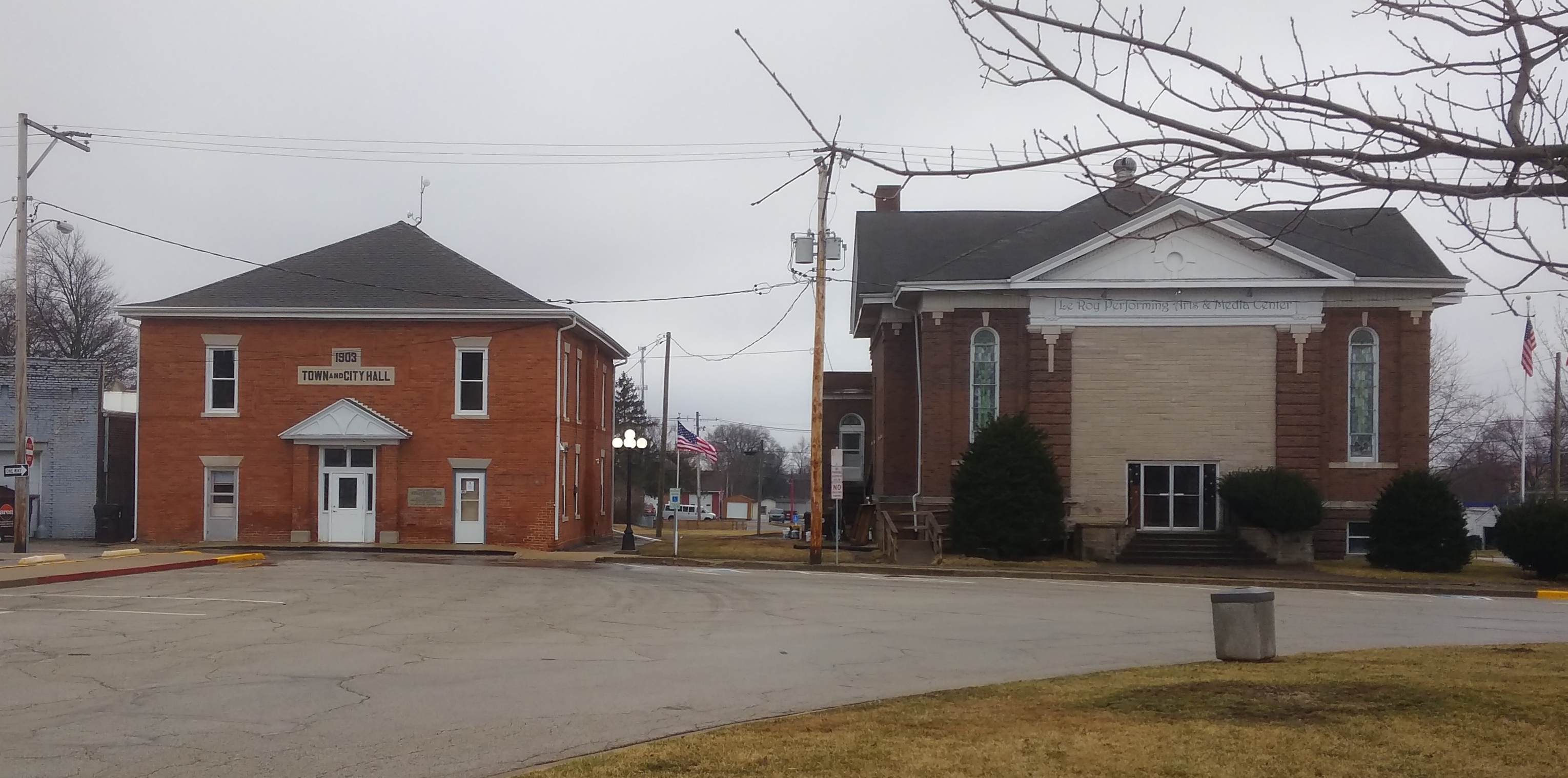
Also around the circle are an undertaker, the American Legion Post 79, a clinic and some other buildings.

Kiwanis Park itself has a gazebo. I have to like a place that has a gazebo.
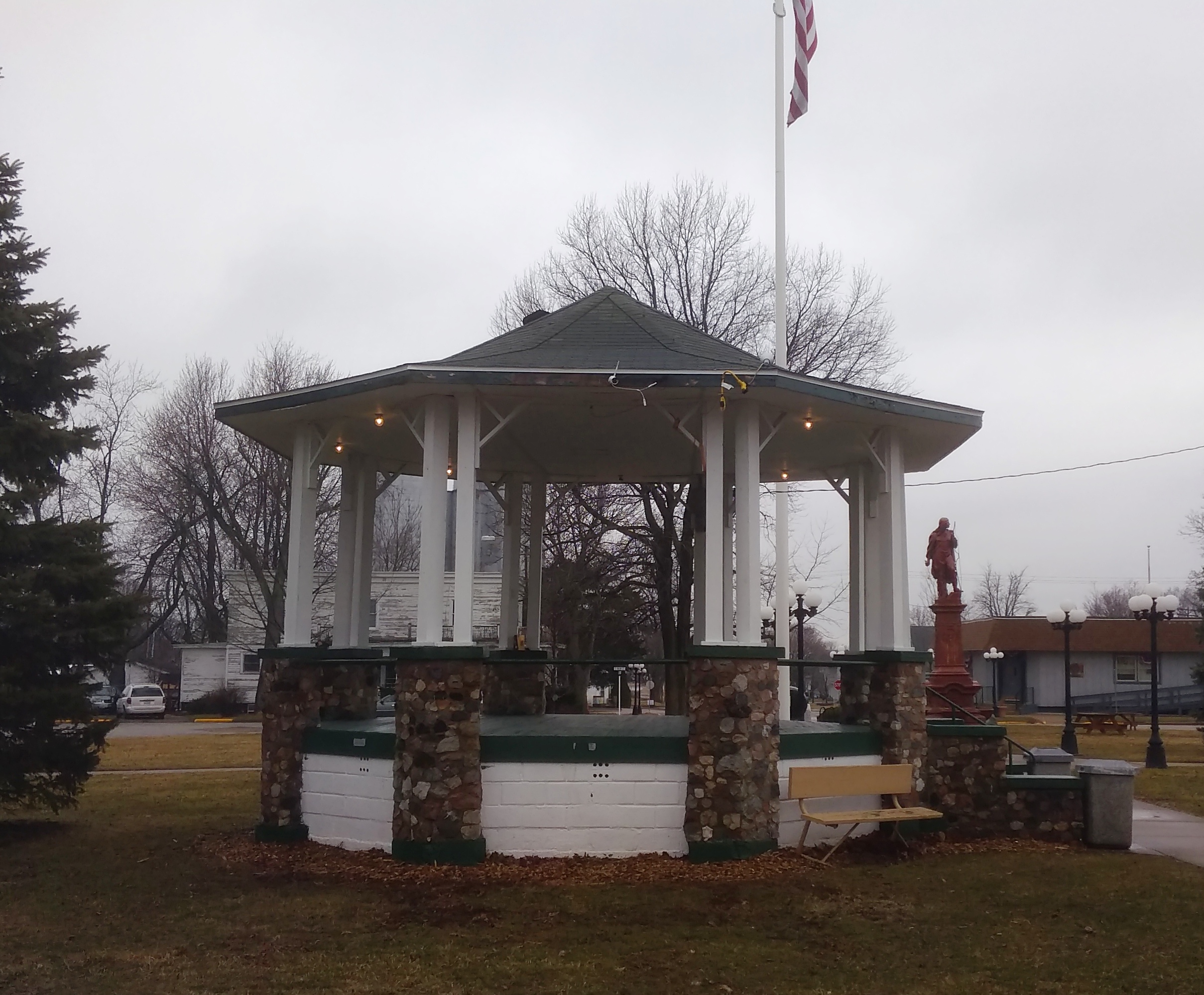
There are also smaller memorials, such as one to all U.S. service men and women, and one to honor Victor, LeRoy Police K-9 Officer from 2005 to 2012.

As I got closer to the main memorial, I realized that it was no Union soldier.
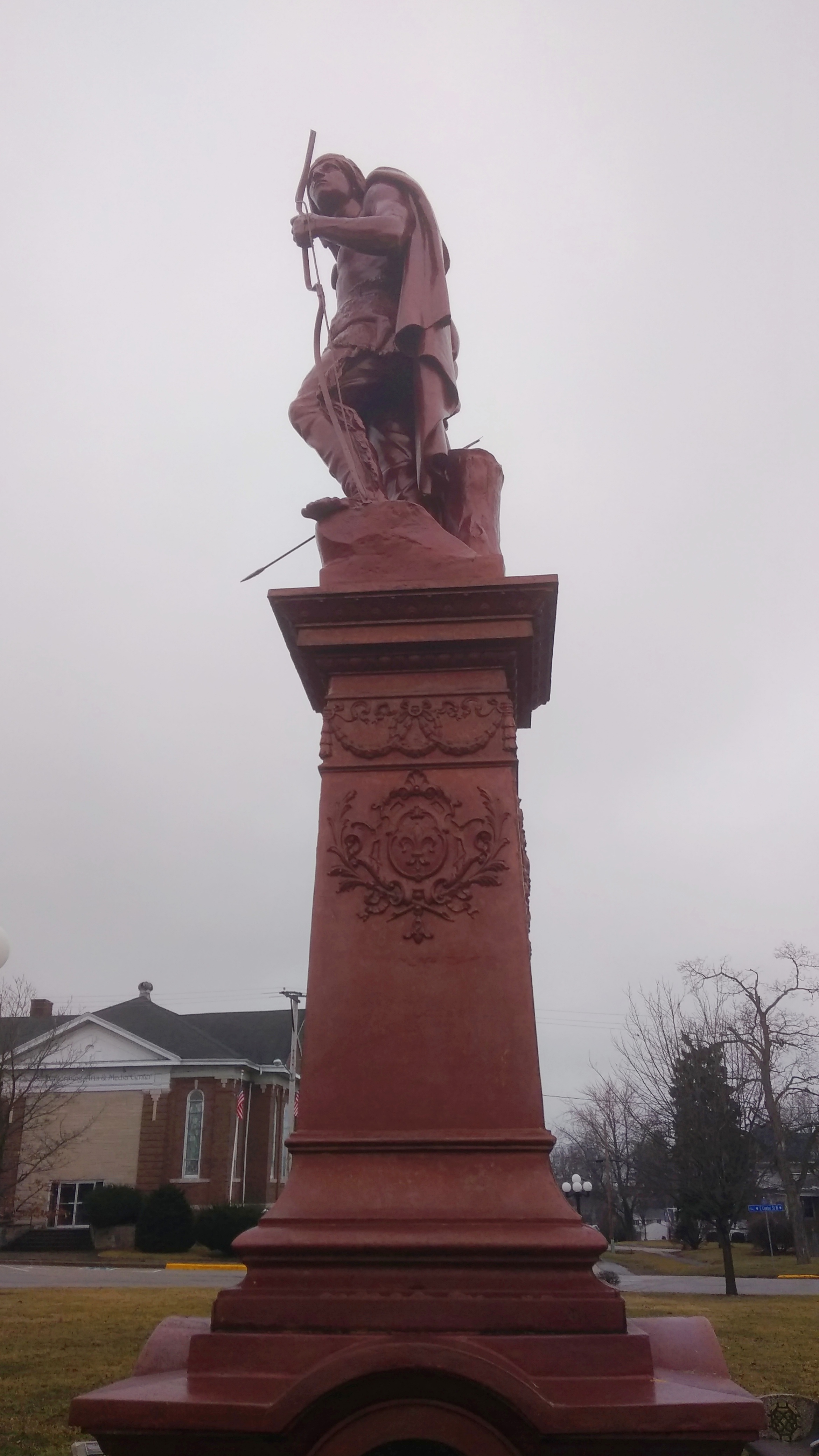
It was an Indian.
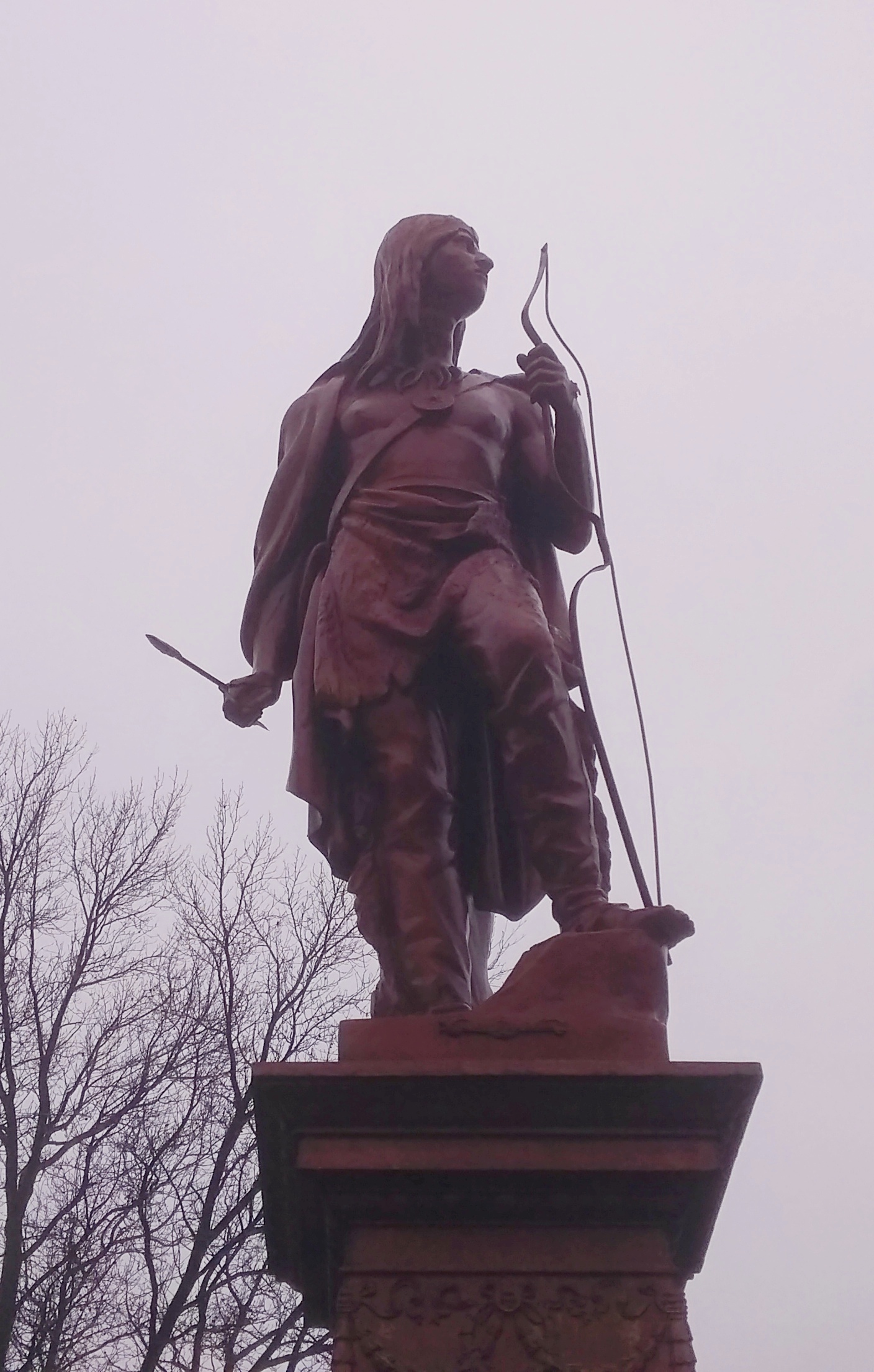
If anyone else had been with me — and absolutely no one else was anywhere nearby — I would have said, “How about that?” or “That’s odd” or some such.

An inscription on the base says WAUSANETA. The year carved on the base is 1911.

Also on the base: Cultivate love, peace and harmony; life is too short and time too valuable to waste in angry strife. Be slow to believe evil reports about your neighbors. Be diligent in searching for something good to say about others, and when you find it don’t wait until they are dead, but say it at once.

And more: West’s Precepts. Love and thank the supreme power. Control your temper. Try to keep cheerful. Do all the good you can. Be honest, truthful and temperate. Help the poor, needy and sick. Encourage the weak and timid. Make a specialty of trying to add to the happiness of someone to-day…. and all other days.

What on Earth is this? Why is it in LeRoy, Illinois, about as off the beaten path as you can be?

Last night when I got home, I looked it up. It didn’t take long. The wonderfully named Pantagraph newspaper published an article in 2011 about Wausaneta by McLean County Museum of History Archivist/Librarian Bill Kemp.

“Although few know it today, this statue embodies LeRoy’s longtime ties to spiritualism…” Kemp wrote.

“The idea for such a statue came from local resident and ardent spiritualist Simeon H. West, and he foot the bill to purchase, ship and install the pre-cast metal Native American and its elaborate pedestal. West claimed that on more than one occasion he communed with a deceased Kickapoo named Wausaneta, and he erected this statue as a tribute to the chief and his people.

“The Wausaneta statue gazes in a northeasterly direction toward a long-gone Kickapoo fort or stockade located seven or so miles out of town. In late November 1905, West oversaw the placement of a granite marker at this rich archaeological and historic site (now considered part of the Grand Village of the Kickapoo).

“In the midst of that day’s heavy snow and howling winds, West had an intense spiritualist encounter, later reporting that he had established a ‘rapport with the spirits of the people who lived there in the distant past.’

It was then that he supposedly learned from these spirits that a Kickapoo by the name of Wausaneta was ‘head chief’ during the fort’s construction. In a later seance, West heard from Wausaneta himself, and was told that the chief had died at the age of 75 and was buried north of the historic marker.”

“LeRoy’s Wausaneta was unveiled to the public on New Year’s Day 1912. West, in his typical new-agey grandiosity, dedicated his statue ‘to the lovers of the beautiful in every country and in every clime until time shall be no more.’ ”

That made my day. It’s exactly the kind of eccentric sight I enjoy finding on the road, especially when serendipity leads me to it.

Punta Mita 2009

Been almost exactly* 10 years since I visited Punta Mita, near Puerto Vallarta in Nayarit state. An awfully pleasant little trip, with plenty of views of the Bay of Banderas and its coastline. Including these images, but also these.
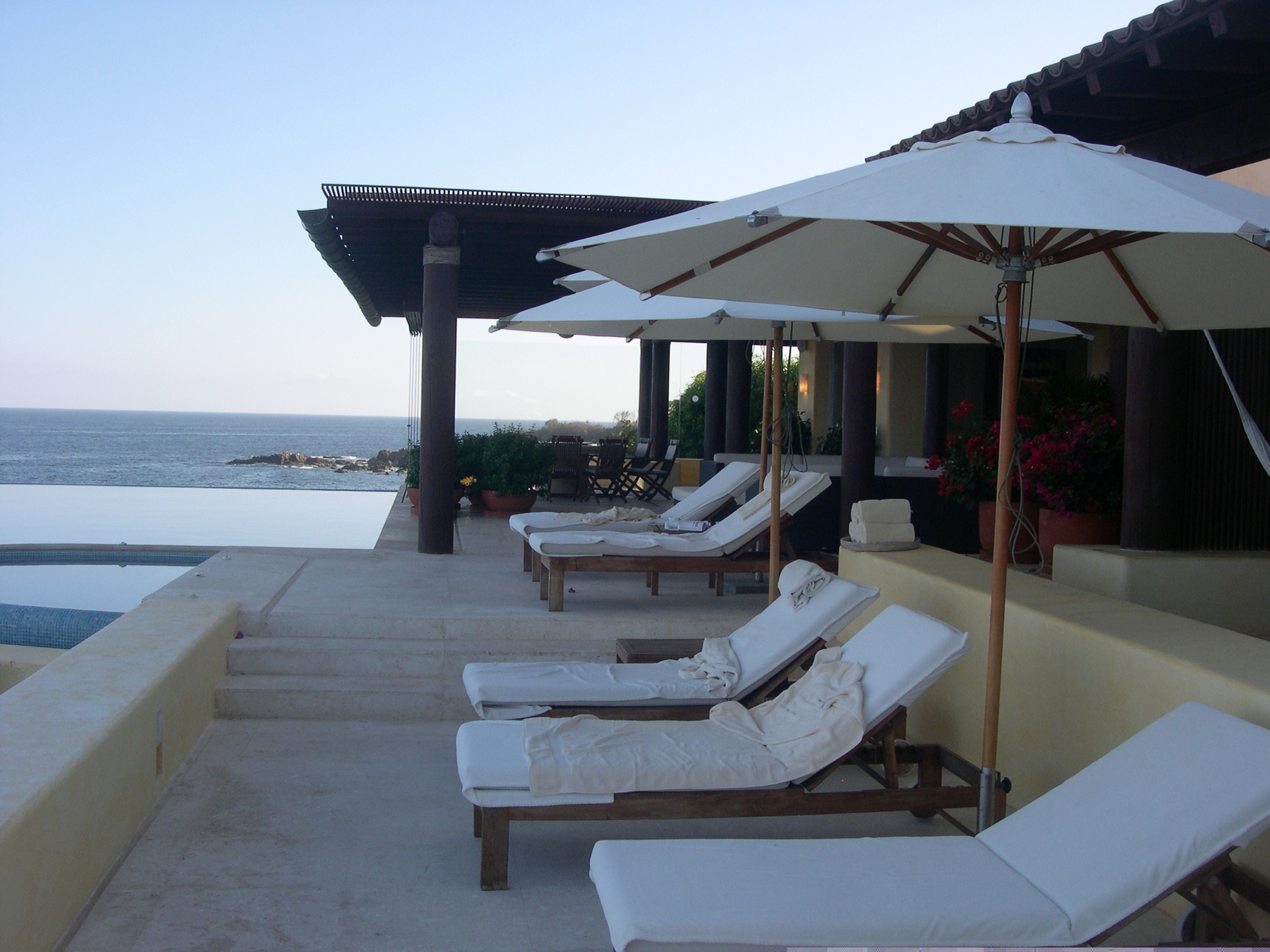
The villa where we stayed was much more luxurious than my usual haunts, at home or elsewhere.
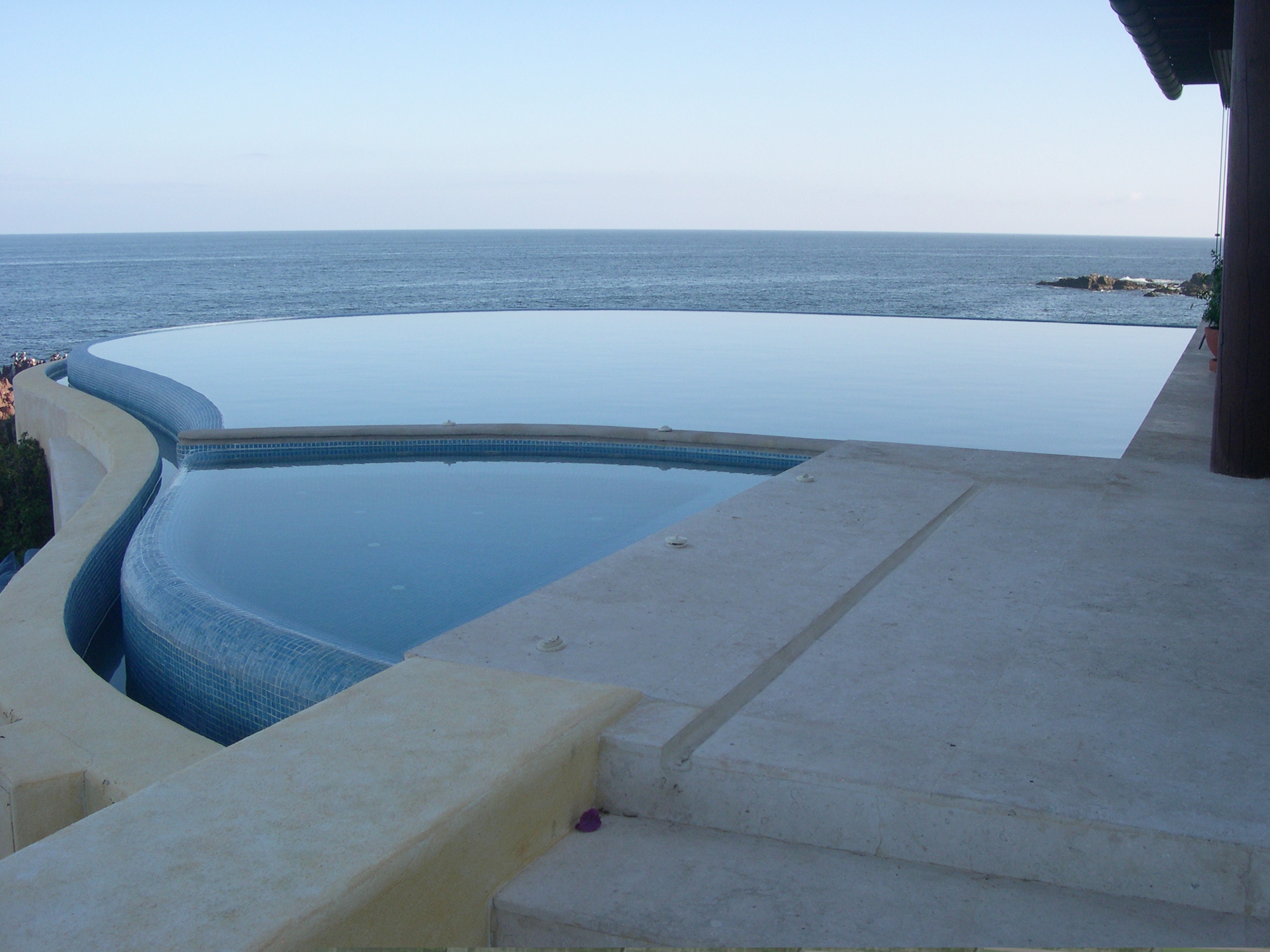
Including a small infinity pool. A novelty for me.

It was the dry season, so the non-irrigated land was dry.
Naturally, the golf course was irrigated, except for the hole on a peninsula. I don’t play golf, but I was happy to wander around the course, on foot and in a golf cart.

Our guide around the resort.

She had an exotic background, if I remember right. A father from — Syria, I believe — who immigrated to one of the northern South American countries, where her mother was from. Later they came to Mexico.

* Some long-ago teacher got on my case for using the phrase “almost exactly.” Red-inked it, I think. “Either it is exact, or it is not” was, I believe, the faulty reasoning that gave birth to that nonsense. I can say now, in my opinion as a professional writer of some decades, that there’s nothing wrong with the construction.

Along E. 57th Street, Chicago

Our stroll through a small slice of the Hyde Park neighborhood on Sunday took us westward on E. 57th St. for a few blocks, roughly between S. Kenwood Ave. and S. University Ave. As you head west, small businesses and flats give way to university property.

Mostly. This is the 57th St. side of the First Unitarian Church of Chicago.
According to the AIA Guide to Chicago, the church, which was completed in 1931, is a “textbook example of English Perpendicular Gothic design [that] fits in easily with the limestone facades and Gothic ornament of many Hyde Park residences and university buildings.”

Denison B. Hull did the design. “The son of a five-term, Republican U.S. representative, Morton Hull, he grew up in the Hyde Park area that his father represented in the 1920s,” the Chicago Tribune said in his 1988 obit.

“After serving as an officer in World War I, Mr. Hull was graduated from Harvard University. In 1922, he won first prize in an architectural design contest conducted by the university.

Among his noted architectural work, besides the First Unitarian Church, were the restoration of Old Church and the expansion of the historical museum, both in Bennington, Vt…

Mr. Hull was noted also as a scholar of ancient Greek and Greece.”

They don’t make ’em like that anymore.

I’ve never been able to see the inside of First Unitarian. Services are at 10 a.m. Sunday, and if I ever happen to be in Hyde Park then, I will attend one. Not just to see the interior, but also to see whatever it is Unitarians do during their services.

At 1219 E. 57th St. is the Neubauer Family Collegium for Culture and Society. More simply, the Neubauer Collegium.

According to a sign in front, exhibits can be seen inside, but not, as it happens, on Sunday. I wondered just what the organization was, and why I’d never heard of it. To answer the second question first: it was founded only in 2012, and makes its home in the former Meadville-Lombard Seminary Building.
As for what it does, the Neubauer — as best as I can describe it — is a humanities think tank.

UChicago News says: “The Neubauer Collegium will unite scholars in the common pursuit of ideas of grand scale and broad scope, making the University of Chicago a global destination for top scholars engaged in humanistic research while also pioneering efforts to share that research with the public.”

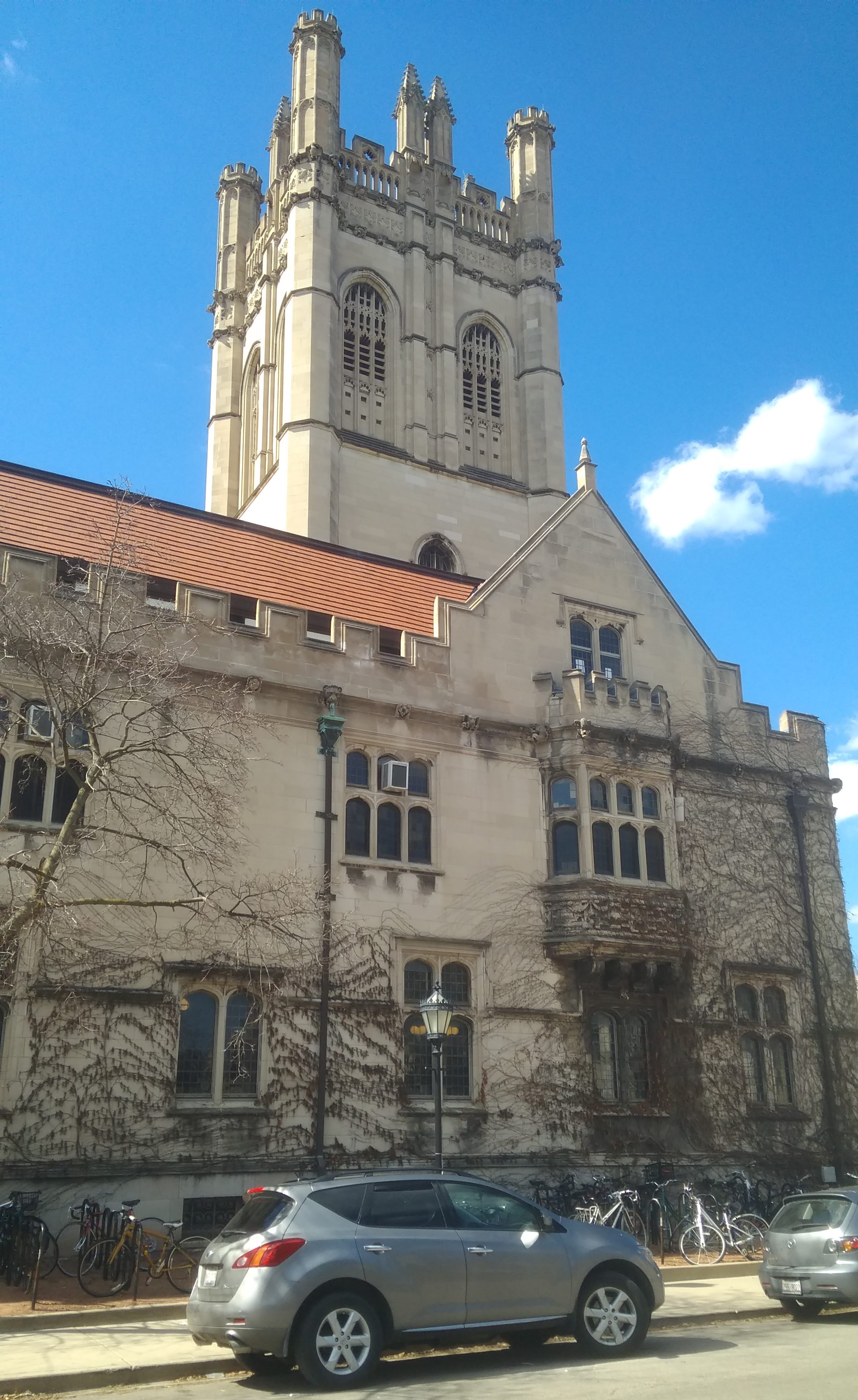
Here’s the view of the Reynolds Club bell tower from near 57th St.
As probably no one calls it: the John J. Mitchell Tower of the Joseph Reynolds Student Clubhouse. These days, the clubhouse, completed in 1903, is a student union. Joseph “Diamond Jo” Reynolds was a Gilded Age steamboat and railroad magnate whose bequest paid for the building; I believe John J. Mitchell was a Chicago banker who seems to have died in a road-rage incident.

As Time reported in 1927:

Near Chicago last week death came to banker John J. Mitchell, and to Mrs. Mitchell. They were driving in an open motor car from their country home at Lake Geneva, Ill., to Chicago for the funeral of their elder daughter’s father-in-law, when their machine met a roadside brawl. Two motor cars, going in opposite directions had tried to pass a hay wagon at the same time. Both cars went into a ditch; the drivers jumped clear and fell to words and fisticuffs. The haywagon stopped as did several machines. Their drivers wanted to see…

To read more, I’d have to subscribe, but I’d rather leave the story at that.

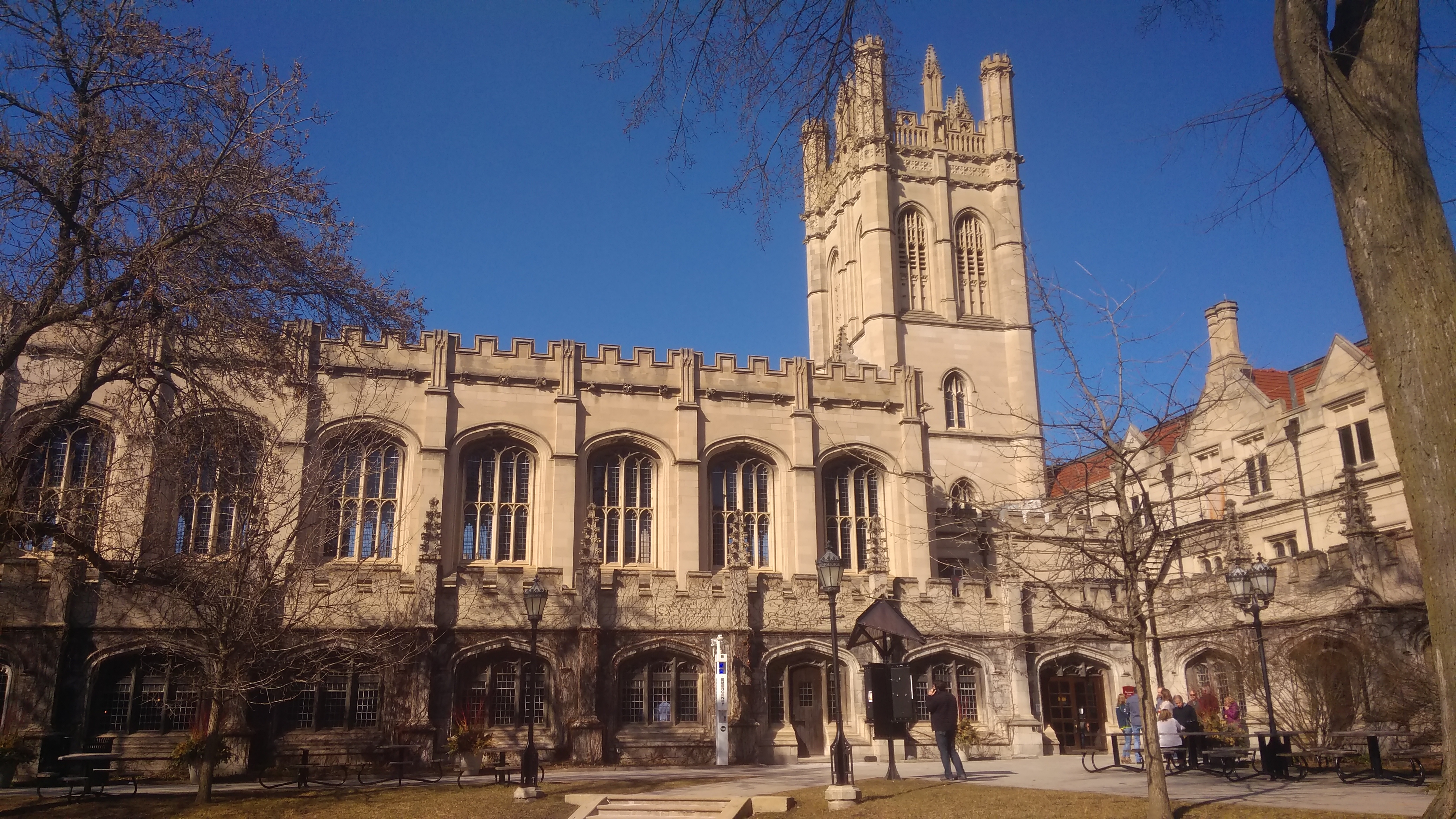
Here’s the view of the tower from inside the quad formed by the Reynolds Club and some other buildings.

Designed by Shepley, Rutan & Coolidge, the building was “derived from St. John’s College at Oxford, and its domestic feeling is enhanced by a stair hall that could have come straight out of an English manor house.”

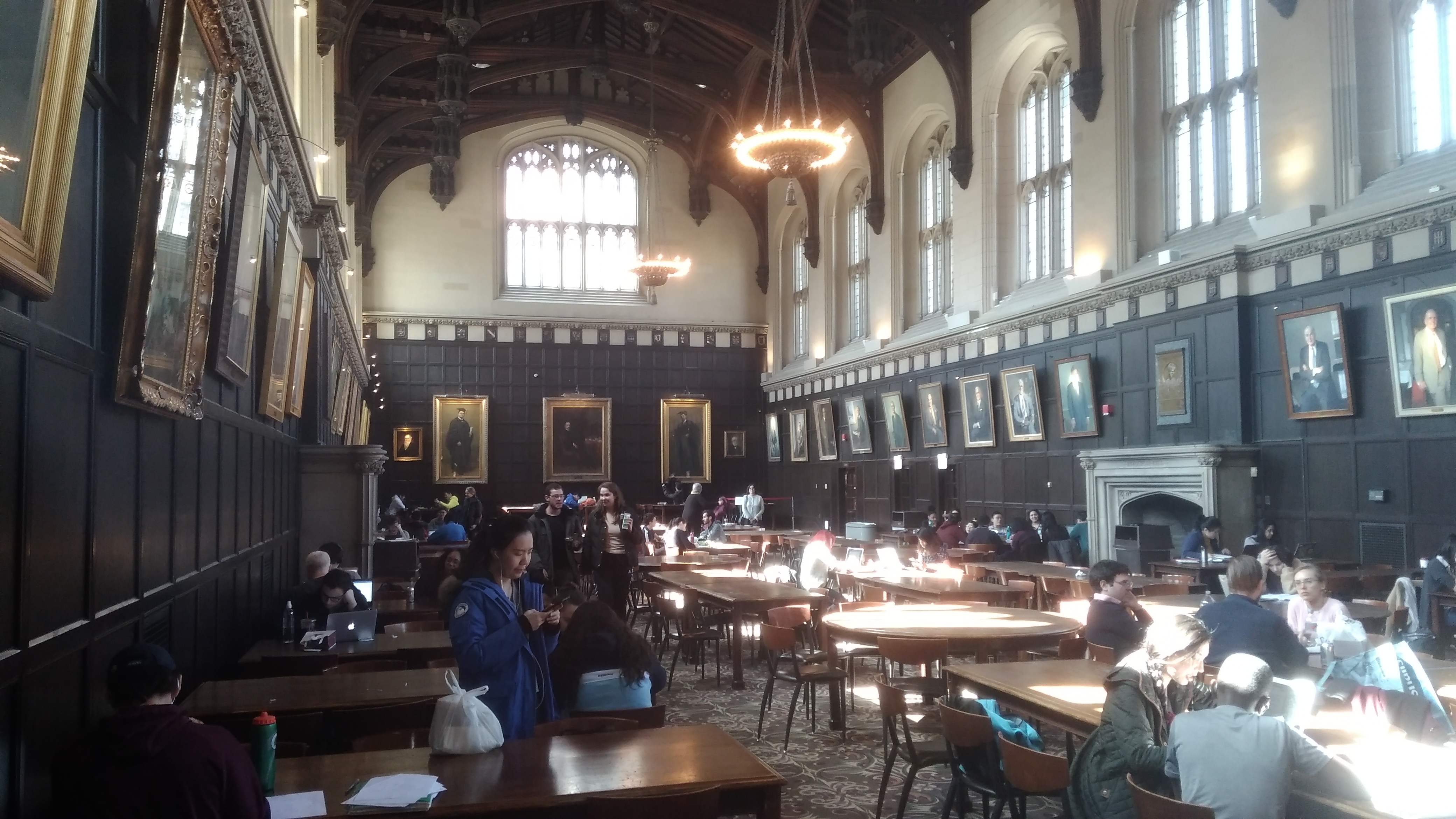
Also inside — behind the row of windows to the left of the tower, above — is the Charles L. Hutchinson Common, which SRC did as well. Hutchinson, better known as founder of the Art Institute of Chicago, ponied up for building the hall.

It’s also like stepping into Oxford. According to Wiki, anyway, “The Harry Potter film series has used the original hall at Christ Church in each of its films, imparting a tourist interest in its American replicate.[citation needed].”

Short Hyde Park Walkabout

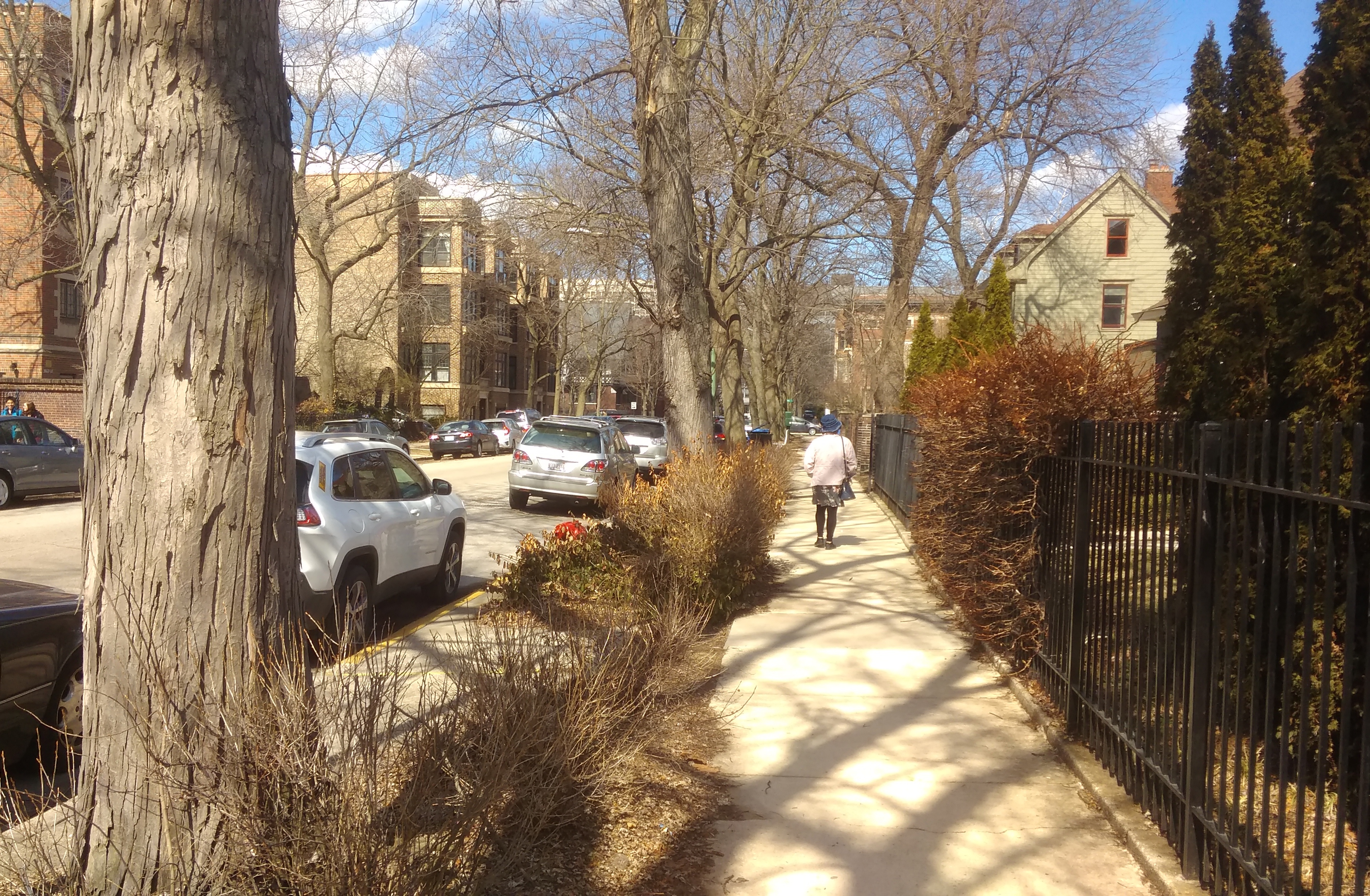
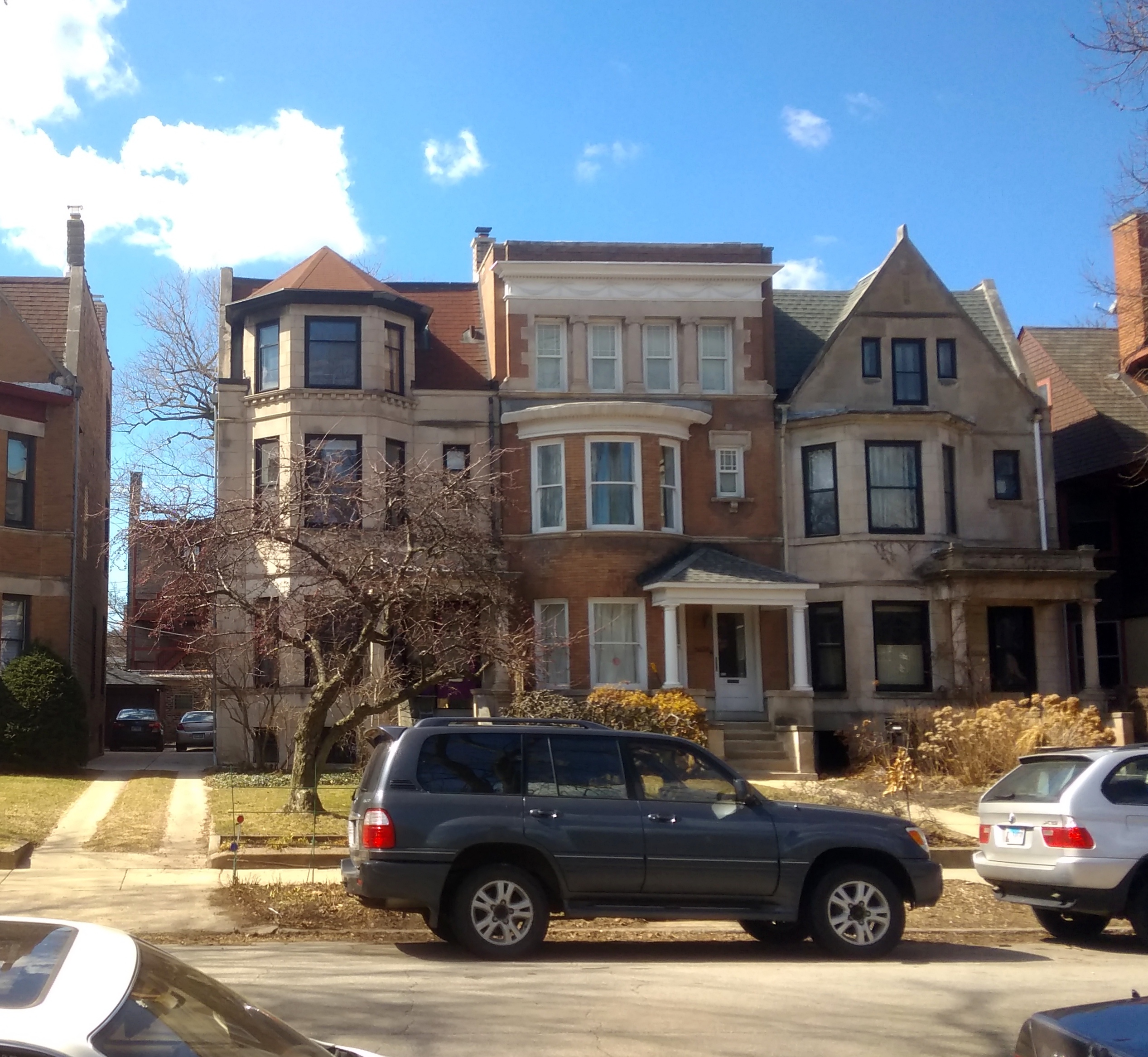
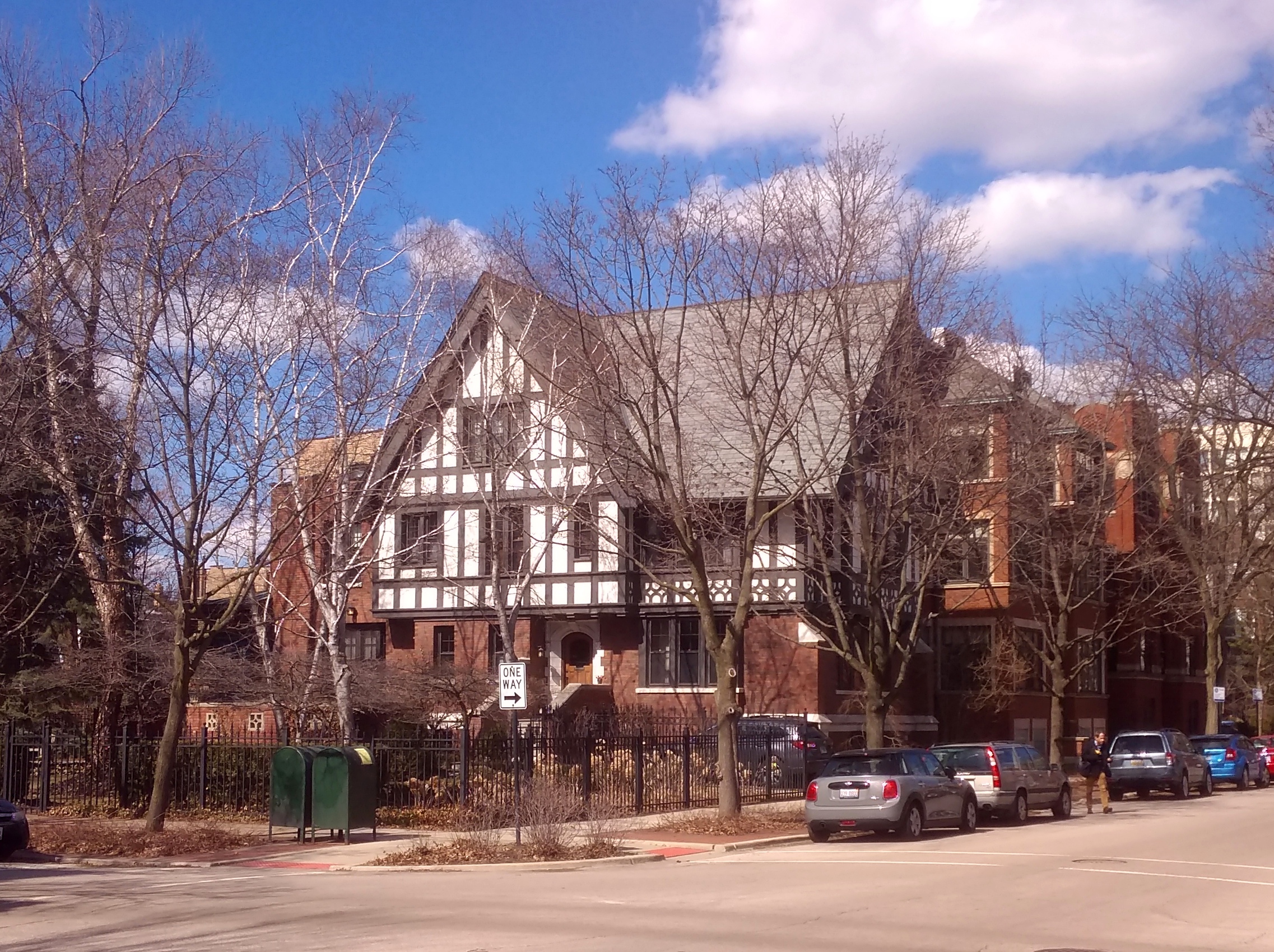
We don’t make it to the Hyde Park neighborhood of Chicago that often, so when we do, if time and weather allow, we take a walk. Today wasn’t especially warm, but not cold either, or windy, and the sun was out. Good day for a walk along a few blocks in Hyde Park.

These views happen to be along S. Blackstone Ave.

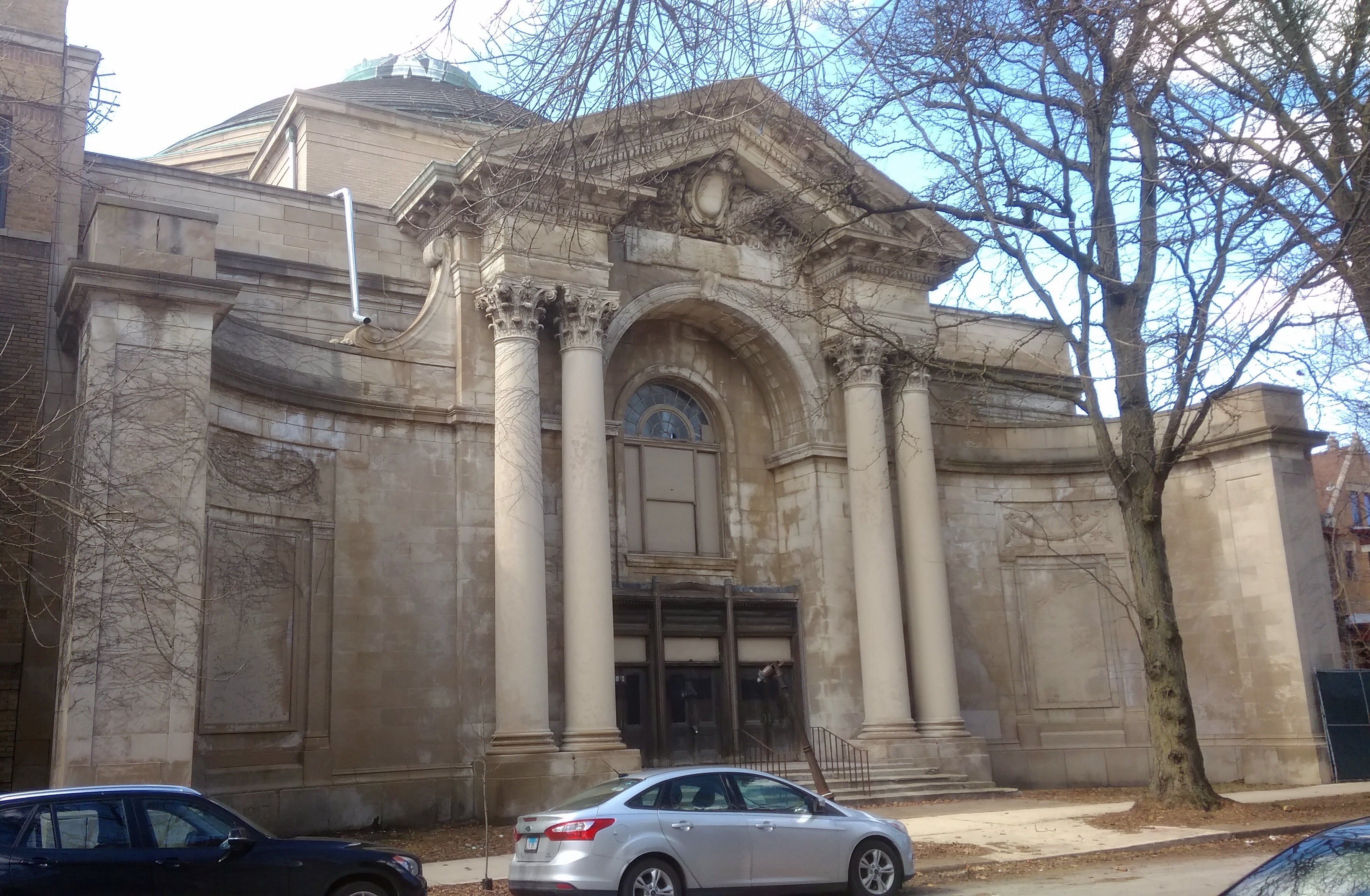
Also on Blackstone — 5640 S. Blackstone Ave., to be exact — is the abandoned St. Stephen’s.
The most recent information I’ve found about the structure — which was developed in 1917 as a Christian Science church — dates from about three years ago, when a new owner acquired it with unspecified plans for redevelopment.

Even then, according to the defunct DNAInfo, the building had defied redevelopment for more than 20 years. Looks like it’s still doing so.

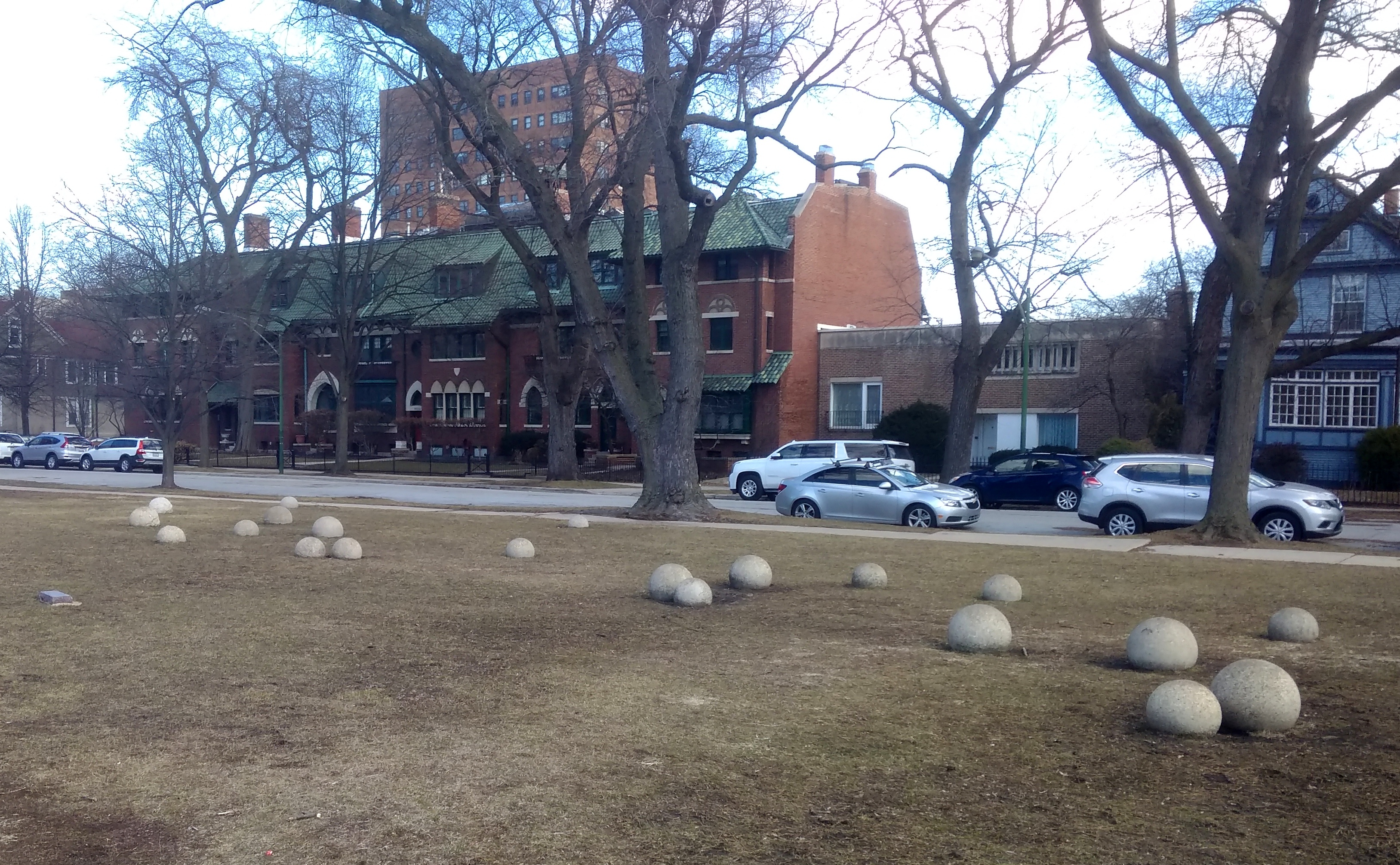
To the west of the abandoned church is an oddity in a small park adjacent to William H. Ray Elementary School. An array of concrete spheres.
Those are many, but not all, of the spheres. There are 30 in all. Or so says a stone plaque fixed to the ground nearby; I didn’t count them.

The globes form an artwork called “Like the Time They Go” by Virginio Ferrari, a Chicago sculptor originally from Verona. The date on the plaque says 1977-2002, while other sources simply say 1977. Maybe the more recent date was when Ferrari quit making changes or adding concrete spheres.

The New 110 N. Wacker Dr.

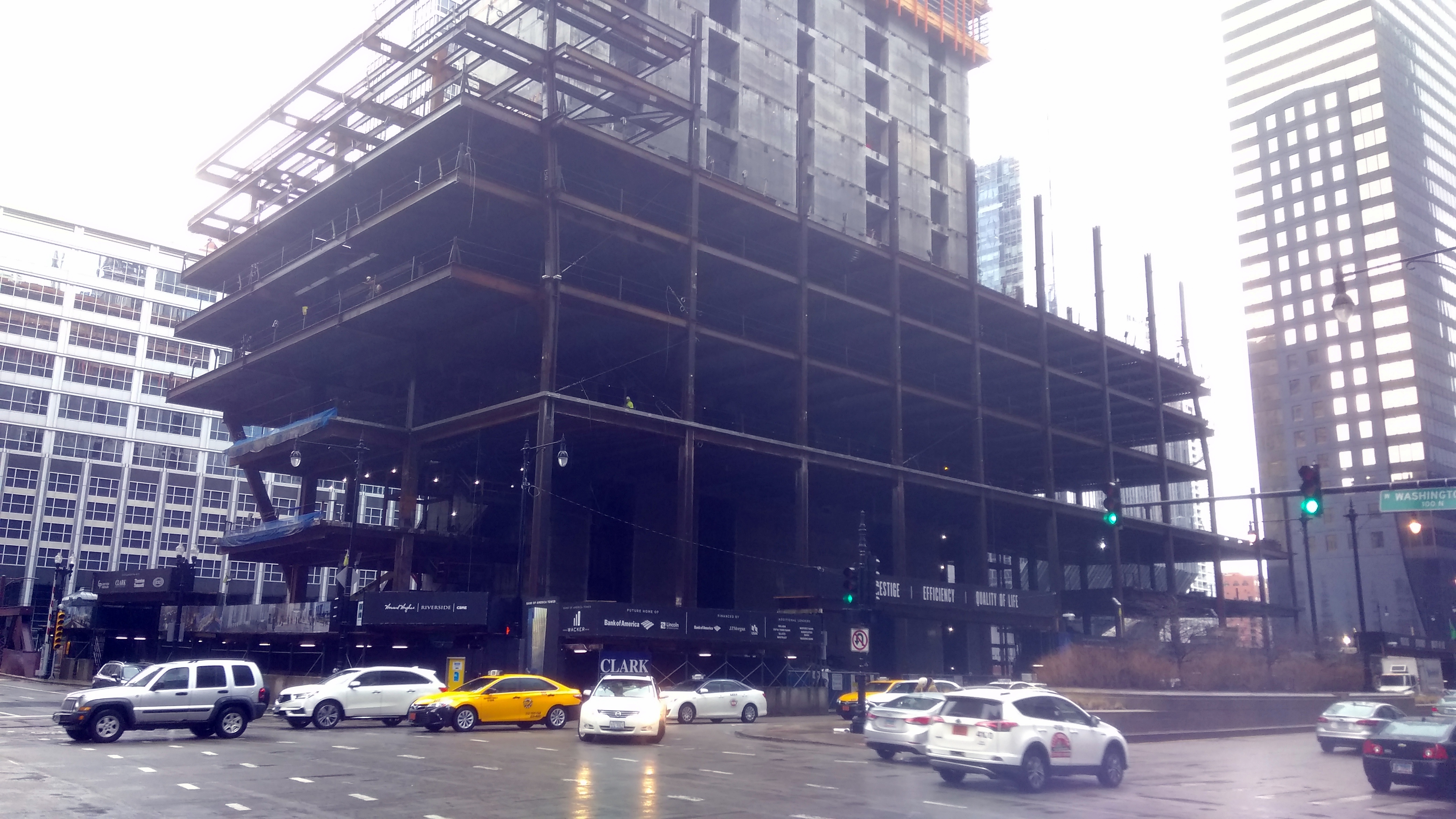
About a year ago, I found myself at the corner of N. Wacker Dr. and W. Washington St. in downtown Chicago. At the time, a ’50s-vintage building across the street was being dismantled.

Today I was downtown for a little while, and passed by the same corner. Though drizzly, I decided to document the moment.

The new 110 N. Wacker Dr. is a development of Howard Hughes Co. and Riverside Investment and Development. Looks like it will be an interesting building when it’s finished next year.

The Alamo and Its Cenotaph

March 6 has rolled around again, so of course Remember the Alamo.

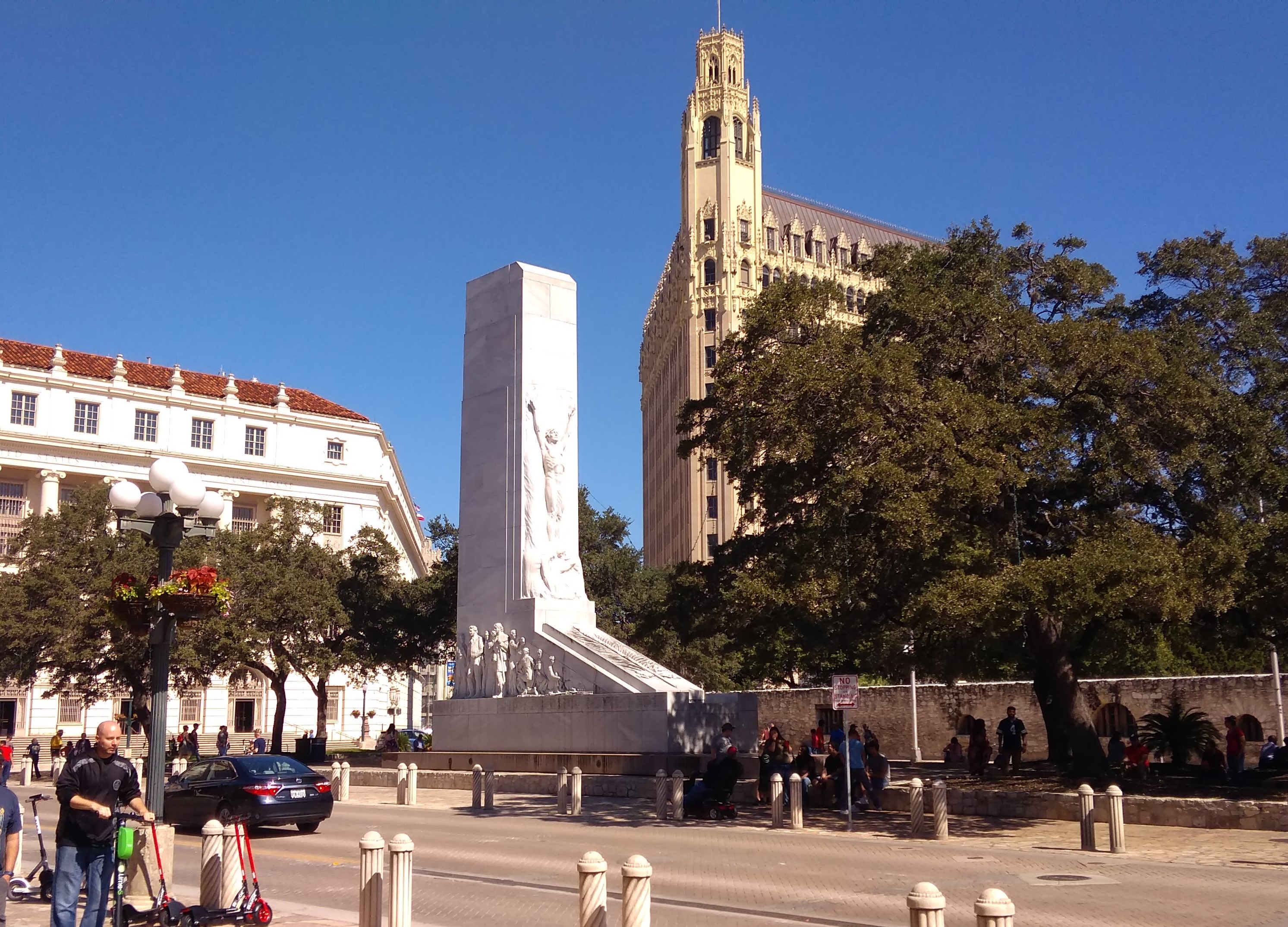
During my most recent visit to the Alamo, I also took more than a passing look at the Alamo Cenotaph. Here it is in the context of Alamo Plaza.

Alamo Plaza October 2018Why civic busybodies think the Cenotaph needs to be moved, or Alamo Plaza should be sterilized in the name of History, is unclear to me. I was there on a warm day and Alamo Plaza was alive with people. As a plaza in the here and now should be.

Living urban texture isn’t somehow at odds with proper reverence for the Shrine of Texas Liberty. As I understand the plans for Alamo Plaza, its living urban texture will slowly be strangled. That’s no way to remember the Alamo.

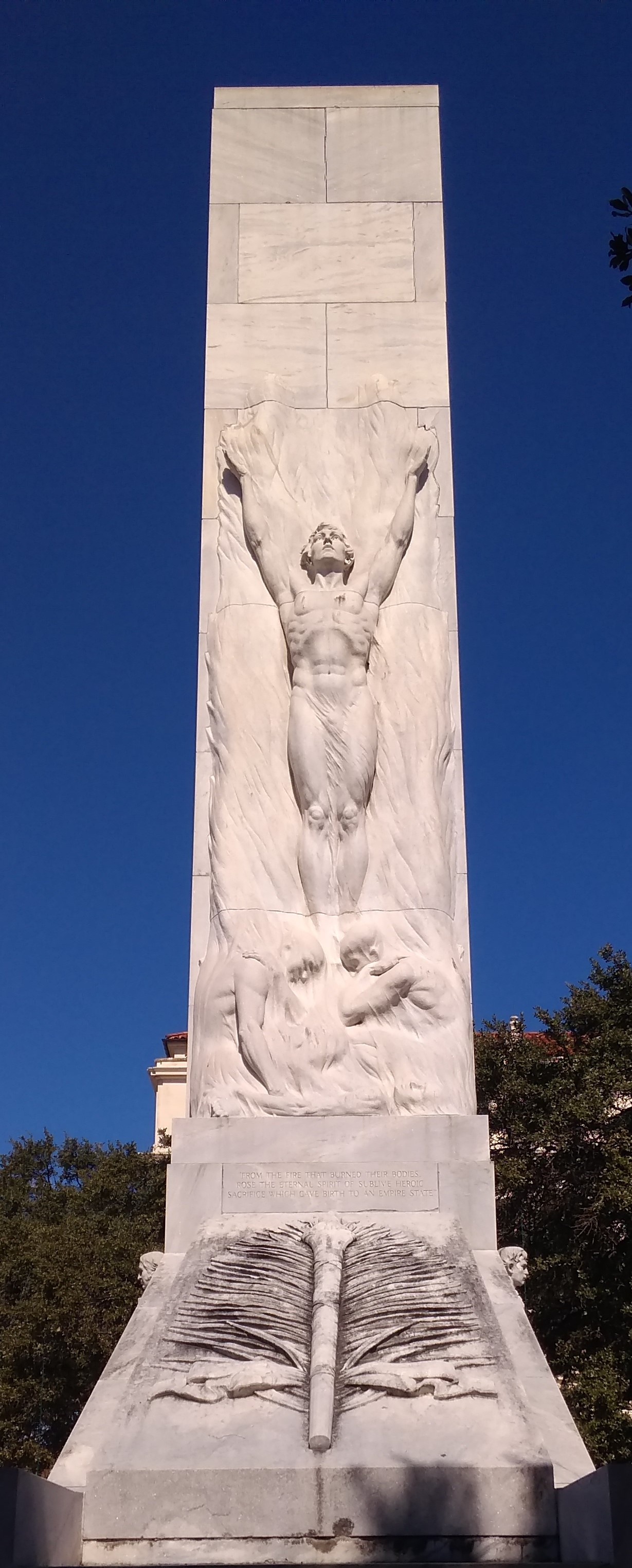
Enough of that. As it stands now, the south face of the Cenotaph — which is 60 feet high — features a figure known as the Spirit of Sacrifice.

Alamo Cenotaph 2018Under the figure, text reads: From the fire that burned their bodies rose the eternal spirit of sublime heroic sacrifice which gave birth to an empire state.

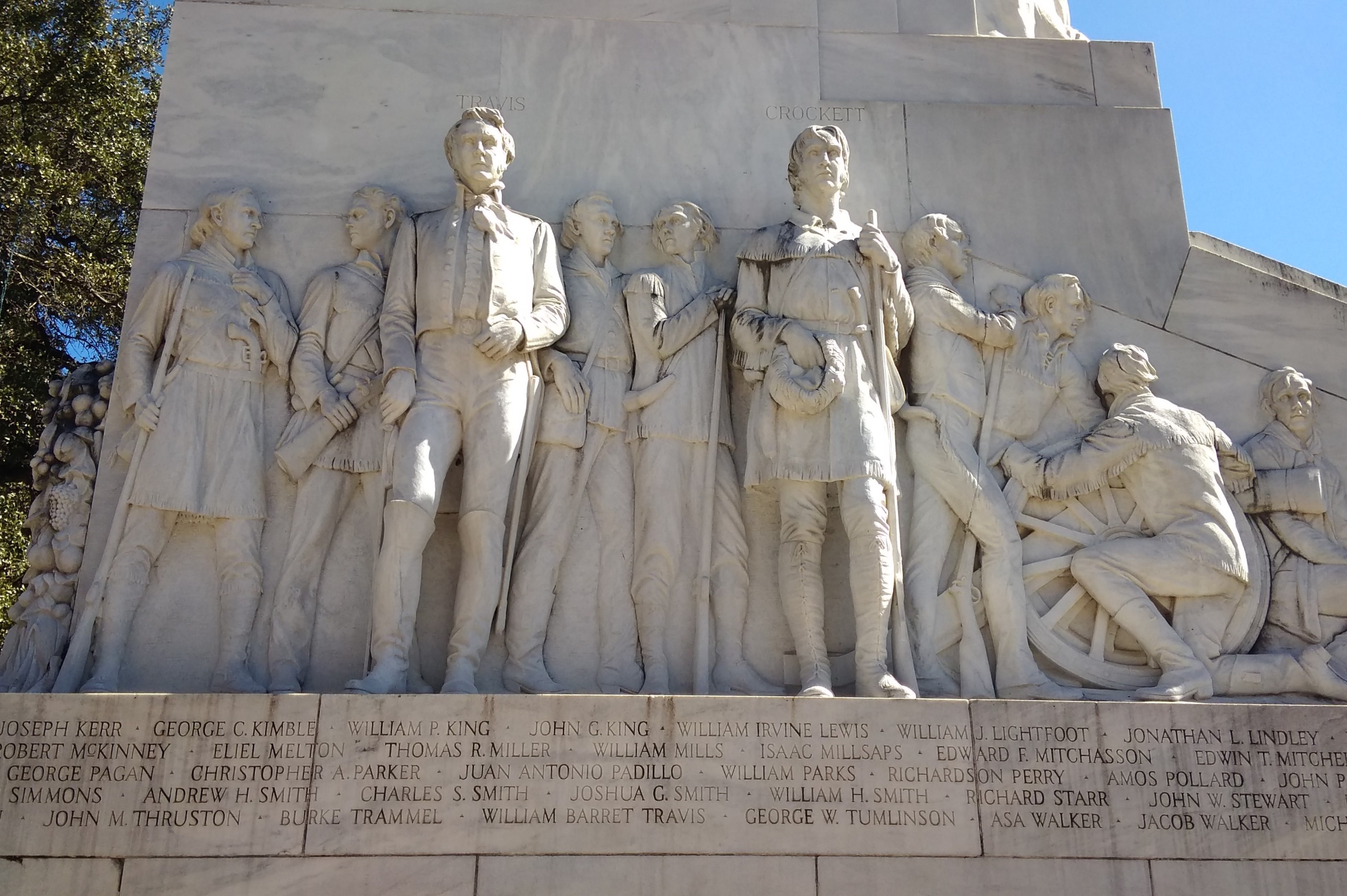
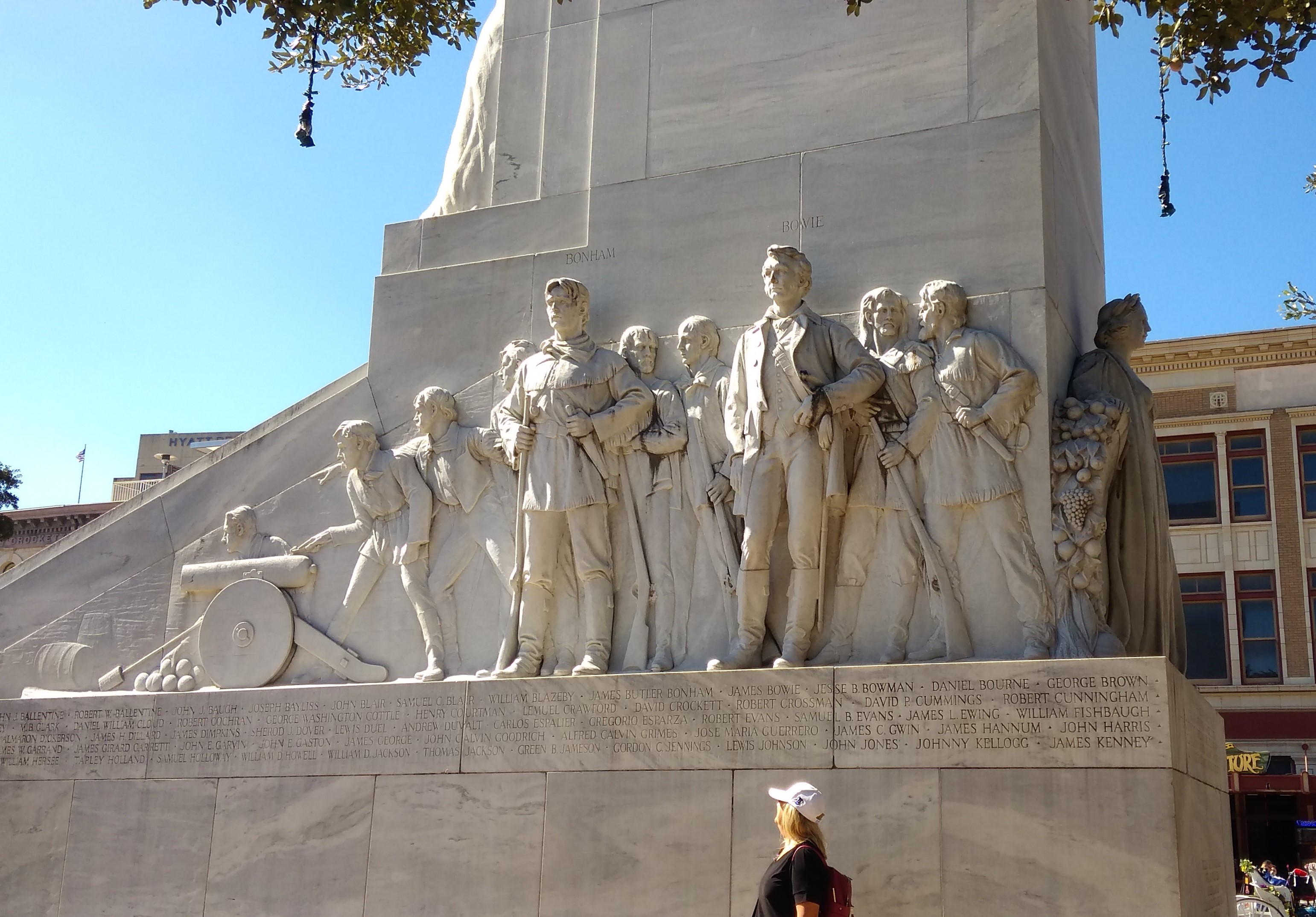
On the east and west faces are depictions of the defenders of the Alamo.

Alamo Cenotaph 2018Alamo Cenotaph 2018None other than Pompeo Coppini did the figures. I’ve come across his work before in Austin and Dallas.

I didn’t capture the main inscription, which says:

Erected in memory of the heroes who sacrificed their lives at the Alamo, March 6, 1836, in the defense of Texas. They chose never to surrender nor retreat; these brave hearts, with flag still proudly waving, perished in the flames of immortality that their high sacrifice might lead to the founding of this Texas.

The San Marcos City Cemetery

San Antonio to Dallas is roughly a five-hour drive straight through, provided traffic isn’t gummed up somewhere along I-35, which it will be in Austin, so best to take Texas 130 around that city, even though it costs extra.

Also best to break the trip into smaller segments and take a look around an in-between place or two. My nephew Dees told me that Aquarena Springs, formerly a postwar tourist attraction — trap — of some renown in San Marcos, is a good thing to see. In recent years, Texas State University-San Marcos remade the place as the Meadows Center for Water and the Environment. Glass-bottom boat tours are star attraction now, rather than the “aquamaids” of yore.

Sounded like a diversion of more hours than we were willing to spare, so we skipped it this time. But we did stop in San Marcos.

First for a look at the Hays County Courthouse, which is a fine old building with a statue of John Coffee Hays outside, whom the Handbook of Texas Online calls a “Texas Ranger extraordinary.” South Texas sculptor Jason Scull did the bronze.
Hays Statue, Hays County CourthouseNot far away is the San Marcos City Cemetery. According to the Heritage Association of San Marcos, the cemetery replaced a smaller boneyard, with burials beginning in 1876. The city took ownership in the 20th century, as it retains today.

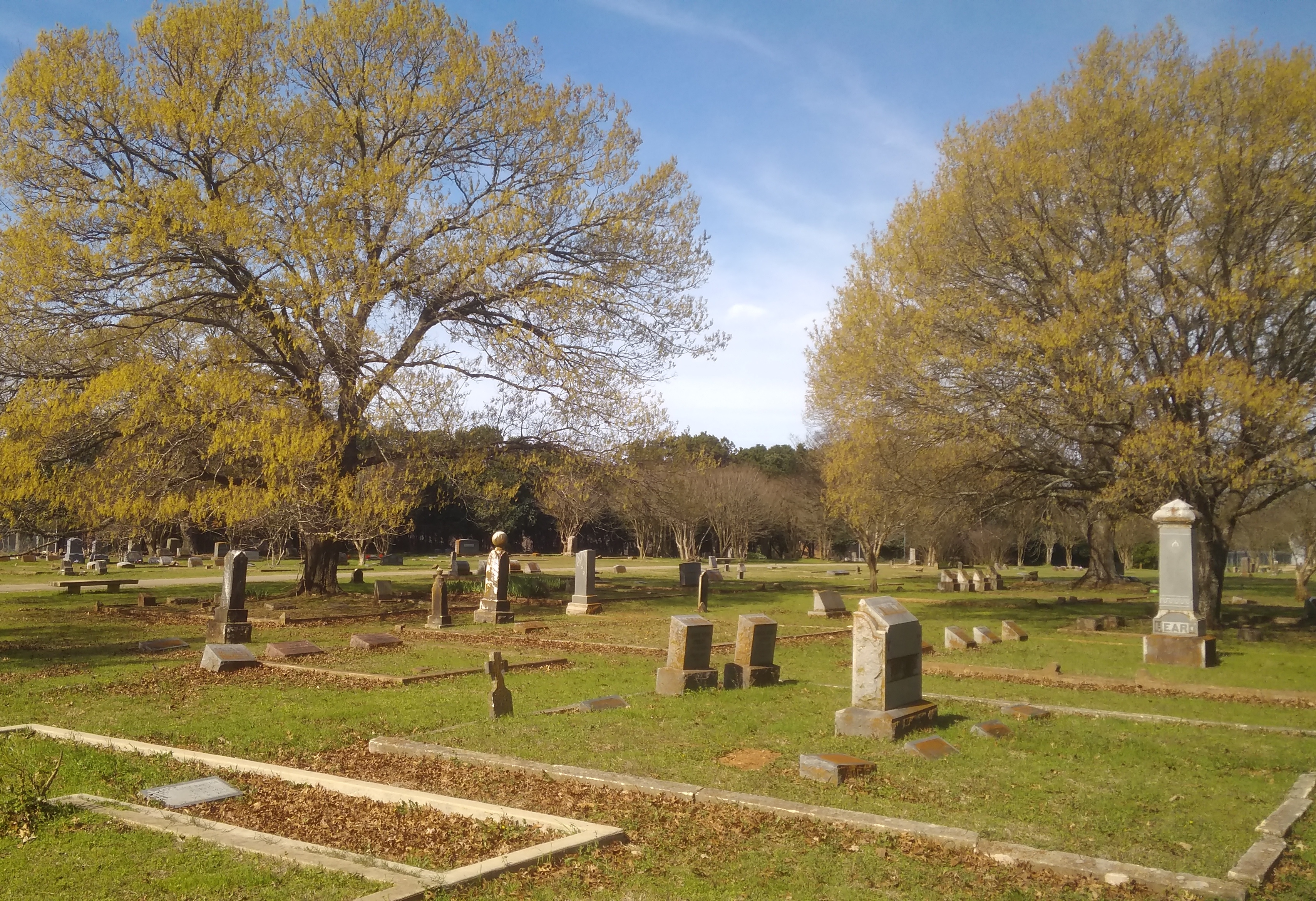
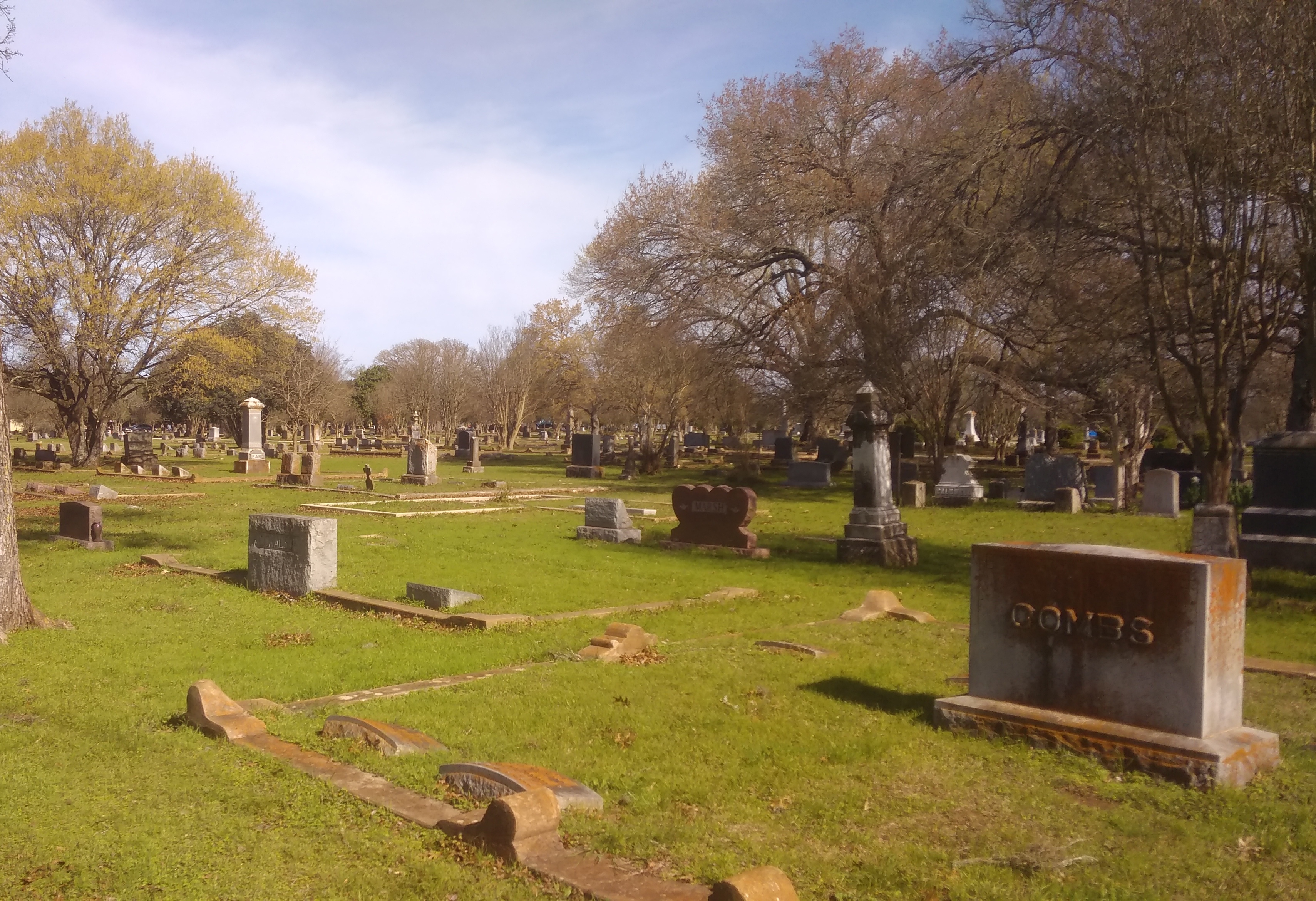
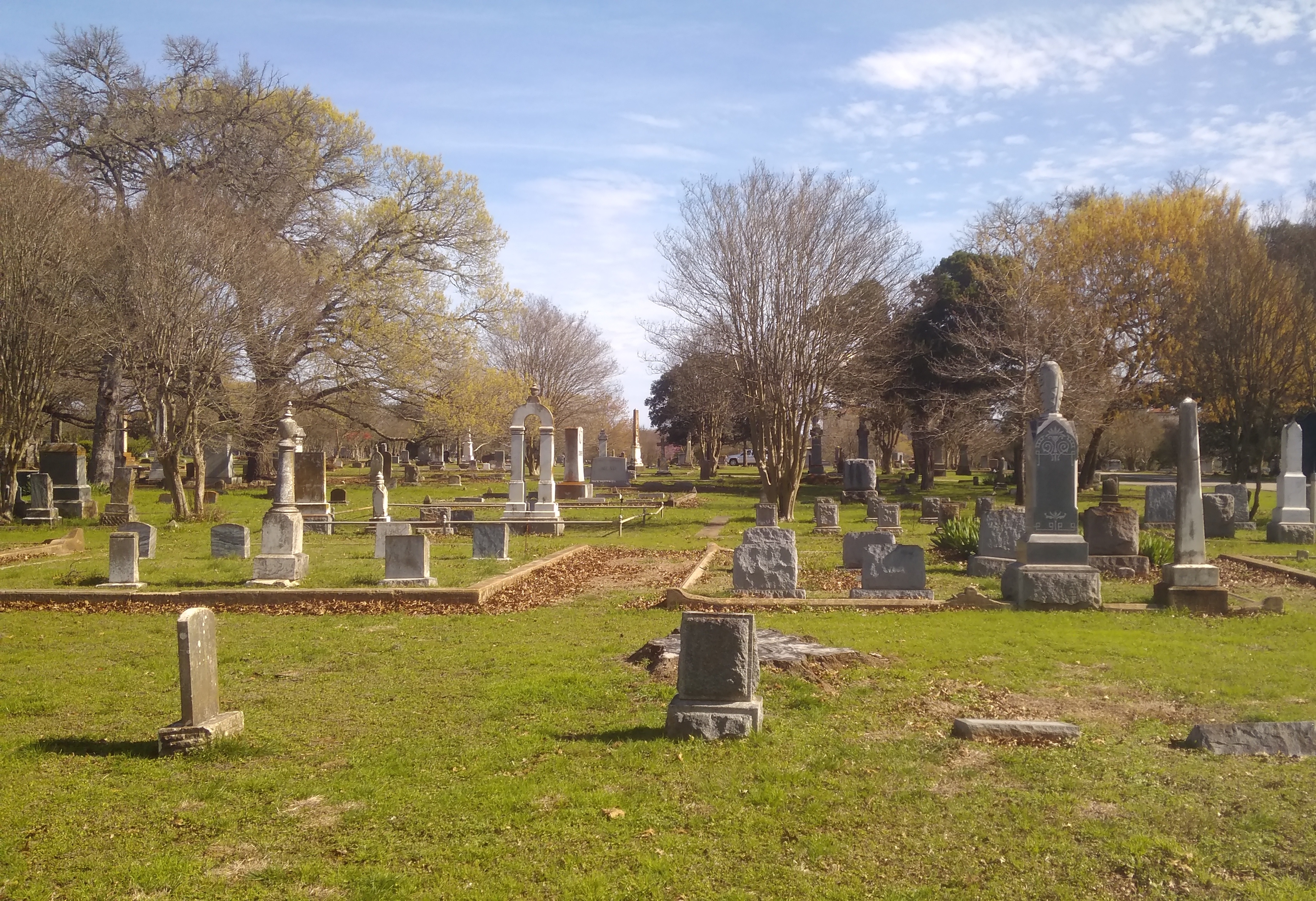
Though you climb a small hill at the entrance, most of the cemetery is level. Though not heavily wooded, the cemetery has trees to remind us that late February in central Texas is early spring.

San Marcos City CemeterySan Marcos City CemeterySan Marcos City CemeteryThere are some larger stones and some funerary art, but not a lot.
San Marcos City CemeteryAs Jay pointed out, ready money in 19th-century San Marcos — when such art was more likely to be erected — was in short supply, at least compared with a place like New York, home of Green-Wood and Woodlawn, or even old Charleston.

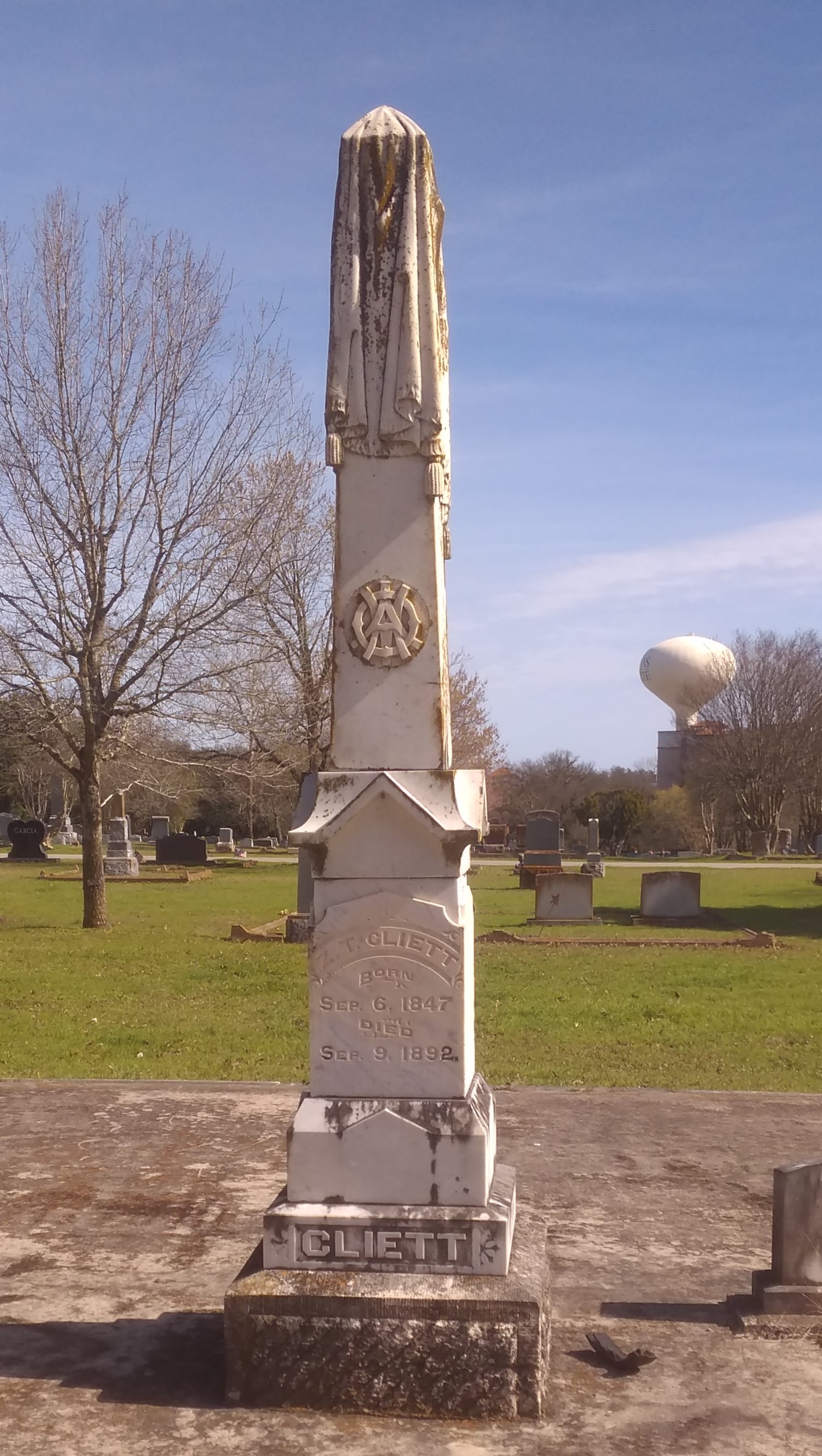
Still, there are some more ornate markers, such as the draped obelisk of Z. T. Cliett (1847-1892).
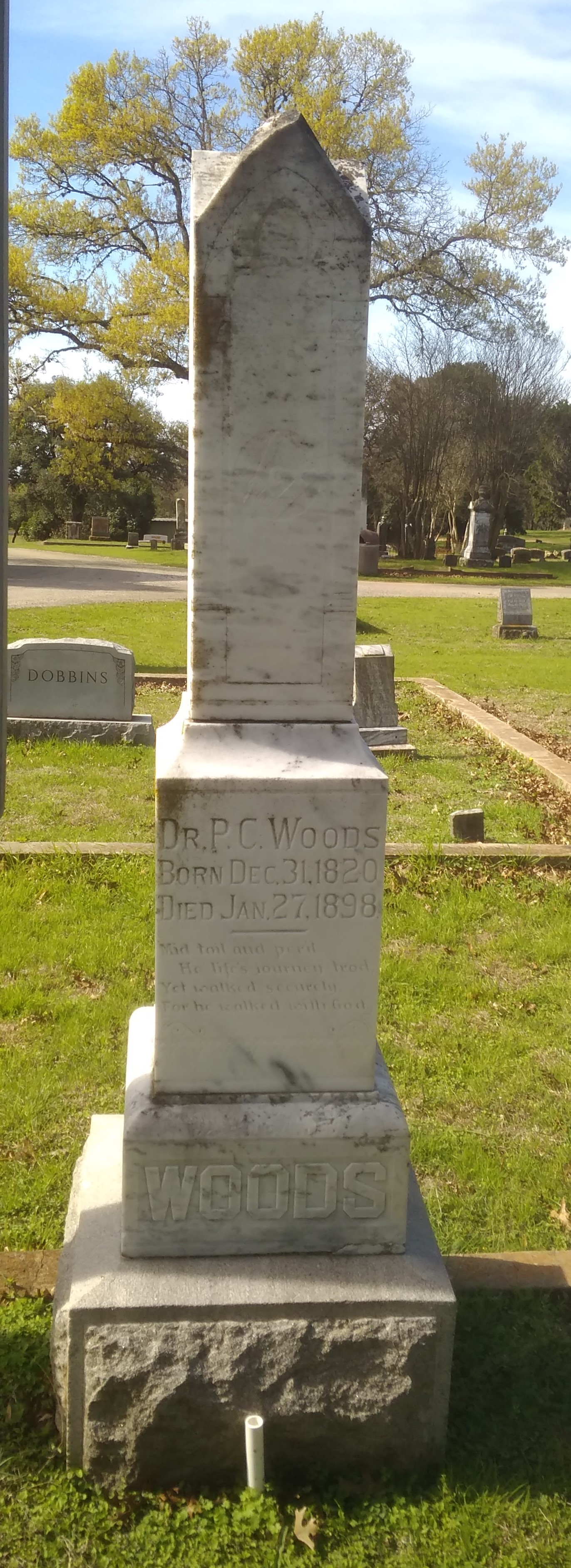
San Marcos City CemeteryOr the stone of Dr. P. C. Woods (1820-1898).
San Marcos City CemeteryA nearby Texas Historical Commission marker says that Dr. Woods came to Texas from Tennessee, as so many did (T for Texas, T for Tennessee). Commanding the 32nd Texas Cavalry Regiment during the war, he patrolled the border with Mexico and the Gulf coast against possible Union attack, and fought in Louisiana, where he “received an arm injury which impaired him for the rest of his life.” That didn’t keep him from being a farmer and doctor in postbellum Texas, however.

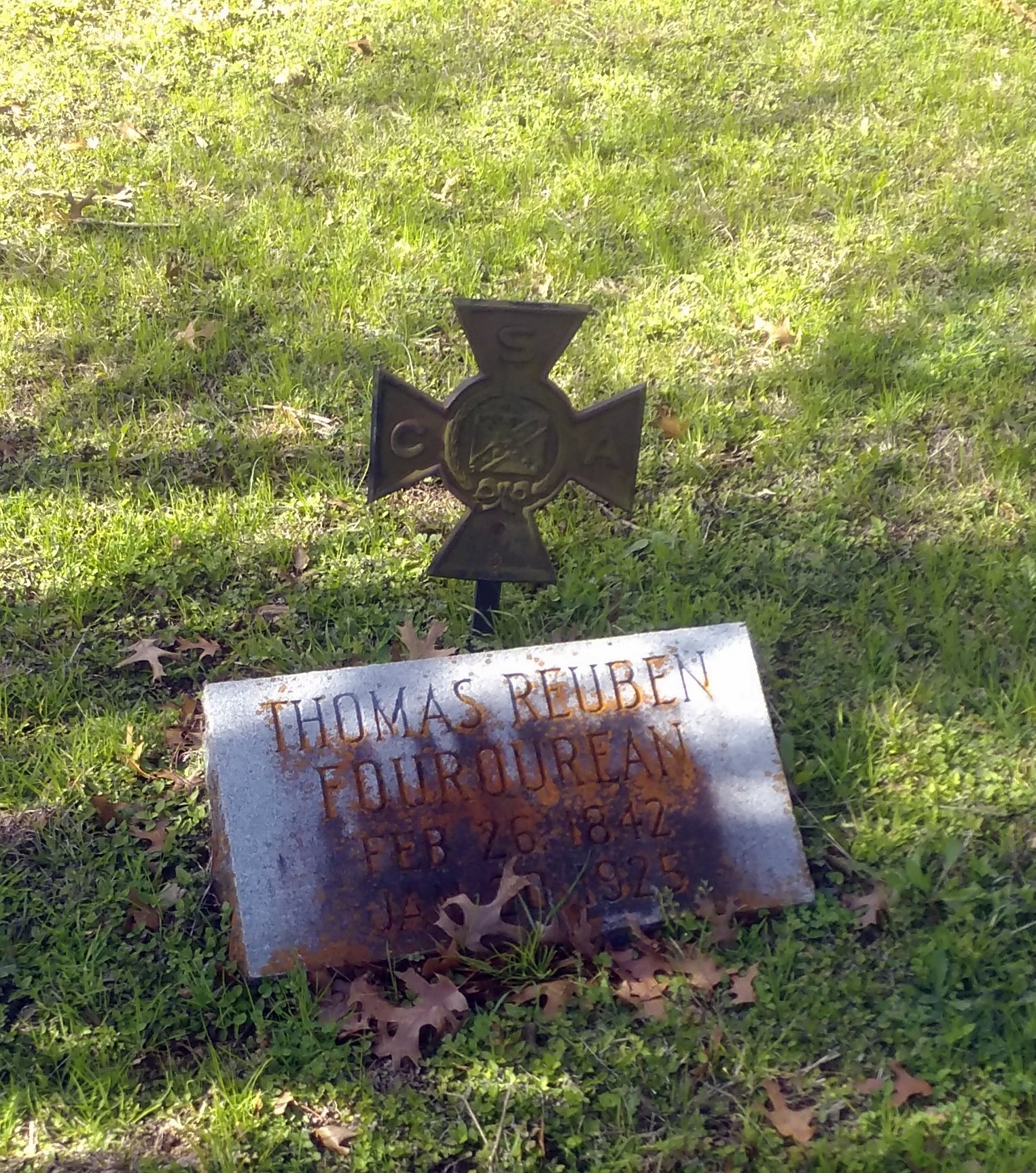
Thomas Reuben Fourqurean (1842-1925) (interesting name) had a metal marker to denote his service to the CSA, of the kind that’s easy to find in older Southern cemeteries.

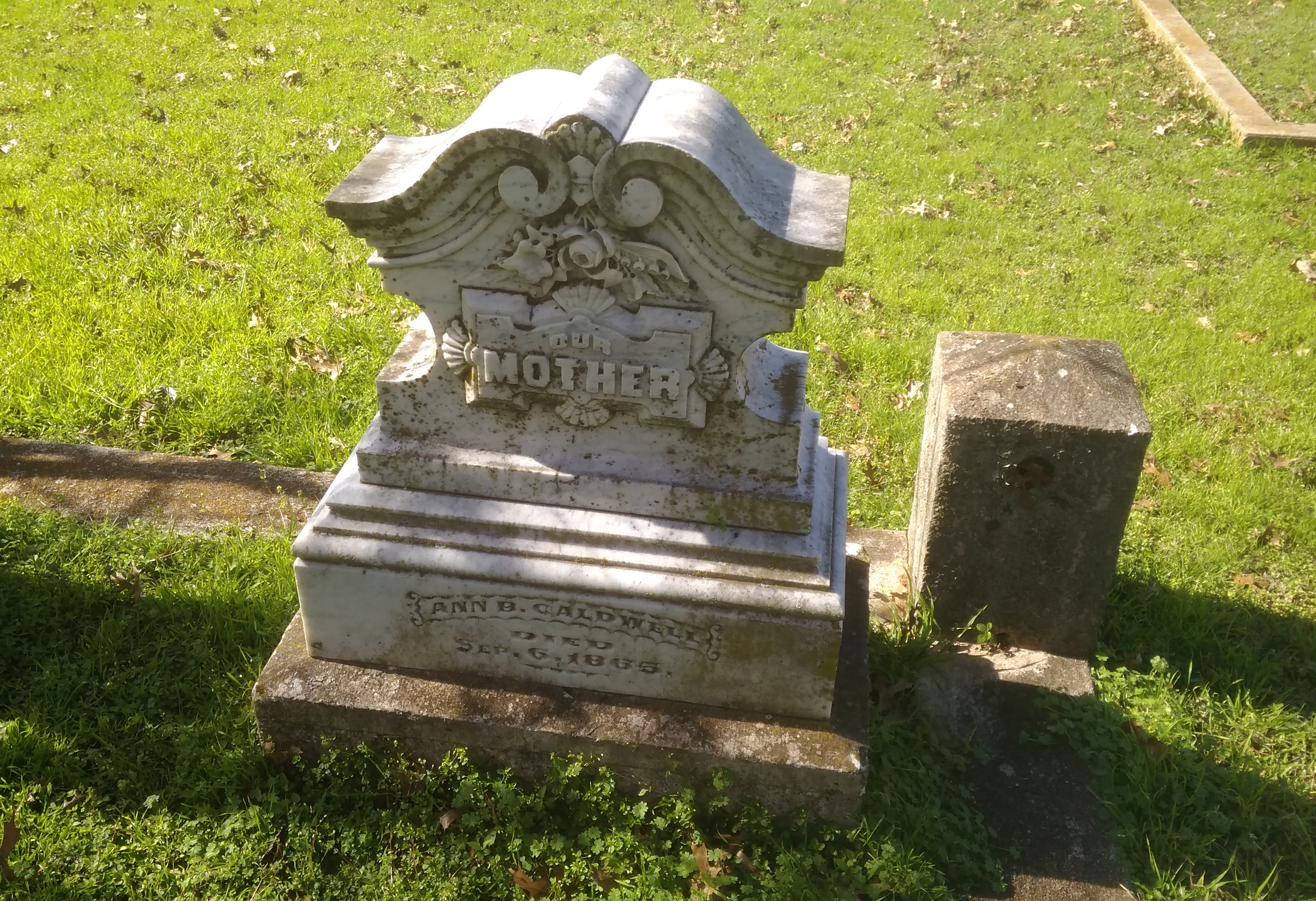
San Marcos City CemeteryAnother marker — local, not state — tells the story of Ann B. Caldwell (1800-65), who was reinterred here in the 1870s from an earlier San Marcos cemetery.
San Marcos City CemeteryIn life, she had been among Stephen F. Austin’s colonists and then an early settler in Hays County.

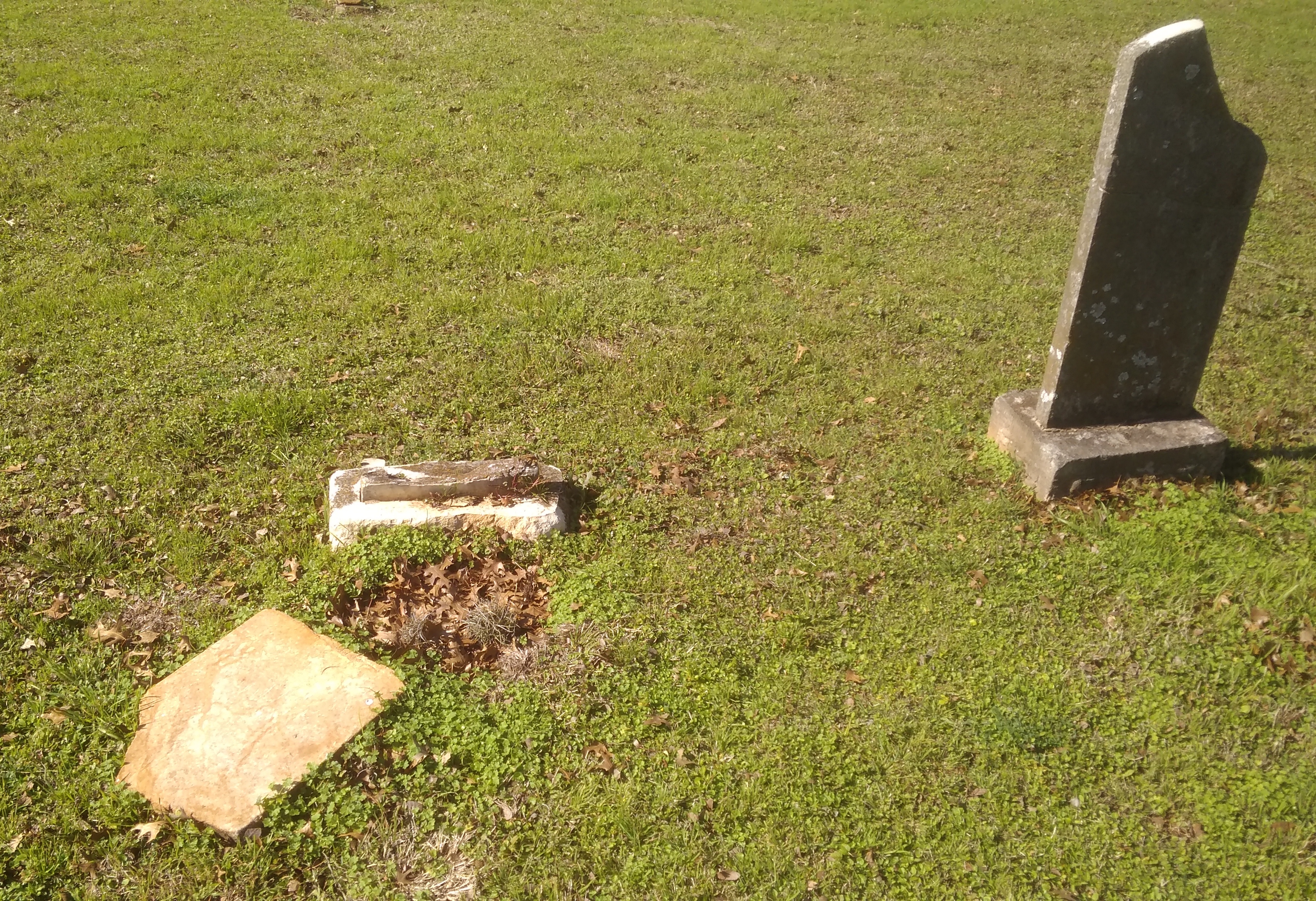
The cemetery’s old enough to include weather-worn stones whose names have been lost to time.
San Marcos City CemeteryEveryone’s stones will eventually disappear in the fullness of deep time, of course. These stones simply have a head start on the others.

The Modern Art Museum of Fort Worth

If you want to see artful concrete, Tadao Ando is your man. I came to a fuller appreciation of that when we visited the 659 Wrightwood in Chicago late last year. On exhibit at the 659 were images of the Modern Art Museum of Fort Worth, an Ando design that looked pretty artful, too.

As it is.

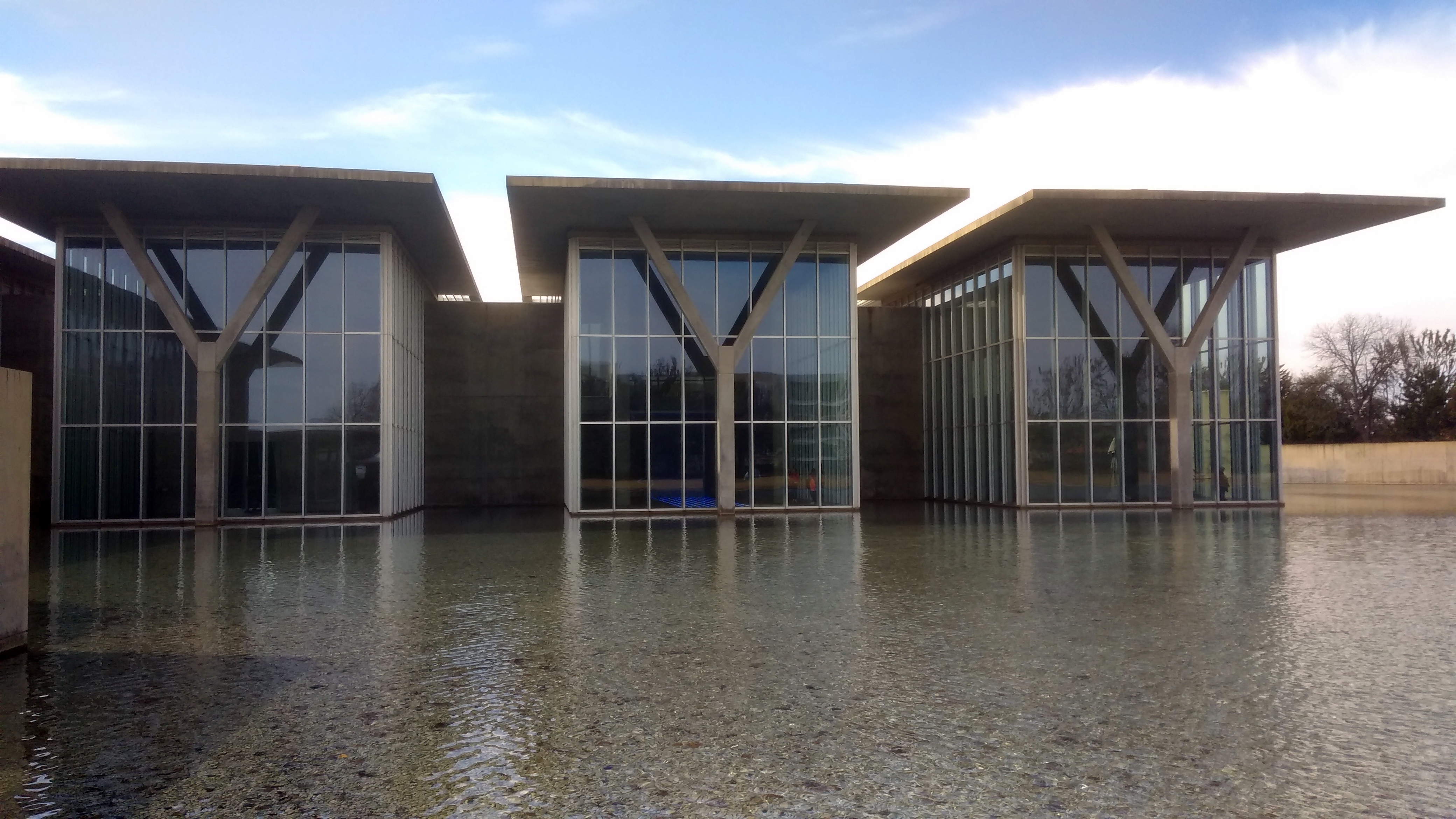
Modern Art Museum of Fort WorthThat’s the back of the structure, or at least the side facing the water feature and a scattering of outdoor sculptures, and sporting the museum’s distinctive Y beams.

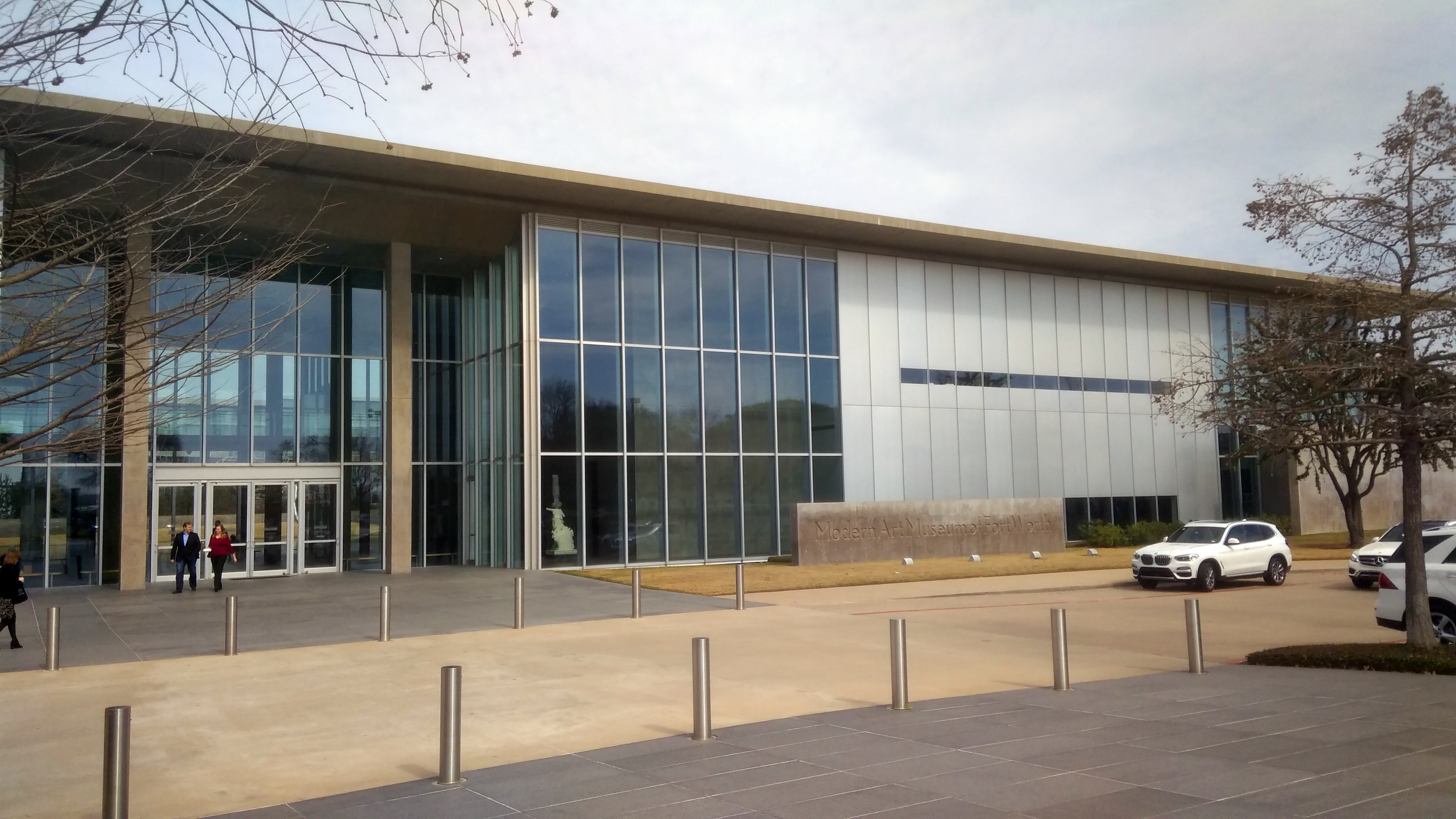
The front, or at least the side facing the parking lot and a public street, isn’t quite as distinctive, but it is handsome in a modernist sort of way.
Modern Art Museum of Fort WorthAndo’s design is apparent not only in the exterior, but in the smooth concrete walls that form parts of the interior.

The Modern is one of a cluster of art museums in Fort Worth that also includes the Amon Carter Museum of American Art (designed by Philip Johnson) and the Kimbell Art Museum (Louis Kahn and Renzo Piano). The last time I spent a day in Fort Worth, early in 1990, I visited both of those. The Modern didn’t exist then, opening only in 2002.

How best to approach a museum whose collection is as eclectic as the Modern? Wander around and look at things. Some works will be interesting, some less so. I try to wander around upper-end grocery stores with the same attitude in mind, if I have time.

The usual modern suspects were all in evidence at the Modern: Picasso, Lichtenstein, Rothko, Andy Warhol, Jackson Pollack, Josef Albers, Henry Moore and more. Worth seeing, but it’s also good to see interesting works by artists that aren’t quite as well known.

Such as “Ladder for Booker T. Washington” by Martin Puryear (1996), a wooden ladder-like structure fixed to the floor that winds its way upward. It doesn’t merely appear to shrink in size as it rises, it actually does. The surrounding Ando-style concrete walls add to the effect.

Or the curious “Camouflage Botticelli (Birth of Venus)” by Alain Jacquet (1963-64), an image of Venus on a cockle shell merged with a Shell gas pump.

For something newer, and more kinetic, there’s “Kind of Blue” by Jenny Holzer (2012), an array of nine LED signs with blue diodes fixed to the floor, emitting blue words that appear to flow along. As far as I could tell, there was no direct reference to the Miles Davis album of that name, but I could easily be wrong.

The video also offers a good look at the tall glass windows that overlook the museum’s shallow water feature — essentially a field of rocks covered by a little water.

Photography is part of the Modern’s collection as well. One wall sported a number of gelatin silver prints of water towers in France, Germany and the U.S. by Bernd and Hilla Becher. How is this tower in Dortmund-Grevel, Germany, anything but a delight?

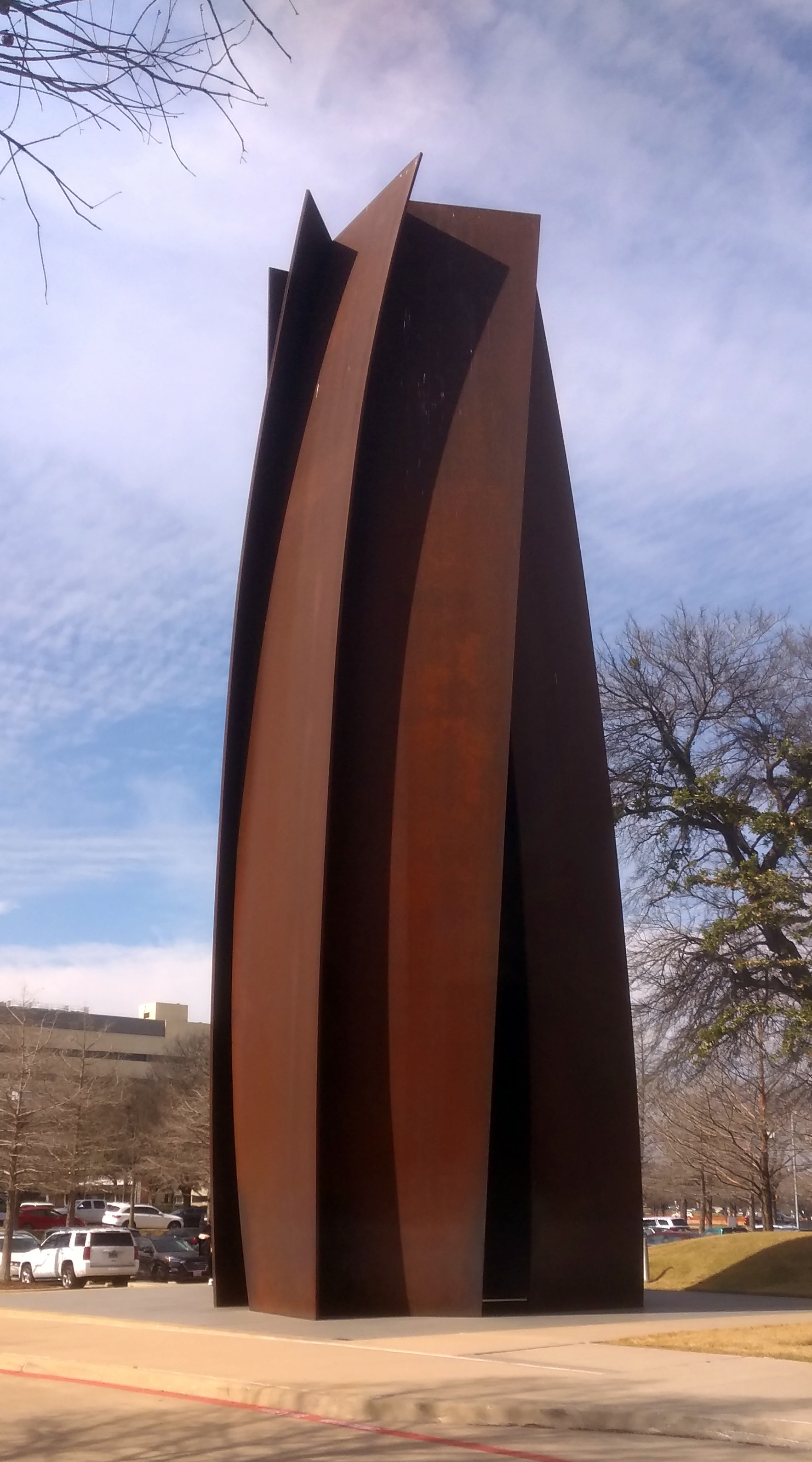
Near the museum’s front entrance is “Vortex” by Richard Serra (2002), who is best known to us rubes for the notorious “Tilted Arc” in DC.
Vortex Richard SerraOn the other side of the museum, beyond the water feature, we took a look at a familiar figure.

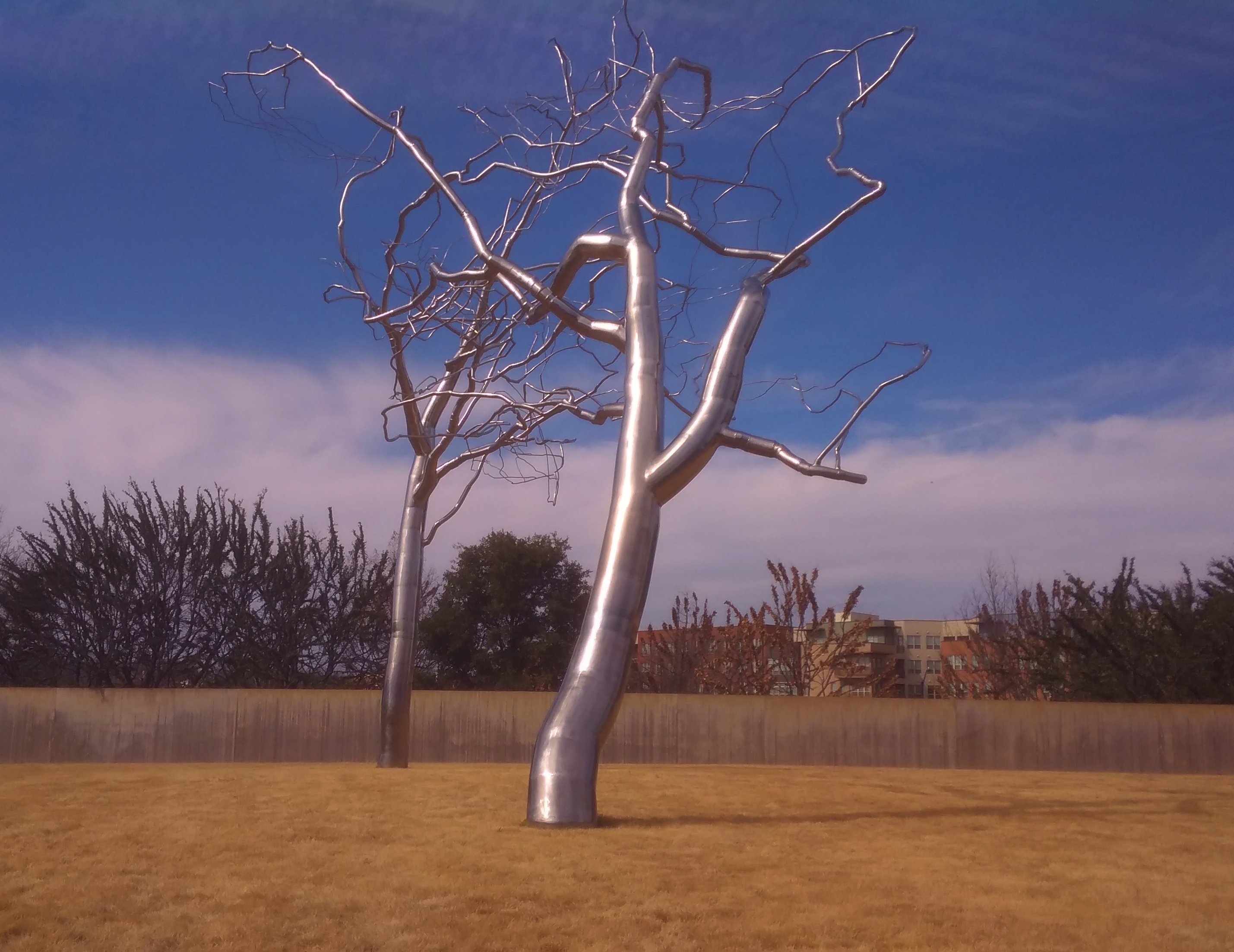
"Conjoined" by Roxy Paine

“Conjoined” by Roxy Paine (2007), done in stainless steel. I remember seeing his work at the National Sculpture Garden and, I believe, at the Denver Art Museum, the Frederik Meijer Gardens and Sculpture Park, the Crystal Bridges Museum of American Art, MOMA and the Hirshhorn. Cool. But does lightning strike the Modern piece?

The Cambodian Buddhist Temple of Dallas

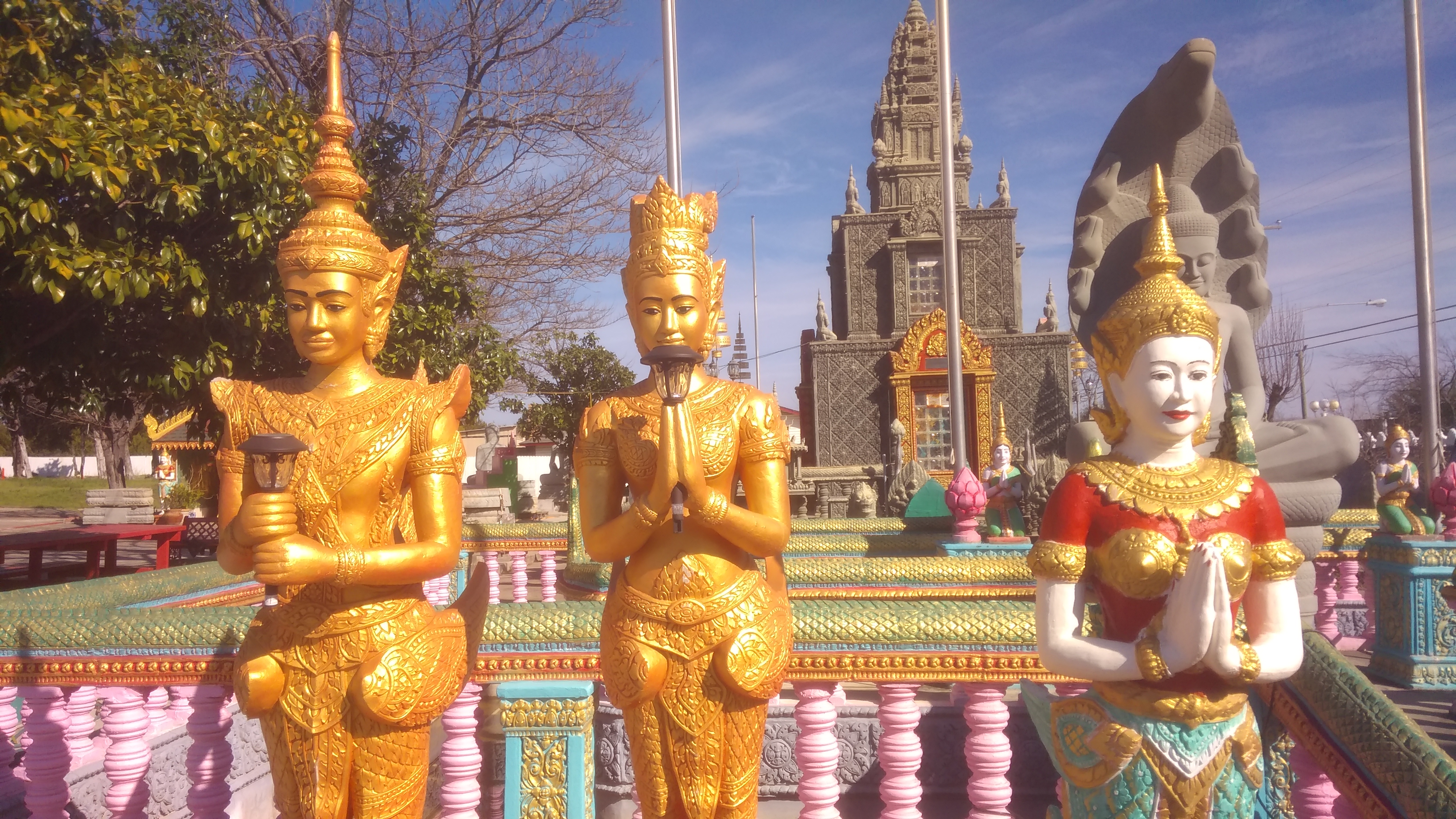
If you know where to go in Texas, you can find yourself face-to-face with these figures. That’s what we did on February 17.
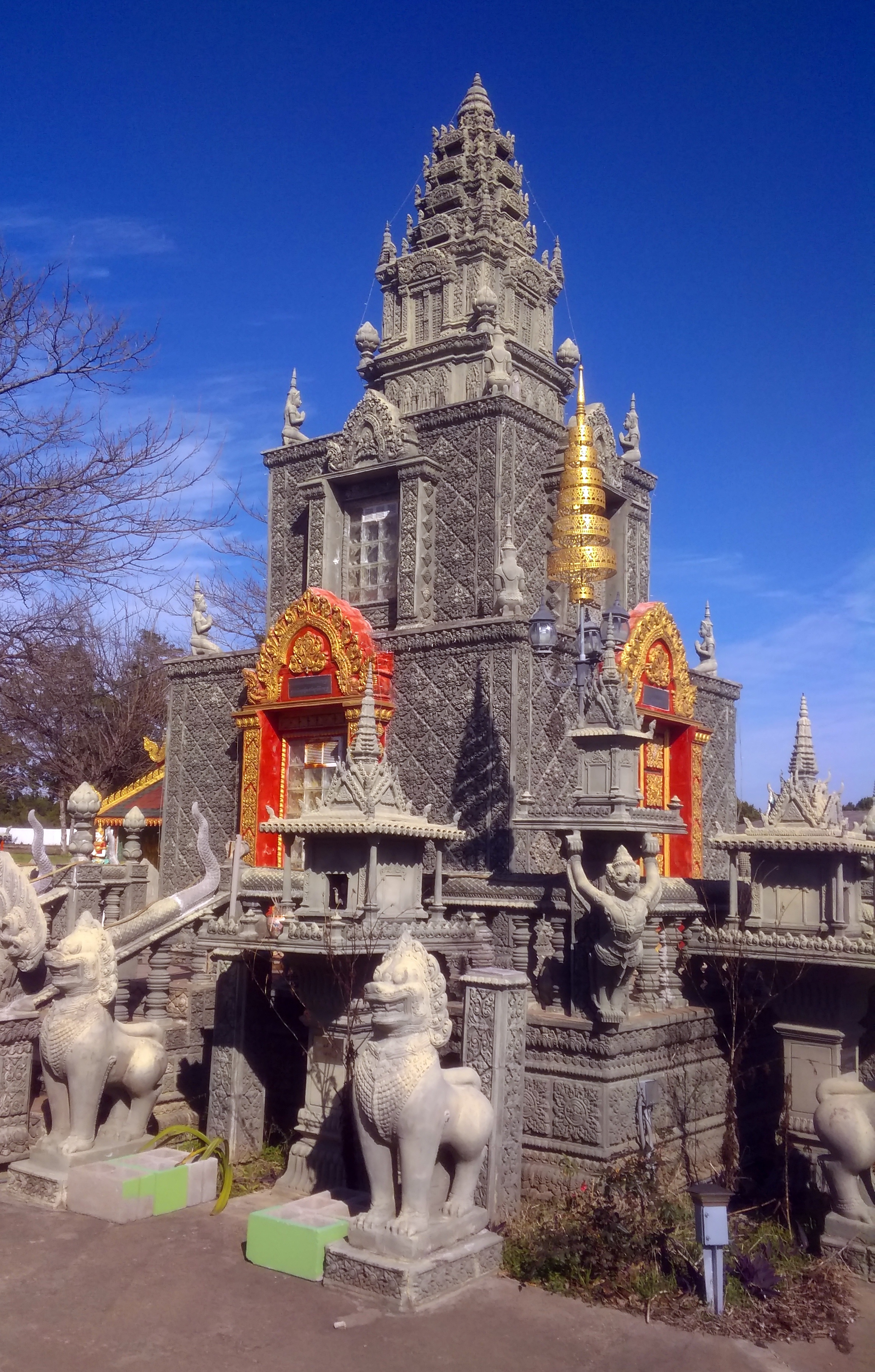
Cambodian Buddhist Temple of Dallas About a quarter-mile from the Cao Dai Tay Ninh Temple of Dallas is the Cambodian Buddhist Temple of Dallas, also known as Wat Jetaphon Khemararam.

The area is something of a religious precinct, since also nearby are the Homprakhoon Baptist Church, the Wat Lao Sirimoungkhoun of Dallas, the St. John Neumann Redemptorist Monastery — called the Vietnamese Redemptorist Mission on Google Maps — and, a little further away (but not much), the Potter’s House of Dallas, a megachurch.

The entrance of the Cambodian Buddhist Temple of Dallas is a recently completed temple gate that’s a replica of the gates at Angkor Wat. My pictures of it didn’t turn out, but this article shows it well.

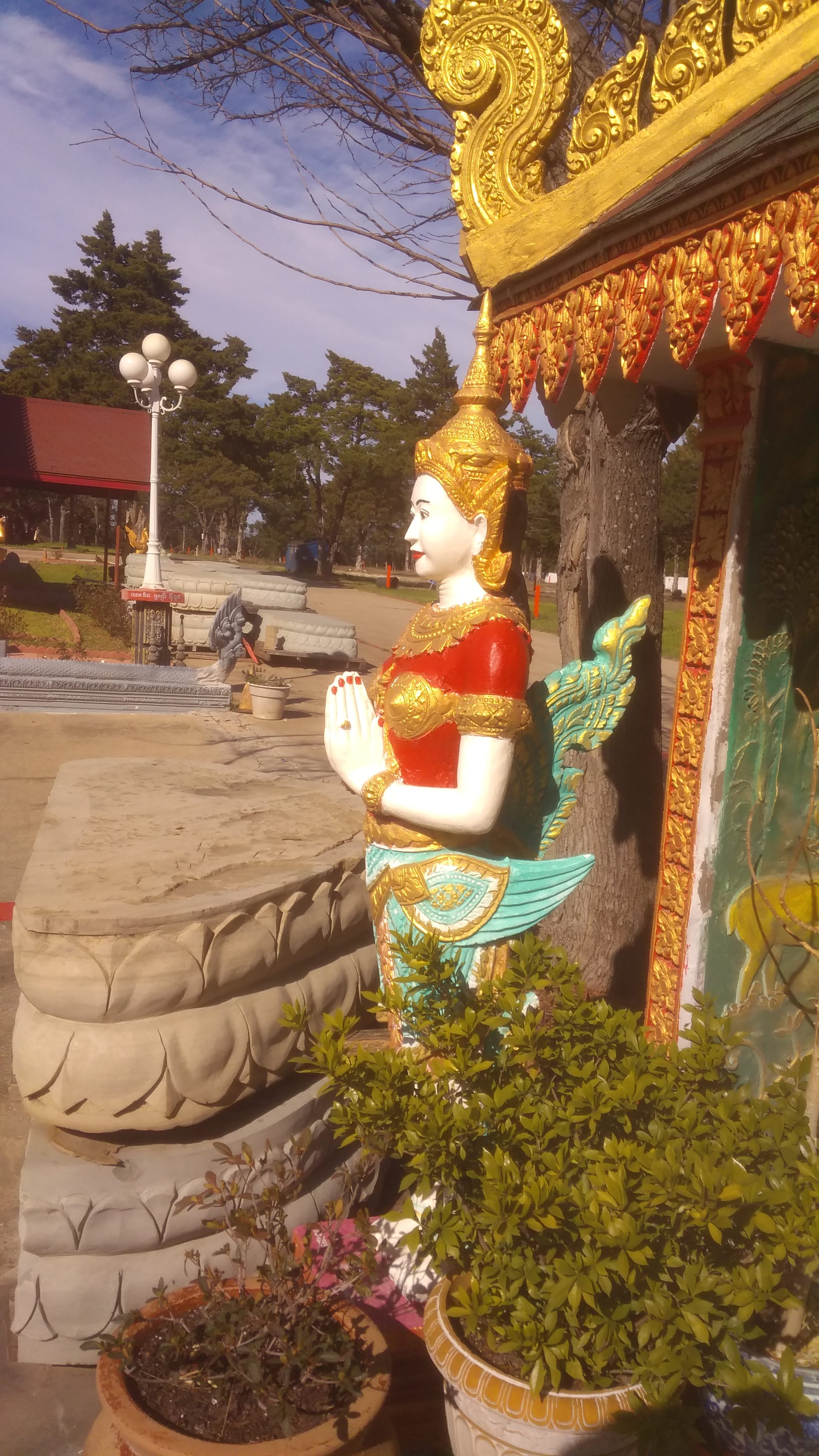
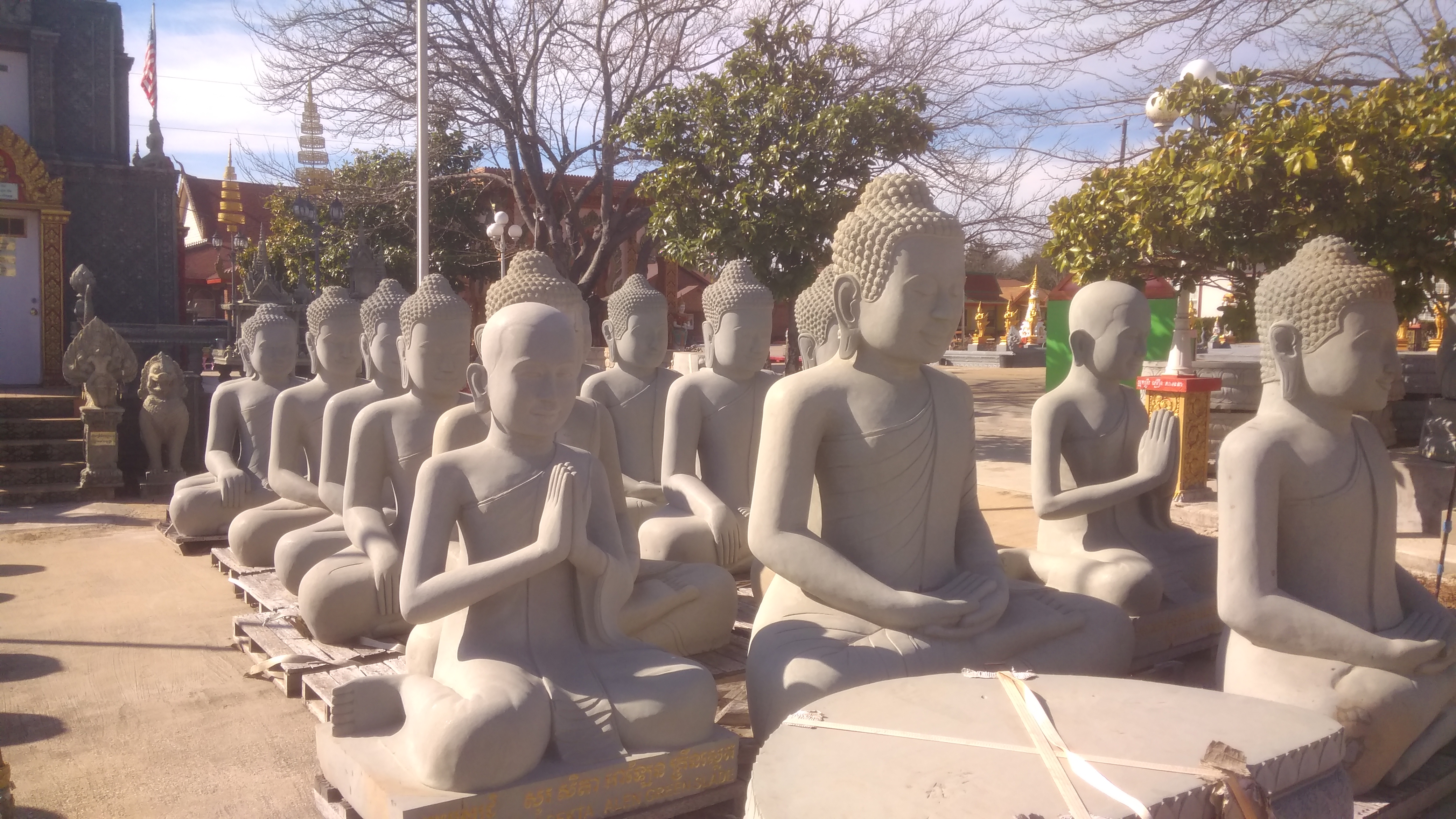
The grounds were open and we were free to wander around. So we did. I was reminded of the various wats I visited in Thailand, though the Cambodian style is a bit different. The grounds featured temple structures.

Cambodian Buddhist Temple of Dallas Cambodian Buddhist Temple of Dallas Cambodian Buddhist Temple of DallasAlong with Buddhas a-plenty. Or rather, Buddharūpa.

Cambodian Buddhist Temple of Dallas

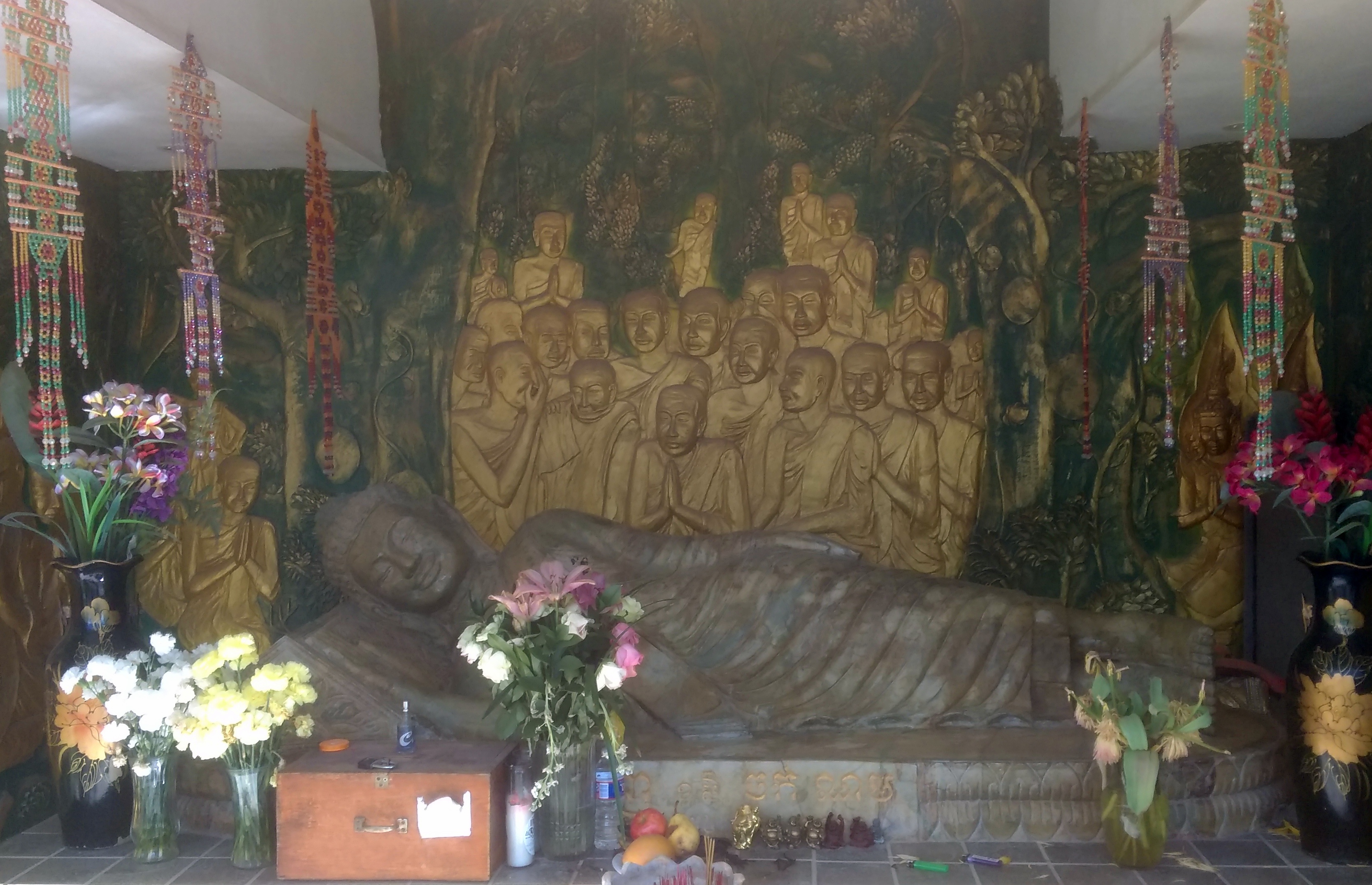
Including a reclining Buddha.

Cambodian Buddhist Temple of DallasNot the largest reclining Buddha I’ve encountered, but impressive all the same.

Monks live on the grounds. In fact, some of the buildings sport signs in English designating them as monk quarters. I saw one man whom I took for a monk doing some exterior work on one of the temple structures, and as we were about to leave, another man — whom I also took for a monk, though dressed in clothes you might see on anyone in our place and time — asked me if I liked the temple. I told him I did.

The Cao Dai Tay Ninh Temple of Dallas

A few years ago, I was browsing Google Maps, as one does, and I happened across the Cao Dai Tay Ninh Temple of Dallas. That was intriguing. I wanted to take a look.

Usually when I visit Dallas, I spend time in the northeast part of the city, at about 2 o’clock from downtown. The temple is in the southwest at about 8 o’clock from downtown, so I knew that it might be awhile before I made it down that way.

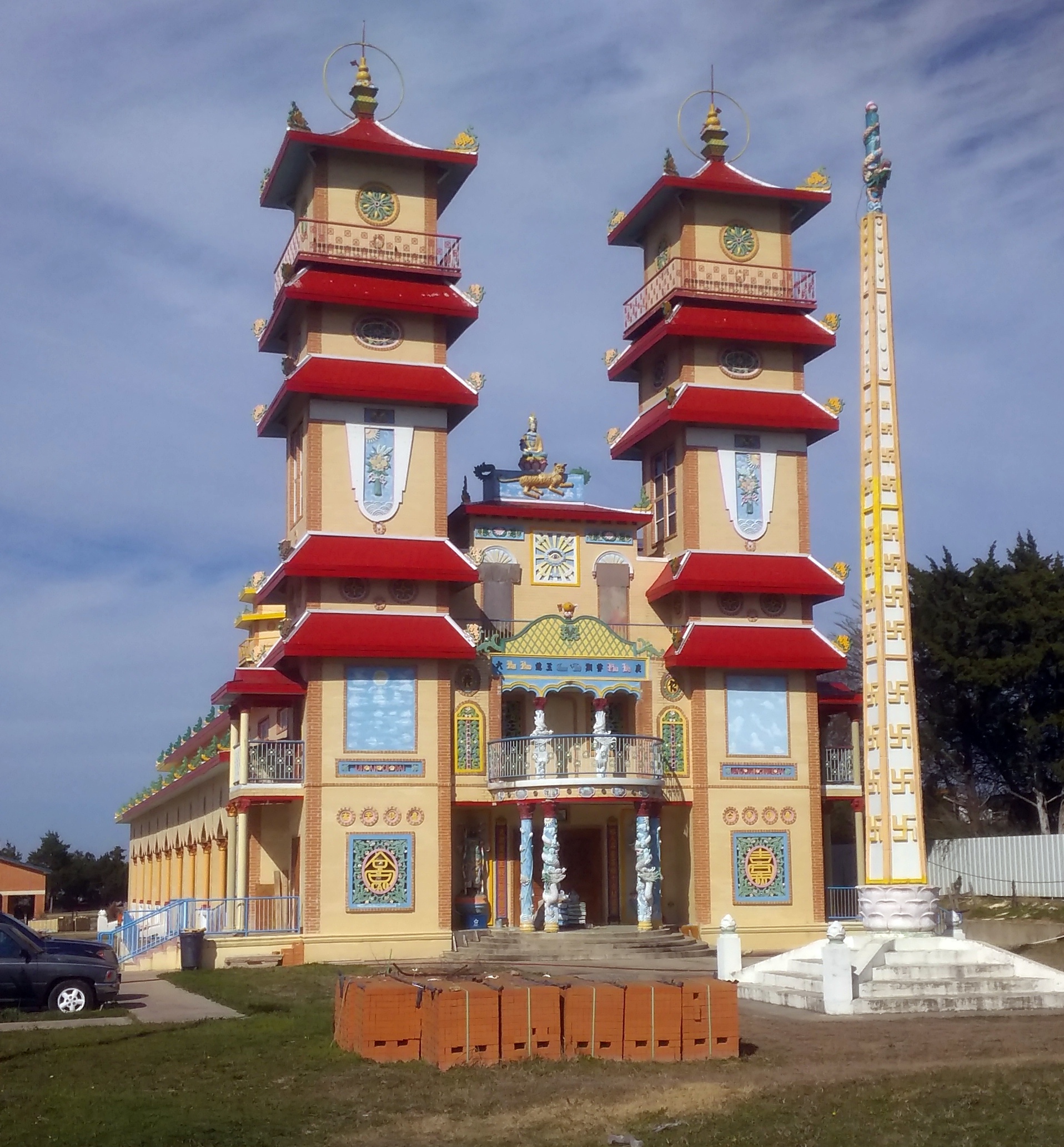
February 17 turned out to be the day we visited the Cao Dai Tay Ninh Temple of Dallas. This is the entrance. I think.
Cao Dai Tay Ninh Temple of DallasThe temple belongs to an overseas branch of the Caodai religion of Vietnam.

“Caodaism is a relatively new, syncretistic, monotheistic religion with strongly political character, established in 1926 in Southern Vietnam…” writes Md. Shaikh Farid. “It draws upon ethical precepts from Confucianism and Buddhism, occult practices from Taoism, theories of karma and rebirth from Buddhism and hierarchical organization from Roman Catholicism…

“This synthesis of elements adapted from other religions into a functioning religious movement manifests itself in such common Caodai practices as priestly celibacy, vegetarianism, seance inquiry and spirit communication, reverence for ancestors and prayers for the dead, fervent proselytism, and sessions of meditative self-cultivation.”

The temple is in a part of the city of that’s mostly devoted to light industrial buildings, mobile homes and undeveloped properties. Presumably, the site was affordable for local Caodai devotees.

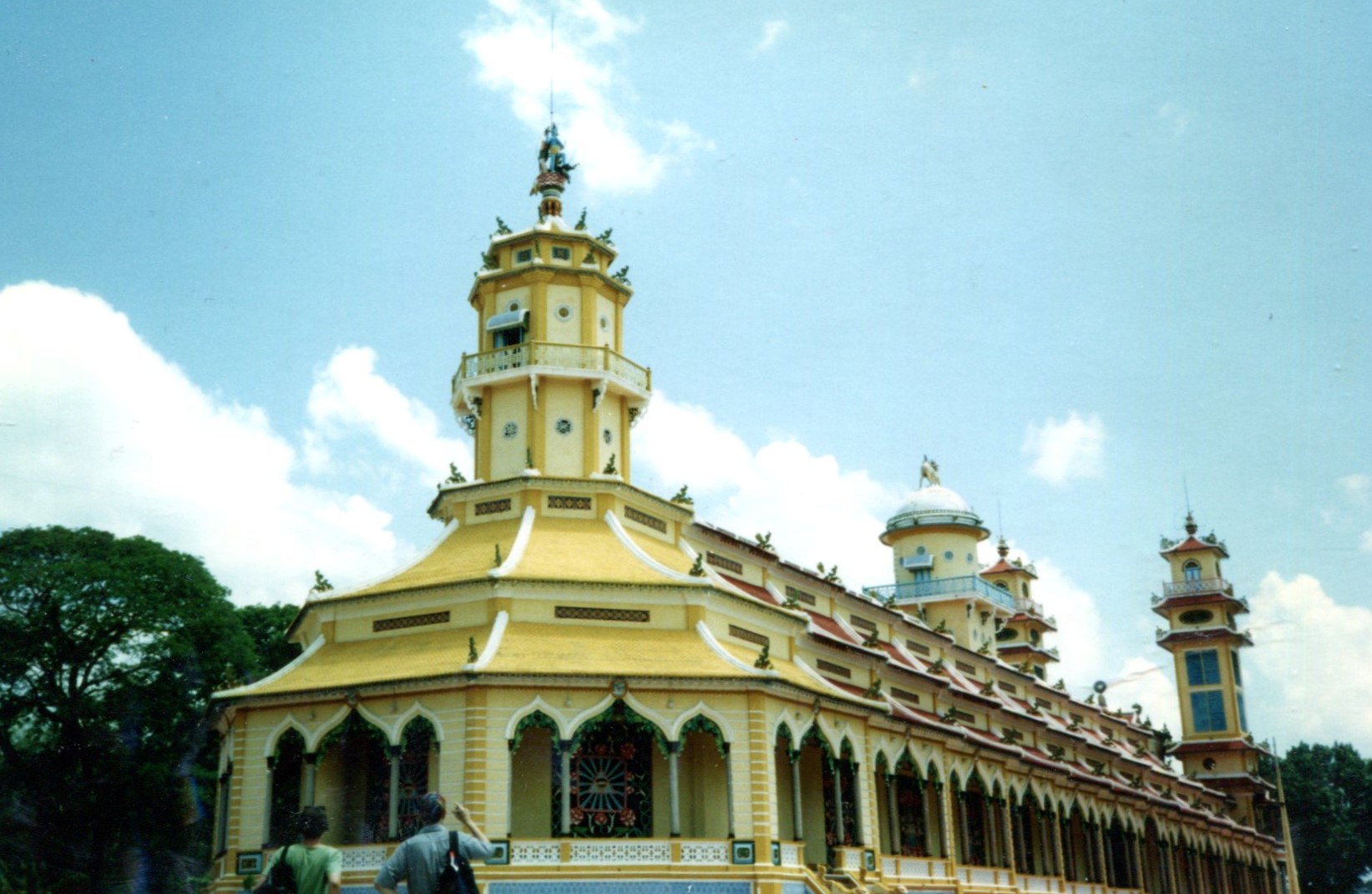
I’d never heard of that religion until I made an excursion from Saigon in 1994 to the main Caodaist temple, the Holy See of the religion, in Tay Ninh, Vietnam. Here’s a picture I took of that building.

Cao Dai Tay Ninh Temple VietnamA more detailed description of the various influences that went into the building is here. An amalgam of Chinese and Indian and other elements, it seems.

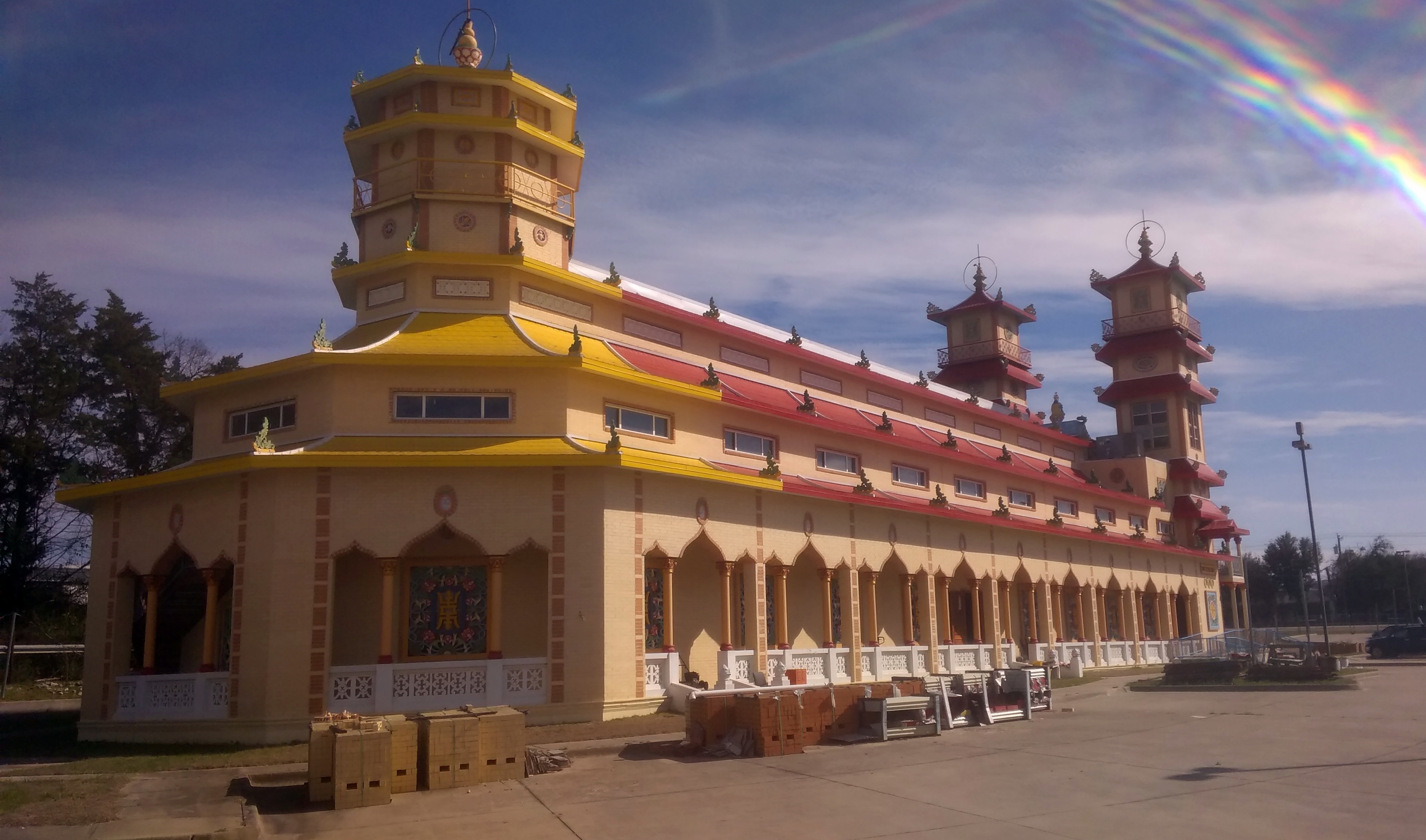
The temple in Dallas, from roughly the same angle.
Cao Dai Tay Ninh Temple of DallasThe similarities between the Holy See and the Dallas temple were apparent at once, though I’m pretty sure that the Holy See is larger, and some details are different.

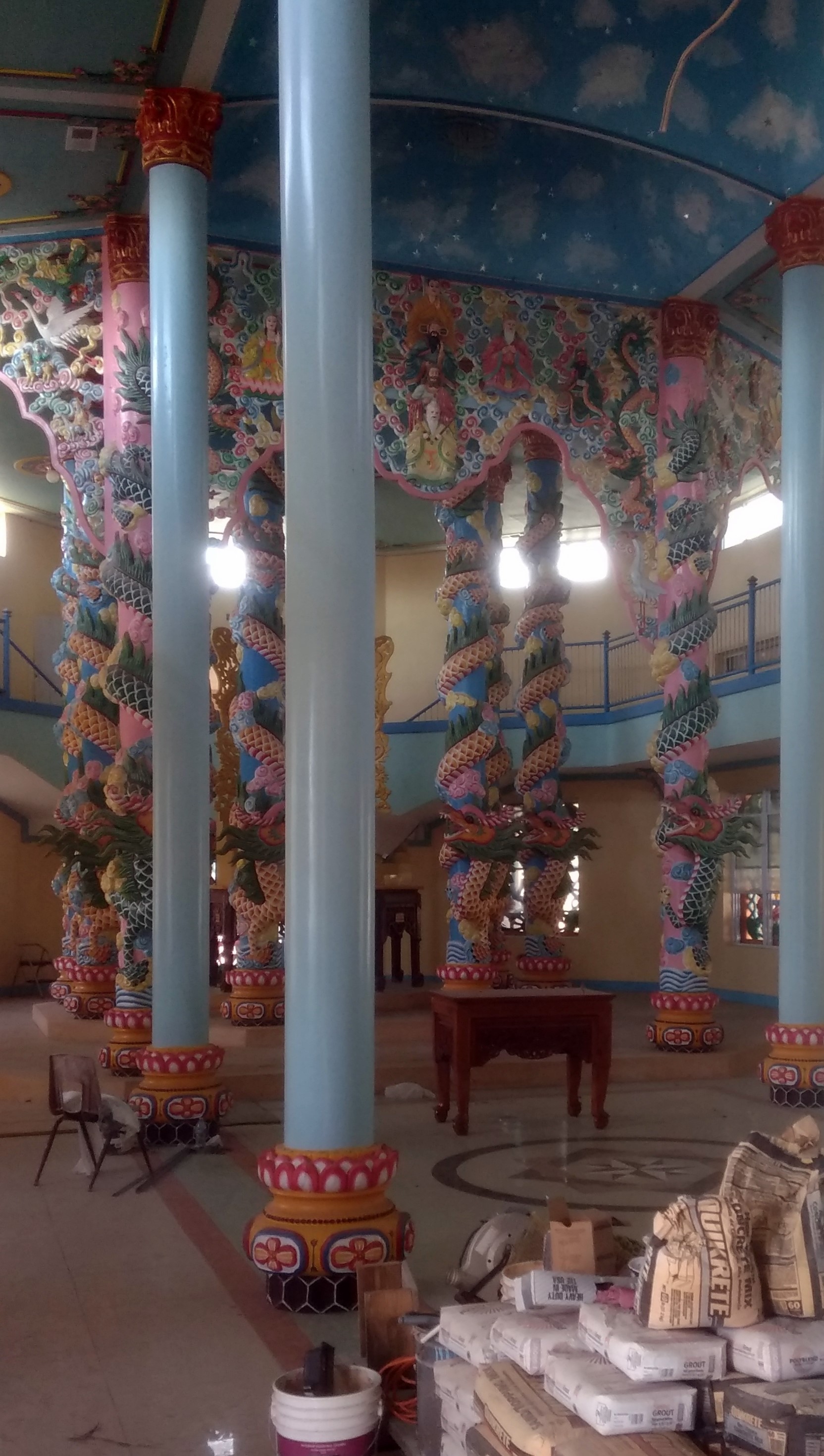
The Dallas temple is still a work in progress. This was especially noticeable when we went inside — a side door was open — and noticed construction materials and tools here and there.
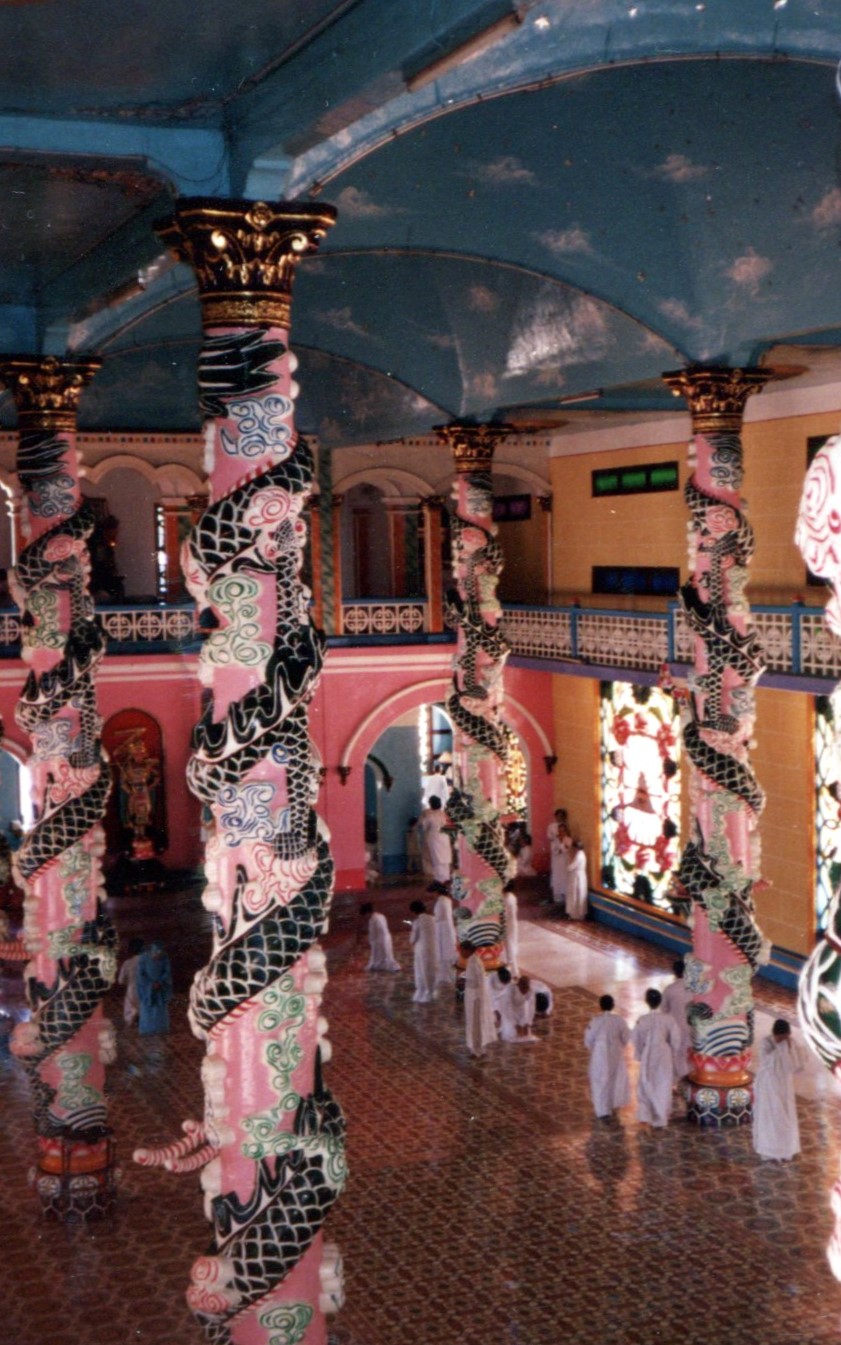
Cao Dai Tay Ninh Temple of DallasThough smaller, the Dallas interior also had strong similarities to the one in Tay Ninh.
Cao Dai Tay Ninh Temple VietnamAs I understand it, services are at midnight, 6 a.m., noon and 6 p.m. We visited around 3 p.m., so no Caodai worshipers were around in Dallas. The tour in Vietnam was timed to see the noon service, so we saw the worshipers in their various colorful robes, each color with a distinct meaning best known within the religion, though ordinary worshipers are in white.

It’s good to travel to exotic places and see exotic things. Like you can in Dallas.