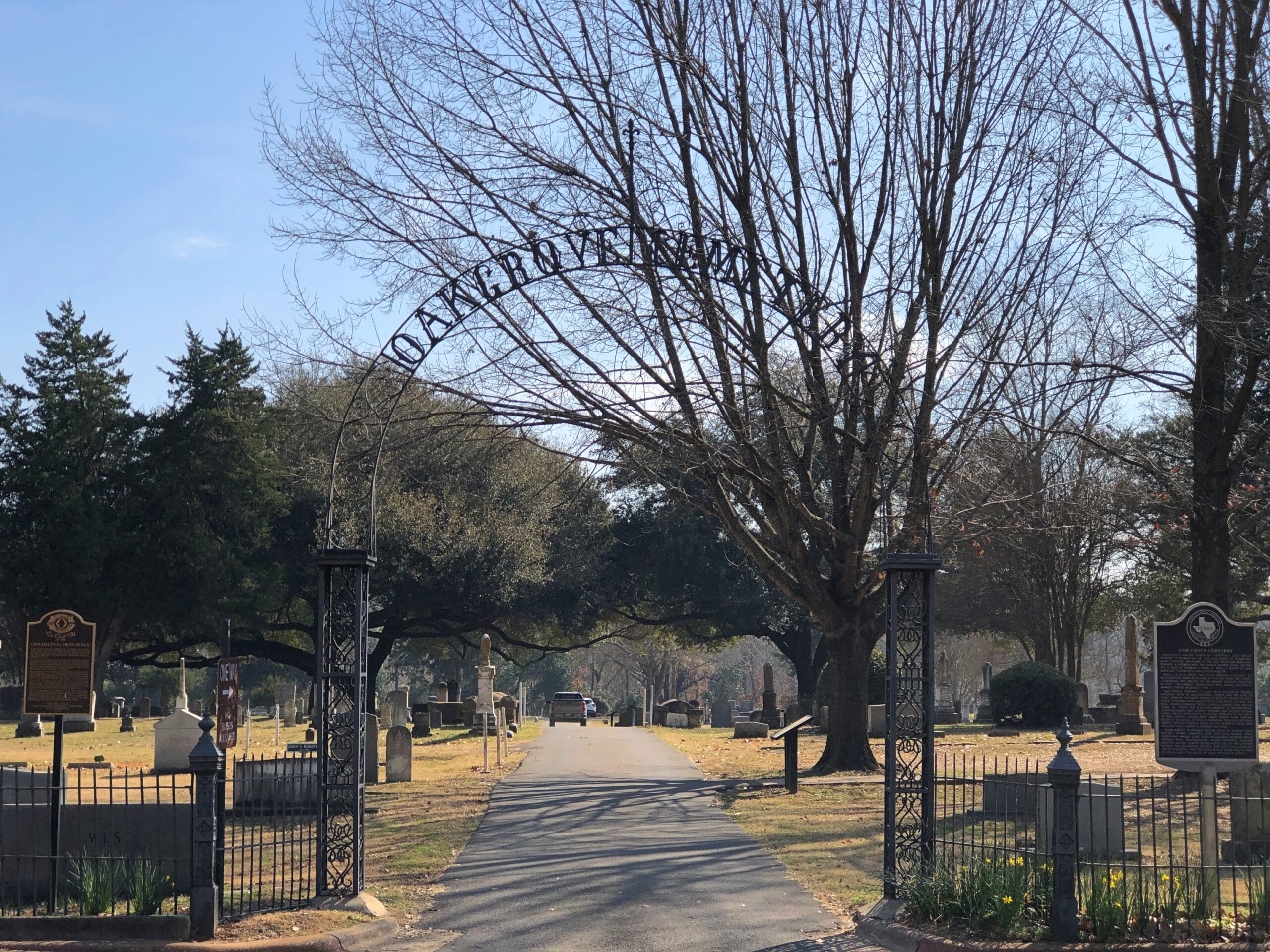
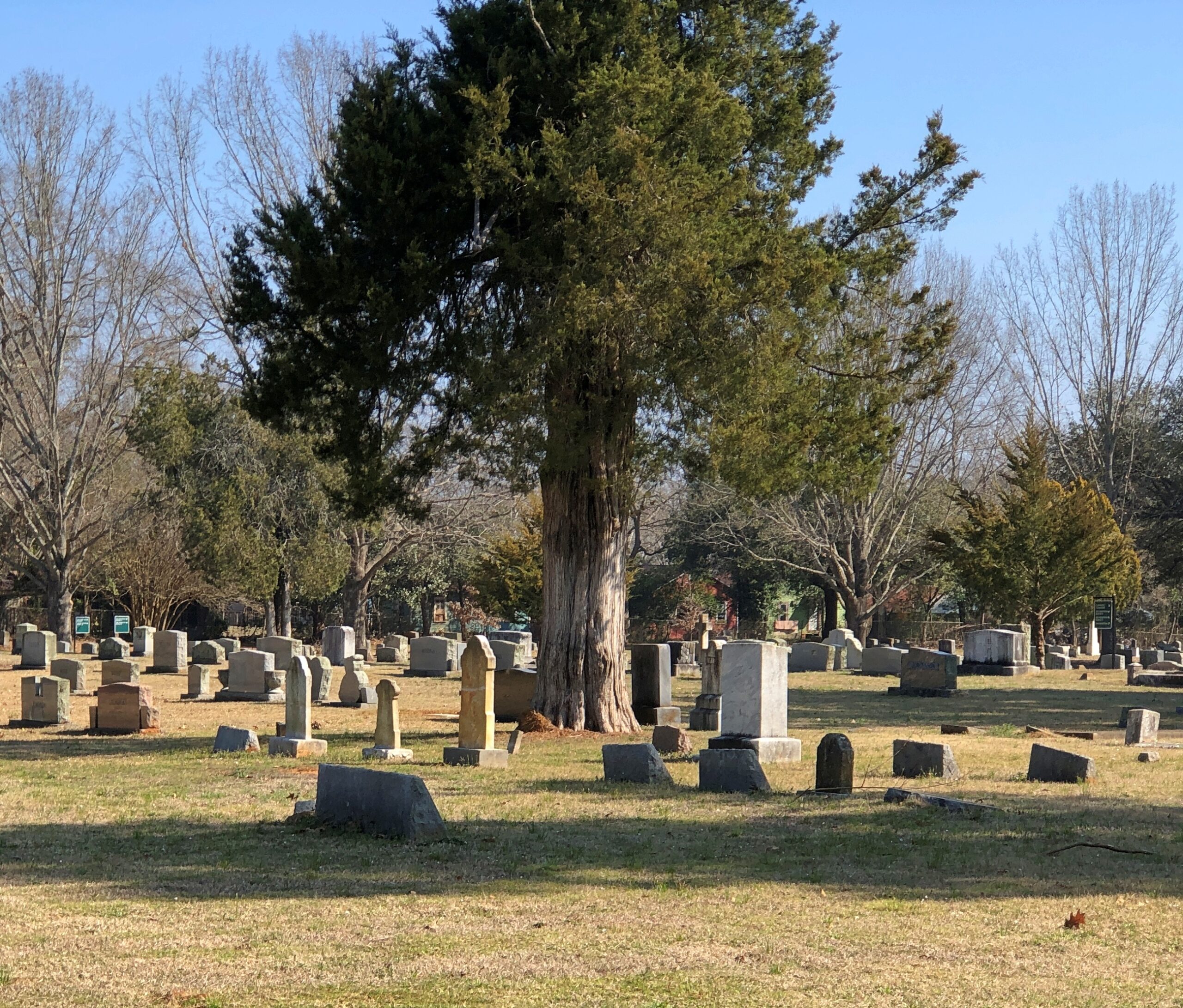
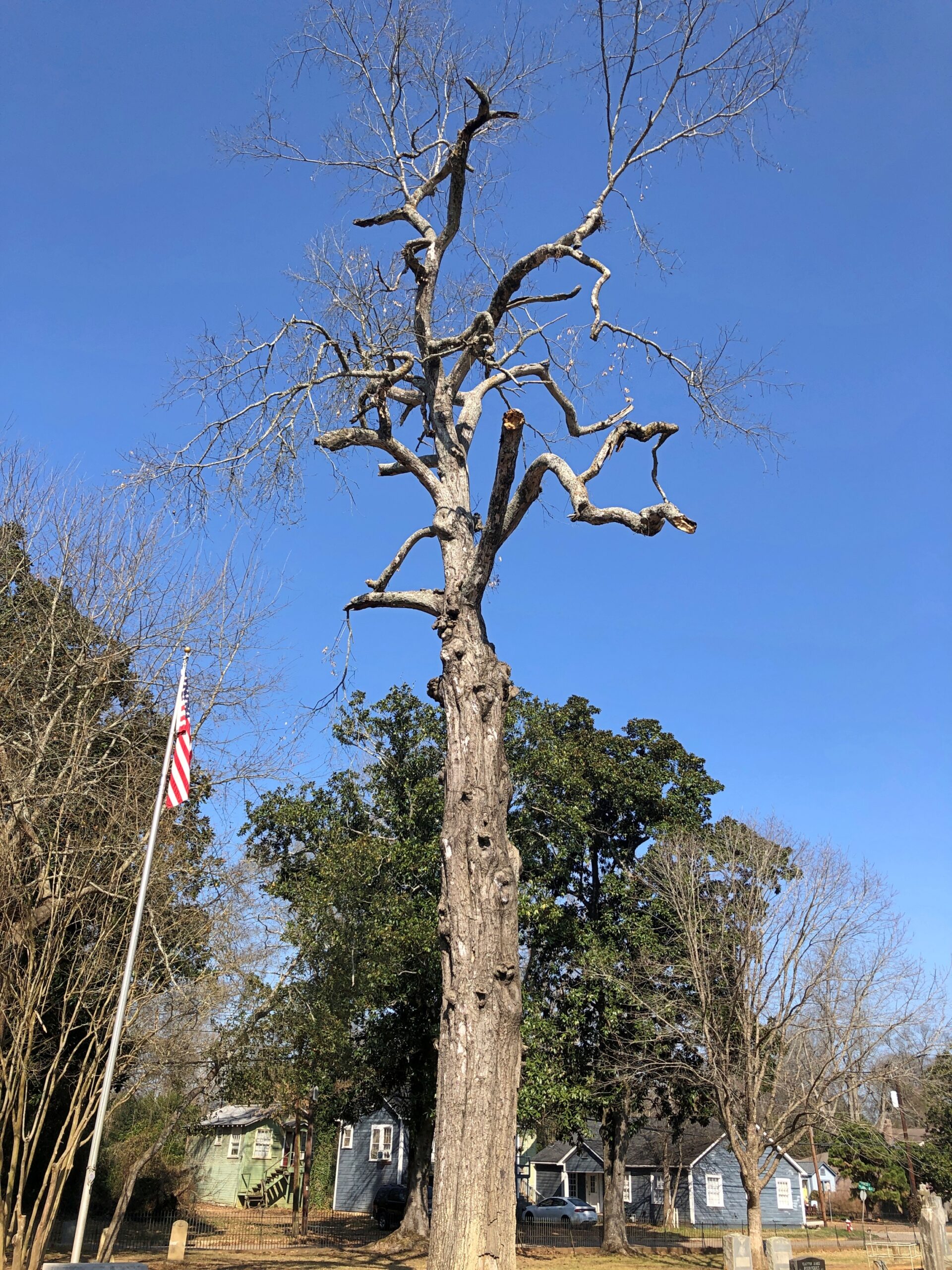
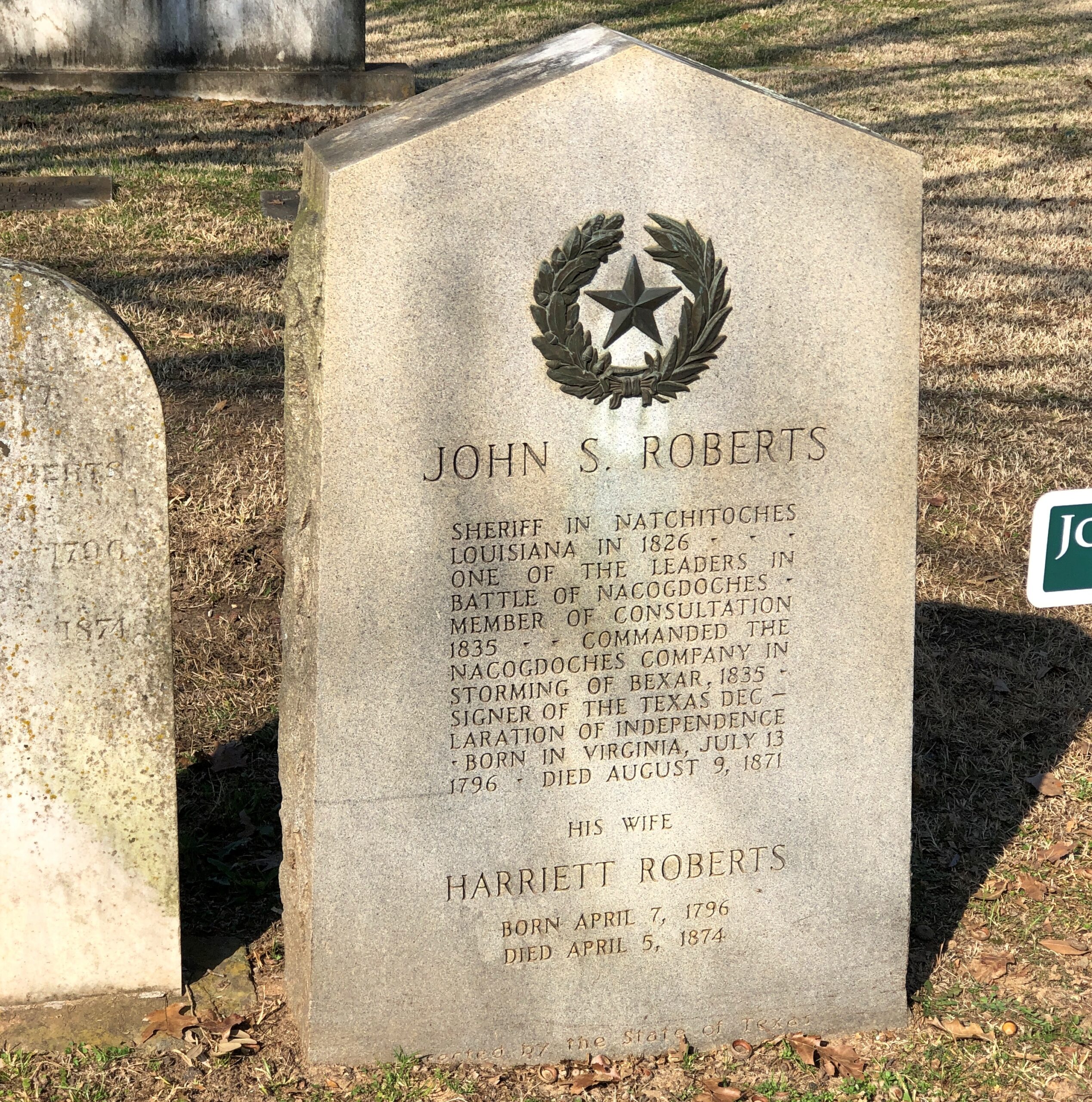
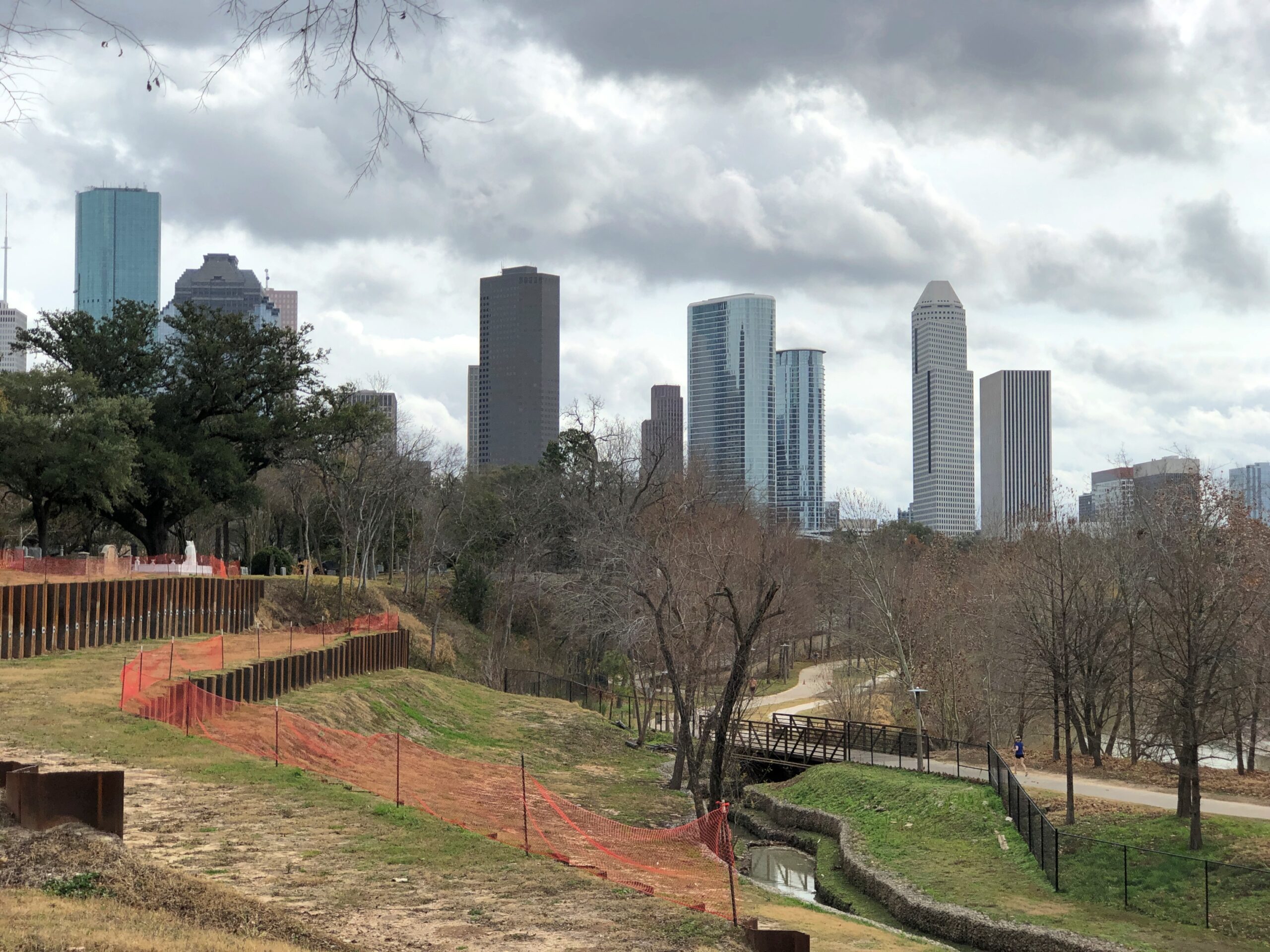
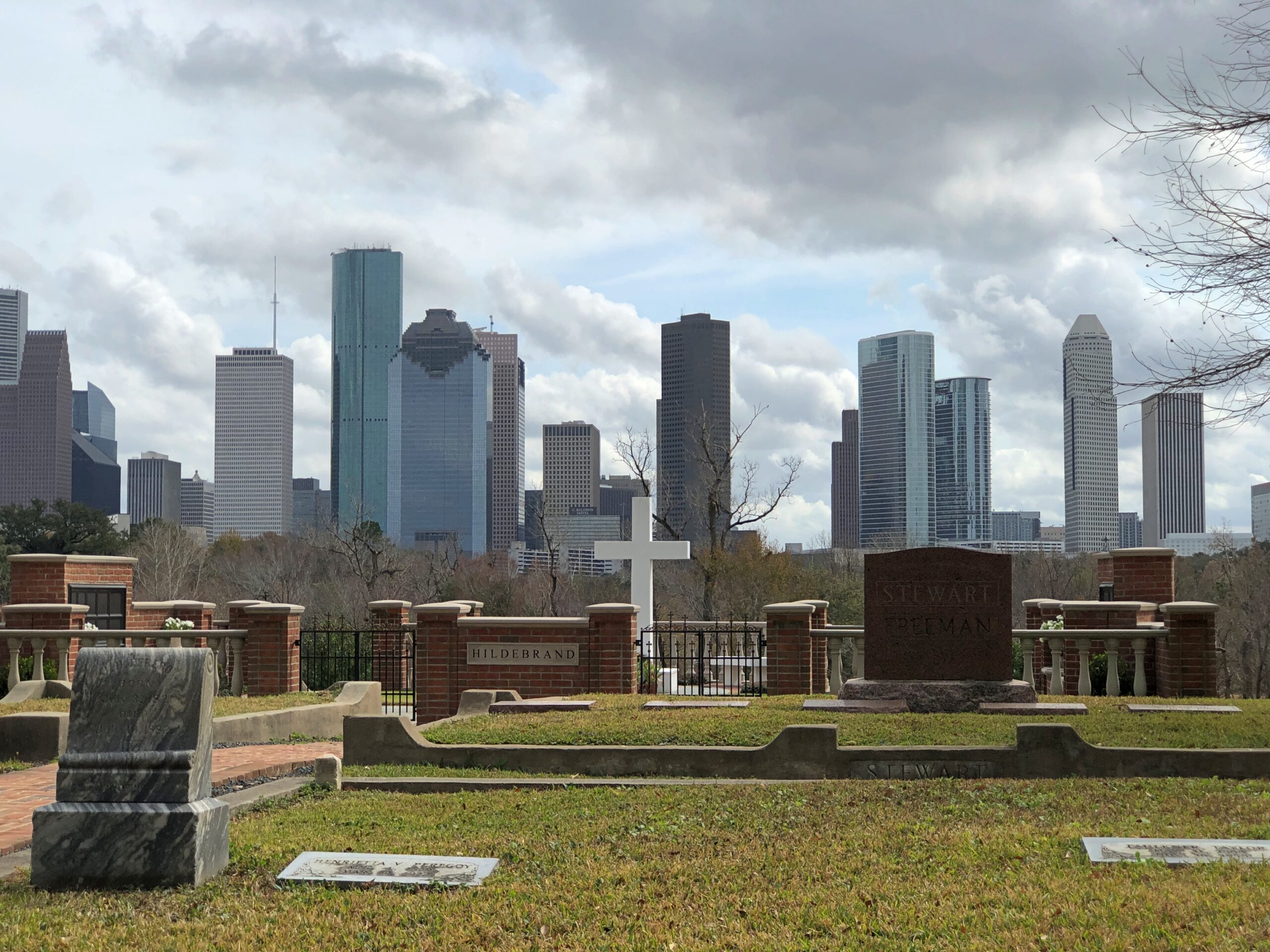
Houston’s Glenwood Cemetery sprawls out near downtown, adjacent to much of the parkland along Buffalo Bayou. In Nacogdoches, Oak Grove Cemetery is a more modest burial ground. Nacogdoches is a more modest city. The entrance to Oak Grove is about a half block from the Main St., but the grounds are still tucked away in a residential neighborhood along Lanana St.
Decent flora, but not a garden cemetery.
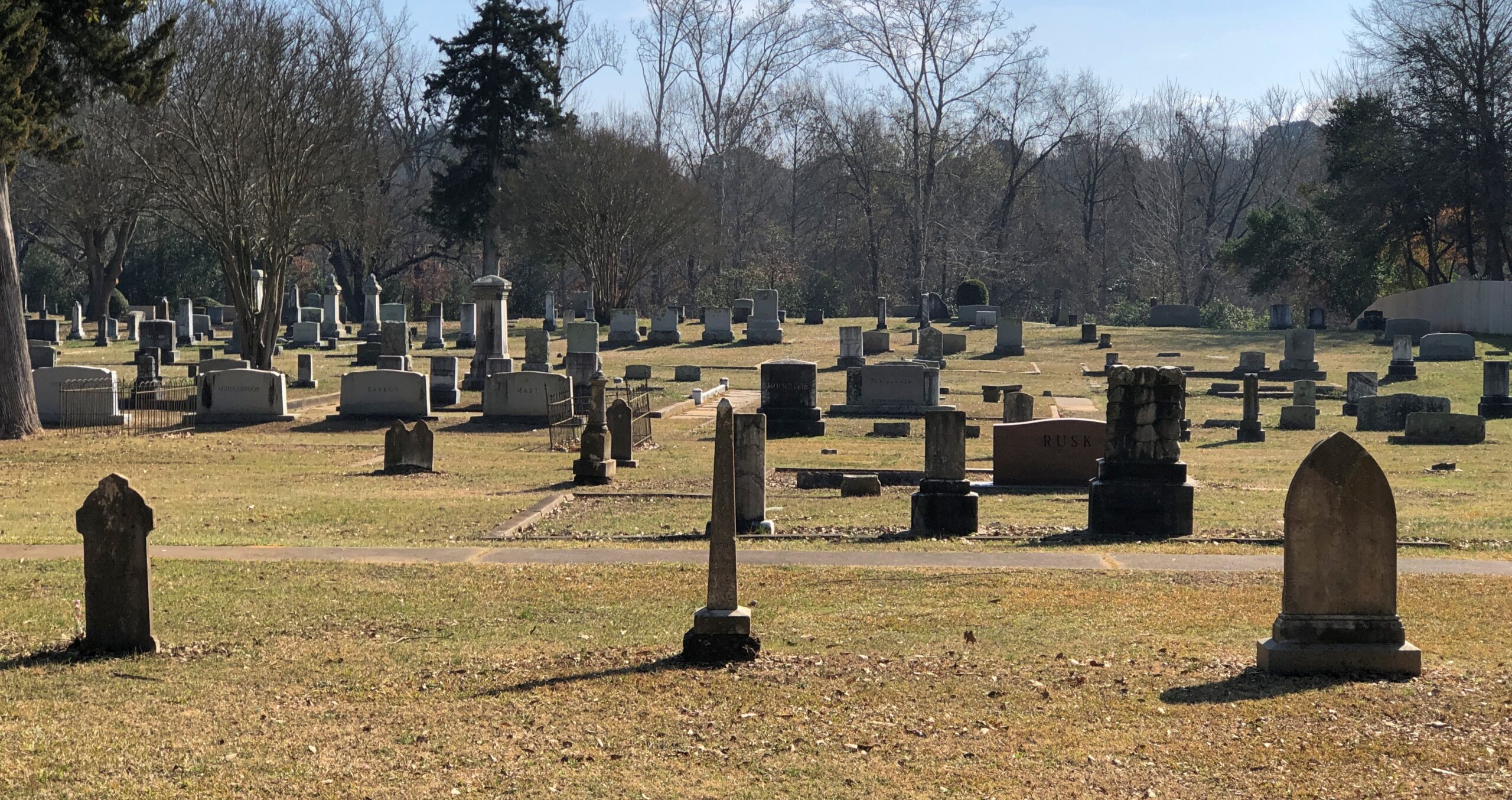
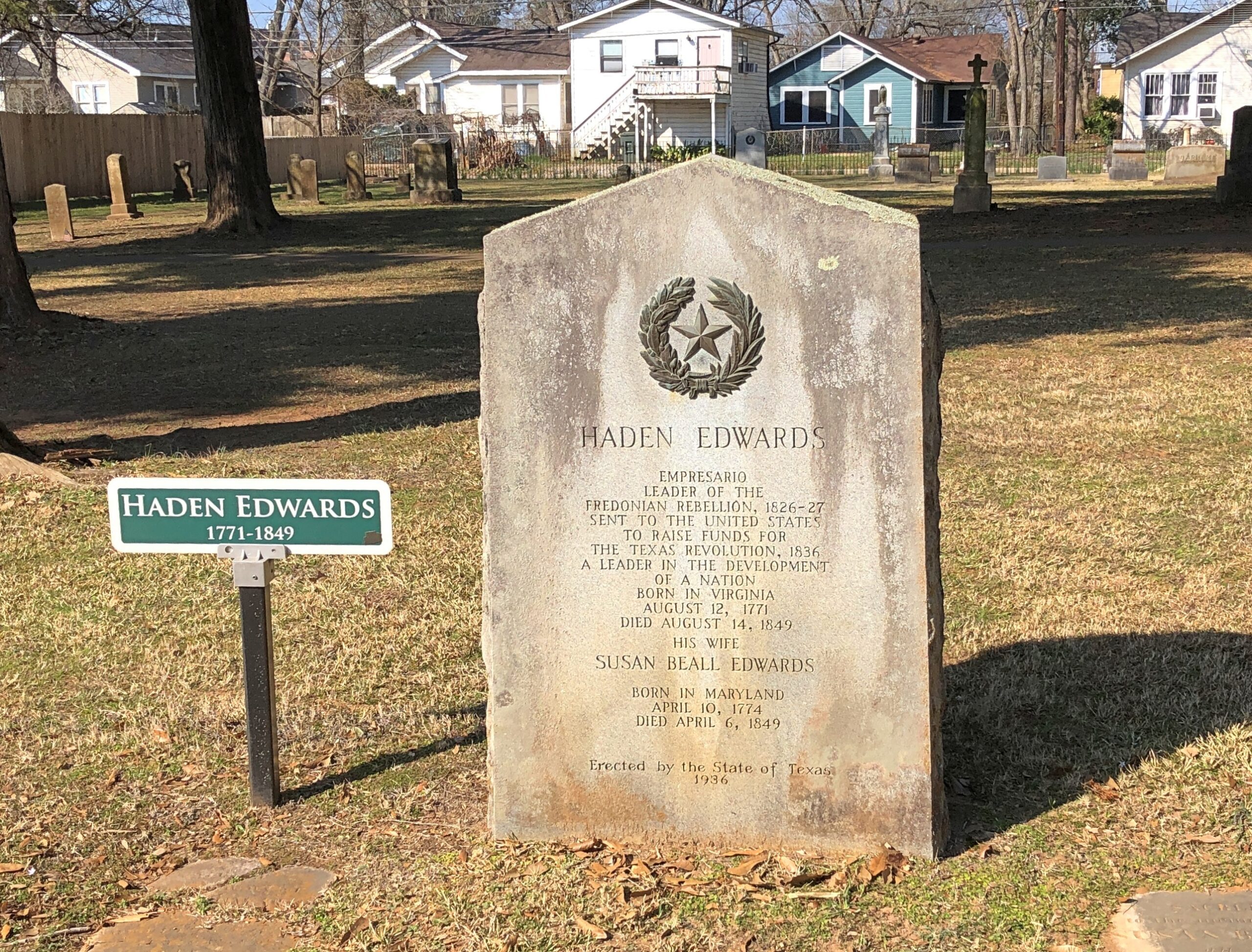
It’s an old cemetery by modern Texas standards – the first burial was the year after independence – so the cemetery punches above its weight in one way: noted early Texans. Such as Harden Edwards.
The state saw fit, during the 1936 Centennial, to put up a new stone for Edwards, an empresario and “Leader of the Freedonian Rebellion,” who must have penned the rousing tune, “Hail, Hail Freedonia,” for future generations to enjoy.
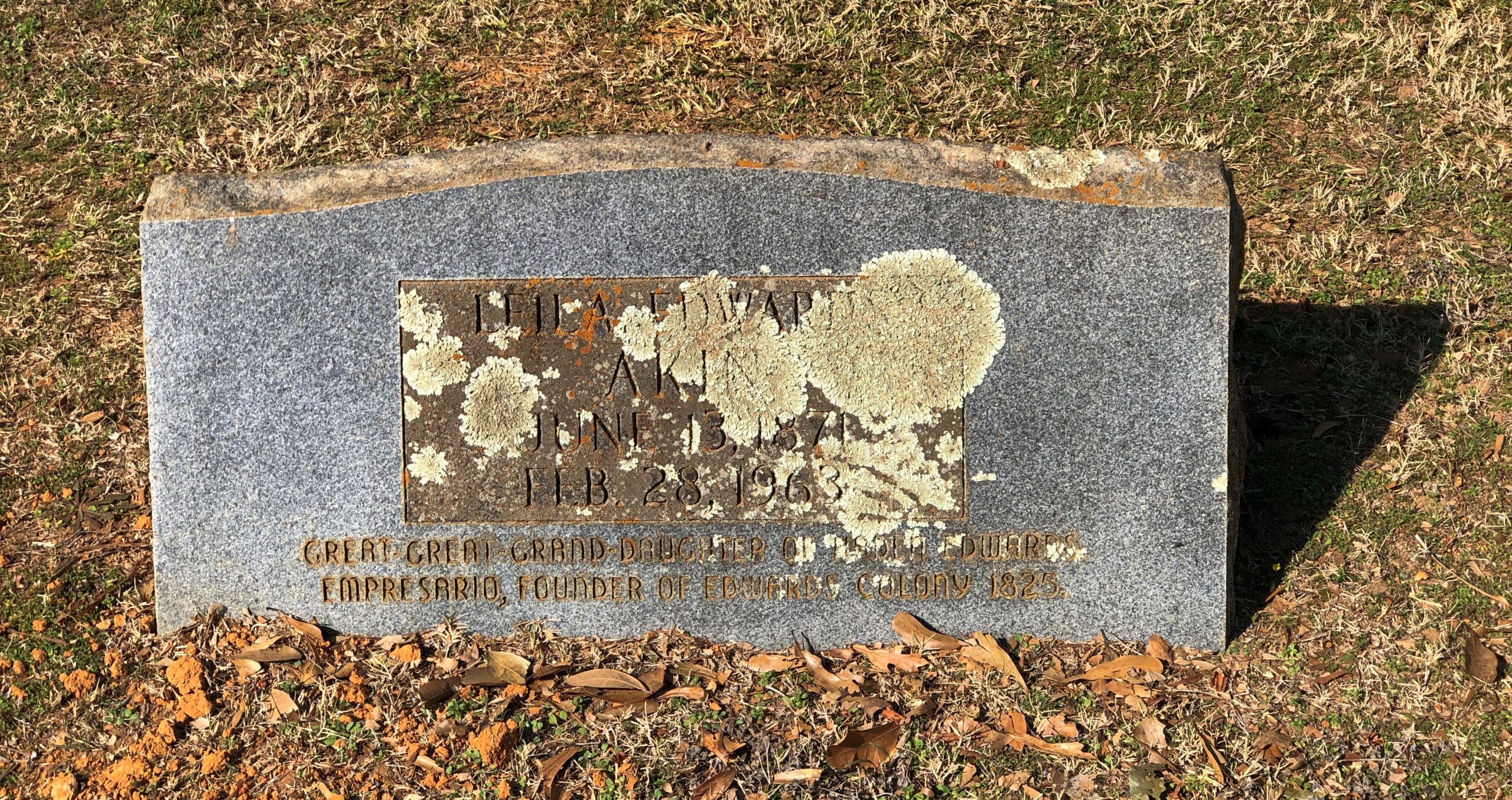
The stone of a great-great granddaughter of Edwards who died in 1963 seems eager to bask in his remote glory. Why not?
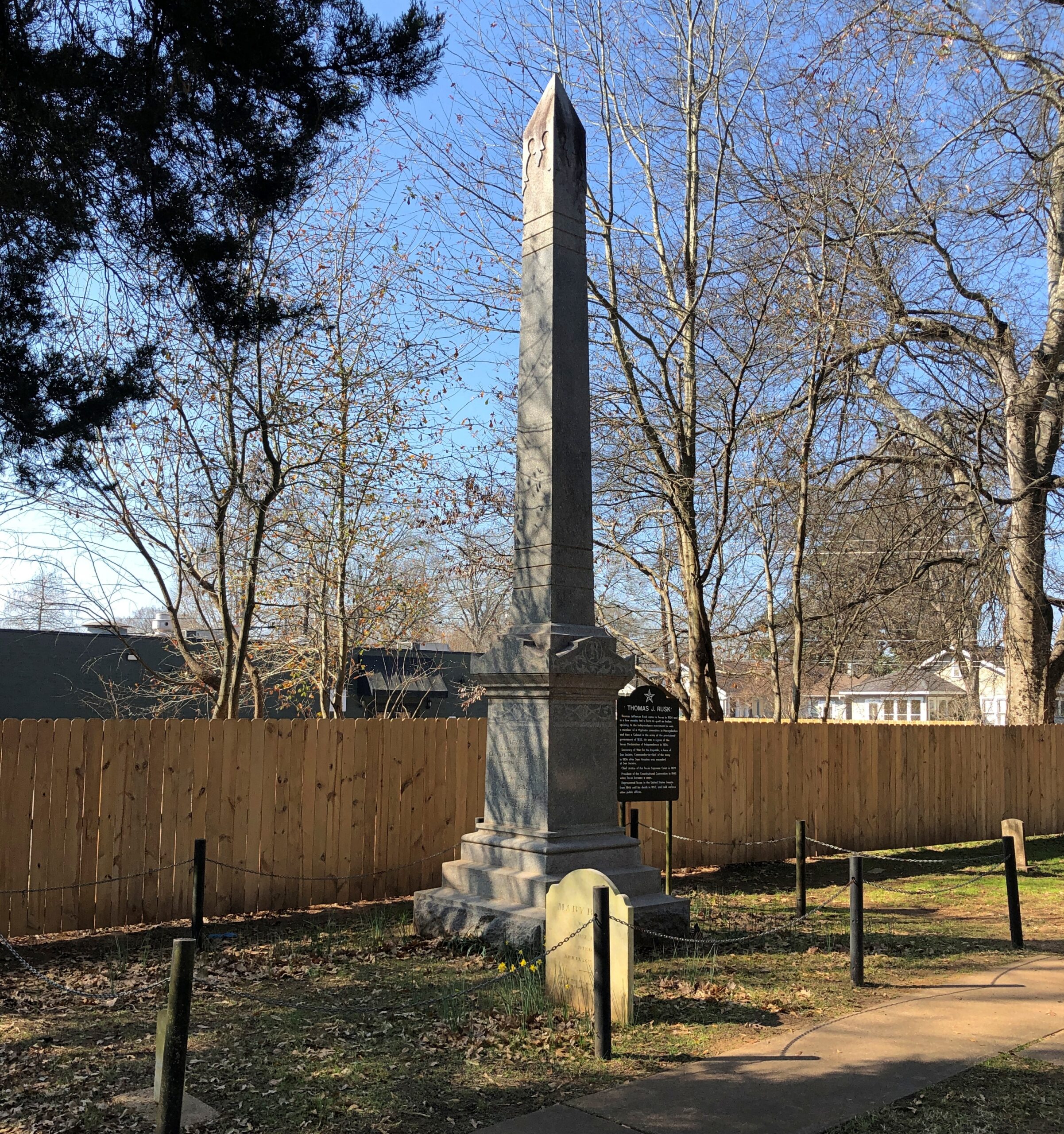
He was a signer, fought at San Jacinto, and had a notable career in antebellum Texas and U.S. politics. There’s is a town a county over from Nacogdoches named Rusk, seat of Cherokee County. Also, strangely, a font based on his handwriting was created in our time, “Texas Hero.”
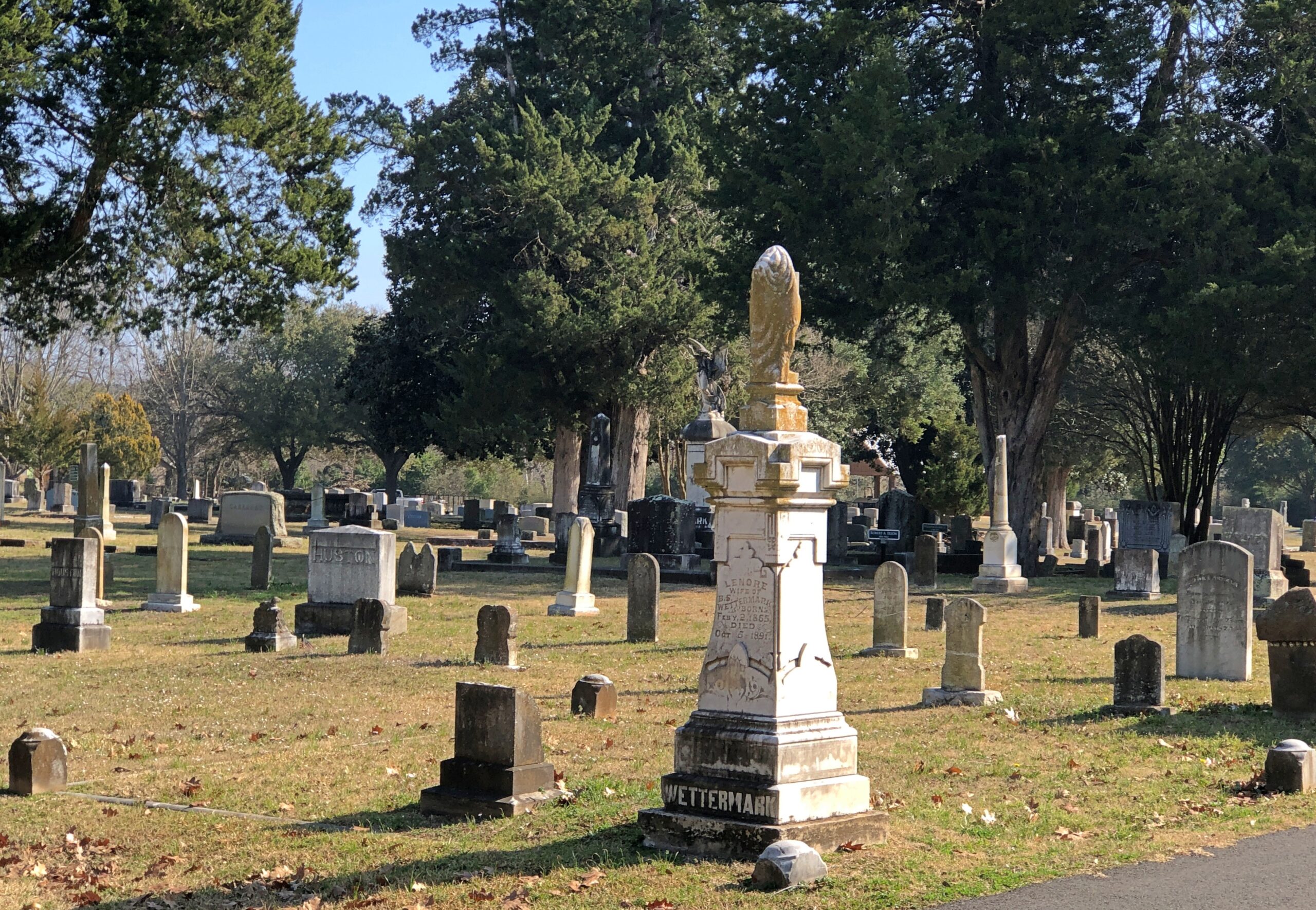
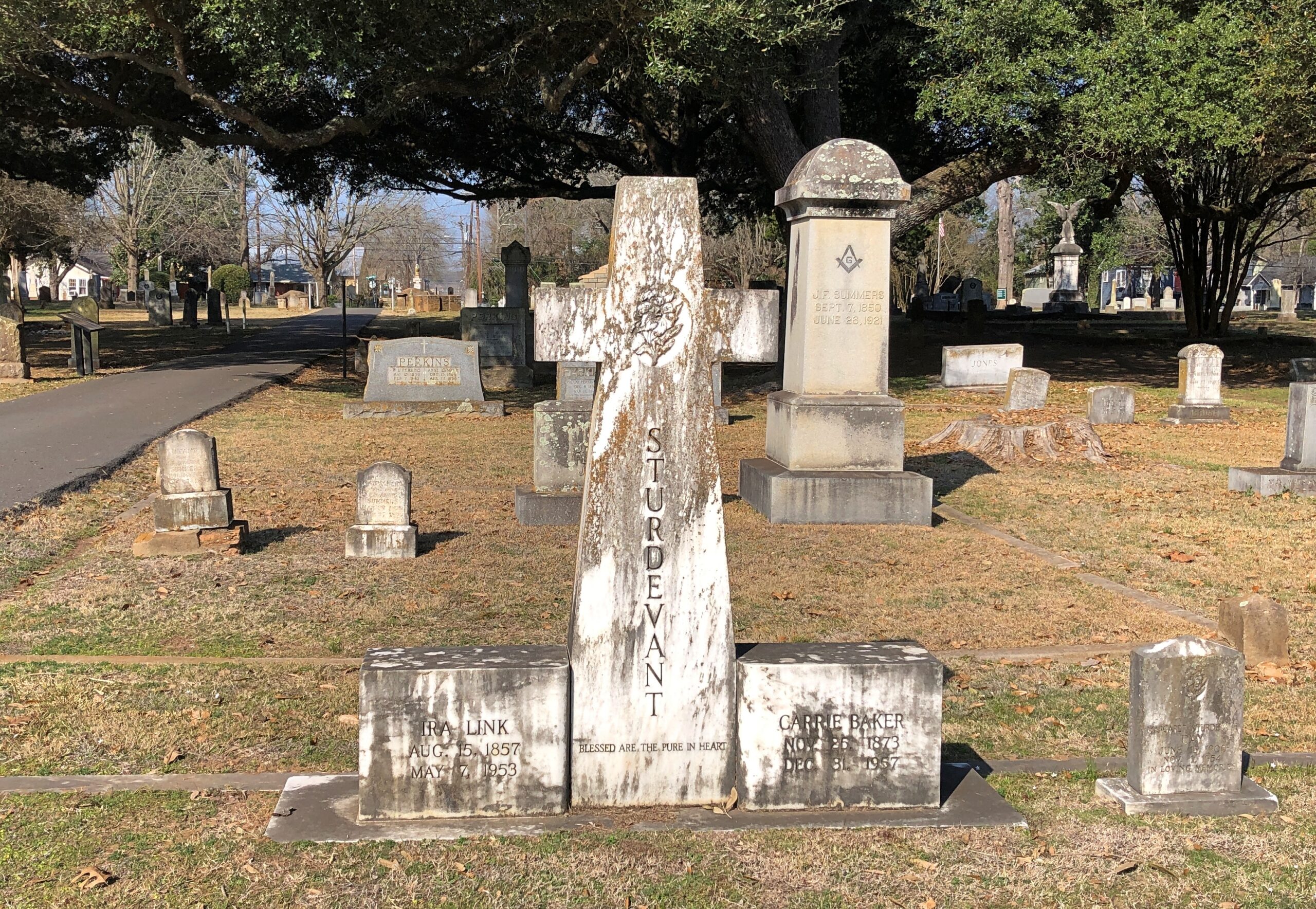
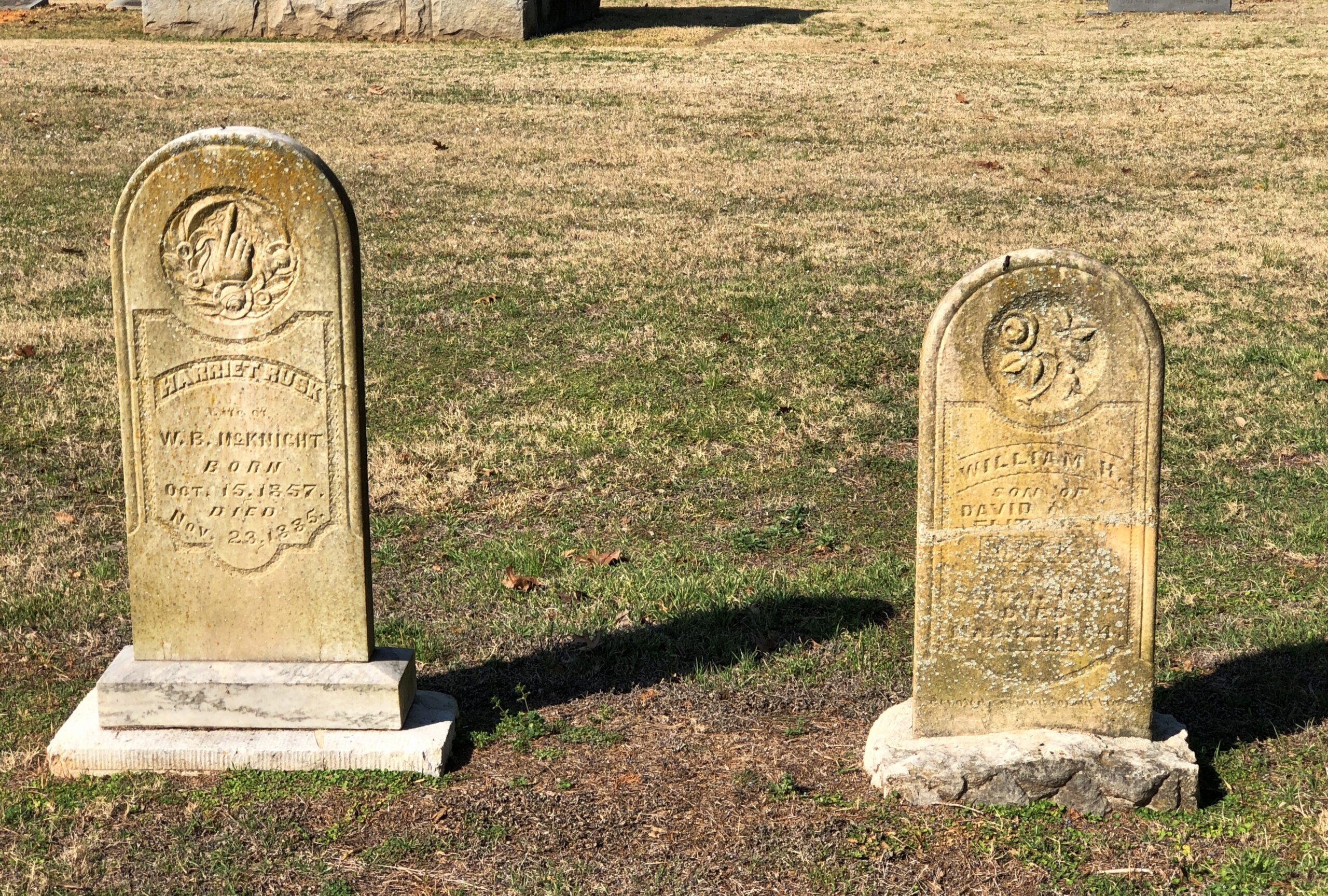
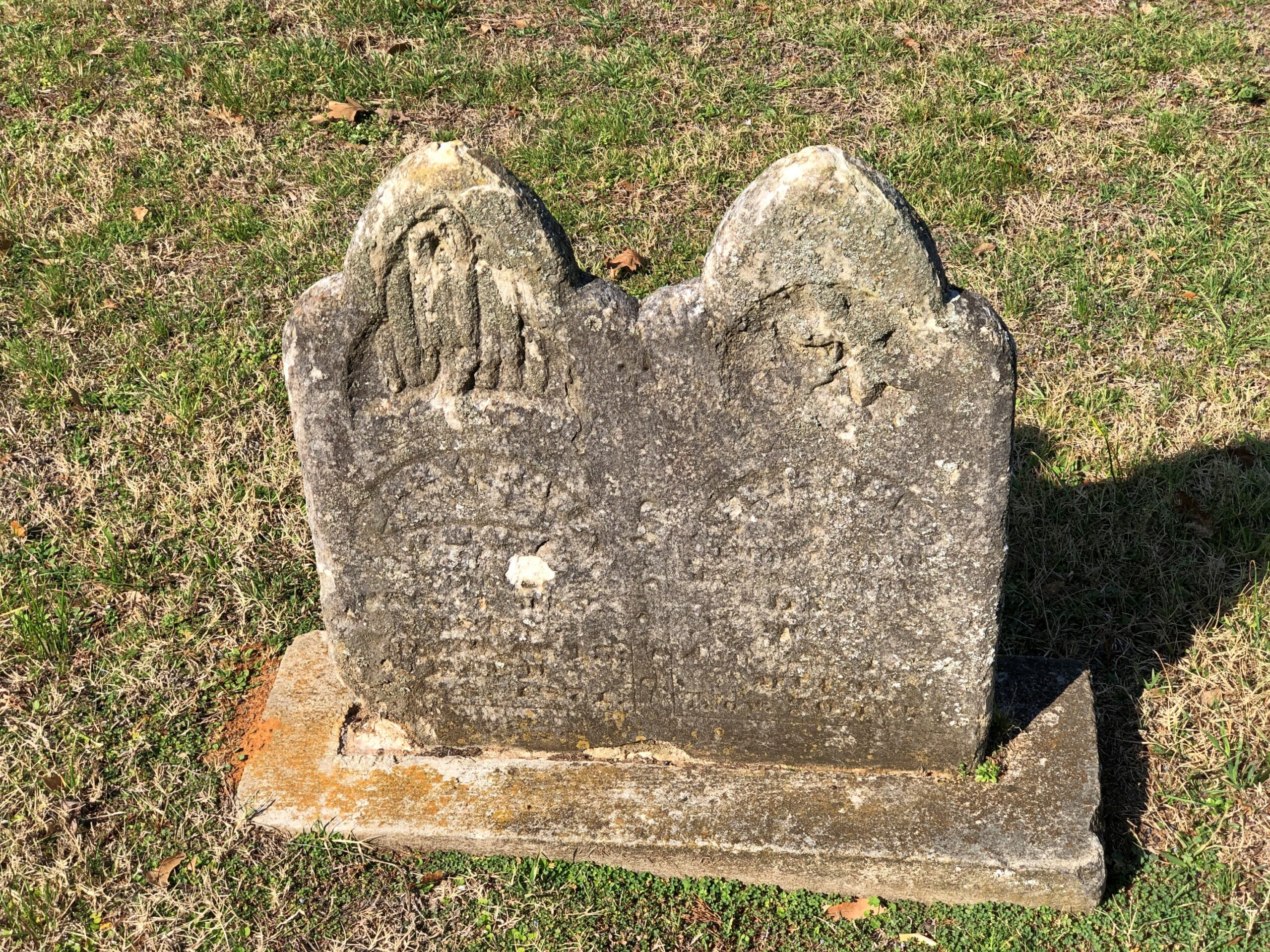
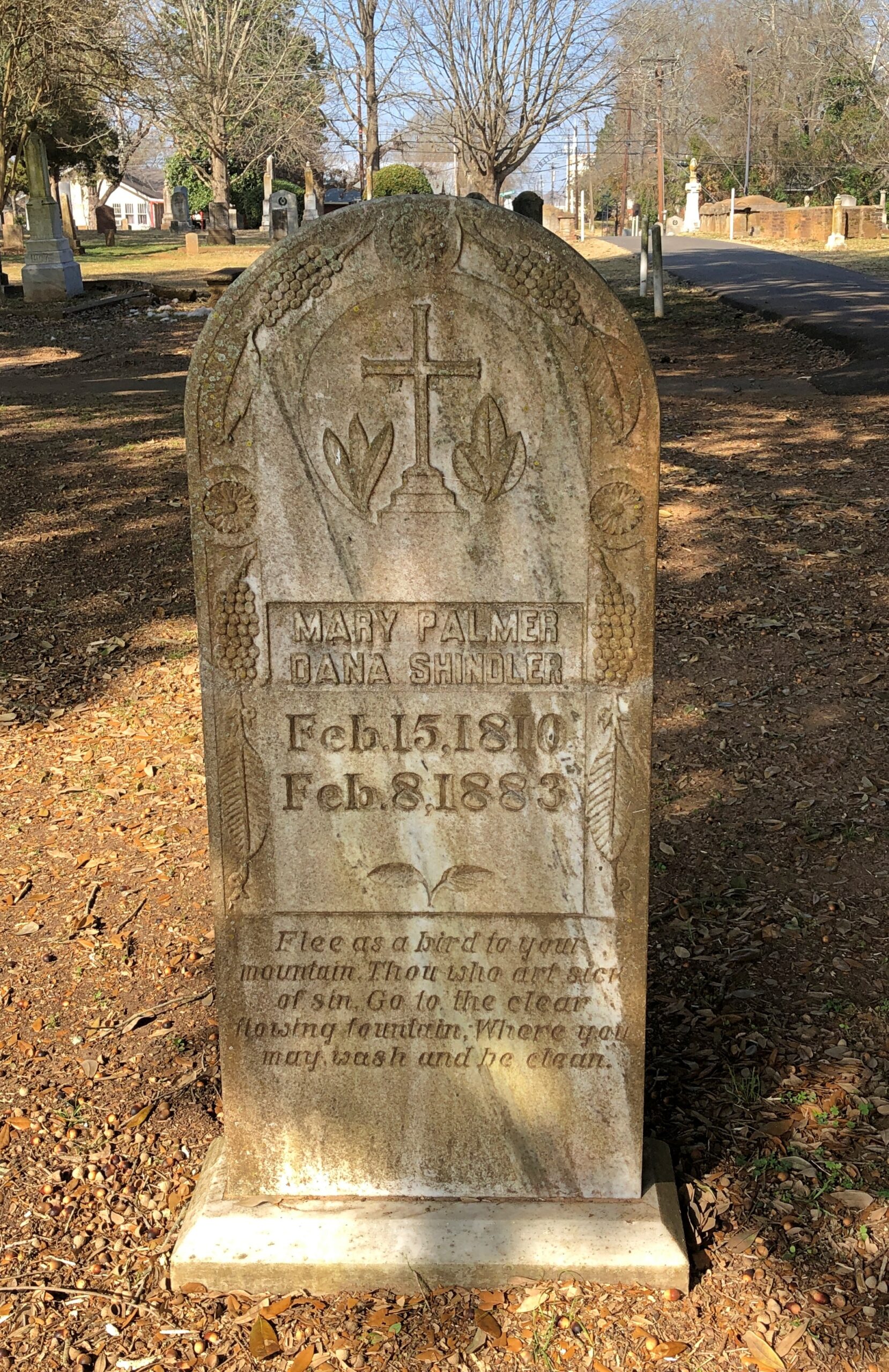
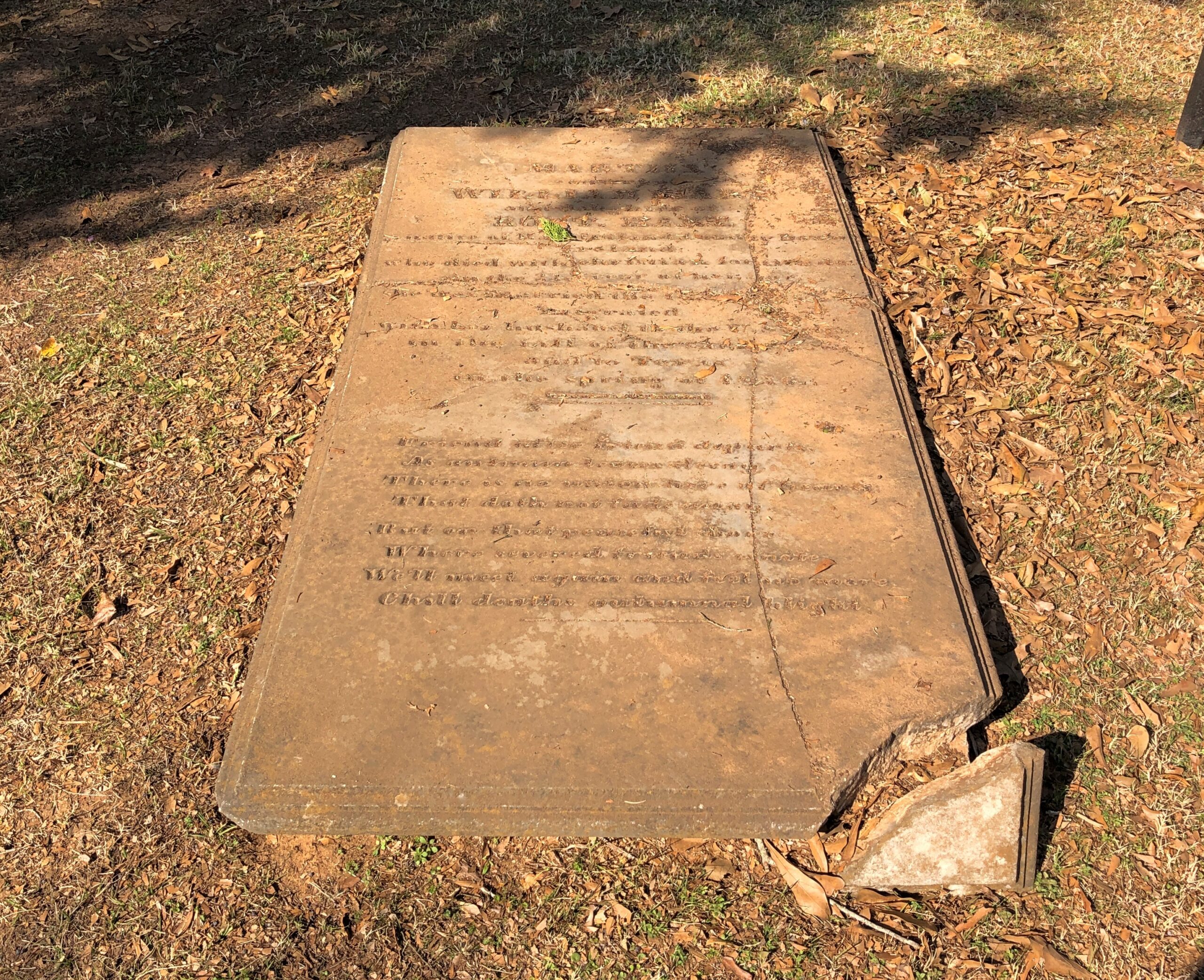
Some regular folks.
I don’t know how ordinary this person was, but perhaps he was gifted with Victorian prolixity. Or maybe his family was.
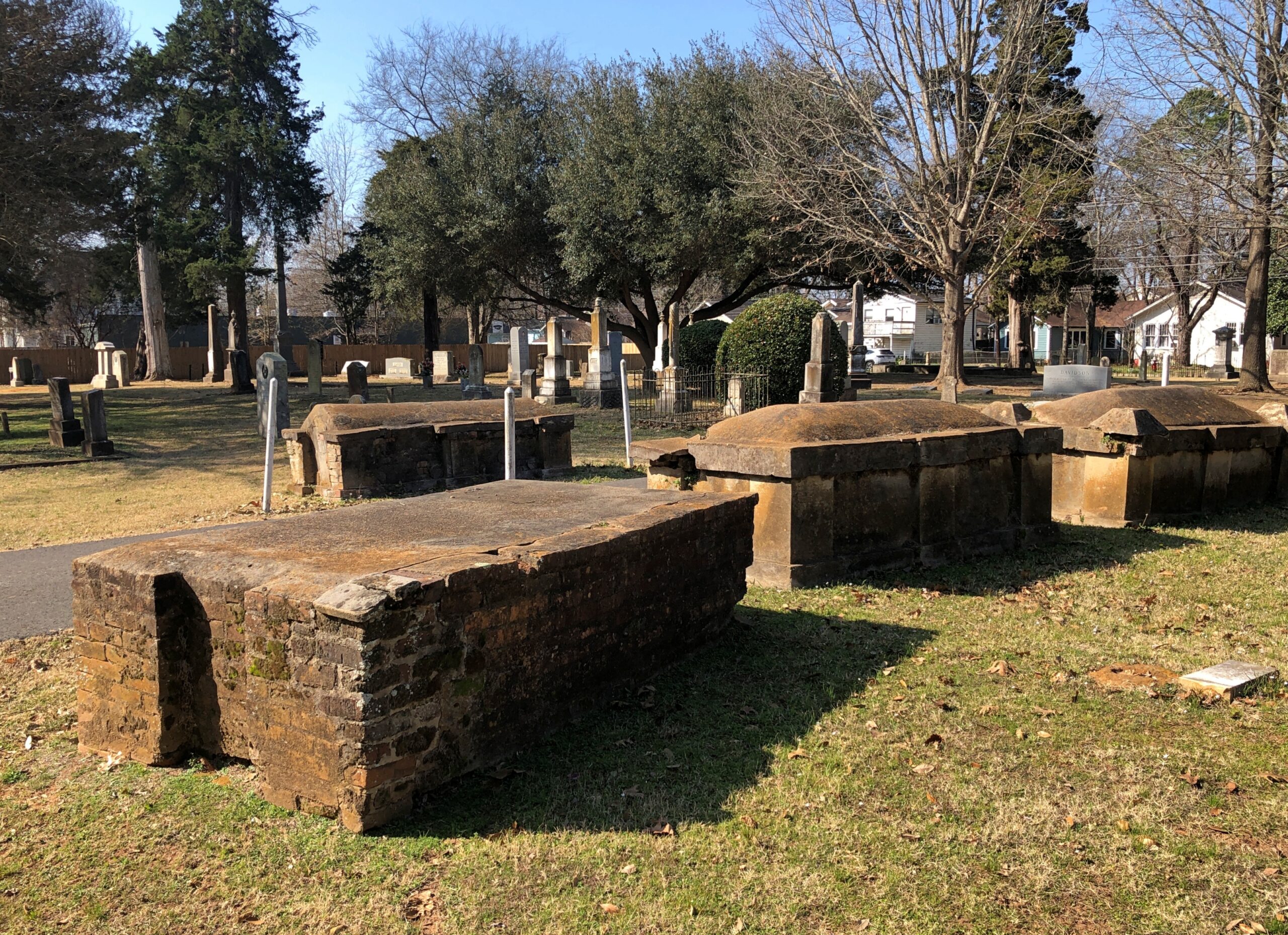
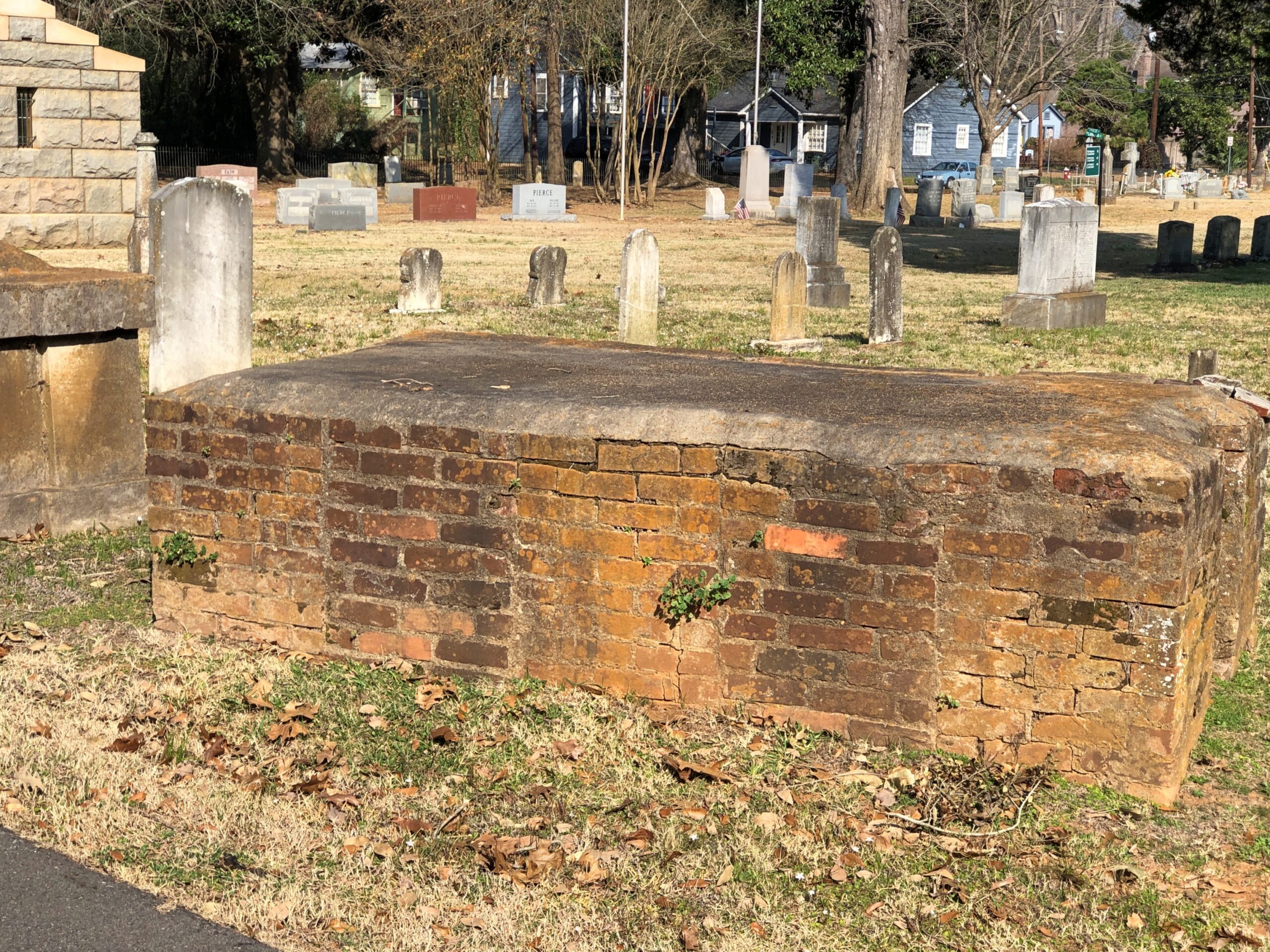
Brick tombs of the kind I’ve seen elsewhere in the South from roughly the same period, that is, sometime in the 19th century.
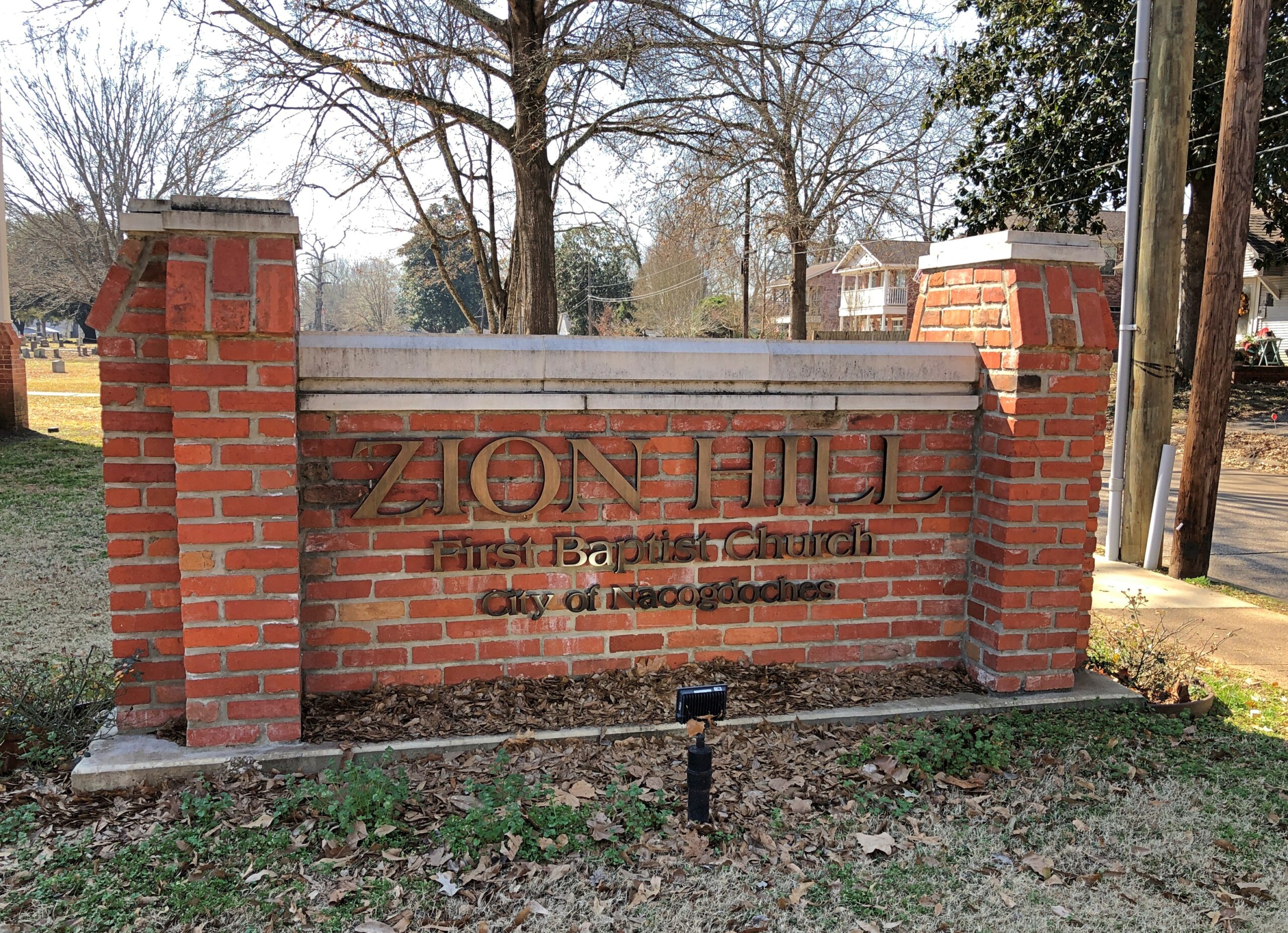
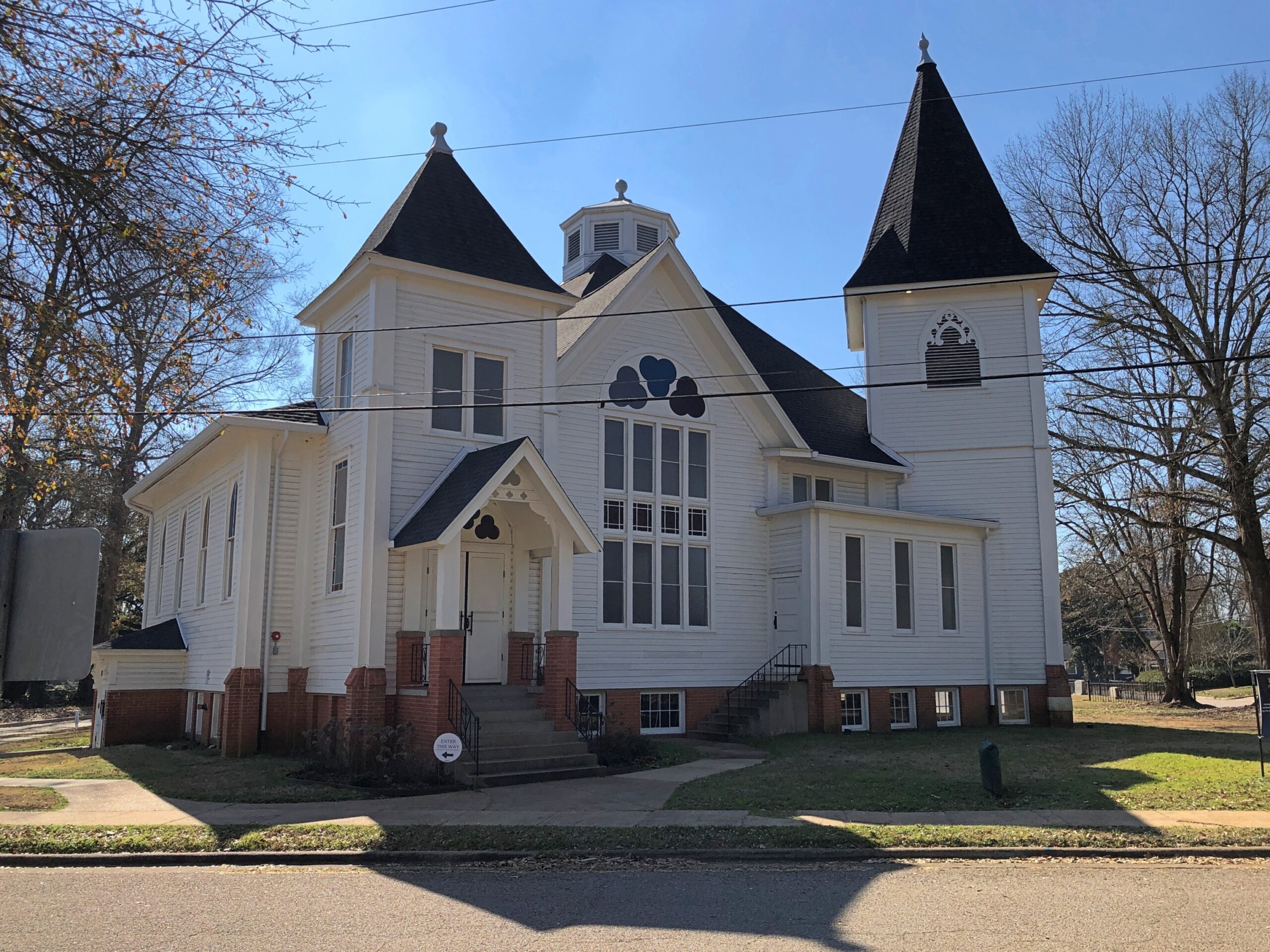
Adjacent to the cemetery but not associated with it is the former home of Zion Hill Baptist Church, one of the oldest African-American Baptist congregations in Texas, founded in 1878. The church is on the corner of Lanana and the delightfully named Bois d’arc St., as in lumpy “apples.”
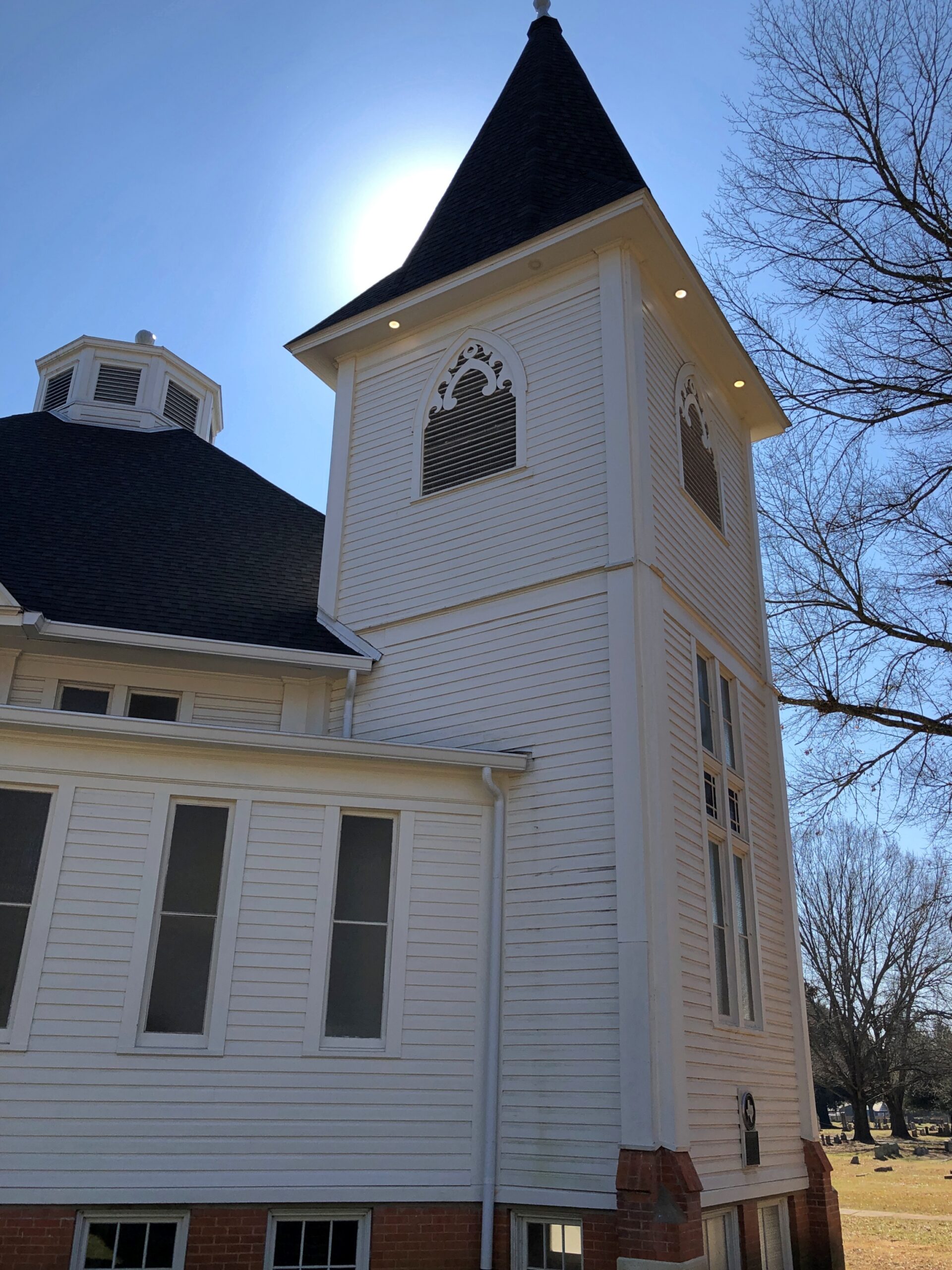
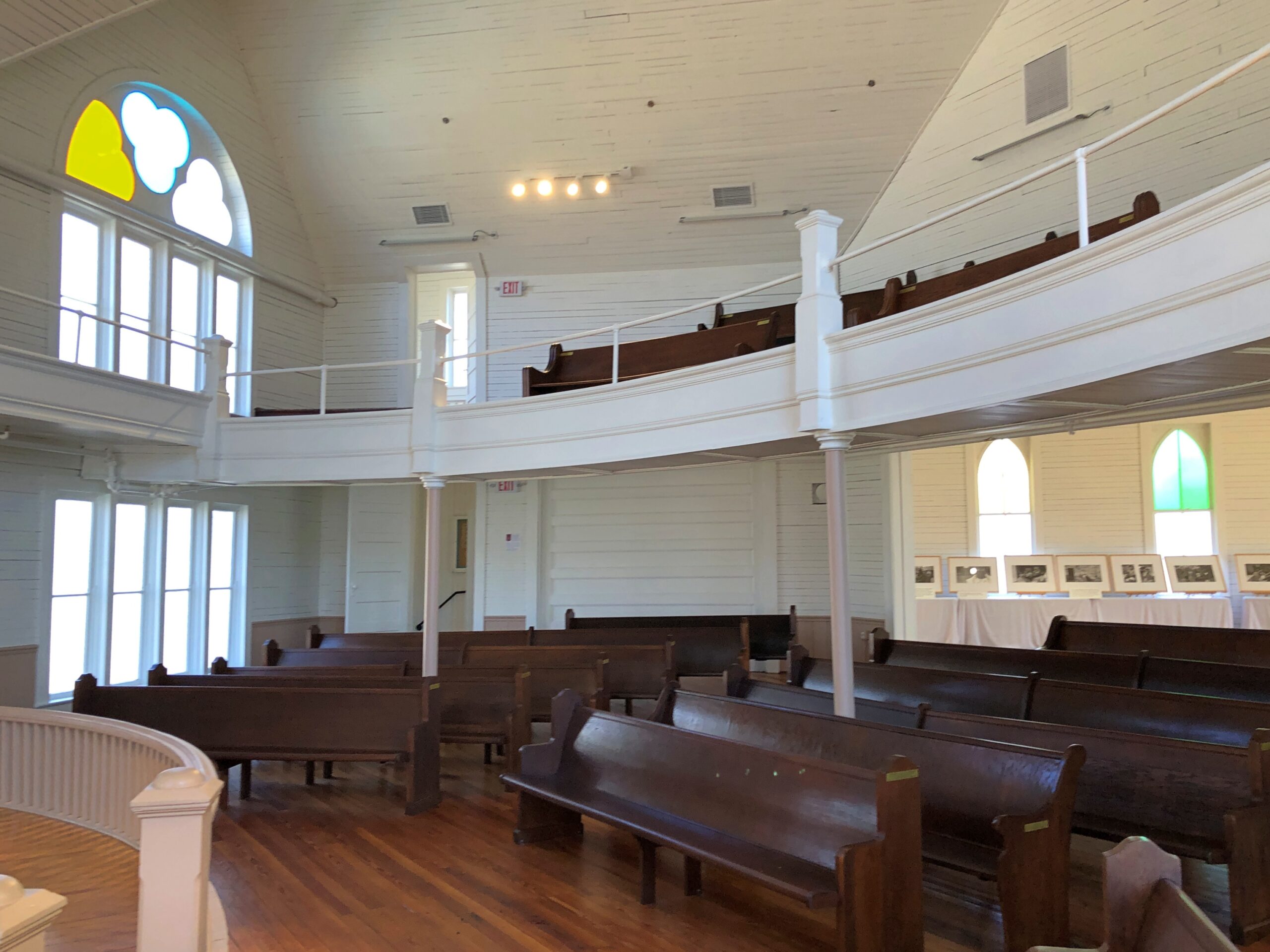
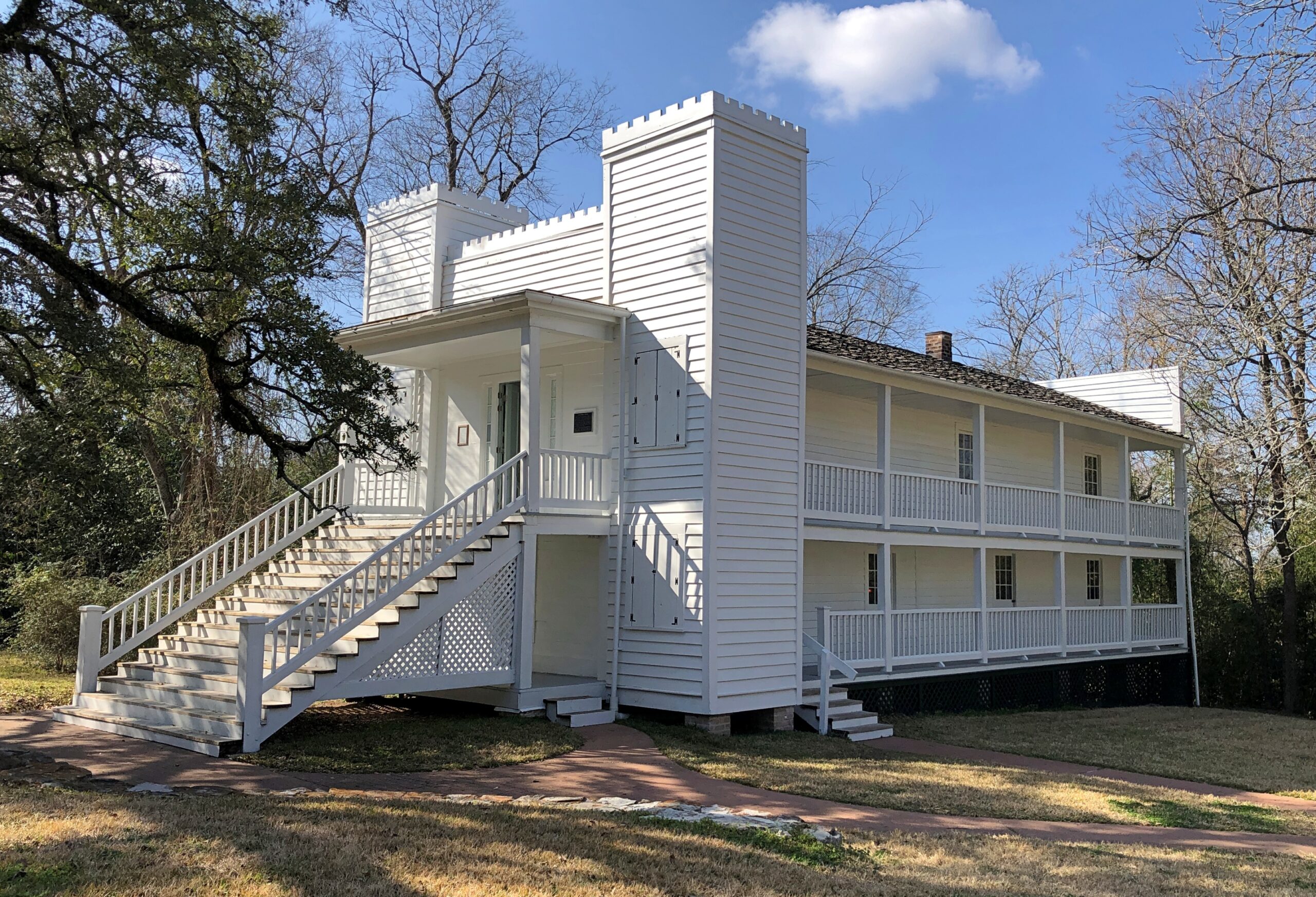
The congregation hasn’t used the structure, designed in 1914 by architect Diedrich Rulfs, for nearly 40 years. It’s a fine little museum these days, restored to its early 20th century glory.
Rulfs was a German who made good in Texas, as so many have, within a very special niche: most of the buildings worth seeing in Nacogdoches are his work.
Another in the very large file of Things You Don’t See Everywhere.
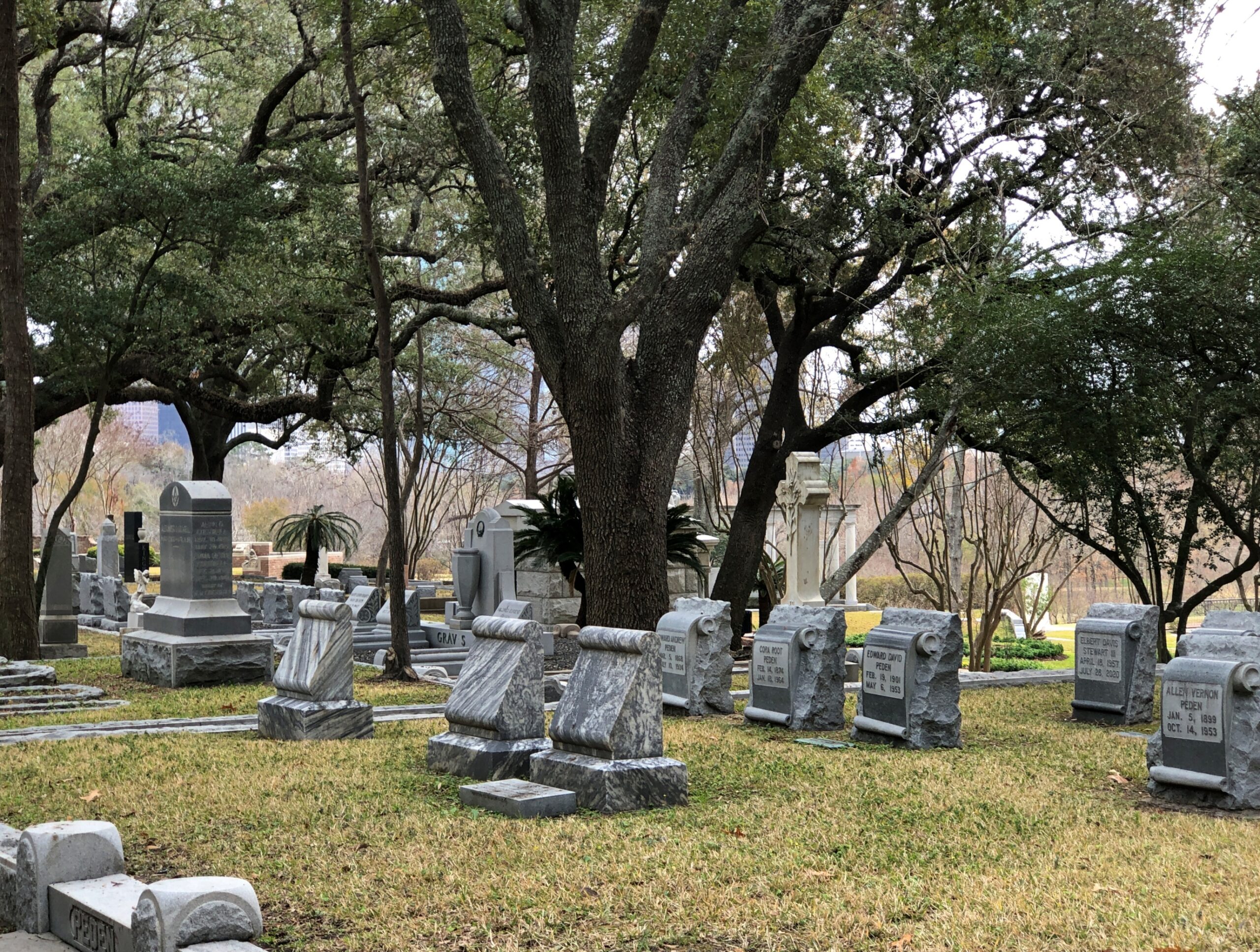
Go to a Texas cemetery of any size and of an older vintage, and you might well see one. While in Houston, I made my way to the Glenwood Cemetery, which isn’t far from downtown.
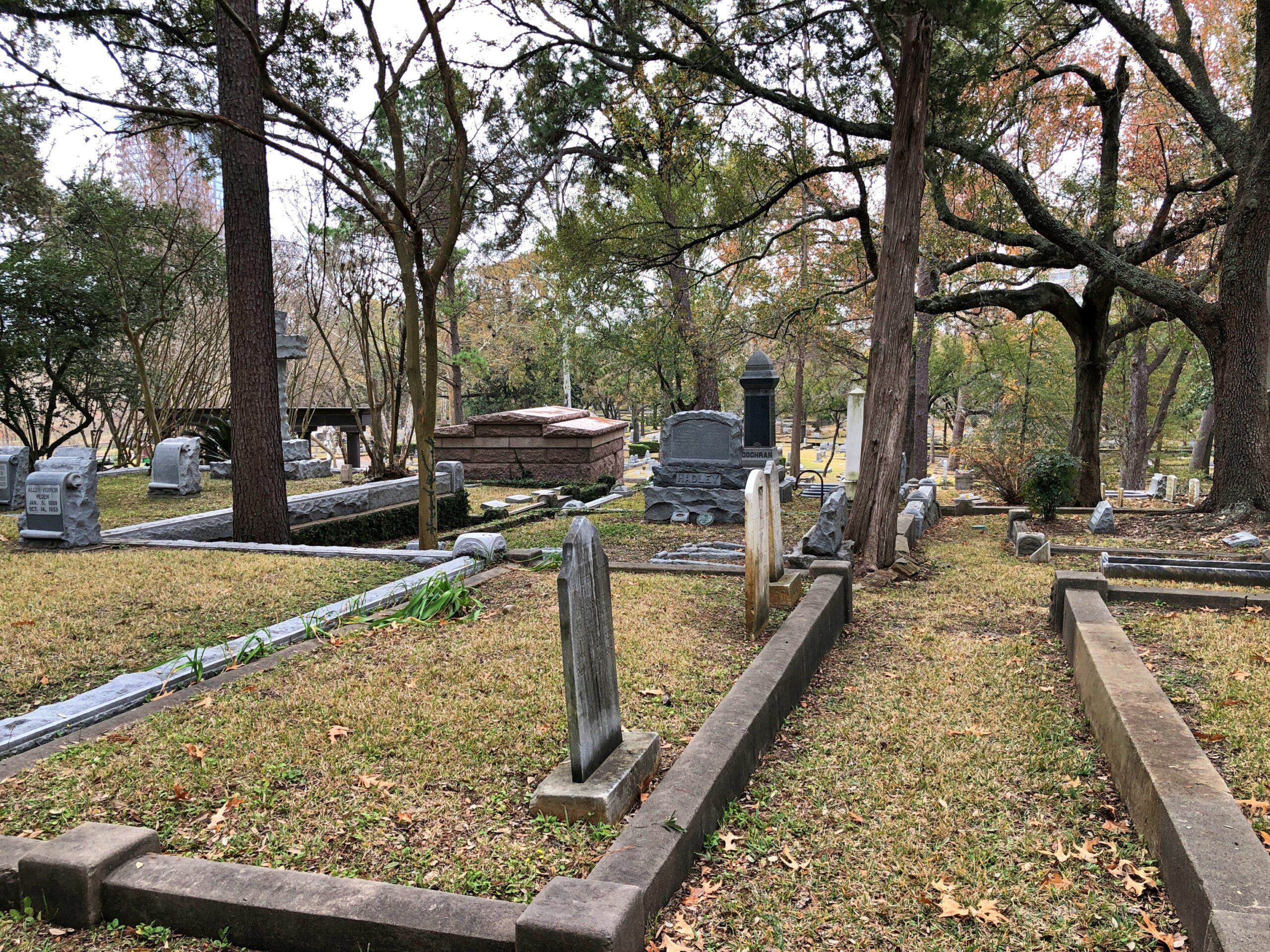
Expansive, slightly rolling but also partly hilly, and chock-a-block with stones for the departed.
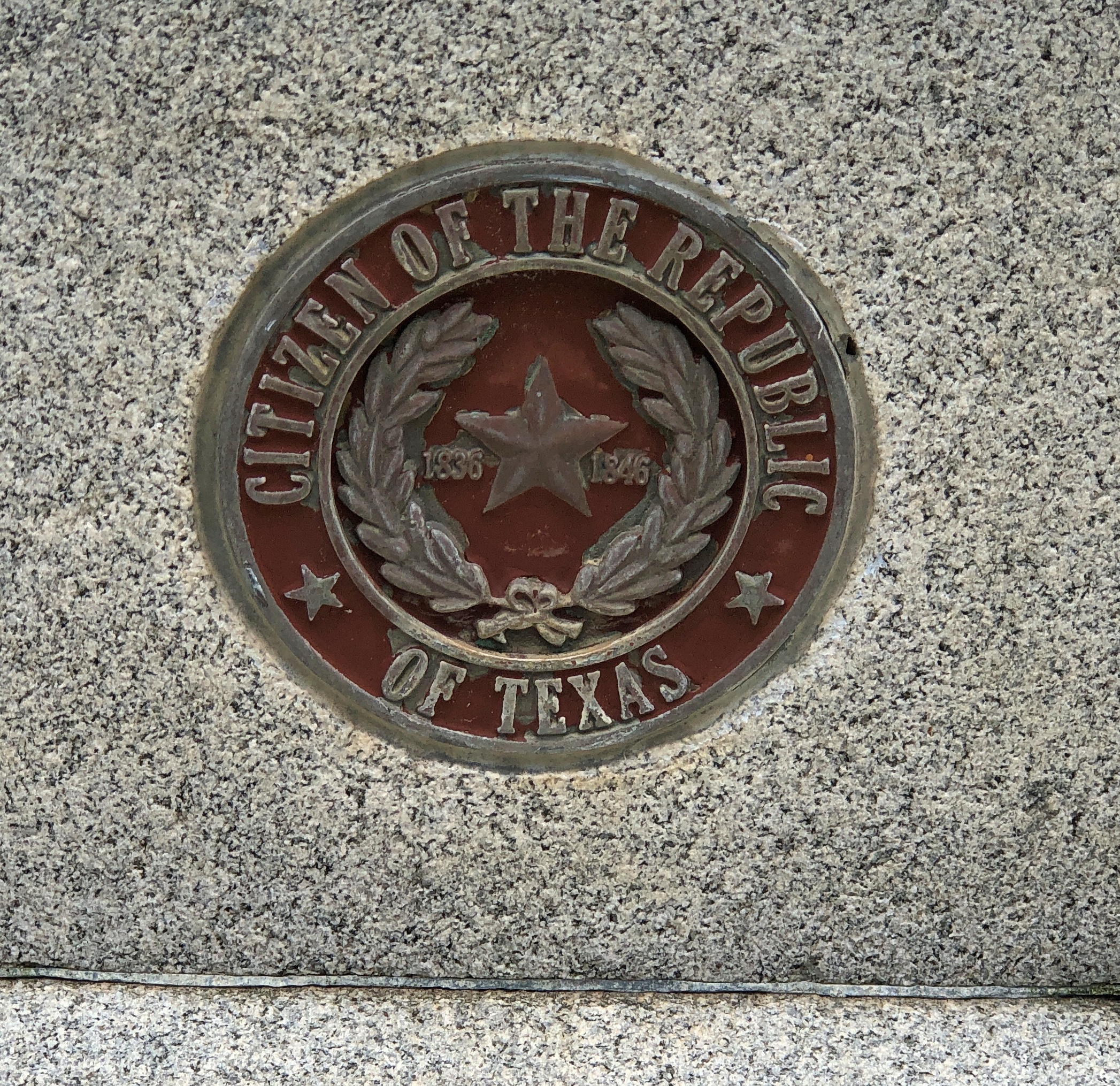
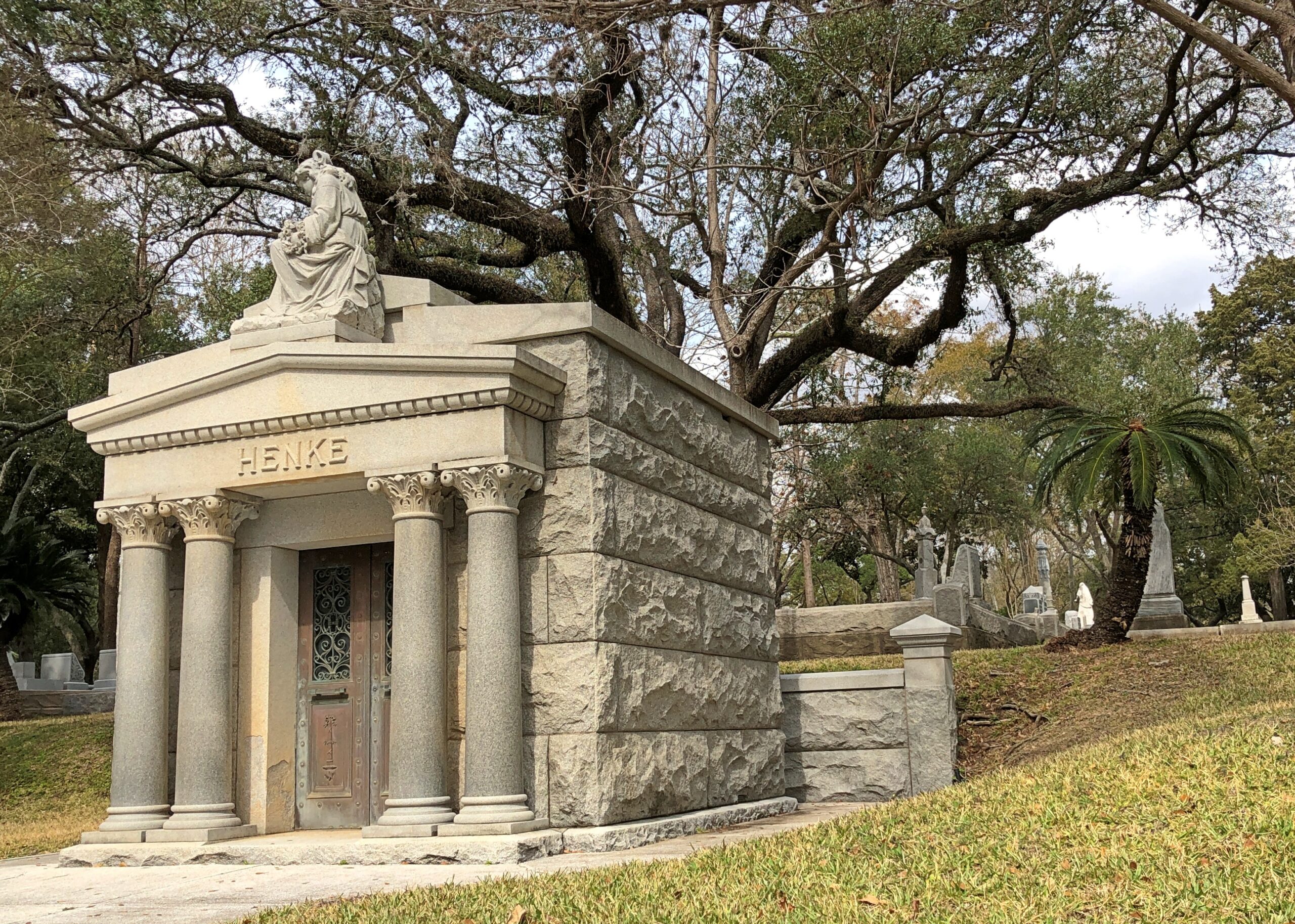
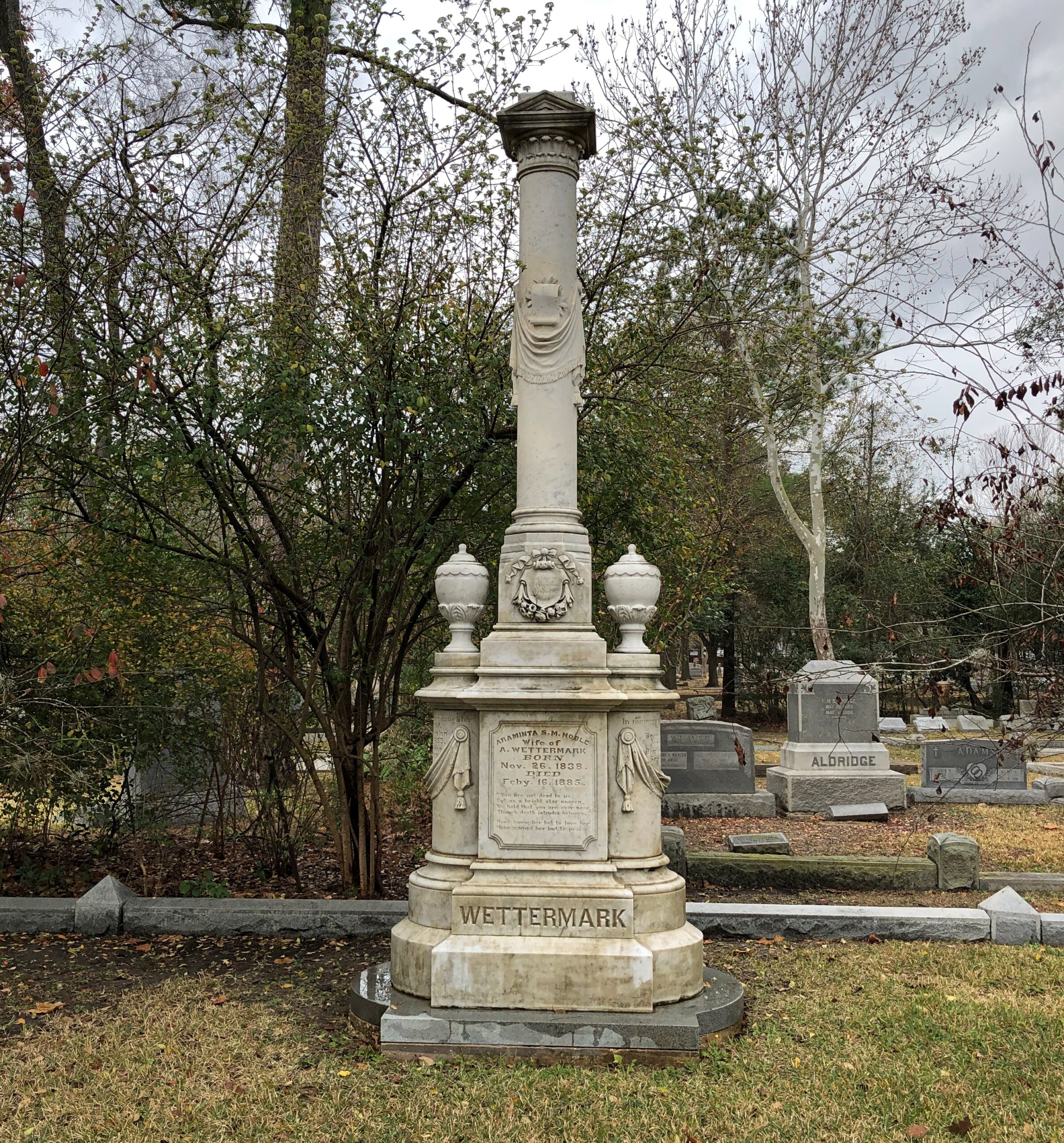
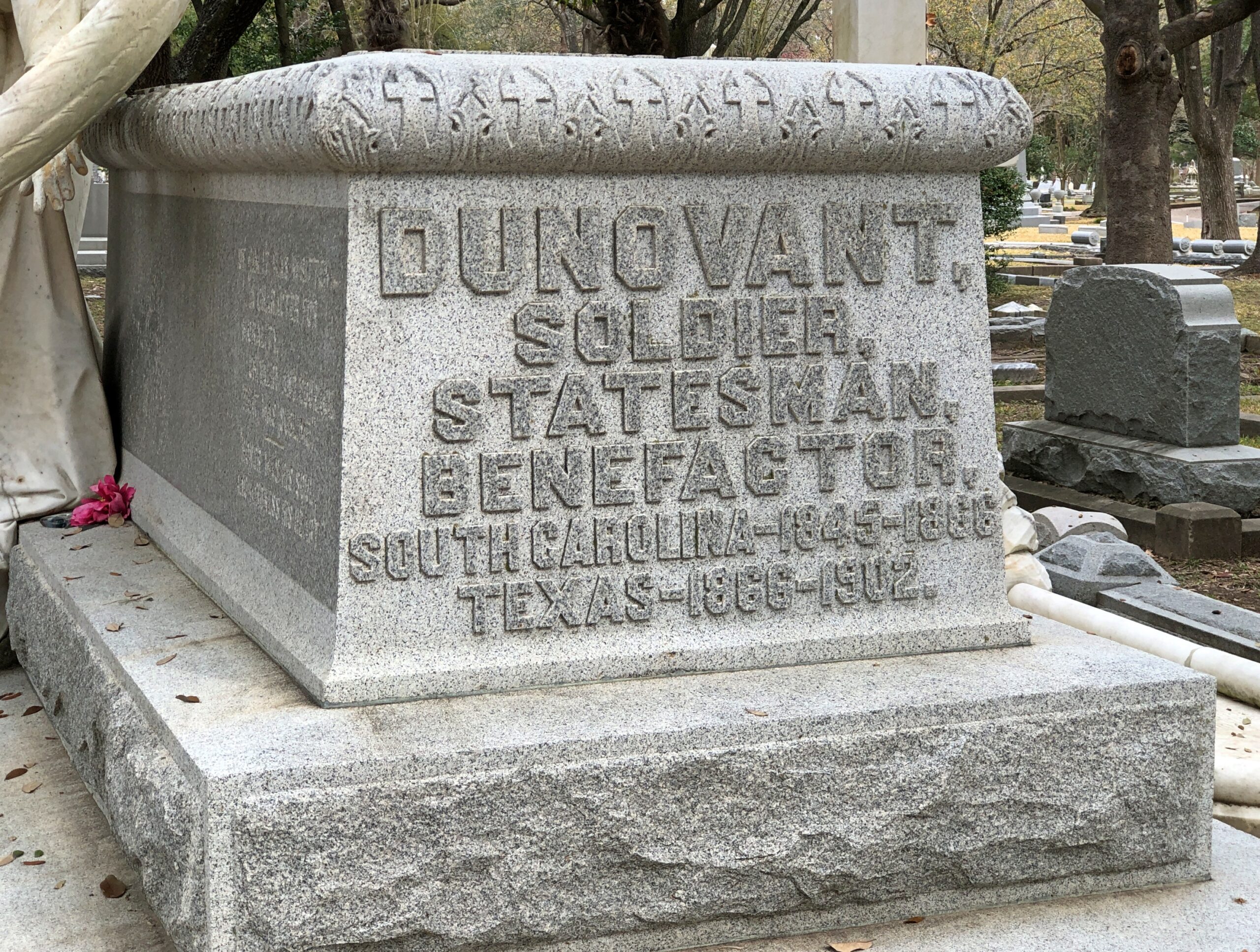
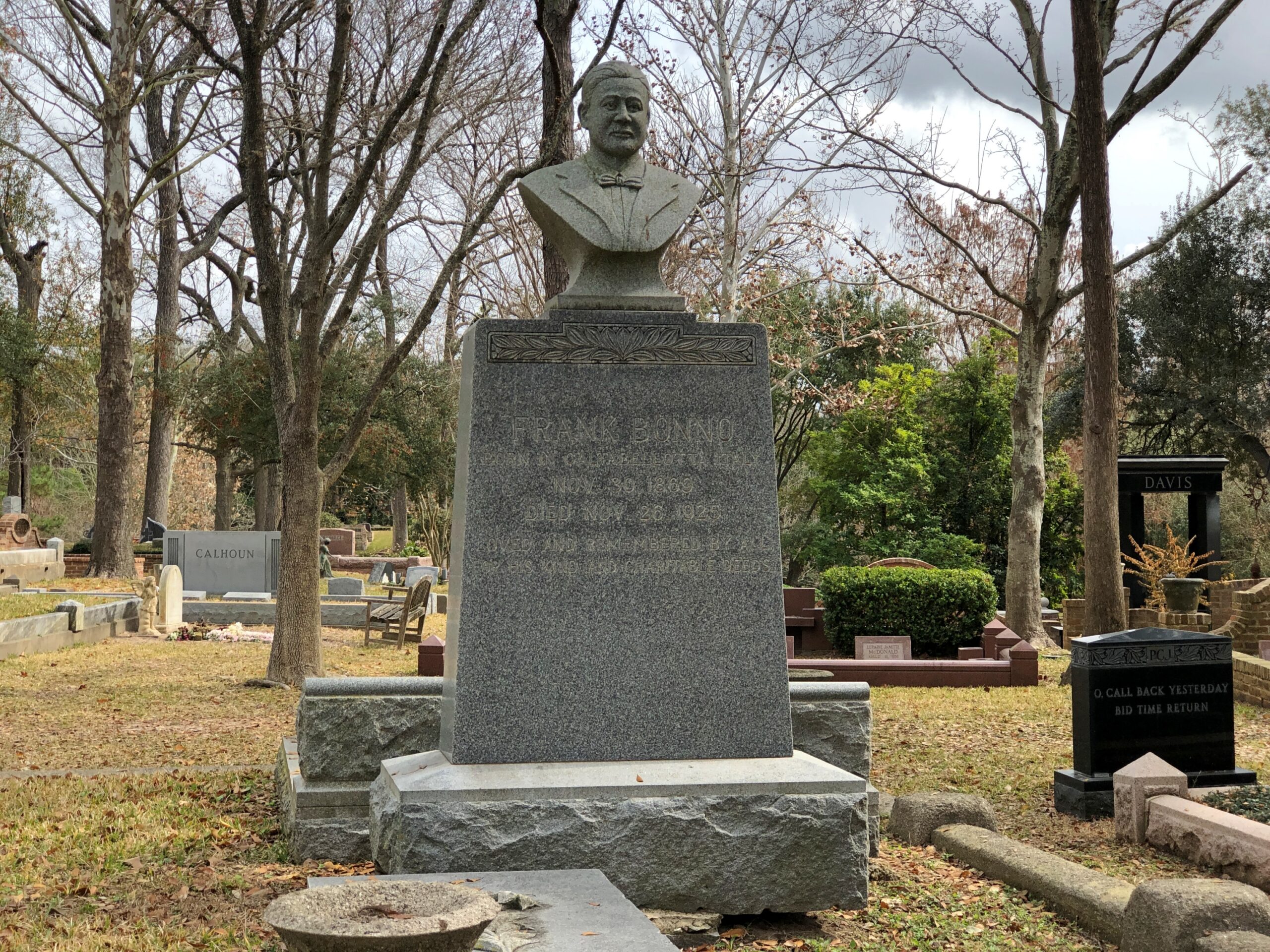
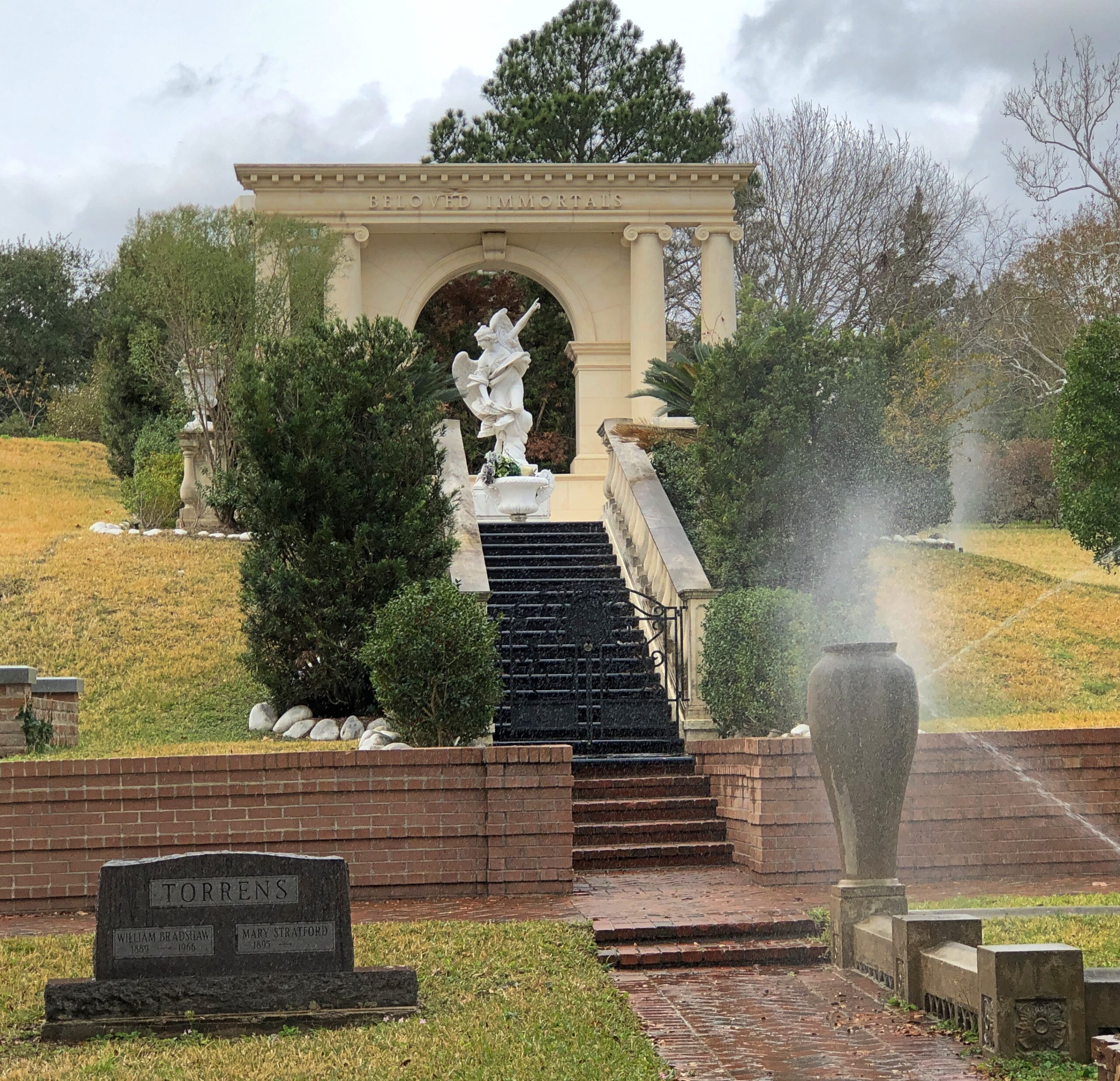
Pretty lush in the spring or summer, but earth tones take over for the winter. Glenwood Cemetery is Houston’s rural cemetery movement cemetery, opening in 1871 and since becoming the permanent residence of citizens of the Republic, but also assorted mayors, governors, business men and other Houston notables, including those with the scratch for some sizable memorials. Some monumental.
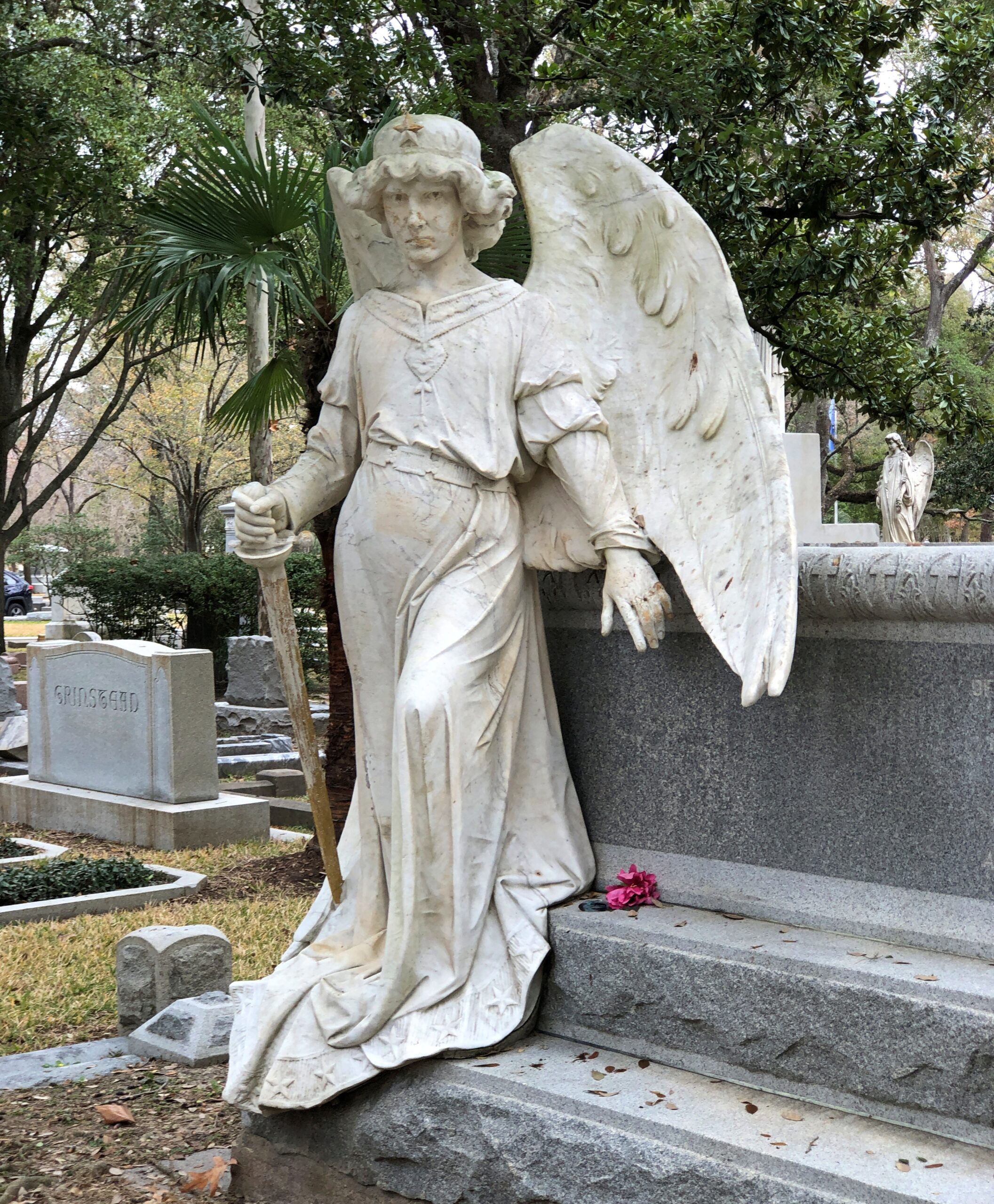
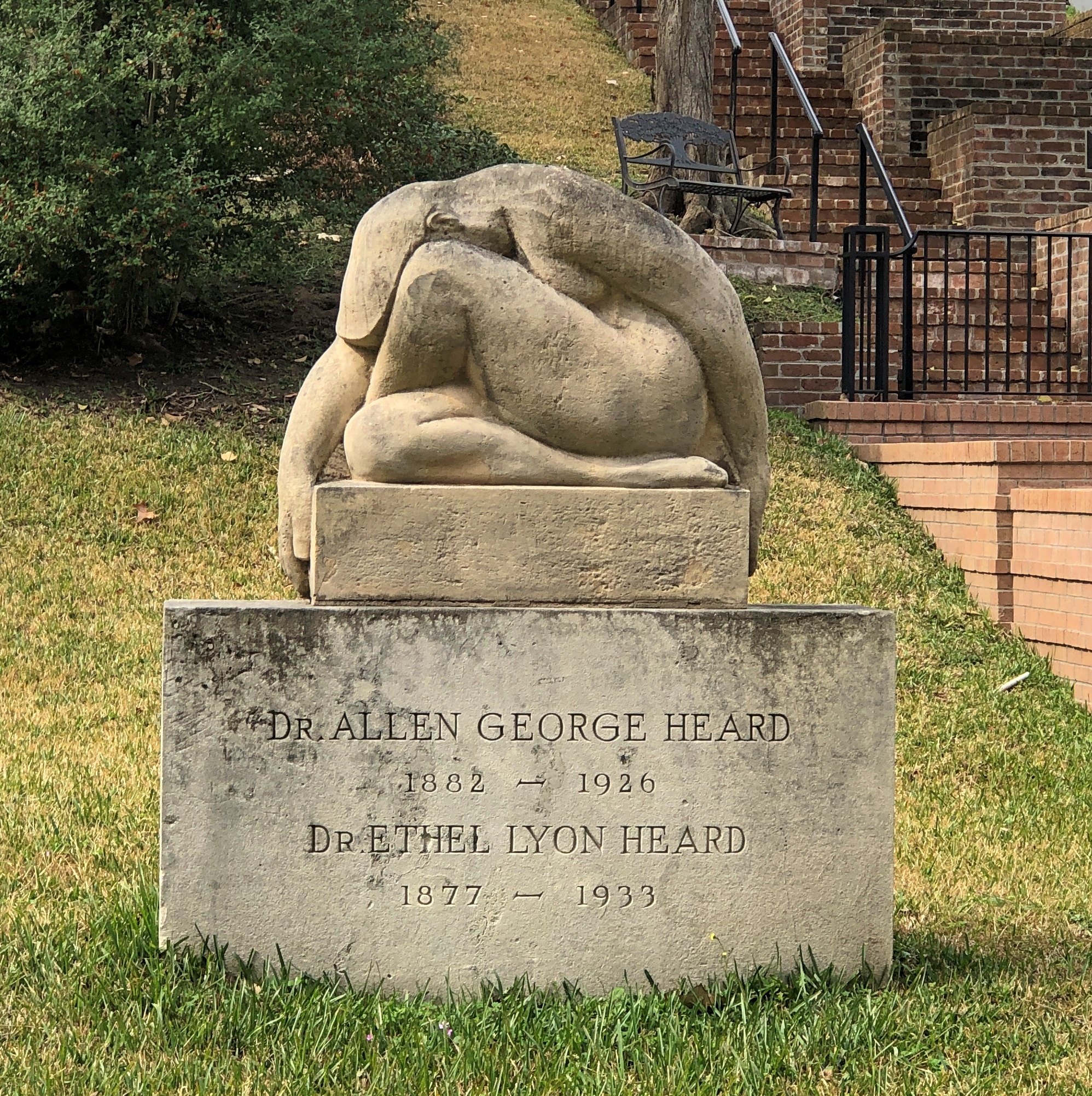
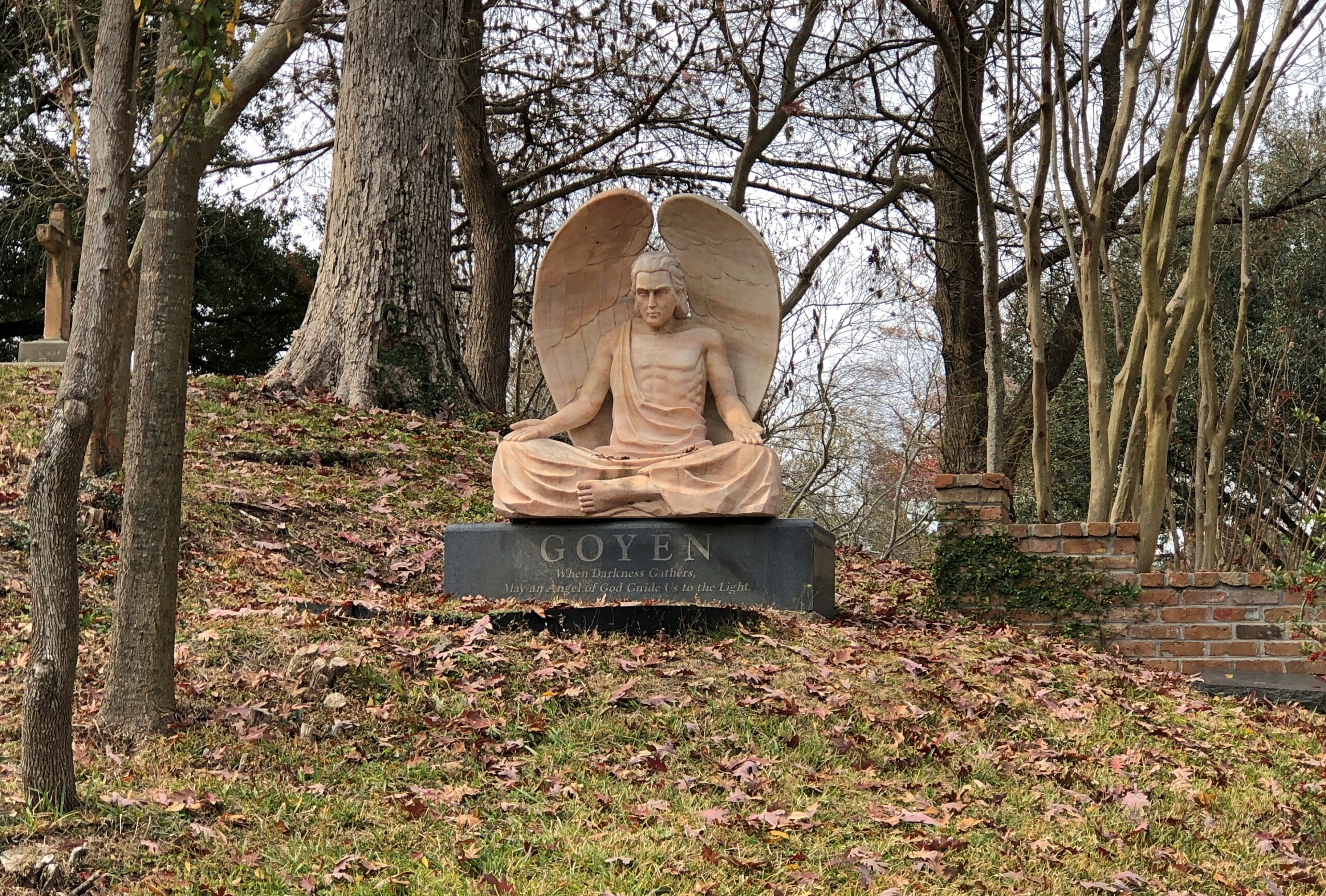
Others more artistic.
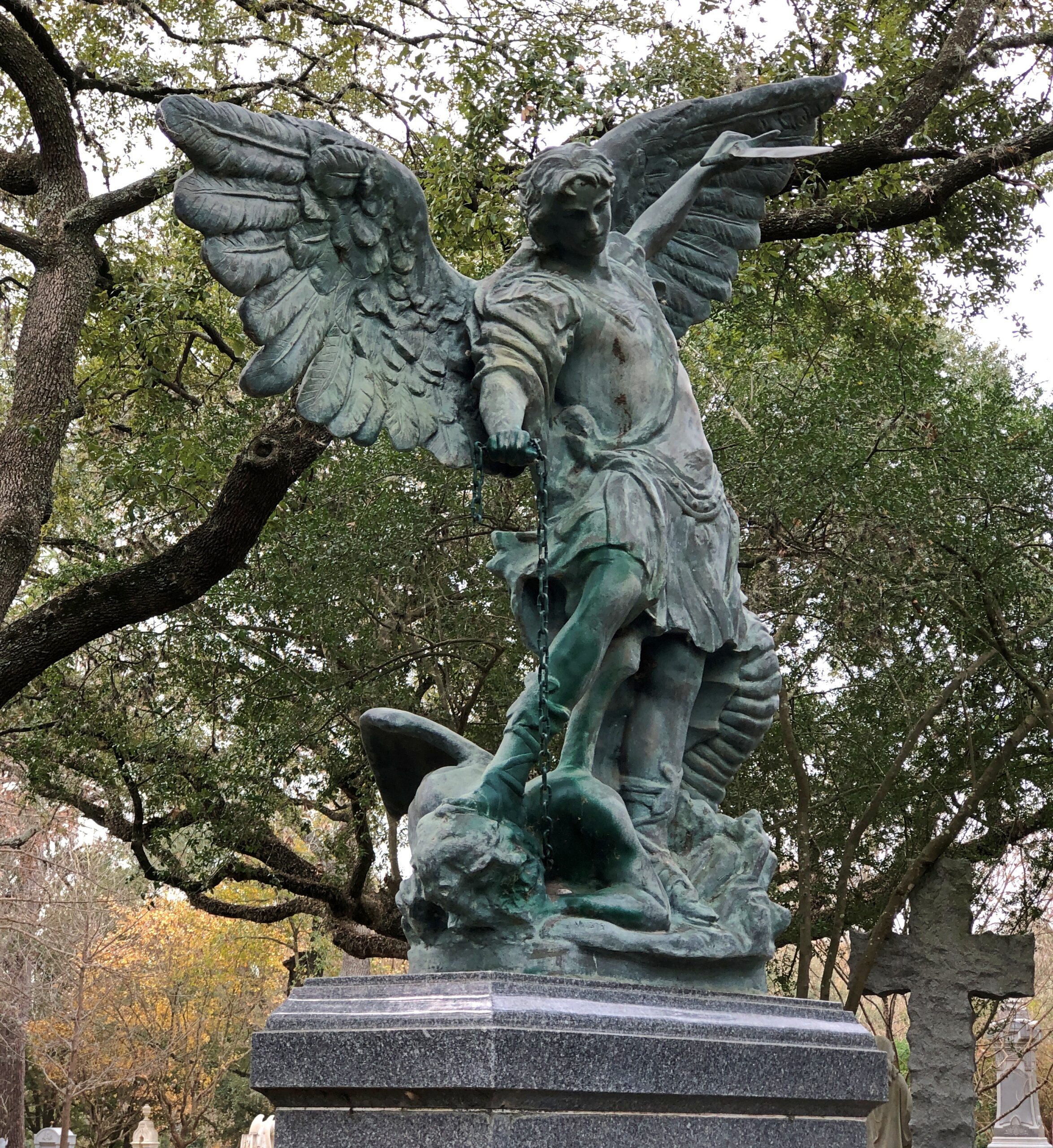
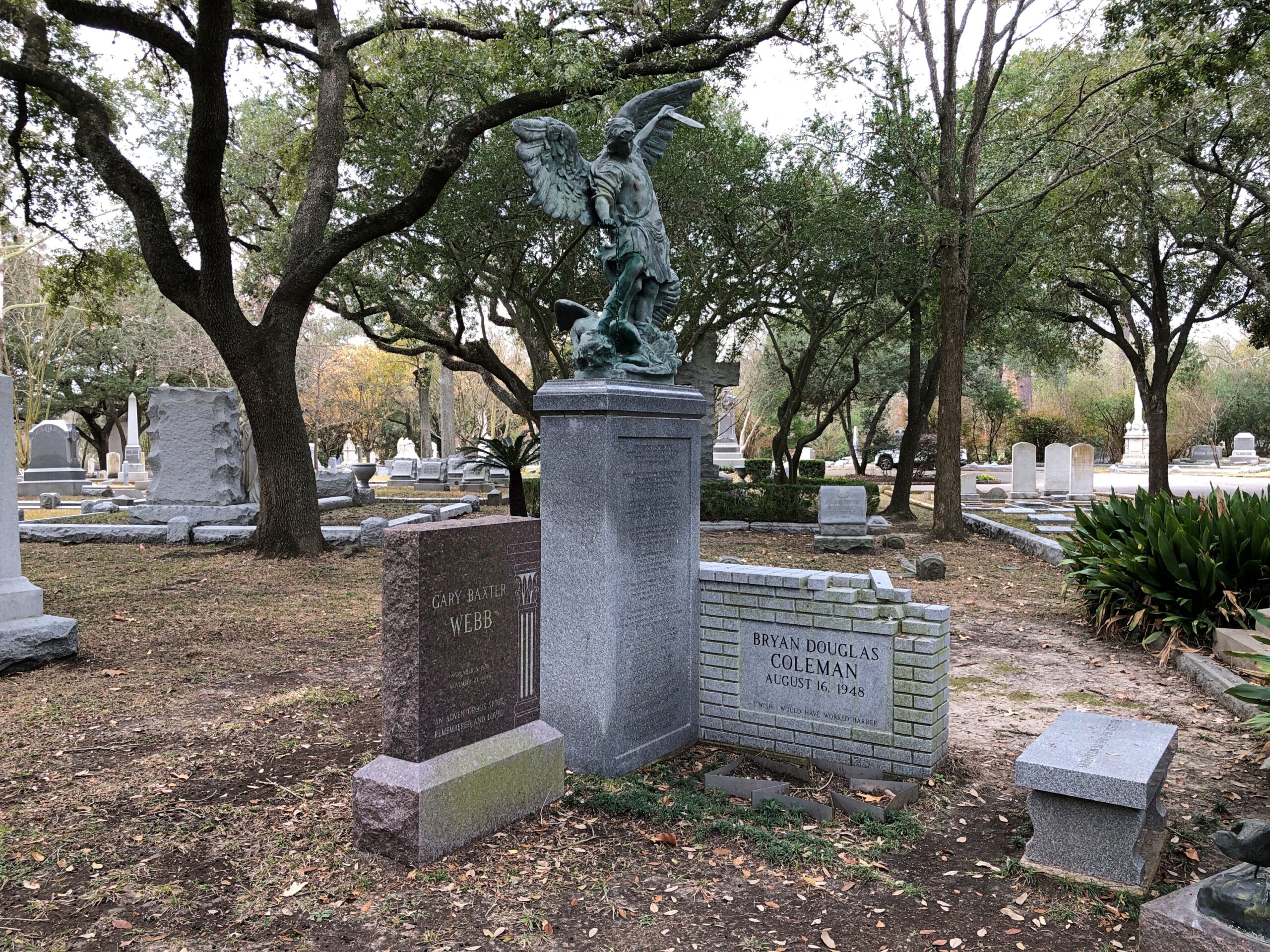
Goyen is an angel, looking rather not like one you might see on a Hallmark card. Below, looks like St. Michael body-stomping Satan.
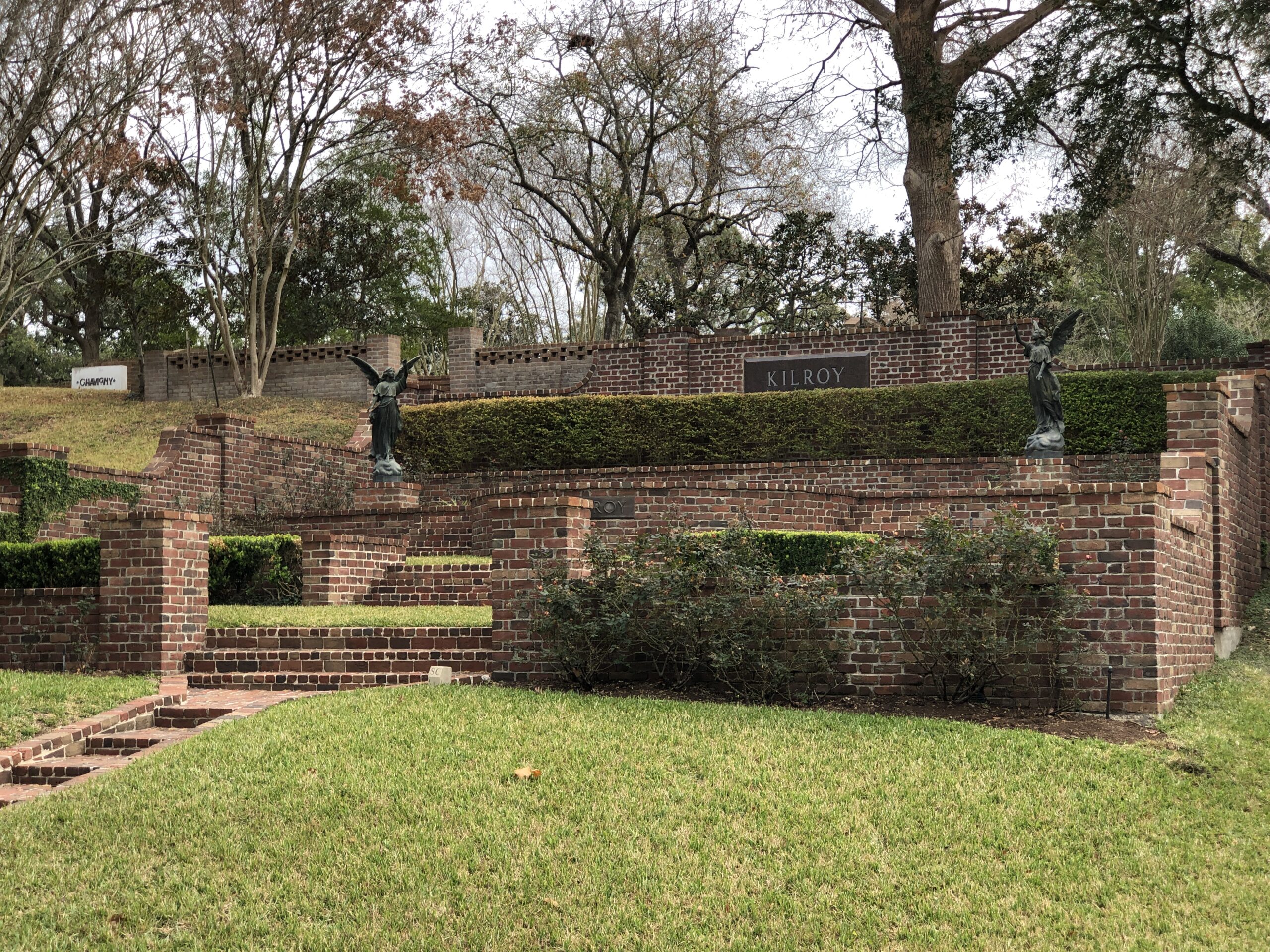
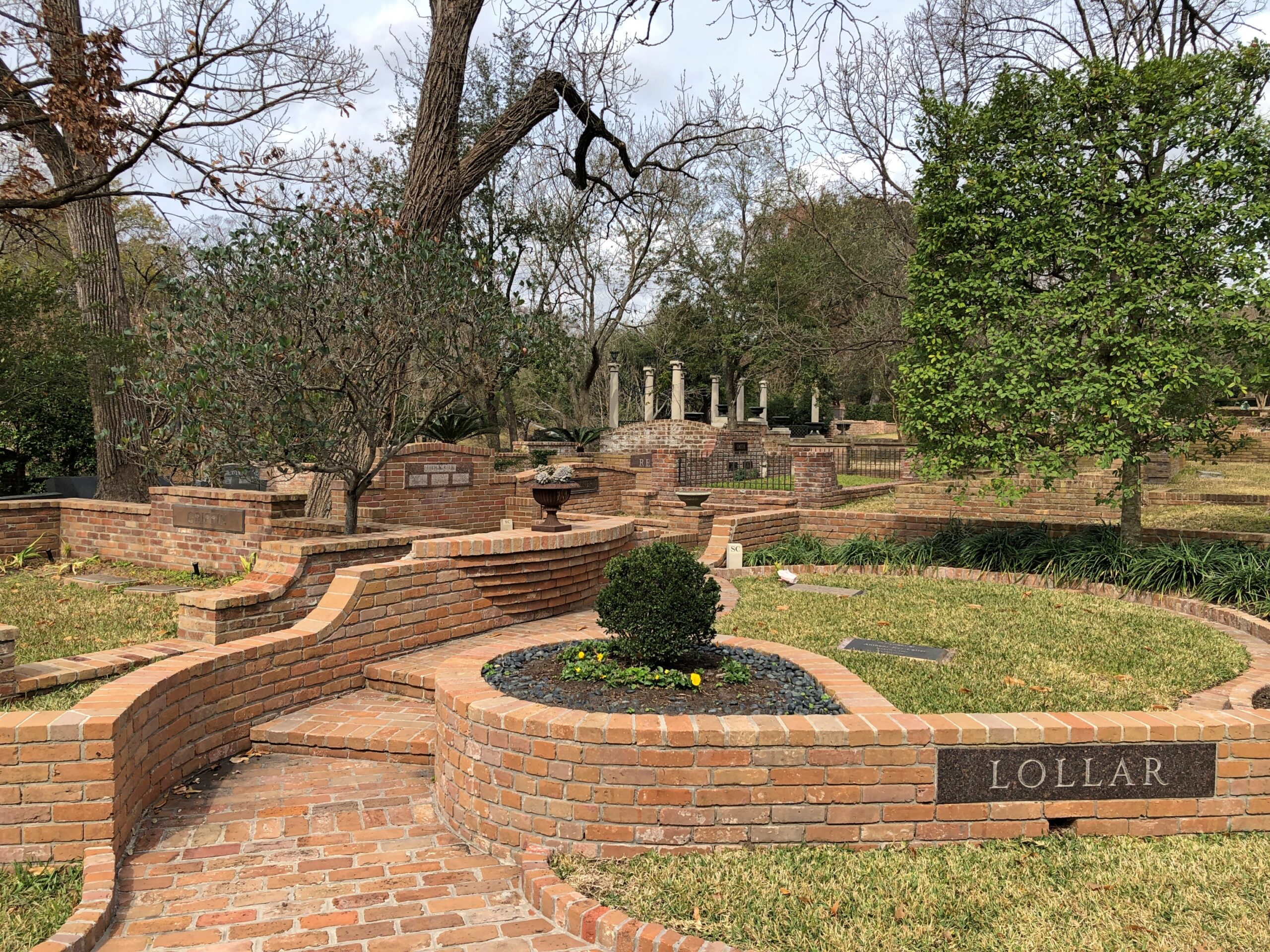
A large section of the cemetery, among the hills, uses artful bricks and intricate layouts and other features to convey old money – as old as Houston’s going to get, anyway, so we’re not talking about the Rothschilds.
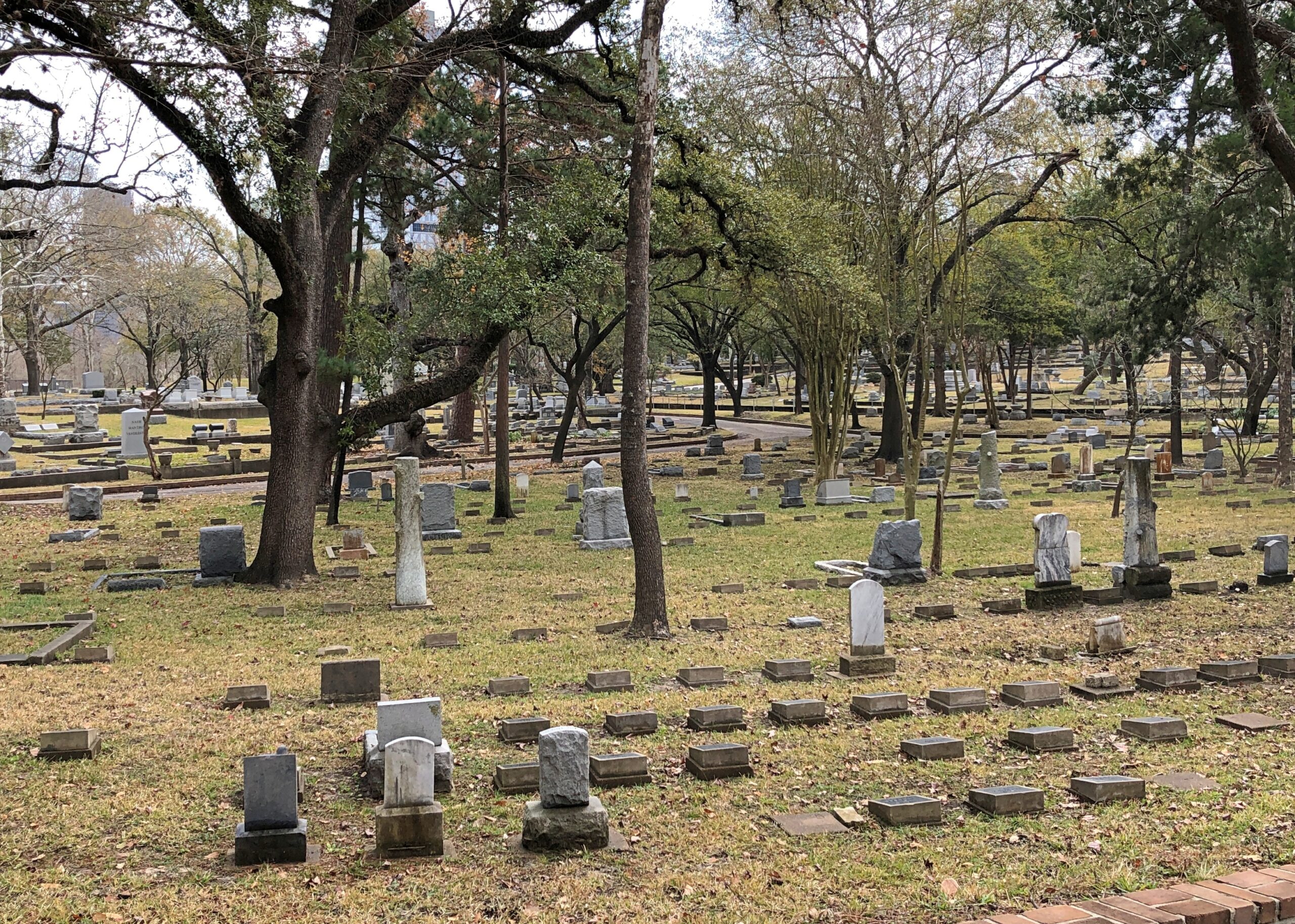
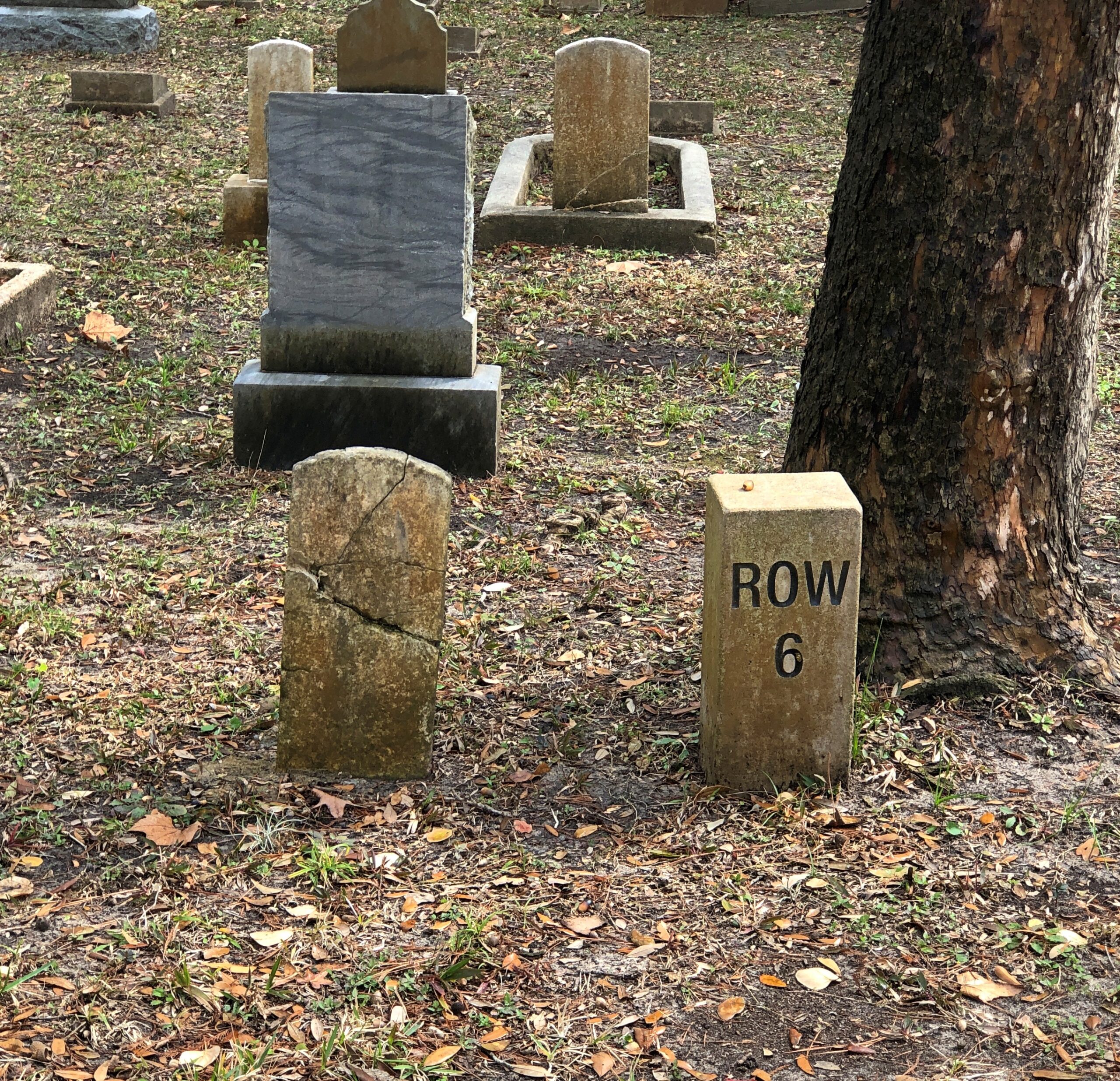
All very nice, but it’s good not to overlook more ordinary folk.
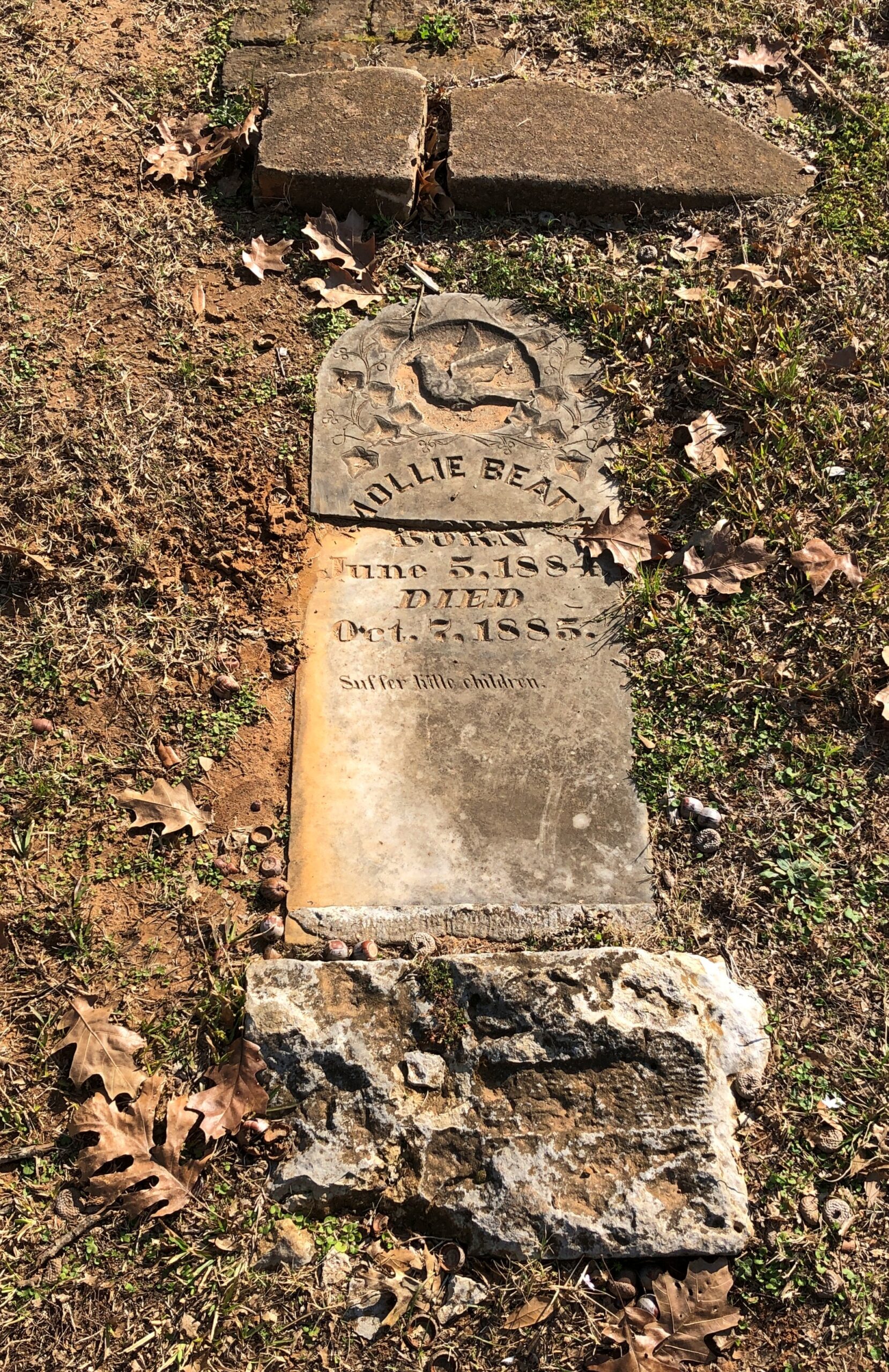
Including the usual sort of sad memorials you always find.
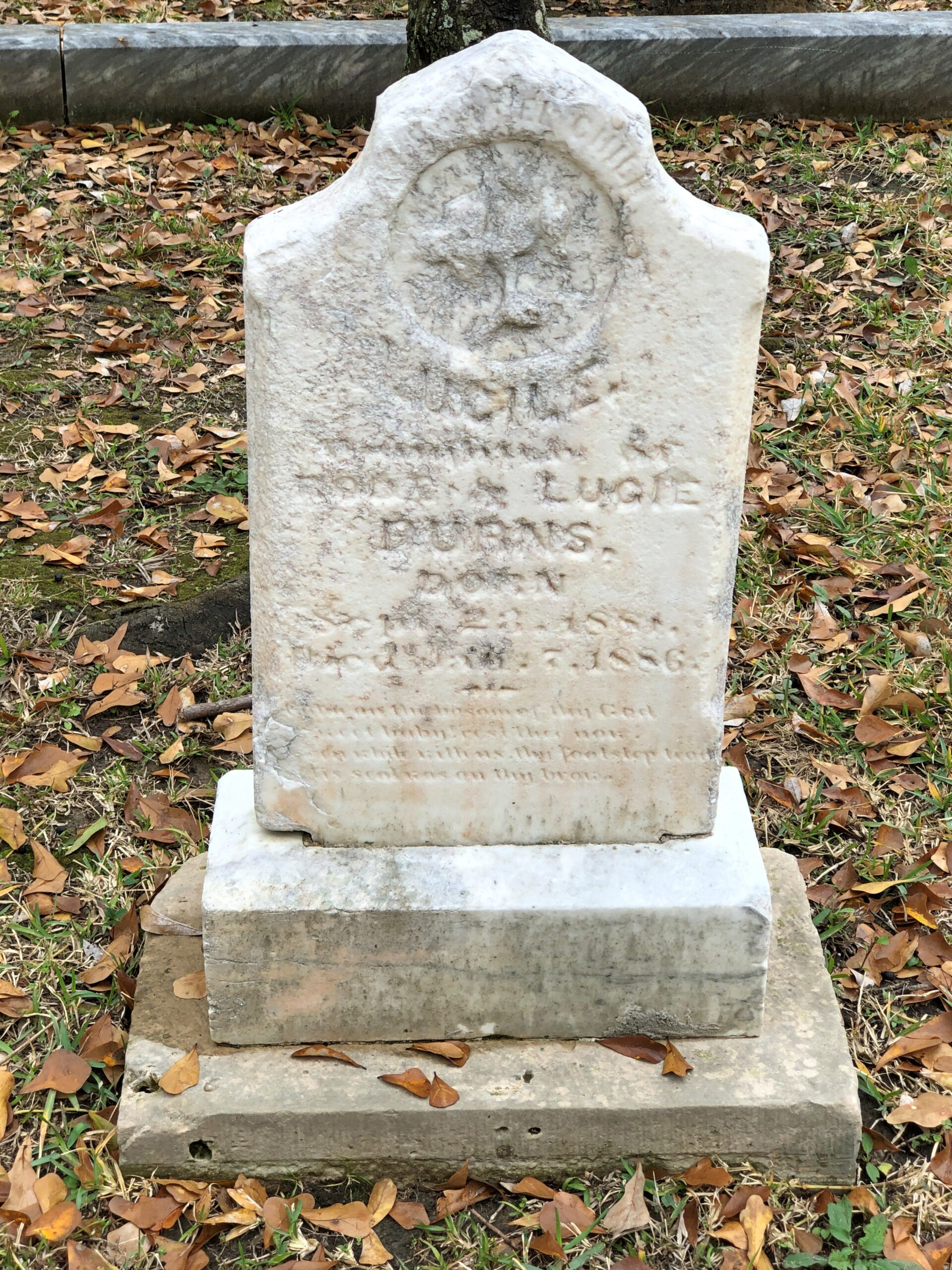
Well worn by time, but you can tell it memorializes a child.
Busy day, for-pay work to be done. Good day to stay home anyway, since rain has been falling in thick waves. Snow expected on Monday, followed by a winter-like cold snap for a day or two. Bah.
On Friday, on a whim, I used an AI program to animate one of the Big Boy statues I saw last month. A modest ad for the museum.
I created a new You Tube channel for it, It’s AI, But It Ain’t Slop, which is a motto we can call rally around. I’m starting to suspect that much AI animation looks like it does not only because of the technology’s inherent limitations, but also because of unimaginative prompts. Just a hunch.
Anyway, in roughly 48 hours, the thing has gotten more than 1,000 views, along with three likes and a dislike, but no comments. That isn’t many views in the grand scheme of YouTube, and only about a quarter of that total watched all the way through, but I’m tickled all the same. My postings over the years have been desultory, and none has gotten more than a few dozen views, if that. Give the people what they want, I guess, such as talking Big Boys.
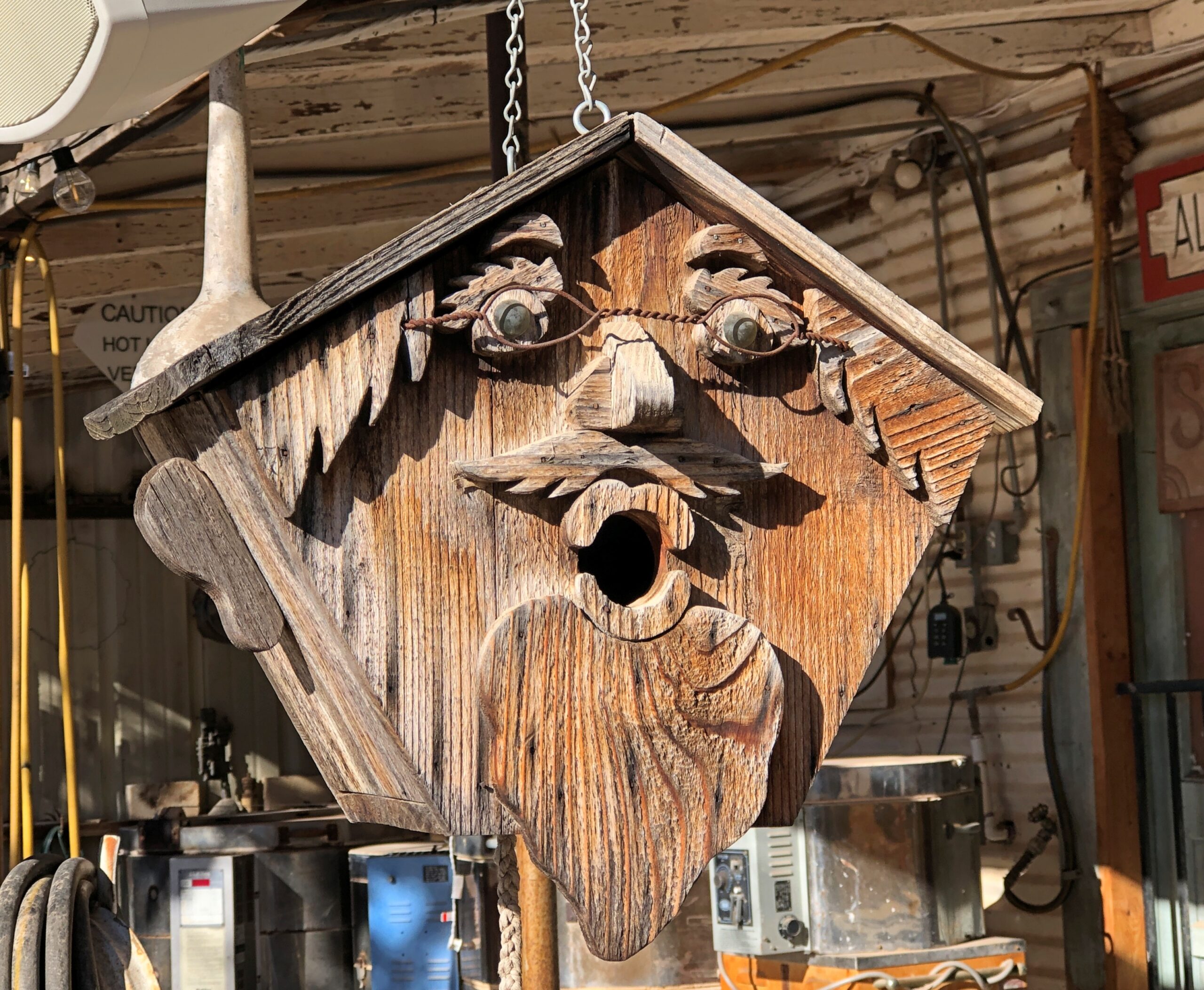
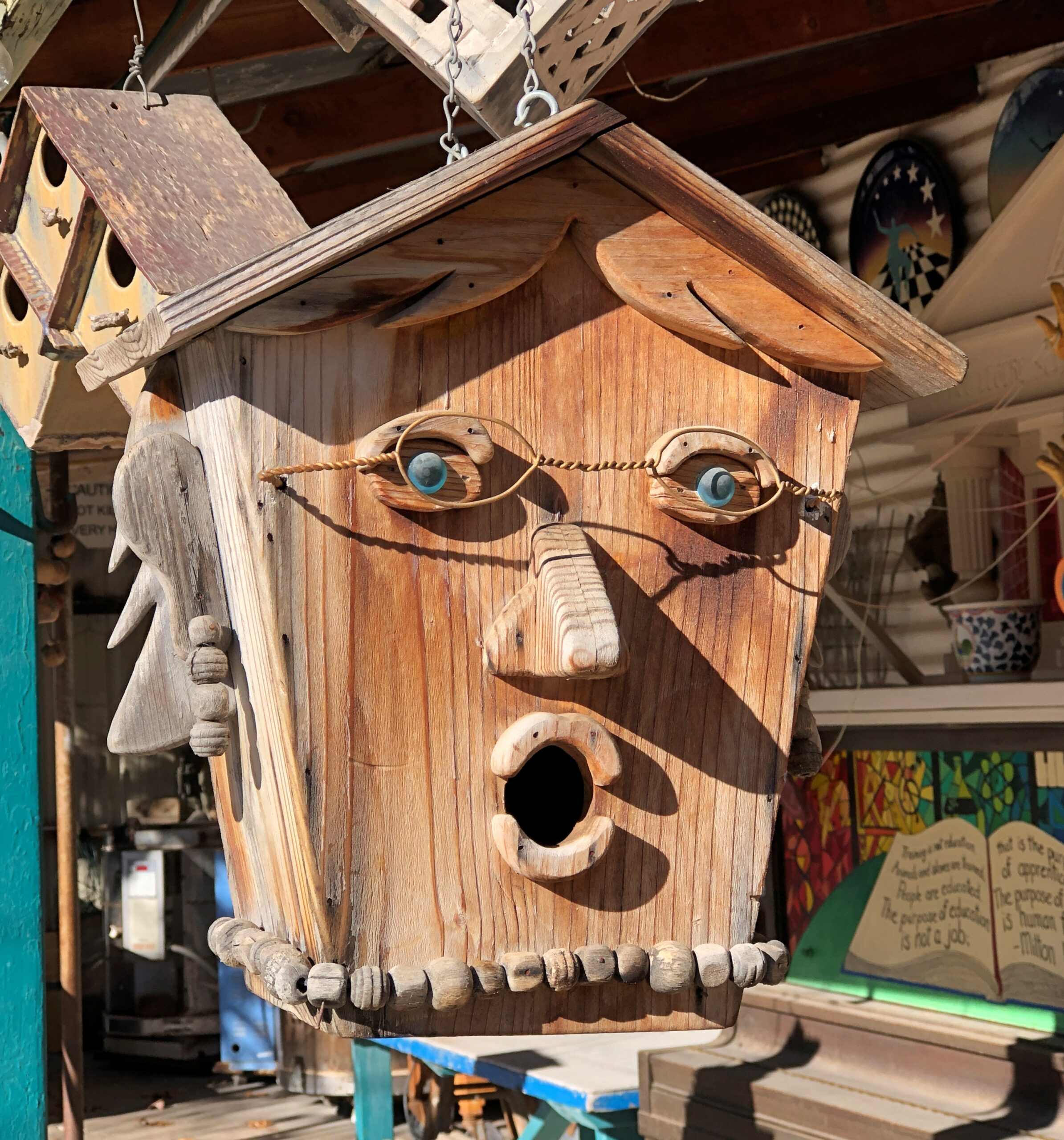
I thought of Ed Wynn, but his glasses tended to be round, if Google images is to be believed. I asked AI for some suggestions about which famed entertainer was known for his oval-rimmed glasses, and it returned the following suggestions from most to least likely: Harold Lloyd, Peter Lorre and Buddy Hackett. Not sure “Buddy Hackett” in this context is an AI hallucination. Just a lousy opinion. Maybe there’s no single inspiration anyway.
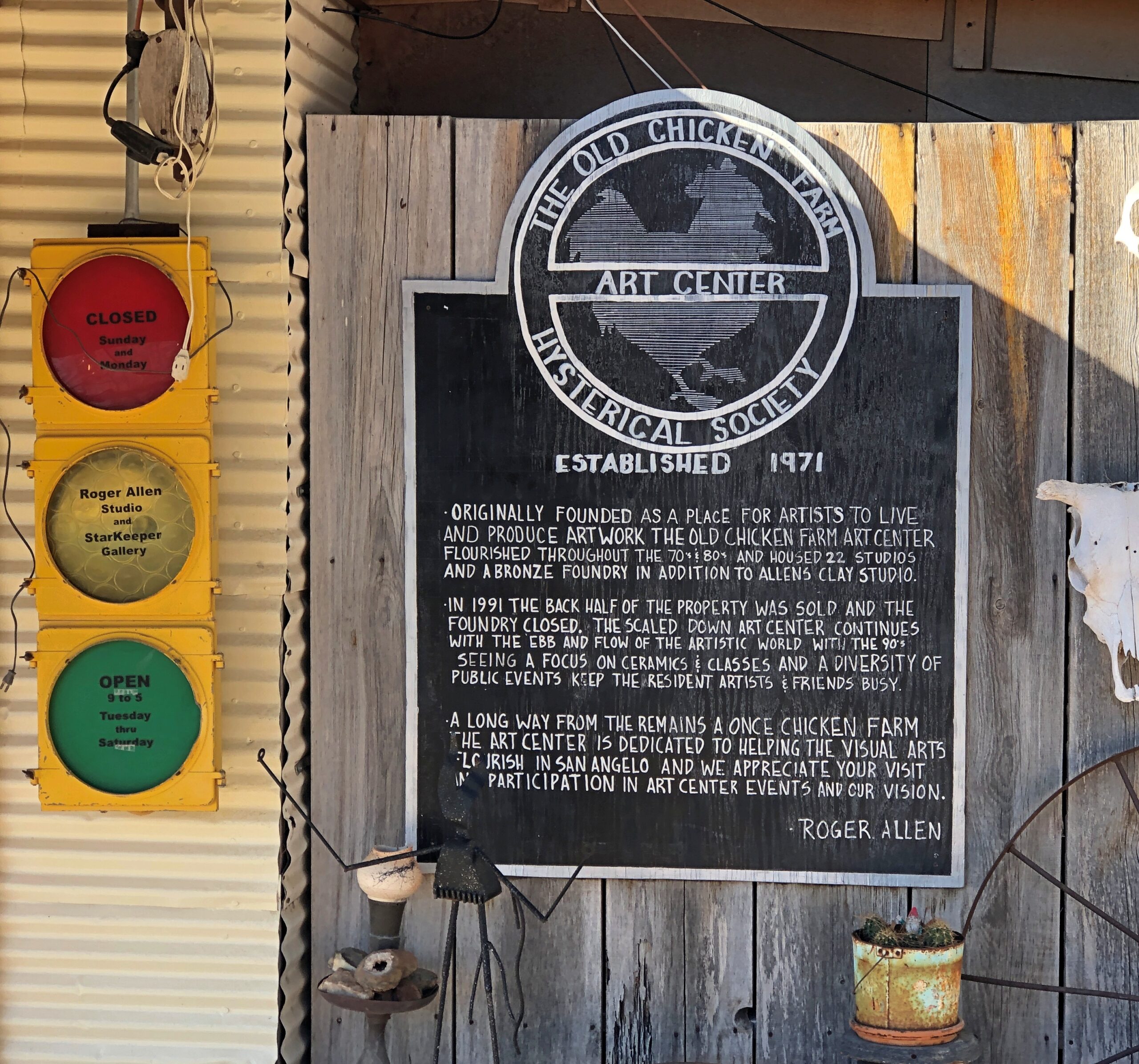
Which came first, the chicken or the art center? There’s a definite answer to that, the chicken. Lots of chickens.
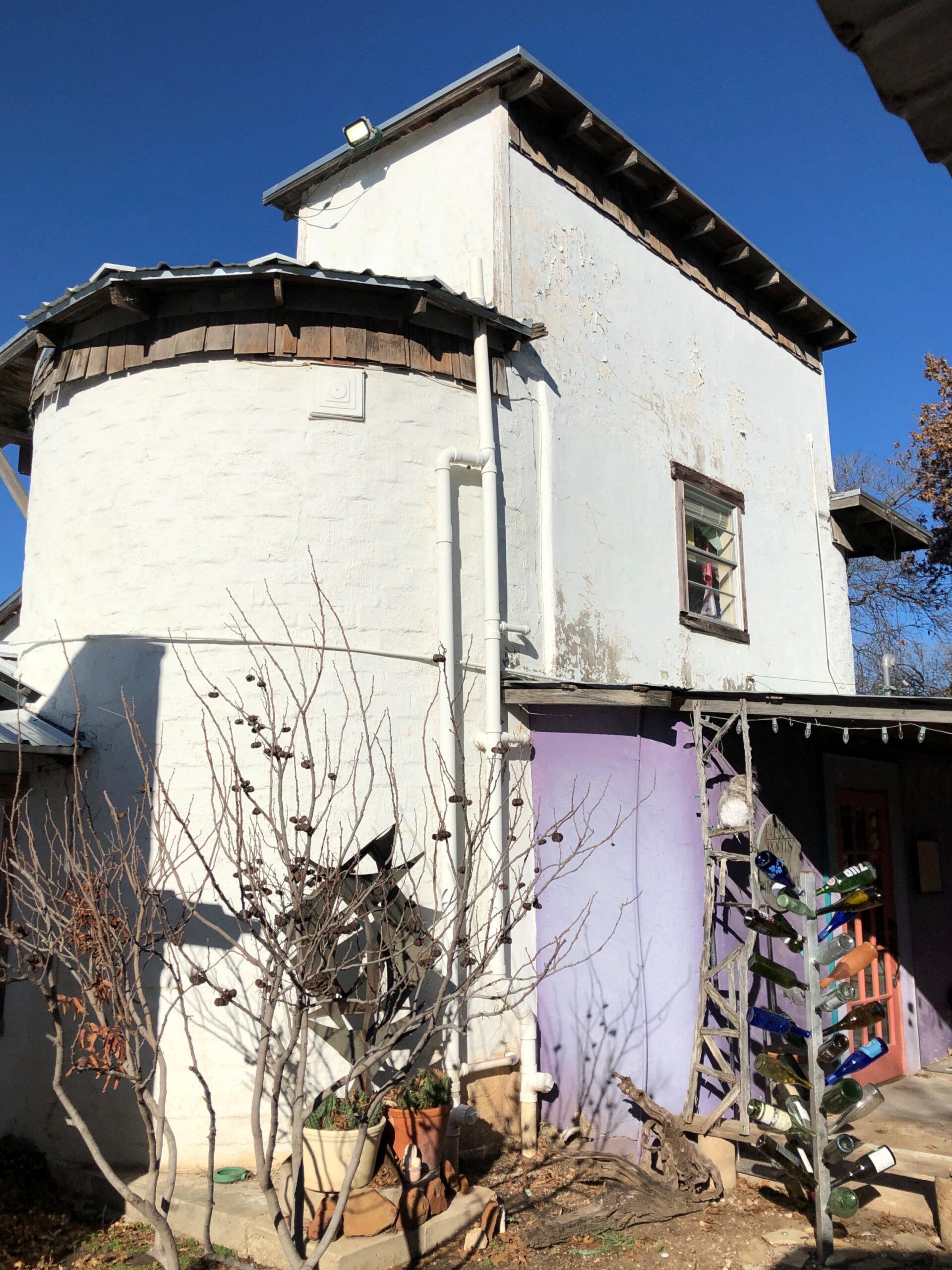
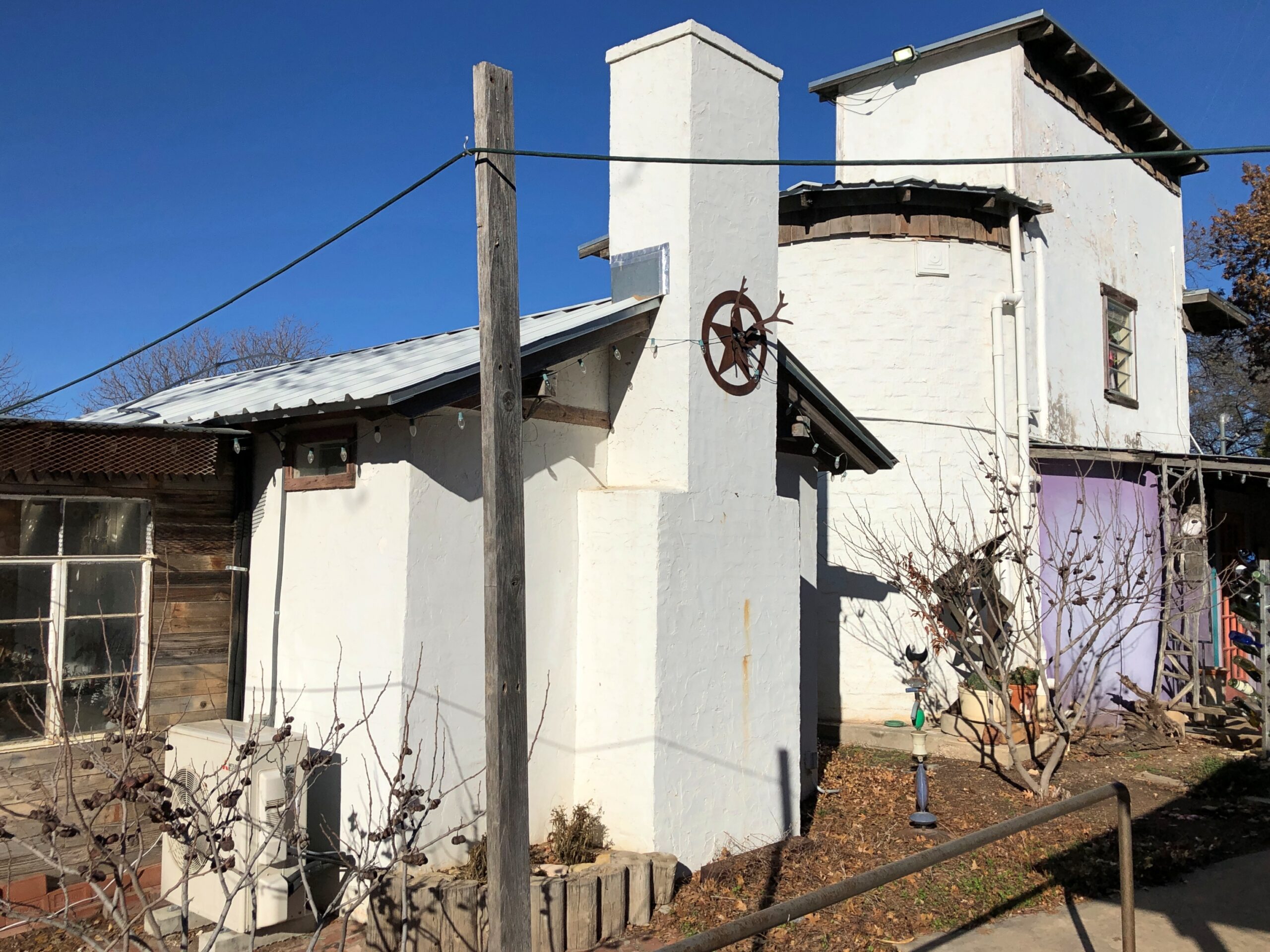
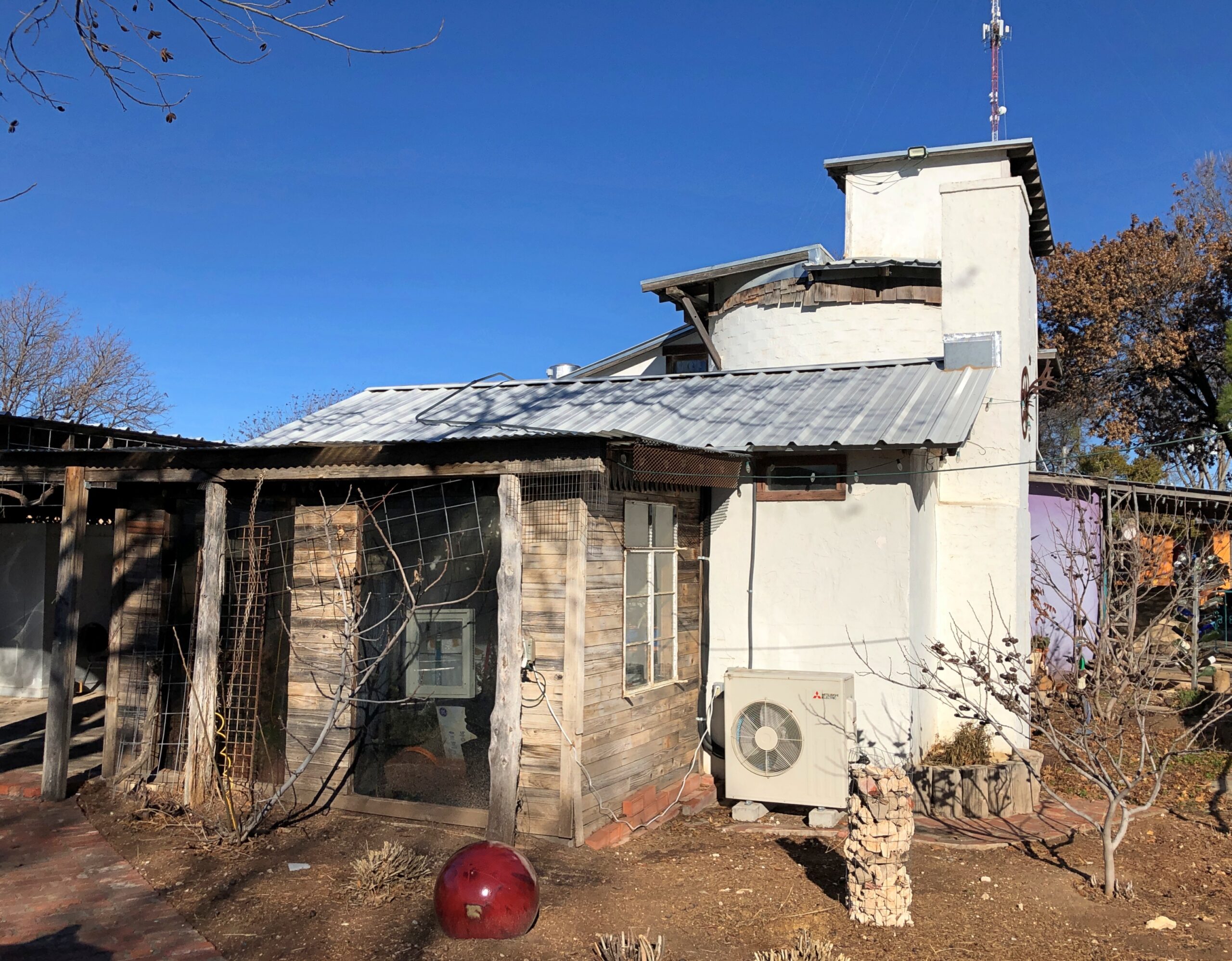
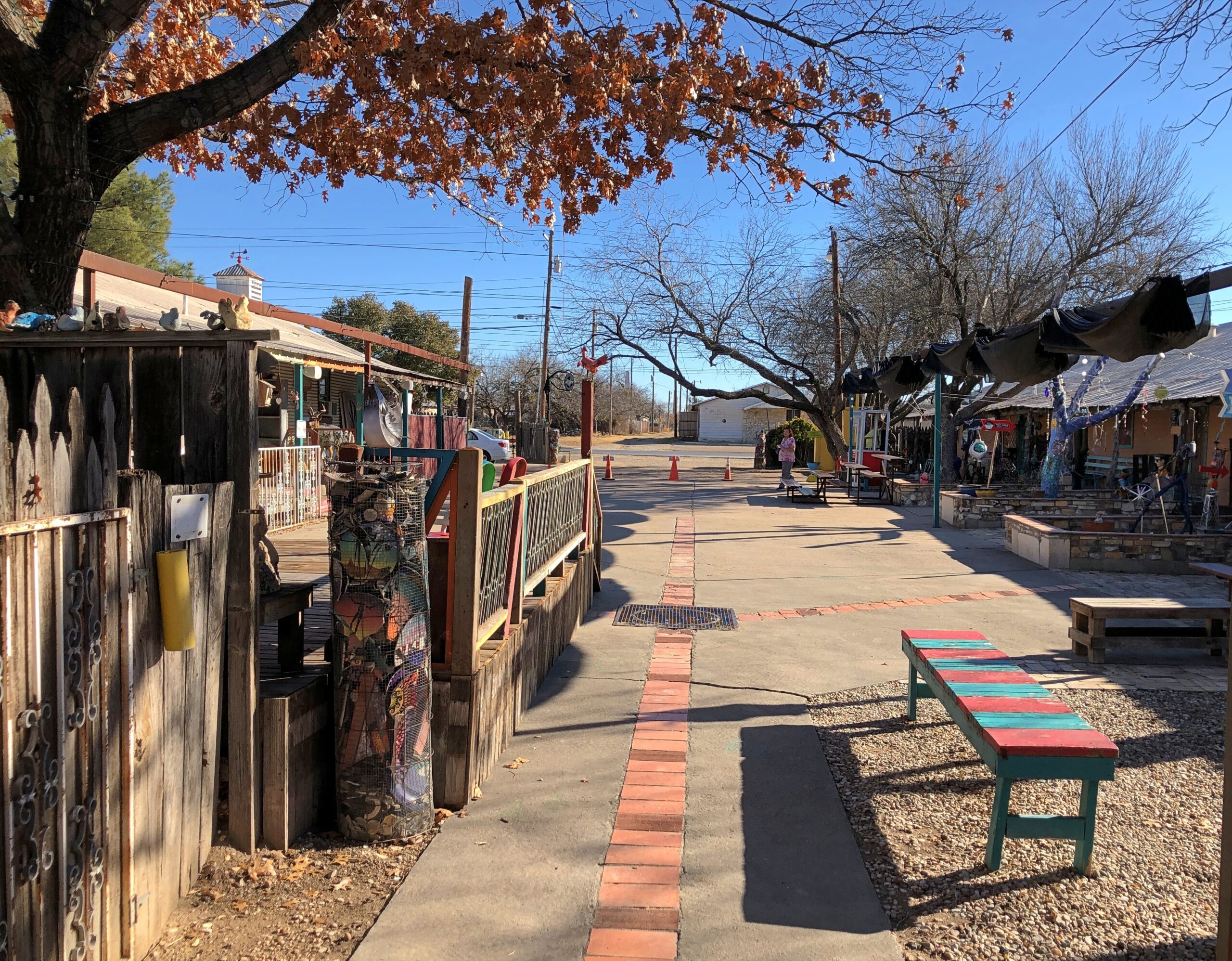
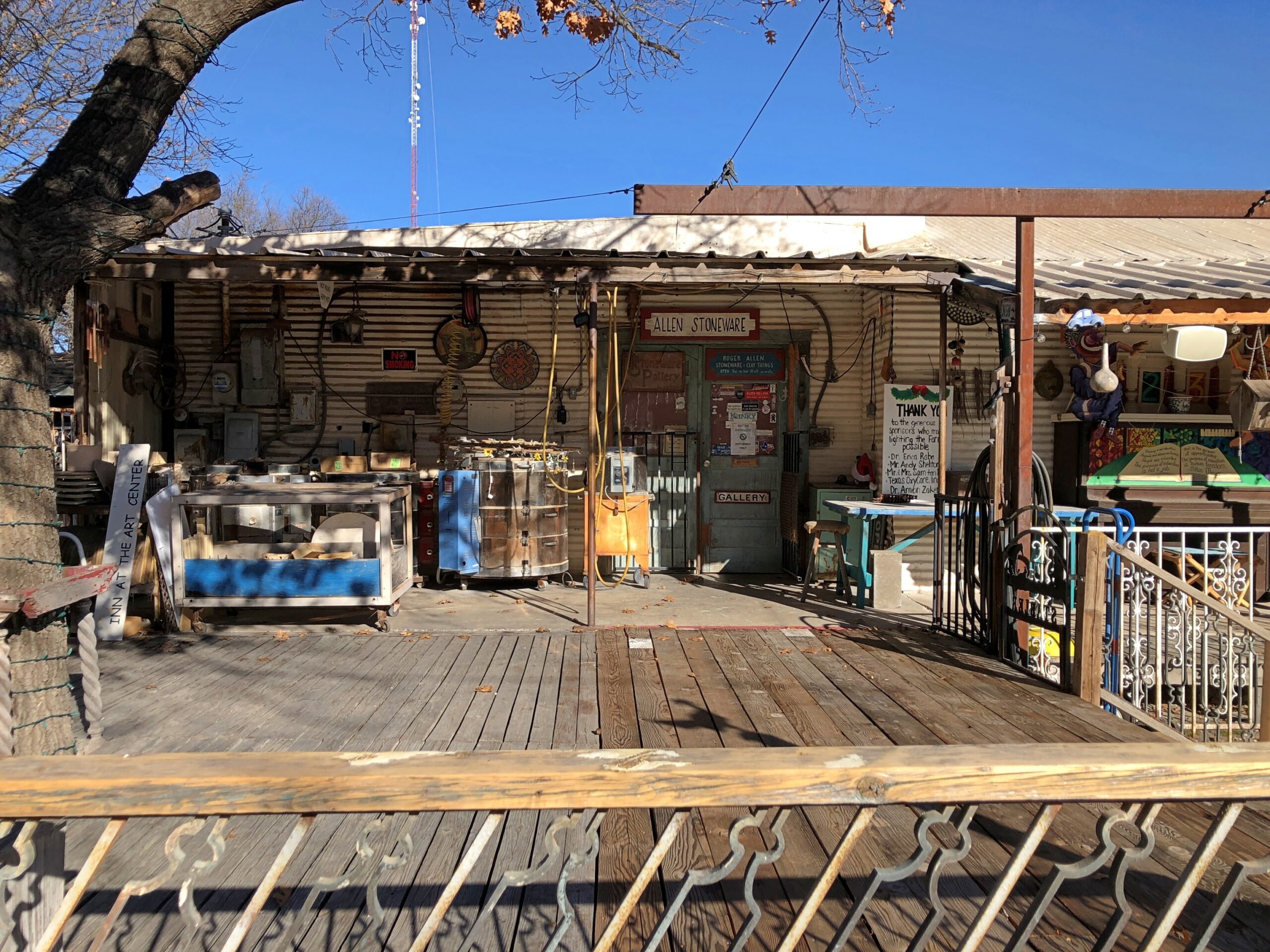
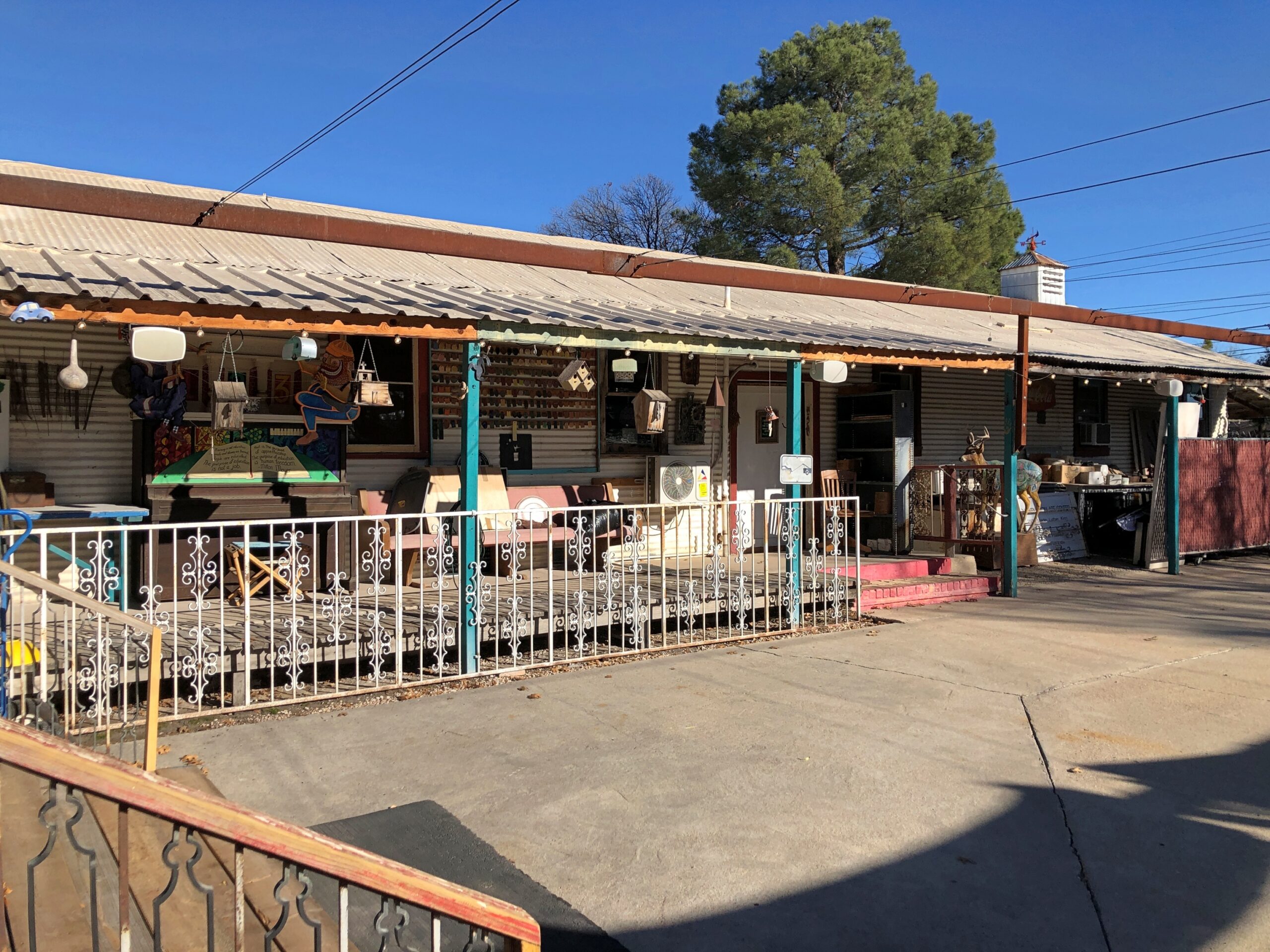
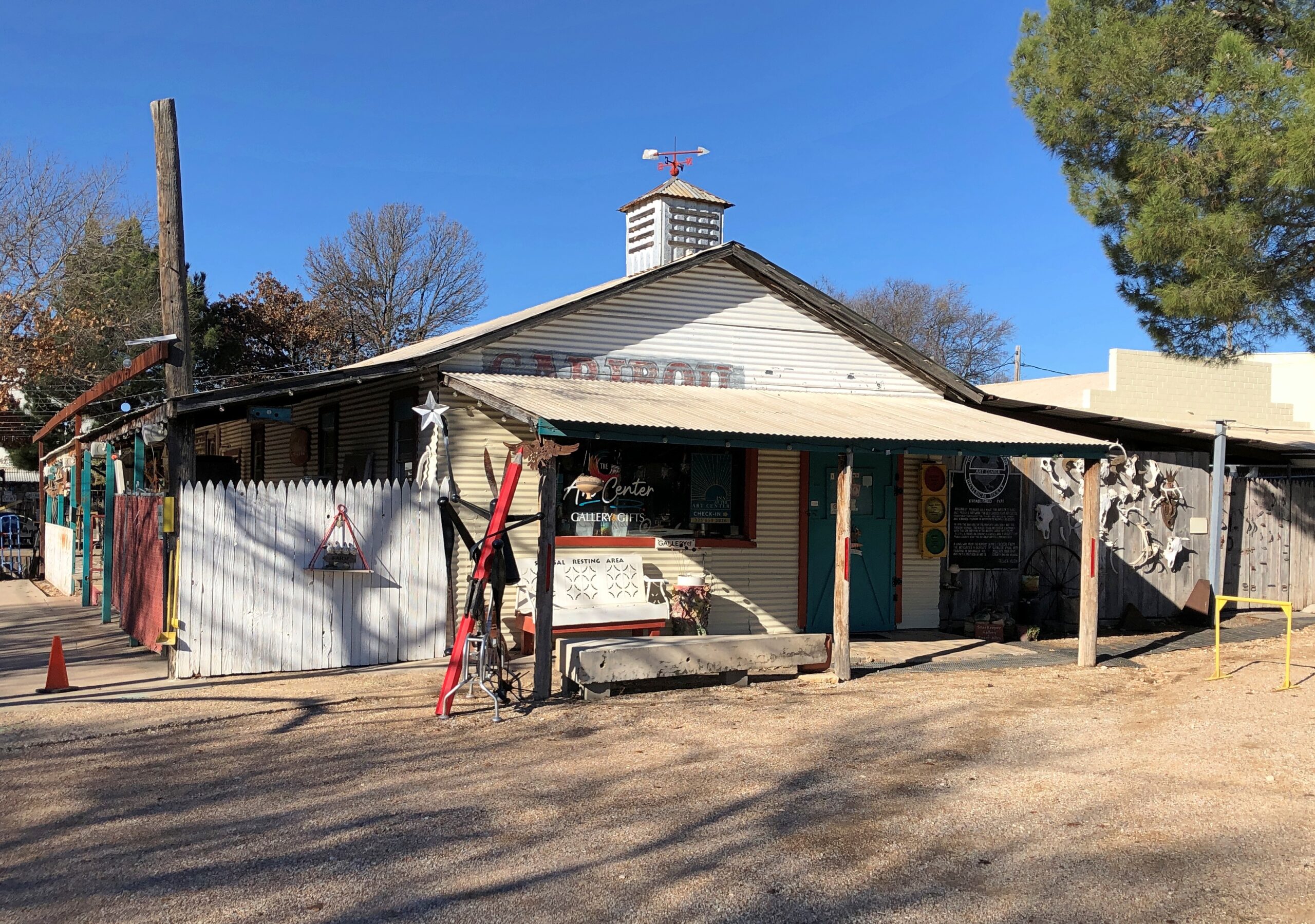
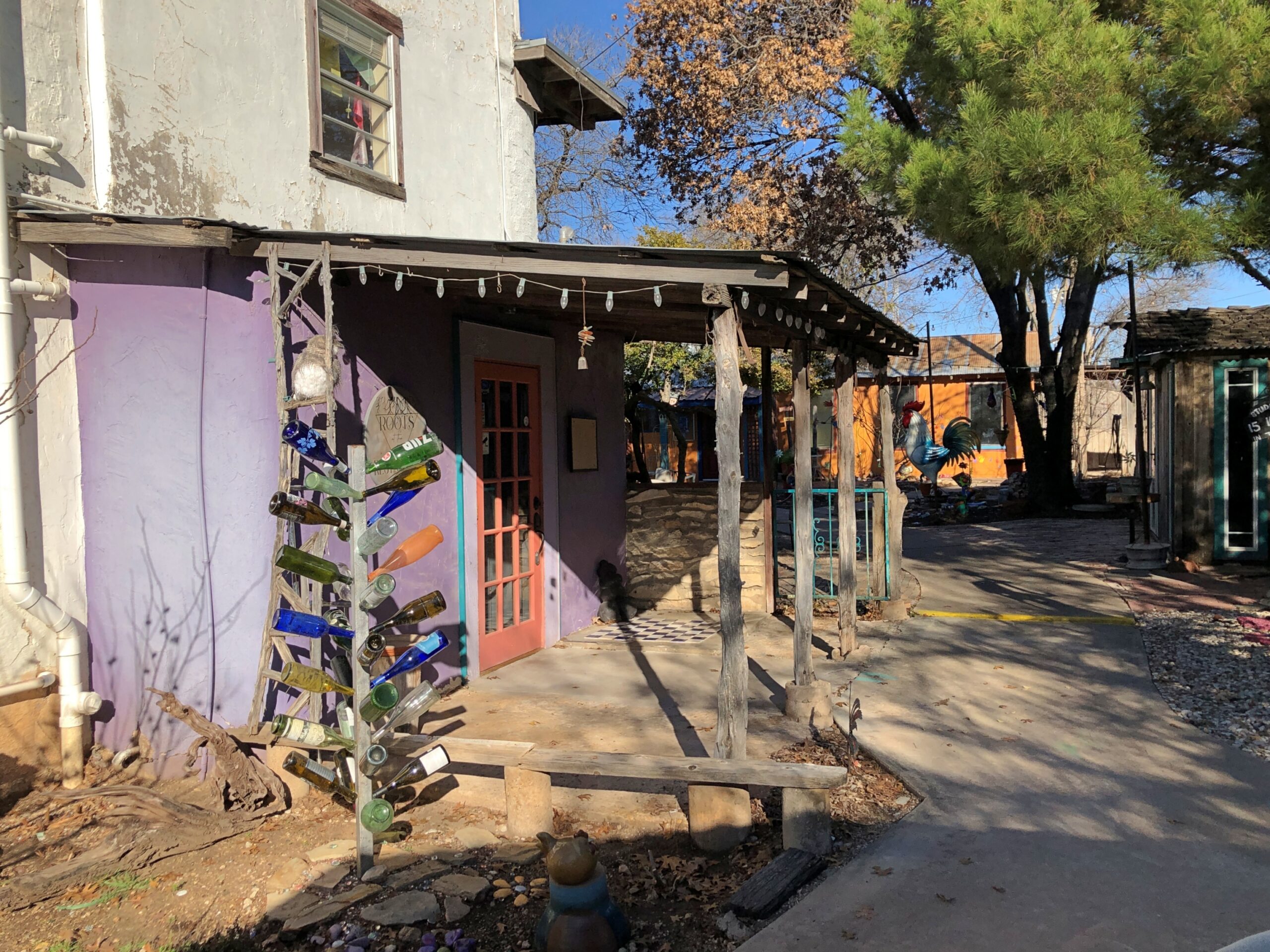
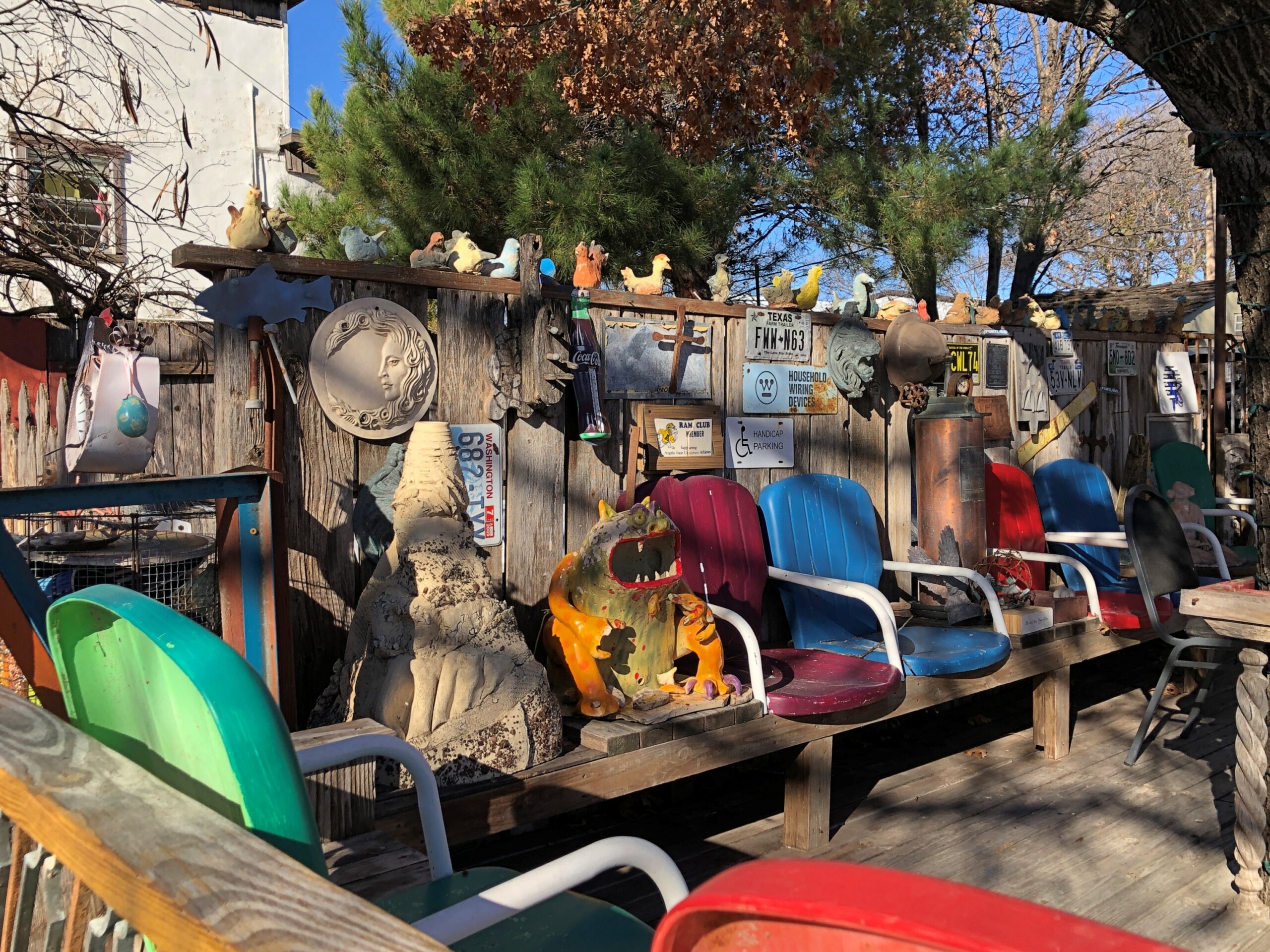
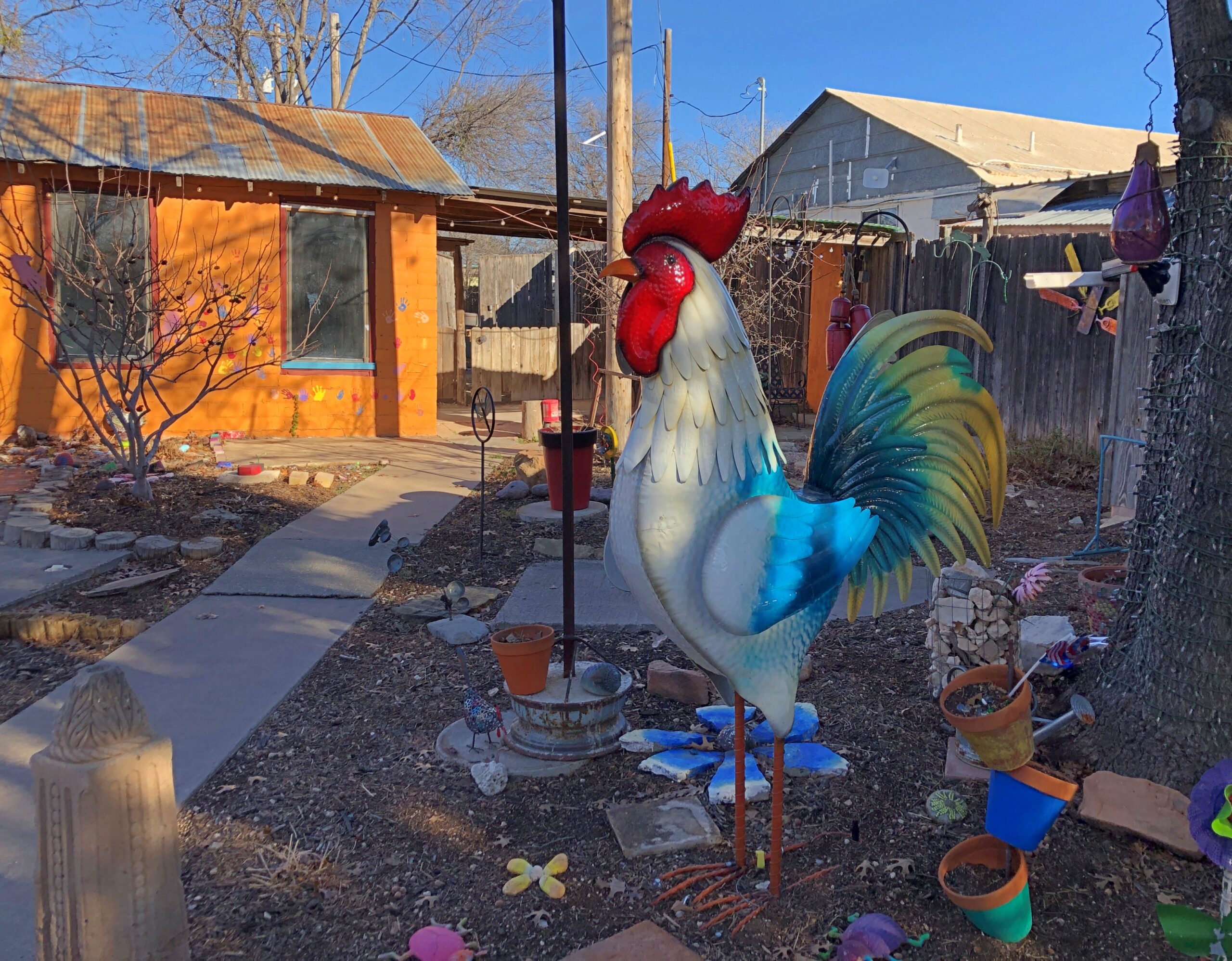
By the early 1970s, a sizable chicken farm in San Angelo, Texas, had run its course, and artists took to the task of redeveloping the place into the Old Chicken Farm Art Center. Fifty-plus years is a long time, but if you wander around the property in the morning sun, as Yuriko and I did, you’ll get a sense of the old chicken haunts.
No mere coops, but a poultry complex of an earlier time. I’m sure it was made obsolete by larger facilities and automation. These days, most of the spaces are art studios.
Because I can, I checked the numbers for chicken production in Tom Green County, of which San Angelo is the seat. Relatively few chickens, turns out: $220,000 in chicken sales in 2022, compared to $54.7 million in cattle sales for the county. Sounds like that might be a single chicken farm out somewhere from town. The town chickens, you might say, long ago flew the coop.
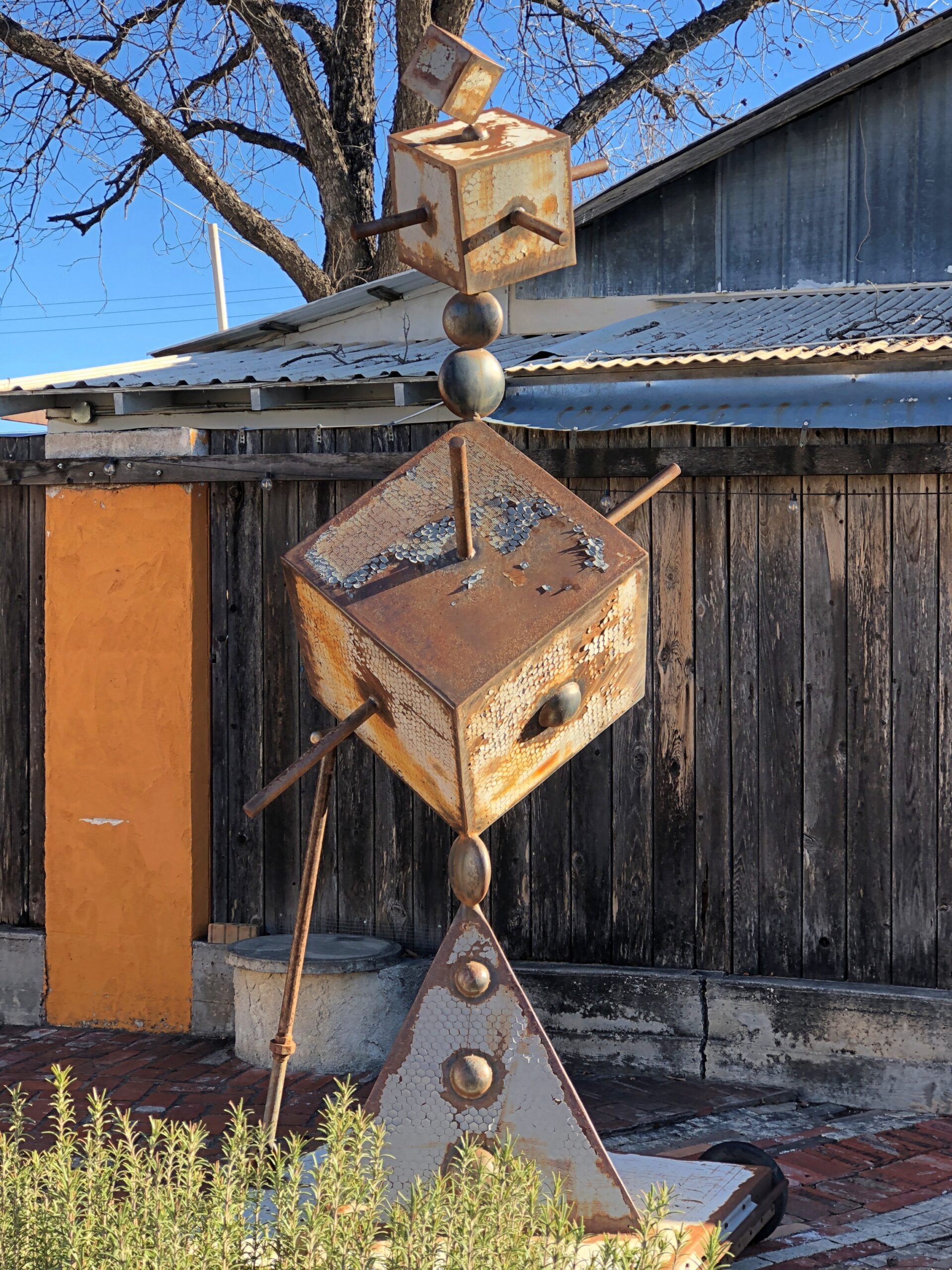
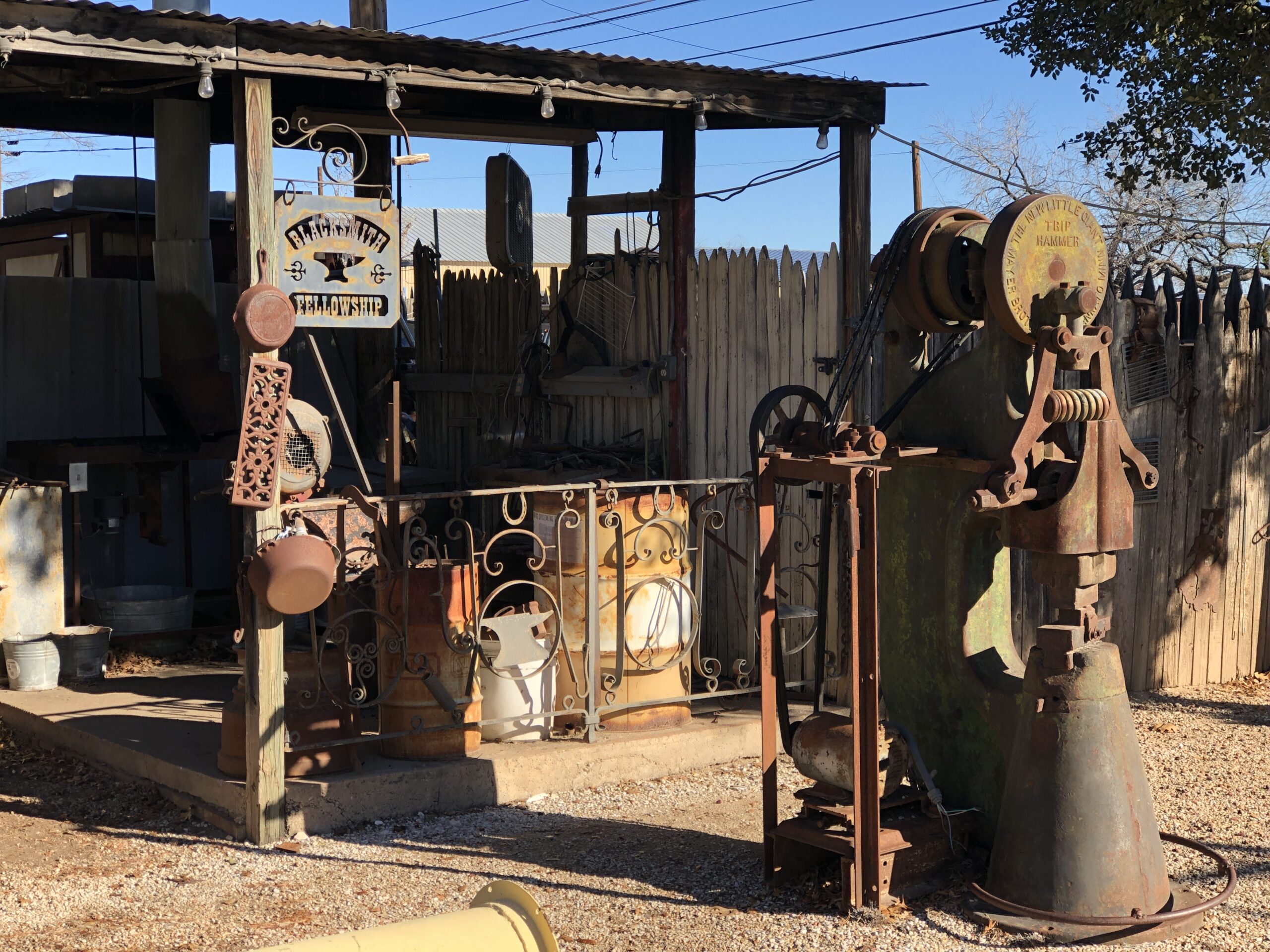
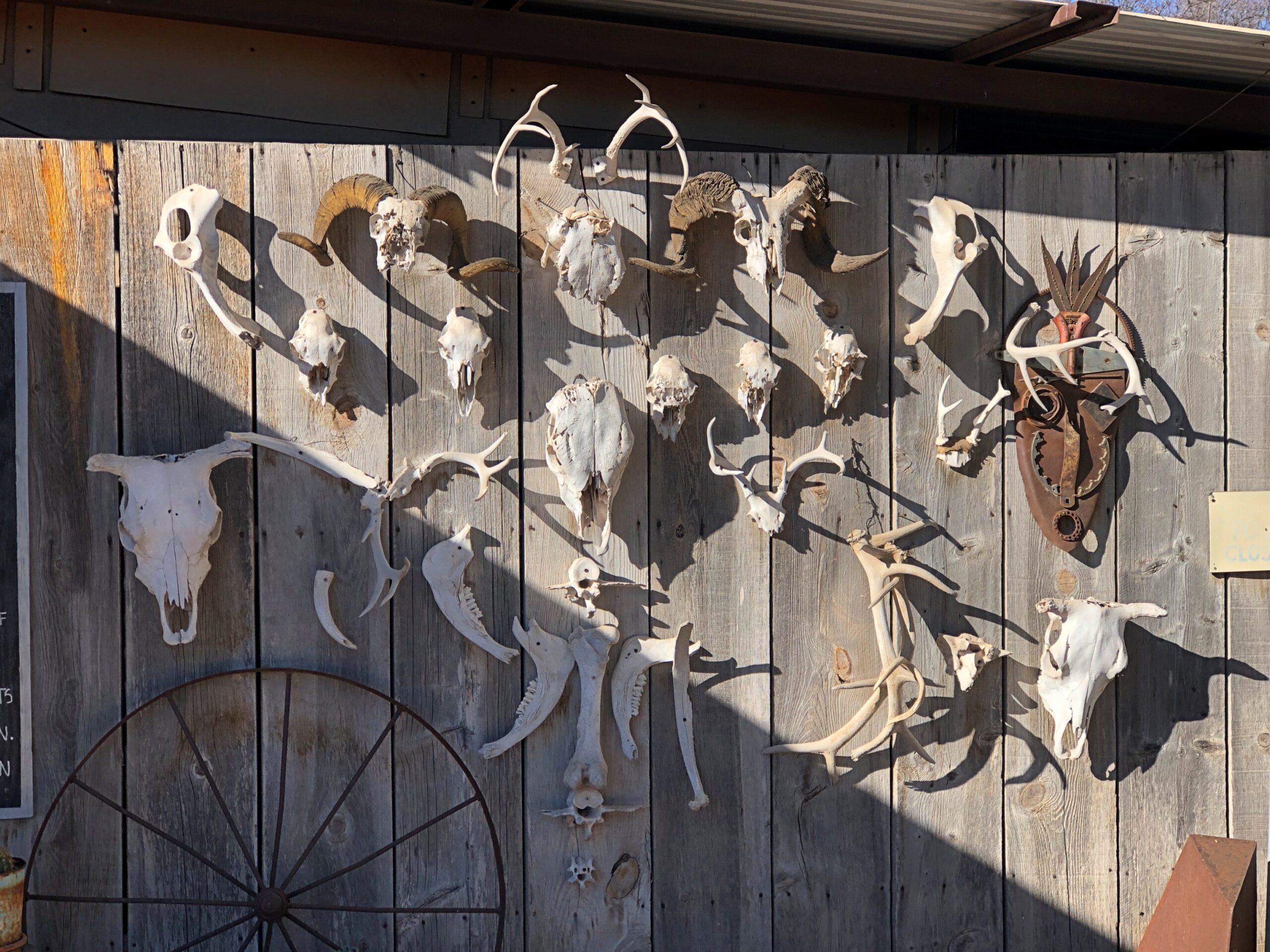
Being an art complex, there’s a lot of art and other objects on display, besides the wooden faces.
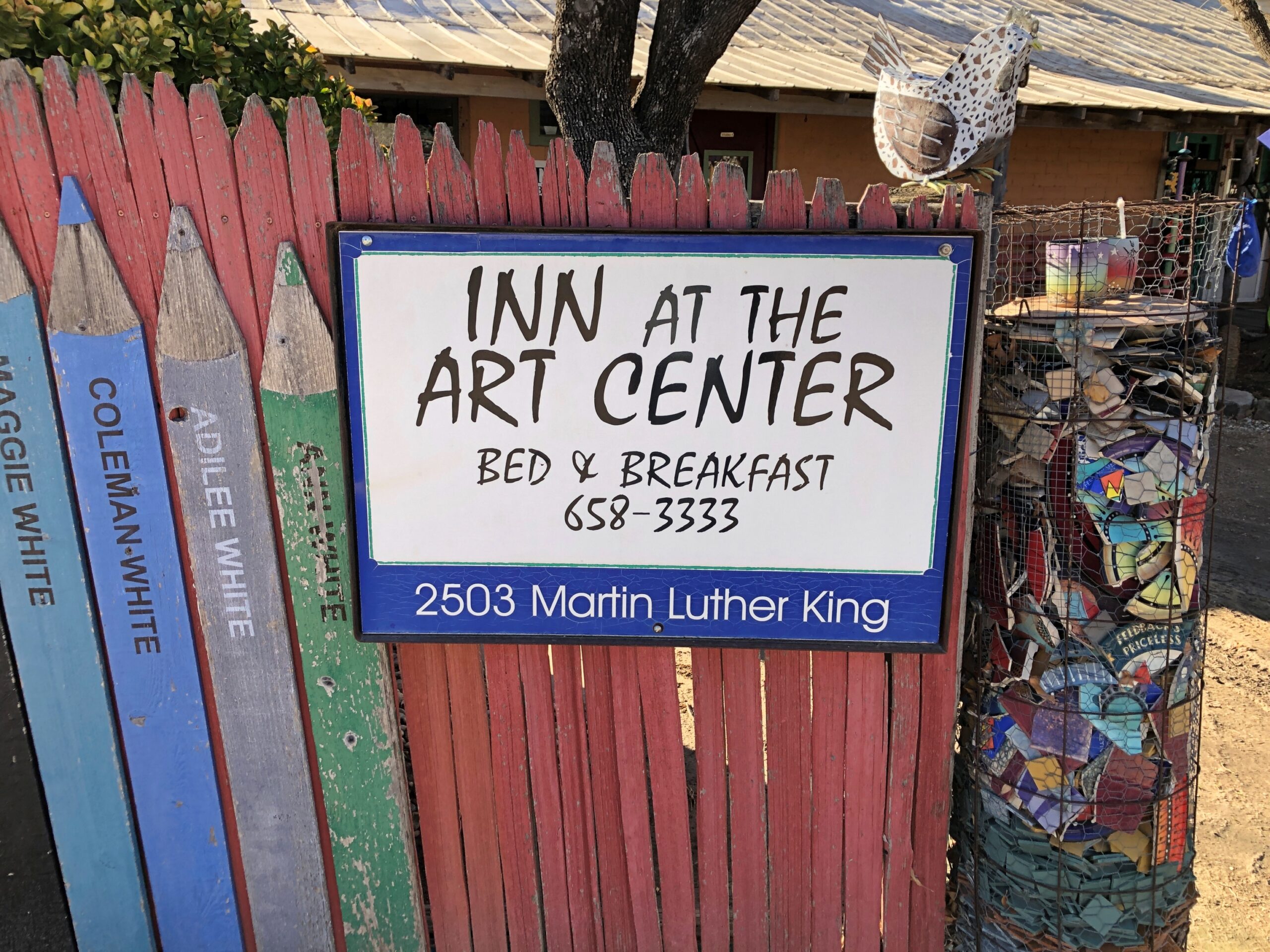
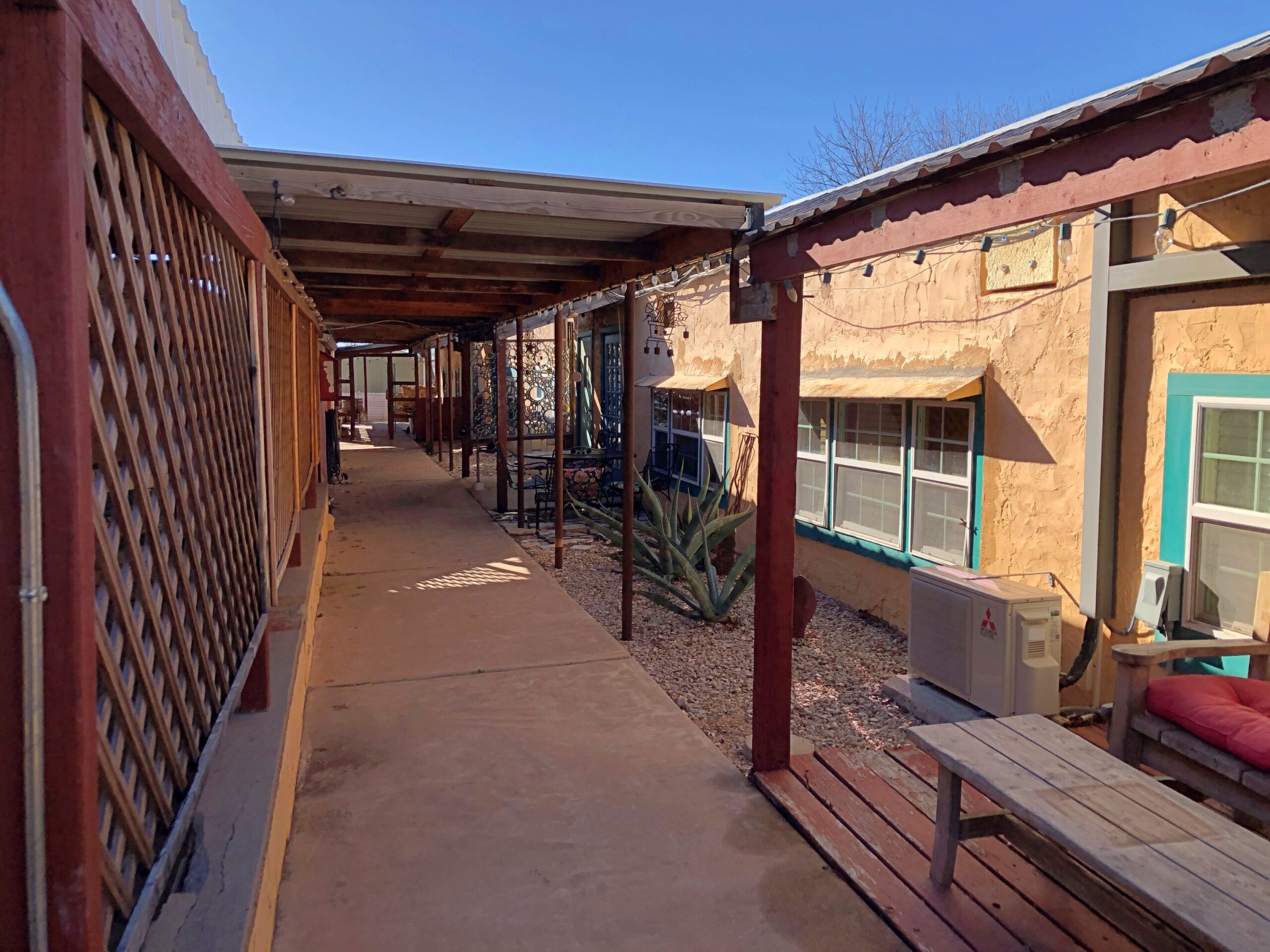
Being fairly early still on Monday morning, most of the studios weren’t open yet – they would be in the afternoon, when were already on the road to Marathon. We’d passed the night at the Inn at the Art Center Bed & Breakfast, in a room that opens onto a breezeway.
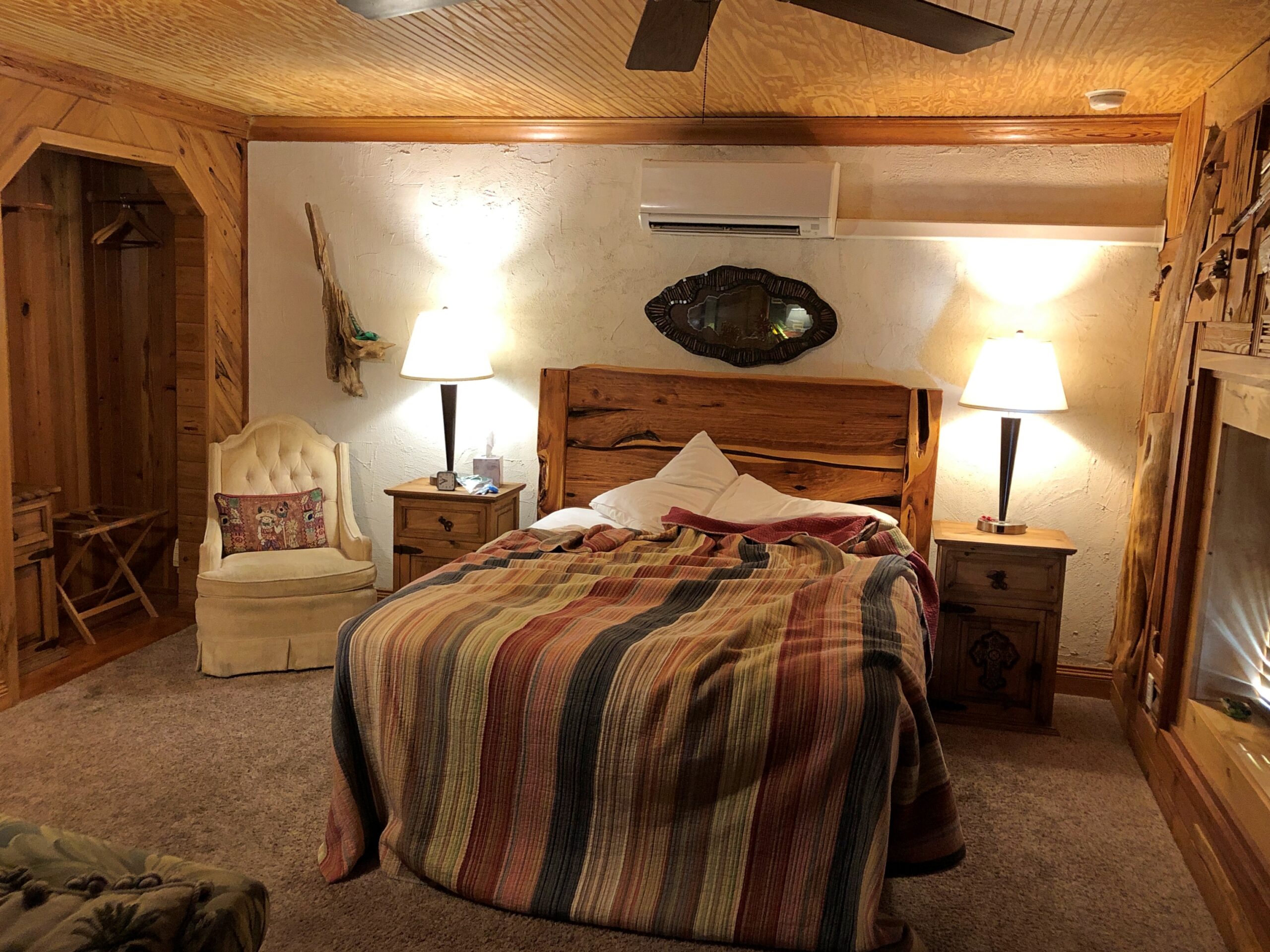
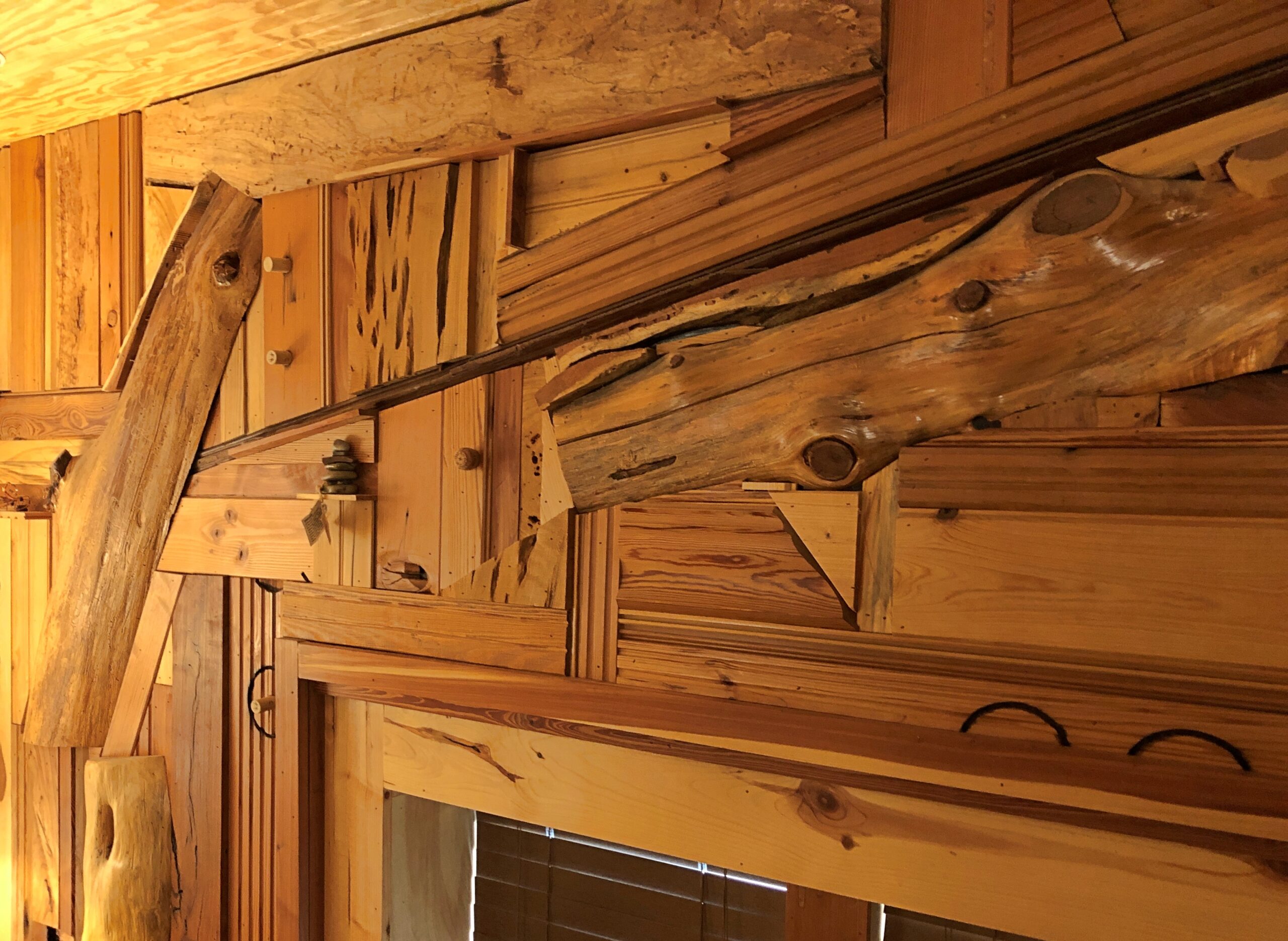
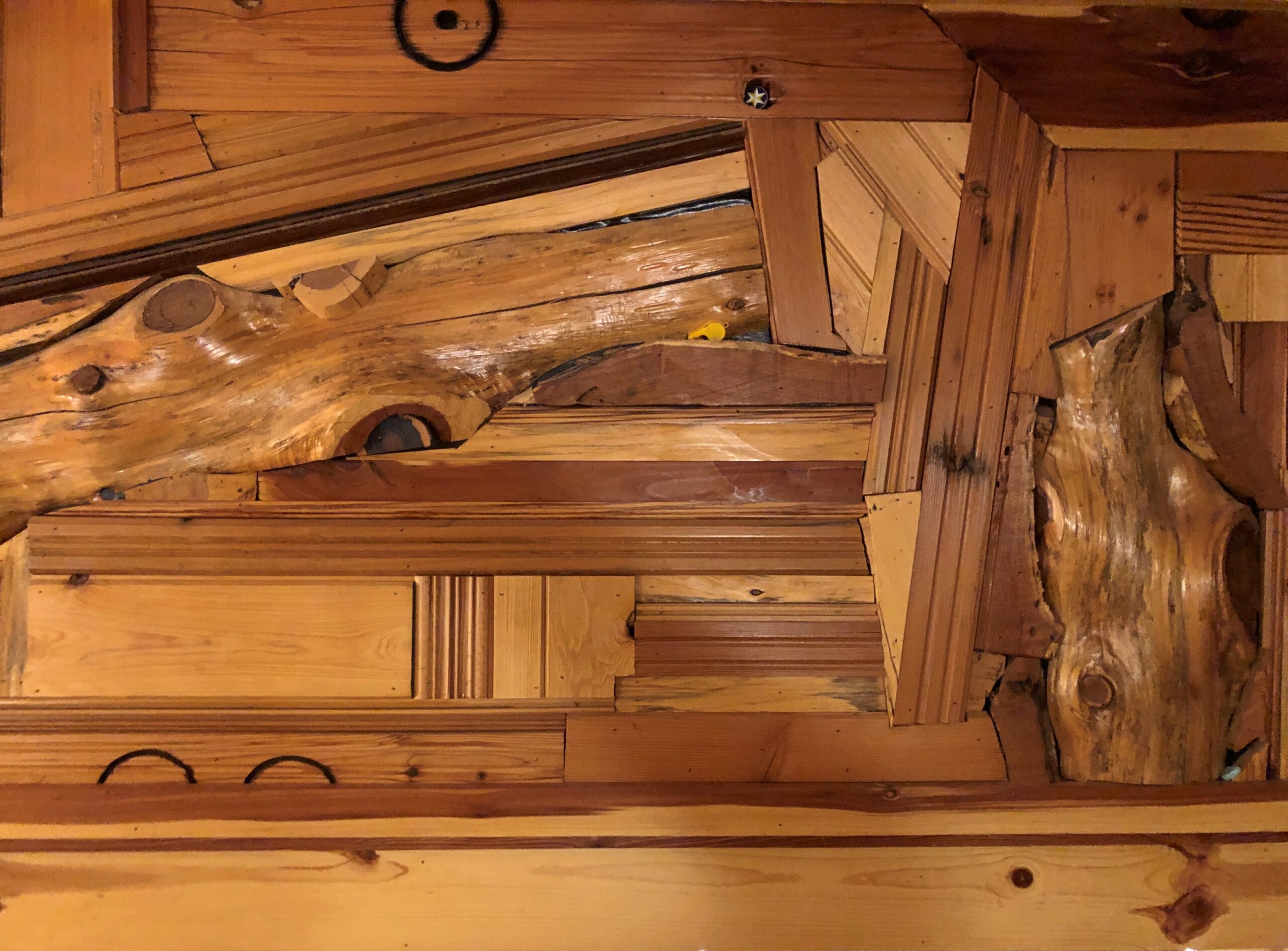
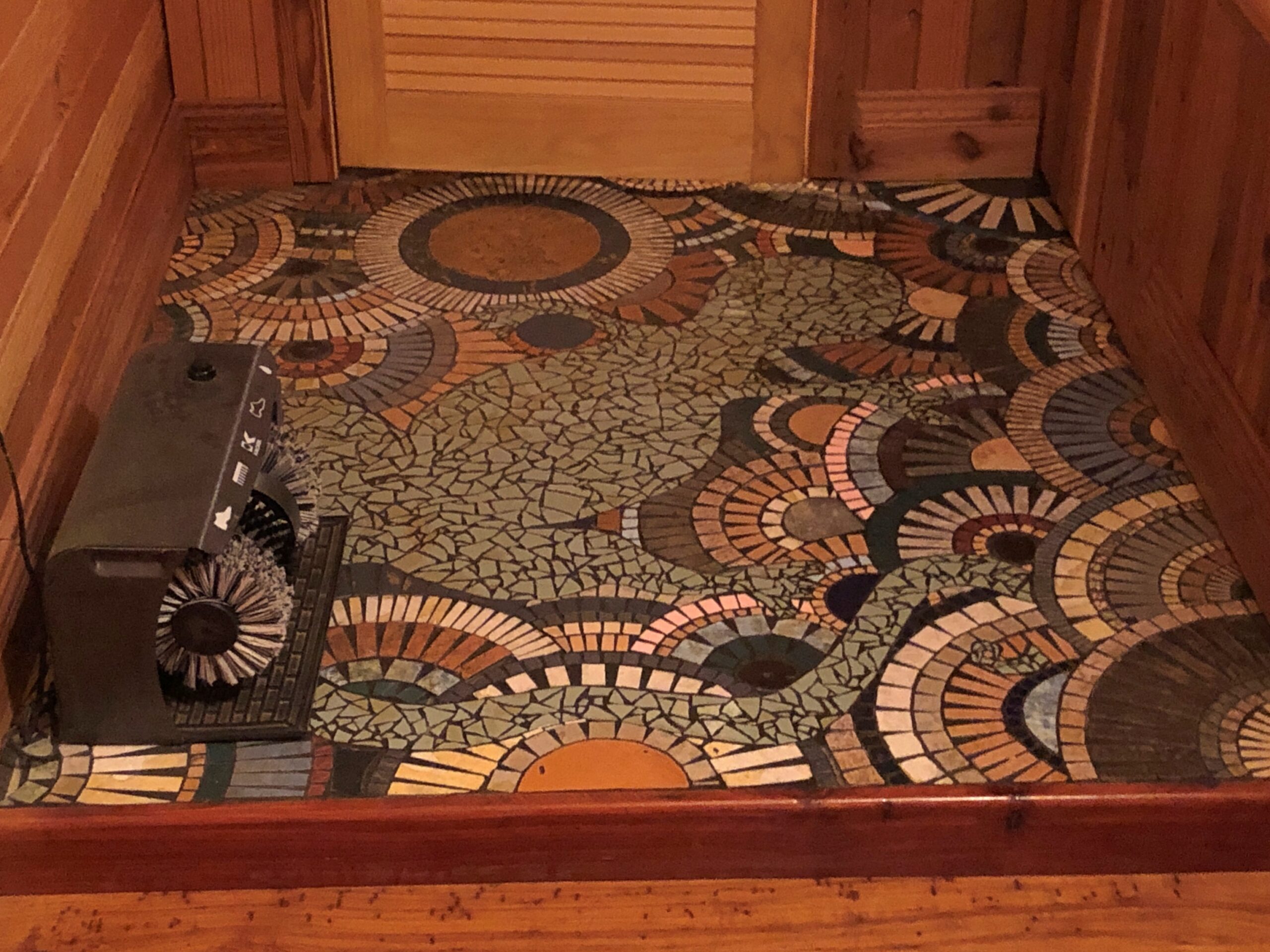
Artists had clearly been turned loose to design the rooms. Much to the better, I’d say. Ours was a two-bedroom unit with the sheen of an upmarket forest lodge, but without a particularly high price.
Unique woodwork for the walls.
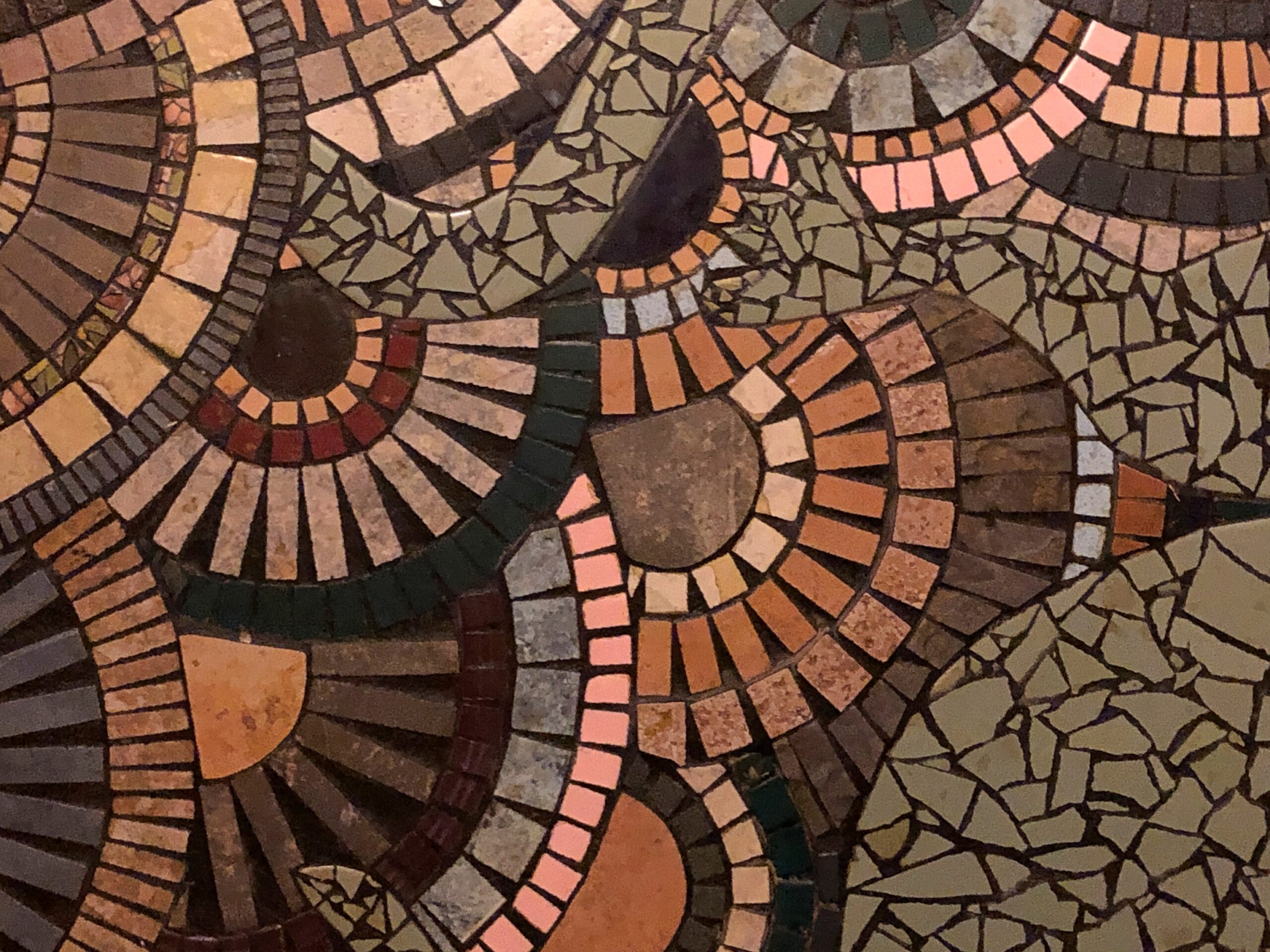
Floor designs that I’ll take for unique.
In our time, you don’t even need hallucinogens to ramp up some trippy floor action.
All you need is a basic AI image generator, while you remain sober as a judge.
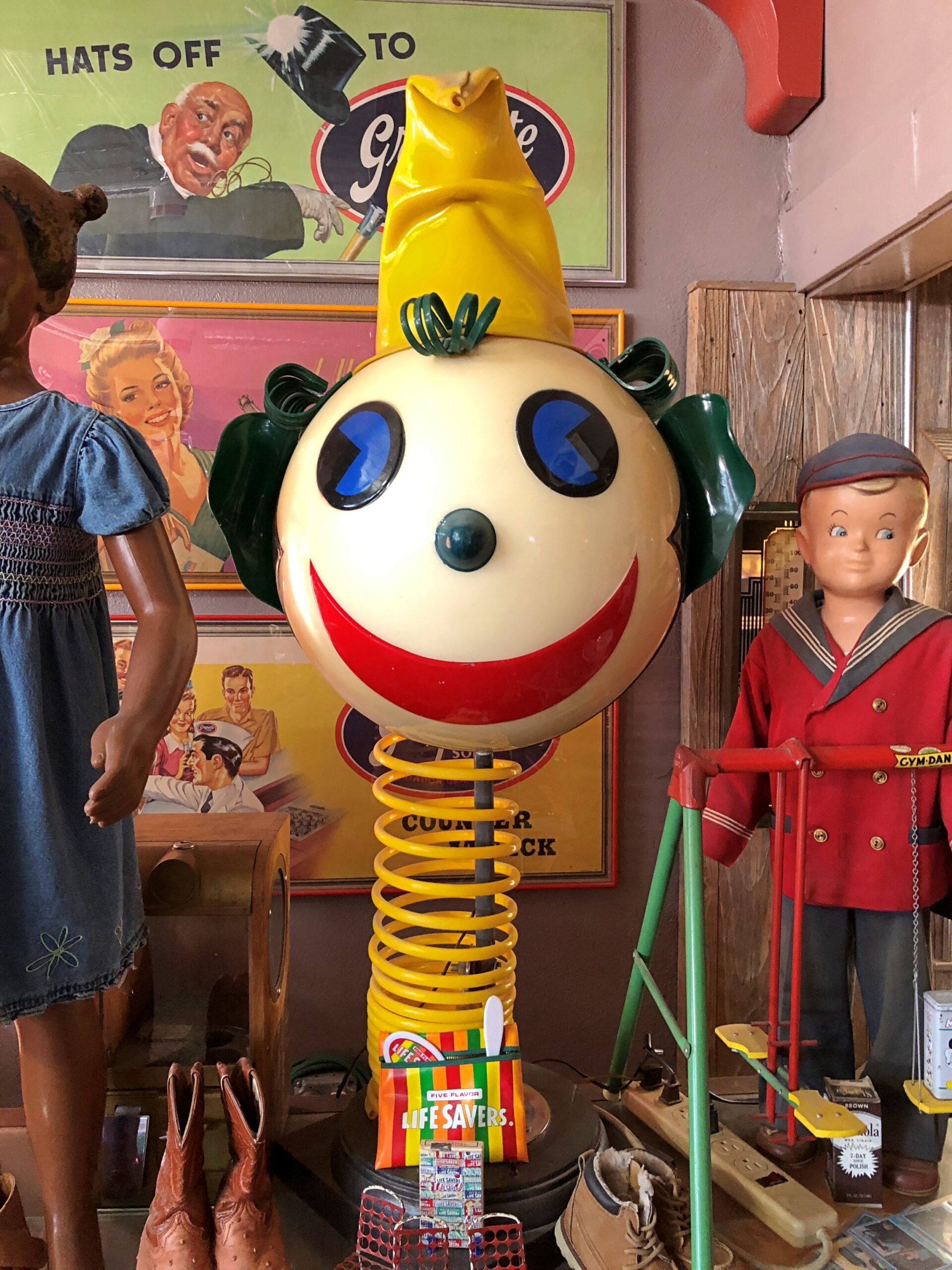
This clown in your nightmare. What did he look like again?
Right, Jack from Jack In the Box fame. Old Jack, that is, maybe from the early days of the fast-food chain in the ’50s and ’60s. Has that tired mid-century look because the mid-century was quite a while ago now. On the whole, even later versions of the clown has been retired.
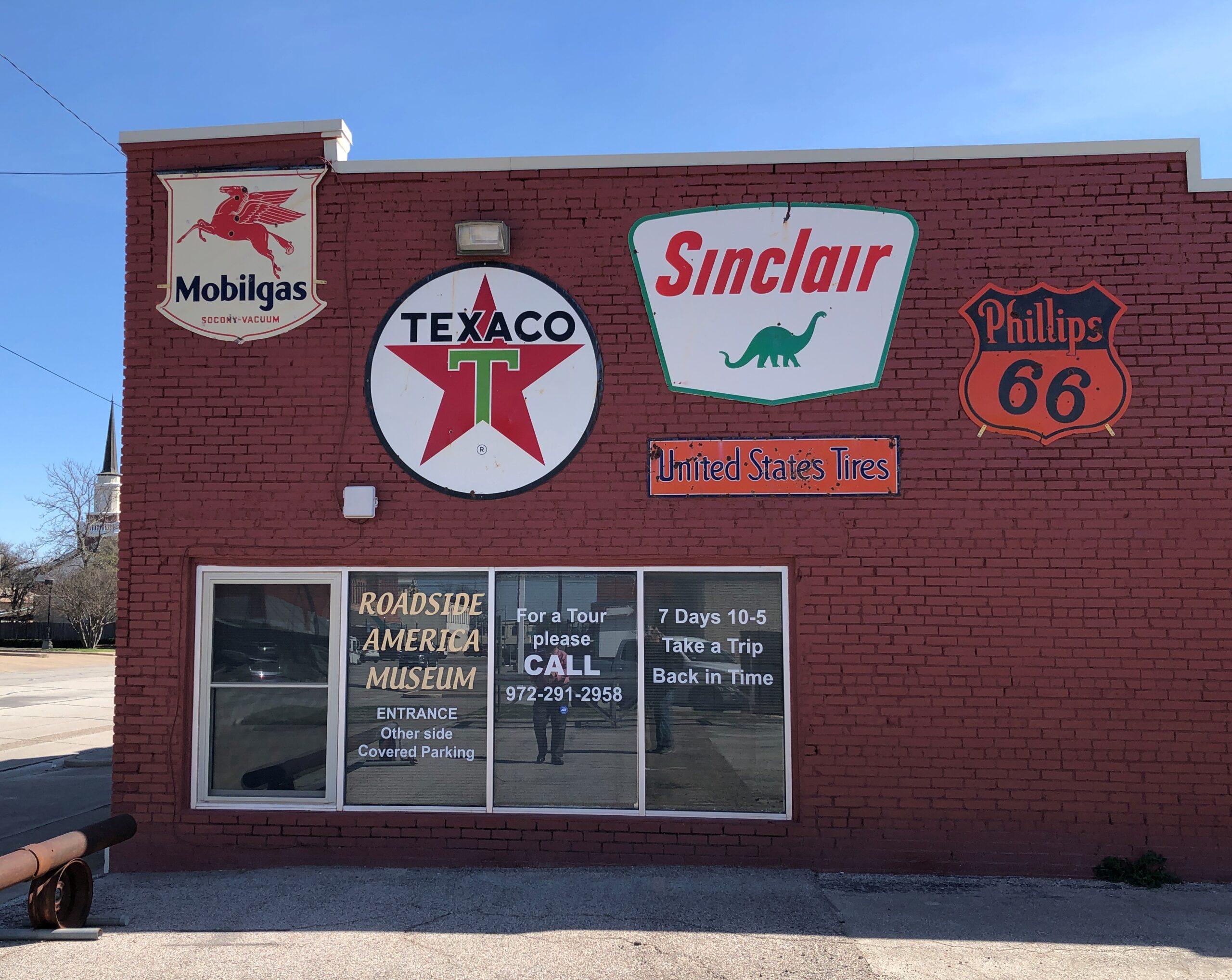
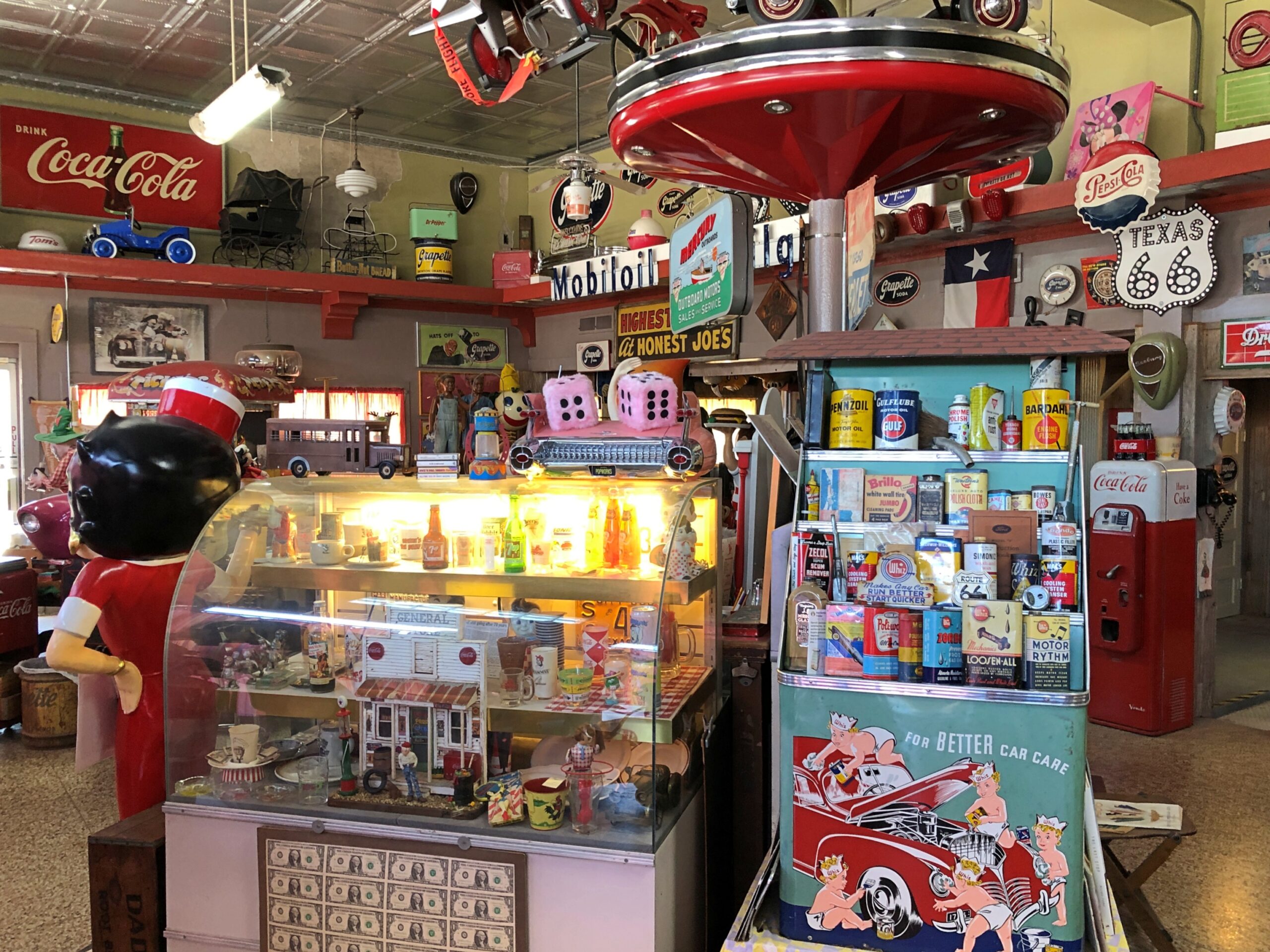
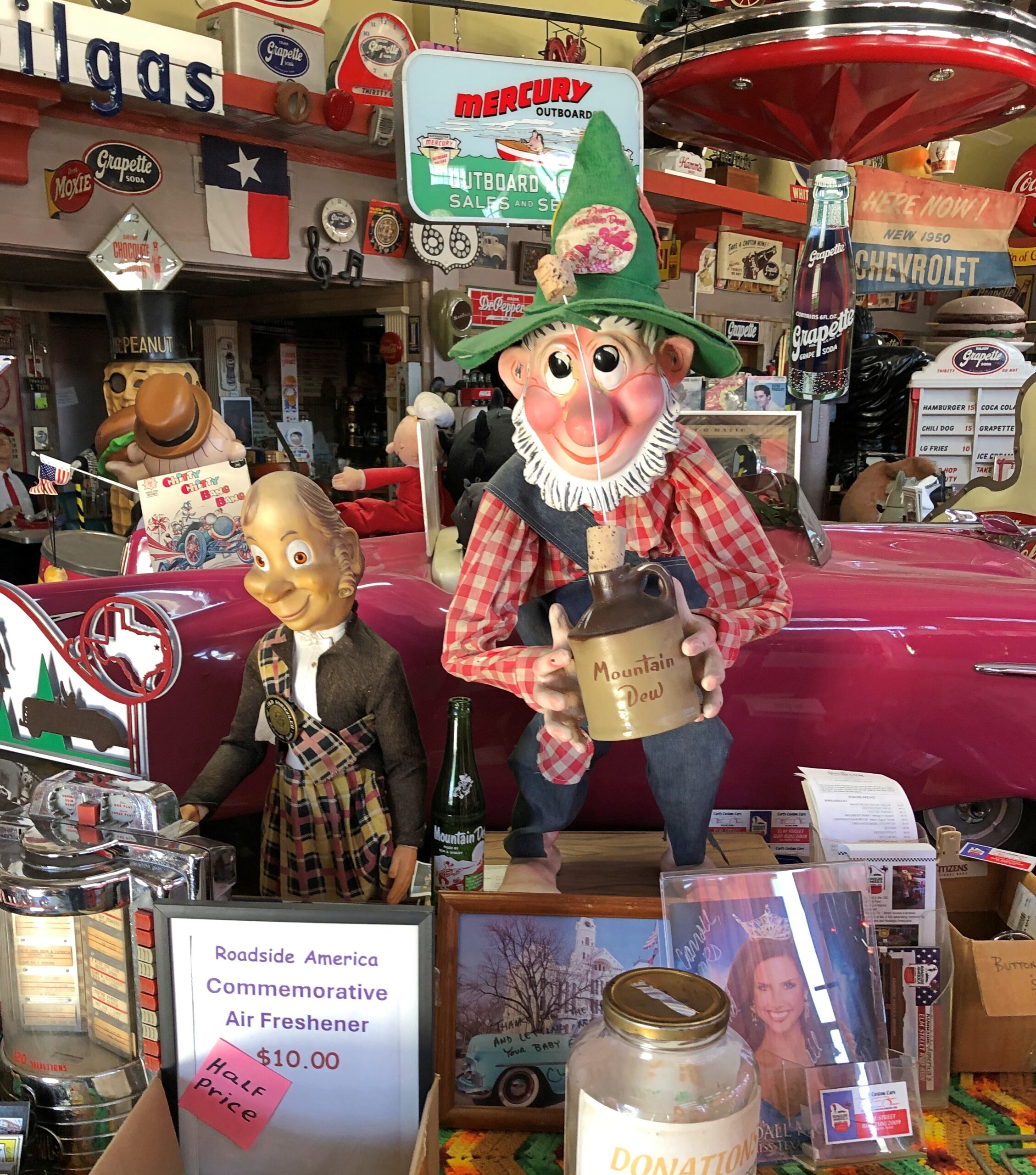
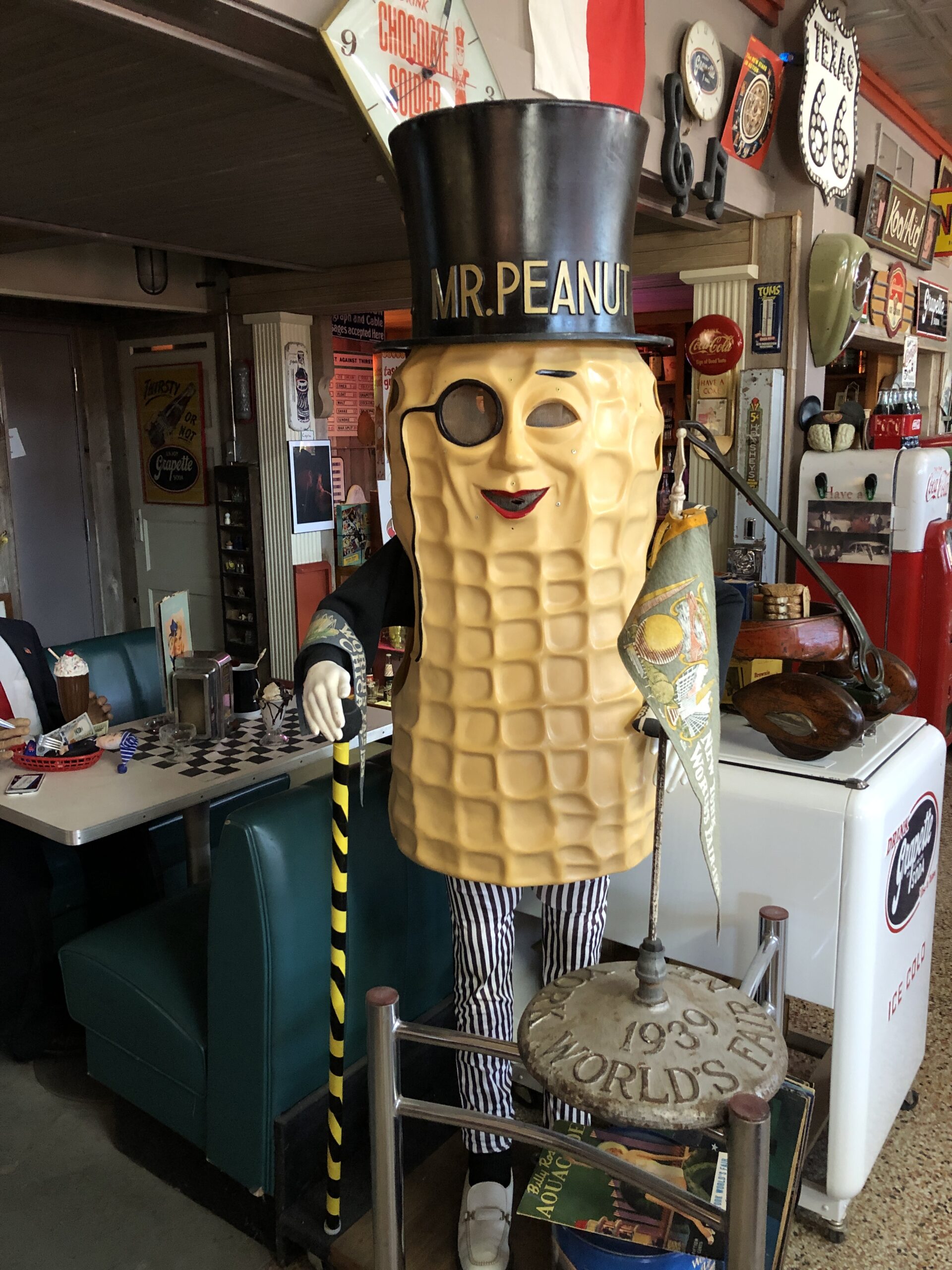
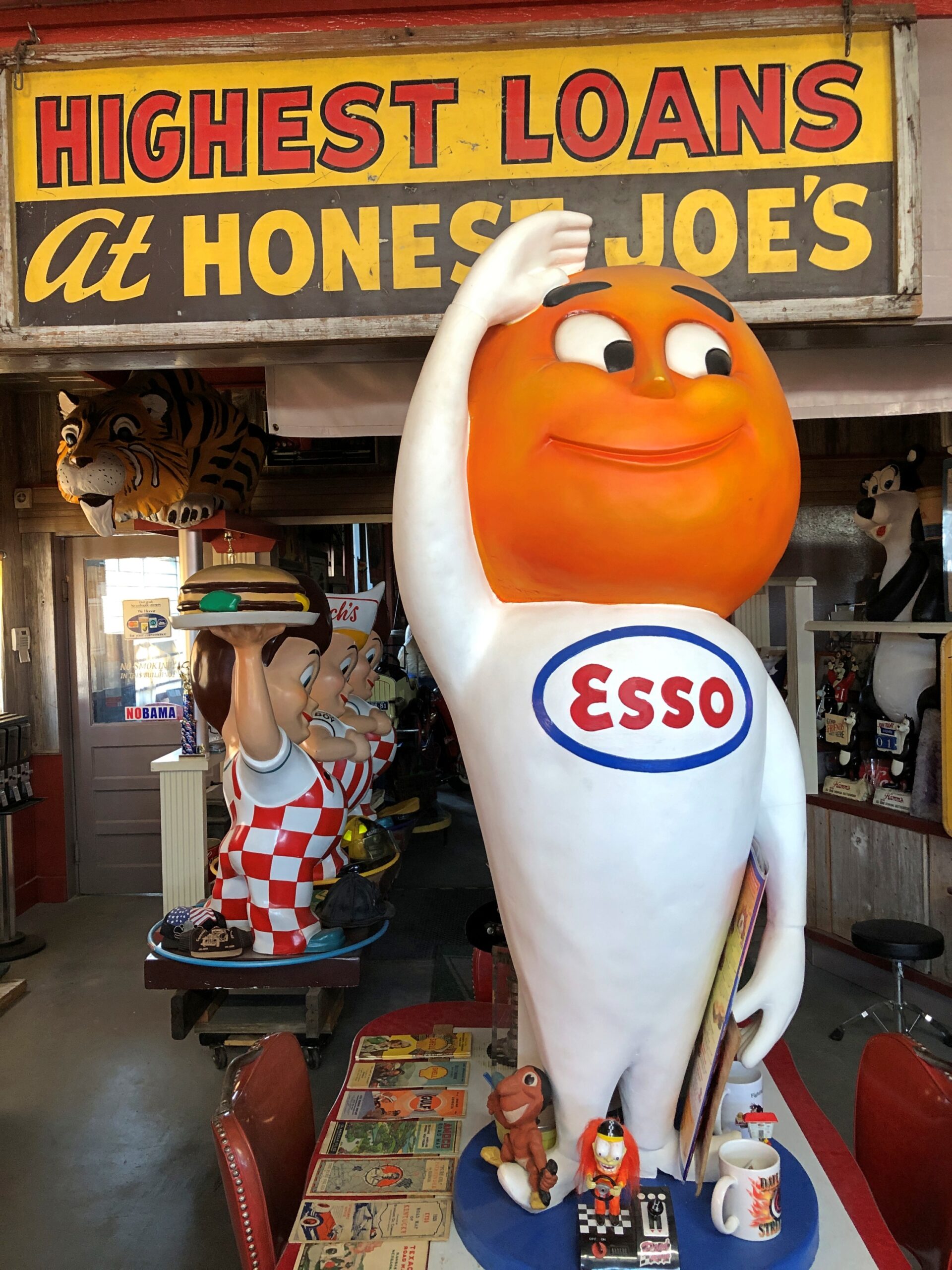
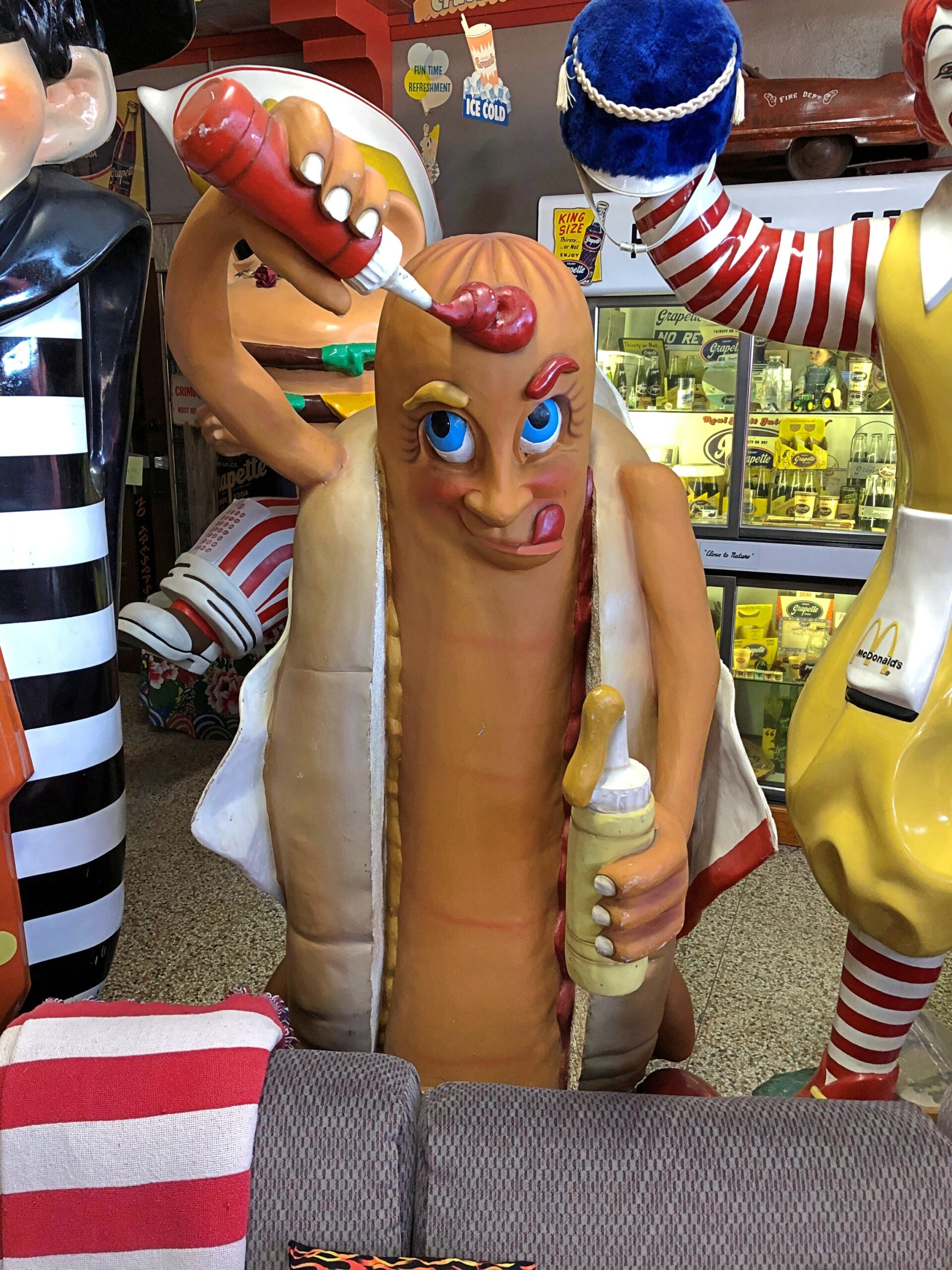
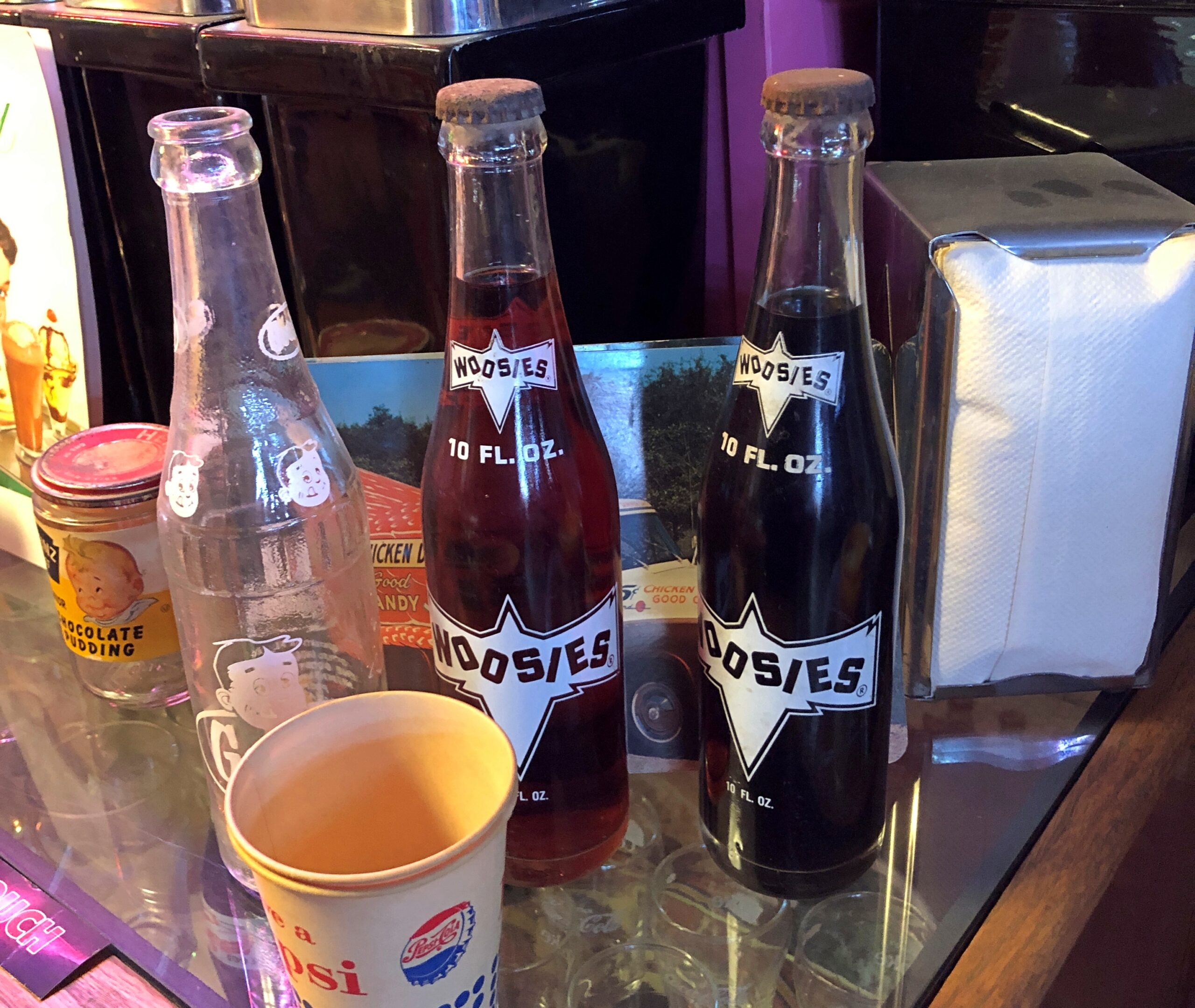
I was fully awake when I encountered Jack, an artifact at Roadside America Museum, Hillsboro, Texas, a wall-to-wall gathering of American roadside advertising, or at least items that were pretty close to the roads – a sign or novelty item or product you might see at a gas station or a diner or a bar or a small grocery store or any such mid-century service business for a nation newly on the road, and with great gusto. Items large and small.
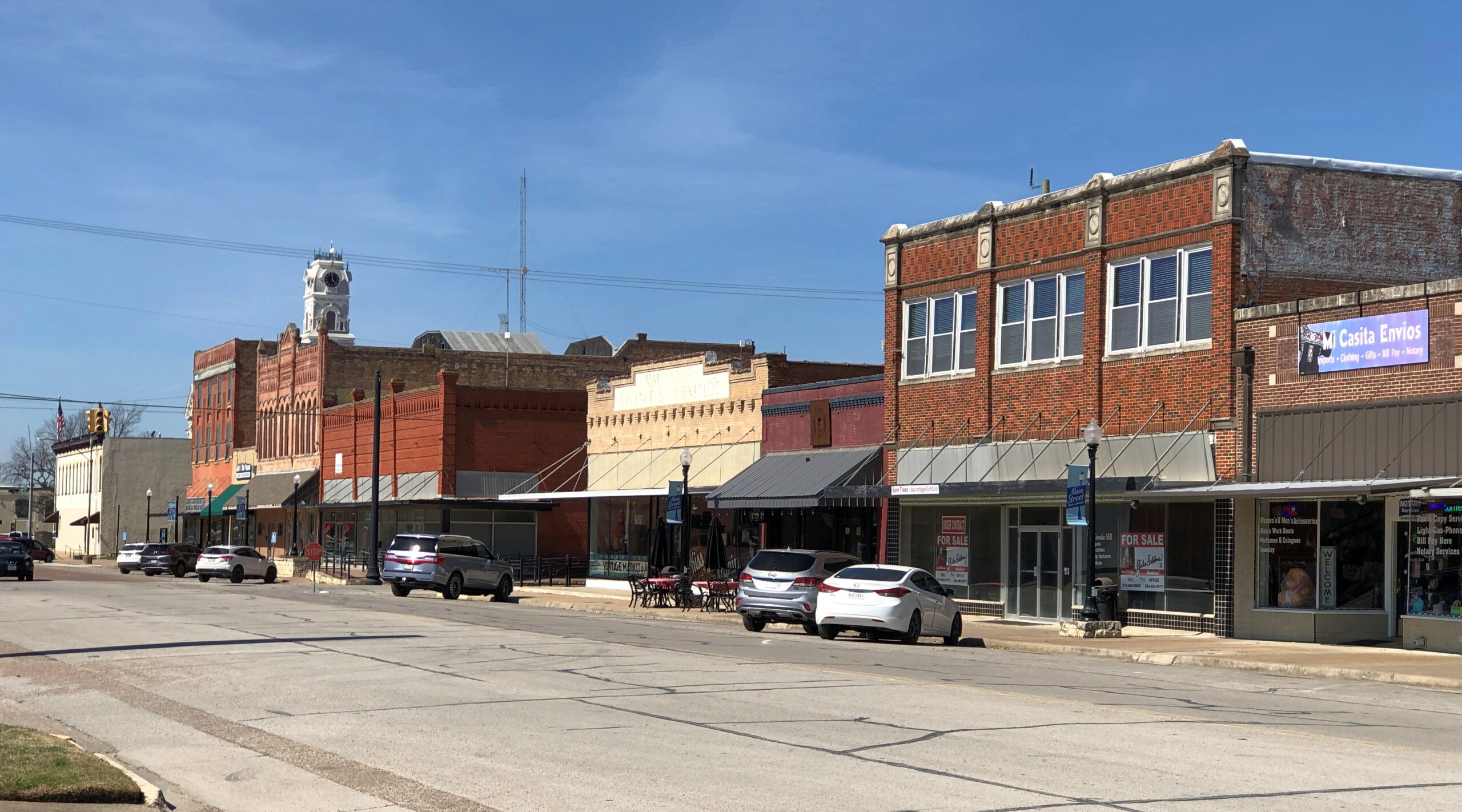
Located on a modest street of Hillsboro, a town between DFW and Waco. Jay and I arrived around mid-day on February 23.
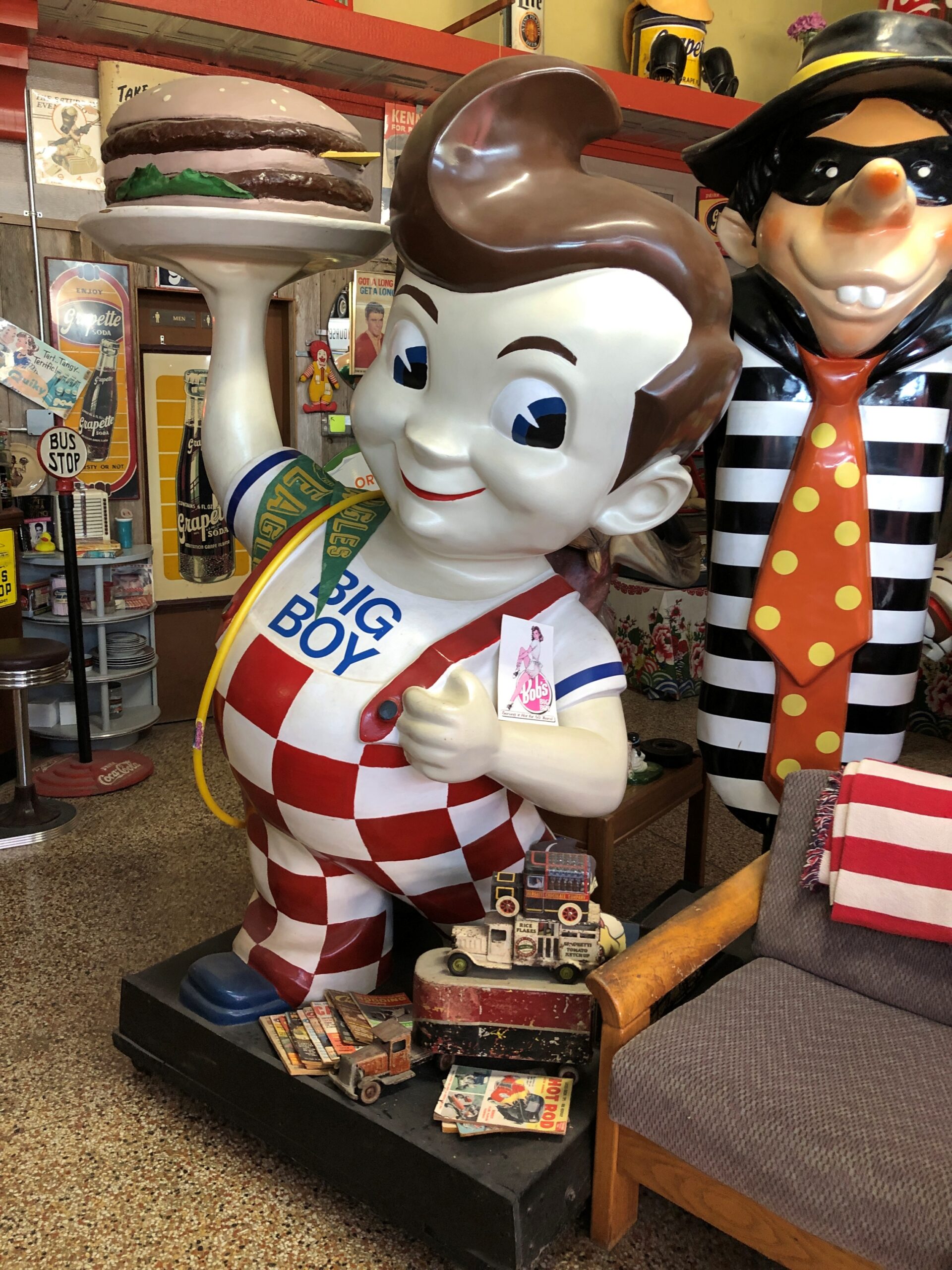
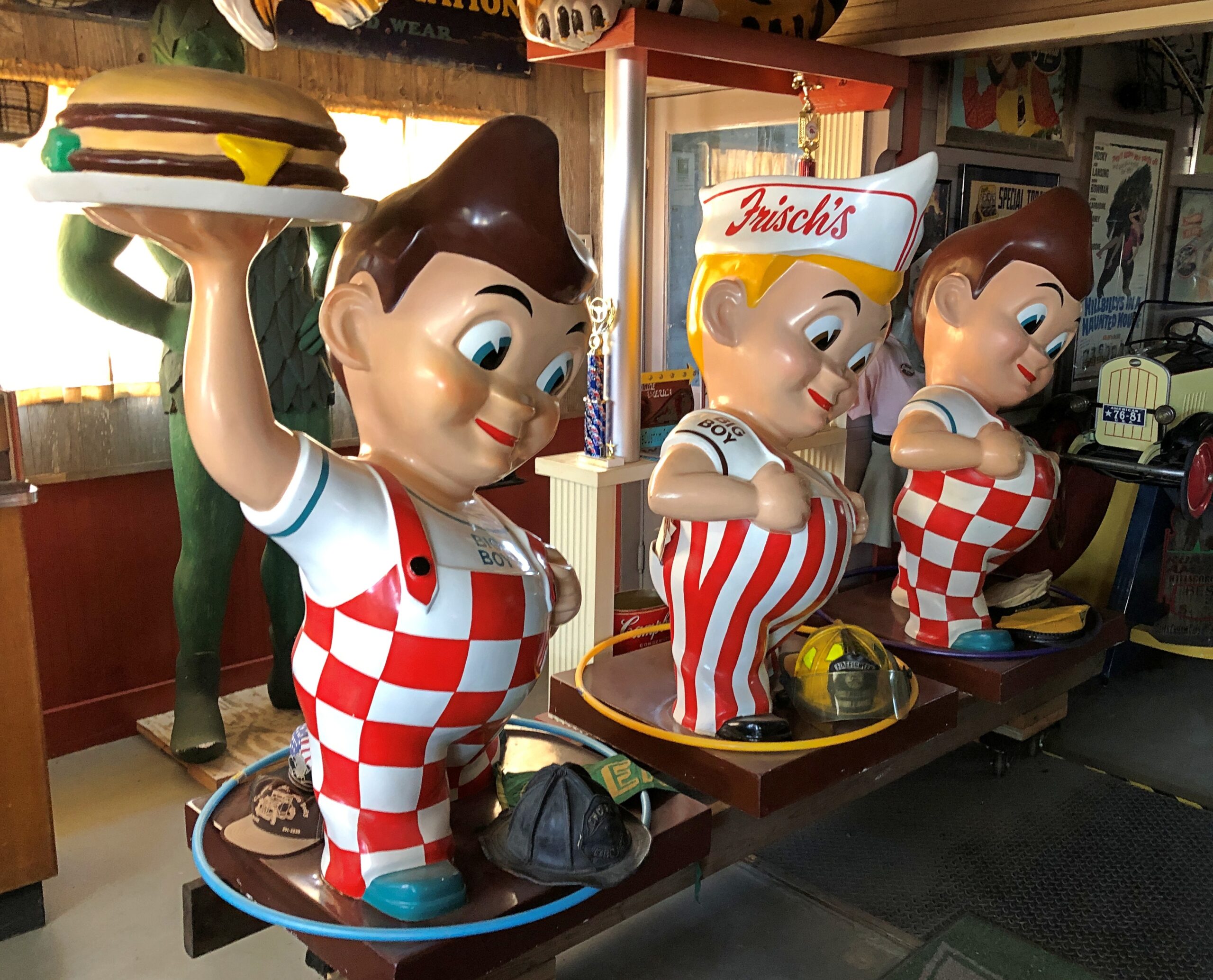
Jack is around, but there are also Big Boys in quantity and variety. If I were that first one, I’d watch out for the criminal element from McDonaldland, standing right behind him trying not to look suspicious. Sure, he’s a burglar, but he might be a pickpocket or even a stickup man, too.
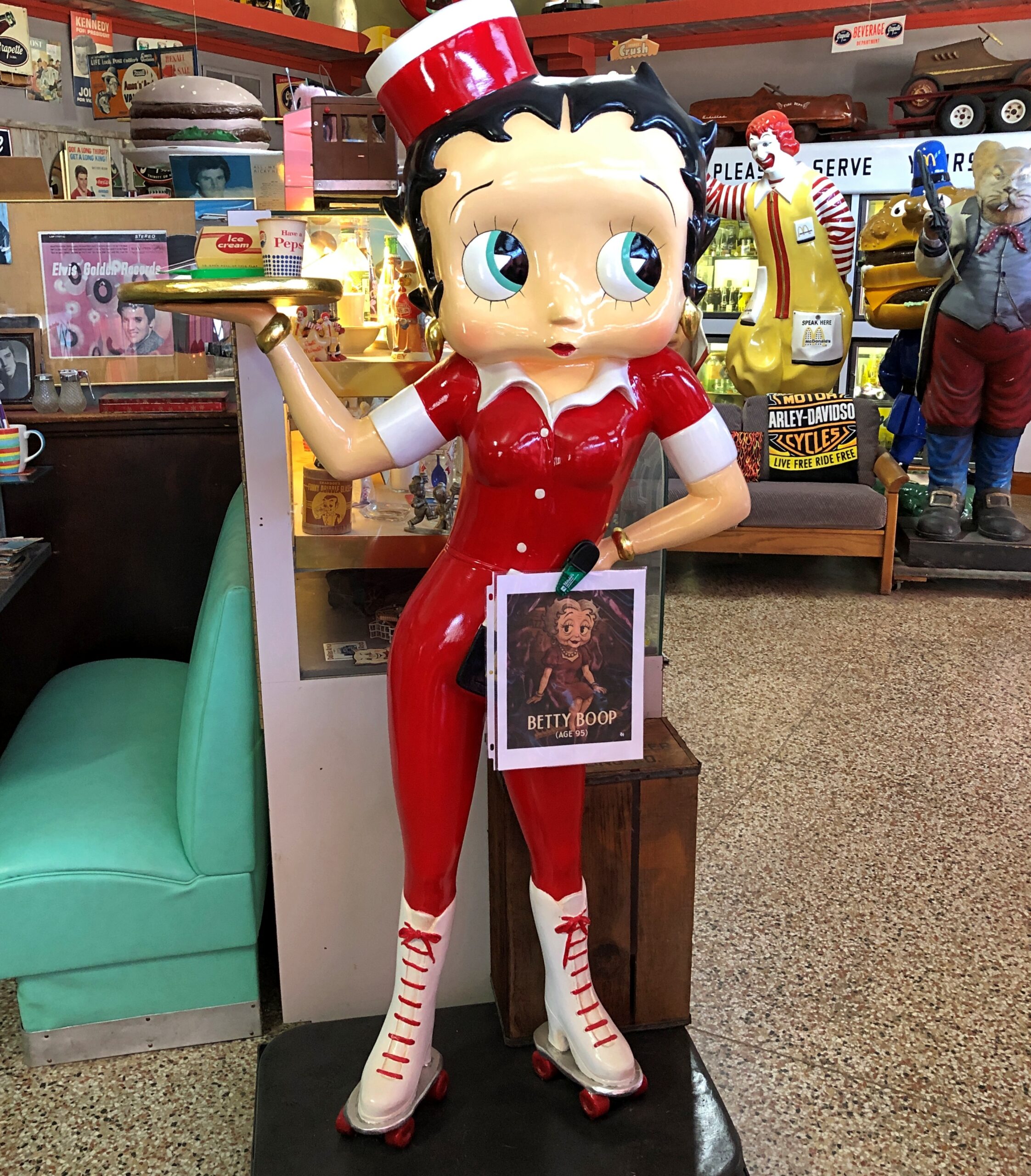
Betty Boop. From a slightly earlier time, but still pulling her weight as a carhop.
Mr. Peanut. Didn’t something happen to him? Died of a busted goober?
Esso. I’m barely old enough to remember the Exxon brand consolidation. (Mad magazine parodied that as “Nixxon: Still the Same Old Gas.”)
Who is this? Why does anthropomorphic hot dog man, though the liberal application of condiments, encourage larger creatures to take a bite out of his head, indeed consume him as completely as unfortunate extras in Jurassic Park movies?
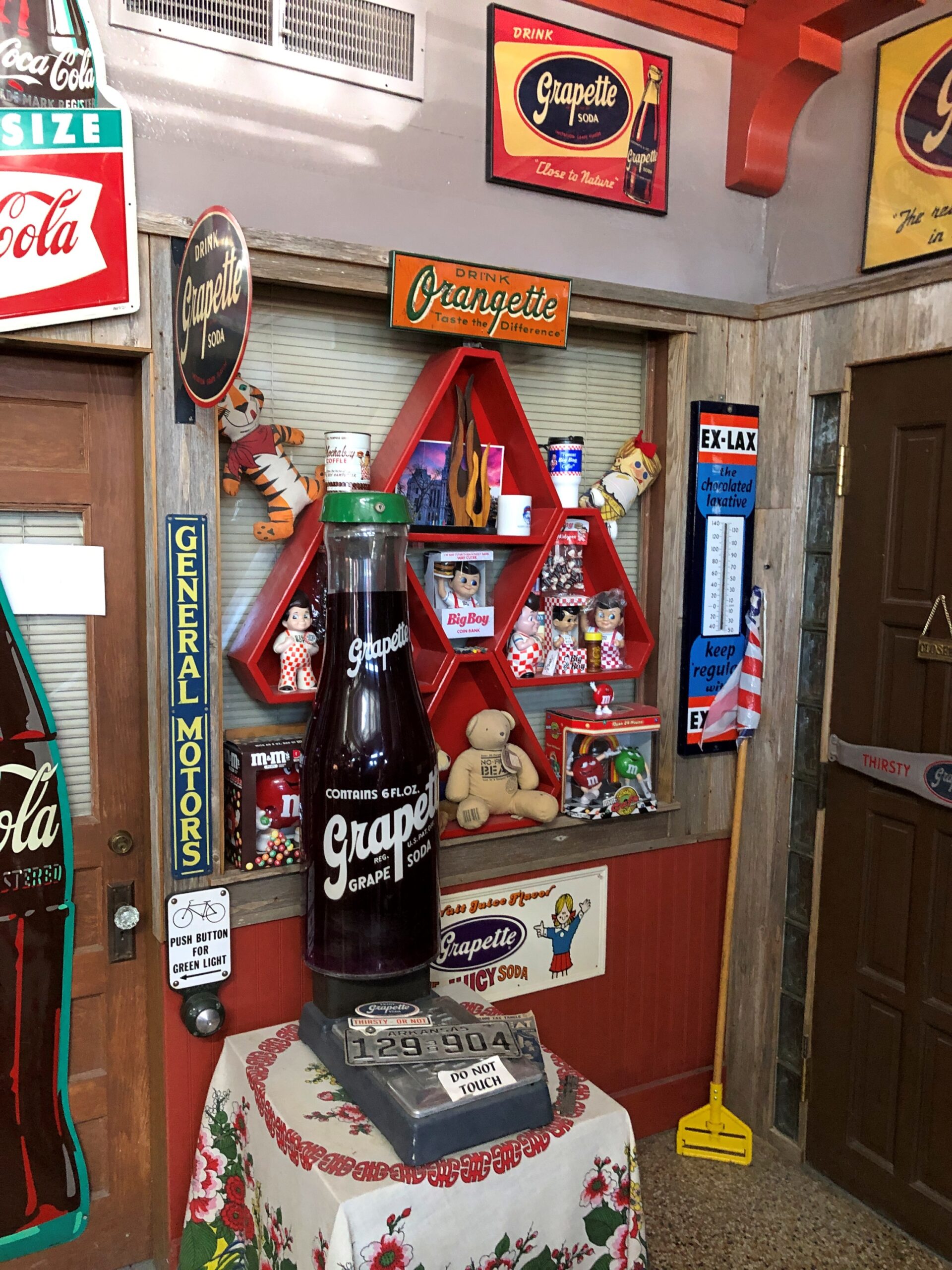
Admittance to Roadside America – no relation to the web site and (former?) book series of that name that I know of – is by making a phone call outside its door. The proprietor, one Carroll Estes, comes to the door, invites you in, and shows you around the place, pointing out things and sometimes recalling the acquisition of this or that, or letting you know how rare or not certain items are. An affable old fellow, grizzled if ever anyone was, probably in his 70s. So the commercial memorabilia all around us was no memorabilia when he was a lad, but part of the lay of the land. I came along in time to see some of those ads or at least characters myself, though they were fading.
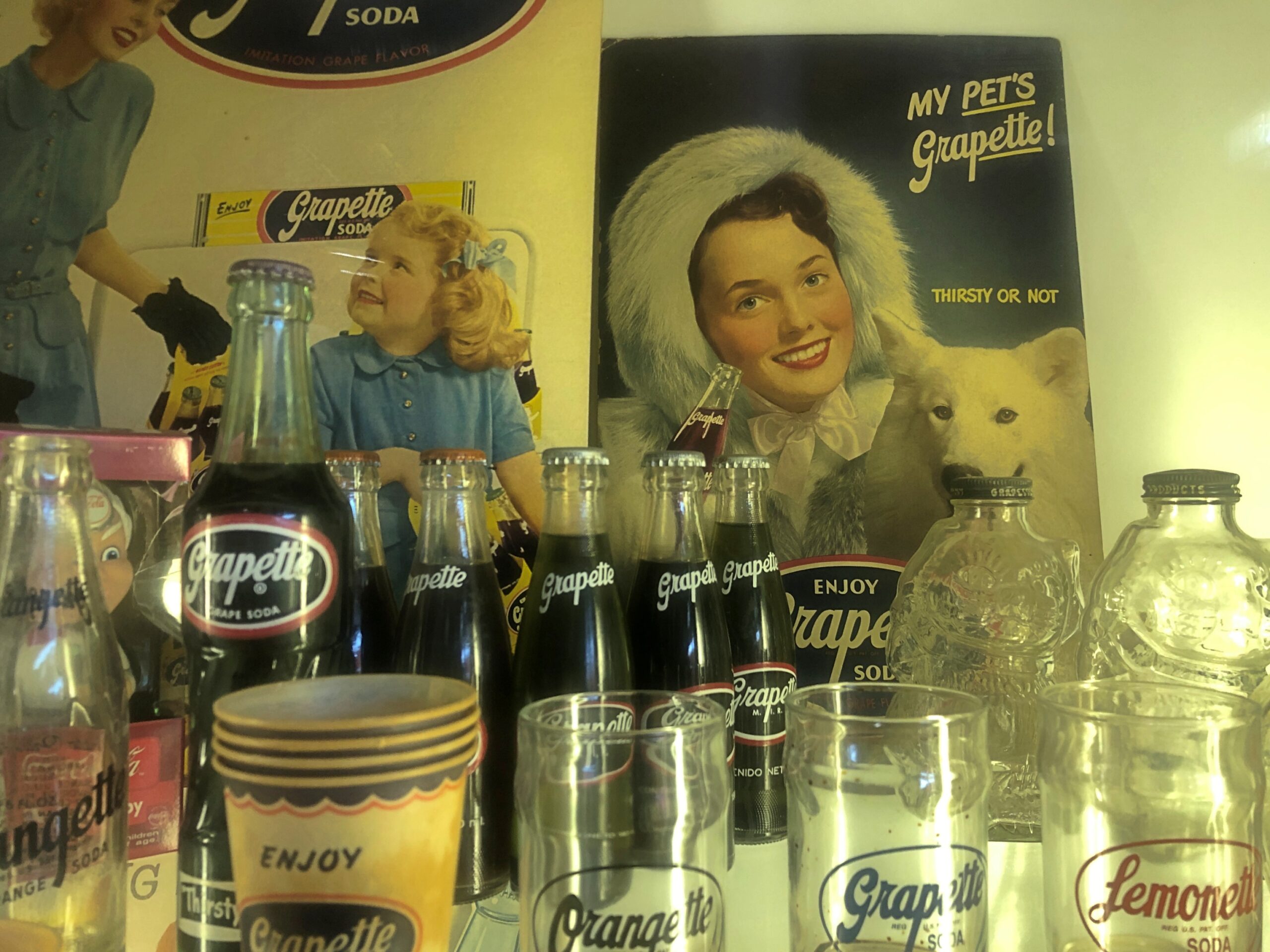
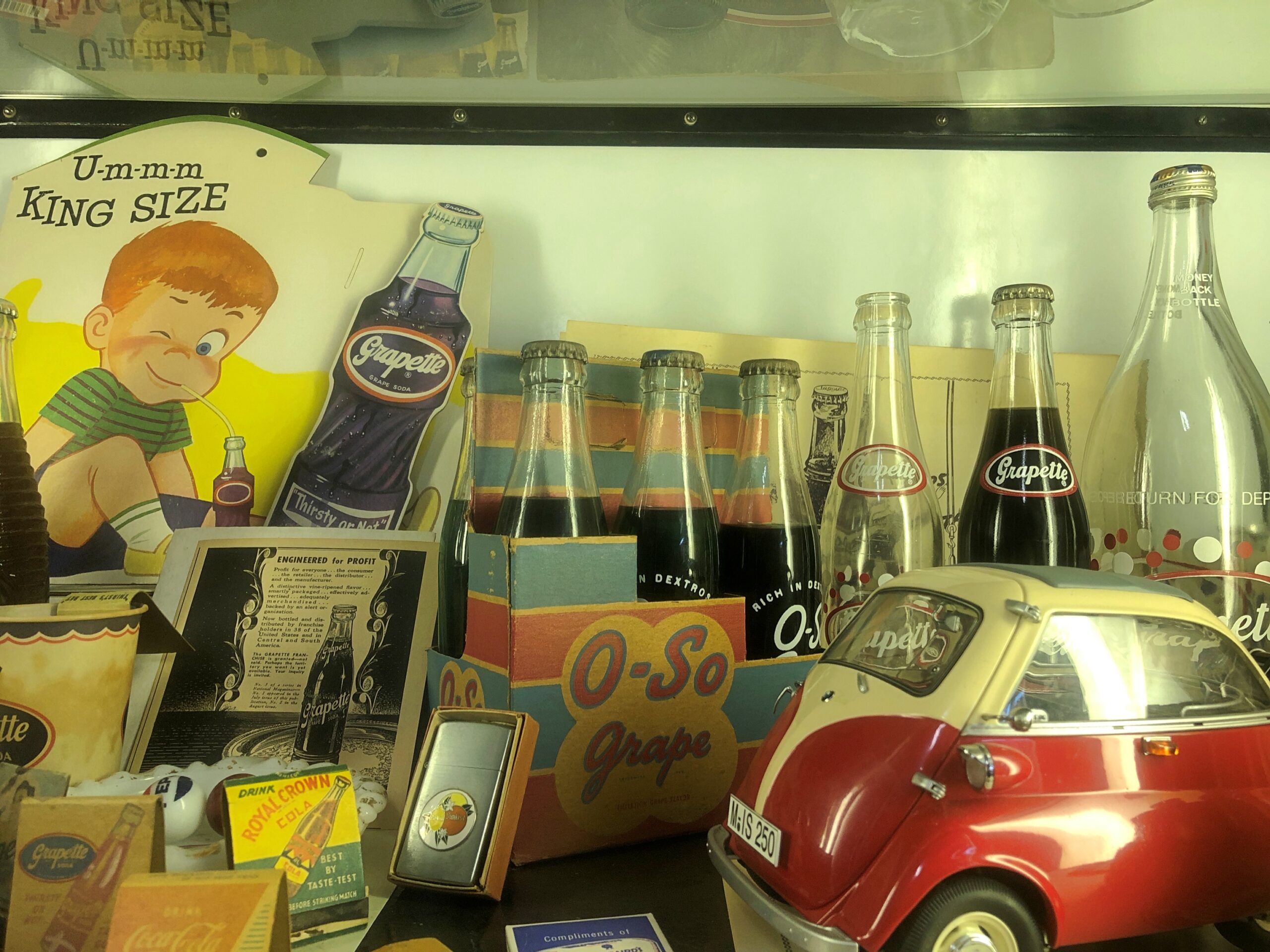
He said he was particularly fond of Grapette items. Once he pointed that out, I started seeing them everywhere.
Been a long time since I had a passing thought about Grapette soda. It was available in north Texas in the mid-60s, and I’m sure I had more than a few Grapette bottle caps, once upon a time. I don’t remember its sister sodas, Orangette and Lemonette. According to Wiki at least, Grapette still exists as a house brand in Walmart’s beverage stable, and is popular even yet in Latin America.
I don’t remember O-So Grape.
Originated in Chicago and, like so many, has been revived at premium prices, which seems to go against the spirit of soda water you bought for coins in your misspent youth, but never mind.
There was much more. Mr. Estis has a sizable classic car collection in another part of the building, a much larger structure that had some industrial use at one time. He showed us around. He’d restored many of them himself, but he said he doesn’t do that as much anymore. He had some great ones, too. Wish I’d taken notes. But I was in the moment.
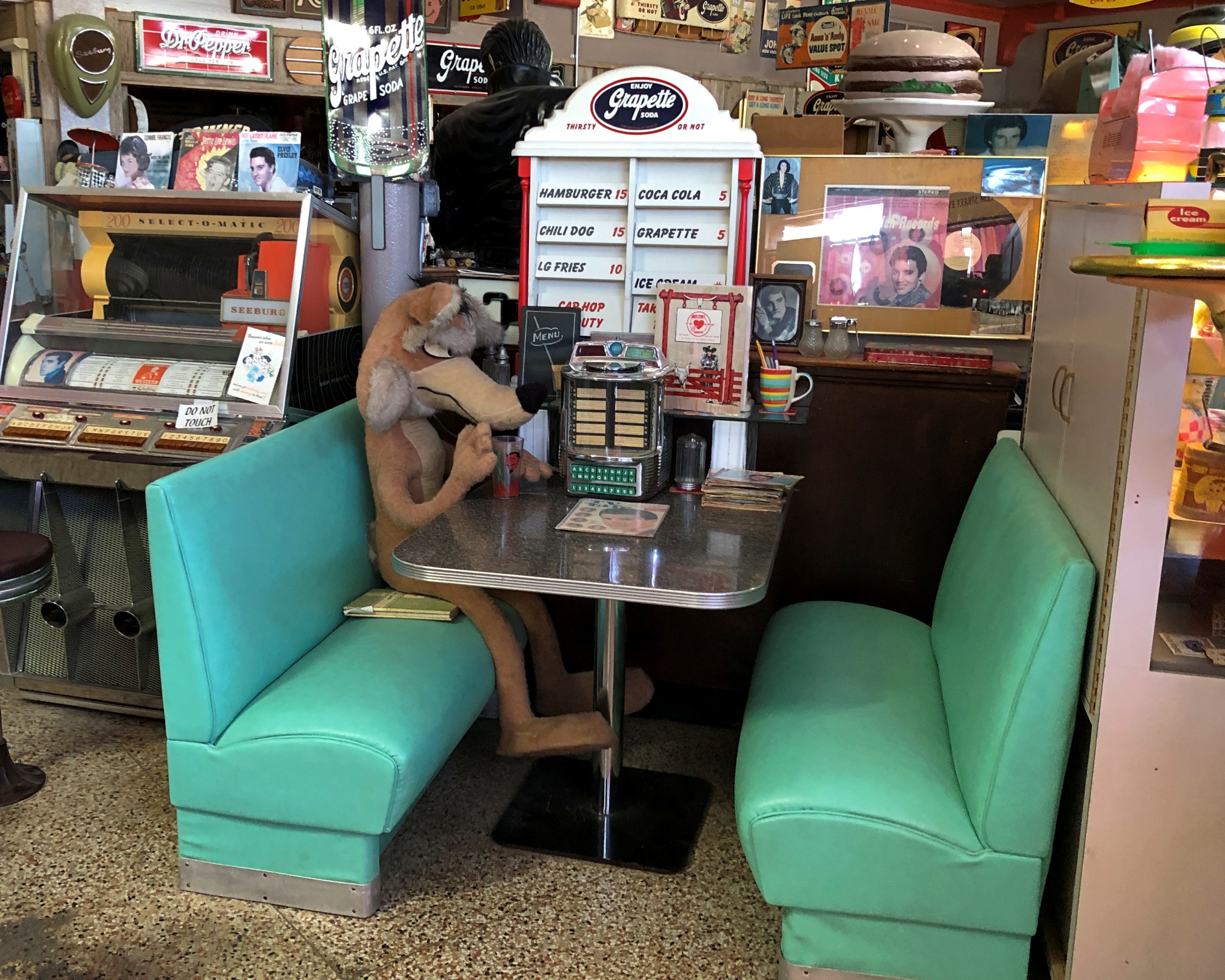
Even in the moment, you don’t notice everything. Especially at a chock-a-block place like Roadside America, where curios compete for your attention like a gaggle of souvenir-wallas in Delhi. It wasn’t until I looked at this picture that I noticed Wile E. Coyote sitting at the diner booth.
Stands to reason that Wile E. would patronize the few diners on the desert roads he haunts. He never managed to make a decent meal of the Roadrunner.
Rain. All the way from Illinois to Texas. We got mighty bouts of it that had died down ’round midnight. As if to remind me, about time I’m home. Huh?
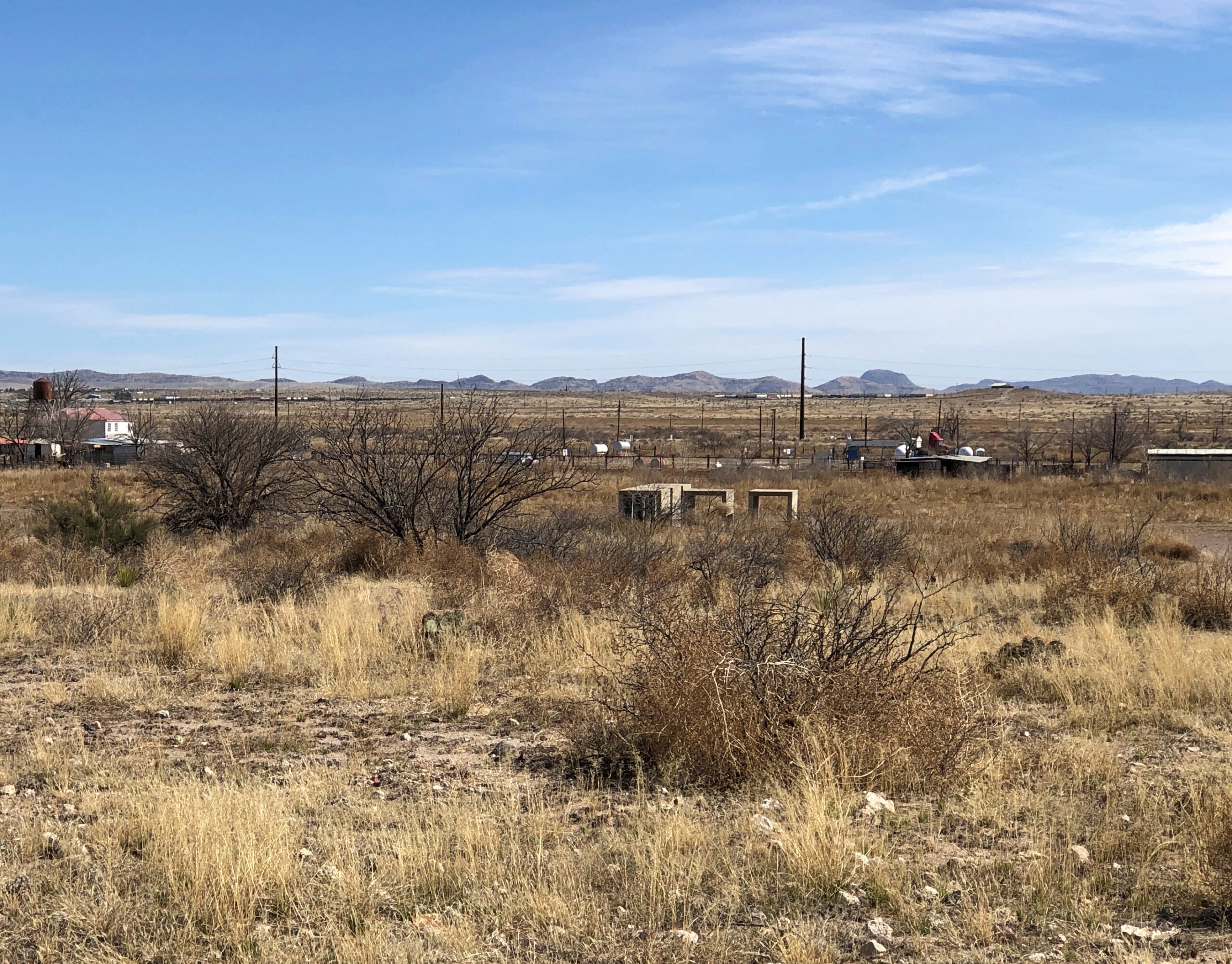
Come to Marfa for the West Texas art city vibe, stay for the concrete structures. Even if they are off in the distance, at least from the parking lot.
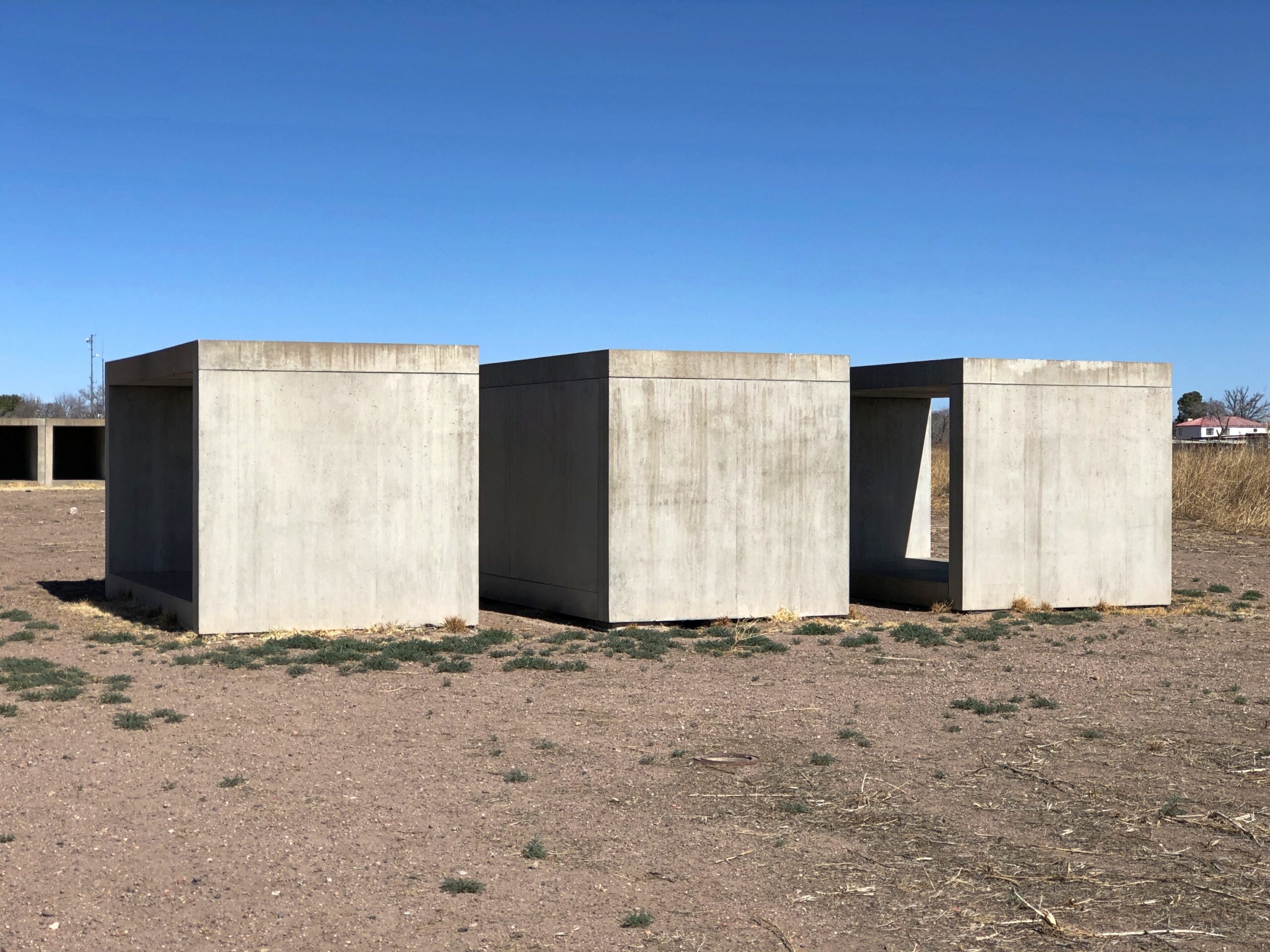
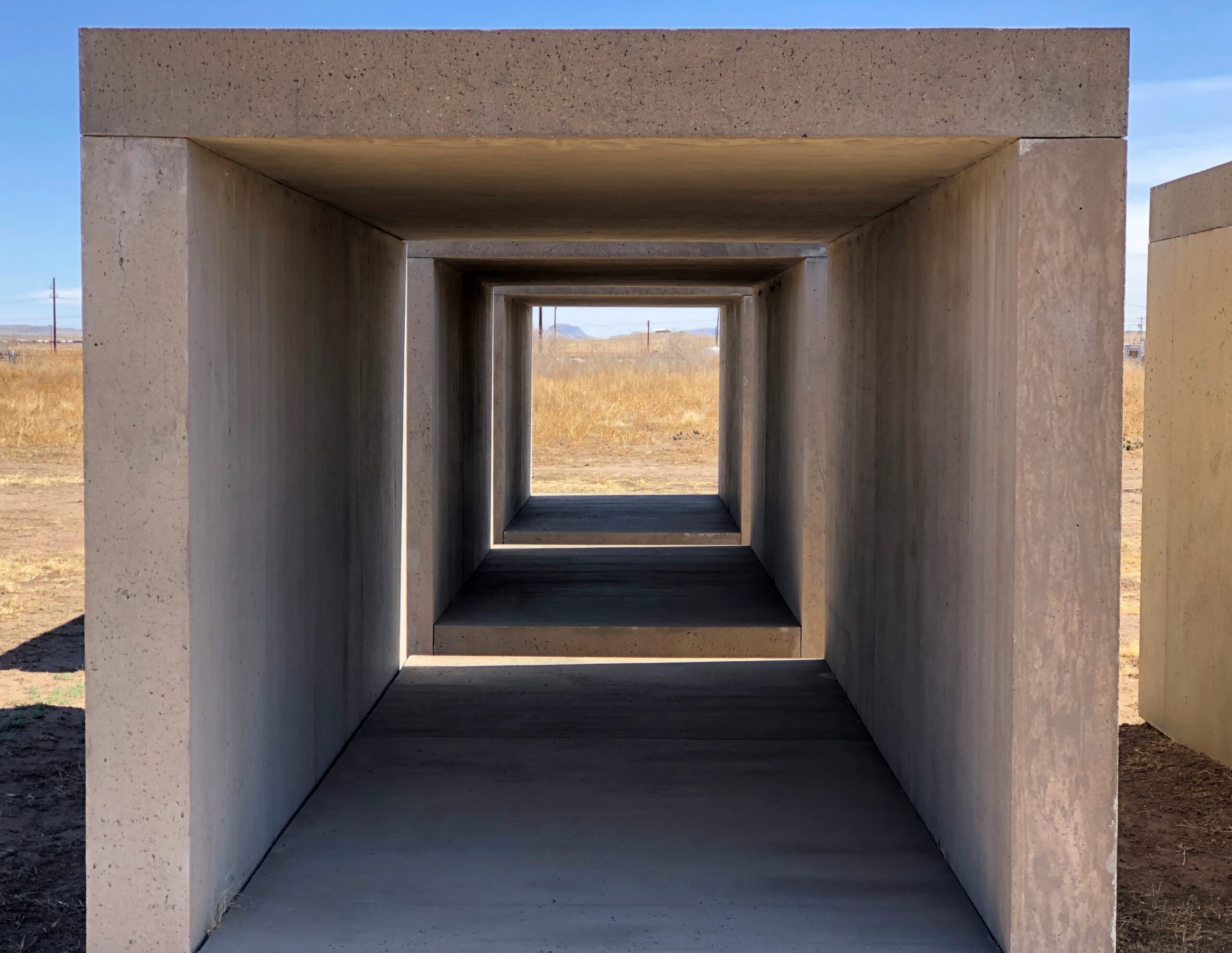
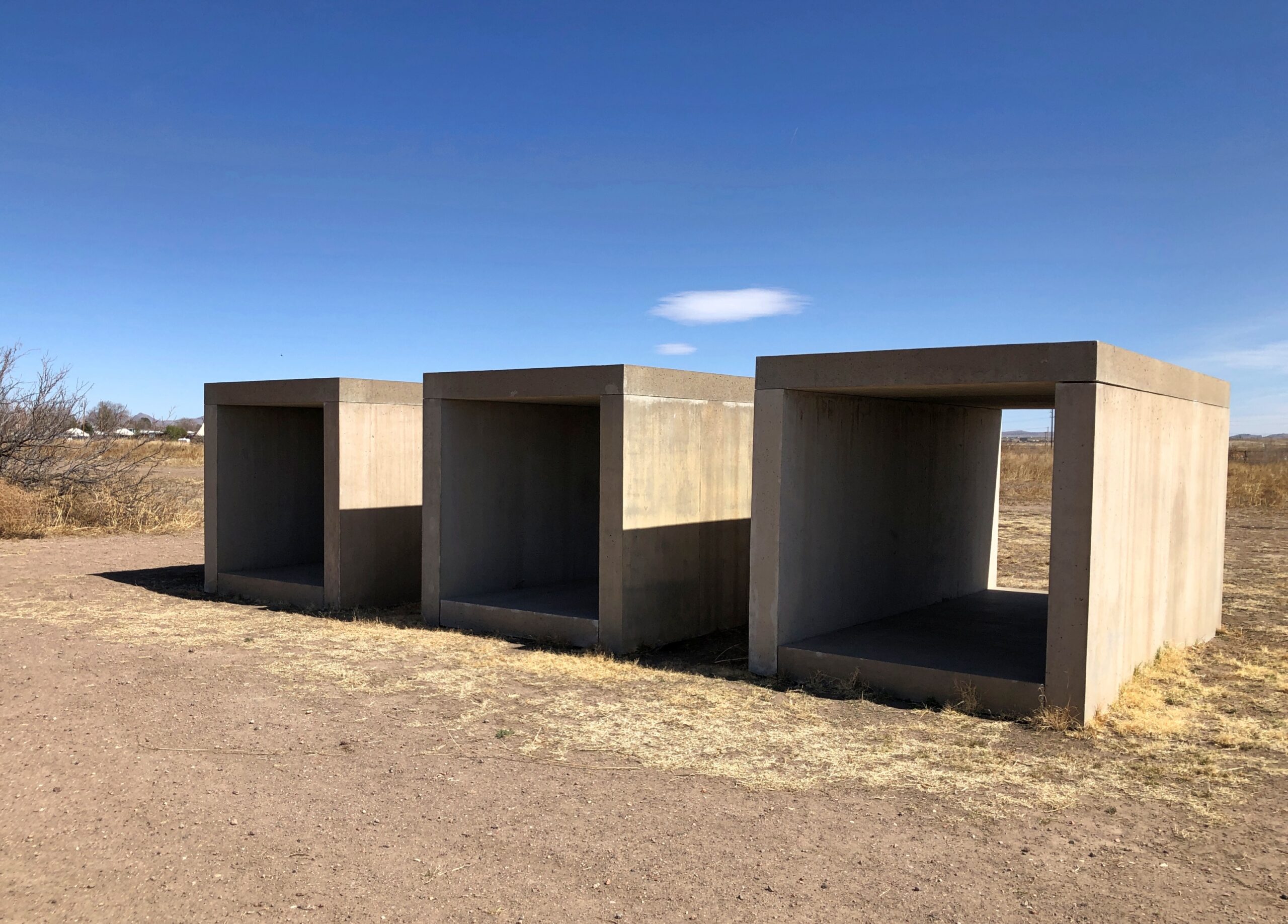
How to think of the untitled works by Donald Judd (d. 1994) on the grounds of the Chinati Foundation in Marfa? Brutalism in a brutal environment? Man’s – that is Humanity’s – longing for angular order in world of irregularity? The strange coprolite of giant angular creatures barely known to paleontology?
I could go on like that all day. Yuriko and I arrived at Chinati early in the warm afternoon of February 18. I can’t say we weren’t warned. The foundation’s web site says: “Our collection is installed across 21 buildings and two off-site locations; additionally, three works are site-specific, outdoor installations. Guided tours are the only way to see the majority of Chinati’s collection and grounds. Purchase your tickets in advance; tours often sell out.”
As we told a volunteer behind the desk, we didn’t have time for a tour. What to see on one’s on?
A long line of concrete structures in the West Texas scrub, that’s what. No tour guide, just a wander among the structures. But not inside them, according to instructions that we did follow.
After a little wandering, I came to think it isn’t just the structures, but the shadows too. What is it that the shadow knows? Right, the evil that lurks in the hearts of men.
I could turn on the art-speak spigot to describe Chinati (one of those infinite AI spigots, I figure), but no. I will note the tumbleweeds we saw.
A little less permanent than the Judd works, but only a little.
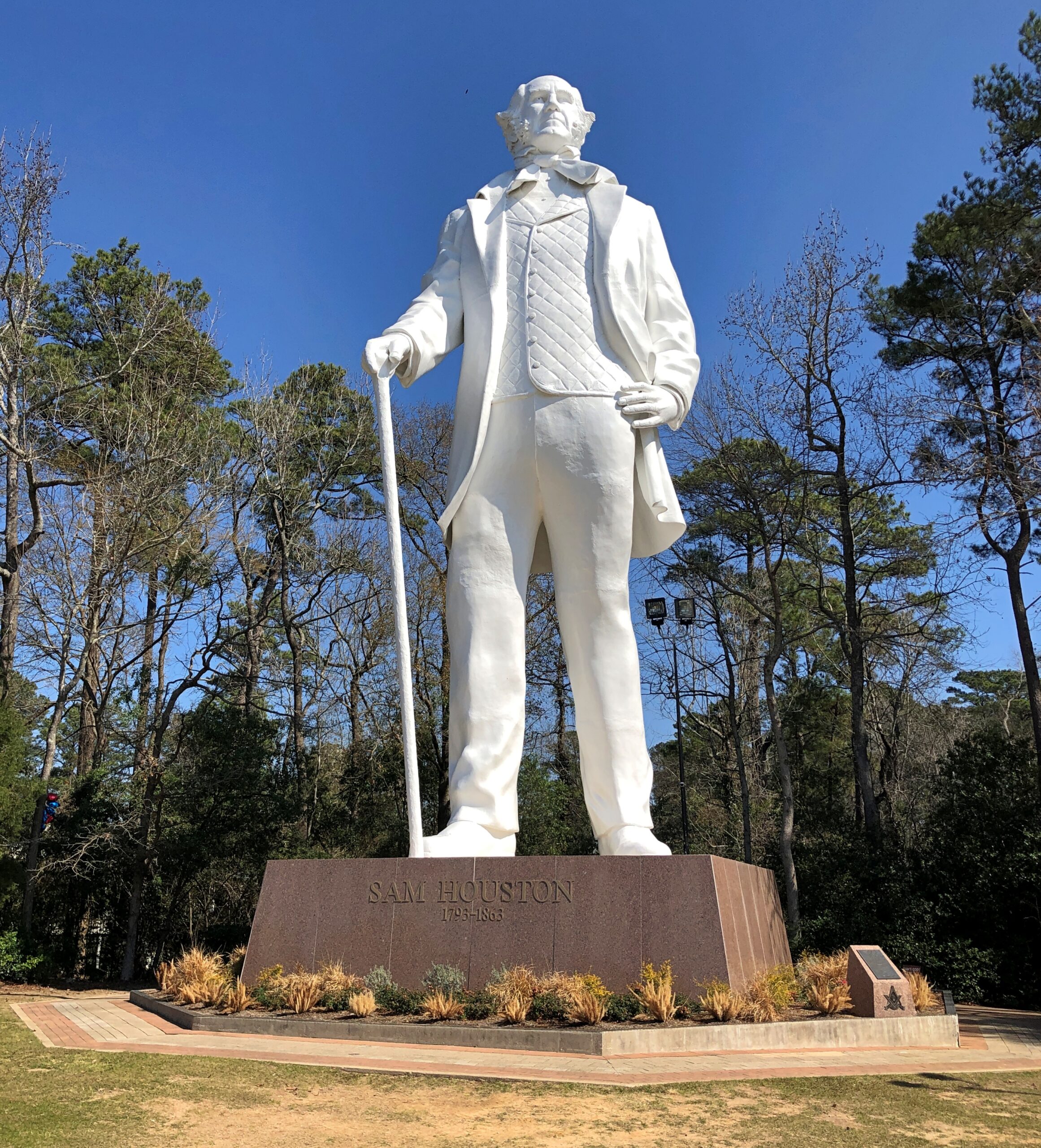
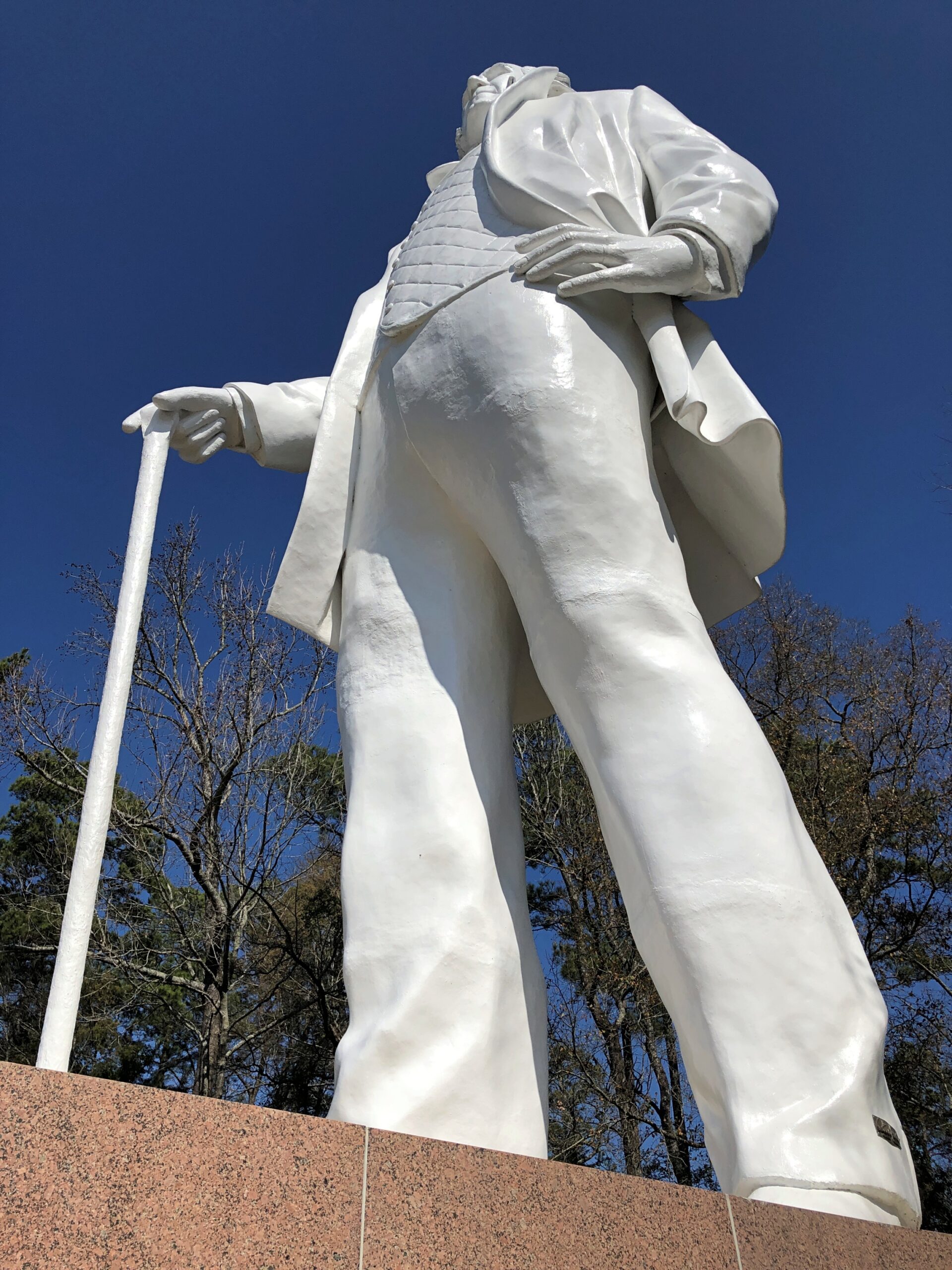
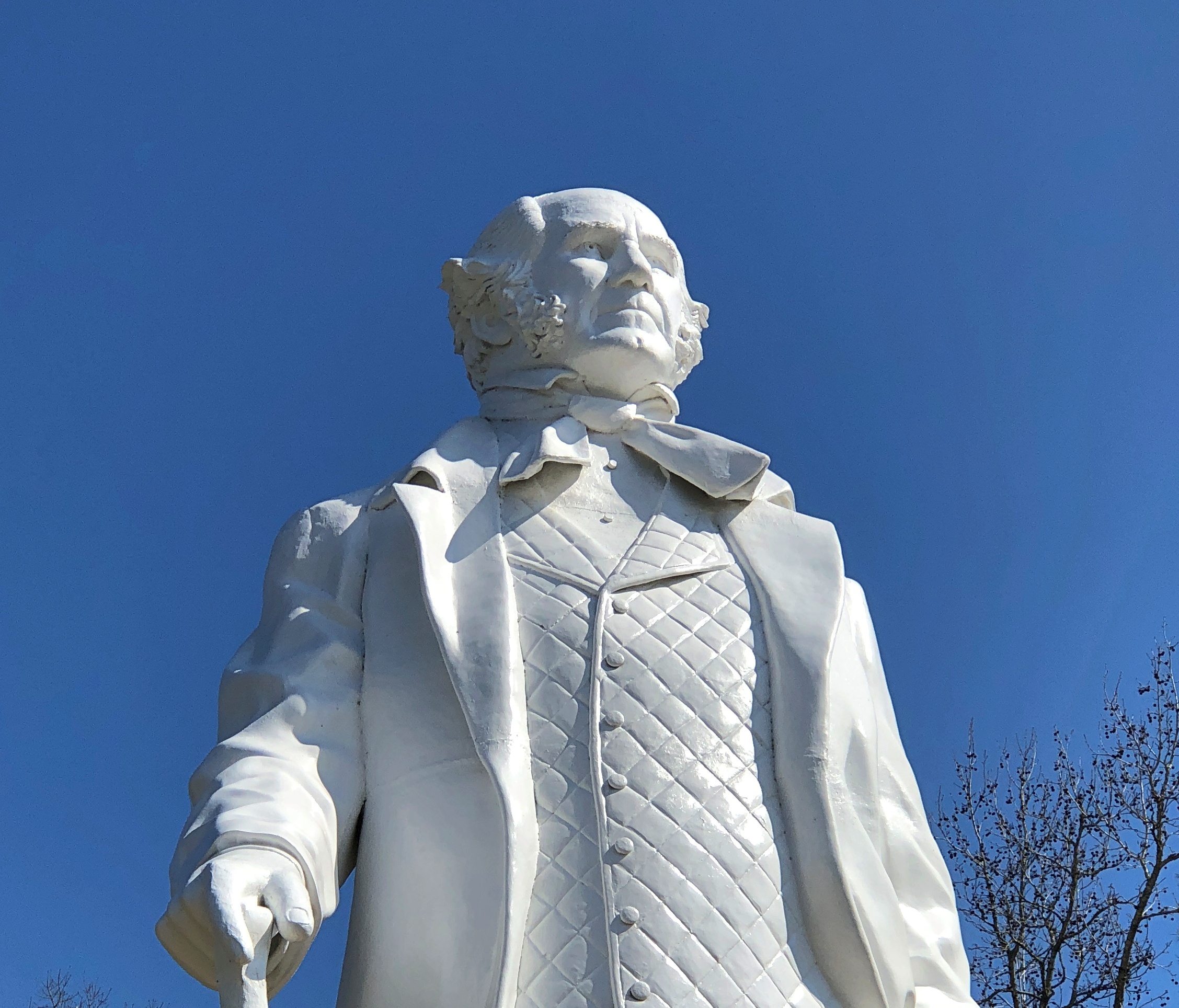
Approach Huntsville, Texas, from the south on I-45, and you can’t miss Sam Houston. Big Sam.
The largest soap carving in the world until the city of Qufu (曲阜) in southwestern Shandong province put up one of Confucius that is 18.5 inches taller, from pedestal to top of the head.
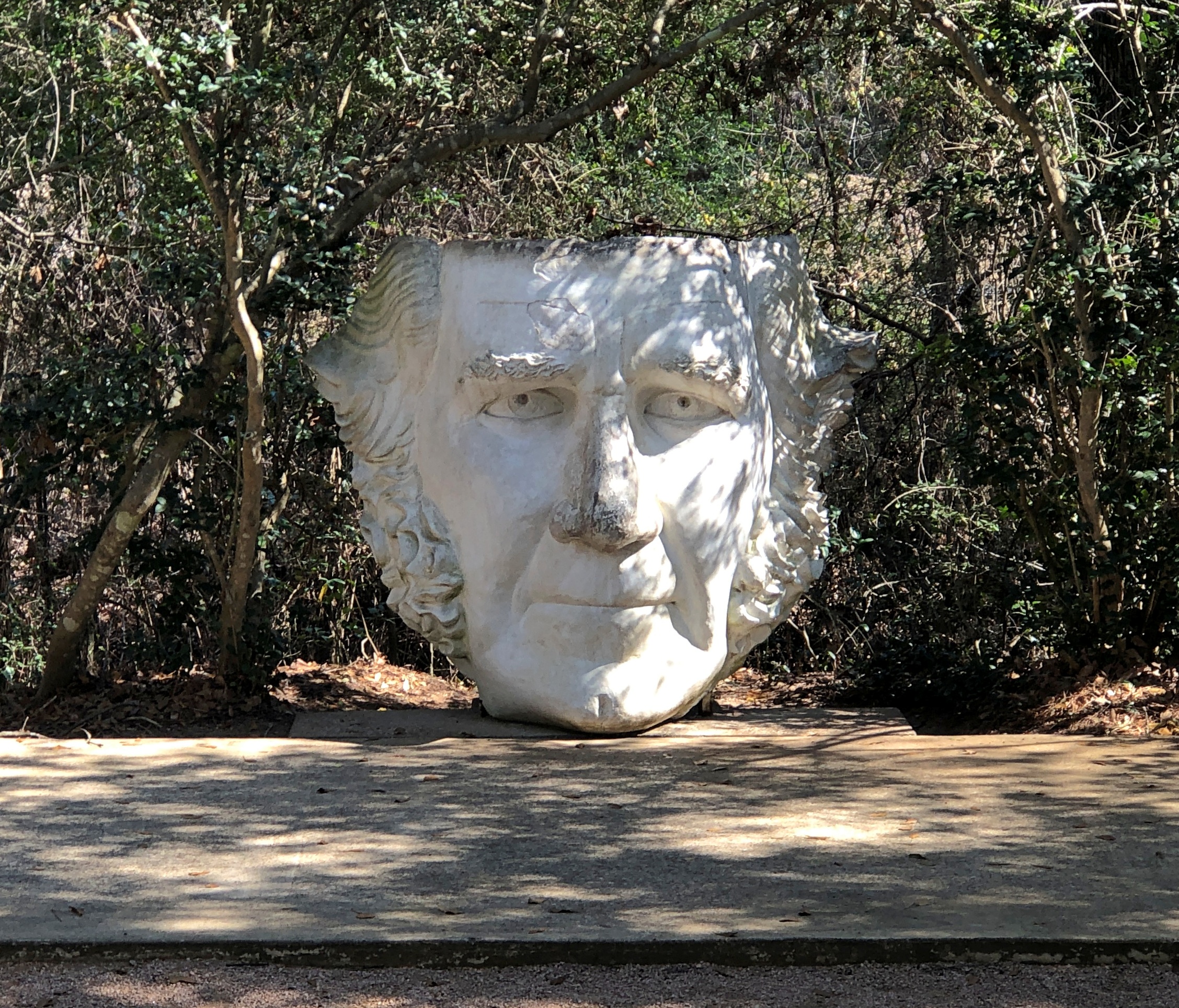
That only goes to show that you don’t need AI to make stuff up. Sam Houston isn’t made of soap, naturally, but something a little more durable, concrete and steel, and towers 67 feet from the plinth — he must have a dandy view of the Interstate. It’s been up only since 1994, the work of Huntsville native David Adickes. As for Qufu, there are surely statues of Confucius there, but I don’t feel like looking them up.
Naturally I followed the signs to the statue’s parking lot, got out and looked around.
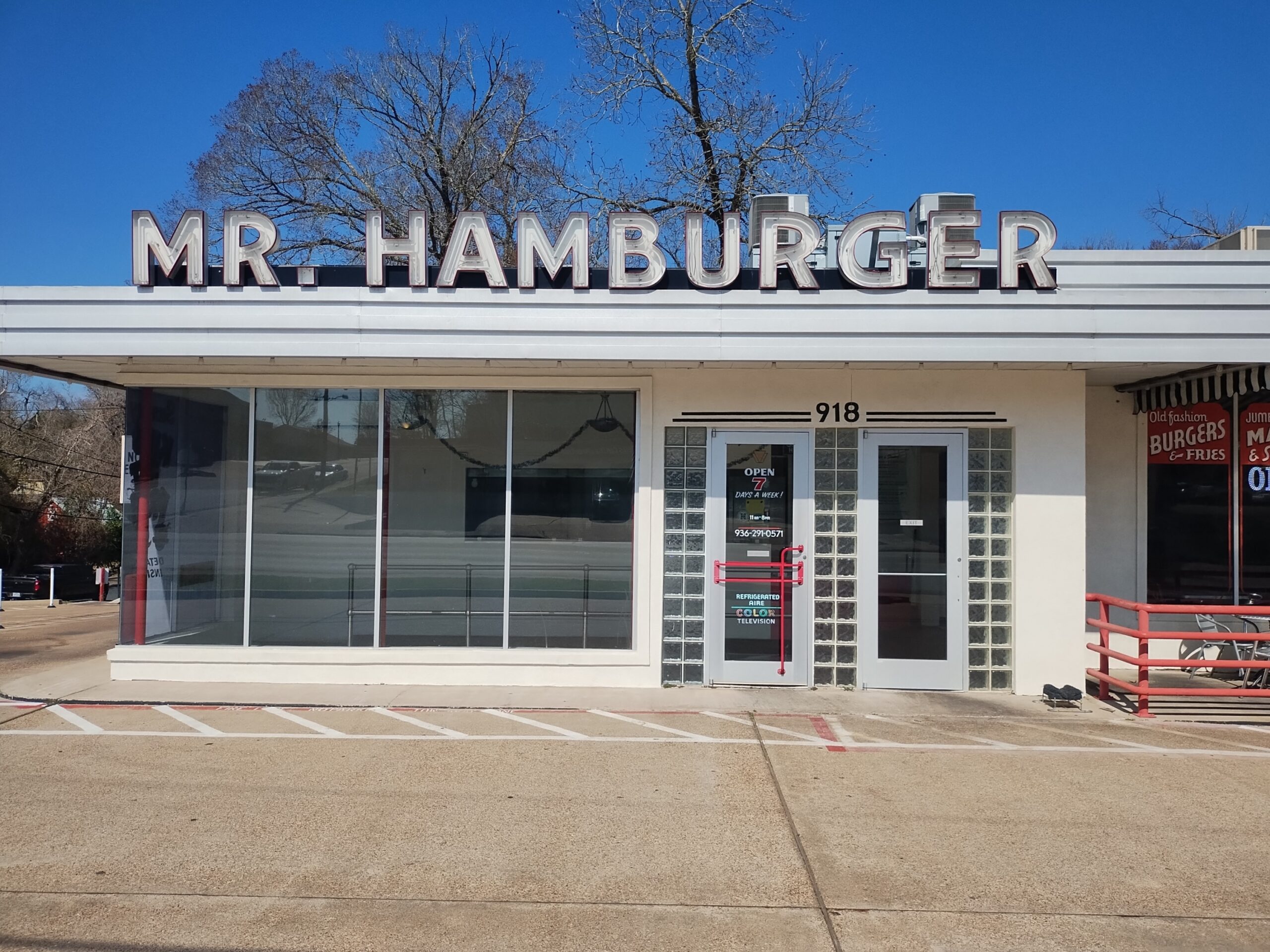
My priority afterward was lunch, and I happened on Mr. Hamburger there in the heart of Huntsville, a few miles from Big Sam.
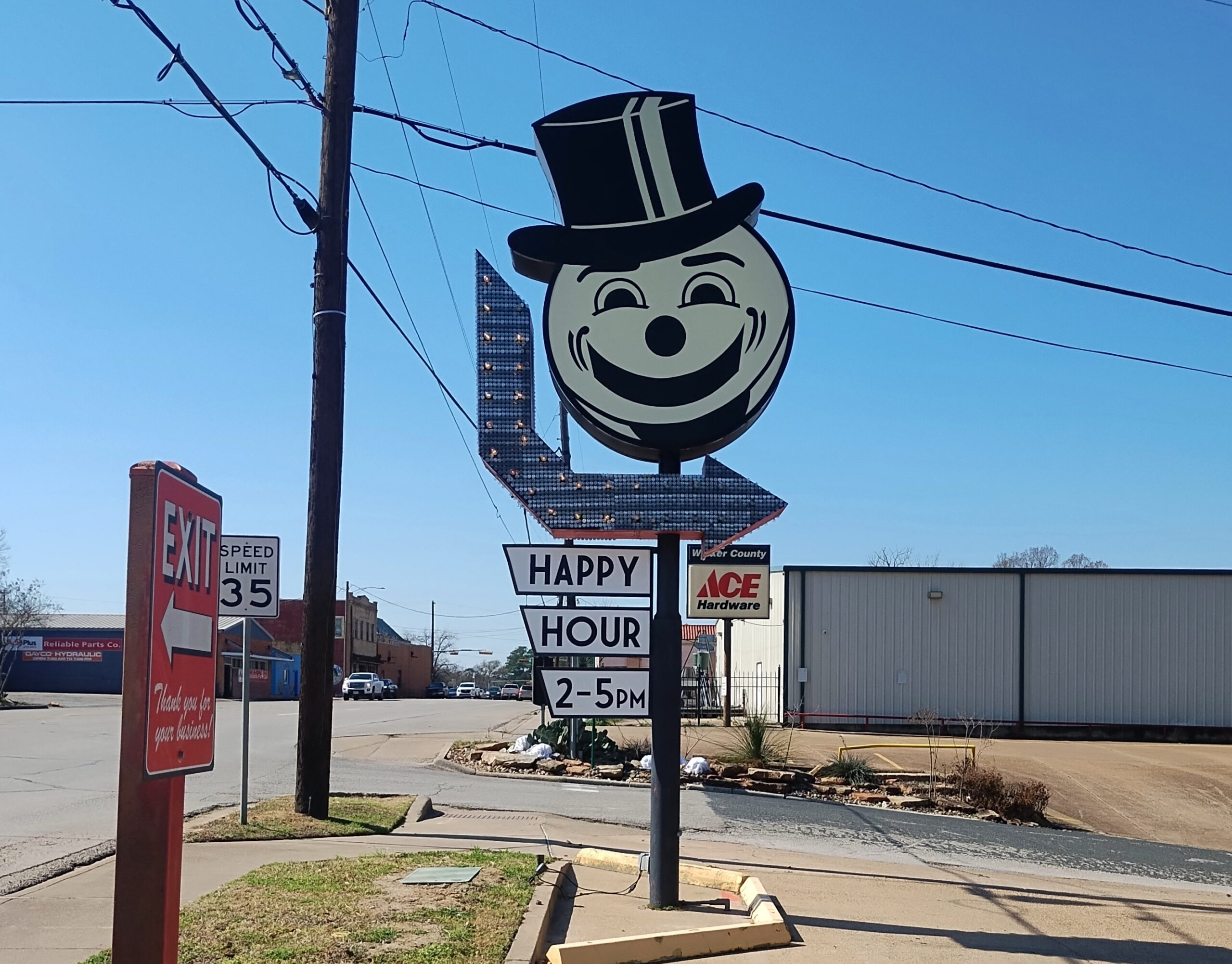
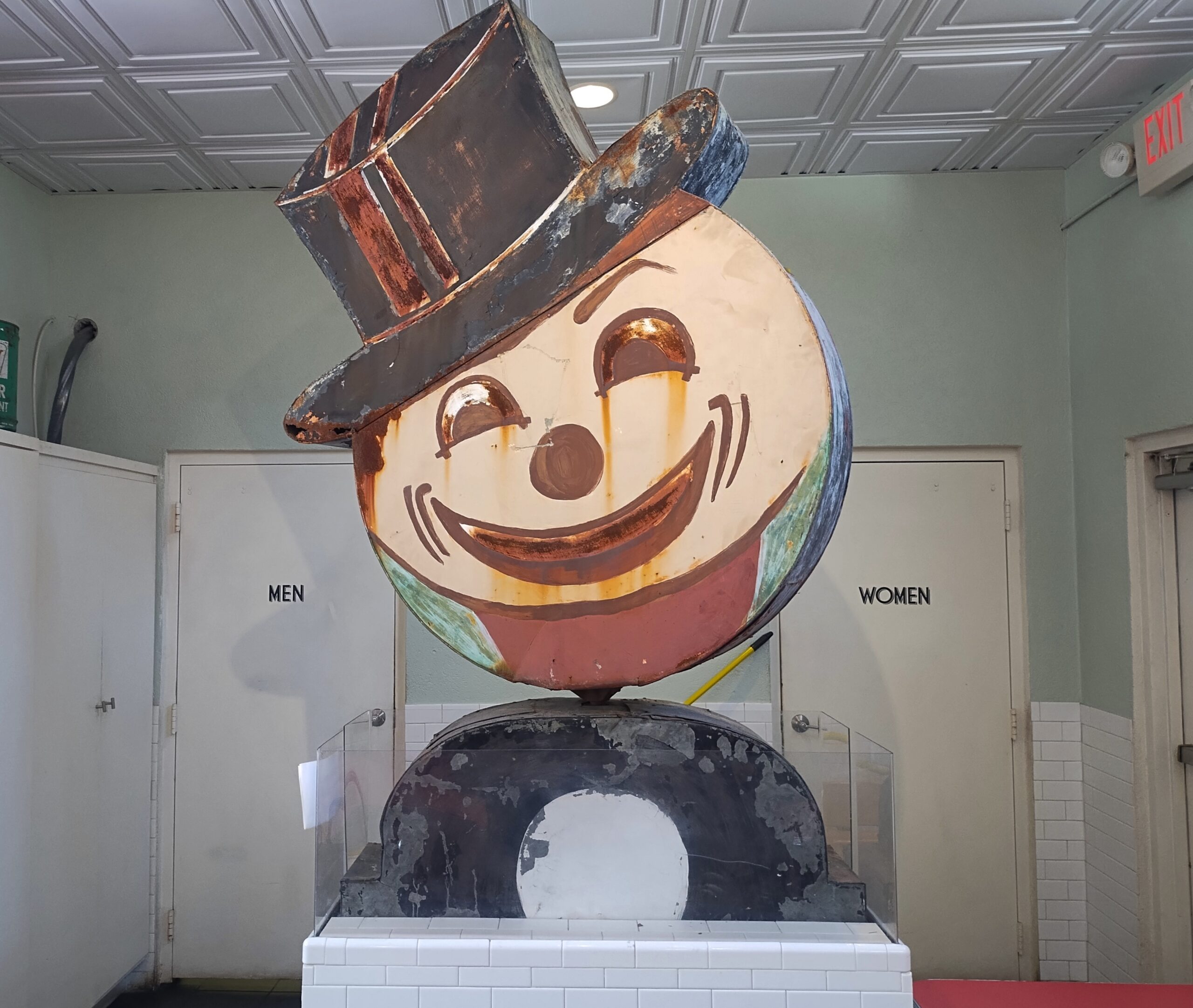
Not in the original location that opened nearby in 1959, I later found out, but in a redeveloped gas station. The original mascot, looking a little tired after decades in the Texas weather, had been moved inside to greet customers as they go to the bathroom.
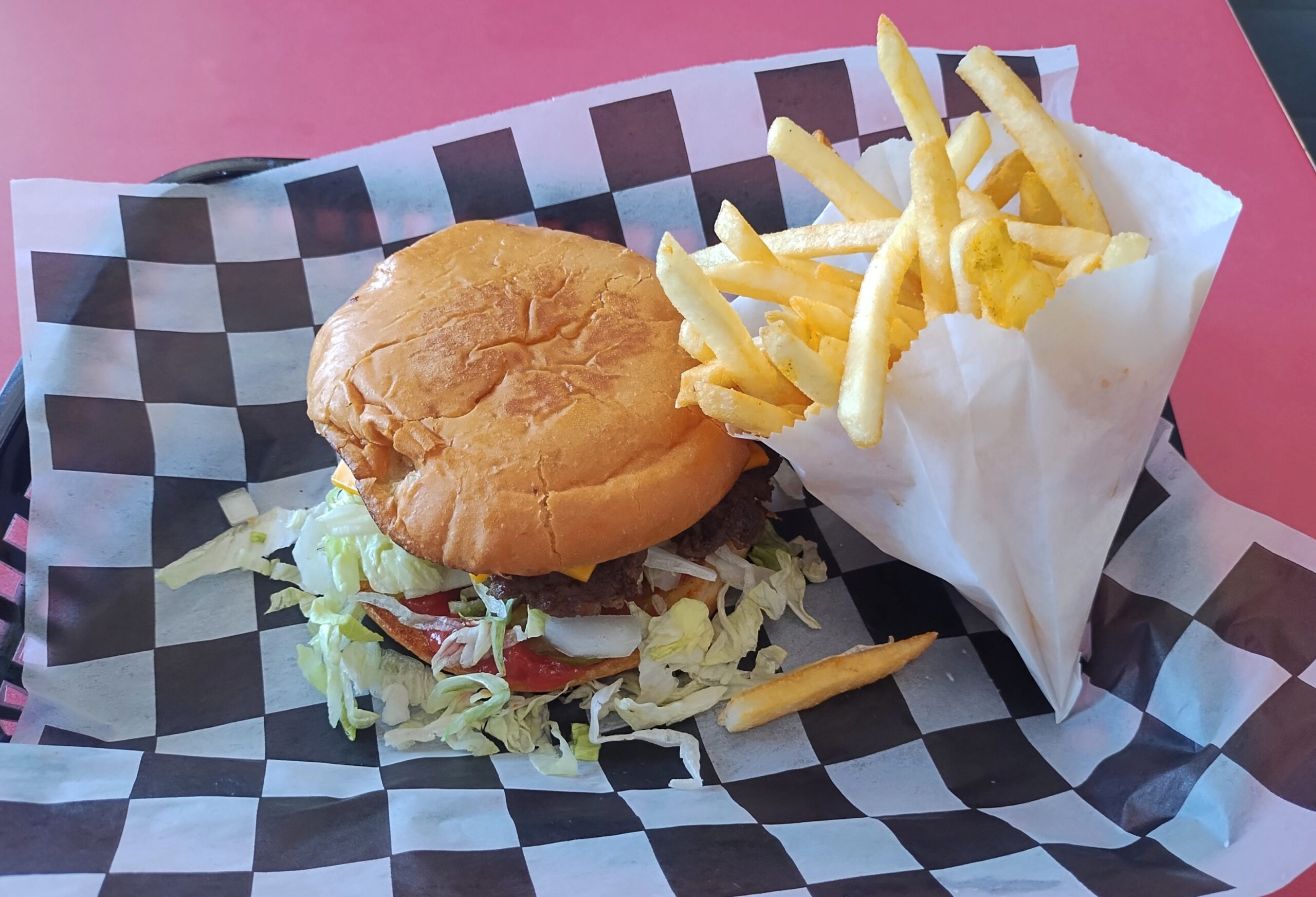
All that wouldn’t be noteworthy if the place hadn’t delivered the goods, but it did.
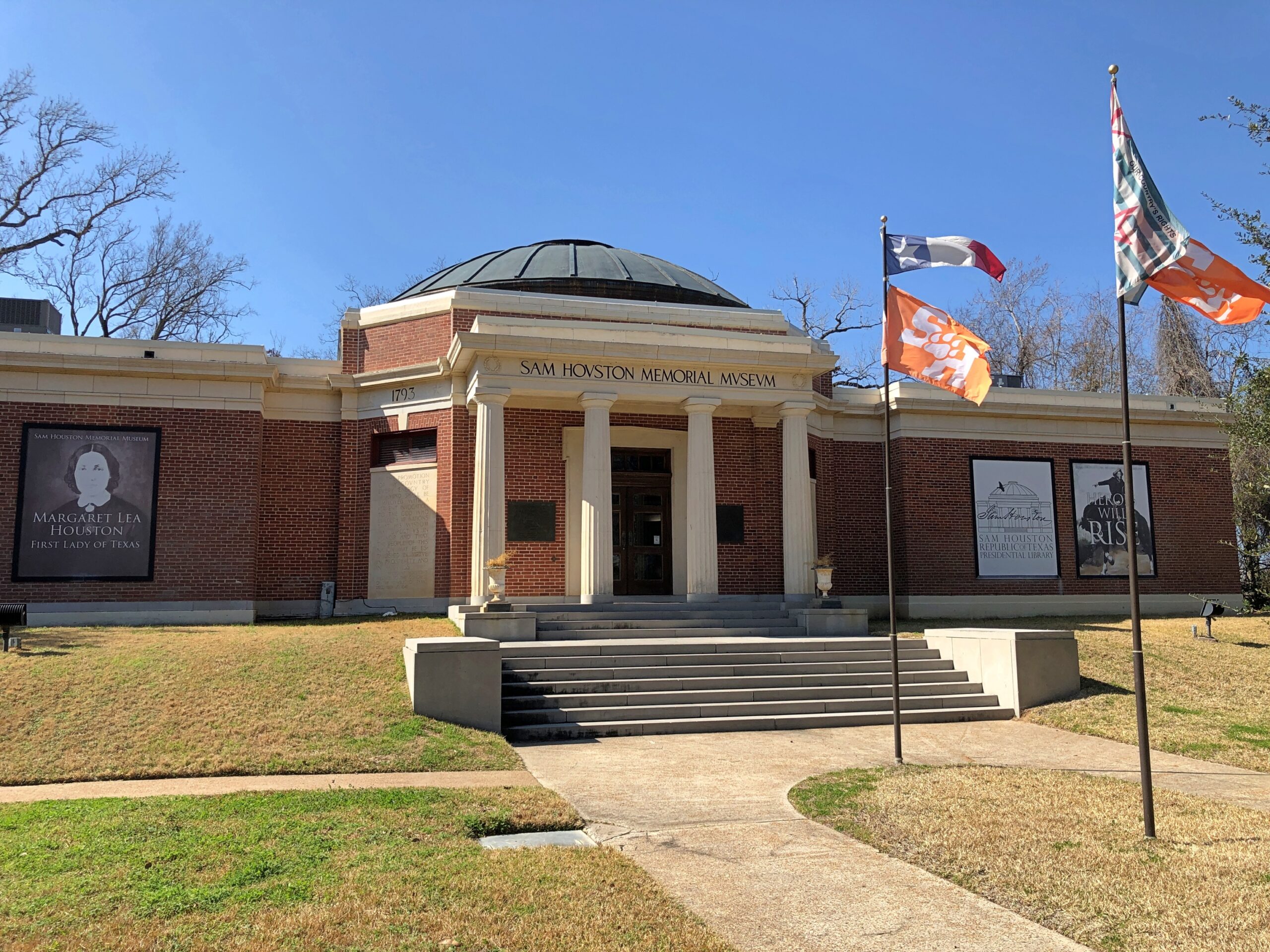
Thus fortified, I found my way to the Sam Houston Memorial Museum, which is on the campus of Sam Houston Institute of Technology.
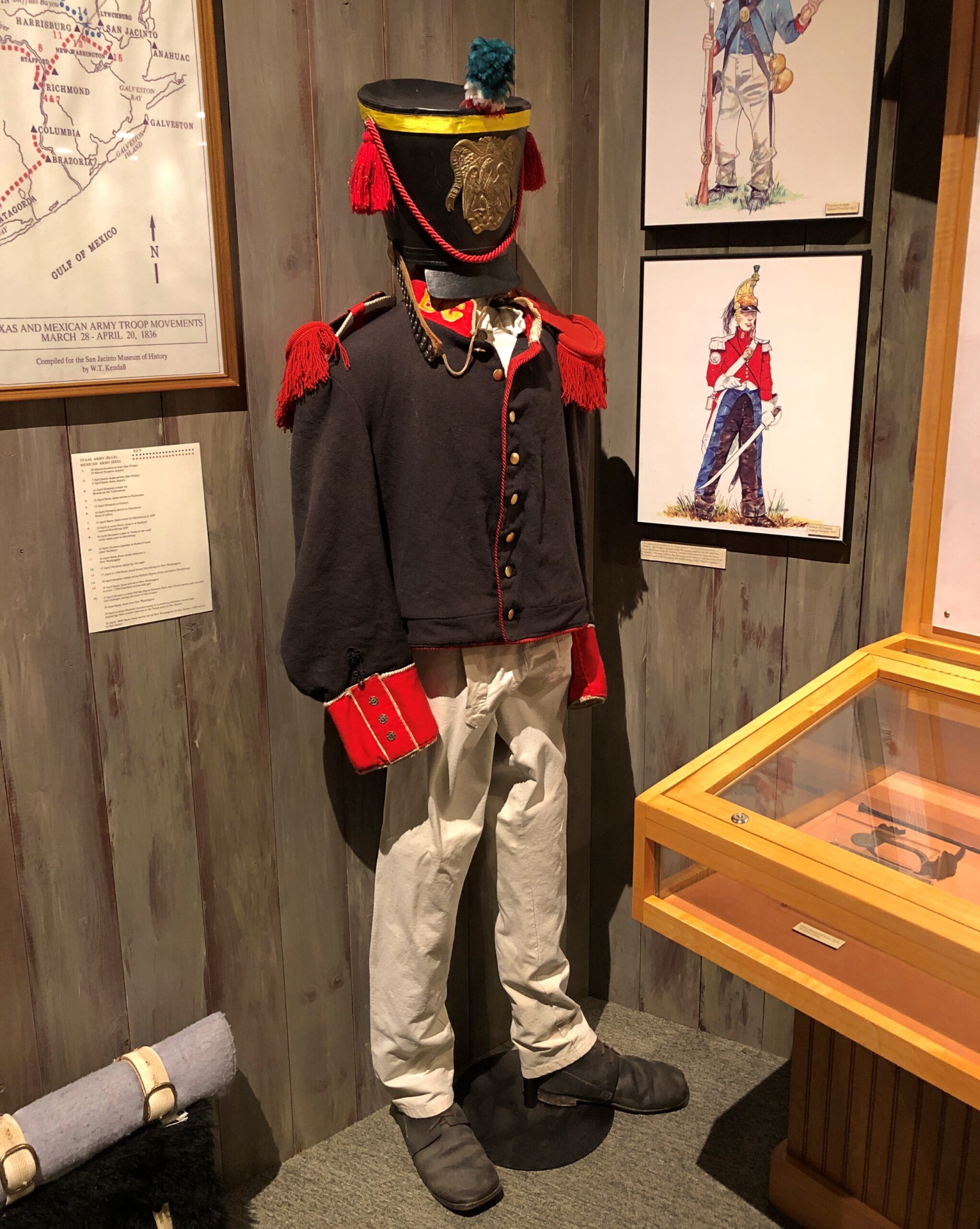
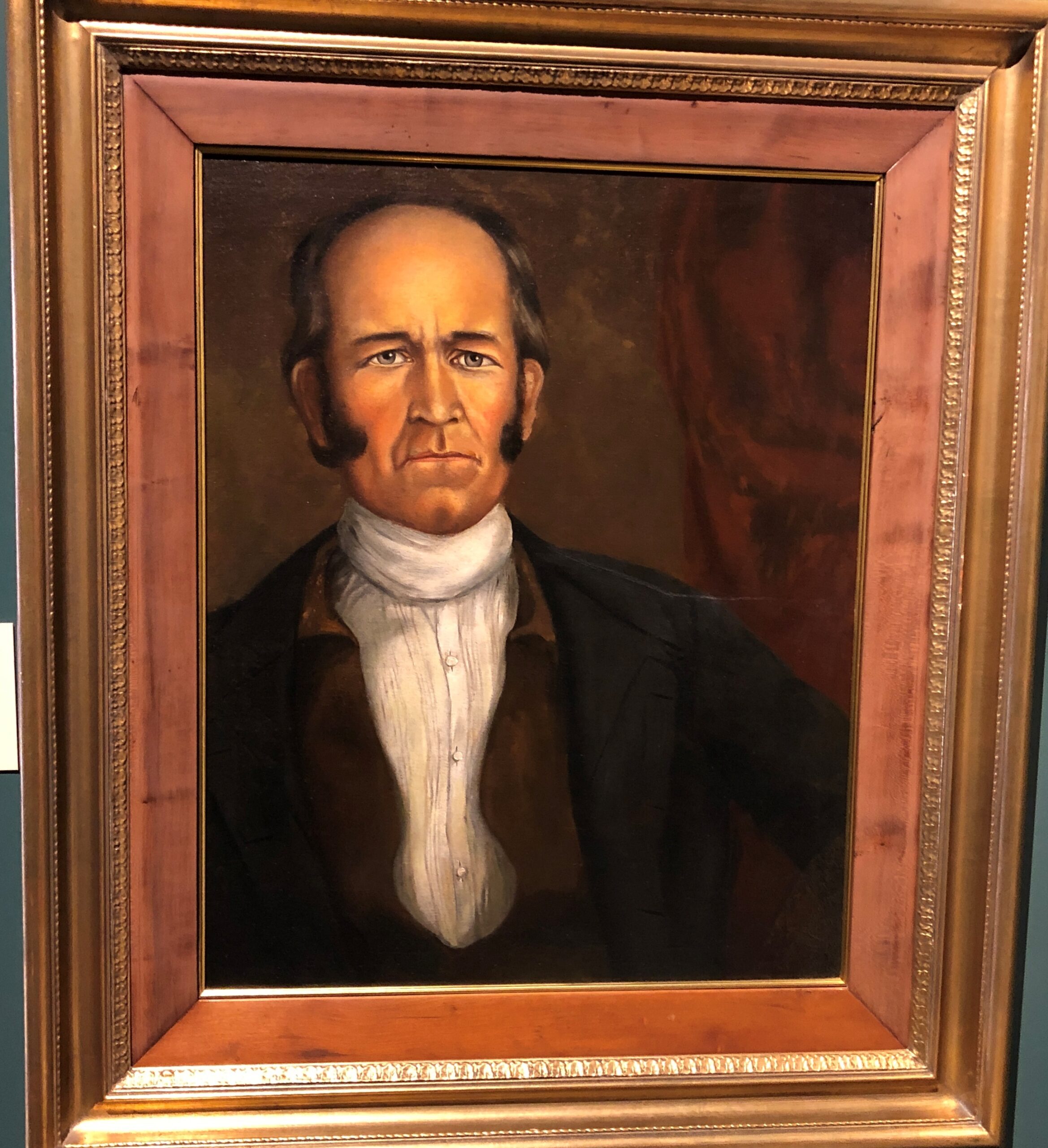
Old joke: Sam Houston State University. Not a large museum, but a nice collection of artifacts.
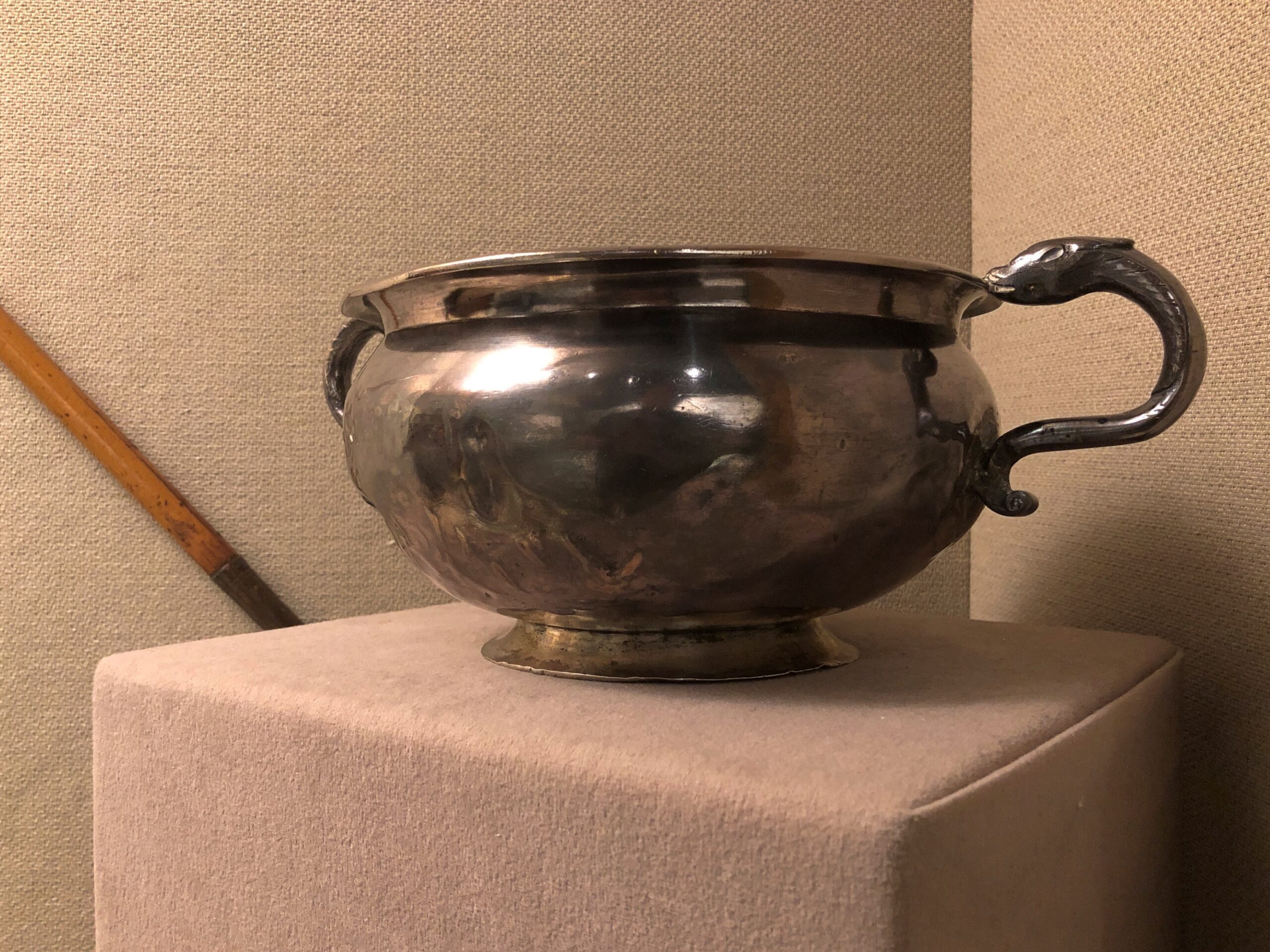
None better than Santa Anna’s silver chamber pot, a spoil of war at San Jacinto that the Mexican government probably has never wanted back.
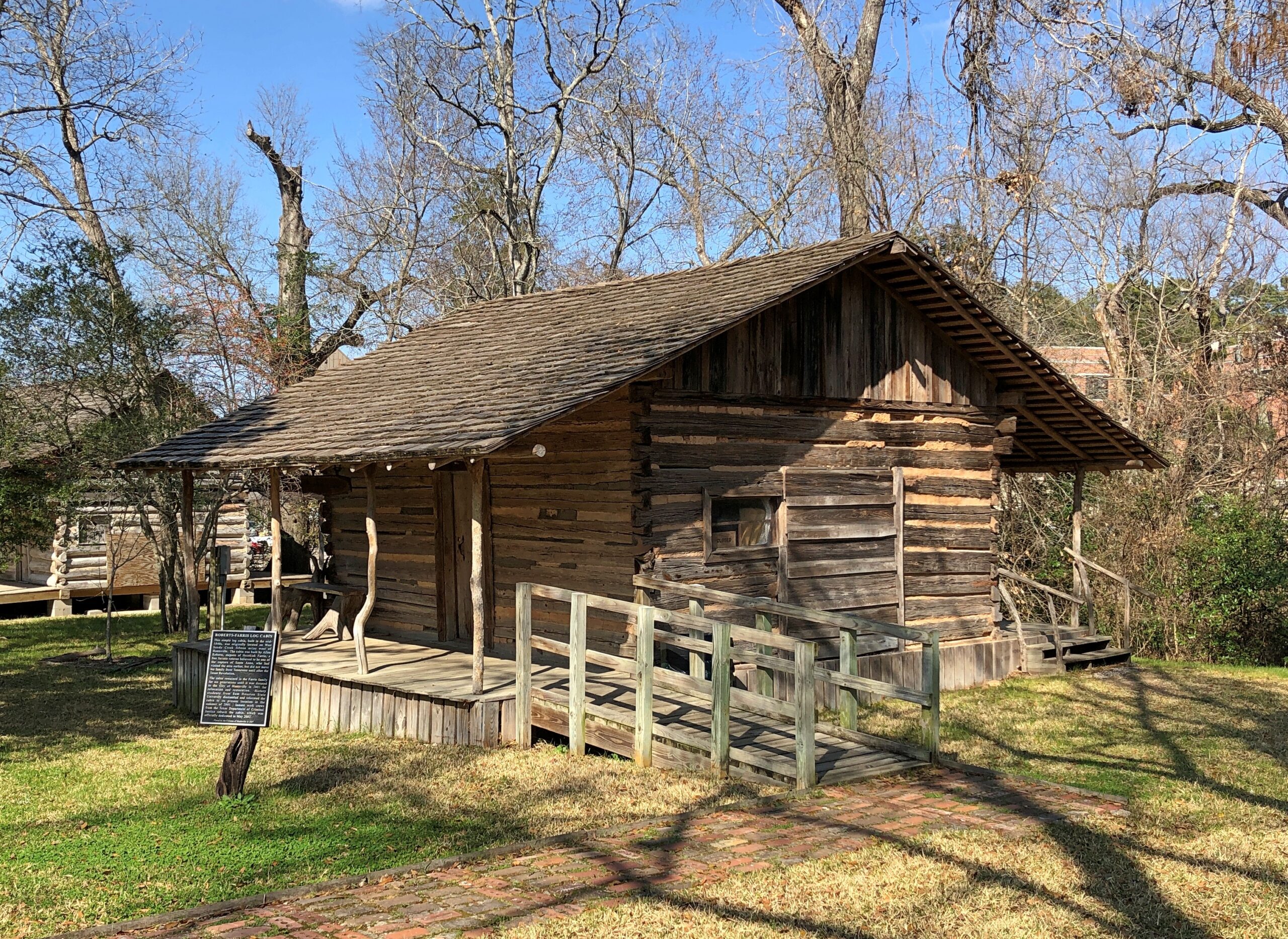
Besides the museum building, the grounds sport a small open-air museum. Including a log cabin (not Houston’s) from the Huntsville area, from around the time of the Republic.
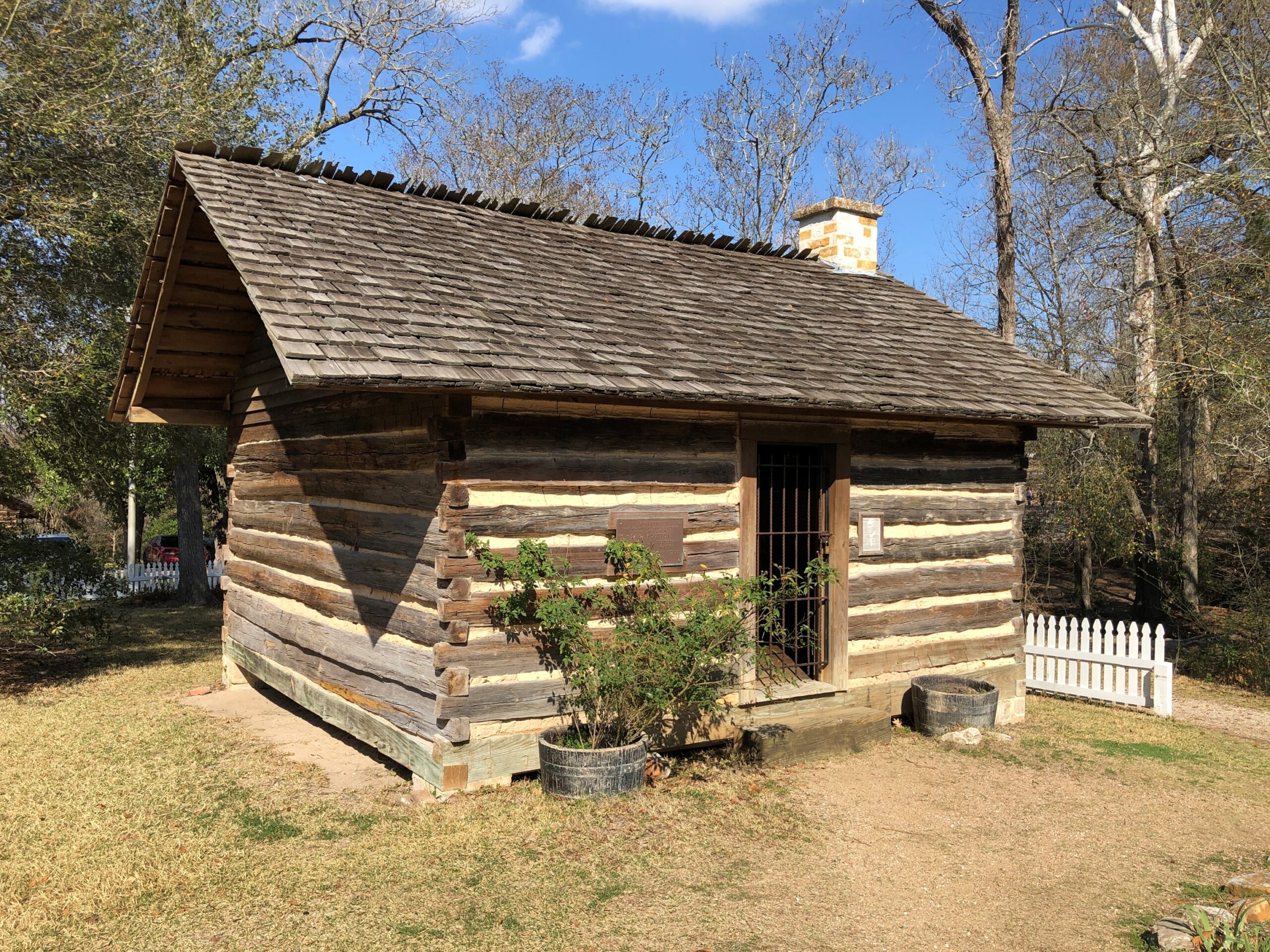
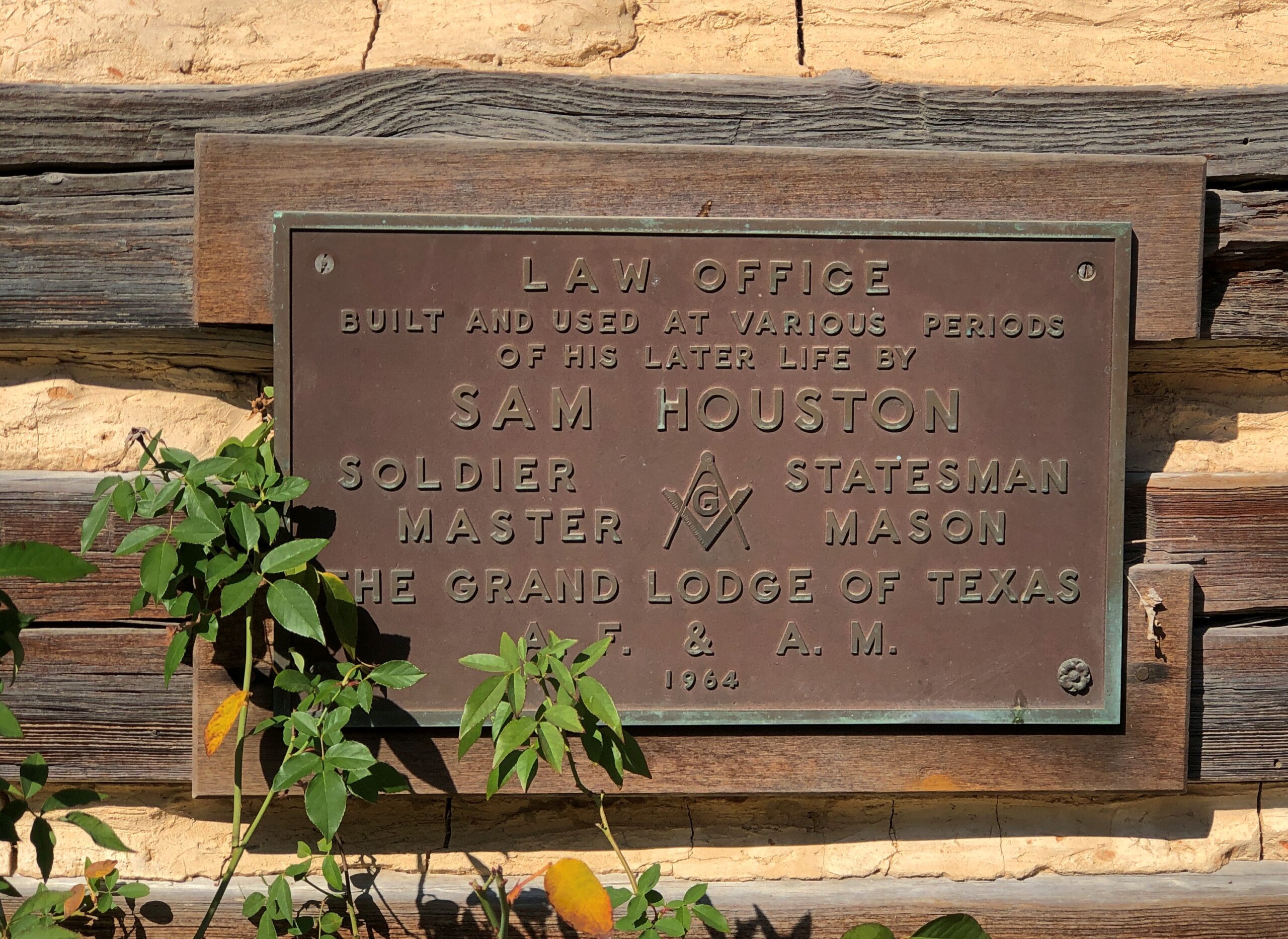
A log cabin that was Houston’s. He used it for his law office.
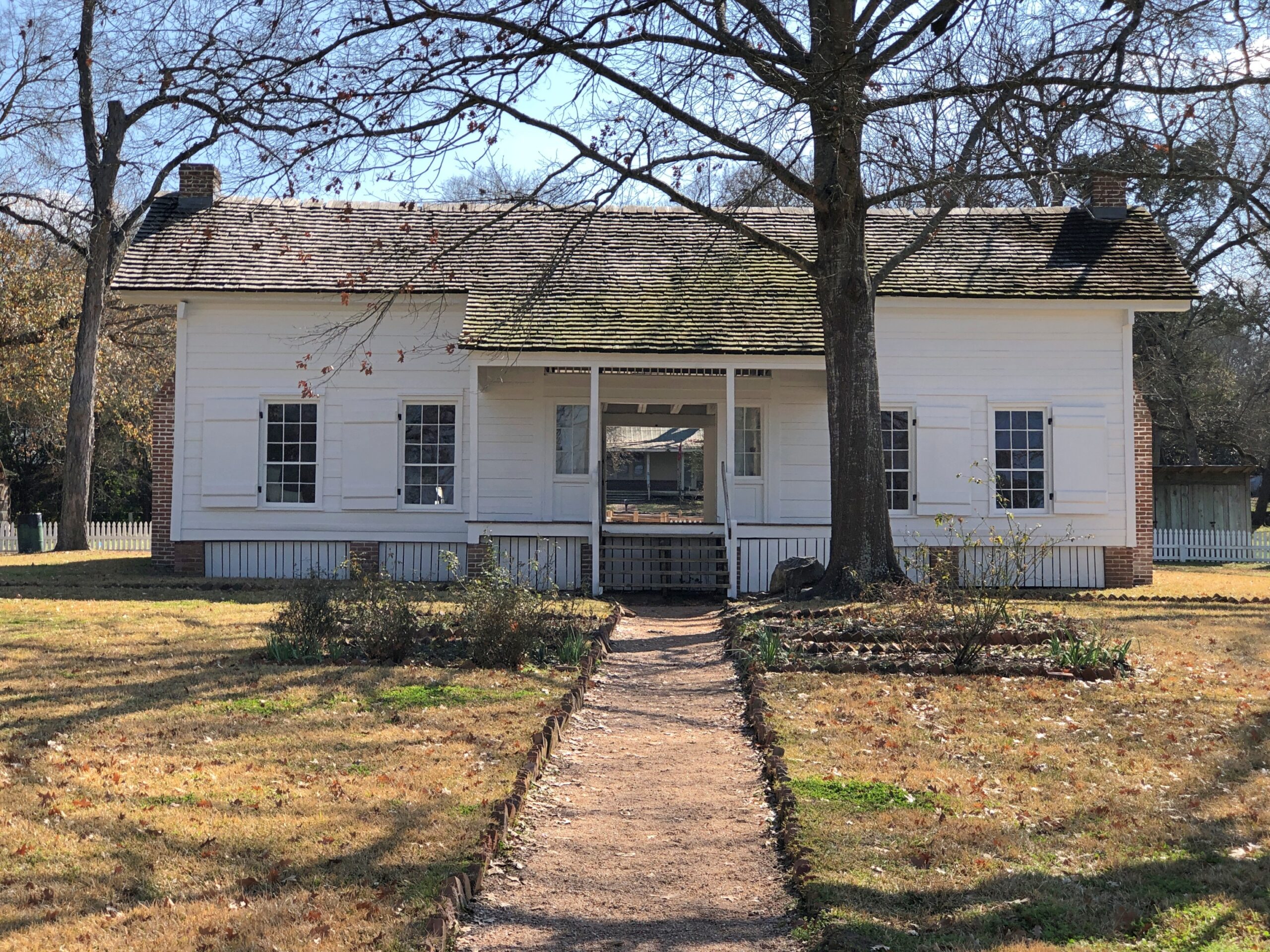
The earlier of the two Houston homes in Huntsville.
The later of the two, Steamboat House. The nickname fits. Houston, relieved of the governorship due to his belief that Texas was making a mistake in leaving the Union, died there in ’63.
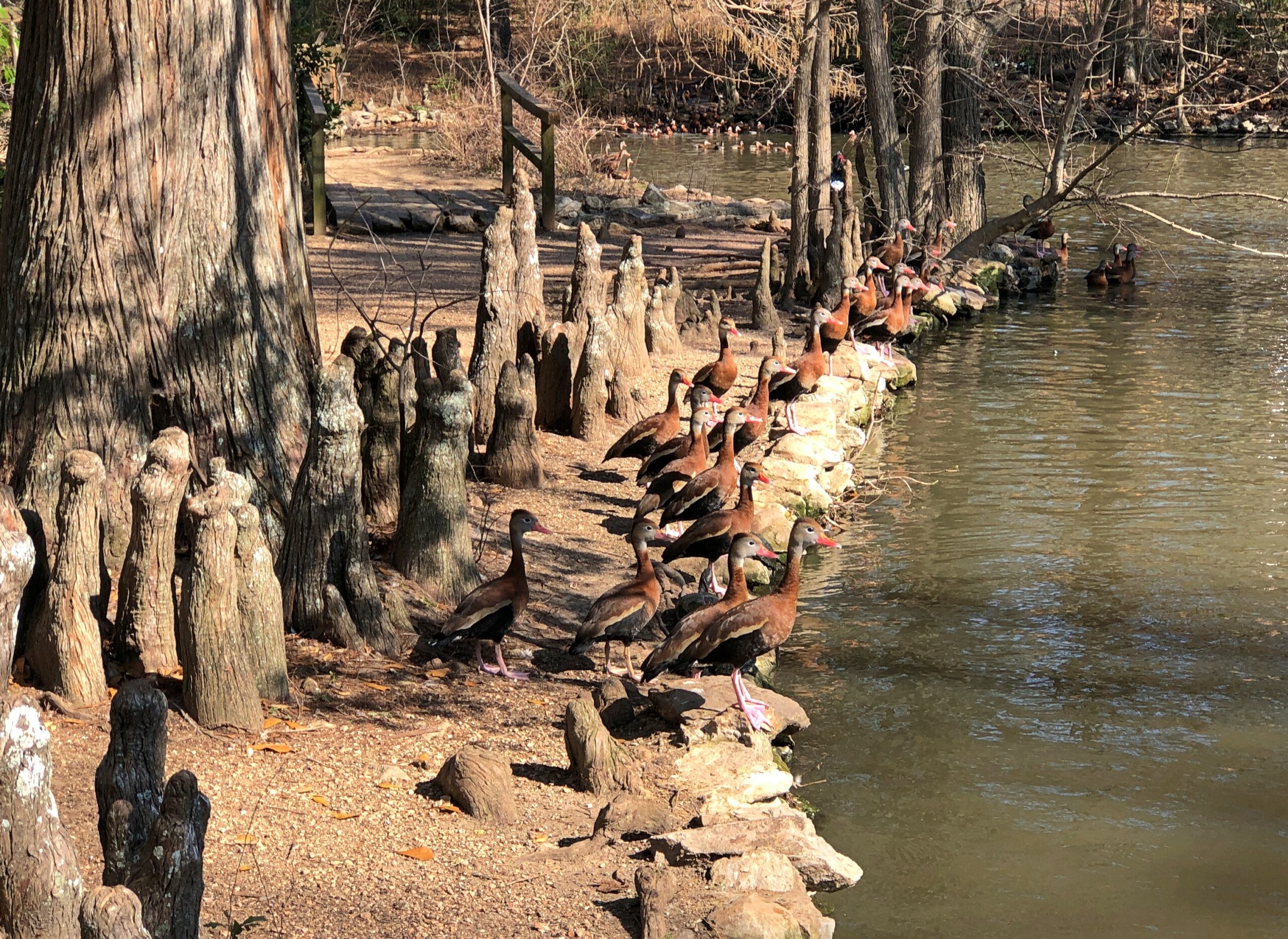
The grounds has a water feature. With water fowl and cypress knobs.
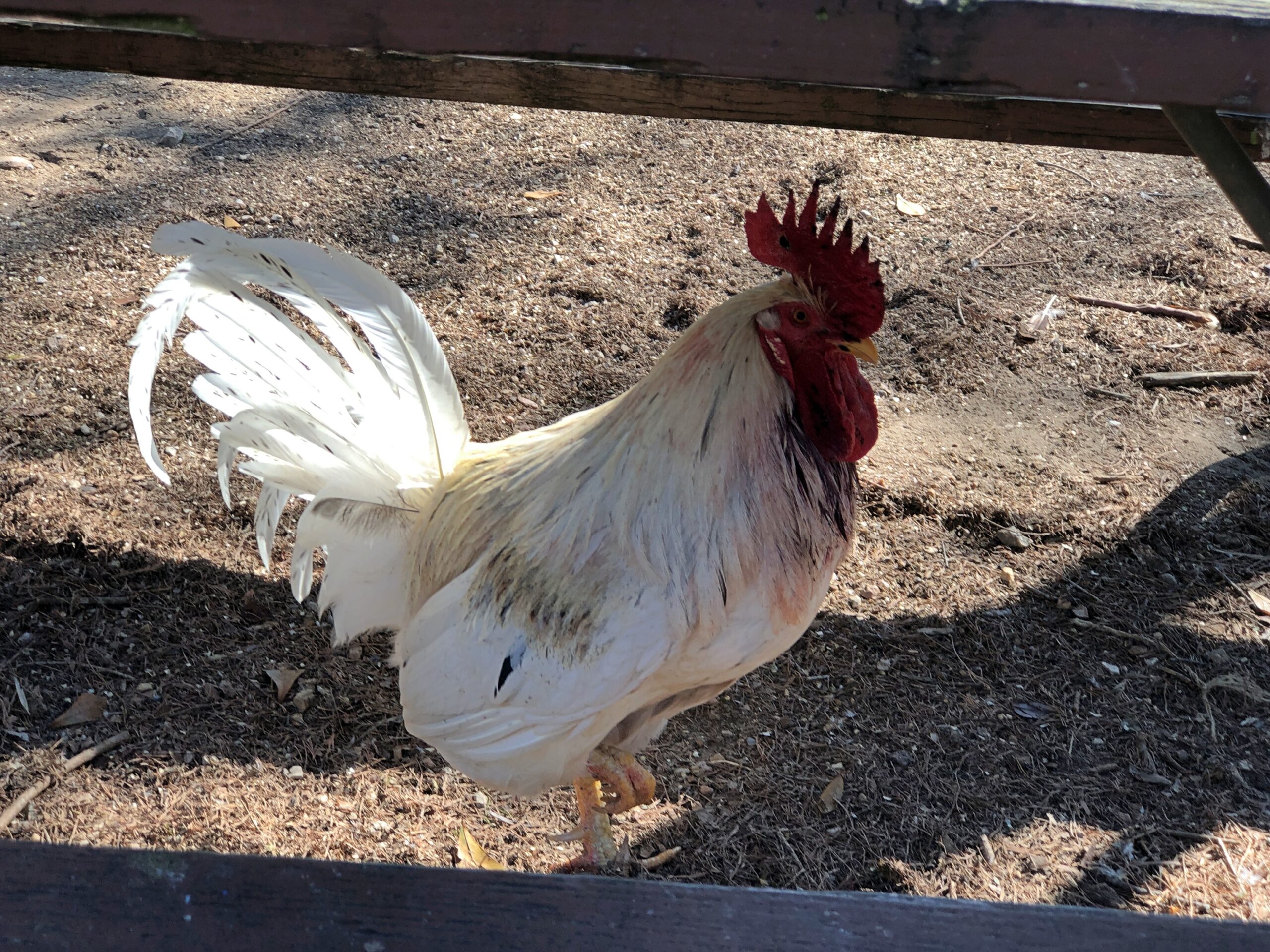
Elsewhere, some land fowl.
A touch of authenticity, since the Houstons must surely have had chickens around.
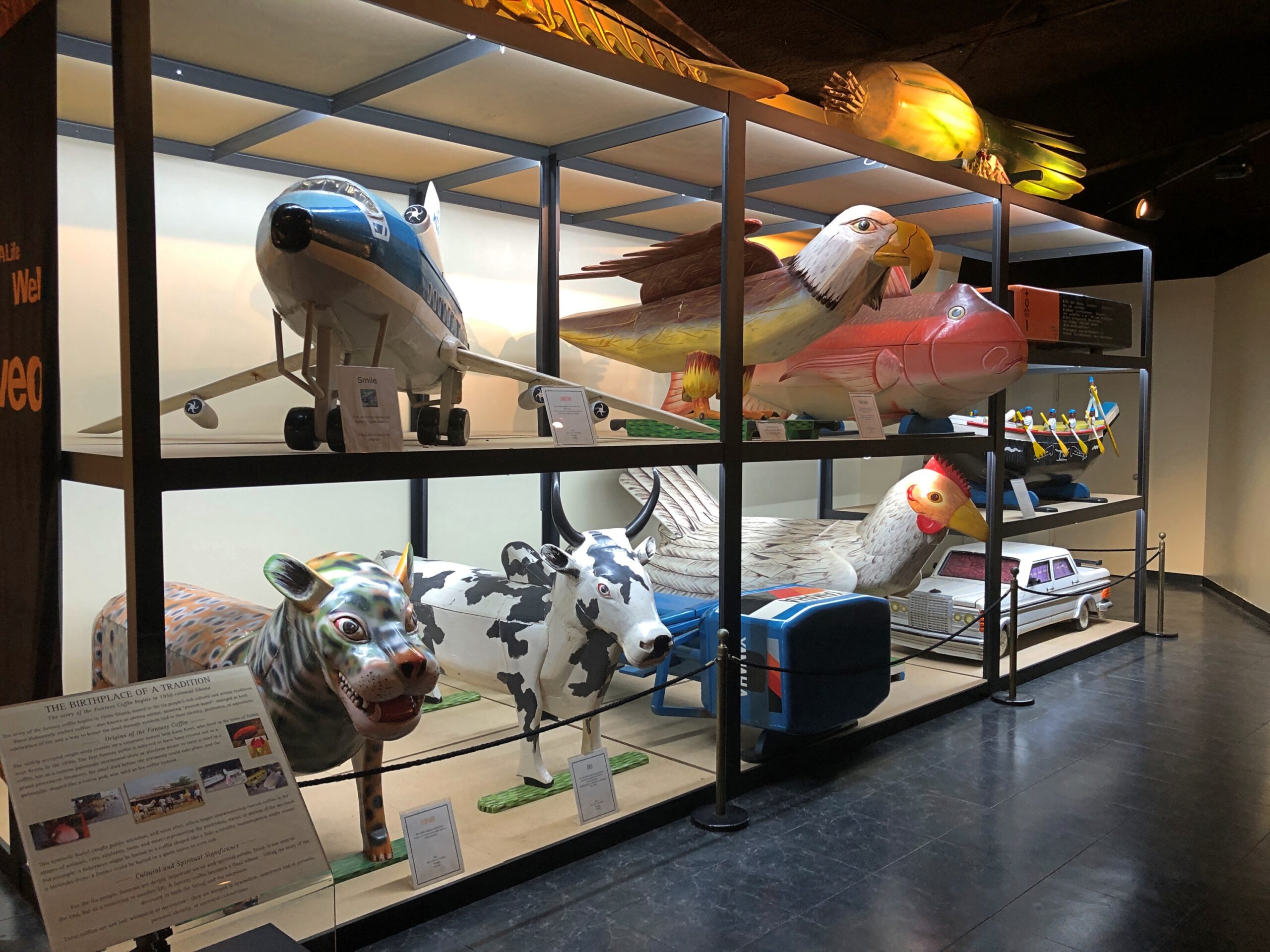
One place I didn’t go in February was Ghana, the west African nation. If I had to pick a place to visit in that part of the world, I might well pick Ghana, for various reasons. One is that the coffin shopping is unlike anywhere else.
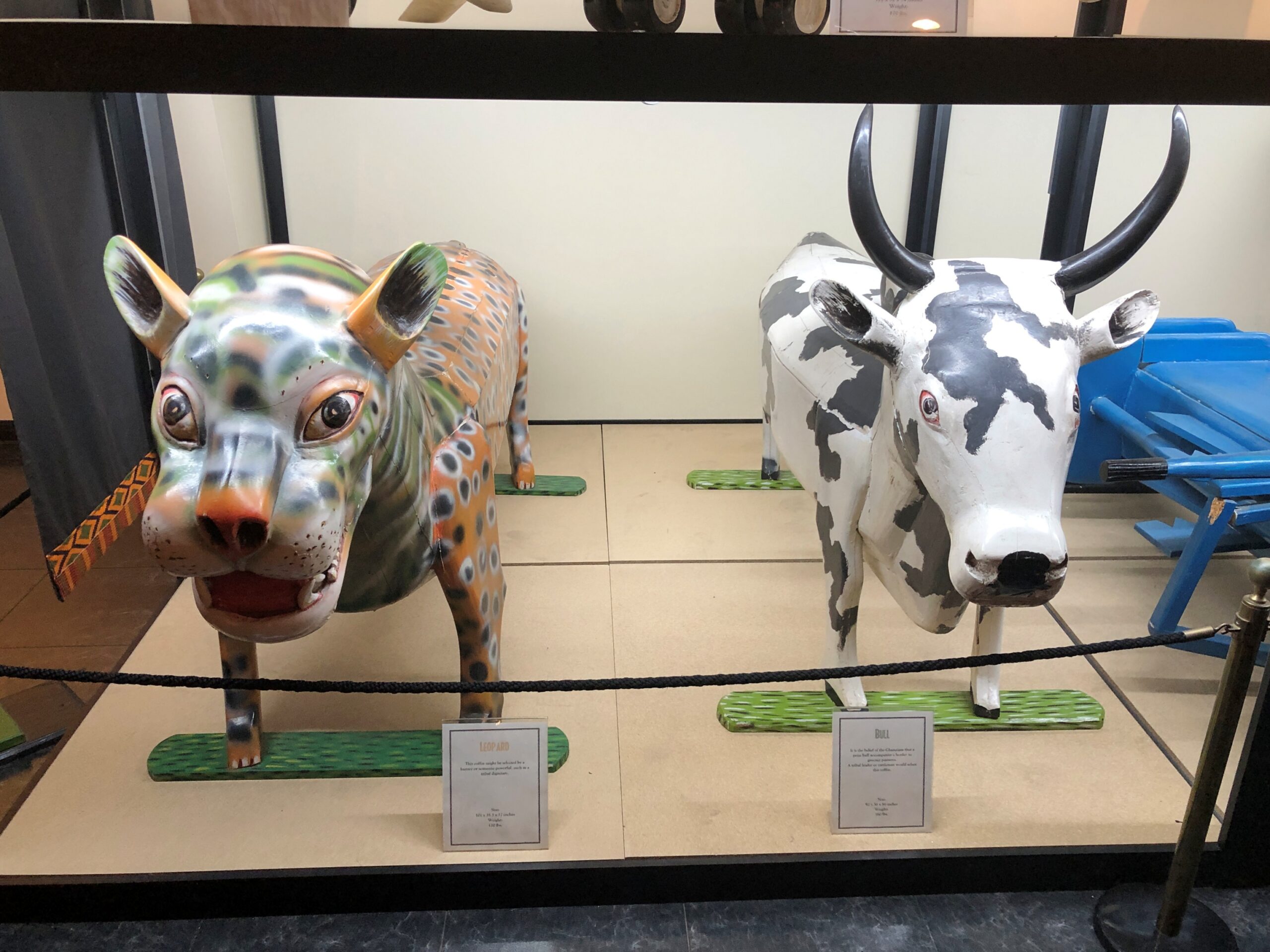
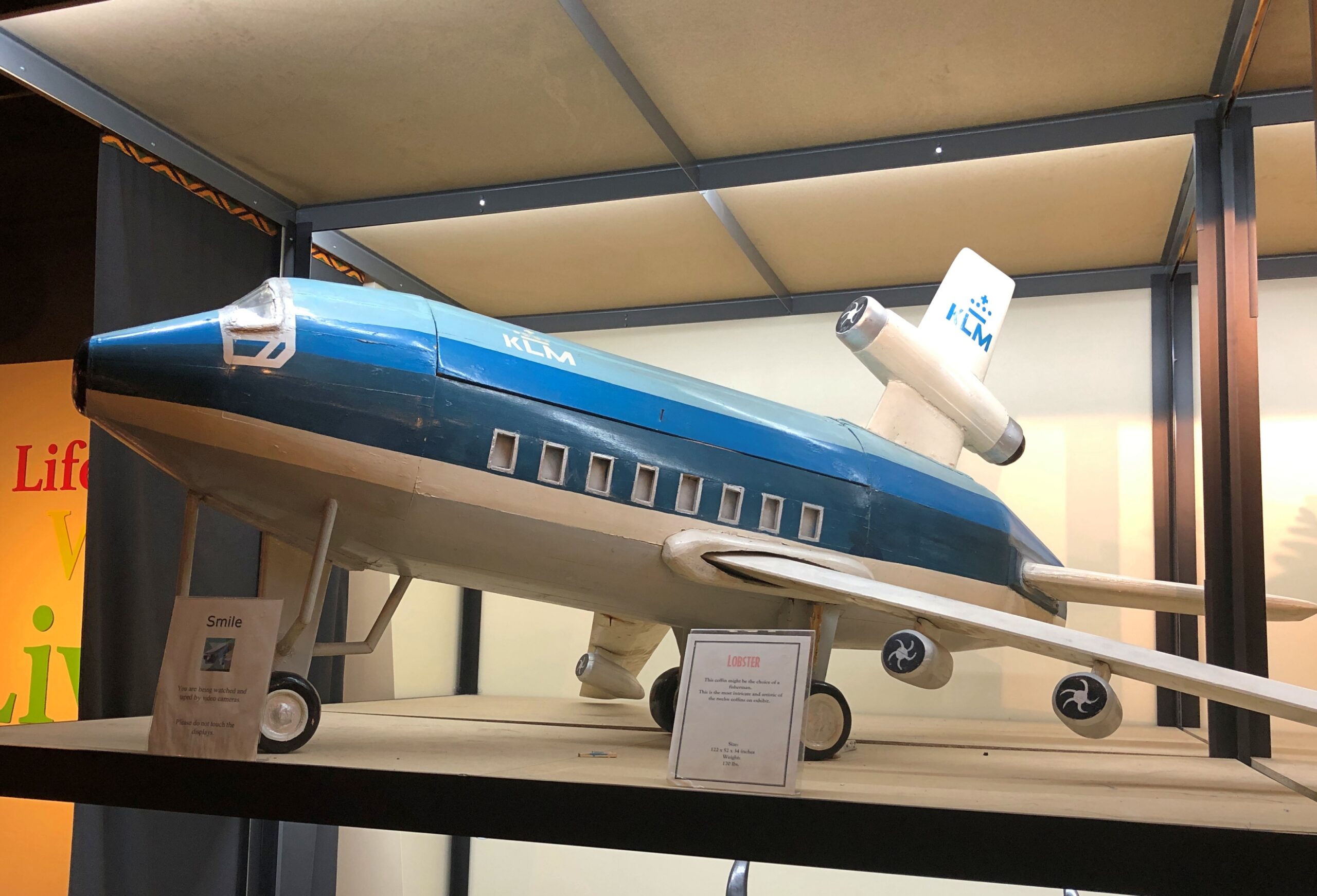
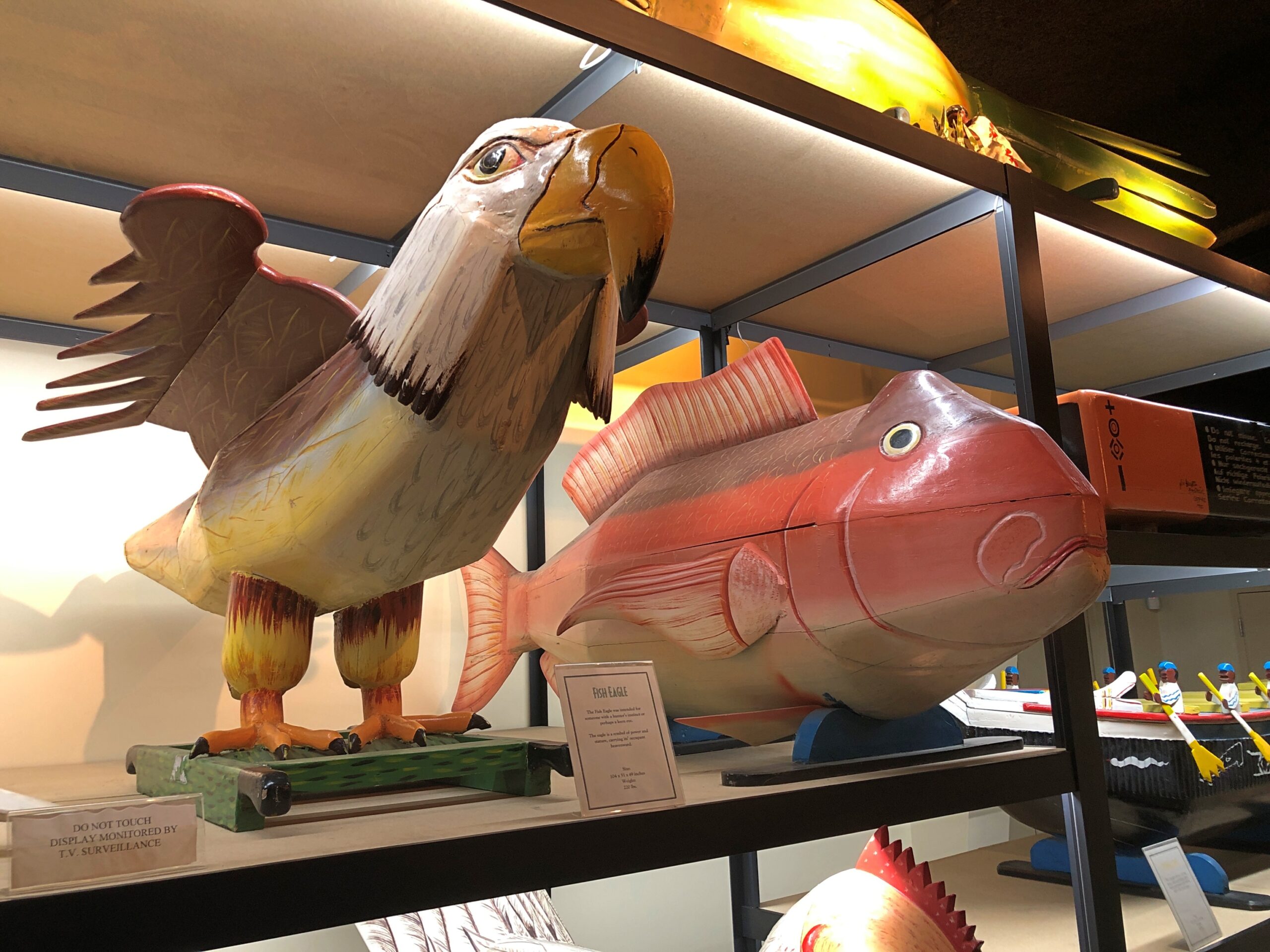
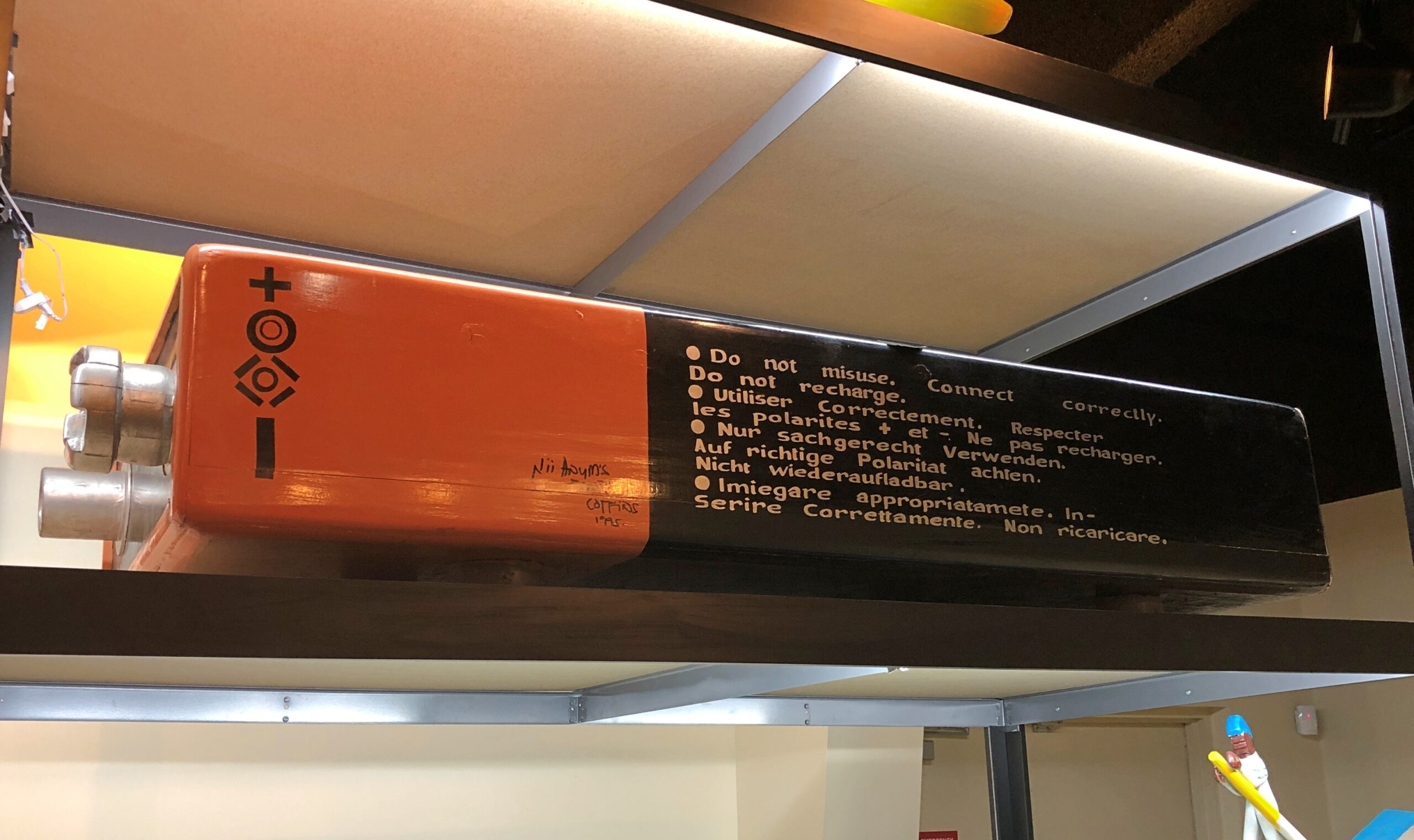
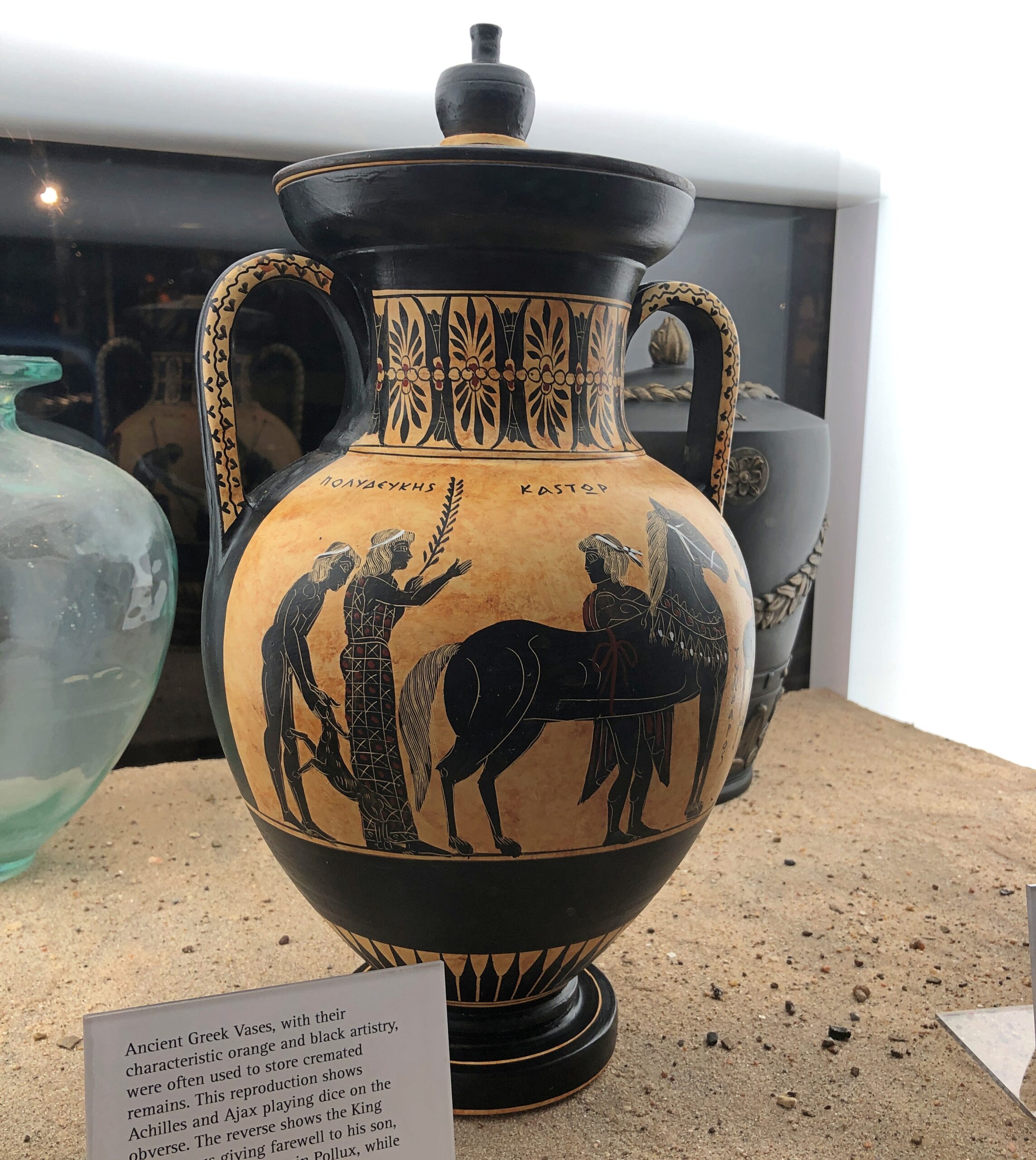
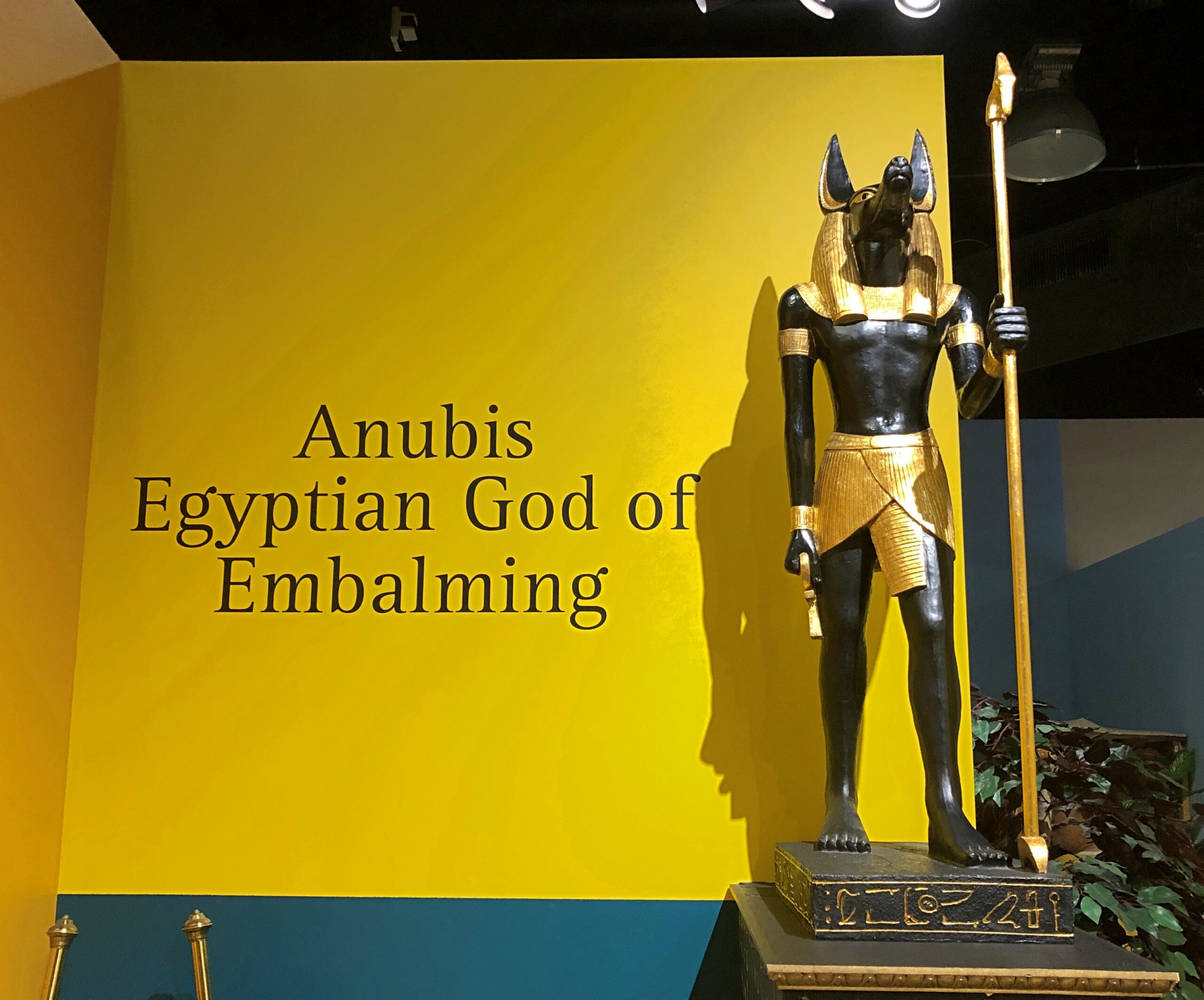
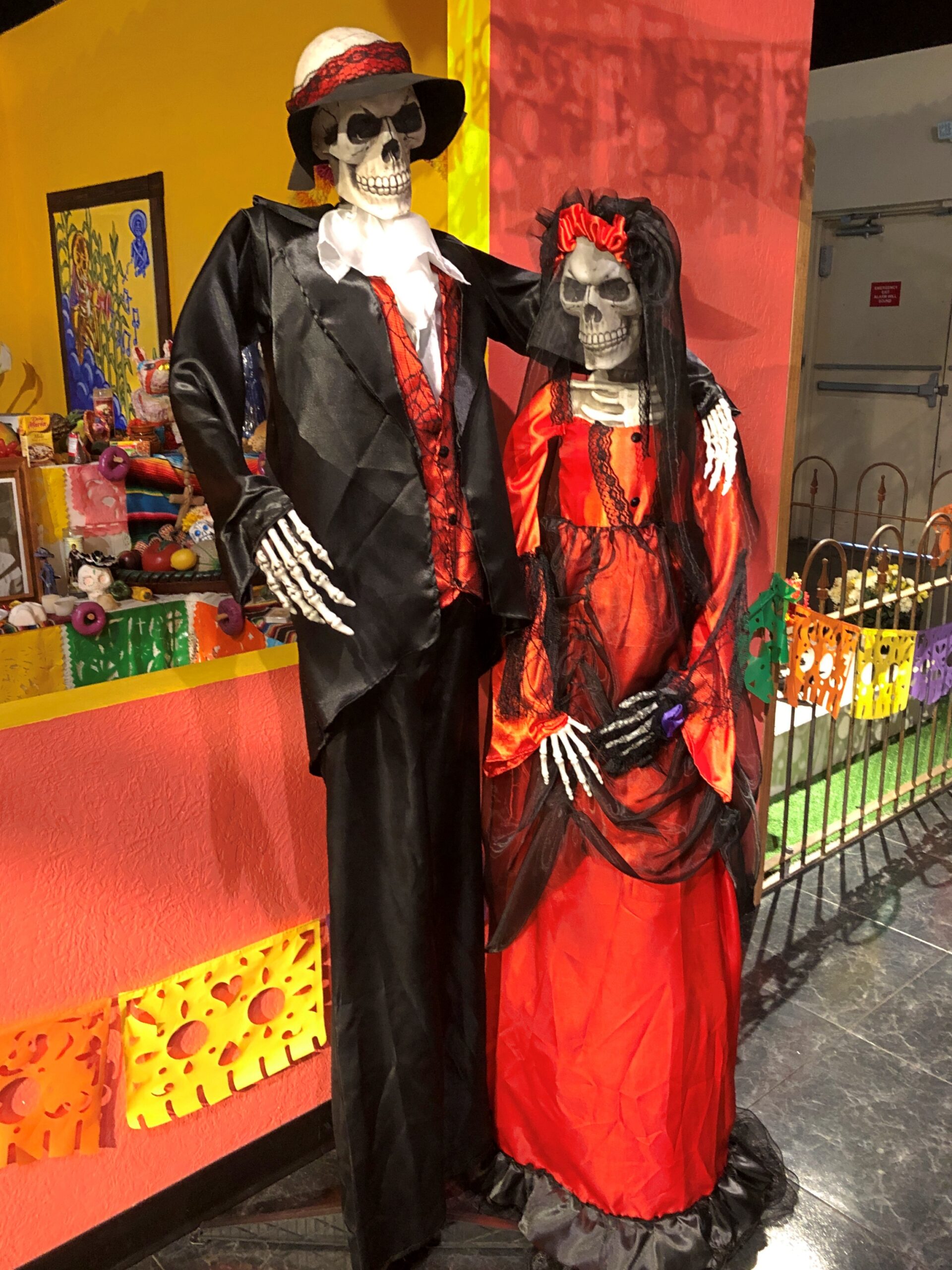
Rather, I stopped by the National Museum of Funeral History in northern Houston, which has a connection to Ghana. I was expecting a display of coffins maybe, but the museum has so much more: many hearses, horse-drawn and automobiles; items from the funerals of U.S. presidents and popes, including a large display about the funeral of President George Bush the elder; entire sections on cremation and embalming from the earliest times to now; Victorian death memorabilia in its macabre (to us) variety; a Day of the Dead exhibit; and, to my surprise, Ghanaian coffins, which the museum calls the largest such collection outside west Africa.
My favorite, though it’s a hard choice: the Duracell coffin, with its distinct copper top. Guess those batteries are sold in west Africa. You’d think Energizer would be the better choice.
The museum, founded in 1993, occupies more than 30,000 square feet in an unassuming building in a neighborhood of unassuming buildings. Had it not been for the billboard advertising it on the highway into Houston, I might have missed it. Or not. I have a way of ferreting out smaller museums. One important advantage of the NMFH: it’s open on Mondays. Many Houston museums are closed on Mondays and Tuesdays — the two days I was in town.
As with many specialized museums, NMFH is the legacy of a single person with a driving interest in a single subject and, in his case, access to many of the relevant artifacts. The subject just happens to be death adjacent, so when I mention the museum, people get a little weird.
“The idea for the Museum grew from Robert L. Waltrip’s 25-year dream of establishing an institution to educate the public and preserve the heritage of death care,” the museum says. Waltrip, a Houston mortician born to an undertaker father, didn’t need death care himself until recently, dying in 2023 at 92.
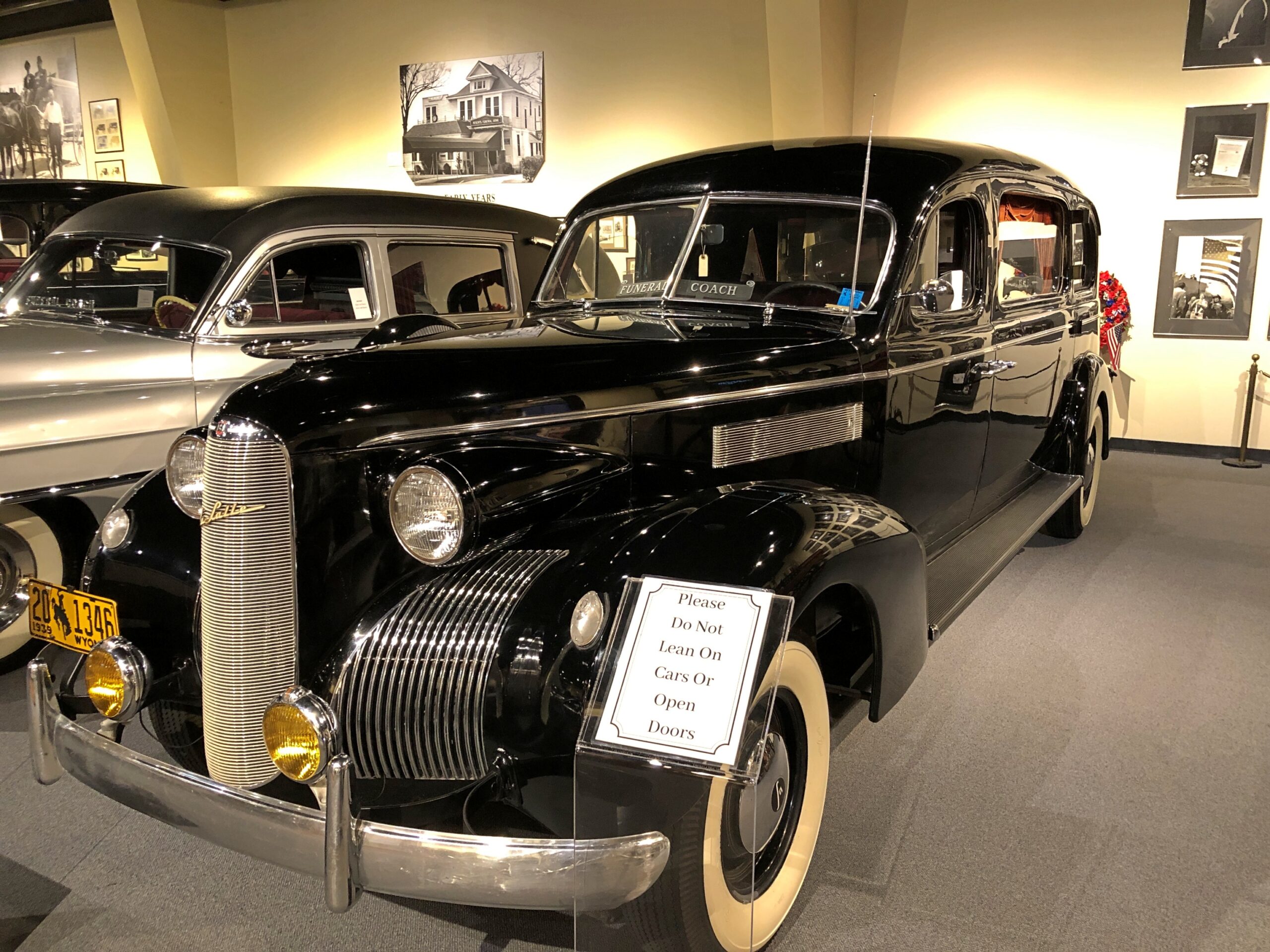
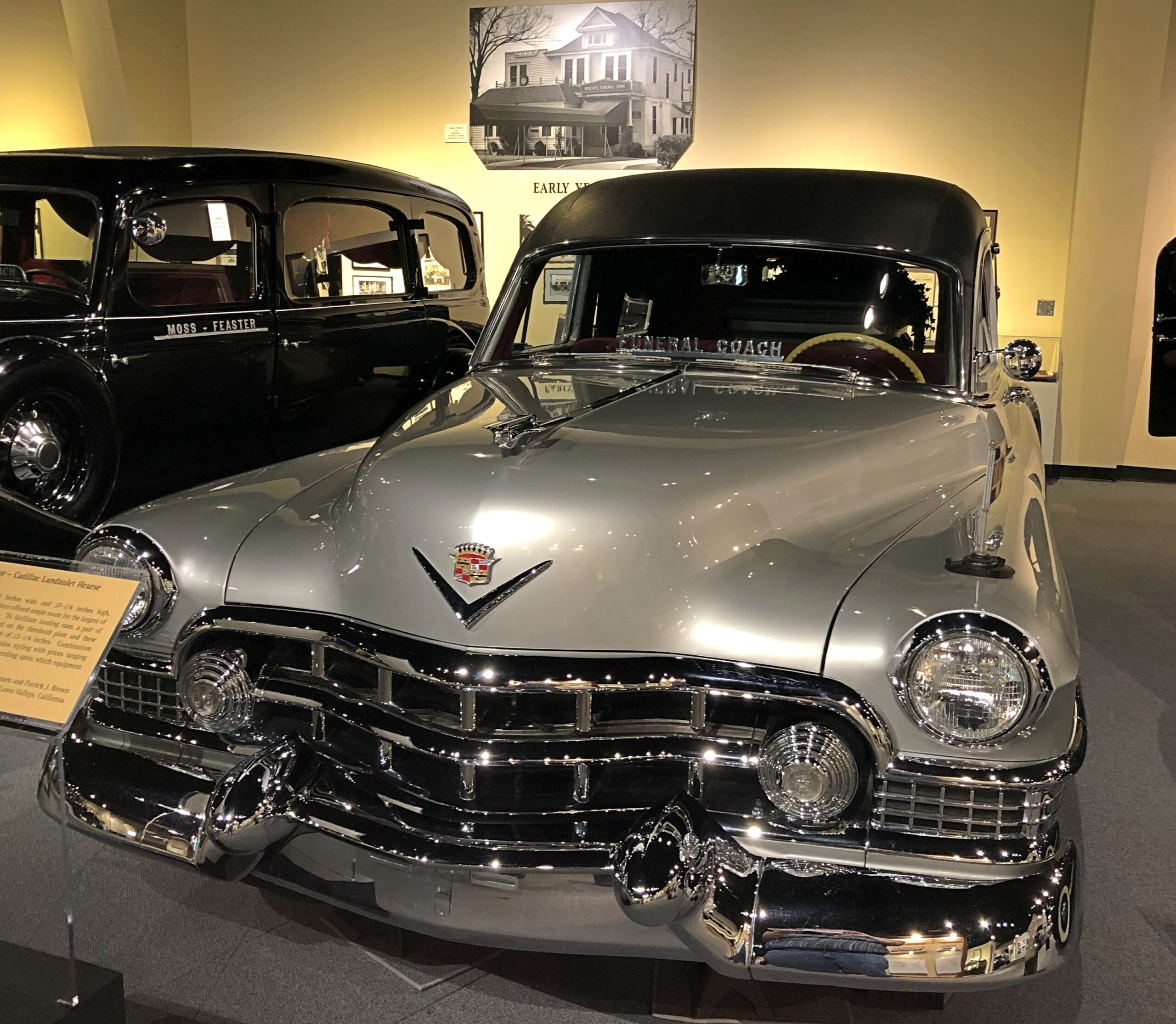
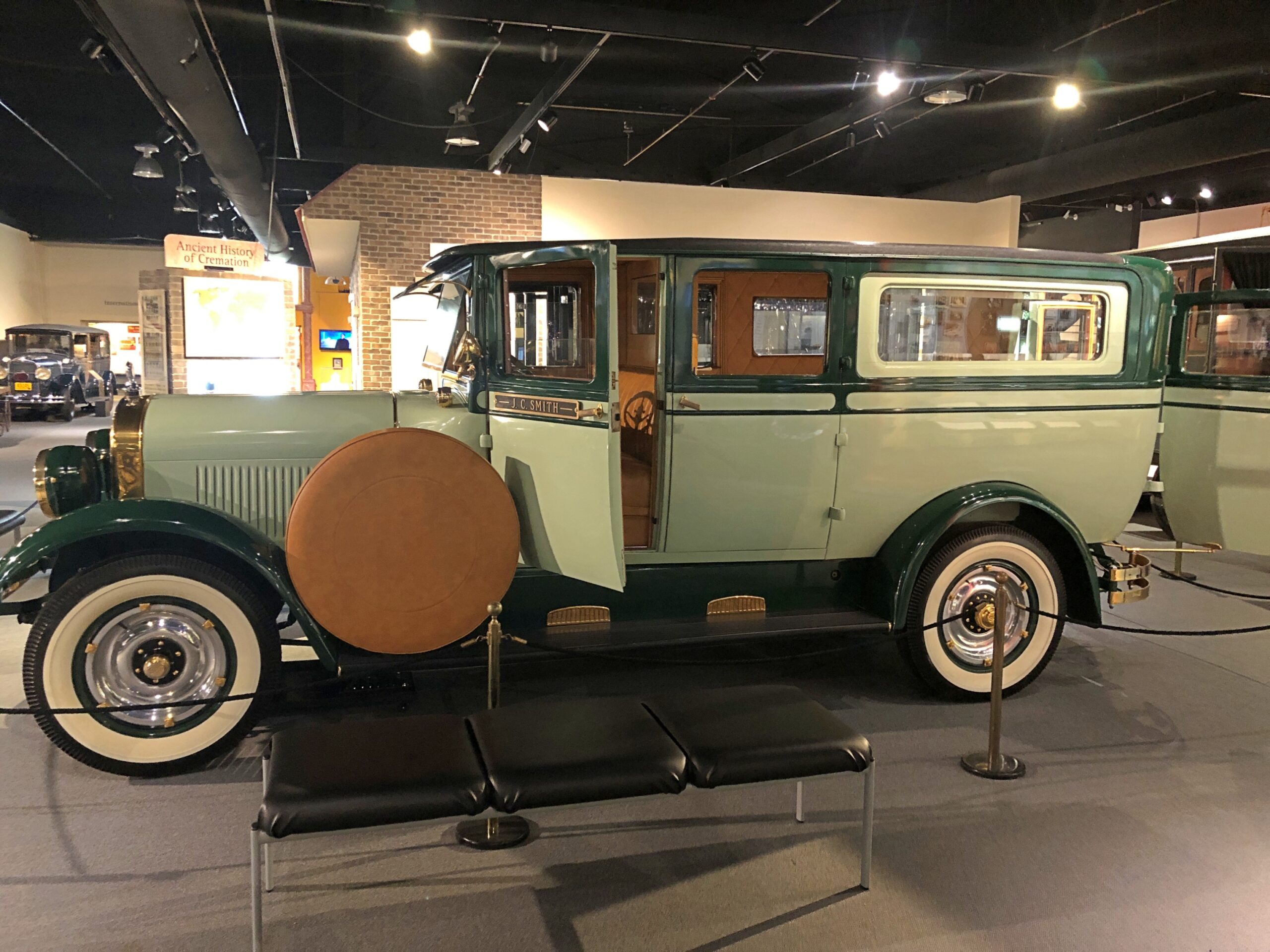
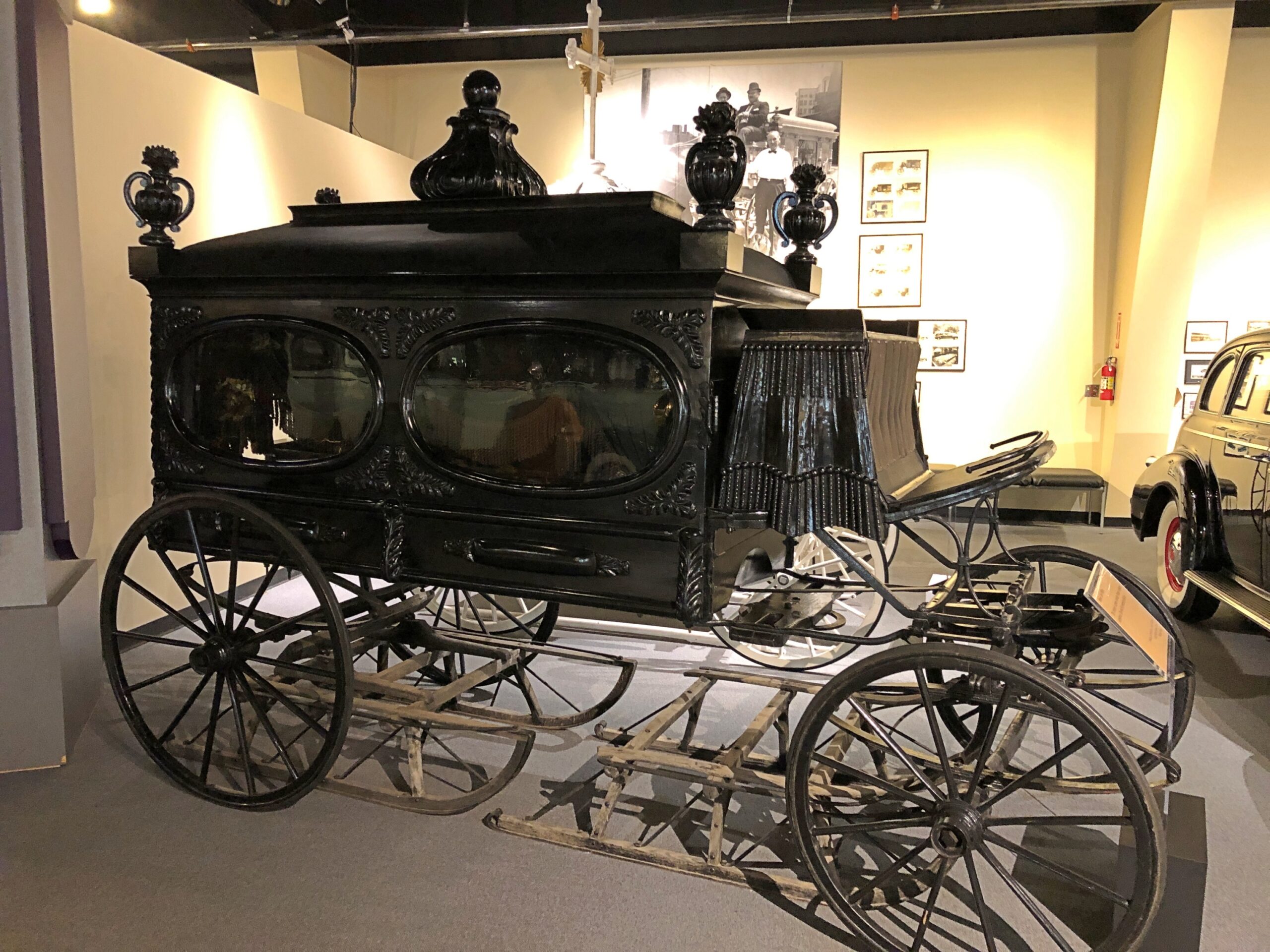
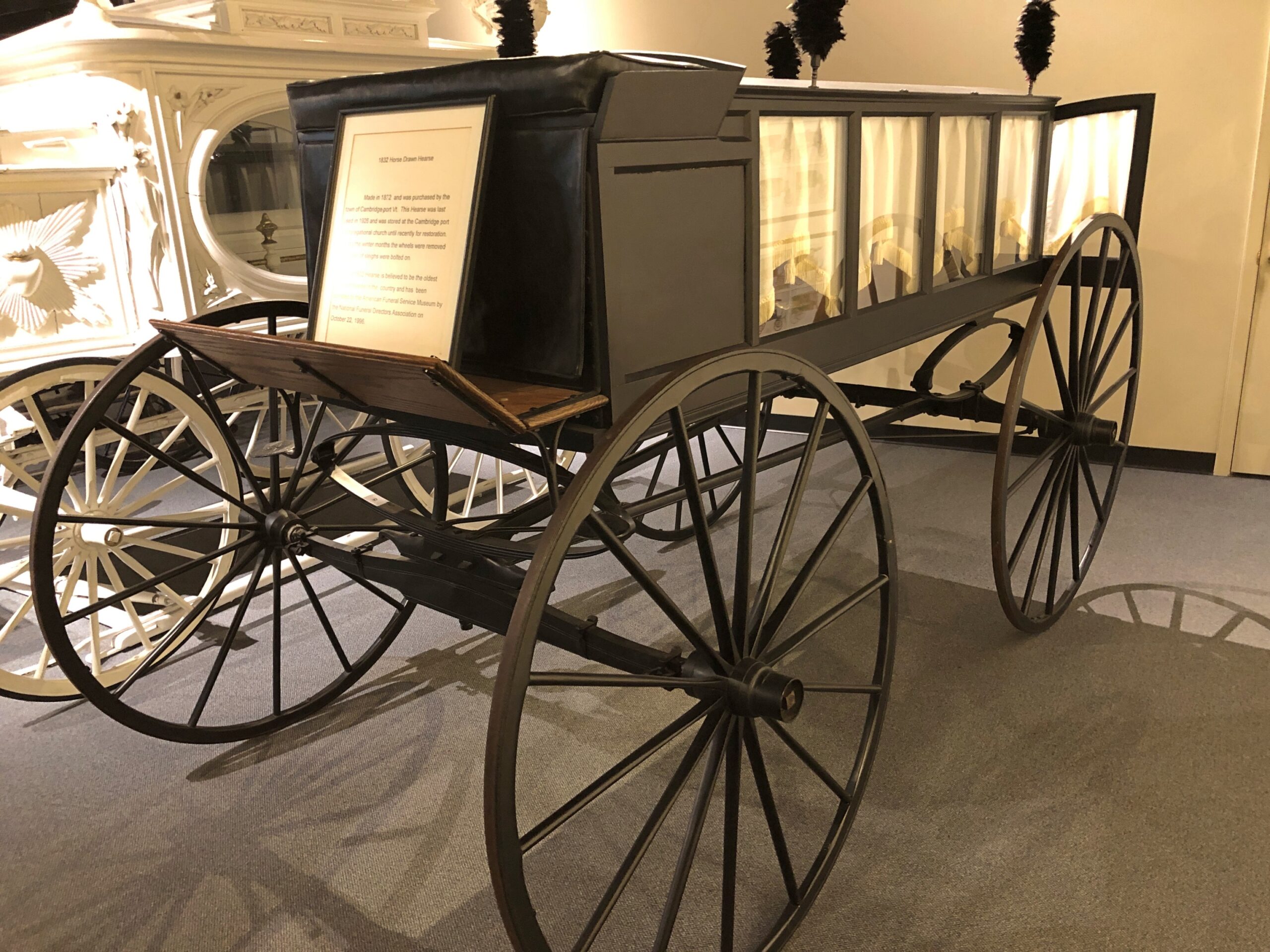
The hearse collection is impressive, making the museum count as a carriage and auto museum. Not all automotive hearses, at least in earlier times, looked like the stretch postwar hearses one thinks of now.
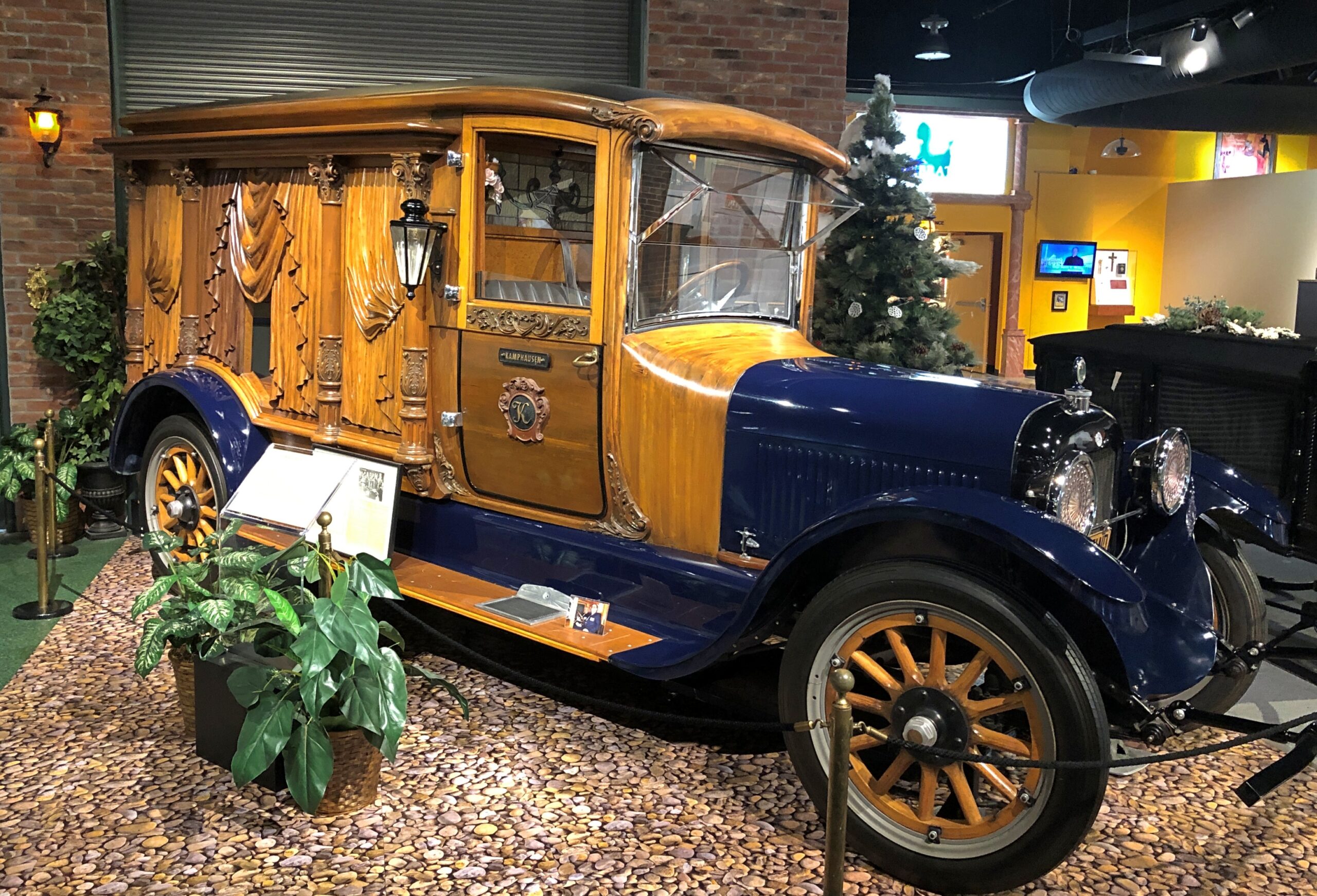
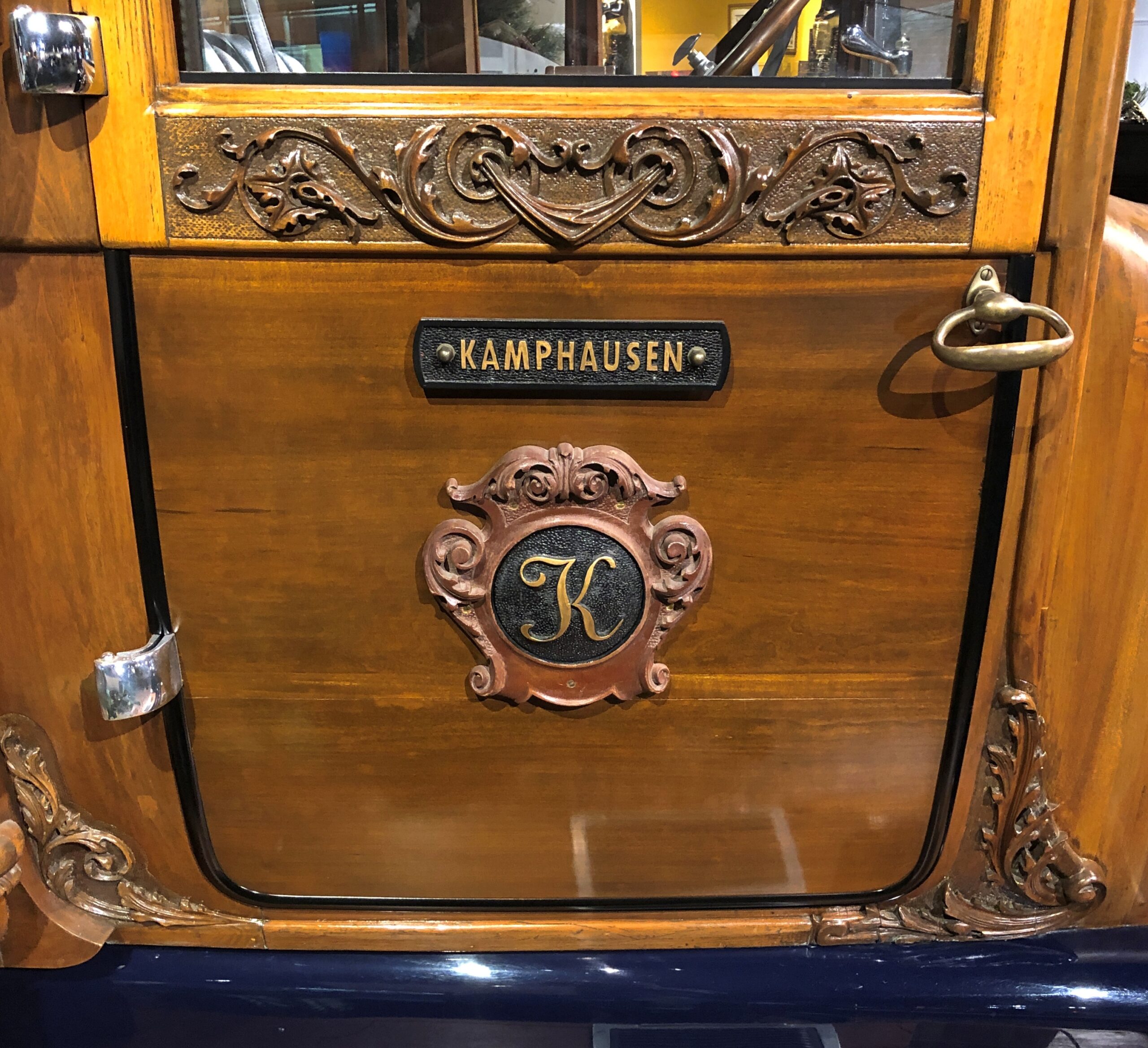
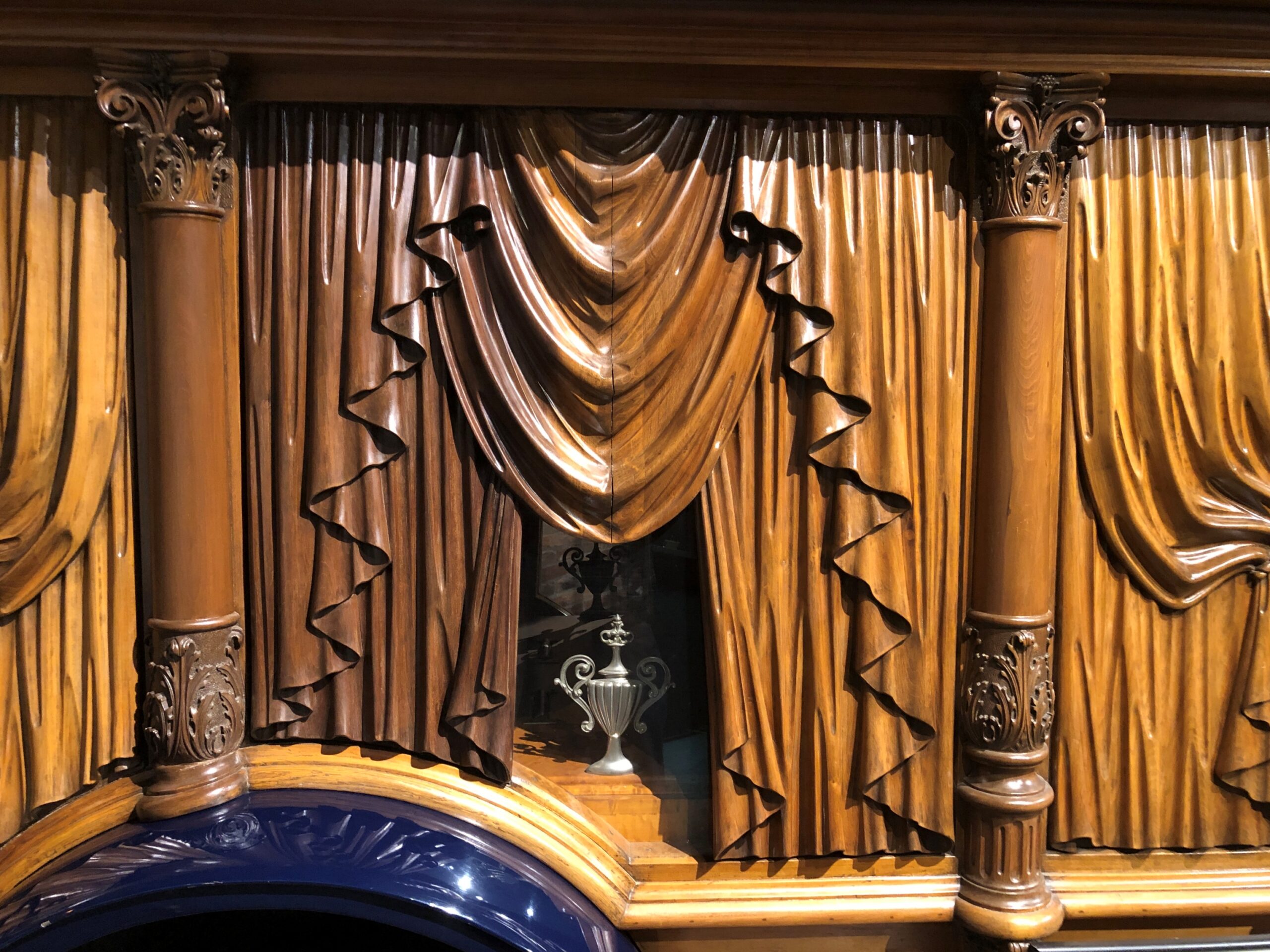
A vehicle the likes of which I’d never seen: a 1921 Rockfalls Hearse, built in Sterling, Illinois, the museum says. The hearse’s hand-carved body is composed of six types of wood.
Some horse-drawn hearses.
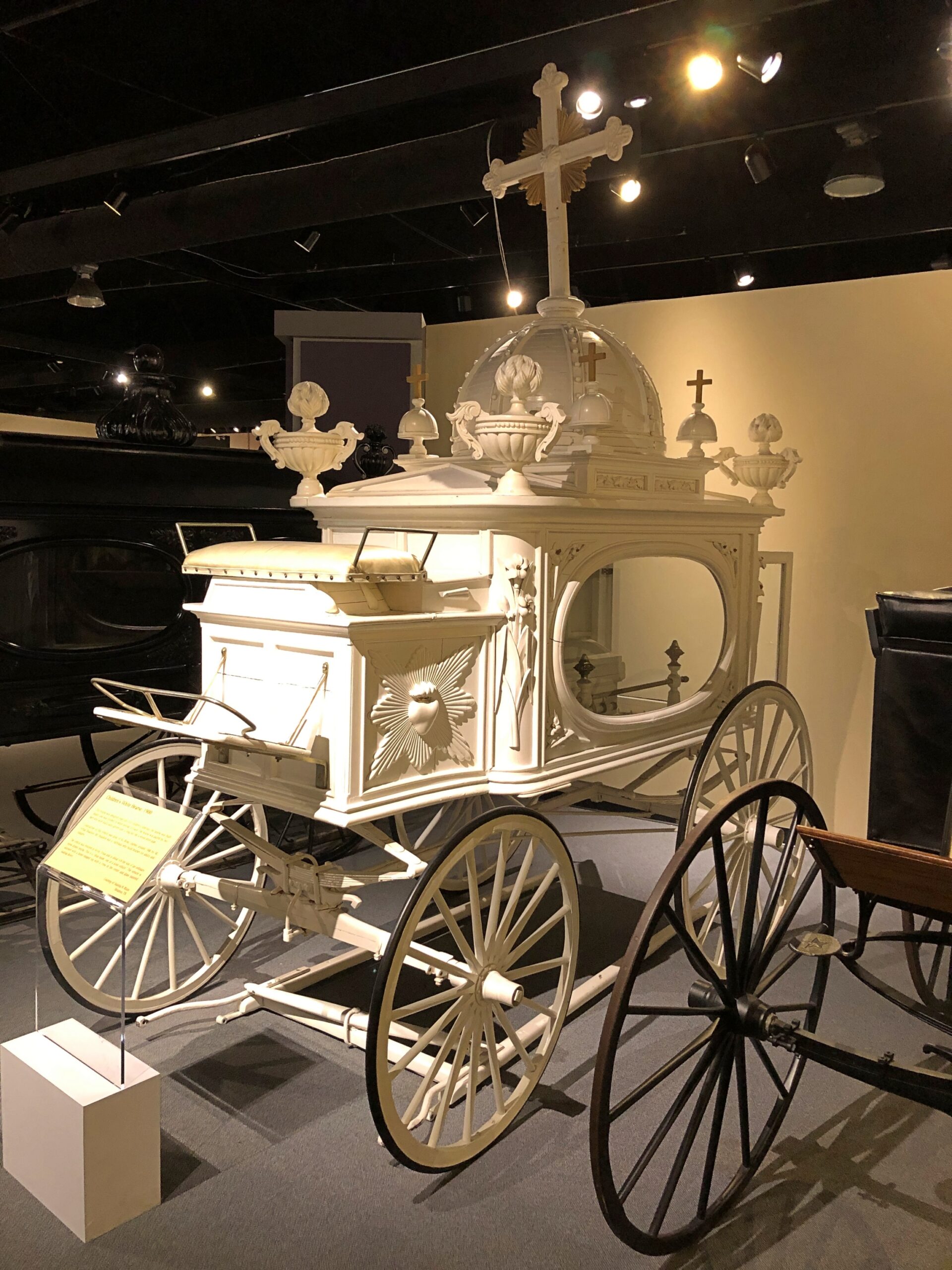
A children’s hearse from, of course, Victorian times.
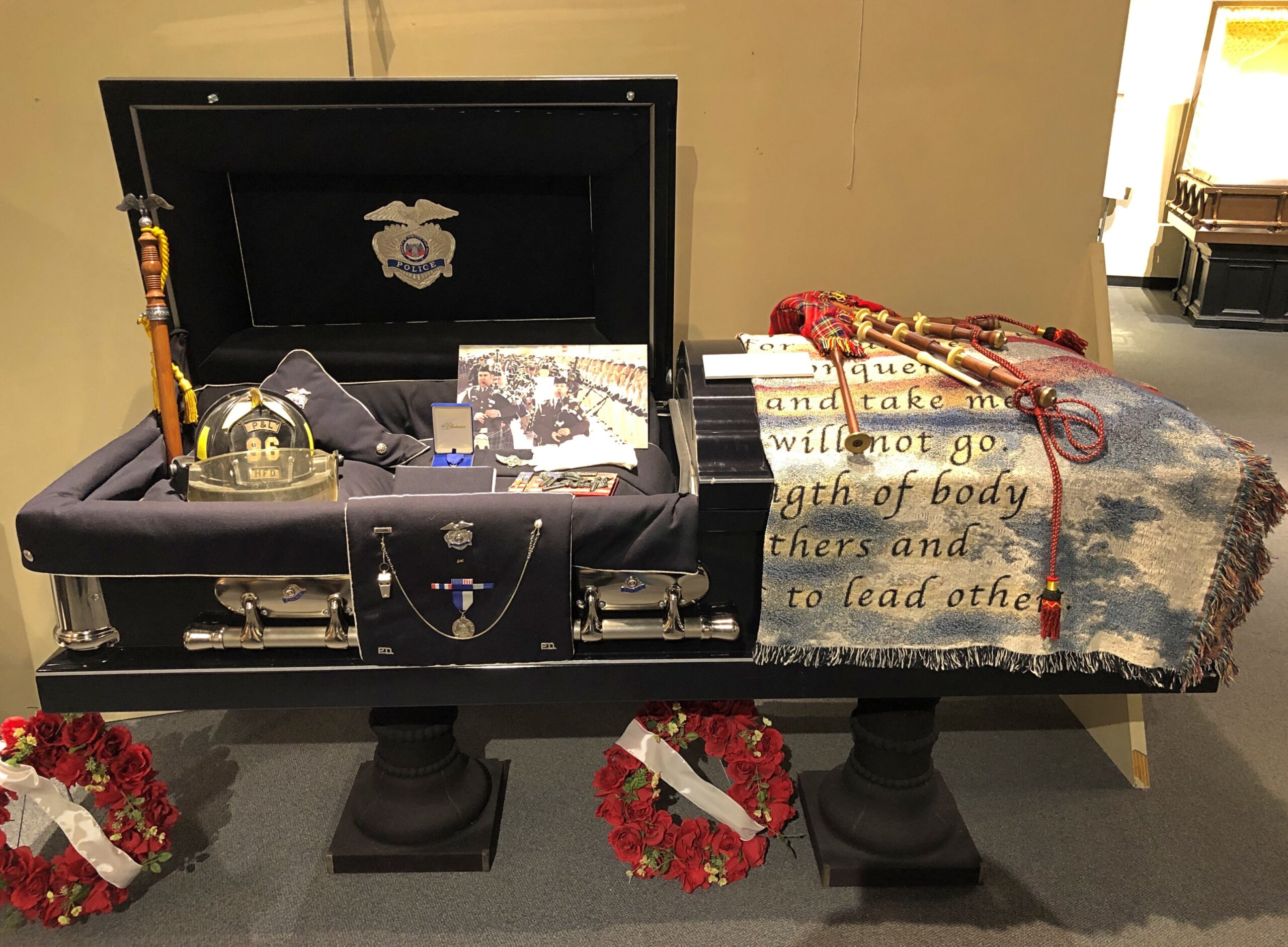
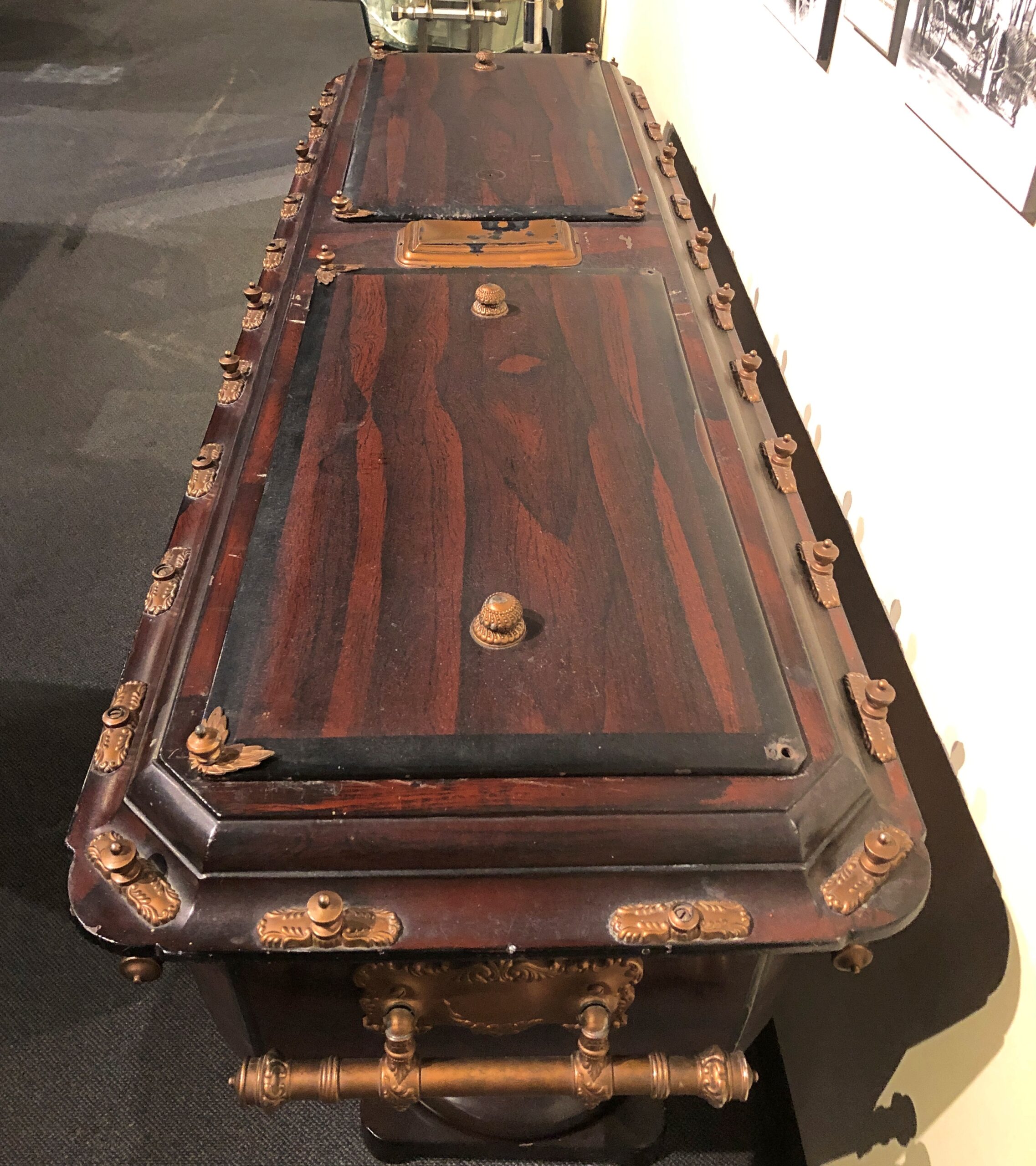
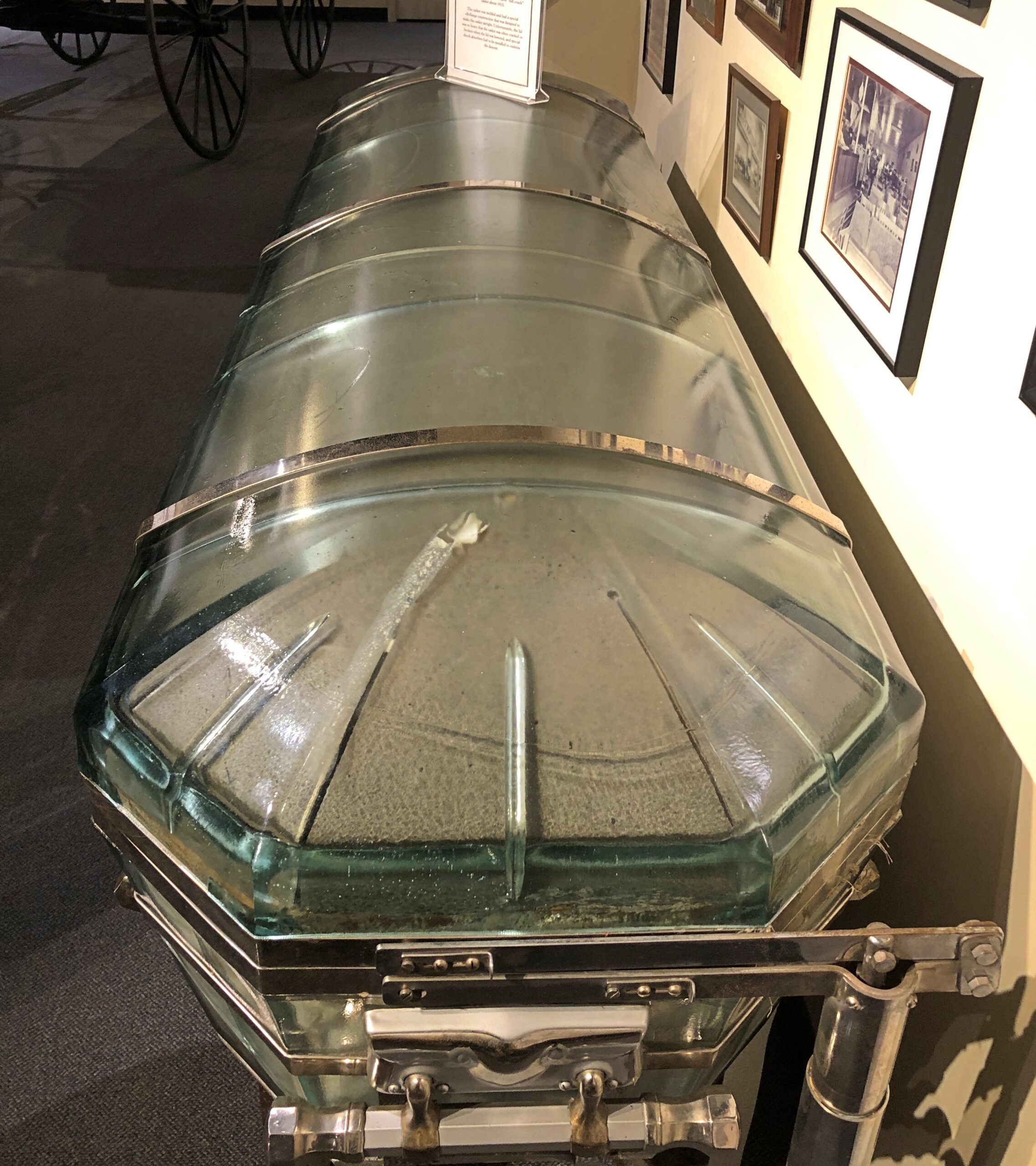
Some coffins and caskets, too. “It’s not the cough/that carries you off/but the coffin/they carry you off in.”
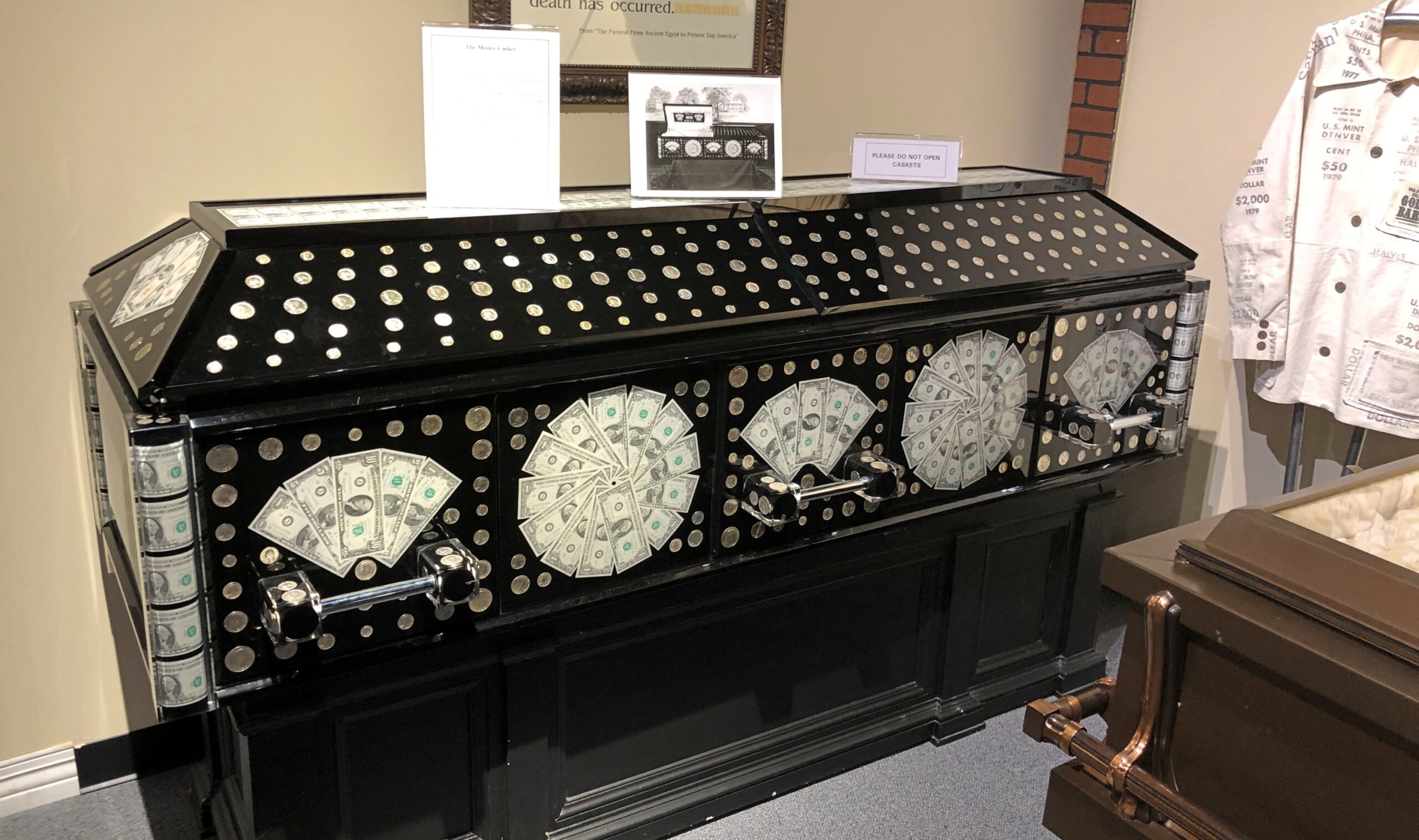
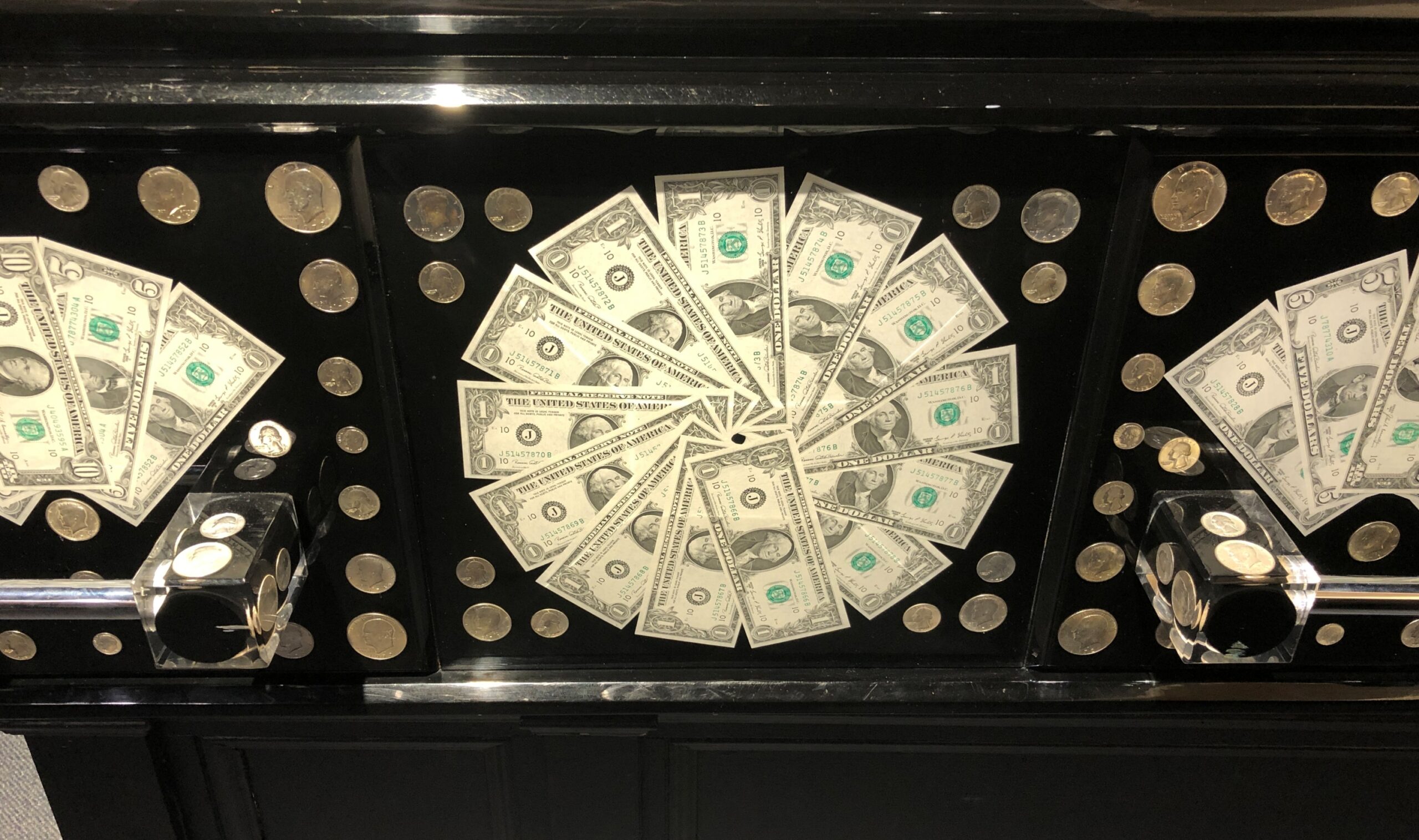
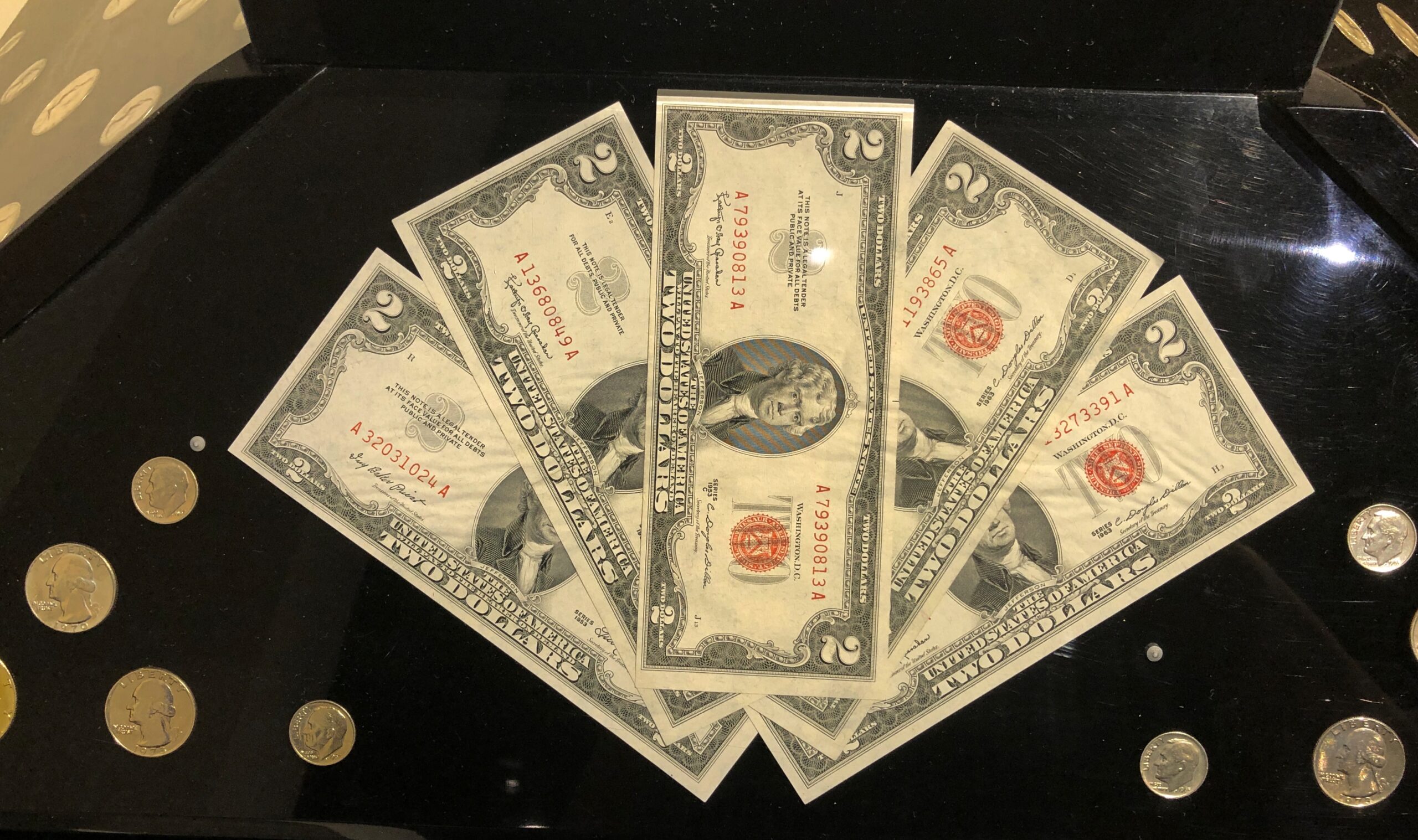
Including an oddity known as the Money Casket, which is on loan to the museum, and was never meant to be put into the ground.
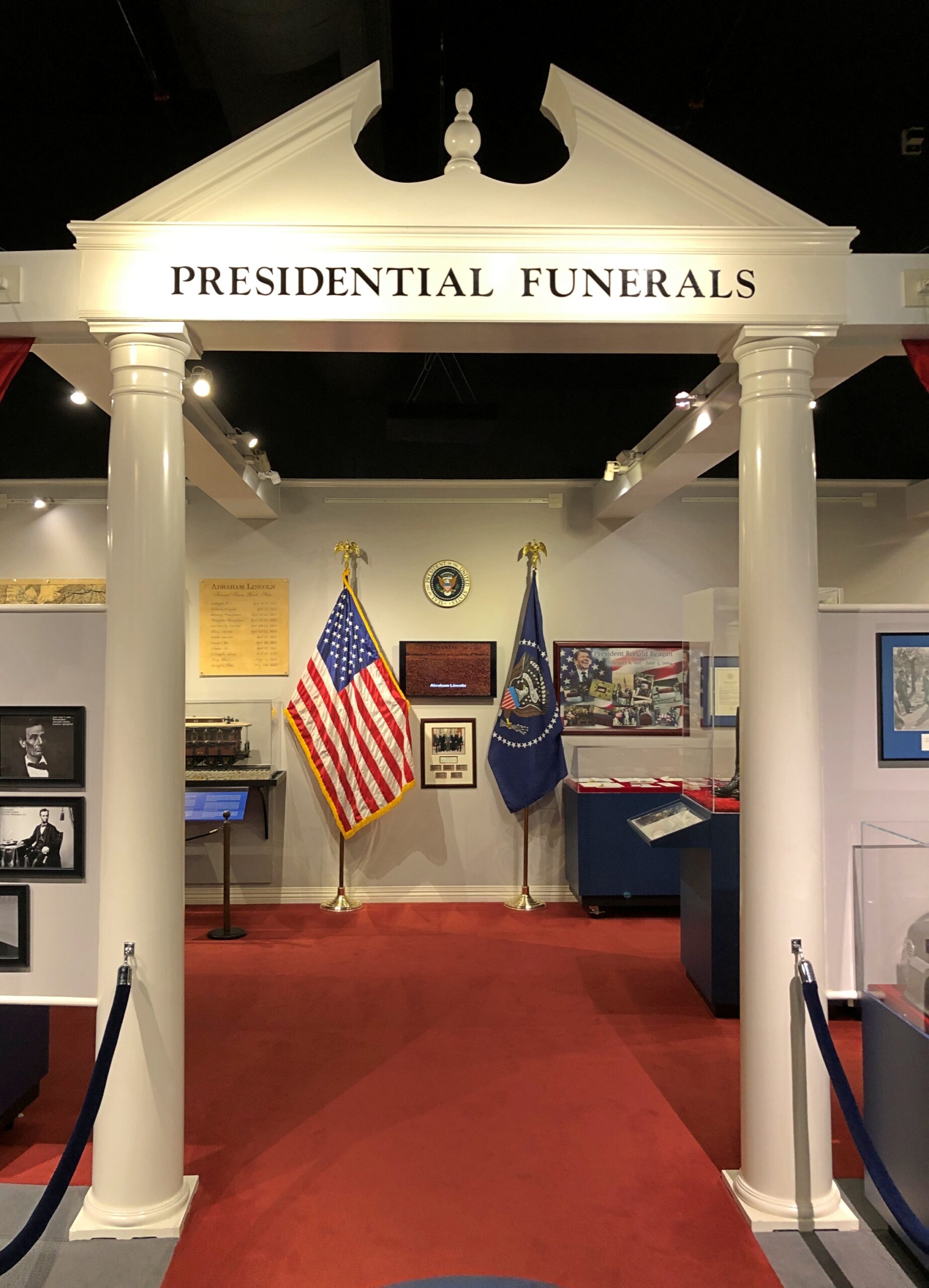
A section about presidential funerals. I spent a while there.
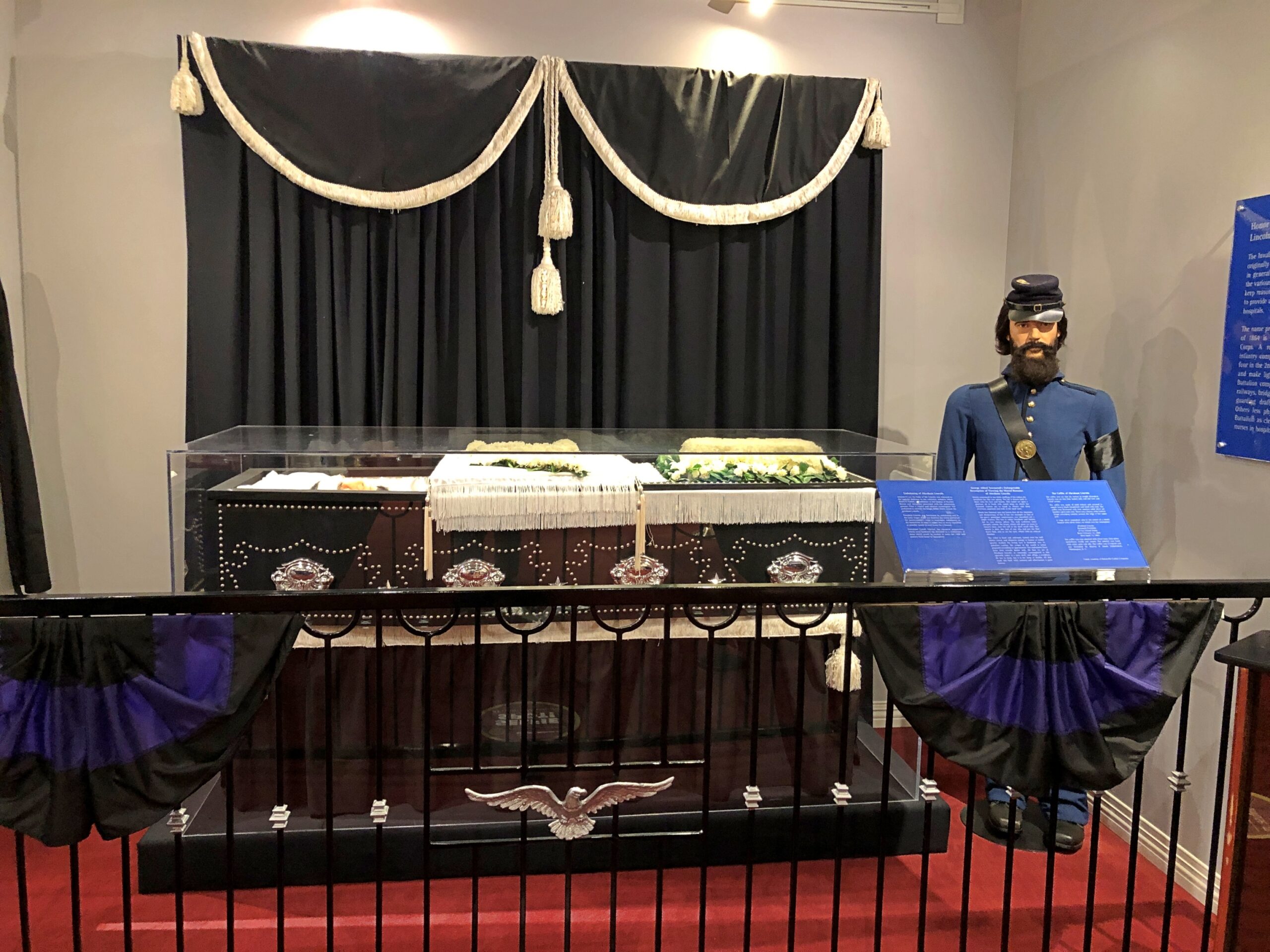
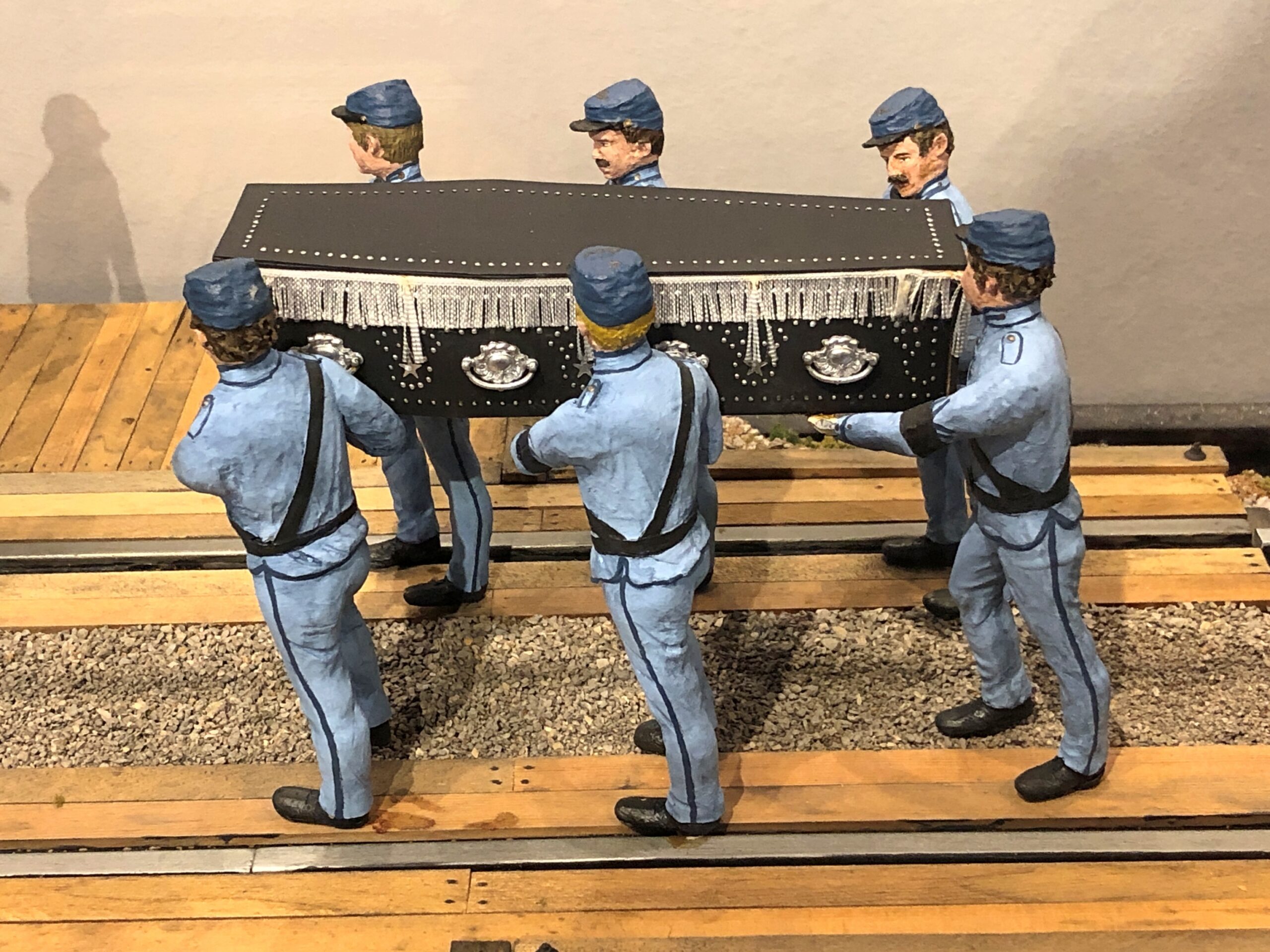
Prominent is a replica of President Lincoln’s casket.
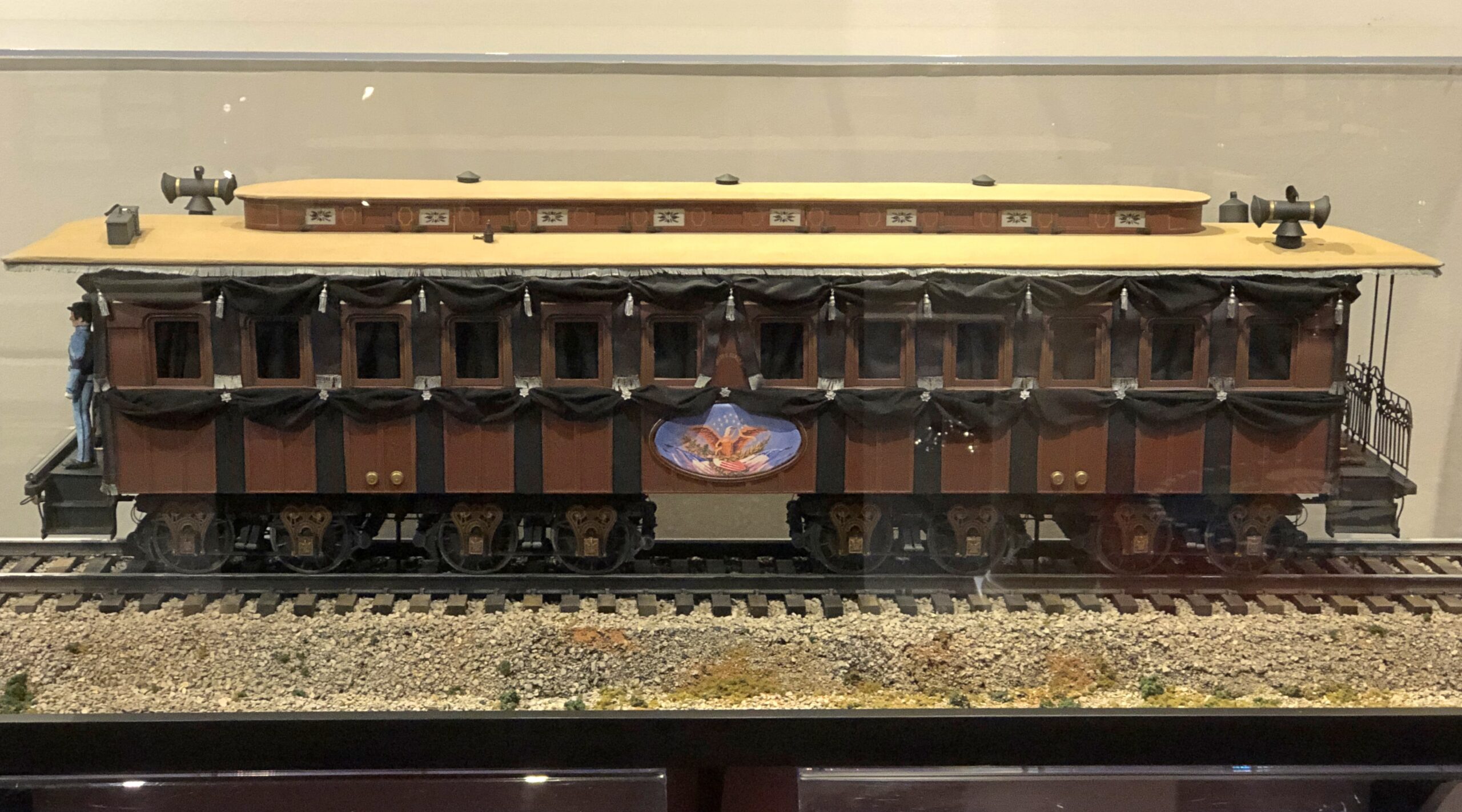
There was a model of Lincoln’s funeral car, probably the most famous such in American history.
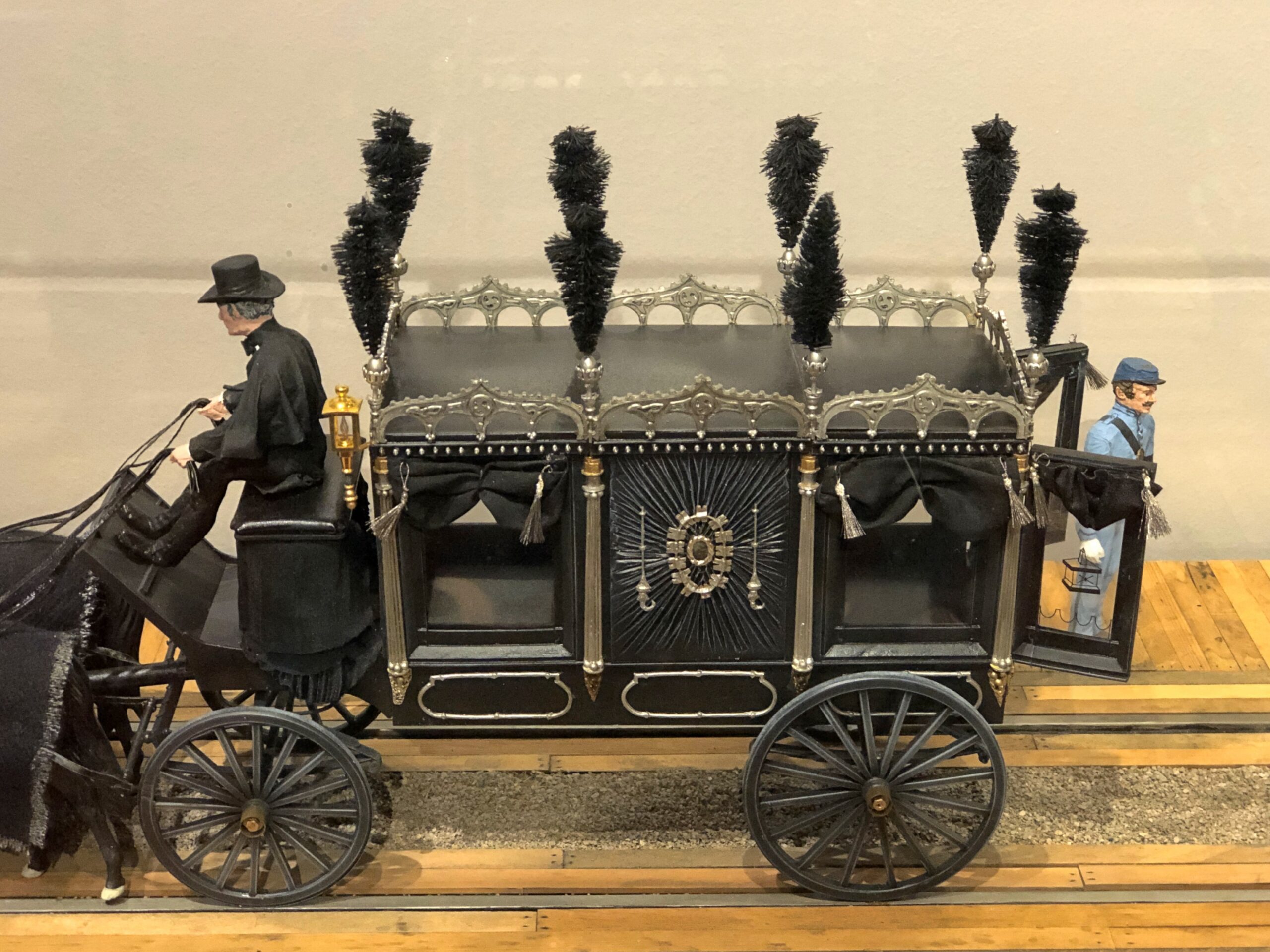
Other methods for carrying Lincoln when he wasn’t on the train.
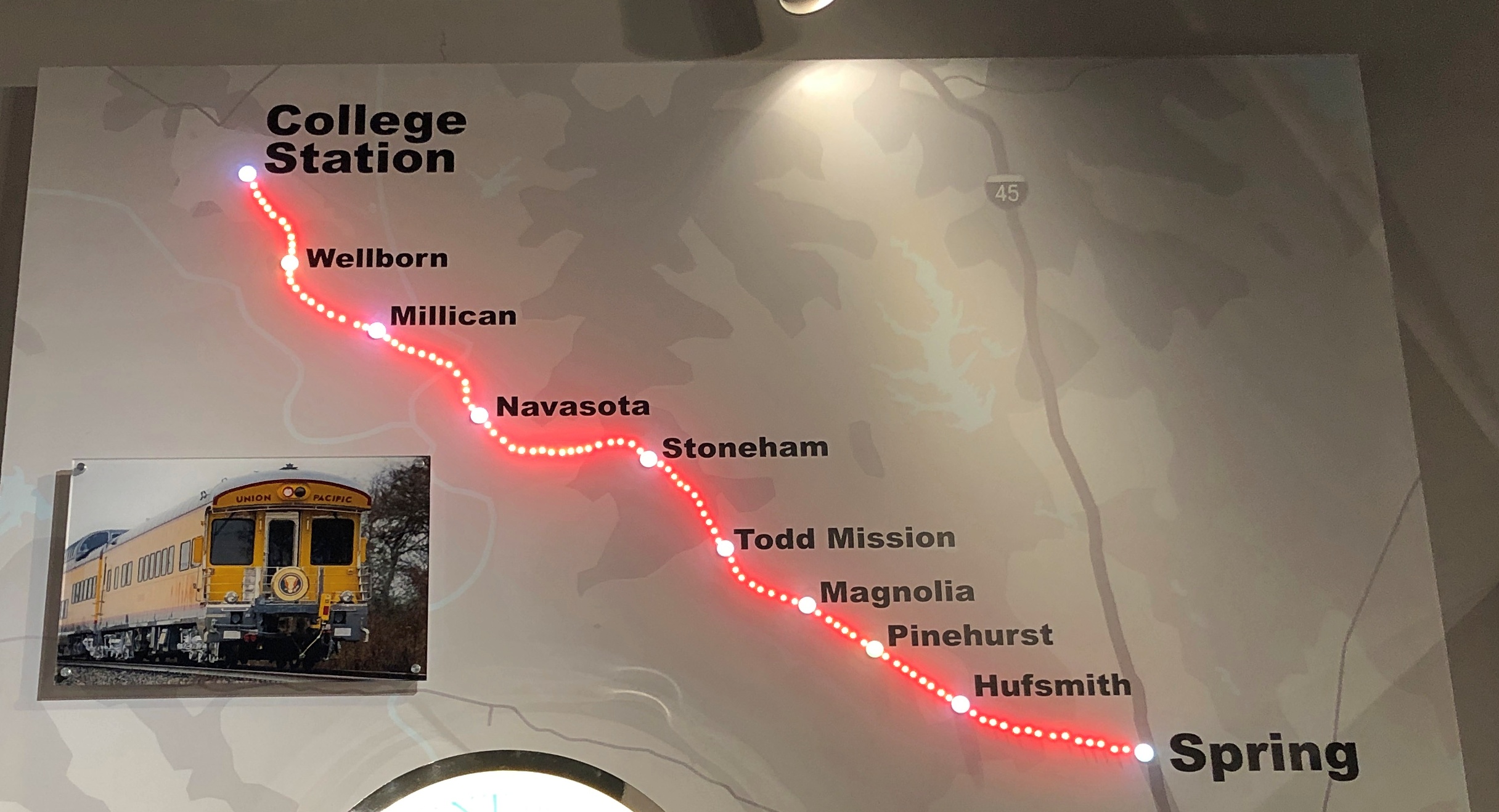
Other presidential funerals got their due, such as those of Washington, Grant, Garfield, McKinley, TR, FDR, Truman, Eisenhower, JFK, LBJ, Nixon, Ford and as mentioned, an entire small room about the elder Bush. He had a funeral train as well, though relatively modest: from Spring to College Station, all within east Texas.
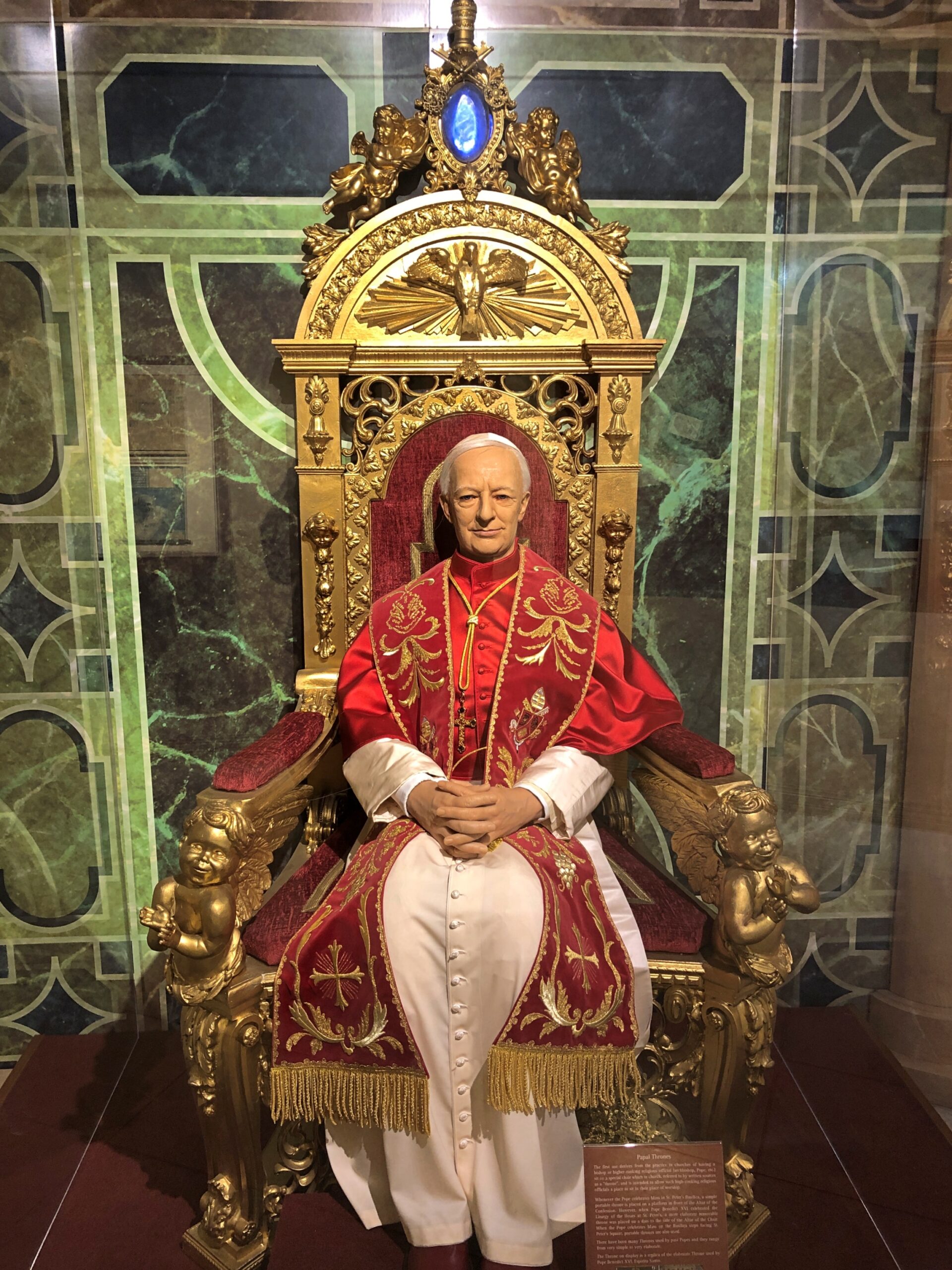
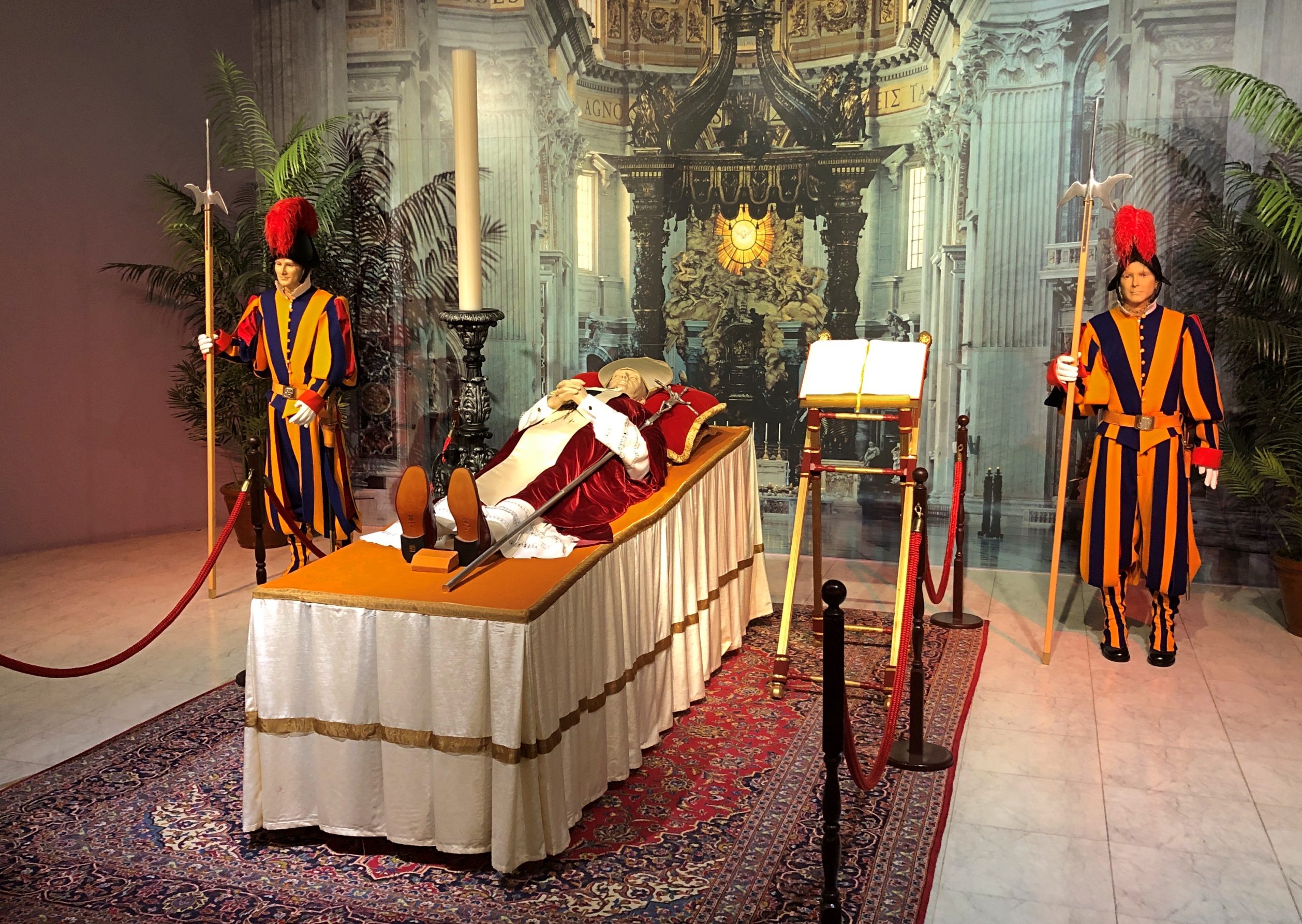
Papal funerals, as you’d think, involve a highly precise set of rituals, told in some detail by the museum.
There is much more.
All in all, a first-rate museum about coping with finality.
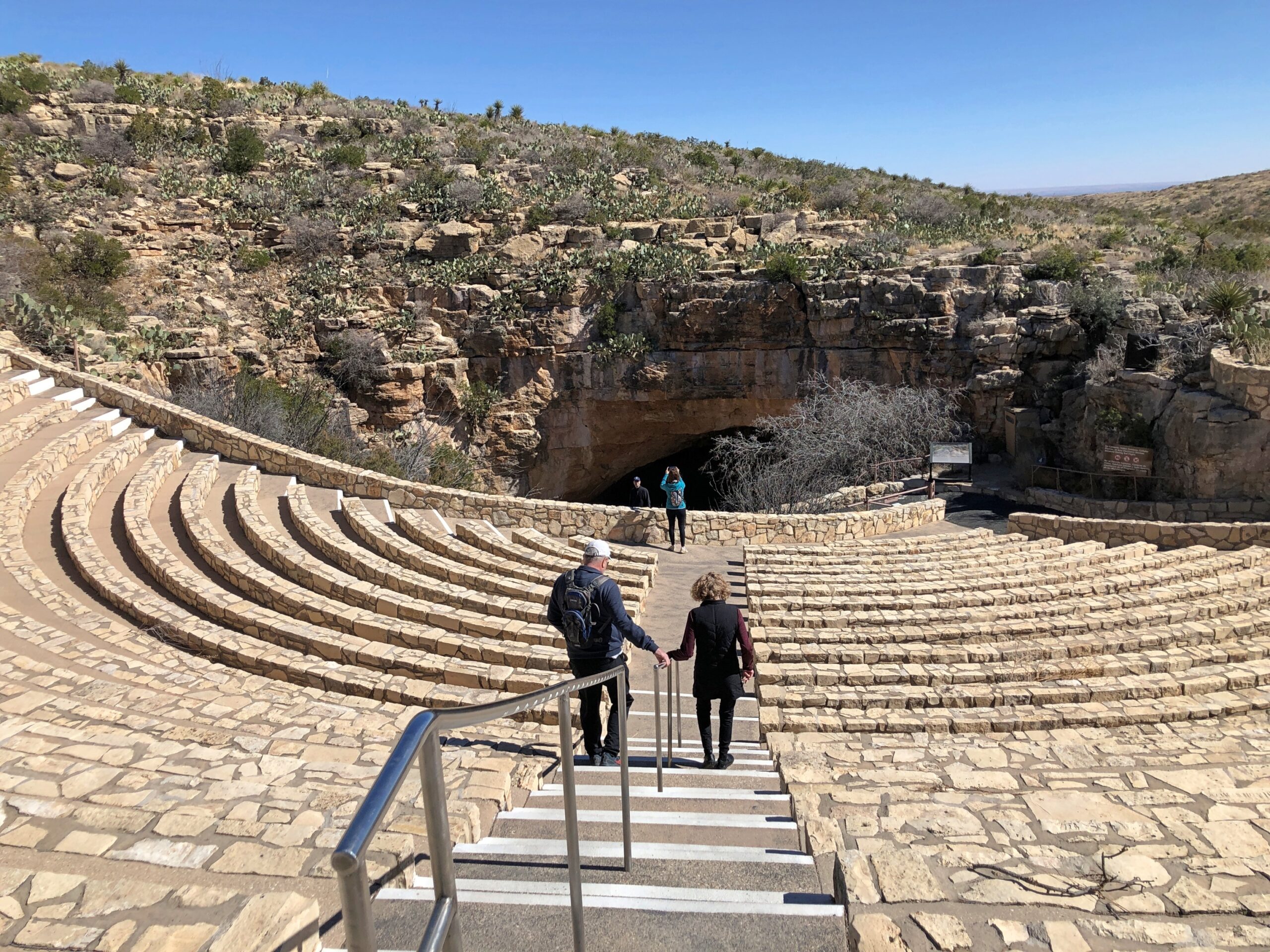
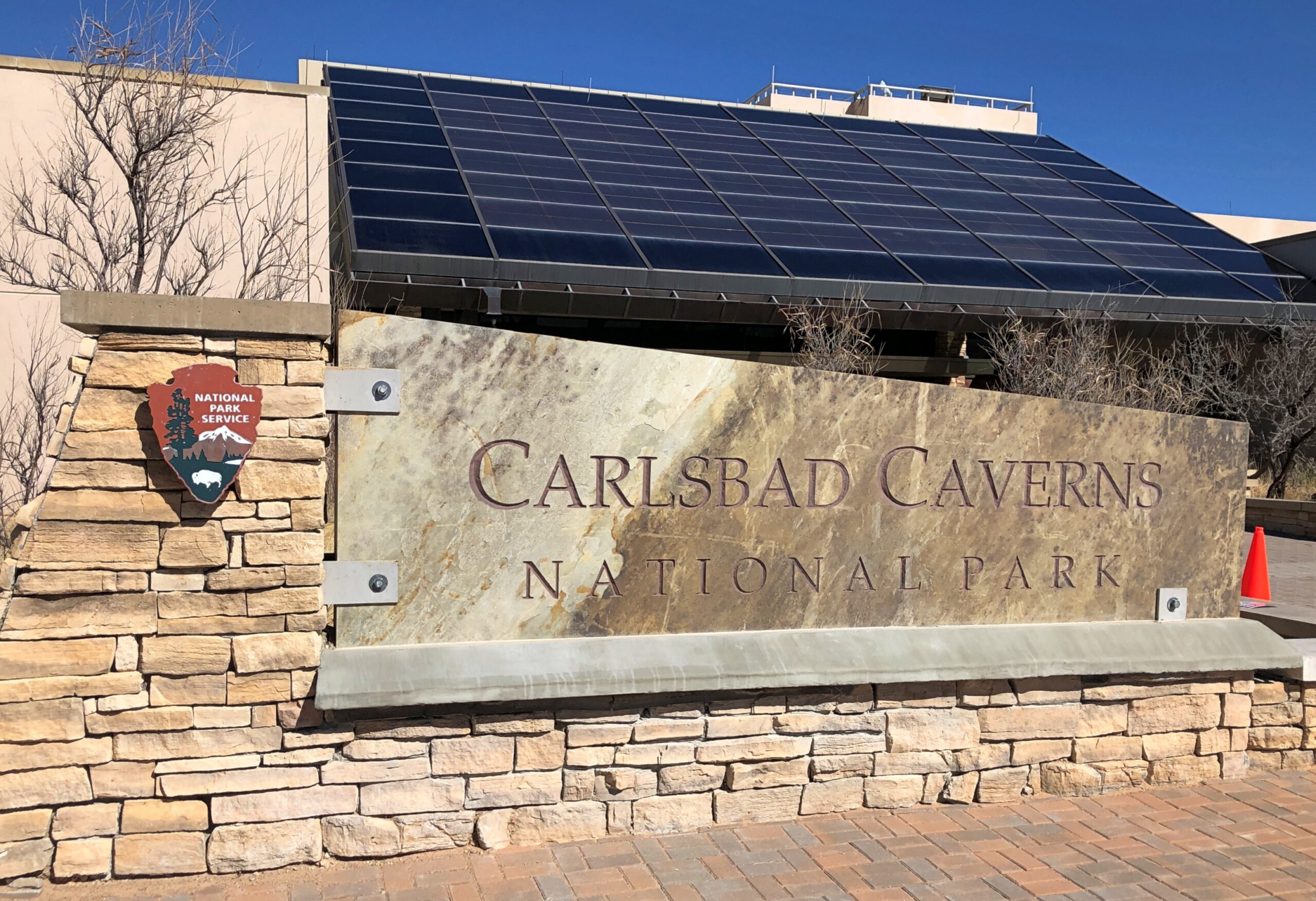
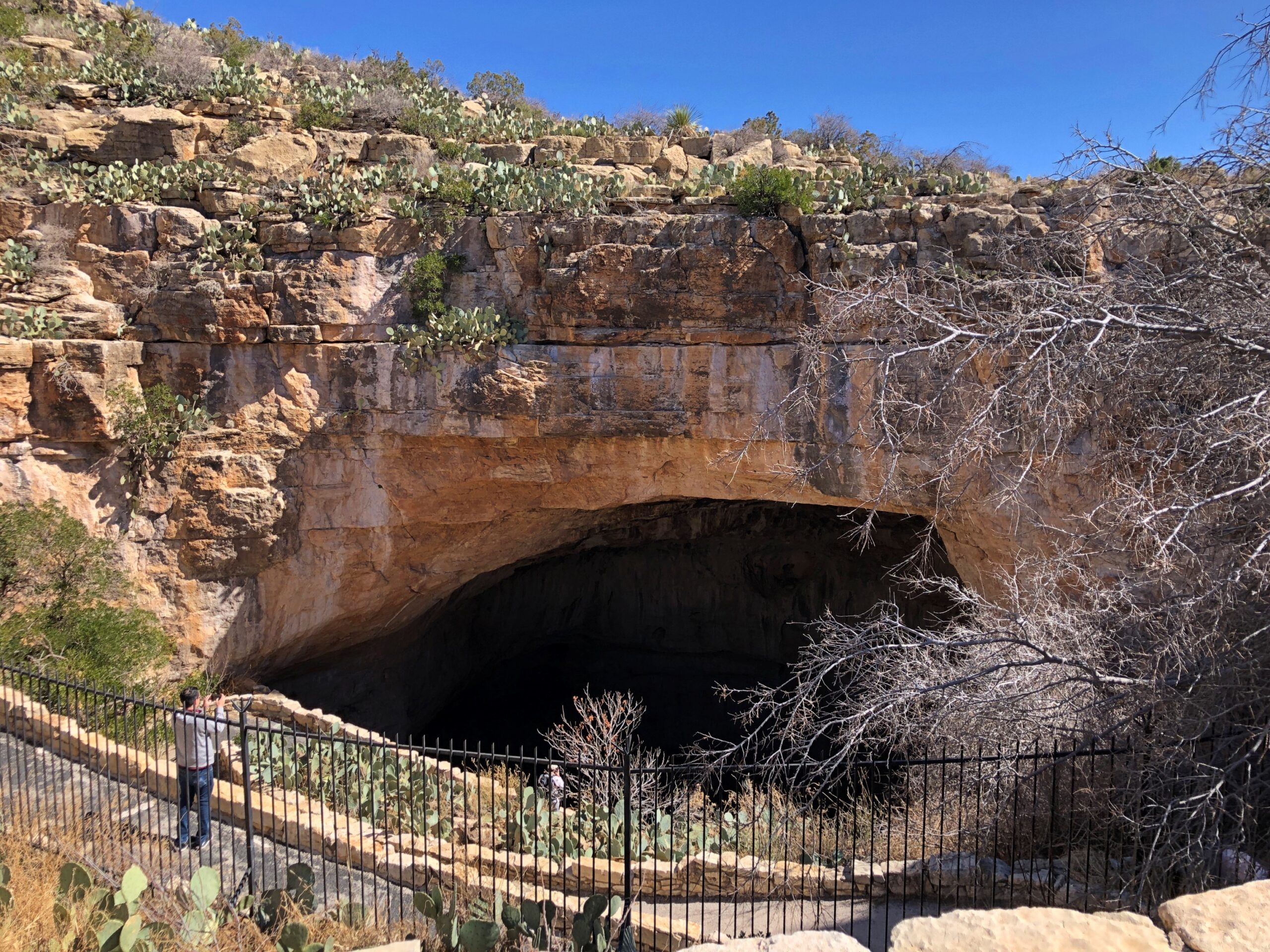
In August, you can gather at the natural entrance to Carlsbad Cavern at dusk, sit in a stone theater, and watch the bats fly out of the cave. After more than 50 years, I remember that.
A park ranger at the time mentioned that only once, in all his time watching the bats emerge, had one flown into a person – a woman with a beehive hairdo. That might have been a joke, but anyway all the bats flew away in a surging torrent, the crowd quiet with awe, but the flapping of thousands of wings making a curious whooshing. Then a trickle of straggler bats came out. None interacted with any of us humans. Clearly, bats have better sense than that.
A Greek-theater inspired structure. It must have been. More work of the everywhere-all-the-time (for a little while) CCC. In February, the bats do not emerge at dusk, so isn’t something you can sit for at Carlsbad Caverns National Park.
But you can walk into the natural entrance of the cave, as we did on February 19. I blew $2 on reserving an entrance time, but it was hardly necessary. A fair number of other people were there, but not enough to form a distracting crowd.
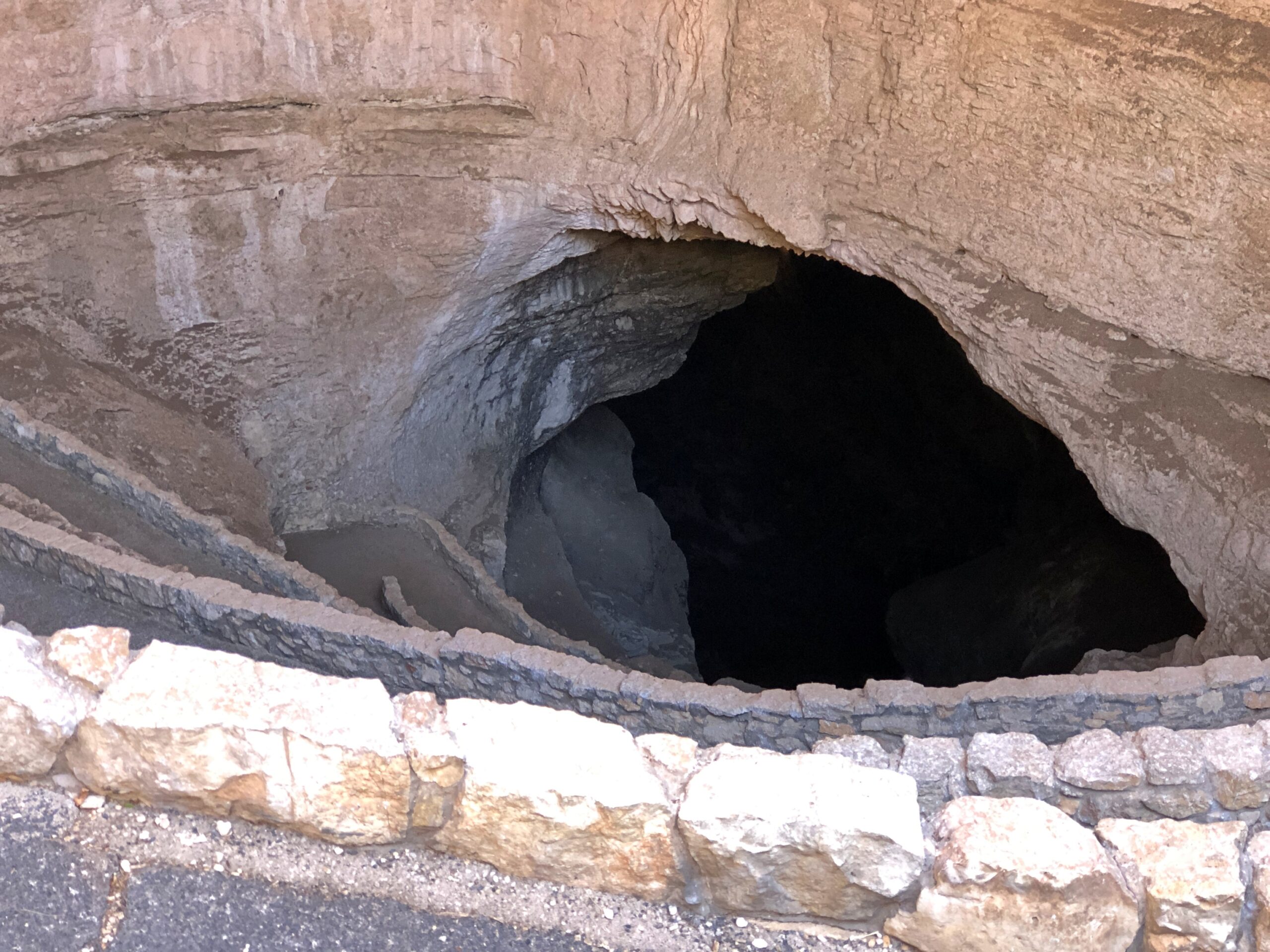
It’s an Empire State Building down, step by step. Even so, you’d think that going down wouldn’t be too difficult, since gravity is doing most of the work. Turns out, gravity is just a mite too enthusiastic when it comes to doing that work, so you struggle to keep a measured pace, full of the stress of knowing that a simple tumble might put you against hard rock in a hard hurry. So the trip down was exhausting.
It doesn’t take long to get to the artificial light zone. Almost all of the void below, that is.
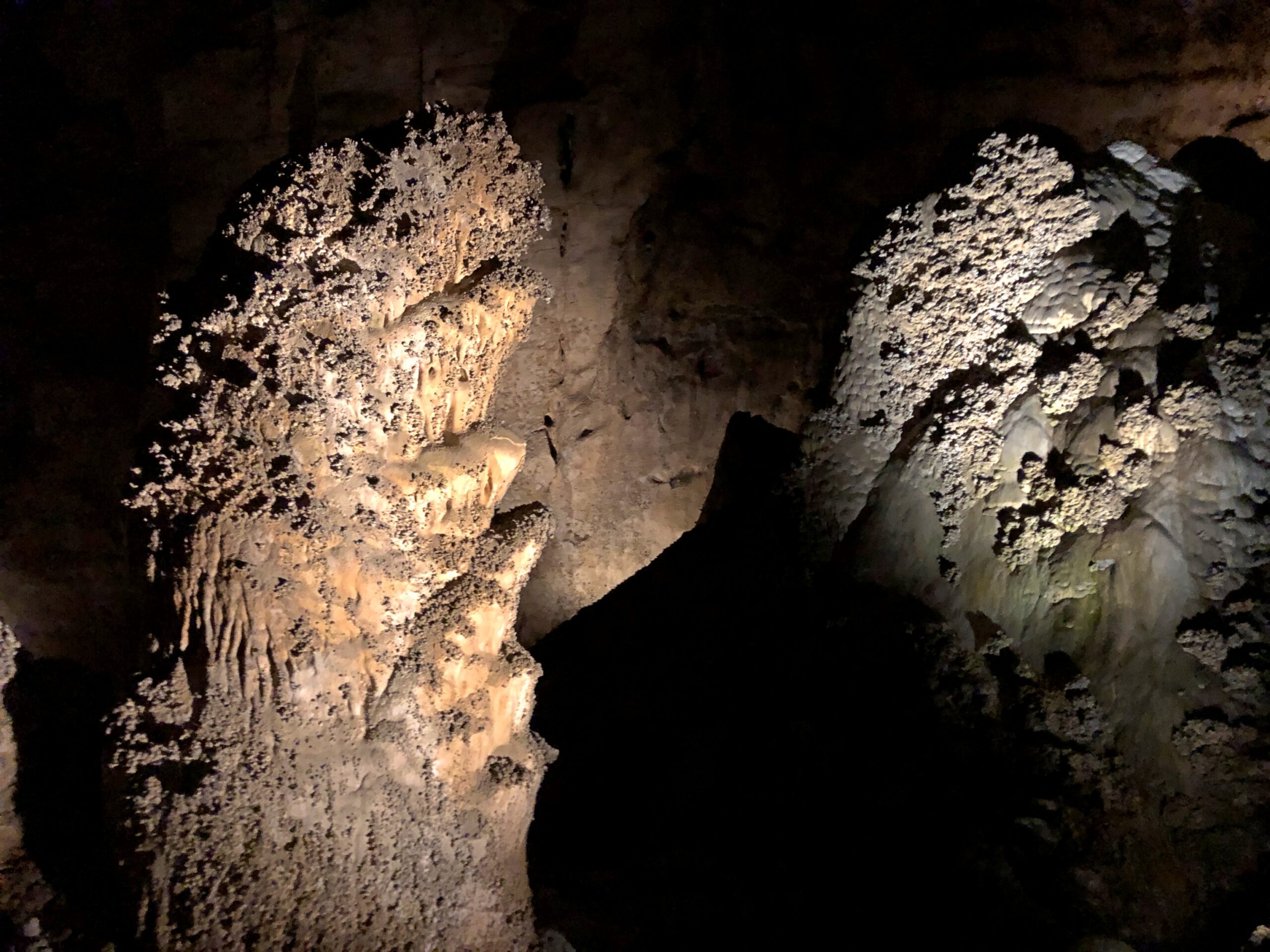
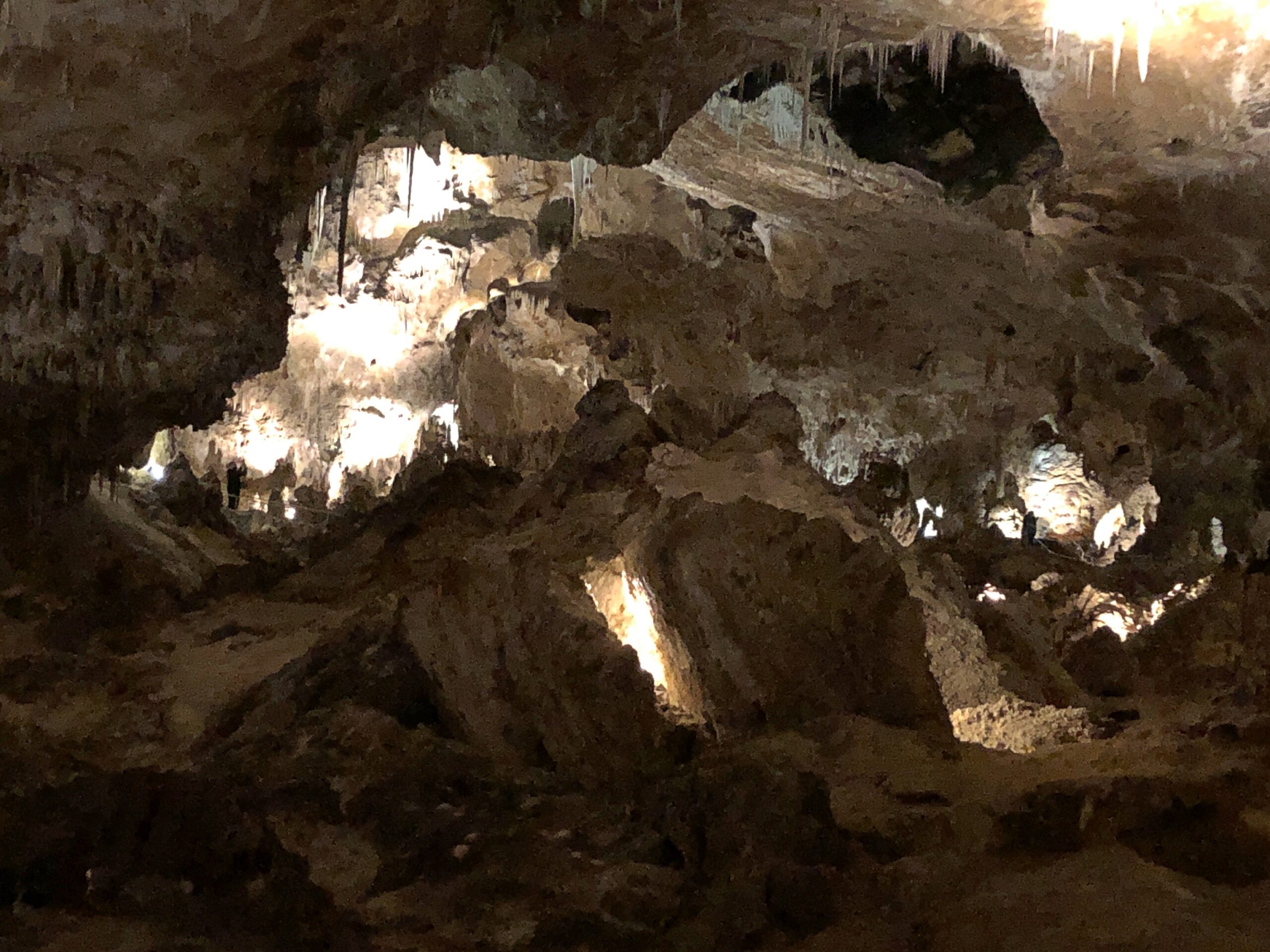
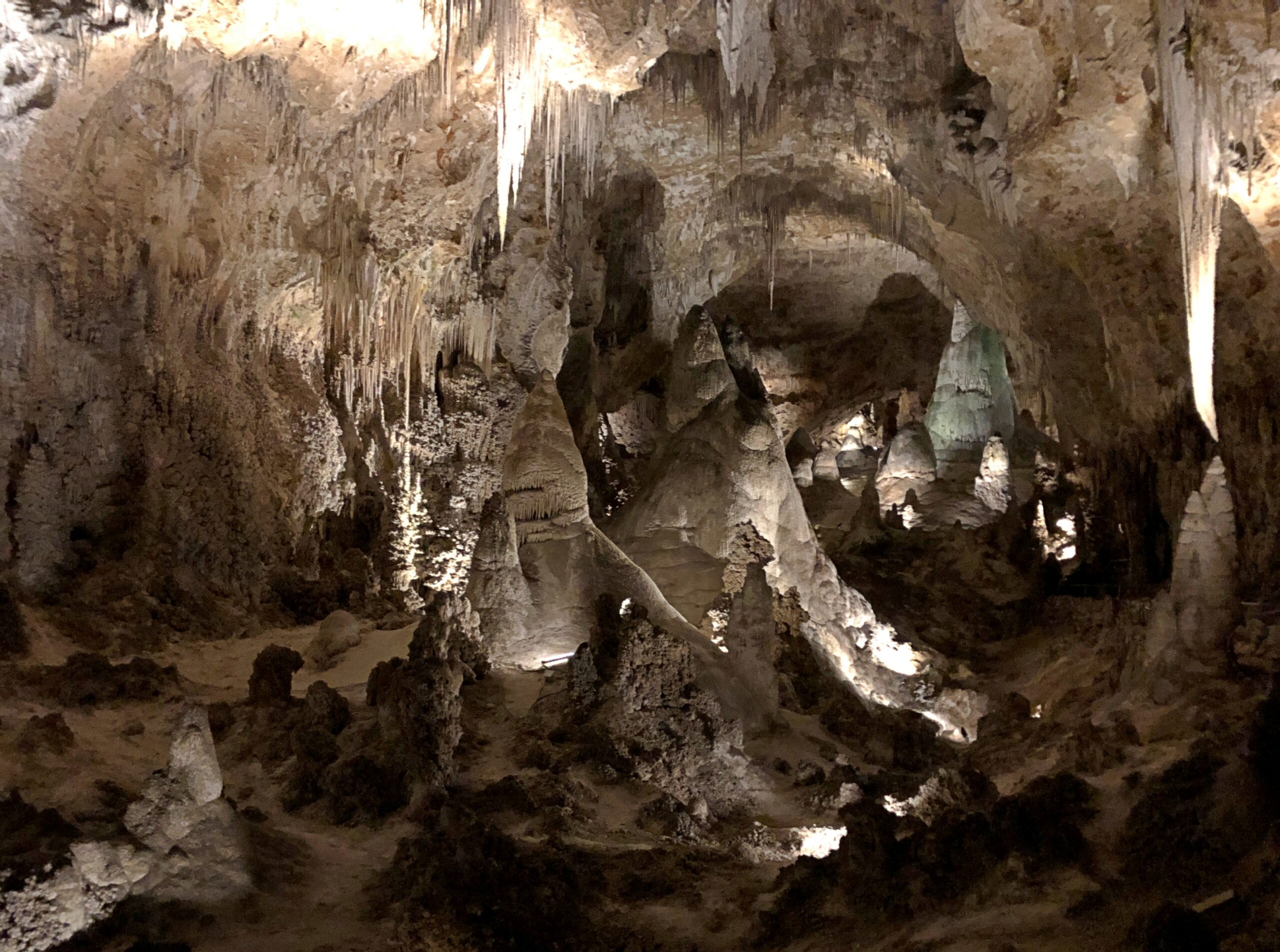
After a 30-minute downward walk, you arrive at the Big Room. “Within the Guadalupe Mountains there are more than 300 caves, and 119 known caves within Carlsbad Caverns National Park,” notes the USGS. “The Big Room in Carlsbad Cavern is the largest cave chamber in North America, with 8.2 acres of floor area.
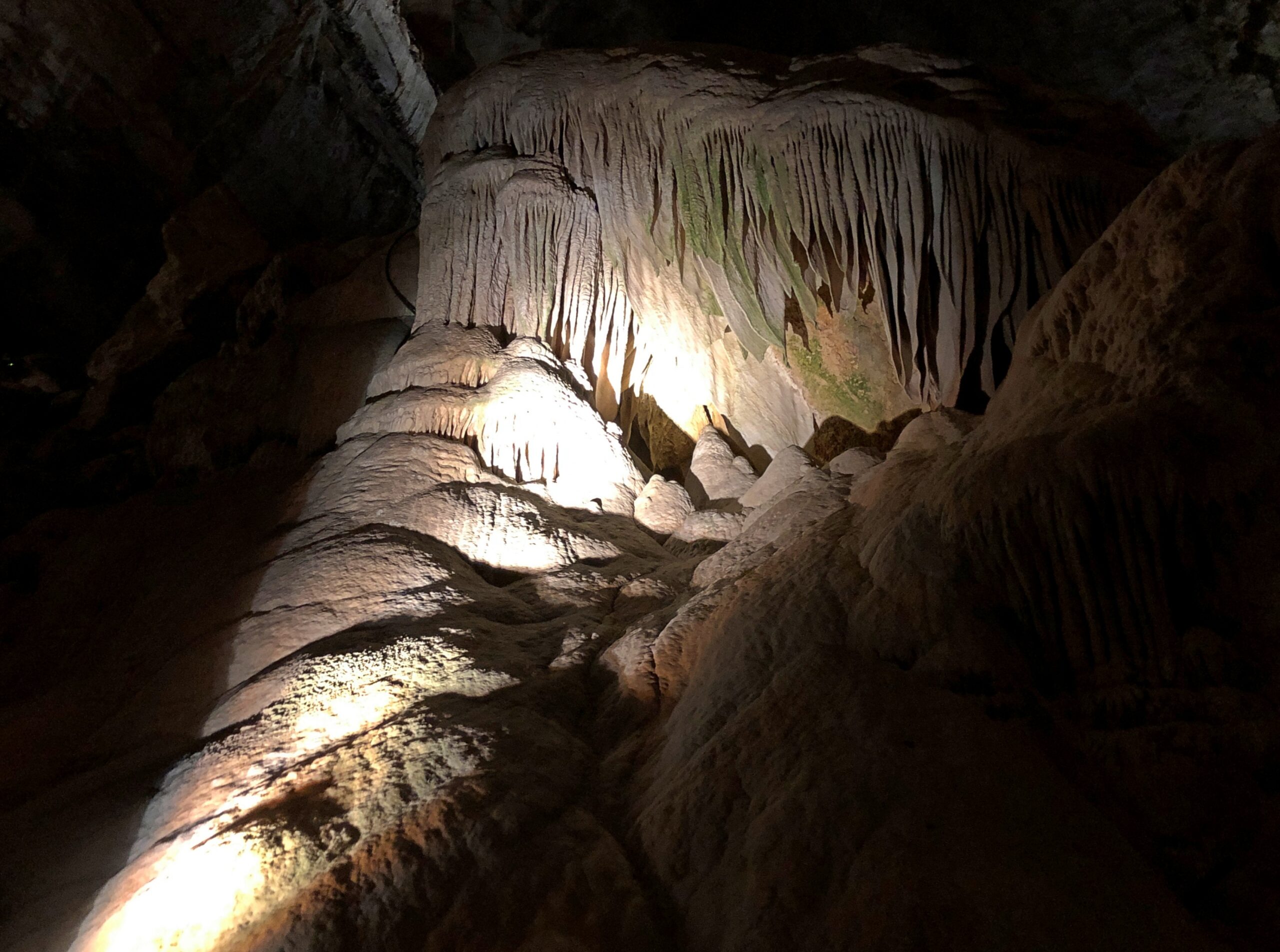
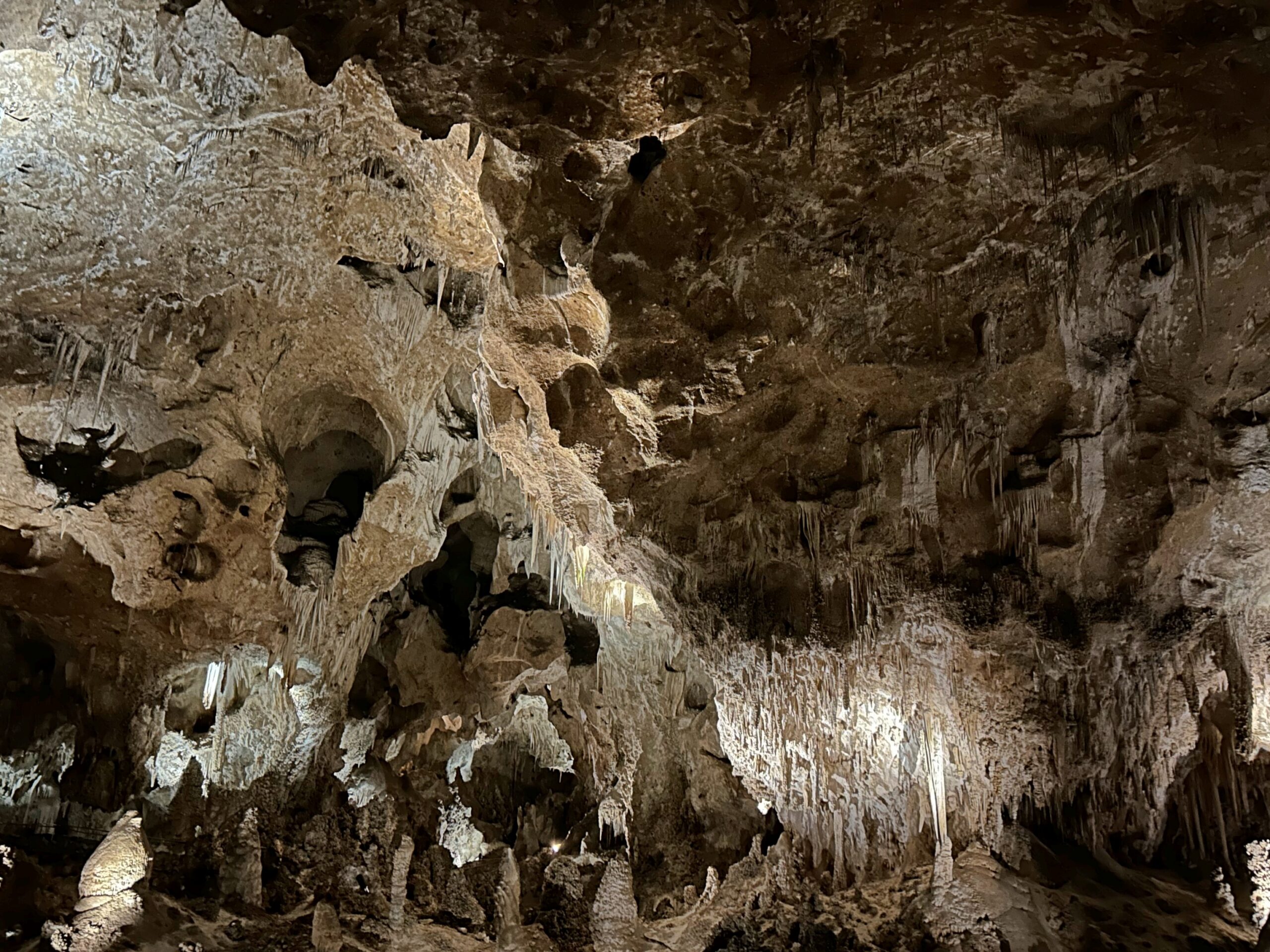
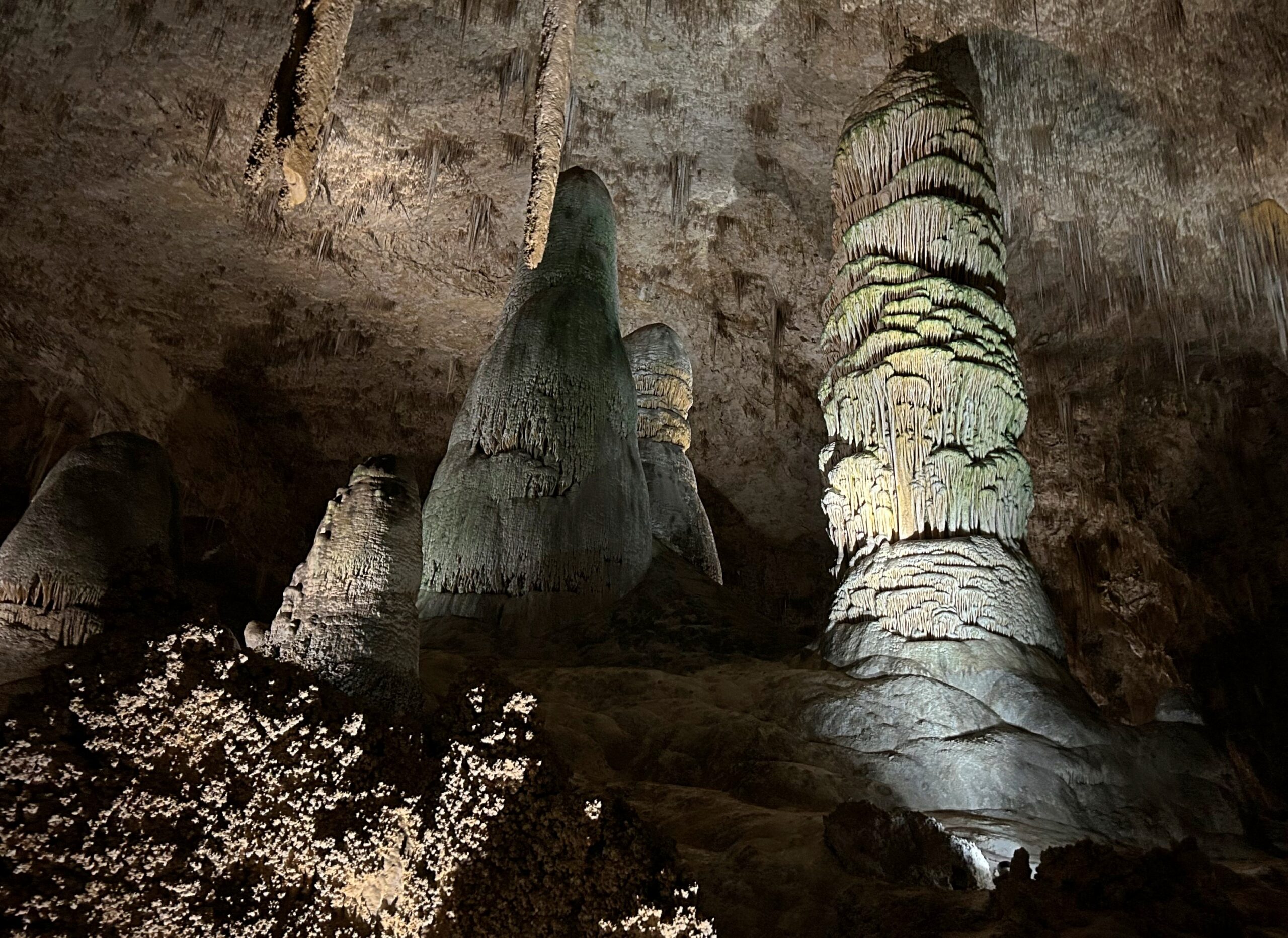
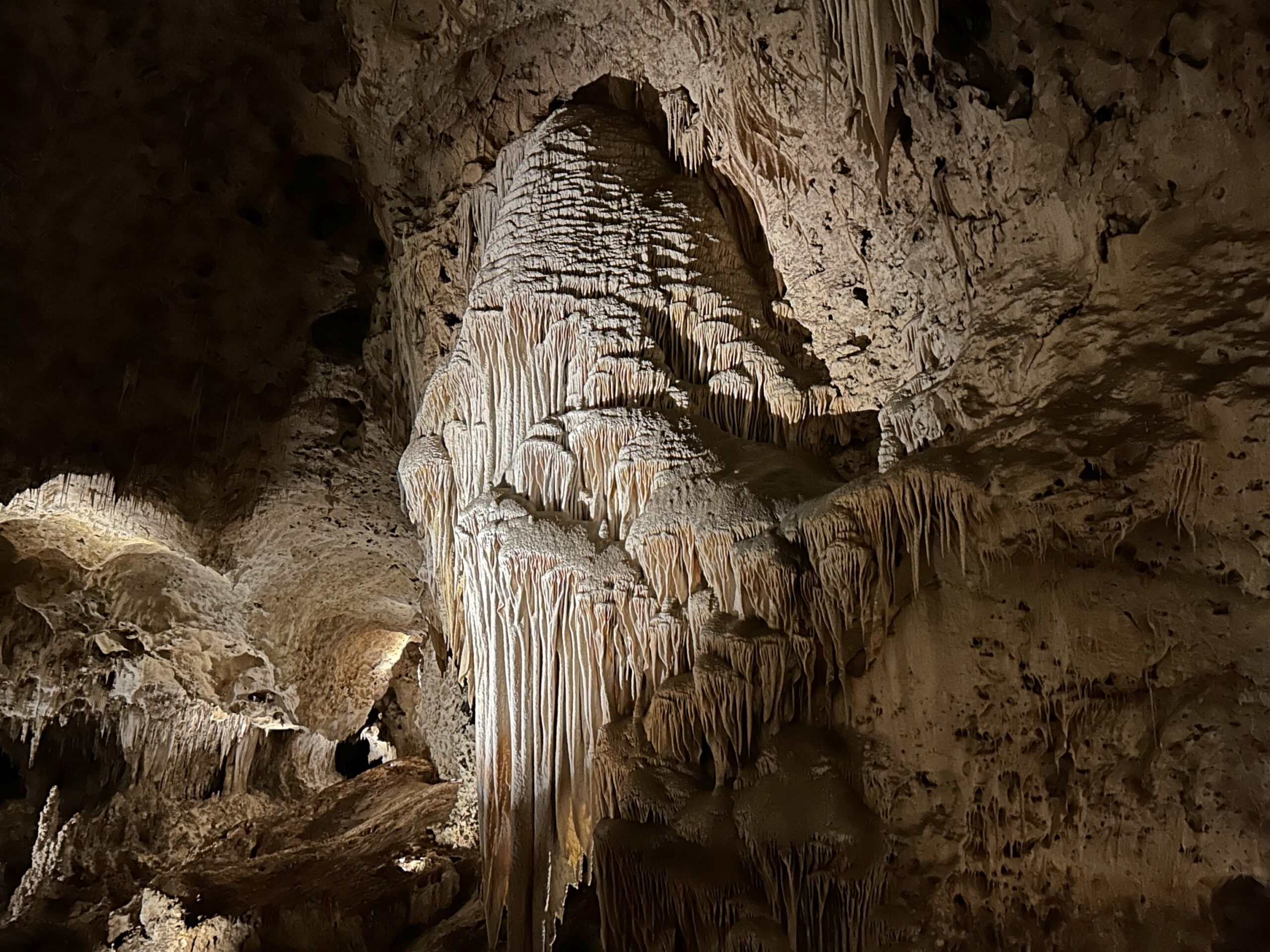
A limestone phantasmagoria, to promote a word that not only fits, but needs to be used from time to time. The path through the Big Room takes about an hour. Towers such as these have names, but who could be bothered to remember them?
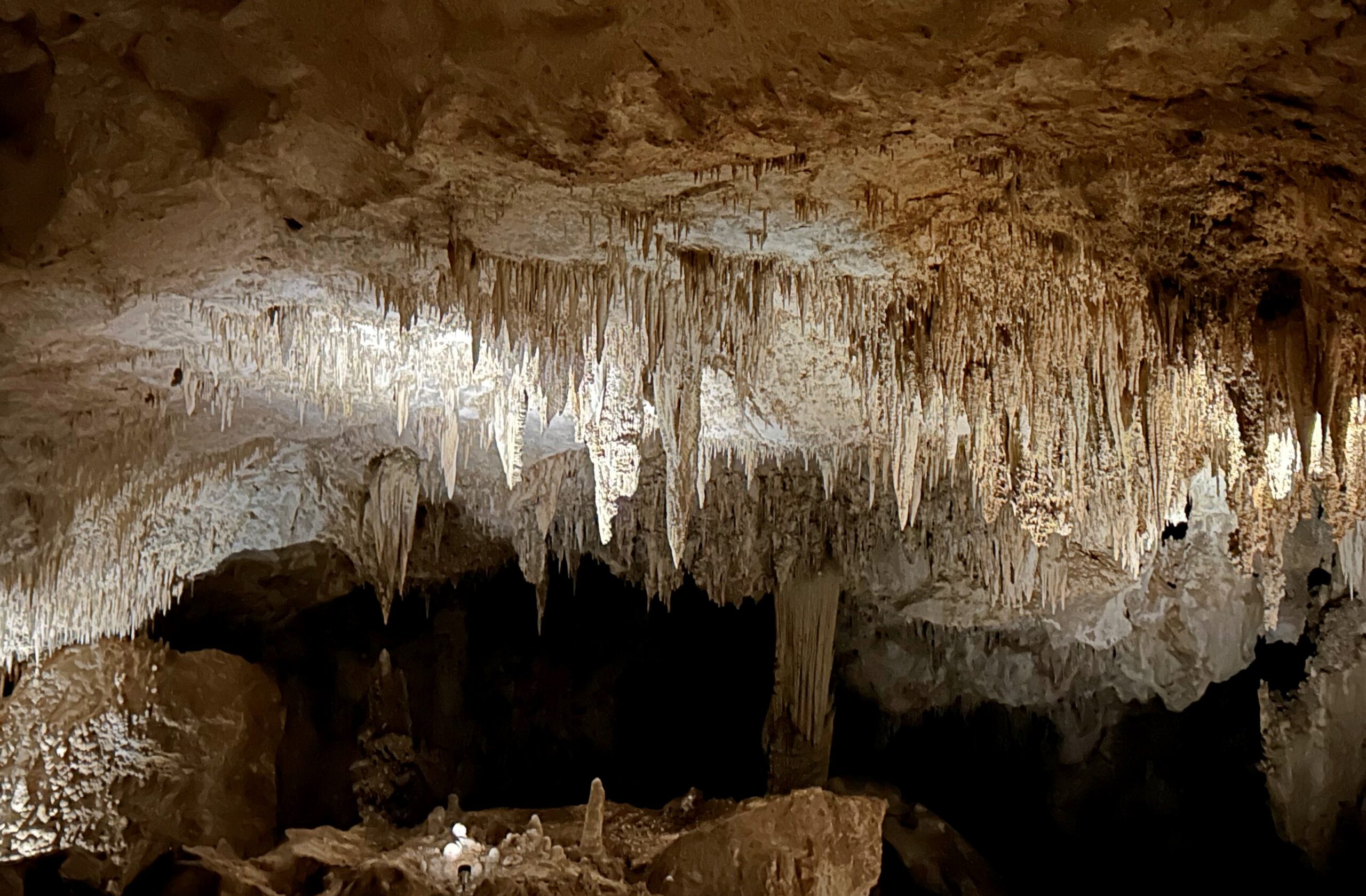
A parade of spectacular stalagmites and -tites and other unbelievably elaborate stone agglomerations, wet with millennia of cave building. In geological terms, about as permanent as an air bubble in a bank of mud, but for short-lived creatures with access to electric lights, a serious wow.
On the other hand, even a cave of superlatives such as Carlsbad begins — like fellow superlative attractions such as trails that wind endlessly through mountains or grand basilicas or giant art museums or even House on the Rock — to wear thin at the end. Wow, more spectacular stalagmites and -tites! More wet agglomerations!
But I quibble. Awesome is awesome, and I say that with the stress on awe.
First things first, especially since I just spent a month in Texas: Remember the Alamo. One hundred ninety years now.
At dinner at our friend Judith’s home late during my visit, she served a delicious cobbler for dessert, and suggested ice cream with it. I was able to bring up that Bennett Cerf-worthy pun, remember the à la mode.
This handy list of U.S. national parks, ranked by number of visitors in 2024, tells me that if you can’t drive to the highlights of the park, people aren’t going to go. Or, if they’ve never heard of the place, they aren’t likely to go either. I can only speculate that that’s because most people spend shockingly little time poring over maps, paper or electronic.
Speculation aside, Guadalupe Mountains National Park in West Texas is the 52nd most-visited park in the current count of 63 parks, which is to say, almost in the bottom 10 least-visited parks, just behind Congaree NP, but ahead of Voyageurs NP. There is a single road that goes to GMNP from the south: the two-lane, remote as can be Texas 54, which joins US 62/180 just south of the park. That’s the way we went on February 18, traveling from Marathon by way of Marfa and Van Horn.
You can drive into the edge of the GMNP on US 62/180, stopping at Pine Springs Visitor Center. If you want to go further in, you walk, or ride a horse, I suppose. We spent a couple of hours in the park, taking short walks — totaling maybe a mile or so — near the visitors center. It was mid-afternoon when we arrived, and more importantly, we weren’t prepared for a long walk, or a horse ride either, especially on a very warm day.
But I did want to stop by, just to be sure that I’d really been to the park. That’s how I think. We might have stopped briefly in the area in August 1972 during our family cave vacation — I imagine there was a roadside stop to admire the Guadalupe Mts., at least — but maybe not. Also, a little reading tells me that the park itself didn’t formally exist in August of that year, when we went to Carlsbad Caverns, but came into being on September 30, 1972. So technically there was no park to visit at that moment. In any case, now I can say for sure that I’ve been to GMNP, as one of the 37 I’ve visited in the U.S.
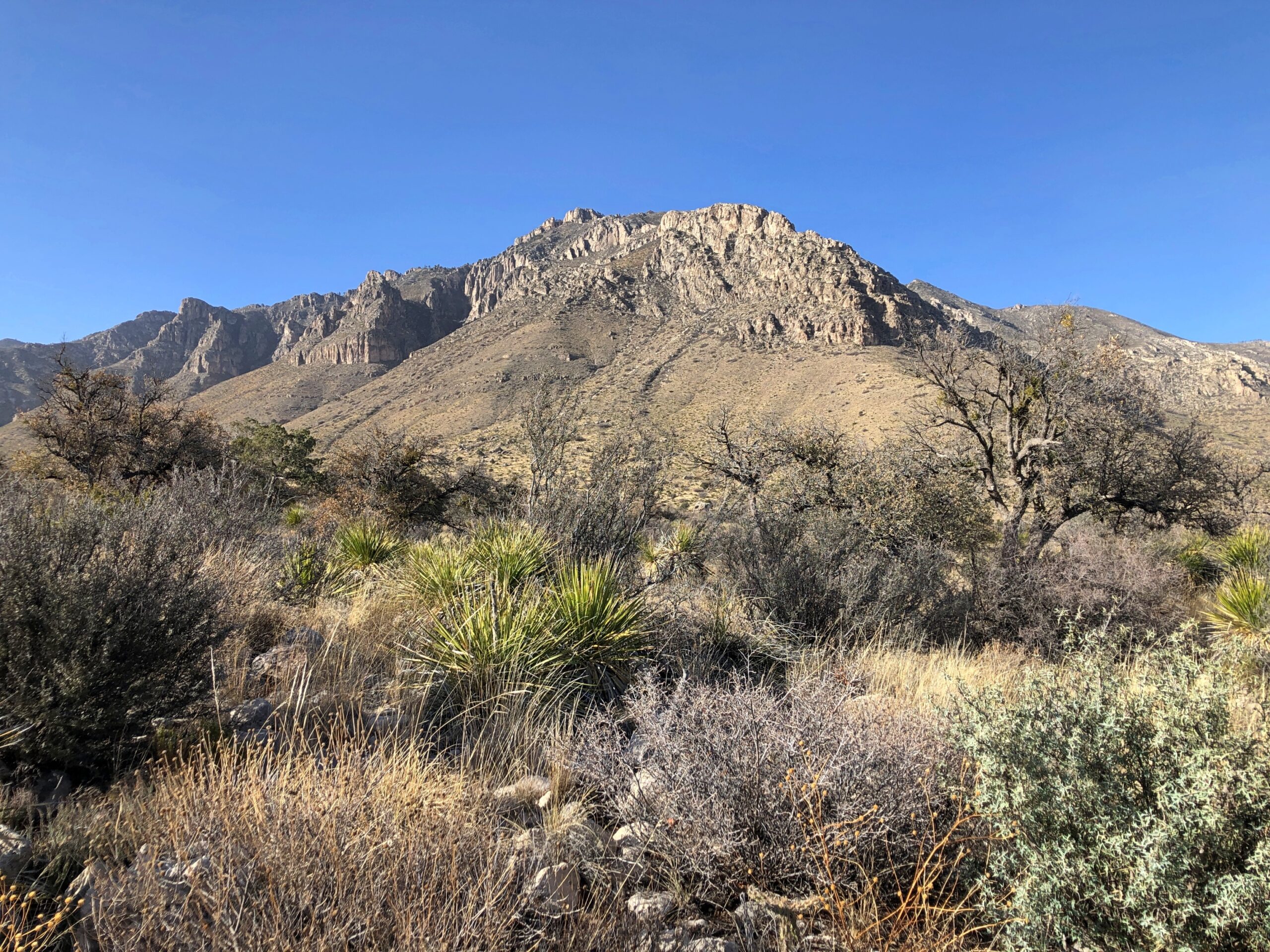
Even from the visitor center, the Guadalupe Mountains are close at hand.
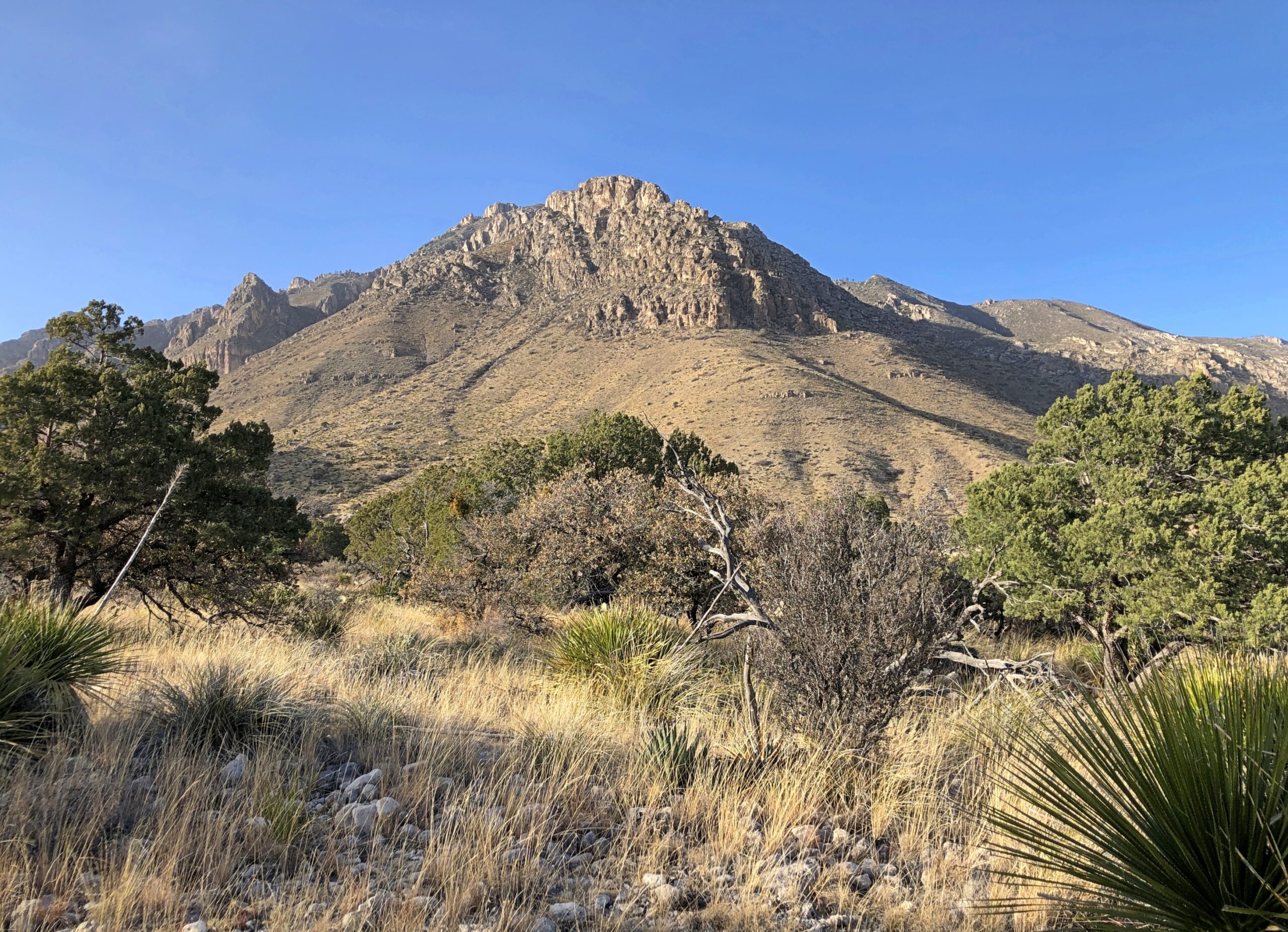
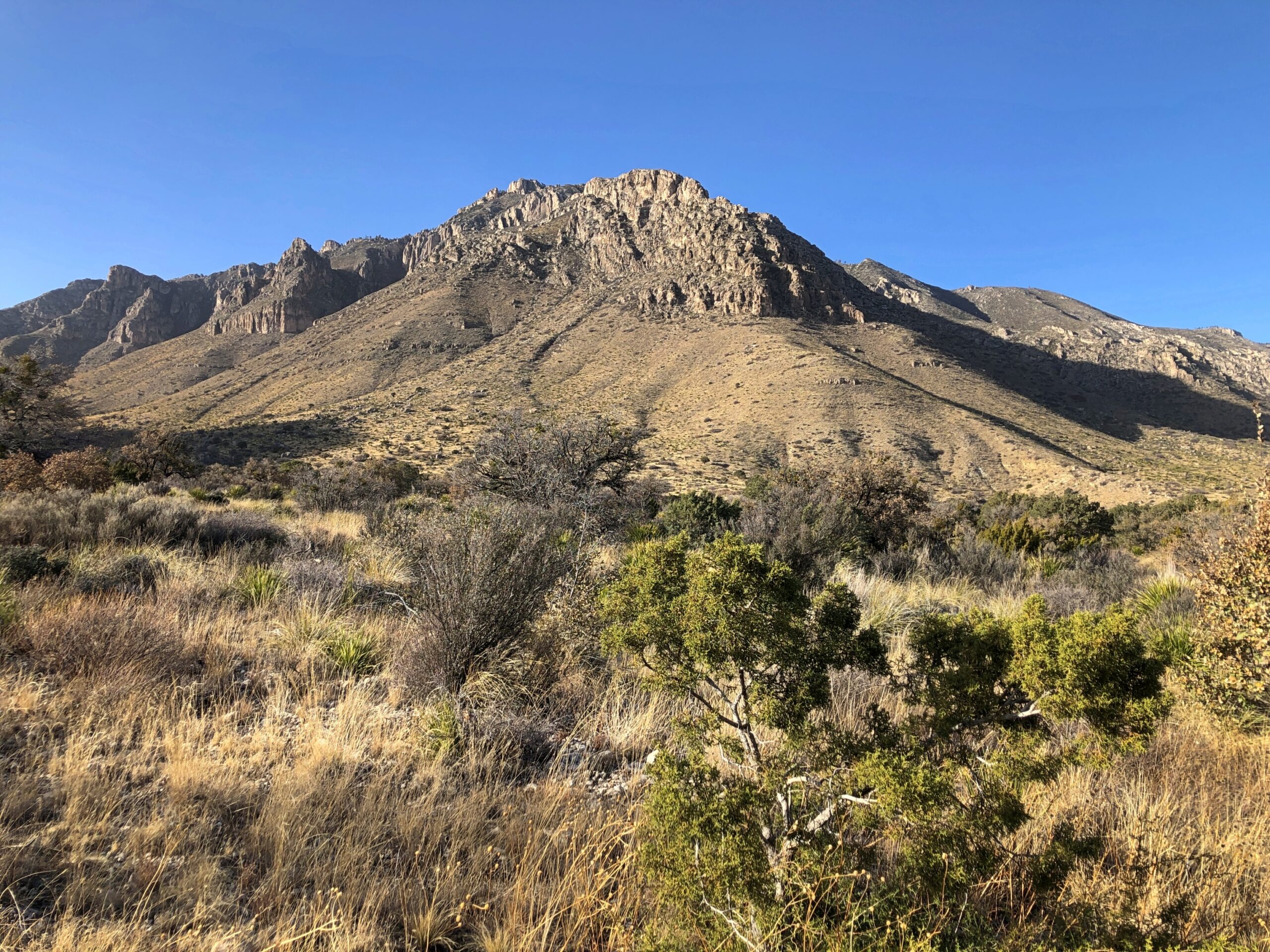
That is Hunter’s Peak, whose summit is 8,368 feet above sea level, and a fair ways above the visitors center, whose elevation is 5,734 feet. Not huge, but still a pretty photogenic uplift of the Earth’s crust, I’d say.
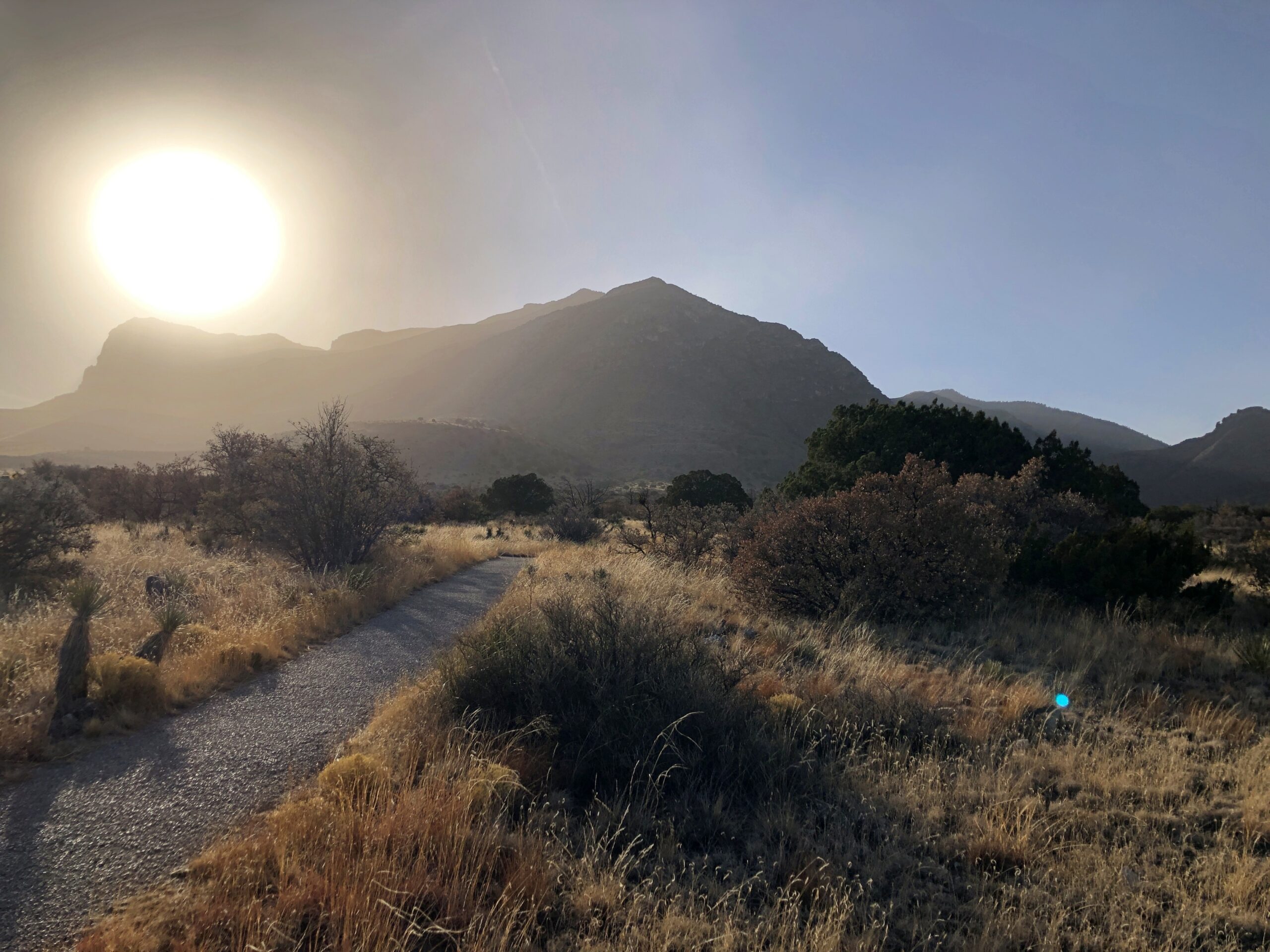
The sun was in a good position to light up that peak. Not so much for Guadalupe Peak (elev. 8,751), the highest elevation in Texas, at least from where we stood.
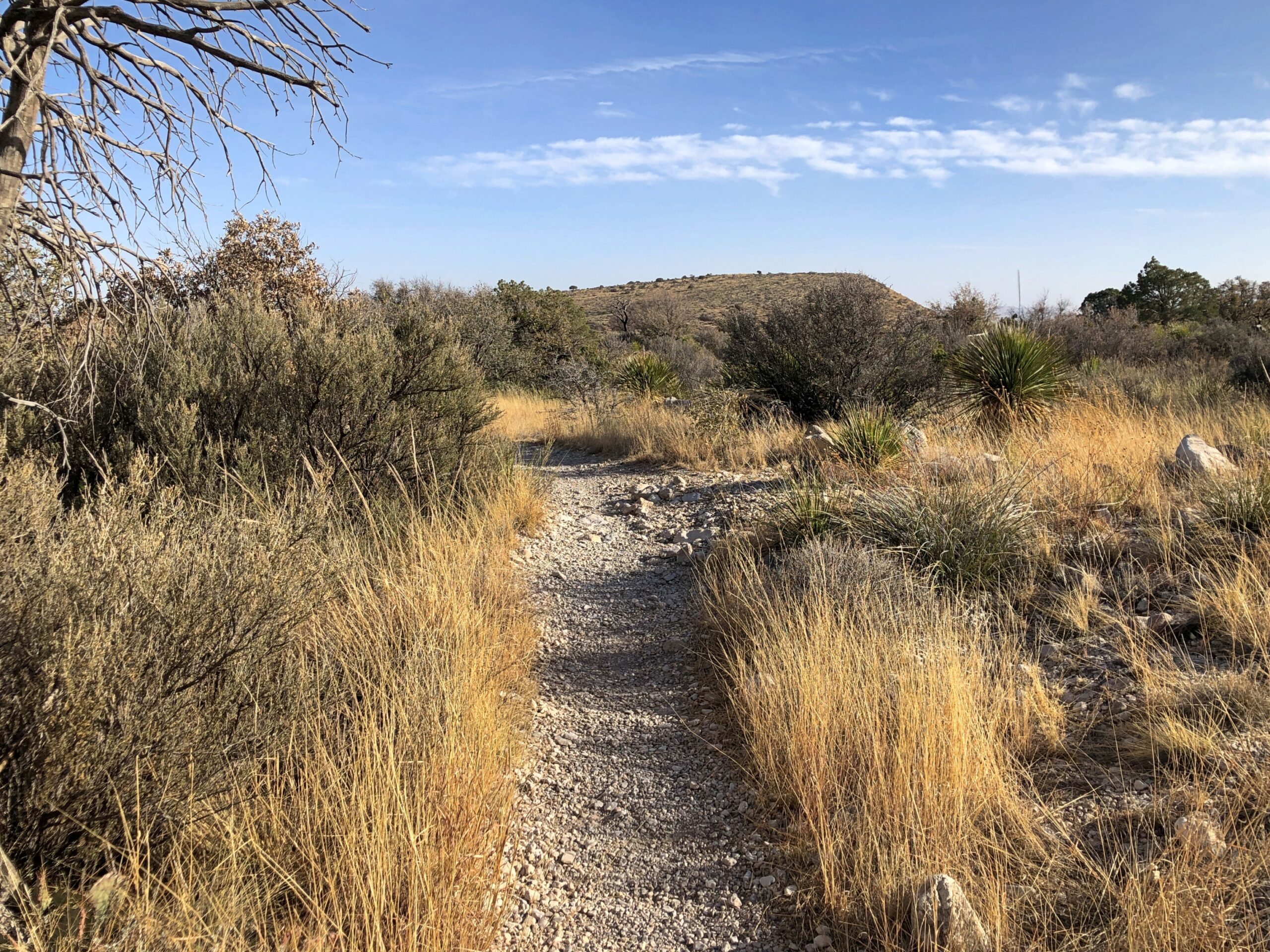
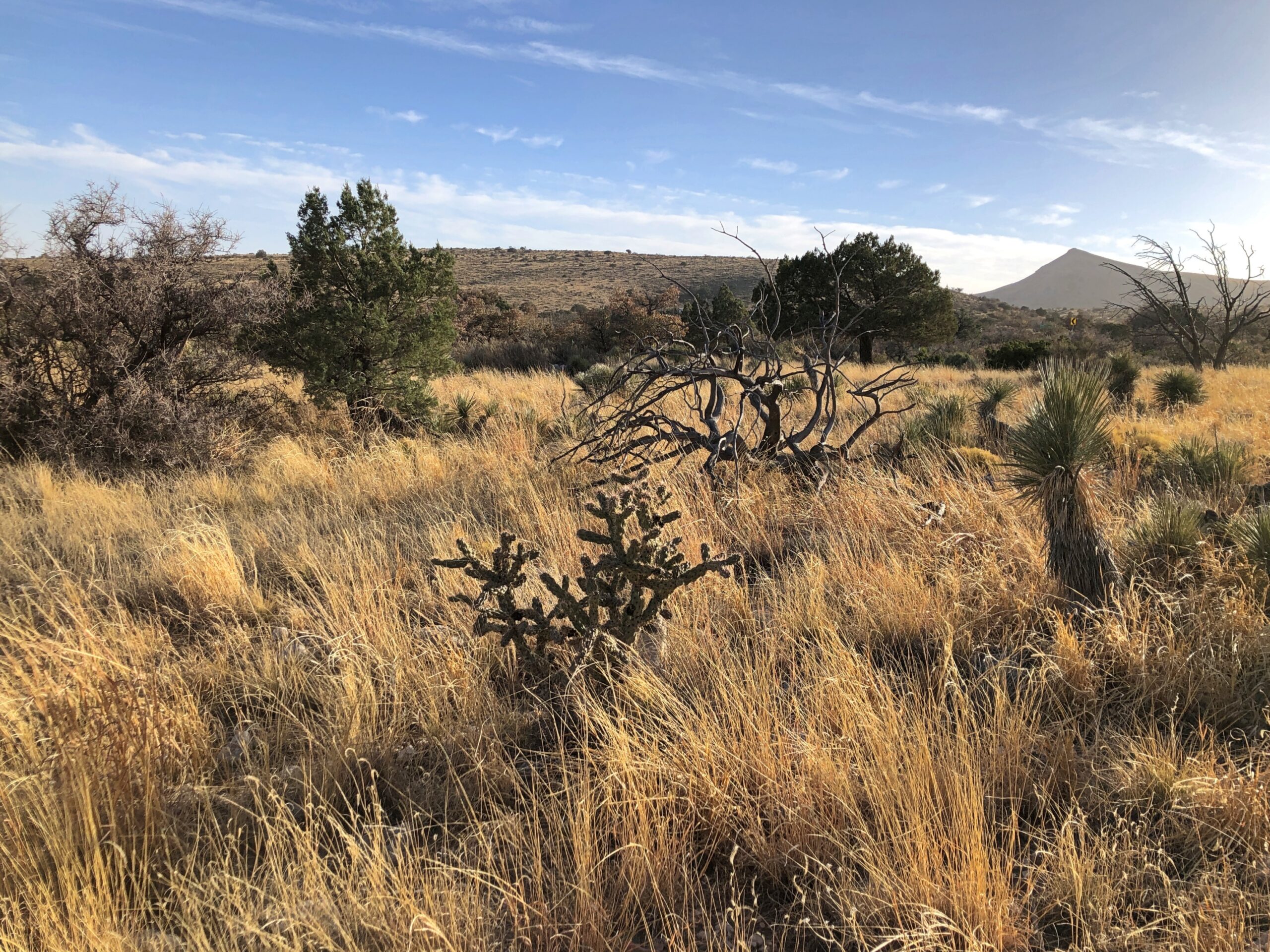
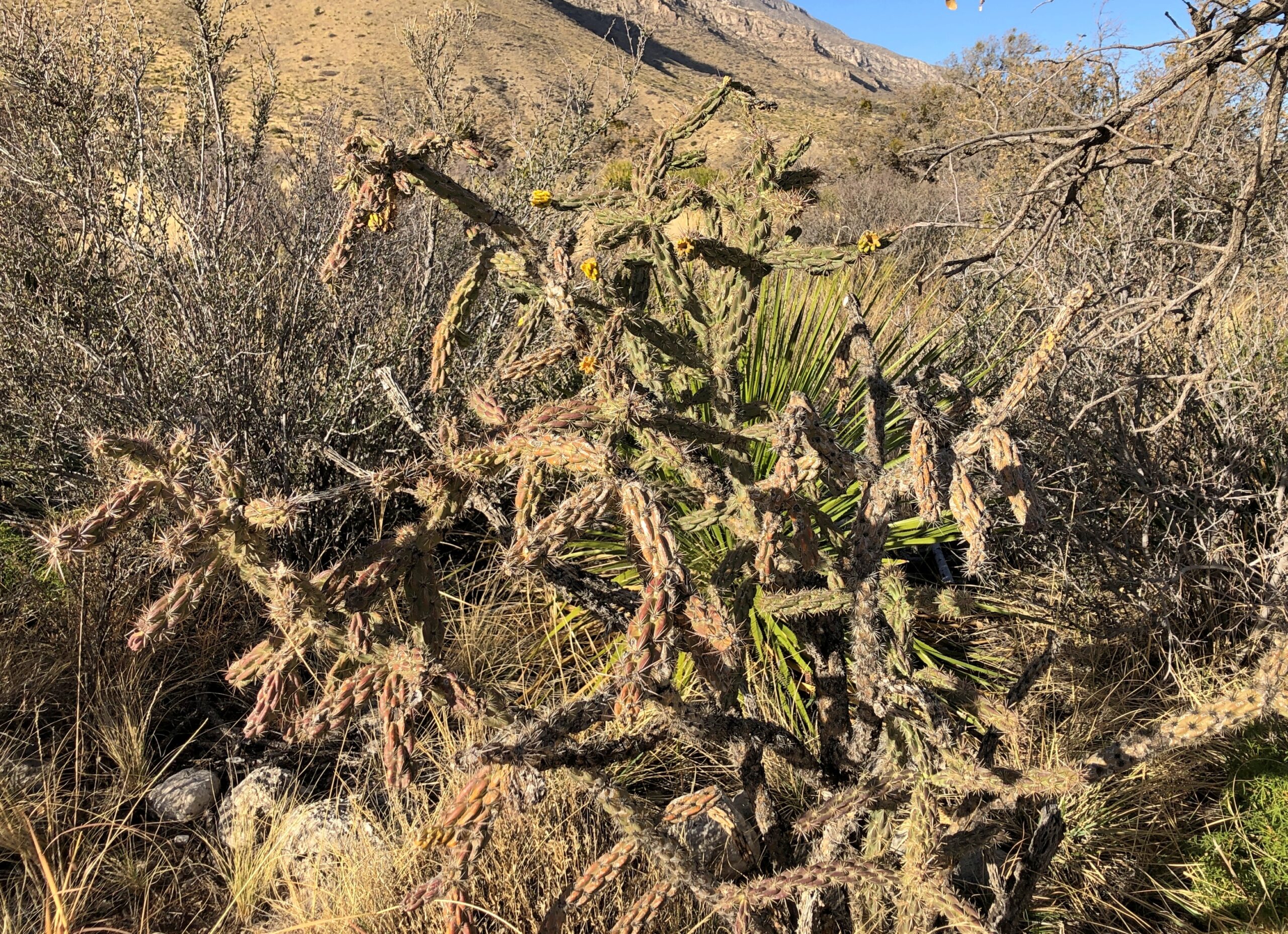
Flora along the way. Fauna wasn’t to be seen, except for a few bugs. But they are out there. Maybe some feral pigs.
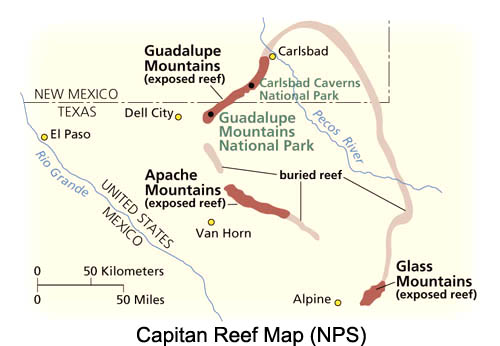
Speaking of map ignorance, how many people in the wider world realize Texas has mountains? I knew that, of course, but only vaguely that they are relics of an ancient reef, called Capitan Reef by us clever apes; one formed 260 to 270 million years ago – before dinosaurs, even – when the area was under a shallow tropical sea. Visiting the park schools you a little on that hard-to-imagine mountain formation process, in which a thousand thousand years is a small turn of the wheel.
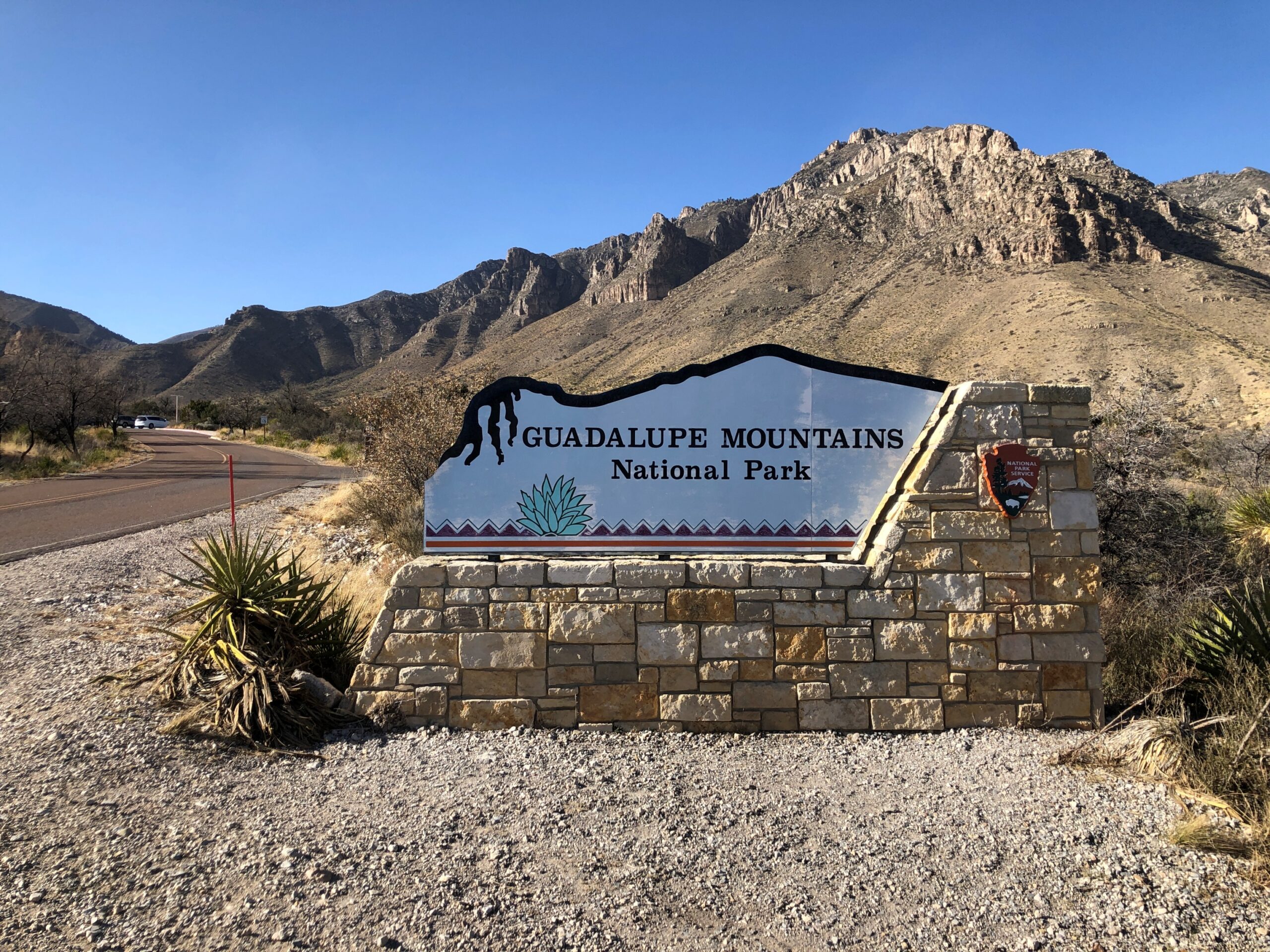
Guadalupe Mountains National Park
“Over millions of years calcareous sponges, algae and other lime-secreting marine organisms precipitated from the seawater,” notes the NPS. “Along with lime, they built to form the 400-mile-long, horseshoe shaped Capitan Reef. Eventually the sea evaporated… the reef was entombed for millions of years until a mountain-building uplift exposed part of it.”
Much more recent chemical reactions created the dazzling void we call Carlsbad Cavern inside the uplifted reef, but that’s a story for another day.
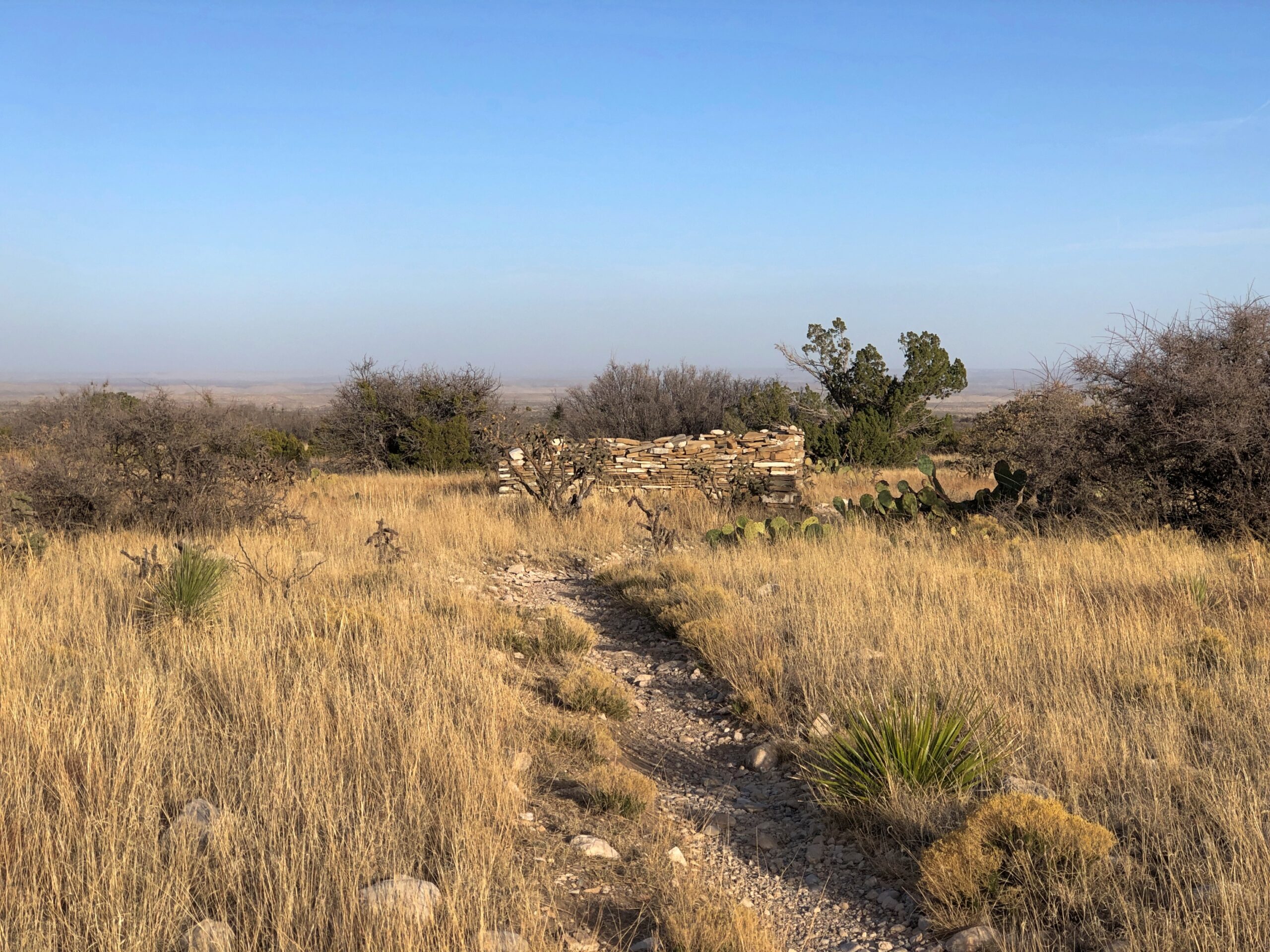
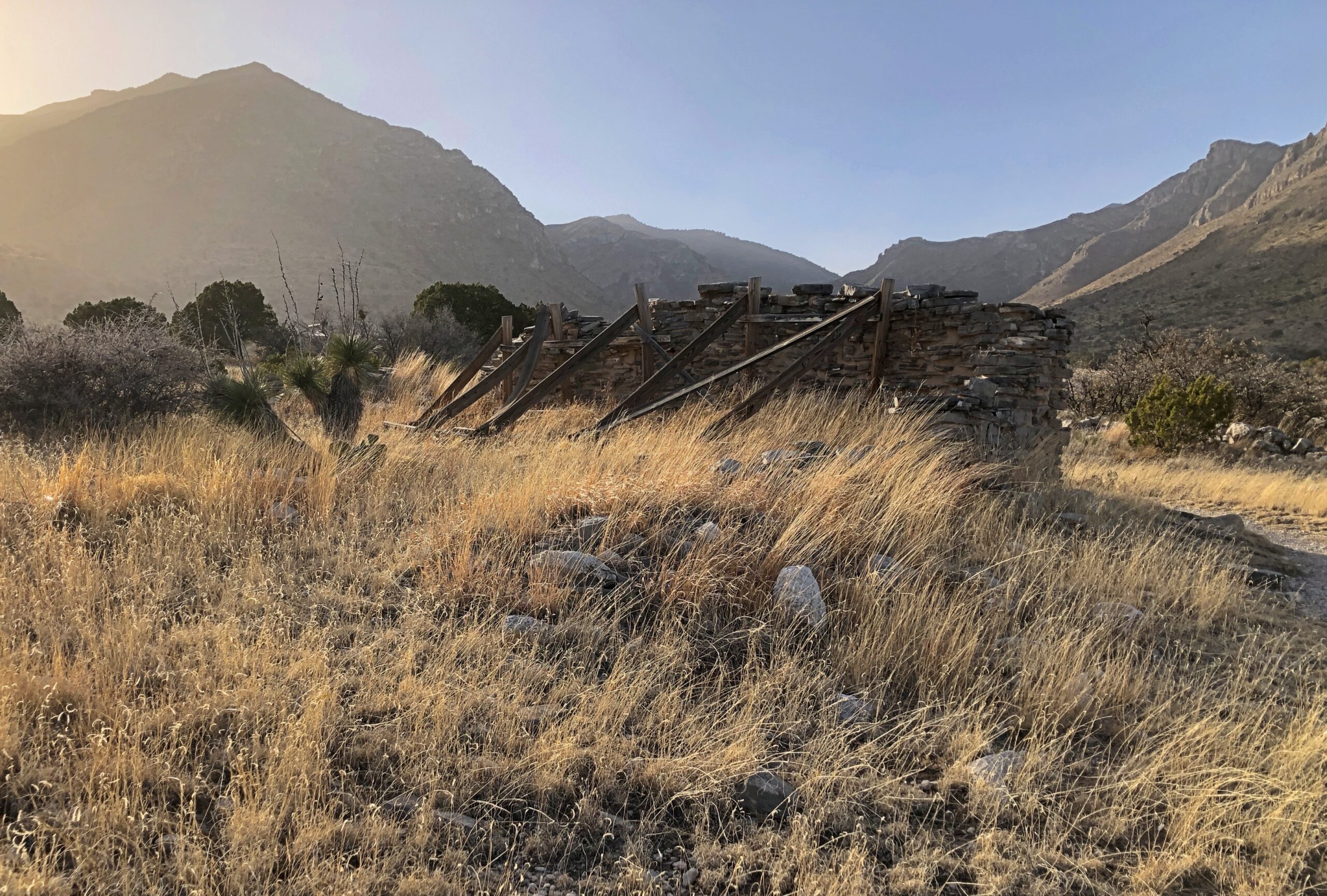
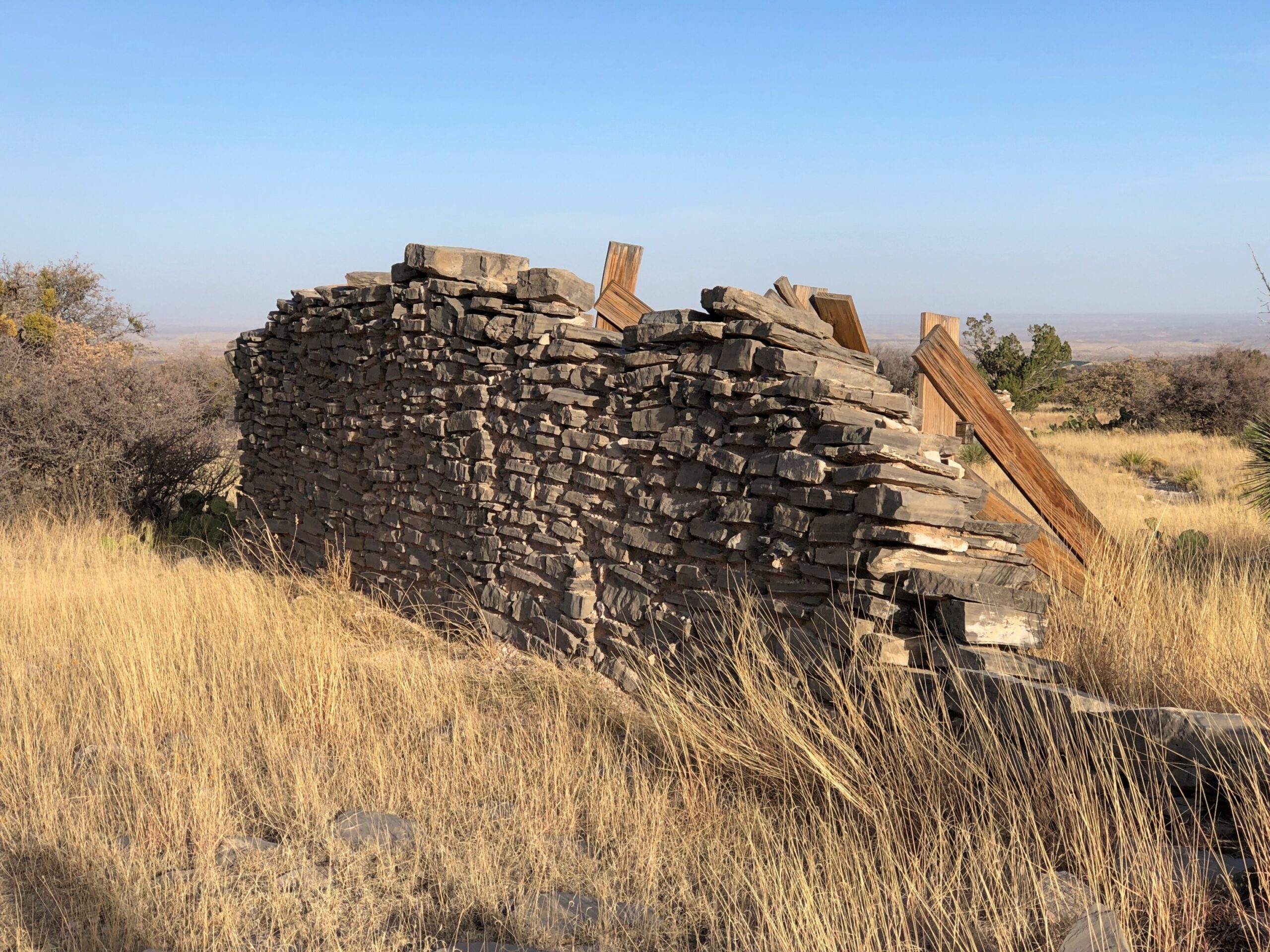
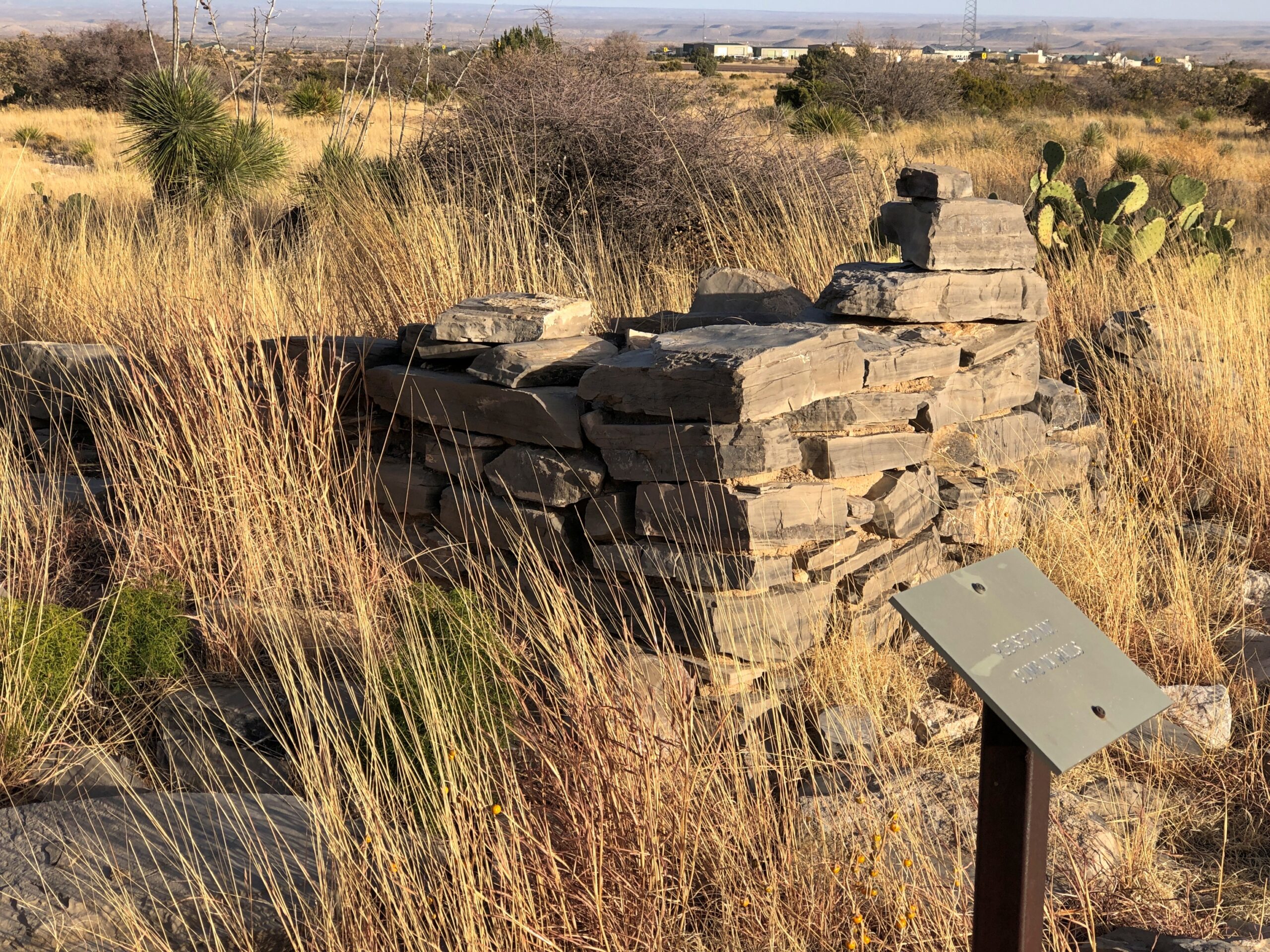
One trail from the visitor center leads to the ruins of a way station on the Butterfield stagecoach route.
Or more exactly, the epic plains and desert route used by the Overland Mail Company, whose stages did mail runs from St. Louis and Memphis to San Francisco from 1858 to 1861. Upstate New Yorker John Butterfield, a stage operator of great experience, was president of the Overland Mail Company and — incidentally — founder of American Express. Quite the story, depicted in movies of earlier times and for all I know, dime novels, though not so much any more.
That stage took passengers, too. Those who gripe about the minor discomforts of modern air travel would be advised to ponder the extreme discomforts of such a journey.
Per Wiki: “A correspondent for the New York Herald, Waterman L. Ormsby, remarked after his 2,812-mile (4,525 km) trek through the western US to San Francisco on a Butterfield Stagecoach thus: ‘Had I not just come out over the route, I would be perfectly willing to go back, but I now know what Hell is like. I’ve just had 24 days of it.’ “