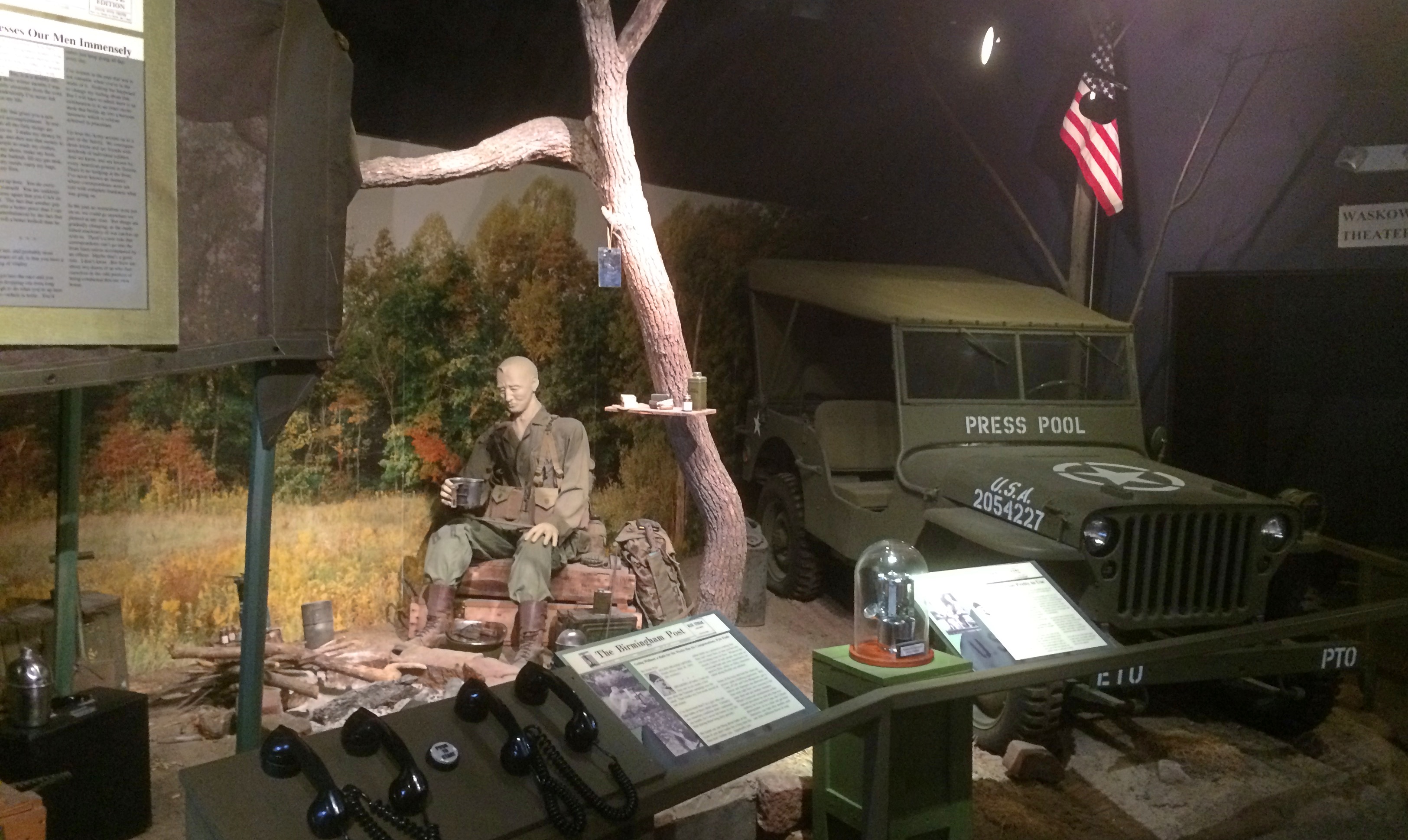
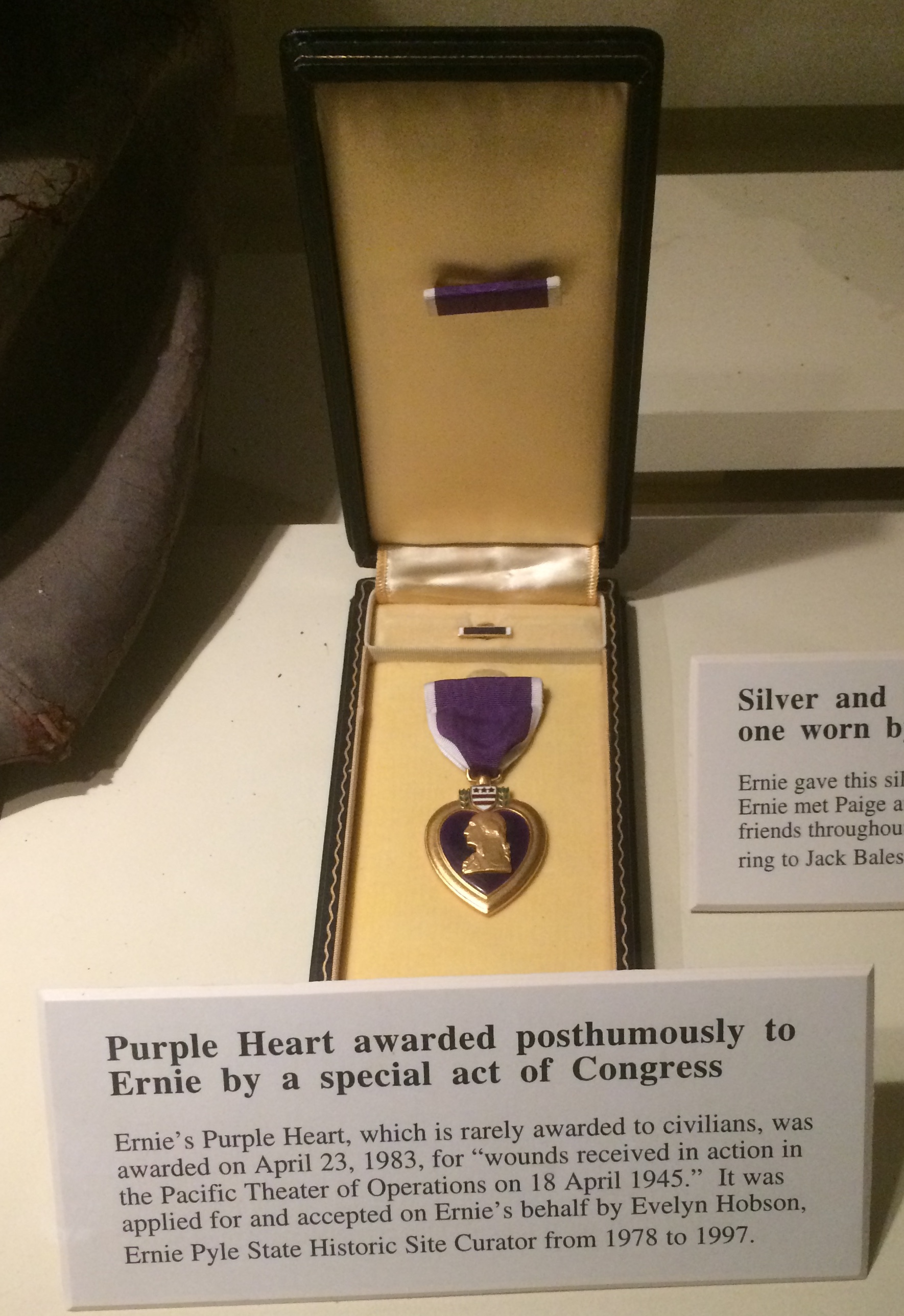
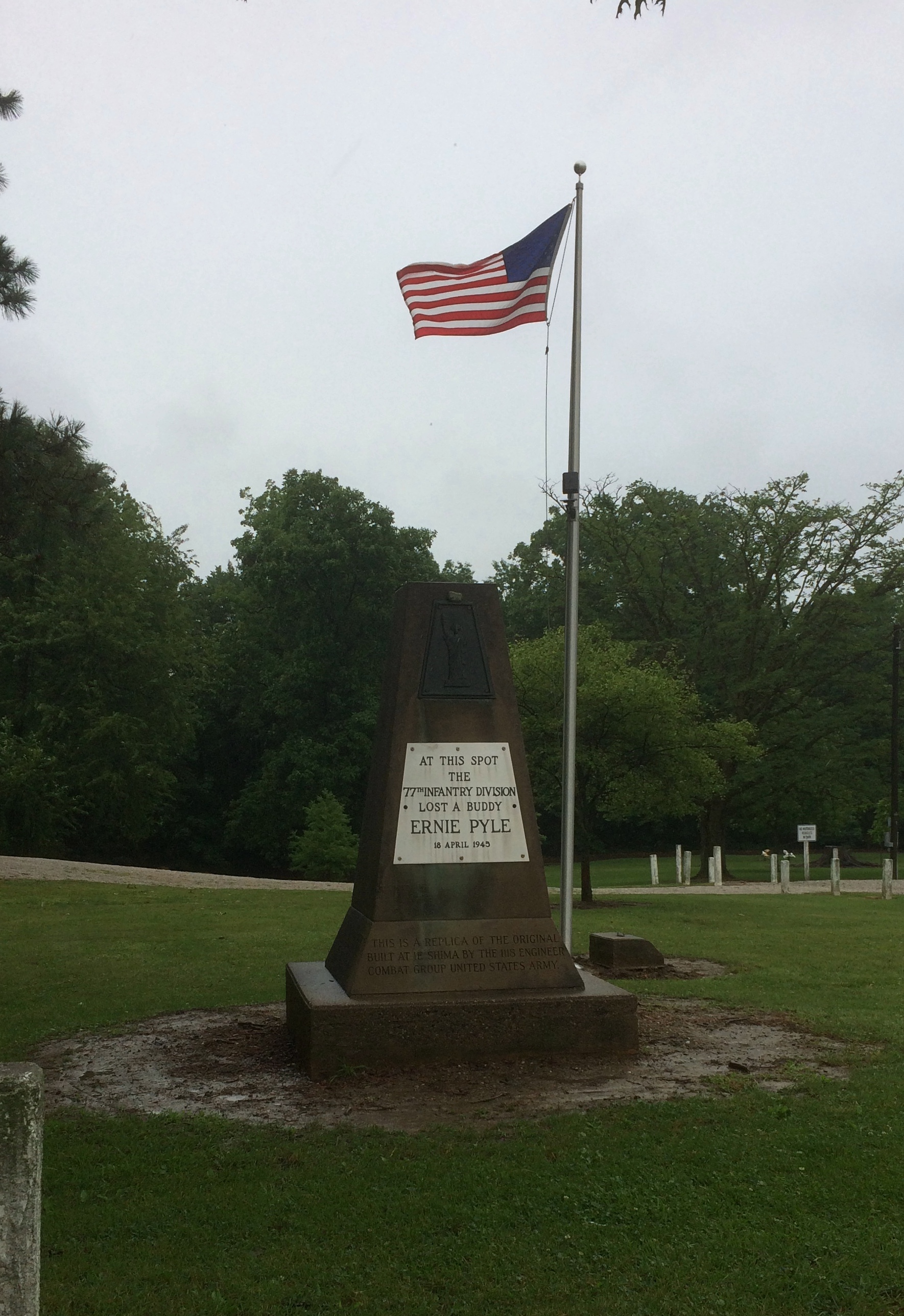
The Rantoul Historical Society Museum

Back on Tuesday. Take holidays whenever you can get them.

Rantoul, Illinois, is a town of about 13,000 just off of I-57 and roughly 20 miles north-northeast of Champaign-Urbana. For the last two years that I’ve been driving regularly between metro Chicago and Champaign, it’s been a sign on the Interstate. I knew that there had been an Air Force base there, and then an air museum on the site, but that both were gone. That’s about all I knew.

So on Sunday, I took the Rantoul exit and made my way to the Rantoul Historical Society Museum. Support little local museums when you can. Besides, you never know what oddities you’ll see, such as White Star brand tomatoes.

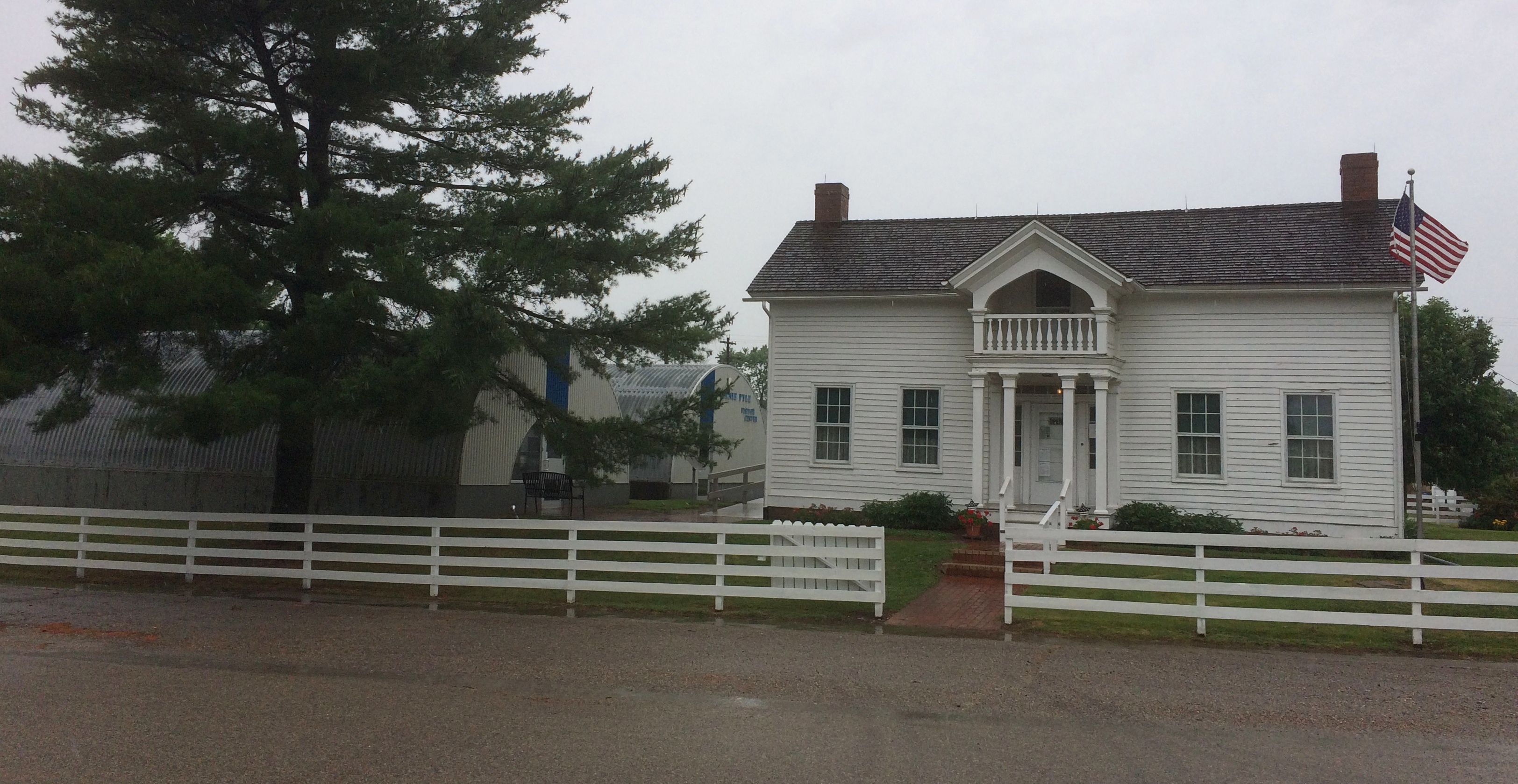
The museum is in a former church building on a main road.
Not a particularly old church, either: the Rantoul Presbyterian Church, dedicated in 1953.
The church is something of a microcosm of the town. When the museum moved into the building in 2016, the Rantoul Press did an article about it.

“At one time, when Chanute Air Force Base was open, membership was strong and the building was the site of a number of church and social events,” the Press noted. “But membership tailed off dramatically when the base closed.”

Chanute Air Force Base was open from 1917 to 1993, beginning as an Army Air Corps training facility and ending in a round of base rationalizations. When the base went, most of the local economy went with it.

A good part of the museum is given over to Chanute AFB.

The church’s former sanctuary isn’t used for displays, but a number of other rooms are chock-full of items, some in display cases, some not: photos, paintings, posters, newspapers, other printed ephemera, clothes, household items, knickknacks, toys, furniture, machinery, and items about the Illinois Central RR, which was the town’s reason for being in the 19th century.

In short, the museum sports anything that the good people of Rantoul wanted to give to the historical society after parents and grandparents died, or debris they cleaned out their homes before moving, or things they simply couldn’t bear to throw away. It’s Rantoul’s attic and Rantoul’s basement.

I spent about an hour looking around. I was the only person there besides the fellow watching the place. When I came in, he greeted me and turned on the lights in the other rooms for me. Otherwise, he said, they stay off.

Wonder who Mr. Rantoul was? The museum tells you. And shows you what he looked like.
Robert Rantoul Jr. (1805-52) was a U.S. Representative from Massachusetts and a director of the Illinois Central Railroad. As far as I can tell, he never visited Illinois, but when the Illinois Central was naming towns along its route, he got the nod.

I enjoyed the case full of old telephones.
There were plenty of displays devoted to bygone local sports glory.
A leather football helmet.

I’ve heard you can make a pretty good case that chronic concussion injuries would be reduced if football went back to leather helmets. Besides, they look cooler.

A few of the artifacts hint at someone’s long-ago personal sadness, such as this.
Boy Scout Vest Worn By: Jerry Wright

The picture must be a high school yearbook shot with “1954” added. No doubt the vest was tucked away somewhere by that time. Gerald Wright, it says under the picture. Deceased. Band 1,2,3. Football 1,2.

The Newberry Library Map Mural

I’ve read that the first floor of the Newberry Library on the Near North Side of Chicago is newly renovated, and it did have a newly polished look when Ann and I were there on Saturday. But it’s been a while since I’ve been inside the library, so I don’t really remember what it used to look like.

I’m sure that I’d never seen this intriguing mural before, which is above the landing between the first and second floors near a back entrance to the building.
A map mural. Even better, an historic map mural, along with a train at a station under the map and what looks like a telephone and telegraph office in a balloon off to the side.

The mural looks new, so either it is, or maybe an older image was expertly refurbished. I didn’t see any signs or plaques nearby to tell me which, or who the artist is, and the library web site doesn’t seem to say, so for now I’ll let the matter rest. It’s always good to find a map mural.
My guess is that the map depicts the nation ca. 1900 — united by rail, telegraph and the still fairly new telephone, with a new century of progress to look forward to. Or possibly 1887, when the Newberry was founded, or 1893, when the current building opened.

Though not cartographically precise (West Virginia looks especially mashed), the map’s close enough to evoke the United States of the period. One detail I noticed was that South Dakota’s towns were Deadwood and Yankton, even though the territorial capital moved to Bismarck in 1883 (presumably Al Swearengen would then refer to those “c—suckers from Bismarck” rather than Yankton).

Also, note the pre-land boom, pre-drain the Everglades, pre-Disney, pre-Florida Man Florida.
A little fuzzy, but it’s clear that there’s no Miami and no Orlando.

Also, the states depicted were not quite all states at the beginning of the 20th century. Arizona, New Mexico and what became Oklahoma were still territories.

That would be my only quibble: before it became a state, Oklahoma was actually two territories, the Oklahoma Territory and the Indian Territory. The Indians of the Indian Territory wanted to be admitted as the state of Sequoyah, but Congress wasn’t having it, and so the two territories were joined to form the modern state in 1907.

How do I know that the map doesn’t depict borders sometime after 1907? Because of the depiction of Canada.
The wonderfully named Assiniboia was a district of the NW Territories, as were Saskatchewan and Athabasca, all before 1905 (Keewatin was a separate territory before 1905, then became a district of the NWT). A major reorg of prairie Canada was done in ’05, making it look mostly like it does now.

So the map depicts pre-1905 Canada, but post-1907 Oklahoma. Ah, well. It’s small quibble about such a fine example of a mural.

The Pritzker Military Museum

One of the things I wanted to do between Christmas and New Year was visit one of Chicago’s lesser-known museums, ideally one I hadn’t gotten around to. So I went to the Pritzker Military Museum & Library, which is on second and third floors of 104 S. Michigan Ave., overlooking Millennium Park.
Pritzker, as in the Chicago family of billionaires, the architecture prize, and the incoming governor of Illinois. In particular, the museum is a project of retired Col. Jennifer (formerly James) Pritzker of the Illinois Army National Guard, who was also in the U.S. Army for a good many years.

All of the display space — a few rooms on the two floors — is currently given over to the Great War. Fittingly. On display are photos, posters and items carried by WWI soldiers.
There are also a few less conventional items to see.

Nothing says Great War like a papier-mâché Kaiser head. According to the sign, “A mask like this one… might have been worn on a float or during a play as a way to mock the German monarch.”

No doubt. What I wonder is how the thing survived 100 years. When the initial fun of Kaiser-mocking died down, did its creator tuck it away in some attic, only to be forgotten for decades? I can imagine some grandson or granddaughter cleaning out that attic in, say, the 1970s, and saying, “What is this? Let’s get rid of it.” But that didn’t happen. Somehow the Kaiser head made its way to the Pritzker, founded only in 2003.
What could be more important to Great War soldiers and sailors than their cigs?

I was especially taken with the collection of posters. Some as conventional as can be.
Some more whimsical.

One appealing to ethnic pride and righteous outrage at the same time.
This was for an organization essentially lost to time, though in fact the American Red Star Animal Relief Program is still around, now called Animal Emergency Services.
“[In WWI] the U.S. armed services used 243,135 horses and mules during the war to transport supply wagons, ambulances, traveling kitchens, water carts, food, engineer equipment, light artillery, and tons of shells. Horses were used in direct combat as well,” American Humane says.

“American Humane sent medical supplies, bandages, and ambulances to the front lines to care for the injured horses — an estimated 68,000 per month.

“Since that time, American Humane has helped the animal victims of natural and manmade disasters, such as floods, chemical spills, hurricanes, volcanic eruptions, and victims of animal cruelty throughout the country.”

The John B. Murphy Memorial Auditorium

Between the holidays one day, when it was cold but not too cold, I found myself on Chicago’s Near North Side, just west of Michigan Ave. At the corner of N. Wabash Ave. and E. Erie St. is the Driehaus Museum, otherwise known as the Nickerson House at 40 E. Erie St., the Gilded Age palace we visited a year and a half ago.

I didn’t stop for that this time, but headed east from there and immediately saw this structure, which is the Driehaus Museum’s next door neighbor.

I stood thinking for a while. Who was John B. Murphy and why did he rate such an imposing memorial? Why can’t I ever remember seeing this building before? I must have. I must have seen it, but maybe I didn’t see it. A strange lapse.

This is the age of computers in our pockets, so I stood on the sidewalk across the street and looked up John B. Murphy.

Dr. Murphy he was, a prominent Chicago surgeon of the late 19th/early 20th centuries (1857-1916). Among other things, he “was a pioneer in recognizing the symptoms for appendicitis, and he strongly urged immediate removal of the appendix when this symptomatic pattern appeared,” Britannica.com tells me.

Someone had to think of that. Dr. Murphy also clearly had friends with means. The web site of the Murphy Chicago — as the space is now known — says that “ground was broken on the John B. Murphy Memorial Auditorium in 1923, and construction was completed in 1926.

“The Auditorium was built to serve as a tangible memorial to the great Dr. John B. Murphy. Shortly following Dr. Murphy’s death, his friends sought to honor him by forming the John B. Murphy Memorial Association.

“The architects for this gorgeous building were Marshall and Fox. The architectural design of the Auditorium is in the French Renaissance style and is reminiscent of the Chapelle de Notre-Dame de Consolation – the Commemorative Monument to the Bazar de la Charite Fire, located in Paris.”

The American College of Surgeons owned the property from day one and still does. The organization formerly hosted ACS meetings there and used it for surgery education, but in the 21st century, it’s a rentable event space. Weddings are a specialty, apparently.

The Boarded-Up St. Boniface and the Resplendent Holy Trinity

At the intersection of Chicago Ave. and Noble St. in Chicago, you’ll find a word you don’t see that much: natatorium. It’s attached to the Ida Crown Natatorium, a unit of the Chicago Park District.
The facility has an entry in the Atlas Obscura, which notes that “its most arresting feature is the swooping, gently curved ‘barrel shell’ roof that arches over the pool, resembling in the words of one critic ‘a wave of concrete about to crash onto the shore of Chicago Avenue.’

“Mayor Richard J. Daley himself presided over the pool’s dedication in 1961, which was named for one of Chicago’s most prominent philanthropic families.” (Actually, Ida was a member of that family, the grandmother of this wealthy fellow.)

The natatorium is at the south end of the mid-sized Eckhart Park, which is otherwise an open area of playing fields. Rising over the north end of Eckhart Park, along W. Chestnut St., is the shuttered St. Boniface Church, originally built in the early 1900s for a primarily German Catholic congregation. Presumably they didn’t want to share a church with the surrounding Poles, and vice versa. St. Boniface, of course, led the effort to Christianize the Germans and is highly regarded in that country.
Given the Chicago Archdiocese’s history of knocking down splendid Chicago churches because money is tight (and these days, there are other bills to pay), I’m surprised that the shell of St. Boniface, which closed in 1990, is still standing.

This summer, the city approved plans to redevelop the structure into condominiums, including a new building as well as units in what used to be the sanctuary. That’s better than razing the grand old church. To the side of the boarded-up structure, I noticed a construction site in its early stages.

The redevelopment is slated for completion in 2020, but for now St. Boniface still has that abandoned look. Inside, even more.

While standing on Noble St. near the hulking St. Boniface, I noticed another church not far to the north. A large-looking structure. When I was looking around Google Maps a few days ahead of my walk, I hadn’t noticed it. But there it was. The church looked to be about five minutes away, so I went.

Soon I was in front of Holy Trinity Church.
Definitely built for a Polish congregation and still very much a Polish congregation. The church is run by the Society of Christ Fathers for Poles Living Abroad.
Polish Independence Day is the same as Armistice Day, incidentally. Same day, same year. The war was over and everything was up for grabs, including self-determination for formerly partitioned places.

Completed in 1906, Holy Trinity’s design is attributed to a Chicago architect named William Krieg, who (according to one source) mostly did more modest buildings in Chicago — a lot of them. Another source calls Krieg “little known” and a manufacturer of terra cotta as well.

I wasn’t expecting the interior to be quite so ornate. I gawked at the column-free space for a while, looking at the murals covering the walls and ceiling, the stained glass, the statues and other ornaments.
A baptism was in progress, but no mass, so I moved around the sanctuary. Here’s the baptism party in front of the altar.
Later, as I read about the church, I can across this bit of information at Wiki about the space underneath. The article calls it “catacombs,” but that seems like a misnomer. Rather, the space is “beneath the area formerly occupied by the lower church, and consist[s] of a winding path lined with niches containing saintly relics…”

A little like the space for relics found at St. Josaphat in Milwaukee, perhaps. Intriguing.

Saint Clement Church, Chicago

At noon on Saturday, we’d just emerged onto the street in the Lincoln Park neighborhood of Chicago when we heard church bells nearby. A robust peeling that commanded our attention.

We soon figured out that they were the bells of Saint Clement. What do the bells of Saint Clement say? Oranges and lemons. A different church, but never mind. I might not know that if I’d never read 1984, but what kind of person would I be if I’d never read 1984?

Naturally, I wanted to see if the church was open. The bells gave us extra incentive to take a look. Saint Clement is at N. Orchard St. and W. Deming Pl.
Not long before, we’d seen the striking dome of the church from a fourth-floor view, more about which later.
Saint Clement in Chicago is 100 years old, originally built by German Catholics. St. Louis architect Thomas Barnett designed the church. He also did the Byzantine-style Cathedral Basilica of St. Louis, and Saint Clement reminded me of that place of worship, though without the mosaics.

The interior was dark when we visited. It must be expensive to light such a large place. Besides, I imagine that most large churches in most places during all the pre-electric centuries were dark most of the time. Here are some pics with all the electric light blazing and it must be quite a sight. But even dark, the place was impressive (and it would be fine to see it lighted by candle).

On an overcast day, the stained glass was well illuminated.

Of course I had to look up St. Clement. I might have learned about him in passing in New Testament class, but that was a good many years ago. Anyway, he was the fourth bishop of Rome and, according to legend, found martyrdom ca. AD 101 in a distinctive way: tossed into the Black Sea tied to an anchor.

That would account for the anchor motif I saw on the exterior of Saint Clement School, which is across the street from the church. If I’d had a bit more light, I might have found that in the church as well.

Hong Kong One-Cent Note

One more bit of interesting but worthless paper: a Hong Kong one-cent note. A small script of a note, pictured here at pretty much actual size. I’d post the reserve of the note, but it’s blank.

I’m not sure when or where I picked up this curiosity. Might have been at a coin shop in the ’70s. But it wasn’t in Hong Kong. Small change there in the early 1990s was always coins, at least in my experience.

I assume the text specifying that the notes are legal tender for payments of a dollar or less means that a merchant could decline payment from some joker wanting to pay with thousands of one-cent notes. I’ve never seen any text like it on any other note, at least not ones that I could read.

Even though I never ran across one in circulation, this site says that “the One Cent note has always been very popular even though it has very little value. A recent assessment showed there was over $1 million worth of these notes in circulation. The Coinage Bill of the 17th June 1994 brought about the demise of the One Cent note in preparation for the 1997 hand over to China.”

The Hong Kong dollar has long been pegged to the U.S. dollar, between HK$7.75 and HK$7.85 to the dollar, so a HK cent is worth about 0.13 U.S. cents. Or just for fun, 1.3 U.S. mills. Very little indeed.

A digression: mills, though essentially notional for most of the history of the U.S., were recognized by the Coinage Act of 1792: “… the money of account of the United States shall be expressed in dollars or units, dismes or tenths, cents or hundredths, and milles or thousandths, a disme being the tenth part of a dollar, a cent the hundredth part of a dollar, a mille the thousandth part of a dollar, and that all accounts in the public offices and all proceedings in the courts of the United States shall be kept and had in conformity to this regulation.”

I like disme. It’s a spelling we should have kept. Pronounced “dime,” as I understand it. People gripe about them, but language would be less fun without a few silent letters.

The one-cent HK note I have was issued between 1961 and 1971, since it bears the signature of Hong Kong Financial Secretary J.J. Cowperthwaite. I’ll take my source’s word for that, since the actual signature looks like a doctor’s scrawl that used to be seen on paper prescriptions.

He was a free-marketeer: “Sir John Cowperthwaite, who was deputy and actual finance minister for Hong Kong between 1951 and 1971, was enormously influenced by his study of [Adam] Smith,” says the Royal Economic Society.

“Cowperthwaite more than anyone laid the economic policy foundations that drove Hong Kong’s remarkable post-war economic growth. In the 1950s Hong Kong’s (PPP adjusted) GDP per capita was around 30 per cent of that of its mother country, Britain. Now it has a GDP per capita that is 40 per cent higher.”

RIP, George Bush

Somewhere, I have a souvenir photo I obtained at a breakfast event held by a prominent real estate brokerage in March 2001. If I knew where that item was, I’d scan it for posting, but no such luck (the event is mentioned in passing here).

That brokerage was later absorbed by another company and is now only a memory. The featured speaker at the event that morning is likewise only a memory now: George H.W. Bush. RIP, Mr. President.

Saw a fair number of flags at half staff in his honor today.

I checked to be sure, and it’s so: the late President Bush was, and remains, the only U.S. president to have four names. Until the mid-19th century, most of them didn’t even have three. Naming fashions change.

Been a while since there was a presidential death. Now there are only four living former presidents. With the elder Bush’s death, the fourth period of five living former presidents ended (Jan. 20, 2017-Nov. 30, 2018). That has only happened three other times: March 4, 1861-Jan 18, 1862; Jan. 20, 1993-April 22, 1994; and Jan. 20, 2001-June 5, 2004.

That three of the four periods are in living memory illustrates the longer lifespans of our time. Speaking of longevity, Jimmy Carter now has to make it to early March 2019 to become the oldest person to have served as U.S. president, taking that distinction from the elder Bush.

Burundian 100 Franc Note

I should have known that Burundi uses francs, but I didn’t until I acquired a 100 franc note from that African nation as part of a collection of cheap but colorful currency. Just more ignorance on my part. Interesting that a lot of Francophone African countries use the franc, but neither France nor Belgium does.
The gentleman on the obverse is Louis Rwagasore, or Crown Prince Louis Rwagasore, Burundi nationalist and son of Mwambutsa IV, king of Burundi from 1915 to 1966. Louis Rwagasore was briefly prime minister in 1961, ahead of independence the next year, but was assassinated in a hotel dining room. Suspects were rounded up and executed. Belgian authorities were suspected of having a hand in the murder, but that was never proved.

In the background of the note is Louis Rwagasore’s tomb.

On the reverse, house building. And a warning not to counterfeit the notes.

In theory, 100 Burundian francs is worth a bit more than five U.S. cents. No wonder there have never been any Burundian centimes.

A Pair of Chicago Cathedrals: Holy Name and St. James

Spent a little while in the city this weekend and had time to visit two major churches. Cathedrals, in fact. Holy Name Cathedral, which is the seat of the Catholic Archdiocese of Chicago, and St. James Cathedral, which is the seat of the Episcopal Diocese of Chicago. They are a block apart and both only a few blocks west of Michigan Ave. on the near North Side.

The Gothic Revival style Holy Name rises over State St.
“After the Great Chicago Fire destroyed both the Cathedral of St. Mary (Madison and Wabash streets) and the Church of the Holy Name (site of the present Cathedral), a new cathedral was needed,” the Chicago Architecture Center says…. “the new Holy Name Cathedral was dedicated in 1875.”

More recently, the roof was restored after a 2009 fire did serious damage to the cathedral.
St. James Cathedral is another Gothic Revival structure, rising above Wabash St. It too is the result of rebuilding.
“A few weeks after the splendidly redesigned church was formally rededicated in 1871, the Great Chicago Fire erupted, leaving nothing but the stone walls, the Civil War Memorial, and the bell tower, whose bells gave warning to the neighborhood of the fire,” the church’s web site says.

Wiki says that the upper reaches of the bell tower are still stained with soot from the Fire, but I didn’t really see it.
Maybe the soot was obscured by trees from my vantage. Anyway, here are some interior shots of St. James.