Indiana Dunes National Park

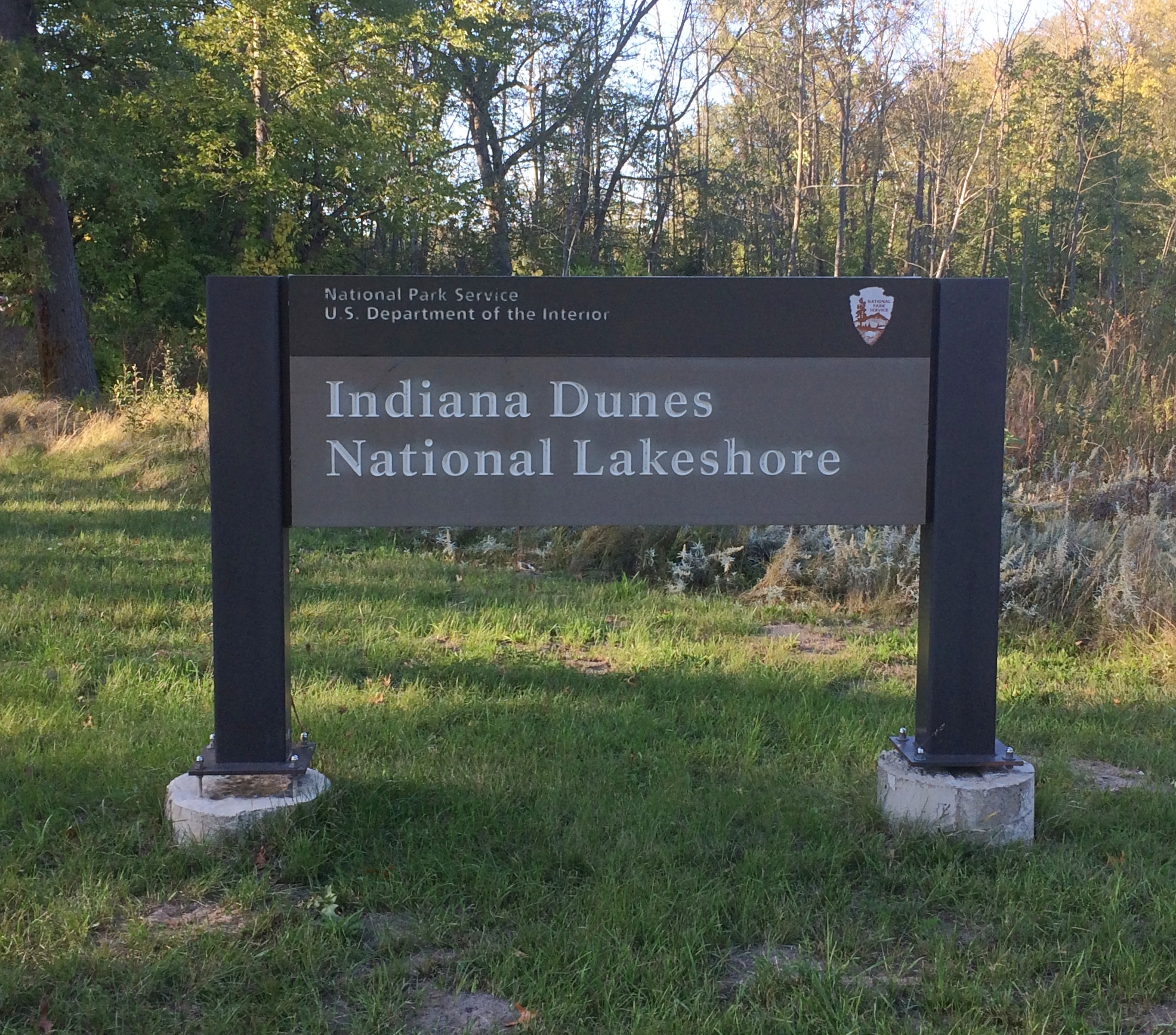
Officially the park service entity occupying part of the Lake Michigan shore of Indiana, along with some adjacent lands, is Indiana Dunes National Park. Has been for about a year and a half now, for the usual reason: a Congressman from the region had the pull to promote it from its previous sub-park designation, national lakeshore, to national park.

Not much has changed besides the name. Even the signs have the old name. Signs cost money.Indiana Dunes National Park

We’ve visited two or three times over the years, including one memorable time when Lilly’s stroller was difficult to push on sandy trails. That’s how long ago it was. Stroller issues have long been a non-issue for us, but even so the national lakeshore seldom suggested itself as a place to visit, maybe because the main way to get there — the highways running south of Lake Michigan — are often congested chokepoints.

We decided to go on September 18 for the day. The weather was flawless for walking around: clear and in the mid-60s. Got a later start than planned, so it was more of a visit for the afternoon. But a good one, focused on some short trails.

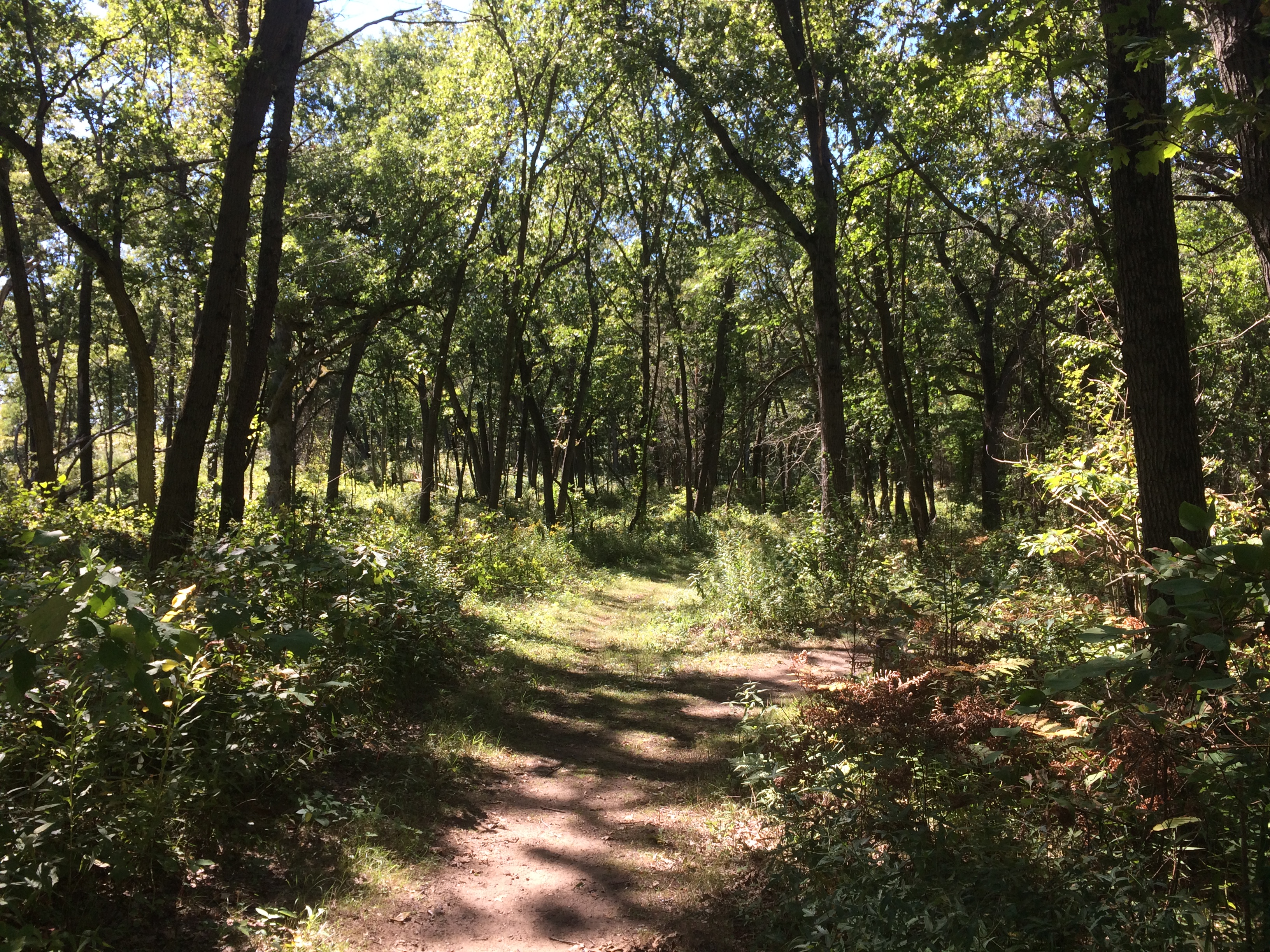
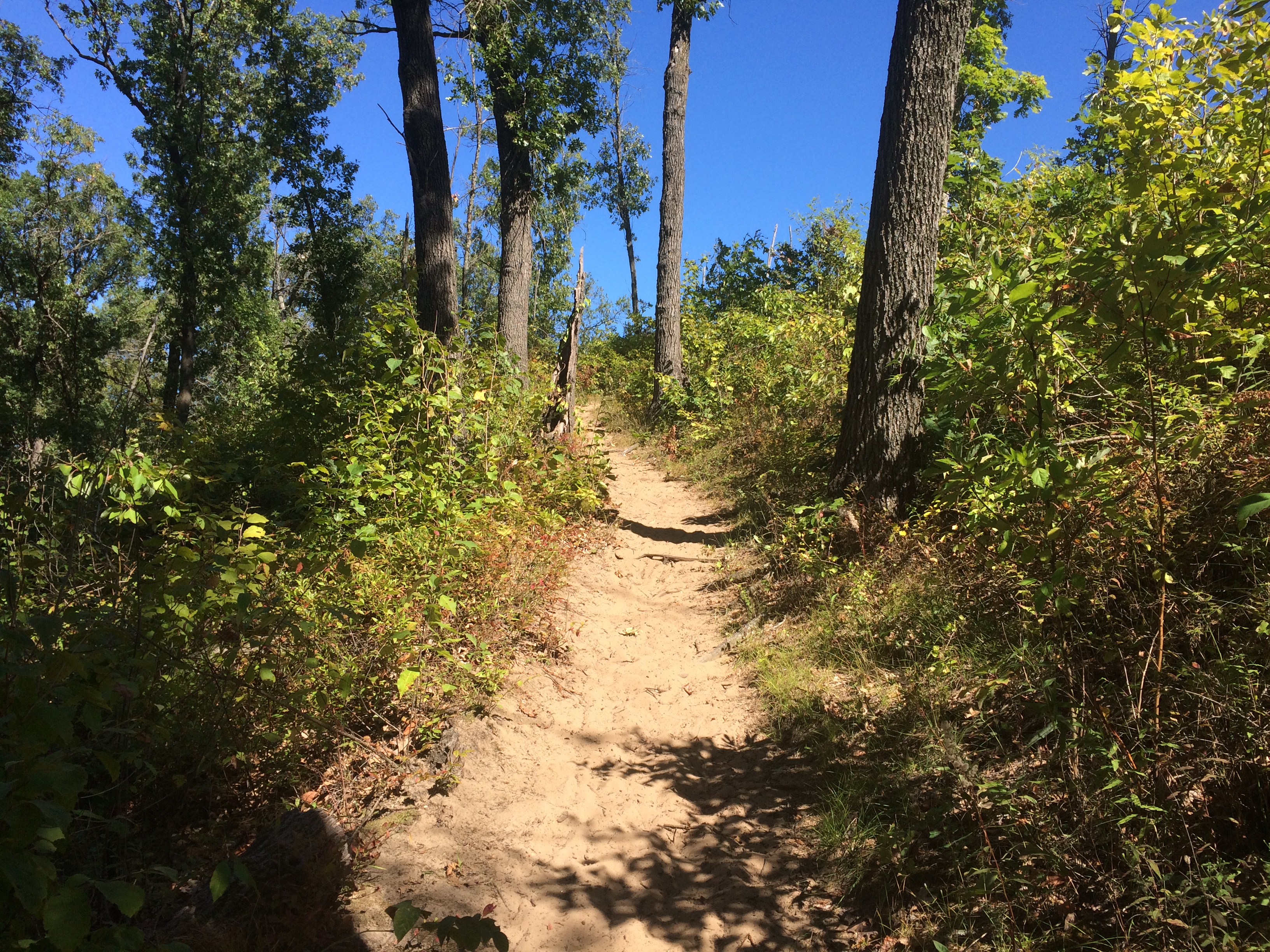
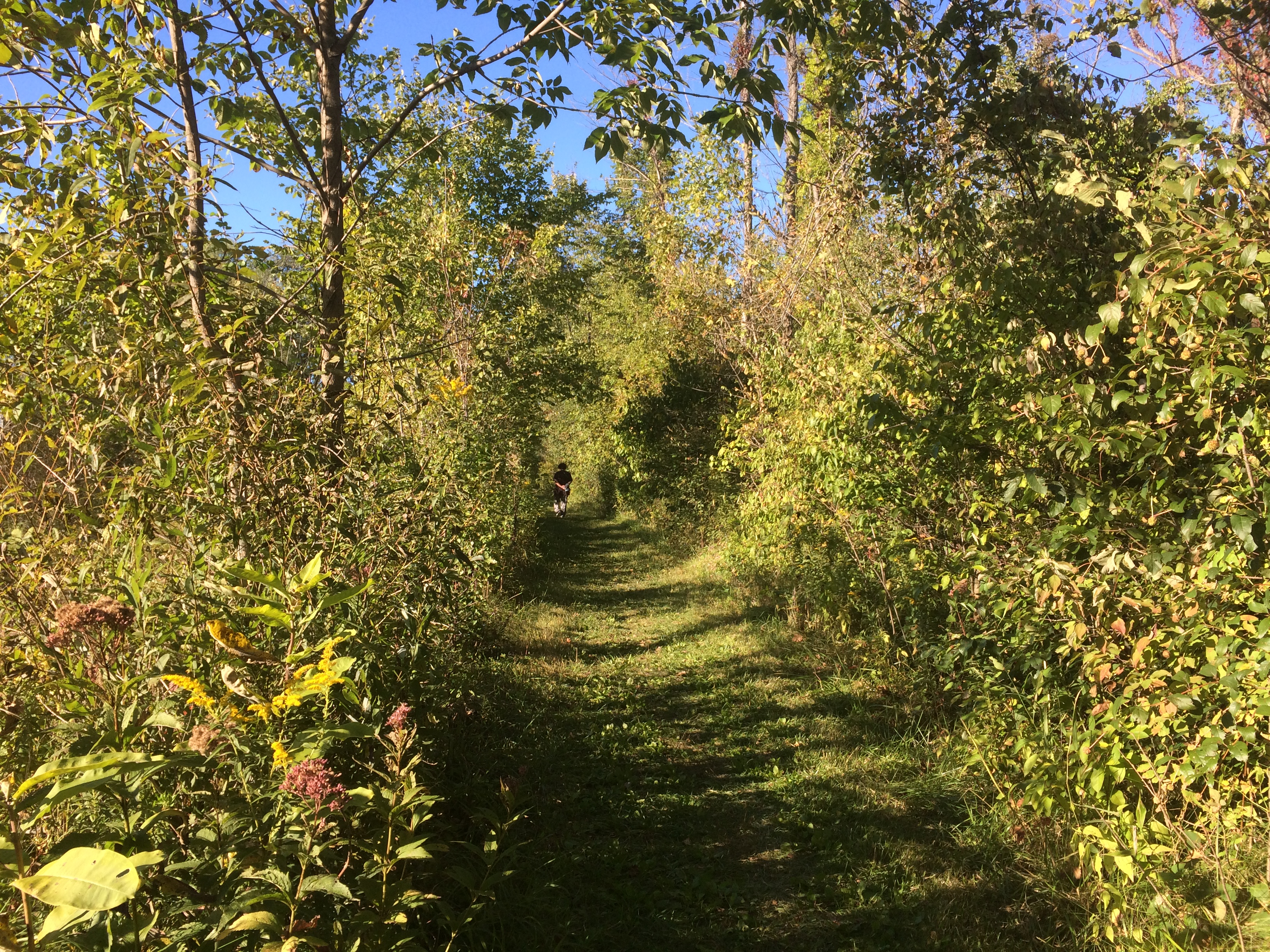
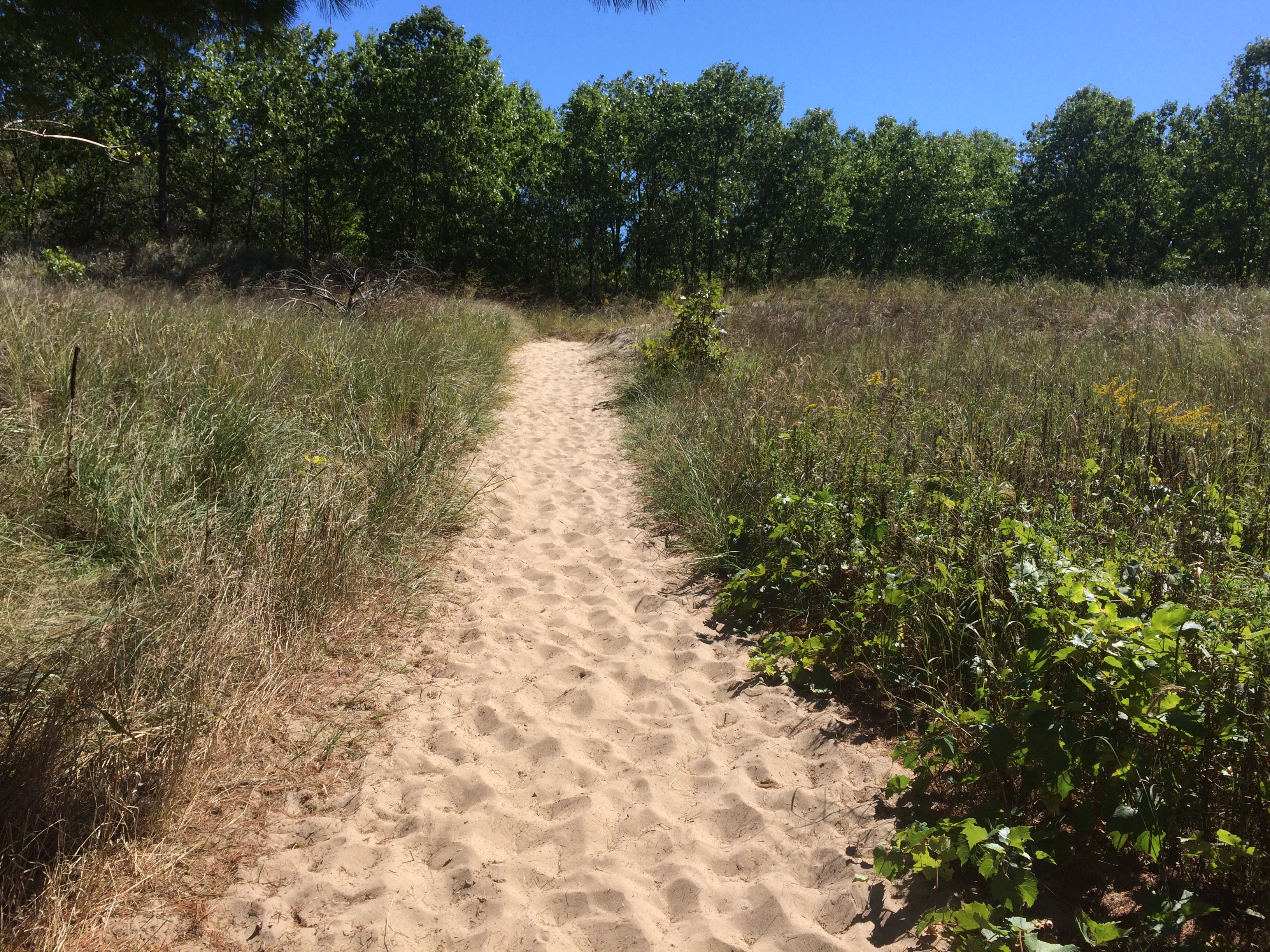
The trailhead of a small loop called Dune Ridge Trail.Indiana Dunes National ParkMostly the trail wasn’t sand-dune sand, but even the more packed underfoot soil forming the trail was sandy.
Indiana Dunes National ParkThere was a climb, but not too bad.
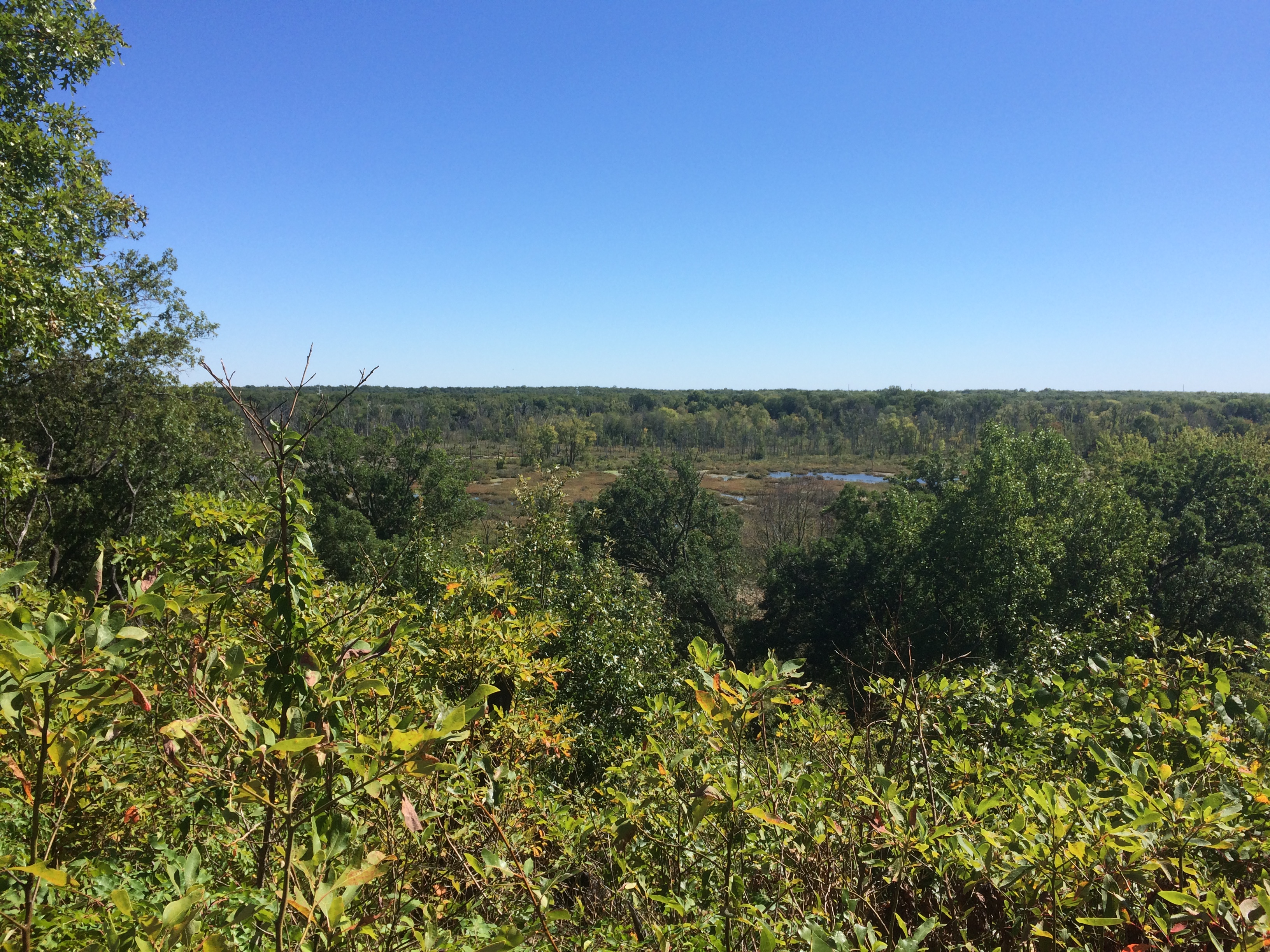
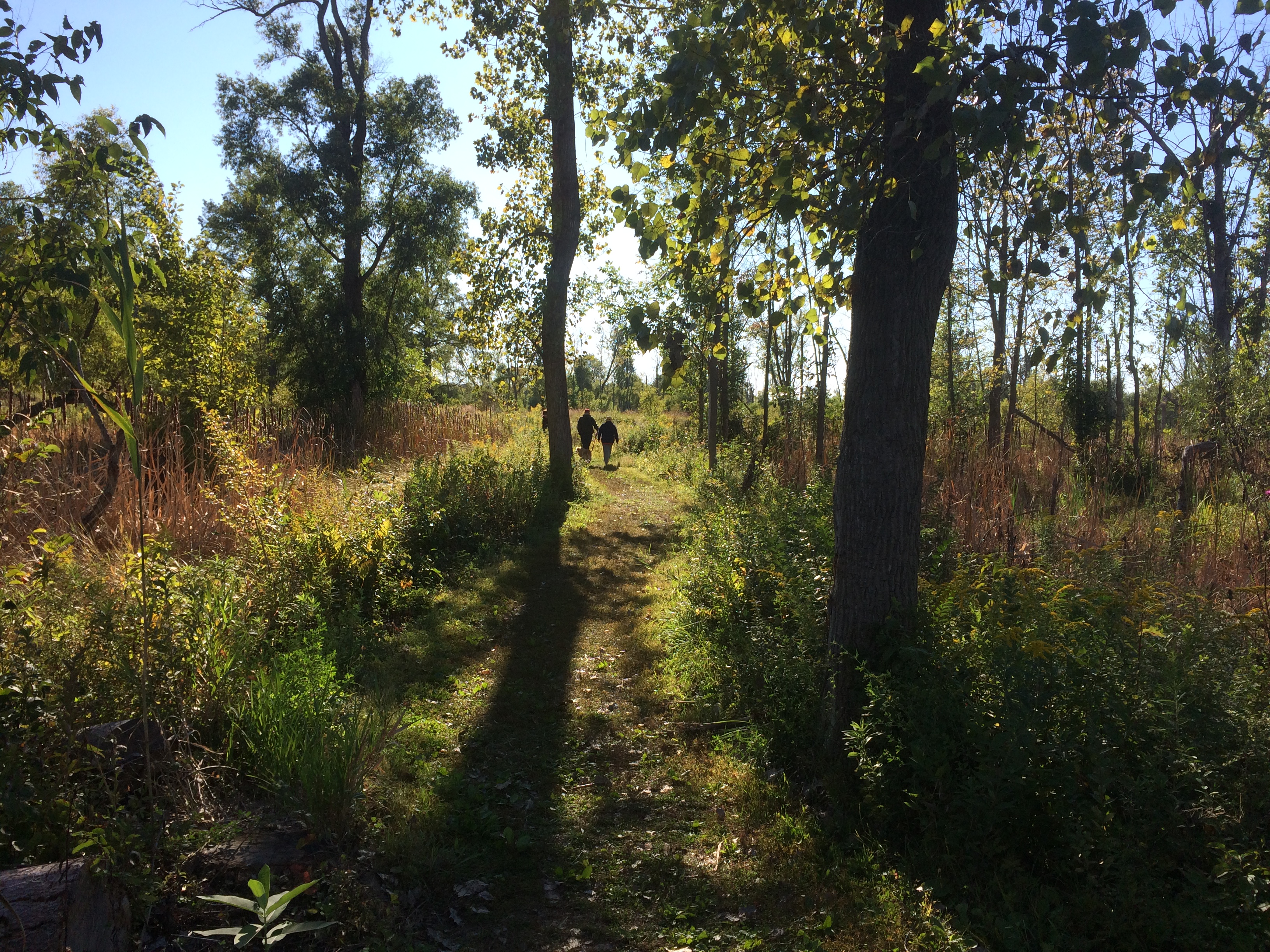
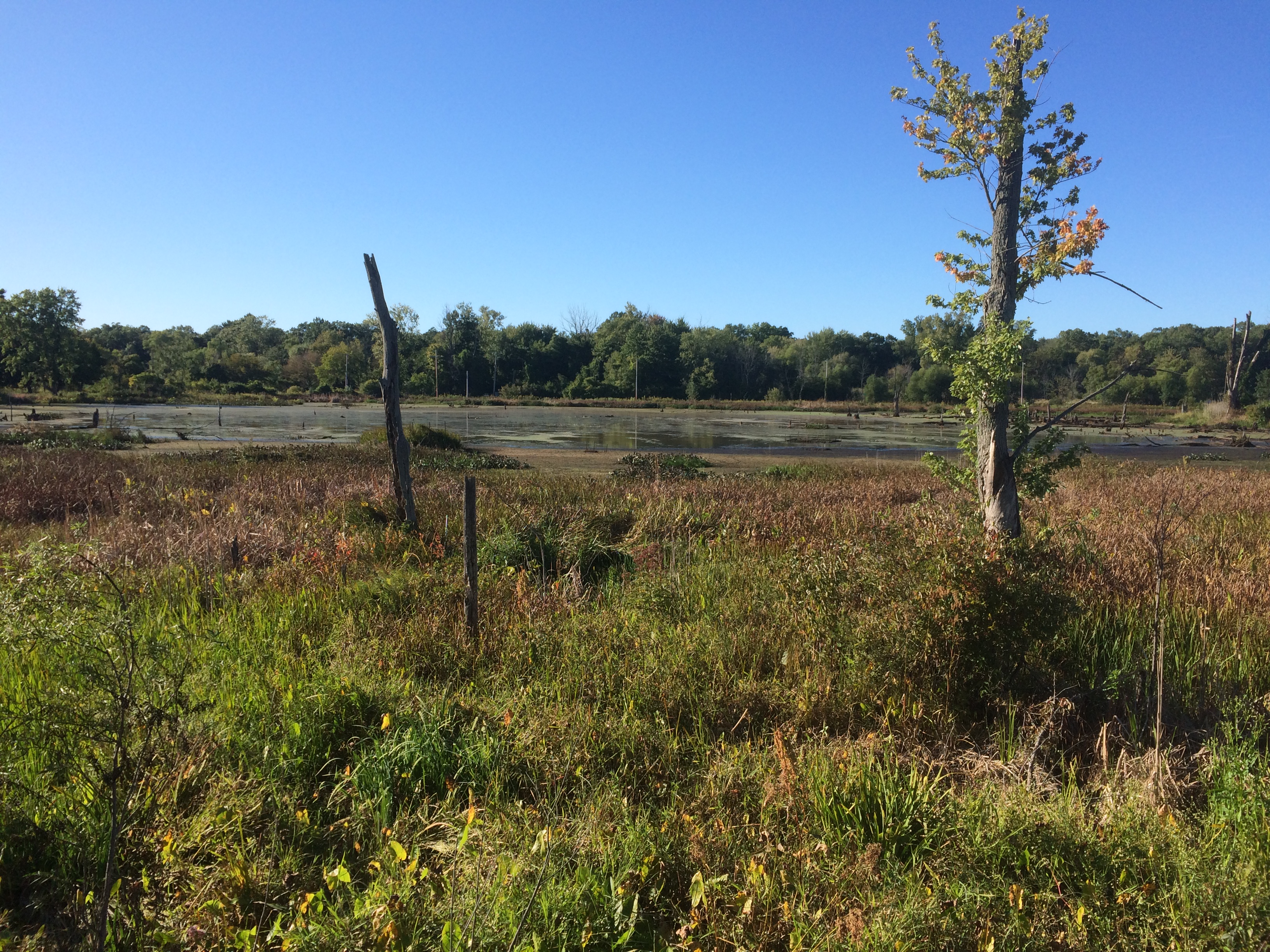
Indiana Dunes National ParkLeading to views of an expansive marsh.Indiana Dunes National ParkLater in the afternoon, we walked along the Great Marsh Trail.
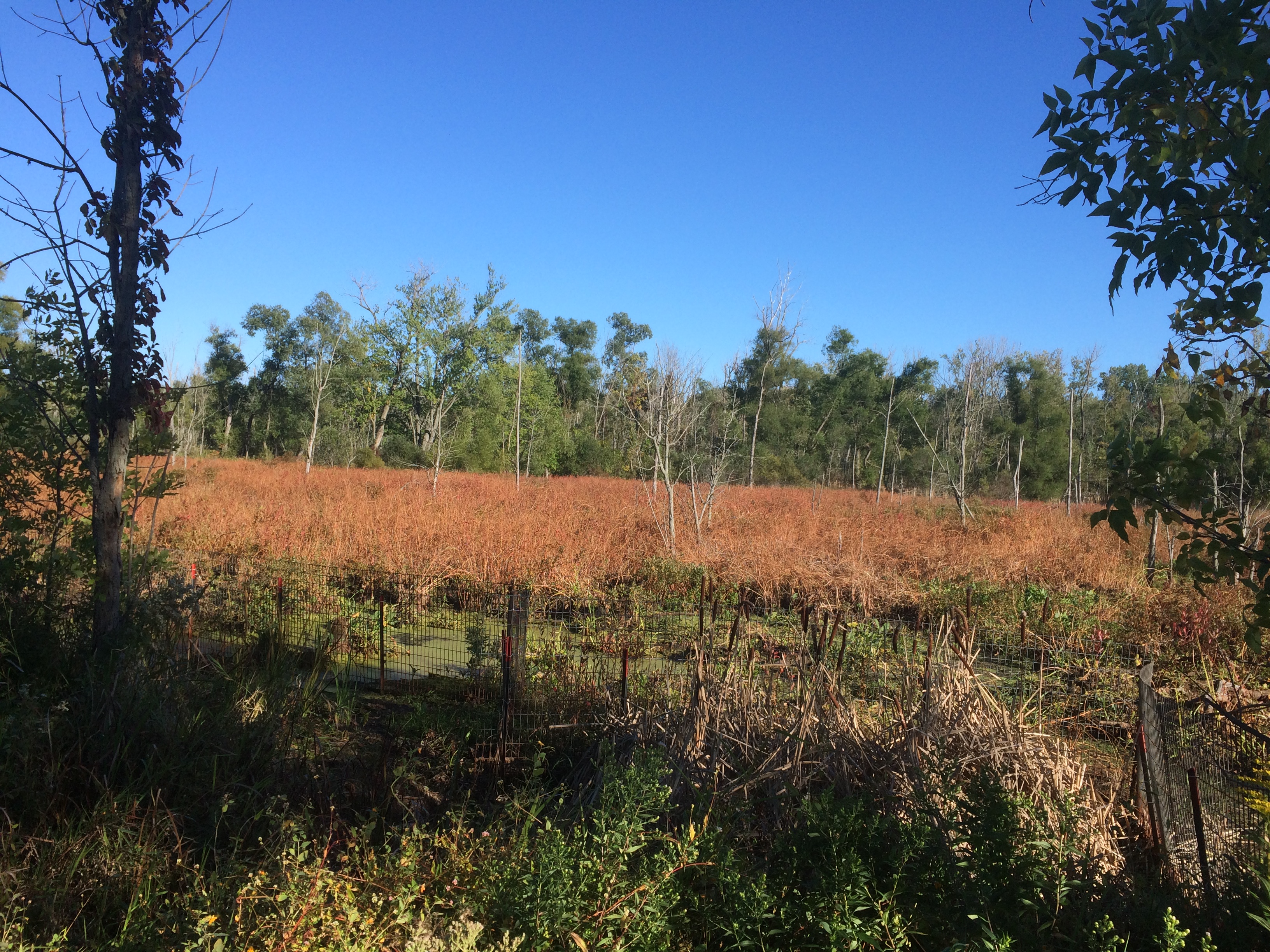
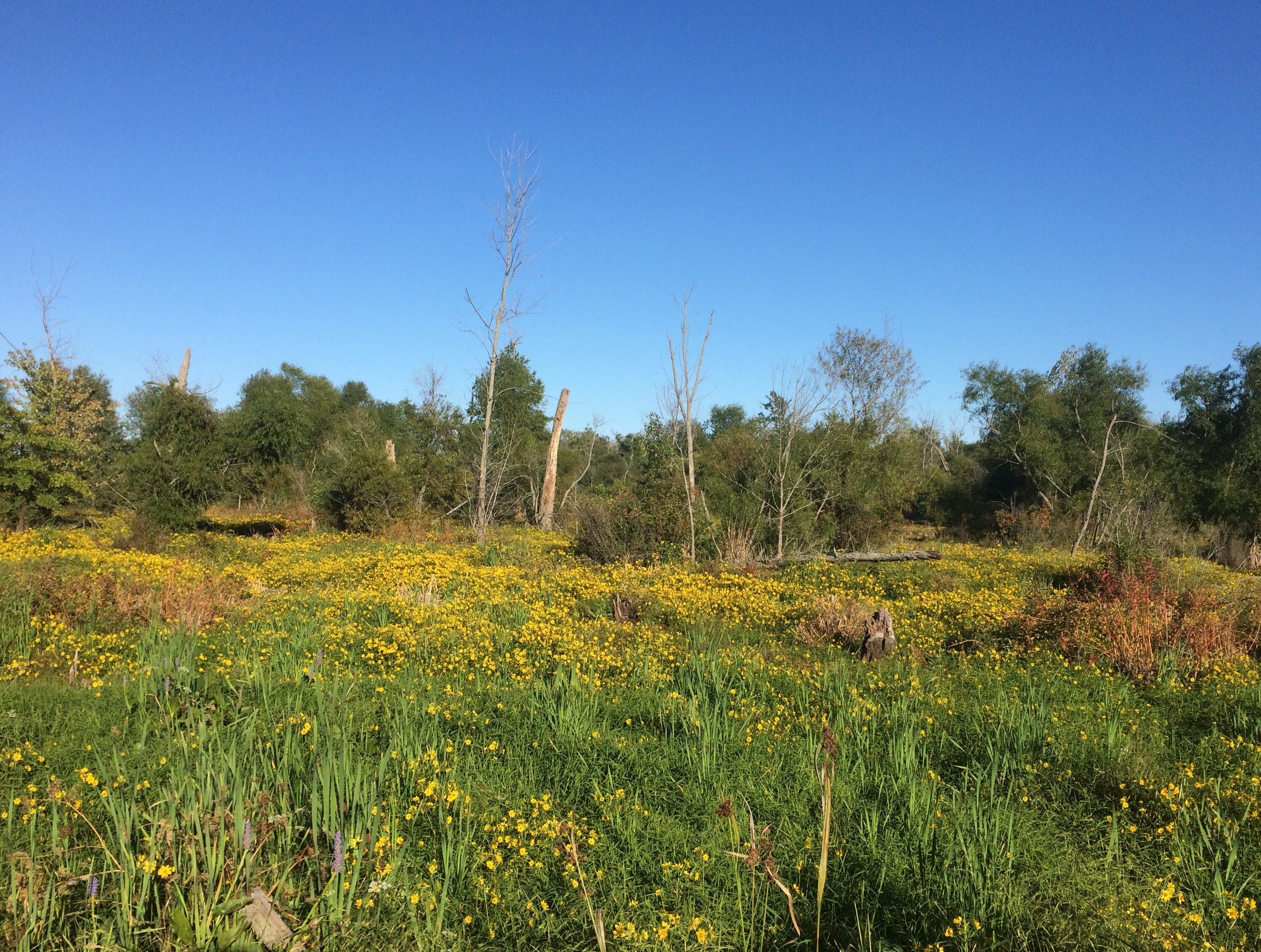
Indiana Dunes National ParkA great marsh all right.
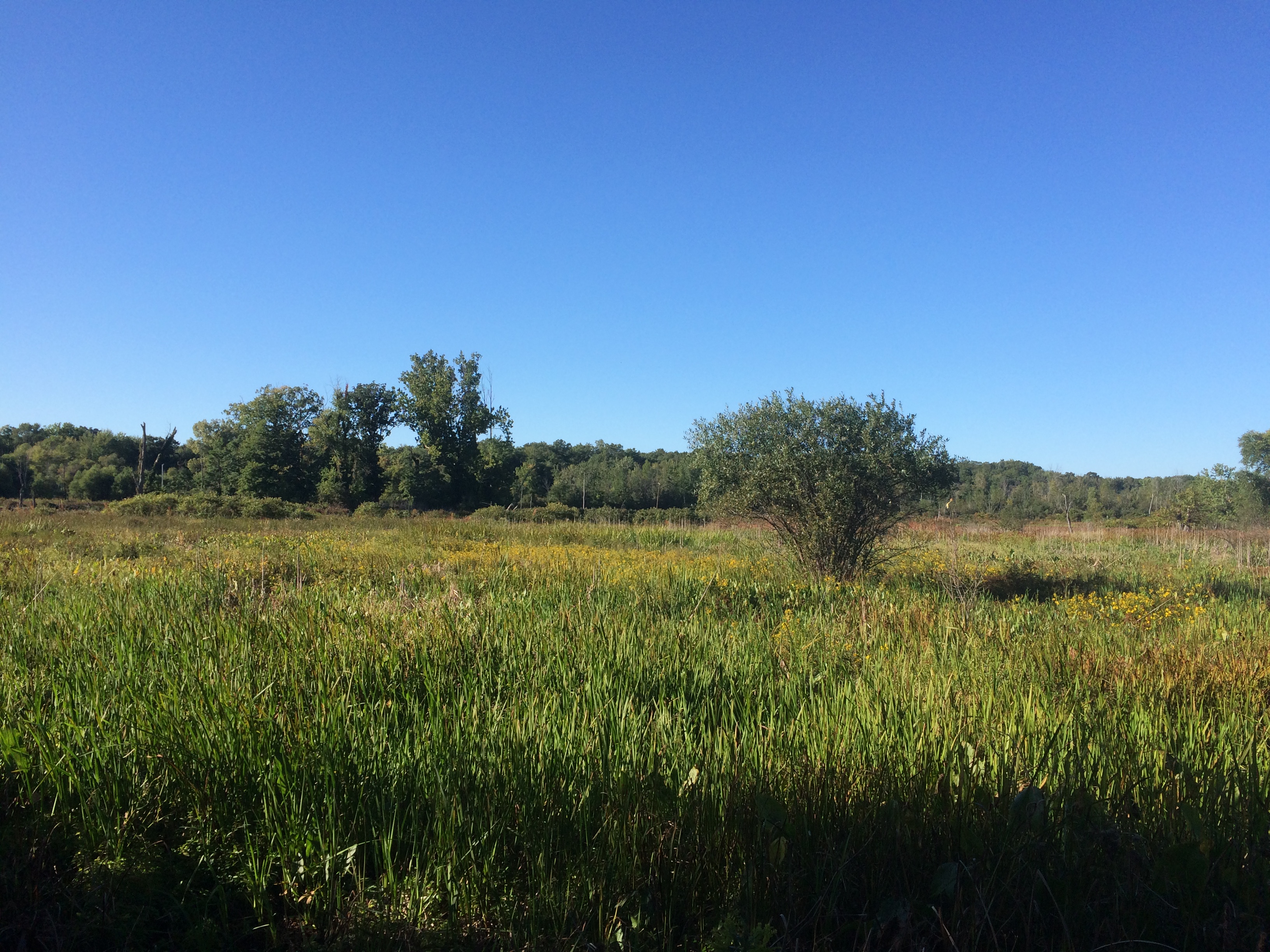
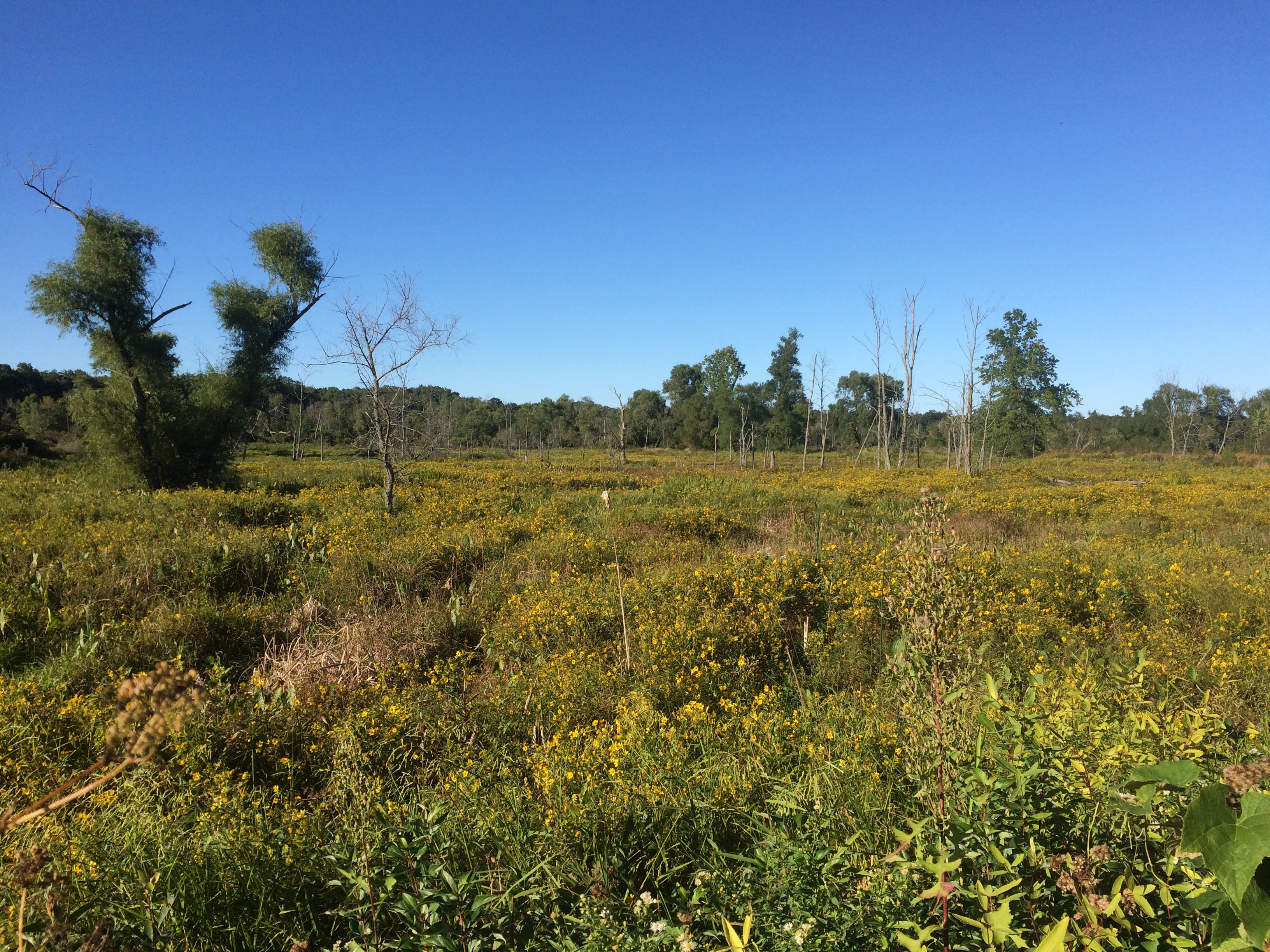
Indiana Dunes National ParkIndiana Dunes National ParkStill wildflower season in northern Indiana.
Indiana Dunes National ParkIndiana Dunes National ParkLeisure to stroll among the short-time green?
Indiana Dunes National ParkWe’re fortunate to have it.

Joshua Tree National Park

On the morning of February 26, 2020, I arrived at the south entrance of Joshua Tree National Park. Near the end of the day, I would leave via the west entrance.
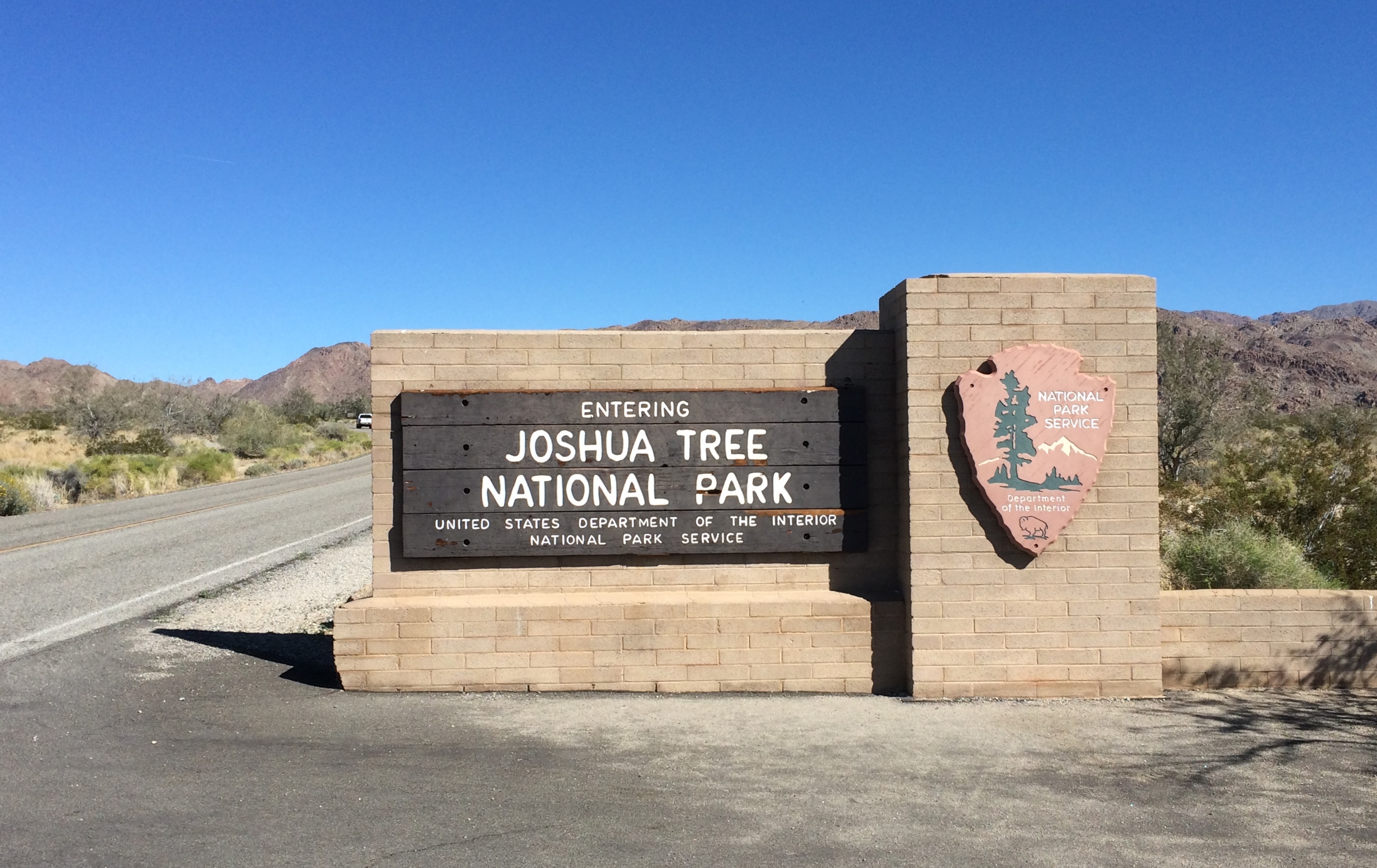
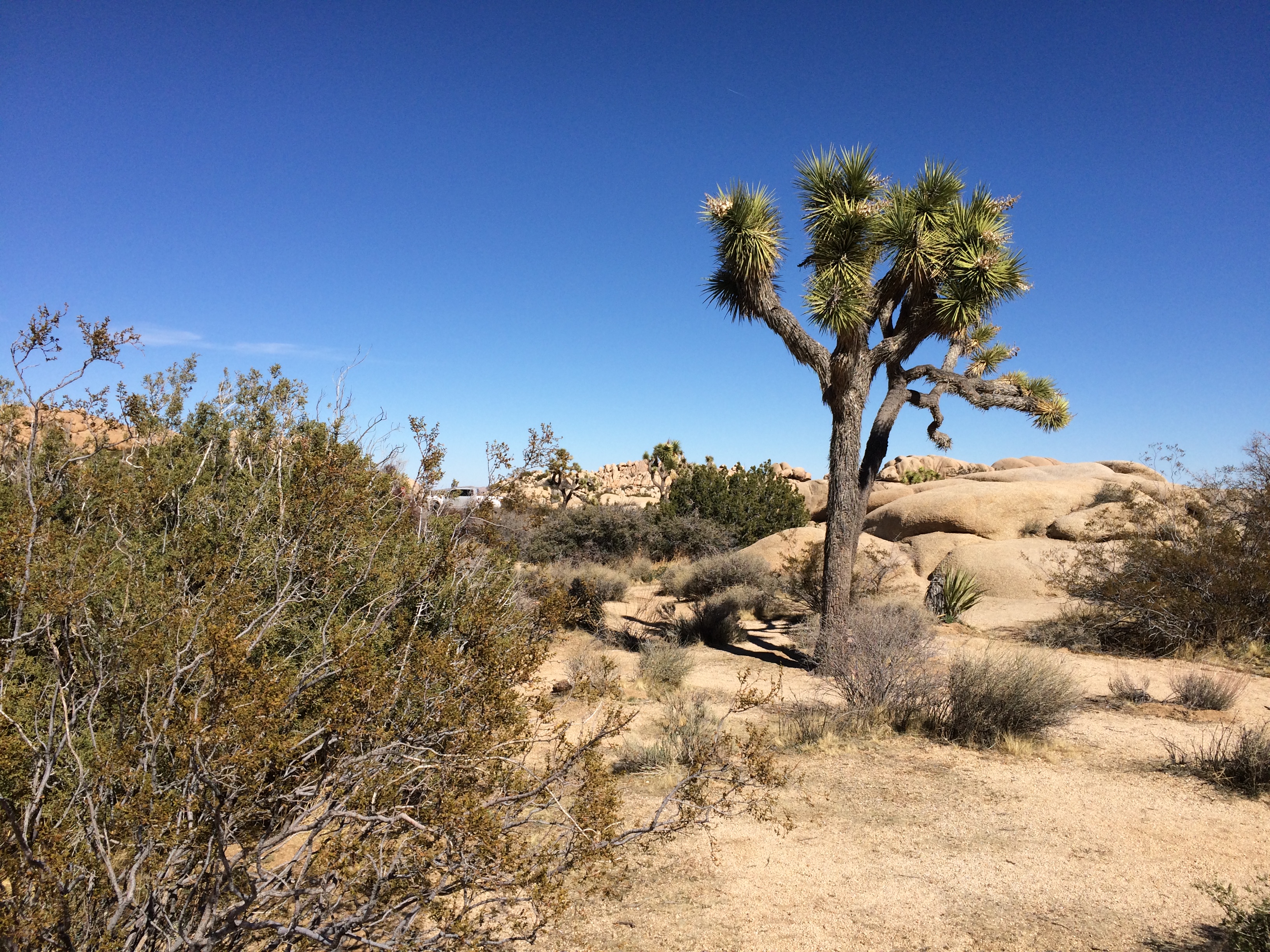
Joshua Tree National Park signThe park includes sections of two different deserts, the Colorado and the Mojave. The territory around the south entrance is Colorado Desert, and not much populated by Joshua trees. It would be a while before I saw any Joshua trees, which are actually yucca plants (Yucca brevifolia), in the national park named for them.

Though folk etymologies involving Mormons exist when it comes to why Joshua trees are called that, the origin of the term is uncertain. The plant has also been called, in English, the tree yucca and the yucca palm.

One more thing: the Joshua tree depicted by U2’s The Joshua Tree album was near Darwin, California — which is close to (but not in) Death Valley NP, not Joshua Tree National Monument, as it was then. Come to think of it, Death Valley was a national monument in 1987 as well.

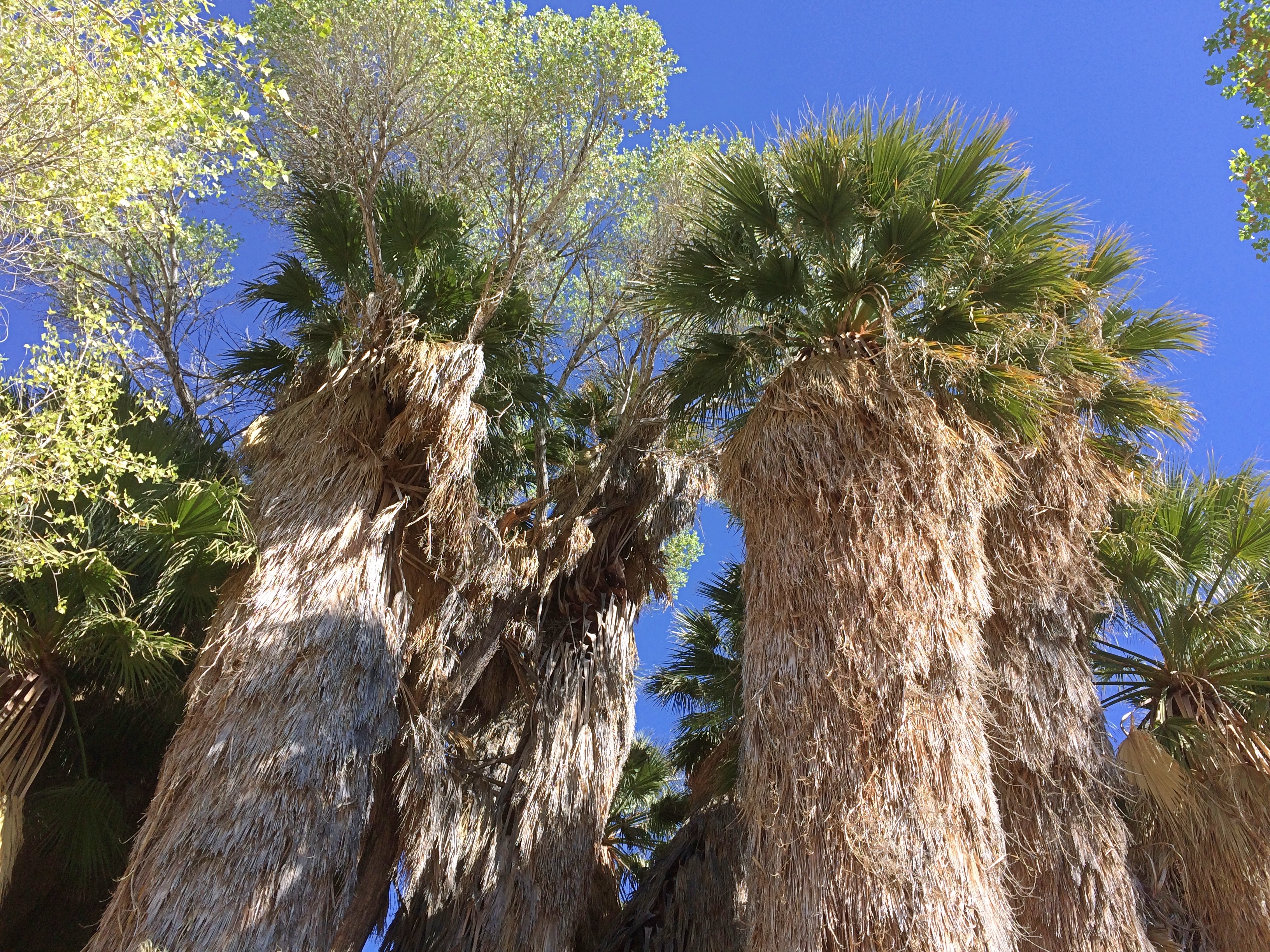
My first walk of the day was along the trail leading out of Cottonwood Spring. Where there’s water, there are large trees.
Joshua Tree National Park Cottonwood SpringsThen it’s off to more arid hills.
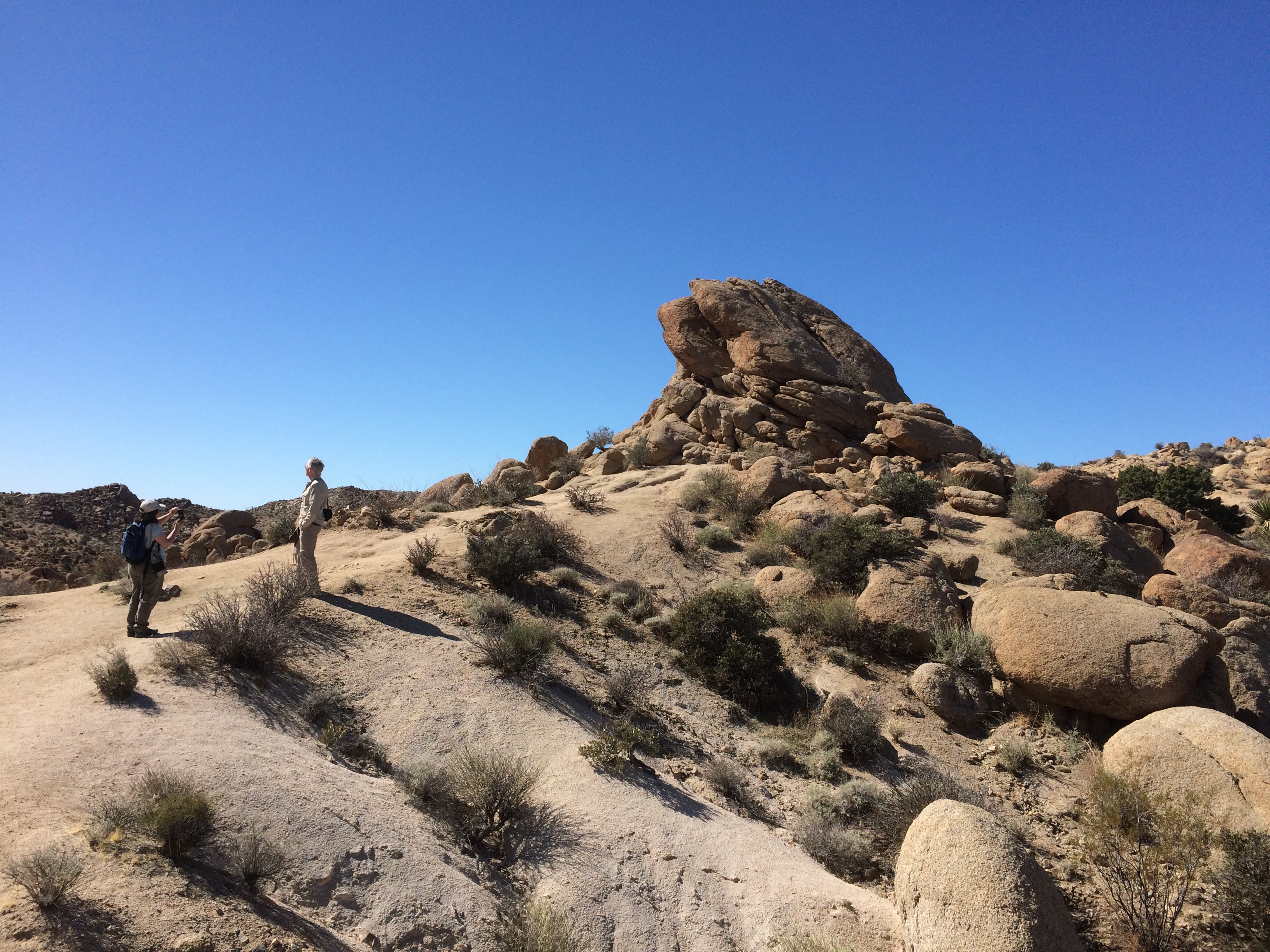
Joshua Tree National Park Cottonwood Springs trailWith rock formations. This one’s actually pretty small compared to some others I would see later in the day.
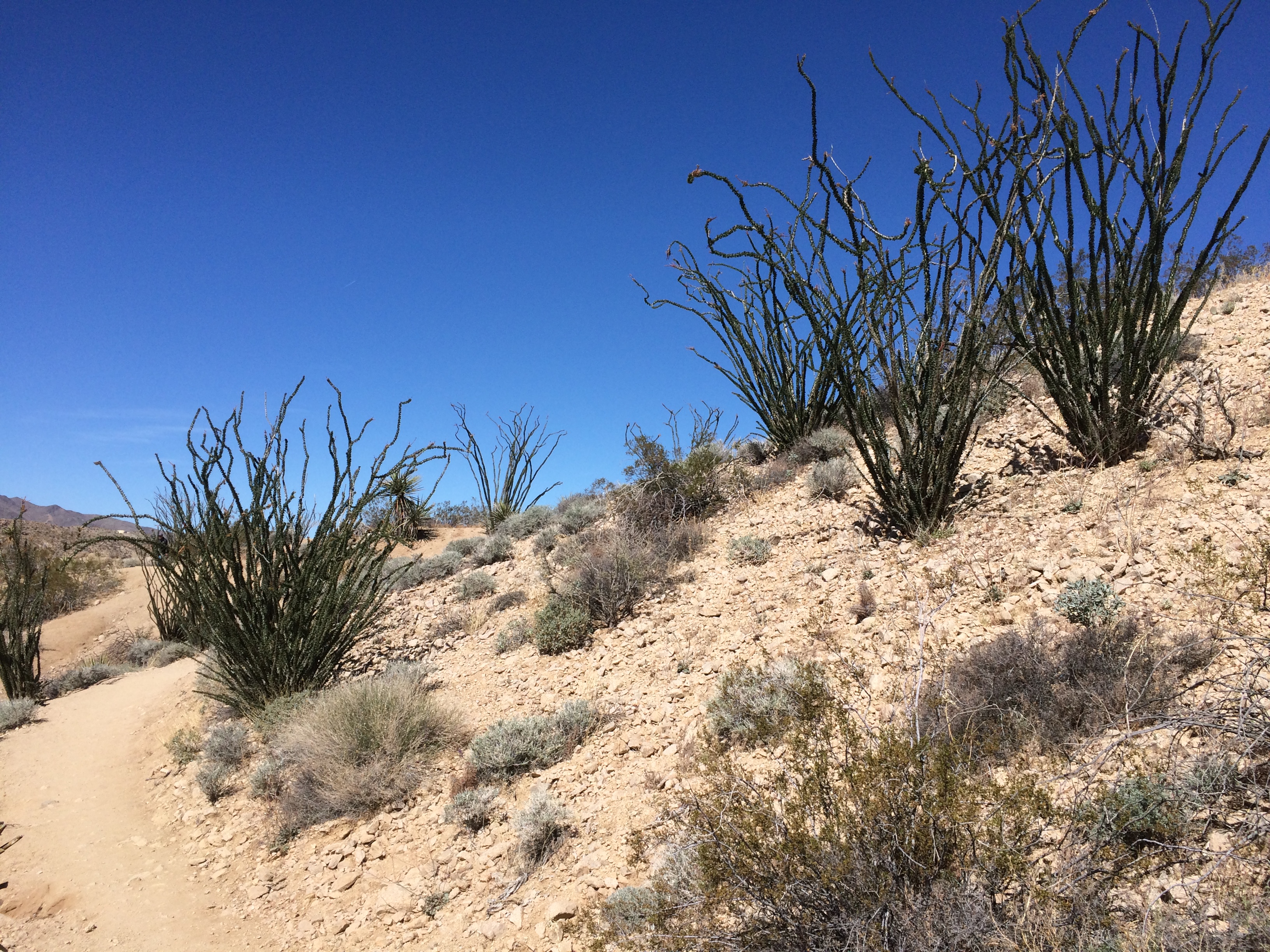
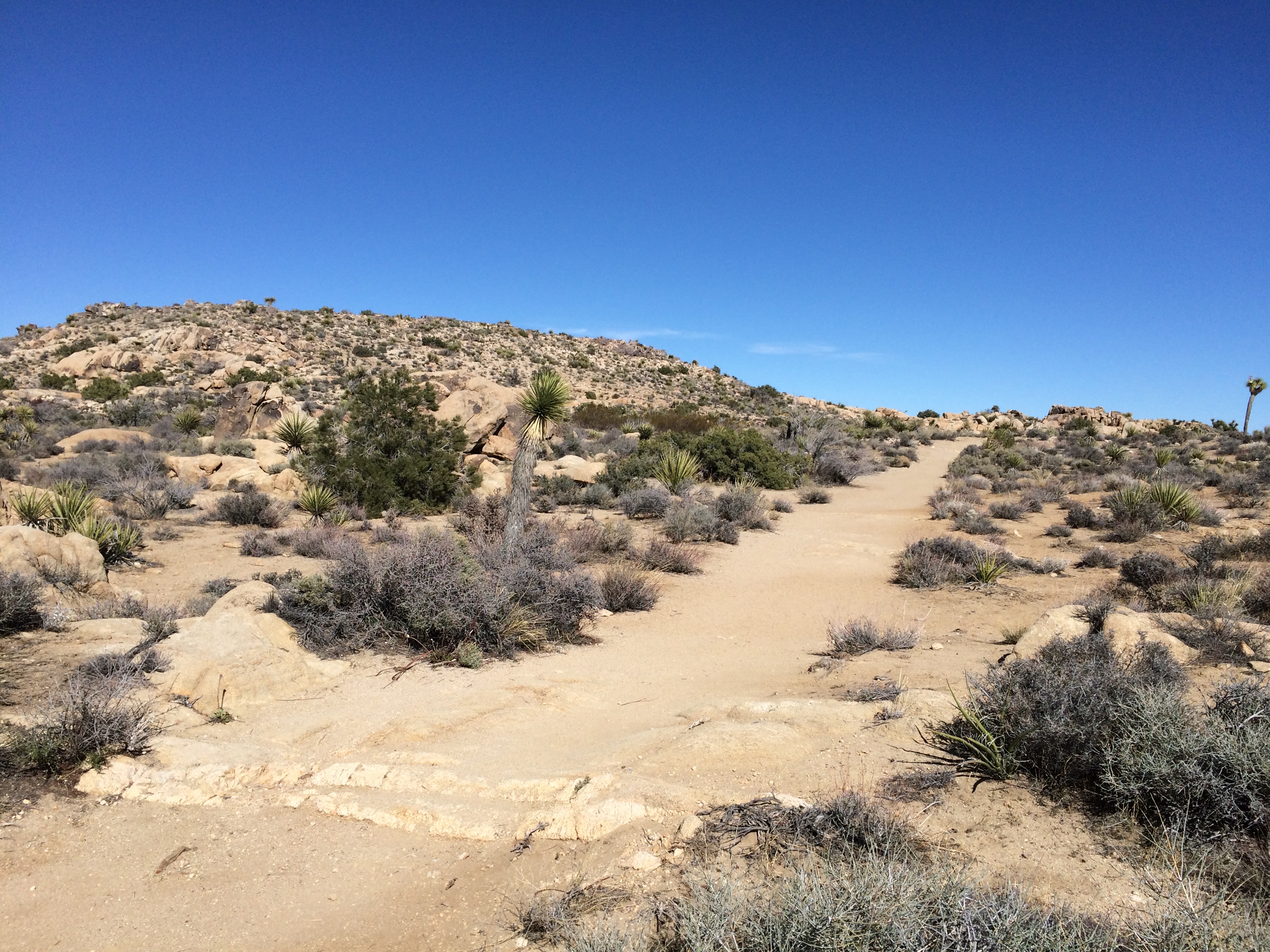
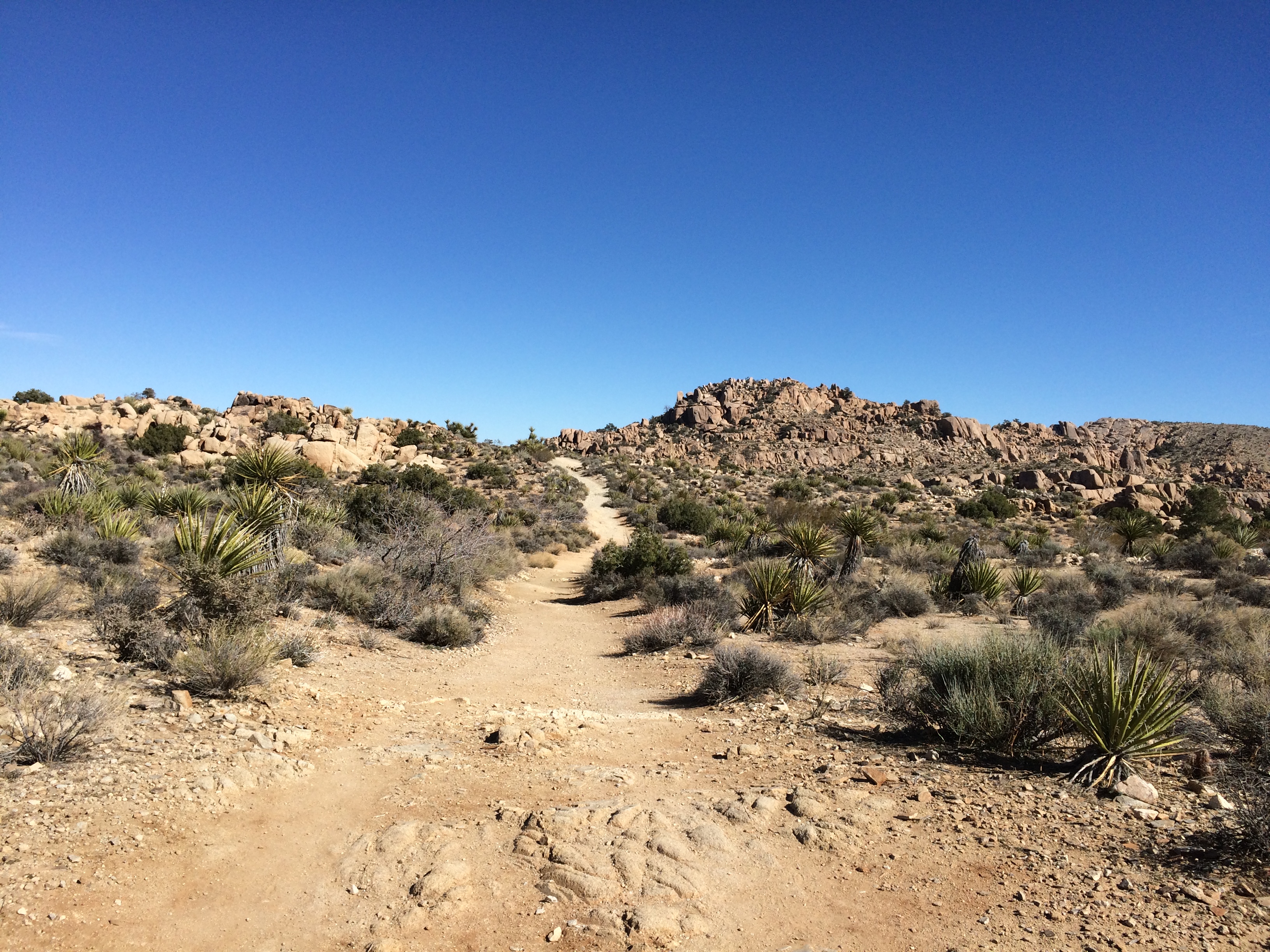
Joshua Tree National Park Cottonwood Springs trailSmall plants compared to others I’d see later. But I liked them.
Joshua Tree National Park Cottonwood Springs trailNorth from Cottonwood Springs, the road takes you through washes: Smoke Tree Wash, Porcupine Wash and the amusingly named Fried Liver Wash. Then on to the Cholla Cactus Garden.
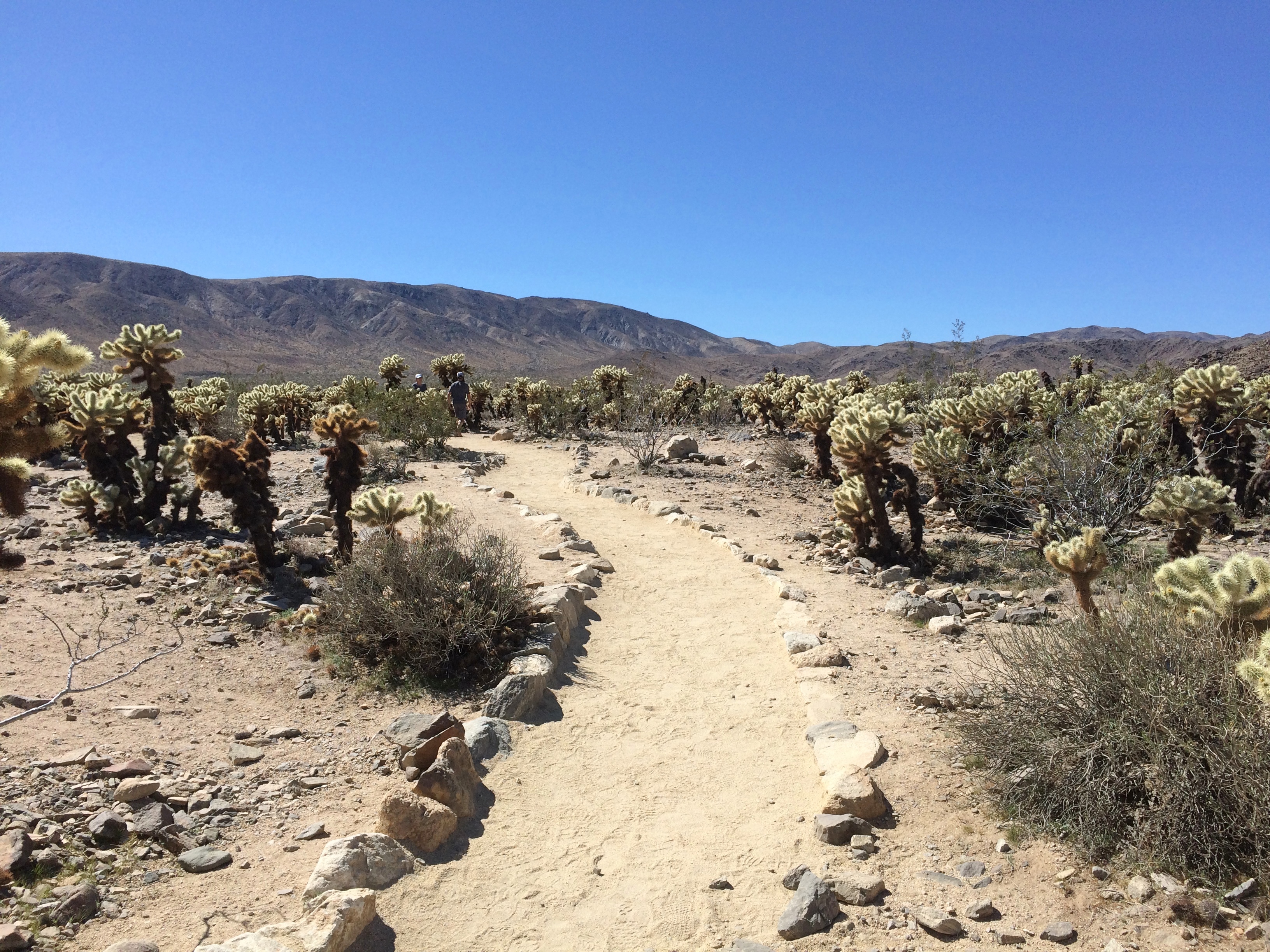
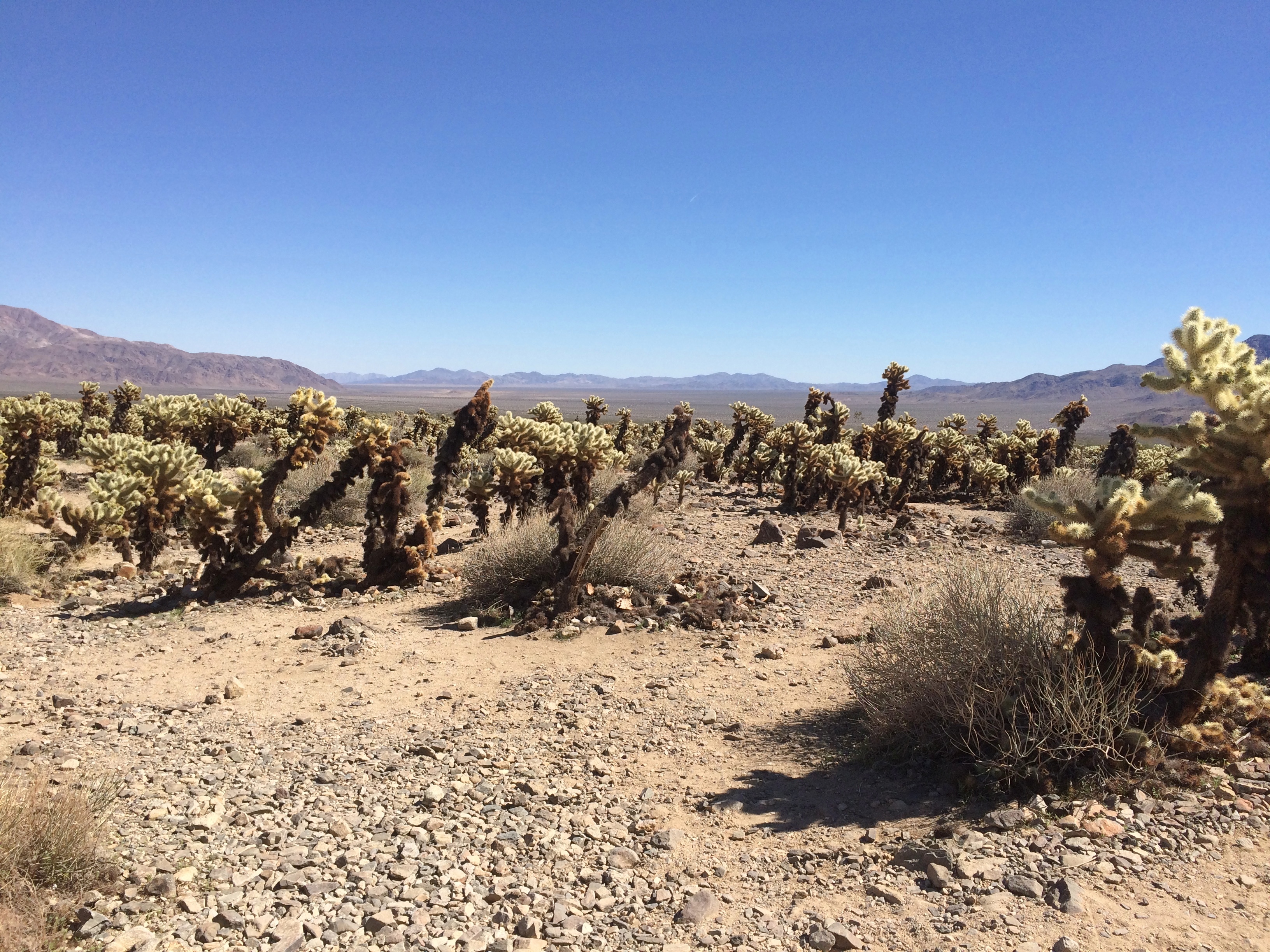
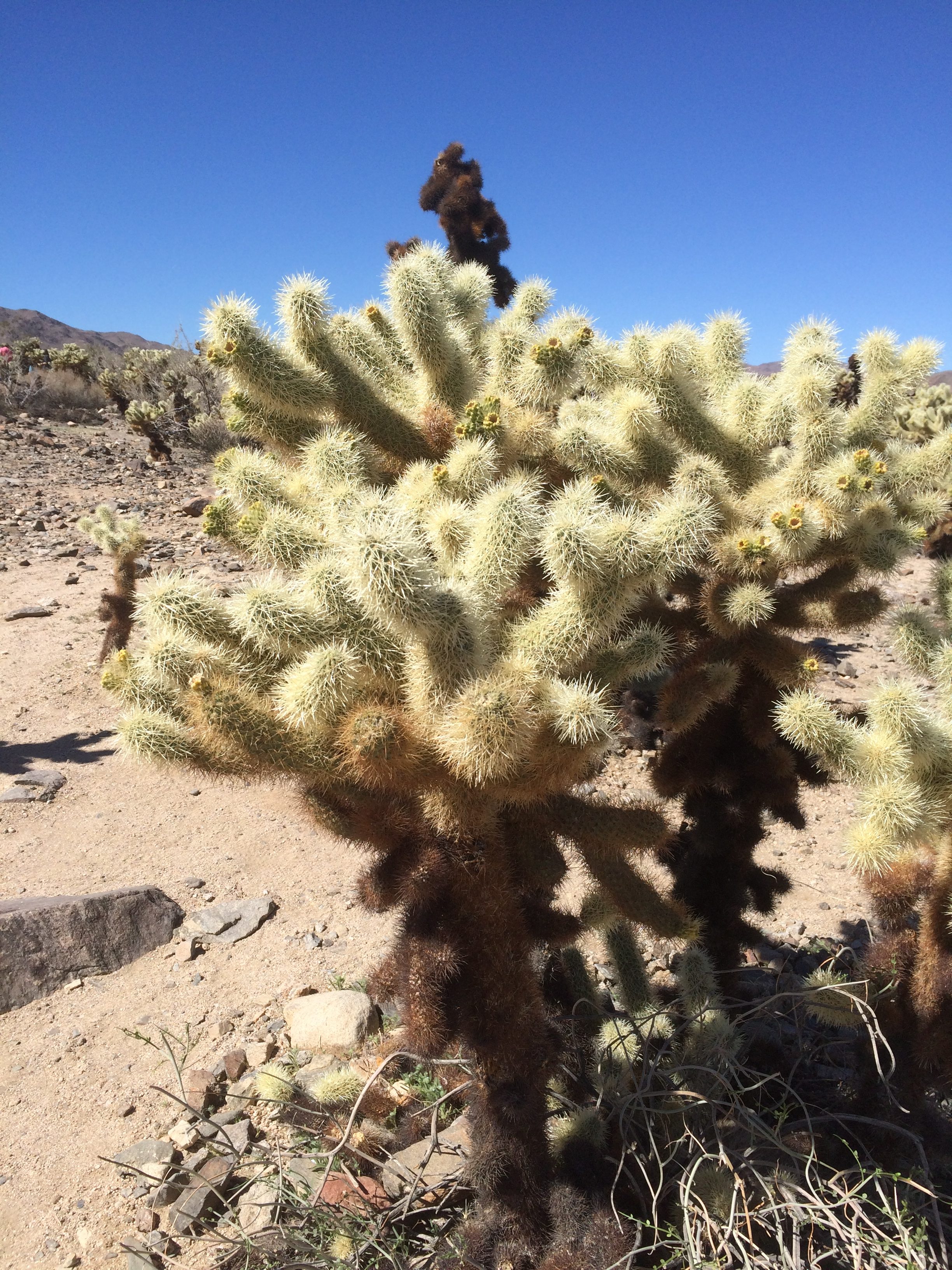
Cholla Cactus Garden, Joshua Tree National ParkCholla Cactus Garden, Joshua Tree National ParkLooks soft and fuzzy in a picture, but in person the cholla’s got wicked spines. Wiki says that the plant (Cylindropuntia bigelovii) has the “sardonic nickname of ‘teddy bear.’ ”

Joshua Tree NP Really Wicked Cactus

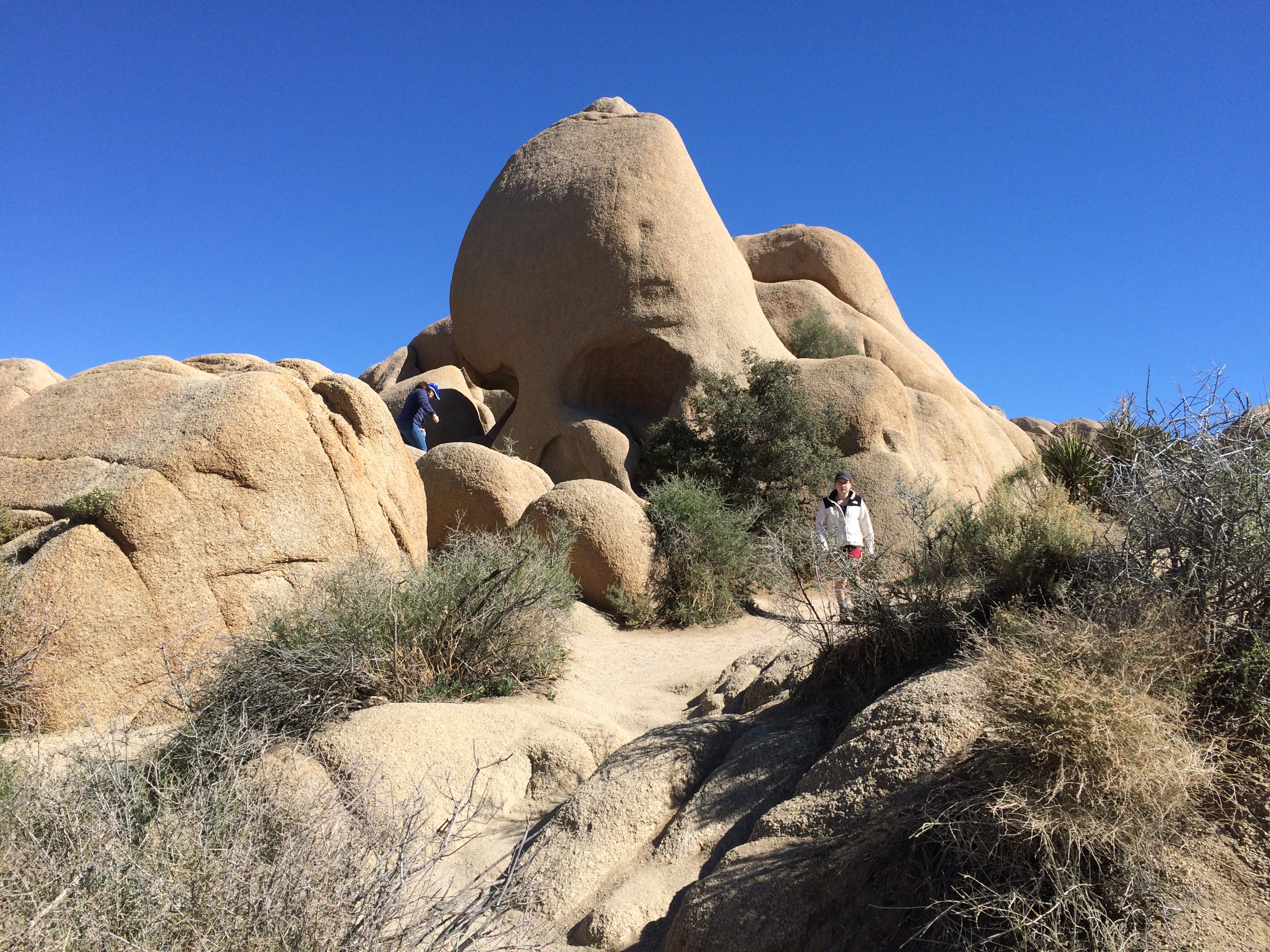
Next stop, Jumbo Rocks. Including the one called Skull Rock. Looking at it this way, I thought Nostril Rock would be a better name.
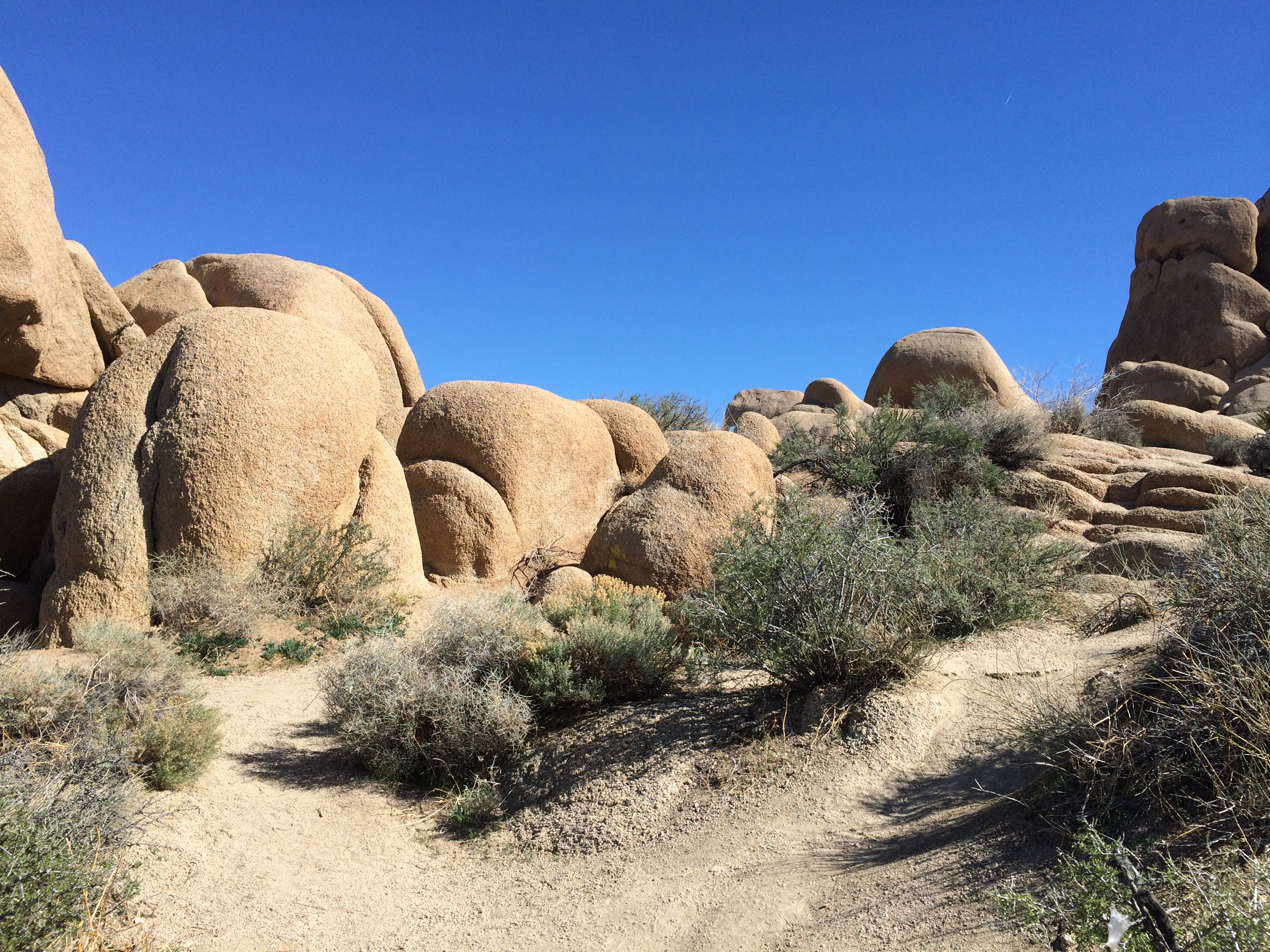
Joshua Tree National Park Skull RockPlenty of big rocks all around. The result of magma, monzogranite, rising to the surface eons ago. That or an act of creation in 4004 BC.
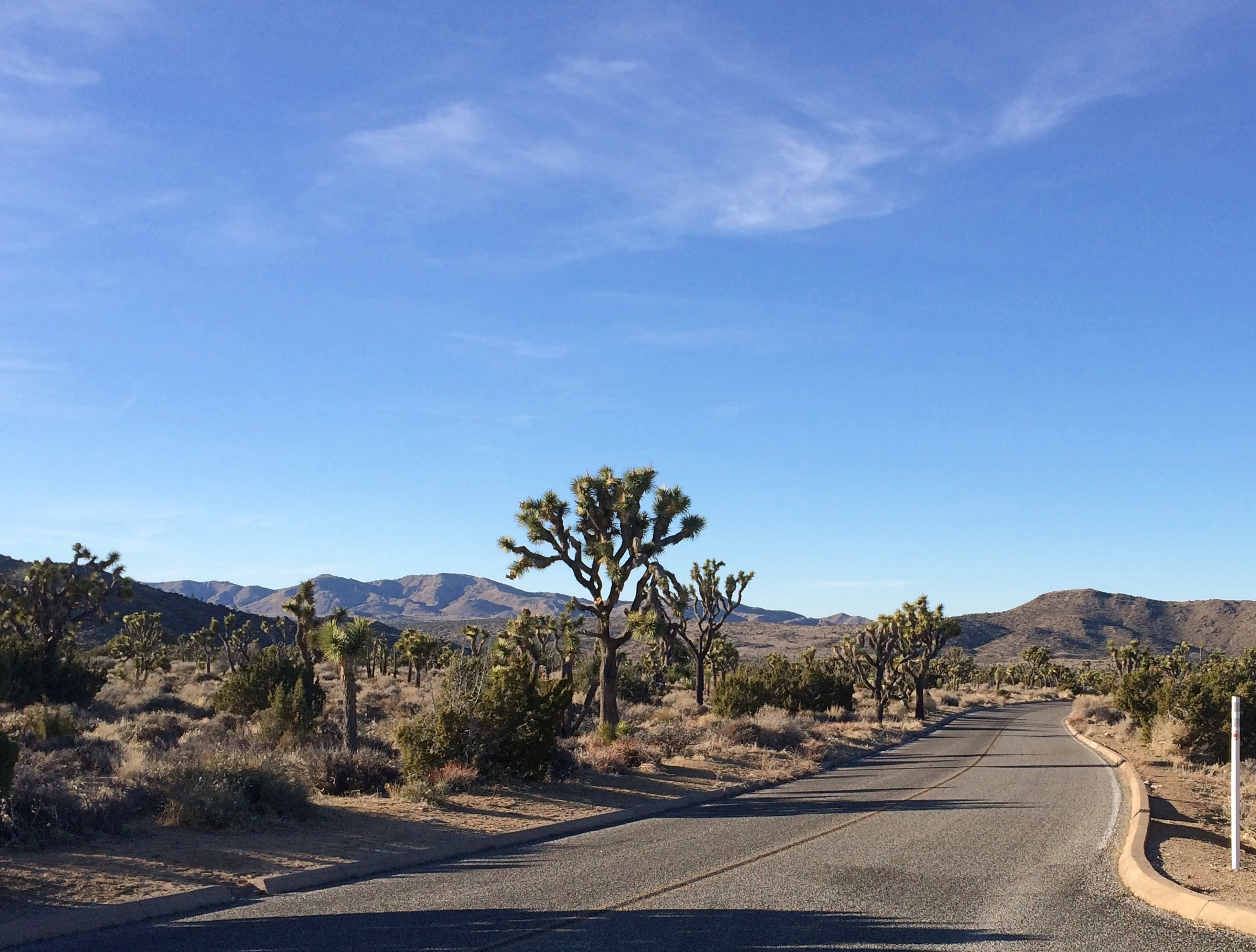
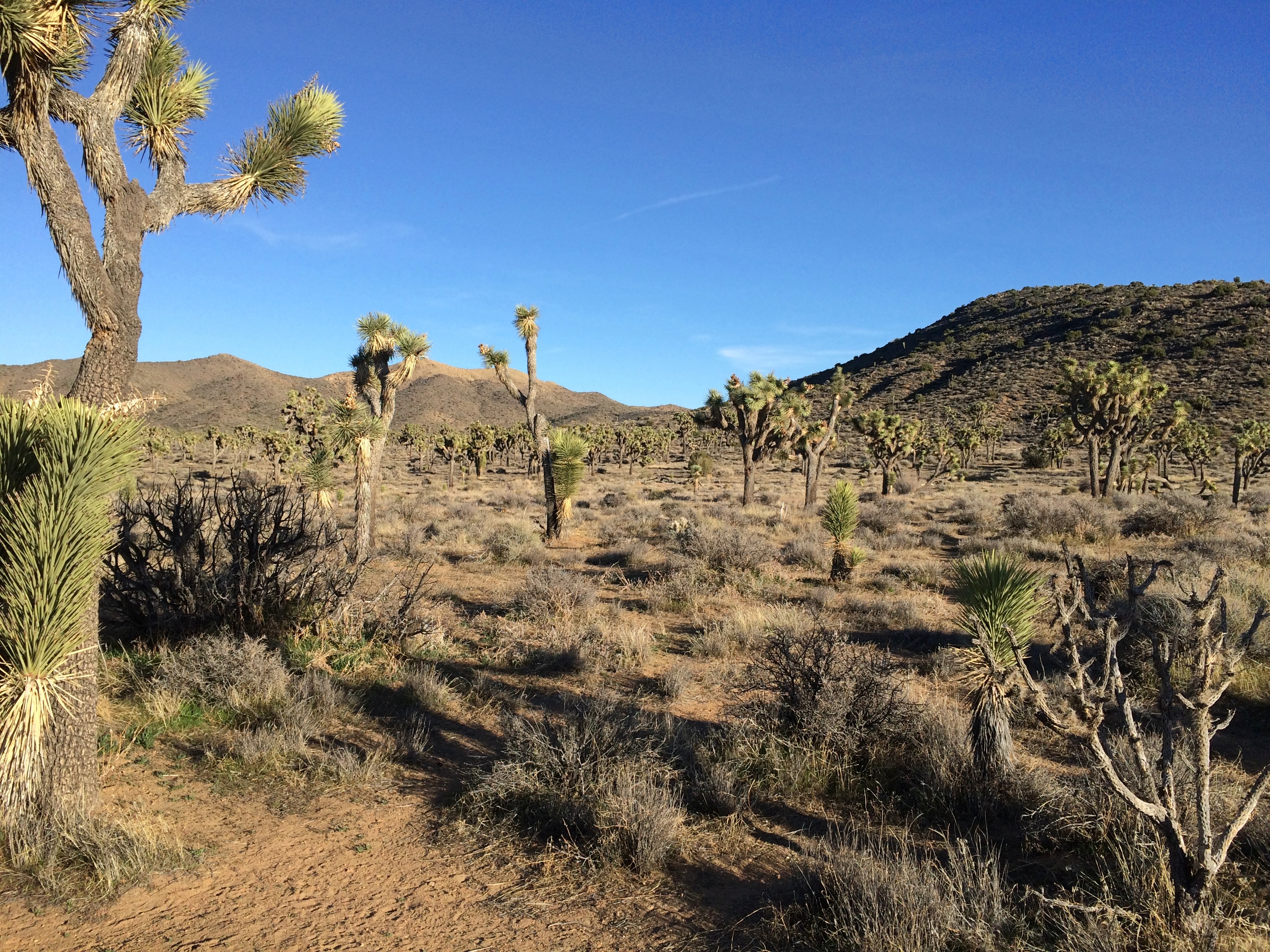
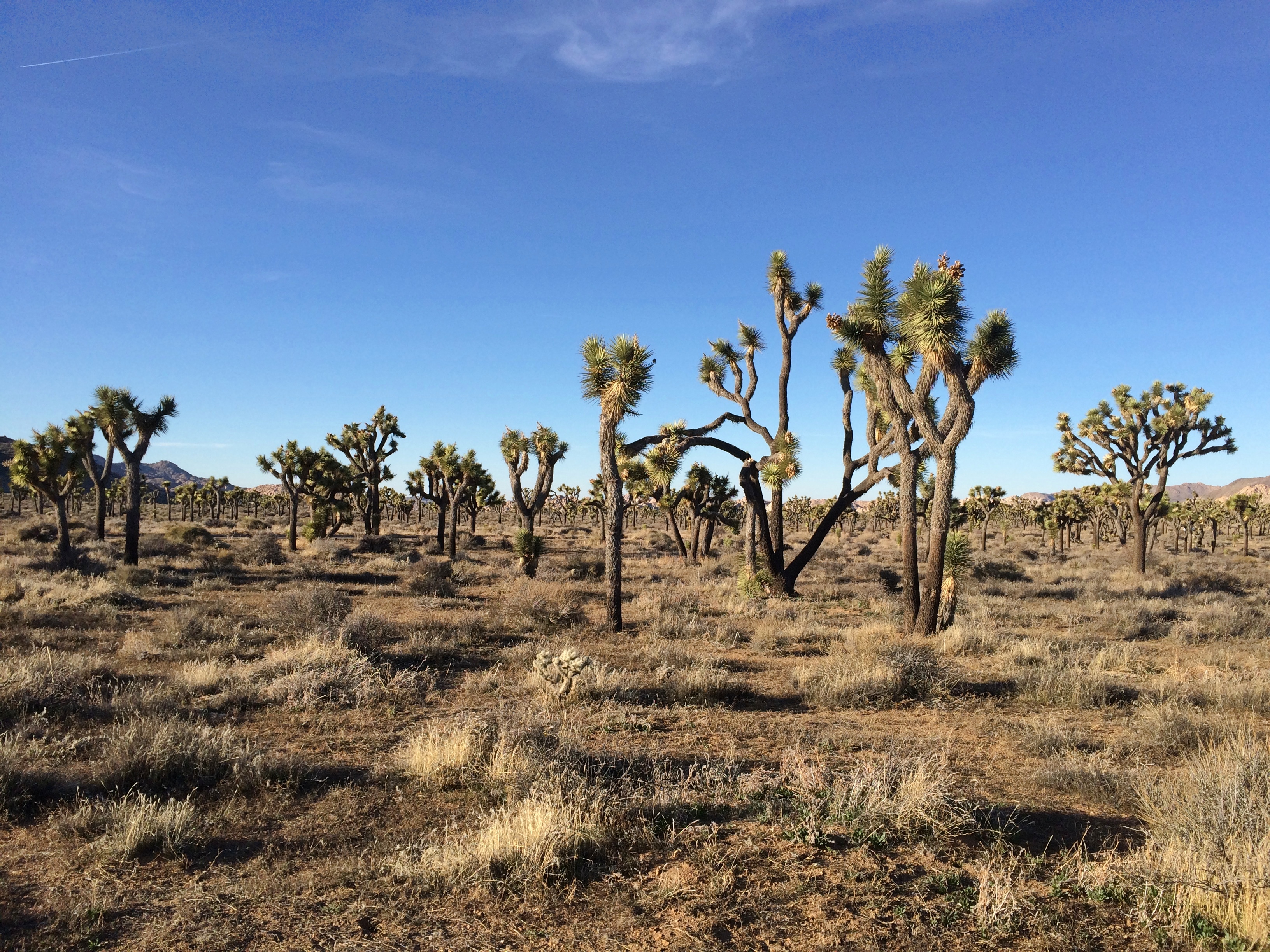
Joshua Tree National Jumbo RocksJoshua Tree National Jumbo Rocks Not far away I started spotting Joshua trees.
Joshua Tree National ParkDriving on the paved roads of JTNP was pleasant enough. There was some traffic, since winter is high season, and millions visit the park every year — about 2.9 million in 2018, making it the 11th most-popular U.S. national park. Not enough traffic to be a nuisance, though.

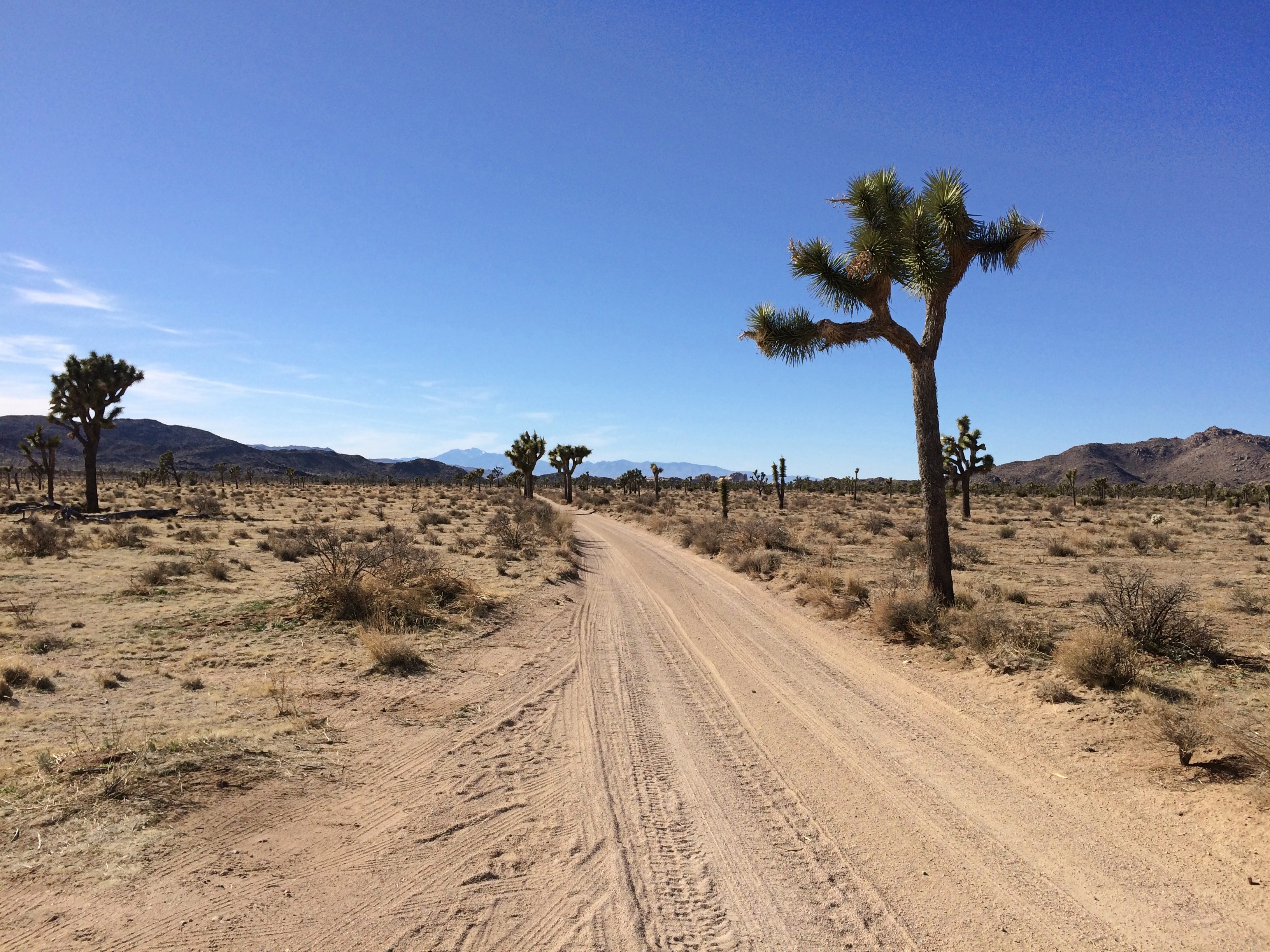
Unpaved roads were even better. At least the two I took: Desert Queen Mine Road and Queen Valley Road. Guess most of the other visitors were skittish about driving them, but they were mostly smooth with only a few large rocks to watch out for.
Joshua Tree National Park dirt roadAdmittedly they aren’t very long roads, but even so I only saw one other vehicle the whole way, which was pulled off the road a bit.

The Desert Queen Mine Road leads to a small parking area and a trail head for the Desert Queen Mine Trail. No one else was there. I took a walk. The kind of place where middle-aged men walking alone clutch their chests, keel over and aren’t found for weeks? Maybe. But you have to go down the trail if you’re going to see anything.

After about 10 minutes — it isn’t a very long trail — I came to a structure.
Someone had lived in this waste. Why? Gold. I sat among the stones for a while. The only sound was the wind, and not much of that. Then I could hear the faint, distinct whoosh of a jet. That faded, but there was another a few minutes later.

A little further on is a cliff with leftover mining equipment.
Joshua Tree National Park gold mineIf you look carefully, you can see metal doors down in the valley. Must be closed mine shafts.

Joshua Tree National Park gold mine

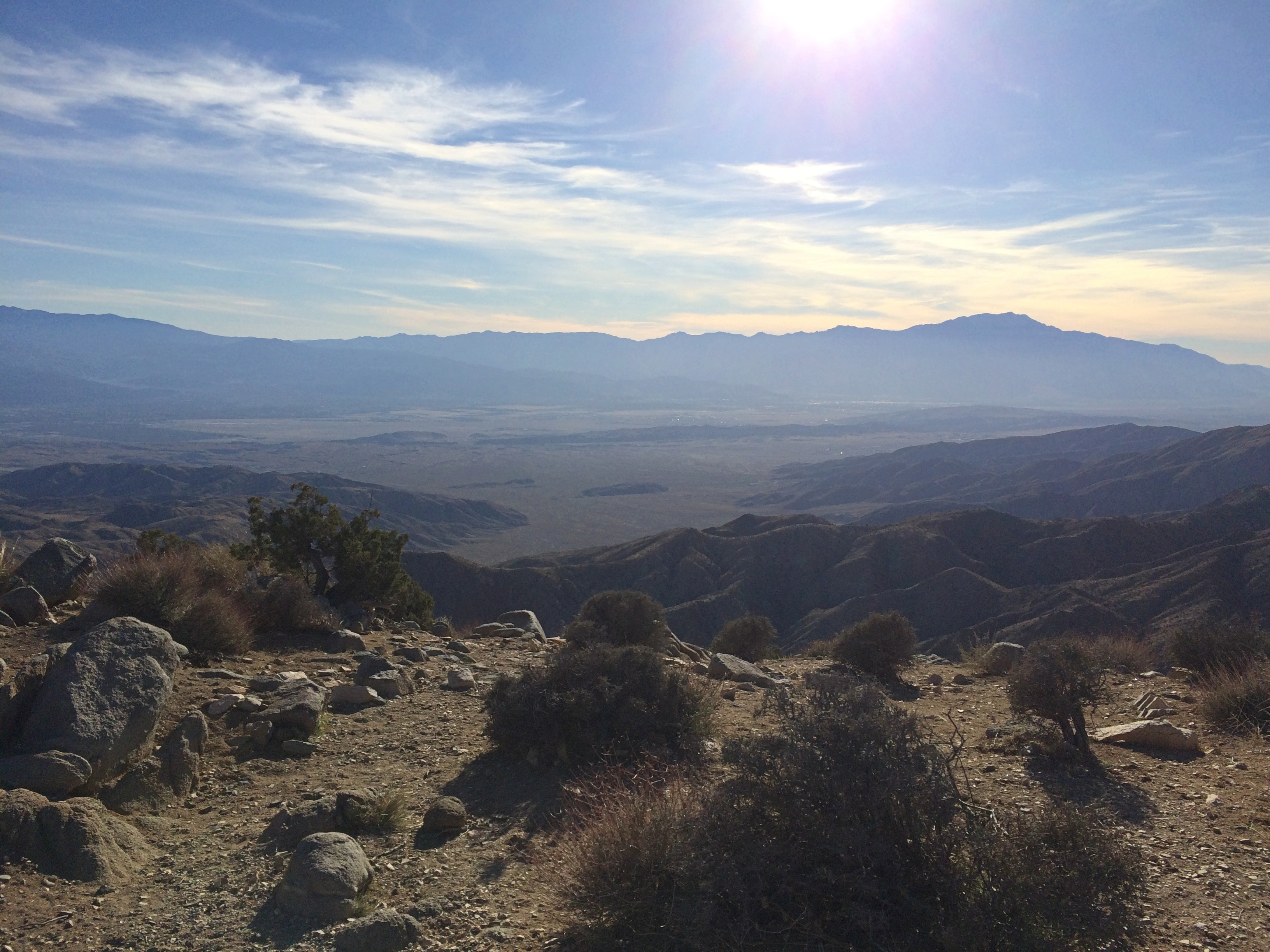
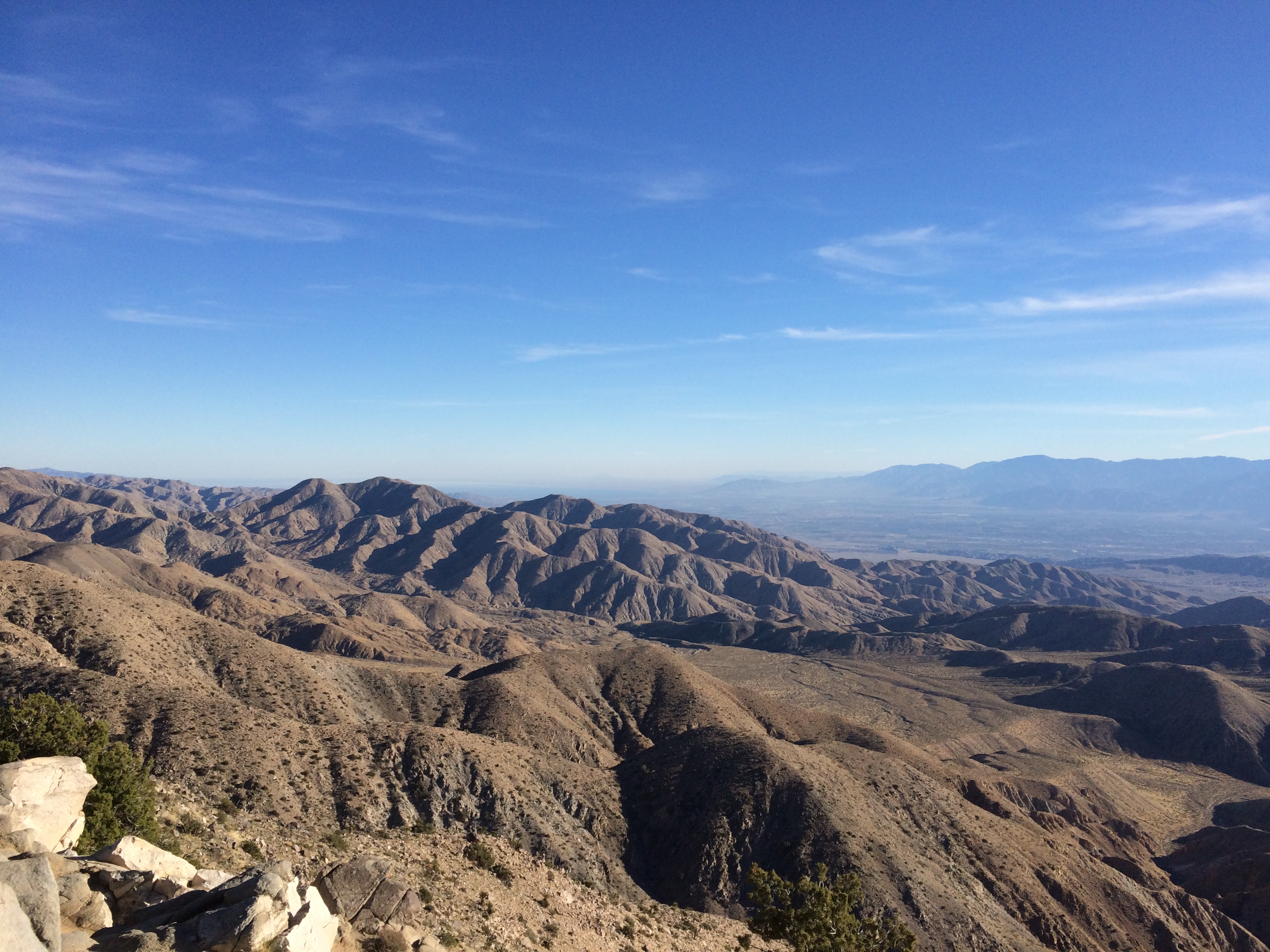
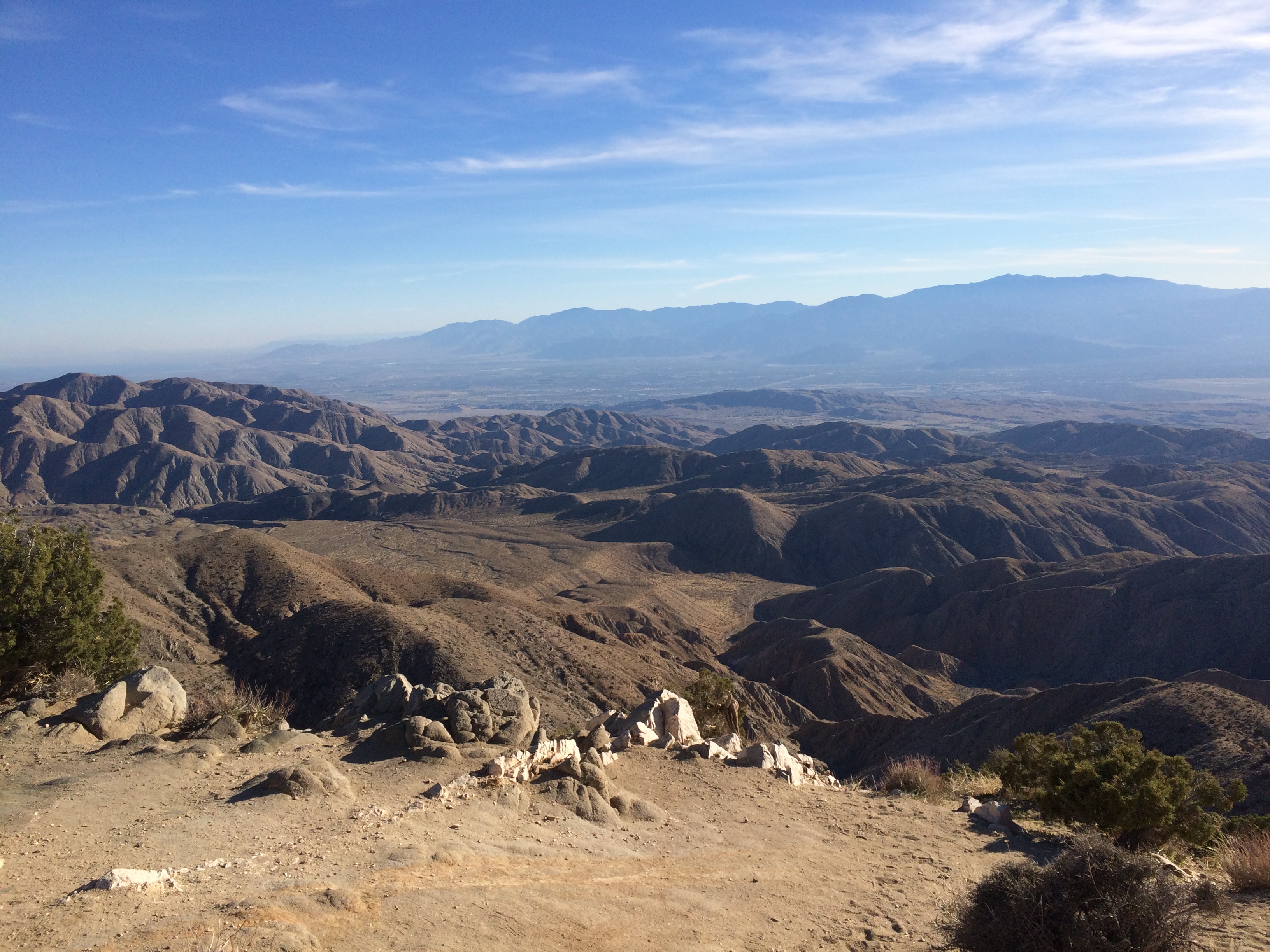
My second-to-last stop in the park: Keys View, up in the Little San Bernadino Mountains. Took a little driving to get here, but the view was worth it. Most of the Coachella Valley is stretched out before you.

Joshua Tree National Park Keys View

At nearly 5,200 feet above sea level, it was also distinctly chilly up there. And windy. Yet I spent a while gazing.

On the road back down from Keys View, I decided to take a closer look at the Joshua tree forest I was driving through.
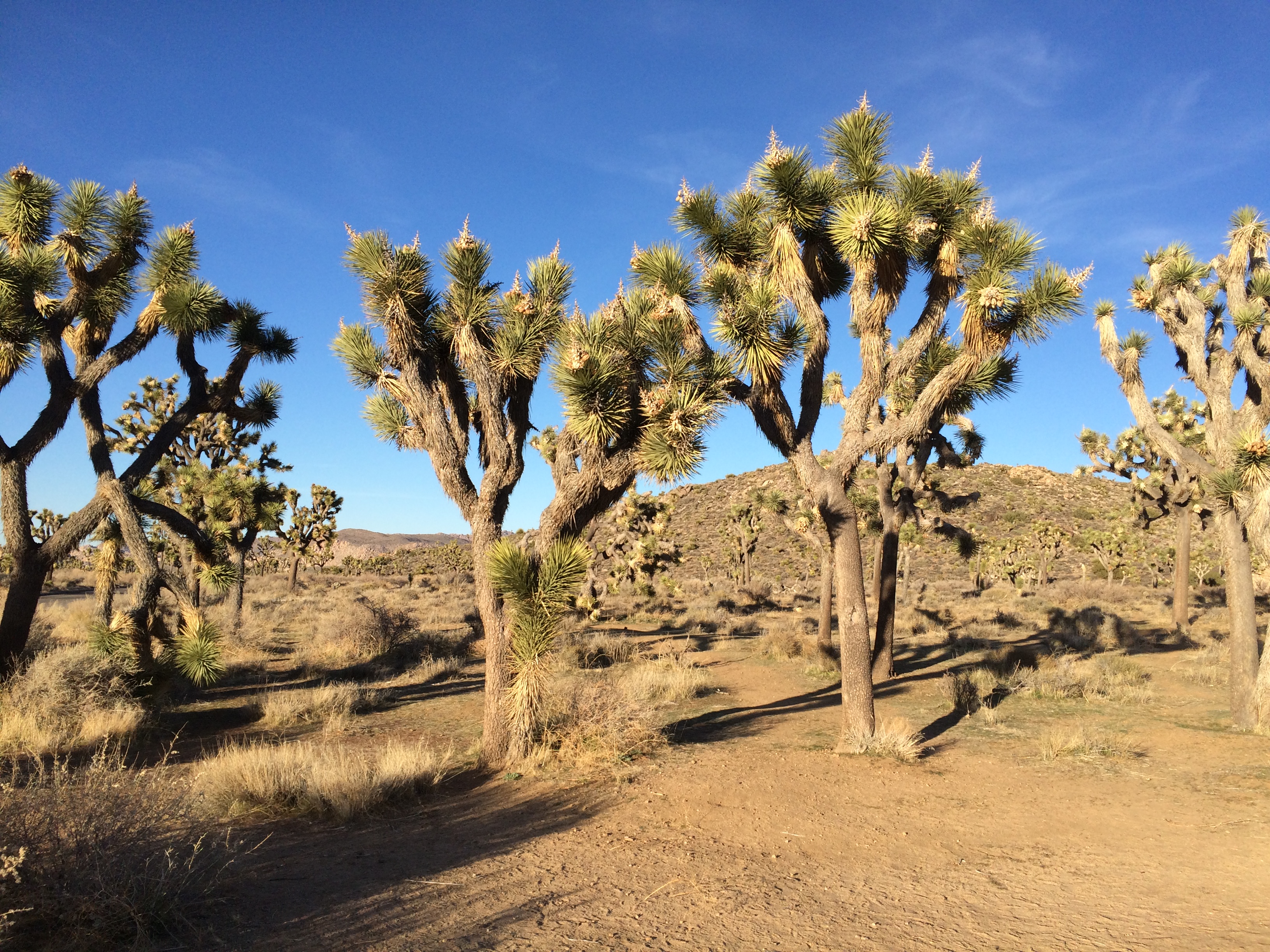
Joshua Tree National ParkTo do that, you get out of the car and walk into the forest.Joshua Tree National Park

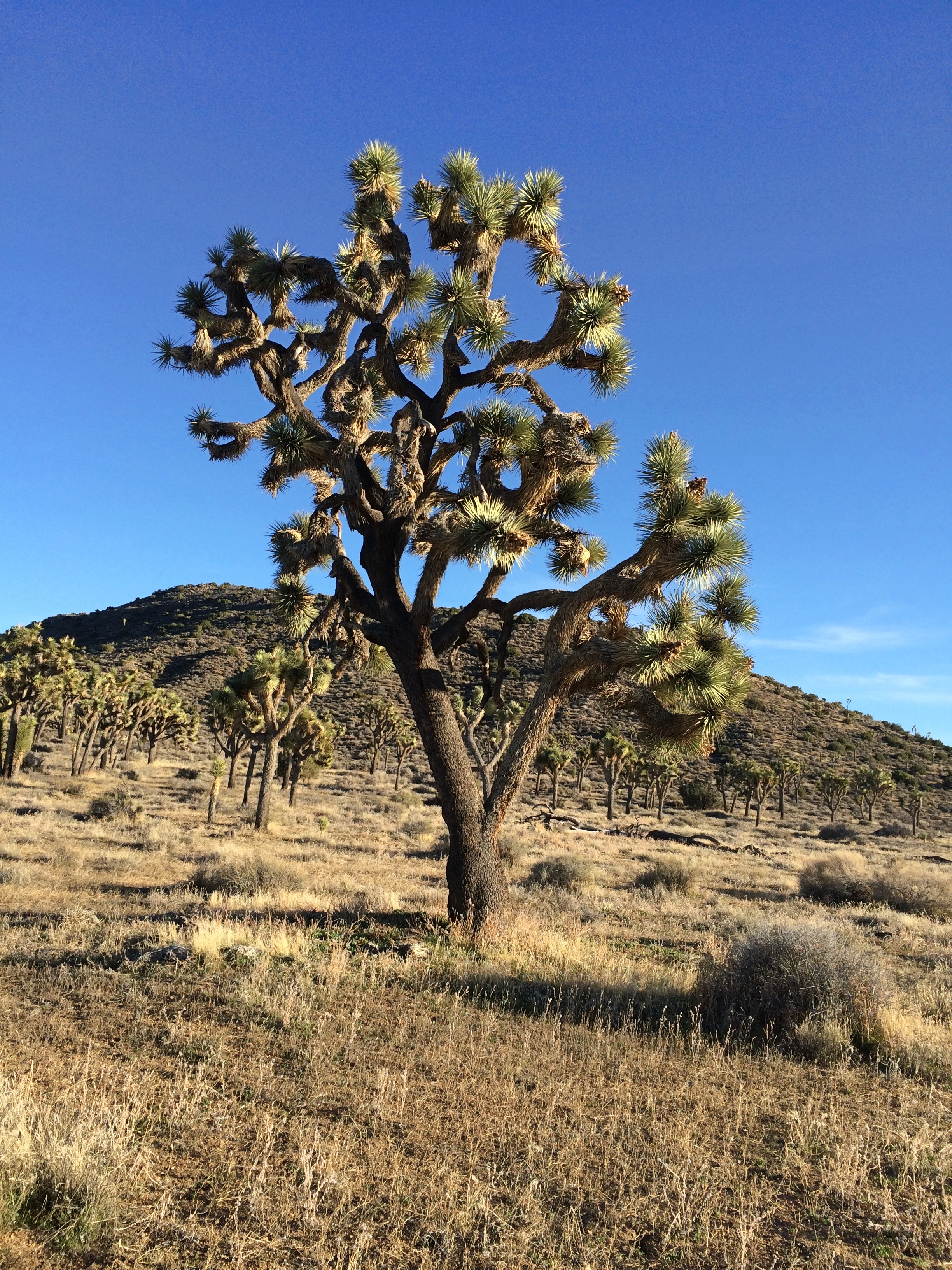
Remarkable plants, these yuccas. If Dr. Seuss had been asked to design a plant, it would look like a Joshua tree.

Cuyahoga Valley National Park

We arrived at Cuyahoga Valley National Park at about noon on July 4 under a hot and copper Ohio sky. Luckily, both of the places we visited in the park were well shaded. The Cuyahoga Valley, hugging the Cuyahoga River south of Cleveland and north of Akron, is a lush place in summer.

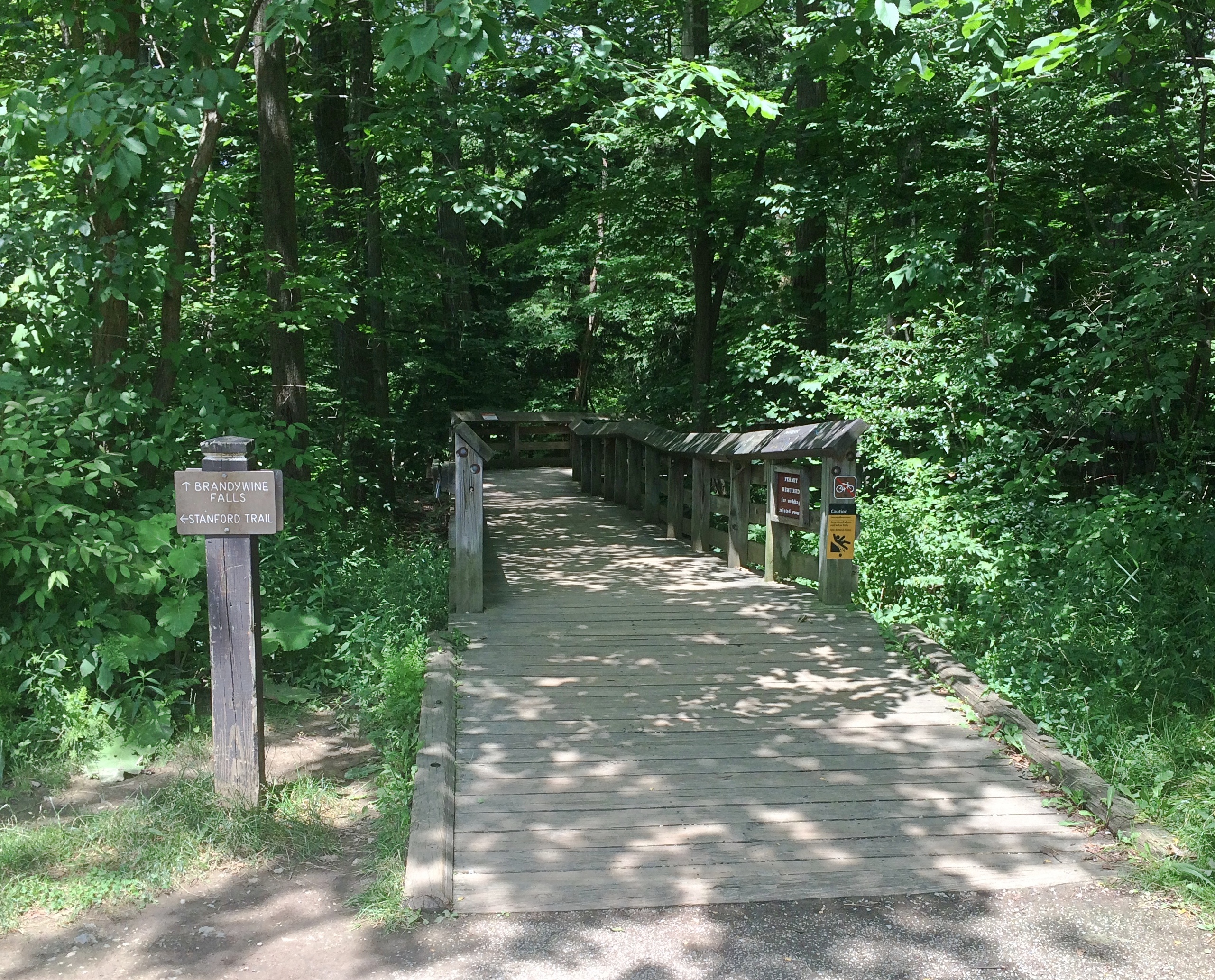
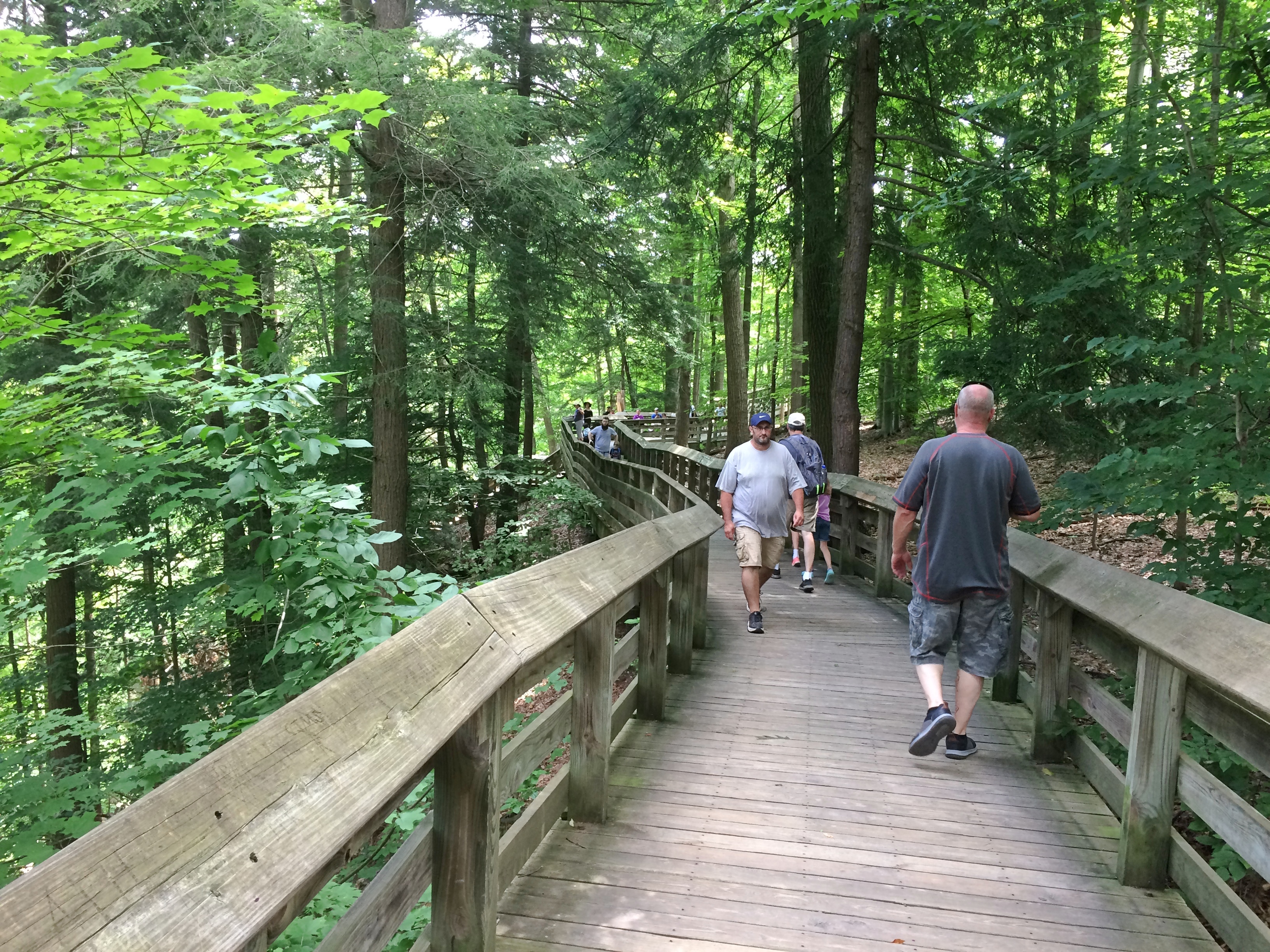
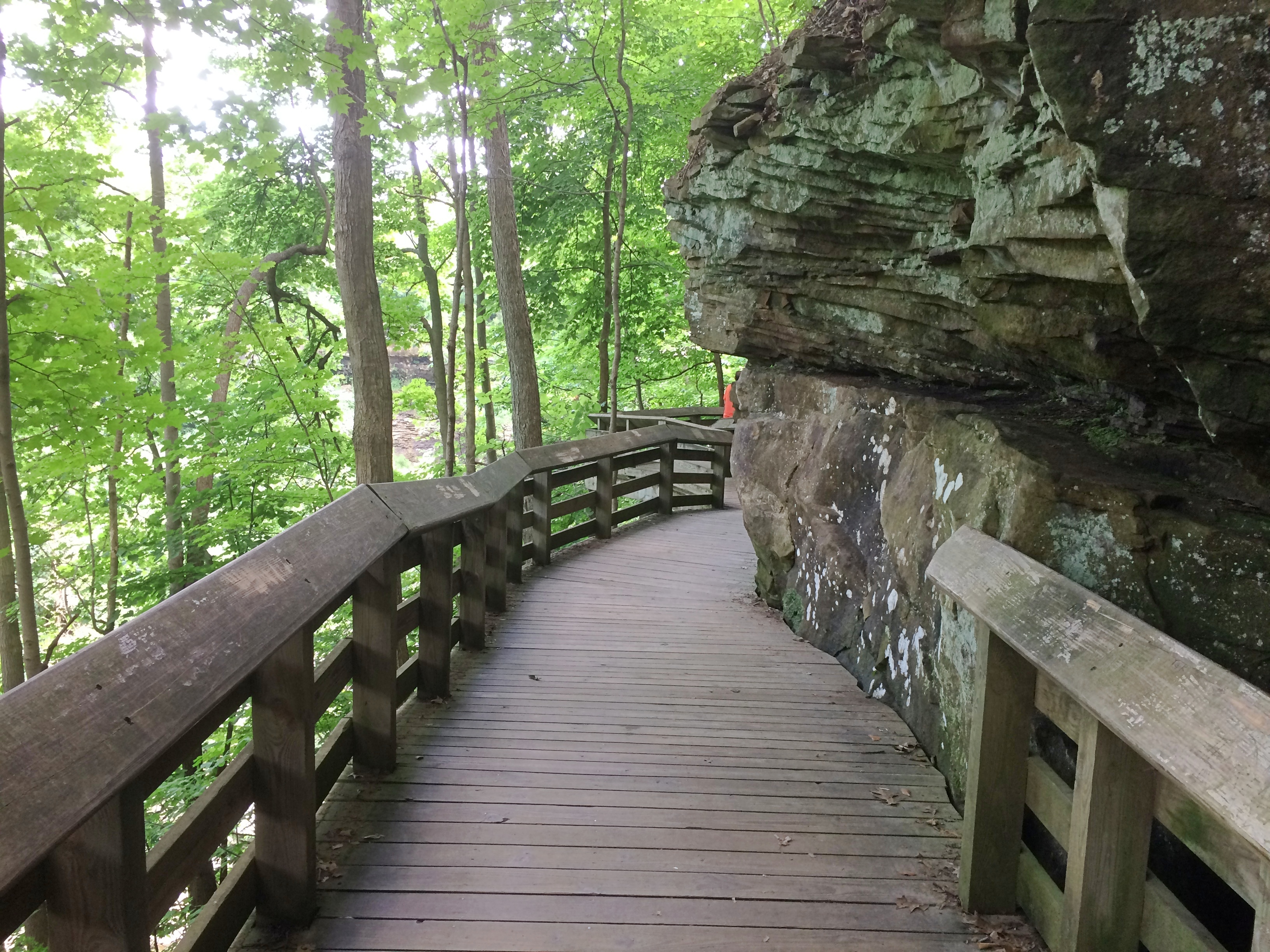
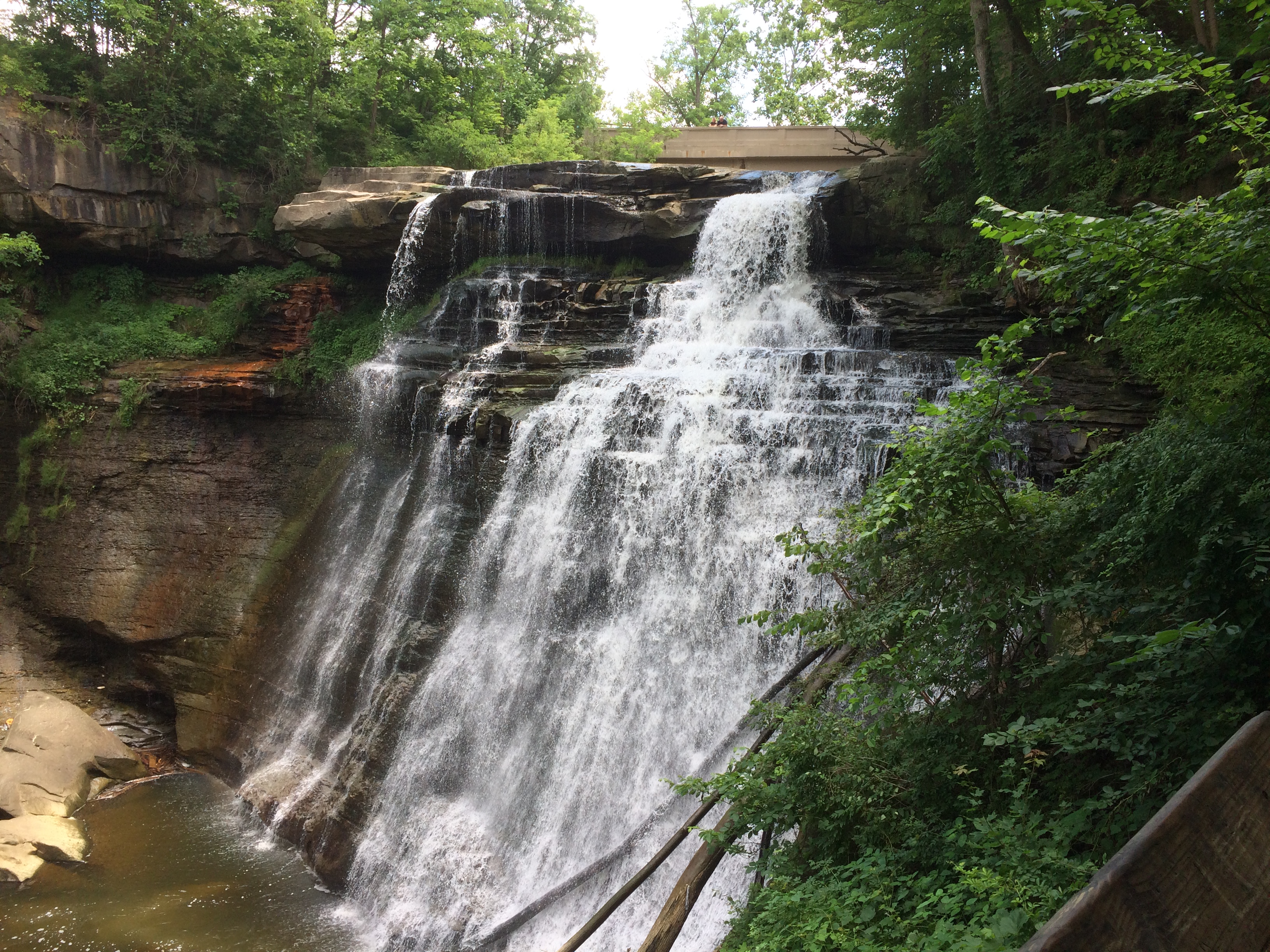
First we took a short but pleasant walk on a boardwalk trail to see the Brandywine Falls.
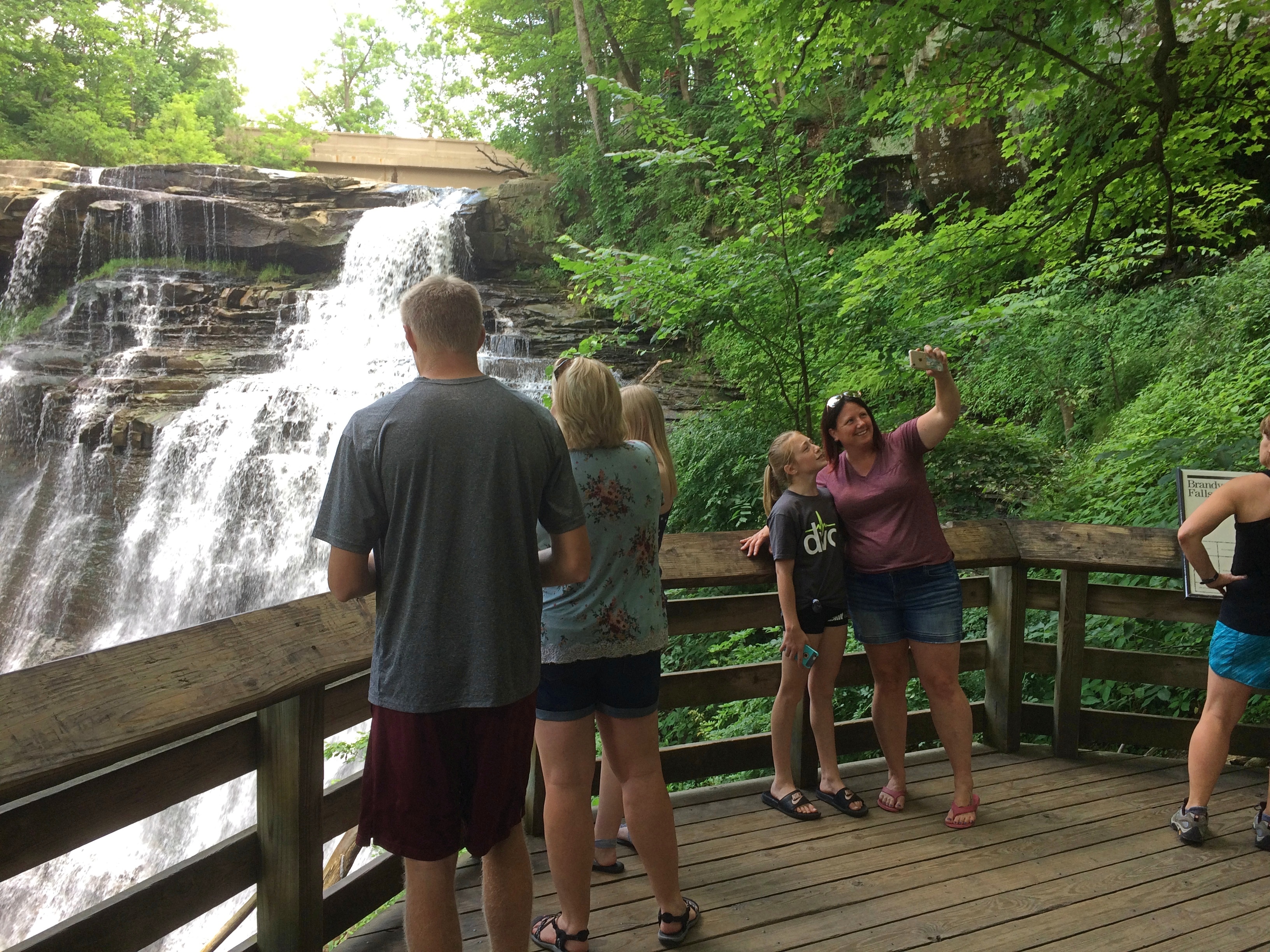
Soon you come to a series of stairs that takes you to an observation deck near the 65-foot falls, which were carved by Brandywine Creek.
A popular place on a summer holiday.
Curiously, even though it’s between two close-by urban centers, Cuyahoga Valley NP as a whole isn’t a top 10 national park in terms of visitor count. It’s no. 13, with just over 2 million visitors in 2018. That might be because it gets a share of visitors from Cleveland and other parts of Ohio, but not as many from elsewhere. People travel to see the Great Smoky Mountains or the Grand Canyon, for instance, but probably not so many to see Cuyahoga Valley.

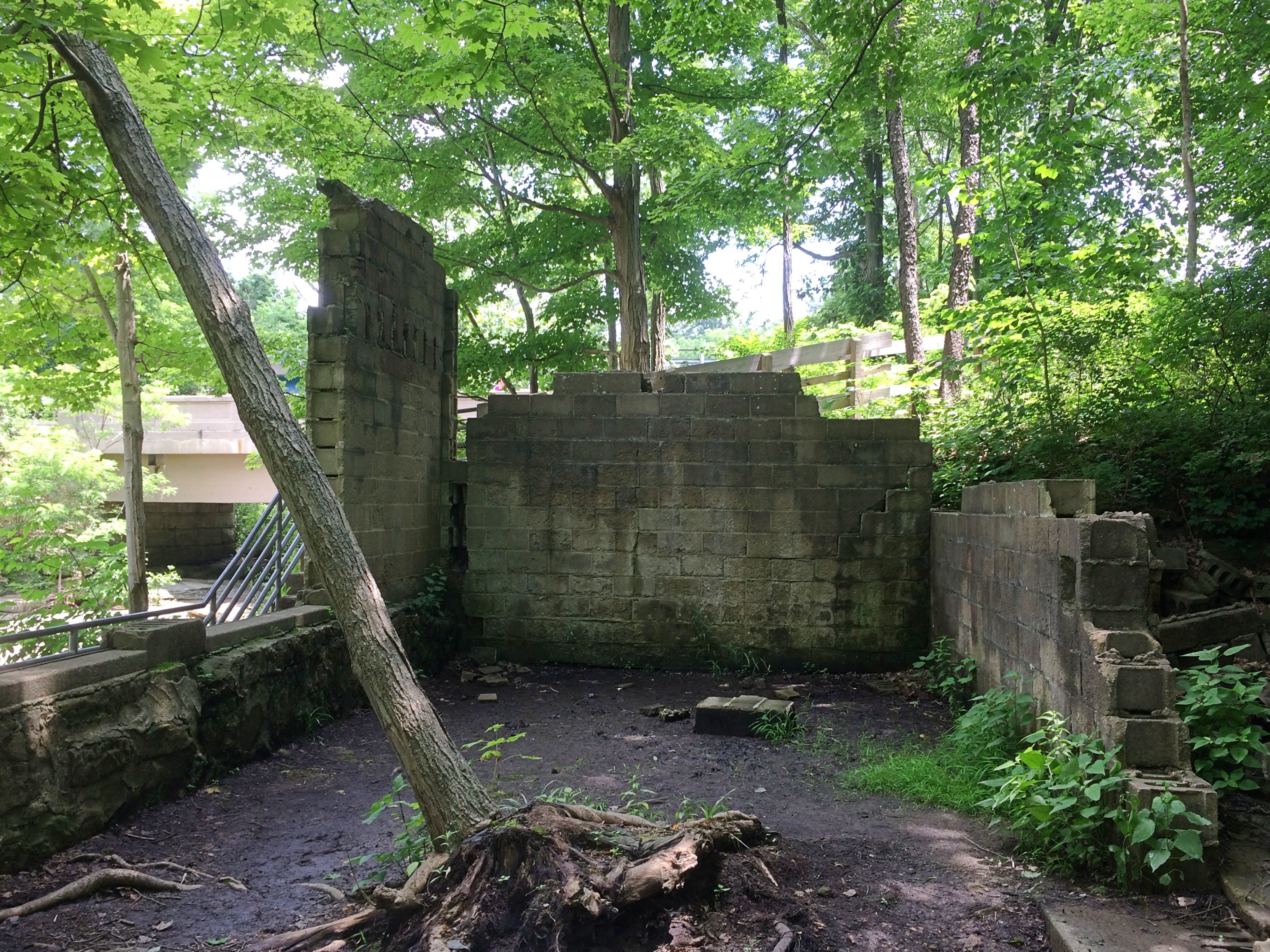
As long ago as 1814, a saw mill was built to use the power of the falls, and at other times grist mills were on site, part of a village that existed in the area in the 19th century. Almost all of those structures are long gone, though above the falls, ruins of a small factory from the early 20th century remain.
The structure housed the Champion Electric Co., which made small electric appliances. Lightning started a fire that burned it down in 1937.

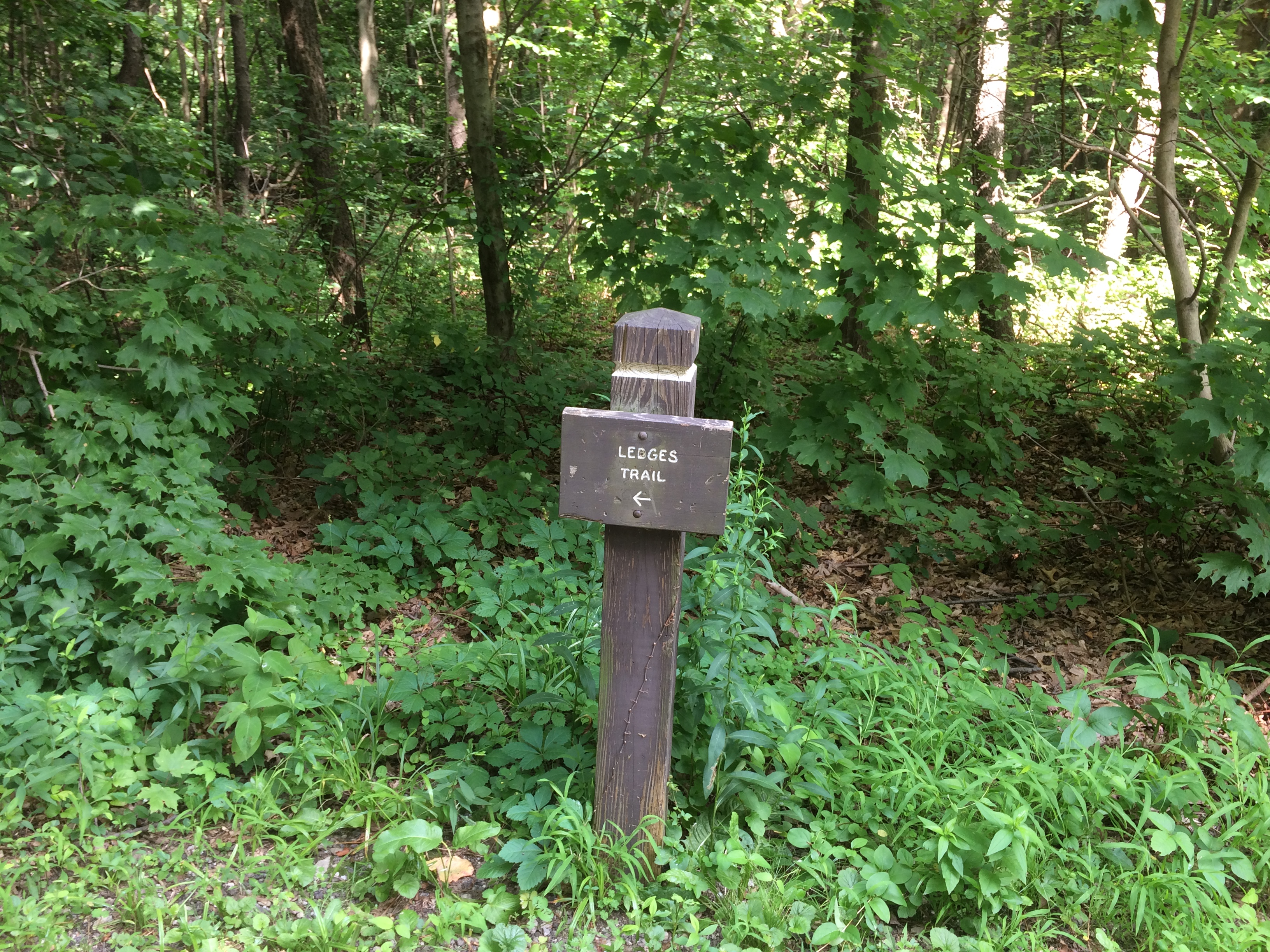
After lunch we went to take a walk on the Ledges Trail, which is in the Virginia Kendall unit of the park.
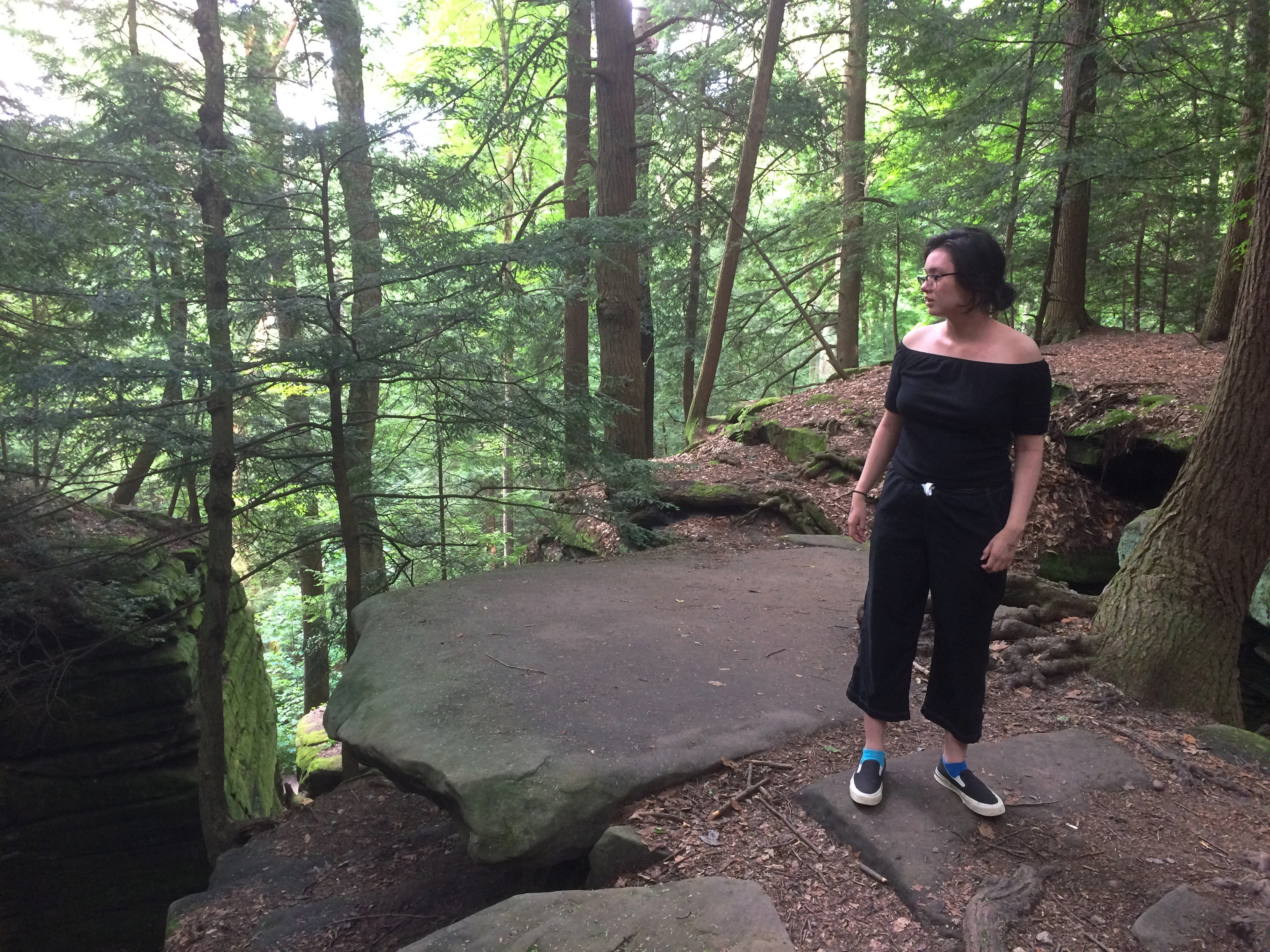
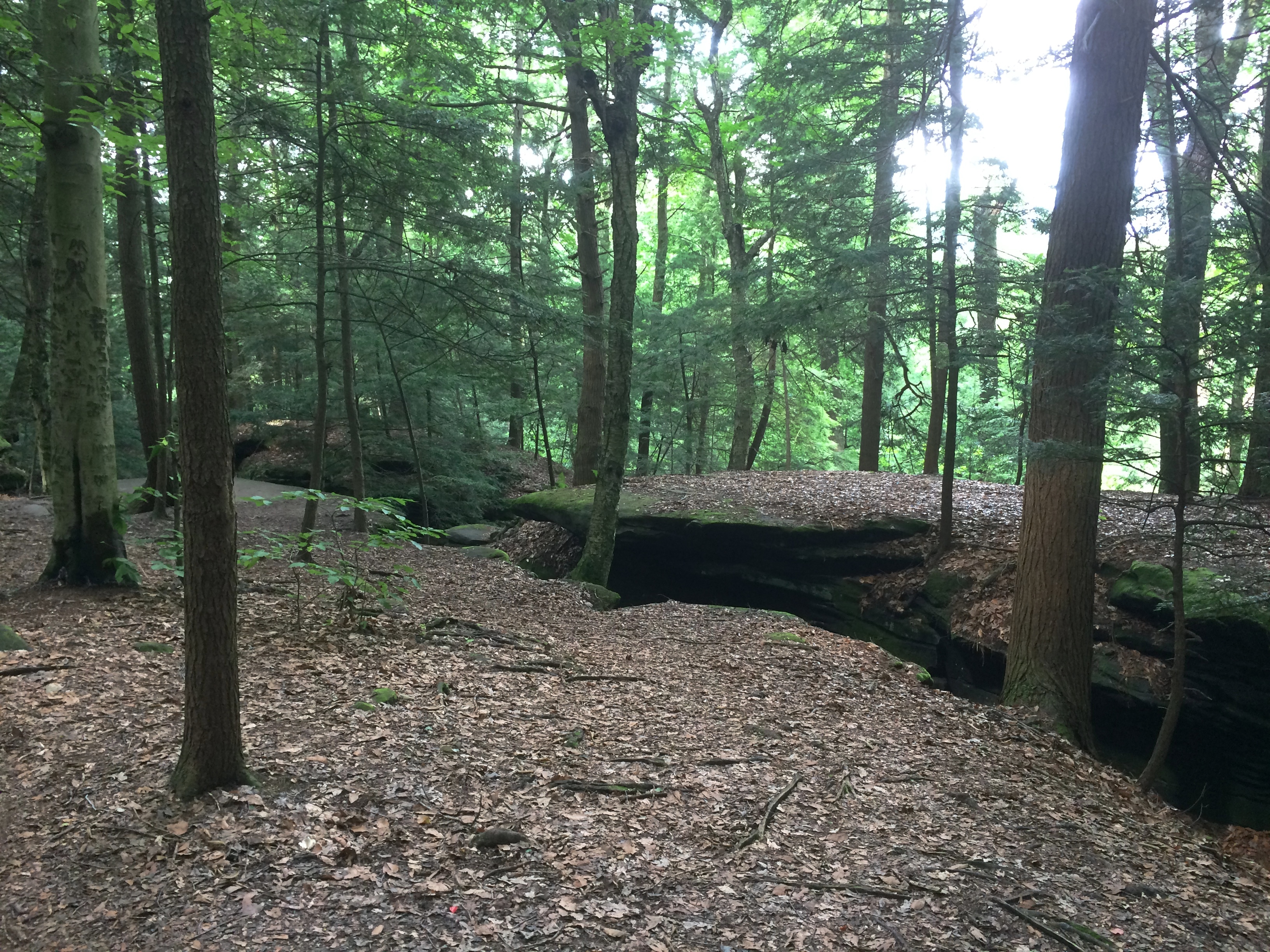
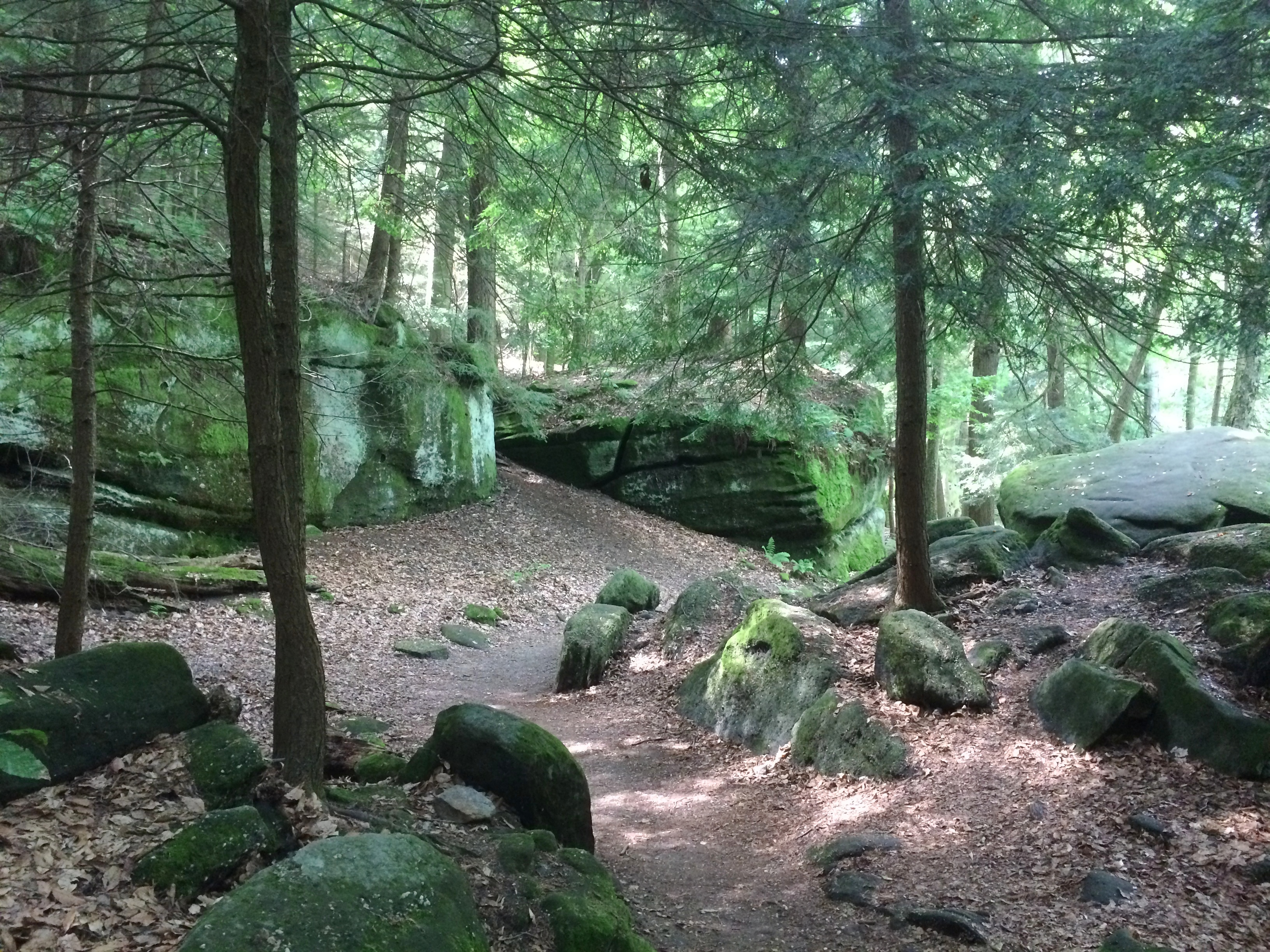
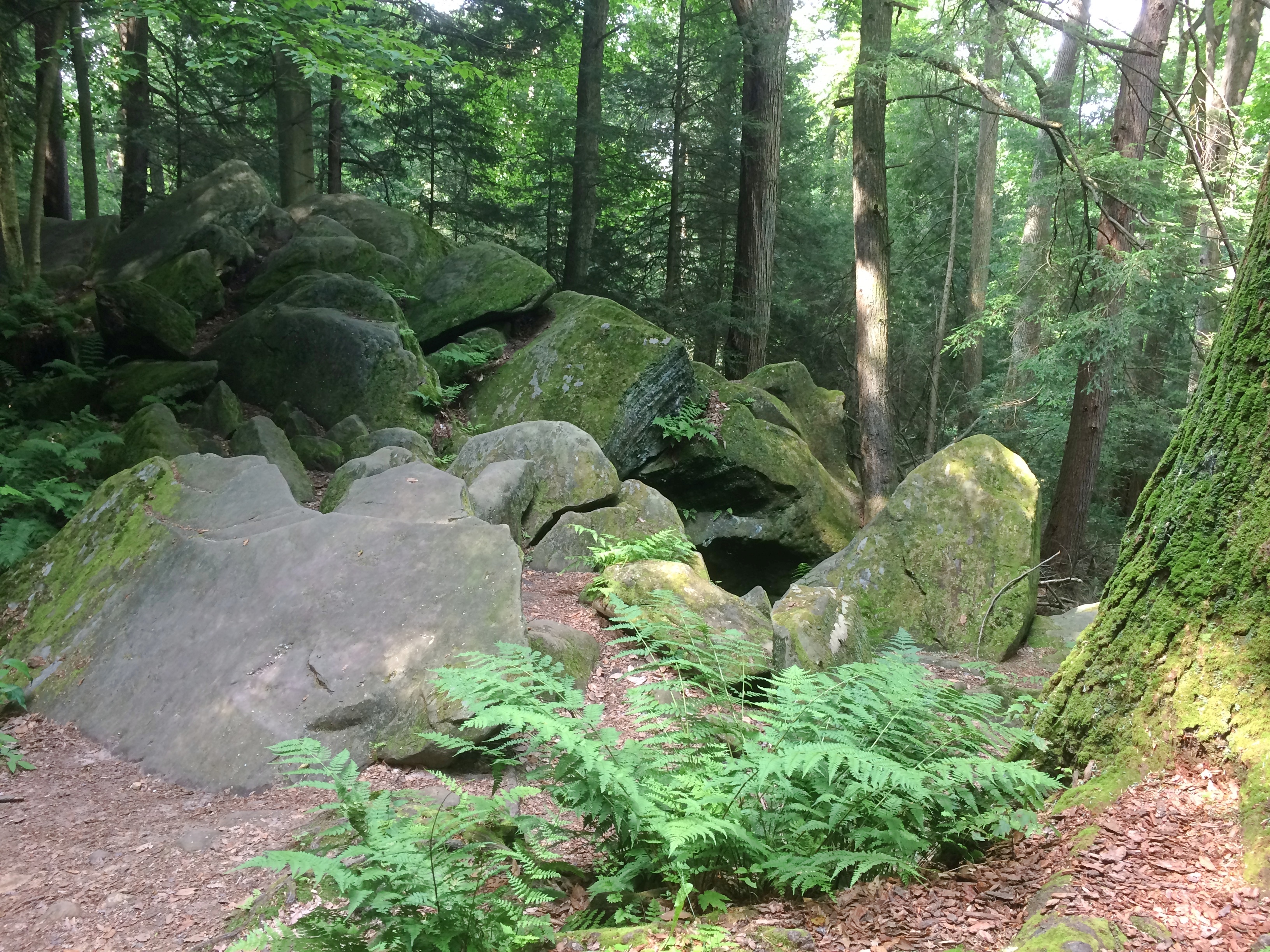
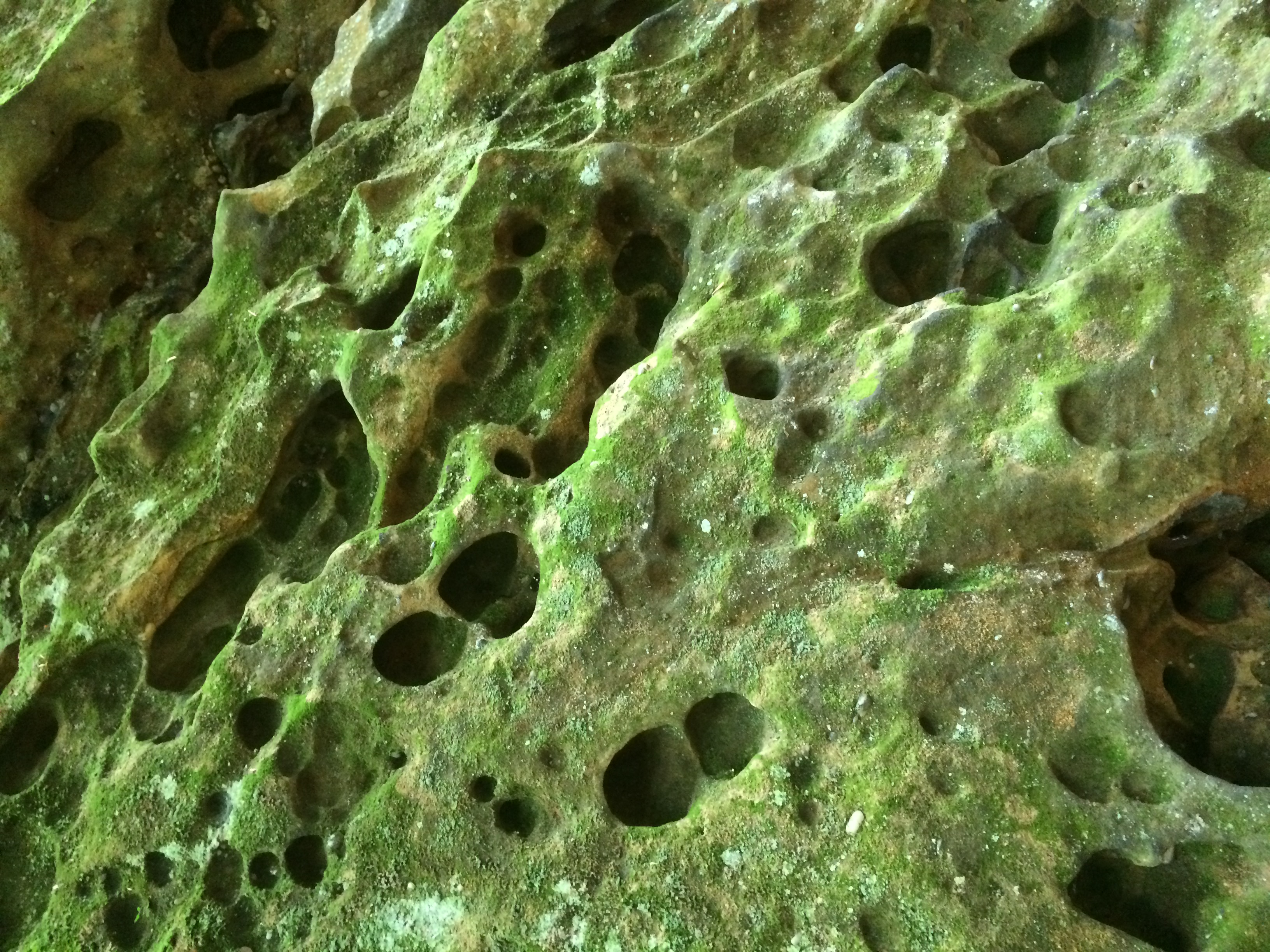
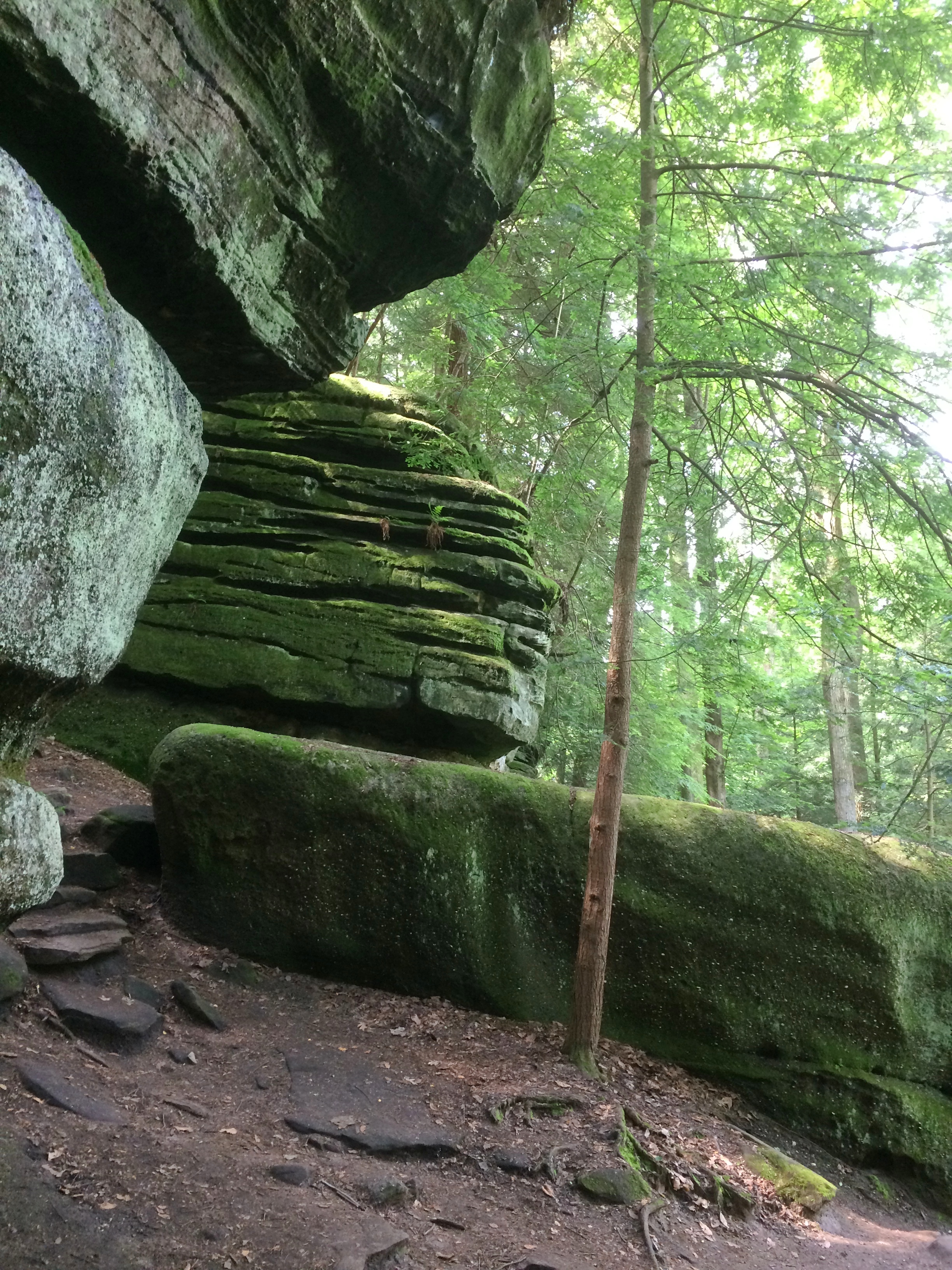
In full, the formations are called the Ritchie Ledges, which geologists say were made from a substance called Sharon Conglomerate millions of years ago. I’ll take their word for it, since my geologic knowledge is paltry. But I do know that it makes for a intriguing trail that isn’t too hard to walk, though it does have its bumpy moments.

The trail starts at the top of the ledges.

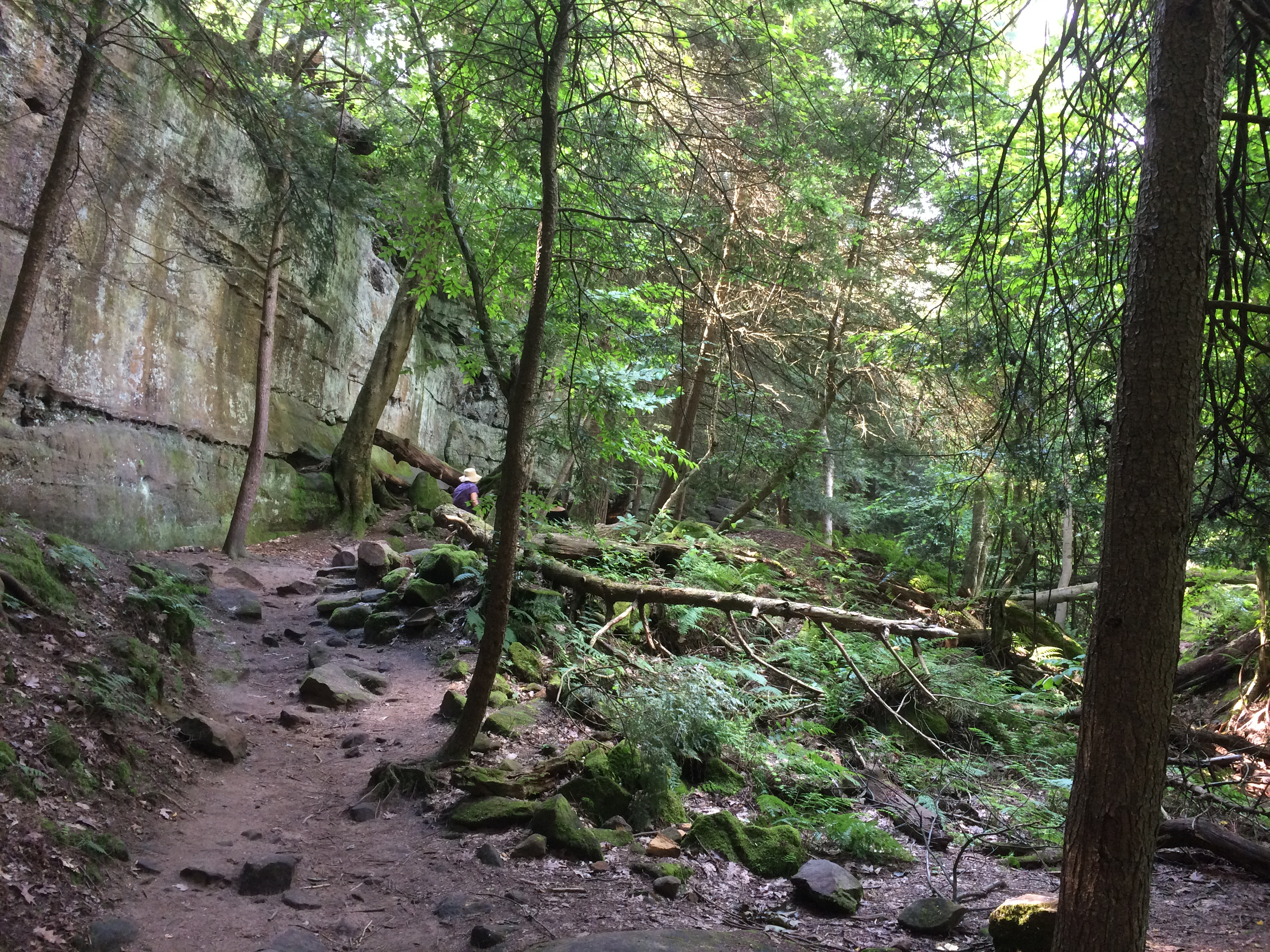
Then it winds down to the bottom of the ledges.
The trees weren’t the only greenery.

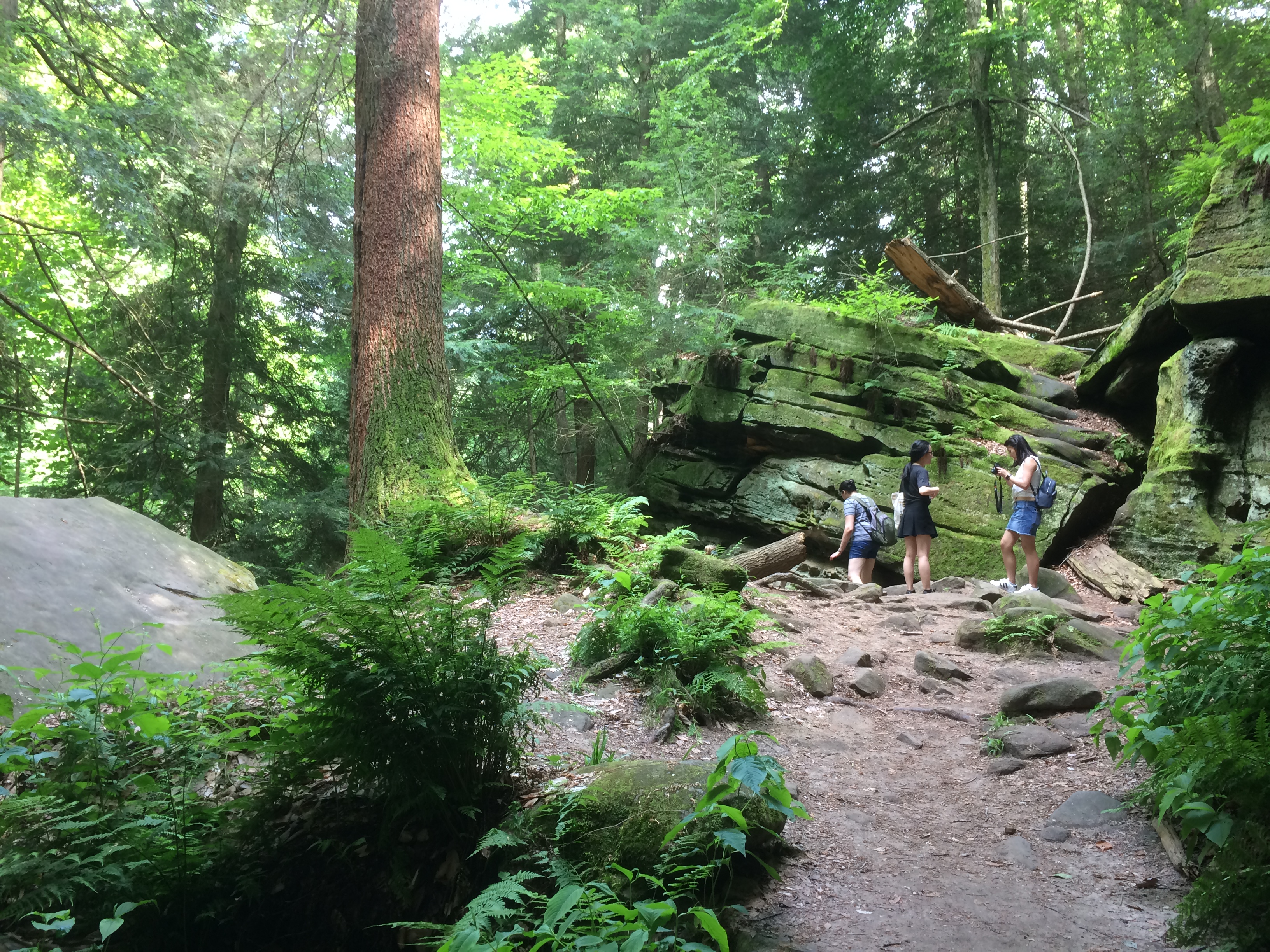
The Ledges Trail wasn’t as crowded as the trail to the Brandywine Waterfall, but there were a few other people.

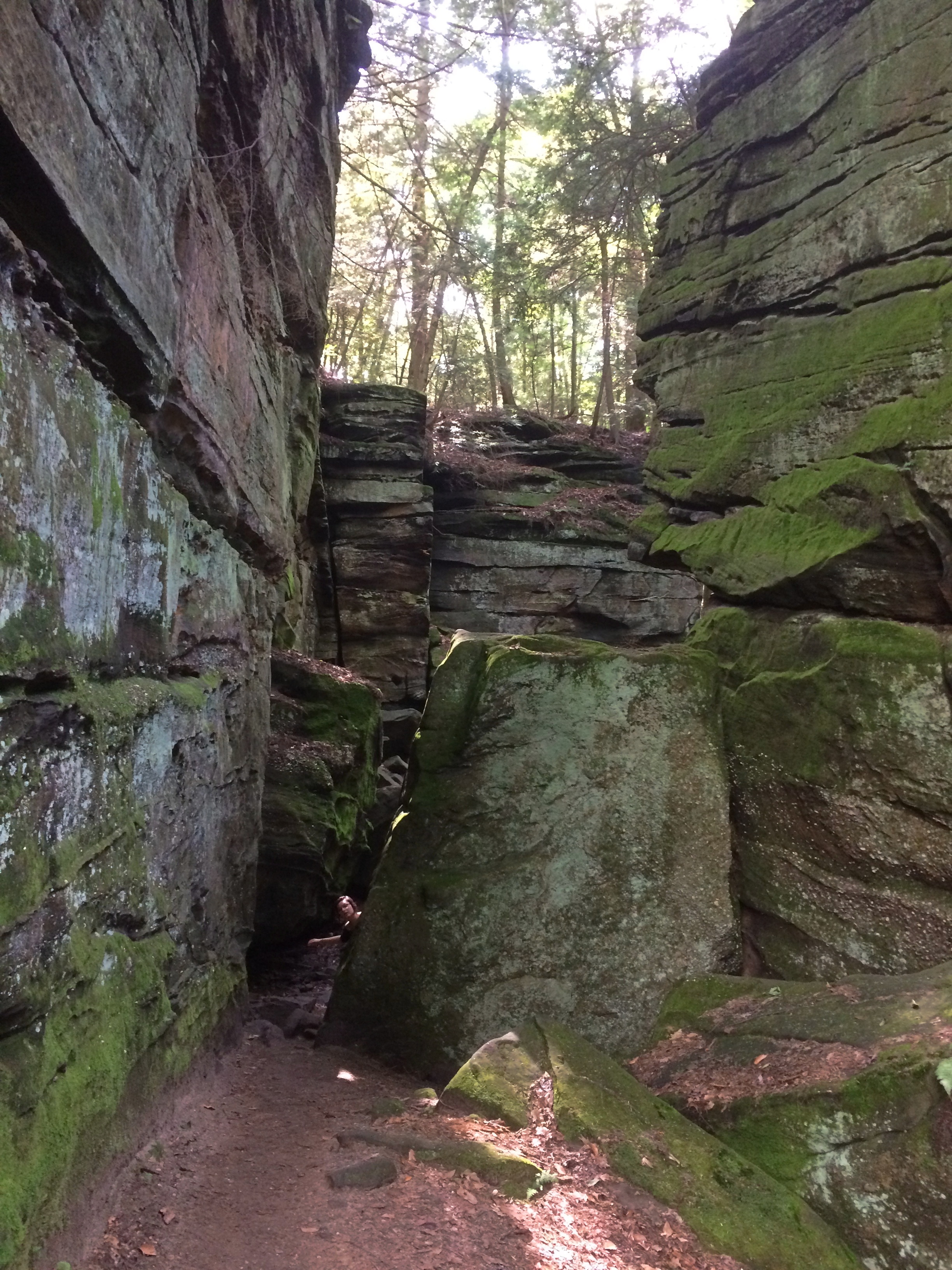
A side trail traversed a narrow pass.
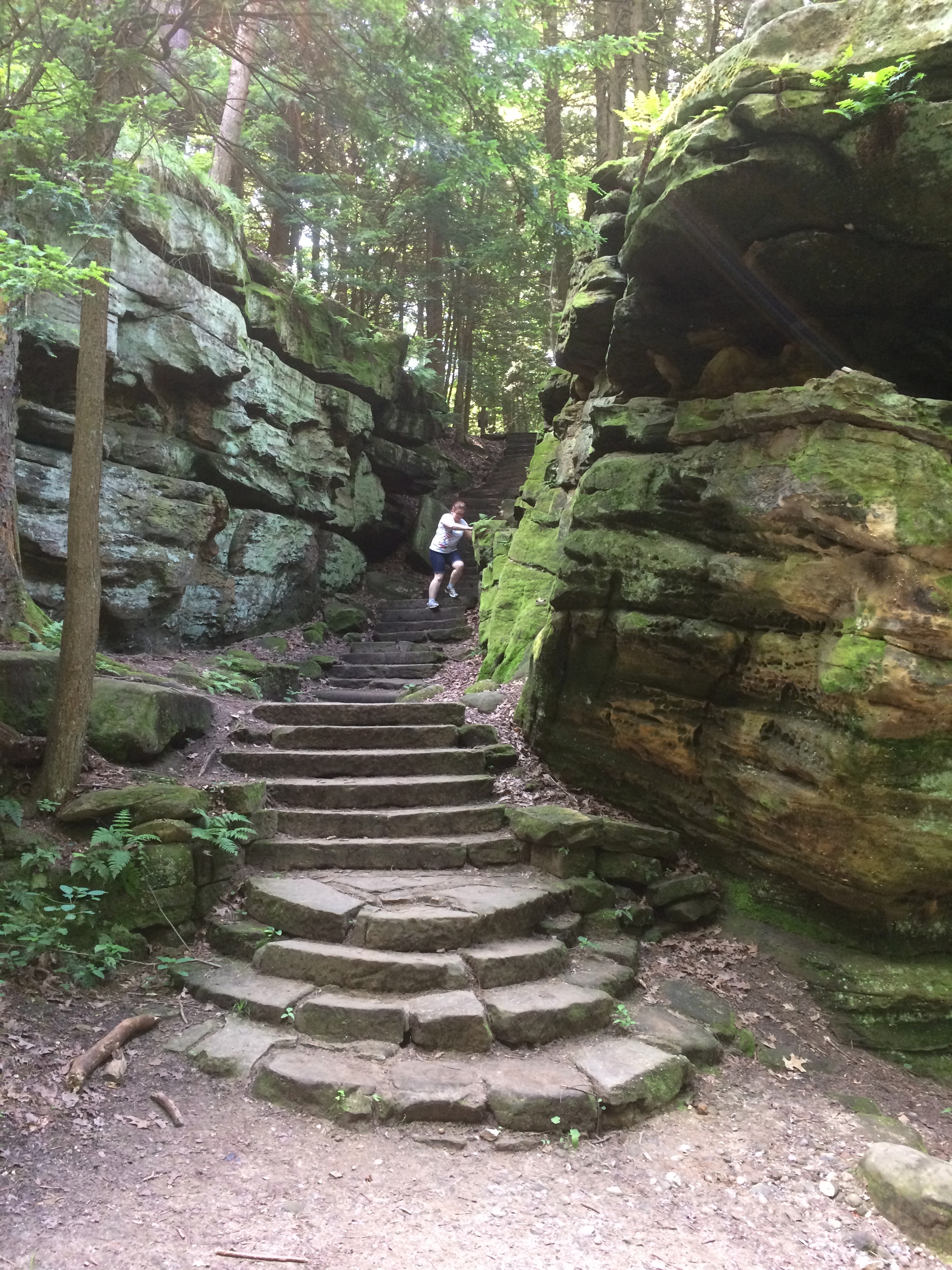
At one point there’s a shortcut formed by stone stairs. Who built them? The CCC, naturally.

Before I visited the park, I hadn’t known that Cuyahoga Valley is a fairly recent national park, receiving that status only in 2000. Before that, it was a National Recreation Area, but only since 1974. Guess the region got that designation after the infamous fire, one of a series over the decades, that burned 50 years ago on the lower reaches of the Cuyahoga at some distance from today’s national park.

Pittsburgh ’19

Independence Day fell on a Thursday this year, creating a four-day window of opportunity to go somewhere. So late on the afternoon of July 3 we headed east, spending the night near Toledo, Ohio. On the 4th, we drove on to Pittsburgh, where we spent three nights and two full days, returning after an all-day drive today.

We stayed at a hotel in the pleasant Moon Township, Pa., not far from Pittsburgh International Airport. The days were hot and steamy and punctuated by vigorous rainfall in the afternoons — supposedly typical for western Pennsylvania in July, though it was a lot like home this summer. Anyway, even occasional heavy downpours didn’t slow us down much.

The road from metro Chicago to Pittsburgh, if you take the Indiana East-West Toll Road and then the Ohio Turnpike, takes you smack through the Cuyahoga Valley National Park. We spend a few hours walking its trails on July 4 as a stopover on the way to Pittsburgh.

Getting up early(ish) on July 5, we first went to the Duquesne Incline, one of Pittsburgh’s two funiculars, and rode it up and down. At the top we took in the hazy morning view of the city and the meeting of the Allegheny and Monongahela rivers. My thinking about funiculars: when you find one, ride it. My thinking about the Monongahela: that’s just a damned fun name to say.

Next we drove to the Oakland neighborhood and spent time at the University of Pittsburgh. Specifically, the Heinz Memorial Chapel — the church that ketchup built — and the Cathedral of Learning and some of its highly artful, internationally themed rooms, unlike anything I’ve seen before.

Lunch on the first day was at the the Original Oyster House on Market Square, which is known as Pittsburgh’s oldest bar and restaurant, and which serves up a mighty fine array of seafood. From there we repaired to Point State Park at the meeting of the rivers, site of a French and then British fort in the days before American independence, and the seed of modern Pittsburgh. That’s also where our lengthy guided walking tour of downtown Pittsburgh began, which took up the rest of the afternoon.

That should have been enough for the first day, but our momentum carried us on to the Andy Warhol Museum for a few hours in the early evening, taking advantage of its longer hours on Fridays. A suburban location of Primanti Bros., a local chain, provided a hearty dinner that night.

The second day, July 6, wasn’t quite as busy, but we got around. Late in the morning, we took an extensive tour of Carrie Furnace, a hulk of a former blast furnace complex on the Monongahela. It reminded me greatly of the Sloss Furnaces in Birmingham, Alabama, though the scale was even larger. After all, Birmingham was the Pittsburgh of the South, not the other way around.

After lunch in a nondescript but decent Chinese restaurant, we visited the Frick Pittsburgh, whose grounds include his mansion, a museum with his art, a greenhouse, and a carriage and antique auto exhibit. We saw the greenhouse and the auto exhibit.

After treating ourselves to some hipster ice cream late in the afternoon, we went to one more place, despite thunder and rain: Randyland.
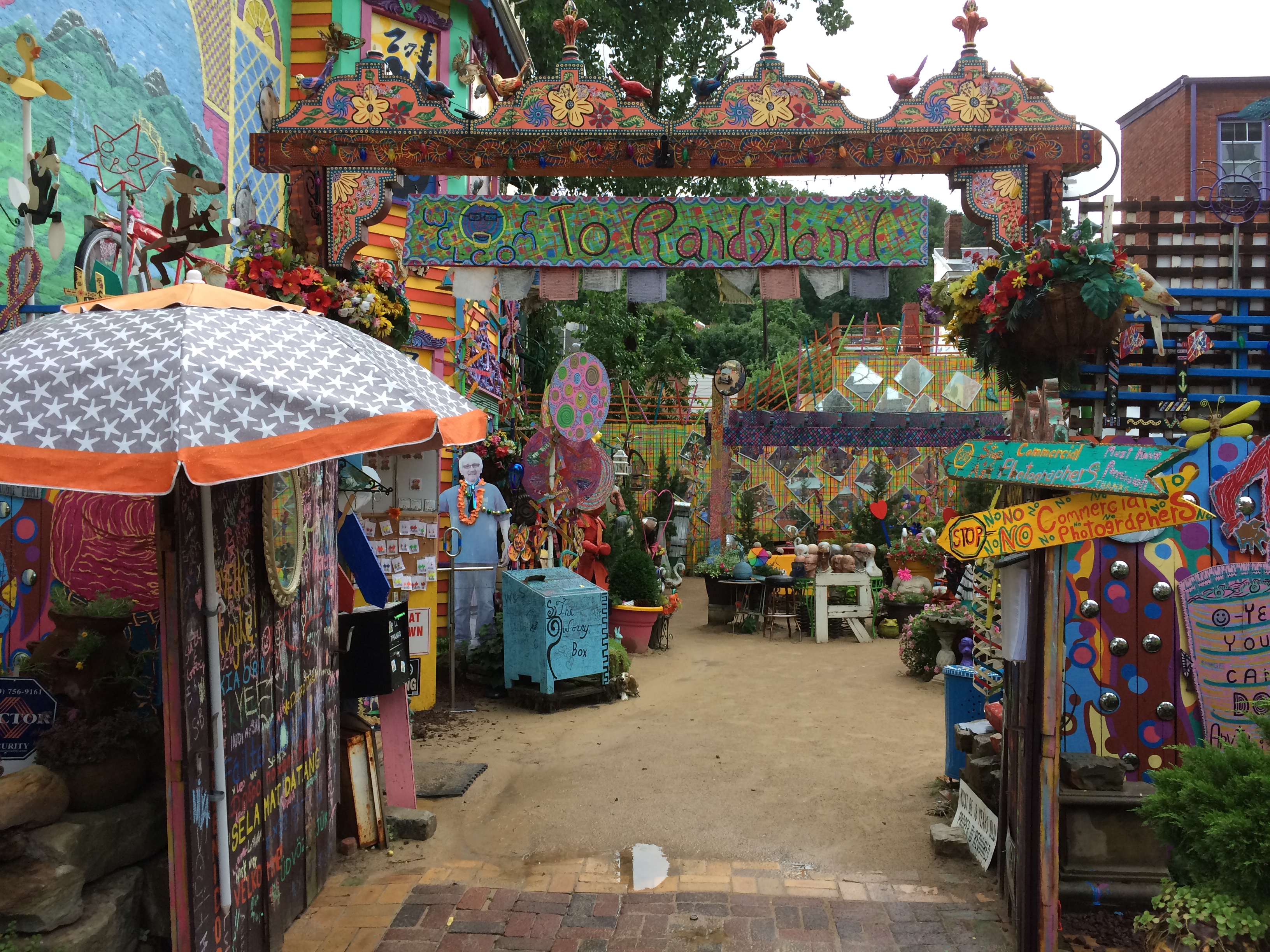
Randyland

It’s the kind of outsider art phantasmagoria beloved by the likes of Roadside America or the Atlas Obscura. For good reason. As Roadside America puts it, the place is a “circus-colored oasis of sunny vibes on Pittsburgh’s formerly grim North Side.”

Sōunkyō (層雲峡), 1993

The usual markers of fall are here. Spots of yellow and other fall colors are appearing in the trees. Sometimes we use the heater to keep temps above 68 F during the day and 65 F at night, the non-summer settings. The days are notably shorter, but at least the Summer Triangle is still up. Orion is not. Won’t be long.

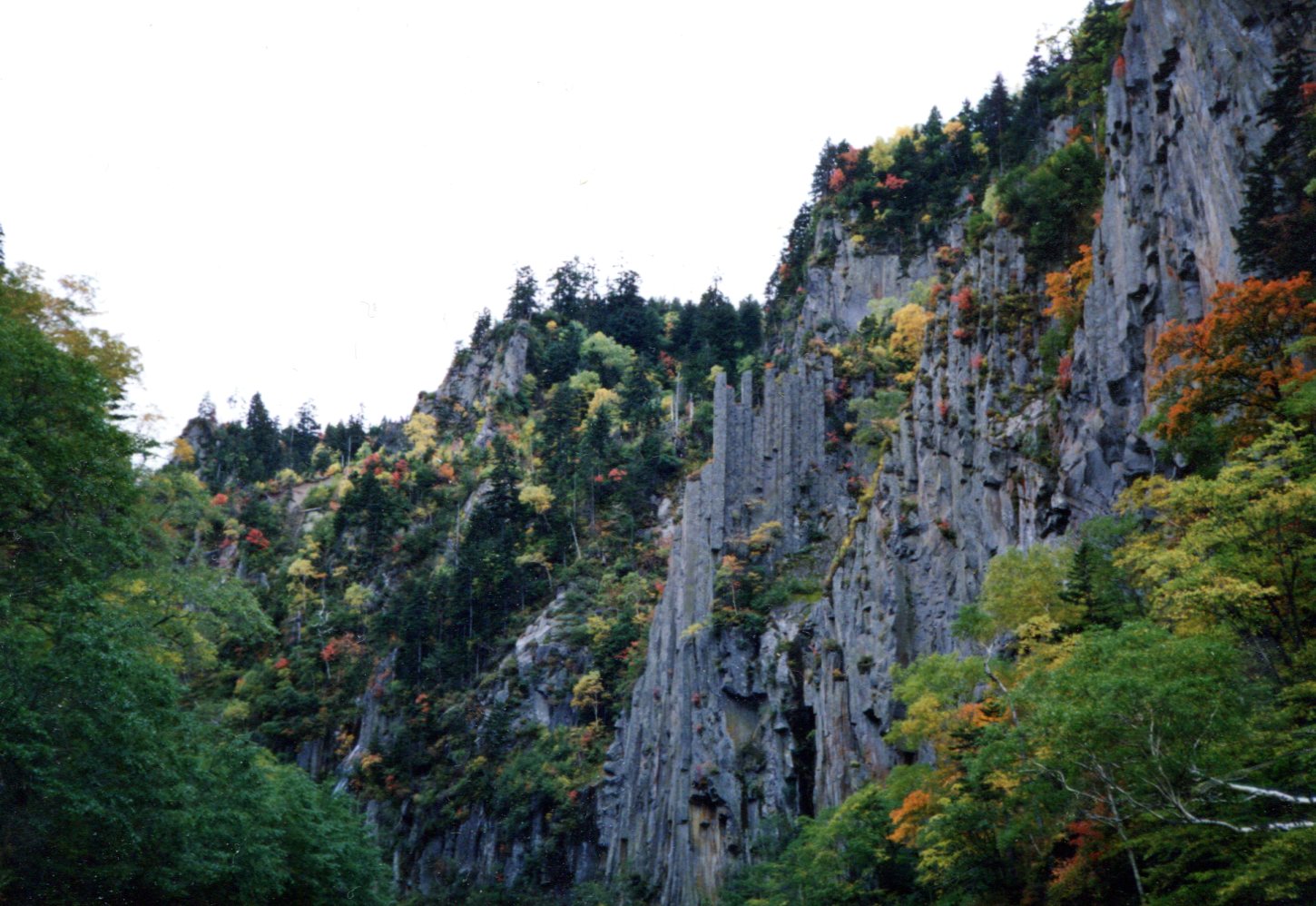
We visited Hokkaido in late September, early October of 1993, including Sōunkyō, part of Daisetsuzan National Park, and which is known for its gorges. The colors were autumnal.

October 4, 1993

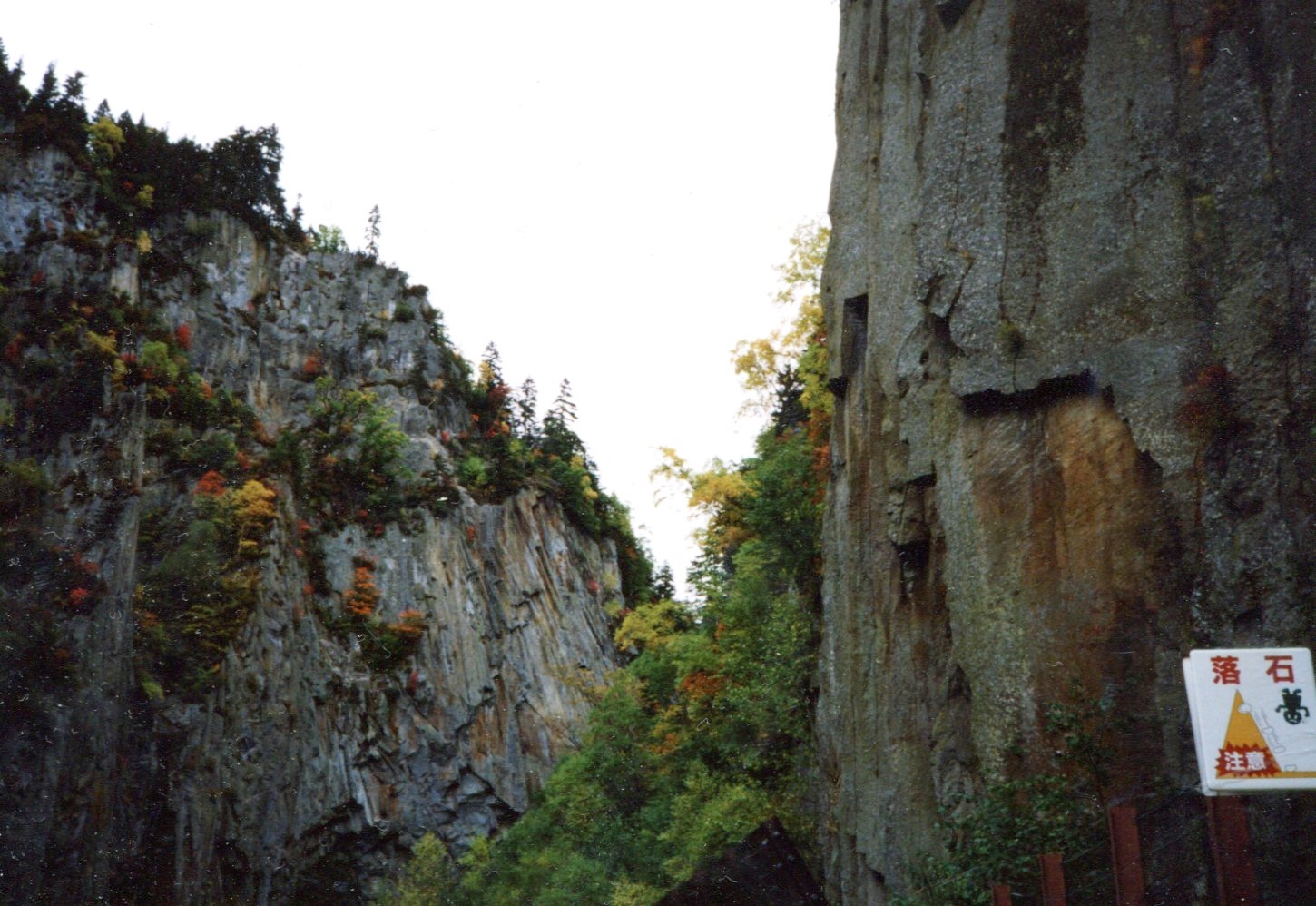
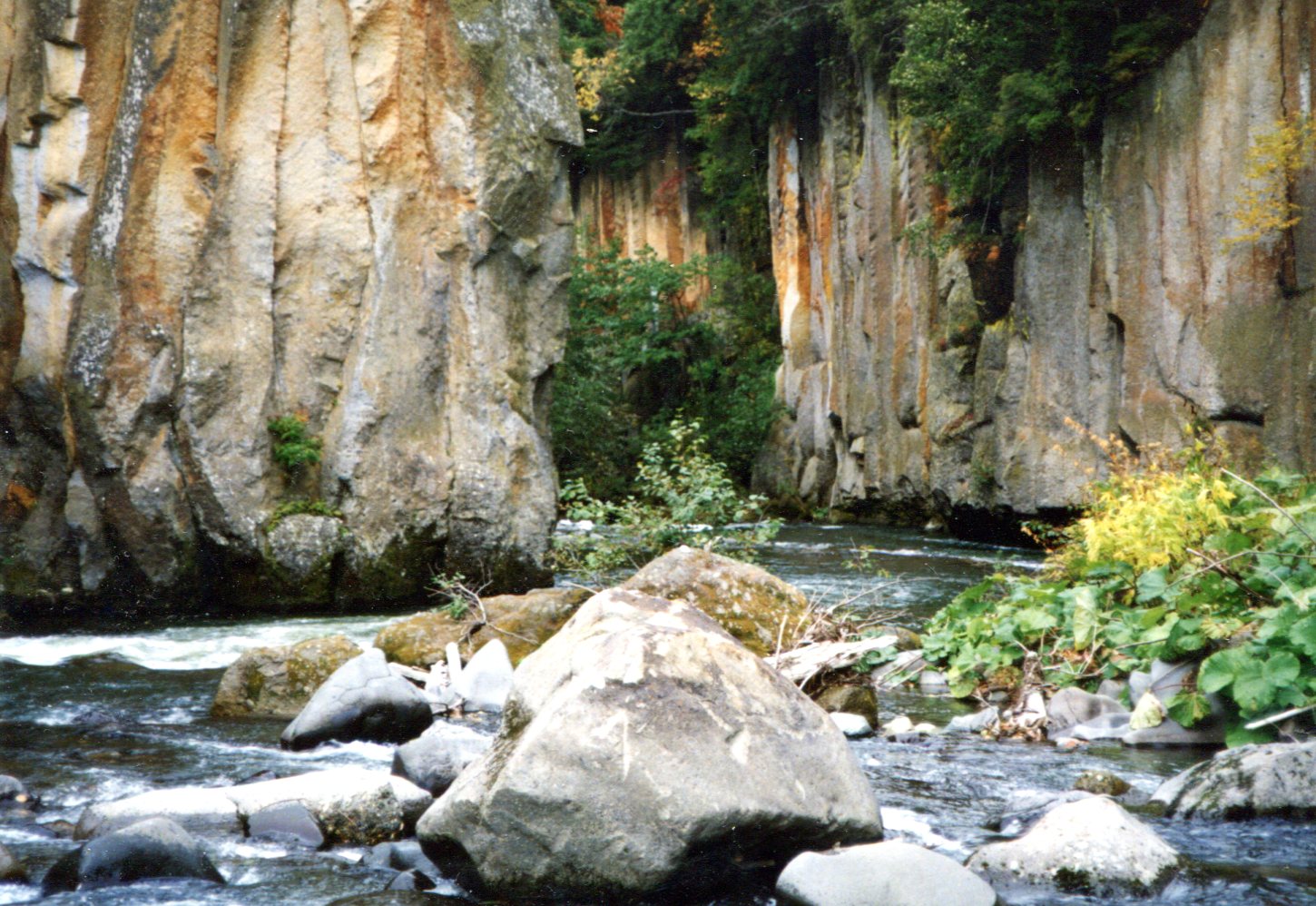
Rented bicycles early and rode around most of the day. Went to O-dake and Ko-dake, two narrow gorges at some distance from the resort complex. Ko-dake was the best — a bike path runs through it, while the road, a little crowded with cars, is diverted through a tunnel.

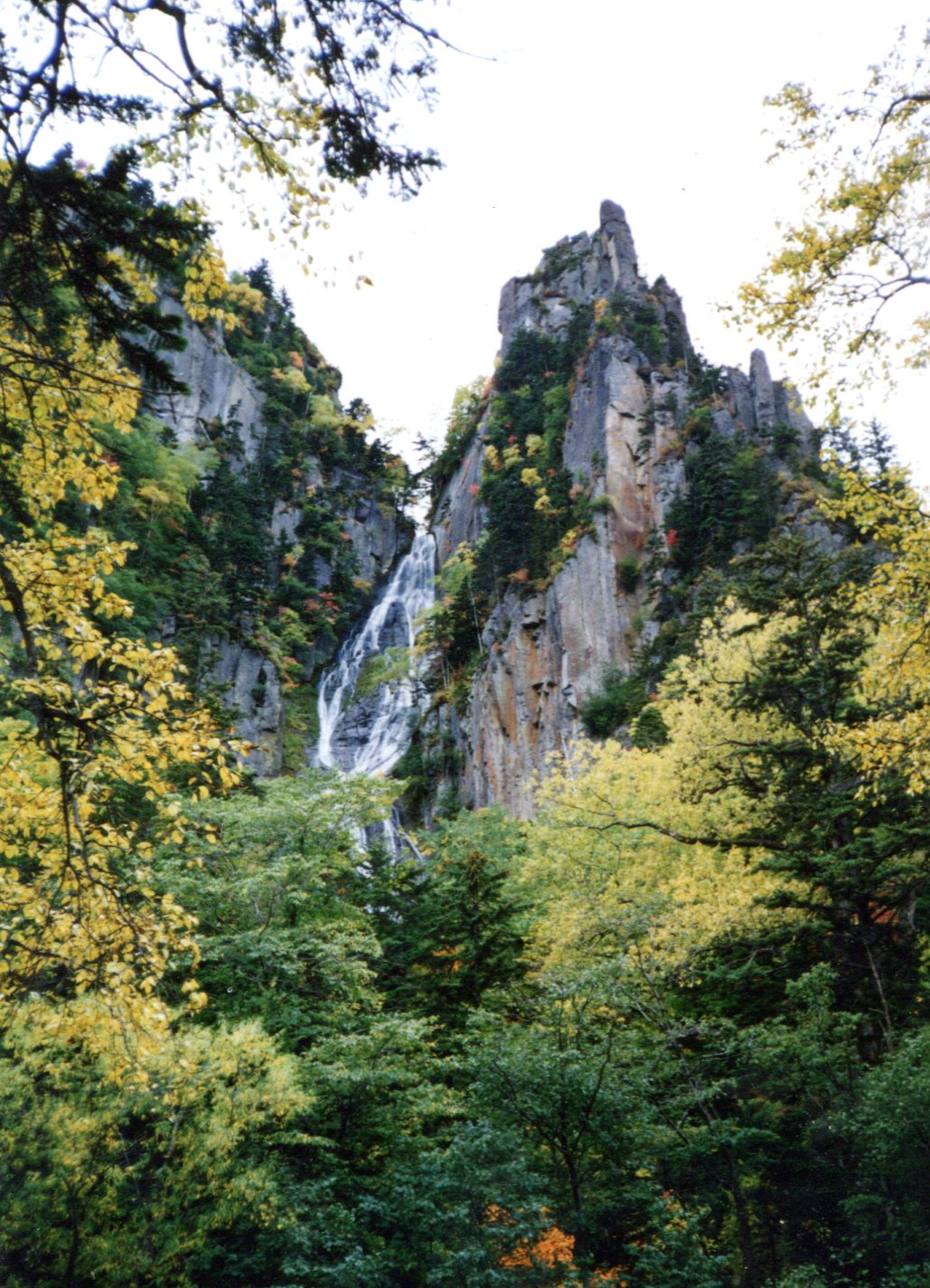
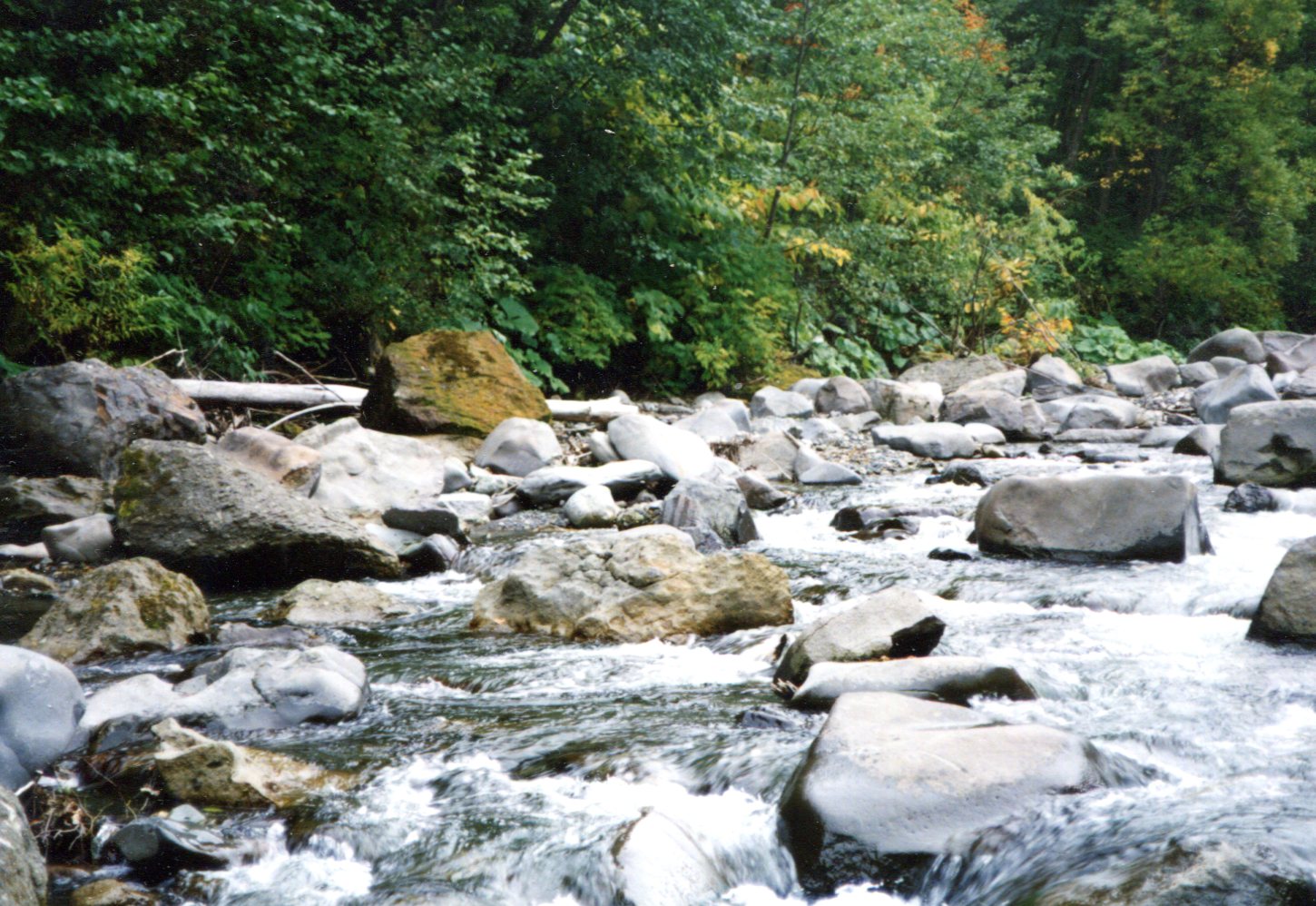
The gorge walls are reams of gray rock, bristling with all-color foliage like wild beards. Saw an assortment of waterfalls en route, including a multi-stream cascade.

Ate roasted corn on the cob and ice cream, two regional specialties, at the wayside shacks of O-dake. 

The fall colors… throughout this part of Hokkaido equal in variety and mass anything I’ve seen in autumn excursions in East Tennessee or New England.

Yellowstone, Badlands, Albert Lea, Etc. 2005

Part of a letter I wrote to Ed about 13 years ago, with a few relevant pictures and hindsight notes in brackets.

Aug 22, 2005

Time to start another letter, which I might as well subhead “Things About My Recent Travels That Didn’t Make It Into the Blog.” If letters had subheads, that is.

In some ways, I hope this is a pattern for future travels [mostly it wasn’t]. Of the nine nights we spent on the road, six were in a tent, three in a motel. Better still, of the six nights in a tent, four cost nothing. Call me a cheapskate, but it did me good to return every night to Yankee Jim Canyon about 15 miles north of Yellowstone, in Gallatin Nat’l Forest land, and crawl into the tent knowing that I paid nothing. Well, no extra charge, no insidious “user’s fee,” because some small bit of my taxes must go to support the Gallatin Nat’l Forest.

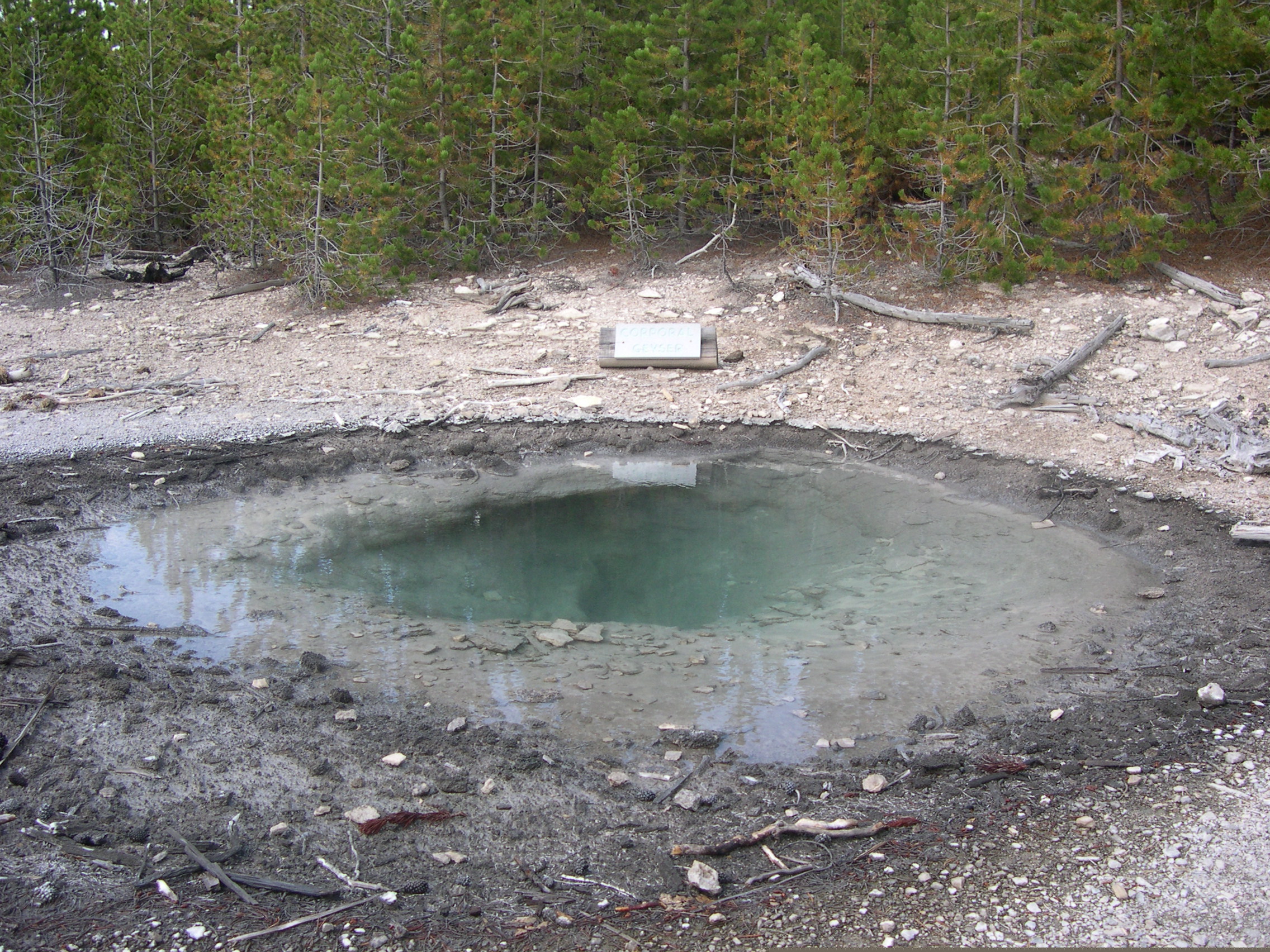
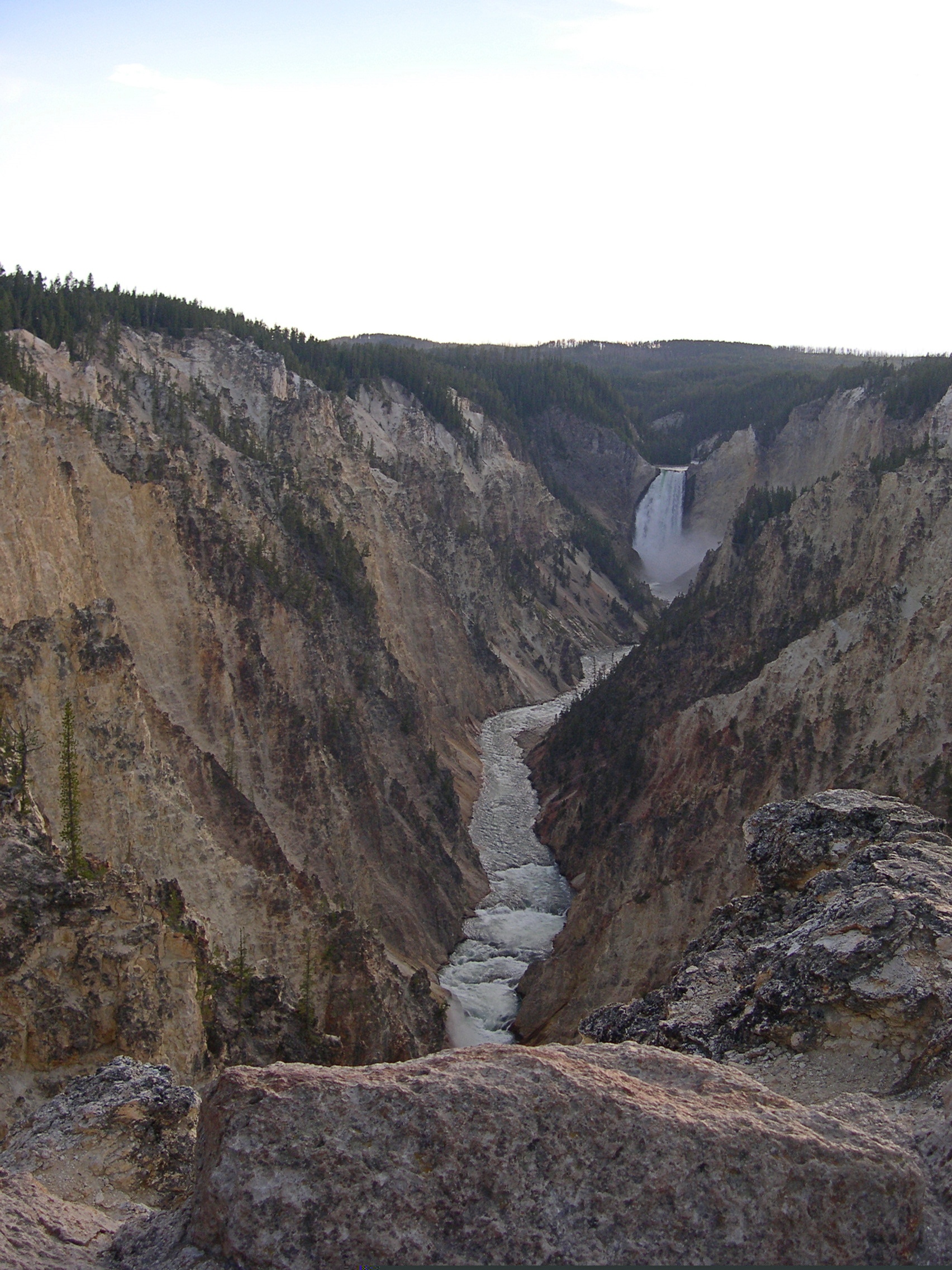
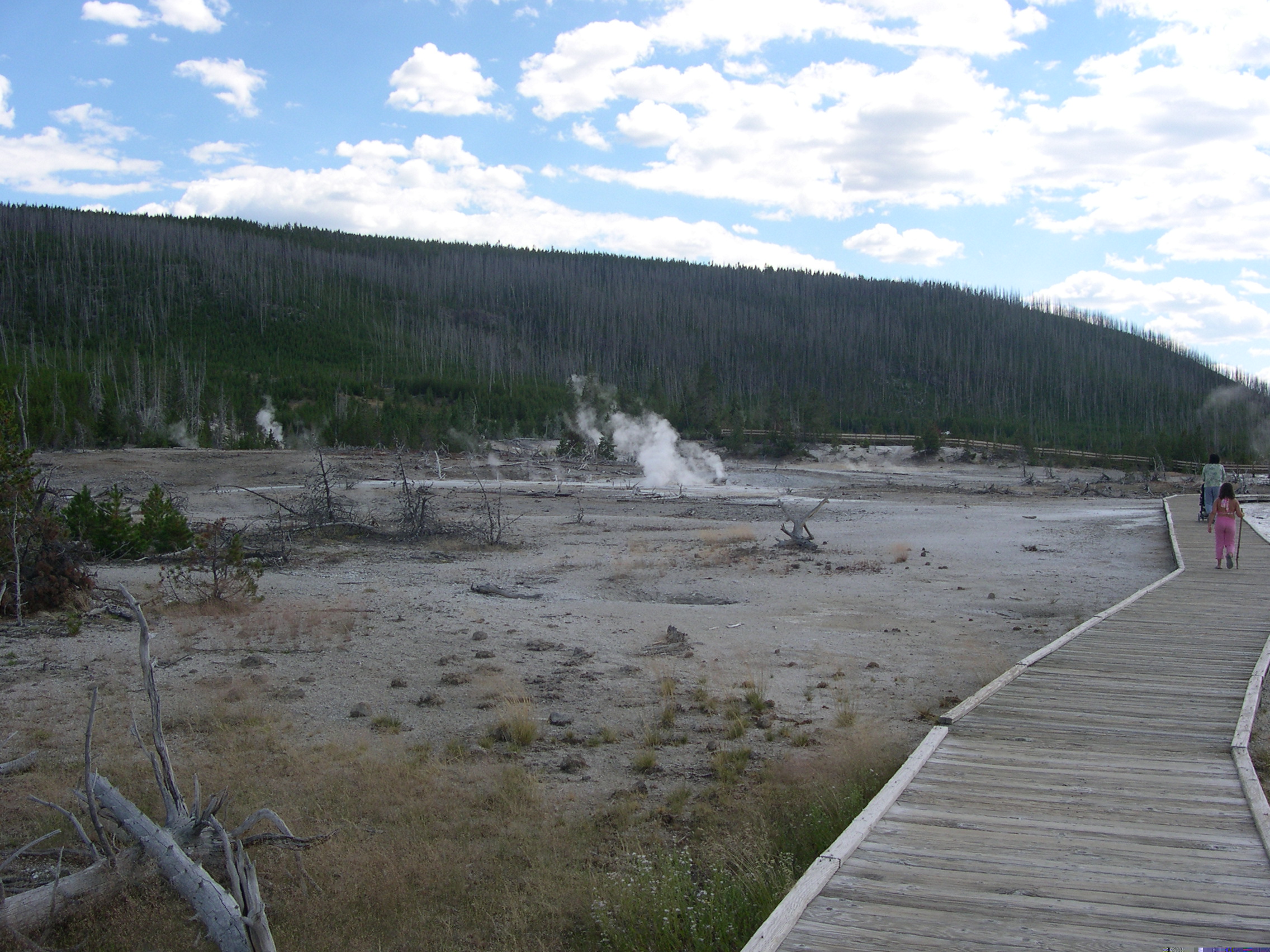
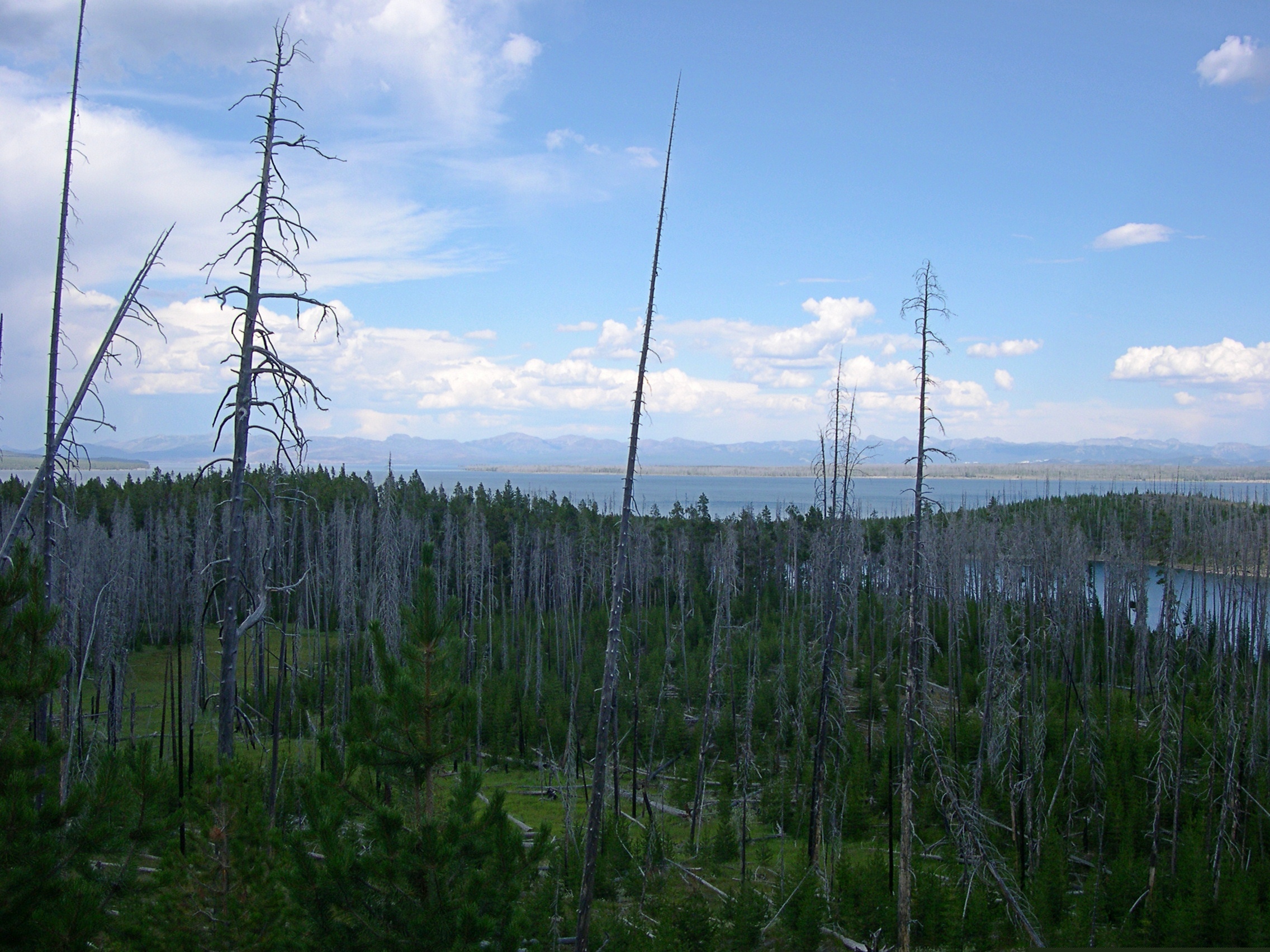
Some of the most striking things about the many striking things in Yellowstone were the places — whole mountainsides, in some cases — that had clearly burned down in 1988. Hundreds of grey-dead trunks, stripped of anything remotely alive, still stand, lording — if such be possible among trees — over forests of mid-sized pines, very much alive, the spawn of the great fire. In other places, hundreds of tree corpses have tumbled into random piles, also interlarded with young living trees. You can drive for miles and miles and see scene after scene like these. They say it was a hell of a fire, a complex of hell-fires, really, and I believe it.

[A post-fire landscape in Yellowstone in 2005, 17 years later.]Yellowstone 2005

I saw something in South Dakota that the rest of the nation can emulate: two kinds of X signs, marking traffic deaths I think. One says: “WHY DIE? Drive carefully.” And the other: “THINK: X marks the spot. Drive carefully.” For such a sparse population, South Dakotans seem to kill themselves often enough on the roads. Long winters, cheap booze, almost empty roads.

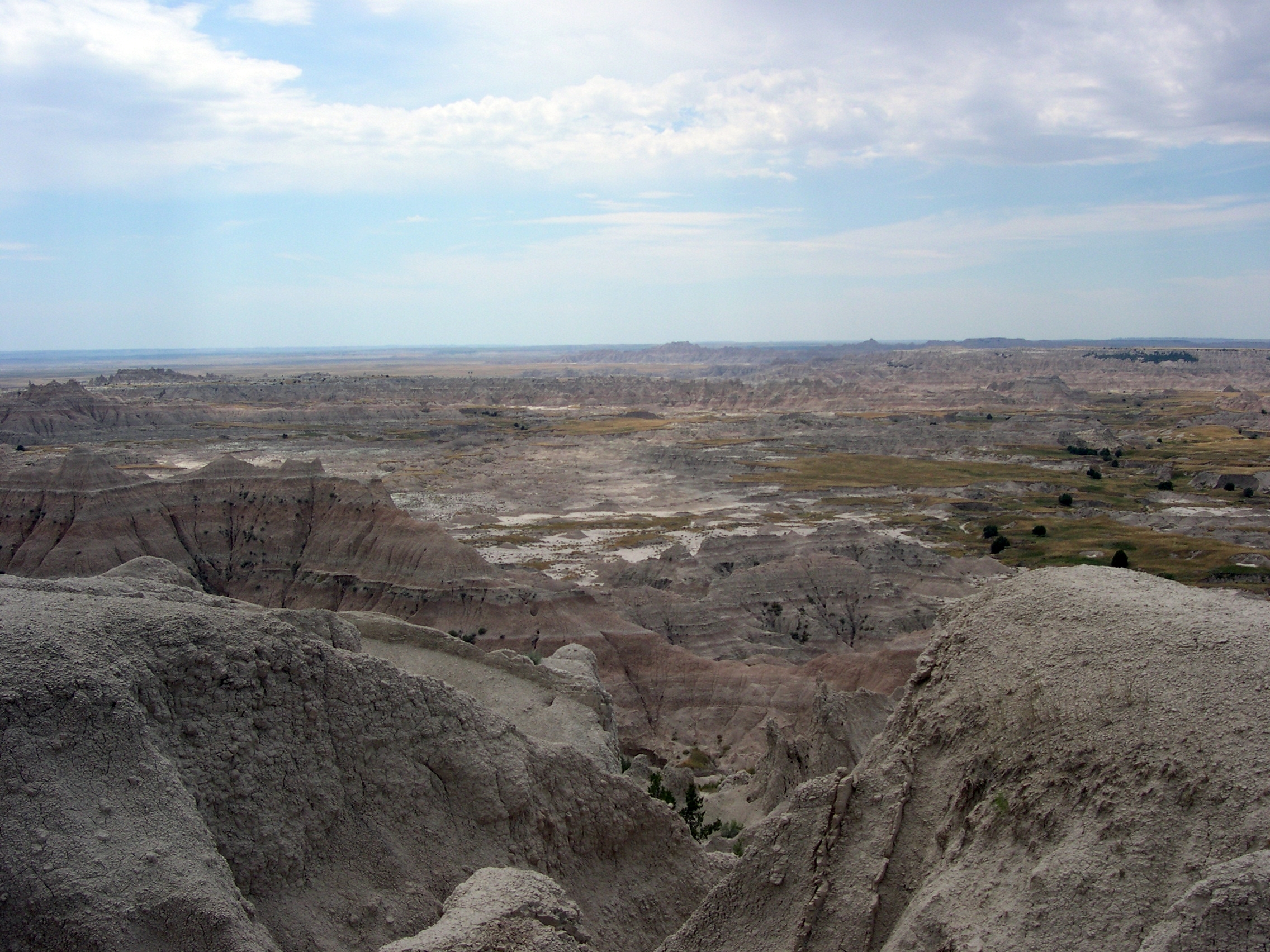
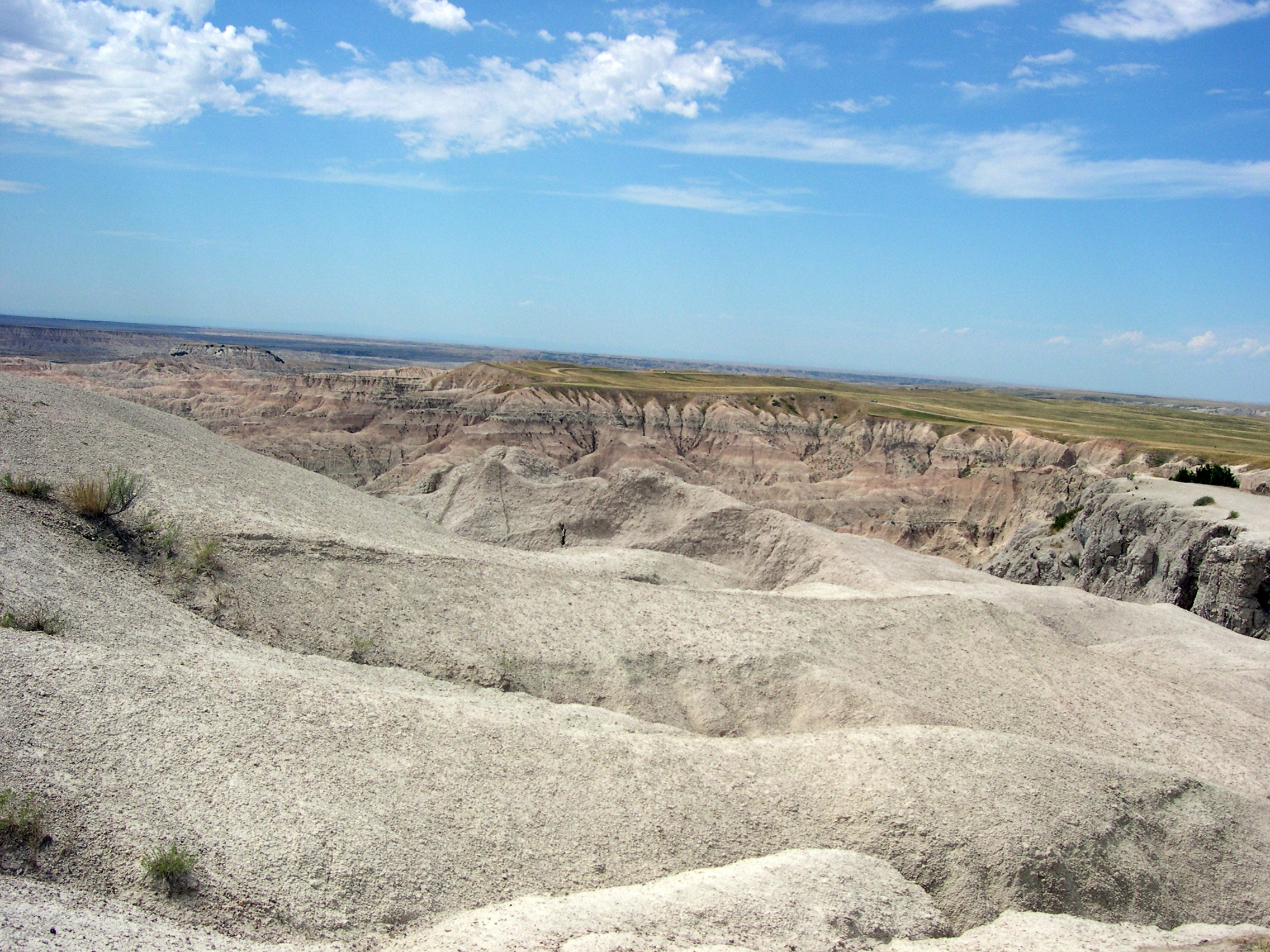
I recommend the drive along the Missouri River from I-90 to Pierre, SD — along state roads 50, 10, and mostly 1806, all of which also form a National Scenic Byway. Hilly, bleak territory largely given over to Indian reservations, though not quite as bleak-looking as Badlands NP.

[Badlands NP, 2005]

In places, except for the road, it couldn’t have been that much different than what Lewis and Clark saw. I never can remember, without looking it up, which one probably blew his brains out a few years after co-leading the Corps of Discovery. [Lewis] Clinically depressed, before there were clinics worth visiting, and before melancholia became depression. Anyway, if I remember right, there’s a monument to him near where he died, on the Natchez Trace. I saw it years ago. A lonely place to die.

We spent the first night out at a campground near Albert Lea, Minnesota. According to me (and only me), Albert Lea is important for two things. One I just noticed: it’s the closest town to the junction of I-35, the U.S. branch of the Pan-American Highway, and I-90, the Boston-Seattle transcontinental epic of a highway. [I’ve since learned that no U.S. road is officially called the Pan-American; it’s just custom that attaches the name to I-35.]

The other thing is that I was visiting Albert Lea for the second time, after a span of 27 years. What was I, a south Texas lad of 17, doing in south Minnesota en route to Wisconsin one August day in 1978? Am I repeating myself here? Maybe I mentioned that epic bus trip before. It was an important one for me. No family, distant states — Wisconsin seemed wildly exotic. Christmas trees grew in people’s yards.

Anyway, in 1978 we stopped for lunch in Albert Lea. I went with the bus driver and some other kids to Godfather’s Pizza, a place I’d never heard of. After that, I walked around a little, relishing the remoteness of the place.

In 2005, we encountered wildlife at the campground near Albert Lea, namely mosquitoes in great numbers. The place was fairly green and lush, so I guess southern Minnesota hasn’t had the drought that Illinois has had this year. When we were leaving the next morning, we drove down the town’s main drag and there it was: Godfather’s Pizza, looking like not much maintenance had been done since the late 1970s, though of course I had no memory of how it looked then, just that I was there. [In Eau Claire this year, we ordered a pizza from a Godfather’s and ate it in our room. I ordered from there because of my experience 40 years earlier. And it was close.]

One other note, for now: Hot Springs, SD, is a lovely town. Near much of the main street flows a river, and alongside most of the main street across from the river are picturesque sandstone buildings, vintage pre-WWI. Evidently, it was locally inexpensive building material.

I left the family at a spring-fed swimming complex while I looked for a pay phone, since my cell phone refused to transcend the hilly surroundings. Argh, what an odyssey that was – “Yeah, we used to have a phone…” I’d foolishly agreed to do an interview that day, figuring I could use my cell. Anyway, after much to-do, I found a phone, did the interview, and then relaxed by the riverside, which has a sidewalk and a hot spring (Kidney Spring) under a gazebo. Free for all to drink, with a metal plaque describing its properties. Not bad. A little salty, but not bad, even on a hot day in South Dakota.

Voyageurs National Park

What is it about national parks? The term is a charm, good juju, kotodama, perhaps to misuse all those expressions, that draws people to a place. People like me.

Had Voyageurs National Park, which is way up in northern Minnesota, merely been Voyageurs State Park — with the same lake-based natural sites and the same history stretching back to paleo-Indians — I doubt that I’d have made the effort to visit this time. I even picked it over a national monument about the same distance from Duluth, the similarly themed Grand Portage NM at the state’s northeast tip.
Recently I checked a list of U.S. national parks and discovered that Gateway Arch National Park in St. Louis was established earlier this year. I hadn’t heard that. The new designation was evidently something Congress could agree on, so now there are 60 national parks.

Including Gateway, because I’ve been there a few times, that’s a round 20 national parks I’ve visited, also including Voyageurs NP, which we went to on July 30.

Among the 60 U.S. national parks, Voyageurs NP is one of the least visited, in the bottom 15, with 237,250 recreational visitors in 2017. That’s many more than the likes of Gates of the Arctic (the least visited at just over 11,000 visitors last year) or the least-visited non-Alaska park, Isle Royale, at over 28,000. But not very many compared with the swarms at Great Smoky Mountains or the Grand Canyon or Zion, the top three 2017 tourist magnets among national parks.

The park is relatively new as well, something I hadn’t bothered to learn beforehand. Richard Nixon’s signature is on the 1971 bill creating Voyageurs NP, which was formally established in 1975.

Voyageurs NP is one of those parks designated for its natural beauty, but also its human history, with the name honoring the tough and probably randy Frenchmen who passed this way once upon a time, hauling pelts on journeys from the wilds of Canada toward the markets of Europe.

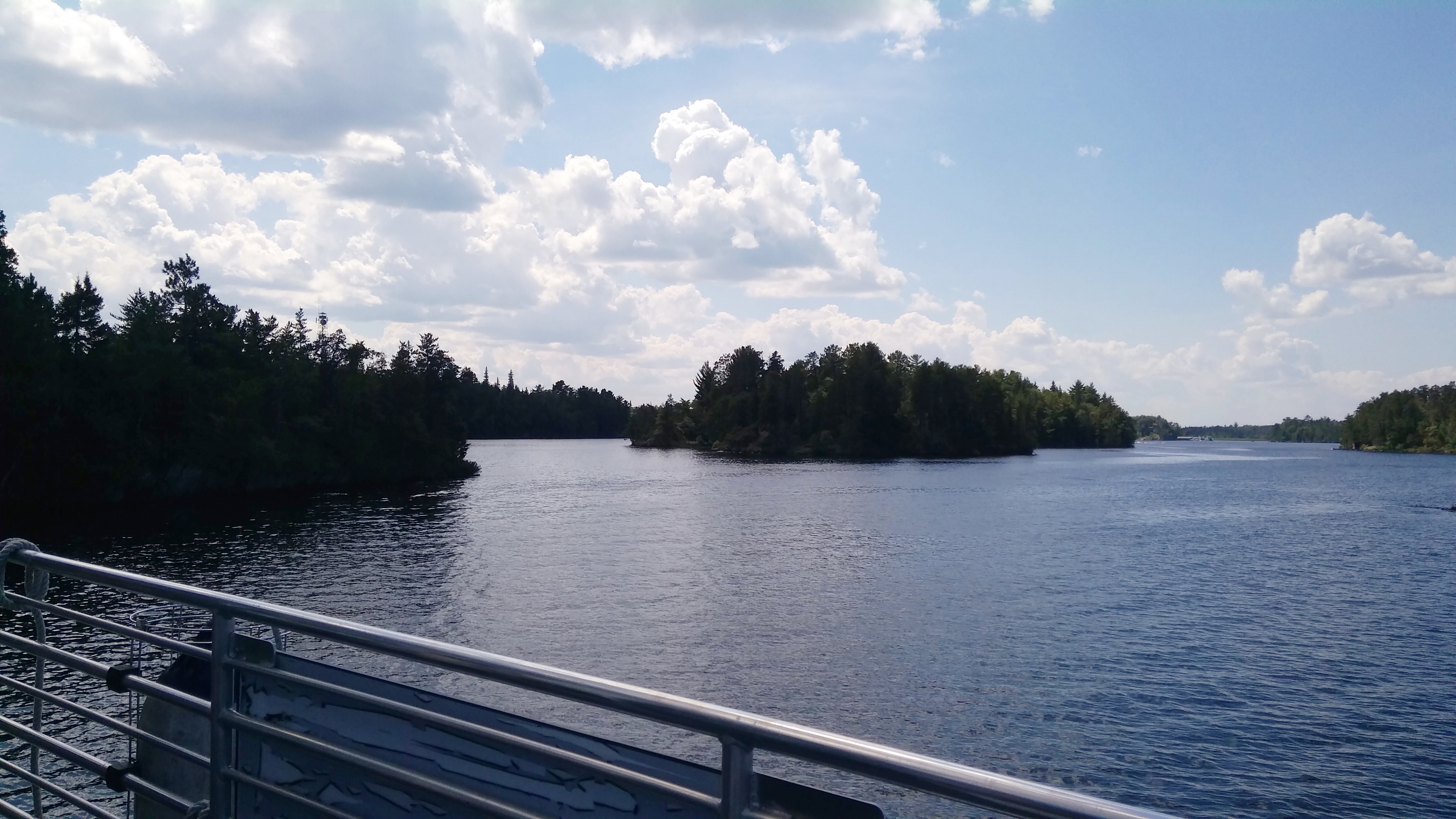
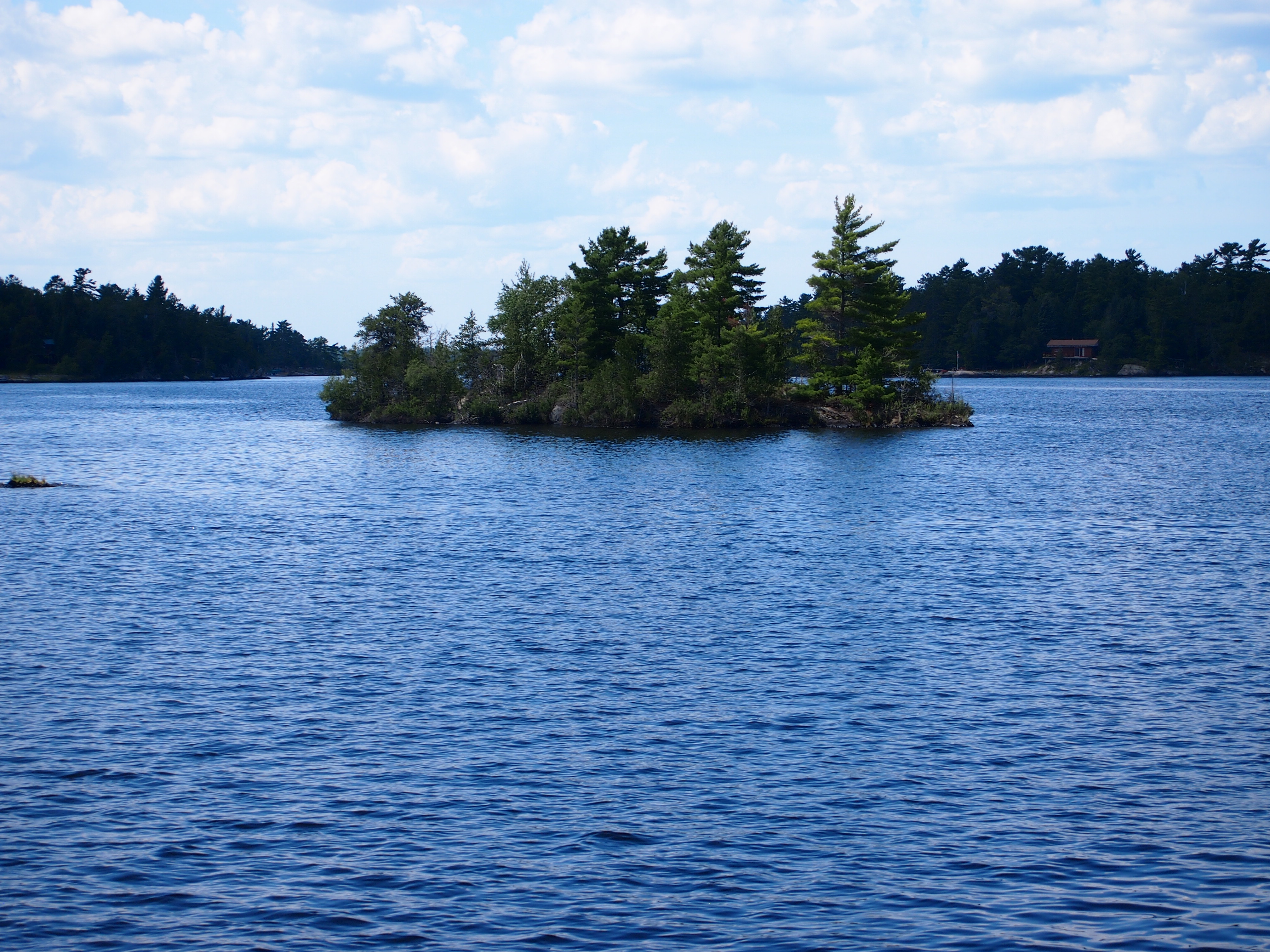
The park is a world of wooded islands and peninsulas but mostly lakes, including the sizable Rainy and Kabetogama lakes. So I figured only reasonable that the thing to do was take a boat tour.

The park itself offers a number of options, including one that’s six hours long, which didn’t interest me greatly, and one in small boats you paddle to evoke the transits of those hearty voyageurs of old, though I bet modern participants smell better than authentic voyageurs. That didn’t really pique my interest either.

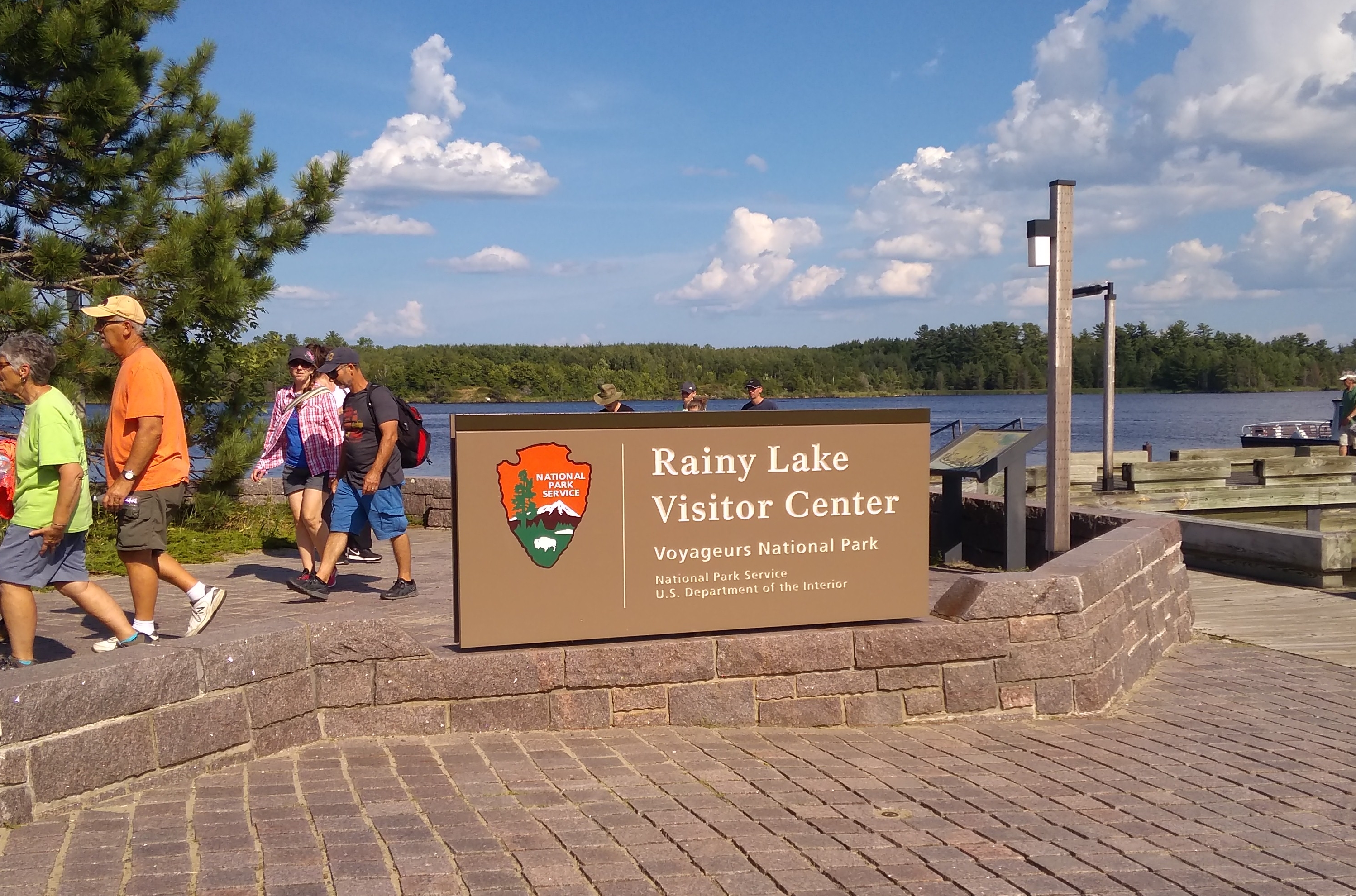
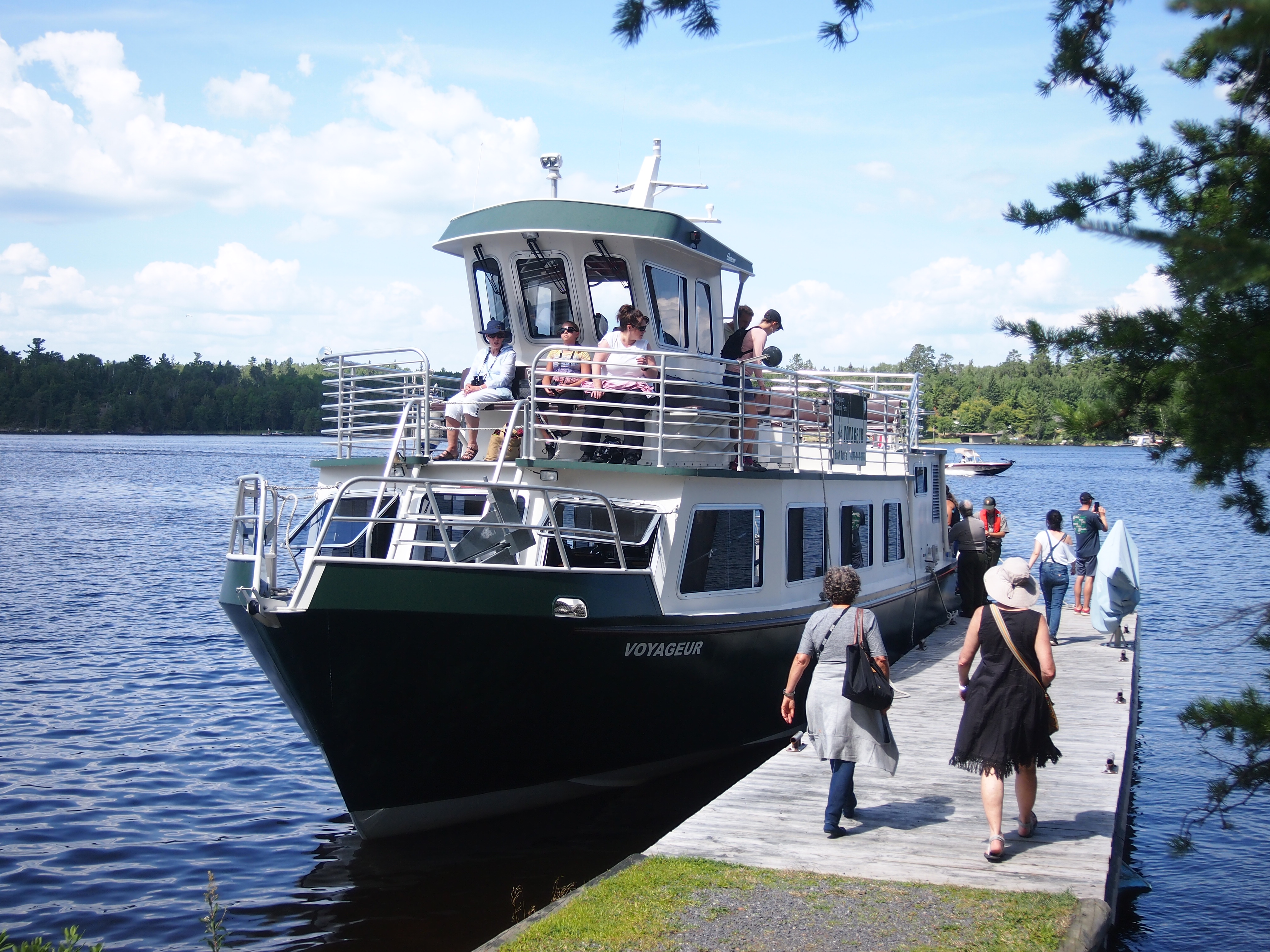
So we took a two-and-a-half hour jaunt out on Rainy Lake, at the park’s western edge, accessed by driving a few miles east of the border town of International Falls, Minn. We boarded the good tourist ship Voyageur and off we went.
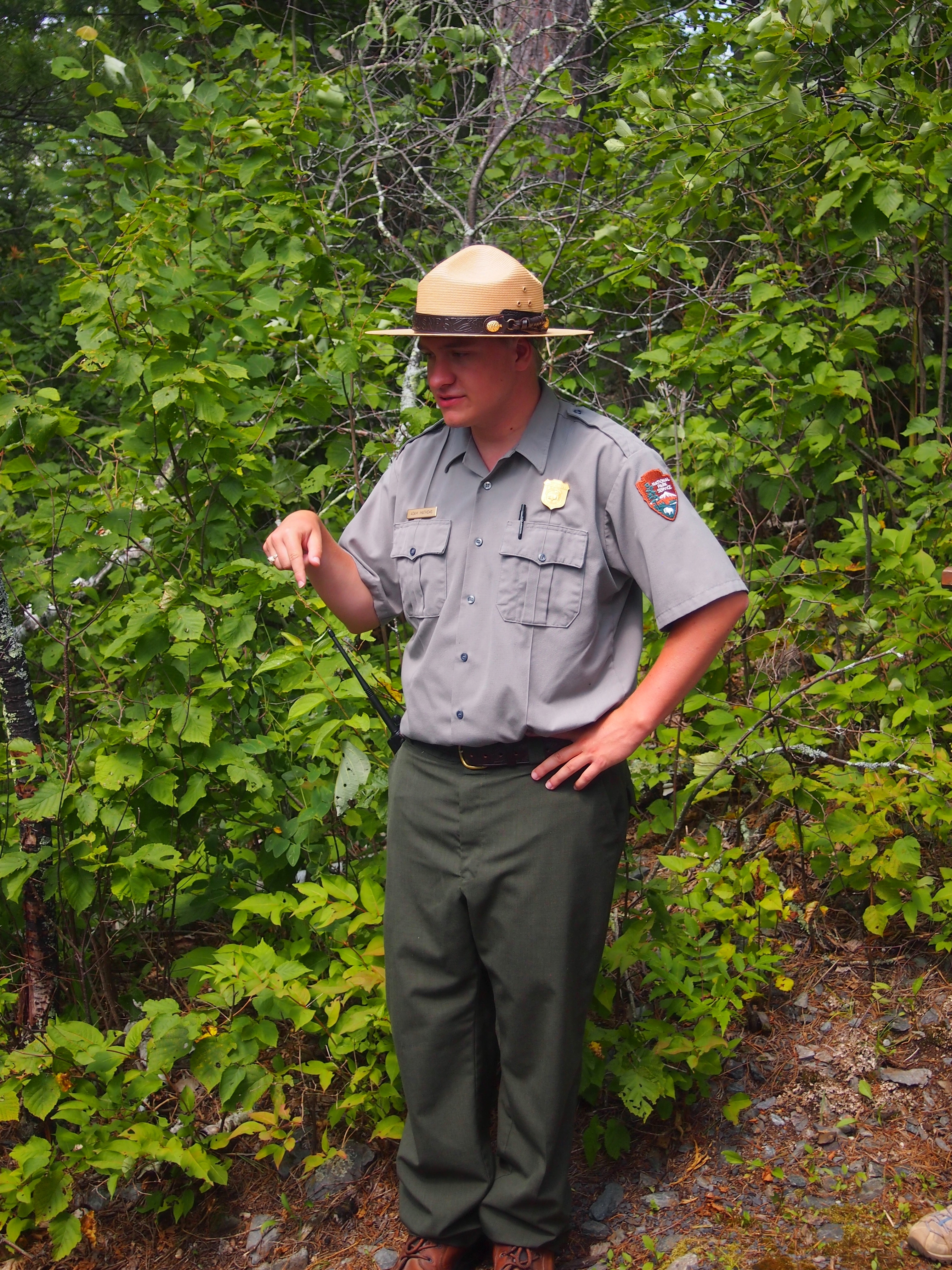
Along the way, our guide — Ranger Adam — pointed out various aspects of natural and human history in the land we cruised by, such as a number of eagles and eagle nests perched on tall trees, evidence of beavers at work, the sparse ruins of an 1890s settlement called Rainy Lake City, and a former fishing camp that petered out in the 1950s.

We stopped at one small island: Little American Island, which was added to the park only in 1989. Gold mining had occurred there briefly nearly 100 years earlier. These days, short footpaths take visitors to the few relics of the gold mining days.
Ranger Adam went with us to explain things and point stuff out, such as the hole in the ground left over from the gold mine and a few rusty mining machine parts.

“The Little American Mine operated from 1893 to 1898,” says Forgotten Minnesota. “The average value of the gold extracted during that time was $30 per ton, which represented a profit of around $12 per ton.

“The Little American is the only gold mine in Minnesota known to have produced a profit. The impact of the mine was felt primarily in Rainy Lake City. After the mine closed, Rainy Lake City slowly disappeared and was considered a ghost town by 1901.

“Although the mine was productive, a large vein of rich gold was never found to kick off a gold rush to rival those in California. Oddly enough, the influence of the Little American Mine on the mining industry occurred in Canada, where the large veins of gold were finally found.

“Remnants of the mine can still be found under years of overgrown brush and pine trees. Two major excavations from the Little American Mine are still visible on the island: a vertical, cribbed shaft and an entrance to a horizontal shaft. Both are filled with debris and water.”

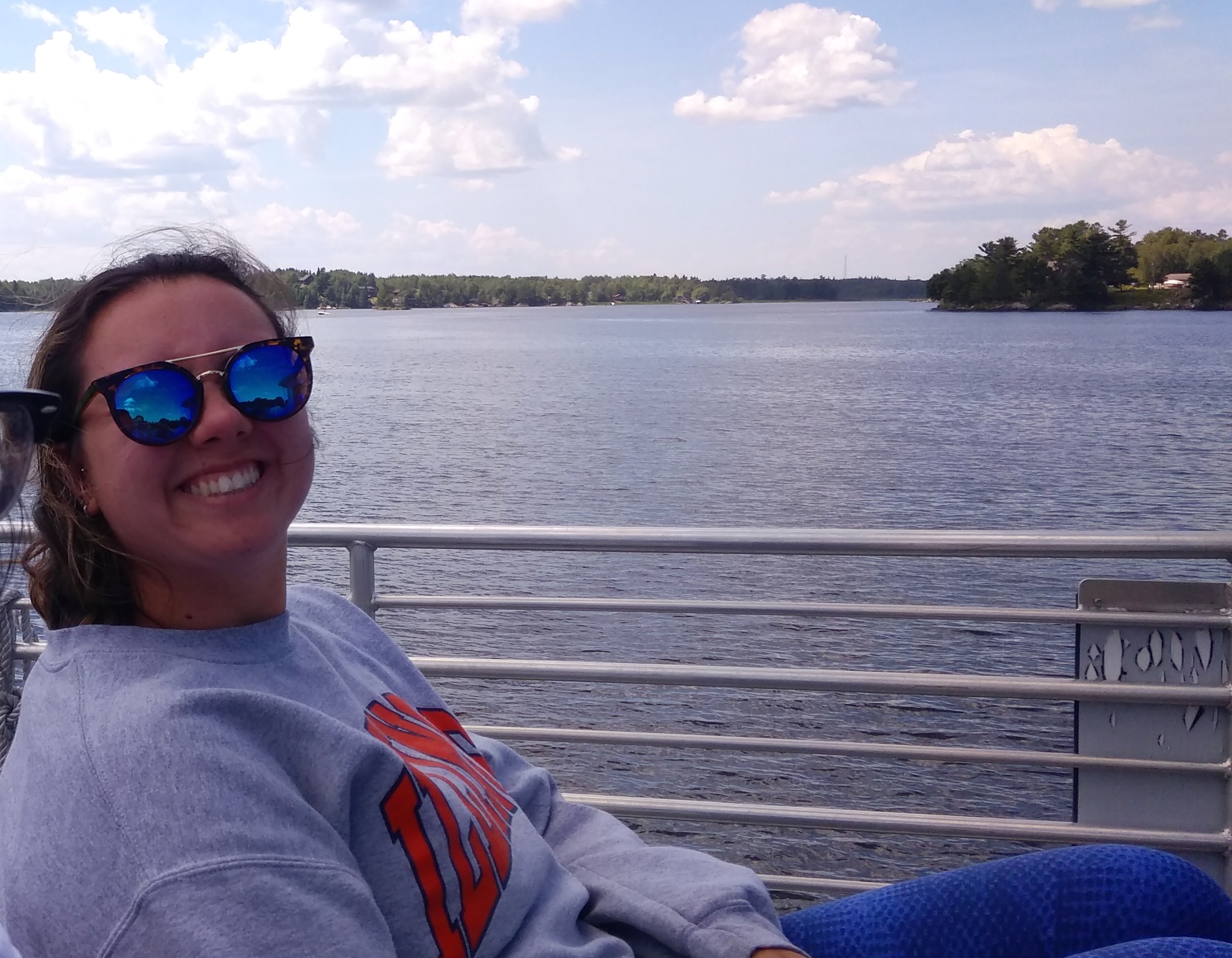
Little American Island aside, the tour was mostly a relaxing few hours on the water. Though it was fairly warm — maybe 85 F and partly cloudy — as we chugged along the breeze kept things fairly comfortable.

One oddity: out on the lake, I felt my phone buzz in my pocket. I didn’t really want to have anything to do with it while on the lake, but I was surprised there was service at all. I glanced at the phone and the screen said, Welcome to Canada! Then it offered details about how I needed pay extra to call from within Canada.

I’m pretty sure we hadn’t crossed into Canadian waters, since a NPS tour is probably going to be precise about that kind of thing. But we were close. The nearest cell tower must have been on private land in Canada, so the phone, dense device that it is, figured we were there.

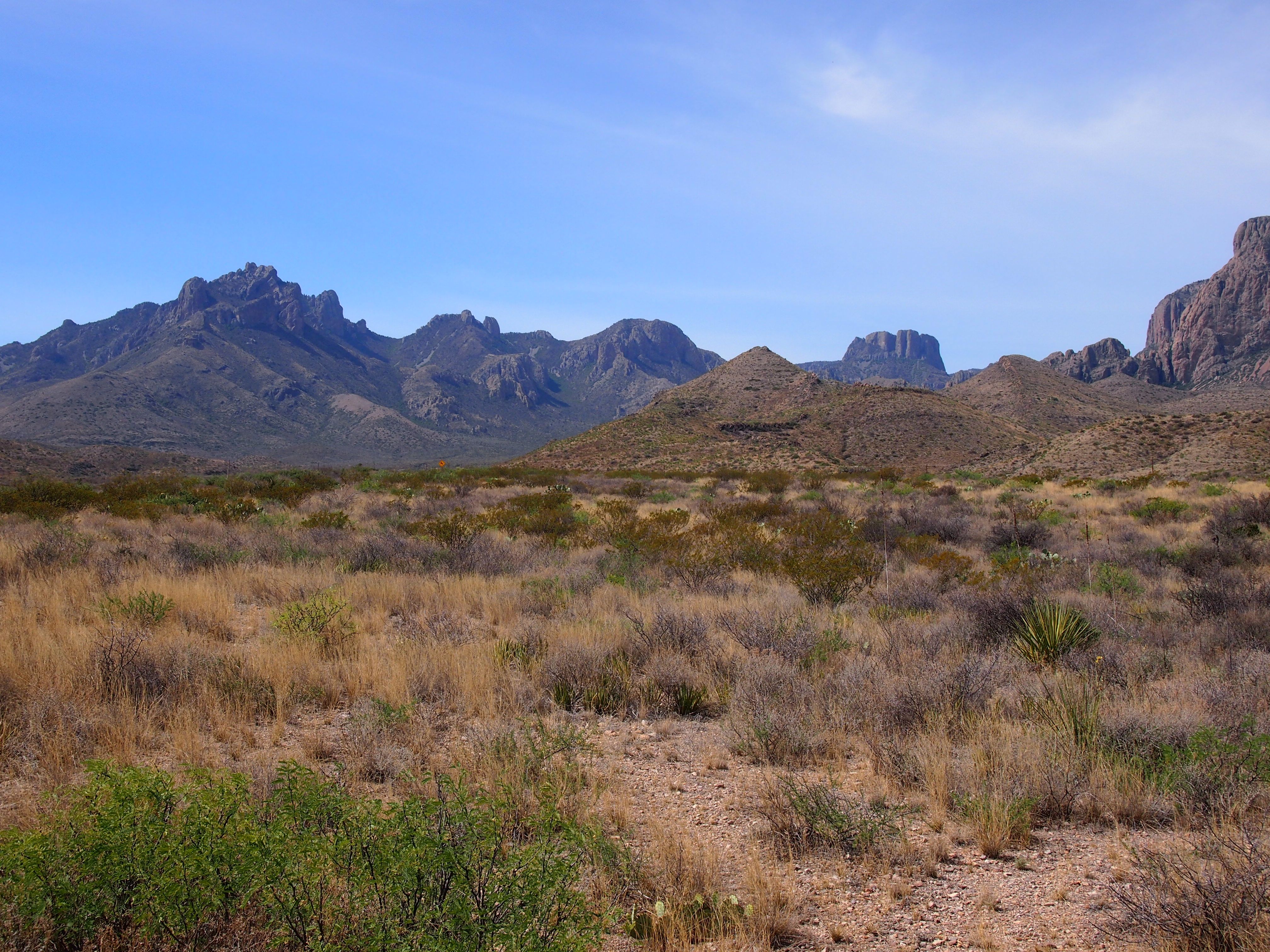
Big Bend National Park

When I was young, I was a fan of the Texas highway maps produced by the Texas Highway Department (these days TexDOT), which were published annually and usually available at highway rest stops, though I think one year in the early ’70s I wrote to the department, and it mailed me one.

I admired those maps, unconsciously at that age, for good reasons. They were precise, easy to understand, useful and aesthetic, everything you need in a map. I found the color scheme for the cities and towns particularly fascinating. The largest cities were yellow. Mid-sized cities were green and large towns were brown. Or maybe those last two were the other way around; I don’t have an old map in front of me. To my thinking, that’s a brilliant way to depict population centers by relative size.

My 7th-grade Texas History teacher, the prickly Mrs. Carico, taught us map-reading skills one day using Texas highway maps. Imagine any teacher doing that now. I think I already knew most of what she said, though I did learn from her the difference between red mileage numbers (marked with red arrows) and black numbers that didn’t use arrows.

She didn’t care for the yellow-green-brown system, though I don’t remember why. Maybe because the national forests in East Texas and Big Bend National Park in West Texas were a slightly different shade of green. But I never found that confusing.

It’s probably from those maps that I got my first notion of Big Bend. There it was, hugging the Rio Grande, far from most everything else, thrusting into a remote part of Mexico, marked by the brown smears that denoted mountains on the map. A few roads went there. A few towns were nearby — but not that near. Somehow that place was a national park.

But I didn’t feel an aching need to go there. In 1972, when we took a family vacation to Carlsbad Cavern National Park, we could have just as easily have gone to Big Bend, but we didn’t, and the thought never occurred to me. In 1980, when I drove to El Paso from San Antonio, a little creativity on my could have resulted in a day in Big Bend, but it didn’t occur to me. In the 1990s, reports of his visits to the park by my brother Jay were interesting, but it seemed even further away than ever from my vantage in the Midwest.

Last year, I planned to go with Jay and Lilly, but circumstances prevented it. This year, I decided it was time, though by myself. So on April 24, 2018, in mid-morning, I found myself at the park entrance.
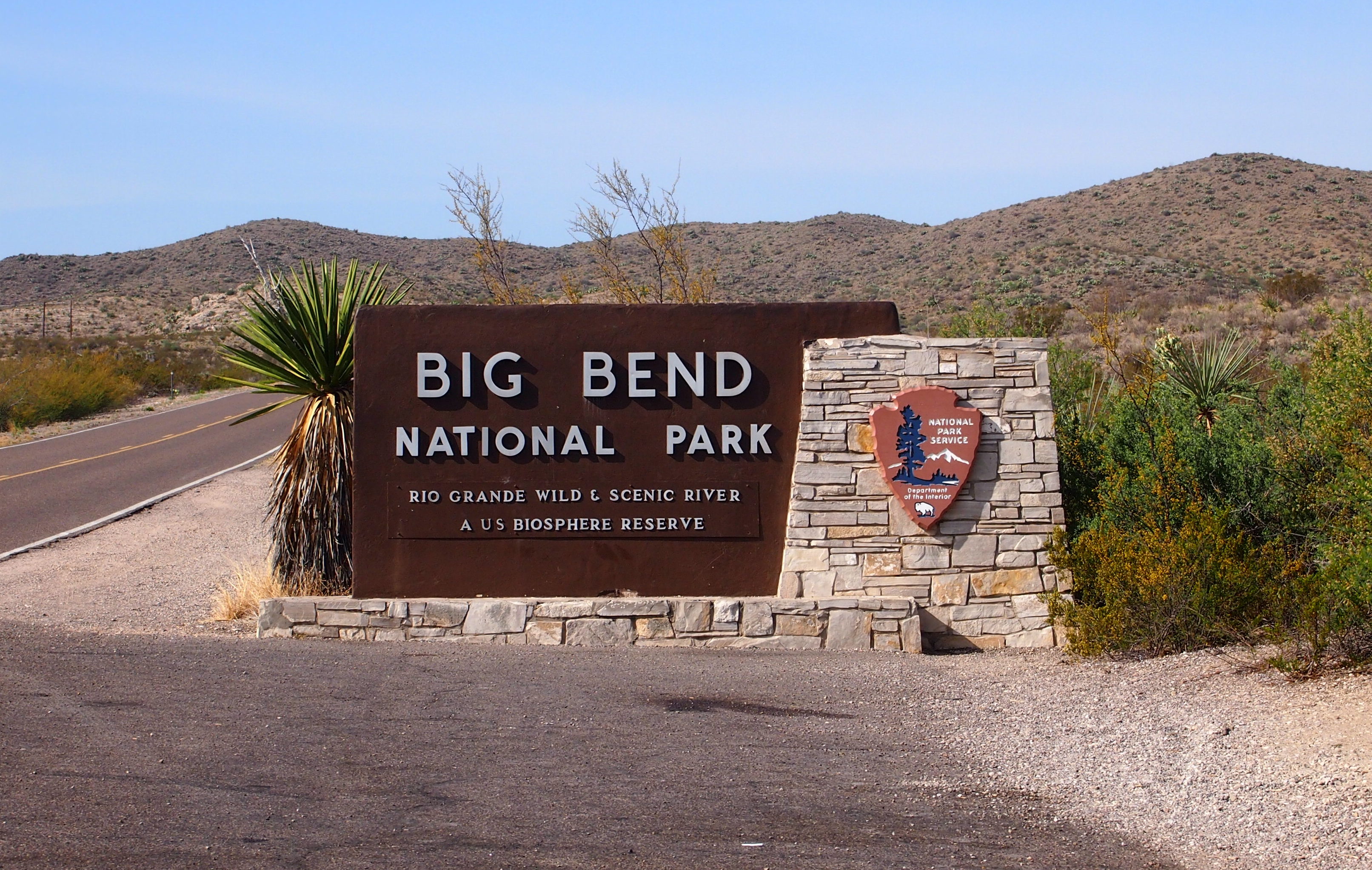
The road from the town of Marathon to the park entrance, U.S. 385, was a lonely one. I was almost by myself on the way down that morning. According to the National Park Service, Big Bend isn’t a top 10 national park by visitors. It isn’t even in the top 25.

In 2017, it was 41st out of 60 national parks, and 130th out of all of the 377 units of the NPS (Gates of the Arctic NP is last among national parks, unsurprisingly). A lot people probably have the same feeling about Big Bend that I had for many years: I’m sure it’s scenic, but it’s far away.

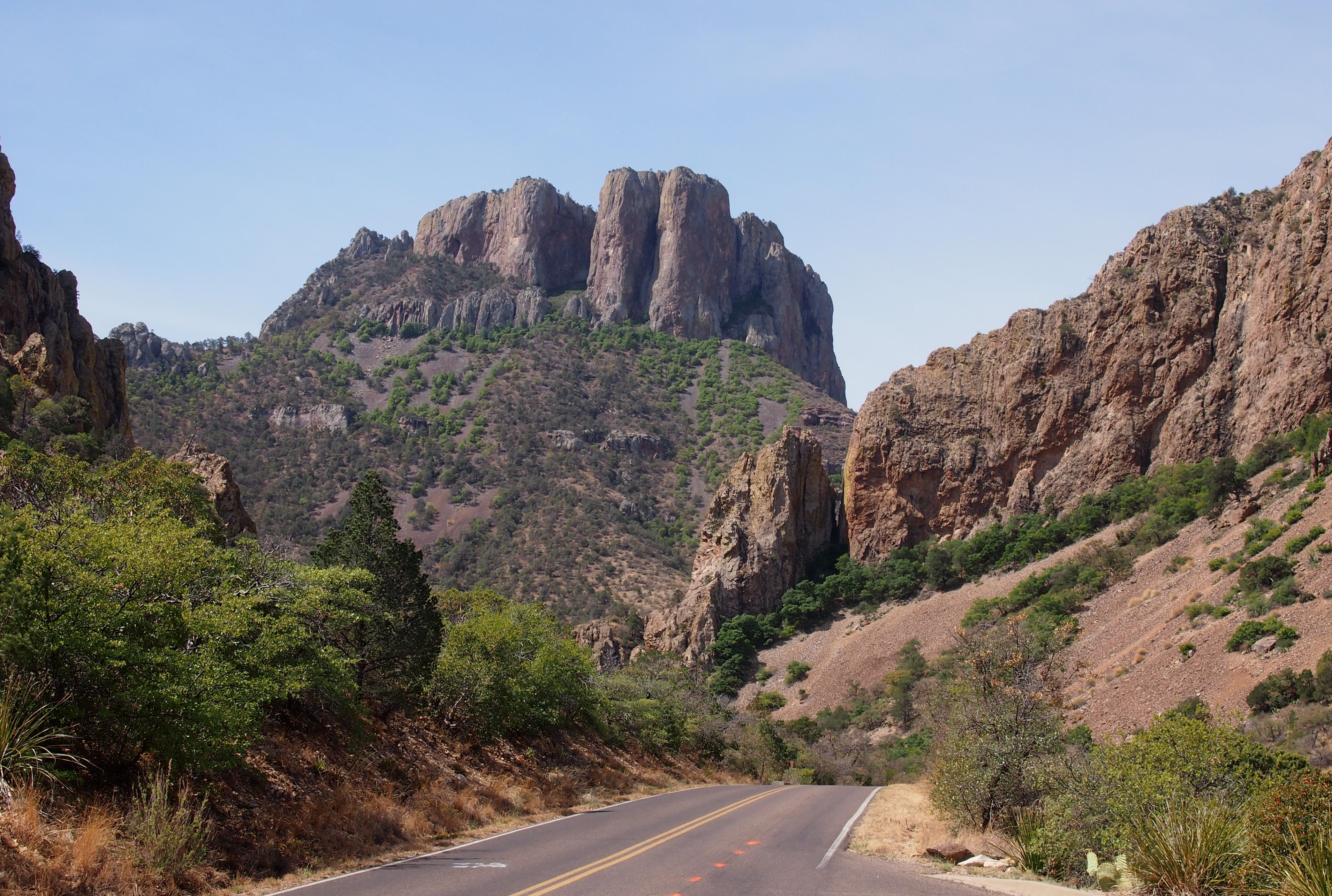
Glad I made the effort. It’s well worth the drive.
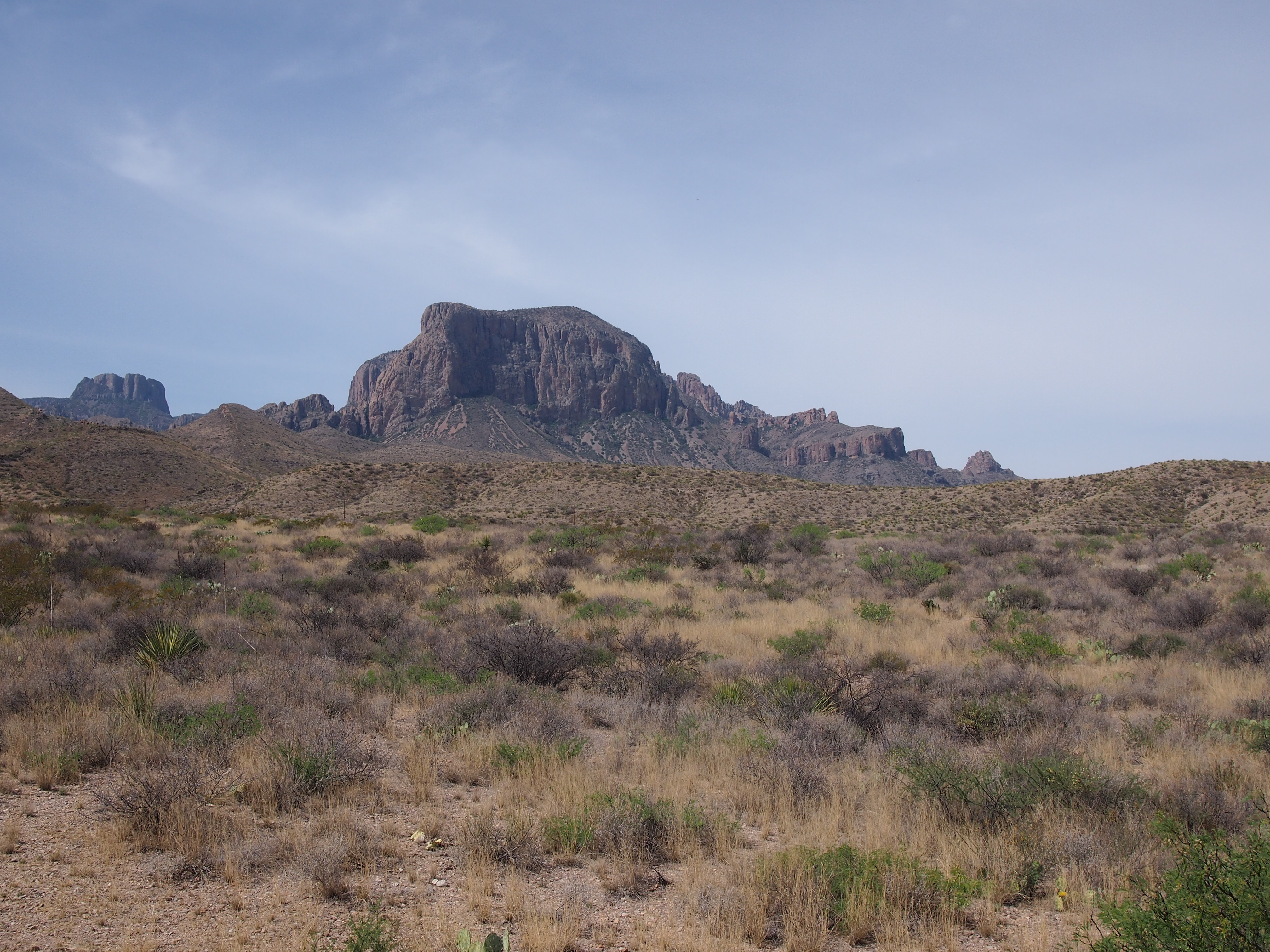
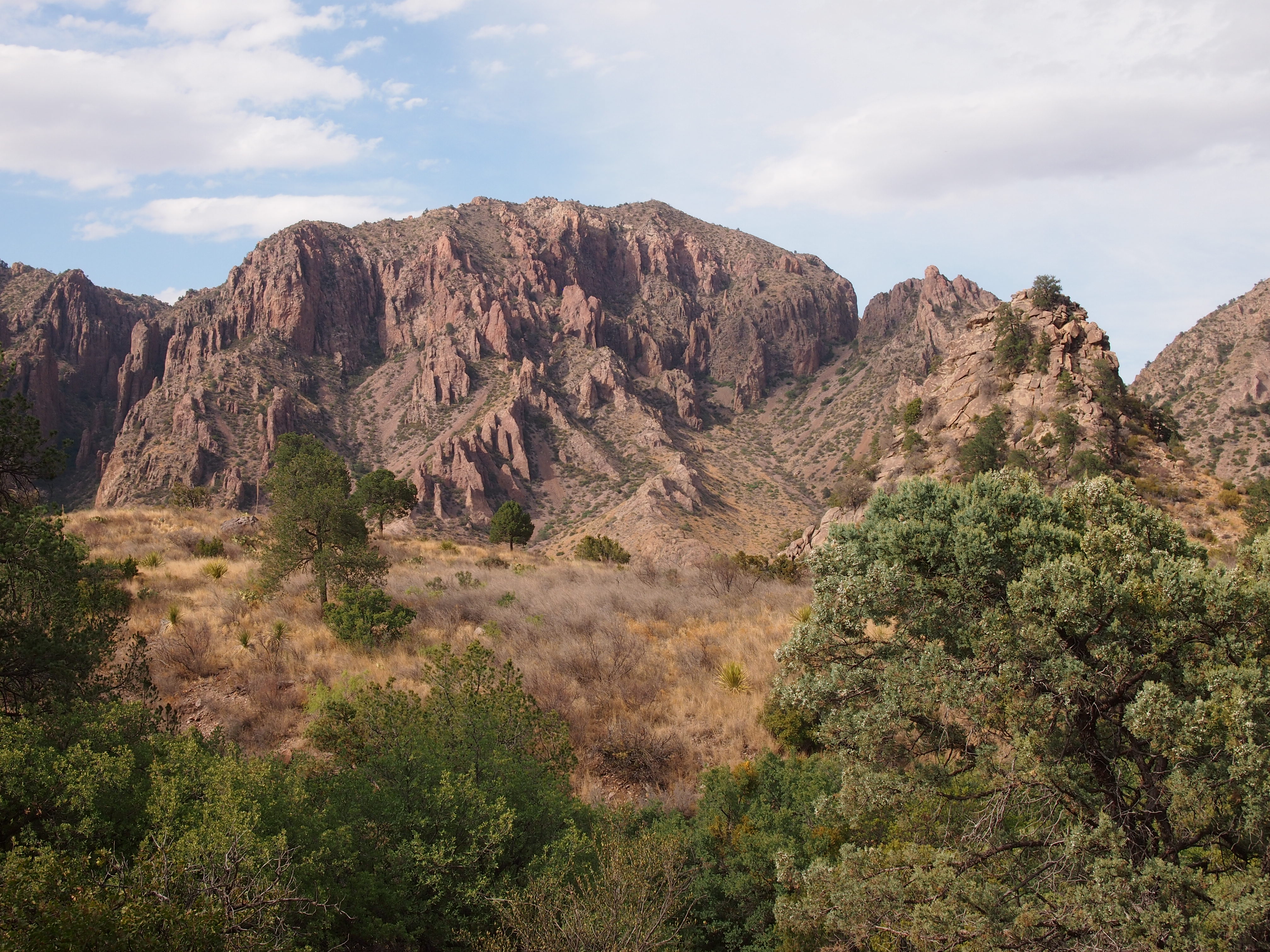
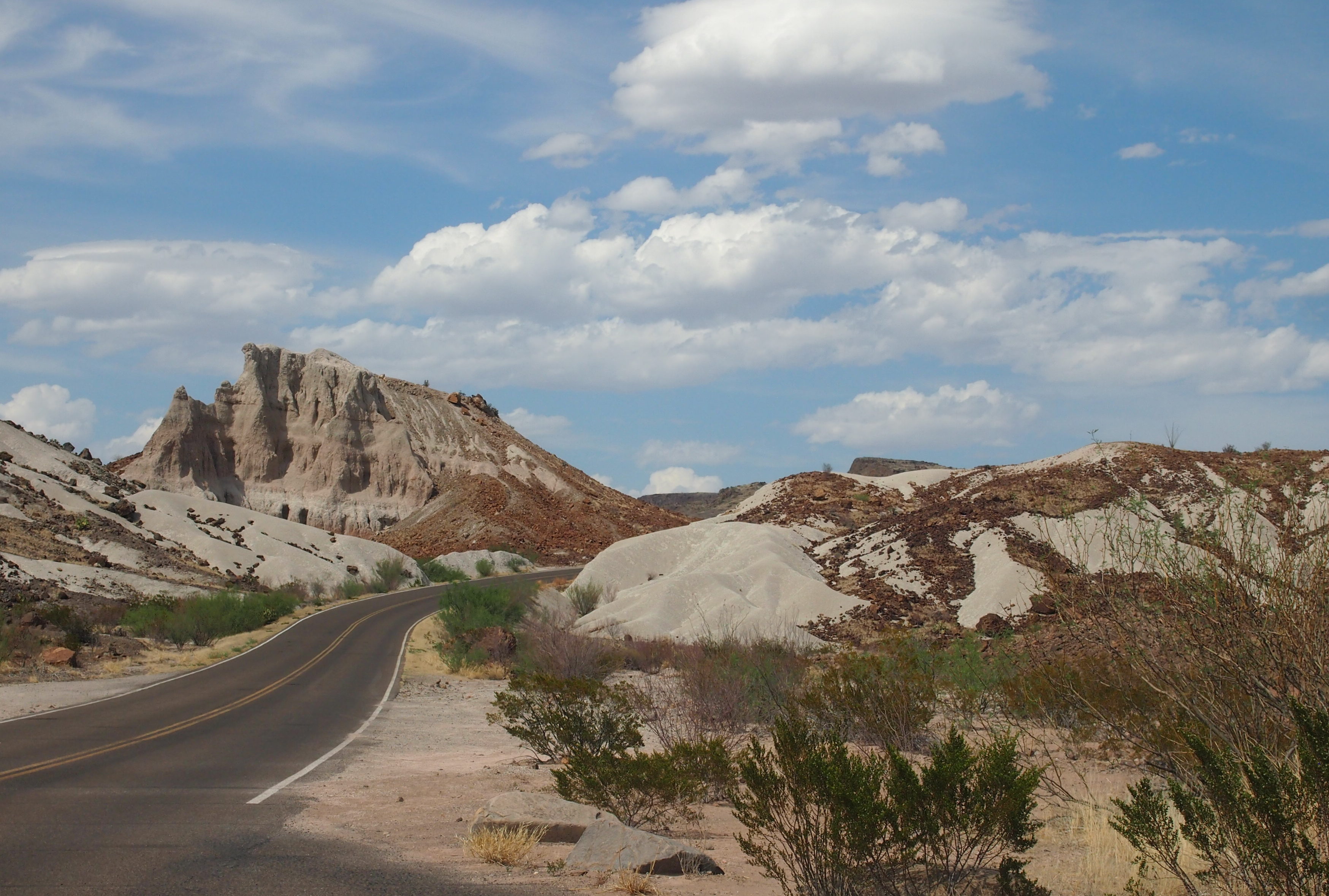
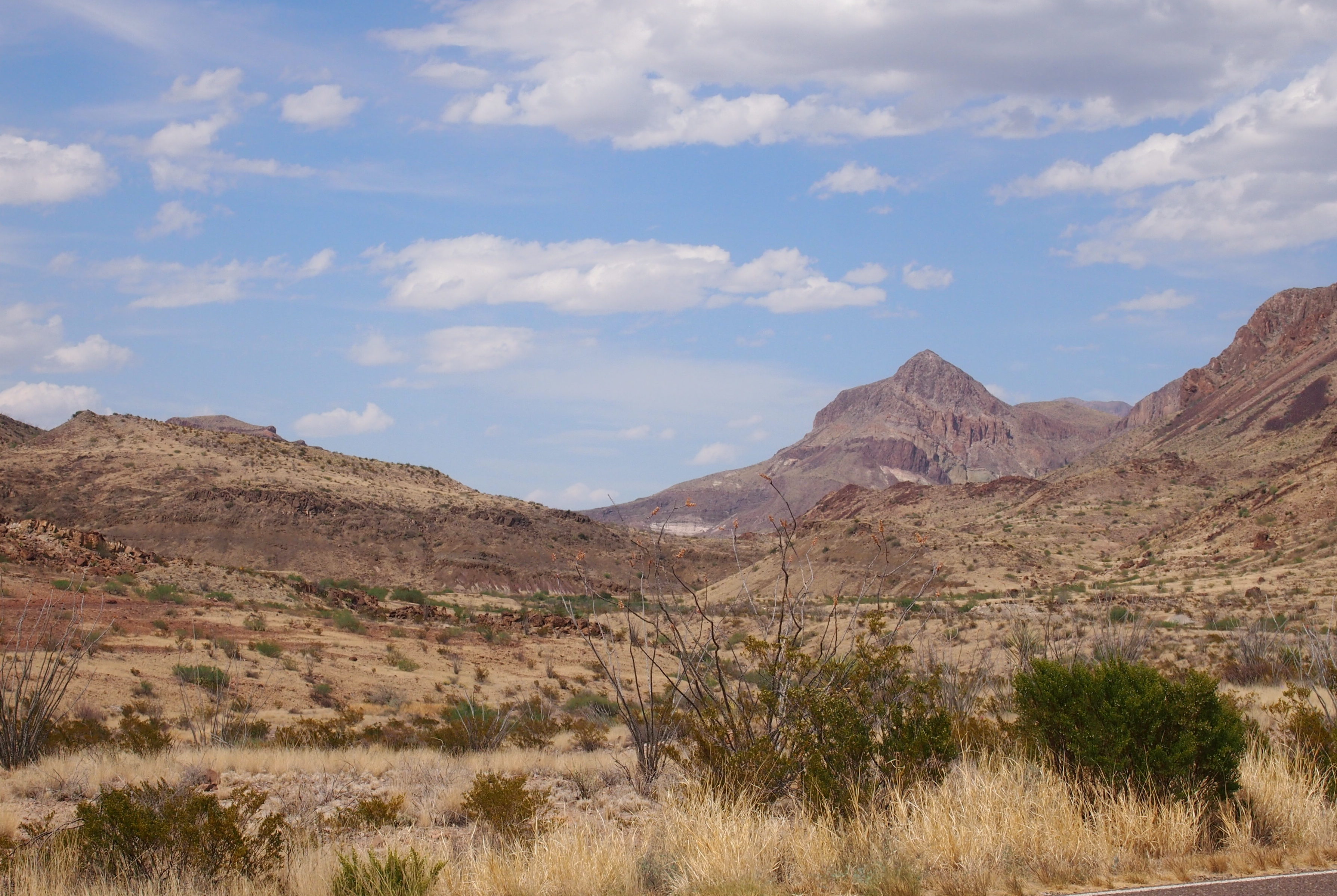
Those views were even before I got to the main places I visited in the park, such as the Chisos Mountains.
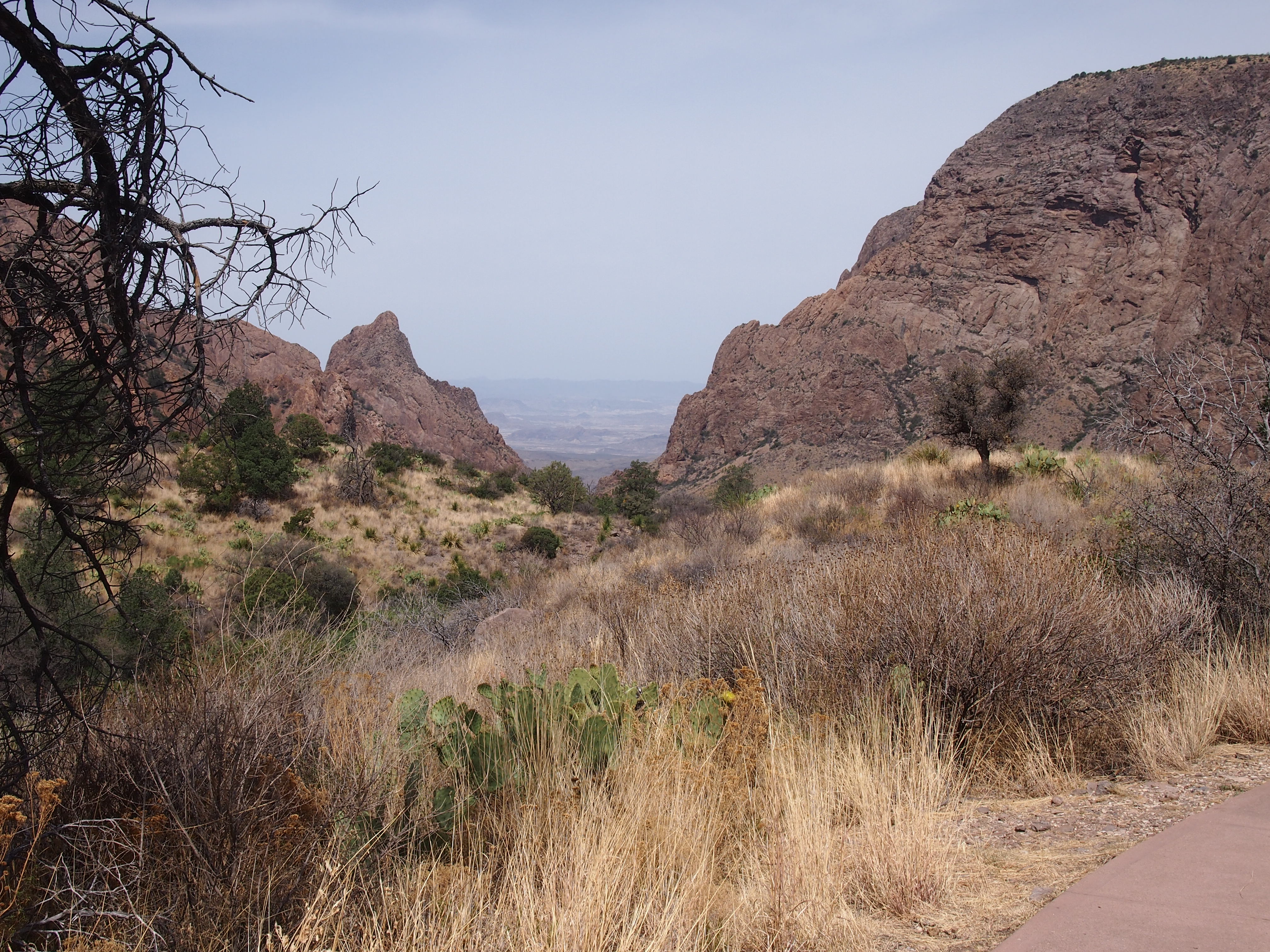
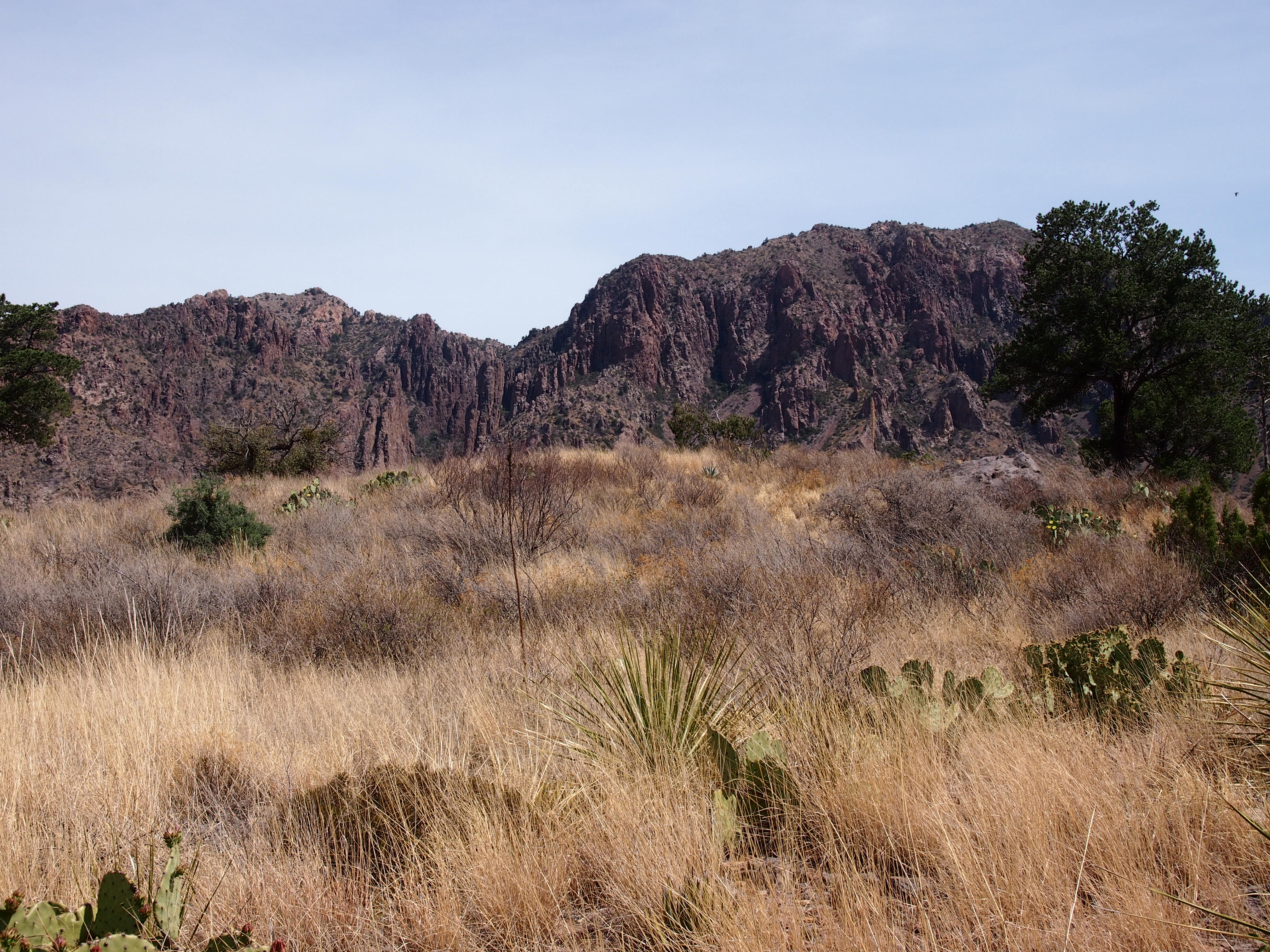
The Ross Maxwell Scenic Drive winds south to the Rio Grande, through the Chihuahuan Desert landscape.
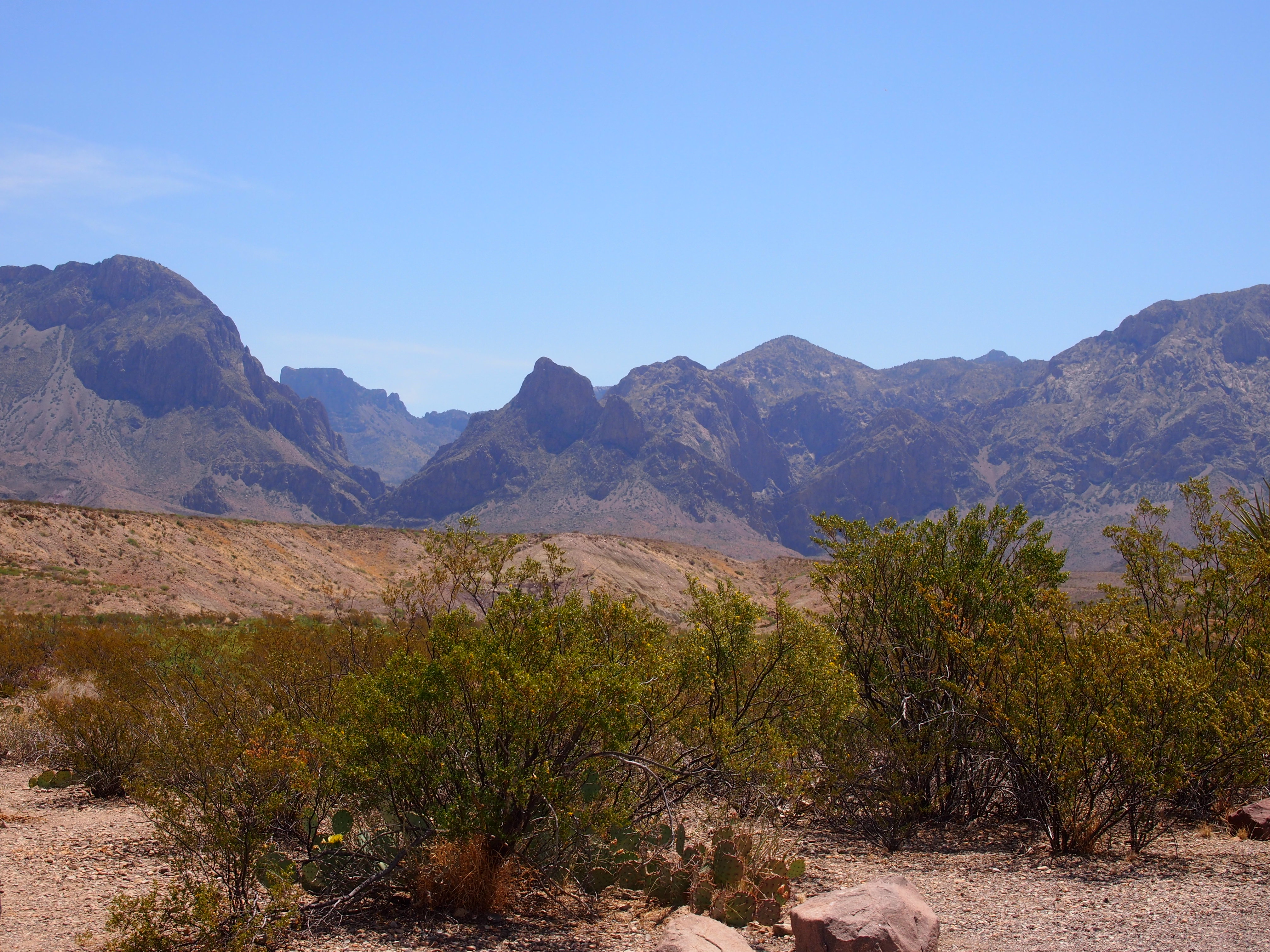
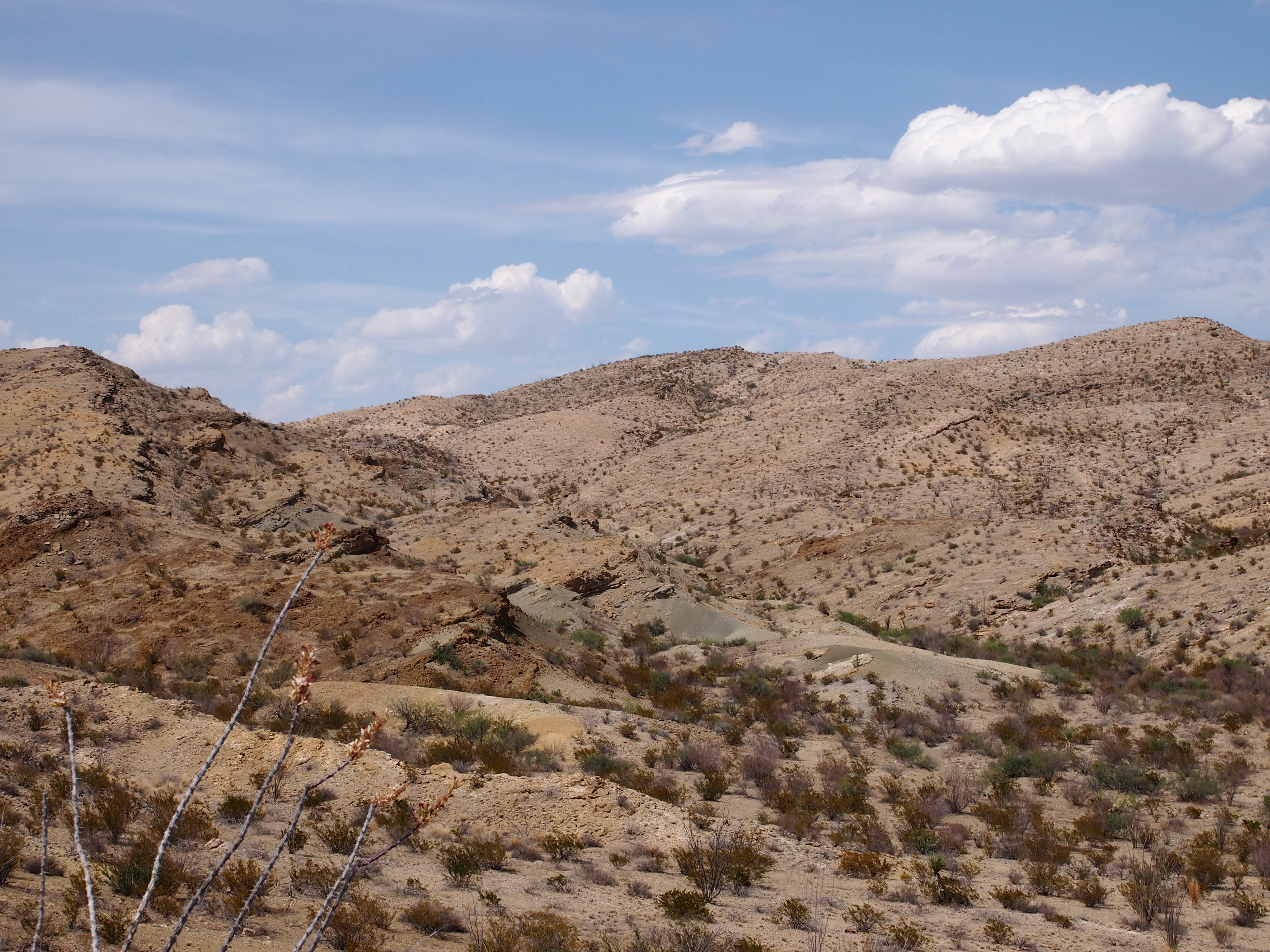
Ross Maxwell was easily the most scenic drive I’ve taken since the Icefields Parkway in the Canadian Rockies. What is it about mountains, wet or dry?

Though it was very warm — upper 80s F., I’d say — I had a hat, sunscreen and water, so I took some walks. One was down into a shallow valley to the former Homer Wilson ranch, to see the abandoned buildings.
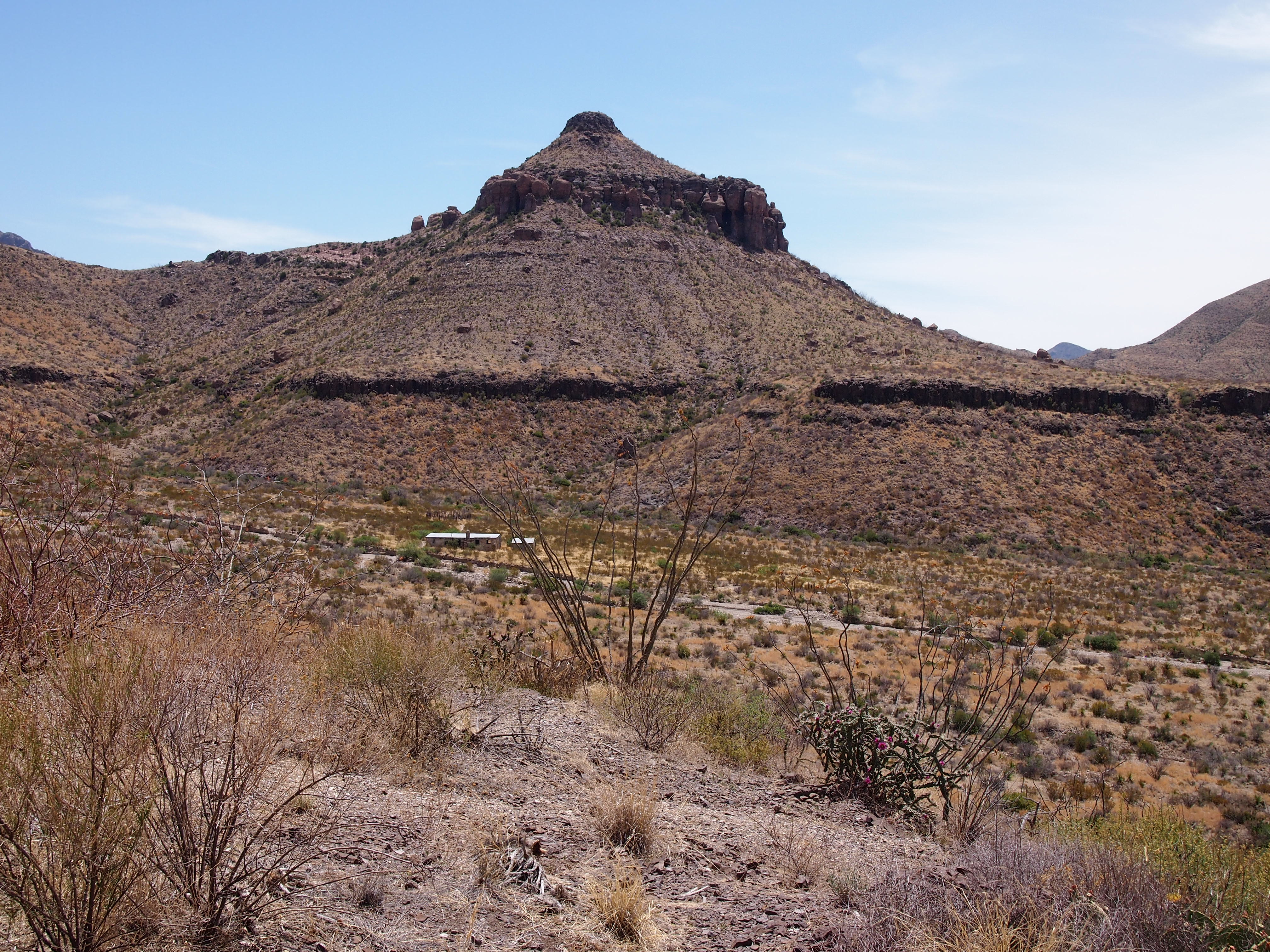
No one else was on the trail, going there or back. It was on this short hike that I appreciated the quiet of the park. In a city, or the suburbs, the din of traffic is always coming from all directions, strongly or faintly, except maybe right after a large snowstorm.

In the remote Chihuahua Desert, if you hear a car, it’s a single car, and it goes away. Mostly you hear the wind, birds, and your footsteps, until you stand still. Listening for traffic and not hearing it was as much a pleasure as drawing in air without any hint of pollution.

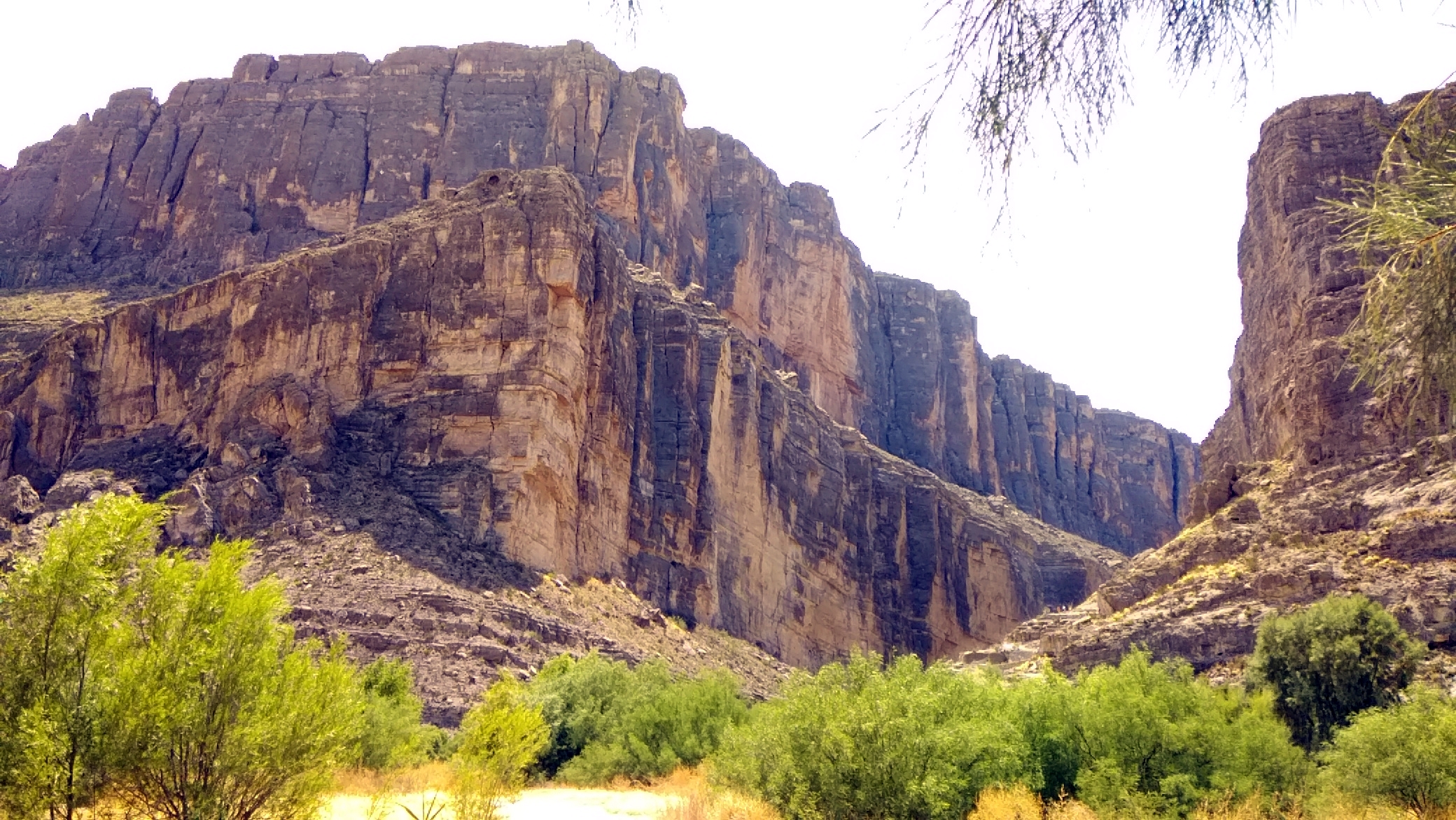
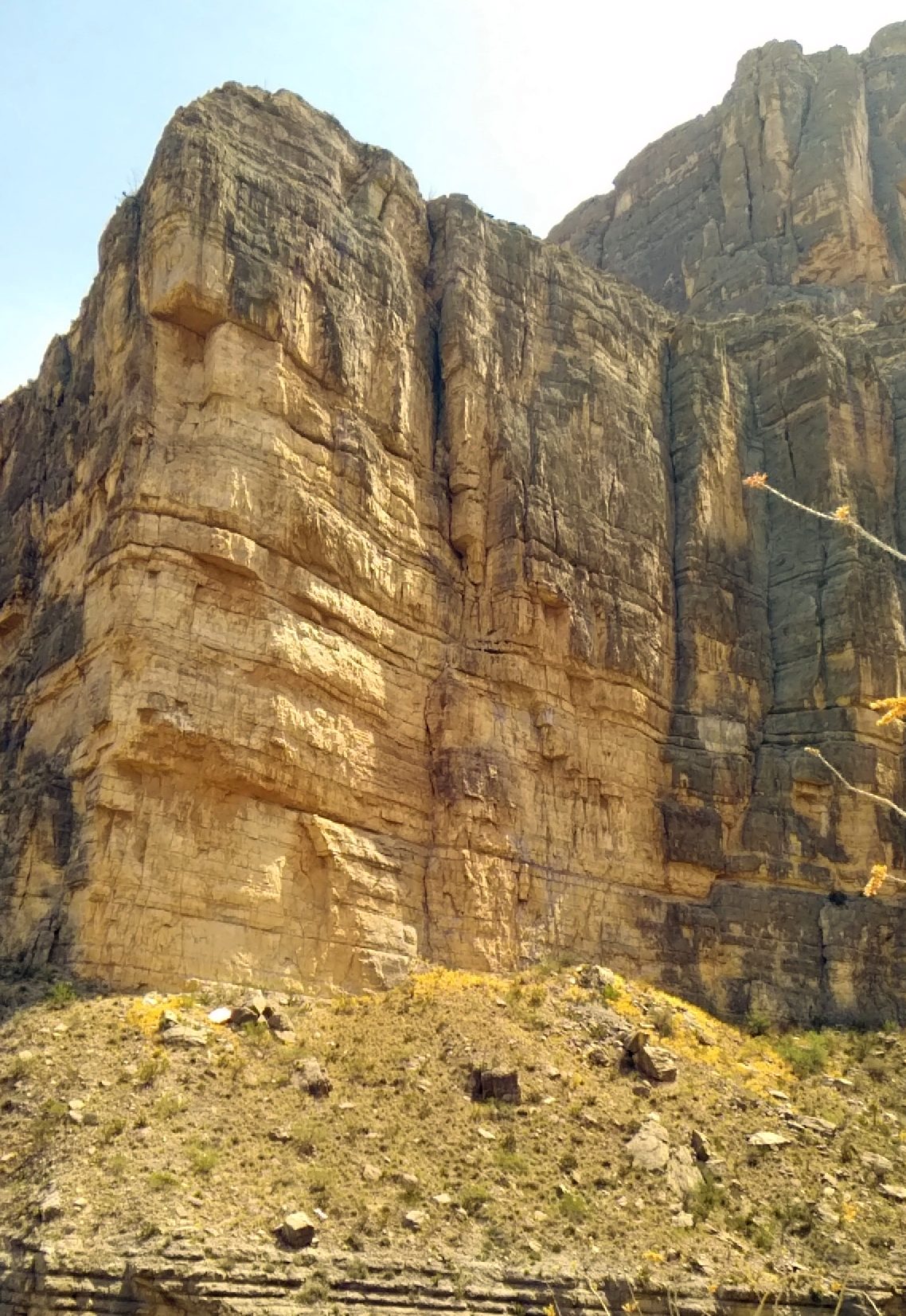
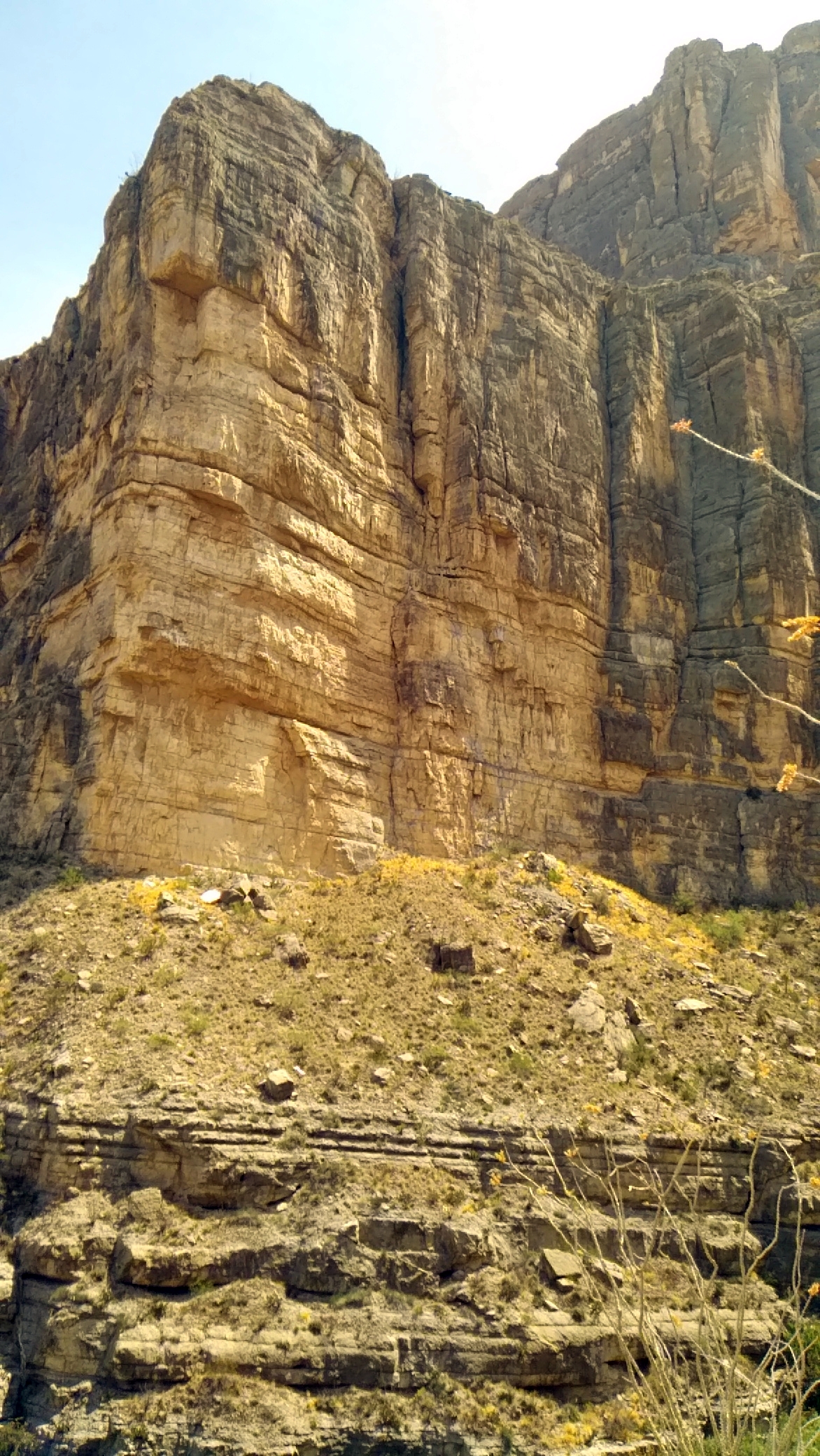
I also spent time on foot in the Chisos Basin, but the best walk by far was into Santa Elena Canyon on the Rio Grande. At that point, the limestone cliffs of the canyon are 1,500 feet high and as majestic as anything I’ve seen in nature. Photos do the massive shapes little justice, but I took some anyway.
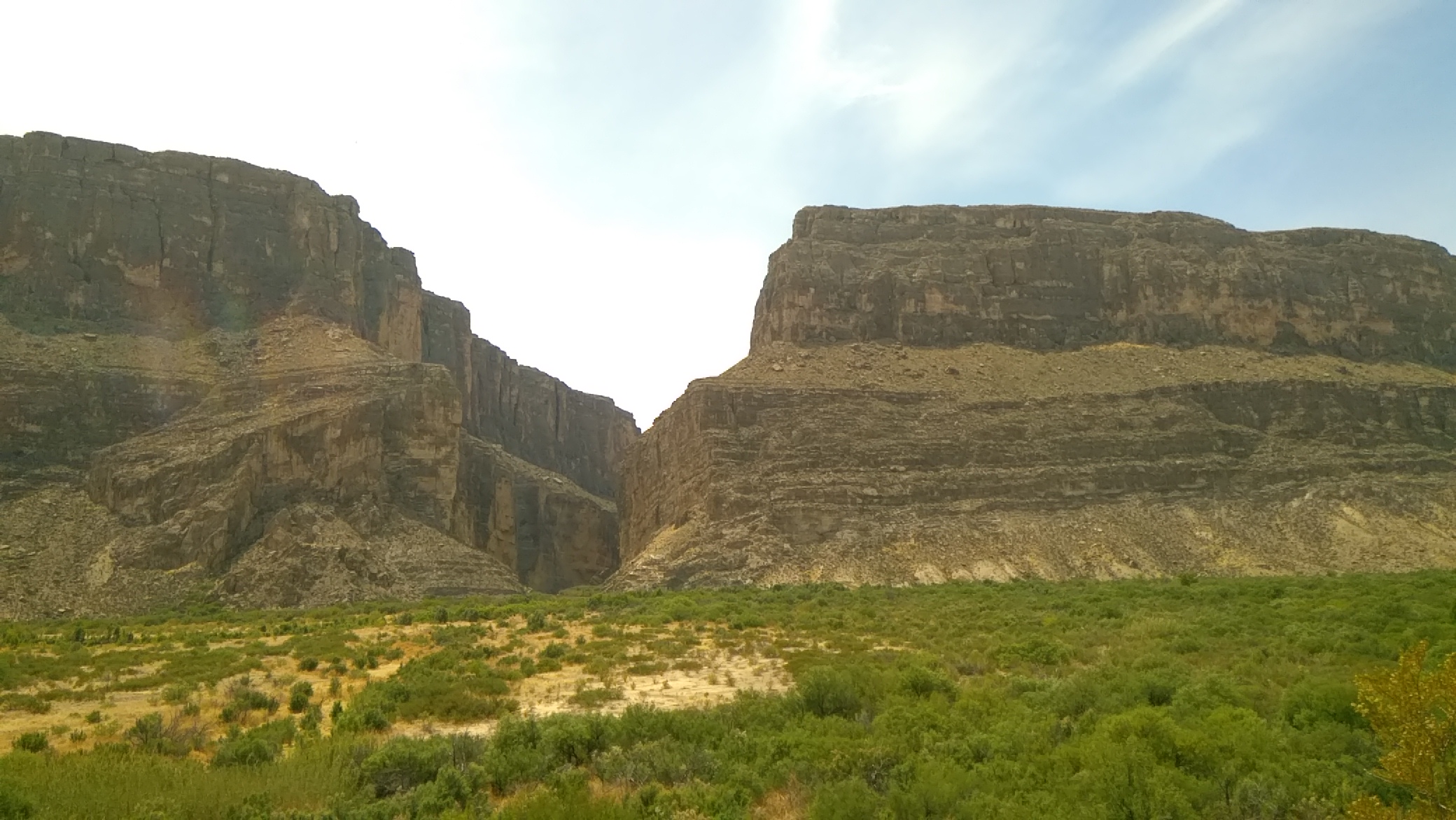
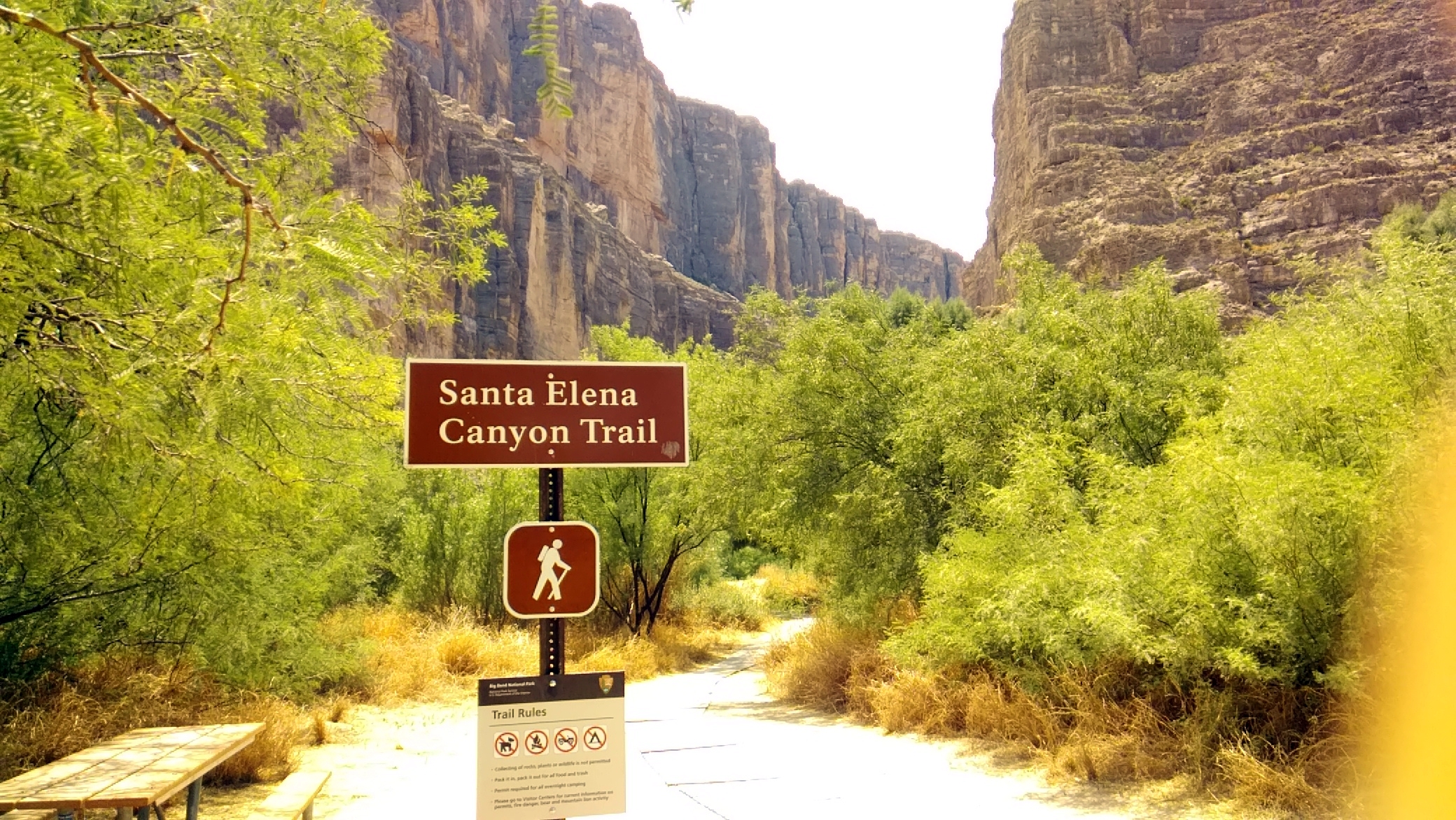
The trail led a short way into the canyon, and up some hundreds of feet. I was exhausted by the time I got up into it, but the view of the Rio Grande from that vantage was some compensation. Sure, let’s build a wall here.
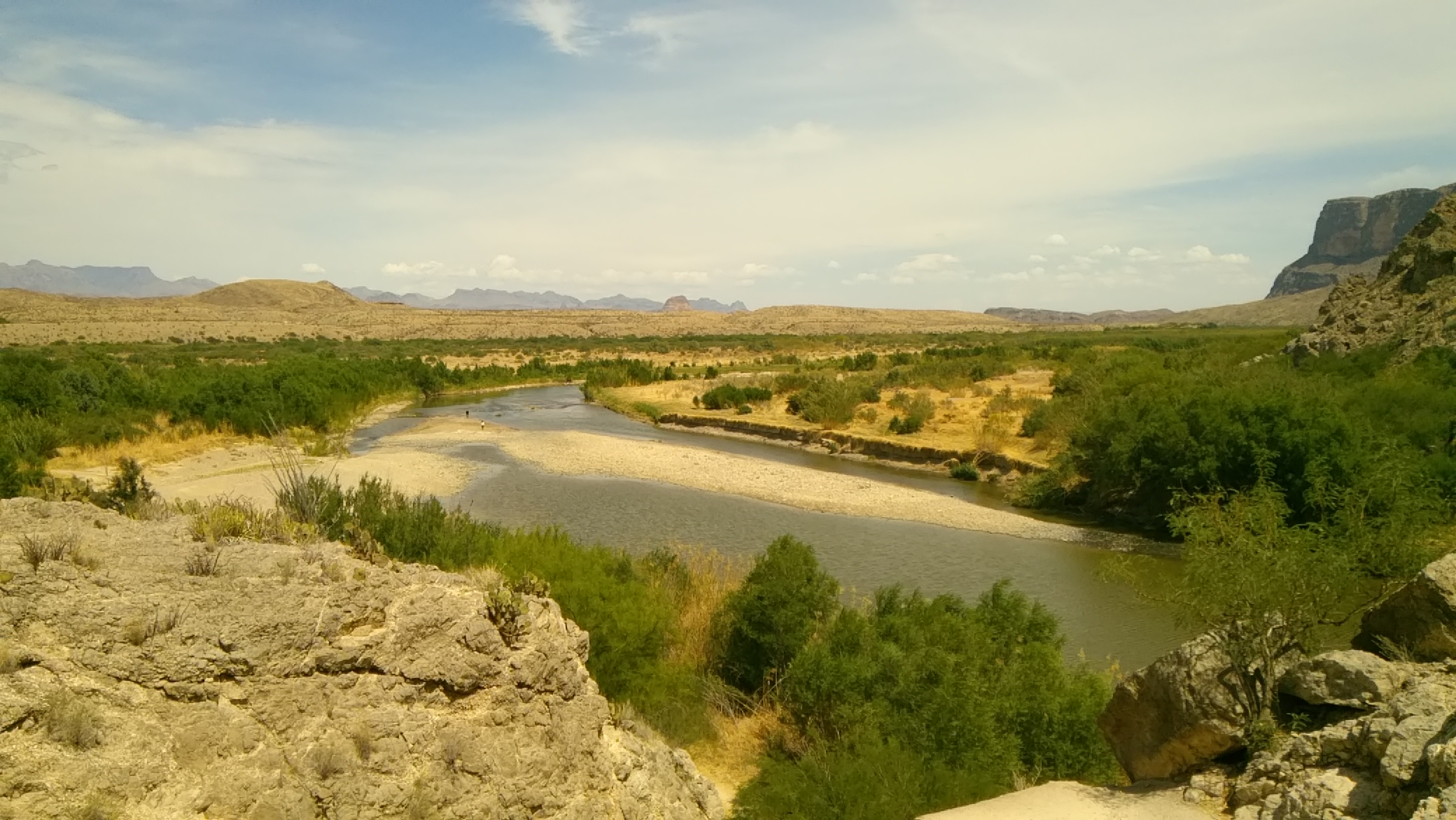
When I got back to the river, I took off my shoes and put my feet in. Cool but not cold, and it felt good.
Everyone at Yellowstone

Has it been ten years since we visited Yellowstone NP? So it has. Tempus fugit, dude.

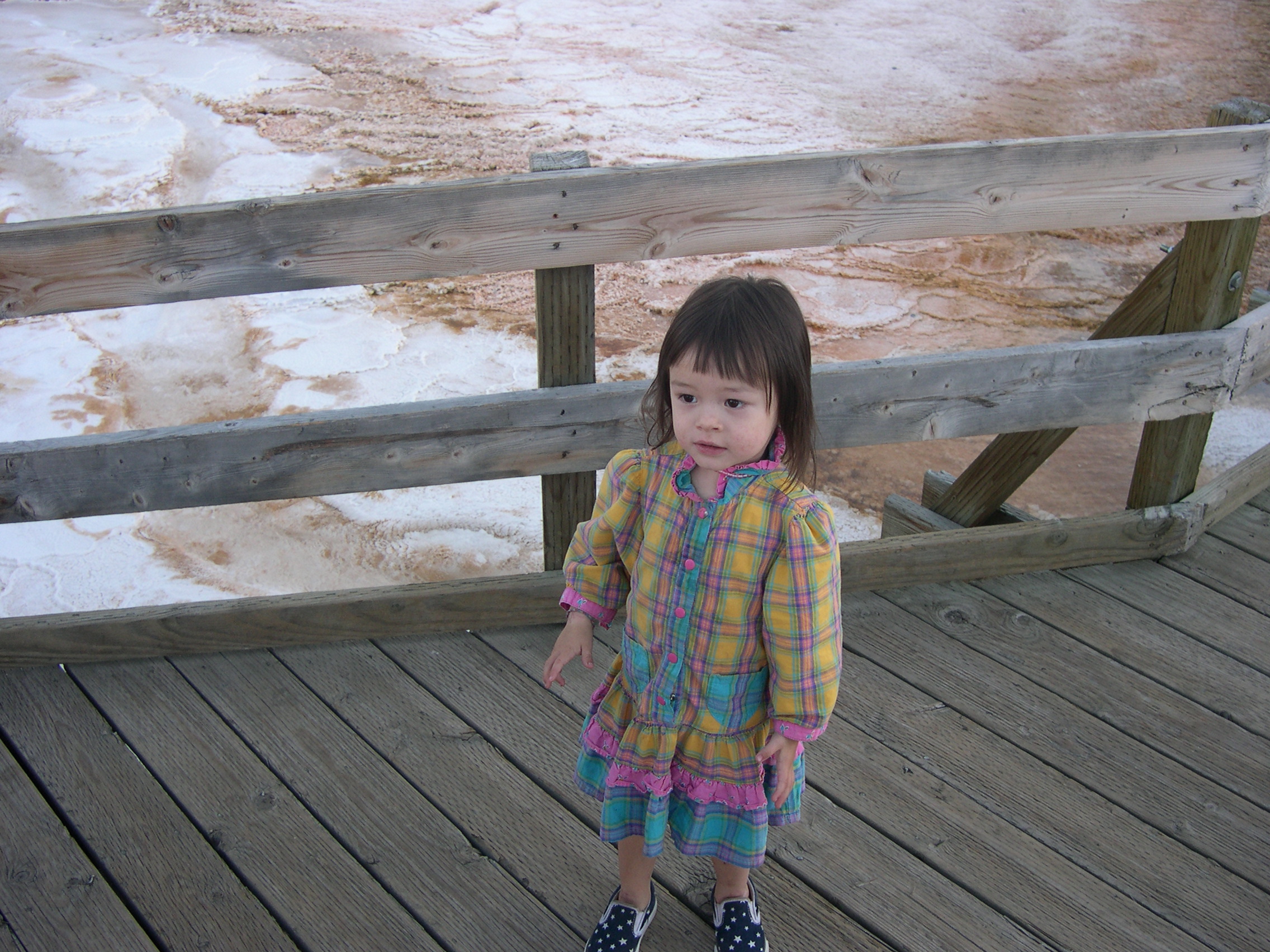
Ann of course doesn’t remember it. But she was there. On a boardwalk over certain death by scalding. That kind of thing makes parents a little nervous.
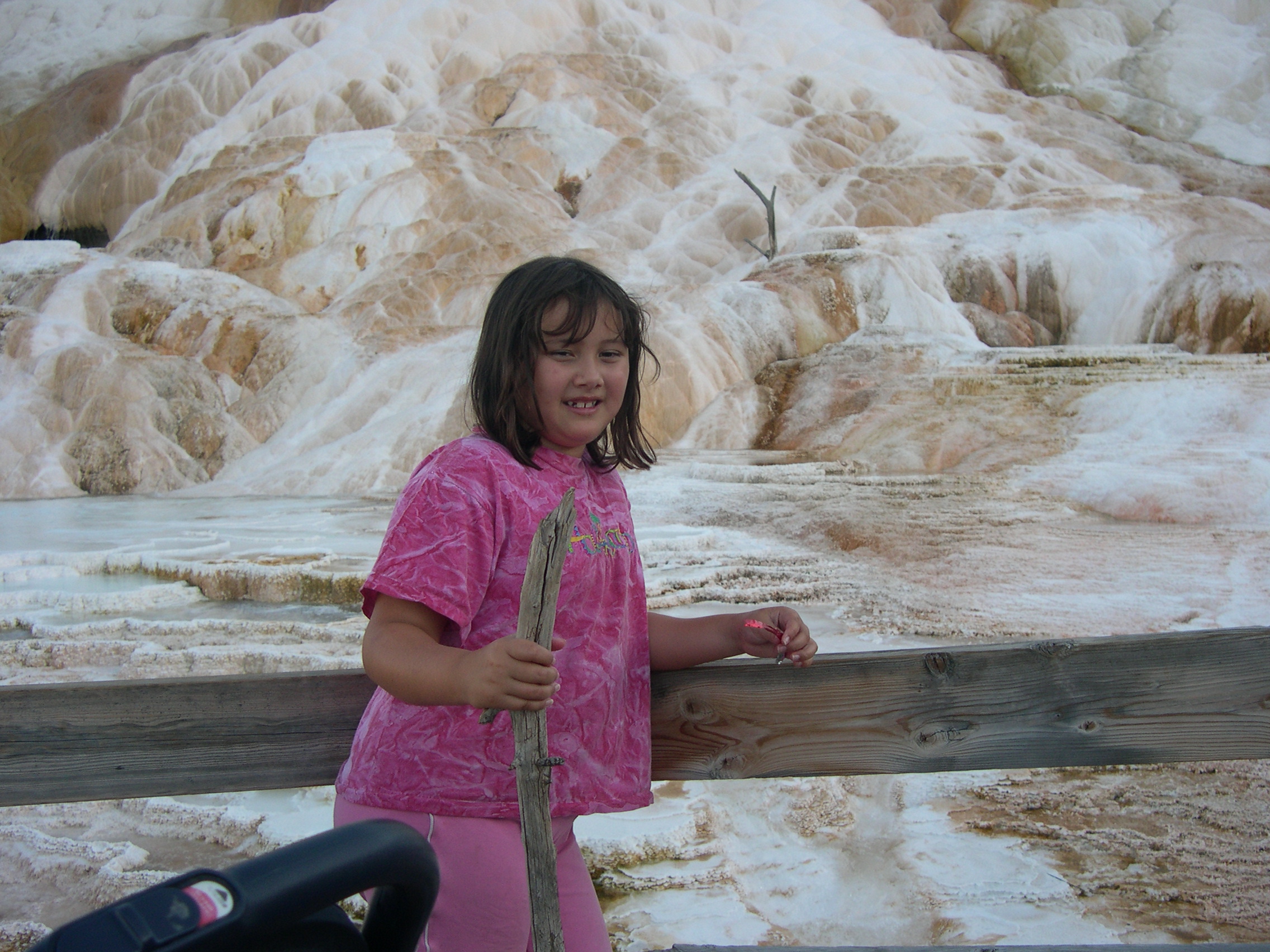
Ann, Yellowstone, 2005Lilly claims to remember the trip, but maybe she’s just humoring me. I’ll bet things are fuzzy and conflated with other trips.

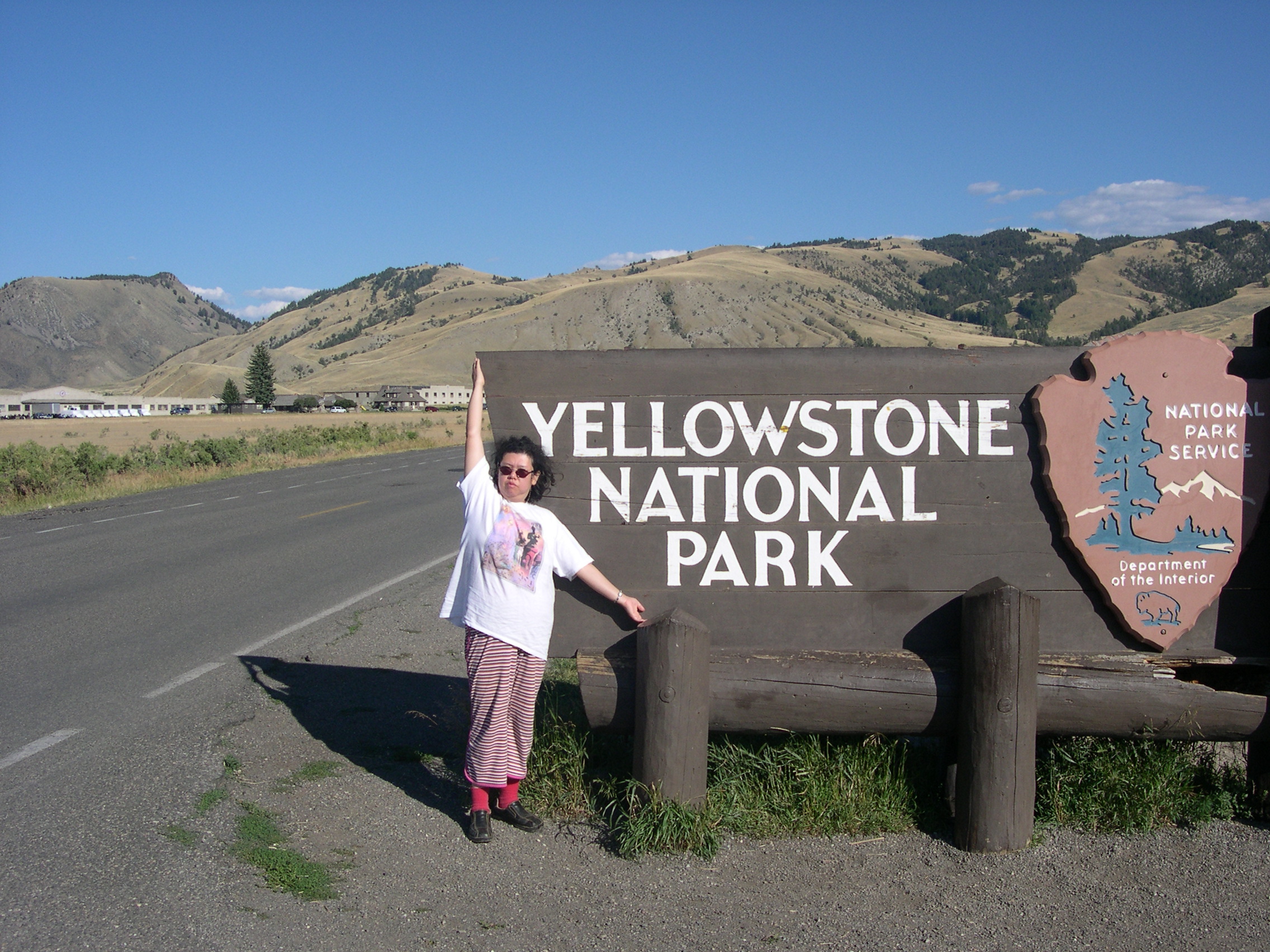
Lilly, Yellowstone 2005Originally, we’d just planned to go to the Black Hills. Yuriko persuaded me that we might as well go on to Yellowstone, because we might not have time later. She was right.
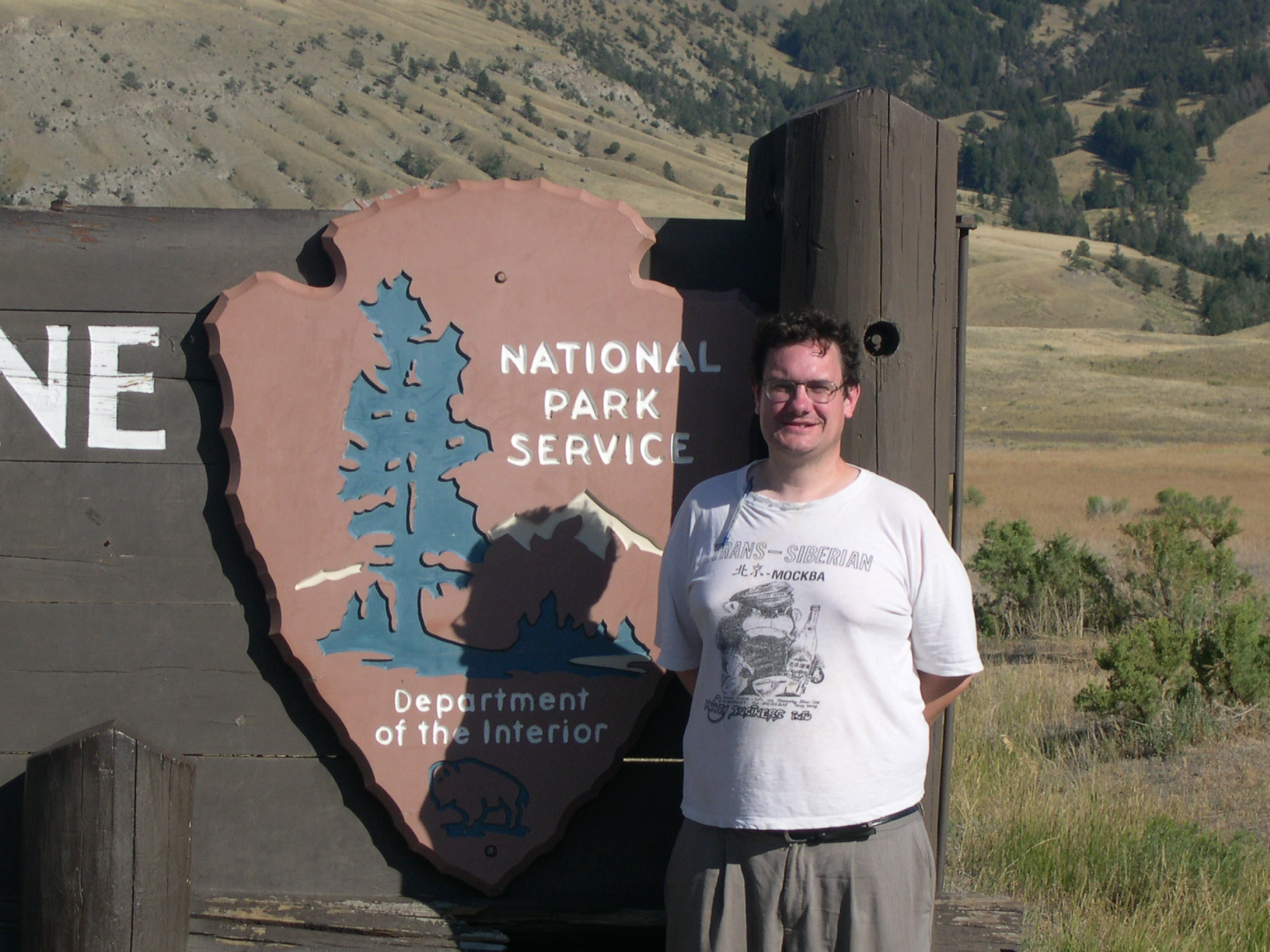
Yuriko, Yellowstone 2005The shirt I’m wearing was from another long trip. When we bought our tickets for the Trans-Siberian in Hong Kong from an outfit called Moonsky Star Ltd., whose mascot was a monkey in a cap, smoking a cigarette and holding a bottle of beer, we got a couple their shirts as a lagniappe.
Dees, Yellowstone 2005Also note the pen clipped to my shirt. Probably in case I had any postcards to write immediately.