Catskills ’25

The highway New York 30 winds along the northwestern edge of Catskill Park because it follows the winding East Branch of the Delaware River, which would picturesquely come in and out of view as I drove that highway on the crisp late morning of October 16. I stopped at a place called Downsville. Wiki calls it “census-designated place, and former village in the town of Colchester, Delaware County, New York.”

This raises some questions. How is a village part of a town? (Colchester is marked on maps as not far away, but not on NY 30.) How does a place become a “former” village? People still clearly live there. Maybe I’ll investigate these questions sometime. Maybe not.

Village or former village, it’s at a pleasant spot on the East Branch.
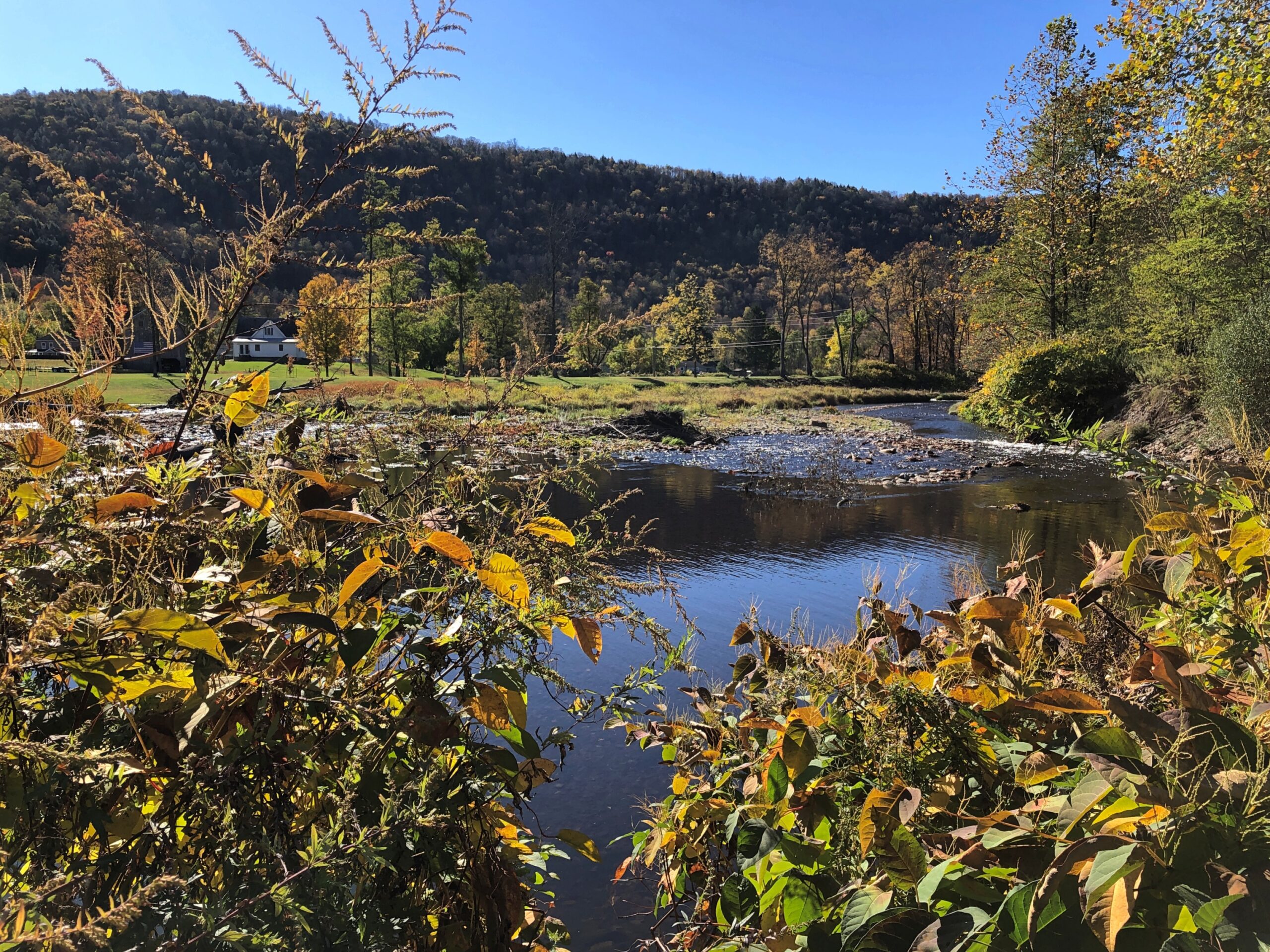
East Branch of the Delaware River

I stopped because a sign directed me to a covered wooden bridge, one that crosses the East Branch about a block away from NY 30.
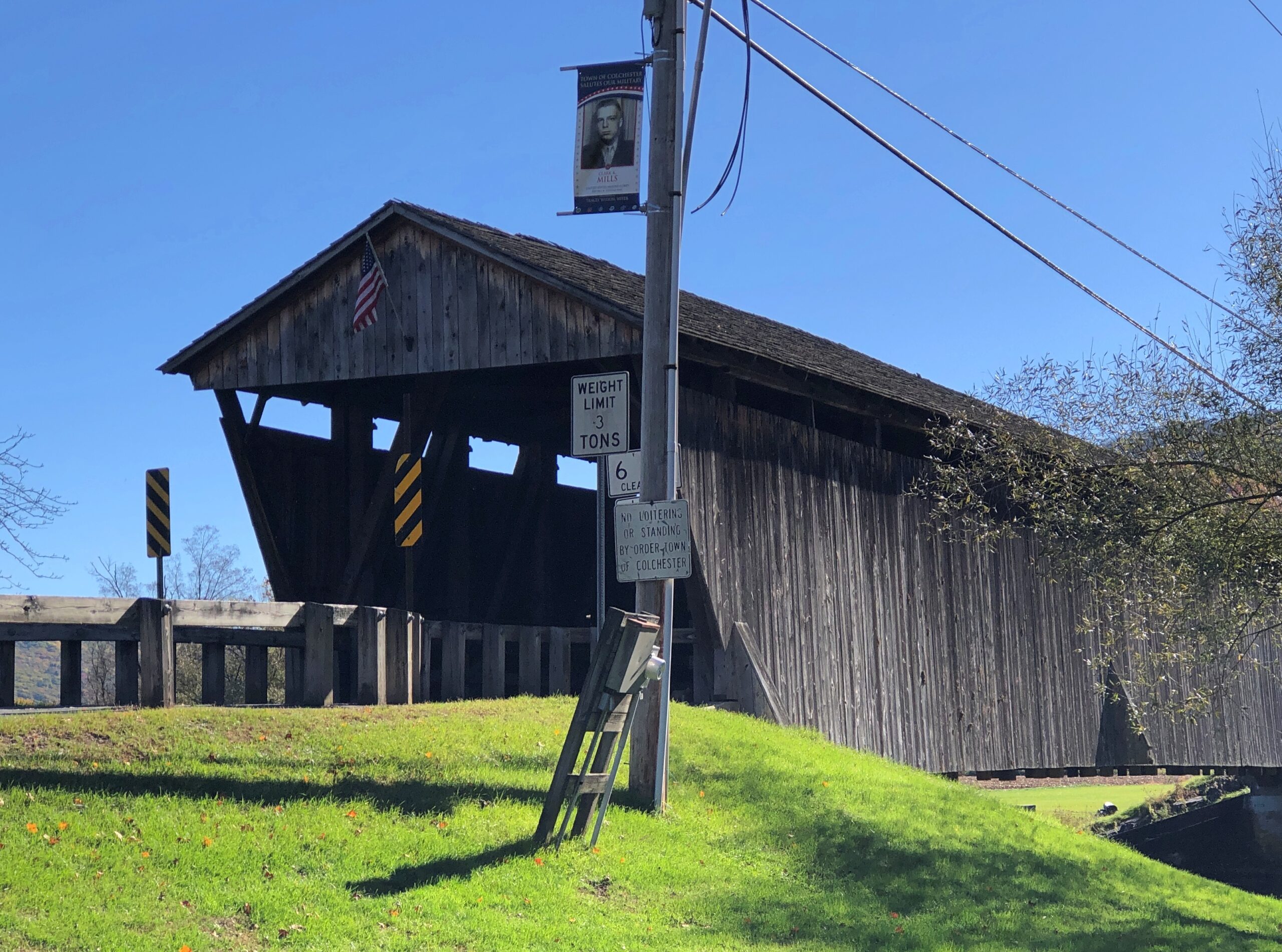
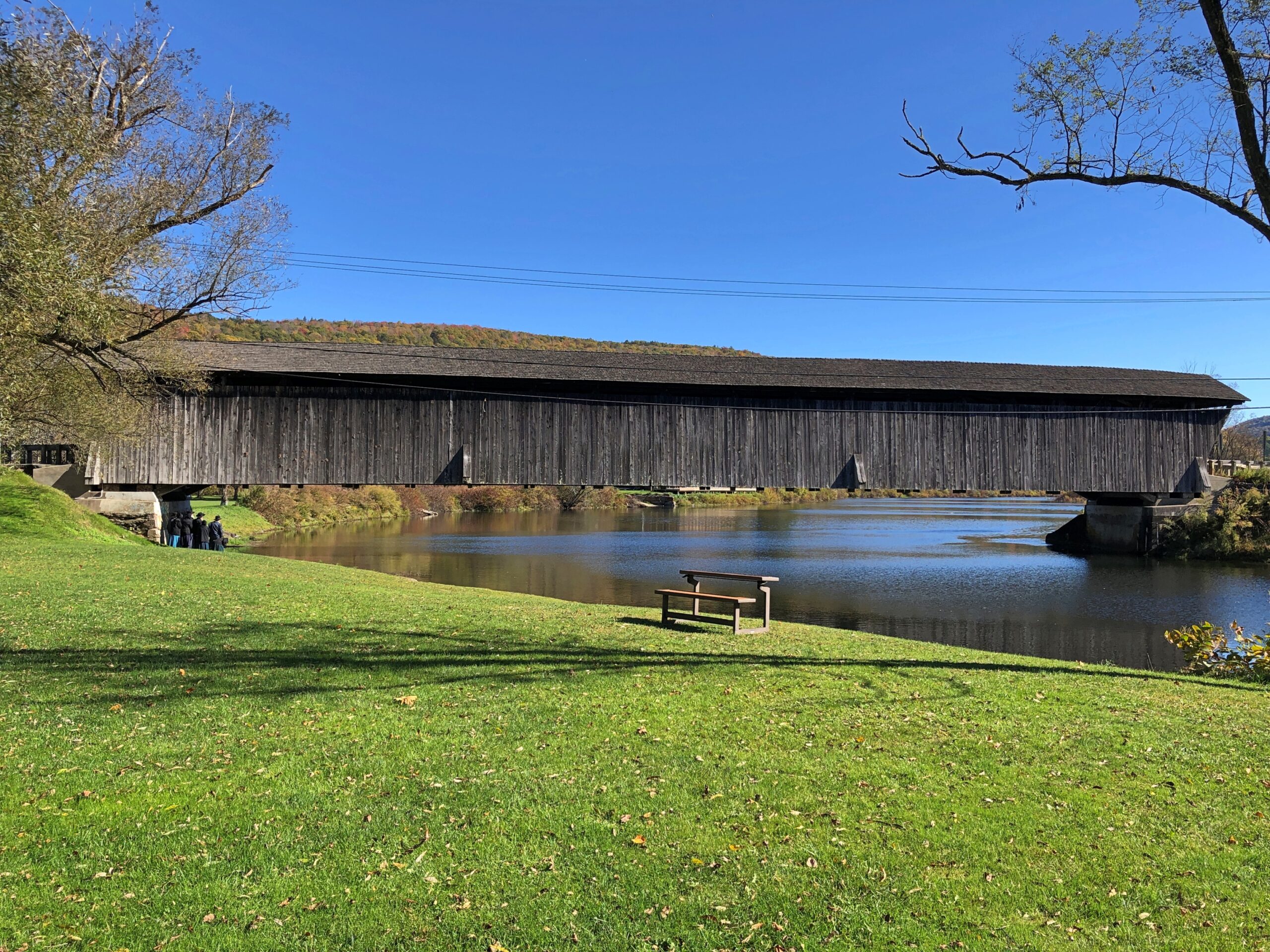
Downsville, NY covered bridge

“The Downsville Covered Bridge is one of six covered bridges still standing in Delaware County…” explains the New York State Covered Bridge Society. “Built by Robert Murray in 1854, this 174-foot-long, single span structure incorporates the Long truss design patented on March 6, 1830 by Lieutenant Colonel Stephen H. Long of Hopkinton, New Hampshire, with an added Queenpost truss. This truss design is rare to Northeastern covered bridges.” 

Nice work, Mr. Murray, and the workers who have maintained it as a vehicular bridge down to the present day.

There’s a small park on the river next to the bridge, and a parking lot. Soon after I arrived for a look-see, a large van pulled up to the lot and about a half-dozen Plain People got out. They were there for a look-see too. So we were all on the bridge together.
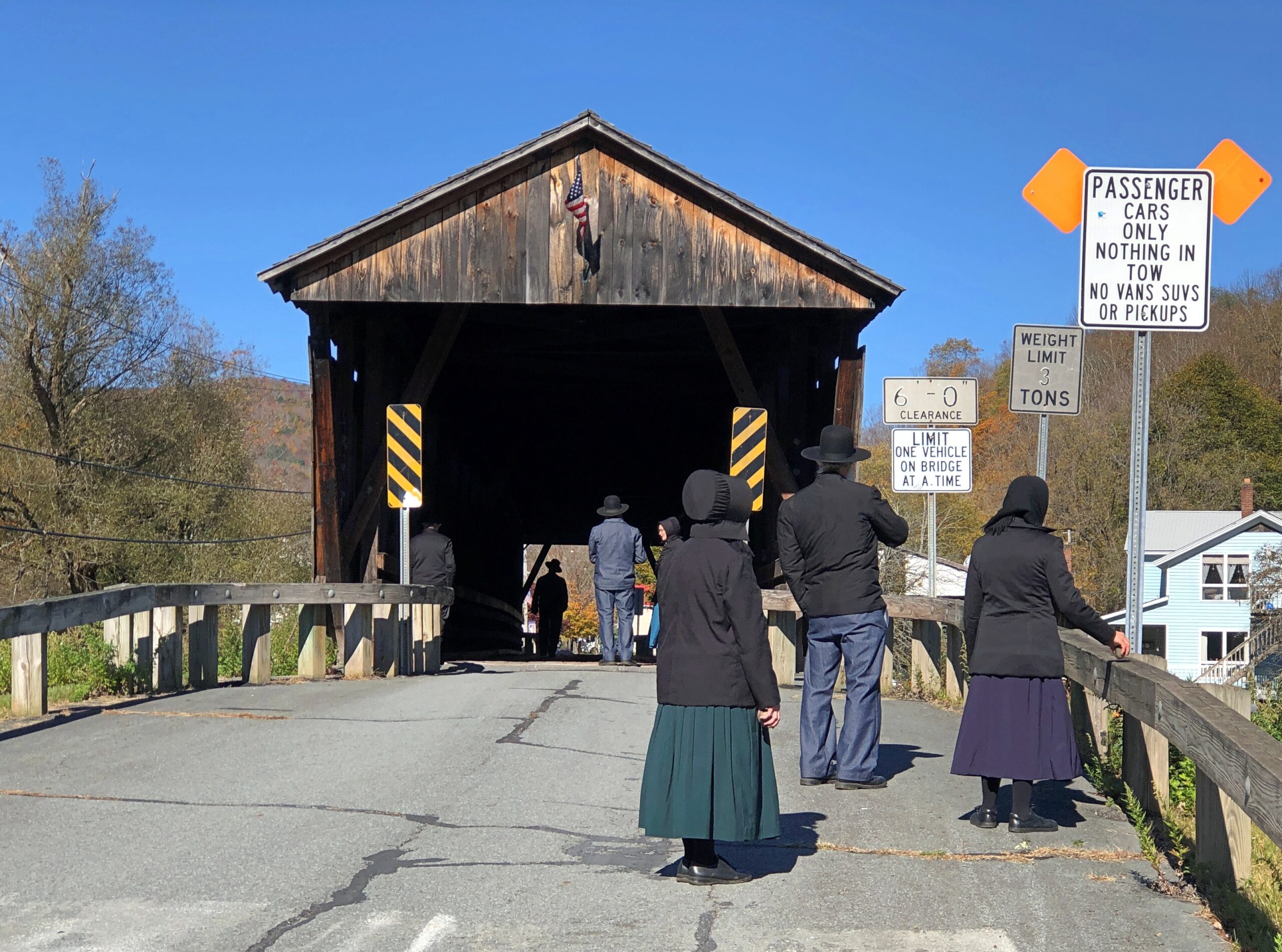
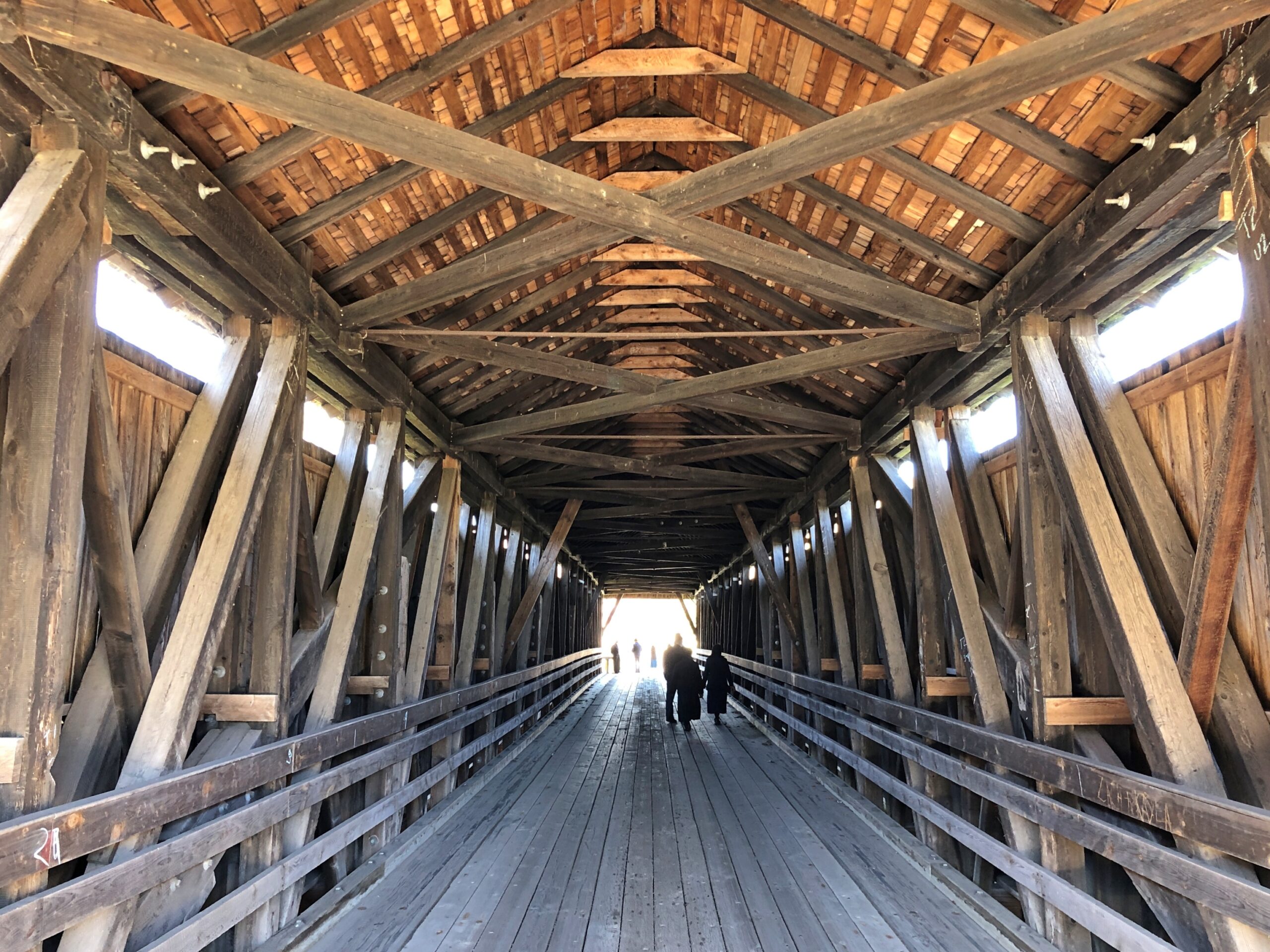
Downsville NY covered bridge

I try not to do ethnic profiling, but I couldn’t help thinking that a top tourist sight for Plain People might well be a covered wooden bridge. Then I wondered, how is it they came in a van? As I was leaving, I noticed a non-Plain man waiting for them in the drivers seat. The Plain People equivalent of a Shabbos goy, I suppose. Except maybe that he can work any day except the Sabbath?

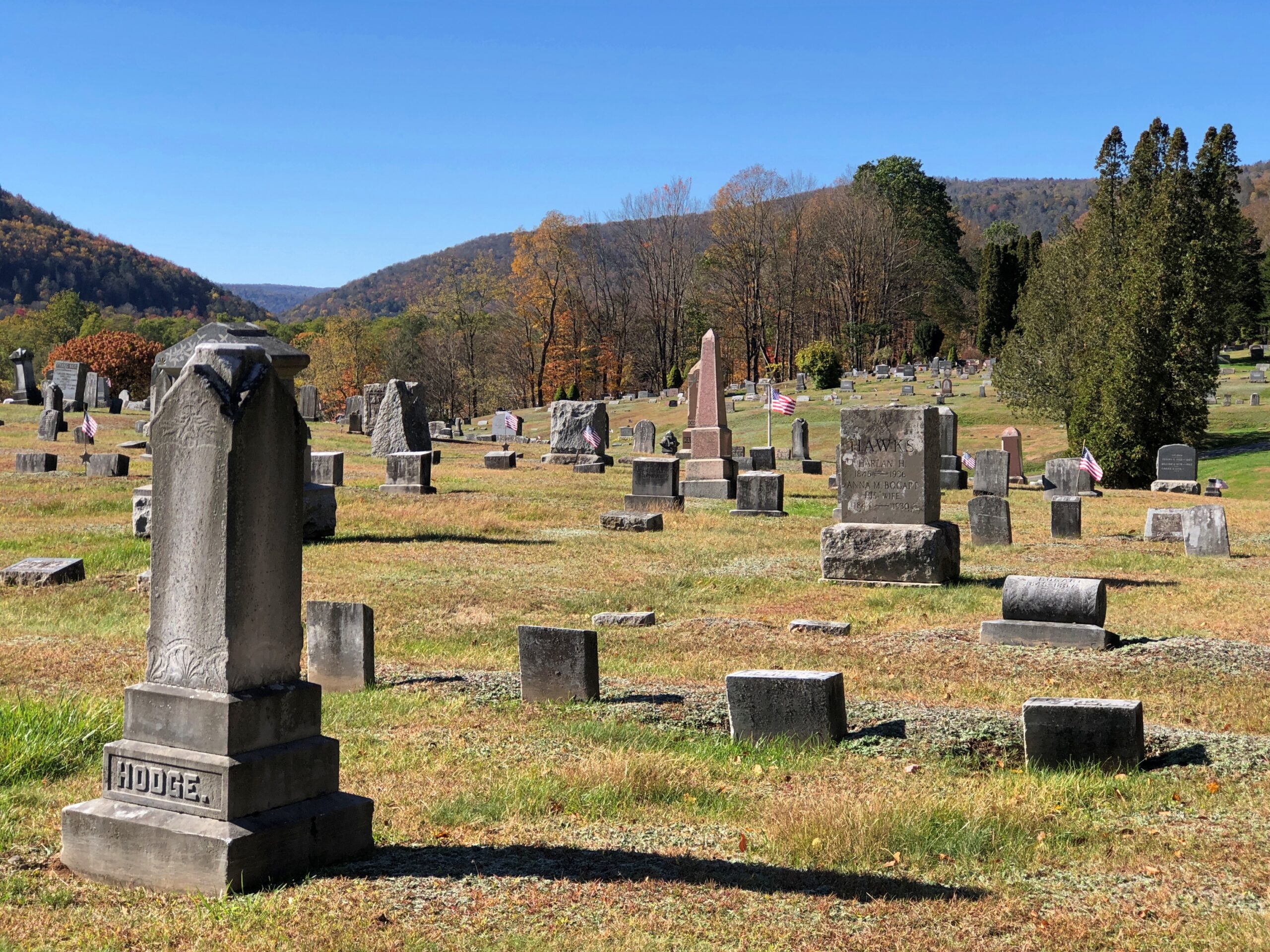
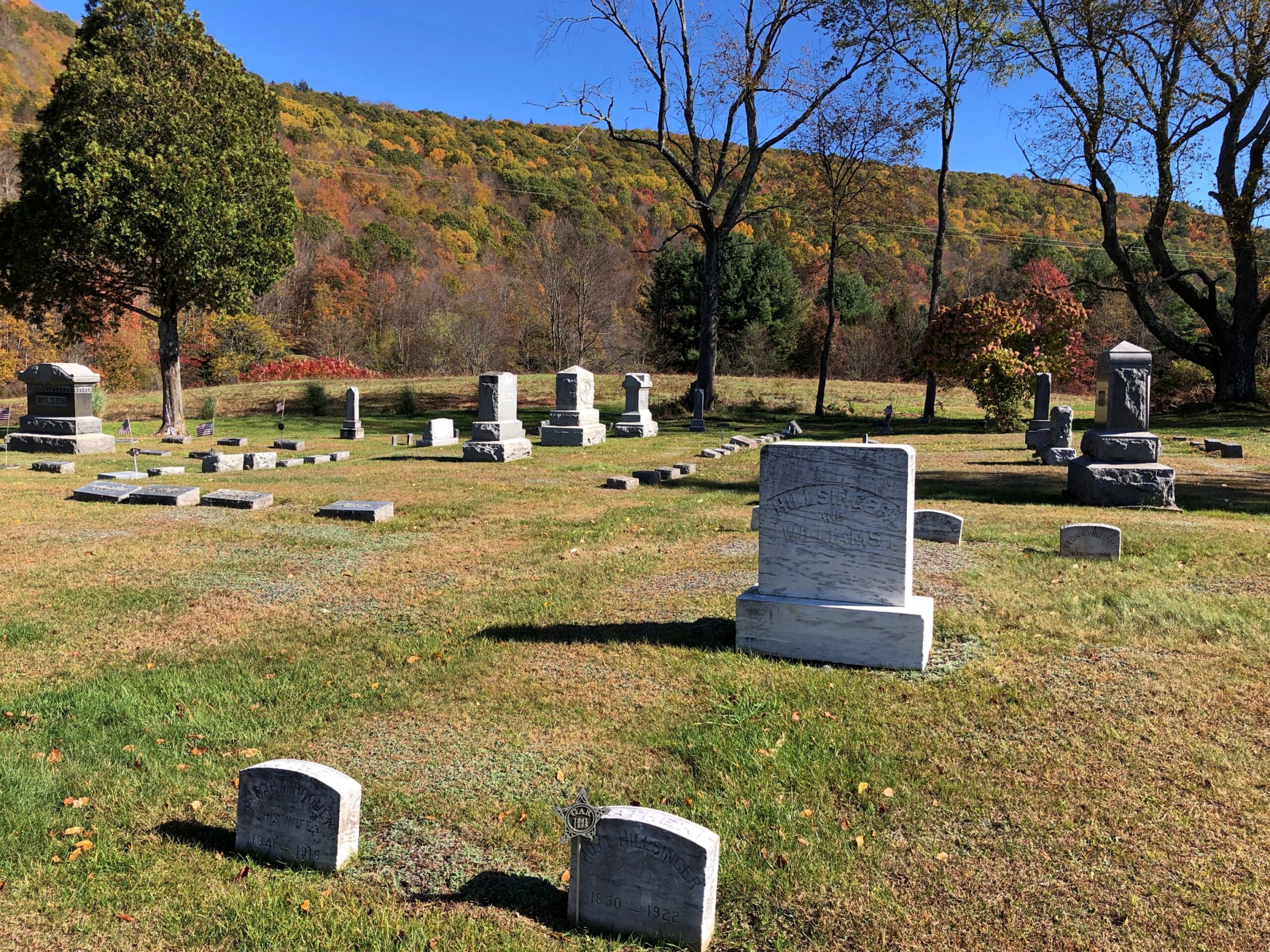
Not far away in Downsville is the Paige Cemetery. I had that to myself, as usual.
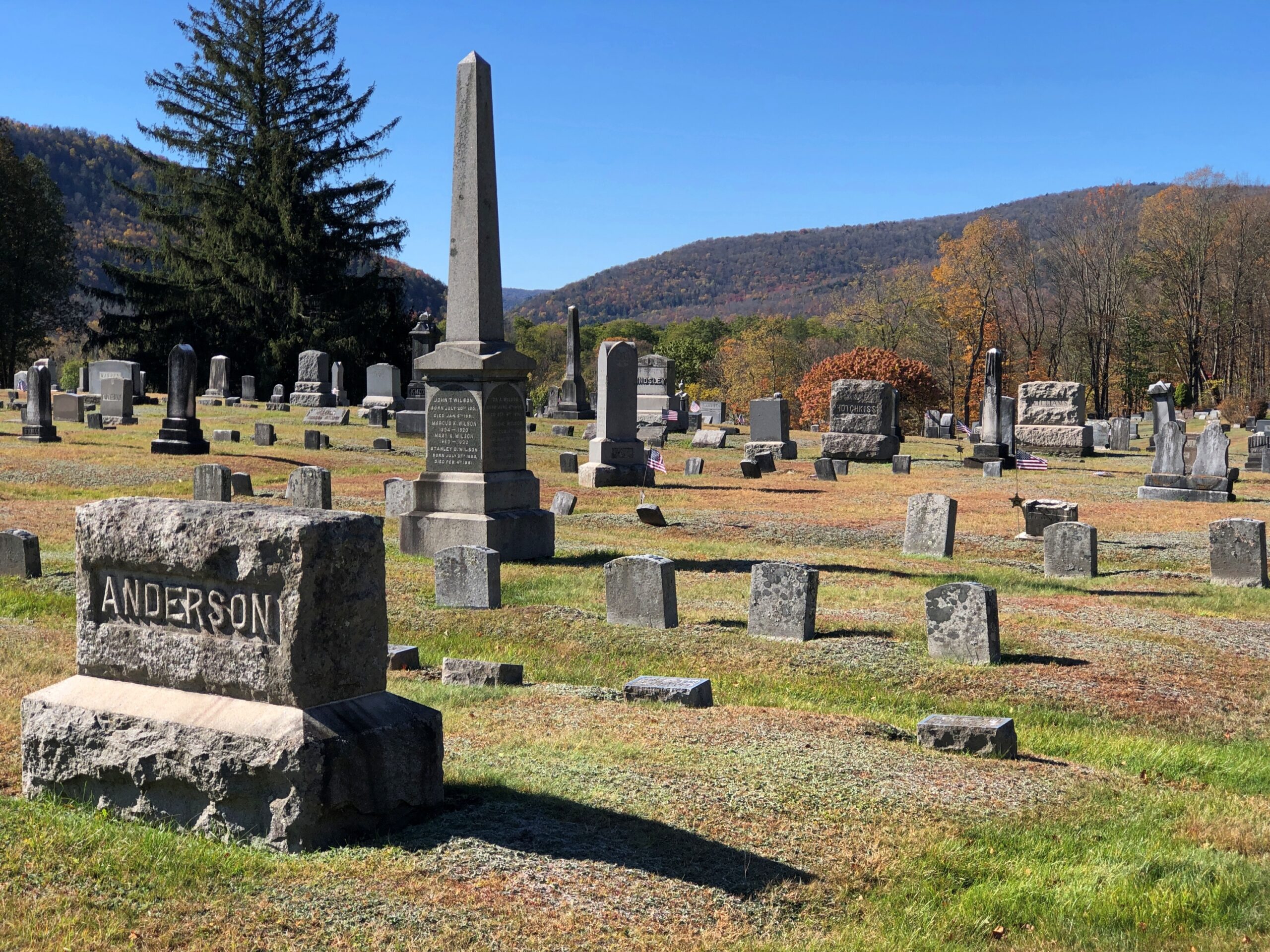
Paige Cemetery, Downsville, NY

New York 30 continues a long way on the shores of the Pepacton Reservoir. Still car commercial driving.
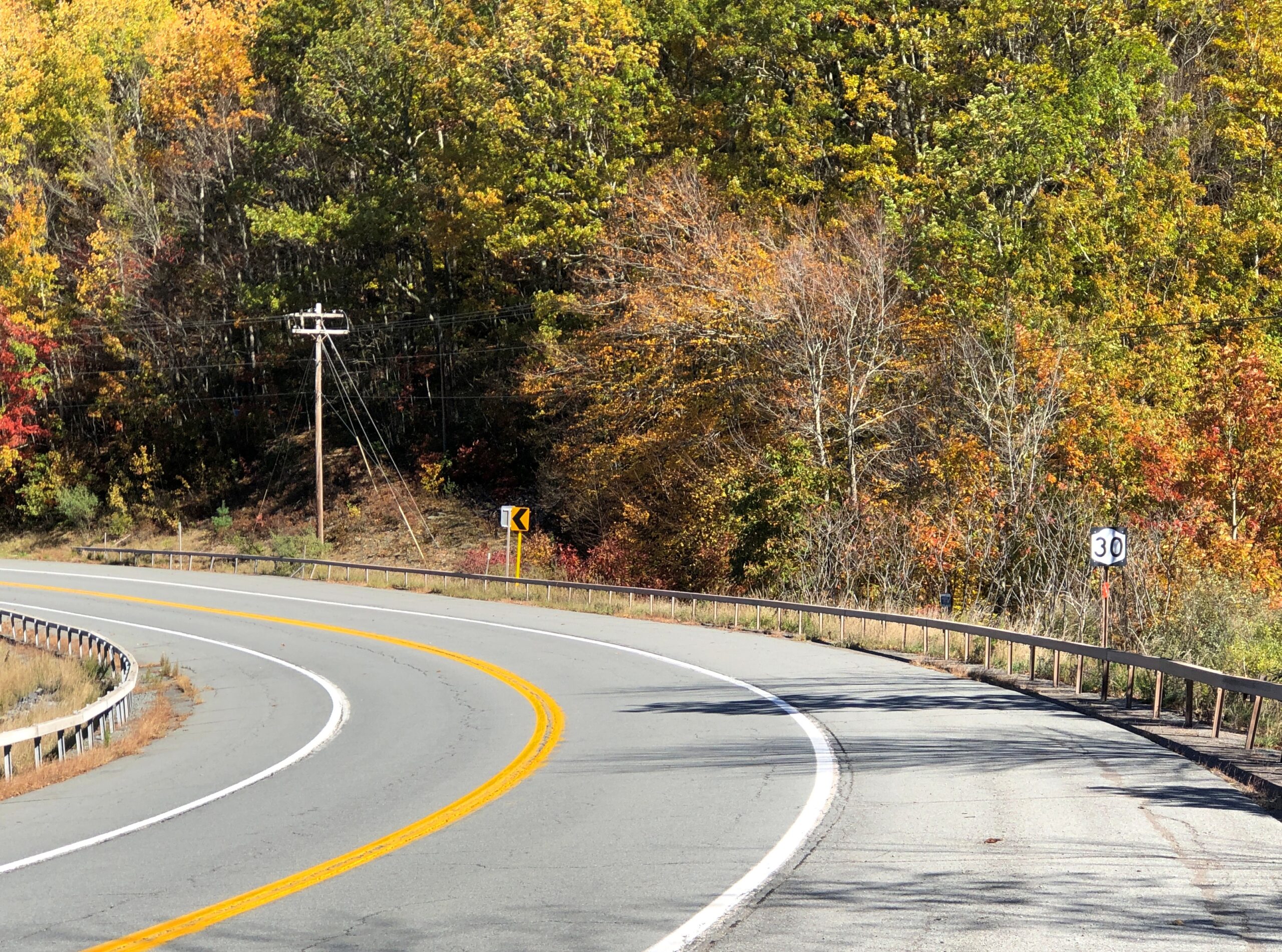
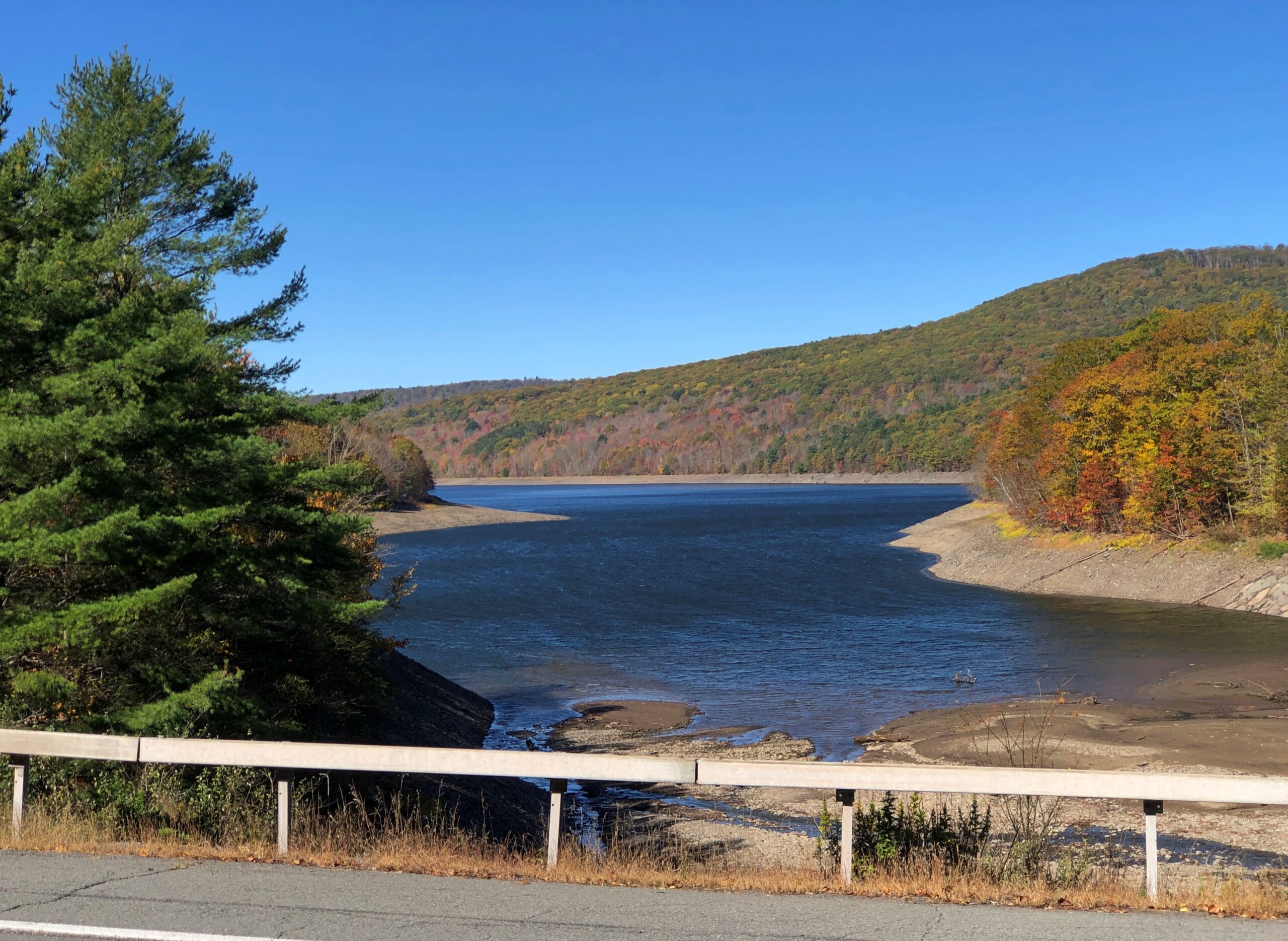
NY 30
NY 30

The Pepacton Reservoir, seemingly so peaceful on a brilliant autumn day, has a hell of a back story.

“It is formed by the damming of the East Branch of the Delaware River, which continues west and joins the lower Delaware River,” says NYC Environmental Protection. “It consists of one basin, approximately 15 miles in length [that] holds 140.2 billion gallons at full capacity, making it the largest reservoir in the city system by volume. It was placed into service in 1955.

“Pepacton Reservoir is one of four reservoirs in the City’s Delaware Water Supply System. As the reservoir with the largest capacity, it normally contributes more than 25% of the total daily water flow into New York City.

Italics added, because they needed adding.

Once I left NY 30 and headed east on NY 28, which put me on a path toward the Hudson River Valley and NYC and Long Island, traffic kicked up several notches. It was still mostly a pleasant drive.

Most of the traffic was headed west into the park, opposite of the way I was going; as only to be expected on a Thursday ahead of a colorful fall weekend. The Catskills are still a destination, if not quite the Catskills of yore. Some of the old story was told to the rest of the country through TV shows in previous decades, or even more recently: namely, The Marvelous Mrs. Maisel.

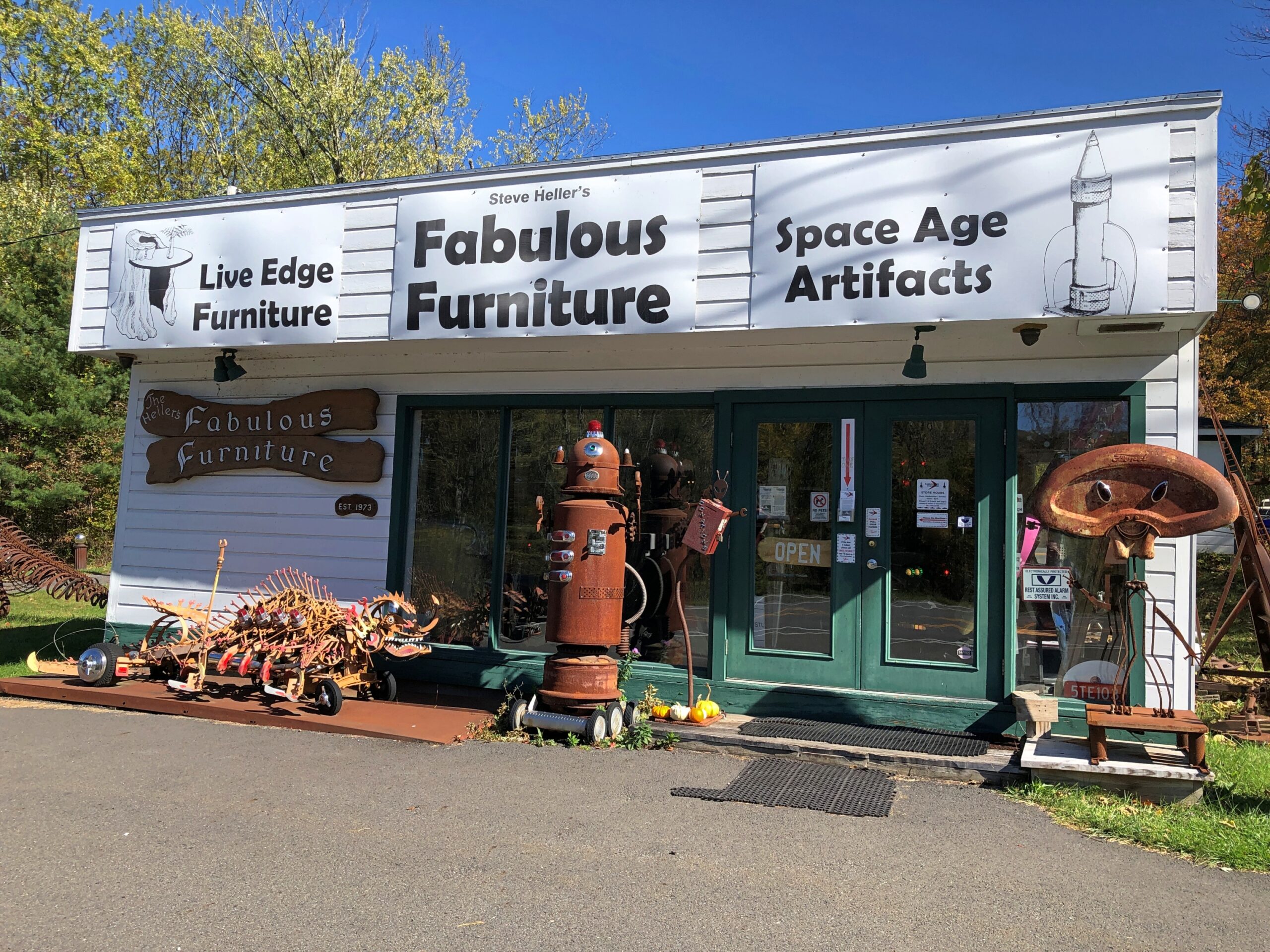
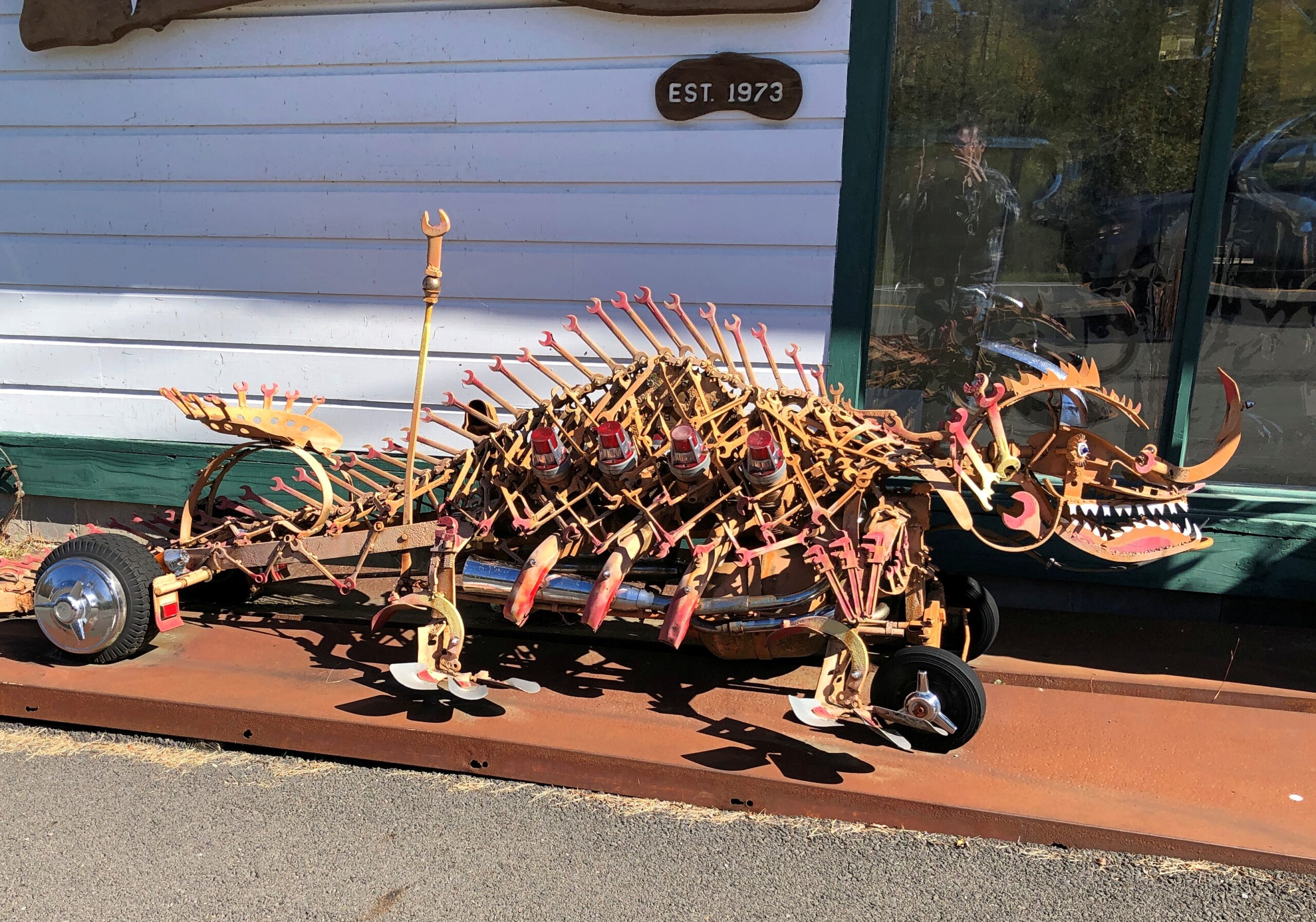
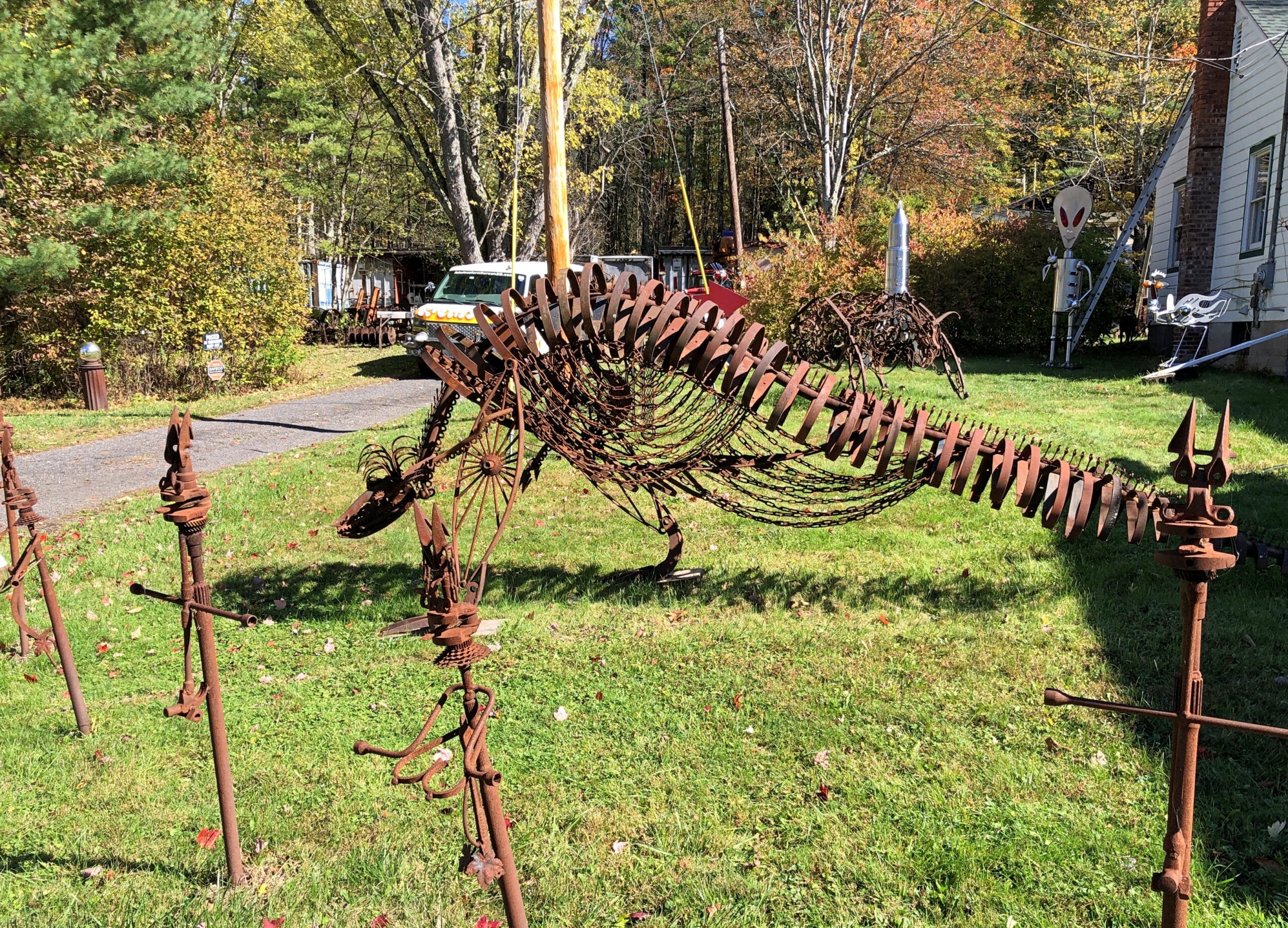
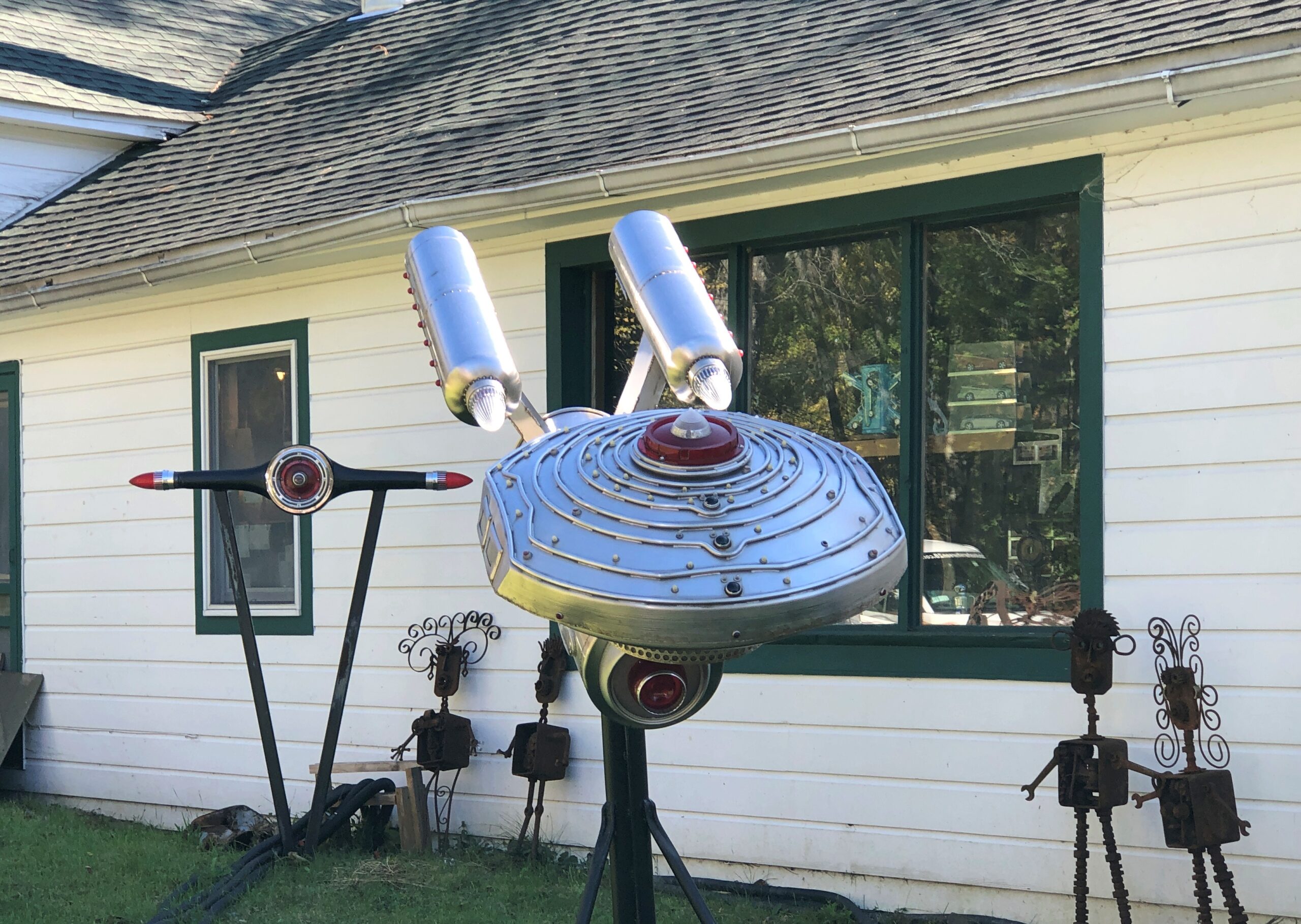
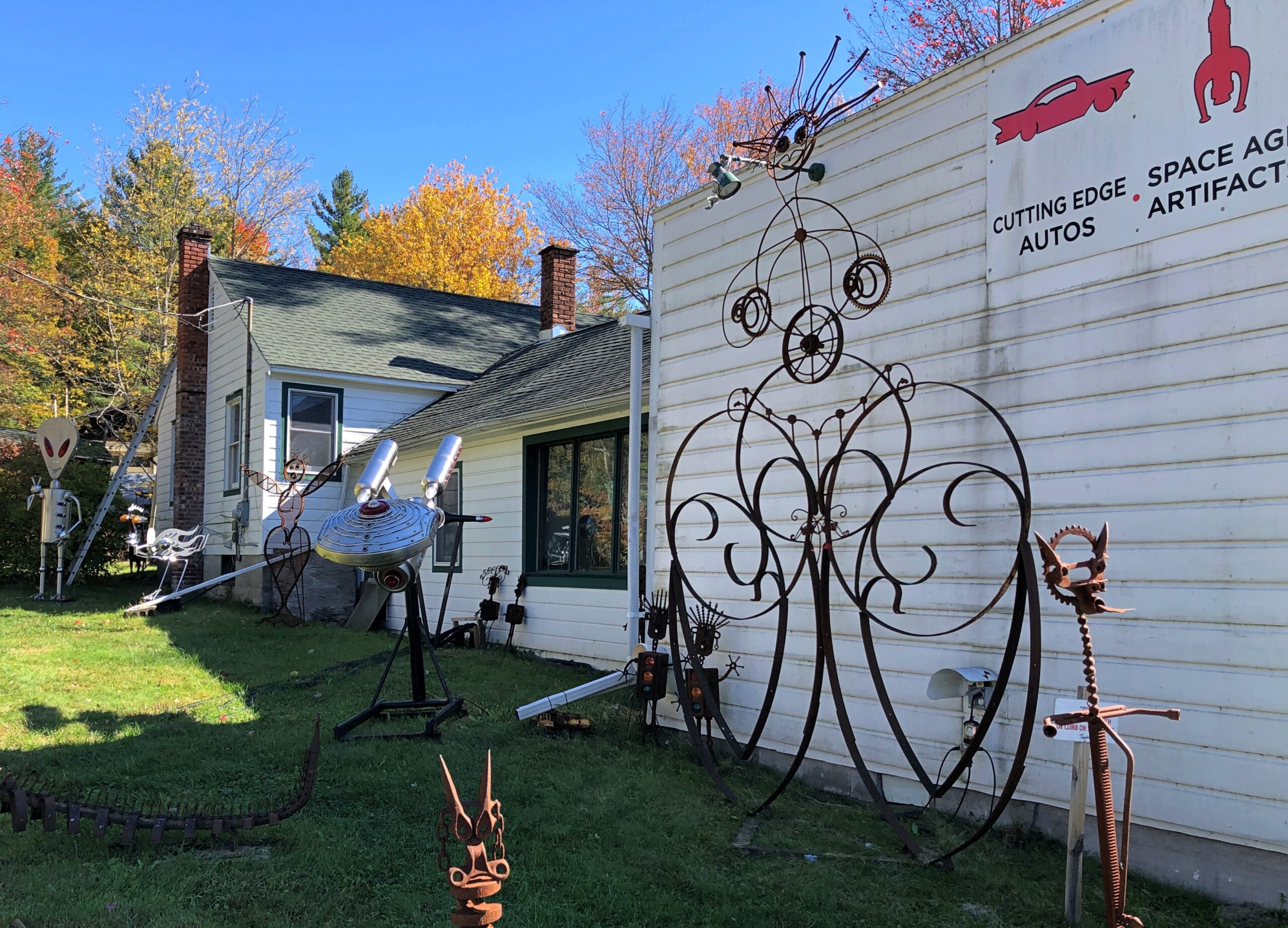
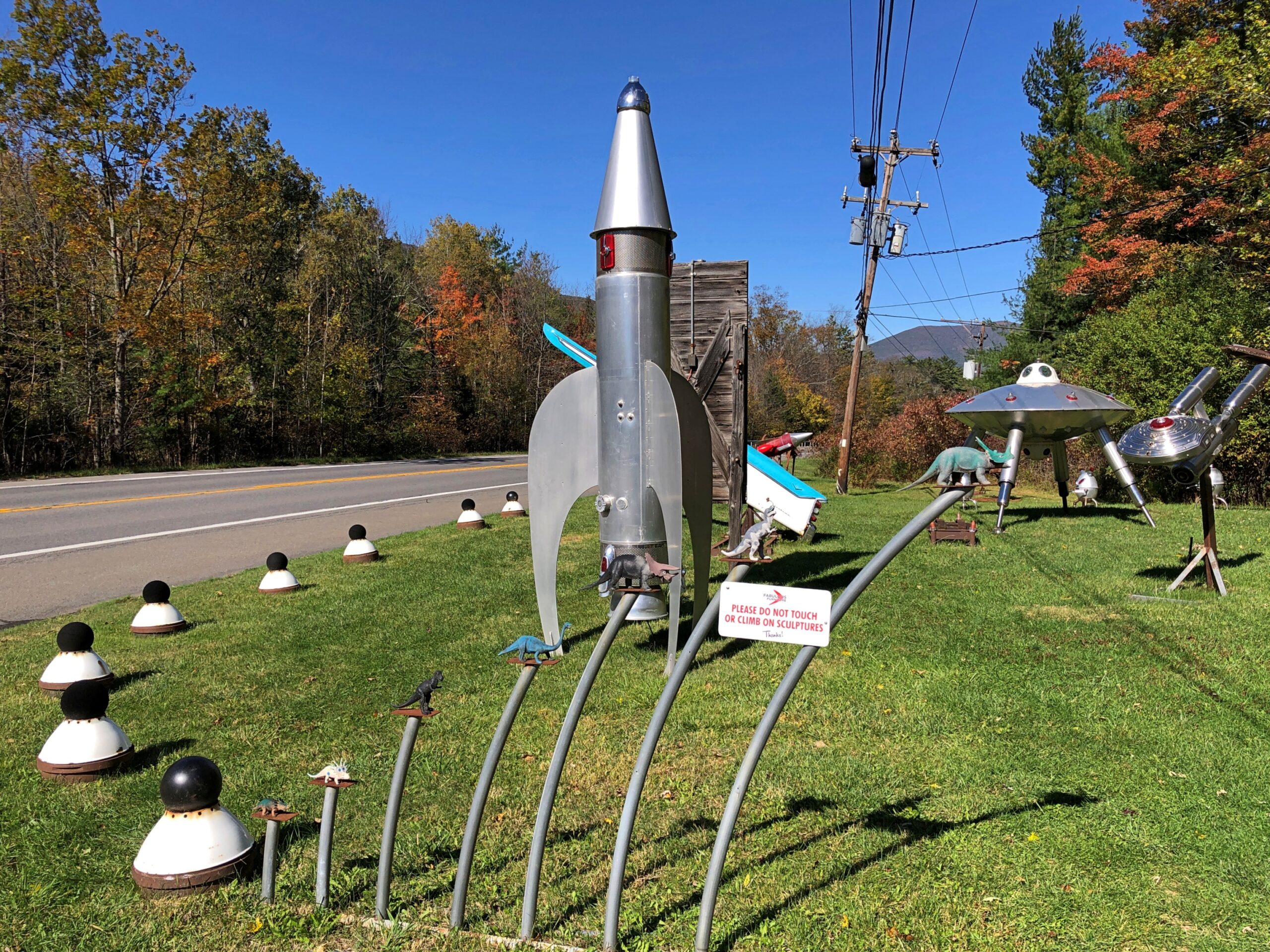
Metal spaceship and robot sculptures haven’t been part of the Catskills narrative that I know of. But there they were, right off NY 28.
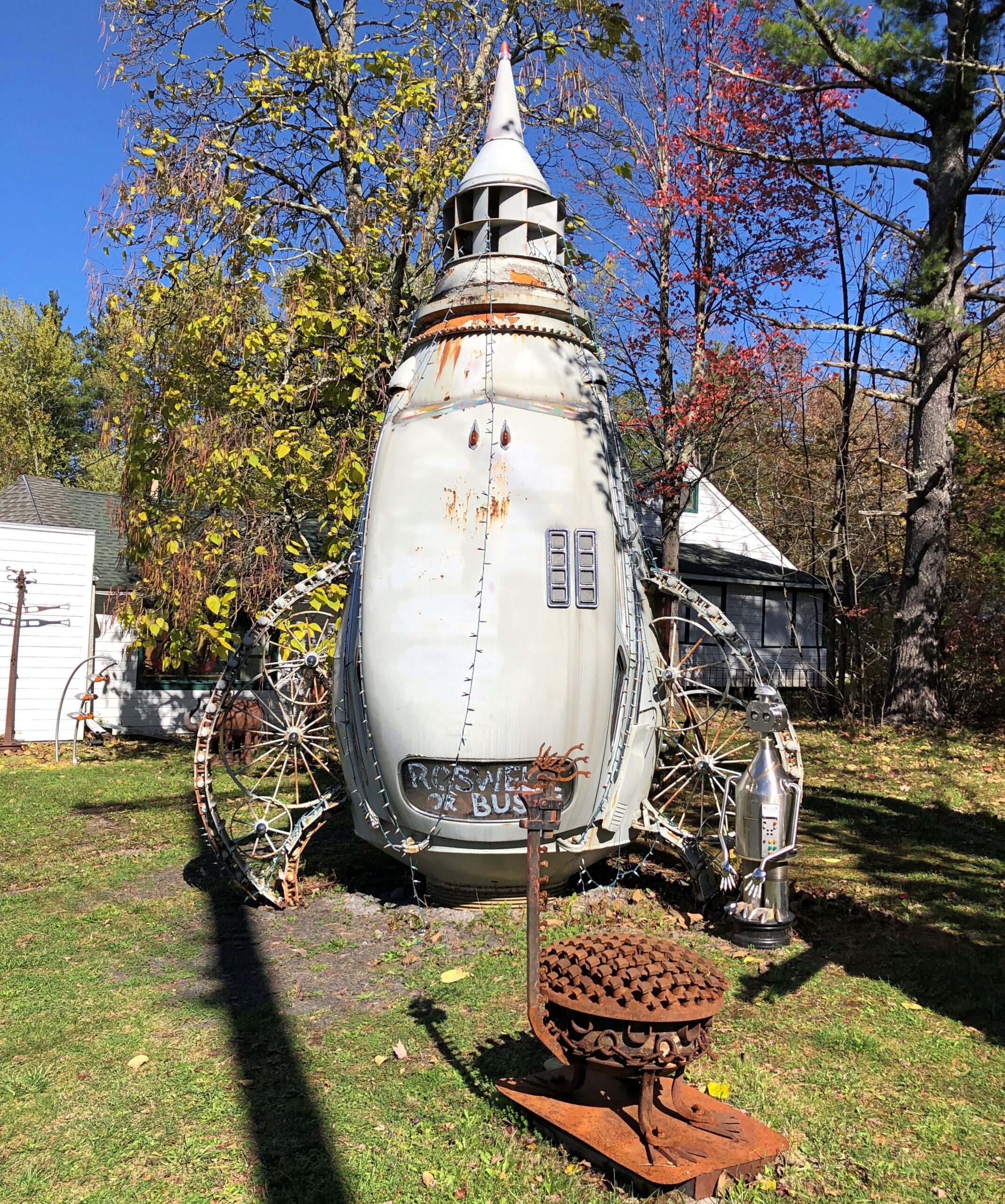
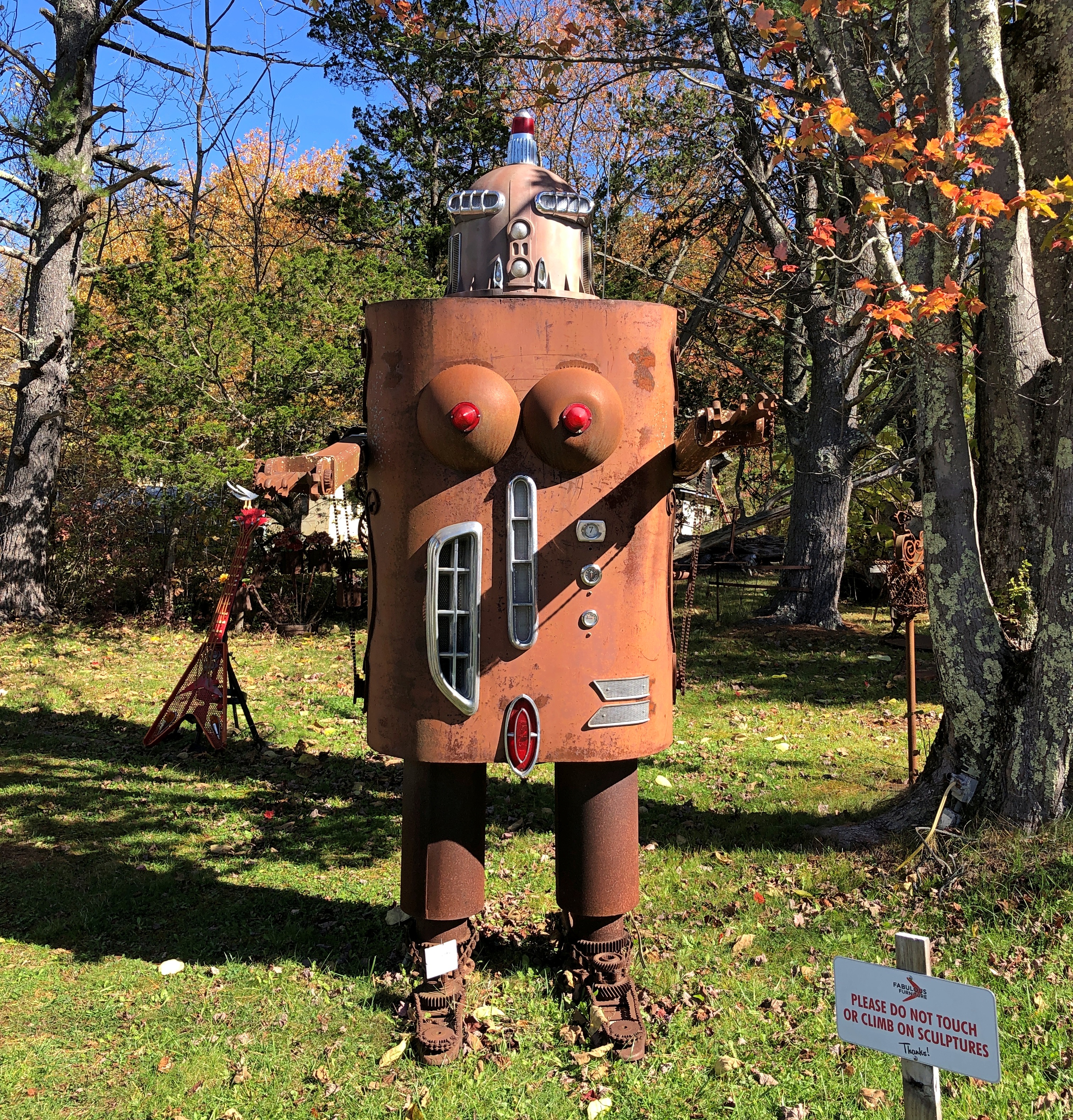
Fabulous Furniture, Catskills

As part of this place of business.

Fabulous Furniture, Catskills

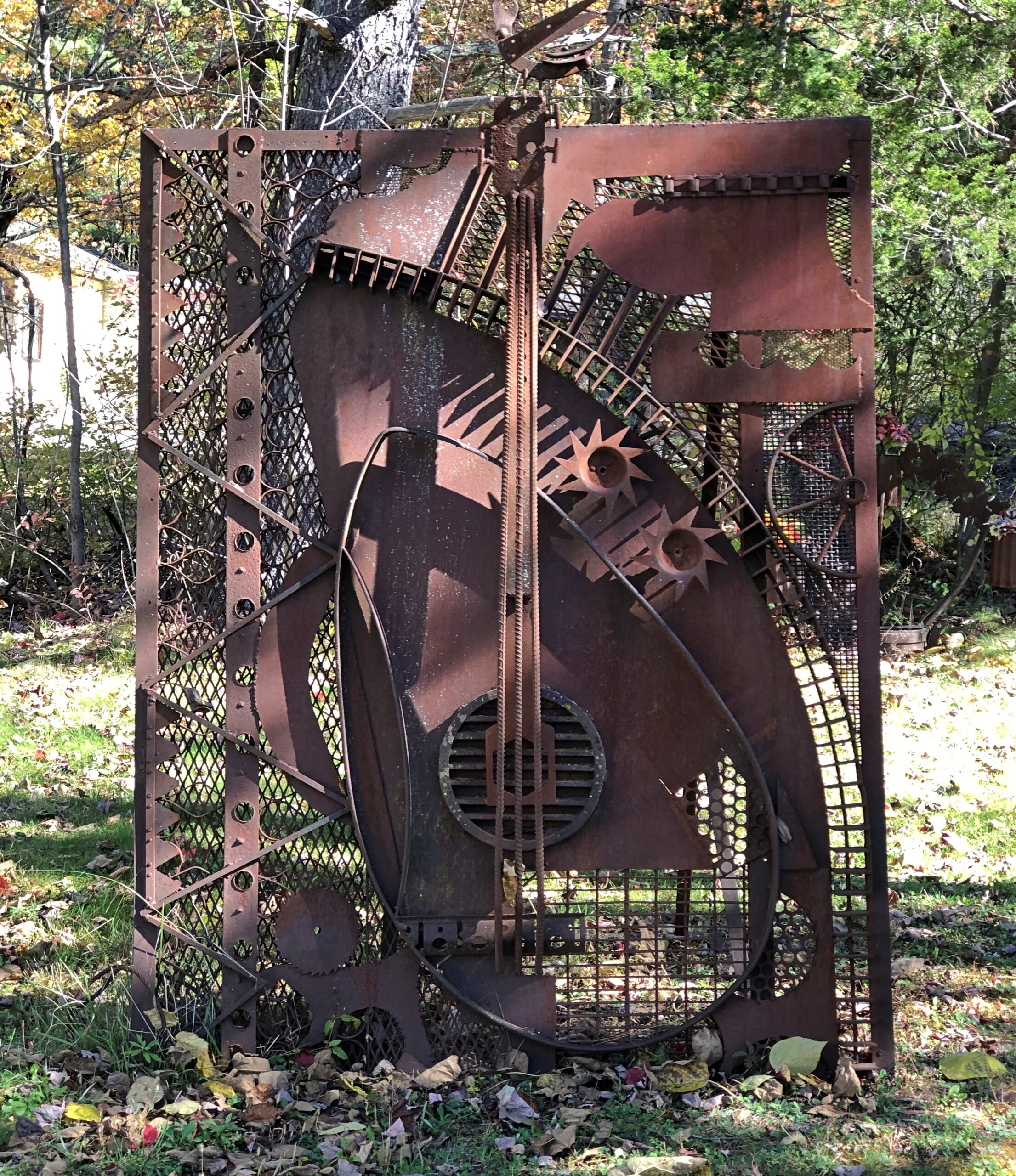
Some artful metal for sure.

Fabulous Furniture, Catskills

More.

Fabulous Furniture, Catskills

Fabulous work, Mr. Heller, but those Space Age artifacts are of a Space Age that never quite was. Too bad.

Southern Tier Fall Crossing

Drive out from Erie, Pa., headed northeast, and soon you have a decision to make: I-90, which becomes the New York State Thruway, or I-86, which does not. Besides costing more money, the NYST went places I didn’t want to go (this time): greater Buffalo, Rochester, Syracuse, Utica and into Albany, a route I drove as long ago as 1991 on my way to Boston.

By contrast, I-86 passes through much smaller places, winding through the hilly Allegheny Plateau, a way I had not been before. High time to do so, I thought. The road is also New York 17, with signs along the way identifying it as the Southern Tier Expressway. “Southern Tier” is the southernmost counties in upstate New York, which apparently is a longstanding regional term.

That’s a good-looking sign, and serves as a nod to the Seneca, who hold land in this part of the state. A Seneca artist named Carson Waterman did the design. For some miles before and after the town of Salamanca, which is part of the Seneca holdings, standard green highway signs include both English and Seneca.

One of the larger places on the Southern Tier Expressway is Jamestown, which I know from the song. It’s a game I occasionally play with my friends: Did You Know There’s A Song About…? and then I name something like rural electrification in Australia or the Versailles conference. In this case, the song is “Maddox Table” and it’s about labor organizing in Jamestown, hometown of the band 10,000 Maniacs. The town isn’t specifically mentioned in the lyrics, but Bemis Point is. Even before the Internet, I could look that up, and note that it’s a local recreation destination on Chautauqua Lake.

Chautauqua Lake is in Chautauqua County, the westernmost bump on the map of New York state. Ah, storied Chautauqua, which brings to mind the outdoor exhortations of men in full suits and women in long dresses, regardless of how hot it was. There’s another streaming service series for you: Chautauqua, set in the raucous 1890s. Could be a comedy or a Gritty Drama.

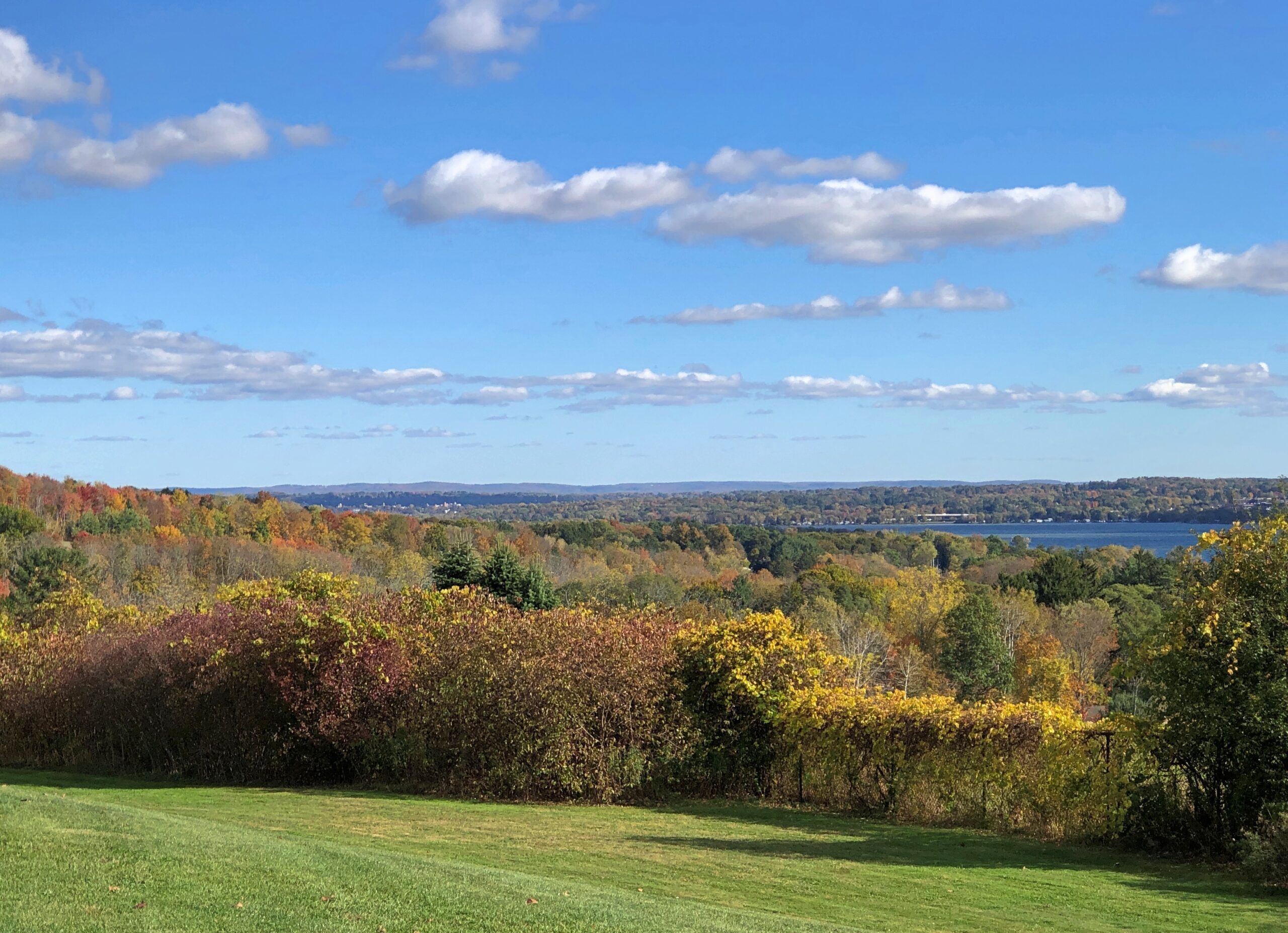
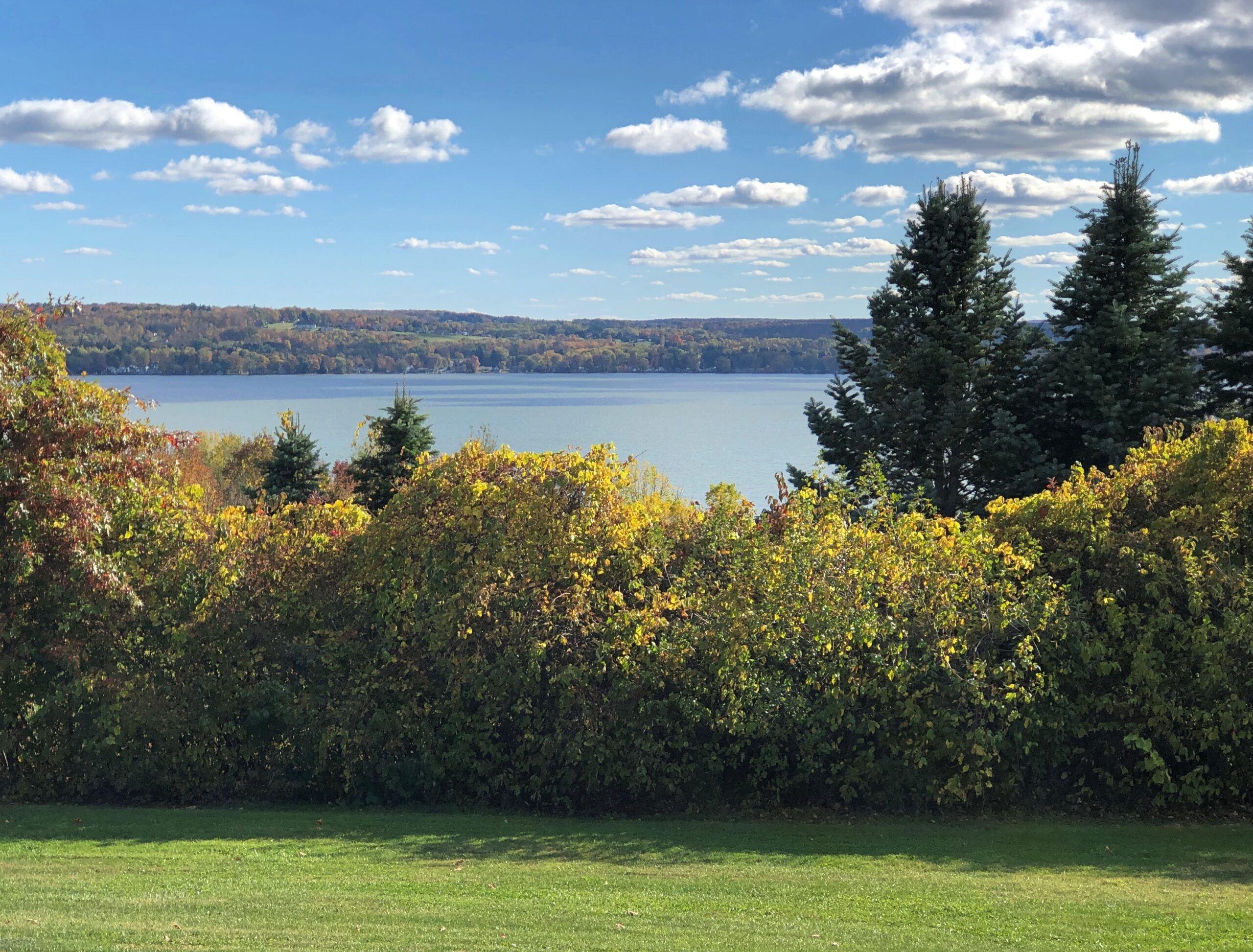
I wanted to reach my destination, Binghamton, NY, before too late, so I didn’t linger near the lake. But I did stop at the rest area on Chautauqua Lake, which is large, and contains multitudes of structures along its shores, and probably many more people in the summer. One of the more scenic rest areas of the trip, it turned out.

Southern Tier NY
Southern Tier NY

So was the next rest area, not far from Corning. A few hours to devote to the glass museum in that town would be well spent, I think.

Southern Tier NY
Southern Tier NY

After an uneventful night in Binghamton – the kind I prefer on the road – I set out for greater NYC, by way of the highway New York 17, the “future I-86” according to my maps, and then the highways New York 30 and 28.

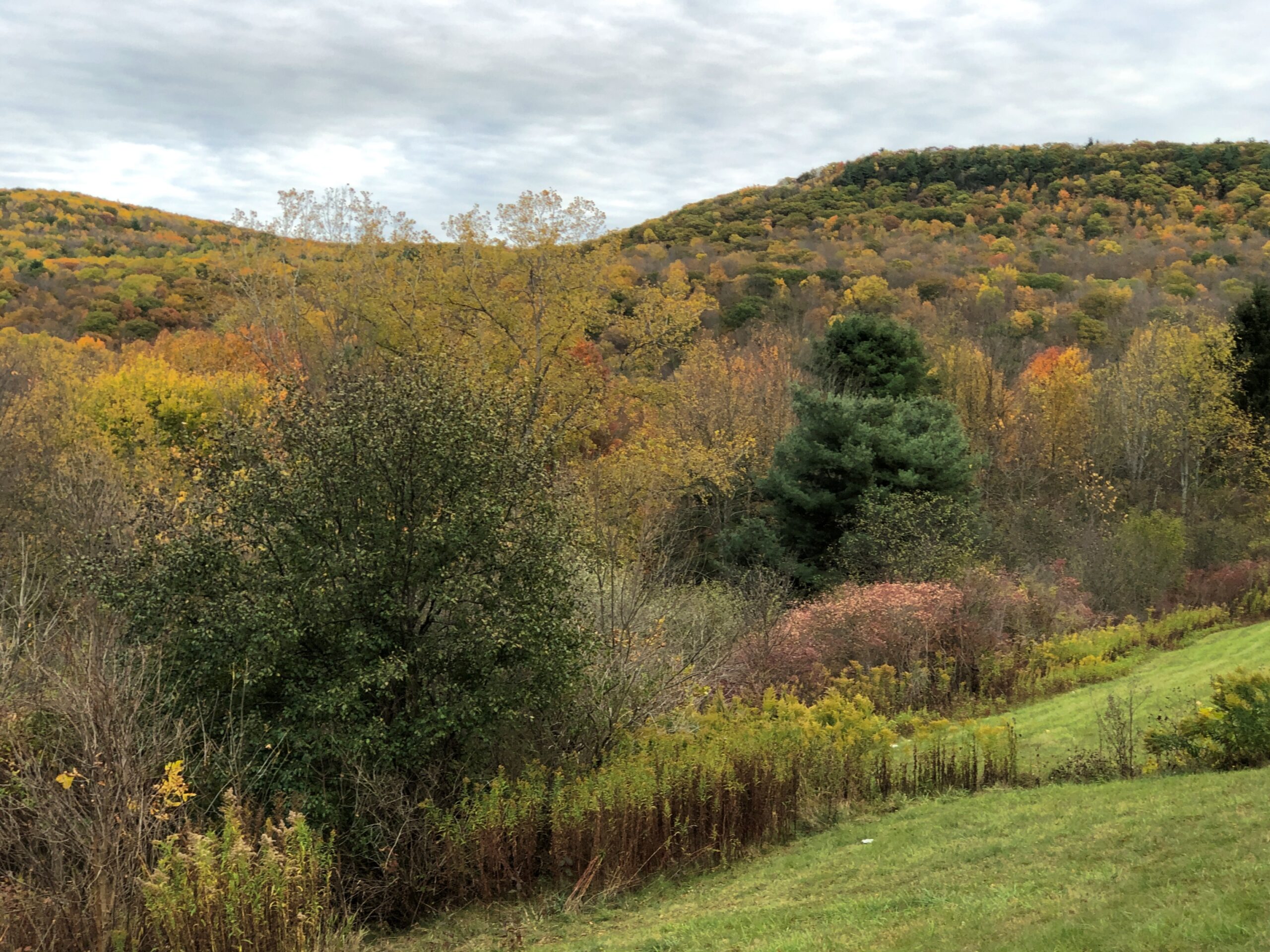
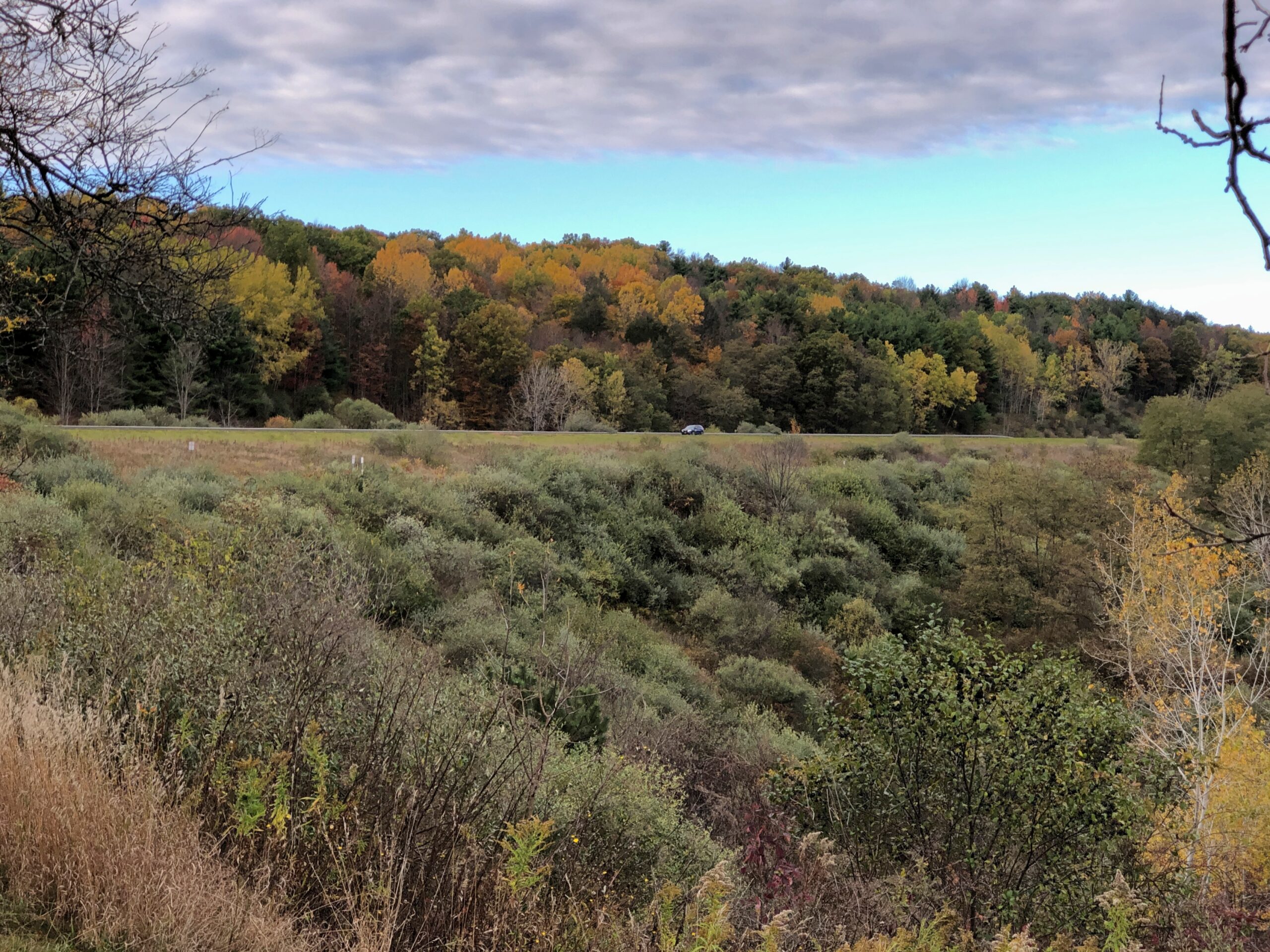
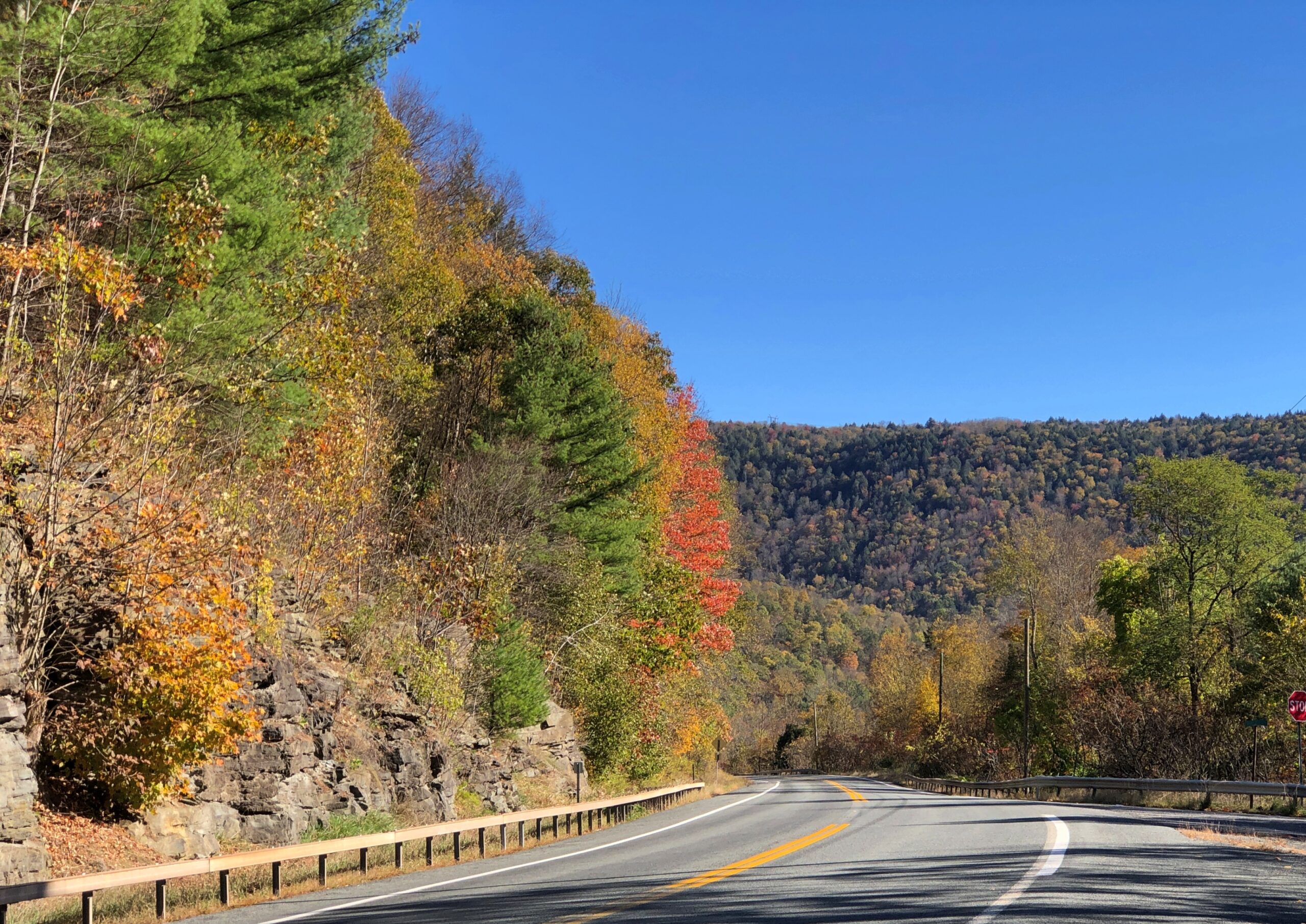
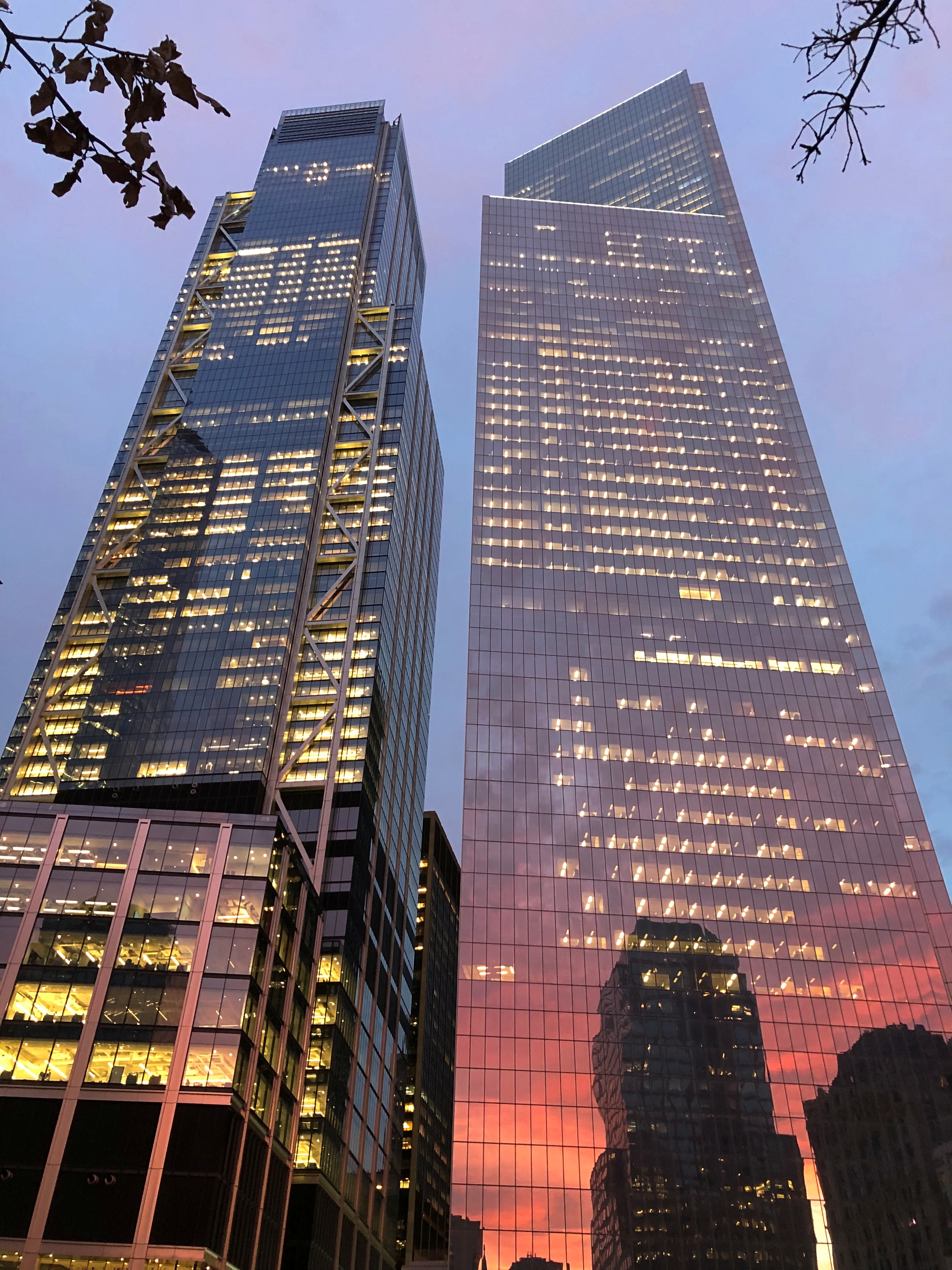
NY 30 skirts the edge of Catskill Park. Last time I was in the Catskills was during the Clinton administration, back when the Concord Hotel and Resort was still clinging to existence, so it’s been a while, and I’d never been in the colorful and nearly empty western edge of the park in October. That emptiness made all the difference in the car commercial driving I enjoyed.
Southern Tier NY
Southern Tier NY
Southern Tier NY

During all the driving over the next week or so after NY 30, empty roads would not be part of my reality.
Nor’East Drive ’25

I didn’t realize until last night that I’d driven through some geographic oddities over the last two weeks, on my way to the Northeast and back. Actually state border oddities, such as the Erie Triangle in Pennsylvania, the curious division of the Chesapeake Peninsula, and the panhandle of Maryland.

Except they aren’t really oddities. They just look that way when you’re a kid (or an adult) poring over U.S. maps or putting your state puzzle map together for the nth time. How is it that Pennsylvania has that small chimney? Why didn’t Delaware get more of the Chesapeake Peninsula? What’s the deal with the western extension of Maryland, which narrows to only a few miles at one point?

There are historic reasons for all the shapes, both rational and arbitrary, which are the subject of books and at least one TV show. Lands were granted and claimed, borders were surveyed and quarreled over, and deals and court cases and Congress eventually settled the shapes.

The border oddities may have local and legal significance, but they’re also there to enjoy. Regular borders aren’t nearly as much fun. Sure, it’s interesting that Colorado and Wyoming look about the same, but I always liked the fact that New Mexico has a stub and Idaho tapers to meet Canada, just to name two Western examples, because not all the fun shapes are in the East. Just most of them.

To reach these border areas, I drove 2,853 miles, starting October 14, from northern Illinois to the East Coast and back, through (in order) Indiana, Michigan, Ohio, Pennsylvania, New York state (and city), New Jersey, New York (city and state) again, Connecticut, Massachusetts, Rhode Island, Connecticut again, New York state (and city) again, New Jersey again, Delaware, Maryland, West Virginia, Pennsylvania again, West Virginia again, Ohio again and Indiana again, arriving home today. I got tired just typing all that out.

The original impetus for the trip was to visit New York City during its Open House event. Unlike a rational person, who would have flown there and back, I decided to drive, and let Yuriko fly there and back. NYC is achievable from metro Chicago in two driving days. I decided not to do that, either, and stretch things out to fill in some travel lacunae of mine.

For instance, I wanted to visit Eire, Pa., because I’ve always bypassed it, and many Americans can say the same. I wanted to look around Long Island, or at least part of it, for the same reason. I wanted to spend the night in both Rhode Island and Delaware: the last two states in which I’d never done so. I wanted to see the capitols of New Jersey, Delaware and Maryland, toying with the idea of Pennsylvania too, though I decided it was out of the way. I wanted to see historic sites associated with a number of presidents along the way, and maybe a battlefield or two.

I really wanted to visit a friend in New York, and my nephew Robert, and friends in the Boston area. I’m glad to report that I did so. This has been a year of visiting old friends and relations. I’d like every year to be that way.

I had a much longer list of places to visit, and added to it every time I looked at a map, paper or electronic, since I now use both, and when I was driving — so many possibilities. But there are only so many hours in the day and so much energy in my aging body. Still, I did much of what I set out to do, with one major exception due to forces beyond my control. National Park Service sites were off the table, for reasons all too obvious and not worth rehashing here. So the homes of FDR and TR, along with Antietam and Harper’s Ferry, went unvisited. Some other time, I hope.

No matter. I visited a good number of cities and towns, drove roads large and small, empty and insanely crowded, and enjoyed a few exceptional meals and many very good ones. I saw churches and cemeteries, some historic places not managed by the federal government, and encountered the largest of the many No Kings events. I read plaques. I chatted with strangers and clerks in stores. I took a swim in Massachusetts and long walks in New York. I hadn’t planned to walk across the Brooklyn Bridge again, but Yuriko had that idea, and across we went. I listened to a lot of terrestrial radio, good, bad and indifferent. I burned gas priced between about $2.70 and $3.30 a gallon. I paid entirely too many tolls, because the Northeast is lousy with toll roads and bridges — but driving across some of those bridges, especially the Bay Bridge in Maryland, was a grand experience, and surely worth the toll.

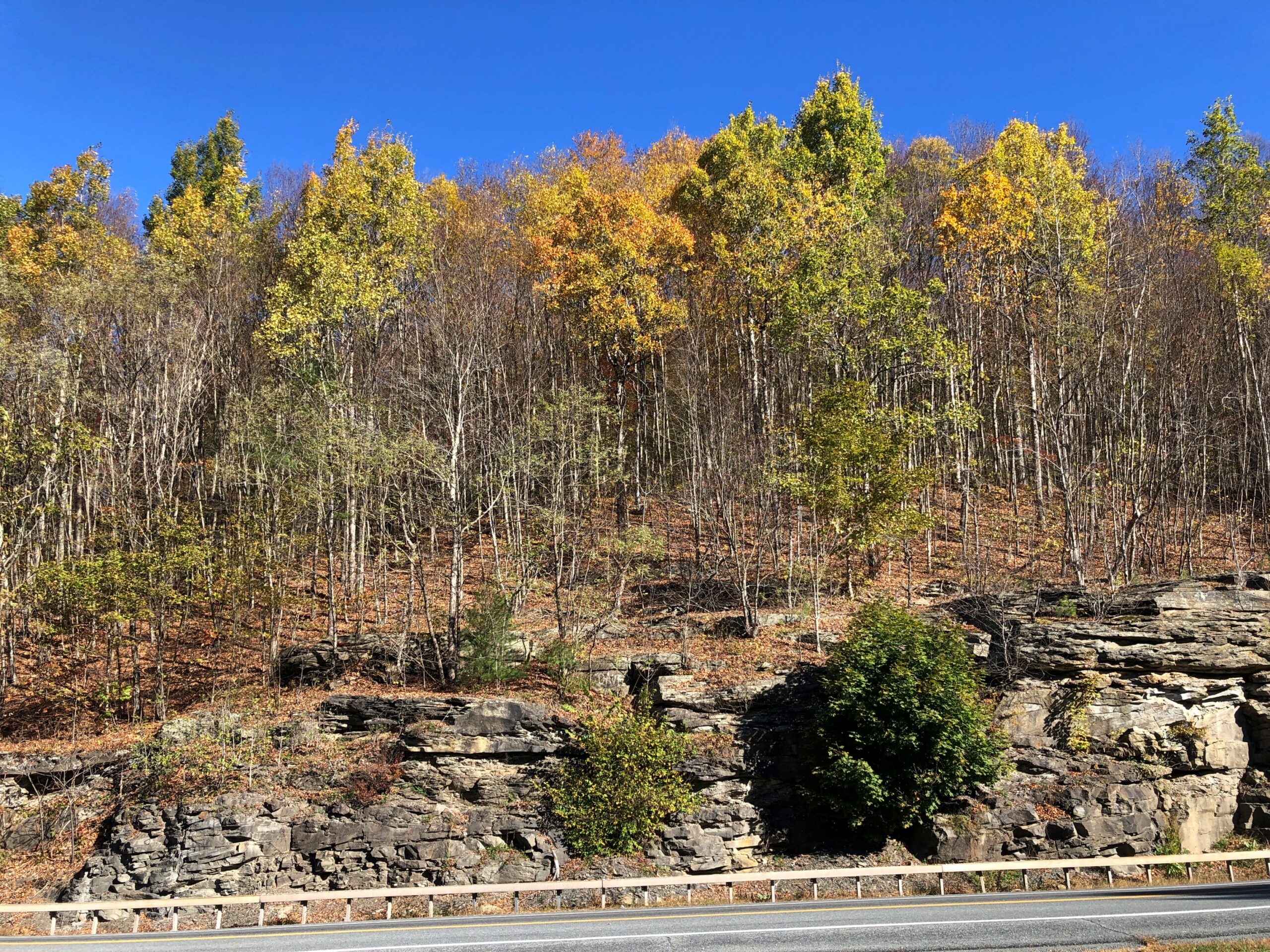
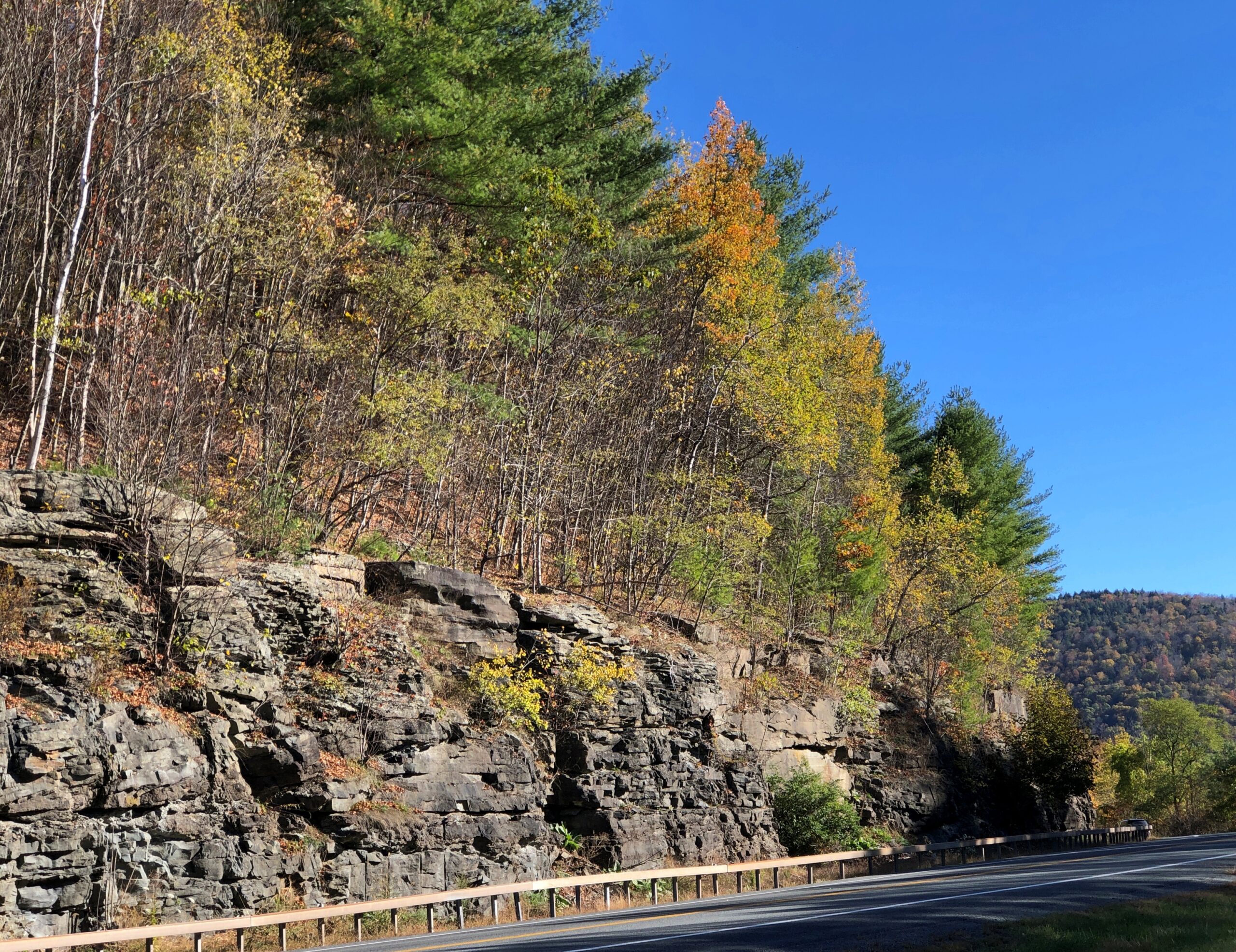
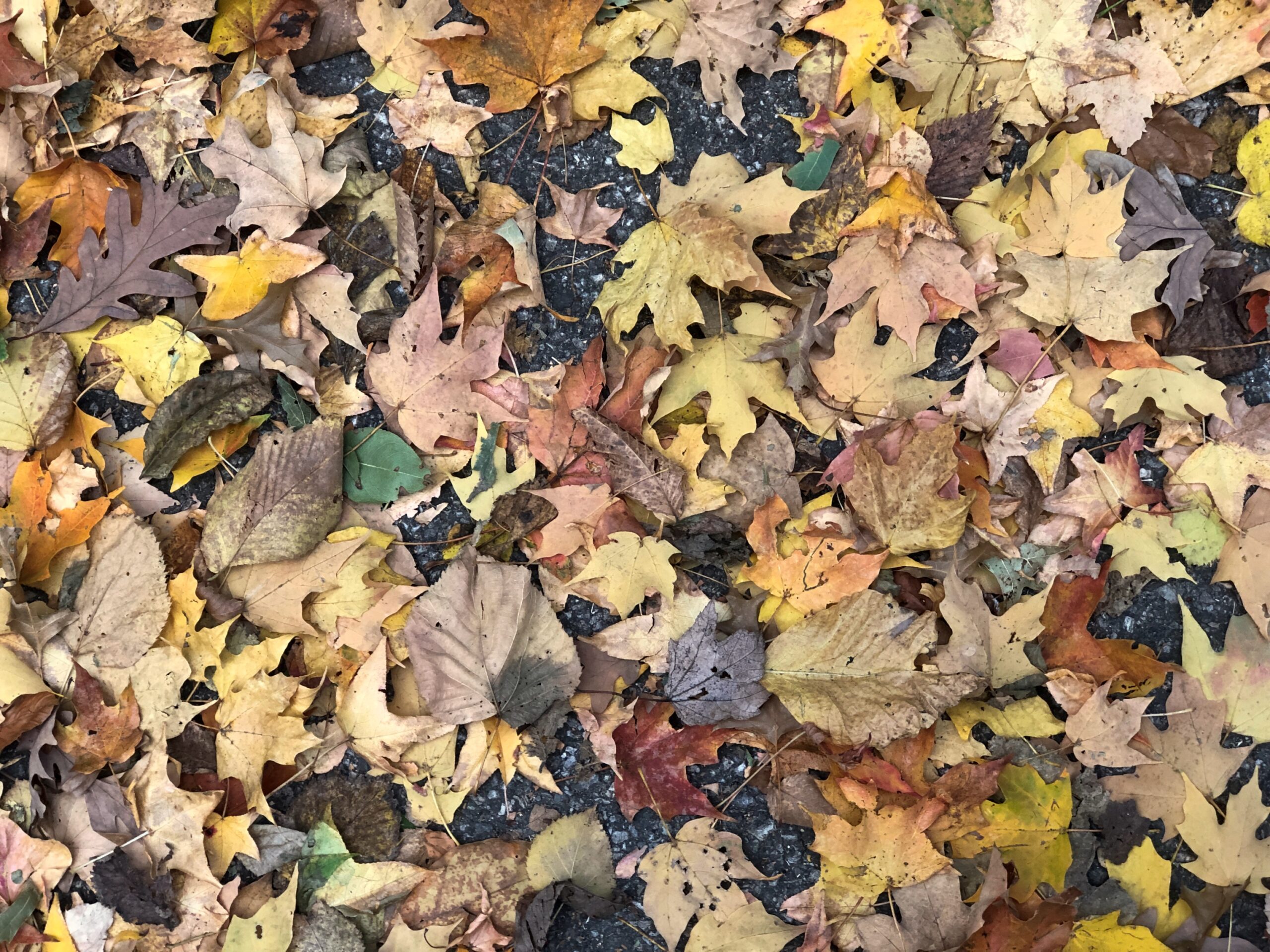
Something I didn’t anticipate, but which improved the trip immensely, was fall color. I should have anticipated it, but I suppose I had other things on my mind. When I got to New York state, driving west to east, it became clear that I’d accidentally designed myself a fall foliage excursion. The trees were gorgeous there, and in NYC (especially Prospect Park), Long Island, and parts of New England, and in Delaware and Maryland all the way across its panhandle. Even Ohio and Indiana had some nice color when I got there, and here at home too.

Prospect Park leaves

One more thing: unexpected oddities along the way. It’s important to watch out for those.

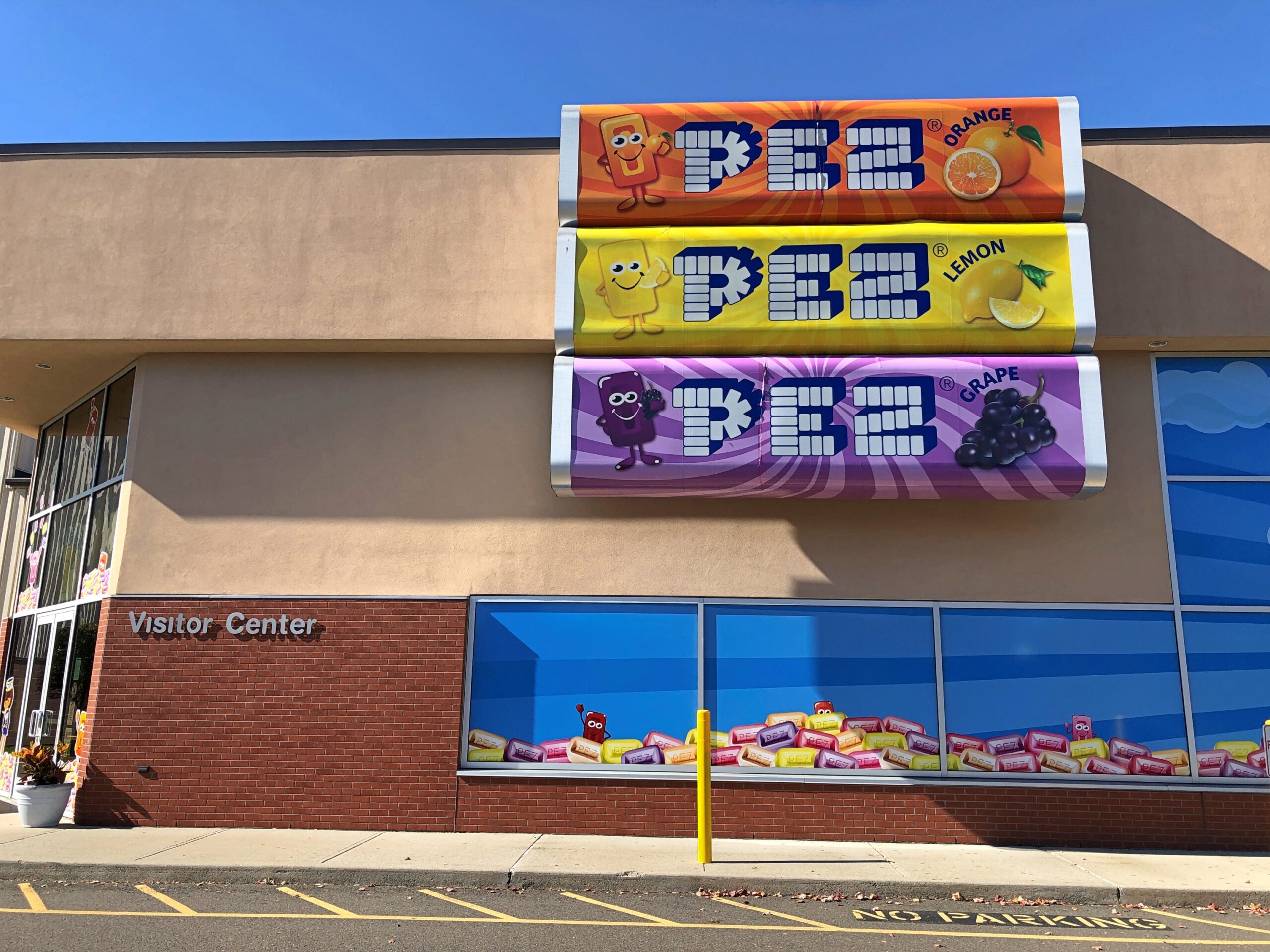
In Orange, Connecticut, I noticed a sign for the Pez Visitor Center. I had to see that.

Pez Visitors Center

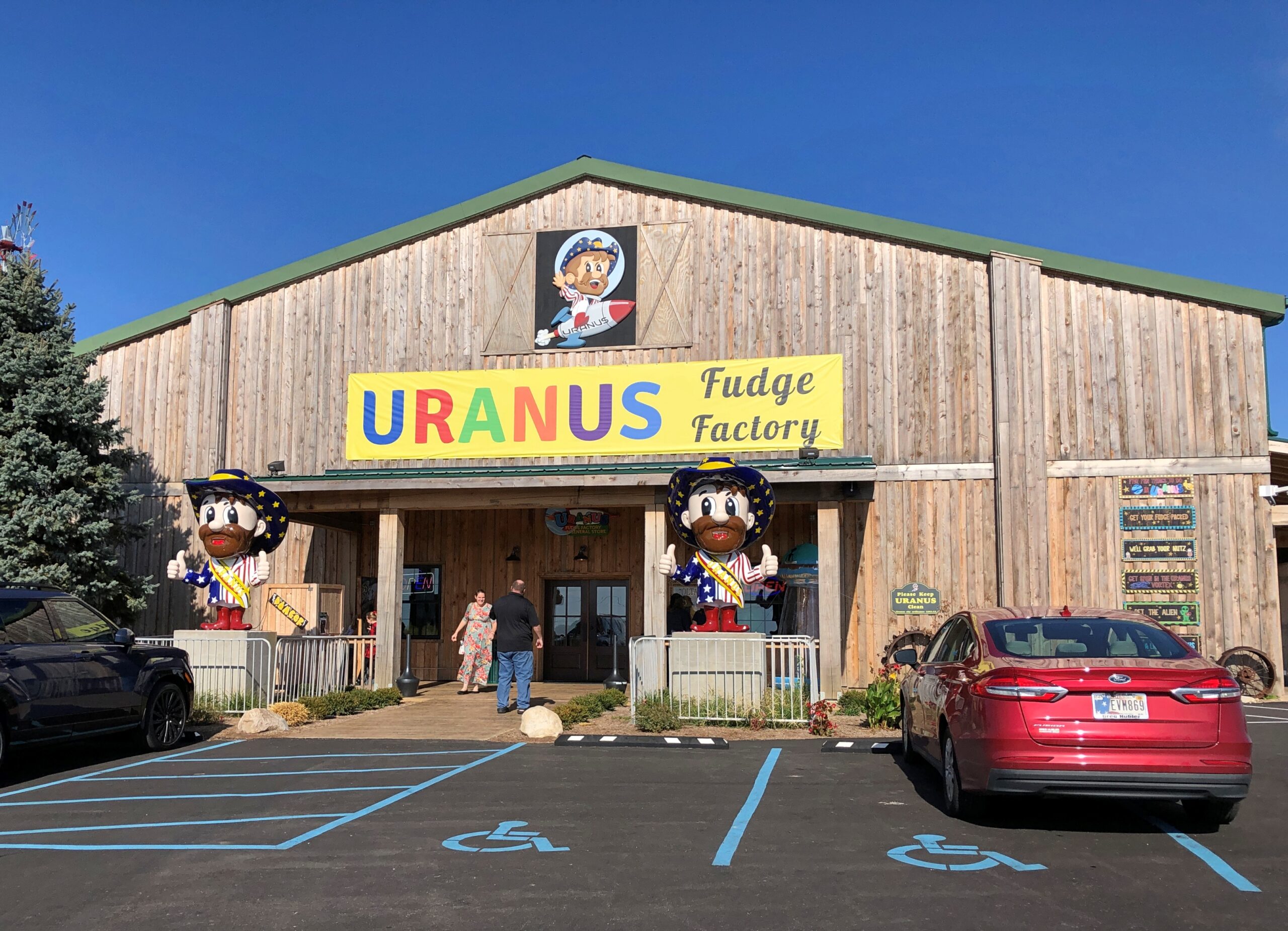
Earlier today, at the border between Ohio and Indiana, I noticed Uranus. I had to stop.

Uranus

Turns out there’s more than one; I’d only ever seen the one in Missouri (the original) in passing, never stopping. But I did this time. Now I can say I’ve been to Uranus.

NYC ’83 Debris

After returning from Europe in mid-August 1983, I spent about 10 days in New York City, a kind of coda to the longer trip. Expenses were low, since I was house sitting – apartment (co-op?) sitting in Greenwich Village – for Deb, a woman I’d met in Germany, while she was on the Jersey shore with her parents. A place New Yorkers went in August, Deb said, because their analysts were out of town. I think she was only half-joking.

If I were a different person, I would have spent late nights at the likes of CBGB, the Palladium, Danceteria, or the Peppermint Lounge (or the Village Vanguard or the Bitter End, for that matter), staggered back to Deb’s apartment, and slept most of the day. That would have been quite the time and place for that kind of activity. But no: I didn’t take a stronger interest in live music in small venues until I lived in Nashville for a few years, and I never did latch on to the alcohol or cocaine components of those kinds of nights. So any stories I’d tell about the NYC club scene 40 years ago would be necessarily made up.

I did a lot of walking. Mostly Manhattan, but one day I walked across the Brooklyn Bridge and spent some time in that borough. I also made it up the Bronx.

The zoo was a little run down in those days, but nothing like the south Bronx territory I saw from the #5 IRT. The zoo guide above, looking at it now, is a model of compact information, unfolding to offer a good map of the zoo’s 265 acres on one side, and on the other side, other information about the zoo, and the various trails in the facility one could follow to see different kinds of animals: the Wild Asia Trail, Africa Trail, Reptiles and Apes, Bird Valley Trail, etc.

I see that elephant and llama rides were available for an extra fee in those days. I wonder if that’s still the case.

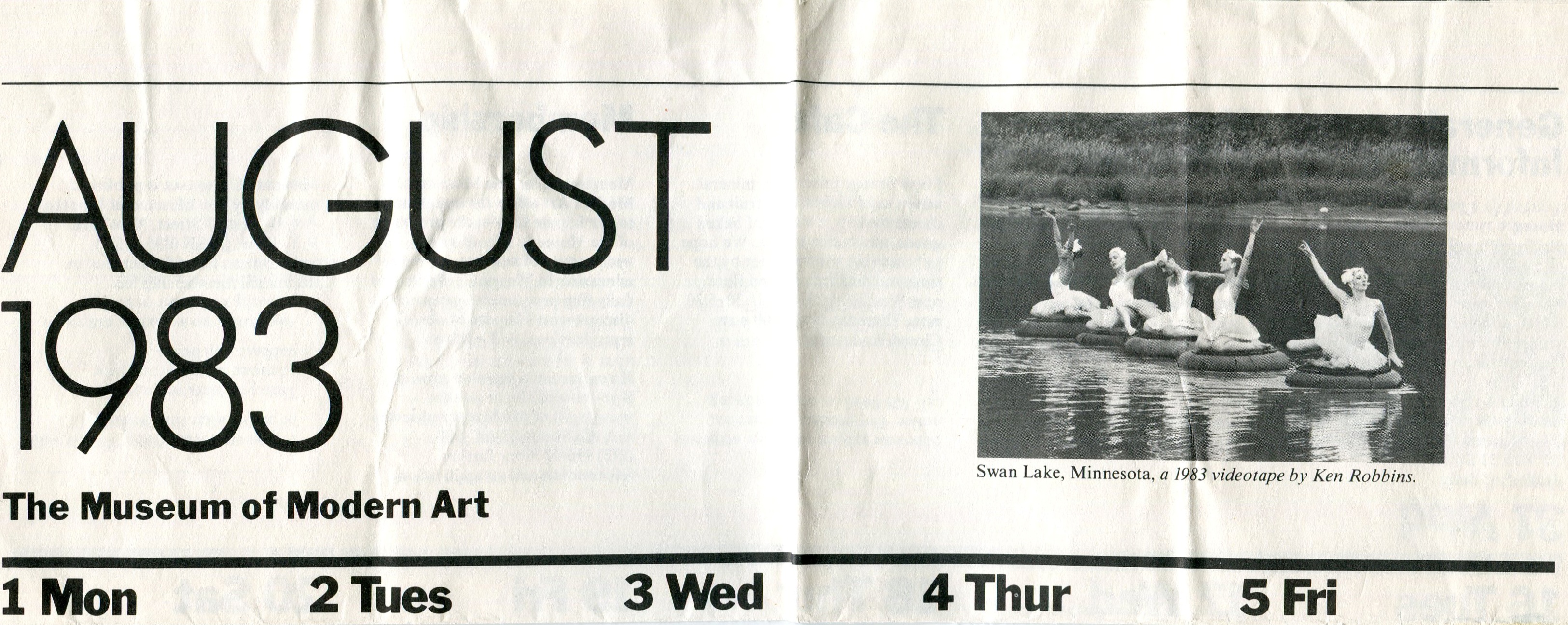
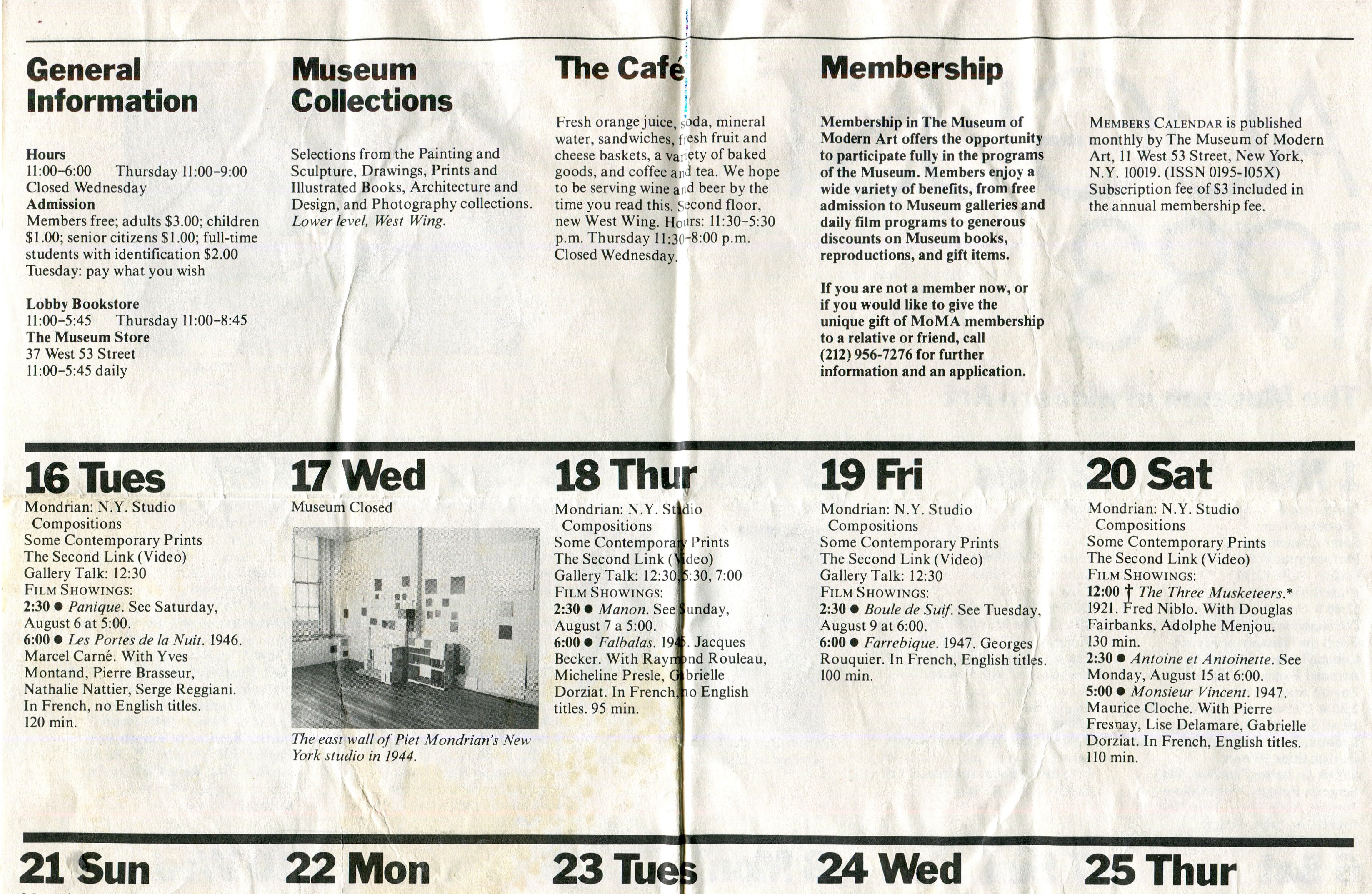
Back in Manhattan, there was always Art to see.

Note the adult admission price: $3. Or the equivalent of about $10 these days. And what is the adult rate as of 2024? $30. That’s just gouging, MoMA. You have no excuse.

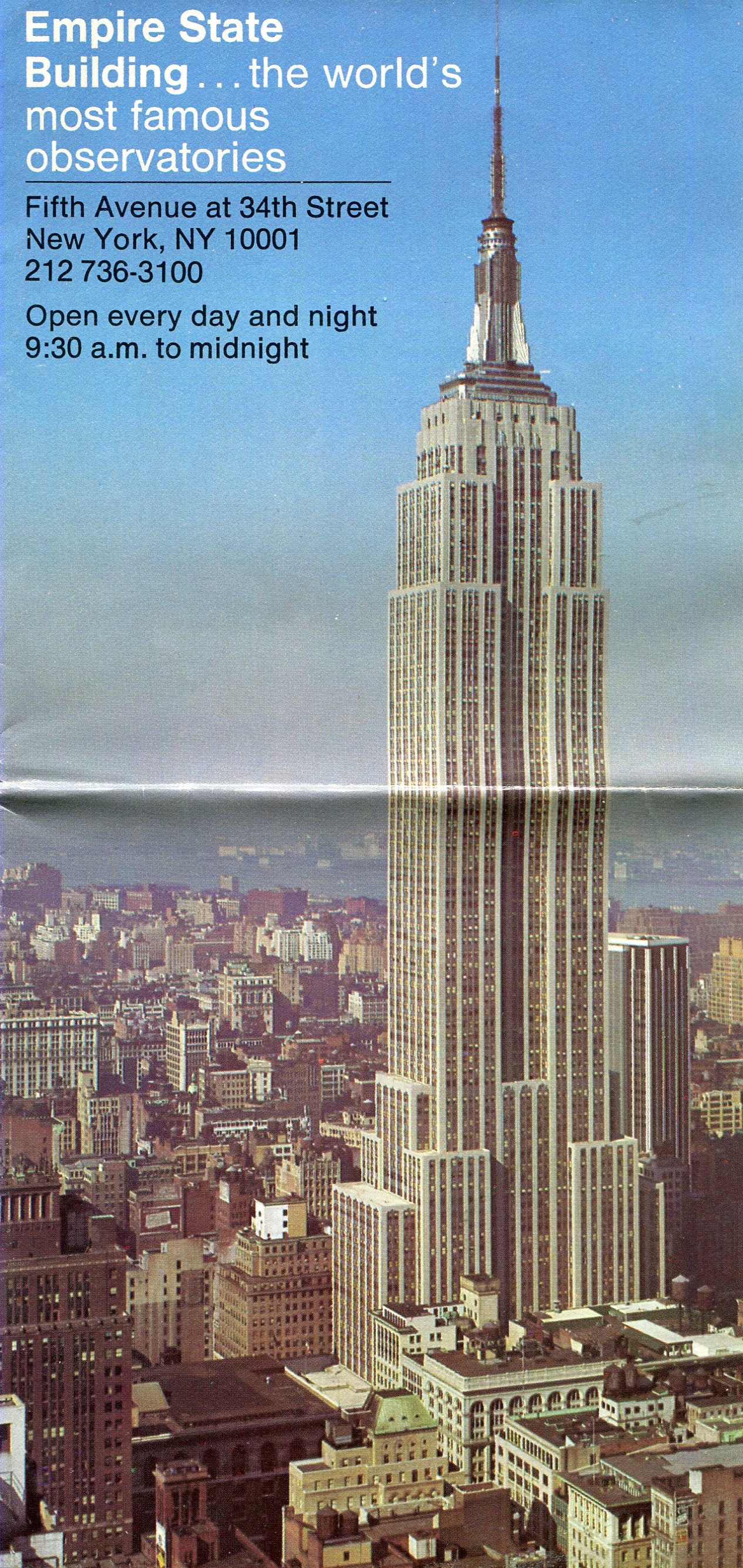
Vistas. I don’t remember what I paid, but the ESB price now is absurd. I’m glad I’ve already been there. 

I went to the top of the Empire State Building at night, and marveled at the glow of the city, but also at just how many vehicles on the street below were yellow cabs. I was at the World Trade Center observation deck during the day; a lost view.

New York in the Days of the Omicron Variant

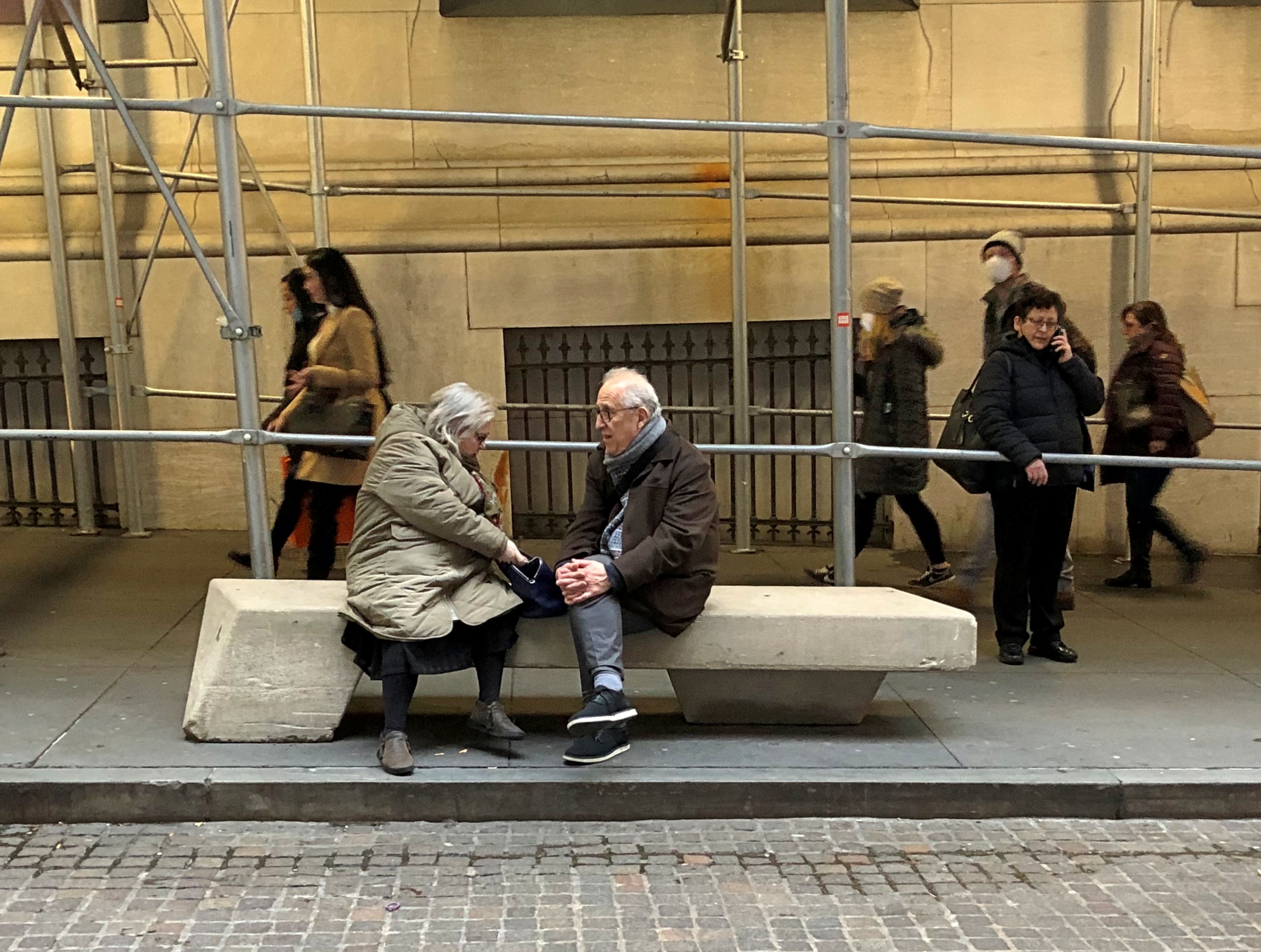
Has it been two years now since the omicron variant reared its ugly – head’s not quite the word for viruses, but anyway made a splash? Seems so. I happened to be visiting New York City at that moment in Covid history. I got through it. Even had a good visit, spending a lot of time outdoors, a safe place to be, I suppose, as New Yorkers went about their business.NYC 2021

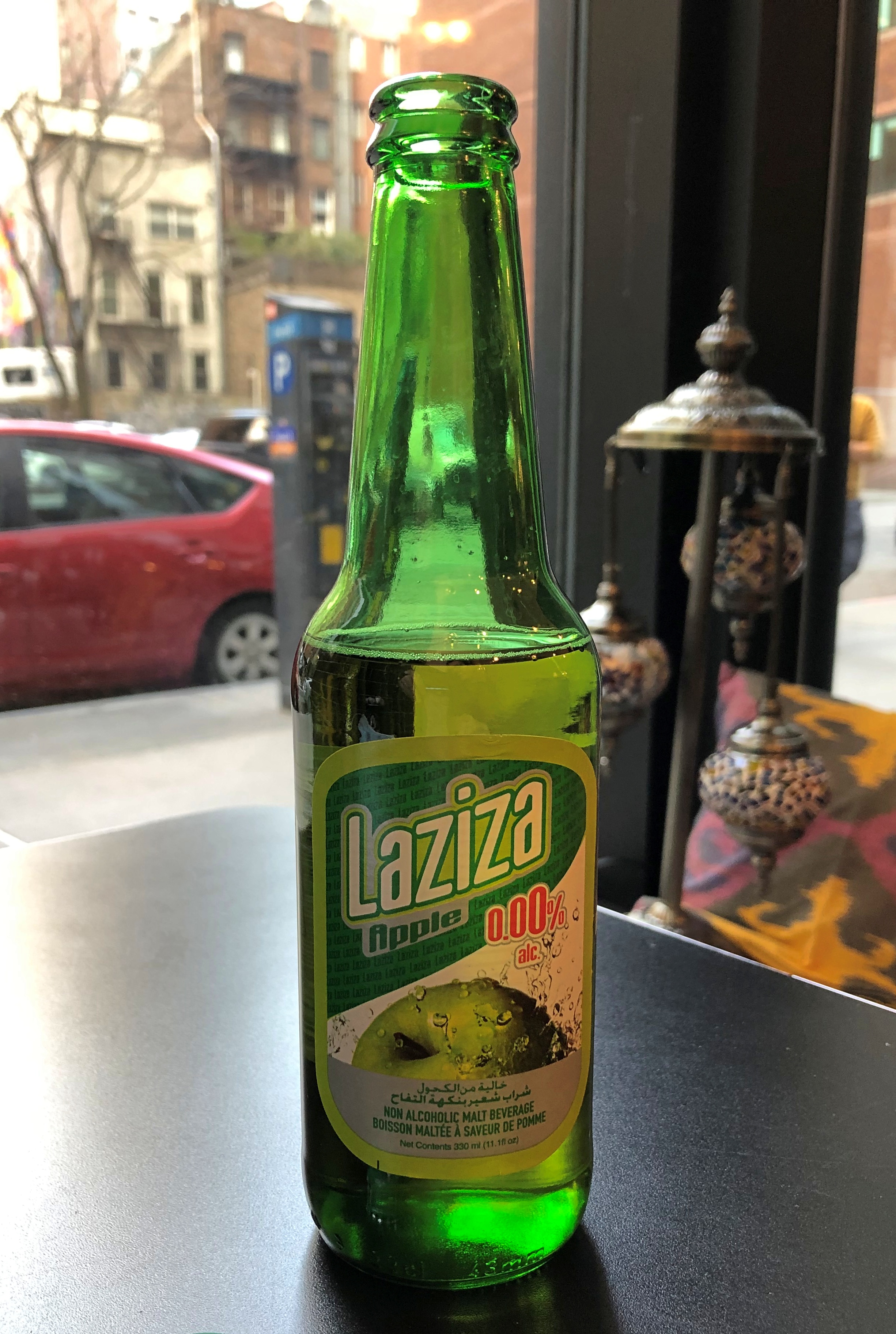
Among other things, I enjoyed a Uyghur meal for the first time – I really need to do that again – washed down with an apple-flavored drink I’d never had before either, Laziza, a non-alcoholic malt beverage made in Lebanon.NYC 2021

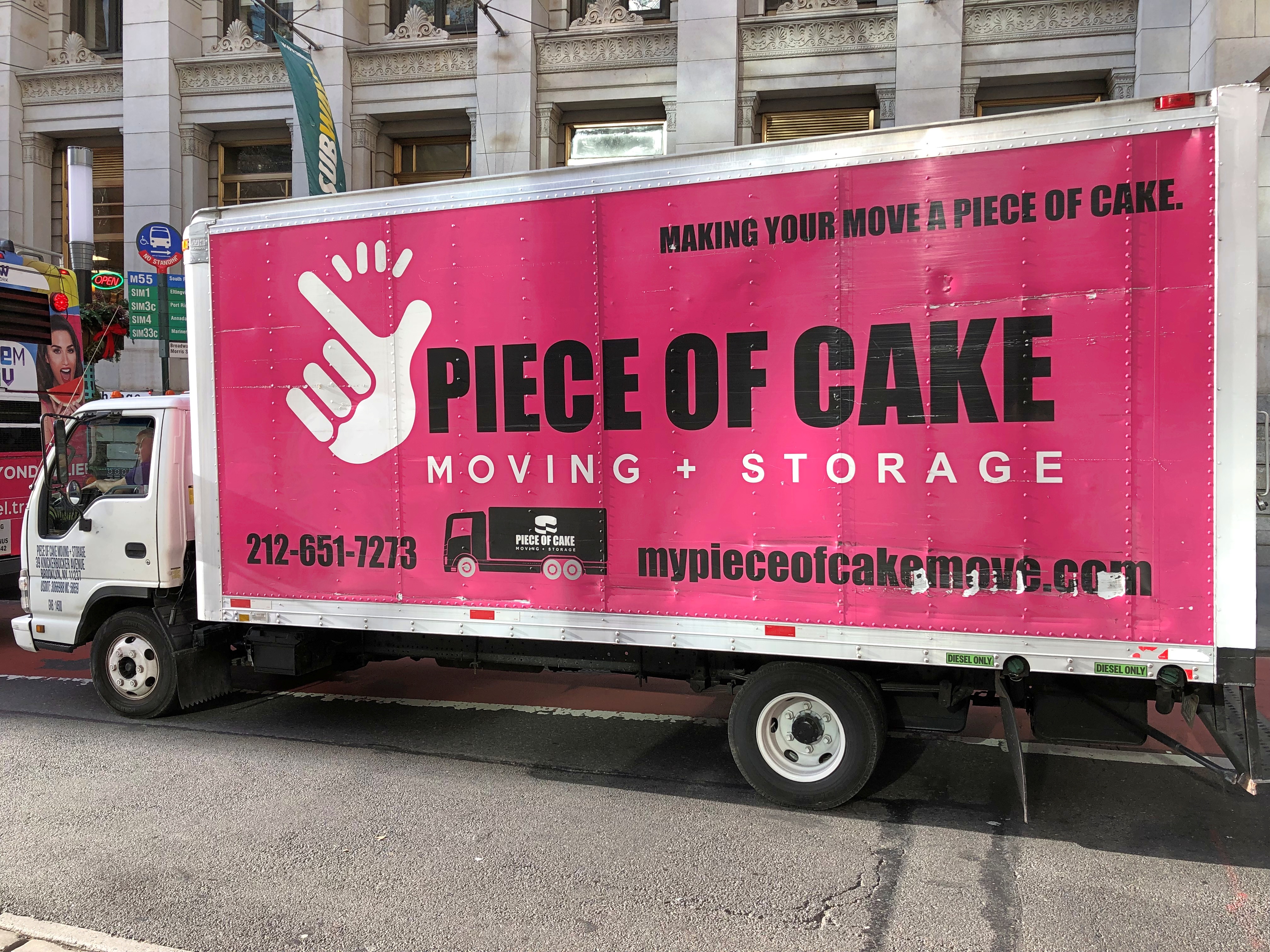
It is really? Not something I think of when I think of moving.NYC 2021

It might be beyond belief even now, but not in the way meant in 2021.NYC 2021

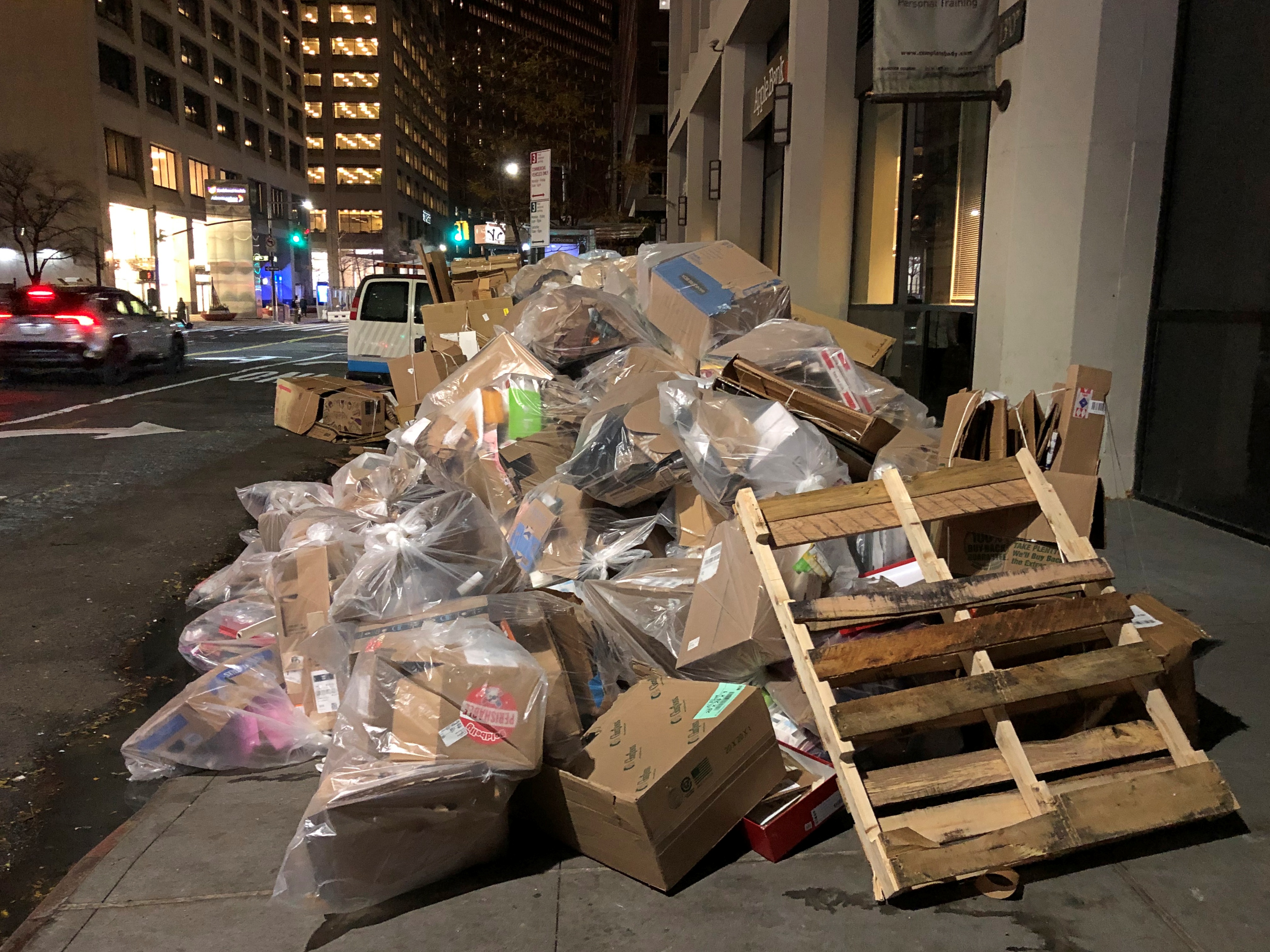
What does Manhattan need that it doesn’t have? A system of alleys, for garbage pick up and other uses. There are some epic piles of trash out on the sidewalks.NYC 2021

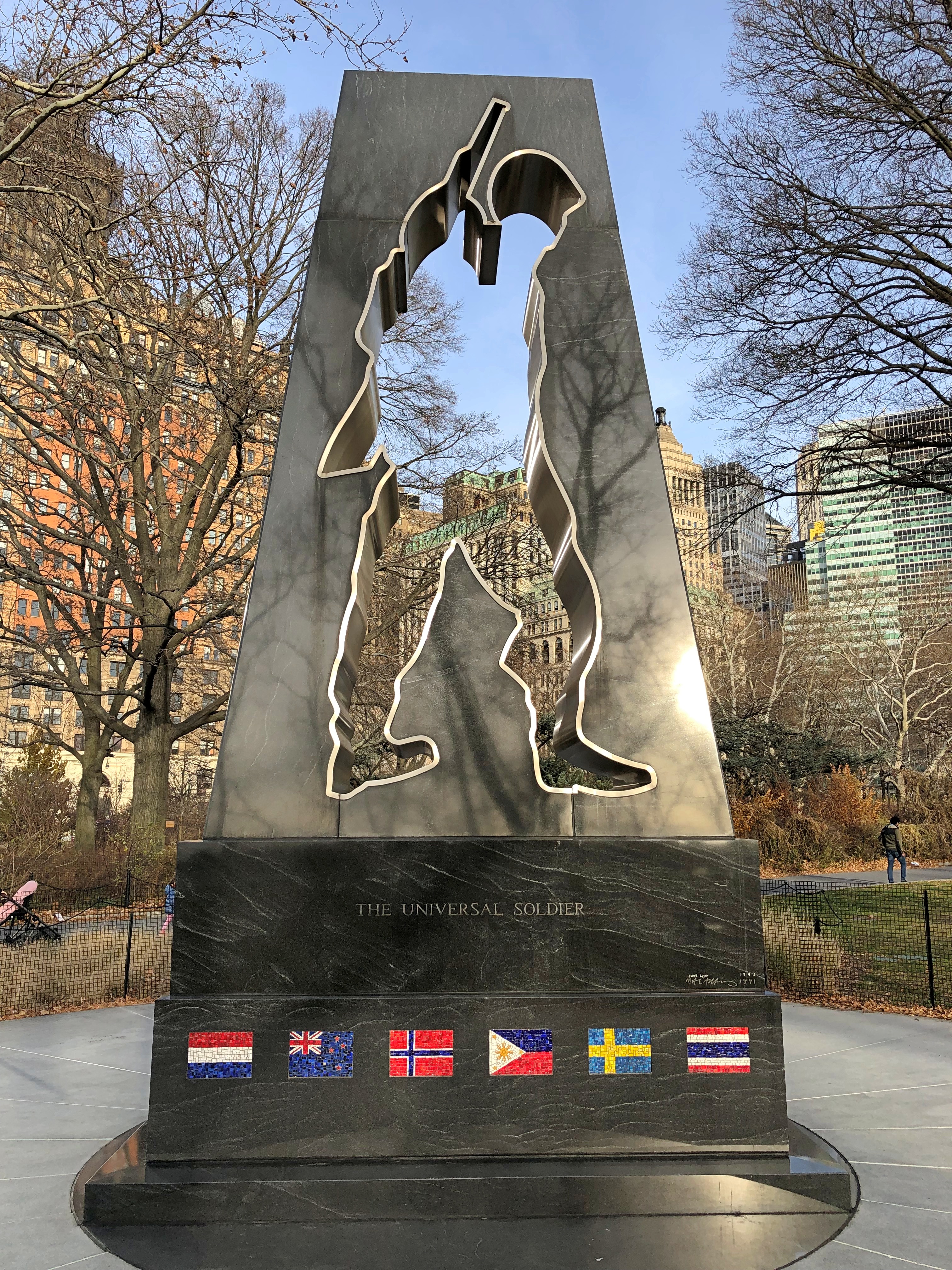
The Korean War memorial in Battery Park, honoring not just U.S. forces, but all who fought against the North Koreans and red Chinese. Note the flags; others are on the other sides, including the U.S., ROK, UK, France and more.NYC 2021

In the pavement around the memorial are the names of those nations and how many of their troops died and were wounded. Luxembourg suffered two killed and five wounded, for instance. (If I remember right, a wounded and missing Luxembourger soldier was a plot point in a M*A*S*H episode. Yes.)

Near Little Island park.NYC 2021

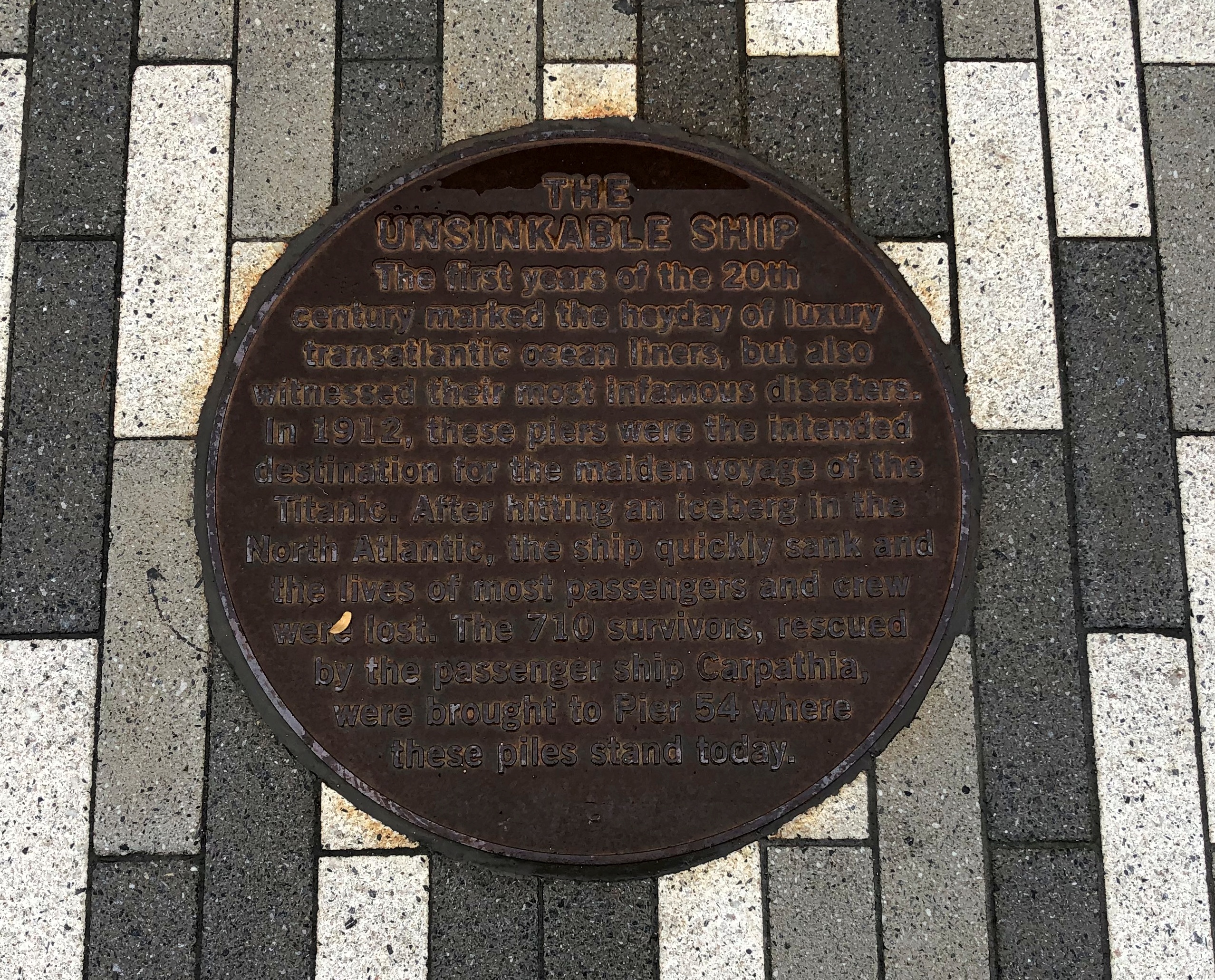
Hard to read, but it’s (sort of) a Titanic memorial. Marks the dockside where the steamer would have docked, had it not had its date with an iceberg.

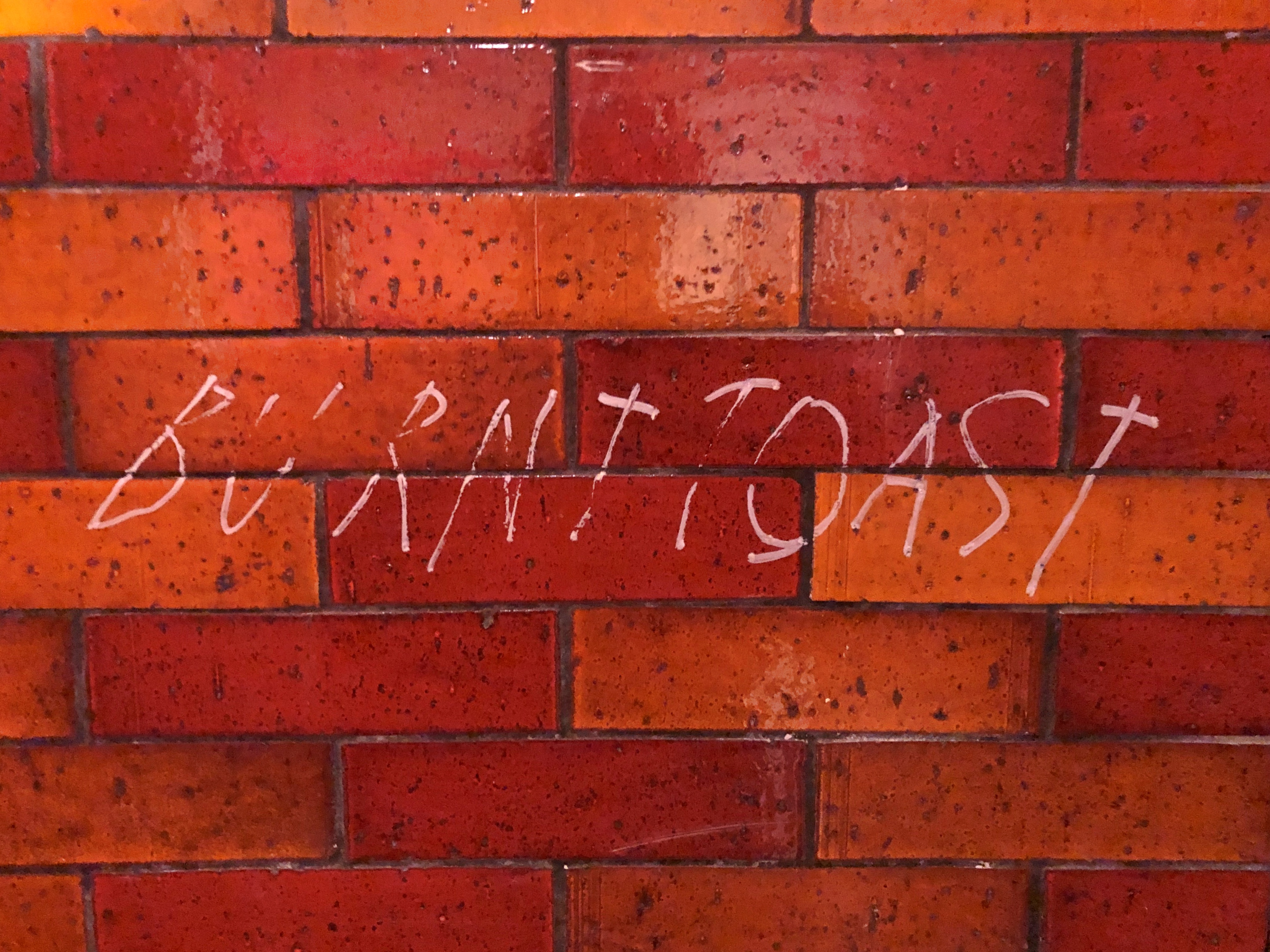
On the wall near the men’s room at Dos Caminos, a Mexican restaurant.NYC 2021

A comment on the food? A reference to a record label? An app I’ve never heard of? Couldn’t say, but it’s the kind of detail I like in a place.

We’ve Stringbeans and Onions, Cabbages and Scallions, and All Kinds of Fruits and Say —

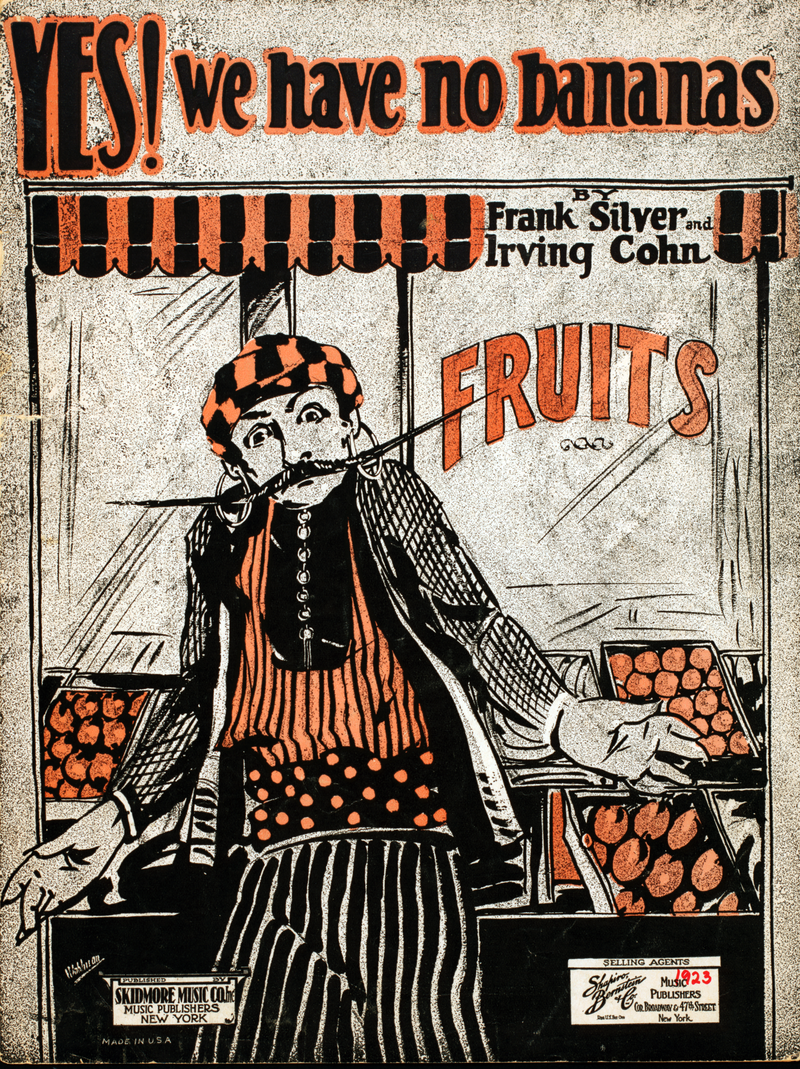
I’ve been lax, letting the 100th anniversary of “Yes, We Have No Bananas,” go unmentioned until now. The song was published on March 23, 1923. The only popular song about Greek grocers that I know, except maybe for “I’ve Got The Yes! We Have No Bananas Blues.”

I found an article that promises the story behind the song, and offers some detail about the fruit trade in New York, past and present.

“The story of New York produce goes far back beyond Hunts Point,” says an article on the web site of a company specializing in credit rating and market information for the produce industry, referring to the Hunts Point produce market in the Bronx, an enormous operation.

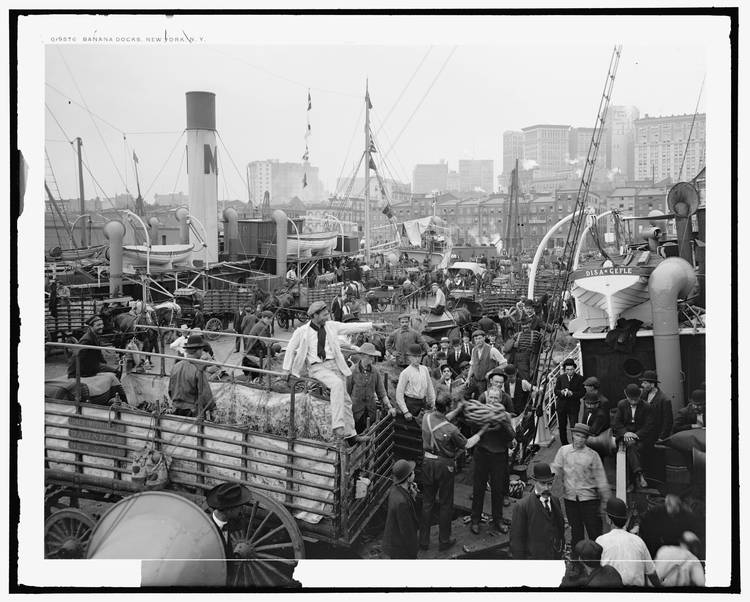
“The city’s colorful history includes the Banana Docks of the nineteenth and early twentieth centuries, which were located at Old Slip in lower Manhattan,” it says.

Banana Docks, New York City

The article goes on to say that the songwriters took their inspiration from a Greek fruit stand owner who said the famous line to him, but the account published in Time magazine in the summer of 1923 is, I think, more believable. Especially since it quotes the songwriter himself only months after the monster hit song came out.

“I am an American, of Jewish ancestry, with a wife and a young son,” songwriter Frank Silver told Time. “About a year ago my little orchestra was playing at a Long Island hotel. To and from the hotel I was wont to stop at a fruit stand owned by a Greek, who began every sentence with ‘Yess.’ The jingle of his idiom haunted me and my friend Cohn. Finally I wrote this verse and Gohn [sic] fitted it with a tune.”

It was the first song Silver ever sold. For a most harmonious recording of it, listen to the Mellomen version. With Thurl Ravenscroft. (!) For a sing-along version that also happens to be an early product of the remarkable and mostly unsung Fleischer Studios, and thus has a surreal edge to it, watch this video.

Here’s an series idea for a prestige streaming service: Banana Dock Empire. Criminals vying for control of the Banana Docks in 1890s New York. Too bad Daniel Day-Lewis is too old now to play the part of a rising young thug who murders his way into control of the city’s banana supply.

Thursday’s Theme: A Lot of Good Things Get Lost or Kicked Around

March came in like – an emu? Golden retriever? – came in pleasantly, with temps nearly 60 F. That didn’t last, of course, and chilly air is back today, with snow forecast for Friday, which will melt over the weekend.

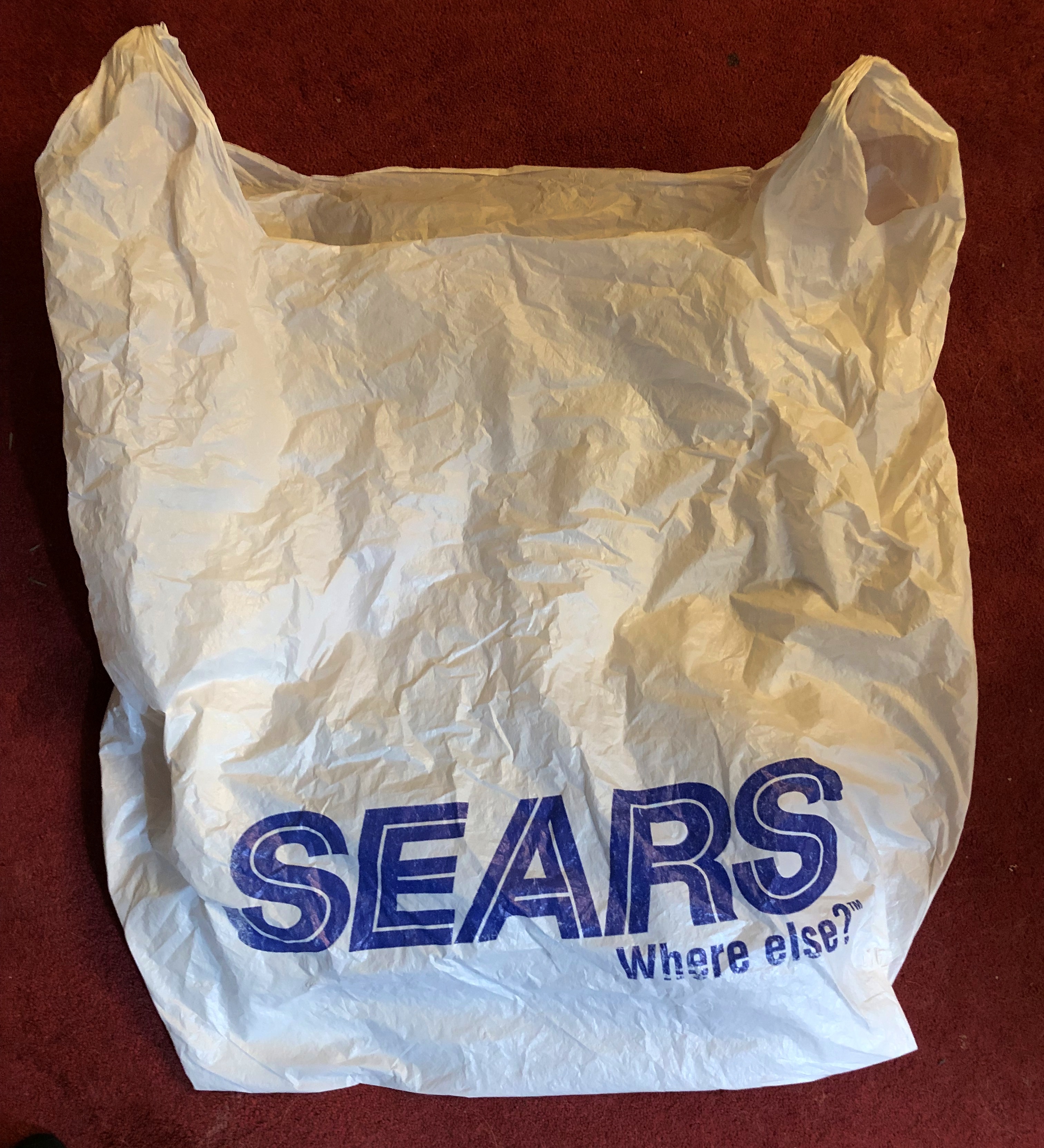
The other day, I found a Sears bag tucked away in a semi-storage corner of the house under various things. This made me want to look up how many Sears locations survive. As of November, anyway, when Sears Holdings Corp. emerged from Chapter 11, there were 22.

That’s not even a shadow of its former self. That’s dryer lint of its former self.

I don’t know when we got the bag, or what we bought at Sears that needed such a bag. It’s fairly large, though. About as tall as a kitchen trash bag, so I decided to take its picture and then use the bag for trash. Interesting trademarked slogan. One the company maybe didn’t think through. Where else?

There’s a lot of possibilities, Sears.

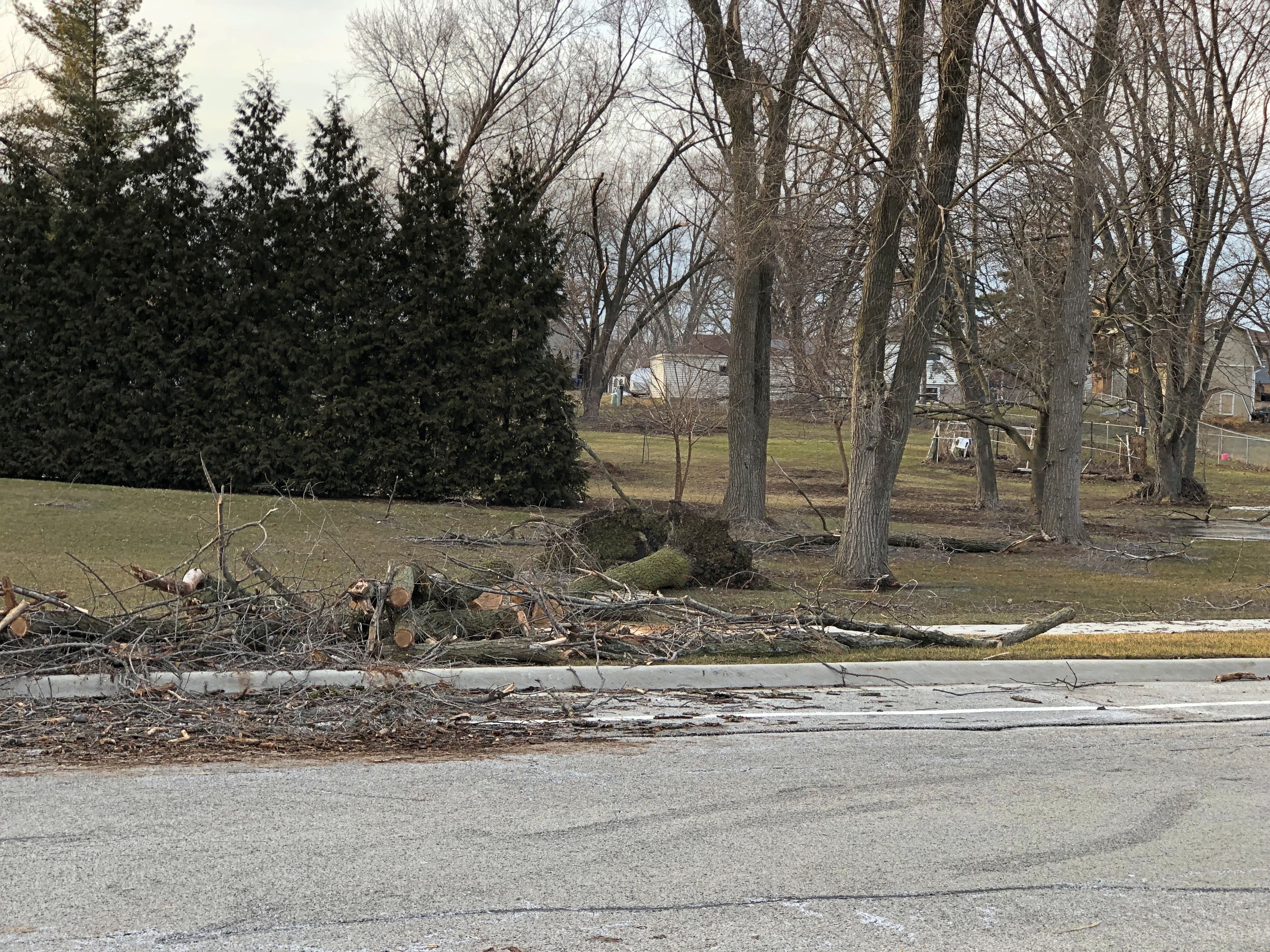
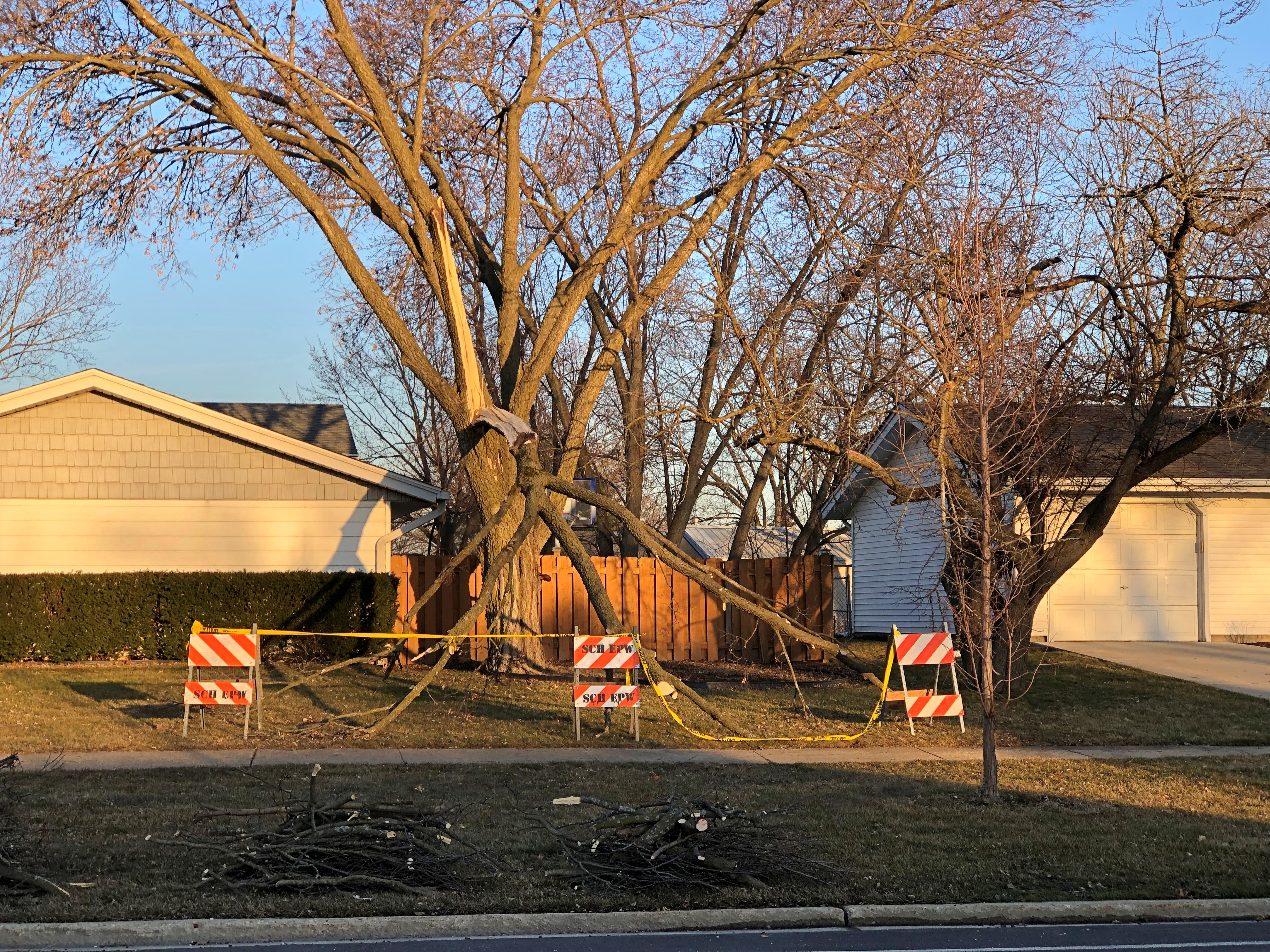
Last week, as mentioned before, there seemed to be overnight microbursts in the area, to judge by the tree branches on the ground afterward. This was the only tree knocked down that I noticed, a few days later, after it had been chopped up somewhat before being cleared away. Note the crust of soil it took with it.

I suspect it wasn’t just the wind, but also the fact that the tree stood in a low-lying area that usually fills up during a rain and takes days to empty, weakening the soil. Besides, it might have been a sick old tree whose roots didn’t have the grip they used to, so bam! Down it came.

But even healthier trees can take a beating if the wind is aggressive enough.

Speaking of fallen things, I learned today that the Hotel Pennsylvania is being demolished. That isn’t news, just that I don’t keep up with everything happening in Manhattan. I stayed there a couple of times in the early 2000s, where the company I worked for at the time put me up. I thought it more solid than grand, but I’m still sorry to see it go.

What else to say but, Pennsylvania Six Five Oh Oh Oh

One more thing about time passage, destruction and decay. Something I found unexpectedly. An algorithm suggested it. Might as well be by chance, then.

A poignant song from the point of view of an abandoned house, included on an album called The Rat Plague of ’66. The kind of thing that happens in Australia. Don Morrison seems to be a singer-songwriter from Adelaide, South Australia.

Manhattan Decked Out for Christmas

Regards for Christmas and New Year’s Day and all the days around them and in between. Back to posting around January 3.

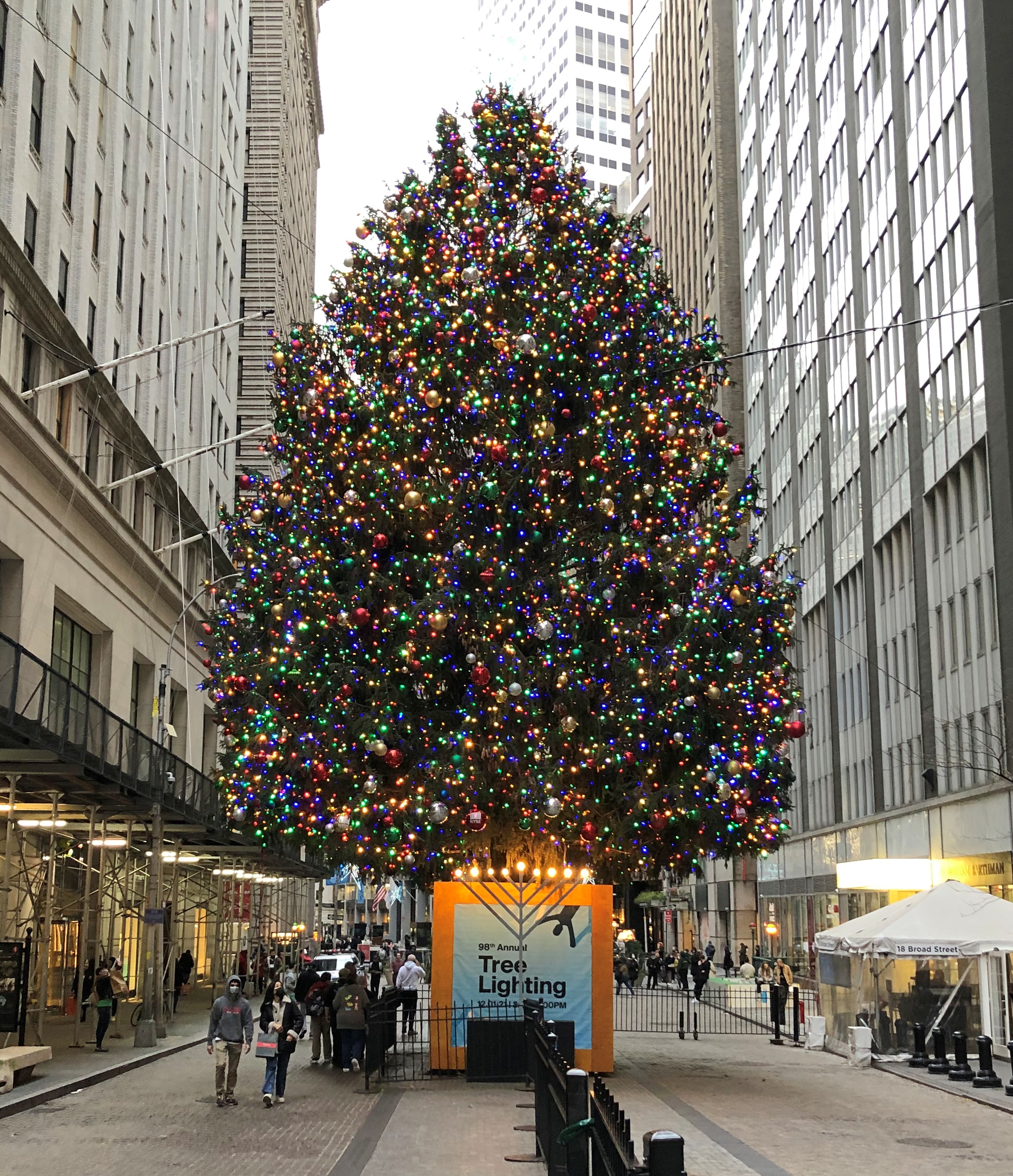
One reason to go to New York City in December is to admire the seasonal lights and decorations, and that’s what I did. Starting with the impressive Christmas tree on the street in front of the New York Stock Exchange.Manhattan Christmastime

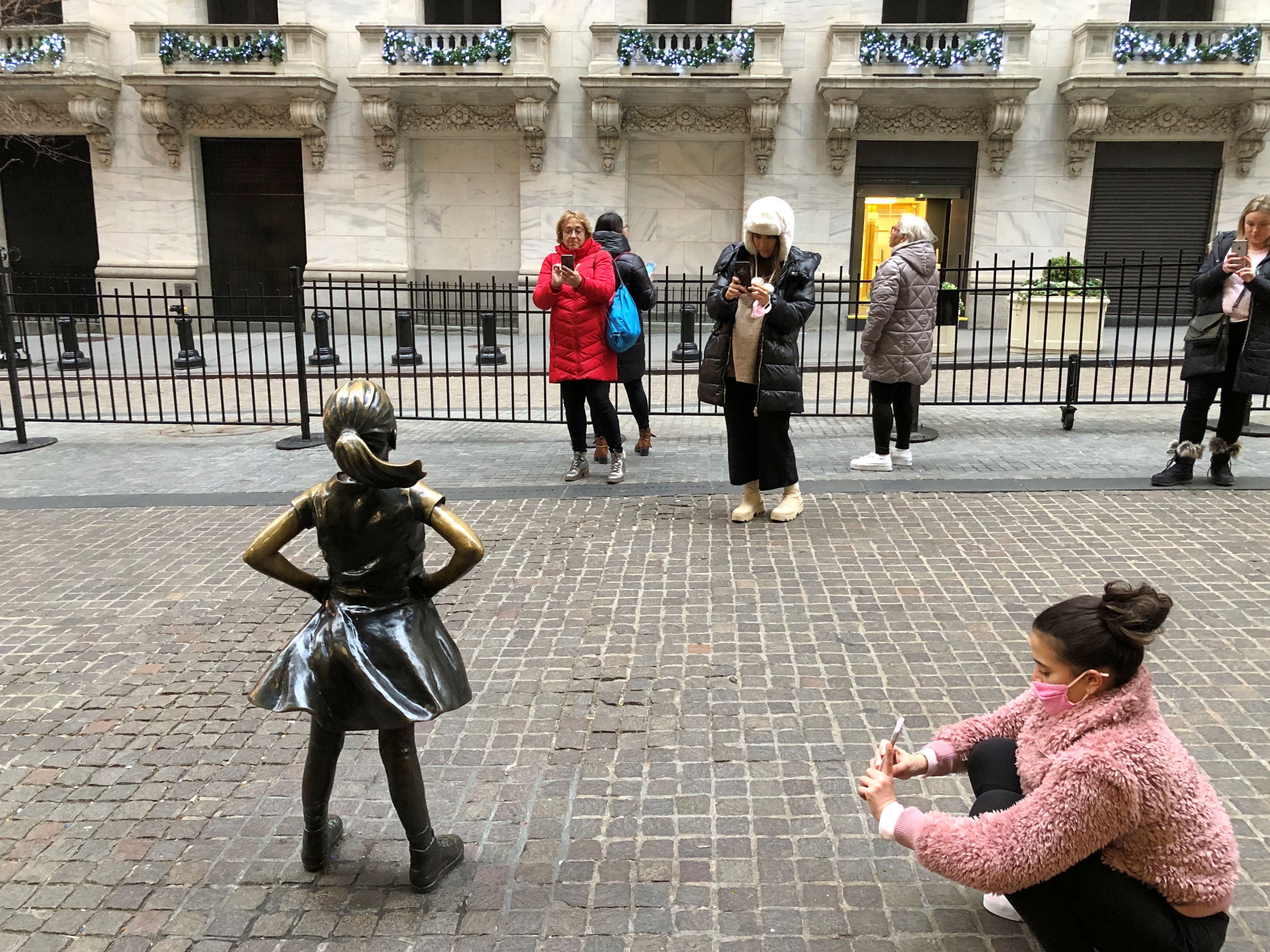
Fearless Girl is there now, and she still has her admirers.Manhattan Christmastime

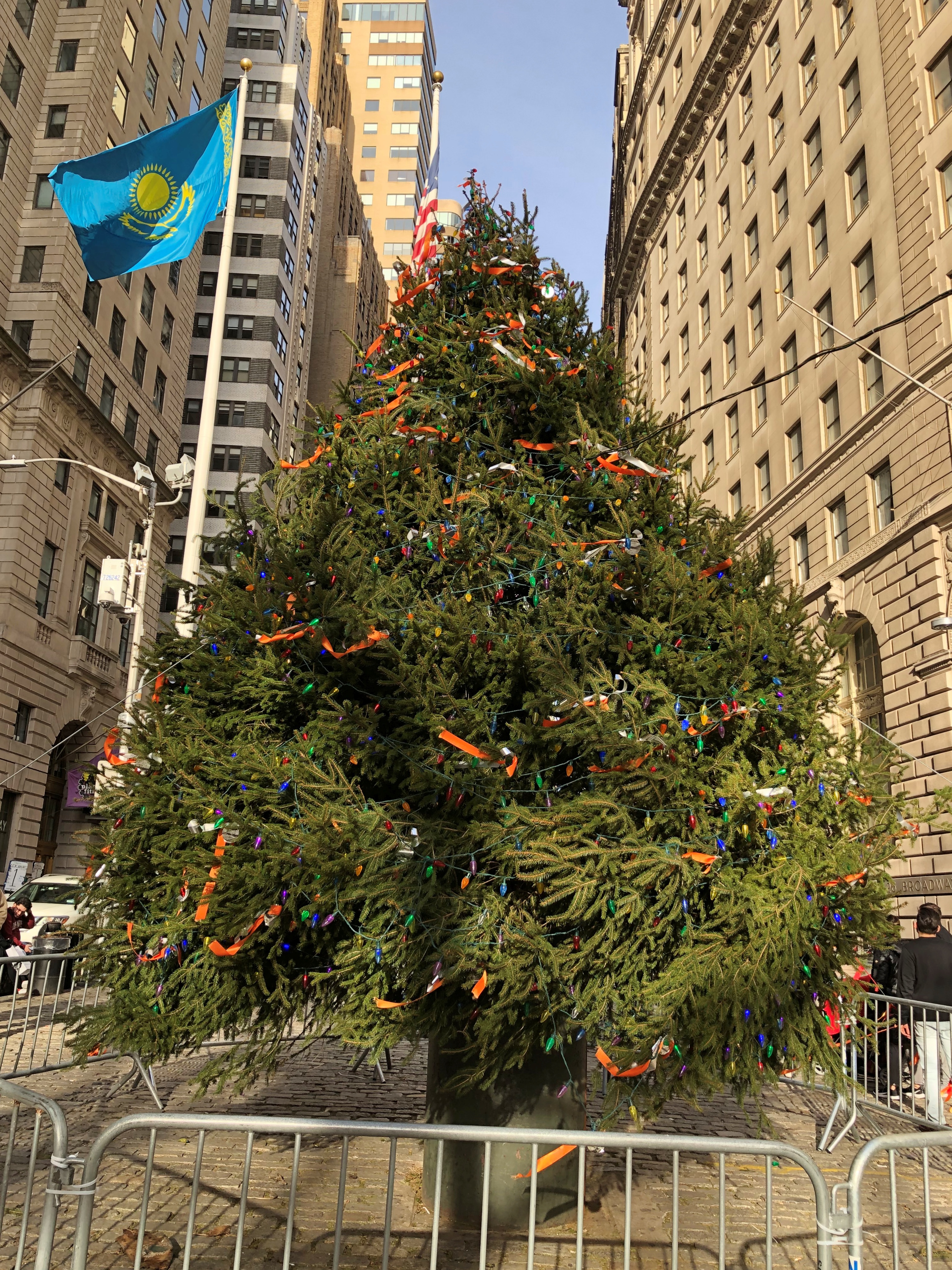
On Broadway just up from Bowling Green, the Charging Bull bronze still stands, and there’s a sizable tree nearby as well. For some reason, there was also an Kazakhstan flag flying.Manhattan Christmastime

I saw the giant Rockefeller Center tree, though the madding and maddening crowd put me out of the mood to take pictures. For the record, the 2021 tree is a 79-foot Norway Spruce, 46 feet wide and weighing 12 tons, according to the center, with about 50,000 LED lights and a 900-lb. Swarovski star with 70 spikes on top.

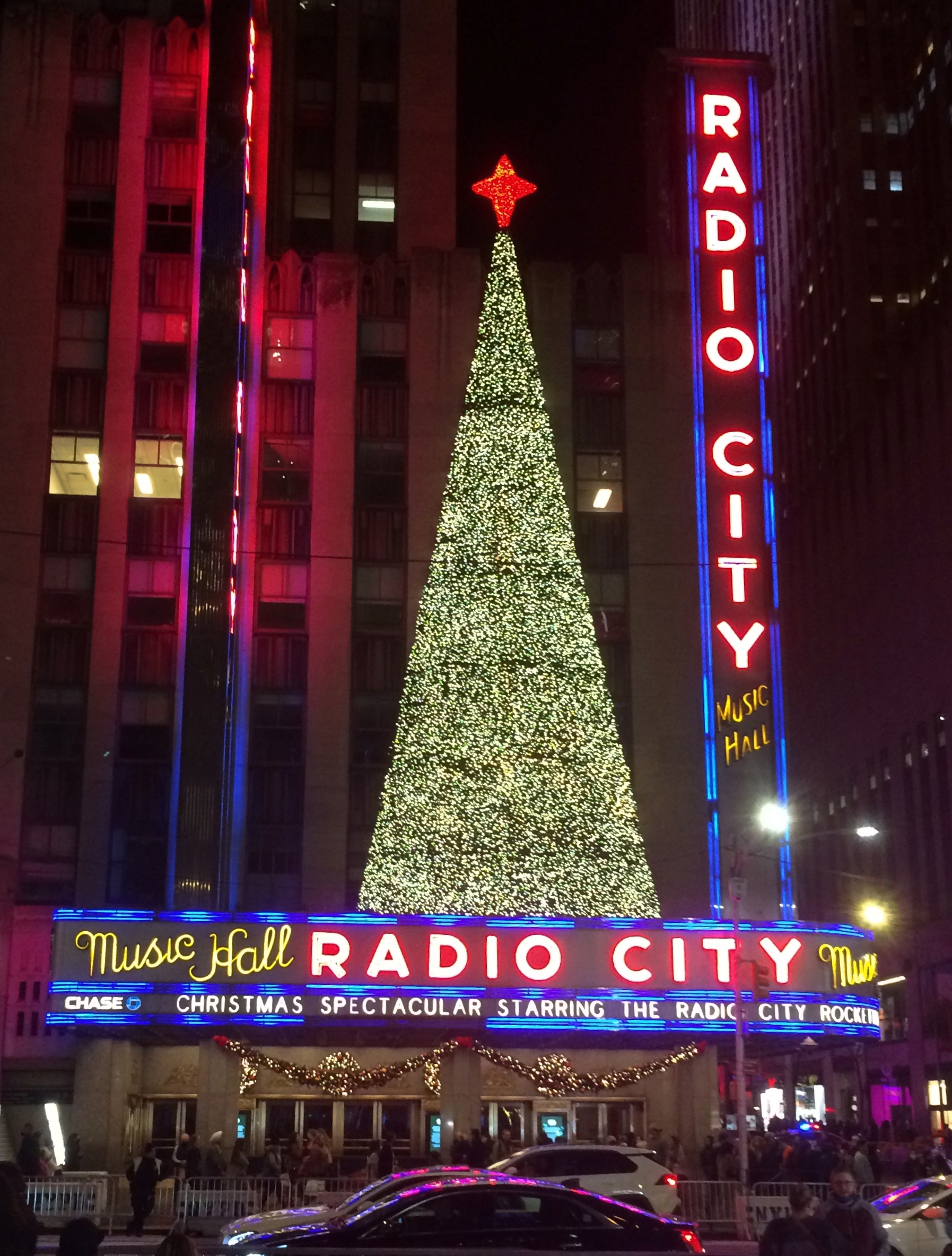
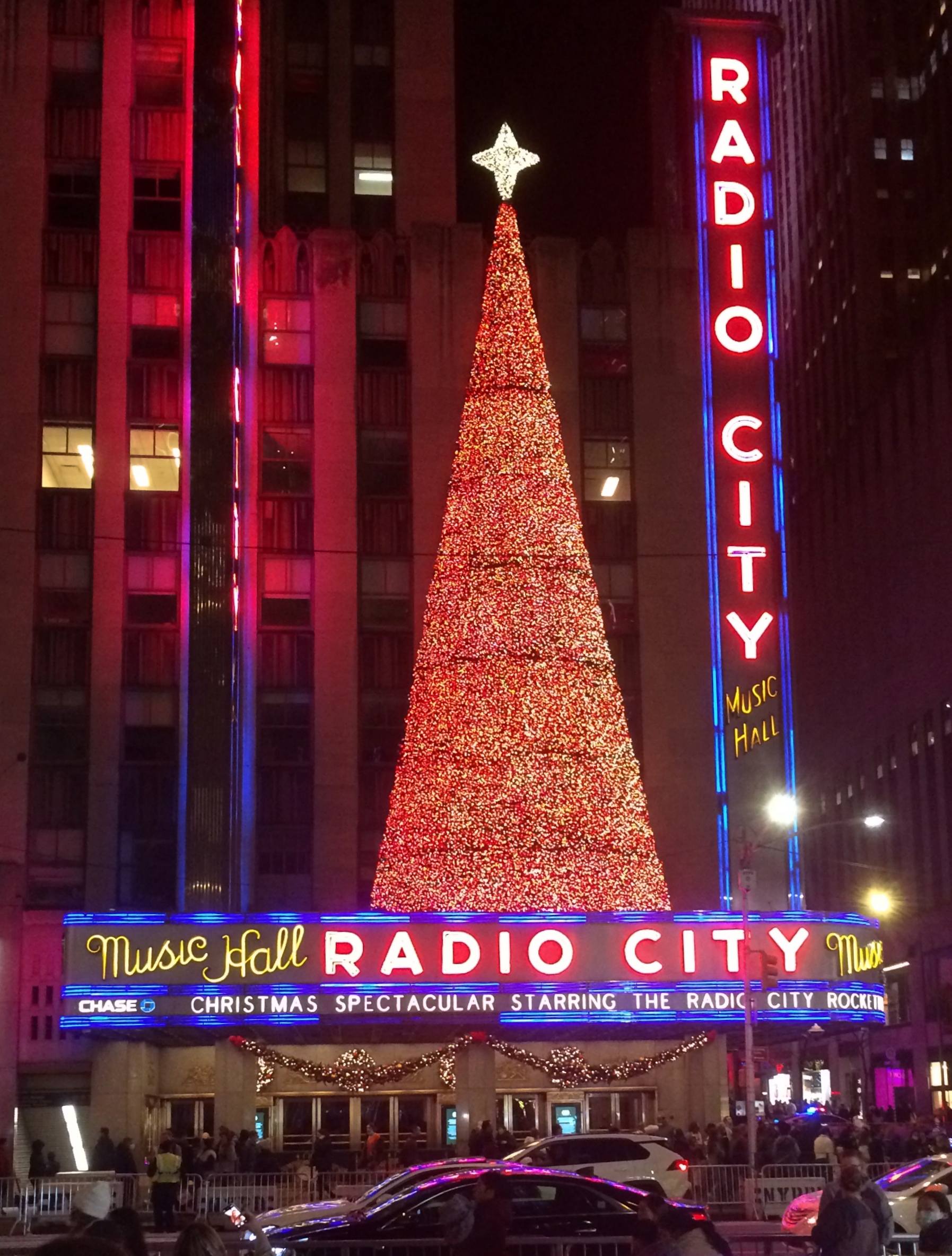
You might call the tree shape at Radio City Music Hall a bit of deco decoration.Manhattan Christmastime Manhattan Christmastime

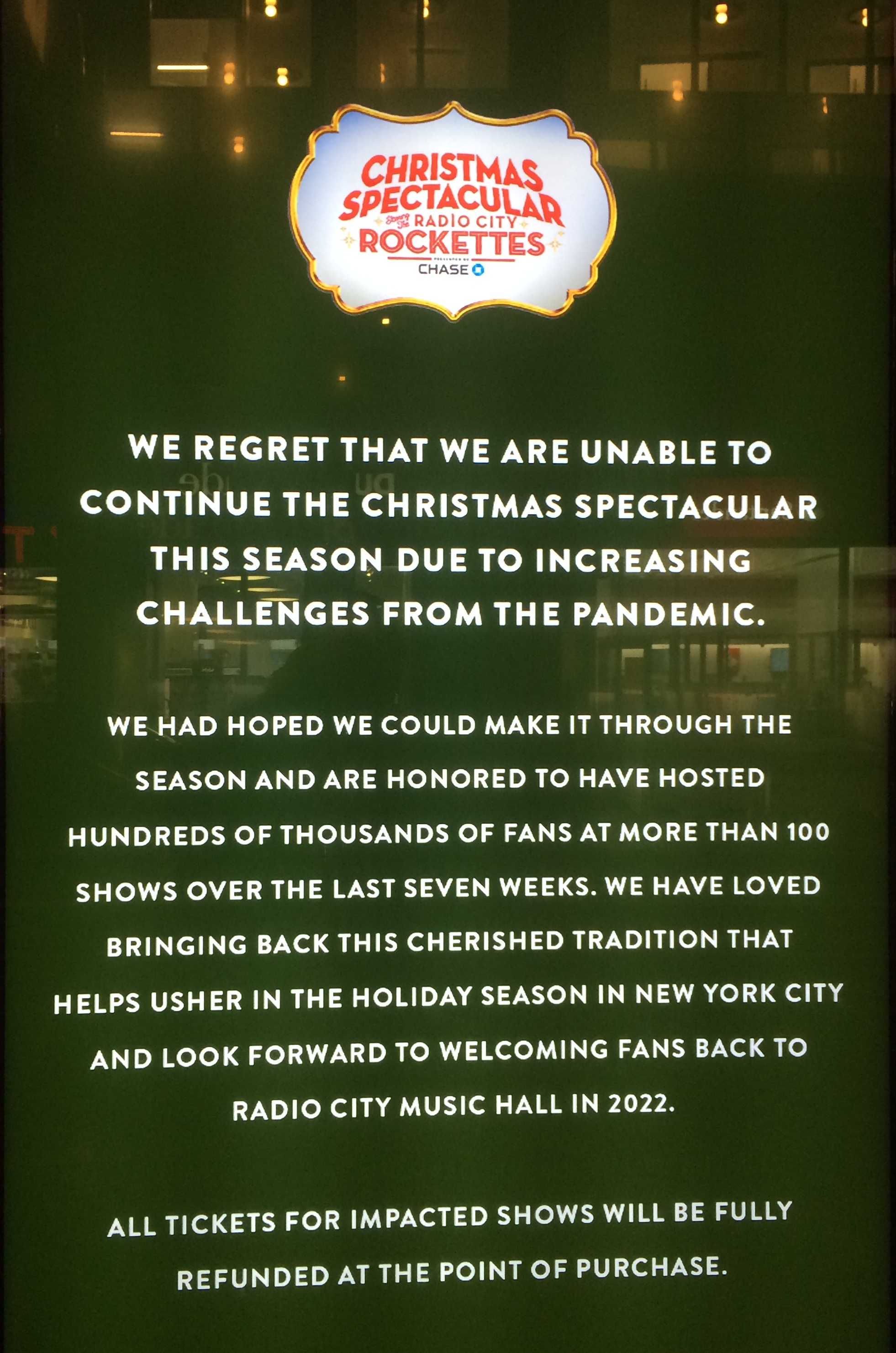
No Christmas show inside.Manhattan Christmastime

Another gorgeous light display in the area was on the wall of Saks, facing Fifth Avenue. The crowds were quite attentive as it shifted and blinked.

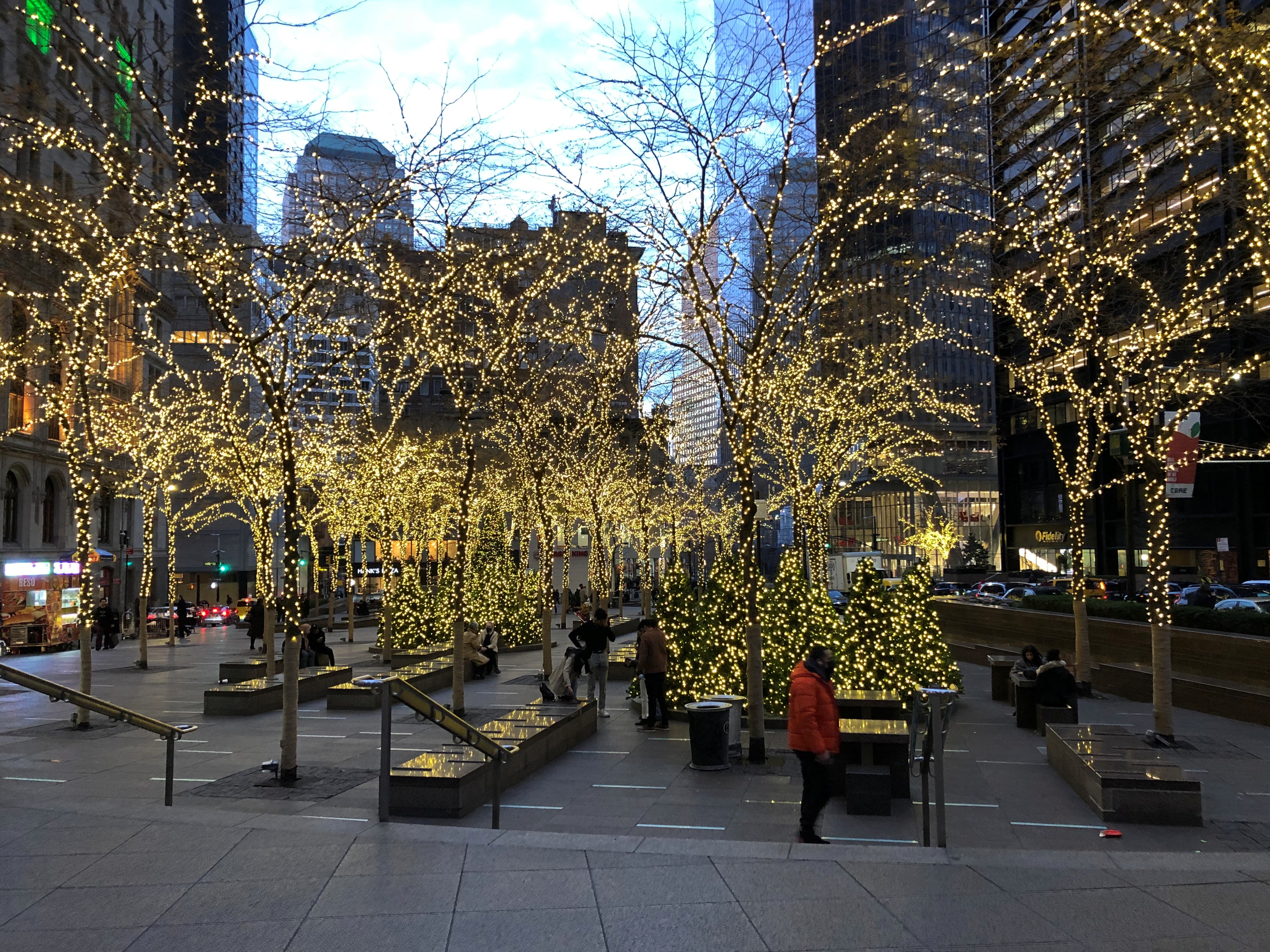
Back downtown, Zuccotti Park.Manhattan Christmastime

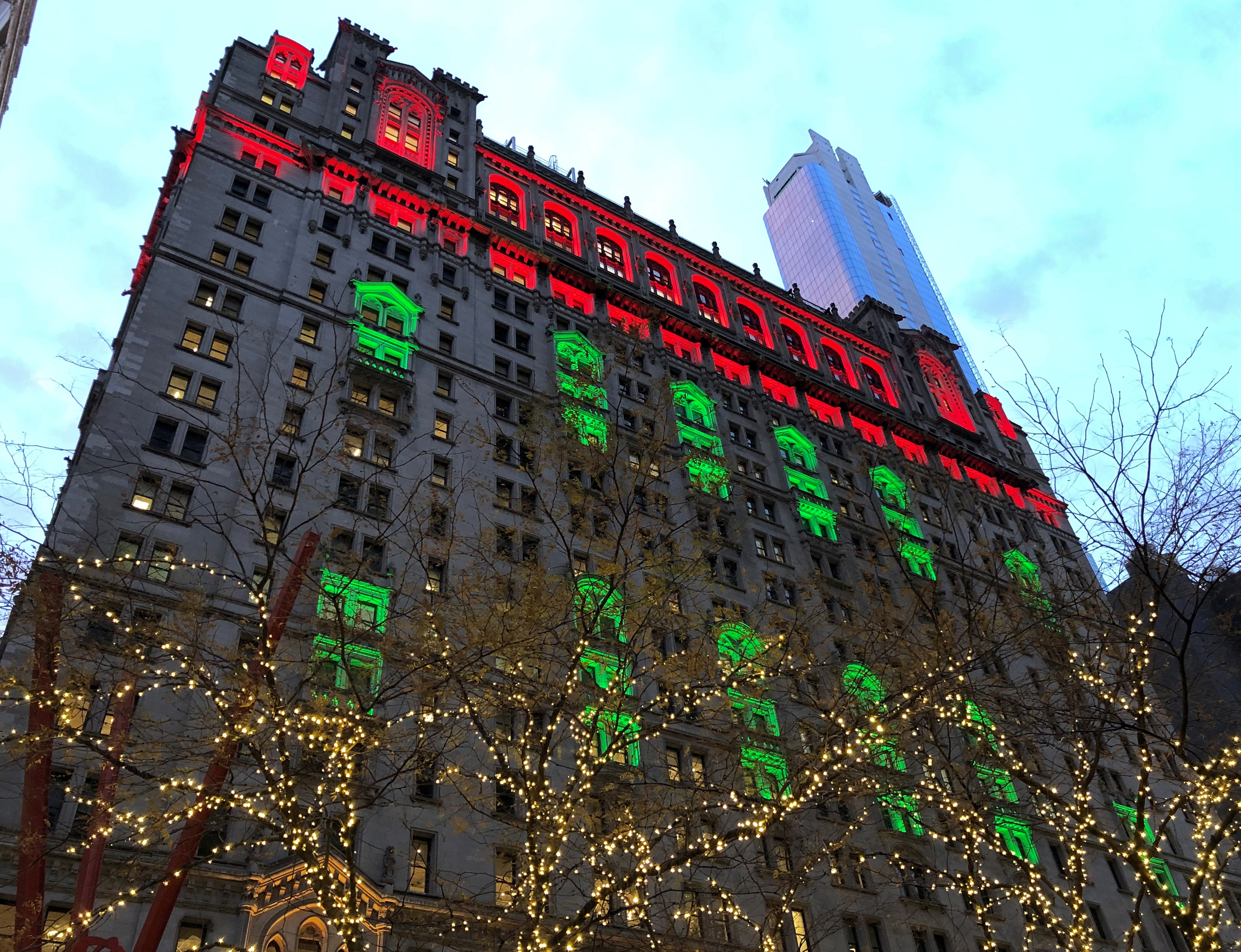
The lights of Trinity Center, overlooking Zuccotti.Manhattan Christmastime

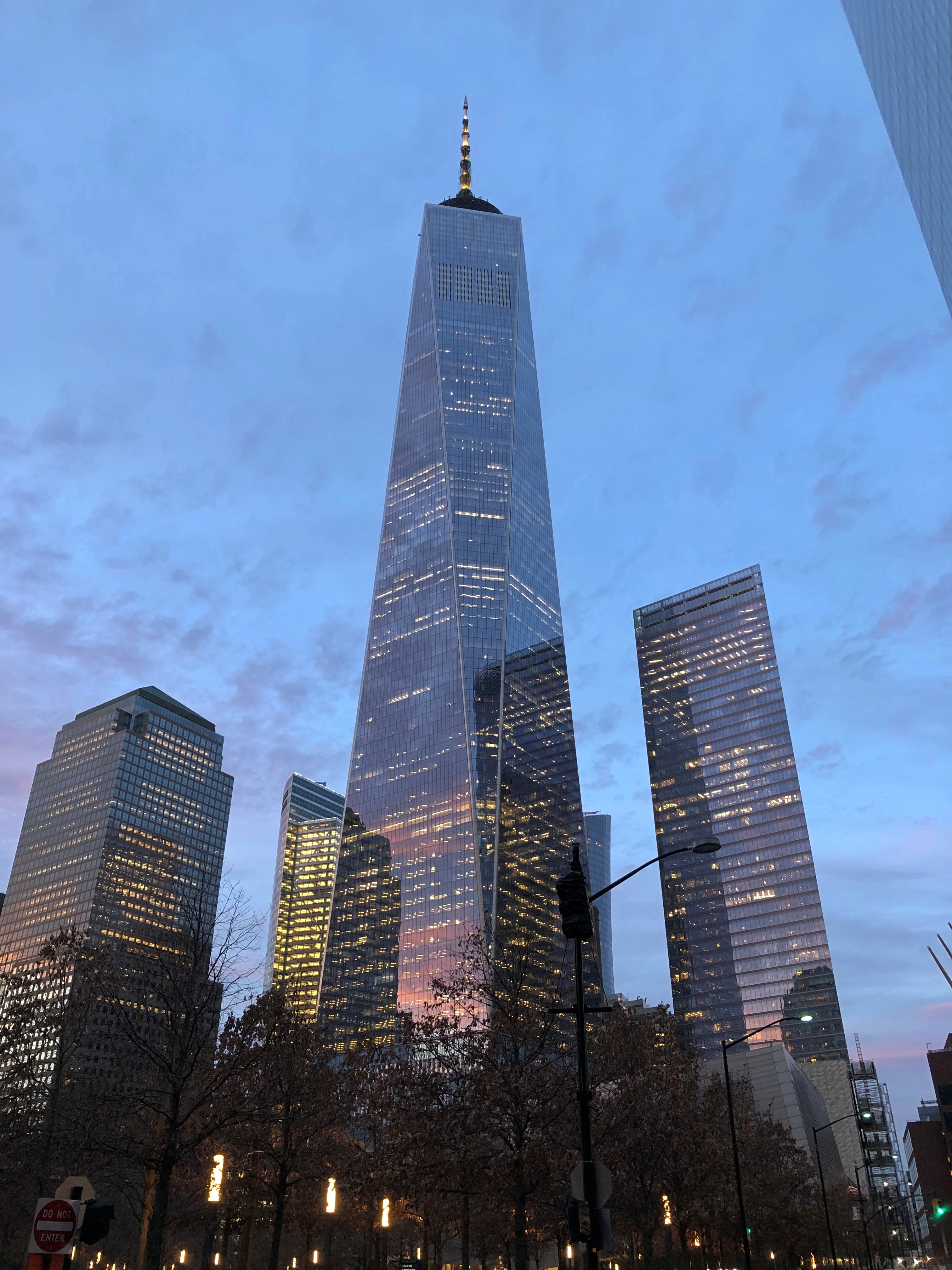
From there, I went to the World Trade Center complex. Not especially decked out for the holidays, but I caught the buildings at a good time in terms of lighting.Manhattan Christmastime Manhattan Christmastime

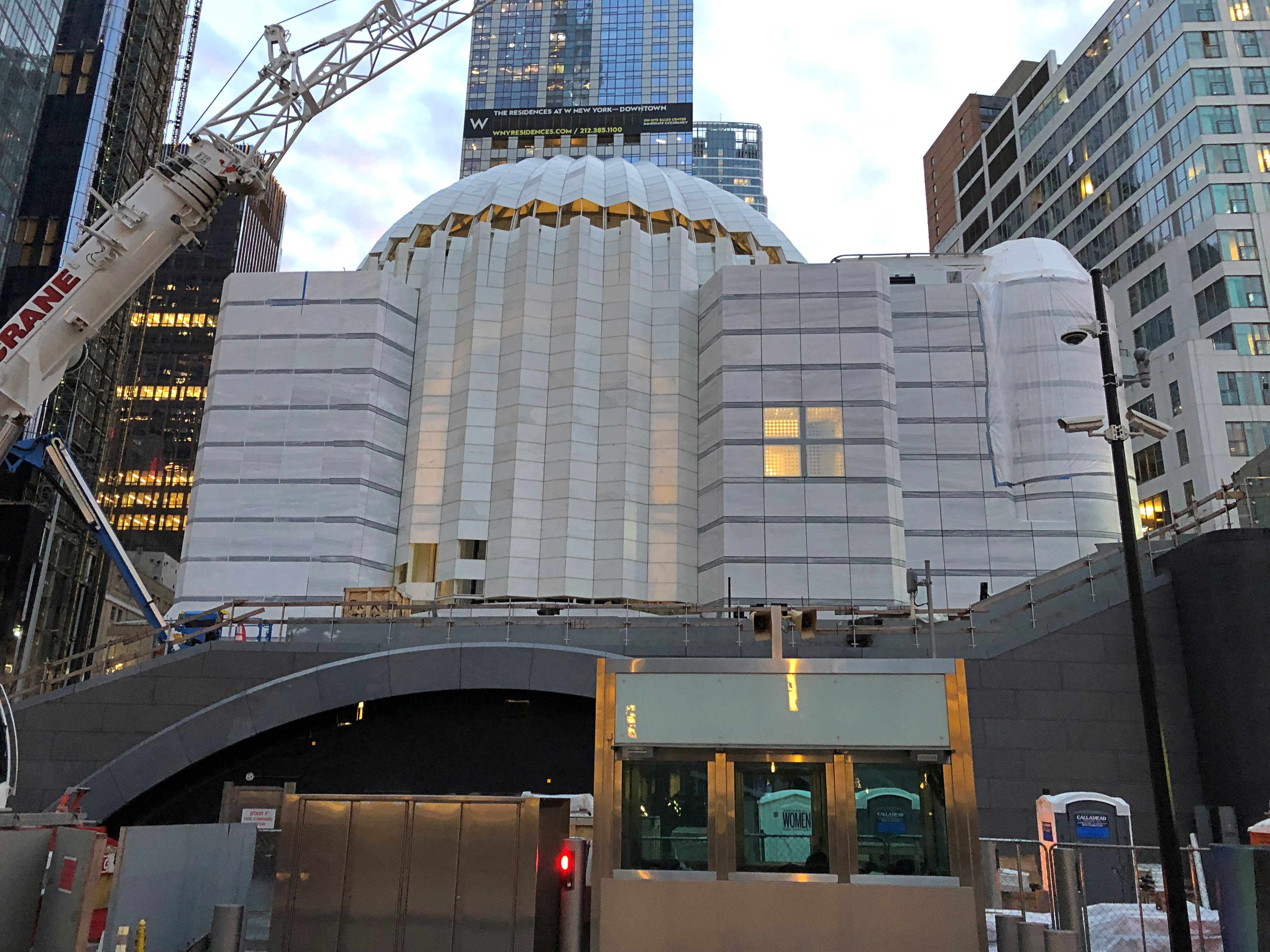
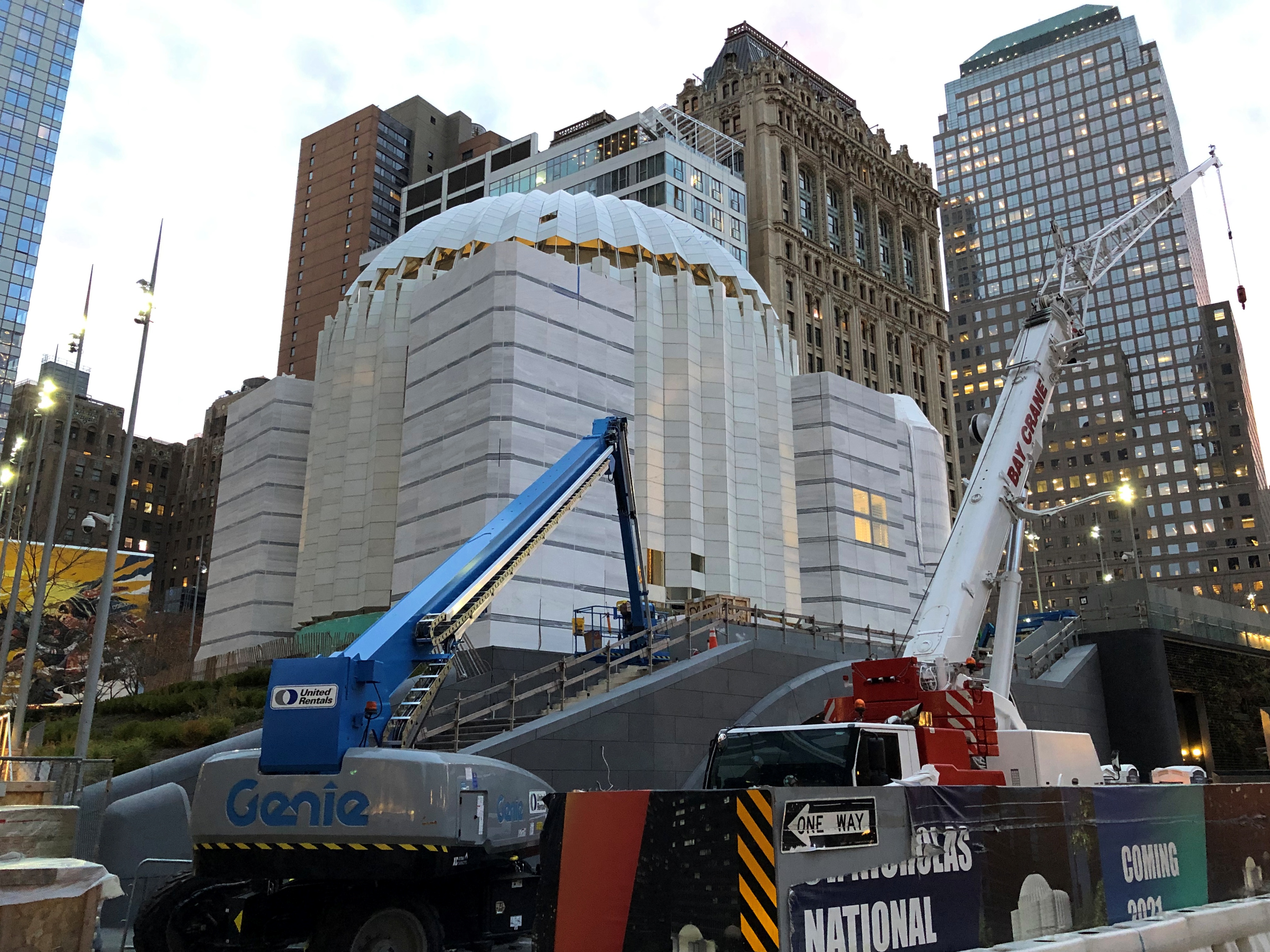
St. Nicholas Greek Orthodox Church and National Shrine, still under construction.Manhattan Christmastime Manhattan Christmastime

It’s a replacement structure, designed by Santiago Calatrava, for a church of the same name and denomination on the site that was destroyed by the Twin Towers collapse. The new church will also be a memorial honoring those who died in the attack.

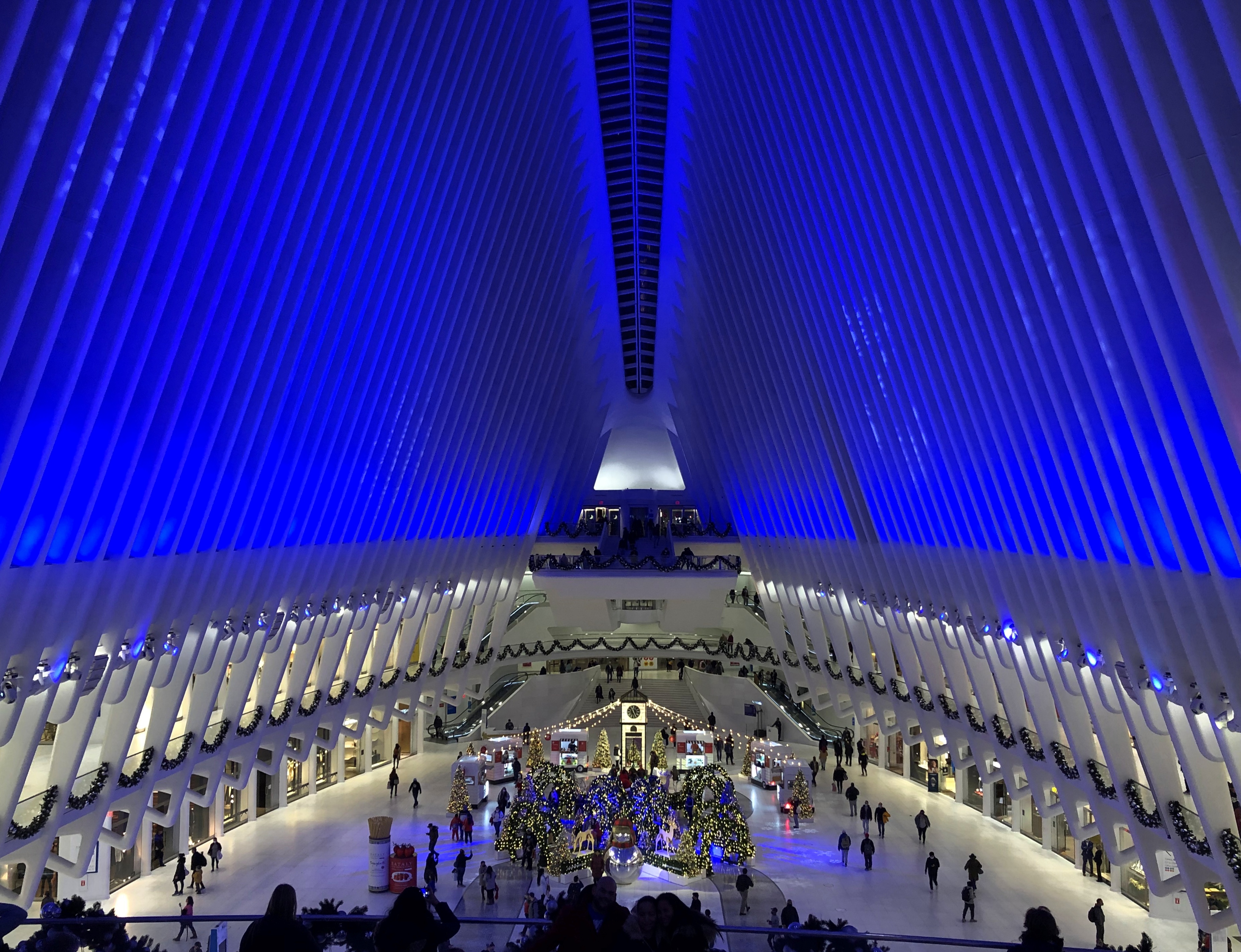
The Oculus‘ interior is blue for the holidays. At least it was when I stepped in for a few moments. A lot of other people were taking a look as well.Manhattan Christmastime Oculus

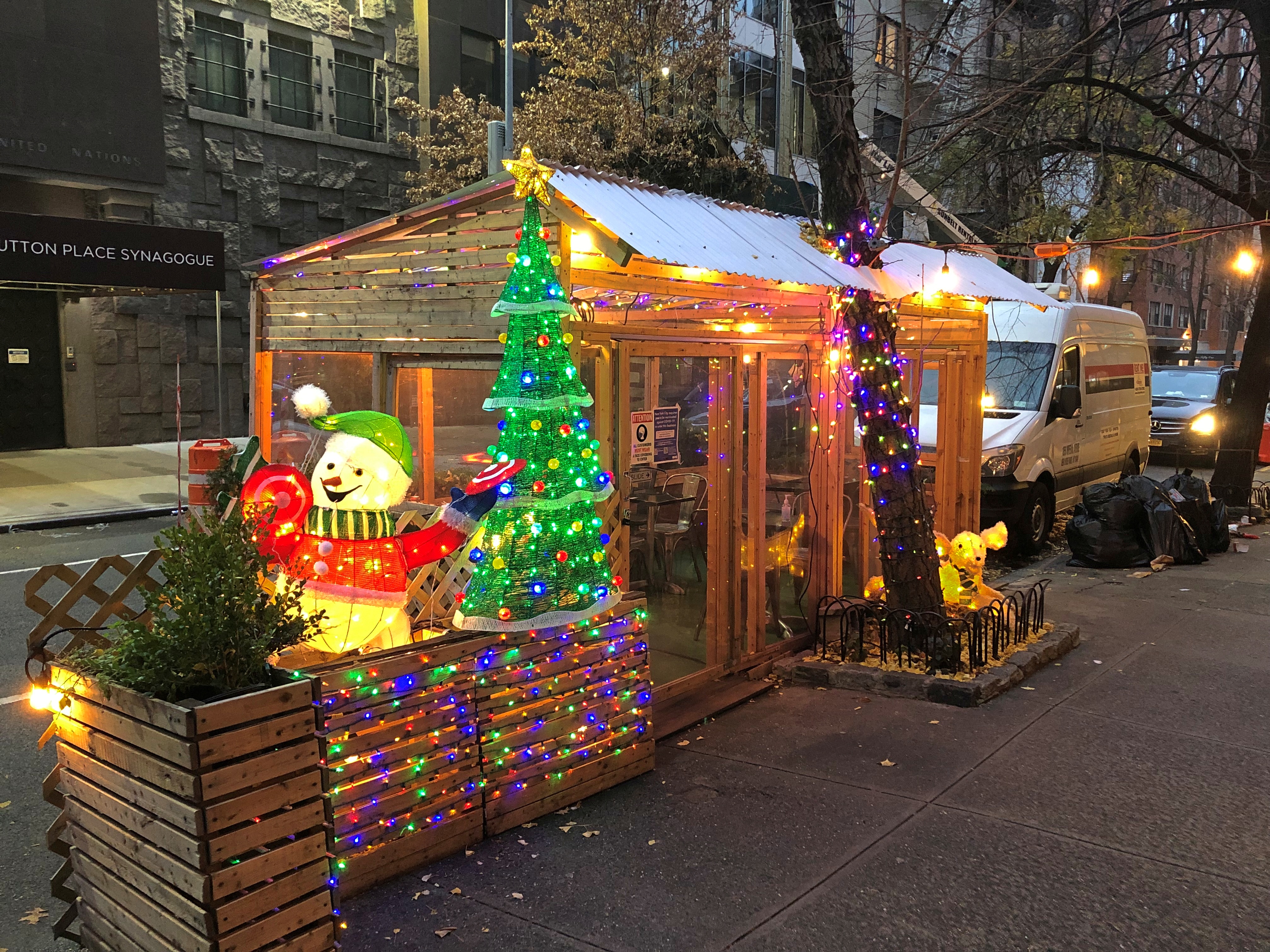
Wandering the streets of Manhattan, I saw a lot of smaller decorations, such as this restaurant annex on 51st.Manhattan Christmastime

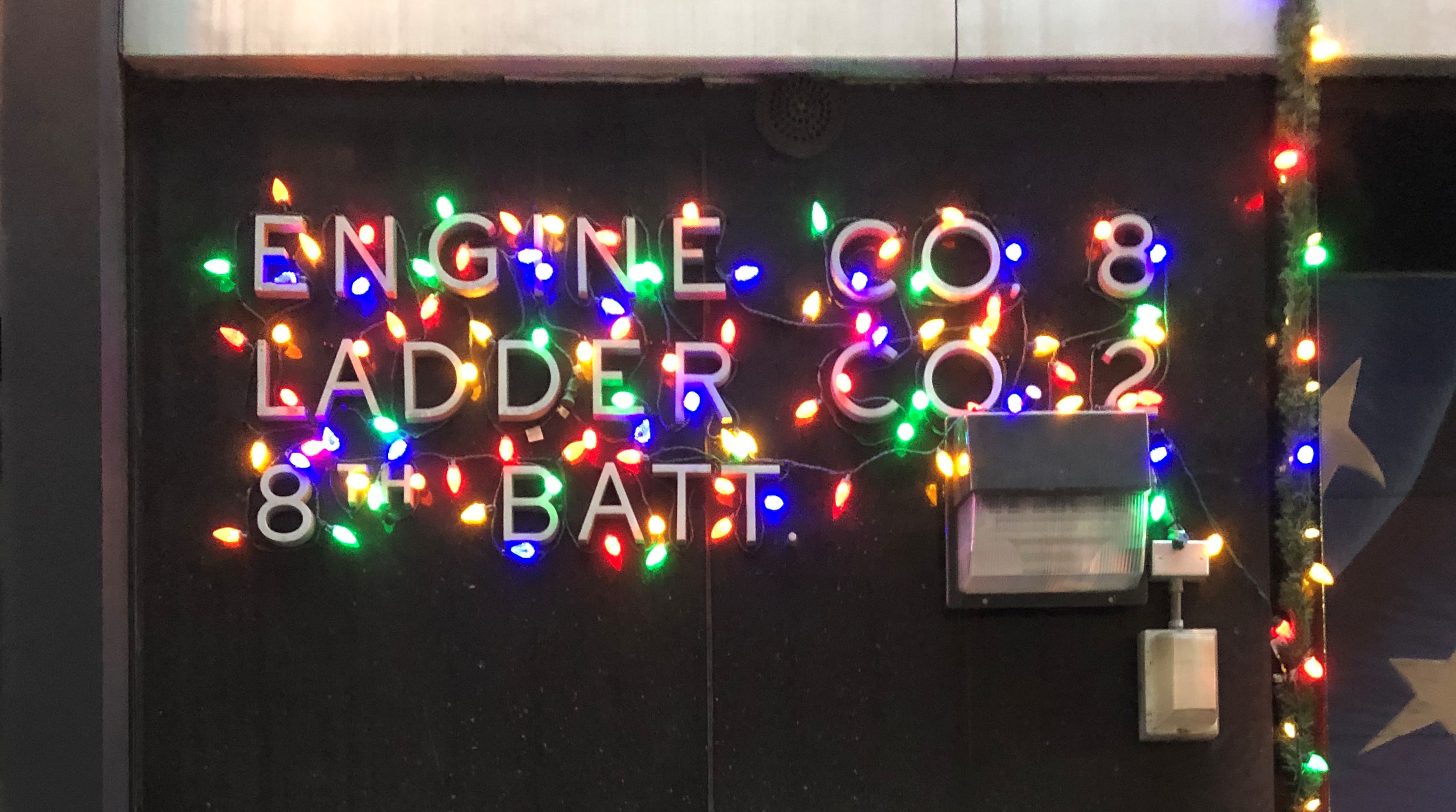
Fire house lights, same street.Manhattan Christmastime

Bongs in the window.Manhattan Christmastime

Not Christmasy, but colorful all the same. This head shop near the Oculus — are they even called that any more? — is no doubt taking advantage of the legalization of cannabis in New York State this year, though retail sales haven’t started yet. For what it’s worth, I noticed the smell of cannabis on the streets of the city a lot more this time than ever before. And for that matter, less urine smell, which I suppose is a function of the hypergentrification of Manhattan.

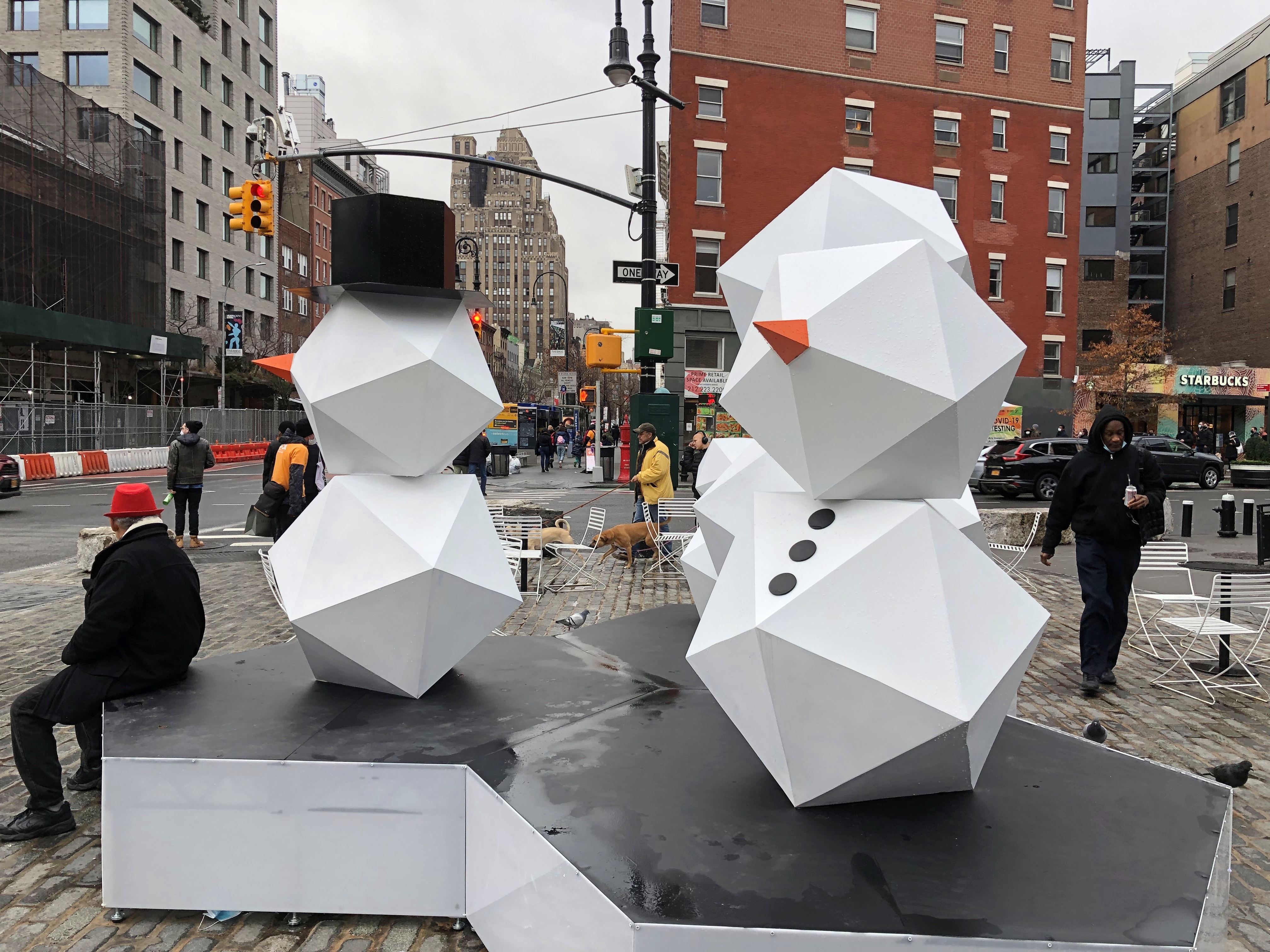
Over in the Meatpacking District, angular snowfolk occupy a small plaza.Manhattan Christmastime

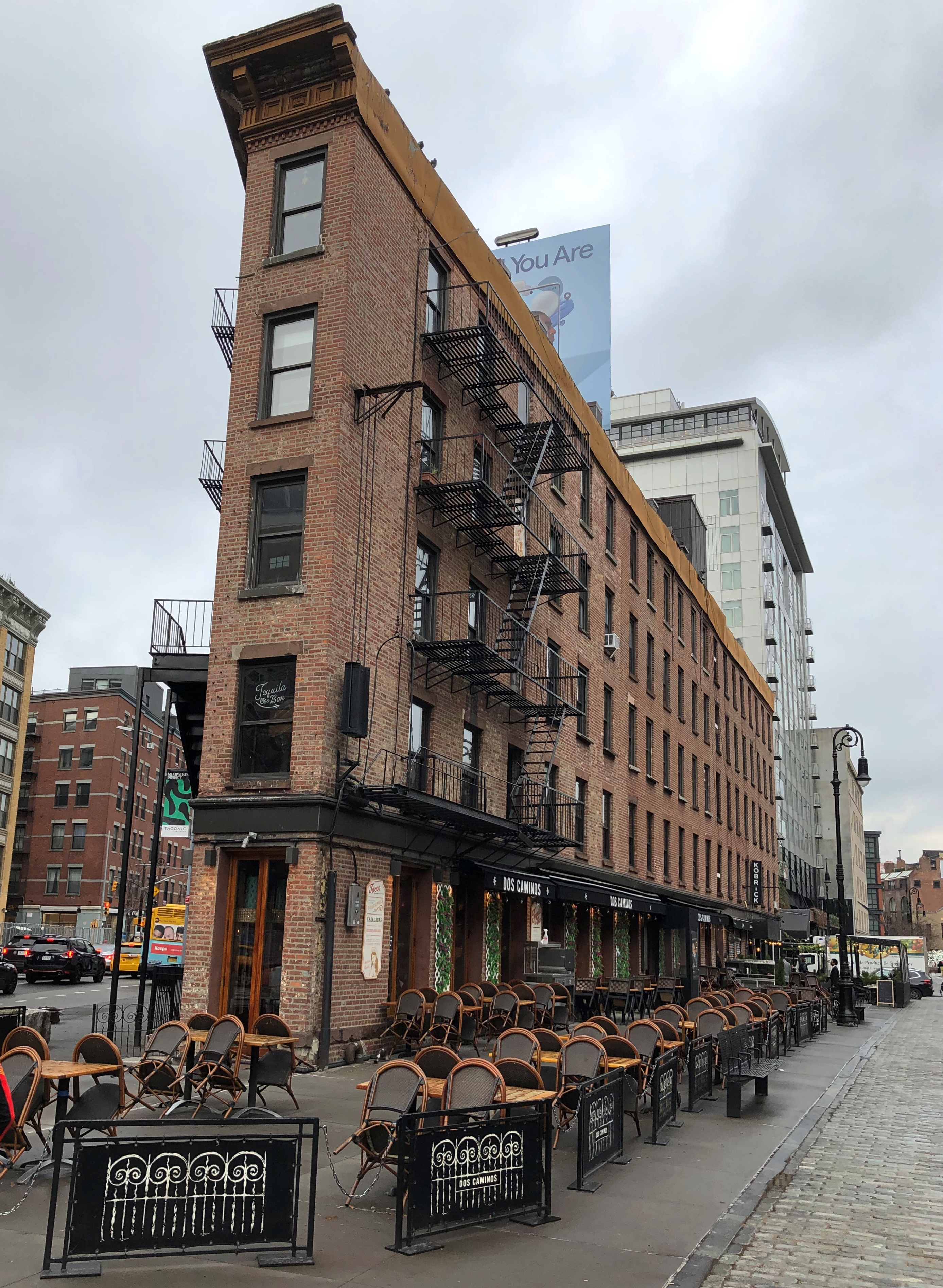
The angular building facing that little plaza.Manhattan Christmastime

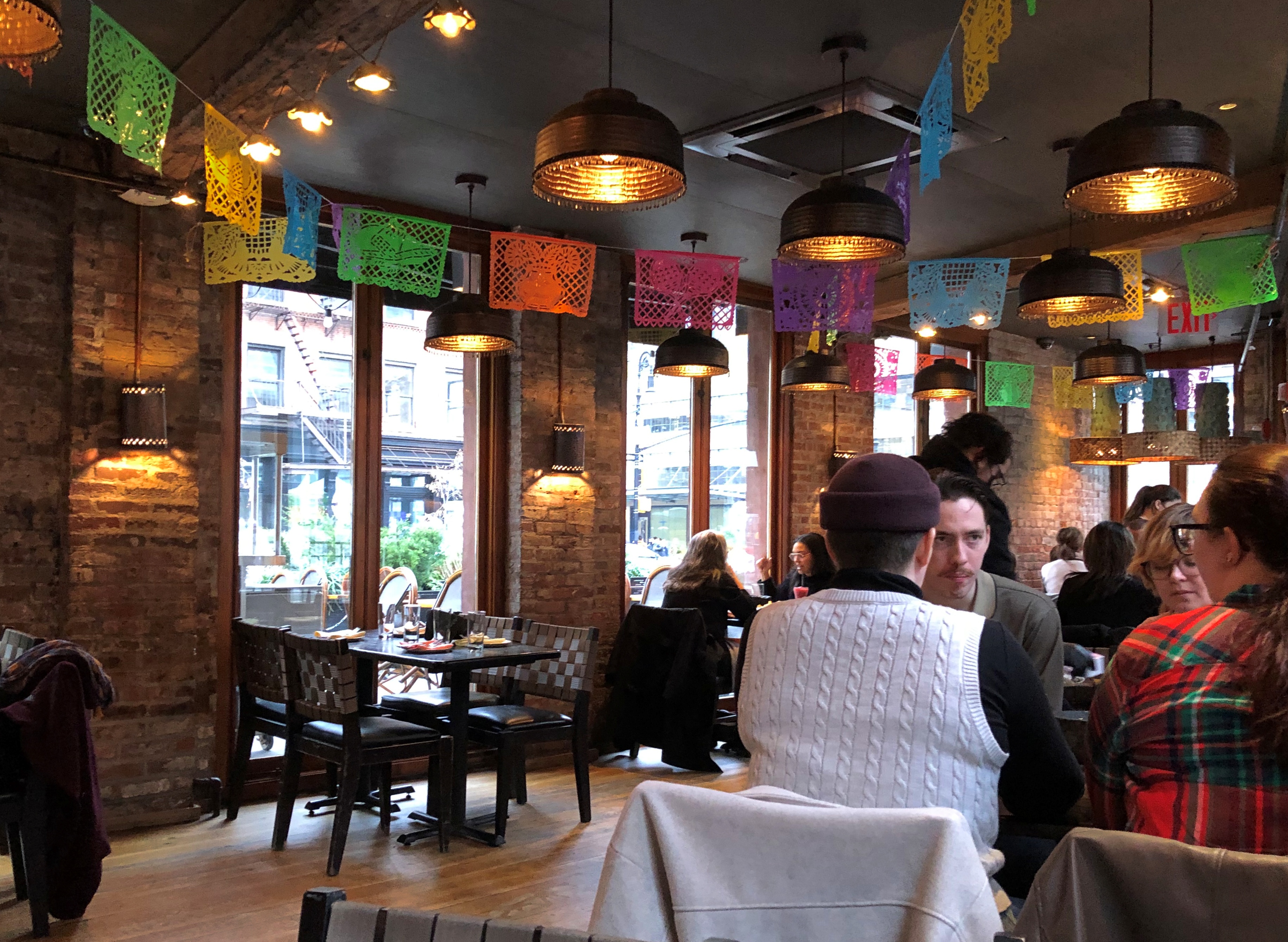
After visiting Little Island, Geof and I had lunch at a Mexican restaurant on the first floor of the building.Manhattan Christmastime

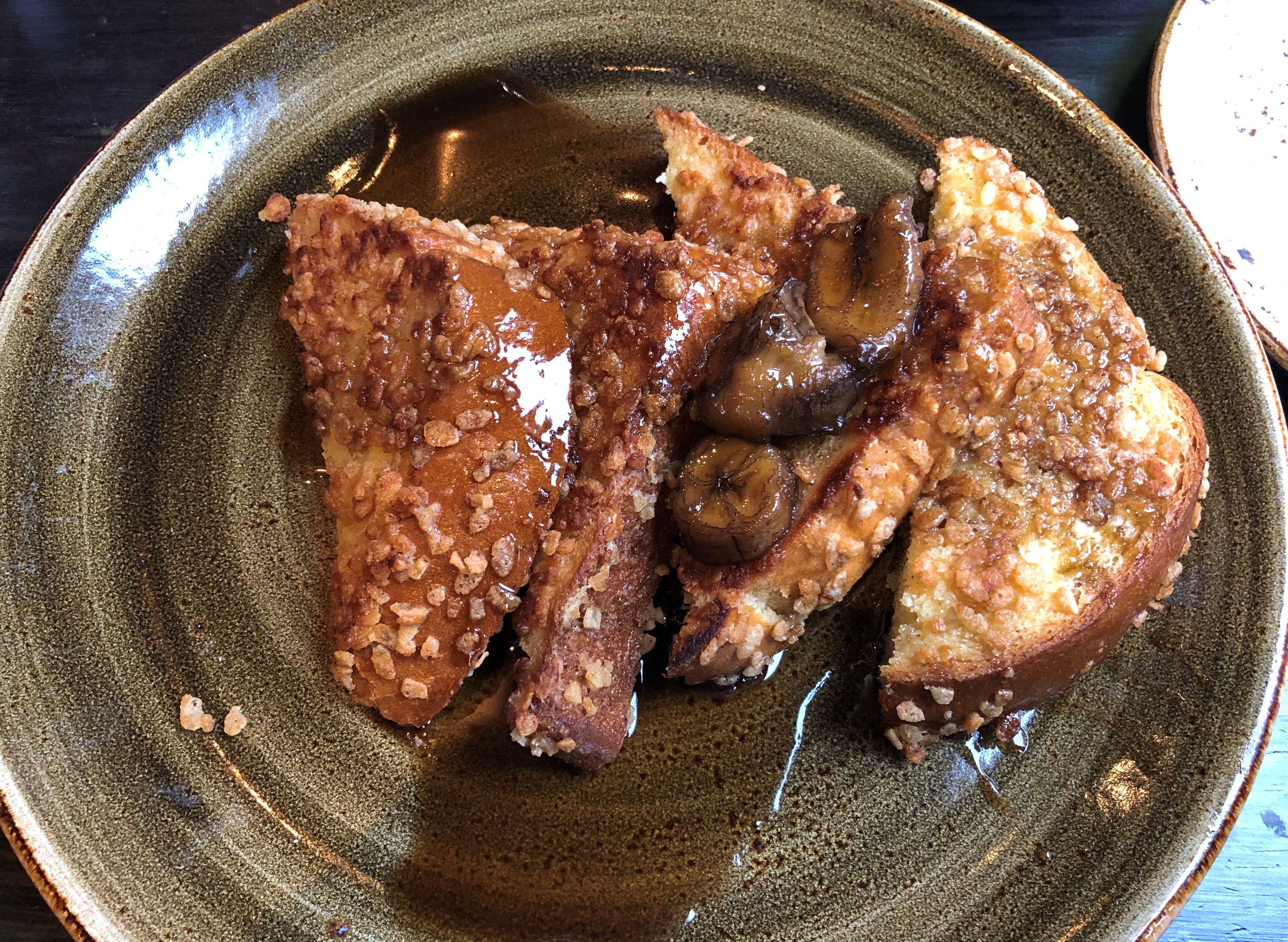
I had the Mexican French toast.Mexican French Toast

I’d never heard of that before. Created for the table of Maximilian I? Man, it was good.

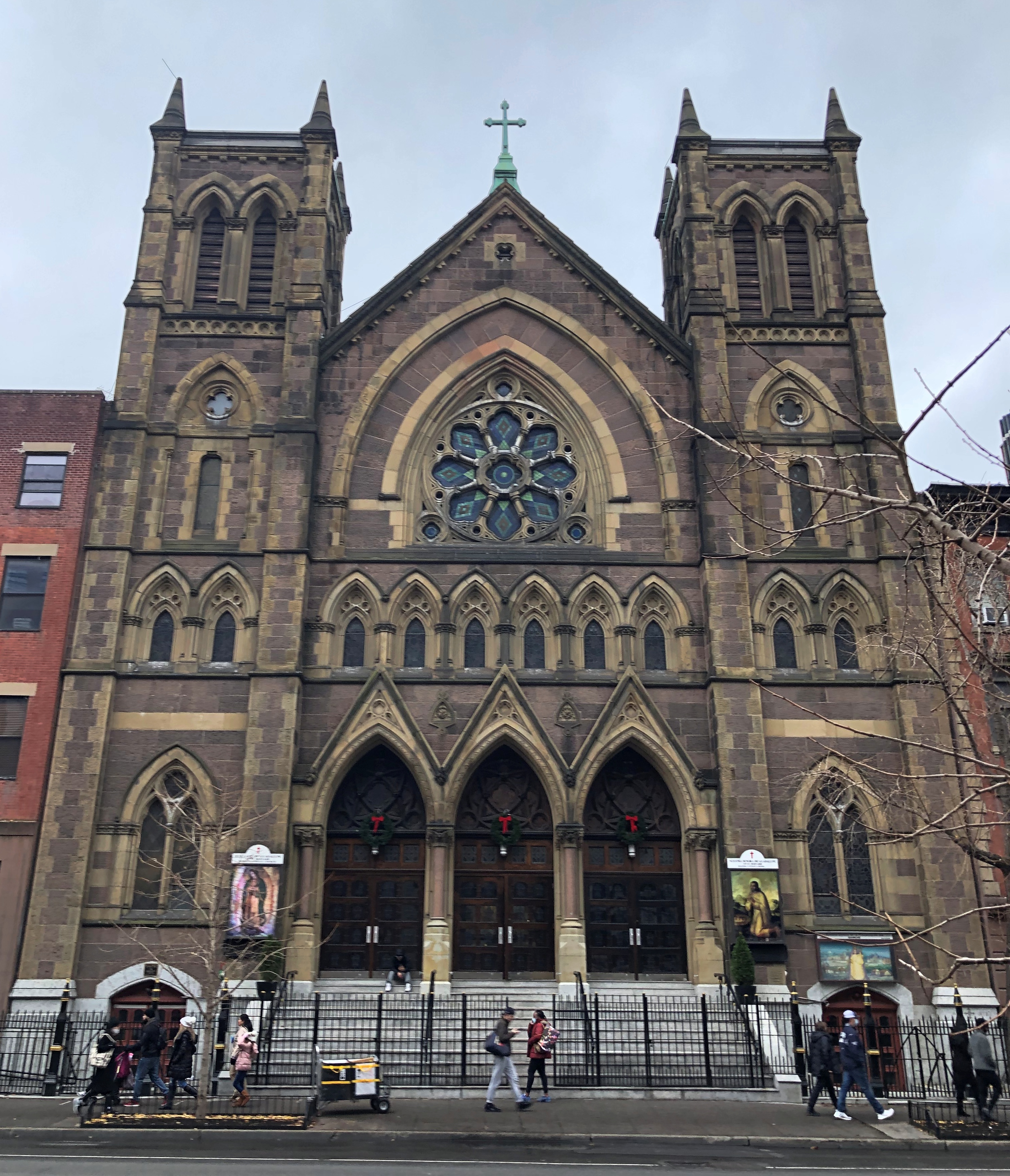
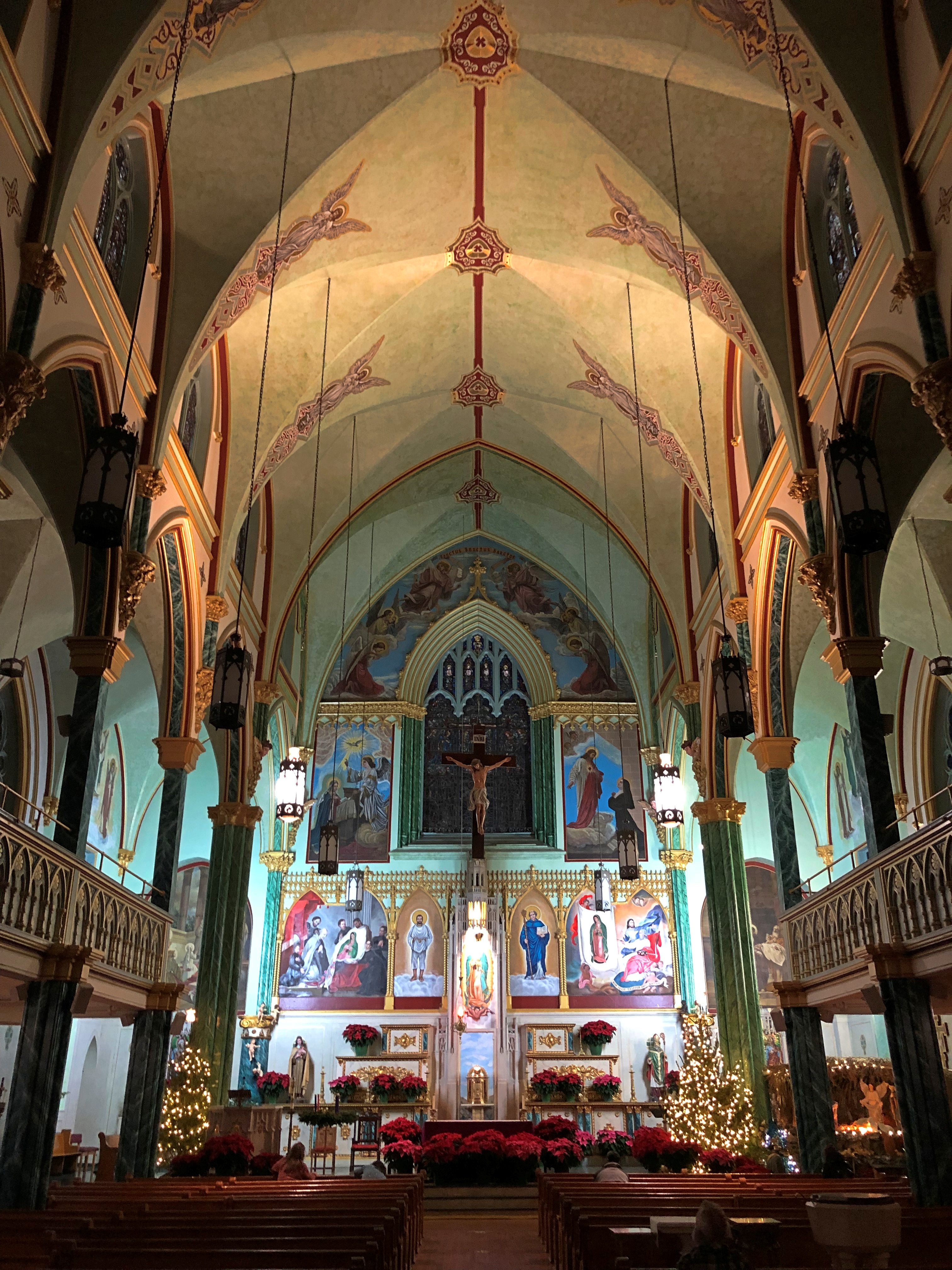
Not far away, on 14th Street, is Nuestra Señora de Guadalupe en San Bernardo, a parish church formed by the merger of two congregations in the early 2000s. Nuestra Señora de Guadalupe en San Bernardo
Nuestra Señora de Guadalupe en San Bernardo

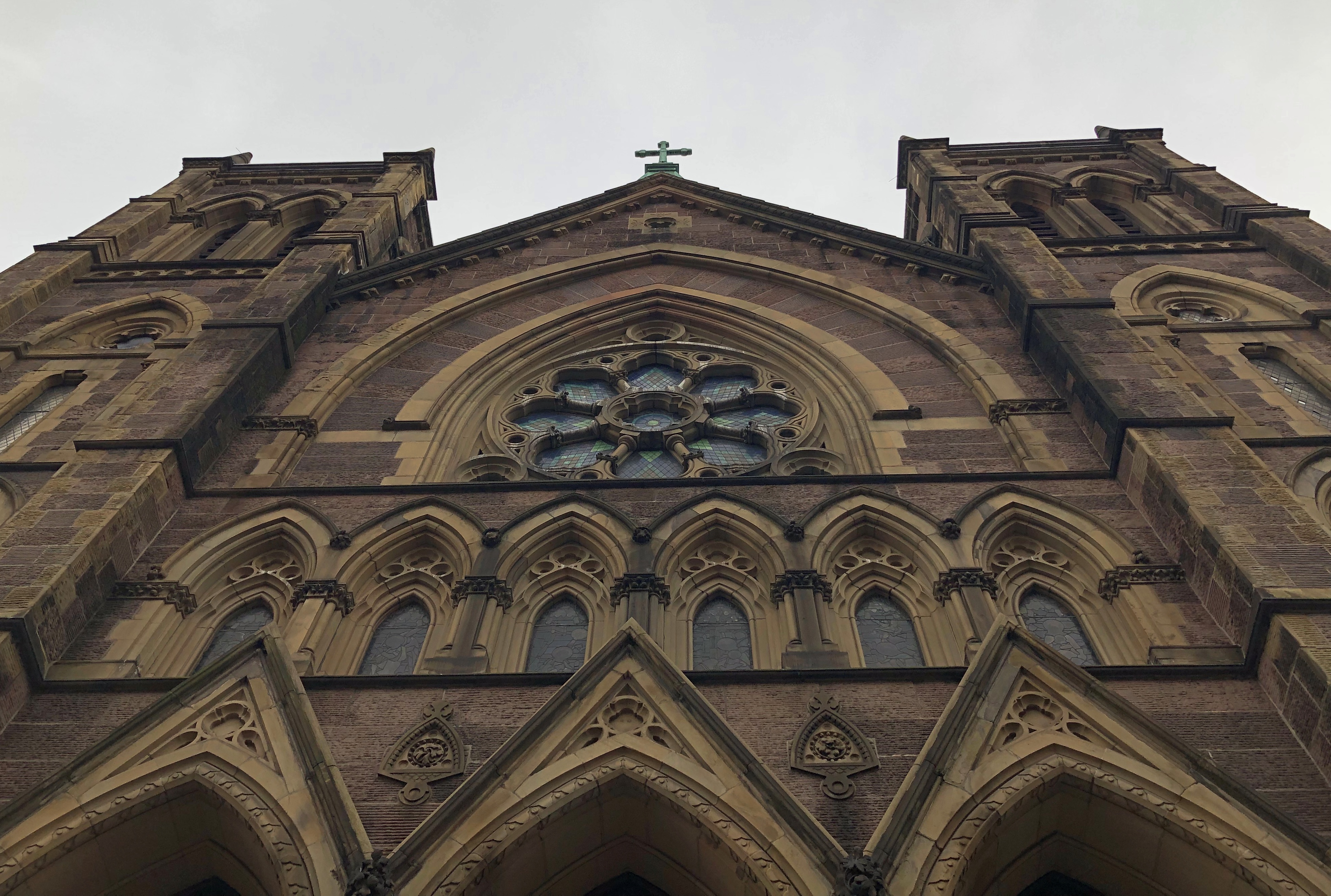
An 1870s building designed by the amazingly prolific Patrick C. Keely. Wonderfully colorful interior, hardly shown in my picture.Nuestra Señora de Guadalupe en San Bernardo

A good place to spend a few Christmastime minutes.

Little Island

We arrived footsore at Little Island late on Saturday morning. Or at least my feet were a little sore and warmer than usual, since Geof walks a good deal more than I do, and faster as well. Along the greenway on the Hudson that morning, he modulated his pace, partly because he wanted to see certain things himself, but also to accommodate my slower gait — but not too slow. I can still walk three miles without serious difficulty.Little Island NYC

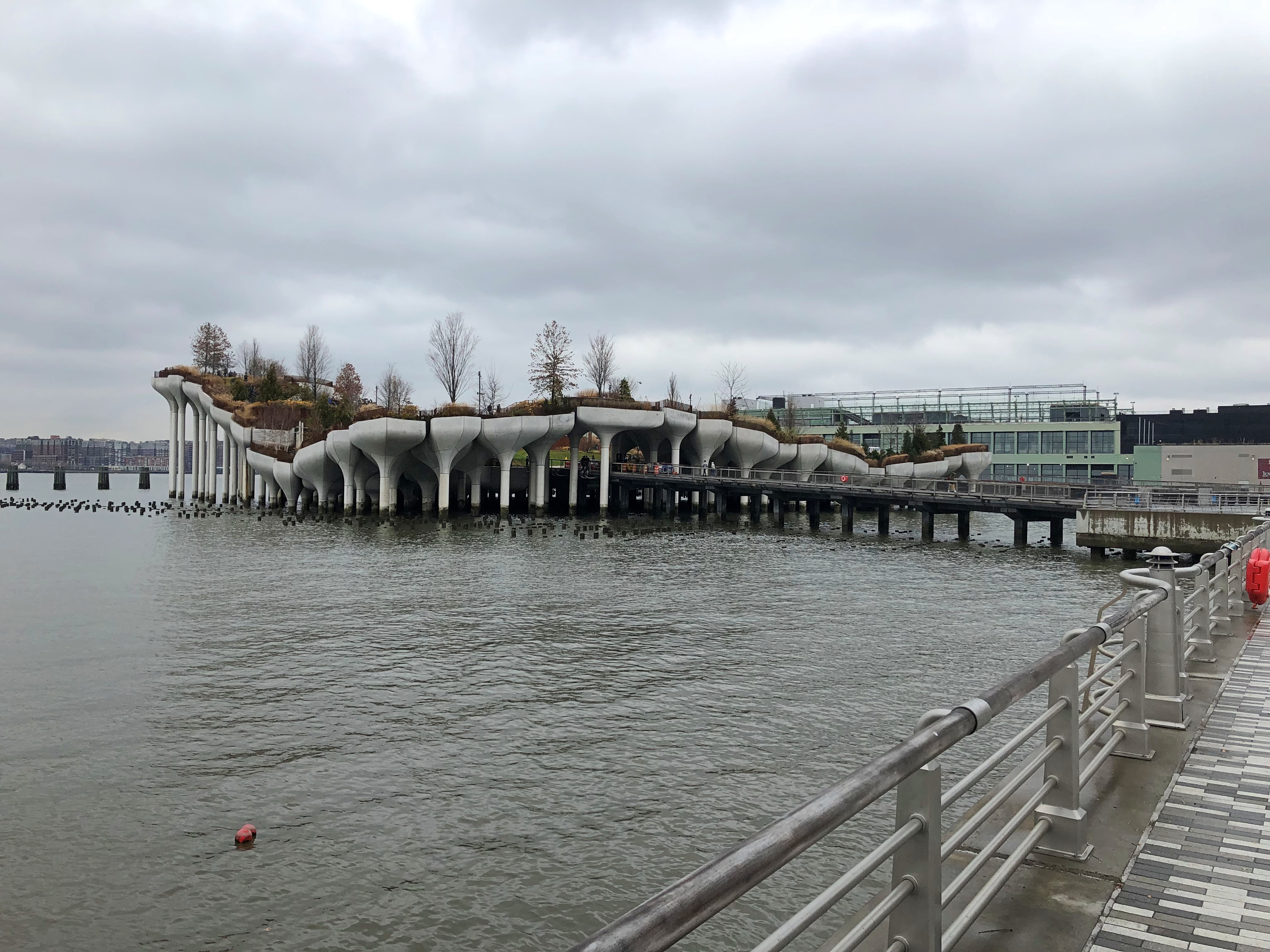
Little Island is in fact an island, an artificial one built on the ruins of Pier 55 (in full, the place’s name is Little Island @Pier 55). Even before Hurricane Sandy slapped the pier, it was in poor shape, and the blow brought complete ruin. Redevelopment took years, as it does in Manhattan sometimes, with one plan sinking into a legal quagmire.

A second plan finally came to fruition with the opening of Little Island, managed by a nonprofit, in the spring of this year.Little Island NYC Little Island NYC

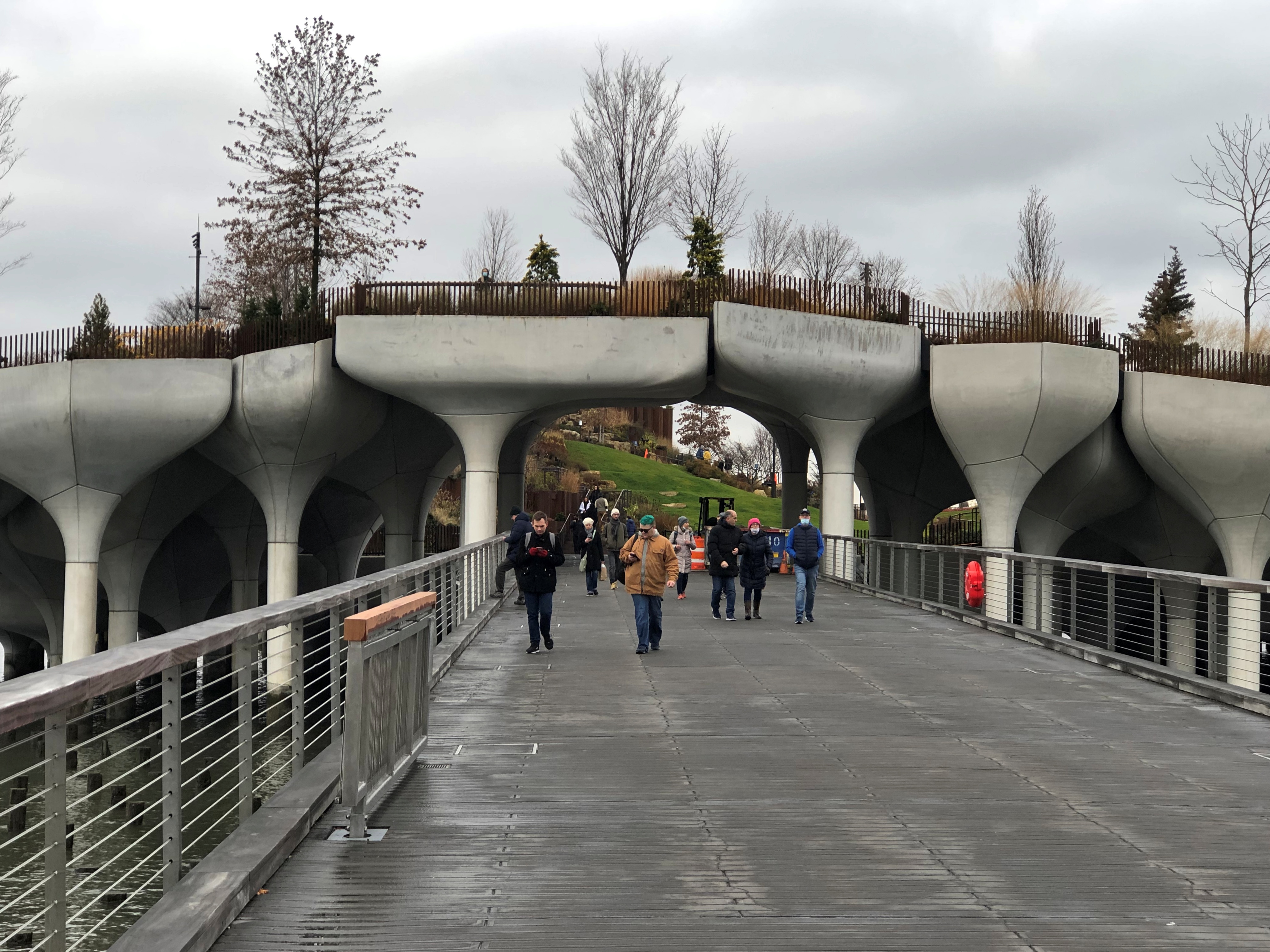
We entered at the south entrance bridge.Little Island NYC

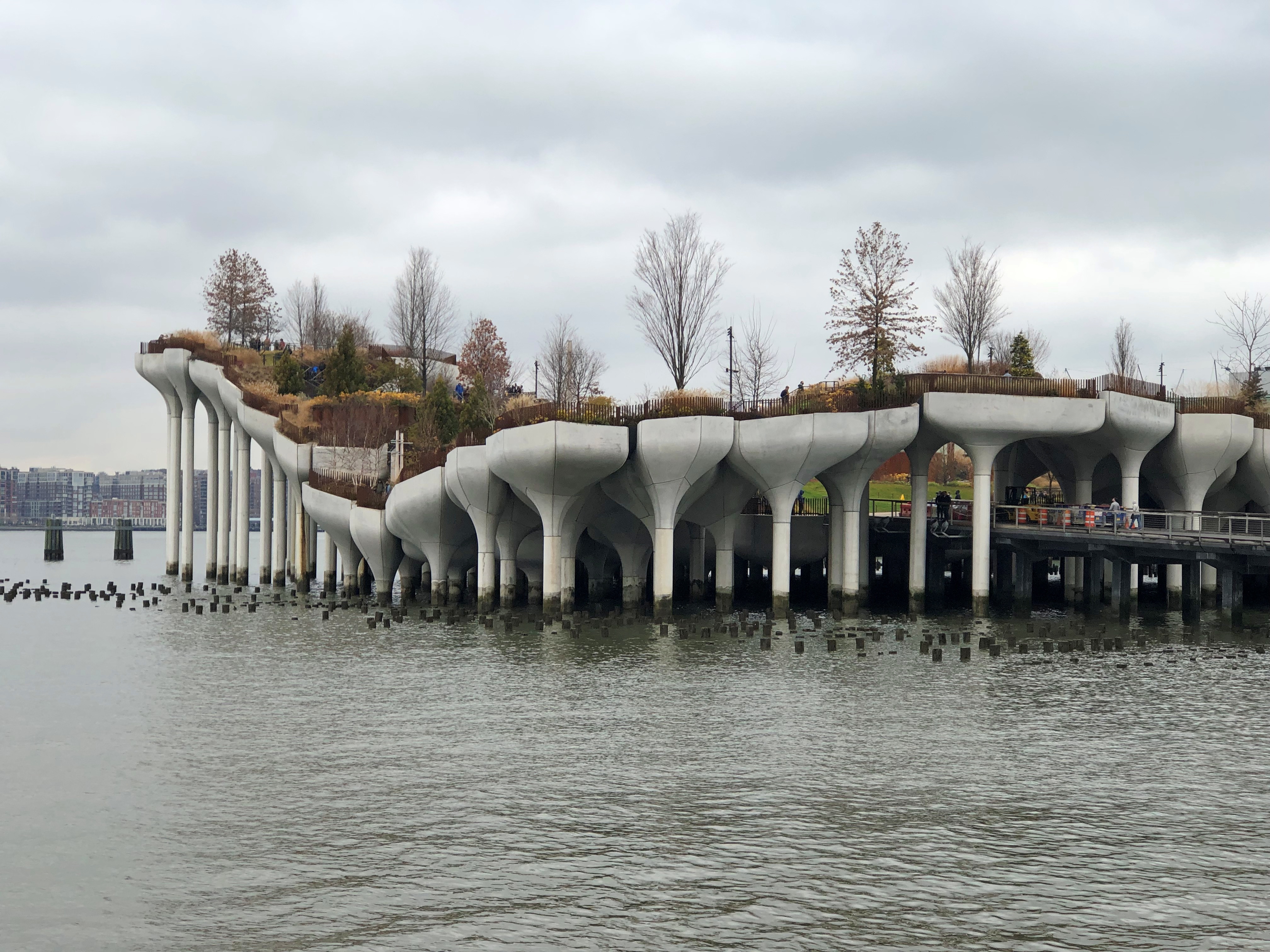
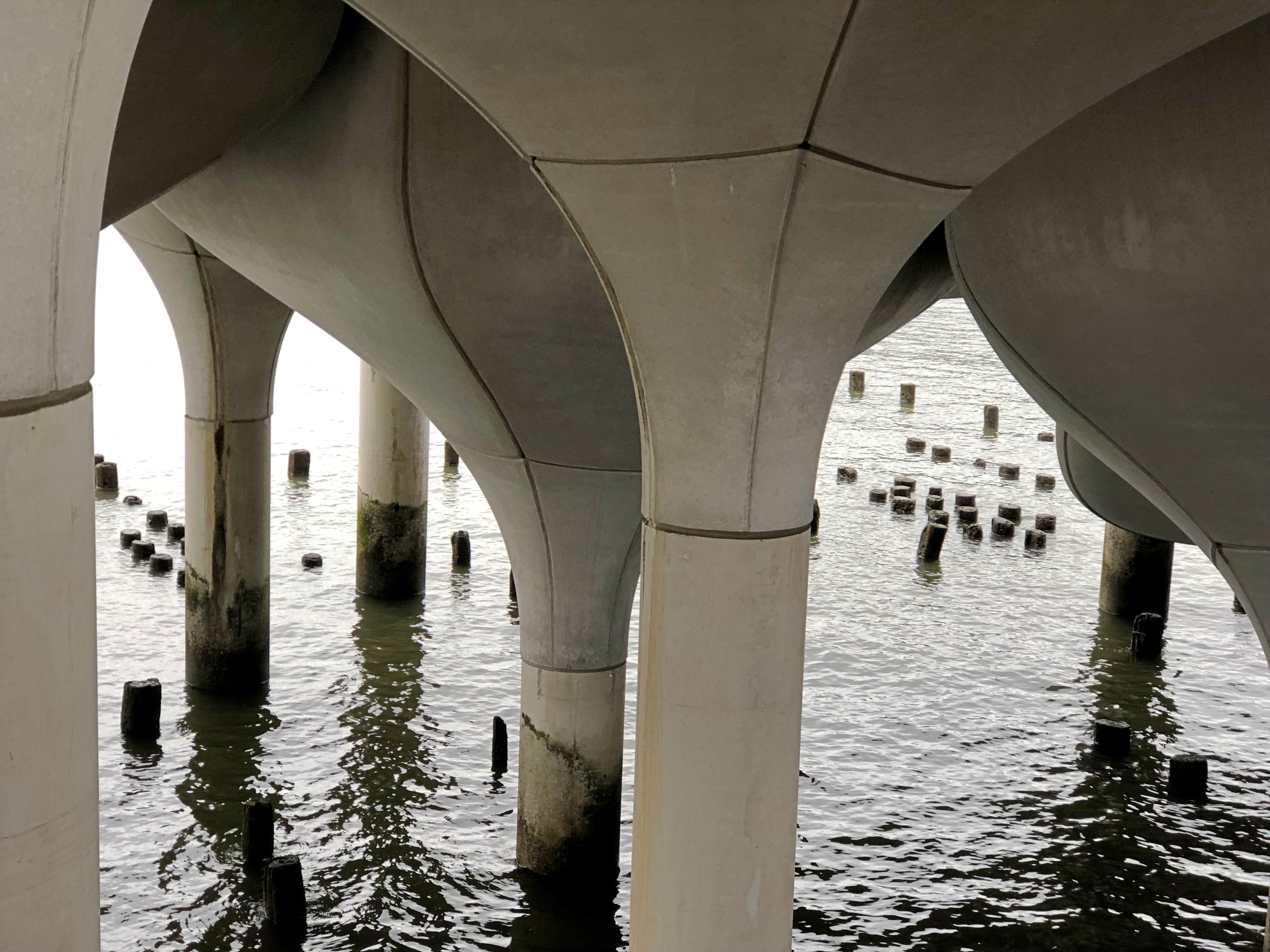
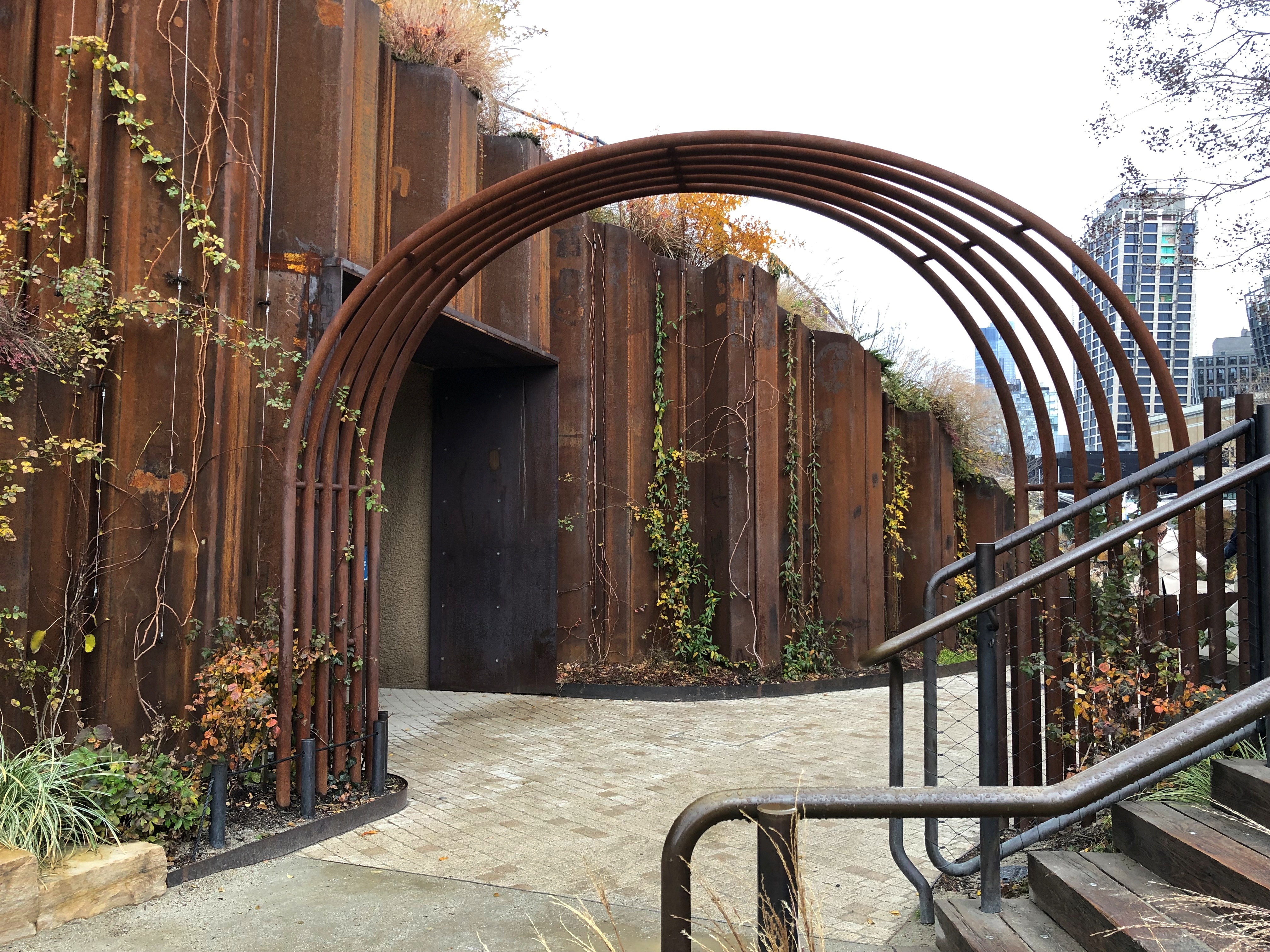
The 132 concrete structures supporting the park are called “tulips,” and I guess that’s a reasonable description. Tint them green and they could form the supports for Marvin the Martian’s summer home, but in any case, they’re big and heavy: each weighing as much as 68 tons and measuring from 16 feet to 52 feet high.Little Island NYC

The British architectural firm Heatherwick Studio (designers of the Tower of Silence in India) and the New York-based landscape architecture firm MNLA collaborated on designing Little Island. I’ve read, and Geof confirmed to me — he has made a good many visits or at least walk-bys of the park this year — that the place is a hit. During the warmer months, you have to register for a specific time to get in, though at no charge. This time of the year, you can just wander in.

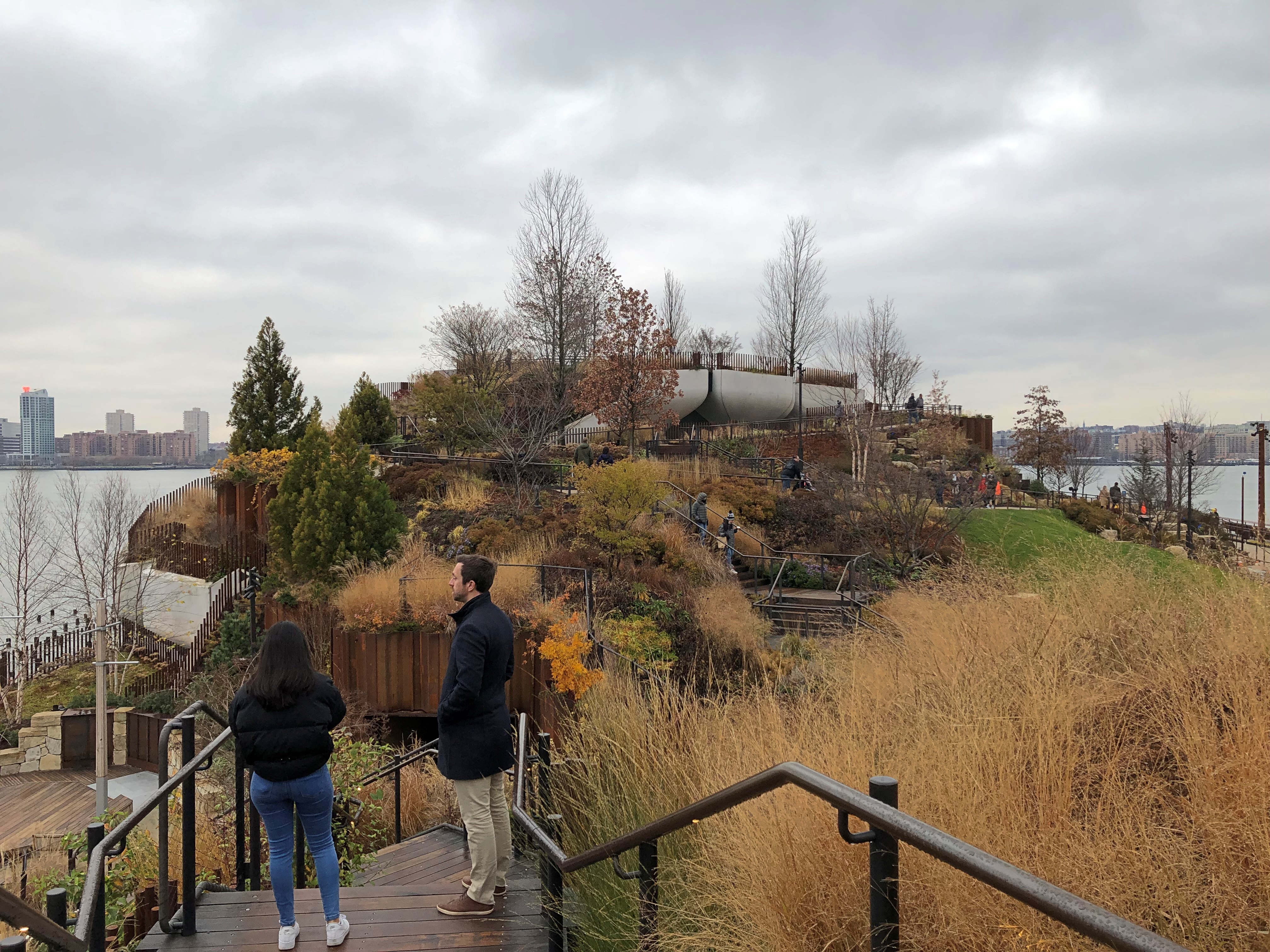
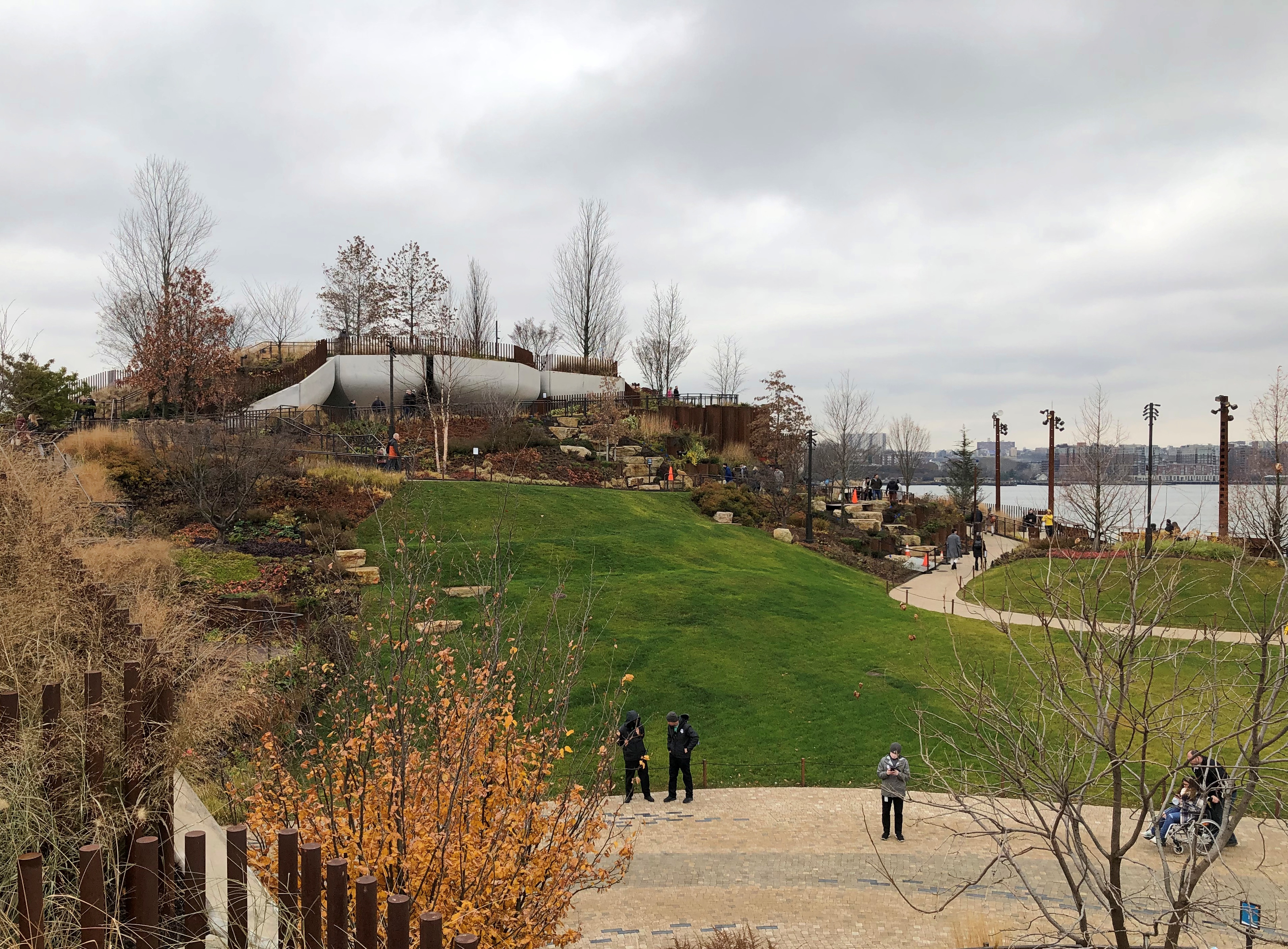
Good to hear that a new public space is popular with the public. I can understand that. Even in winter, it’s a pleasant place to wander around. Little Island NYC Little Island NYC
Little Island NYC

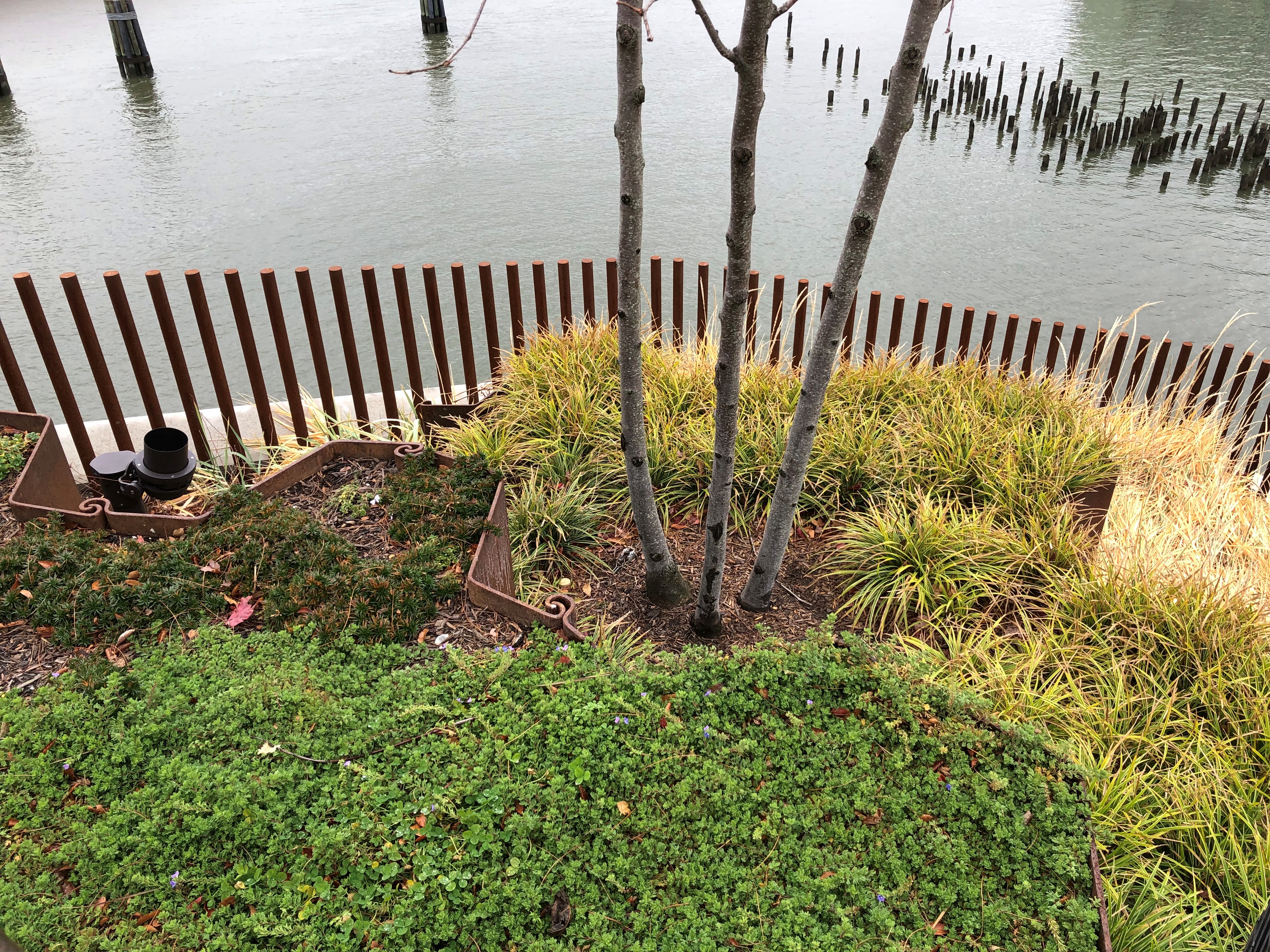
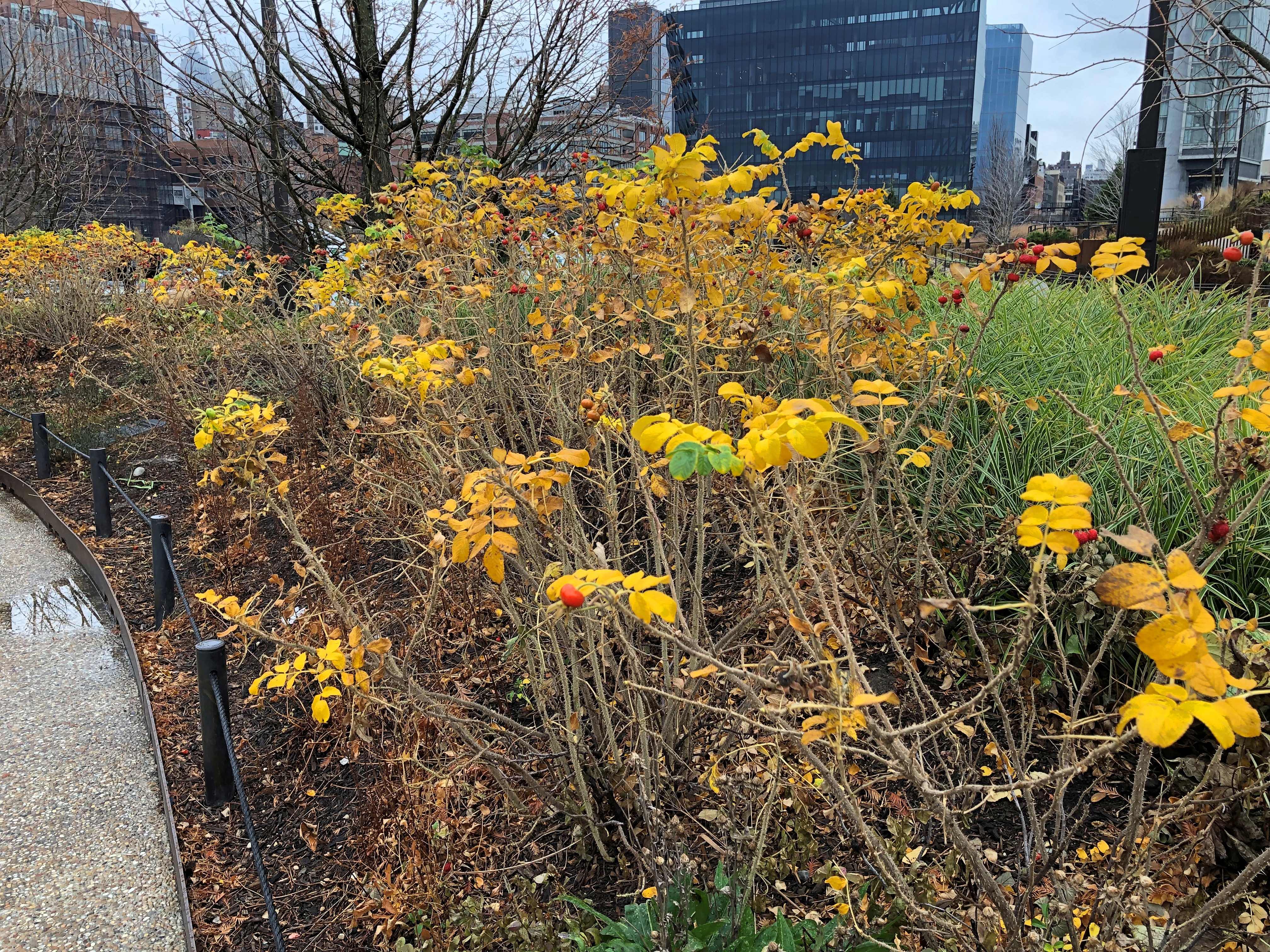
It’s lush too, at least this mild December.Little Island NYC Little Island NYC Little Island NYC

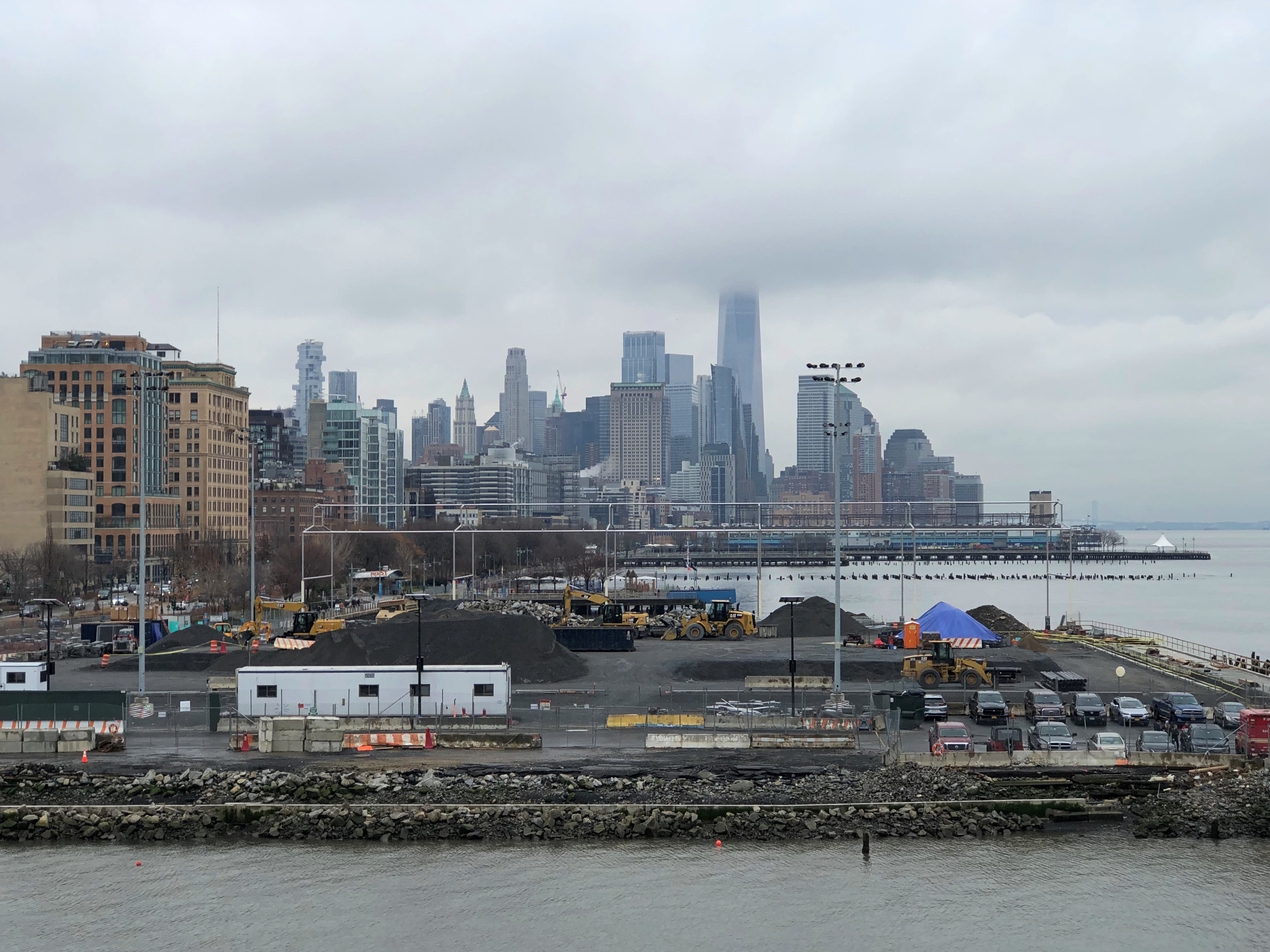
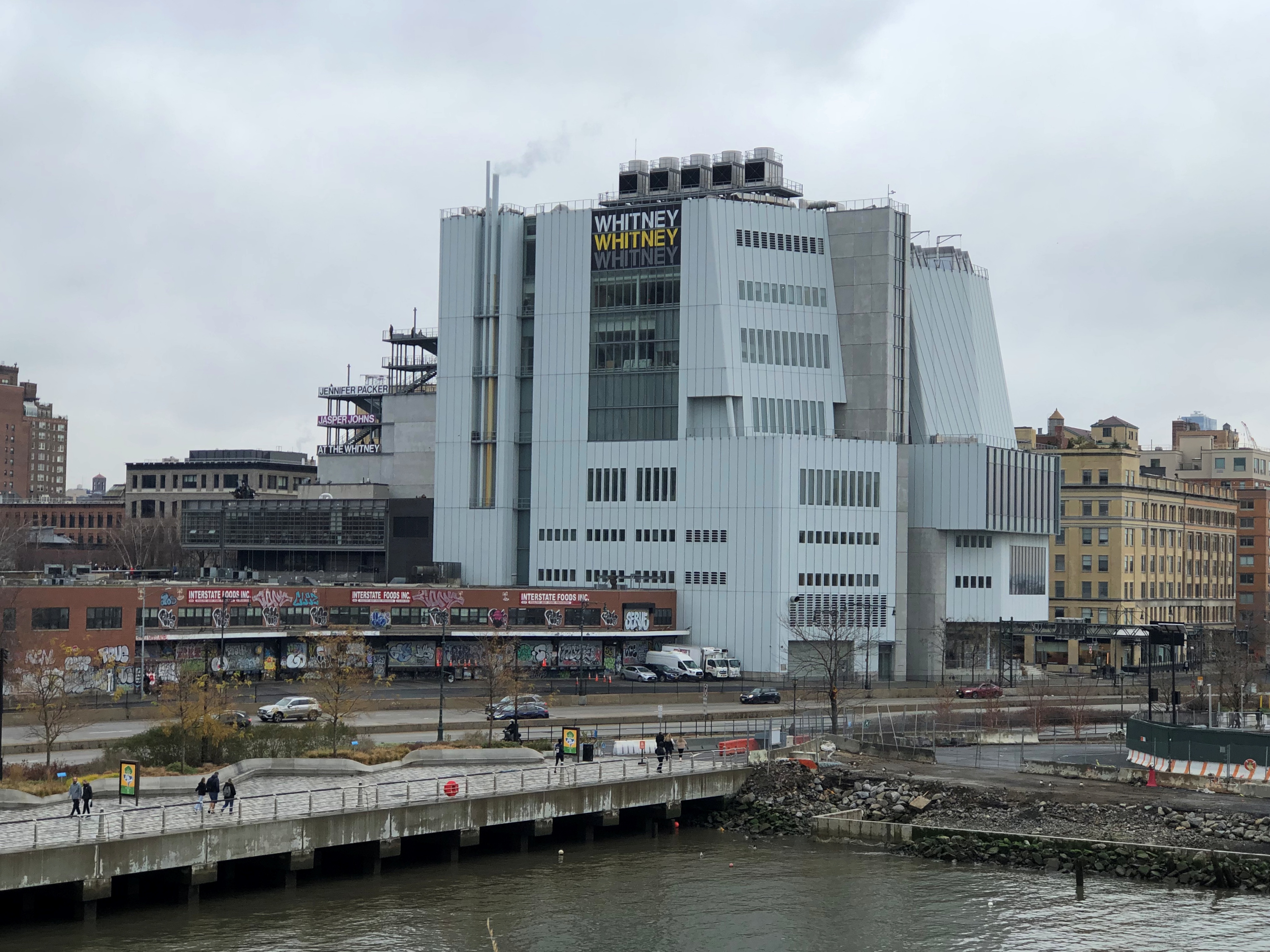
With views of the city. In the foreground is the construction site on another old pier, which will be an extension of the Whitney Museum. Little Island NYC
Little Island NYC

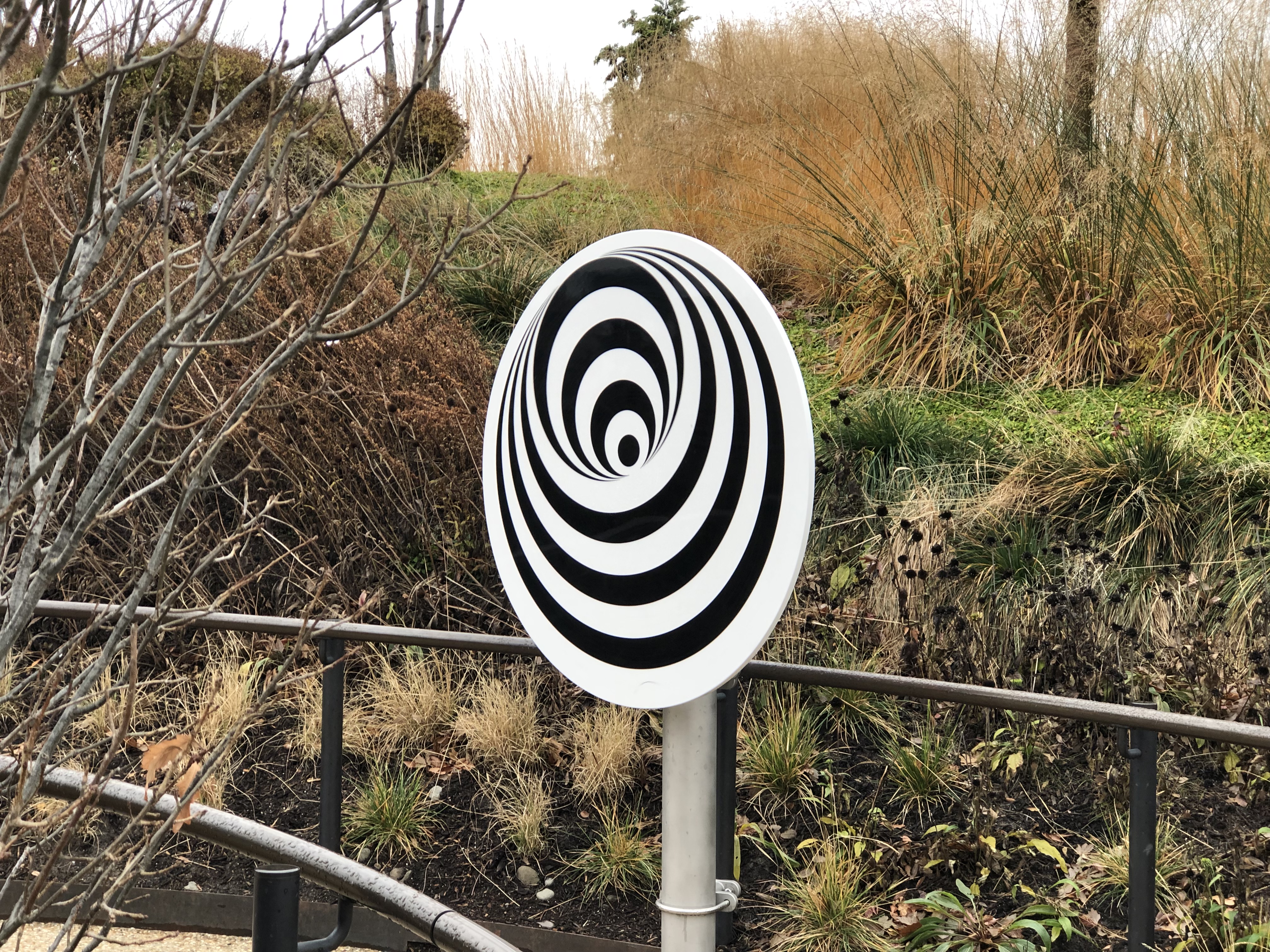
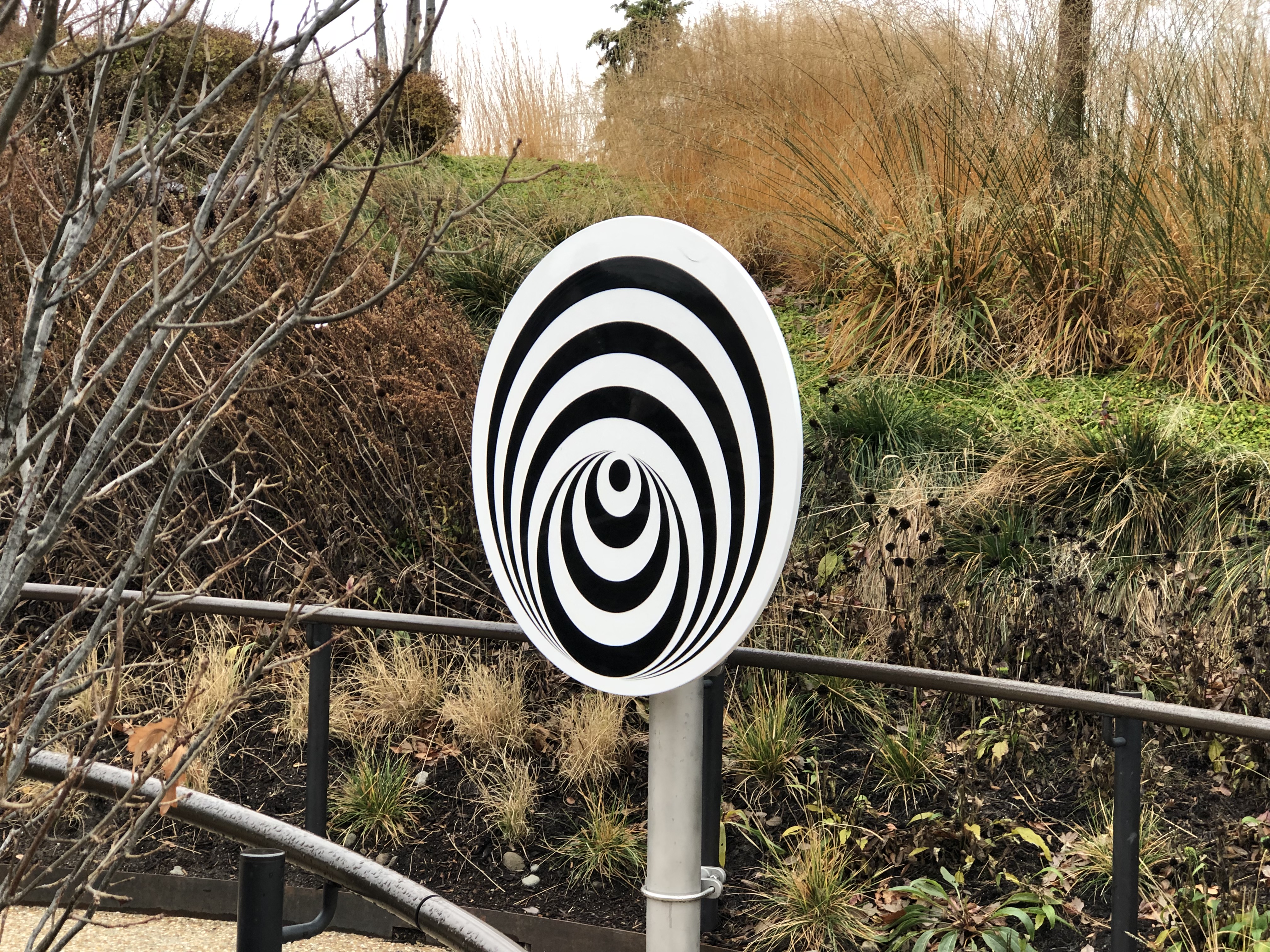
I took these to be homages to The Time Tunnel.Little Island NYC Little Island NYC

I might be one of the few to think of that, since you have to be of a certain age to do so, besides mildly eccentric.

William Street

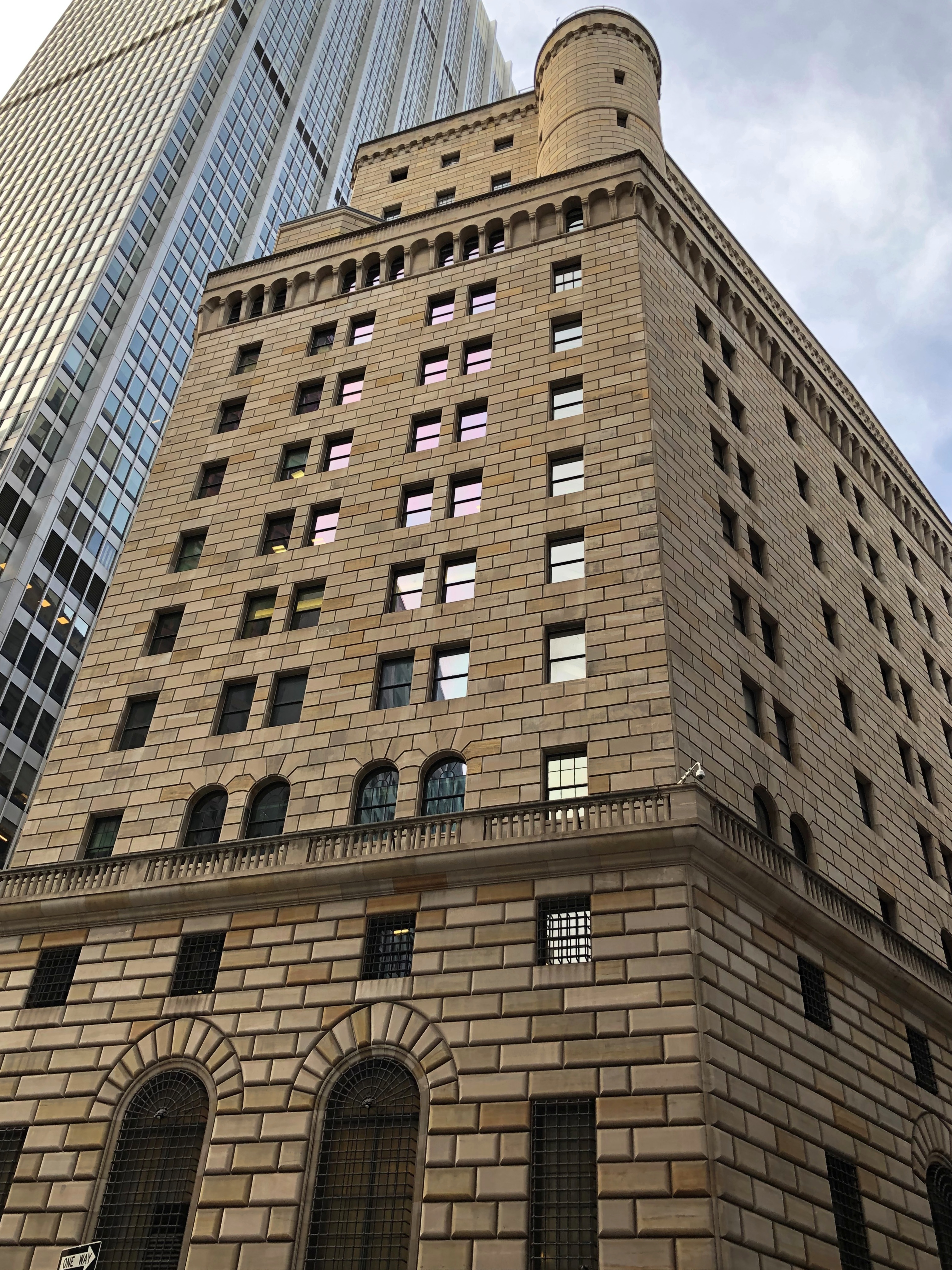
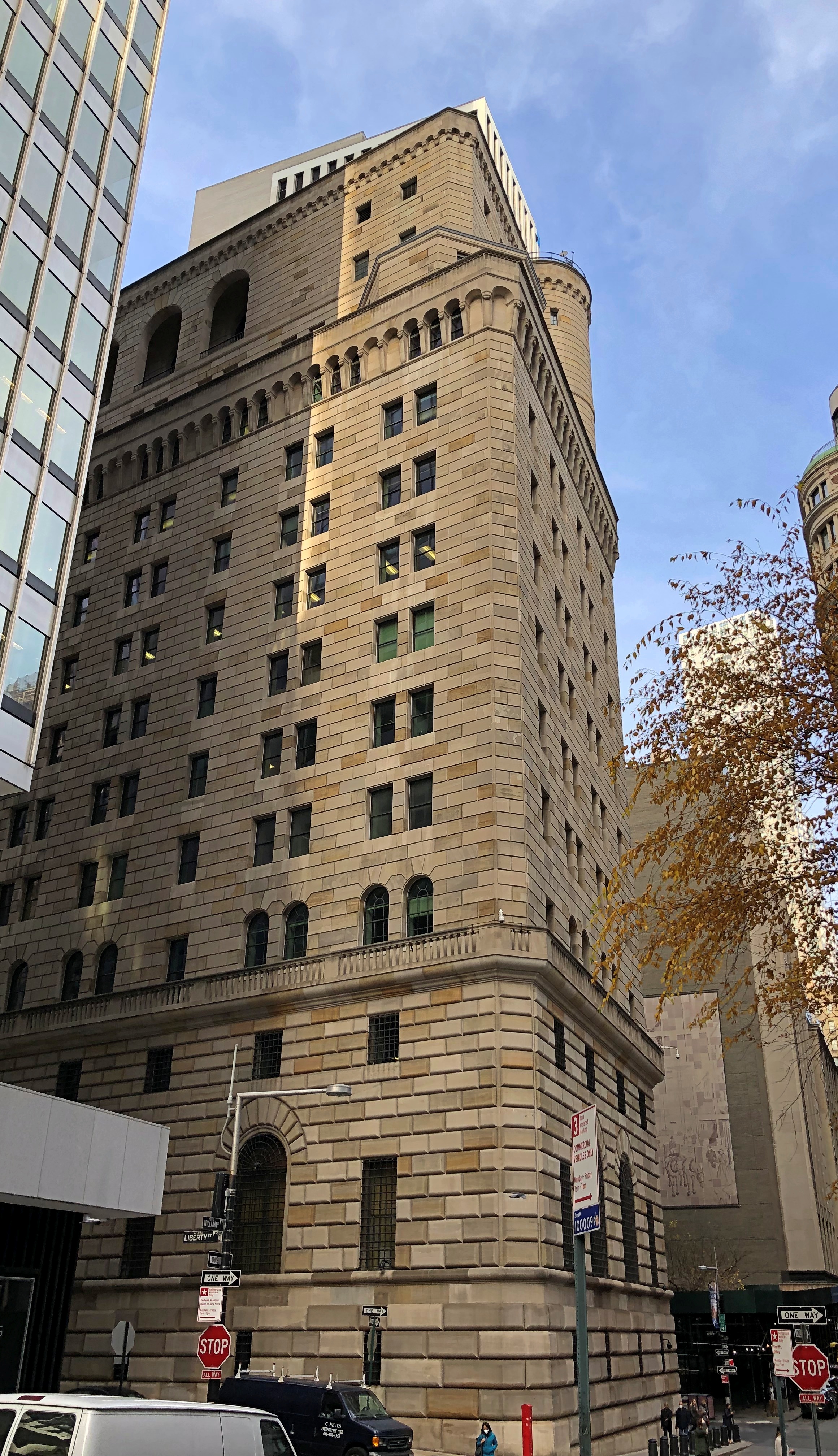
Less famous than Wall Street and a bit longer, William Street snakes through non-grid Lower Manhattan, another faint echo of New Amsterdam. I didn’t walk the entire way during my recent visit, but did cover a fair amount of the street, starting at the back of the fortress-like Federal Reserve Bank of New York.NY Fed 2021
NY Fed 2021

Beneath my feet, roughly, more than 6,000 tons of gold, more than even old Croesus himself could imagine. Above street level, a building that evokes Florentine palaces, though larger even than a Medici could imagine. Designed by a NY firm that did a lot of bank buildings, York and Sawyer.

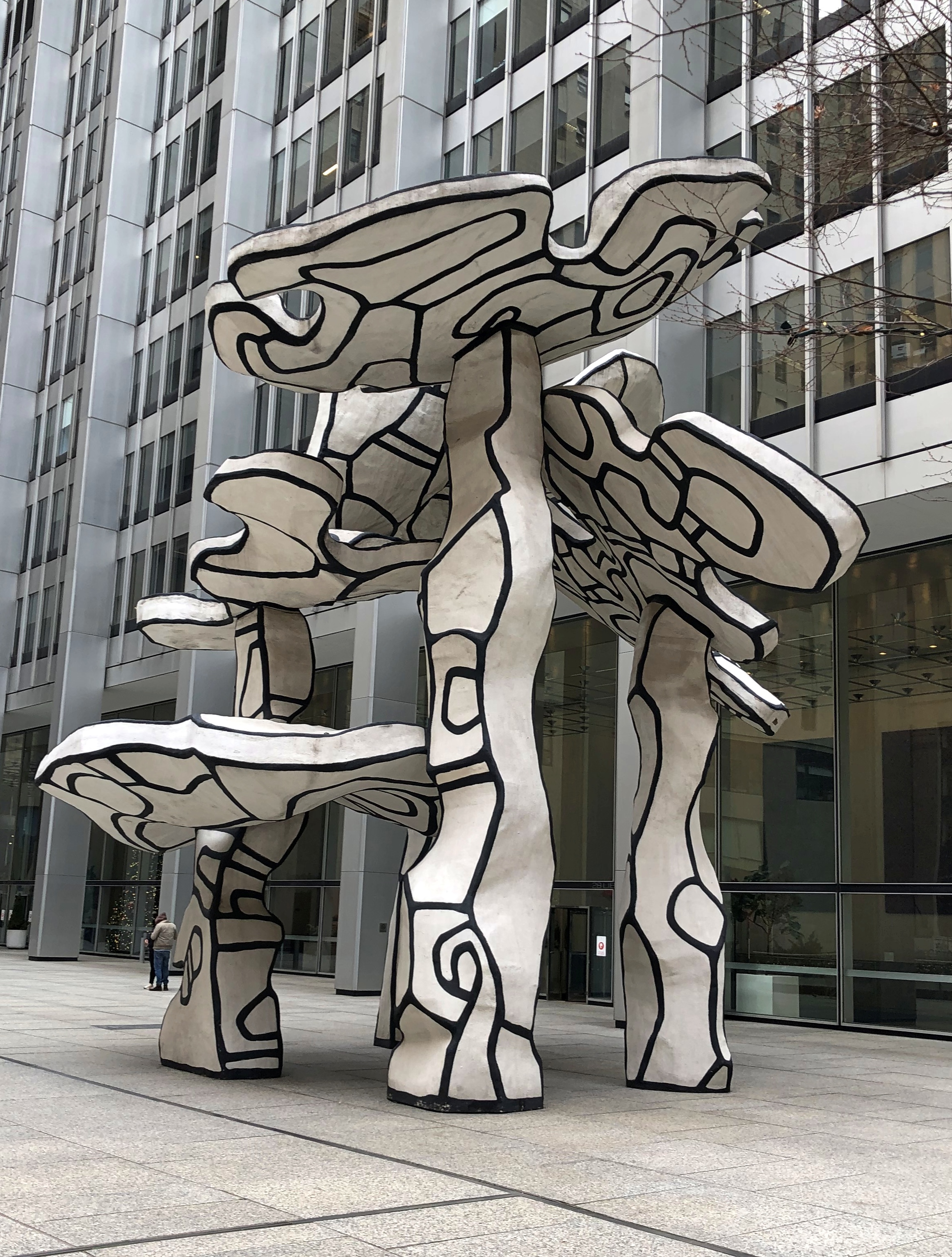
A block away is Fosun Plaza, which surrounds the 60-story 28 Liberty Street, formerly One Chase Manhattan Plaza, a midcentury creation. The plaza is a story above street level, accessible by a wide staircase. The first thing you see on the plaza is a Jean Dubuffet sculpture, “Group of Four Trees,” commissioned by David Rockefeller and completed in 1972. Almost instantly, it reminded me of “Monument With Standing Beast” in Chicago.Fosun Plaza, NYC

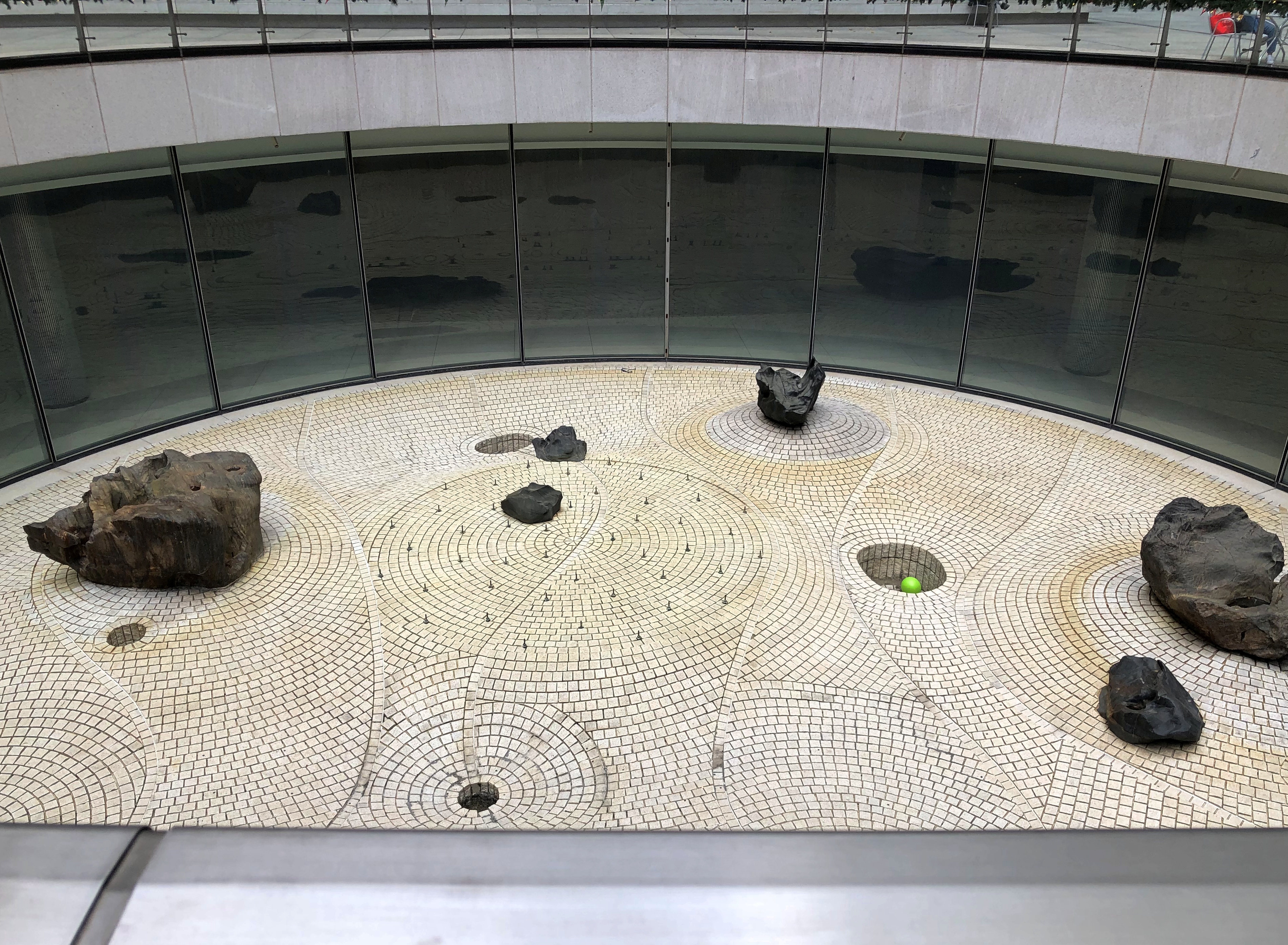
Deeper in the plaza is an Isamu Noguchi rock garden fountain, back down at street level and naturally dry this time of year.Isamu Noguchi rock garden fountain,

“Windswept” came to mind when I was at the plaza, the adjective that’s often attached to such midcentury artificial flats, even though there wasn’t that much wind. Still, the plaza offered some good views of surrounding buildings, such as 84 William Street, the Howell apartments. In front of the Howell (from this vantage) is a small park featuring steel sculptures by Louise Nevelson.William Street 2021

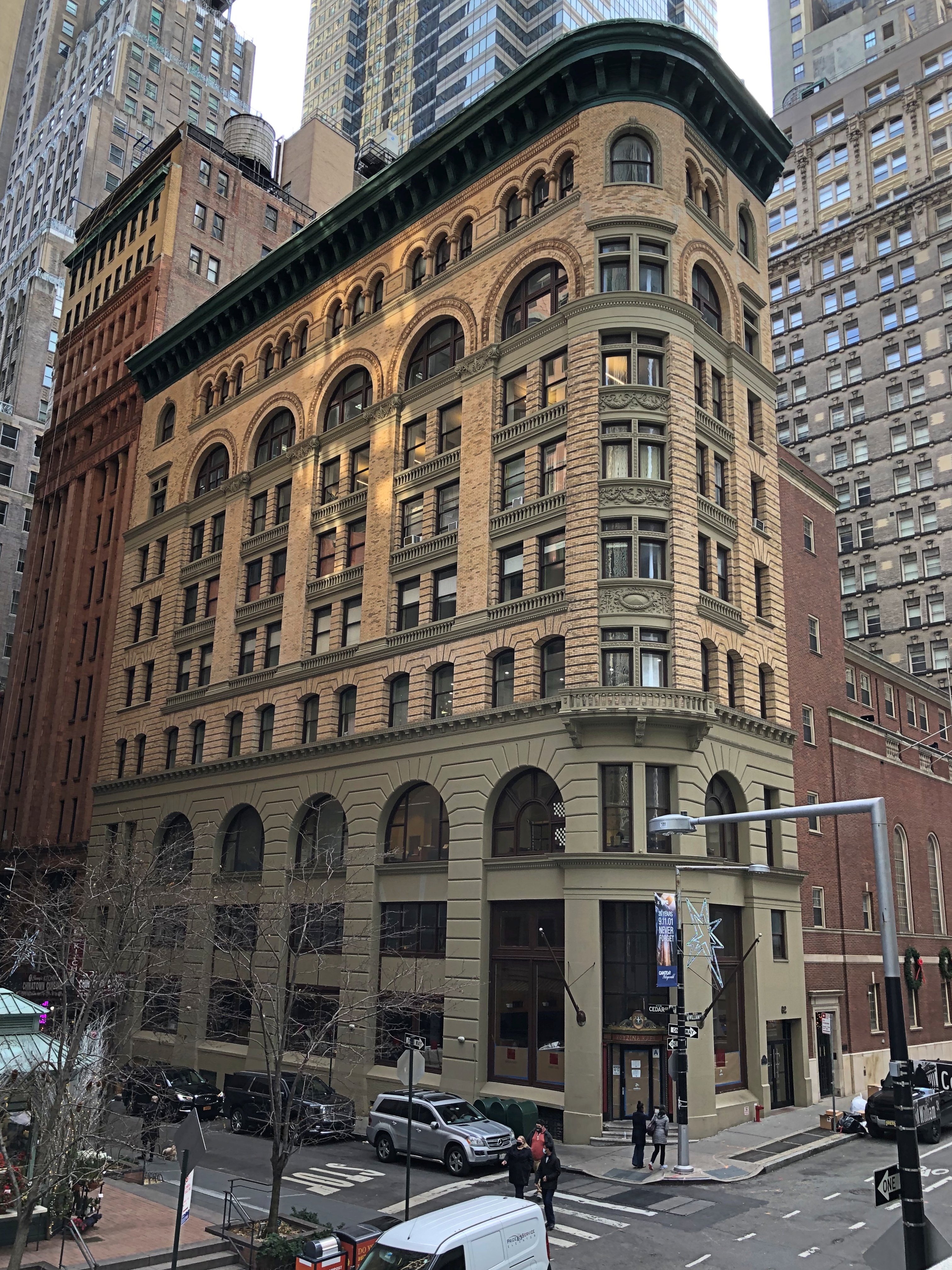
A wonderful old office building at 62 William Street, dating from 1900.William Street 2021

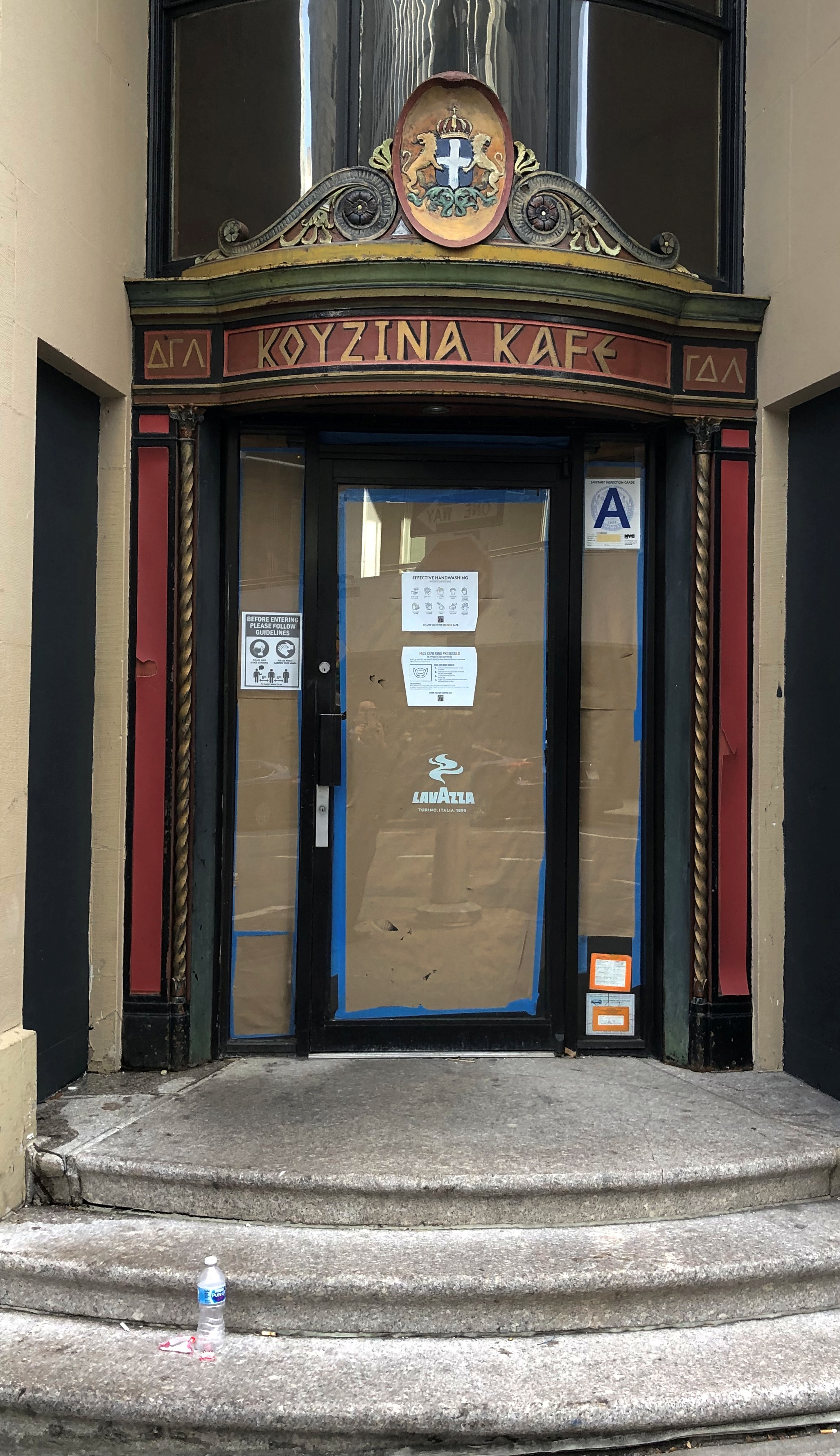
Down at street level at that building, a Greek restaurant that didn’t survive the pandemic. Or simply didn’t survive.William Street 2021

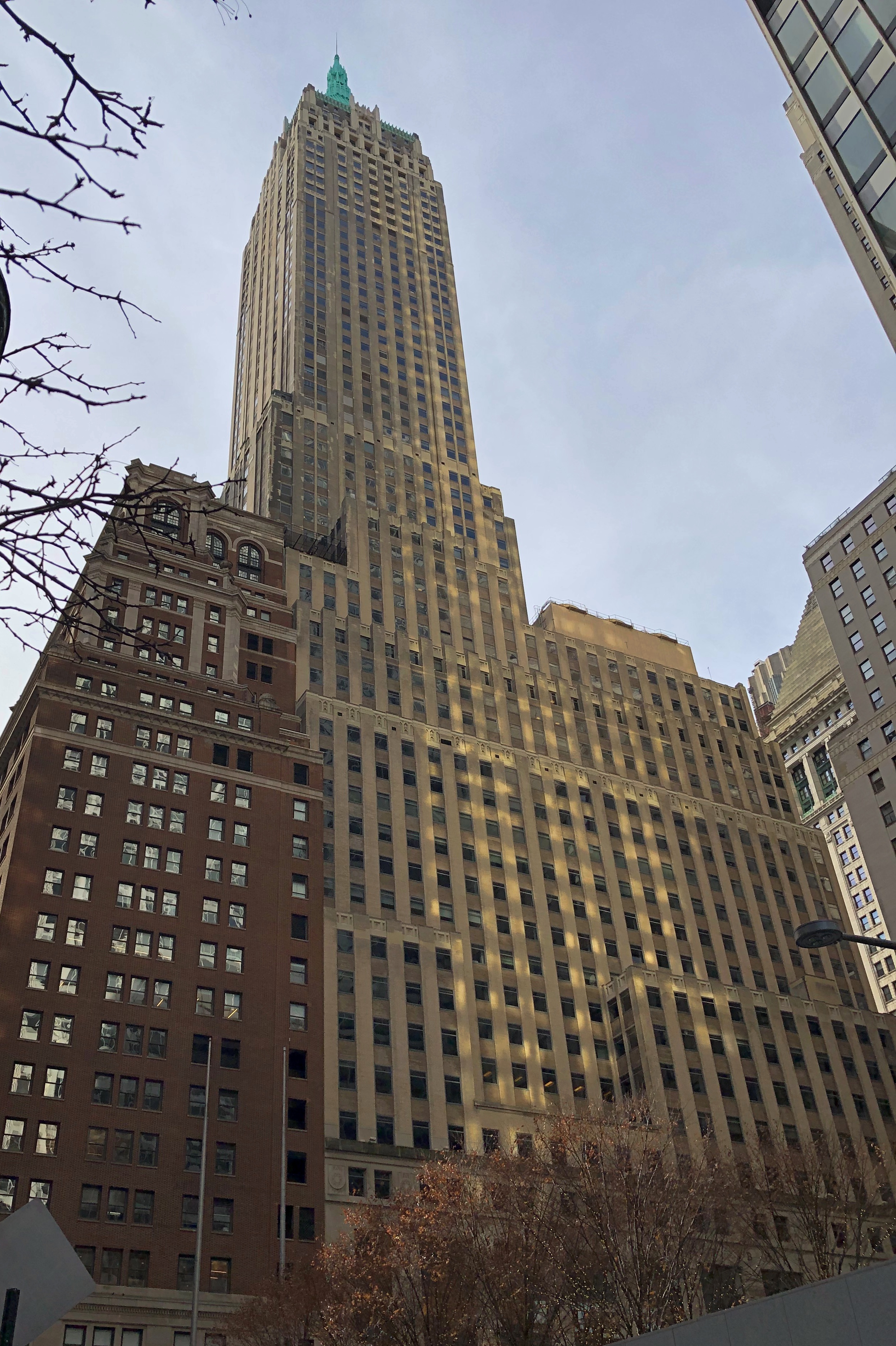
From that vantage, there’s also a good view of the non-Wall Street side of 40 Wall Street.William Street 2021

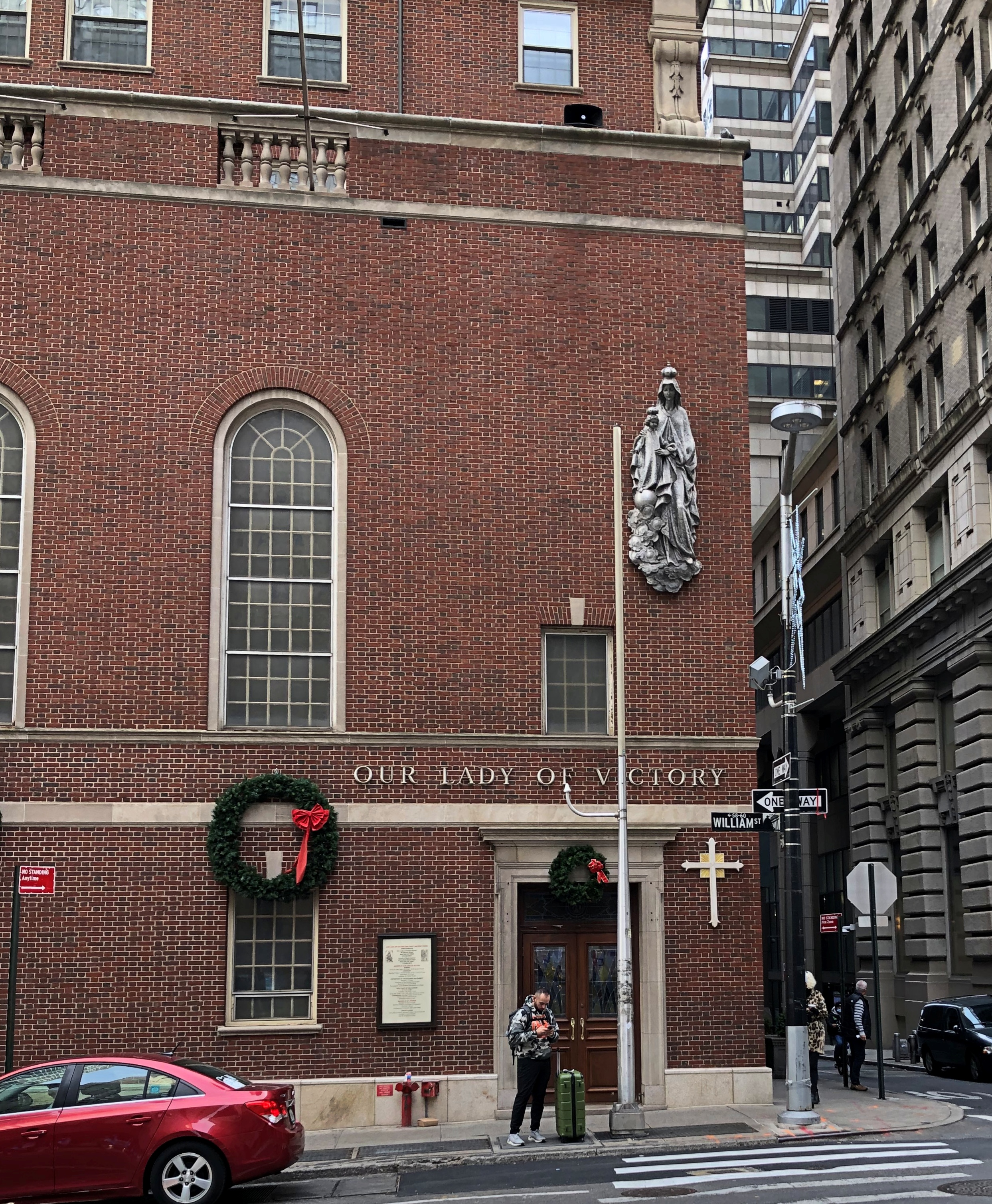
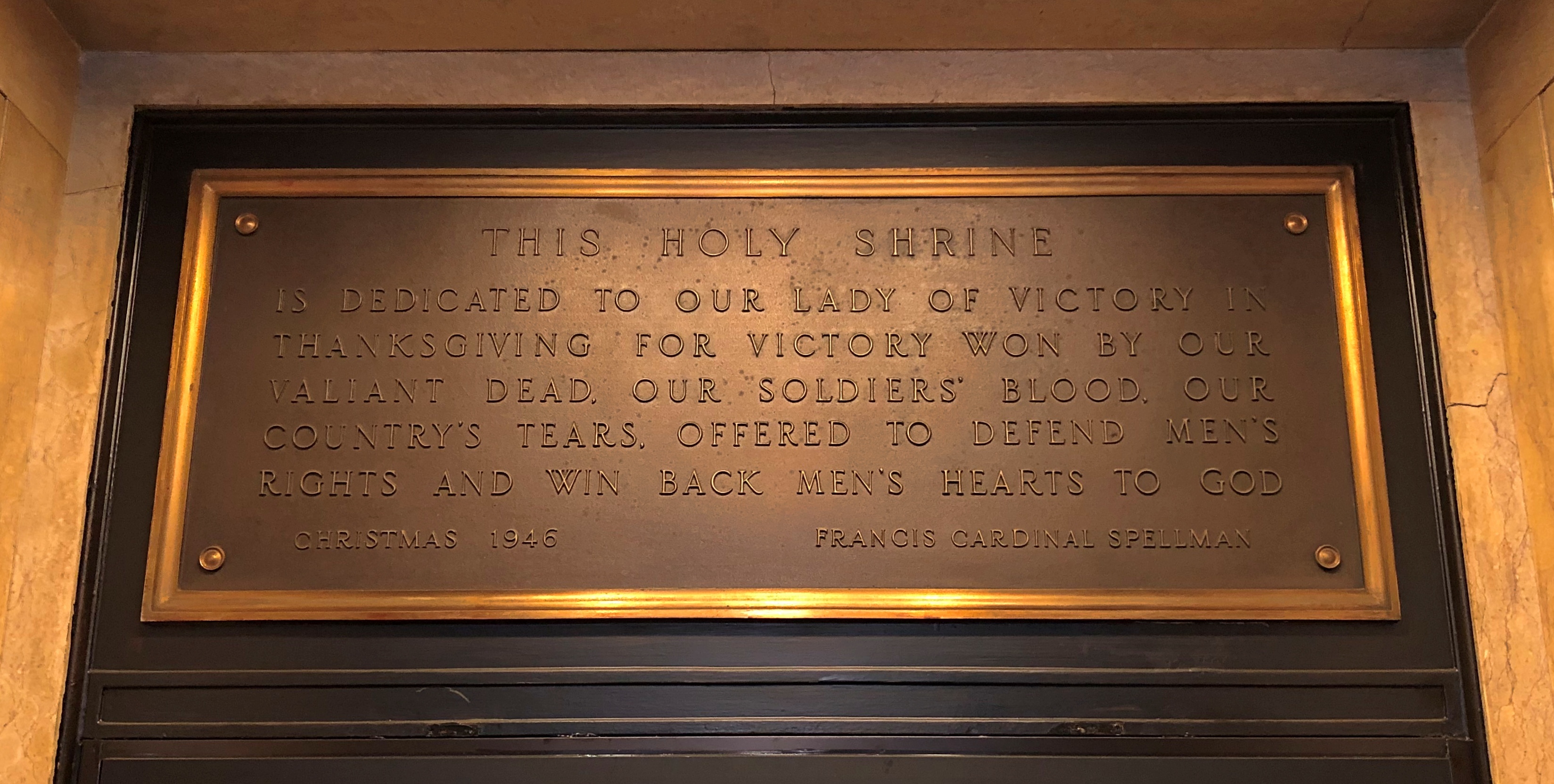
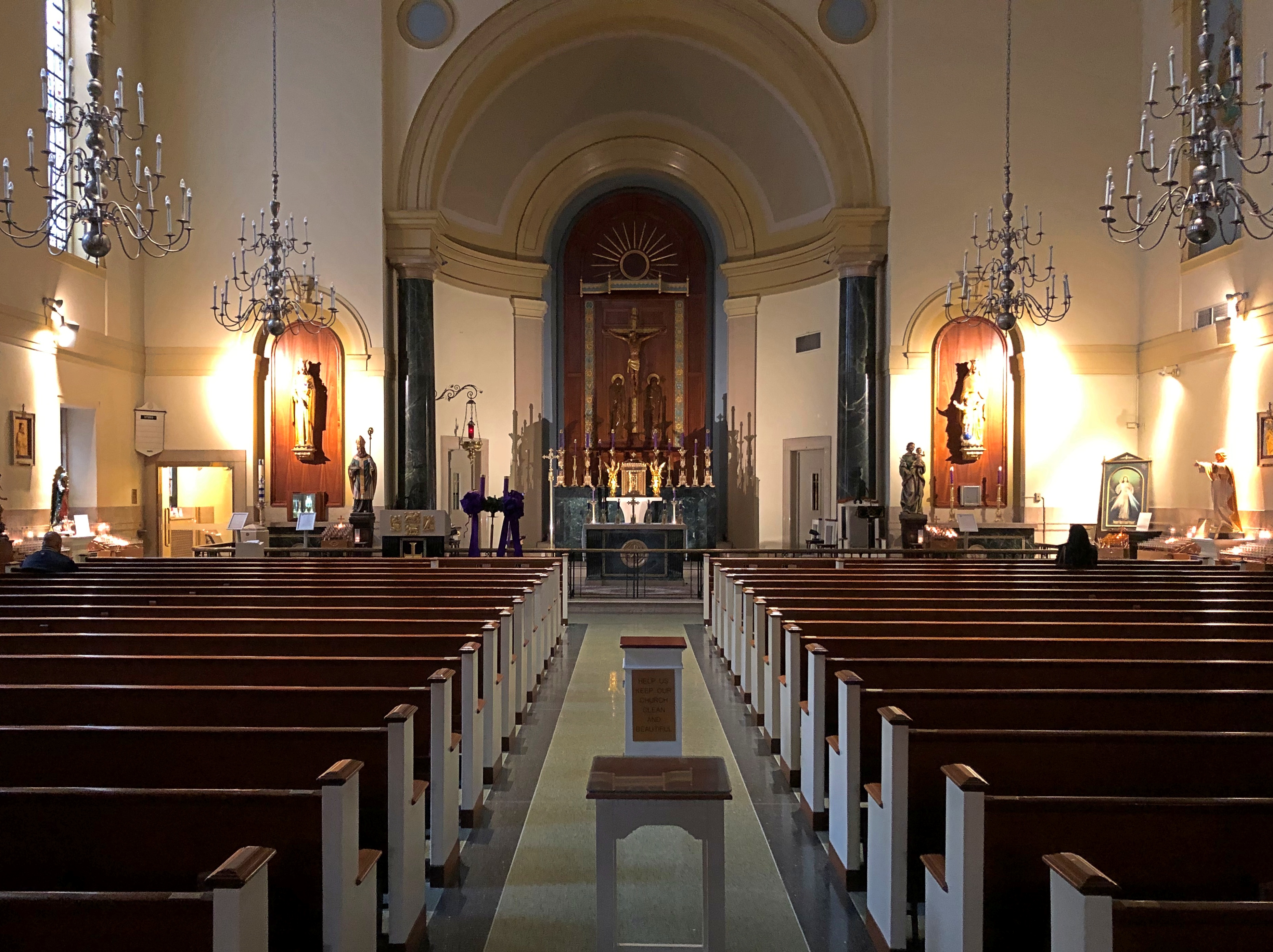
At William and Pine streets, one of two churches I was able to visit this time in NYC, Our Lady of Victory. I popped in for a few minutes to enjoy the sacred-space quiet.Our Lady of Victory, William Street 2021 Our Lady of Victory, William Street 2021 Our Lady of Victory, William Street 2021

Further south.William Street 2021

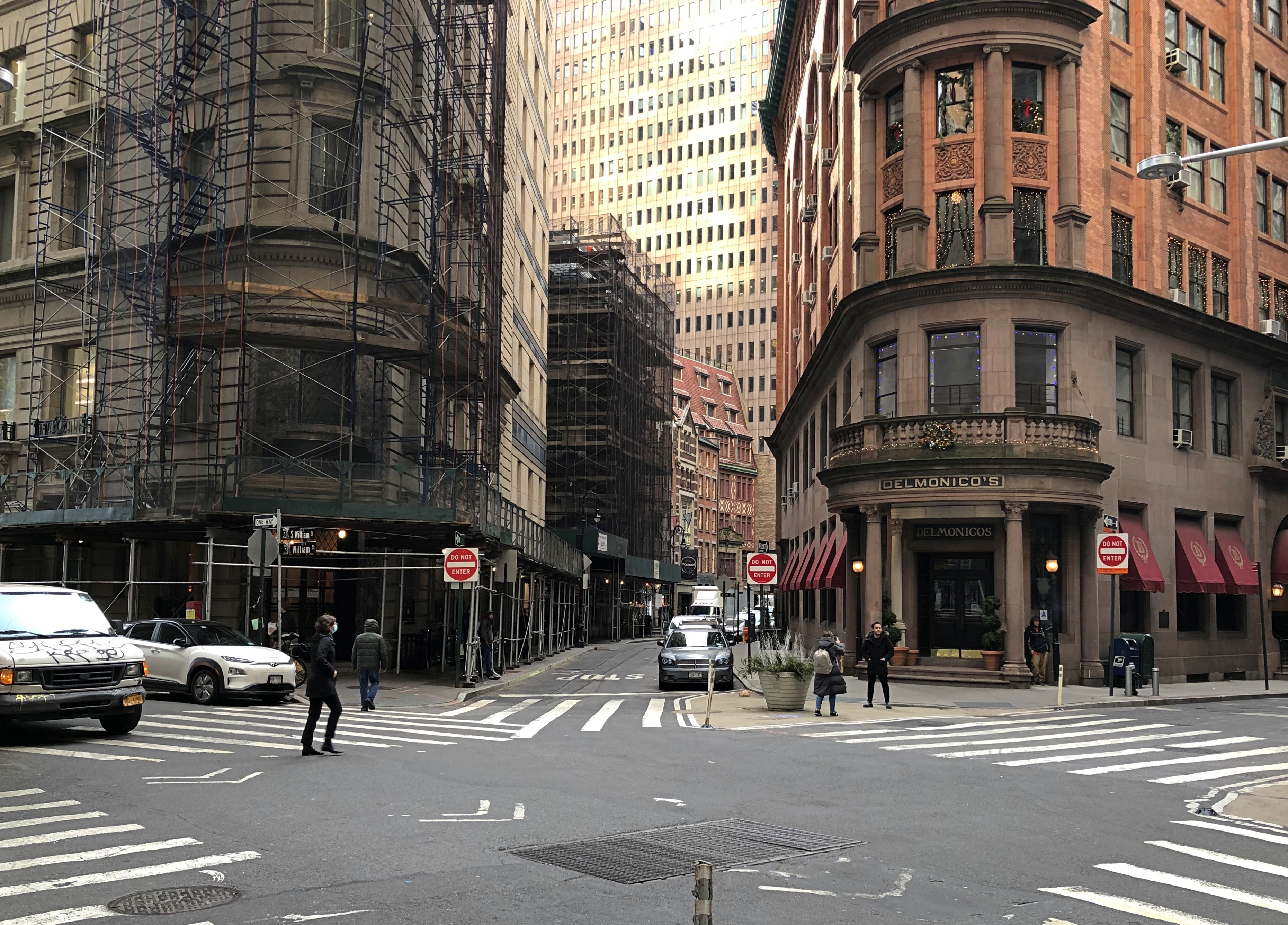
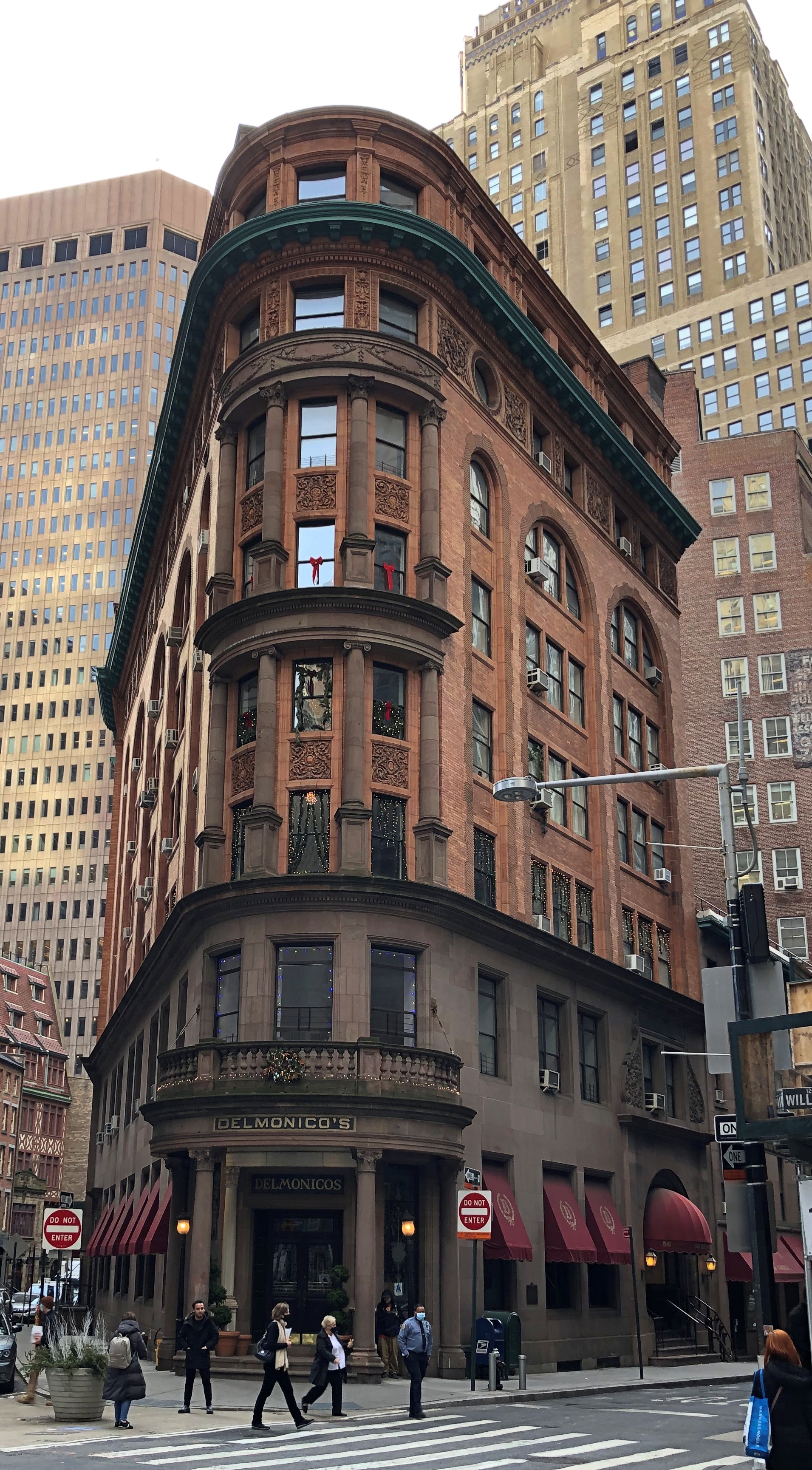
Delmonico’s, by gar.Delmonico's 2021

Or at least its 21st-century iteration, though in a fine old building. I understand there have been a few Delmonico’s down the centuries, since like the Dread Pirate Roberts, the name is the thing. I’m pretty sure the first time I ever heard of the place was years ago in this Charles Addams cartoon, when I didn’t really understand the joke.

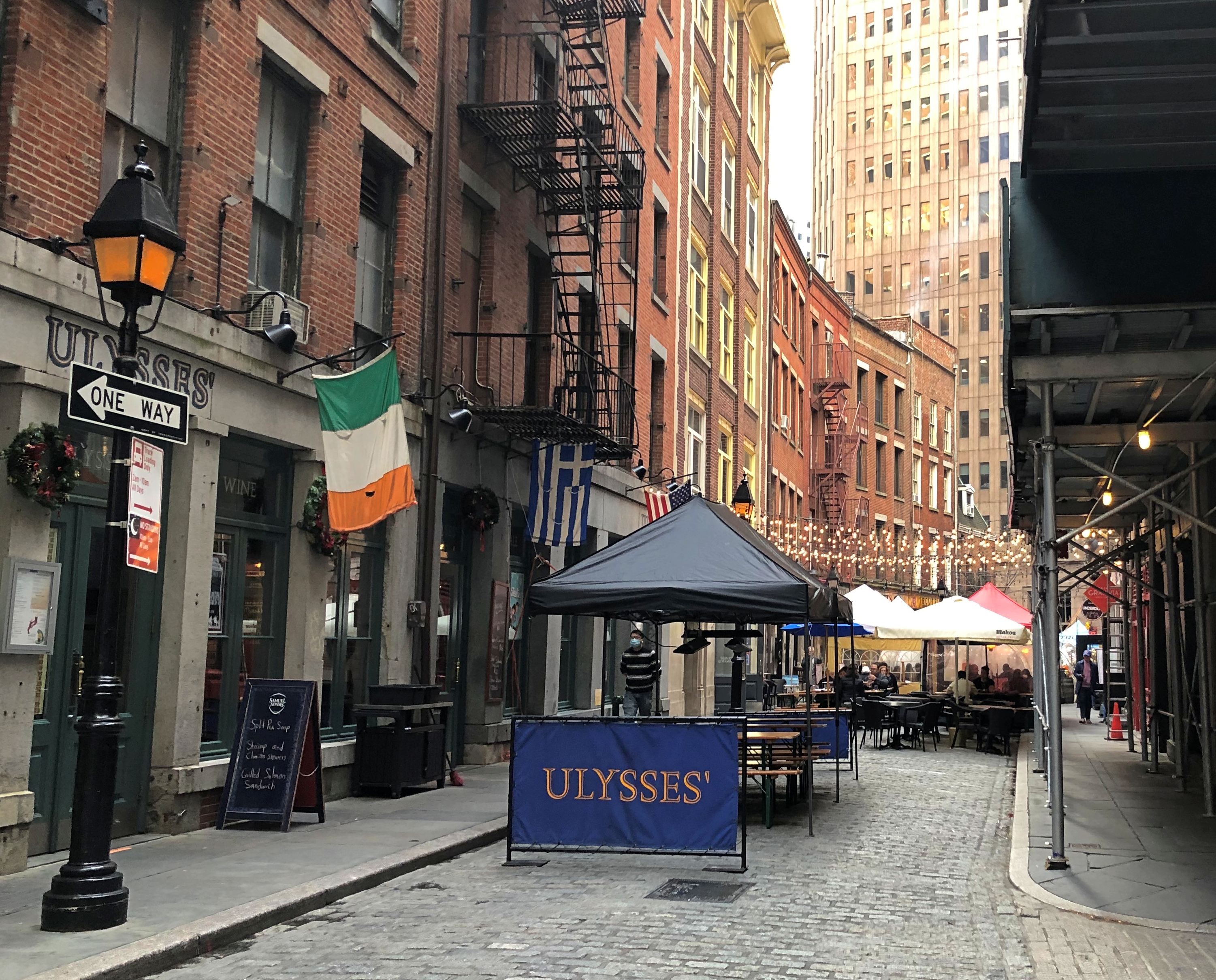
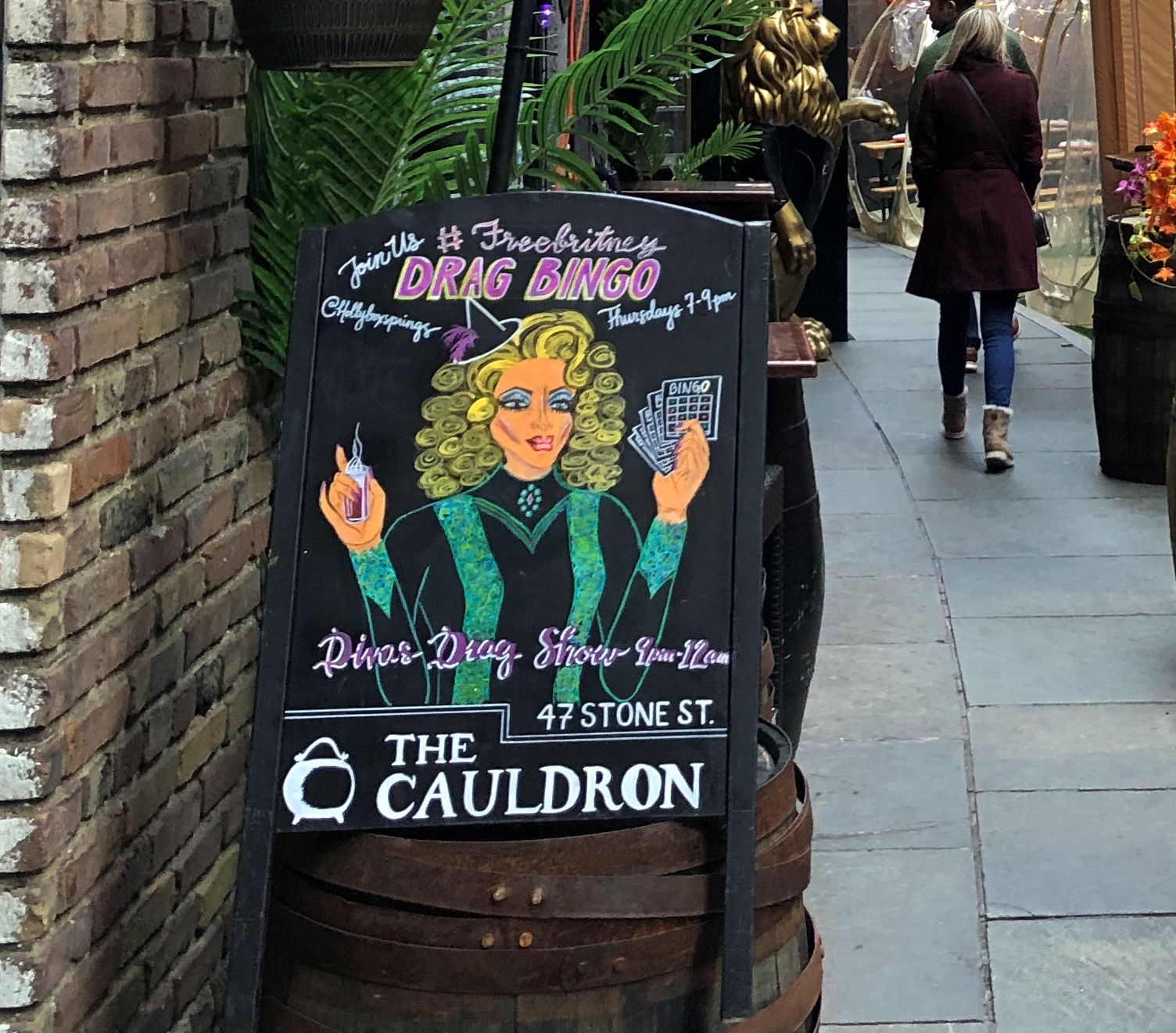
I ducked over to Stone Street at this point.Stone Street 2021

It’s a happenin’ place, on Thursdays anyway.Stone Street 2021

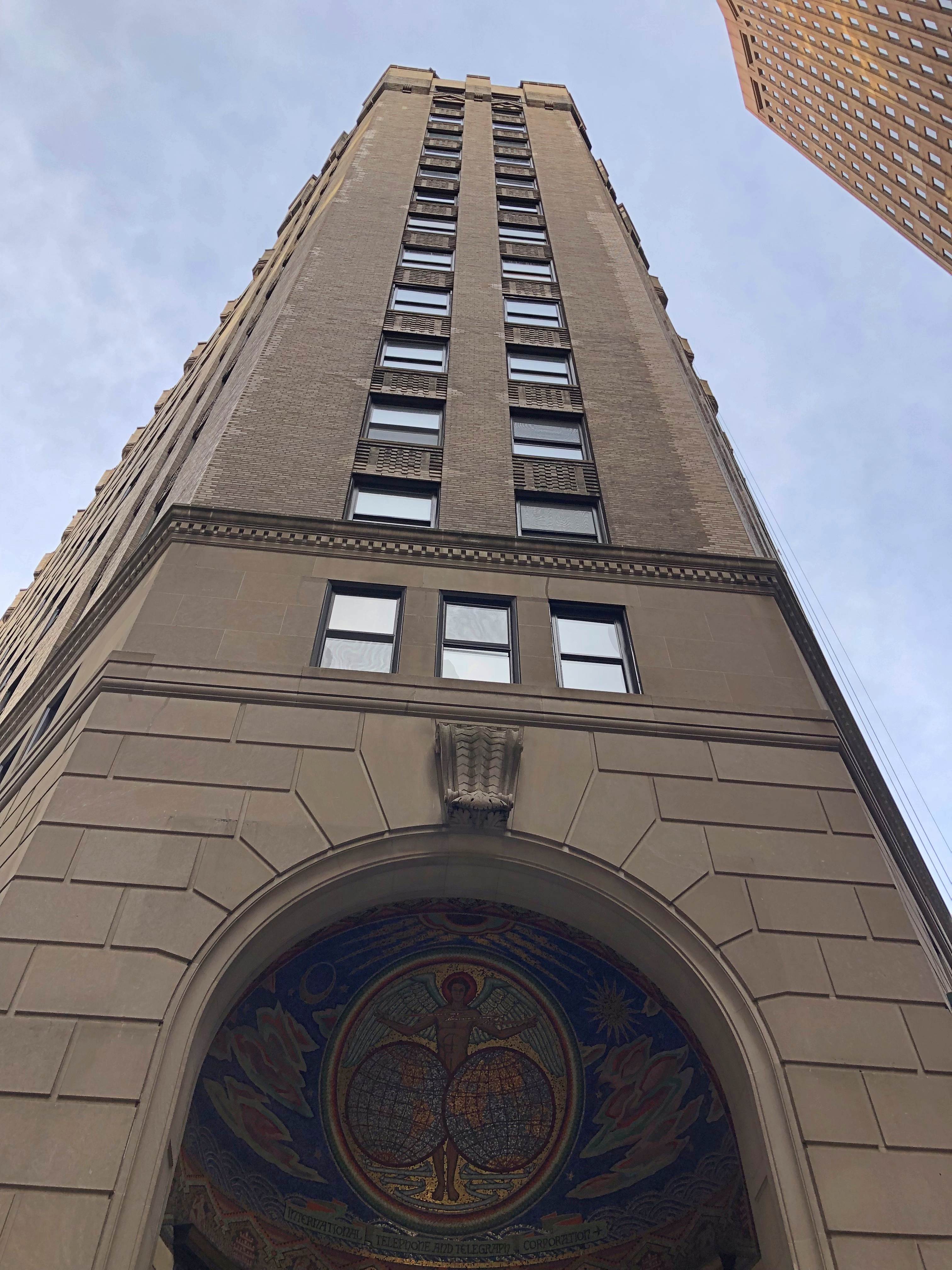
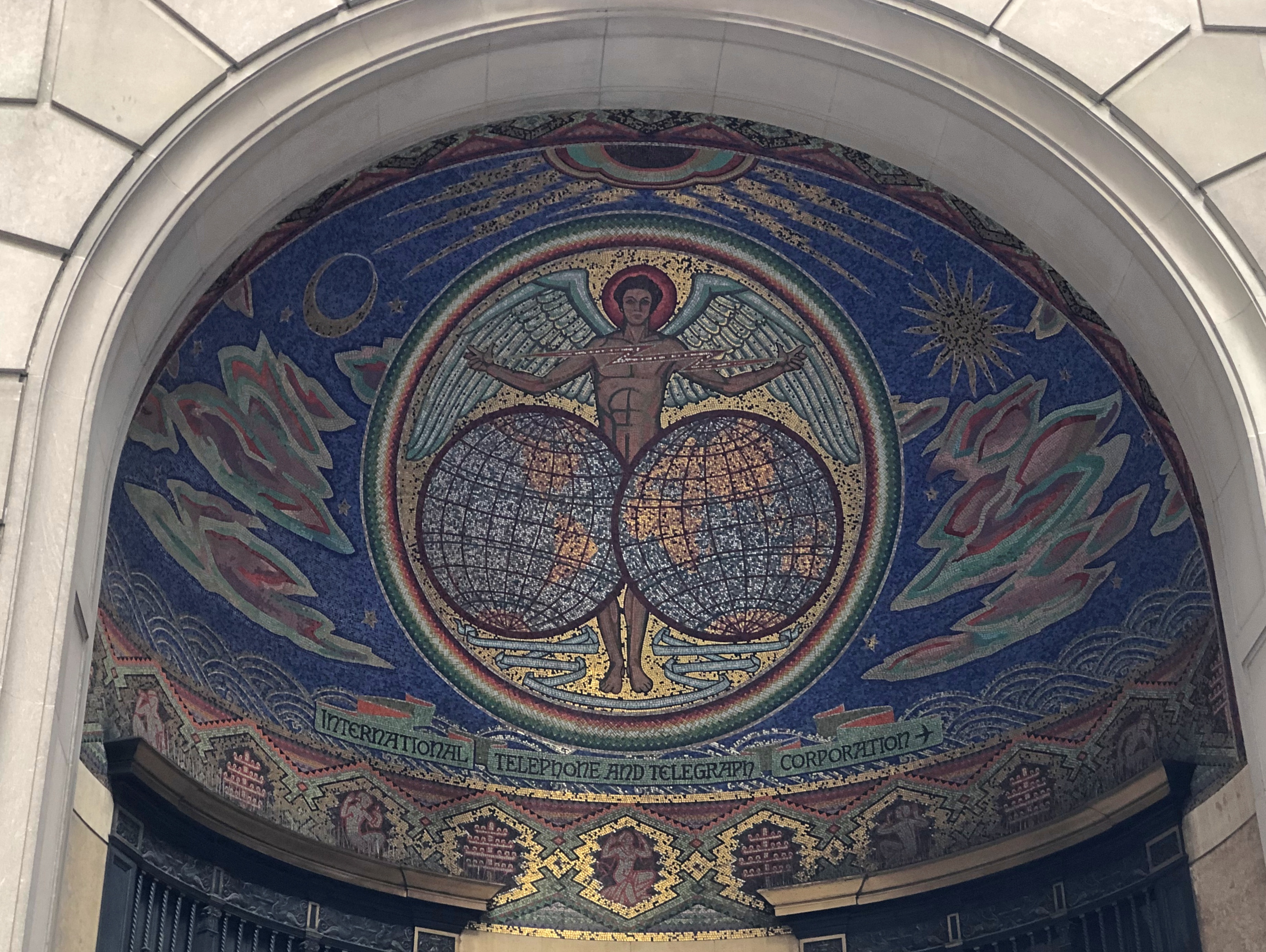
At South William and Broad is the former International Telephone Building, once occupied by IT&T and designed by Buchman & Kahn in 1928.International Telephone Building International Telephone Building

Your voice goes wingedly around the world? Notice that underneath the winged figure, there are people using 1920s-style telephones, along with ’20s-style telephone poles with multiple crossarms.

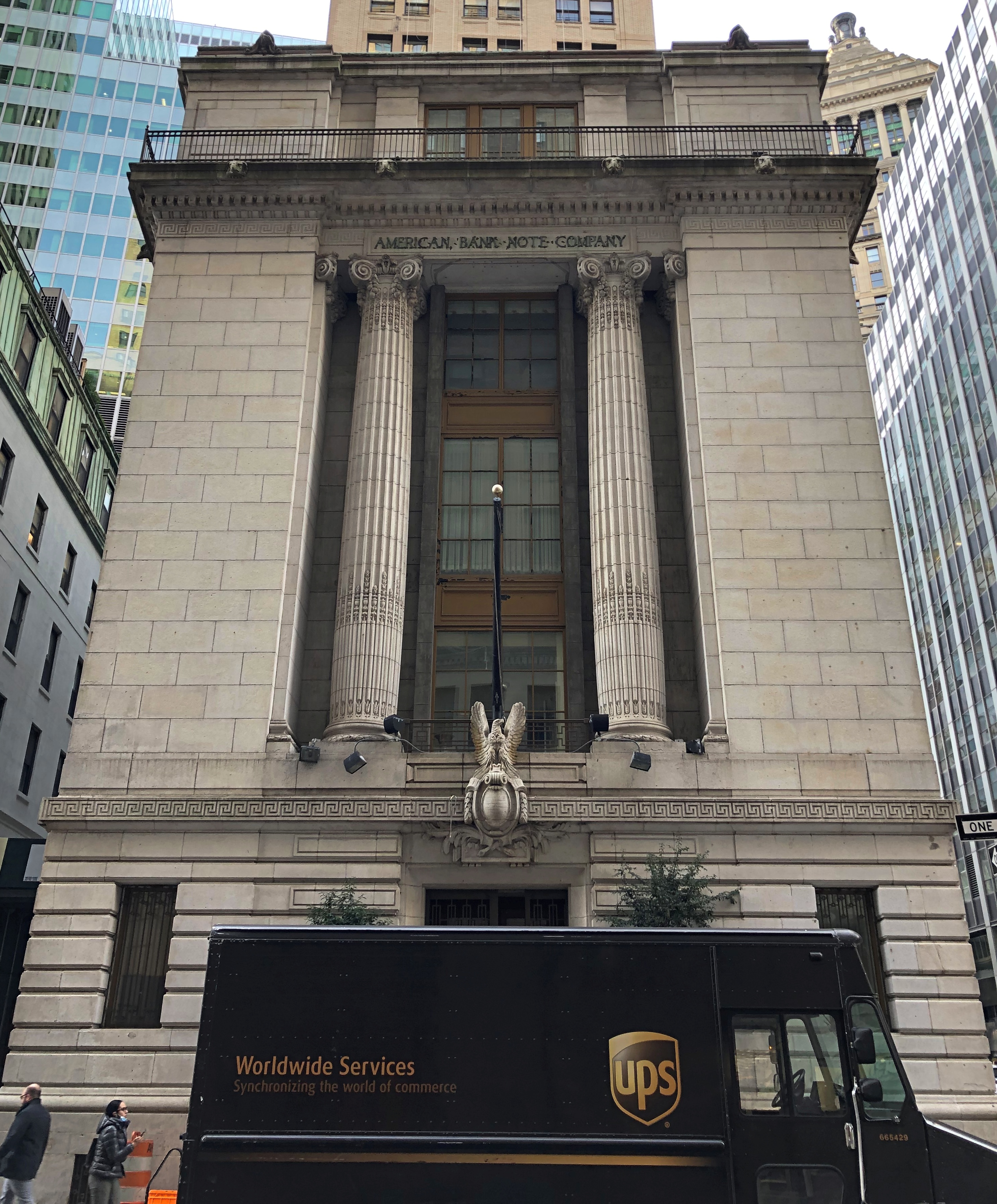
One more place, this one on Broad.National Bank Note Company Building

Designed by Kirby, Petit & Green, the American Bank Note Company building dates from 1908. I’m always delighted to see a physical presence of something I’ve only ever read about.