Ohio Timbits

Finally, a string of warm days here in northern Illinois, as in 80s in the afternoons. The grass is green and some bushes are coloring up, too. Trees are a little more hesitant, but it won’t be long. Of course, come Saturday, weather from up north will end our balmy run.

One thing I was glad to learn during our recent trip east was that Tim Hortons territory in the U.S. extends as far as Columbus, Ohio.

What is it about TH doughnuts that is so good, even in small form? The excellence of the dough, presumably, but that doesn’t really answer the question.

Another ahead-of-the-road-foodies discovery: Tudor’s Biscuit World. From a recipe dating back to the kitchens of Hampton Court Palace in the time of Henry VIII?

Of course not. The 20th-century founders were named Tudor. Though there’s a scattering of Biscuit Worlds in Ohio and Kentucky, and an outlier in Panama City, Florida, it’s largely a West Virginia operation. As we drove south through that state, we kept seeing them along the way. That inspired me, the next morning, to visit one and buy breakfast sandwiches for us.

Its sandwiches are much like McDonald’s breakfasts, the best thing that fast-food giant makes, except more variety, and Biscuit World’s various sandwiches were larger. Pretty much the same high quality. I can see why they can compete with McD’s.

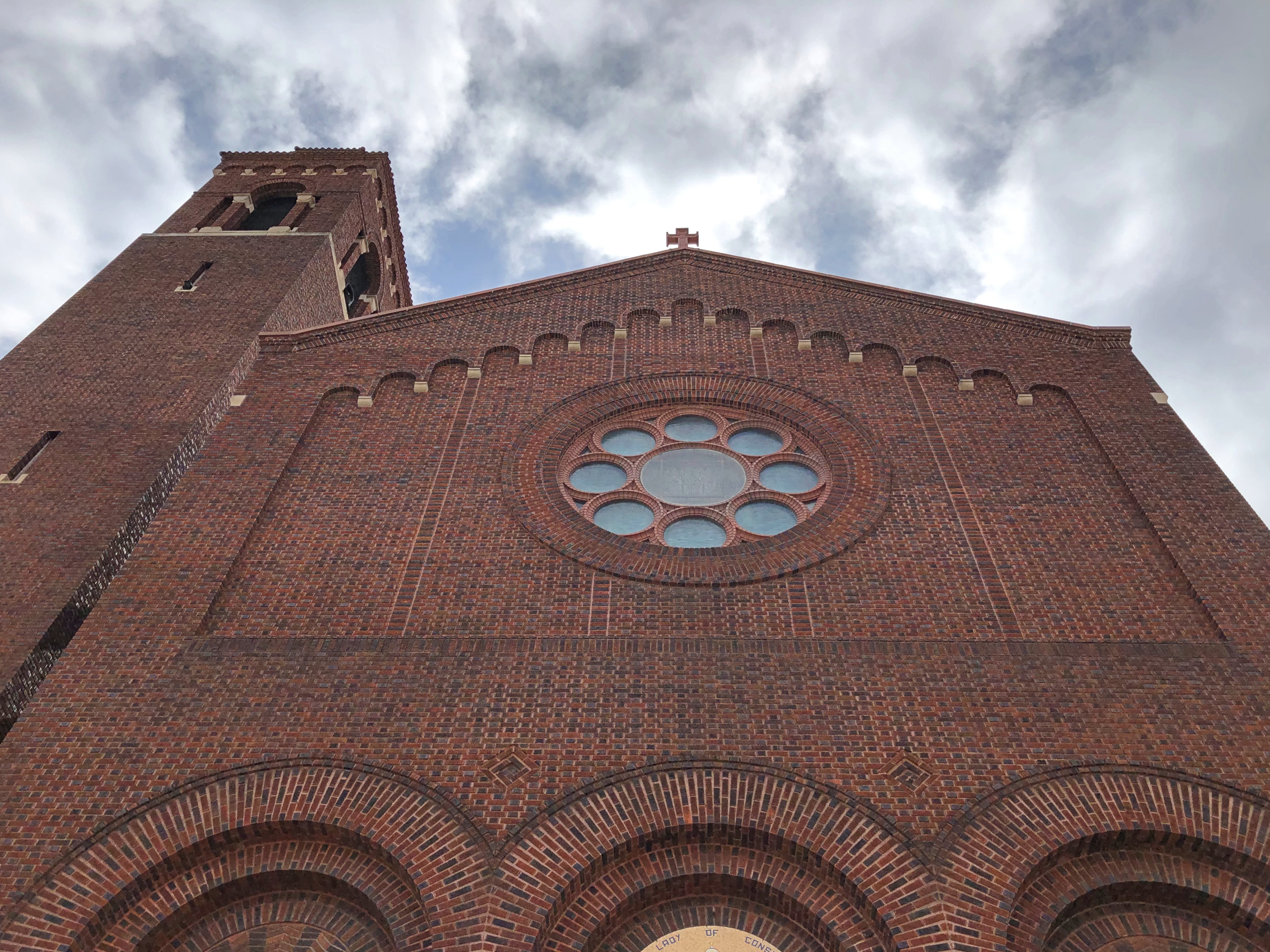
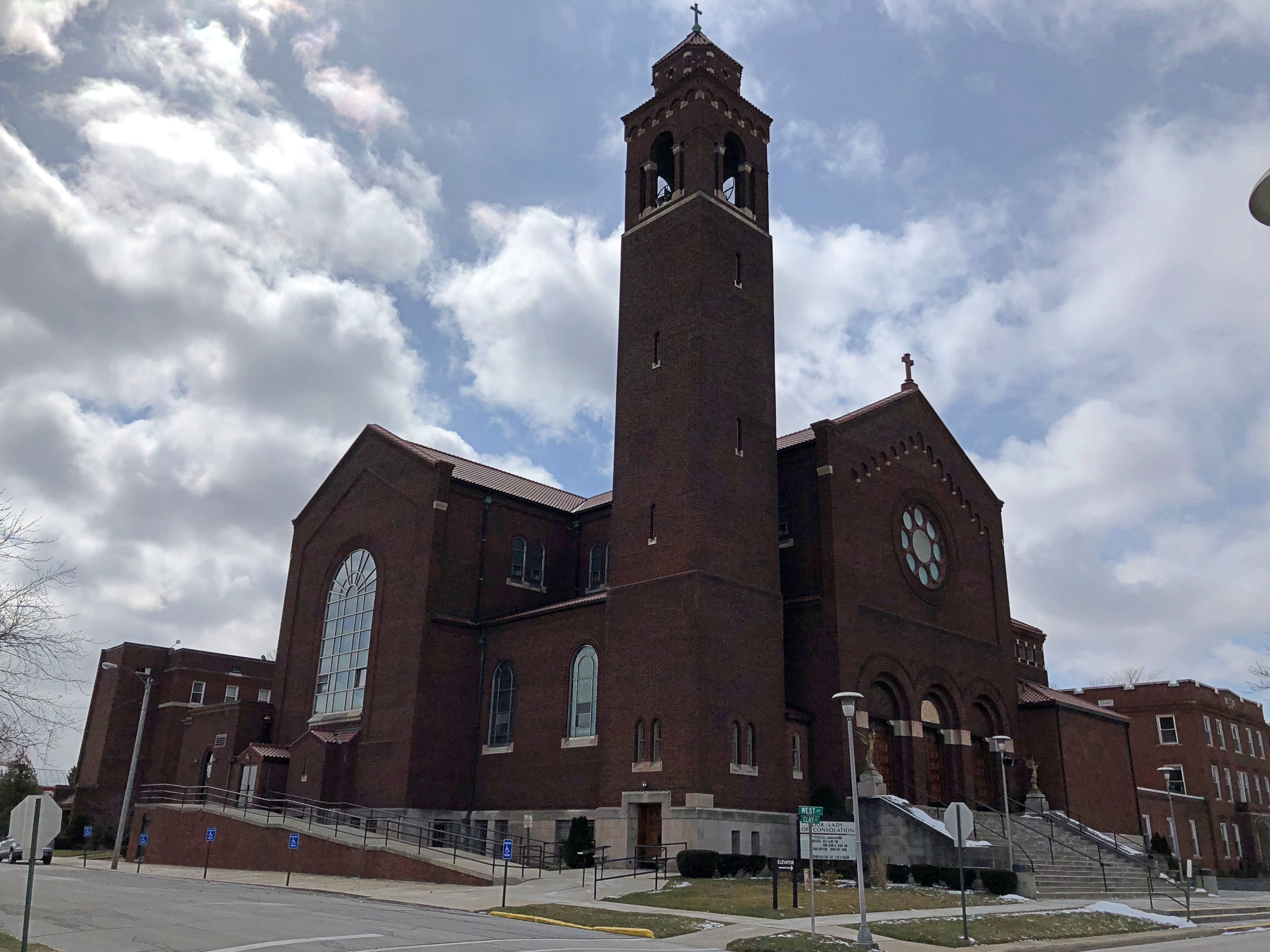
The Basilica and National Shrine of Our Lady of Consolation rises over the small-town streets of Carey, Ohio (pop. 3,500). I spotted it as a point of interest on one of my road atlases.Basilica and National Shrine of Our Lady of Consolation Basilica and National Shrine of Our Lady of Consolation
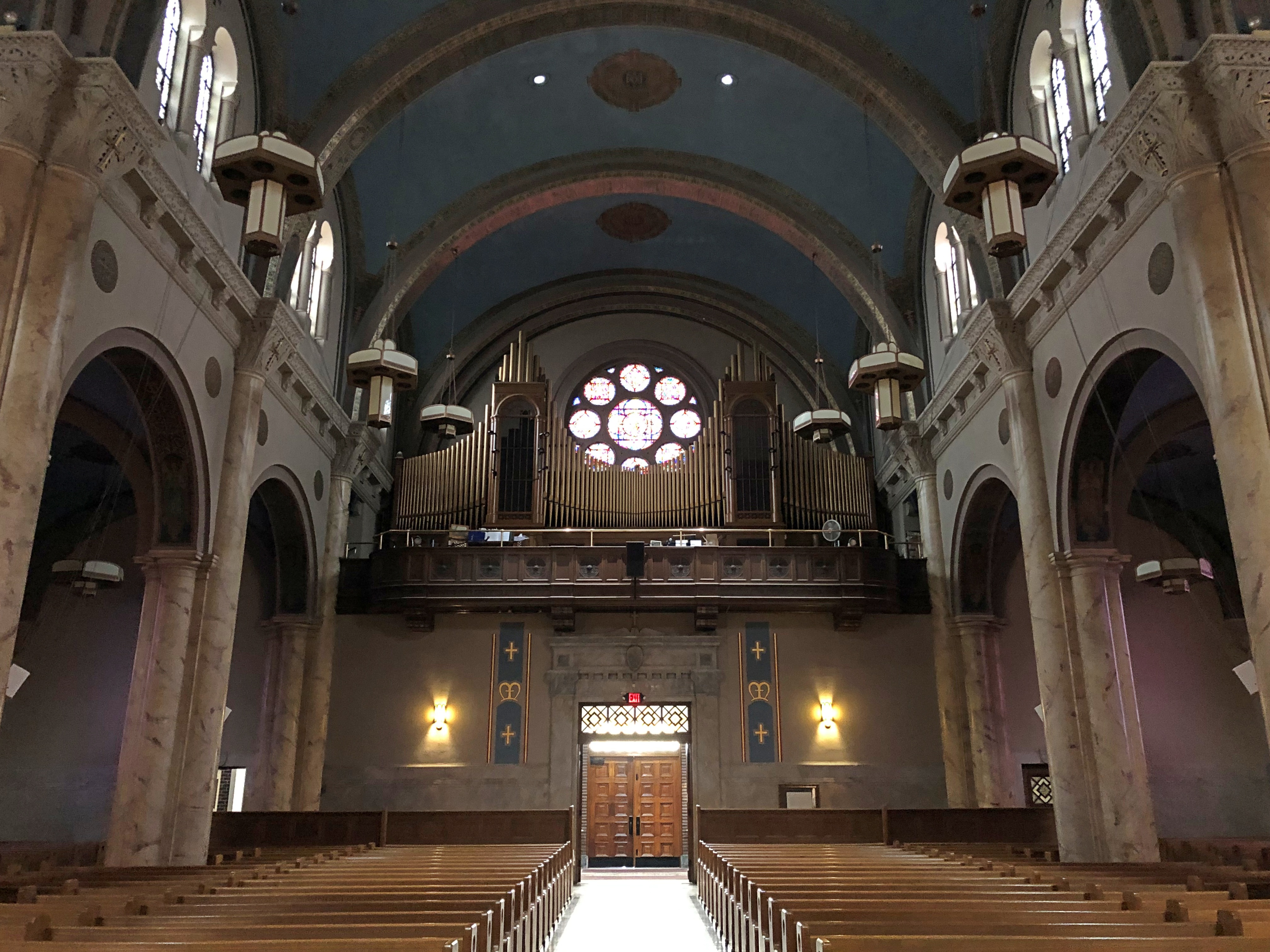
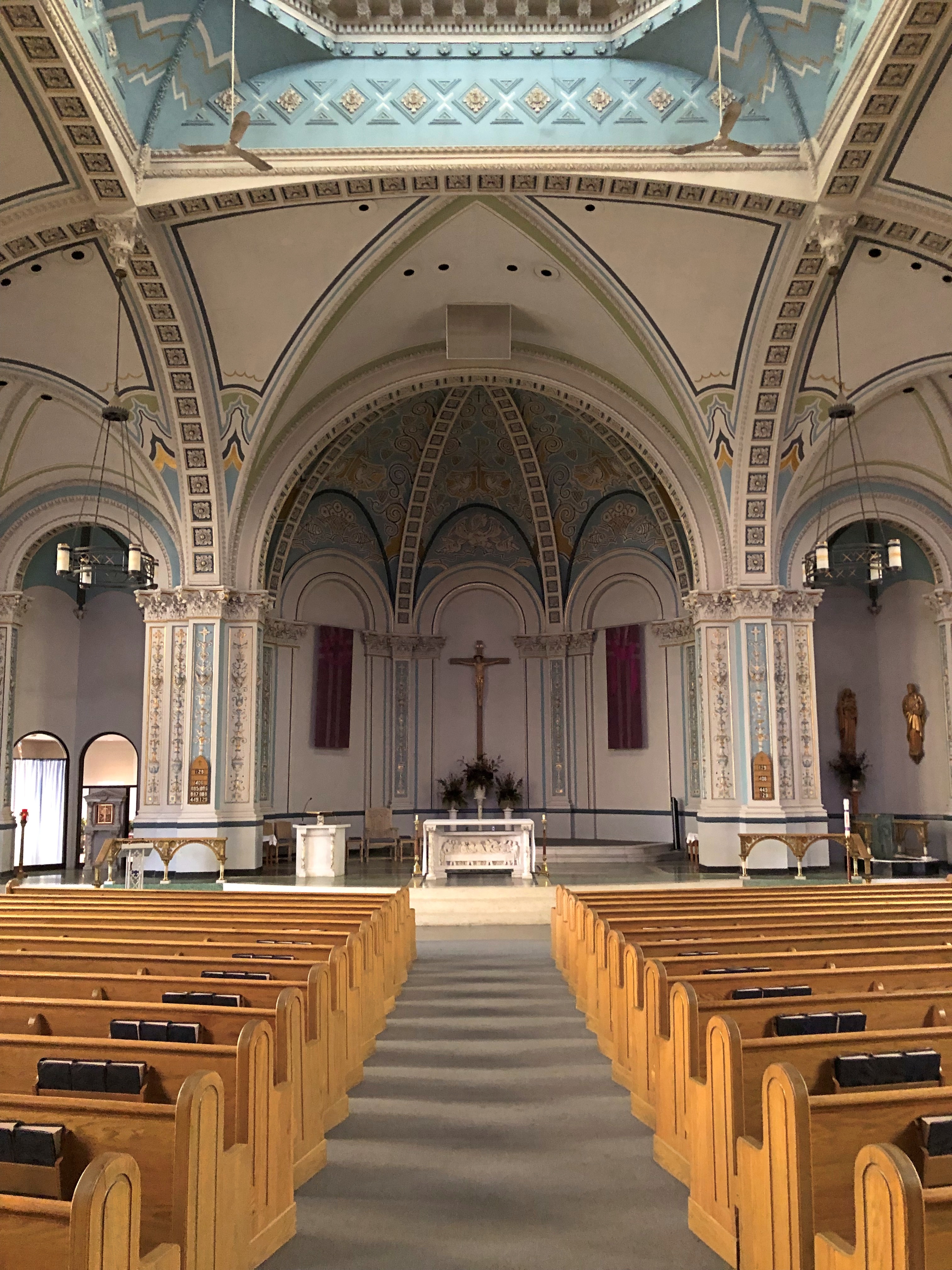
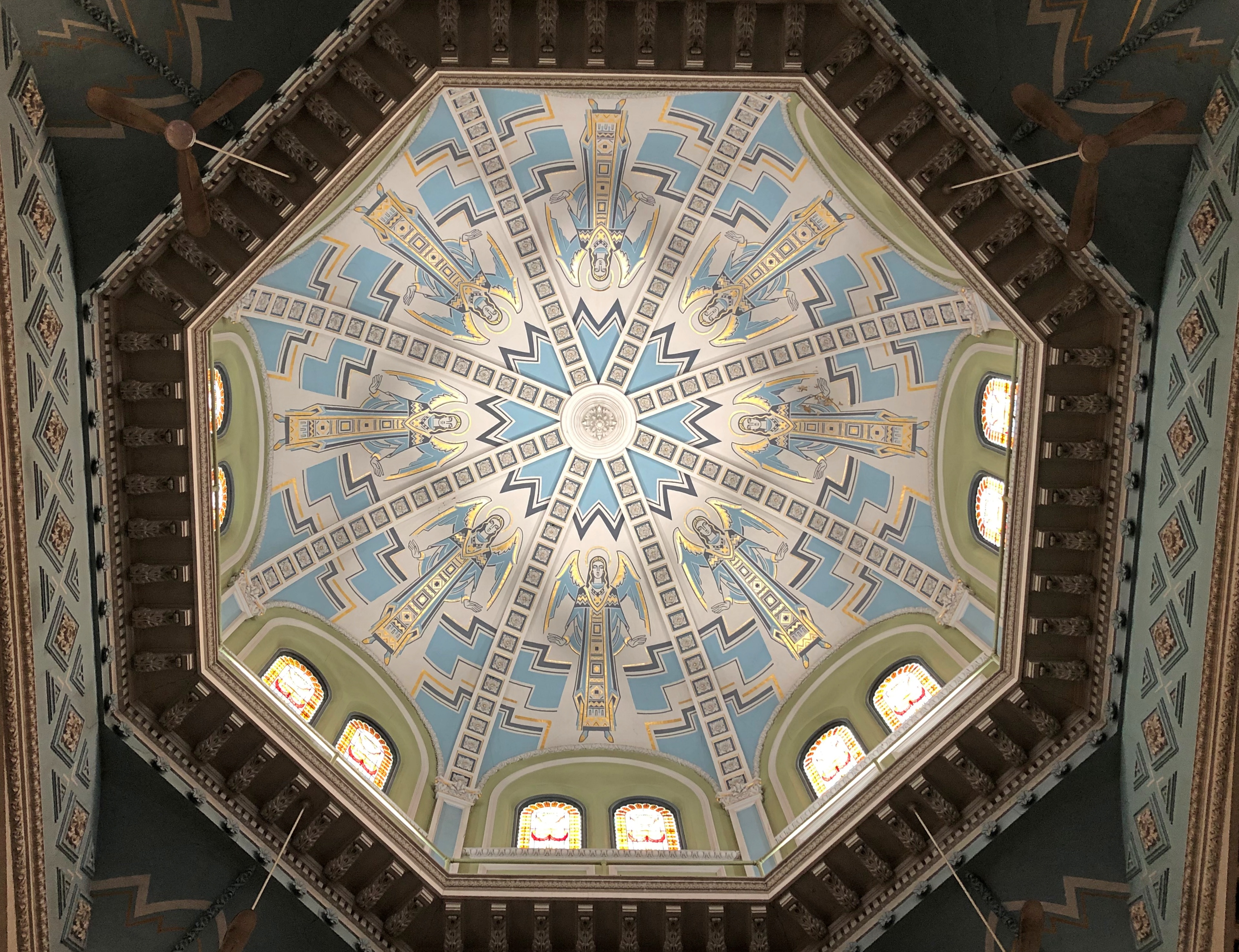
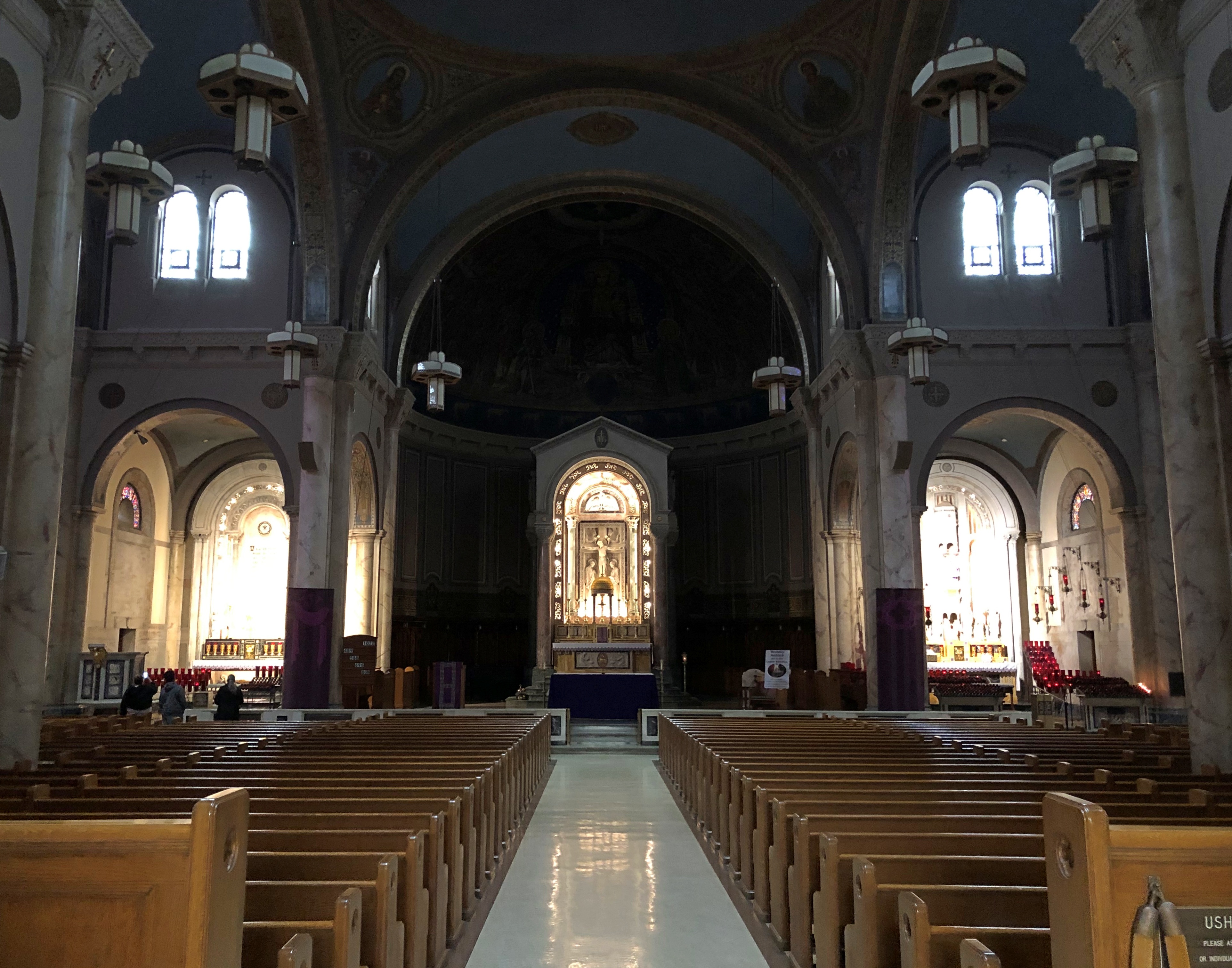
I’ve read that a lot of people show up for Assumption Day, but in mid-March, only a few other people were in the basilica.Basilica and National Shrine of Our Lady of Consolation Basilica and National Shrine of Our Lady of Consolation
The next day, we saw St. Nicholas Catholic Church in Zanesville, Ohio, a handsome church that needs a grander setting, one not hemmed in by busy streets.St Nicholas, Zanesville St Nicholas, Zanesville St Nicholas, Zanesville

Zanesville is known for its Y Bridge, and I have to say driving over the thing was less interesting than driving down any of the other streets in Zanesville. As Wiki states: “It has received criticism for a tunnel-like effect due to its solid railings, providing hardly any view of the scenery.”

I agree. I know public budgets are tight in a place like Zanesville, median household income, $26,642. Still, there has to be a way that’s not too expensive to make experiencing the bridge genuinely distinctive, like the Tridge in Midland, Mich., except with vehicular traffic.

(Chin up, Zanesville. The Midwest is going to rise again, with its cooler temps and access to water. You or I might not live to see it, but still.)

West of Zanesville – where you can find the National Road & Zane Grey Museum – you can also stand in front of this pleasant house in New Concord, Ohio.Glenn Museum
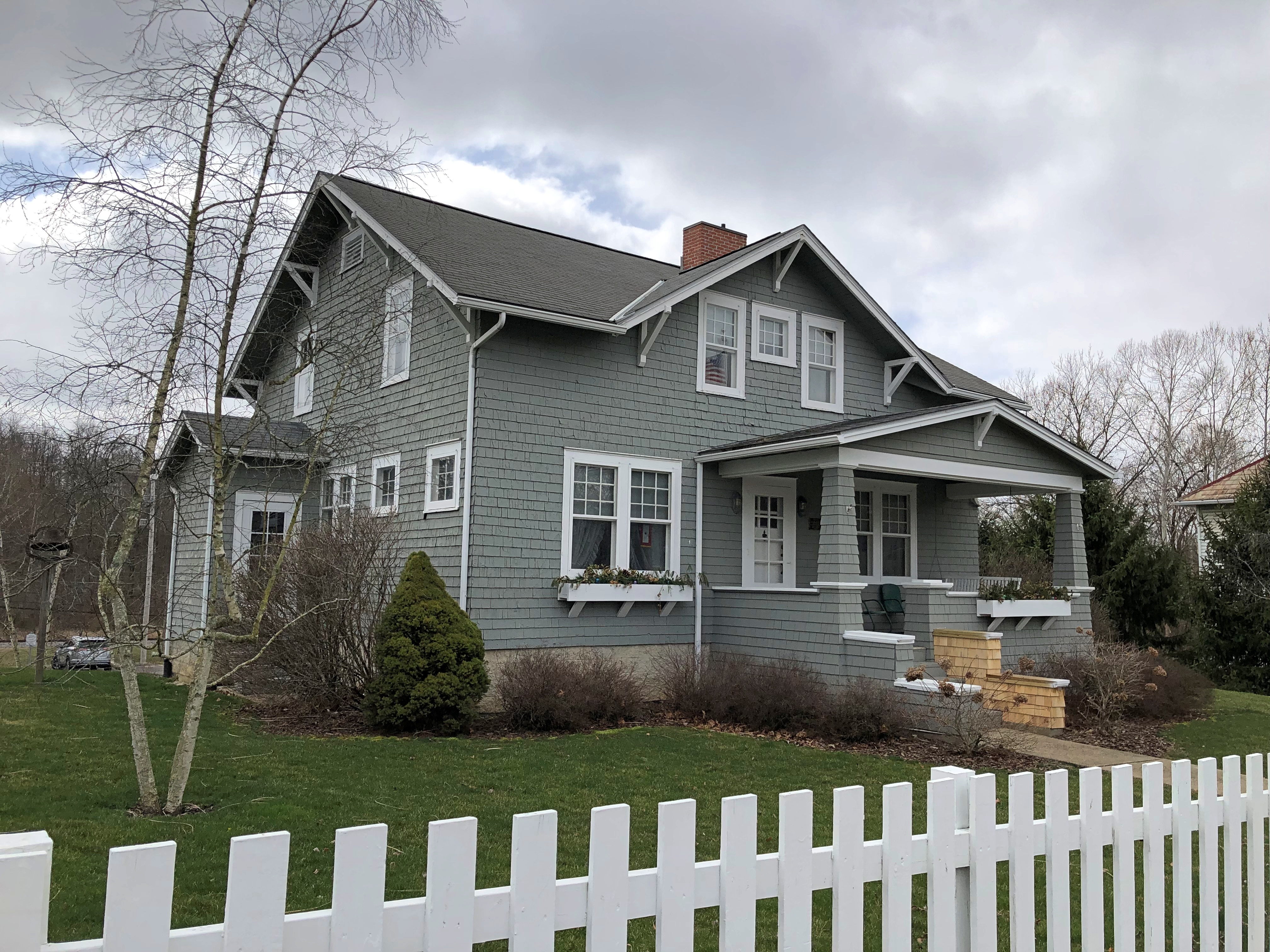
Behind the white picket fence, the John and Annie Glenn Museum.

Then.Glenn Museum
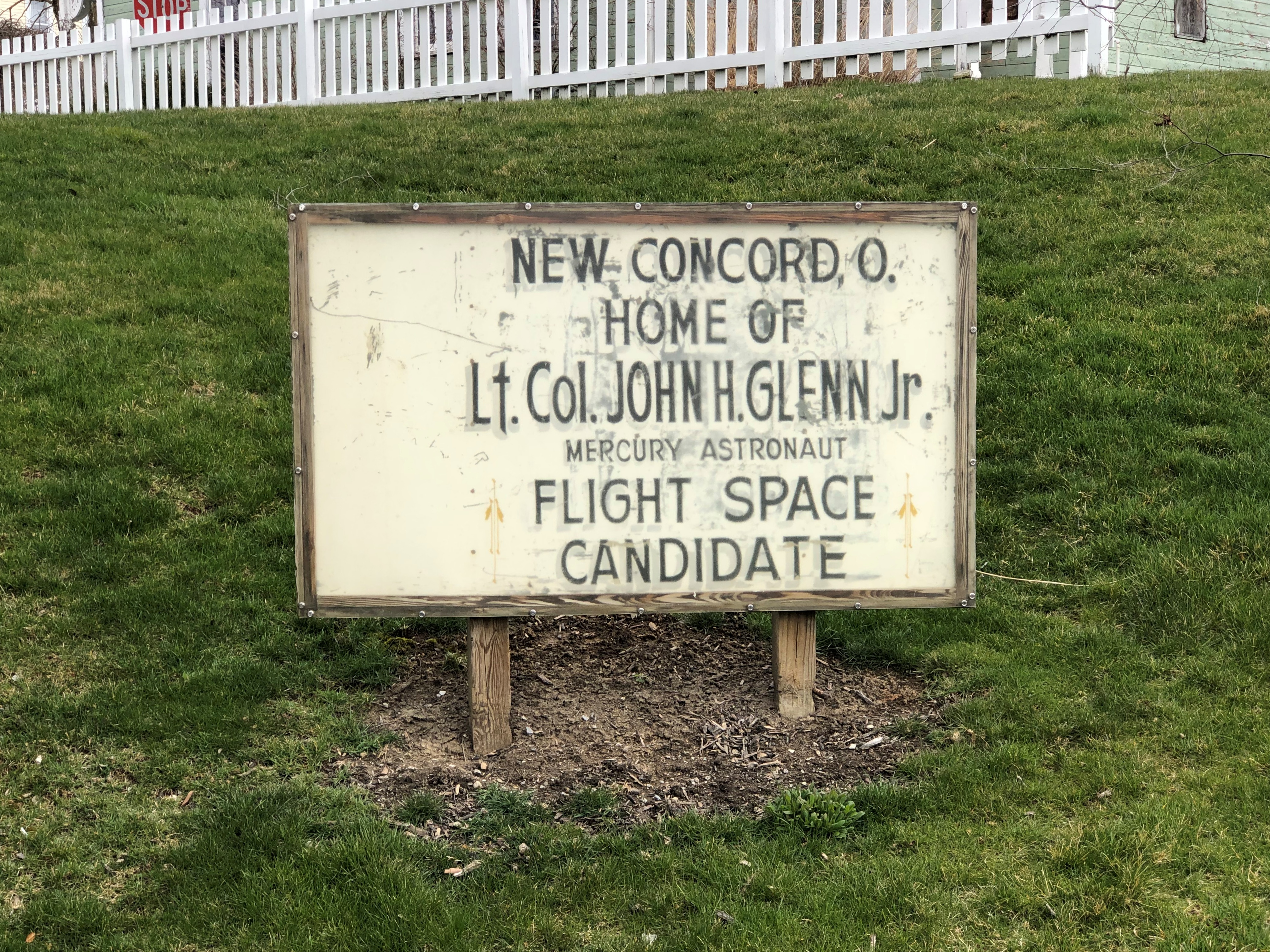
Now.Glenn Museum

Leaving that early sign outside is a nice touch. Not every artifact needs to be behind glass.

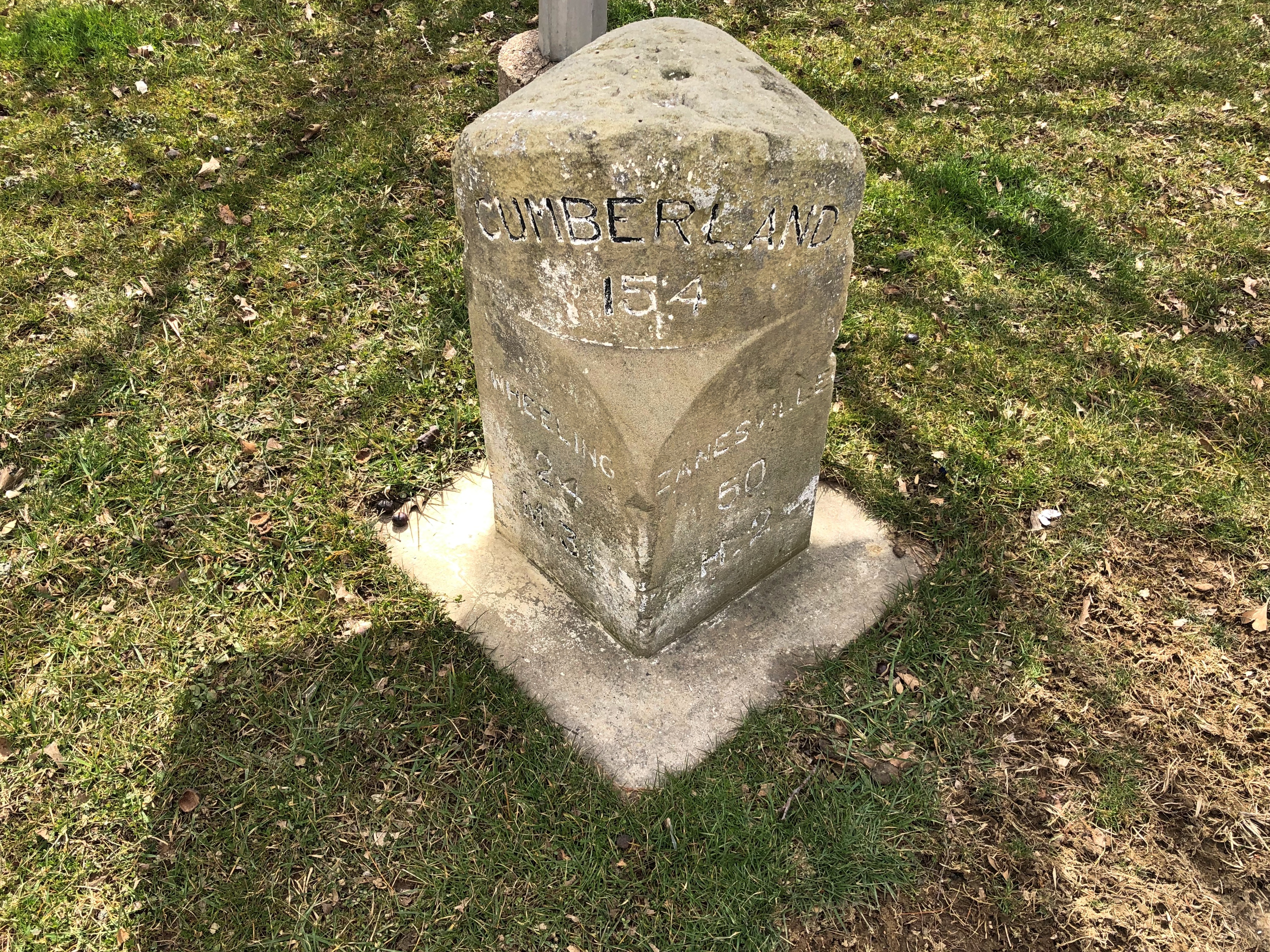
Both the Glenns and Zane Grey were closed for the season. I didn’t need a museum to tell me that we were partly following the route of the National Road as we drove on U.S. 40 in Ohio and more so in Pennsylvania.

Route 66 has had better publicity, but the National Road – the original stab at an interstate – now that’s a traveler’s road, a route to seek glimpses of a past remote and tough. Well, from the vantage of today’s macadamized roads.

A mile marker on U.S. 40 in Ohio, but only 25 miles from Wheeling, West Virginia – as the marker tells us, and the fact that Zanesville is 50 miles west.National Road
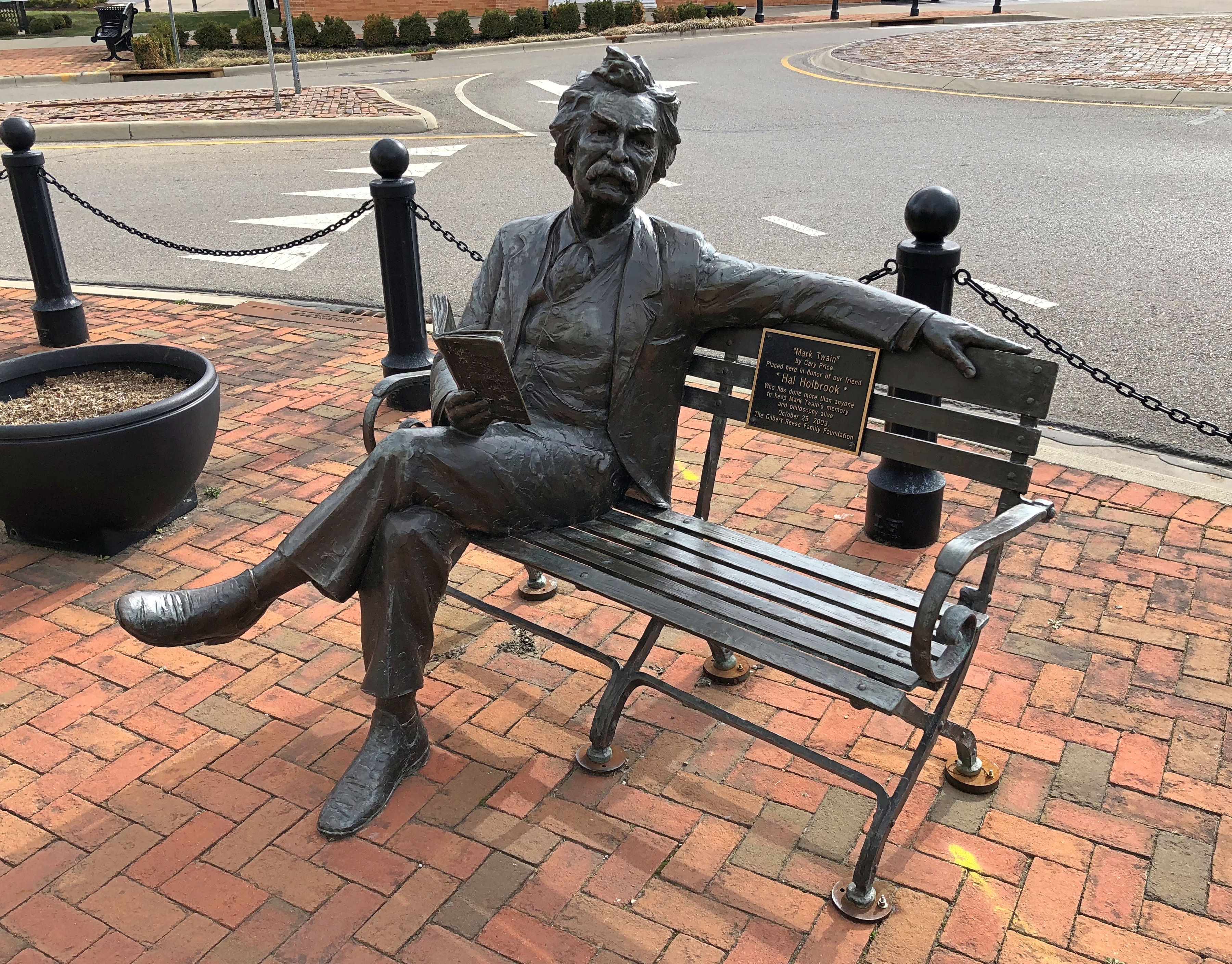
At the courthouse square in Newark, Ohio, bronze Mark Twain can be found looking Mark-Twainy except – no cigar. Come now, he even smoked cigars when he made an appearance on Star Trek: The Next Generation. Or maybe this is the reformed Mark Twain, who promised to give up cigars after the 1910 arrival of Haley’s Comet. No, that’s not it. I made that last part up. But he did in fact give up cigars that year.Columbus, Ohio
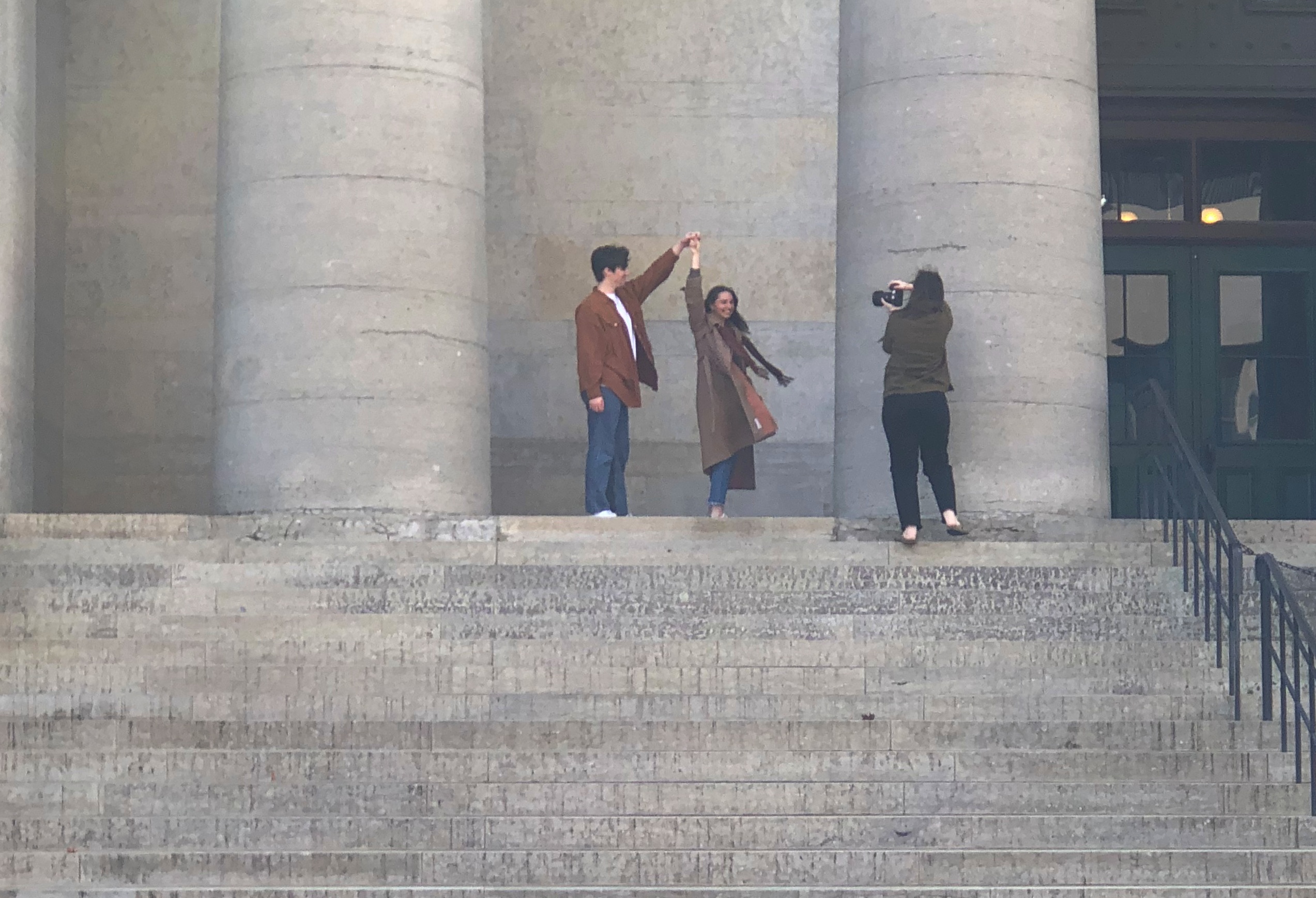
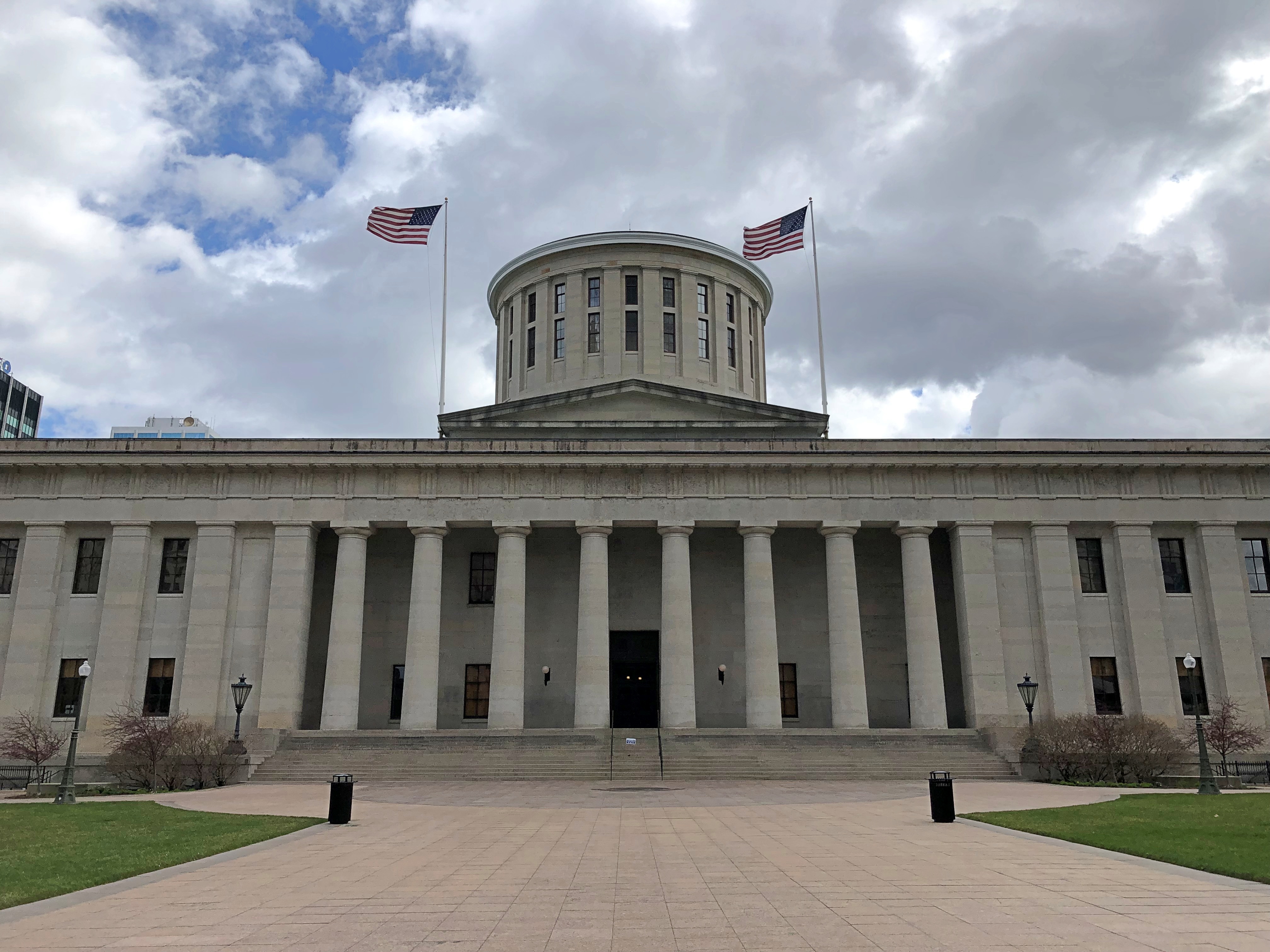
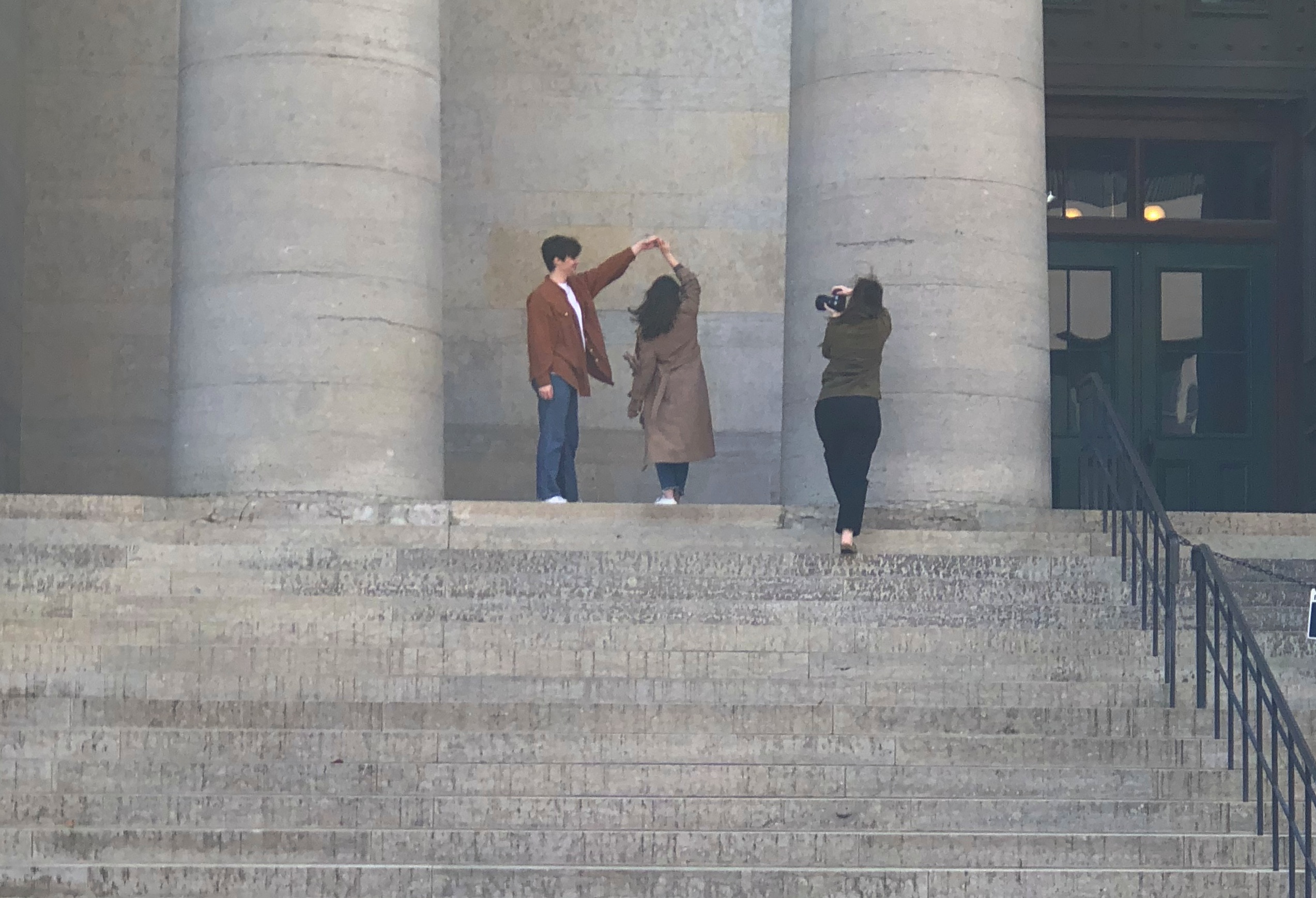
Outside the Ohio Statehouse, a couple danced and was photographed. For reasons, presumably. A spot of romantic whimsy, I hope.Columbus, Ohio Columbus, Ohio
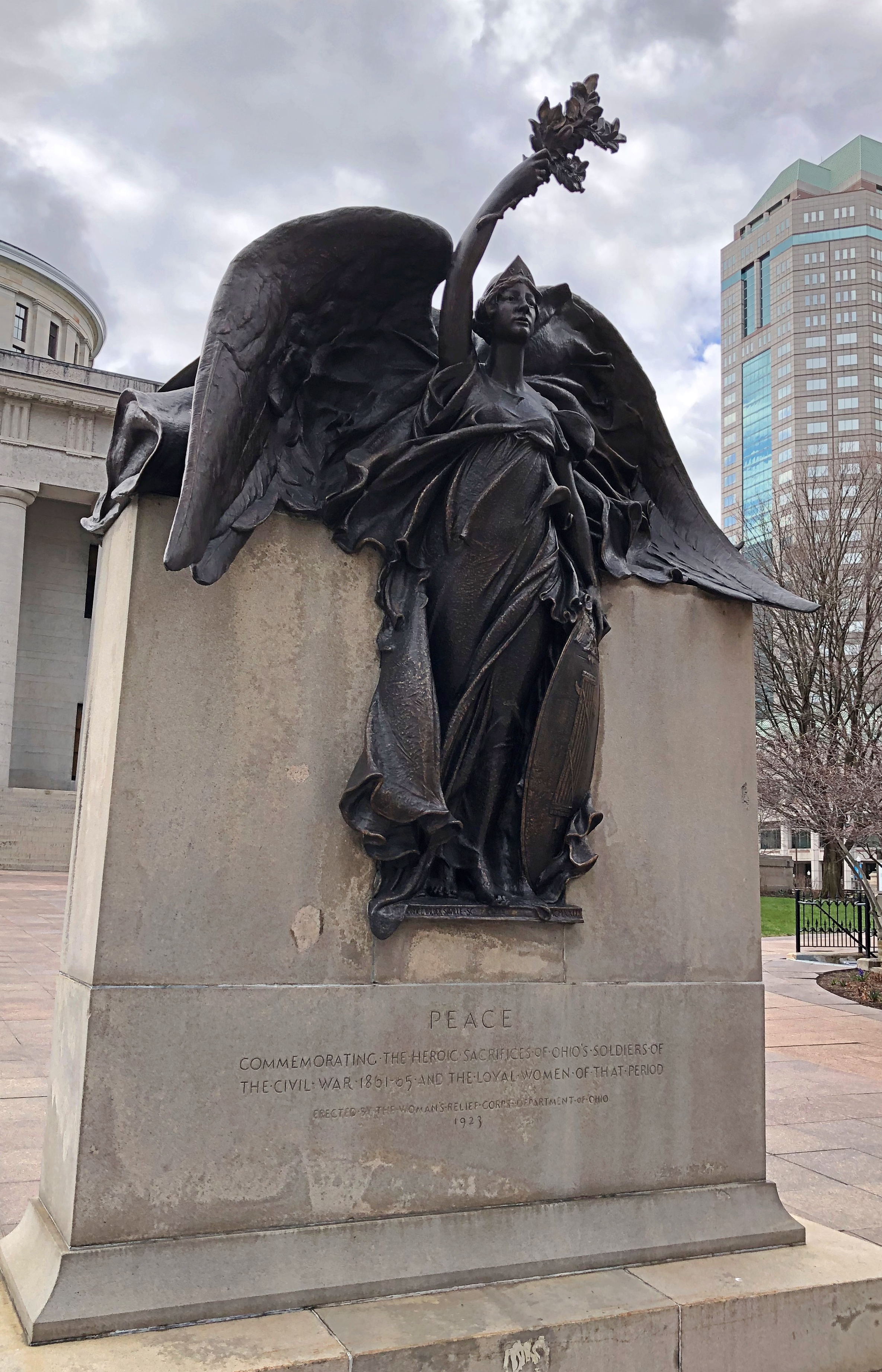
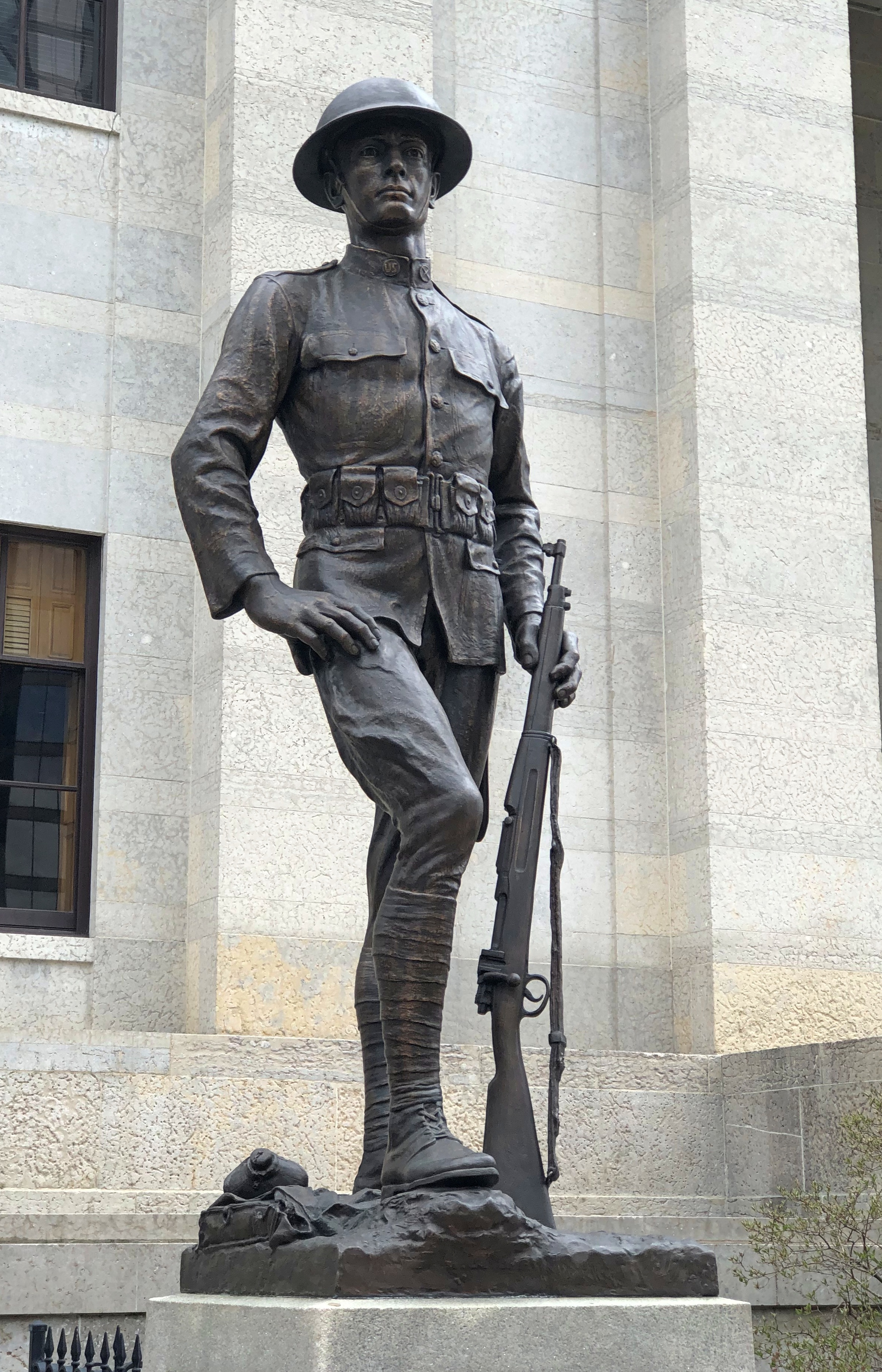
The capitol grounds are well populated with bronzes, including from just after the Great War.Columbus, Ohio Columbus, Ohio
And a little earlier, historically speaking. Quite a bit, actually: Columbus, as in the Admiral of the Ocean Sea, in a 1892 work.Columbus, Ohio
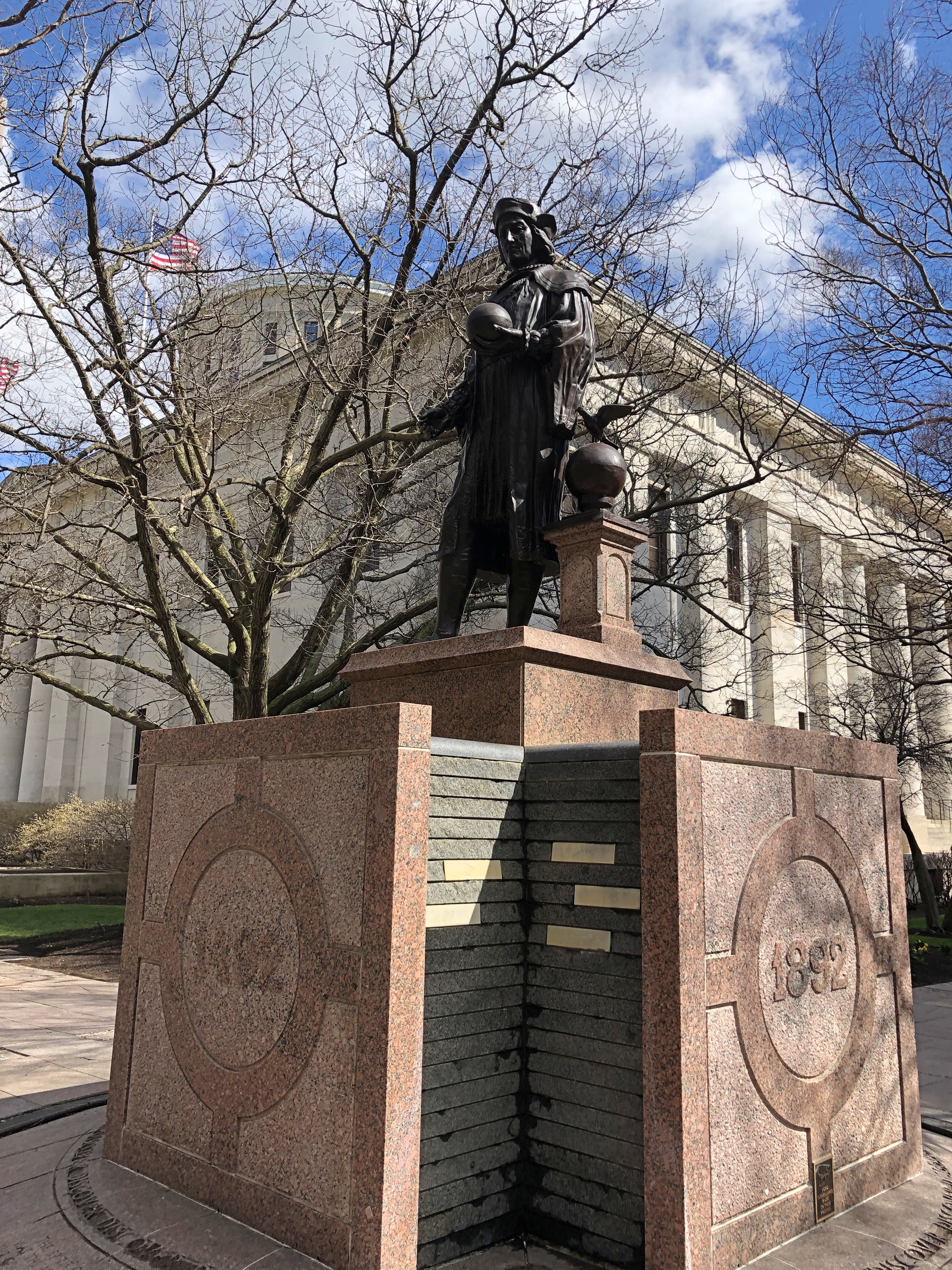
See him, and reflect on the vicissitudes of history.

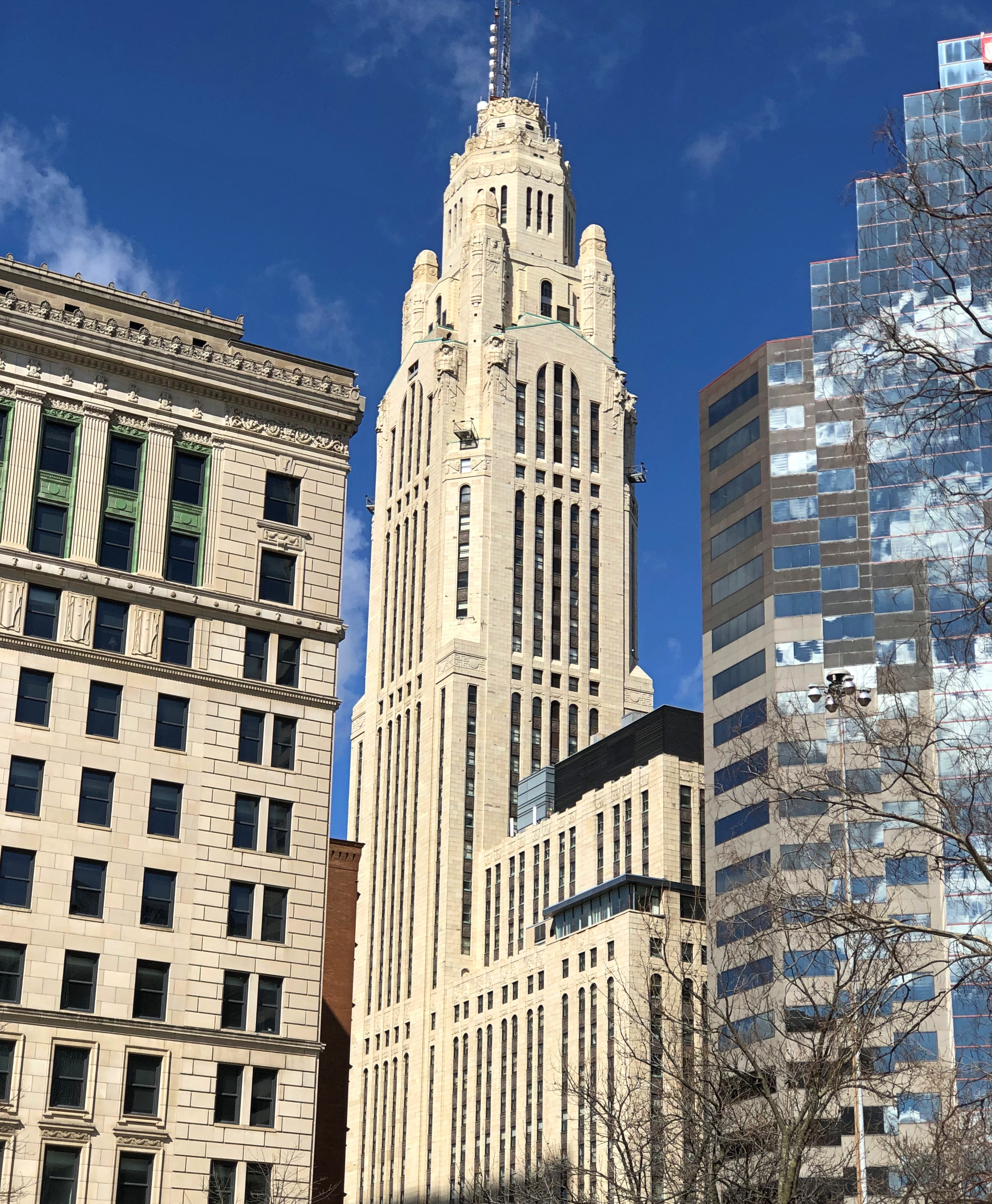
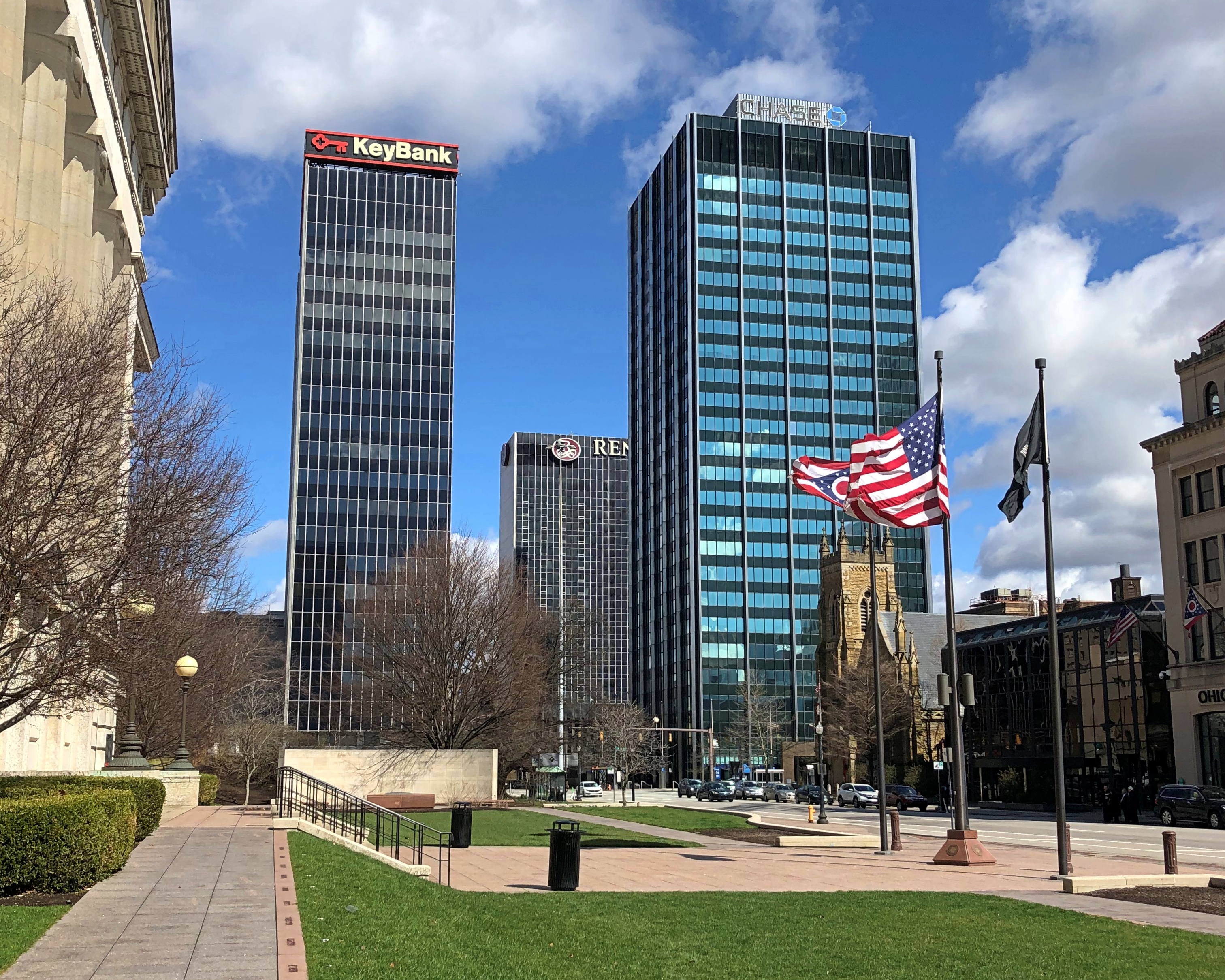
Columbus (the city) has a good skyline, at least from the capitol grounds.Columbus Ohio
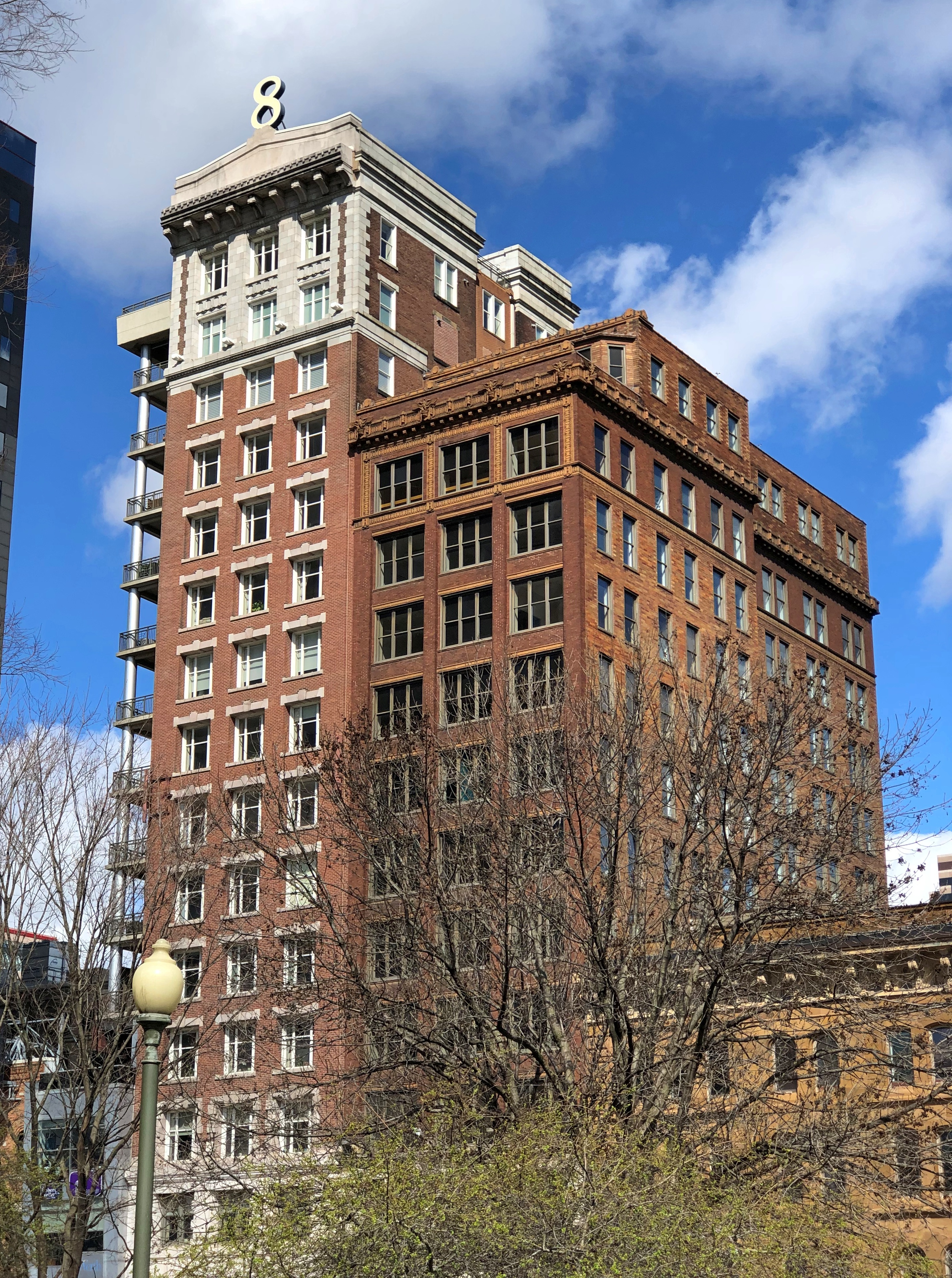
We had lunch that day in the Columbus neighborhood of German Village, or maybe more formally, German Village Historic District, which has the hallmarks of fairly far along gentrifying, an old ethnic neighborhood revived some years after its ethnicity melted into the population.

We got takeout from a small-chain chicken wing joint, which was packed with a youngish crowd at the brunch hour on Sunday, and ate with gusto in our car, out of the wind and collecting enough sunlight to warm the inside of the car.

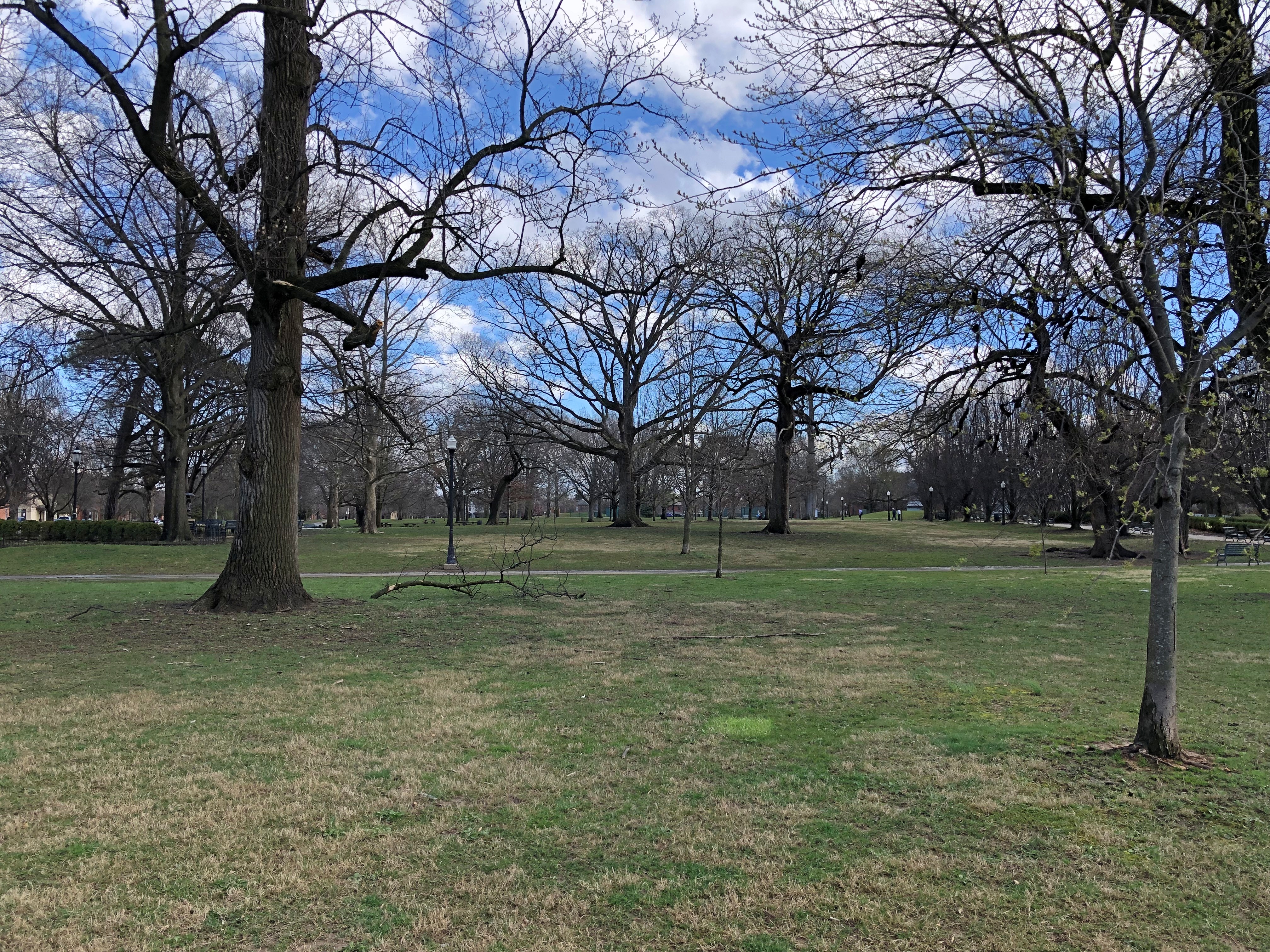
Across the street was a sizable park.Columbus Ohio
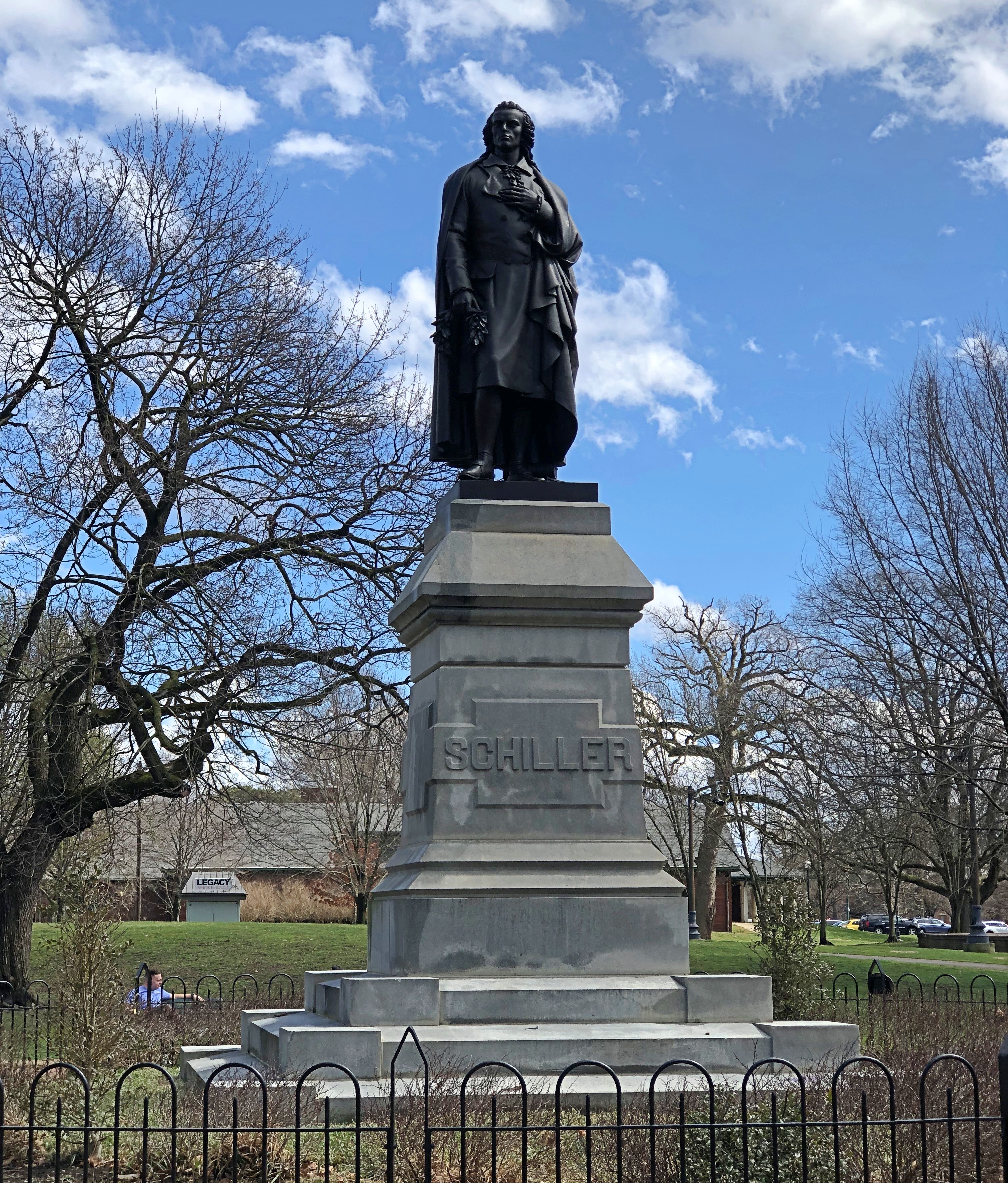
After eating, I took a look around. Schiller is honored in German Village. Check.Columbus Ohio
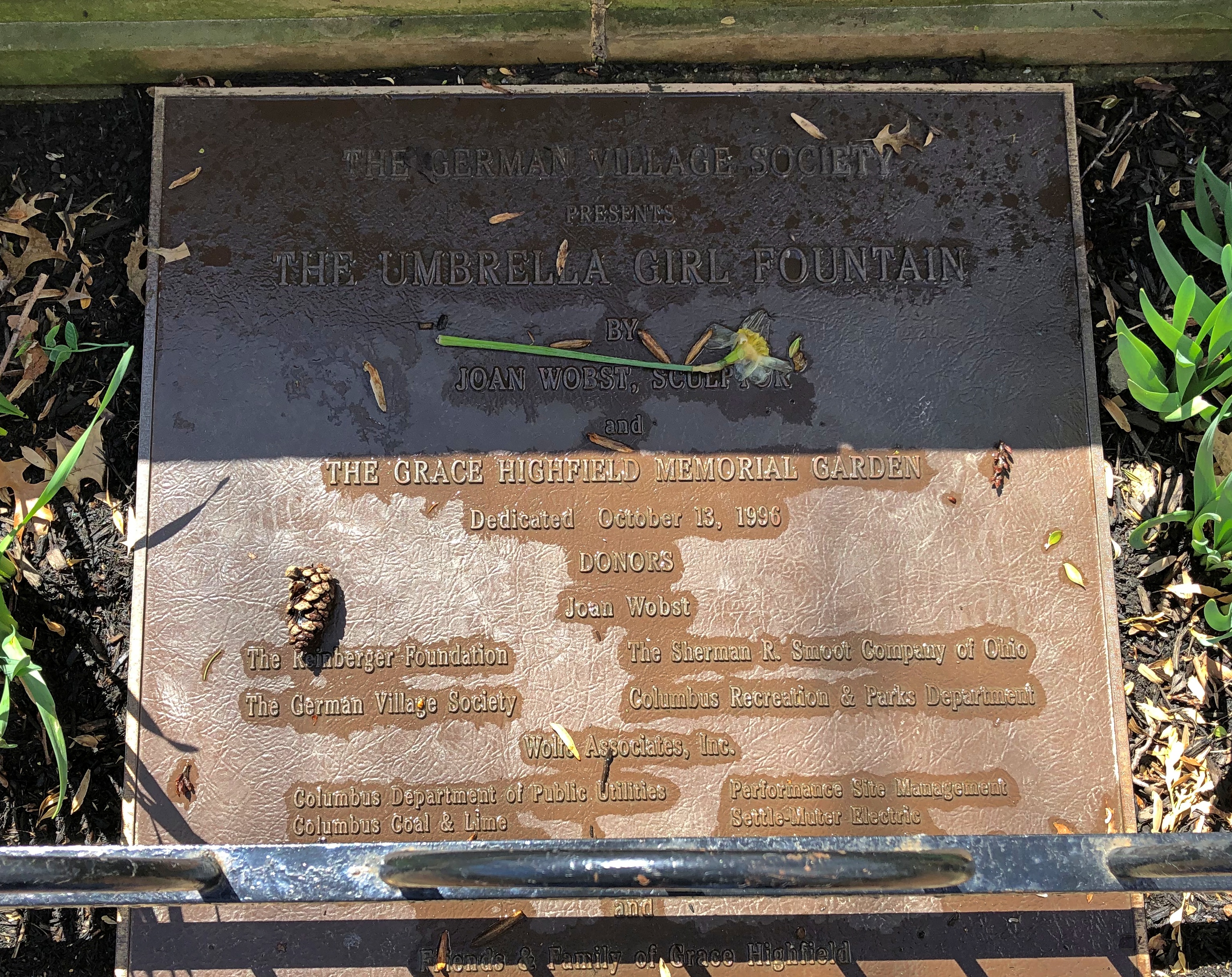
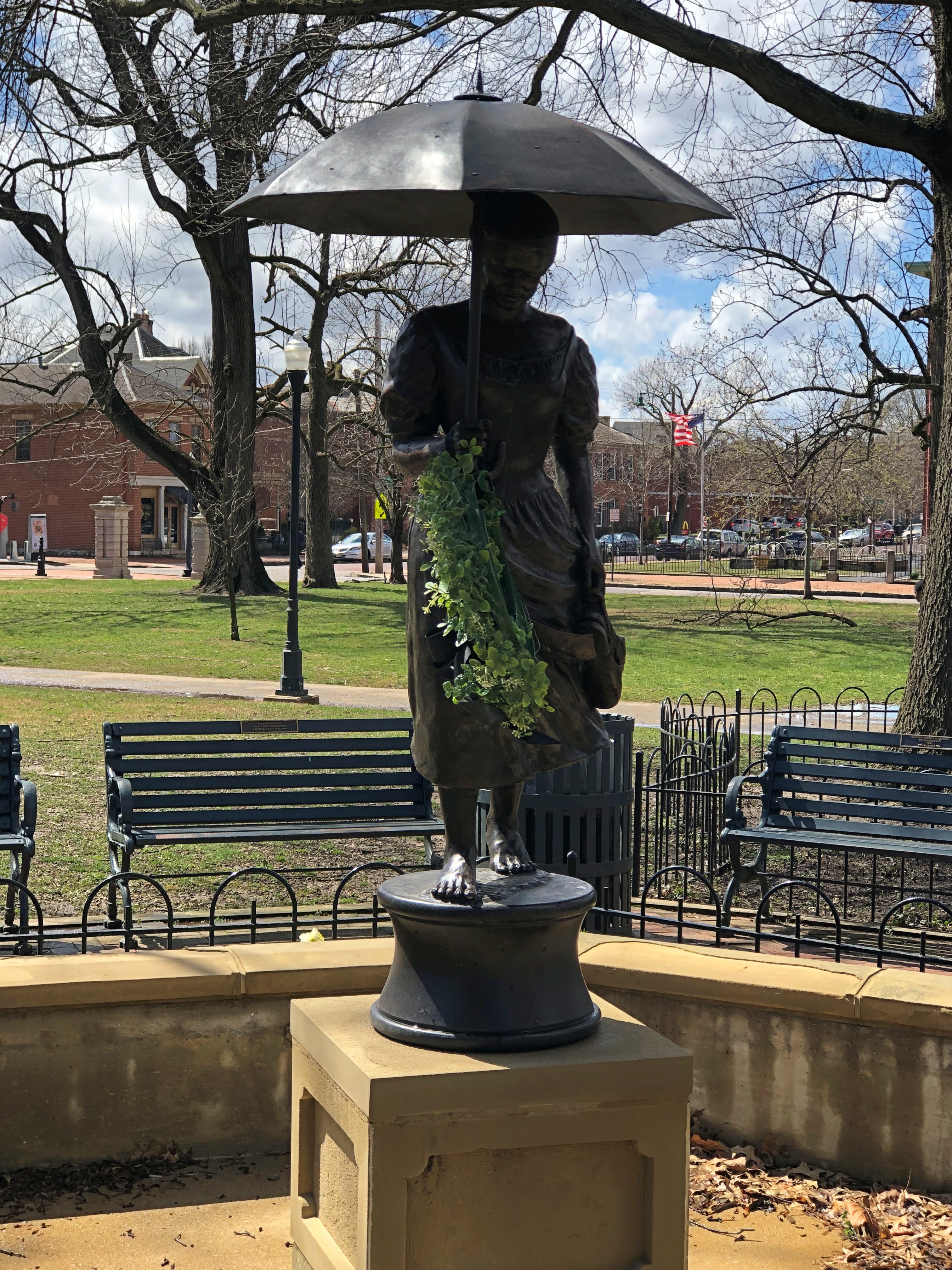
Then there’s Umbrella Girl, a fixture in a fountain still dry for the season.Columbus Ohio Columbus Ohio
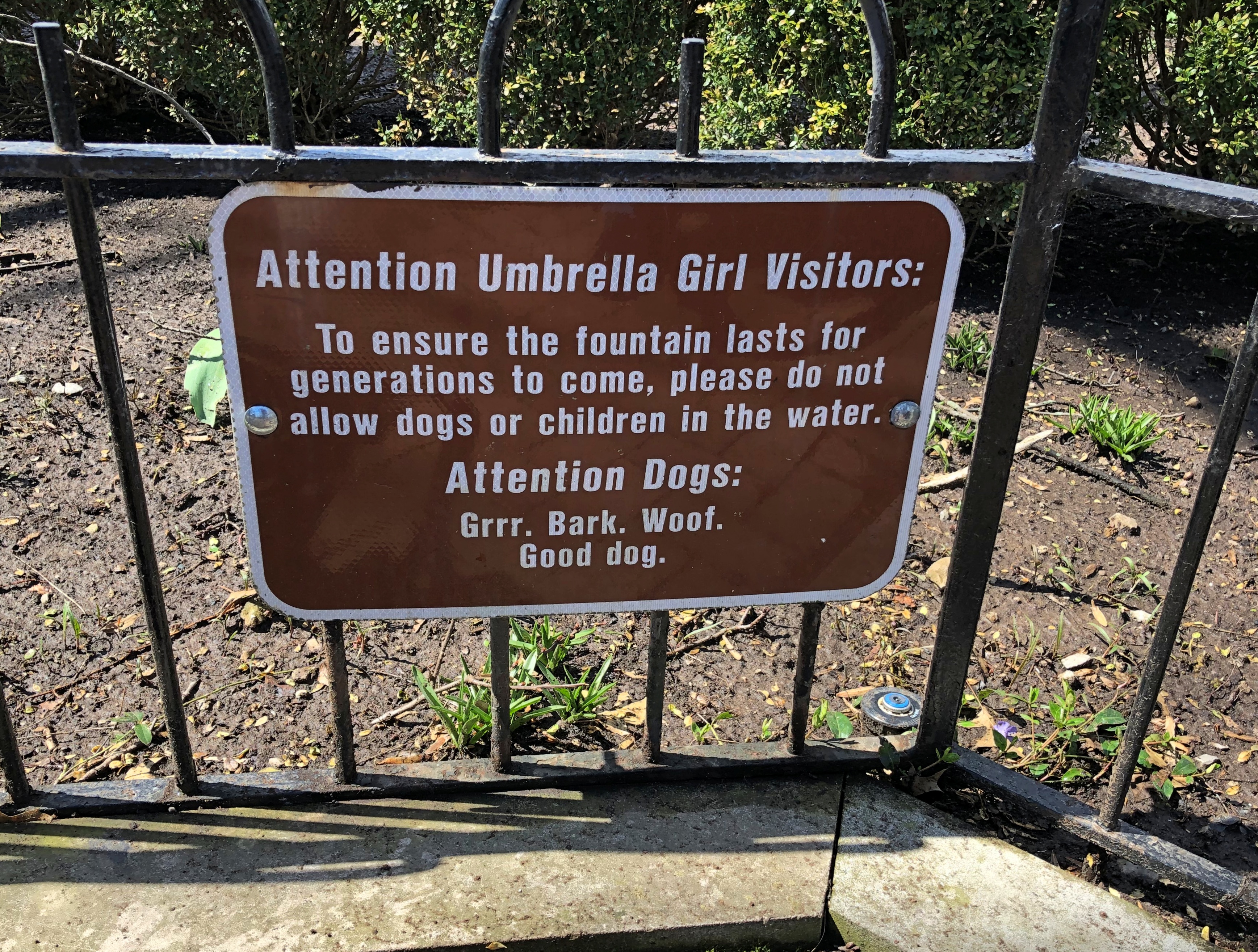
Instructions.Columbus Ohio

I’d say bilingual, but I don’t see that dogs have a lingua, as expressive as they can be.
The Ohio Statehouse

Through much of 1999, I visited a fair number of Midwestern cities on editorial business of one kind or another. At some point, that included Columbus, Ohio. I was staying downtown, so during a lull, I popped over to the Ohio Statehouse, which occupies a prominent 10-acre block.

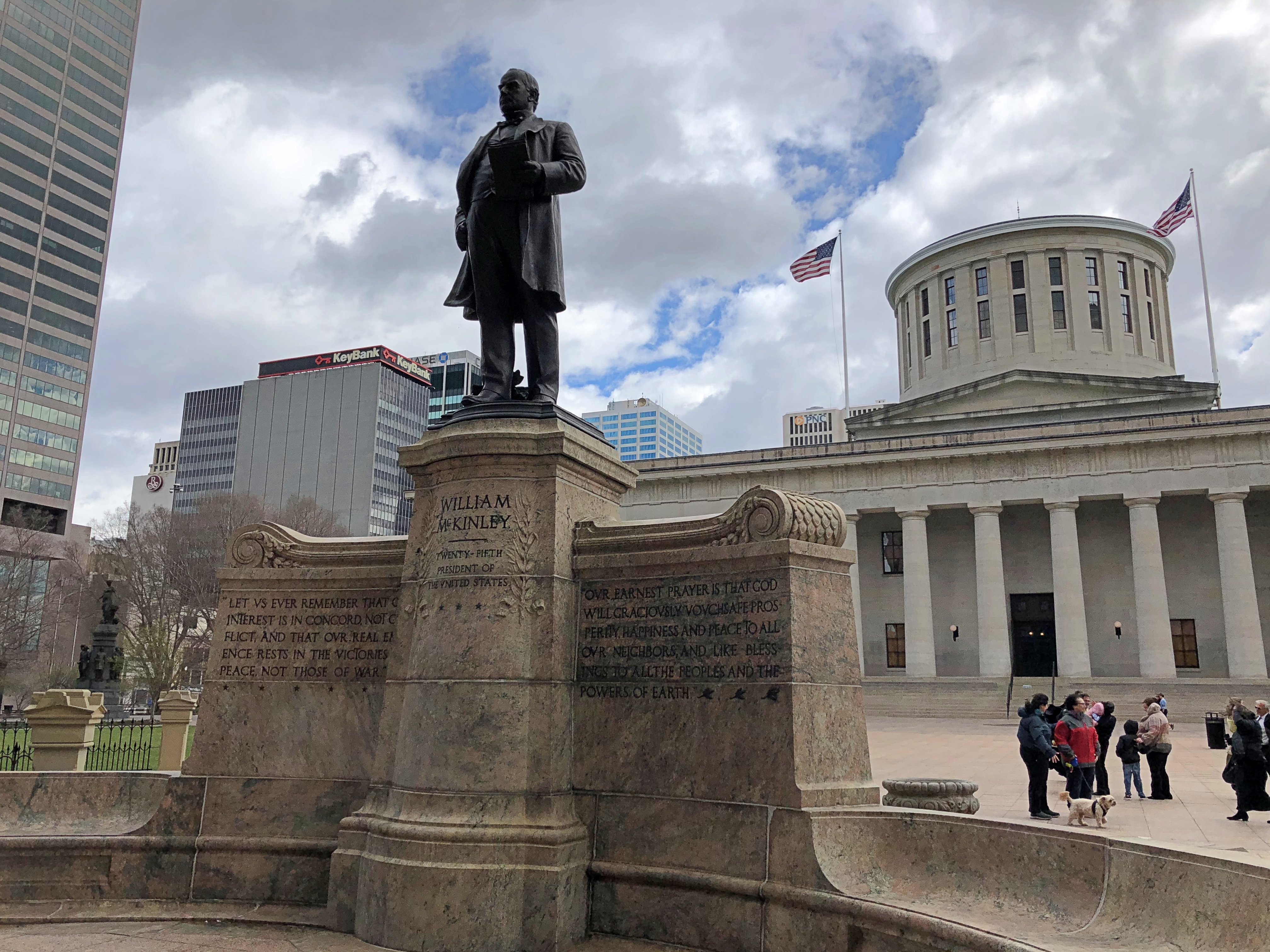
I went in and looked around back then, but thinking about it last month, what I remembered most was the statue of William McKinley near the street. He’s still there, of course.Ohio Statehouse Ohio Statehouse

With verbiage about the immortal memory of President McKinley. That’s what I remembered, how memorials speak to those who already remember, at least among Americans. Later generations do not remember, or much care, except in certain lightning-rod cases. I suppose that isn’t a good thing, but there is the upside of mostly forgetting to hold historical grudges.

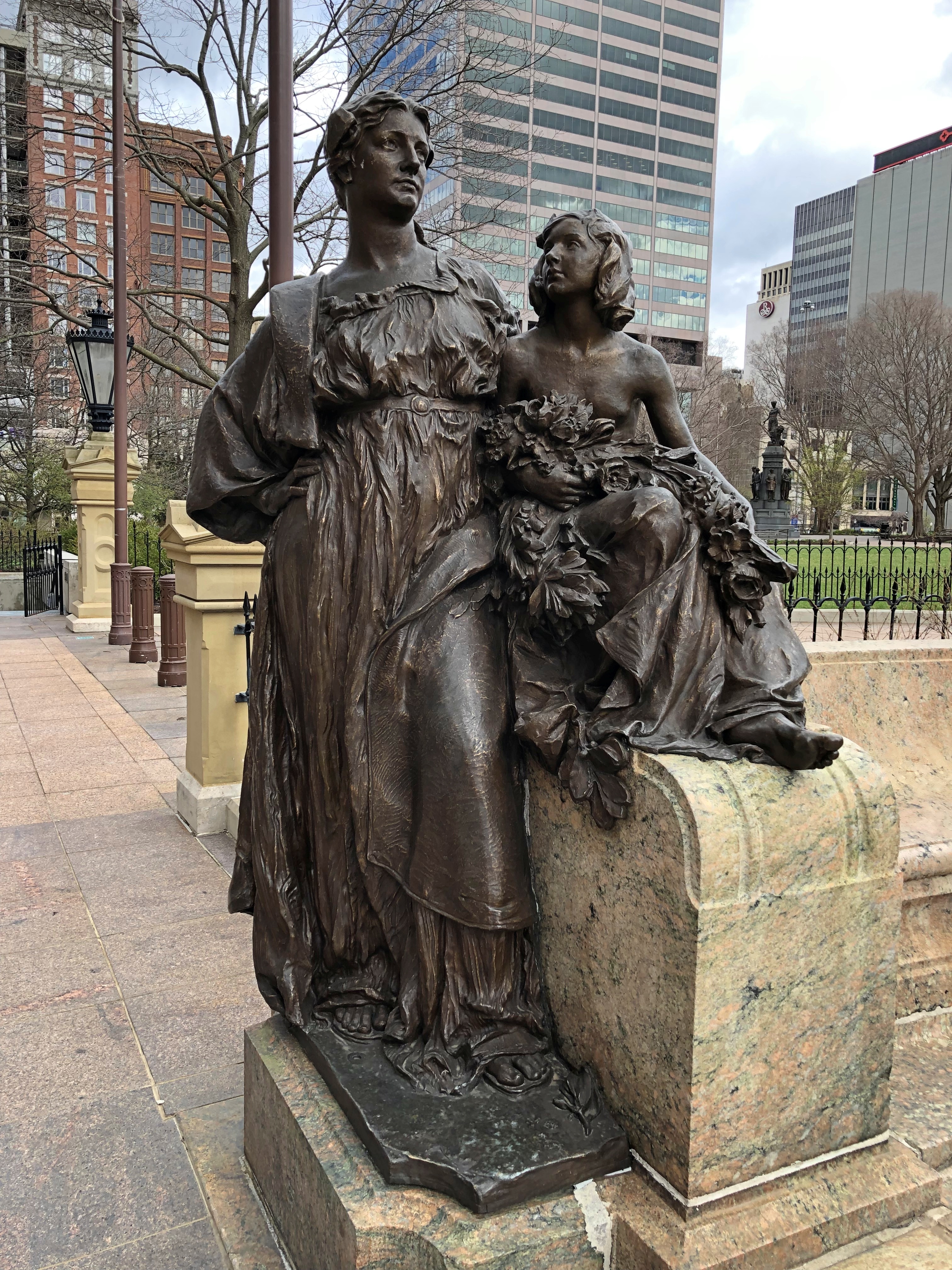
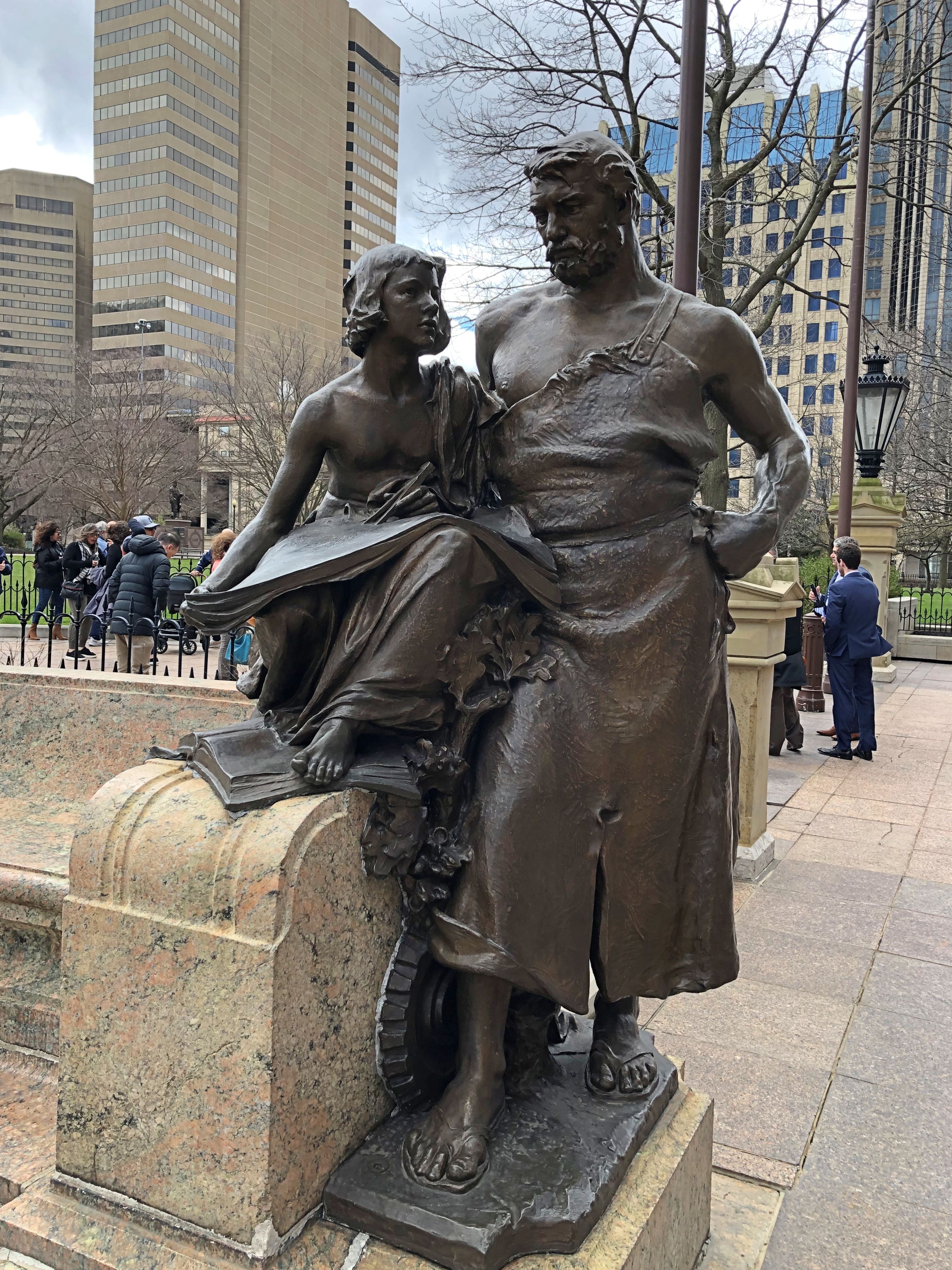
The president isn’t alone at that part of the capitol grounds, with some bronze allegories to keep him company.Ohio Statehouse Ohio Statehouse

The back entrance.Ohio Statehouse

We’re used to seeing a dome on such a structure, but state capitols mostly started using that form, patterned after the current shape of the U.S. capitol, after that building took shape in the 1860s. The Ohio Statehouse is older than that.

We arrived late in the morning of March 25, the last day of the trip, after spending the night in suburban Columbus. I would have similar shots of the front, but as innocently spring-like as the pictures seem to be, there was a wicked strong wind blowing. Not terribly cold, just incessant and sometimes so energetic that you could feel yourself tipping one way or another, especially as a gust passed without warning.

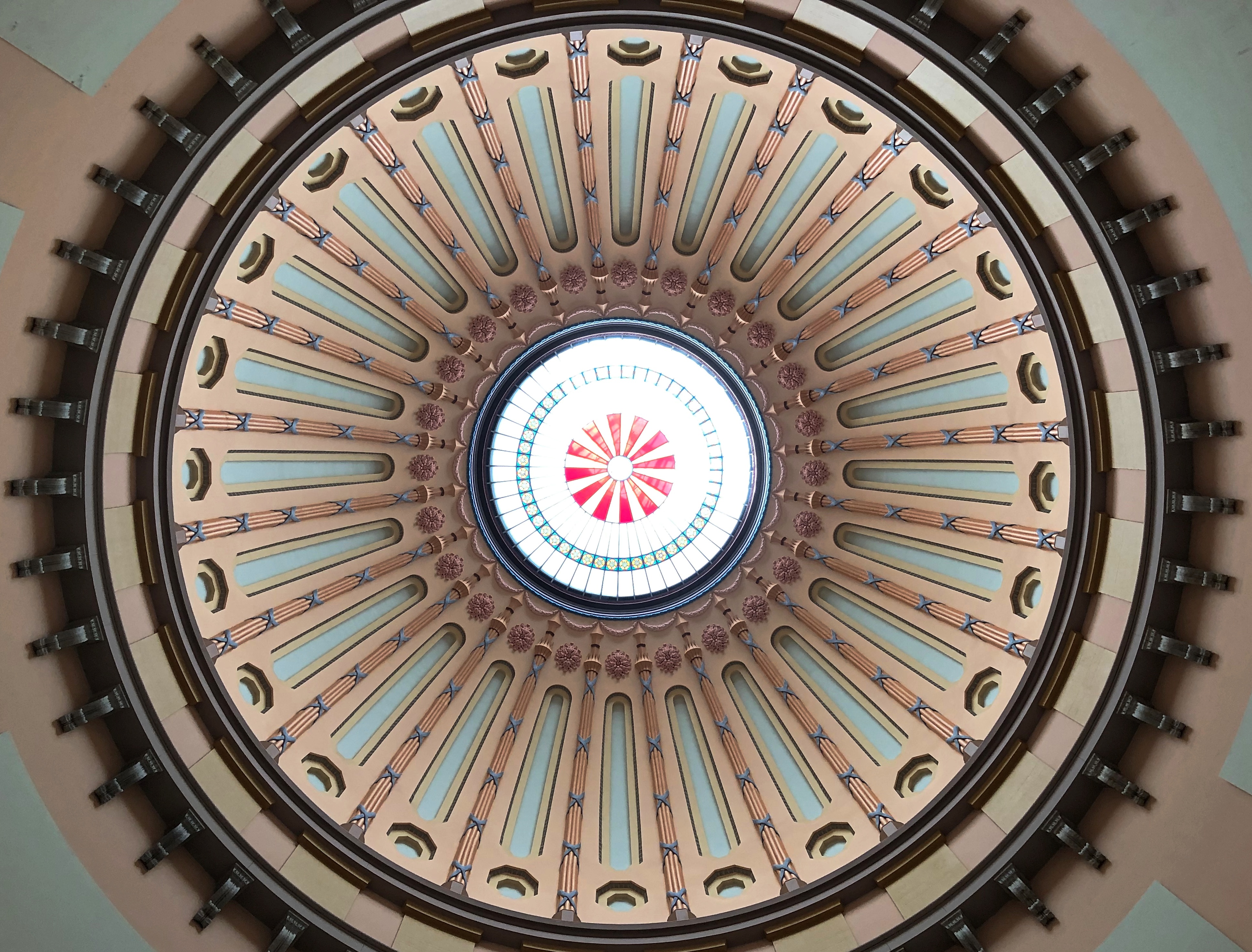
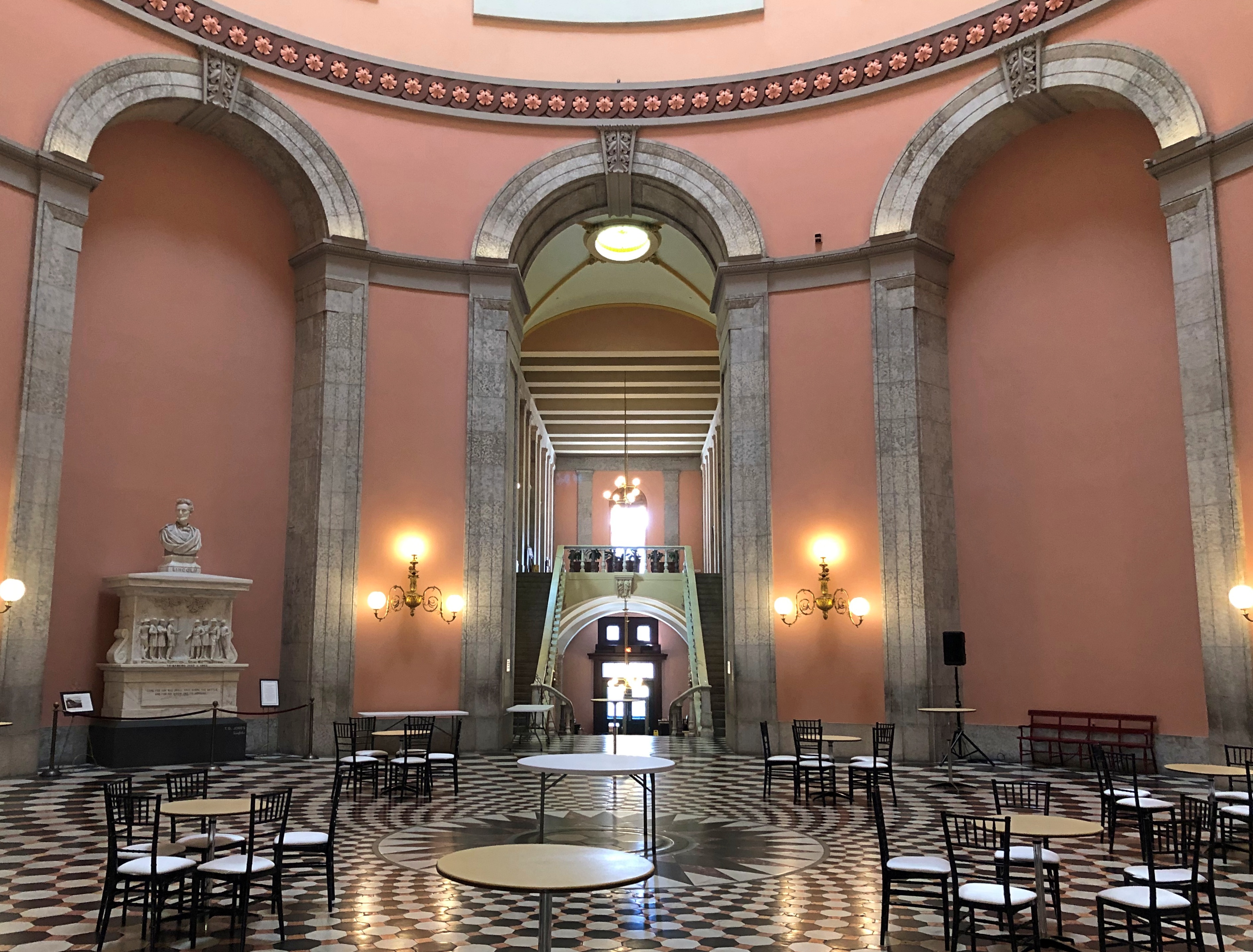
Much calmer inside. Under the rotunda.Ohio Statehouse
Ohio Statehouse

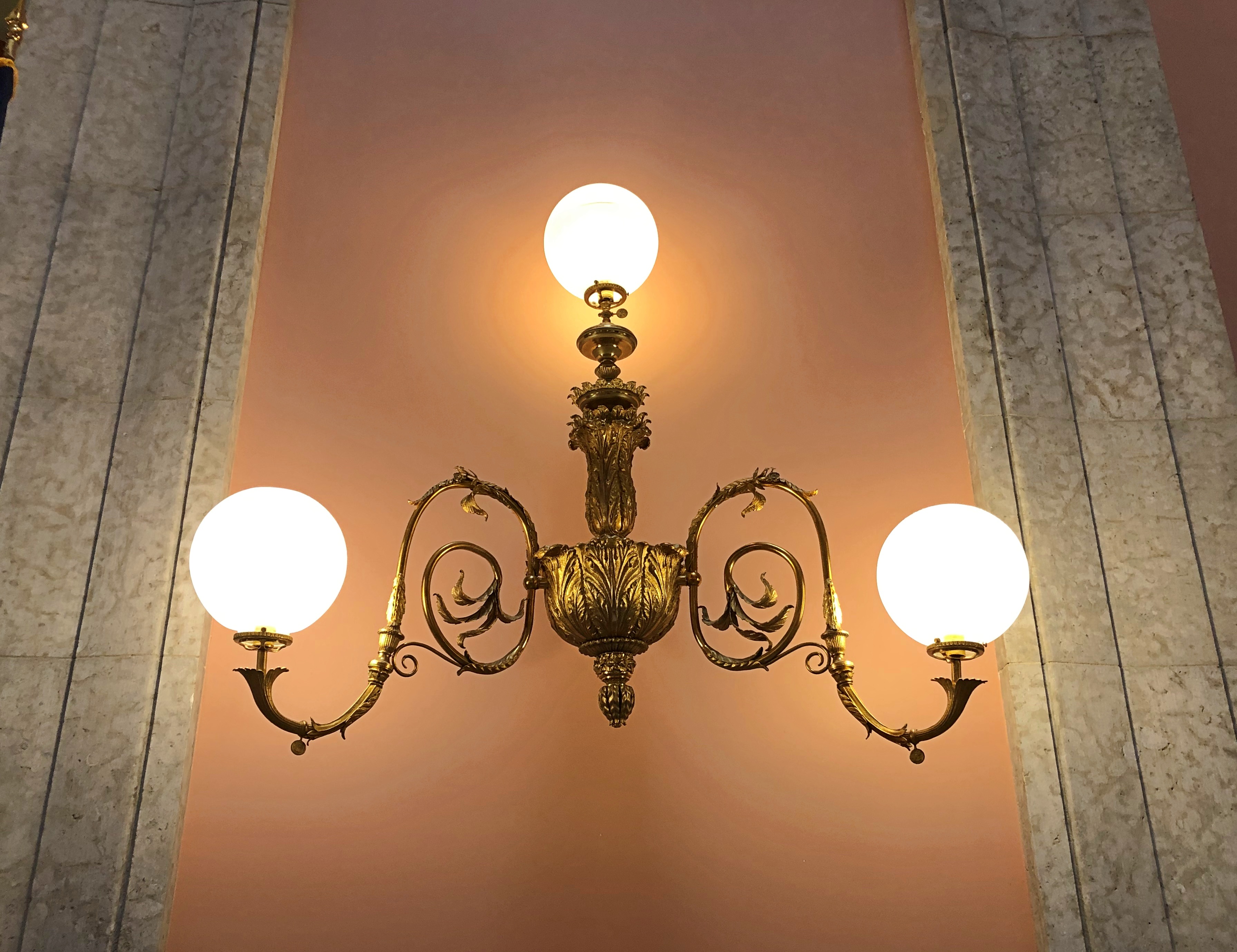
Nice detail work. I’m impressed by the Spirograph floor. The Spirograph-ish spirit of democracy, maybe.Ohio Statehouse

The design is much less spare than in West Virginia, but not the work of any single designer. It’s the Greek Revival creation of a series of architects beginning in the 1830s and not finished until 1861, just as the nation fell apart.

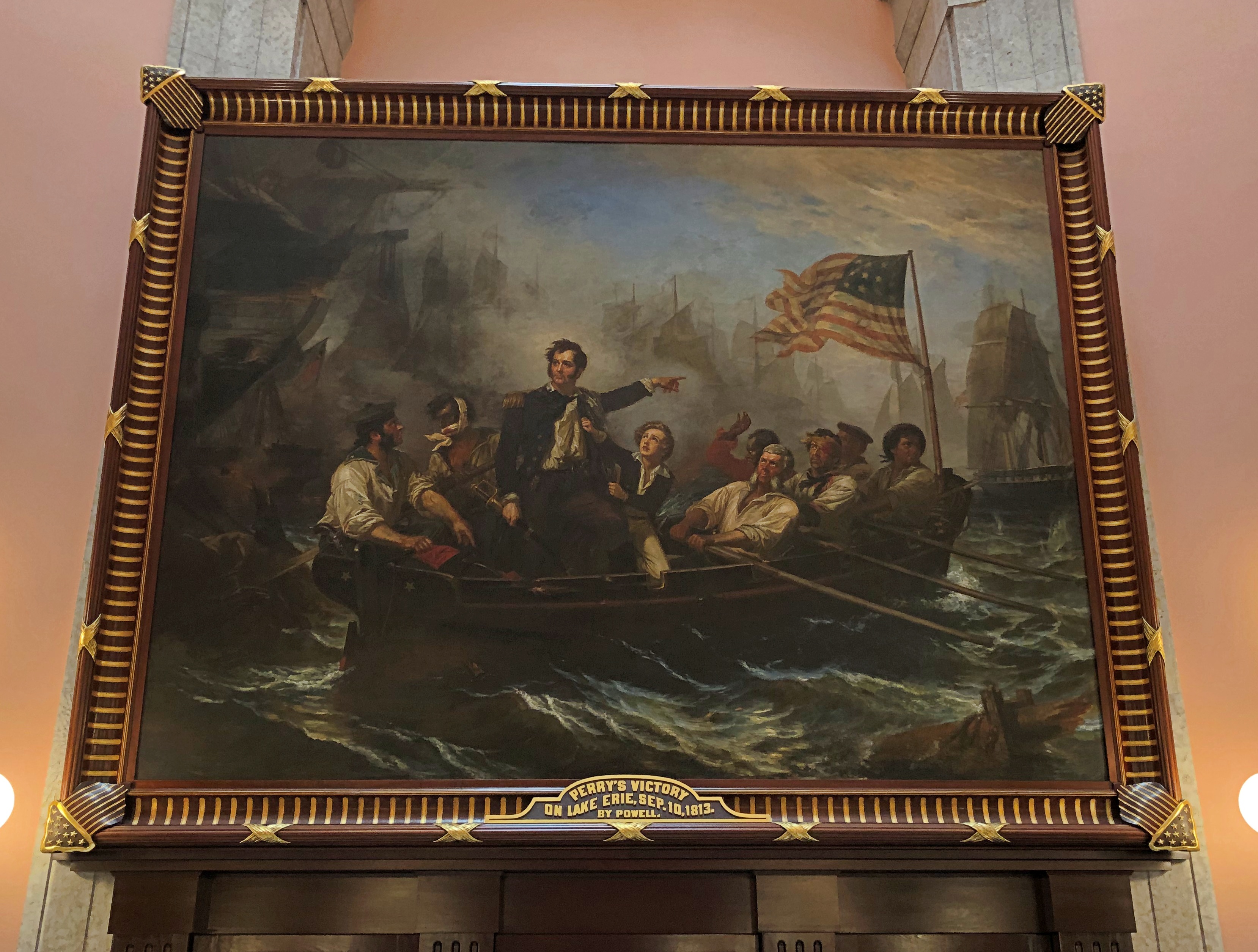
Perry, hero of Lake Erie, isn’t forgotten. Not at least on the wall.Ohio Statehouse

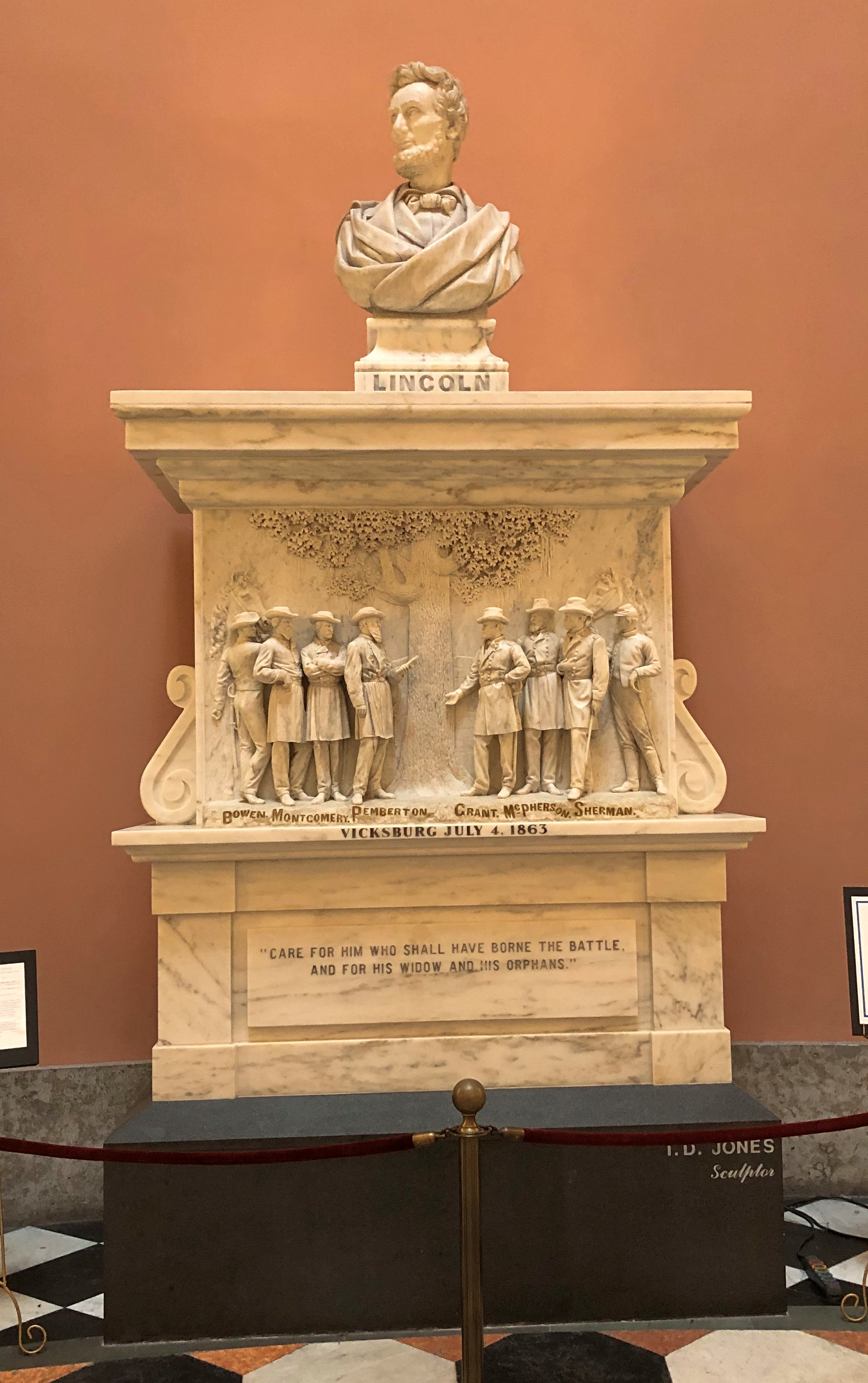
Nor Vicksburg. Many Ohioans were there.Ohio Statehouse

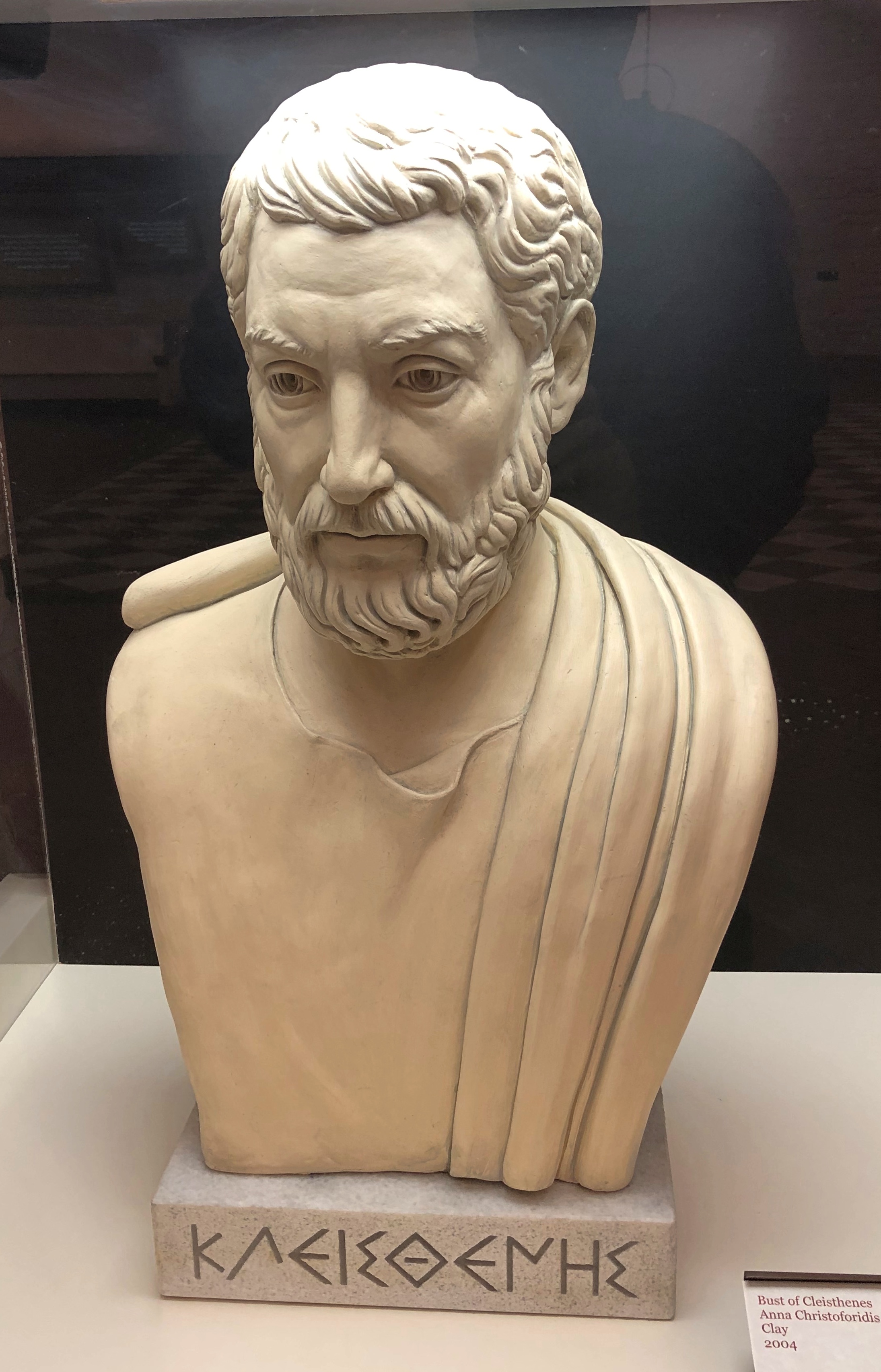
Nor Cleisthenes, ancient democratic reformer.Ohio Statehouse

I can’t say I’ve ever seen him at a capitol before, and he isn’t known as a native of Ohio, but it’s a good choice. No less than Herodotus called him “the man who introduced the tribes and the democracy” to Athens, “tribes” being the 10 groups organized by residence in Attica, rather than clan or other kinship.

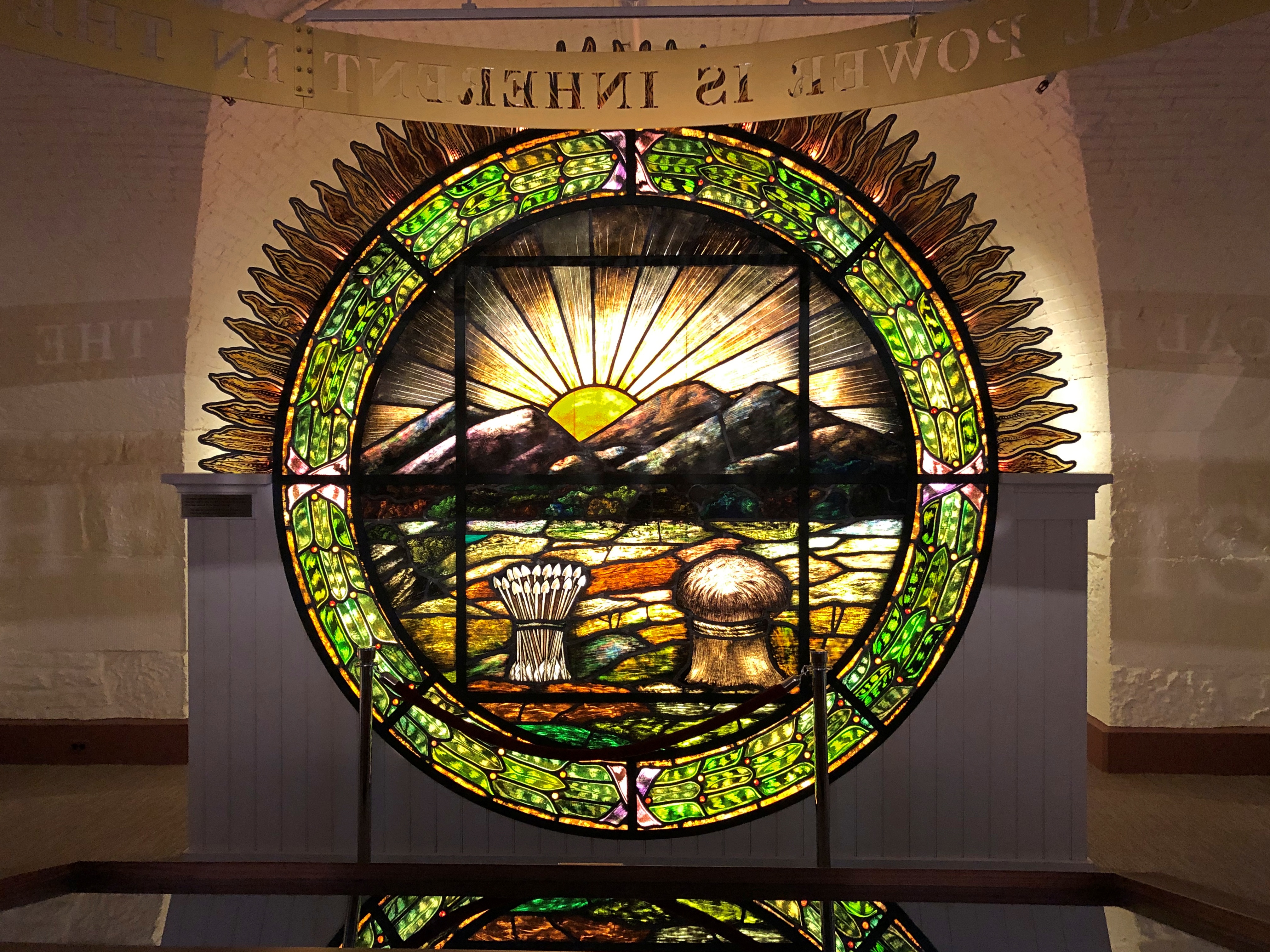
The seal of Ohio in glass.Ohio Statehouse

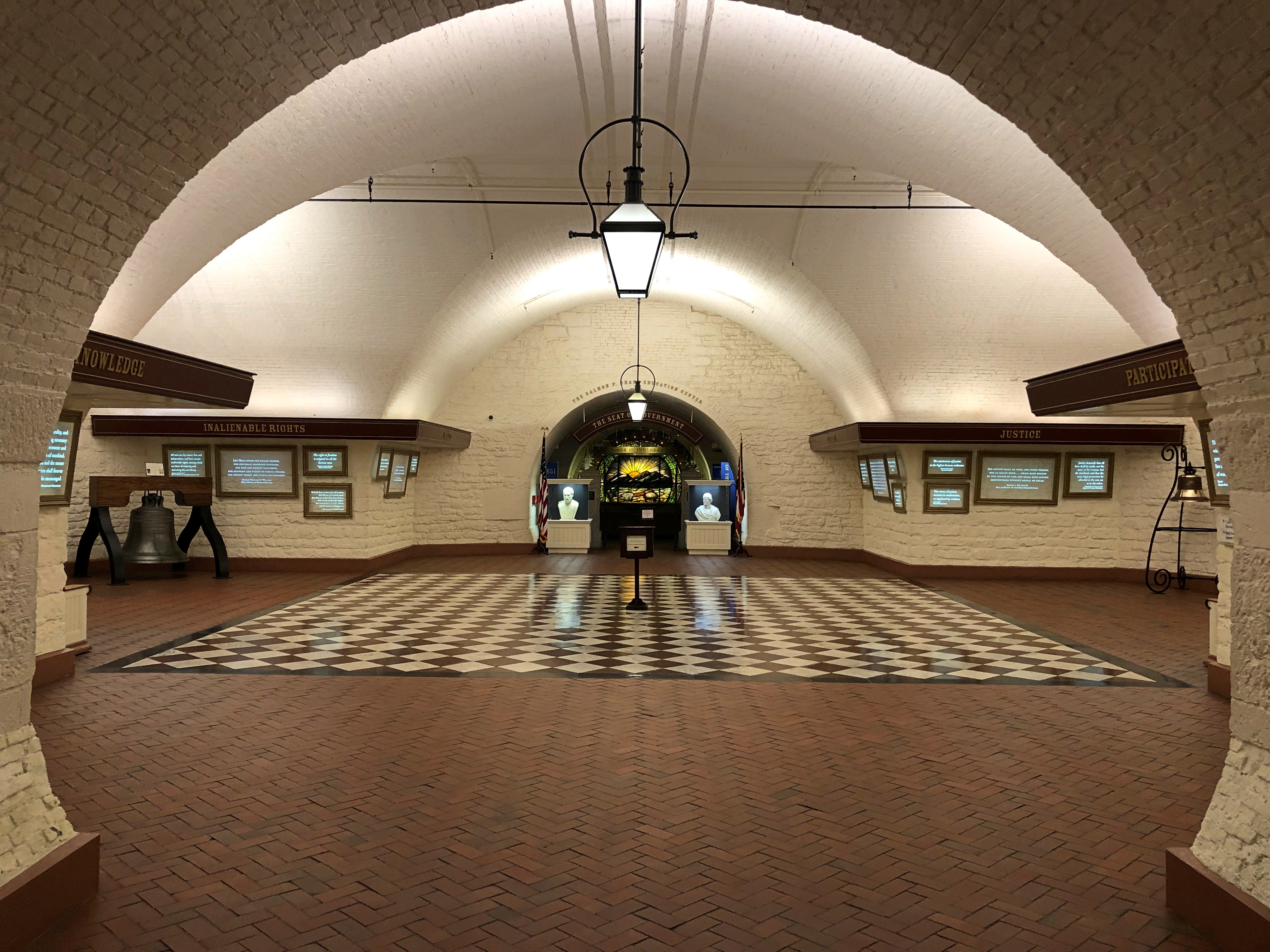
The visitor entrance, and the information desk, closed gift store and some museum exhibits, are in the basement, itself fairly handsome.Ohio Statehouse

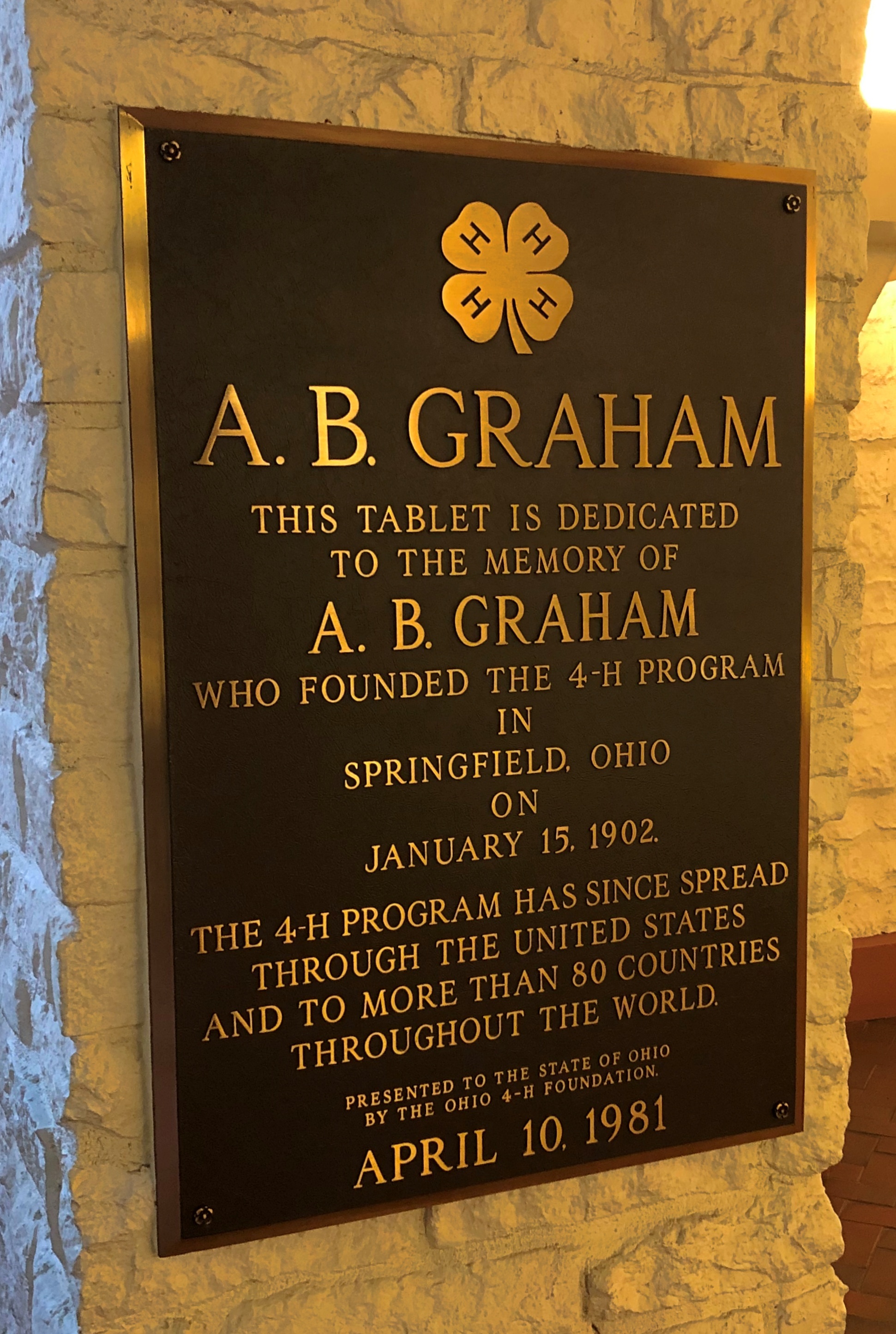
I didn’t know who founded the 4-H Program. Now I do, but sadly I am likely to forget.Ohio Statehouse

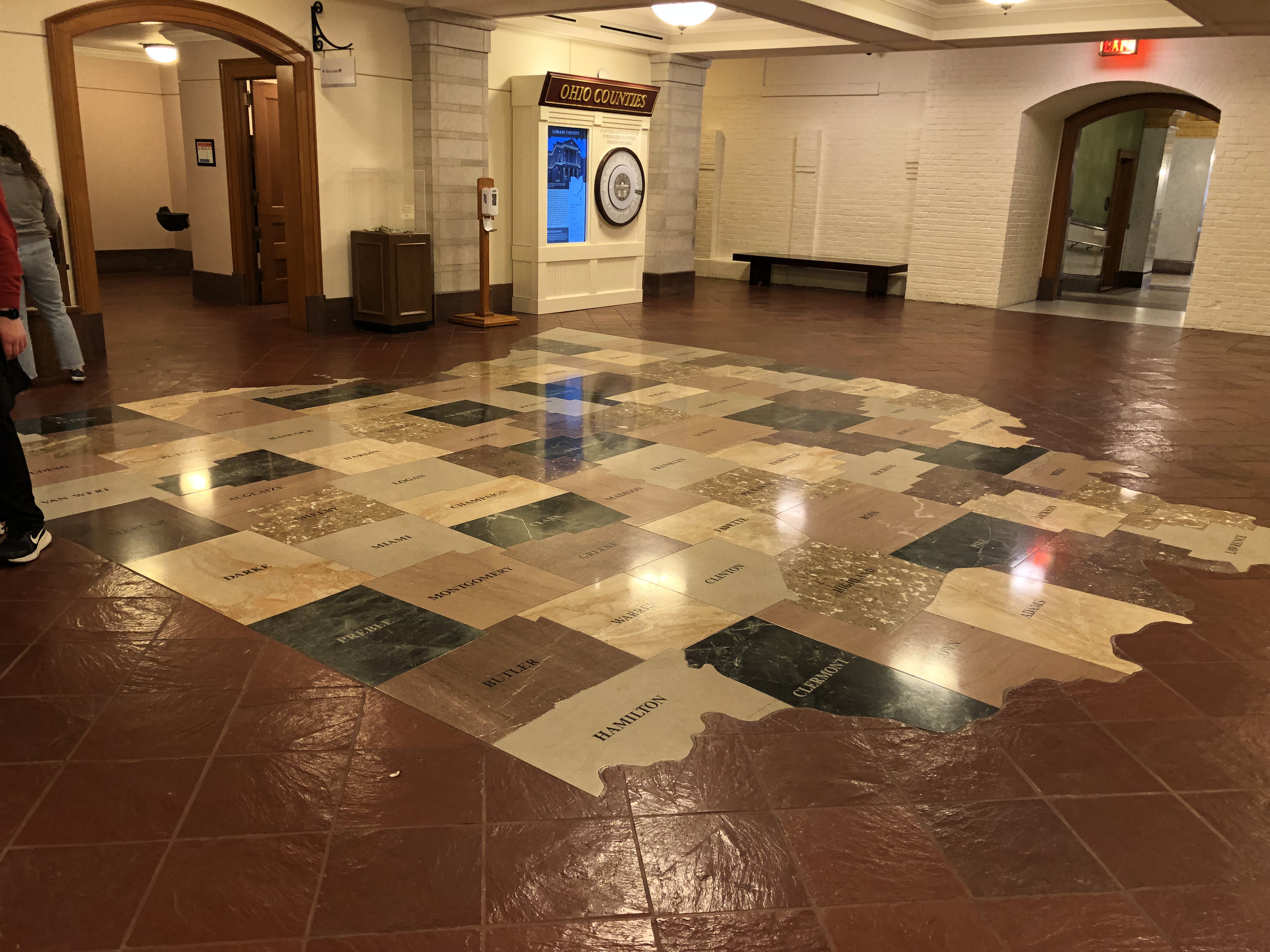
I like this a lot: the counties of Ohio, each in a different stone.Ohio Statehouse

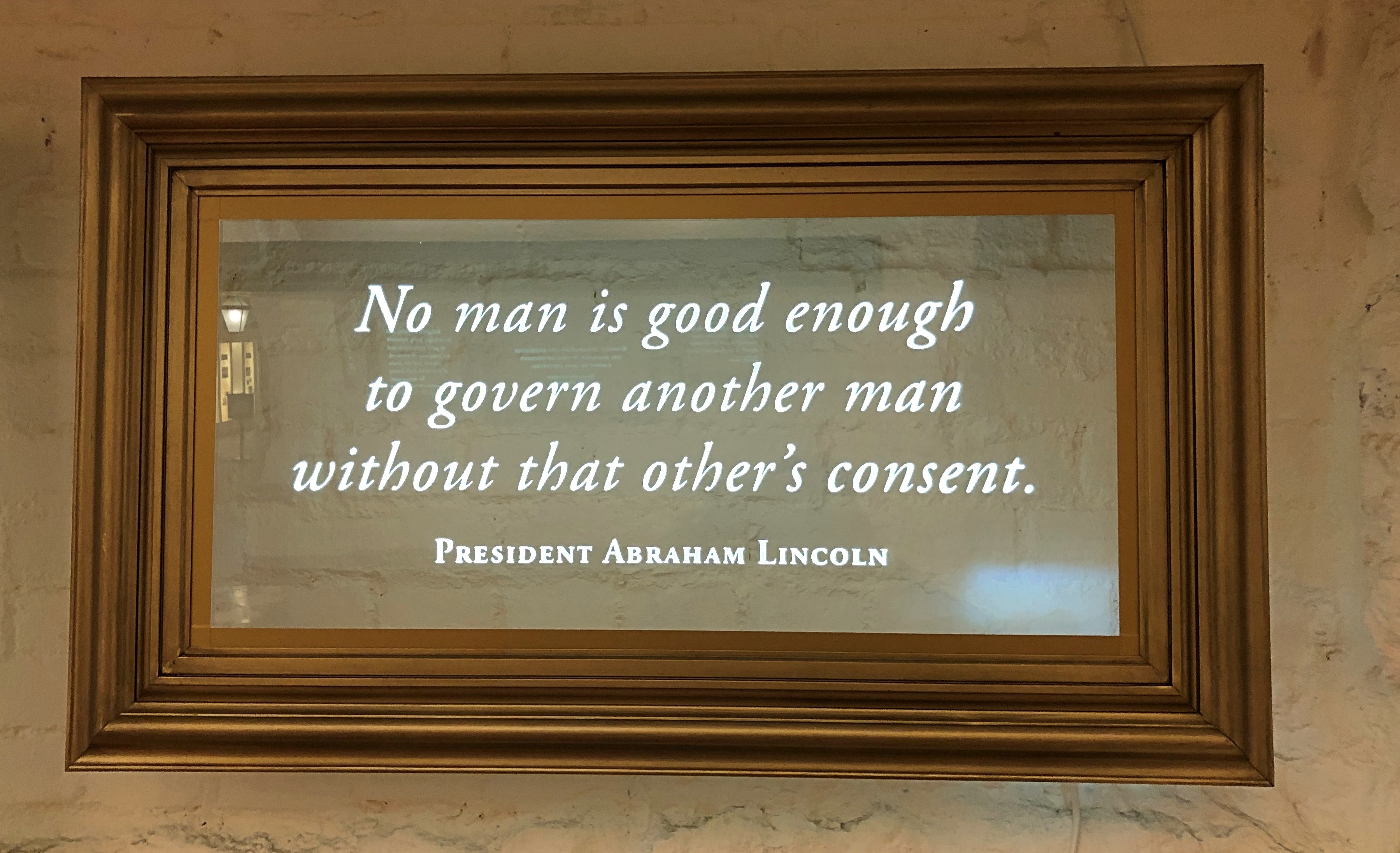
Finally, words of wisdom –Ohio Statehouse

Not because Lincoln had a special connection to Ohio or the building. Just, I think, on general principles.

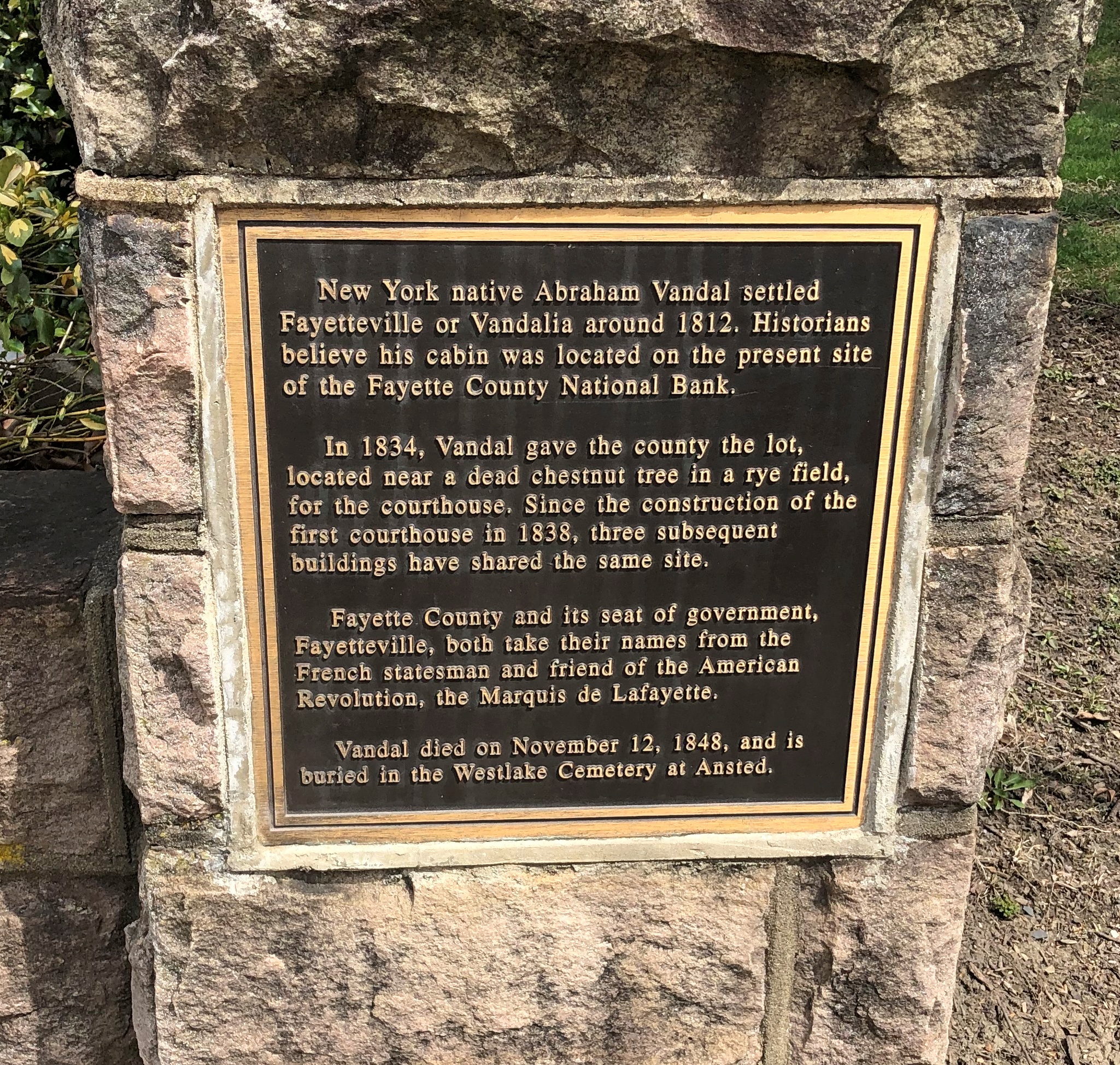
Fayetteville, West Virginia

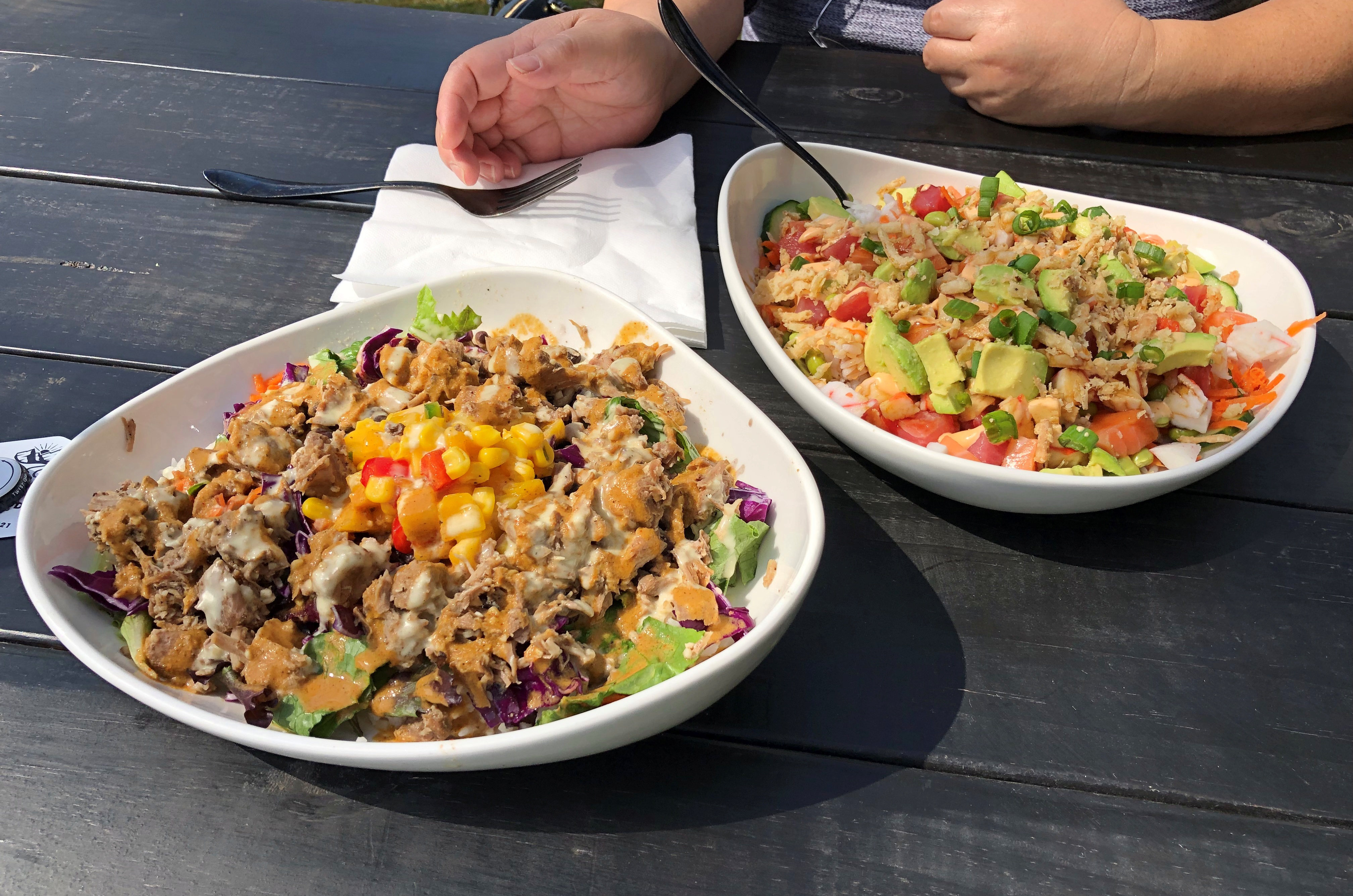
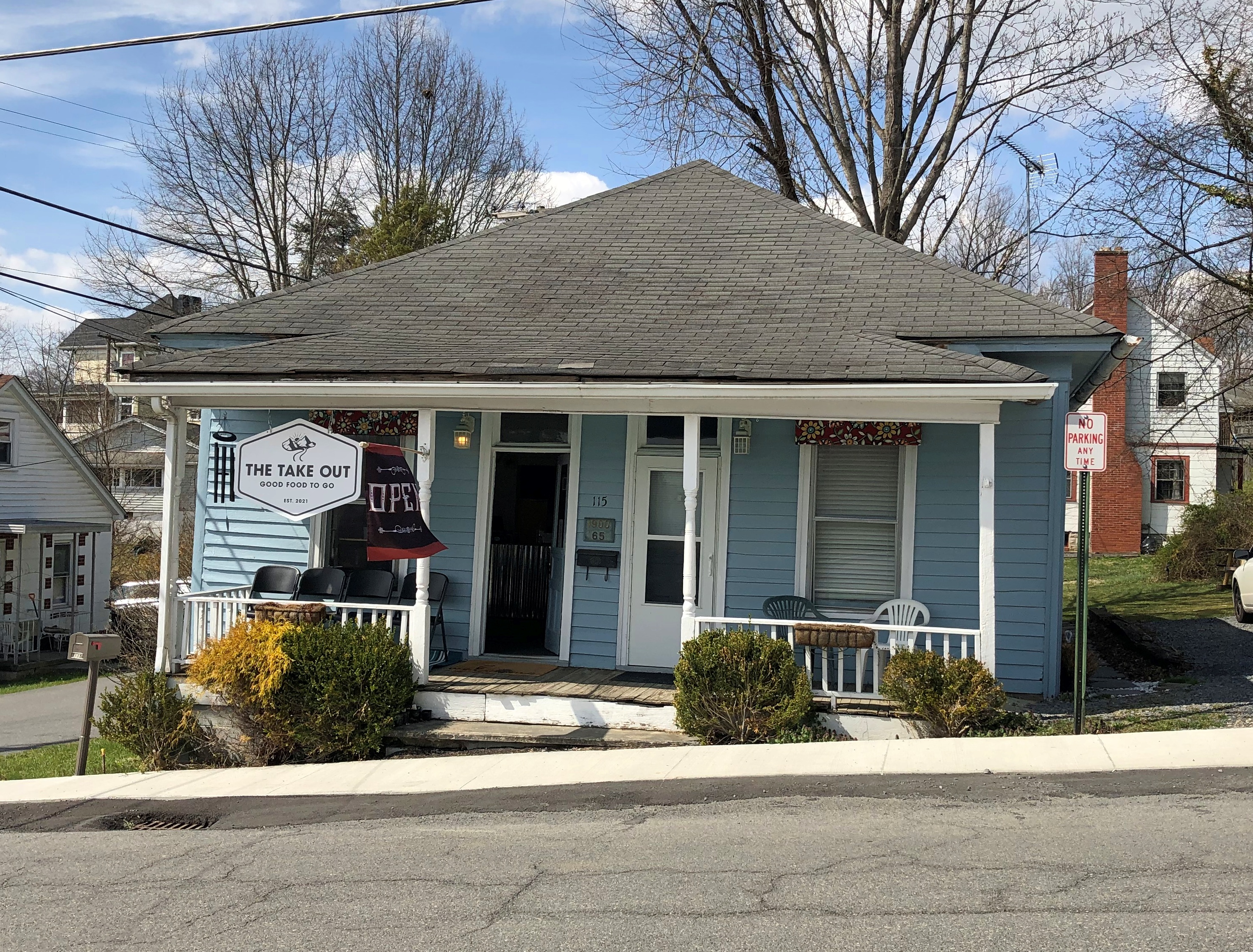
Unlike the near-ghost town of Thurmond, the town of Fayetteville, West Virginia (pop. 2,700 or so), is alive and looks reasonably well. One thing to know is that you can get some delightful rice bowls (rice, protein, vegetables) for lunch there, at a place generically called The Take Out.Fayetteville, West Virginia Fayetteville, West Virginia

We didn’t take it far. The day was Thursday, March 23, clear and in the low 70s F., and so ideal for taking our food to the picnic table outside The Take Out.

The fellow who prepared the bowls, with an exaltation of light curly hair on his head and looking unbelievably young, came out to chat for a few moments and try to make friends with the dog. The restaurant is a post-pandemic venture, opening only a year ago, he told us. Rice bowls of that kind are fairly recent to North America (I think), which shows the speed at which food innovation spreads in our time. Next thing you know, Korean corndogs will make an appearance in small-town West Virginia.

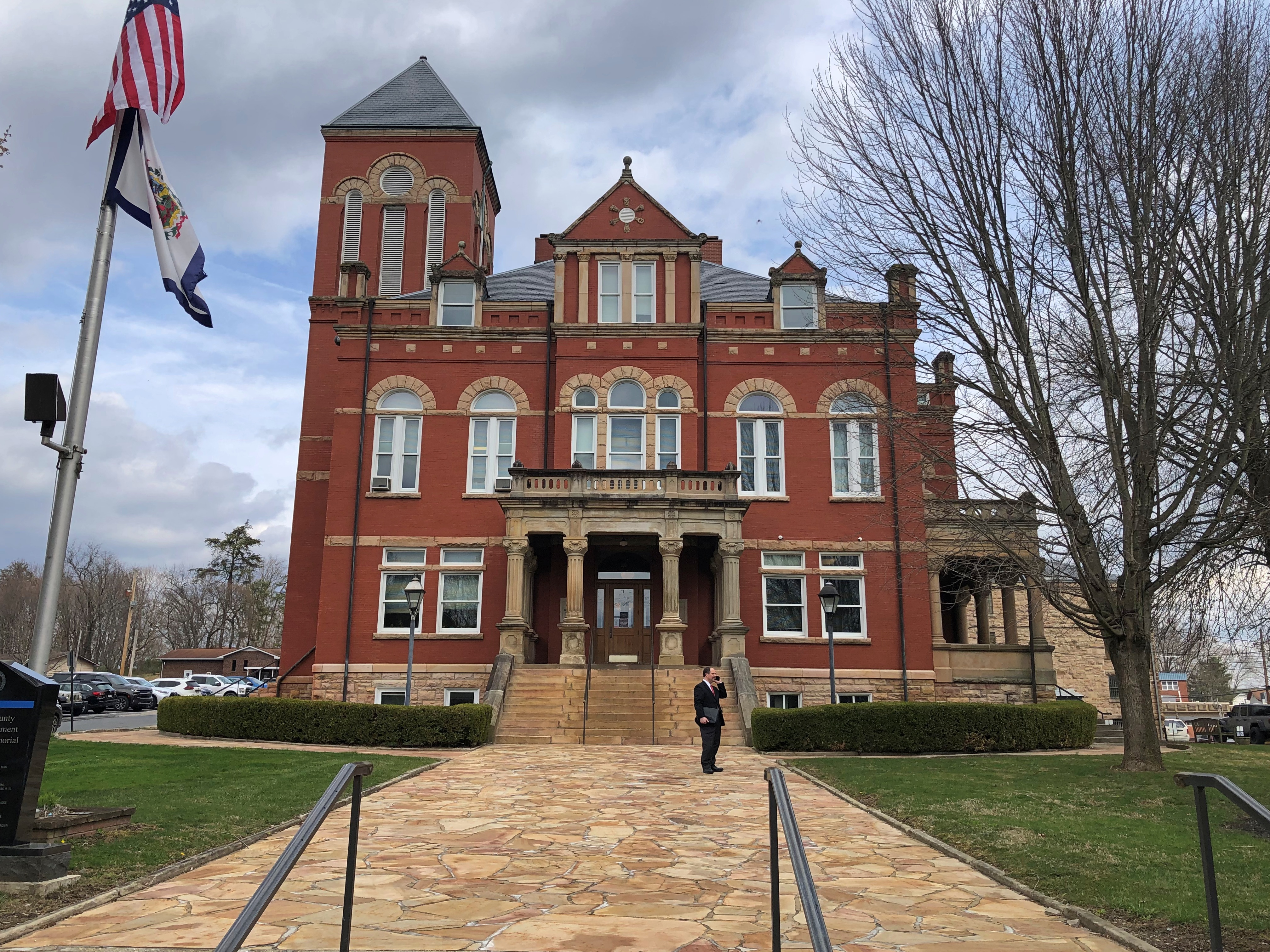
Signs on the highway promised an historic downtown in Fayetteville, and I’d say the place delivered. At the very least, there’s a handsome courthouse, since the town is the seat of Fayette County. This shot is complete with an attorney (a safe assumption) talking with someone.Fayetteville, West Virginia

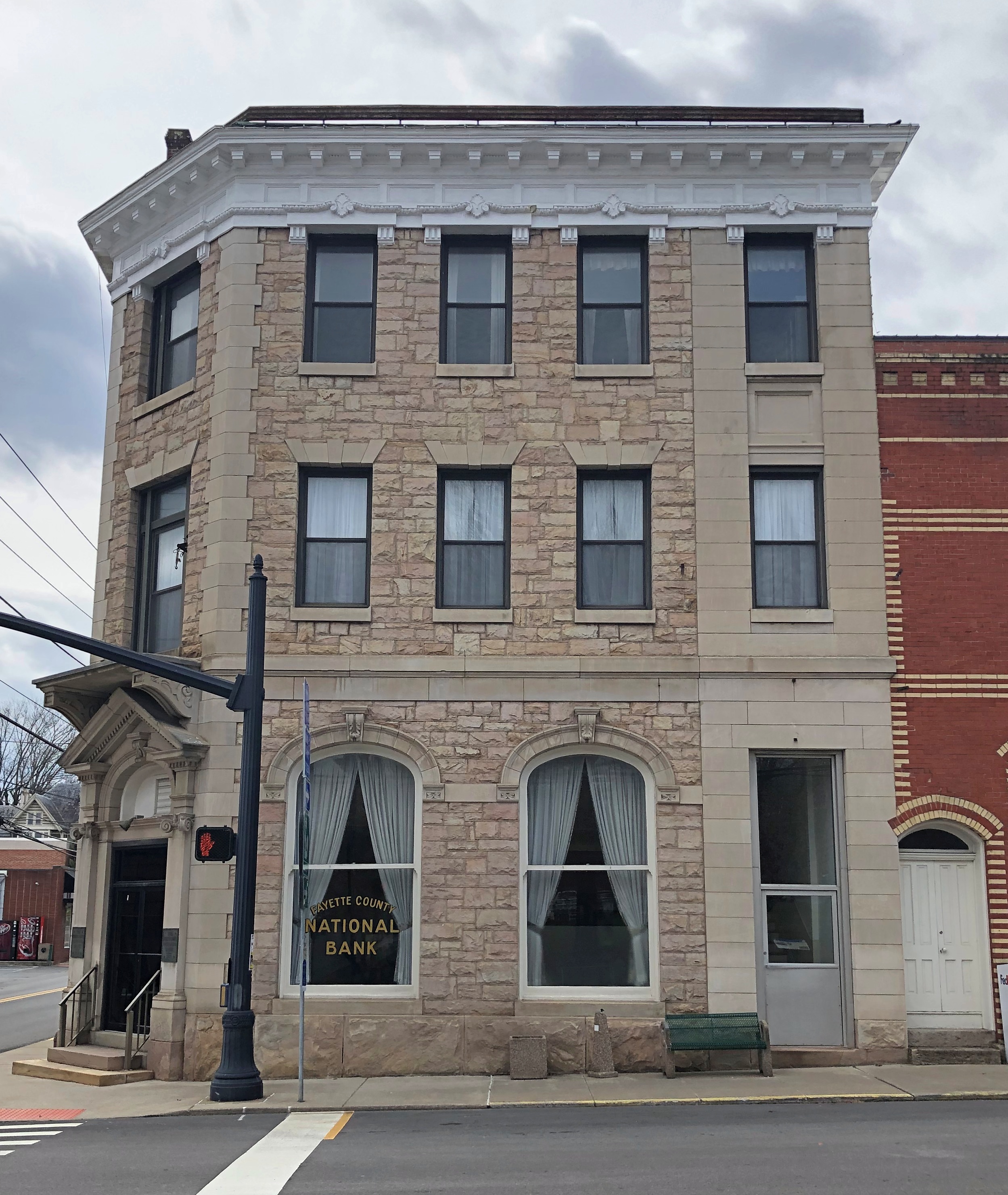
A number of repurposed buildings are near the courthouse, including a bank turned town hall. Not the first time I’ve seen that.Fayetteville, West Virginia

Actually not an ex-bank. Still a bank.Fayetteville, West Virginia

Plus history on plaques and signs. Fayetteville, West Virginia

The Battle of Fayetteville was part of the Kanawha Valley Campaign, which has to count as a lesser-known incident in that sprawling war, unless you’re in Fayetteville.Fayetteville, West Virginia

Eastern Virginia got most of the attention then, as now. Whether part of the Old Dominion or not, western Virginia has a long history of being ignored.

Which might account for the enduring popularity of “Take Me Home, Country Roads” in West Virginia. Here was a song that actually paid attention to the state, with “West Virginia” being the third and fourth words of the lyrics. The first two words made an arguably bigger impact, however.Fayetteville, West Virginia

That display of West Virginia regional pride was at an odd angle next to a building across from the courthouse, neither in the sidewalk nor on the wall. Odd for a slogan, as I forget which comedian pointed out: you mean Heaven is only a little bit better than West Virginia? Or maybe the joke went like this: you mean Heaven is only a little bit better than West Virginia?

The Flight 93 National Memorial

I don’t remember the first time I heard of Fallingwater or Fort Necessity or even the Hare Krishnas, to name a few examples. I do remember the first time I heard of United 93, though probably not by its flight number. Listening to the radio in my downtown Chicago office on the morning of September 11, 2001, I heard, along with countless other listeners, simply that a fourth airplane had crashed, this one in rural Pennsylvania and not into a building.

Twenty-one and a half years later, roughly, we arrived at the site, now the Flight 93 National Memorial. Rural it still is, and far enough out of our way that I considered not going. But when Wednesday came, there in the middle of our trip, I knew we should. How often were we going to be out this way? I didn’t want to think later, we could have gone to pay our respects, but didn’t.

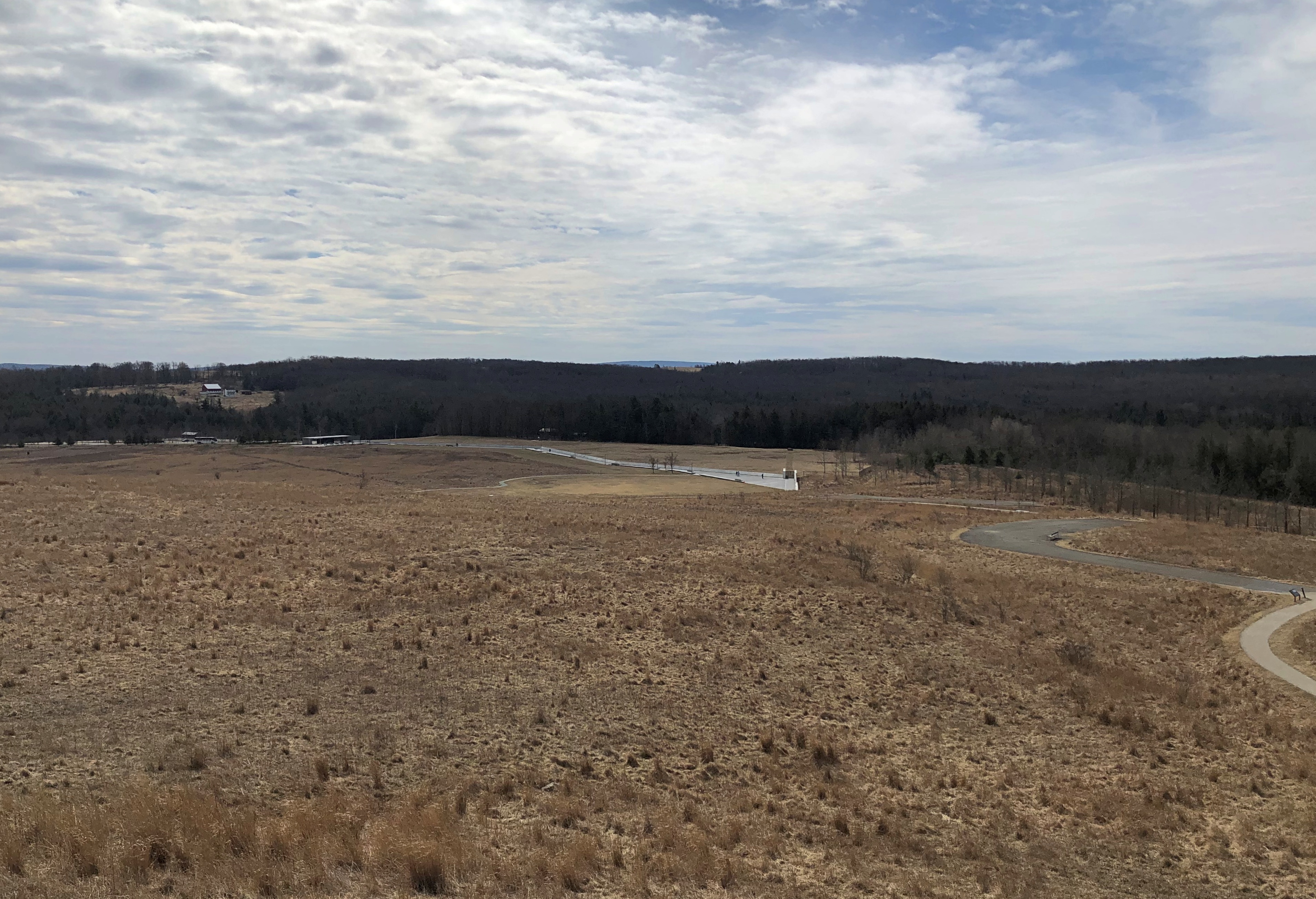
The memorial is as expansive as its rural location allows it to be. Its parts are variously horizontal, irregularly diagonal and vertical, and at some distance from each other. Come to think of it, the plane went from a high altitude into a ragged and sharp descent, to pulverization on the level ground. The features of the memorial’s inner circle are within eyeshot of each other, but seemingly far in the distance, and not imposing themselves much on the sloping earth or the big sky.
At first, it’s a little hard to visualize the various parts. The NPS brochure is helpful in that regard. The cut-off arrow says “Flight Path.”

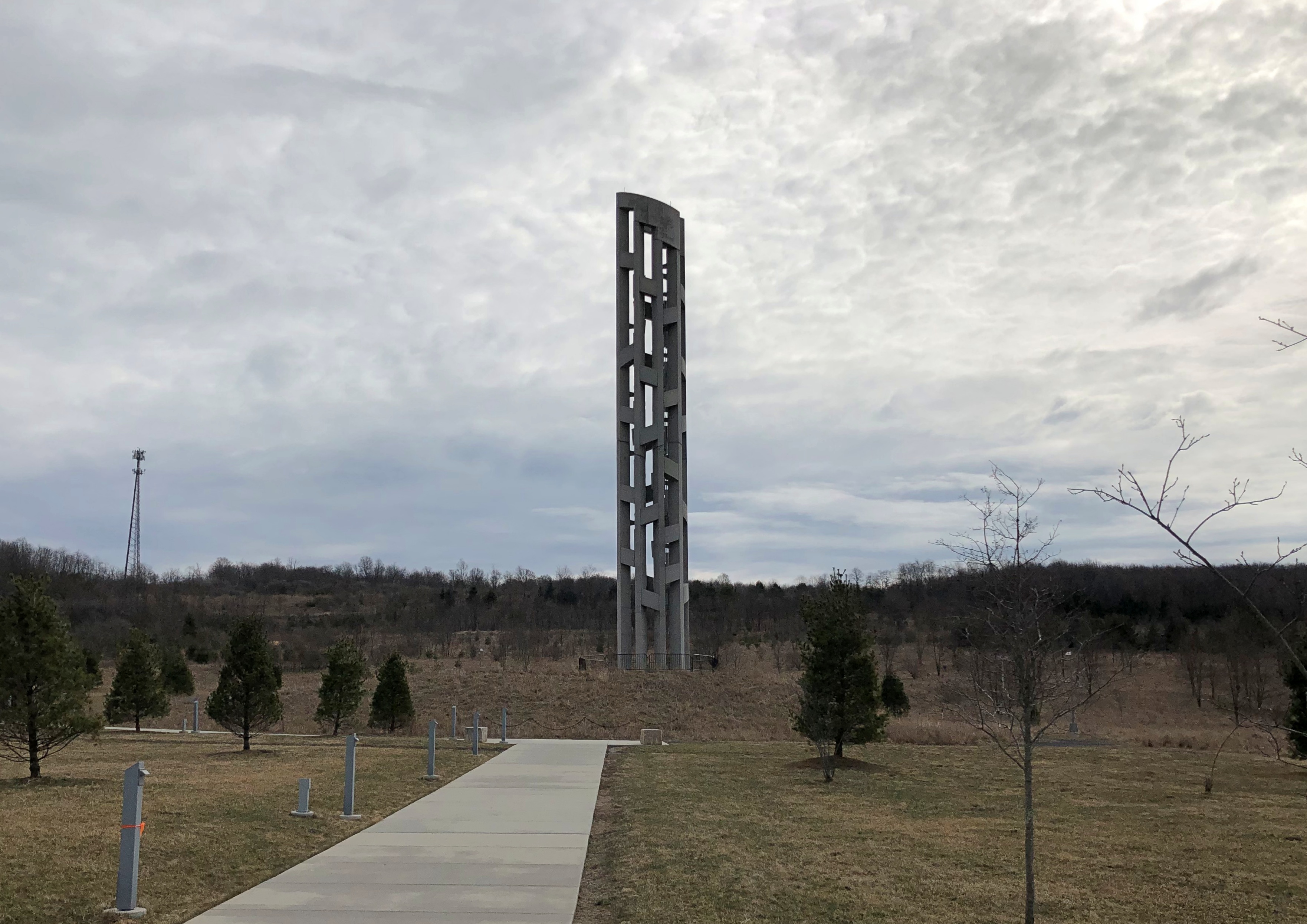
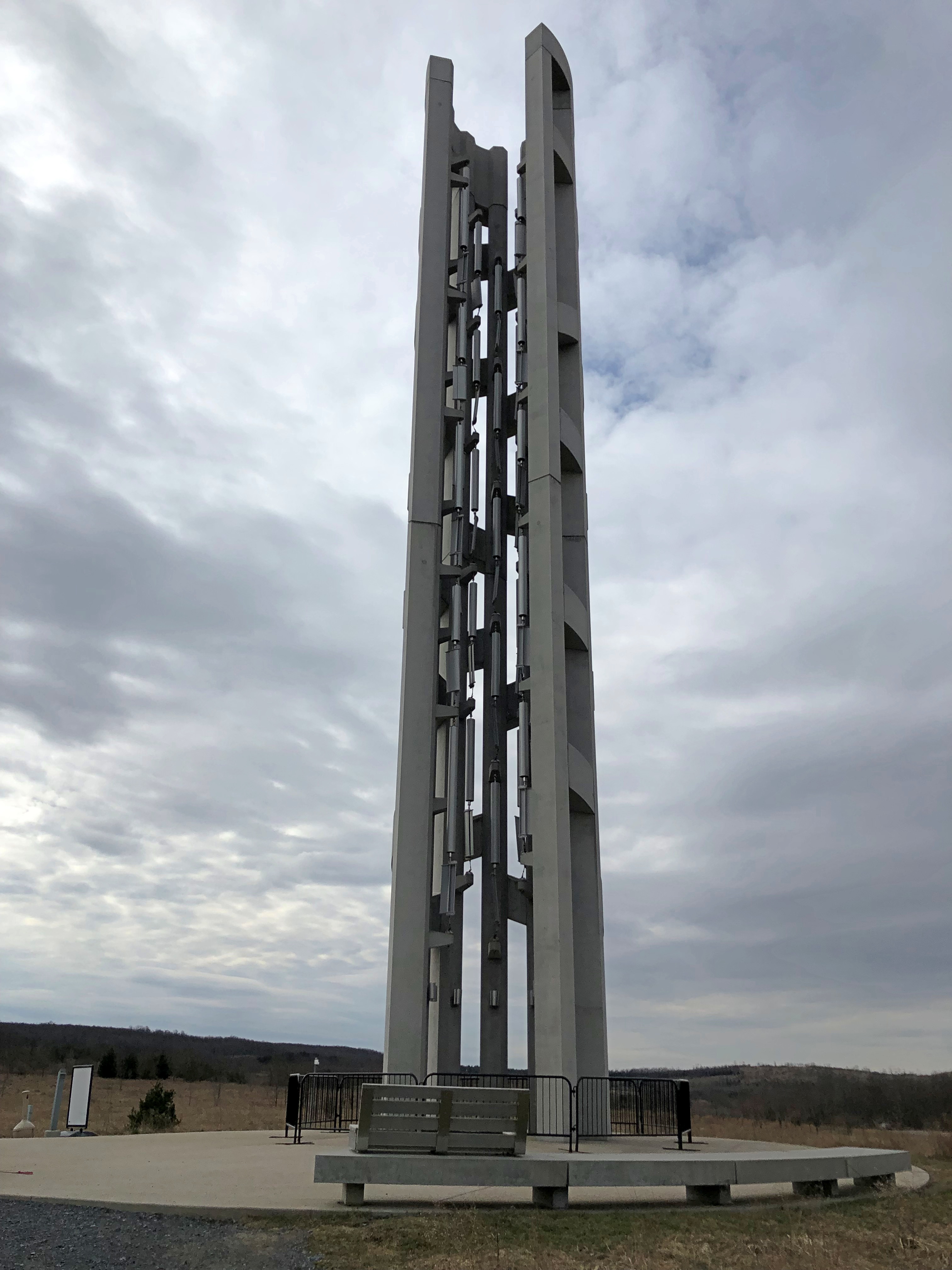
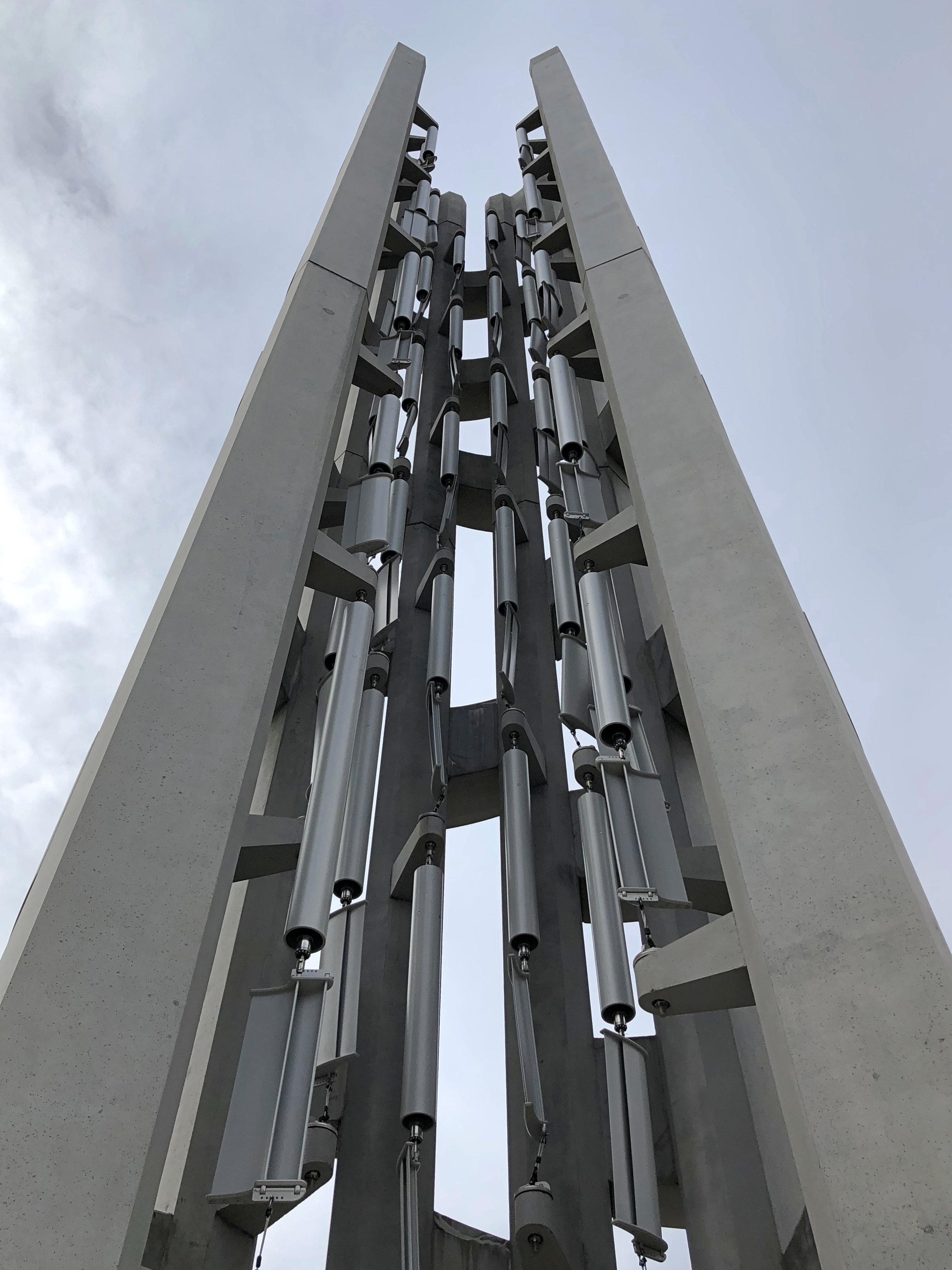
Near the entrance is the Tower of Voices, the most recent part of the memorial, a 93-foot structure with 40 wind chimes, which were installed in 2020. Ninety-three feet for the flight, 40 chimes for the number murdered.Flight 93 National Memorial Flight 93 National Memorial Flight 93 National Memorial

The chimes are supposed to sound in the wind. There was a little wind, and sound, as we stood under the tower, but not much.

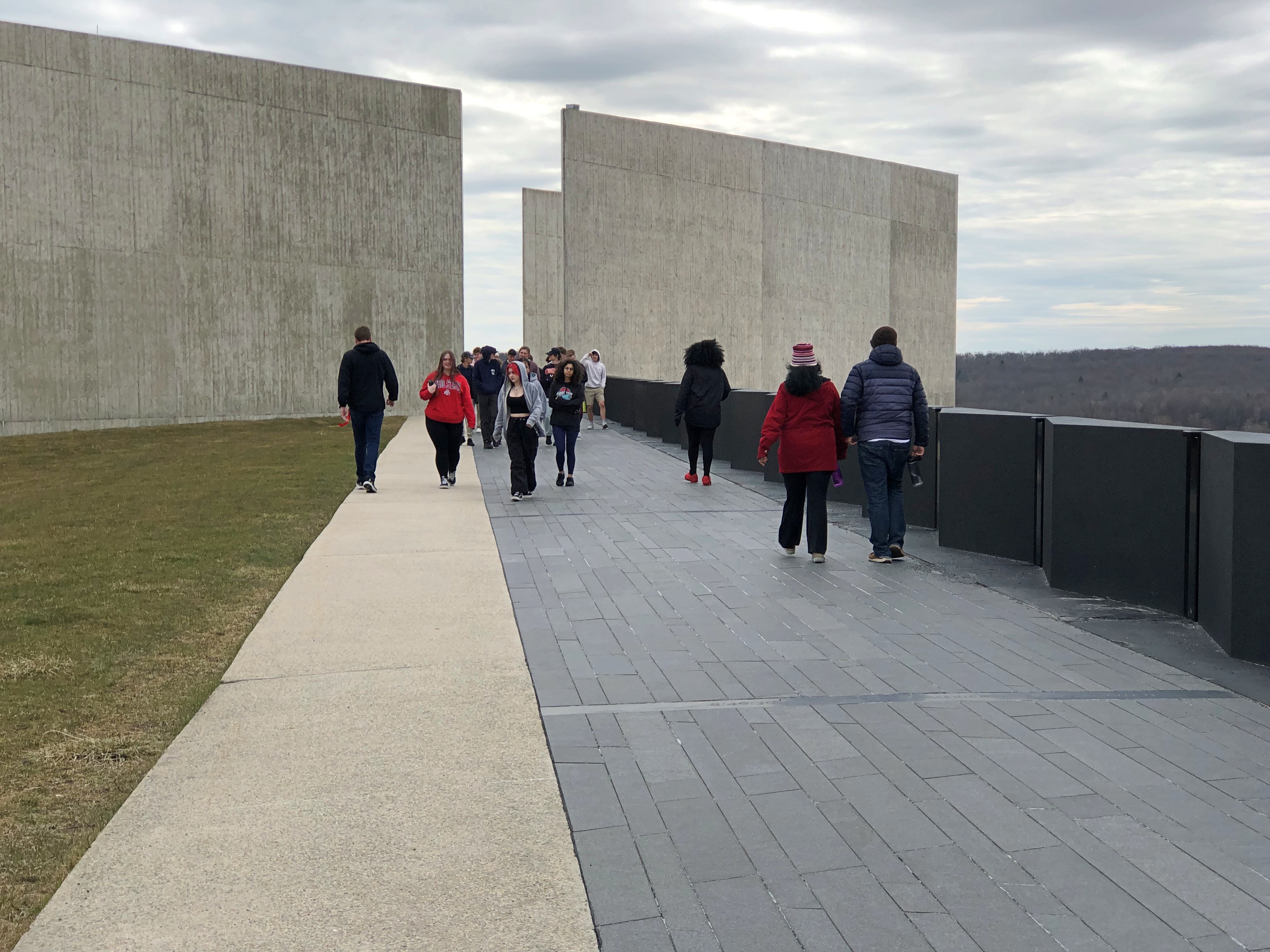
Further on is the visitor center and museum, formed by concrete structures. A few busloads of high school students were visiting. Flight 93 National Memorial

When they cleared out about 15 minutes after we arrived, that left only a trickle of visitors at the memorial on a cool but not cold weekday.

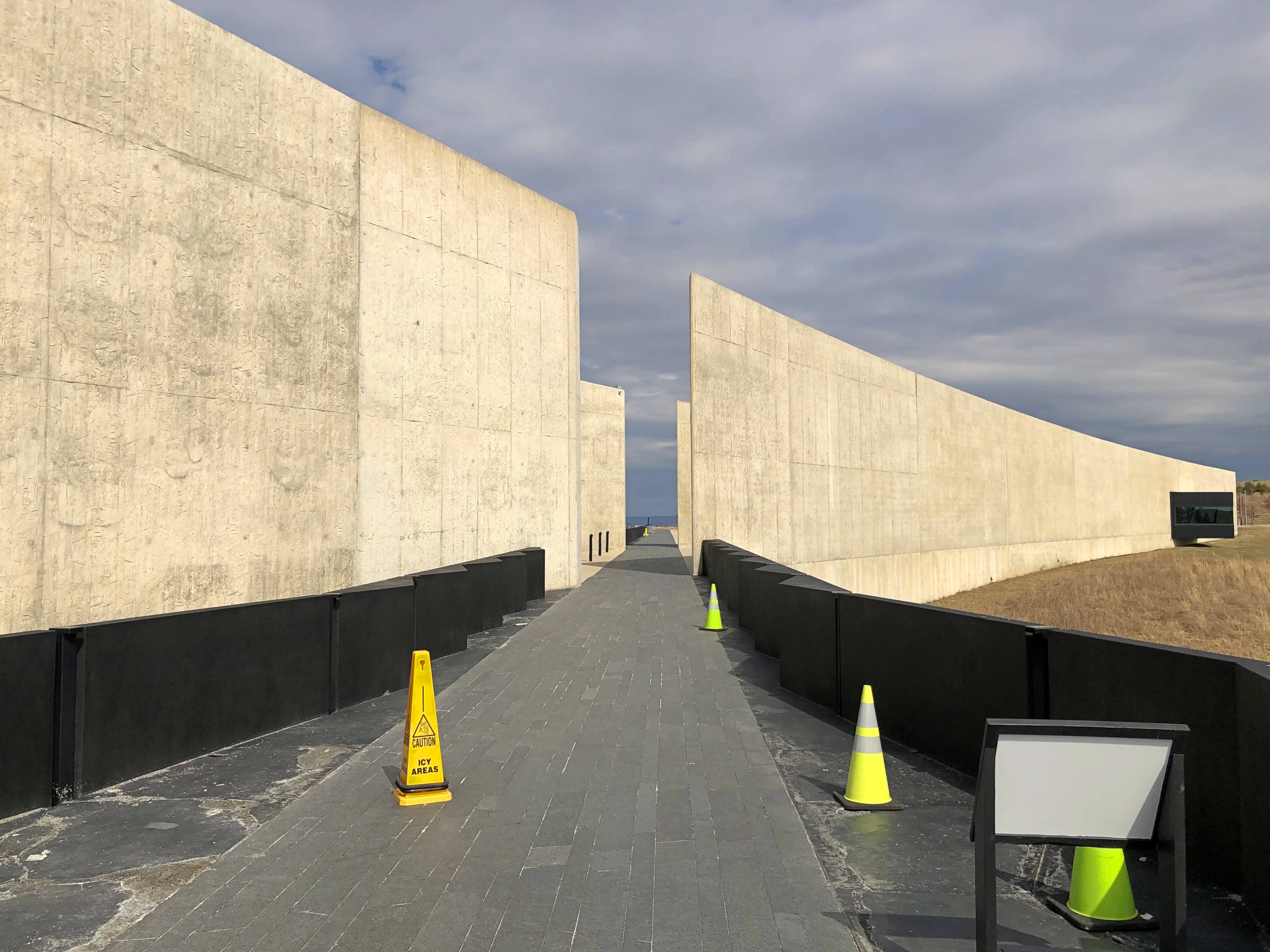
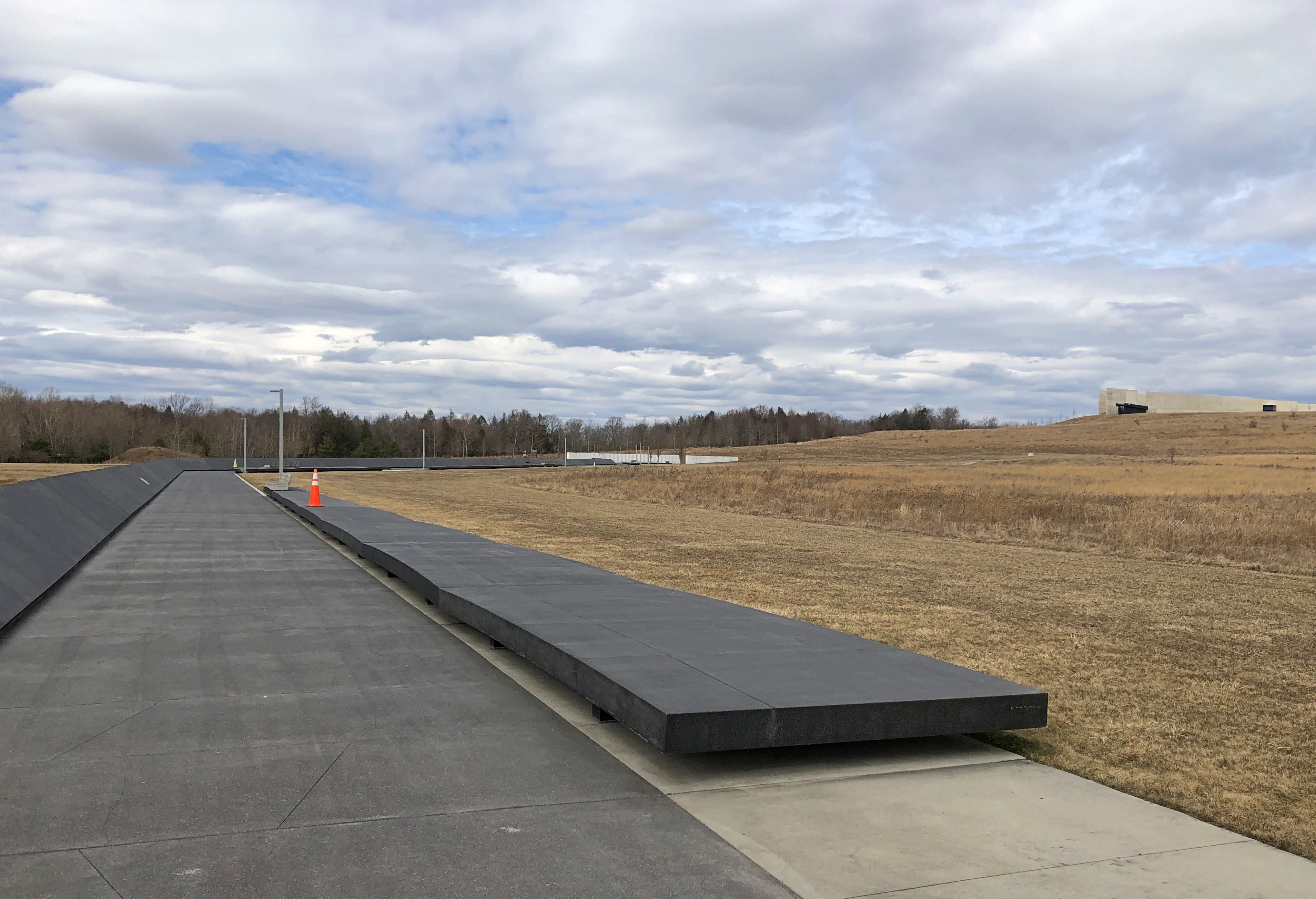
The black granite walkway isn’t a random placement, but reflects the path of Flight 93 in its last moments. At the level of the visitor center, it passes through the concrete structures and to an overlook.

Looking back at the structures.Flight 93 National Memorial

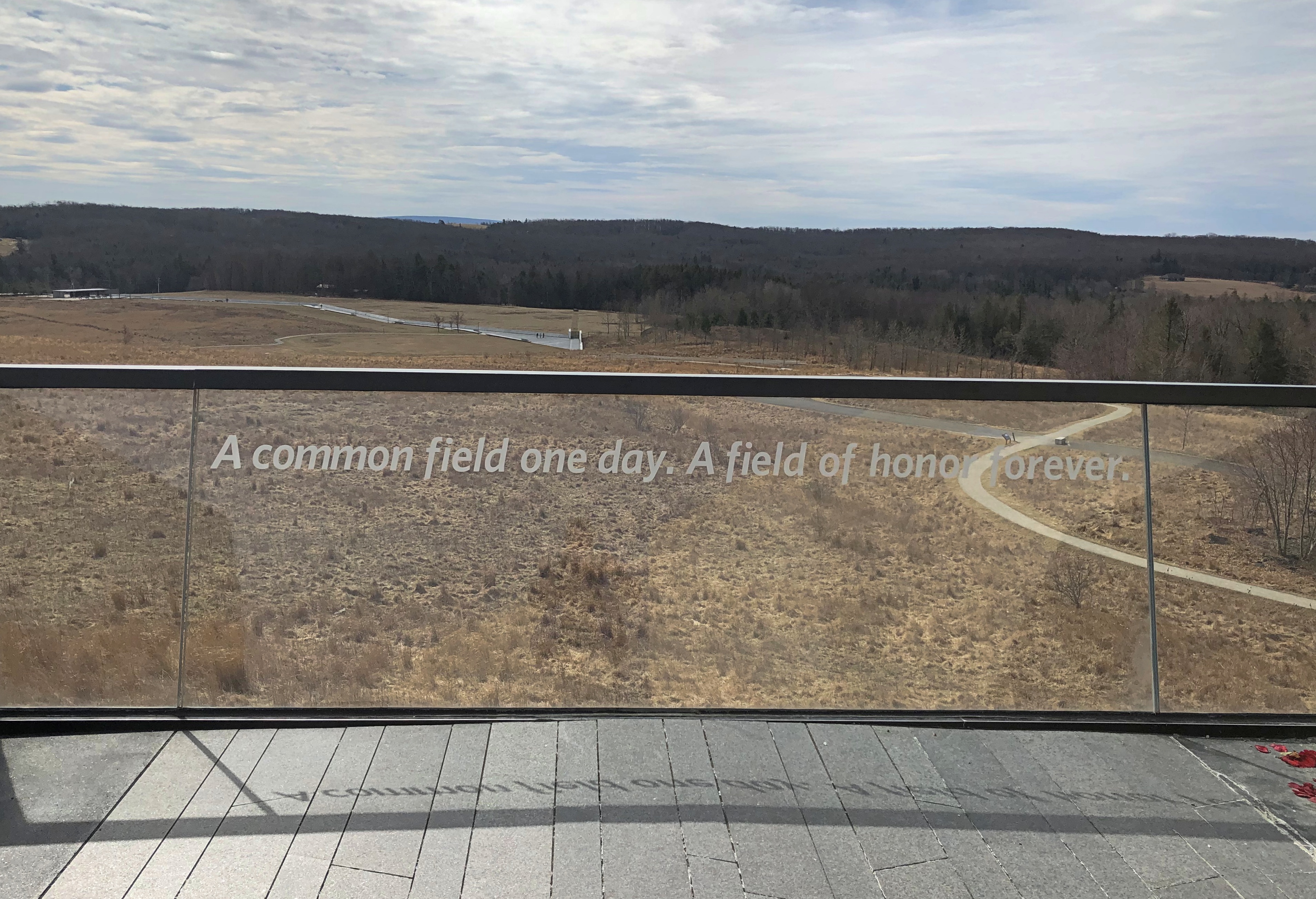
Looking forward, over the overlook.Flight 93 National Memorial Flight 93 National Memorial

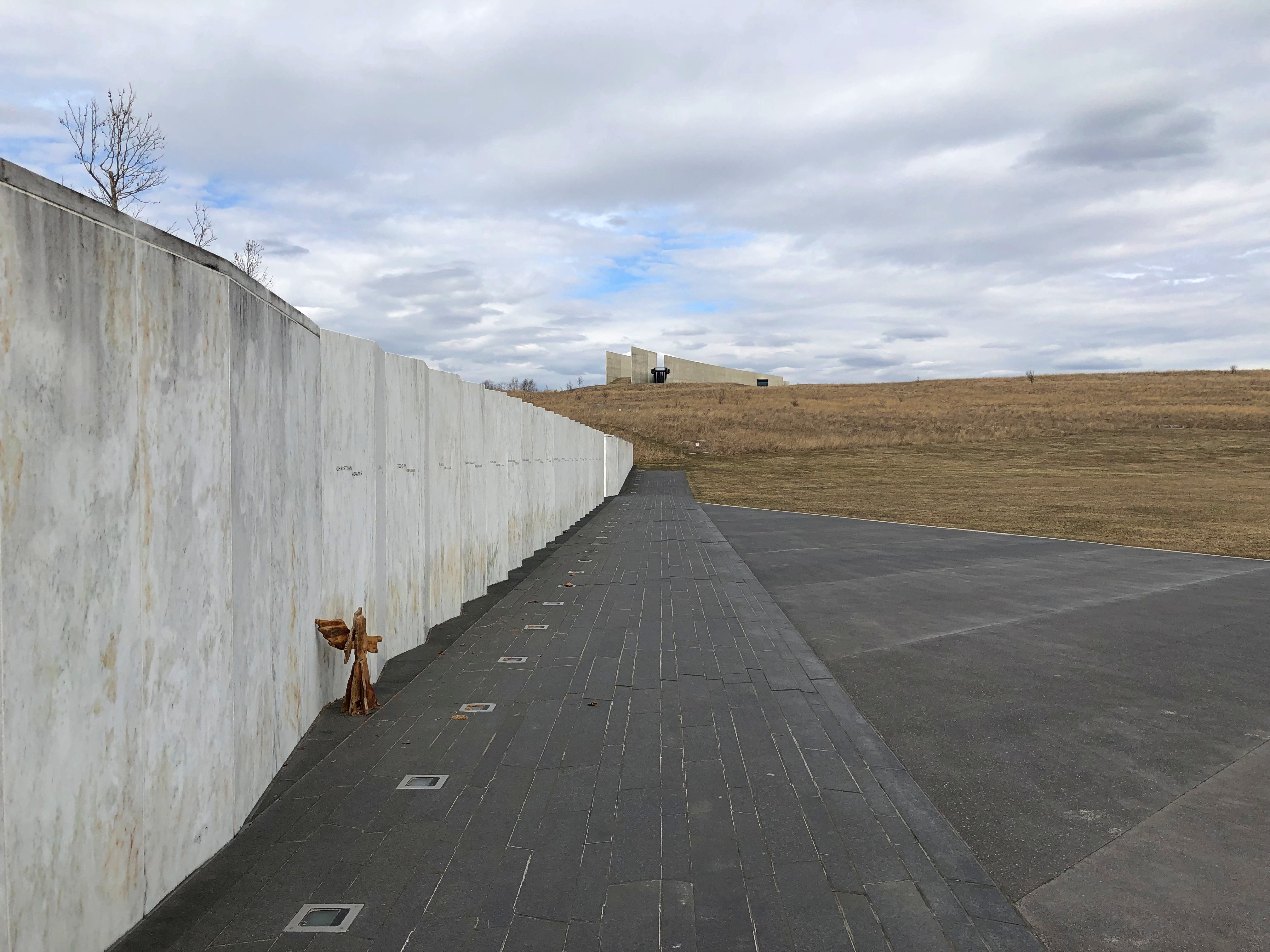
Within view is the actual crash site, now fronted by the Memorial Plaza and the Wall of Names, way at the down end of a brown slope. Brown for now. I’ve seen images of the place ablaze with flowers.
From the visitors center-museum-overlook, you can walk to near the crash site, on foot on a circular path, called The Allée, which is lined with Sunset Red maple trees; or drive on a circular road. We elected to drive, though I’m sure a walk in the fullness of summer, the colors of fall, or even through a snowy winter landscape, would be richly rewarding.

The first thing to see at the Memorial Plaza. The main thing.Flight 93 National Memorial

No dogs allowed on the sidewalk leading to the Wall of Names, so we took turns. I went first.Flight 93 National Memorial Flight 93 National Memorial

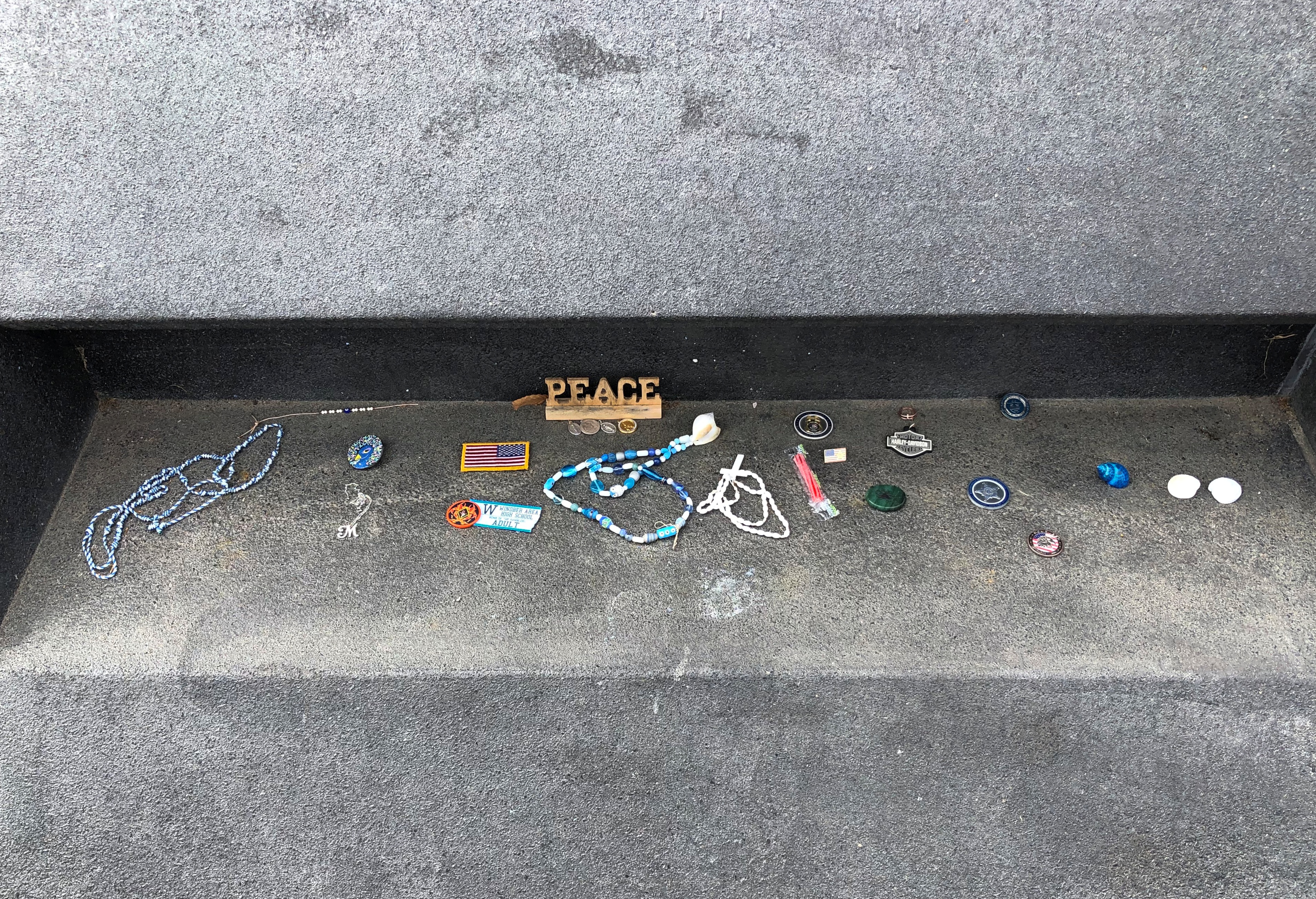
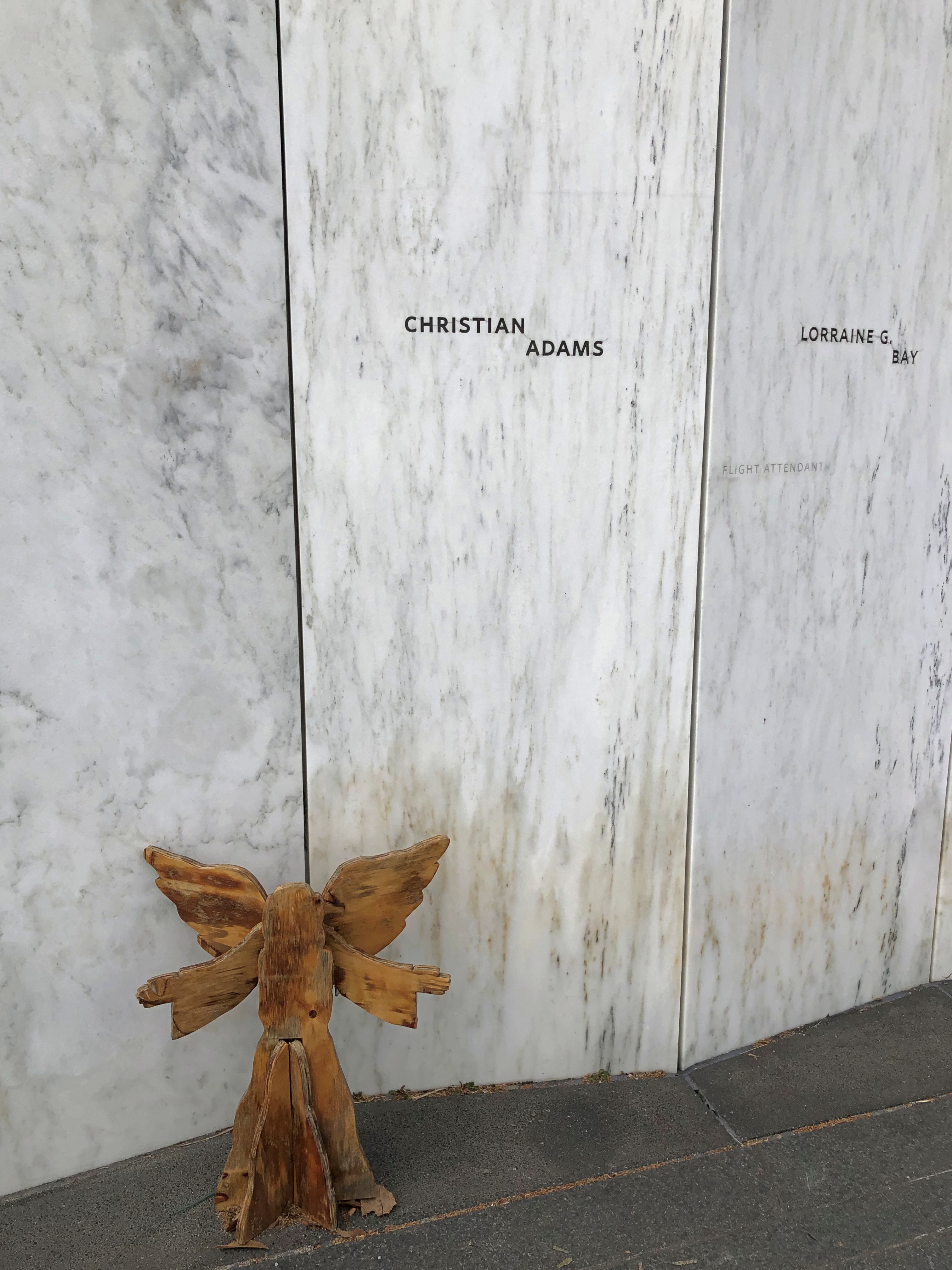
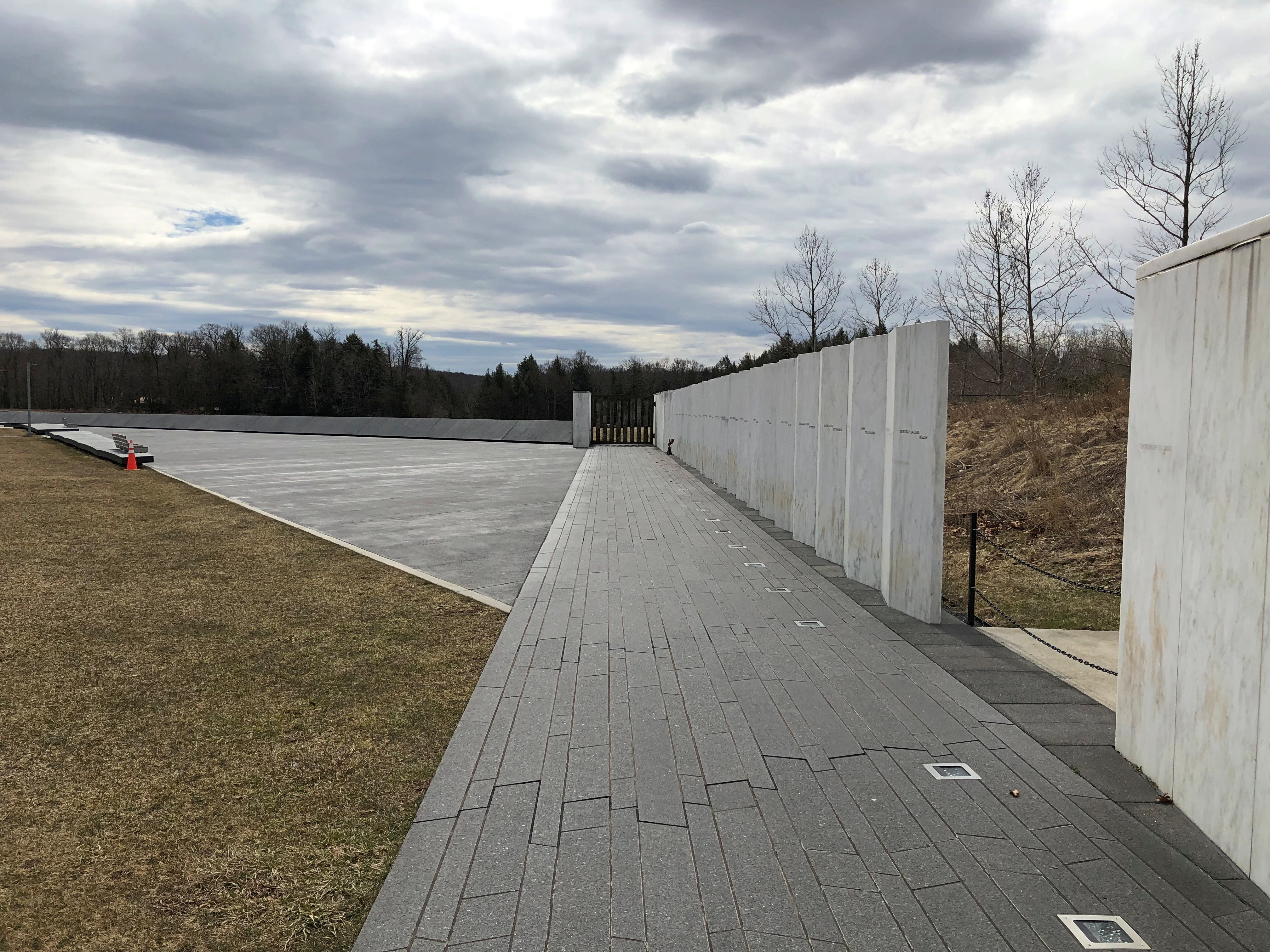
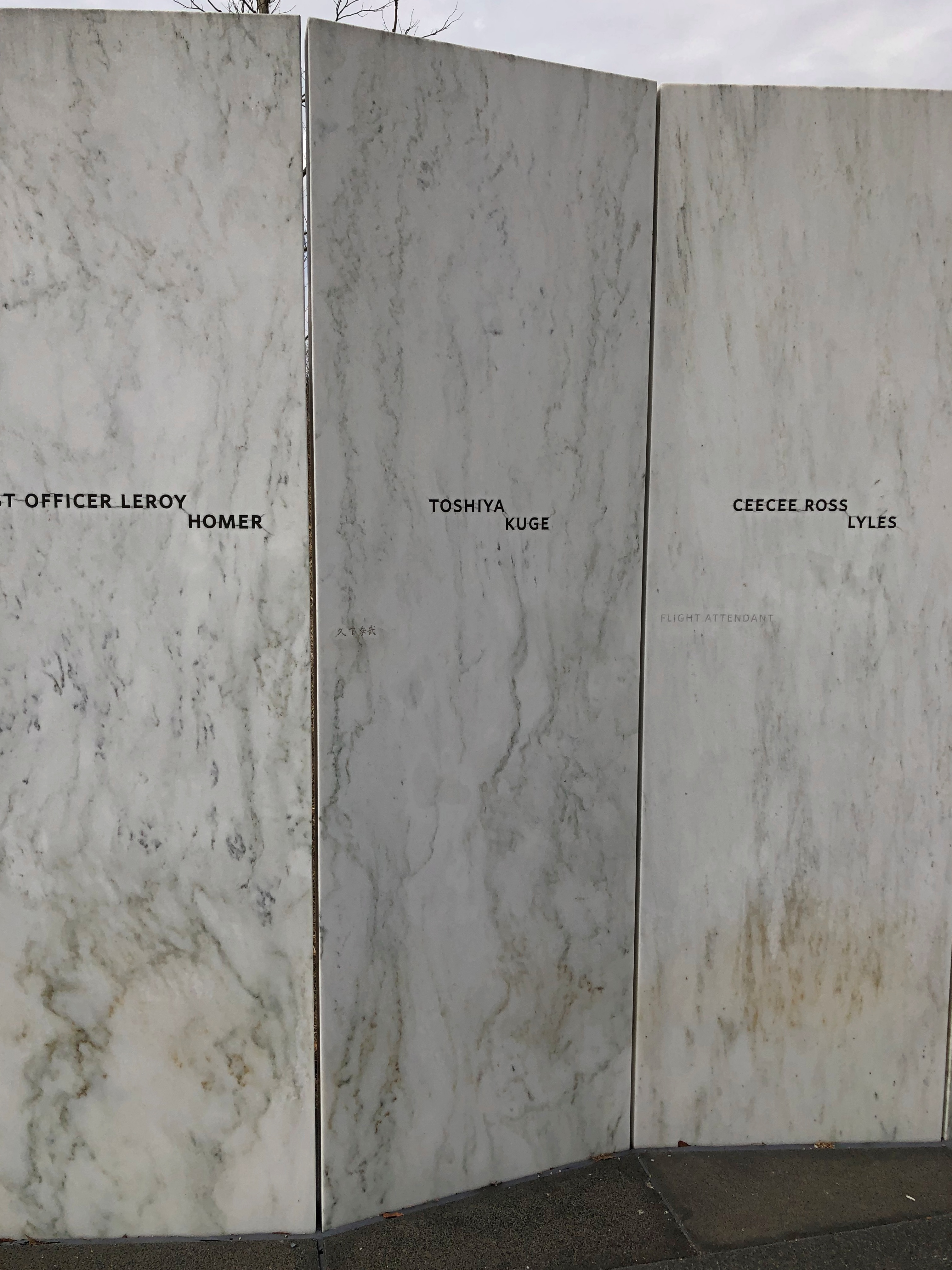
The Wall of Names: each of the crew and passengers, except of course for the murderers, gets a white granite panel with his or her name inscribed, alphabetically left to right, beginning with Christian Adams and through to Deborah Jacobs Welsh.Flight 93 National Memorial Flight 93 National Memorial

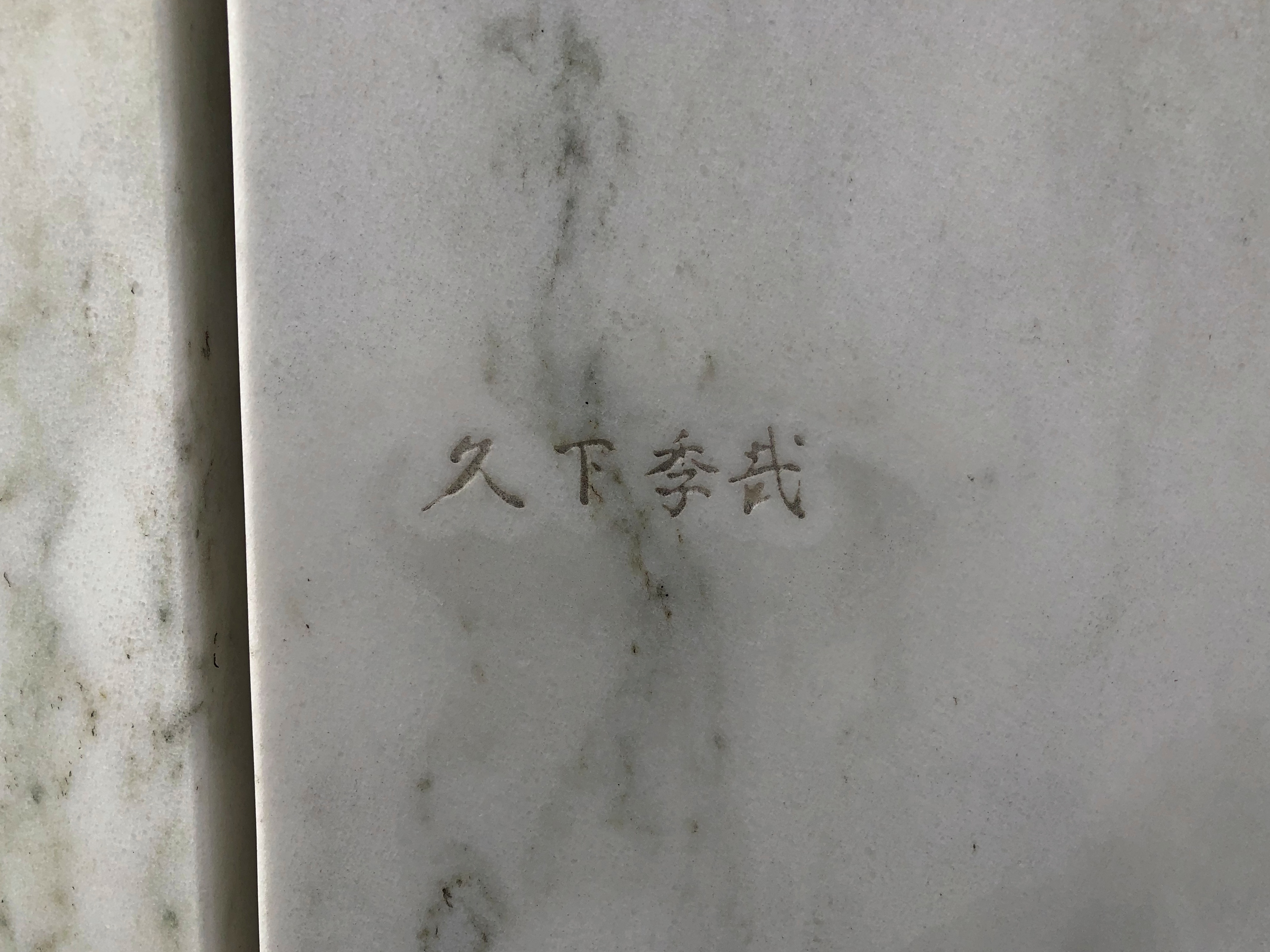
Until I went to the museum, I hadn’t known that a Japanese national was among the dead: Toshiya Kuge. Yuriko noticed that as well.Flight 93 National Memorial Flight 93 National Memorial
Kuge was a student, and at 20, one of the youngest people on board, returning to Japan by way of San Francisco that morning. His mother visits the memorial every year.
The flight path walkway picks up again next to the Wall of Names and goes to a gate.Flight 93 National Memorial

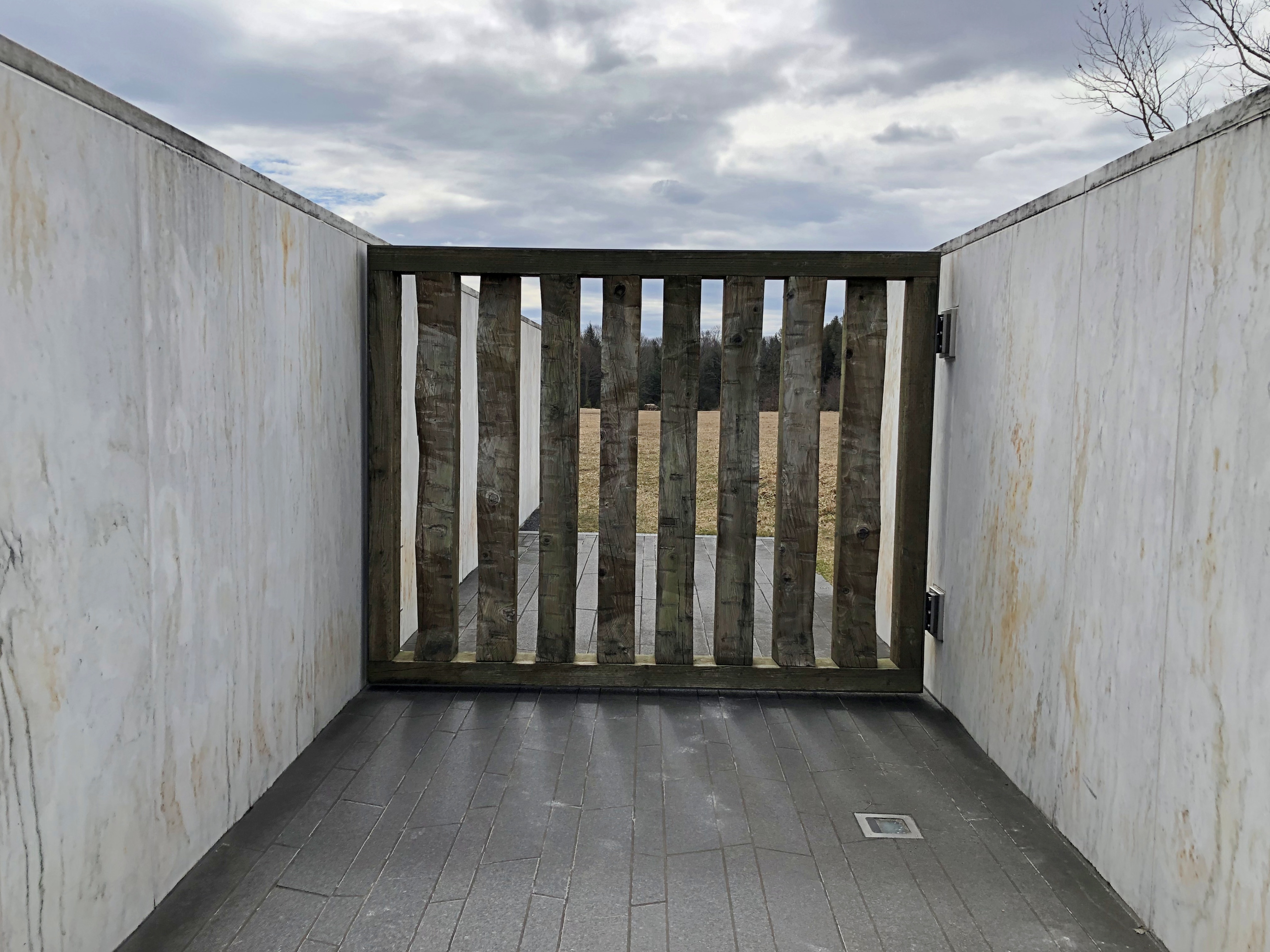
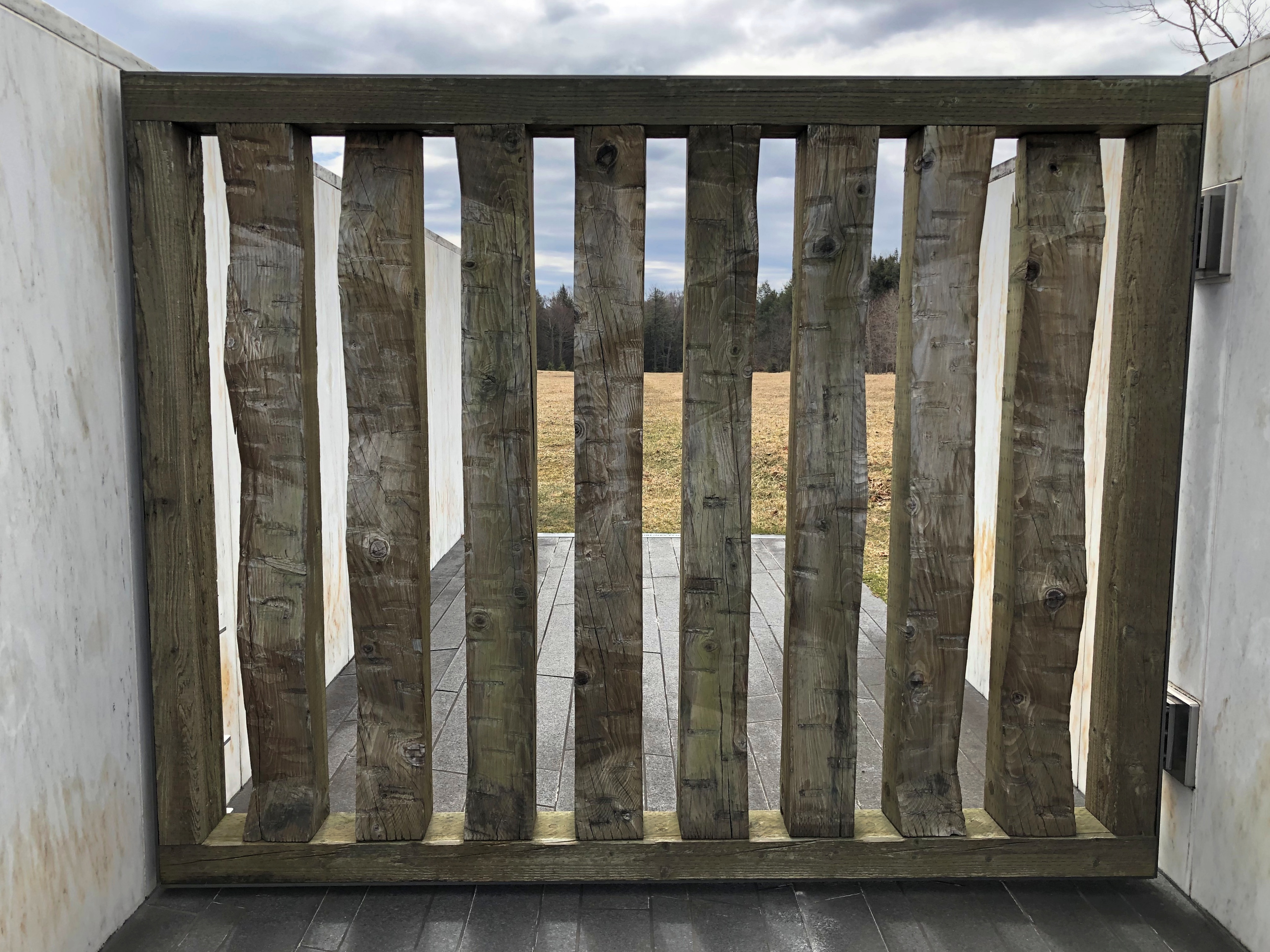
The ceremonial gate is hemlock beams, with 40 angles cut into it. The gate is ceremonially closed to us, the living.s constructed of hewn hemlock beams with forty angles cut into it,
s constructed of hewn hemlock beams with forty angles cut into it,

Beyond that is a closed field that was point of impact, now featuring a boulder standing by itself to honor the dead. The ground also is a field of internment for the victims.

When I returned, it was Yuriko’s turn to walk to the Wall of Names while I waited in the car with the dog. The walk takes at least 20 minutes, if you’re going to spend any time at all at the wall. About five minutes later, she came back.

“You’re back,” I said.

“It was too sad,” she said.

The Palace of Gold

What do you know, today’s the 141st anniversary of the assassination of Jesse James by the coward Robert Ford. We happened to watch the movie of that name over the weekend, and found it slow-moving but impressive. Nothing like a high-verisimilitude work of historical fiction to take you into the past, especially if there are no outrageous anachronisms.

Frank Lloyd Wright on Monday, Hare Krishnas on Tuesday. That’s possible in southwestern Pennsylvania and West Virginia.

Some years ago, I was poring over a road map in anticipation of a road trip that didn’t happen. Looking roughly where we eventually did go last month, I noticed the Palace of Gold at a spot in rural West Virginia, in the odd northern panhandle of that state. Such a thing cannot go un-looked up, so I found out that it is part of a complex run by the International Society for Krishna Consciousness.

We’d been to ISKCON Chicago. Time to drop by the Palace of Gold, I thought, as long as we were in the neighborhood. The palace is part of a larger settlement known as New Vrindaban, which was founded during the heady early days of the Hare Krishna movement in the New World, namely 1968. You know, when the Beatles were hanging out with sect founder His Divine Grace A.C. Bhaktivedanta Swami Prabhupāda, or vice versa.

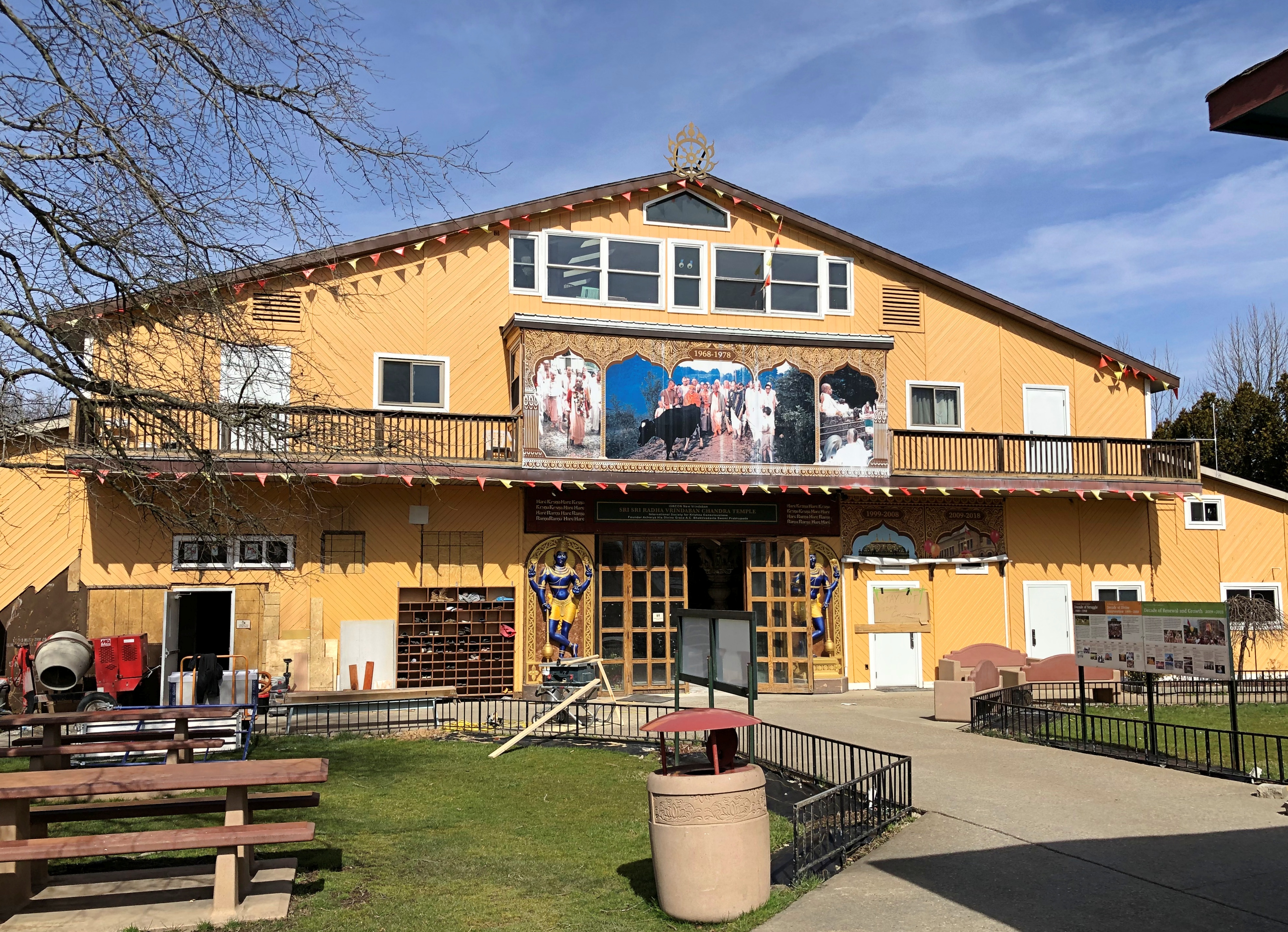
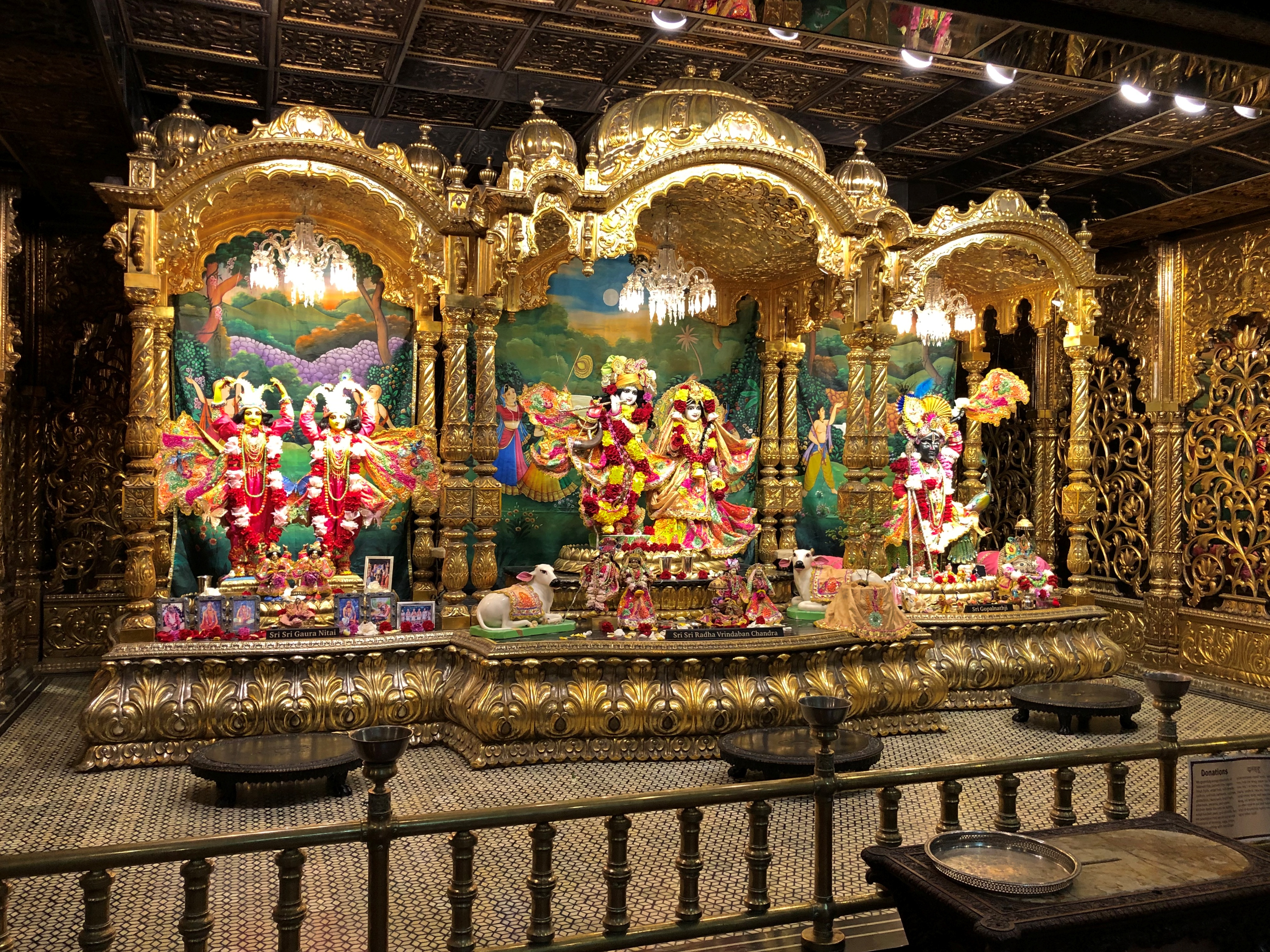
This isn’t the Palace of Gold, but it is a major part of the New Vrindaban complex, Sri Sri Radha Vrindaban Chandra Temple (RVC Temple).Sri Sri Radha Vrindaban Chandra Temple

ISKCON had a lean period after its counterculture heyday, but someone is paying for the vigorous reconstruction at the temple, as well as plans to restore the Palace of Gold.Sri Sri Radha Vrindaban Chandra Temple

Maybe Alfred Ford kicked in some dosh. I didn’t know till our visit that a great-grandson of Henry Ford, also known as Ambarish Das, is a member of ISKCON, and is a major donor for a major project in India.

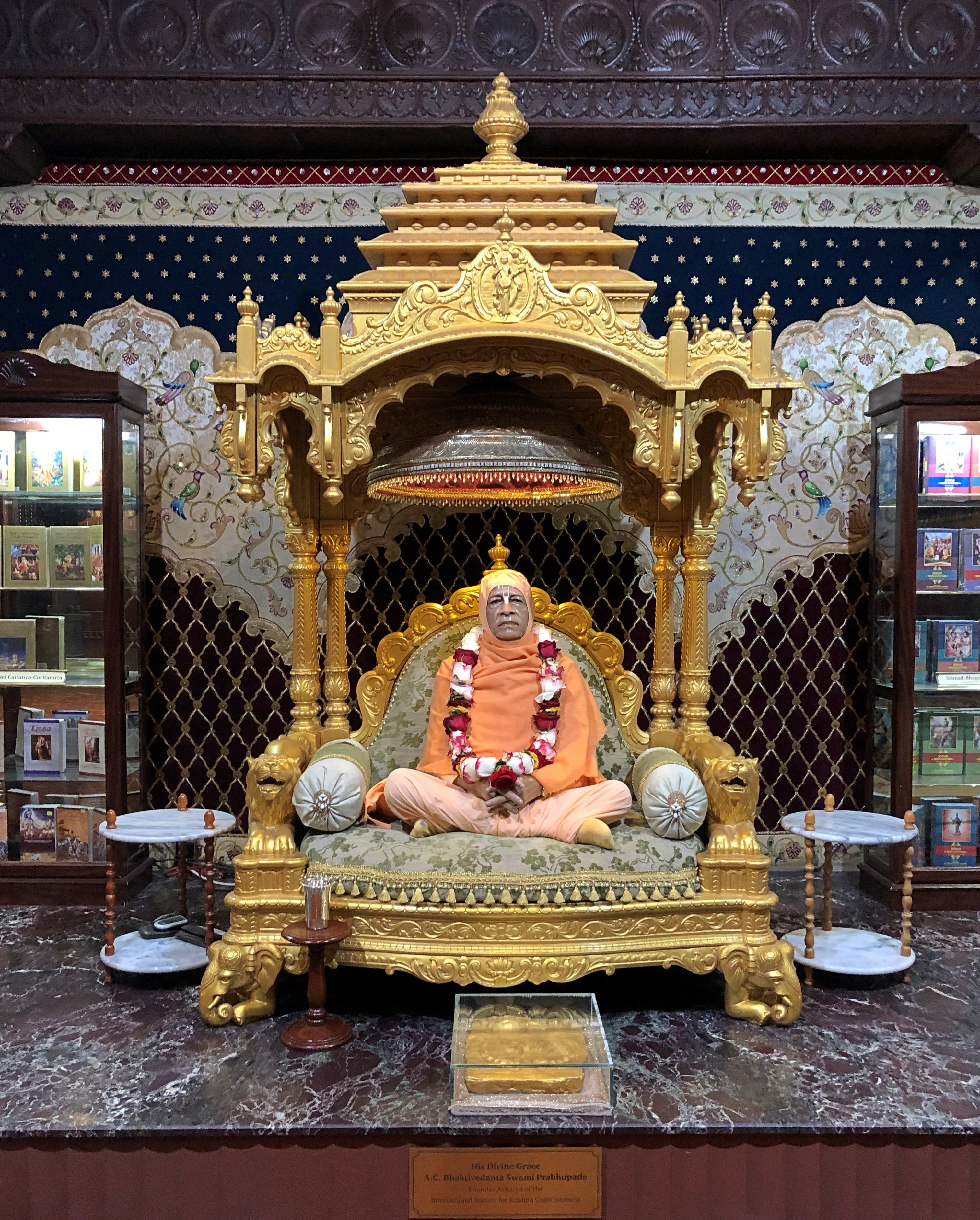
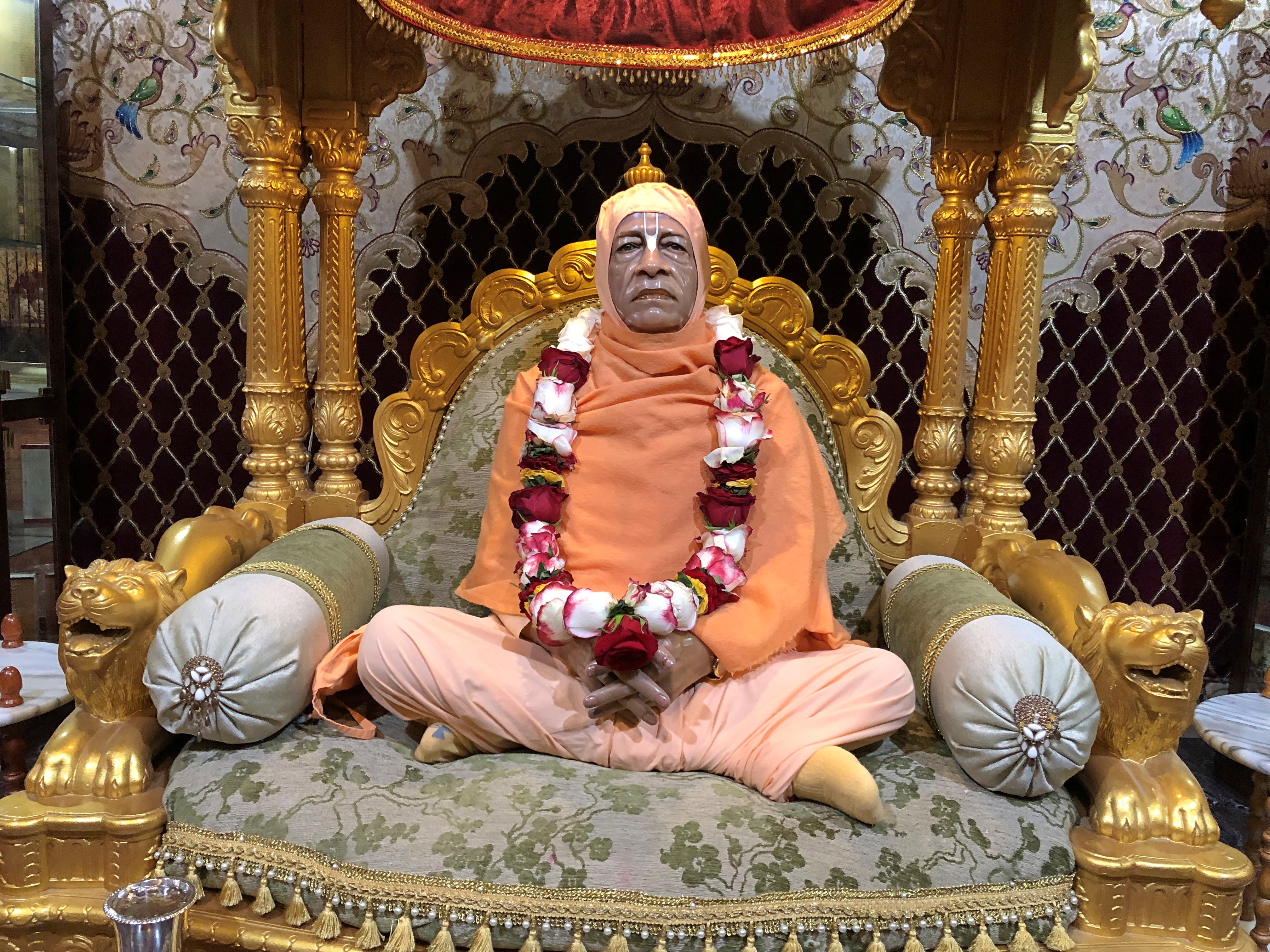
You can’t go too far in the temple without encountering Swami Prabhupāda.Sri Sri Radha Vrindaban Chandra Temple Sri Sri Radha Vrindaban Chandra Temple

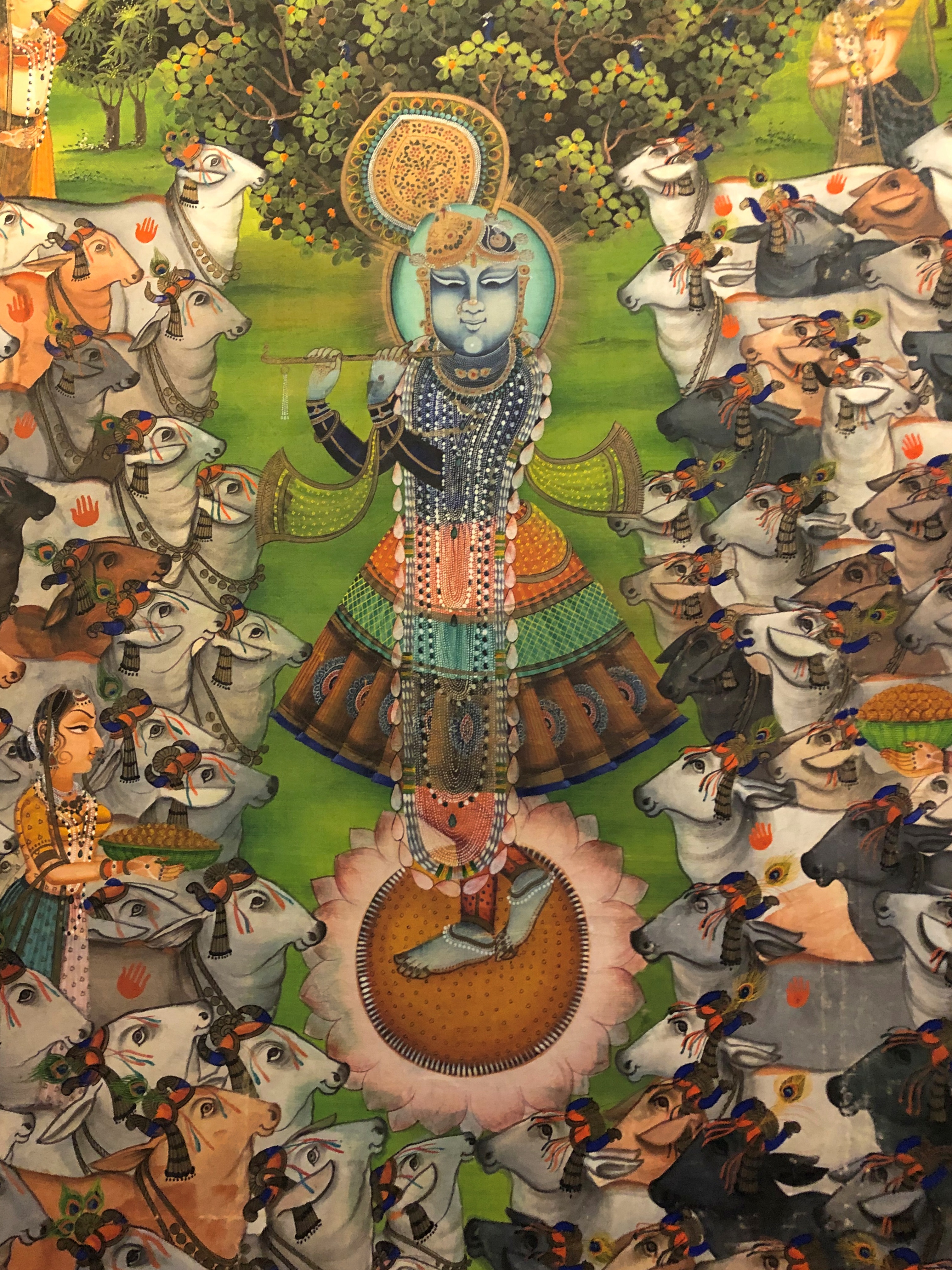
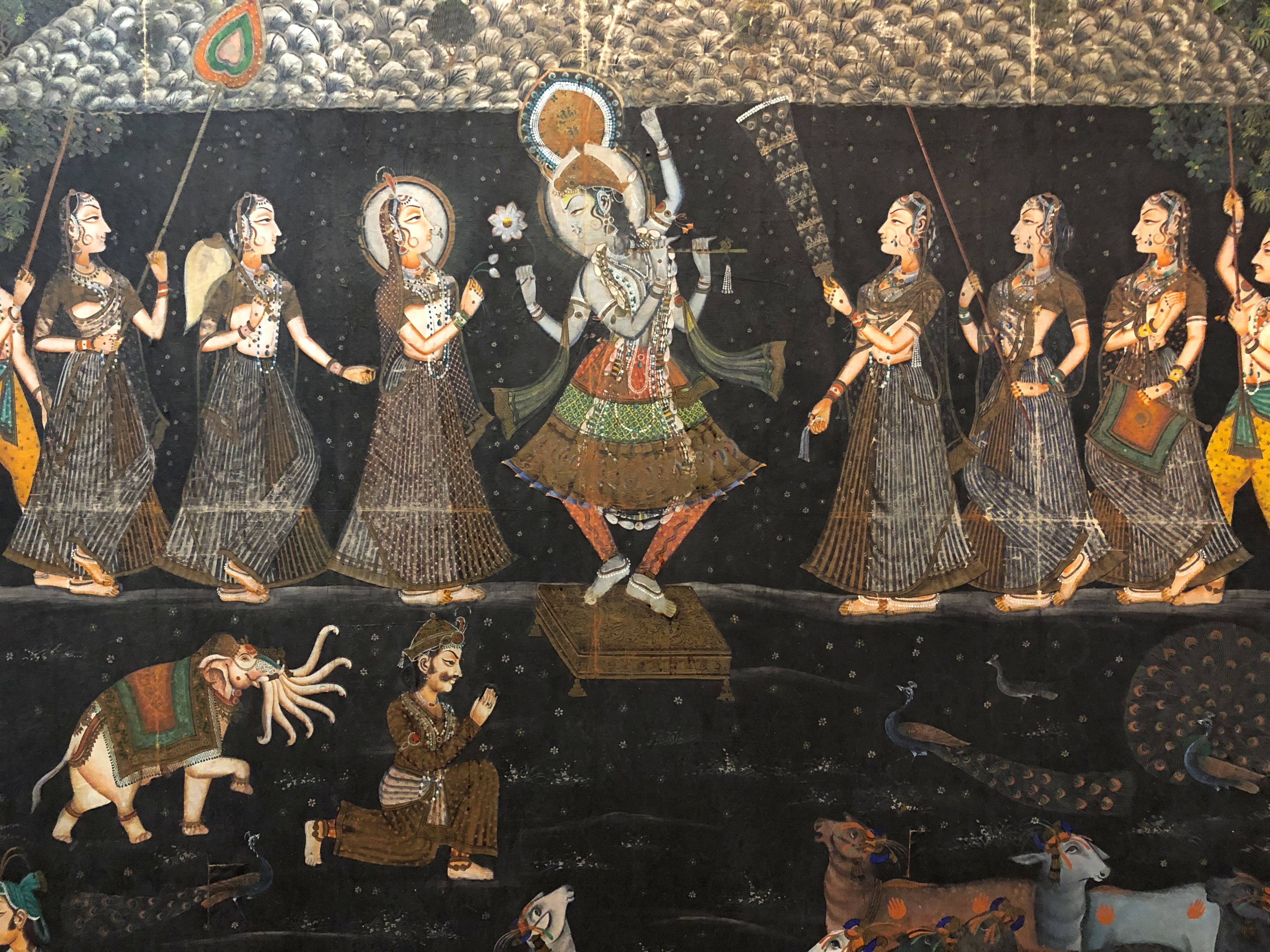
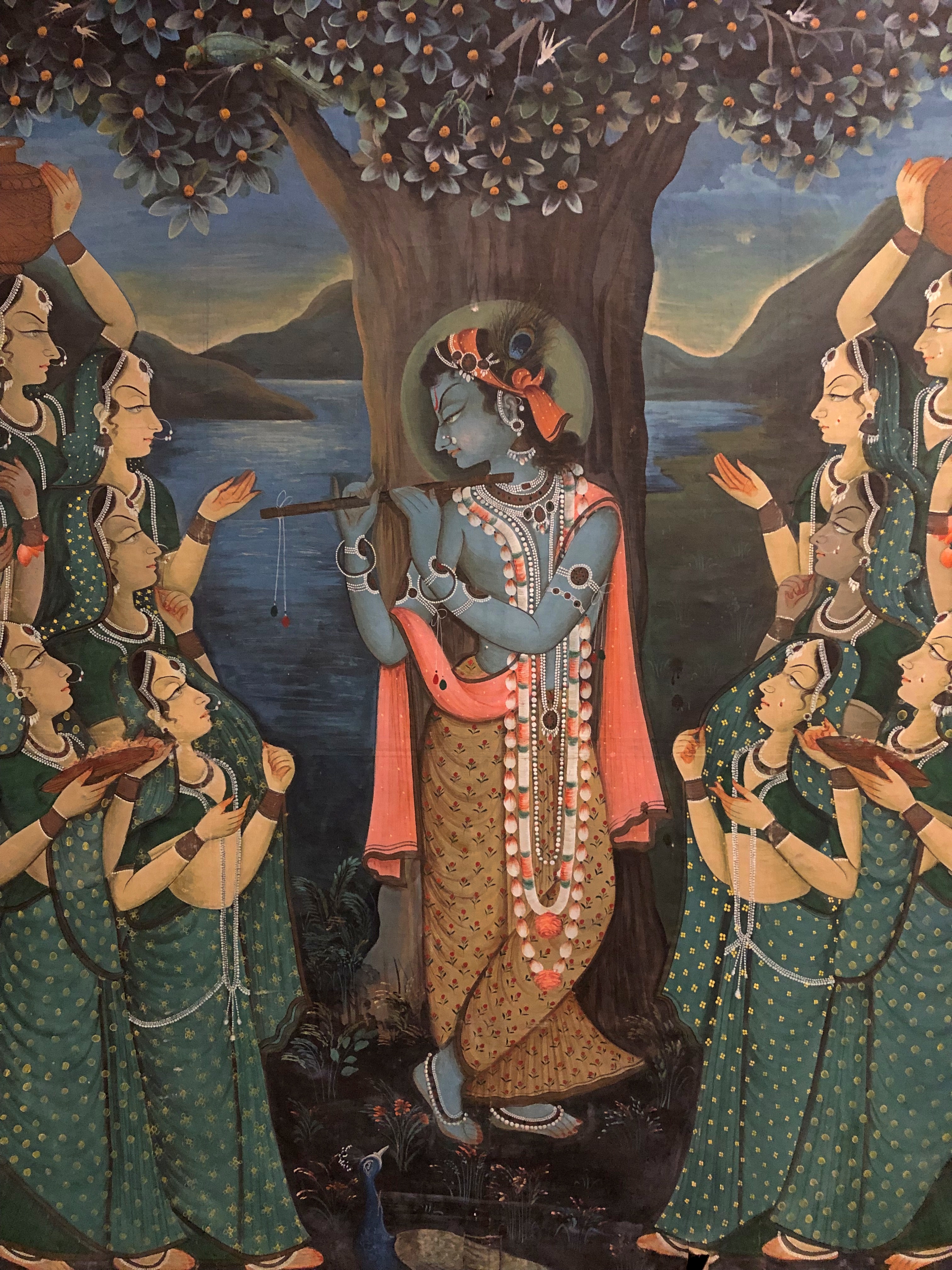
Many depictions of Krishna and his flute.Sri Sri Radha Vrindaban Chandra Temple Sri Sri Radha Vrindaban Chandra Temple Sri Sri Radha Vrindaban Chandra Temple

The centerpiece. At least, that’s what I assume; it was front and center.Sri Sri Radha Vrindaban Chandra Temple Sri Sri Radha Vrindaban Chandra Temple

I heard the story of the founding of the ISKCON from two different Anglo monks, two of about 200 people who live in the settlement, one young and at the visitors center, the other old and at the Palace itself. Their stories had a mythical quality to them, emphasizing the travail of the founder of the sect, especially his sea voyage from India to New York by cargo steamer, under hardscrabble circumstances, age nearly 70, to bring Krishna consciousness to the West.

Swami Prabhupāda thus brought one of the many branches of the massive flowering tree that is Hinduism to America, and at an auspicious time – 1965. Not only had U.S. immigration laws just been loosened, one of the periodic effusions of bohemianism was just then under way in the West, making for a receptive audience. Double good fortune for the swami, or perhaps the timely intervention of Lord Krishna, made exponentially greater when he caught the attention what we would now call influencers.

The founder did not, however, live to see New Vrindaban come to full fruition, since he died in 1977 – cast off his body for another, presumably – and his followers took up the task of developing the place. As you’d expect with a new religion, any religion really, not all went smoothly. Violence, murder plots, a racketeering conviction. New Vrindaban spent a period in the late 20th century excommunicated from ISKCON, but it is back in the fold now.

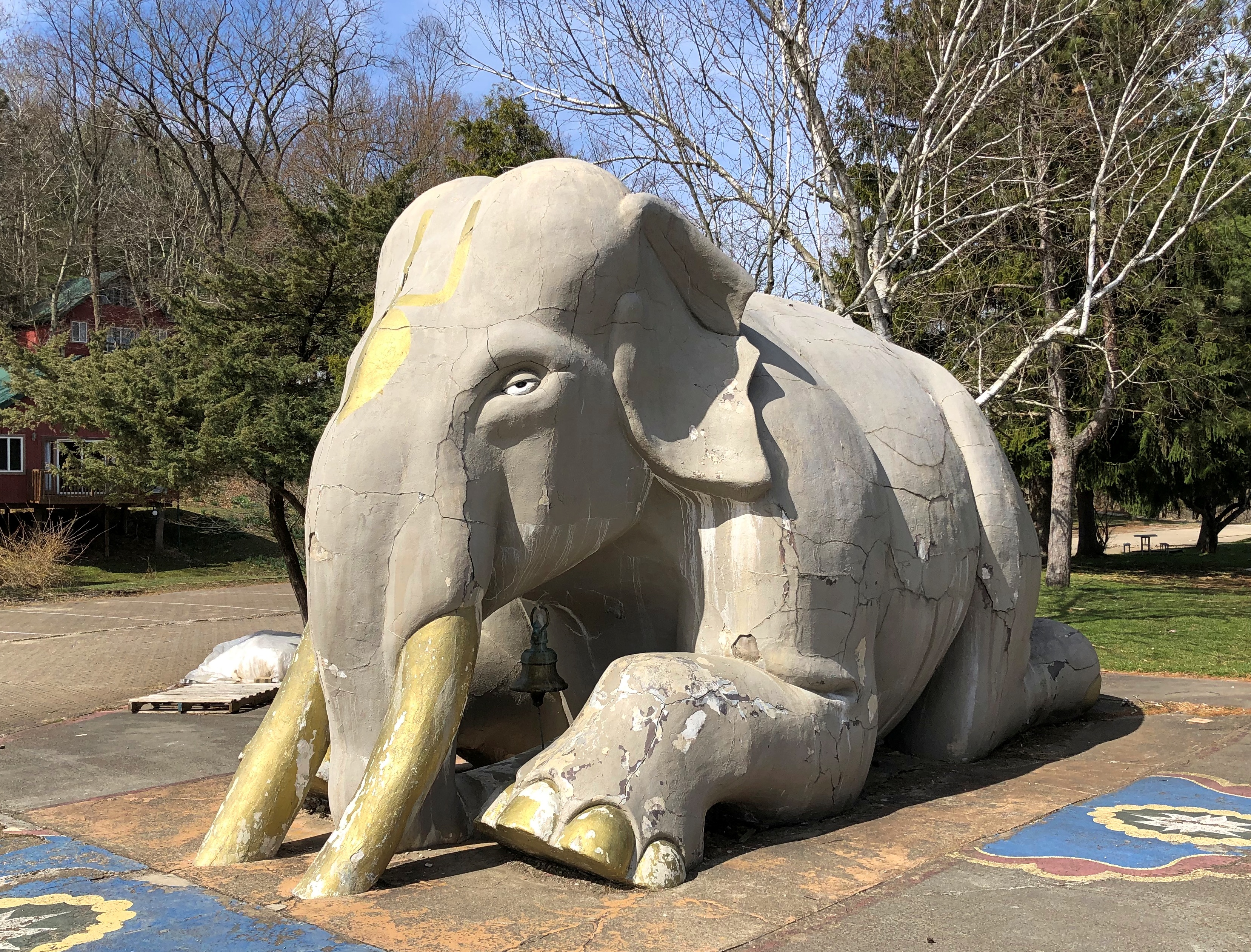
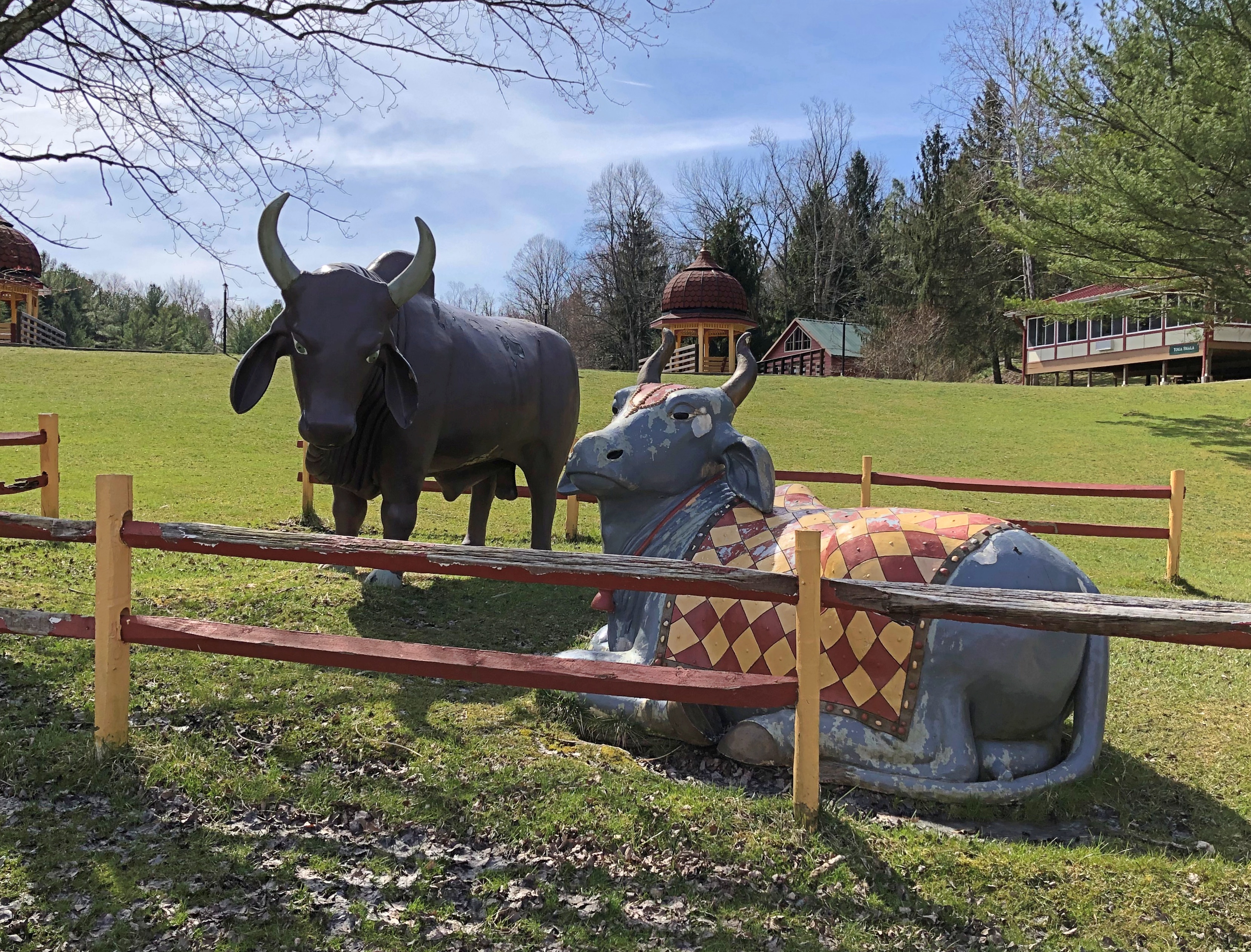
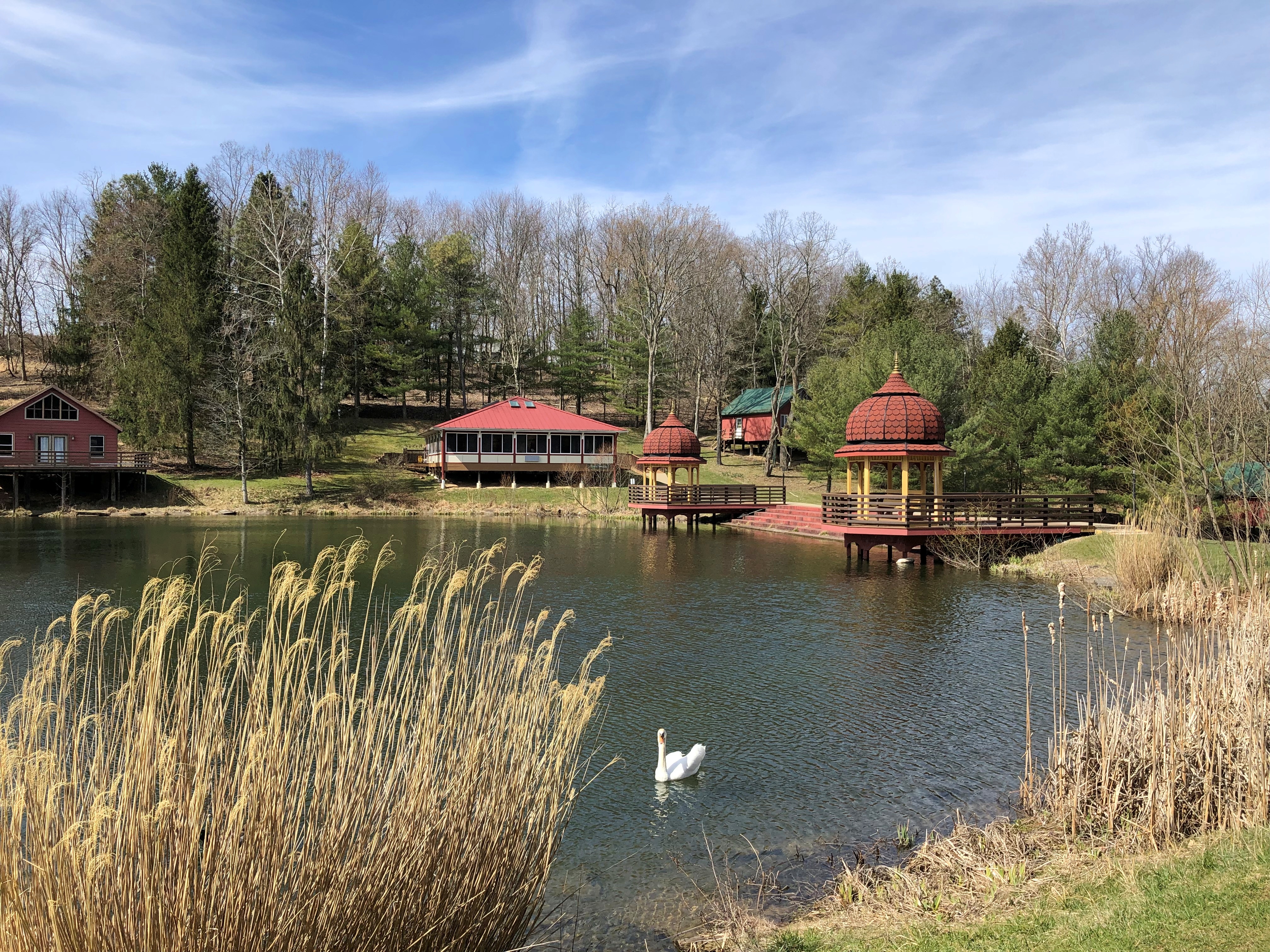
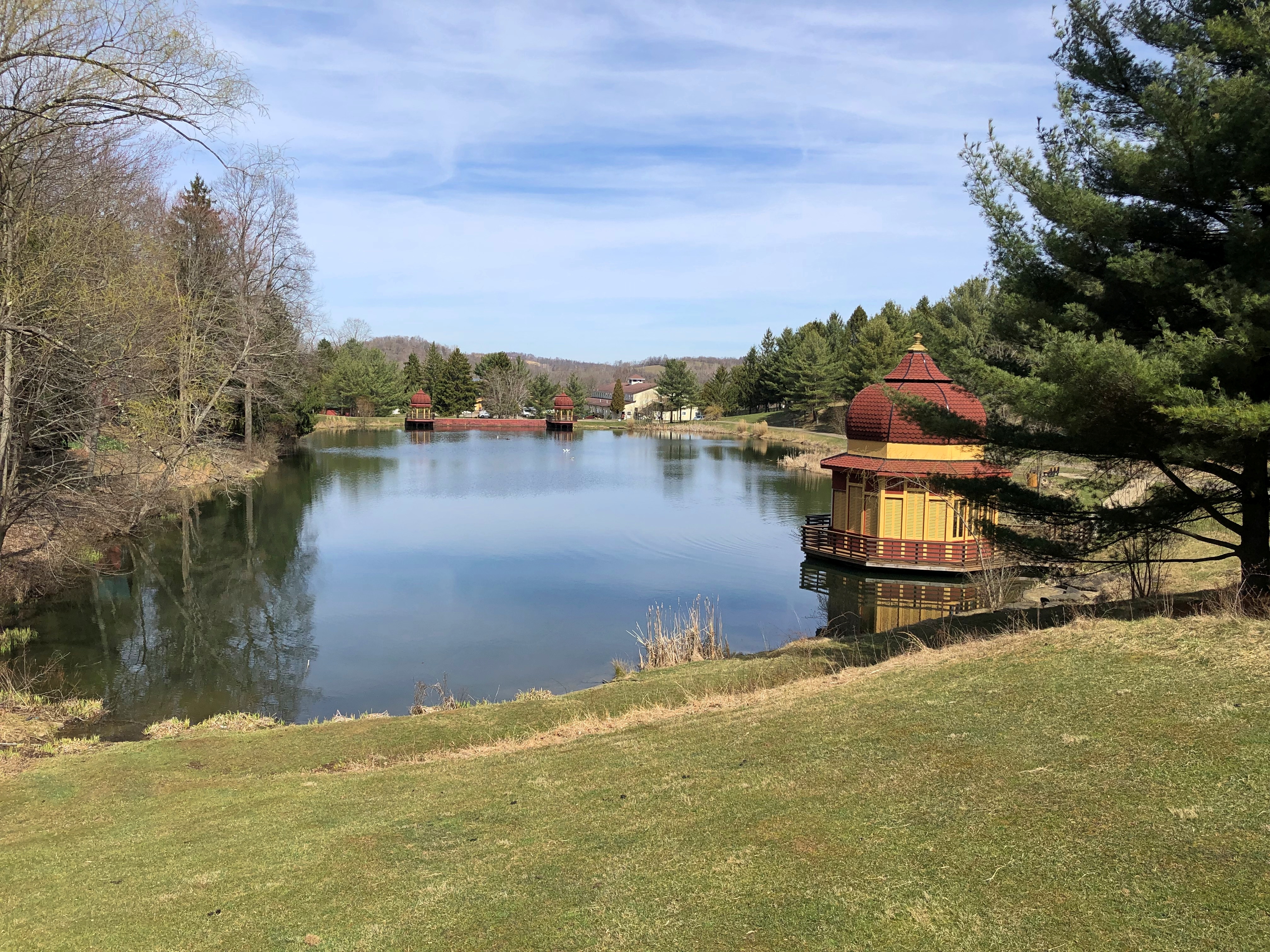
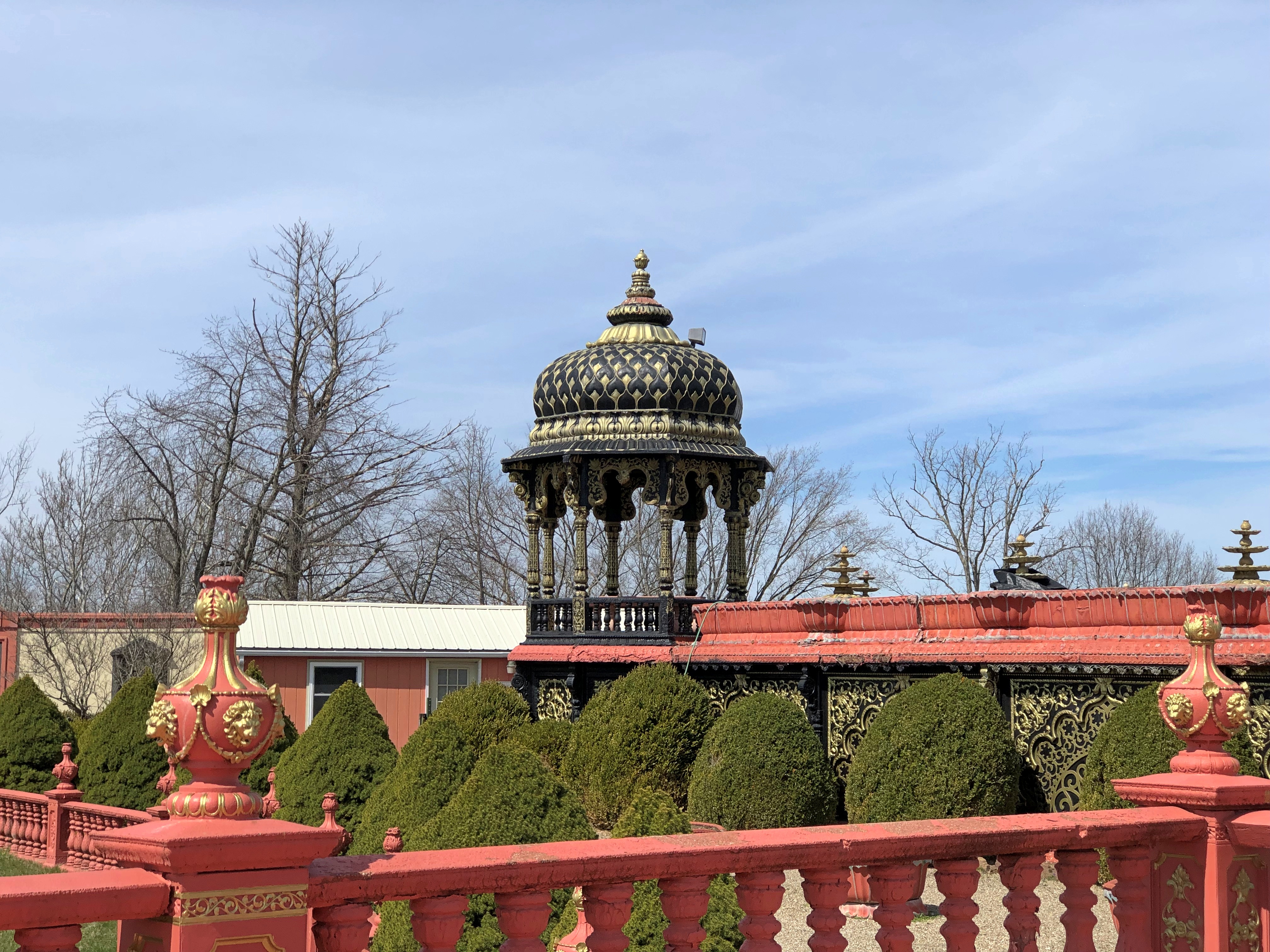
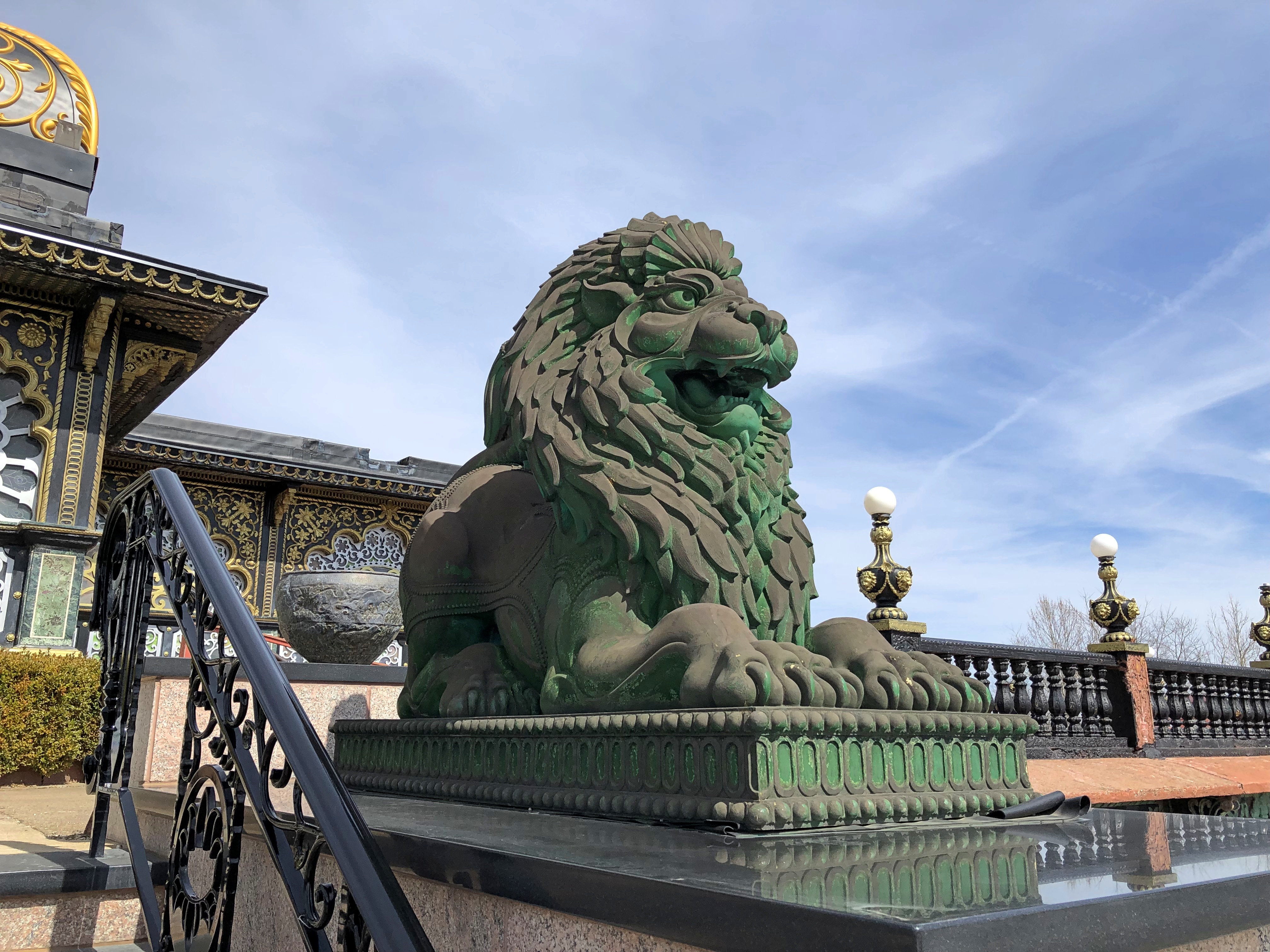
The grounds of New Vrindaban are extensive, including a pond and other structures, such as a dorm and cabins for monks and visitors. And a concrete elephant and cattle.New Vrindaban New Vrindaban

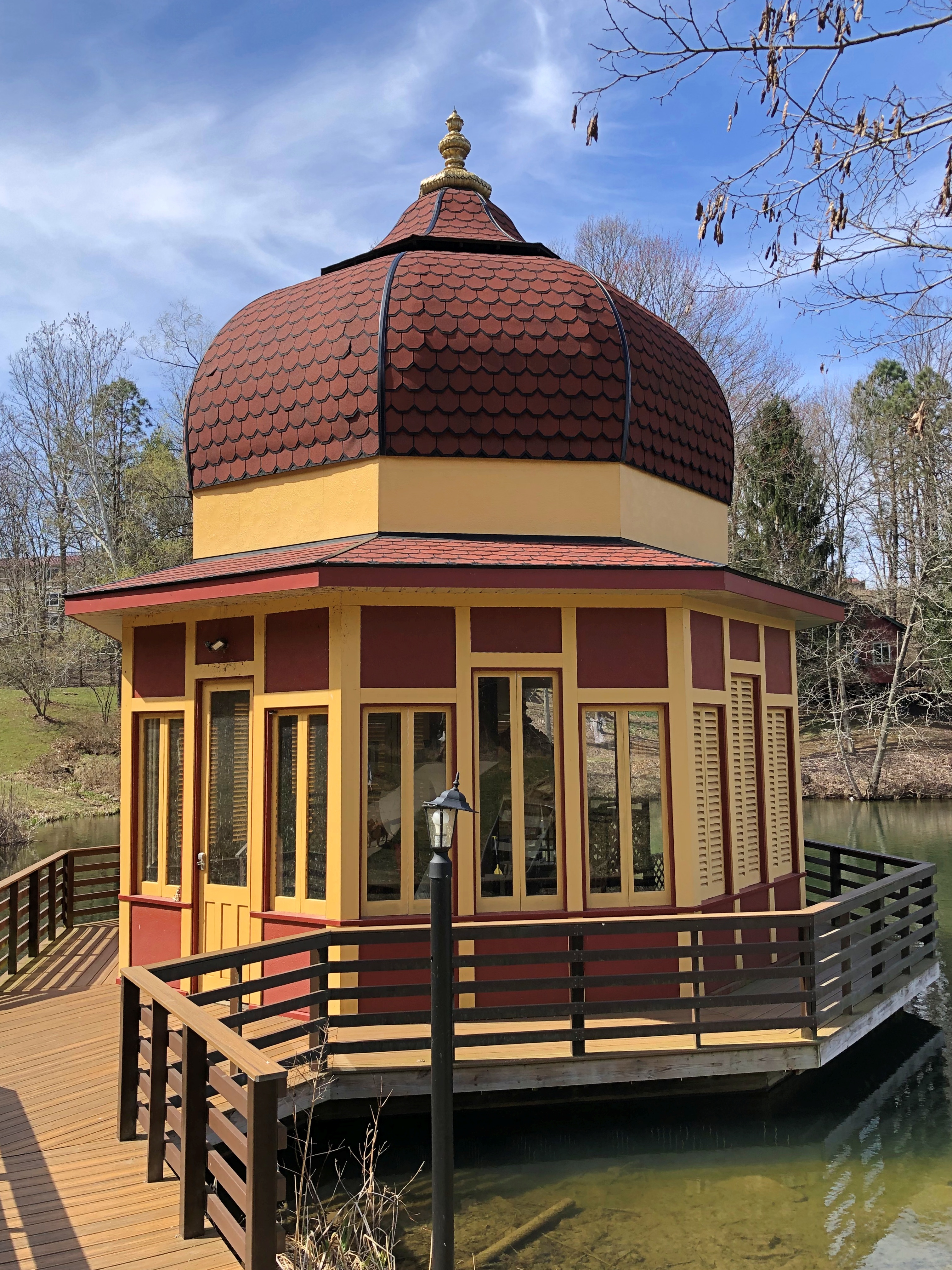
Krishna consciousness gazebos, by golly.New Vrindaban New Vrindaban New Vrindaban

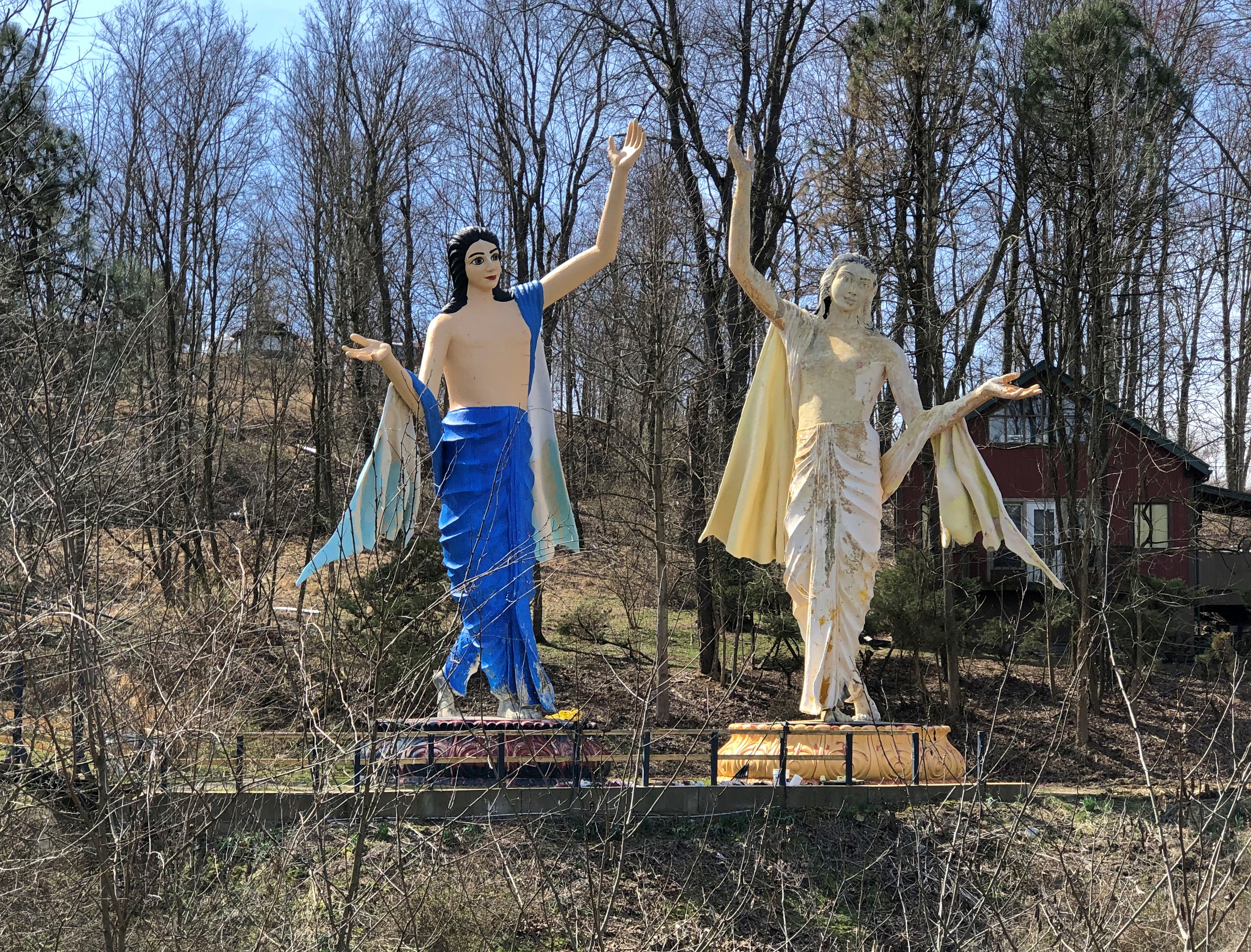
These are Gaura and Nitai, I‘ve read, but I can’t pretend I understand their function or which is which. The one on the left, recently refurbished. The one on the right, awaiting new paint.New Vrindaban

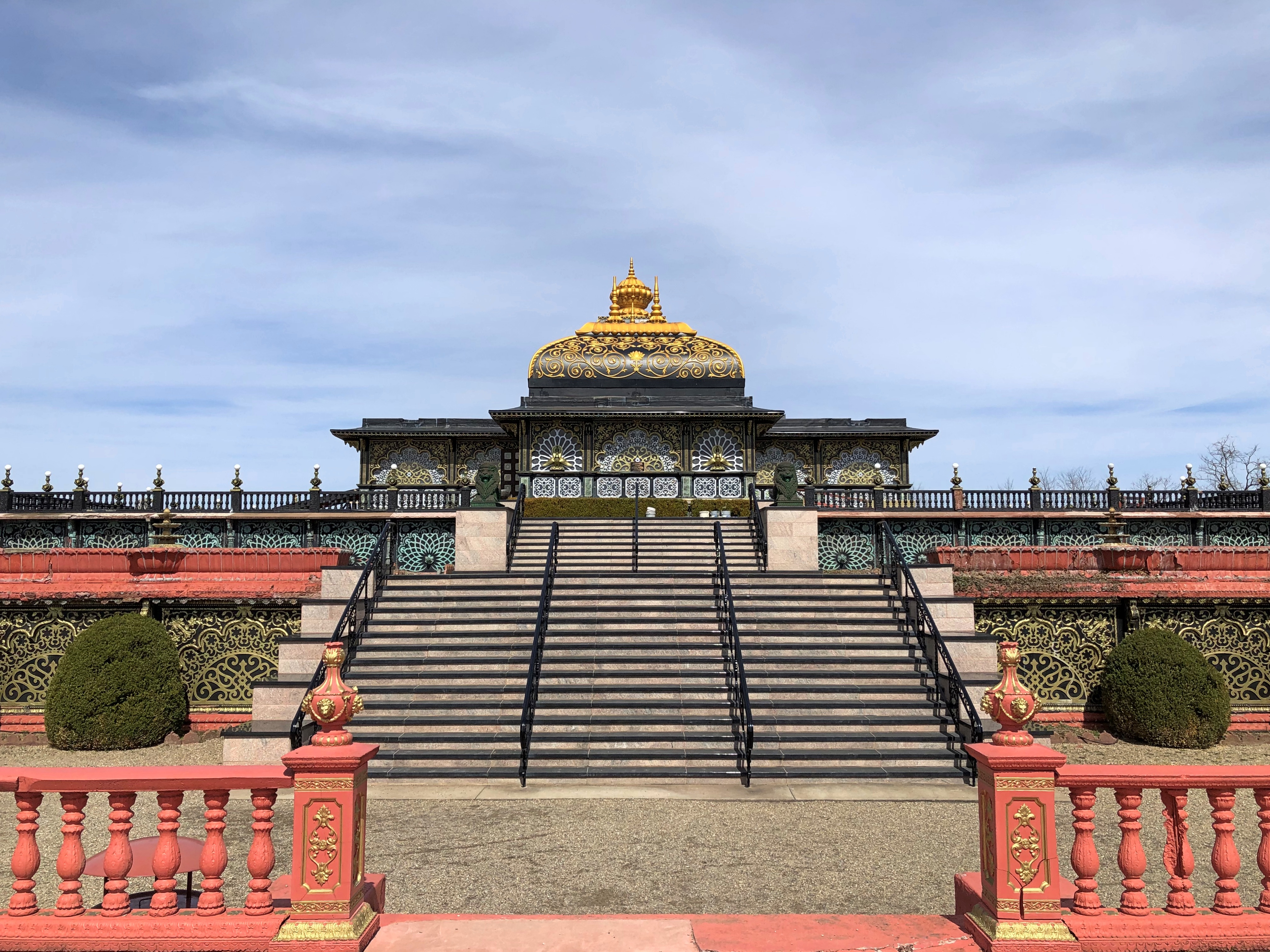
The Palace of Gold itself is on a slope overlooking the rest of the complex, and looks to be on one of the higher points in this part of West Virginia, surrounded by the sect’s roughly 1,200 acres. Why West Virginia? Cheap land would be my guess. The monks had a story about that, too, formalized in its details as much as the story of the swami’s passage to America. Something about answering a random ad in a newspaper. Anyway, here it stands.Palace of Gold Palace of Gold

“Palace of Gold Leaf” might be more accurate, but also an exercise in literalism.

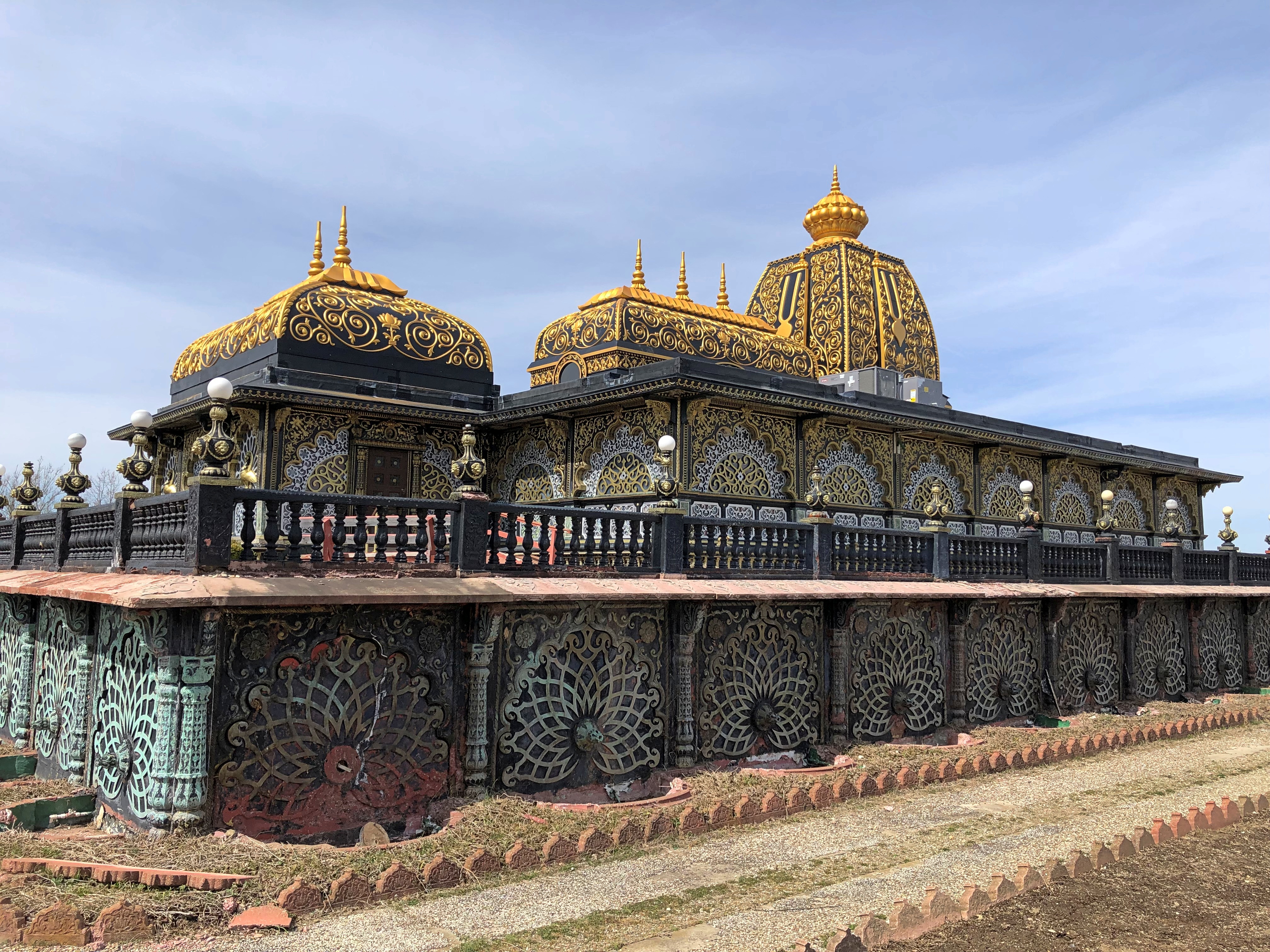
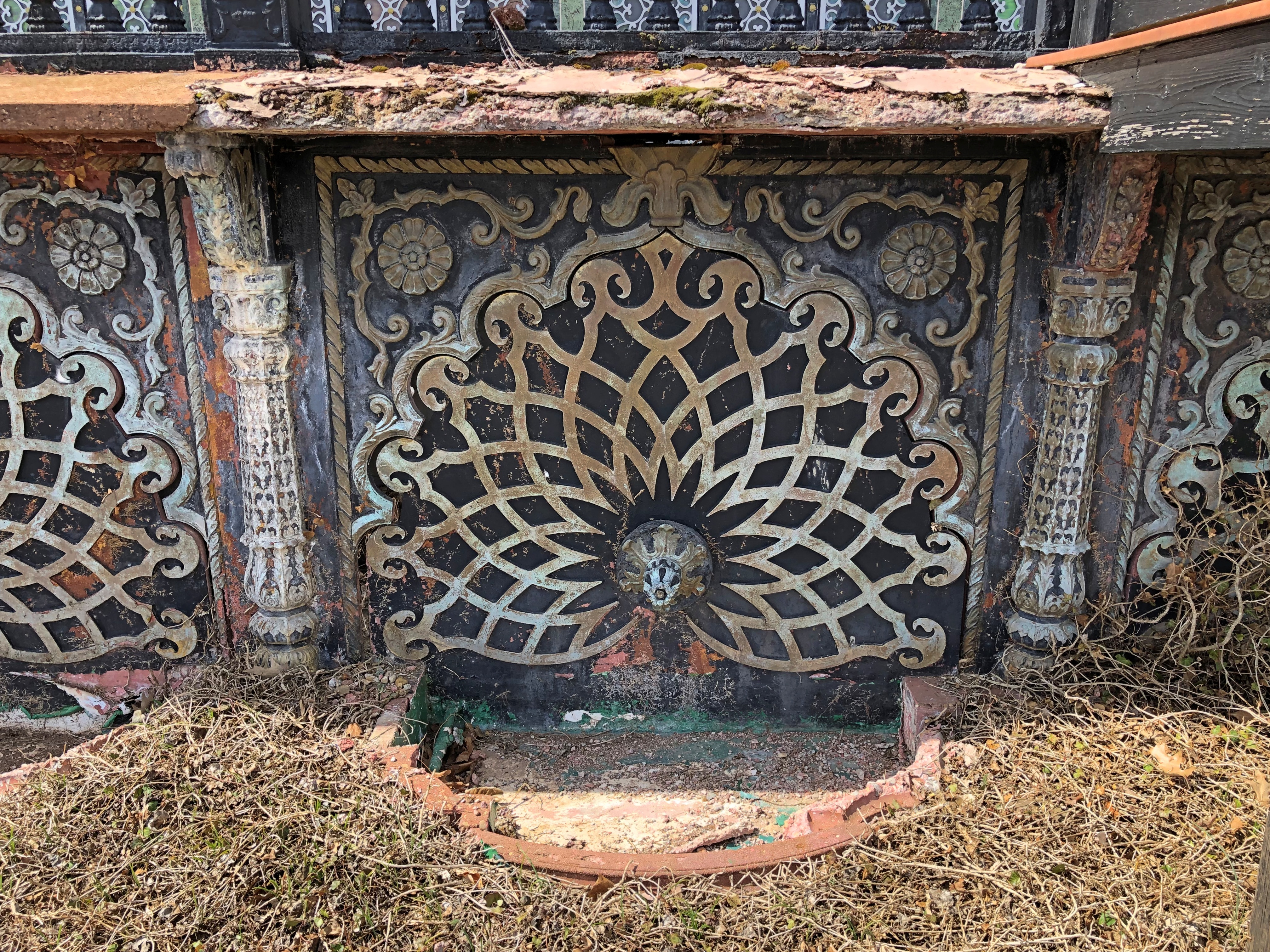
Nice detail.Palace of Gold Palace of Gold

A sign at the entrance says that restoration will soon be underway. The palace needs it.Palace of Gold

We did our little part for the restoration, each taking an $8 tour in turn. No one else was on either of our tours, since even at New Vrindaban, mid-March would be the slow season, though a few other people were visiting at the same time as we did, including a sizable, multi-generational South Asian family.

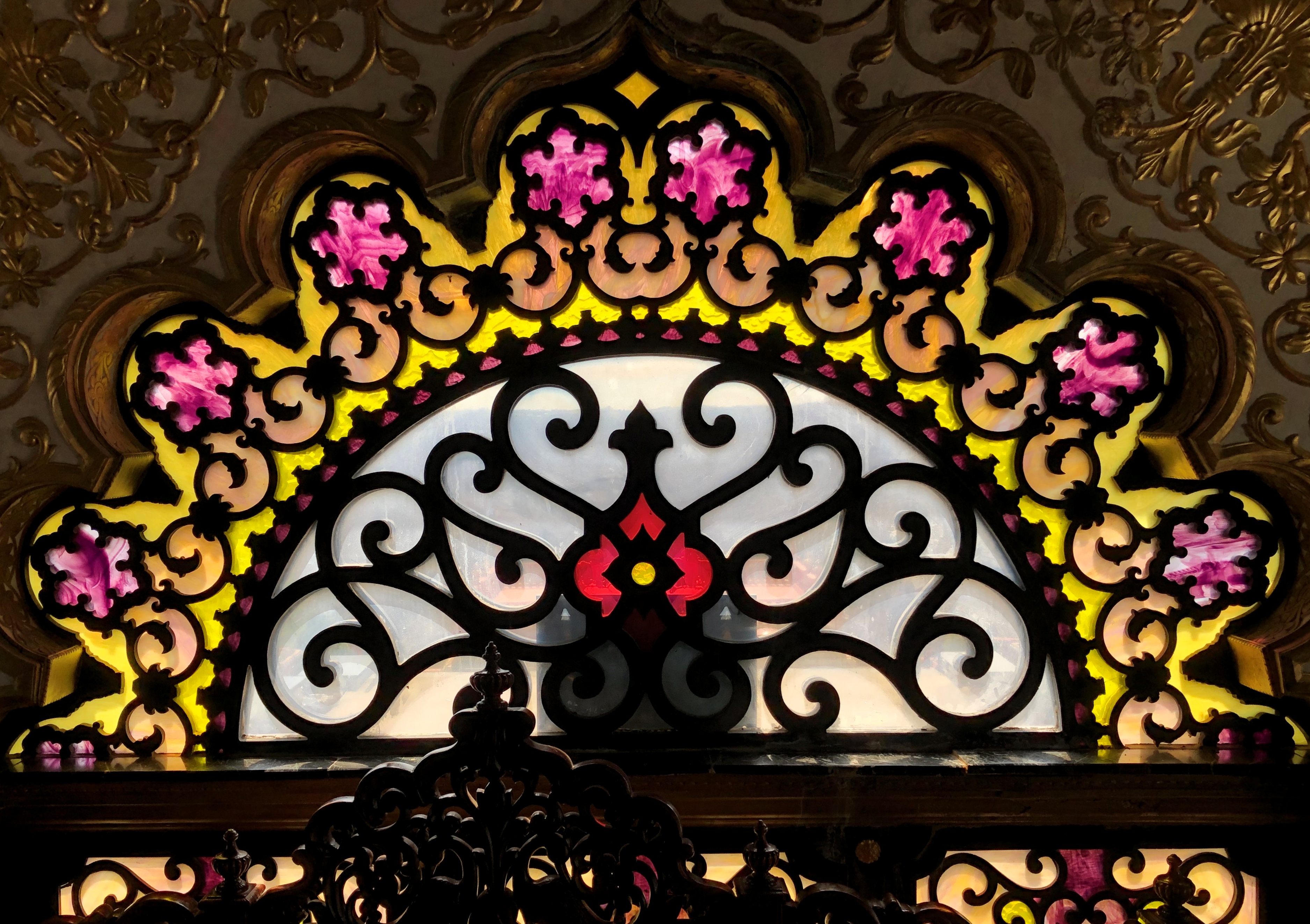
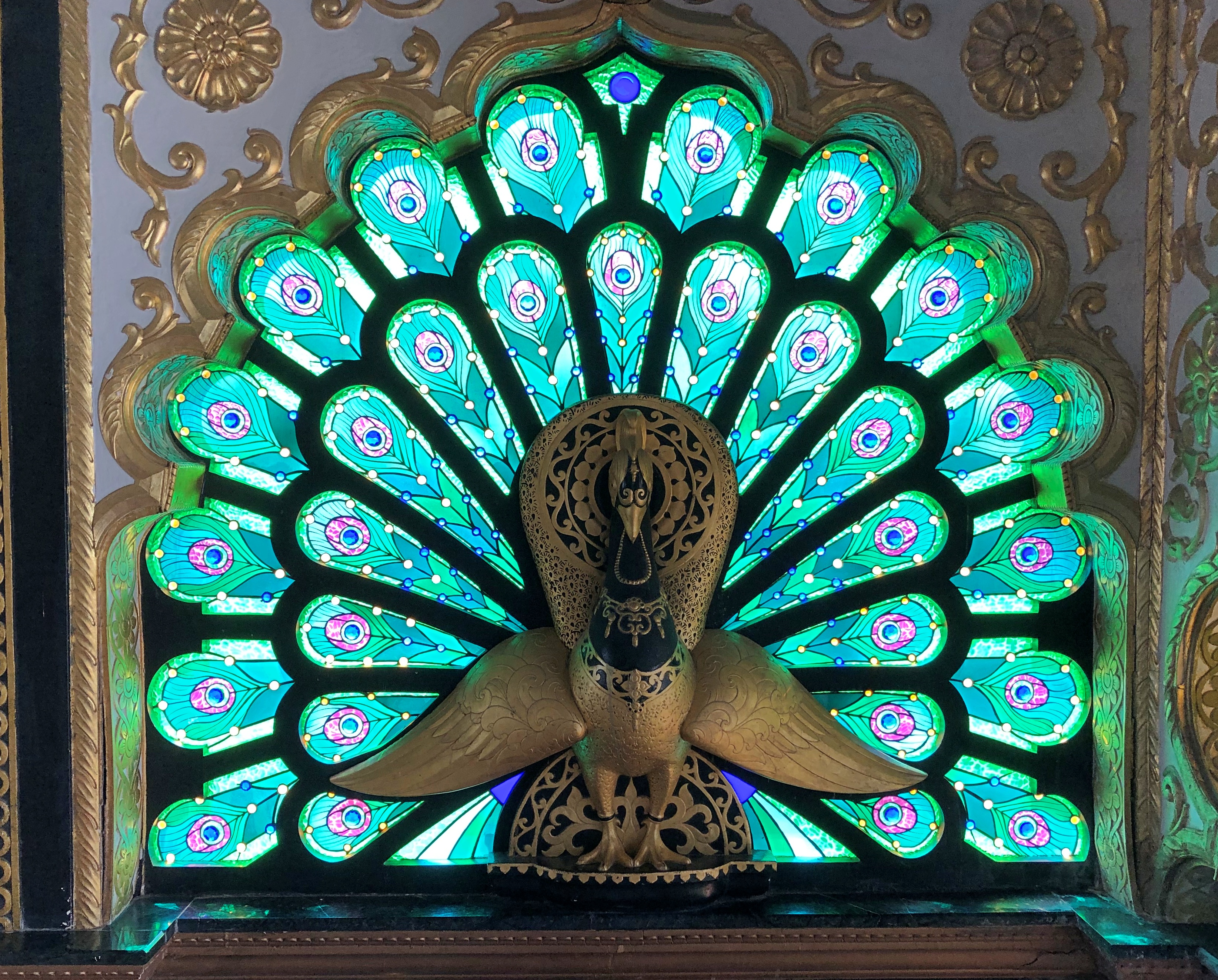
The interior is as ornate as the exterior, even more so, with crystal chandeliers, mirrored ceilings, marble floors, stained-glass windows and plenty of gold leaf and semi-precious stone accents. Not bad for a structure that is entirely nonprofessional architecture.

No photography inside, except I took some pictures in the lobby waiting for the tour.Palace of Gold Palace of Gold

“I’m old enough to remember Hare Krishnas at the airport,” I told my guide when he asked whether I knew anything about ISKCON.

“Yes, we used to do that,” he said with what I took to be a wistful smile.

My guide was an old hippie. That’s probably unfair to the fellow, a lanky gentleman perhaps in his early to mid-70s, dressed in the Hare Krishna robes we’re all familiar with, head mostly shaven. Who would want to be described by stereotypical youthful attributes more than 50 years out of date?

Still, as he told me about his wanderings as a young man in the late ’60s, and his discovery of ISKCON – he was happy to say that he’d taken classes from Swami Prabhupāda himself – the thought kept occurring to me.

American Standard, Lexington, Illinois

As points of interest go on a map, I’d say this one’s pretty intriguing. 

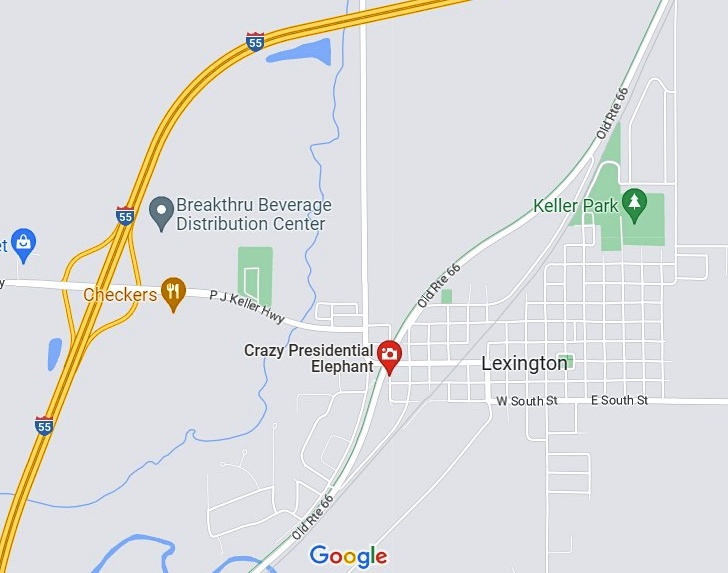
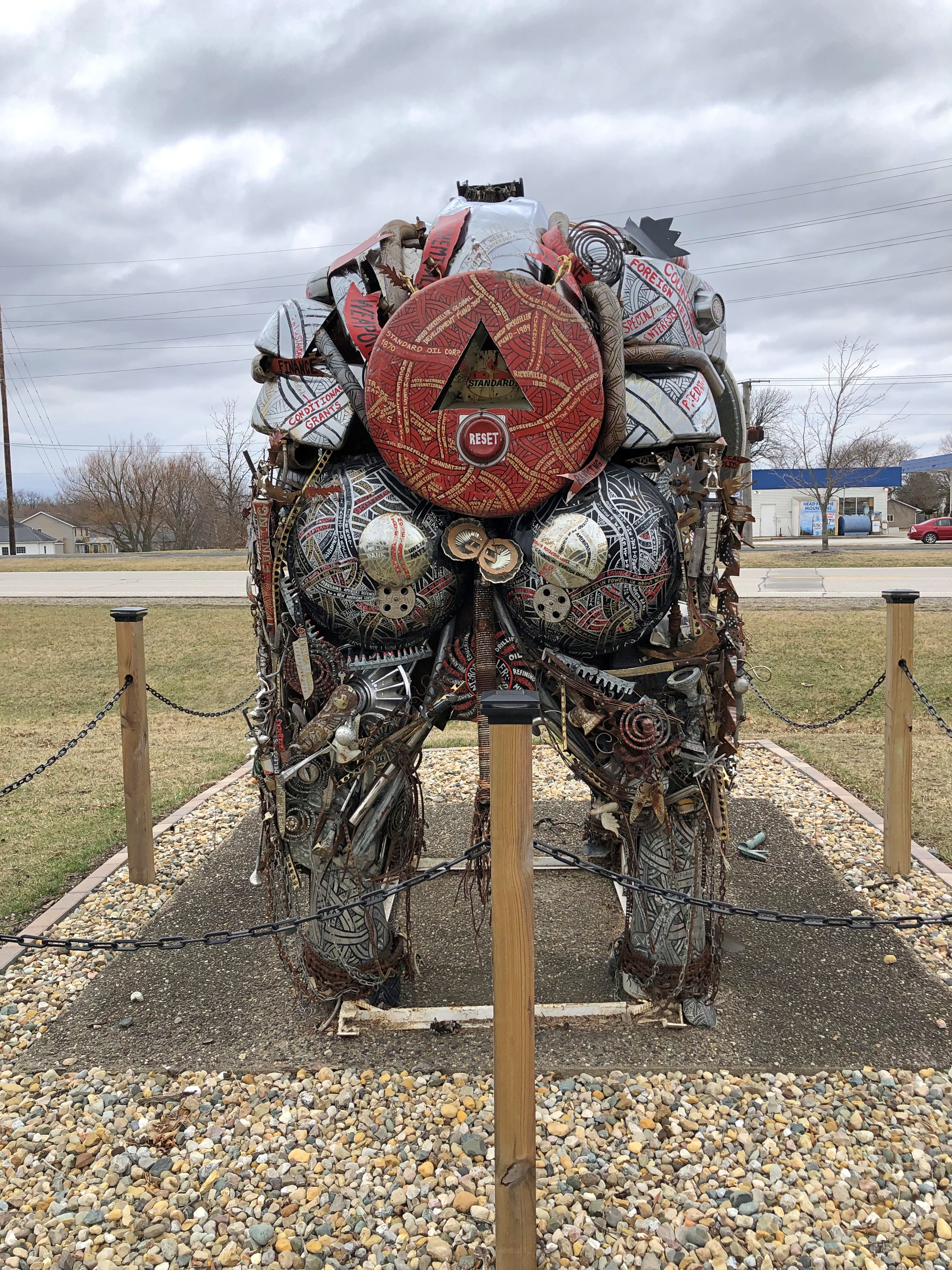
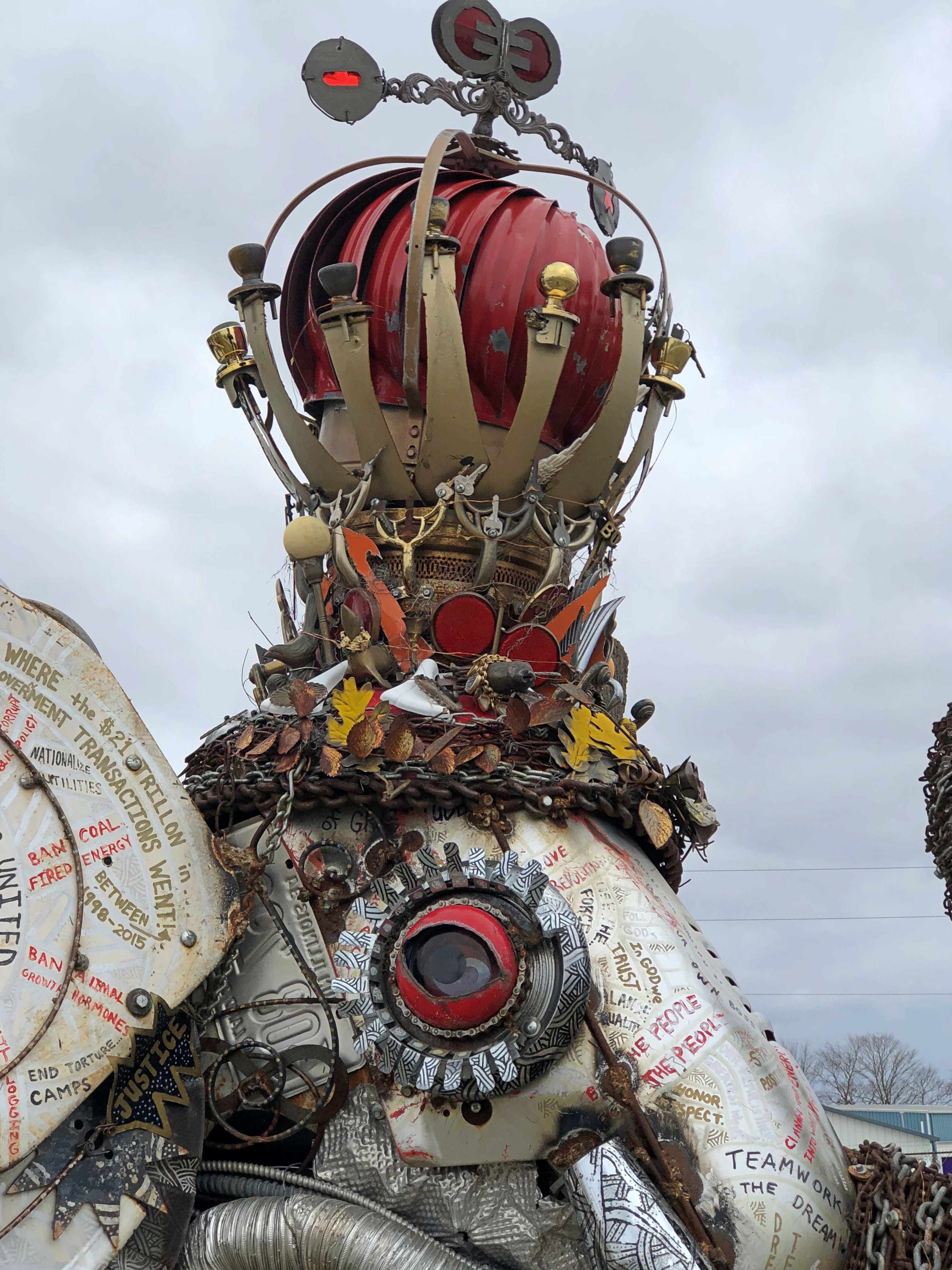
Crazy Presidential Elephant. Considering that we were going to pass by the exit to Lexington, Illinois on our drive from Normal to the Chicago area on Saturday, I had to take a look at that. For that extra thrill of discovery, before visiting I barely skimmed the two reviews on Google Maps, one of which didn’t say much anyway.

Lexington is a burg of just over 2,000 souls, known for not much, as far as I can tell. On the other hand, Teddy Roosevelt visited as president, and in an example of how the Internet still amazes, with a minimum of research you can read the remarks he gave from the train that day.

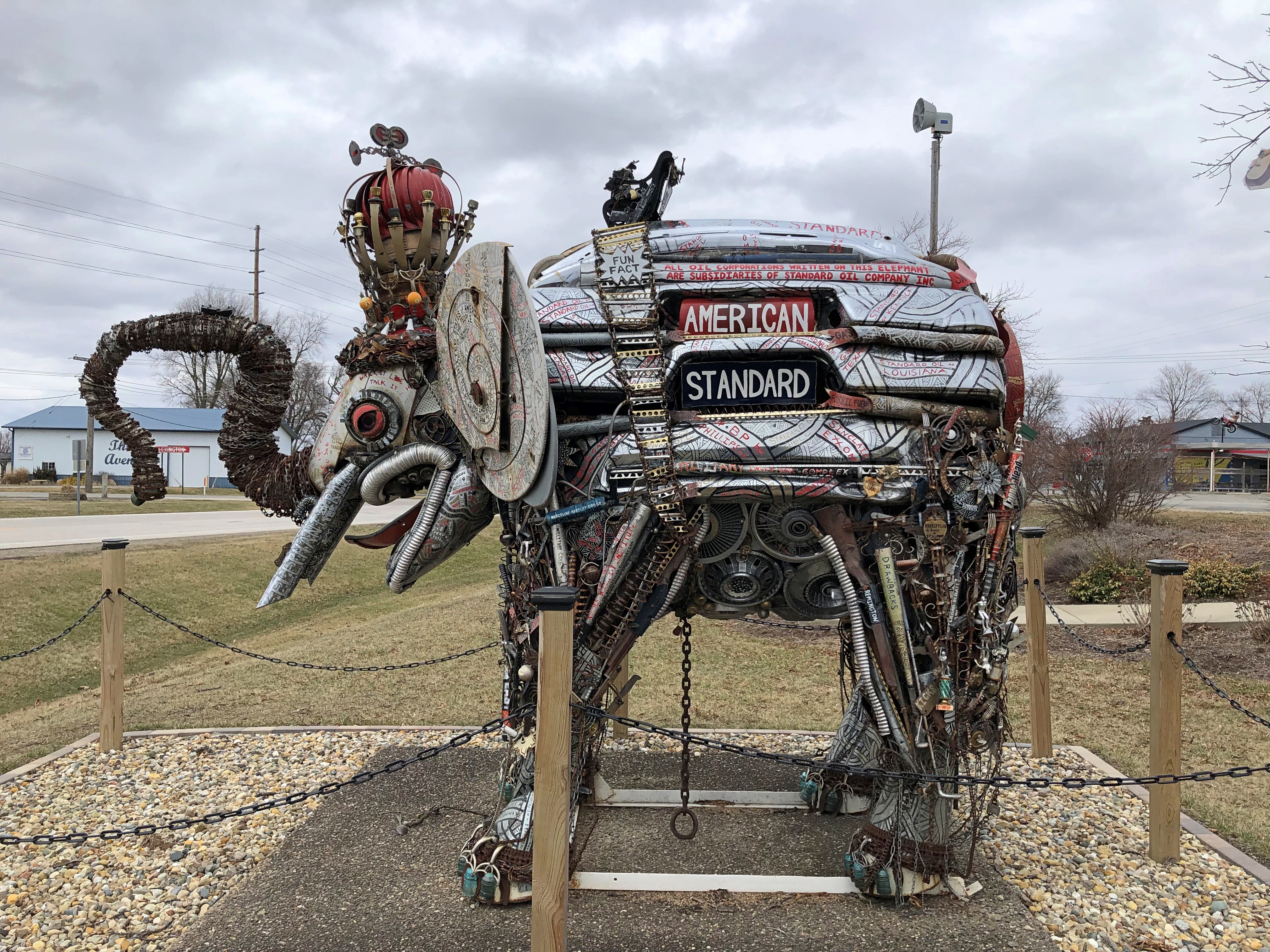
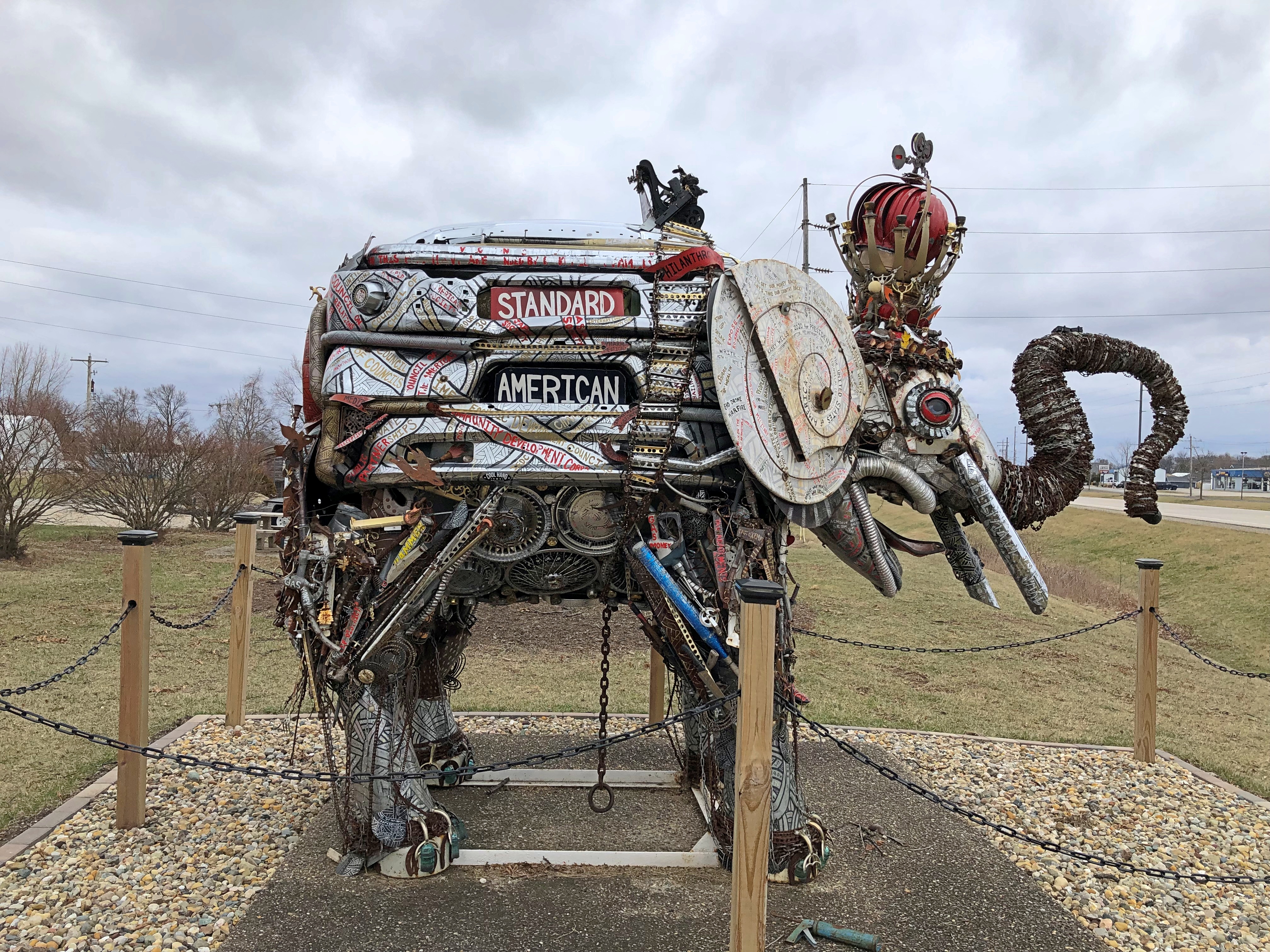
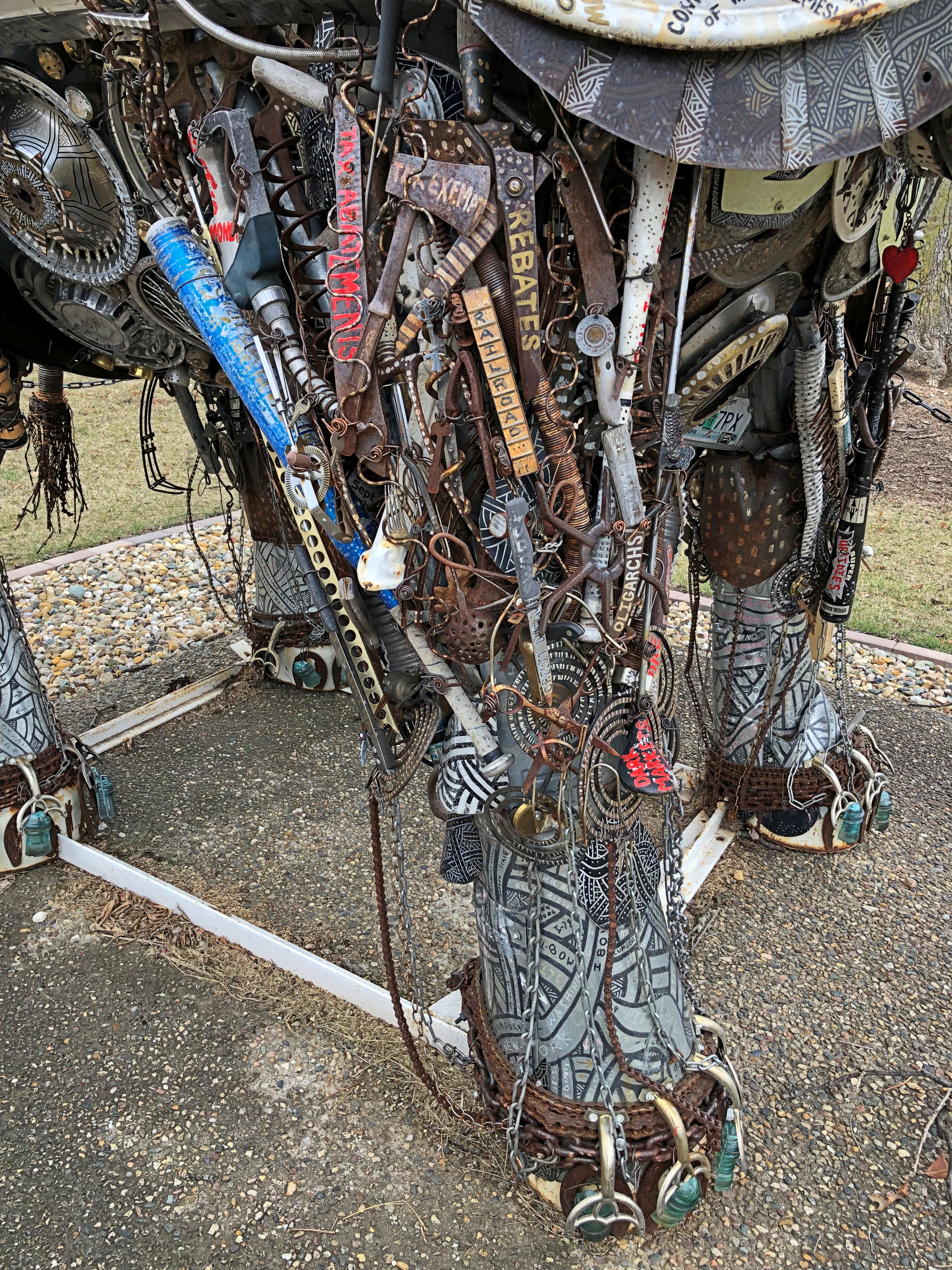
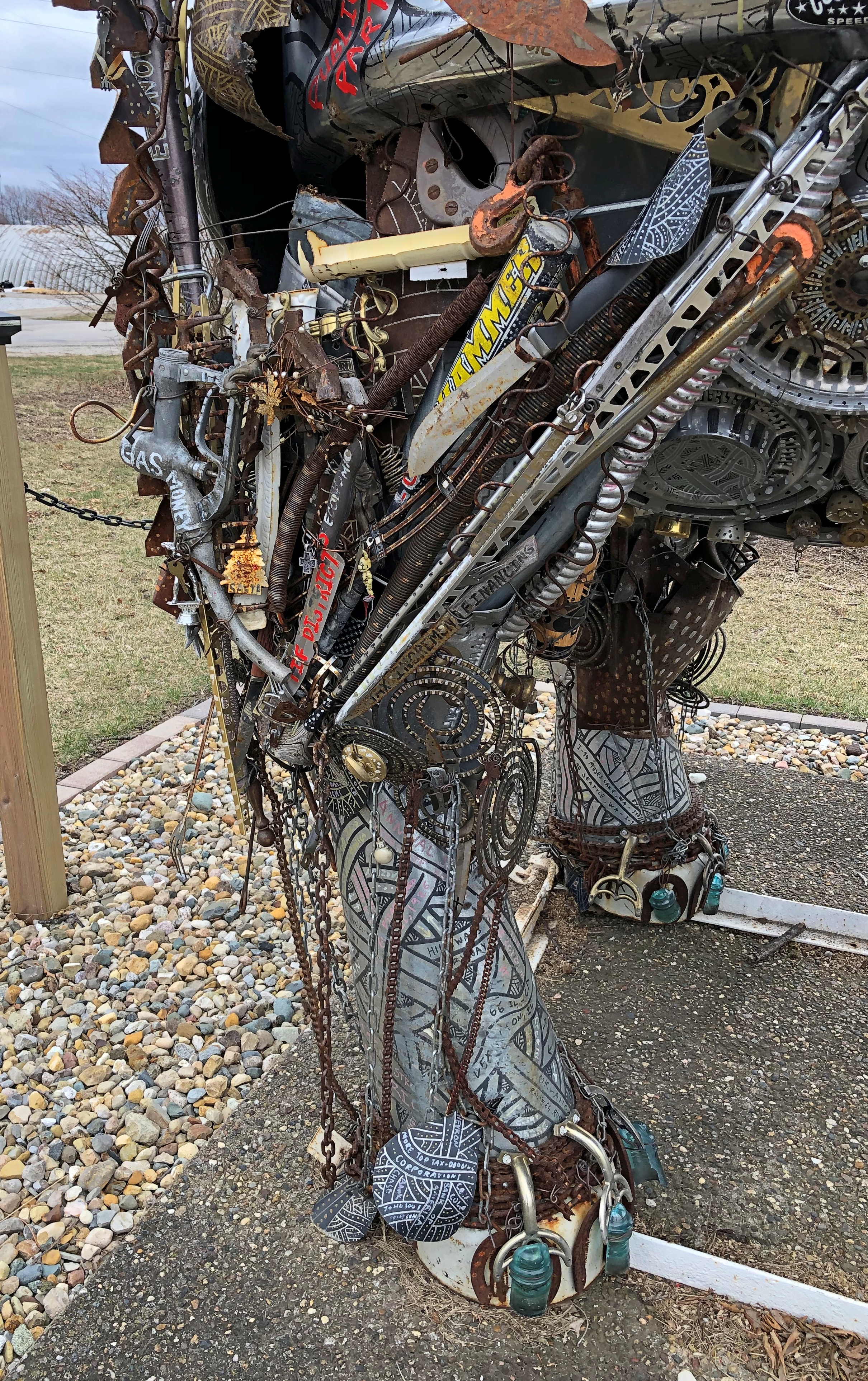
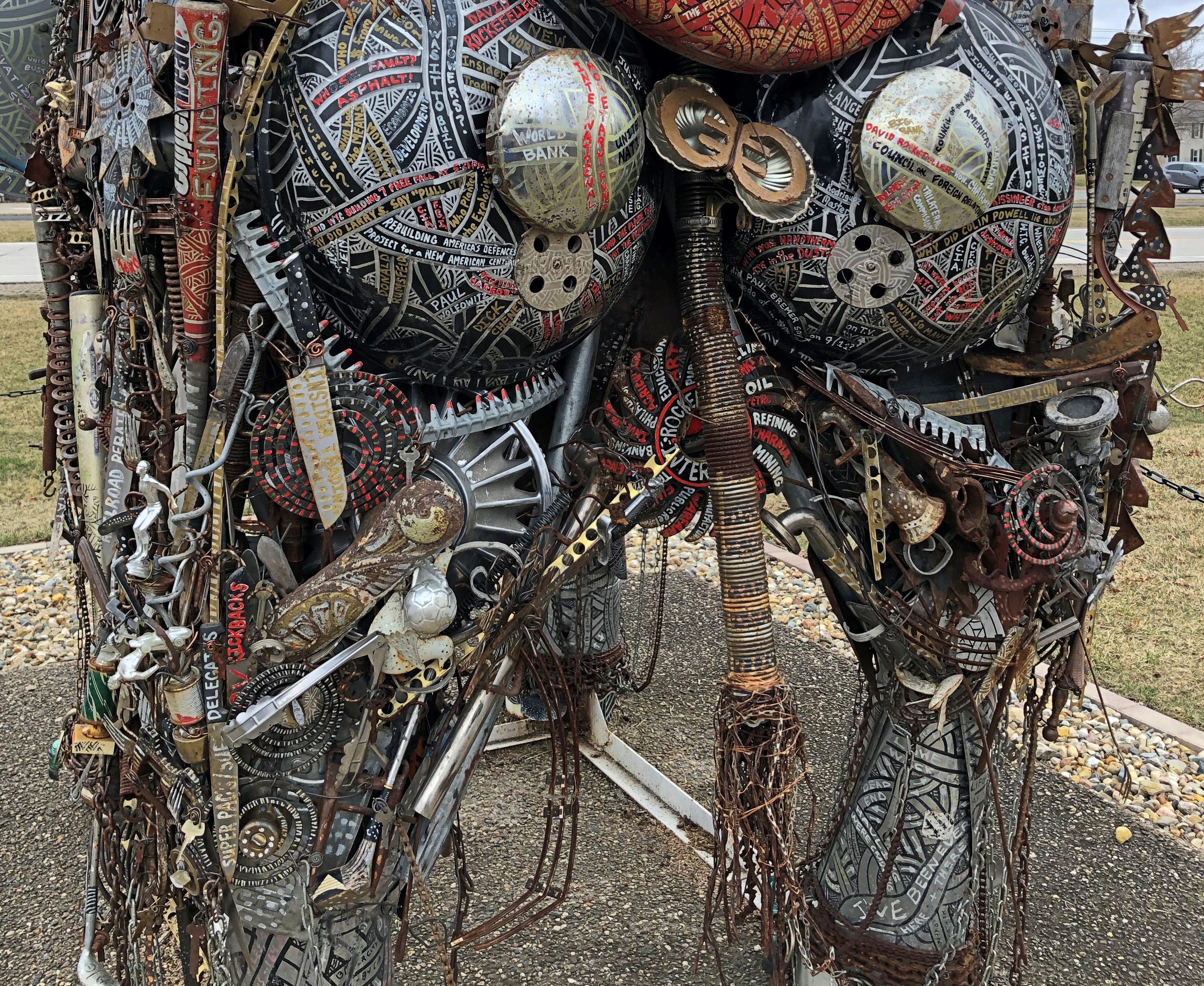
The Crazy Presidential Elephant doesn’t have anything to do with TR. Or at least, I don’t think I saw him mentioned on the elephant.American Standard, Lexington, Illinois American Standard, Lexington, Illinois American Standard, Lexington, Illinois American Standard, Lexington, Illinois

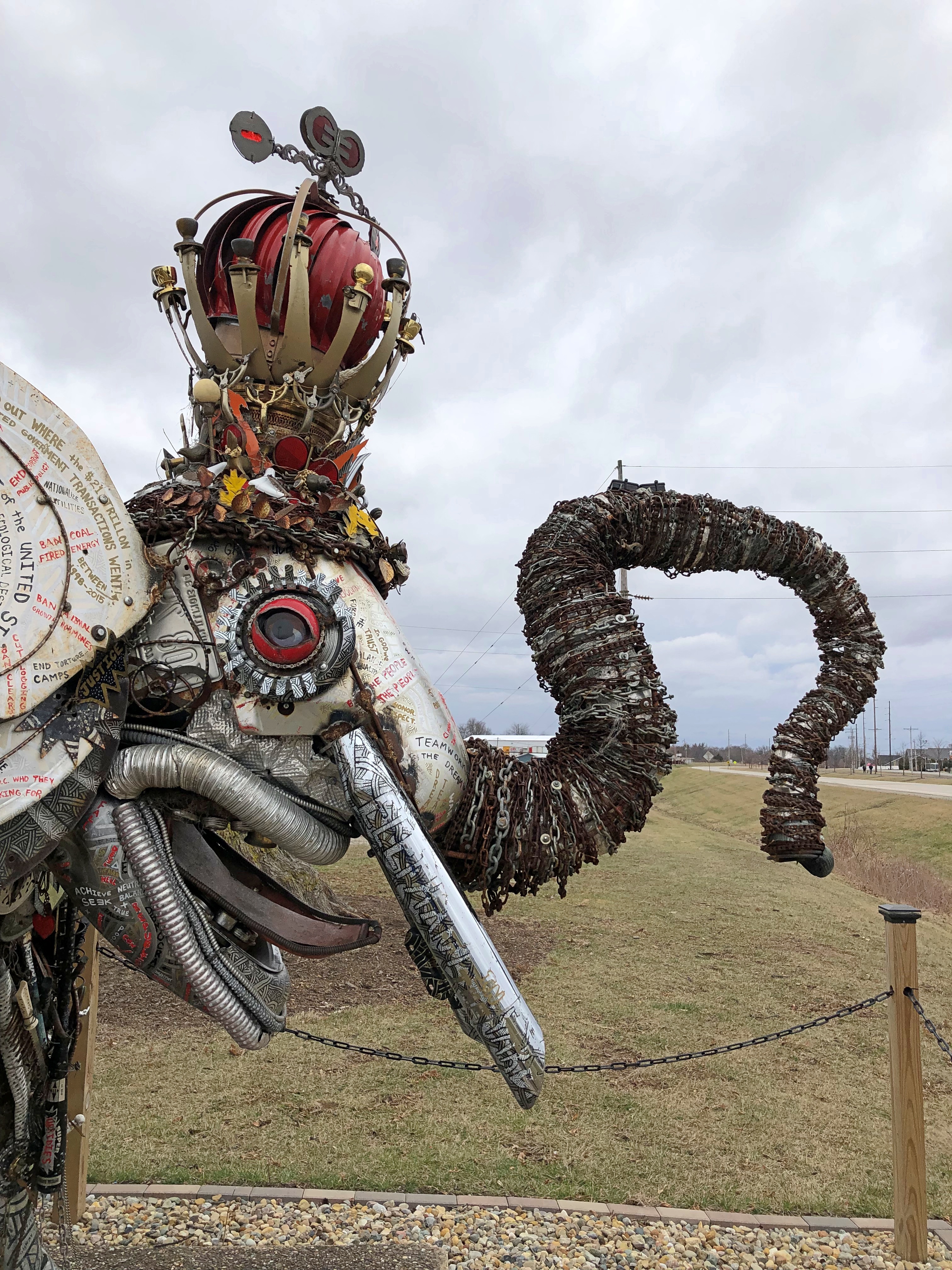
Lexington doesn’t have much as a U.S. 66 destination, but it has this elephant shape conjured into existence with thousands — it must be thousands — of agglomerated manufactured metal objects of varying elements and forms and colors. Countless car parts: a fuel tank, hubcaps, bumpers, door handles, tail pipes; but not all car parts. Long chrome and short iron. Wheel shapes and rods and chains, painted or rusted or neither.  The glue holding the multitude of parts must be industrial strength. Or is it? Already the elephant is beginning to lose bits and pieces as the Illinois seasons bake and freeze in turn.

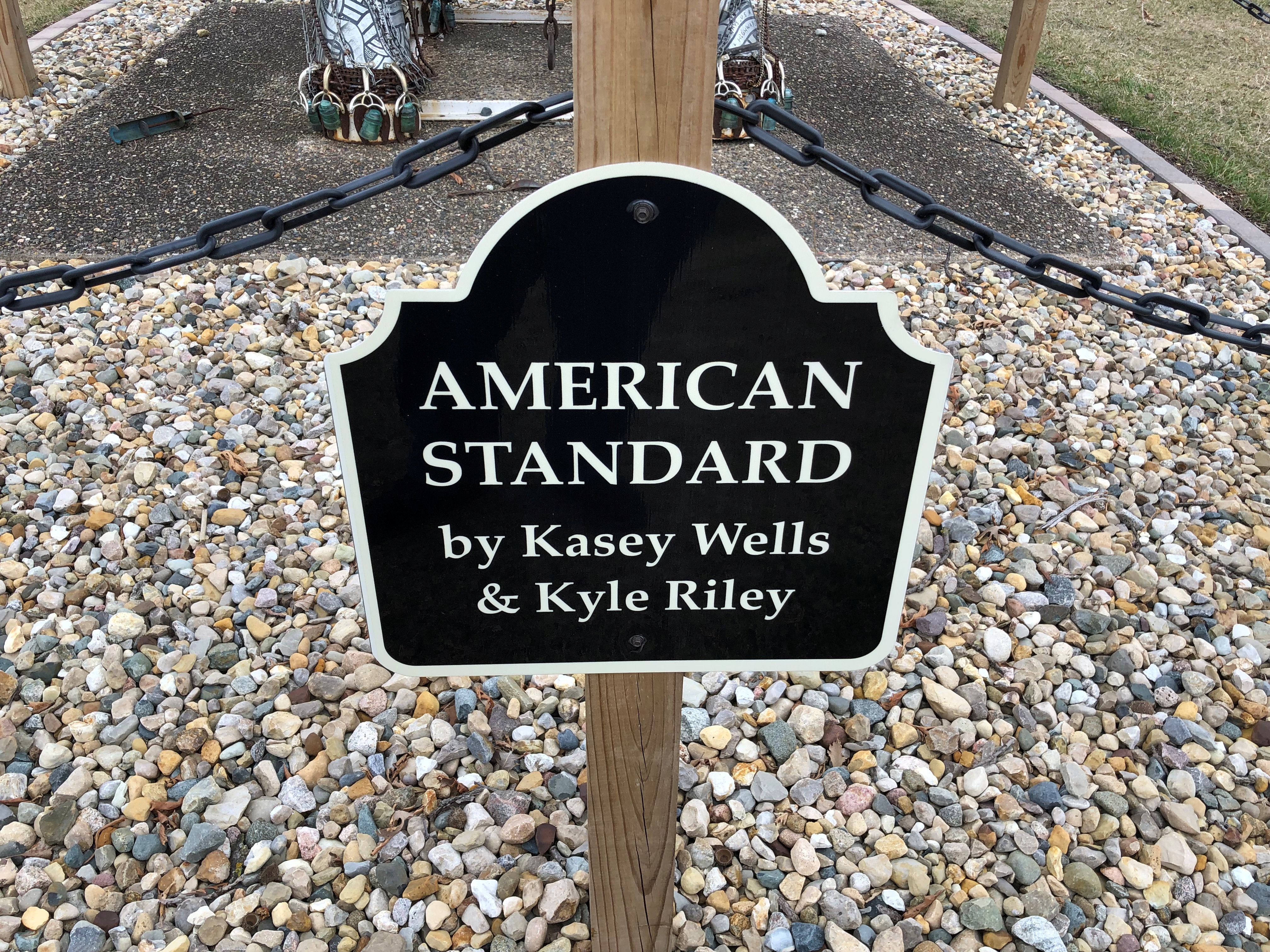
The formal name of the sculpture is “American Standard.”American Standard, Lexington, Illinois

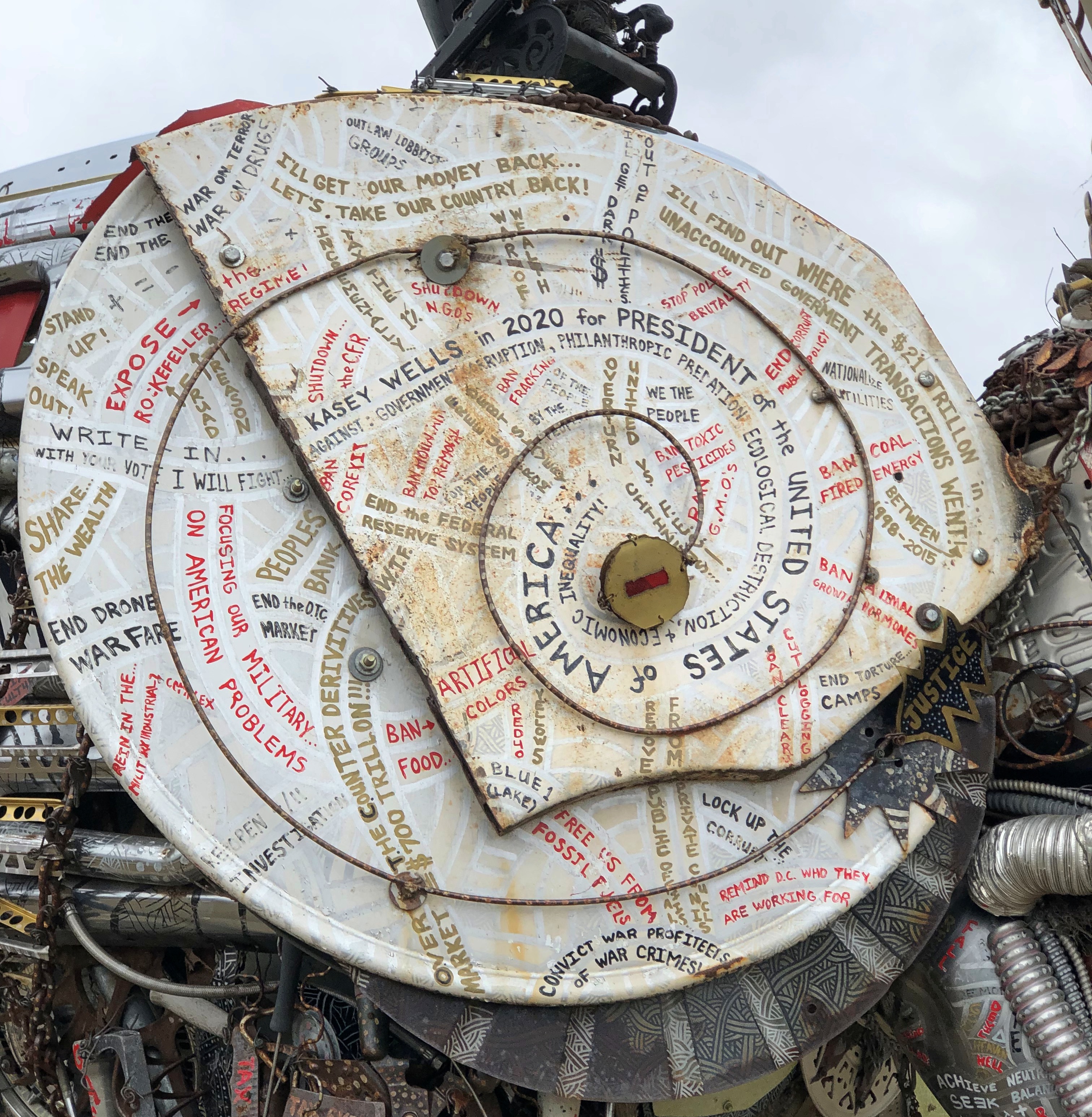
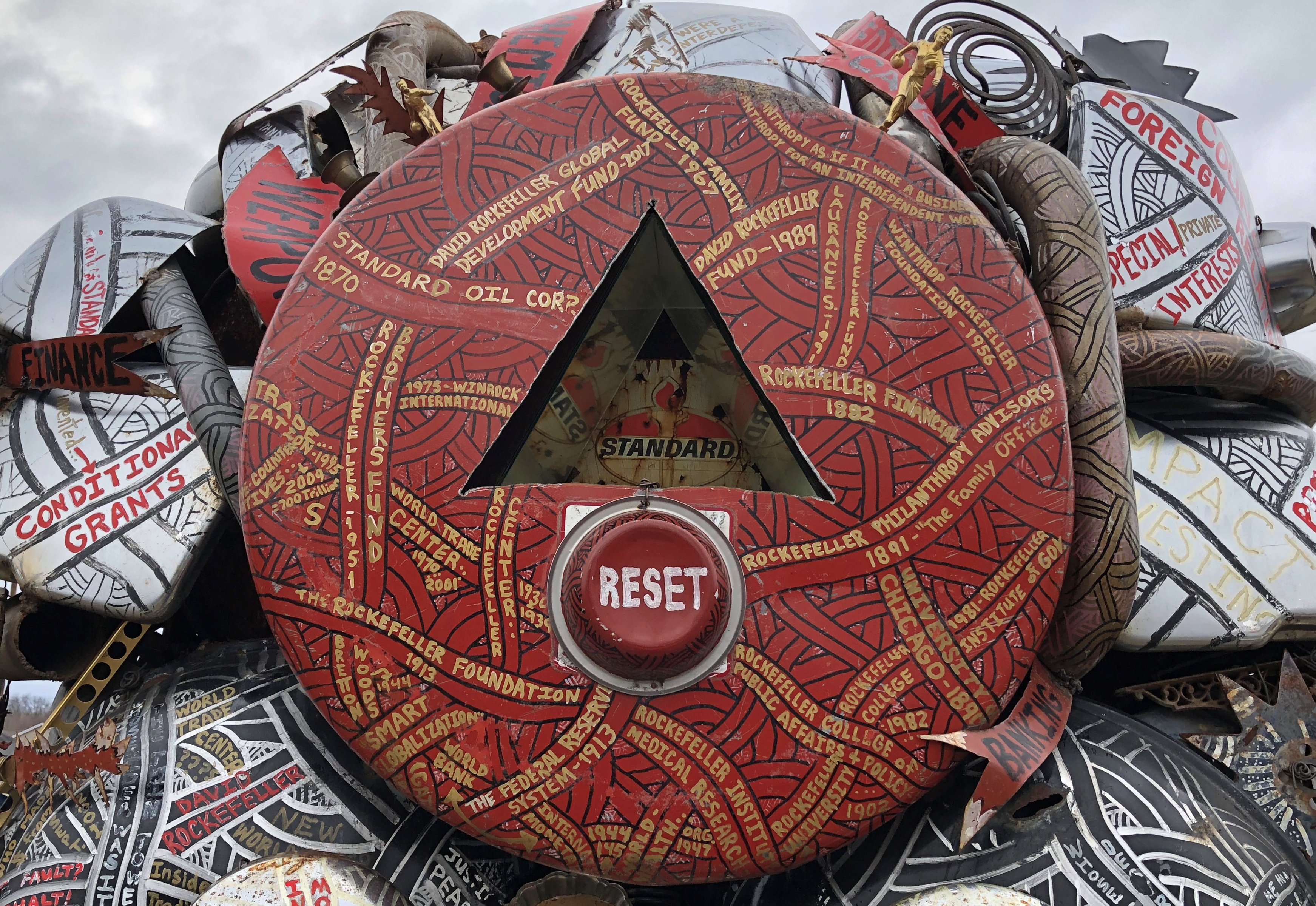
The agglomeration is one thing, but spicing up the elephant is the writing on many surfaces.American Standard, Lexington, Illinois American Standard, Lexington, Illinois

What is this thing? Why is it here?

“This is not your typical roadside attraction — it’s the political platform of artist Kasey Wells, who ran for president as a write-in candidate in 2020. Wells created the piece with Chicago artist Kyle Riley and carted it thousands of miles on a trailer during his campaign,” explains public radio station WGLT.

“The elephant wears a gold crown with ‘Standard Oil’ painted in red, white and blue. Wells ran as a left-leaning independent interested in divesting from the oil and gas industry, transforming the Federal Reserve and putting an end to war, among other things.”American Standard, Lexington, Illinois

It’s a good place to soak in the details. Endless details.American Standard, Lexington, Illinois American Standard, Lexington, Illinois American Standard, Lexington, Illinois

Look closely enough, and you can meditate on impermanence, and not just in the philosophical sense.

“ ‘American Standard’ sits across the street from a Freedom gas station, adjacent to a historical marker pointing out Standard Oil subsidiary filling stations during Route 66’s heyday,” the station says. (How did I miss that? Never mind.)

“The spot is rife with symbolism, but Wells still owns the piece and can move it or sell it at any point.”

Sea Creatures Along the Fox River Trail

Snow and sleet today. Faux spring has passed.

Actually, it was over before the snow — yesterday was fairly cold — but outside surfaces were dry enough to make walking reasonably safe, if not all that pleasant.

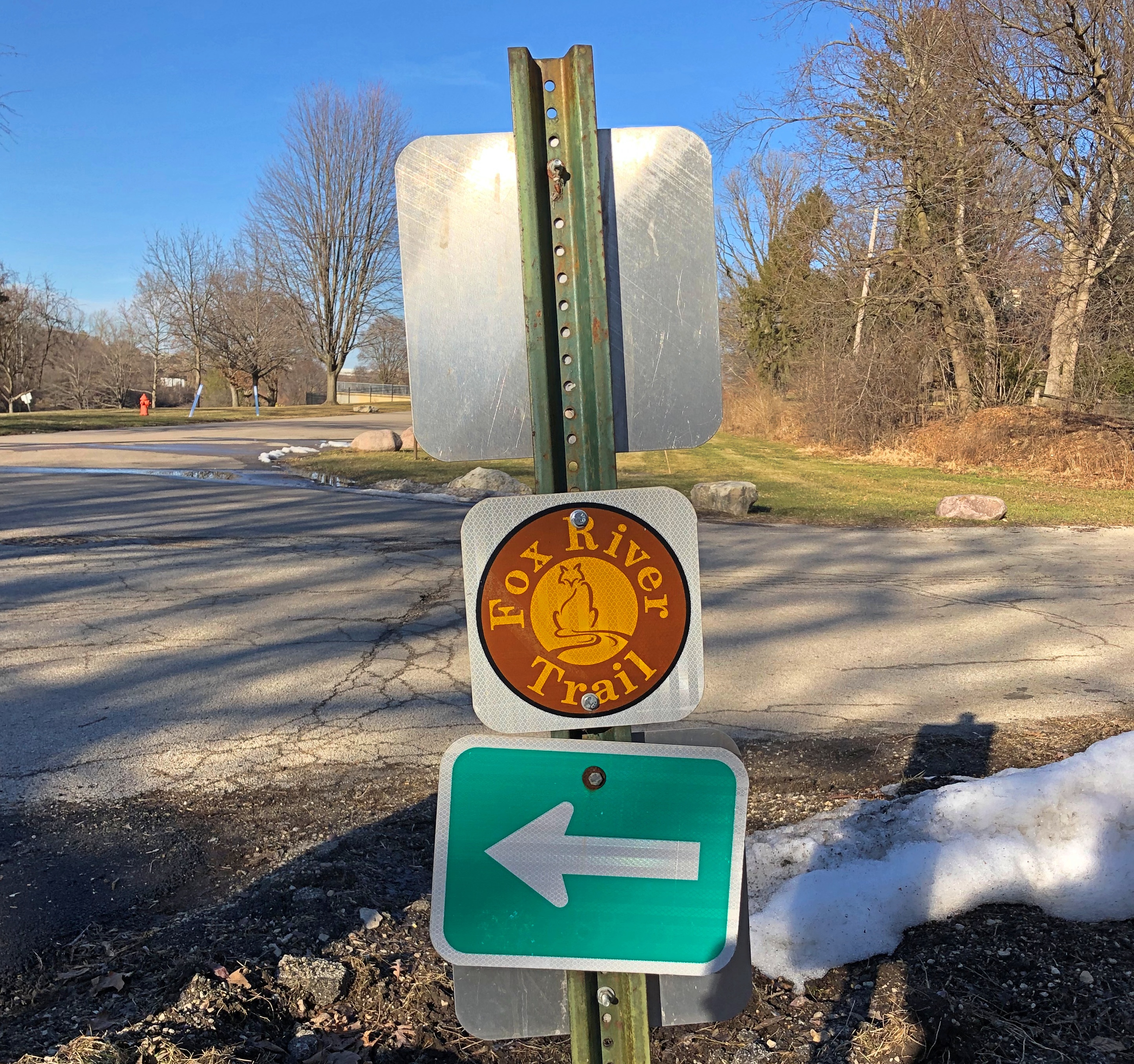
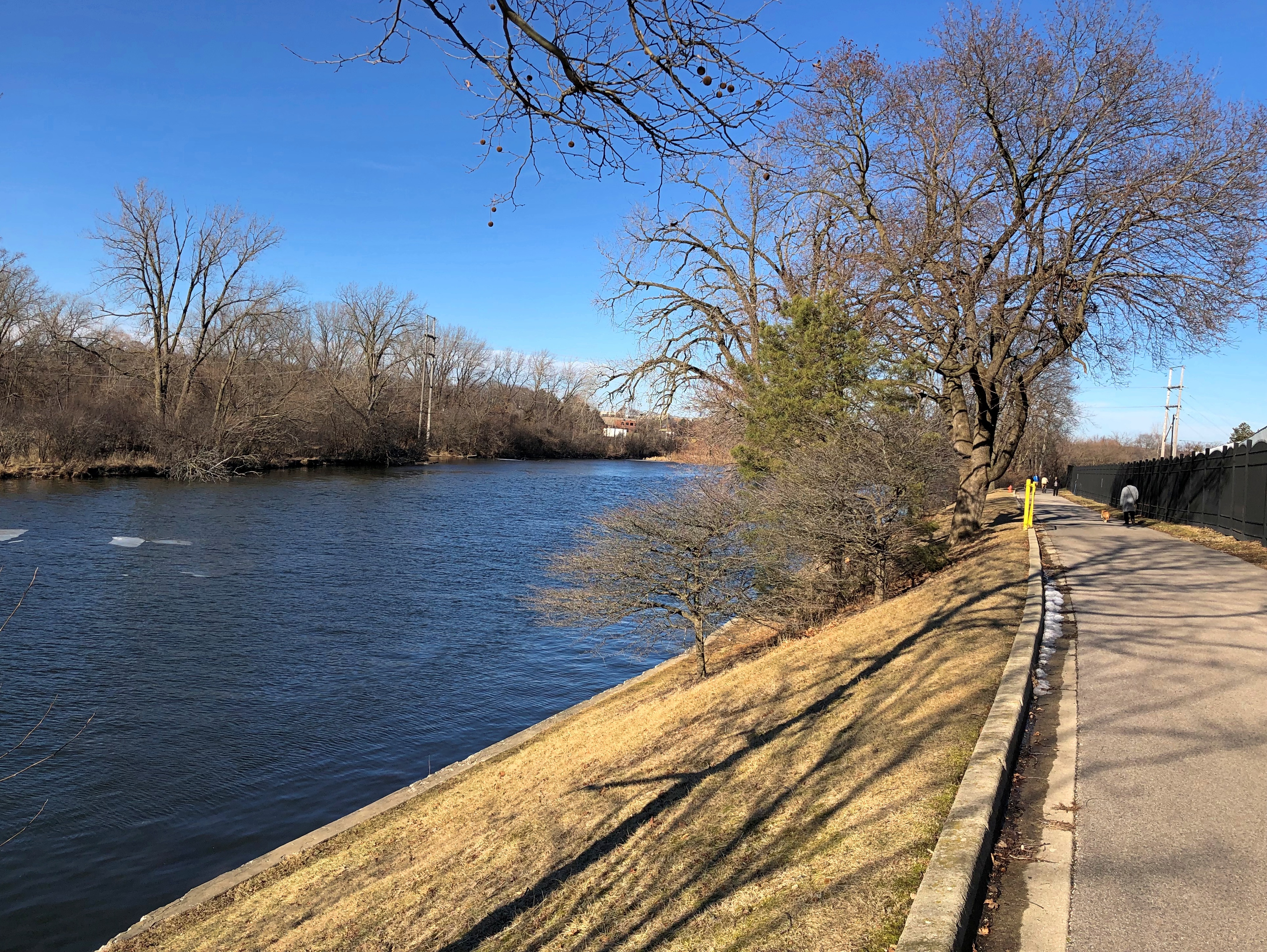
Last Saturday was pleasant for February, Sunday even more so, with temps over 50 degrees F. So we returned to the banks of the Fox River for another walk, but in Elgin instead, which is upriver from Batavia. We parked at a place called Slade Avenue Park on the map, though no signs on the grounds identified it as such. The Fox River Trail, which hugs the east bank of the river, passes through the park at that point.Fox River Trail, Elgin

The trail totals 32 miles all together, passing through Algonquin, Carpentersville, Dundee, Elgin, South Elgin, St. Charles, Geneva, Batavia and North Aurora. We headed north from Slade Avenue Park.Fox River, Elgin Fox River, Elgin Fox River, Elgin

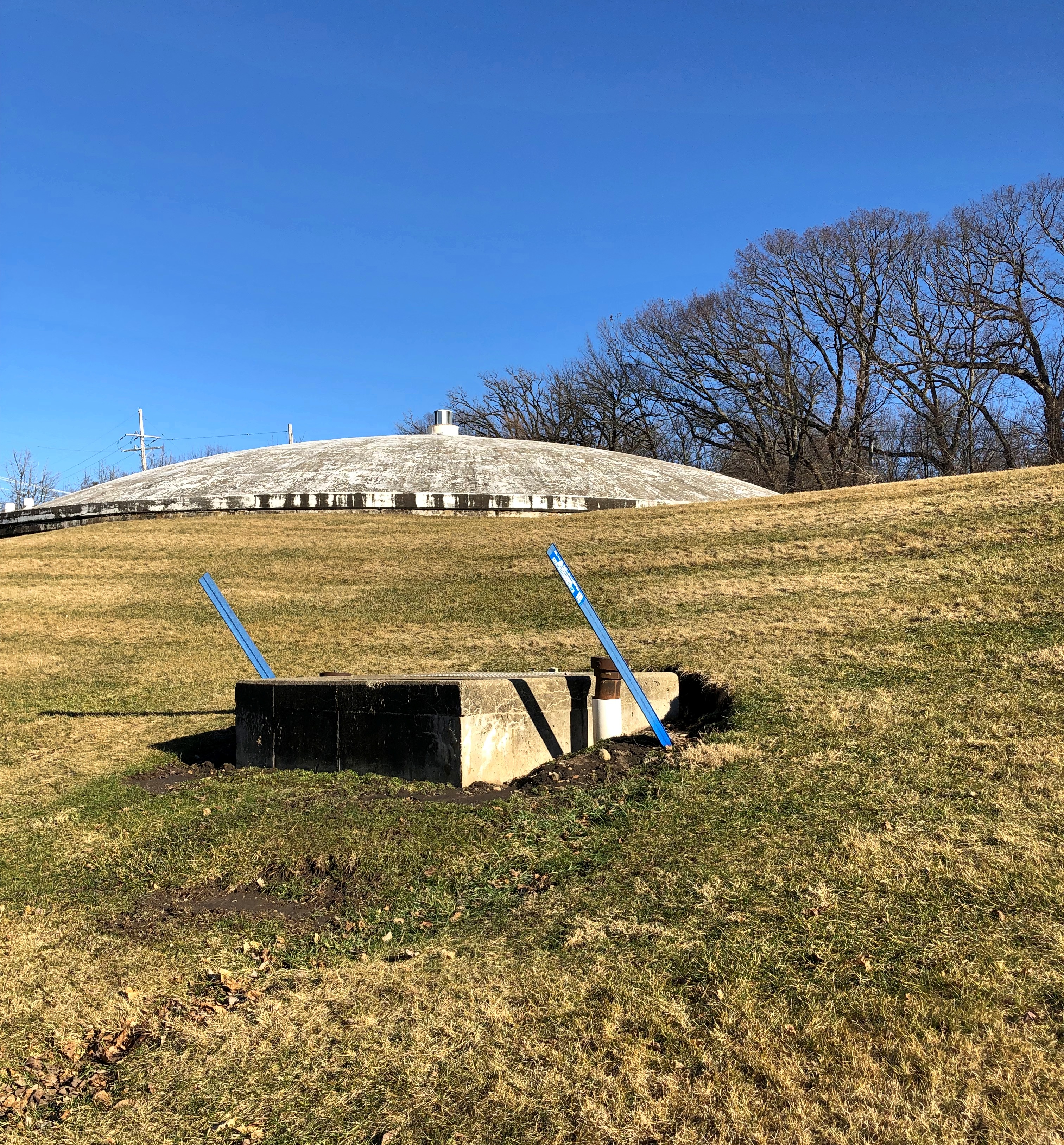
On the other side of a black fence next to the trail is the Slade Avenue Well No. 5, part of Elgin’s water infrastructure. It’s easy to look through the fence at the unpicturesque facility.Slade Avenue Well No. 5

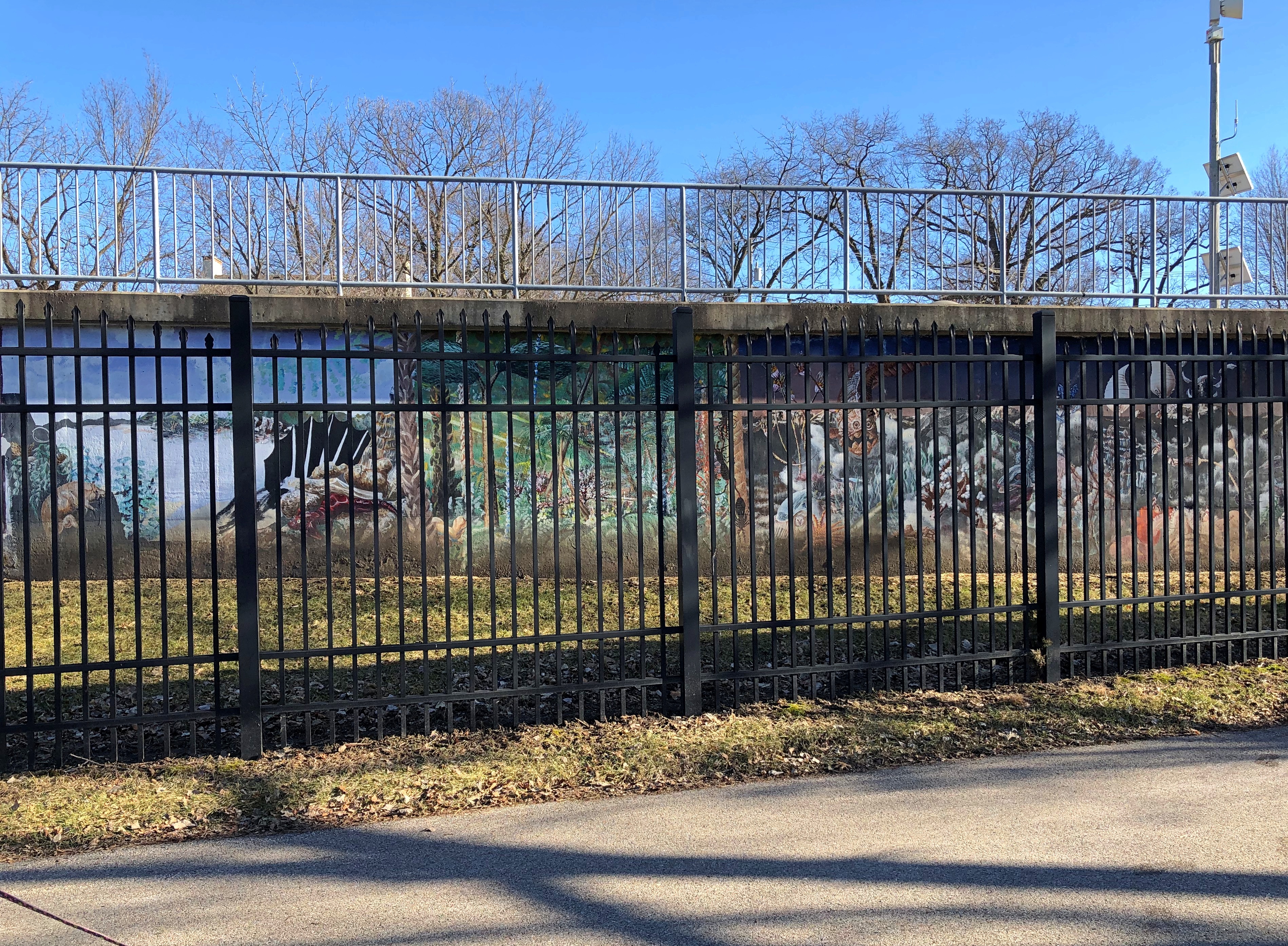
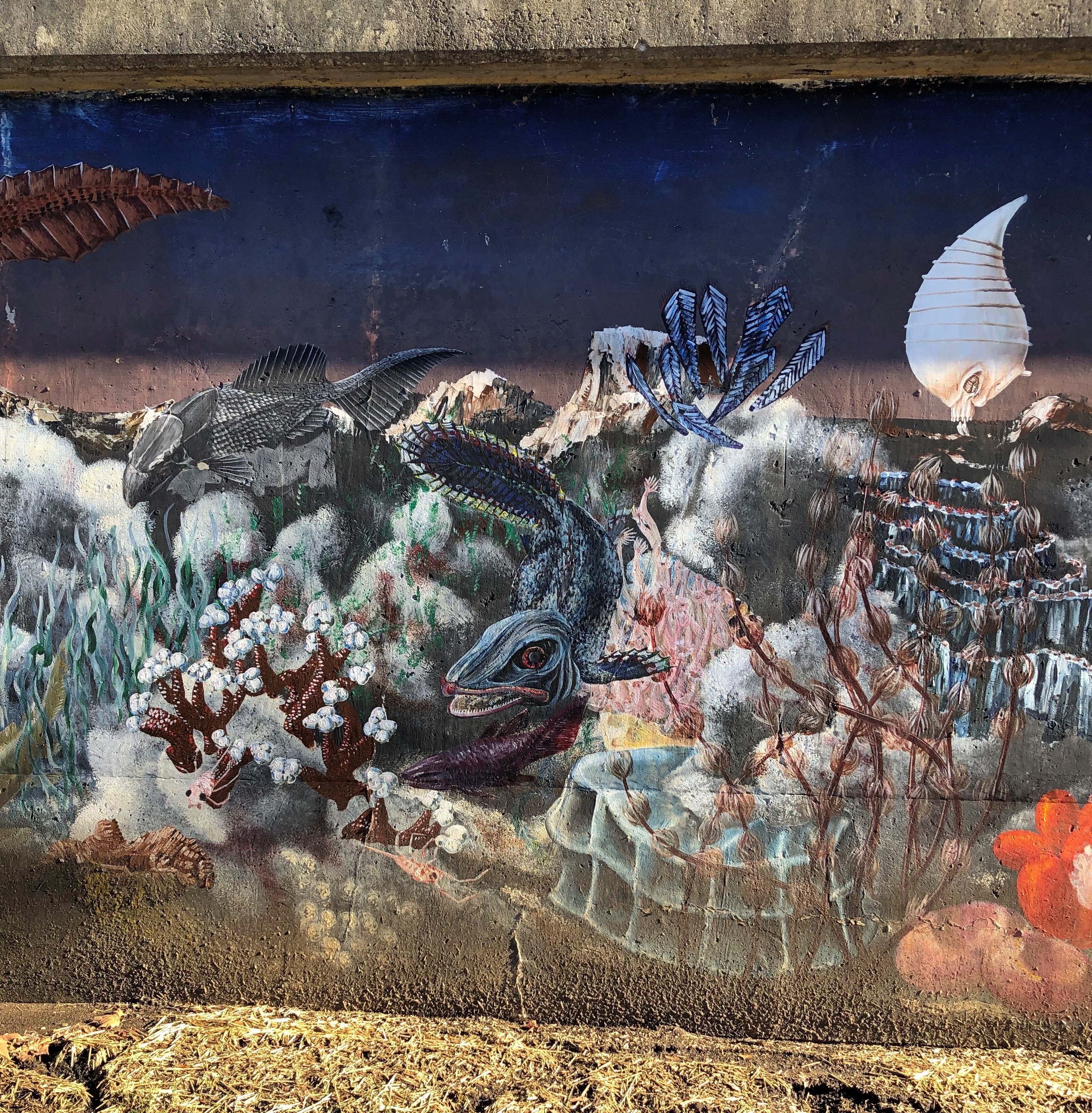
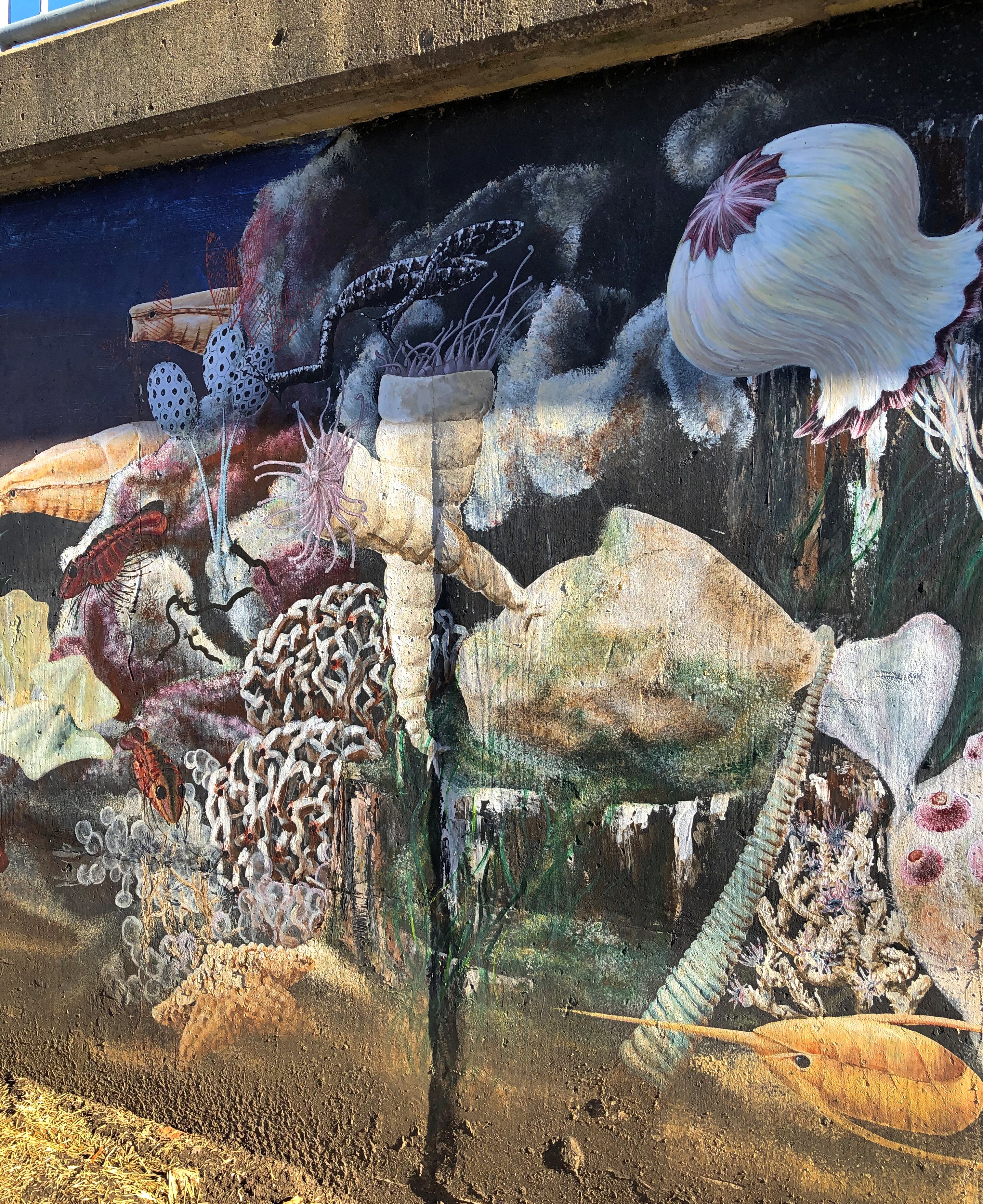
Though it’s a posted no trespassing area, an artist or artists clearly crossed the fence to paint an intriguing mural along a concrete wall just inside.Slade Avenue Well No. 5 mural

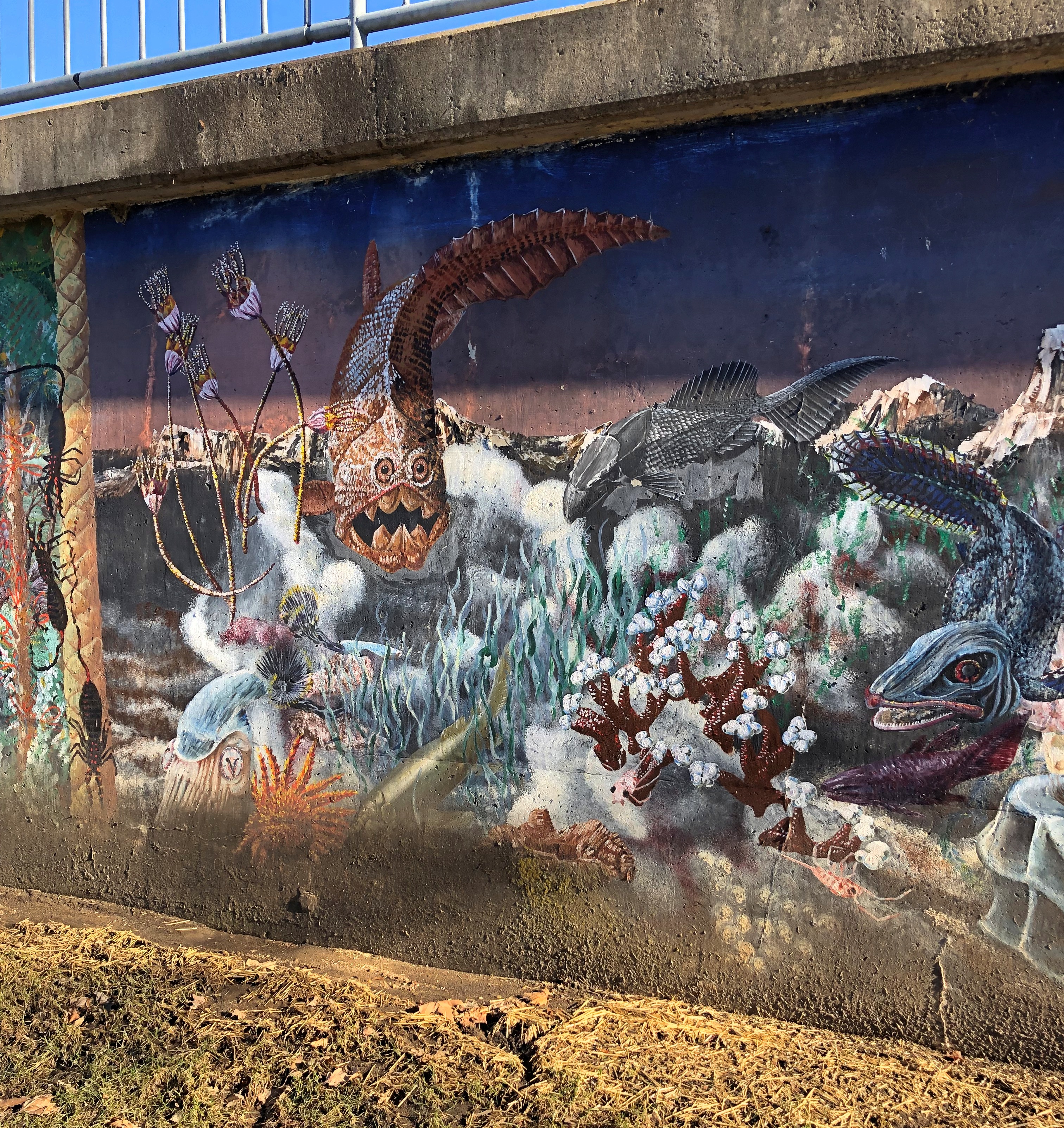
Details of which can be photographed from the trail, if you hold your camera just so. I’m not wont to trespass, but it wasn’t necessary to capture some images.Slade Avenue Well No. 5 mural
Slade Avenue Well No. 5 mural

If our dog hadn’t been dragging me along, I would have documented the entire thing.

Fanciful sea creatures, from the look of it. The execution shows considerable talent. Who did it? Why there? How long ago? (It looks fairly new.) Does the city of Elgin know about it? If so, is officialdom planning to destroy it?

Cursory searches reveal nothing about it. Whatever its origin, I hope it is not destroyed merely for being in technically restricted space. It isn’t ugly tagging or thoughtless vandalism, but an odd and expansive mural that enlivens an otherwise completely nondescript concrete surface. There are too many plain concrete surfaces as it is; this is one less.

The Peace Bridge

Not long ago, I learned that gephyrophobia, an irrational fear of bridges, is a real thing. I find it a little hard to imagine. I’ve been on a few white-knuckle bridges in my time, such as the unnamed span that crosses the Mississippi from Savanna, Illinois, to Sabula, Iowa, which is as narrow as two-lane bridge can be and still be two lanes. But that was a rational reaction, not a generalized dread.

“In Michigan, the Mackinac Bridge Authority drives vehicles for free over a bridge that connects the state’s Upper and Lower Peninsulas and rises 199 feet above the strait below,” Car & Driver reports. “Formerly known as the Timid Driver Program, it’s now referred to as the Driver Assistance Program. Bridge staff, who are also responsible for escorting hazardous-materials trucks and maintenance chores, drive up to 10 people across the bridge each day.”

Mostly I have the opposite reaction to bridges, wanting to cross them in one way or another – walking, driving or by public conveyance. That includes the grand bridges I’ve crossed, such as Mighty Mac but also the Brooklyn Bridge, Golden Gate, Sydney Harbour and Seto-Ohashi, as well as mid-sized and smaller ones. Sometimes it’s an essential part of visiting somewhere, such as crossing the bridges on the Thames in London, the Seine in Paris and the Vltava in Prague. Or even the Tridge in Midland, Michigan.

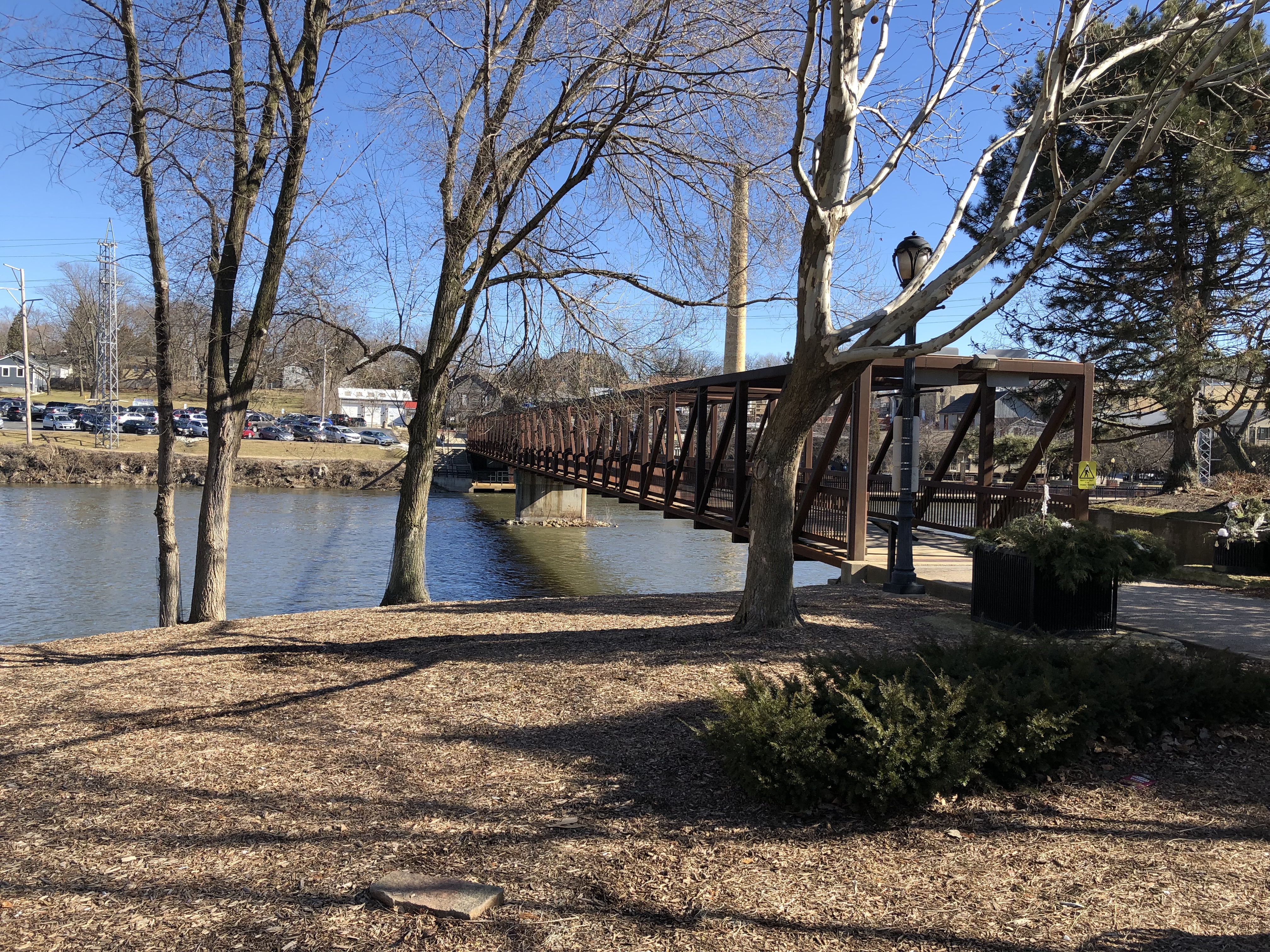
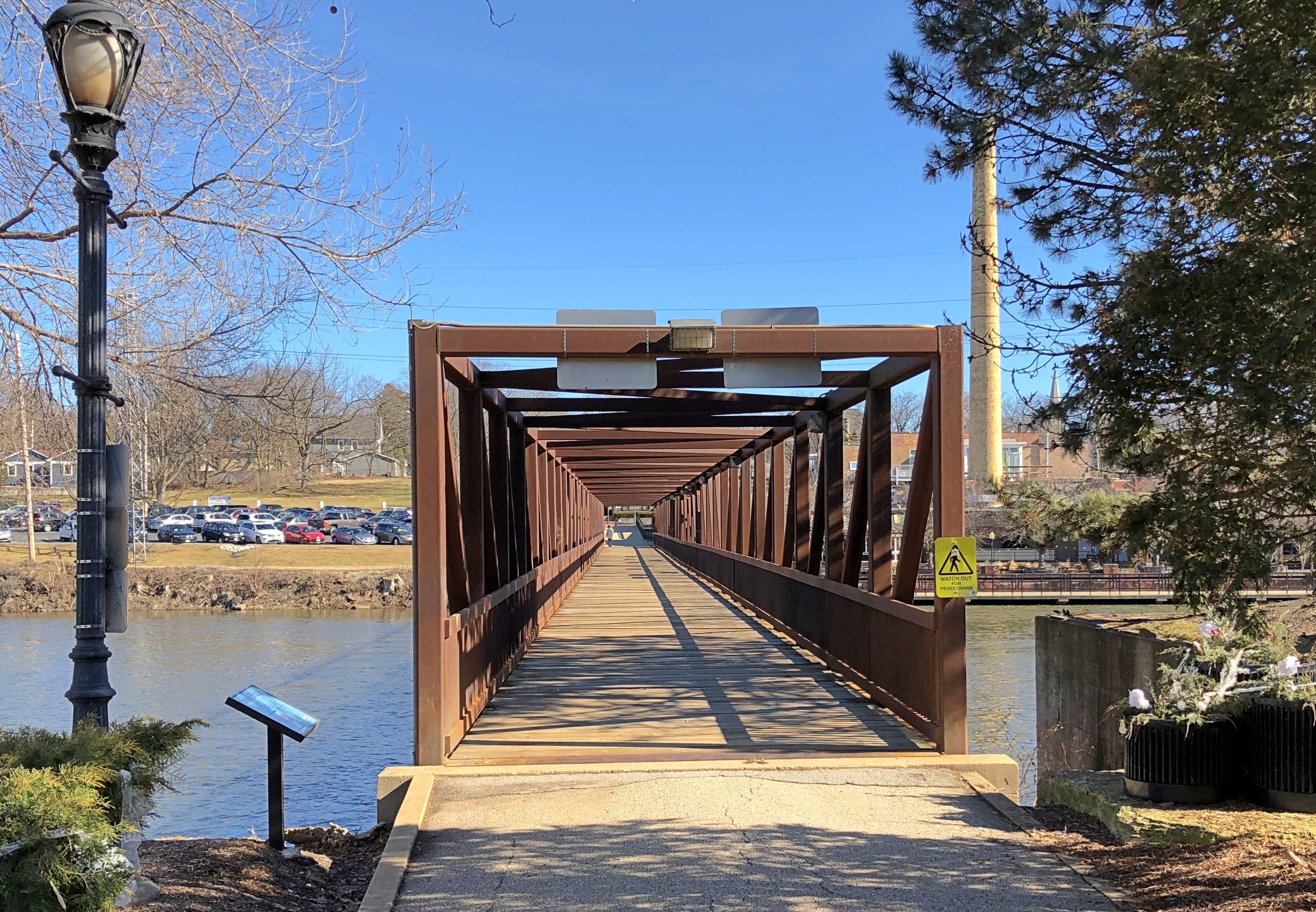
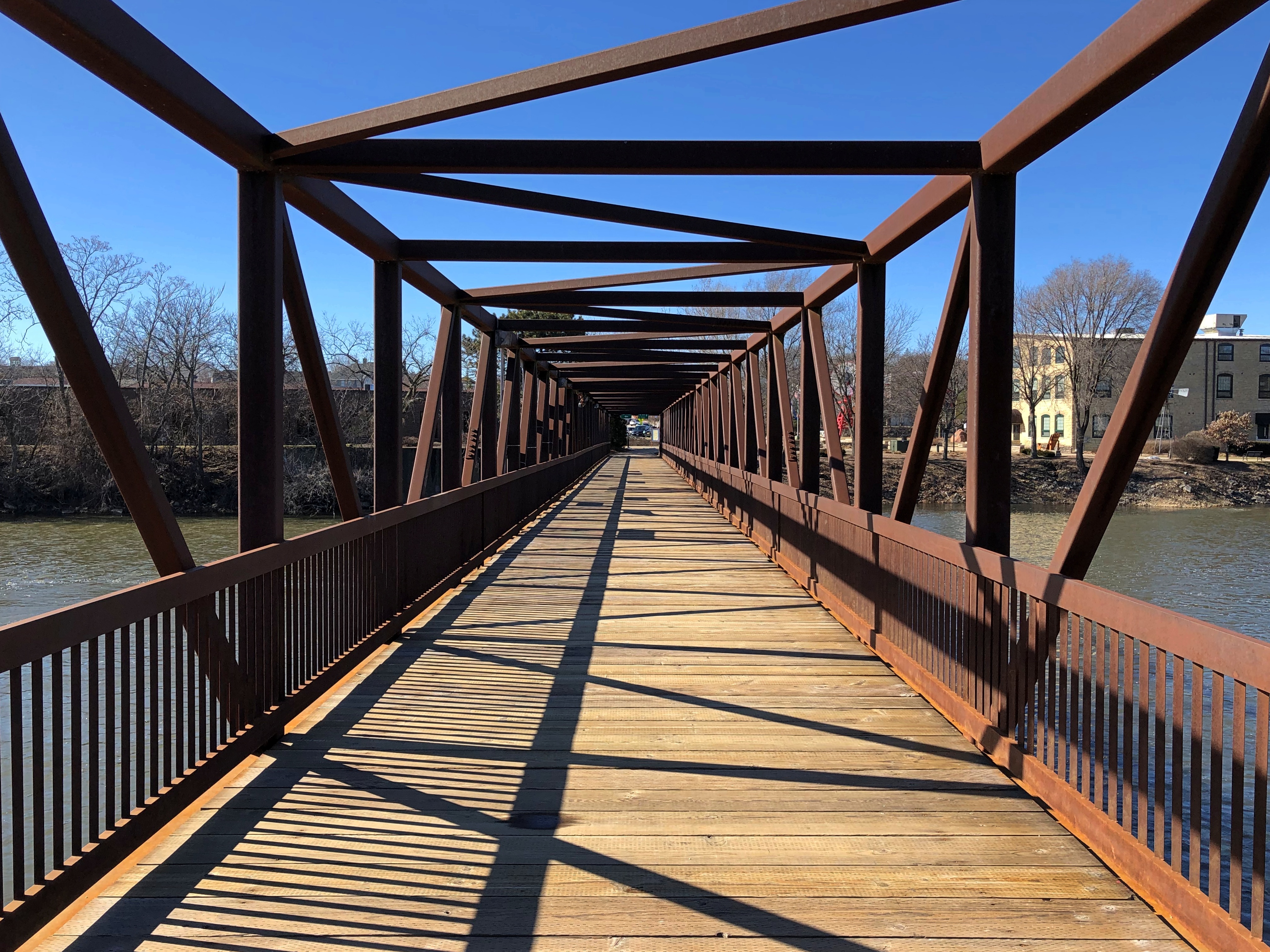
In Batavia, Illinois, a footbridge crosses the Fox River from the west bank peninsula to the east bank. I had no hesitation in crossing it during our Saturday visit. It’s a fairly ordinary iron structure with wood planks, the kind you see in a lot of places. Peace Bridge, Batavia, Illinois
Peace Bridge, Batavia

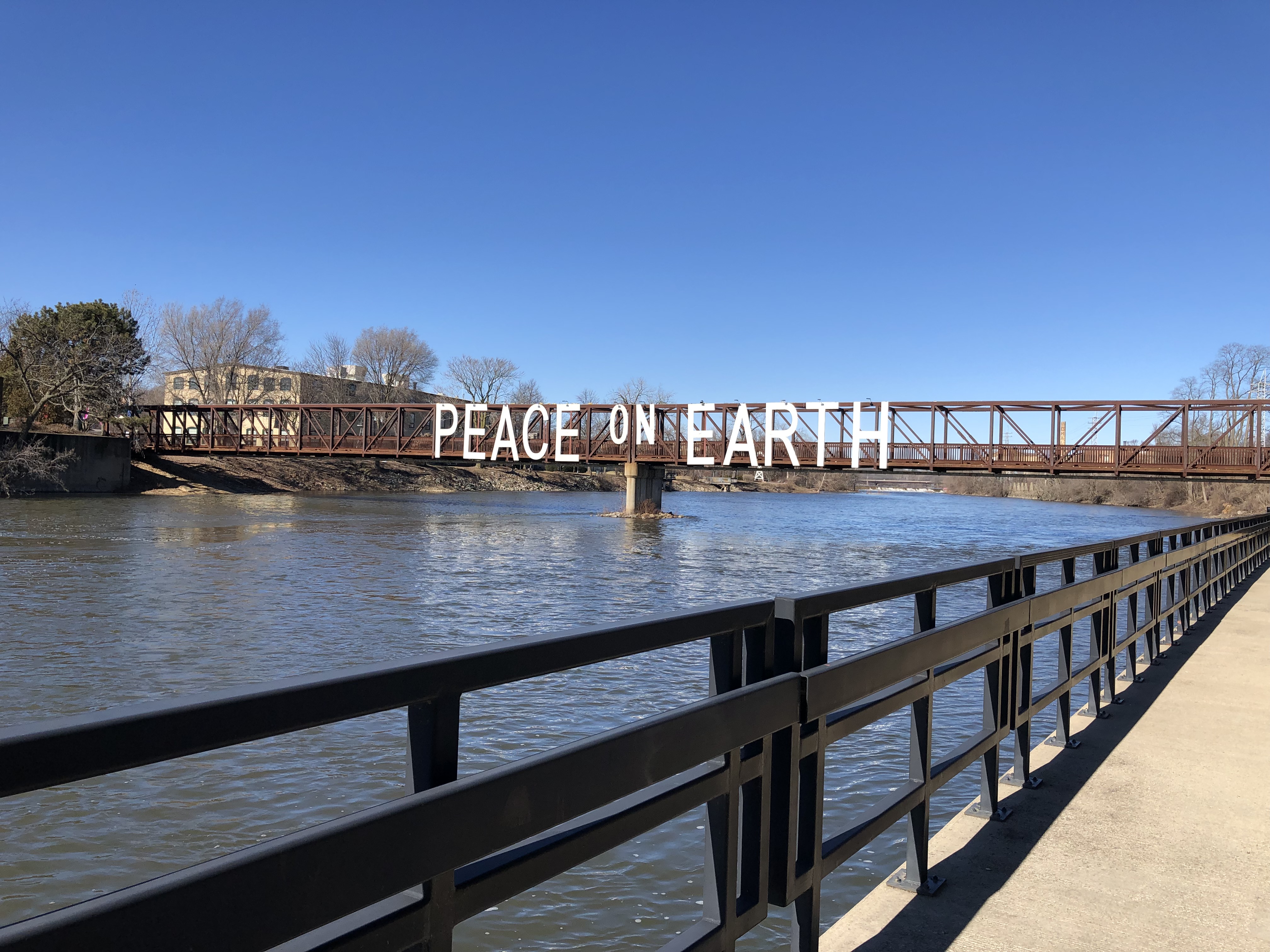
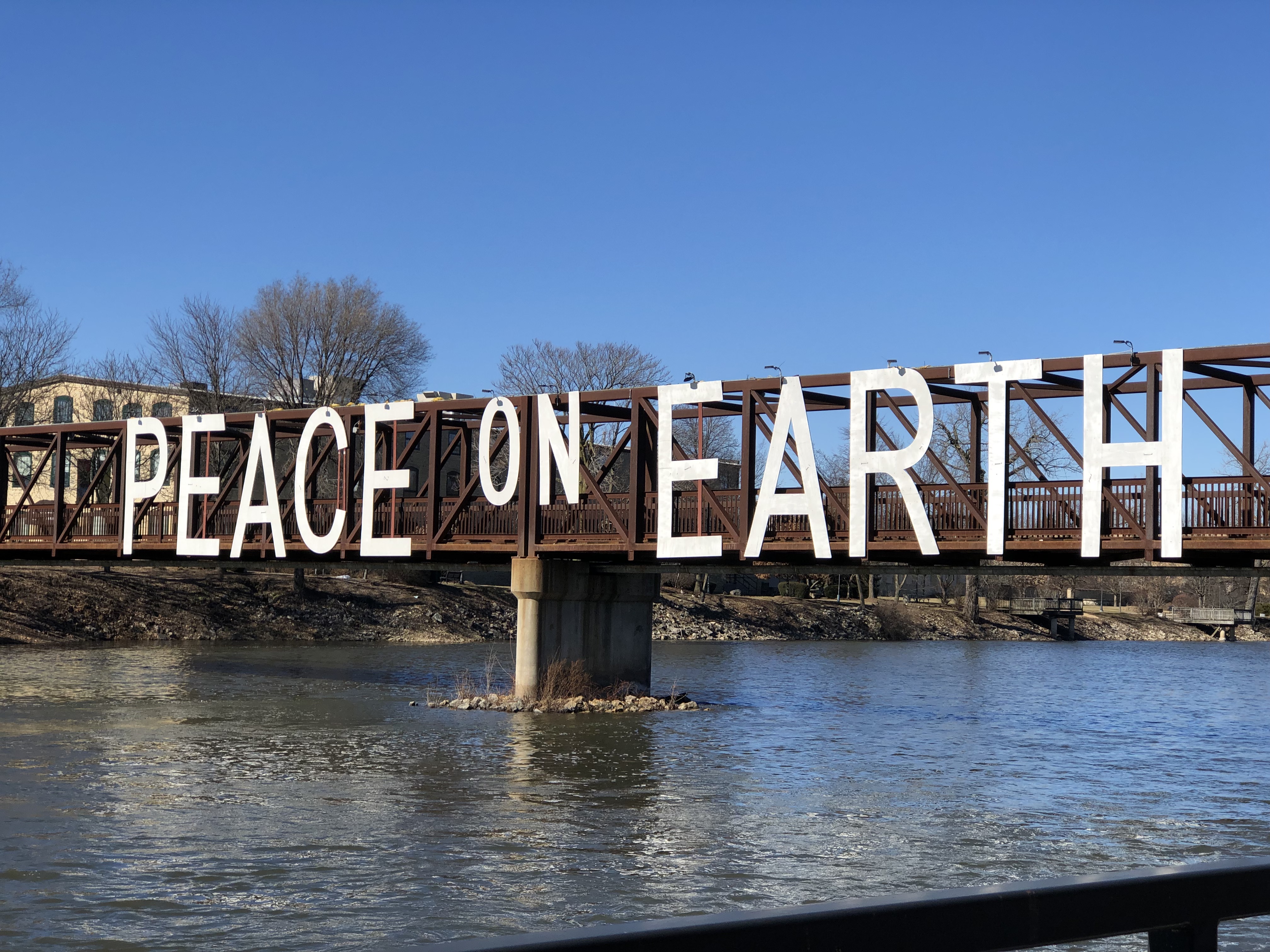
Except for one feature, best seen from nearby.Peace Bridge, Batavia, Illinois
Peace Bridge, Batavia, Illinois

It’s known as the Peace Bridge. The “PEACE” and “EARTH” letters are 12 feet tall; the “ON” letters eight feet. Beginning from their first installation in 2008, the letters were seasonal each year — around Christmas — but now they are year-round.

Remarkably, the sign was the idea of a local barber, Craig Foltos, owner of Foltos Tonsorial Parlor, who persuaded the Batavia Park District to install the letters he had fashioned (with help).

Foltos Tonsorial Parlor. I like that name so much I might have my hair cut there someday.

Along the Fox River, Batavia

We’re having a few days of faux spring. I ate lunch on the deck today, and noticed that the croci in the back yard are just beginning to push upward. That’s in contrast to last year, when that happened well into March, and no there were blooms until early April.

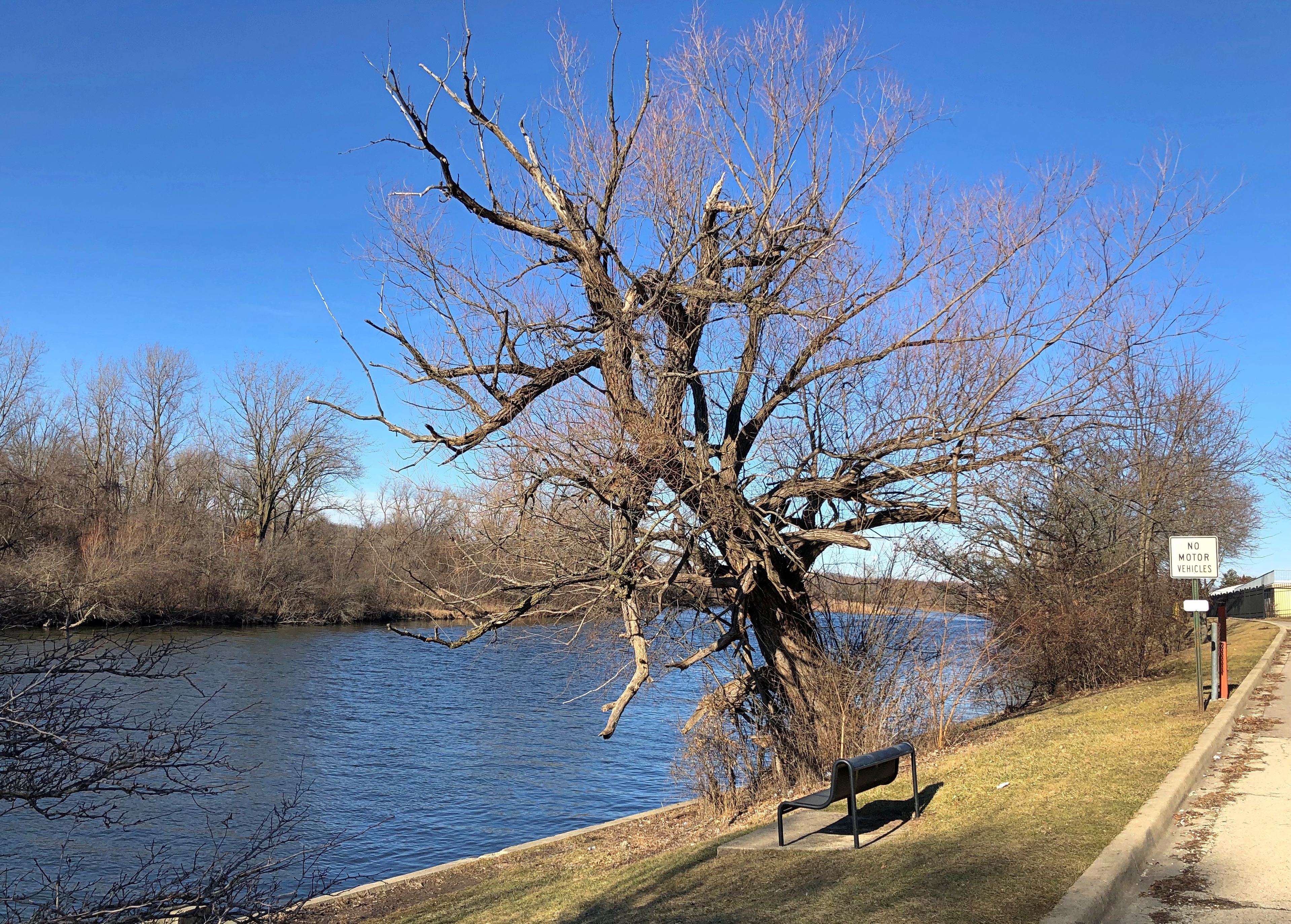
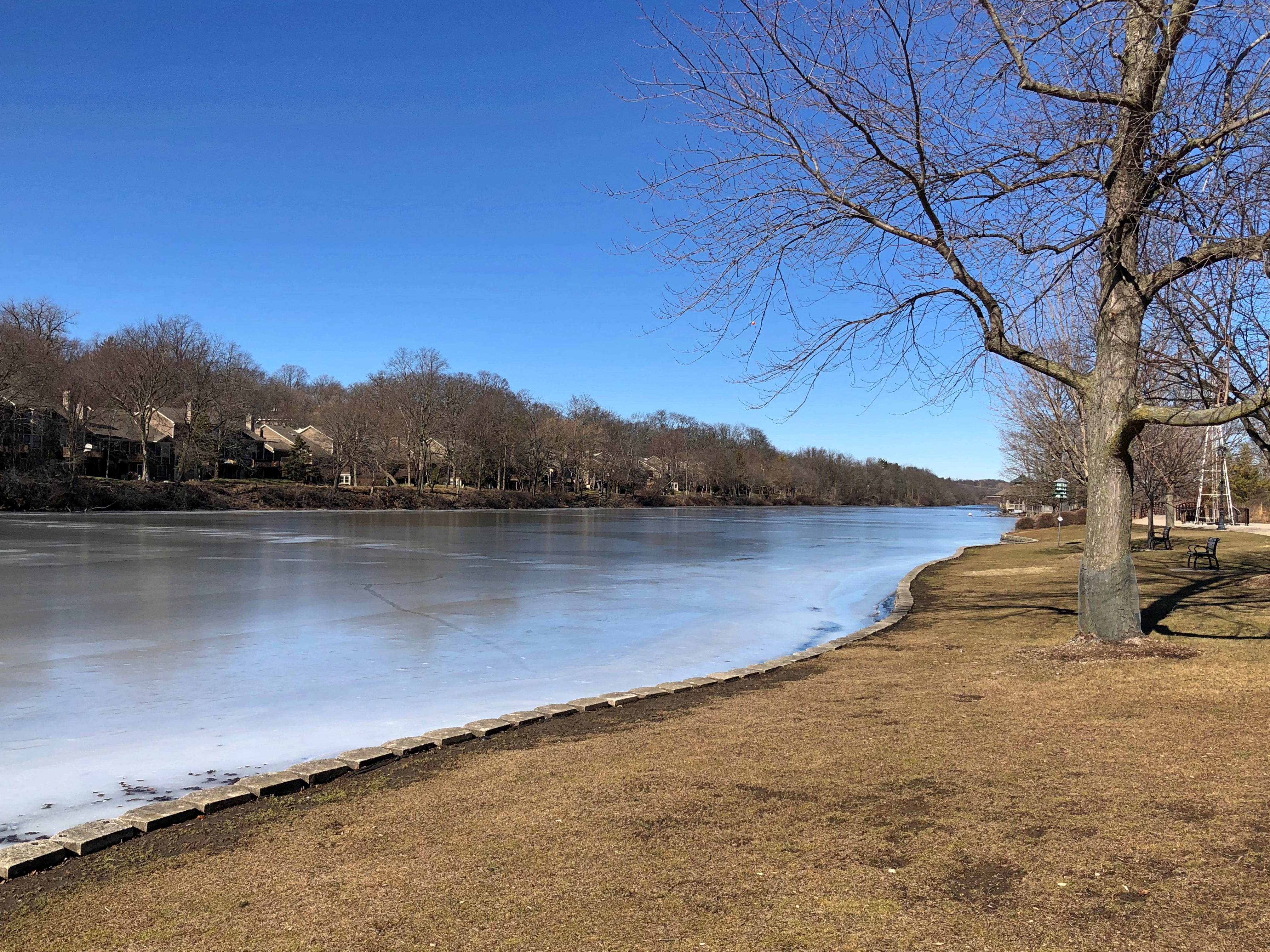
Temps were in the upper 40s on Saturday, and there was no threat of rain, so we took a walk along the Fox River in Batavia, Illinois.Fox River in Batavia, Illinois

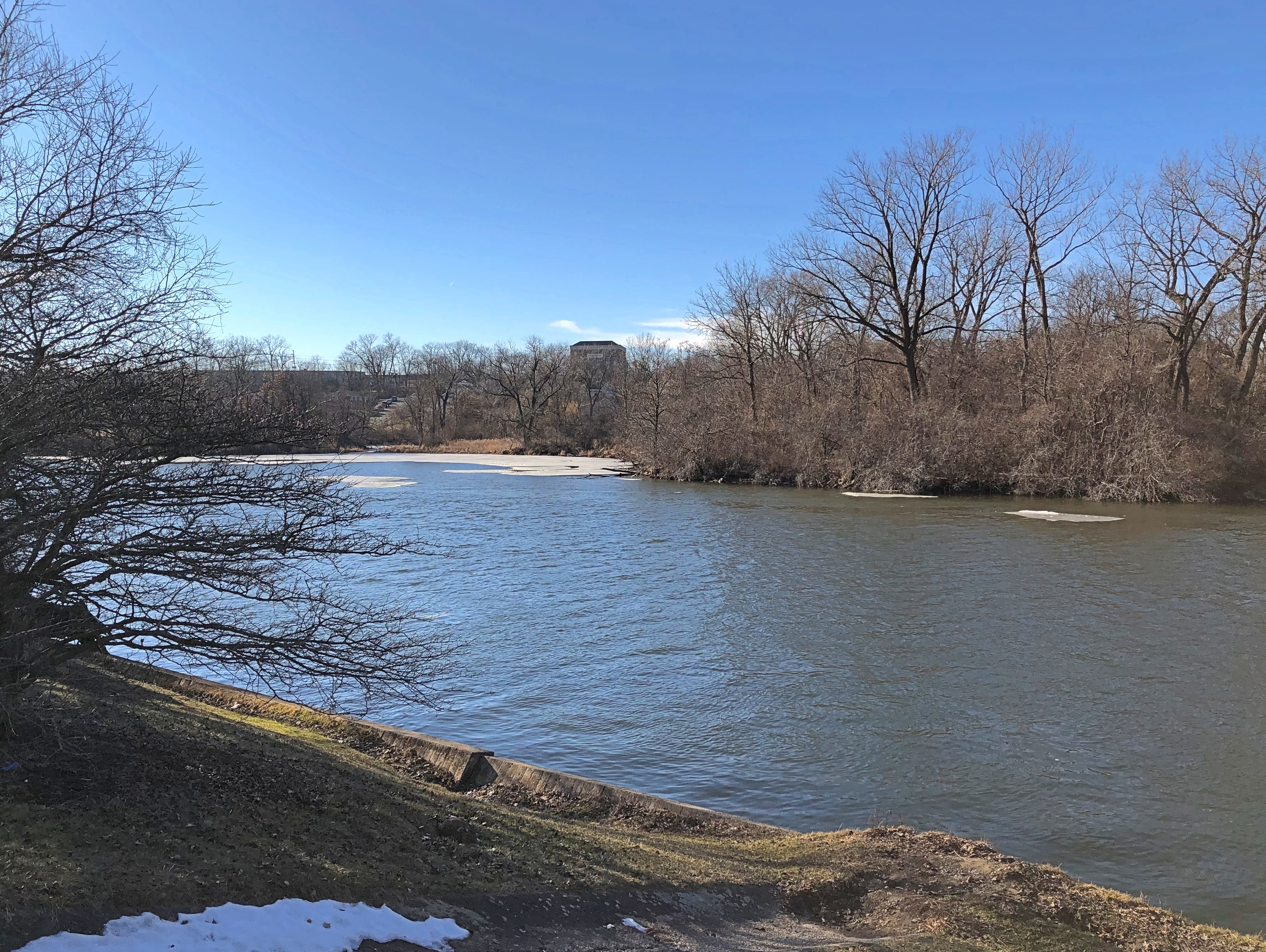
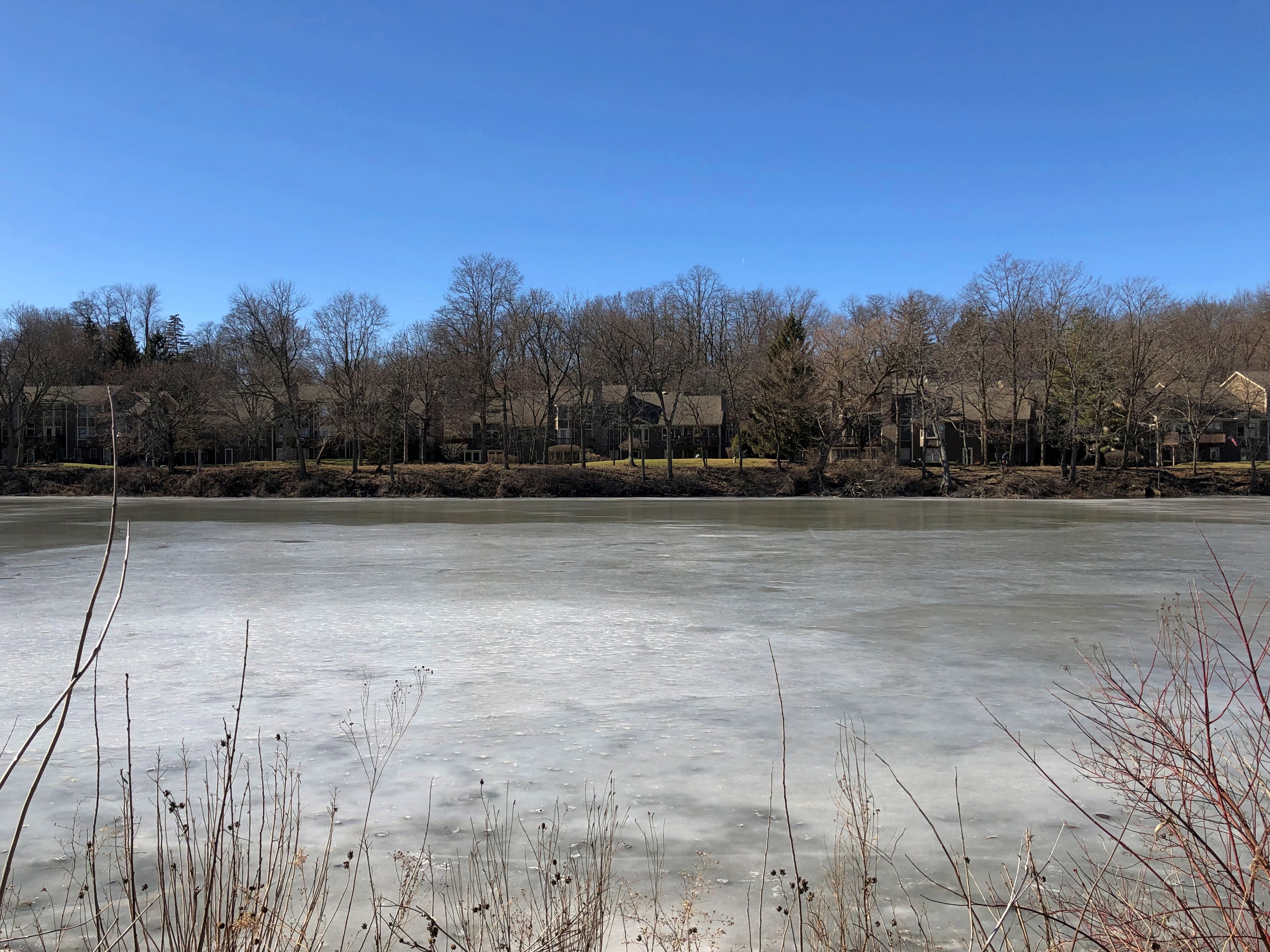
Not so warm that there still isn’t a film of ice. Faux spring, after all, is still winter.Fox River in Batavia, Illinois

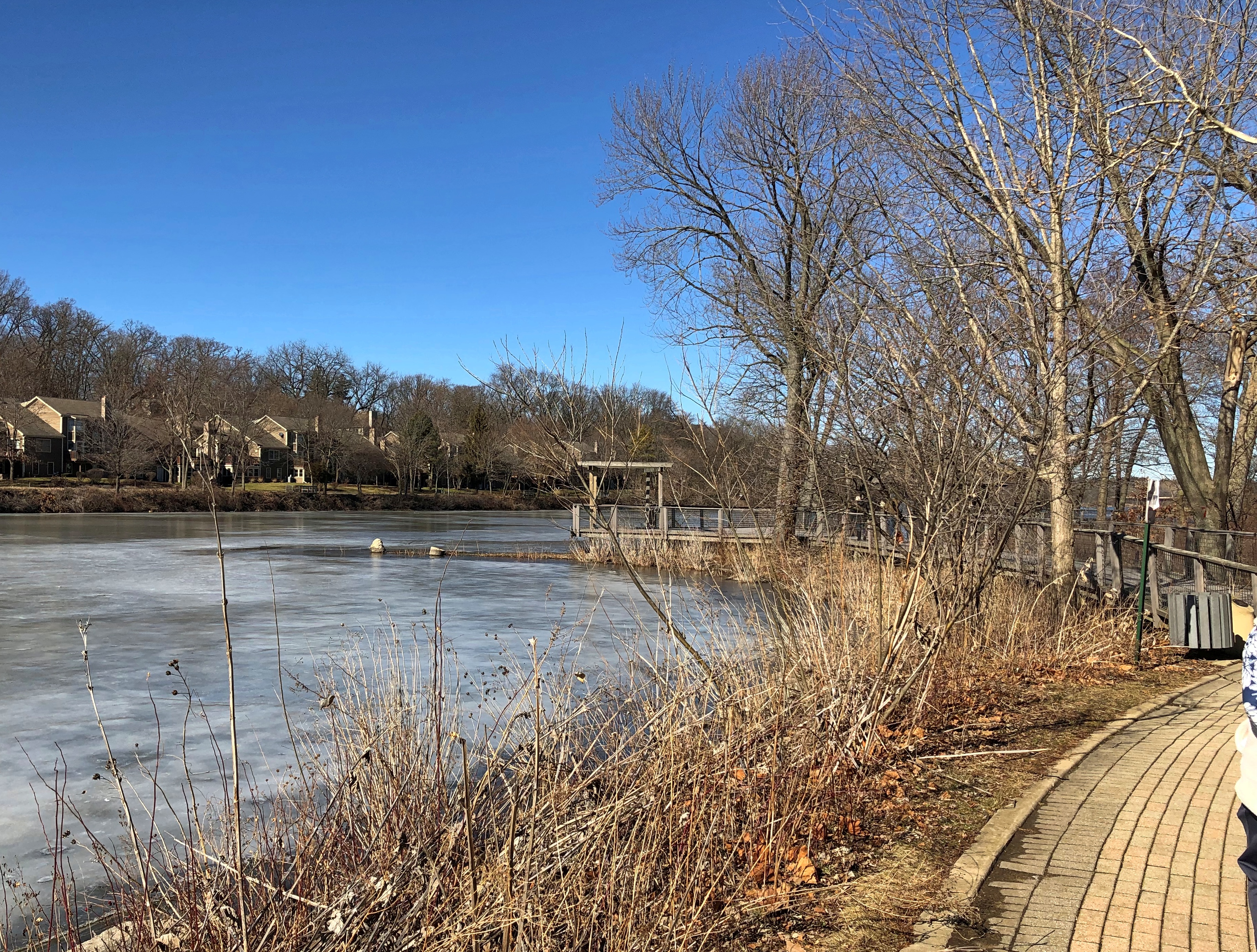
We walked along a peninsula that juts into the river. It’s partly parkland, with an easy trail near the edge of the water all the way around.Fox River in Batavia, Illinois Fox River in Batavia, Illinois

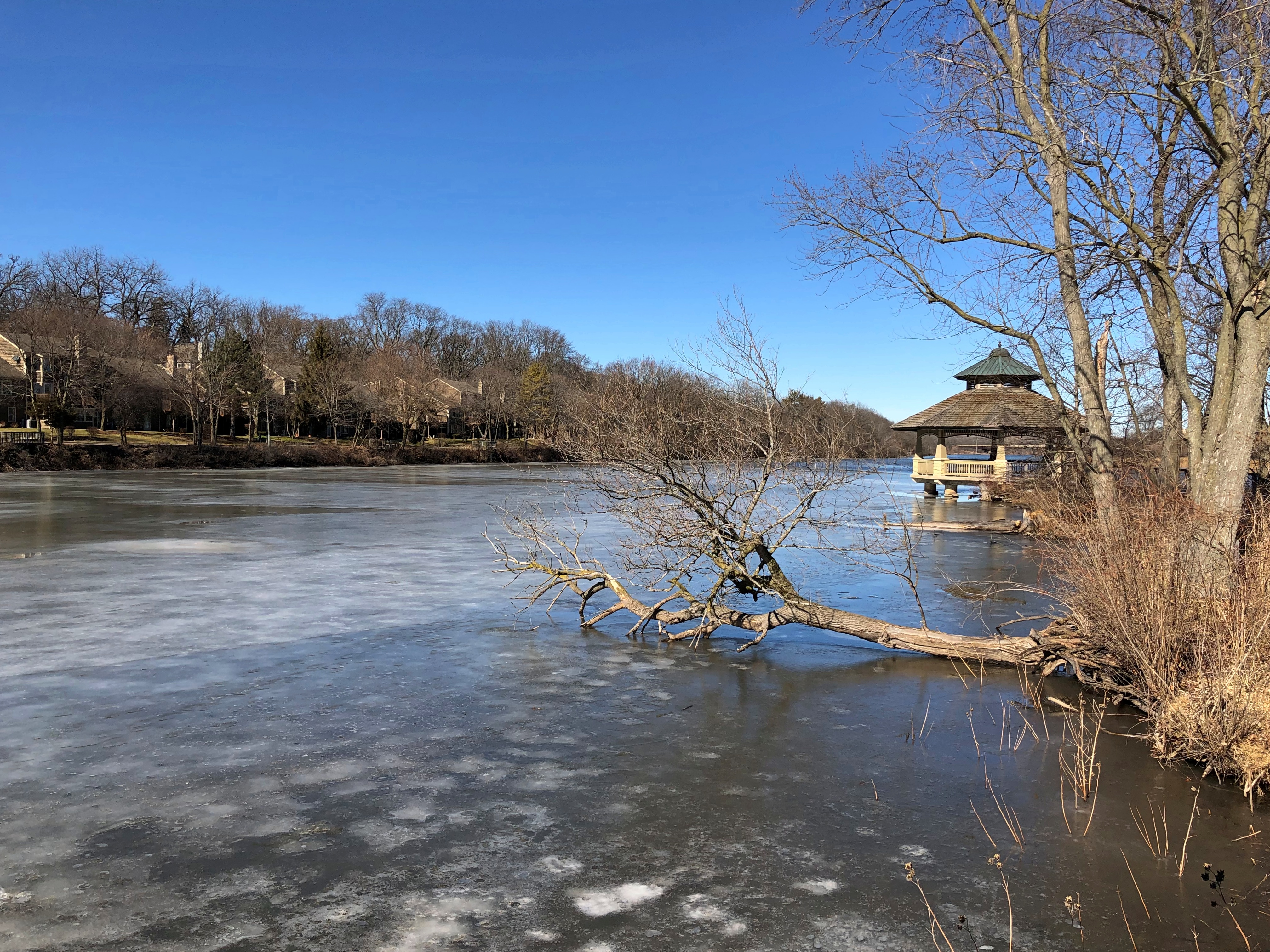
At the northern tip of the peninsula is a gazebo. Called a “pavilion” on the signs, but I know a gazebo when I see one.Fox River in Batavia, Illinois Fox River in Batavia, Illinois

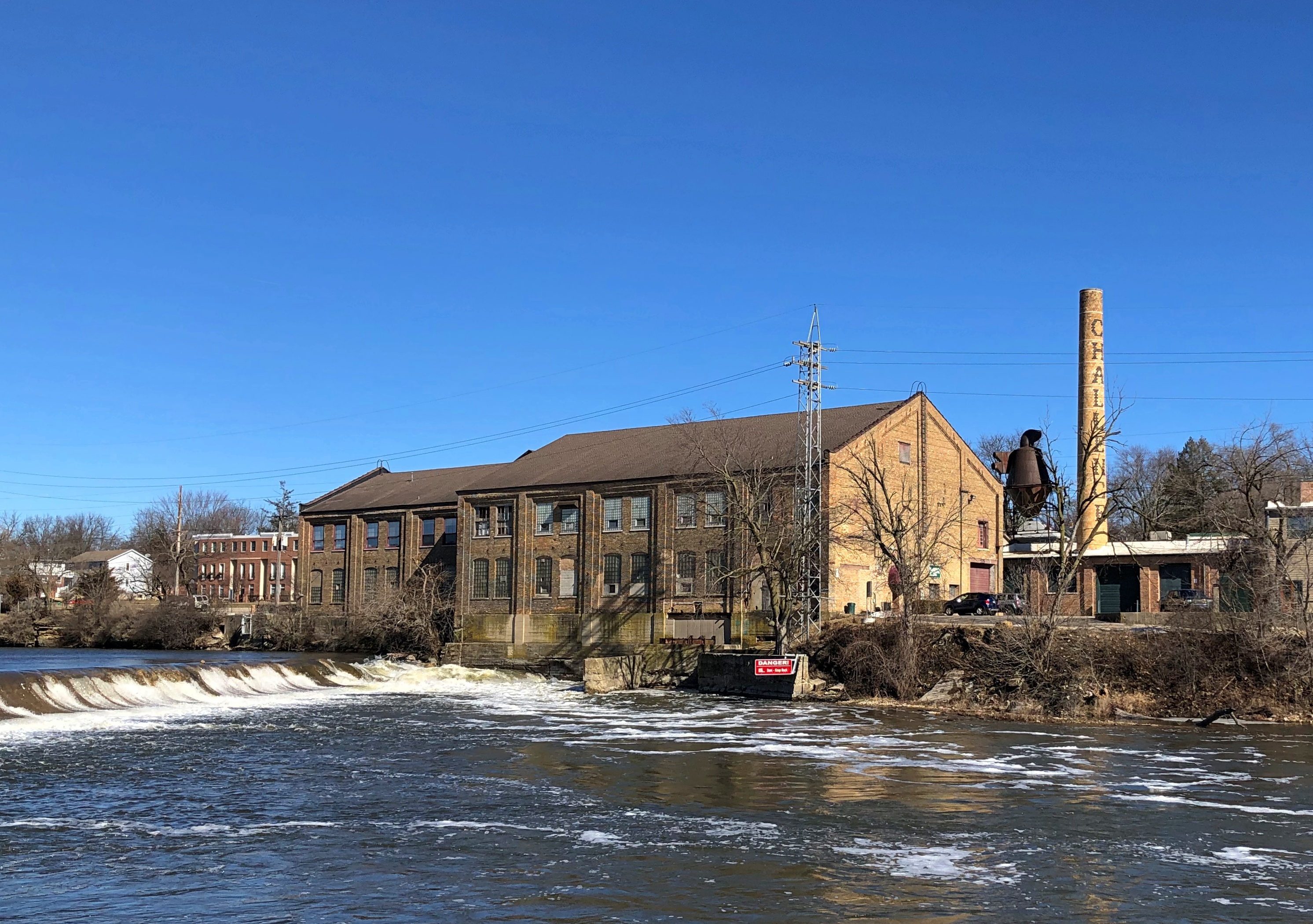
The Challenge Dam.Fox River in Batavia, Illinois

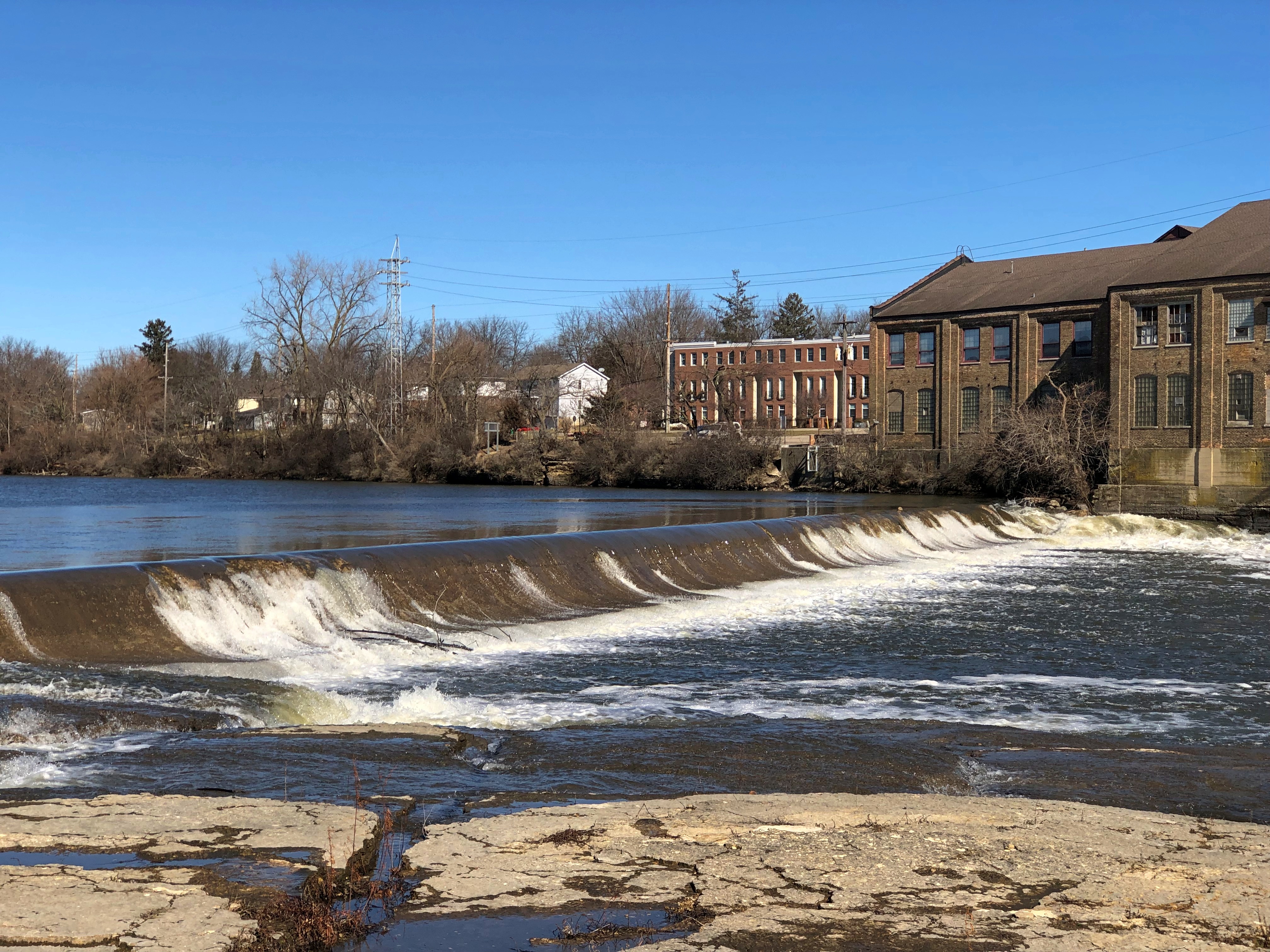
There’s been a dam of some kind on the site since the 1830s, originally providing water power for various small factories along the river (flour, ice, lumber, paper, stone), a function long relegated to the past. The current concrete dam is a bit more than 100 years old, taking its name from the Challenge Wind Mill and Feed Mill Co., whose building was next to the dam.  More prosaically, it’s also called Batavia Dam, and there seem to be long-term plans in the works to remove it.

The former wind mill (and feed mill) building.Fox River in Batavia, Illinois

I didn’t take a closer look, but the Batavia Historical Society says the building is in use even now, “partially filled with various, small companies.”

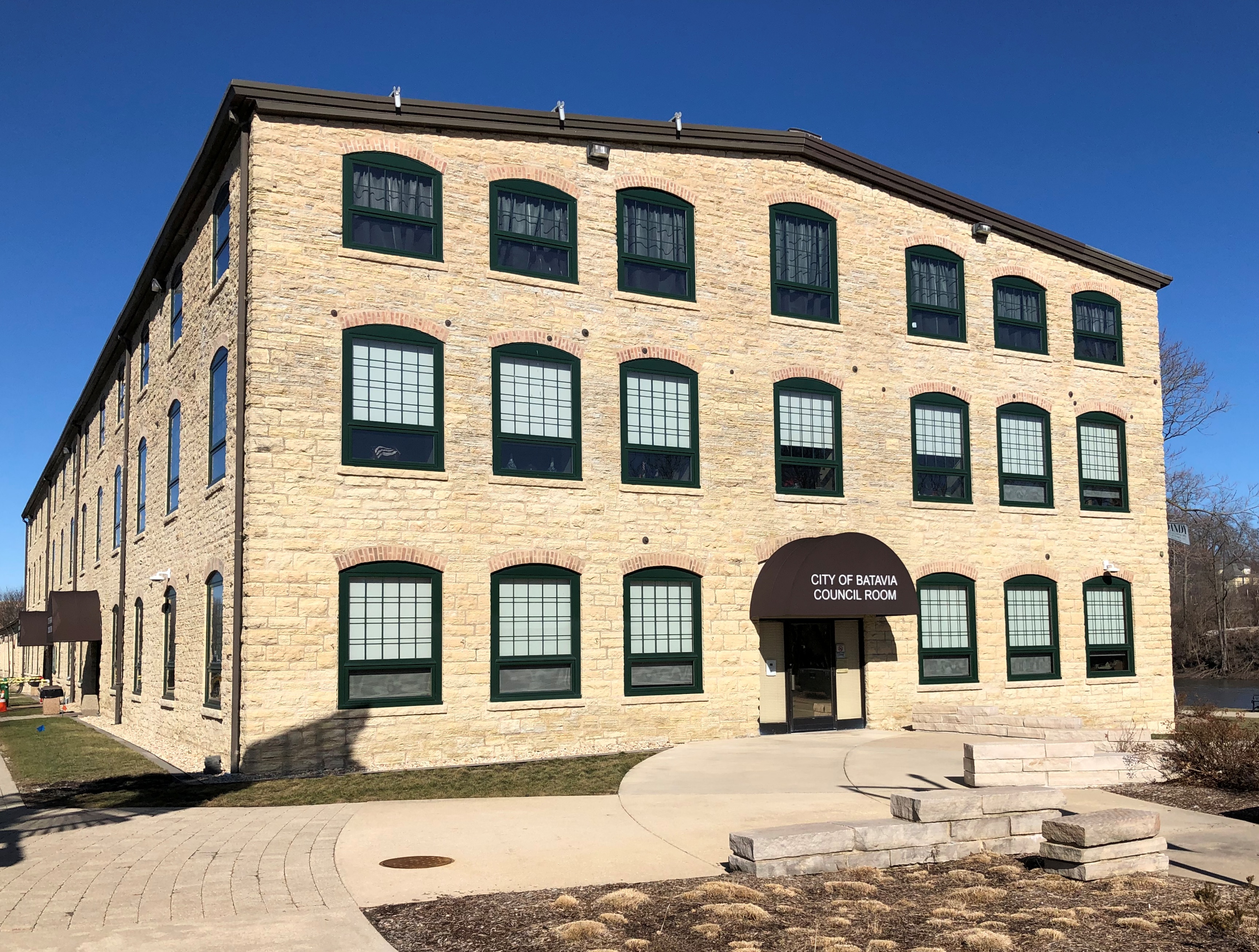
The city of Batavia has a building on the peninsula.Fox River in Batavia, Illinois

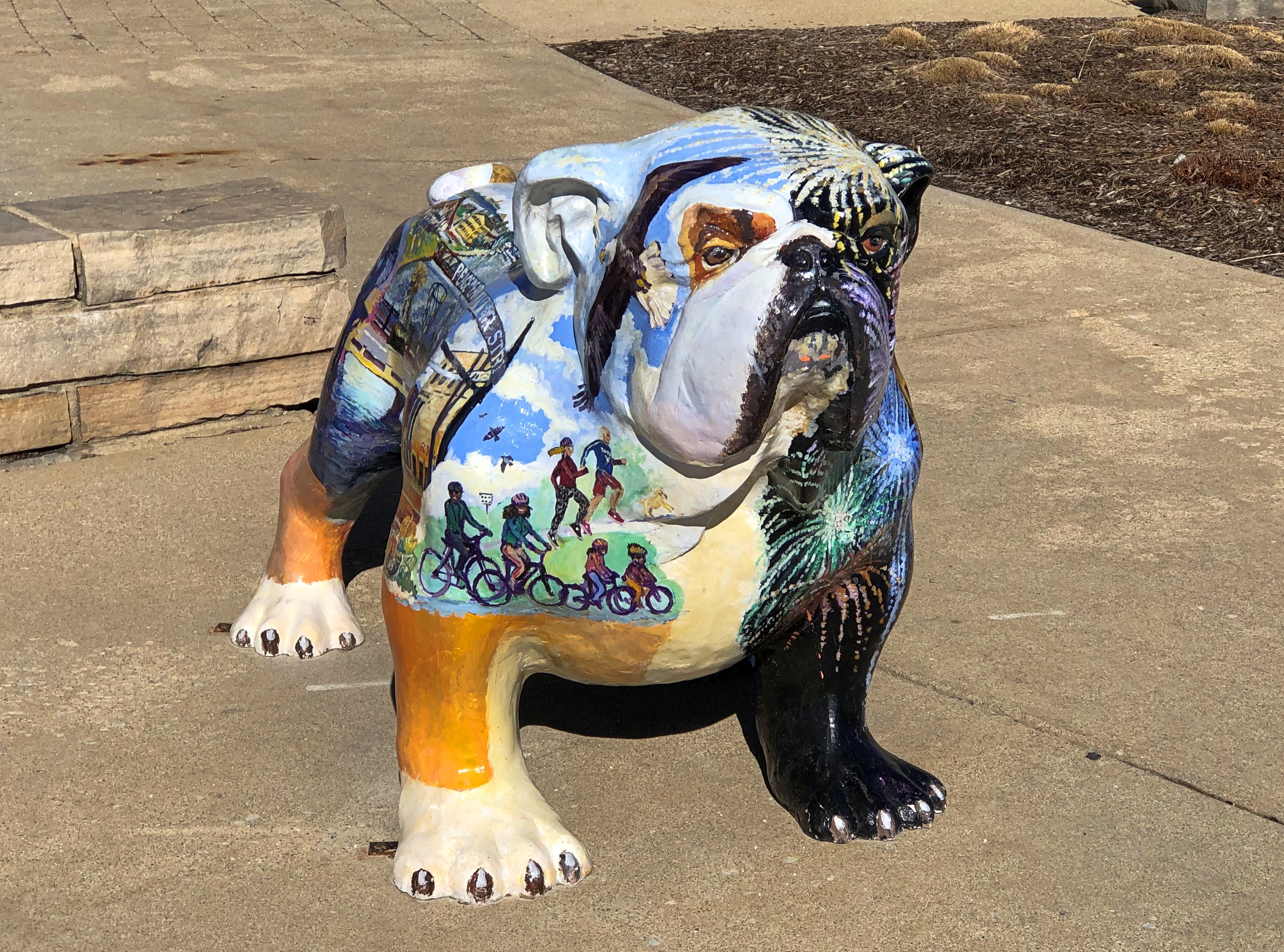
And a bulldog statue. Fox River in Batavia, Illinois

The Bulldogs are the local high school mascot, and 15 painted bulldogs were to be found in Batavia in the warm months of 2018.

The Former McLean County Courthouse

Now we’re in the pit of winter. Temps last night and into the morning dipped below zero Fahrenheit for some hours and didn’t rise much higher than positive single digits afterward. As of posting time, it’s 3 degrees F. hereabouts. But at least the roads aren’t iced over, as they are in parts of the South.

As far as I’m concerned, zero Fahrenheit is the gold standard for cold, as 100 F. is for heat. Thus demonstrating the genius of Daniel Gabriel Fahrenheit when it came to thermometry, though I don’t disparage those other men of science, Anders Celsius or William Thomson, 1st Baron Kelvin or even William Rankine.

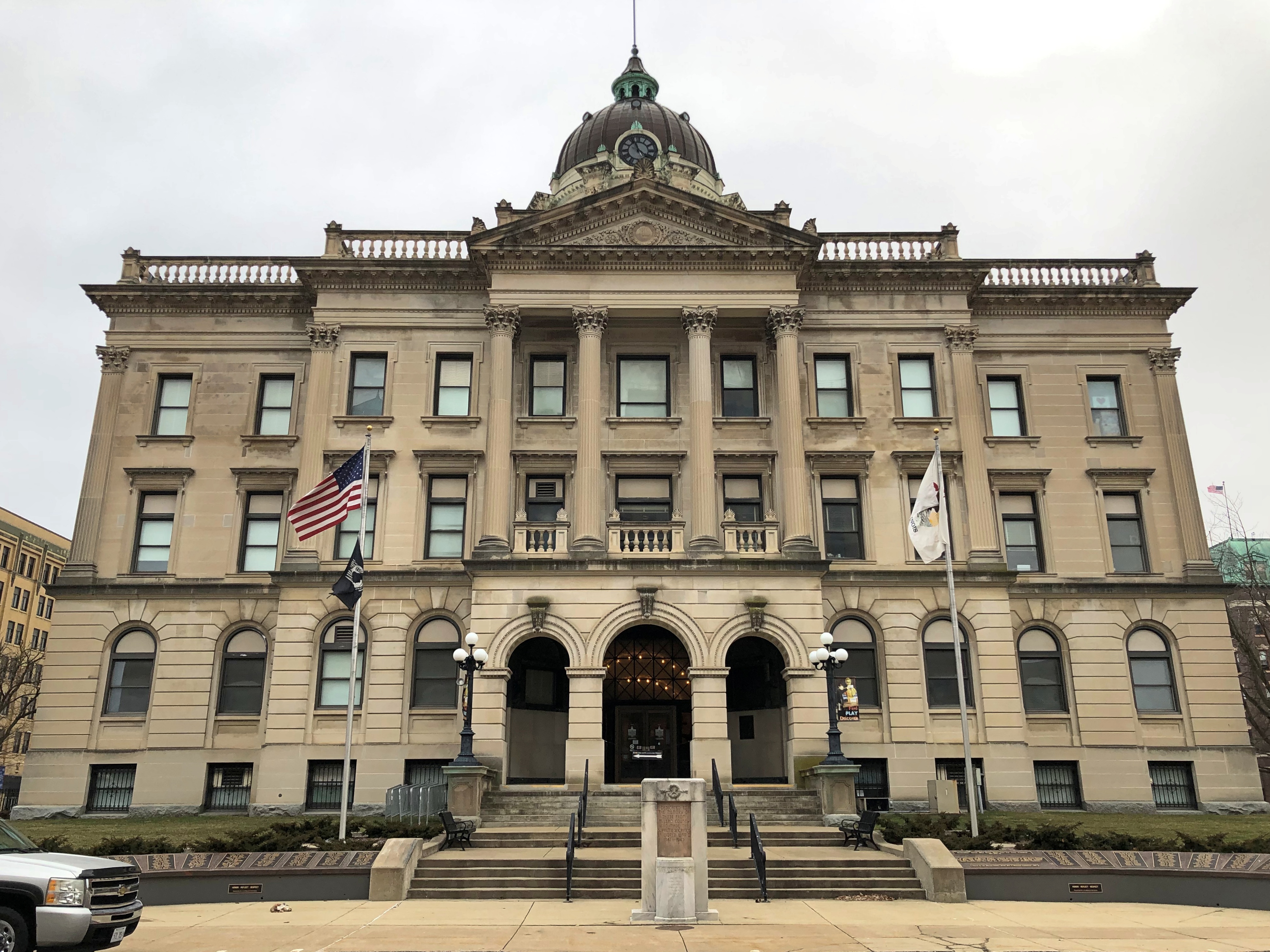
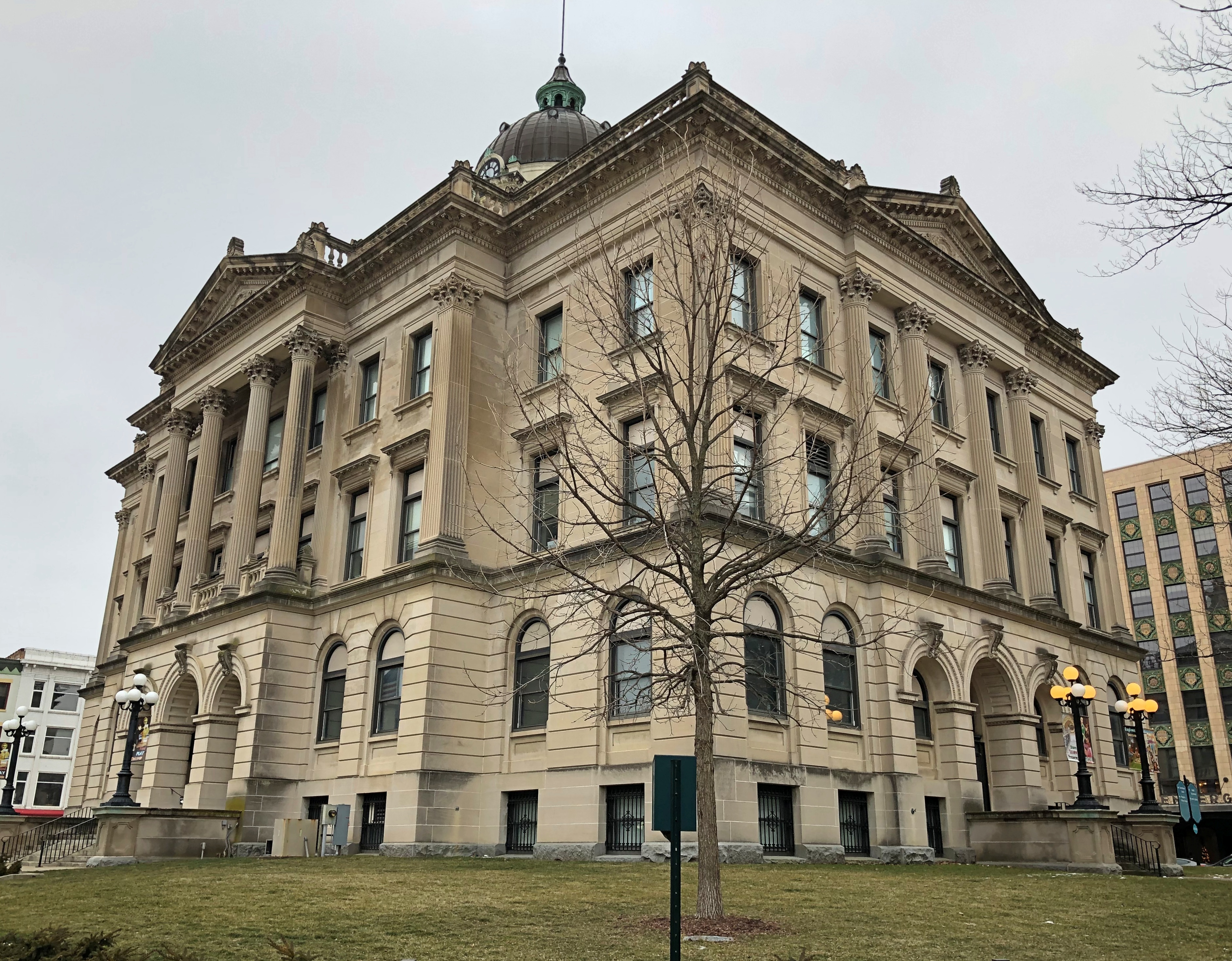
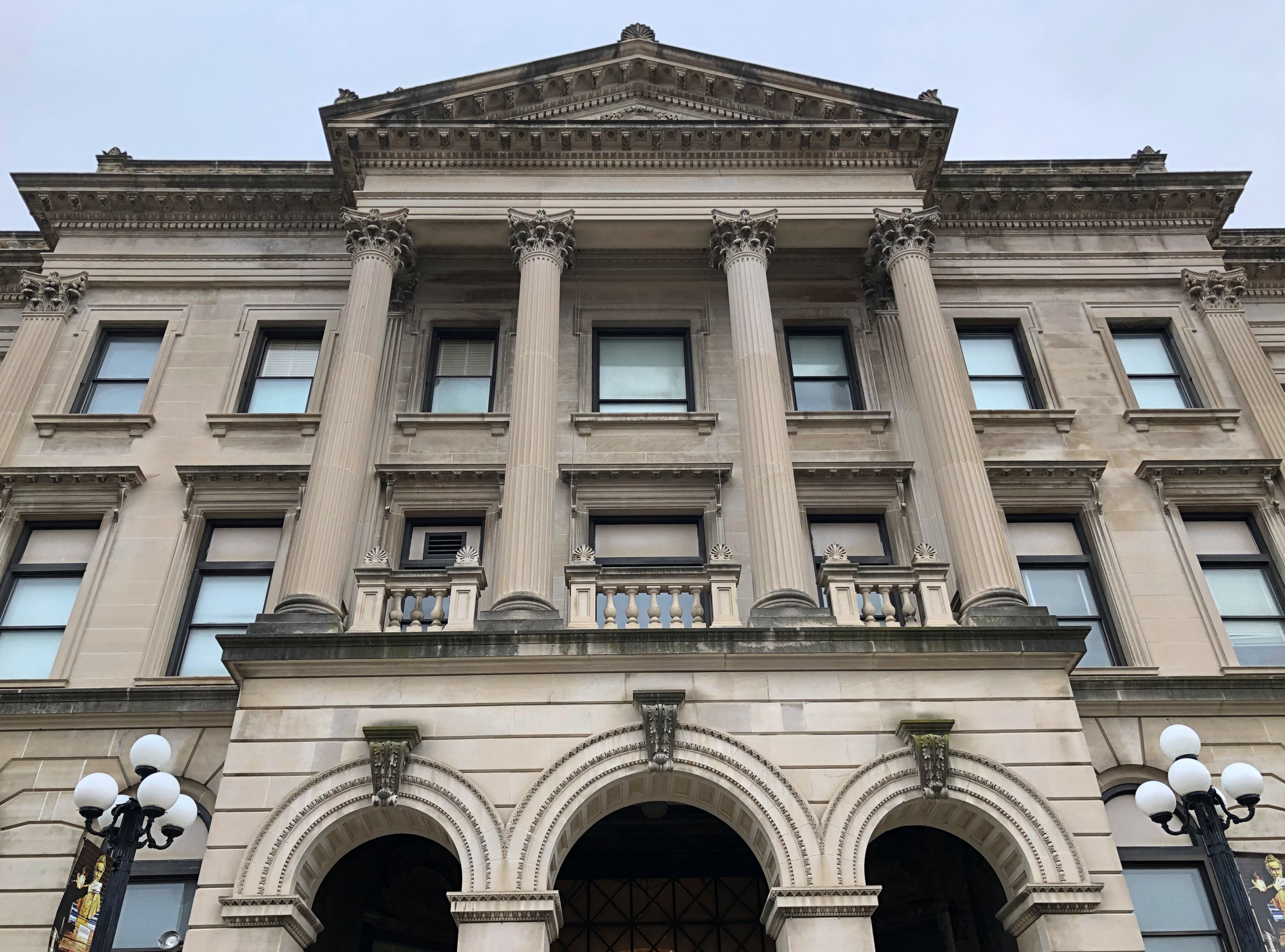
Temps (F) weren’t quite as cold when I took Ann back to Normal on Sunday, and there was no snow, so the traveling along I-55 was easy enough. Once I’d dropped her off, I took note of the fact that it was still light. So I headed to downtown Bloomington, where I’ve spent some wintertime moments, and took a look at the former McLean County Courthouse, now home to the McLean County Museum of History.Former McLean County Courthouse Former McLean County Courthouse Former McLean County Courthouse

Impressive. Design credit is given to a Peoria firm, Reeves and Baillie, who were busy in their time, it seems.

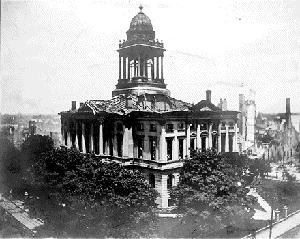
This is the third – or fourth – building on the site, depending on whether you count the restoration following a major fire 1900 (the small image is post-fire). Whatever the count, the building took its current form in the first years of the 20th century, and remained an actual courthouse until 1976.

For the last 30 years or so, the museum has occupied all four floors of the place. Ann told me she and some friends went there one day earlier this semester and found it worth the visit. I would have gone in, but it’s closed on Sundays. So I had to content myself with the sights to be seen circumambulating the building.

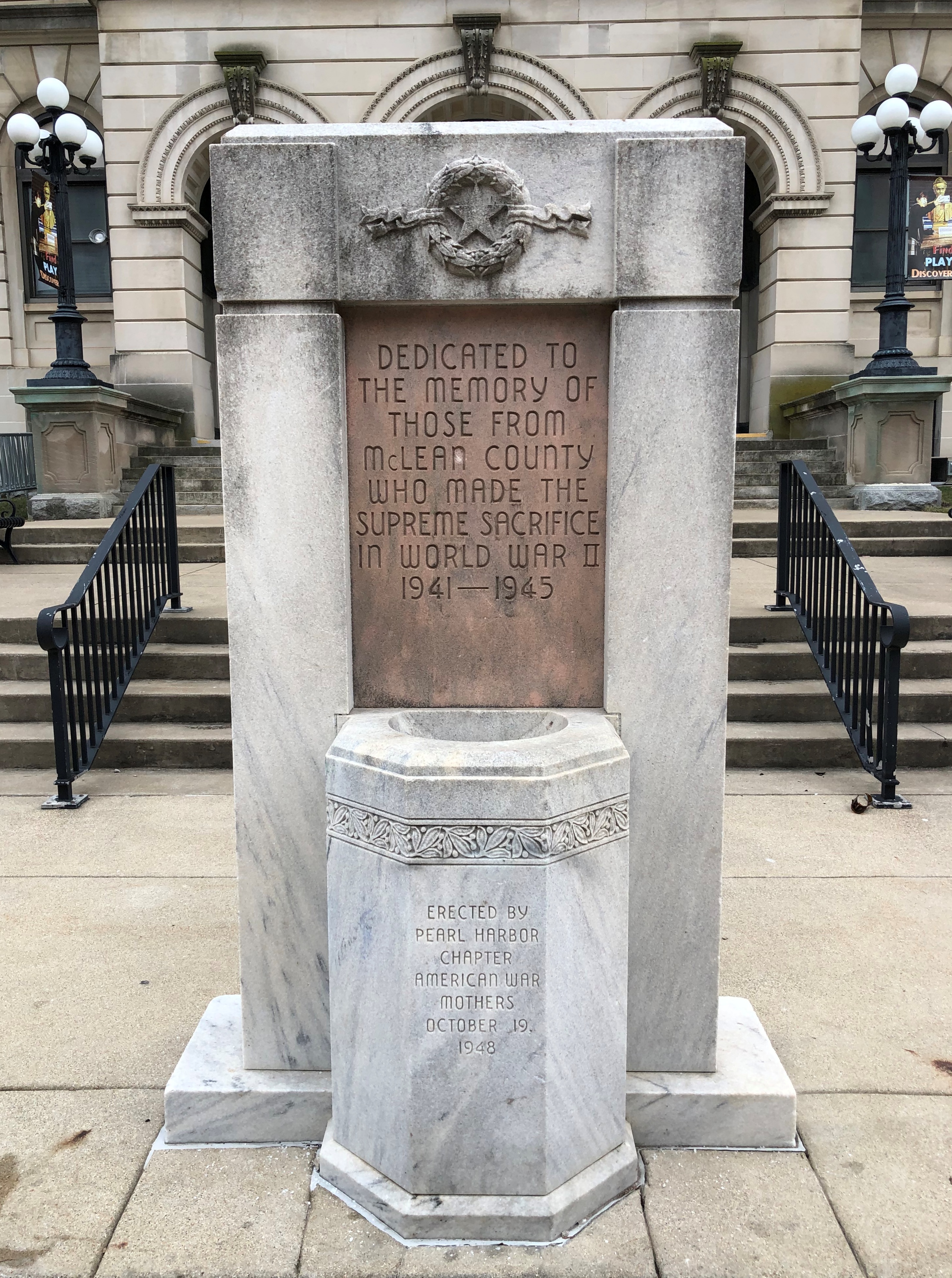
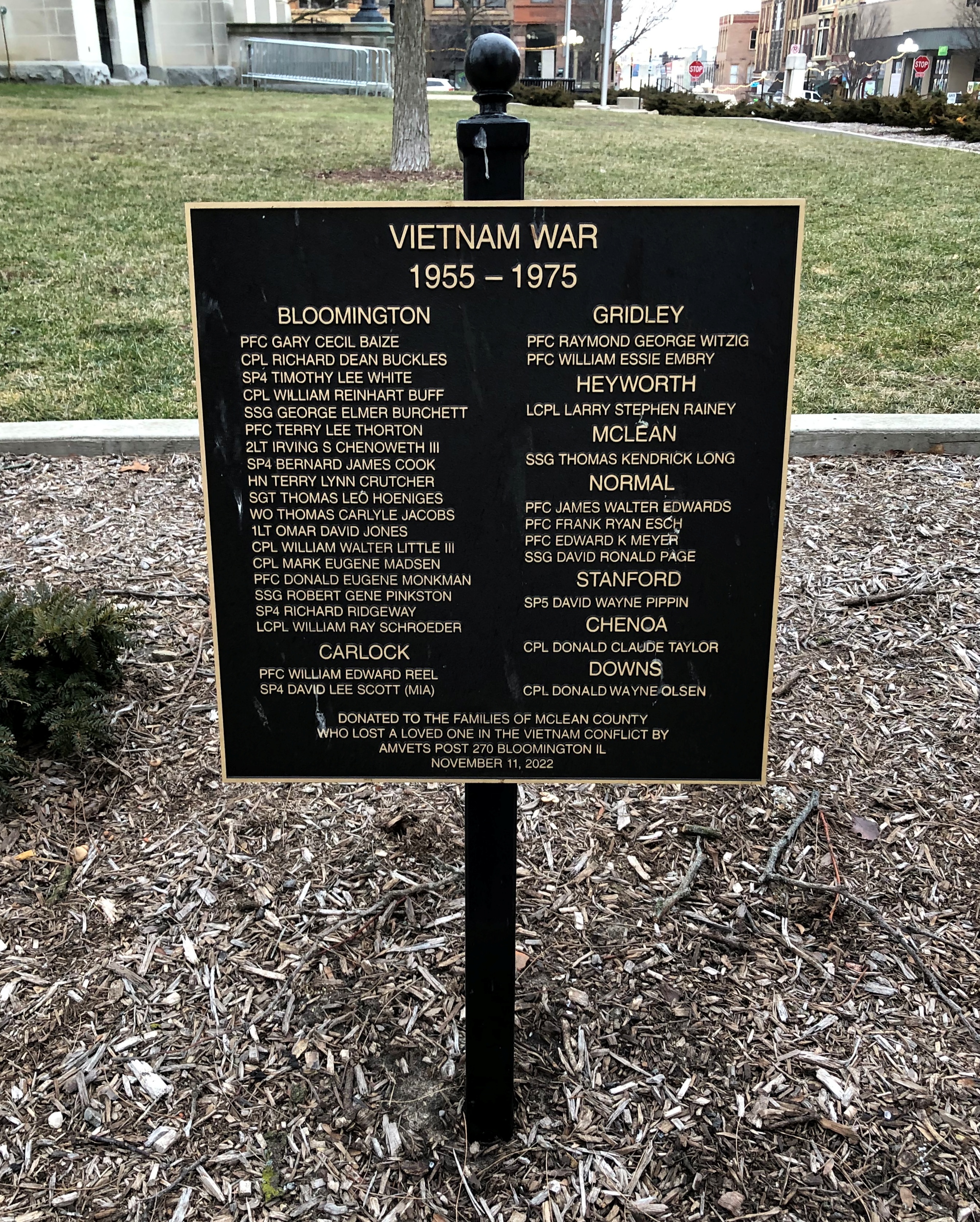
Such as war memorials.Former McLean County Courthouse

It took considerably longer to get around to this one.
Former McLean County Courthouse

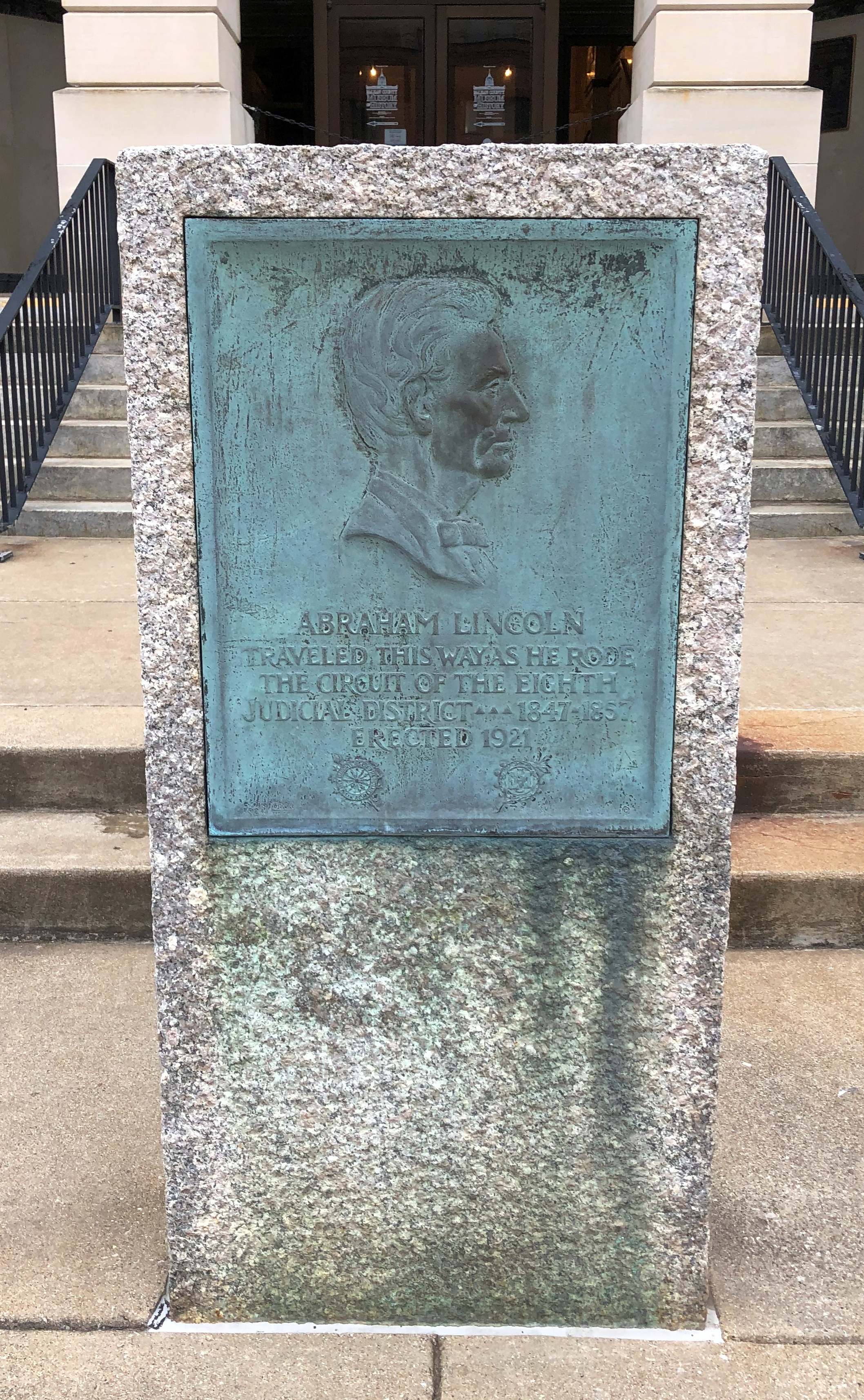
In Illinois, Lincoln Was Here plaques are plentiful.Lincoln Was Here

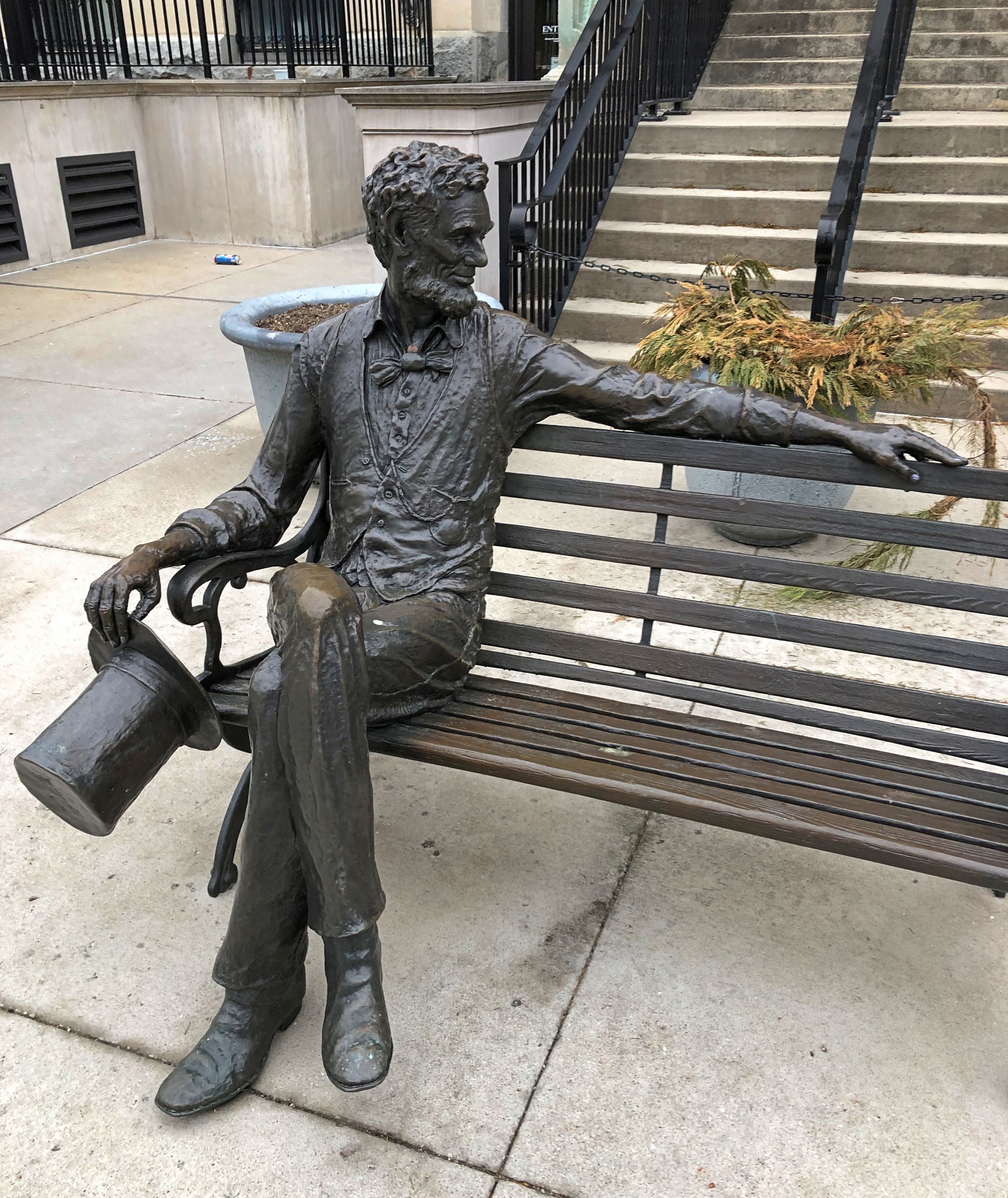
Looks like Lincoln is still in Bloomington. Bronze Lincoln anyway, and those are plentiful in the Land of Lincoln too. Of course they are.Bloomington Lincoln

By local artist Rick Harney and dedicated in 2000. That’s the bearded, presidential Lincoln, so one that never actually would have made an appearance in Bloomington, but never mind. Lincoln is Lincoln.