Considering that they are in Houston, Texas, that would be Willis Carrier, father of modern air conditioning.
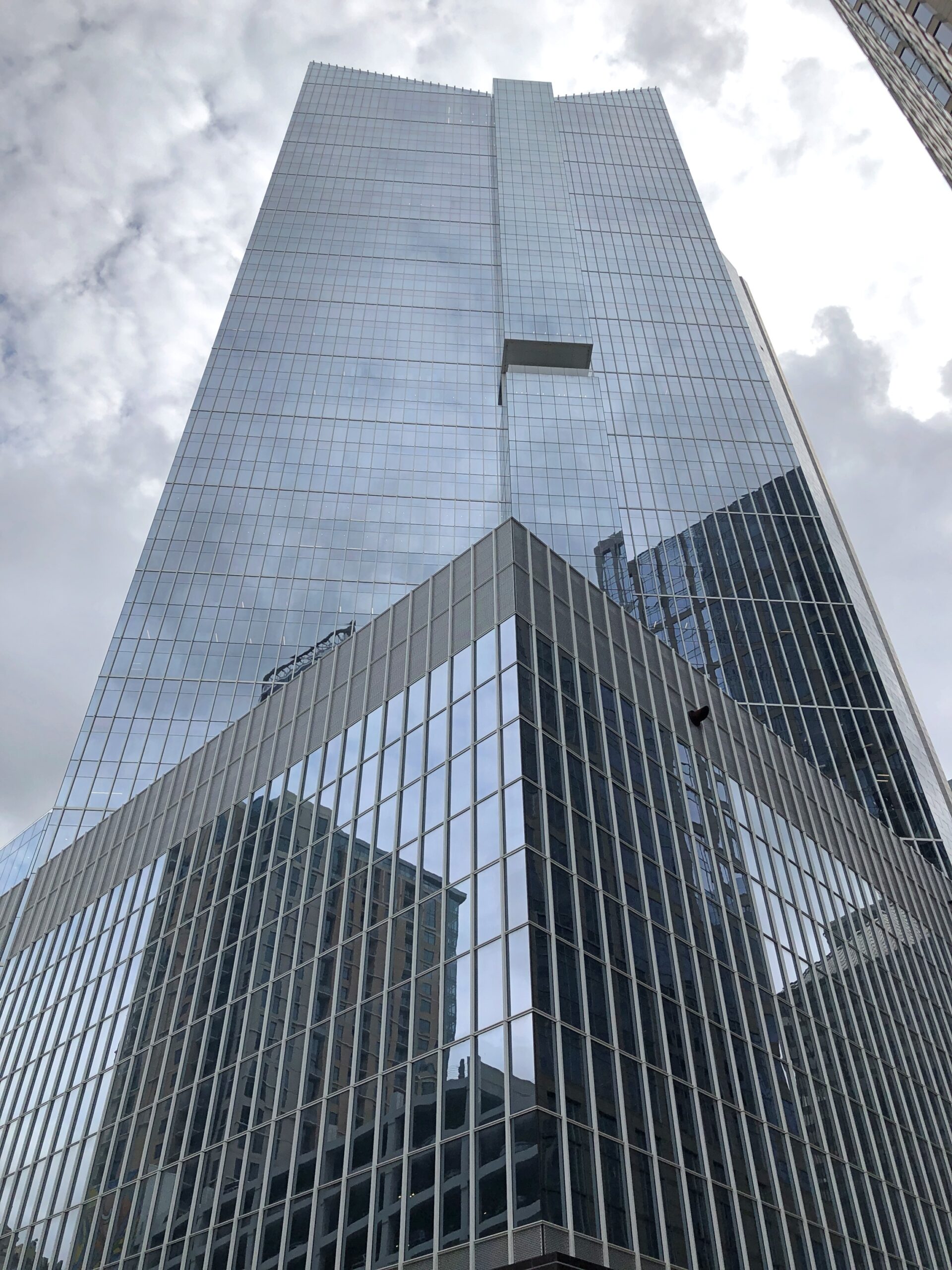
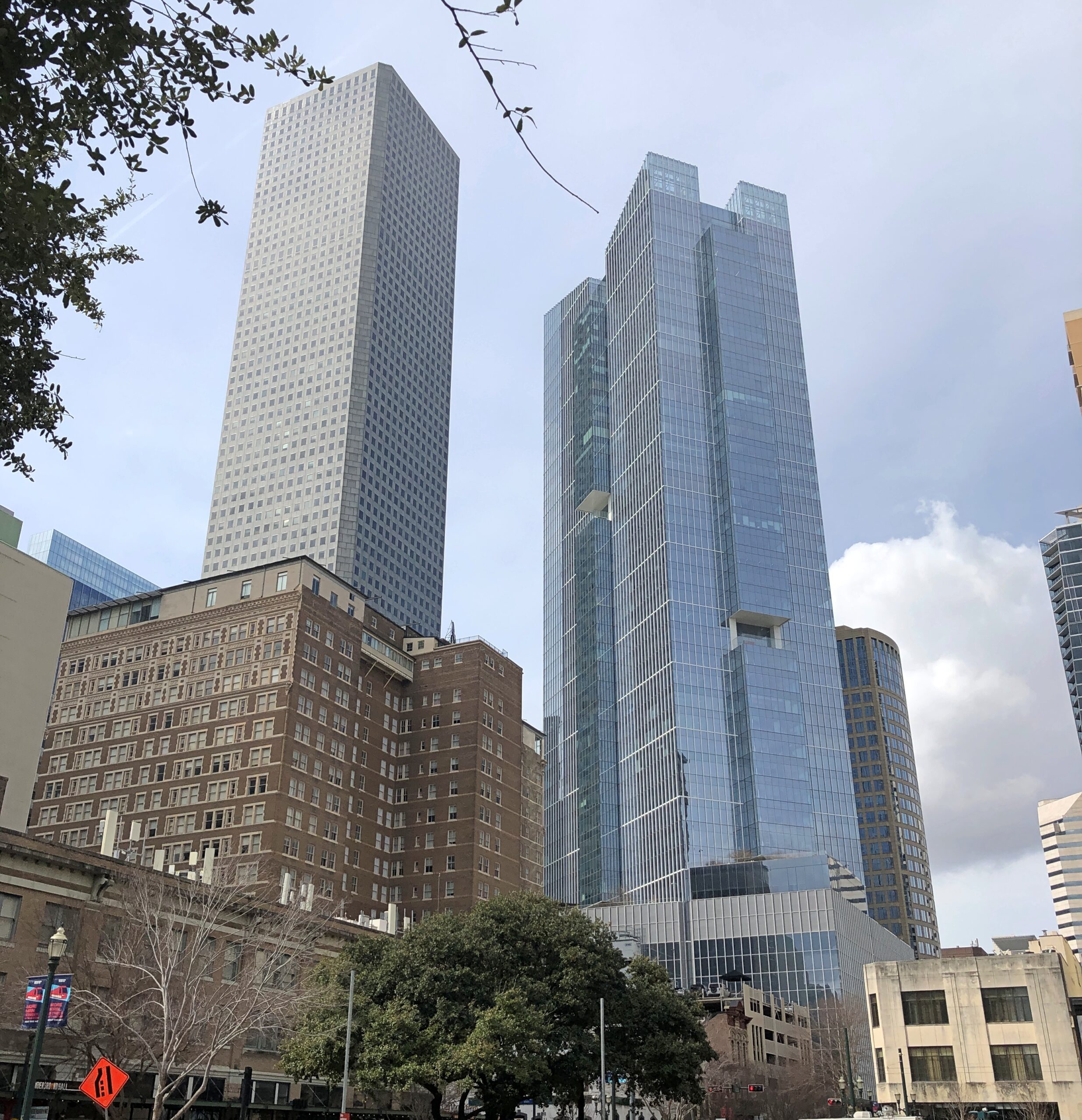
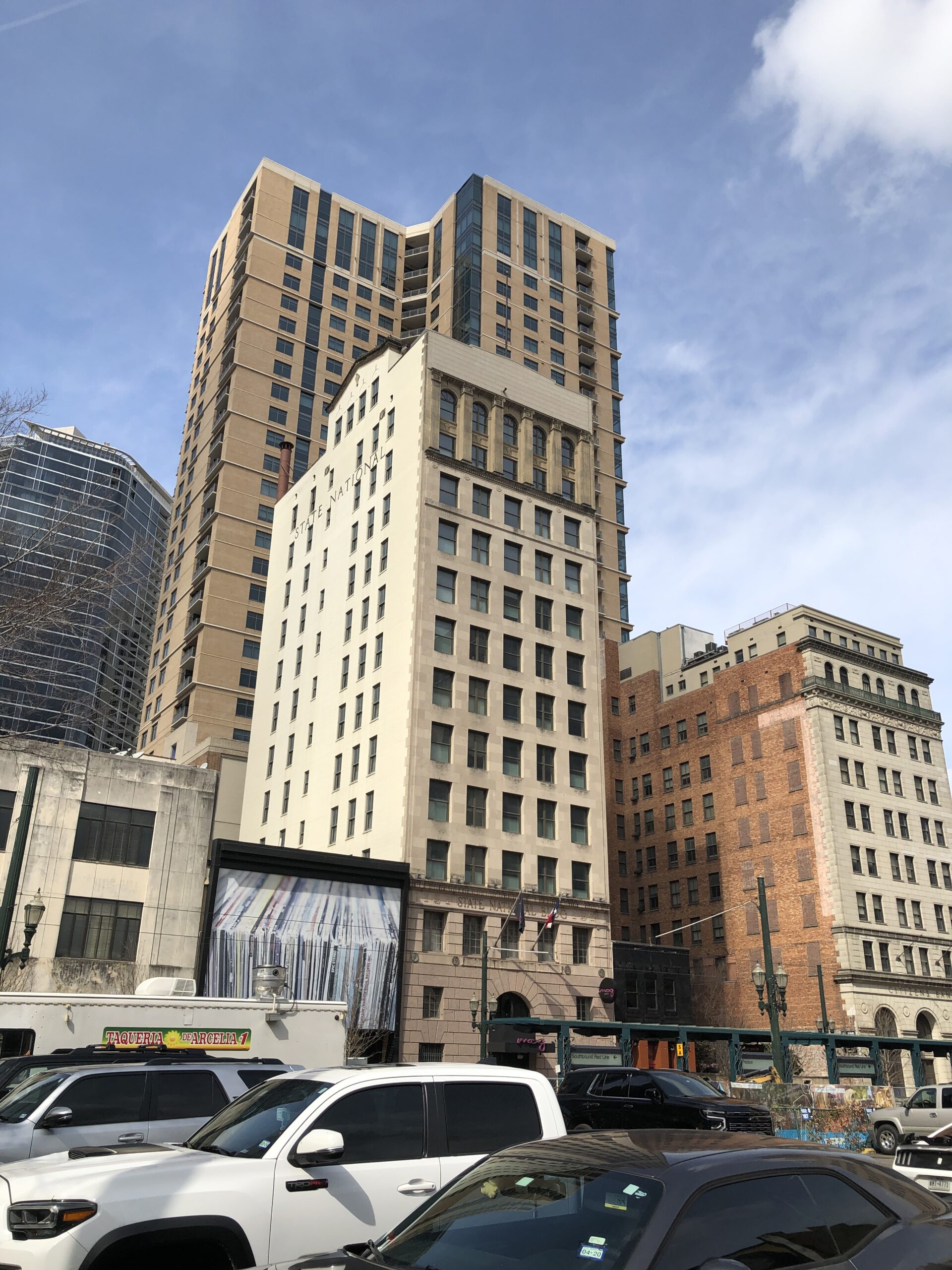
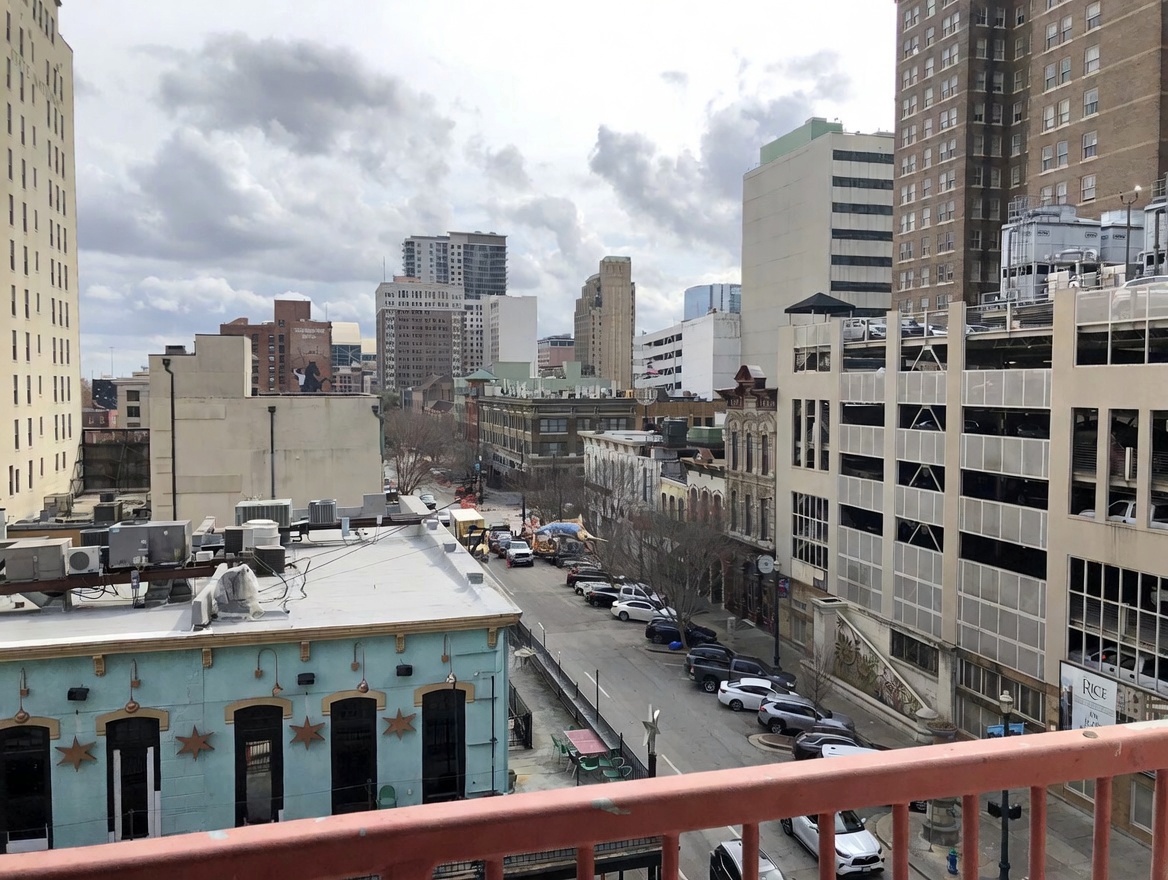
Heat wasn’t an issue in Houston in February, which was one reason to make my way downtown for a walkabout. Another reason is completely idiosyncratic: I couldn’t remember the last time I’d been downtown. Not 2019, though we could see downtown from Buffalo Bayou and visited Houston’s alt downtown, the Galleria district; or 2015, when we made it to the Menil Collection. Close each time, but no cigar.
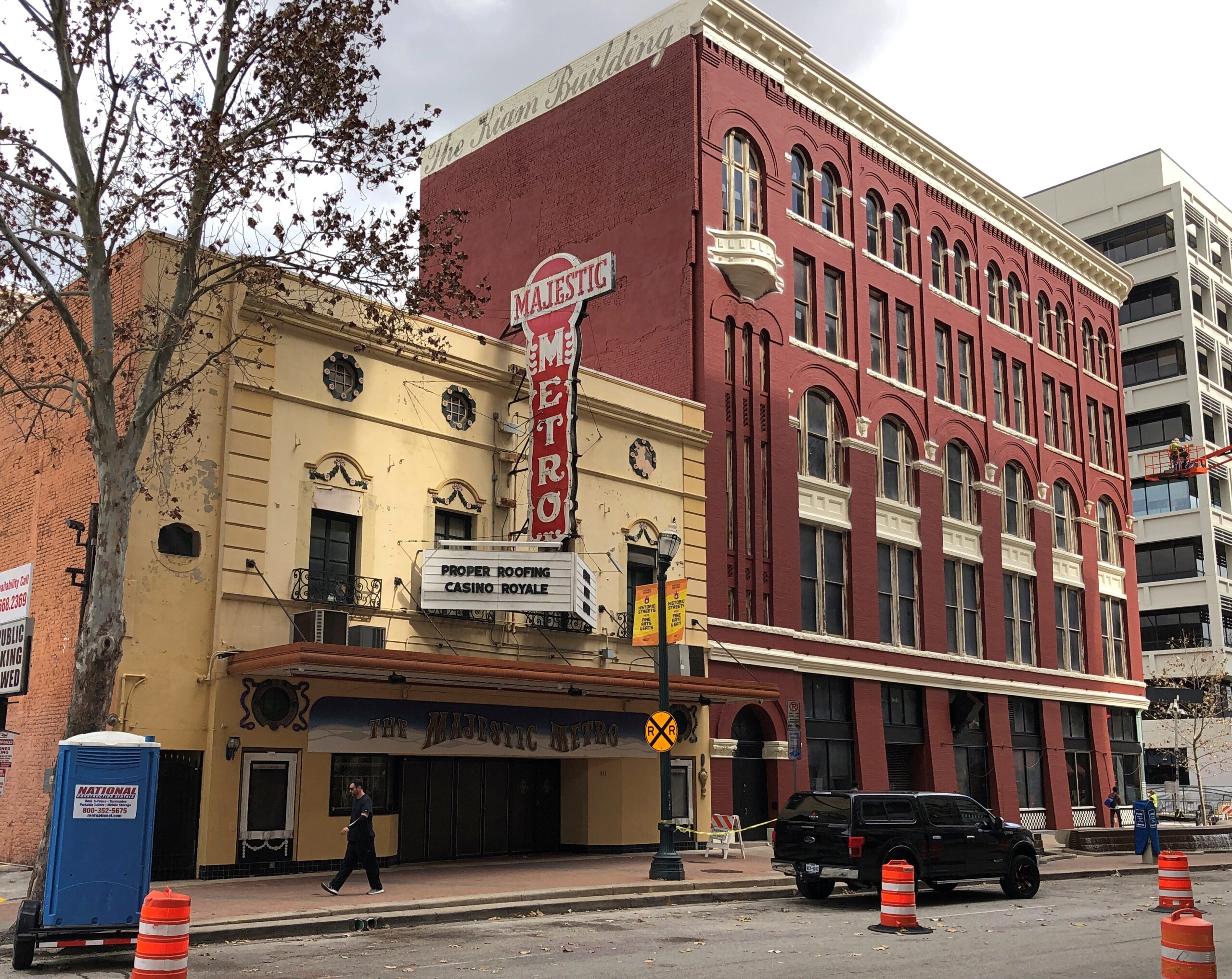
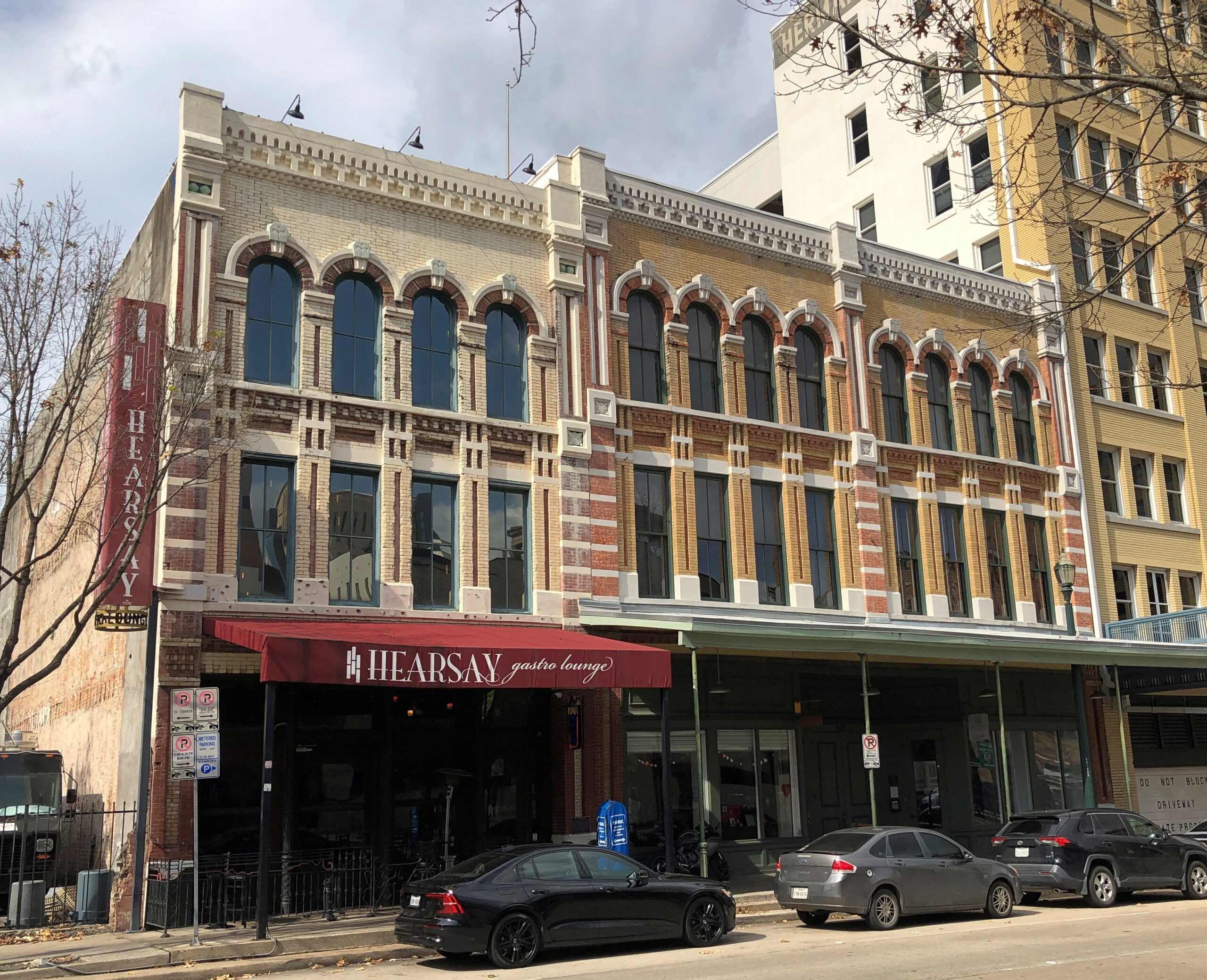
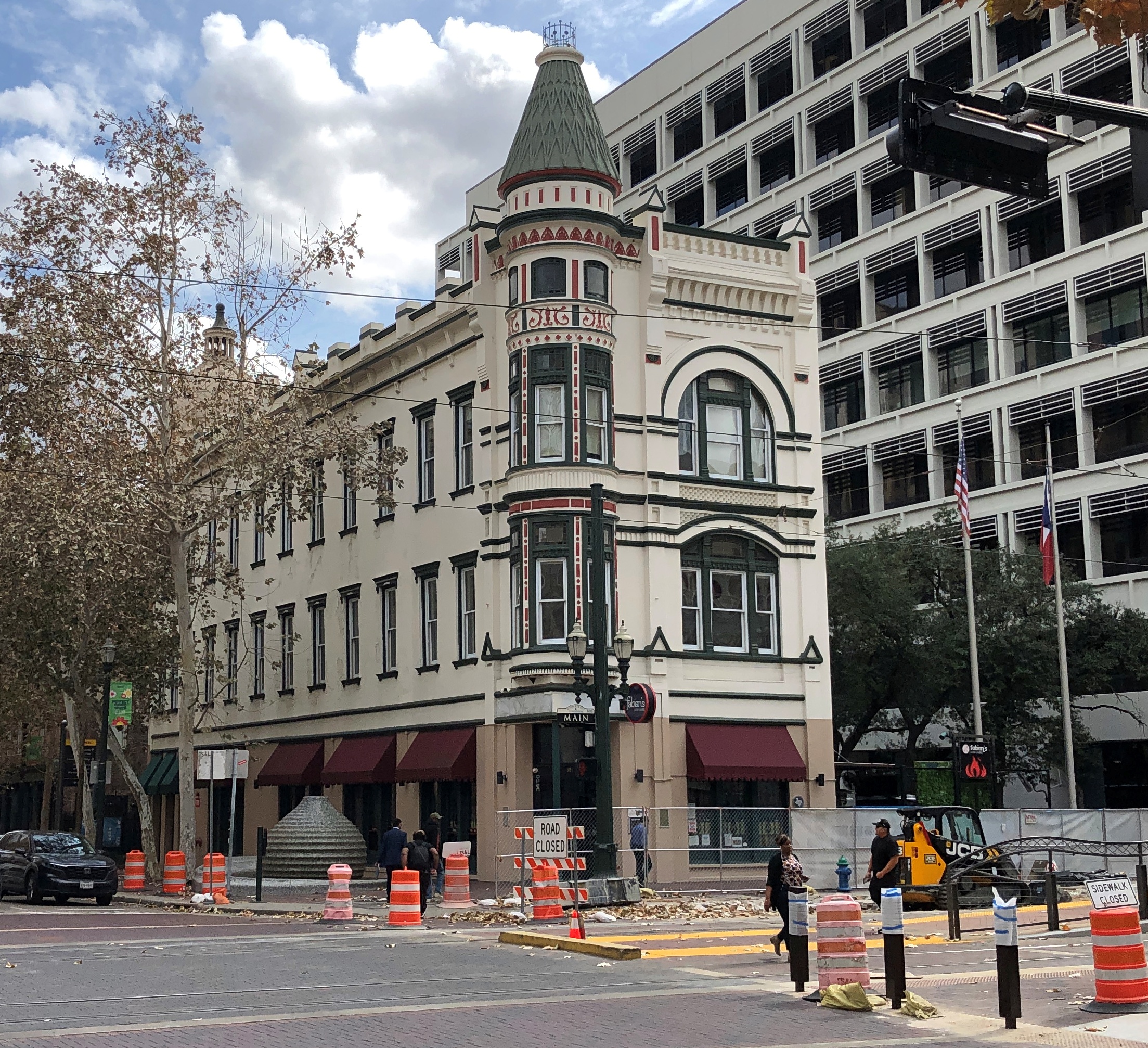
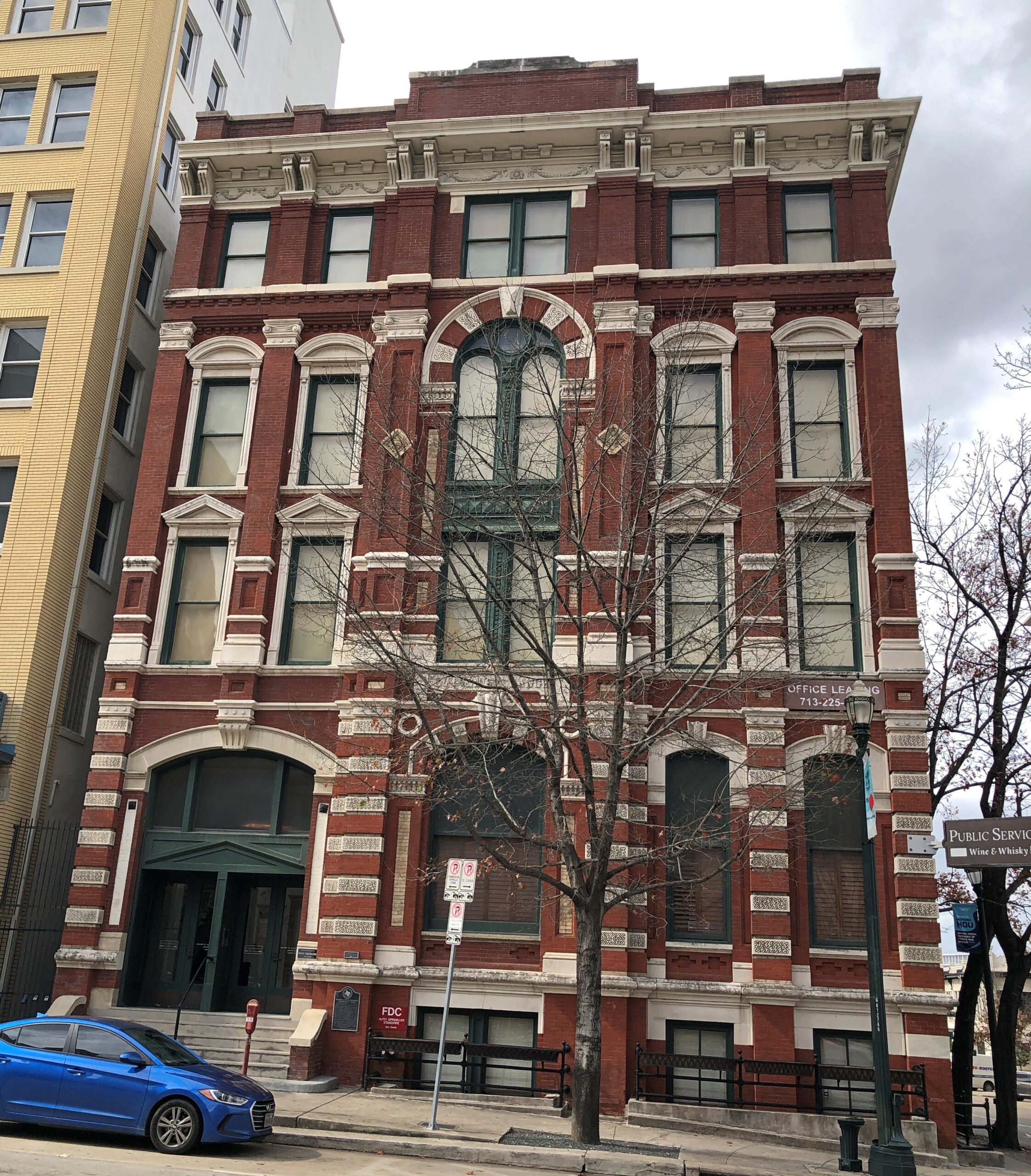
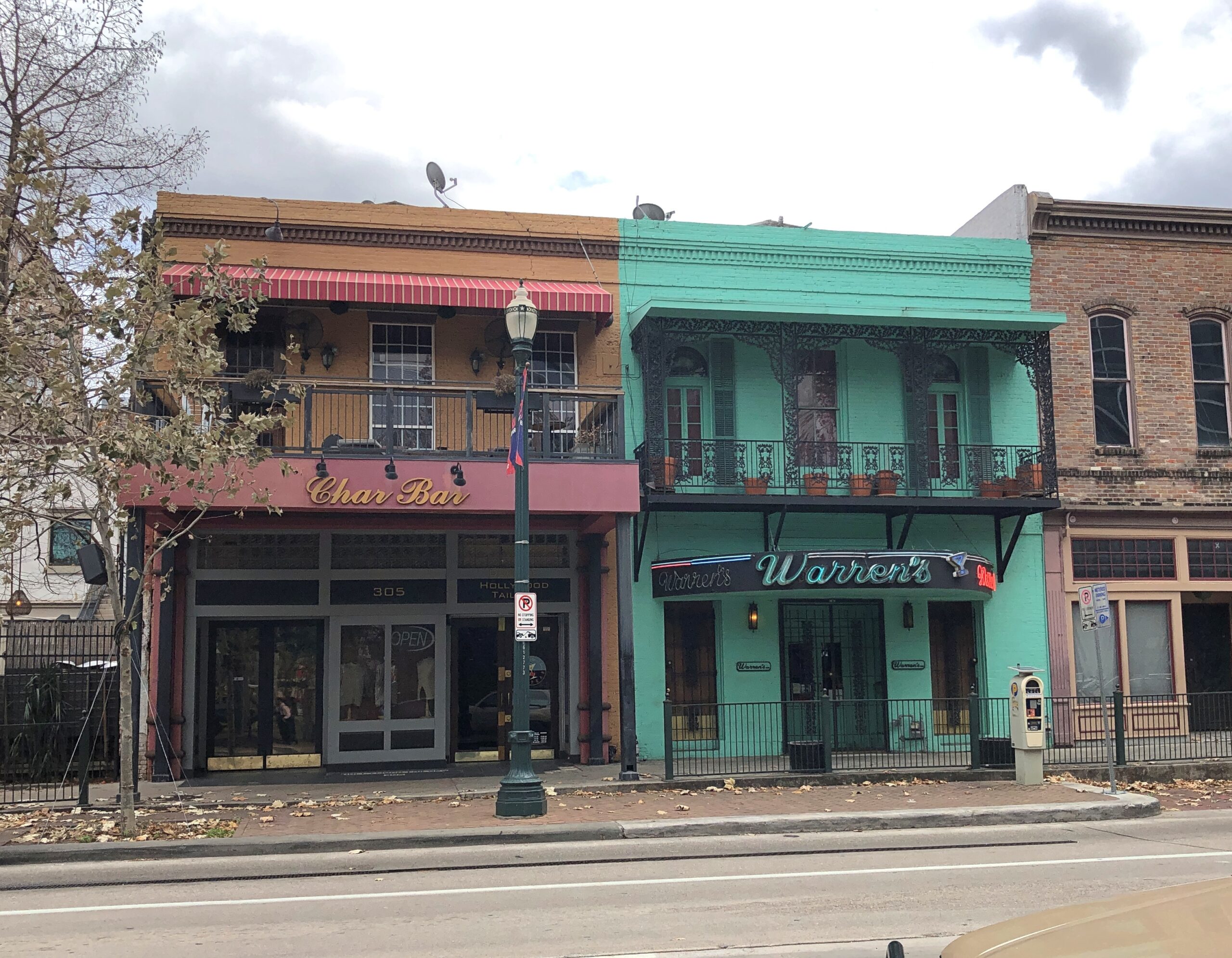
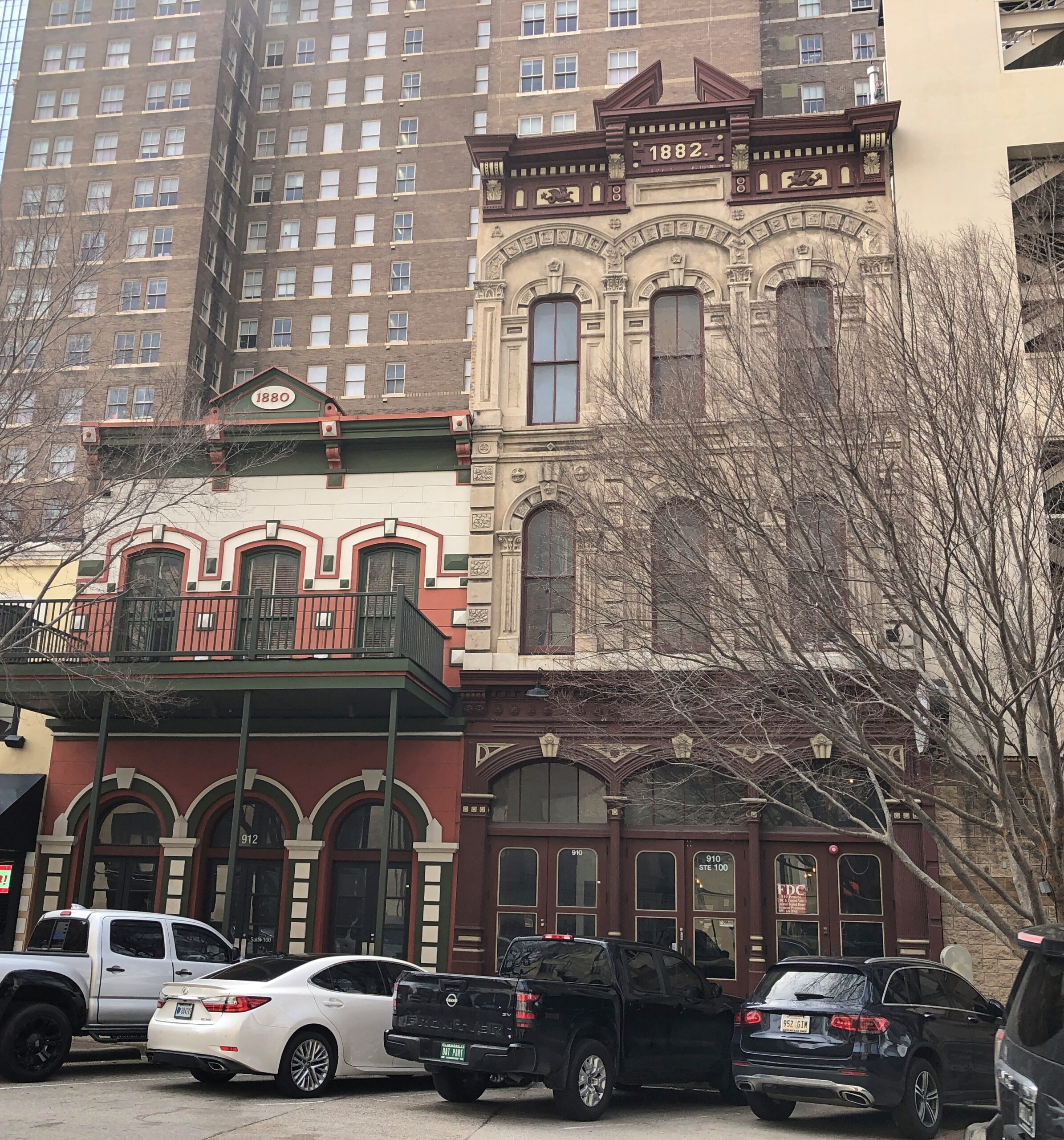
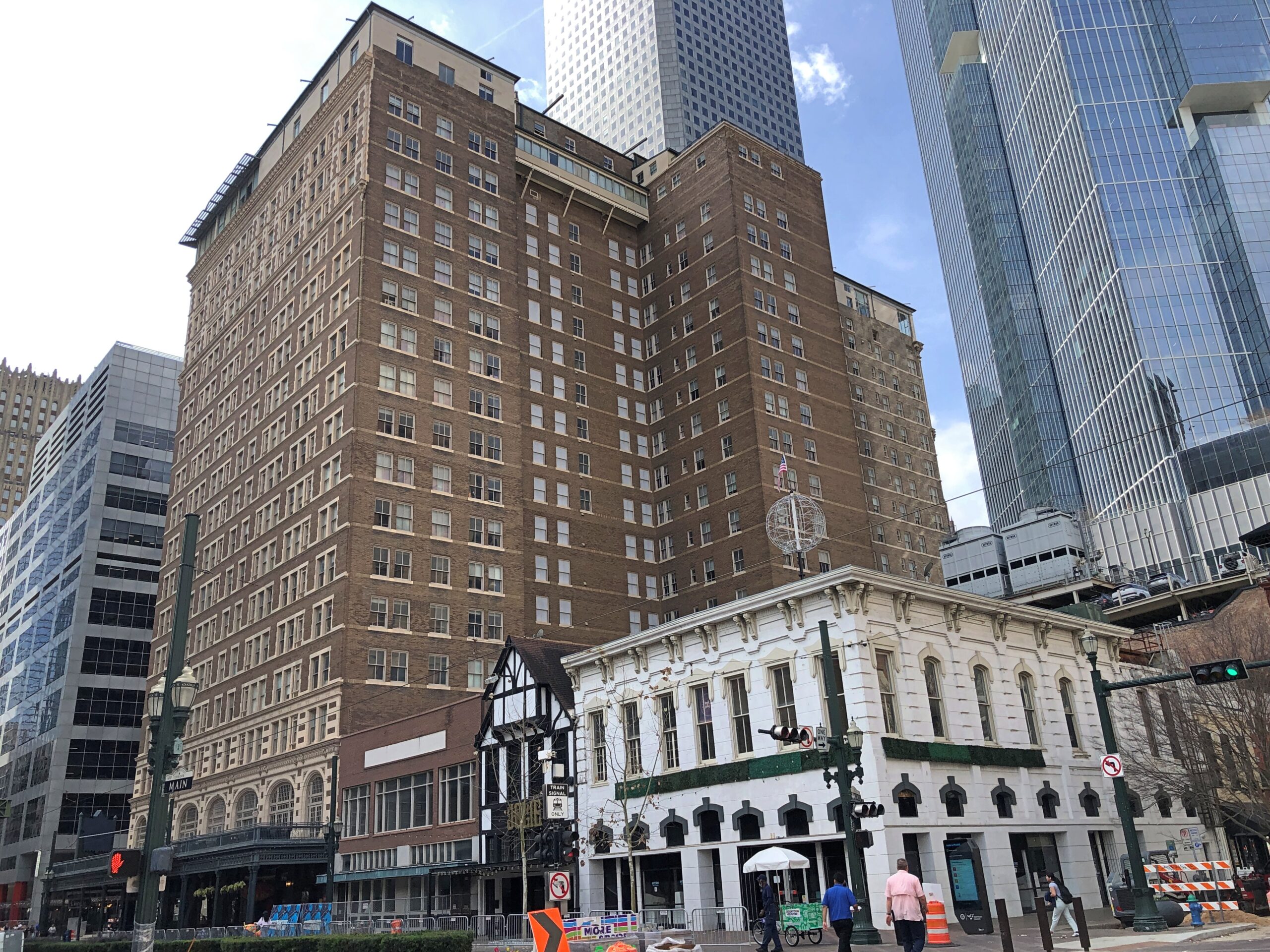
A surprising amount of pre-air conditioning Houston remains downtown, though of course even the oldest building has been retrofitted for HVAC.
Nice ironwork on the green one.
Structures surviving from the 1880s.
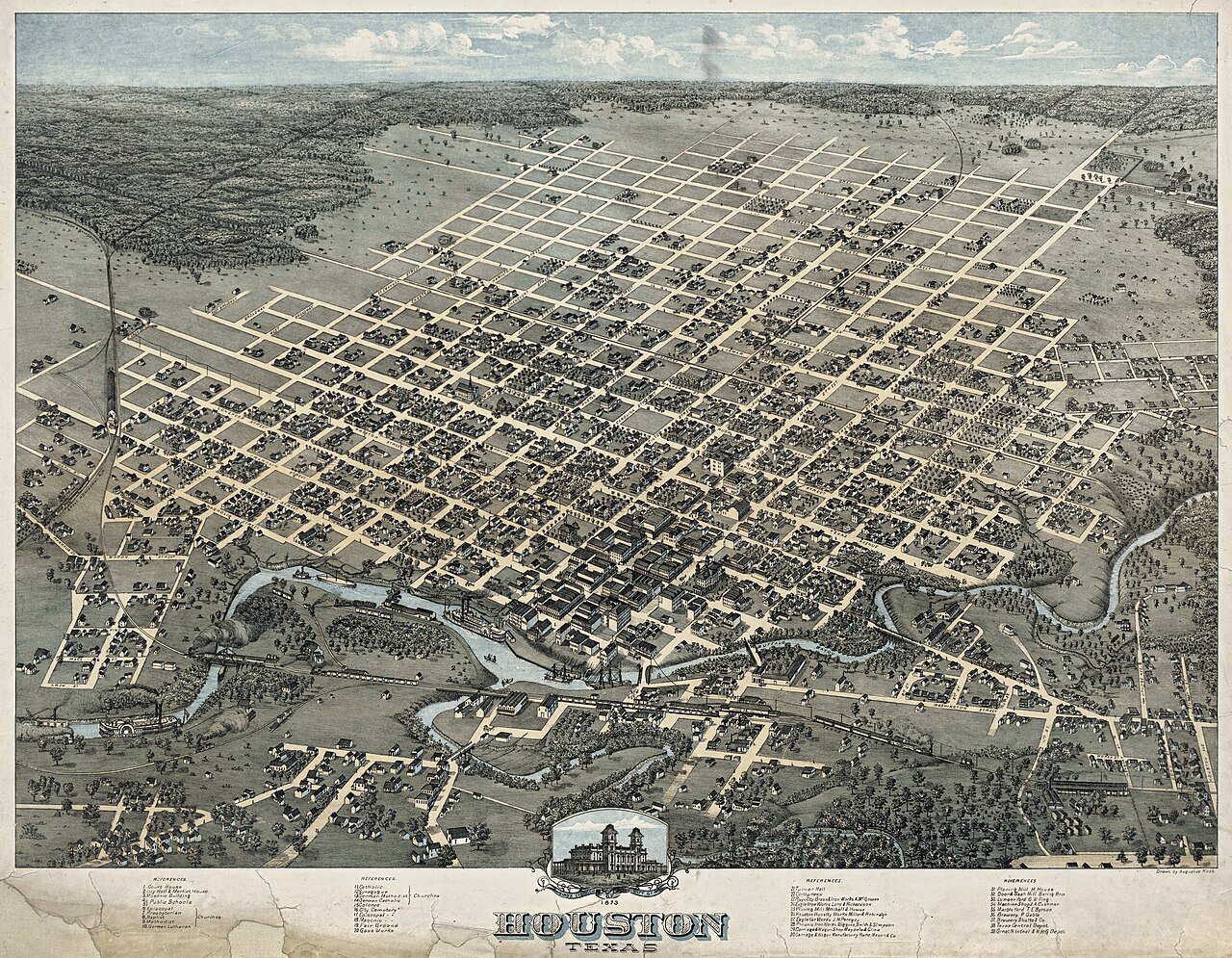
Imagine those 1880s buildings back in the 1880s. In July, say. Couldn’t have been pleasant. Or any of Houston in 1873, the date of this map.
The 1880 Census counted 16,513 residents of Houston, a near doubling from 1870. Hardy souls who endured the heat and malaria and fetid dung underfoot, among other conditions. Back then, Houston wasn’t quite the port it would be later. The major port then was Indianola, Texas, pop. 5,000 in 1875, before the vicious hurricane that year, that is, the first of two that reduced Indianola to the status of ghost town.
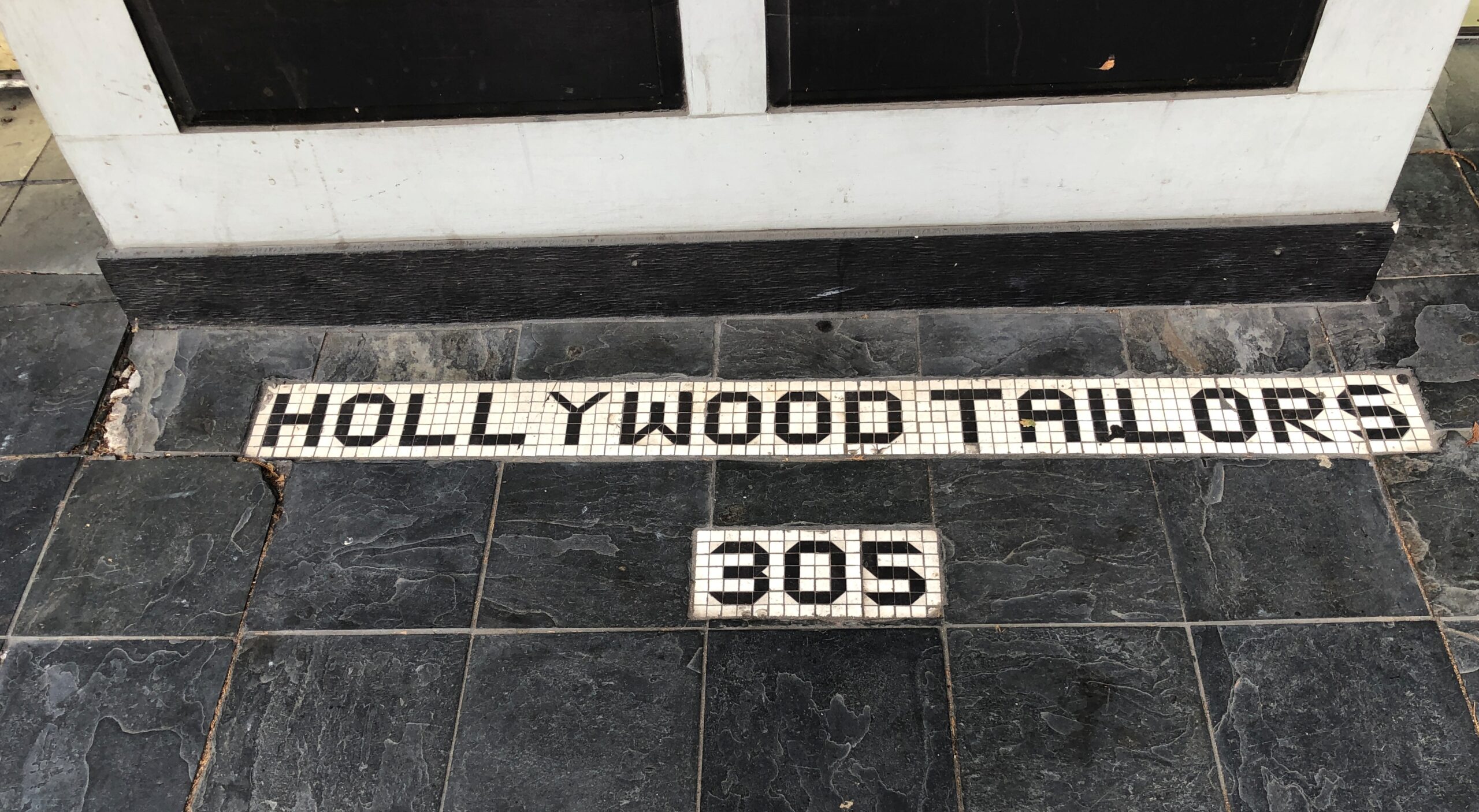
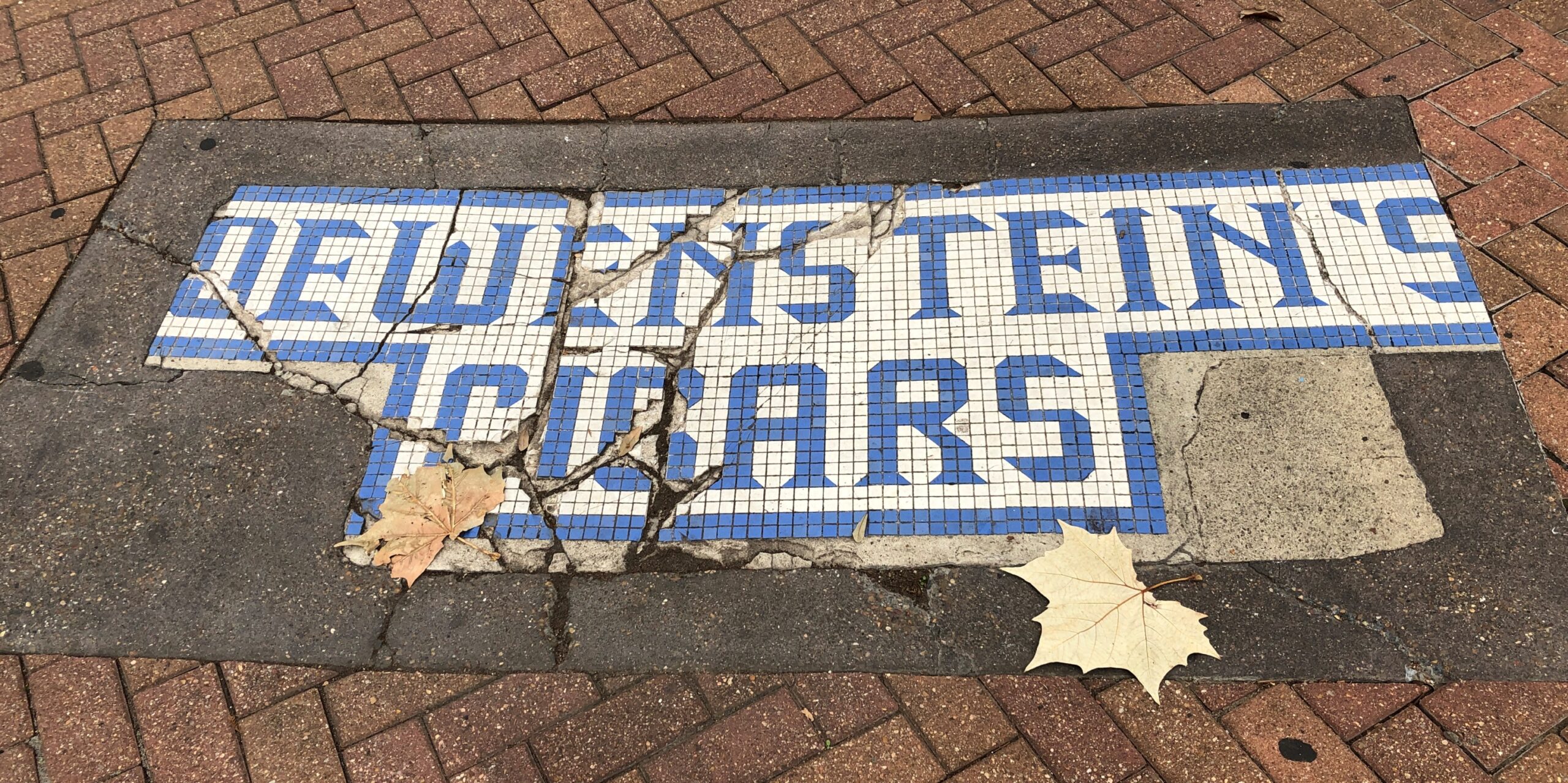
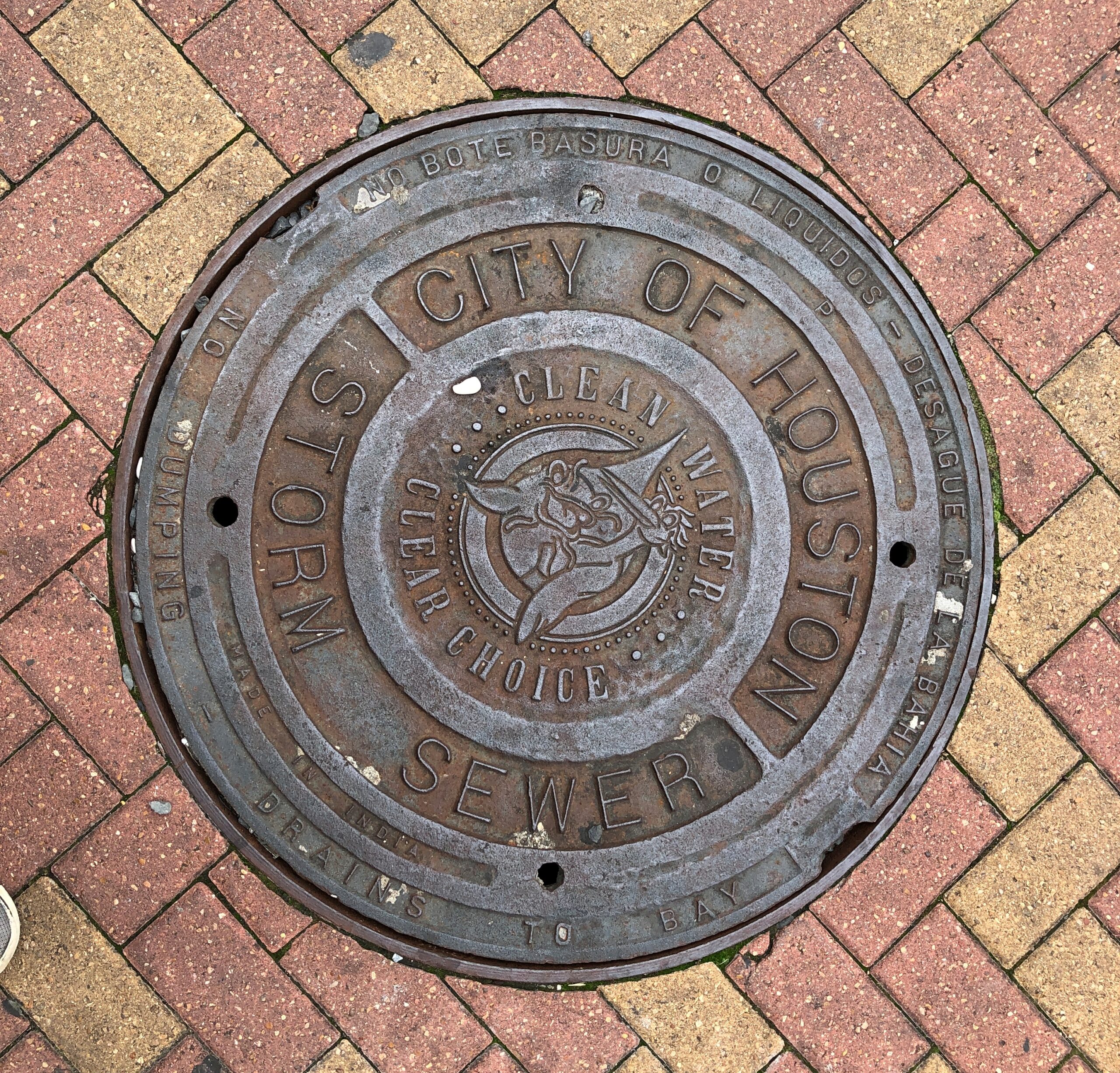
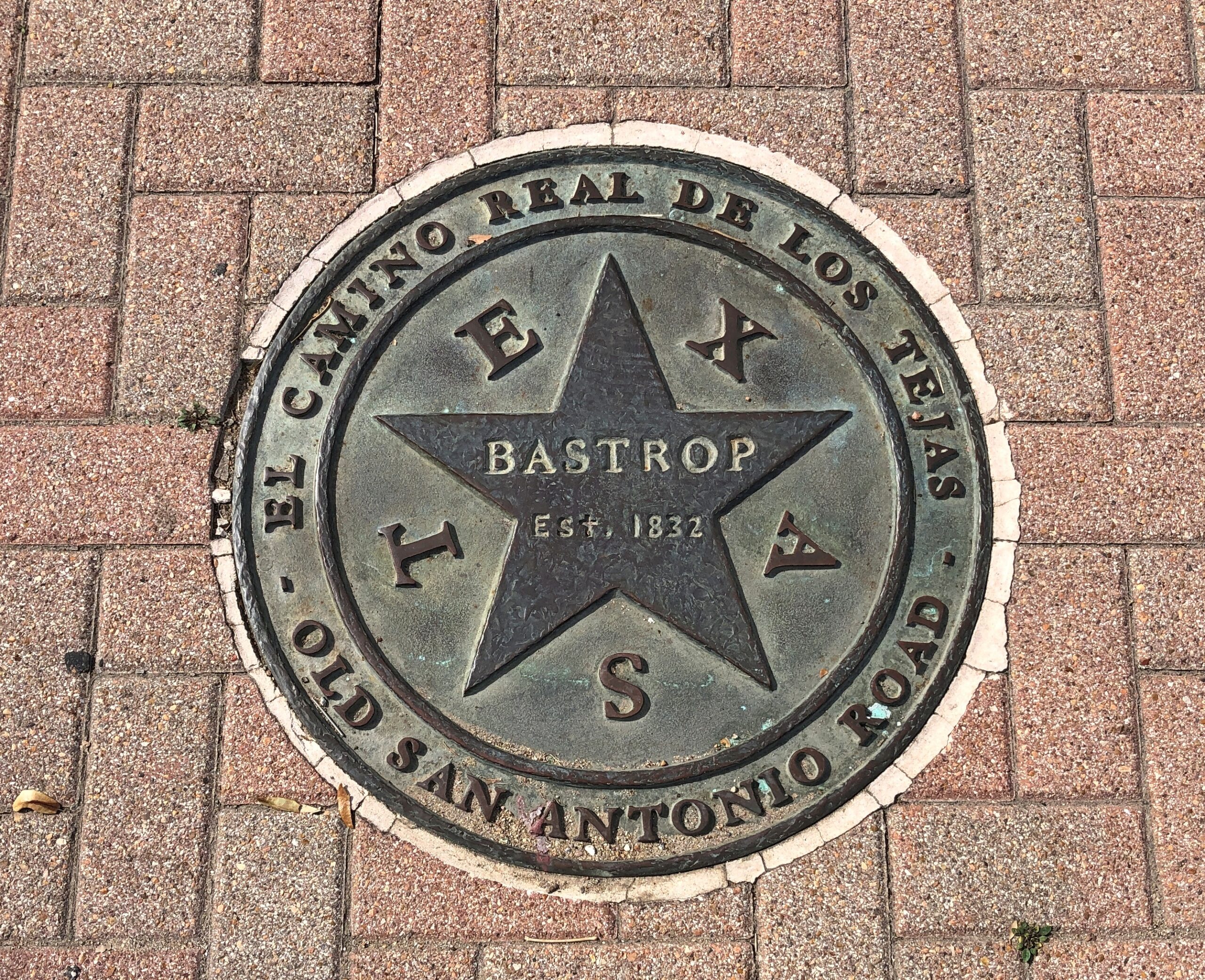
Not all the remnants of an older Houston are buildings, but are underfoot.
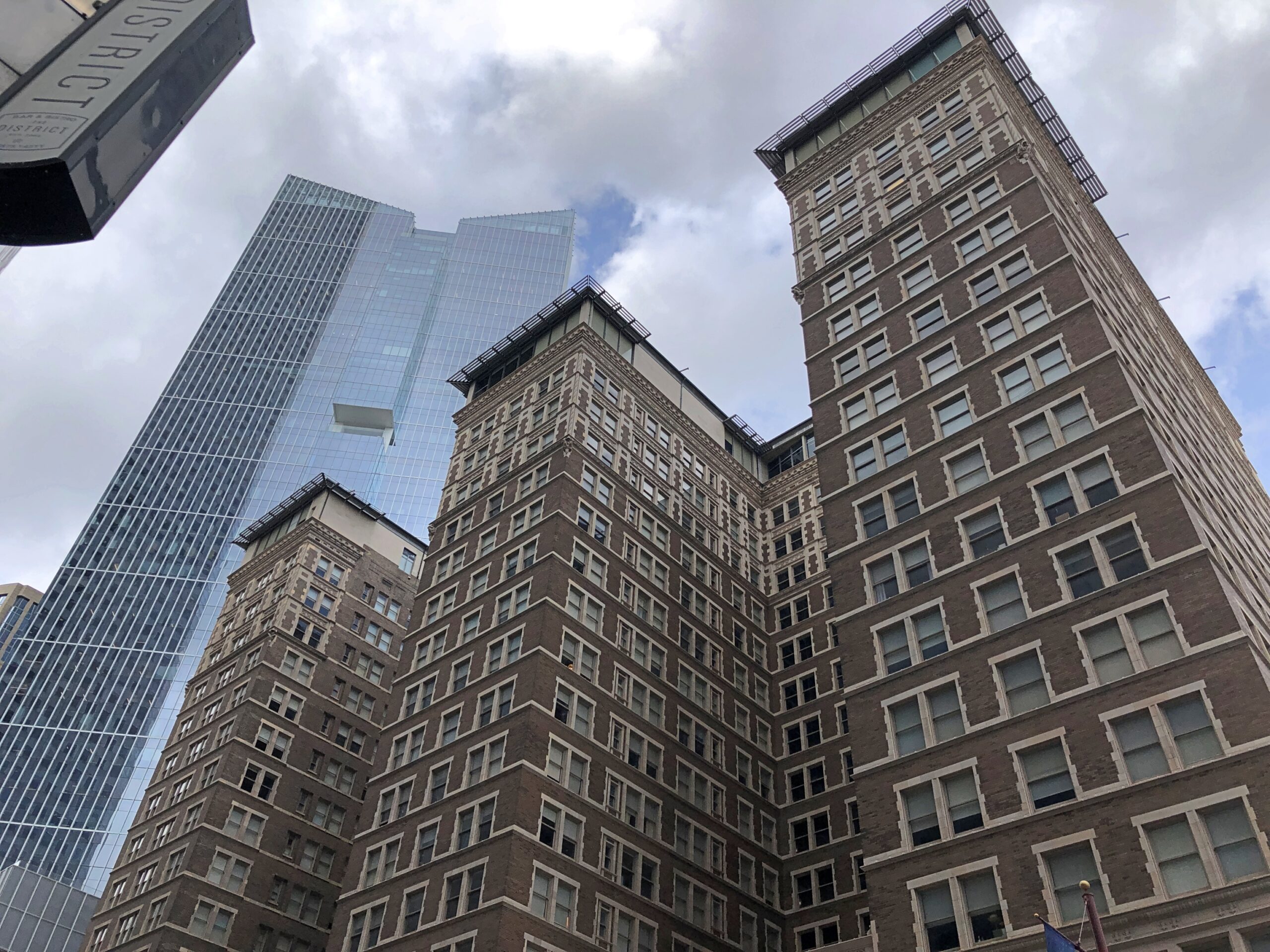
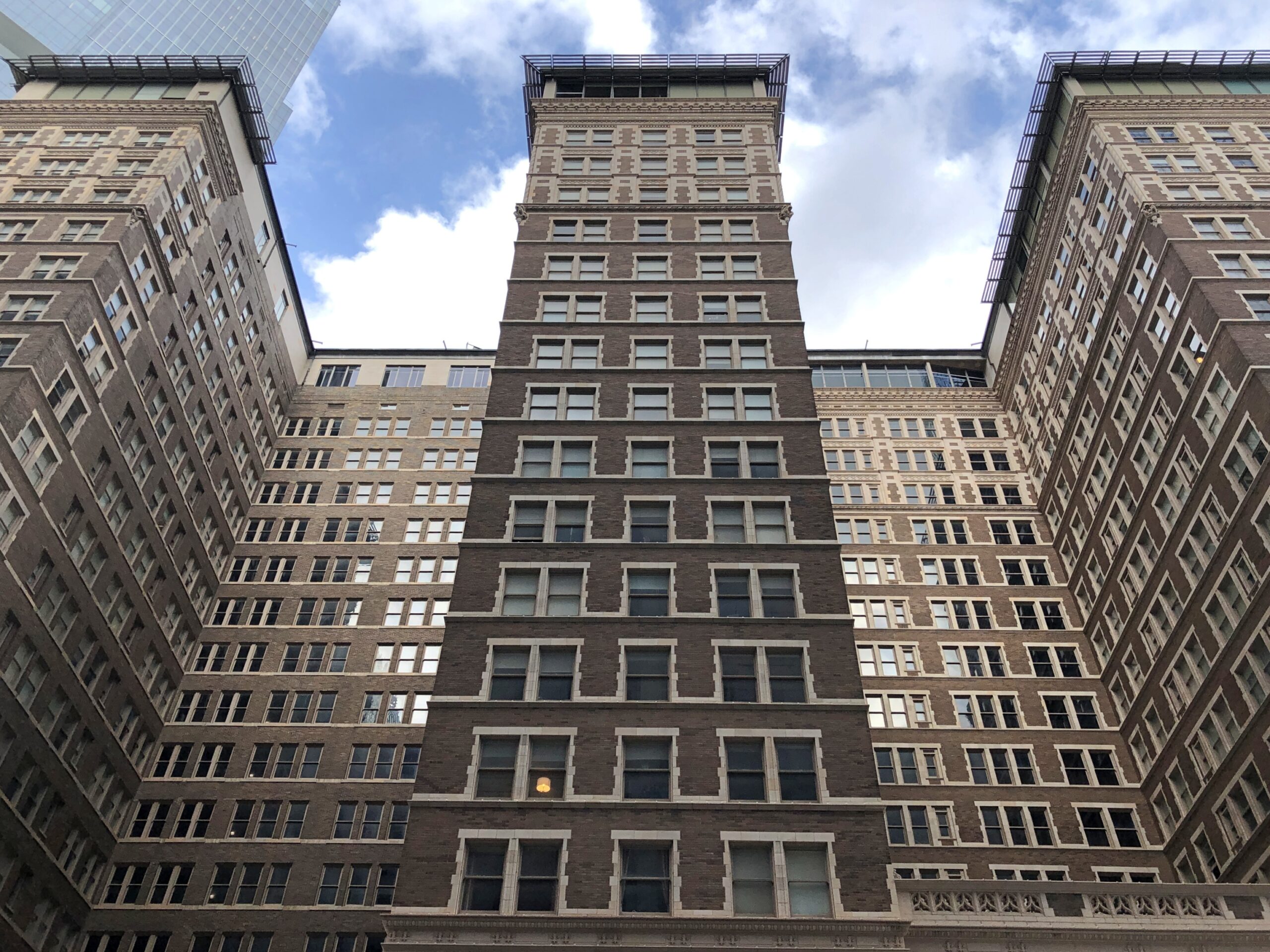
The splendid former Rice Hotel, designed by John Mauran and completed in 1913, though it only had two towers at the time, becoming triune with a later addition. These days, it’s an apartment building.
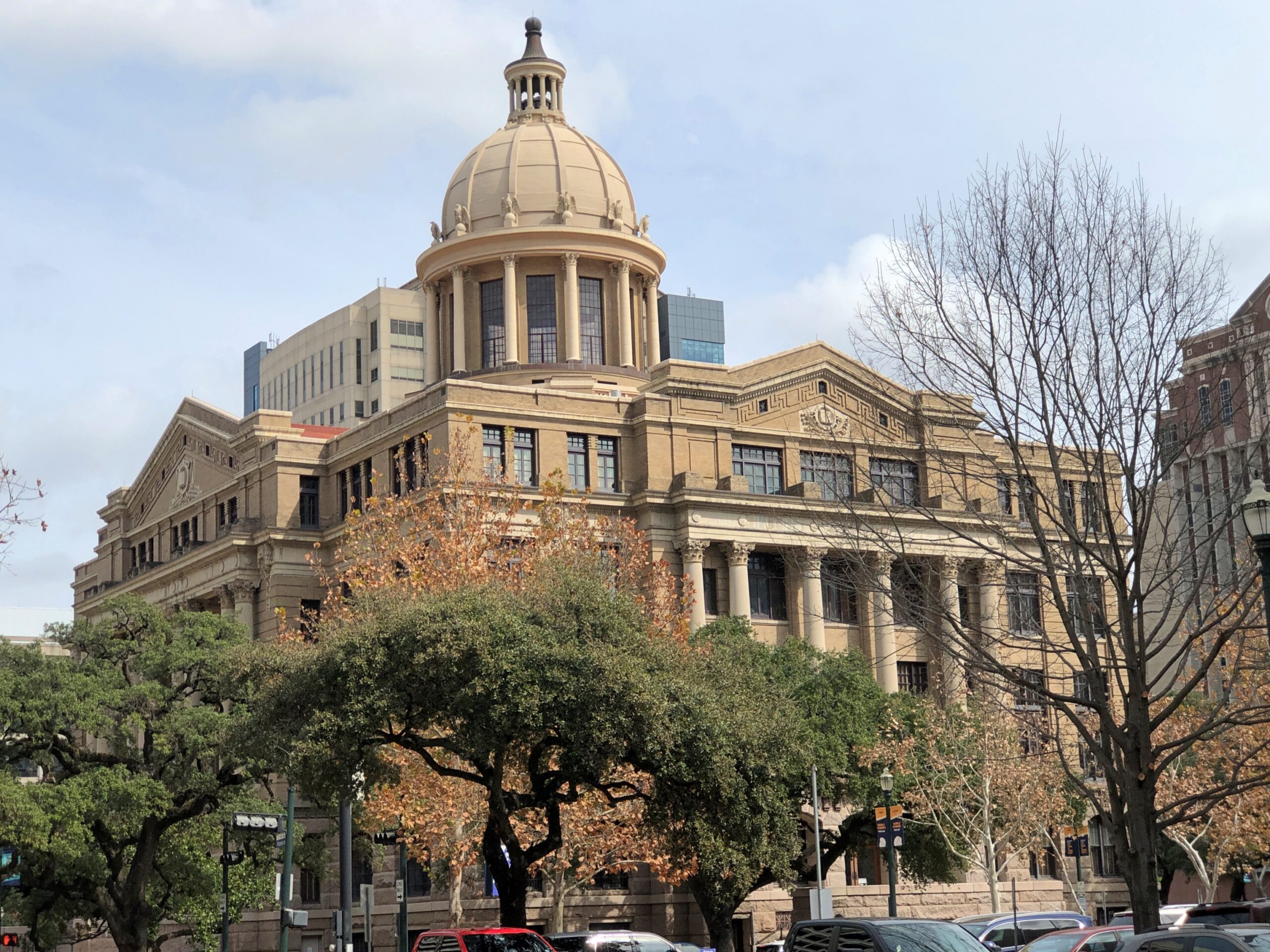
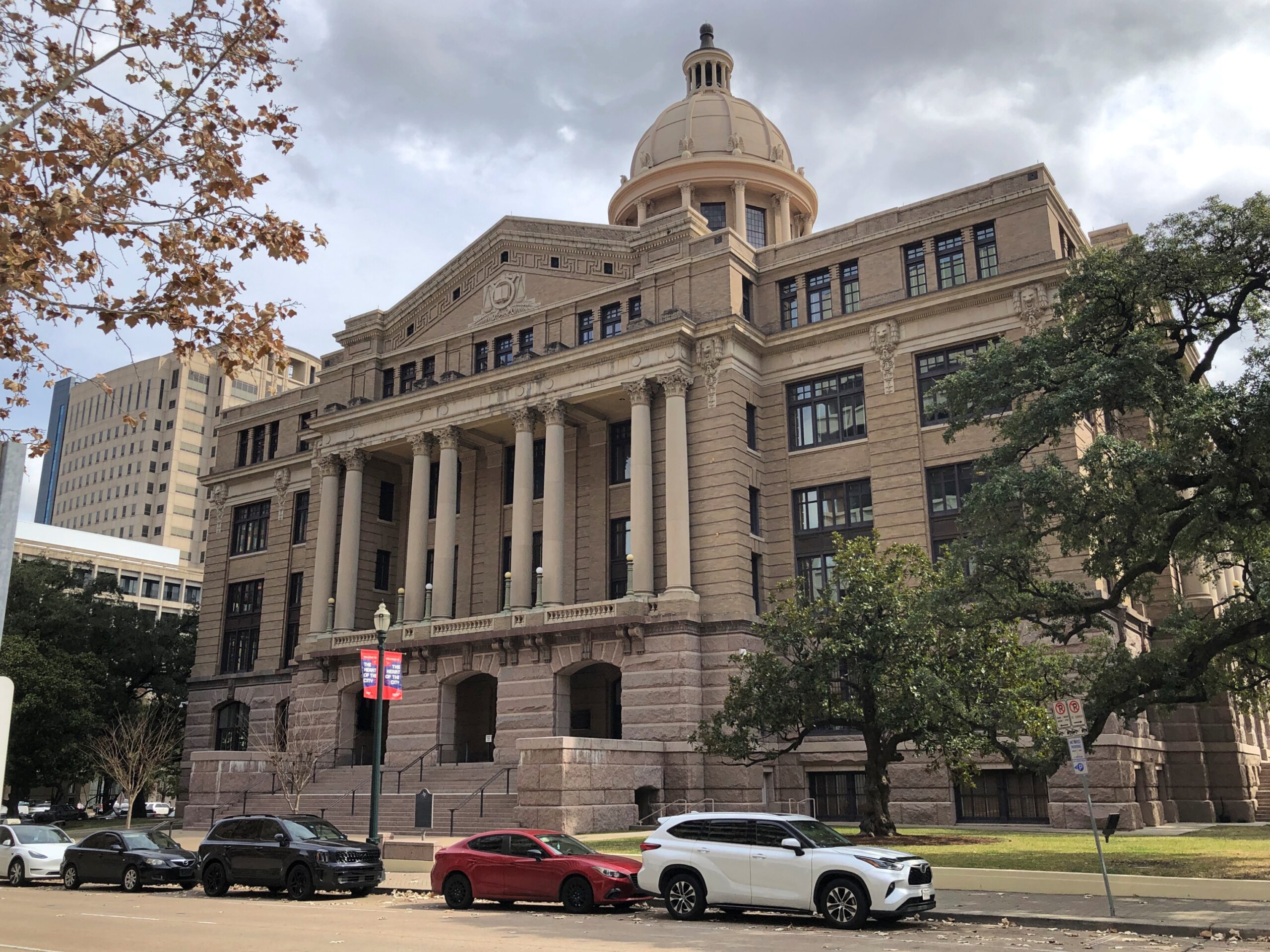
The 1910 Harris County courthouse, with enough heft to be a state capitol building.
“An imposing, domed neo-classical edifice, it is a prime example of the civic architecture of Houston of the 1900s and 1910s and is the only example in Houston of the work of Lang & Witchell, a leading Dallas architectural firm of that period,” notes the Texas Historical Commission.
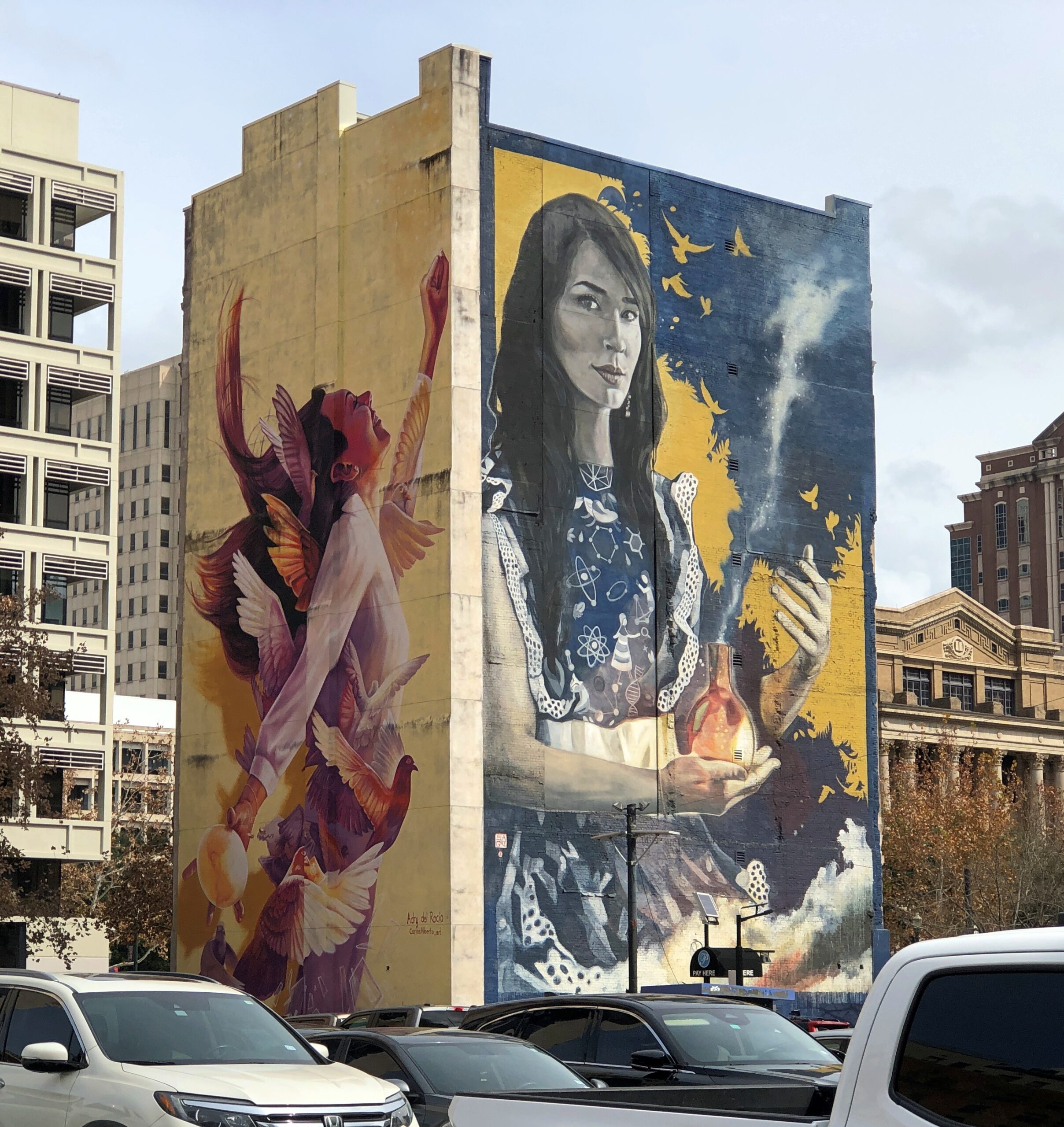
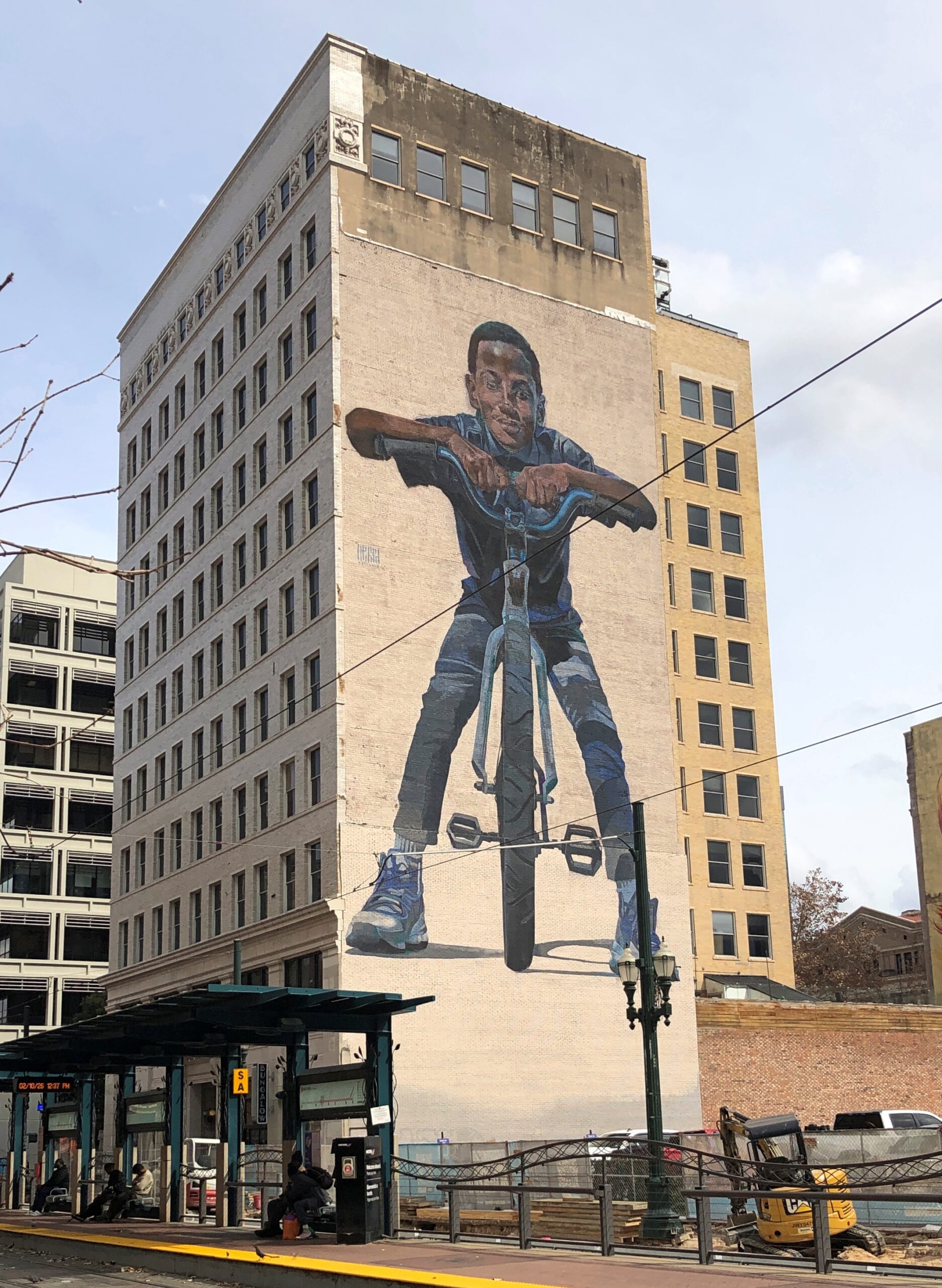
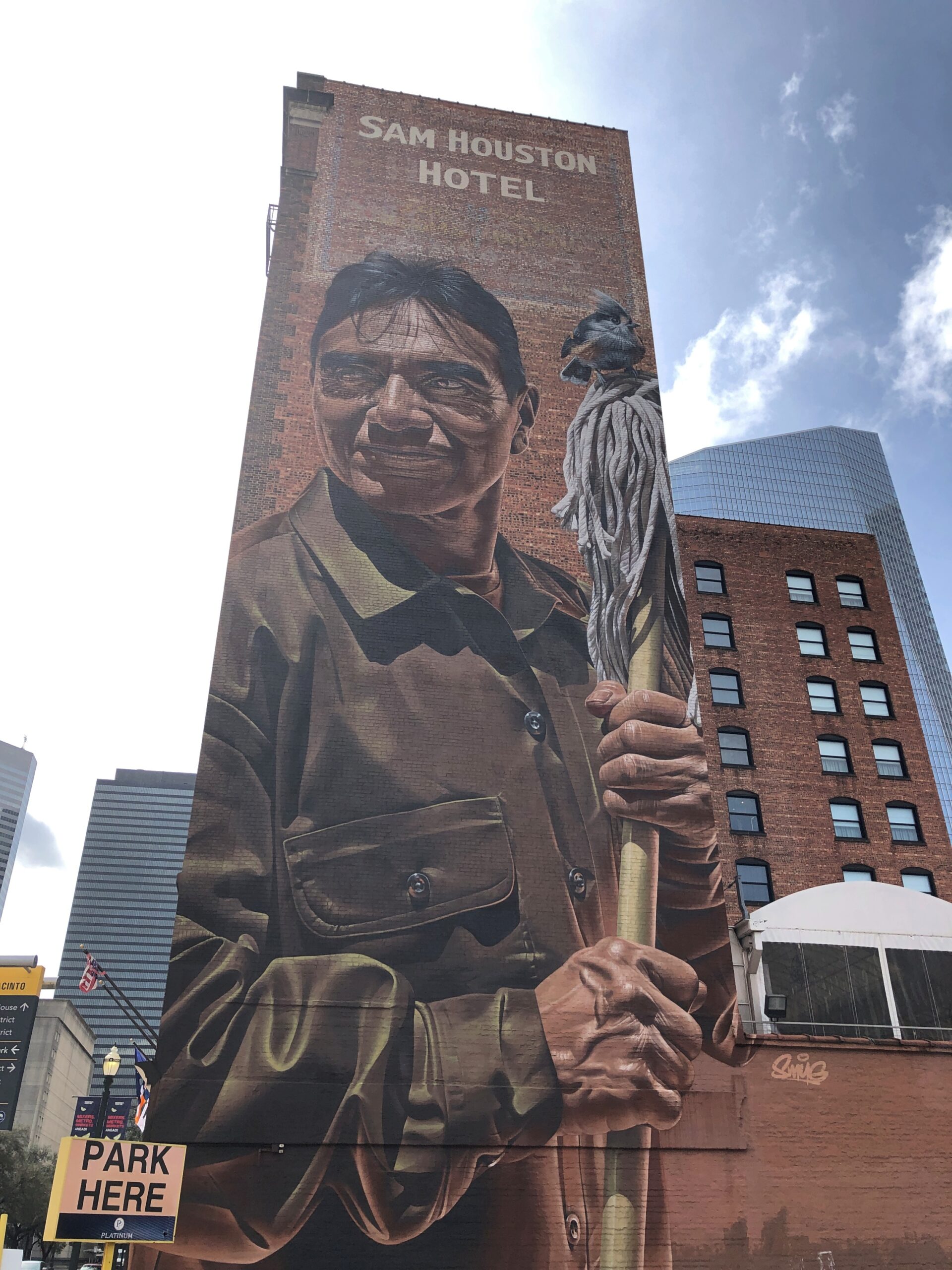
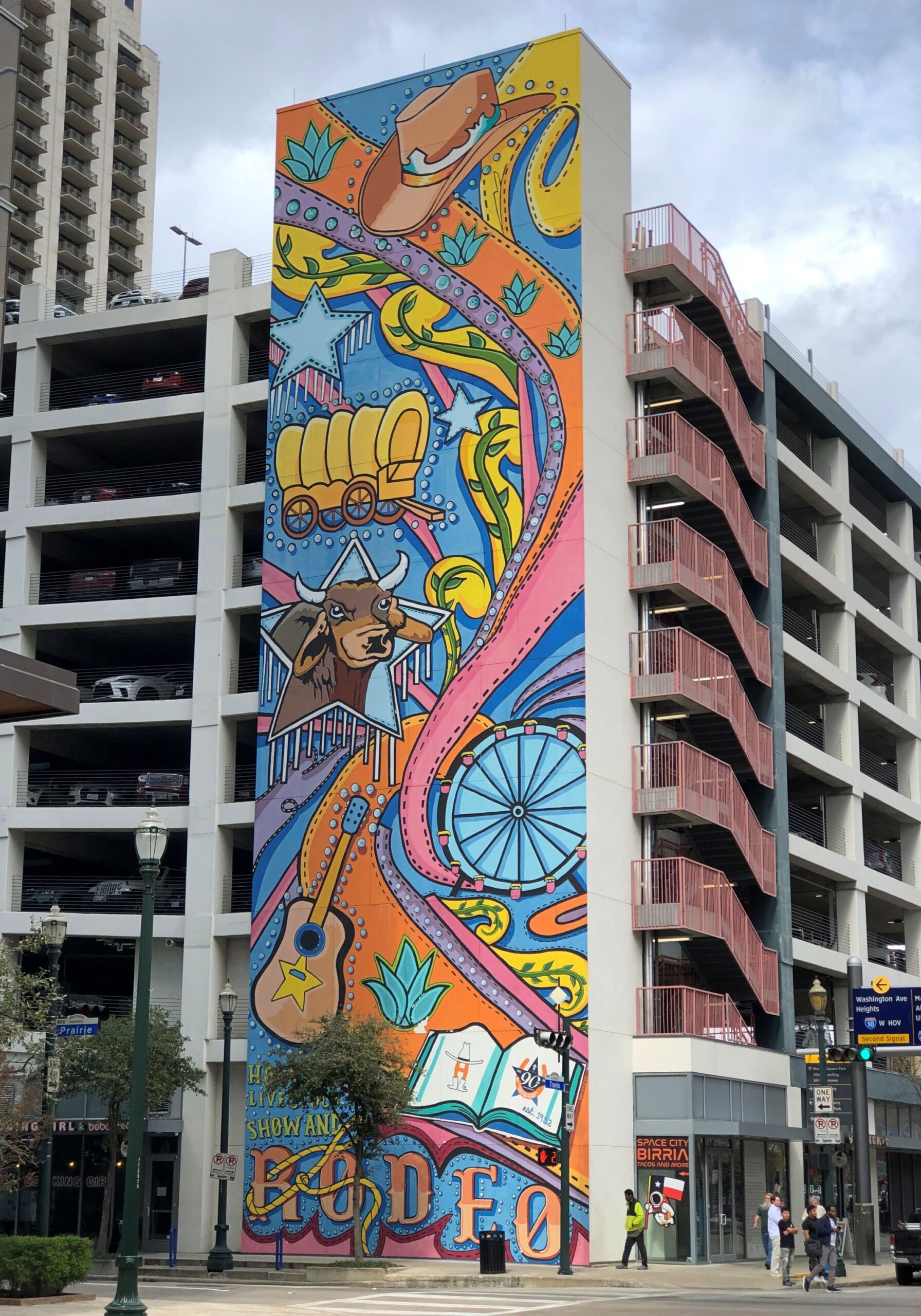
Downtown Houston is also a city of murals. Tall murals.
Even on the parking garage I used.
That one lauds the Houston Livestock Show and Rodeo, which just ended for this year. “A total of 2.6 million people attended the Houston rodeo this year held across three weeks at NRG Park,” Houston Public Media says.
Consider Philip Hendrik Nering Bögel, an 18th-century Dutchman who at one point in his career was collector general of taxes for the province of Friesland. The Texas State Historical Association takes up his story: “In 1793 he was accused of embezzlement of tax funds and fled the country before he could be brought to trial. After the Court of Justice of Leeuwarden offered a reward of 1,000 gold ducats to anyone who brought him back, Bögel adopted the title Baron de Bastrop.”
Those were the days, no Interpol butting into your business. No one ever collected those gold ducats, because the self-titled Baron de Bastrop spent the rest of his days in the New World, doing well for himself in New Spain and then Mexico, dying in 1827.
“One of his most significant contributions to Texas was his intercession with Governor Antonio María Martínez on behalf of Moses Austin in 1820,” TSHS continues. “Because of Bastrop, Martínez reconsidered and approved Austin’s project to establish an Anglo-American colony in Texas… Although his pretensions to nobility were not universally accepted at face value even in his own lifetime, [Bastrop] earned respect as a diplomat and legislator. Bastrop, Texas, and Bastrop, Louisiana, as well as Bastrop County, Texas, were named in his honor.”
Reminds me of the psychologically astute moment (one of a number) in Mad Men, when Bert brushed off Pete’s accusation that Don had stolen another man’s identity – which happened to be true – with, “Mr. Campbell, who cares?” Bert also quoted a supposed Japanese saying, “A man is whatever room he is in.” Give credit to the scriptwriter for inventing a saying that could well be Japanese, but apparently is not.
Bastrop’s location was an important spot, once upon a time, where the Old San Antonio Road met the Colorado River.
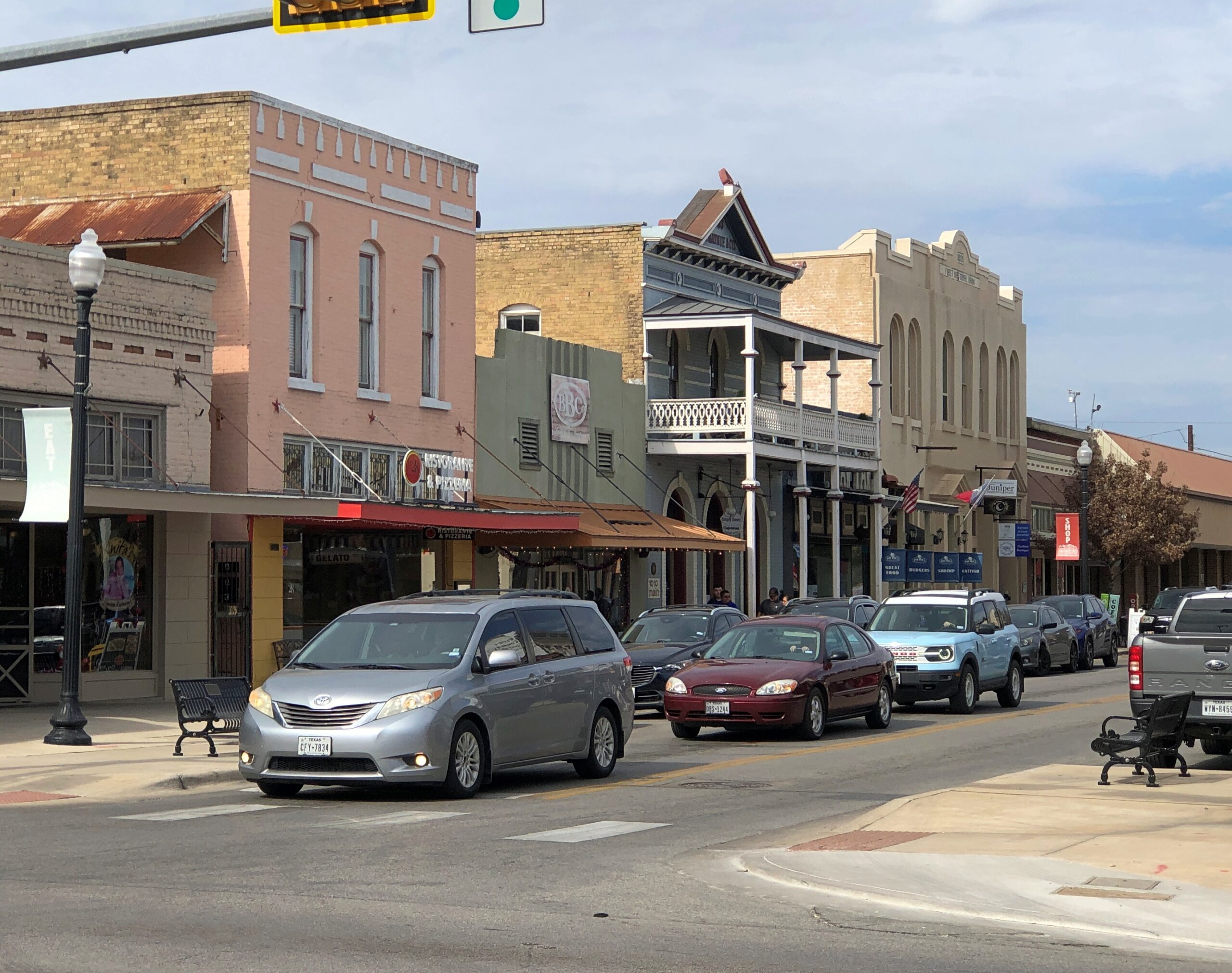
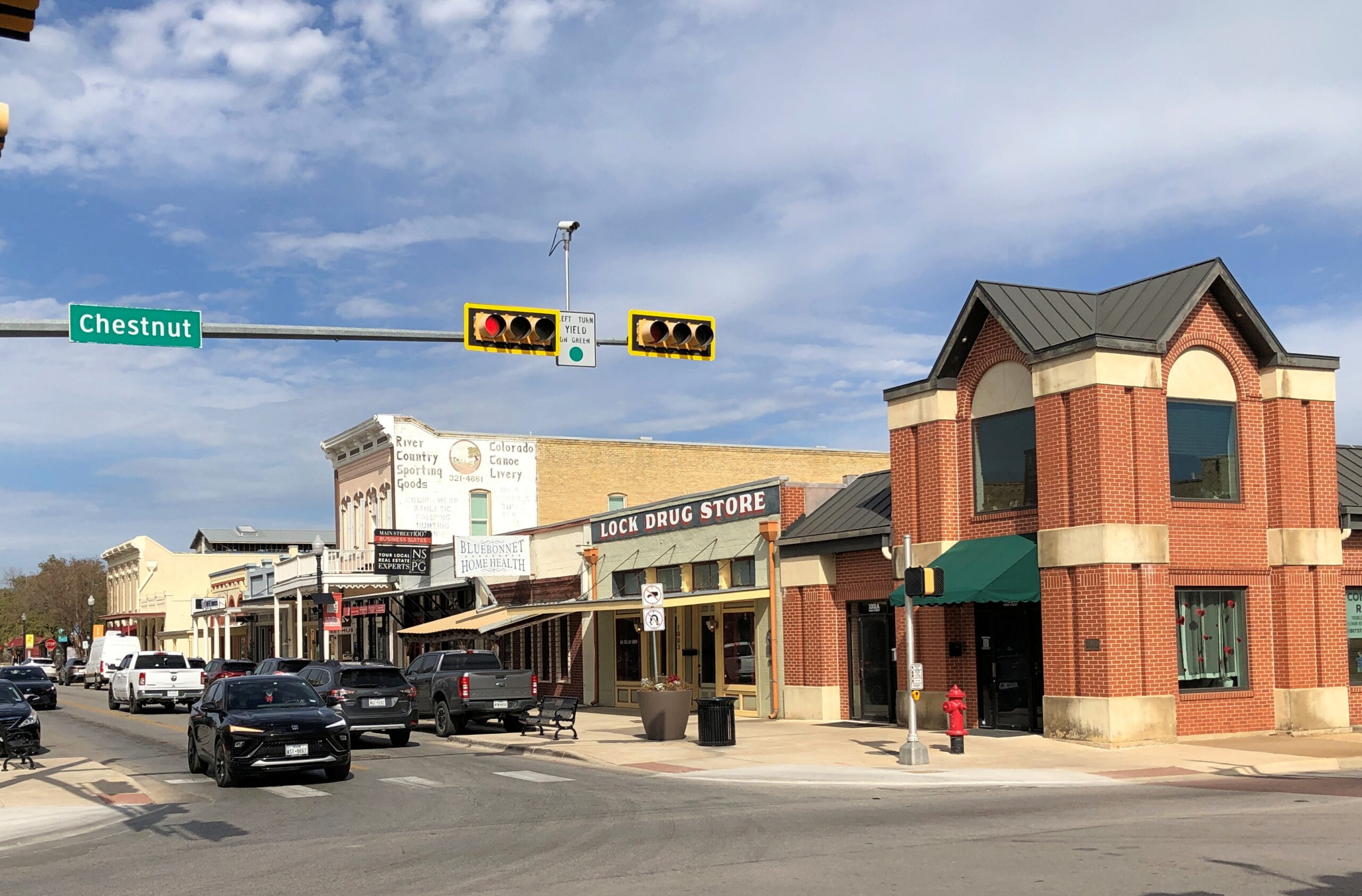
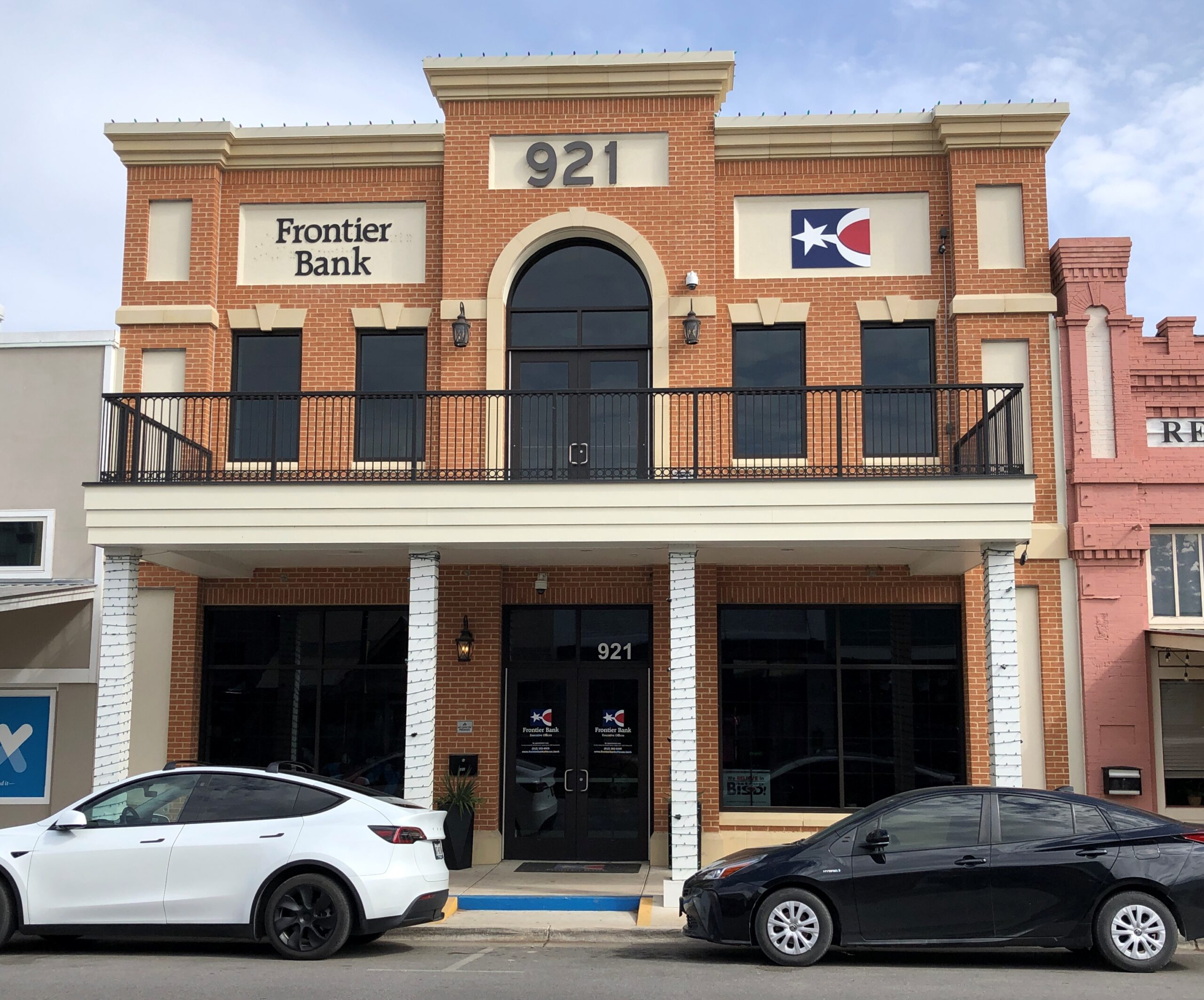
These days, Bastrop (pop. 9,600 or so) is only a short hop by modern vehicle from Austin or San Antonio. Day-trip material from those metros, that is. That was probably true the last time I visited Bastrop, sometime in the late ’80s, but maybe not with the same retail intensity you find near the intersection of Main and Chestnut in 2026.
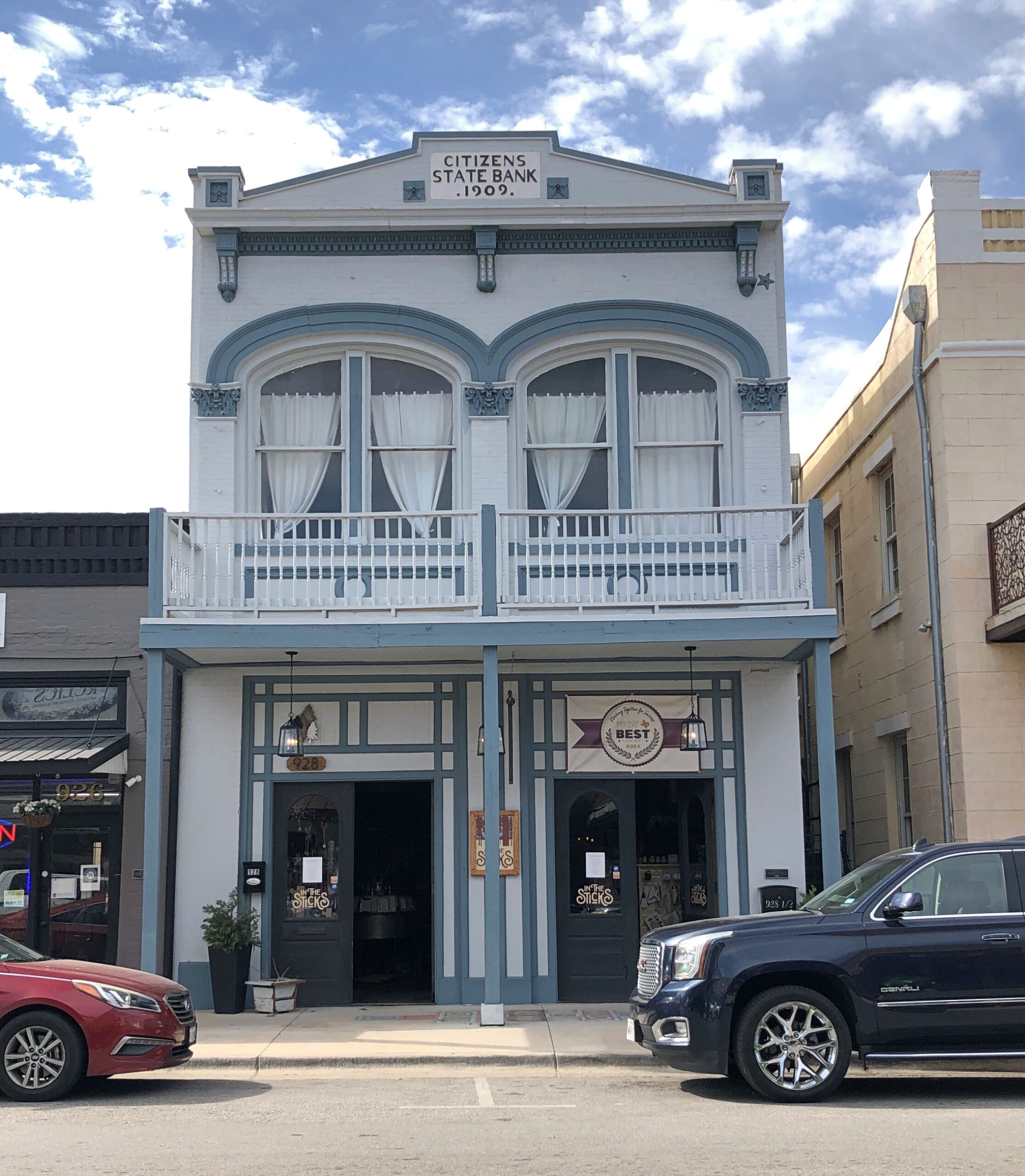
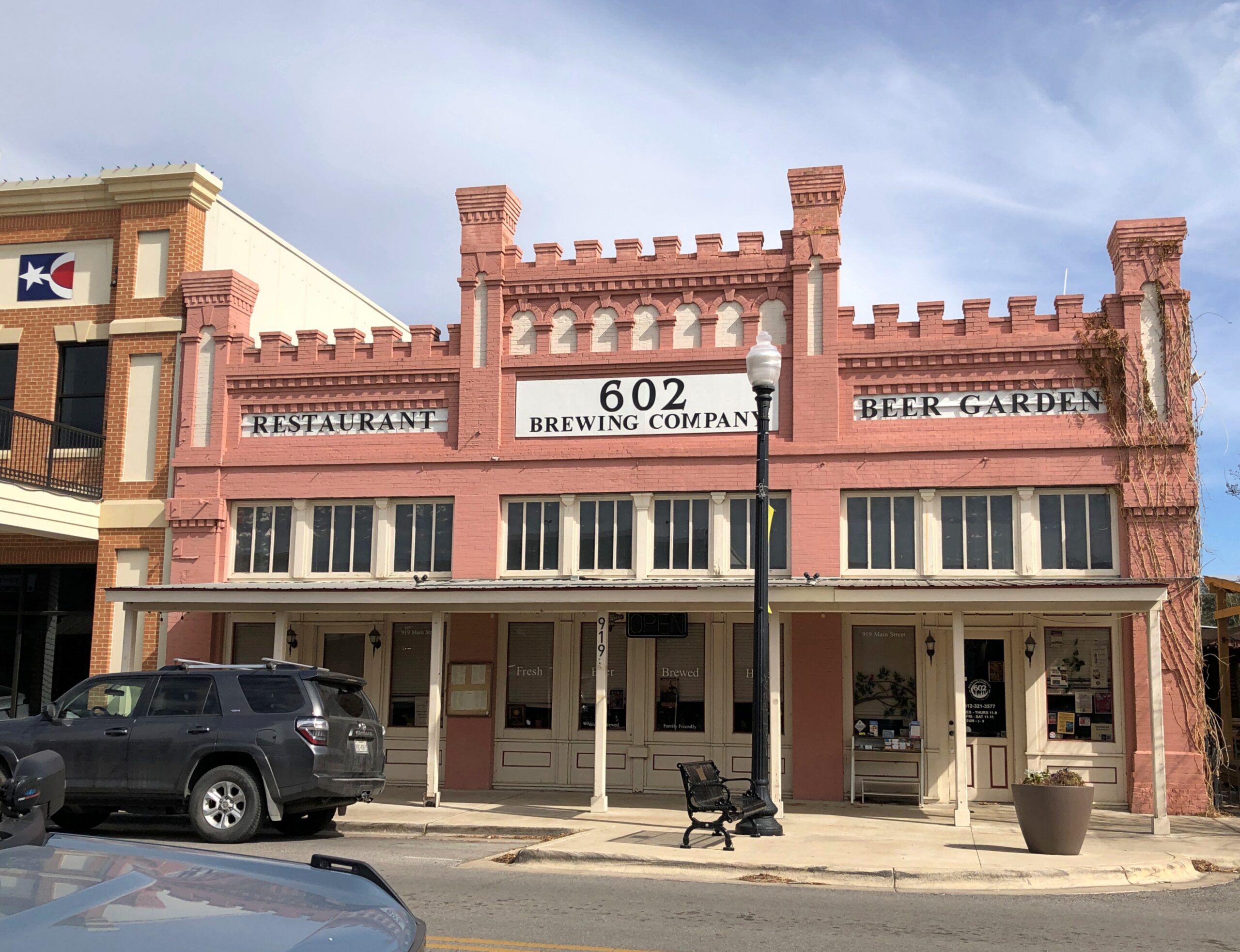
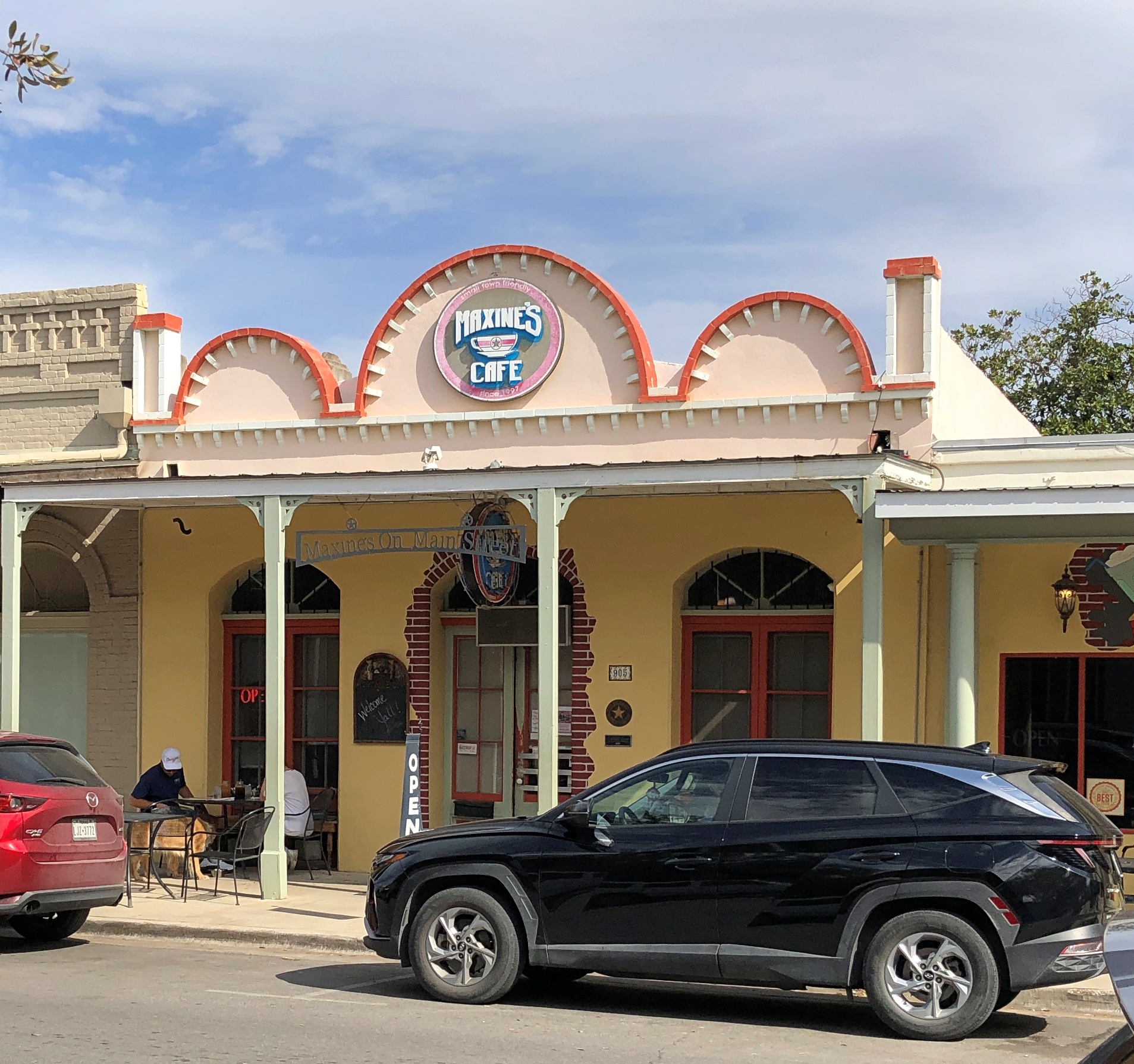
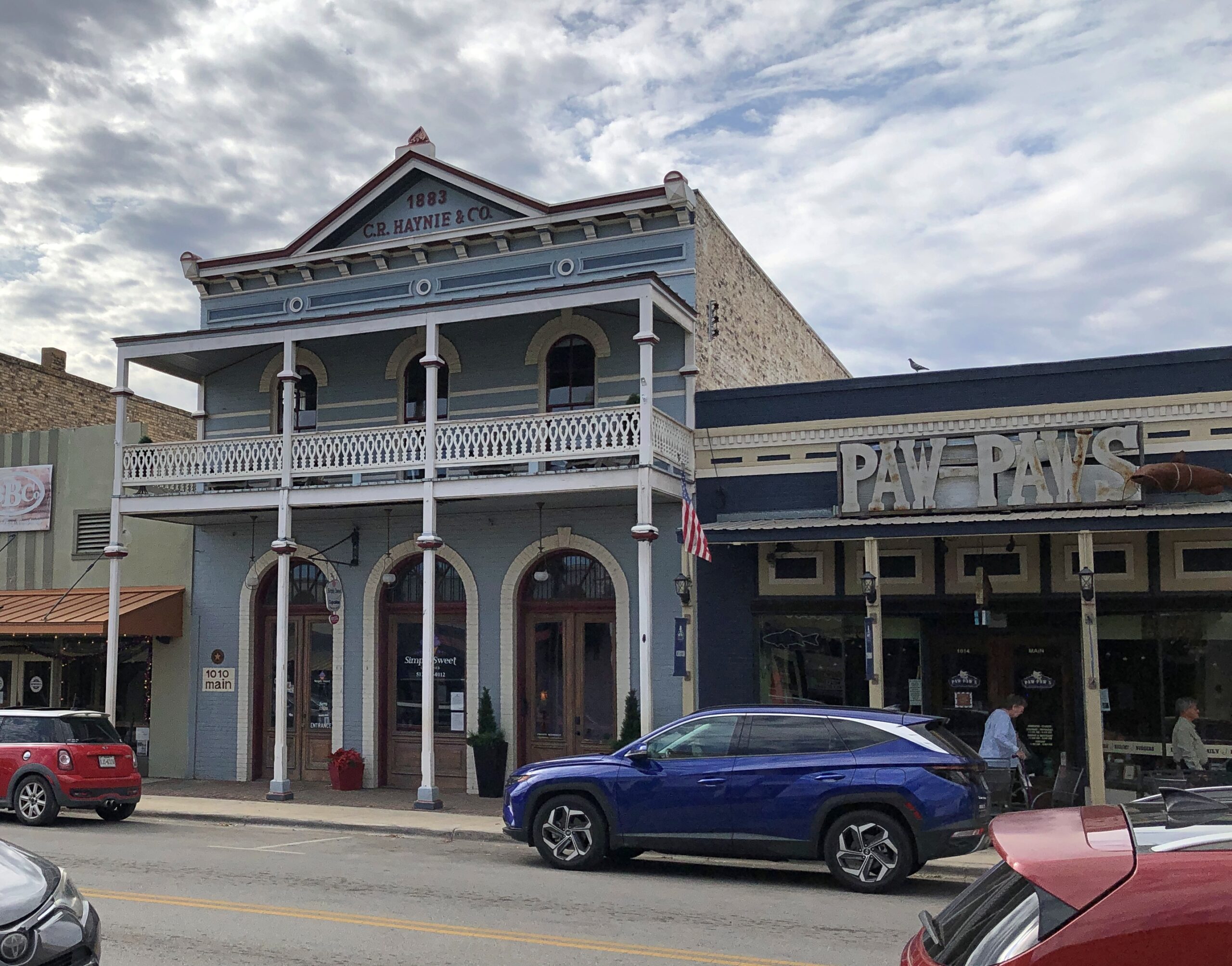
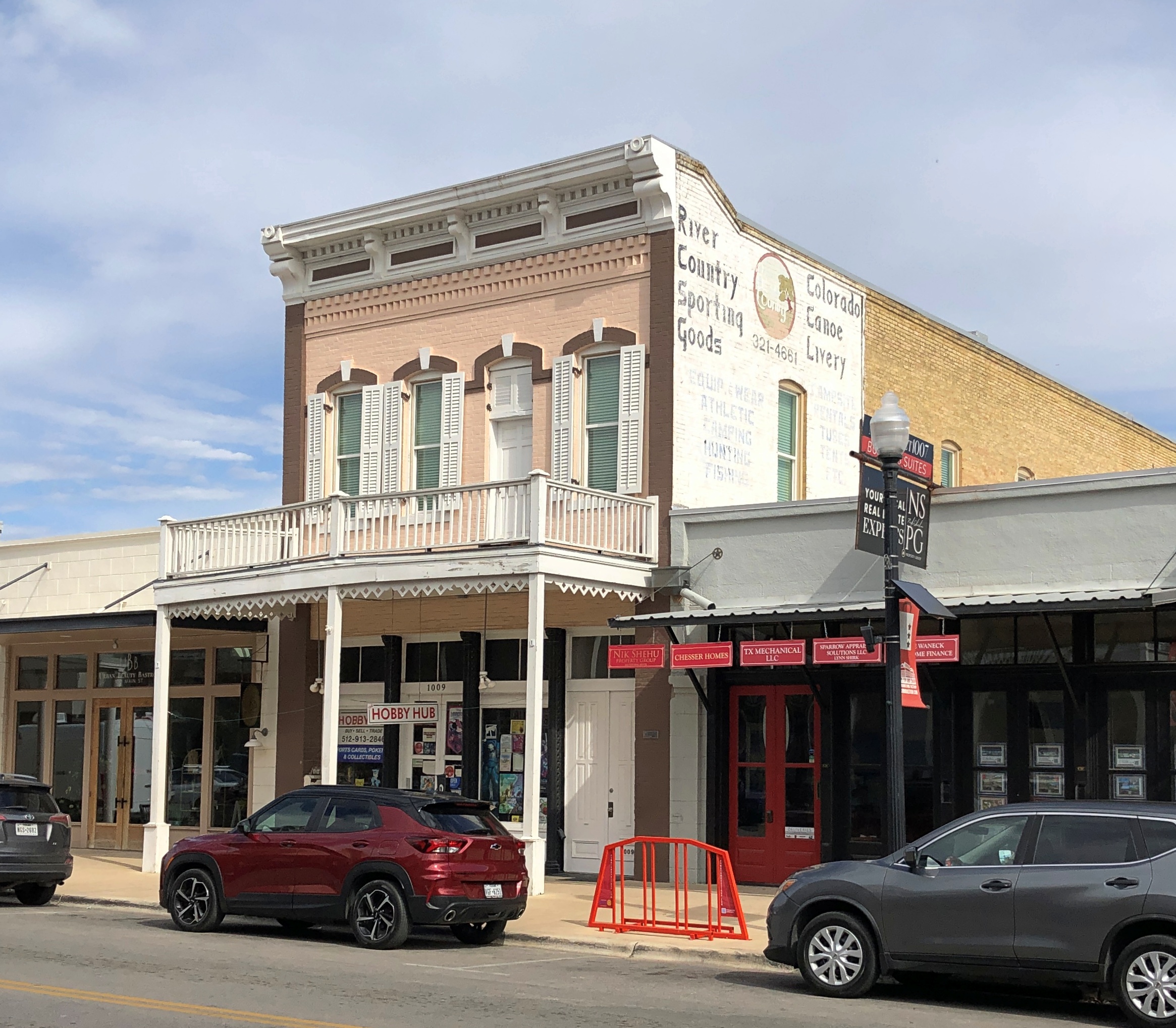
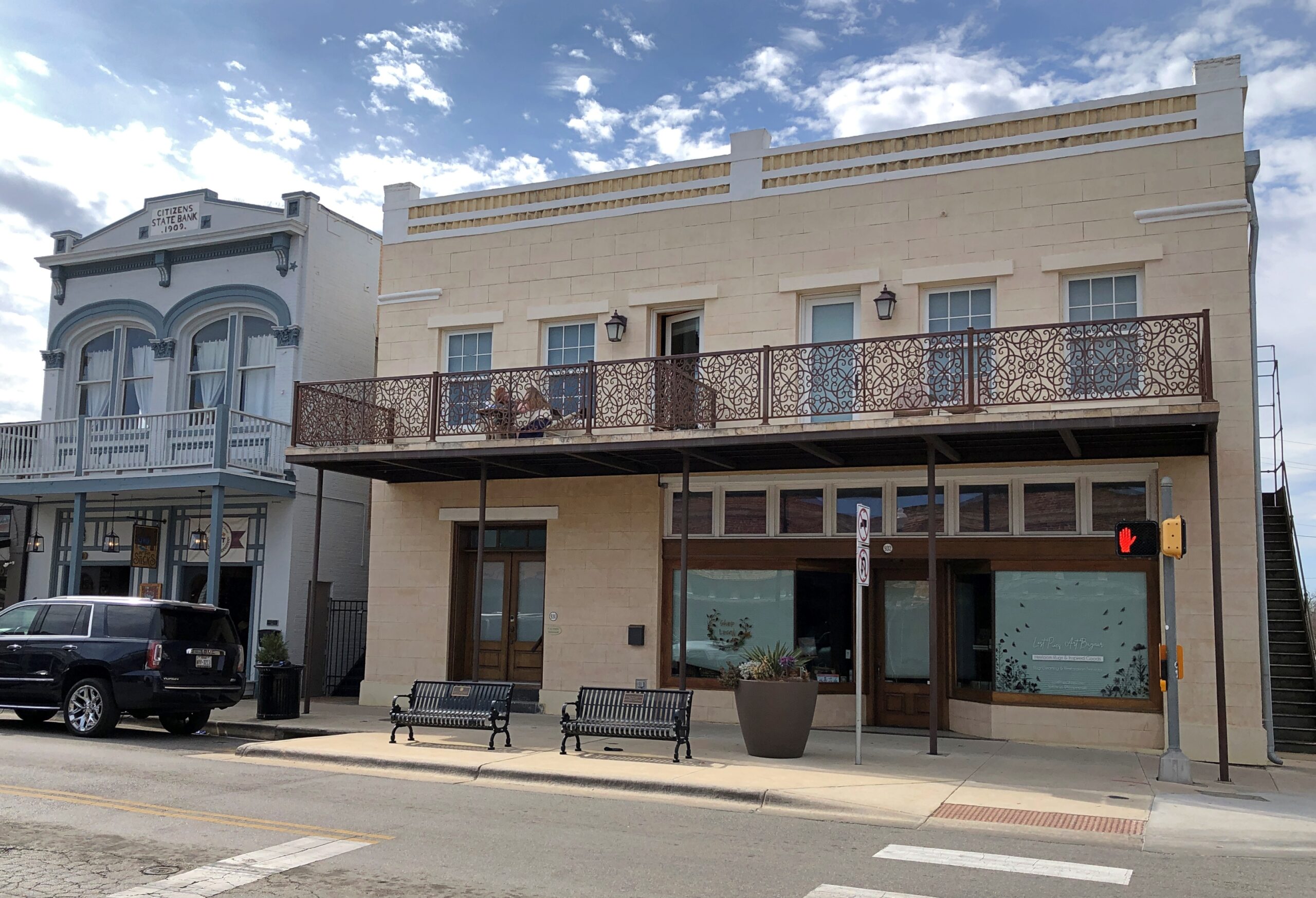
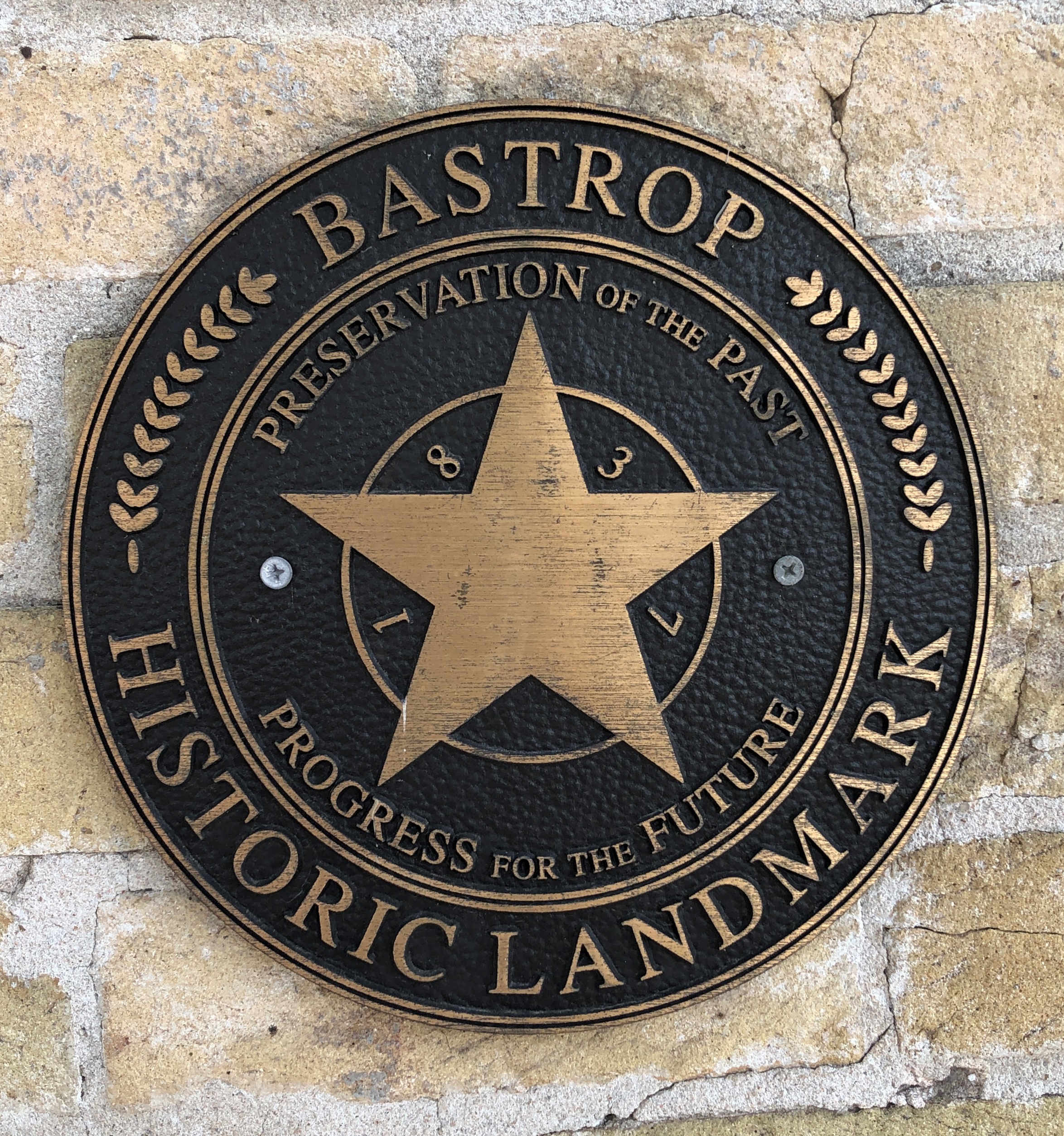
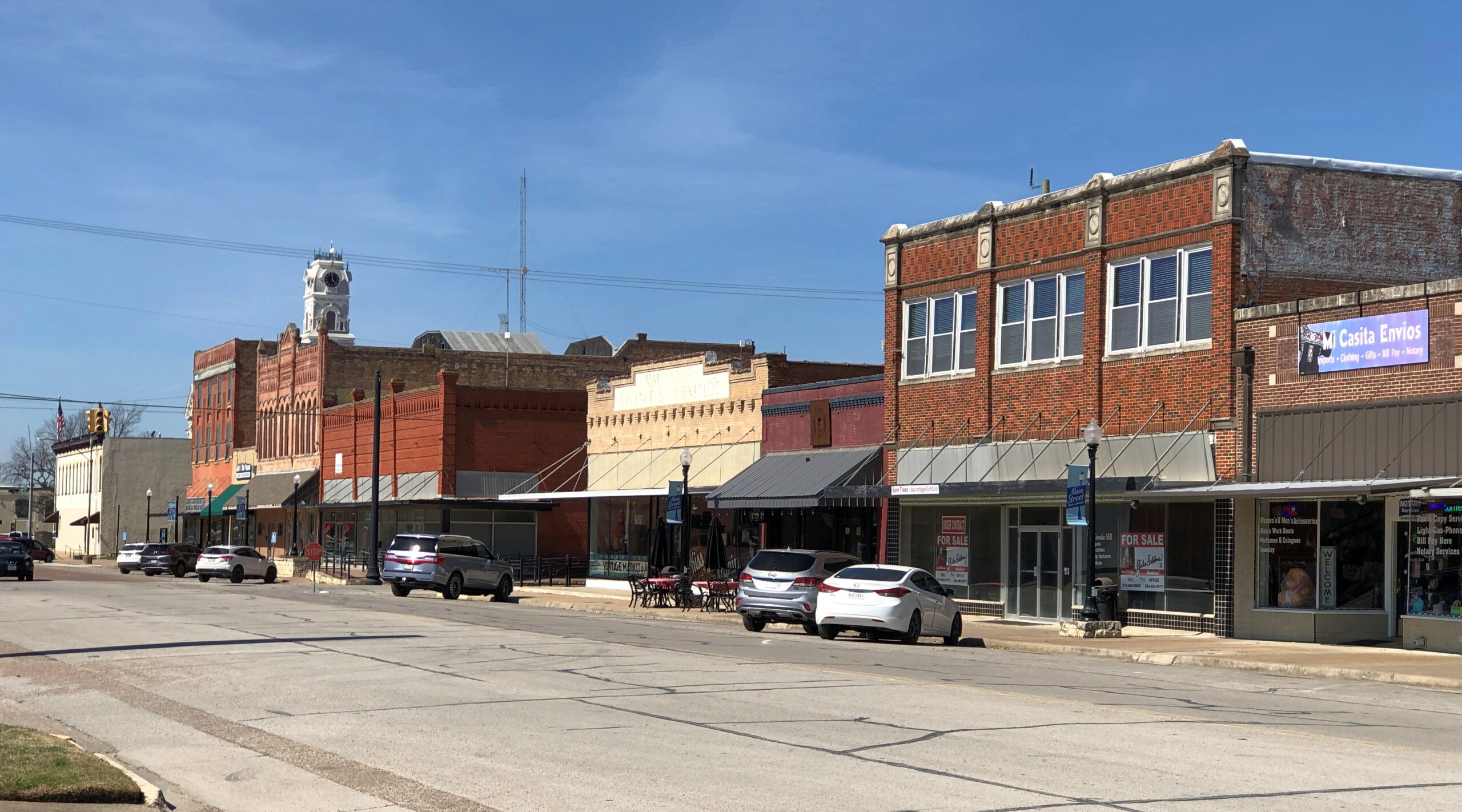
This part of town has a good stock of late 19th- and early 20th-century buildings. Pleases the eye, pleases the day-trippers.
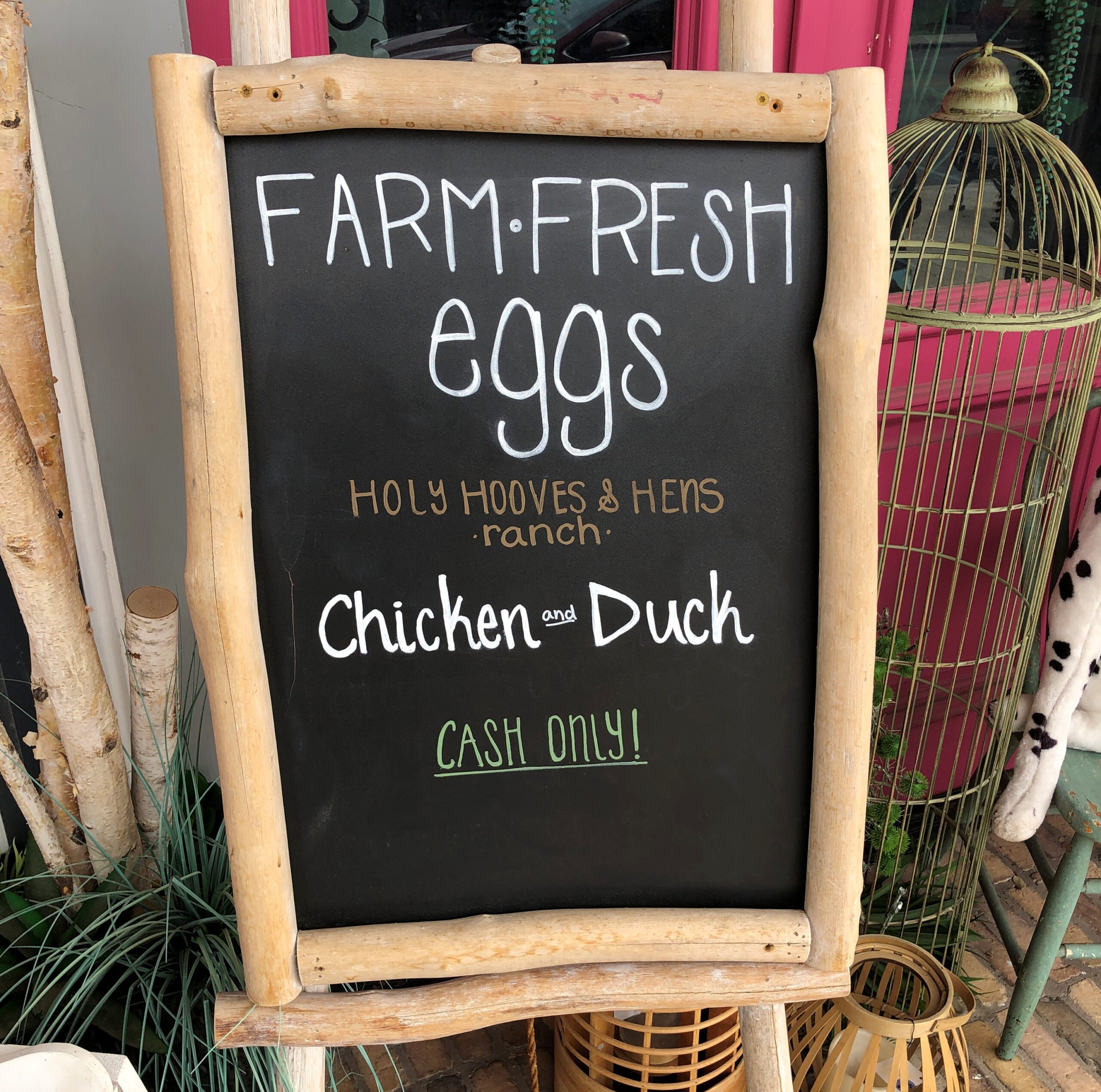
Around Main and Chestnut, you’ll see Paw Paws Catfish House, Simply Sweet Cupcakes, Bastrop Beer Company, flower designer Greenleaf Gatherings, Urban Beauty Bastrop, the Hobby Hub trading card store, another trading card store called Game Time Cards, DivineLites Soap Shop, Lost Pines Art Bazaar rug store, In The Sticks–Eclectic Gifts and More, Rhinestone Rattler Boutique, Monarch Art Gallery and Main Street Yoga Bastrop. A partial list. The town seems to be doing OK.
Looks like a newer building. The architect did a good job of blending it into its surroundings.
Plenty of these.
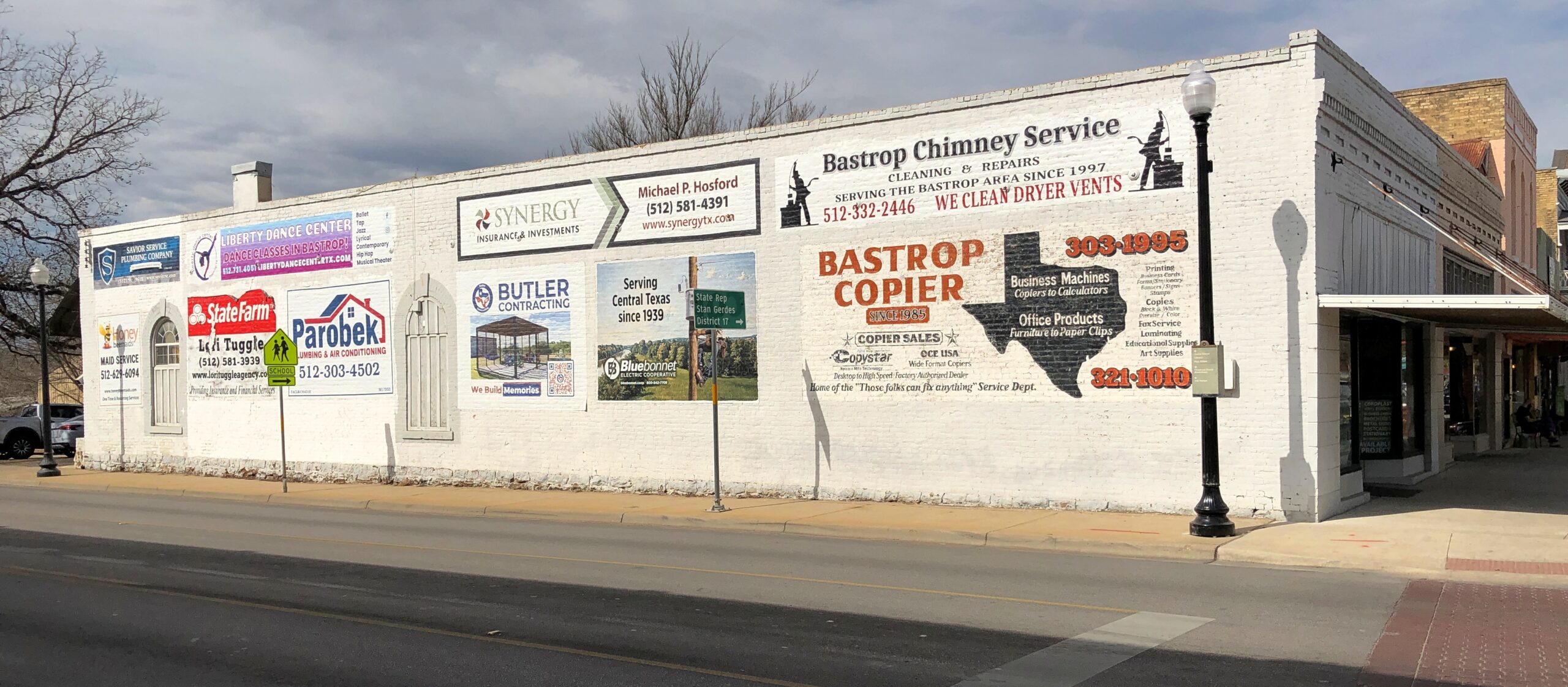
Advertising.
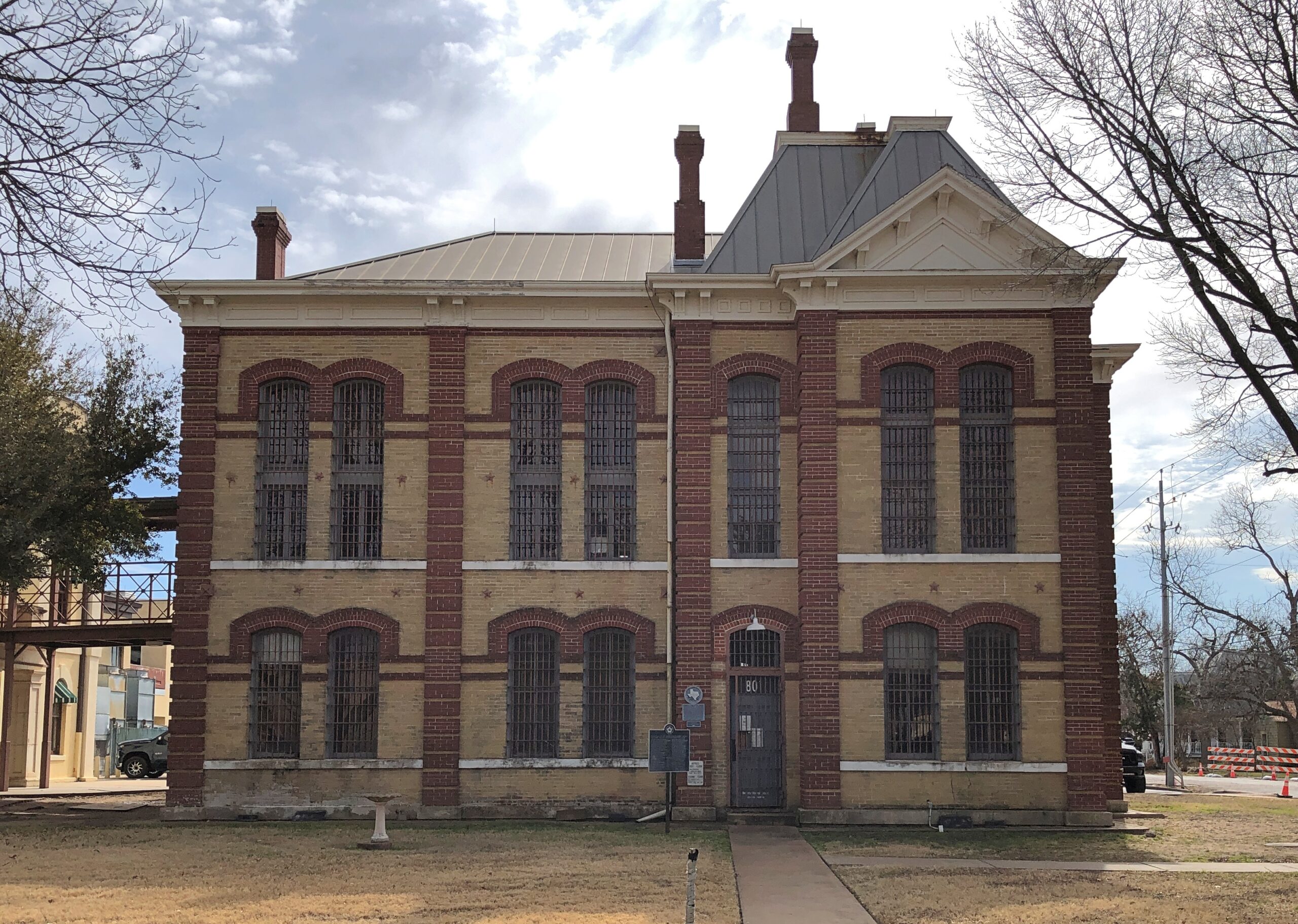
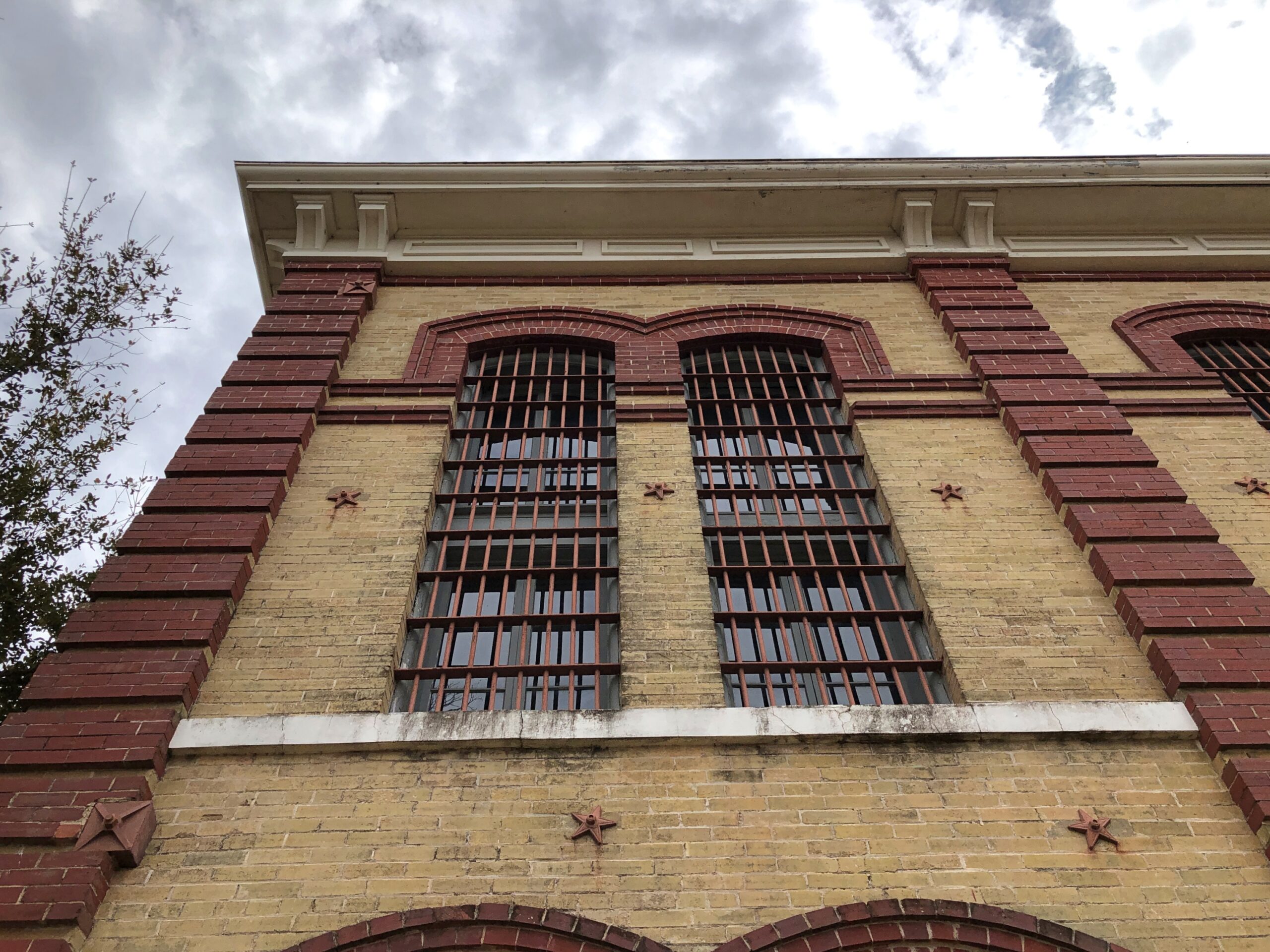
Not far from Main St. and next to the aforepictured Bastrop County courthouse is the old county jail.
In 1979, nearby Bastrop State Park, not the town itself, was the scene of Pine Cone Wars, Midnight Backgammon and our slightly older “chaperons” who holed up in a separate tent much of the time to make the beast with two backs. The youthful antics of two successive camping trips with high school friends that spring are something of a blur now, but a pleasant one.
The Republic of Texas started out with 23 counties, with more carved out of those in the years afterward, until the most recent establishment, Kenedy County, in 1921. In our time, there are 254 counties, including (slightly) infamously, Loving County, pop. 64 last time I checked. If you go looking for a county with fewer people anywhere in the entire United States, you’ll be out of luck. Loving is it.
Strictly as a tourist proposition, county courthouses have a lot to recommend them. In all but the largest cities, they’re usually easy to find, on a square ringed by smaller buildings, and pretty much in the middle of their towns. They’re free, but not always open. Some have small museums; a few former courthouses are themselves more sizable museums. A good many date from the golden age of U.S. courthouse building, which I’d put from the end of the Civil War to the beginning of World War I.
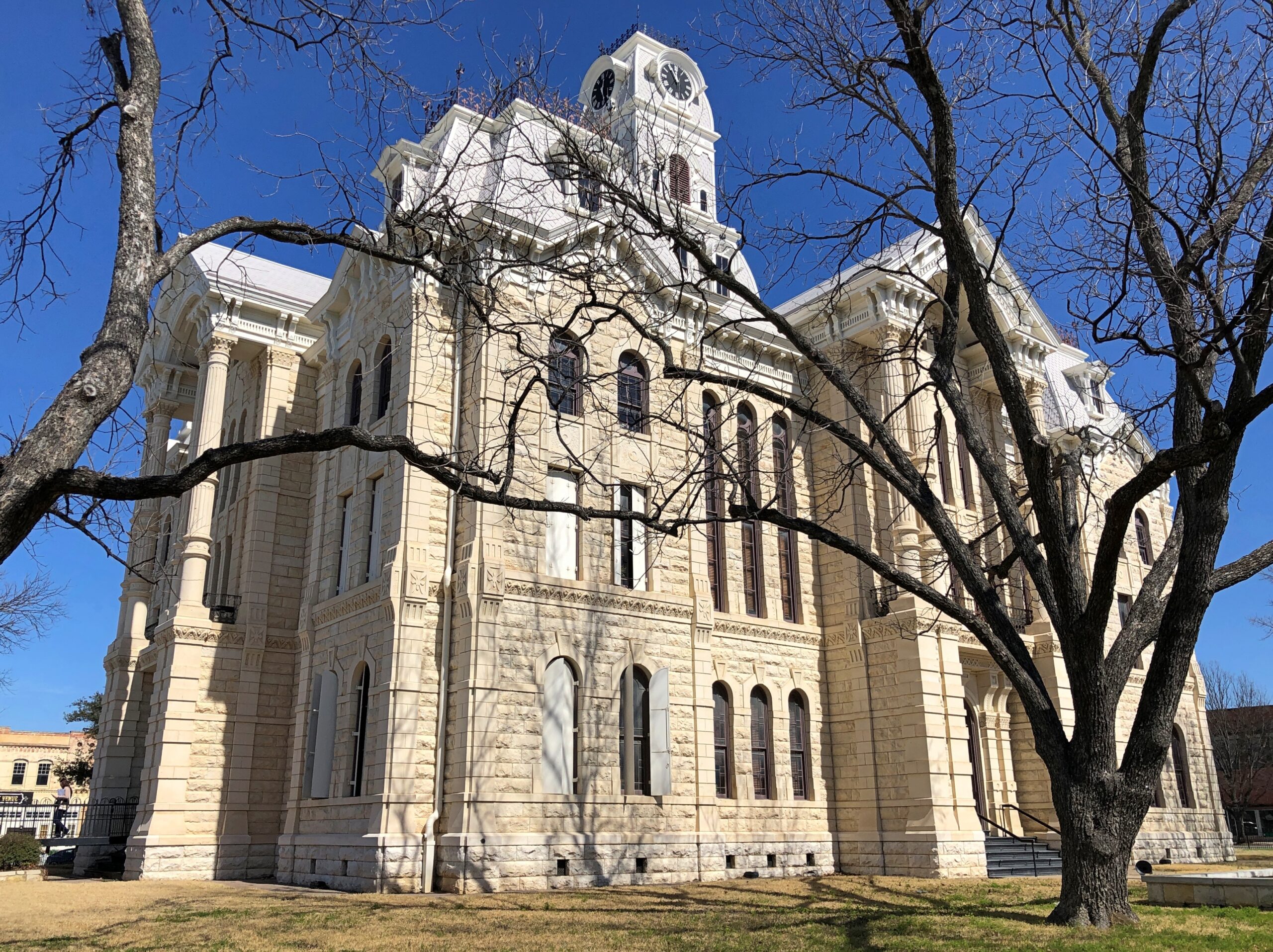
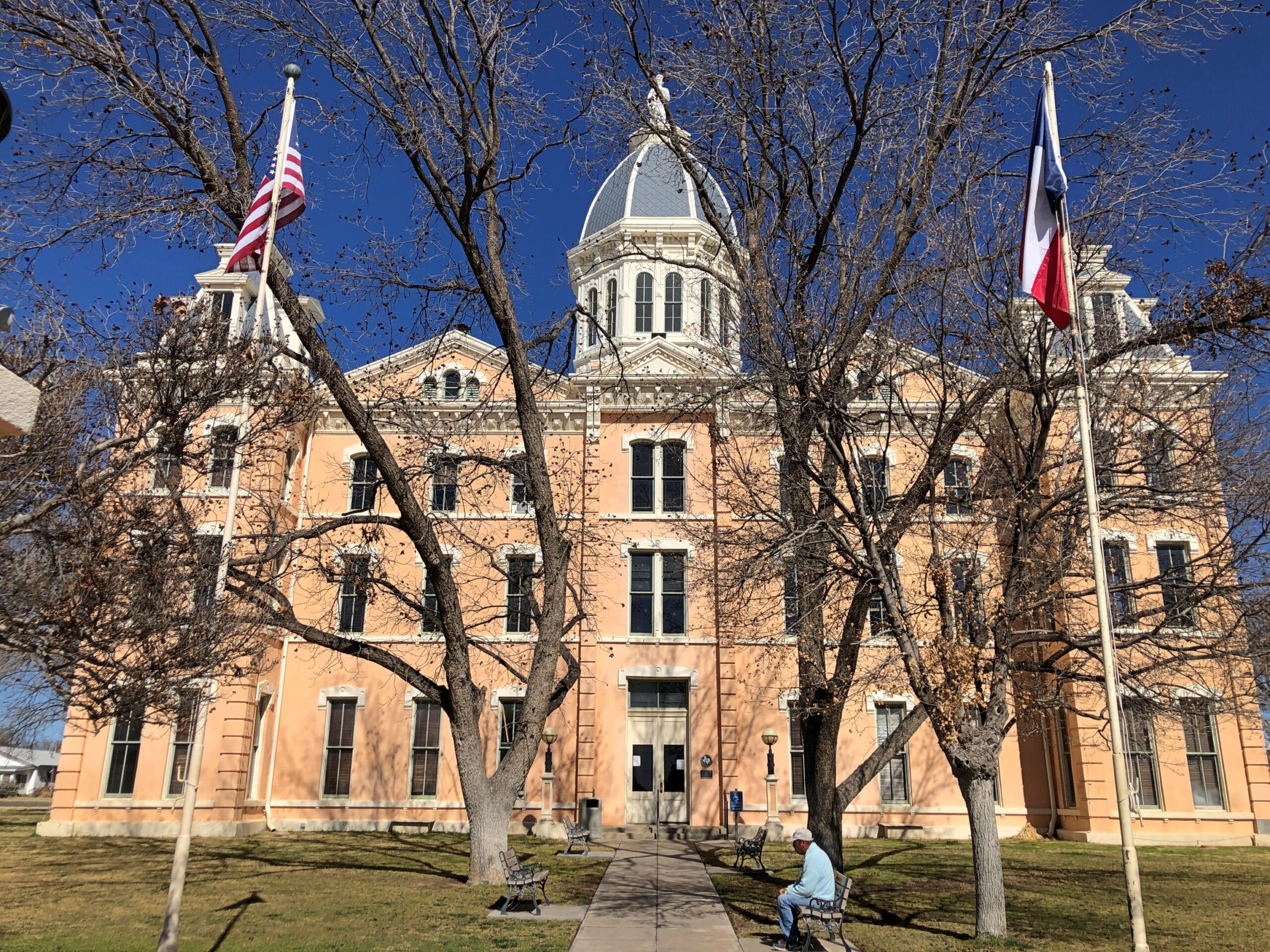
With all that in mind, the following are five more Texas county courthouses I saw this time around.
Hill County, Hillsboro, Texas.
Presidio County, Marfa, Texas.
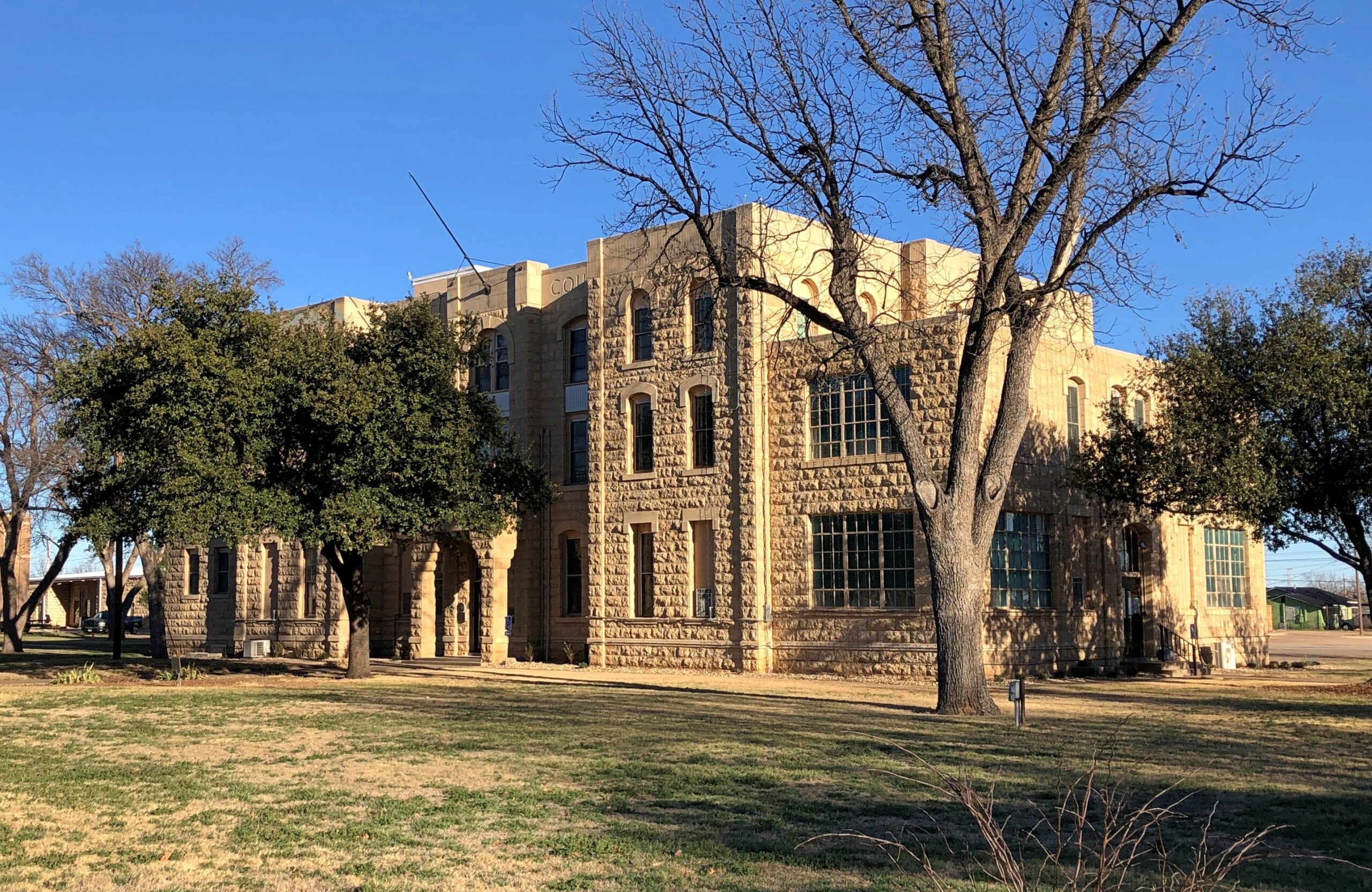
Runnels County, Ballinger, Texas
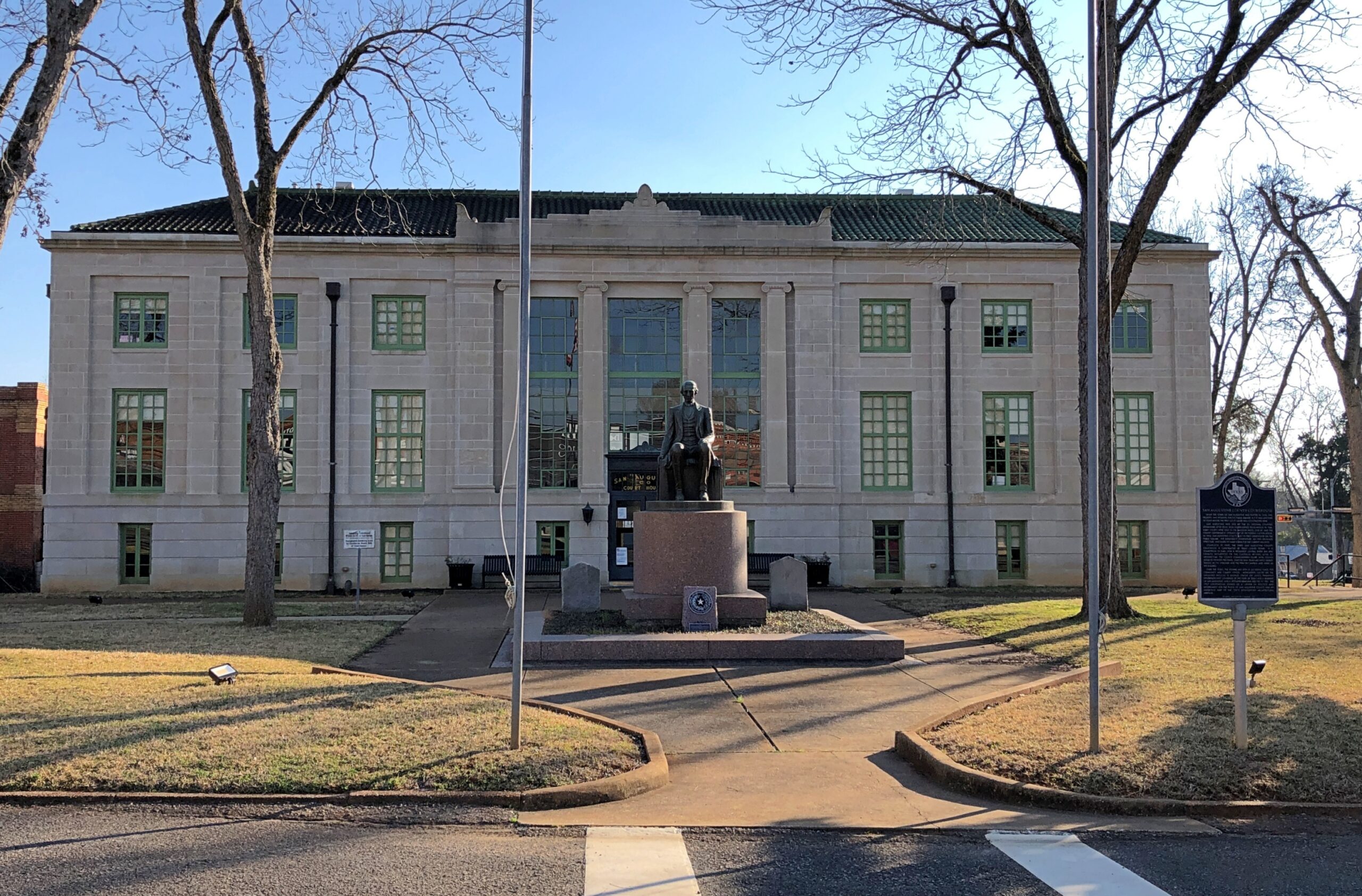
San Augustine County, San Augustine, Texas.
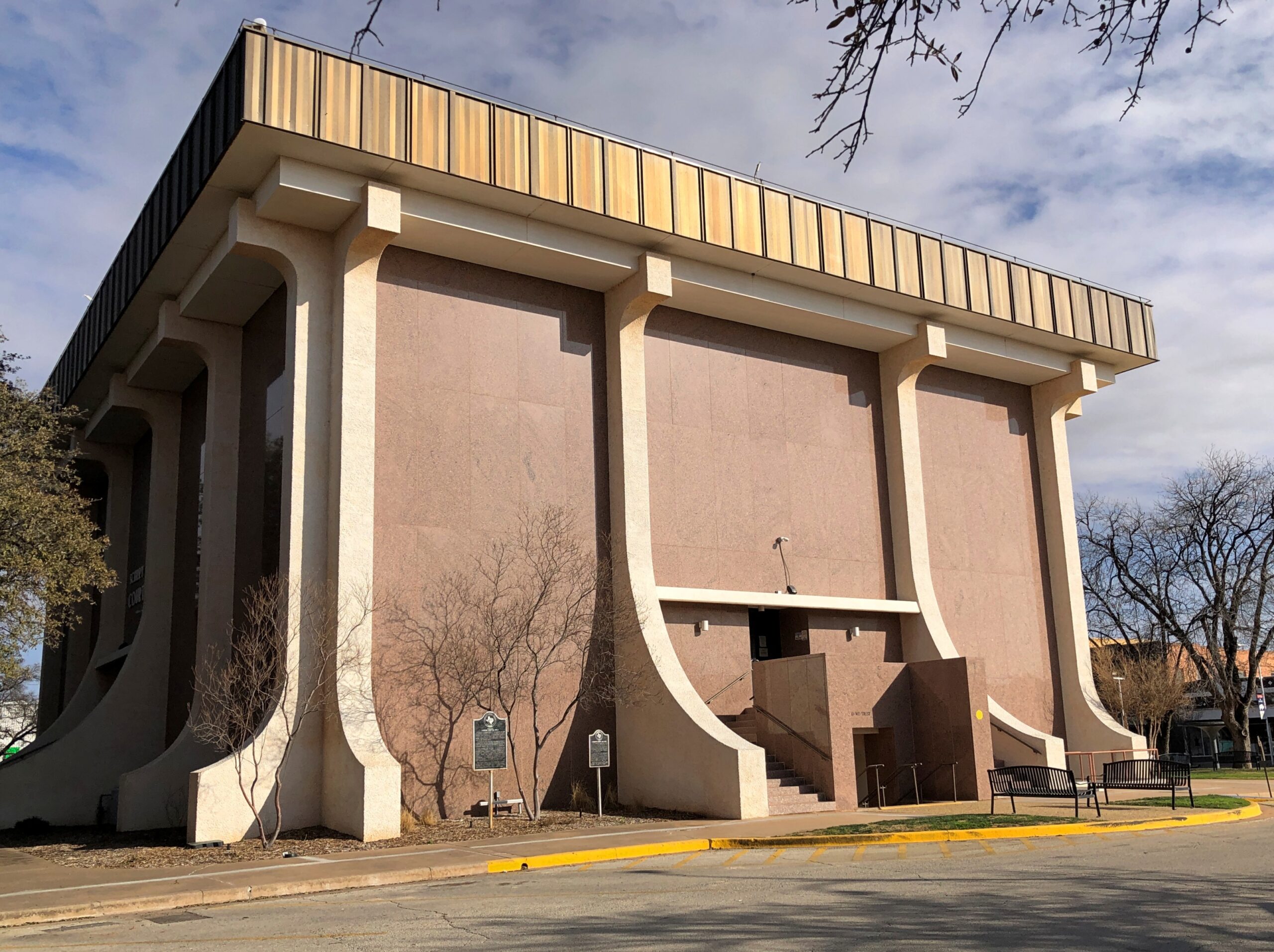
Scurry County, Snyder, Texas.
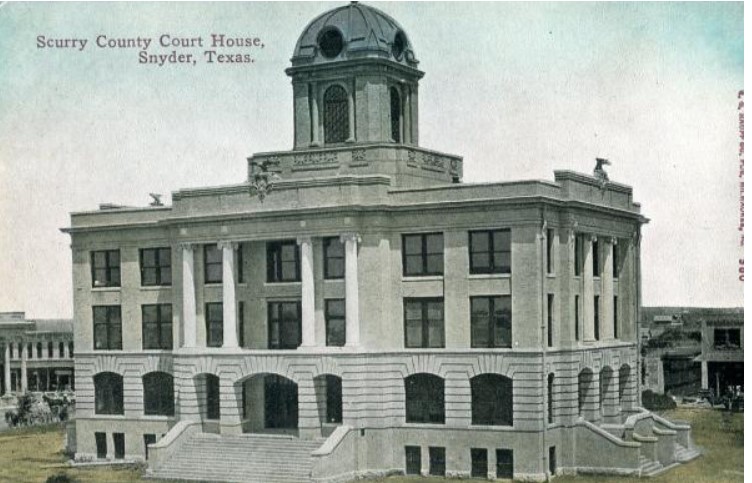
My maternal grandparents grew up in Scurry County. The courthouse I saw wasn’t the one grandpa would have seen as a young blade. That would be this.
My idle musing about visiting every 254 Texas courthouses was no mere musing for an architect who did exactly that, and blogged about it. About the modern Scurry County courthouse, he said, “Without a doubt, the 1972 alteration of the historic Scurry County courthouse is the most offensive desecration of a Texas courthouse to date. It’s truly sad.”
“These redesign plans are — interesting. Where are the windows?”
“Window are passé.”
Another resource for courthouse (and postcard) enthusiasts: Courthouse History, a collection of postcards depicting every county and parish in the United States. Now that’s an epic project.
The first time I remember making my mother laugh was in the courthouse square in Denton, Texas, seat of Denton County. Kids make their parents laugh sometimes, unless the parent is completely sour on life, and then woe be to the child. We’d gotten out of church one Sunday noonish when I was maybe six. After church, it was our habit to drive over to the courthouse square to visit a small store for sodas and snacks. A highlight of the day, as you’d think. I remember the long outline of that store, and the rows of candy I explored.
The streets were crowded, maybe more than usual, and it probably meant that we, my mother that is, temporarily couldn’t find for a parking space. “The Baptists must have just gotten out of church,” she said, referring maybe to a specific church, or to the fact that many Baptists tended to be out and about on Sunday, this being Texas. (Quotes are reconstructions, because of course.)
“Do they know we’re Episcopalians?” I said.
That day or any other that I saw it in the mid-1960s, the Denton County Courthouse was a hulking presence, the focus of attention for blocks around, and, for a young kid, a mysterious place. Obviously an important place, but what goes on inside?
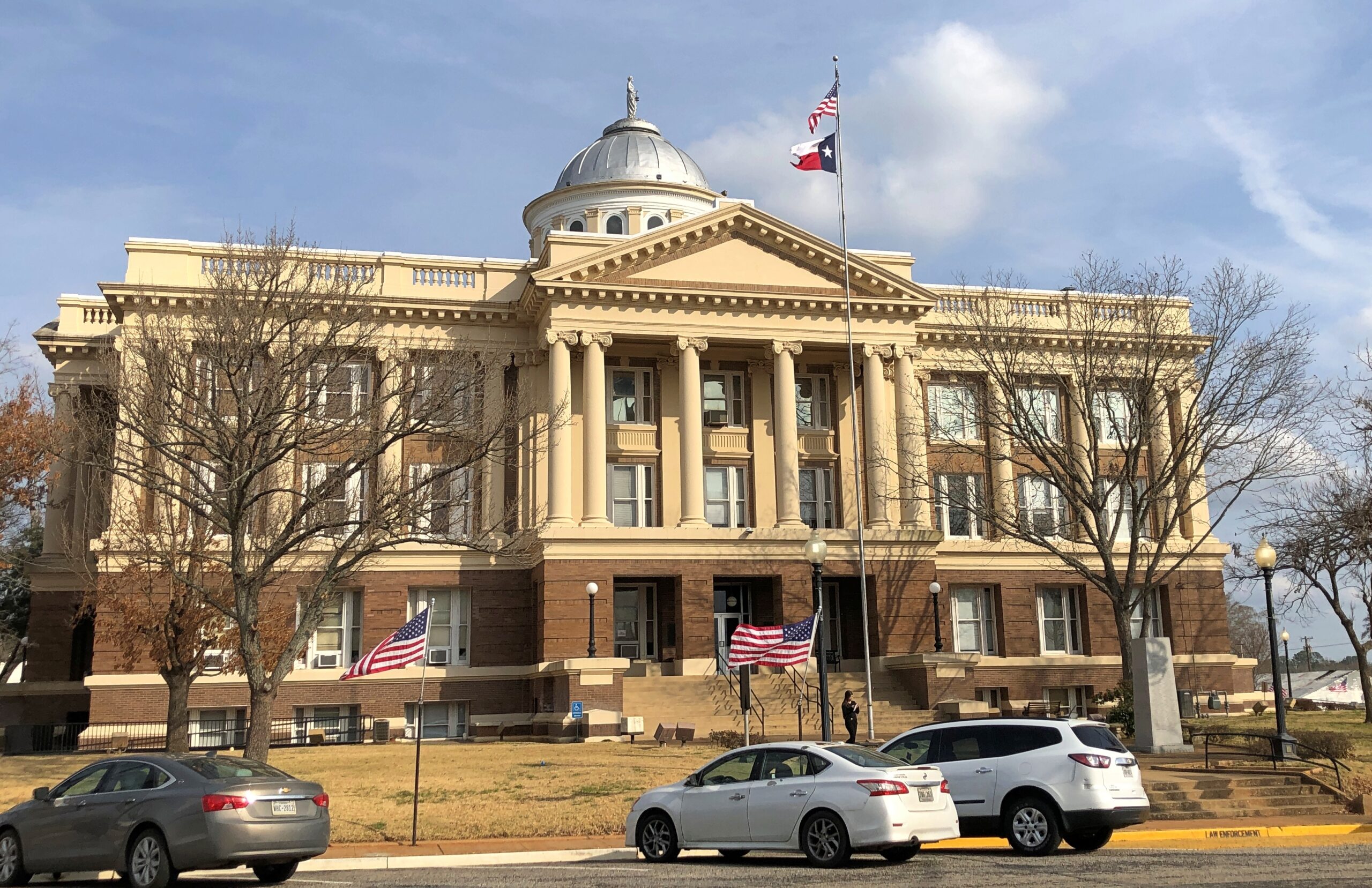
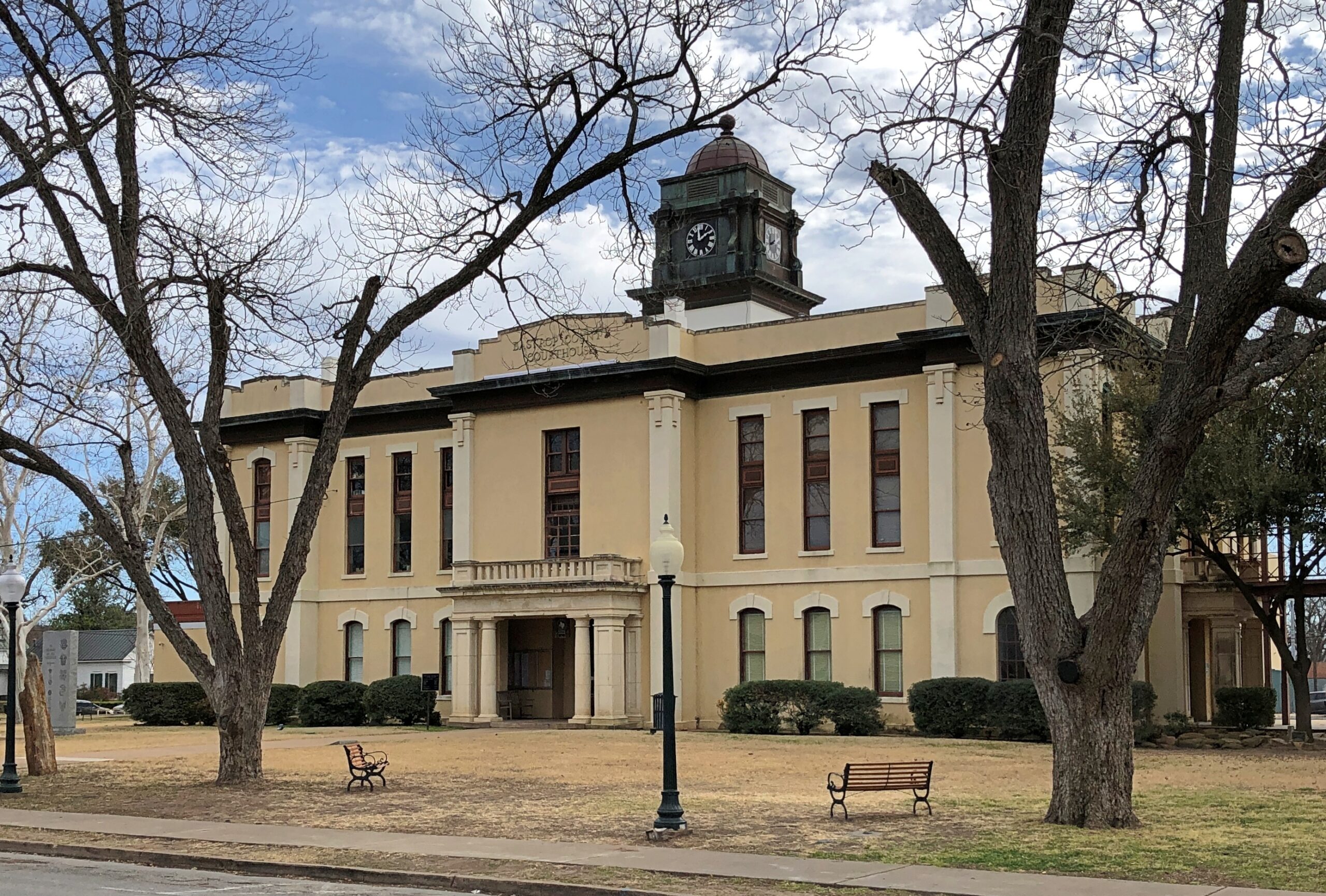
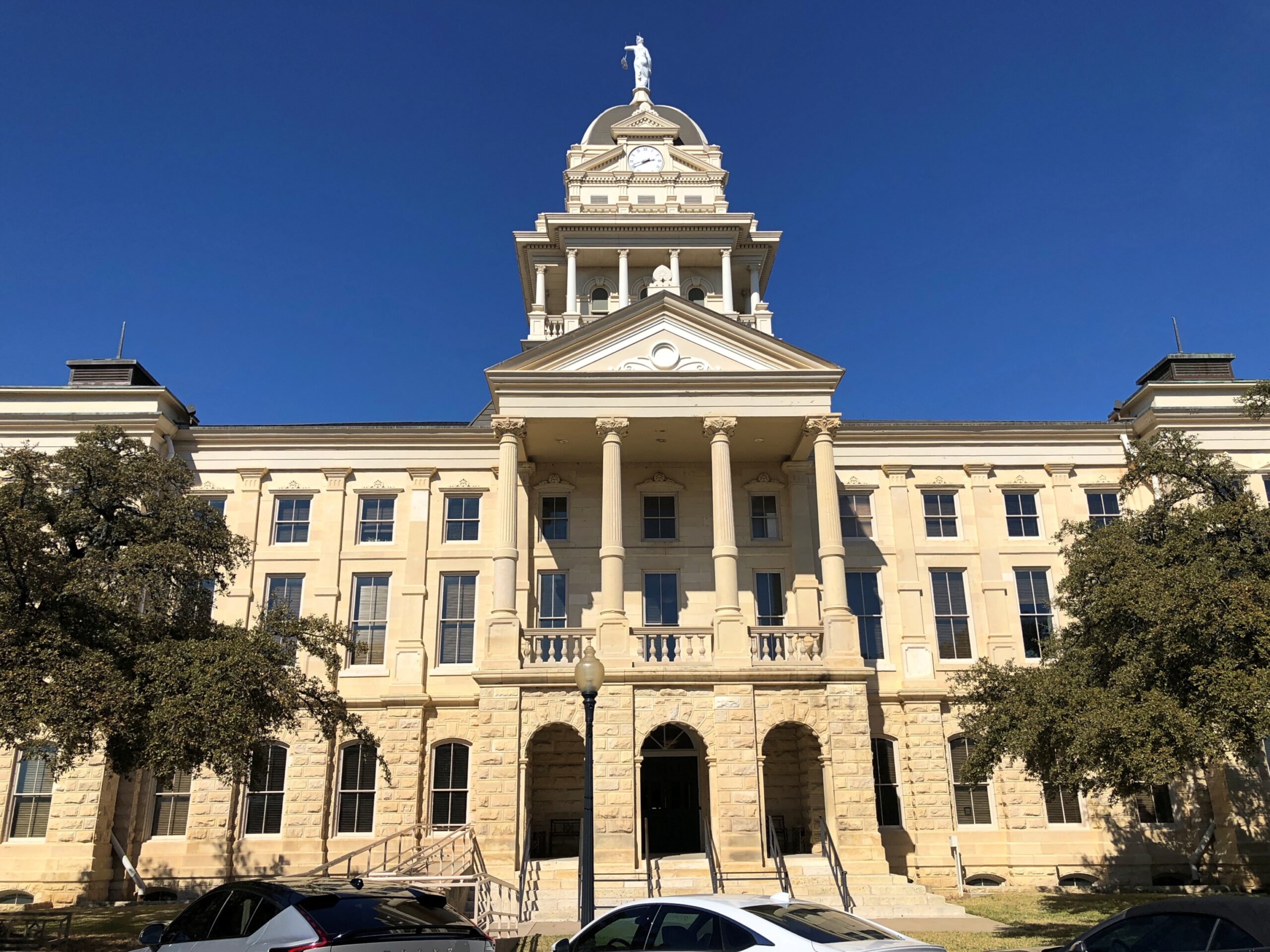
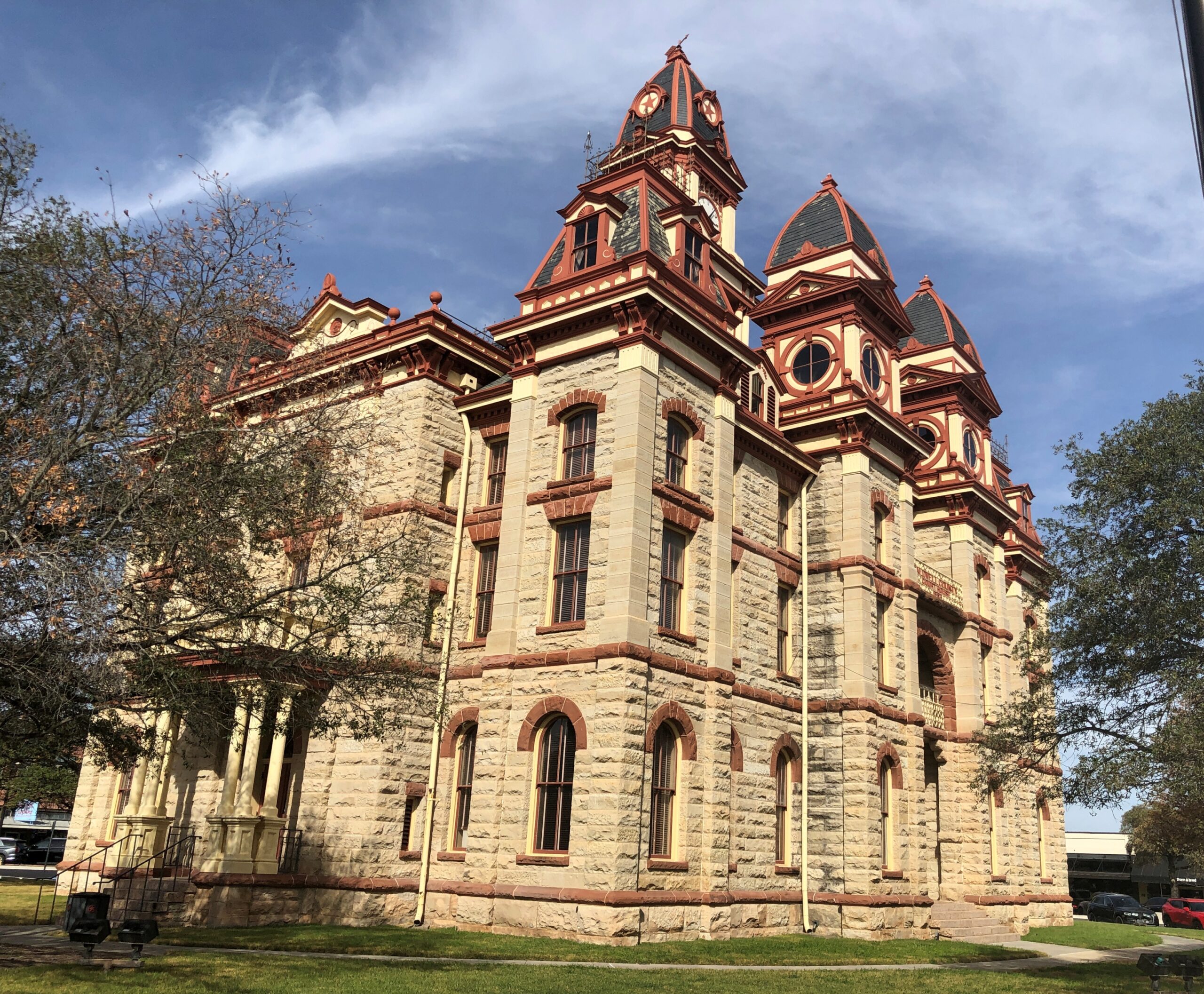
Last month, now in my own mid-60s of age and armed with a somewhat better knowledge of civics, I stopped to take a look at 10 or more county courthouses in Texas along the routes of my travels.
Anderson County. Palestine, Texas.
Bastrop County. Bastrop, Texas.
Bell County, Belton, Texas.
Caldwell County. Lockhart, Texas.
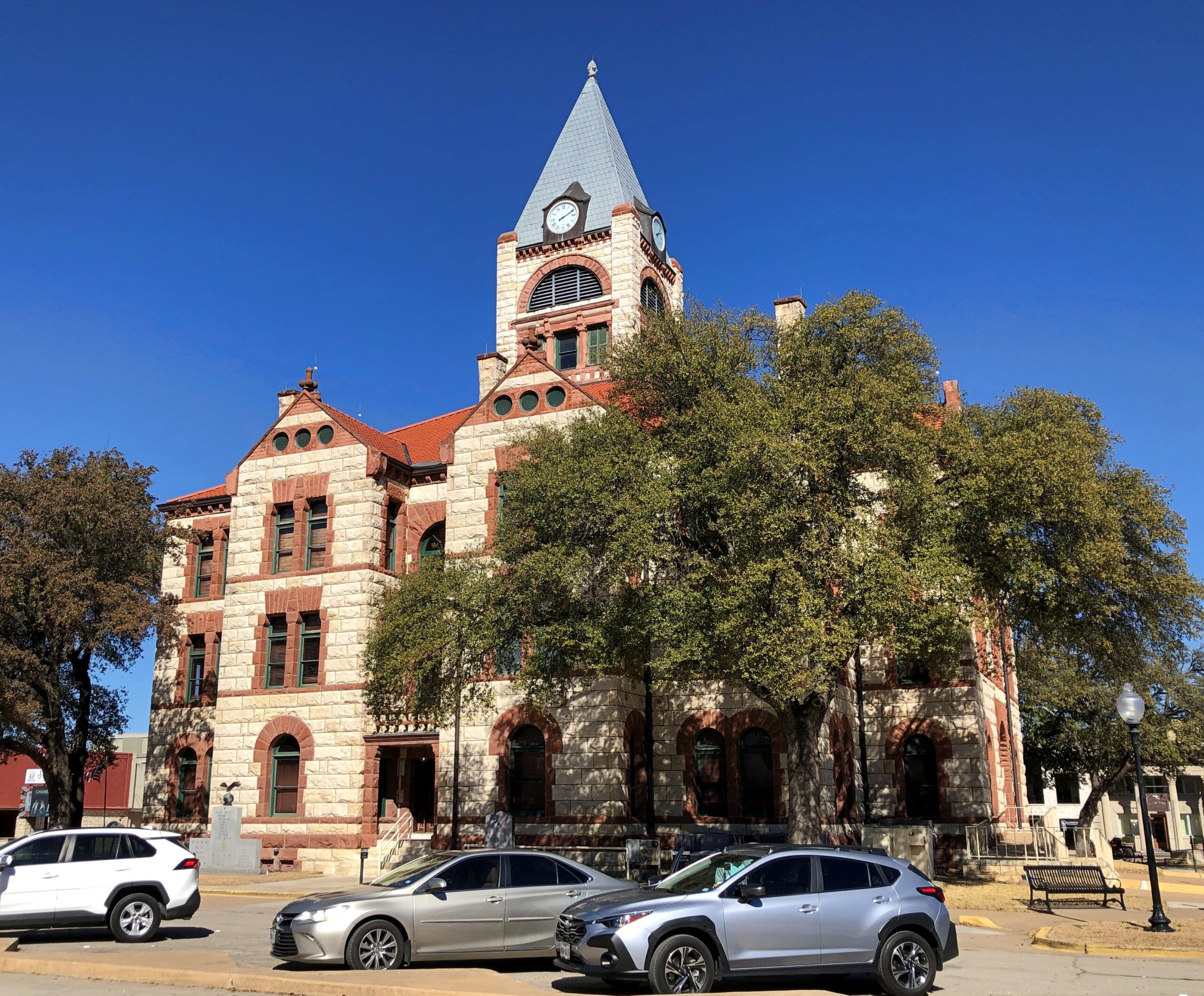
Erath County. Stephenville, Texas.
Sometimes I could get in, sometimes the building was closed. With one or two exceptions, I managed to walk all the way around the courthouses. There’s a niche travel blog for you (and I’m not the man to do it): circumambulate all 254 Texas county courthouses. Why? Because they’re there.
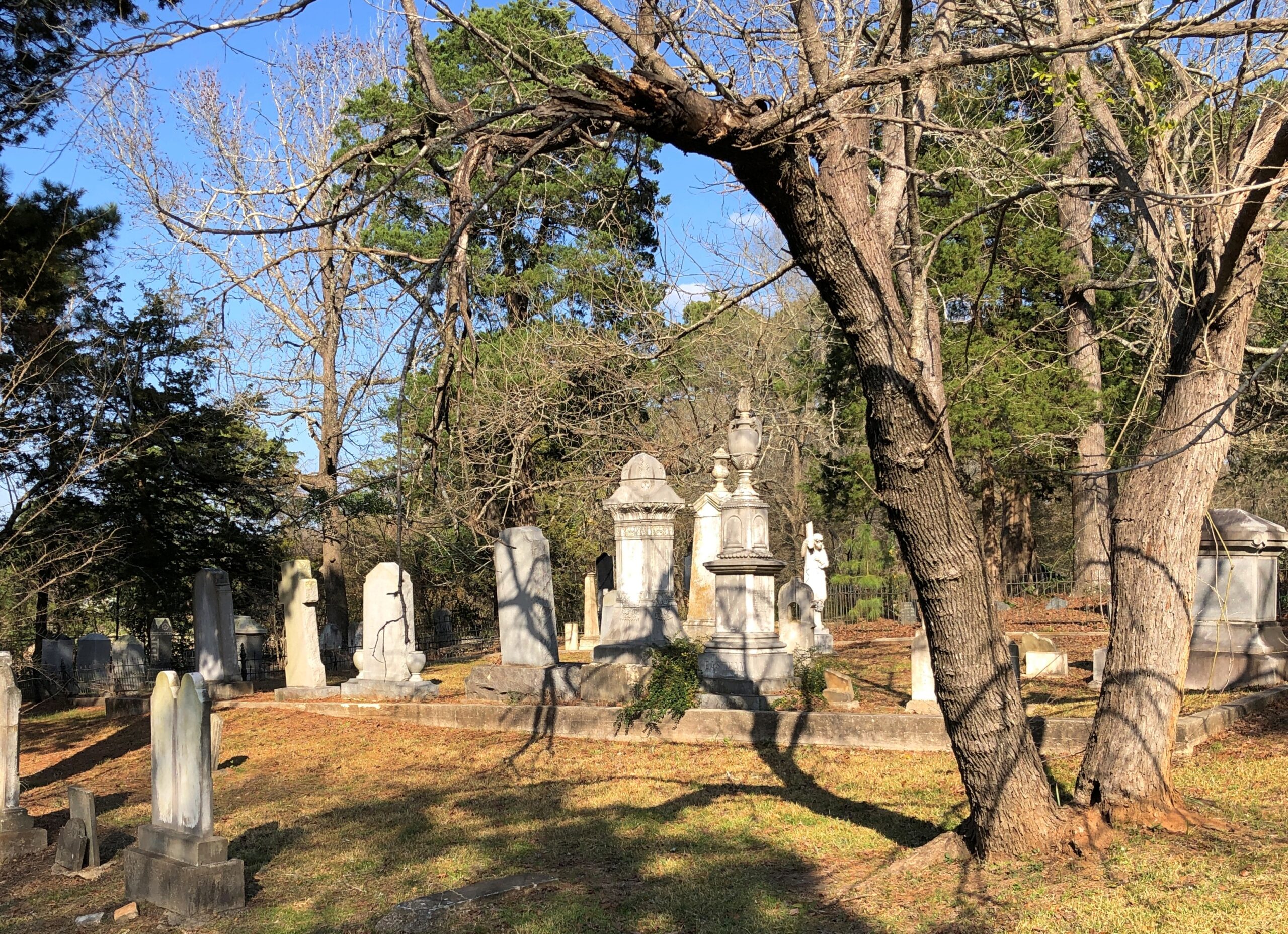
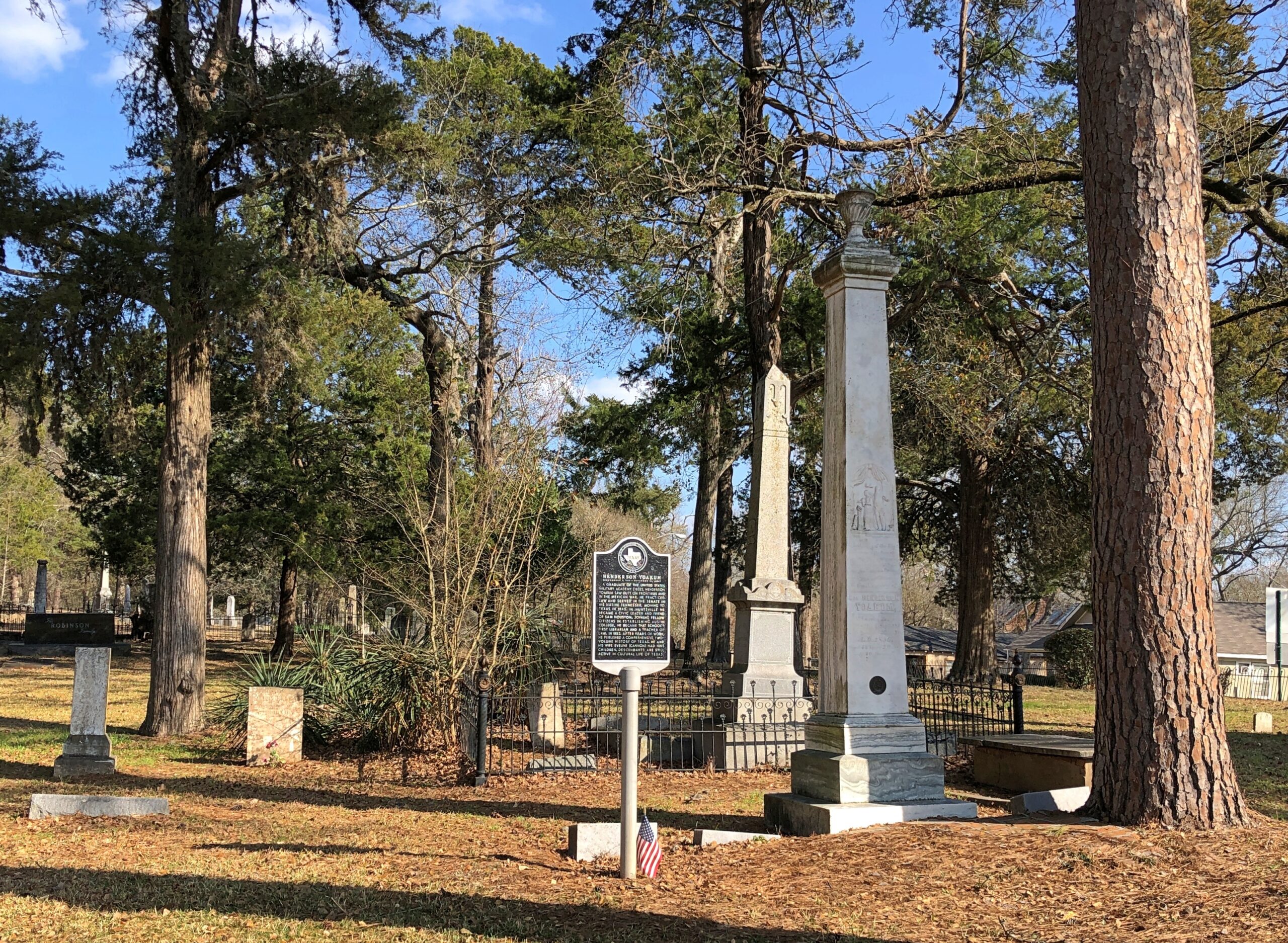
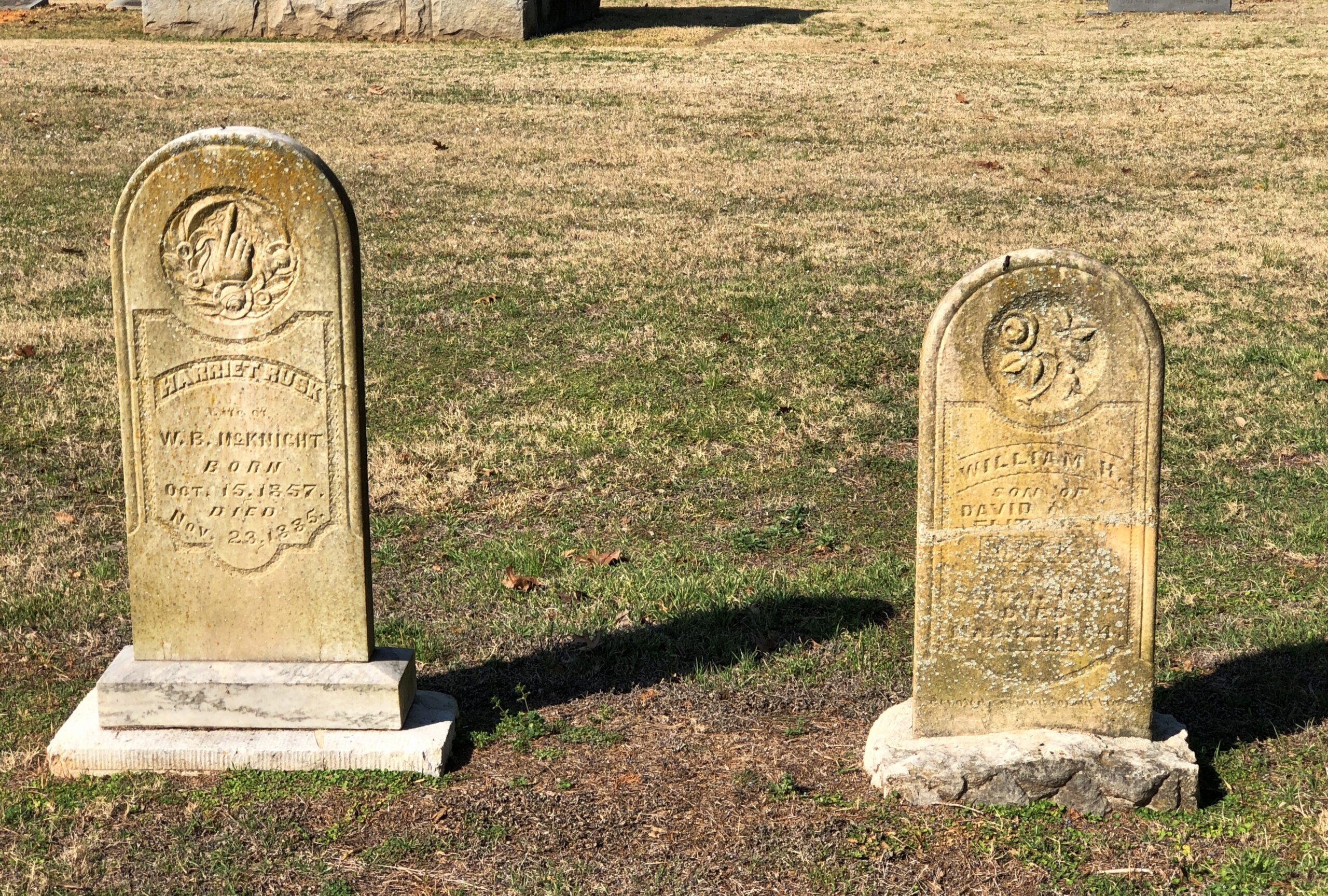
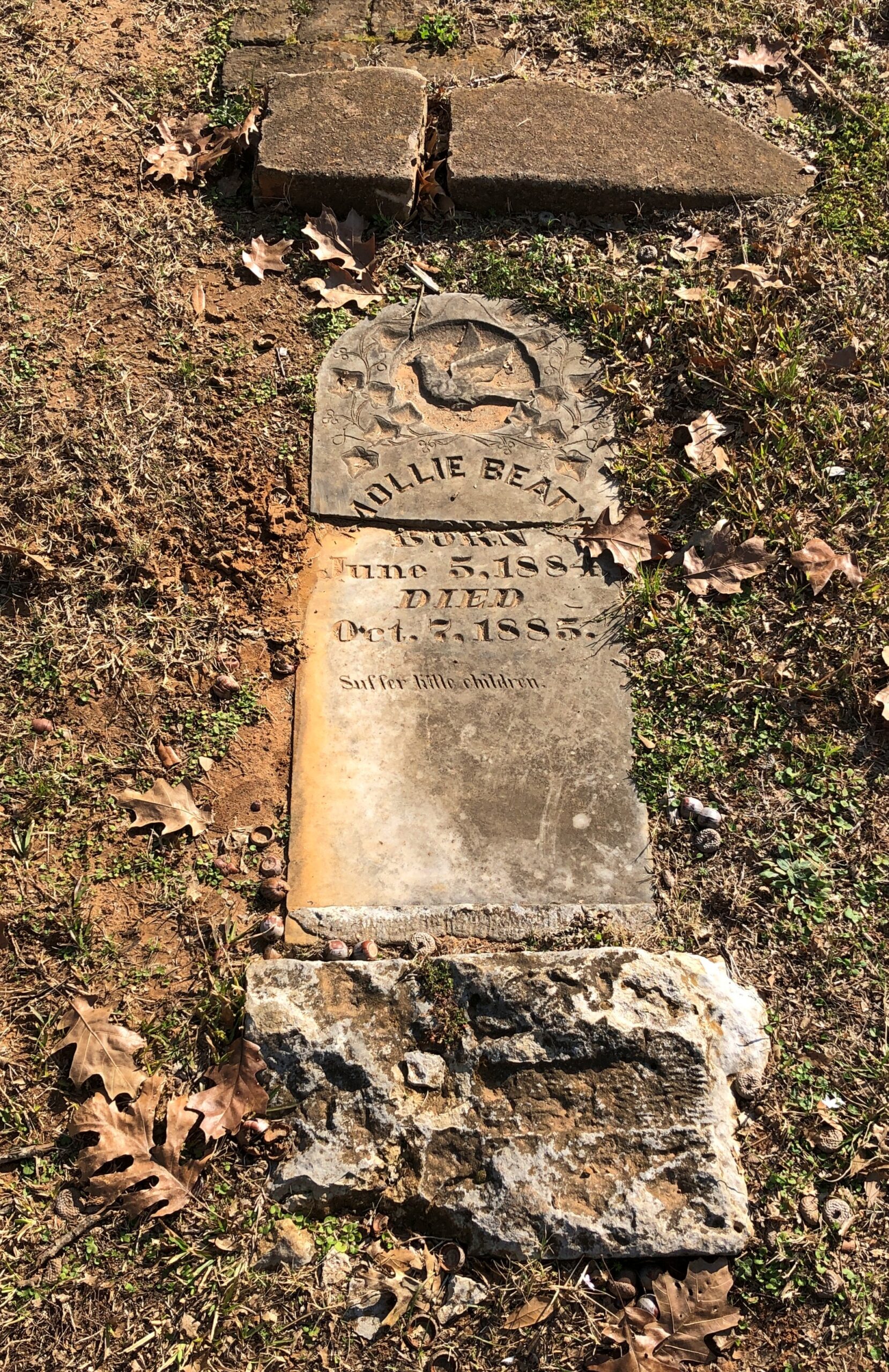
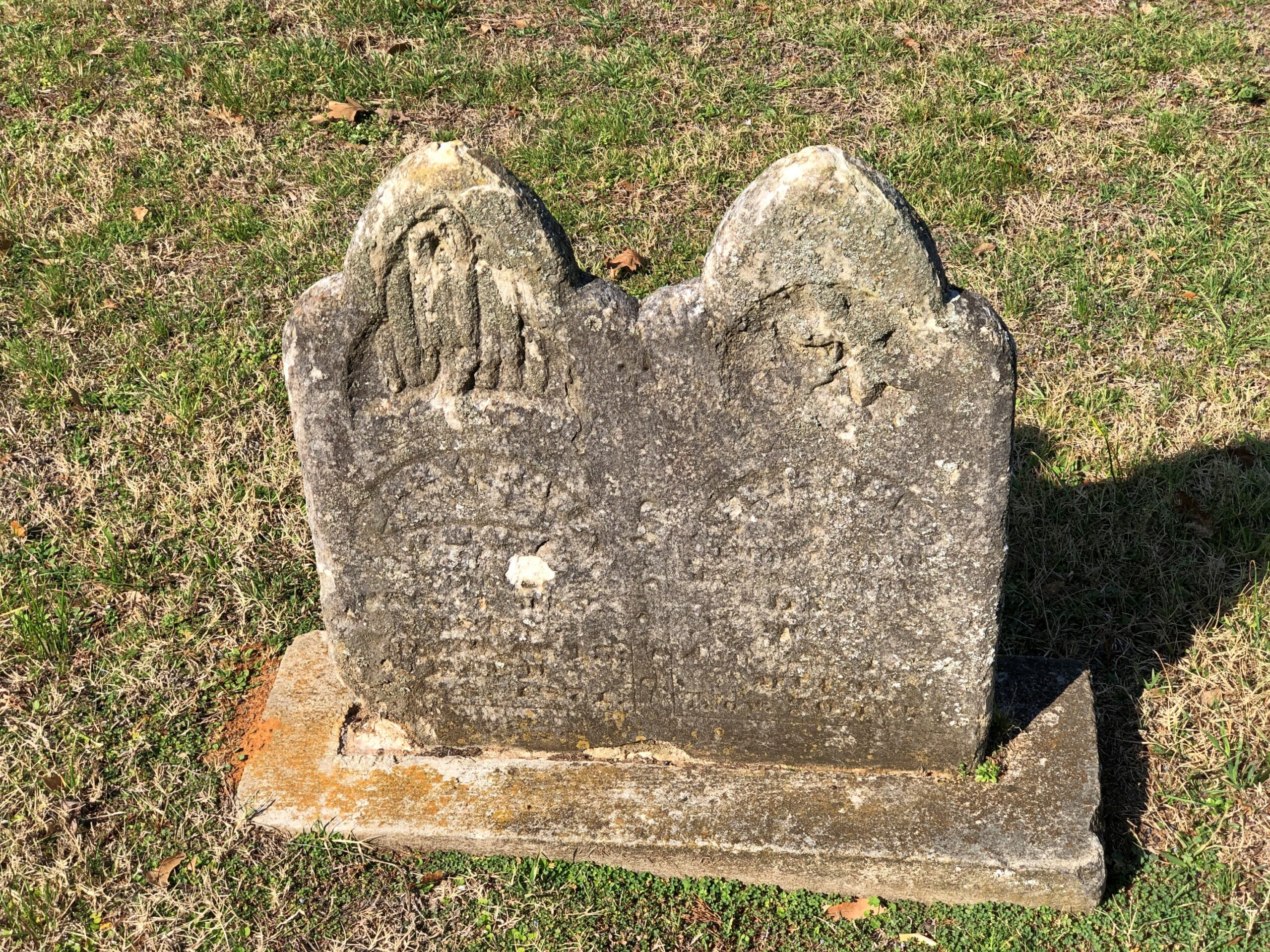
Sometimes the right word just comes to you: tatterdemalion. As in, the tatterdemalion historic Oakwood Cemetery in Huntsville, Texas, or at least the older section of it.
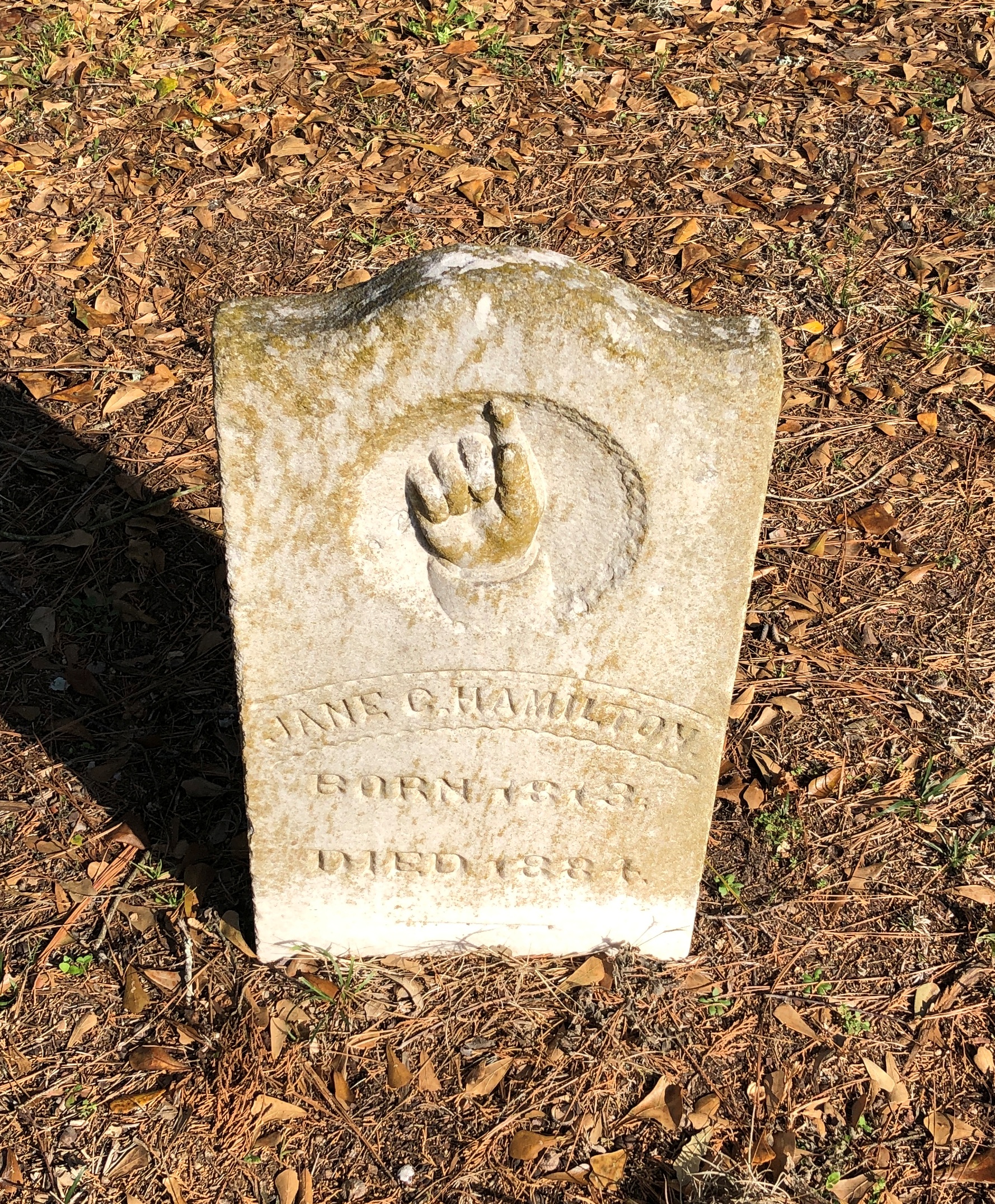
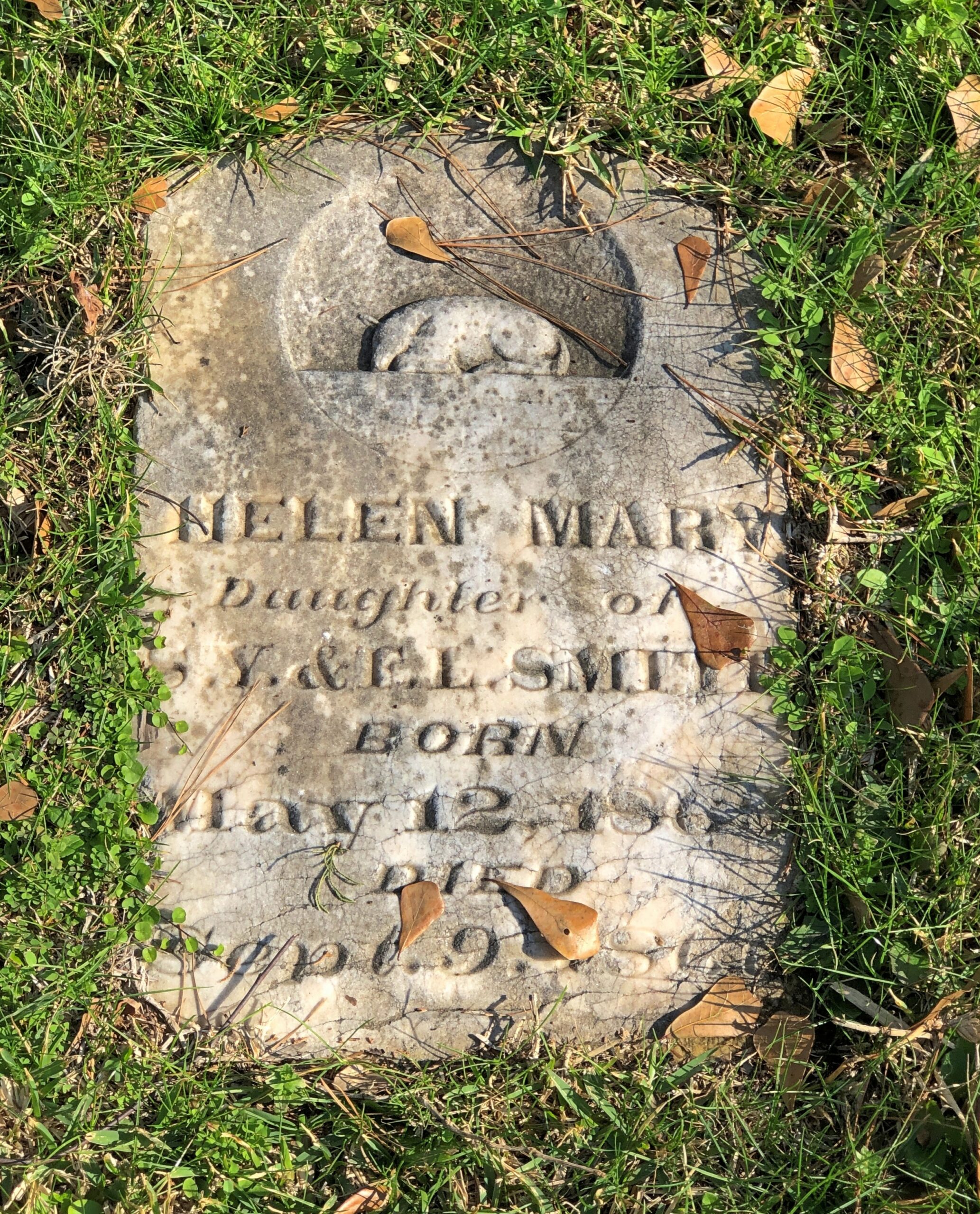
I use that word with great affection for tatterdemalion cemeteries – ragged and dilapidated, the ragamuffins of the cemetery world, attracting even less attention than the big-deal Victorian cemeteries in the big cities. These cemeteries might be scruffy, but their repose is deep.
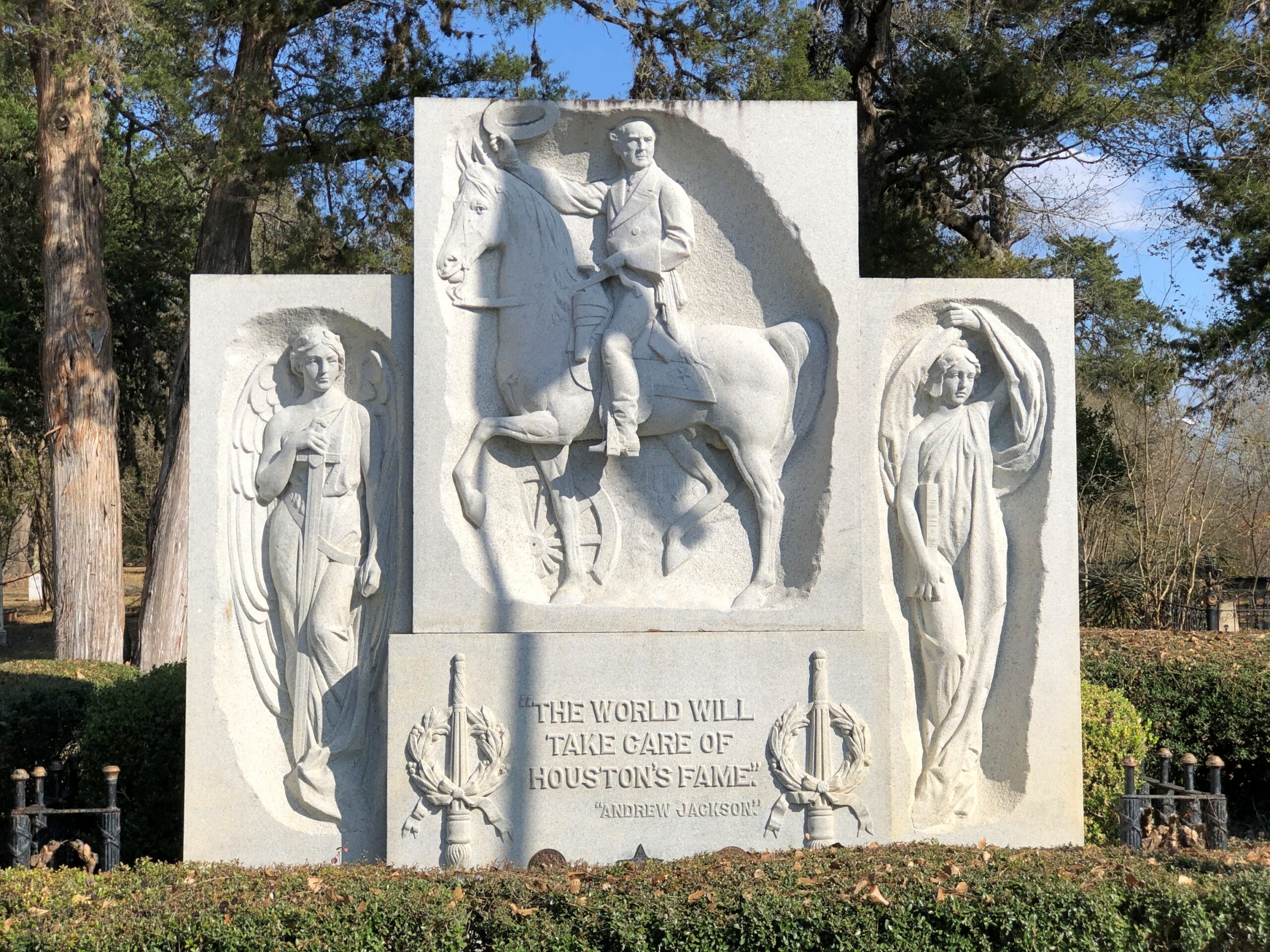
Oakwood does have Sam Houston, so people must come for him.
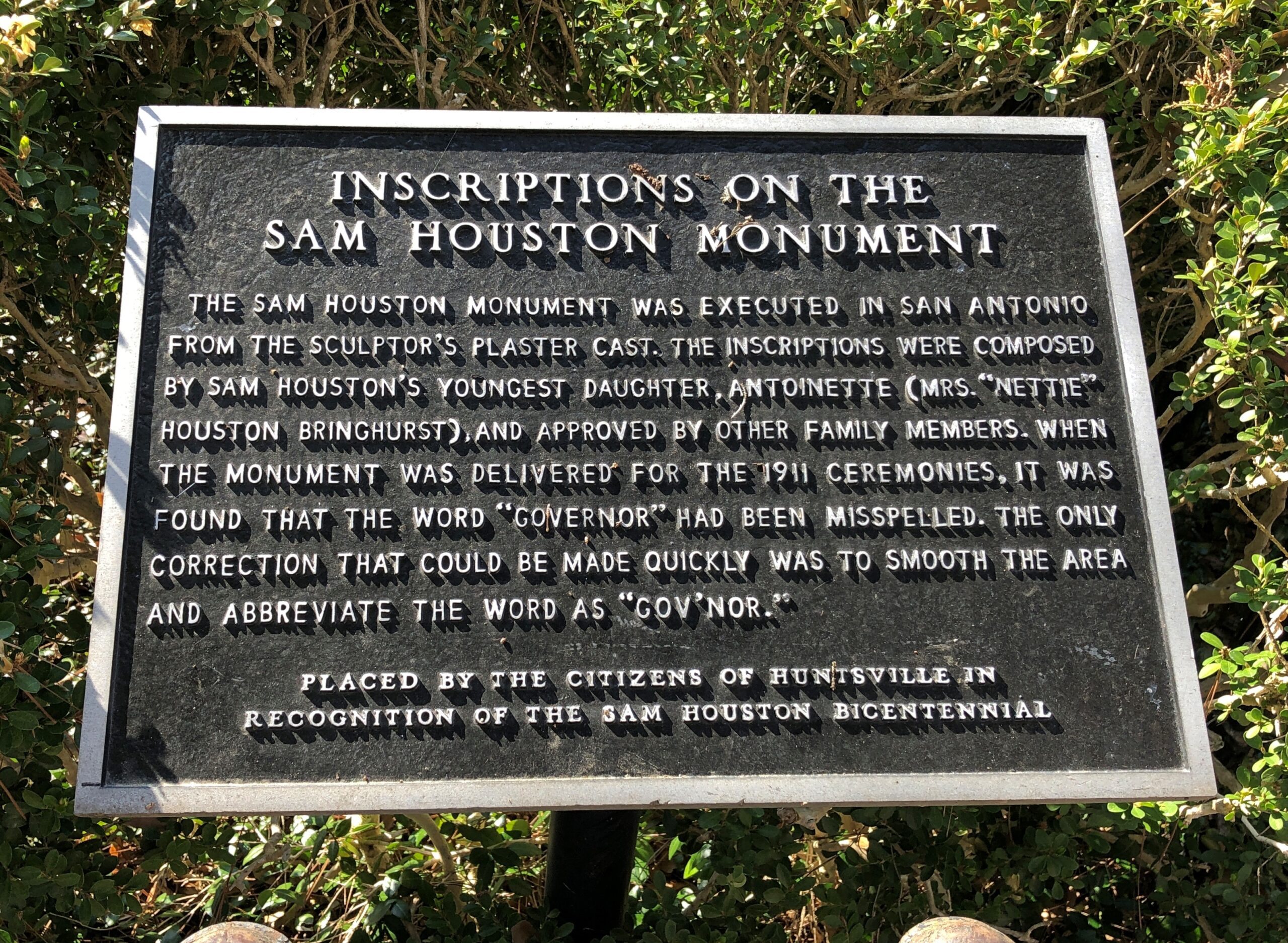
Oops.
You can park your car on the street, walk a few seconds to Gen. Houston’s stone, pay your respects, and never enter the cemetery proper.
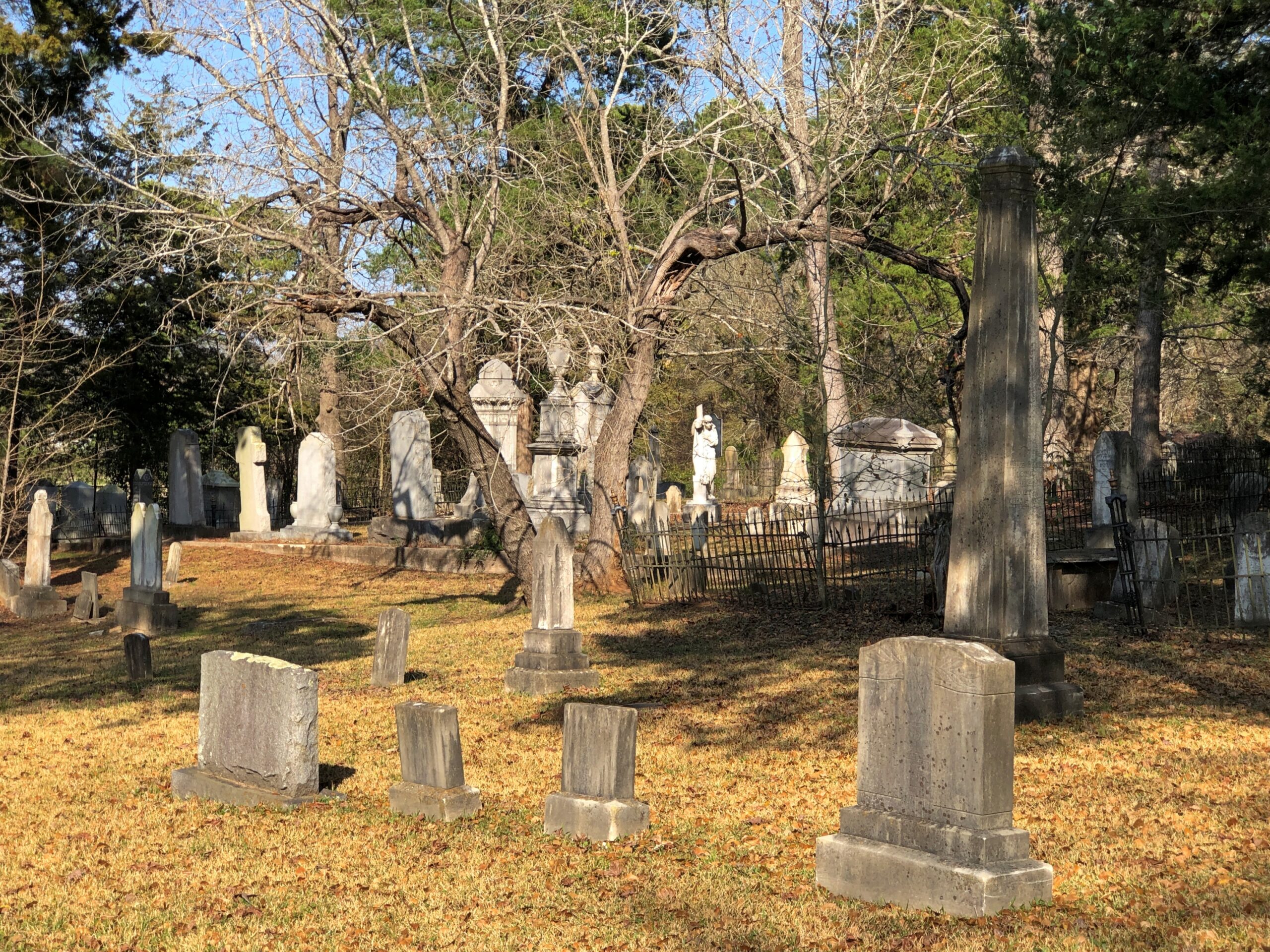
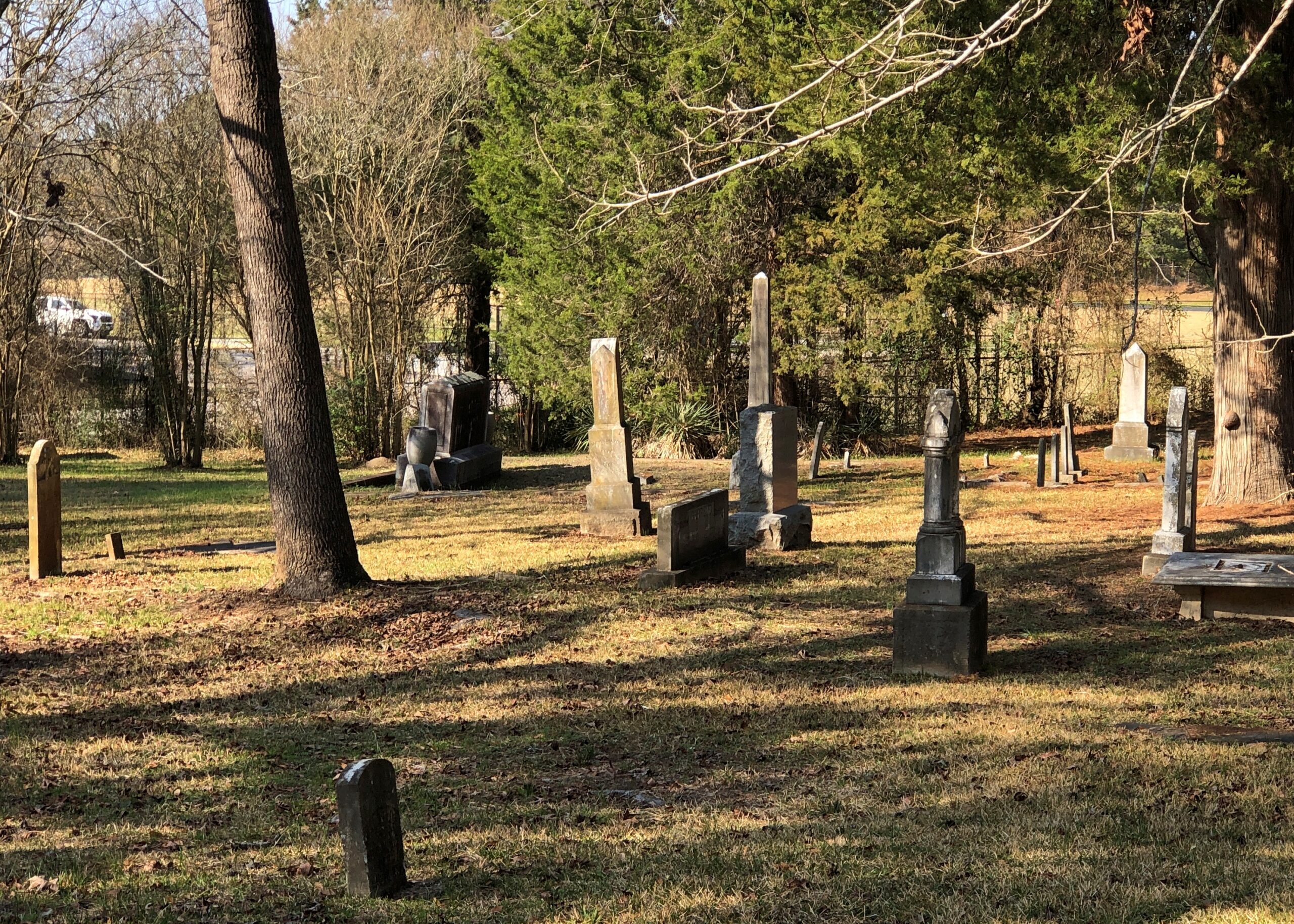
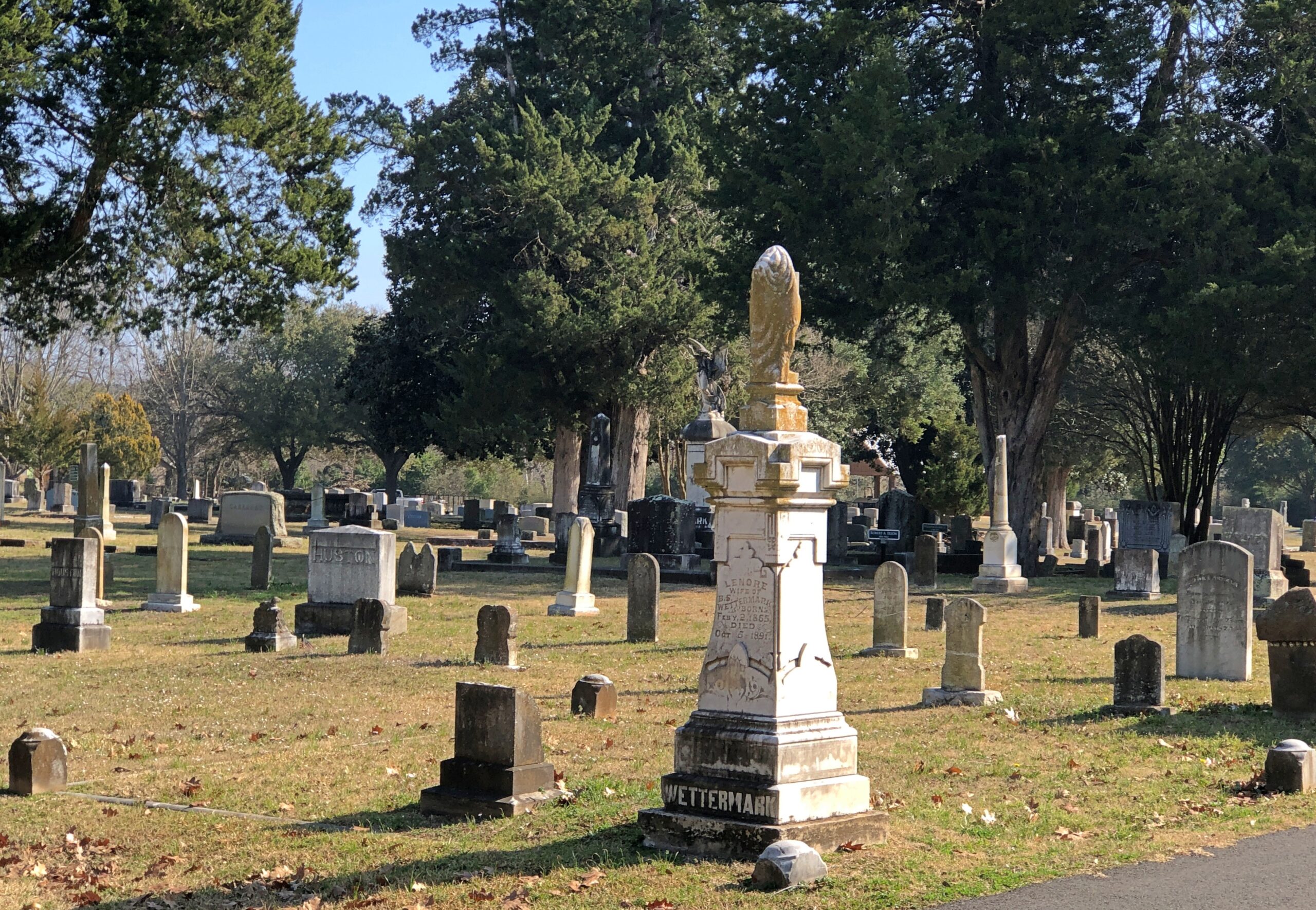
Too bad. The grounds extend along a long strip of land, generally sheltered by such pines as you find in the piney green East Texas, and sport a variety of stones, older and newer, moderately ornate and more modest.
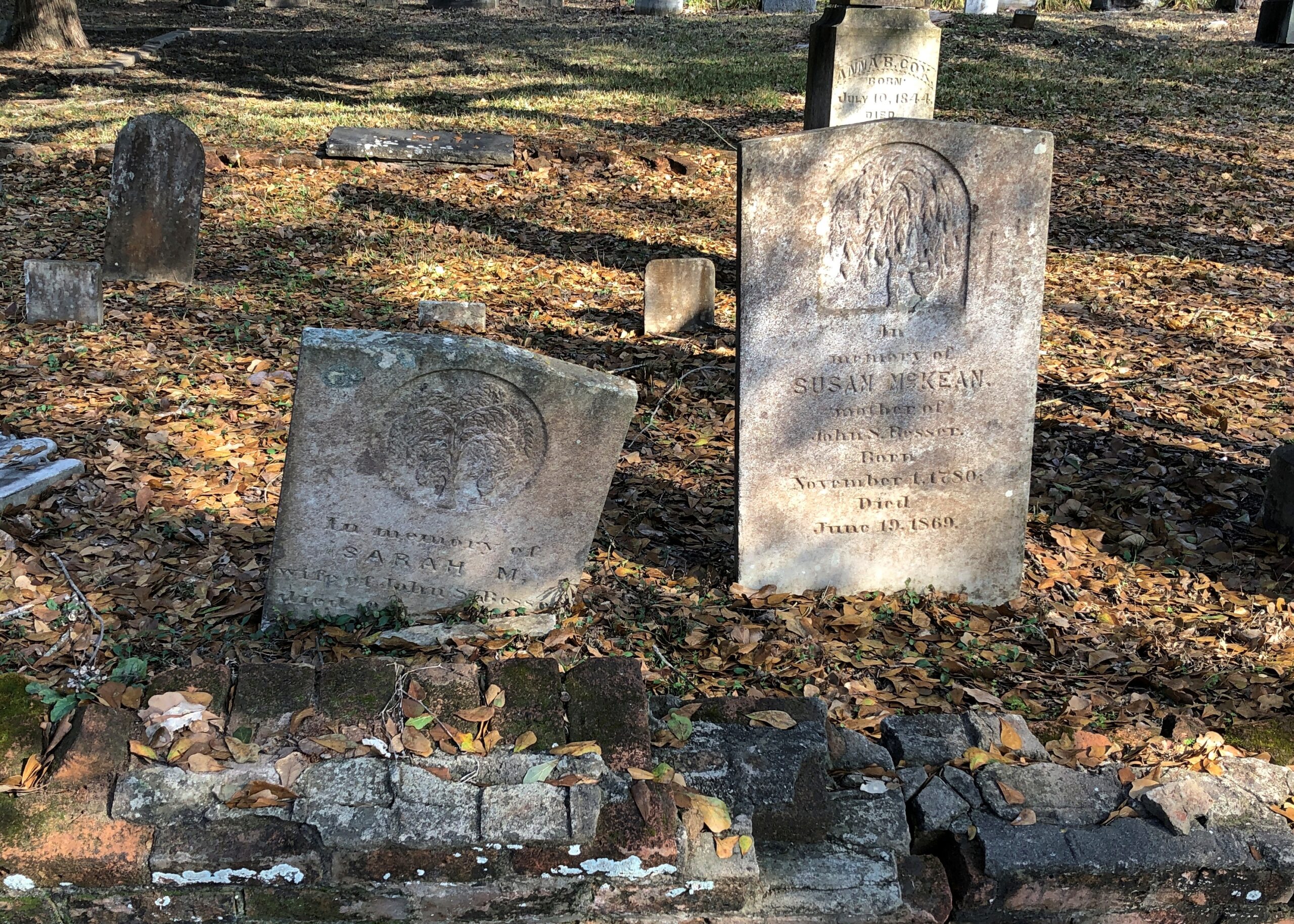
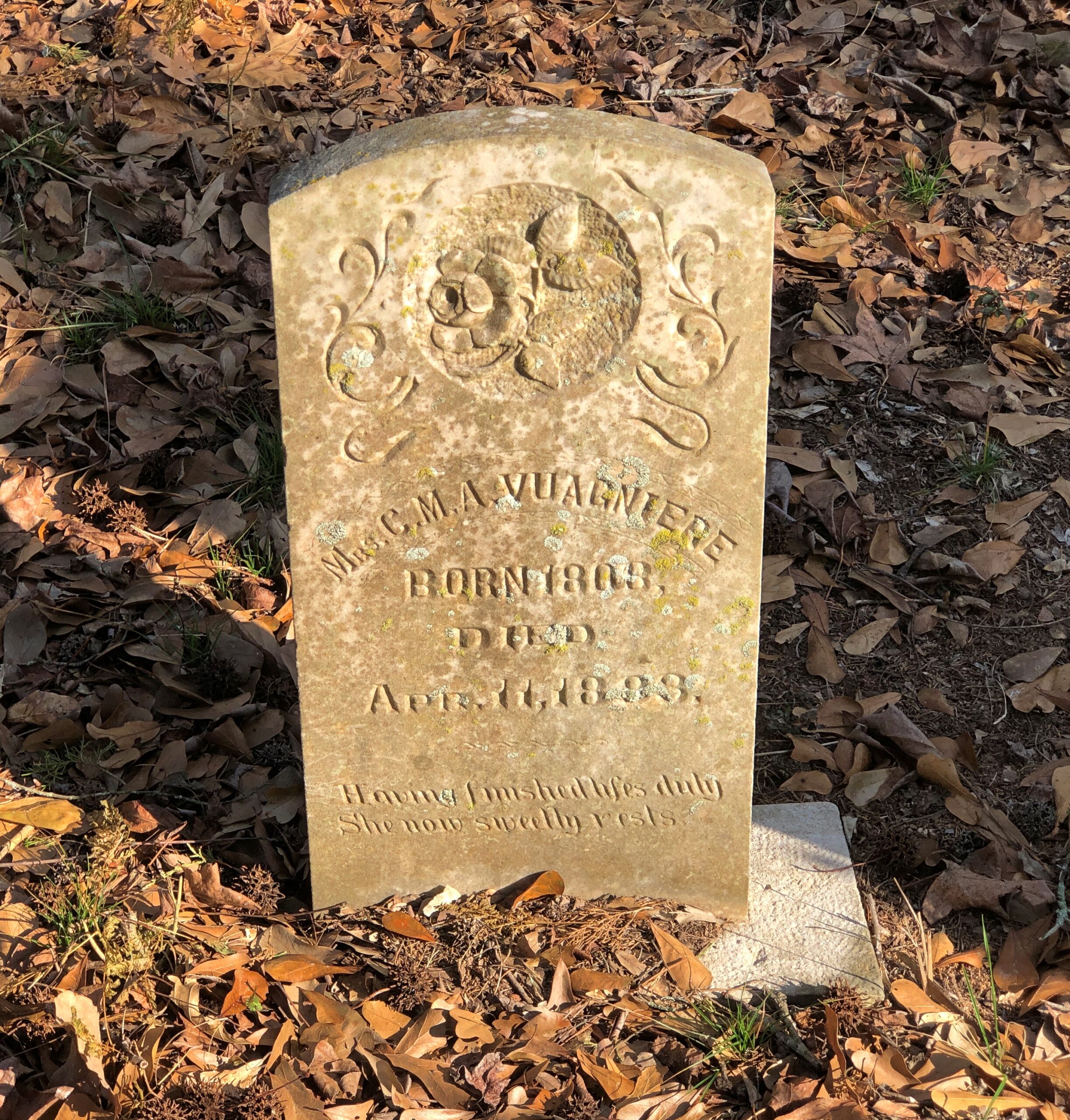
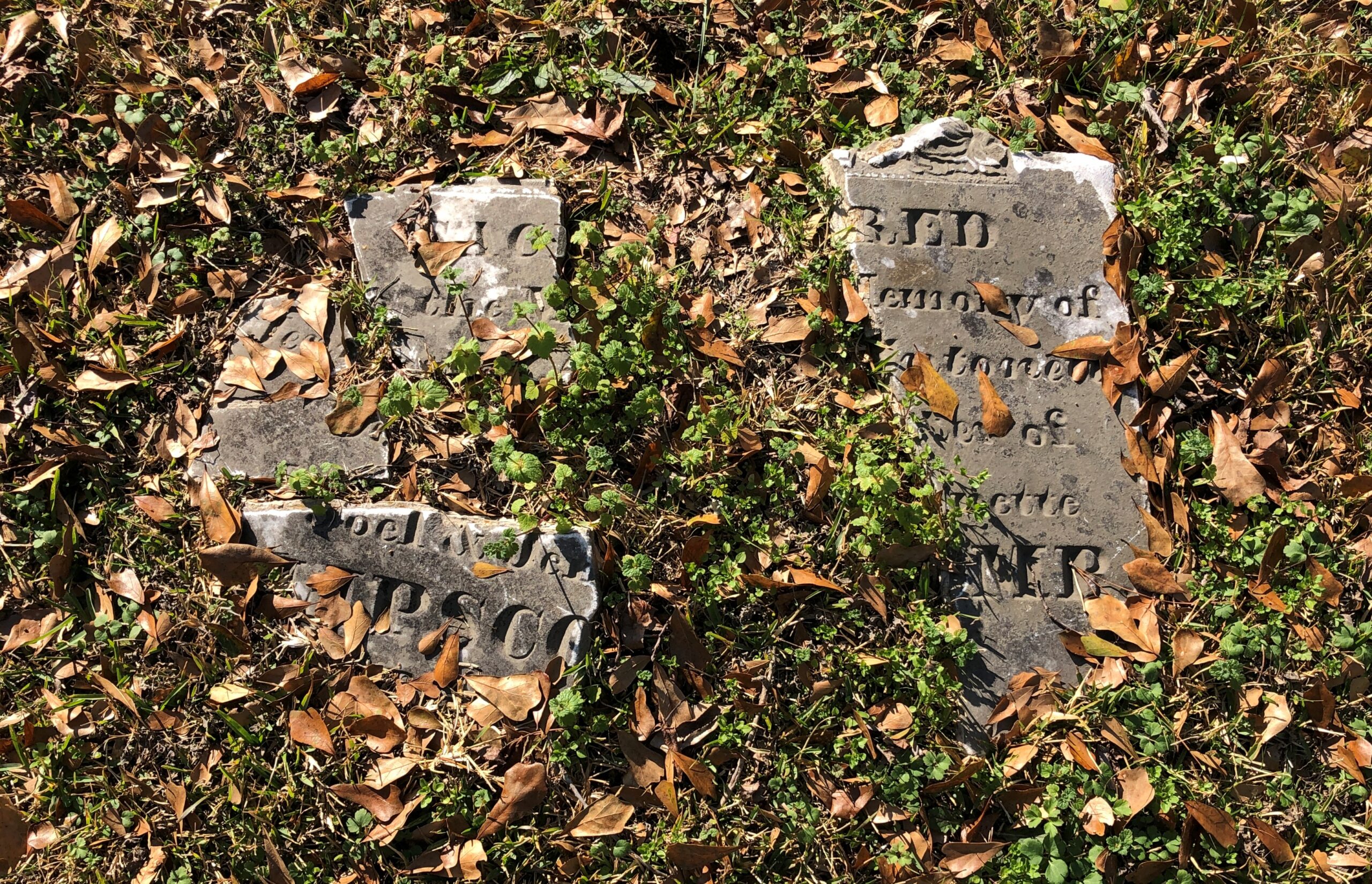
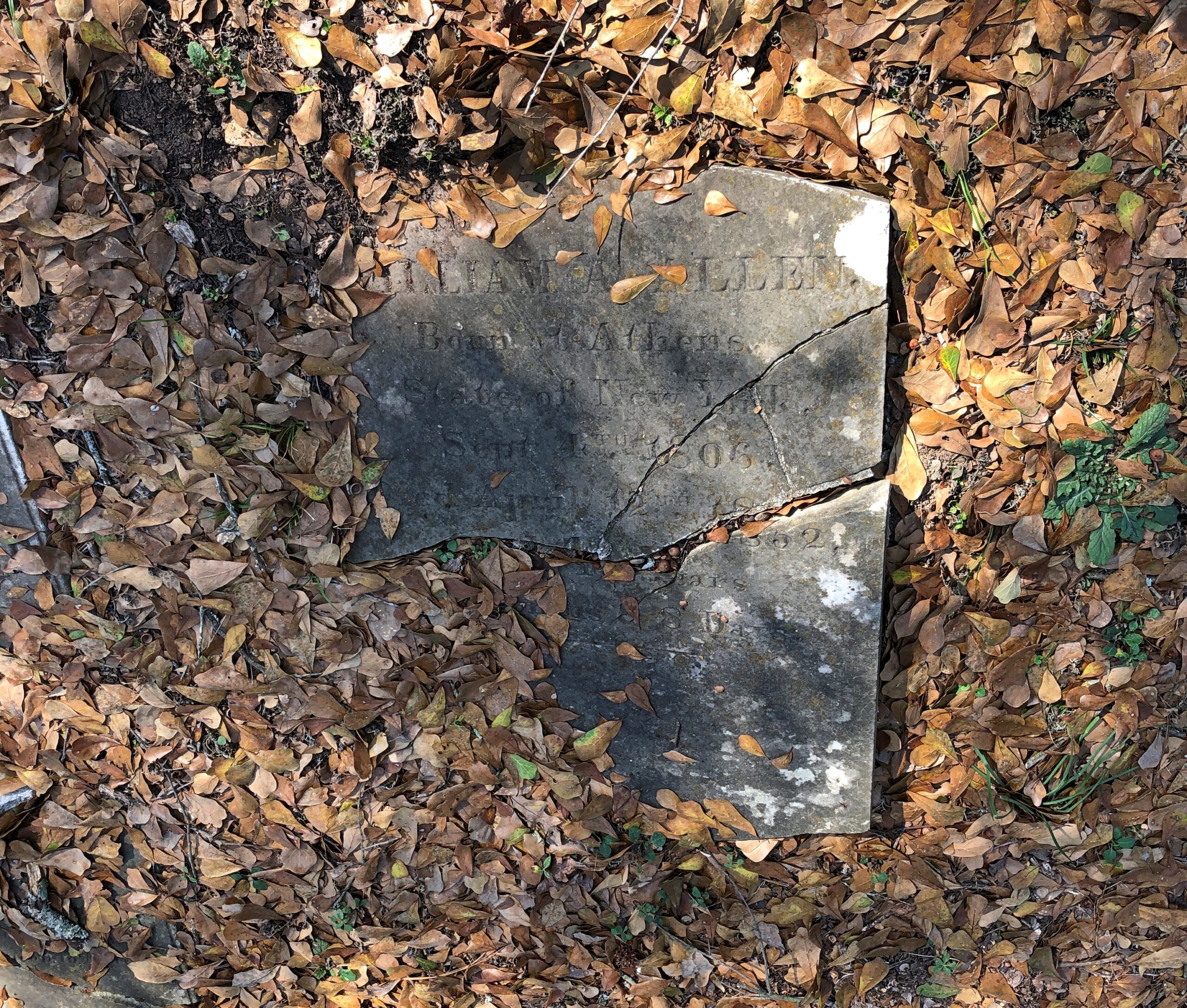
Some smashed slowly by time. The fate of all, eventually.
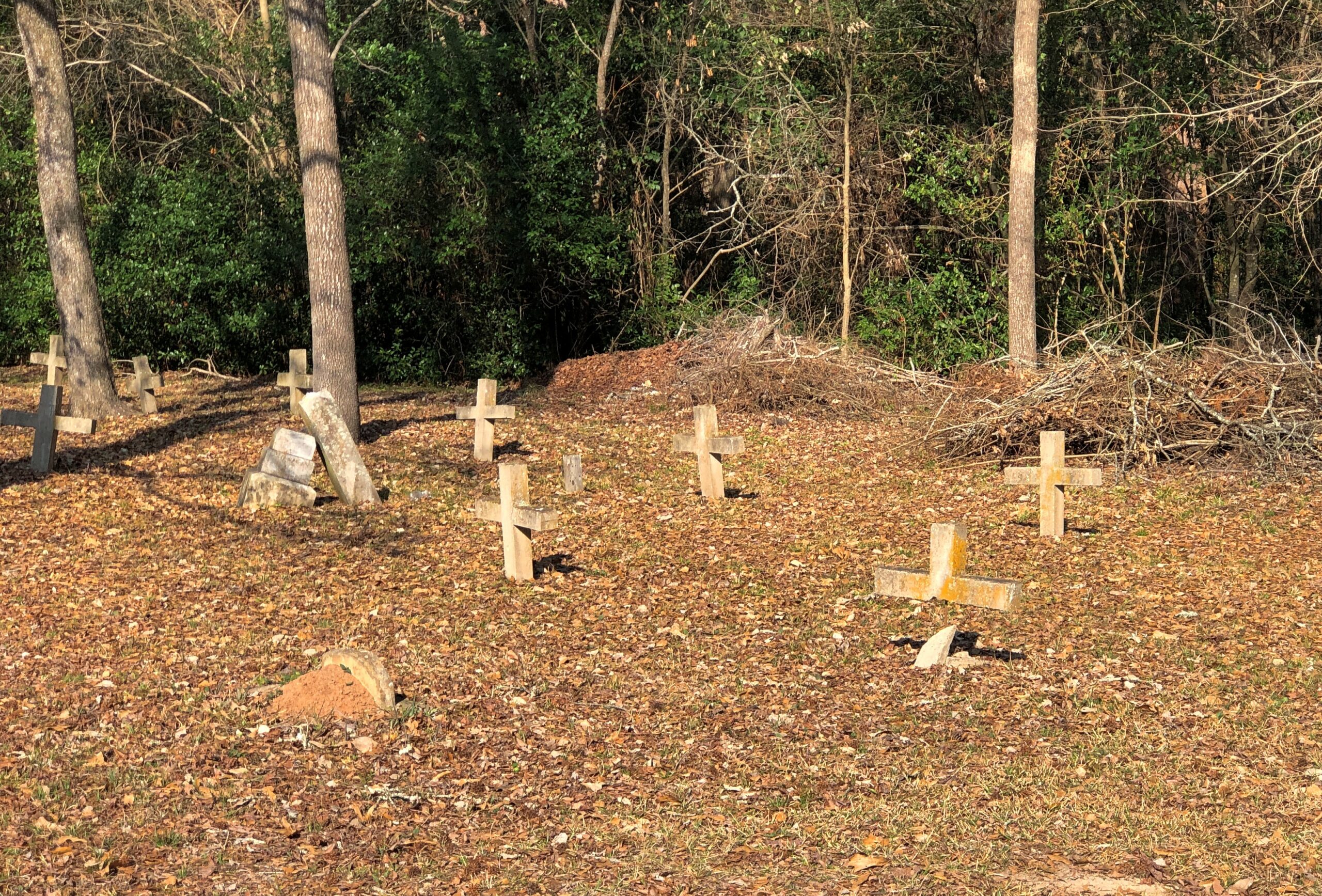
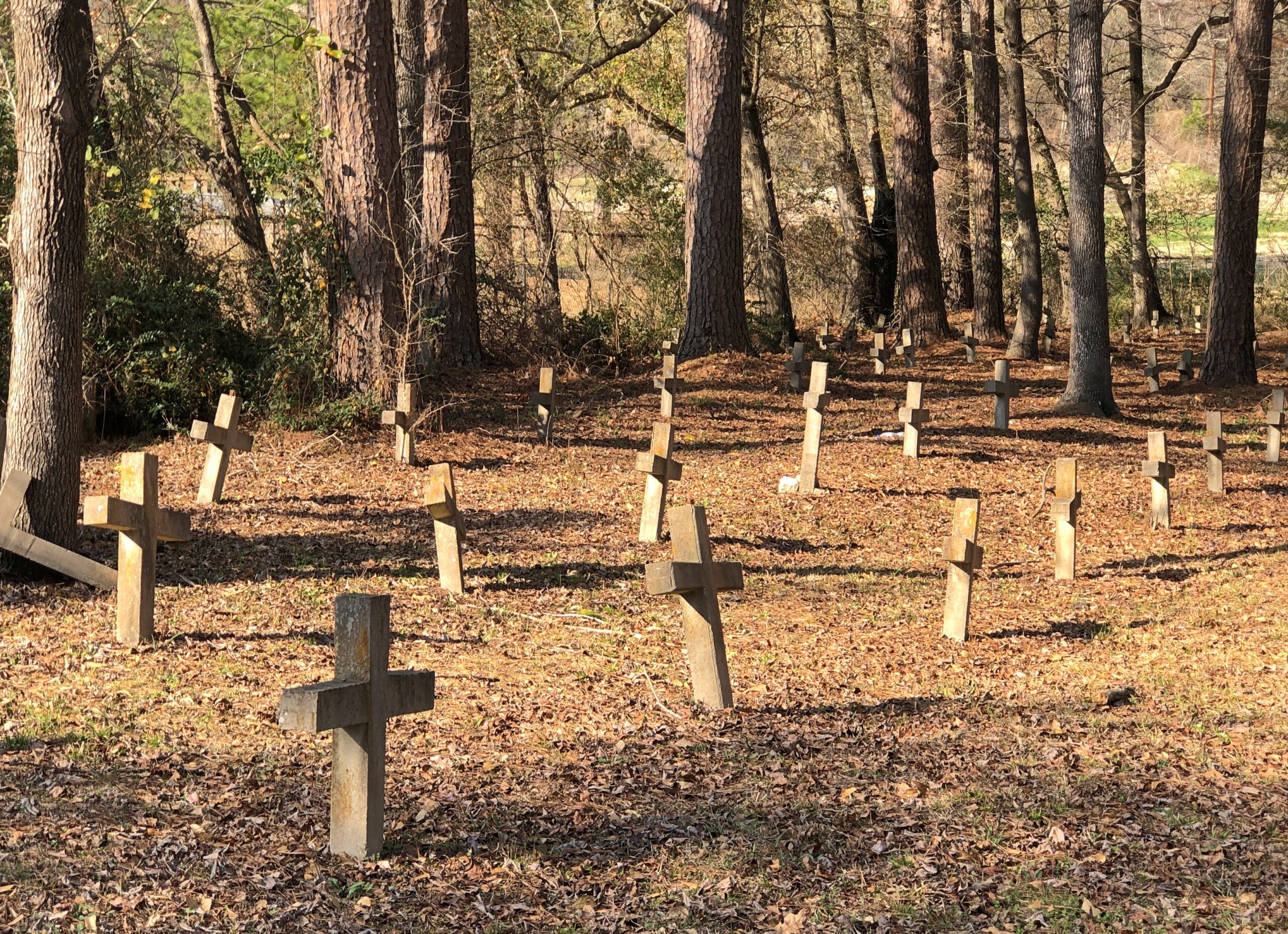
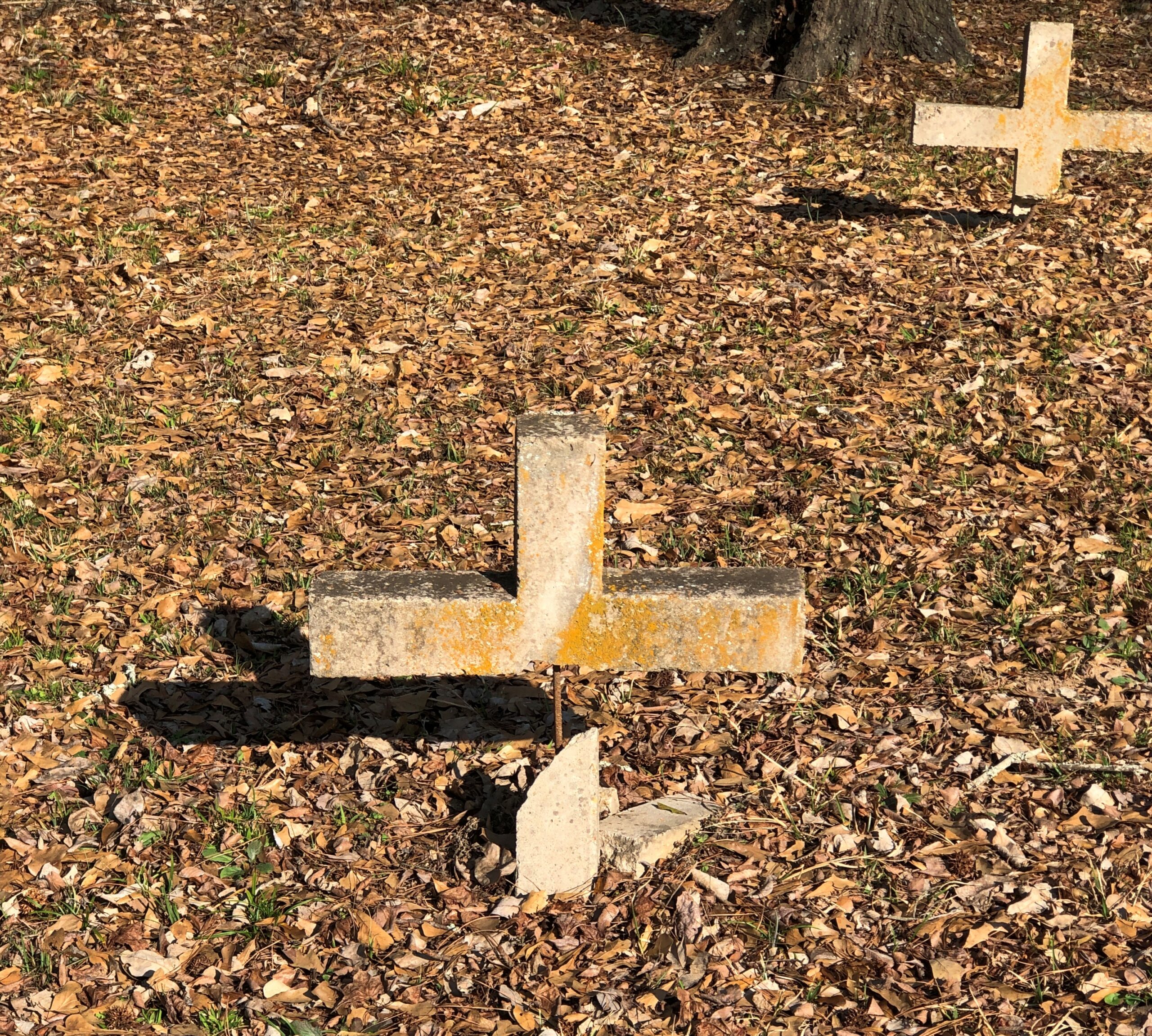
Off in a corner of the older section – which is the sector near Houston – are simple crosses.
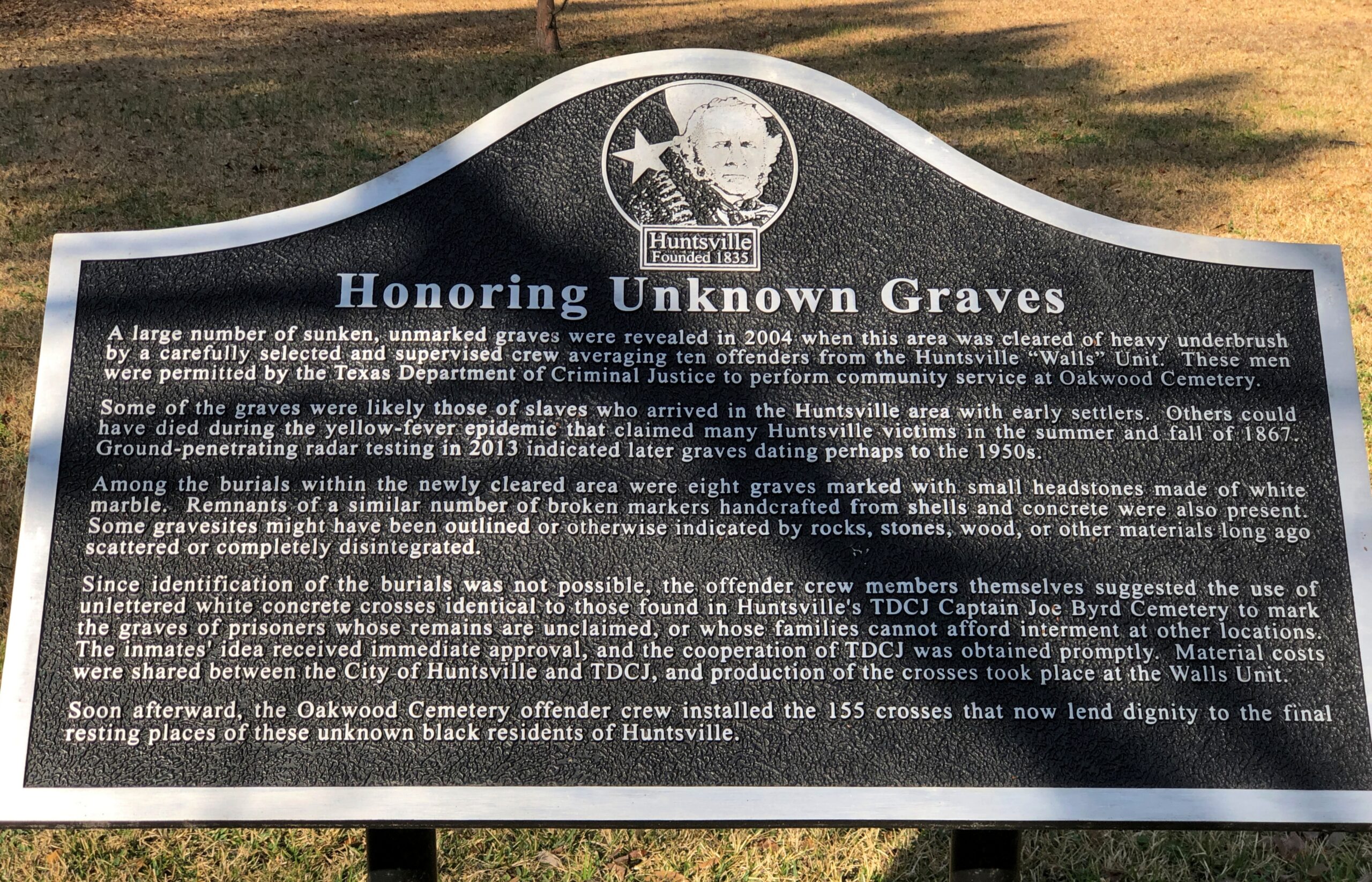
They tell a story. Actually, no. A sign nearby does. It’s worth reading in its entirety.
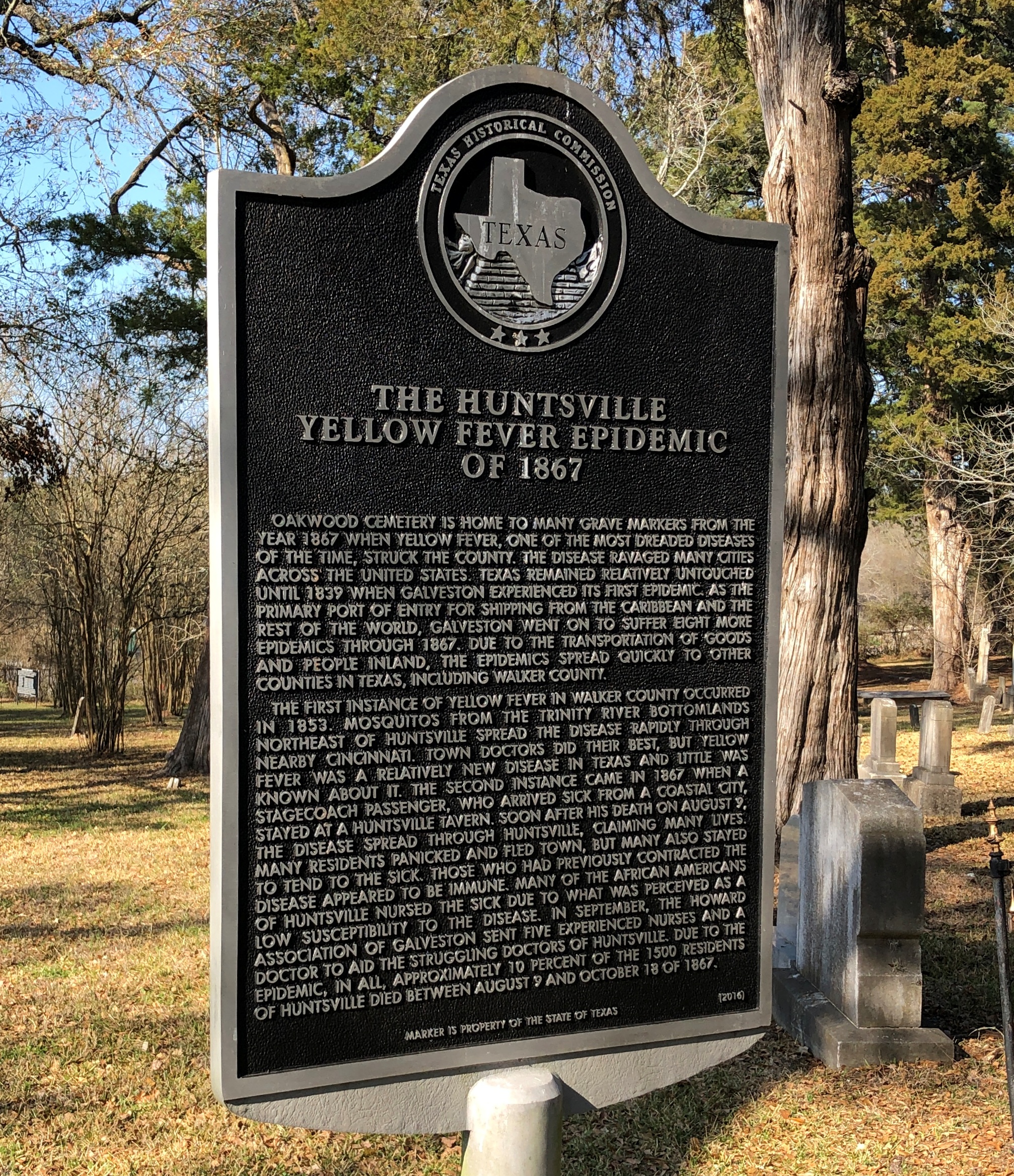
A related story, about the yellow fever epidemic of 1867.
To summarize, in case the text in the photo is hard to read: a lot of Huntsville residents died that year from yellow fever, though not Gen. Houston, who was already dead. Wonder whether any Huntsville physicians or other men of science died persuaded that miasma did them in.
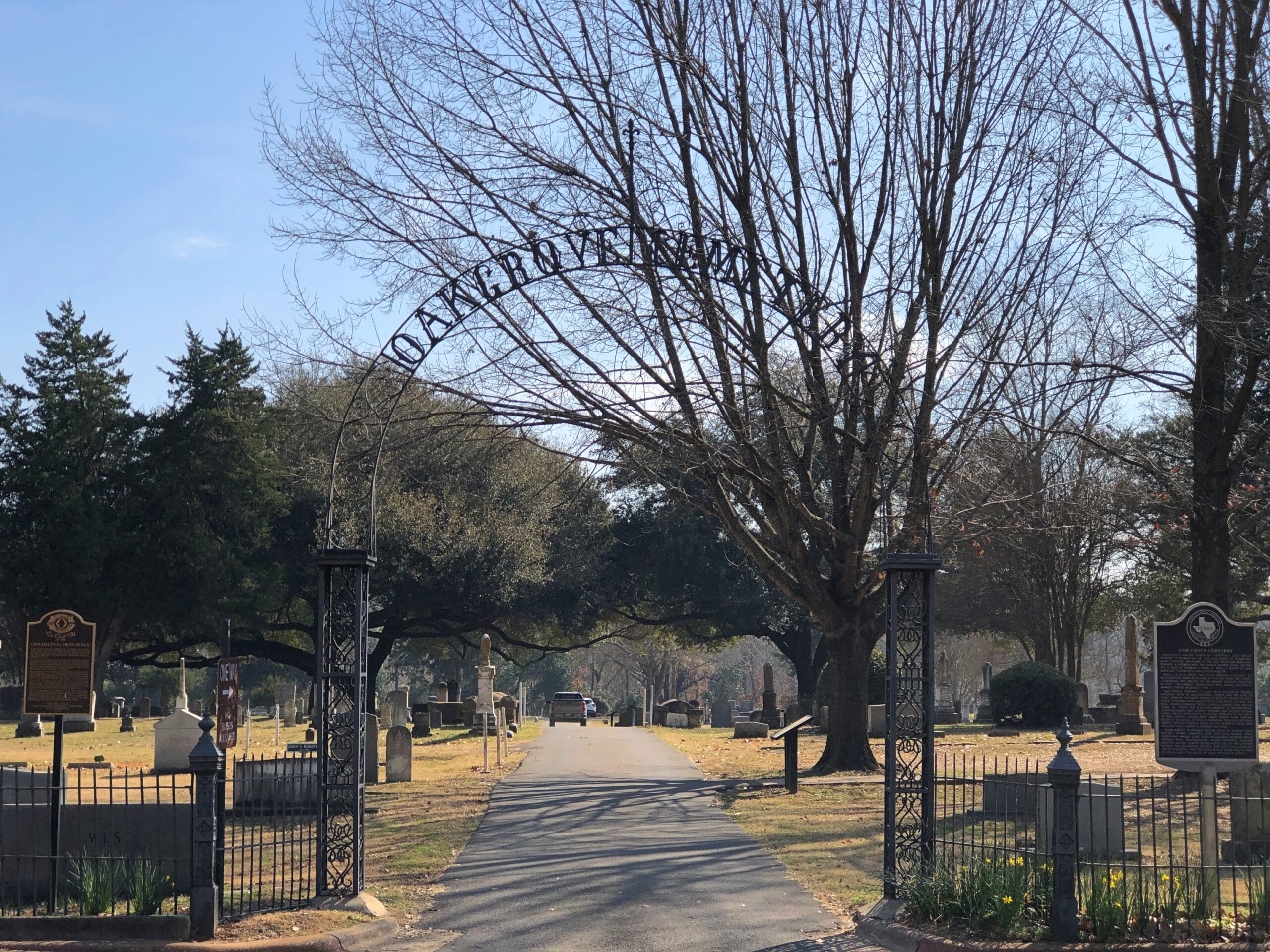
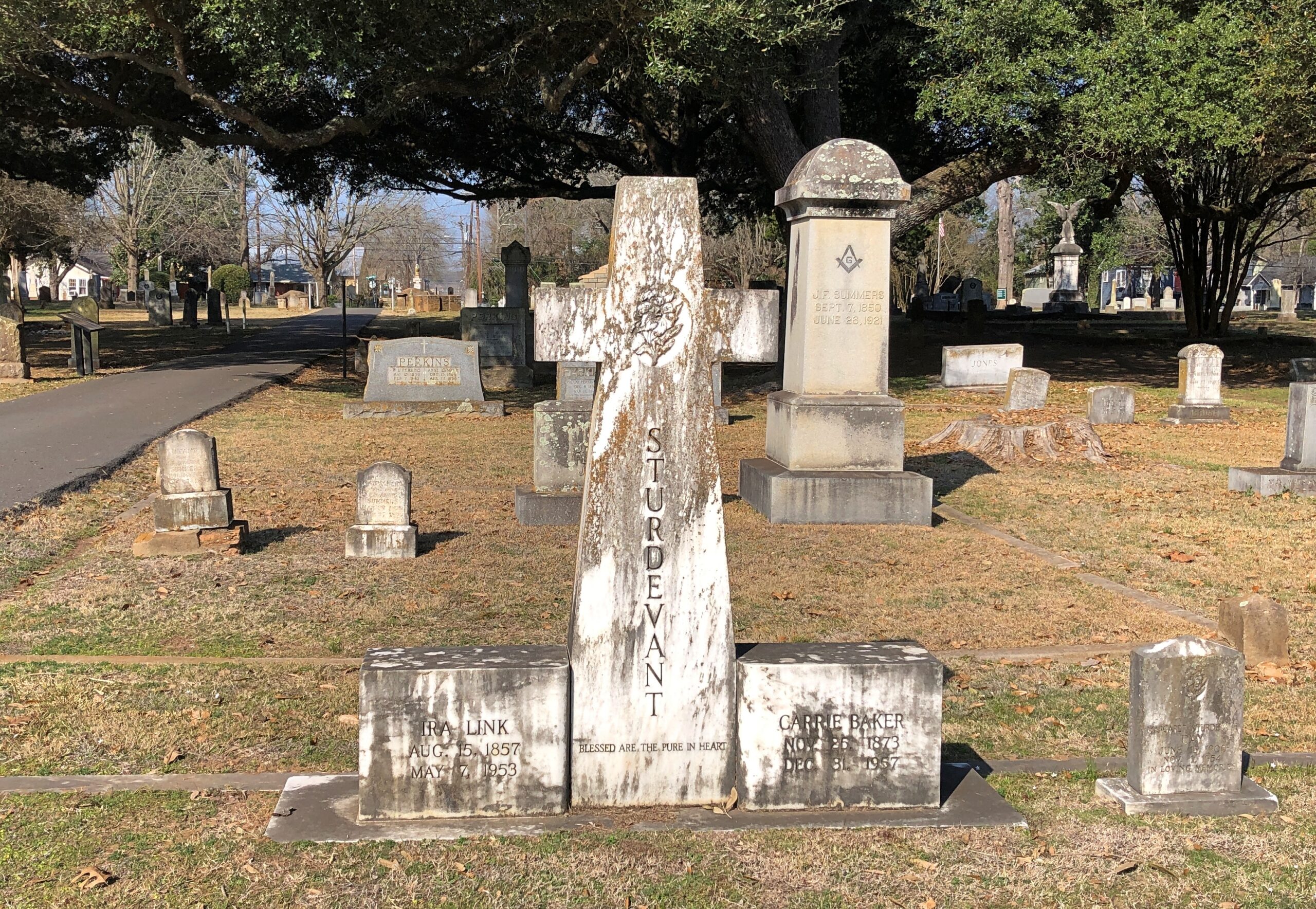
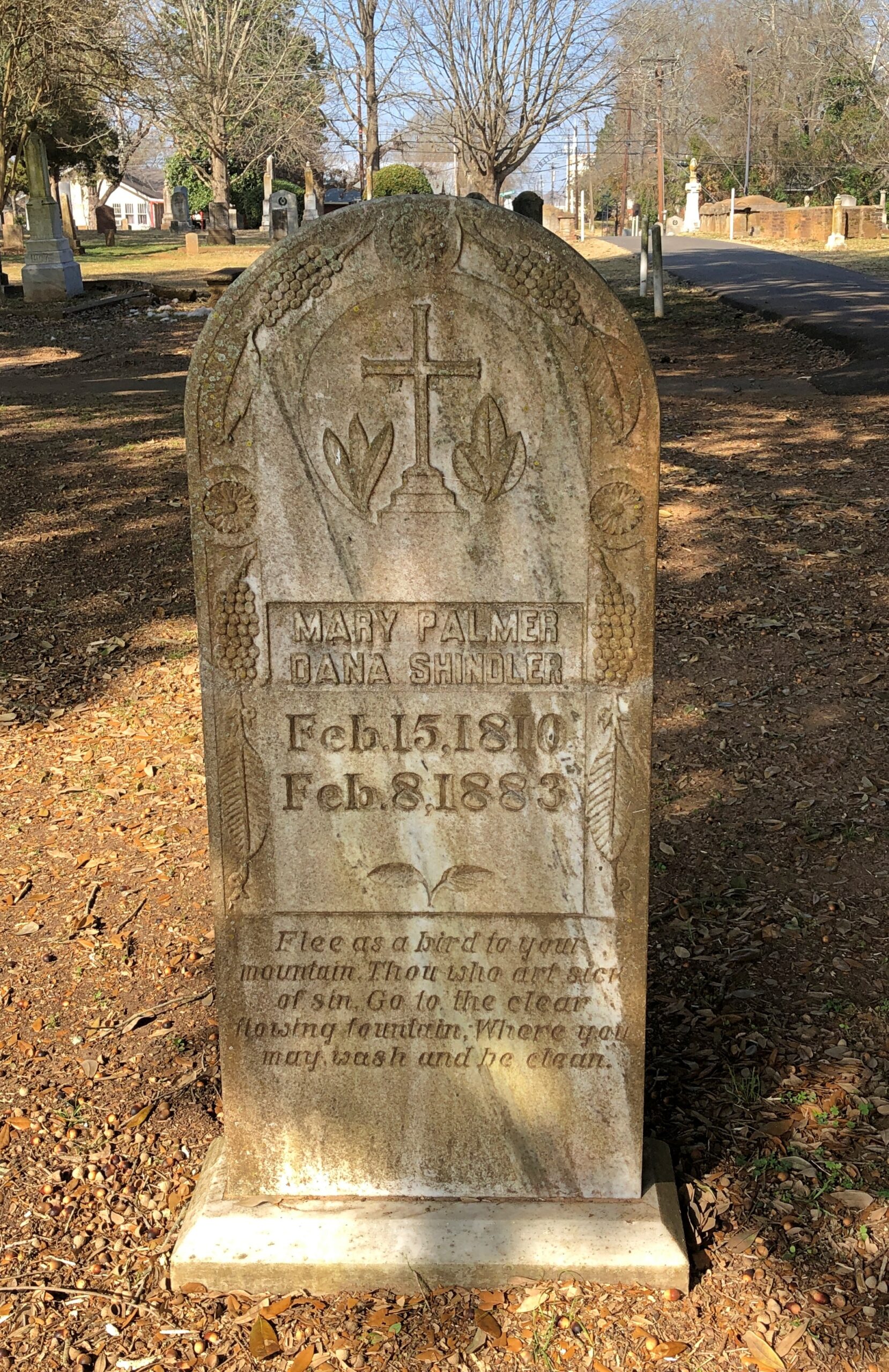
Houston’s Glenwood Cemetery sprawls out near downtown, adjacent to much of the parkland along Buffalo Bayou. In Nacogdoches, Oak Grove Cemetery is a more modest burial ground. Nacogdoches is a more modest city. The entrance to Oak Grove is about a half block from the Main St., but the grounds are still tucked away in a residential neighborhood along Lanana St.
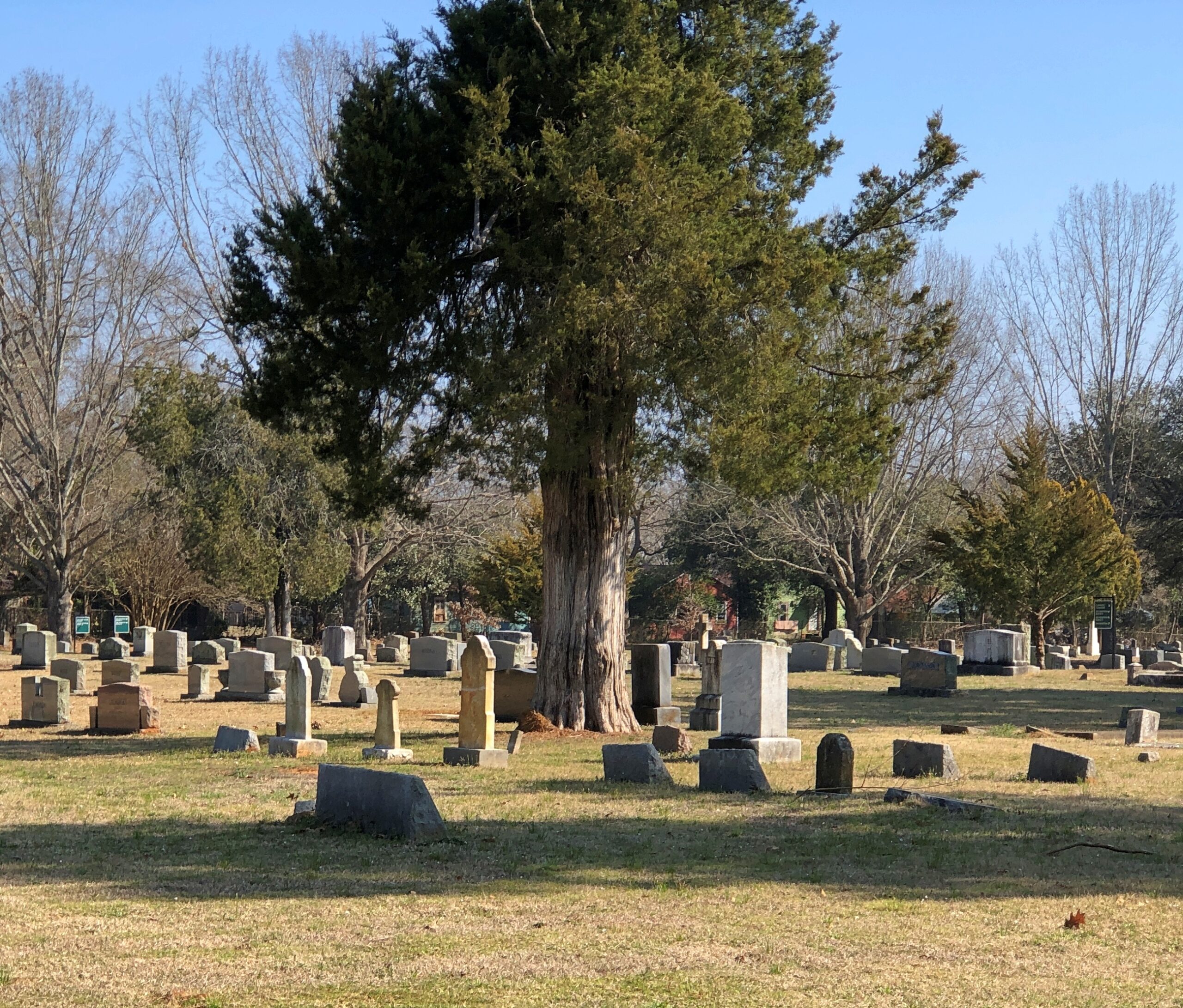
Decent flora, but not a garden cemetery.
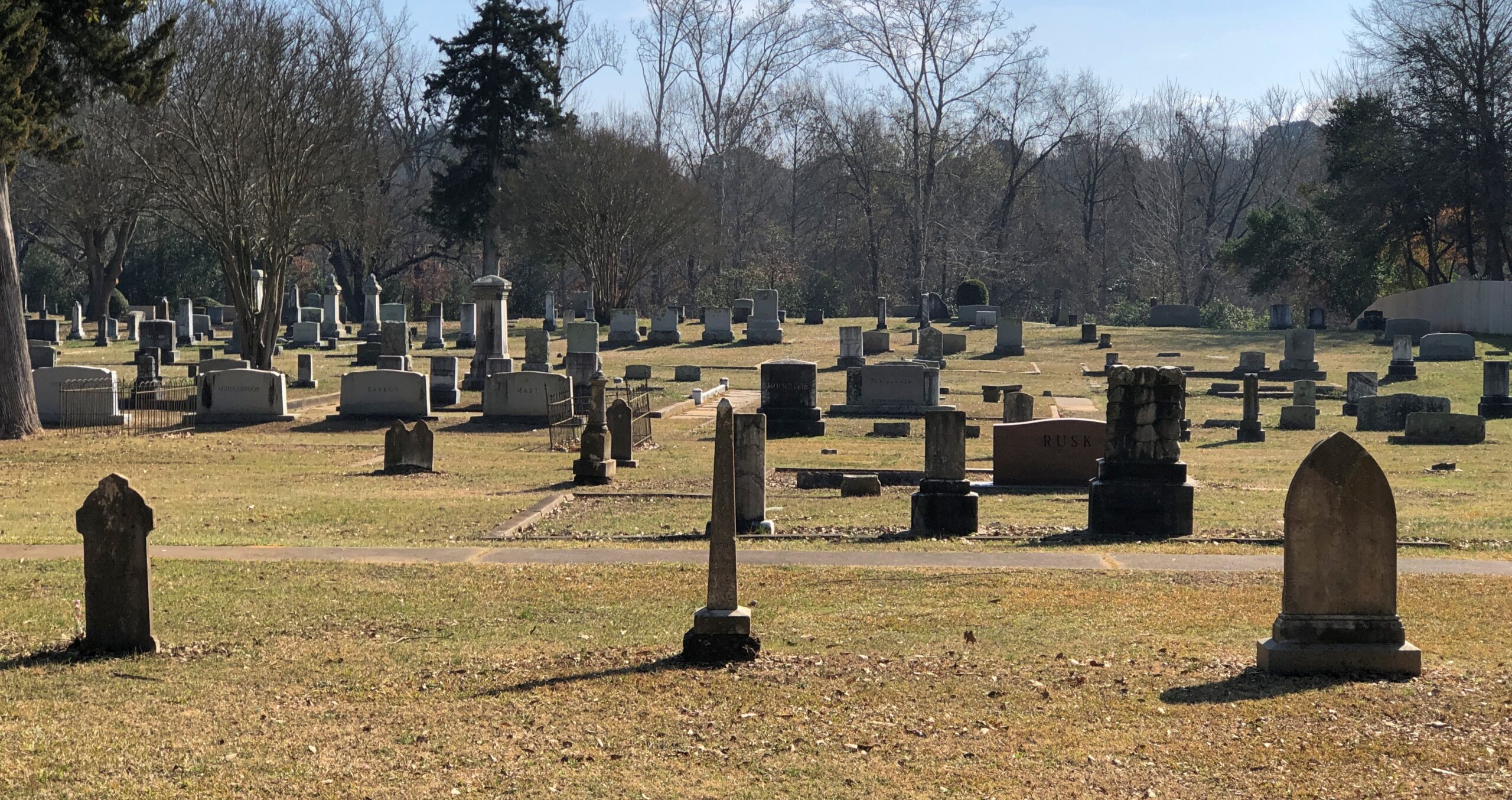
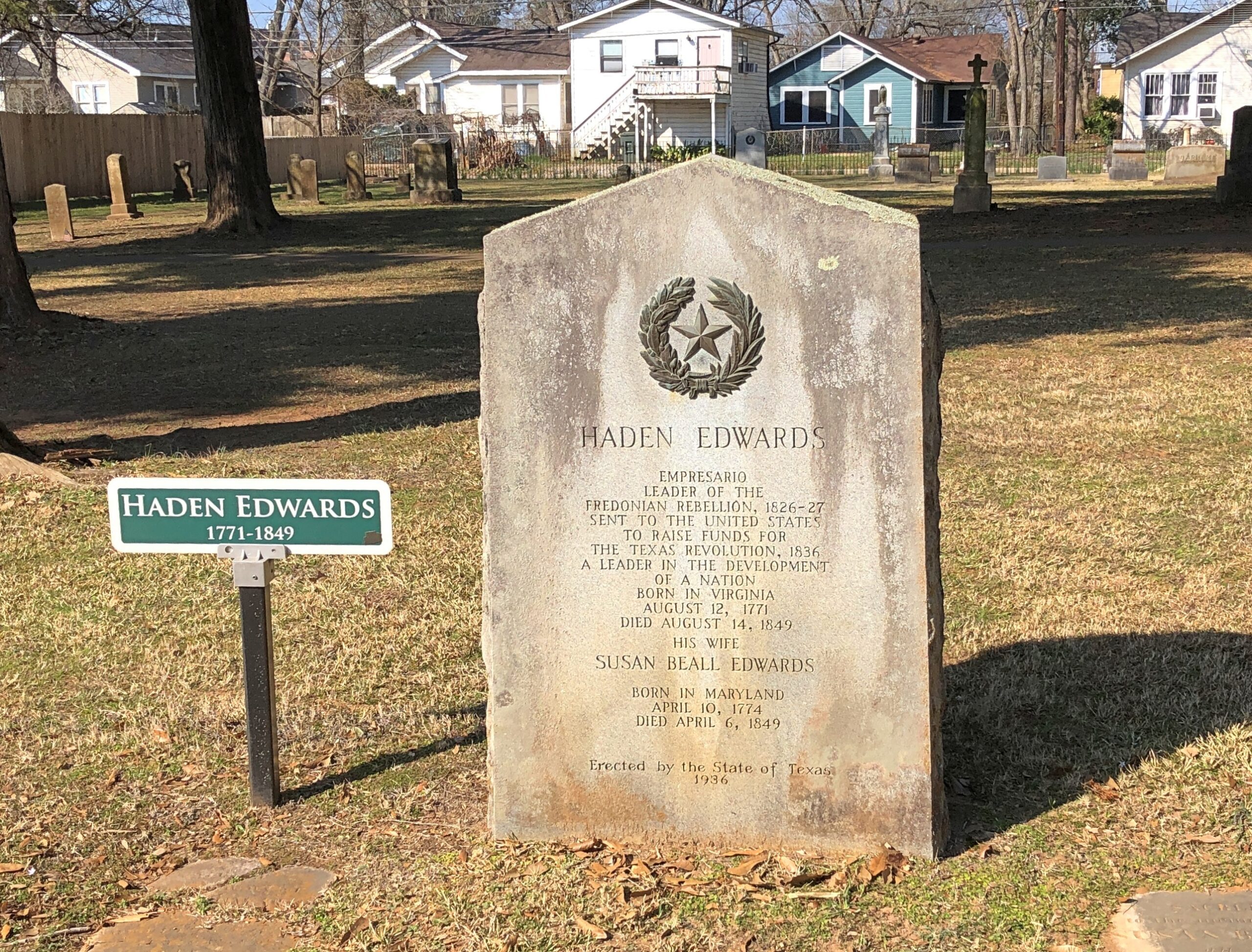
It’s an old cemetery by modern Texas standards – the first burial was the year after independence – so the cemetery punches above its weight in one way: noted early Texans. Such as Harden Edwards.
The state saw fit, during the 1936 Centennial, to put up a new stone for Edwards, an empresario and “Leader of the Freedonian Rebellion,” who must have penned the rousing tune, “Hail, Hail Freedonia,” for future generations to enjoy.
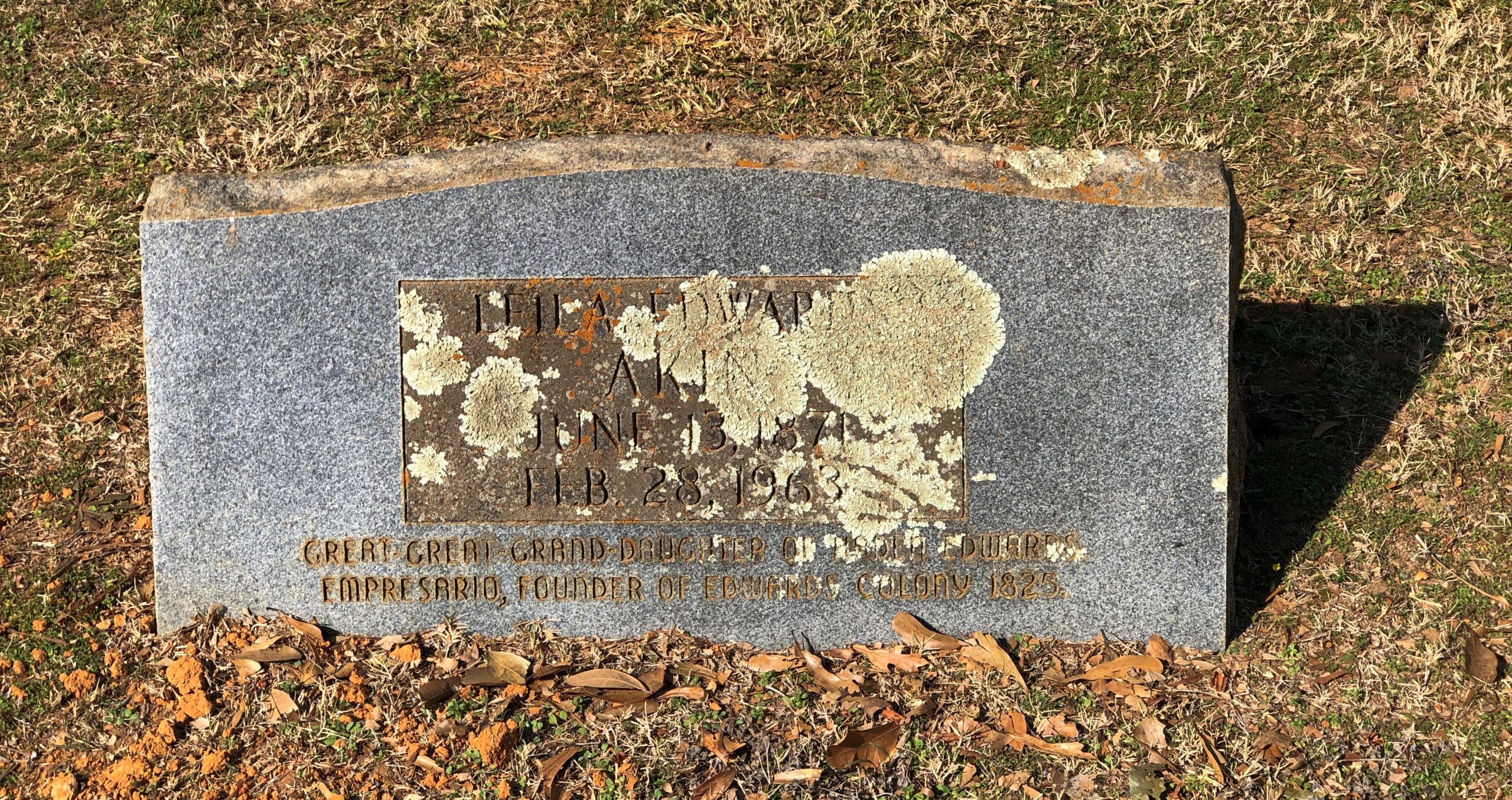
The stone of a great-great granddaughter of Edwards who died in 1963 seems eager to bask in his remote glory. Why not?
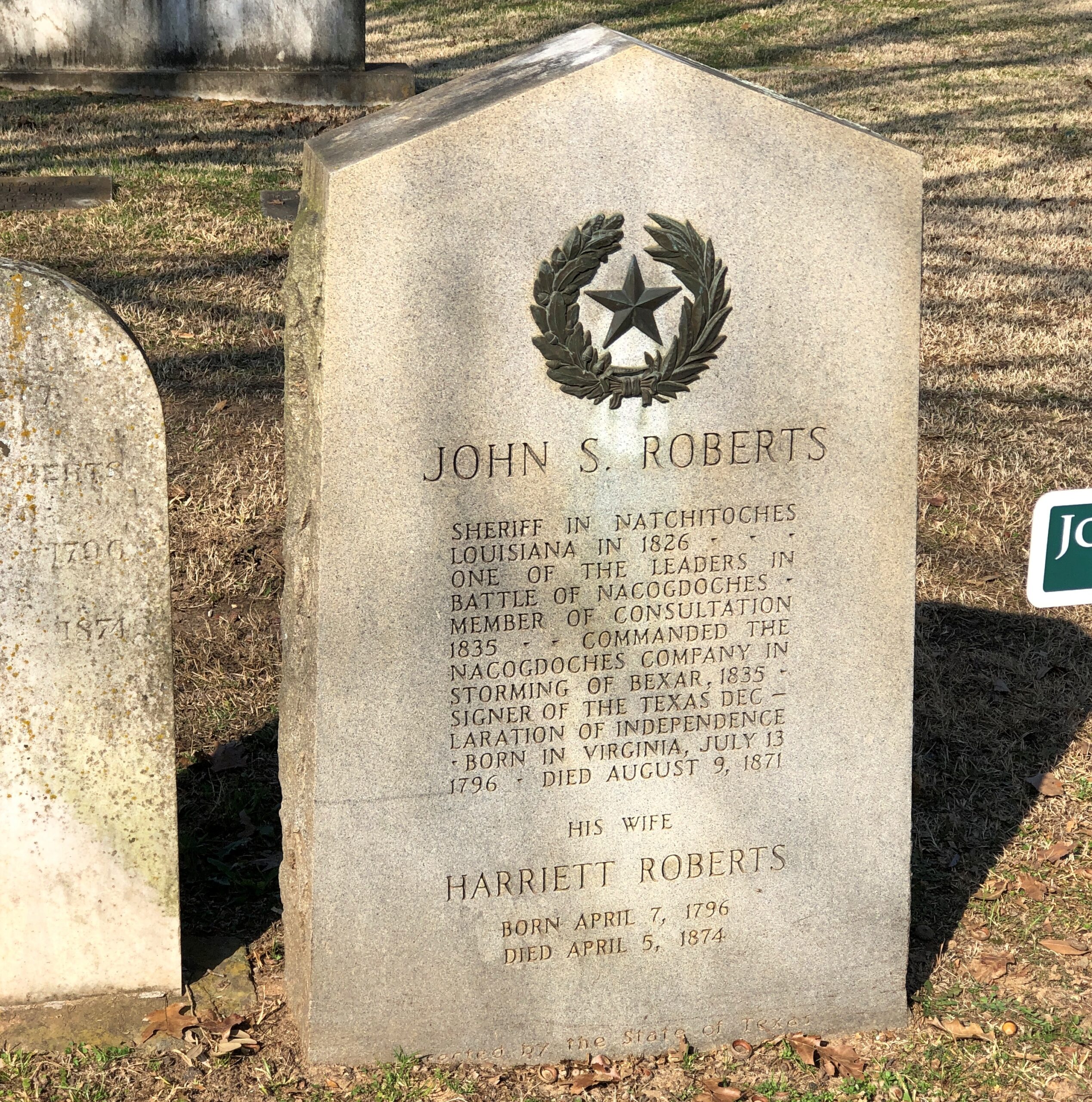
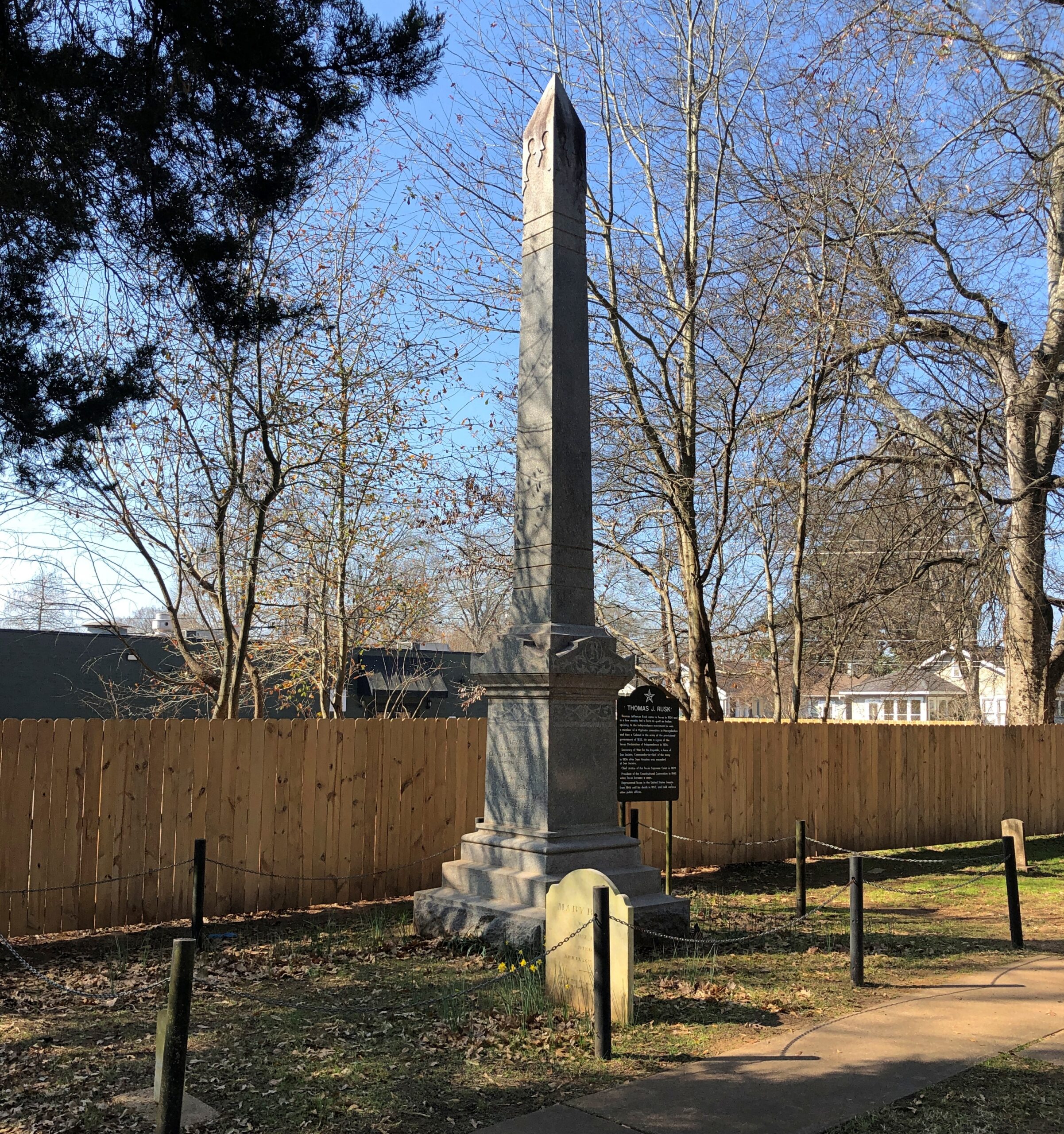
He was a signer, fought at San Jacinto, and had a notable career in antebellum Texas and U.S. politics. There’s is a town a county over from Nacogdoches named Rusk, seat of Cherokee County. Also, strangely, a font based on his handwriting was created in our time, “Texas Hero.”
Some regular folks.
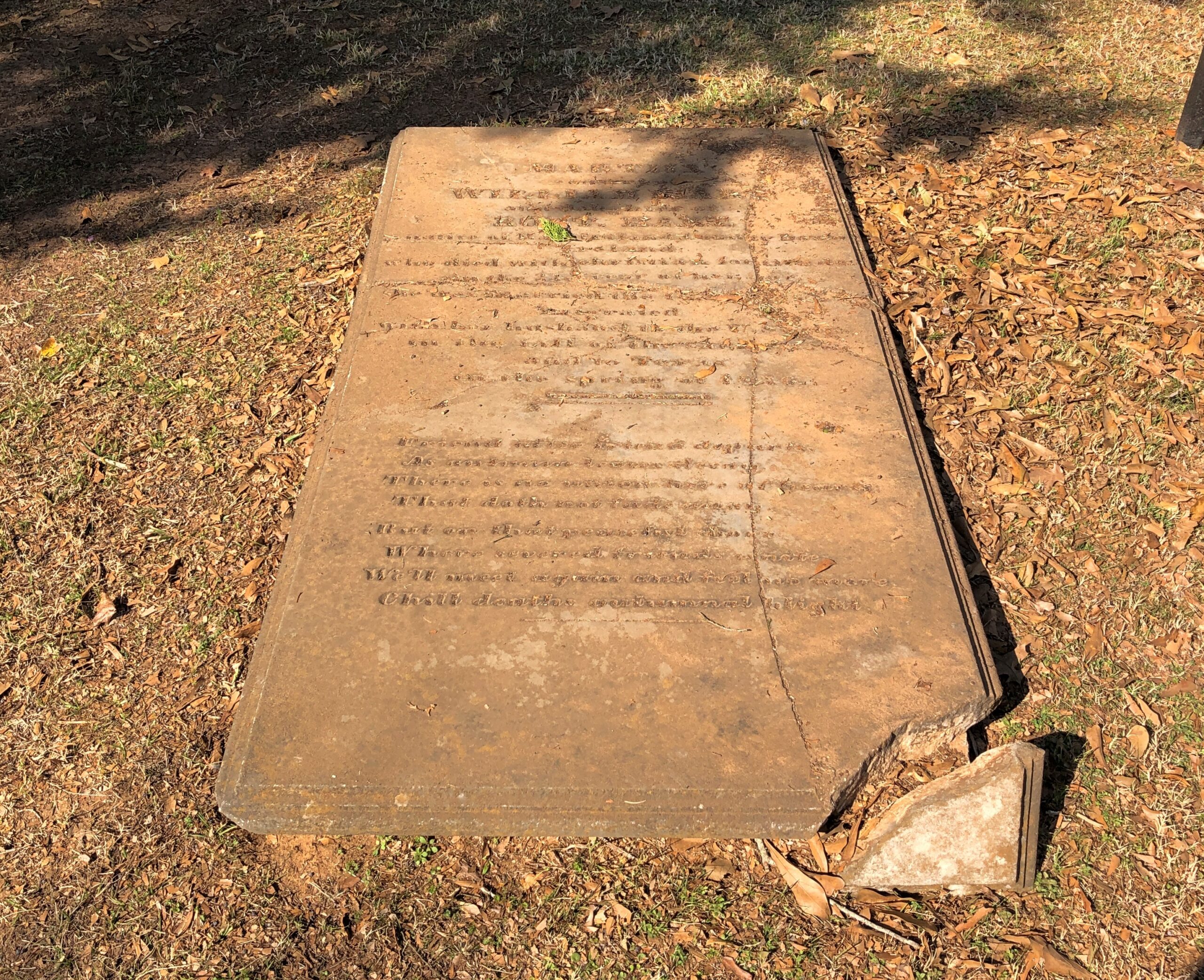
I don’t know how ordinary this person was, but perhaps he was gifted with Victorian prolixity. Or maybe his family was.
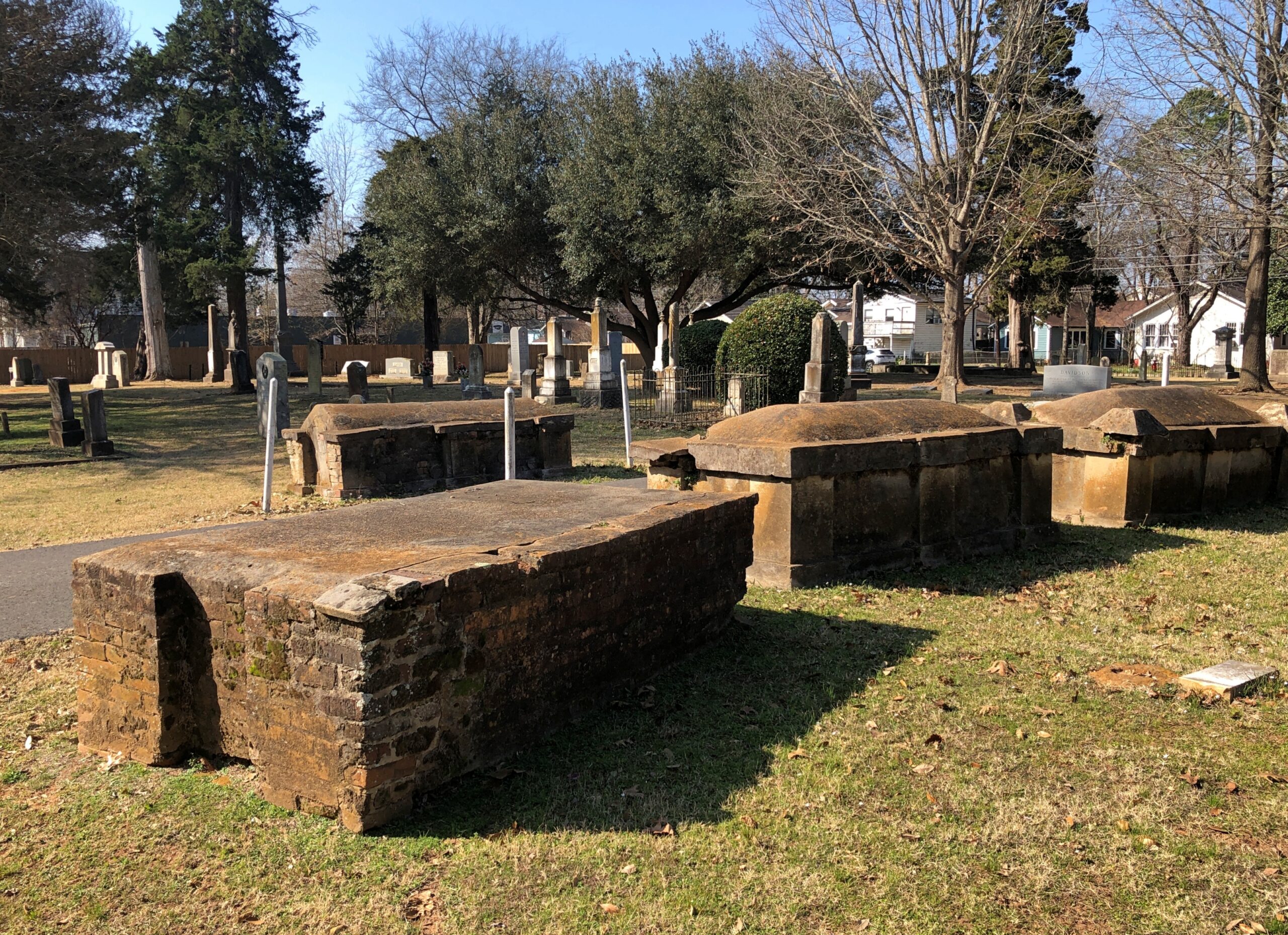
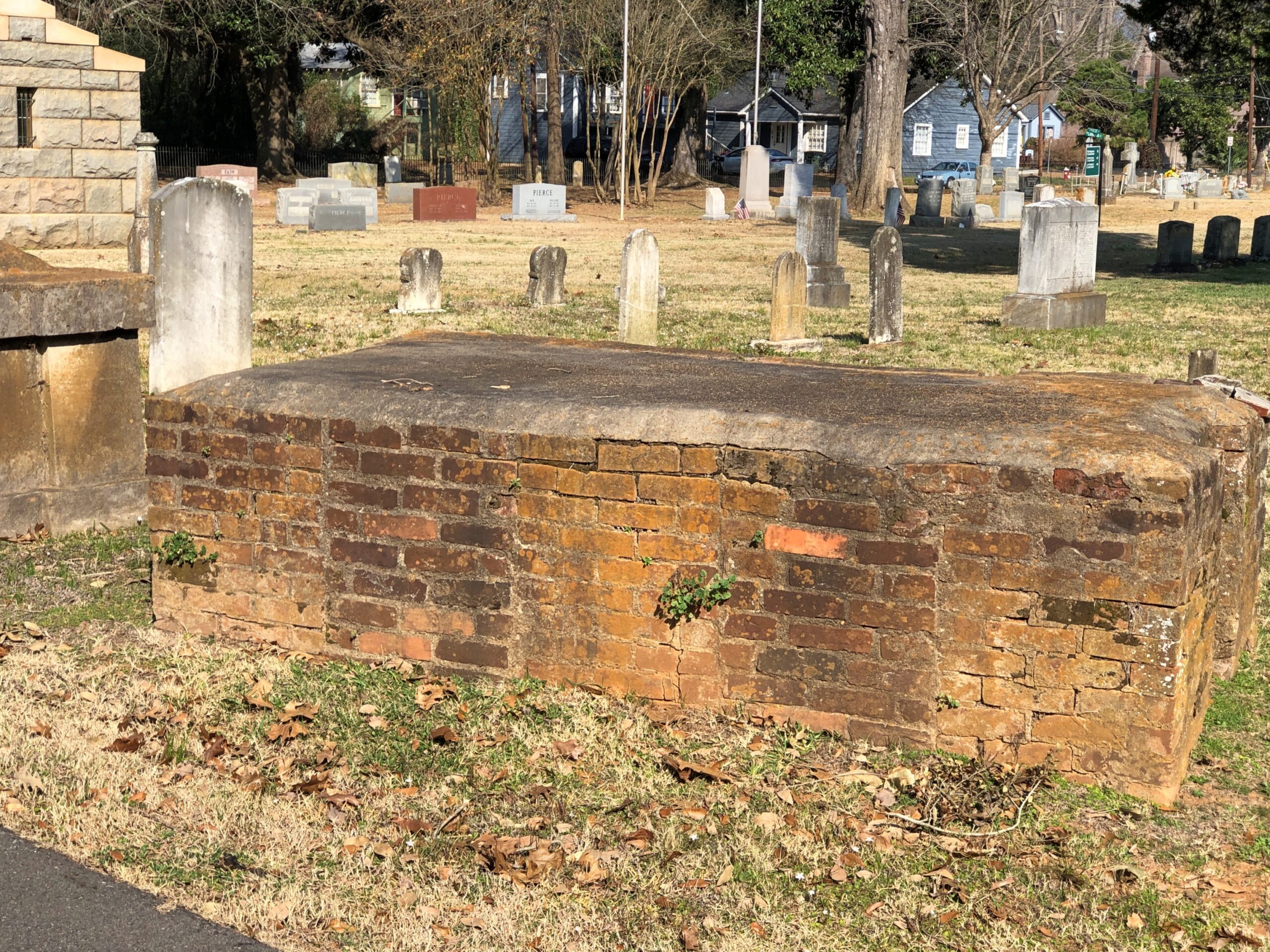
Brick tombs of the kind I’ve seen elsewhere in the South from roughly the same period, that is, sometime in the 19th century.
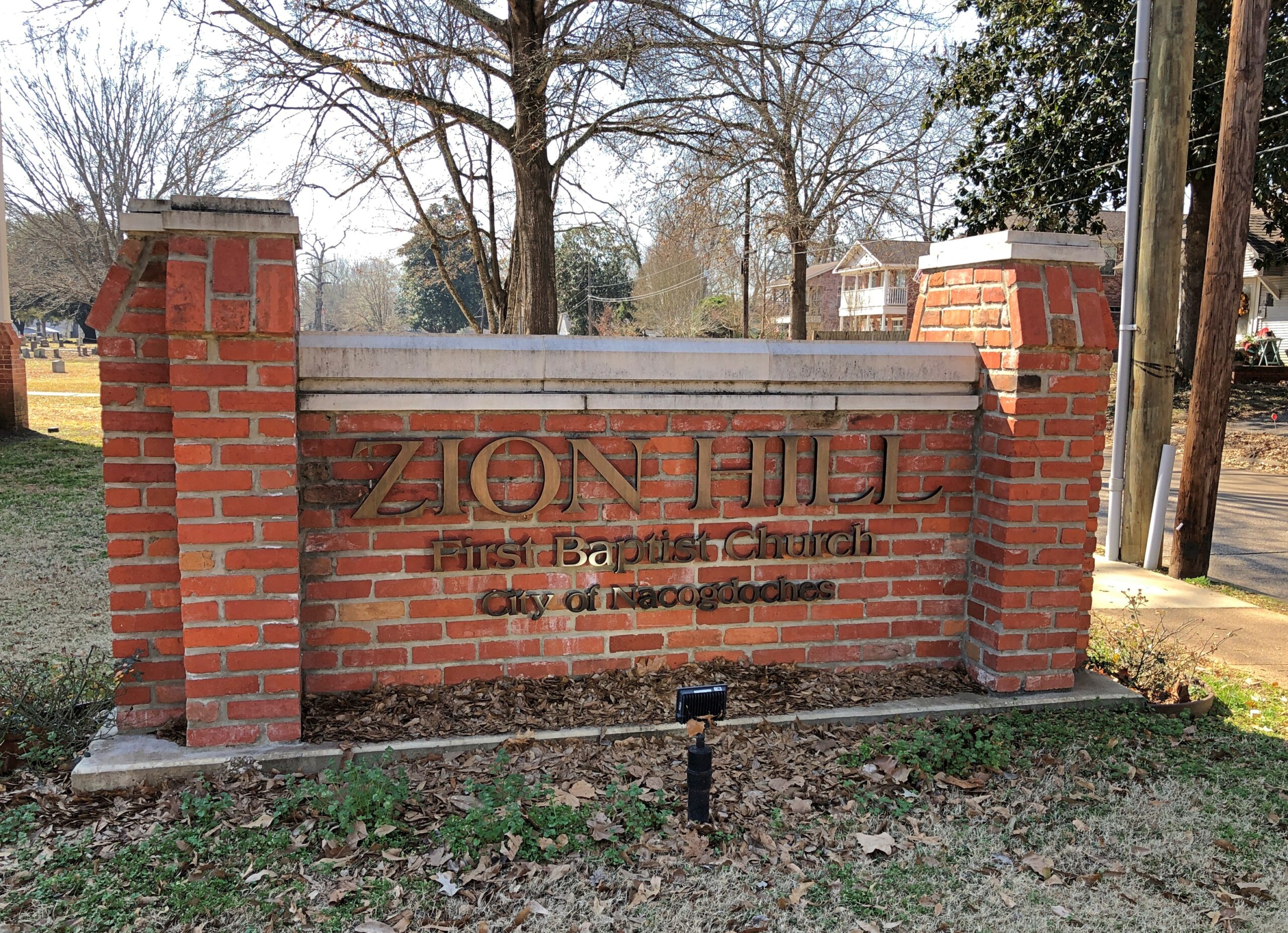
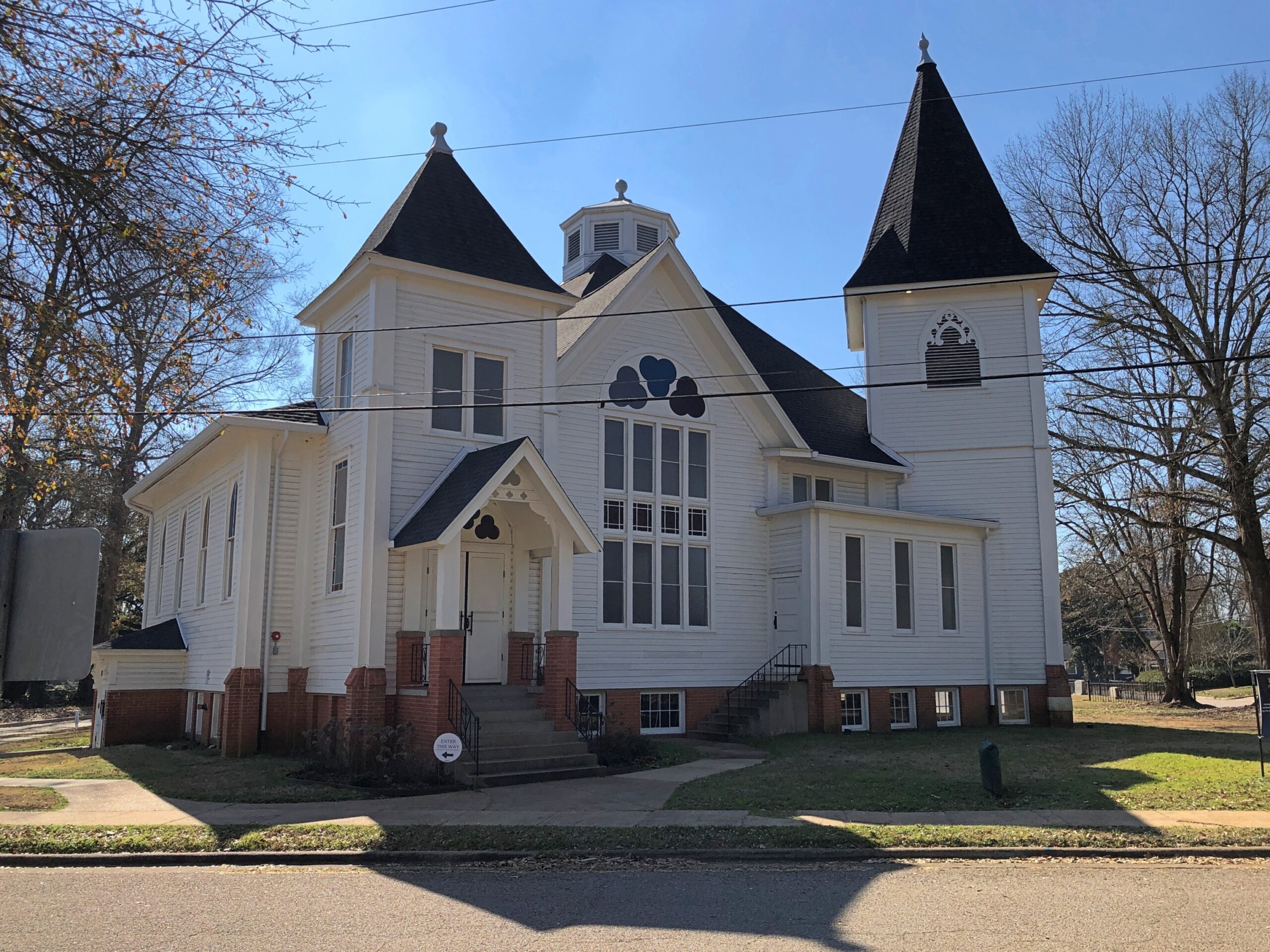
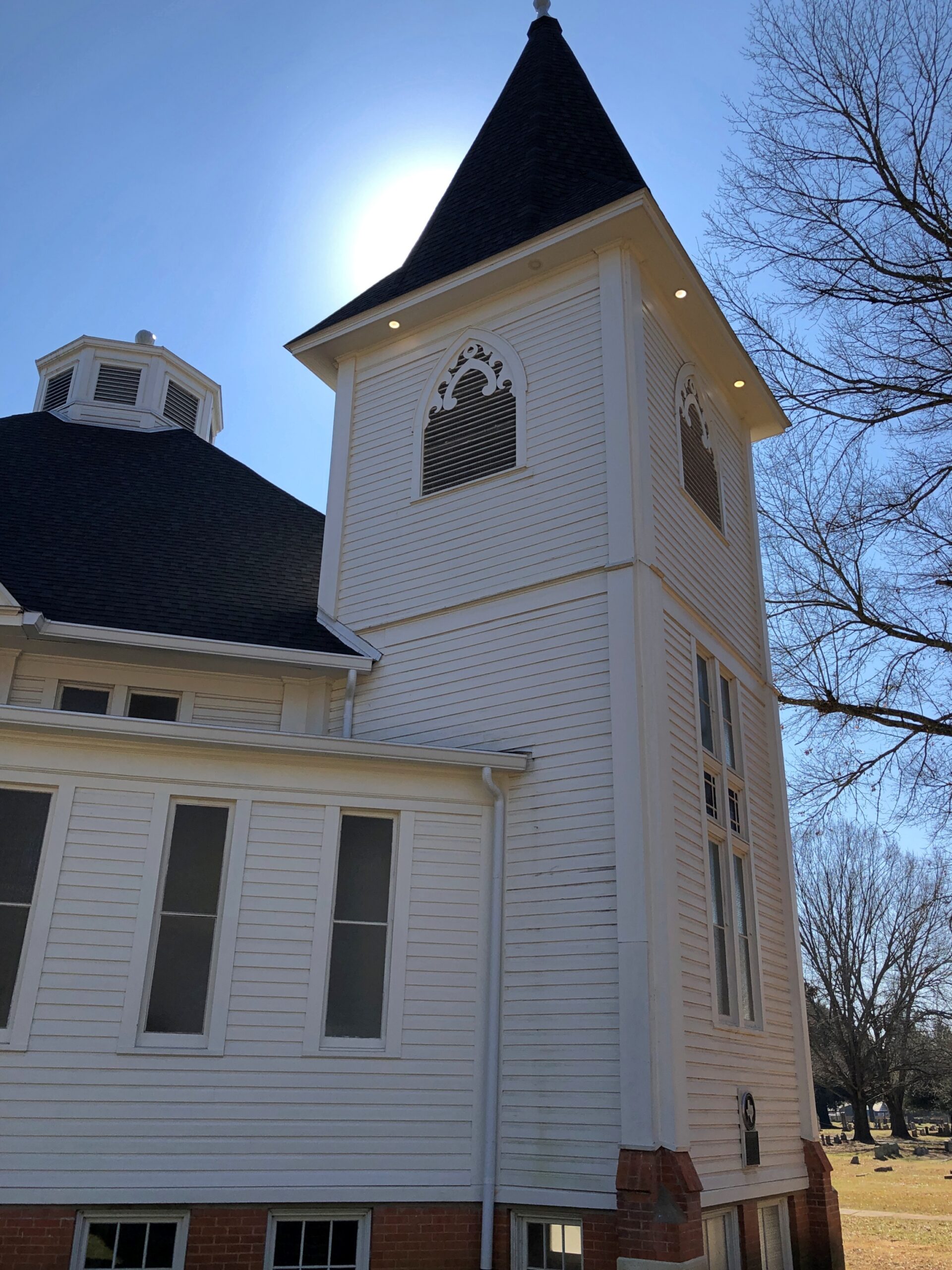
Adjacent to the cemetery but not associated with it is the former home of Zion Hill Baptist Church, one of the oldest African-American Baptist congregations in Texas, founded in 1878. The church is on the corner of Lanana and the delightfully named Bois d’arc St., as in lumpy “apples.”
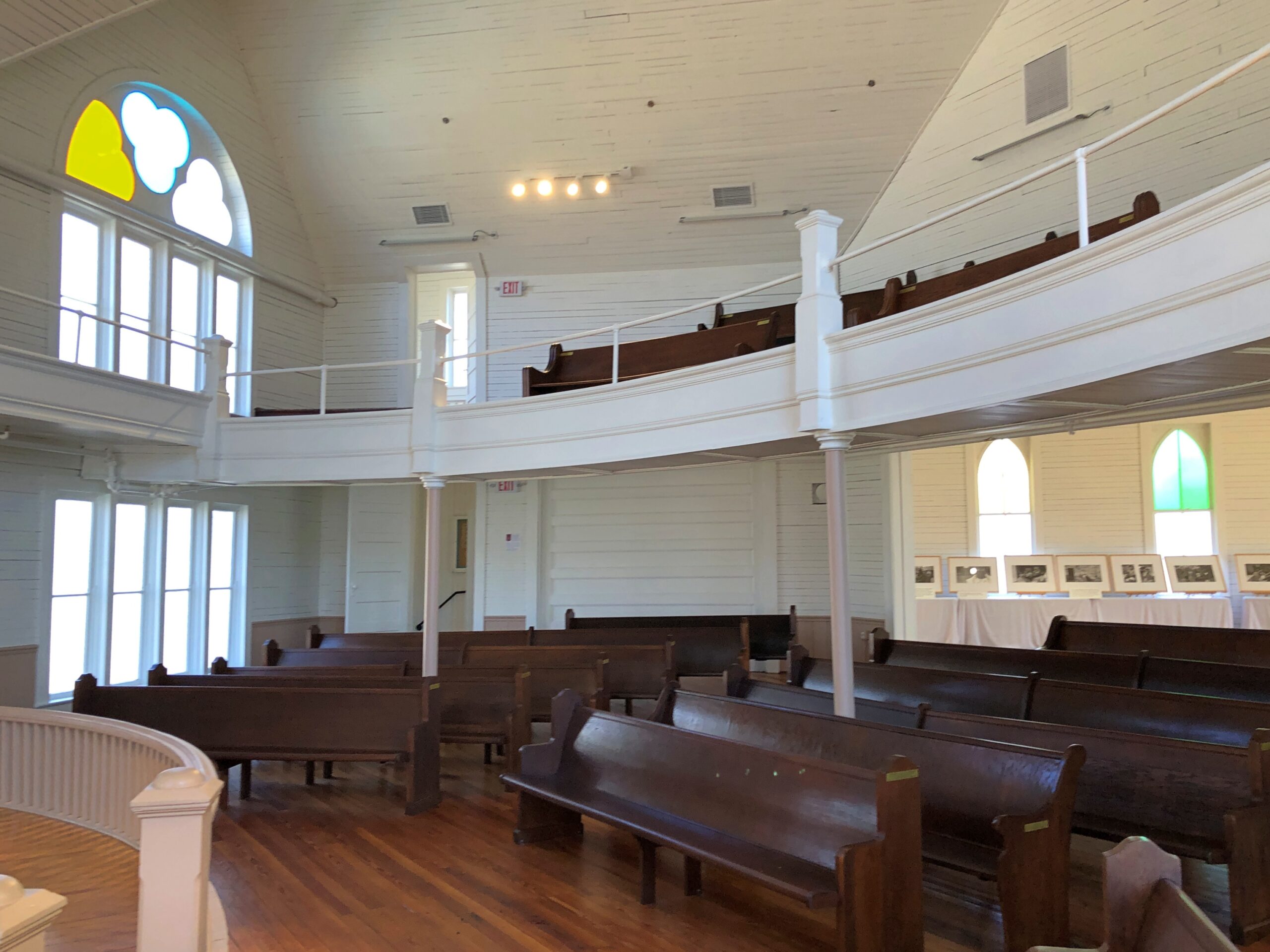
The congregation hasn’t used the structure, designed in 1914 by architect Diedrich Rulfs, for nearly 40 years. It’s a fine little museum these days, restored to its early 20th century glory.
Rulfs was a German who made good in Texas, as so many have, within a very special niche: most of the buildings worth seeing in Nacogdoches are his work.
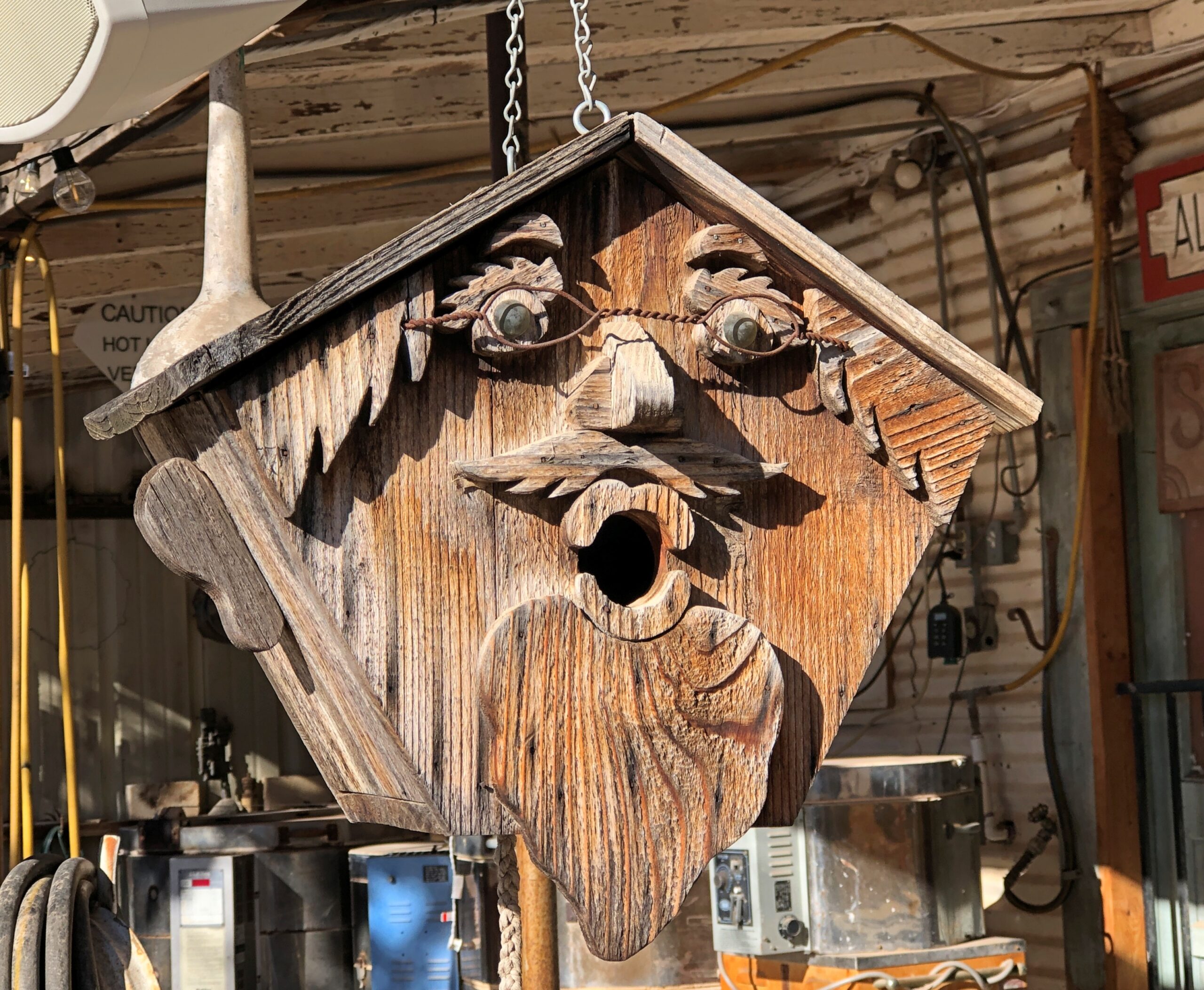
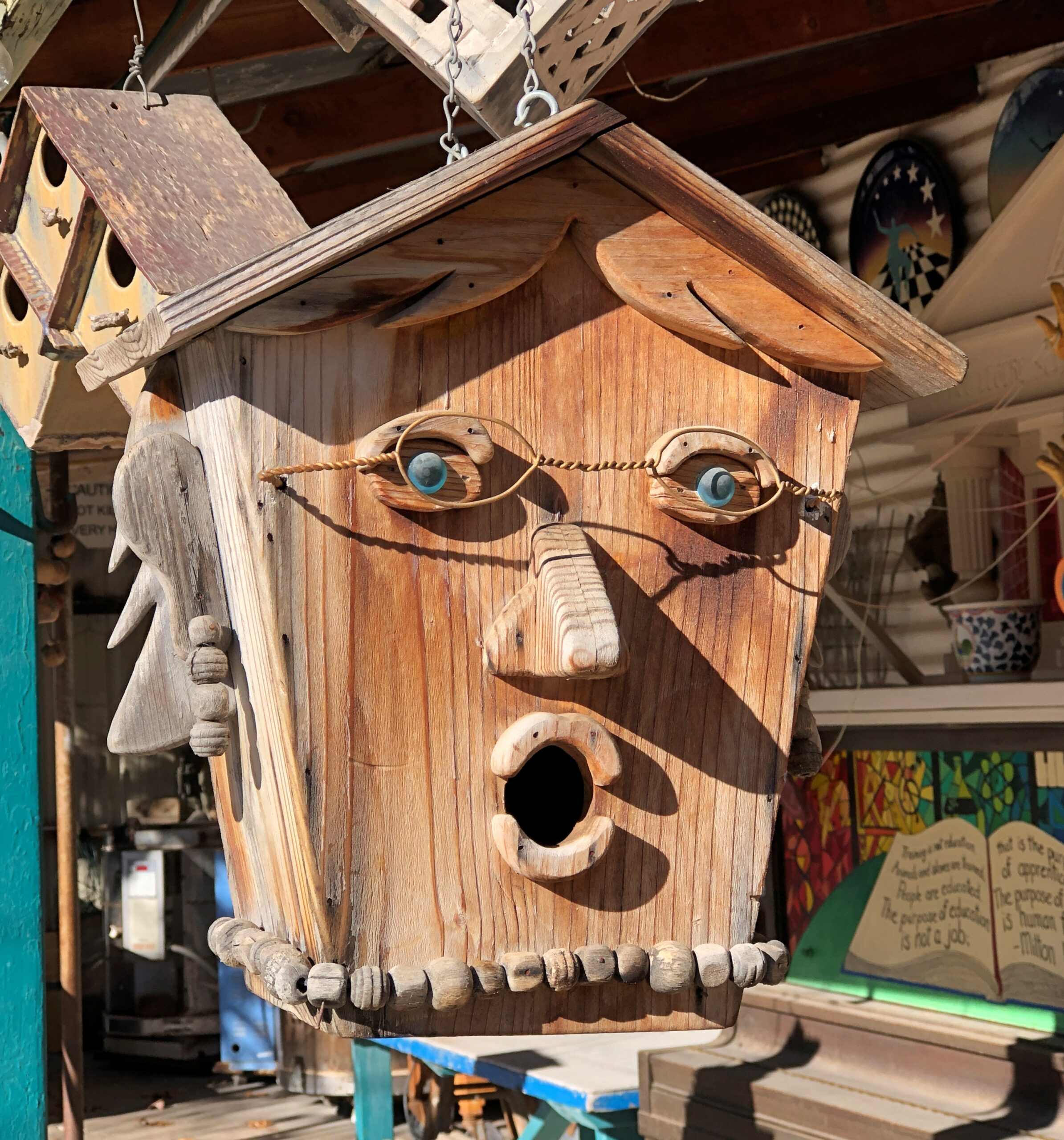
I thought of Ed Wynn, but his glasses tended to be round, if Google images is to be believed. I asked AI for some suggestions about which famed entertainer was known for his oval-rimmed glasses, and it returned the following suggestions from most to least likely: Harold Lloyd, Peter Lorre and Buddy Hackett. Not sure “Buddy Hackett” in this context is an AI hallucination. Just a lousy opinion. Maybe there’s no single inspiration anyway.
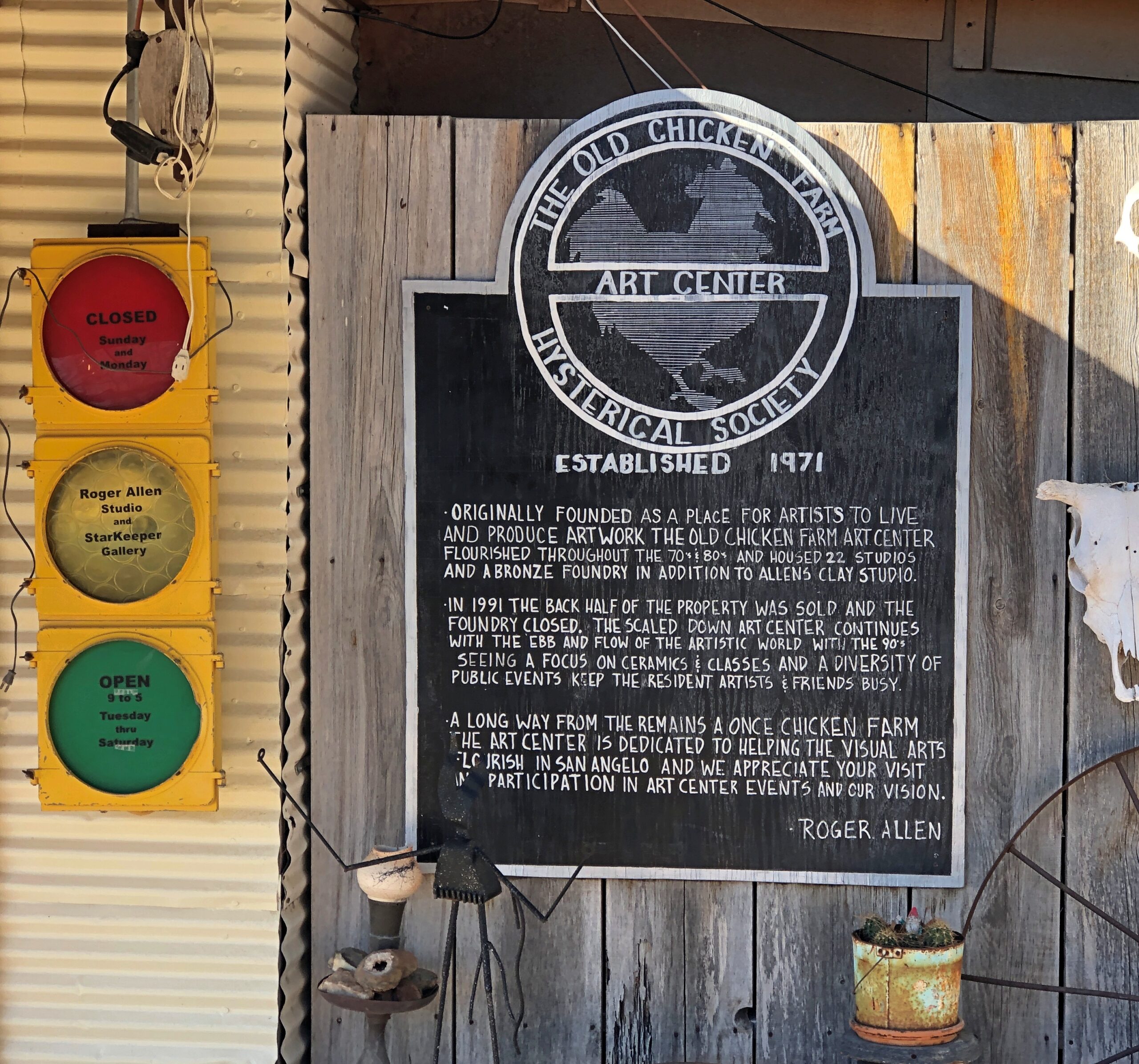
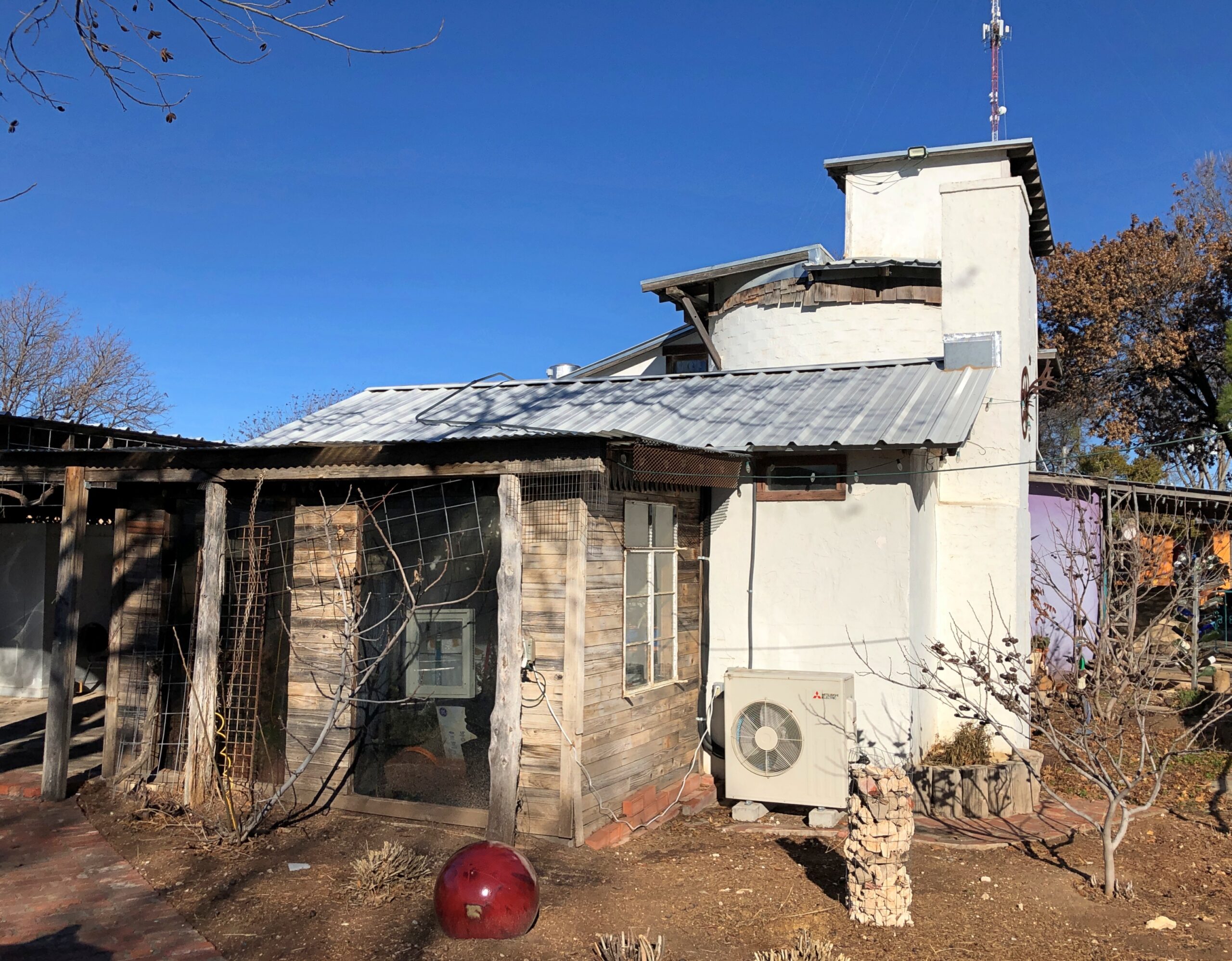
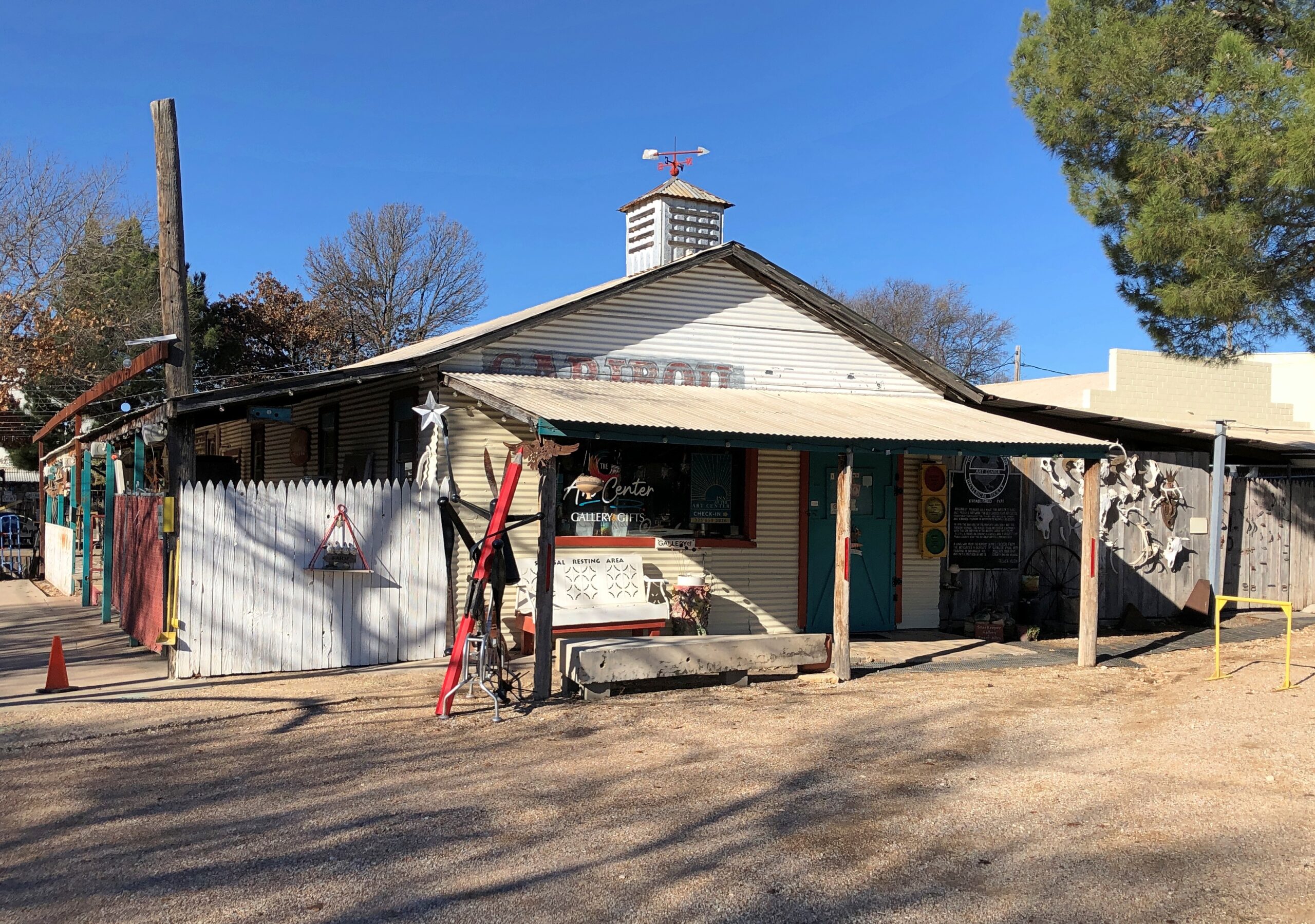
Which came first, the chicken or the art center? There’s a definite answer to that, the chicken. Lots of chickens.
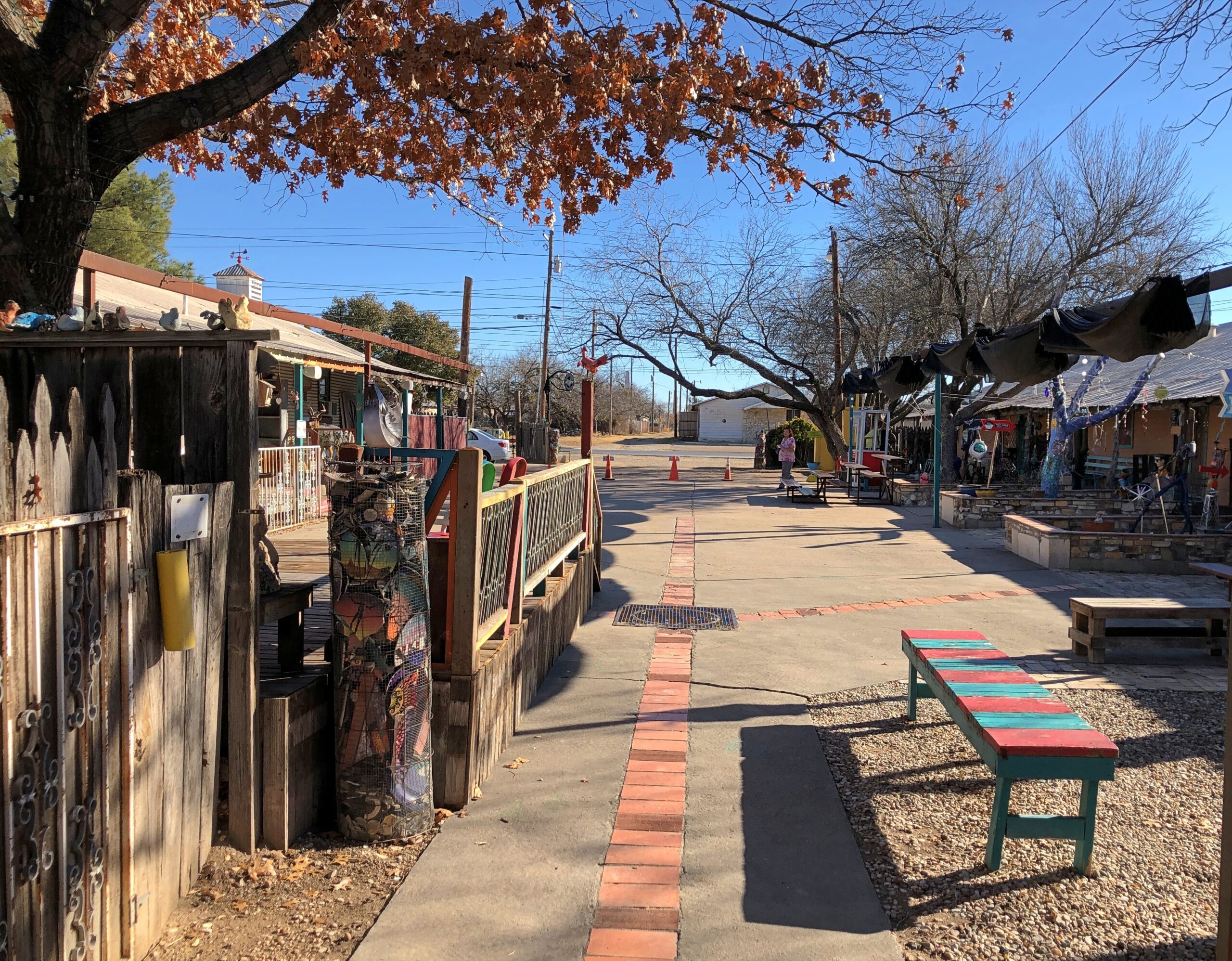
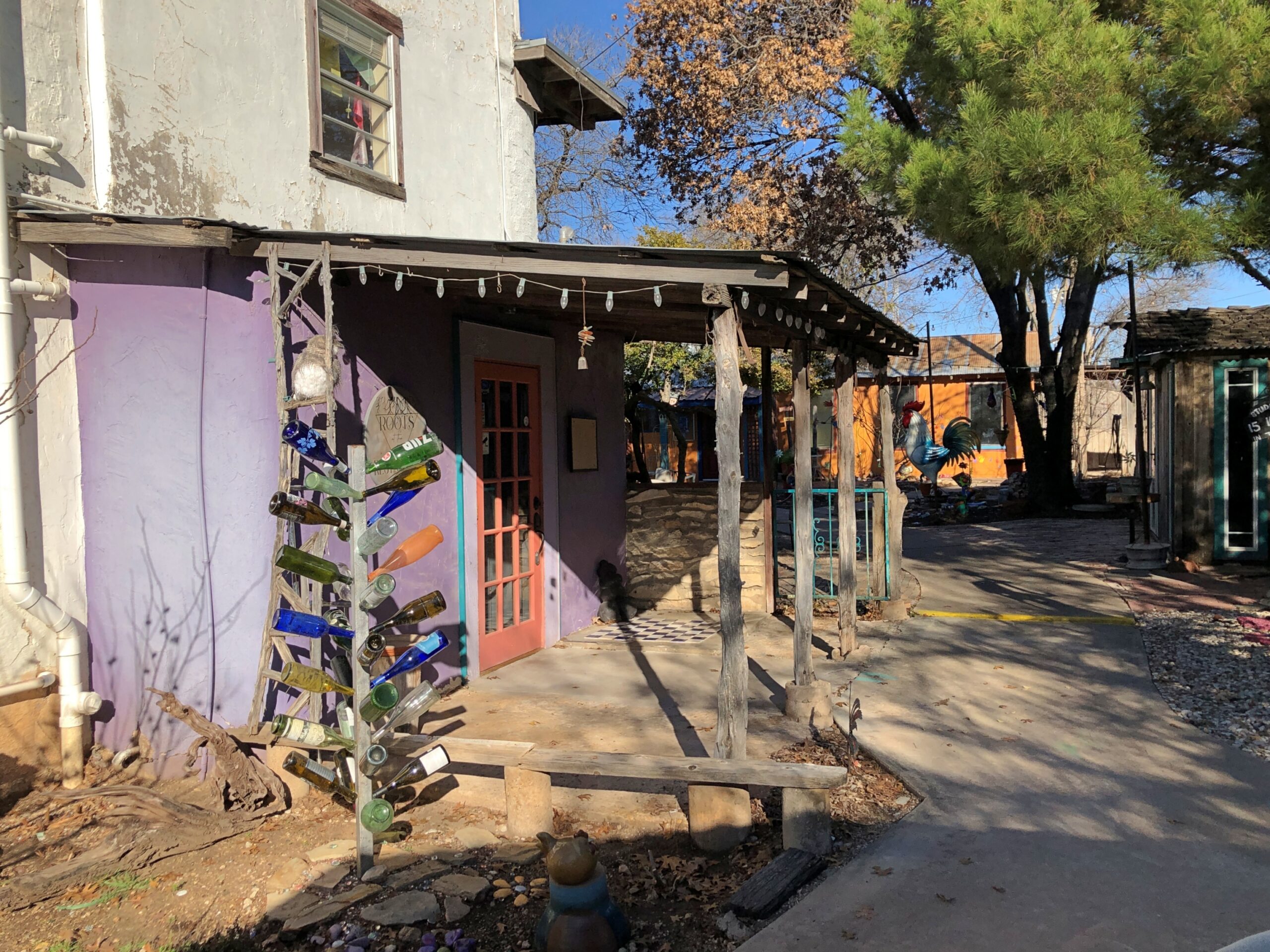
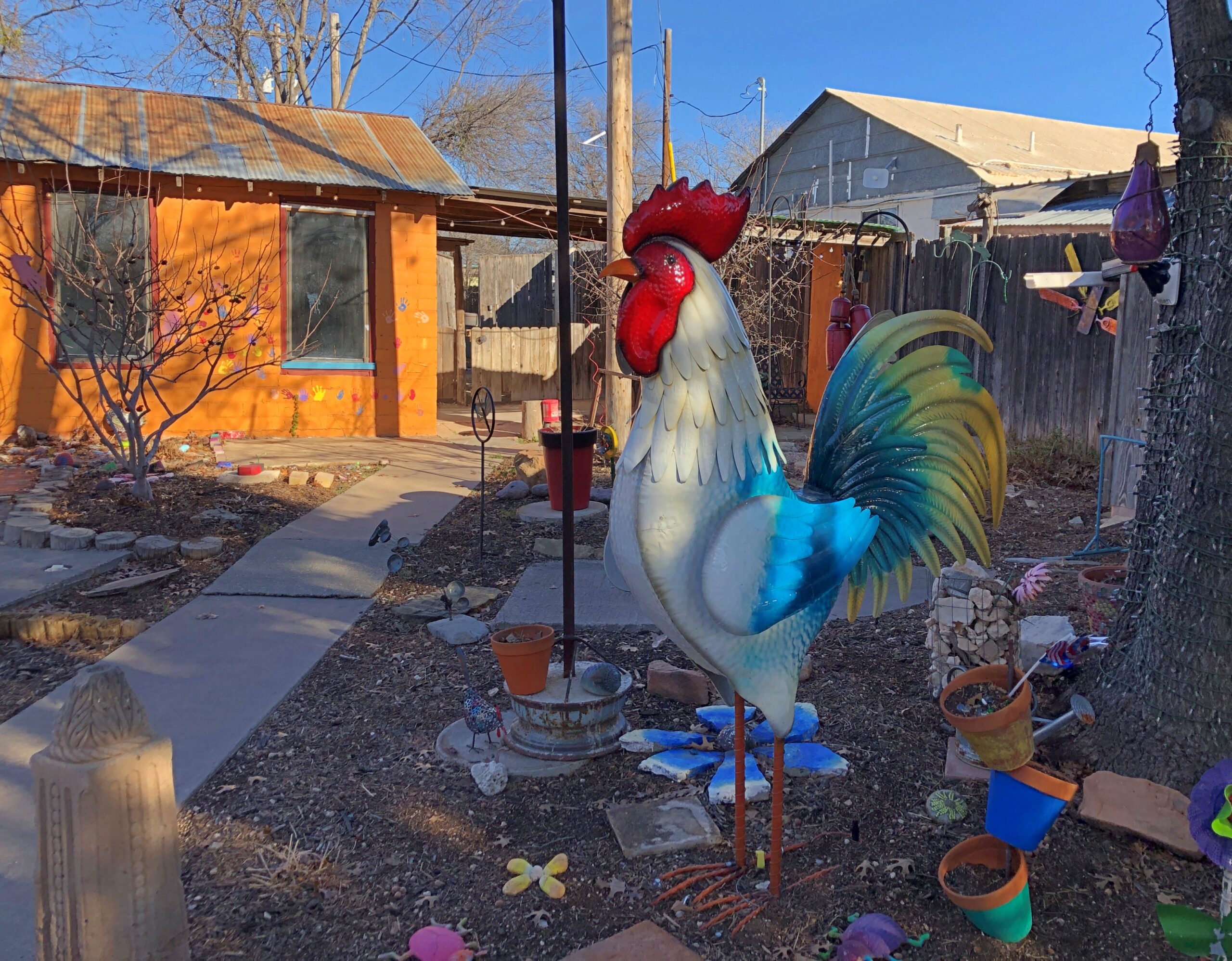
By the early 1970s, a sizable chicken farm in San Angelo, Texas, had run its course, and artists took to the task of redeveloping the place into the Old Chicken Farm Art Center. Fifty-plus years is a long time, but if you wander around the property in the morning sun, as Yuriko and I did, you’ll get a sense of the old chicken haunts.
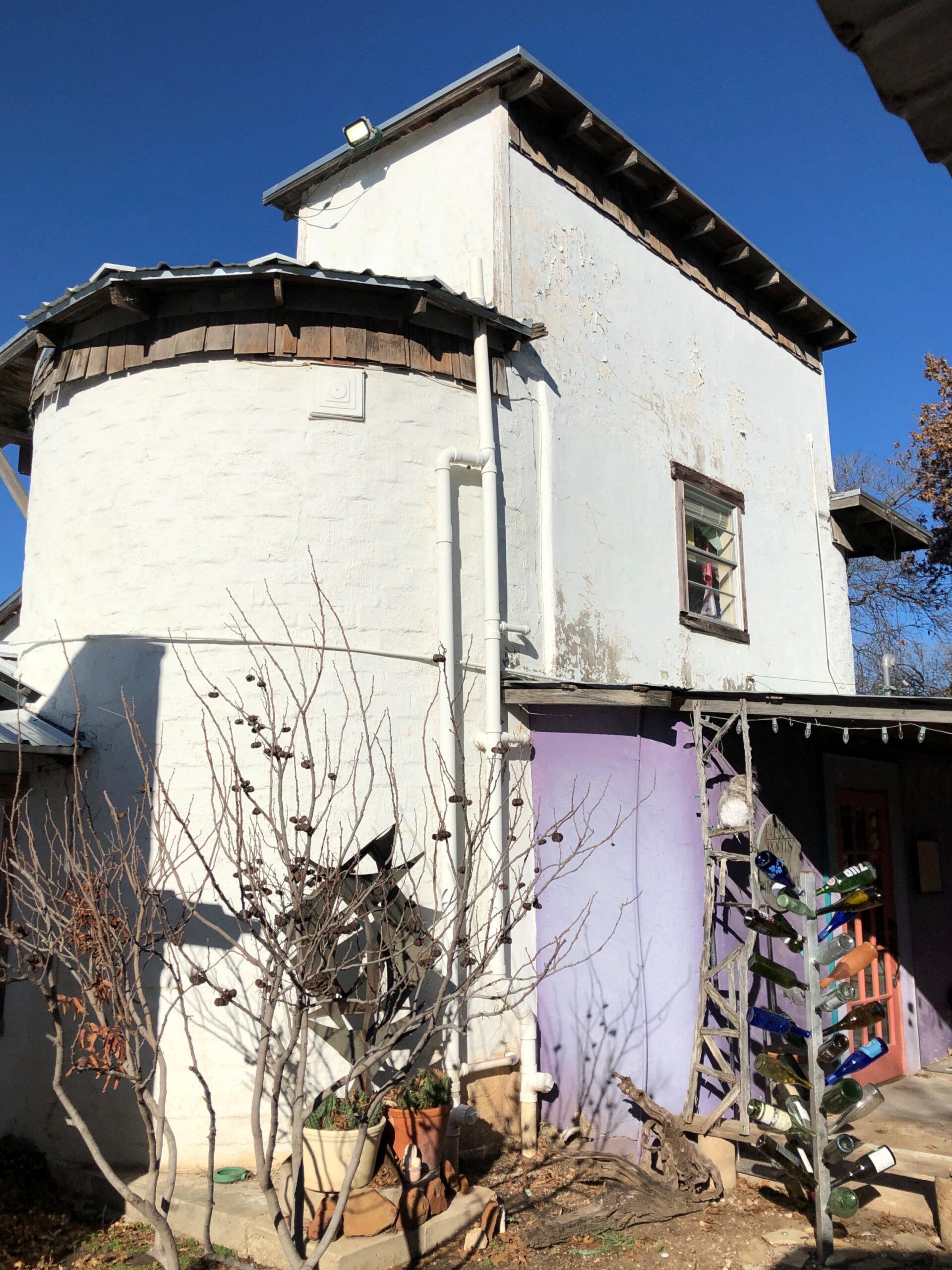
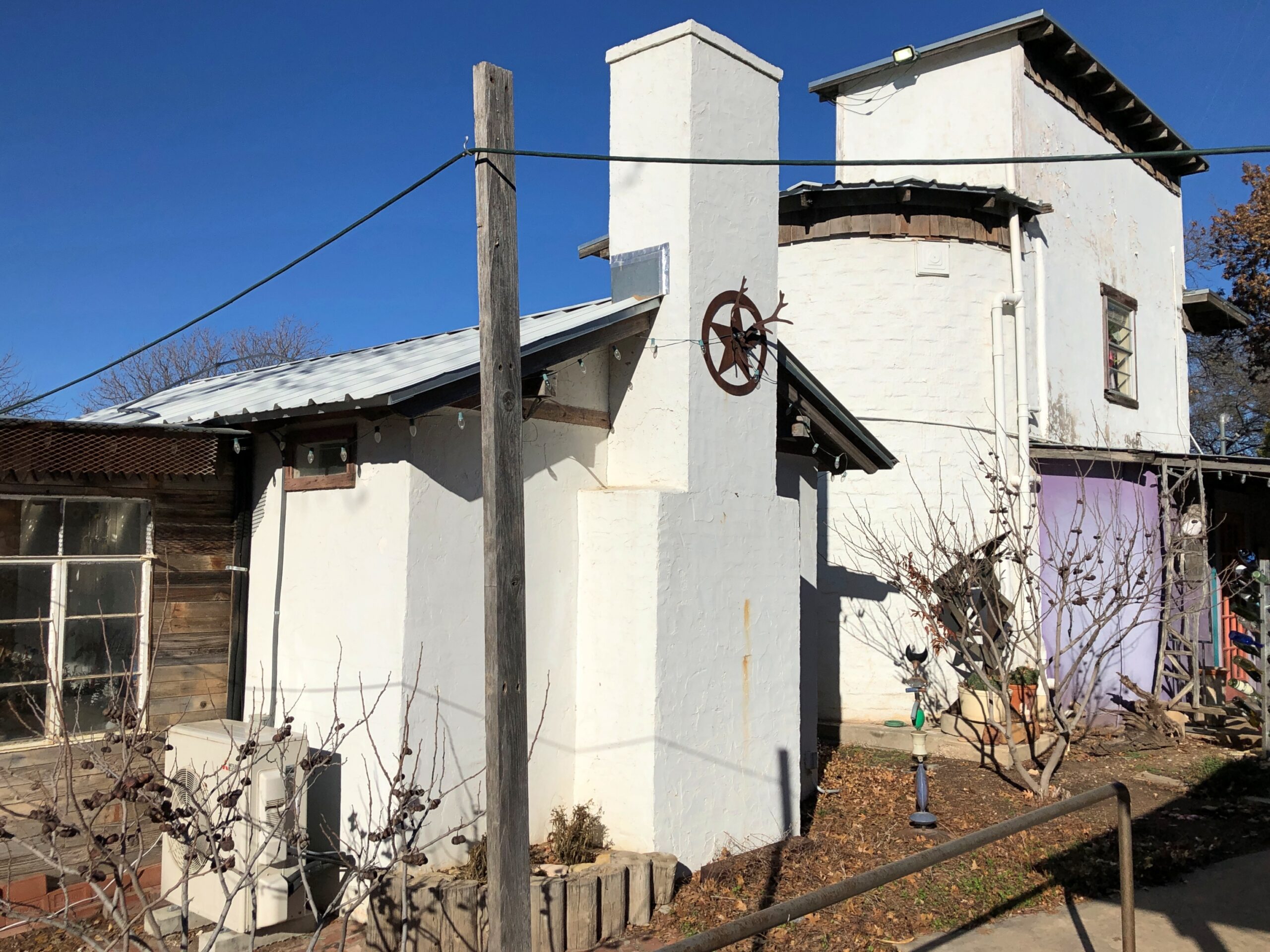
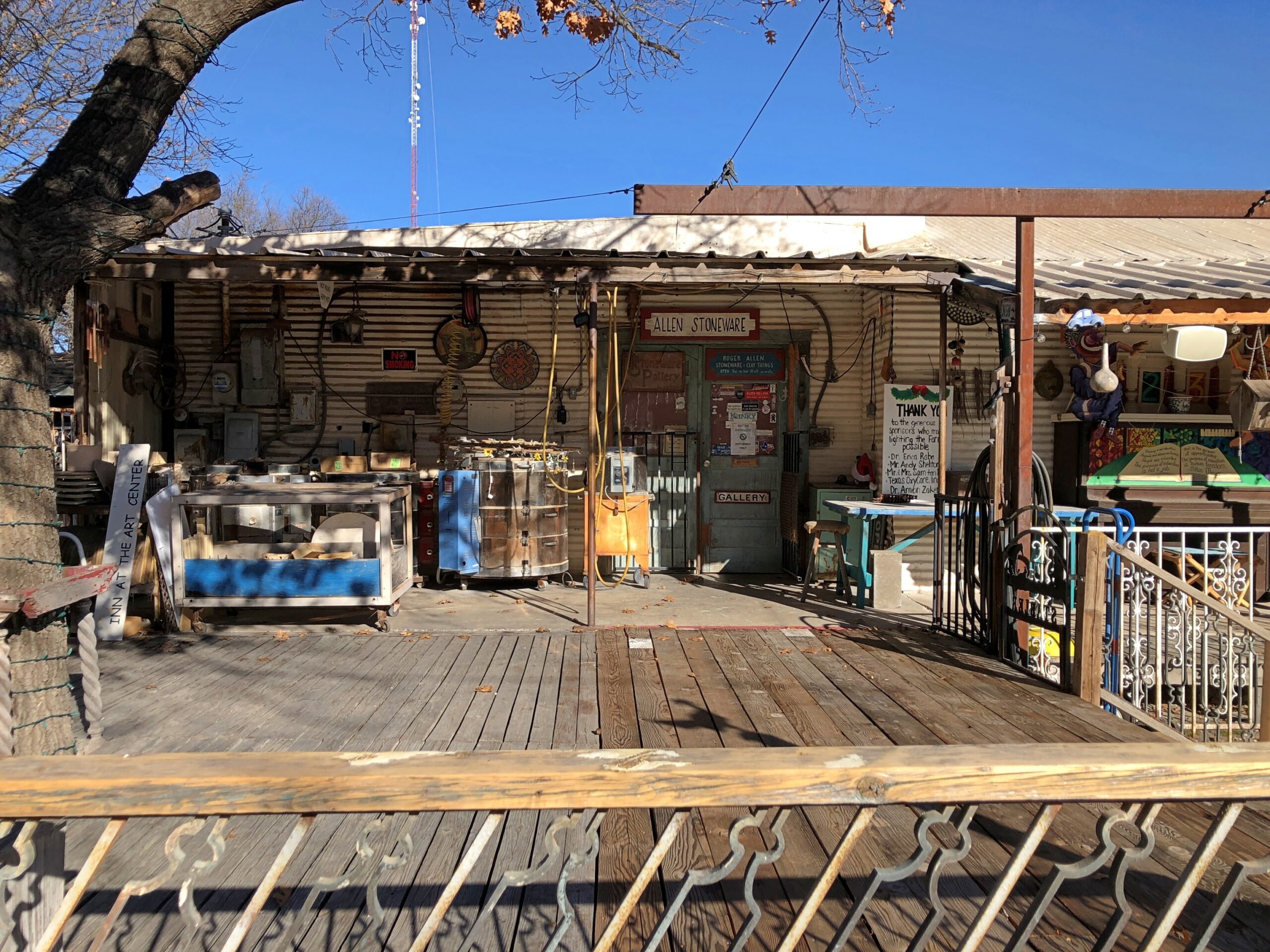
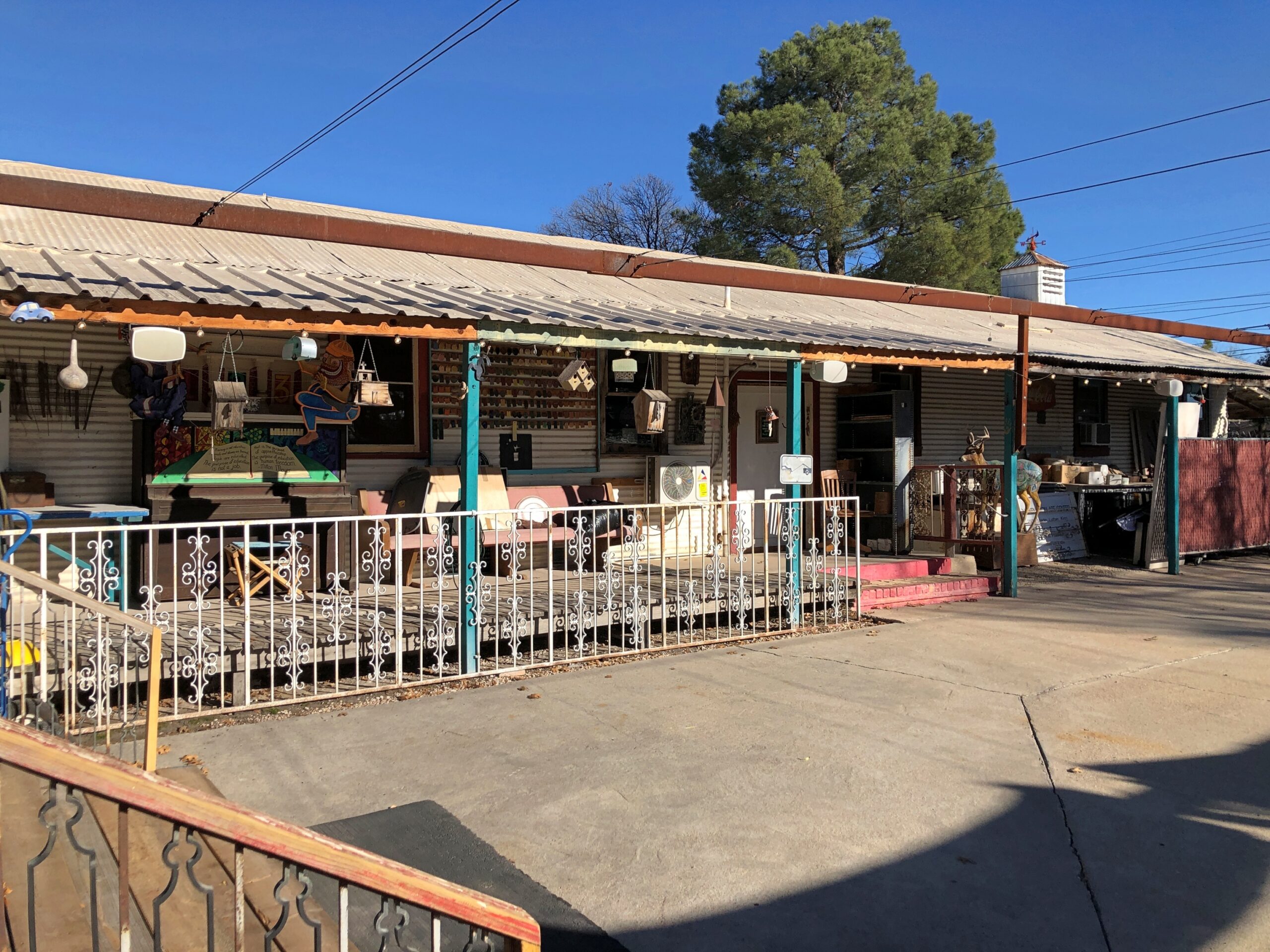
No mere coops, but a poultry complex of an earlier time. I’m sure it was made obsolete by larger facilities and automation. These days, most of the spaces are art studios.
Because I can, I checked the numbers for chicken production in Tom Green County, of which San Angelo is the seat. Relatively few chickens, turns out: $220,000 in chicken sales in 2022, compared to $54.7 million in cattle sales for the county. Sounds like that might be a single chicken farm out somewhere from town. The town chickens, you might say, long ago flew the coop.
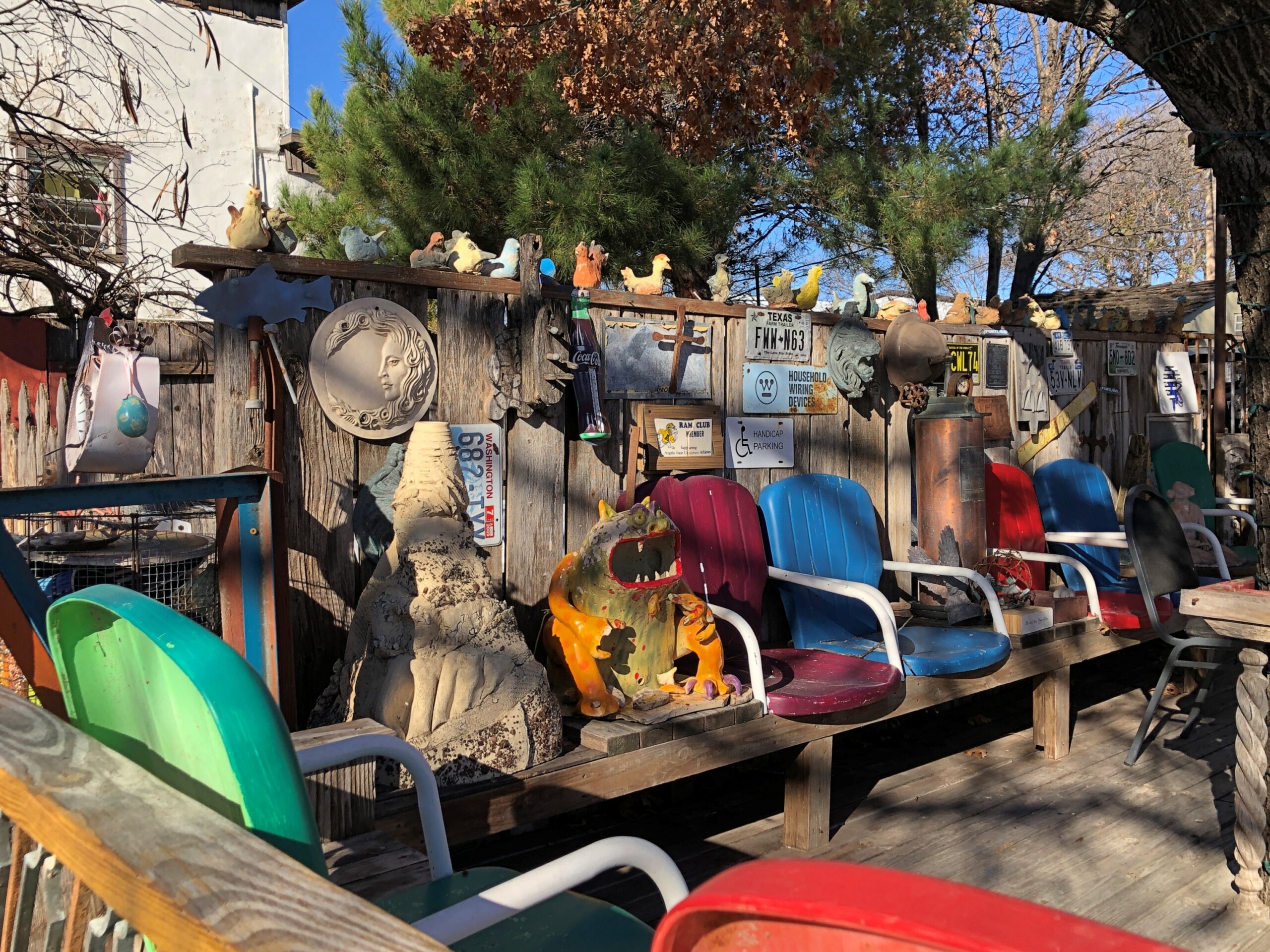
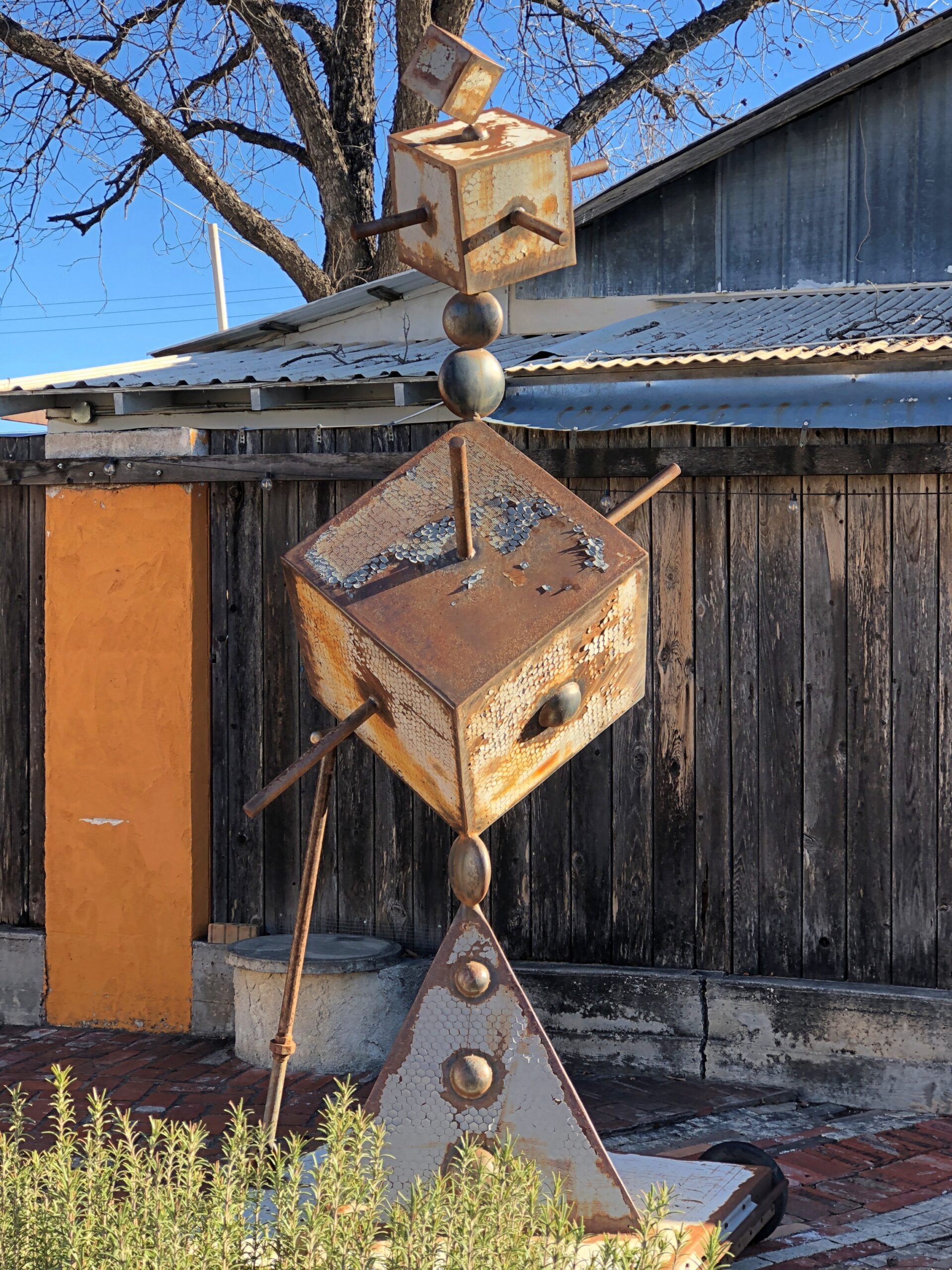
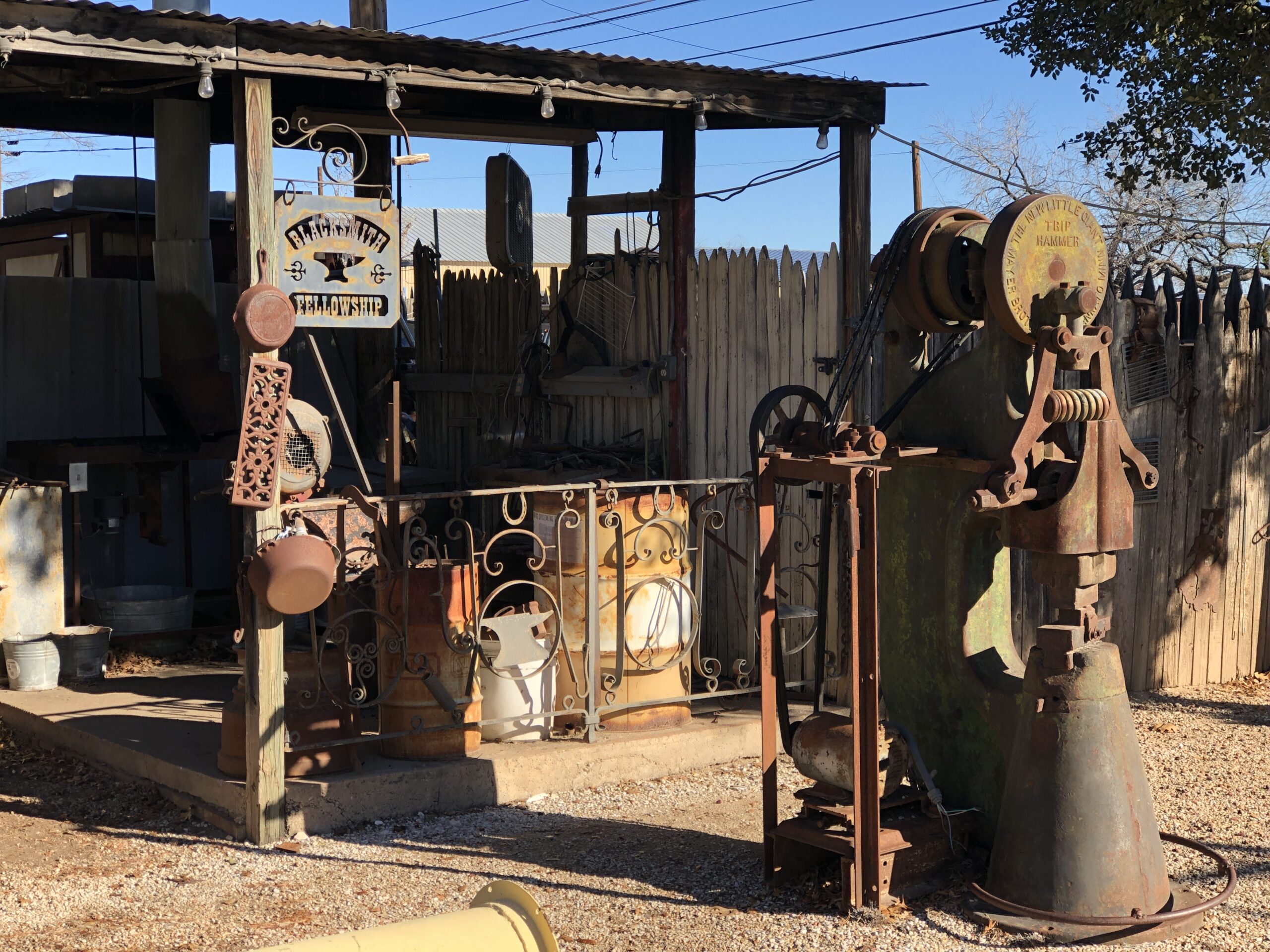
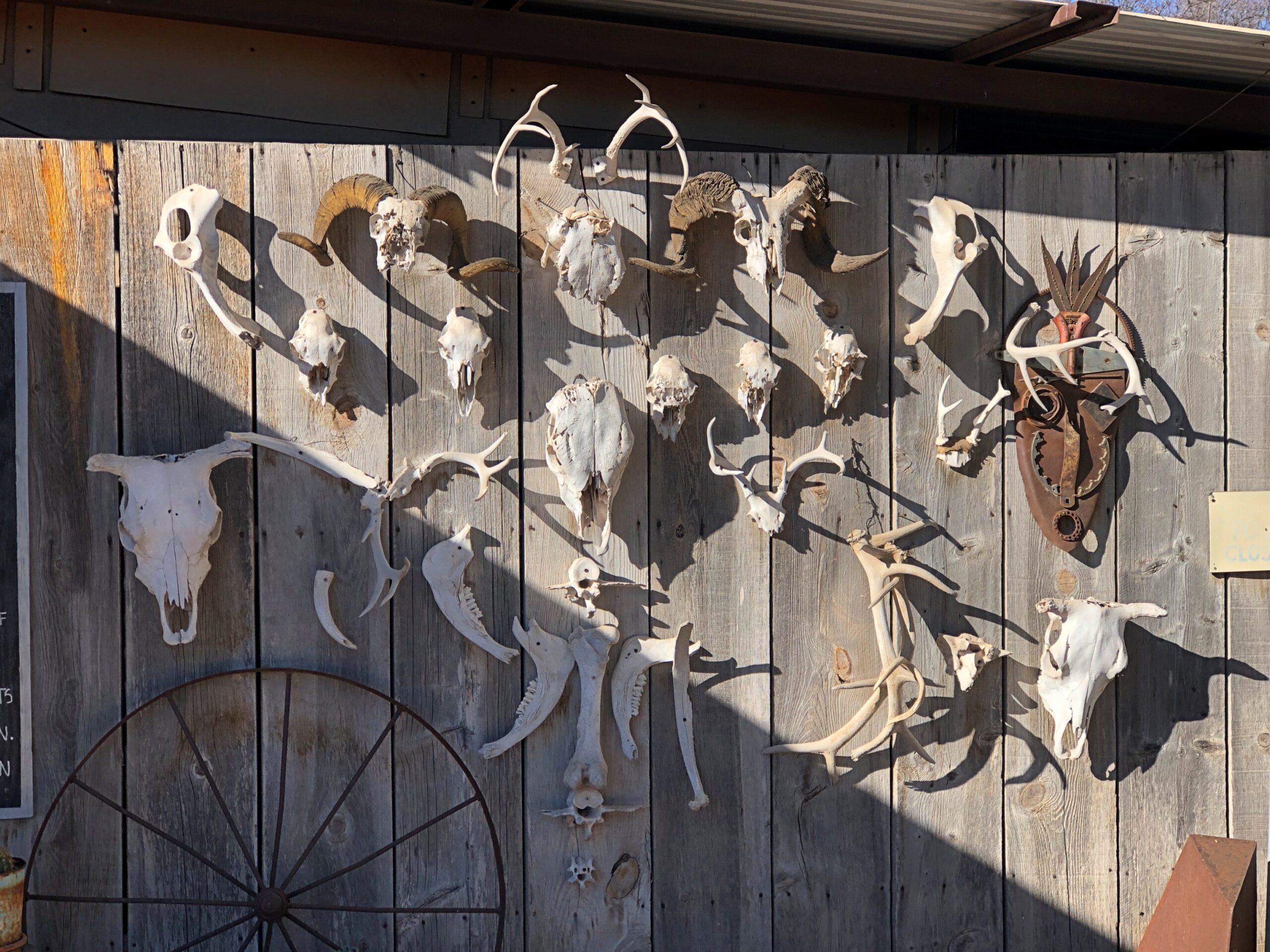
Being an art complex, there’s a lot of art and other objects on display, besides the wooden faces.
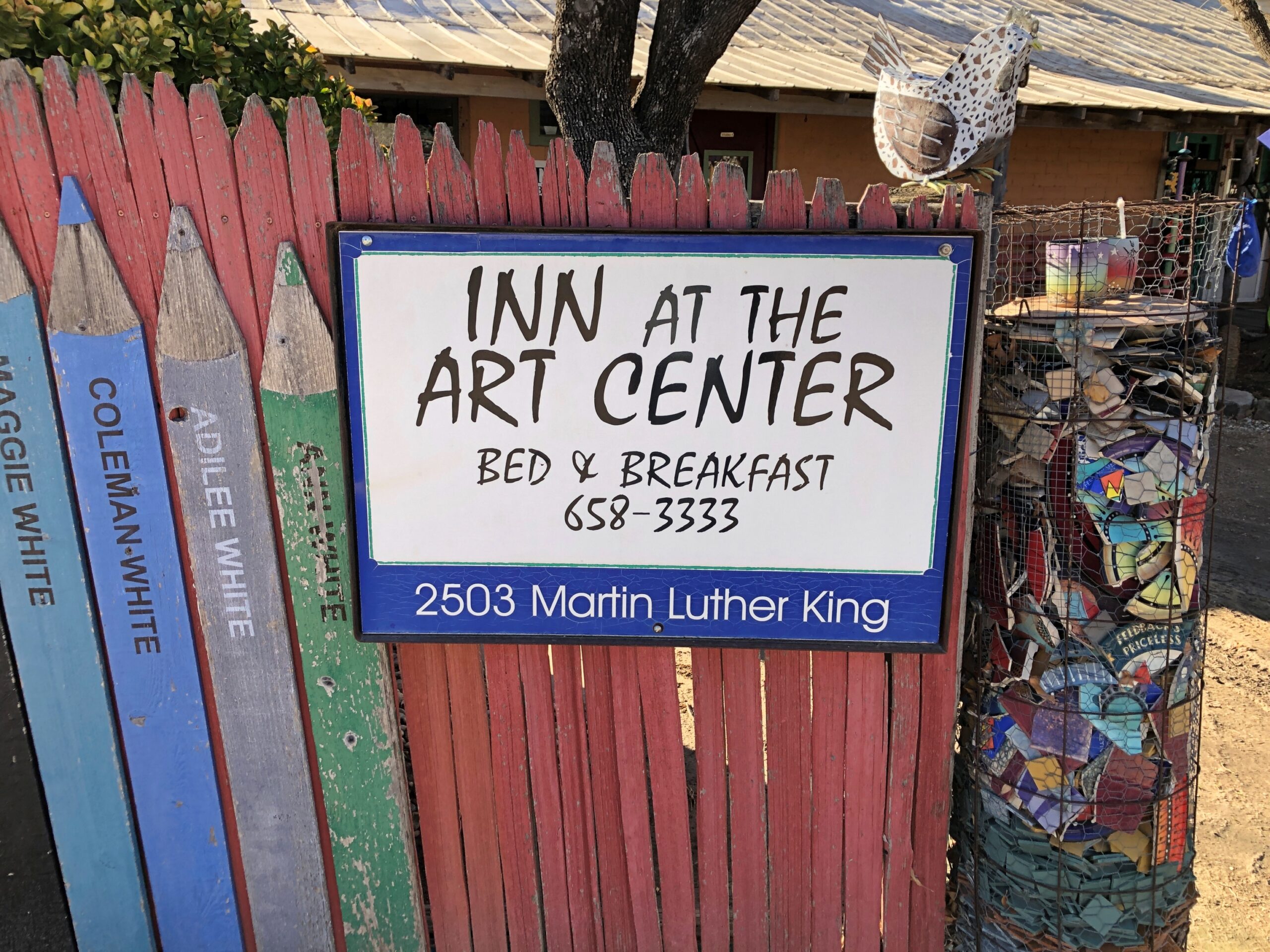
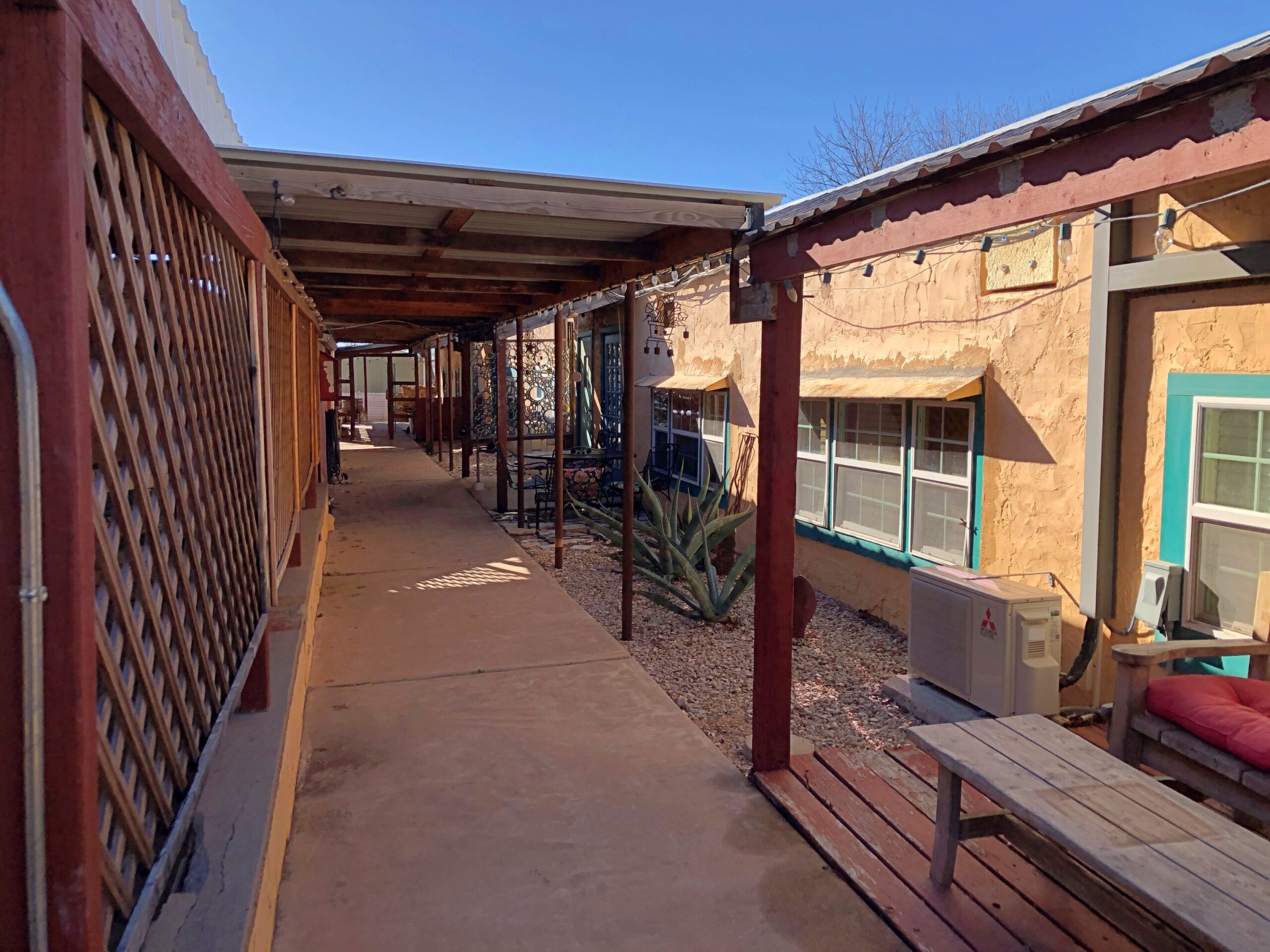
Being fairly early still on Monday morning, most of the studios weren’t open yet – they would be in the afternoon, when were already on the road to Marathon. We’d passed the night at the Inn at the Art Center Bed & Breakfast, in a room that opens onto a breezeway.
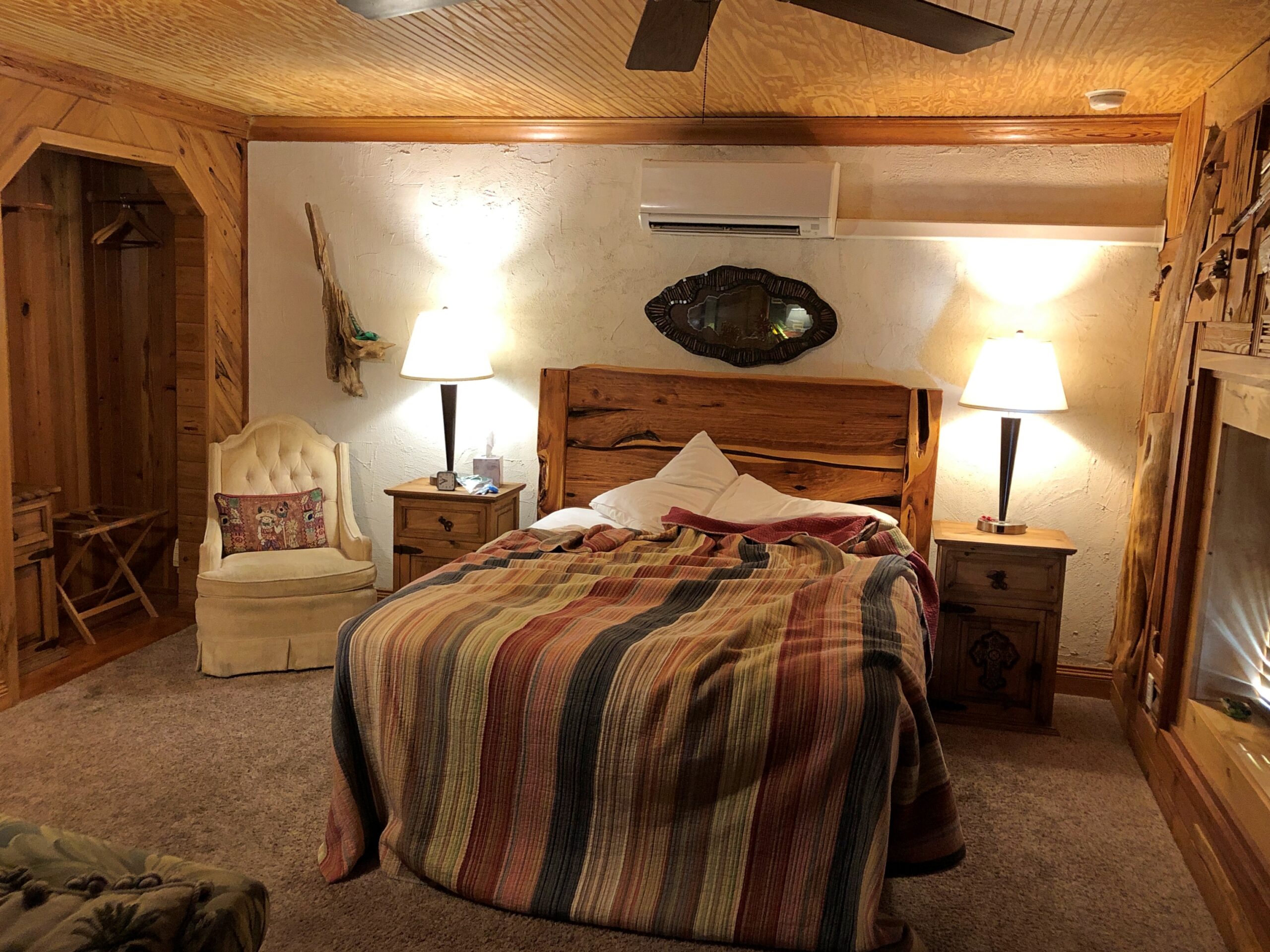
Artists had clearly been turned loose to design the rooms. Much to the better, I’d say. Ours was a two-bedroom unit with the sheen of an upmarket forest lodge, but without a particularly high price.
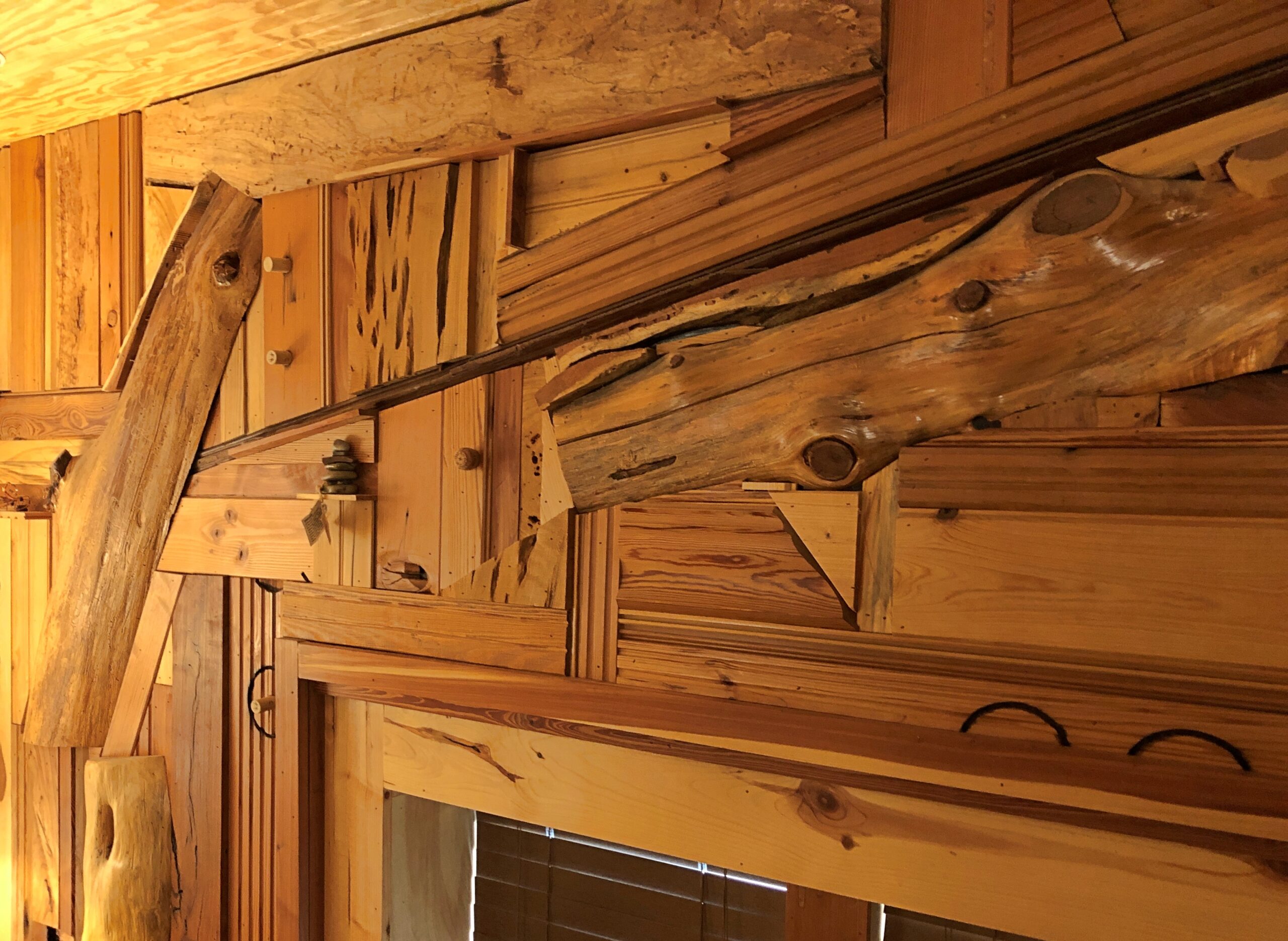
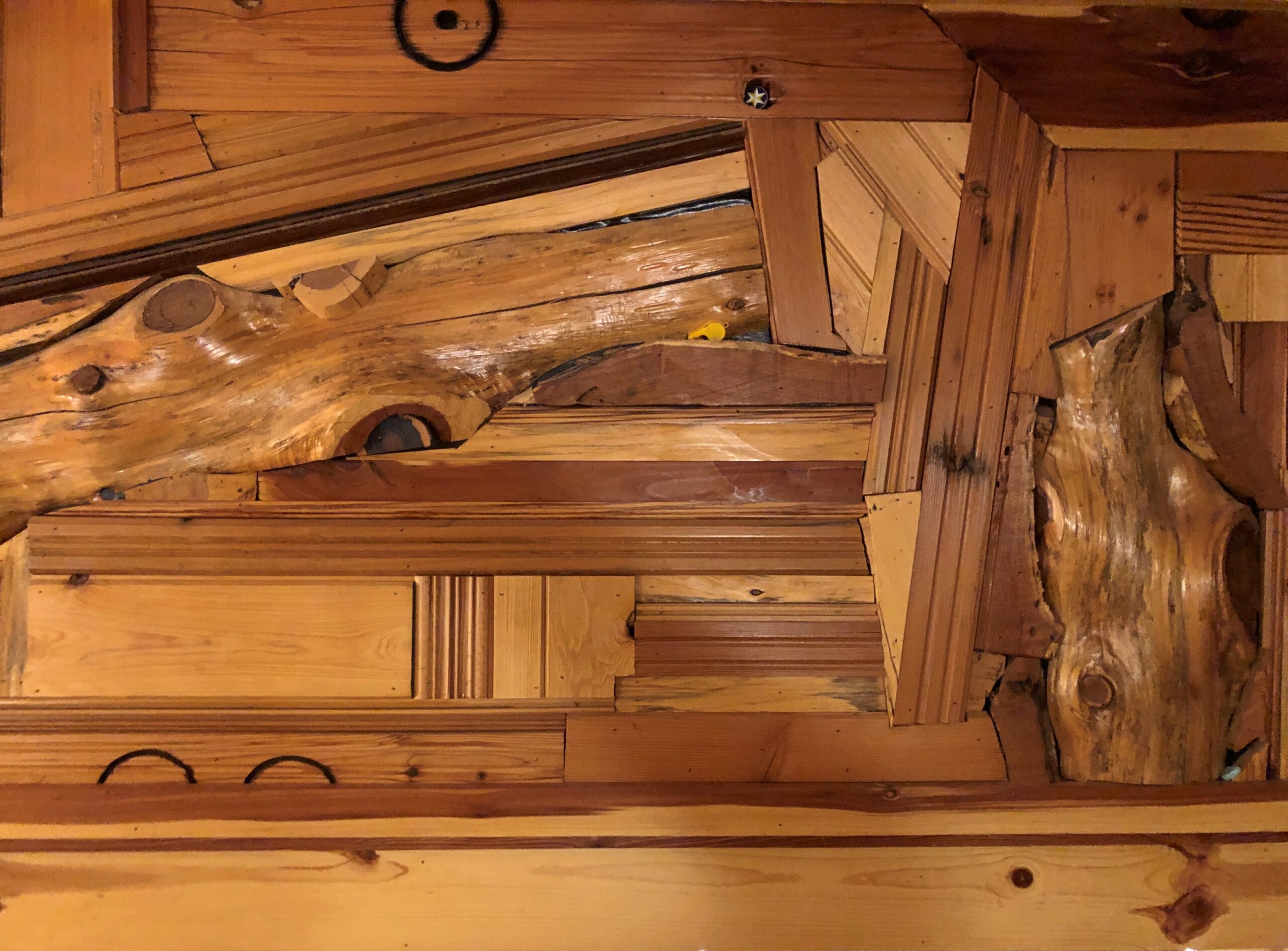
Unique woodwork for the walls.
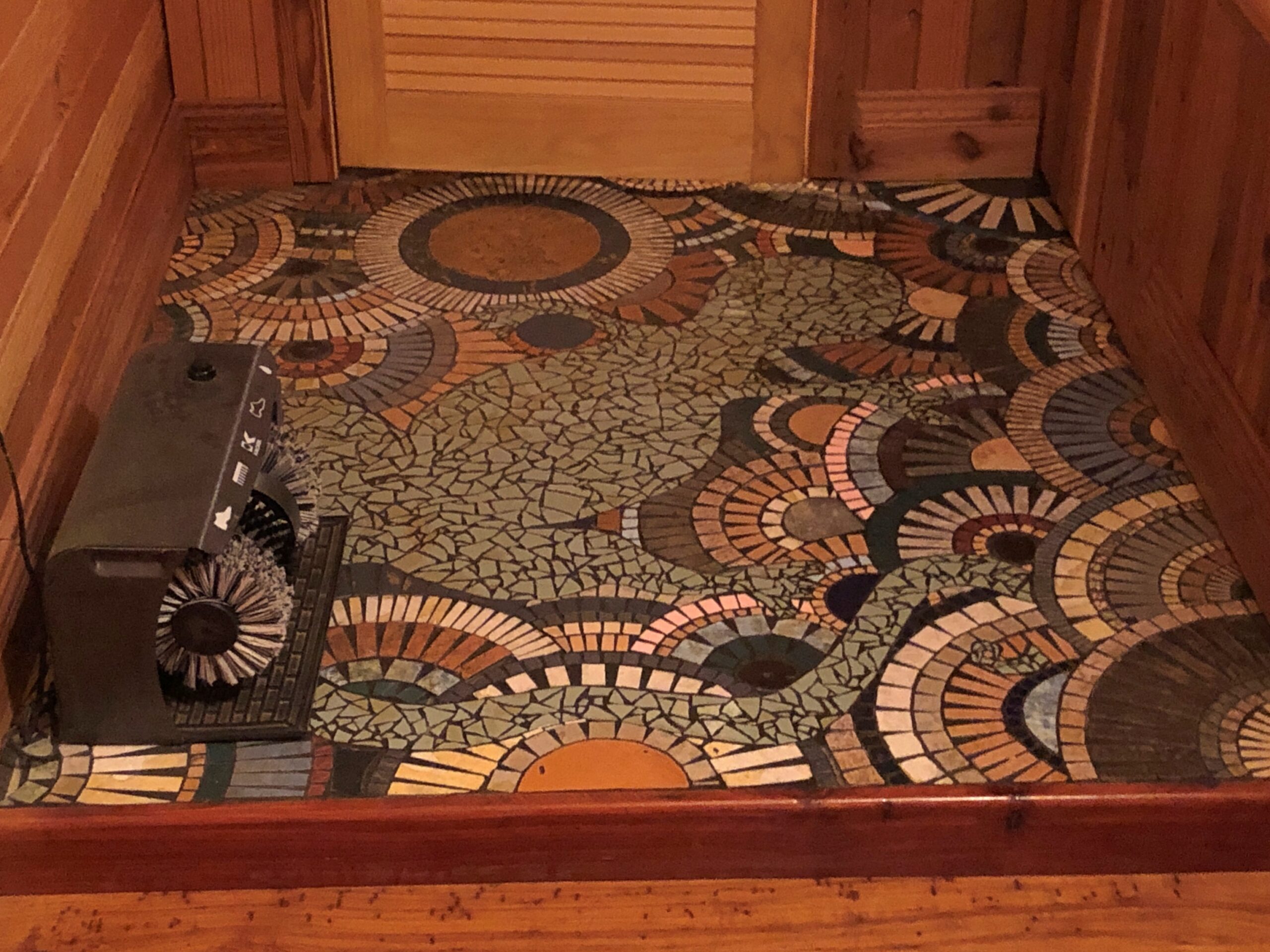
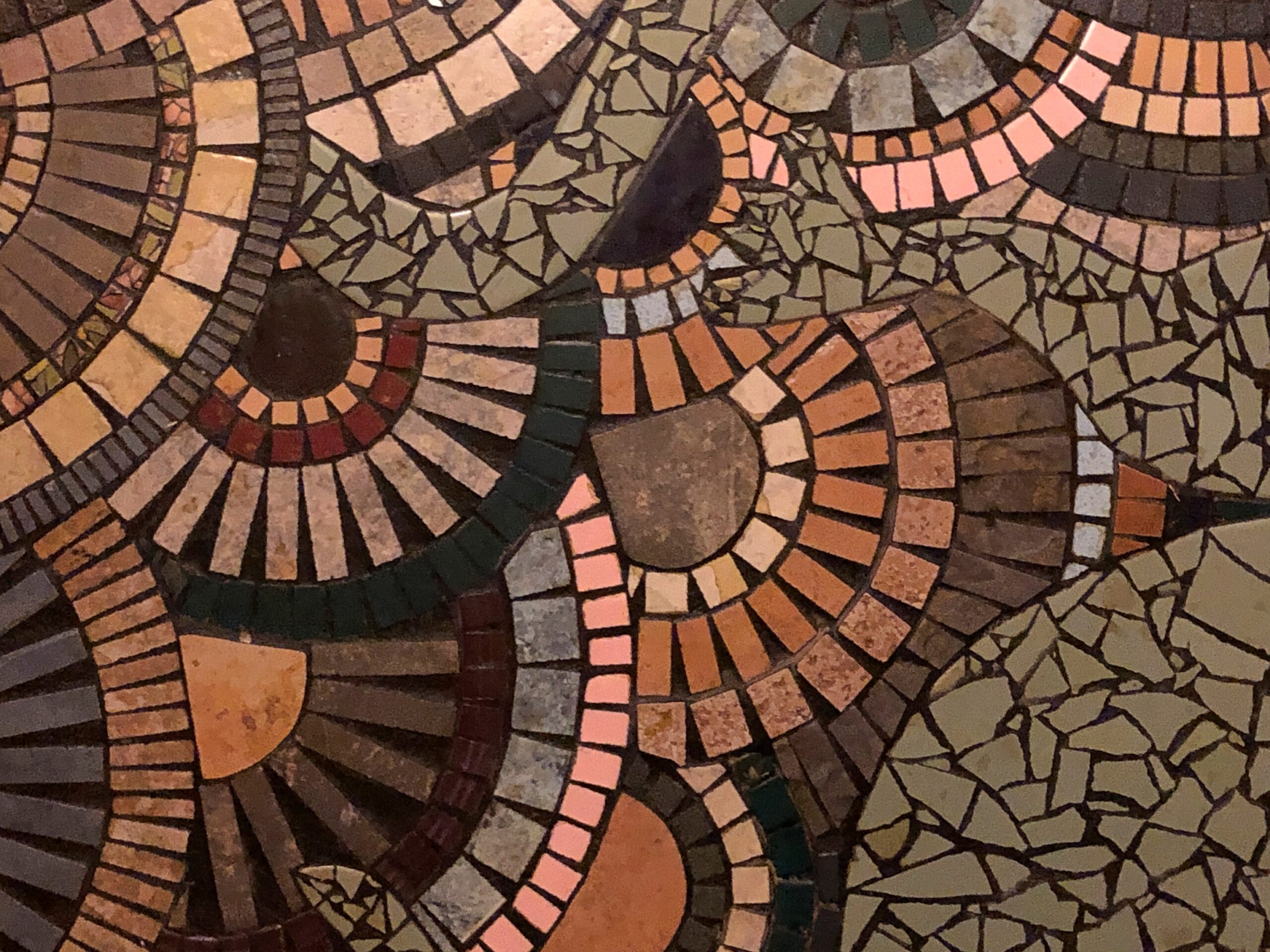
Floor designs that I’ll take for unique.
In our time, you don’t even need hallucinogens to ramp up some trippy floor action.
All you need is a basic AI image generator, while you remain sober as a judge.
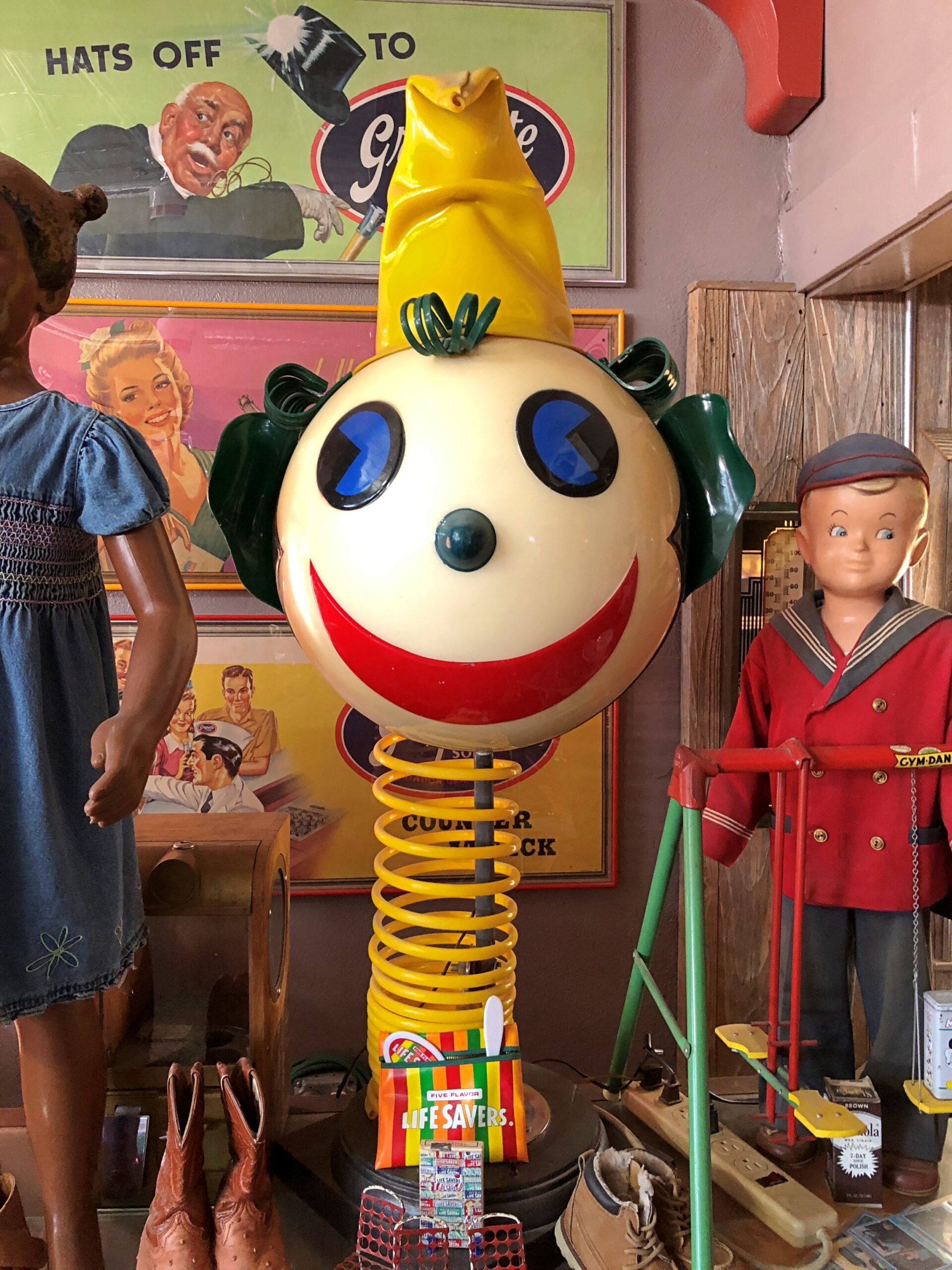
This clown in your nightmare. What did he look like again?
Right, Jack from Jack In the Box fame. Old Jack, that is, maybe from the early days of the fast-food chain in the ’50s and ’60s. Has that tired mid-century look because the mid-century was quite a while ago now. On the whole, even later versions of the clown has been retired.
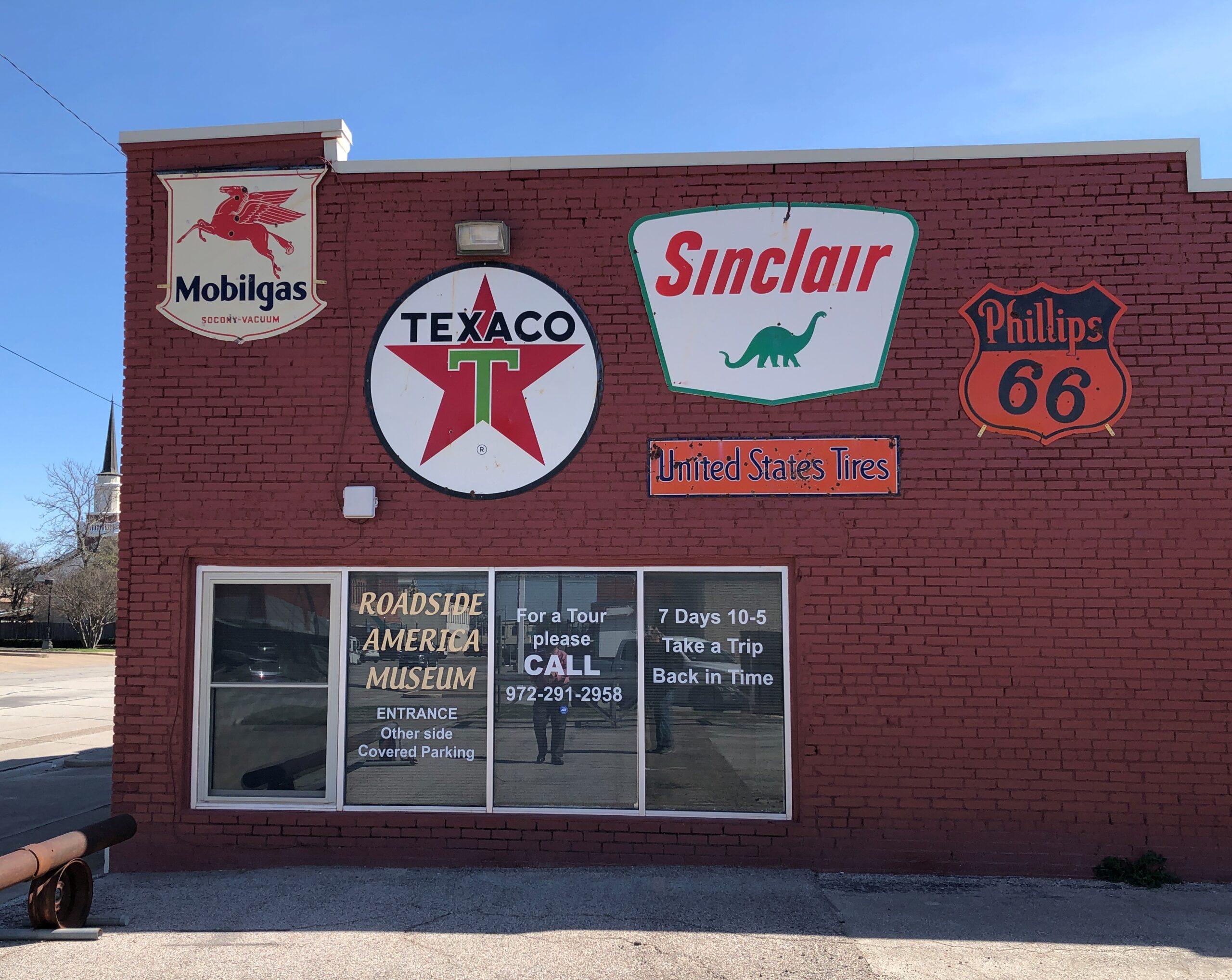
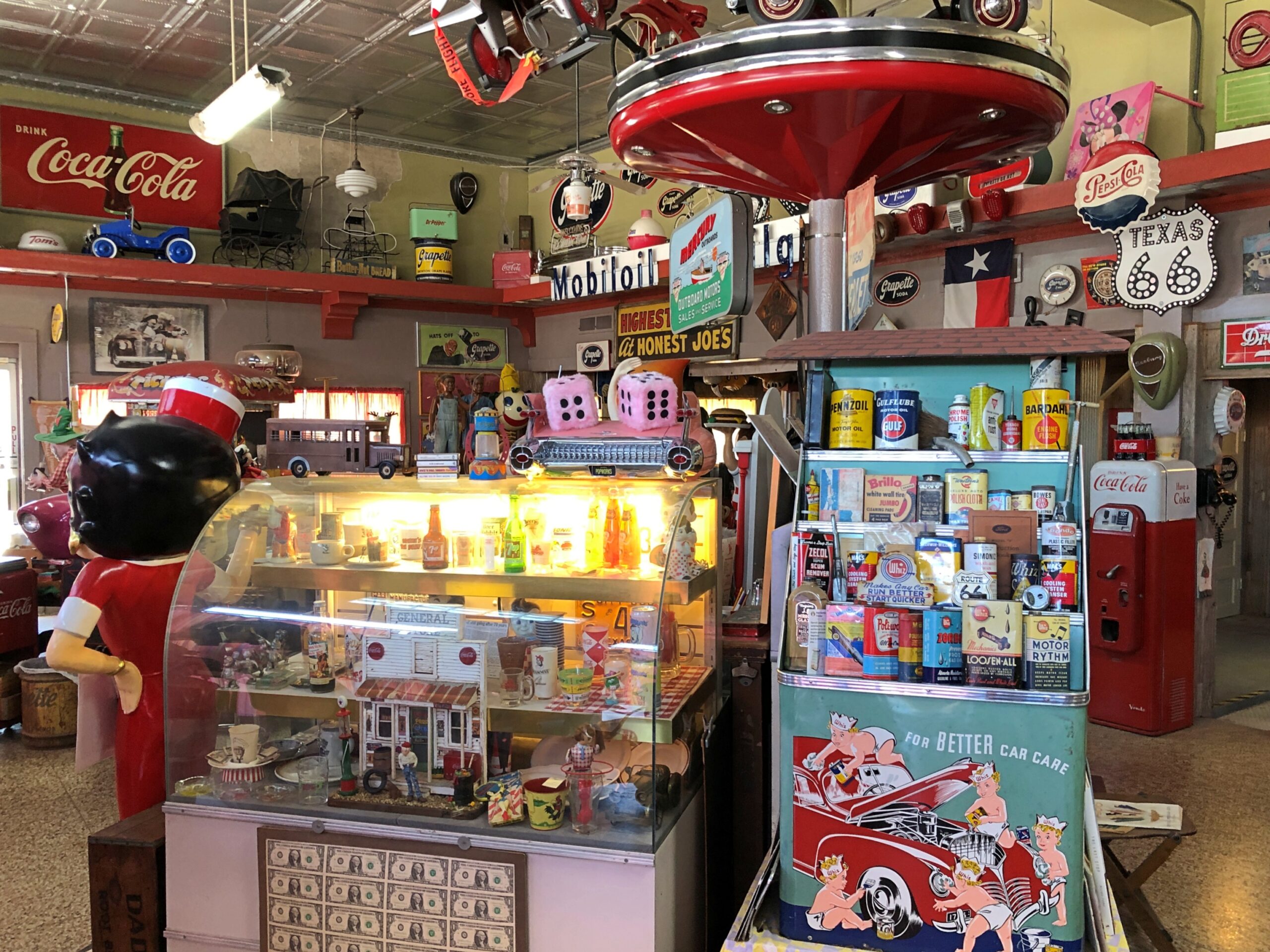
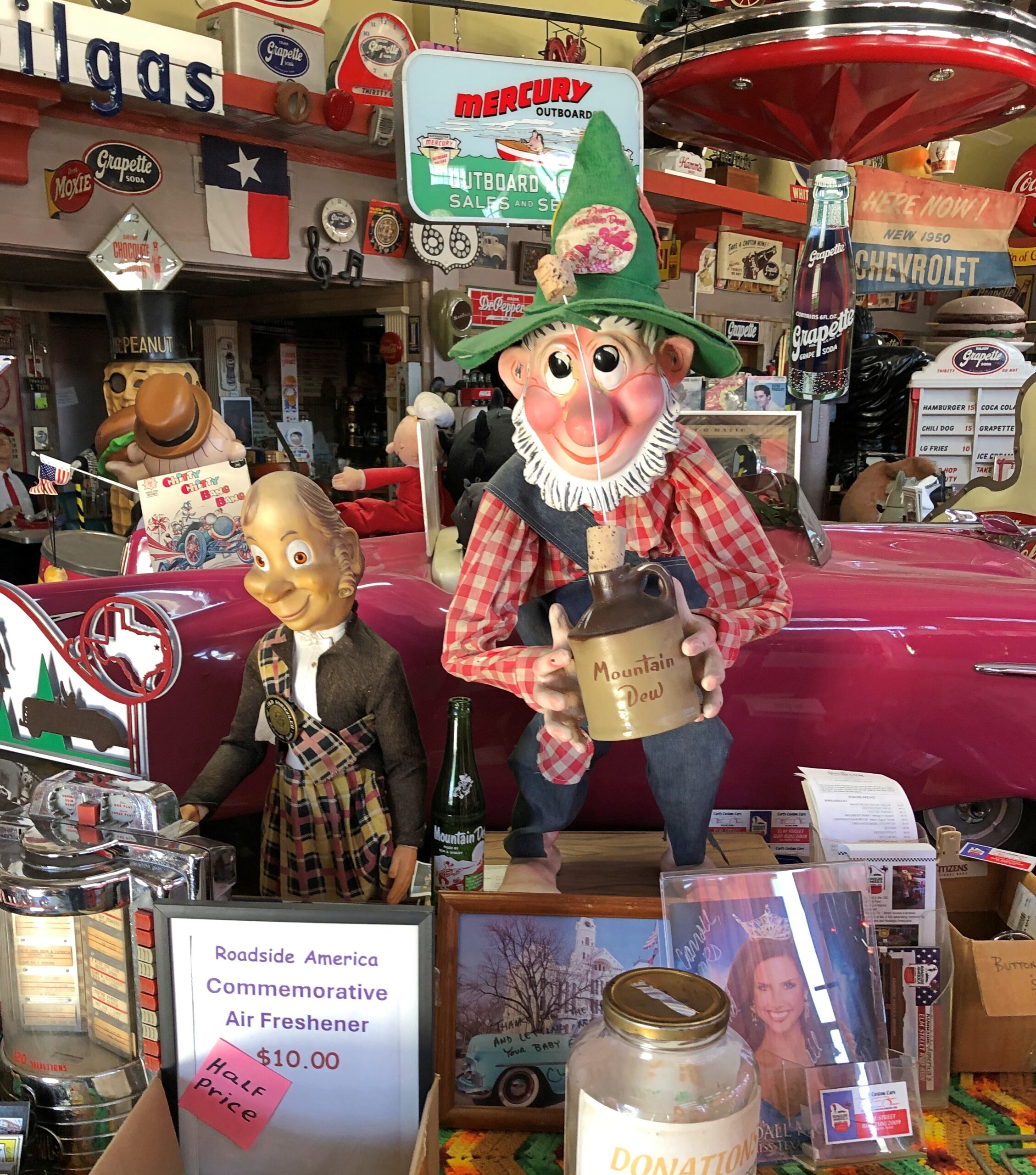
I was fully awake when I encountered Jack, an artifact at Roadside America Museum, Hillsboro, Texas, a wall-to-wall gathering of American roadside advertising, or at least items that were pretty close to the roads – a sign or novelty item or product you might see at a gas station or a diner or a bar or a small grocery store or any such mid-century service business for a nation newly on the road, and with great gusto. Items large and small.
Located on a modest street of Hillsboro, a town between DFW and Waco. Jay and I arrived around mid-day on February 23.
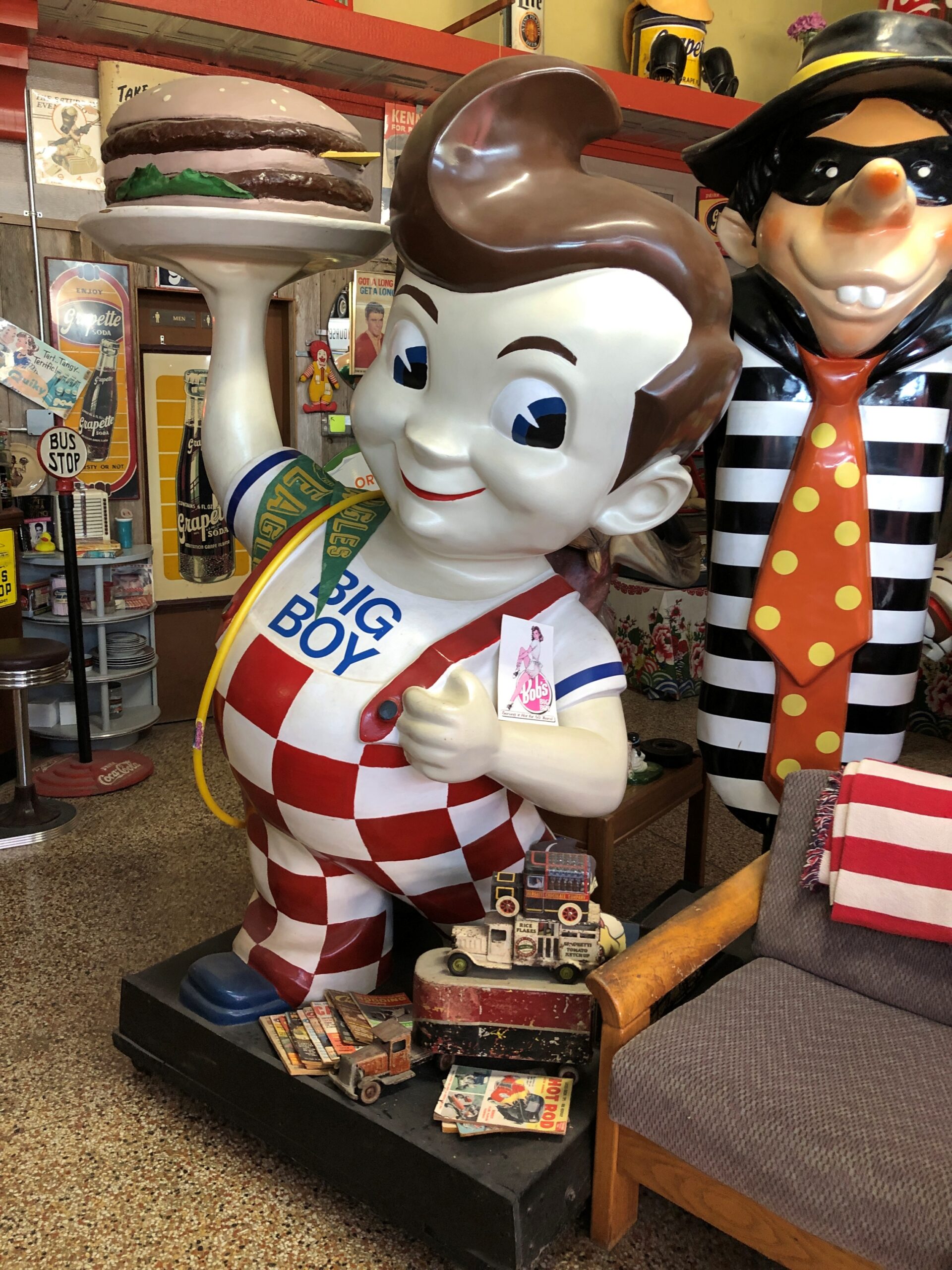
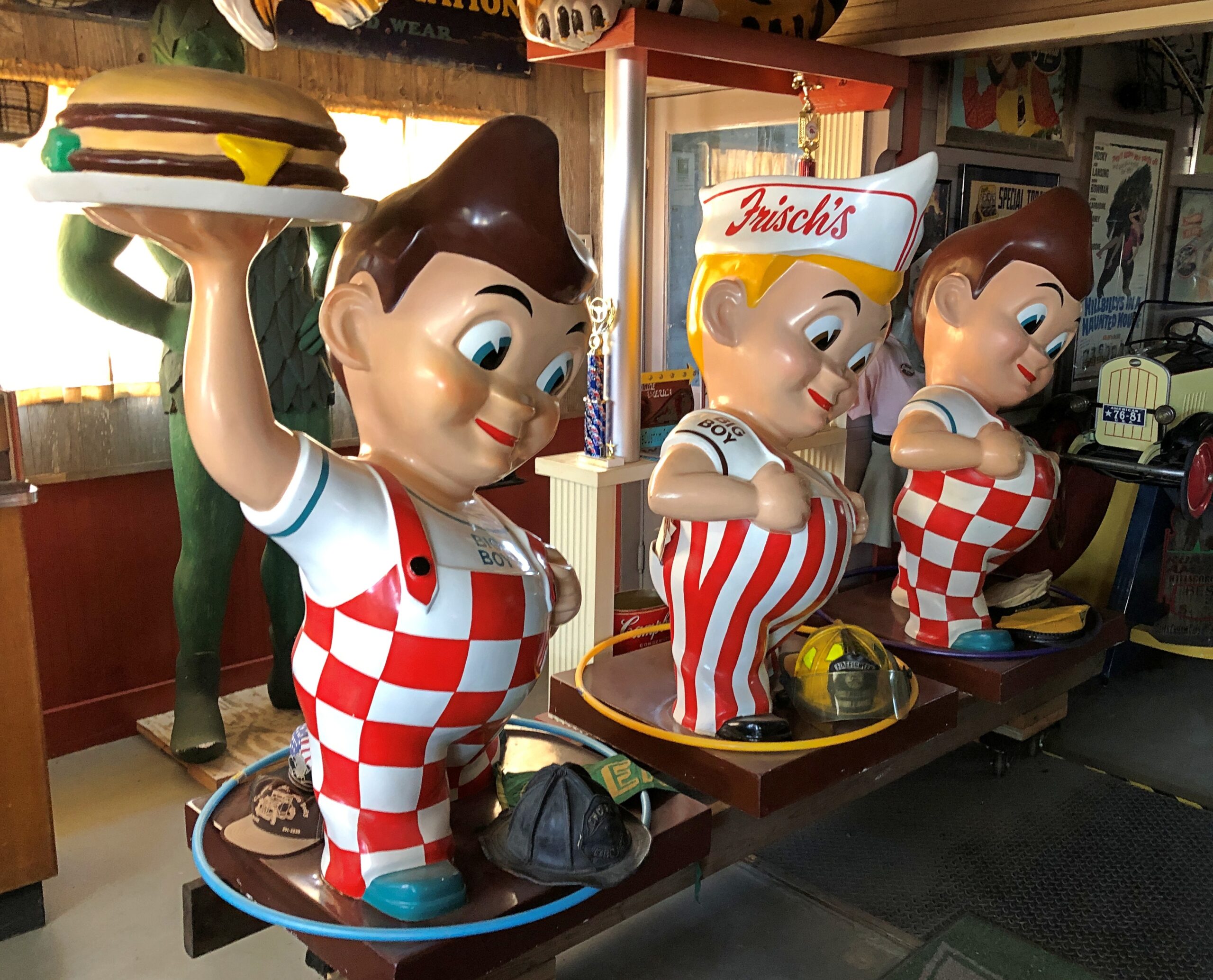
Jack is around, but there are also Big Boys in quantity and variety. If I were that first one, I’d watch out for the criminal element from McDonaldland, standing right behind him trying not to look suspicious. Sure, he’s a burglar, but he might be a pickpocket or even a stickup man, too.
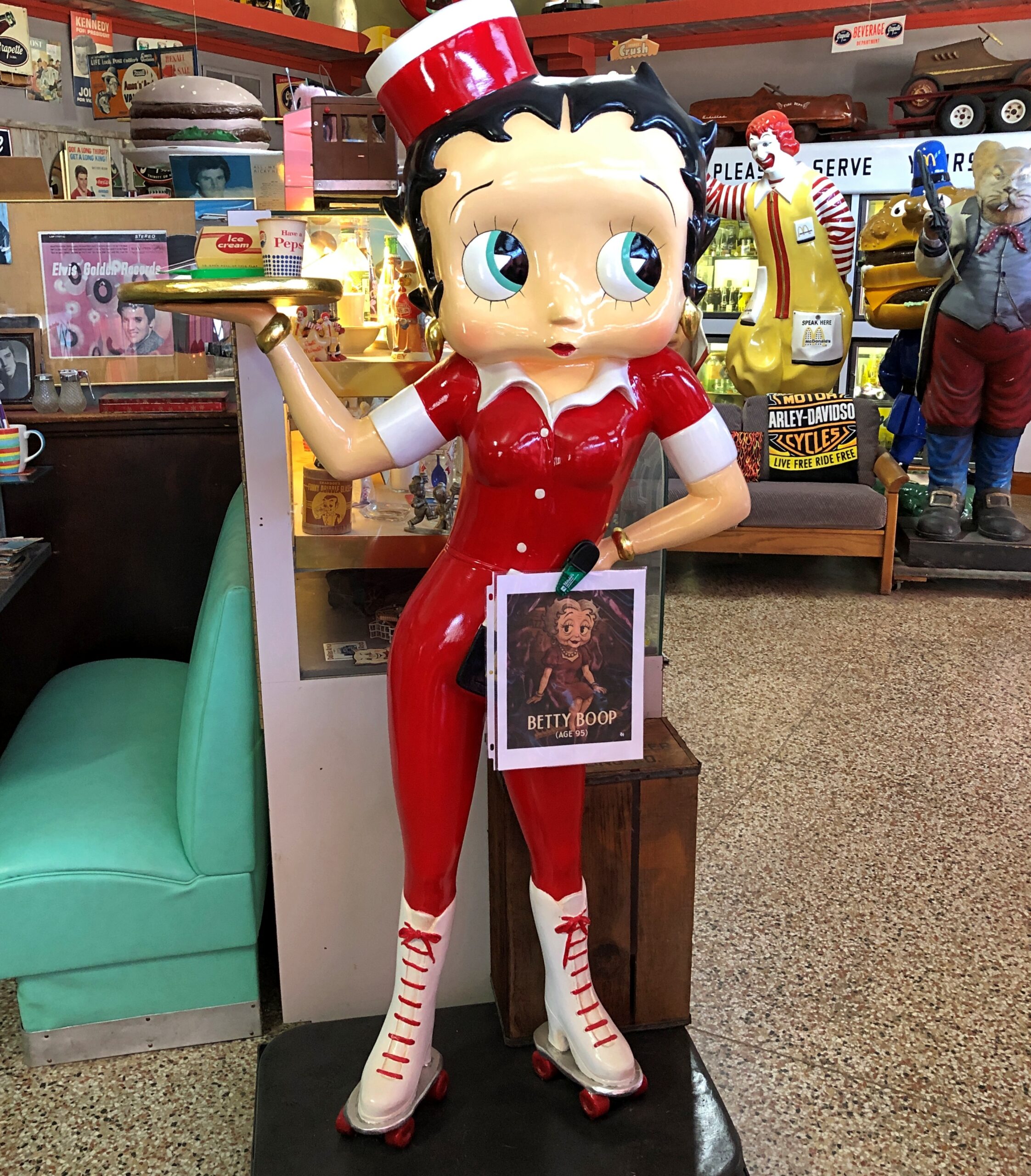
Betty Boop. From a slightly earlier time, but still pulling her weight as a carhop.
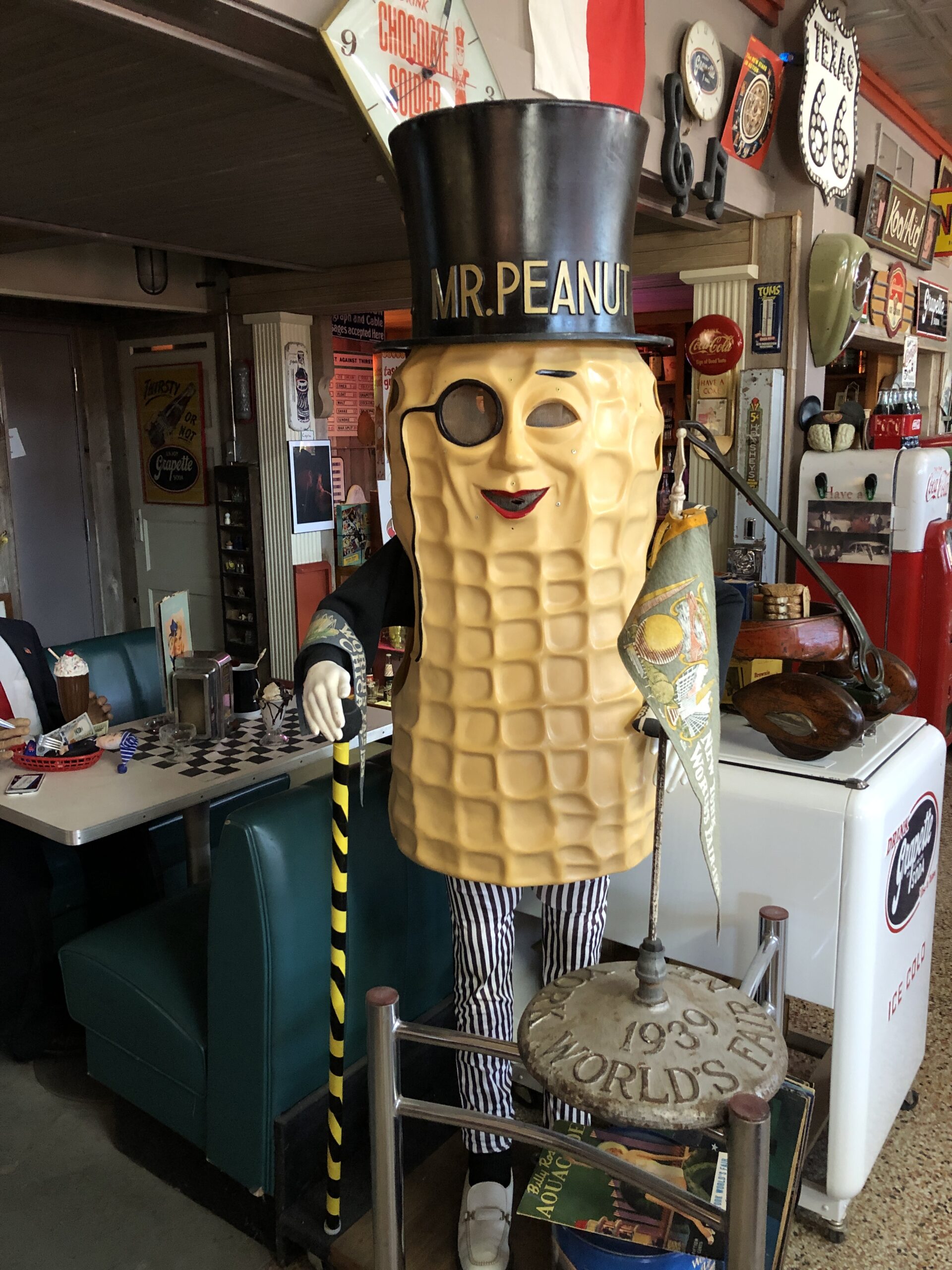
Mr. Peanut. Didn’t something happen to him? Died of a busted goober?
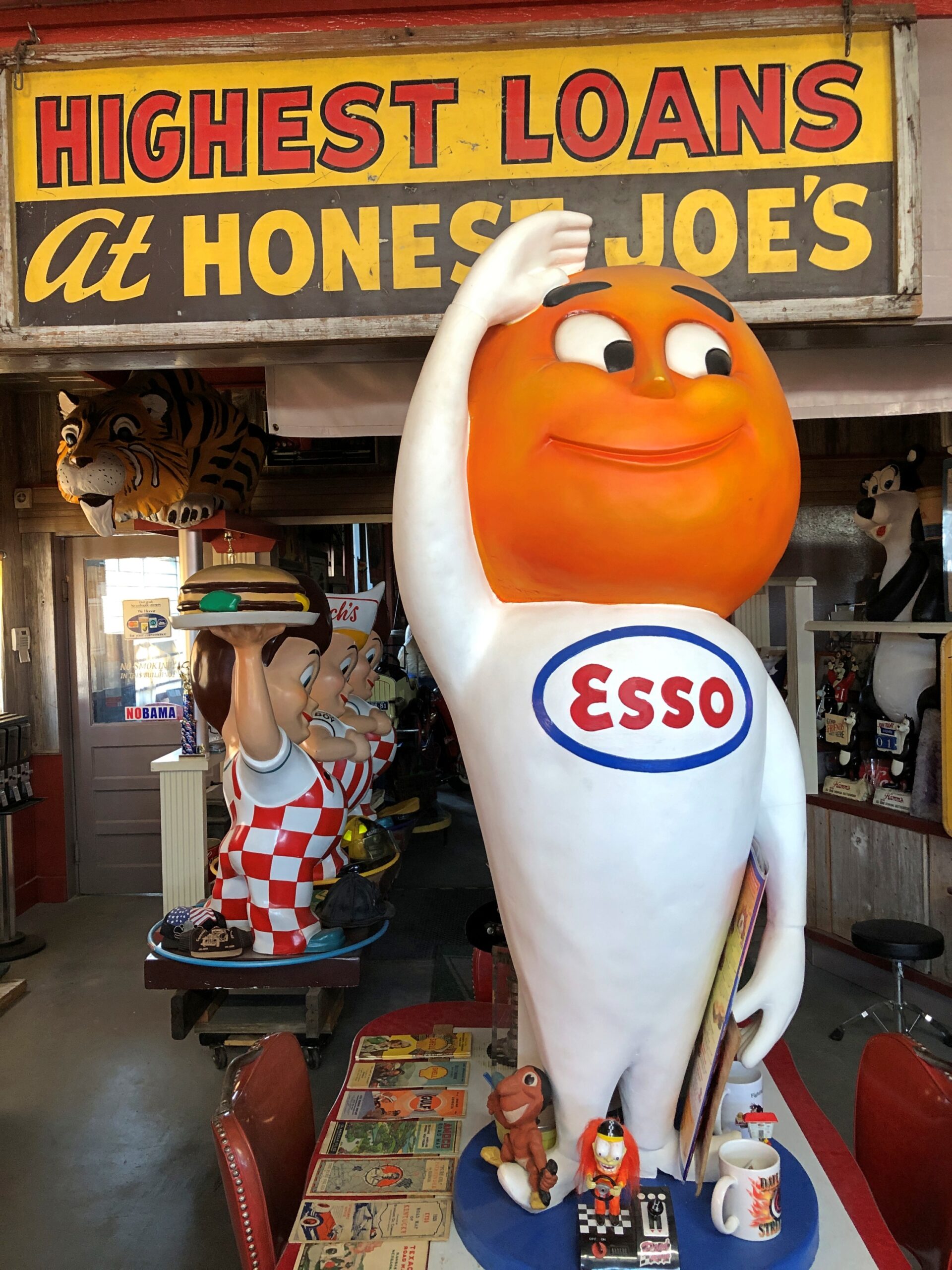
Esso. I’m barely old enough to remember the Exxon brand consolidation. (Mad magazine parodied that as “Nixxon: Still the Same Old Gas.”)
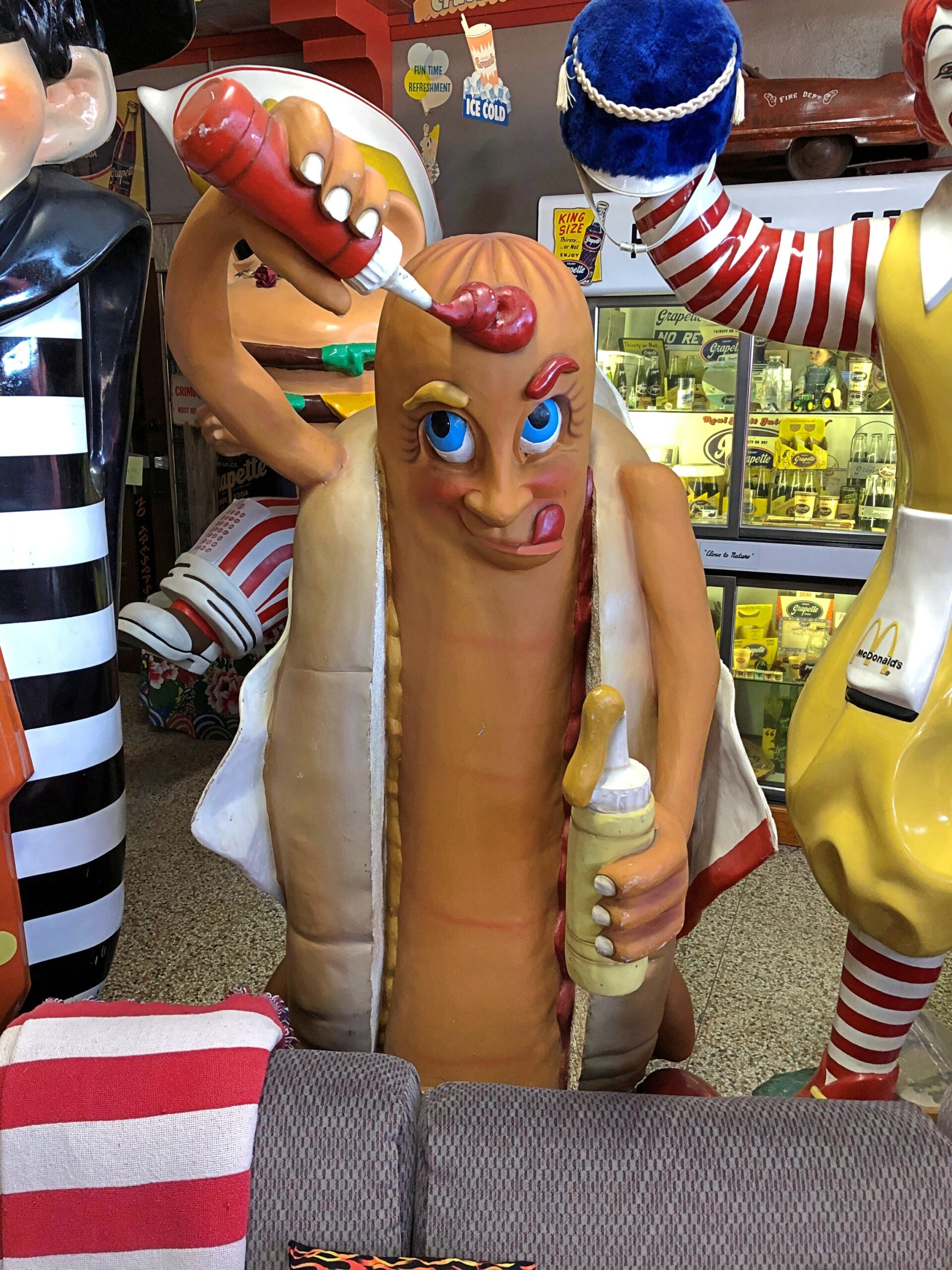
Who is this? Why does anthropomorphic hot dog man, though the liberal application of condiments, encourage larger creatures to take a bite out of his head, indeed consume him as completely as unfortunate extras in Jurassic Park movies?
Admittance to Roadside America – no relation to the web site and (former?) book series of that name that I know of – is by making a phone call outside its door. The proprietor, one Carroll Estes, comes to the door, invites you in, and shows you around the place, pointing out things and sometimes recalling the acquisition of this or that, or letting you know how rare or not certain items are. An affable old fellow, grizzled if ever anyone was, probably in his 70s. So the commercial memorabilia all around us was no memorabilia when he was a lad, but part of the lay of the land. I came along in time to see some of those ads or at least characters myself, though they were fading.
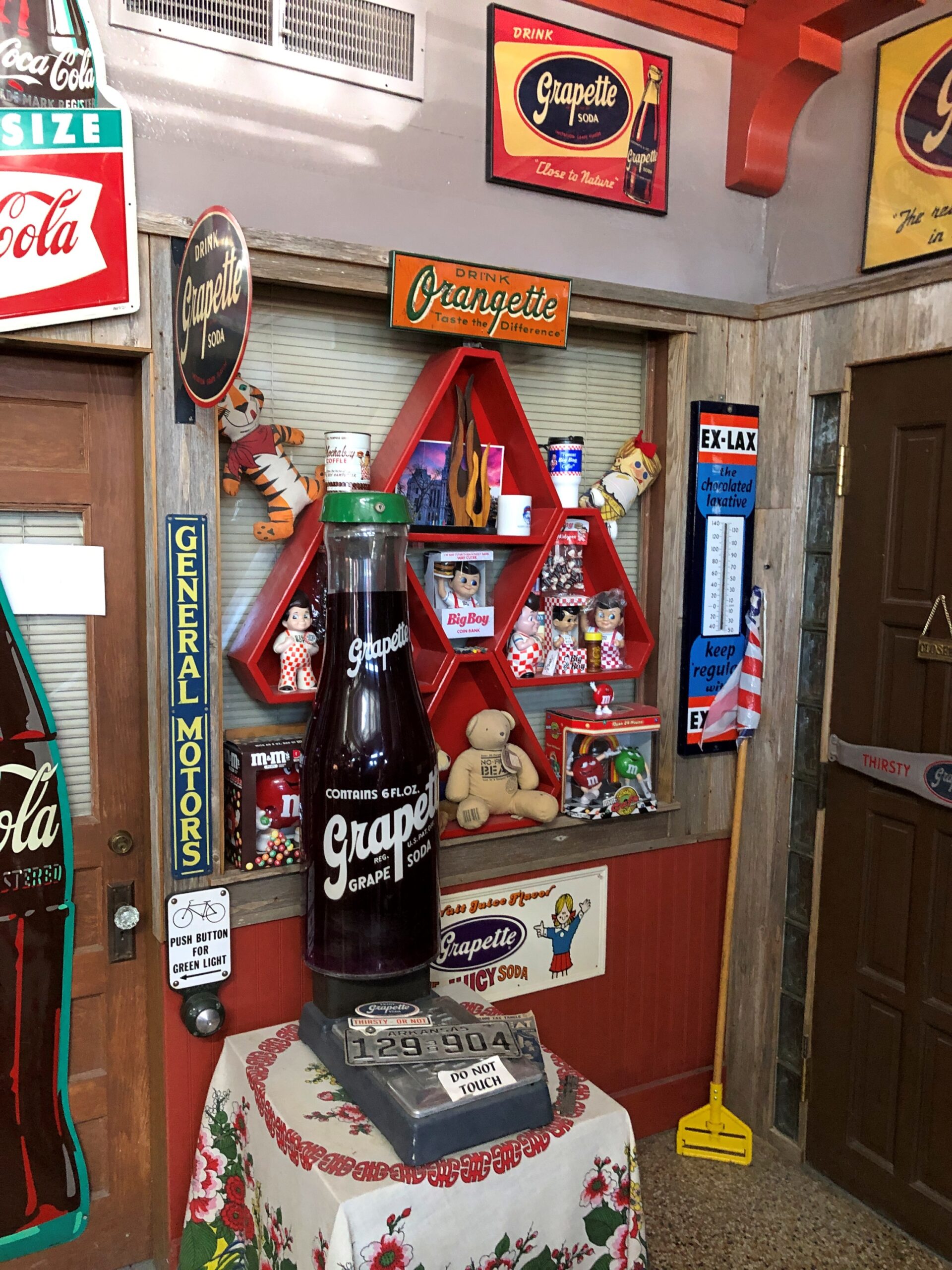
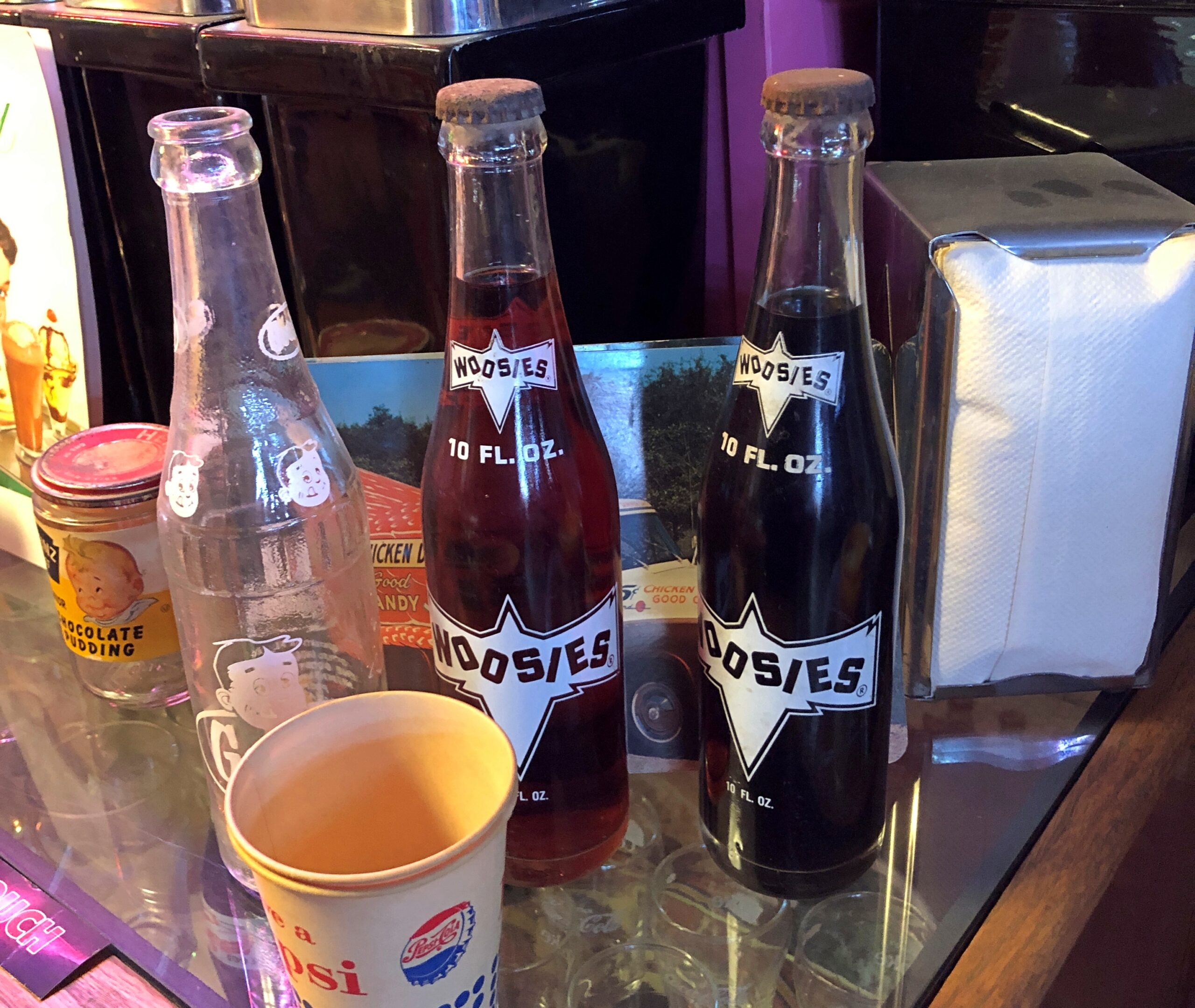
He said he was particularly fond of Grapette items. Once he pointed that out, I started seeing them everywhere.
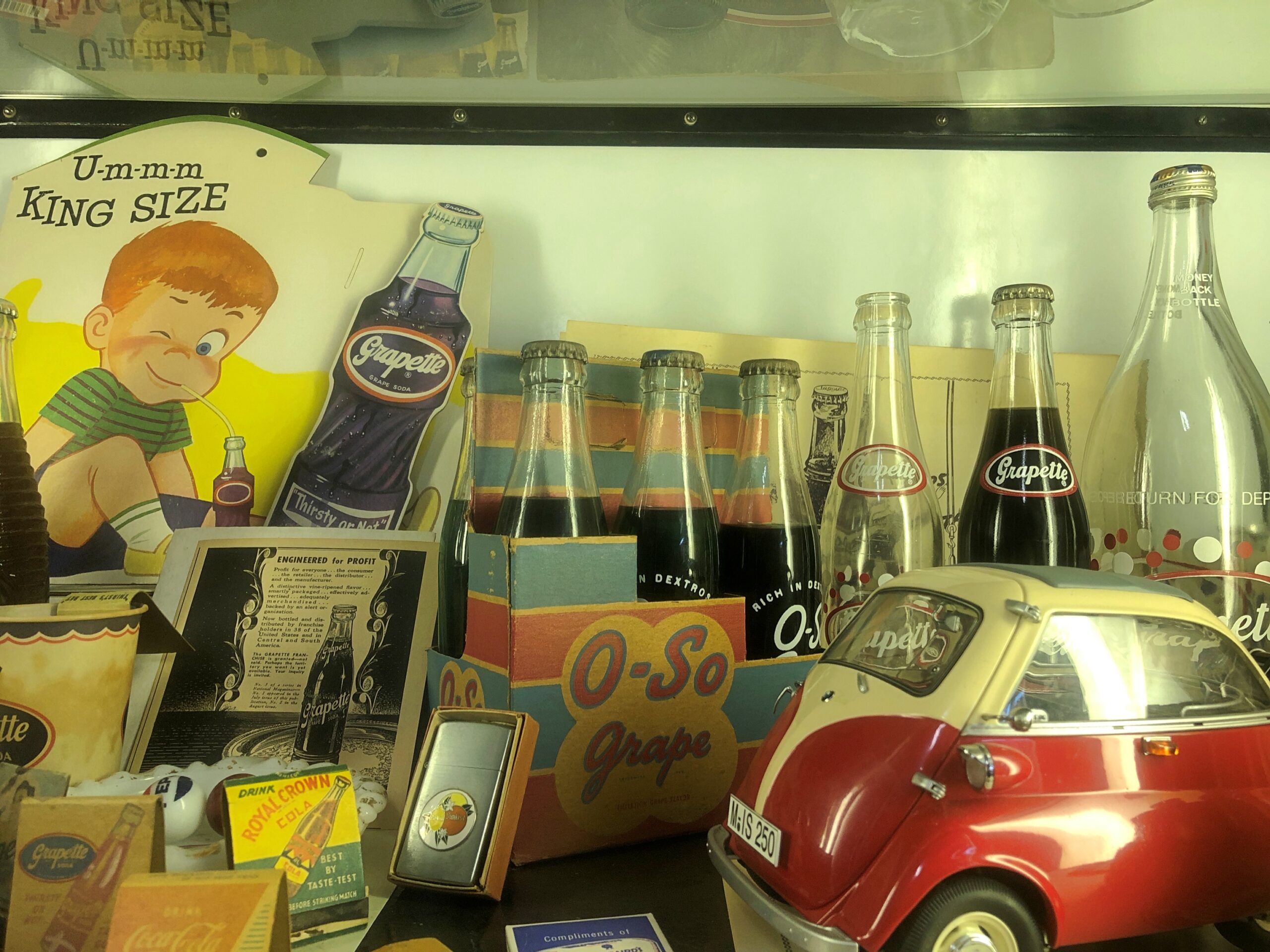
Been a long time since I had a passing thought about Grapette soda. It was available in north Texas in the mid-60s, and I’m sure I had more than a few Grapette bottle caps, once upon a time. I don’t remember its sister sodas, Orangette and Lemonette. According to Wiki at least, Grapette still exists as a house brand in Walmart’s beverage stable, and is popular even yet in Latin America.
I don’t remember O-So Grape.
Originated in Chicago and, like so many, has been revived at premium prices, which seems to go against the spirit of soda water you bought for coins in your misspent youth, but never mind.
There was much more. Mr. Estis has a sizable classic car collection in another part of the building, a much larger structure that had some industrial use at one time. He showed us around. He’d restored many of them himself, but he said he doesn’t do that as much anymore. He had some great ones, too. Wish I’d taken notes. But I was in the moment.
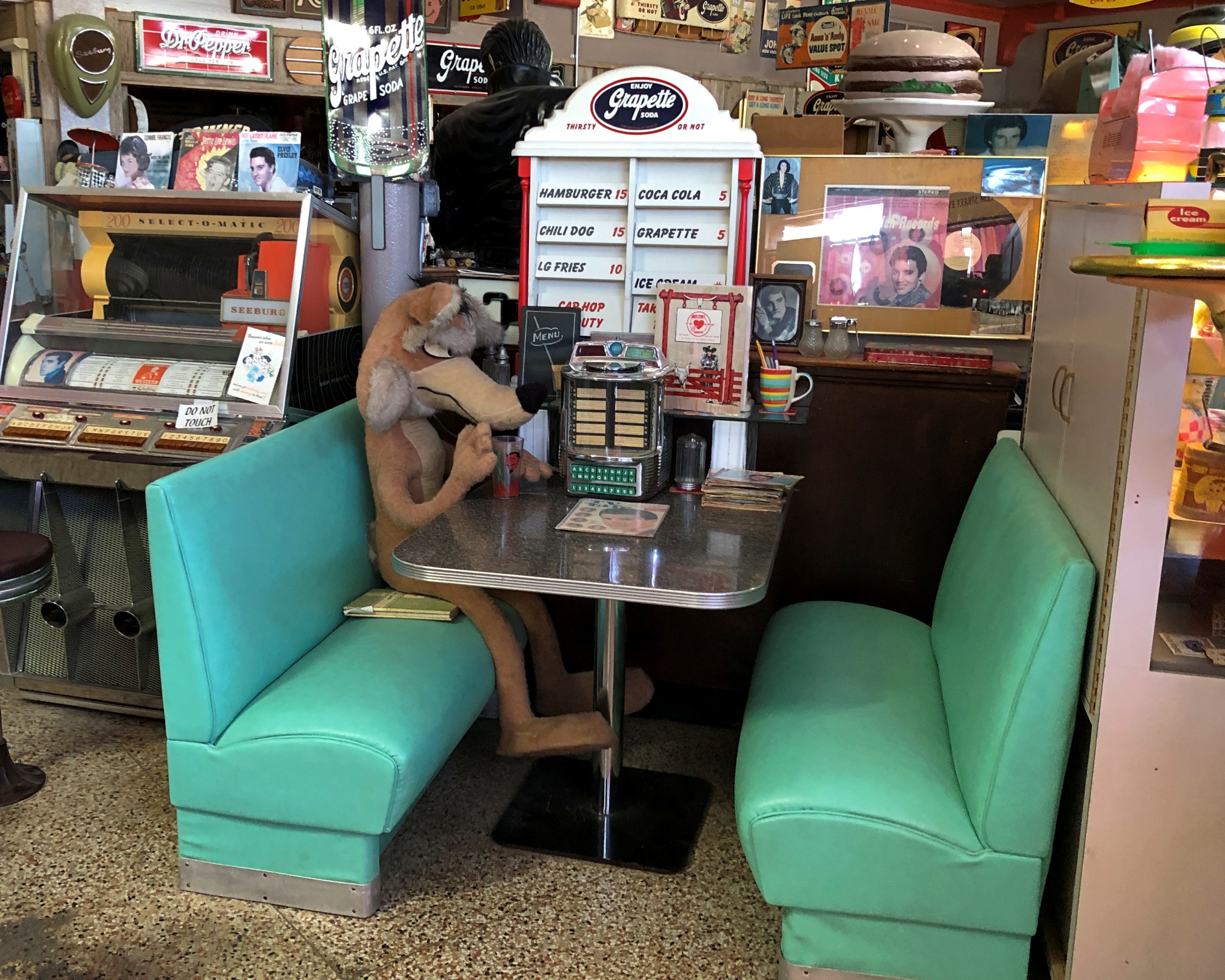
Even in the moment, you don’t notice everything. Especially at a chock-a-block place like Roadside America, where curios compete for your attention like a gaggle of souvenir-wallas in Delhi. It wasn’t until I looked at this picture that I noticed Wile E. Coyote sitting at the diner booth.
Stands to reason that Wile E. would patronize the few diners on the desert roads he haunts. He never managed to make a decent meal of the Roadrunner.
One place I didn’t go in February was Ghana, the west African nation. If I had to pick a place to visit in that part of the world, I might well pick Ghana, for various reasons. One is that the coffin shopping is unlike anywhere else.
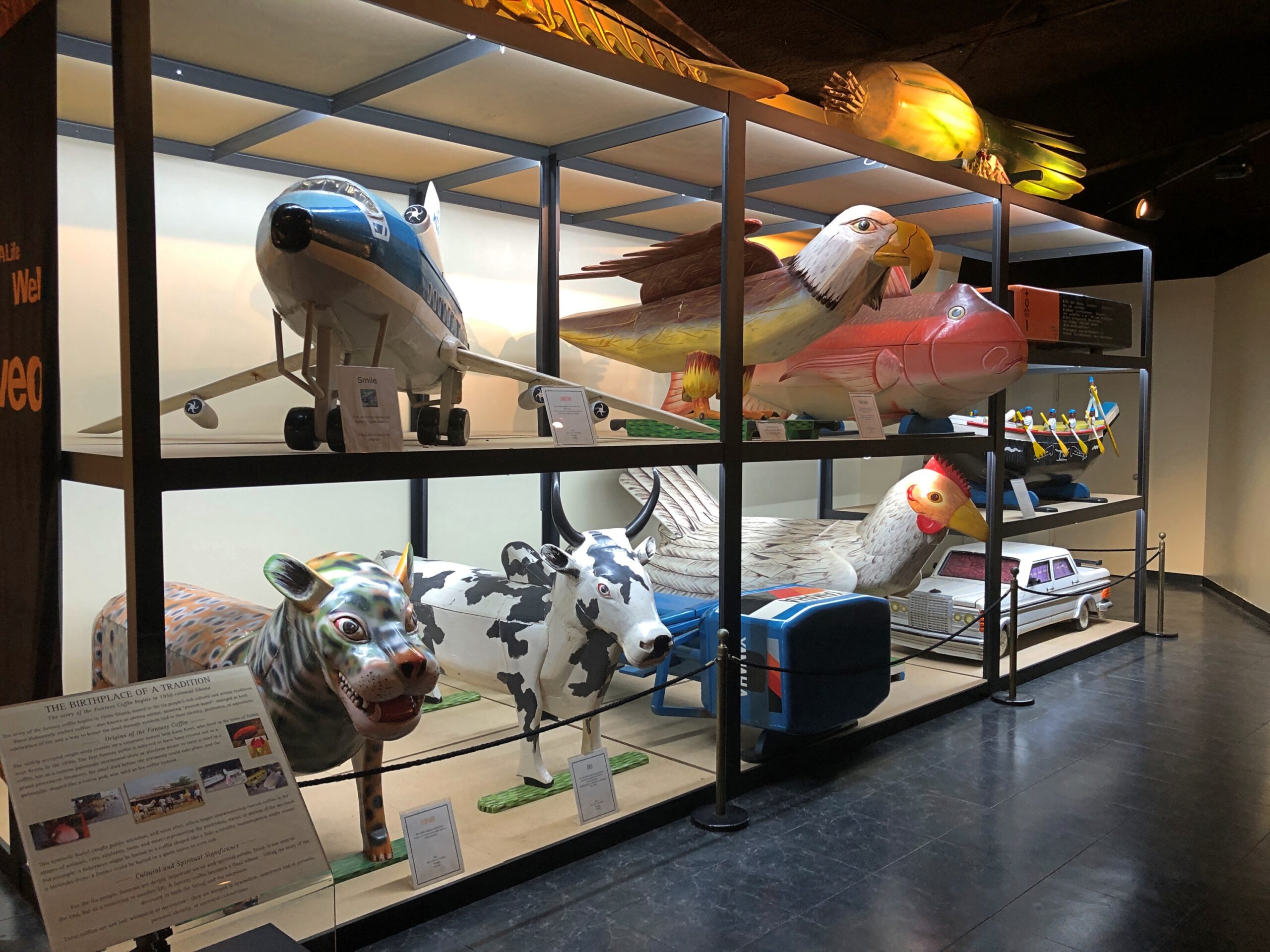
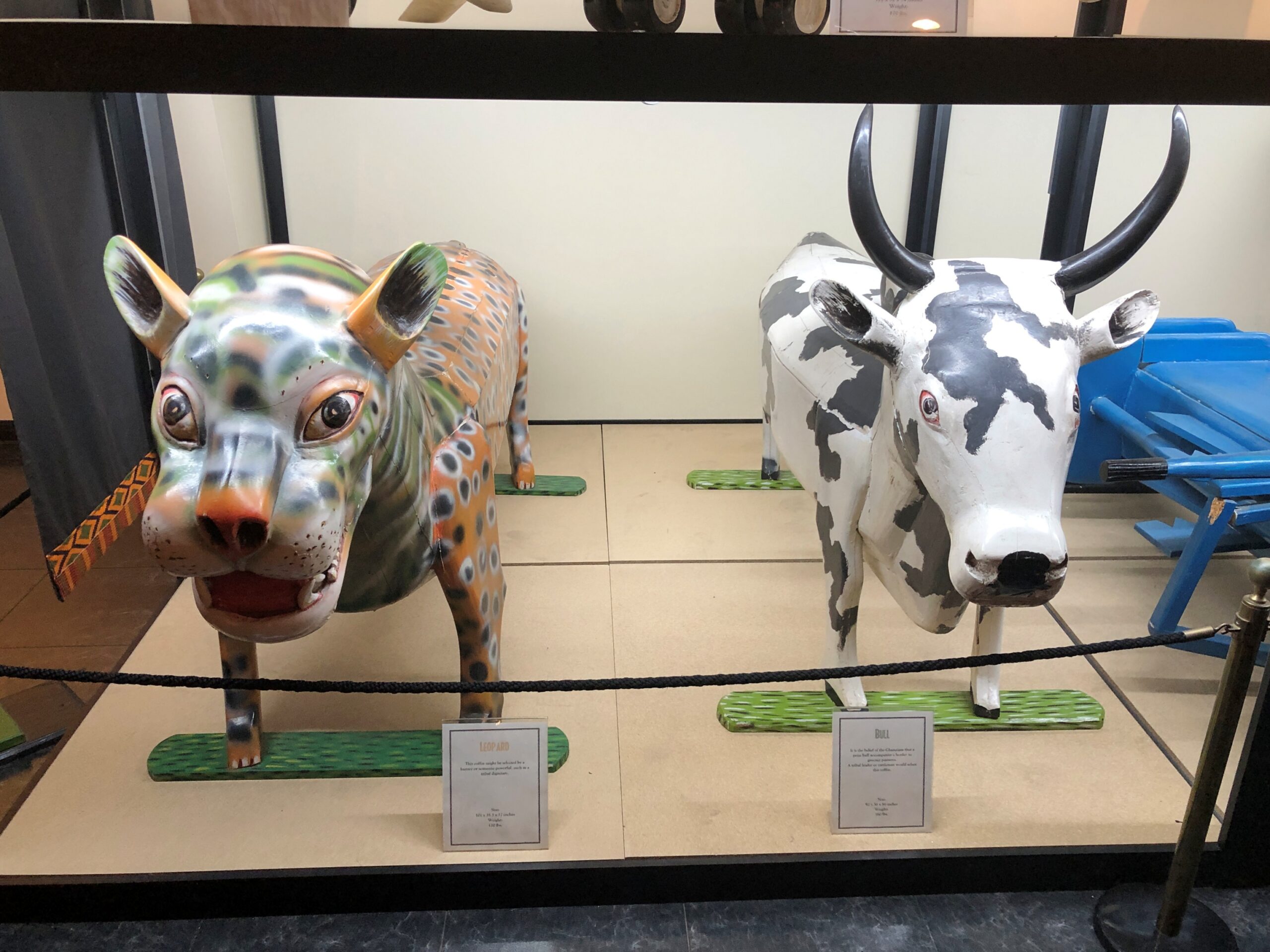
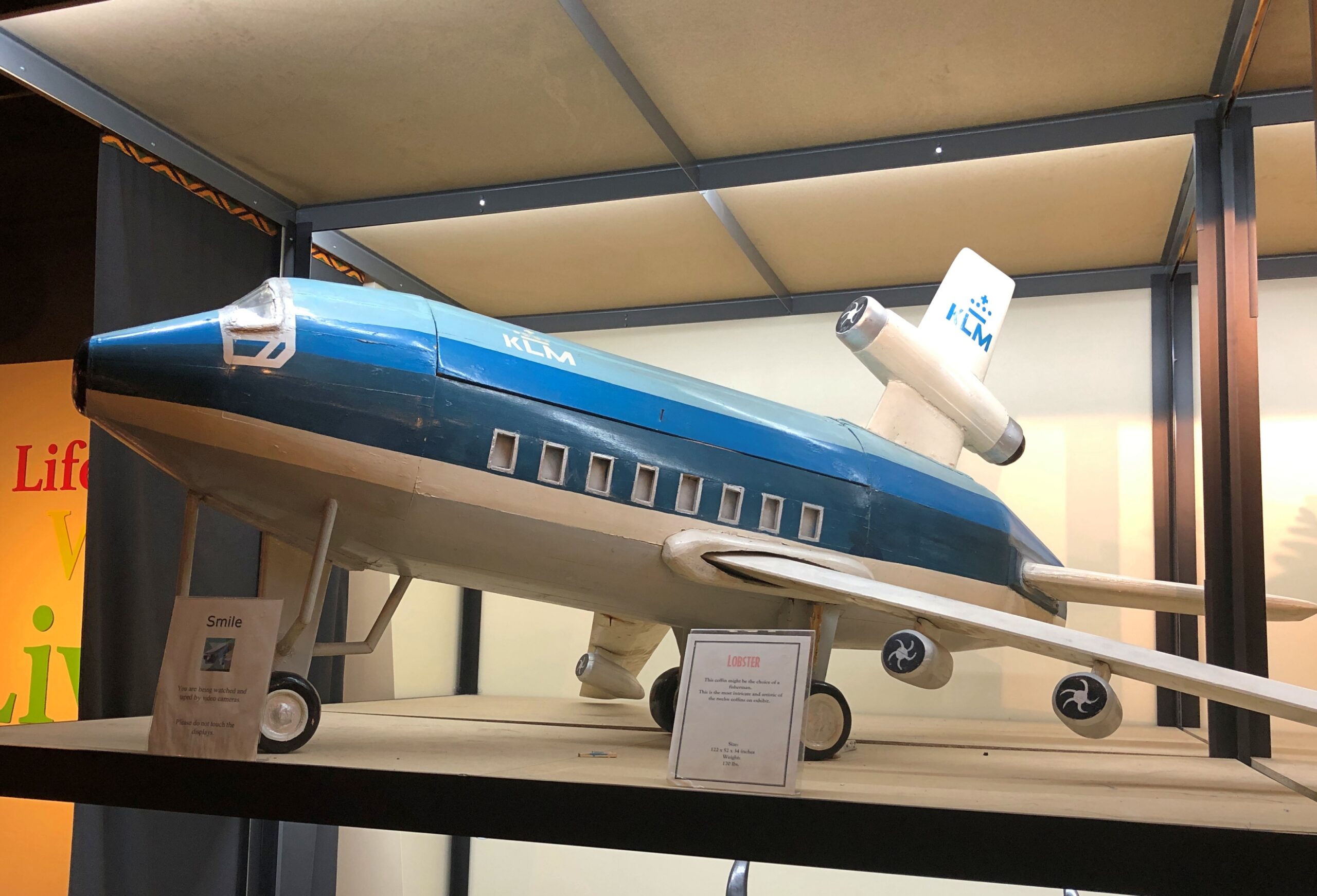
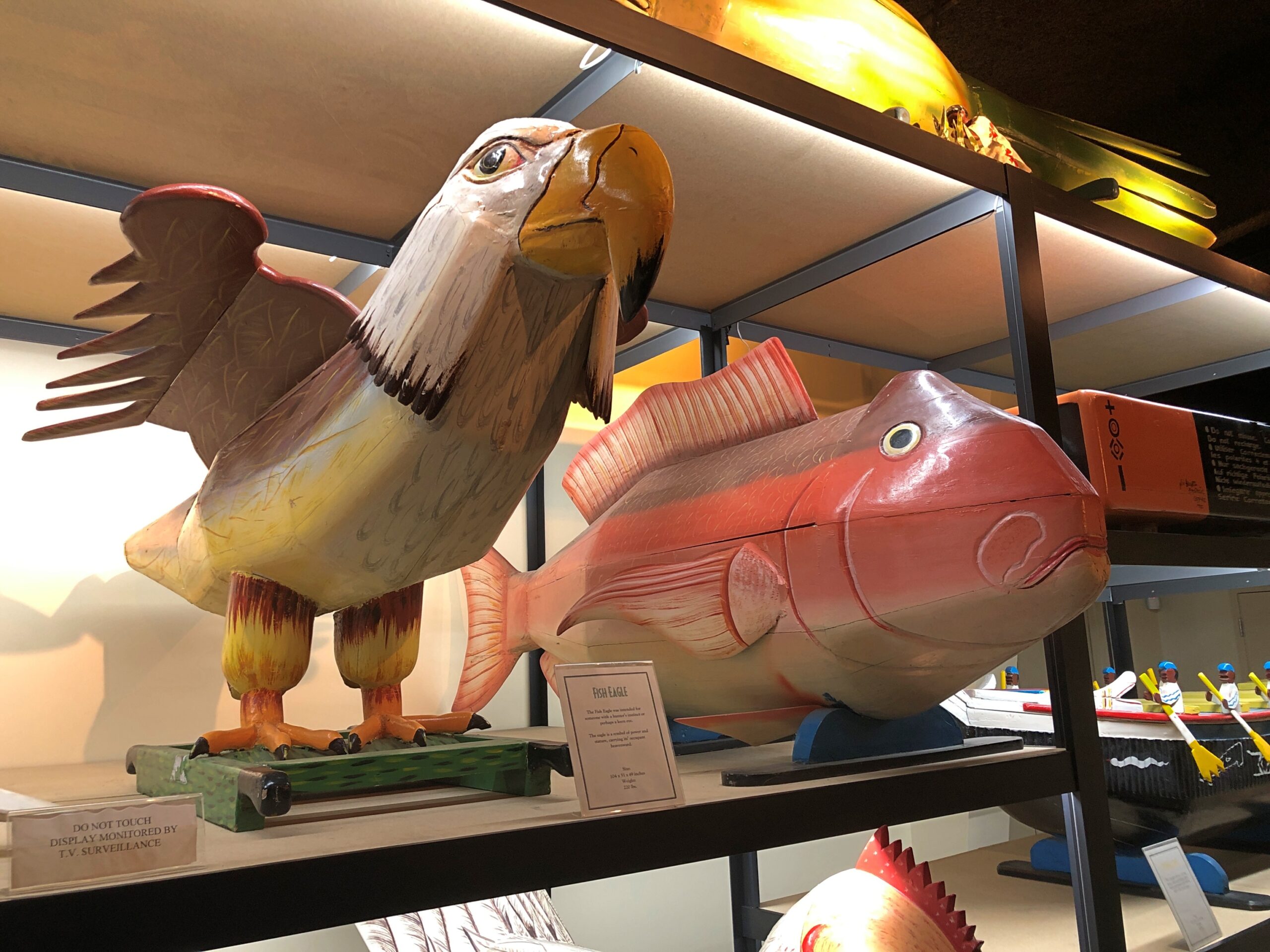
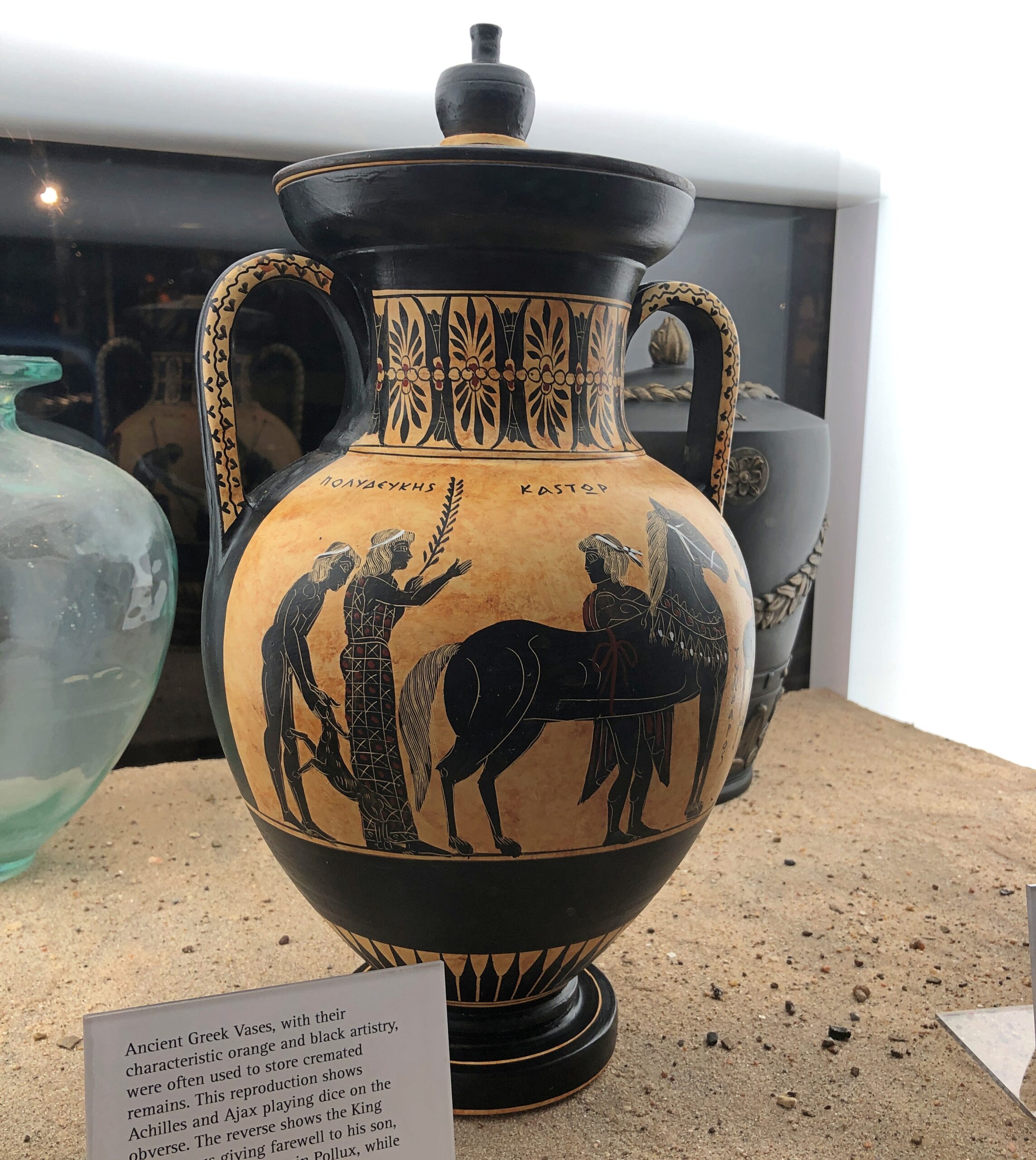
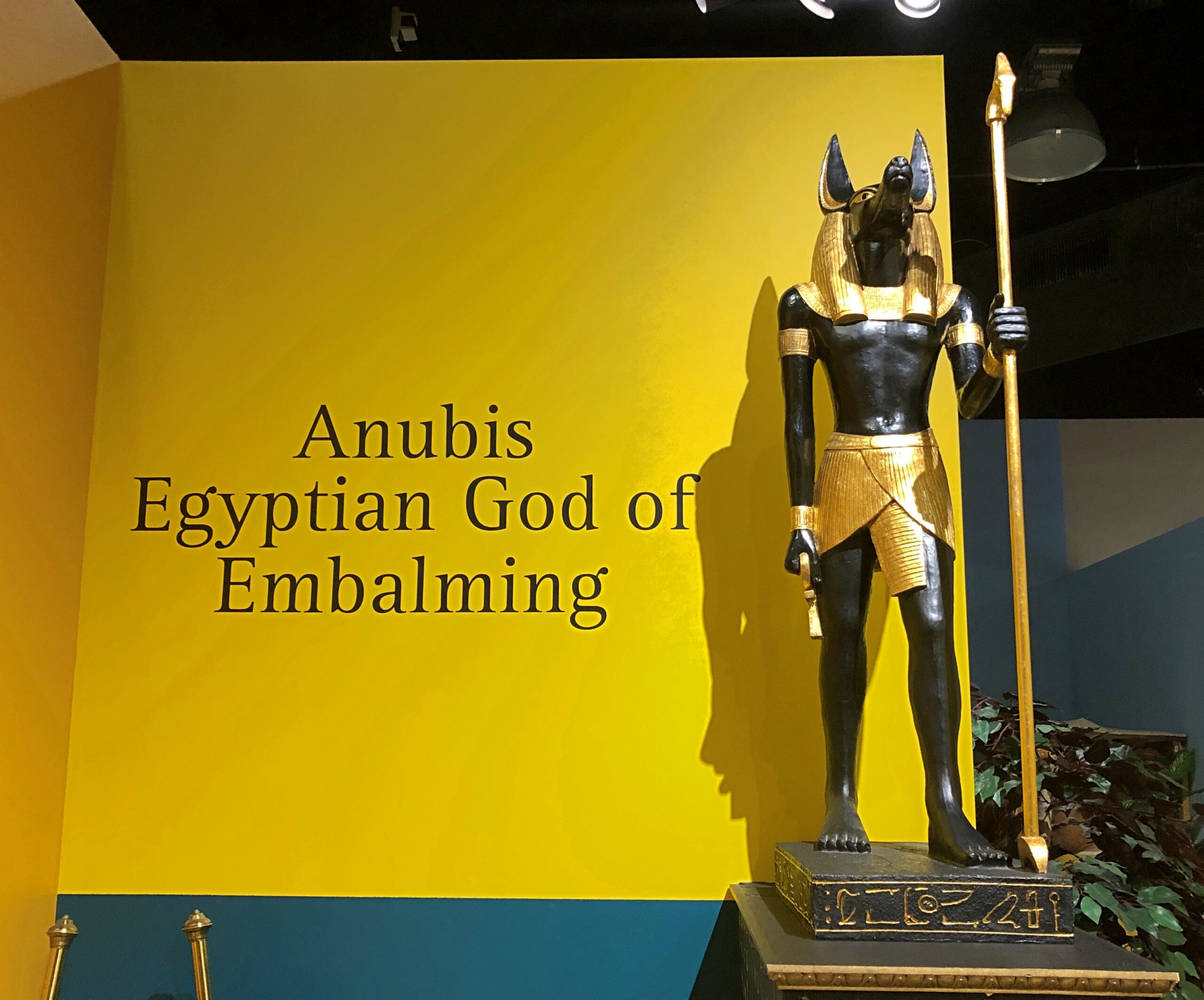
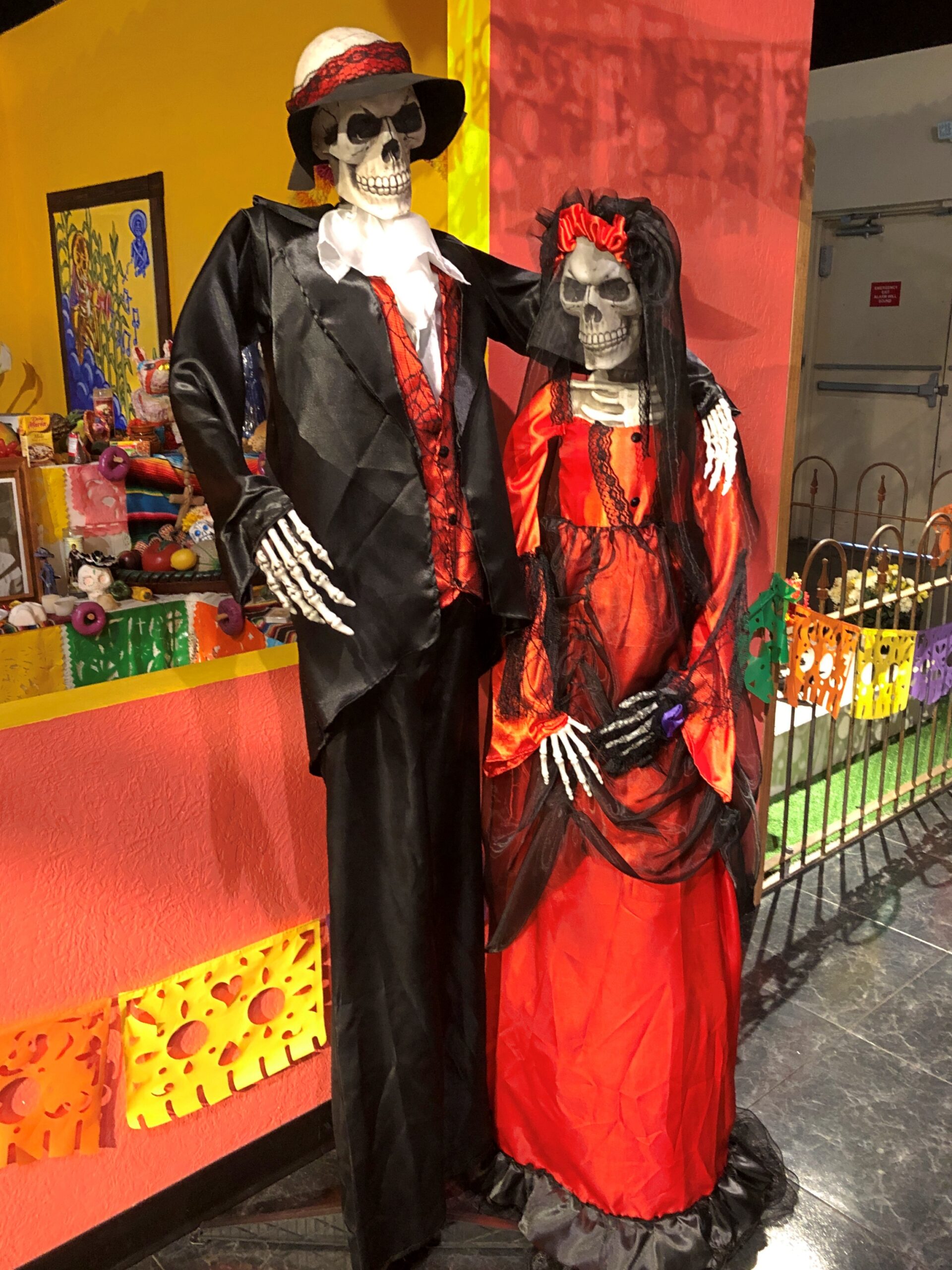
Rather, I stopped by the National Museum of Funeral History in northern Houston, which has a connection to Ghana. I was expecting a display of coffins maybe, but the museum has so much more: many hearses, horse-drawn and automobiles; items from the funerals of U.S. presidents and popes, including a large display about the funeral of President George Bush the elder; entire sections on cremation and embalming from the earliest times to now; Victorian death memorabilia in its macabre (to us) variety; a Day of the Dead exhibit; and, to my surprise, Ghanaian coffins, which the museum calls the largest such collection outside west Africa.
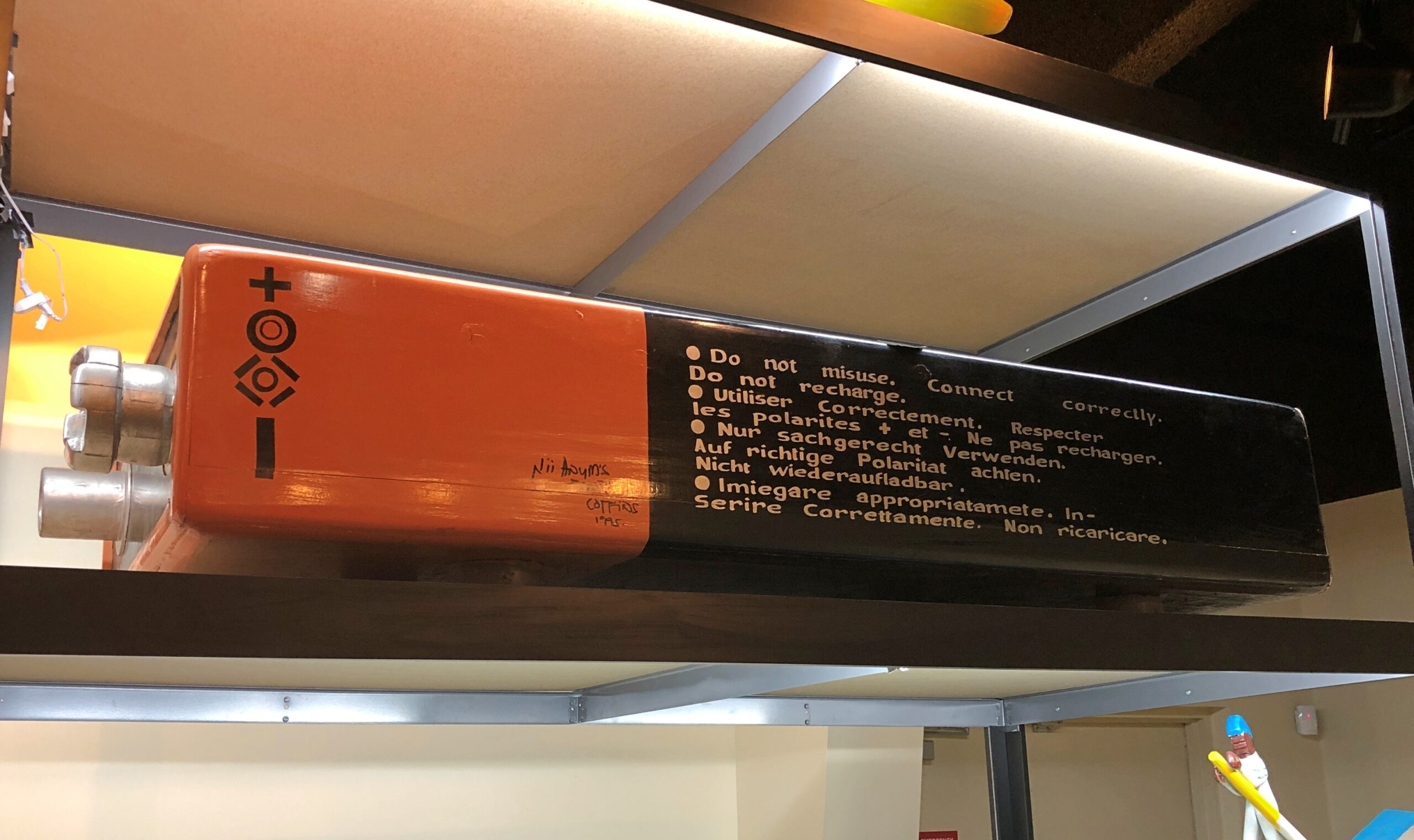
My favorite, though it’s a hard choice: the Duracell coffin, with its distinct copper top. Guess those batteries are sold in west Africa. You’d think Energizer would be the better choice.
The museum, founded in 1993, occupies more than 30,000 square feet in an unassuming building in a neighborhood of unassuming buildings. Had it not been for the billboard advertising it on the highway into Houston, I might have missed it. Or not. I have a way of ferreting out smaller museums. One important advantage of the NMFH: it’s open on Mondays. Many Houston museums are closed on Mondays and Tuesdays — the two days I was in town.
As with many specialized museums, NMFH is the legacy of a single person with a driving interest in a single subject and, in his case, access to many of the relevant artifacts. The subject just happens to be death adjacent, so when I mention the museum, people get a little weird.
“The idea for the Museum grew from Robert L. Waltrip’s 25-year dream of establishing an institution to educate the public and preserve the heritage of death care,” the museum says. Waltrip, a Houston mortician born to an undertaker father, didn’t need death care himself until recently, dying in 2023 at 92.
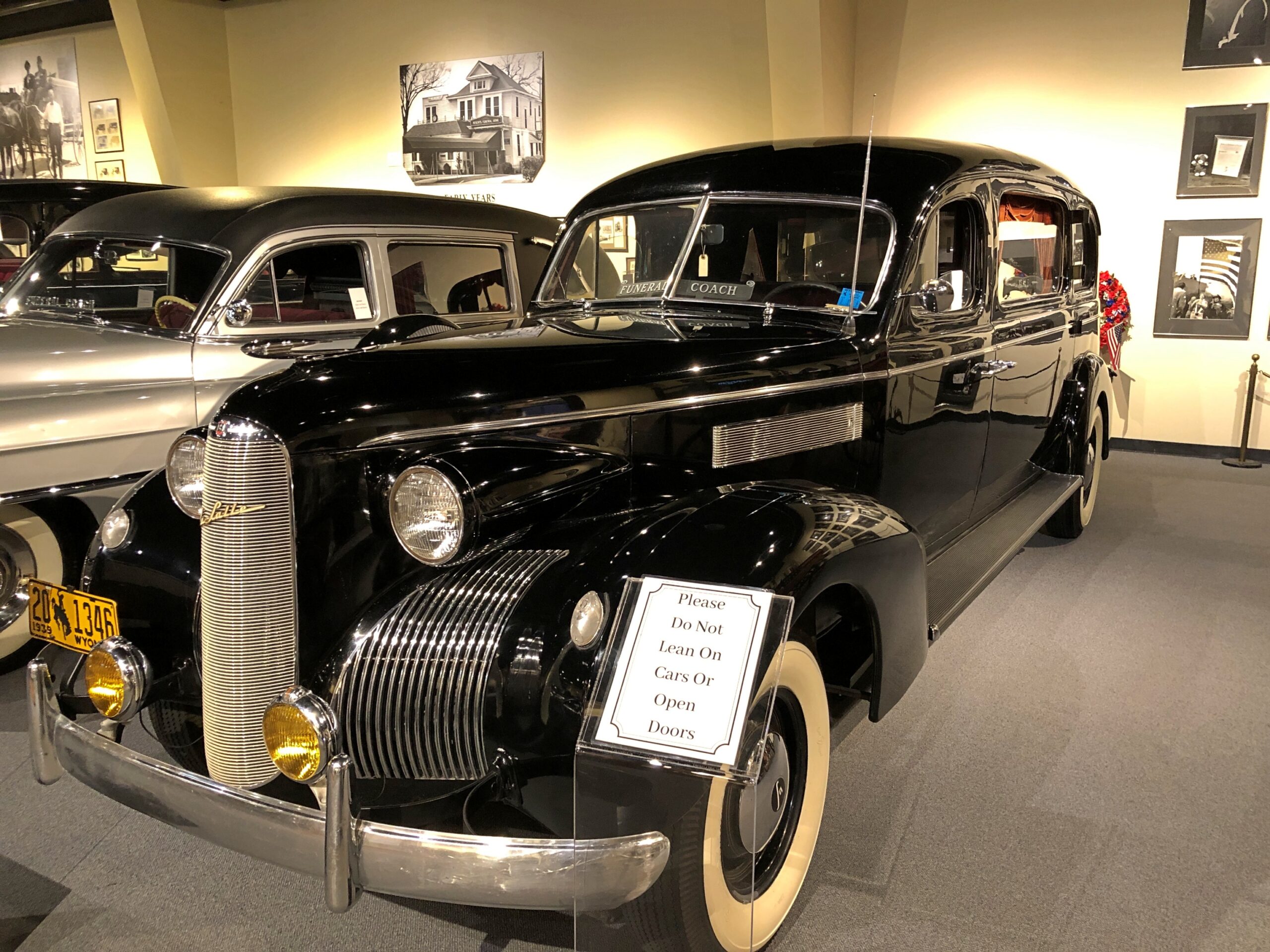
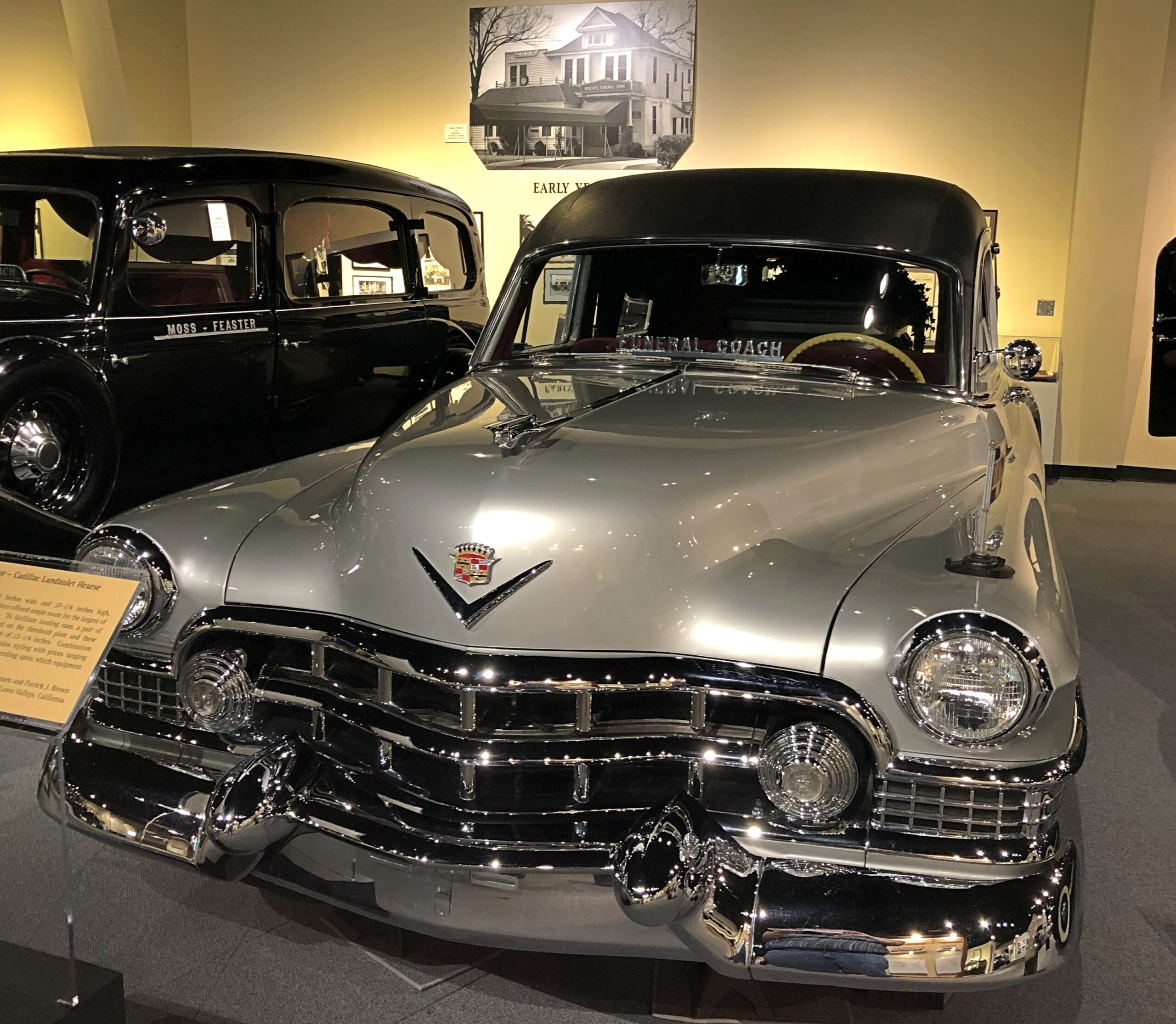
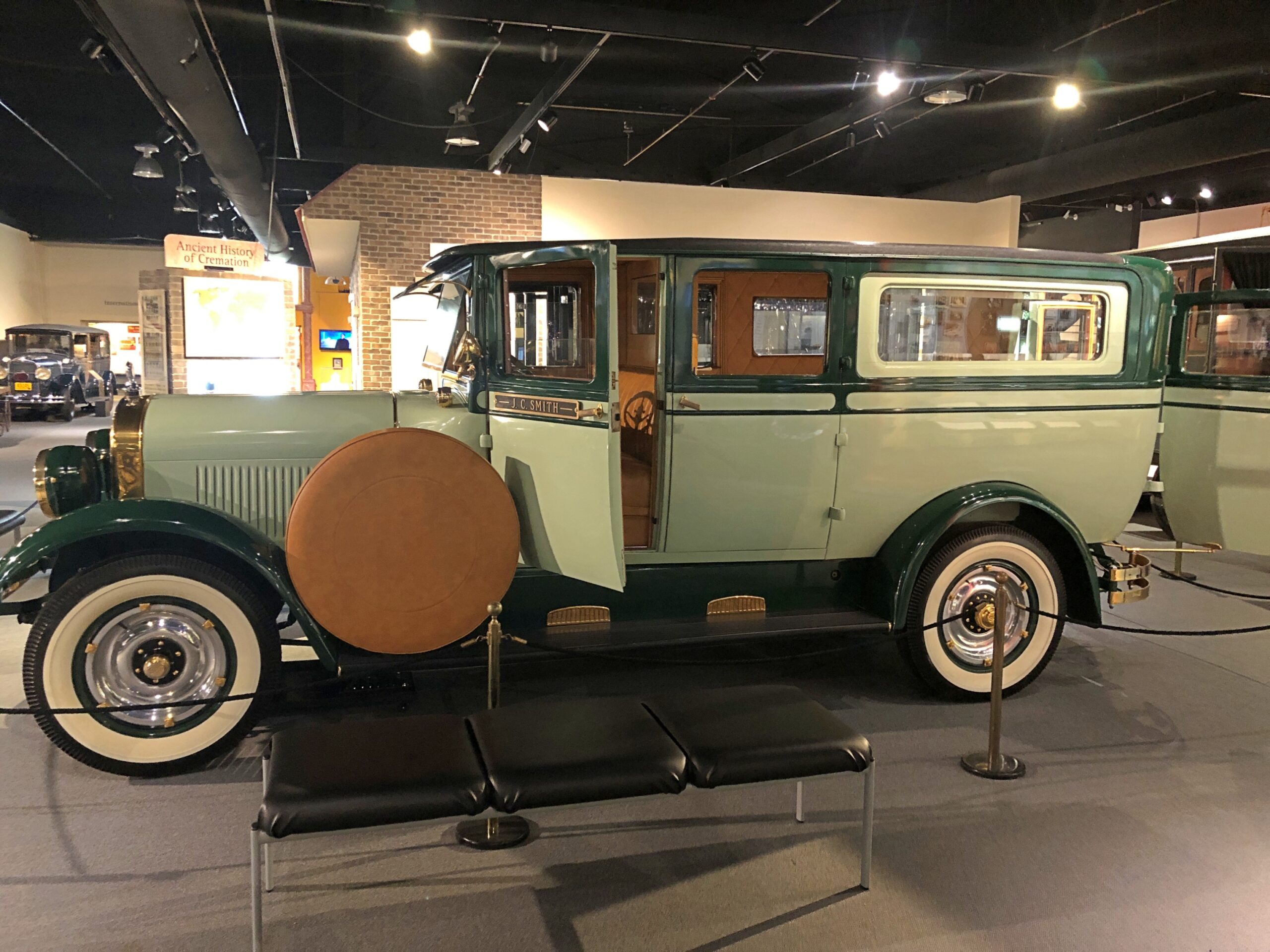
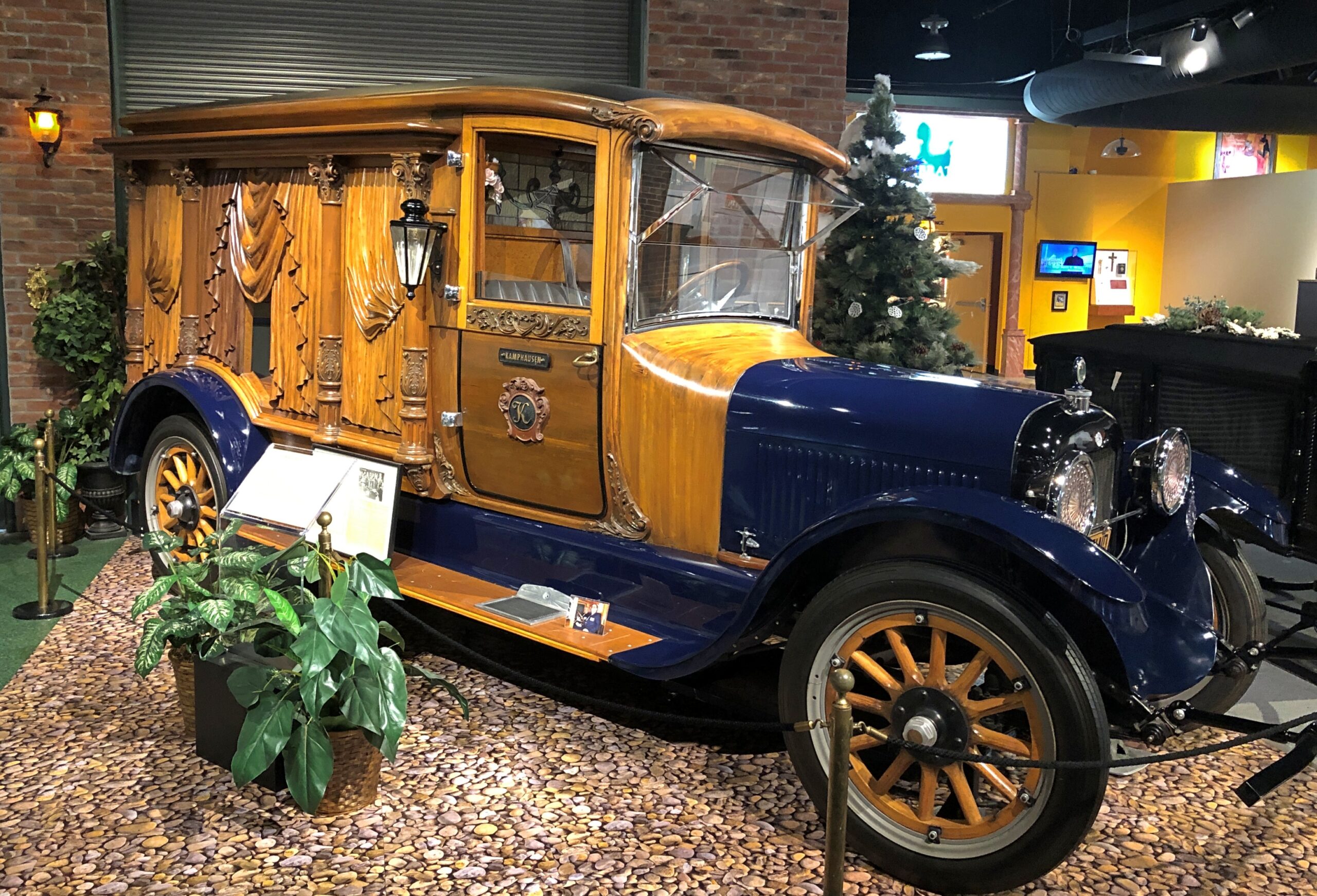
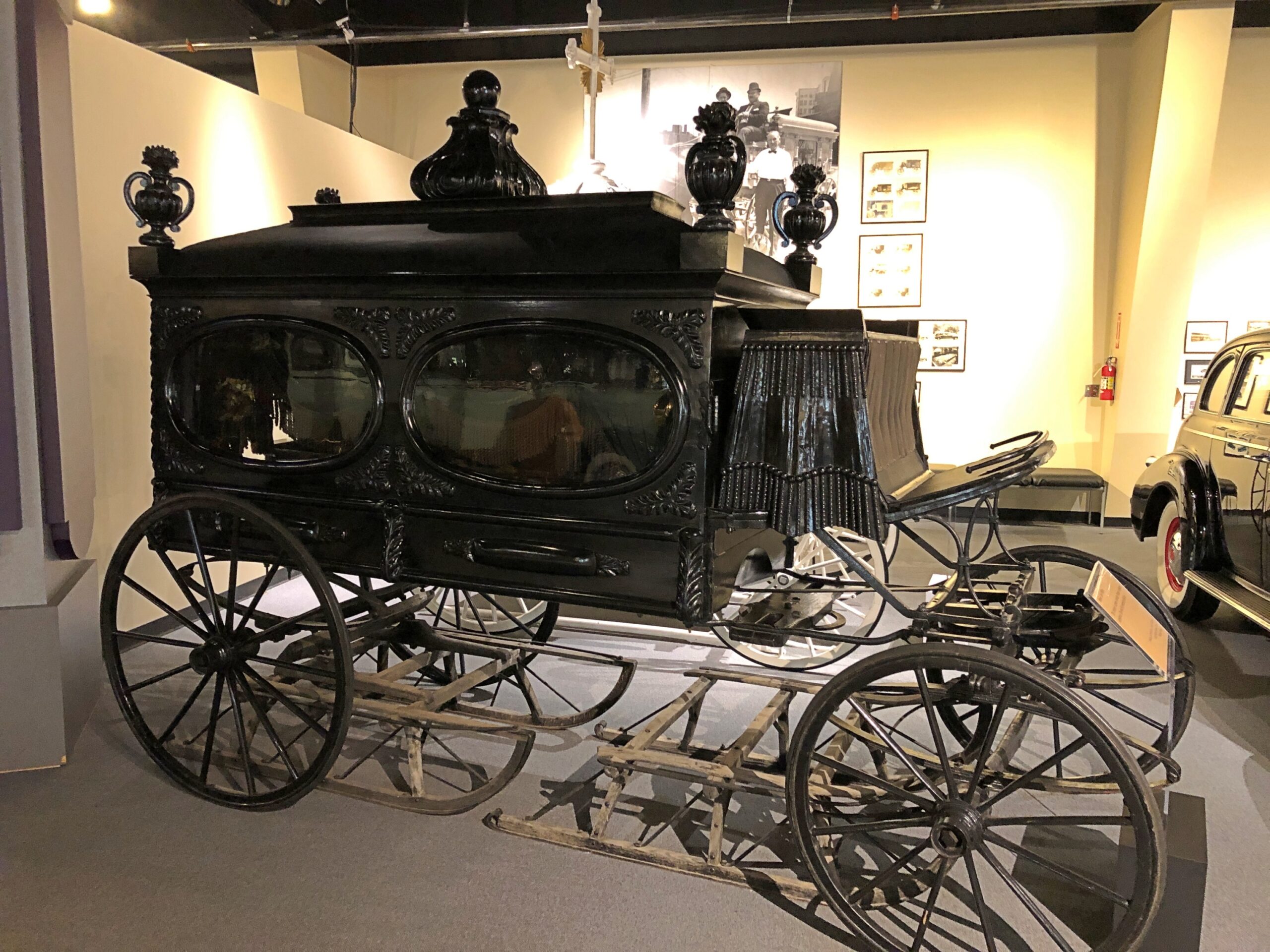
The hearse collection is impressive, making the museum count as a carriage and auto museum. Not all automotive hearses, at least in earlier times, looked like the stretch postwar hearses one thinks of now.
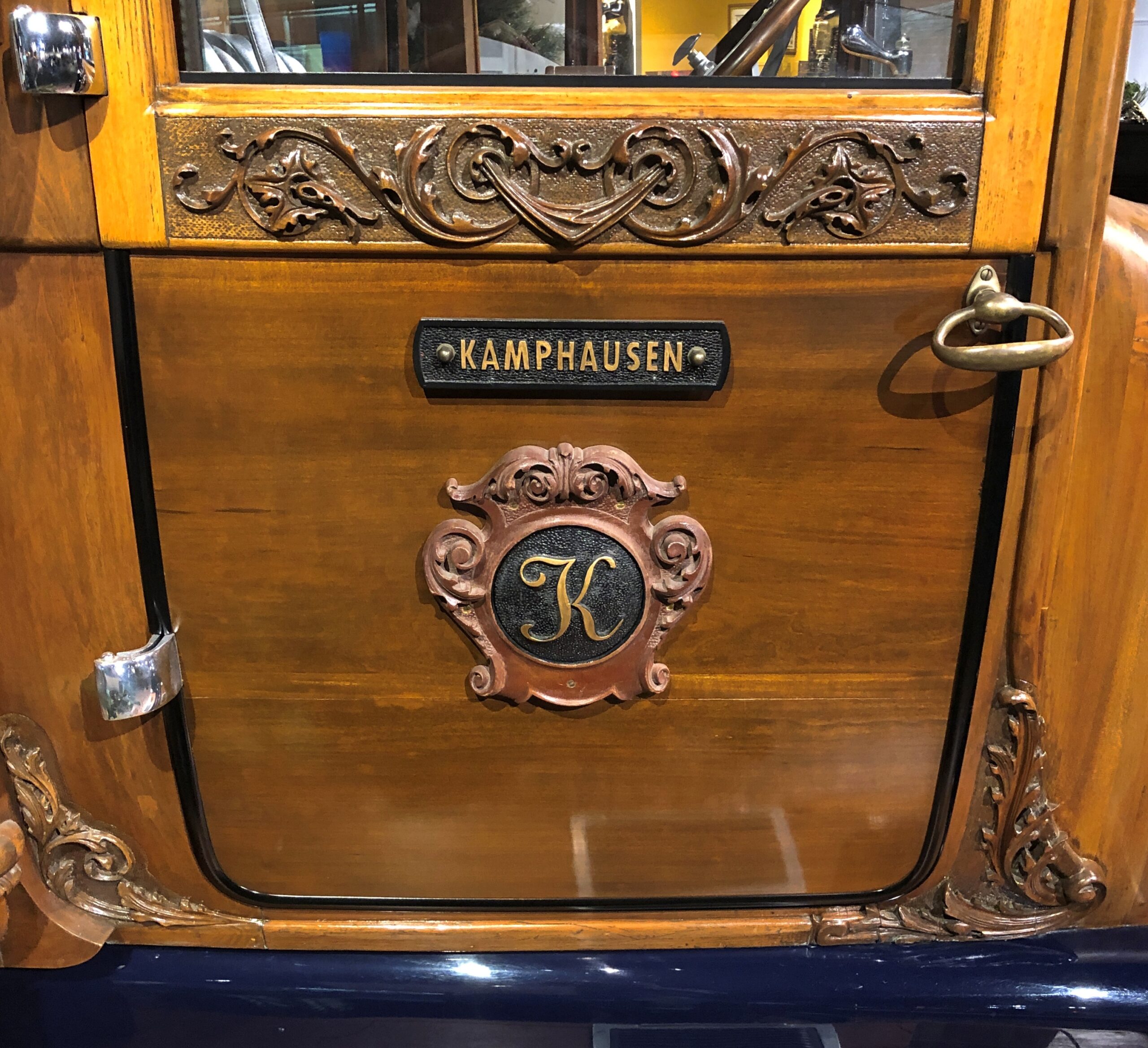
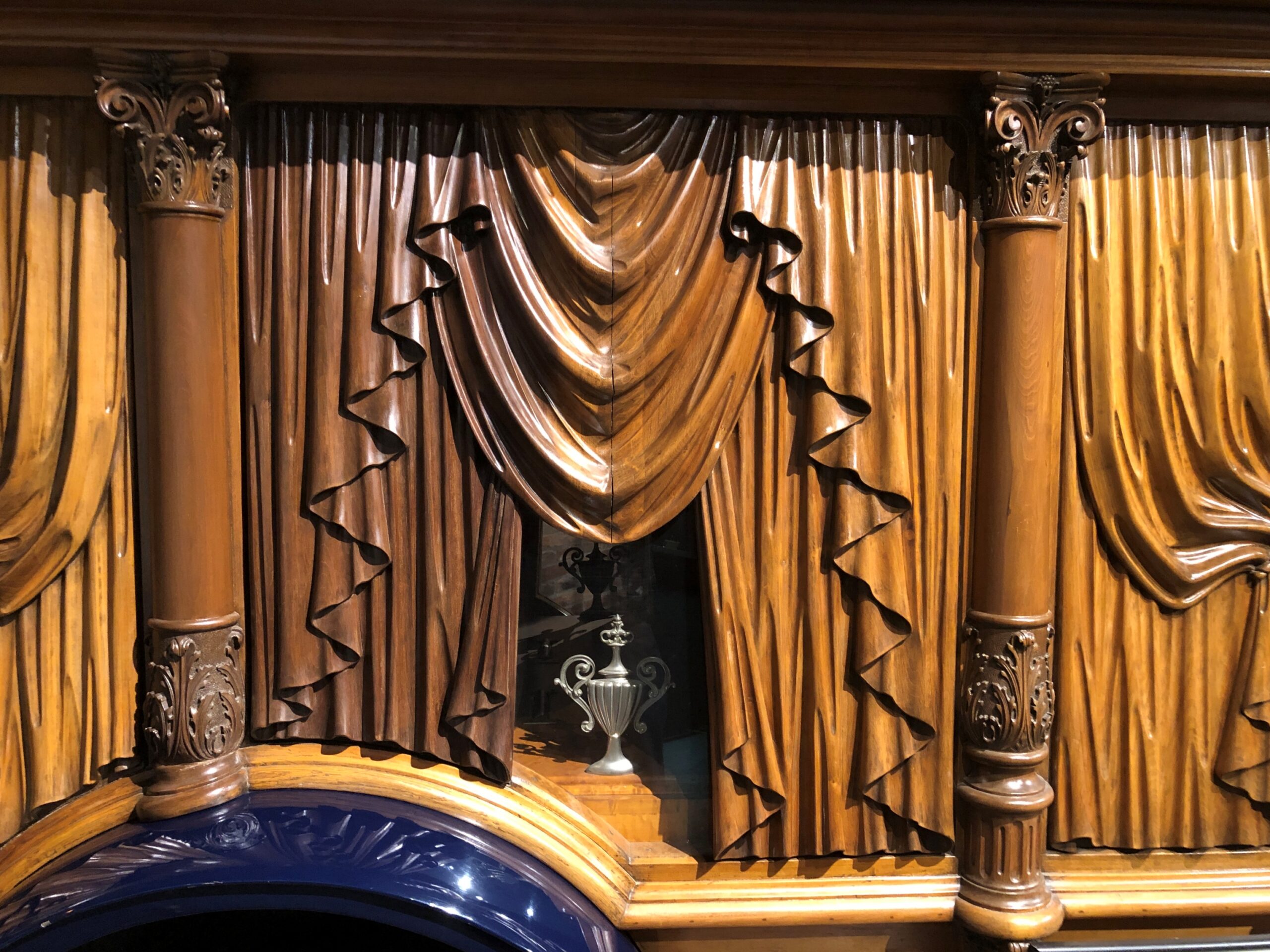
A vehicle the likes of which I’d never seen: a 1921 Rockfalls Hearse, built in Sterling, Illinois, the museum says. The hearse’s hand-carved body is composed of six types of wood.
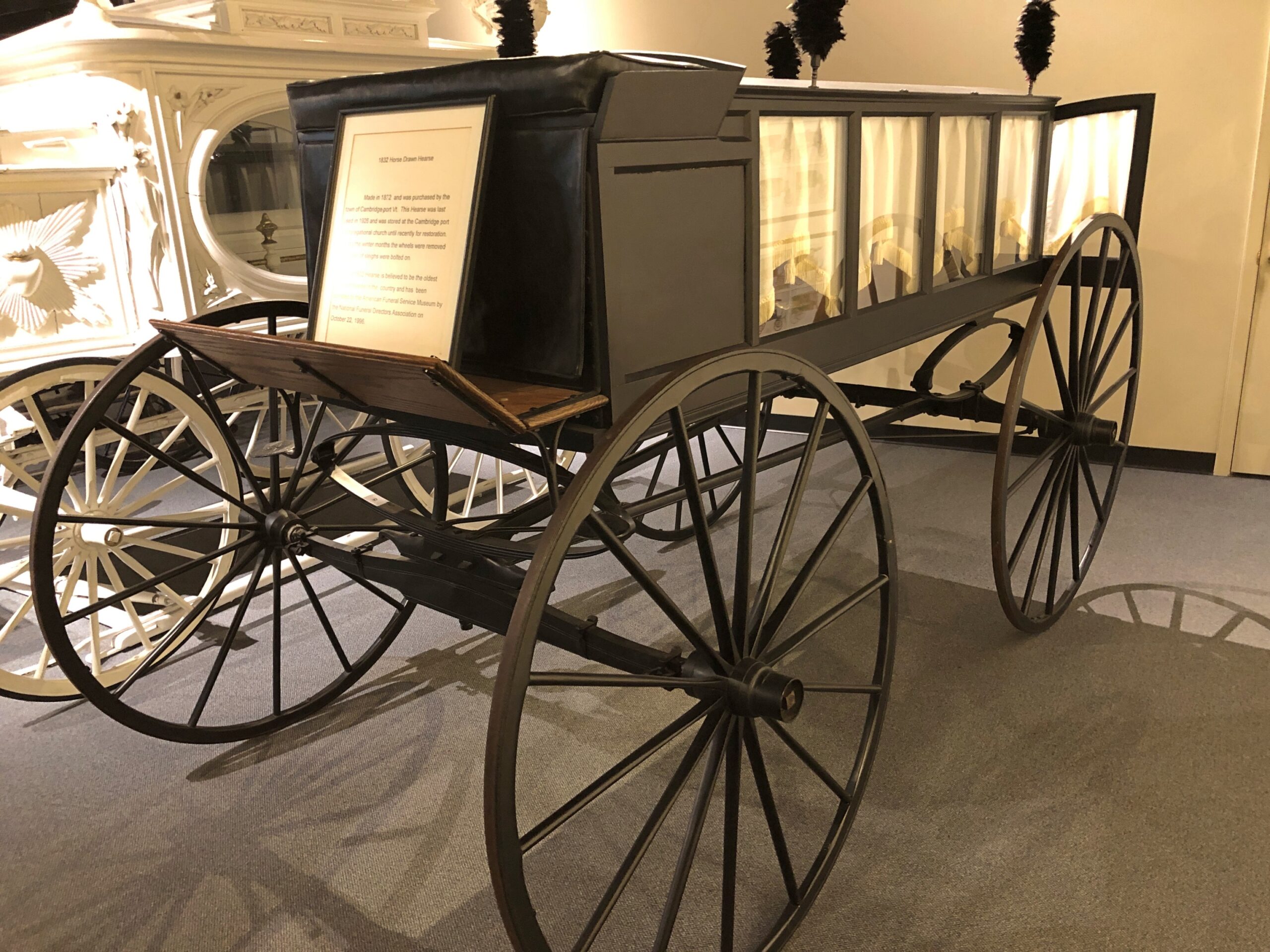
Some horse-drawn hearses.
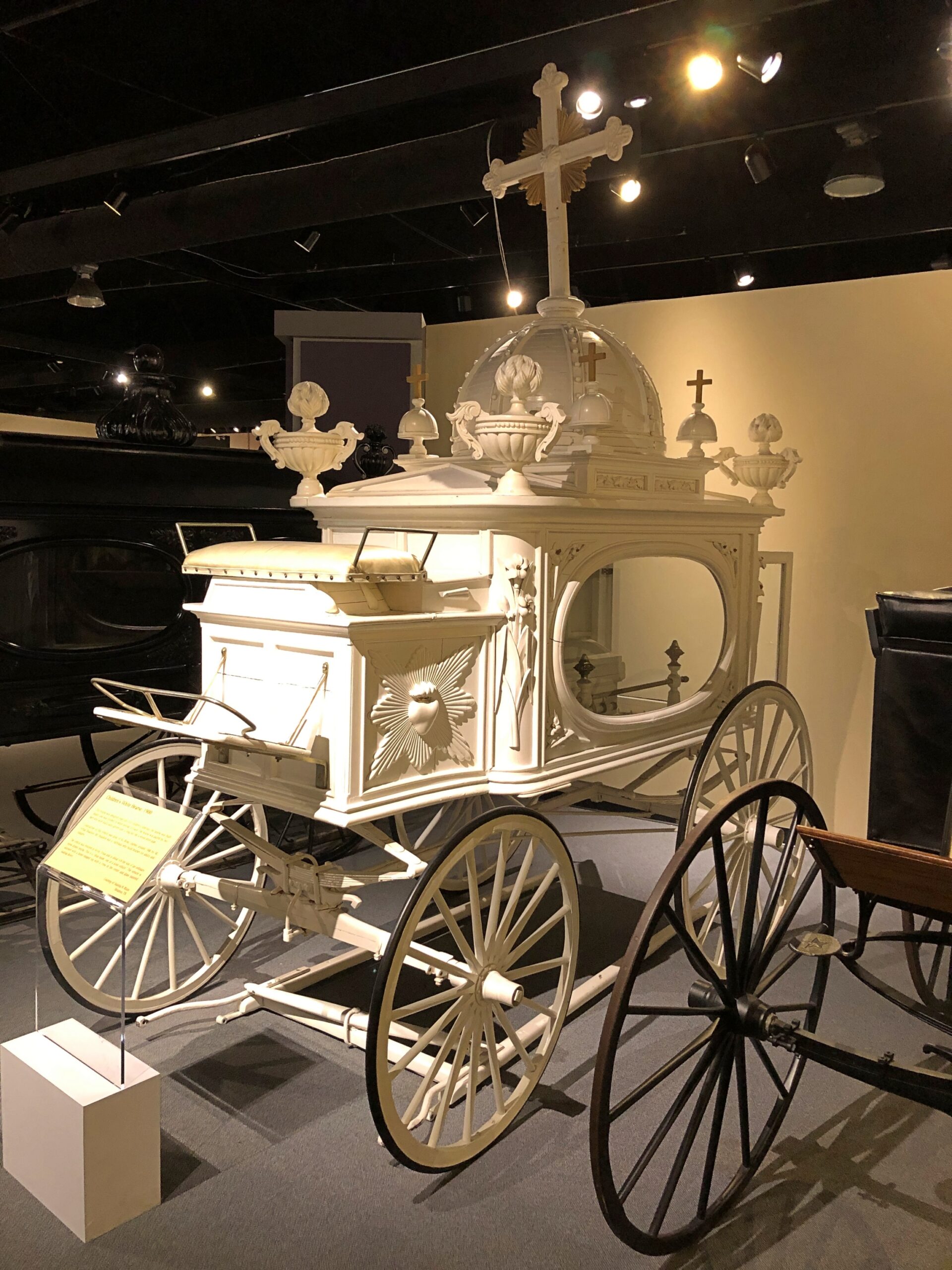
A children’s hearse from, of course, Victorian times.
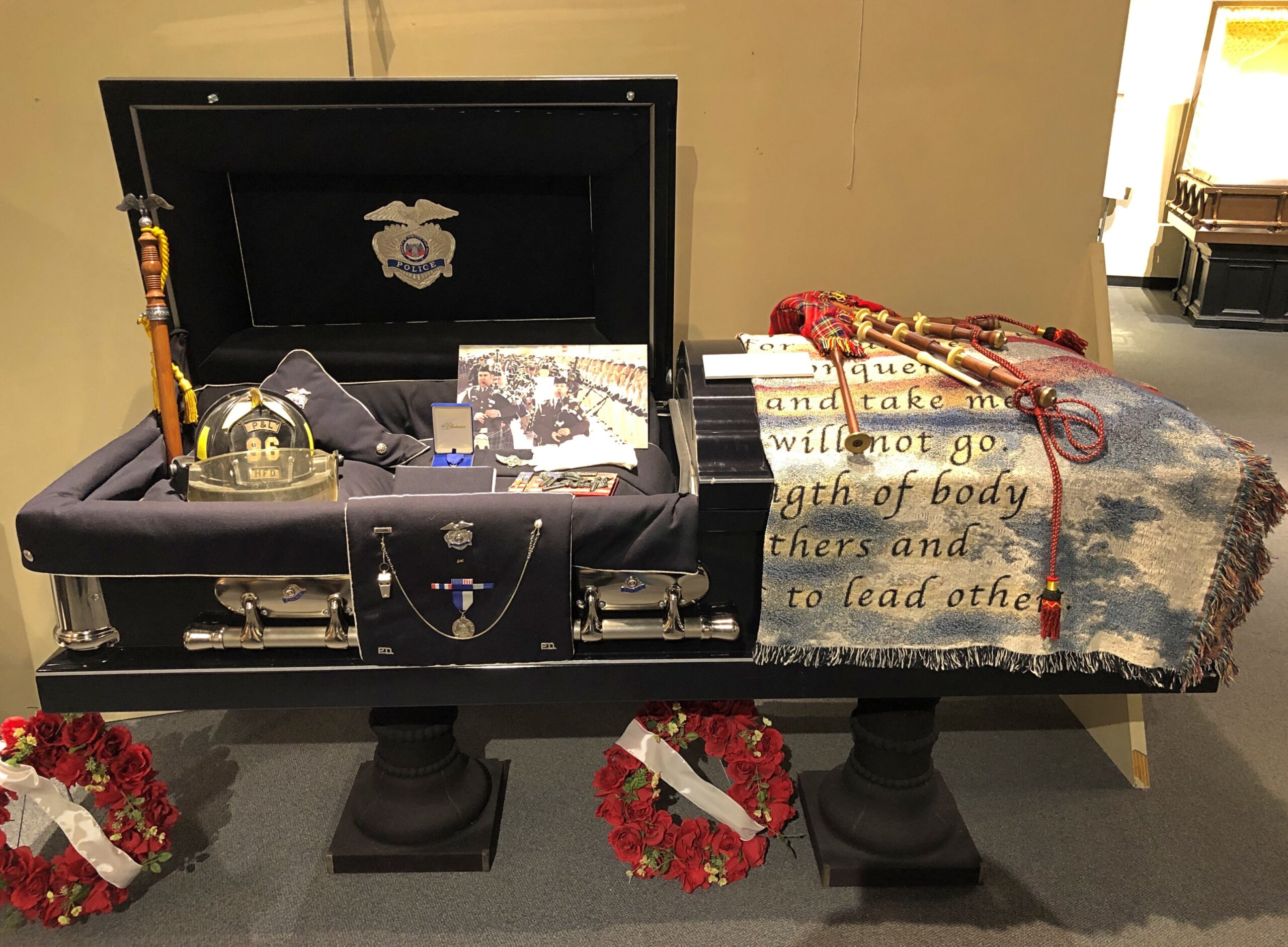
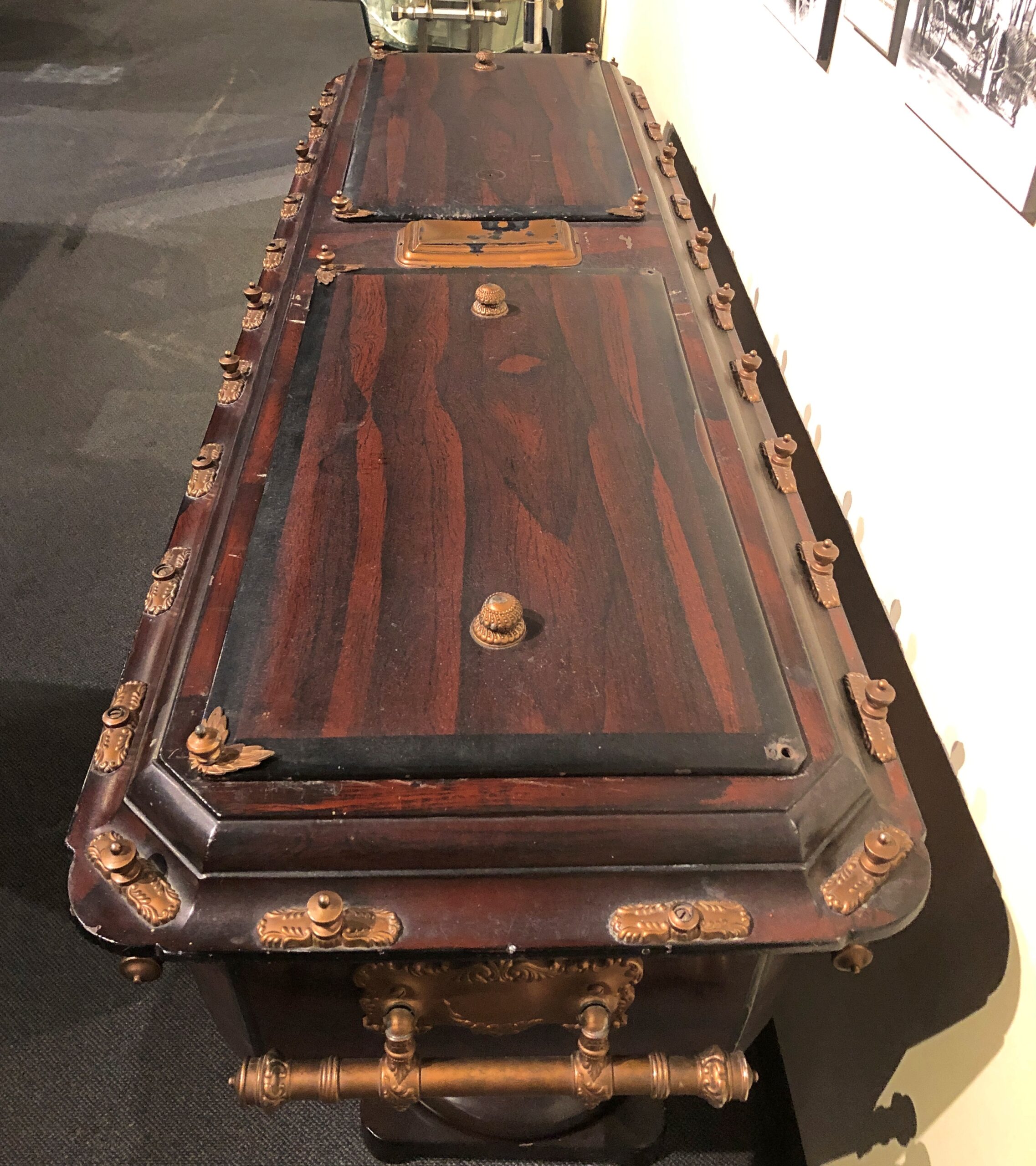
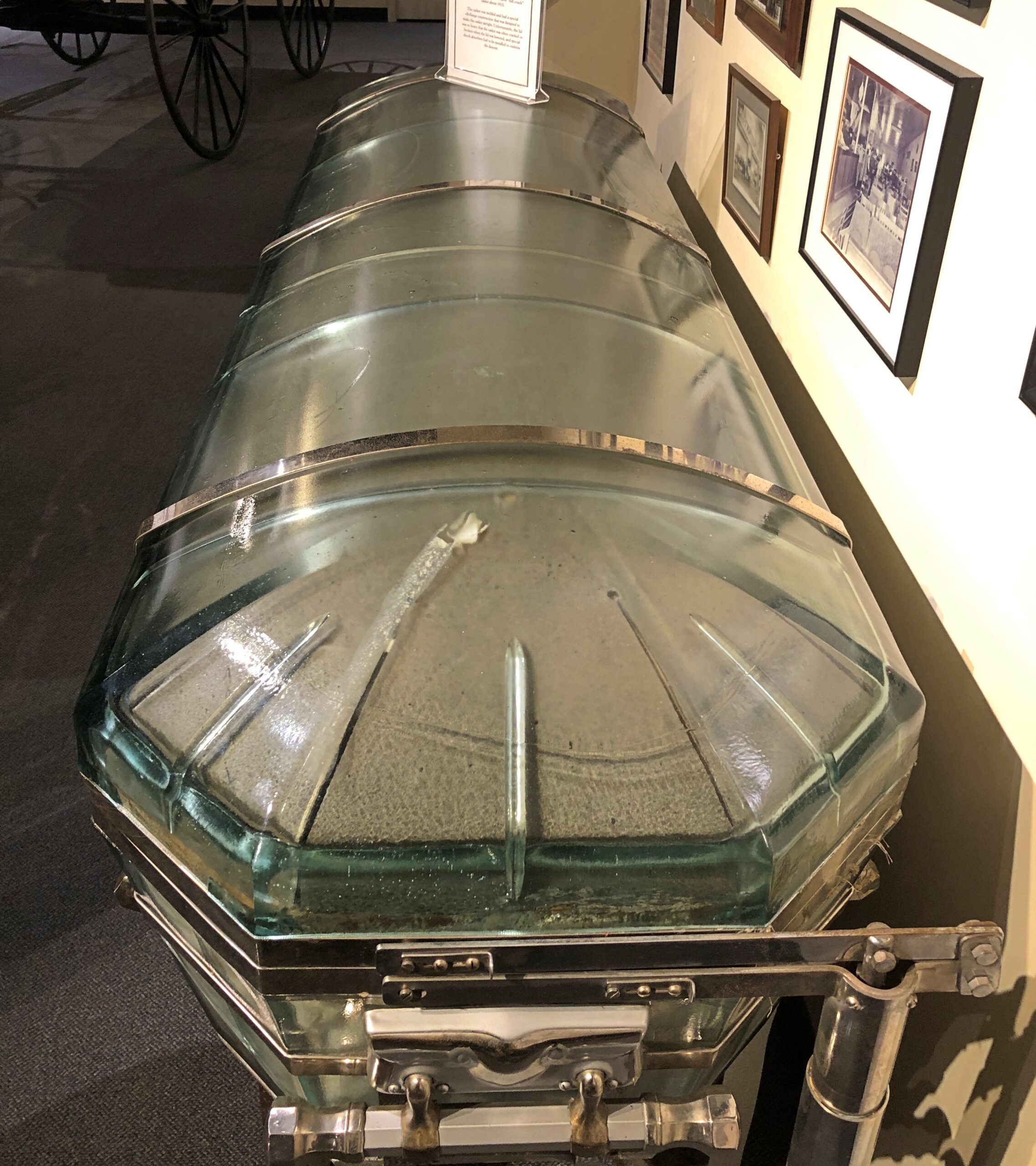
Some coffins and caskets, too. “It’s not the cough/that carries you off/but the coffin/they carry you off in.”
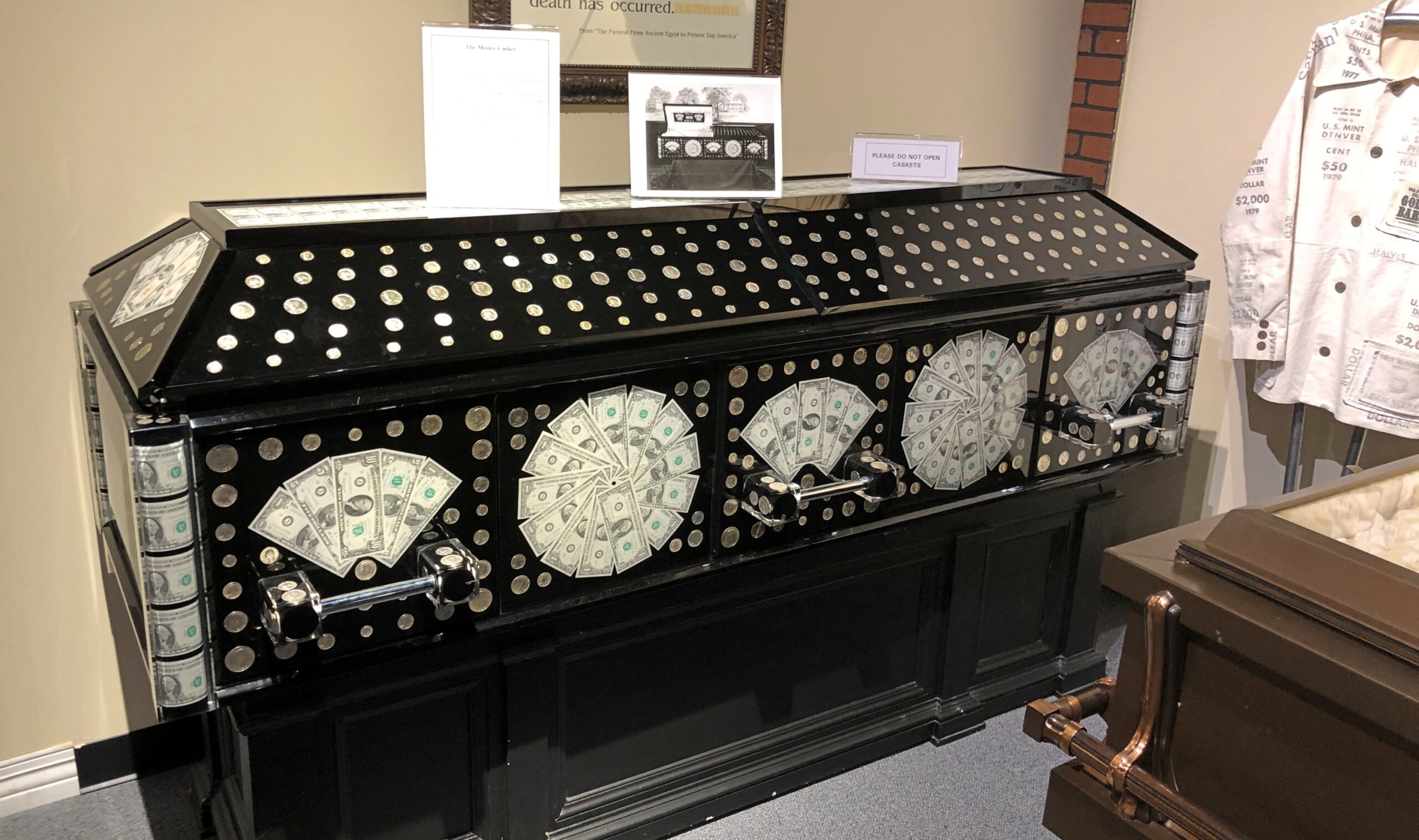
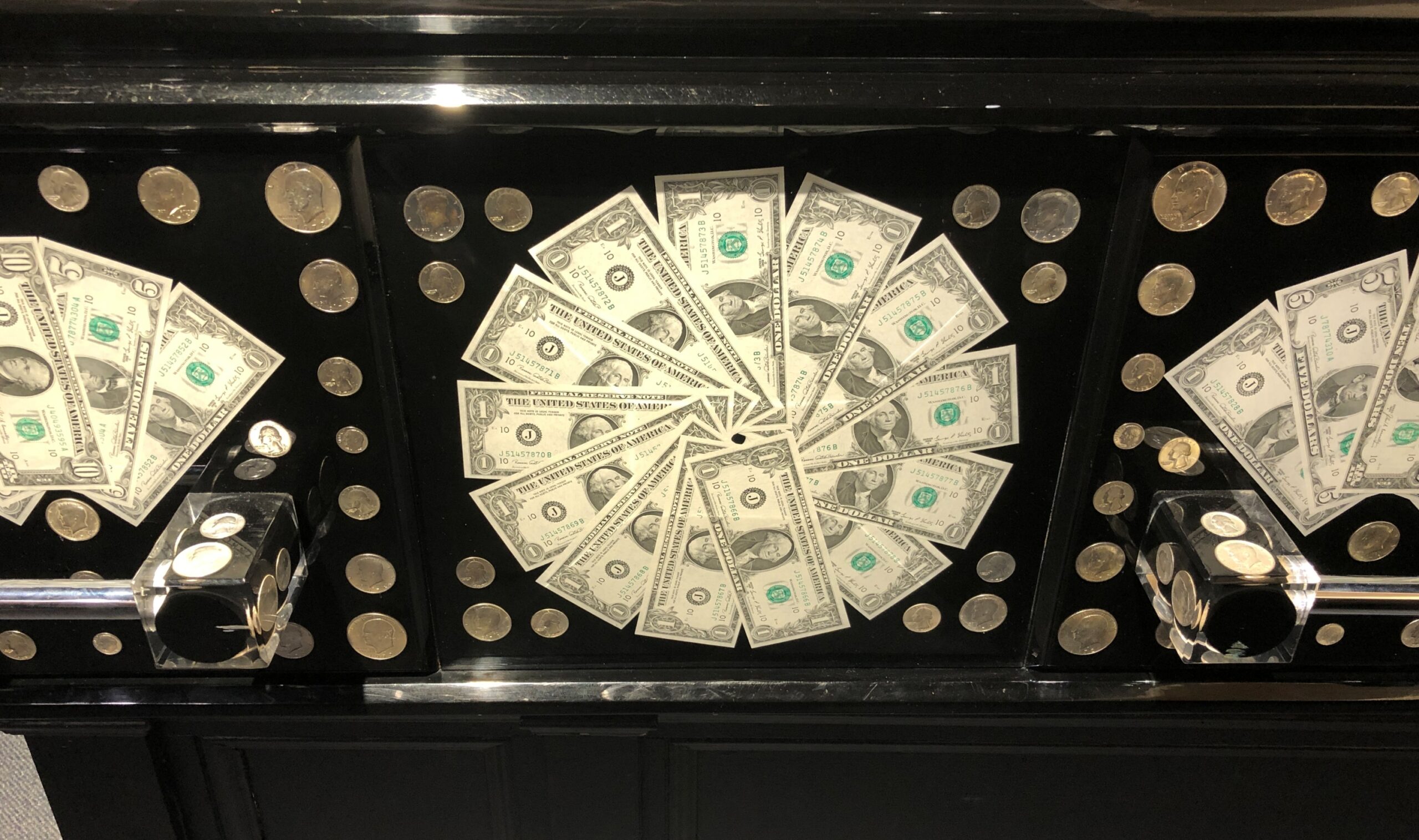
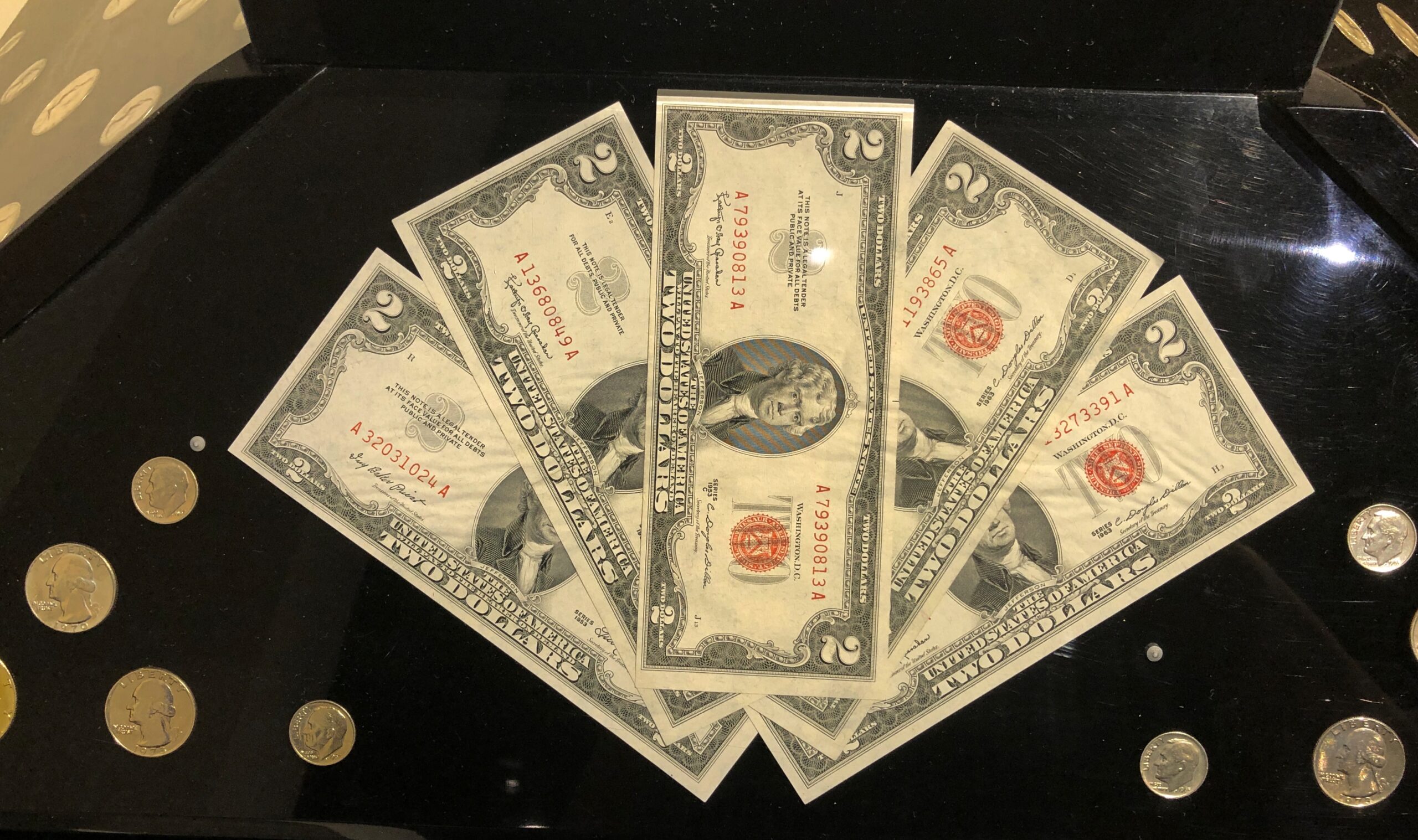
Including an oddity known as the Money Casket, which is on loan to the museum, and was never meant to be put into the ground.
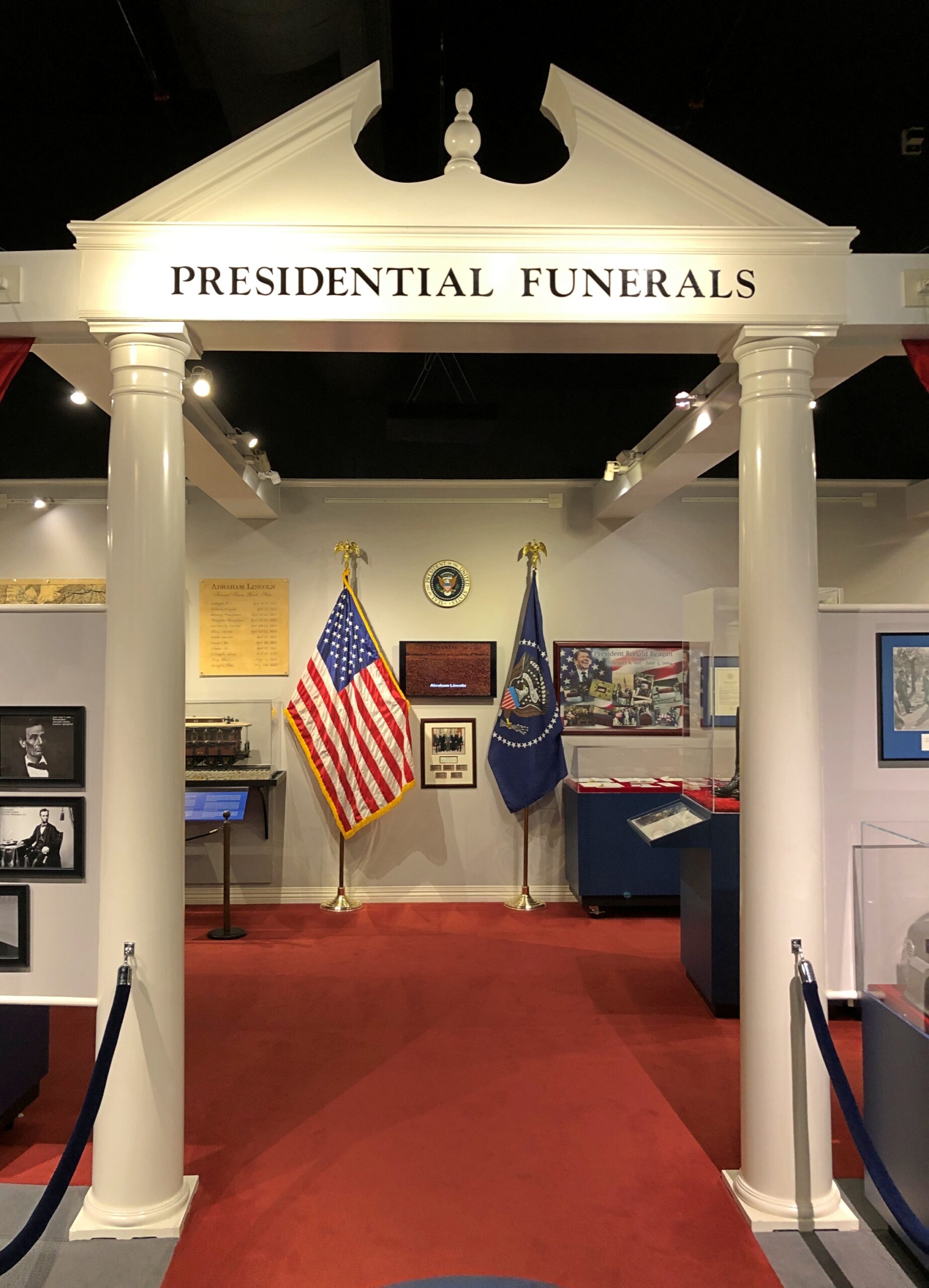
A section about presidential funerals. I spent a while there.
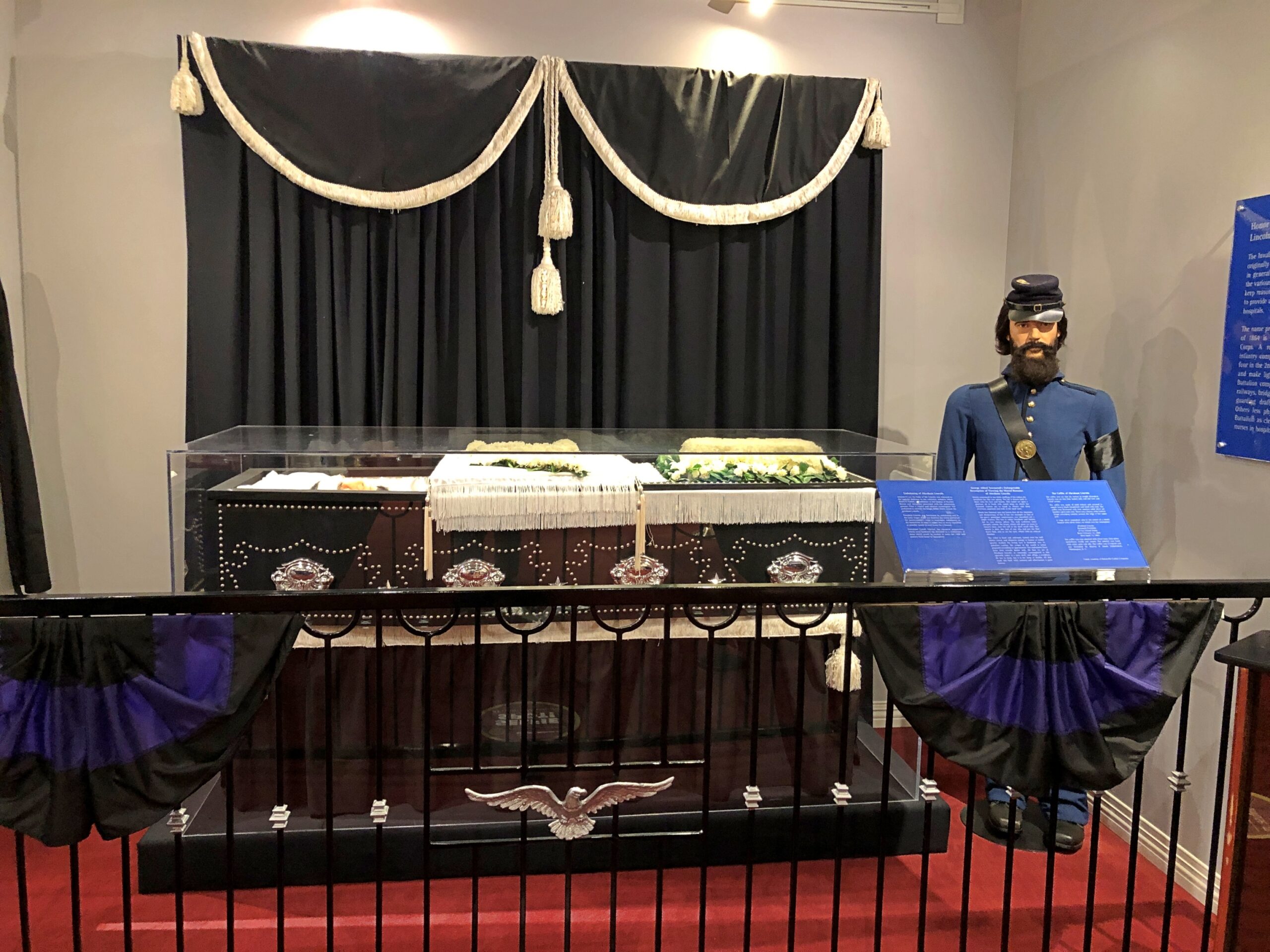
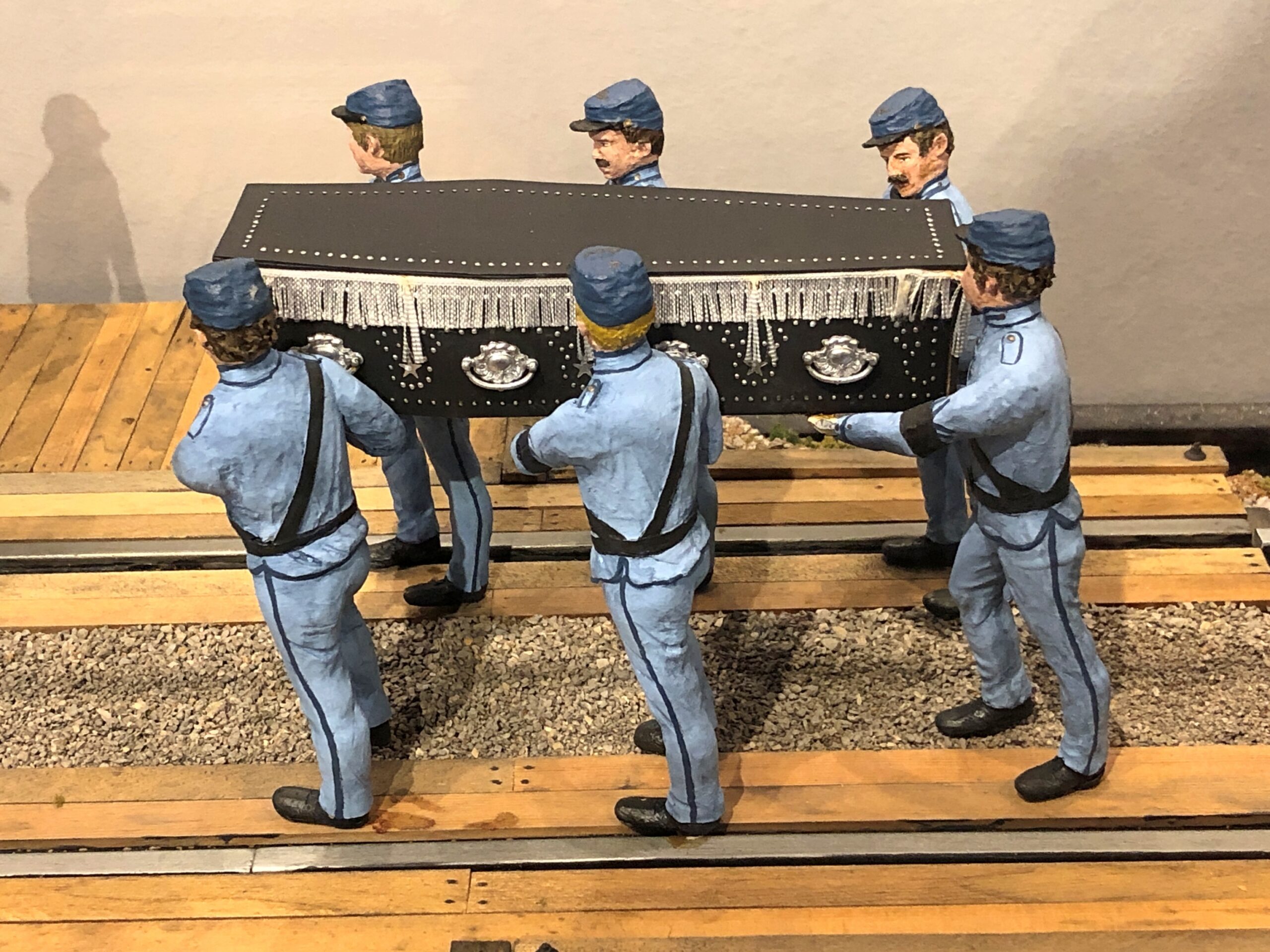
Prominent is a replica of President Lincoln’s casket.
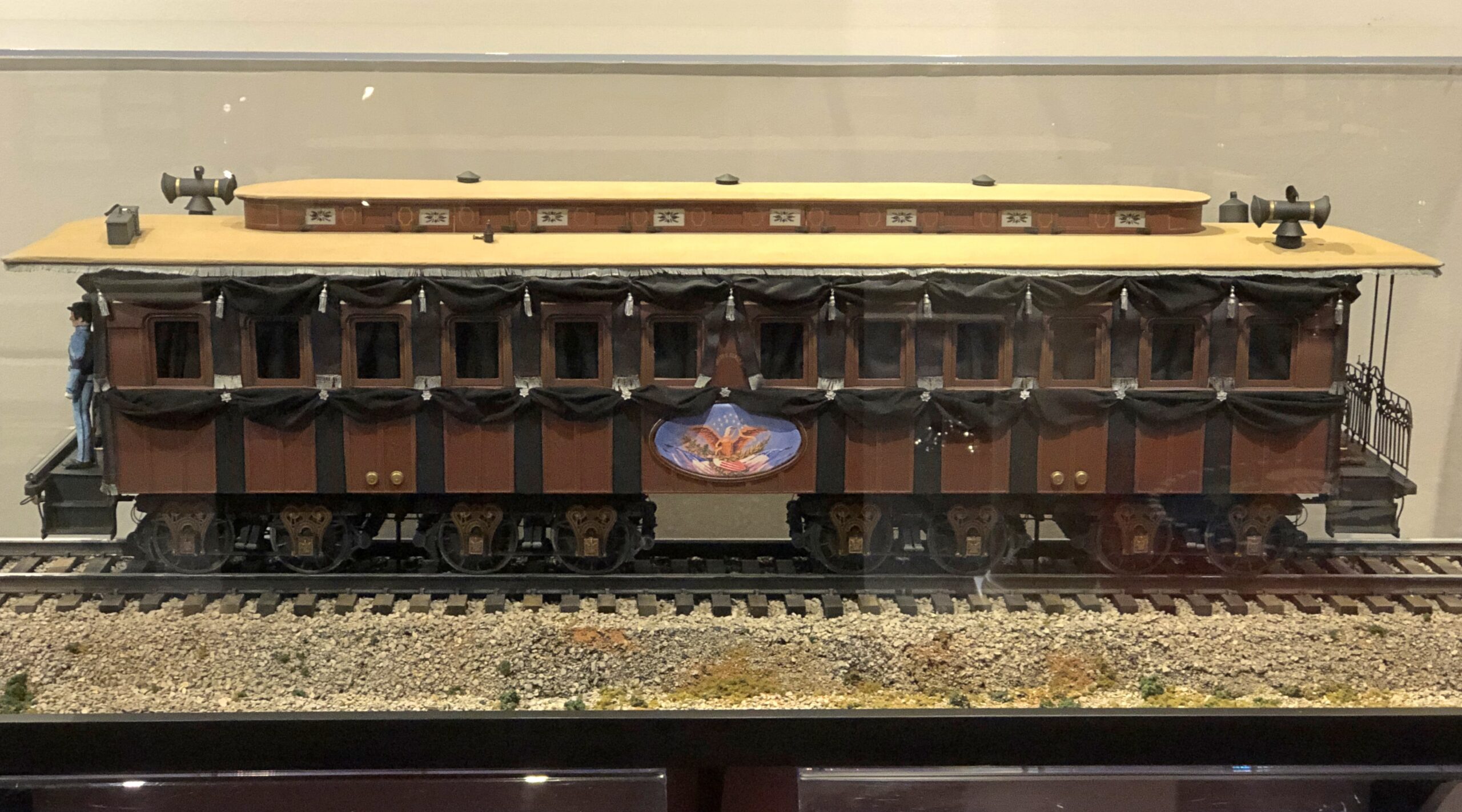
There was a model of Lincoln’s funeral car, probably the most famous such in American history.
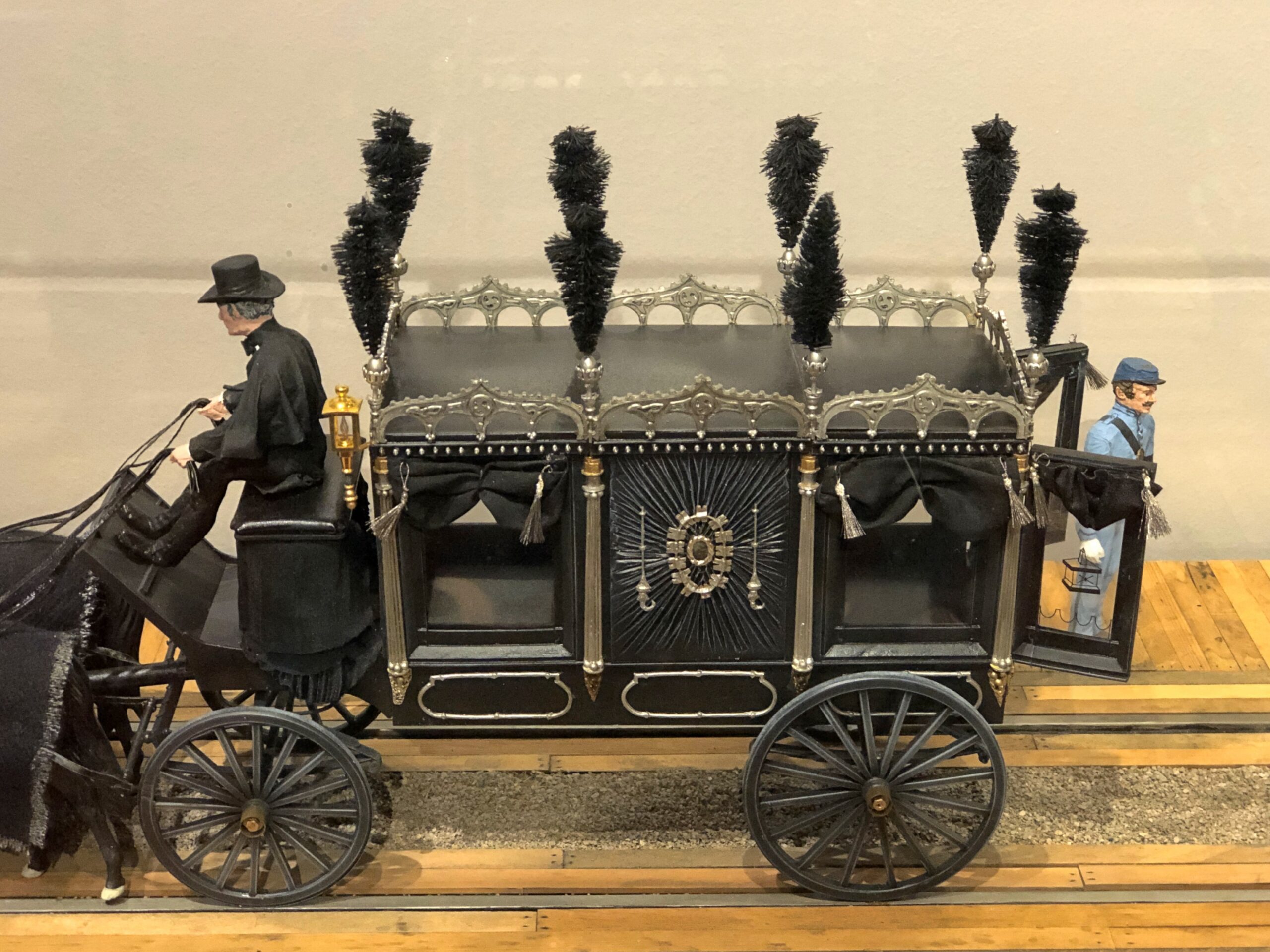
Other methods for carrying Lincoln when he wasn’t on the train.
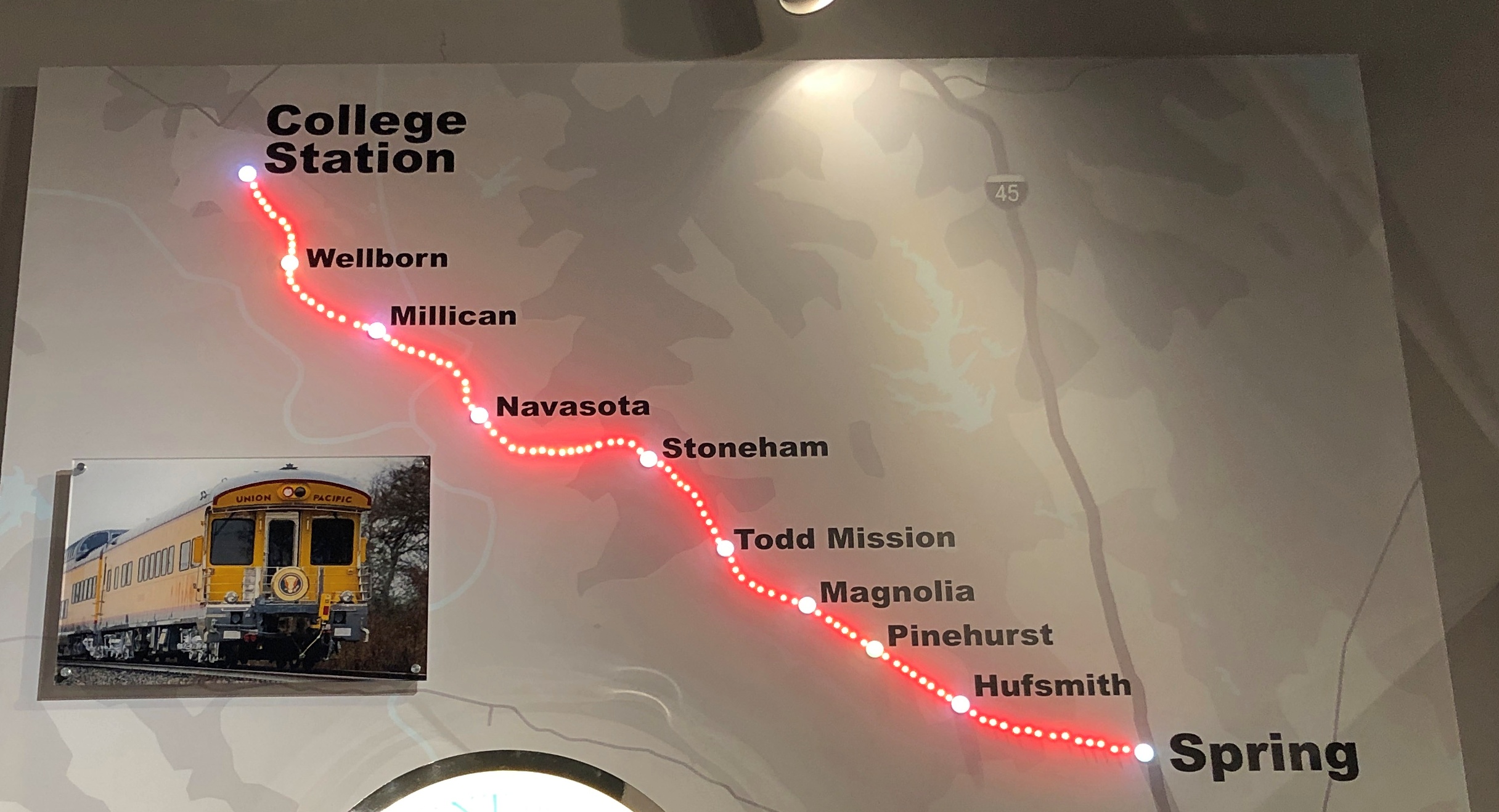
Other presidential funerals got their due, such as those of Washington, Grant, Garfield, McKinley, TR, FDR, Truman, Eisenhower, JFK, LBJ, Nixon, Ford and as mentioned, an entire small room about the elder Bush. He had a funeral train as well, though relatively modest: from Spring to College Station, all within east Texas.
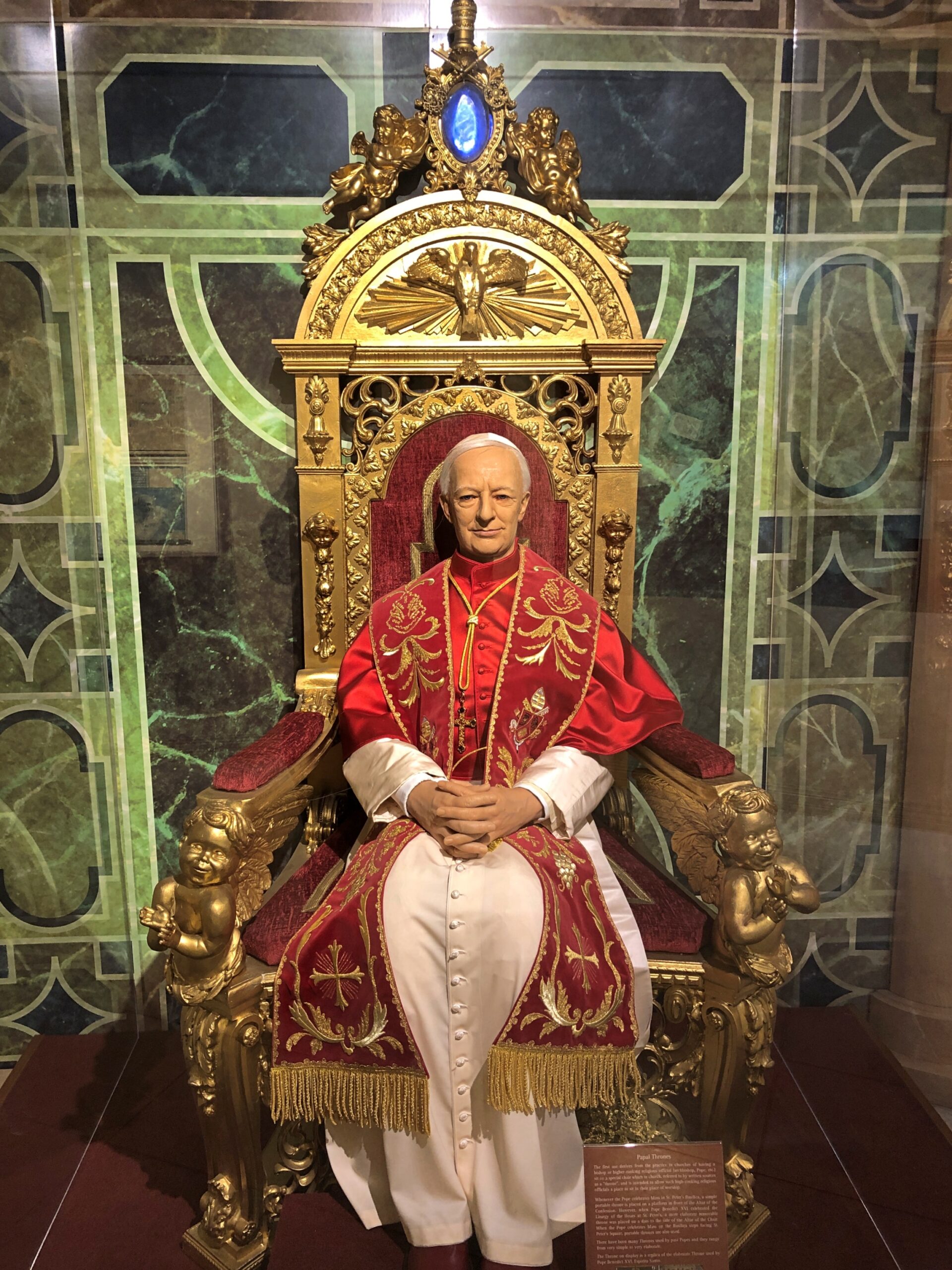
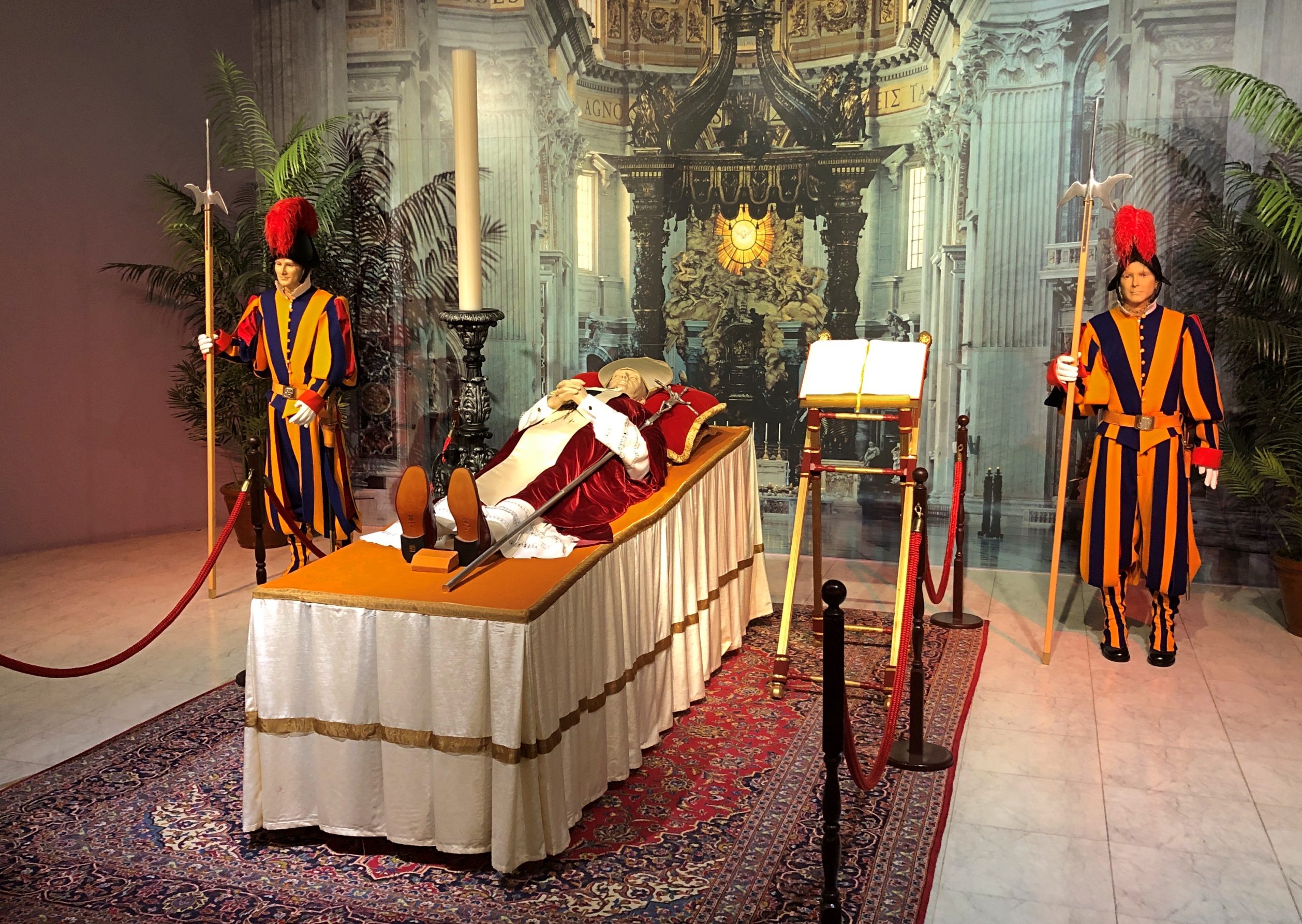
Papal funerals, as you’d think, involve a highly precise set of rituals, told in some detail by the museum.
There is much more.
All in all, a first-rate museum about coping with finality.
Never cared much for the term snowbird, with its connotations of getting up every morning to play golf during winter in some arid place, or spending the evenings with members of your cohort in some gated community, maybe drinking but definitely grousing about the state of the world. Still, considering that in the winter of 25/26, I’ve spent two out of the last three months – the hard winter months, up Illinois way – in warmer places, it would be churlish to cast shade on fellow old people who happen to enjoy golf or grousing.
On the other hand, I’m not about to claim snowbird as descriptive for myself. I just happen to be able to take long trips during the cold months (along with my laptop, for work). In December, Florida. In February, Texas.
Back on February 3, I got on a plane and flew to Austin. I flew home from Dallas on March 3. In between, I spent time – and Yuriko joined me for a while – traversing the state of Texas, going so far west at one point that we ended up in New Mexico. By traversing, I mean long drives, in a rental car part of the time, and in my brother Jay’s car as well, a blue Subaru known as the Blubaru.
I drove from Austin east to Houston, mostly on US 290; from Houston to Nacogdoches, mostly on US 59; then to Dallas on various state highways, such as Texas 21 and 19; and from Dallas to San Angelo to Marathon, Texas, on US 67 and on the grandly remote US 385, which will also take you to the desert reaches of the Big Bend.
From Marathon, Texas, across to Carlsbad, NM, our route took us along US 90, then Texas 56, then US 62/180. Later, US 62/180 took us from Carlsbad part way back to Dallas — to Sweetwater, Texas — but mostly we went on the faster but less interesting I-20. Dallas to San Antonio was partly I-35, but also US 281, which takes you around the perma-gridlock that is Austin.
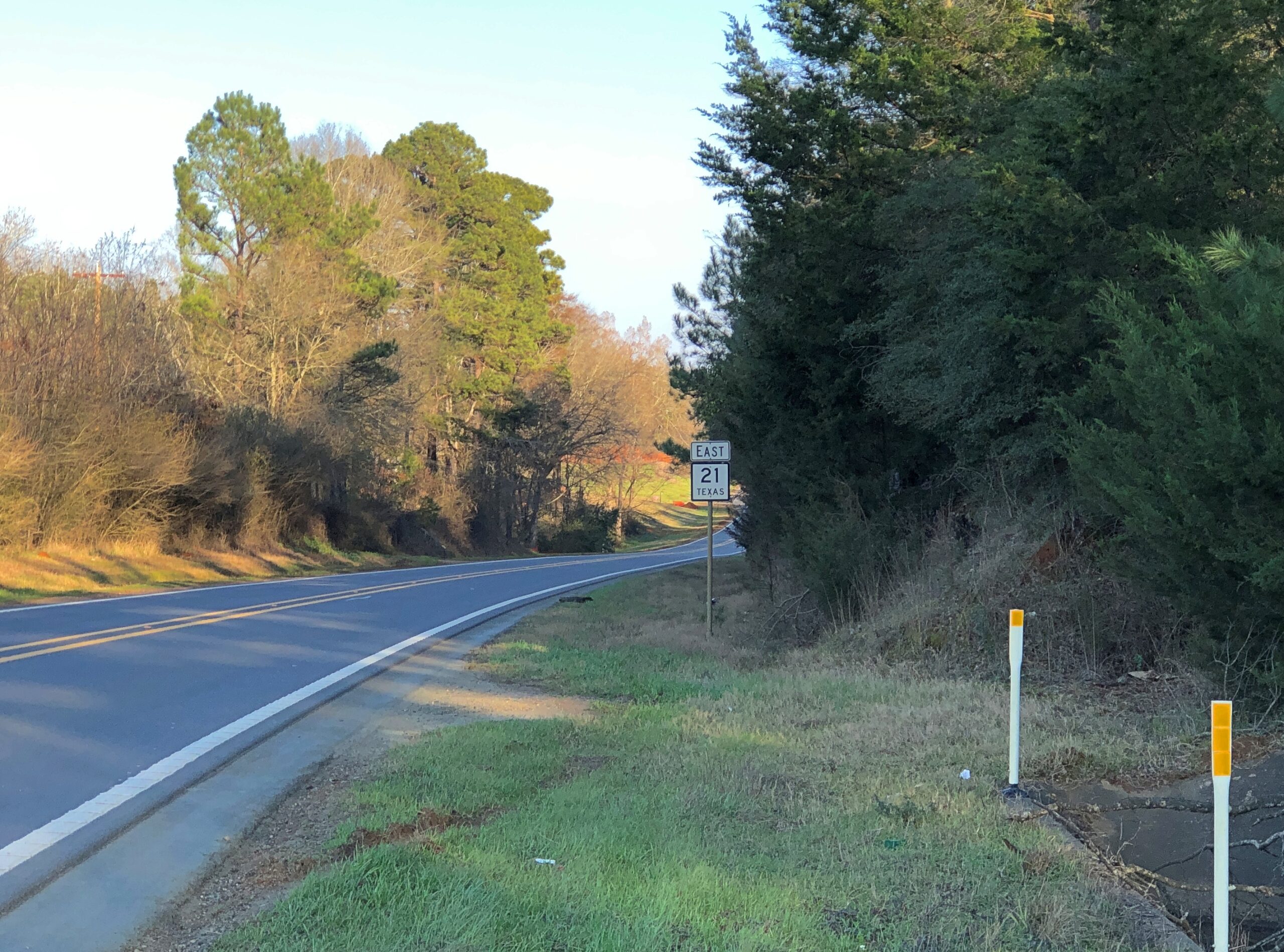
Of all those, the road between Nacogdoches and San Augustine on a day trip, Texas 21 heading east, winding through greenish (for February) rolling hills, was a favorite.
The towns listed above were just the places I spent the night, alone or with Yuriko or with my brothers. In between were such places as Bastrop, these days a day-trip from Austin, with the requisite boutiques and restaurants; Huntsville, home of Sam Houston and memorials to the first president of Texas; San Augustine, rival with Nacogdoches in claiming to be the oldest town in Texas; Stephenville and Ballinger, geographically about as deep in the heart of Texas as you can be; the West Texas art town of Marfa and the way station of Van Horn; a string of oil patch towns such as Hobbs, NM, and Seminole, Lamesa, Snyder, and Sweetwater, back in Texas. Later, traversing north to south and back again, I stopped in Hillsboro and Belton, along the I-35 axis; and Lockhart, which has claimed for itself barbecue capital of the state.
Along the way, oddities were encountered. Otherwise, why drive on smaller roads?
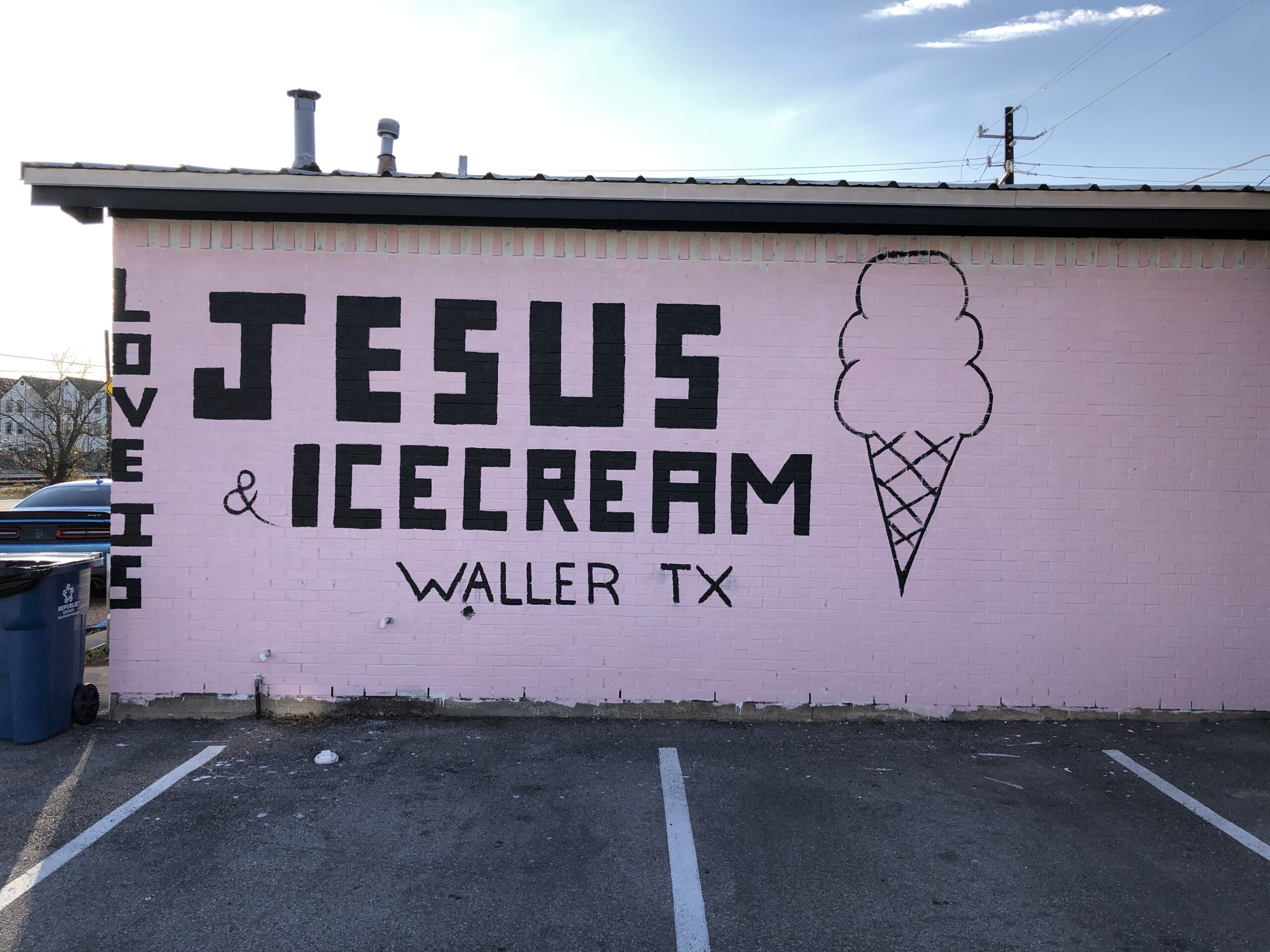
Such as an ice cream shop in Waller, Texas.
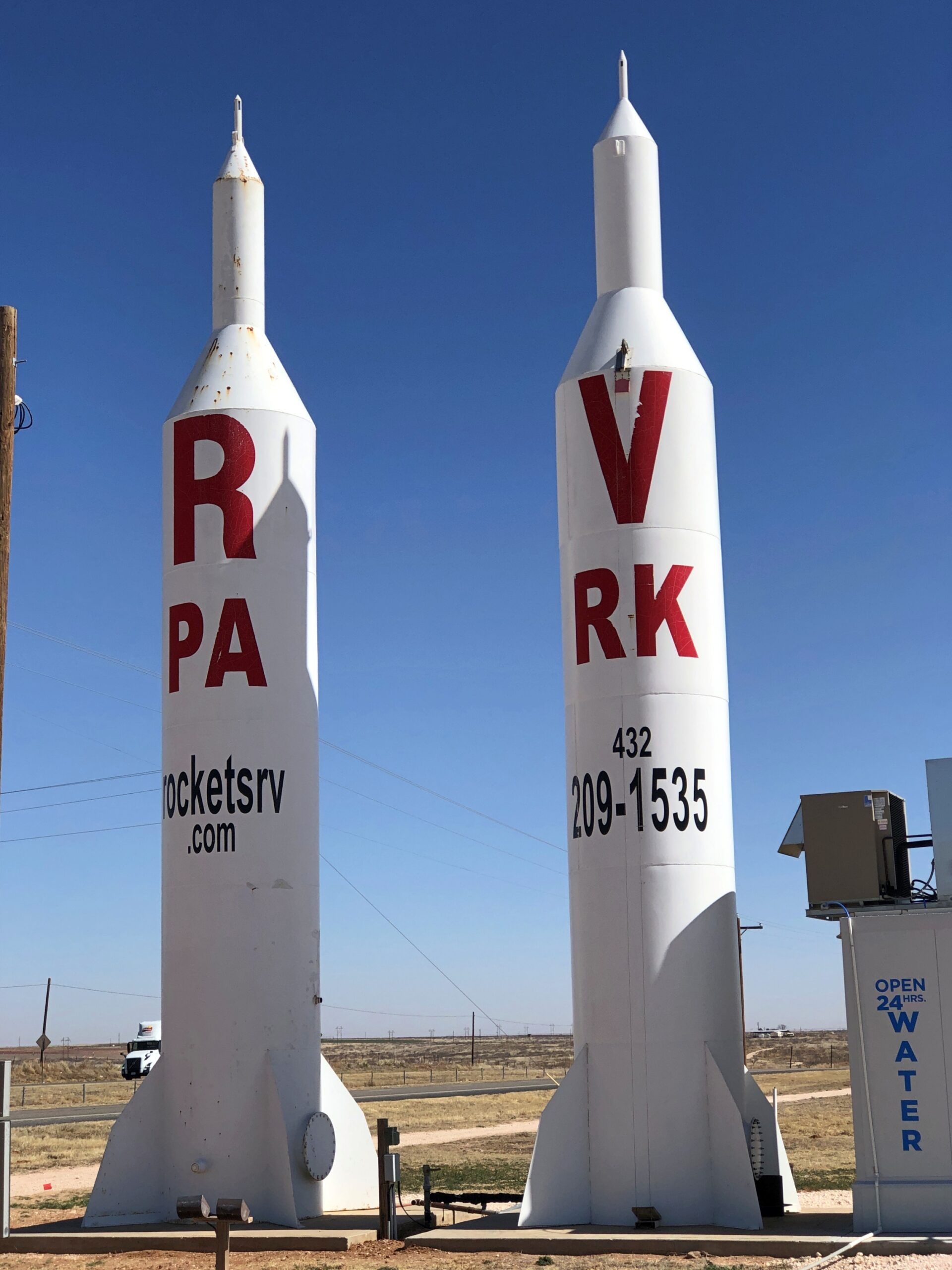
Or a highly visible ad for Rockets RV Park in Gaines County, Texas, not far east of the border with New Mexico.
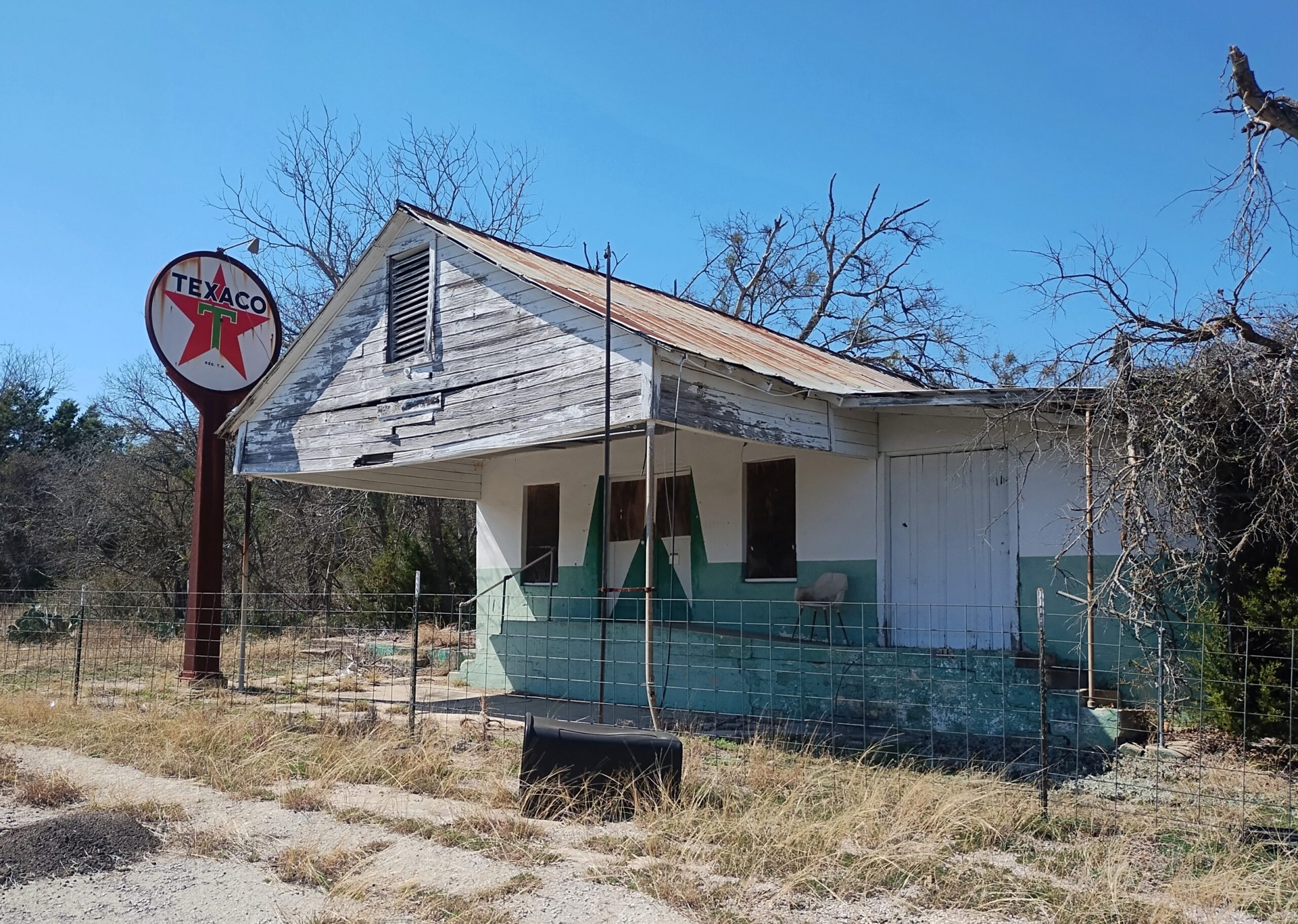
A former Texaco station on an obscure Texas highway (Farm-to-Market 1690).
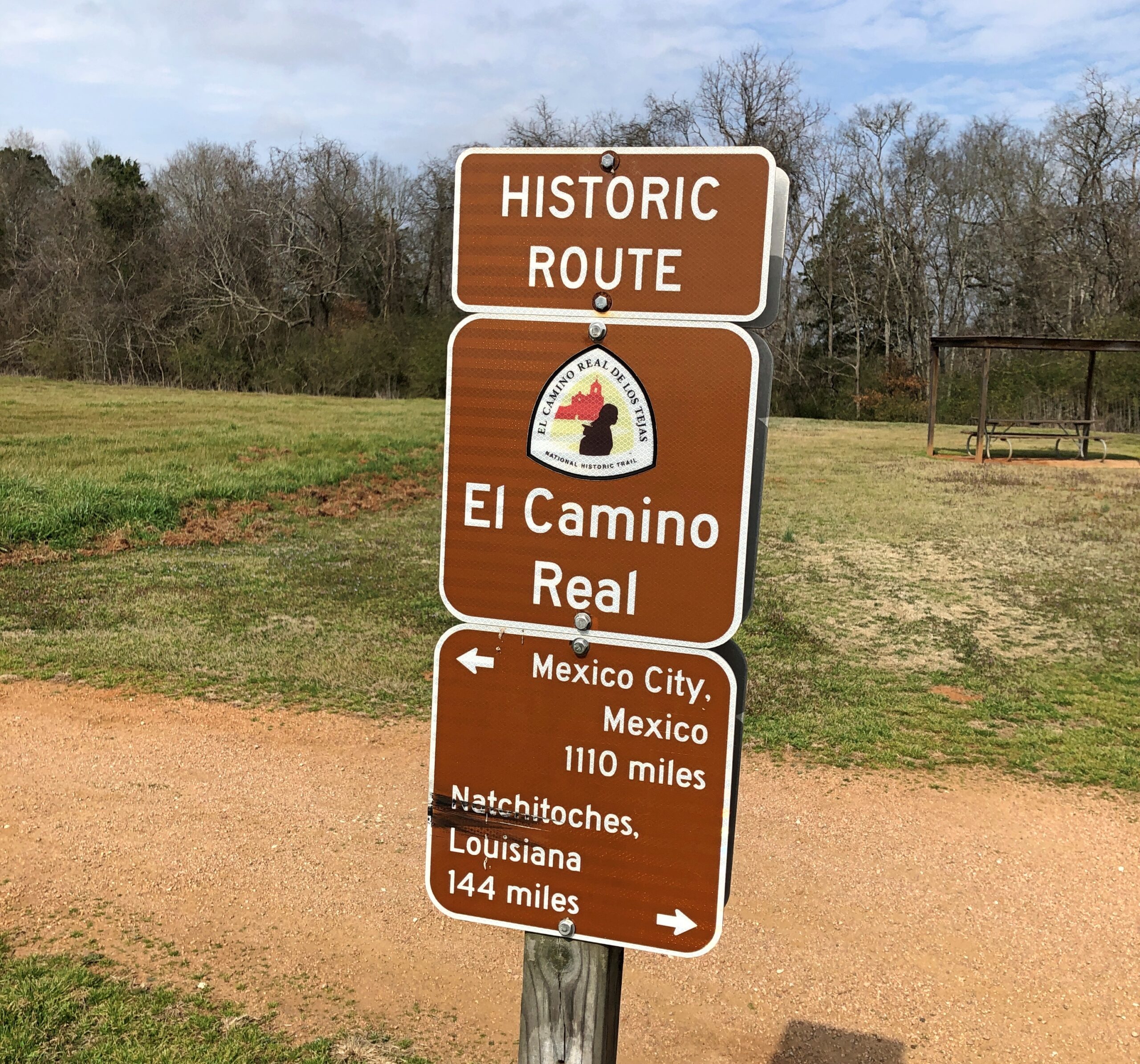
Had various encounters with the historic El Camino Real, whose various tendrils crossed a large slice of the future state of Texas, once upon a time.
Yuriko and I visited Big Bend National Park, Guadalupe Mountains National Park and Carlsbad Caverns National Park. I saw the National Museum of Funeral History in the city of Houston and the museum devoted to Houston (the man) in Huntsville. Also, Roadside America in Hillsboro, an eccentric collection of American commercial art, complete with a personal tour by the proprietor, and the outdoor art at the Chinati Foundation in Marfa, that is, brutalist concrete structures in the brutal desert environment. I became acquainted with the splendid Glenwood Cemetery in Houston and the smaller and more ragged, but no less interesting city cemeteries in Huntsville and Nacogdoches and Palestine. I stopped and looked at about a dozen county courthouses, of which Texas has many.
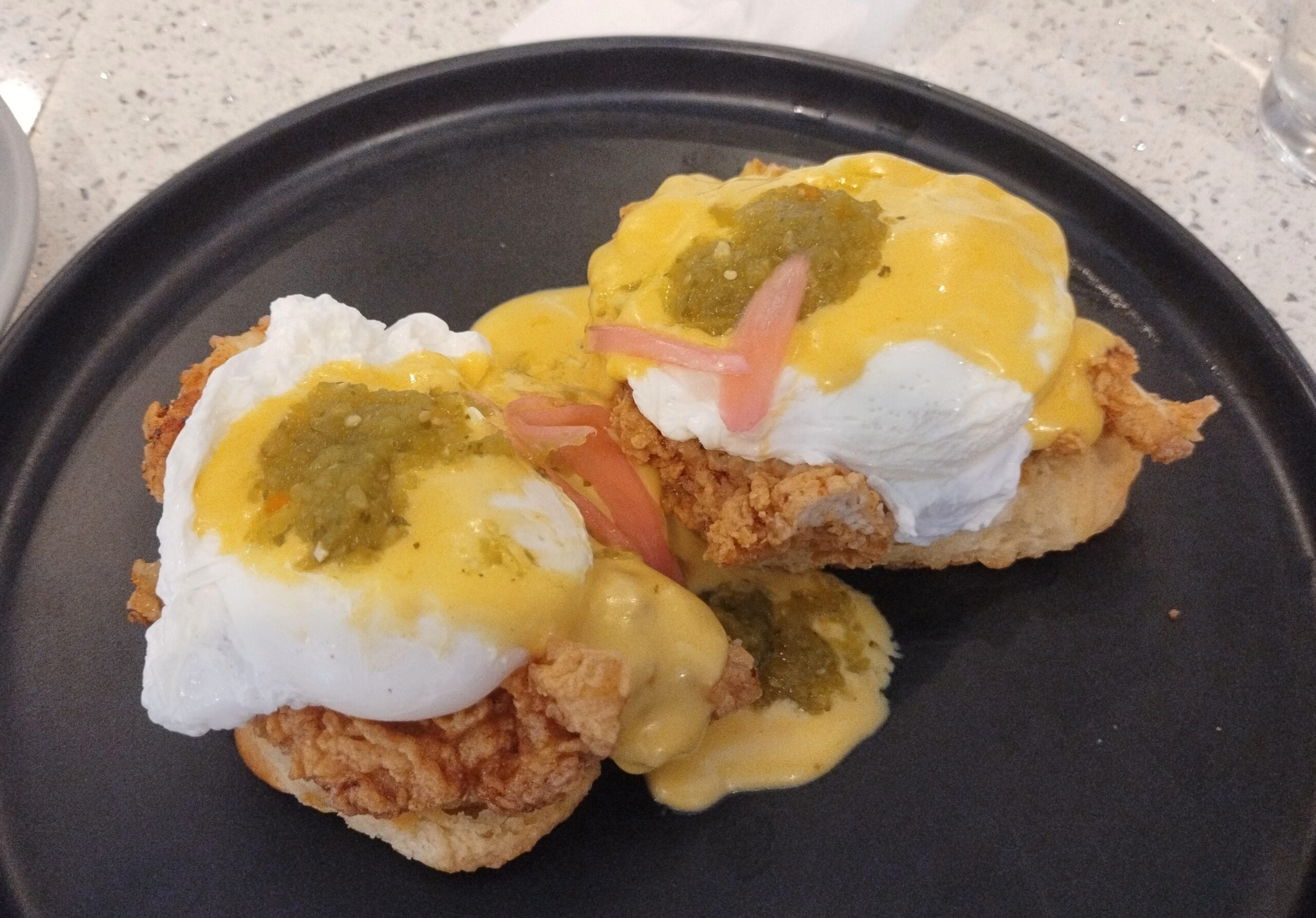
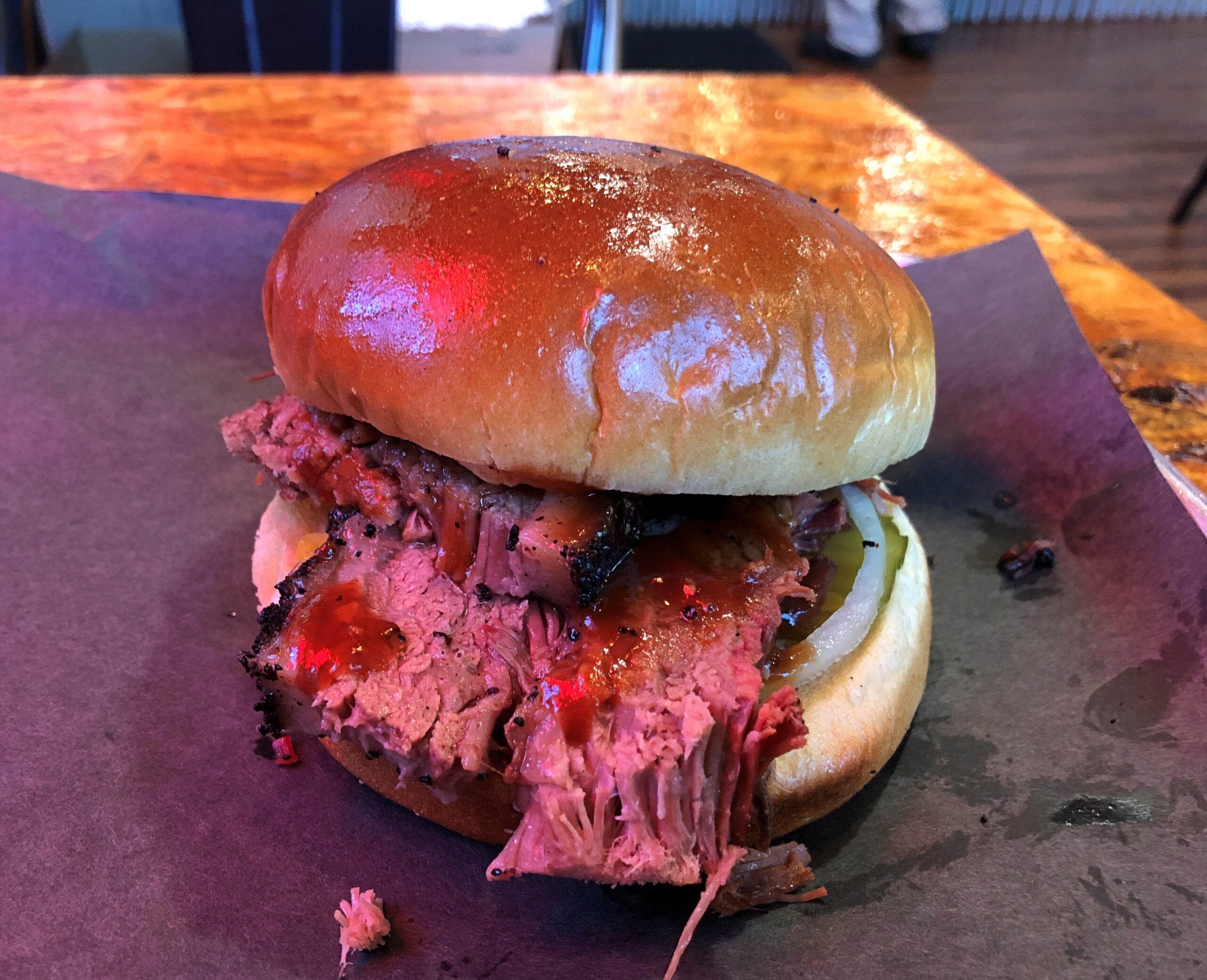
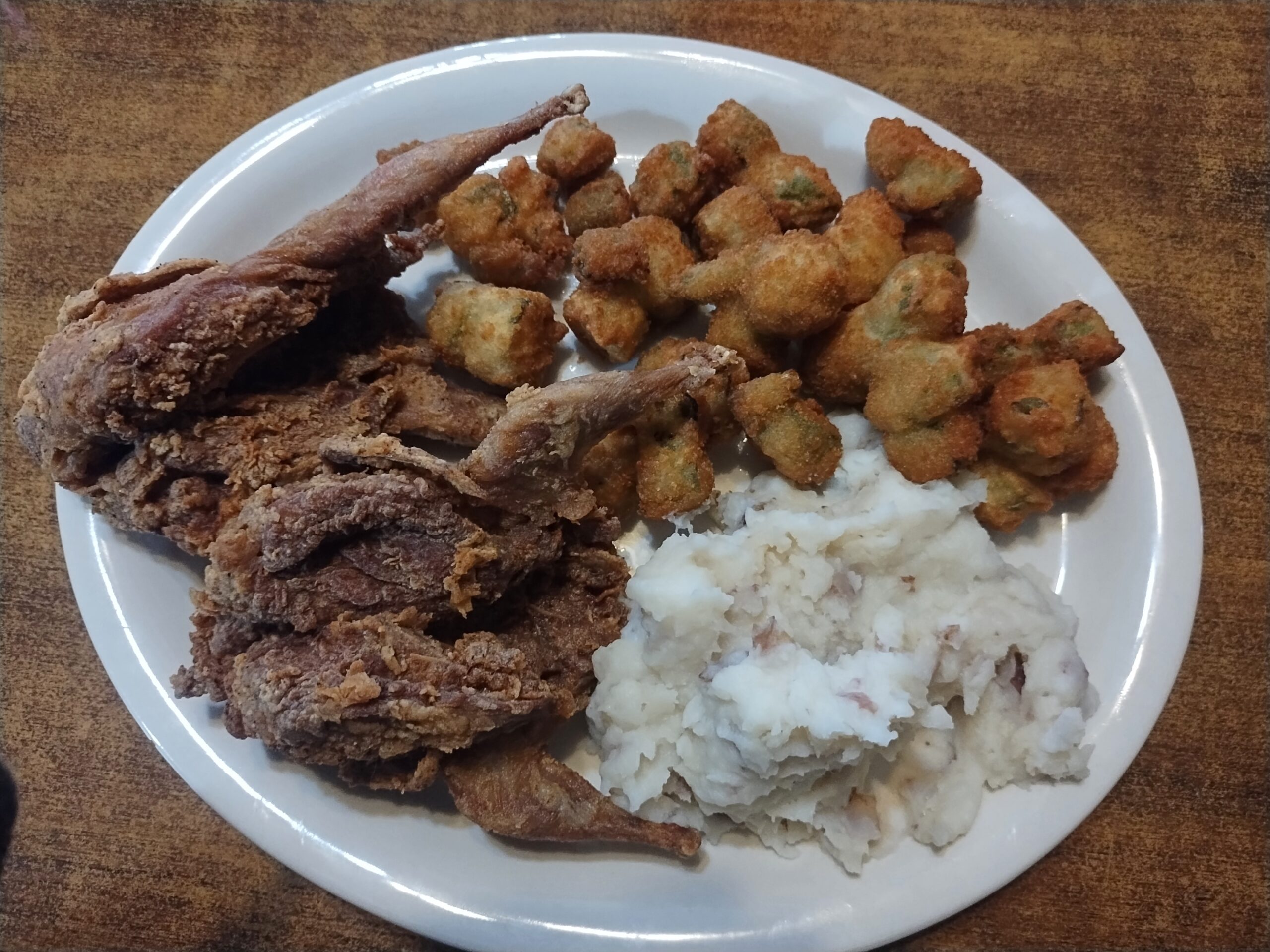
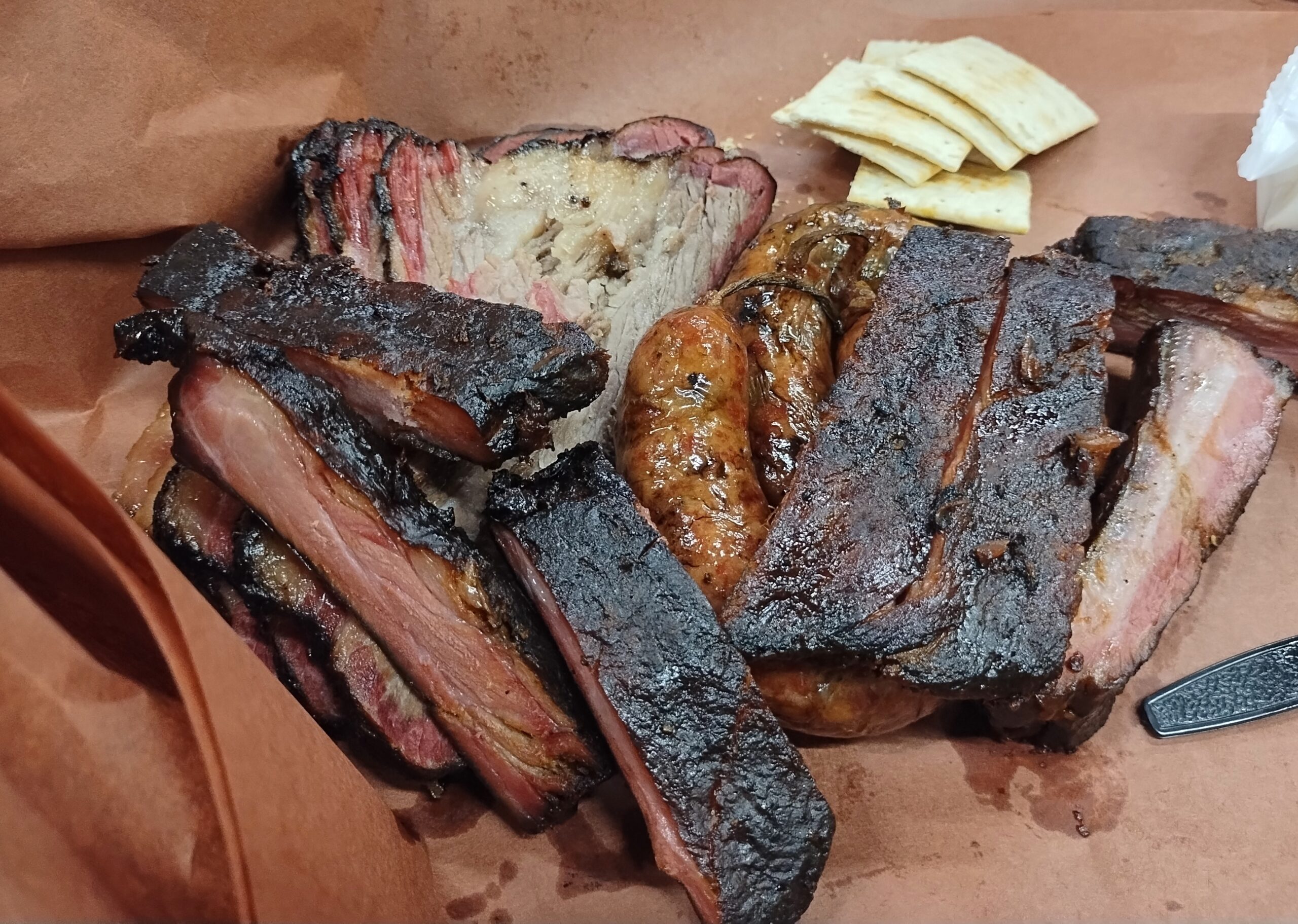
We ate a lot of meat along the way. As one does in Texas.
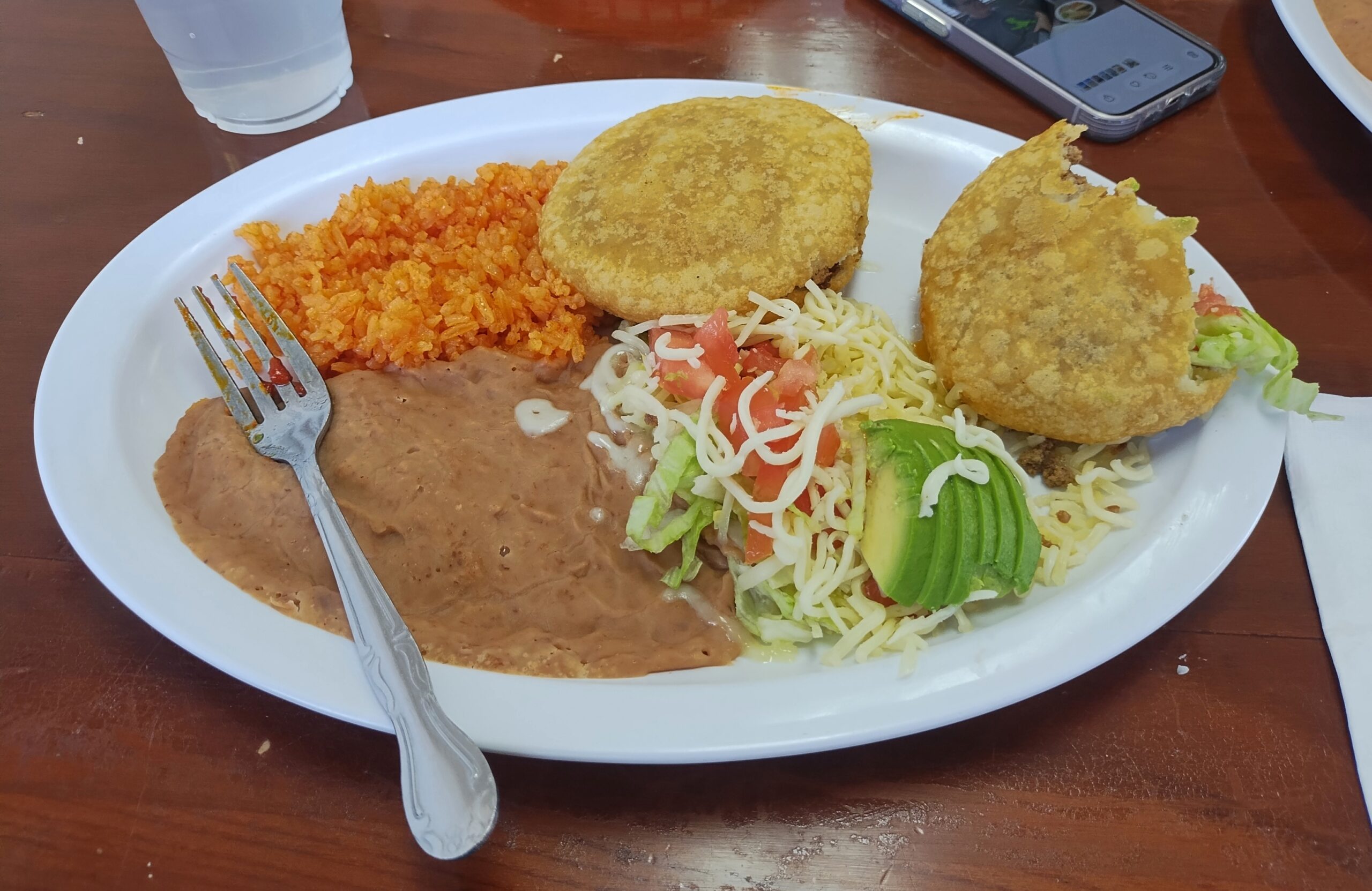
Also, Mexican food.
Eat like that and you’d better do some walking, and I did: various places in Austin and Houston and Dallas, in all three national parks, around downtowns and courthouse squares in a number of small towns, and a handful of local parks.
All that was good, but of course best of all, I had time to visit friends and relatives, of whom there are many in Texas: Tom and Nancy in Austin, Kirk and Lisa in Nacogdoches, another Tom and Steve and Ron and Greg and Judith in San Antonio, to list the friends; both brothers, two out of three nephews and their wives and all four of their children, to list relatives, along with the mother of one nephew’s wife (niece-in-law sounds peculiar, but that fits too). Also, I met for the first time two good friends of Tom’s in Austin, and one of Kirk and Lisa’s granddaughters.
I’d set out to do four long drives when I was 64, but this makes five. Guess I’m an overachiever about driving, anyway.