Five-State National Road Dash

Our first winterish weather blew through early this week, but we’re back to cool days. For now. Some leaves seem to be clinging a little longer than usual, but most are accumulating on the ground, as expected for November. A scattering of Christmas decorations are already up, and I don’t mean in stores, where they’ve been for weeks. Let November be November, I say.

Much of my return from the East Coast generally followed the westward course set by the National Road, though I didn’t use much of US 40, which has that nickname. If you want to make decent time, you take I-68 through Maryland and then I-70 across Ohio and into Indiana, which pretty much parallels the National Road.

The Interstate is designed for just that kind of efficient travel. On the whole, it delivers. The four-lane highways also deliver boring drives, to hear some tell it. That’s an erroneous assumption, to hear me tell it. The Interstate has its fine stretches, such as I-68 in October, a gloriously colorful drive. Winding and hilly, too, through Maryland’s peculiar panhandle.

A rest stop near Hancock, Maryland, offers views to the north, so most of what you see is Pennsylvania.
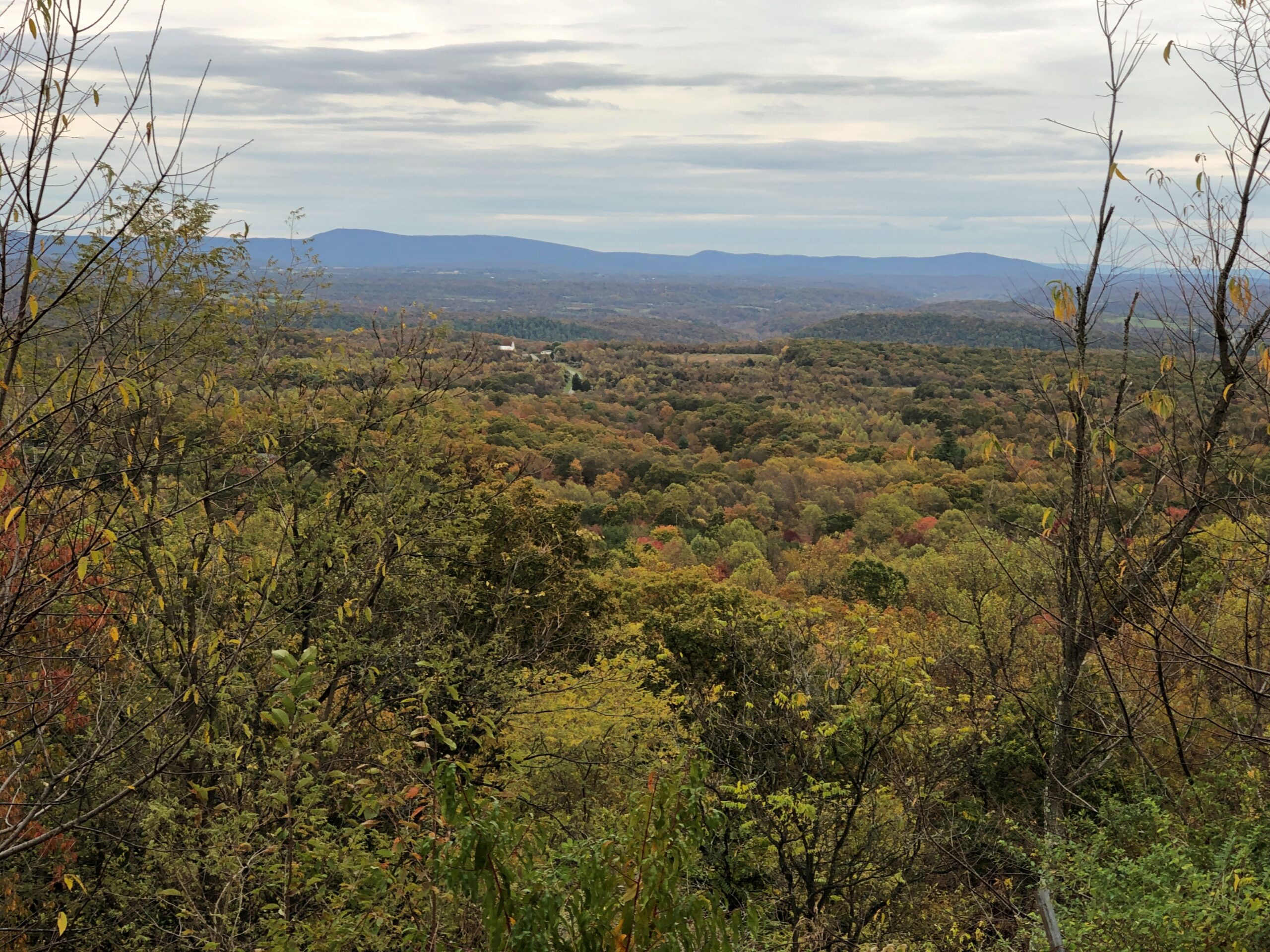
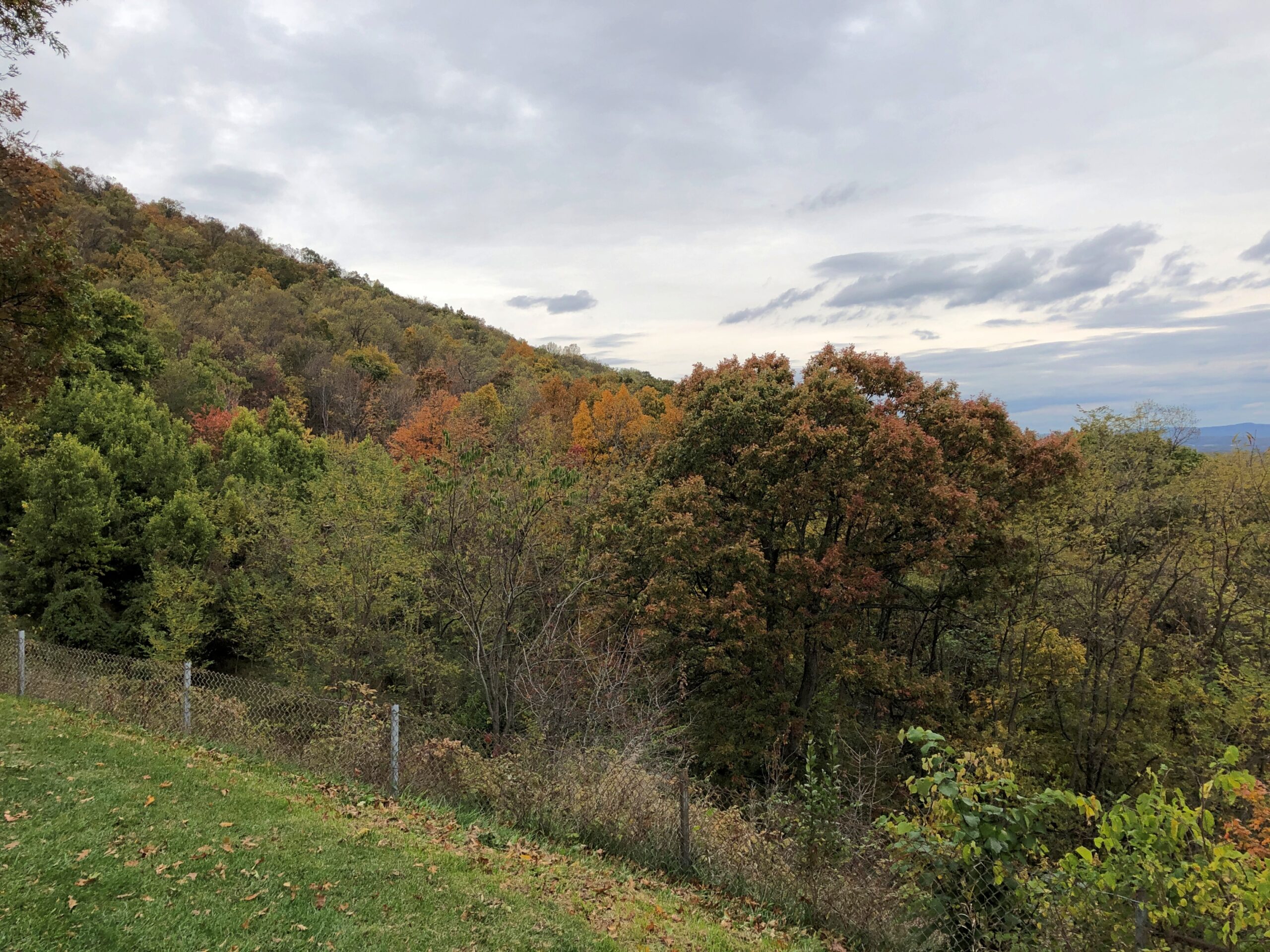
Maryland I-68
Maryland I-68

The rest stop is at Sideling Hill, an enormous rise gouged by an enormous cut for I-68 to go through. An impressive feat of engineering, completed only in the 1980s. Then again, blowing up mountains is a thing that happens in this part of the country.

The narrowest part of the Maryland isn’t far away. At its narrowest, there is less than two miles are between the Potomac and the Mason-Dixon Line. So if you picked up Maryland by the panhandle, it would surely break at that narrowest point.

I filled my gas tank off the highway in the last town in Maryland, Friendsville (pop. 438), at a station whose enclosed retail space (between a few pumps) seemed little bigger than a walk-in closet, and yet there was a clerk manning the place on Saturday just before dark. Rotund and massively bearded, he was playing a video game when I opened the door to pre-pay. He might have been a little surprised to encounter a customer, at least one who didn’t pay at the pump.

From there, I continued into West Virginia, then took I-79 north into Pennsylvania, then headed west on I-70, which crosses West Virginia’s odd panhandle – more like a periscope – before reaching Ohio. After overnighting in Cambridge, Ohio, I bypassed Columbus but stopped in Springfield, near Dayton but with a distinct geographic identity. Alcor to Dayton’s Mizar, you might say.

Downtown Springfield was practically devoid of pedestrians that Sunday, and not that many cars drove through either. A few buildings rise high enough to suggest a more prosperous past, but look too closely and some of them seem to be as empty as the streets, or at least underutilized.
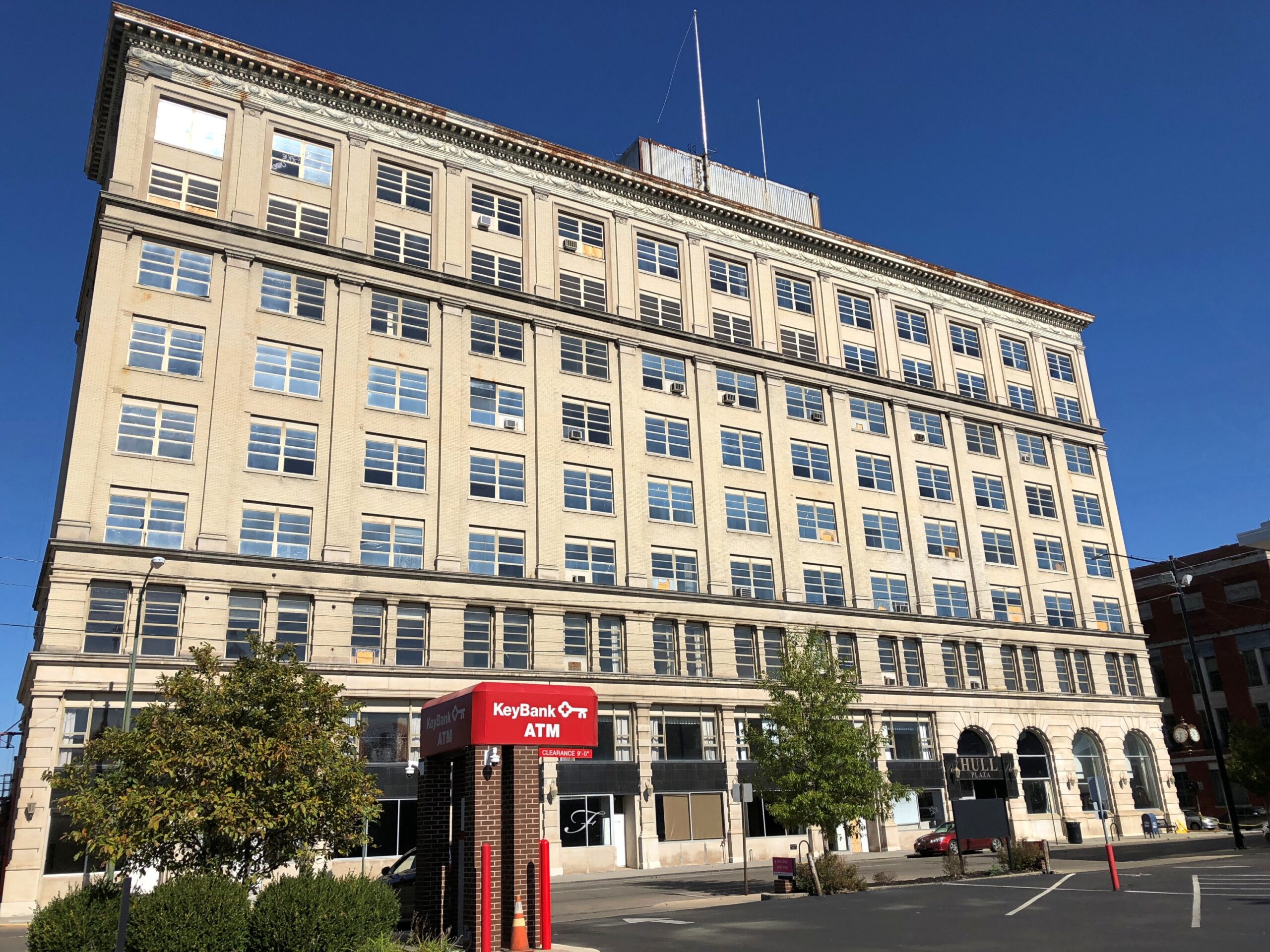
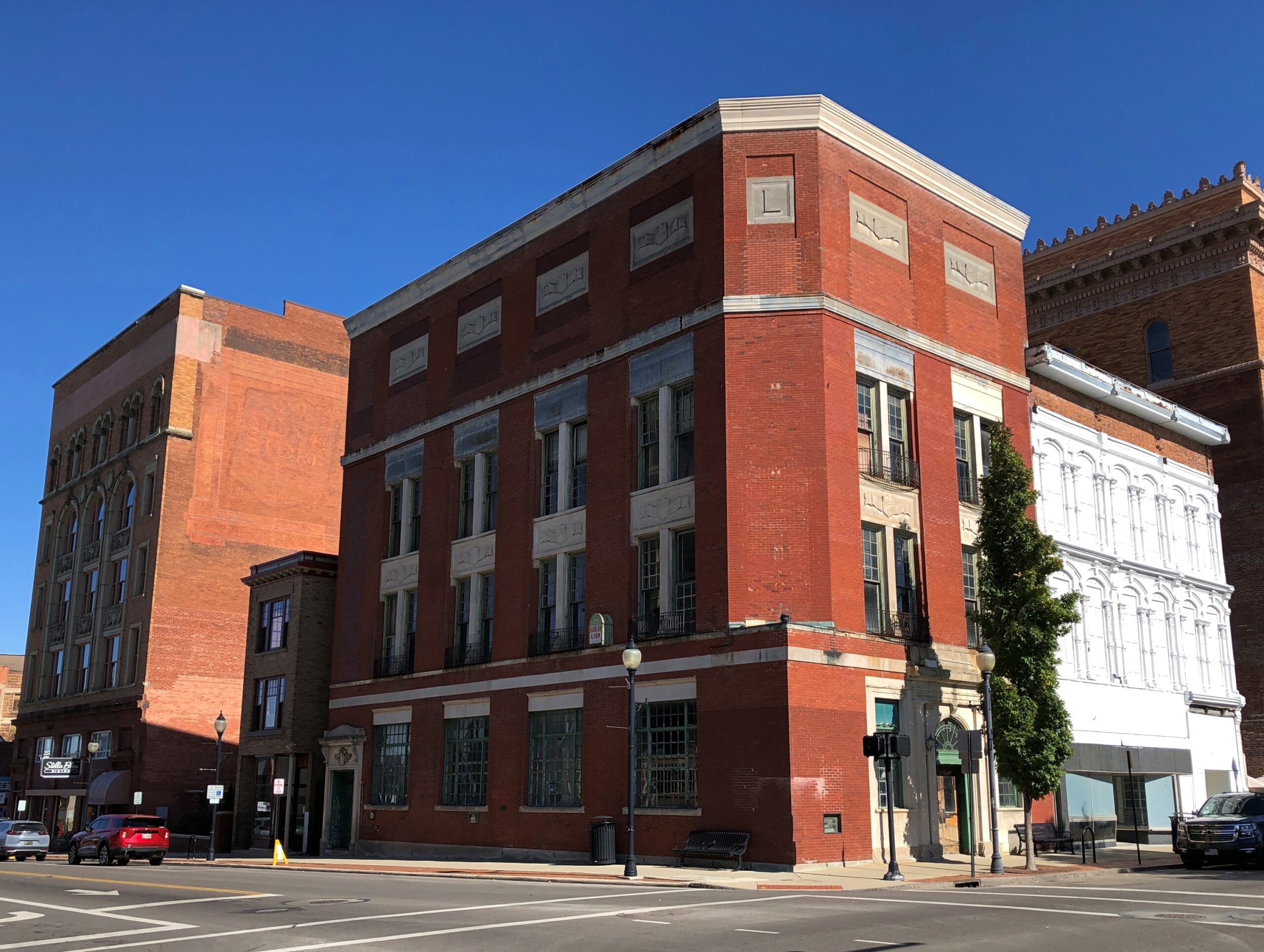
Springfield, Ohio
Springfield, Ohio
Springfield, Ohio

The National Road went, and still goes through Springfield, in the form of US 40. A milestone in Springfield marks the point at which the federal government quit paying for further westward expansion of the road. Anything else would be on the states, namely Ohio, Indiana and Illinois.
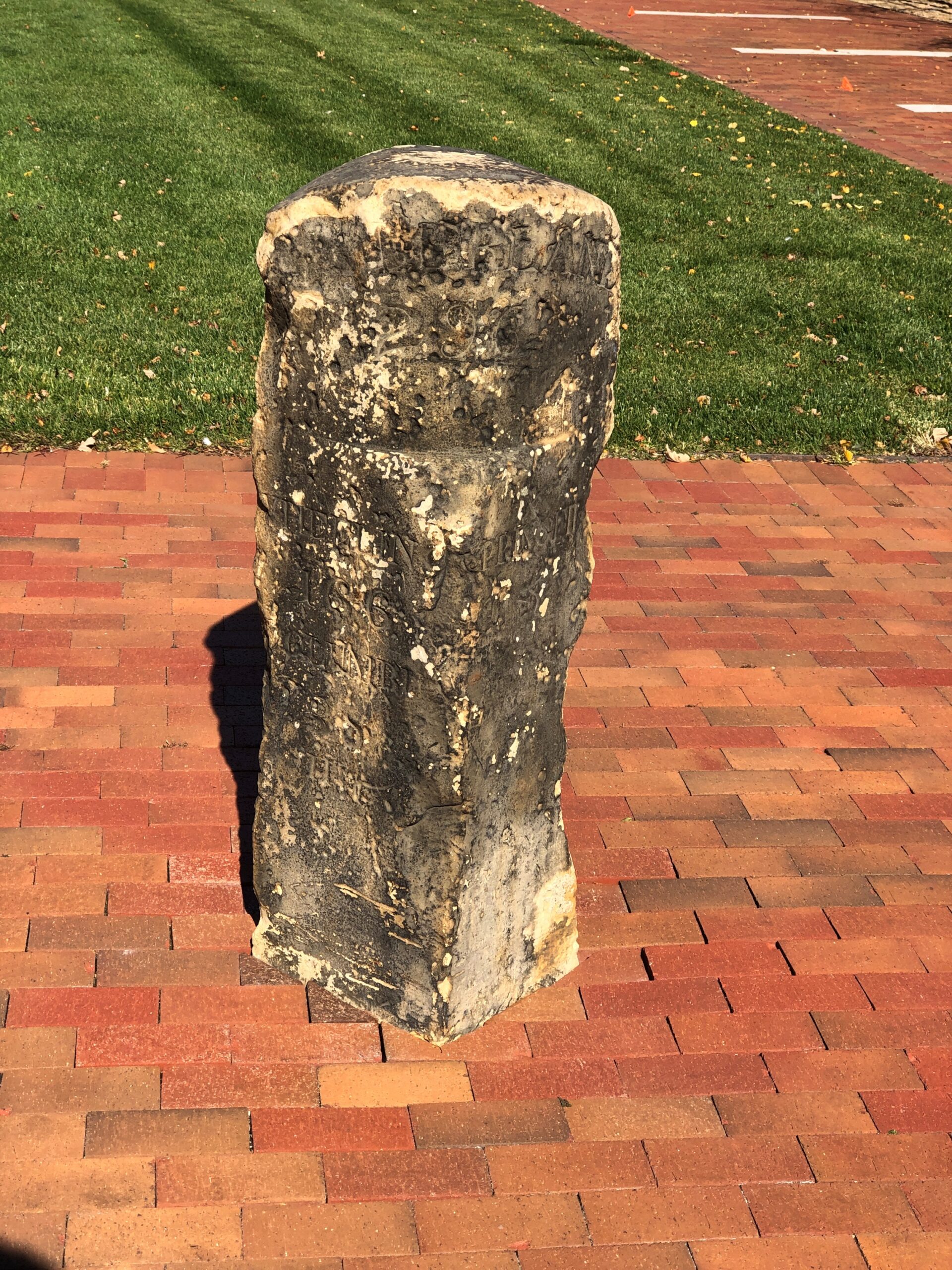
National Road Milestone, Springfield Ohio

Later, after the National Road had become History, the Daughters of the American Revolution erected a series of statues along the route, and others to the west: “Madonna of the Trail.”
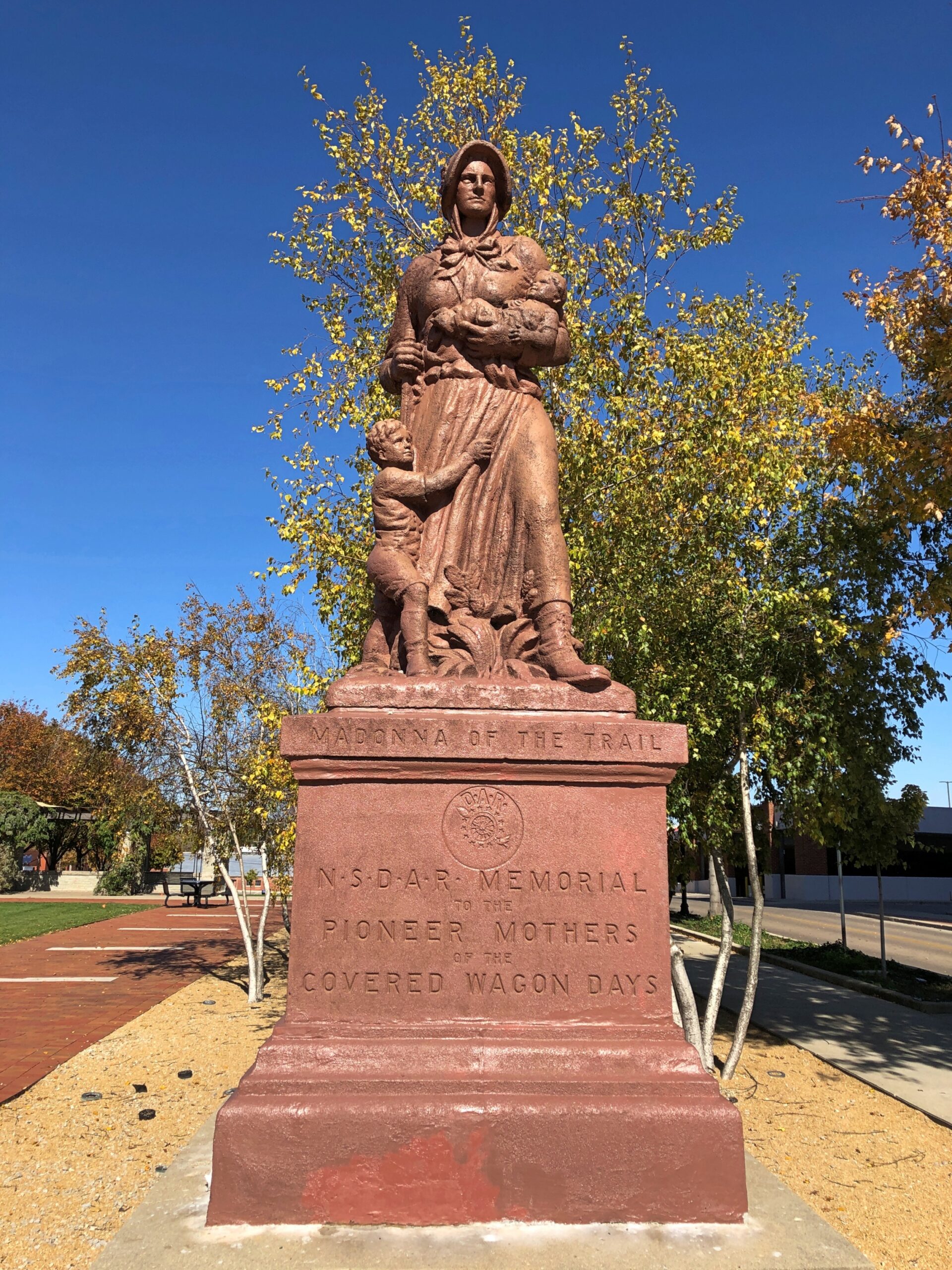
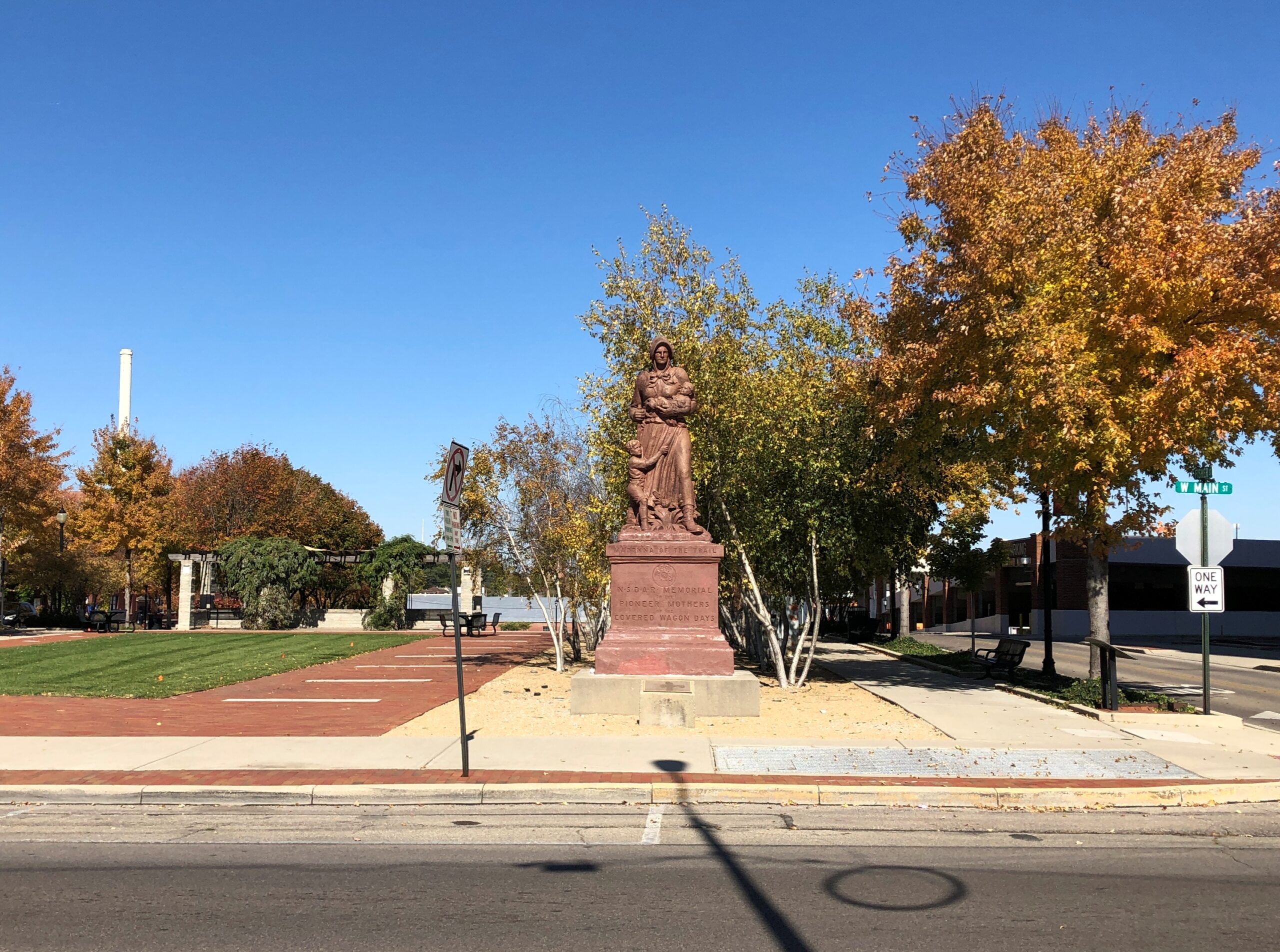
National Road Madonna of the Trail, Springfield Ohio

There are 12, with the easternmost of them along the National Road. Erected in the late 1920s, the Springfield one was renovated about 20 years ago.

Nearby, passersby are urged to Dream Big.

Springfield Ohio

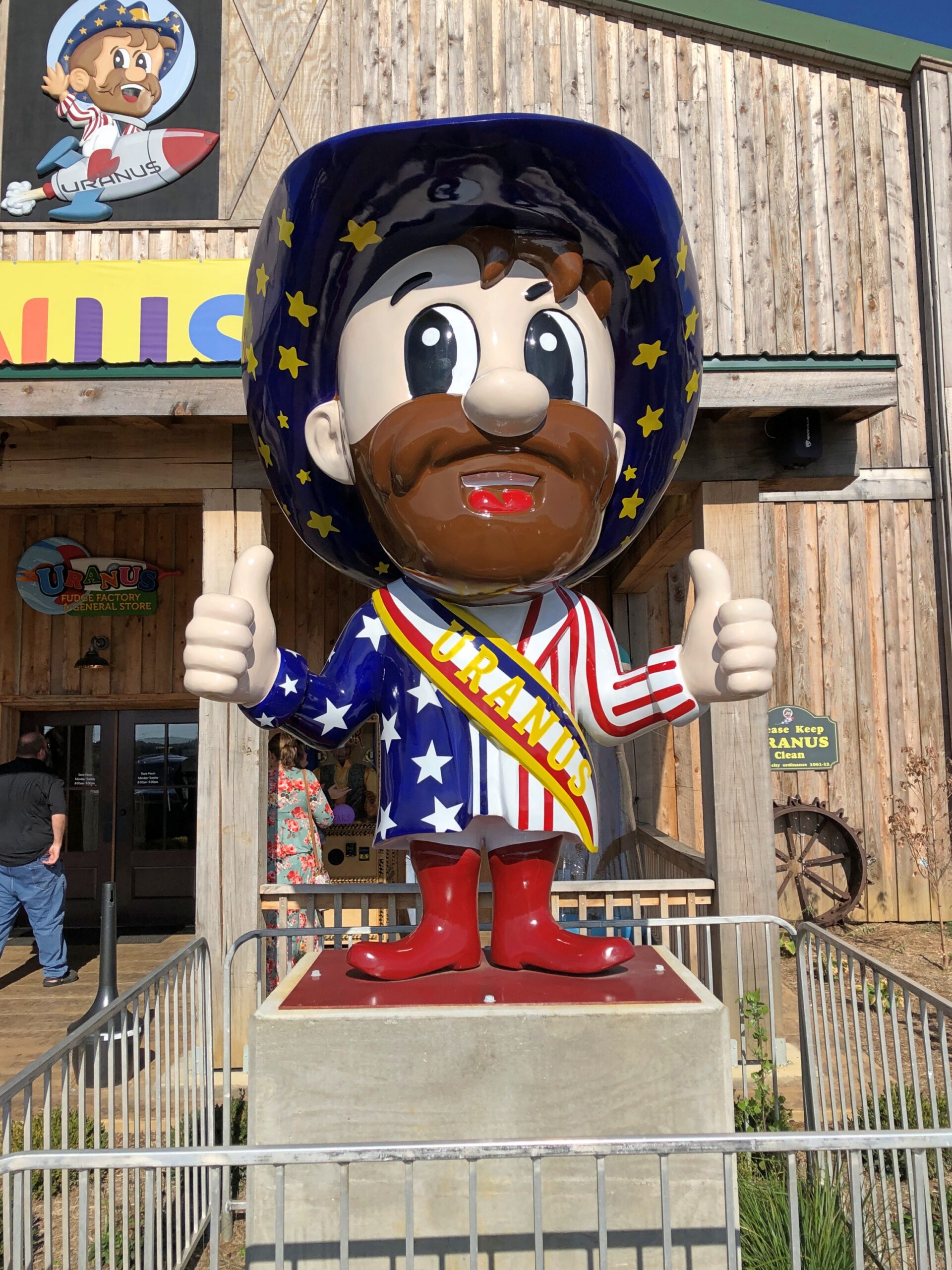
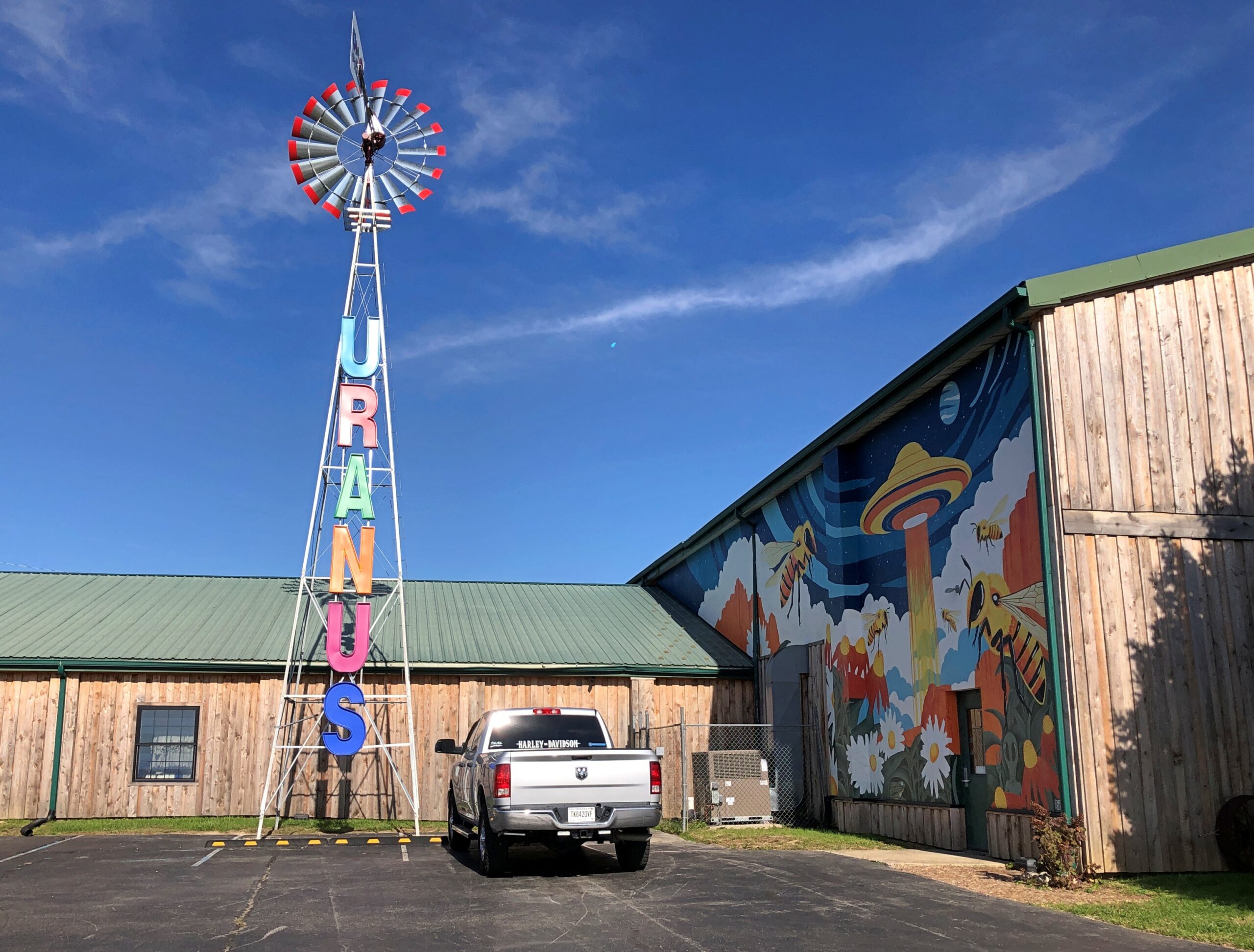
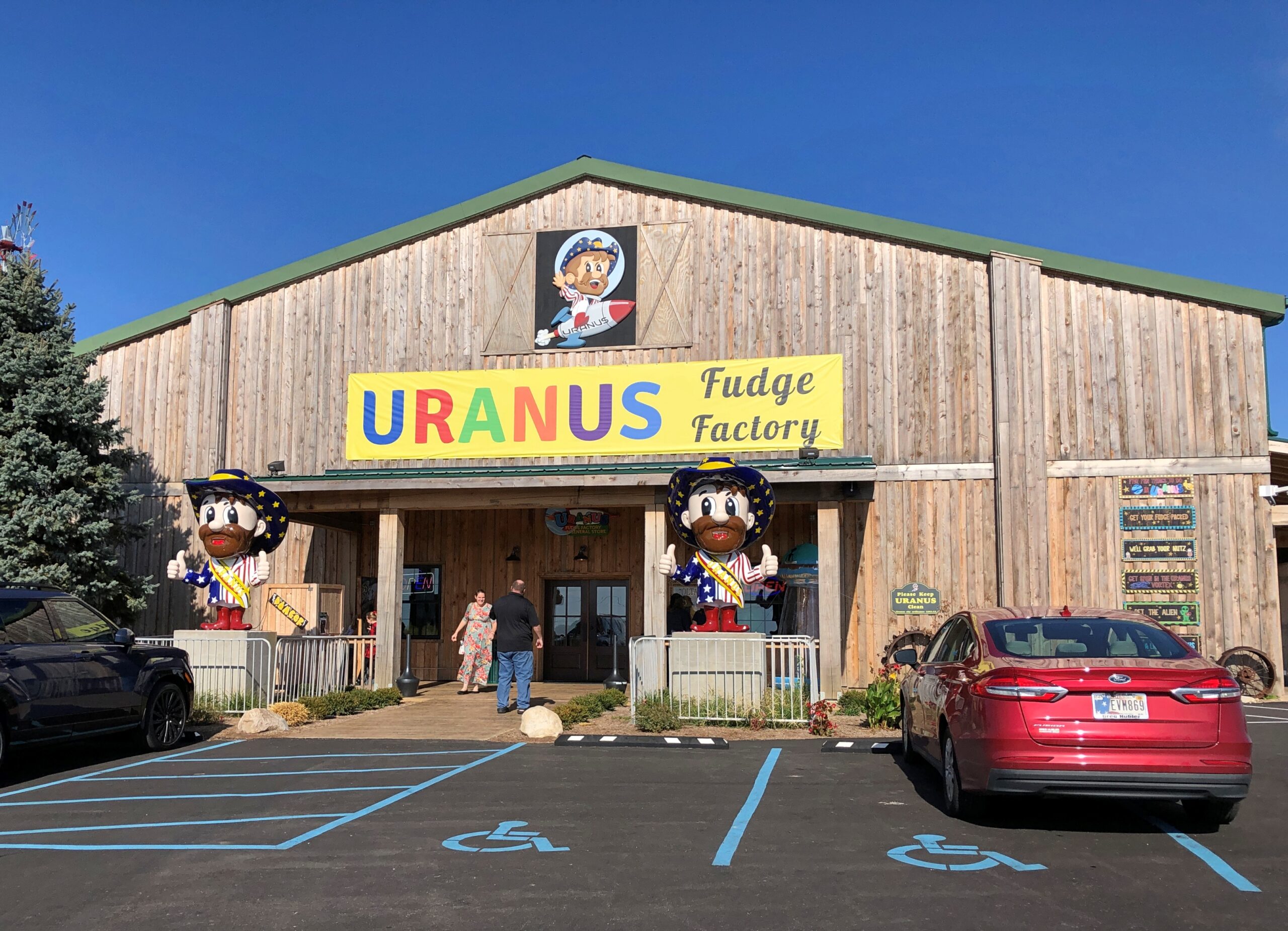
About an hour west of Springfield, at the border of Ohio and Indiana on I-70 – just barely inside Indiana – is the Uranus Fudge Factory. I had to stop for that.
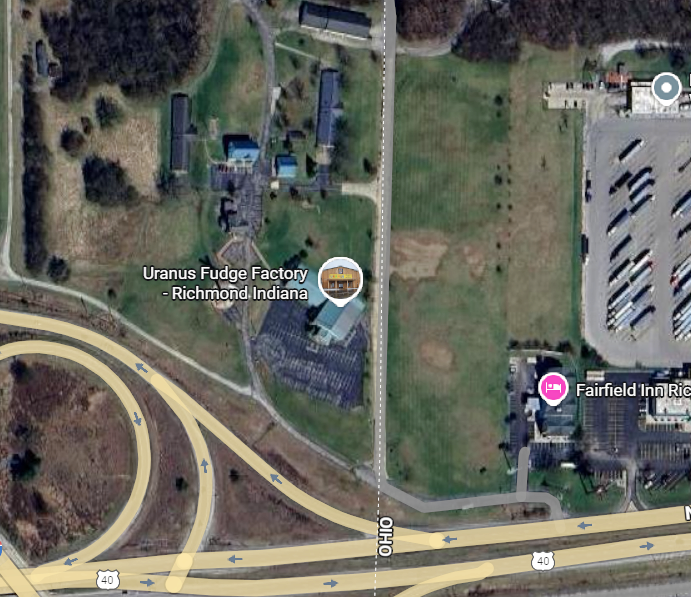
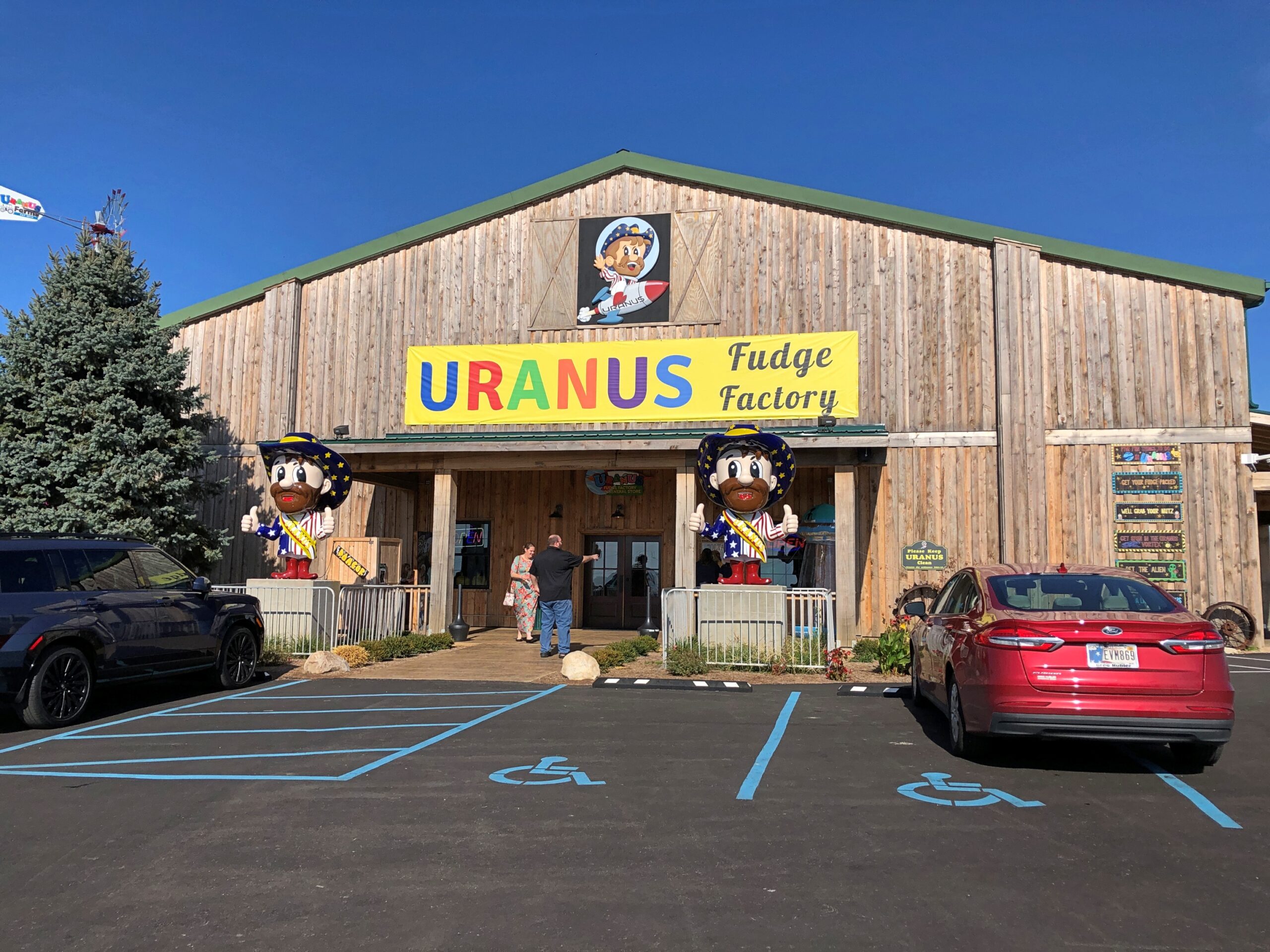
Uranus Fudge
Uranus Fudge
Uranus Fudge

Sure, there’s fudge in there somewhere, but also a lot of gags involving the word Uranus (Your-anus). Examples can be found in the newspaper — an honest-to-God paper newspaper — that the store produces, The Uranus Examiner, and gives away. I have a copy. My kind of souvenir.

Sample front-page headlines from the Summer 2025 edition:

Breaking News: You Can Explore Uranus In Three Locations

Eating Their Way Through Uranus

Get A Lick Of Uranus

Sink Your Balls In Our Putt Holes

The second of those stories was about the 2nd Annual Eating Uranus Fudge Galactic Championship held at the Anderson, Indiana location in March. Apparently it was a Major League Eating-sanctioned event, and apparently MLE is a real thing. One Patrick Bertoletti won the 2nd championship at Uranus, putting away a bit more than nine pounds of fudge in about as many minutes.

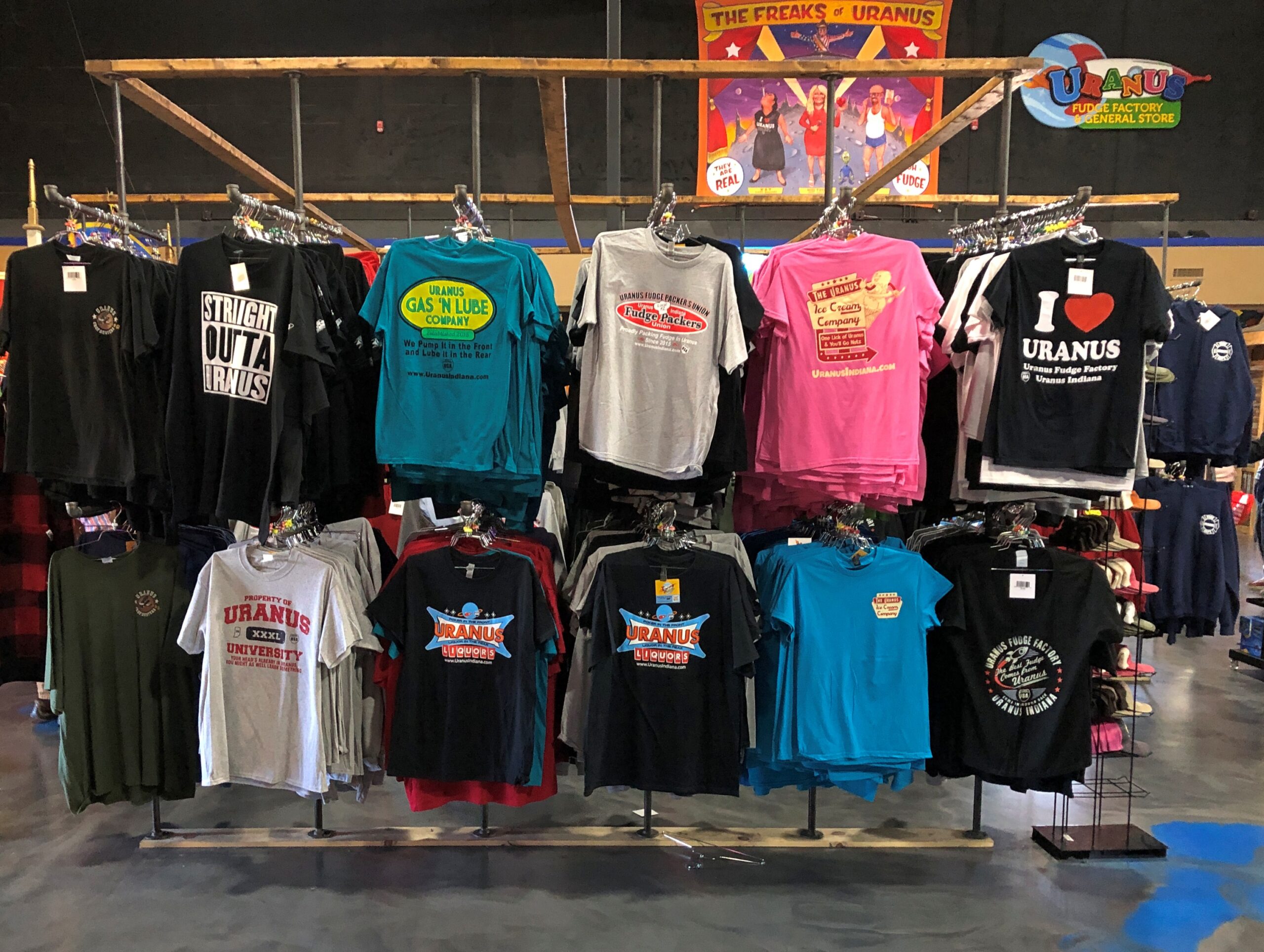
Fudge is one thing, but mostly Uranus sells stuff. A lot of stuff.
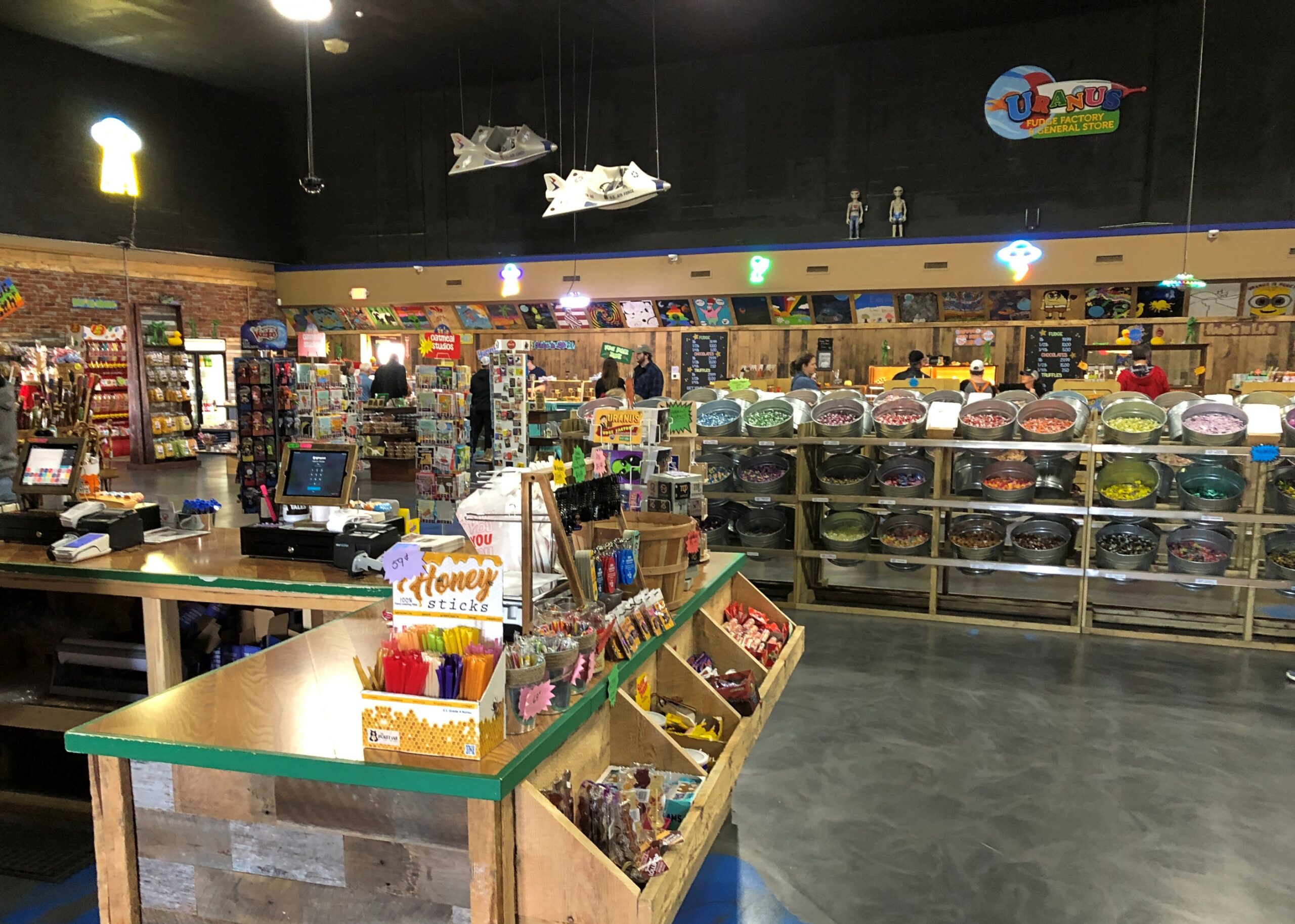
Uranus
Uranus Fudge

The Richmond, Indiana location is the third of three for Uranus, and I think the only one with dinosaurs —
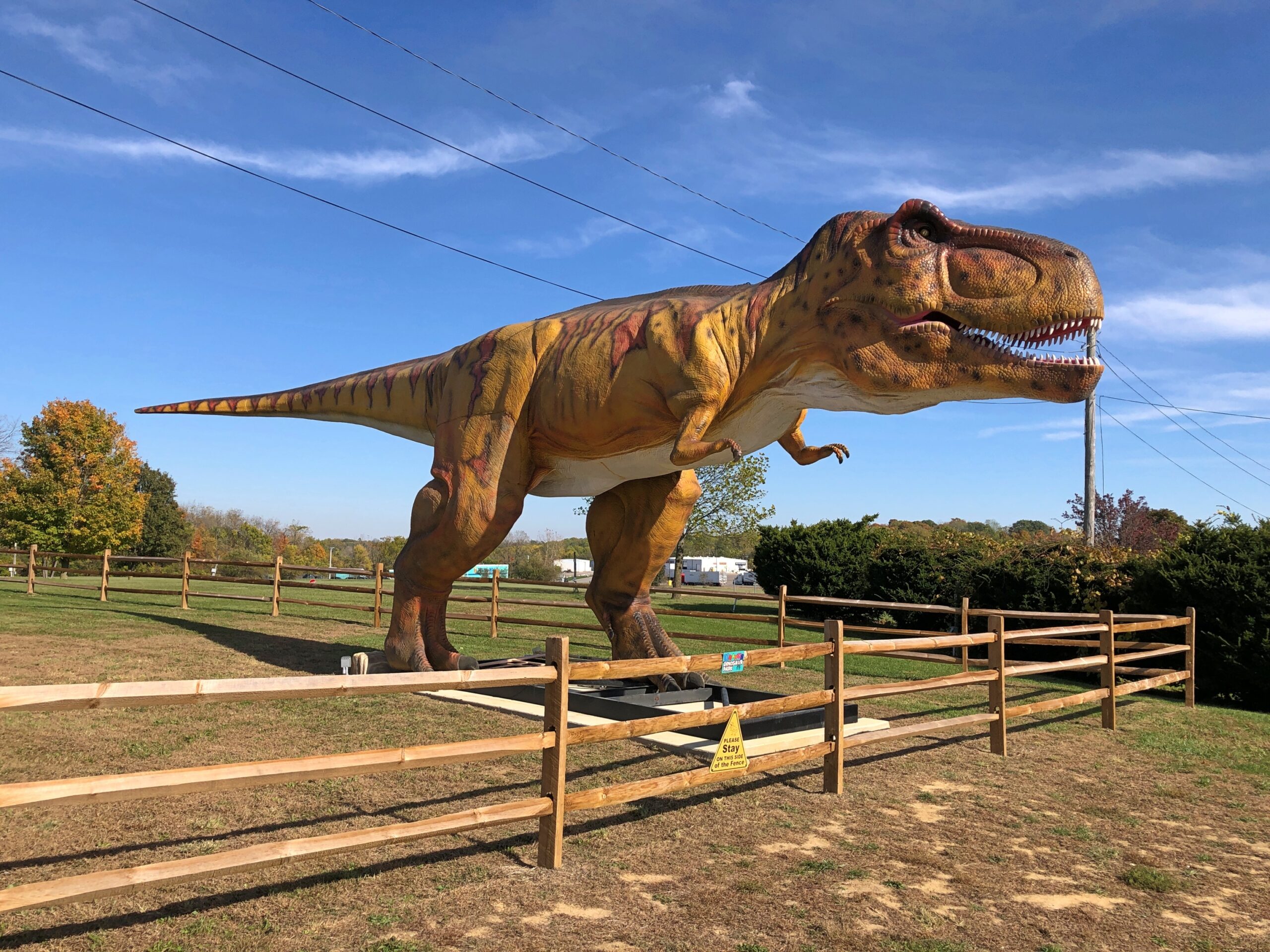
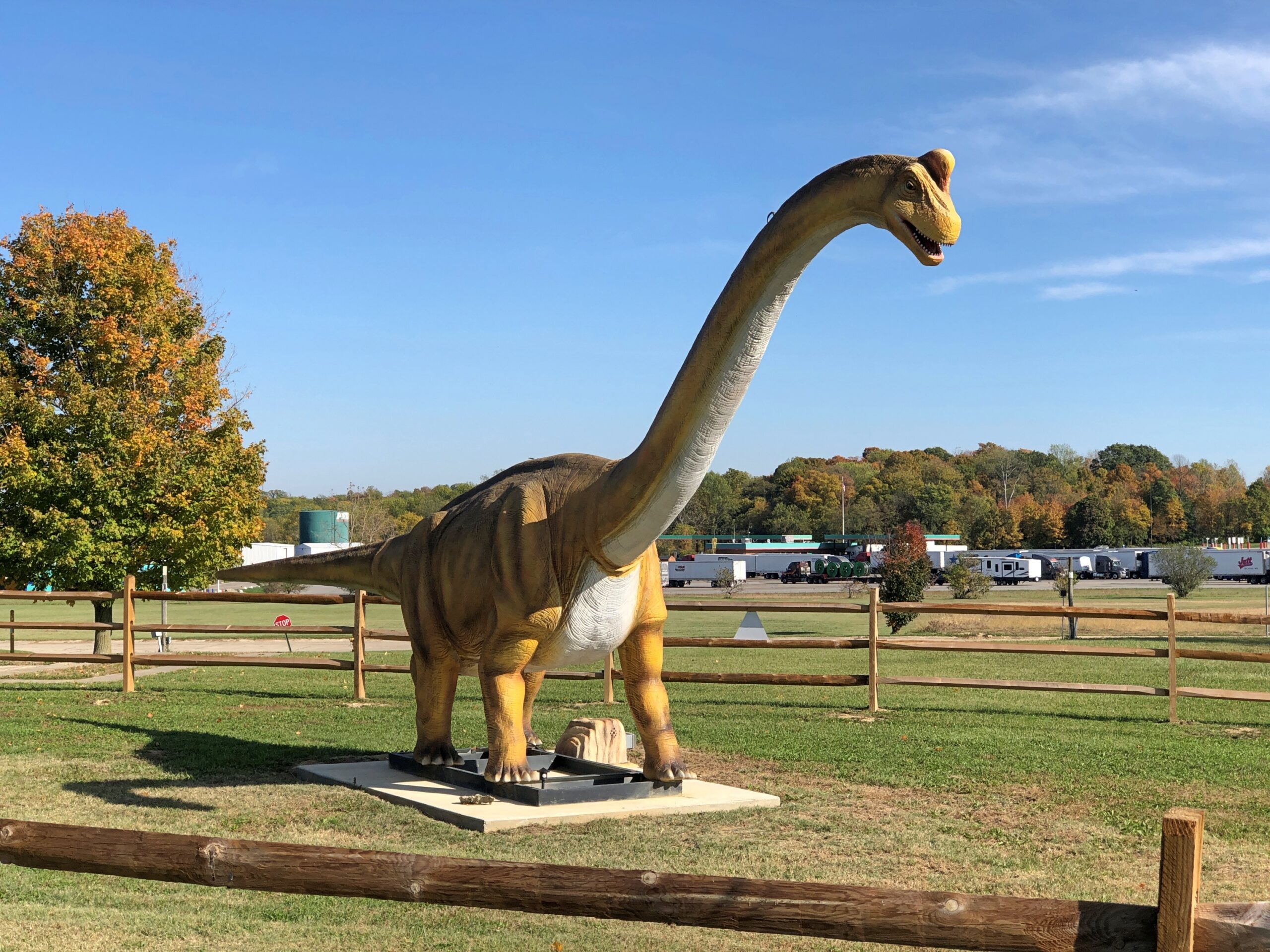
Uranus Fudge
Uranus Fudge

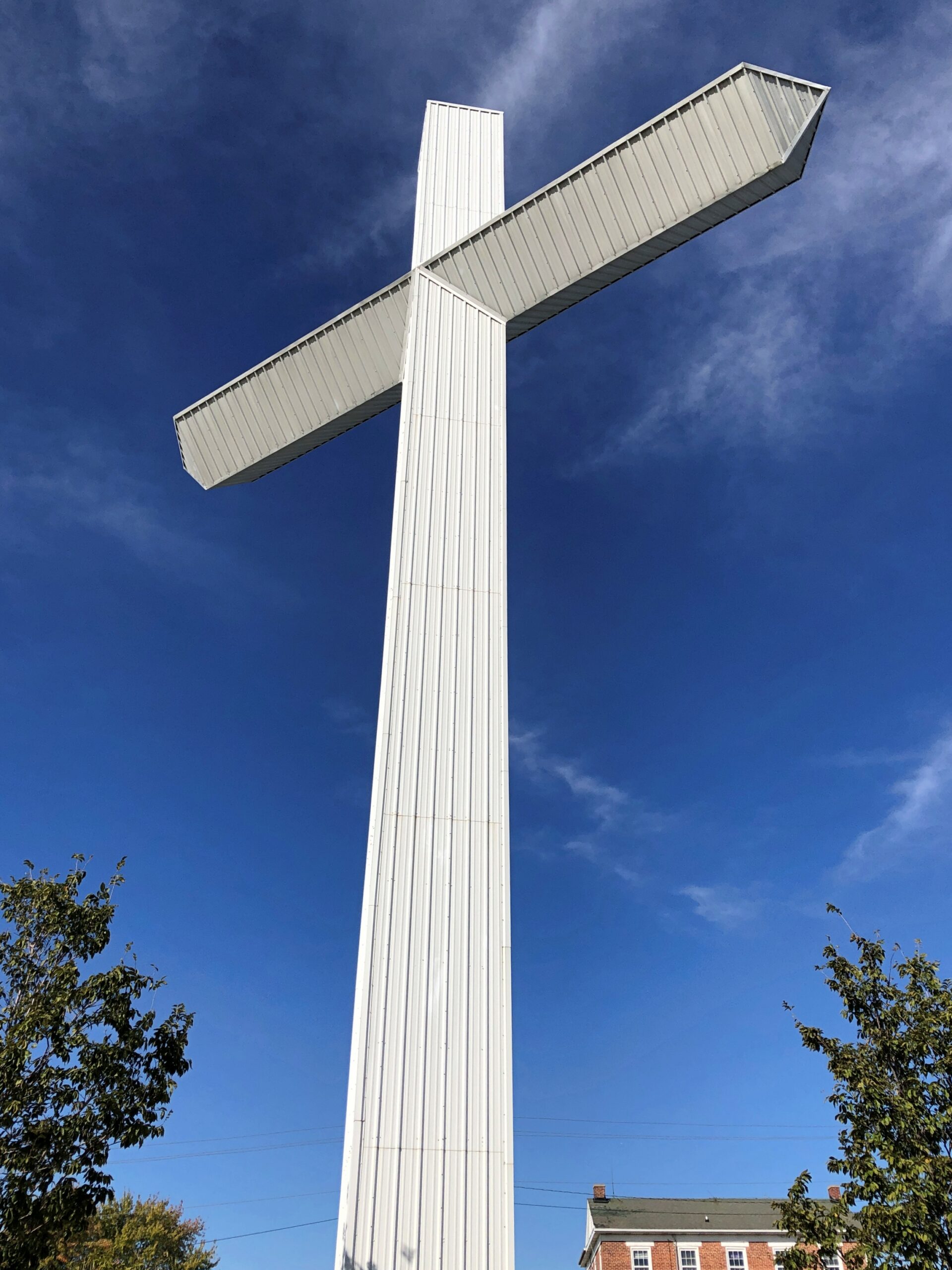
— and a 100-foot cross of corrugated steel over a metal frame.
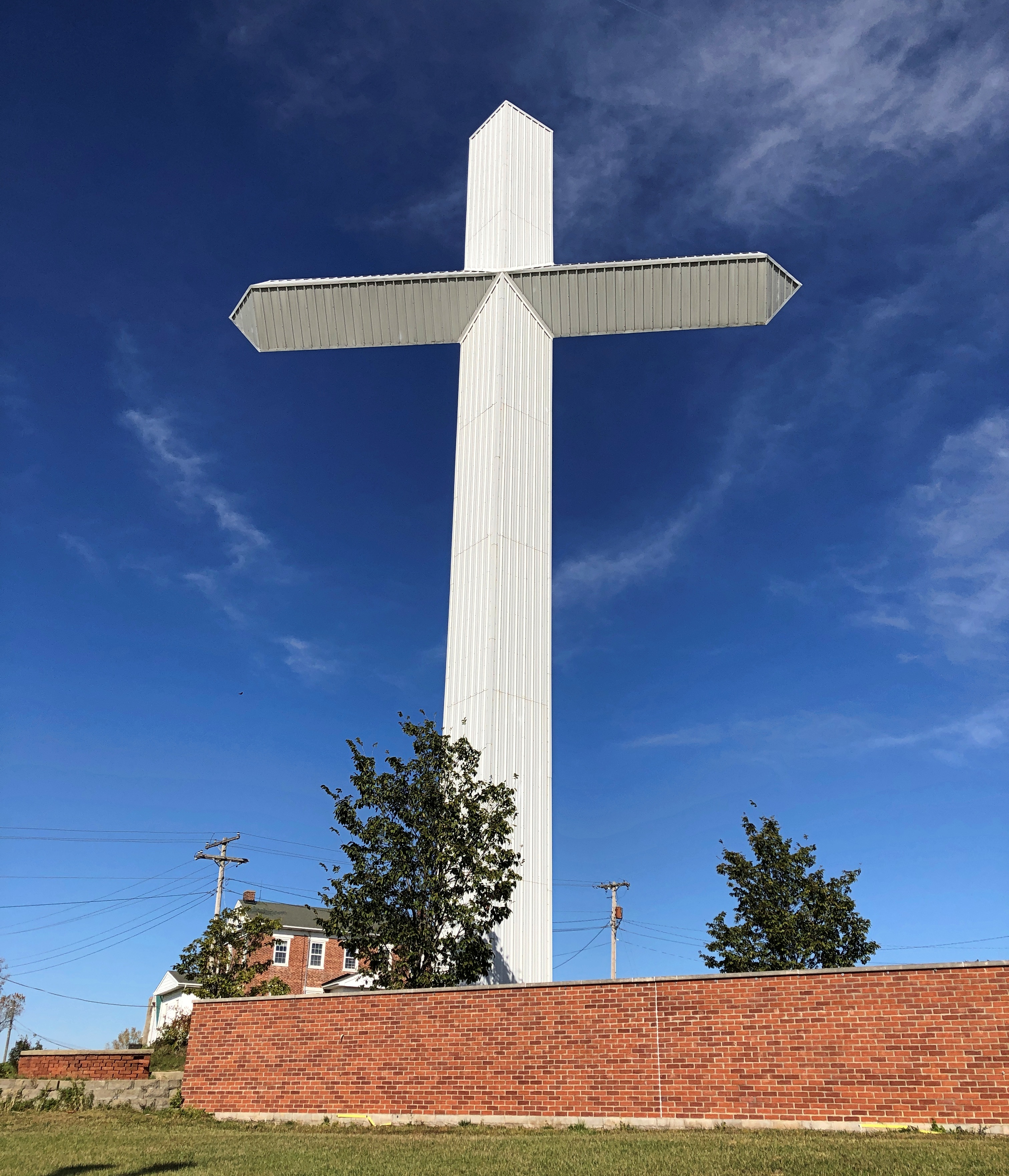
Uranus Fudge
Uranus Fudge

Until about 10 years ago, the property belonged to New Creations Chapel, which also included a church building, boarding school for troubled teens and a Bible college. The ministry, for reasons its web site explains in some detail, sold the property to Uranus, including the cross.

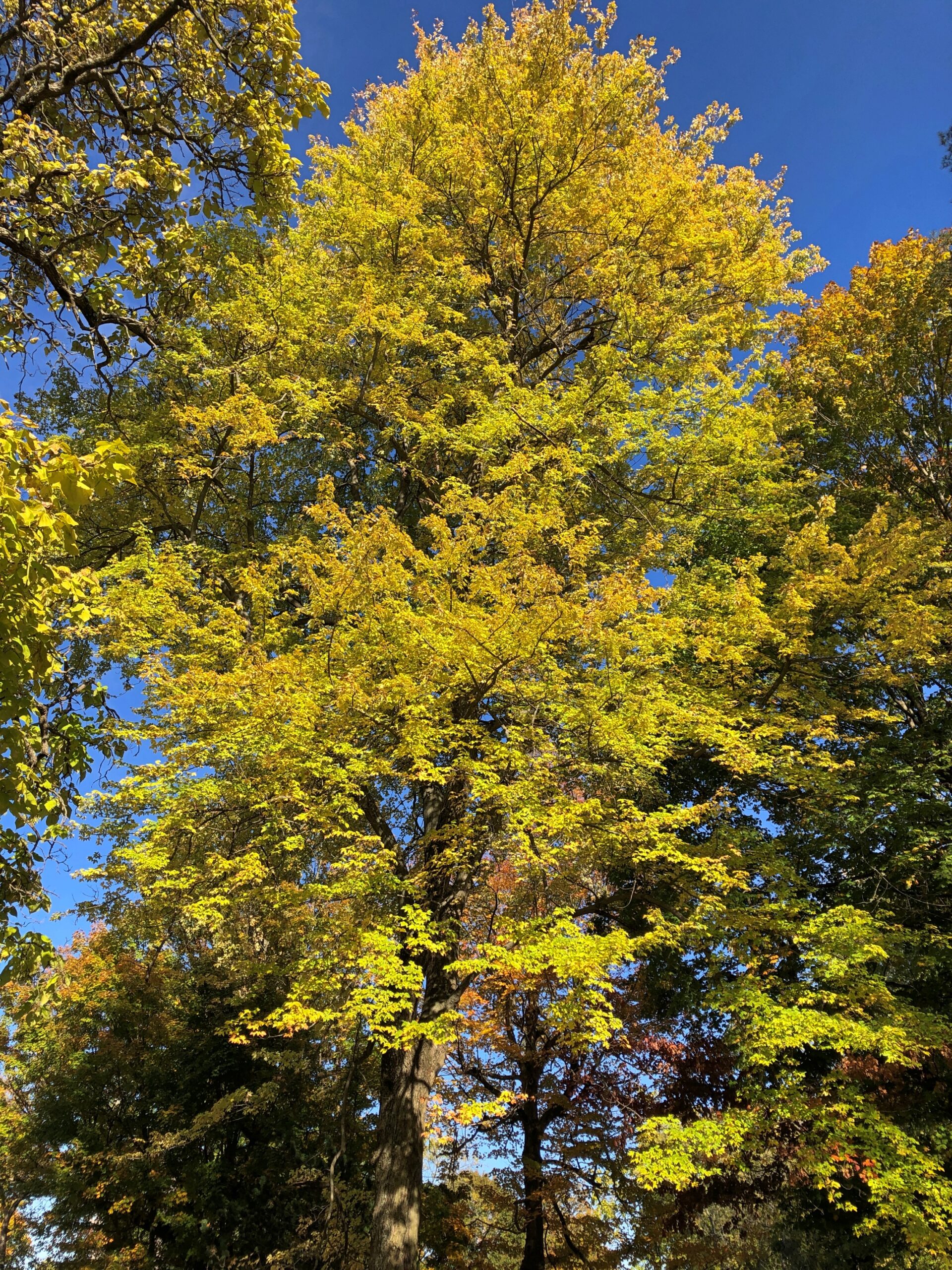
Heading through Richmond, Indiana, I stopped at an entrance to a large park to check my map. Glen Miller Park. A colorful spot in October.
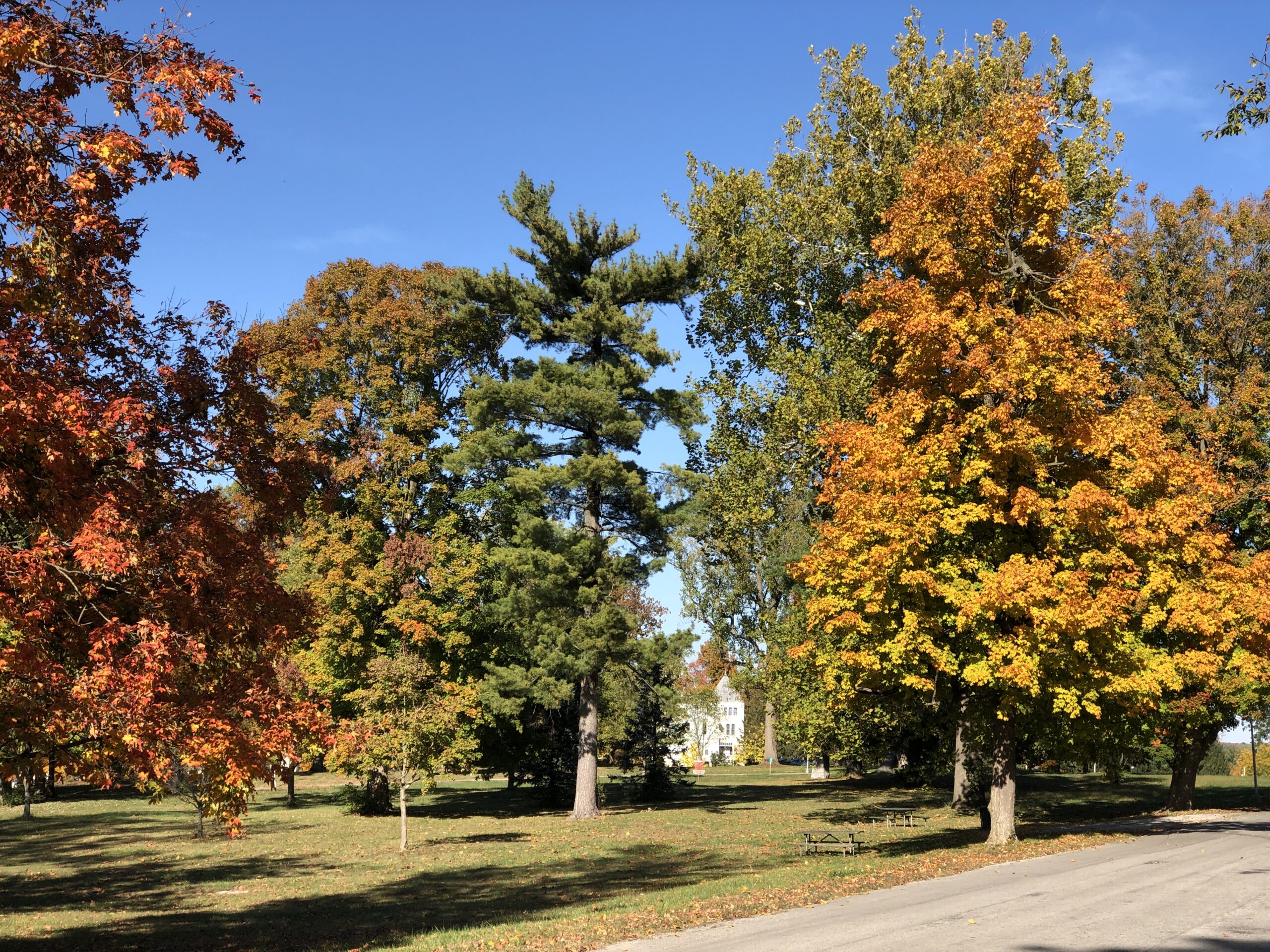
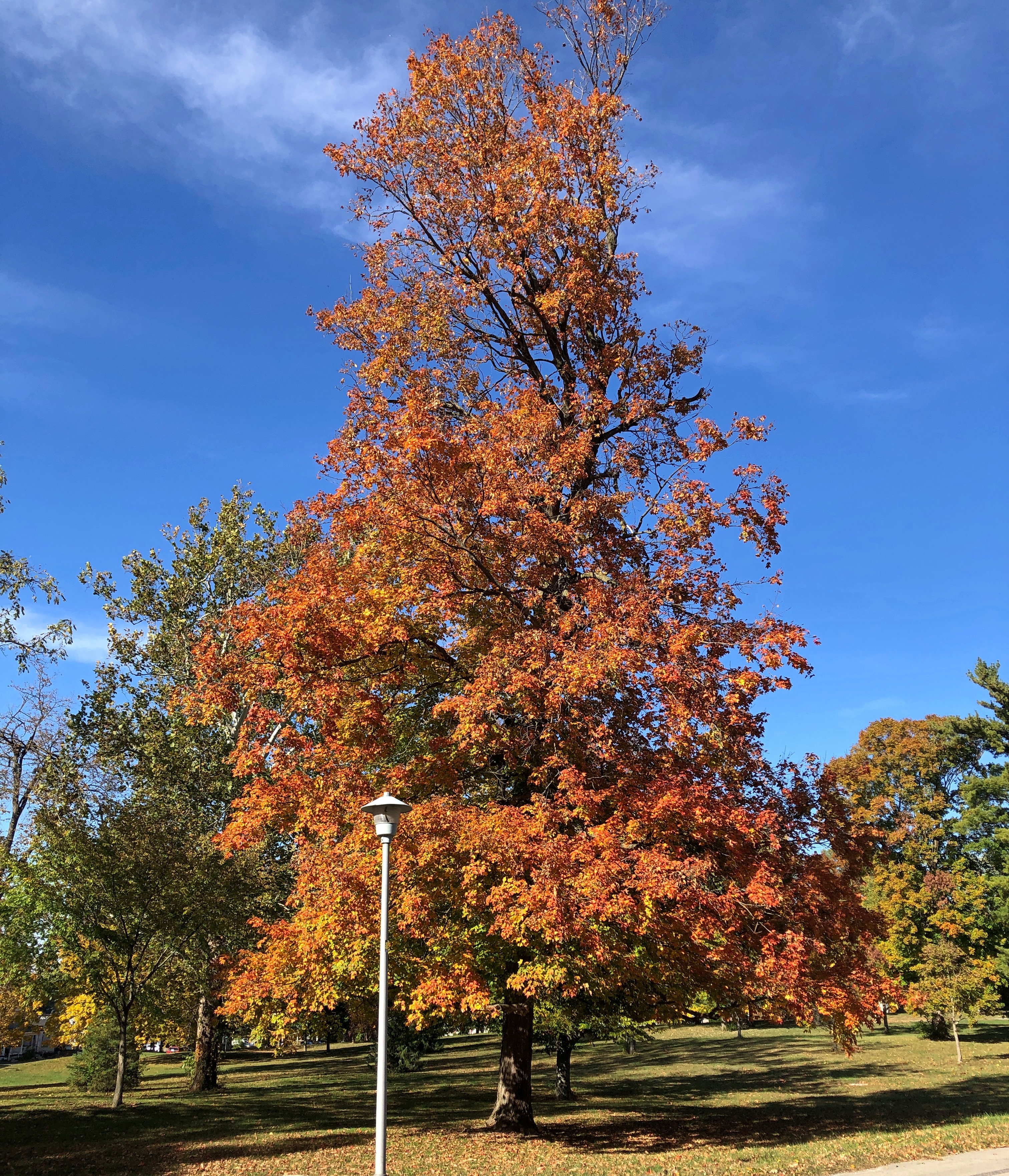
Glen Miller Park, Richmond, Indiana

Not named after the bandleader, which would be Glenn Miller Park. “Glen Miller Park was established in 1885 and was named for Colonel John Ford Miller, who was a railroad executive during the late 1860s,” the city of Richmond says. “Colonel Miller bought the land from Nathaniel Hawkins in 1880, with the intention of transforming the land into a park.”

So Glen Miller as in glen, a term that evokes pleasant Scottish valleys. I was just about to be on my way when I noticed a statue.
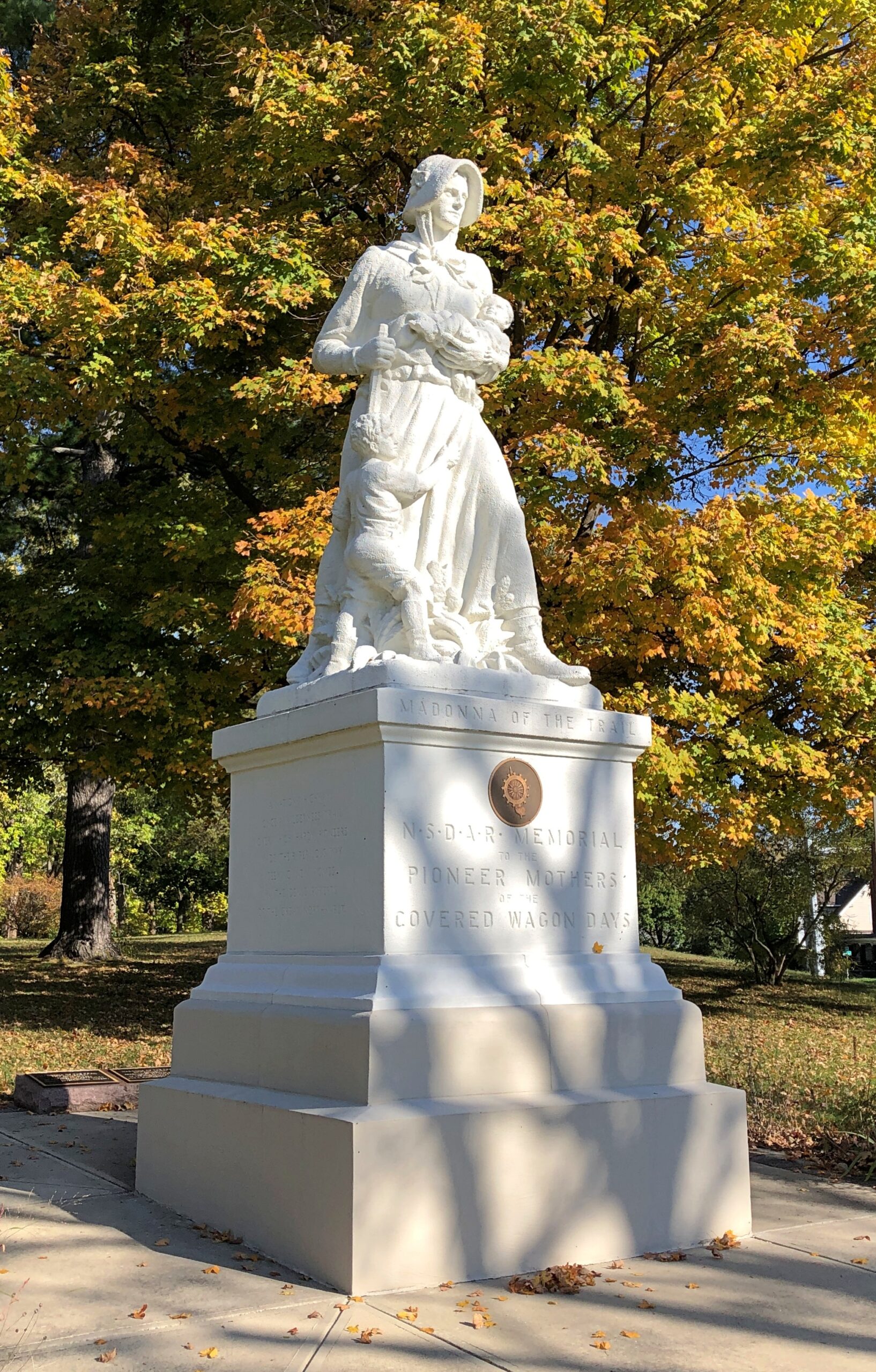
Glen Miller Park, Richmond, Indiana

It was another of the 12 Madonna of the Trail statues, located at the edge of the park, where it meets US 40. Unlike the earlier one in Springfield, I hadn’t sought it out. It was just there. One’s travels, like life, can be strange sometimes.
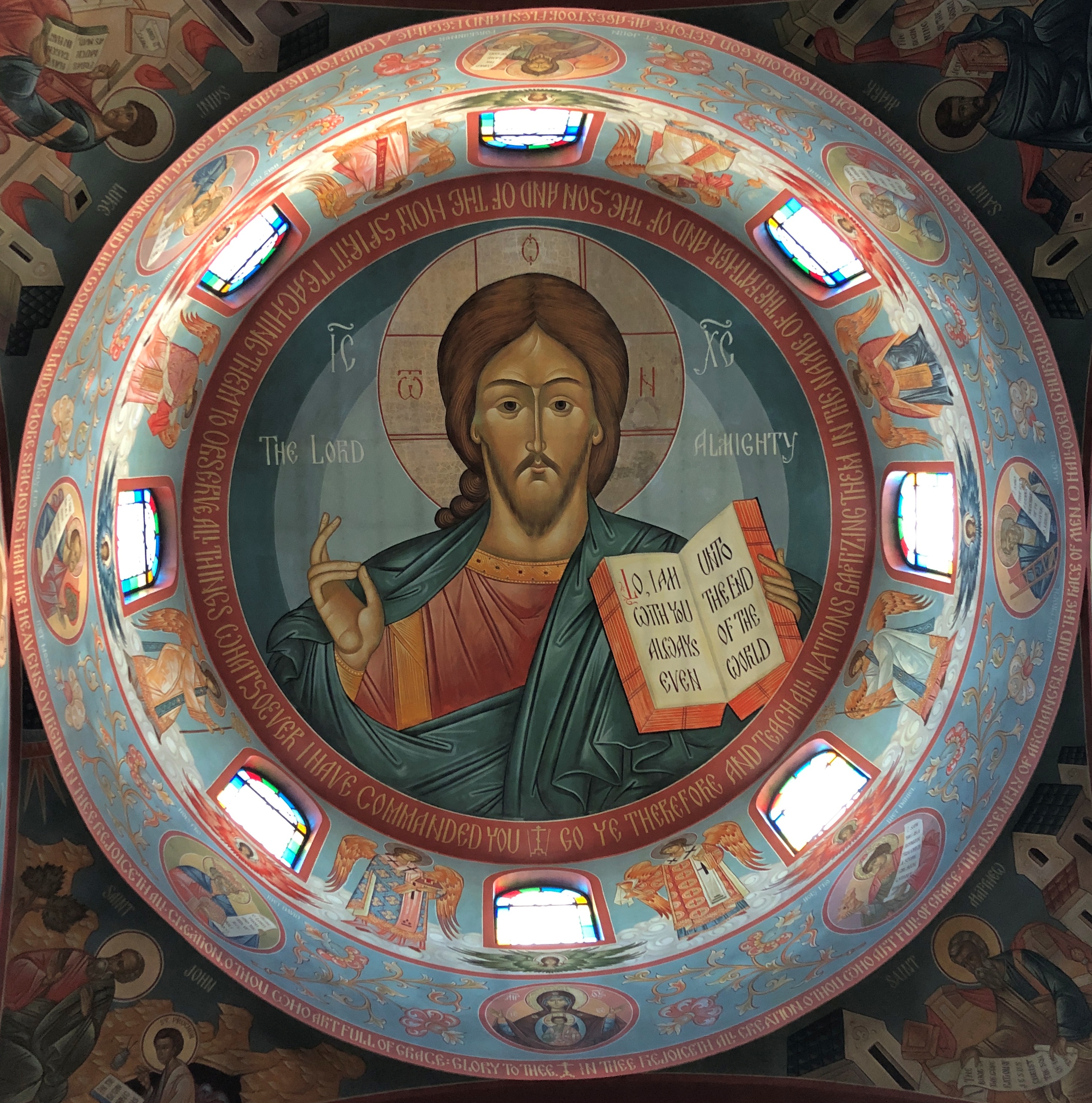
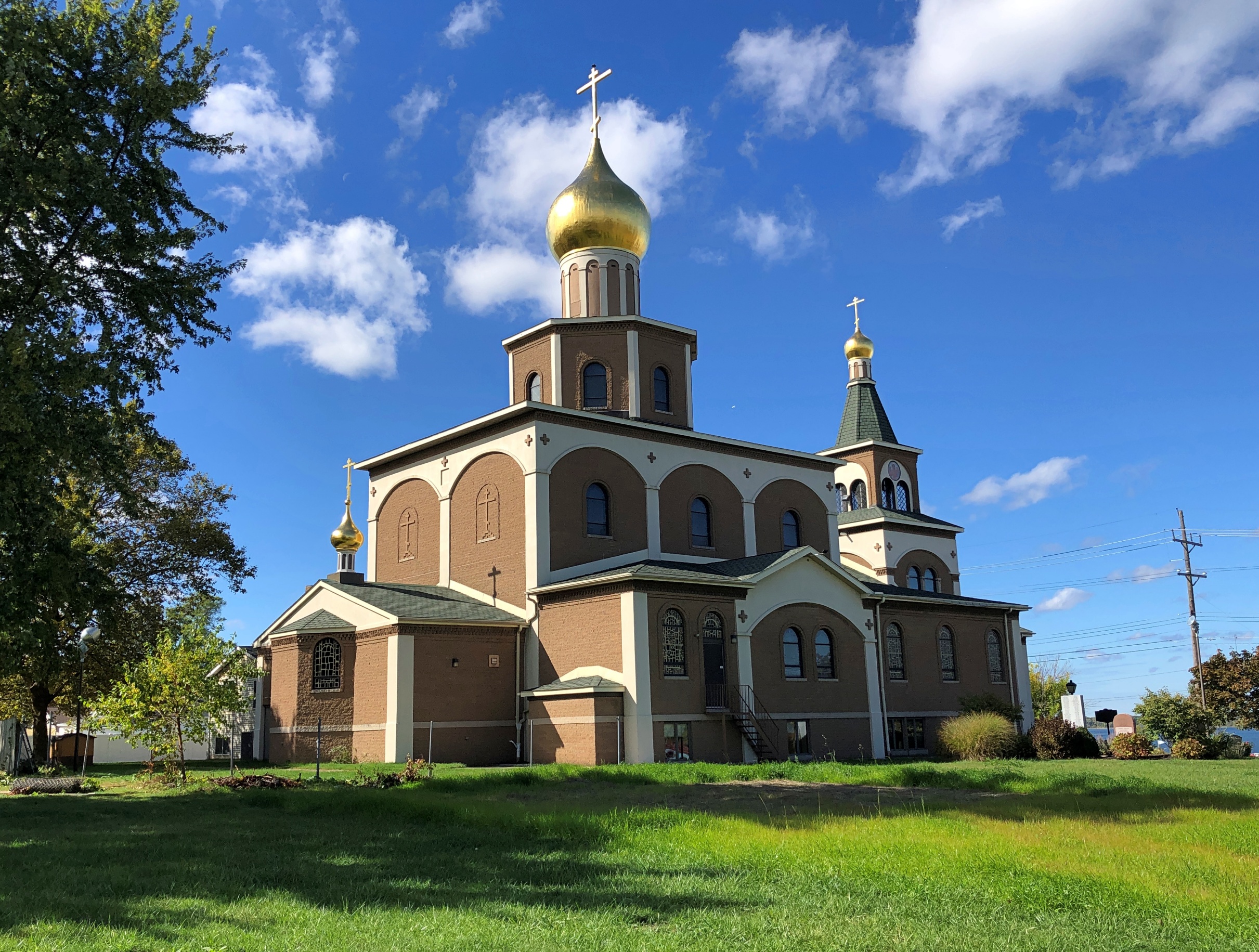
Erie, Pa.

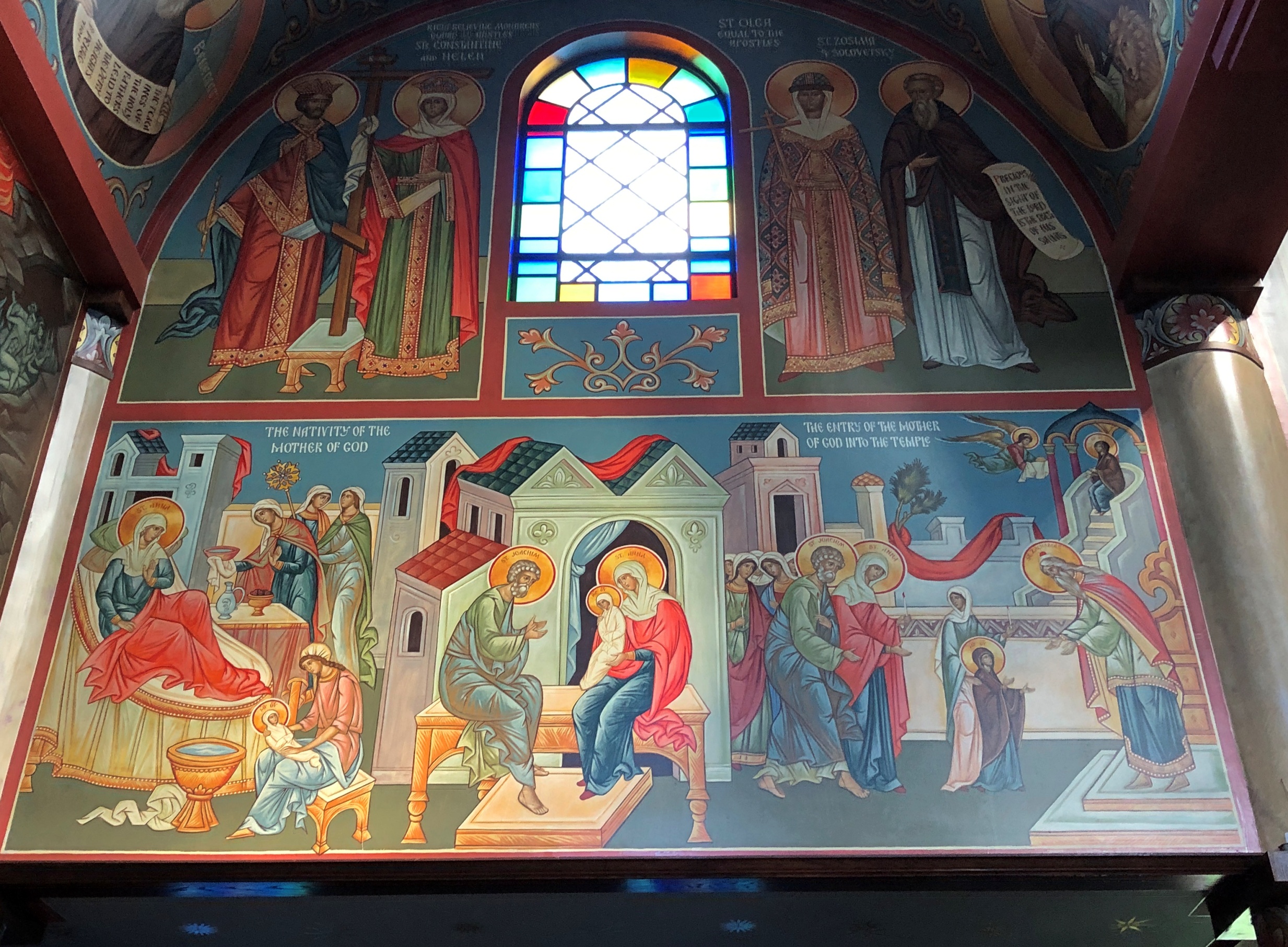
This artwork needs a proper name, and I can suggest one: The Erie Christ, or Christ the Almighty of Erie, though that last one sounds like the Lord has taken up residence in northwestern Pennsylvania.

Church of the Nativity, Erie PA


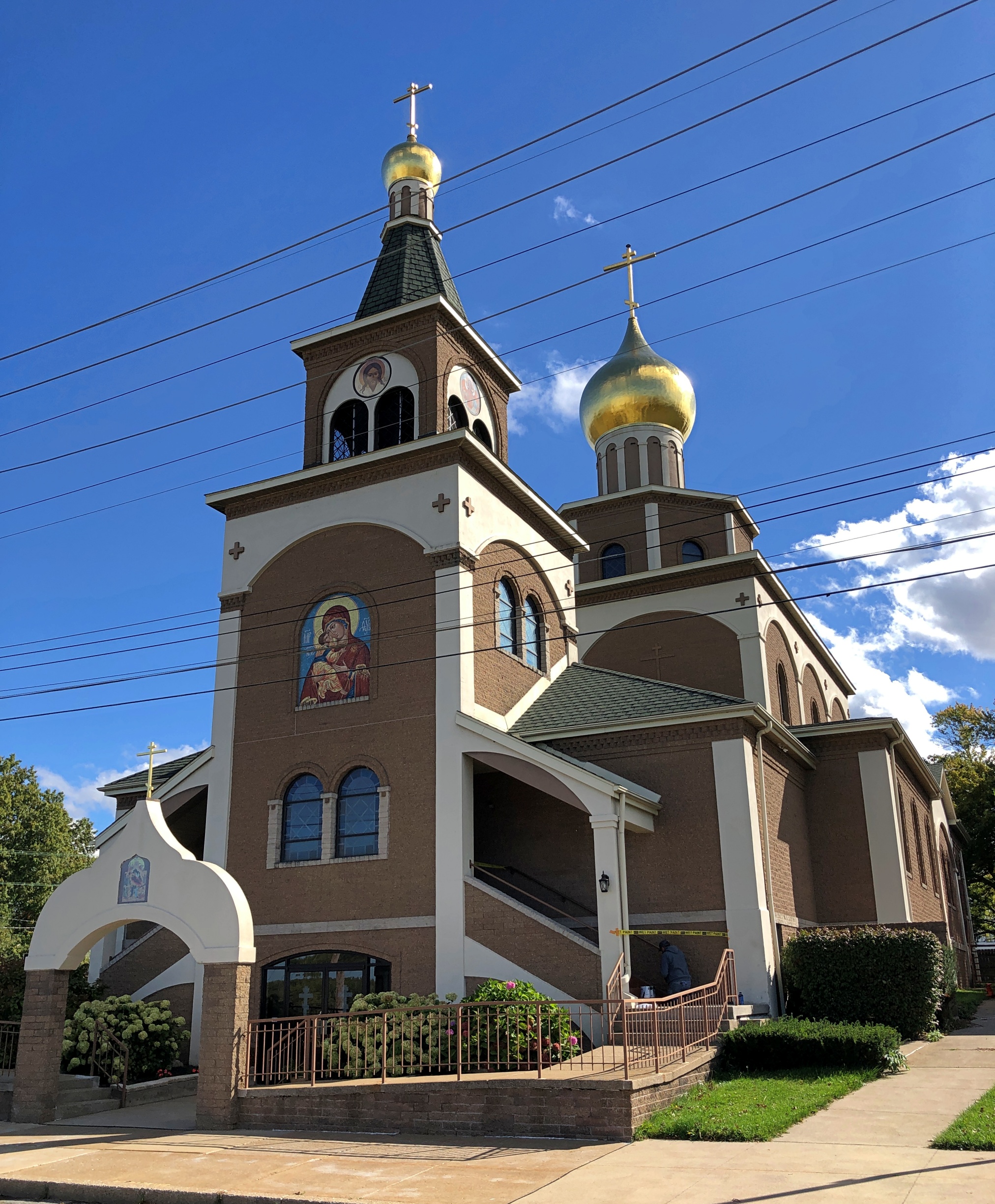
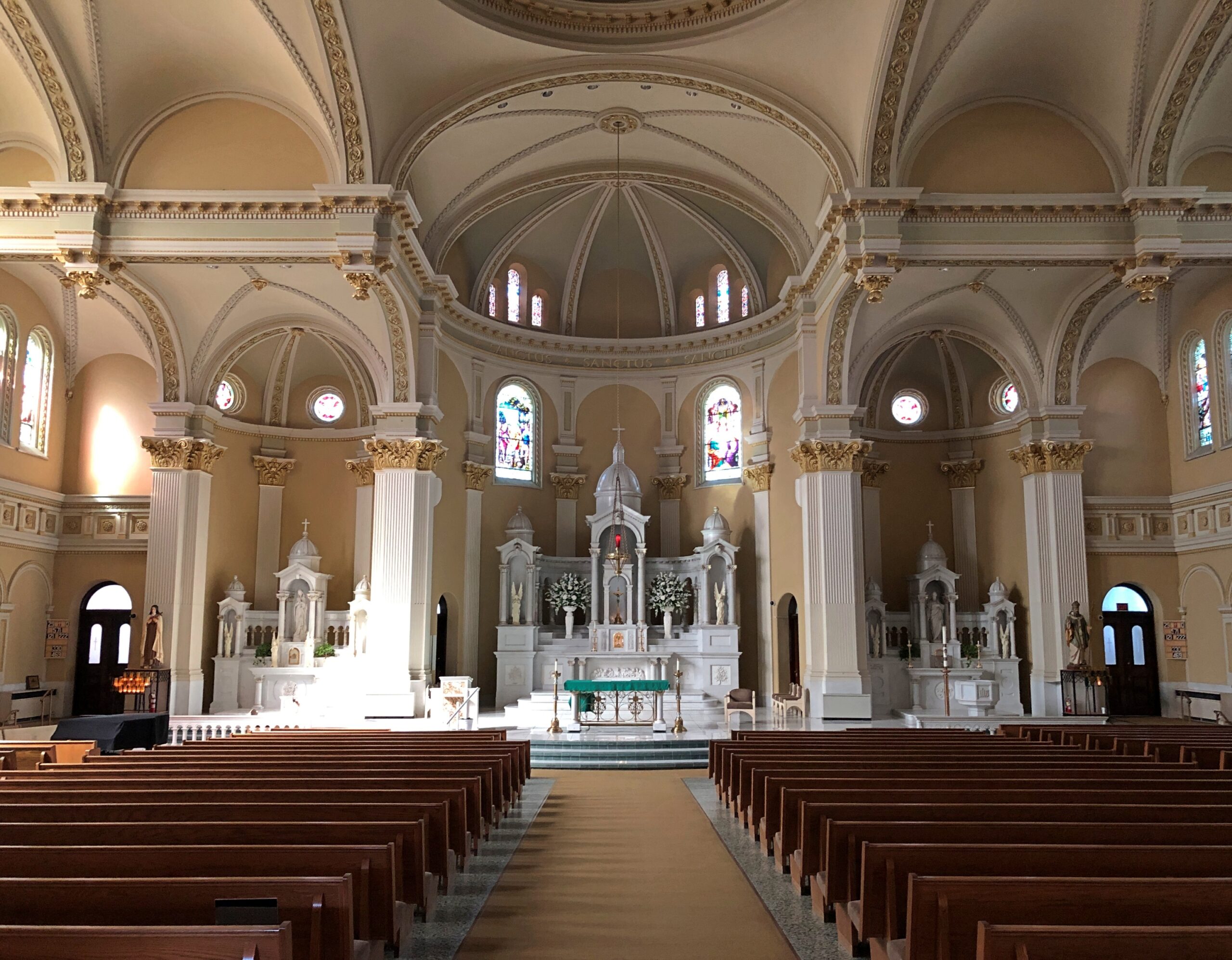
The striking Erie Christ can be found in Erie, Pennsylvania. More specifically at the Church of The Nativity, Russian Old Rite Orthodox in Erie. My brother Jay tipped me off about its presence, though I might have seen the church anyway, since it stands prominently on a rise facing the bayfront, its gilded onion domes easily catching the eye from a distance.

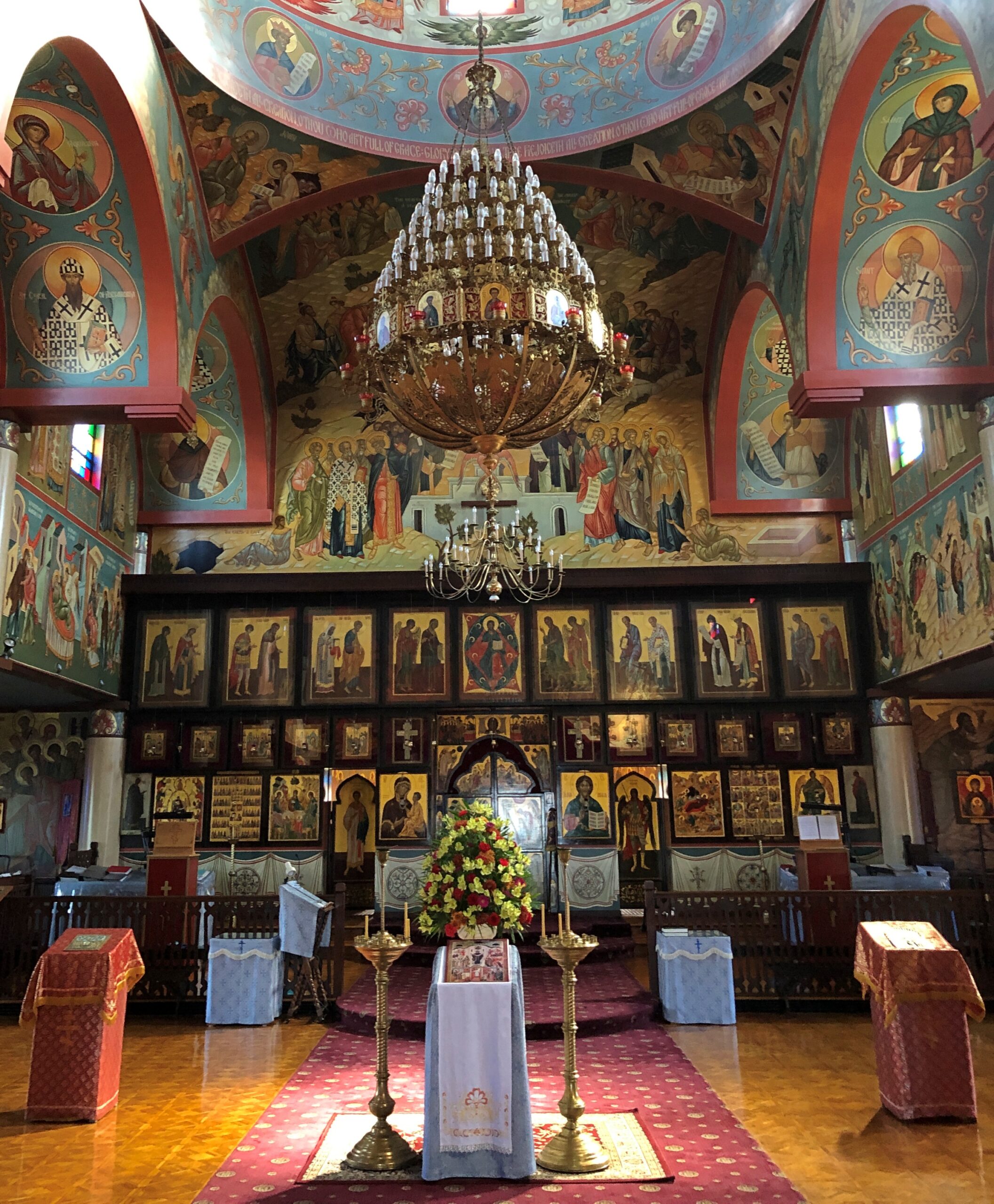
It is a handsome church, outside and inside. I arrived late on the morning of October 15.

Church of the Nativity, Erie PA

Russian Old Believer immigrants came to the United States in numbers in the late 19th and early 20th centuries, finding work in Eire on the ore and pulp docks. I’ll bet the climate suited them too. Just like home, with all the lake-effect snow a Russian might want. Their first church was completed in 1919. In the fullness of time (1983), the parish joined the Russian Orthodox Church Outside of Russia. Bygones be bygones and all that.

Church of the Nativity, Erie PA

In a twist that’s more late 19th century than late 20th, that structure burned down in 1986. Of course, buildings still burn, including churches. The parish rebuilt, with a local outfit called Building Systems Inc. doing the work.
The Church of the Nativity was my second stop that day. The city’s spot on the map has long intrigued me, so I’d come to Erie late in the morning on the second day of the recent trip.

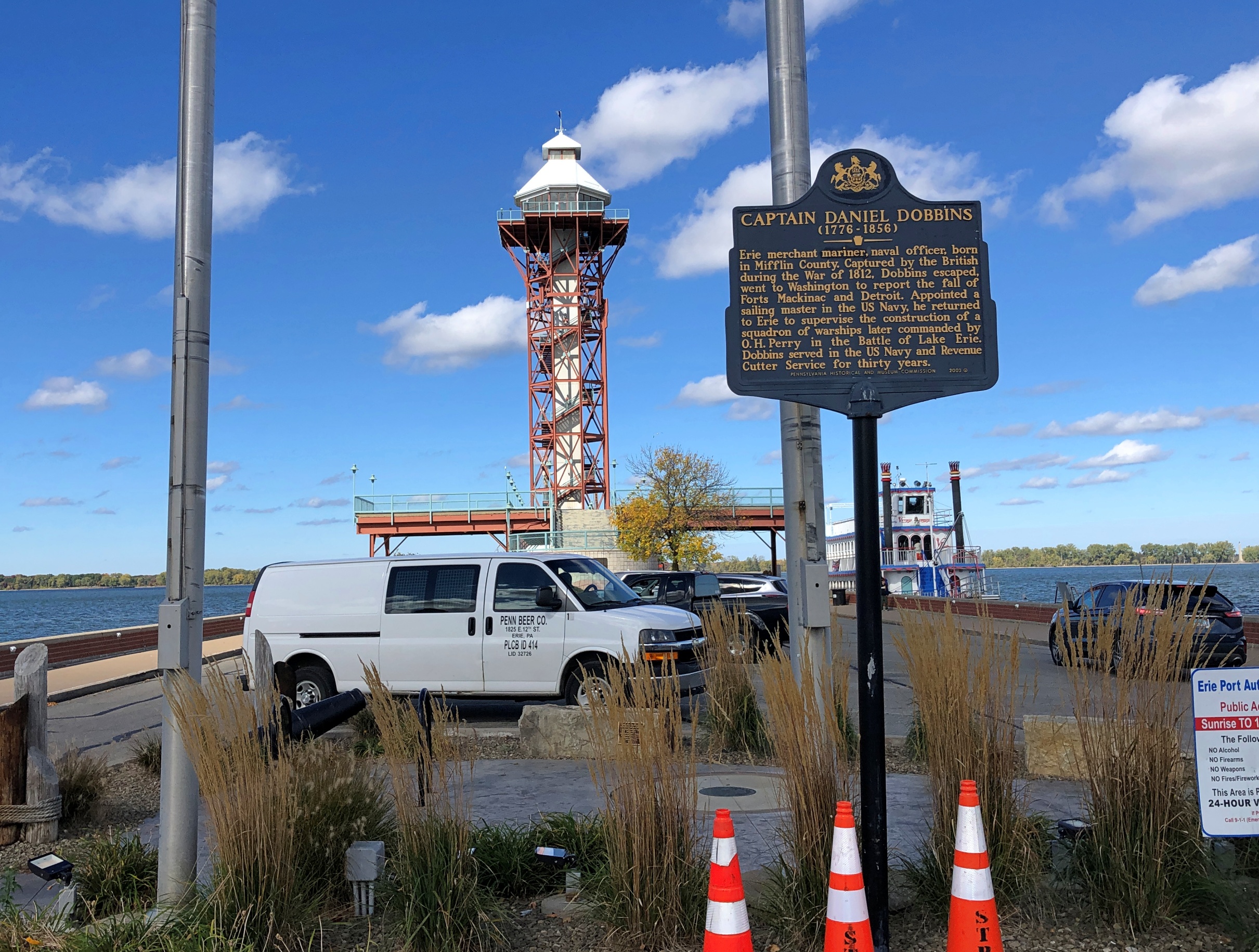
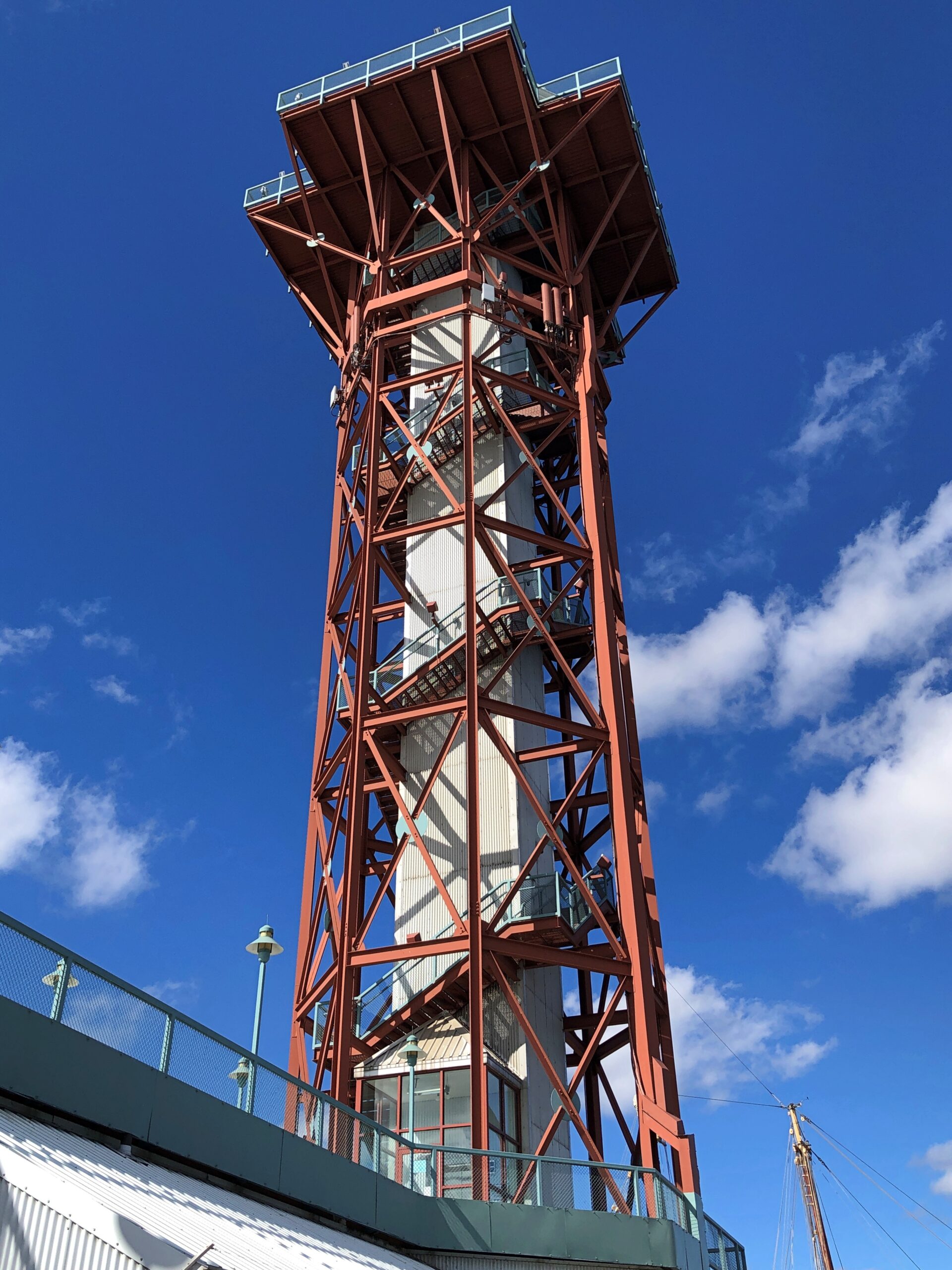
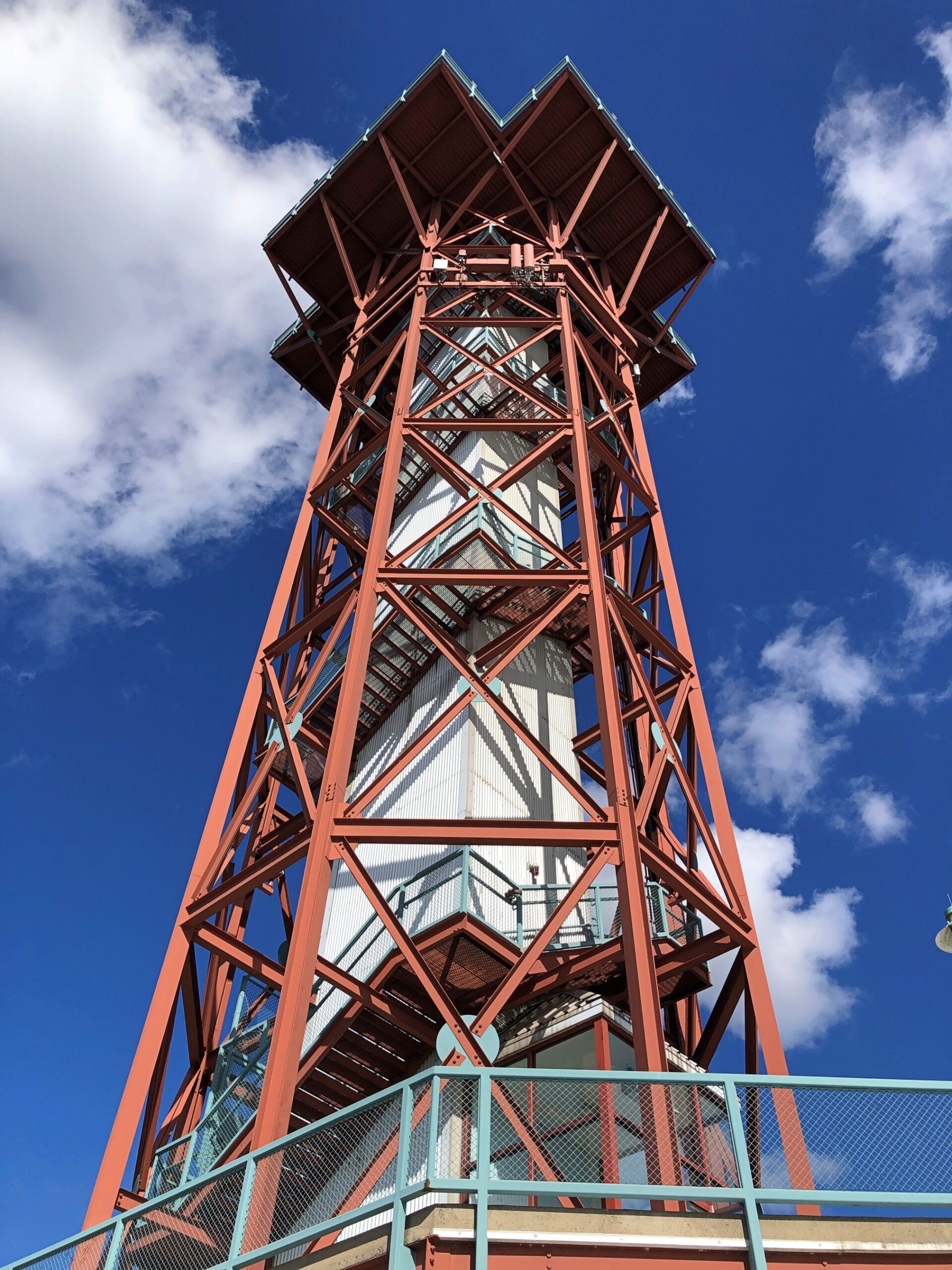
Upon arrival in the city, after a brief stop at a Tim Horton’s, I first went to Erie’s bayfront, threading my way through the massive reconstruction project of the streets in the area. That was the first, but hardly the last major street construction briar patch that I’d encounter in the Northeast. My reward for the effort: a chance to stand under Erie’s Bicentennial Tower.

Bicentennial Tower, Eire, PA

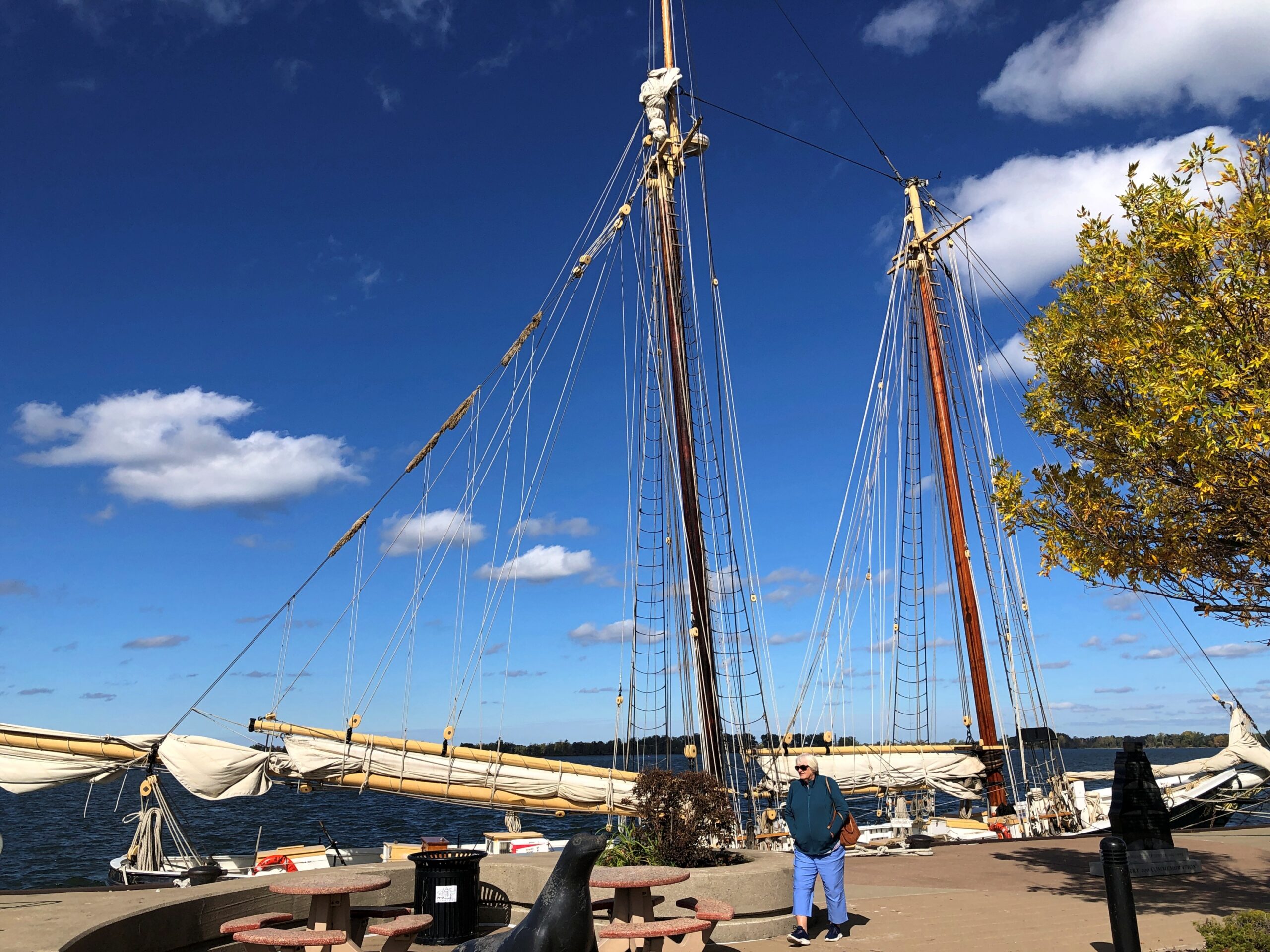
Built not for the U.S. bicentennial that we all remember so – fondly, but rather the 200th anniversary of the city of Erie, about 20 years later. Regardless, I was looking forward to the vista: the city, the bay and Presque Isle State Park. But no. Closed. Even so, I got a good look at the area, including the tower but also the U.S. Brig Niagara, which was instrumental in Oliver Hazard Perry winning immortal fame. Or would have been, if the Battle of Lake Erie were taught in schools any more.

Eire, PA

The battle might have rated a mention in my high school history classes 50 years ago, but I don’t remember for sure. I expect it’s still taught in Pennsylvania high schools, just as the Battle of San Jacinto is in Texas. At least, that’s what I assume. That’s what I hope.
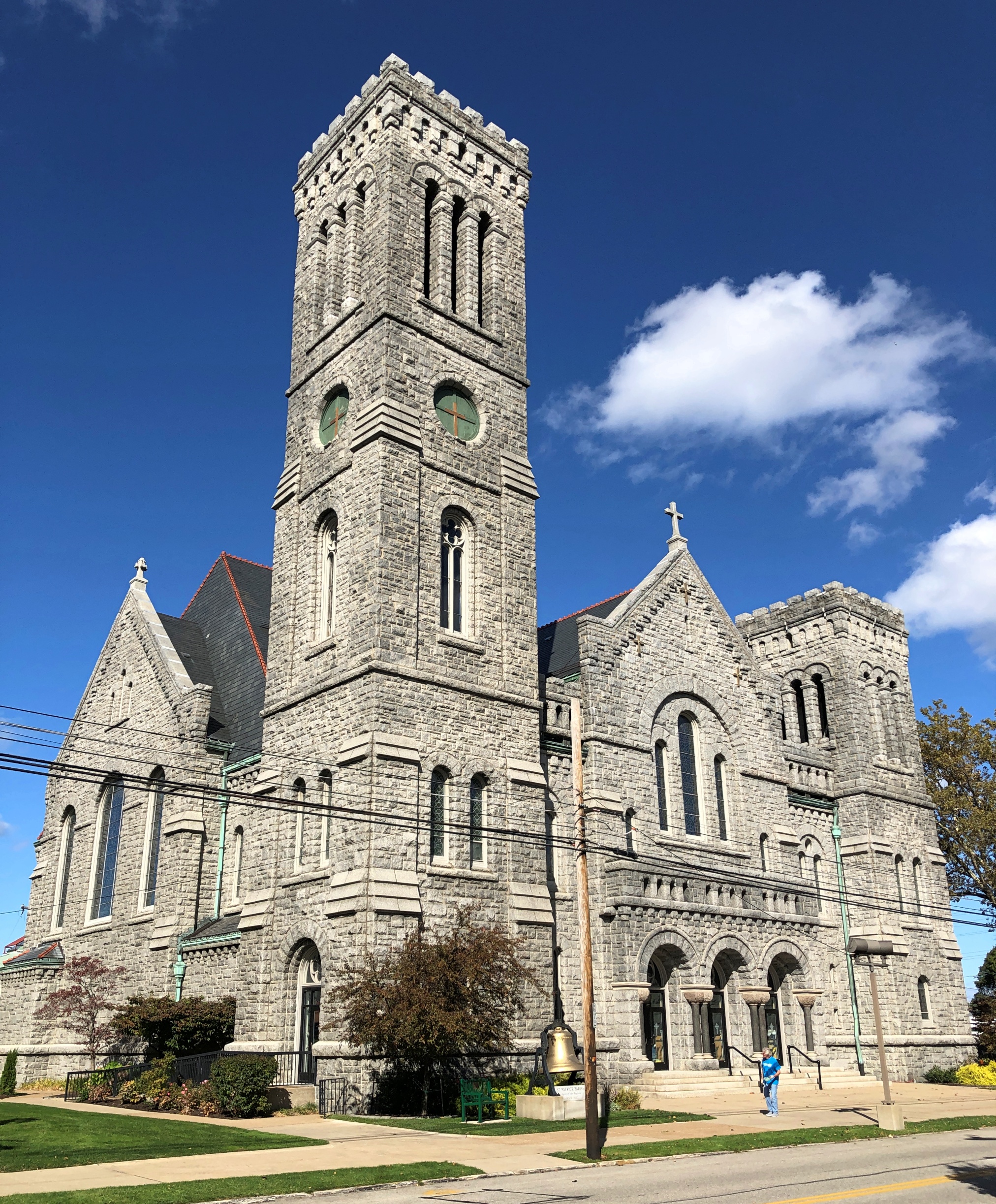
After my look-see down by Presque Isle Bay, I went to Holy Nativity, but that wasn’t quite enough. Always handy Google Maps directed me to St. Patrick’s Parish, not too many blocks away. Winter might be harsh in these parts, but that day was one of those brilliant warmish fall days we get in the North sometimes, and ideal for poking around a port city on the Great Lakes. (And eventually I left town by driving down State Street, a fairly active place of vintage buildings and newer shops.)

St. Patrick’s is on a not-so-busy neighborhood street.

St Patrick's, Eire PA

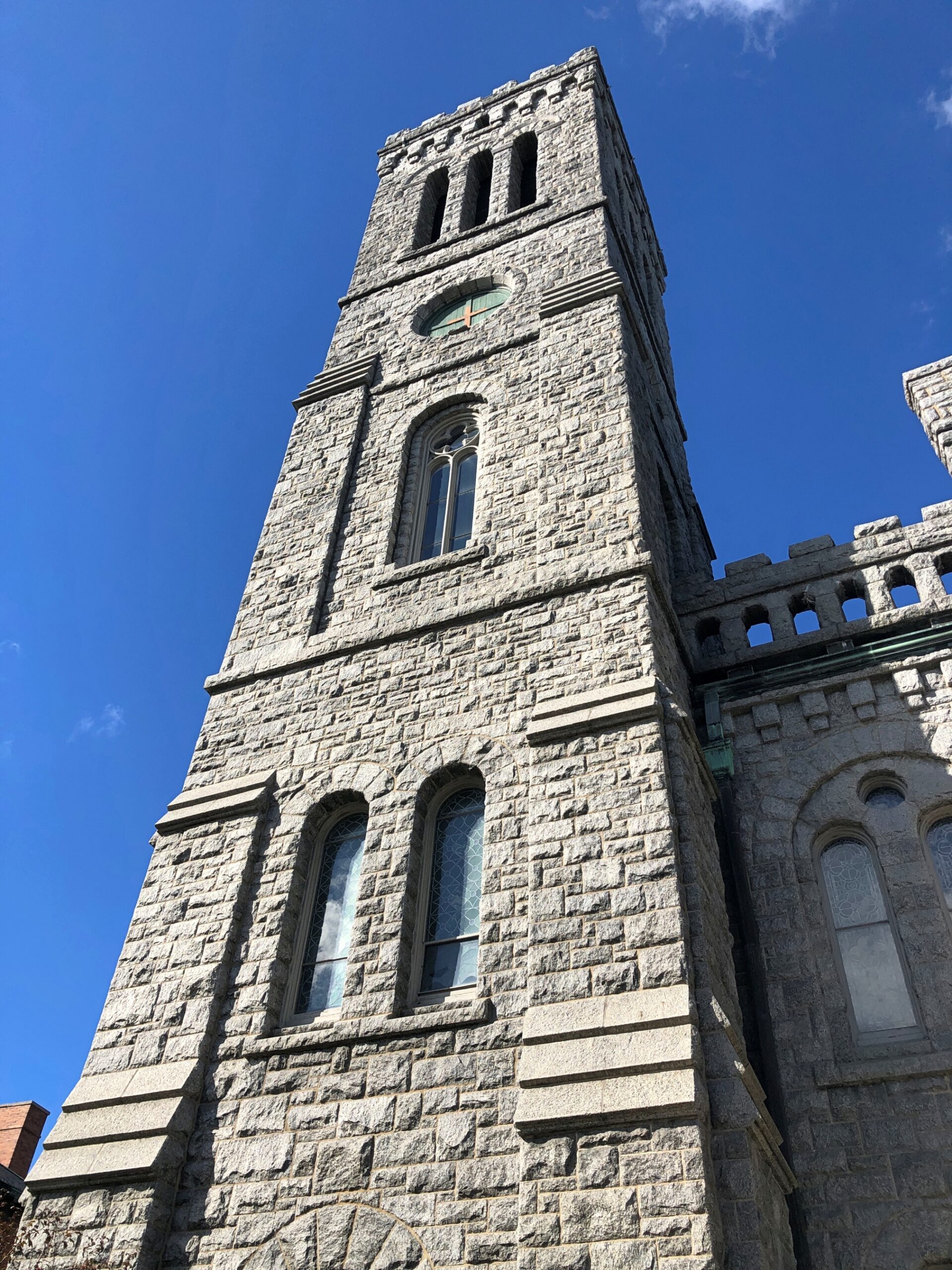
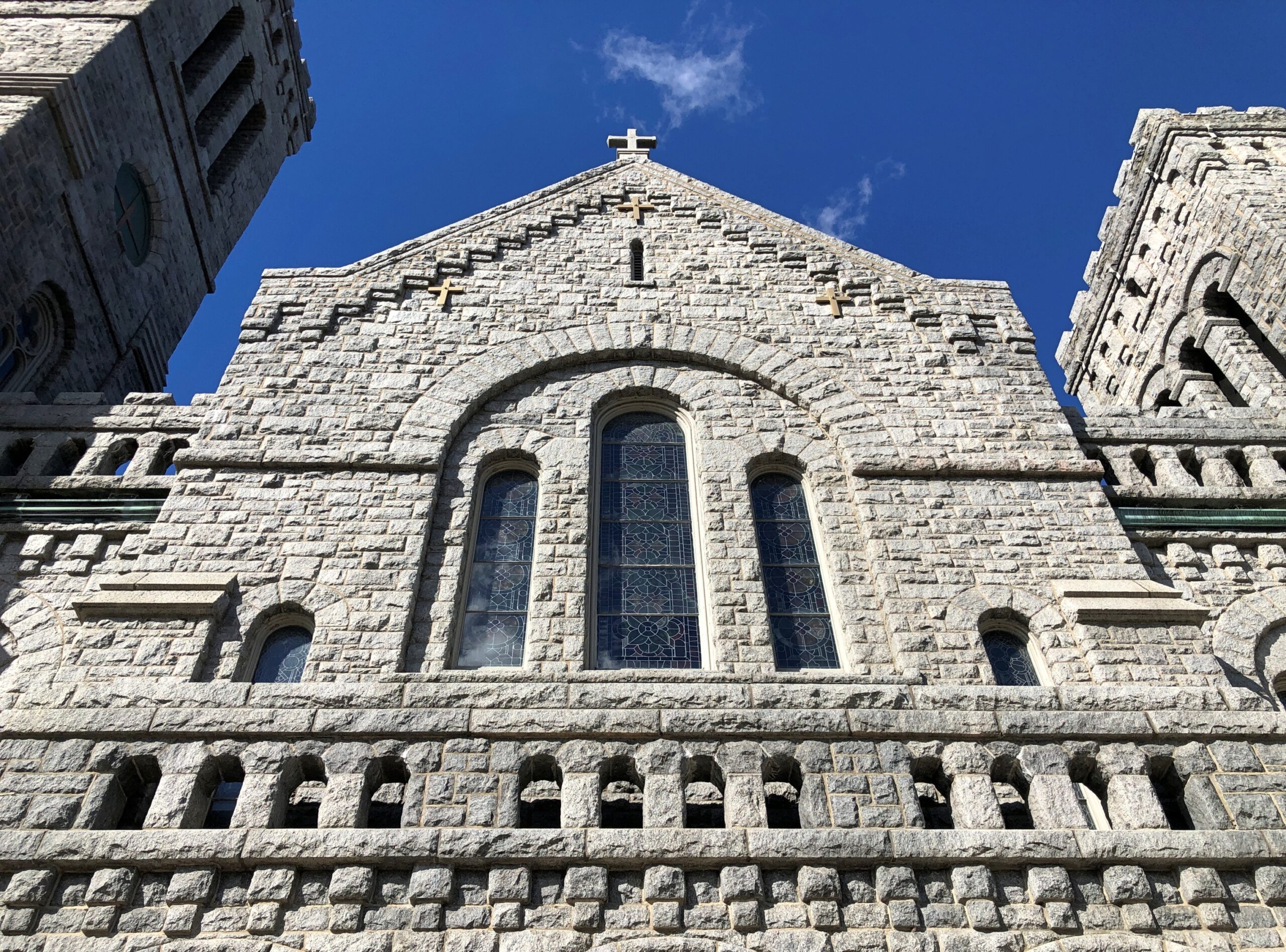
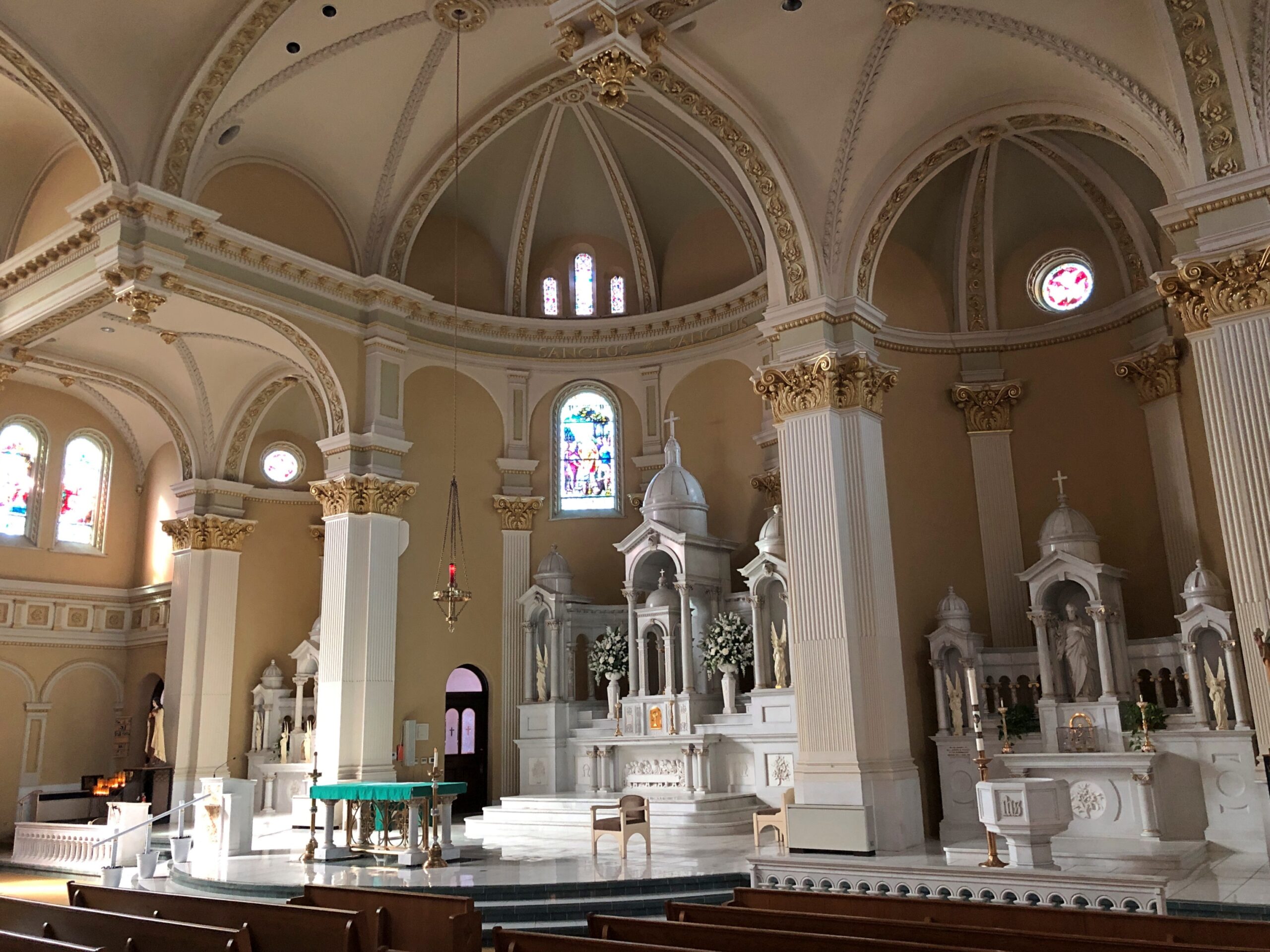
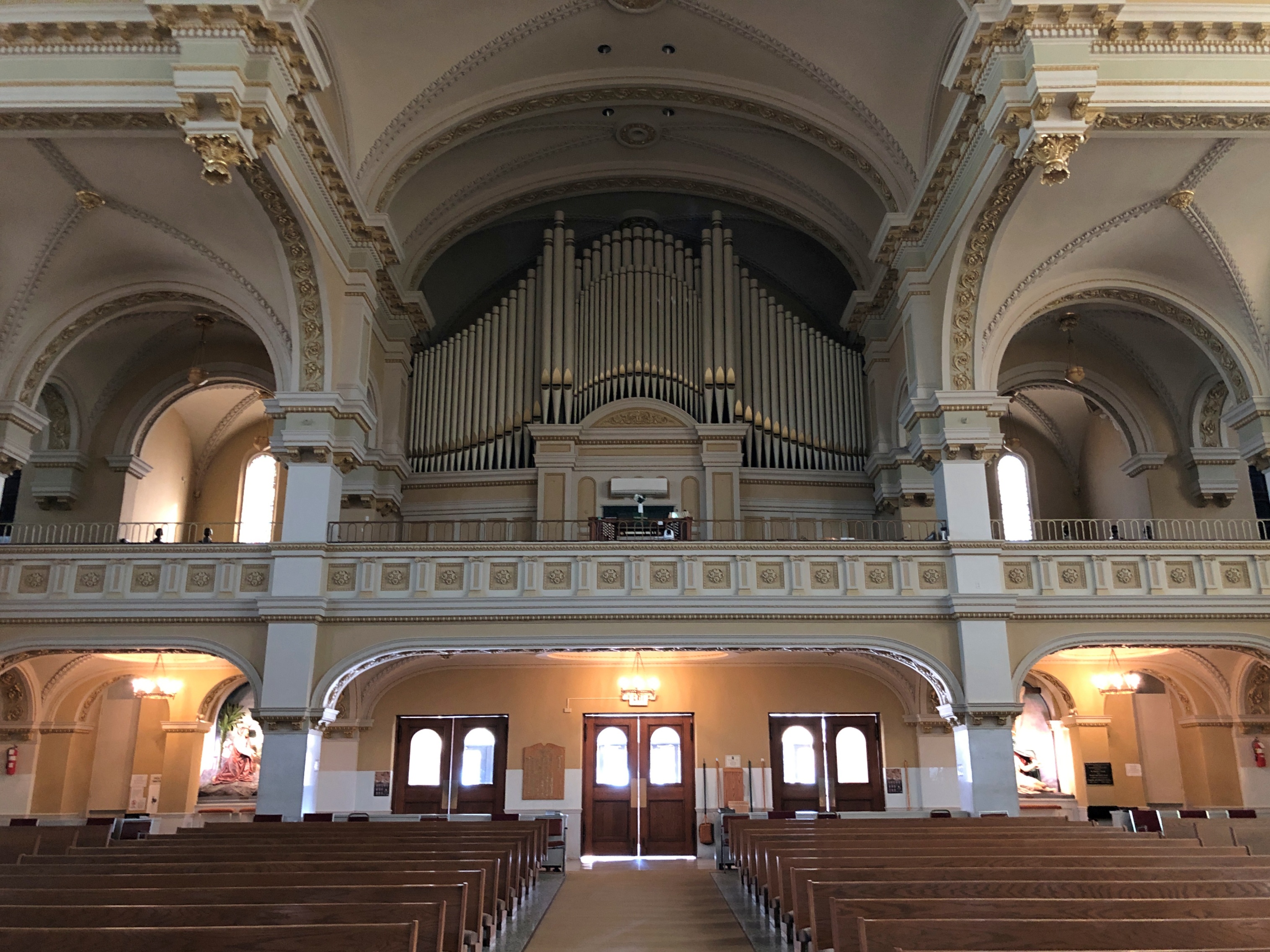
While Russians were forming their immigrant community, Irish were doing the same not far away. One product of that immigrant ferment was St. Patrick’s, completed just after the turn of the 20th century. The history of the building is told with admirable clarity and detail in this recent video.

St Patrick's, Eire PA

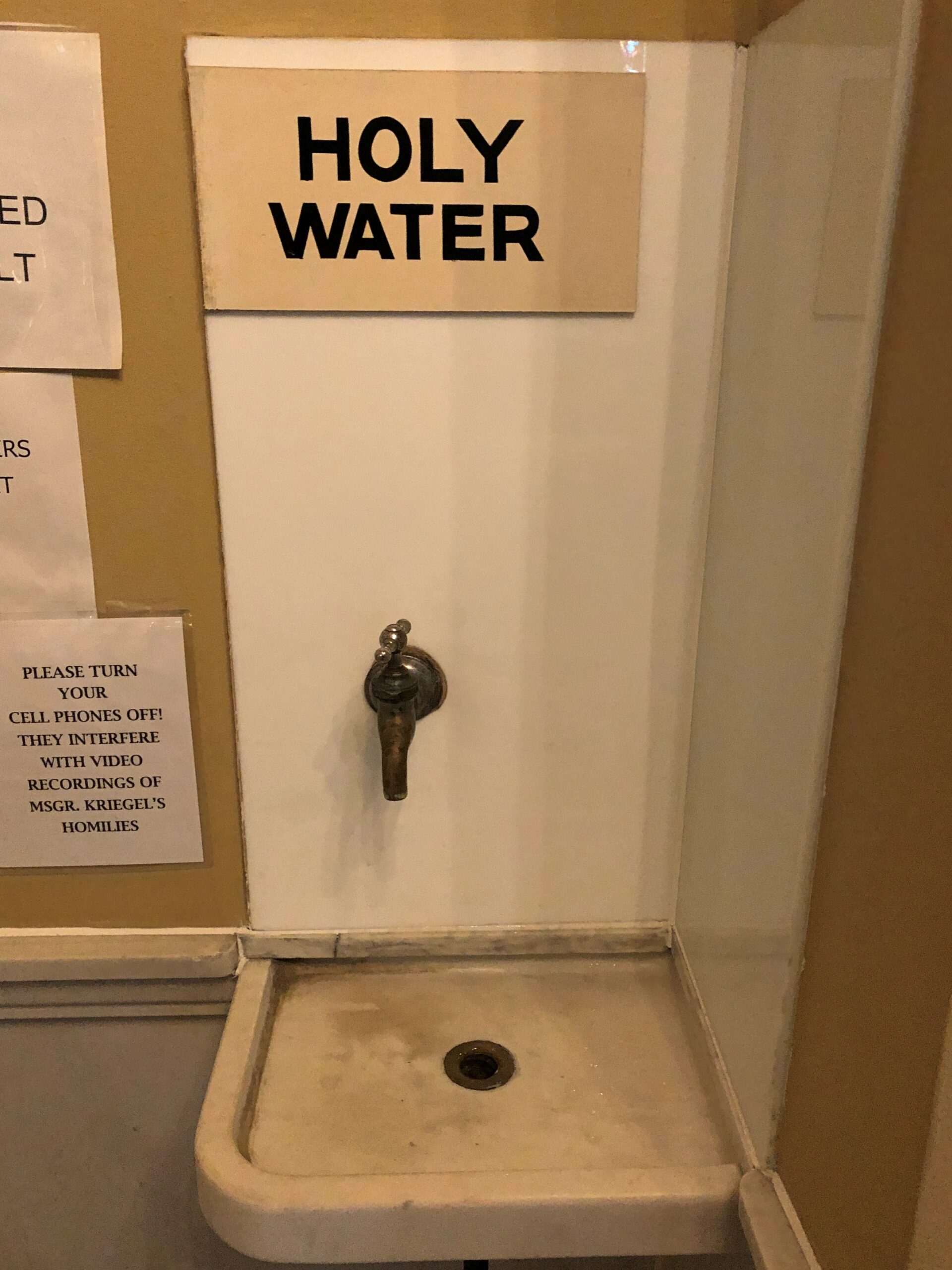
Among all the ornateness, a holy water spigot of Holy Grail simplicity, at least as depicted in certain tales.
St Patrick's, Eire PA

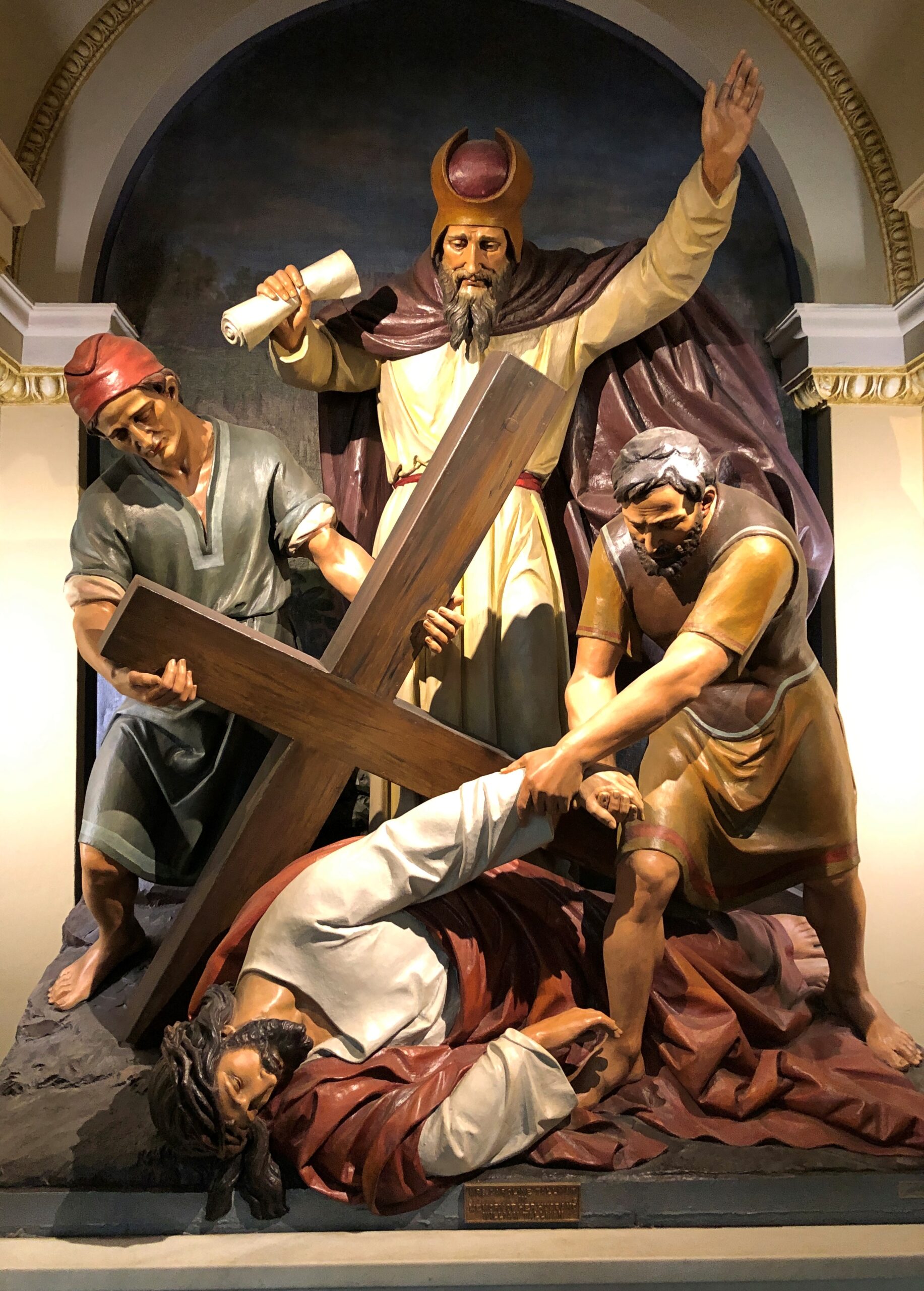
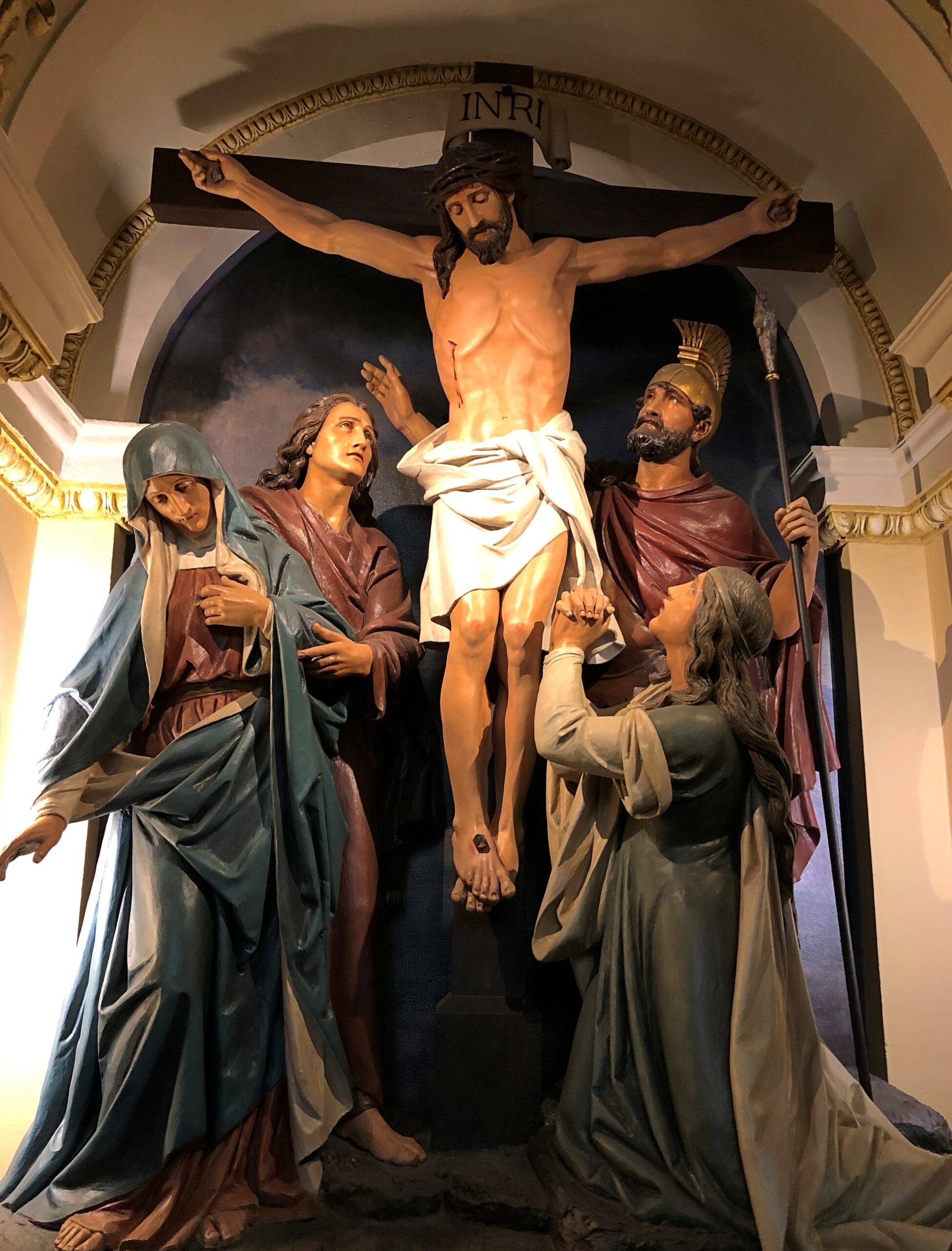
Life-sized Stations of the Cross dwell in enormous niches in the nave.
St Patrick's, Eire PA

I wasn’t eagle-eyed enough to notice the Roman soldier wearing a Bavarian cap. Or take a picture of it. No matter, I know about it now.

Nor’East Drive ’25

I didn’t realize until last night that I’d driven through some geographic oddities over the last two weeks, on my way to the Northeast and back. Actually state border oddities, such as the Erie Triangle in Pennsylvania, the curious division of the Chesapeake Peninsula, and the panhandle of Maryland.

Except they aren’t really oddities. They just look that way when you’re a kid (or an adult) poring over U.S. maps or putting your state puzzle map together for the nth time. How is it that Pennsylvania has that small chimney? Why didn’t Delaware get more of the Chesapeake Peninsula? What’s the deal with the western extension of Maryland, which narrows to only a few miles at one point?

There are historic reasons for all the shapes, both rational and arbitrary, which are the subject of books and at least one TV show. Lands were granted and claimed, borders were surveyed and quarreled over, and deals and court cases and Congress eventually settled the shapes.

The border oddities may have local and legal significance, but they’re also there to enjoy. Regular borders aren’t nearly as much fun. Sure, it’s interesting that Colorado and Wyoming look about the same, but I always liked the fact that New Mexico has a stub and Idaho tapers to meet Canada, just to name two Western examples, because not all the fun shapes are in the East. Just most of them.

To reach these border areas, I drove 2,853 miles, starting October 14, from northern Illinois to the East Coast and back, through (in order) Indiana, Michigan, Ohio, Pennsylvania, New York state (and city), New Jersey, New York (city and state) again, Connecticut, Massachusetts, Rhode Island, Connecticut again, New York state (and city) again, New Jersey again, Delaware, Maryland, West Virginia, Pennsylvania again, West Virginia again, Ohio again and Indiana again, arriving home today. I got tired just typing all that out.

The original impetus for the trip was to visit New York City during its Open House event. Unlike a rational person, who would have flown there and back, I decided to drive, and let Yuriko fly there and back. NYC is achievable from metro Chicago in two driving days. I decided not to do that, either, and stretch things out to fill in some travel lacunae of mine.

For instance, I wanted to visit Eire, Pa., because I’ve always bypassed it, and many Americans can say the same. I wanted to look around Long Island, or at least part of it, for the same reason. I wanted to spend the night in both Rhode Island and Delaware: the last two states in which I’d never done so. I wanted to see the capitols of New Jersey, Delaware and Maryland, toying with the idea of Pennsylvania too, though I decided it was out of the way. I wanted to see historic sites associated with a number of presidents along the way, and maybe a battlefield or two.

I really wanted to visit a friend in New York, and my nephew Robert, and friends in the Boston area. I’m glad to report that I did so. This has been a year of visiting old friends and relations. I’d like every year to be that way.

I had a much longer list of places to visit, and added to it every time I looked at a map, paper or electronic, since I now use both, and when I was driving — so many possibilities. But there are only so many hours in the day and so much energy in my aging body. Still, I did much of what I set out to do, with one major exception due to forces beyond my control. National Park Service sites were off the table, for reasons all too obvious and not worth rehashing here. So the homes of FDR and TR, along with Antietam and Harper’s Ferry, went unvisited. Some other time, I hope.

No matter. I visited a good number of cities and towns, drove roads large and small, empty and insanely crowded, and enjoyed a few exceptional meals and many very good ones. I saw churches and cemeteries, some historic places not managed by the federal government, and encountered the largest of the many No Kings events. I read plaques. I chatted with strangers and clerks in stores. I took a swim in Massachusetts and long walks in New York. I hadn’t planned to walk across the Brooklyn Bridge again, but Yuriko had that idea, and across we went. I listened to a lot of terrestrial radio, good, bad and indifferent. I burned gas priced between about $2.70 and $3.30 a gallon. I paid entirely too many tolls, because the Northeast is lousy with toll roads and bridges — but driving across some of those bridges, especially the Bay Bridge in Maryland, was a grand experience, and surely worth the toll.

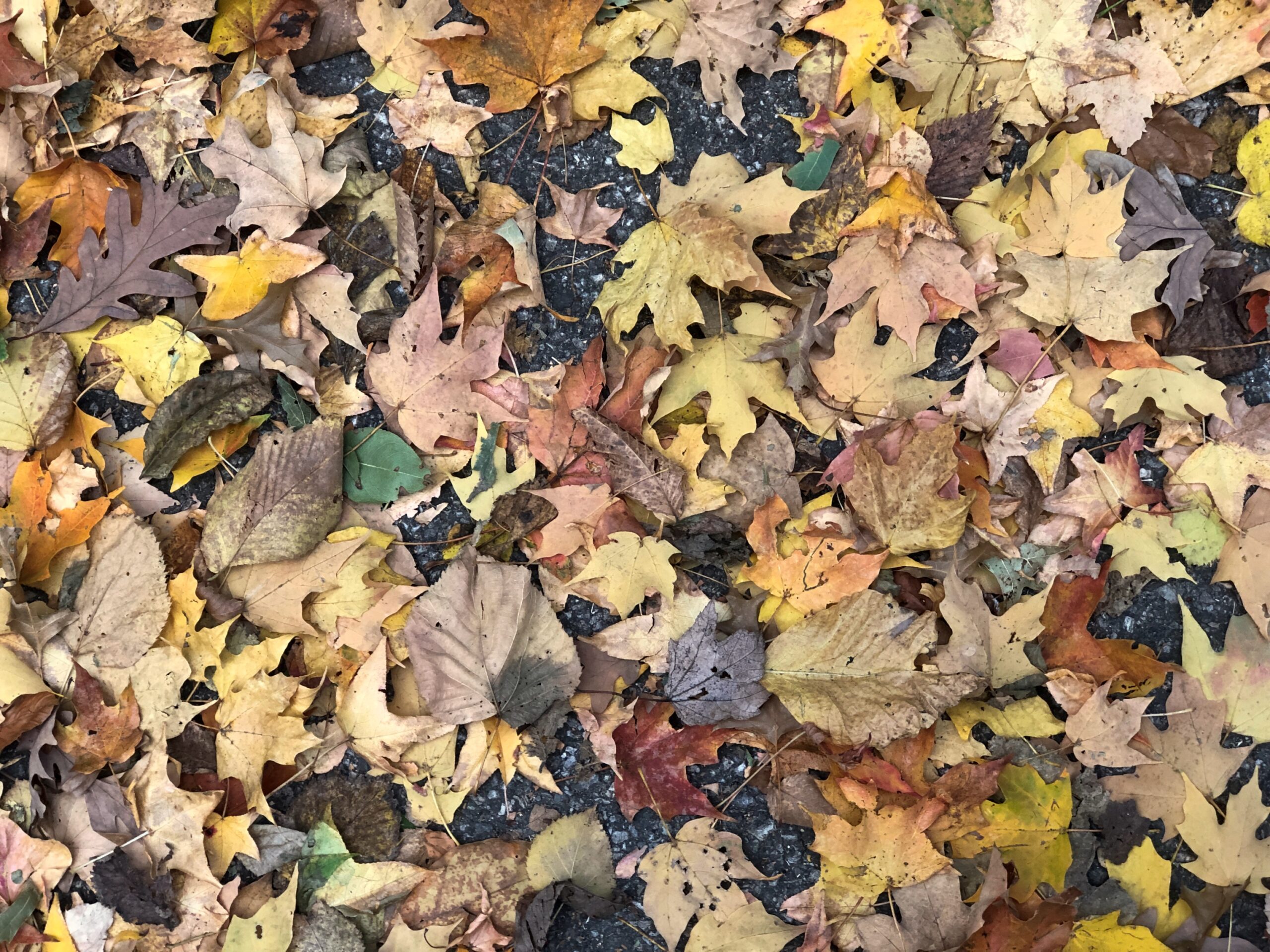
Something I didn’t anticipate, but which improved the trip immensely, was fall color. I should have anticipated it, but I suppose I had other things on my mind. When I got to New York state, driving west to east, it became clear that I’d accidentally designed myself a fall foliage excursion. The trees were gorgeous there, and in NYC (especially Prospect Park), Long Island, and parts of New England, and in Delaware and Maryland all the way across its panhandle. Even Ohio and Indiana had some nice color when I got there, and here at home too.

Prospect Park leaves

One more thing: unexpected oddities along the way. It’s important to watch out for those.

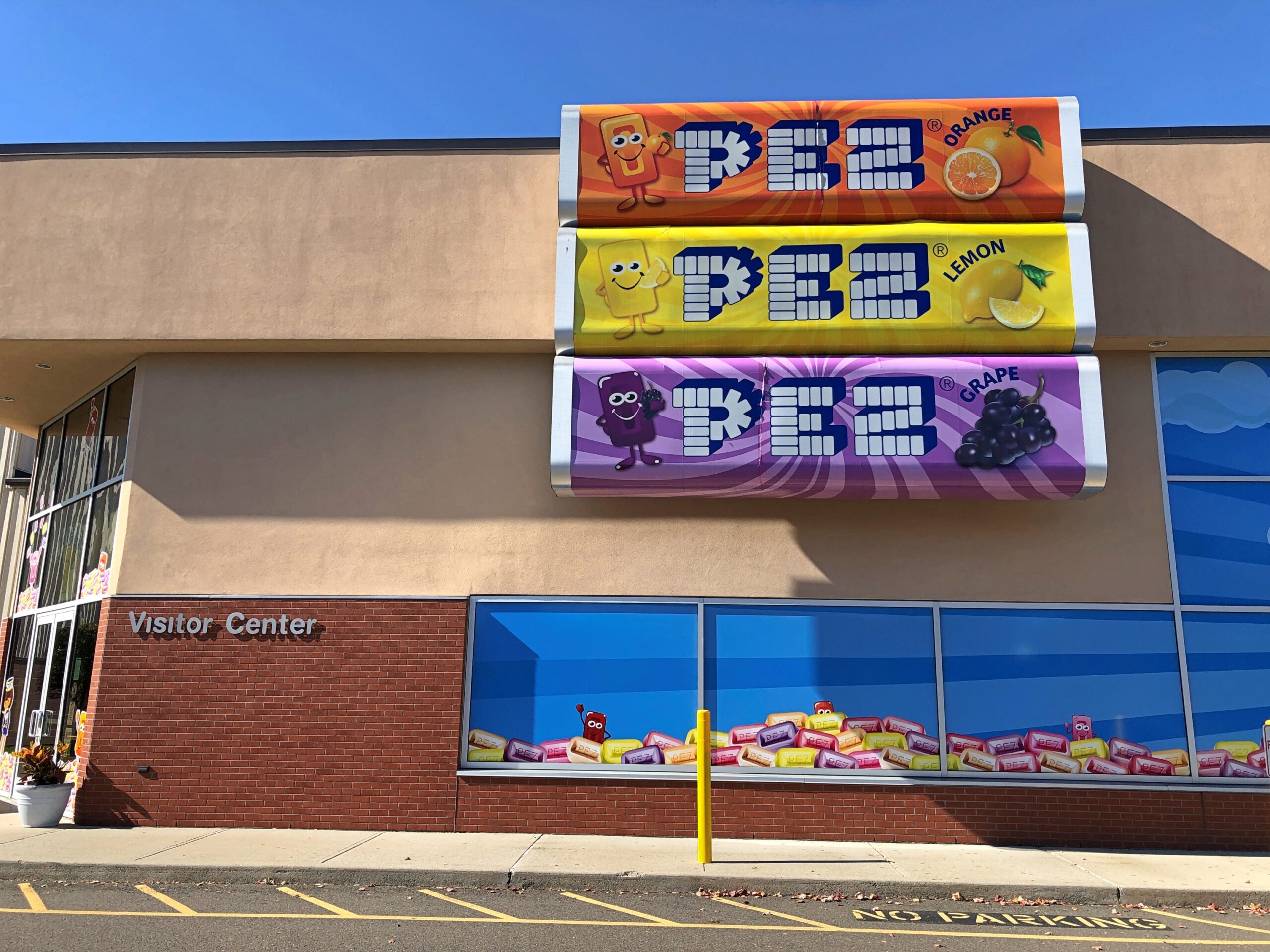
In Orange, Connecticut, I noticed a sign for the Pez Visitor Center. I had to see that.

Pez Visitors Center

Earlier today, at the border between Ohio and Indiana, I noticed Uranus. I had to stop.

Uranus

Turns out there’s more than one; I’d only ever seen the one in Missouri (the original) in passing, never stopping. But I did this time. Now I can say I’ve been to Uranus.

Spring Seesaw

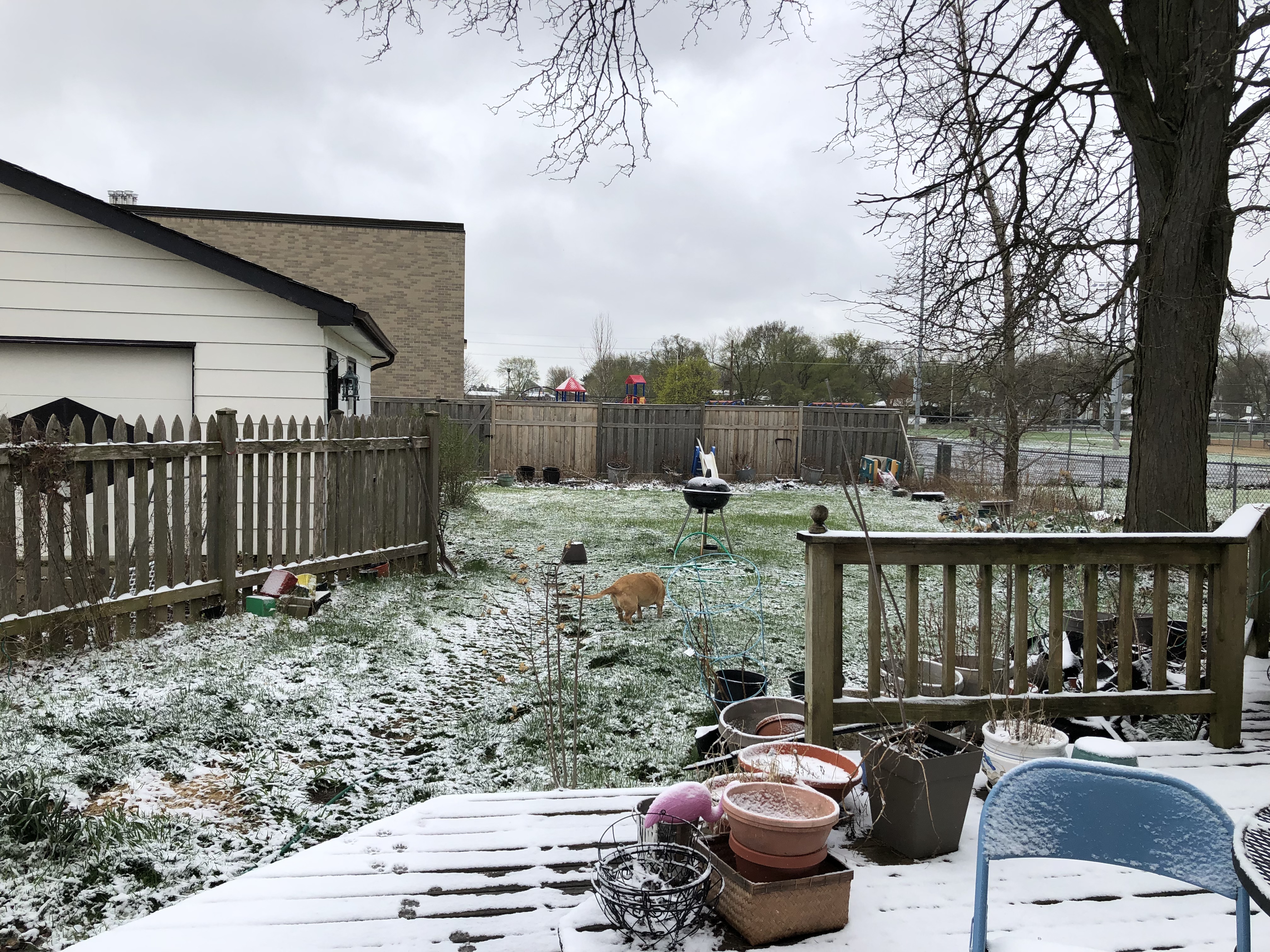
Fitting somehow for Monday morning. Of course, the snow didn’t even last till noon, though it remained chilly all day.

For days before, the warm version of spring had been ascendant, creating conditions for a number of enjoyable meals on the deck. Cold spring returned on Sunday, got worse on Monday but eased somewhat today. Warm tomorrow, then rain, then cold again. Such is the spring cycle.

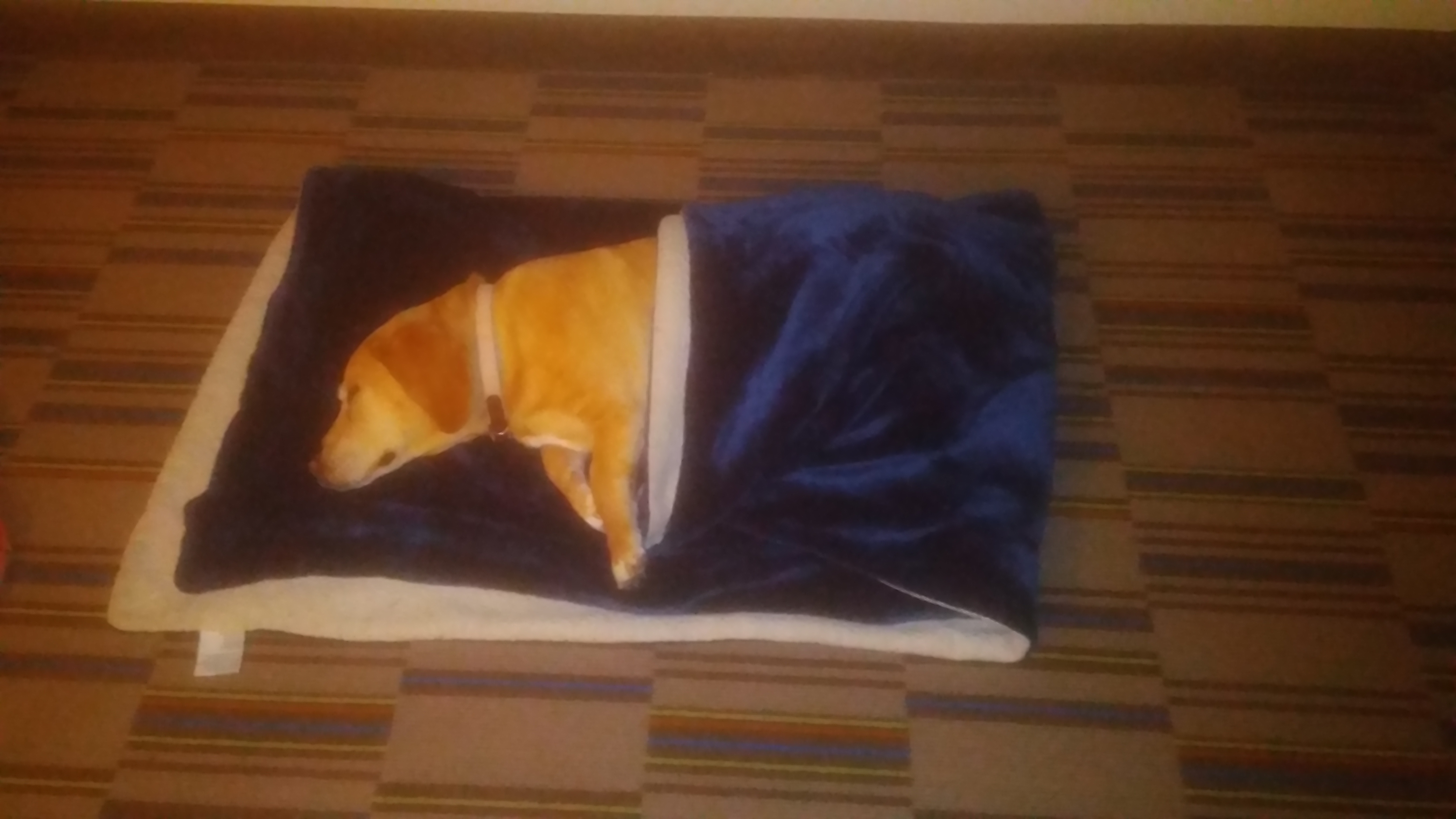
I almost forgot – because who wants to remember? – that the first night we were in the Uniontown, Pa., area last month, at a upper-mid hotel chain, the fire alarm went off at about 8 p.m. Yuriko had gone to the pool and I was in the room with the dog.

Those alarms are loud. I knew that in some abstract sense, but listening to BLAT! BLAT! BLAT! while you get the dog ready to go, grab an extra jacket for yourself and your wife, and make sure you have all your valuables on your person – it focuses the mind, and not in a good way.

I didn’t think to bring the good camera, which was tucked away. So all I had was my phone, which I use as a phone and to call up maps, but usually not as a camera. Because it takes crappy pictures.

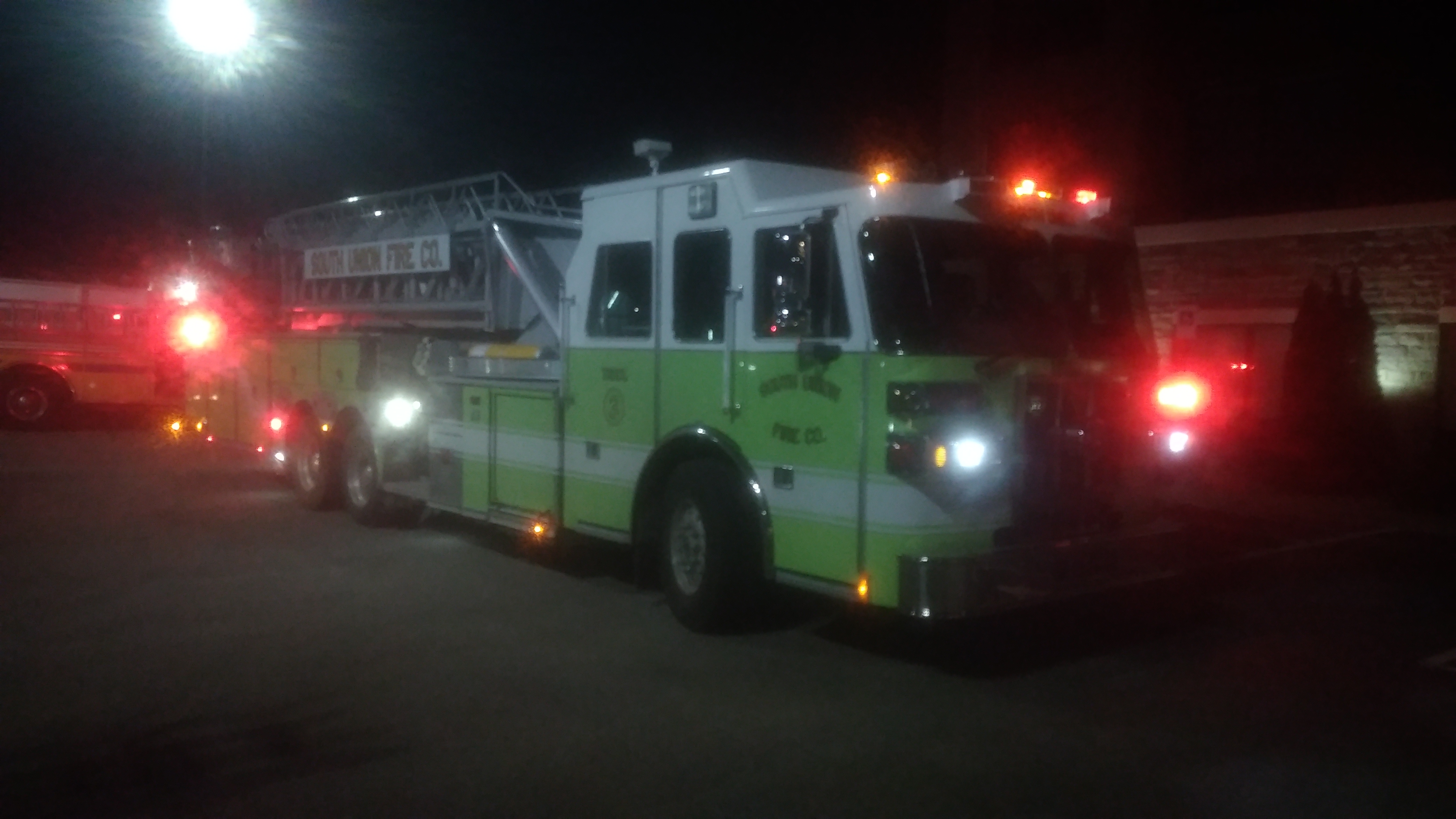
Got to see the South Union Fire Co. in action. Not much action, since there was no fire. Mostly we waited around in the parking lot until we noticed people going back in after about 20 minutes. How did they know the emergency was over? Not because the desk clerk said anything. But I was able to confirm from a passing fireman that it had indeed been a false alarm.

More From the Commonwealth of Pennsylvania

Our most recent trip took us to fully 25% of the nation’s commonwealths, to celebrate a famed example of a distinction without a difference.

It wasn’t quite full spring in Pennsylvania last month, but warm enough most of time.

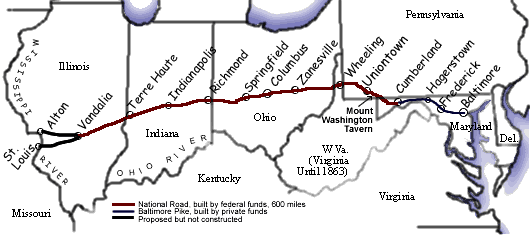
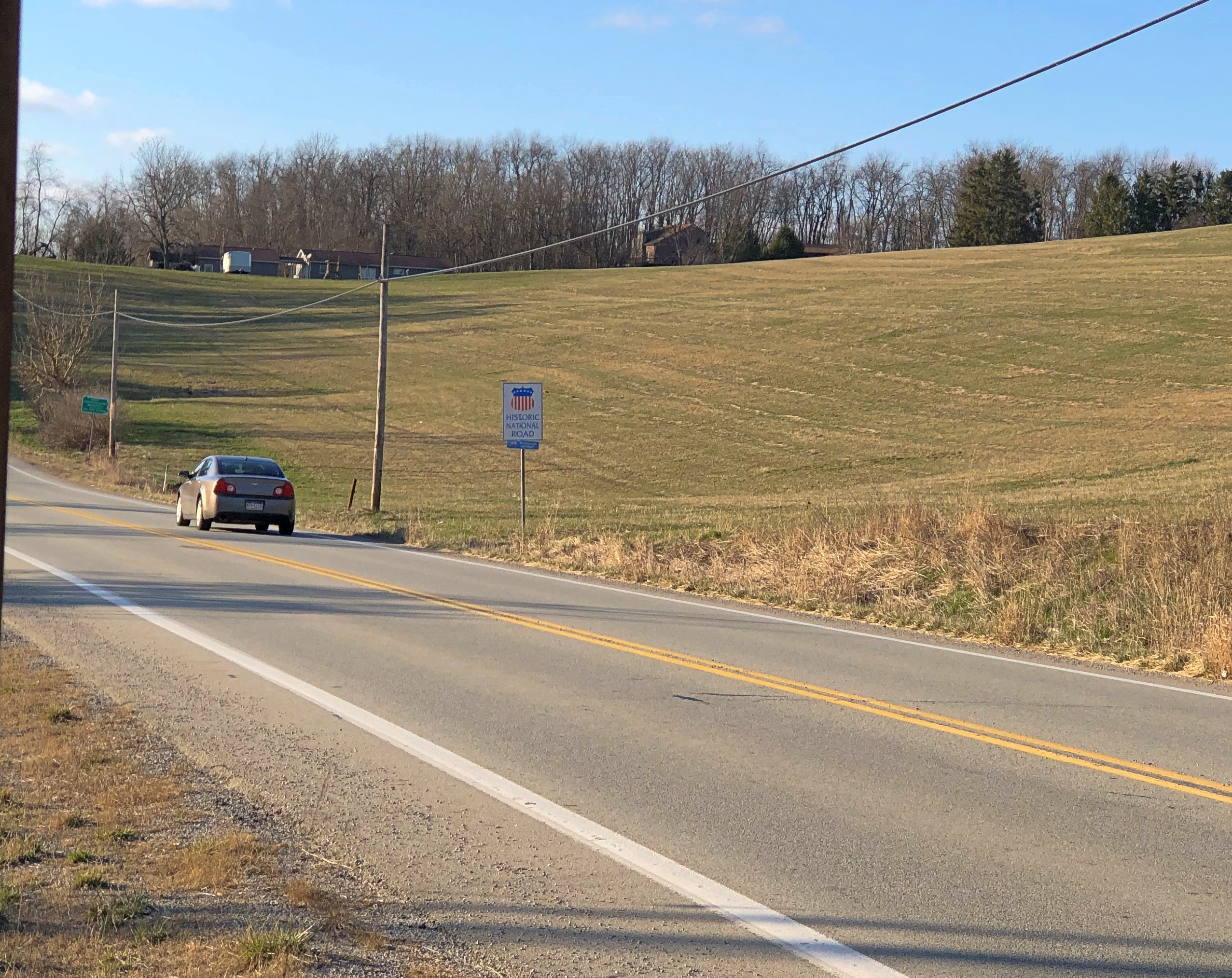
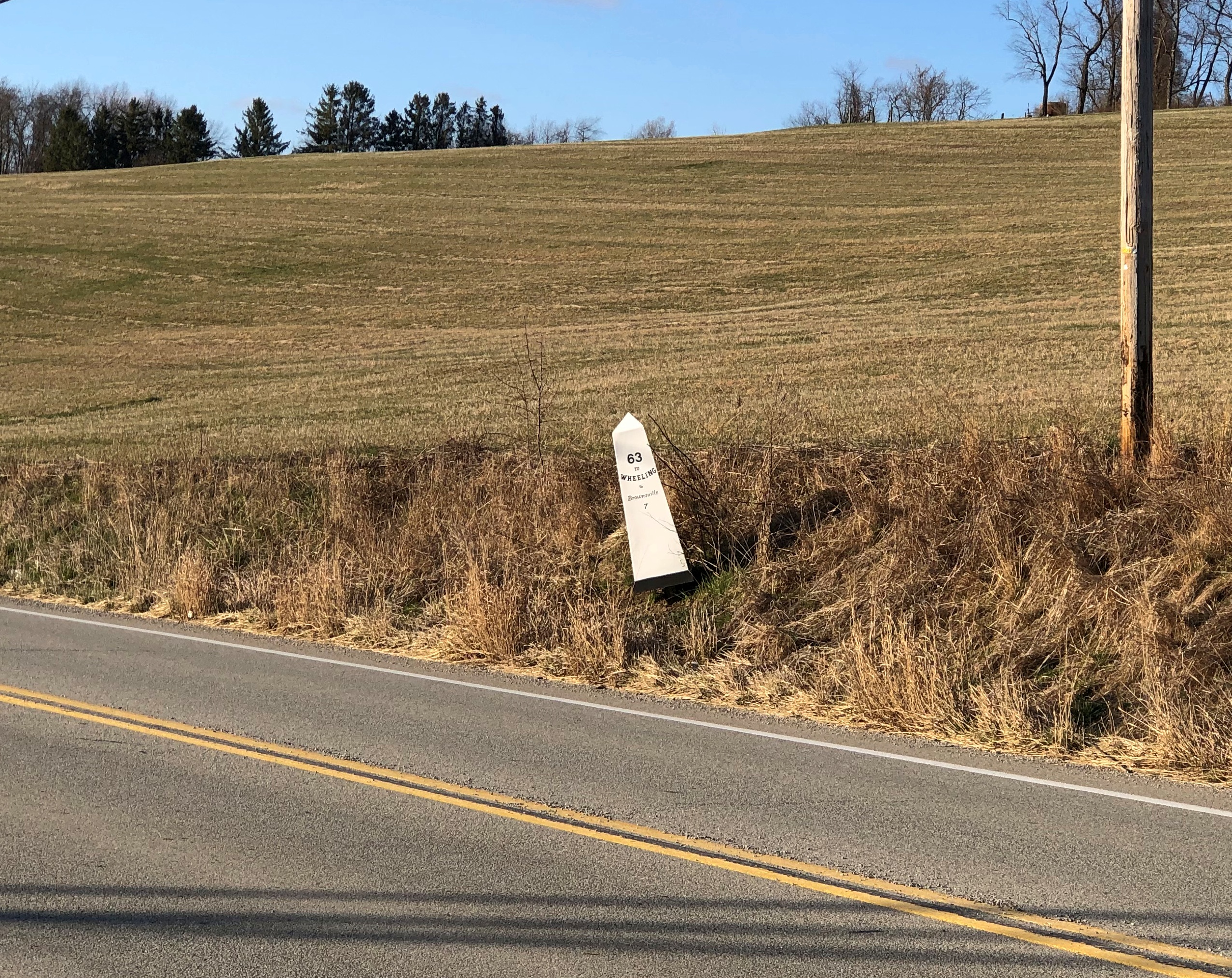
We drove the National Road (U.S. 40) in Pennsylvania, from where it crosses the border near Wheeling, through to Uniontown, and later drove the segment that goes into Maryland.

Didn’t quite make it to the eastern terminus, in Cumberland, Maryland. Once upon a time, maybe a small detour during a late ’90s return from Dallas, we saw the western terminus in Vandalia, Illinois.National Road National Road

One minor landmark along the way.National Road National Road

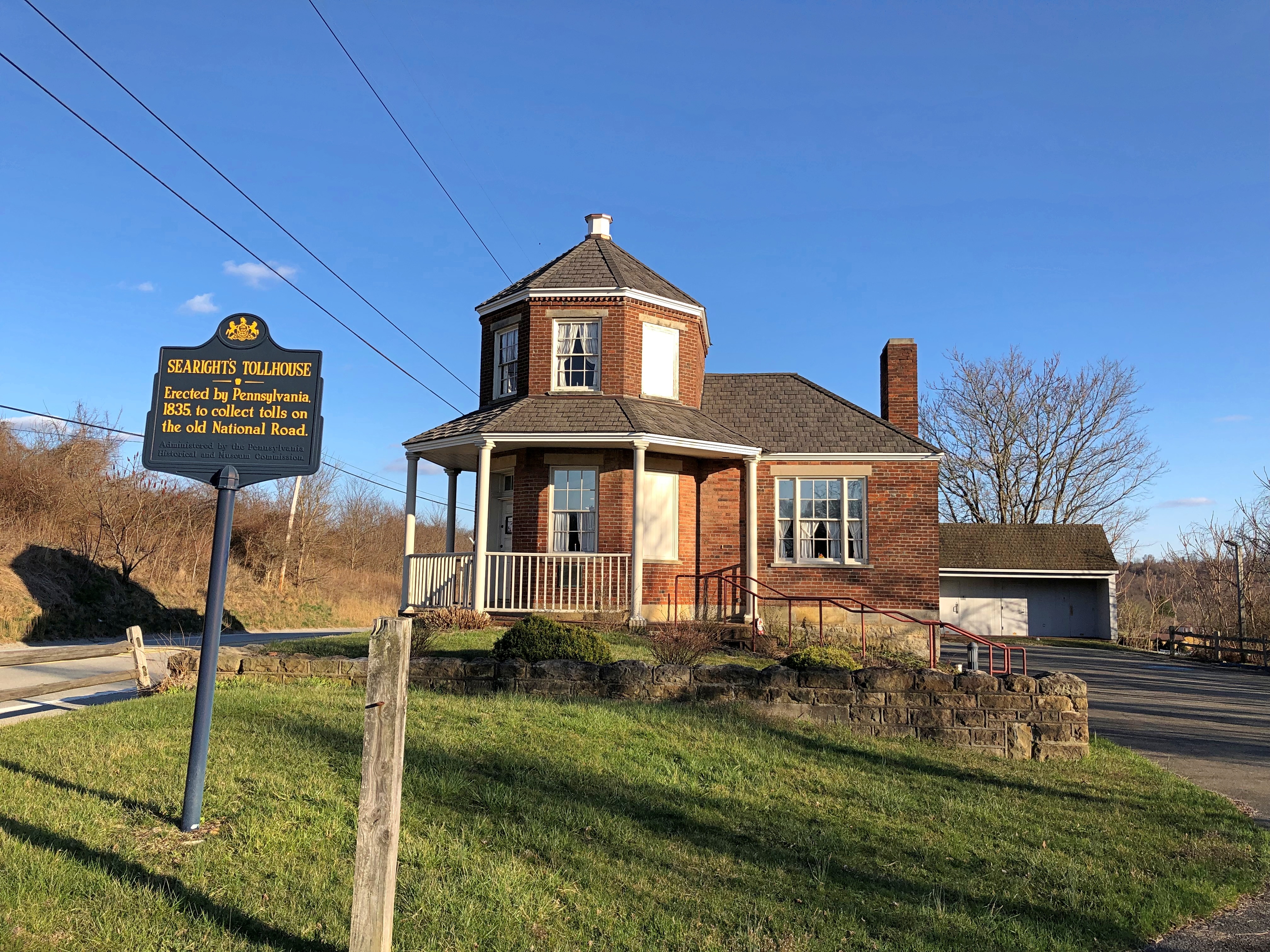
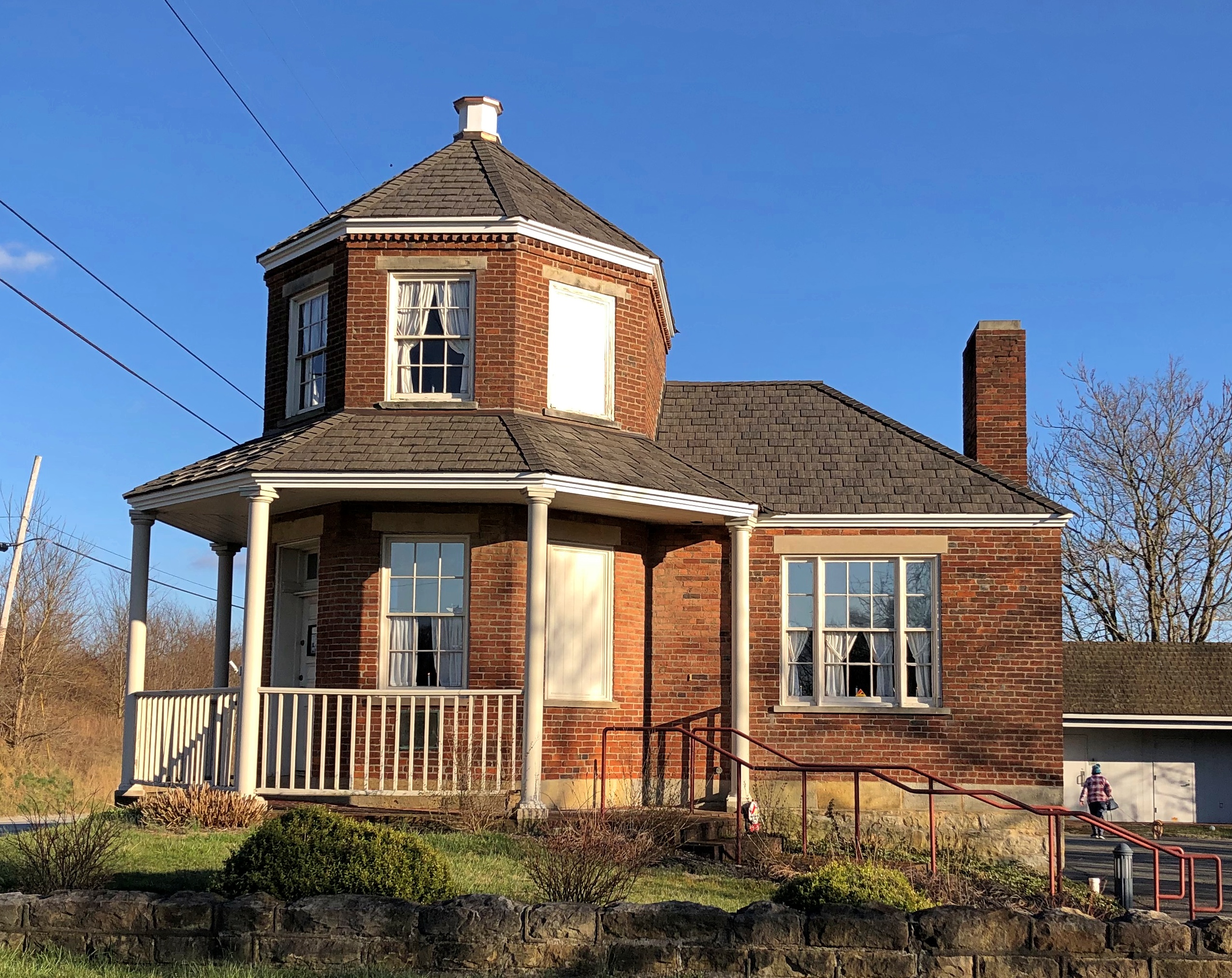
Searight’s Tollhouse, built in 1835 by the commonwealth of Pennsylvania to collect tolls, since the federal government had turned the road over to its various states that year. The structure, near Uniontown, is one of two surviving tollhouses, out of the six built. No tolls have been collected there since the 1870s.

The structure was built near the tavern of William Searight, the state commissioner in charge of the roadway, per Wiki.

Barman and toll collector. There’s an idea for a Western revival limited series on streaming: Will Searight, Frontier Toll Collector. I’m thinking a comedy, in the same Shakespearean writing style as Deadwood, but no one gets killed.

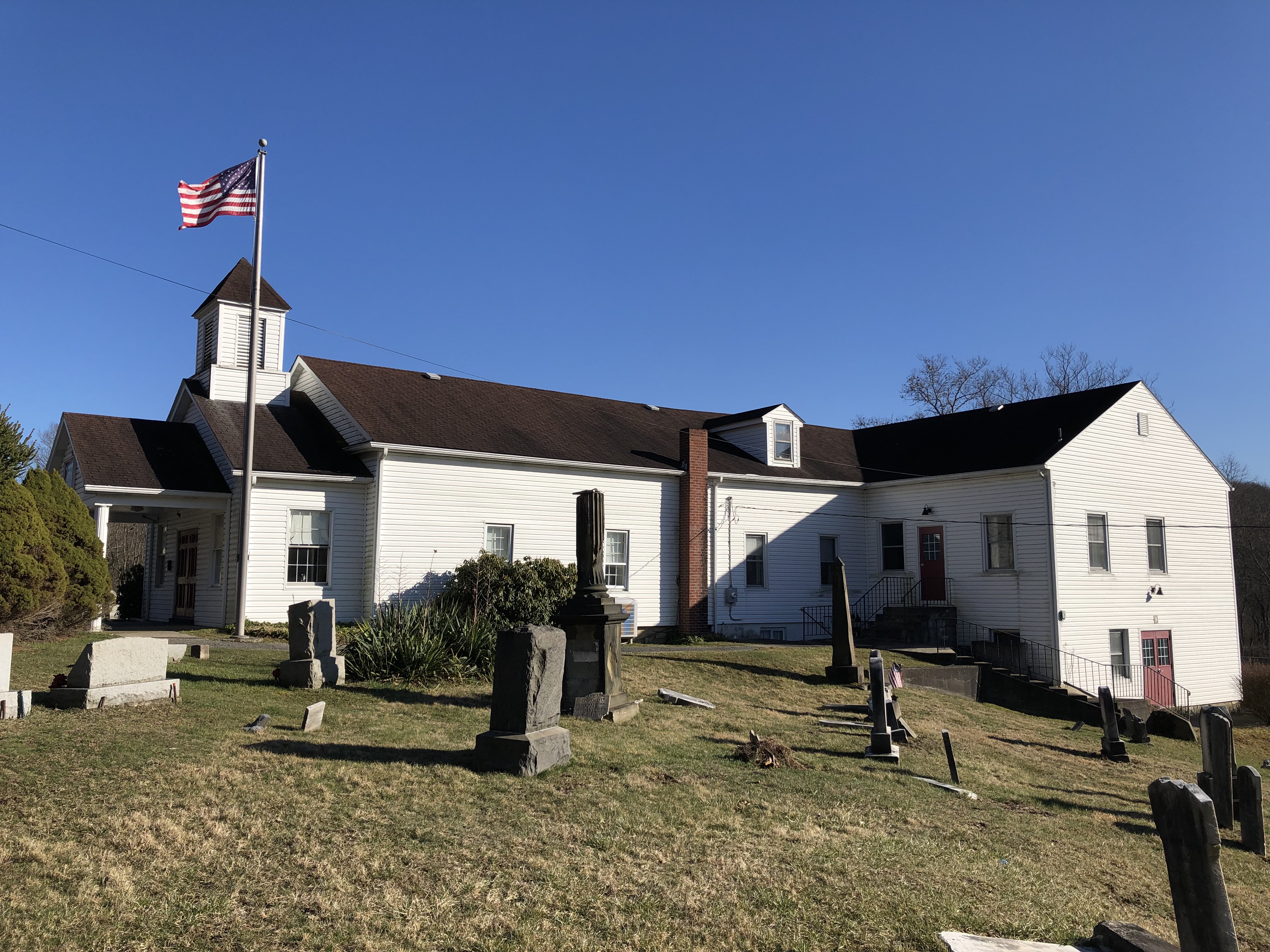
A church on the National Road, east of Uniontown: Mount Washington Presbyterian, founded in 1842.National Road

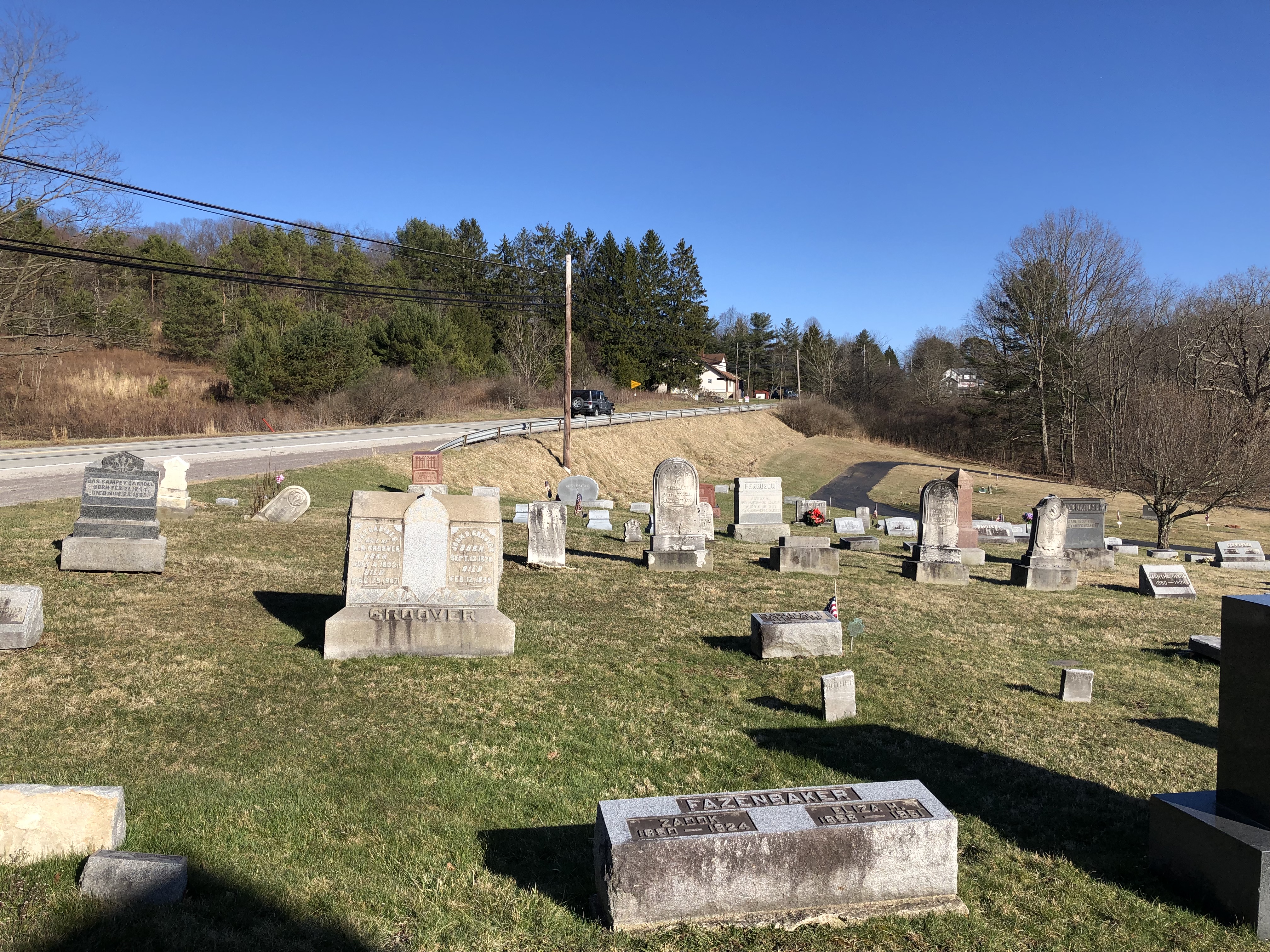
The church cemetery provides a view of the National Road.National Road

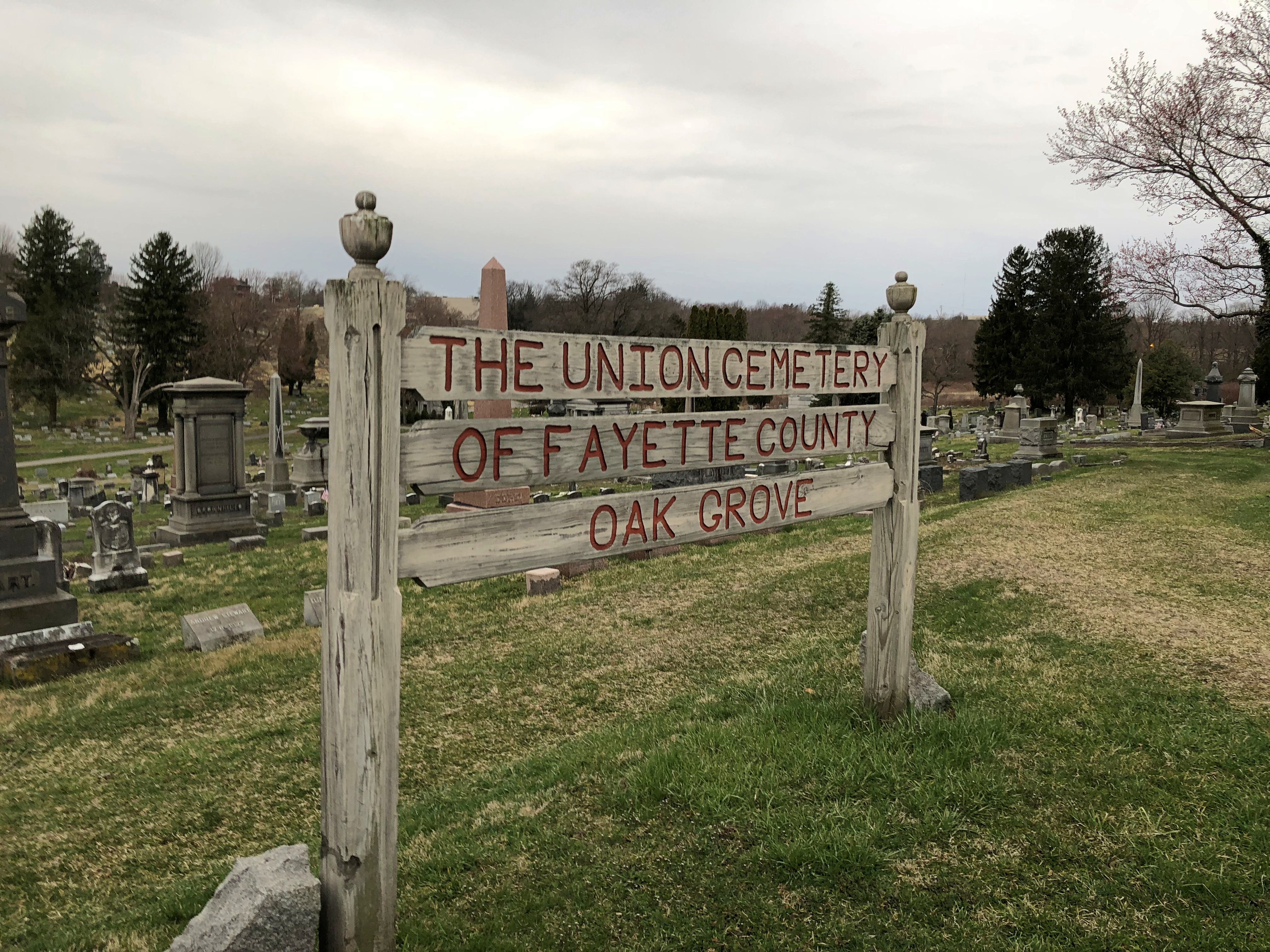
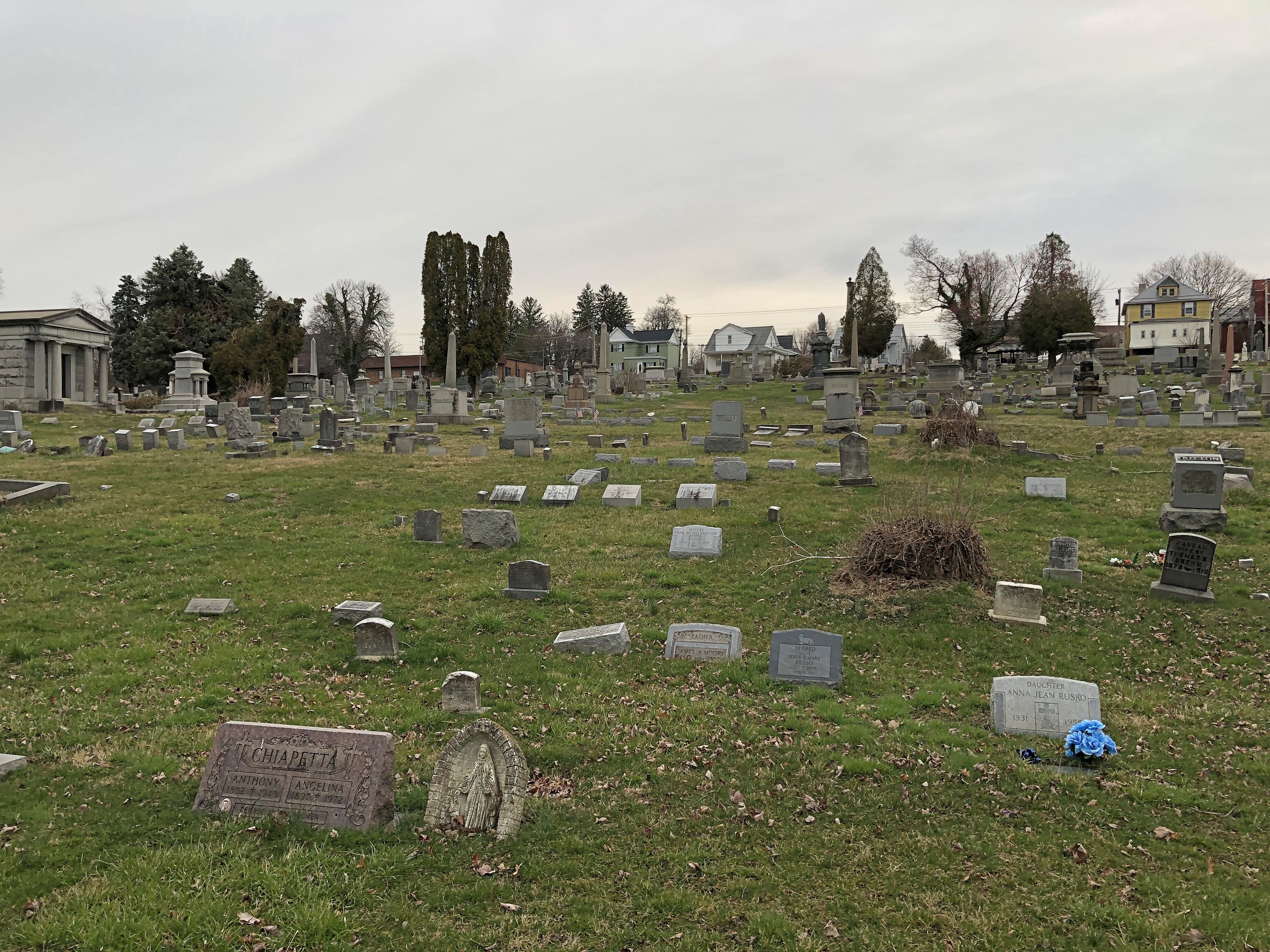
In Uniontown itself, I stopped by briefly at Oak Grove Cemetery, originally the Union Cemetery of Fayette County, which has been accepting permanent residents since 1867.Oak Grove, Uniontown
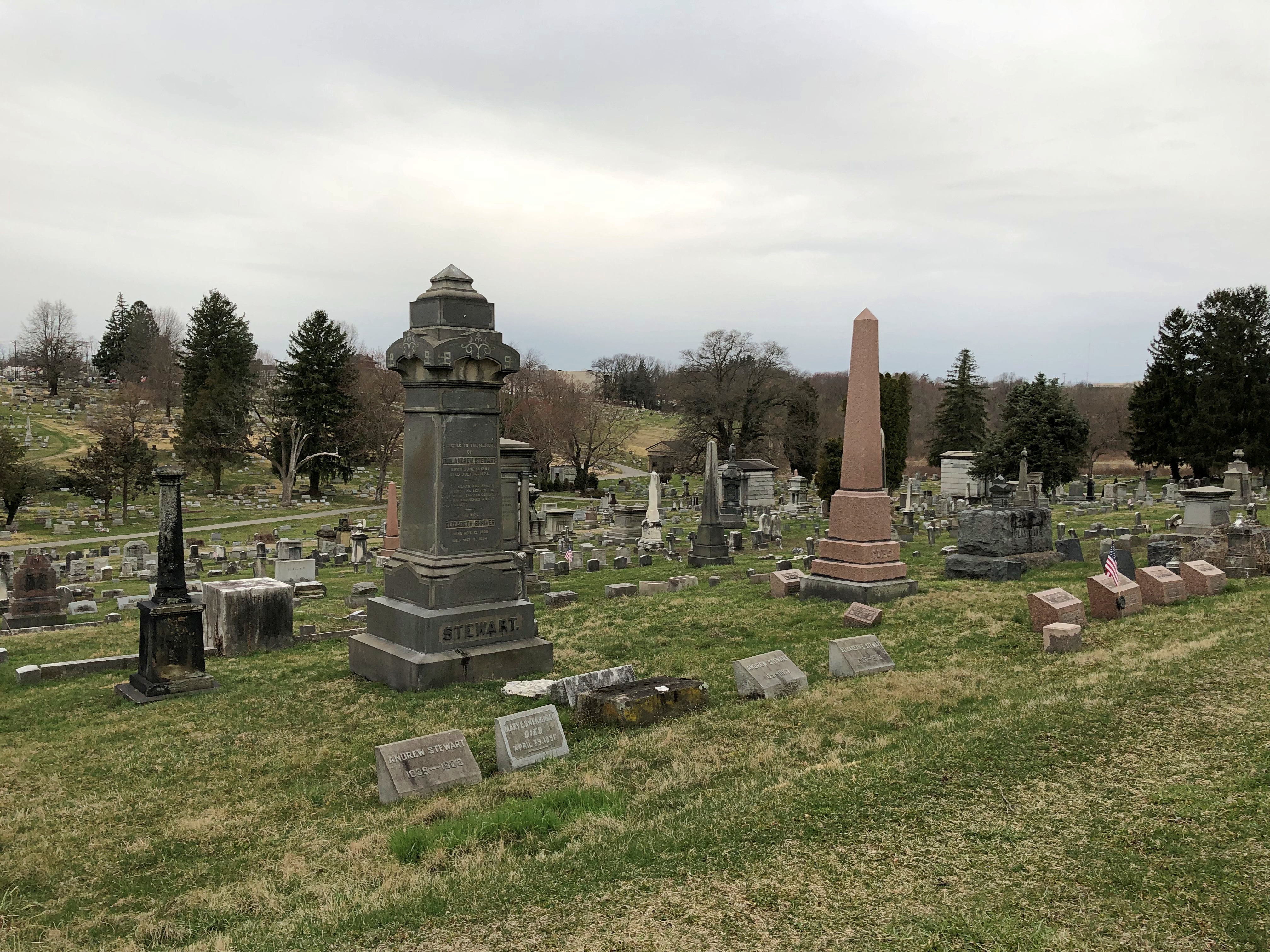
Oak Grove, Uniontown Oak Grove, Uniontown

Famed permanent residents? I checked with Find-A-Grave (just now), and the pickings are slim: mostly forgotten members of the U.S. Congress, though there is a Civil War officer, Silas Milton Bailey (d. 1900). I just made his acquaintance. Quite a story. Uniontown jeweler in civilian life; solider that didn’t let getting shot in the face keep him from action for long.

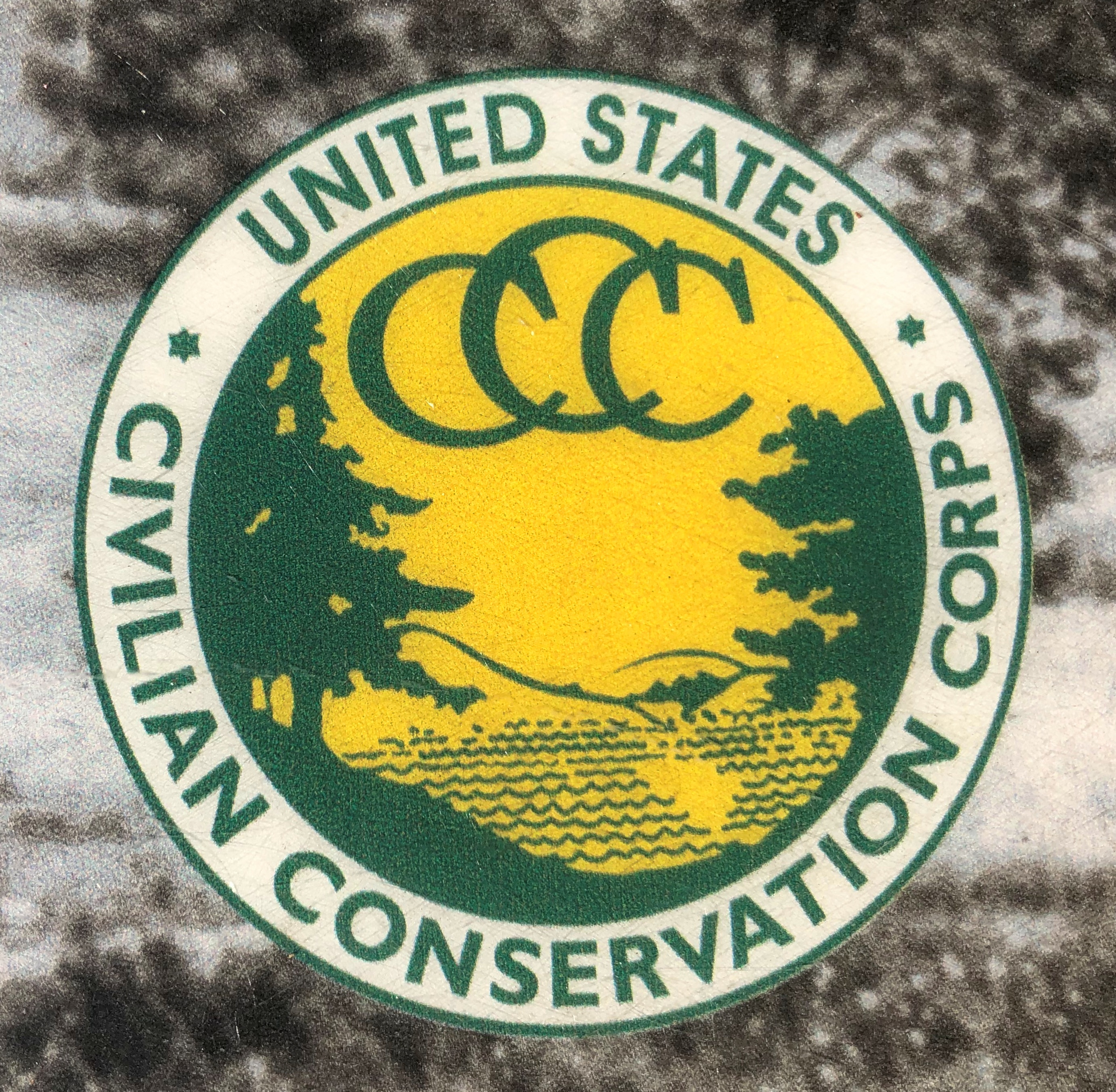
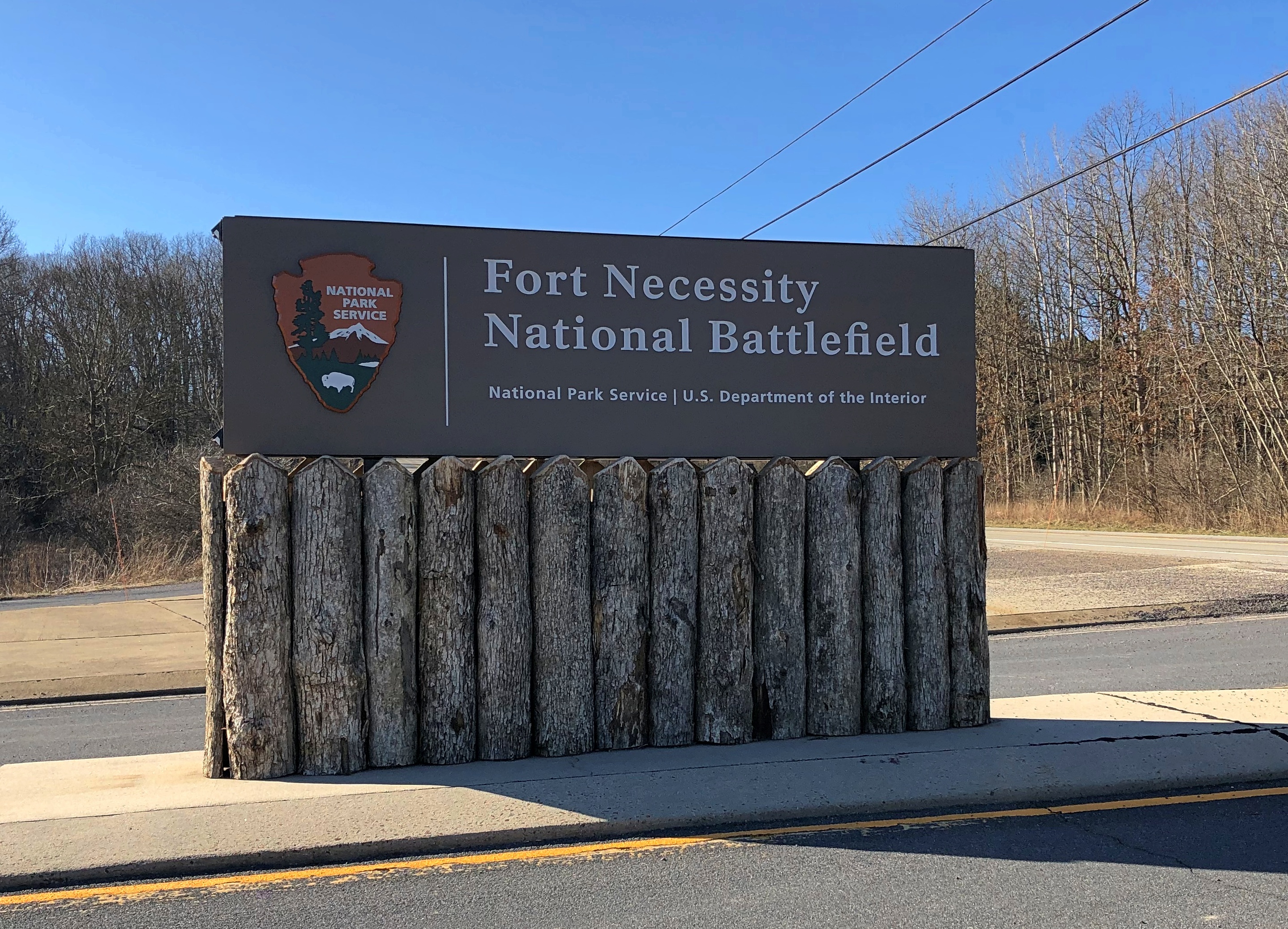
Fort Necessity is just off U.S. 40 and thus the National Road. Something I noticed there, featured on a park service educational sign. Of course. How could they not be involved?

The camp, Pennsylvania SP-12, existed from 1935 to ’37, with about 800 men, planting trees and laying out trails and roads. This is the first time I’ve seen the CCC seal depicted at any of its sites, though of course the men sometimes rate bronze recognition. There is evidence that the seal dates back to the active period of the corps.

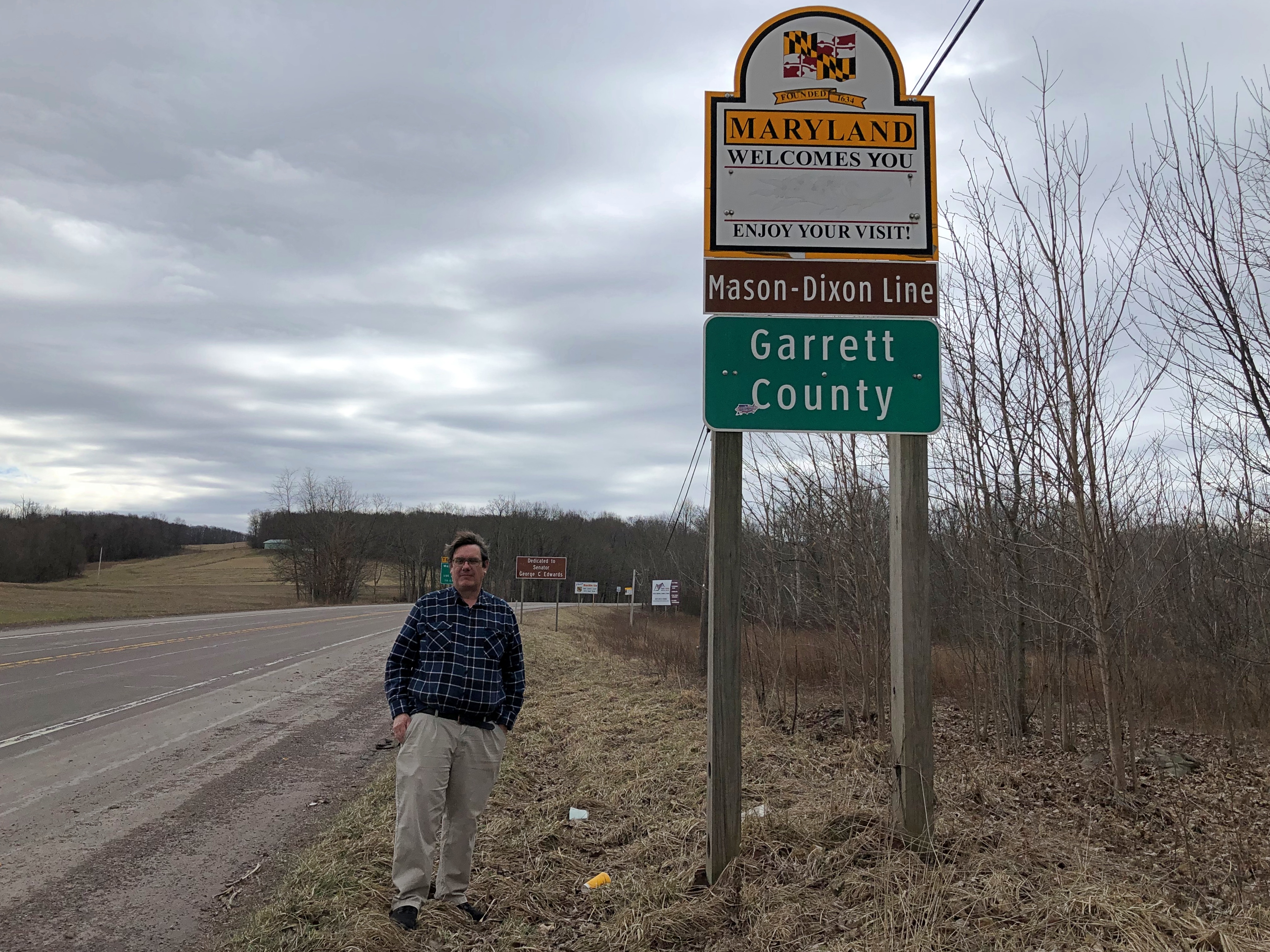
Just as we left Pennsylvania for the last time, I was able to stop at the border with Maryland on U.S. 219, just south of Salisbury, Pa. Not just any border, but the Mason-Dixon Line. It’s one thing to cross it, as I have who knows how often. It’s another thing, according to my eccentric lights, to stand on it.Mason-Dixon Line

Yuriko had never heard of it. I explained a little about its history and its wider but not quite literal meaning as a line between free and slave, North and South, but she didn’t find it all that impressive.

The Flight 93 National Memorial

I don’t remember the first time I heard of Fallingwater or Fort Necessity or even the Hare Krishnas, to name a few examples. I do remember the first time I heard of United 93, though probably not by its flight number. Listening to the radio in my downtown Chicago office on the morning of September 11, 2001, I heard, along with countless other listeners, simply that a fourth airplane had crashed, this one in rural Pennsylvania and not into a building.

Twenty-one and a half years later, roughly, we arrived at the site, now the Flight 93 National Memorial. Rural it still is, and far enough out of our way that I considered not going. But when Wednesday came, there in the middle of our trip, I knew we should. How often were we going to be out this way? I didn’t want to think later, we could have gone to pay our respects, but didn’t.

The memorial is as expansive as its rural location allows it to be. Its parts are variously horizontal, irregularly diagonal and vertical, and at some distance from each other. Come to think of it, the plane went from a high altitude into a ragged and sharp descent, to pulverization on the level ground. The features of the memorial’s inner circle are within eyeshot of each other, but seemingly far in the distance, and not imposing themselves much on the sloping earth or the big sky.

At first, it’s a little hard to visualize the various parts. The NPS brochure is helpful in that regard. The cut-off arrow says “Flight Path.”

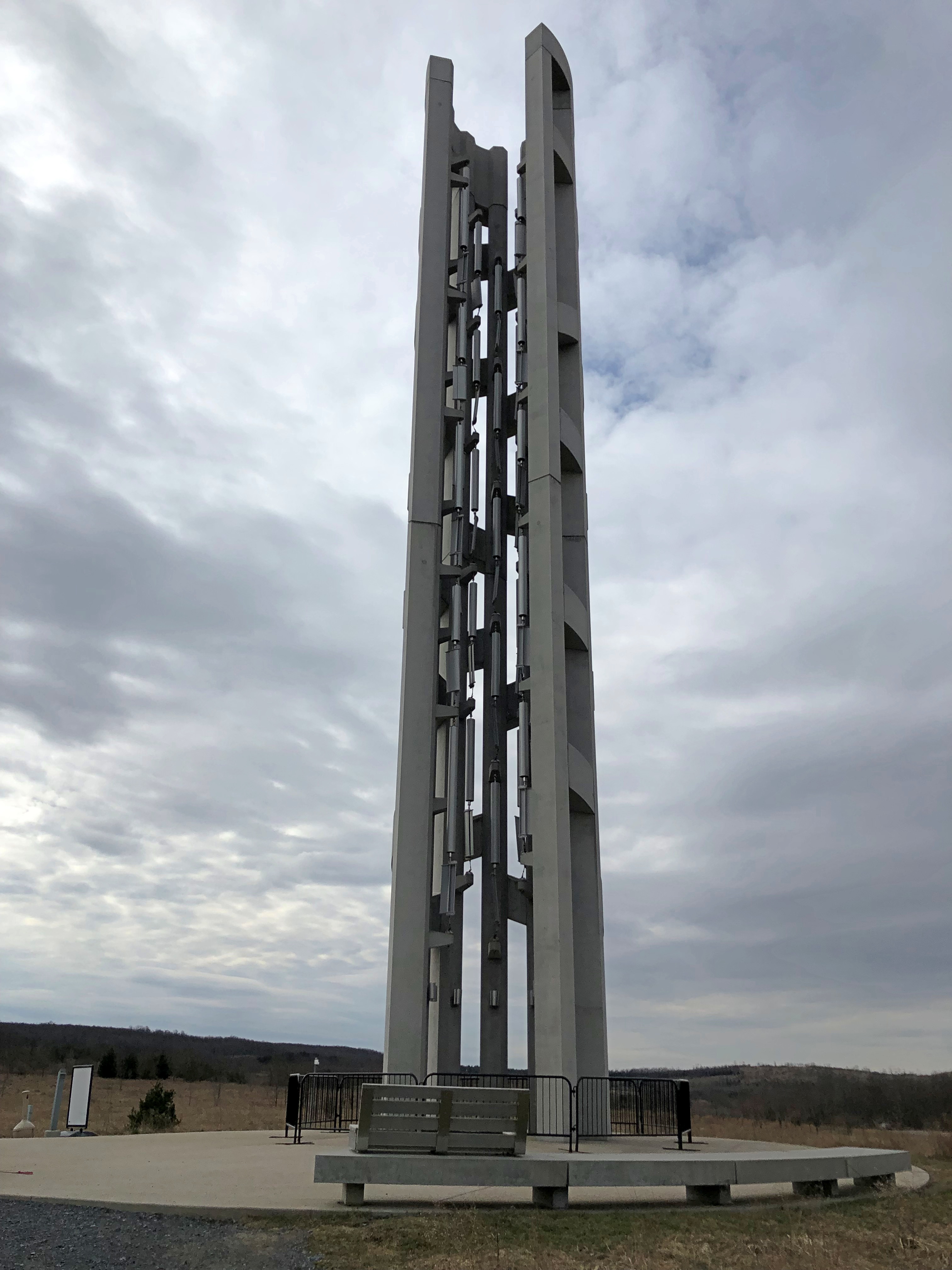
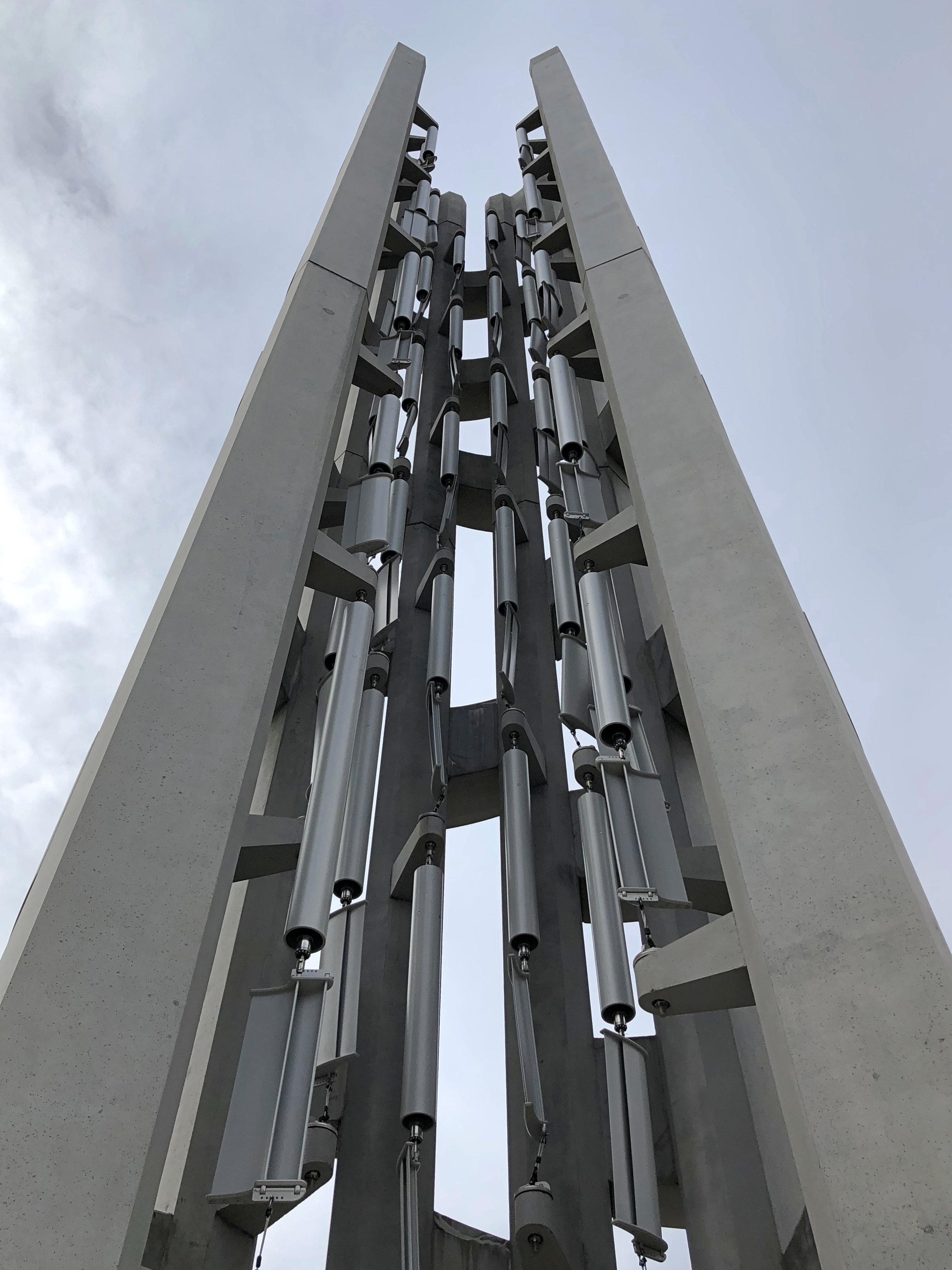
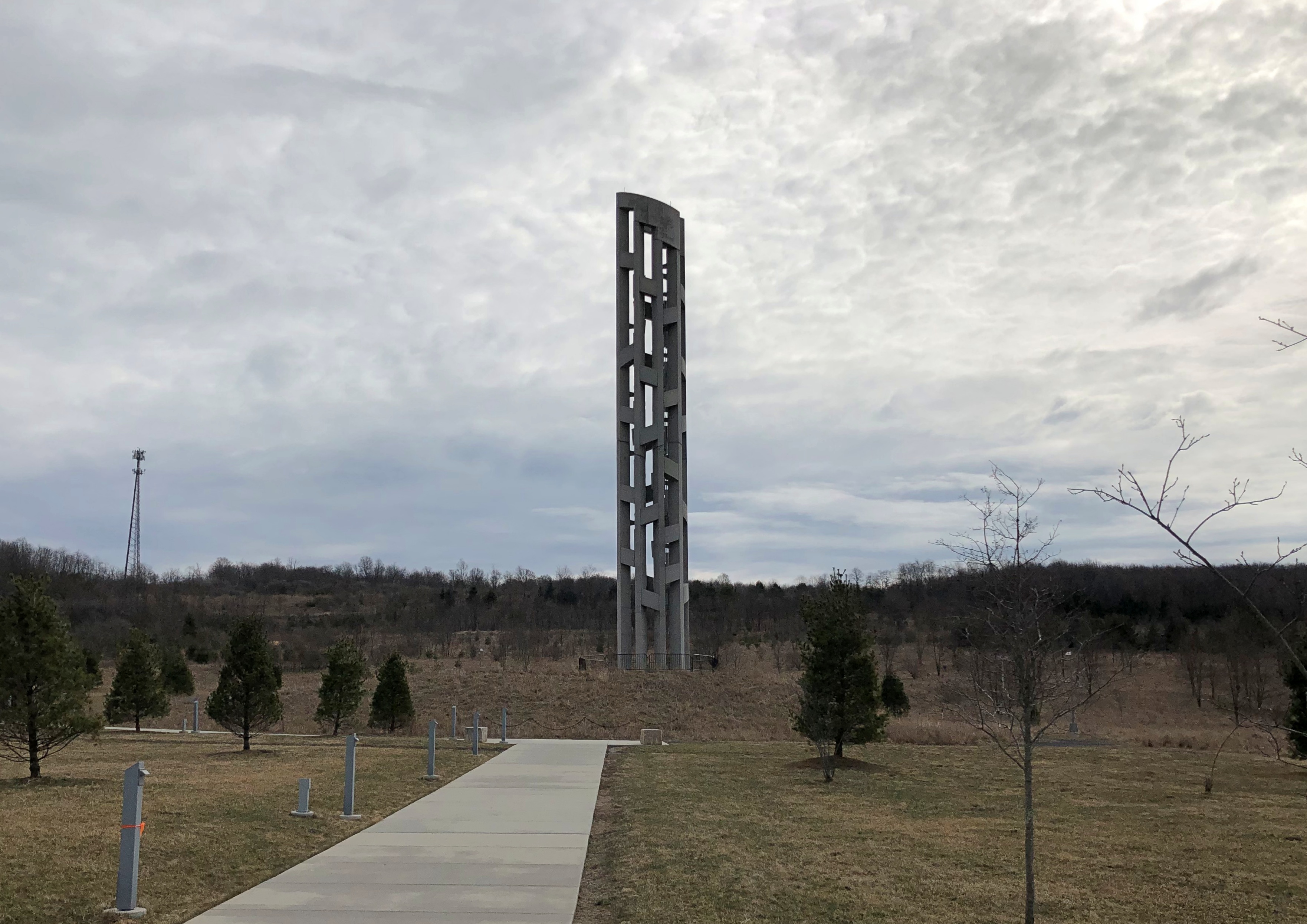
Near the entrance is the Tower of Voices, the most recent part of the memorial, a 93-foot structure with 40 wind chimes, which were installed in 2020. Ninety-three feet for the flight, 40 chimes for the number murdered.Flight 93 National Memorial Flight 93 National Memorial Flight 93 National Memorial

The chimes are supposed to sound in the wind. There was a little wind, and sound, as we stood under the tower, but not much.

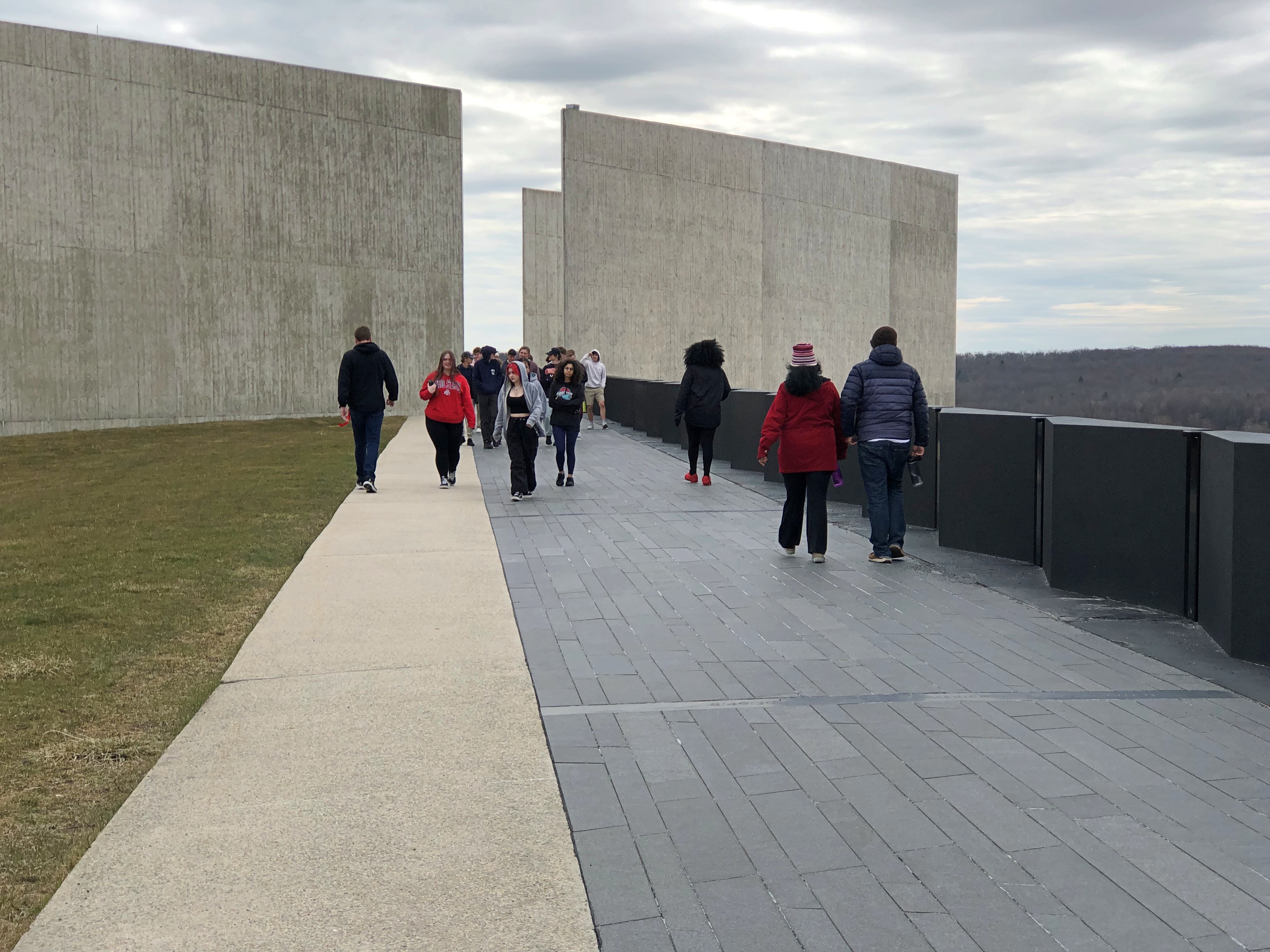
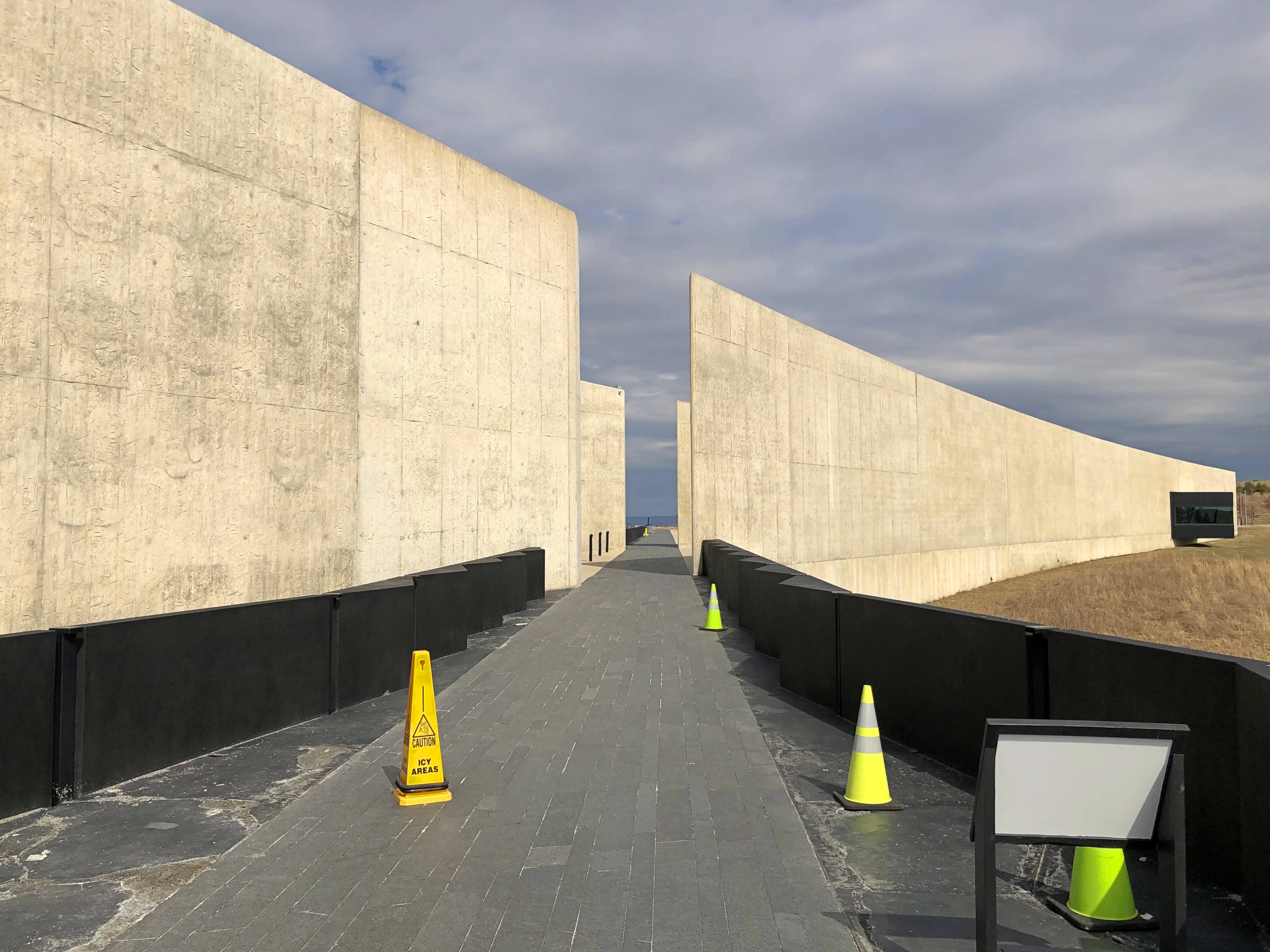
Further on is the visitor center and museum, formed by concrete structures. A few busloads of high school students were visiting. Flight 93 National Memorial

When they cleared out about 15 minutes after we arrived, that left only a trickle of visitors at the memorial on a cool but not cold weekday.

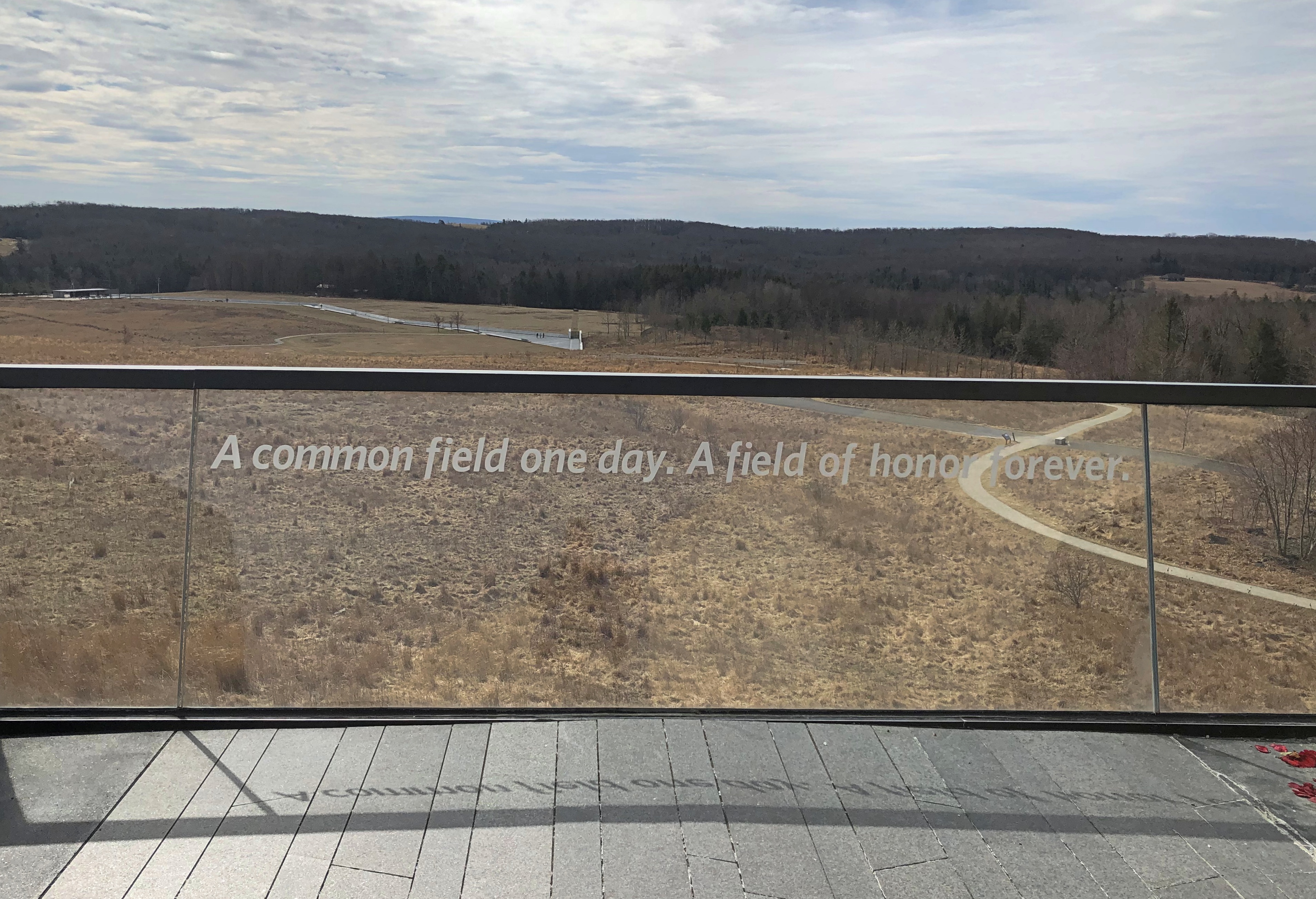
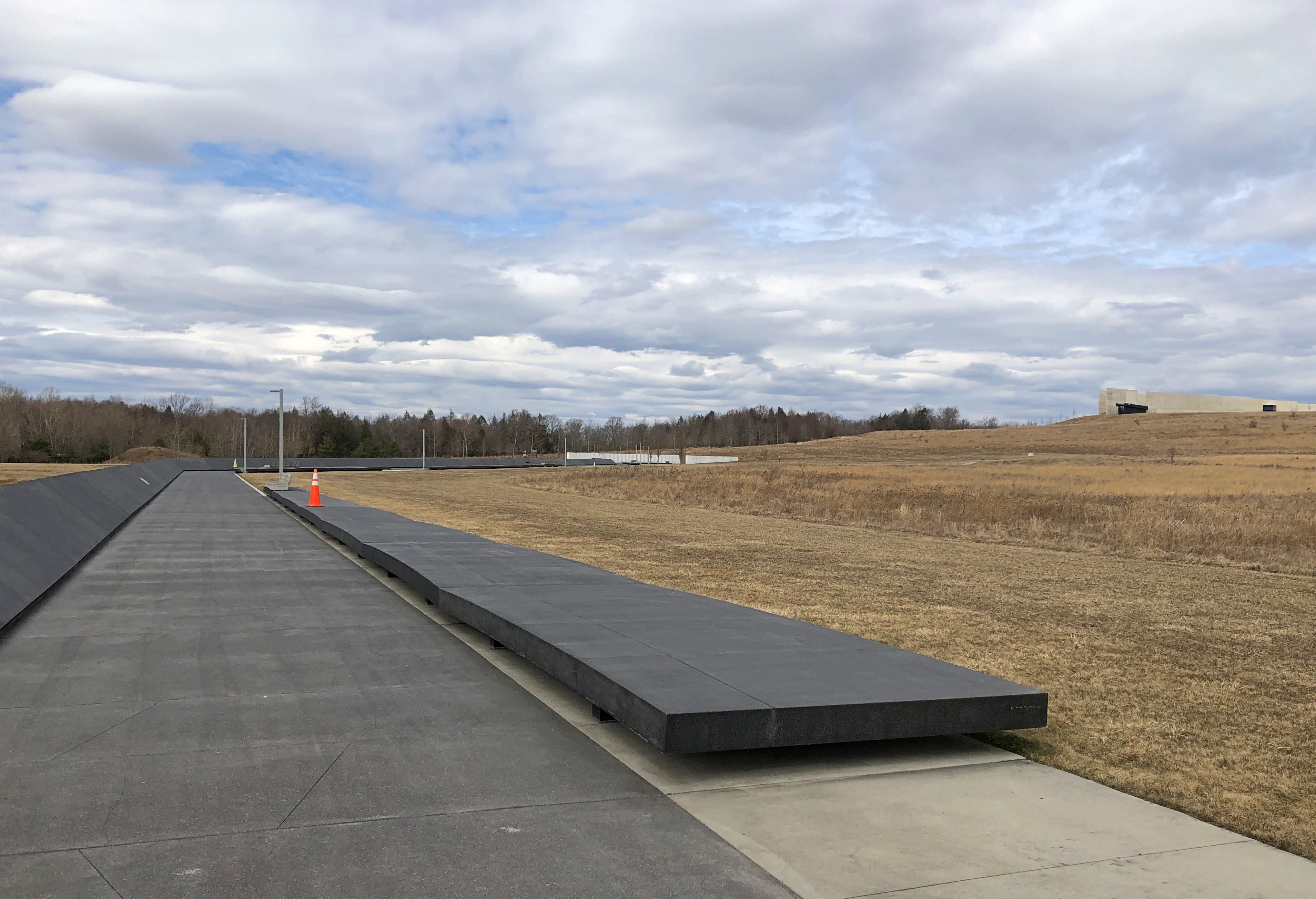
The black granite walkway isn’t a random placement, but reflects the path of Flight 93 in its last moments. At the level of the visitor center, it passes through the concrete structures and to an overlook.

Looking back at the structures.Flight 93 National Memorial

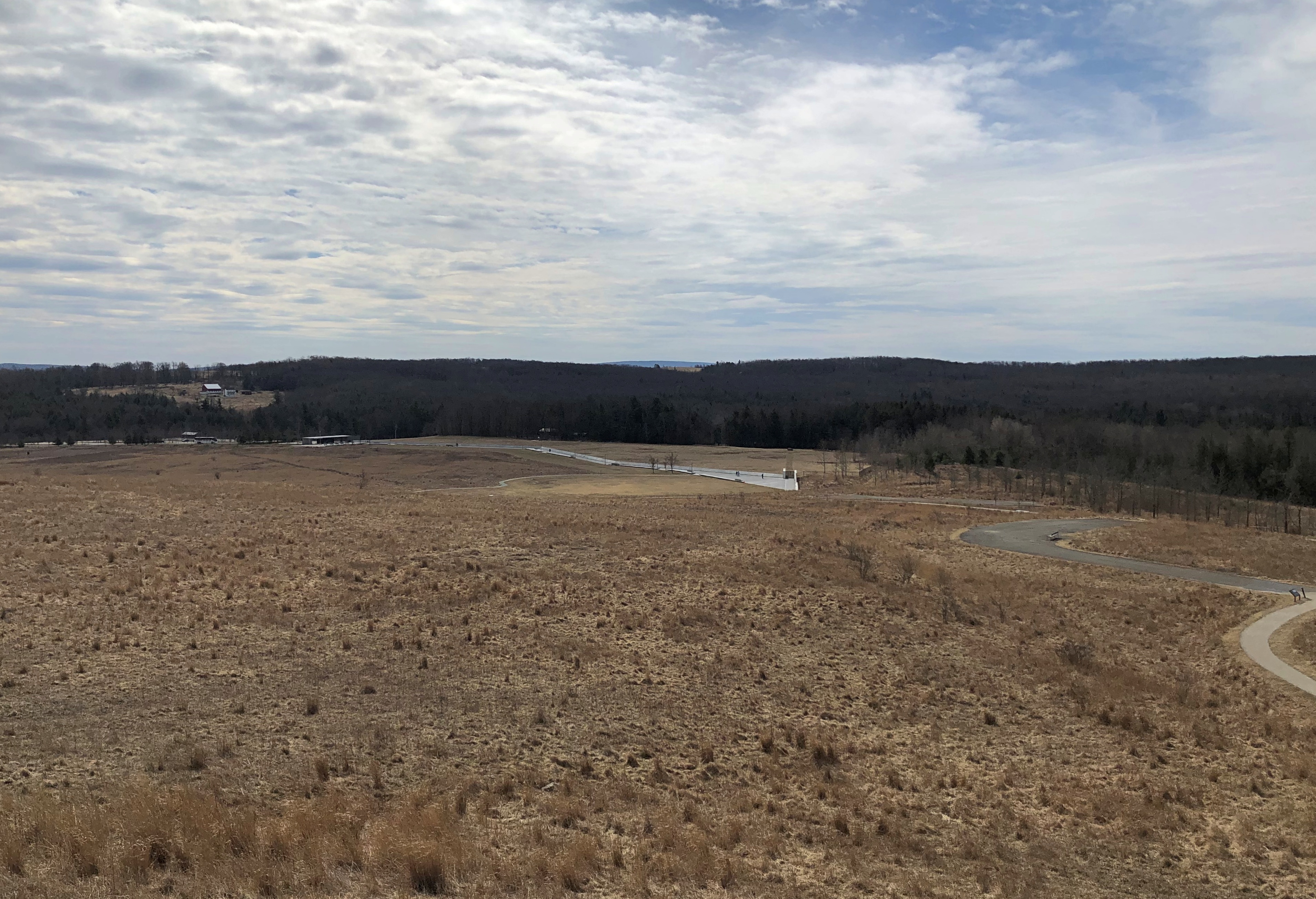
Looking forward, over the overlook.Flight 93 National Memorial Flight 93 National Memorial

Within view is the actual crash site, now fronted by the Memorial Plaza and the Wall of Names, way at the down end of a brown slope. Brown for now. I’ve seen images of the place ablaze with flowers.

From the visitors center-museum-overlook, you can walk to near the crash site, on foot on a circular path, called The Allée, which is lined with Sunset Red maple trees; or drive on a circular road. We elected to drive, though I’m sure a walk in the fullness of summer, the colors of fall, or even through a snowy winter landscape, would be richly rewarding.

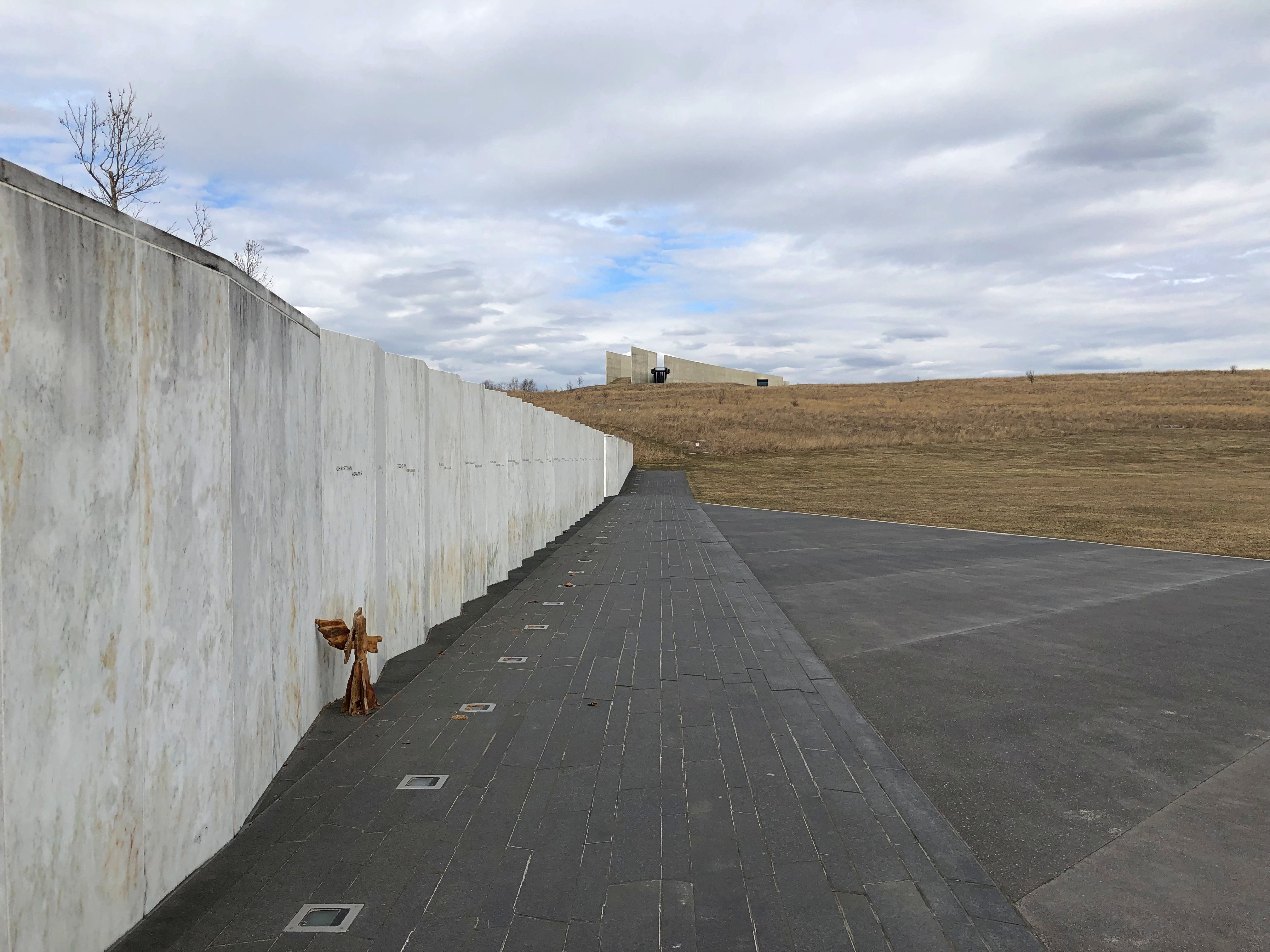
The first thing to see at the Memorial Plaza. The main thing.Flight 93 National Memorial

No dogs allowed on the sidewalk leading to the Wall of Names, so we took turns. I went first.Flight 93 National Memorial Flight 93 National Memorial

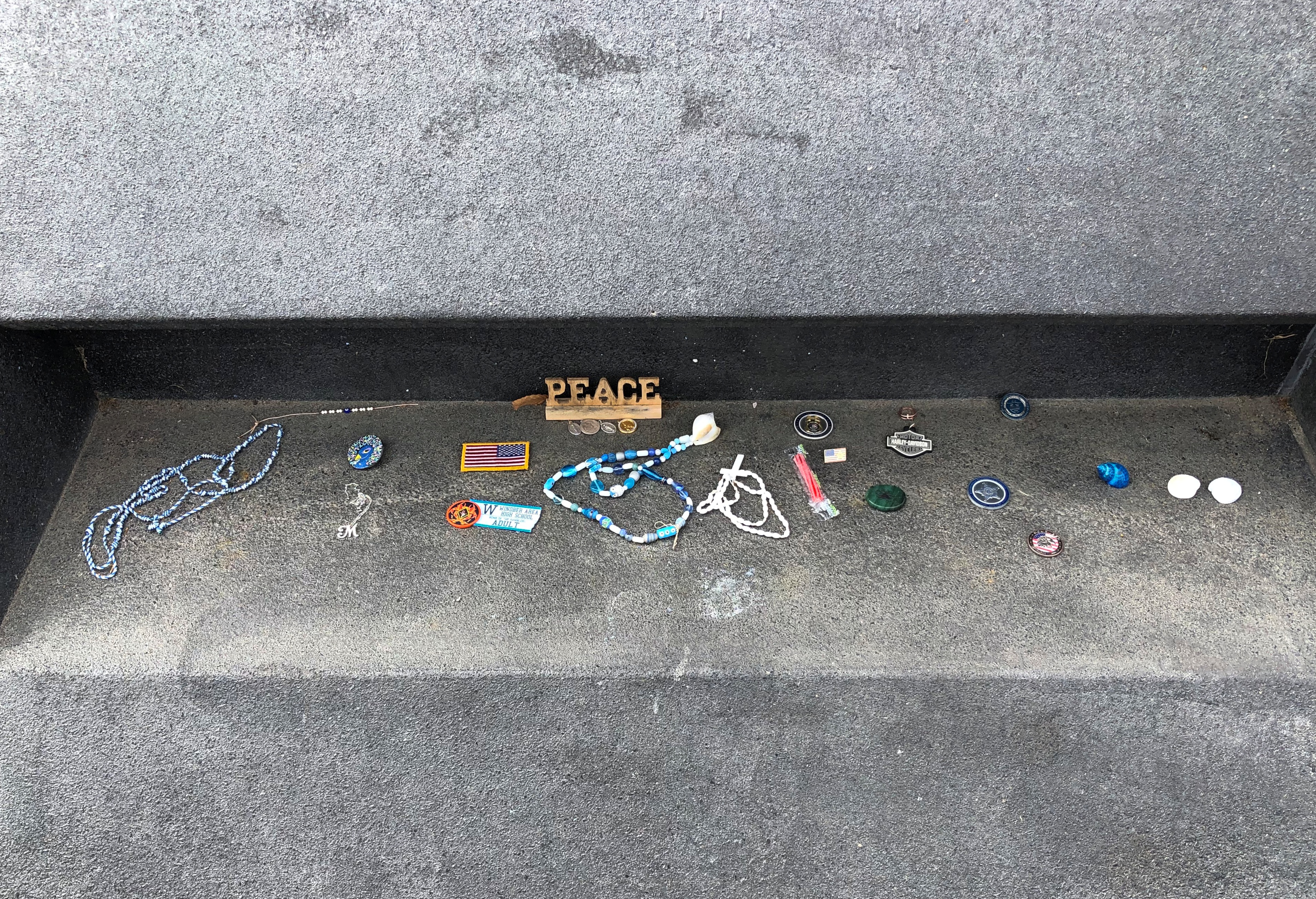
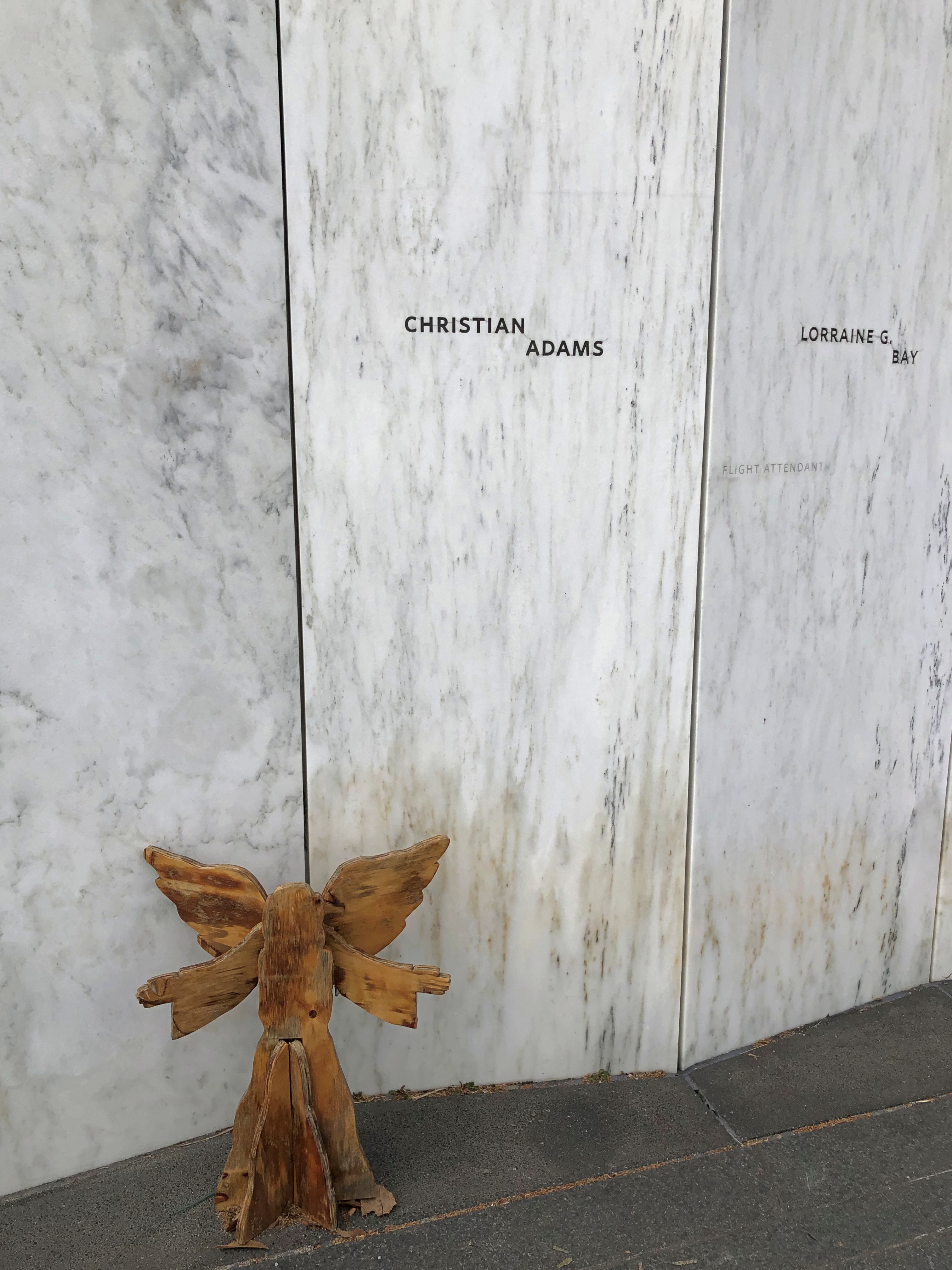
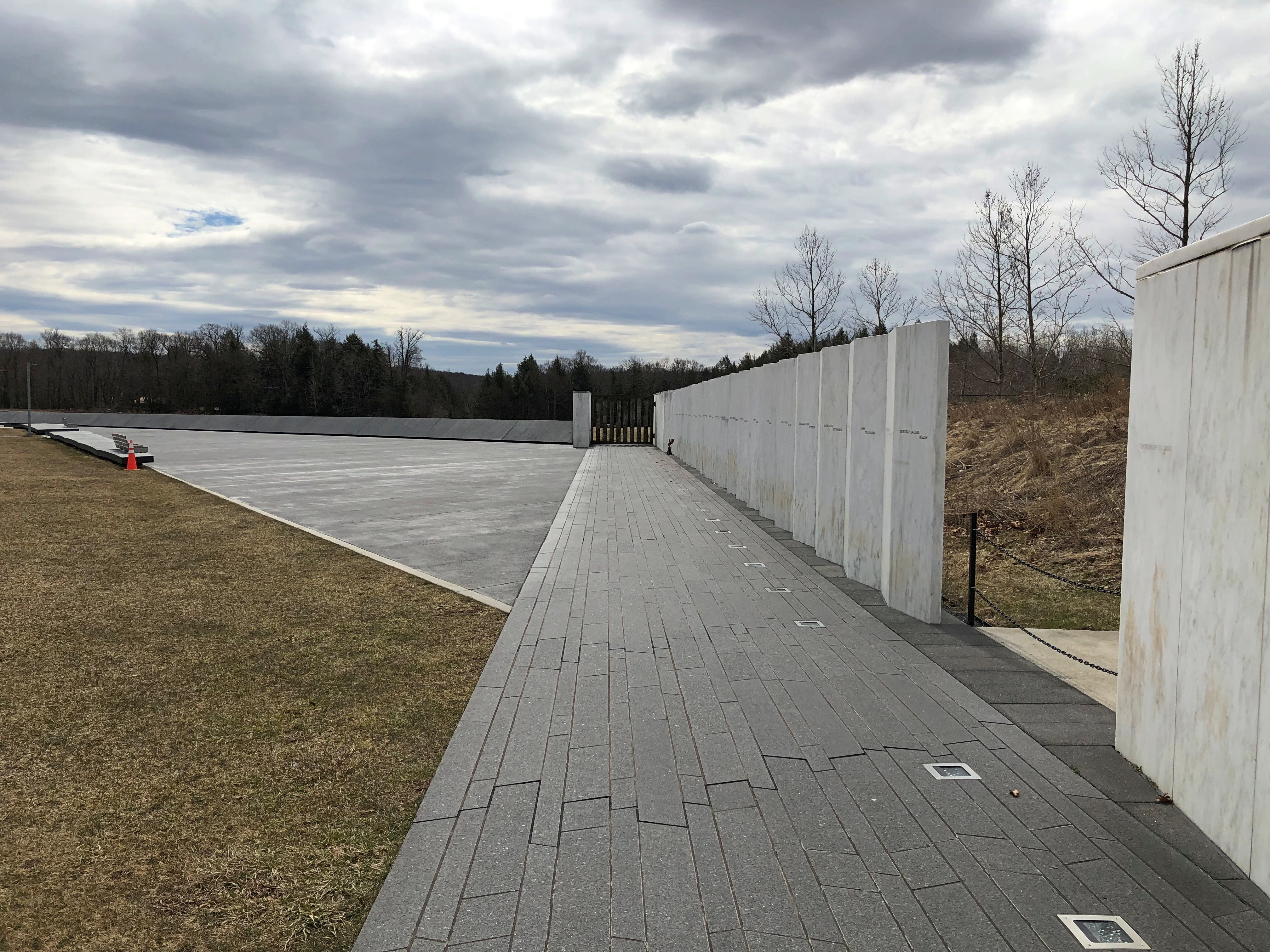
The Wall of Names: each of the crew and passengers, except of course for the murderers, gets a white granite panel with his or her name inscribed, alphabetically left to right, beginning with Christian Adams and through to Deborah Jacobs Welsh.Flight 93 National Memorial Flight 93 National Memorial

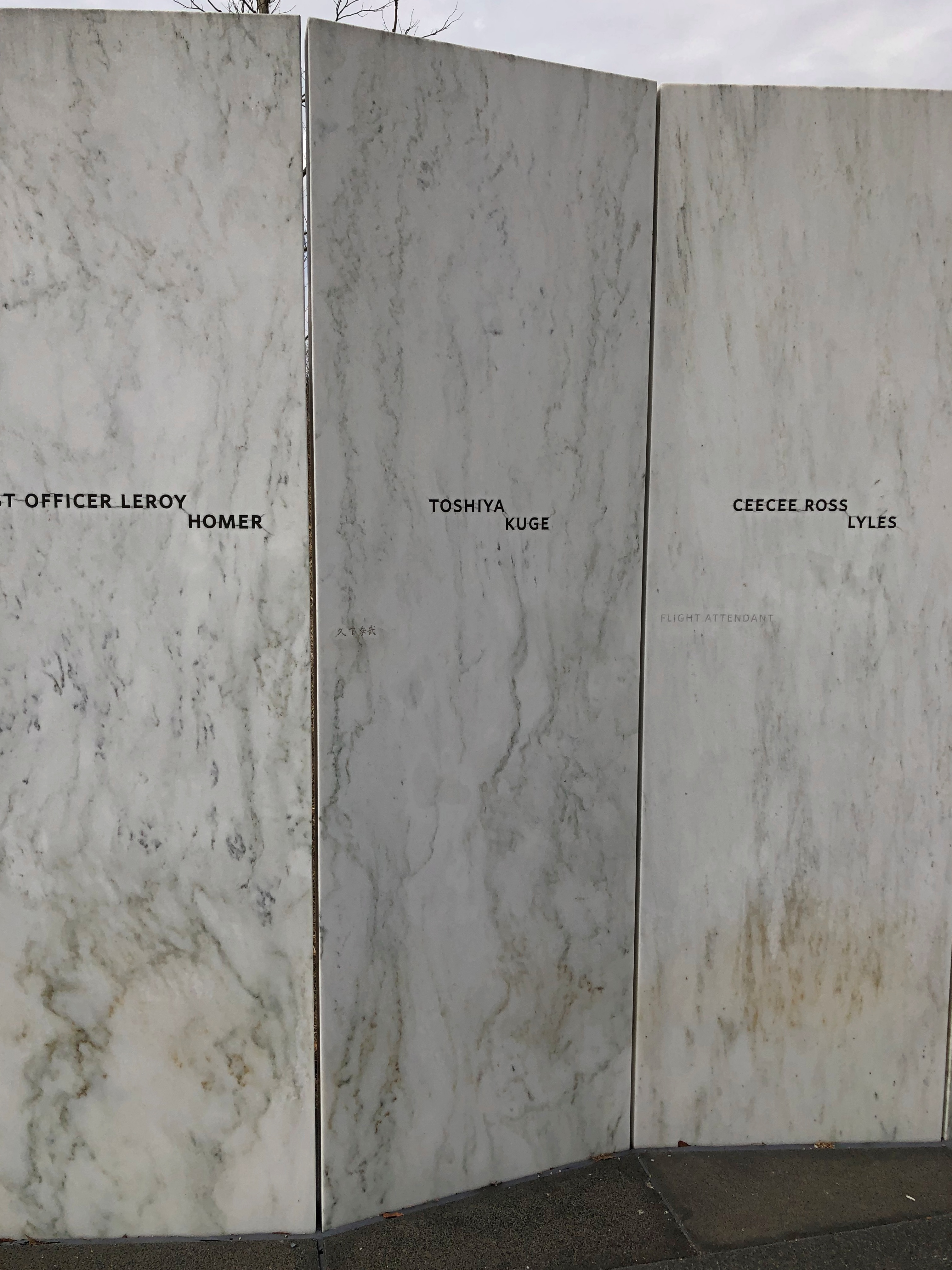
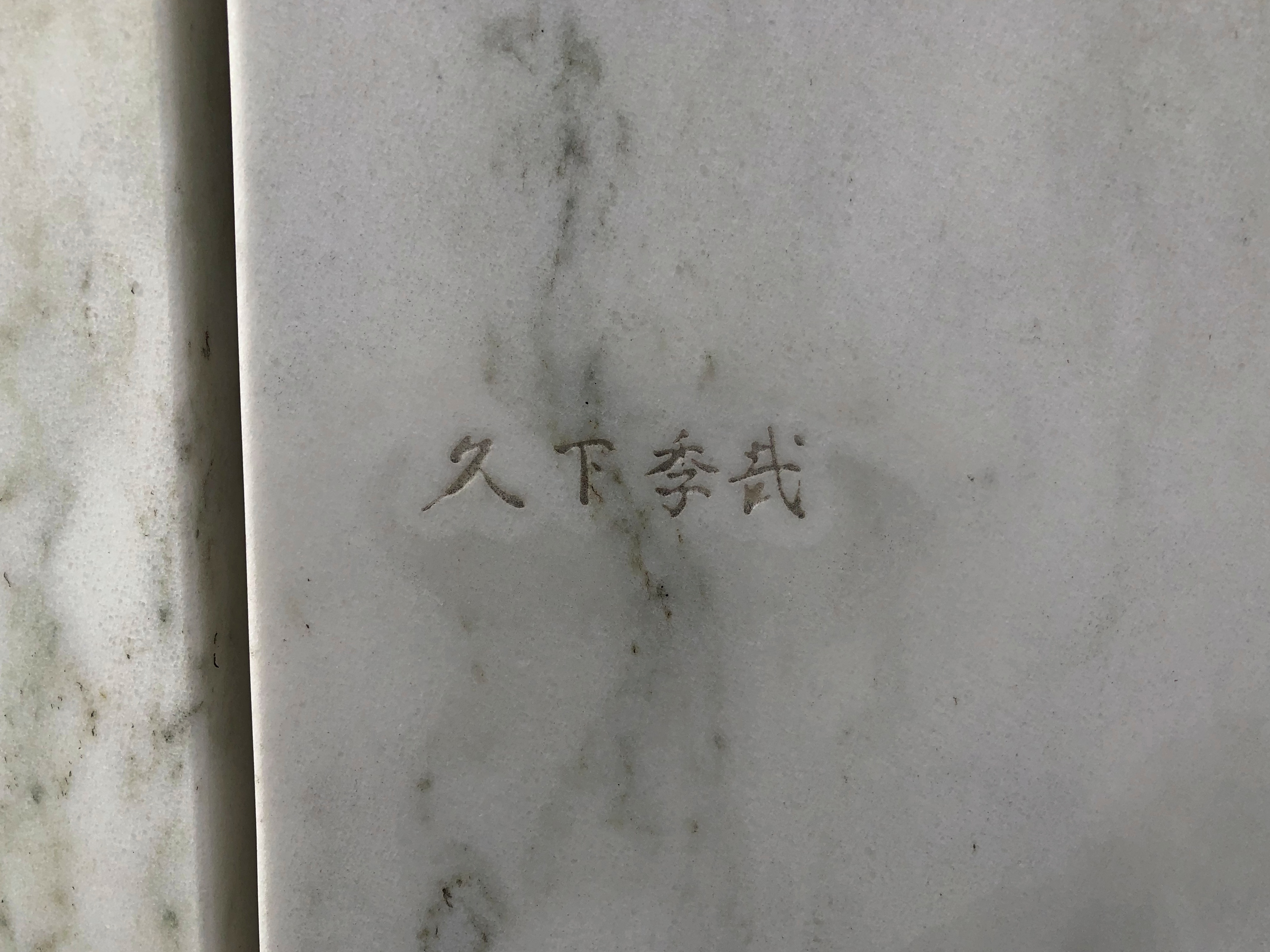
Until I went to the museum, I hadn’t known that a Japanese national was among the dead: Toshiya Kuge. Yuriko noticed that as well.Flight 93 National Memorial Flight 93 National Memorial

Kuge was a student, and at 20, one of the youngest people on board, returning to Japan by way of San Francisco that morning. His mother visits the memorial every year.

The flight path walkway picks up again next to the Wall of Names and goes to a gate.Flight 93 National Memorial

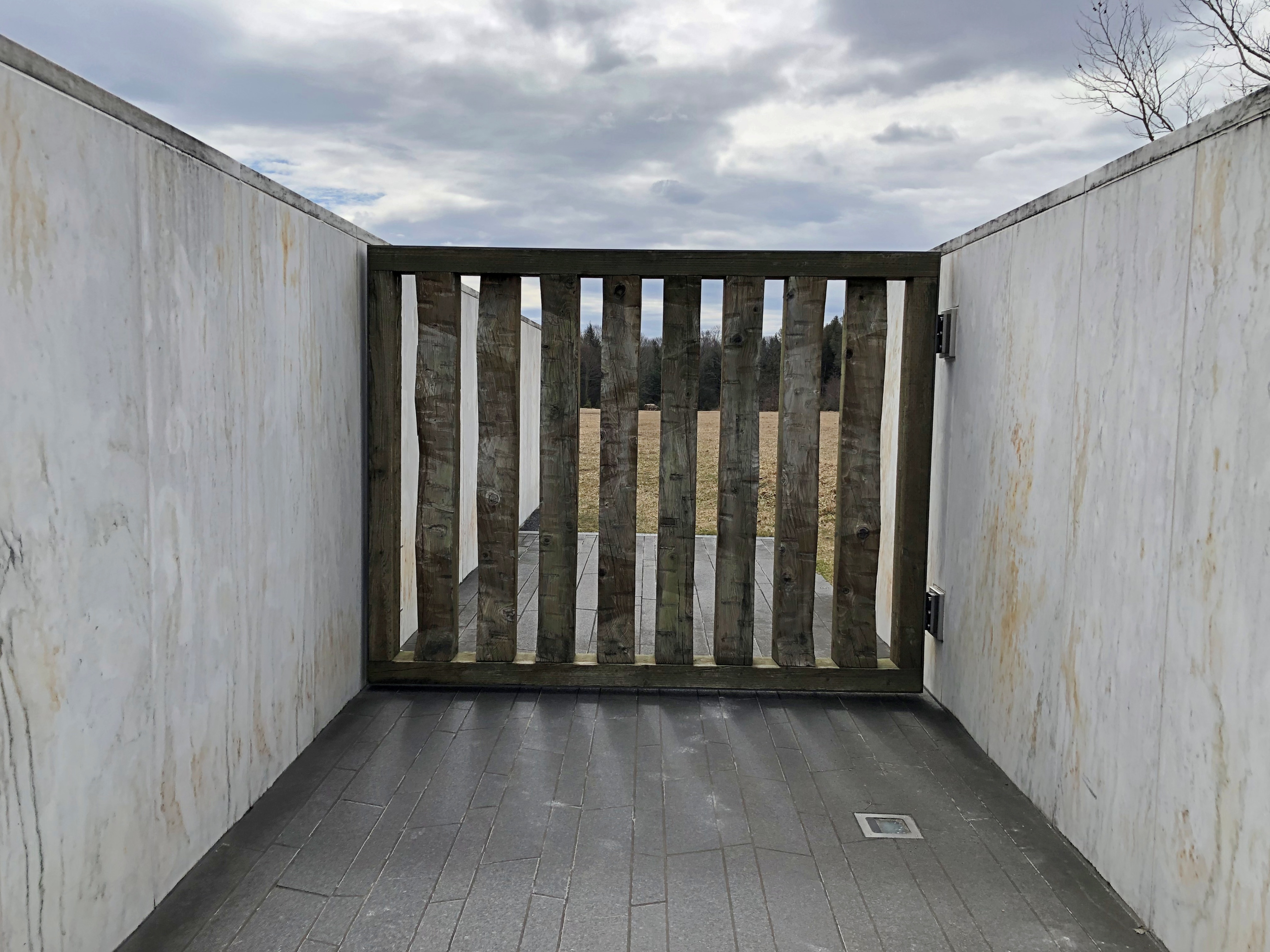
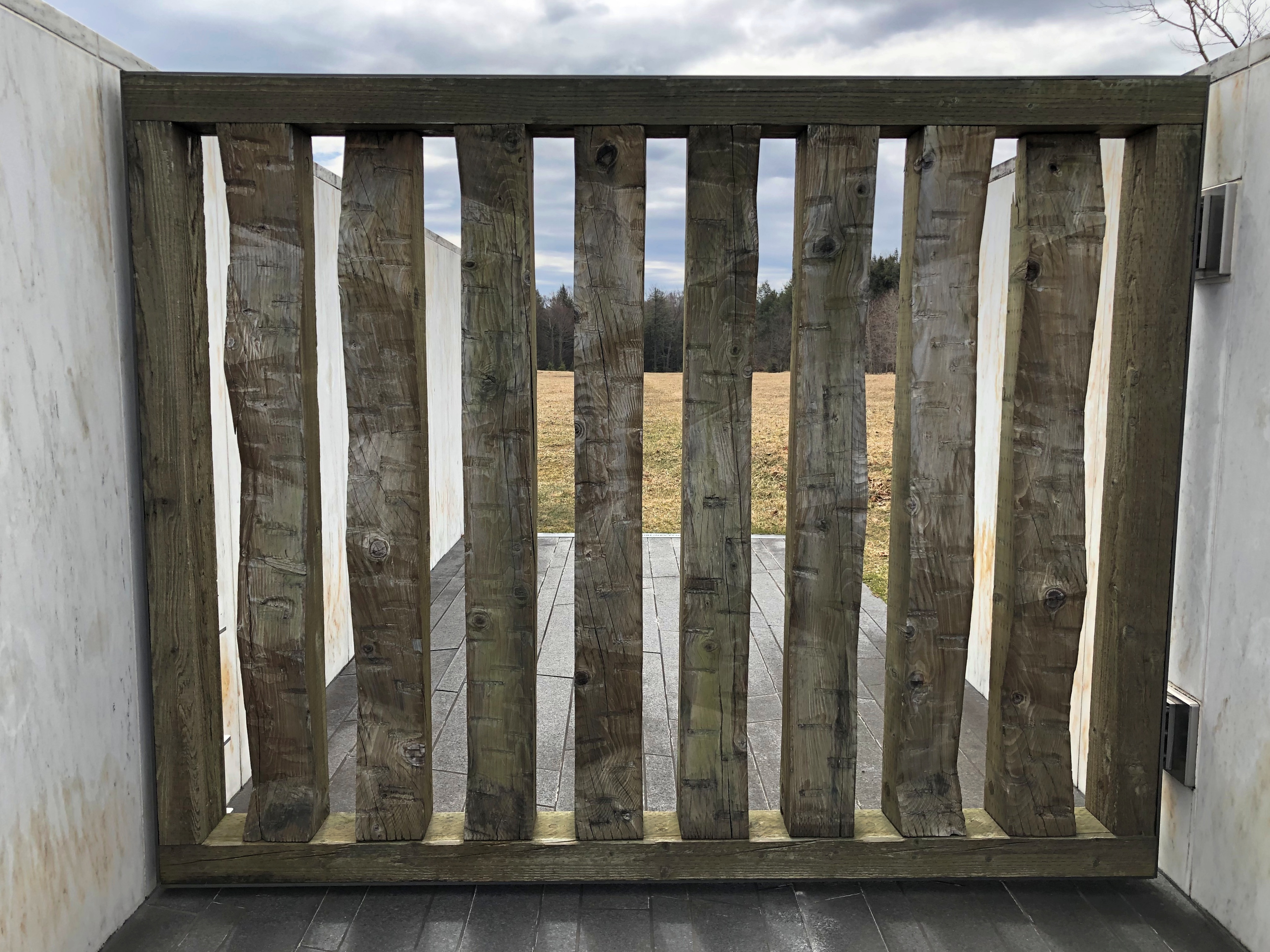
The ceremonial gate is hemlock beams, with 40 angles cut into it. The gate is ceremonially closed to us, the living.s constructed of hewn hemlock beams with forty angles cut into it,
s constructed of hewn hemlock beams with forty angles cut into it,

Beyond that is a closed field that was point of impact, now featuring a boulder standing by itself to honor the dead. The ground also is a field of internment for the victims.

When I returned, it was Yuriko’s turn to walk to the Wall of Names while I waited in the car with the dog. The walk takes at least 20 minutes, if you’re going to spend any time at all at the wall. About five minutes later, she came back.

“You’re back,” I said.

“It was too sad,” she said.

Fort Necessity National Battlefield

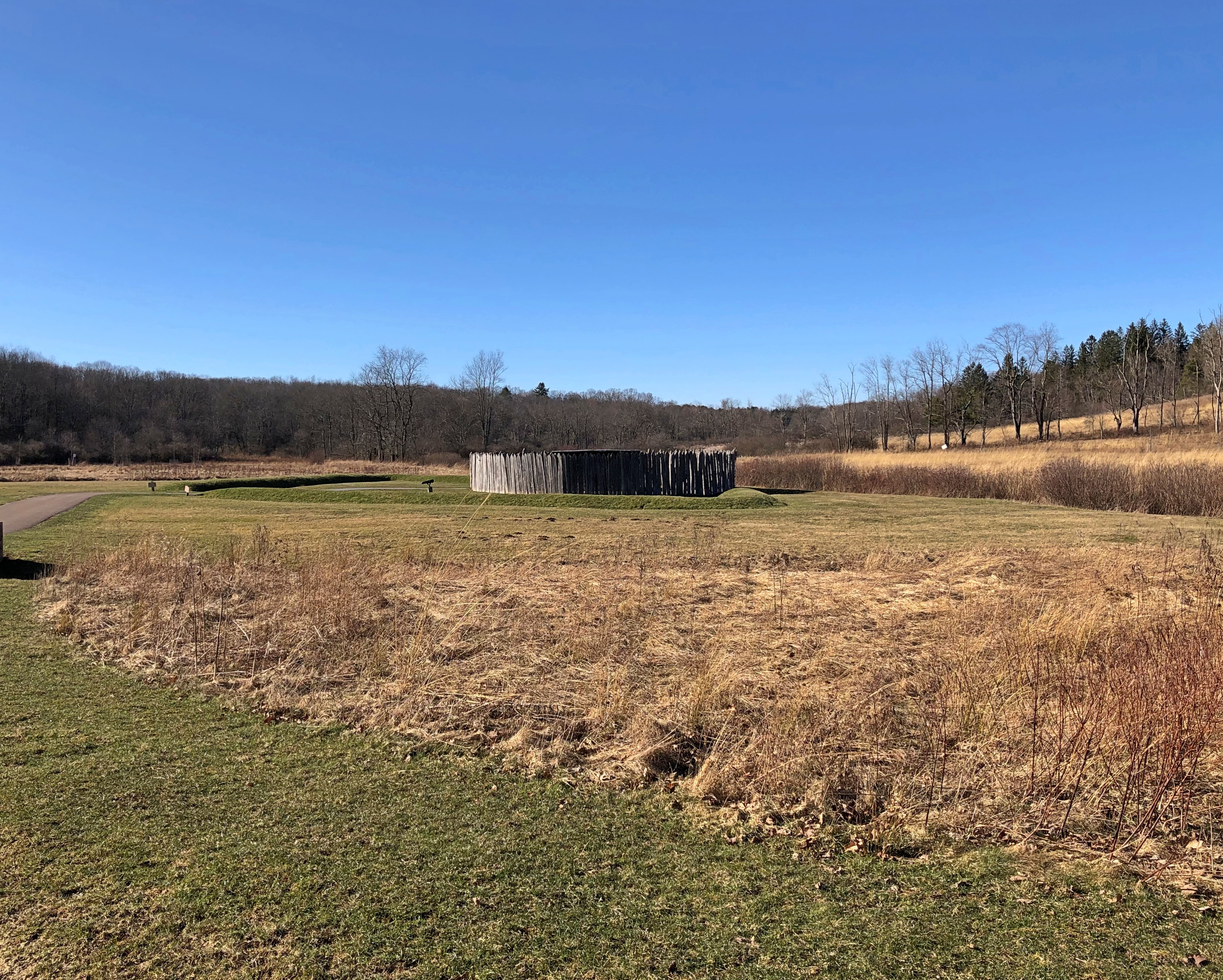
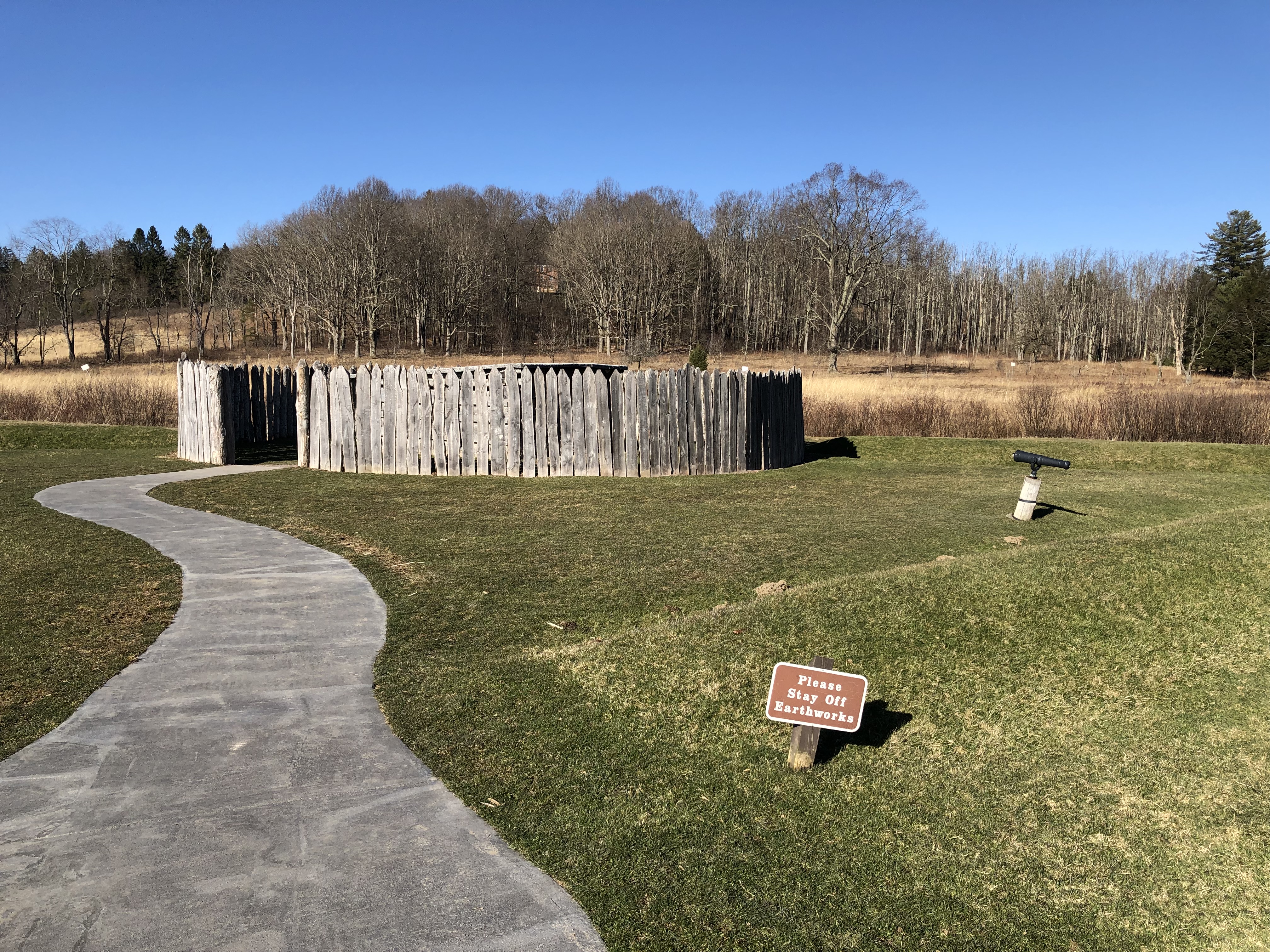
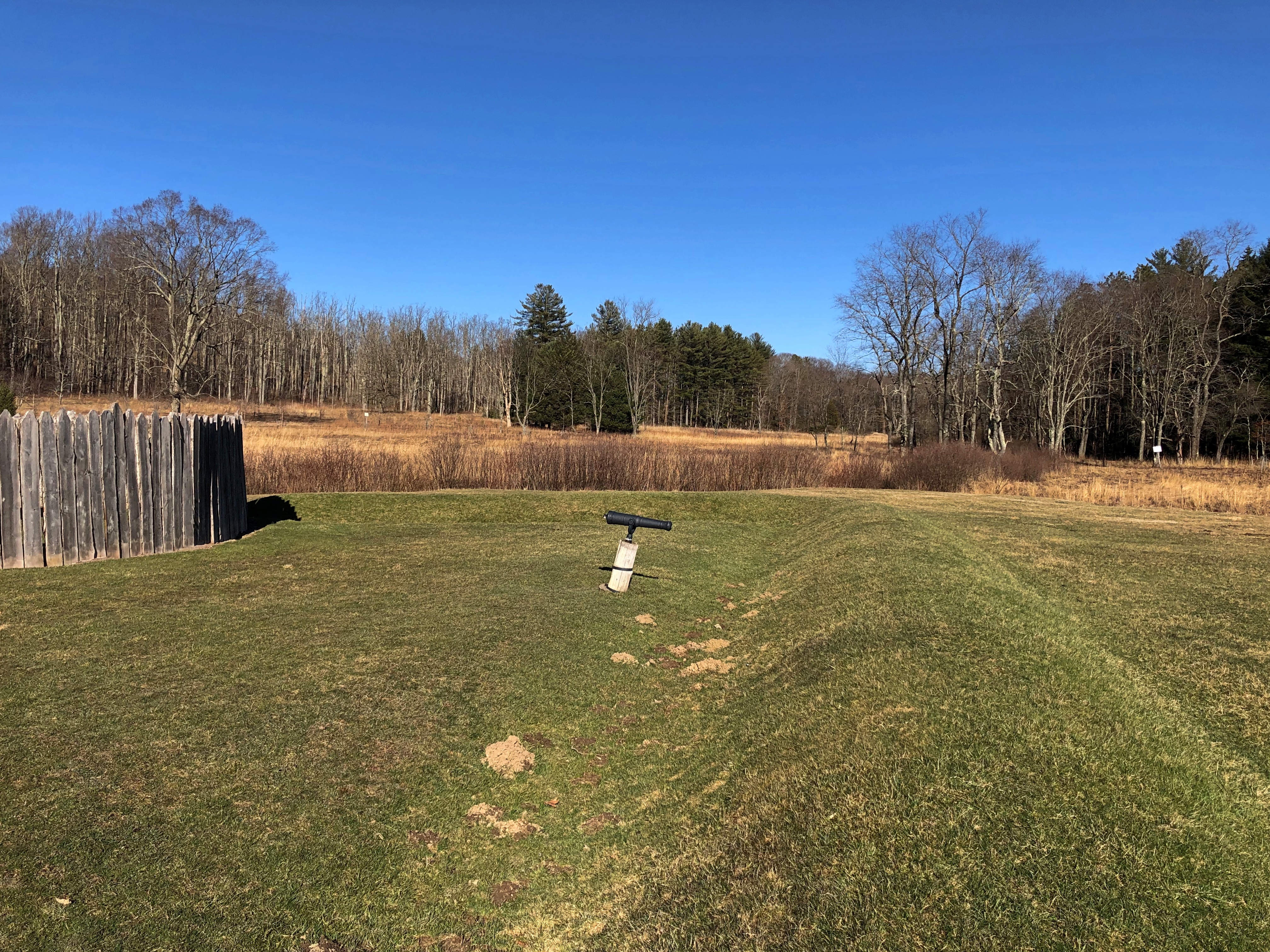
I walked about a quarter-mile from a parking lot to get to the reconstructed log palisade on the site of one hastily built by men under the command of Lt. Col. George Washington, age 22. Fort Necessity, he called it. These days, the site is called Fort Necessity National Battlefield.Fort Necessity

It is the only battlefield associated with the French and Indian War preserved by the National Park Service.

By the time I got there, I’d worked myself into a counterfactual frame of mind. Just what didn’t happen here — that easily could have – that proved so important for the future course of events in North America? Affected the fate of the unborn United States in unknowable but profound ways?

Those are the kind of Big Thoughts you get alone, under a pleasant late afternoon sun, in a meadow amid the rolling hills of rural southwest Pennsylvania, with nothing but a paved footpath and the palisade ahead. I do, anyway.

Consider: Washington and his men had surprise-attacked a French force at nearby Jomonville Glen a few weeks before the battle at Fort Necessity, defeating them and resulting in the death the French commander, Joseph Coulon de Jumonville. Washington was well aware that the French weren’t going to let that incident go unanswered, so he ordered the completion of Fort Necessity to prepare for the counterattack.

Louis Coulon de Villiers, who was Joseph’s brother, led the French response and besieged Fort Necessity from an advantageous position and with a larger force. Many British — mostly members of the Virginia Militia — were cut down, dying in the mud from recent rain. It seems likely that the French could have killed most, if not all of Washington’s command, but Coulon asked for parley and ultimately gave Washington generous surrender terms. Essentially, get out of here, and promise not to come back for a while.

Would a man of a different temperament more aggressively ground the British to defeat, perhaps to the point of seeing its commander dead with his men? Washington, that is. Dead at 22. You can see how this line of thinking puts some counterfactual ideas in your head.

What motivated Louis Coulon to do what he did? Motive’s a hard thing to pin down even in someone alive today, much less a French military commander of the 18th century. From what I’ve read, he was under orders not to massacre the British, and his men were tired and low on ammunition even though the defenders of Fort Necessity were in much worse shape. Those seem like fairly compelling reasons. Still, a more aggressive or ruthless commander could have continued the fight, not really held back in the wilderness by mere orders. This was the force that had killed his brother, after all.

On the other hand, young Washington had a number of near-death experiences as he was surveying in the Ohio Valley before the war. What’s one more?

So many questions. Big history pivoting on small fulcrums. I got closer.Fort Necessity Fort Necessity

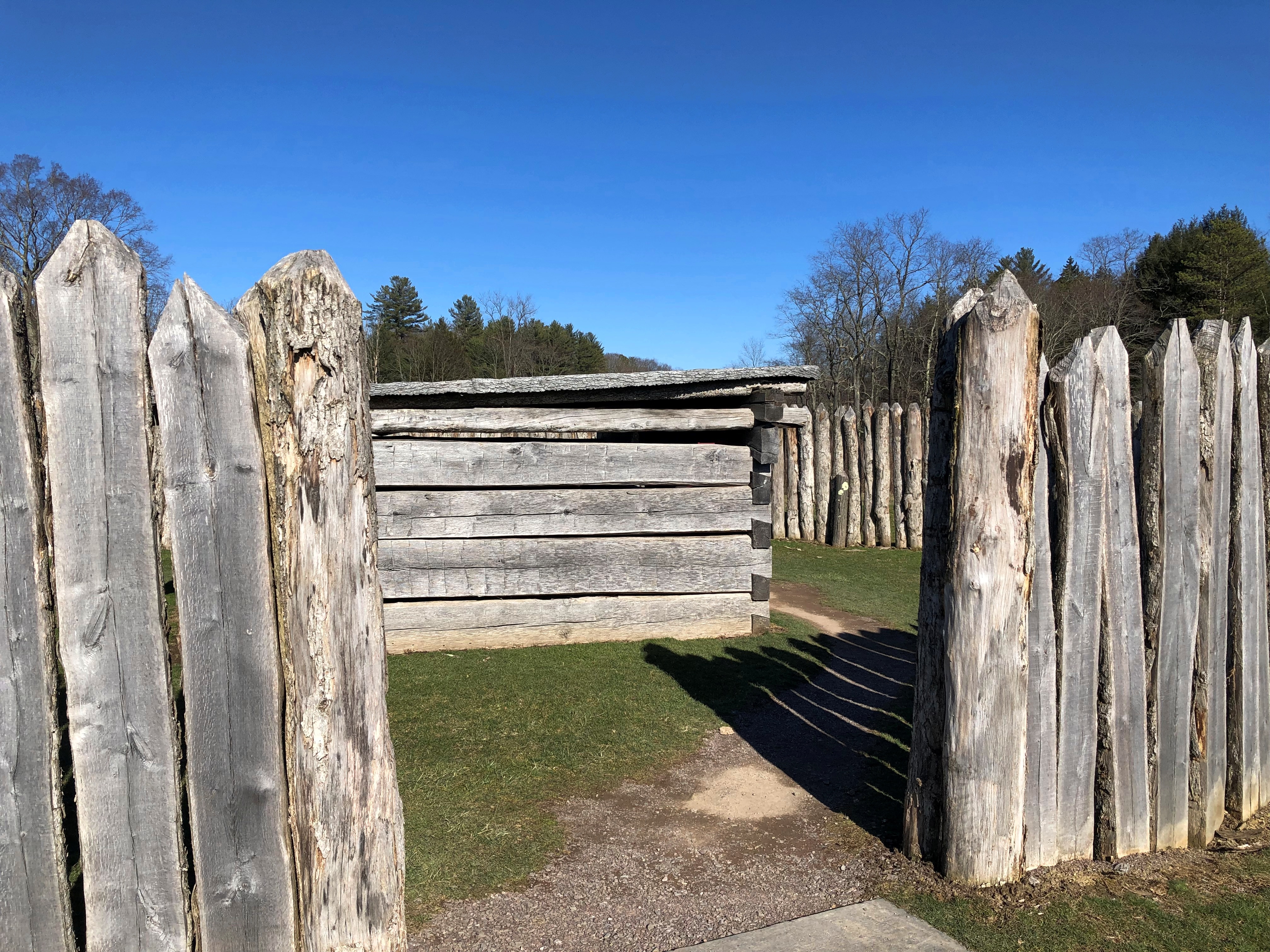
Inside the palisade.Fort Necessity Fort Necessity

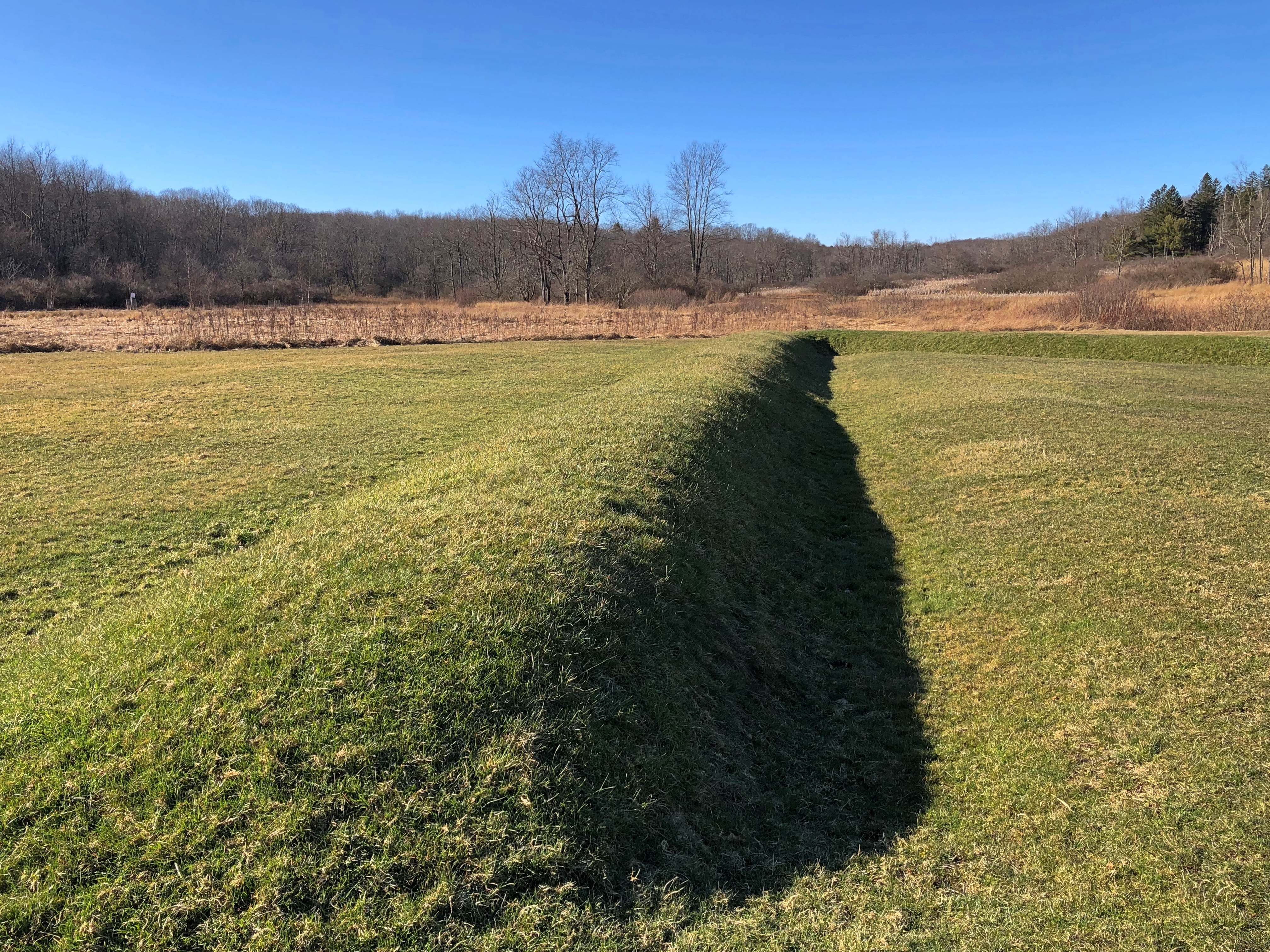
The site isn’t just that. Worn earthworks linger nearby.Fort Necessity Fort Necessity

Maybe Coulon was intensely proud to be under French arms, which were magnificently powerful in those days, even at such a far-flung place, and wasn’t about to dishonor his command with a massacre. Or maybe he didn’t like his brother that much, and was inclined to be philosophical about his fate. C’est la guerre, dear brother.

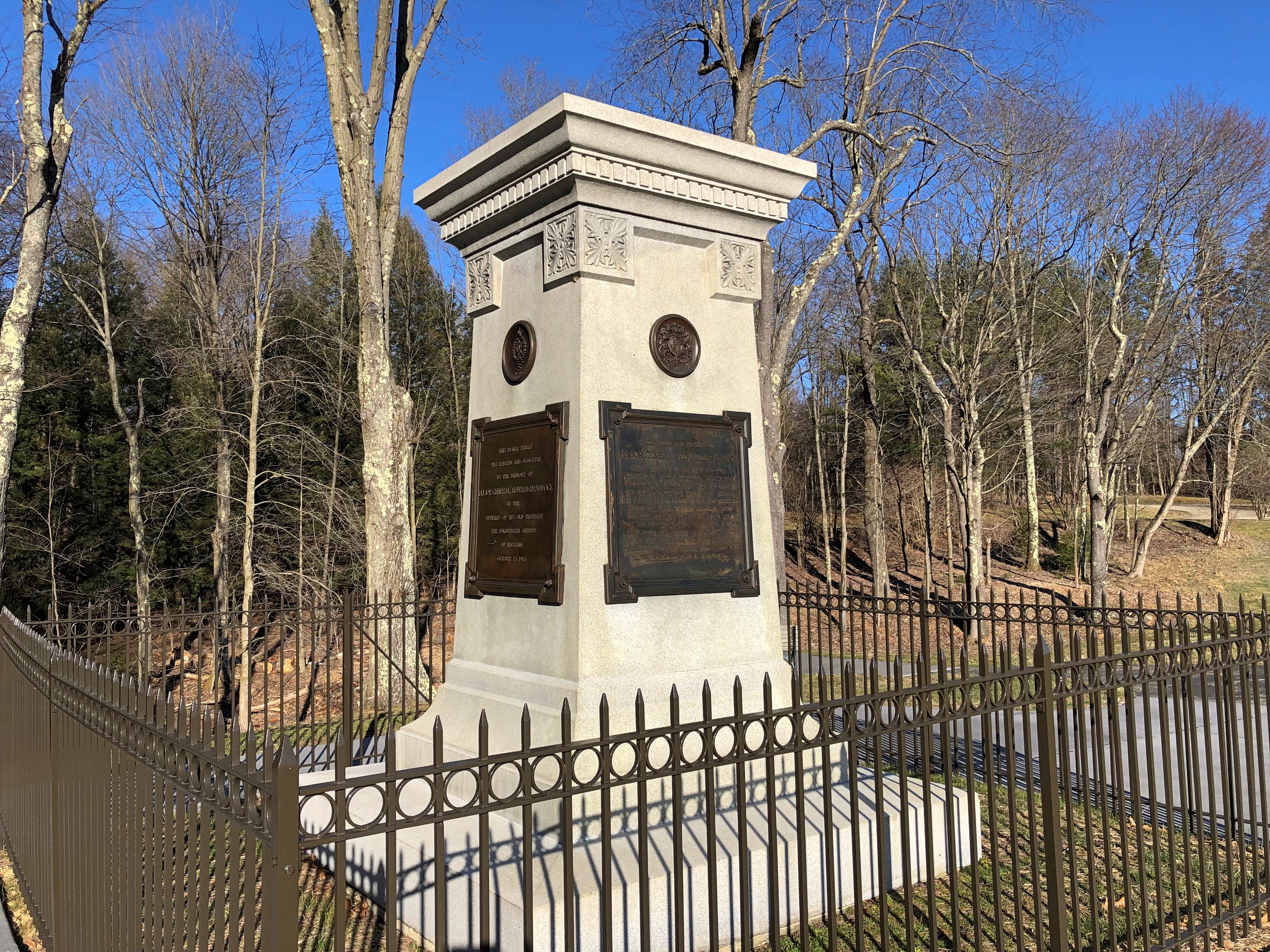
Down the road from Fort Necessity, U.S. 40 that is, is the grave of Major Gen. Edward Braddock.Braddock's grave

I won’t go into details about why he’s there, except that it’s only indirectly related to the battle of Fort Necessity. He’d been sent with a much larger British force to confront the French the year after that battle. Things didn’t go well for him, and he ended up buried under the military road he had had built as part of his campaign to take the Ohio Valley from the French.

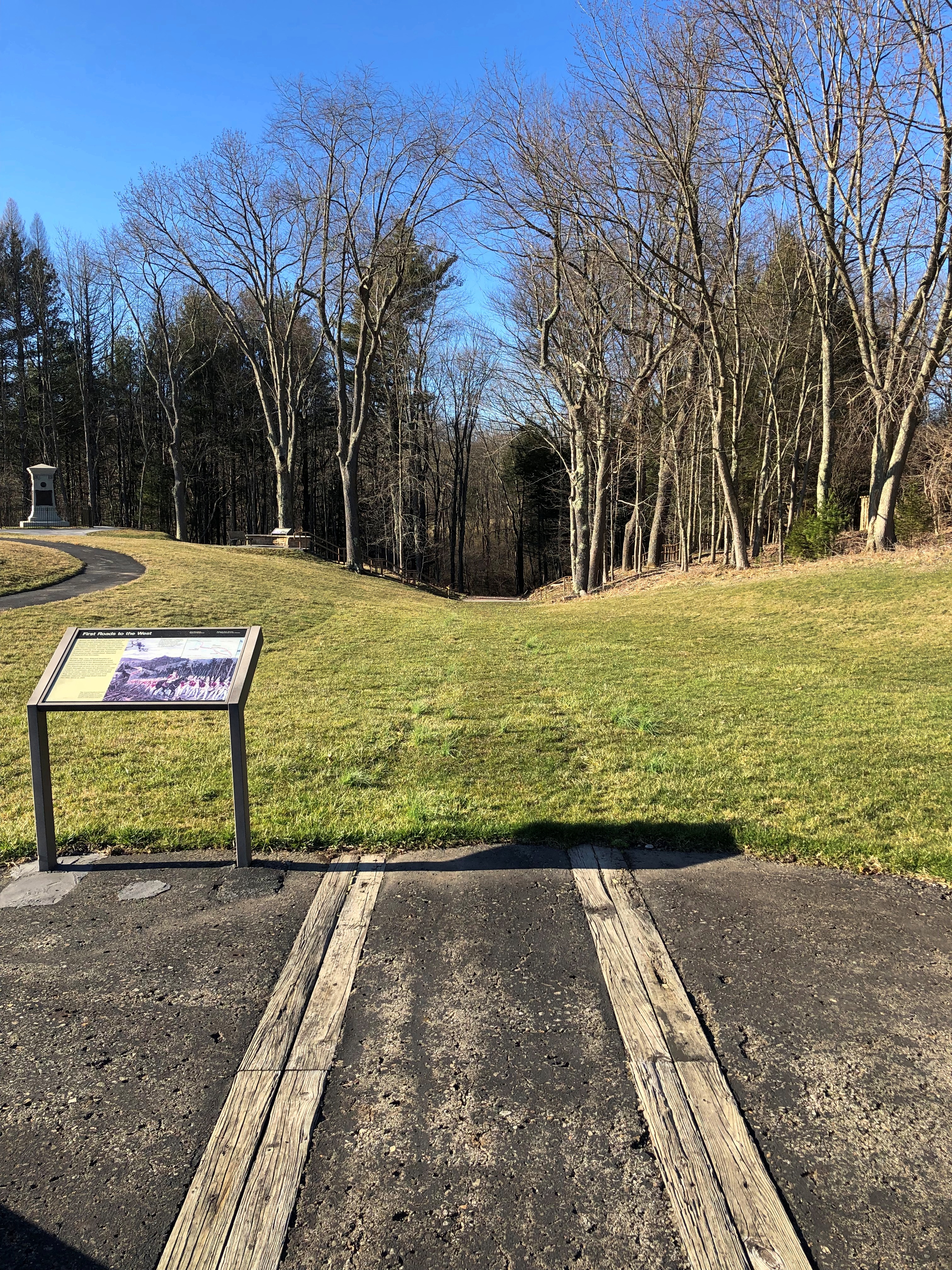
The wooden beams mark the course of the road.Braddock's grave

The monument was erected in the early 20th century. He’s probably under it, but we can’t quite be certain.

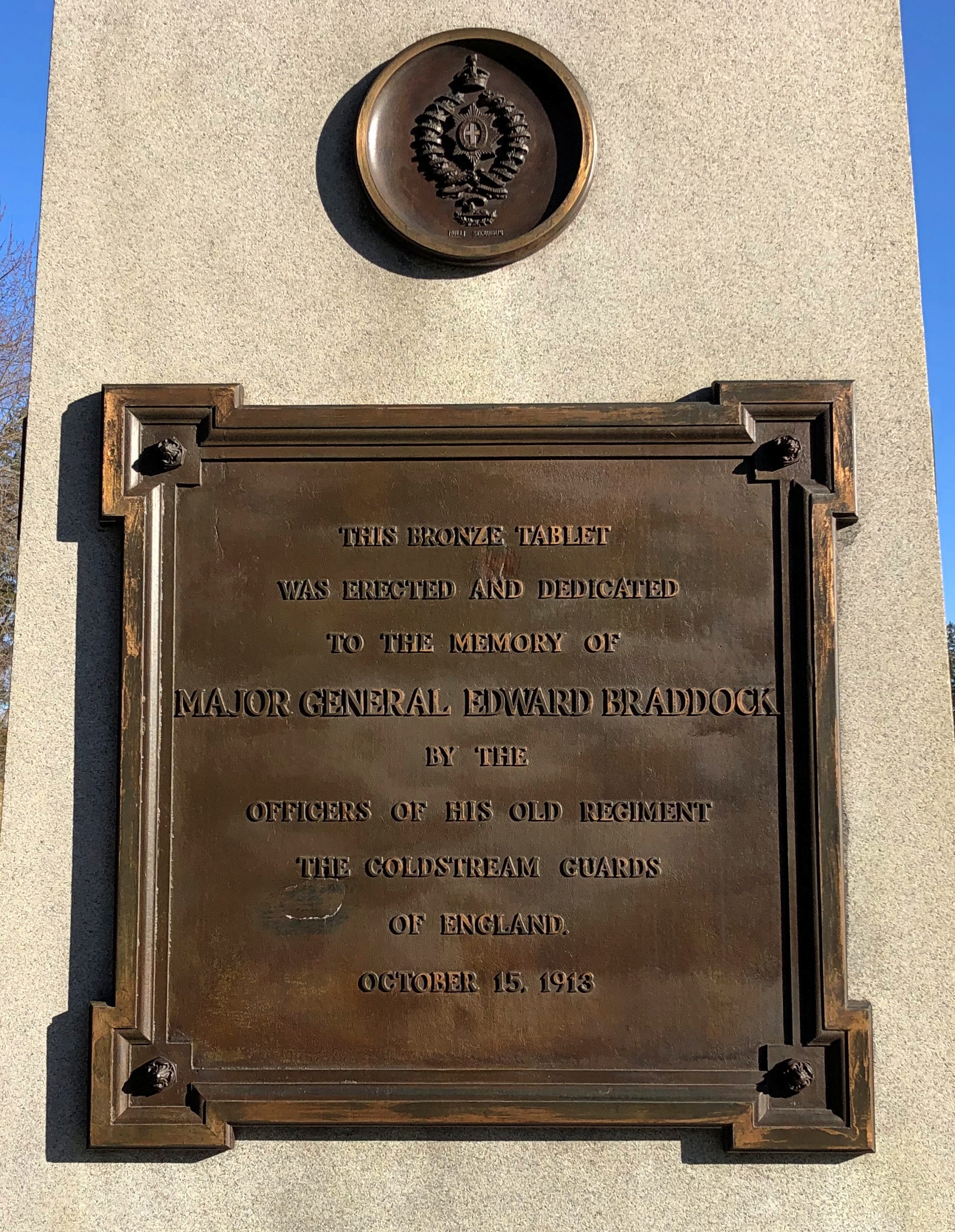
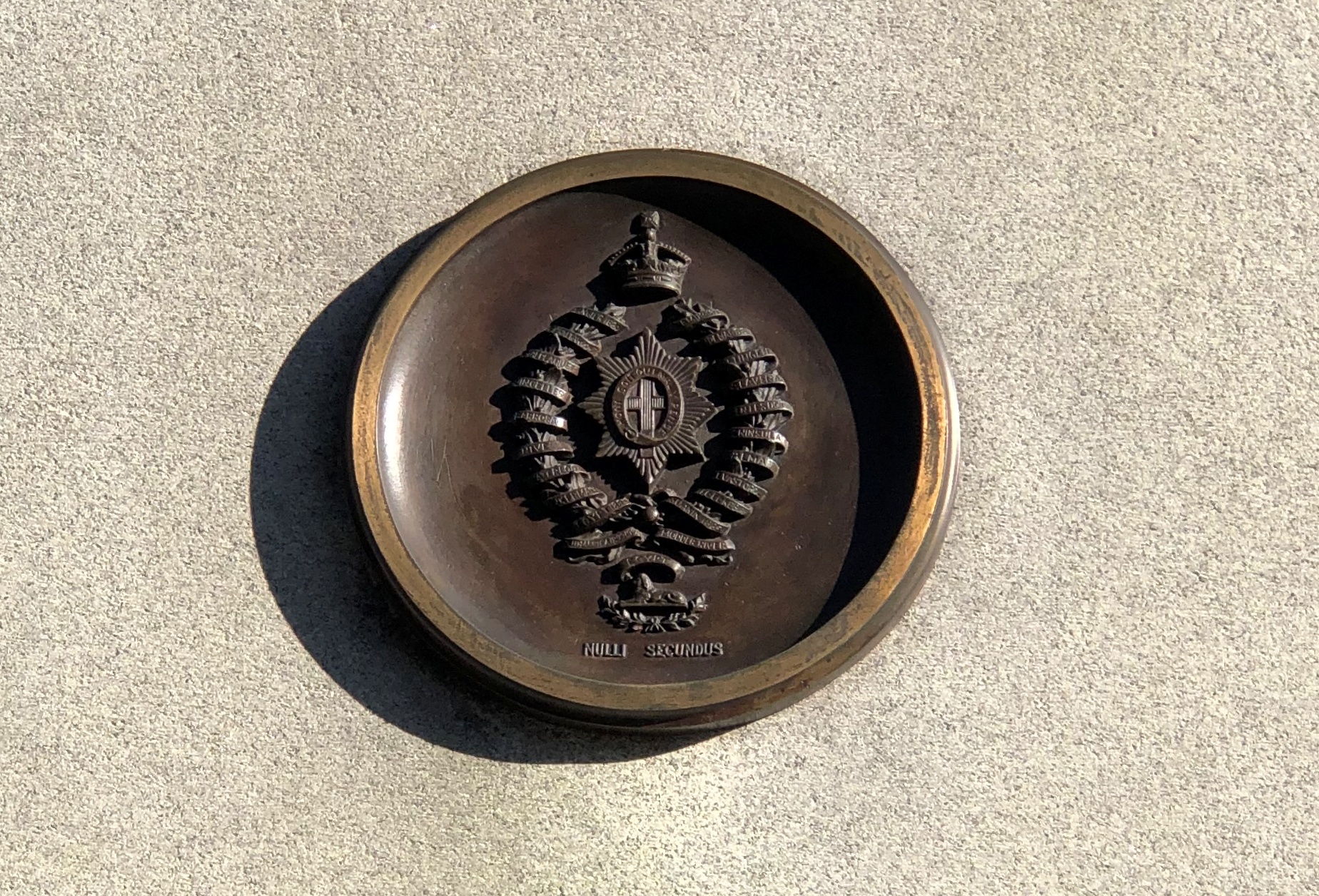
This plaque adds an extra layer of poignancy.Braddock's grave
Braddock's grave

Nineteen-thirteen. It’s probably just as well that the officers of the Coldstream Guards didn’t know what was coming.

Ohiopyle State Park

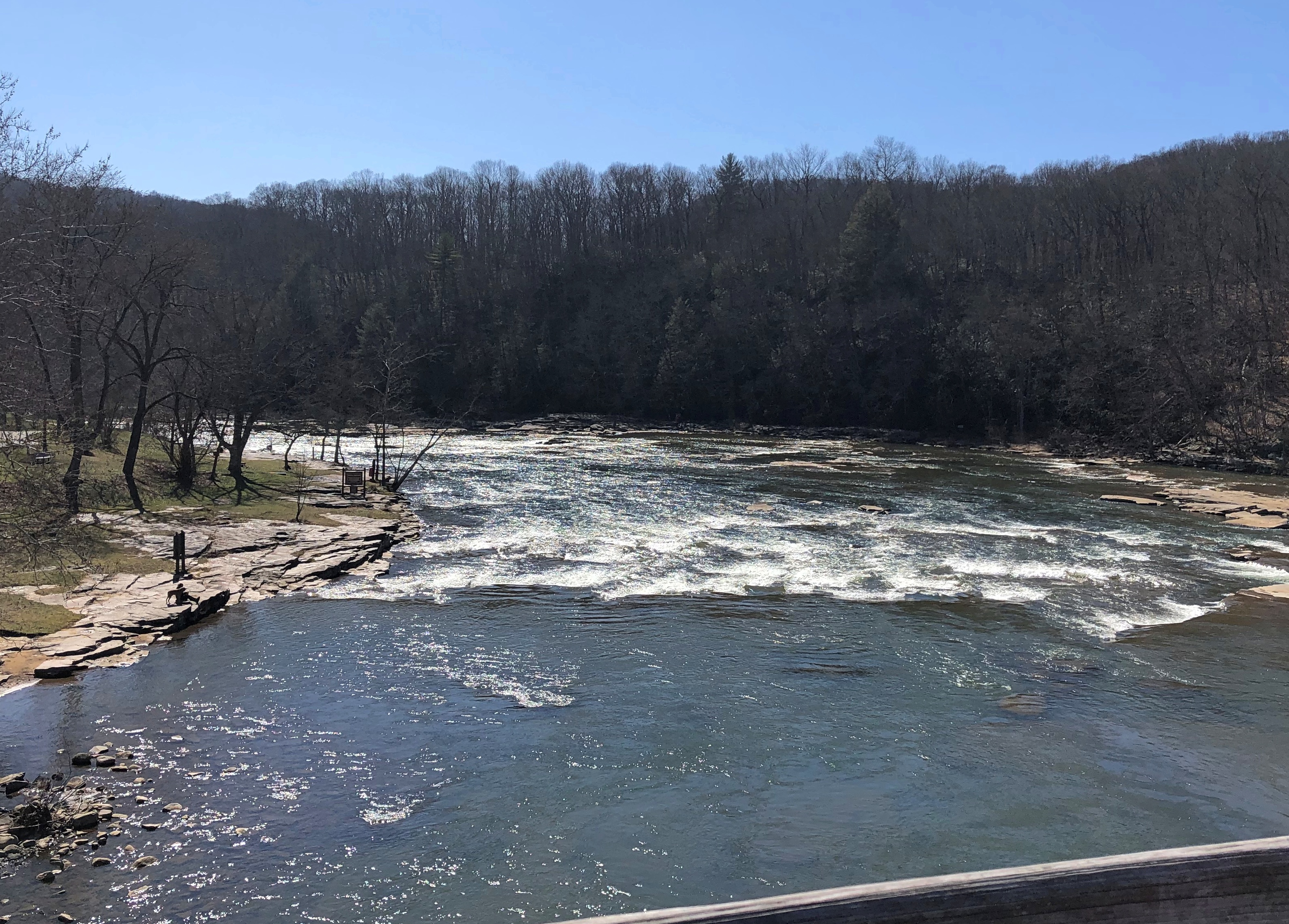
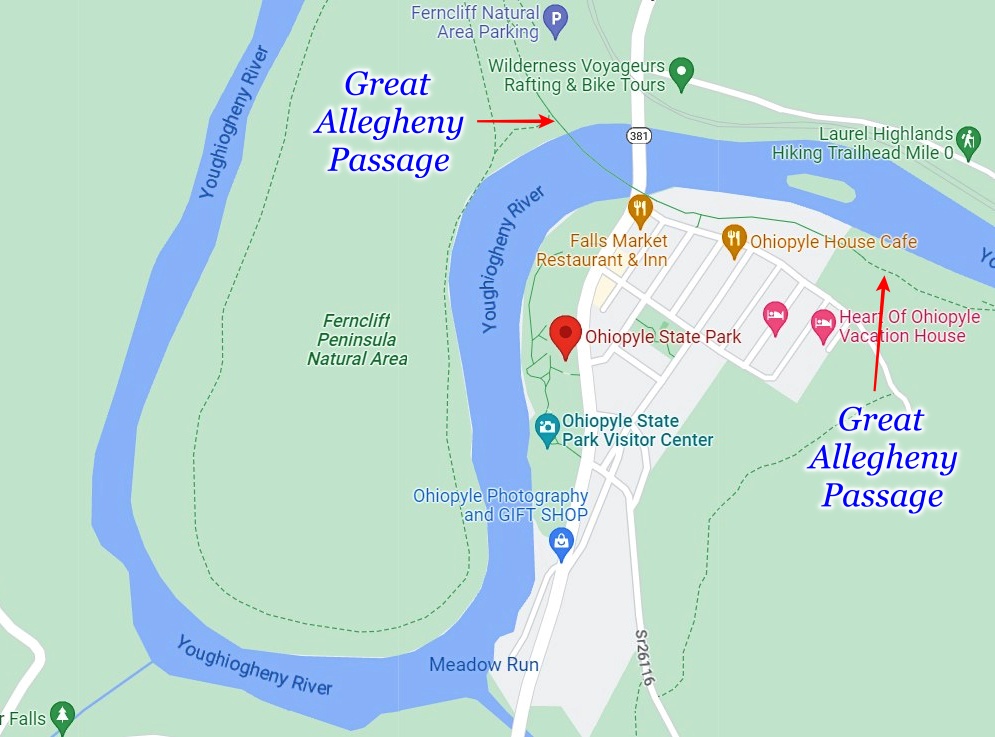
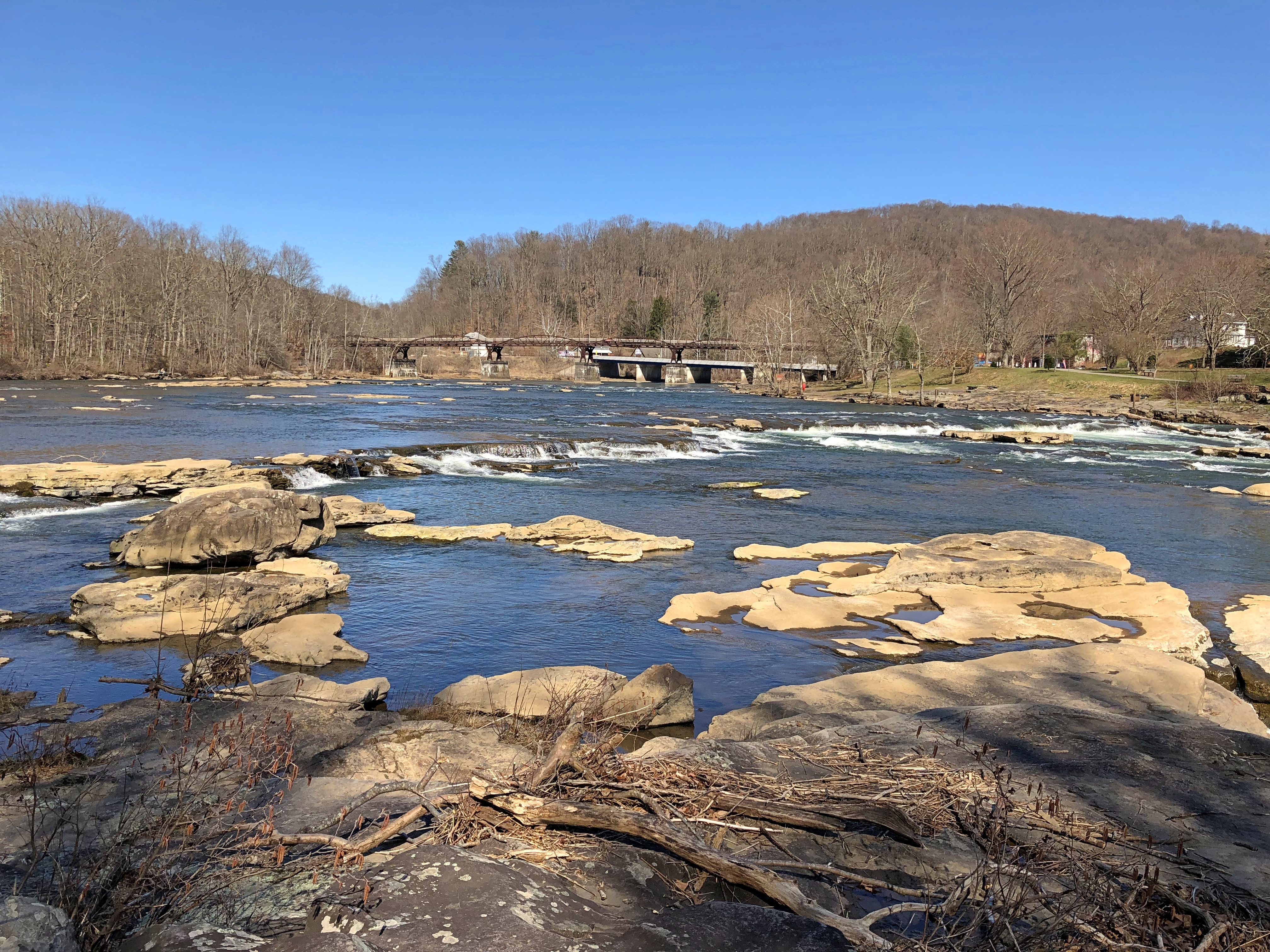
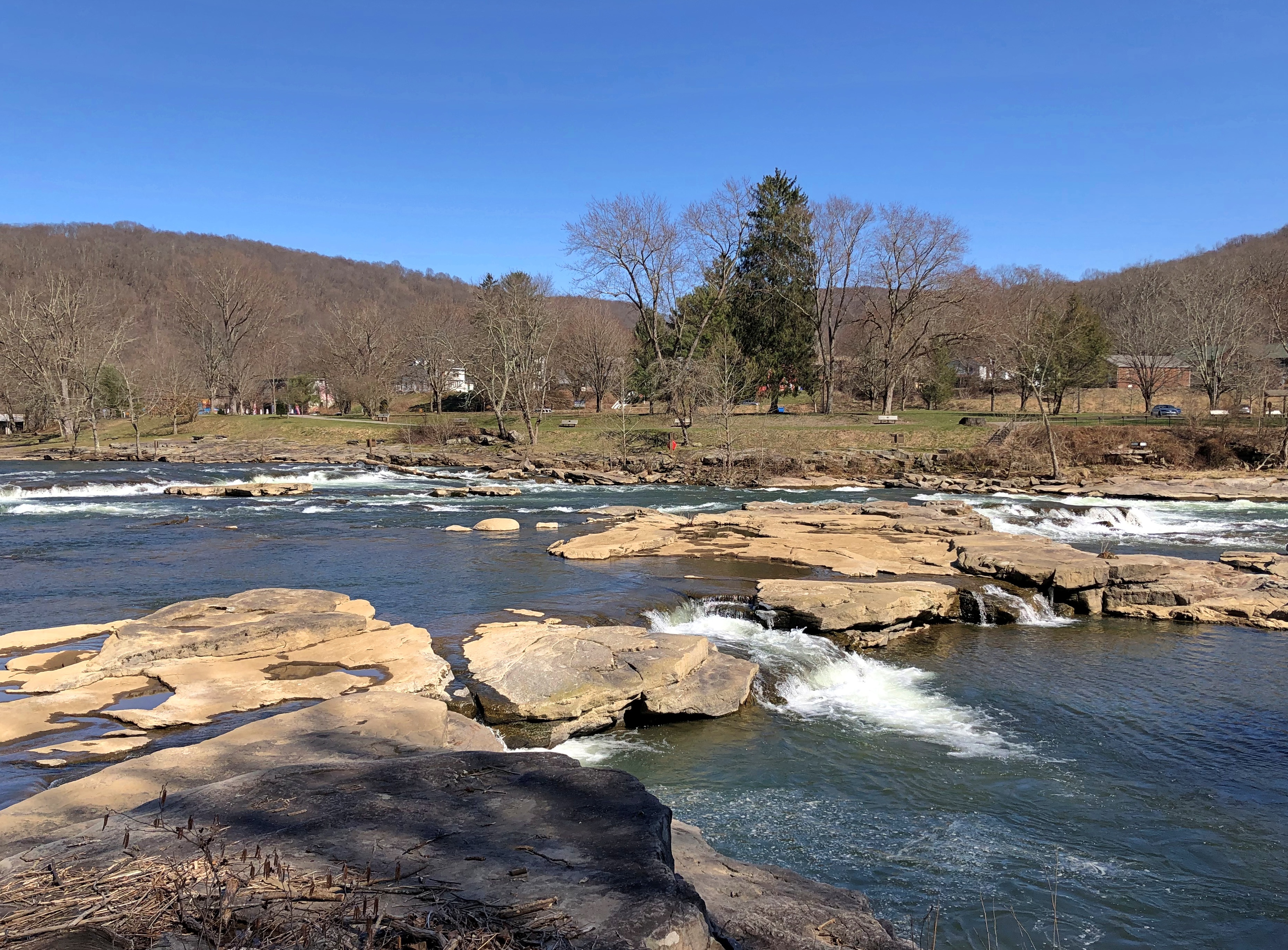
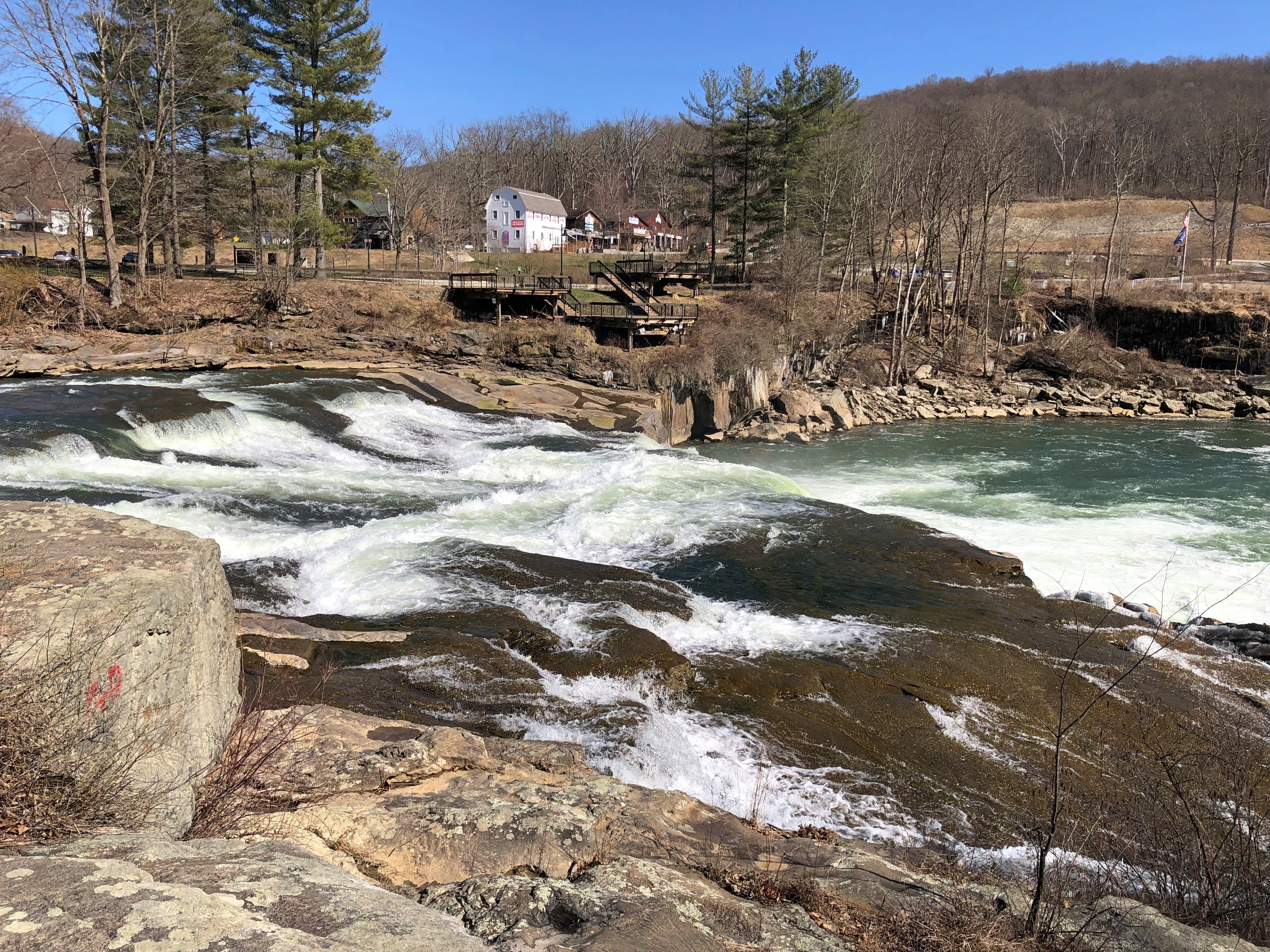
The curious name Ohiopyle has naught to do with Ohio, which is apparently from a Seneca word meaning “big river” – but rather apparently a Delaware (Lenape) word meaning “frothy waters.” Standing on the banks of the Youghiogheny River, looking at Ohiopyle Falls in Ohiopyle State Park in southwestern Pennsylvania, that’s easy to see.Ohiopyle Falls

For its part, Youghiogheny, also Lenape, apparently means “flowing backwards,” and so it seems to at times, as it twists along, including in the park. I say apparently each time because I only know what I read, and am not an authority on any Native American language, or the place names that evolved from Indian words, which have a long history of being mangled or given over to (apparently) fanciful translations.

The state park is large – more than 20,000 acres – and Fallingwater is just outside its bounds. After visiting Fallingwater, we sought lunch in the town of Ohiopyle, which is actually the borough of Ohiopyle. Pennsylvania has counties, cities, boroughs and townships, but not towns, according to the Pennsylvania Manual, Volume 125, page 6-3. Boroughs form a middle rank of populated areas between cities and townships.

Anyway, the borough of Ohiopyle is only a few blocks in any direction, and clearly a tourist town, but not on the order of Gatlinburg in Tennessee or Wisconsin Dells or Hannibal, Mo. Rather, it caters to visitors to the park, who are mostly there for rafting, kayaking, and canoeing on the waters, and hiking, horseback riding, cross-country skiing, mountain biking and snowmobiling on land. I have a feeling the place is best known to Yinzers and unpleasantly crowded on summer weekends.

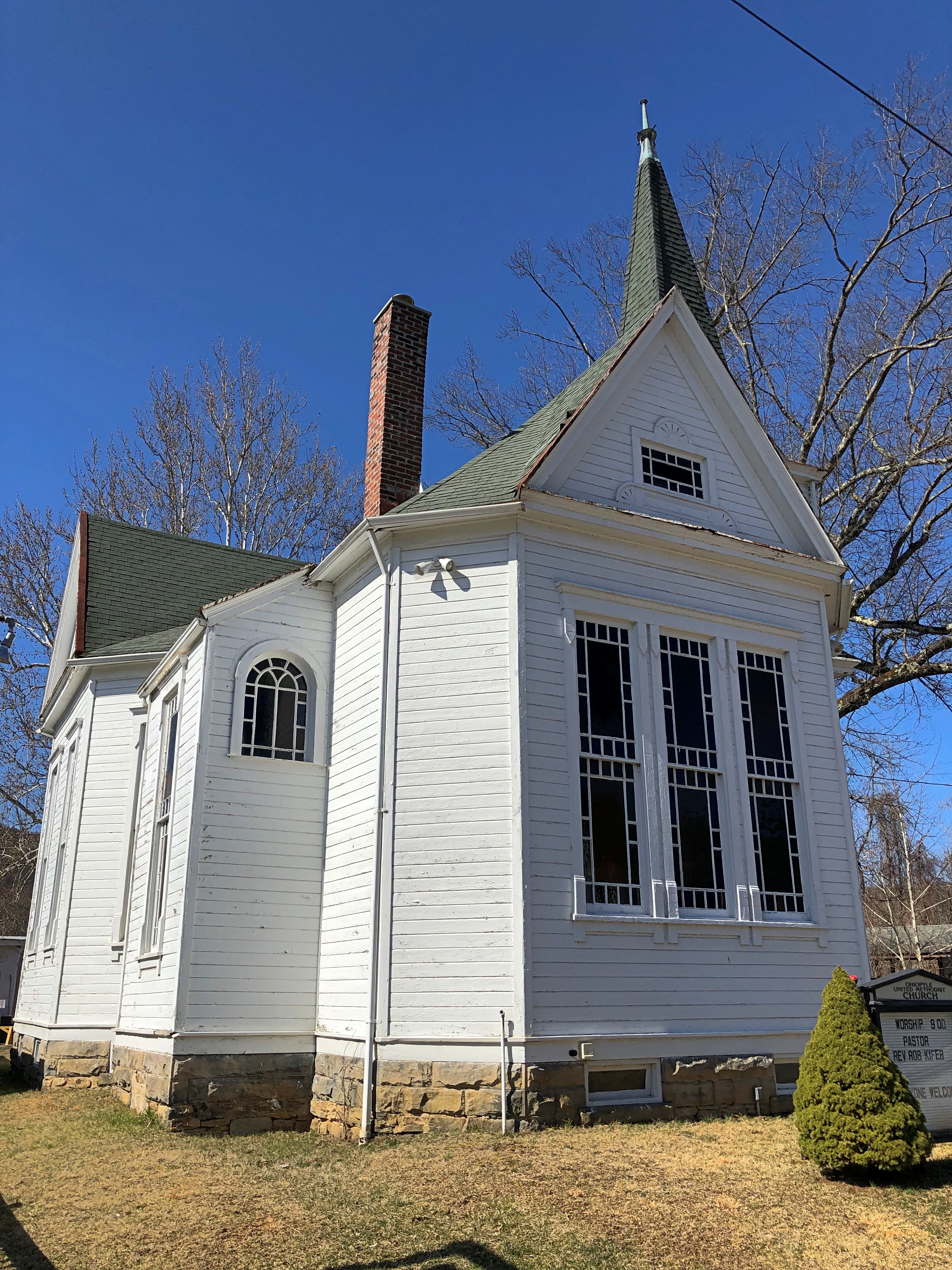
Mid-March is low season, and so pleasantly uncrowded. Only one place that served food seemed to be open, and we got sandwiches to go. There must be some full-time residents. Someone goes to Ohiopyle United Methodist Church.Ohiopyle

Across the street from the church is a former train station, these days a tourist office with public bathrooms that serve recreational travelers on the Great Allegheny Passage. I don’t think I could think of a more Pennsylvania-y name than that for a trail. If we had a mind to – or more to the point, time for it – we could have walked to Pittsburgh. Or to Cumberland, Maryland, going the other way.

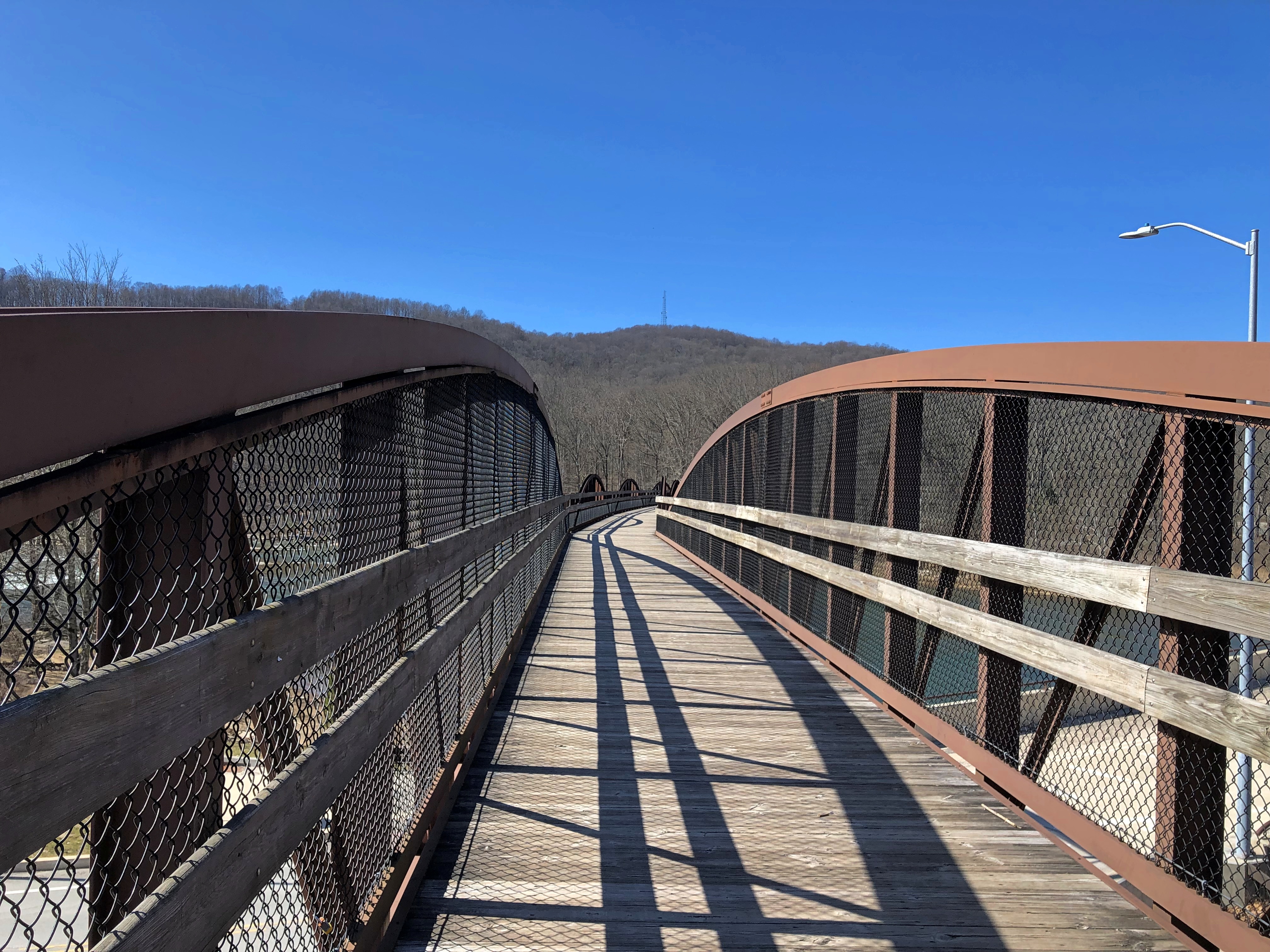
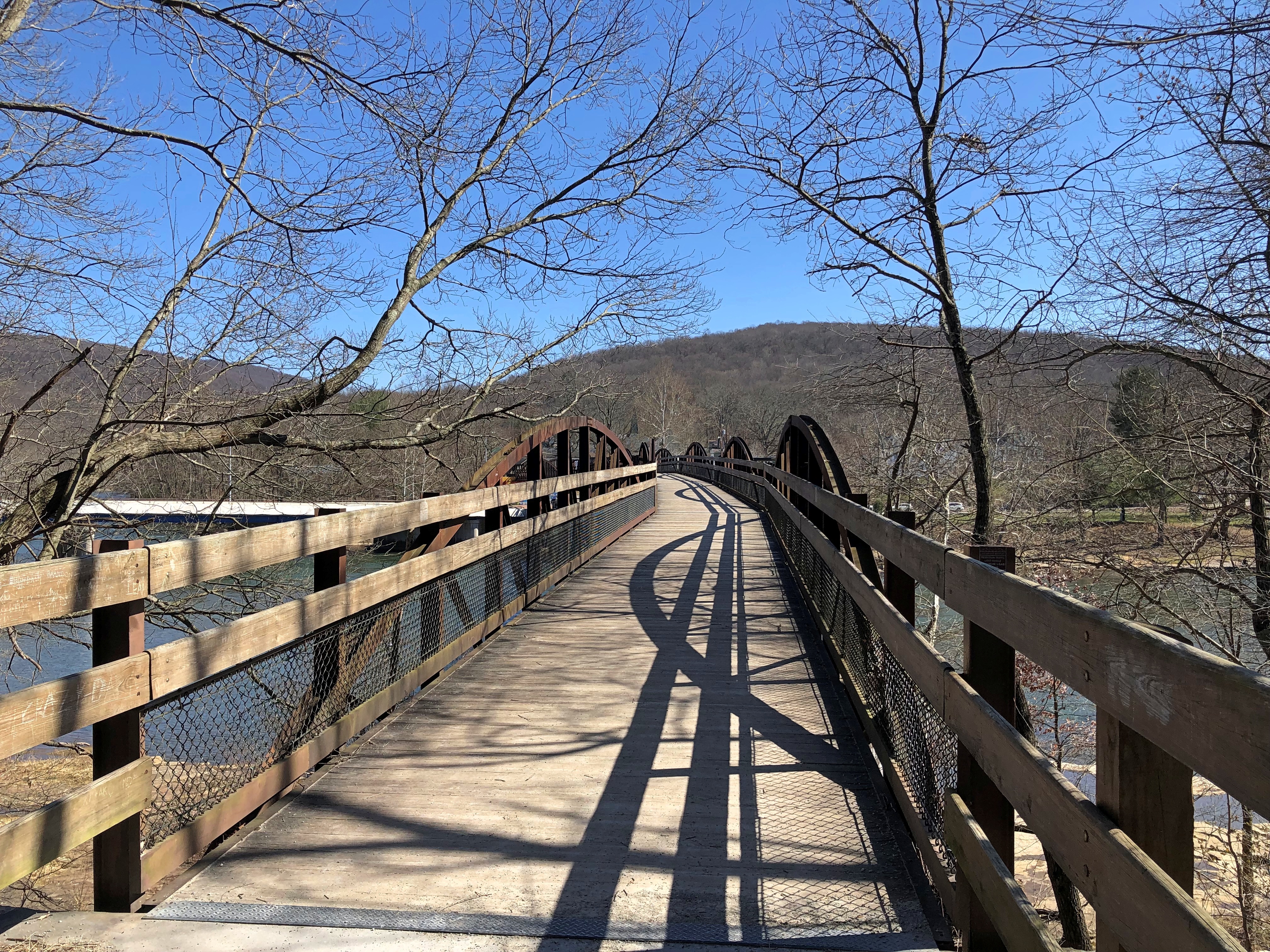
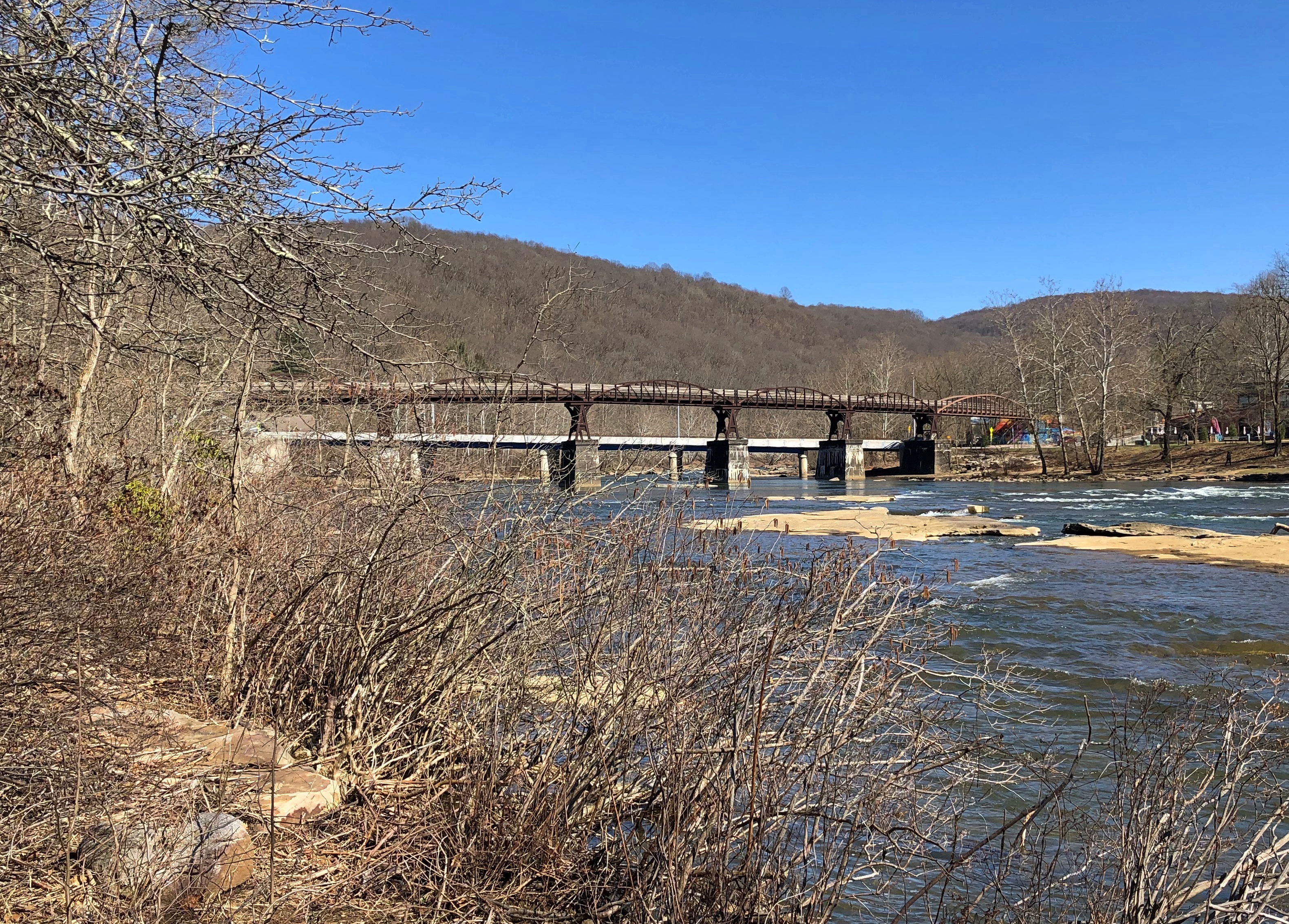
I didn’t know it at the time, but the trail was formed from a series of abandoned railway lines: Baltimore and Ohio Railroad, Pittsburgh and Lake Erie Railroad, Union Railroad, and Western Maryland Railway. Standing in Ohiopyle, all you see is that the trail crosses a cool old railroad bridge.Ohiopyle State Park Ohiopyle State Park Ohiopyle State Park

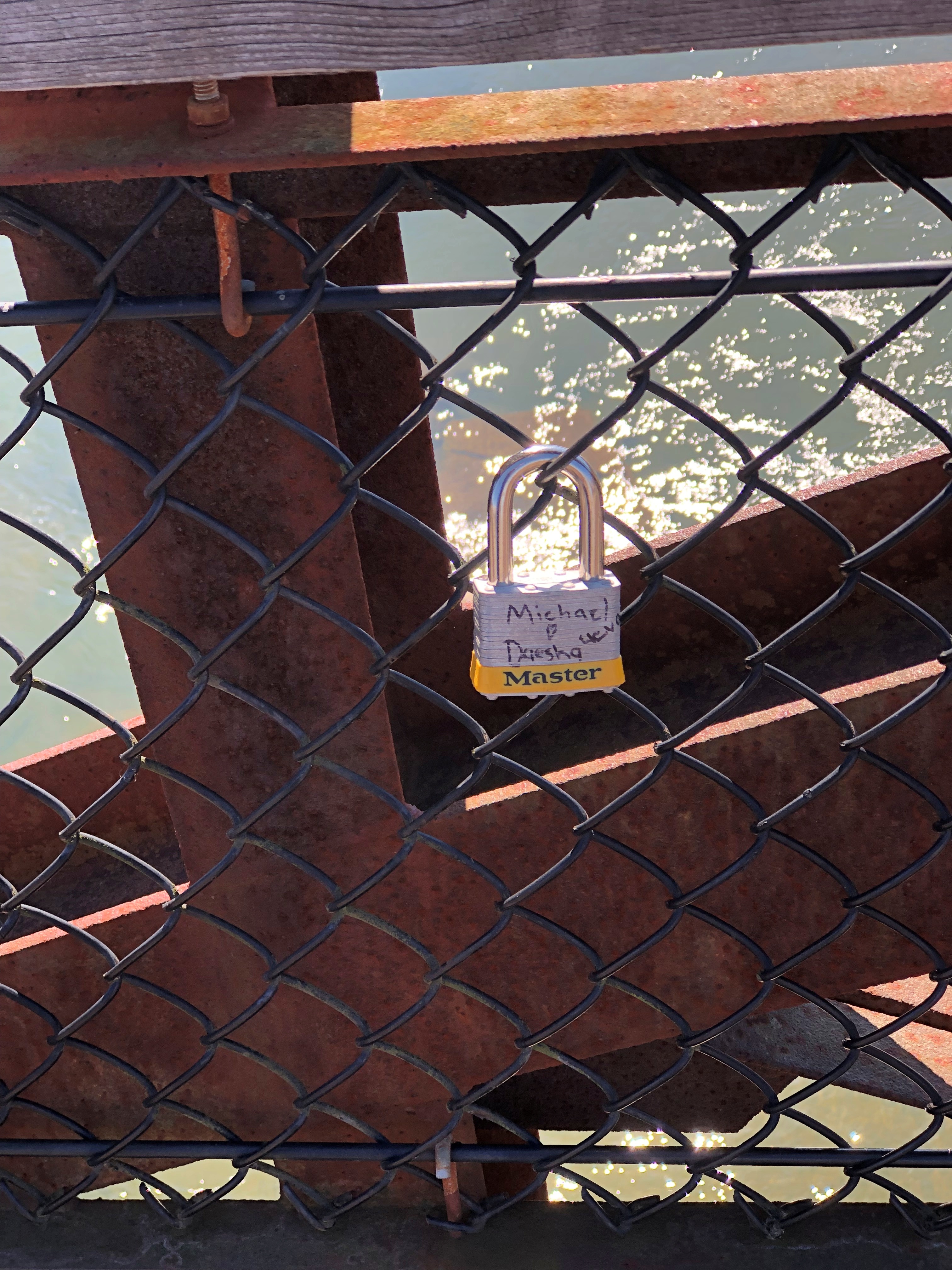
Love locks. Not many, though. Guess that beats graffiti. Ohiopyle State Park

Yuriko and the dog went on ahead. I paused here and there to push my camera button, and take in the views of the Youghiogheny in that better way, with your eyeballs.Ohiopyle State Park

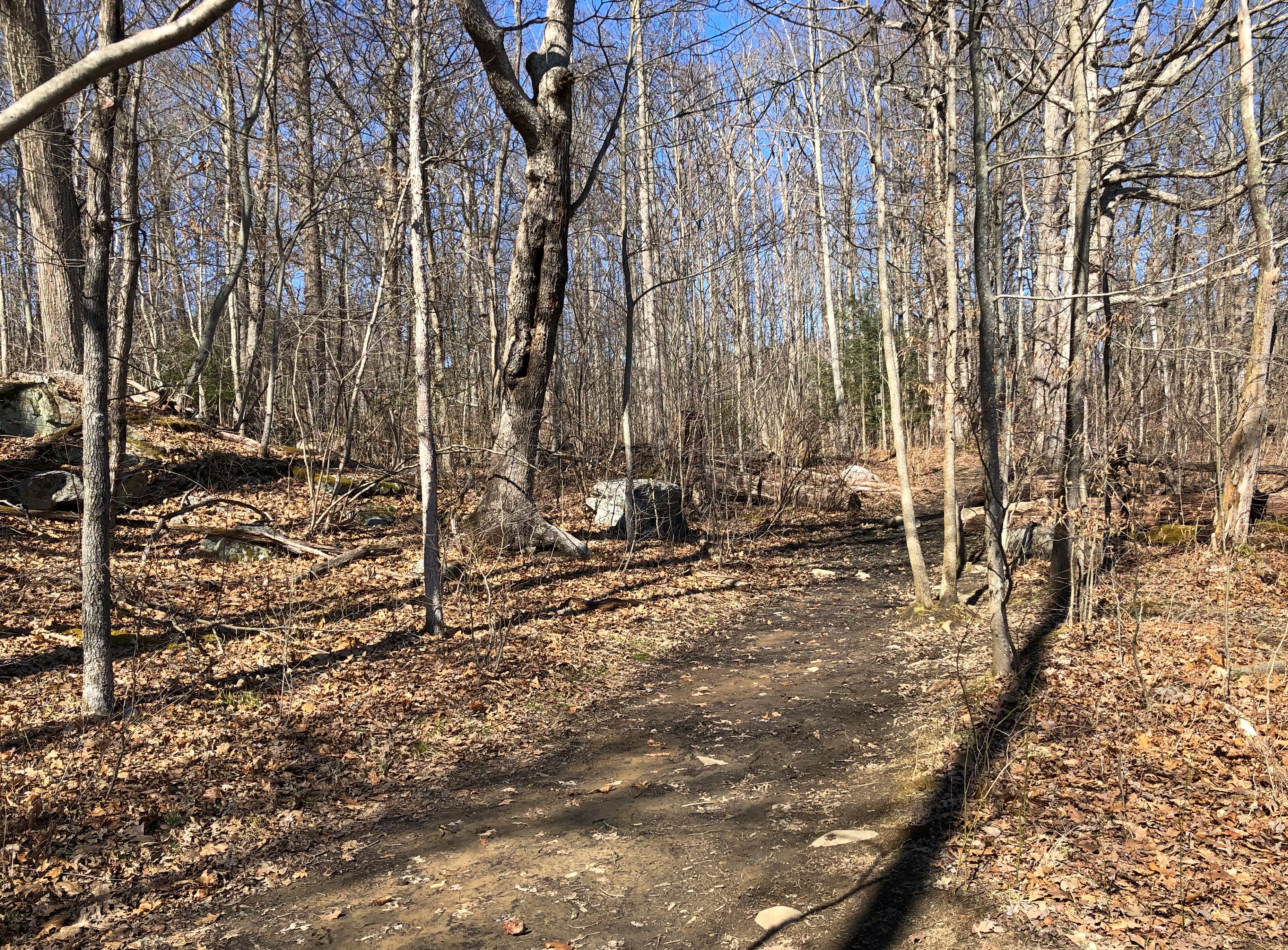
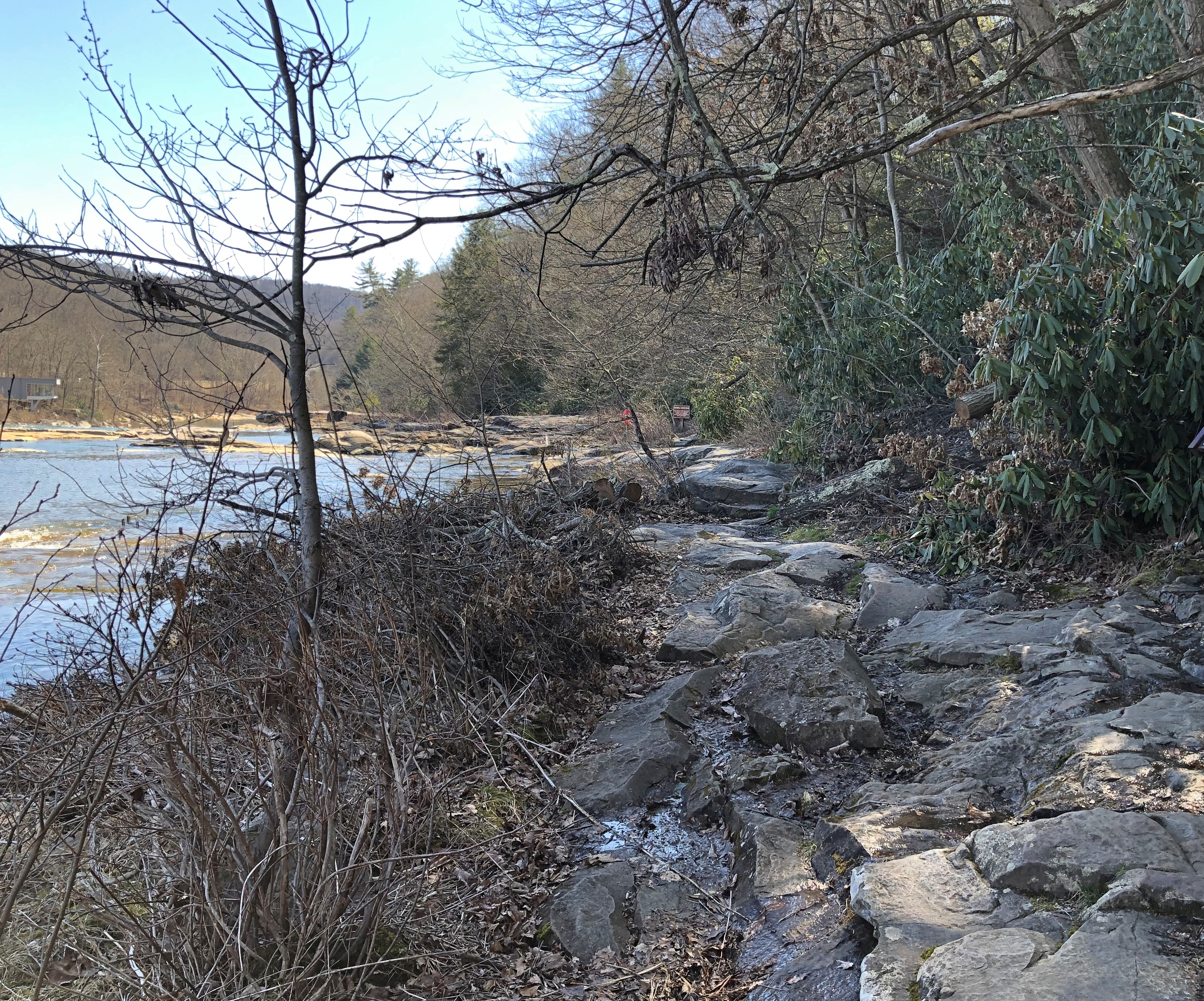
I’d just planned to cross the bridge and come back, but they found a trail at the bottom of the stairs, one leading off onto the Ferncliff Peninsula.Ohiopyle State Park

Looked easy enough. Mostly the trail followed the river.Ohiopyle Ohiopyle State Park

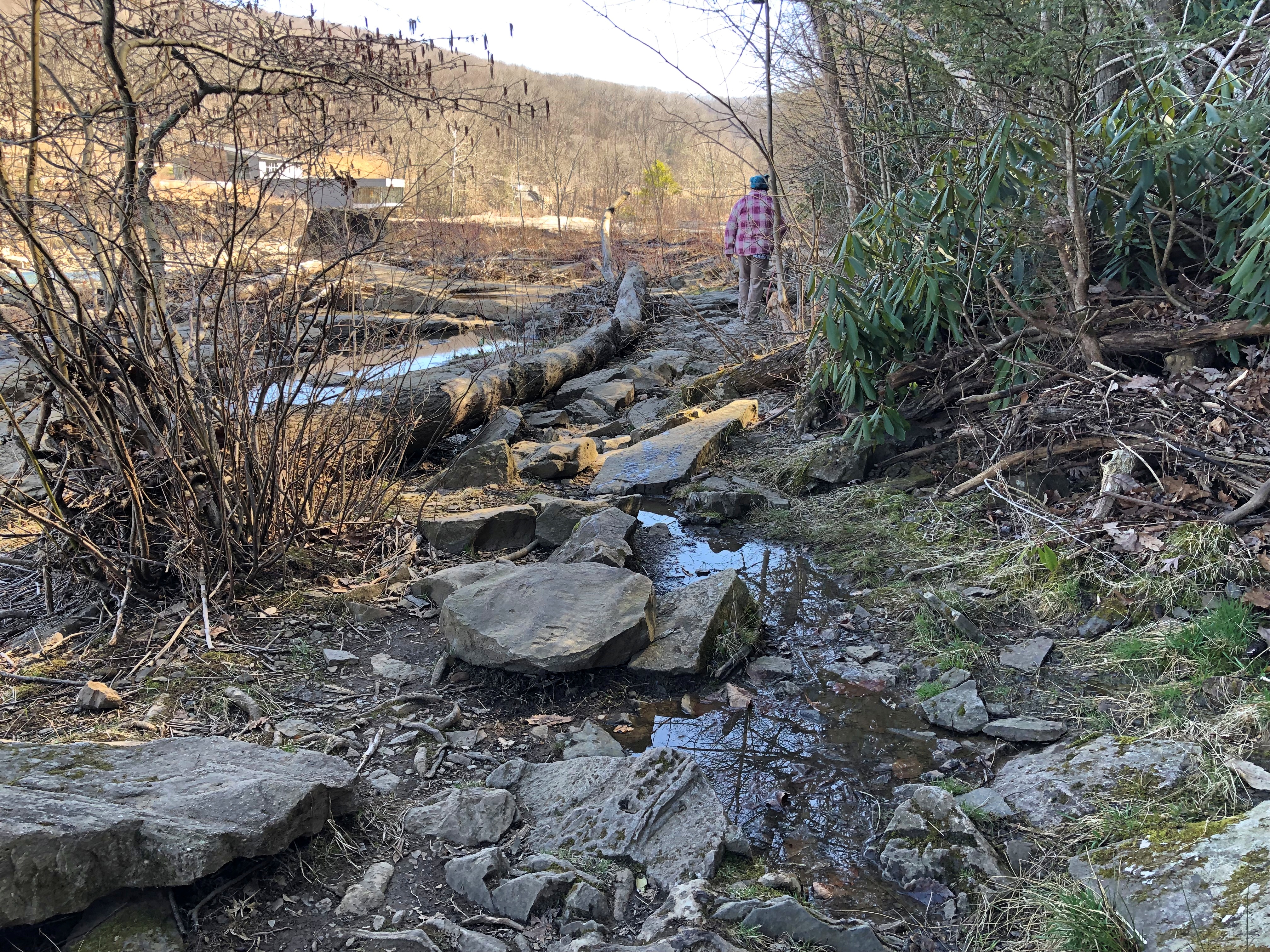
Eventually the trail lost its through-the-woods vibe and offered us rock surfaces and large underfoot stones and mud patches, which slowed us down.Ohiopyle State Park Ohiopyle State Park

Better shoes and our walking sticks were back at the car, so eventually we turned around, but not before getting a close look at the top of Ohiopyle Falls.Ohiopyle Falls

Just another bit of turbulence destined for the Gulf: Youghiogheny, Monongahela, Ohio, Mississippi.

Fallingwater

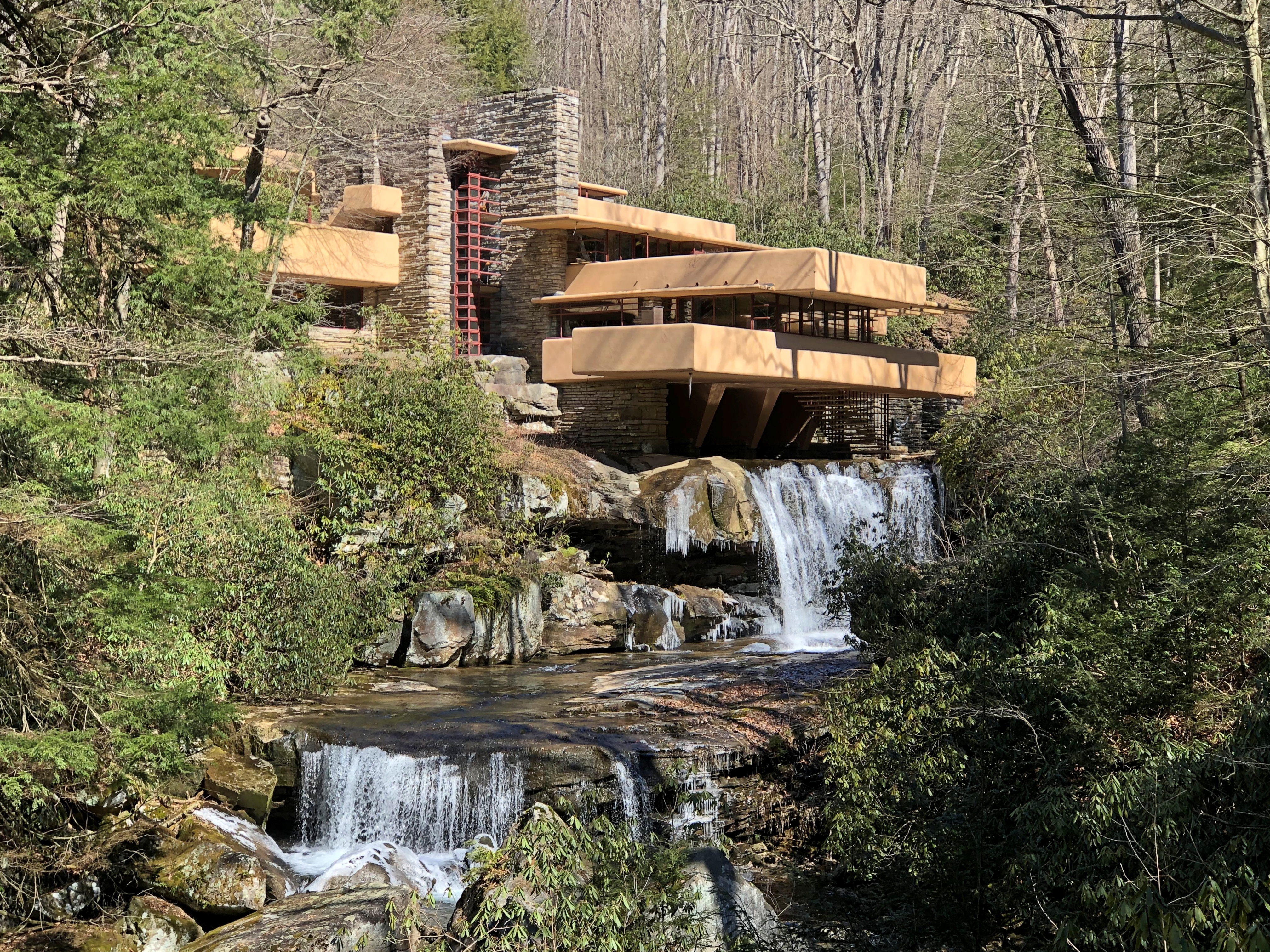
On the grounds of Fallingwater, there is a path with signs that lead you to The View. That’s what the signs call it. When you get there, The View is there for you.Fallingwater

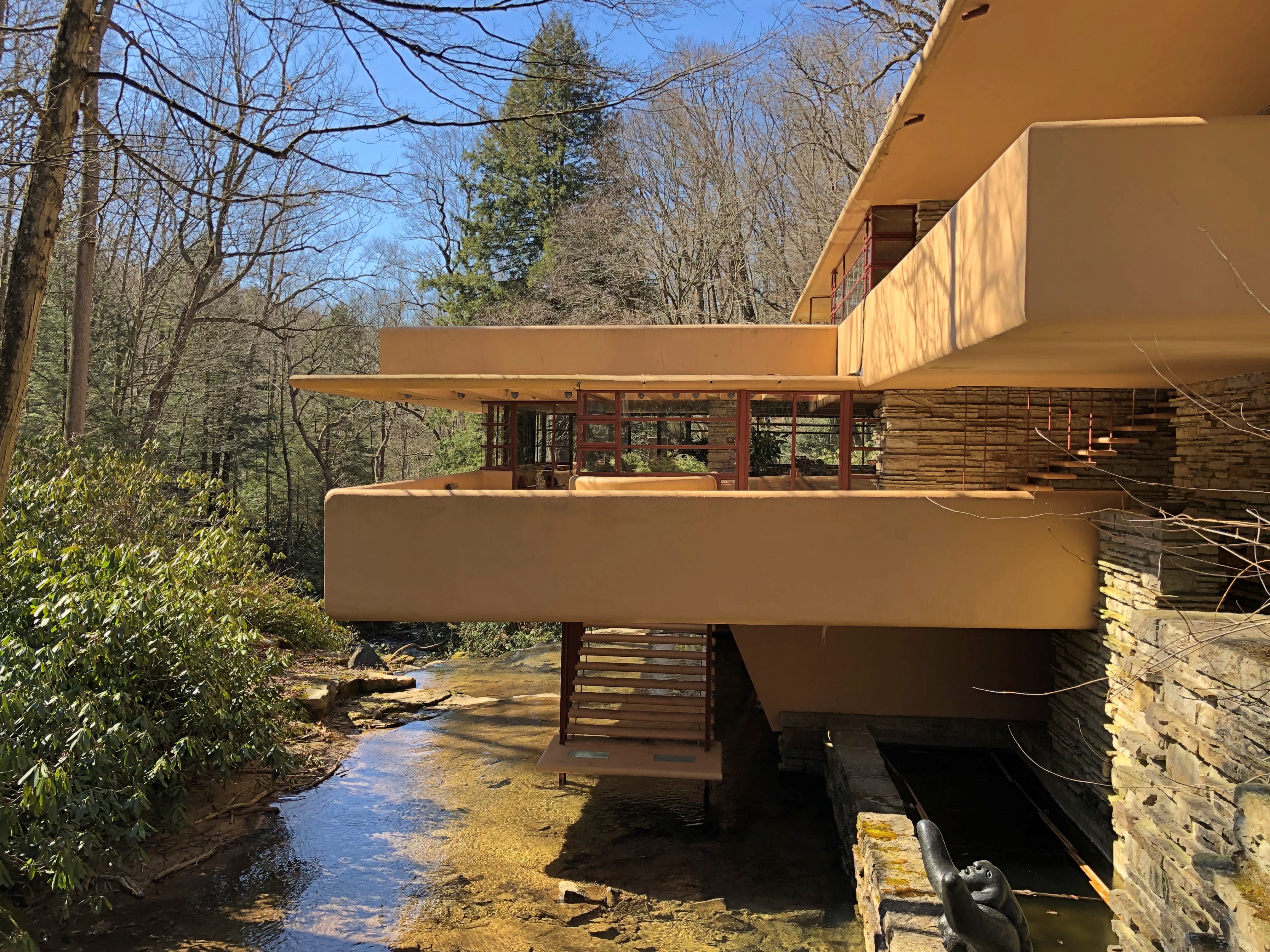
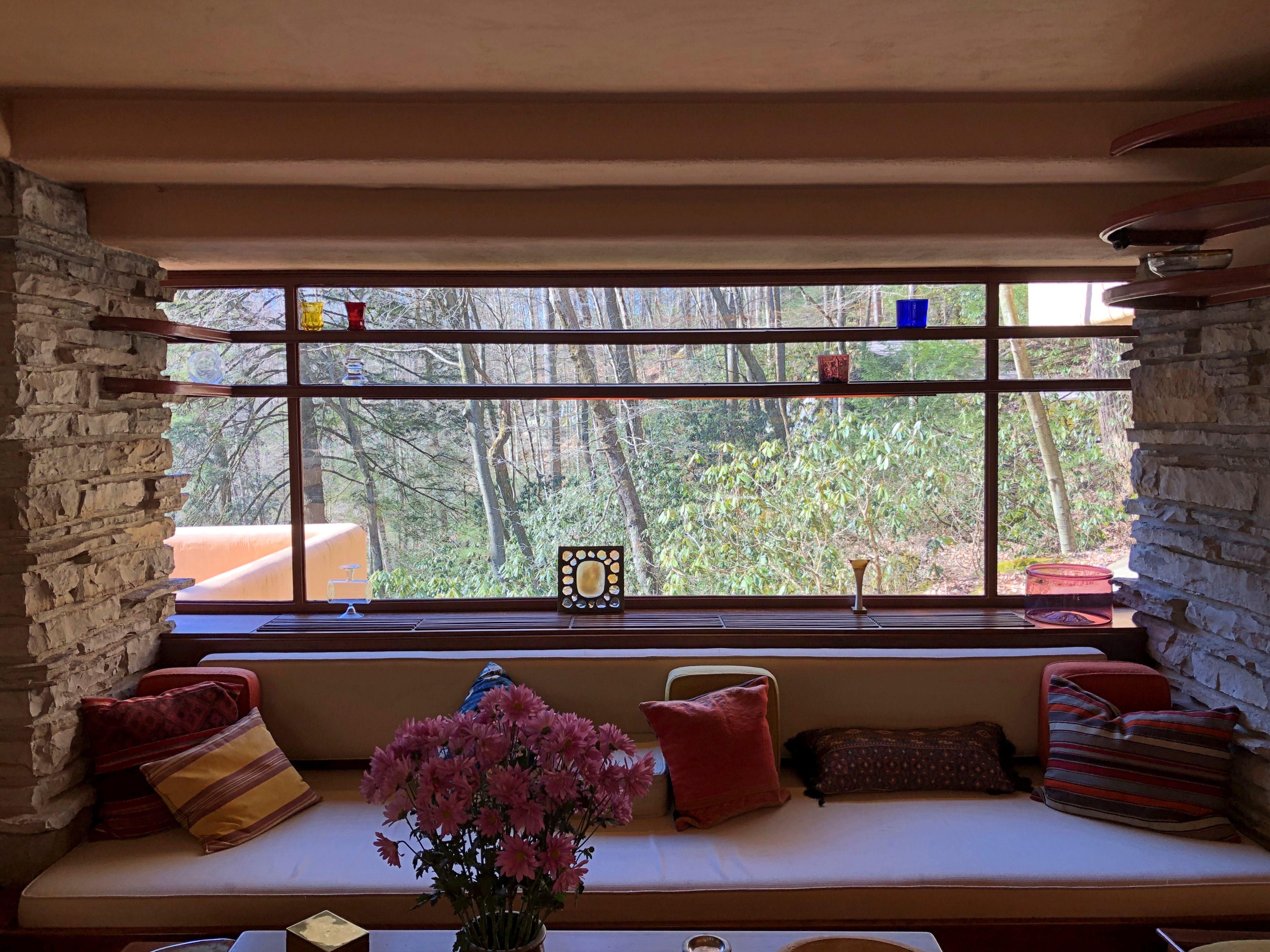
Search for “Fallingwater” in Google Images, and the vast majority of the images look something like the above. For good reason: it’s arresting. I will give Frank Lloyd Wright his due on that. The placement of the house was a stroke of genius from The Genius.

Originally the idea had been to build a house with a view of the falls, but he made it part of the view. Had the original idea prevailed, people might still visit if the house still existed — it would be a FLW design, after all — but it wouldn’t be nearly as distinctive as it is.

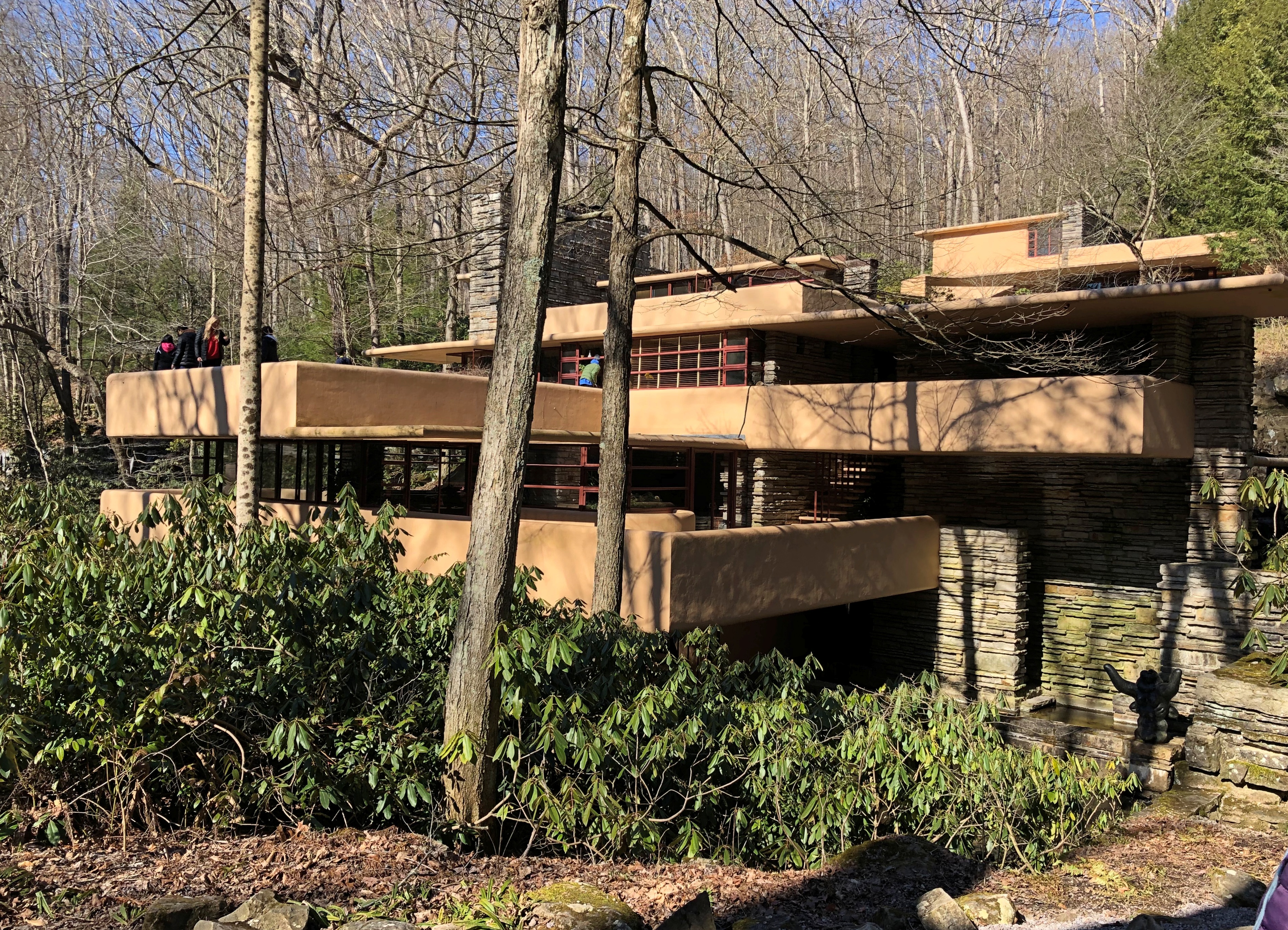
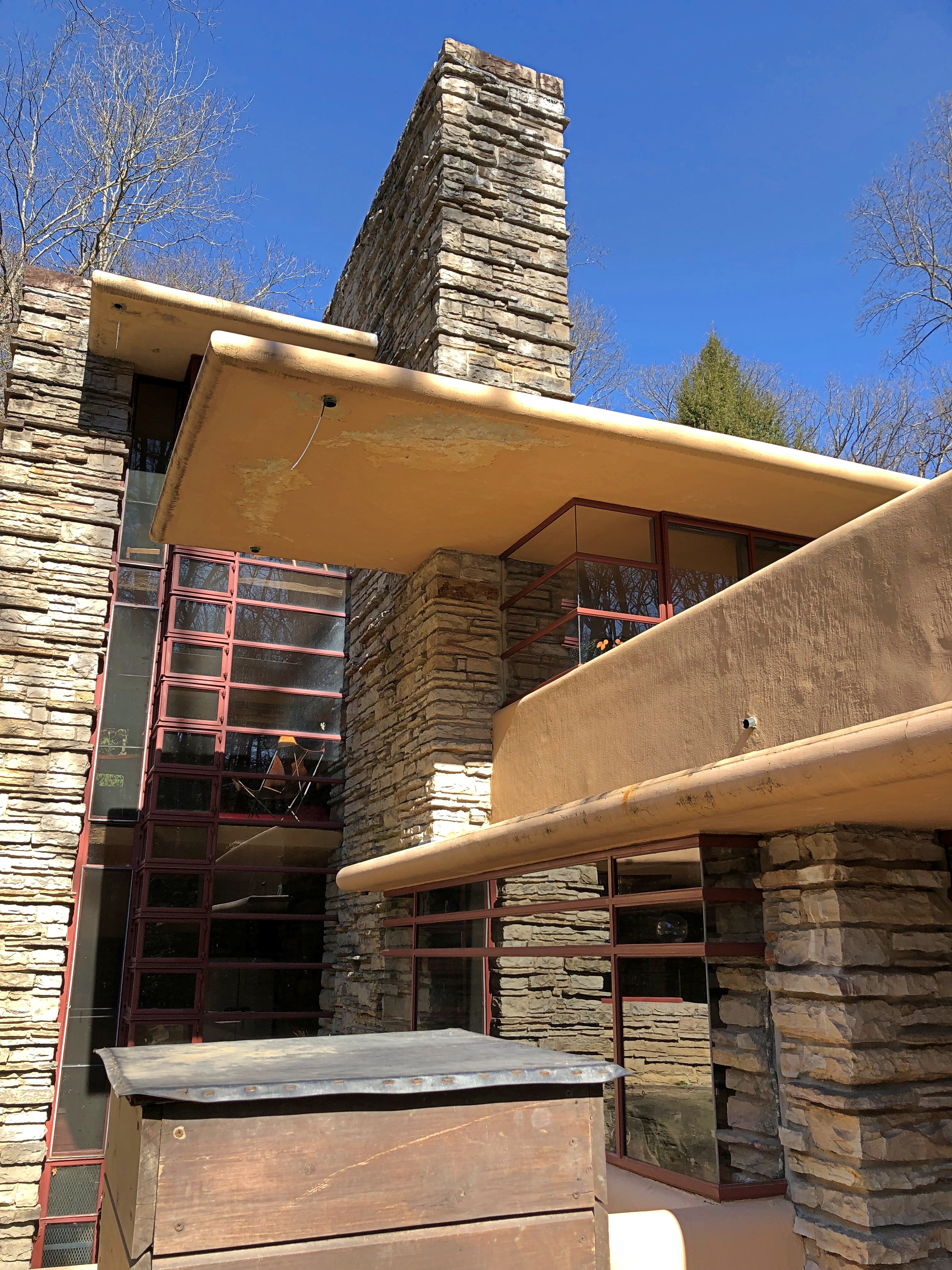
Before we visited Fallingwater, I wondered what other views there were of the famed FLW creation in rural Pennsylvania. The answer is, any number you care to see.Fallingwater Fallingwater Fallingwater

We arrived on the morning of March 20, the vernal equinox, though as far as I know that fact didn’t affect our experience in any way. The low season of March, on the other hand, definitely added to the experience. Guided tours, the only way for ordinary folk to visit Fallingwater, had begun for 2023 only nine days earlier.

We might not have seen the place clothed with the greens of summer or the multicolors of fall, but we did enjoy how few people were around. For a few minutes at The View, for instance, I had the place to myself, because you don’t actually visit it as part of the tour. That comes afterward, when you amble down there yourself.

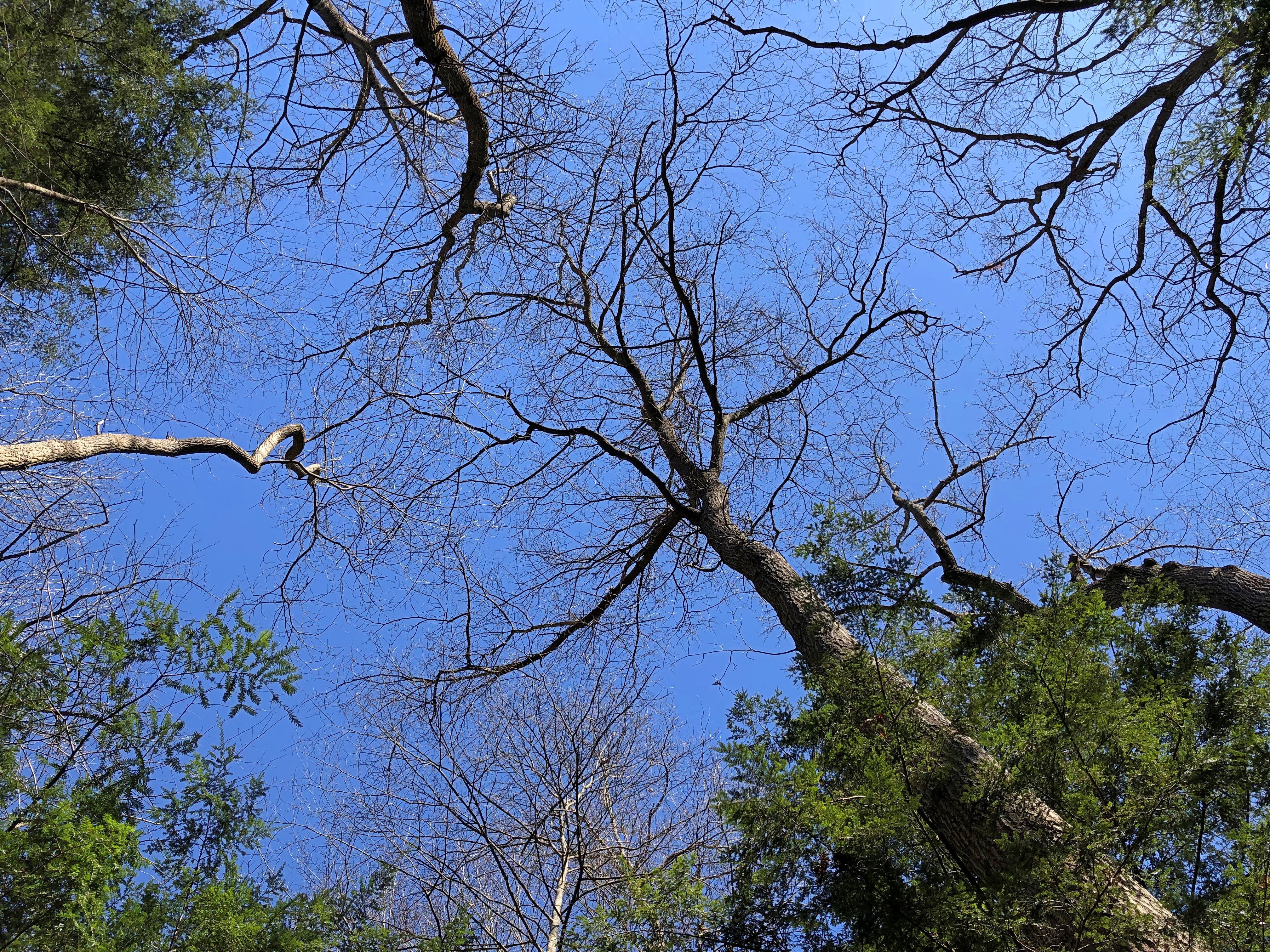
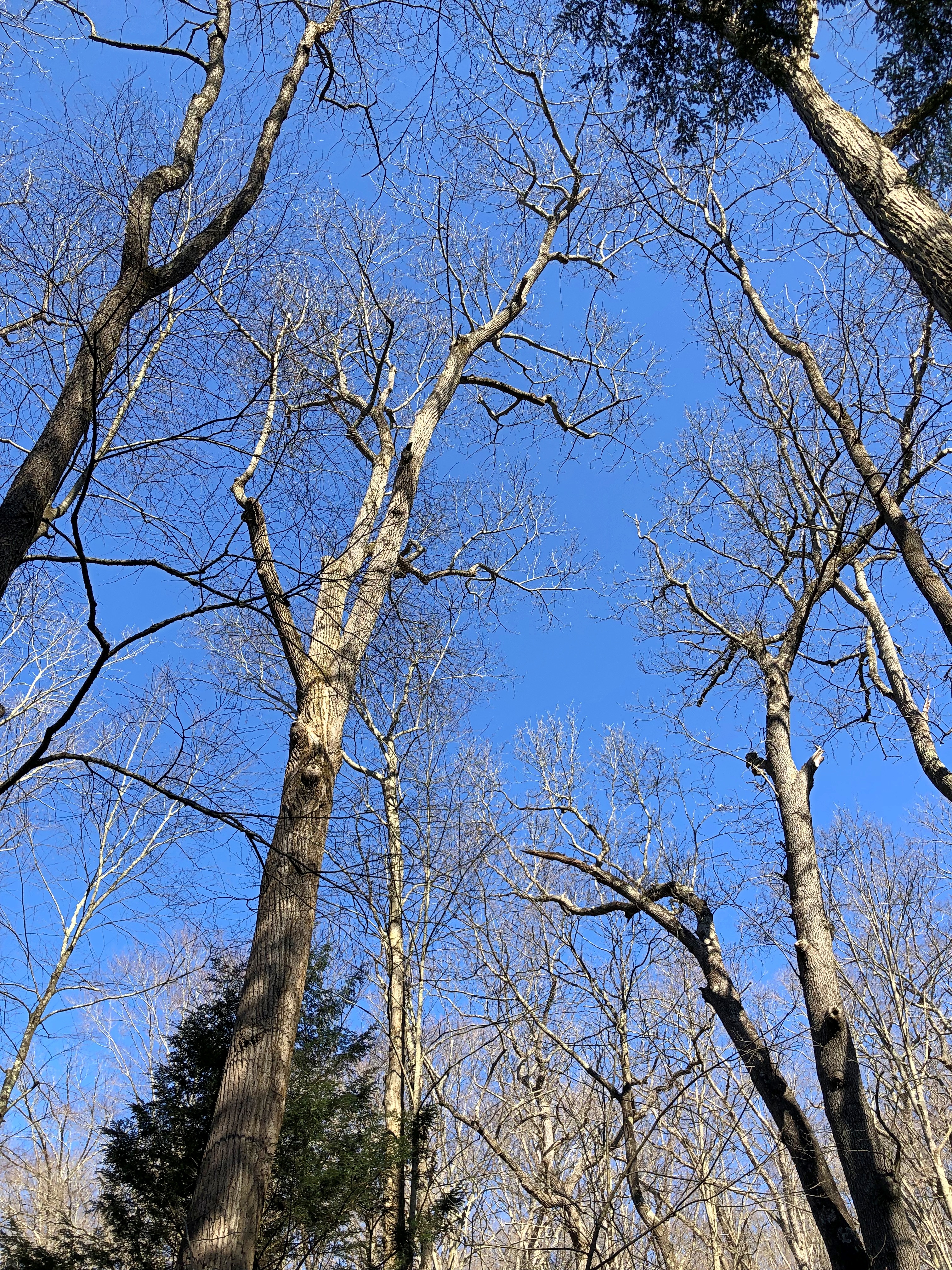
If you’re so inclined, of course, there’s really more than one view even at The View. For instance, straight up. You’d never know you’re on the grounds of a World Heritage Site at that angle.

We took turns touring the house, while the other waited with the dog. Originally I’d scheduled a 10:30 tour and one at 2:30, with the idea that we’d have lunch in between. But not all of the tours in between were fully booked – as I’d think they are in the summer and fall – so after I went on the 10:30 tour, Yuriko was able to move up to the one starting at 11:30 without any issue.

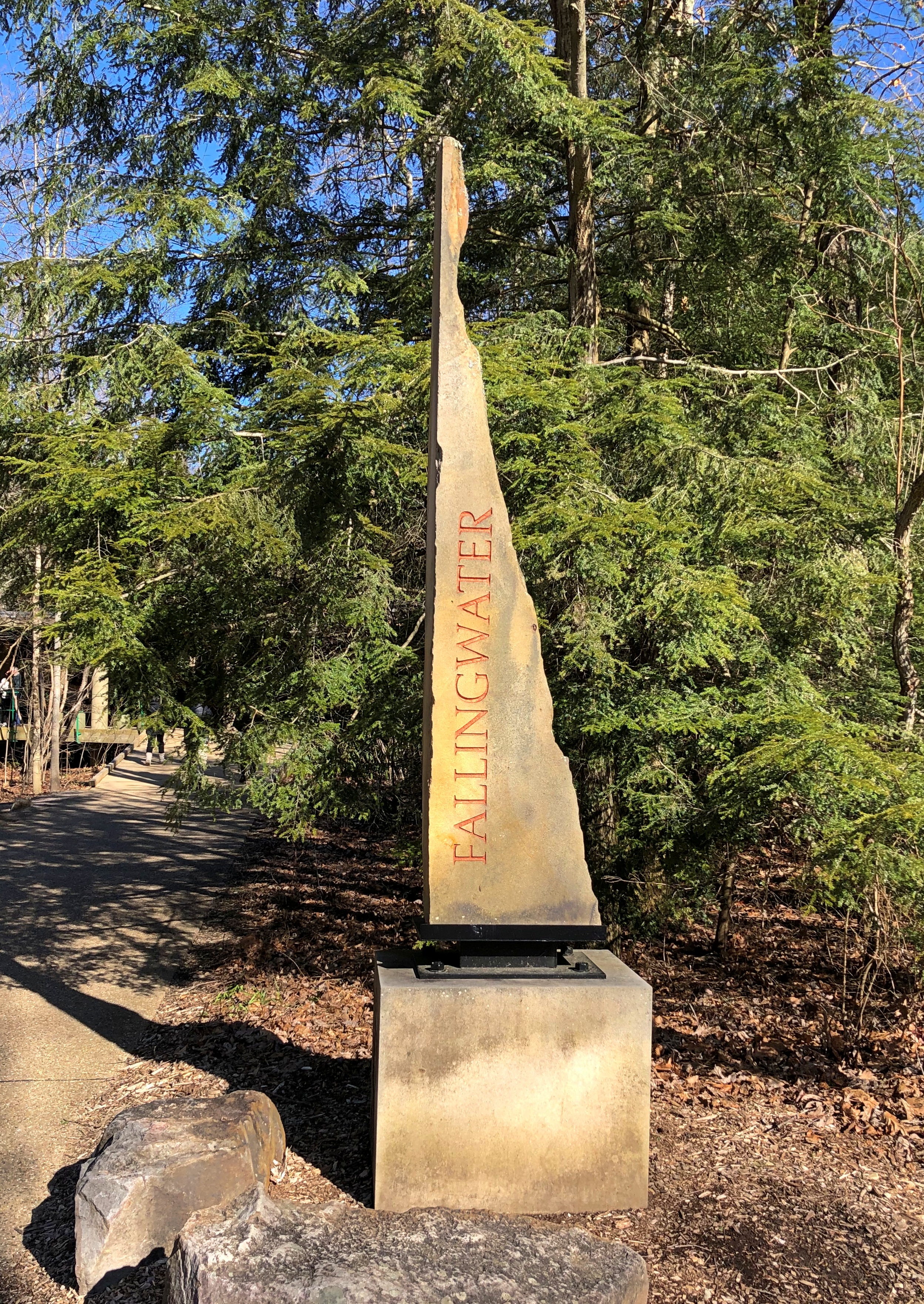
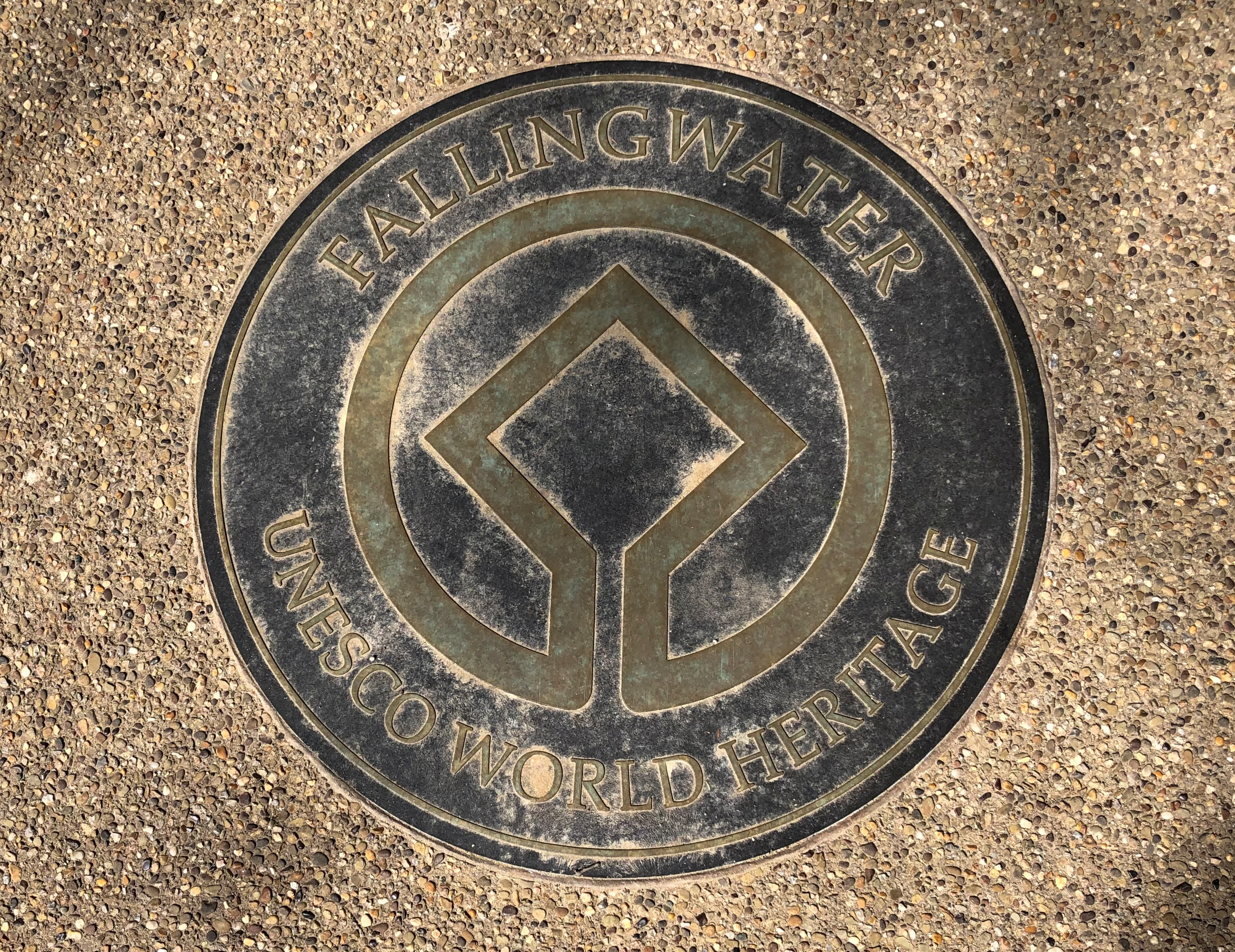
Signs greet you in front of the visitors center.Fallingwater Fallingwater

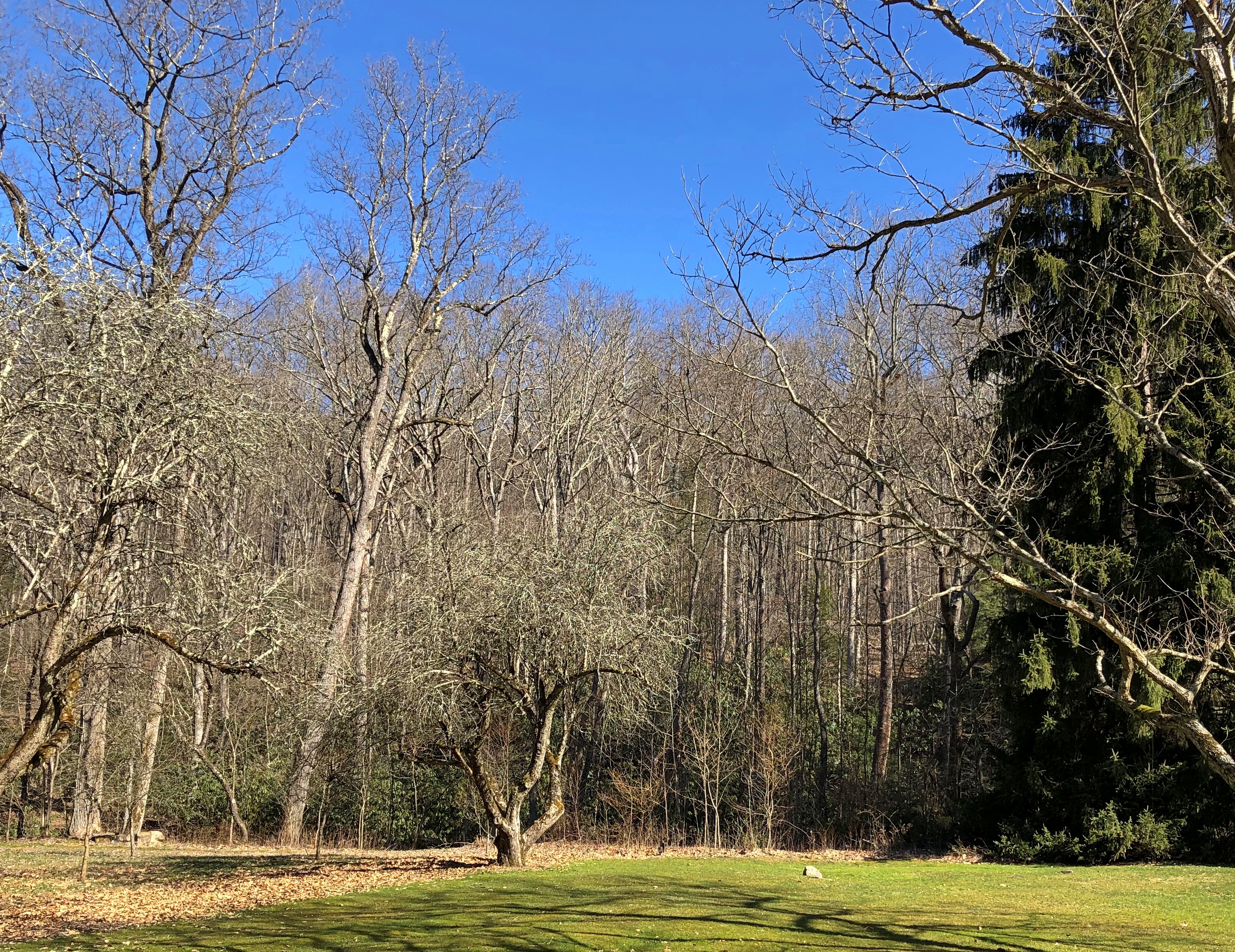
It’s a short walk from the visitor center to the house, but enough to get a sense of the surrounding Laurel Highlands.Fallingwater Fallingwater

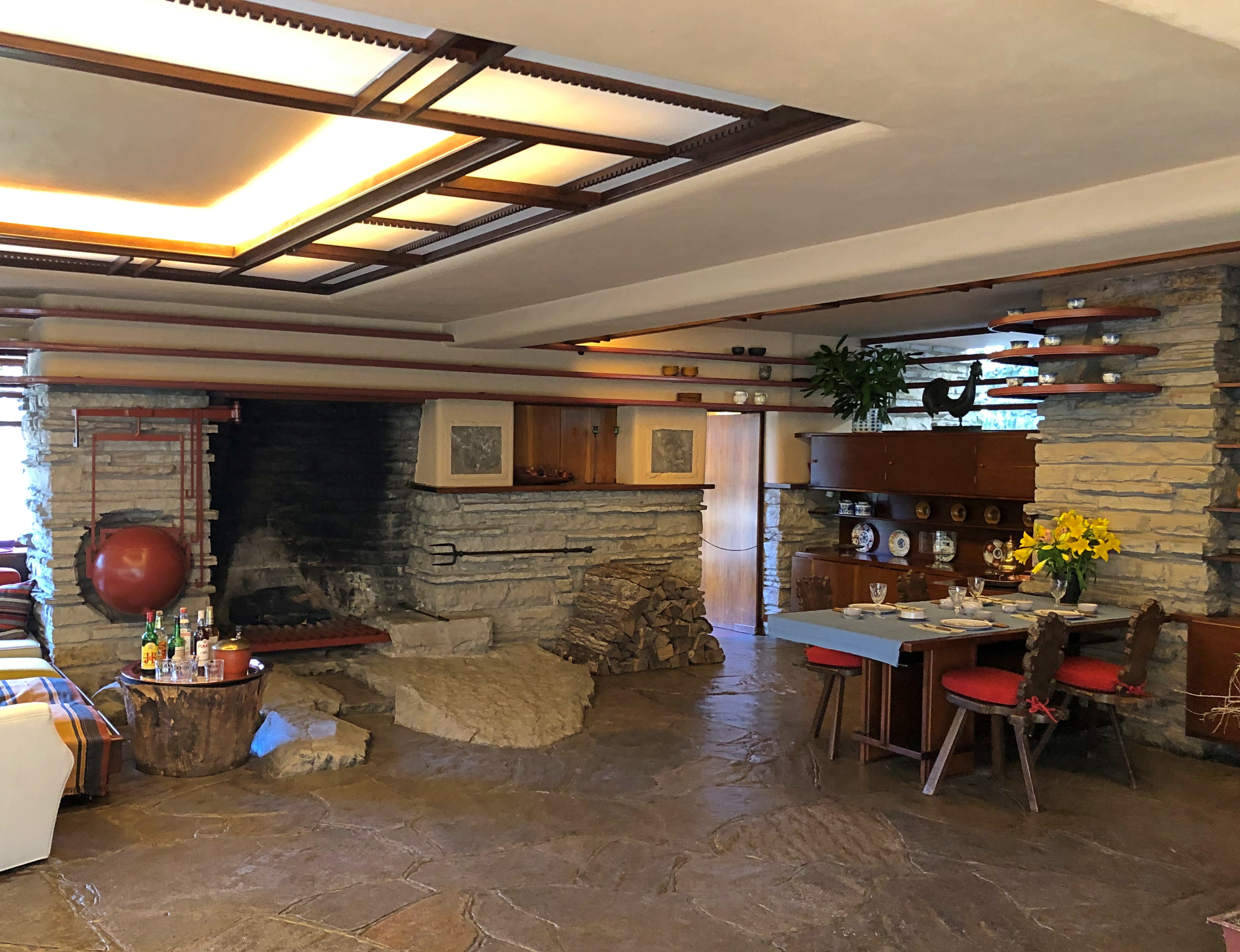
Amazingly, the Western Pennsylvania Conservancy, which has owned the property since 1963, allows photography inside Fallingwater. Actually, only in the first-floor living room, but still. That’s one of the few FLW properties I’ve visited that does so.Fallingwater Fallingwater

Once upon a time, owning a successful urban department store (in Pittsburgh, in this case) meant that you could hire a starchitect to design your summer house in the woods, even as the Depression lingered. After quarrels with said starchitect and vast cost overruns, naturally, Fallingwater was completed in the late 1930s, including the main house, but also adjacent guest quarters.

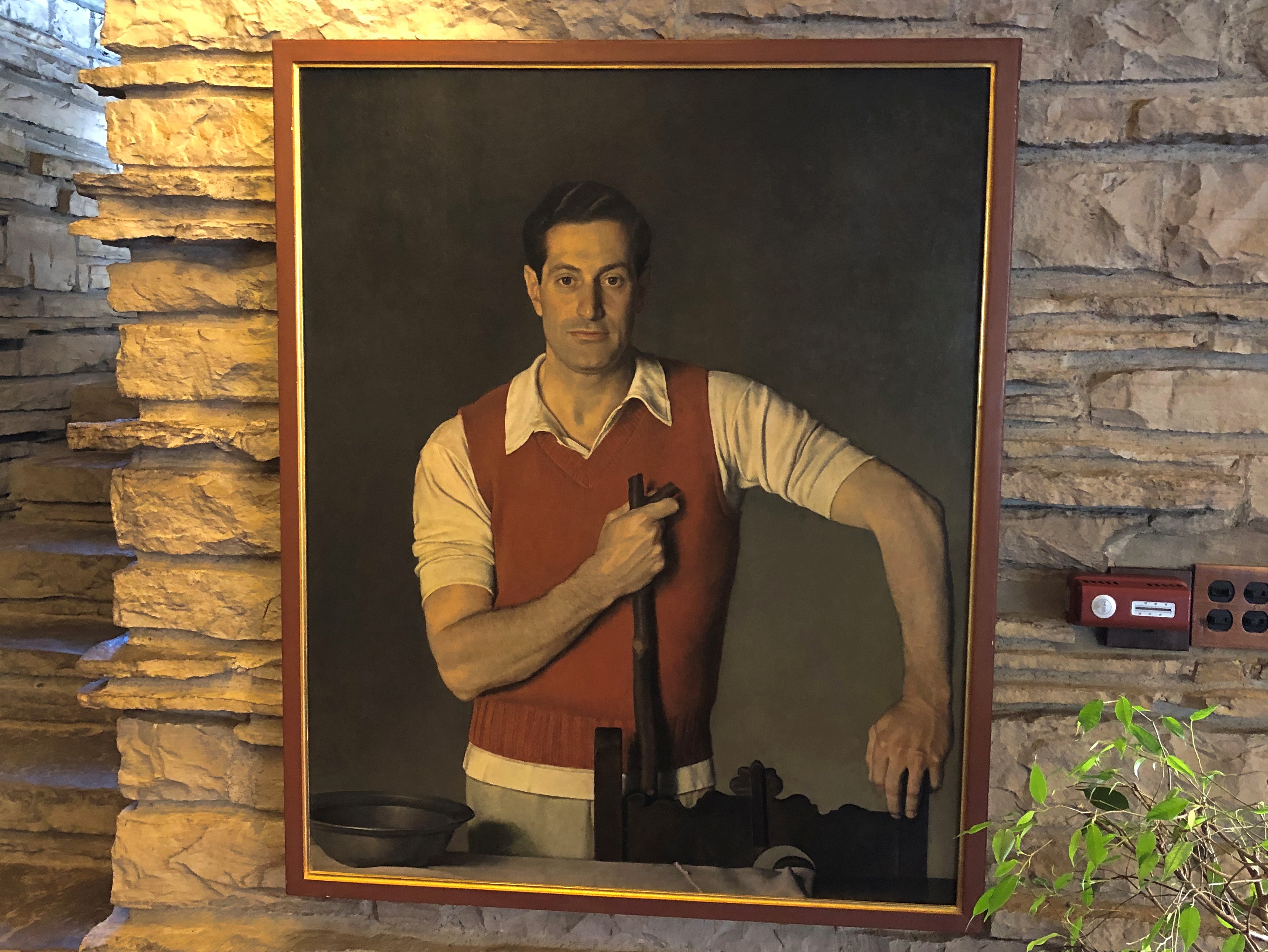
A portrait of the original owner, Edgar Jonas Kaufmann (1885-1955), looks out into the living room, but as a young man – before Fallingwater ever came to be.Fallingwater

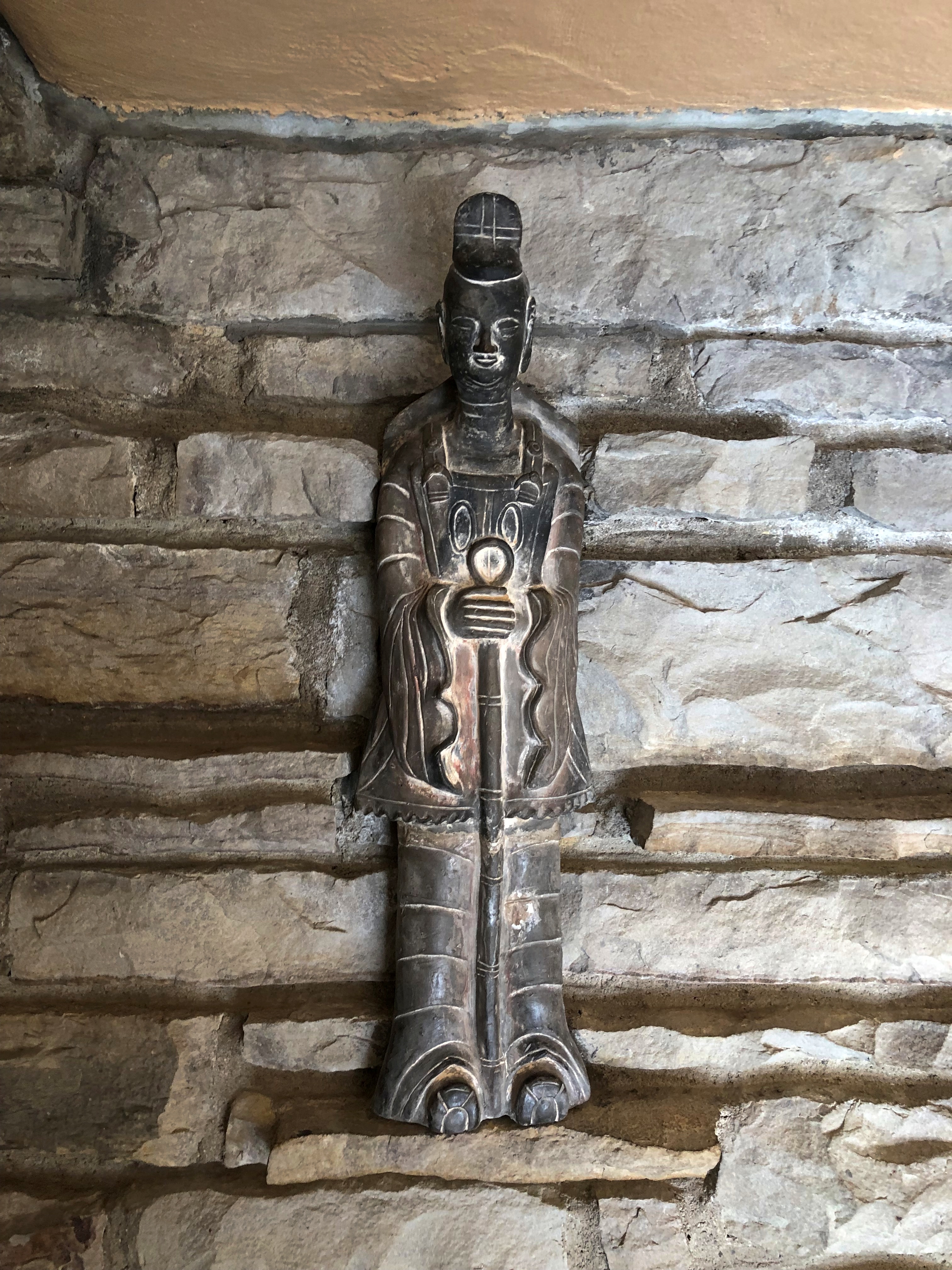
Because Kaufmann’s son, Edgar Jonas Kaufmann Jr. (1915-89), oversaw the transition from family summer home to house museum in the early ’60s, the family’s furnishings and artwork are largely still there, another novelty for a FLW house.Fallingwater statue

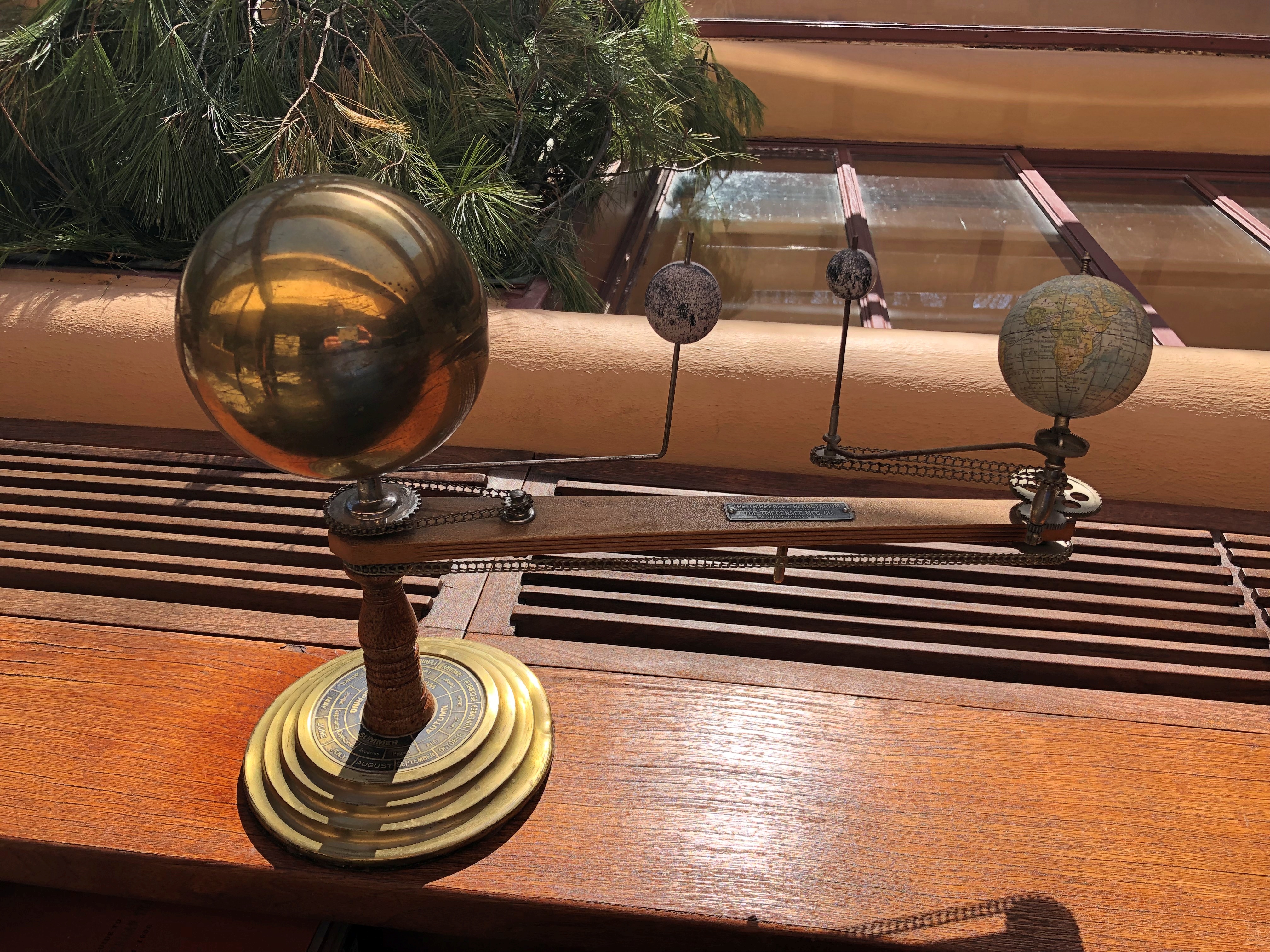
I was happy to see an orrery. It’s actually a Trippensee Planetarium, a brand that vanished with the 20th century.Fallingwater orrery

From the main balcony, you get a view of The View. That is, you can see the spot downstream on Bear Run creek where people stand to see The View.Fallingwater orrery

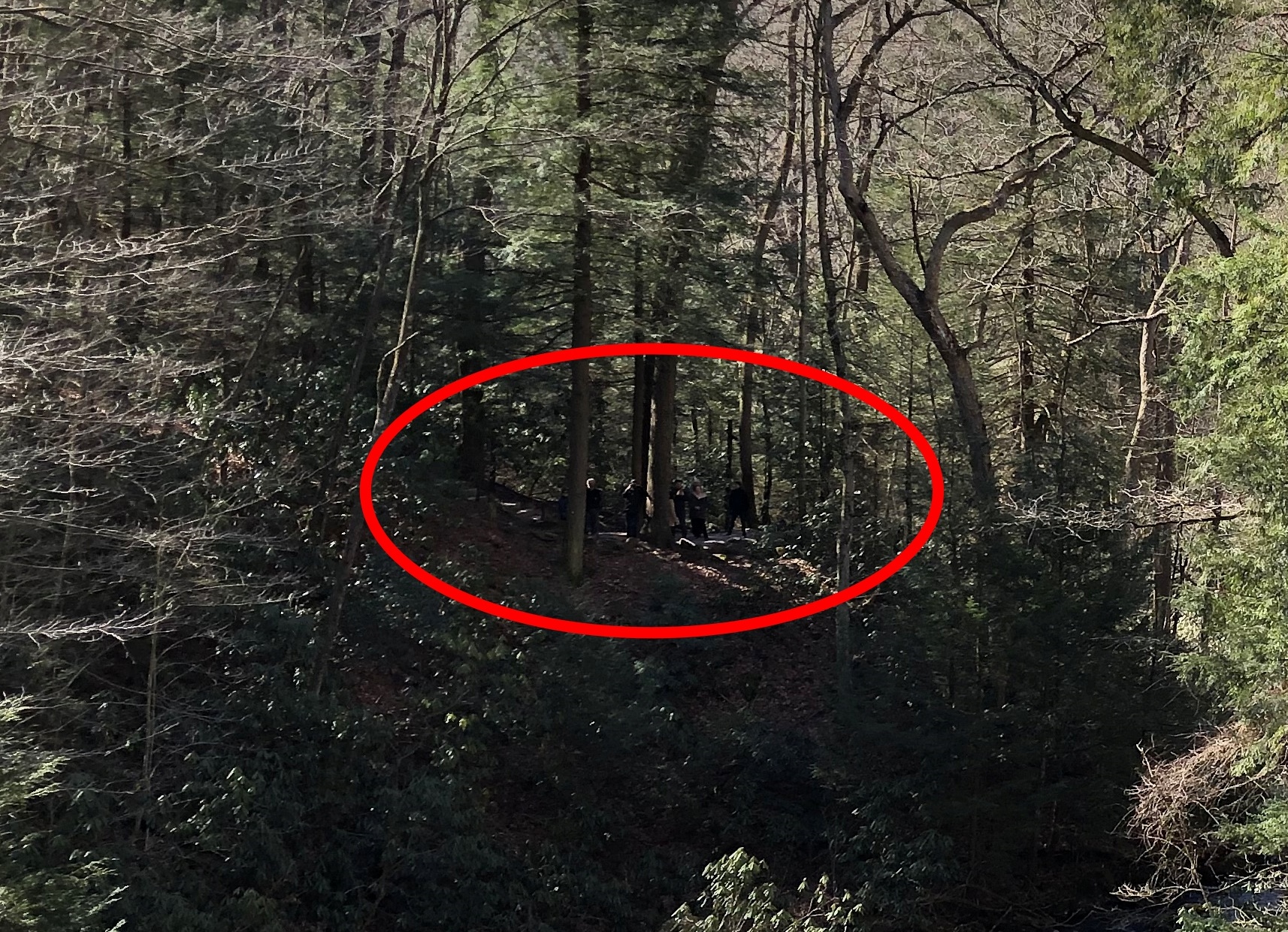
Note the people gathered down at The View, looking up. They’re hard to see in the image, but they are there.Fallingwater Bear Run Fallingwater Bear Run

At that moment, for them anyway, I was part of The View.

Tri-State Appalachian Equinox Road Trip

Old Chinese proverb, I’ve heard: even a journey of 1,000 leagues begins by backing out of the driveway. That we did on Friday, March 17. We pulled back into the driveway on Saturday, March 25. In between we traveled 2,219 miles, using the ragged marvel that is the system of roads in the United States.

My fanciful name for the trip refers to three states that were the focus: Ohio, Pennsylvania and West Virginia. We actually passed through seven states, also including Illinois, Indiana, Michigan, and very briefly, Maryland.

We saw a lot of places, but two in particular motivated the trip as a whole. One was Fallingwater, the Frank Lloyd Wright sculpture – I mean, house – perched over an irregular drop on Bear Run, a creek in rural Pennsylvania. Visiting Fallingwater had long been an ambition of Yuriko’s, maybe since before she lived in this country, since FLW is known far and wide; but I needed no persuasion to go myself.

The other was New River Gorge National Park and Preserve in eastern-ish West Virginia. This was my suggestion, since I keep up on national parks. But I’ve wanted to go there a good while, long before Congress promoted it to national park, which only happened in 2020. Besides, it was high time I spent a little more than a few minutes in West Virginia which, for whatever else it has, is known for its surpassing scenery. This reputation, I can confirm, is deserved.

Weather-wise, spring travel is a crap shoot. The day we left a cold, unpleasant wind blew in Illinois, Indiana and Michigan, and it followed us under the same gray skies and at temps barely above freezing the next day, into central Ohio.

By last Monday, in southwest Pennsylvania, temps had moderated with the appearance of the sun, and each day was more pleasant than the last as we headed south into West Virginia, where the grass had greened and some bushes had too, though most trees were at the barely budding stage. Thursday, March 23 proved best of all, with sunny skies and temps in the 70s, allowing us to enjoy the best meal of our trip — ricebowl meals — at a picnic table in Fayetteville, W.Va.

A cold rain came calling on Friday as we headed from West Virginia back to Ohio. On Saturday, again in central Ohio, it wasn’t bitterly cold, but the wind was so strong at times that it jostled my car as I drove and my body as I walked. Rain squalls came and went, with a spell of sleet I actually enjoyed, sitting in our parked car listening, knowing that the ice was too small to do any damage. Returning home yesterday, Illinois was pretty much as we’d left it, chilly and not-quite-spring.

The upshot of it all is to pack for the weather variety you’re going to encounter, and I was more than glad – as I returned to the car in a stiff wind, crossing a green field in small-town Ohio, feeling wind chill that must have been around zero (and I mean Fahrenheit) – that I’d brought the coat I use most of the winter.

We brought the dog. We don’t want to leave her at a kennel any more, and no one was at home to mind her. Having your dog along is something like traveling with a small child you can’t take into restaurants or a lot of other places, but we don’t regret a bit of it. Long drives in the car don’t faze her at all, since after the first few minutes, that’s like lying around the house and, as the comedian said, a dog’s job is lying around the house.

She had her energetic moments too, more than you’d think for an ancient dog, such as walking the trail to Diamond Point overlooking the New River Gorge, with its smooth straightaways through forests giving way to patches of mud, large rocks or tightly packed tree roots underfoot, sometimes all of those in a single stretch. Our reward for the sometime-slog was a vista of rare beauty. Her reward? I don’t think it was anything so visual. Maybe following the pack is its own reward for her.

Companion dogs also mean you acquaint yourself with the look and feel of the front office and main entrance of limited-service hotels during the empty early a.m. hours, well lit as a Broadway stage but without any players. Except maybe for the night clerk, just outside the door, who is peering into his phone, cigarette in other hand. Probably our dog, as any dog, could be trained to pee on a disposable rug in the room during the small hours, but somehow we’ve never wanted to do that. There’s something appealing somehow about the ritual of dressing as simply as possible a few minutes after waking at 2:30 or 3, or 25 or 6 to 4, hitching a leash to the dog’s collar and repairing to the first patch of green, or pebbles ringed by a curb, outside the hotel door

Take me home, country roads. I’ll say this for West Virginia, it’s got some crazy-ass serpentine roads through its ancient and forested mountains. The Laurel Highlands in southwest Pennsylvania was no piker in that regard, either. You need to keep an intense focus on the road as it winds this way and that, rises and falls, and passes ever so close to boulder walls, massive trees and wicked ditches. If you don’t mind thinking about your mortality every now and then, that’s some good driving.

Mostly good driving. There are moments when a red sedan, or a black pickup truck, decides that tailgating you at roughly the speed limit as you wind around and navigate switchbacks, is a good idea, and blasts around you at the first marginal opportunity, double solid stripes be damned.

Yet I only got the smallest sampling of the twisty roads. No roads without pavement this trip, though plenty enough didn’t bother with details such as guardrails. Another, entirely unpaved and mostly unregulated network of roads and tracks, many perhaps pre-New Deal, must exist in West Virginia. Out away from the nearest town, while we were parked a national park site on a small paved road, three ATVs buzzed past, each with two people. They were headed toward town after emerging from the woods, their vehicles streaked with mud. I was just close enough to see in their faces they’d had a fine time out in the unpaved network.

Also, if you really wanted to get home to West Virginia, wouldn’t you take the Interstate?

We made stops in Ohio going and coming.

On Saturday, March 18 we made our way south from Ann Arbor, where we’d spent the first night, to Columbus, Ohio, to spend the second. On the way is the Basilica and National Shrine of Our Lady of Consolation, a Byzantine edifice rising in a small town, which we visited, but also sites associated with Warren G. Harding: his memorial and burial site, and also his home, in the large town of Marion, Ohio.

Our return home, beginning on Friday, March 24, took us back through Ohio, to Columbus for the last night of the trip. Saturday morning, after takeout breakfast at Tim Horton’s – for that part of Ohio is in the Tim Horton’s orb, we were glad to learn – we visited downtown Columbus and the Ohio Statehouse in a howling cool wind. Ate lunch, Korean-style chicken and salad, sitting in the car in a clearly gentrified neighborhood, the bricked-streeted German Village. We spent the rest of Saturday driving back, via Indianapolis.

On the morning of Sunday, March 19, we left Columbus and made our way east through the remarkable town of Newark, Ohio, then Wheeling and Moundsville, West Virginia  and from there to Uniontown, Pennsylvania, a mid-sized far outer suburb of Pittsburgh. Or at least it will be in a few years.

On Monday, we paid our visit to Fallingwater, taking turns on tours, after which we had lunch in a low-season tourist town and took an impediment-rich hike in Ohiopyle State Park, along the rocky shore of the Youghiogheny River, at that point boasting a highly picturesque waterfall. That was enough for one day for Yuriko, who napped in the car (along with the dog) as I walked the much shorter and smoother path to Fort Necessity National Battlefield late that afternoon.

On Tuesday, we made our way back west a short distance, to visit the Palace of Gold in rural West Virginia, in the peculiar north panhandle of the state (which I’ve long thought of as a conning tower). We returned that day to Uniontown by way of Moundsville, W. Va., home of an ancient mound of remarkable height, a former penitentiary of remarkable solidity, and a bridge across the Ohio River of remarkable elegance. Those things, and some tasty if not remarkable barbecue.

The next day, we left for West Virginia, but not by the most direct route, because I wanted to see the Flight 93 National Memorial in deep rural Pennsylvania. Progressively smaller roads lead there, including – as we traveled it, which I figured would be the quickest route – a short stretch of I-68 through the oddity that is the Maryland panhandle. Late that day, Wednesday, we arrived in Beckley, W. Va. 

We spent almost all of Thursday at the national park, at one sight or another, driving and hiking and pondering historic and sometimes crumbled structures. But that wasn’t quite enough. On Friday morning, before we left for Ohio, we went back to the park. Around noon, we headed west, passing through Charleston long enough to visit the West Virginia State Capitol and eat Chinese takeout, though not at the same time. A little north of Charleston, we crossed back into Ohio after gassing up near the small town of Ripley, West Virginia. Believe it or not.

One other thing: this was a vacation from the news, which following is part of my job. Except for the briefest snippets on the radio, when sometimes I didn’t change stations out of habit for some seconds, I ignored the news of the world, or even smaller parts of it. I think that’s a good thing to do.

But of course, a few things got through. I heard the opening bars of The Dick Van Dyke Show theme on a news program one day, and I jumped to the conclusion that he had died. That isn’t a big jump, since he’s 97. But no, merely a one-car accident.

Image being that well regarded, that your minor auto accident as a nonagenarian is national news. Anyway, glad not to say, RIP, Dick Van Dyke.