GTT Spring ’16

I left for my first 2016 visit to Texas on March 3. It was a big wheel, little wheel trip: a few days in Austin and the Hill Country, a week in San Antonio. When I left Illinois, there were patches of snow on the ground; in South Texas in early March, the grass is green and a few trees and leafing, and there are a handful of flowers and other buds. Heavy rain is always a distinct likelihood in early spring down there, and sure enough we had a couple of thunderstorms.

I visited my mother, both brothers and a nephew and his girlfriend. I spent time with a few old friends — in one case, someone I’ve known since 1973, Tom, a longtime resident of Austin. Our friendship might make the 50-year mark with both of us still alive. I think the actuaries would be with us on that, but who knows?

Out in the Hill Country, which is hardly remote and the opposite of sparsely populated in our time, I wandered around a main street designed to please day trippers, took in one of the most detailed war museums I’ve ever seen, visited the boyhood home of a certain president from Texas, pondered a cemetery full of Germans, saw an elegant Gothic church, happened upon a hilltop vista, and ate beans and jalapeño-cheese cornbread at a storefront restaurant.

In Austin, I saw a city that isn’t what it used to be. The thing about Austin, though, is that it’s always been a city that isn’t what it used to be. That doesn’t bother me particularly. I mainly go to visit old friends, such as the aforementioned Tom, who aren’t who they used to be — and yet who are in some ways. Such is the paradox of knowing people for decades. I also saw Blue Healer at Stubb’s Bar-B-Q. My nephew’s in the band. They’re really talented.

Each time I visit San Antonio, I try to spend a few hours outside of the familiar grooves laid down decades ago. I was able to this time. When I started to do so consciously, back around 2009, I thought it would be hard to find interesting things outside those grooves. I was wrong. In a city this size, with a history this deep, it isn’t hard at all. Such places includes tumbledown cemeteries and new green spaces and milestones of another era and the Blue Hole and China Grove, Texas, and a big basilica.
Alabama Weekend ’87

Winter has asserted itself after a namby-pamby early phase. It reached about 40 degrees F on Saturday. Now, according to weather data available instantly online — another small marvel of the age — it’s about 3 degrees F. Tomorrow will be likewise gelid.

In early 1987, I was offered a job in Chicago, which I took. The second weekend of the year, I took a final road trip from Nashville, to see a friend in Alabama.

January 9, 1987

After lunch at Mary’s barbecue [still in business] and wrapping up bits of work during the afternoon, Mike and I left town in my car. It was cold and rainy all the way into Alabama. Ate dinner in Huntsville, some surprisingly good Mexican food [I didn’t note the name]. Stopped along the way a number of times for Mike to smoke his cigarettes. We met Dan at 11:30 pm at the Huddle House off I-20 in Anniston, and from there followed him to his place.

Dan and Susan have rented a modern log cabin in rural Alabama way the hell from anything (this weekend, Susan was away, so it was just the three of us). Two stories, a basement, a pond and a cat. Very pleasant. Before going to sleep, we drank beer and watched some ’30s and ’40s cartoons on tape.

Two kids knocked on the door — 16 or 17 from the looks of them — claiming they’d run their car into a ditch and wanting to use the phone. After some deliberation, we decided that they had run their car into a ditch during a drunken episode. It took them a good while to decide who to call. Then they asked for some of our beer and were angry when we refused, but did nothing more than leave. I’d hate to go through life as stupid as those two.

January 10

We ate and played games and watched movies on video. Actually only one movie all the way through, Rambo (Rambo: First Blood Part II), which of course we’d all heard of, but none of us had seen. We also watched parts of The Battleship Potemkin and Pee-Wee’s Big Adventure. [For variety, I guess.] Games: Trivial Pursuit, darts, and Risk. Dan won Risk, but it was a close one. At one point I lorded over the Americas and had footholds in Europe and Asia, but a weak point was exploited and my forces crumpled like an aluminum can.

January 11

Sunday we left at a reasonable hour (11) and drove to Atlanta. We met Layne and her co-worker Shelly, a transplant from Pennsylvania with big eyes, at the Sheraton Northlake. Had lunch at Athens Pizza, which I’d been to on a previous visit. The first place I’d ever had feta cheese pizza. A fine lunch. [I’m glad to learn that Athens Pizza is still around.] But we didn’t stay much longer, driving back to Nashville in the afternoon.

GTT Fall ’15: My Mother the Nonagenarian

Jo Ann C. Stribling

Native of Texas; dietitian; longstanding member of St. Paul’s Episcopal Church, San Antonio; daughter of James and Edna Jo; sister of Sue; wife of Sam; mother of Jay, Jim and Dees; grandmother of Sam, Dees, Robert, Lilly and Ann.

As of this week, officially a nonagenarian. Not many of us get to be that.

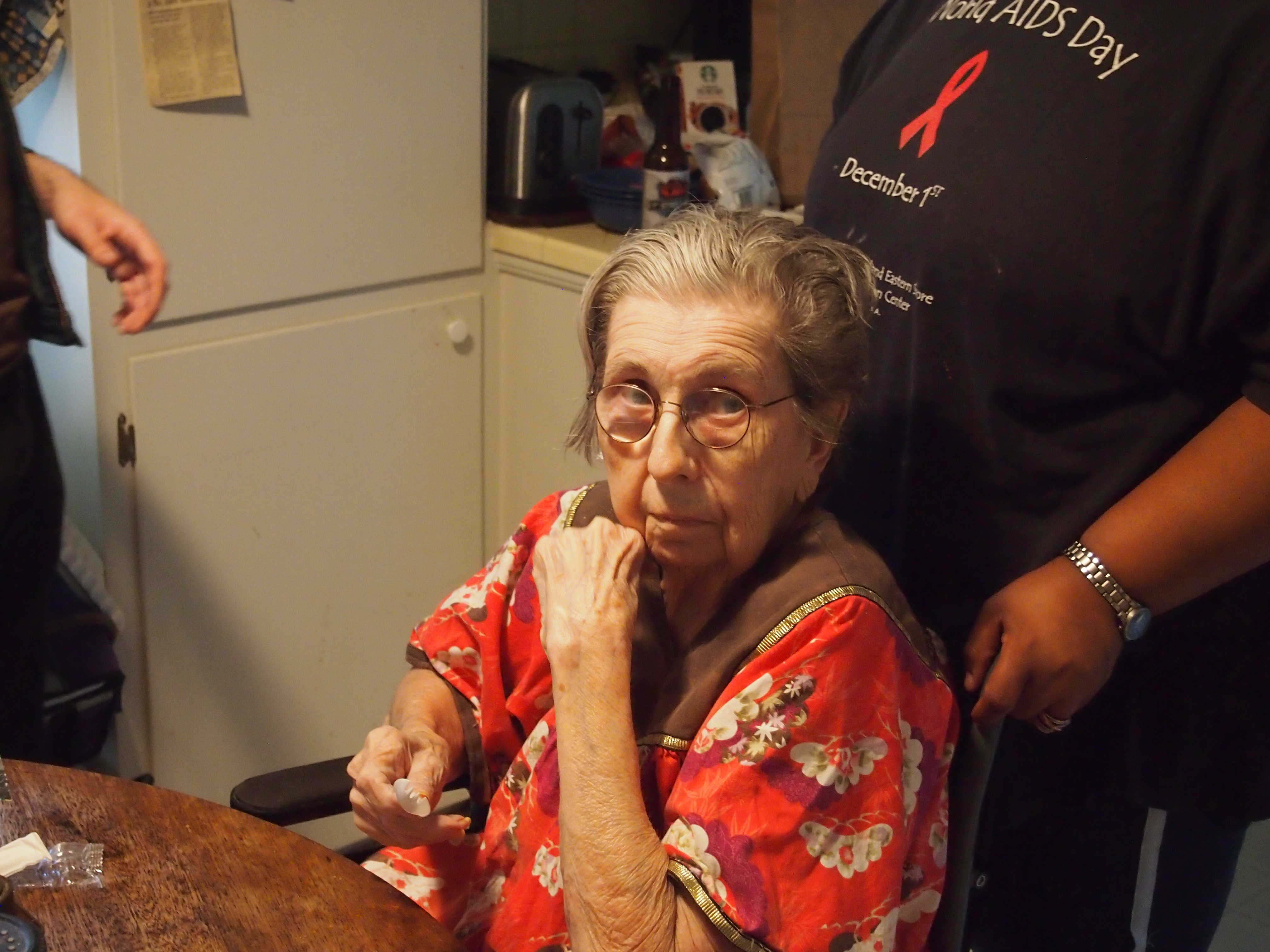
Jo Ann Stribling, 90th birthdayI visited her on her 90th birthday, arriving in San Antonio two days before, after driving down from Dallas with my brother Jay, whom I’d visited for a while before that. Besides my mother and Jay, on this trip I saw my other brother Jim; all of my nephews and the wife of one and the girlfriend of another; and my aunt and first cousin.

Work continued during some of the visit, as it always does. And as I always do, I squeezed in a few other things, such as my second-ever attendance at a state fair, a ride on the Trinity Railway Express, a walkabout in Downtown Dallas, another walkabout along a lakeshore, a visit to one of the three spanking-new national monuments, created only this July, and a look-see at a cemetery, because of course I wanted to visit a cemetery.

The day I flew into Dallas, the city was experiencing its hottest October 15 on record, with a high of 95 F that afternoon. The days afterward were still warm, in the 80s mostly, which is a little higher than normal. By the time we planned to drive to San Antonio on the 22nd, heavy rain was predicted along most of the route, but the downpour was sluggish in arriving. All we saw were sprinkles here and there.

The massive rains came on the 23rd and 24th. The San Antonio area caught a regular storm coming from the northwest plus the remnants of Hurricane Patricia, which hit Mexico on the 23rd, and for a while had the strongest hurricane winds ever recorded. Wow.

Pacific Northwest ’15

I left for the Pacific Northwest on August 21 and returned home late yesterday. Imagine an axis that connects Portland, Seattle, Bellingham and Vancouver, which are all linked by I-5 (British Columbia 99 north of the border). That axis was the focus of the trip. I went to all of those cities and some points in between, some for a matter of hours, others for a few days. I spent time away from those cities as well, in hilly territory lorded over by towering pines and enchantingly quiet at night.

I drove a lot but also managed to spend a solid chunk of time walking and riding buses and light rail. The visit involved attending a conference, touring an exceptional building and seeing other fine ones, experiencing two large public markets, wandering through one of the largest book stores anywhere and a few other excellent ones, and seeing two museums and a Chinese garden very much like some of the wonderful ones in Suzhou. I ate food both awful and extraordinary, including things I’d never heard of before.

Going to another part of the country means doing new things, too. Or it should. Not necessarily life-changing experiences, but the sort of petite novelties that add up over time to make the fabric of one’s life better. Even before I got there, this was the first time I’d ever booked a rental car through Costco or a room through Airbnb. I attribute a less expensive trip, and a better one, to both. I visited a new city (Portland) in a new state (Oregon) and visited new parts of places I’d been (Vancouver in British Columbia, the Fremont neighborhood in Seattle). I witnessed a major forest fire from the air and smelled the result on the ground as the wind wafted west. Unexpectedly, according to the residents. I stood inside a building designed by Frank Gehry, rather than looking at its curious outside.

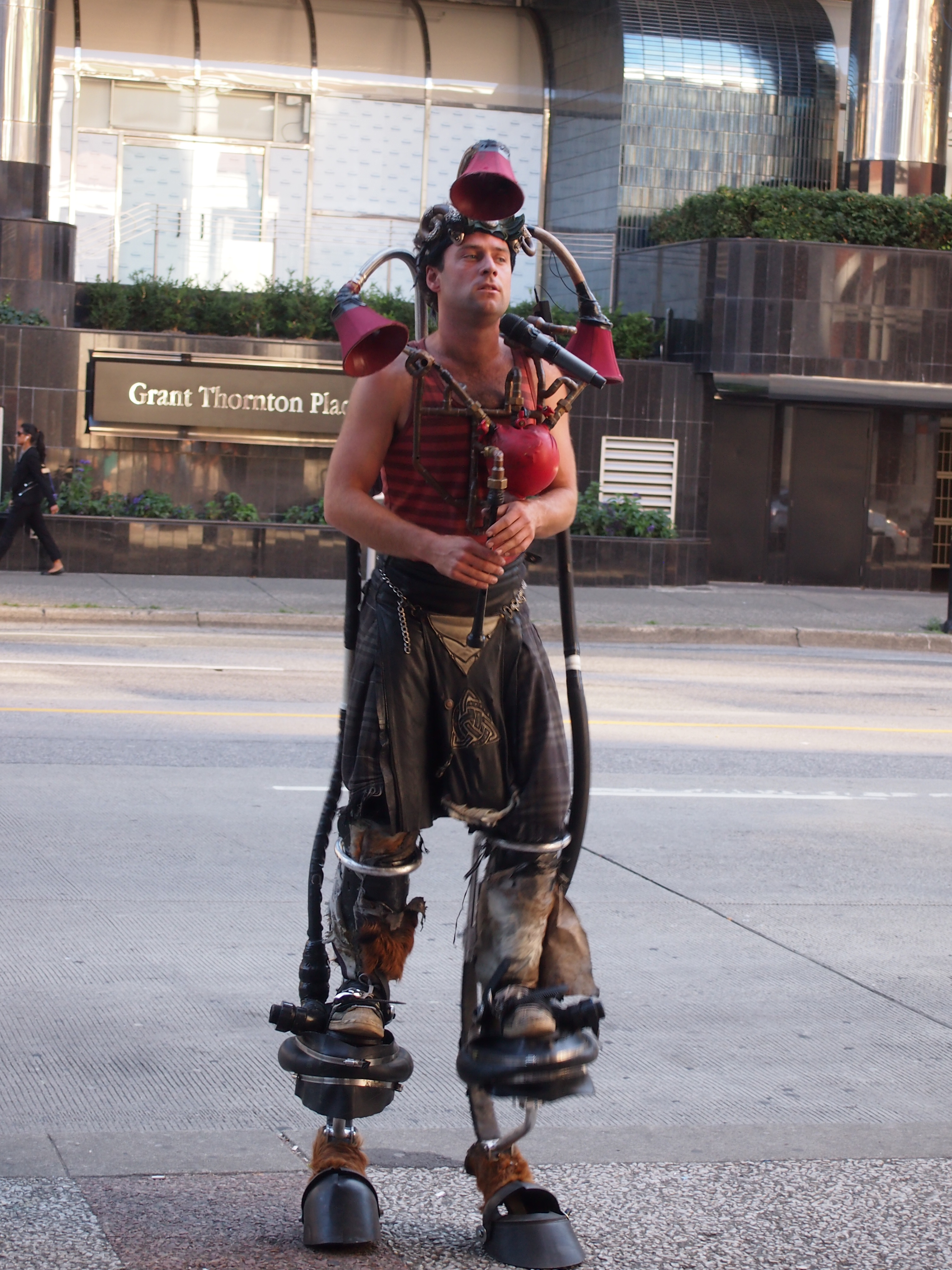
I saw a number of odd and interesting things, such as the street musician who’d modified a bagpipe and played it on stilts (Vancouver, just outside the Pacific Central Station). What to call it? Steampunk bagpiping?
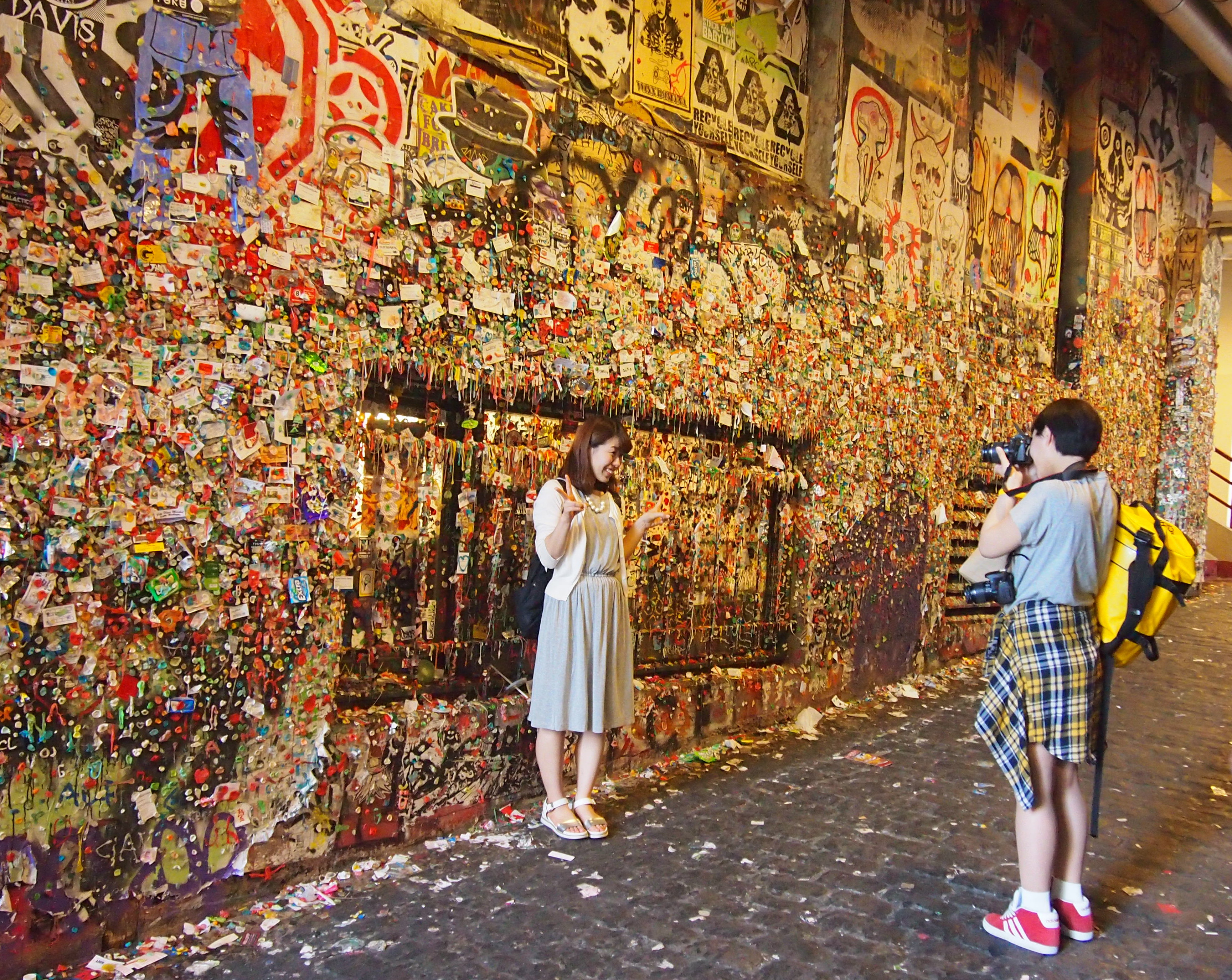
Vancouver, August 25, 2015Or the Gum Wall (Seattle, next to the Pike Place Market). Each of the those bits of color is ABC gum, often used to attach cards and small posters to an alley wall. Why? As near as I can tell, just because.

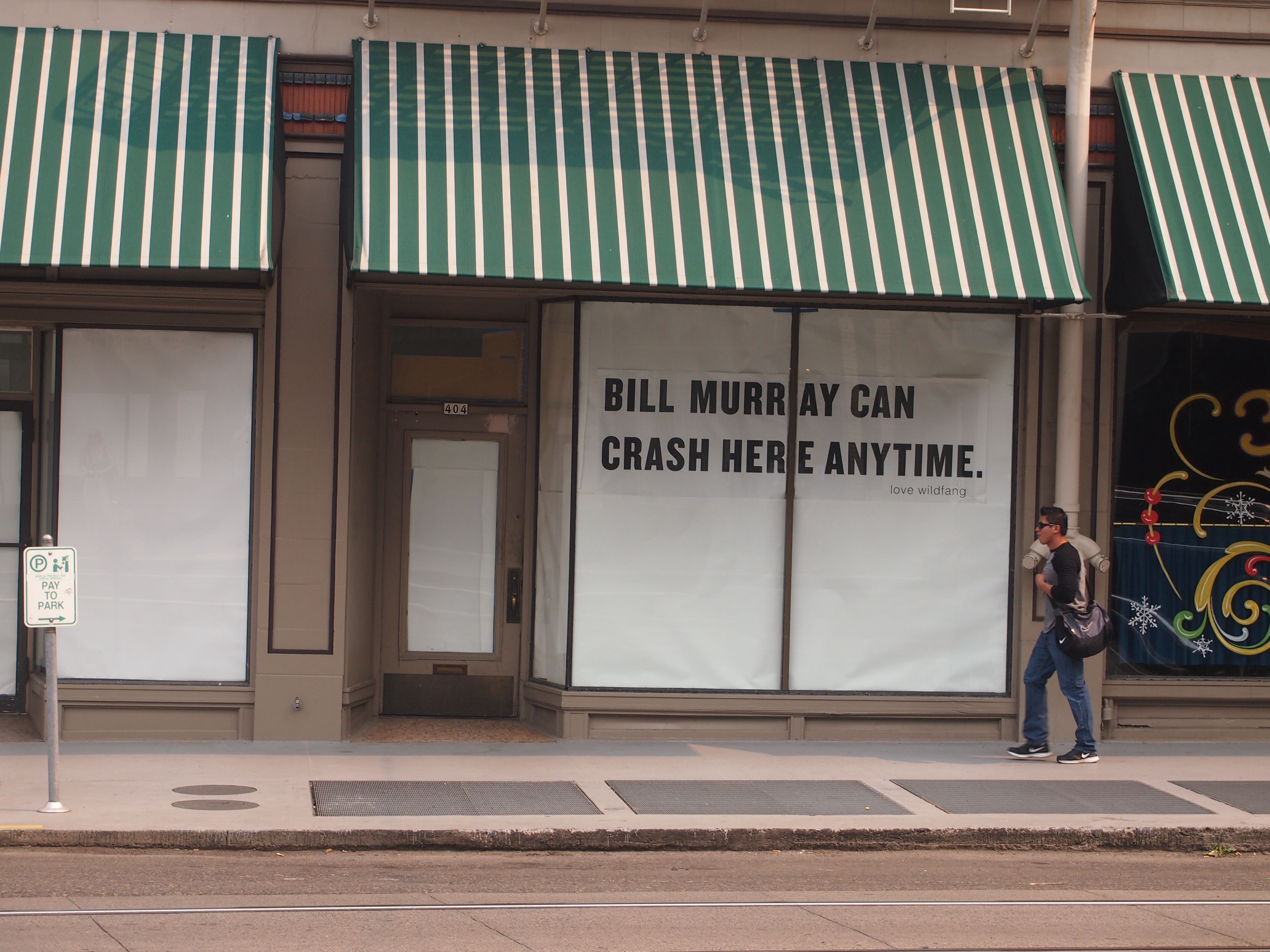
Gum Wall, Seattle, AugOr the echo of a celebrity event I’d missed when it happened, the Bill Murray Party Crashing Tour of 2012 (this sign was in Portland).

Portland, August 22, 2015I can think of a lot worse people to show up at one’s party uninvited; maybe he’s still doing it occasionally.

Most importantly, I reconnected with two dear old friends, one of whom I hadn’t seen in 18 years, another I hadn’t seen in 30 years, since my last visit to Seattle. Our friendships have been maintained over the years mostly through paper correspondence, with a more recent electronic component. But there’s no substitute for being there.

The Wisconsin State Fair ’15

Years ago, some friends of mine told me about their visit to the Wisconsin State Fair, which is held every August in suburban Milwaukee. “Meat,” one of them said. “When we got there, we wanted meat. We ate a lot of it.”

I now understand the impulse. I’d also add dairy to the mix. Meat and dairy.
Ann and I arrived at the Wisconsin State Fair last Friday afternoon, staying into the evening (Lilly and Yuriko couldn’t make it). She’d never been to a state fair. I had never been to one either. Neighborhood fairs, town fairs, county fairs, even a world’s fair, and fairs in a number of countries, but somehow never a state fair in the United States. Been mulling it for years, especially going to Wisconsin’s, because it’s the closest one. The Illinois State Fair is in Springfield, at least an hour further away.

WiscStateFair15We got there when it was still fairly hot. That didn’t deter a large crowd of fairgoers, but somehow the grounds managed to hold all of them without too much trouble. I’m glad that a state fair like this drew a crowd, since it’s a real event, one that requires going somewhere, and seeing something, rather than some kind of electronic entertainment. It also provides work for musicians, and not just the headliners, who tend to be acts whose heyday was 30 or 40 years ago. Considering my nephew’s profession, I can get behind an event that employs musicians.

The fair featured a vast array of merchandise booths, a good number of no-extra-charge stages with the aforementioned musicians playing, and large exhibits of farm animals, true to its roots as an ag show. Ann and I spent some time looking at the many, many cows in the cattle barns. At one point we watched a man wash his cow, making use of a squeegee. That isn’t something I’d have thought of.

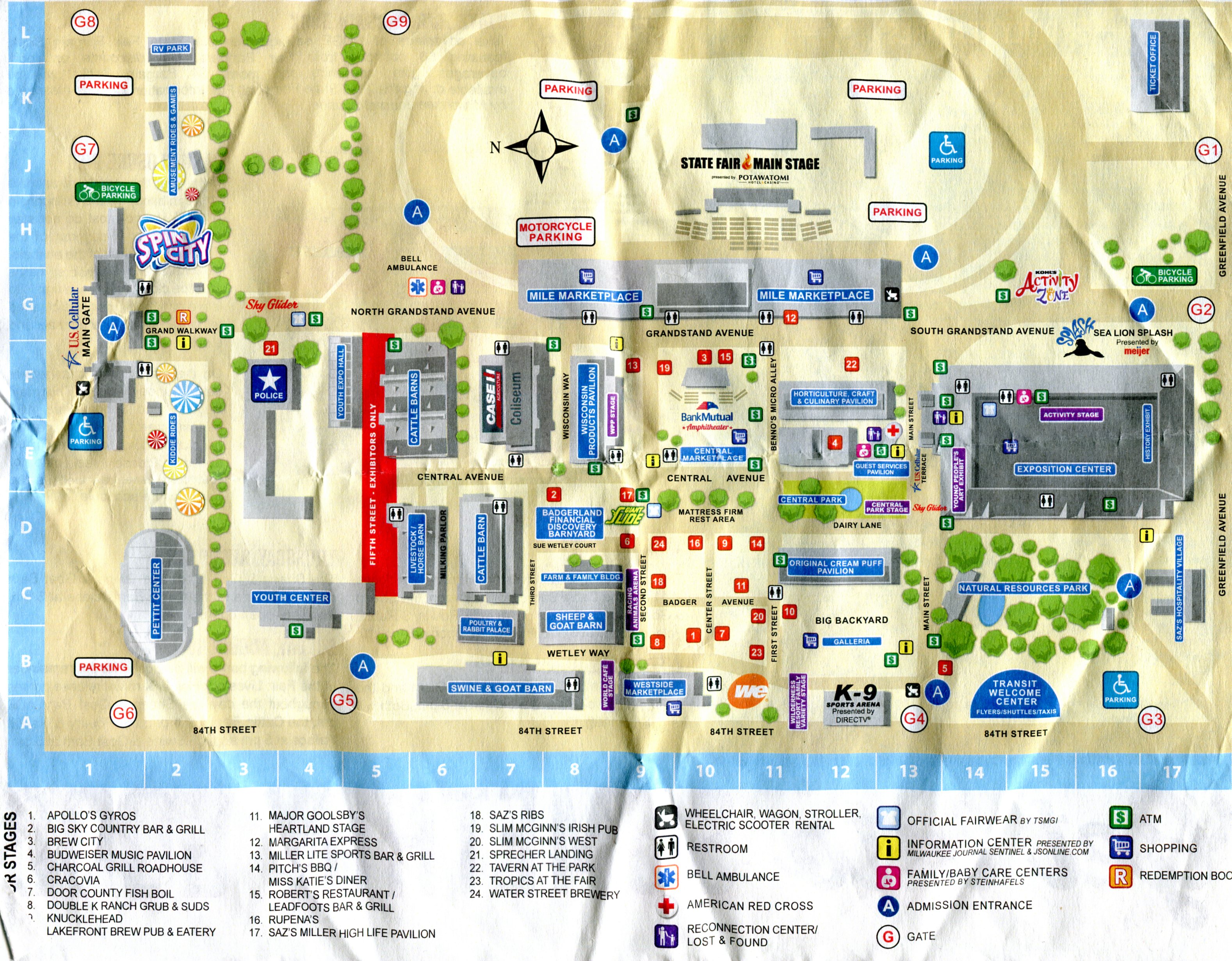
WIstatefairmapBut that wasn’t the main thing. The main thing was to consume mass quantities. I knew that would be the case, so we both had light lunches. We ate items individually and shared a few things. Mostly, of course, meat and dairy. Namely, a pork doughnut, elk jerky, poutine, a pizza cone, an eclair, lemonade and milk.

The pork doughnut was a regular doughnut-like pastry, not too sweet, filled with pulled pork. The poutine was poutine. I didn’t have that in mind when I went to the fair, but the poutine booth attracted my attention with a large, hand-painted cartoon moose, looking suspiciously like Bullwinkle, wearing a Mountie uniform that looked suspiciously like Dudley Do-Right’s. He promised that the poutine was authentic Quebec style, and as far as I can tell, it was. Not bad at all.

The poutine booth was near the Wisconsin Products Pavilion. Ann got some ice cream there, and on impulse, I bought an enormous eclair, not like one of the dainty delights in France, but American sized: big as fat hot dog in a sizable bun. Not quite as good as the French version, but with its Wisconsin cream and chocolate, almost that good, which is saying something.

After I ate it, I realized I wasn’t going to eat anything else that day. Even I have my limits. That was too bad, because it meant we missed trying the pizza slices cooked with bacon underneath and especially the Wisconsin State Fair Creme Puff.

The creme puff’s apparently a big deal. Even though I knew we couldn’t eat one — Ann was full, too — we went into the building devoted to making and selling creme puffs, right at the fair, just to see the place. It was a large operation with dozens of apron-wearing, hair- and beard-netted people devoted to their creation, visible behind large glass windows. People were lined up inside to buy them and at “creme puff express windows” outside the building. That eclair was good, but I would have traded it, and certainly the poutine, for one of those mountainous puffs.

So it goes. I may live long enough to encounter a state fair creme puff some other time. Next time I’ll be ready.

The Ann Arbor-Toledo Overnighter

I can now, with complete confidence, tell the world I’ve been to Toledo. The one in Ohio, that is. As we crossed the Michigan-Ohio border late on Saturday morning, and the signs for Toledo were abundant, Lilly asked me about the name. It sounded familar, she said. I said it was the same as the city in Spain, except for pronunciation.

Ah, she answered with sudden recognition. We studied about places in Spain in Spanish class, and that was one of them, she said. Why is this town named after that one? Was there some connection?

None that I knew about, I answered. Someone in the settlement’s early days thought it would be a good name, and it stuck. There are North American towns with even less connection to their name-givers, such as every Canton. (According to the Canton, Ill. C of C, for instance, “the city was founded by Isaac Swan in 1825, he named it thus, from a notion he entertained that its location was the antipodes of Canton, China.”)

On Friday morning, Lilly and I set out for Ann Arbor, Mich. She’s entertaining the notion of applying to the University of Michigan, so we both thought this would a good thing to do. Since Ann Arbor is roughly five hours’ drive from metro Chicago, if traffic isn’t too bad, there and back on the same day wasn’t a reasonable option.

So we timed the drive to get a look at campus and environs on Friday afternoon, both on foot and in the car. The central campus is large and pleasantly collegiate. Sidewalks and green grass repose under mature trees in full summer green, and among buildings mostly dating from before modernism. Ivy on some of the walls inspired a discussion about just exactly what people talk about when they talk about the Ivy League. Any school can grow ivy, I told Lilly, but only a few are in the Ivy League (most of which I could name, but not all). Yet there are plenty of other schools just as good as the Ivies.

The campus wasn’t overly crowded, it being summer, but it was well enough populated. I’d been there before, but it was more than 10 years ago, maybe as long ago as 1999, to attend a real estate conference that the university holds every fall. I went at least twice, but digging through my papers to figure out just when is more trouble that I care to take.

One on of those visits, I got a good look at campus, including the of U-M Museum of Art, which had the virtue of being open and being free. Nice collection, too, as I dimly recall. I’ve read that the museum’s expanded significantly in more recent years. We arrived too late to see that or the intriguing-sounding Kelsey Museum of Archaeology, the Stearns Collection of Musical Instruments (which has the first commercial Moog synthesizer, among other things), or the Matthaei Botanical Gardens. Actually we were too tired for that last one, open till sunset, which is quite late this time of the year in the western part of the Eastern Time Zone.

What’s Toledo got to do with this? Toledo’s only a short drive south of Ann Arbor, and I determined that it was barely out of our way in returning home. So as trip organizer, I tacked on a few hours in Toledo on Saturday. Why did I want to go? It’s a distinctive place I’d never been — not counting driving by a few times — yet not really that far away. That’s almost all the encouragement I needed, since that’s the way I think. Also, I’d read that the Toledo Museum of Art is first-rate. And so it is, accessible for a nominal fee: $5 to park. Otherwise, no admission. Behemoth art museums in certain larger cities could learn a thing or two from that.

GTT Summer ’15

July isn’t really the best time to visit South Texas, or the Texas Gulf coast for that matter, but no matter — off we went on July 9, returning earlier today. It was a two-pronged trip: first for a few days to Galveston and slices of the vastness that’s Houston, then San Antonio for the balance of the time.

I don’t know anyone in Galveston, or Houston, unless you count people I long ago lost touch with. Even so, I wanted to go. Earlier this year, I read Isaac’s Storm, a fine book about the 1900 hurricane that laid waste to bustling, prosperous Galveston. After that, most of the local bustle went to Houston. But it also occurred to me that I hadn’t been to Galveston in more than 40 years. As the Wolf Brand chili man says, that’s too long.

Ann came with me for the trip, arriving on Thursday the 9th and repairing to lodging near Hobby Airport. We spent most of the next day in Galveston, seeing things and dodging the heat, then returning to our motel in the evening. On Saturday the 11th, we drove from Houston to San Antonio, but not the most direct and least interesting way, which would have been I-10.

First, we plowed our way into Houston to see the Menil Collection, a mid-sized museum near the University of St. Thomas that sports (among other things), a sizable surrealist collection. Nearby is the Rothko Chapel, as well as the Byzantine Fresco Chapel. Unfortunately, the Byzantine fresco went back to Cyprus a few years ago, but the building does now house a work called the Infinity Machine — rotating array of suspended antique mirrors, which is more effective than it sounds.

Leaving Houston, we followed I-69 and then U.S. 59, through such towns as Sugar Land, Wharton, El Campo, Ganado, Edna and the outskits of Victoria, which would be worth a look at some point. Southwest of Victoria is Fannin, and near that small town is the Fannin Battleground State Historic Site, which we visited.

Down the road a little further is Goliad, where you can see the Mission Espiritu Santo and Presidio La Bahia. We arrived after closing time, but the exteriors were impressive. So was Goliad County’s courthouse; Texas has a lot of fine courthouses.

Ann pointed out to me after a visit to an HEB, which is a major regional grocery chain, that Texas, as a name and a concept, is involved in a lot of marketing in Texas. I probably knew that, but never gave it much thought. For one thing, she’d noticed a selection of cookie cutters in the shape of Texas. Other products available in the store, such as Texas Dipper brand corn chips and many, many others, carried on the theme, as do other ads and products in other places.

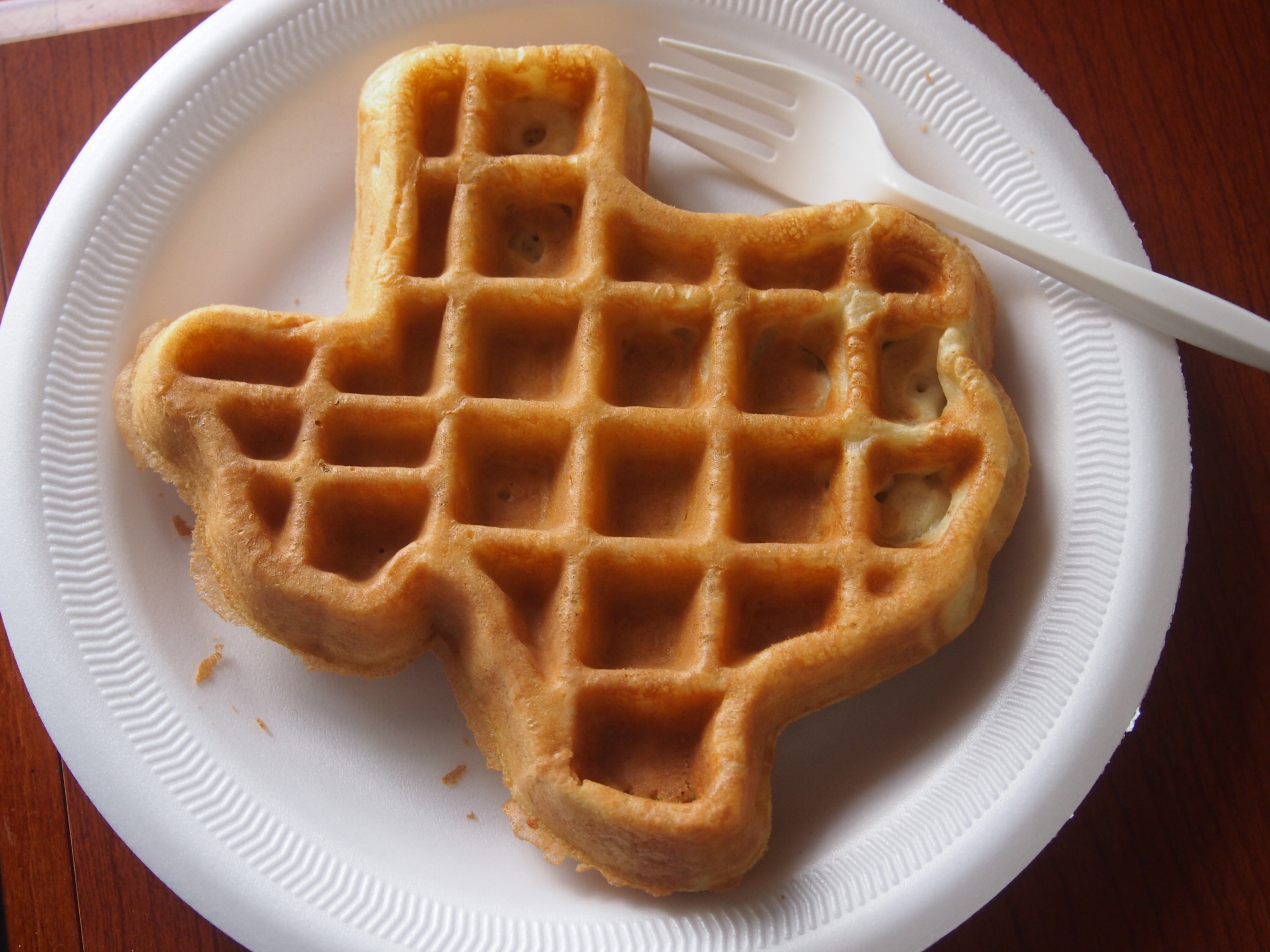
At the motel, you could make yourself waffles in the shape of Texas.

Houston, July 2015Ann noted that we probably wouldn’t be able to make an Illinois-shaped waffled at an Illinois motel. I’ll go along with that.

To the Smokies and Back ’08

Our trip to the Great Smoky Mountains NP and other places in 2008 was a late June, early July event. Has it really been seven years ago? The world seems like a different place now.

At Mammoth Cave NP, there was the famed cave, but you could also rent fun vehicles to tool around in.

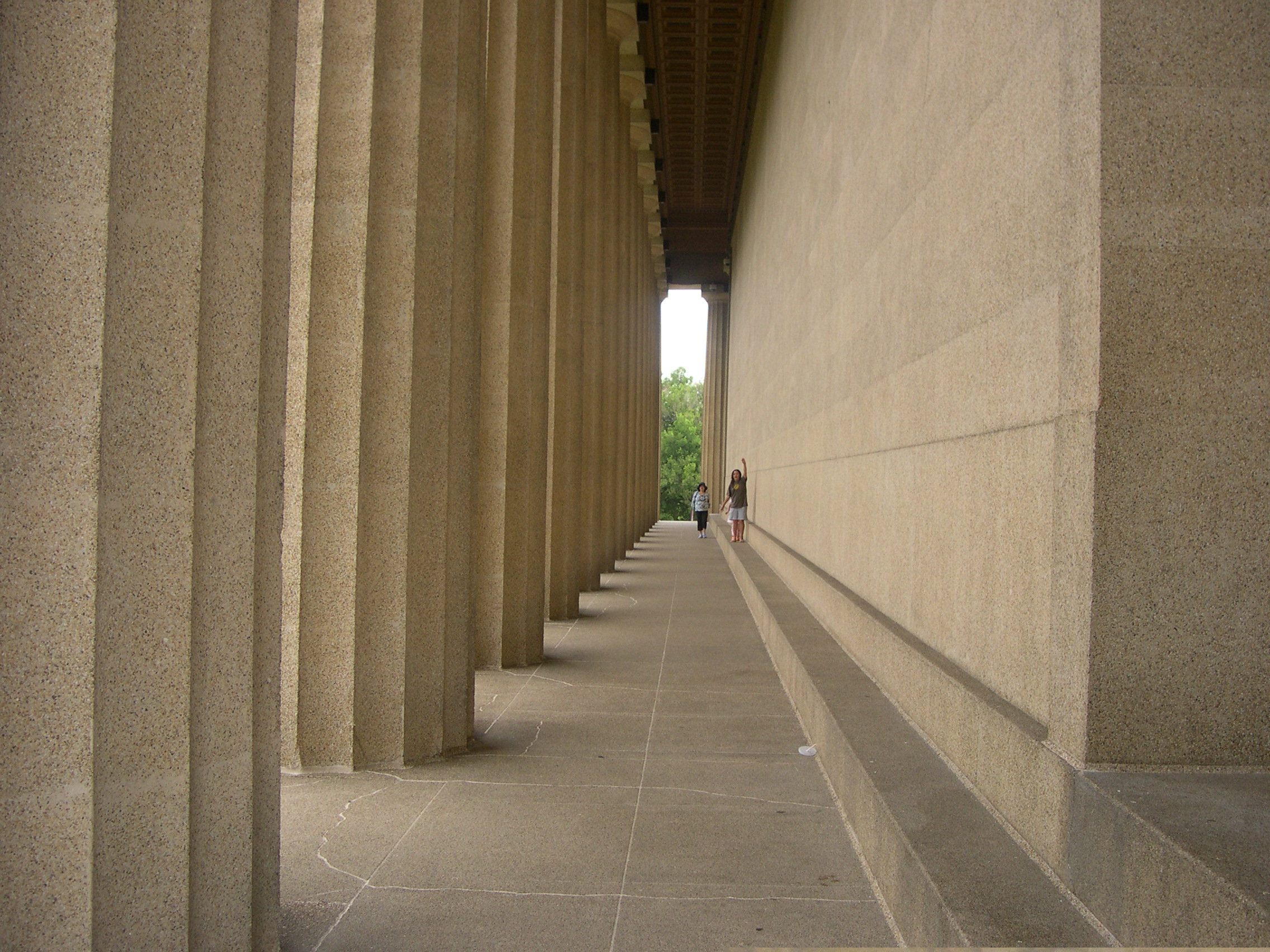
Lilly & Ann June 2008It’s good to show your family places you know, but which they don’t, such as the Nashville Parthenon.
Parthenon, June 2008That’s what this country needs, more public-private partnerships to re-create the wonders of Antiquity. The Hanging Gardens of Omaha. A new Lighthouse of Alexandria in Alexandria, Va. The Statue of Zeus at Olympia, Wash. A new Temple of Artemis in Tucumcari, NM. That kind of thing. (Or city walls around Dallas, as my brother Jay has suggested.)

Next, the Mingus Mill, which is part of the Great Smoky Mountains NP. I liked it just for the name. Water was flowing in the trough, and the girls liked it because they could float things in the trough.
Mingus Mill July 2015As the NPS says, “A half-mile north of the Oconaluftee Visitor Center is Mingus Mill. Built in 1886, this historic grist mill uses a water-powered turbine instead of a water wheel to power all of the machinery in the building. Located at its original site, Mingus Mill stands as a tribute to the test of time.” Yep.

In the Indian town of Cherokee, NC, you could pose for a small fee with this fellow. Chief Syd, he called himself.
Cherokee, NC July 2015It wouldn’t have been a good trip without dropping in on a dead president. Andrew Johnson, in this case. President Johnson reposes in his hometown of Greeneville, Tenn. As it happened, we saw his memorial on July 4. (I did. Family stayed in car.)
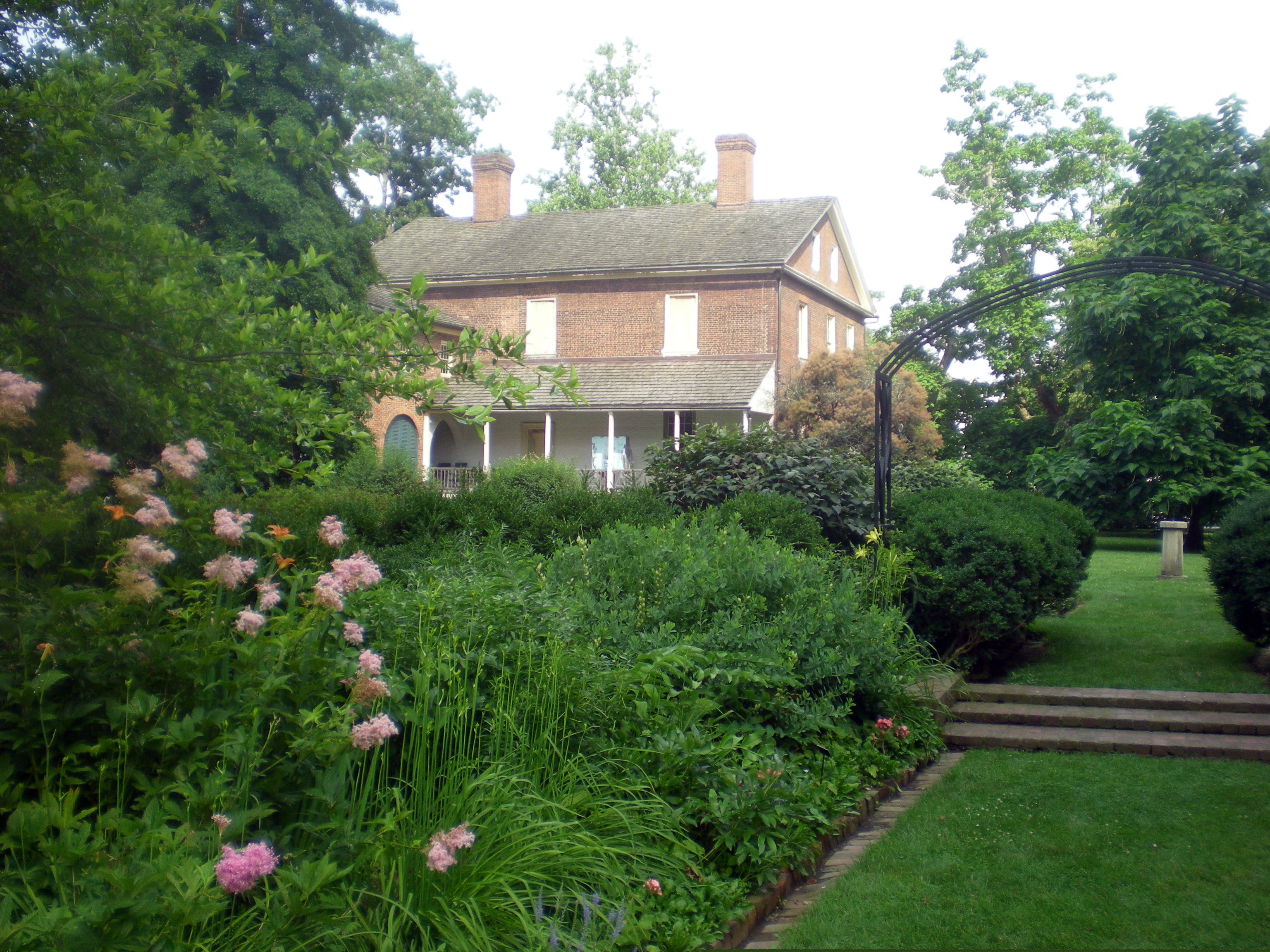
President Andrew Johnson, July 4, 2008It’s also good to happen across little-known historic sites, such as Liberty Hall in Frankfort, Ky. Little-known, at least, outside of the immediate area.
Libery Hall, July 2008“This Georgian mansion was begun in 1796 by John Brown and named for [the] Lexington, Va. academy he attended,” says the landmark sign. “His wife Margaretta and Elizabeth Love began [the] first Sunday School west of [the] Alleghenies in [the] garden. Guests have included James Monroe, Zachary Taylor, Andrew Jackson and Gen. Lafayette…” The plaque maker must have charged by the letter, what with all of the definite articles left out.

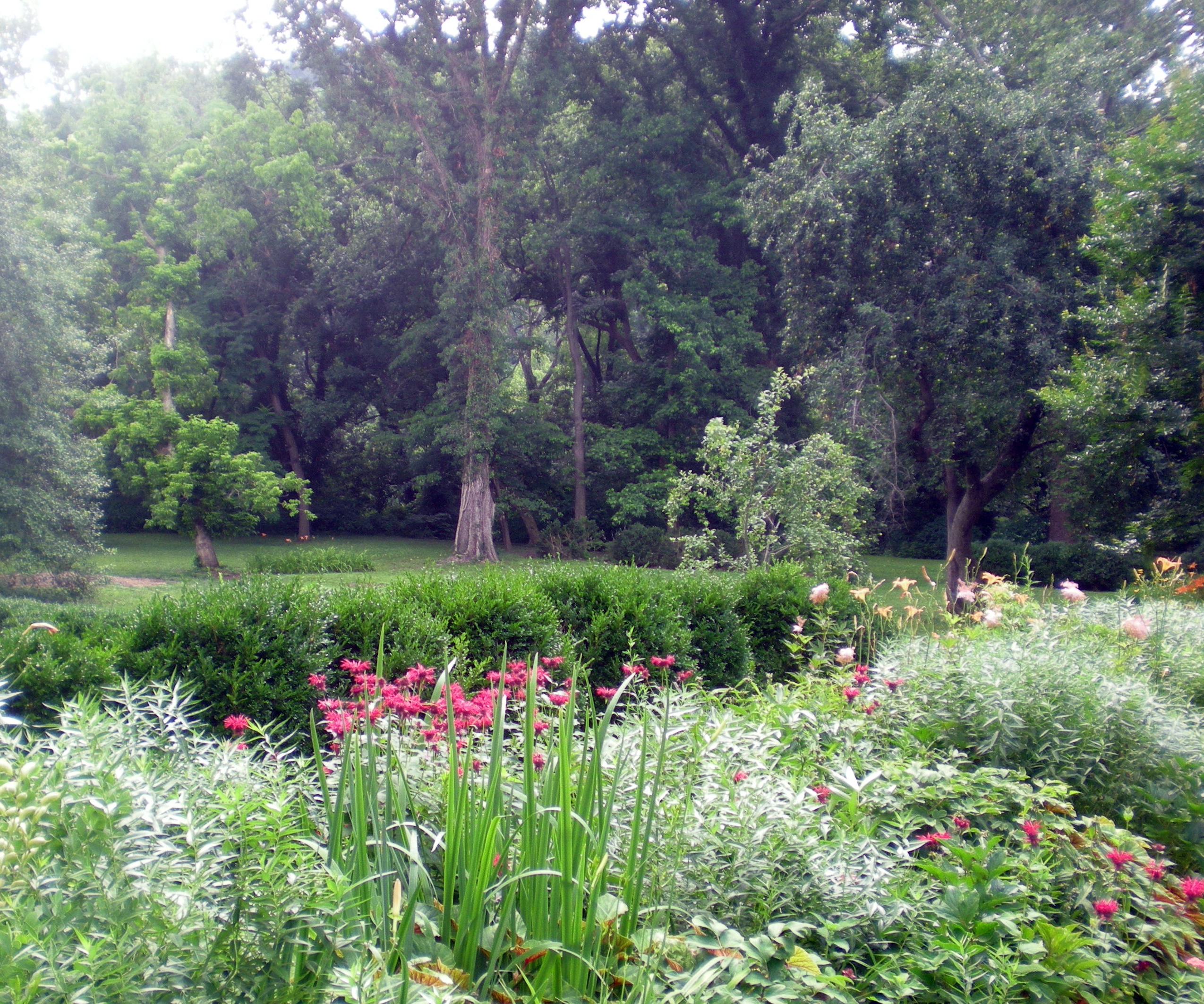
A lovely garden it was, too.

Liberty Hall garden July 2008One more thing. As I’ve said, it’s good to be open to sampling new things on the road.
Root beer, July 2008I don’t remember, but it was probably tasty. Things often taste better on the road.

Lilly in Panama

What was that? The flicker of fireflies. I saw the first of them around here late last week. Harbingers of high summer, they are.

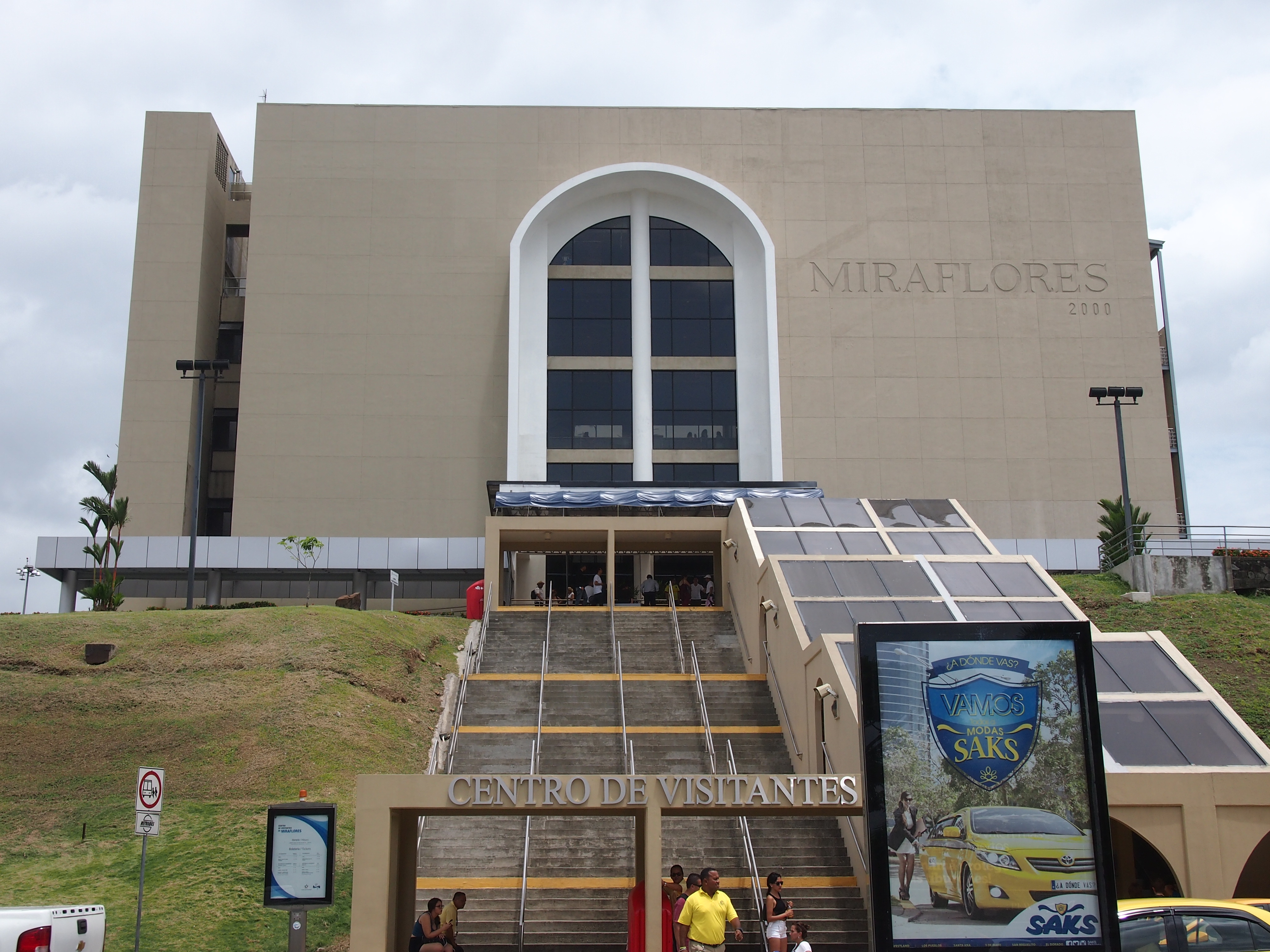
After a week in Ecuador, Lilly and her school group went to Panama for a few days. One thing you do there, I hear, is go see the big dig. In their case, at the Milaflores Lock, which apparently has a newish visitor center — dated 2000, right after the canal was finally Panamanian.

Panama, June 2015The cost to get in (Lilly has the ticket): $10. Once in, you get a view of the lock, and perhaps a ship passing through TR’s handiwork.

Panama, June 22, 2015As it happened, the United Banner was passing through. It’s easy to look up in our time: the vessel is a Greek tanker, built in 2007, at 42,010 gross tonnage, and more than 228 meters long. According to marinetraffic.com, it’s currently at anchor just off Colon. Maybe the ship’s waiting for the situation in Greece to sort itself out.

That wasn’t all she got to do in Panama — I’ve heard bits about a boat ride, time at a monkey reserve, a visit to a rain forest, more open air markets, and so on — but the pictures peter out in Panama. I understand completely. I let her take my camera, which isn’t a pocket-sized smartphone gizmo, so there are times when you don’t want to carry the damn thing around.

Lilly in Ecuador

I don’t have any comments to offer here on the jurisprudence of Justice Scalia, but I do crack a smile at his florid prose, as pointed out again recently by endless commentators (and wags who have fun with him). Such writing comes from having no editor to answer to, and a taste for it. I’ve run across most of his terms before — everyone ought to know “argle-bargle” and “applesauce” (in the way he meant it) for instance — but “jiggery-pokery” was a new one on me.

Or rather, an old-sounding new one. It’s a term of abuse that sounds like it might have come up in a London coffee shop argument about the Bangorian Controversy. I was glad to learn it.

Earlier this month, Lilly went to Ecuador and Panama on a Spanish Club trip. It was a big wheel, little wheel trip — one major destination (Ecuador for a week), one lesser one (Panama for three days).

That’s further than I ever got to go on any school trips, though taking a bus to Stevens Point, Wis., from San Antonio for the Mu Alpha Theta National Convention was its own kind of epic, and Amarillo seemed almost as far (Latin Club trip). It was the luck of the draw for her; some years the club goes to Spain, others Costa Rica. All those sound good to me, but Ecuador especially. South America. I’ve never even been close.

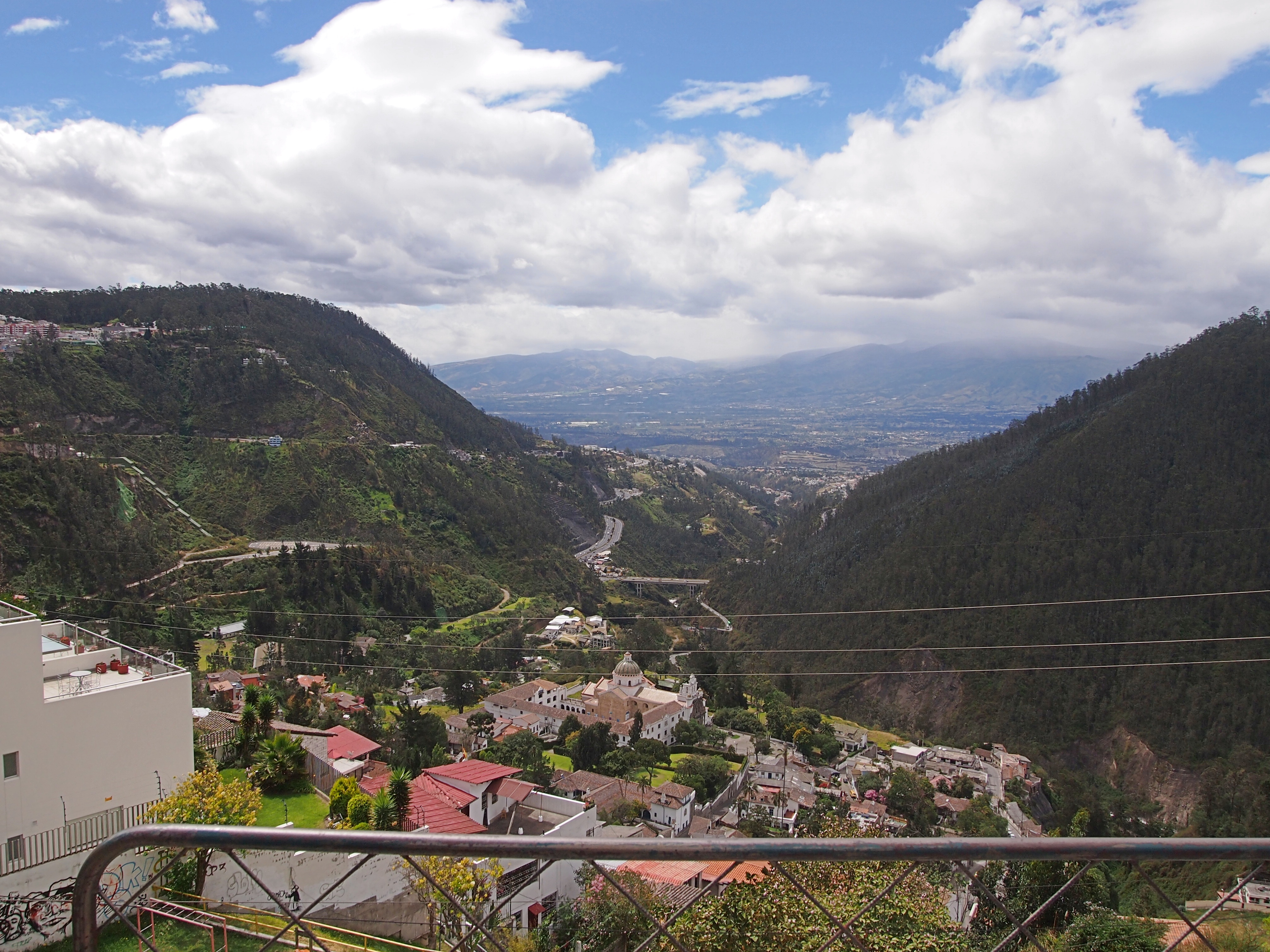
Most of her pictures weren’t selfies. She’s outgrowing a need for excessive self-images, I think. Here’s a view overlooking Quito.

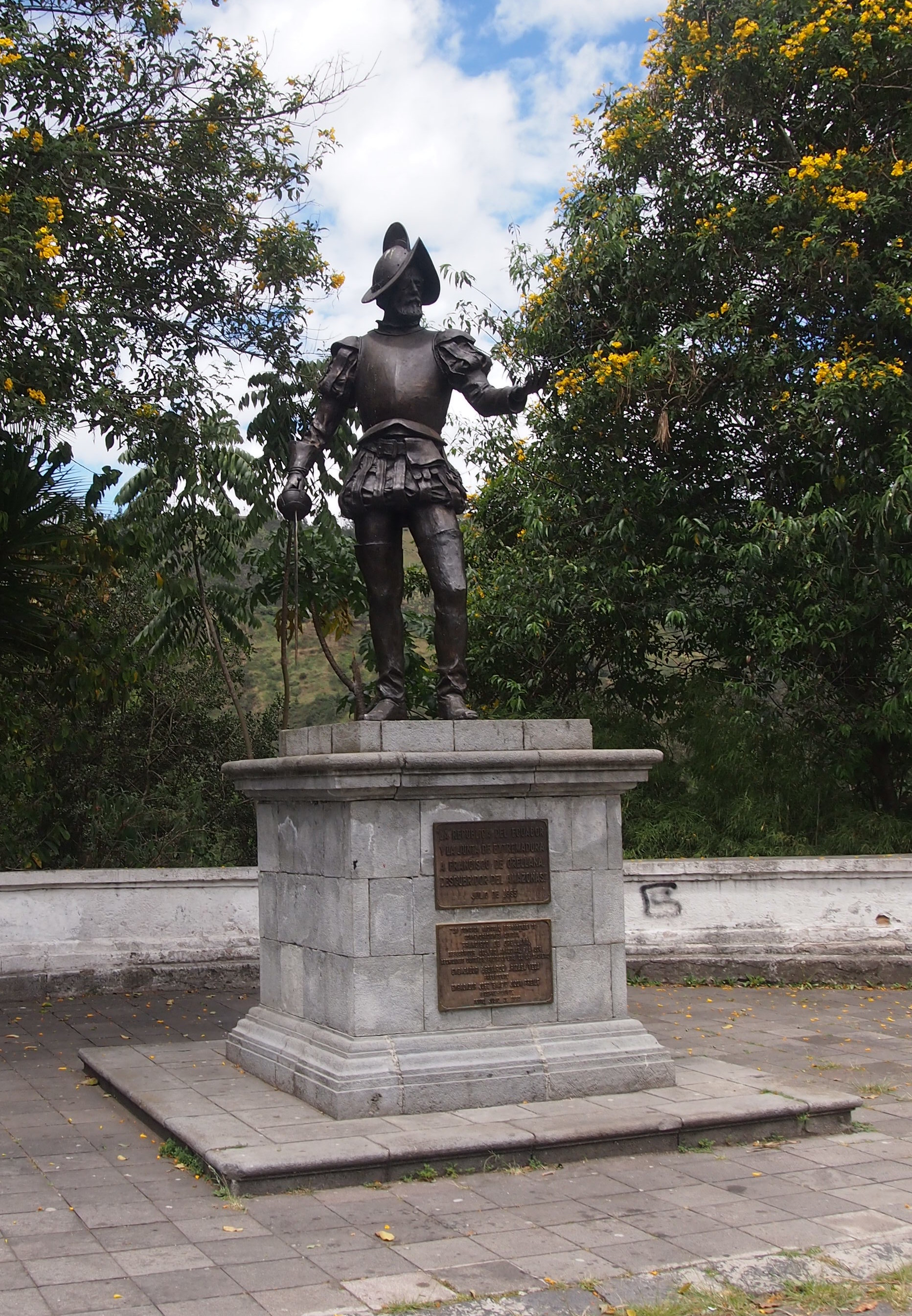
The next pics illustrate her taking after her father, unconsciously I bet, in taking pictures of statues and public art. This particular figure is Francisco de Orellana, explorer of the Amazon. As Wiki puts it, “in one of the most improbably successful voyages in known history, Orellana managed to sail the length of the Amazon, arriving at the river’s mouth on 24 August 1542.”
Quito June 2015Some roadside art.
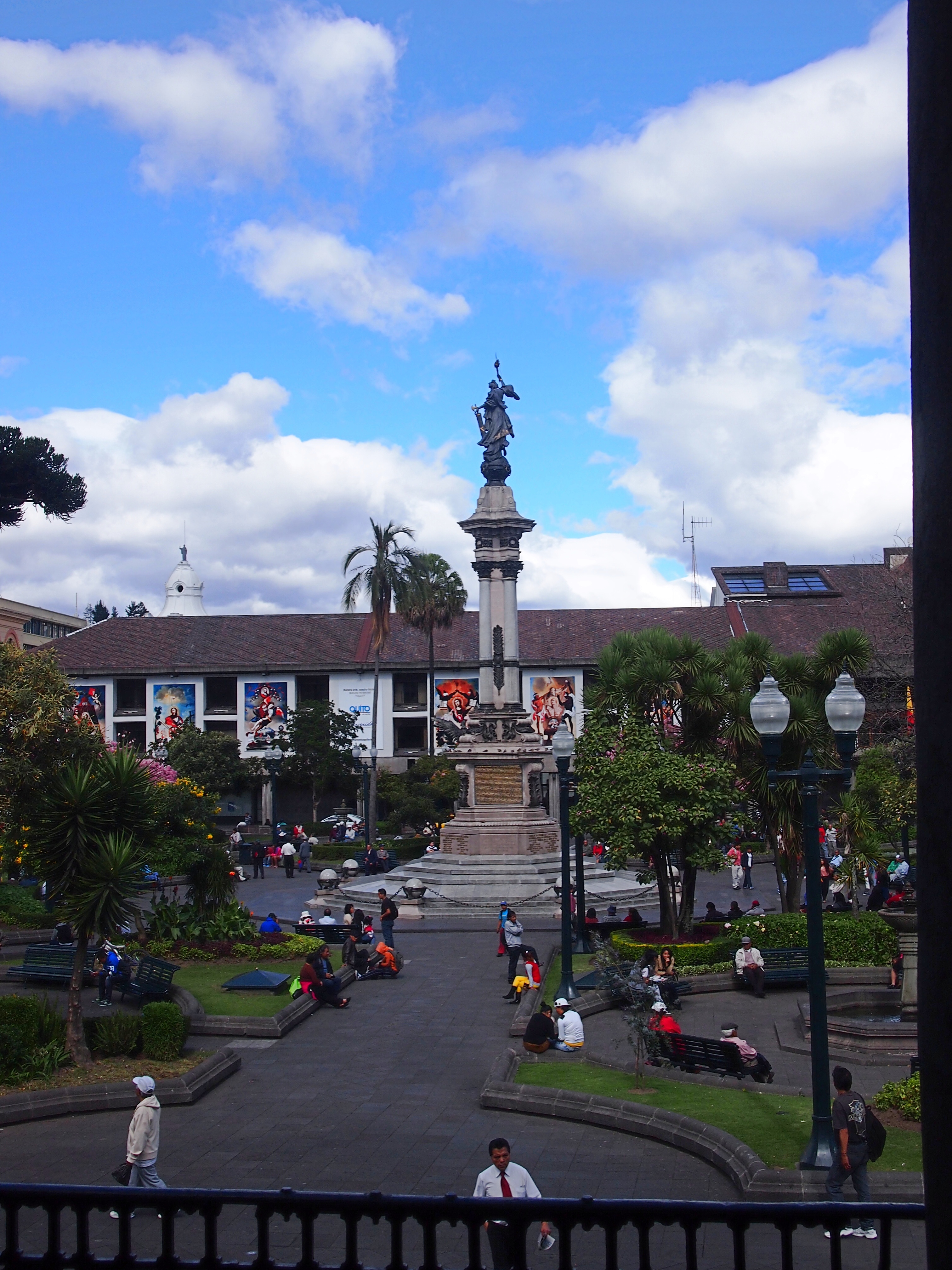
Quito June 2015Plaza de la Independencia.

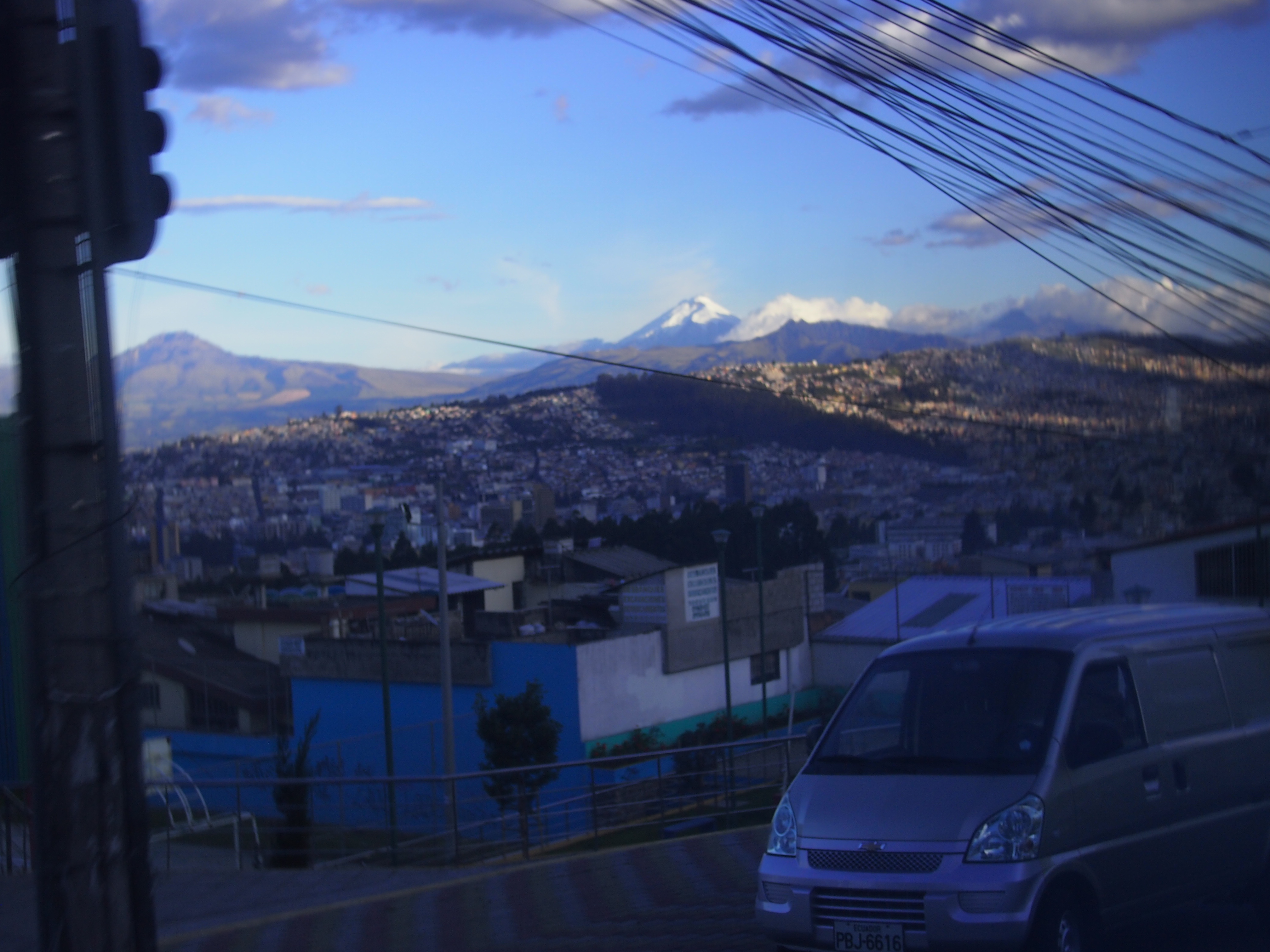
She was also impressed by the fact that she could see a volcano from Quito, which I believe is Pichincha. Alexander von Humboldt was the first European to climb it. I hear tell it’s still active.
Quito 2015Of course there were many more places. She visited the tourist Equator — how could you not? — Plaza Santa Domingo, a couple of art museums, open markets, grocery stores, churches, a school (technically they took a few Spanish lessons), the neighborhood in which she stayed with an Ecuadorean family, even the outside of the Ecuadorean presidential palace. All in all, it sounded like a fine trip. I’d need no persuasion to go myself.