Around Lake Superior

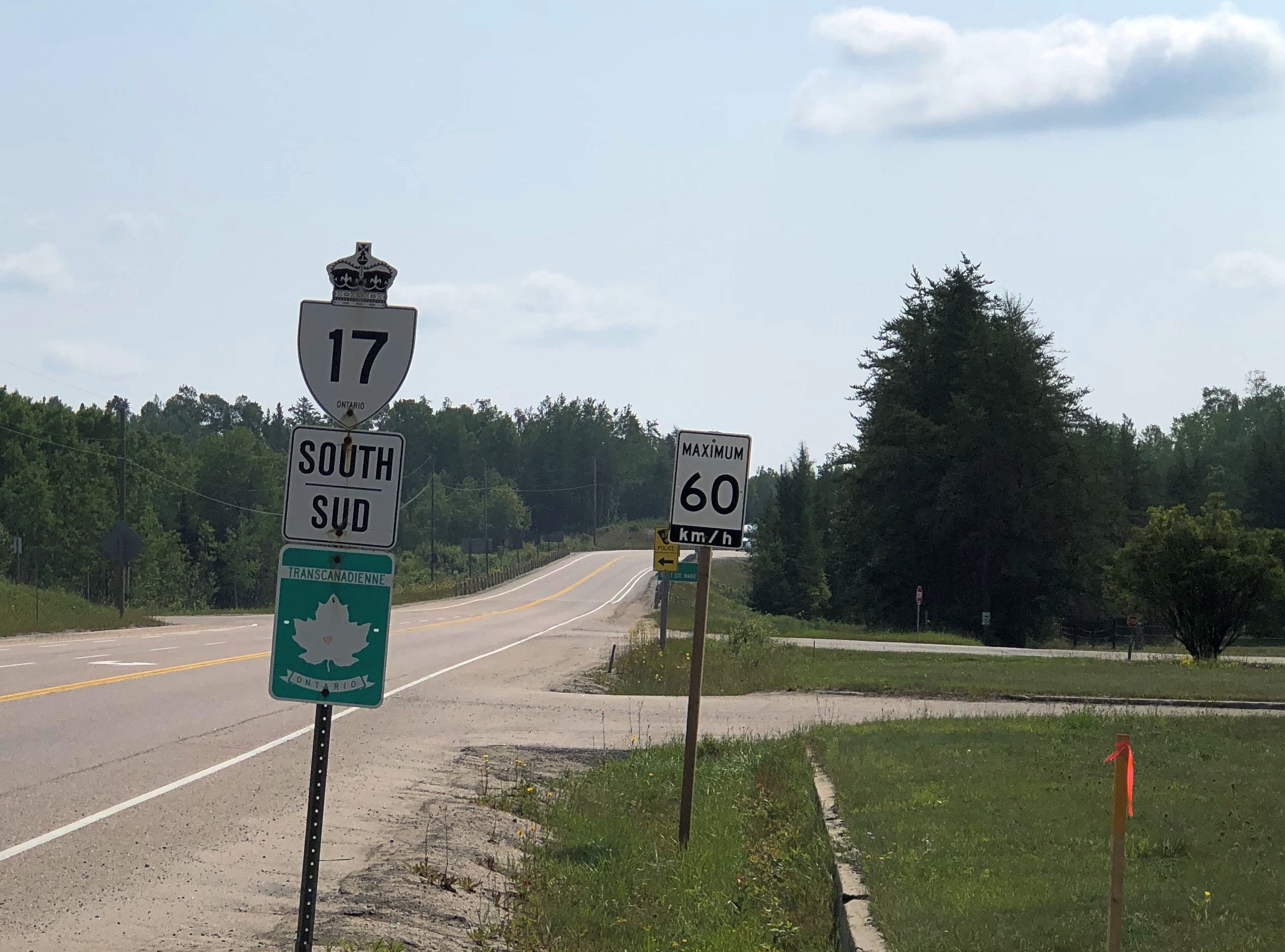
Long stretches of the Trans-Canada Highway along or not far from Lake Superior are lightly traveled, even in summer. Driving the road isn’t exactly solitary, but traffic-free enough to allow your mind to wander. And by your mind, I mean mine, a few days ago.

Dear Mr. Prime Minister, I thought.

There must be a correct way to address the prime minister of Canada in a formal letter. Who writes formal letters to politicians any more? Still, the formal must exist, and I could look it up. Never mind, on with the letter.

Your Excellency,

I’m about mid-way through an enjoyable six days in your country, traveling from the port of entry at Grand Portage to an exit at the grand international bridge connecting the two Sault Ste. Maries.

I have noticed that very few places in Canada sell postcards, even tourist shops, and especially Parks Canada units. I had to struggle to find cards to send to my friends back in the United States, which is a minor hobby of mine.

Market forces, you might say. An erosion of Canadian heritage is what I’d call it, and I am writing to urge that your government do something to reverse the loss, against the day when – fully dismayed by electronic media — people return to physical media.

I leave the details to you and your Minister of Canadian Heritage (cc’d on this letter). Certainly Parks Canada can be persuaded to stock them again. For private shops, perhaps tax incentives to produce Canadian-content postcards and to stock them, and a public service campaign to encourage their purchase and use.

It might not be Canada’s most pressing challenge, but it is certain worth a little of your government’s time.

Despite the minor postcard annoyance, it was nice to be back in Canada.

Every bit as scenic as the U.S., but a lot cheaper. The current judgment of the currency markets is that the U.S. dollar is strong against its Canadian counterpart (unlike in 2006).

Canada wasn’t the entire trip. Leaving on July 28, I drove from northern Illinois northwestward through Wisconsin, then to the shore of Lake Superior in Minnesota, reaching the border on the afternoon of the 30th. I left Canada yesterday, August 5, proceeding home through the UP and then southwestward back through Wisconsin, arriving home today.

In effect, I went clockwise around Lake Superior: 1,937 miles all together, though some fraction of that was measured in kilometers.

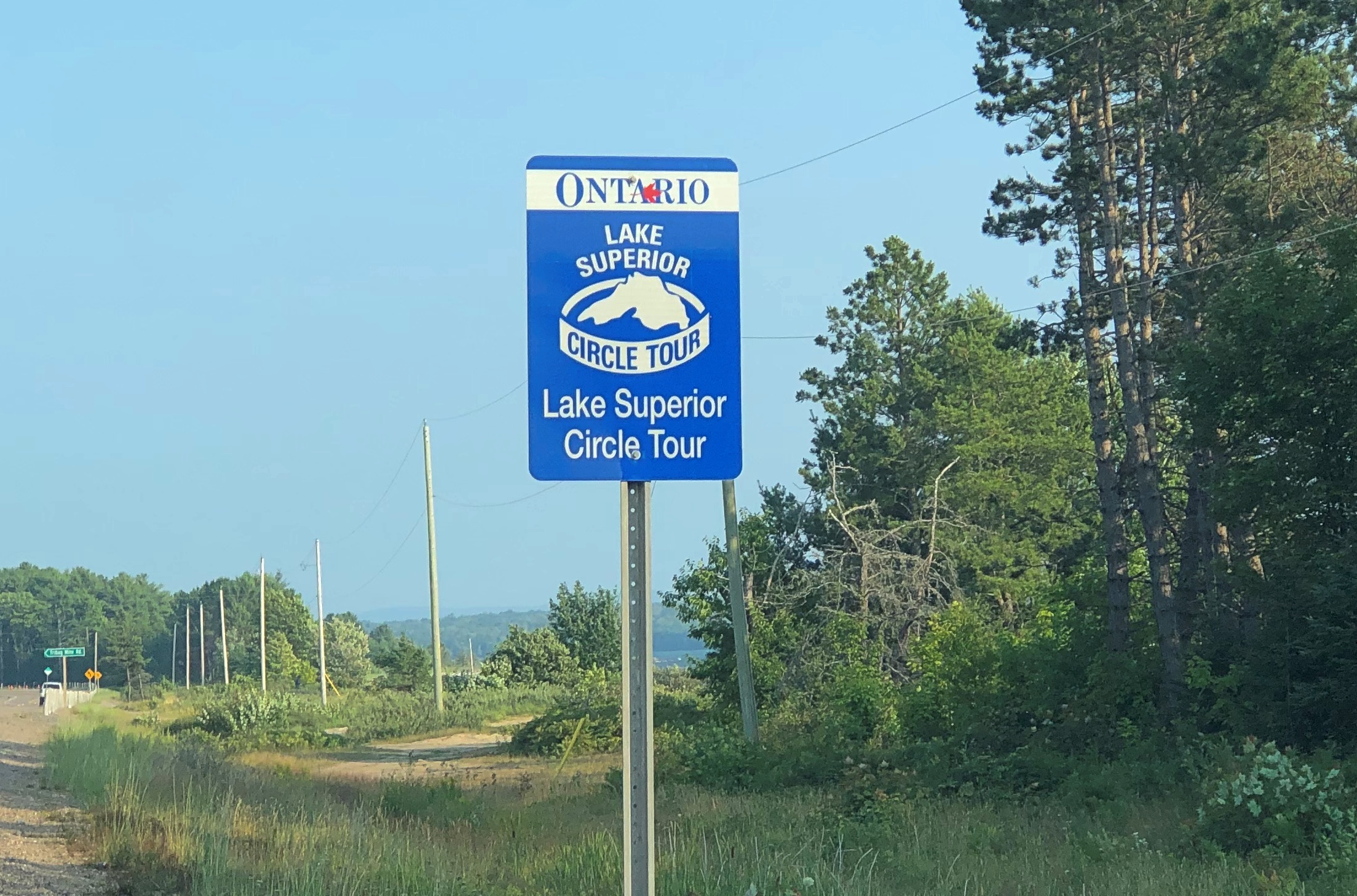
This particular drive has been in the back of my mind for years. Years and years. In September 1989, I drove to the UP and went camping. One day I headed north from my campsite to Munising for breakfast, and then on to Marquette. Somewhere along the way, around the time I first saw Lake Superior, I also saw a sign like this (except not Ontario).

I’d seen Lake Michigan Circle Tour signs in Illinois and Wisconsin. Those were brand new in those days, created to encourage tourism in the Great Lakes region, and if you asked me a brilliant bit of design. Drive around the lake, the sign says. You will be well rewarded.

I agreed: The ’89 trip itself was around Lake Michigan, though I’m sure I would have done it without the signs.

I’d never seen a Lake Superior Circle Tour sign before, but I liked the idea immediately.

The prospect intoxicated: around Superior would be mean driving to Minnesota, through that remote part of Ontario, and the back through the UP. Or vice versa. What was up that way? Exotic boreal territory; small towns; few services; moose? At the time, my experience with Canada was limited to a rewarding but short stay on Vancouver Island.

The actual Circle Tour follows a specific set of roads around, and during this trip I followed them on the whole, mostly because that was often the only option, but in some places I took other roads, usually since they were more convenient. So I can’t claim to be Circle Tour purist.

Even so, now that I’m done, driving around Lake Huron seems like a good idea too – either by way of the Bruce Peninsula and Manitouline Island, or the long way around Georgian Bay. I don’t expect to have another 34 years to get around to that, so it will be have to be sooner, if at all.

Burlington, Wisconsin: Liar Liar

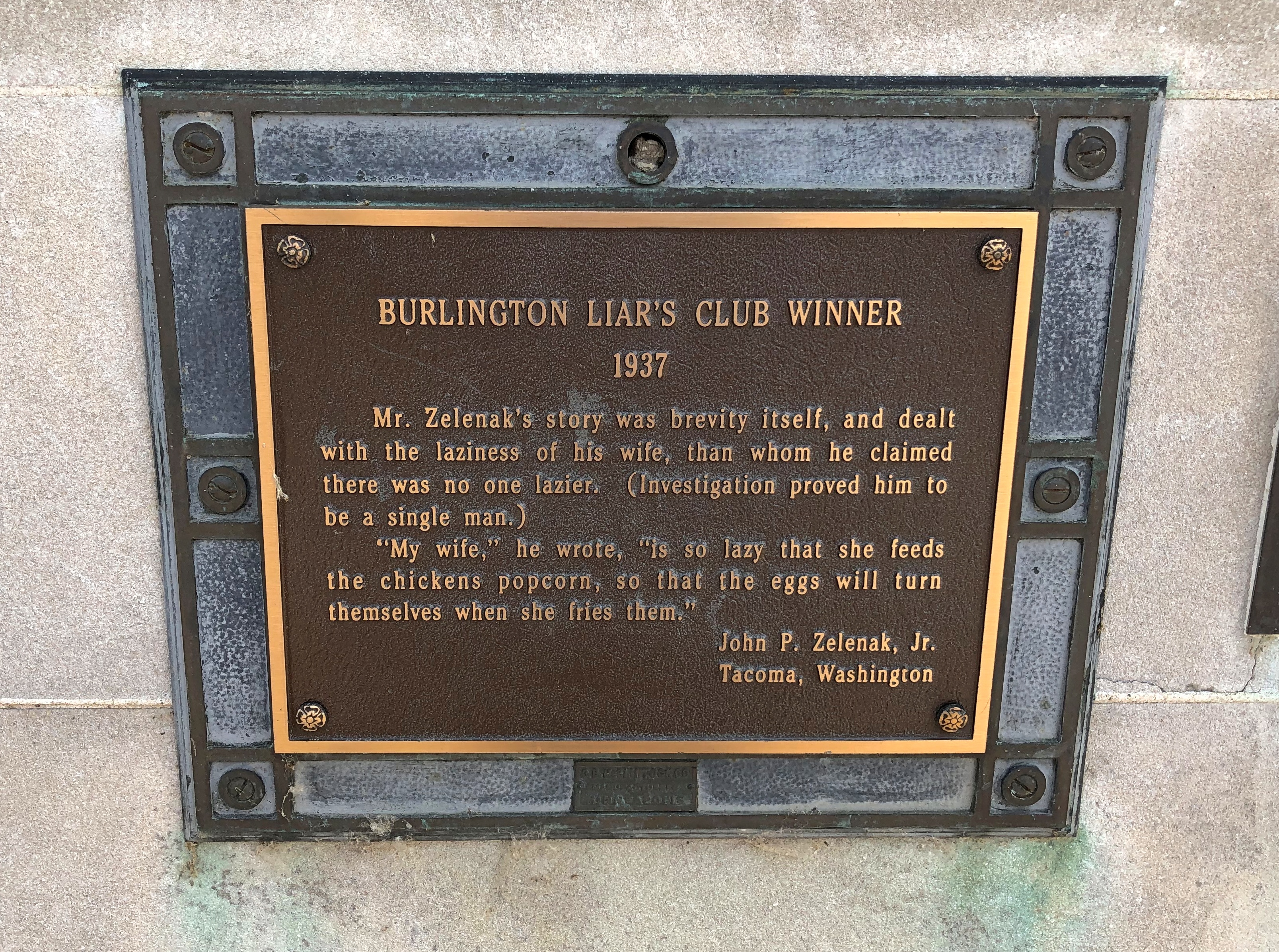
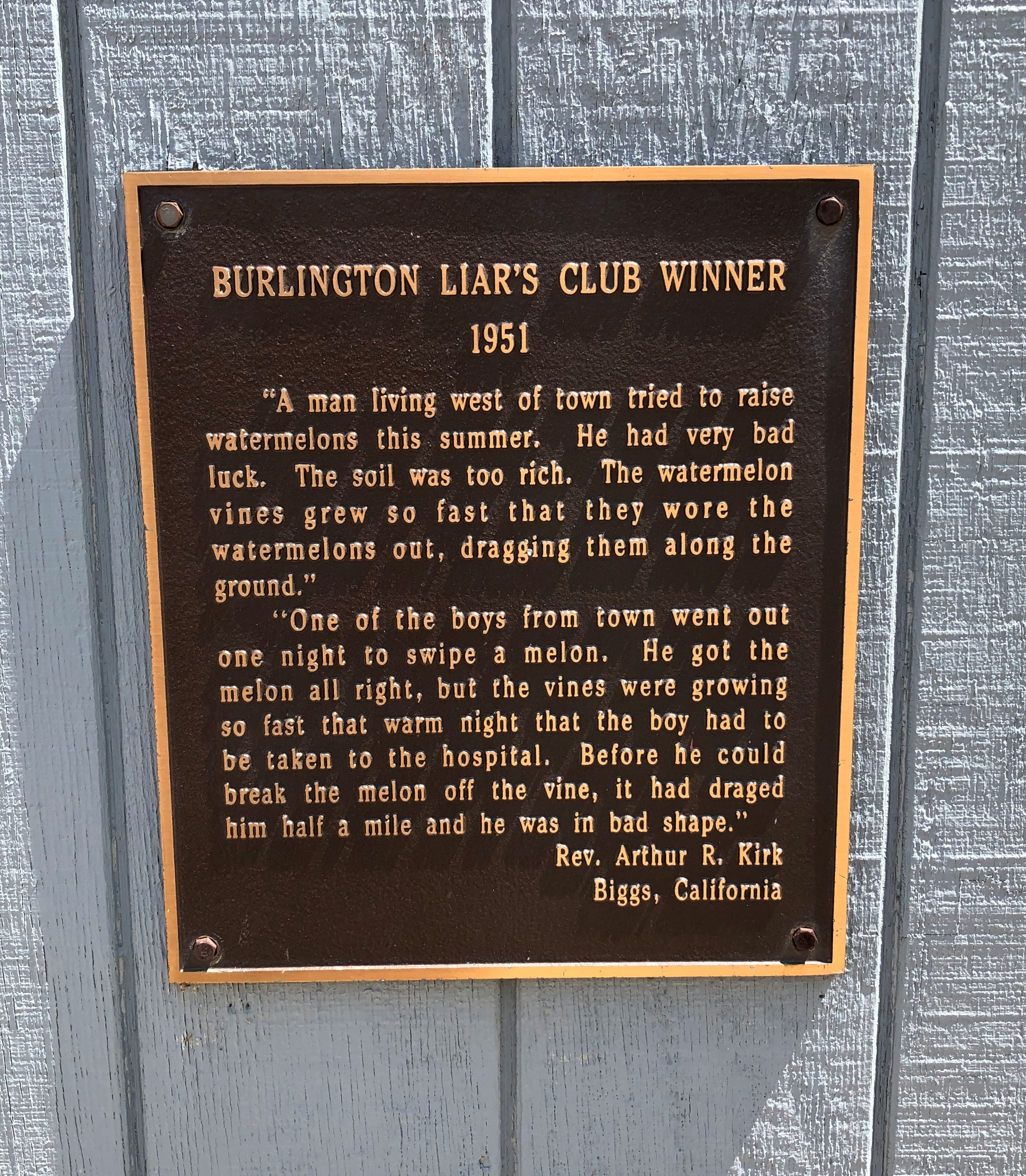
If, in downtown Burlington, Wisconsin – not a very large place, since the entire town’s population is about 11,000 – you pay attention to your surroundings, you’ll start noticing plaques.Burlington, Wis Liar's Club Plaque Burlington, Wis Liar's Club Plaque Burlington, Wis Liar's Club Plaque

They honor winners of a contest put on at the end of every year by the Burlington Liar’s Club. I’ve read that the contest is for tellers of tall tales, submitted by entrants nationwide, but looking at this list of winners, I’d say only some of them count as “tall tales,” along the lines of a watermelon vine dragging a boy in its wake.

The rest are jokes. In the 1978 example, pretty much like one Johnny Carson would have told.

Newspapermen of nearly 100 years ago made up the Burlington Liar’s Club, but the thing achieved a life of its own, quickly evolving into the overseer of a not-very-serious contest with entrants from around the nation. No doubt the contest is unique in the nation, like the Nenana Ice Classic or the Sopchoppy Worm Gruntin’ Festival.

“The club started in 1929 as a joke,” the club website says. “A Burlington newspaper reporter wrote a story to the effect that these ‘old timers’ got together each New Year’s day at the police station, and lied for the championship of the city…

“… city editors, with an eye for interesting features, ‘put it on the wire,’ and the following December the Associated Press and other news agencies began phoning Burlington to find out if the city’s annual contest would be repeated…

“Letters began to trickle in from the four corners of the country commenting on the ‘contest.’ They furnished the inspiration for a real contest instead of a phony one, national in scope, and the Burlington Liar’s Club was formed to carry it on.”

Just the kind of thing to notice during a small-town walkabout. I was delighted. Who isn’t fond of the oddities in Wisconsin? The fiberglass fields and pyramids and Forevertrons.

One Sunday late in June, I took Ann to the southern Wisconsin camp she where is working as a counselor for the summer, and after I dropped her off, spent a little time looking around Burlington and environs.

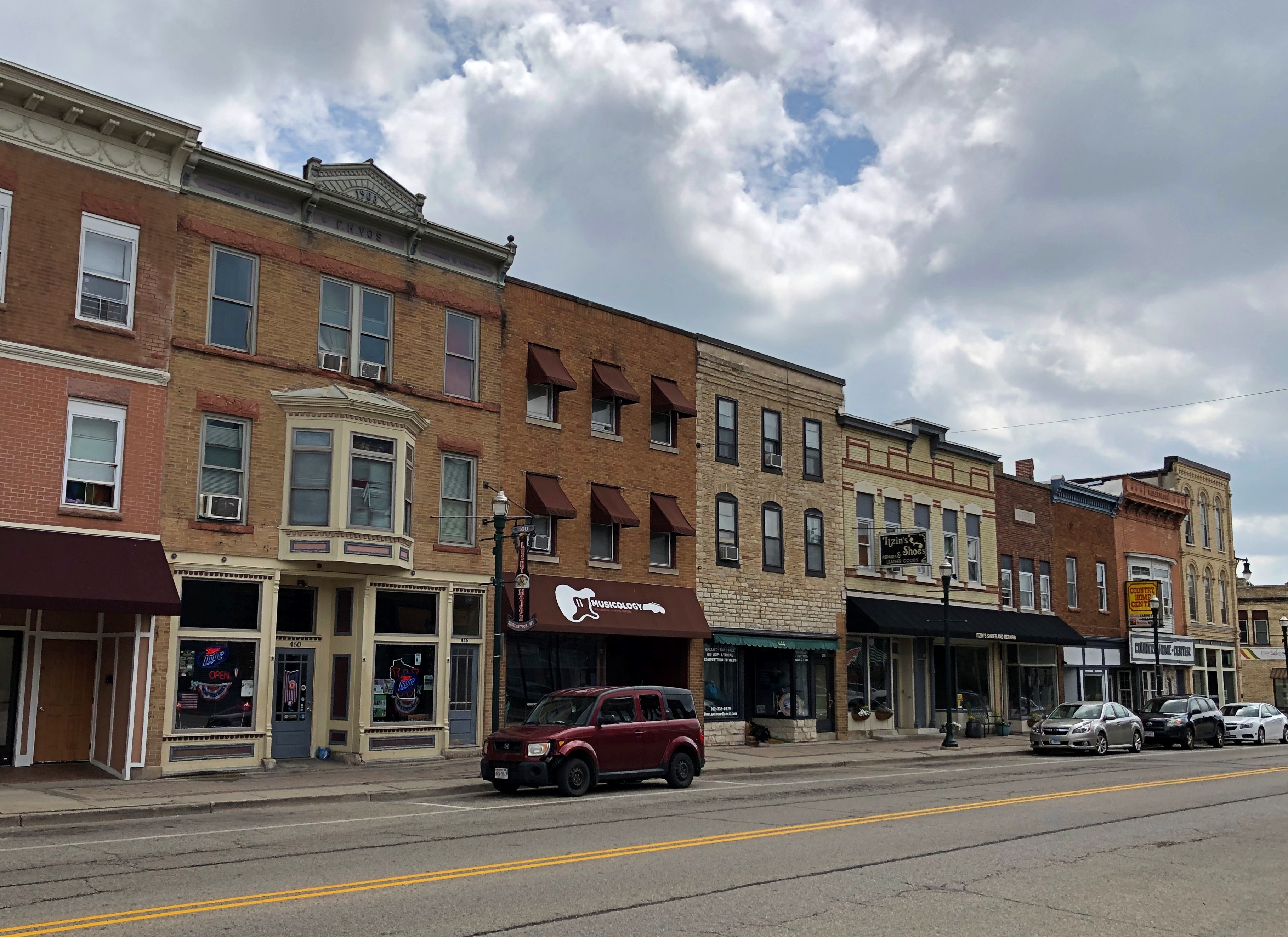
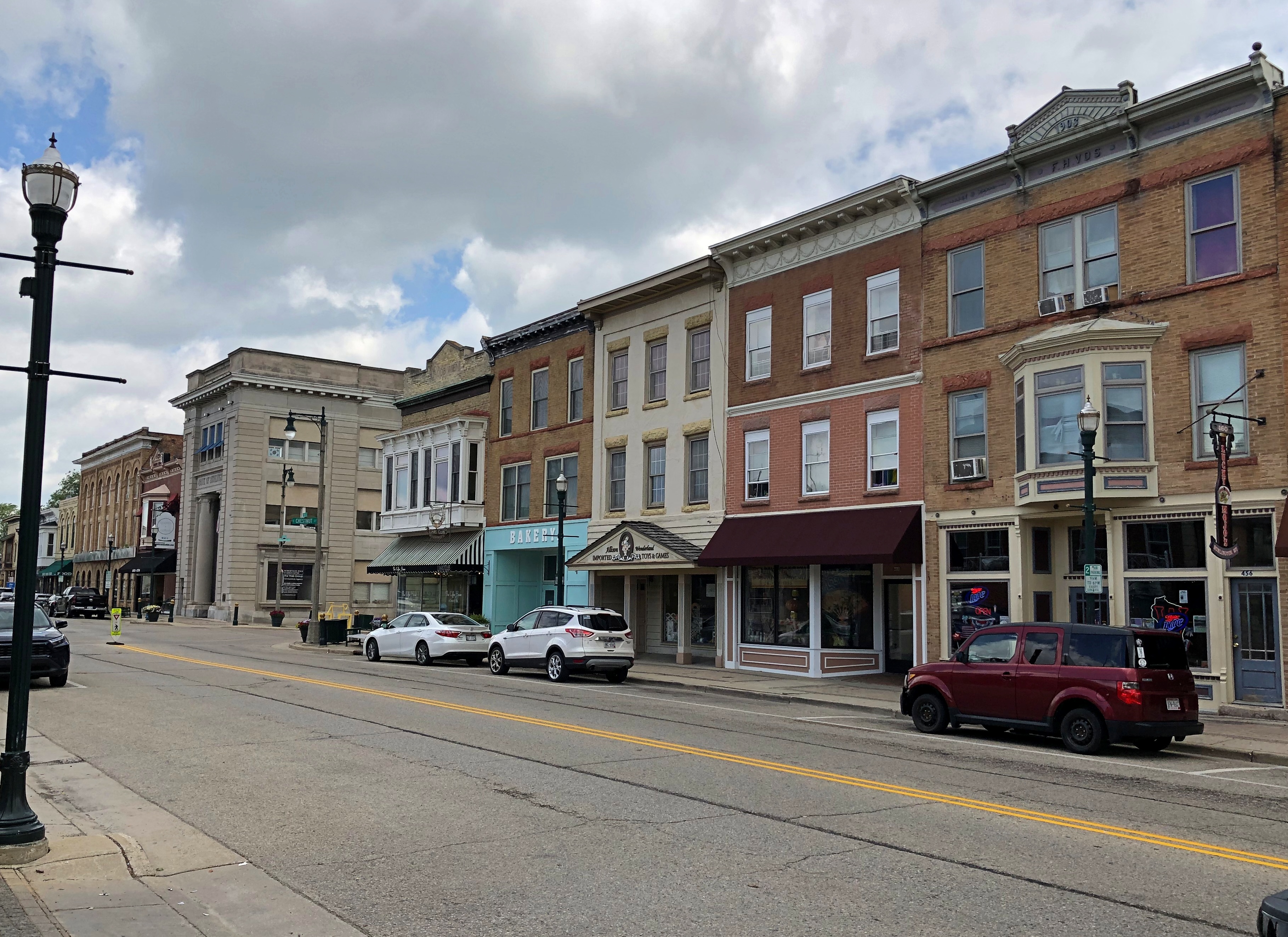
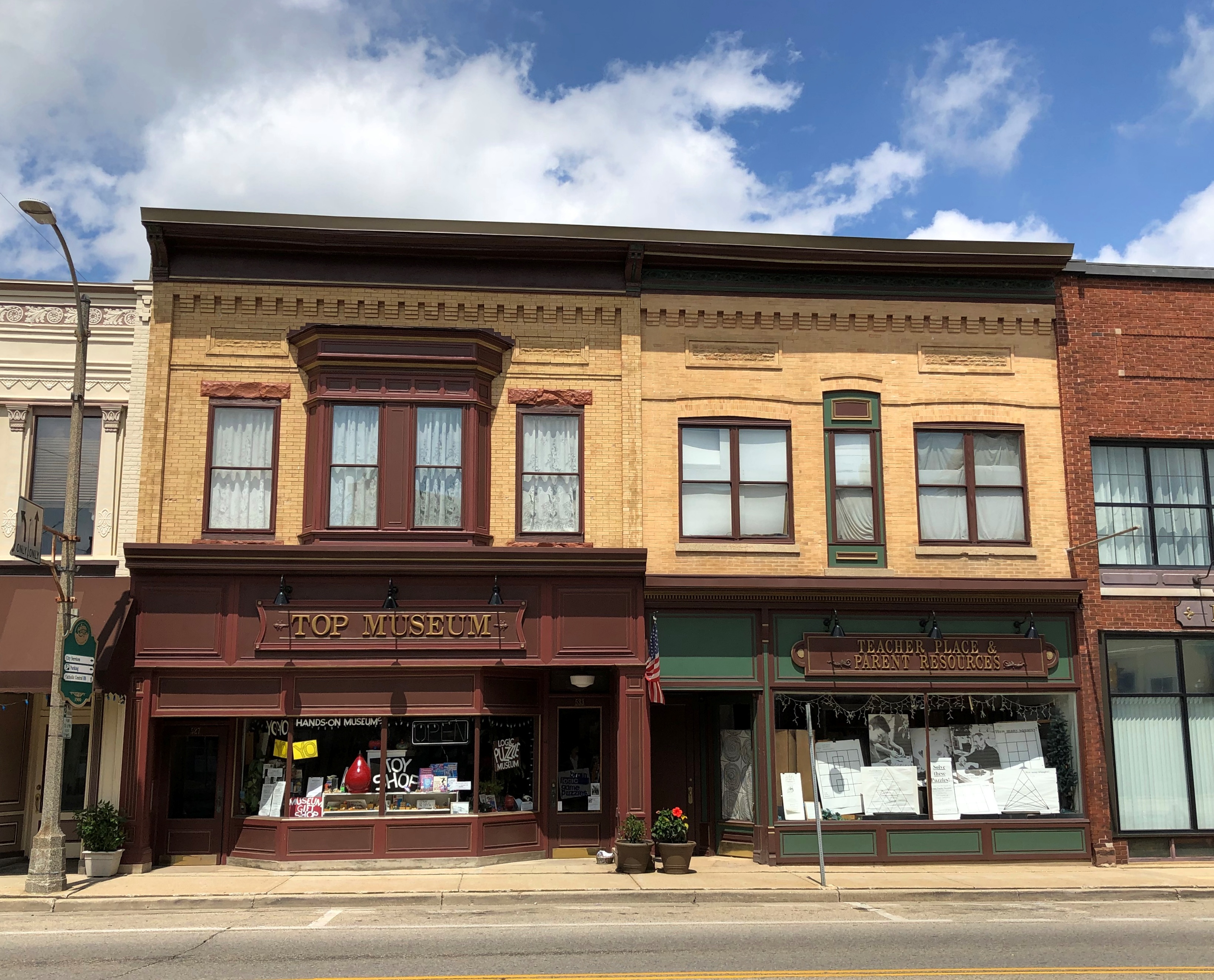
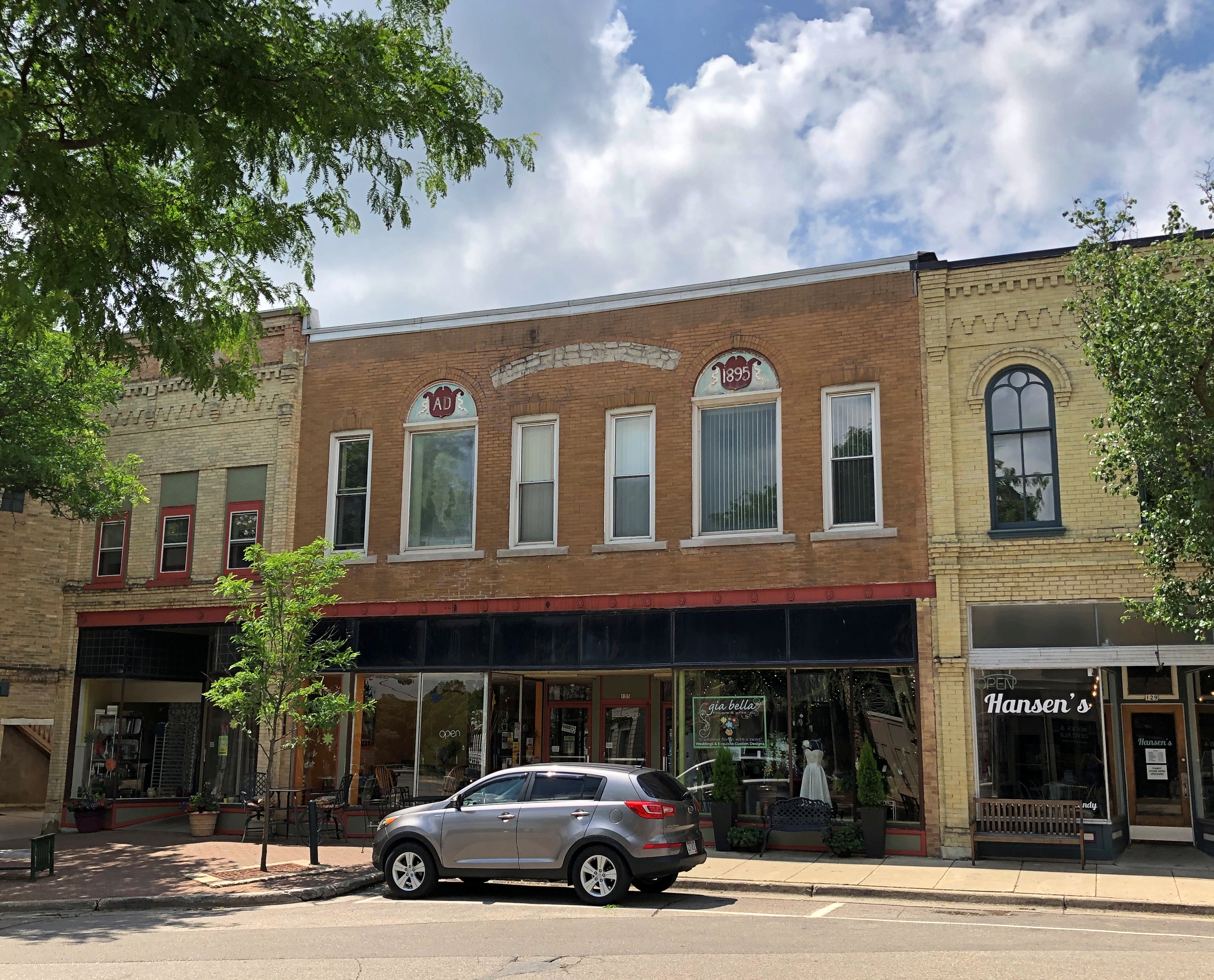
The small downtown of Burlington, which at this point in history counts as exurban Milwaukee, is a handsome place, with most of its storefronts occupied.Burlington, Wis Burlington, Wis

That is, some handsome old buildings with modern tenants.Burlington, Wis Burlington, Wis

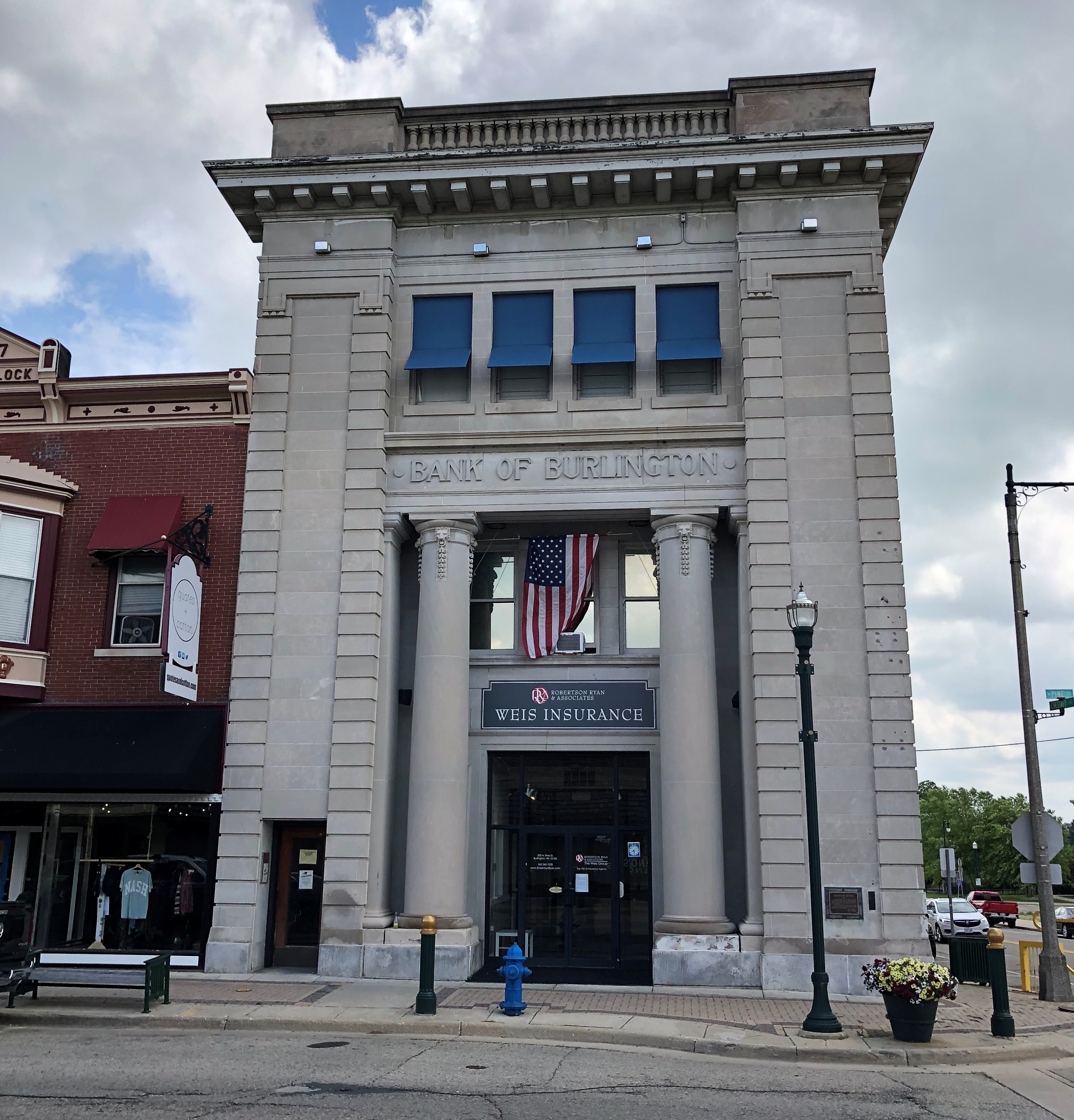
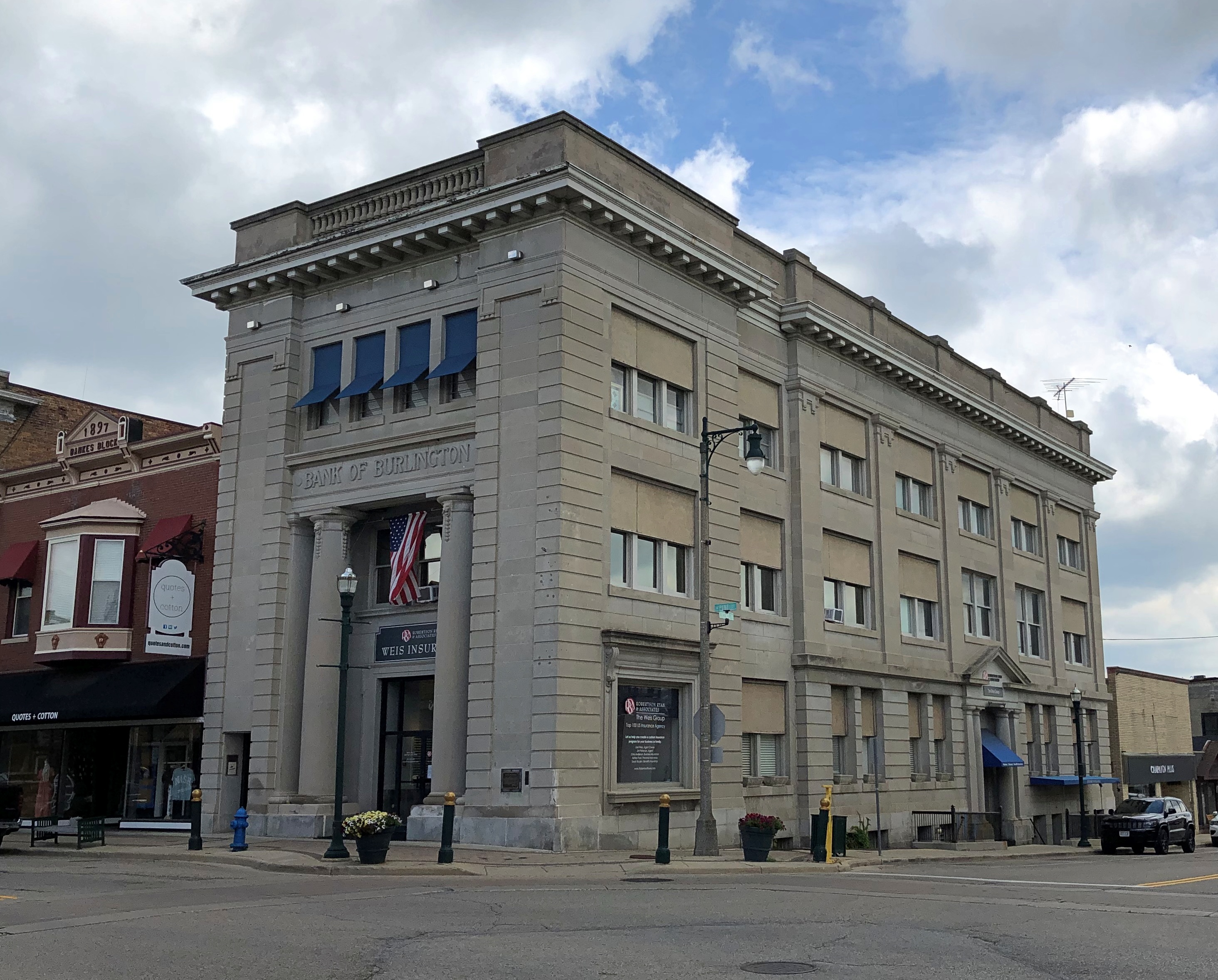
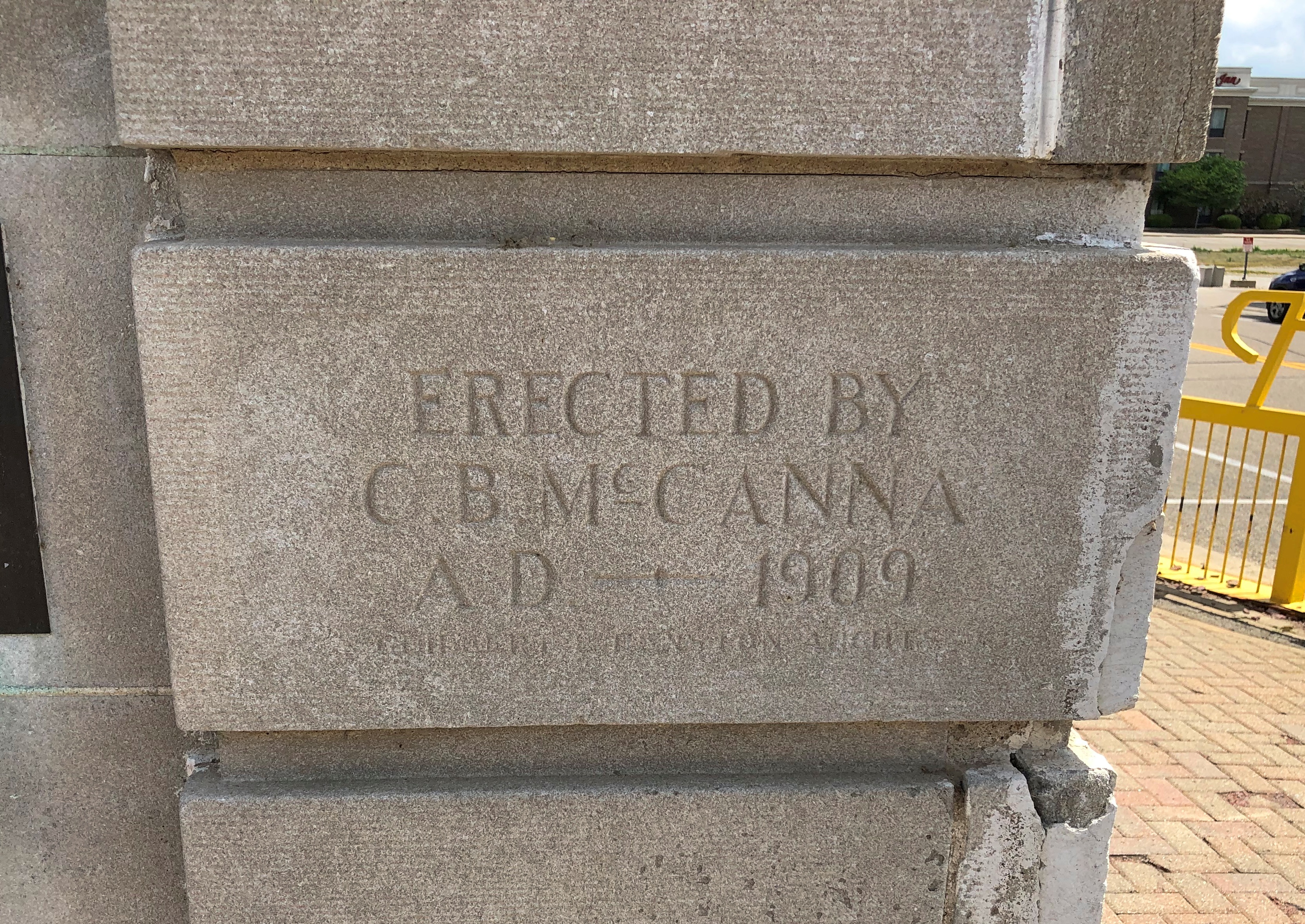
Nothing like a sturdy pre-FDIC bank building. Completed in 1909; that makes it pre-Fed as well.Bank of Burlington, Wis Bank of Burlington, Wis Bank of Burlington, Wis

I couldn’t not look it up. The Bank of Burlington in Wisconsin existed in various forms since the mid-19th century; it was prospering in 1916, according to this article from that year, posted by AccessGeneaolgy. A bank in some form or other was in the building until 2021, which Chase closed its office there. That hints that Chase was the last of a string of banks swallowing other banks in the 20th and 21st centuries.

Also: C.B. McCanna. That would be Charles B. McCanna (d. 1913), who organized the McCanna Cheese and Butter Manufacturing Co., and operated about 20 factories in the area. He was also president of the Bank of Burlington in his later years.

“In 1893, the company was reorganized as McCanna and Fraser, with McCanna serving as president until his death,” says the Wisconsin Historical Society. “In 1898 he founded the Wisconsin Condensed Milk Co., which soon became one of the largest producers of condensed milk in Wisconsin and operated branch factories in Pecatonica and Grayslake, Ill.”

You’ve heard of Wisconsin beer barons. Here we have a cheese baron.

I enjoy the old-fashioned approach of a 1916 article about McCanna, another article accessible via Access Genealogy. Of course, it wasn’t old-fashioned at the time, just standard practice in lauding business men:

“Dairying and the industries which are allied thereto have ever constituted an important source of the wealth and prosperity of Racine County, and among the most enterprising and progressive business men of the district are those who have turned to that line of labor as a source of their business development. One of the well known, successful and highly respected representatives of the business in Racine County was Charles B. McCanna, who became an influential citizen of Burlington and one whose activities constituted not only a source of individual success but also constituted one of the strong elements in the advancement of public prosperity.”

Dublin, Barcelona, Then Venice

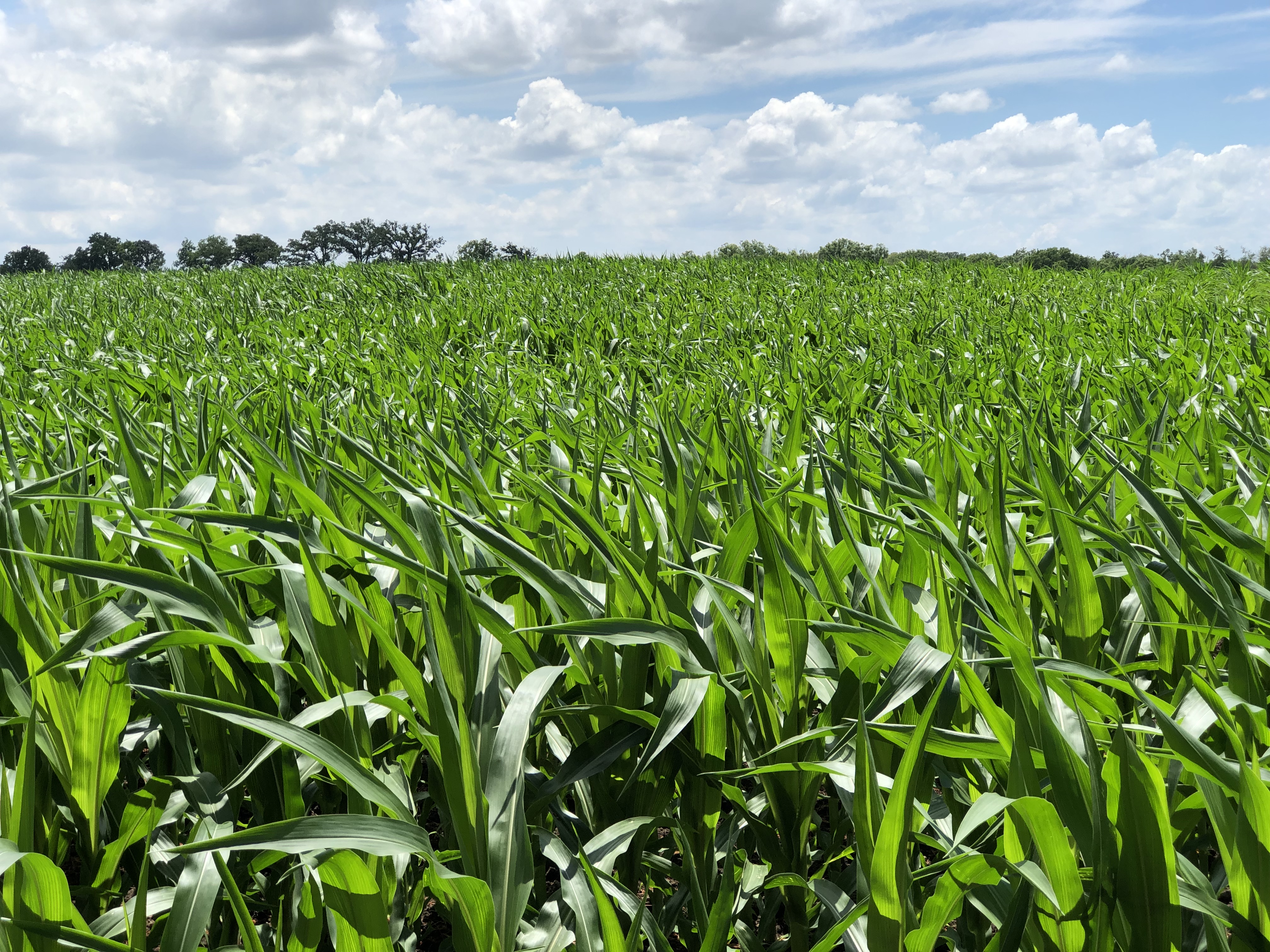
After a mostly dry June here in northern Illinois, early July saw some rain, but not quite enough to end the dry spell. Out beyond the grass and gardens of the suburbs, it’s a “stressful time for corn and soybeans.”

June 25, mid-day, at a cornfield in southern Wisconsin, which is suffering a drought as well. Moderate drought for the county that includes this field, at least as of the end of June.

The field looked healthy to my untrained eye, but for all I know that’s what a stressed crop looks like a few weeks into a drought. I might be up that way again next weekend or the next, and I’ll stop by for a look at the same field if so.

I had the opportunity to spend most of a weekend in Los Angeles in early June, so naturally I did. To visit some of the places that I considered but didn’t have time for in pre-pandemic 2020, because that’s how I think, though I didn’t make it to La Brea Tar Pits this time or earlier. Like the Cloisters on the other coast, it’s a place that still eludes me.

On the other hand, I made a point of going to the Los Angeles neighborhood of Venice this time.

Though named for the place in Italy,  Venice has a distinctly American history, invented as it was ex nihilo by a real estate developer looking to reference the Old World in the newest part of the New World, namely California. Not just any developer, but one Abbot Kinney, whose career was circuitous and strange, the way business men could be in the late 19th and early 20th centuries.

Not only that, the arc of history in Venice is very much American: an initial flowering, subsequent decline, much demolition and disfigurement in the name of modernization, years of scraping along the bottom, an effort to save its meager remnants, gentrification and insane property values – all within the span of about a century, specifically within the 20th, though spilling into the 21st. Which is an affluent time for Venice of America.Venice, California 2023

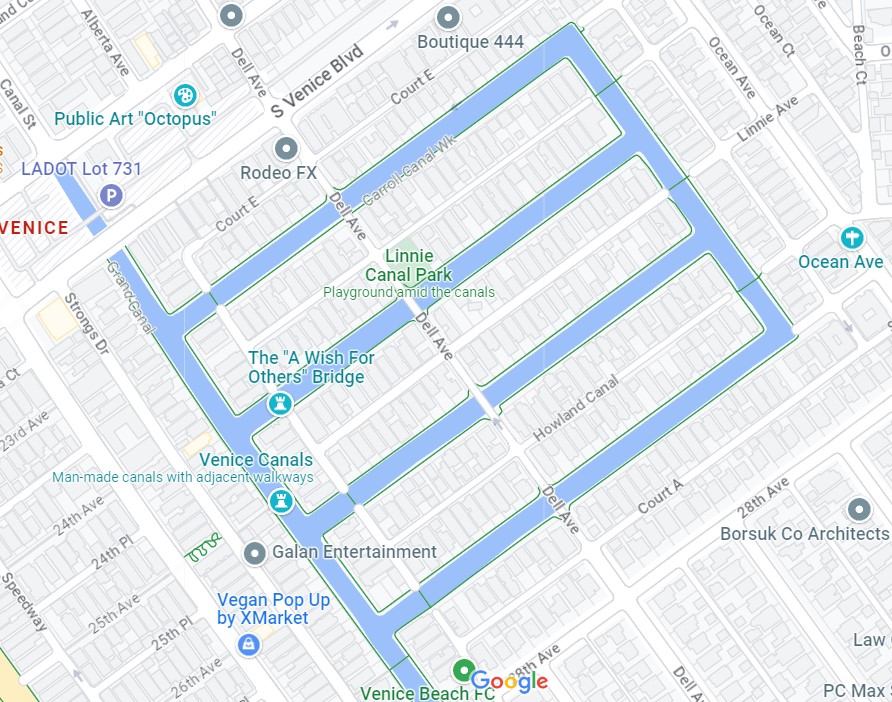
“When it opened on July 4, 1905, Venice of America boasted seven distinct canals arranged in an irregular grid pattern, as seen… in Kinney’s master plan for the community,” KCET says. “Totaling nearly two miles and dredged out of former saltwater marshlands, the canals encircled four islands, including the tiny triangular United States Island. The widest of them, appropriately named Grand Canal, terminated at a large saltwater lagoon. Three of the smaller canals referred to celestial bodies: Aldebaran, Venus, and Altair.

“Soon, a second set of canals appeared just south of Kinney’s. Linking up with the existing network through the Grand Canal, these Short Line canals (named after the interurban Venice Short Line) were apparently built to capitalize on the success of Kinney’s development. Their origins are uncertain, but work started soon after Venice of America’s 1905 grand opening, and by 1910 real estate promoters Strong & Dickinson and Robert Marsh were selling lots in what they named the Venice Canal Subdivision. Built almost as an afterthought, these six watercourses are the only Venice canals that survive today.”

The rest, the originals in their irregular grid and with their celestial names, were long ago filled in and paved over – that would be the demolition and disfigurement.

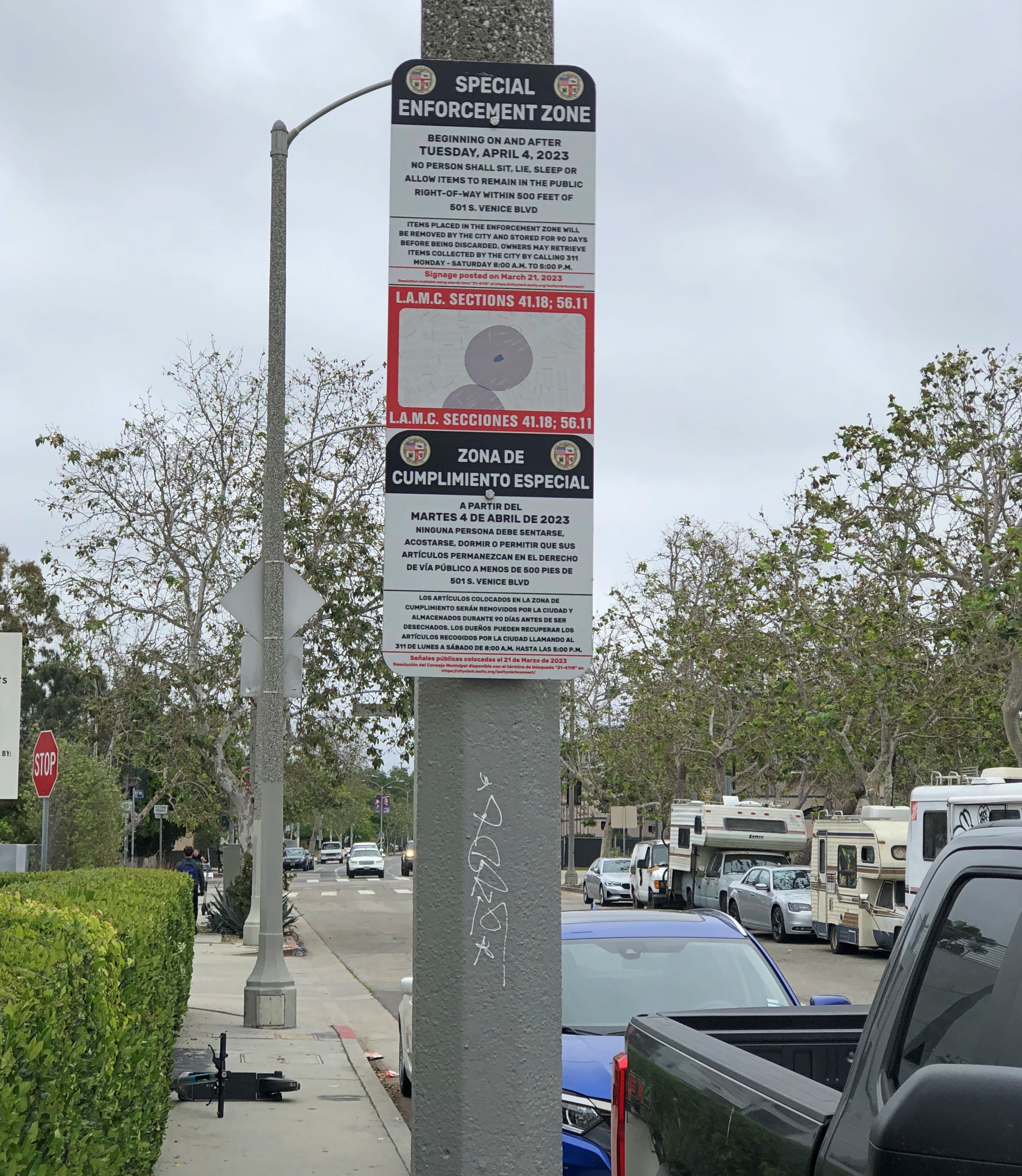
I arrived in the neighborhood fairly early in the morning, early enough – I realized later – to park on Venice Blvd. within walking distance of both the canals and the beach, which is more difficult later in the day. Venice Blvd., near the ocean at least, also happens to be the locus of a handful of residents living in parked RVs and, for those who can’t swing that, tents in the boulevard median.

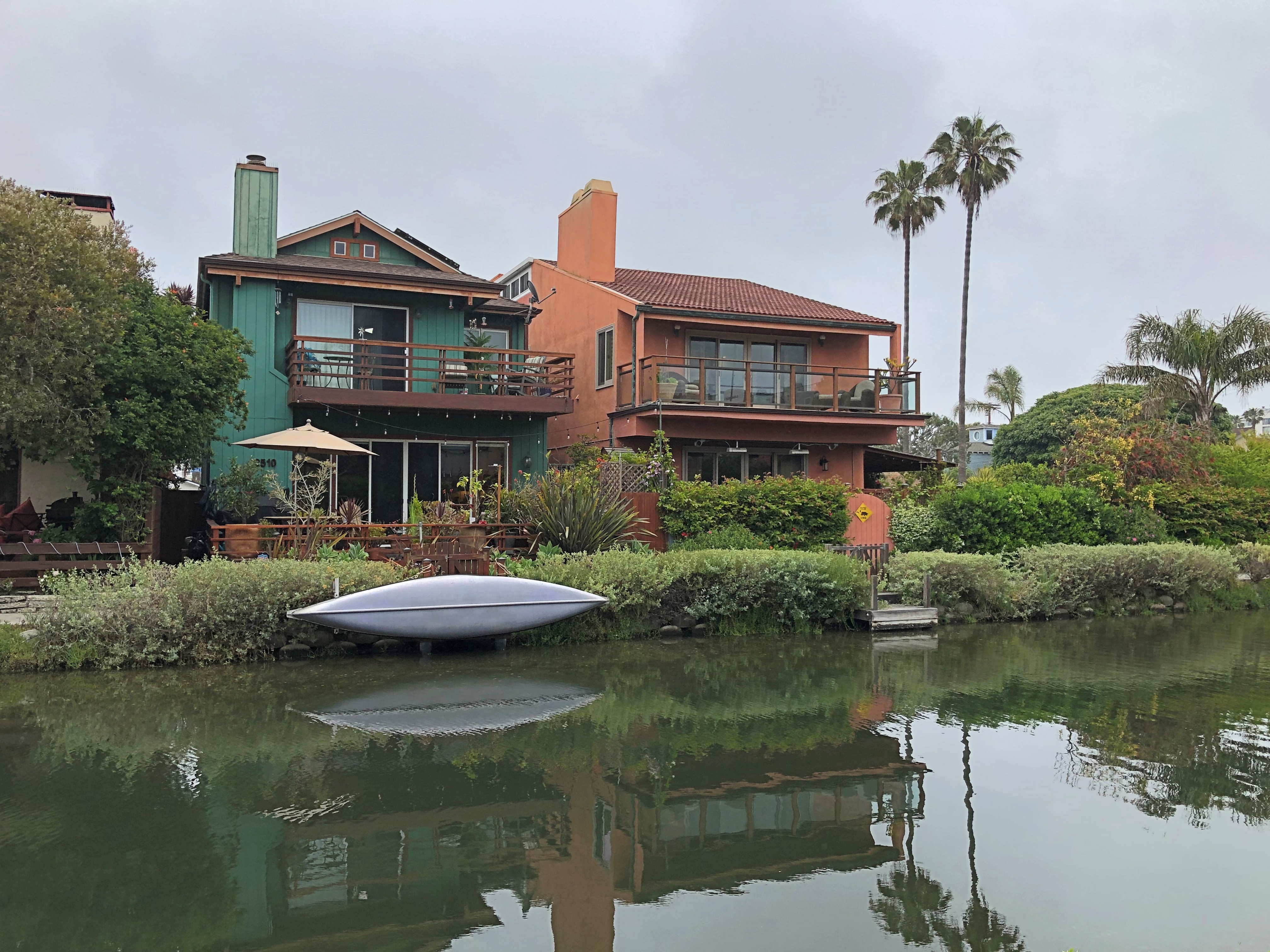
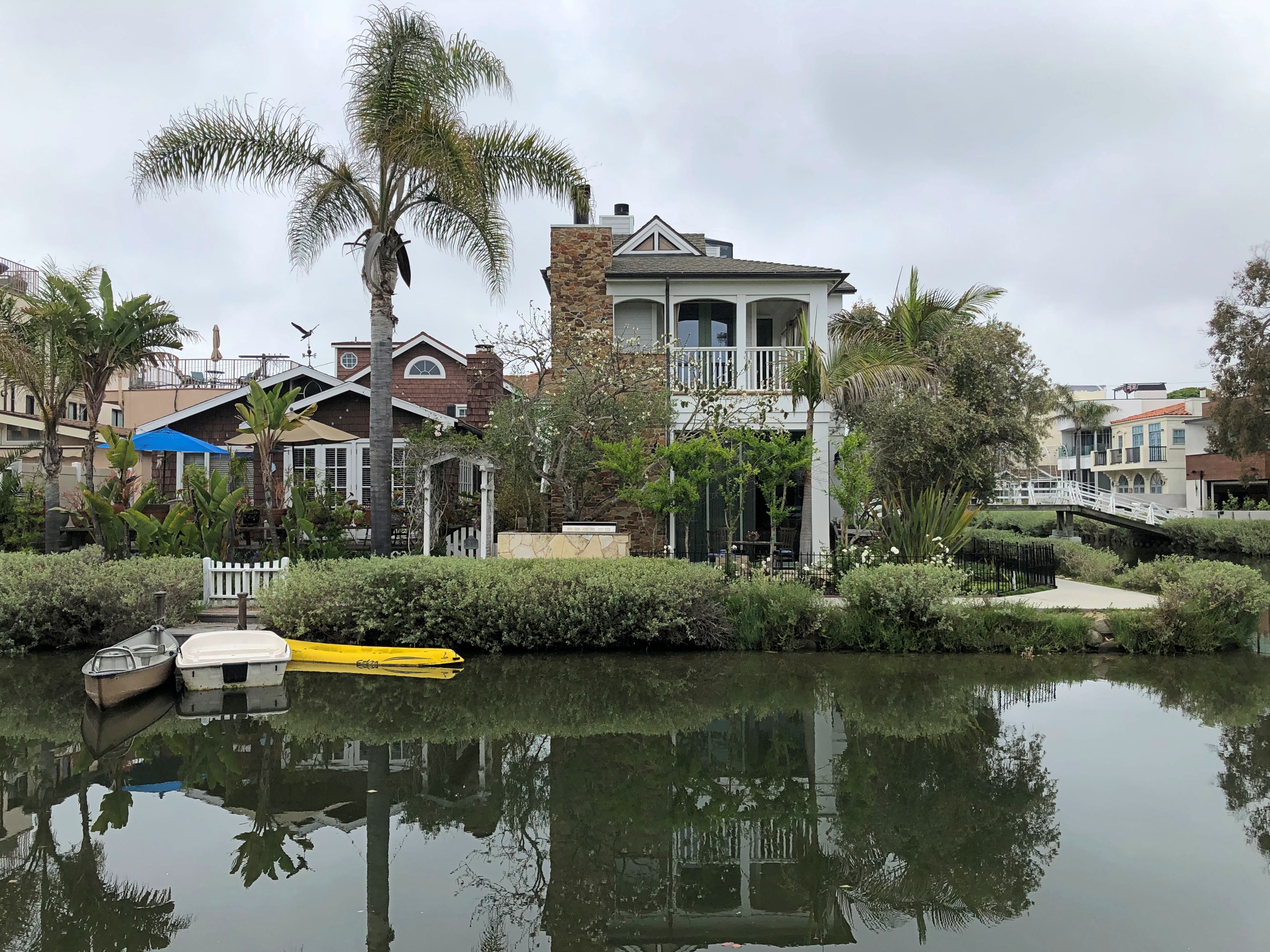
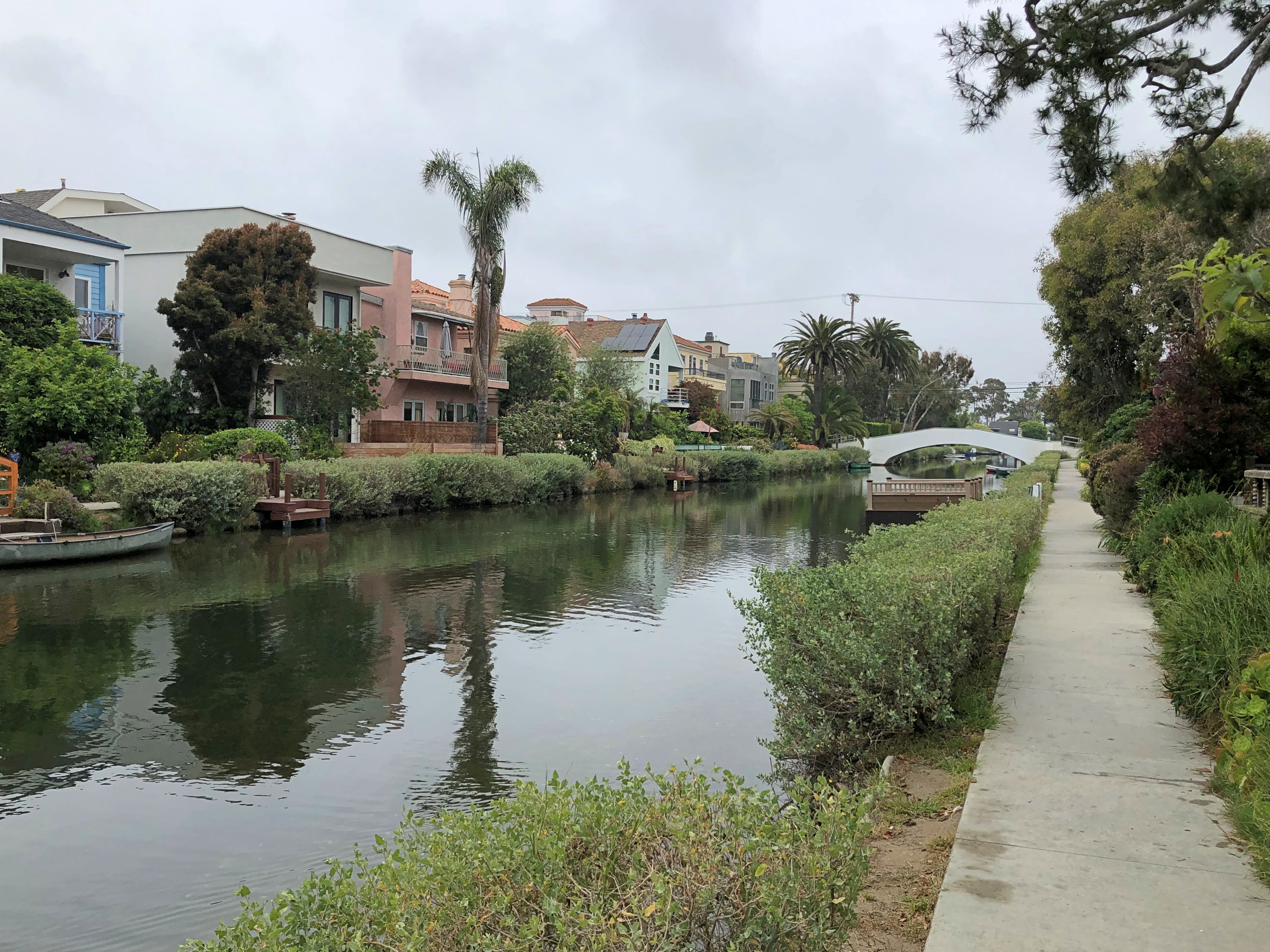
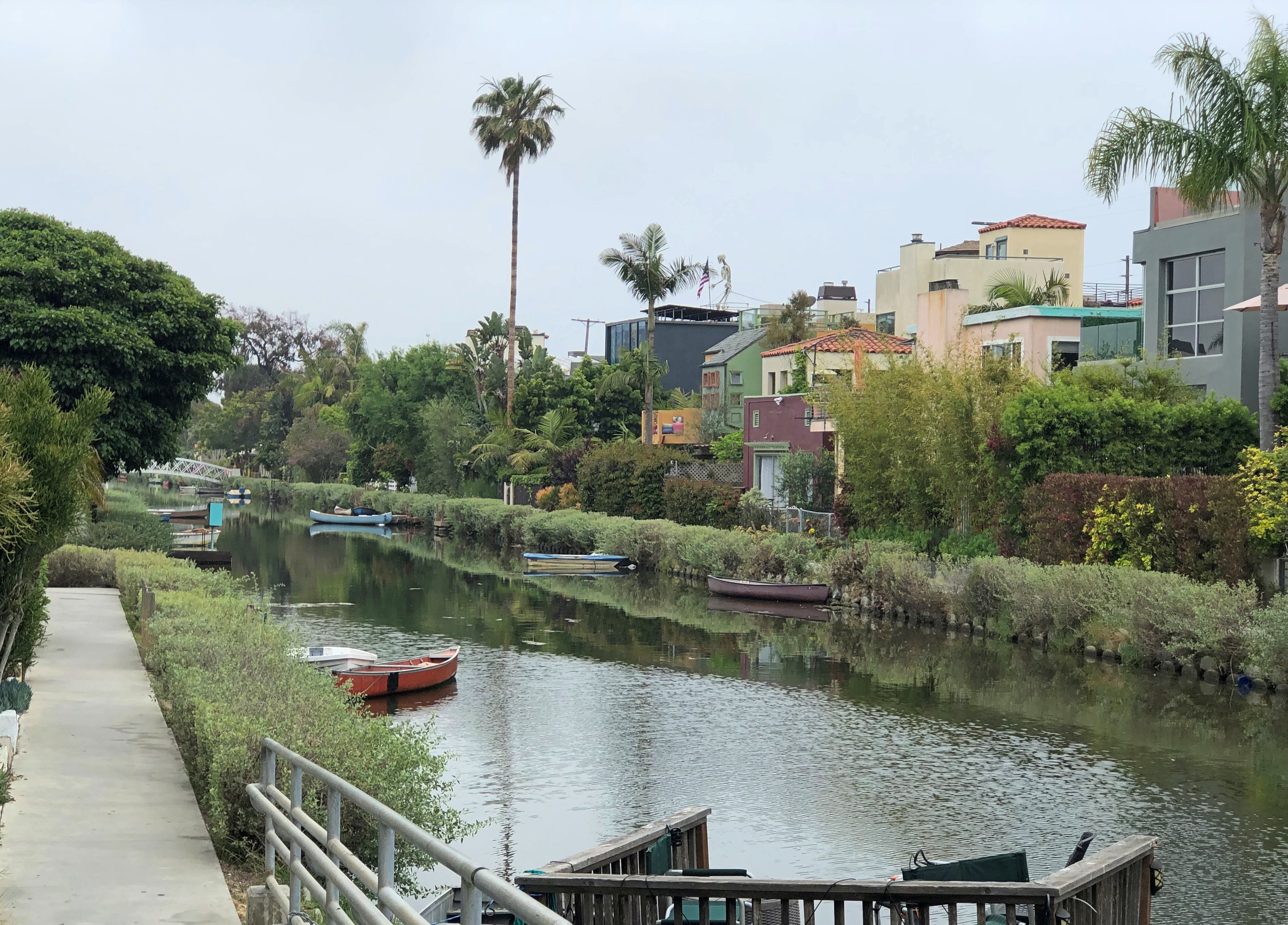
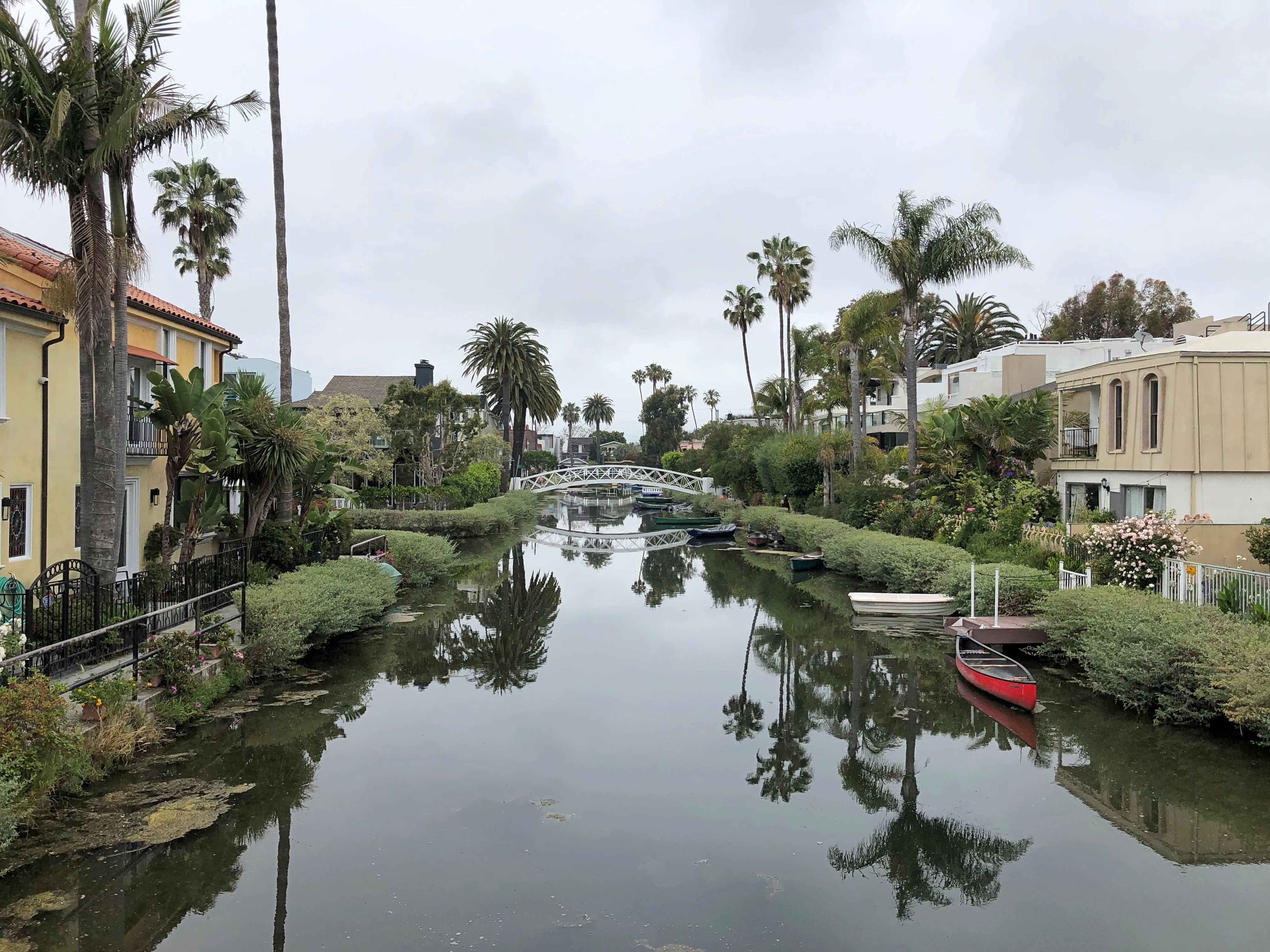
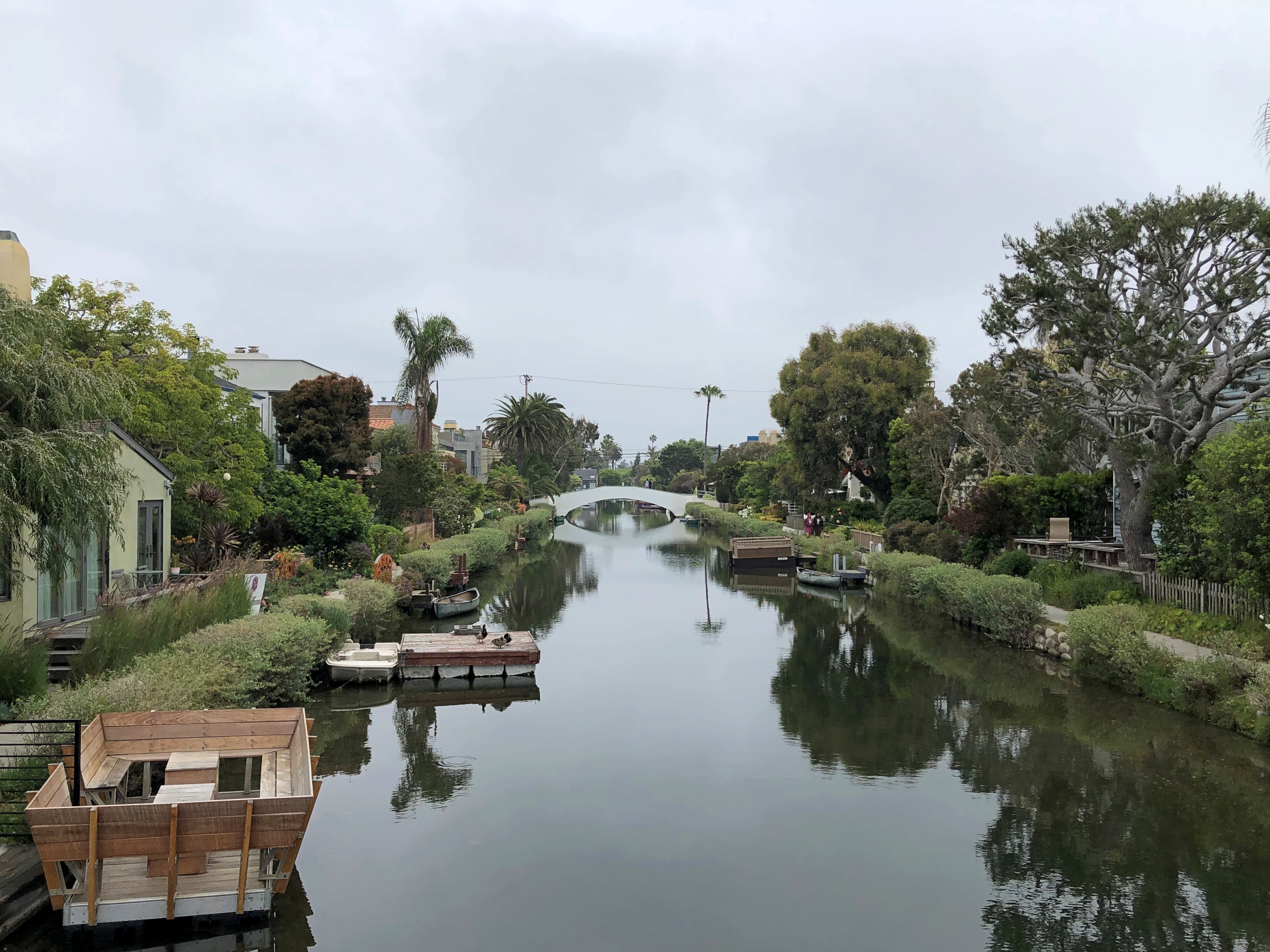
The canals form a neighborhood unlike any I’ve seen and, I have to say, flat-out gorgeous in our time.Venice California 2023 Venice California 2023 Venice California 2023 Venice California 2023

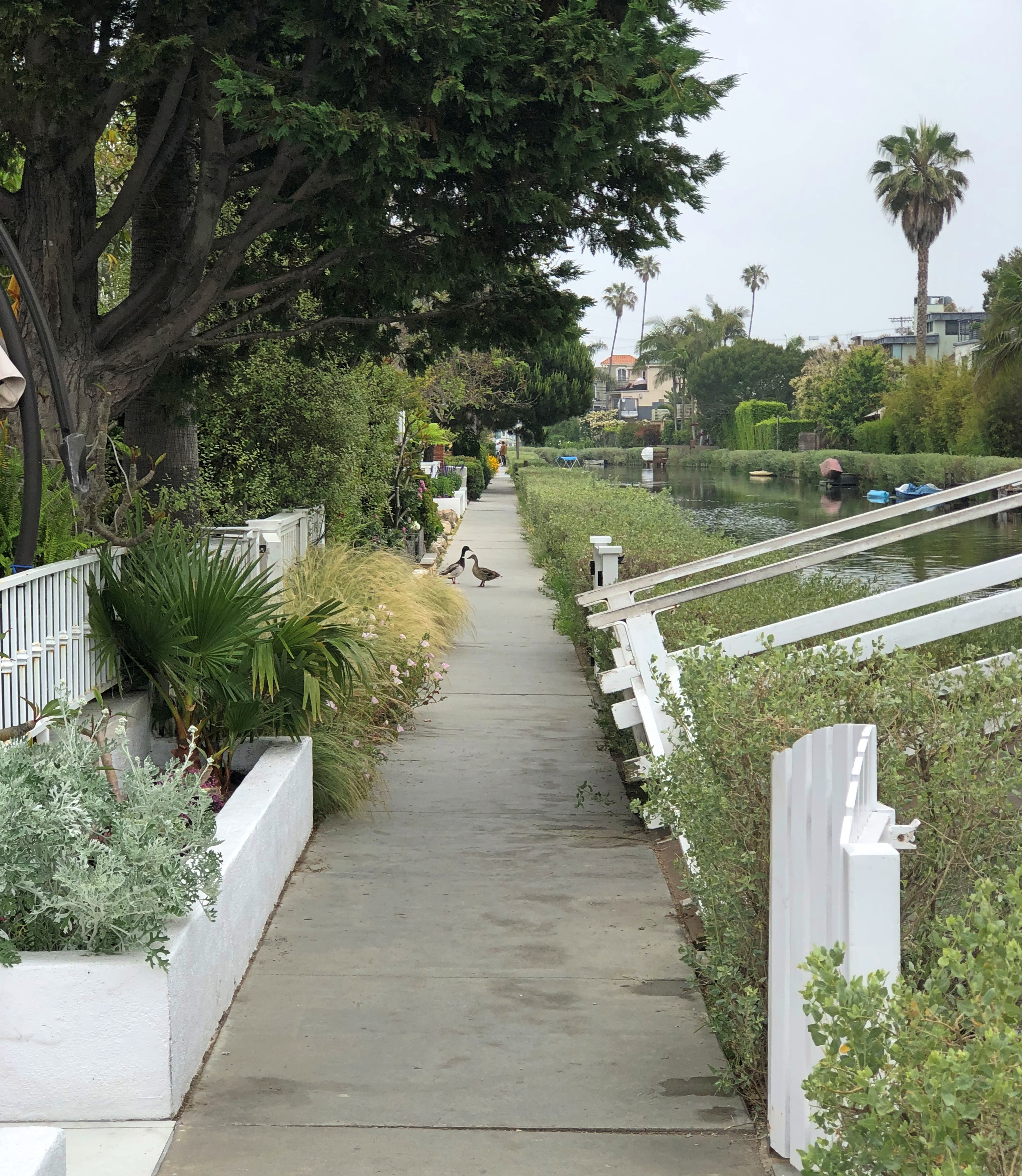
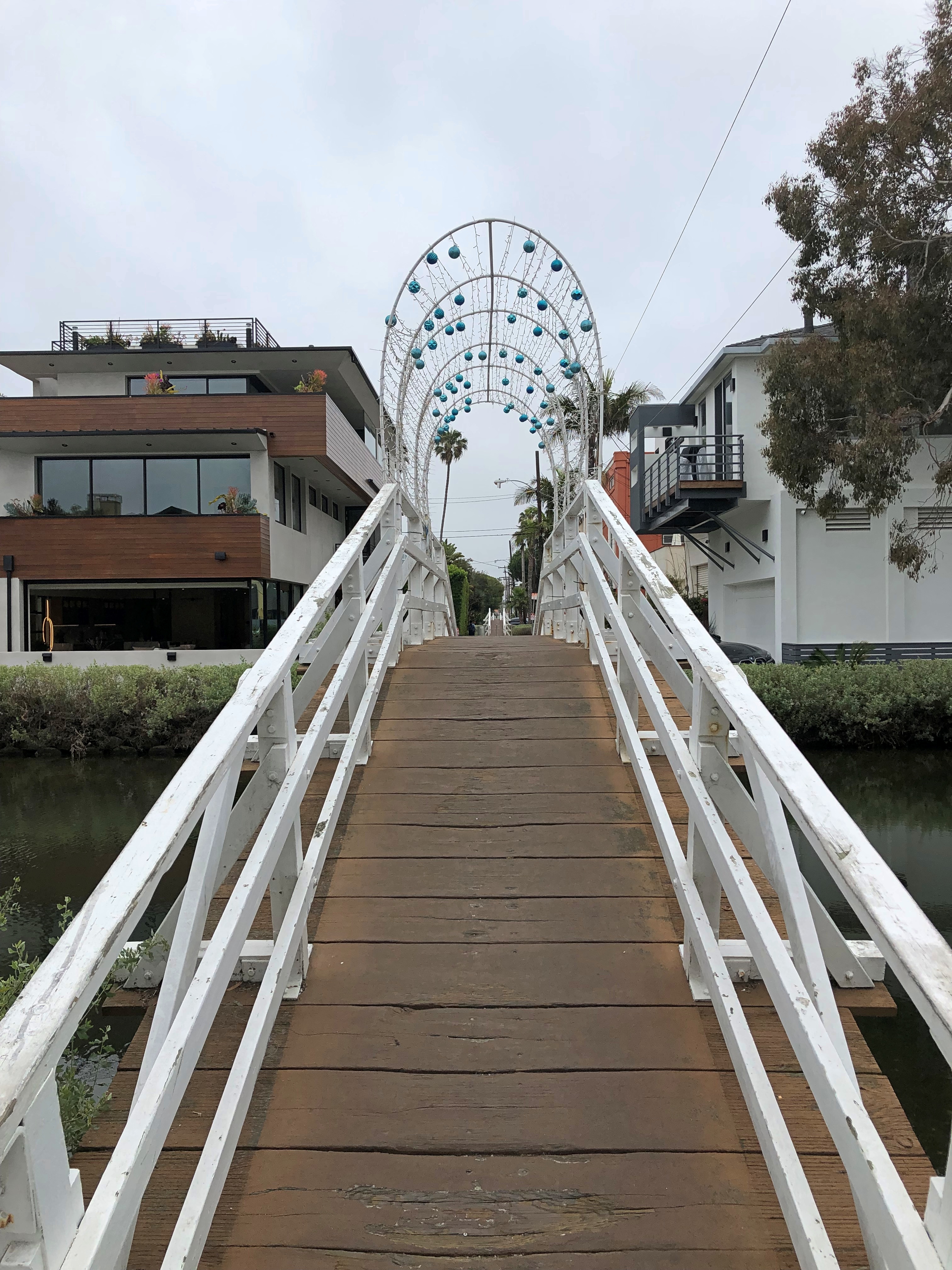
Public sidewalks run between front yards and the canals, with occasional footbridges crossing the canals. This arrangement, I’ve read, is the result of renovation that occurred in the early 1990s. The only vehicular street running through the neighborhood is Dell Ave., which connects with alleys behind the houses with the wide expanse of LA streets. The way residents drive in and out of the area, that is.Venice California 2023 Venice California 2023

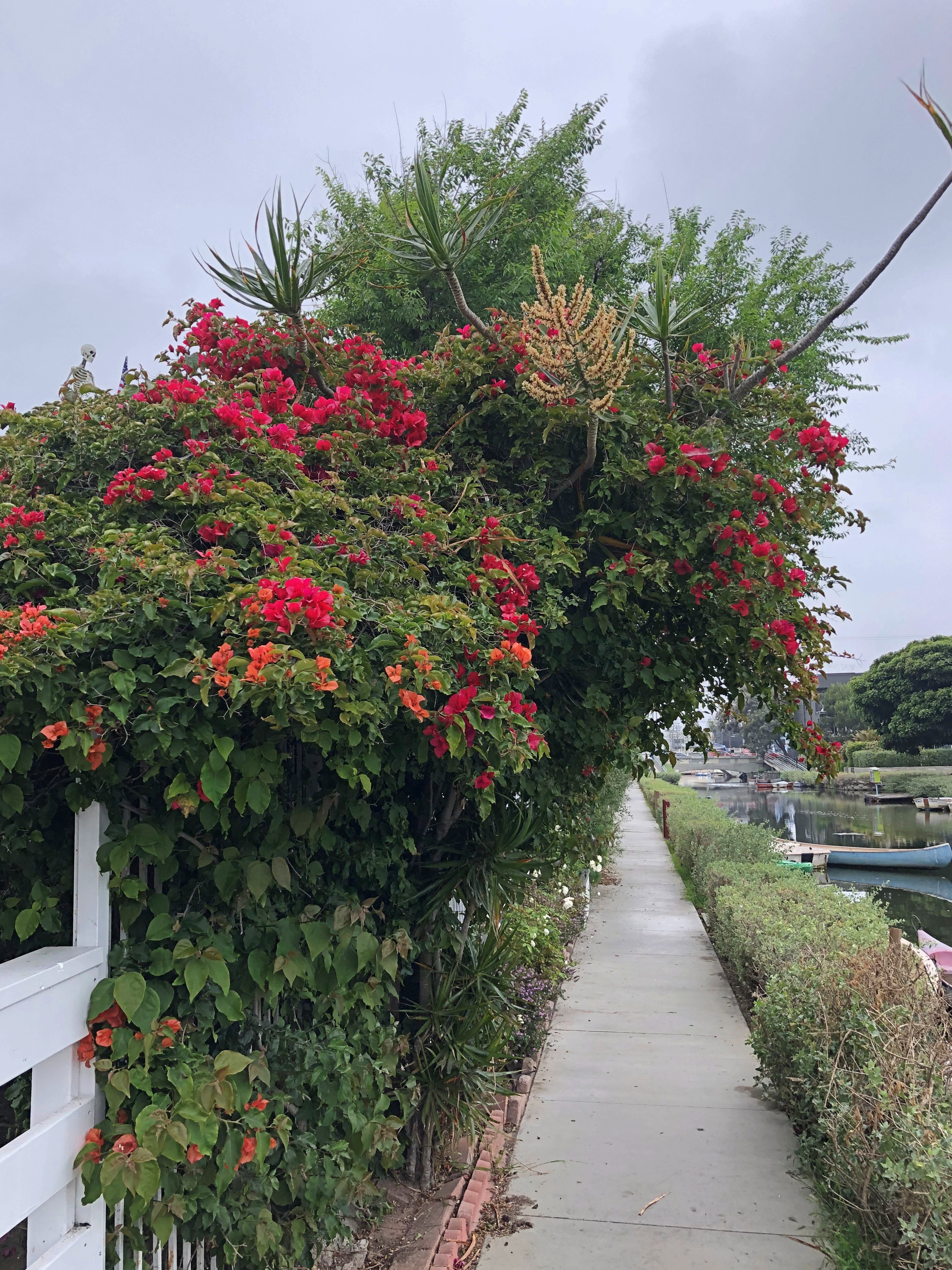
The yards are lush, at least they were in June. Temps weren’t that warm the day I visited, and the skies fully overcast and sometimes drizzly, since southern California seems to be in some kind of weird weather bubble these days. Made for a good walking environment, though.Venice California 2023 Venice California 2023 Venice California 2023 Venice California 2023

Hard to believe the area spent much of the 20th century as a slum; a quick look at Zillow’s estimates puts no property along the canals at much less than $2 million, and many a good deal more, with a scattering of new houses under way as well. Such is real estate across the decades.

An Hiberno-Iberian Trans-Atlantic Jaunt

If, on the day that I graduated from college in 1983, a djinn with certain knowledge of the future had appeared to me and said, Forty years to the day from today — May 13, 2023 — you will board a jet airliner and fly to Ireland, my response might well have been, Really? Cool. Where else do I go over the next 40 years?

But he would be gone in a flash, as that is how djinn seem to disappear, before he imparted any other information about the one score and ten other countries between those two days. Just as well that djinn are not known to appear to Americans of our time. Not me, anyway. I just had to let the four decades unfold.

This not-very-important coincidence of May 13ths exactly 40 years apart occurred to me a few days before Yuriko and I took an Aer Lingus flight up and over eastern Canada, just south of Greenland’s southern tip, and on to Dublin the next morning, May 14.

Ireland was our place to recover from jet lag, but that didn’t keep us from treading (and tram riding) the streets of the Irish capital until May 17, and looking at as much as possible.

The evening of the 17th we flew to Barcelona for the second and longer leg of the trip. Except for an excursion to Montserrat for a day, we stayed in that city of 21st-century renown, a place for sensation overload of all kinds and highly recommended by friends with passports and travel inclinations. We returned home yesterday via a flight back to Dublin for a layover, and then another to Chicago.

Wake up in Catalonia, go to bed in Illinois. Too ordinary to be regarded as the marvel it is.

New cities for us; new countries. We liked Dublin. We really liked Barcelona. I expected it would break that way.

This month’s jaunt was our first visit to Europe since before smartphones, the wide use of the Internet or email or texting or QR codes, Google maps, or the euro. I’m not sure whether all that has made overseas travels any easier.

Regardless, we kept up an active pace of quick-step tourism, something like our passage through Arizona and Utah last year, except that walking and driving through wide open spaces seeking natural splendor became walking and public transit through the urban corridors of central Dublin and Barcelona, seeking human-made marvels.

We found some. Centuries-old churches, ornate palaces, imaginative modern buildings, sites of historic violence, plazas thick with people at play or merely rest, depositories of famed art and books, vistas of the ocean and among mountains, and Euro-designed urban greenspaces a bit different from what we’re used to in North America.

We passed over brick, cobblestone and asphalt, down sidewalks narrow and wide, up and down stairs, in the footsteps of centuries of people, mostly unknown and unknowable except in the broadest strokes, who walked these exact spots in times hard or prosperous. The early 21st century, as it happens, is a prosperous era in both cities. Shops are many and various and full and busy.

Concentrated prosperity. For an American used to dispersed prosperity, this is a novelty.

Temps in Dublin tended to be lower than in Barcelona, though only a few degrees. By mid-day most days, the sun shined and it was 20 degrees C. or a few more, as they reckon things. The spring air had the happy effect of encouraging bare midriffs among young Irish and Catalan women both. We were rained on only twice, briefly, and only on one day in Spain did we feel anything like high heat.

The more a meal featured some regional product, say milk and cheese in Ireland or seafood in Spain, the better it tended to be. The restaurants we visited were usually linear rooms with expansive menus, or simple takeout joints, or we sought food at convenience stores or actual grocery stores. I confirmed that, if I were a drinking man, Guinness wouldn’t be for me, but sangria would be.

We passed through endless seas of faces along the sidewalks and jammed in the subway cars and trams, maybe not quite as various as in New York or Chicago, but of great variety all the same. We encountered signs in English that were readable but not always quite comprehensible. Others in Catalan were either easy, or matters of guesswork. We noticed the way ordinary bits of a city’s infrastructure look just a little different in another country, or sometimes a lot different. We saw graffiti on the walls and graffiti on skin.

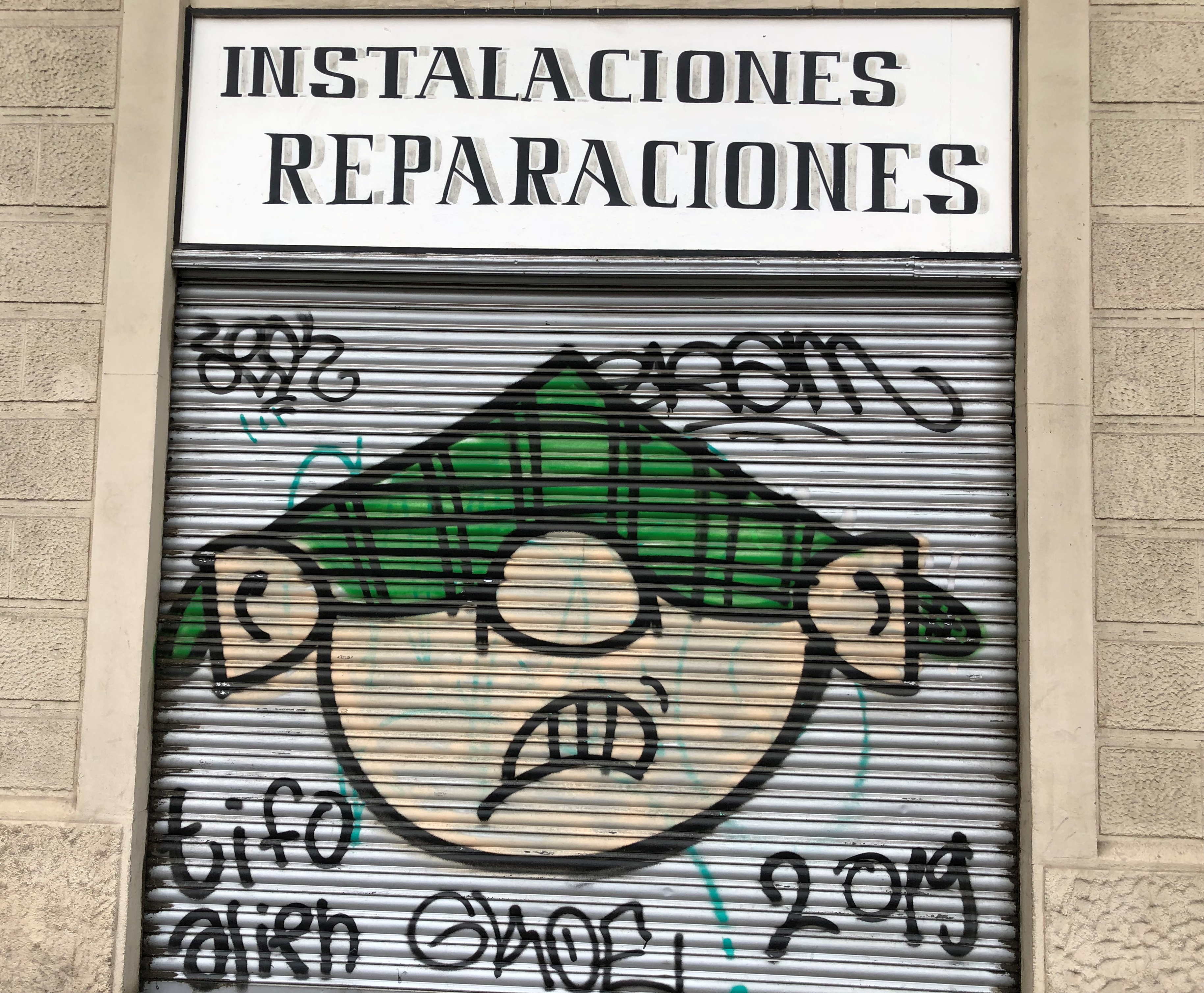
What is graffiti in Spanish? I had to look that up. El graffiti, turns out. Despite the presence of surveillance cameras in countless street-facing nooks, graffiti artists are not deterred in Barcelona, or Dublin either, from casting their paint on walls, doors, railyard surfaces and occasionally (the wankers) useful signs. Still, you have to be amused sometimes.

Do they know Andy Capp in Barcelona? Someone does.

Tri-State Appalachian Equinox Road Trip

Old Chinese proverb, I’ve heard: even a journey of 1,000 leagues begins by backing out of the driveway. That we did on Friday, March 17. We pulled back into the driveway on Saturday, March 25. In between we traveled 2,219 miles, using the ragged marvel that is the system of roads in the United States.

My fanciful name for the trip refers to three states that were the focus: Ohio, Pennsylvania and West Virginia. We actually passed through seven states, also including Illinois, Indiana, Michigan, and very briefly, Maryland.

We saw a lot of places, but two in particular motivated the trip as a whole. One was Fallingwater, the Frank Lloyd Wright sculpture – I mean, house – perched over an irregular drop on Bear Run, a creek in rural Pennsylvania. Visiting Fallingwater had long been an ambition of Yuriko’s, maybe since before she lived in this country, since FLW is known far and wide; but I needed no persuasion to go myself.

The other was New River Gorge National Park and Preserve in eastern-ish West Virginia. This was my suggestion, since I keep up on national parks. But I’ve wanted to go there a good while, long before Congress promoted it to national park, which only happened in 2020. Besides, it was high time I spent a little more than a few minutes in West Virginia which, for whatever else it has, is known for its surpassing scenery. This reputation, I can confirm, is deserved.

Weather-wise, spring travel is a crap shoot. The day we left a cold, unpleasant wind blew in Illinois, Indiana and Michigan, and it followed us under the same gray skies and at temps barely above freezing the next day, into central Ohio.

By last Monday, in southwest Pennsylvania, temps had moderated with the appearance of the sun, and each day was more pleasant than the last as we headed south into West Virginia, where the grass had greened and some bushes had too, though most trees were at the barely budding stage. Thursday, March 23 proved best of all, with sunny skies and temps in the 70s, allowing us to enjoy the best meal of our trip — ricebowl meals — at a picnic table in Fayetteville, W.Va.

A cold rain came calling on Friday as we headed from West Virginia back to Ohio. On Saturday, again in central Ohio, it wasn’t bitterly cold, but the wind was so strong at times that it jostled my car as I drove and my body as I walked. Rain squalls came and went, with a spell of sleet I actually enjoyed, sitting in our parked car listening, knowing that the ice was too small to do any damage. Returning home yesterday, Illinois was pretty much as we’d left it, chilly and not-quite-spring.

The upshot of it all is to pack for the weather variety you’re going to encounter, and I was more than glad – as I returned to the car in a stiff wind, crossing a green field in small-town Ohio, feeling wind chill that must have been around zero (and I mean Fahrenheit) – that I’d brought the coat I use most of the winter.

We brought the dog. We don’t want to leave her at a kennel any more, and no one was at home to mind her. Having your dog along is something like traveling with a small child you can’t take into restaurants or a lot of other places, but we don’t regret a bit of it. Long drives in the car don’t faze her at all, since after the first few minutes, that’s like lying around the house and, as the comedian said, a dog’s job is lying around the house.

She had her energetic moments too, more than you’d think for an ancient dog, such as walking the trail to Diamond Point overlooking the New River Gorge, with its smooth straightaways through forests giving way to patches of mud, large rocks or tightly packed tree roots underfoot, sometimes all of those in a single stretch. Our reward for the sometime-slog was a vista of rare beauty. Her reward? I don’t think it was anything so visual. Maybe following the pack is its own reward for her.

Companion dogs also mean you acquaint yourself with the look and feel of the front office and main entrance of limited-service hotels during the empty early a.m. hours, well lit as a Broadway stage but without any players. Except maybe for the night clerk, just outside the door, who is peering into his phone, cigarette in other hand. Probably our dog, as any dog, could be trained to pee on a disposable rug in the room during the small hours, but somehow we’ve never wanted to do that. There’s something appealing somehow about the ritual of dressing as simply as possible a few minutes after waking at 2:30 or 3, or 25 or 6 to 4, hitching a leash to the dog’s collar and repairing to the first patch of green, or pebbles ringed by a curb, outside the hotel door

Take me home, country roads. I’ll say this for West Virginia, it’s got some crazy-ass serpentine roads through its ancient and forested mountains. The Laurel Highlands in southwest Pennsylvania was no piker in that regard, either. You need to keep an intense focus on the road as it winds this way and that, rises and falls, and passes ever so close to boulder walls, massive trees and wicked ditches. If you don’t mind thinking about your mortality every now and then, that’s some good driving.

Mostly good driving. There are moments when a red sedan, or a black pickup truck, decides that tailgating you at roughly the speed limit as you wind around and navigate switchbacks, is a good idea, and blasts around you at the first marginal opportunity, double solid stripes be damned.

Yet I only got the smallest sampling of the twisty roads. No roads without pavement this trip, though plenty enough didn’t bother with details such as guardrails. Another, entirely unpaved and mostly unregulated network of roads and tracks, many perhaps pre-New Deal, must exist in West Virginia. Out away from the nearest town, while we were parked a national park site on a small paved road, three ATVs buzzed past, each with two people. They were headed toward town after emerging from the woods, their vehicles streaked with mud. I was just close enough to see in their faces they’d had a fine time out in the unpaved network.

Also, if you really wanted to get home to West Virginia, wouldn’t you take the Interstate?

We made stops in Ohio going and coming.
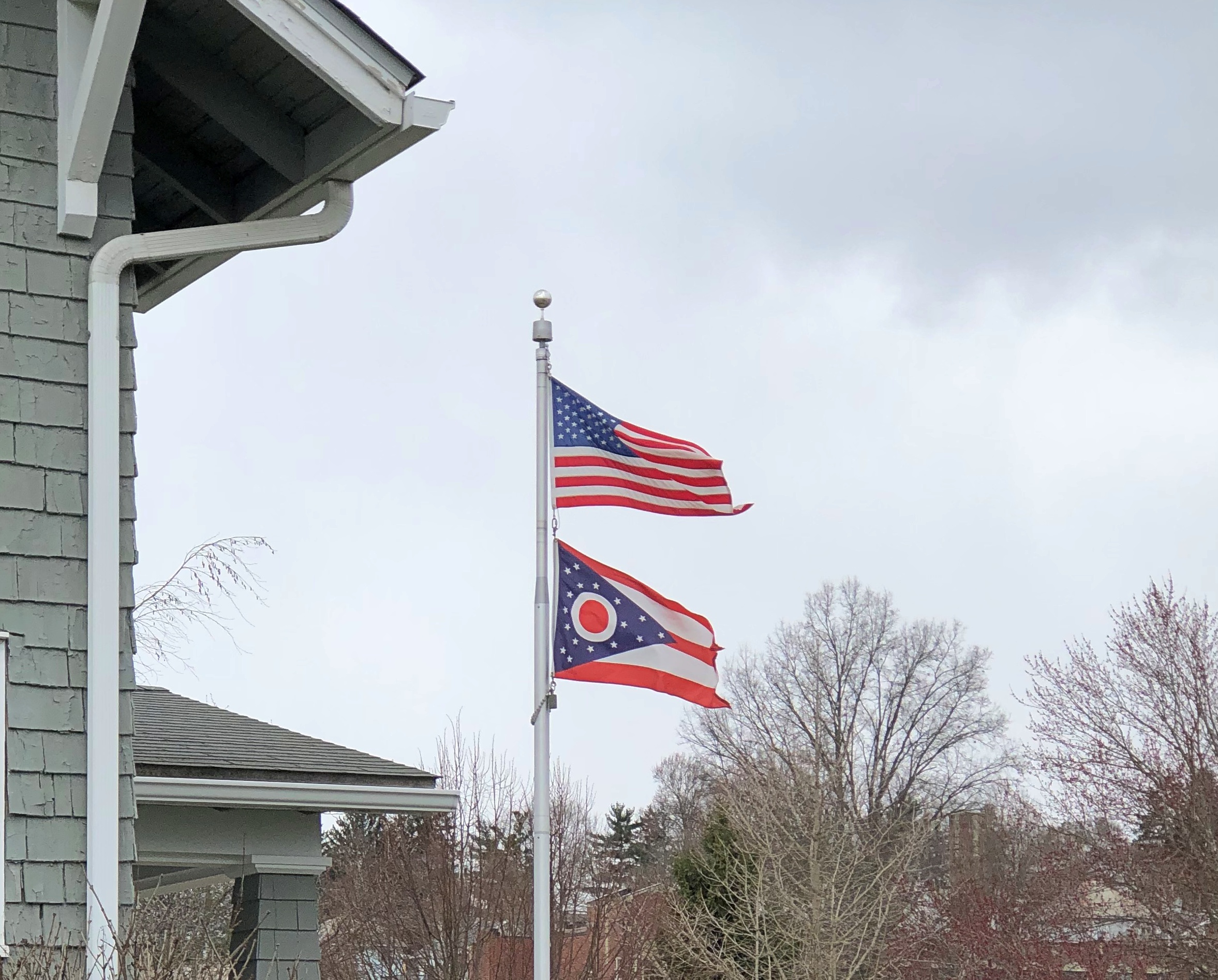
On Saturday, March 18 we made our way south from Ann Arbor, where we’d spent the first night, to Columbus, Ohio, to spend the second. On the way is the Basilica and National Shrine of Our Lady of Consolation, a Byzantine edifice rising in a small town, which we visited, but also sites associated with Warren G. Harding: his memorial and burial site, and also his home, in the large town of Marion, Ohio.

Our return home, beginning on Friday, March 24, took us back through Ohio, to Columbus for the last night of the trip. Saturday morning, after takeout breakfast at Tim Horton’s – for that part of Ohio is in the Tim Horton’s orb, we were glad to learn – we visited downtown Columbus and the Ohio Statehouse in a howling cool wind. Ate lunch, Korean-style chicken and salad, sitting in the car in a clearly gentrified neighborhood, the bricked-streeted German Village. We spent the rest of Saturday driving back, via Indianapolis.

On the morning of Sunday, March 19, we left Columbus and made our way east through the remarkable town of Newark, Ohio, then Wheeling and Moundsville, West Virginia  and from there to Uniontown, Pennsylvania, a mid-sized far outer suburb of Pittsburgh. Or at least it will be in a few years.
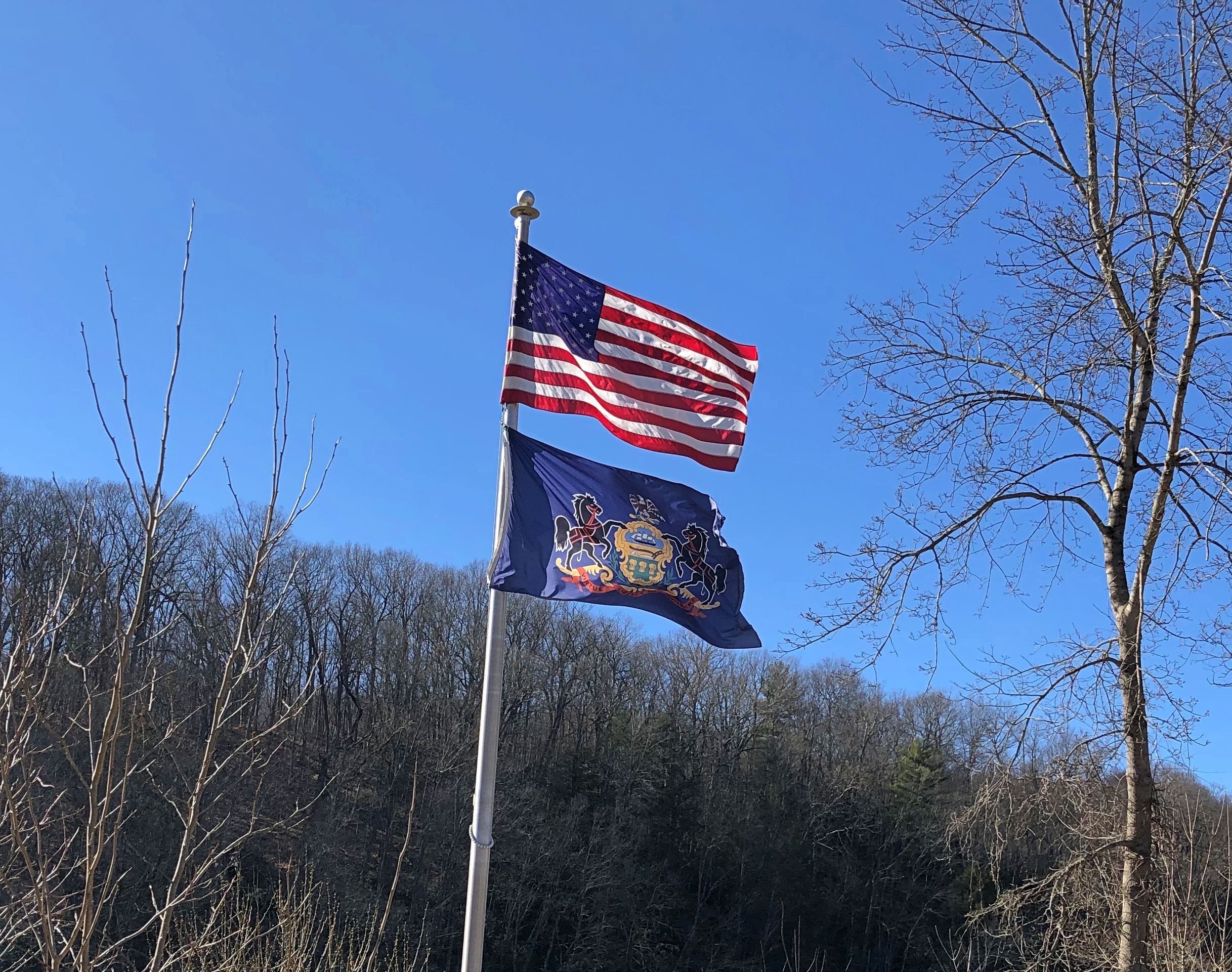
On Monday, we paid our visit to Fallingwater, taking turns on tours, after which we had lunch in a low-season tourist town and took an impediment-rich hike in Ohiopyle State Park, along the rocky shore of the Youghiogheny River, at that point boasting a highly picturesque waterfall. That was enough for one day for Yuriko, who napped in the car (along with the dog) as I walked the much shorter and smoother path to Fort Necessity National Battlefield late that afternoon.

On Tuesday, we made our way back west a short distance, to visit the Palace of Gold in rural West Virginia, in the peculiar north panhandle of the state (which I’ve long thought of as a conning tower). We returned that day to Uniontown by way of Moundsville, W. Va., home of an ancient mound of remarkable height, a former penitentiary of remarkable solidity, and a bridge across the Ohio River of remarkable elegance. Those things, and some tasty if not remarkable barbecue.

The next day, we left for West Virginia, but not by the most direct route, because I wanted to see the Flight 93 National Memorial in deep rural Pennsylvania. Progressively smaller roads lead there, including – as we traveled it, which I figured would be the quickest route – a short stretch of I-68 through the oddity that is the Maryland panhandle. Late that day, Wednesday, we arrived in Beckley, W. Va. 
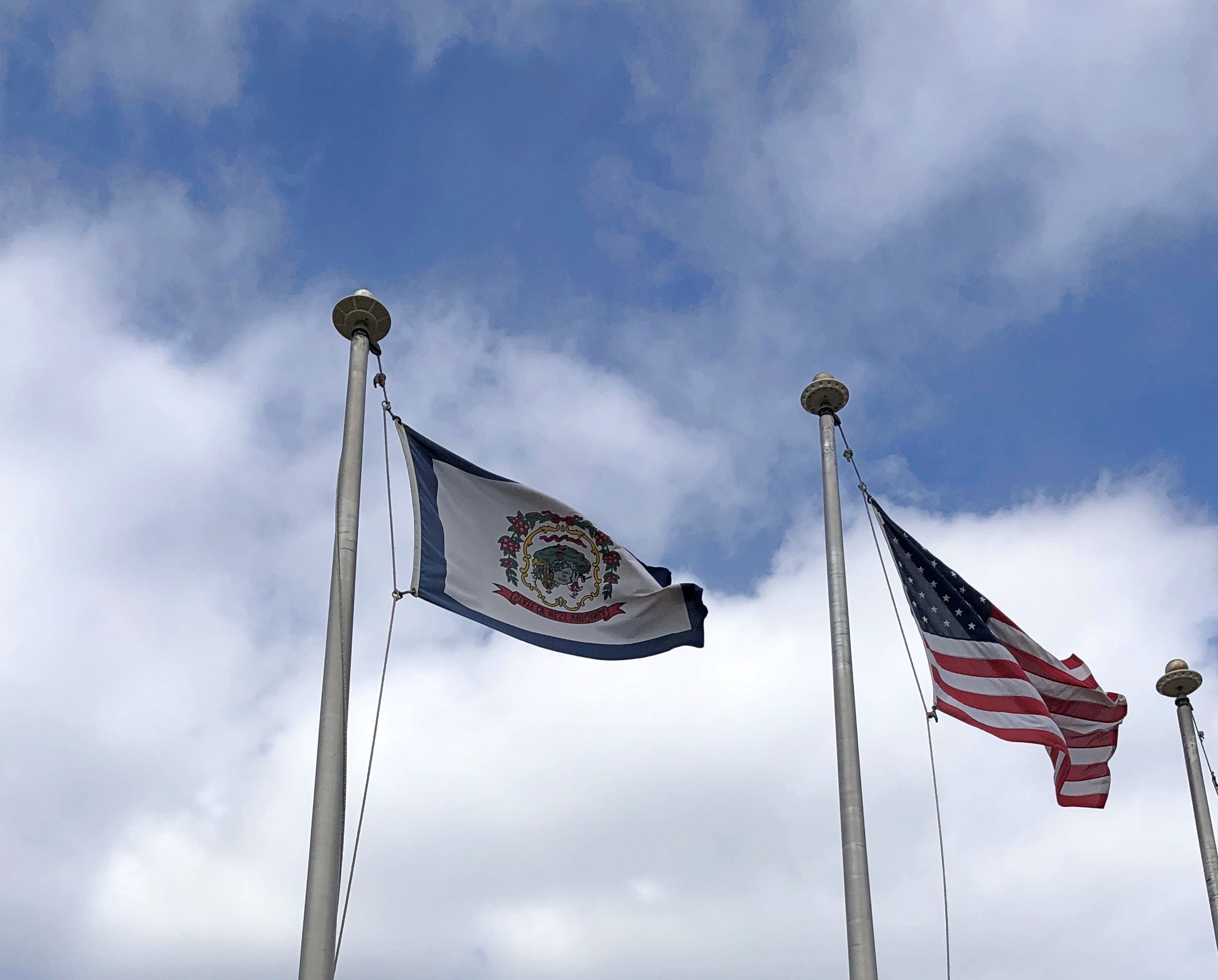
We spent almost all of Thursday at the national park, at one sight or another, driving and hiking and pondering historic and sometimes crumbled structures. But that wasn’t quite enough. On Friday morning, before we left for Ohio, we went back to the park. Around noon, we headed west, passing through Charleston long enough to visit the West Virginia State Capitol and eat Chinese takeout, though not at the same time. A little north of Charleston, we crossed back into Ohio after gassing up near the small town of Ripley, West Virginia. Believe it or not.

One other thing: this was a vacation from the news, which following is part of my job. Except for the briefest snippets on the radio, when sometimes I didn’t change stations out of habit for some seconds, I ignored the news of the world, or even smaller parts of it. I think that’s a good thing to do.

But of course, a few things got through. I heard the opening bars of The Dick Van Dyke Show theme on a news program one day, and I jumped to the conclusion that he had died. That isn’t a big jump, since he’s 97. But no, merely a one-car accident.

Image being that well regarded, that your minor auto accident as a nonagenarian is national news. Anyway, glad not to say, RIP, Dick Van Dyke.
The Golden West ’22

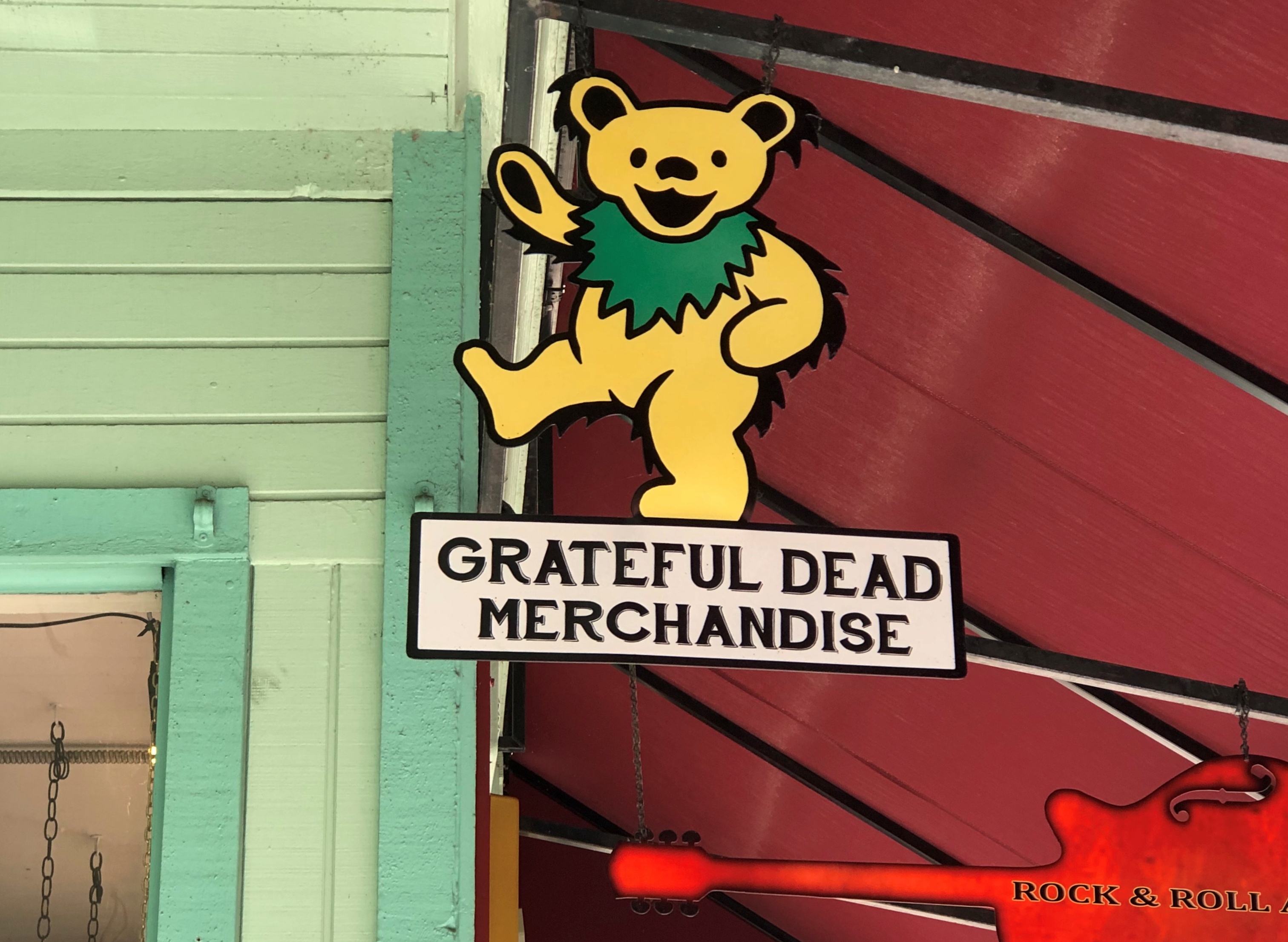
Early this month, I ventured near the West Coast again, though to places in that vast region I’d never seen before. That is, parts of northern California, where you can see the likes of marching bears looking to sell you band merch, though you have to provide your own hallucinogens.Placerville, California
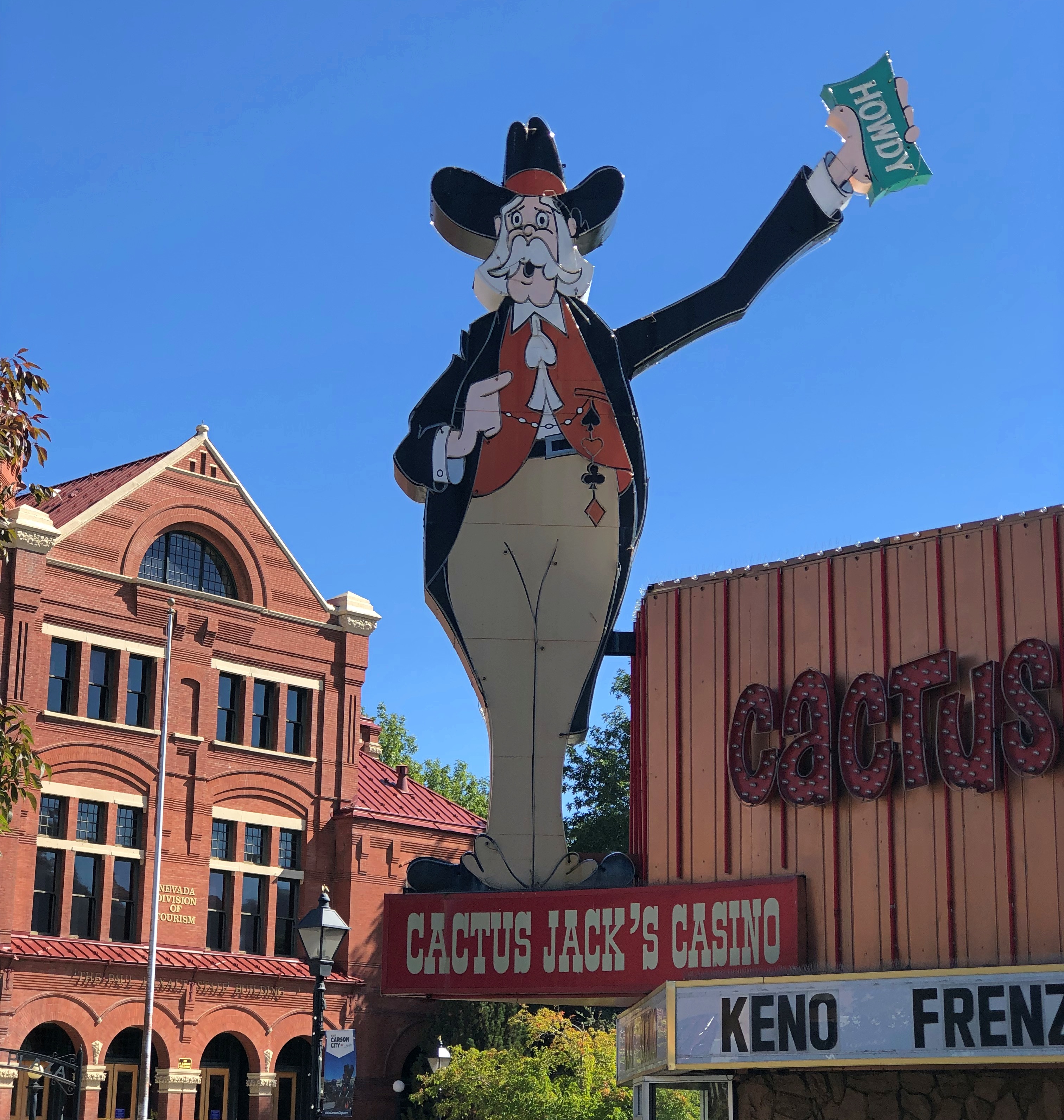
Across the border in Nevada, signs say howdy, come on in and enjoy games of chance that favor the house.Carson City, Nevada

This year’s travels have followed a specific design. The overarching goal was to travel with members of my family and by myself. Early in the year, the prospect of a bonus trip with old friends emerged, and toward the end of the year, the prospect of going somewhere for company business did as well.
That has all come to pass. In March, I went to Savannah with Ann. In May, the Colorado Plateau with Yuriko. In late July and early August, around Lake Michigan with old friends. In September, Jay came to visit me – but we also popped up to Milwaukee. Early this month, I went to California and Nevada, a trip I’ll call the Golden West because one’s trip ought to have fanciful names. Lilly joined me for part of the time.

Sacramento was the trip’s fulcrum. I flew in on October 1 fairly late and spent the first night there. The next morning, I headed east, following narrow roads across the Sierra Nevada, to the shores and vistas of Lake Tahoe, by way of the site where John Marshall found gold in 1848, an event he came to rue. At least he’s remembered: the place is called the Marshall Gold Discovery State Historic Park.

I spent two nights in Reno. My first morning in that town, October 3, I took a walk near the Truckee River, which I had no notion existed before coming to this part of the country – a feeling I had more than once during the trip, along with a few moments of ah – that happened there? Reno is also home to the National Automobile Museum, which takes a bit of a different approach that the one in Fairbanks, sporting a lot of interesting old vehicles, but also some not so old.

That afternoon I drove to Carson City. When I was young and started poring over maps, I found it curious that Carson City, by all appearances a small place, was capital of a large state like Nevada. Large in area, anyway, since it was later I’d learn about Nevada’s relatively small population. Later still – that is, now – Nevada actually isn’t that small in population, coming in at no. 32 among the several states with about 3.1 million people, ahead of the likes of Arkansas, Mississippi and Kansas, among others.

For its part, Carson City has a population of about 58,000 (that’s the MSA, third-smallest for a capital, larger only than the Pierre, SD, and Juneau, Alaska MSAs). Naturally I ambled over the state capitol for a look. The Nevada State Museum, which includes the former Carson City Mint, unfortunately wasn’t open. Cactus Jack pictured above, incidentally, greets Carson City visitors. I didn’t go in to that casino. Or any in Reno.

Virginia City was another thing I didn’t know about Nevada. It was a name on a map and I had the vague notion that it was little more than a ghost town, the residuum of long-finished silver mining. False. Silver mining did take place there in a big way, but now V. City lives on as a major tourist destination, the sort of place that has refurbished its vintage buildings into bars, restaurants, souvenir shops and small museums.

It occurred to me when visiting the site of the Comstock Lode in Nevada — V. City is built on top of it — that that was the silver part of the trip. The gold part had been on the the western slope of the Sierra Nevada in California. Silver and gold. Gold and silver. Either has a good ring to it.

The next day, I walked the colorful Virginia Avenue in Reno, and visited the Reno Art Museum before I quit town, heading back to Sacramento by way of the larger I-80, which allowed me to stop at Donner Memorial State Park. That place provided me a that-happened-here? moment. It isn’t called the Donner Pass for nothing, though I suspect the members of the party who didn’t survive would have taken a pass on posthumous fame, in exchange for making it across the mountains.

Fairly early on the morning on October 5, I picked up Lilly at the airport in Sacramento. Our goal for the day was a hotel in Groveland, California, near the entrance of Yosemite National Park, but we lingered for a look at the state capitol, and then headed south on California 99, a four-lane freeway through the San Joaquin Valley.

We stopped briefly along the way, feeling the heat and sensing the dryness of the place. California is in another drought, after all. Yet the crops grow there in abundance, at least as long as the ag industry has the political muscle to get the water it needs.

Back up in the Sierra Nevada, temps were also surprisingly warm – in the 80s most of October 6, the day we spent at Yosemite NP. I acquired and sent a number of postcards of Yosemite, because I’m a traditionalist that way. On some of them, I wrote that I was much impressed by the massive rock formations, but had no urge to climb any of them.

The next morning, we drove back to Sacramento, where I took Lilly to the airport. That left me with half a day more to kick around that city, which I did, leaving on the morning of October 8. The surprise for me in my last walk around Sacramento was the collection of impressive modernist and postmodernist buildings, especially along the Capitol Mall.

All in all, a good trip. I even got to meet a local, there in Reno, more about whom later. That’s the gold standard for an authentic travel experience, at least according to some lines of thought. That or “live like a local,” though that somehow always seems to mean visiting the right bars, but never (say) spending time stuck in traffic like a local would.

Around Lake Michigan ’22

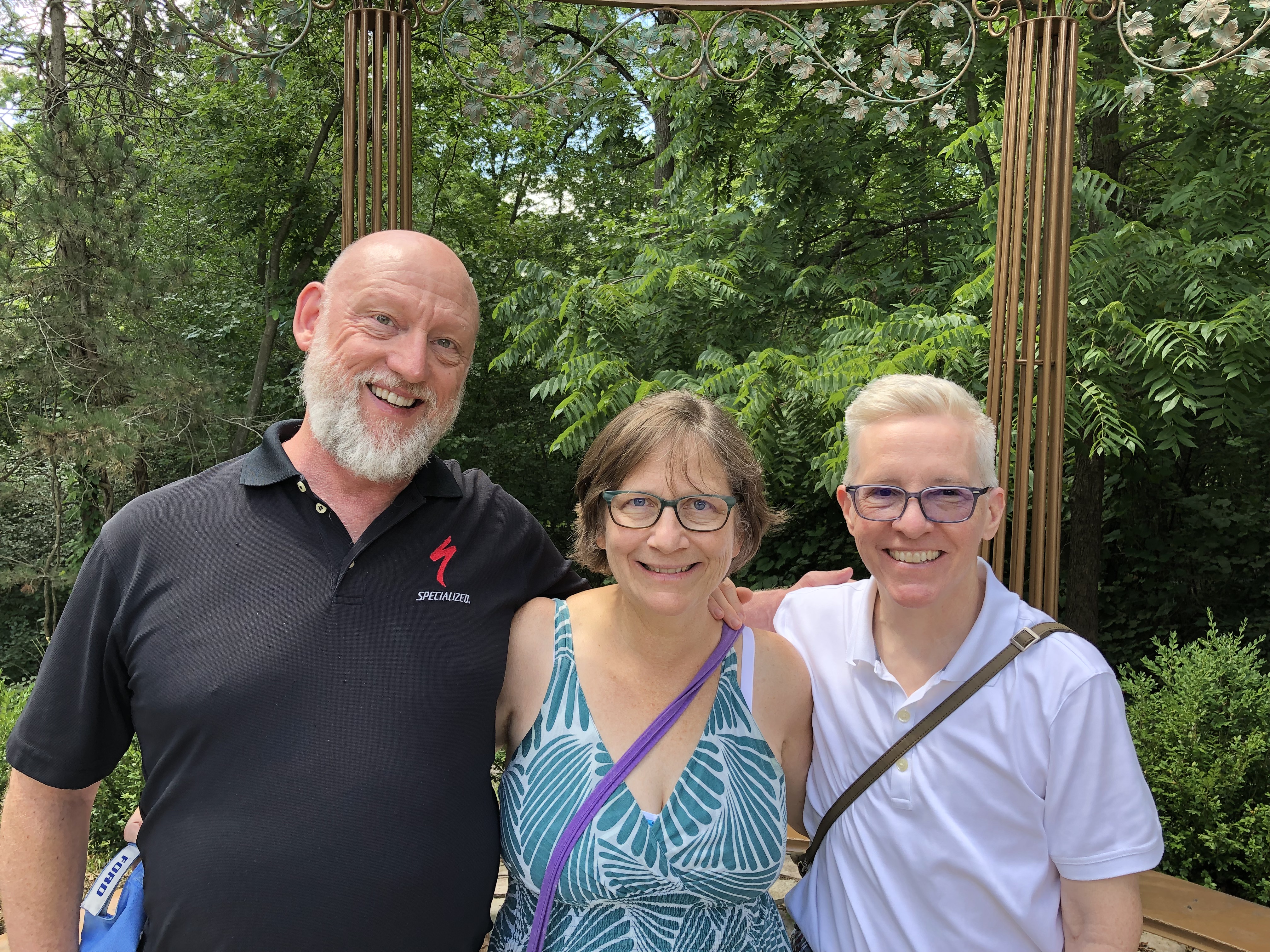
A little more than a week ago, I took a pretty good picture of three dear friends, two of whom I’ve known for over 45 years. From left to right, Tom, Catherine and Jae.

We were on the second day of our drive around Lake Michigan, counterclockwise, which took us from metro Chicago through northern Indiana, Grand Rapids and parts of western Michigan, Petoskey and environs, Mackinac Island, both Sault Ste. Maries, parts of the eastern Upper Peninsula, greater Green Bay and other parts of eastern Wisconsin, and back to metro Chicago.

Leaving on July 30 from our starting point at my house, we drove my car on crowded and less crowded Interstates, state and county highways, and a host of smaller roads, including National Forest roads cutting through lush boreal territory. Returning yesterday to my house, my friends flew back to Austin today; they had arrived from Austin two days ahead of the trip.

We’d planned the trip via email and Zoom, beginning back in early spring. I was the informal guide, making suggestions and offering bits of information I knew from previous visits to Michigan, upper and lower. But my friends were hardly passive in the course of our travels, digging up information via cell and making their own suggestions based on their own familiarity with some of the territory. Catherine had overseen arranging our accommodations, and everybody drove at one time or another.

We stayed in five different peer-to-peer rental accommodations along way, all entire houses that could provide us enough bedrooms, bathrooms, food prep and dining areas, and, in most cases, space to sit outdoors, once with a view of the waters of Green Bay.

Enjoying the outdoors was one of the main goals of the trip. For me, certainly, but especially for them, escaping the high heat of central Texas. They often remarked on the cool air and reveled in it, checking periodically to learn the temps at home. Three digits in Austin wasn’t usual. I don’t think got higher than 85 F. where we were. Standard night temps in both Michigans generally came in the 60s F.

Two meals a day was the norm: a mid- to late-morning breakfast and a late afternoon dinner, or a very late breakfast and a late dinner, at least as these things are reckoned in North America. So on many days, our meal schedule was more like that of Mexico City.

Food variety has trickled down to the lakeside and inland burgs of the upper Upper Midwest, though perhaps not quite as much as in large metros. Whitefish, the star of a lot of UP menus, had top billing in some of our meals, but we also enjoyed hamburgers and other meat — including one tasty UP pasty — pizza, pasta, breakfast fare, bar food, Italian and Asian, plus chocolates and fruit, such as Michigan cherries and UP jam. We prepared our own meals sometimes, did takeout a few times.

Coffee by morning, wine by night, though I only participated in the latter. Familiar wines were available in every grocery store we visited, and my friends sought out coffee ground as locally as possible: one bag from Sault Ste. Marie, for instance.

Meals and wine drinking were a source of convivial times, but hardly the only one. We talked and conversed and bantered at the table, as we headed along roads and as we walked trails. Shared personal histories were revisited, stories of our long periods apart were relayed, and opinions shared. Odd facts were floated. There was punnery, especially on the part of Tom, a born punster.

We visited one city of any size, Grand Rapids, and many smaller places, a few museums, a sculpture garden, some riverfronts, shopping streets and resort areas, a grand hotel, an historic fort, churches, a Hindu temple, a wooded cemetery, two lighthouses, forests, clearings and beaches, a massive sand dune, waterfalls, rapids and the clearest pond I’ve ever seen. The three Great Lakes we saw stretched to empty horizons — except when Canada or the opposite shore of Green Bay were visible. We crossed the Mackinac Bridge once and the international bridge between the Sault Ste Maries twice.

We walked near the shores of Lakes Superior, Huron and Michigan. The northern woods and the beach ecosystems were fully flush here in late summer. Jae, who knows a good deal about flora, shared some knowledge about the flowers, trees and fungi we saw in profusion.

Though we caught a few showers in daytime, and the last day was mostly rainy, most of the storms rumbled through at night, adding to the restfulness of whatever sleep we each had. None of the storms were lightning-and-thunder dramas, but some were impressive in their downpour. My friends expressed their satisfaction with the cool light winds that often blow in corners of the UP.

There were a number of travel firsts, mostly for my friends. This was the first time any of them had been to the UP, and the first time they had seen Lake Superior, whose aspect I’m so fond of, and their first visit to the northern part of the Lower Peninsula. The trip included Tom’s first known visit to a national park, though later we determined that it was probably his second park. Also, it was the first time two of them had ever been to Canada, since we popped across the border for one night in Sault Ste. Marie, Ontario.

For me, a mix of new and places I saw long enough ago that they were almost like new.

When I dropped off my friends at O’Hare earlier today, we agreed that they trip had met expectations. And more.

Northern Indiana Dash

Ah, high summer.

That’s in Dallas. I’m not there. Today’s high here was 79 F., a dip from a hot and muggy 90s-day on Tuesday. Several degrees of latitude will make that difference.

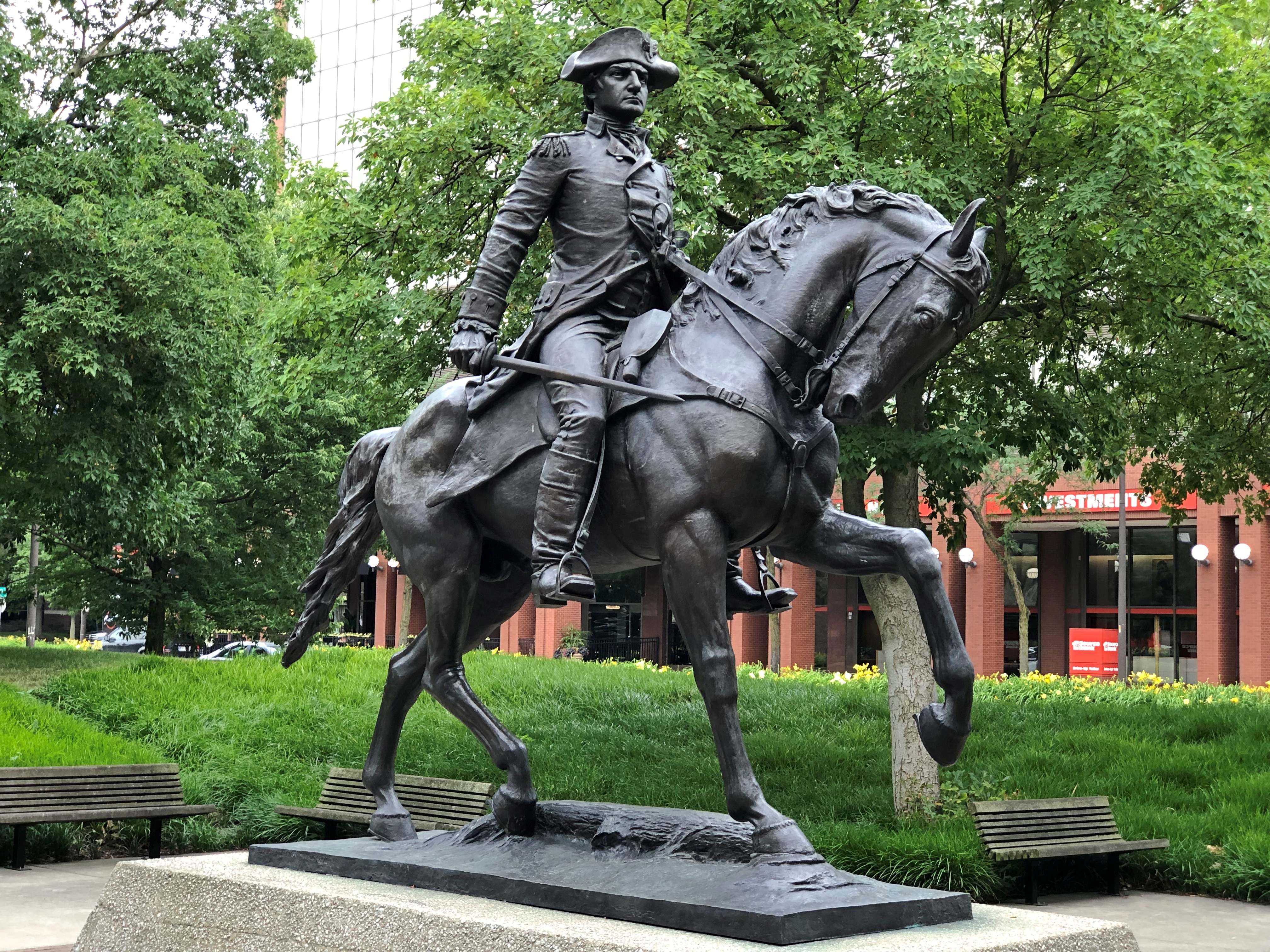
One of these days, the times might catch up with Gen. “Mad” Anthony Wayne, leader in the Revolution and scourge of the Northwest Territory Indians, but for now, you can find him on horseback in bronze at Freimann Square in downtown Fort Wayne, Indiana, in a work by Chicagoan George Etienne Ganiere (1865-1935).Gen. Mad Anthony Wayne statue, Fort Wayne

We gazed a Mad Anthony for a few moments as part of our trip through northern Indiana. I wanted to take a short trip over the long Independence Day weekend, but I didn’t want it to consume the entire three days.

So on Saturday, we left in mid-morning and made our way to Fort Wayne, where we stayed overnight. On Sunday, we returned across northern Indiana to get home, which took up most of the day.

We arrived in Nappanee, Indiana, for lunch on Saturday. I’m glad to report that Main Street Roasters (not so new anymore, it seems) makes a fine pulled pork sandwich. Yuriko said the ingredients in her Cobb salad tasted very fresh, and I sampled some, and agreed. The place was doing a brisk business.Main Street Roasters

We figured the main source for both fresh pork and fresh greens was the Amish farms in the area. Nappanee is considered the focus of one of the country’s larger Amish populations, though that’s a little hard to tell in a casual look around downtown, which isn’t so different from other Indiana towns its size (pop. nearly 7,000). Out away from town, though, you can see from the road farm houses and other buildings, clustered closer than in other rural areas, which is characteristic of Amish settlements.

In town, Plain People in carriages rolled by now and then. Some female store clerks wore the small head coverings common among Mennonites. The Amish tourist attraction in Nappanee known as Amish Acres closed in late 2019, and a more upmarket property re-opened the next year — in an example of bad timing, though it seems to have survived — as The Barns at Nappanee, Home of Amish Acres. Maybe all those extra words are going to cost you more.

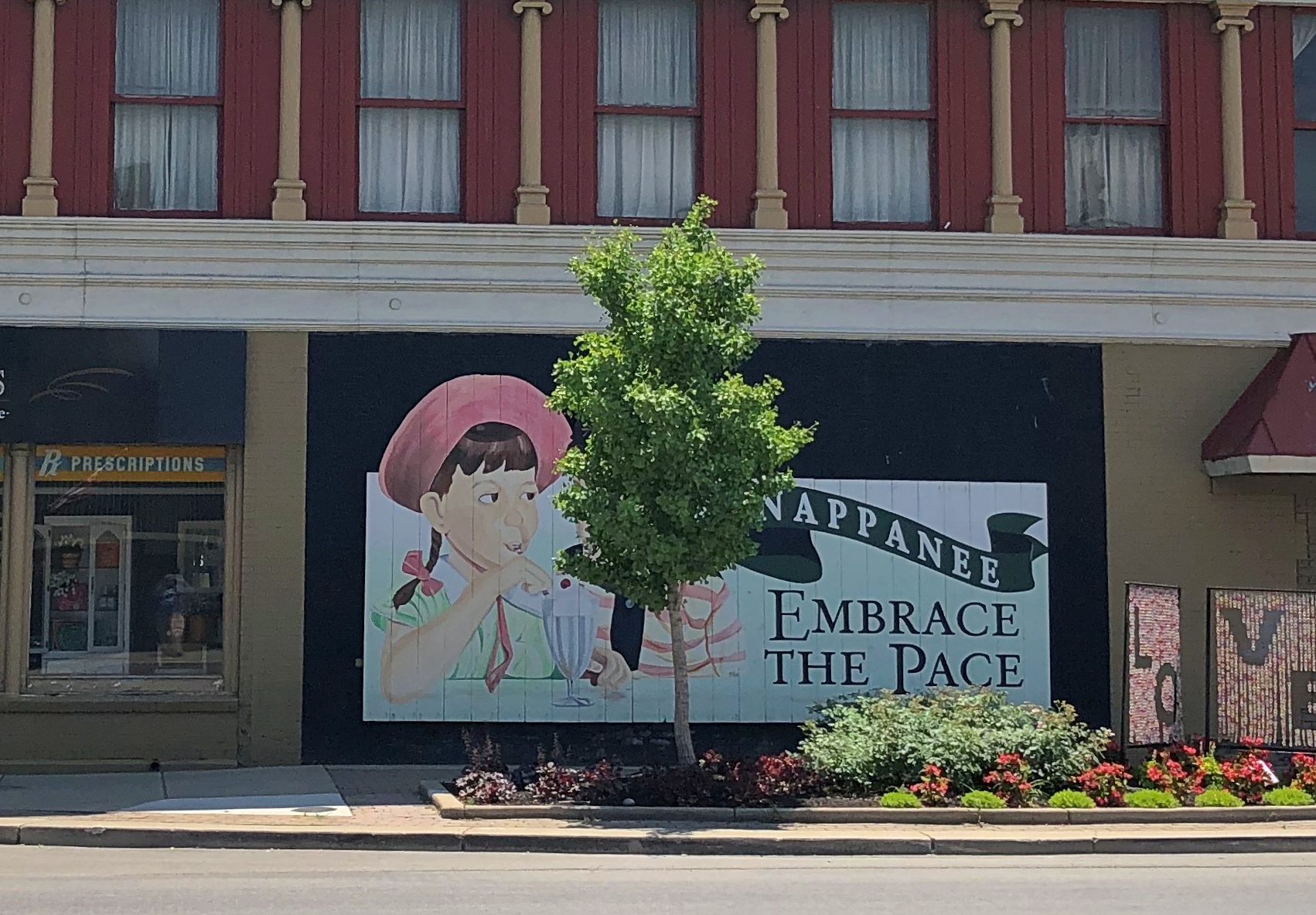
Across the street from Main Street Roasters (and not Amish Acres).Nappanee, Indiana

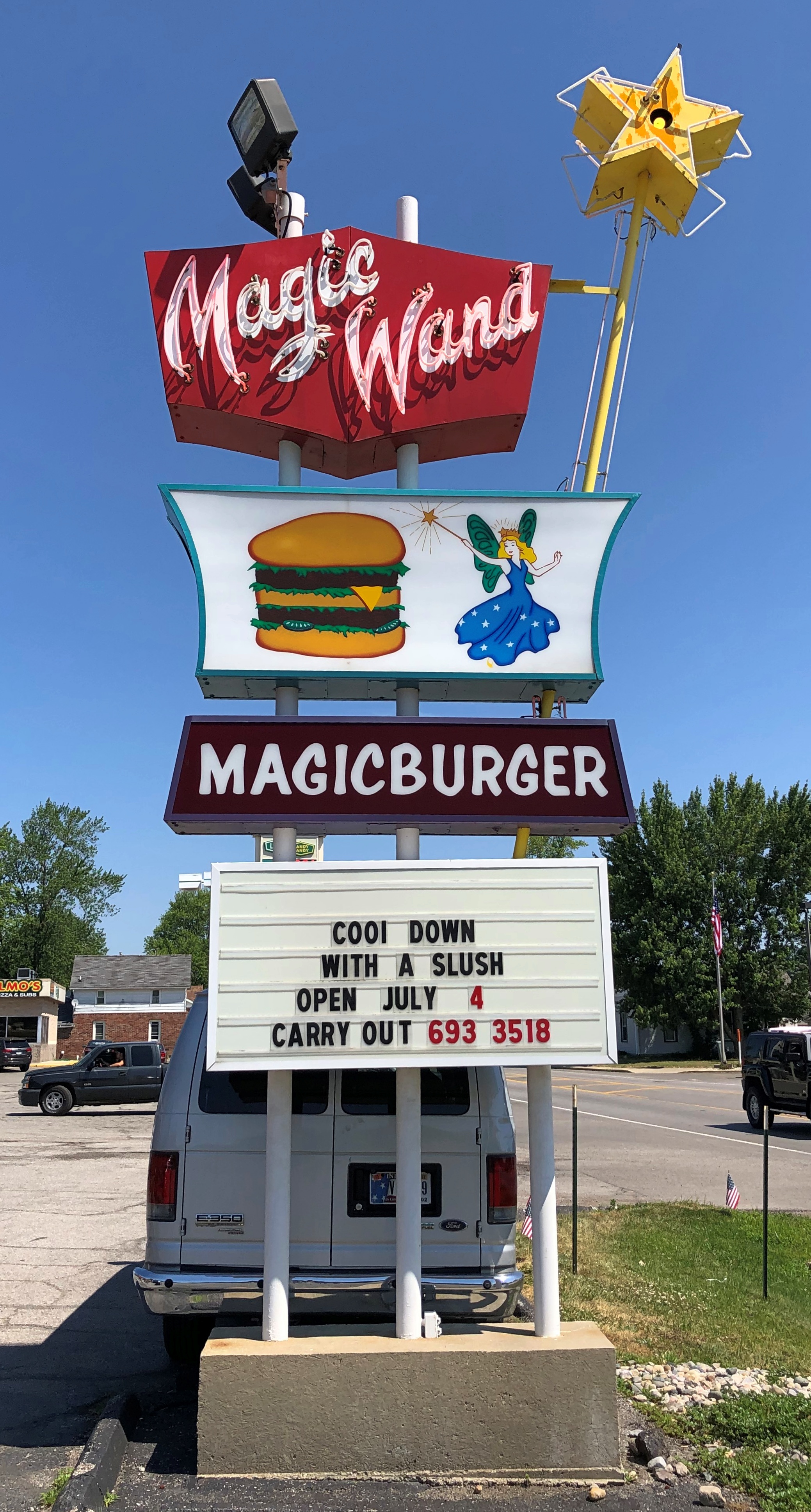
On Sunday, our first brief stop was at Magic Wand, home of the Magicburger, which can be found in Churubusco, Indiana.Magic Wand, Churubusco

We didn’t have a magic burger, but rather shared a strawberry milkshake to go. Among strawberry milkshakes, it was the real deal. The real tasty deal, straw-quaffed as we speed along U.S. 33.

Churubusco was a name I took an instant liking to. The town fathers apparently read in their newspapers about the battle of that name, and wanted the town to borrow a bit of its martial glory. According to some sources, it gets shortened in our time, and maybe for a long time, to Busco. I also noticed references to the place, on signs and the like, as Turtletown. Really? What was that about? I wondered.

The Beast of Busco, that’s what. Quite a story. A giant among turtles that the townsfolk never could quite capture. I haven’t had this much fun reading hyperlocal history — lore — since I chanced across a small lake in Wisconsin that is supposedly home to an underwater pyramid. Turtle Days was last month.

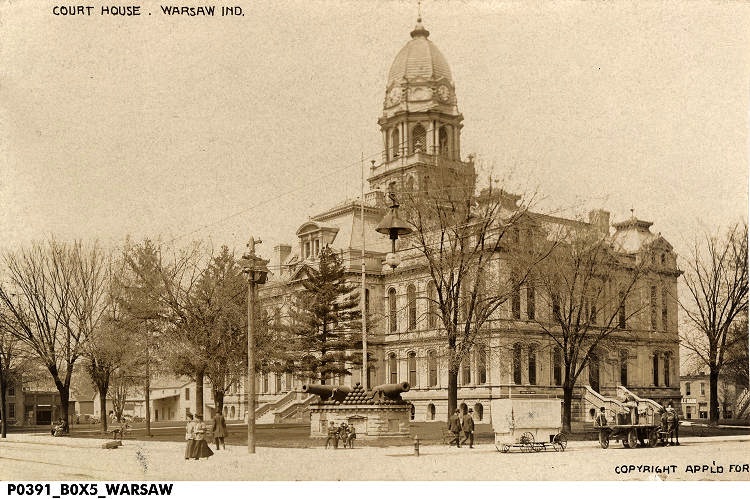
Another spot for a short visit on Sunday: Warsaw, Indiana. It’s the seat of Kosciusko County, with a handsome Second Empire courthouse rising in the town square.Kosciusko County Courthouse

Designed in the 1880s by Thomas J. Tolan, who died during construction, the Indiana Historical Society says. The project was completed by his son, Brentwood S. Tolan.Kosciusko County Courthouse

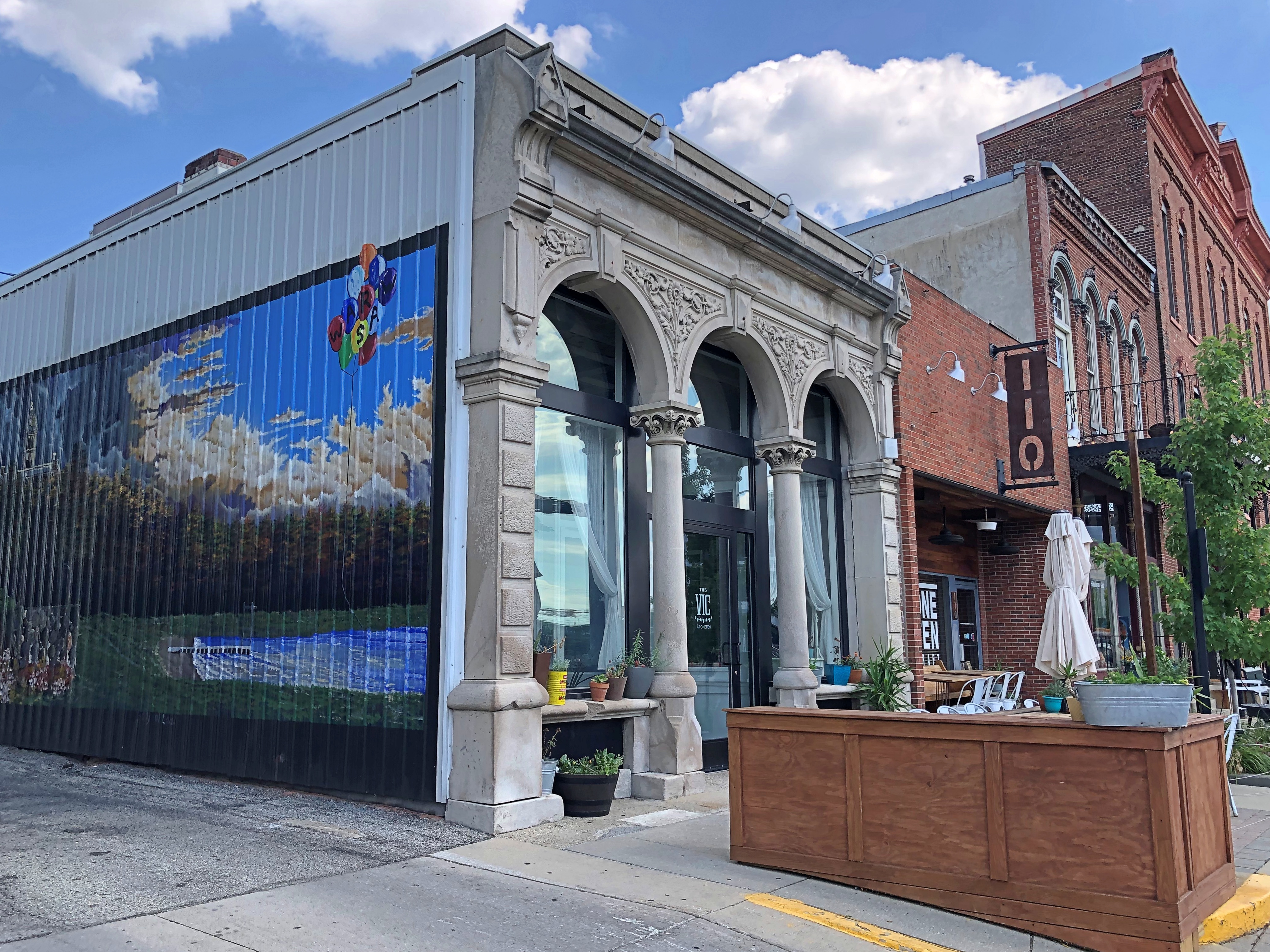
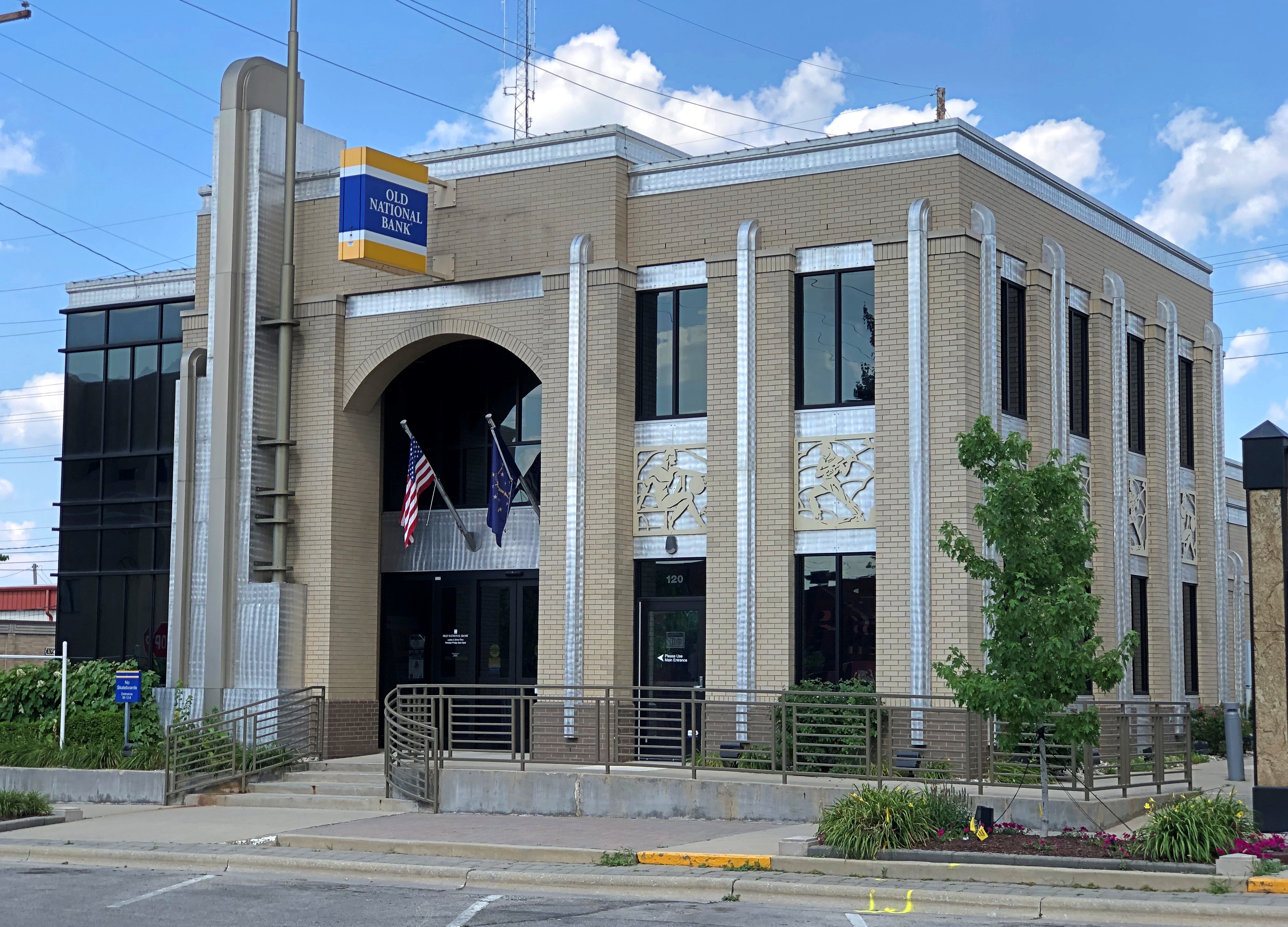
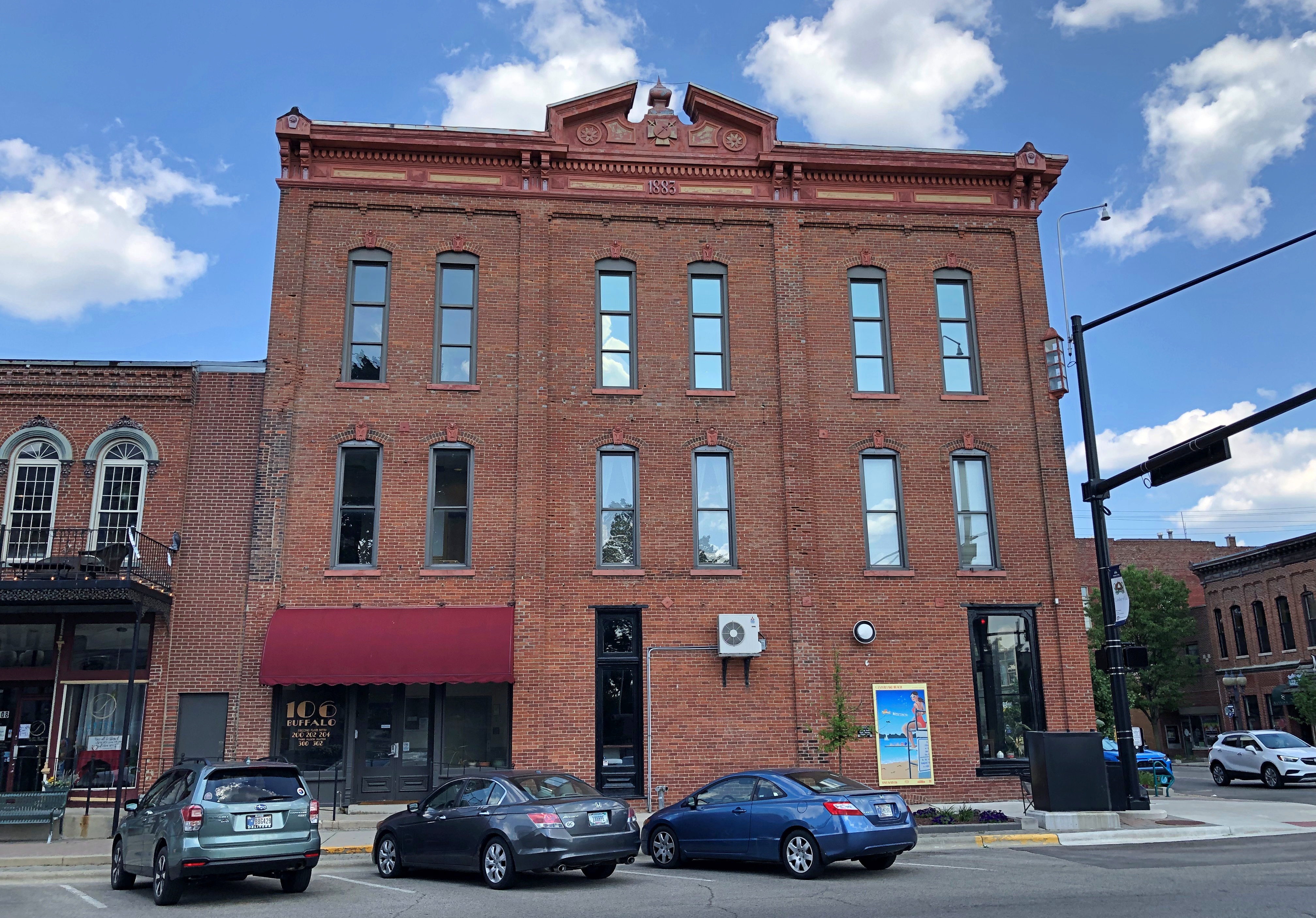
The square sports some other handsome buildings, too.Warsaw, Indiana Warsaw, Indiana Warsaw, Indiana

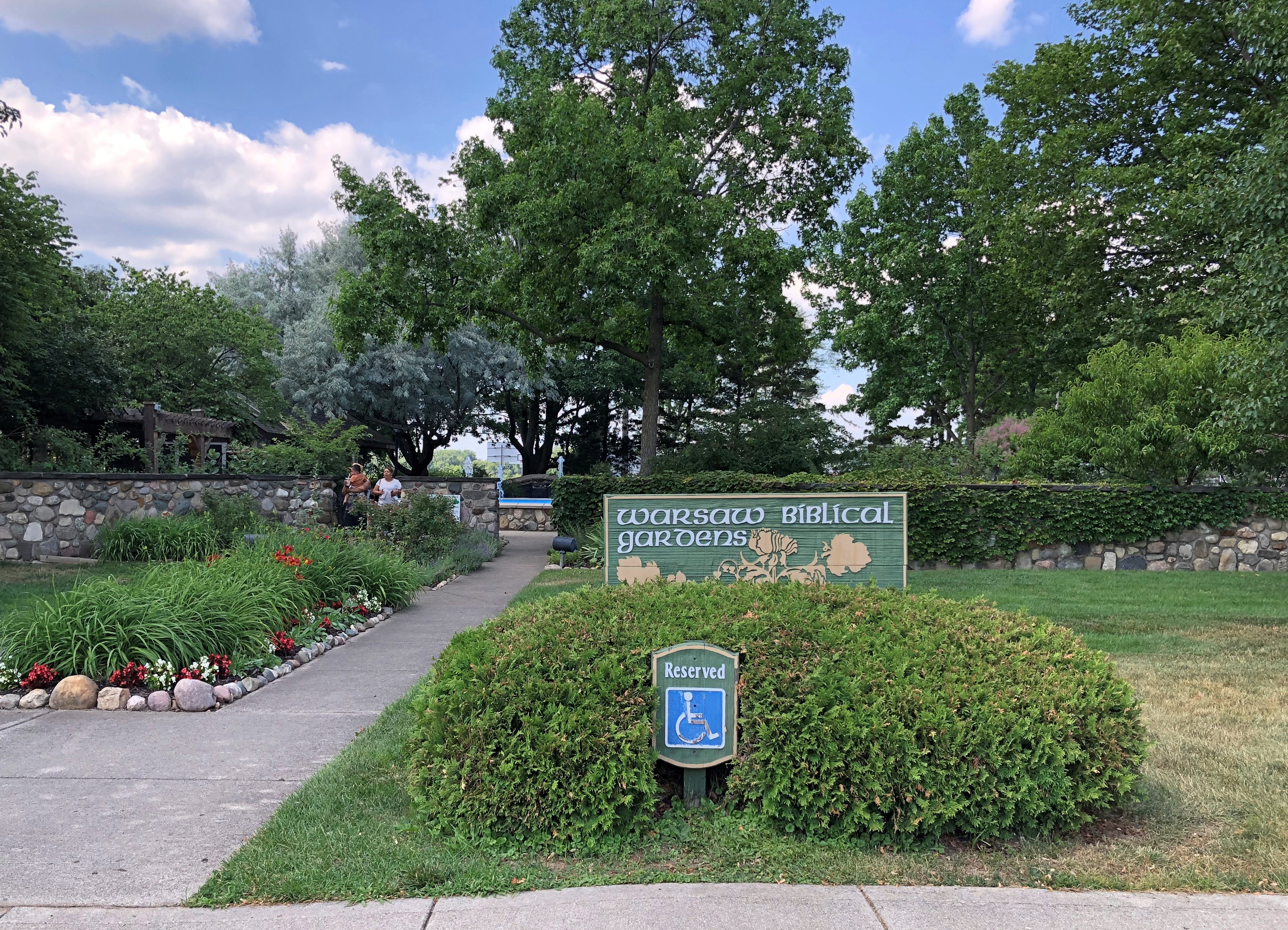
Warsaw is also home to a garden the likes of which I’d never imagined, and the reason I stopped in town, days after spotting it on Google Maps and then looking it up: the Warsaw Biblical Gardens.Warsaw Biblical Gardens Warsaw Biblical Gardens Warsaw Biblical Gardens

The brainchild of a local woman back in the 1980s with access to the land. “It would be no ordinary garden — not a rock garden, nor a rose garden, nor a perennial garden — it would be a truly unique and beautiful Biblical Garden,” the garden’s web site says.

“Actually, we say ‘gardens’ because the Warsaw Biblical Gardens has a variety of areas: the Forest, Brook, Meadow, Desert, Crop and Herb gardens; the Grape Arbor; and the Gathering site. Warsaw Biblical Gardens is ¾-acre in size, and there are very few gardens like this in the United States.

“The term ‘biblical’ refers mainly to the fact that the plants, trees, flowers, herbs, etc., are mentioned in the Old and/or New Testaments of the Bible. These have been carefully researched to preserve the integrity of the Gardens’ uniqueness.

“The Warsaw/Winona Lake area of Indiana has a long religious history. That history begins perhaps with the Chatauqua times of Winona Lake, now being revived. [Really?] Many other famous historical religious figures made their home’s here, from Homer Rodeheaver to Fanny Crosby to Billy Sunday.”

I won’t pretend I didn’t have to look up the first two of those three. Regardless, it’s a stunning little place.Warsaw Biblical Gardens Warsaw Biblical Gardens Warsaw Biblical Gardens

Go far — always good if you can manage it. But also go near.

Colorado Plateau ’22 Leftovers

I’ve changed the name of this trip. What, doesn’t everyone name their trips? No? Anyway, Colorado Plateau ’22 is better than the ridiculous NV-AZ-UT 22, which looks like a part number in a tool-and-die factory.

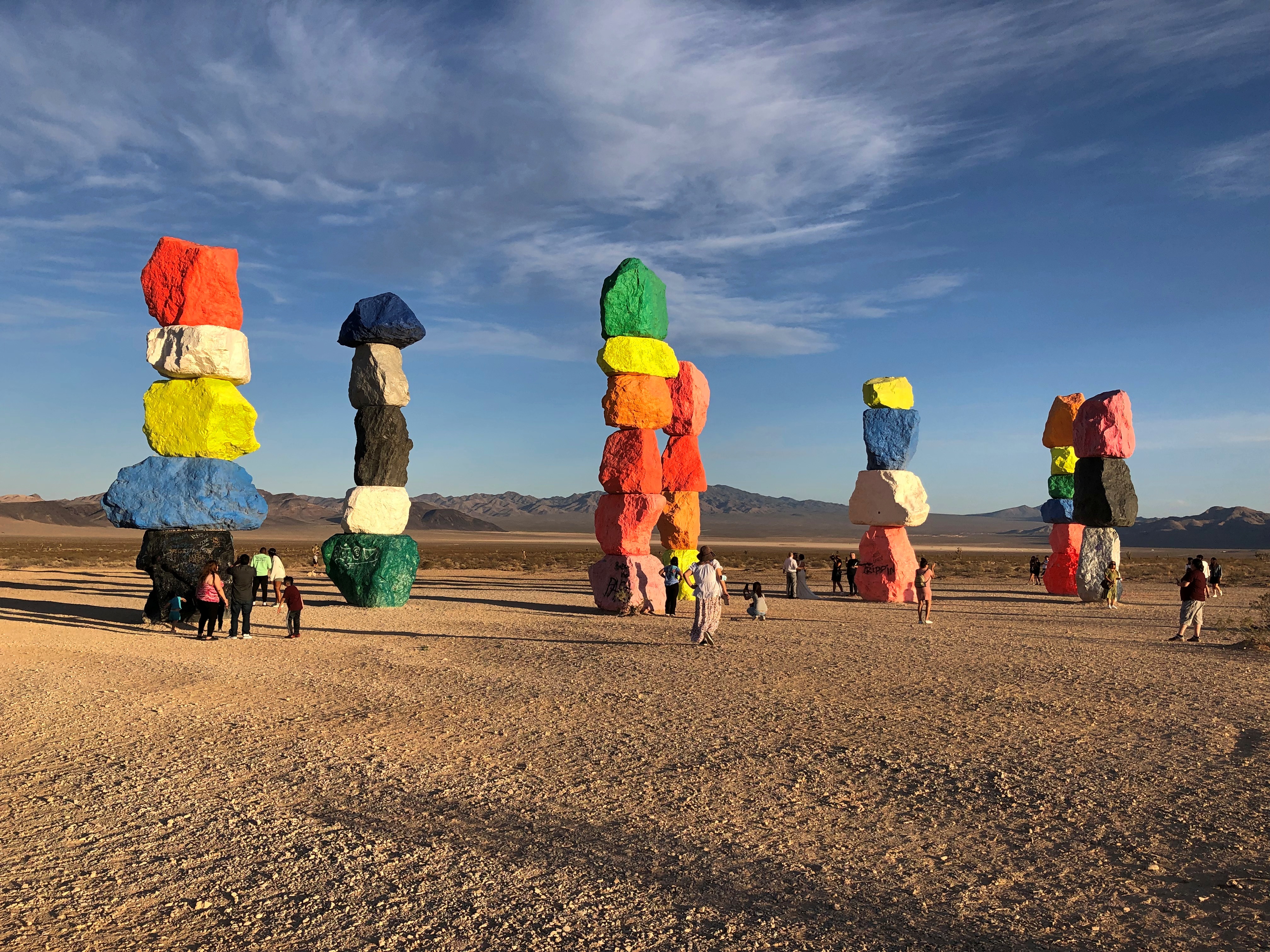
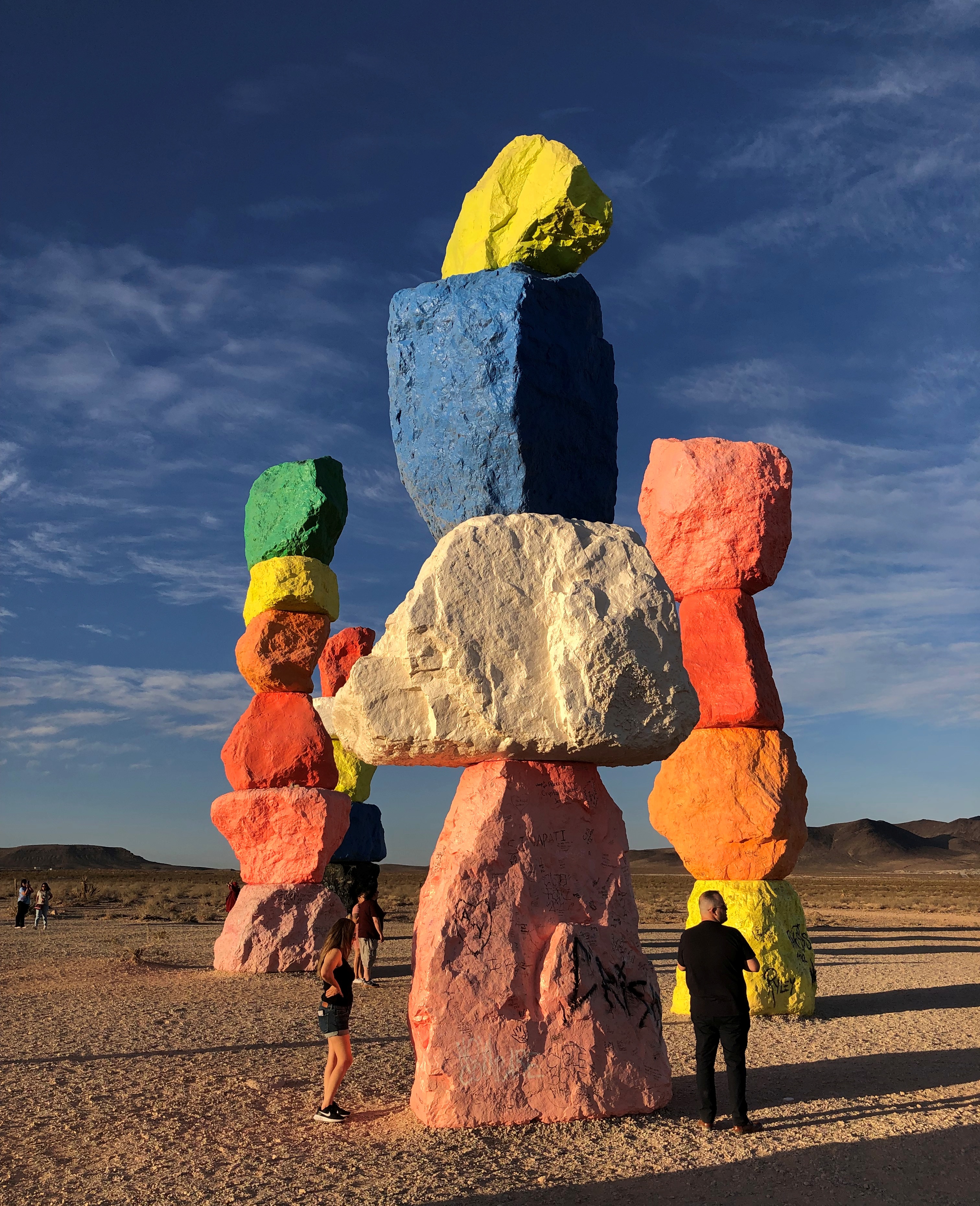
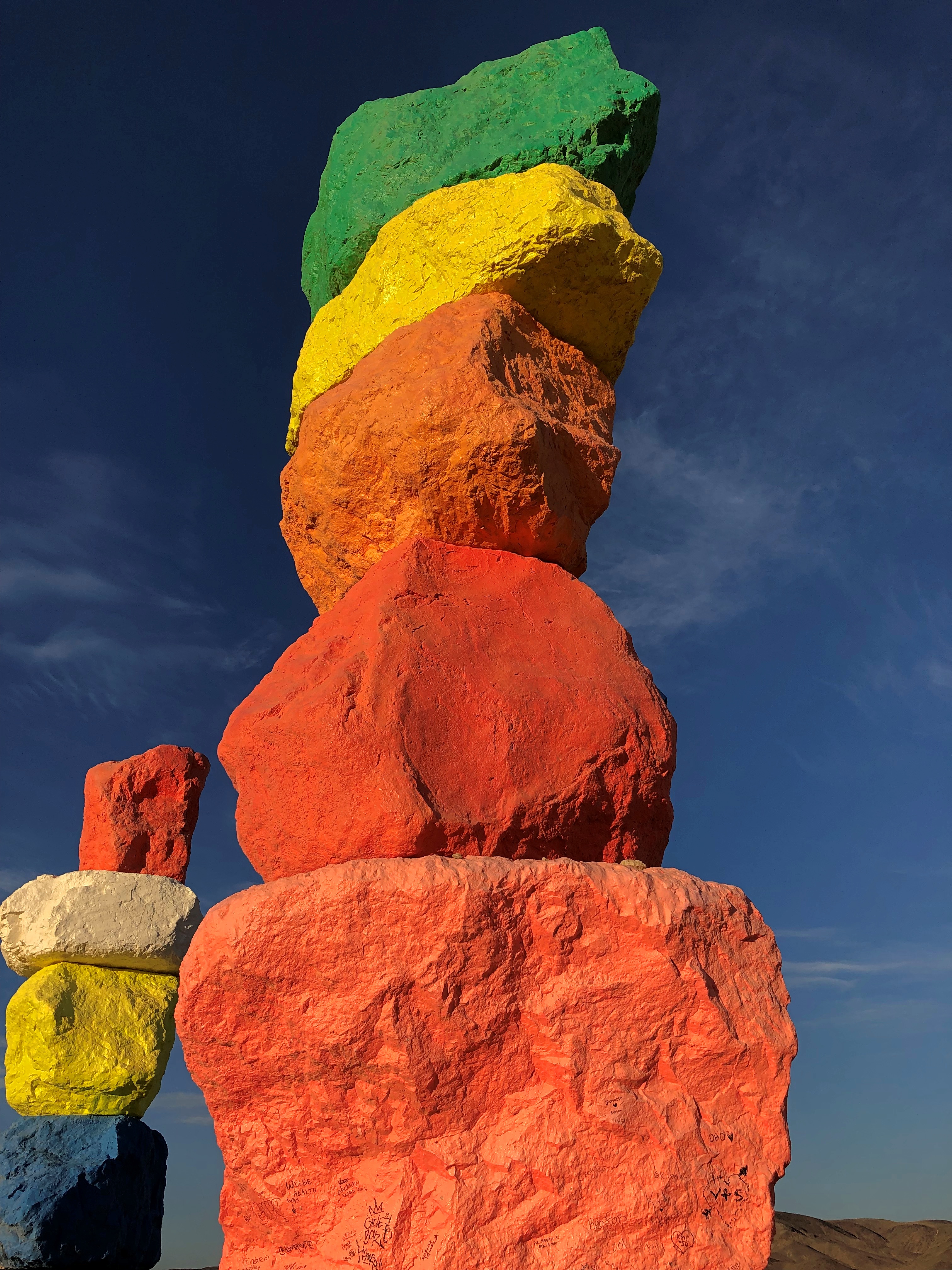
But not quite all on the Colorado Plateau. Just outside Las Vegas, maybe five or so miles from where  that city finally peters out on I-15 toward Los Angeles, is Seven Magic Mountains.Seven Magic Mountains Seven Magic Mountains Seven Magic Mountains

Magic, maybe, mountains no, at least not in any literal sense. An art installation by Ugo Rondinone, a Swiss artist.

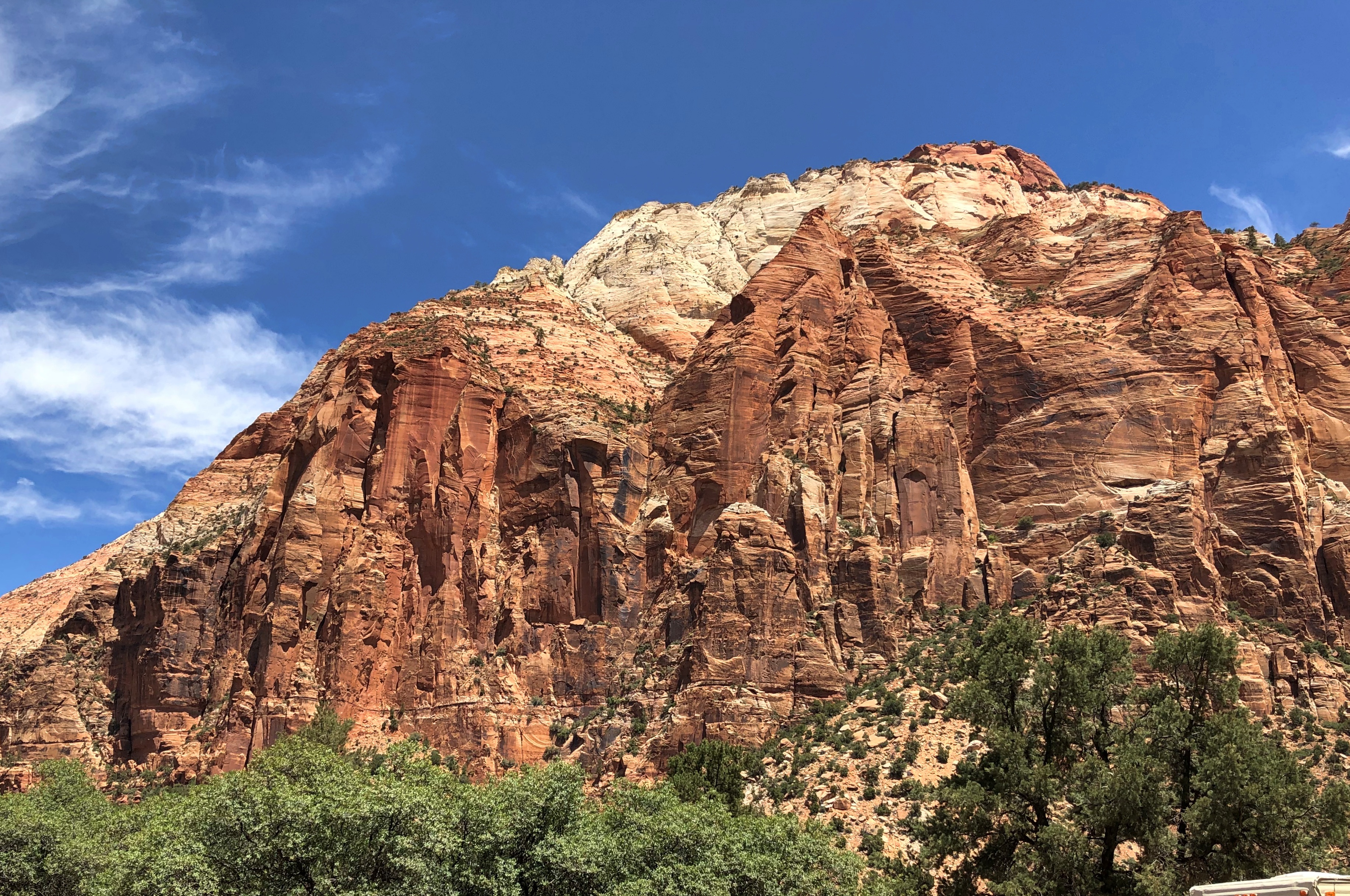
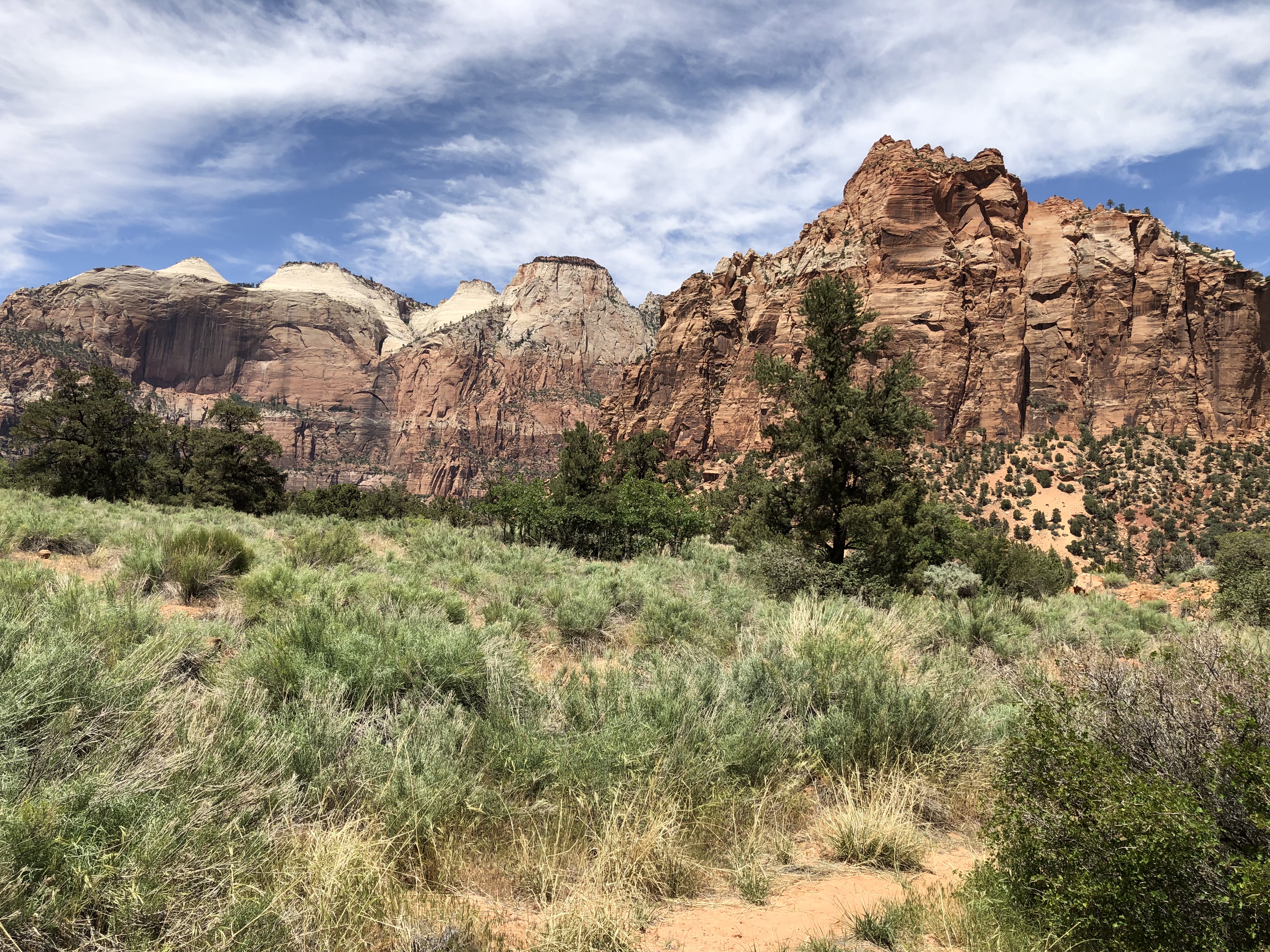
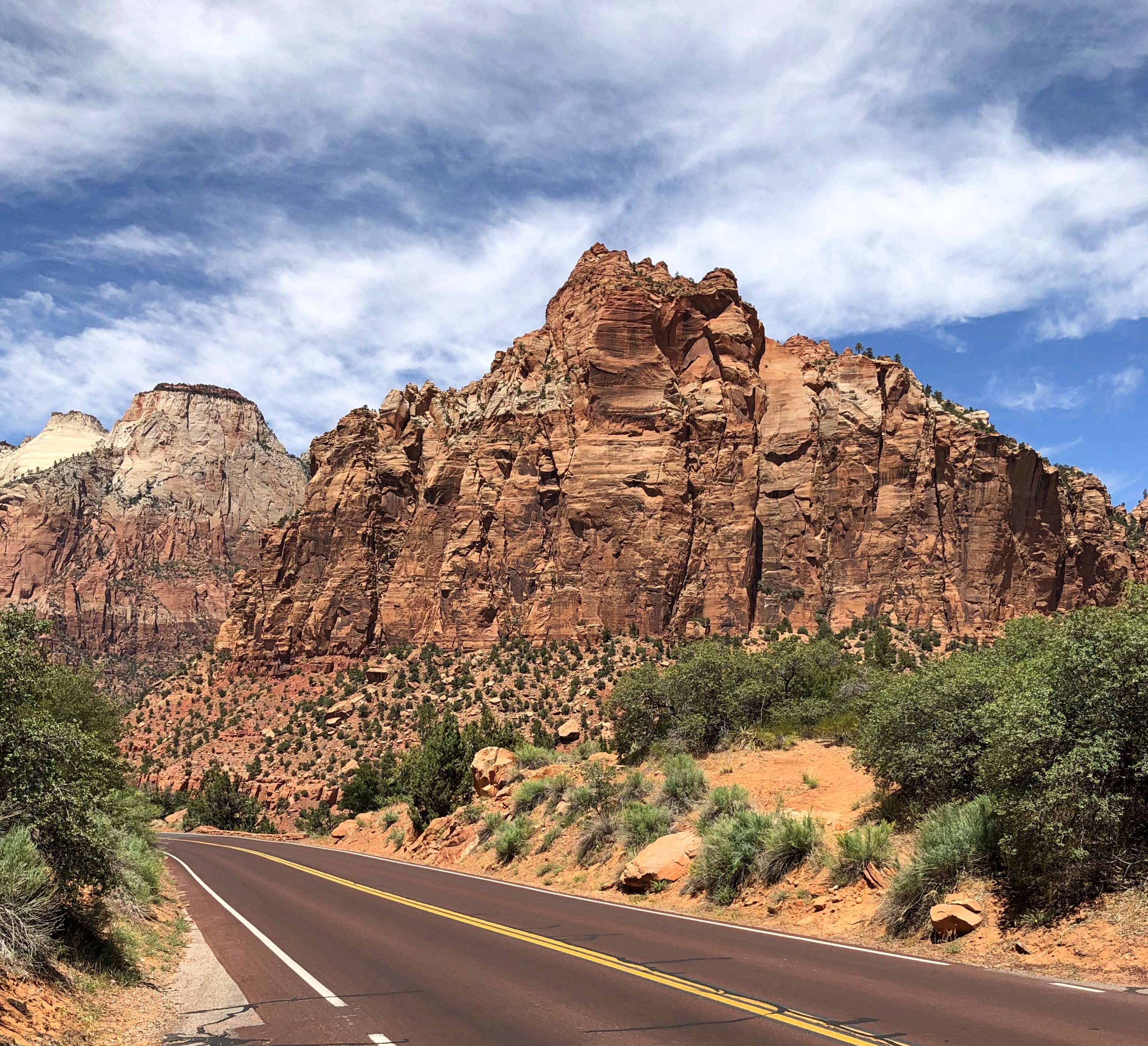
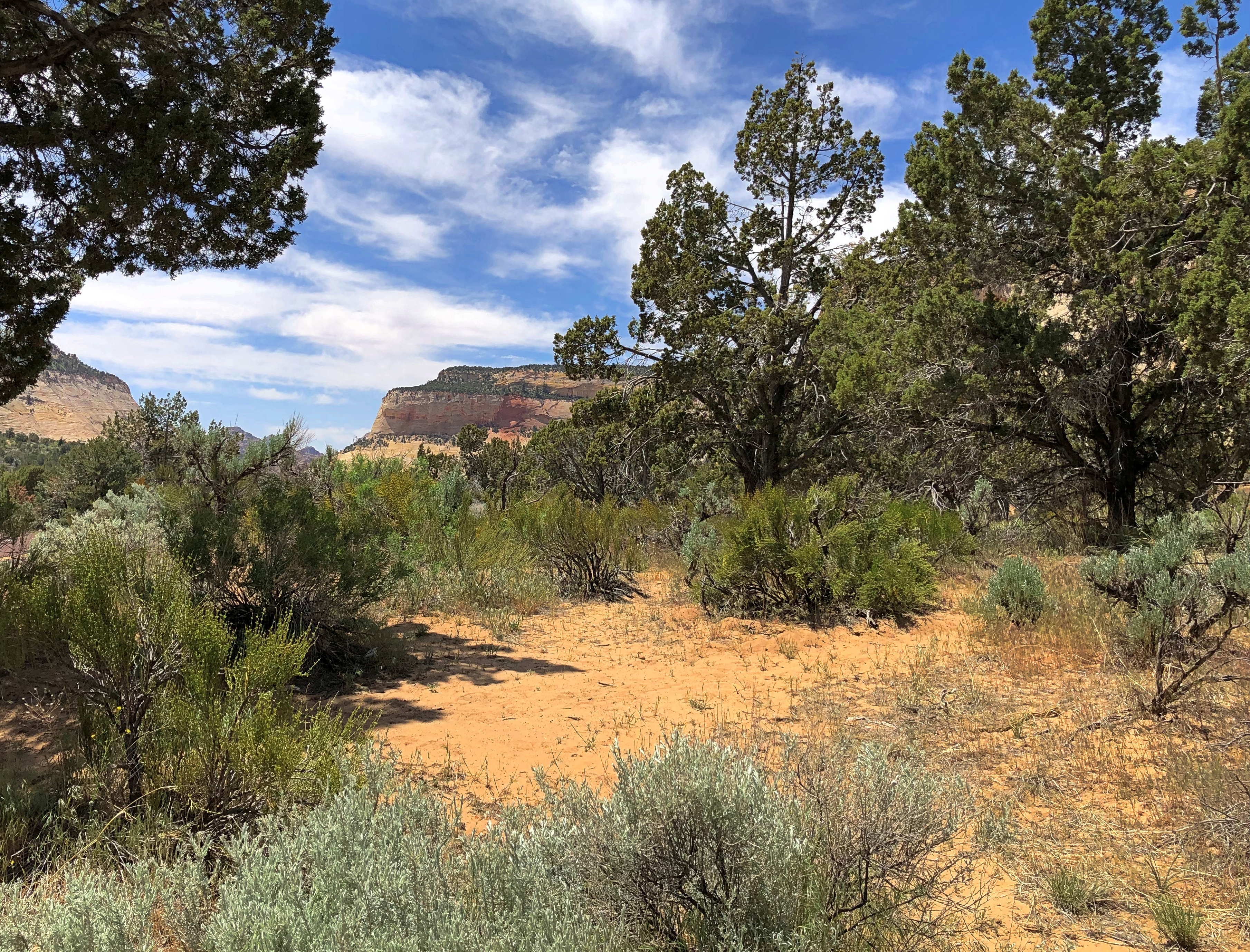
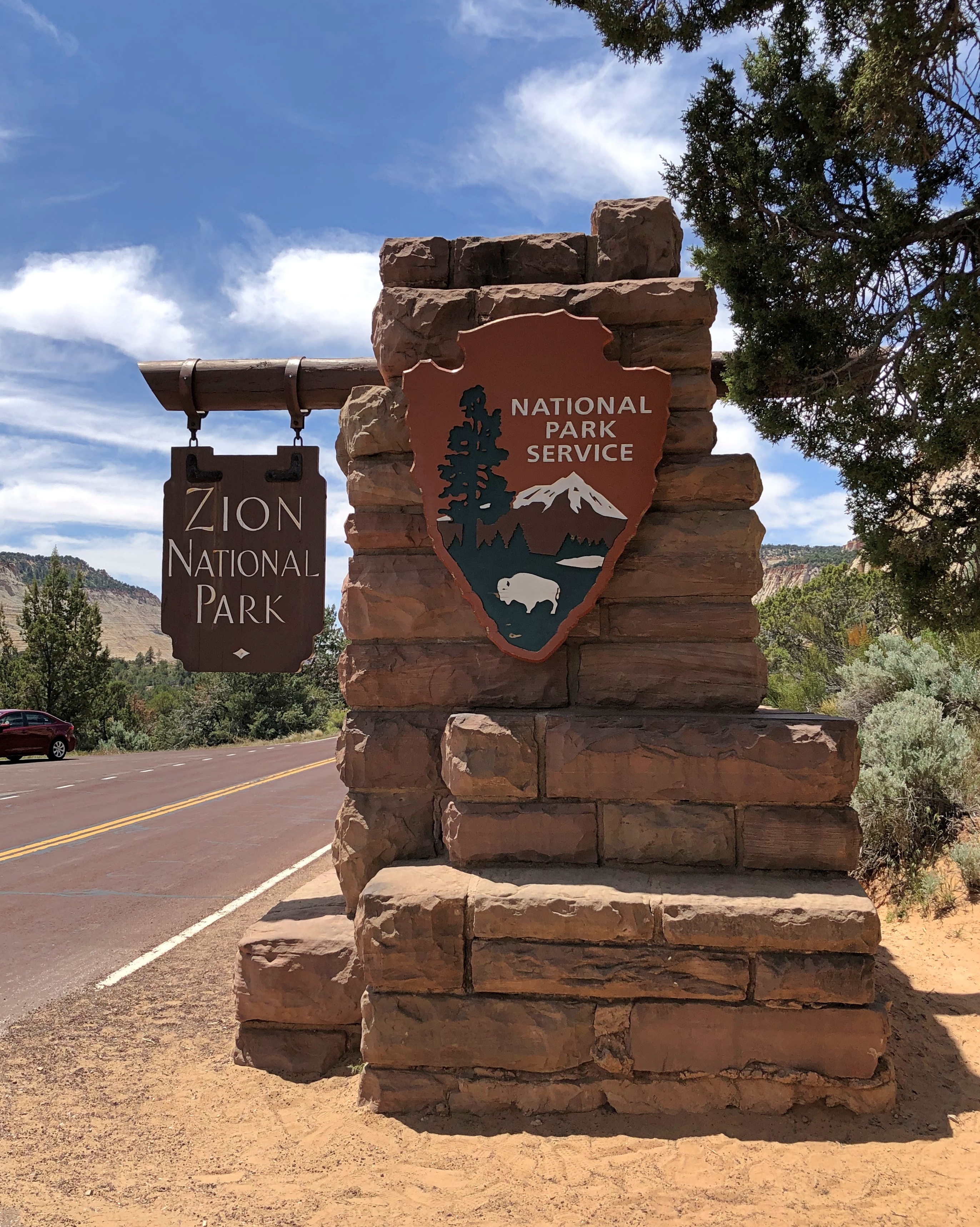
We only passed through Zion NP, stopping only for a few minutes on the side of the road.Zion NP Zion NP Zion NP

Near the entrance.Zion NP

At the entrance.Zion NP

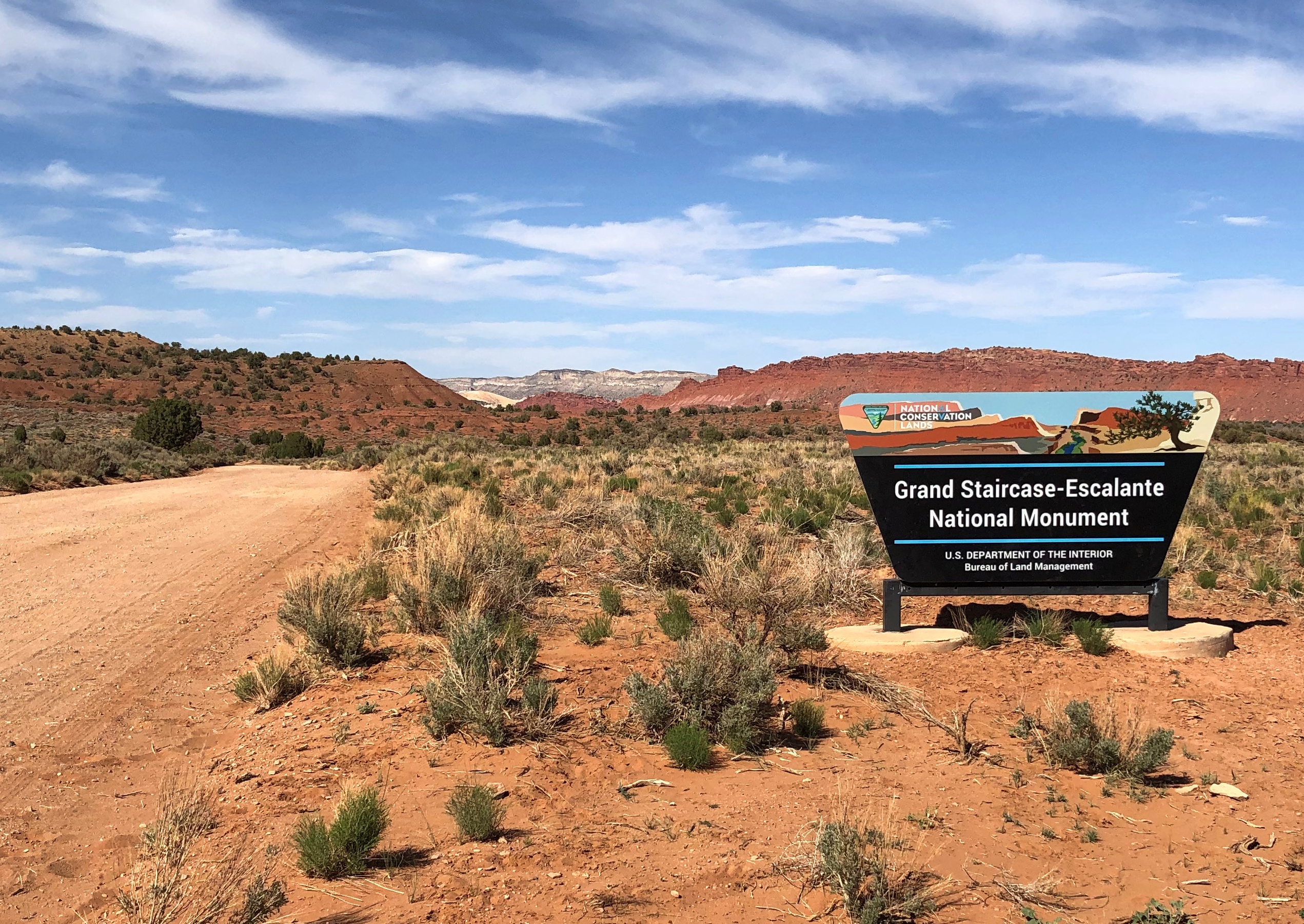
A different entrance: Grand Staircase-Escalante National Monument. A small bit of the vastness of the place, more than 1.8 million acres.
Grand Staircase-Escalante NM

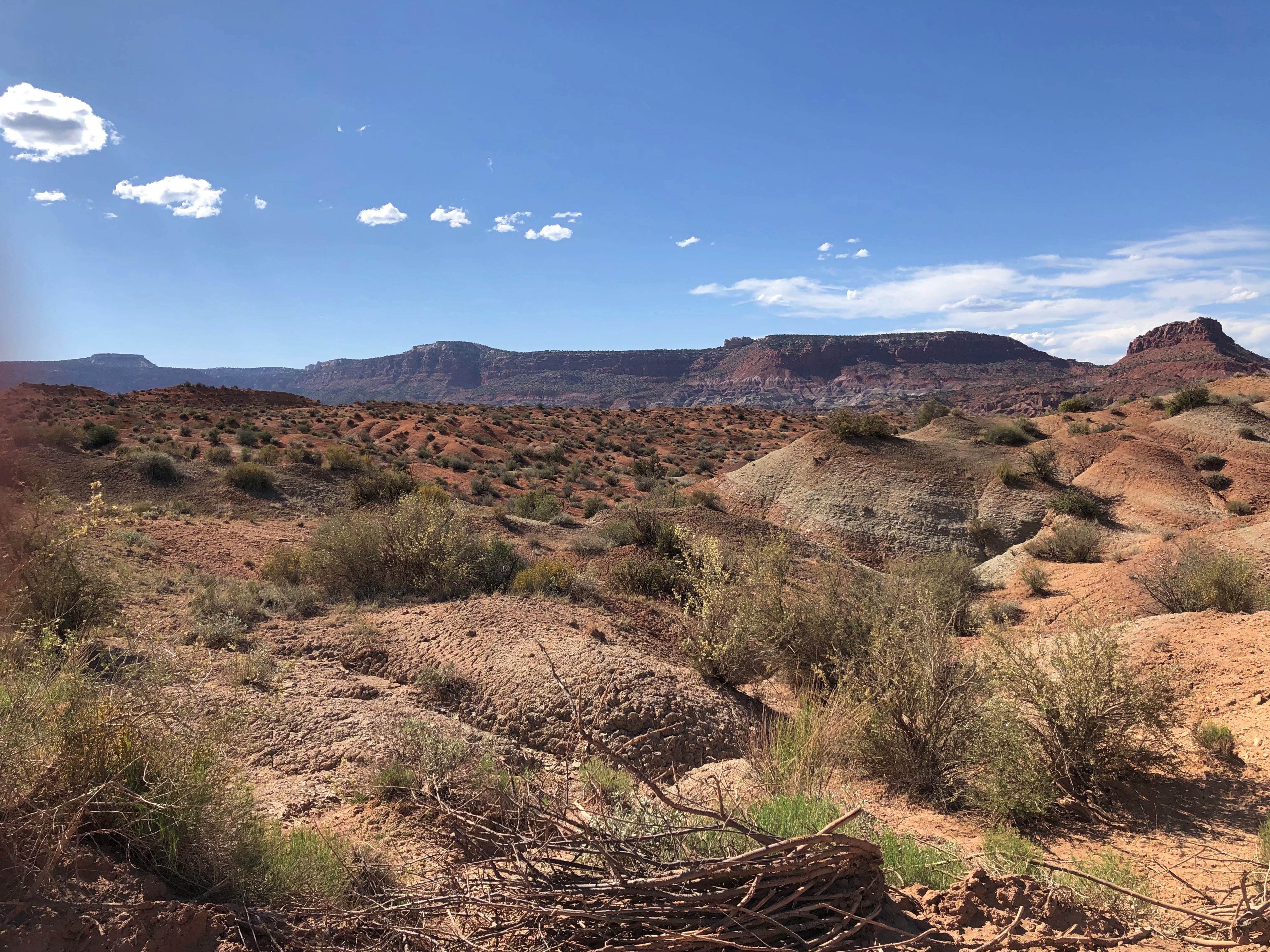
I knew that was a road I wanted to drive a little ways at least, to check out the views. My instincts were right.Grand Staircase-Escalante National Monument Grand Staircase-Escalante National Monument Grand Staircase-Escalante National Monument Grand Staircase-Escalante National Monument

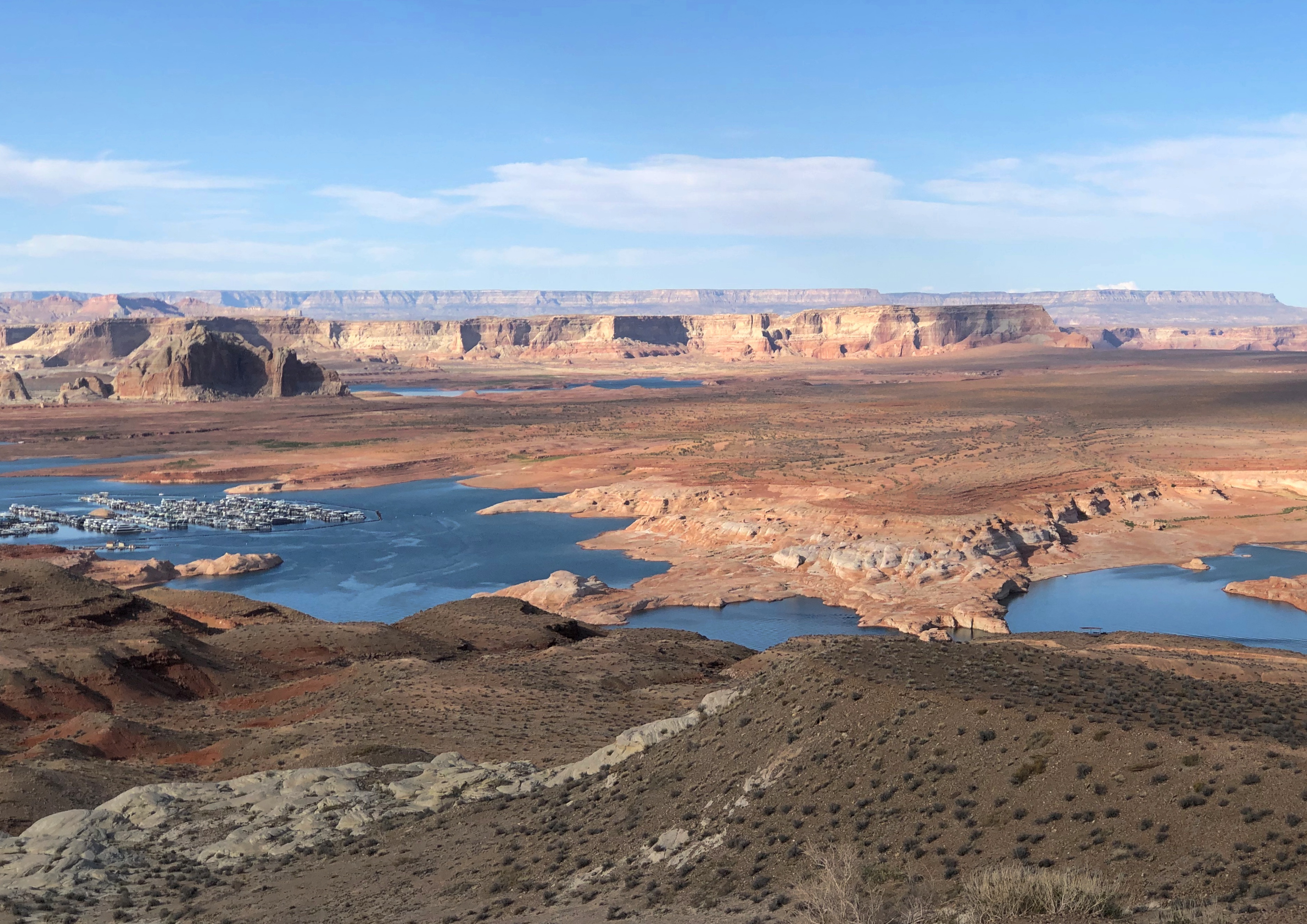
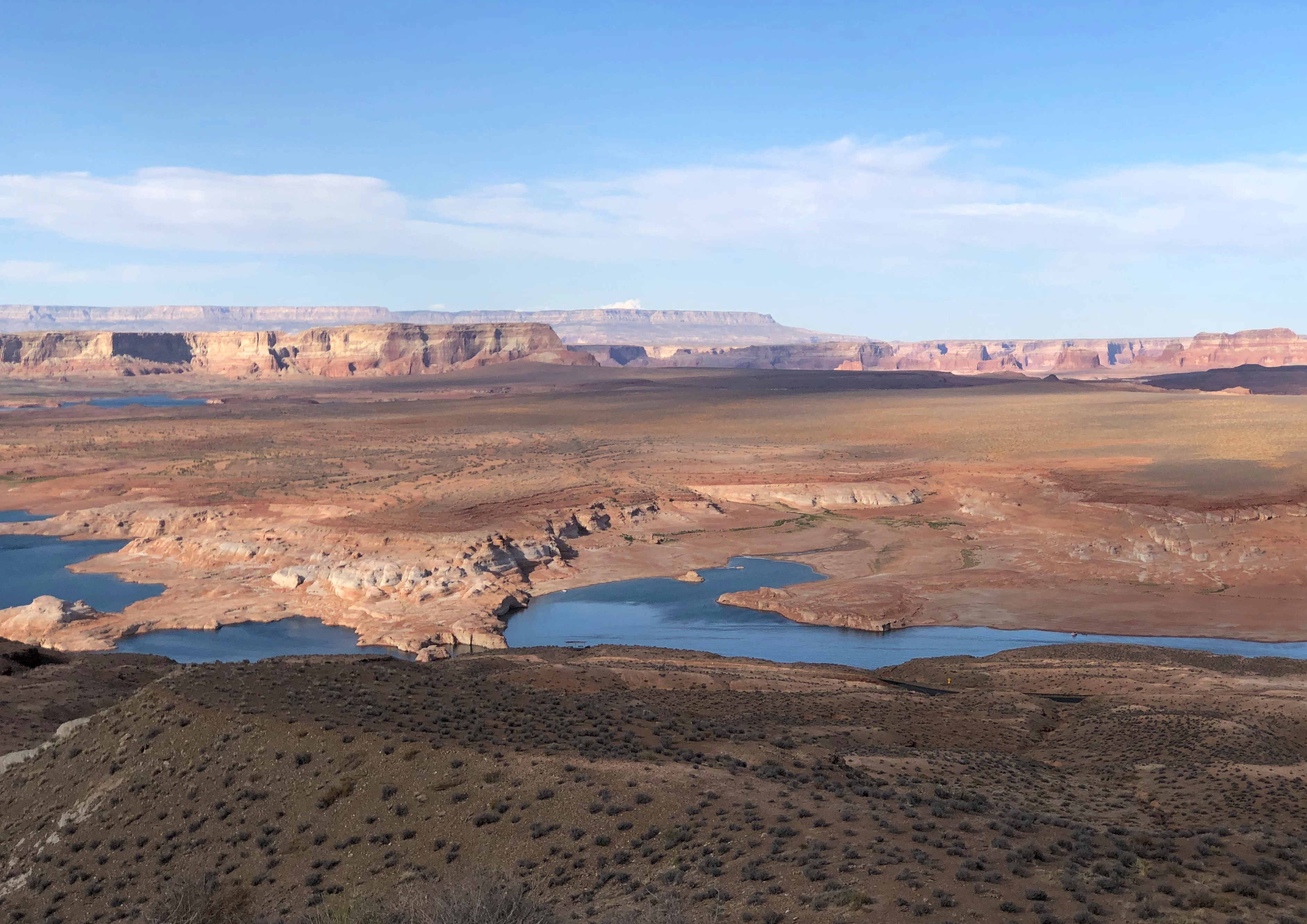
When we were nearly in Page, Arizona, we stopped for a few minutes at a viewpoint over Lake Powell. I was flabbergasted by how low the lake looks.Lake Powell 2022 Lake Powell 2022

And so it is. The lowest level since the lake was built. Lake Mead is low as well, so much so that (possible) mob hit victims have been discovered. Apparently the idea of draining Lake Powell to fill Lake Mead is being entertained by officialdom, I read, though it’s hard to know how seriously.

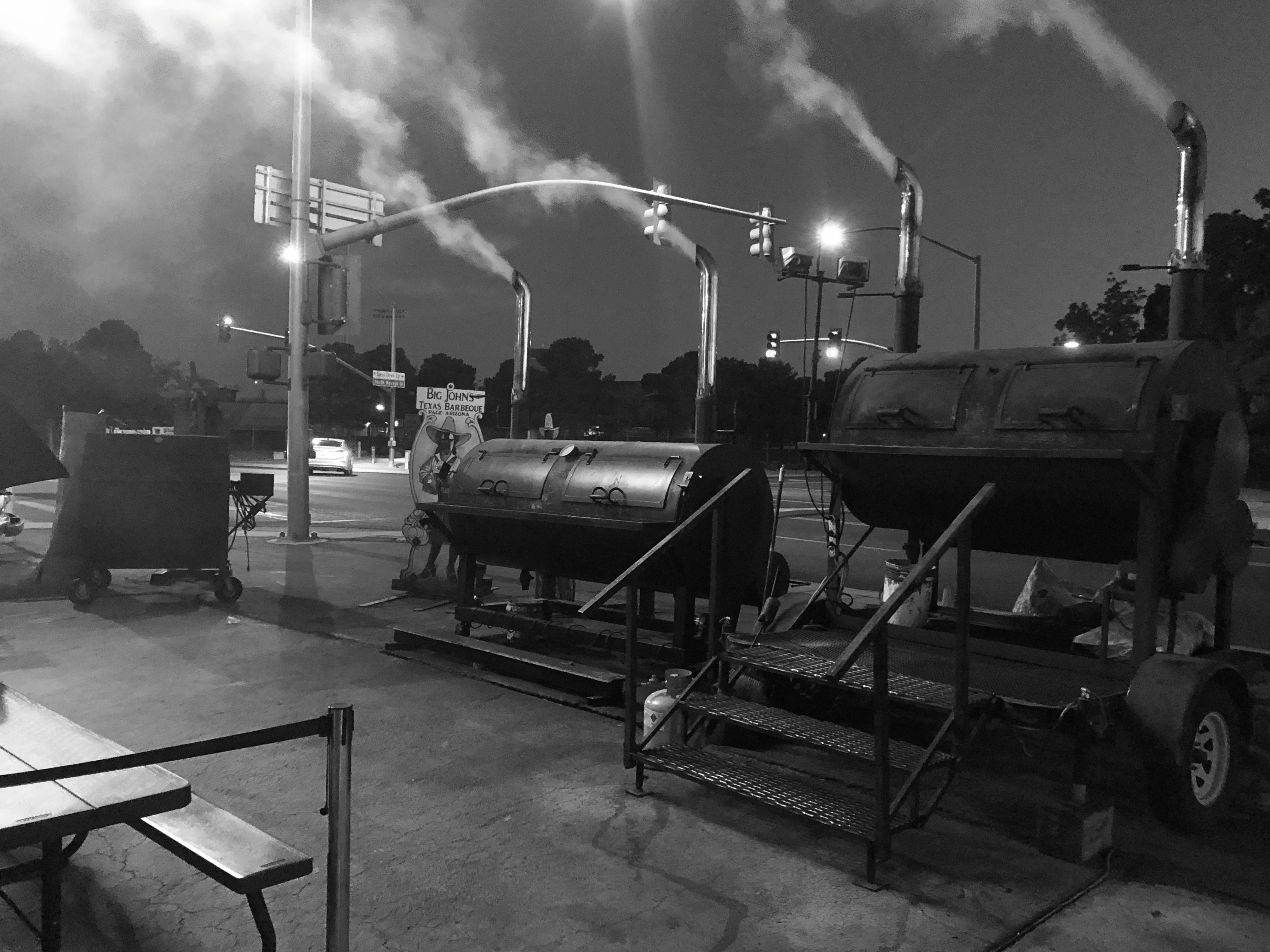
The cookers at Big John’s Texas Barbecue in Page.Big Johns Texas Barbecue Page Arizona Big Johns Texas Barbecue Page Arizona

Man, Big John made some mean ‘cue in those cookers.

The Lake Powell Motel, also in Page, where we stayed. For the second time. We were there in 1997. A one-minute walk to Big John’s.Lake Powell Motel

When we stayed there 25 years ago, the property was called Bashful Bob’s Motel. Sometime in the 2010s, new ownership changed the name and spent a fair amount renovating the interiors so that they are pretty nice two-bedroom apartments. Back in the late ’90s, the rooms were old, but pleasant. I wonder if I have the ’97 bill somewhere to compare rates. Maybe.

Also, it’s clear that the owners had to renovate to compete with the numerous chain hotels in the town. Bashful Bob didn’t a lot of that kind of competition in the old days, just  smaller properties, a few of which linger still in Page.
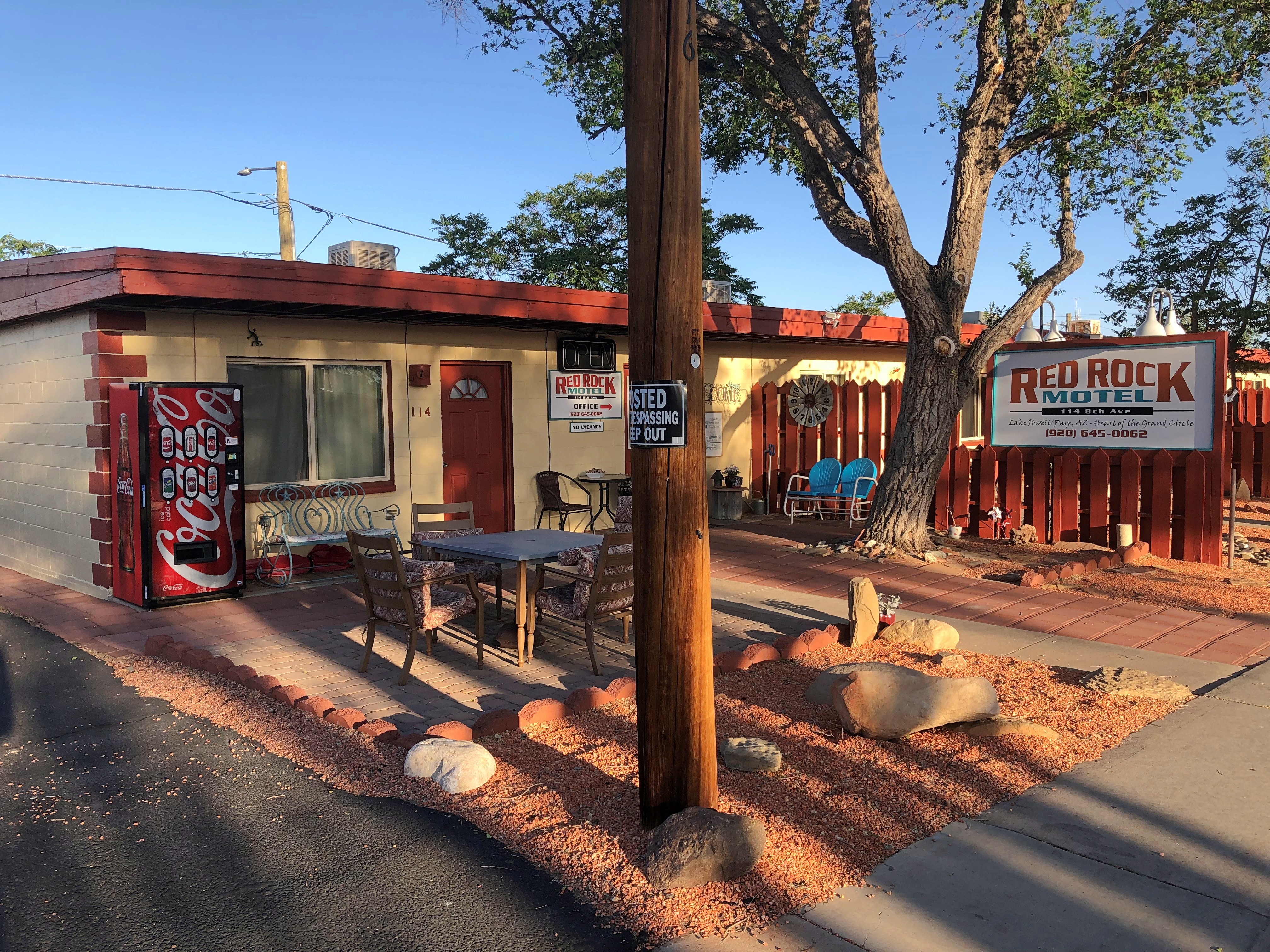
Red Rock Motel Page Arizona

The Red Rock started as housing for workers building Glen Canyon Dam, built in 1958 by the Bureau of Reclamation. Actually, I suspect Bashful Bob’s started out that way as well.

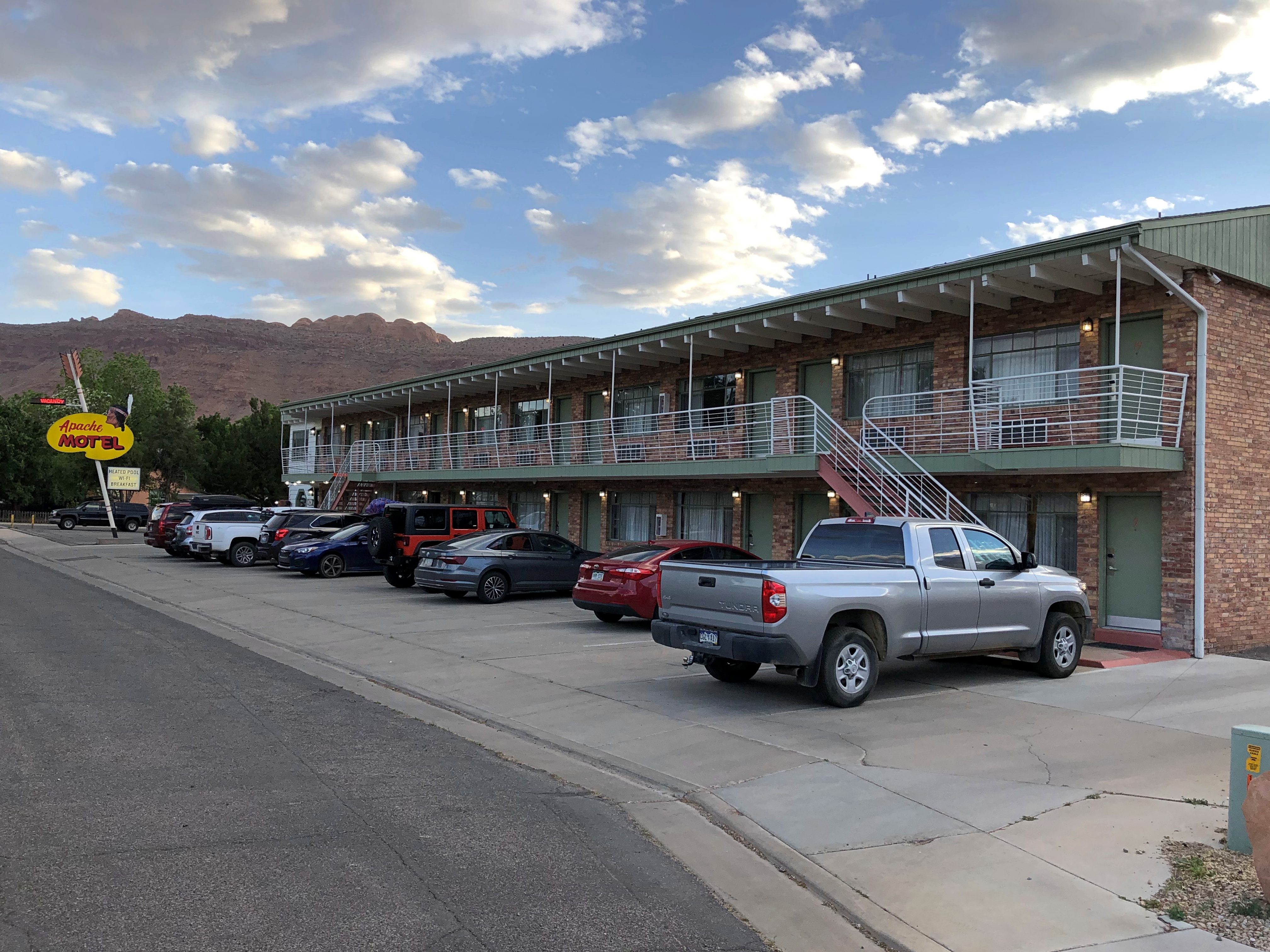
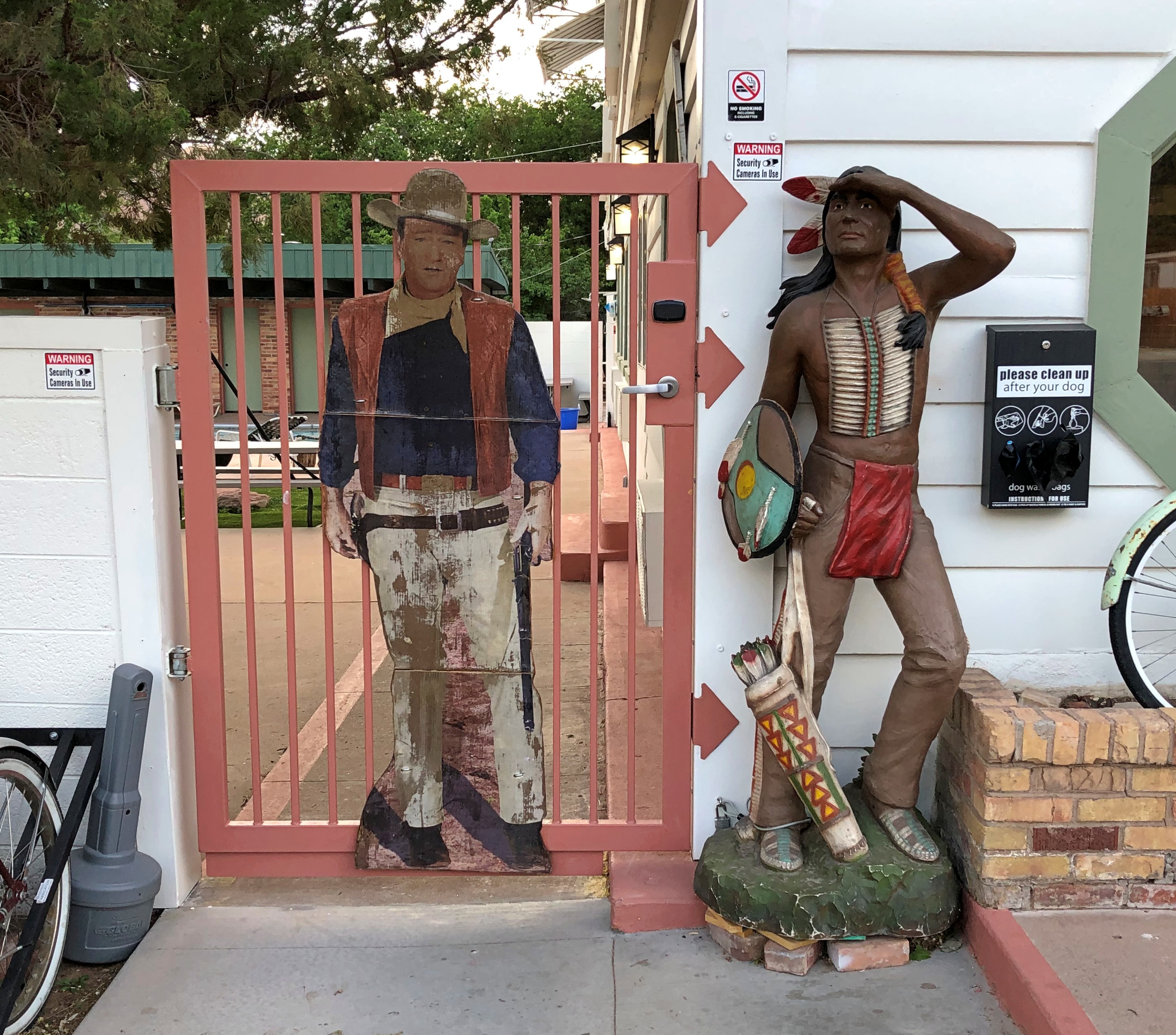
In Moab, Utah, we stayed at the Apache Motel. We found it a most pleasant place to stay, and with a touch of movie history to it.Apache Motel Moab Utah Apache Motel Moab Utah

Clean, comfortable, not particularly cheap or expensive, feeling very much like a ’50s motel, though with a few modifications. The motel doesn’t let you forget that the Duke stayed there when filming movies nearby. Other stars did too.Apache Motel Moab Utah

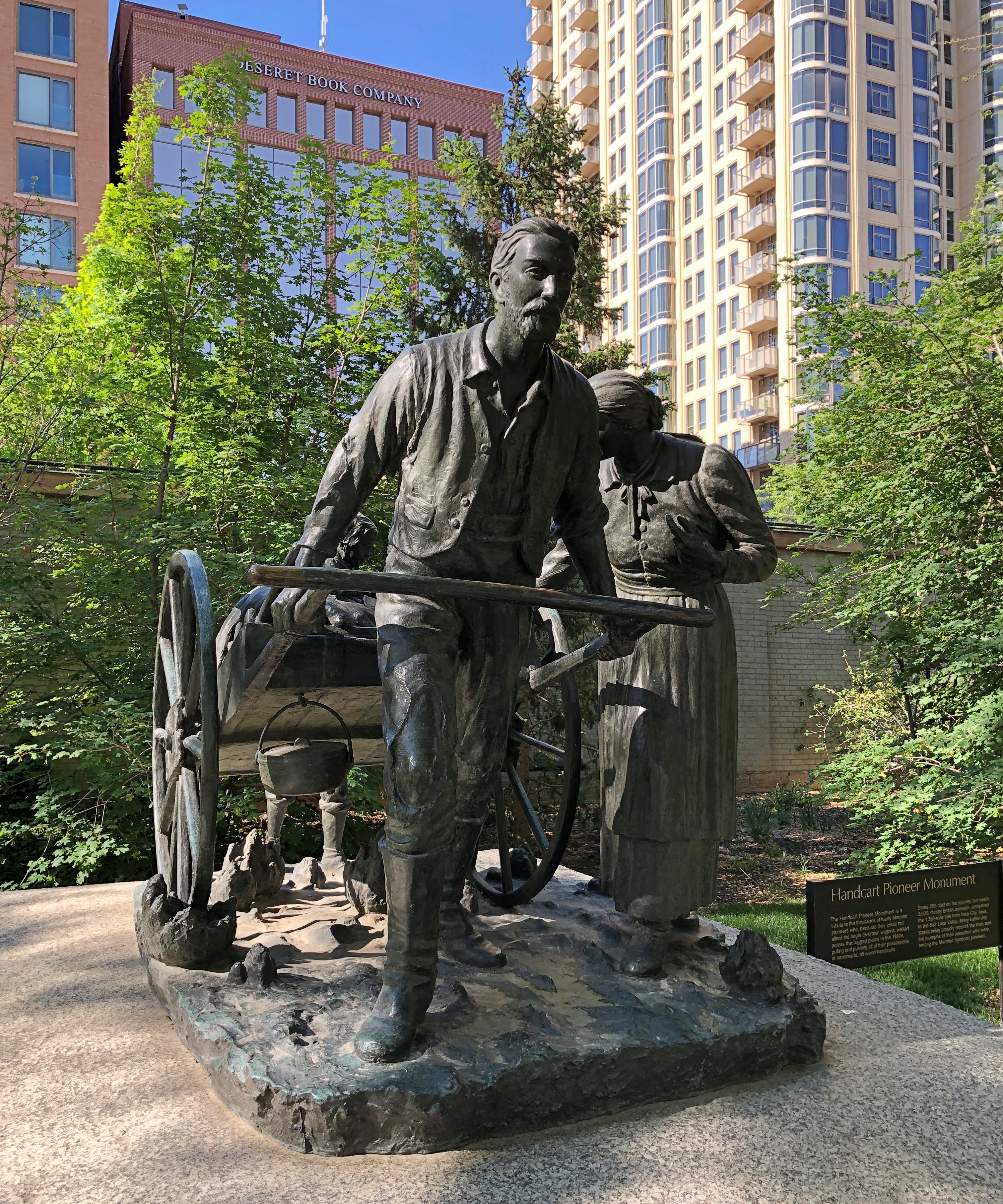
One more feature at Temple Square in Salt Lake City: the Handcart Pioneer Monument.
Handcart Memorial

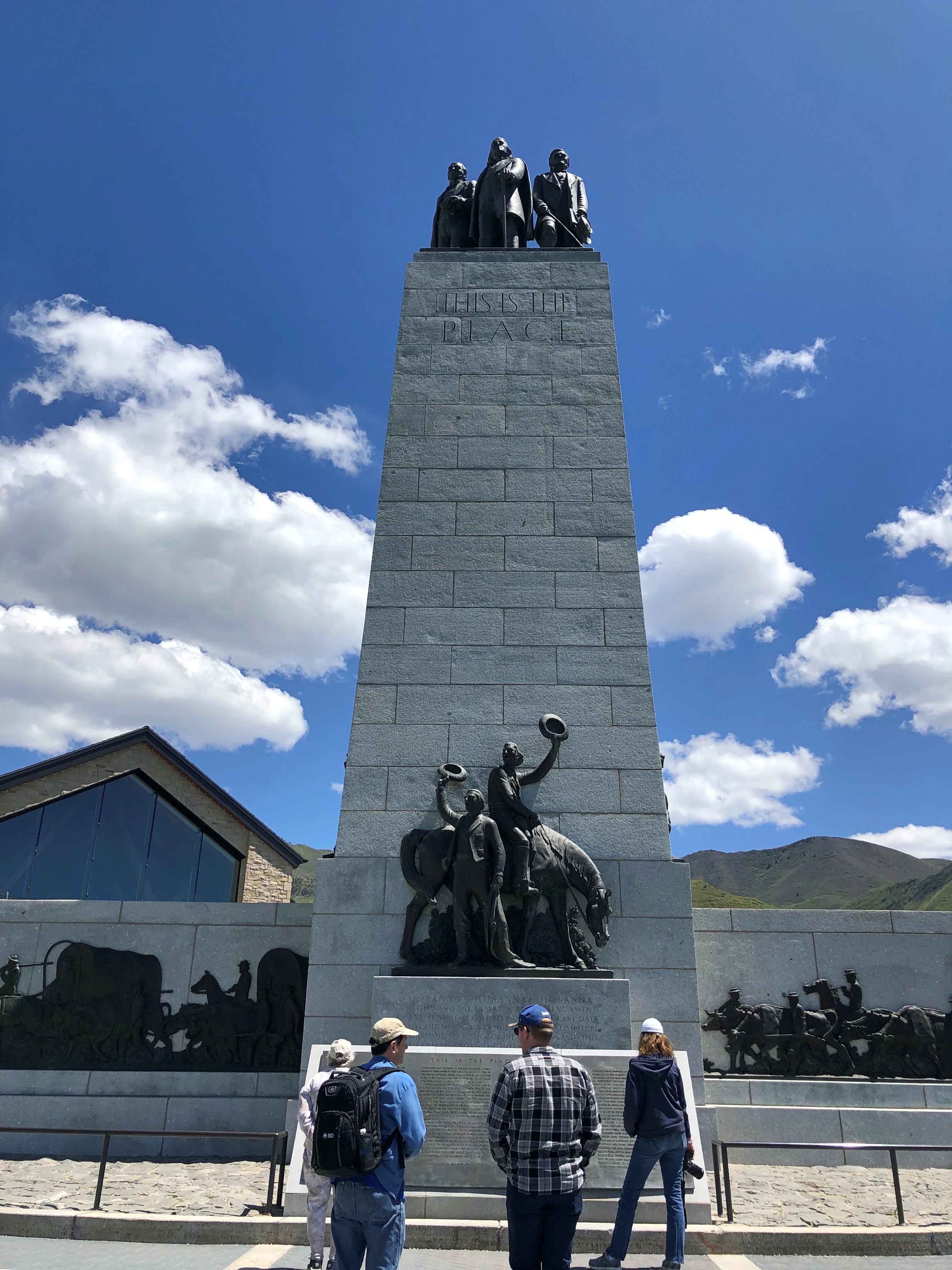
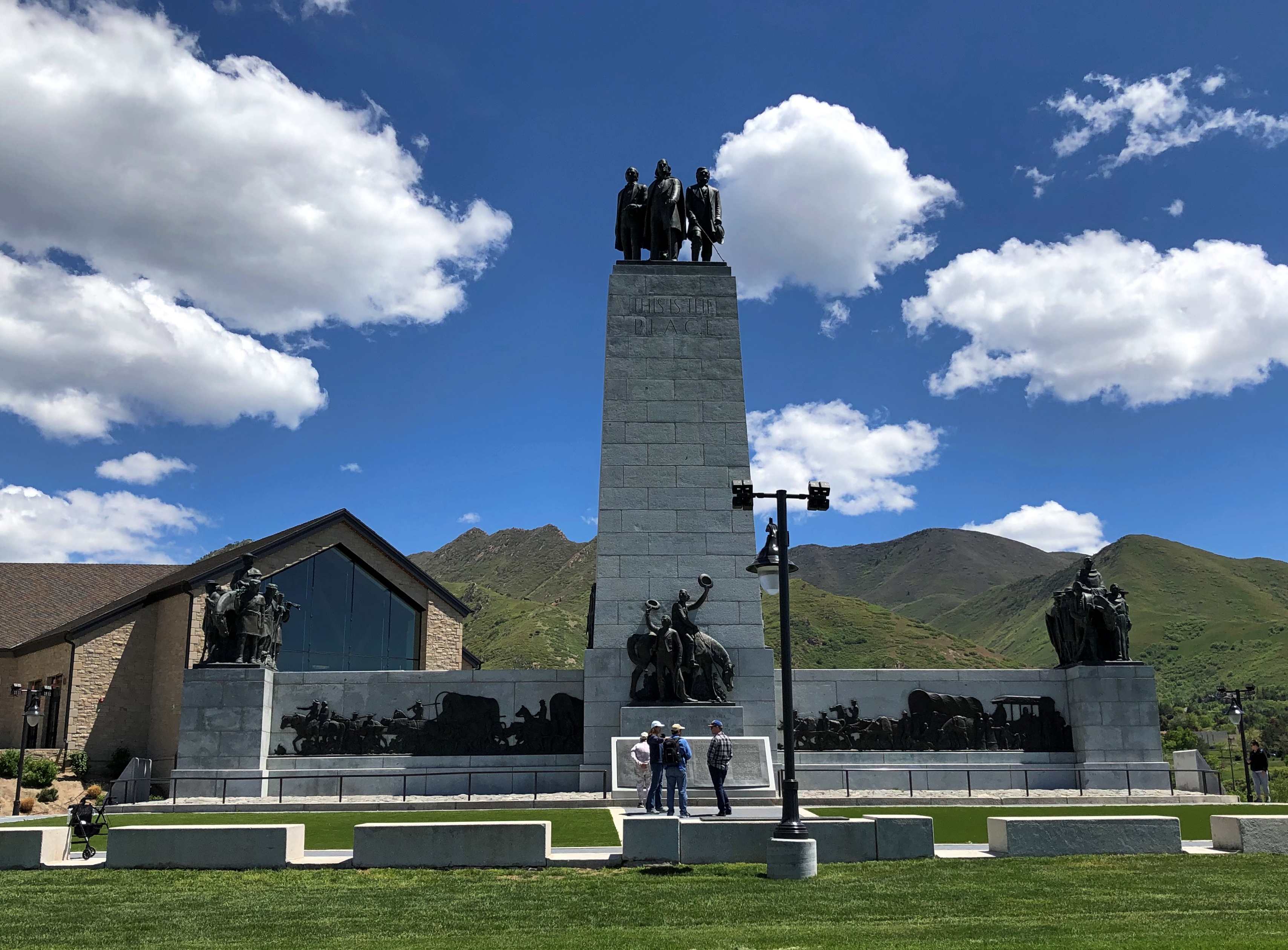
More Mormons in metal: The centerpiece of the This is the Place Heritage Park, which is on a hill at the edge of the city, where B. Young reportedly told his followers This is the Place, as in, to settle. We dropped by for a short look.This is the Place This is the Place

At the base of the memorial are six figures depicting important in the history of this part of Utah who weren’t Mormons, such as a couple of fur trappers, a chief of the Shoshone, plus adventurers and explorers.

Including this fellow, John C. Fremont.
This is the Place, John Fremont

That’s my presidential site for the trip. Ran for president in ’56, after all.

NV-AZ-UT ’22 (Or, How to Overdose on Western Scenery in a Week)

Years ago, I got to talking scenic destinations with a professional photographer who contributed to the Chicago-based magazine I edited at the time. He asked me if I’d ever been to Utah. I told him I had: northern Utah, including Cache Valley and Salt Lake City, which I’d visited in the early ’80s. Pretty places, I said.

“Northern Utah is pretty,” he said. “But southern Utah is ethereal.”

Later, after I visited Zion and Bryce National Parks, I was inclined to agree. But of course I wanted to see more. This year, I did. Yes, photographer whose name I wish I could remember. Ethereal. Absolutely.

Saturday before last, Yuriko and I flew to Las Vegas, returning late this Sunday from Salt Lake City. Two days in transit, seven on the road. In that time, we visited four national parks, three national monuments and two tribal parks, all in either Arizona or Utah. We spent a little time in the aforementioned major metros, plus more time in two tourist towns — one in Arizona, the other in Utah — staying there in two non-chain motels, one of which is arguably historic. We passed through an array of other tiny towns and wide places in the road, stopping when the mood struck.

I’m glad to report we ate no fast food. Besides grocery store food in our rooms or at picnic tables, and motel-supplied breakfasts, we ate at local eateries: Vietnamese, a family restaurant, Southern fried chicken, doughnuts, Mexican, barbecue (Texas-style beef), a retro diner, Thai, pizza, Korean fried chicken and Chinese hot pot. A few of those restaurants were in the cities — Vegas and Salt Lake — but I can also report that here in the early 21st century, the American appetite for food variety has spread far and wide into a galaxy of smaller places.

We drove briefly on Interstates, but mainly followed state, park and tribal roads, most paved, but not all. We walked a variety of trails, across sandy ground and over flat rocks, through woods but more often desert scrub. We crawled through slot canyons. All that under hot and copper skies, sunny or partly cloudy. Very warm, rather; in the 80s F. most of the time, except for a cooler spell on the last two days. Often as not, on the hot days, the wind kicked up and cooled us off, besides blowing sand at our faces and threatening to whisk our hats off high cliffs.

Mosquitoes were rarely a presence, fortunately, but gnats and flies made themselves known. If you looked carefully (actually not that carefully), you’d notice lizard trails in the red sands, and holes borrowed into the same sands by larger creatures who don’t care to come out during the daytime. Lizards, on the other hand, are more than happy to sit around in the sun, or scurry across the trail ahead of you or on the queer rock formations to your side.

I’m not the first to notice that deserts can be surprisingly green, though not the greens you see in less arid places. Notice it I did. I’m not a farmer or horticulturist or botanist or  florist, but I tried to notice the desert flora. Wildflowers bloom in great profusion this time of the year, along the roads and trials and off into the distance, even in the harshest environments.

People are back in the national and other parks. Middle-class American tourists, that is, of whom I’m obviously one, plus visitors from a spectrum of European and Asian nations. Perhaps a strict majority of the tourists we encountered were older, but younger age groups, including young families and groups of young friends, were out in force. The tourists passed through an inhabited land, of course, one with as diverse a population as most any city in the nation.

No destination was exactly crowded, but a number of places were very popular, enough to erase any notion of desert solitude. Even so, there’s a mild camaraderie among the tourists, greeting each other much more frequently than they would in an urban or suburban setting, asking and offering to take pictures of strangers, pausing for each other to pass on narrow paths, sharing information about trail conditions ahead, making jokes or other observations for everyone to hear.

At one particularly windy vista, I put my hand on top of Yuriko’s head to hold her hat down, at her request, while she took pictures.

“That’s why she keeps you around, huh?” one passing fellow with about 10 years on me said.

“That and to open jars,” I answered.

The kernel of this trip was Yuriko’s longstanding wish to see Antelope Canyon (and she knows how to pick destinations). Back in bleak January, I planned the thing, expanding the list of destinations a lot. I’ve wanted visit that part of the country again for years.

We went looking for scenic vistas formed by rocks of unimaginably various shapes, and boy did we find them — views of reds and oranges and ochers and browns and whites, seeing formations deep in canyons, vaulting high into the sky, or appearing wholly at eye level or underfoot. It boggles the mind: how did these rocks get to be so incredible to human perception? I know: wind and water and time. A lot of time. But damn. I also know — or at least have an inkling of — the fact that these rocks are temporary. Geologically speaking, only a little less the blink of an eye than my own lifetime.

We drove out of Vegas last Sunday morning, bound for the tourist town of Page, Arizona, where we’d last stayed 25 years ago this month, when we visited Lake Powell. En route, we passed through Zion National Park (a destination in 2000 but not this time) and later ventured briefly into the vast and contentious Grand Staircase-Escalante National Monument.

Our first major destination, a week ago on Monday morning, was the slot canyons of Lake Powell Navajo Tribal Park, an embarrassment of sandstone riches near Page. Also near Page — actually in Page, but also part of the Glen Canyon National Recreation Area — is Horseshoe Bend on the Colorado River, now famous because of Instagram. Be that as it may, we weren’t about to miss that. We watched the sun drop below the mountains in the distance at Horseshoe Bend.

Another thing we weren’t about to miss was the less-visited North Rim of Grand Canyon National Park, which is every bit as grand as the South Rim, though it took some circuitous driving  last Tuesday to get there from Page, by way of remote roads, One of those roads, the only paved one anywhere nearby, edges the bottom of the dramatic cliffs of Vermillion Cliffs National Monument, a sprawling uplift of wilderness. Of it, the Bureau of Land Management says, “expect rugged and unmarked roads, venomous reptiles and invertebrates, extreme heat or cold, deep sand, and flash floods.”

Returning from the Grand Canyon to Page, we stopped at Navajo Bridge, which spans the Colorado River. It’s two structures: the historic bridge from the 1920s and the modern bridge from late in the 20th century, which was designed to complement the older bridge, and it does, masterfully. The old bridge is now a foot bridge, and we walked across it.

Leaving Page on Wednesday, we made our way to another tourist town, namely Moab, Utah, at first on roads passing through the Navaho Nation, until we reached Monument Valley Navajo Tribal Park, home of famed sandstone buttes. We did the drive on the park’s circular road, unpaved and dusty and rocky and as red-orange as Mars, flabbergasted by the stone masses, most of which don’t actually make it into the movies. If you think you’ve seen Monument Valley because it’s been captured on celluloid so often, let me assure you that seeing it in person is an experience a level higher.

Later that same day, before arriving in Moab, we stopped at the much more obscure Natural Bridges National Monument, whose name clearly states its prime attraction. Among the wonders of southern Utah, it is a modest one. But a modest wonder in this part of the country is still a wonder.

On Thursday, we drove the short distance from Moab to Arches National Park, an astounding place populated by lofty arches, but also an endless array of stone pinnacles and balancing rocks and other rock formations. We spent most of the day there. The crowds are such that timed entry is now being tested at the park, and the crowds are right. Arches is one of the places the photographer must have been talking about.

Less crowded but no less spectacular than Arches is Canyonlands National Park, a little further out of Moab. We spent Friday morning at the evocatively named Island in the Sky District of Canyonlands, whose vistas overlook canyons, mesas and buttes. Another ethereal place. On Friday afternoon, we drove to Salt Lake City on roads through pale badlands and along more cliffs, and then through the forested mountains of Carbon and Wasatch counties.

We spent Saturday in Salt Lake, a city greatly expanded since the last time I visited, in 1980. That’s so long ago it was like I’d never been there. We focused most of our attention downtown in the morning and took in urban sights, Mormon-oriented and otherwise, including Temple Square and Utah’s magnificent State Capitol. In the afternoon, we visited the This is the Place Monument on a hill overlooking Salt Lake, and finally the Natural History Museum of Utah.

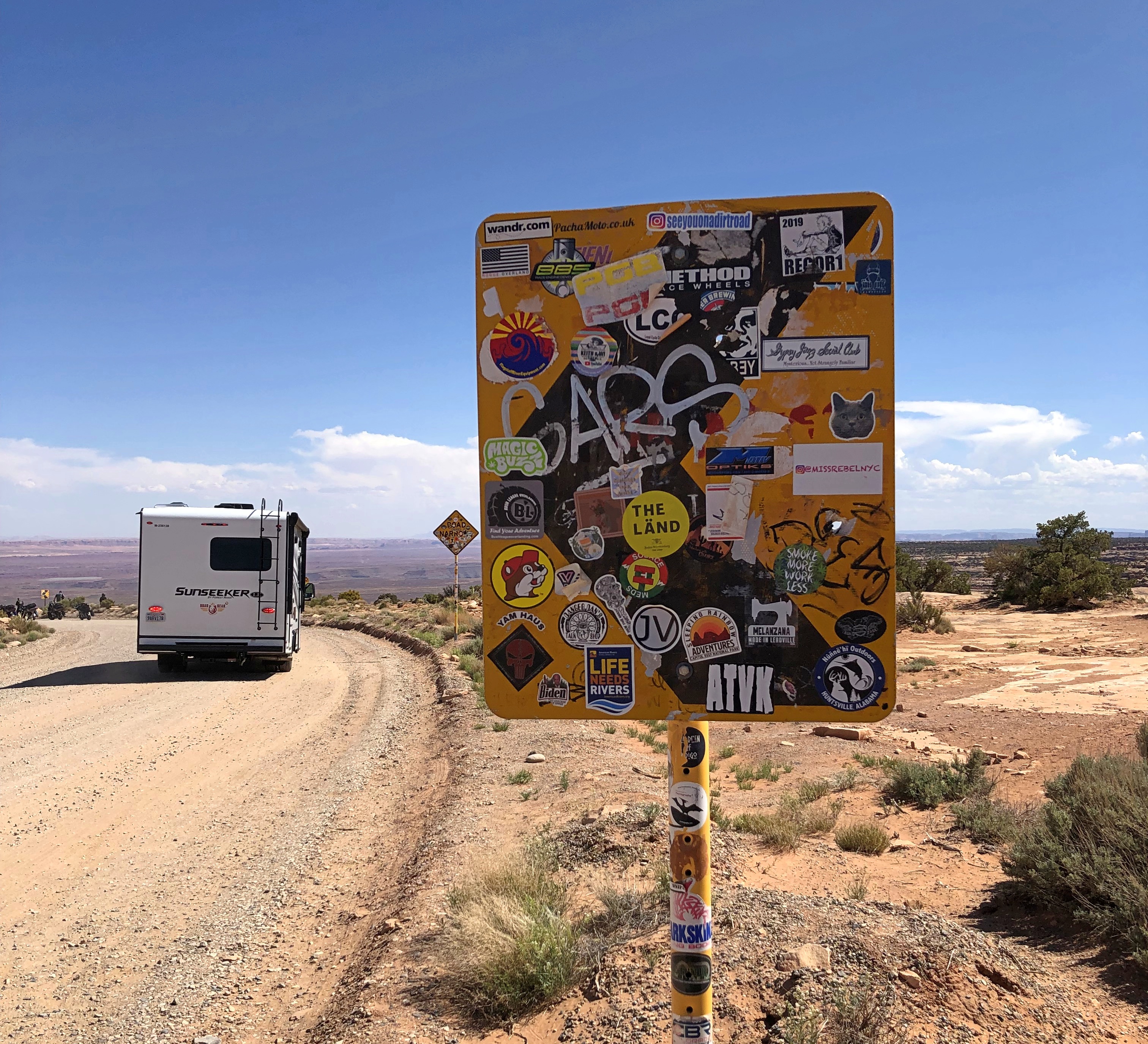
On a stretch of Utah 261, we encountered the Moki Dugway, a mountain road and one intense drive — more about which later. When we got to the top, I stopped to take pictures, including one of a road sign just ahead of the road’s first serious curve.Moki Dugway Buc-ee's

That little bastard of an amphibious rodent is everywhere.